Omega-6
now browsing by category
Save Lives and Improve Public Health: Following the Data from Pellagra to Atherosclerosis
Reproduced from original OMNS article (OrthoMolecular News Service):
http://orthomolecular.org/
Subscribe to the free Orthomolecular Newsletter: http://orthomolecular.org/subscribe.html
Go to the OMNS Archive: http://orthomolecular.org/resources/omns/index.shtml
Orthomolecular Medicine News Service, Feb 19, 2023
by Michael Passwater and Richard Passwater, Jr.
OMNS (Feb 19, 2023) History is an important teacher, as it can help us replicate good practices and avoid repeating harm.
Pellagra
First described in 1765 in Spain by Don Gasper Casal, pellagra is characterized by four Ds: dermatitis, diarrhea, dementia, and death. The first recorded case in the United States was in 1906 in Georgia. In 1912, South Carolina reported 30,000 cases with a case fatality rate of 40%. From 1906 – 1940, over 3 million Americans suffered from pellagra and over 100,000 deaths from the disease were recorded. Expert opinion suggested pellagra was caused by an unidentified germ. The Thompson-McFadden Pellagra Commission emboldened this popular misconception in 1914 by declaring the disease unrelated to diet.
However, Theophile Roussel, Kazimierz (Casimir) Funk, and Joseph Goldberger independently argued Pellagra was a dietary deficiency. [1] Funk suggested the disease in the US was related to a change in the milling practice of corn. Goldberger noted the disease was strongly associated with the 3 Ms of the poverty diet: meal (cornmeal), molasses, and meat. His observation of a lack of transmission of the disease from inmates or hospital patients to their guards or caretakers caused him to reject the popular belief of a germ in rancid cornmeal as the cause. By the 1920s, Goldberger, using research techniques unacceptable by today’s ethical standards, had induced pellagra in multiple groups of people through dietary alterations, reproducibly cured the dreaded disease with daily doses of brewer’s yeast, and demonstrated an inability to transmit the disease by exposing well-nourished humans to various tissue samples from Pellagra patients. [2] Nonetheless, the germ theory of pellagra persisted, and people continued to die from the preventable disease.
Finally, in 1937, Conrad Arnold Elvehjem at the University of Wisconsin proved that niacin (vitamin B3) cured pellagra, ending the germ vs. diet debate. [3] Biochemist and food science pioneer, Fred A. Kummerow, helped the food industry to add niacin to corn grits in 1943, and pellagra quickly became a rare and now largely forgotten disease. Niacin (C6H5NO2) is a small molecule with a big role in human health. Every cell in the human body uses niacin, and over 400 enzymes depend on niacin as a cofactor to complete reactions. People literally cannot live without niacin.
Atherosclerosis and essential fatty acids vs. trans-fats
Atherosclerosis is another deadly disease, like pellagra, that was exacerbated and prolonged by a change in food processing and misguided expert opinion. Restoring and maintaining the right amount of the right biomolecules in the right body tissues is the essence of Orthomolecular Medicine. Every cell is dependent on niacin for metabolism. Similarly, every cell in the human body is also dependent on lipids (fats), including cholesterol, for flexible protective membranes, mineral regulation, and cell signaling. Lipids comprise 50% of the human brain, and one lipid, docosahexaenoic acid (DHA), makes up one third of brain tissue. [4] Photoreceptors have the highest concentration of DHA fatty acids, [5] utilizing their curved side chains to provide membrane fluidity and enable molecules in the light activated enzyme cascade to rapidly diffuse within photoreceptor disks and produce the remarkable sense of vision.
In the early 1900s, partially hydrogenated vegetable oil was introduced into the US food supply. The partial hydrogenation process alters the chemistry of the essential fatty acids linoleic acid (omega-6) and linolenic acid (omega-3) resulting in 14 artificial (not found in nature) trans-fatty acids. A century later, the FDA estimated 37,000 food products contained artificial trans-fats, also referred to as industrially produced trans fatty acids (IP-TFA). These artificial lipids are incorporated into cell membranes throughout the body including the endothelial cells coating blood vessels. Once incorporated into cell membranes, artificial trans-fats cause inflammation and alter cell function. Disruption of the production of prostacyclin and thromboxane in the endothelium increases the risk of thrombosis and sudden death. [6,7]
Heart disease was rare in the US prior to 1900, but grew steadily from 1920 – 1960 along with increased cigarette smoking and trans-fat consumption, and today remains the leading cause of death. In 1957, Dr. Kummerow examined arteries from patients who had died of heart attacks and observed that the fatty deposits in the arteries contained artificial trans-fats. [8] Artificial trans-fats have also been associated with Type 2 Diabetes, several cancers, and GI tract inflammation. [9] In 1968, he helped negotiate an agreement with the edible oils industry to decrease trans-fats from 43% to 27% and to increase linoleic acid from 8% to 25% in margarines. In 1975, Dr. Kummerow testified before the Federal Trade Commission that eggs were healthy and dietary cholesterol was not the cause of heart disease. Dr. DeBakey was the only other invited expert witness who shared this view with the FTC. Dr. DeBakey was a pioneer in cardio-bypass surgery and observed that the need for bypass heart surgery was independent of cholesterol. Nonetheless, the final FTC ruling stated that egg producers could not say eggs were a good source of nutrition without also saying cardiologists believed eating eggs was one cause of heart disease.
Artificial trans-fats remained widespread in the US food supply while the public was advised to avoid eggs and other cholesterol containing natural foods due to a misattribution of cholesterol consumption with heart disease. Dr. Kummerow subsequently lost his NIH funding. Fortunately, private funding allowed his work to continue through 2014. In 1977, Dr. Richard Passwater put a challenge on the back cover of his book “SuperNutrition for Healthy Hearts” stating, “No one has ever shown that eating cholesterol causes heart disease. If anyone can step forward and prove that eating cholesterol causes heart disease, I will donate all my proceeds from this book to the American Heart Association.” [10] No one took up the challenge. Cholesterol wasn’t the problem (dietary cholesterol is a problem for obligate vegetarians such as chickens and rabbits lacking metabolic pathways to process meat. These animals are unsuitable for studies on human metabolism and cardiovascular disease.). Saturated fat wasn’t the problem. Eggs weren’t the problem. However, artificial trans-fats were a serious problem, along with oxidized lipoprotein(a).
In 2009, Dr. Kummerow petitioned the FDA to ban trans-fats. In 2013, he filed suit against the FDA to get them to follow the law and review his petition from 2009. In 2018, the FDA completed its review and banned the use of partially hydrogenated oil in most processed foods in the US, effective 2020. In 2018, WHO also called for the worldwide elimination of trans-fats by 2023, estimating 500,000 deaths per year result from the consumption of industrially produced trans-fatty acids. [11] Of note, increased magnesium intake is helpful in reducing the risks associated with consumption of artificial trans-fats. [12] However, avoiding any consumption of those “poisons” is best.
100 year old Dr. Kummerow discussed his public health concerns with trans-fats in this 4 minute YouTube video: https://youtu.be/XSfMPeZuCsw Dr. Kummerow shared his personal diet in a 2014 interview celebrating his 100th birthday. He died in 2017 at the age of 102.
Passwater: What about your personal diet?
Kummerow: I eat an egg every day and drink three glasses of whole milk. I also eat meat or some kind of protein at every meal and lots of fruit and vegetables.
Passwater: What do you eat for breakfast?
Kummerow: I eat an egg scrambled in butter, one tablespoon of oatmeal and wheat berries (which is cooked ahead of time and kept in the refrigerator or freezer), a tablespoon of plain yogurt, a small banana, four stewed prunes and a tablespoon of chopped nuts. I also have one cup of whole milk and a glass of water.
Passwater: Do you eat mostly natural foods?
Kummerow: I don’t eat processed or fried food. I eat fresh or frozen vegetables or fruit and meat that is baked or broiled.
B vitamins and magnesium are Important cofactors for lipid metabolism. Vitamin E is a lipophilic (membrane bound) antioxidant especially important for preventing oxidation of membrane fatty acids thereby preserving their flexibility and function. This is important for all cells, and is especially critical for nerve cells to fill, release, and regenerate synaptic vesicles that eject neurotransmitters. The goal is to consume enough essential lipids, along with vitamin and mineral cofactors, and essential amino acids without consuming an excess of total calories. If calories need to be cut, carbohydrates are a good target as there are no essential dietary sugars. Non-steroidal anti-inflammatory drugs (NSAIDs such as ibuprofen, naproxen, celecoxib, or aspirin), statins, and IP-TFAs can inhibit healthy lipid metabolism. Although alpha-linolenic acid is the only essential omega-3 fatty acid, consuming longer-chain omega-3 lipids such as DHA and EPA, which enter cell metabolism downstream of the inhibition points in the omega-6 and omega-3 metabolic pathways, can help maintain important structural and cell signaling lipids. DHA and EPA can be metabolized into families of cell signaling lipids known as prostanoids, eicosanoids, elovanoids, and docosanoids. These lipids have many tissue-specific effects throughout the body, including regulation of inflammation, immunity, bleeding, clotting, vasodilation, vasoconstriction, eyesight, and memory. [13-16] Both the Mediterranean Diet and Ketogenic Diet have been associated with improved cognitive function. Both diet plans emphasize consuming healthy lipids, while minimizing intake of sugars and processed food.
Healthy lipids also promote a healthy intestinal microbiome which can increase production of peptides and lipids important for the immune system and nervous system. [17] The important relationship between the microbiome and the brain is referred to as the “enteric nervous system” or the “gut-brain axis”. Here is a 4 min video to elaborate on this concept: Human Science (Part 1) – “The Gut Brain Axis, Microbiome & the power of Probiotics” https://youtu.be/E479yto8pyk
Summary
“If the experts say ‘A’ and the data say ‘B’-go with the data” ~David Kritchevsky, 1993 [18]
Lipids do more than store energy. They are major essential components of every cell membrane, including brain cells and the cells lining blood vessels. Lipids also serve as cell signaling molecules regulating a wide variety of functions impacting all tissues in the body. A diet devoid of omega-3 and omega-6 fatty acids is as fatal as a diet devoid of niacin or any other vitamin. Two fatty acids are recognized as “essential” in the human diet because they cannot be made from other compounds – omega-6 linoleic acid and omega-3 linolenic acid. Additional lipids (for example, EPA, DHA) may be considered “semi-essential” as the body can make them, but cannot make them efficiently enough to reliably fulfill its needs.
The precautionary principle is prudent when considering adding substances not normally present in the human body to the food supply. Studying benefits and risks of an intervention prior to introduction, and monitoring impact after introduction is helpful to avoid widespread damage to large groups of people. Keen observation and an open mind to receive and analyze all available data is key to recognizing which components to purge and which to promote in the quest to optimize individual and population wellness.
References
1. Passwater RA (2014) From Pellagra to Trans Fats and Beyond – How a Legendary Nutritional Scientist Is Still Saving Countless Thousands From Premature Deaths. Vitamin Connection, Whole Foods Magazine. Sep 25, 2014. https://wholefoodsmagazine.com/columns/vitamin-connection/pellagra-trans-fats-and-beyond-how-legendary-nutritional-scientist-stil
2. Morabia A. (2008) Joseph Goldberger’s research on the prevention of pellagra. J R Soc Med.101: 566-568. https://pubmed.ncbi.nlm.nih.gov/19029358
3. The Discovery of Niacin at UW-Madison. July 12, 2017. PBS Wisconsin. https://pbswisconsin.org/watch/university-place/the-discovery-of-niacin-at-uw-madison-6av7qi
4. Bruce KD, Zsombok A, Eckel RH (2017) Lipid Processing in the Brain: A Key Regulator of Systemic Metabolism. Front. Endocrinol. 8:60. https://pubmed.ncbi.nlm.nih.gov/28421037
5. Organisciak DT, Vaughan DK (2010) Retinal light damage: mechanisms and protection. Prog Retin Eye Res.;29:113-134. https://pubmed.ncbi.nlm.nih.gov/19951742
6. Passwater RA. (2014) From Pellagra to Trans Fats and Beyond – How a Legendary Nutritional Scientist Is Still Saving Countless Thousands From Premature Deaths (Part 2). Vitamin Connection, Whole Foods Magazine. Oct 21, 2014. https://wholefoodsmagazine.com/columns/vitamin-connection/pellagra-trans-fats-and-beyond-how-legendary-nutritional-scientist-still
7. Kummerow FA (2013) Interaction between Sphingomyelin and Oxysterols Contributes to Atherosclerosis And Sudden Death. Am J Cardiovasc Dis. 3:17-26. https://pubmed.ncbi.nlm.nih.gov/23459228
8. Johnston PV, Johnson OC, Kummerow FA (1957) Occurrence of trans Fatty Acids in Human Tissue. Science 11:698-699. https://www.science.org/doi/10.1126/science.126.3276.698.b
9. Ricciotti, E and Garret A. FitzGerald, GA. (2011) Prostaglandins and Inflammation. Arterioscler Thromb Vasc Biol. 31:986-1000. https://pubmed.ncbi.nlm.nih.gov/21508345
10. Passwater, Richard A. (1977) SuperNutrition for Healthy Hearts. The Dial Press. ISBN-13:978-0803780354
11. WHO plan to eliminate industrially produced trans-fatty acids from global food supply. May 14, 2018. https://www.who.int/news/item/14-05-2018-who-plan-to-eliminate-industrially-produced-trans-fatty-acids-from-global-food-supply
12. Kummerow FA, Zhou Q, and Mahfouz MM (1999) Effect of Trans Fatty Acids on Calcium Influx into Human Arterial Endothelial Cells. Am J Clin. Nutr. 70:832-838. https://pubmed.ncbi.nlm.nih.gov/10539743
13. Yang T, Du Y. (2012) Distinct Roles of Central and Peripheral Prostaglandin E2 and EP Subtypes in Blood Pressure Regulation. Am J Hypertens. 25:1042-1049. https://pubmed.ncbi.nlm.nih.gov/22695507
14. Kaur N, Chugh V, Gupta AK. (2014) Essential fatty acids as functional components of foods- a review. J Food Sci Technol. 51:2289-2303. https://pubmed.ncbi.nlm.nih.gov/25328170
15. Zhu L, Zhang Y, Guo Z, Wang M (2020) Cardiovascular Biology of Prostanoids and Drug Discovery. Arterioscler Thromb Vasc Biol. 40:1454-1463. https://pubmed.ncbi.nlm.nih.gov/32295420
16. Bazan NG. (2018) Docosanoids and elovanoids from omega-3 fatty acids are pro-homeostatic modulators of inflammatory responses, cell damage and neuroprotection. Mol Aspects Med. 64:18-33. https://pubmed.ncbi.nlm.nih.gov/30244005
17. Burke SN (2023) Ultra-Processed Foods Like Cookies Chips Frozen Meals and Fast Food May Contribute to Cognitive Decline. The Conversation. January 31, 2023. https://theconversation.com/ultra-processed-foods-like-cookies-chips-frozen-meals-and-fast-food-may-contribute-to-cognitive-decline-196560
18. Passwater RA (1993) Nutrient Interaction in Heart Disease Whole Foods Magazine. June 1993.
Further Reading
Penberthy WT (2022) NIACIN for COVID: How niacin, niacinamide, and NAD can help with Long Covid-19. OMNS Sep 20, 2022 http://orthomolecular.org/resources/omns/v18n25.shtml
McConnell S, Penberthy WT (2021) Reversing Chronic Kidney Disease with Niacin and Sodium Bicarbonate. OMNS Oct 14, 2021. http://orthomolecular.org/resources/omns/v17n22.shtml
Levy TE, Hunninghake R (2022) Atherosclerosis is a Non-Healing Wound. OMNS Sep 8, 2022. http://orthomolecular.org/resources/omns/v18n24.shtml
Saul AW (2011) Vitamin E Attached Again: Of Course. Because It Works OMNS Oct 14, 2011. http://orthomolecular.org/resources/omns/v07n11.shtml
Spencer A, Saul AW (2010) Vitamin C and Cardiovascular Disease OMNS June 22, 2010. http://orthomolecular.org/resources/omns/v06n20.shtml
Vitamin E Research Ignored by Major News Media. OMNS May 25, 2010. http://orthomolecular.org/resources/omns/v06n19.shtml
Dyerberg, Jorn and Passwater, Richard (2012) The Missing Wellness Factors – EPA and DHA: The Most Important Nutrients Since Vitamins? Basic Health Publications, Inc.
Hoffer Abram, Harold DF, Saul Andrew W (2023) Niacin: The Real Story, 2nd edition.
Kummerow, Fred A. and Kummerow, Jean M. (2008) Cholesterol Won’t Kill You But Trans Fat Could: Separating Scientific Fact from Nutritional Fiction in What You Eat. Trafford Publishing.
Kummerow, Fred A. and Kummerow, Jean M. (2014) Cholesterol is Not the Culprit: A Guide to Preventing Heart Disease. Spacedoc Media, LLC.
Enig, Mary G. (2000) Know Your Fats: The Complete Primer for Understanding the Nutrition of Fats, Oils, and Cholesterol. Bethesda Press.
Nutritional Medicine is Orthomolecular Medicine
Orthomolecular medicine uses safe, effective nutritional therapy to fight illness. For more information: http://www.orthomolecular.org
Find a Doctor
To locate an orthomolecular physician near you: http://orthomolecular.org/resources/omns/v06n09.shtml
The peer-reviewed Orthomolecular Medicine News Service is a non-profit and non-commercial informational resource.
Editorial Review Board:
Albert G. B. Amoa, MB.Ch.B, Ph.D. (Ghana)
Seth Ayettey, M.B., Ch.B., Ph.D. (Ghana)
Ilyès Baghli, M.D. (Algeria)
Ian Brighthope, MBBS, FACNEM (Australia)
Gilbert Henri Crussol, D.M.D. (Spain)
Carolyn Dean, M.D., N.D. (USA)
Ian Dettman, Ph.D. (Australia)
Susan R. Downs, M.D., M.P.H. (USA)
Ron Ehrlich, B.D.S. (Australia)
Hugo Galindo, M.D. (Colombia)
Gary S. Goldman, Ph.D. (USA)
Michael J. Gonzalez, N.M.D., D.Sc., Ph.D. (Puerto Rico)
William B. Grant, Ph.D. (USA)
Claus Hancke, MD, FACAM (Denmark)
Patrick Holford, BSc (United Kingdom)
Ron Hunninghake, M.D. (USA)
Bo H. Jonsson, M.D., Ph.D. (Sweden)
Dwight Kalita, Ph.D. (USA)
Felix I. D. Konotey-Ahulu, MD, FRCP, DTMH (Ghana)
Alan Lien, Ph.D. (Taiwan)
Homer Lim, M.D. (Philippines)
Stuart Lindsey, Pharm.D. (USA)
Pedro Gonzalez Lombana, MD, MsC, PhD (Colombia)
Victor A. Marcial-Vega, M.D. (Puerto Rico)
Juan Manuel Martinez, M.D. (Colombia)
Mignonne Mary, M.D. (USA)
Joseph Mercola, D.O. (USA)
Jorge R. Miranda-Massari, Pharm.D. (Puerto Rico)
Karin Munsterhjelm-Ahumada, M.D. (Finland)
Tahar Naili, M.D. (Algeria)
Zhiyong Peng, M.D. (China)
Isabella Akyinbah Quakyi, Ph.D. (Ghana)
Selvam Rengasamy, MBBS, FRCOG (Malaysia)
Jeffrey A. Ruterbusch, D.O. (USA)
Gert E. Schuitemaker, Ph.D. (Netherlands)
Thomas N. Seyfried, Ph.D. (USA)
Han Ping Shi, M.D., Ph.D. (China)
T.E. Gabriel Stewart, M.B.B.CH. (Ireland)
Jagan Nathan Vamanan, M.D. (India)
Andrew W. Saul, Ph.D. (USA), Editor-In-Chief
Associate Editor: Robert G. Smith, Ph.D. (USA)
Editor, Japanese Edition: Atsuo Yanagisawa, M.D., Ph.D. (Japan)
Editor, Chinese Edition: Richard Cheng, M.D., Ph.D. (USA)
Editor, Norwegian Edition: Dag Viljen Poleszynski, Ph.D. (Norway)
Editor, Arabic Edition: Moustafa Kamel, R.Ph, P.G.C.M (Egypt)
Editor, Korean Edition: Hyoungjoo Shin, M.D. (South Korea)
Editor, Spanish Edition: Sonia Rita Rial, PhD (Argentina)
Editor, German Edition: Bernhard Welker, M.D. (Germany)
Contributing Editor: Thomas E. Levy, M.D., J.D. (USA)
Contributing Editor: Damien Downing, M.B.B.S., M.R.S.B. (United Kingdom)
Contributing Editor: W. Todd Penberthy, Ph.D. (USA)
Contributing Editor: Ken Walker, M.D. (Canada)
Contributing Editor: Michael Passwater (USA)
Technology Editor: Michael S. Stewart, B.Sc.C.S. (USA)
Associate Technology Editor: Robert C. Kennedy, M.S. (USA)
Legal Consultant: Jason M. Saul, JD (USA)
Comments and media contact: drsaul@doctoryourself.com OMNS welcomes but is unable to respond to individual reader emails. Reader comments become the property of OMNS and may or may not be used for publication.
Click here to see a web copy of this news release: https://orthomolecular.acemlna.com/p_v.php?l=1&c=270&m=269&s=a8c8fe7bea3fdaa4efae896c7612b3de
This article may be reprinted free of charge provided 1) that there is clear attribution to the Orthomolecular Medicine News Service, and 2) that both the OMNS free subscription link http://orthomolecular.org/subscribe.html and also the OMNS archive link http://orthomolecular.org/resources/omns/index.shtml are included.
Riordan Clinic | Orthomolecular.org
3100 N Hillside Ave
Wichita, Kansas 67219
United States
How a Vegetarian Eating Plan Could Affect a Pregnancy
Reproduced from original article:
https://articles.mercola.com/sites/articles/archive/2023/02/13/vegetarian-eating-plan-pregnancy.aspx
The original Mercola article may not remain on the original site, but I will endeavor to keep it on this site as long as I deem it to be appropriate.
Analysis by Dr. Joseph Mercola Fact Checked February 13, 2023
STORY AT-A-GLANCE
- Heart & Soil, a company founded by Dr. Paul Saladino to help people return to the way our ancestors ate, produced a 20-minute video discussing the health benefits of eating an animal-based diet when women are pregnant or want to become pregnant
- Returning to the nutritional roots of eating fewer carbohydrates, no processed foods and an animal-based diet can help mitigate the effects of environmental toxins, such as ubiquitous plasticizers, are the core components of Heart & Soil
- Data show that infertility rates have been rising for decades in what Shanna Swan, Ph.D., calls “the 1% effect,” describing declining sperm count, testosterone and fertility and rising testicular cancer and miscarriage — all at about 1% per year
- It is crucial to note that fake meat is not meat but ultraprocessed food with genetically engineered components; the industry claims it has a smaller carbon footprint than CAFO meat, but exchanging one broken system for another is not the answer
- Ultraprocessed foods are high in toxic chemicals, lack nutrition and are high in carbohydrates, all of which negatively impact pregnancy outcomes. They also contain linoleic acid that damages insulin sensitivity and produces heart disease, dementia and obesity
In this 20-minute video, Dr. Paul Saladino, founder of Heart & Soil, a company that helps people return to the way our ancestors ate,1 discusses the relationship between a decline in fertility and the food that most men and women are eating today. The diet is often referred to as the standard American diet (SAD), which is composed of highly processed, high-carbohydrate foods.
One of the biggest health struggles in the U.S. is weight. According to the CDC,2 73.6% of adults over 20 are overweight, including obesity, even though most people are seeking to be slim and within a healthy weight range.
I have long written about the benefits of eating a cyclical ketogenic diet that focuses on a minimal carbohydrate intake, which can help attain, and maintain, a healthy weight. In addition to lowering the risk of being overweight and obese, a ketogenic diet also reduces chronic inflammation and produces far fewer reactive oxygen species.
Eliminating sugar and carbohydrates also helps reduce your risk of chronic inflammation that is at the heart of many chronic diseases, which “collectively represent the leading causes of disability and mortality worldwide.”3
While I recommend that carbohydrates comprise no more than 5% carbohydrates, according to the Centers for Disease Control and Prevention,4 the average carbohydrate intake for men is 45.9% of their diet; the average carbohydrate intake for women is 47.4% of their diet.
In her book “The Obesity Epidemic: What Caused It? How Can We Stop It?” Zoe Harcombe notes the fundamental error made in diet plans is misunderstanding the law of thermodynamics. She believes there’s an intricate biochemical dynamic that’s unaccounted for when you only count calories in and calories out.
Thermodynamics refers to the movement of energy. For example, the energy used in making protein available to the body is from 25% to 30%. However, that same effect in carbohydrates is from 6% to 8%. While obesity is a significant health problem, it’s not the only health challenge triggered by eating a diet high in carbohydrates.
Side-by-Side Comparison Is Impressive
In the video above, Saladino and midwife Lindsey Meehleis discuss the lack of nutrients in the SAD and how it affects fertility and pregnancy outcomes. Saladino and Meehleis propose, and have seen, that moving back to a nutrient-dense animal-based diet can help mitigate exposure to glyphosates and endocrine- and fertility-disrupting microplastics in the environment.
In the video, one mother of two, who was pregnant with her third child during filming, recounts her time as a vegetarian for seven years. She describes herself as “close-minded” after reading the headlines, but not really investigating the information herself.
It wasn’t until she met her husband, and he began asking questions about her low energy and chronic napping, that she began to think maybe a vegetarian diet high in grains and meat alternatives was not providing her with the right nutrition. Another mother tells her story of being in her early 30s and learning that 40% of her eggs may not be viable because of her age.
Yet, after moving to an animal-based diet, she easily became pregnant and felt incredibly healthy throughout the pregnancy. Saladino, the midwife and the mothers who were interviewed all stressed the need to include organ meat in the diet, sharing that they are considered delicacies around the world because they are “some of the most nutrient-dense foods on the planet.”
Organ meats contain critical nutrients like choline, selenium, magnesium, vitamin A, zinc and iron. And, different from lab-produced nutritional supplements, they are more bioavailable. Meehleis recounts her interactions with a 30-week pregnant woman who she put on a supplement of heart and liver. Just one week later, the woman texted Meehleis that it was the best she felt through the whole pregnancy after only one week of adding “Nature’s best multivitamin.”
Saladino’s concern is that prenatal vitamins are not as bioavailable as organ meats and “cause more harm than good because they give people a false sense of security. They have this idea that I don’t have to think about what I’m eating,” he says. “I can continue eating junk food or not eating enough animal foods.”
Meehleis explains the importance of the placenta as an organ that supplies the baby with nutrients throughout growth and development. “This is what nourishes the baby. This is the baby’s home, and we have to look at what we’re putting into our bodies today.” It is at this point in the video that she is viewing two placentas side by side.
One is that of a mother who ate a purely vegetarian diet throughout the pregnancy and the other ate a nutrient-dense animal-based diet. The placenta of the mother eating a vegetarian diet is noticeably lighter and more anemic in color and not as dense or healthy looking.
“I cannot believe the difference in the quality of the placenta and not just the quality of the placenta, but in turn the nutrition of what the baby was growing in and what the baby received throughout the whole pregnancy.” She goes on to explain the differences that she can feel in the different organs.
“It’s just obvious there is such a huge substantial difference in the quality and consistency of these placentas.” She pushes several areas of the placenta, saying, “This is called calcification. If you feel it, it’s hard and there’s a little bit of sand consistency. This is throughout the entire placenta and it’s not what we would want to see in pregnancy.”
Infertility Rates Are Rising
In the video, Saladino and Meehleis reference the impact that endocrine-disrupting microplastics and phthalates have on fertility. Researchers have noted the reduction in fertility in the last decades and understand the implications this has for the future of humanity. In 1992, Shanna Swan, Ph.D., from Icahn School of Medicine at Mount Sinai in New York City, first heard about the potential decline in fertility.
She is a reproductive epidemiologist and professor of environmental medicine and public health. She read a study5 showing evidence of declining quality in semen from the past 50 years and thought it sounded extreme. She spent six months evaluating the 61 studies that were included in the review and thus began her decades-long journey into unraveling this disturbing trend.
Through years of careful research, she found the smoking gun behind declining fertility is a class of chemicals called phthalates, which are so ubiquitous that the CDC has stated “phthalate exposure is widespread in the U.S. population.”6 An estimated 8.4 million metric tons of plasticizers, including phthalates, are used worldwide each year.7
Swan’s book “Count Down” is based on a 2017 study8 she co-wrote, which found sperm counts dropped by 59.3% from 1973 to 2011. The most significant declines were found in men from North America, Europe, Australia and New Zealand, where many had sperm concentrations below 40 million per milliliter, which is considered the cutoff point at which a man will have trouble fertilizing an egg.
Men in these countries had a 52.4% decline in sperm concentration and a 59.3% decline in total sperm count, which is the sperm concentration multiplied by the total volume of an ejaculate. Swan dubs the apparent synergy between fertility and reproductive health “the 1% effect” as data show sperm count, testosterone and fertility are dropping, while testicular cancer and miscarriage are rising — all at about 1% per year.9

Download this Article Before it Disappears
Fake Meat Is Not Meat
In the video, Meehleis and Saladino talk about their patients whose struggle with fertility was reversed after moving away from processed foods and concentrating on an animal-based diet. However, it’s important to note that no matter how much the processed meat industry tries to make its products look and feel like real meat, fake meat is not meat. Far from it.
In fact, fake meat perfectly fits the definition of ultraprocessed foods, which typically have five or more ingredients, many of which are not commonly used in home kitchens.10 Fake meat products also include fake blood processed from genetically engineered yeast to mimic the taste and texture of real beef.11
While the FDA has classified the Impossible Burger as generally recognized as safe (GRAS) using data provided by the University of Nebraska and the University of Wisconsin,12 other experts are not convinced.
According to the Center for Food Safety,13 94% of the soybean crops grown in the U.S. are genetically altered. There is not enough data14 to determine human safety when consuming chemical compounds, as these compounds are produced from genetically altered yeast harvested from genetically altered soybeans.
Ultraprocessed foods have contributed to obesity,15 rising rates of cardiovascular disease and an increased risk of all-cause mortality.16 The industry has used strategies to position this product as healthier and better for the environment, which has led many to believe the food they’re eating is protecting their local air and water supply. One of the claims is that the products are sustainable and leave a smaller carbon footprint than that of traditional beef production.
When this is compared to CAFO facilities, where animals are treated inhumanely, antibiotic use contributes to widespread antibiotic resistance and the waste products damage air and water supplies, they may rank a little better. However, as has been proven in the past, moving from one broken system to another is not the answer.
To assess and compare the environmental impact of typical beef production against fake meat, Impossible Burger commissioned a study from Quantis17 and Beyond Meat commissioned one from the University of Michigan.18 Both companies found similar results. The executive summary published on Impossible Foods19 showed their product reduced environmental impact between 87% and 96% in the categories studied.
White Oaks Pasture in Bluffton, Georgia, responded, and commissioned and published the same analysis by Quantis,20 which showed the ranch had a net total emission in the negative numbers as compared to CAFO meat. Emissions at White Oaks were also much lower than the average production of soybeans, which is the base for plant-based burgers and fake blood.
Additionally, emissions by White Oaks Pastures included a large negative soil carbon sequestration, which I’ve explained in many articles is essential to protect against air pollution and climate change. In other words, regenerative farming techniques are healthier for the environment, produce healthy products for human consumption and feed the soil so the land continues to produce year after year.
In my 2021 interview [Bitchute, March 10, 2021] with Saladino, we discussed the nose-to-tail animal-based diet of the African Hadza tribe, who are among the best still-living representations of the way early humans lived. Their diet is primarily meat and includes organ meats and connective tissue, tubers, berries and fruit and honey from the baobab tree. Chronic disease is rare, and many remain vital well into old age.
How Linoleic Acid Damages Your Health
The problems with ultraprocessed foods during pregnancy don’t end with toxic chemicals, lack of nutrition and high carbohydrates. Most processed foods are also high in omega-6 fatty acids, namely linoleic acid. Every man, woman, child and baby experiences the damaging effects of linoleic acid.
Processed seed oils, also referred to as vegetable oils, are damaging to your immune system, which in turn plays an important role in fetal and maternal protection during pregnancy. Researchers21 have discovered there is a unique three-way communication between the immune system, pregnancy hormones and the gut microbiota that play a role in adverse pregnancy outcomes.
In 2022, an immunologist with CNBC News named sugar “the worst food ingredient for your immune system,”22 in large part because it contributes to insulin resistance and obesity, which increases inflammation and causes damage to blood vessels. But what most health “experts” simply do not understand is that seed oils are even worse than sugar.
Not only are most of the omega-6s you eat, including seed oils, damaged and oxidized through processing, but even if they are unheated and pristine when consumed in any but small amounts, your body degrades them into free radicals that damage virtually every tissue in your body.
Saladino explained in a podcast that linoleic acid “breaks the sensitivity for insulin at the level of your fat cells,”23 essentially making them more insulin sensitive — and, since your fat cells control the insulin sensitivity of the rest of your body by releasing free fatty acids, you end up with insulin resistance.
Insulin resistance and high blood glucose have a detrimental effect on a growing fetus.24 It increases the risk the baby is born early, has breathing issues, weighs too much or has low blood glucose. High blood glucose levels during early pregnancy can affect the development of the child’s heart, brain, lungs and kidneys.
In adults, seed oils are responsible for heart disease, age-related macular degeneration, diabetes, obesity and dementia.25 During an interview with Tucker Goodrich,26 who moved from IT risk management systems where he developed a program used by two of the largest hedge funds in the world to medical research, he explained that animals typically develop cancer when linoleic acid reaches 4% to 10% of their dietary intake.
Yet, most Americans consume approximately 8% of their calories from seed oils. This means we are well over the safety threshold developed in the lab. Data27 also indicates that COVID-19 mortality rates are heavily influenced by the amount of unsaturated fats eaten. Unsaturated fat intake is associated with increased mortality from COVID-19, while saturated fat intake found in an animal-based diet lowers your risk of death.
The authors noted that unsaturated fats “cause injury [and] organ failure resembling COVID-19.”28 All told, the data indicate that women who are pregnant or want to become pregnant have a better health experience when they eat an animal-based diet and steer clear of ultraprocessed foods.
- 1 Live Ancestral August 23, 2022
- 2 Centers for Disease Control and Prevention, Obesity and Overweight, top section
- 3 Natural Medicine, 2019;25(12)
- 4 Centers for Disease Control and Prevention, Diet/Nutrition
- 5 BMJ, 1992;305(6854)
- 6 CDC, Phthalates Factsheet
- 7 CNN, February 20, 2021
- 8 Human Reproduction Update, 2017;23(6)
- 9 Sustainable Pulse, February 26, 2021
- 10 Current Developments in Nutrition, 2019;3(2) Table 1
- 11 Food Safety News, September 10, 2019
- 12 National Compass, November 23, 2017
- 13 Center for Food Safety, About Genetically Engineered Foods
- 14 Consumer Reports, August 29, 2019 Subhead Impossible Burger, 55% DTP
- 15 BMJ, 2019;365
- 16 BMJ, New Evidence Links Ultra Processed Foods with a Range of Health Risks
- 17 Quantis, Comparative Environmental LCA of the Impossible Burger with Conventional Ground Beef Burger
- 18 University of Michigan, September 14, 2018
- 19 Impossible Foods, Environmental Life Cycle Analysis
- 20 Quantis, Carbon Footprint Evaluation of Regenerative Grazing at White Oak Pastures
- 21 Best Practices and Research Clinical Gastroenterology, 2020; 44(101671)
- 22 CNBC, January 15, 2022
- 23 YouTube, June 23, 2020, Min 1:44:10
- 24 National Institute of Diabetes and Digestive and Kidney Diseases, Pregnancy If You Have Diabetes, subhead 1
- 25 YouTube, August 26, 2021, Min 00:25
- 26 Bitchute, December 11, 2020
- 27, 28 Gastroenterology, 2020;159(3)
Soybean Oil Linked to Genetic and Neurological Damage
Reproduced from original article:
https://articles.mercola.com/sites/articles/archive/2023/01/20/soybean-oil-side-effects.aspx
The original Mercola article may not remain on the original site, but I will endeavor to keep it on this site as long as I deem it to be appropriate.
Analysis by Dr. Joseph Mercola Fact Checked January 20, 2023
STORY AT-A-GLANCE
- Whether partially hydrogenated, organic or genetically modified to be low in linoleic acid, soybean oil can cause dysfunction at a cellular level
- Recent research warns soybean oil can cause neurological and metabolic changes associated with autism, Alzheimer’s, anxiety, depression, obesity, insulin resistance, Type 2 diabetes and fatty liver disease
- The animal study compared the health effects of diets high in conventional soybean oil, GE soybean oil low in linoleic acid and coconut oil. Both types of soybean oil had pronounced effects on the brain
- The soybean diets caused dysfunction in about 100 different genes in the hypothalamus, including one that is responsible for producing oxytocin, which has beneficial effects on your heart
- Potential health hazards of soybean oil include the harmful health effects of unfermented soy, the potential hazards of GE soy, the harm associated with glyphosate-contaminated food, and high amounts of processed omega-6 skewing your omega-3 to omega-6 ratio
Far worse than the biologic damage caused by refined sugar is the molecular havoc caused by processed vegetable oils. Soybean oil in particular has a questionable safety profile for several reasons, and processed foods are positively loaded with it.
Whether partially hydrogenated, organic or genetically modified to be low in linoleic acid, soybean oil can cause dysfunction at a cellular level. Unfortunately, many health authorities have insisted omega-6-rich vegetable oils like soybean oil are healthier than saturated animal fats such as butter and lard, and this myth has been a tough one to dismantle, despite the evidence against it.
An estimated 94% of the soybeans grown in the U.S. are genetically engineered (GE) to tolerate herbicides,1 primarily glyphosate (the active ingredient in Monsanto/Bayer’s Roundup), which cannot be washed off. As a result, most soybean-based products are contaminated with glyphosate, which compounds their toxicity.
Soybean Oil Linked to Genetic and Neurological Damage
Most recently, research2,3,4,5 published in the journal Endocrinology warns soybean oil — the most widely consumed cooking oil in America — can cause neurological and metabolic changes associated with:
| Autism | Alzheimer’s disease |
| Anxiety | Depression |
| Obesity | Insulin resistance |
| Type 2 diabetes | Fatty liver disease |
The study, done on mice, compared the health effects of diets high in conventional soybean oil, GE soybean oil low in linoleic acid and coconut oil. As reported by Neuroscience News:6
“The same UCR research team found in 2015 that soybean oil induces obesity, diabetes, insulin resistance, and fatty liver in mice. Then in a 2017 study, the same group learned that if soybean oil is engineered to be low in linoleic acid, it induces less obesity and insulin resistance.
However, in the study released this month, researchers did not find any difference between the modified and unmodified soybean oil’s effects on the brain. Specifically, the scientists found pronounced effects of the oil on the hypothalamus, where a number of critical processes take place.”
Your hypothalamus7 is a key regulator of homeostasis and metabolism in your body, and also plays a role in your stress response and hormone regulation.
According to the authors, the soybean diets (both conventional and GE), caused dysfunction in about 100 different genes in the hypothalamus, including one that is responsible for producing oxytocin, colloquially known as “the love hormone,” which has beneficial effects on your heart.
Other dysregulated genes included ones associated with “inflammation, neuroendocrine, neurochemical and insulin signaling.” The coconut oil diet had “negligible effect.”
The fact that GE soybean oil that is designed to be low in omega-6 linoleic acid had similar effects as conventional high-linolenic acid soybean oil effects suggests linoleic acid isn’t the problem, as previously suspected. The study also ruled out another suspected soybean chemical, stigmasterol, as coconut oil enriched in stigmasterol had no ill effects.
The team will continue their investigation in an effort to identify the real culprit behind these genetic effects. In the meantime, co-author Poonamjot Deol, an assistant project scientist at the University of California Riverside, urges people to “reduce consumption of soybean oil.”
Unfermented Soy Linked to Many Health Problems
The idea that unfermented soy in general and soybean oil in particular, are healthy is refuted by thousands of studies linking unfermented soy to a wide range of health problems. In her book, “The Whole Soy Story,” Dr. Kaayla Daniel details research implicating unfermented soy in the development of:8
| Malnutrition | Digestive distress |
| Immune system breakdown | Thyroid dysfunction |
| Cognitive decline | Reproductive disorders |
| Infertility | Cancer |
| Heart disease | Food allergies |
Fermented organic soy, on the other hand, has a number of important health benefits, and are the only soy products I recommend eating. Healthy options include:
- Tempeh — A fermented soybean cake with a firm texture and nutty, mushroom-like flavor.
- Miso — A fermented soybean paste with a salty, buttery texture (commonly used in miso soup).
- Natto — Fermented soybeans with a sticky texture and strong, cheese-like flavor.
- Soy sauce — Traditionally made by fermenting soybeans, salt and enzymes; beware that many varieties on the market today are made artificially, using a chemical process.
Problematic Components in Soy
While the featured Endocrinology study was unable to identify the exact soy compound responsible for the genetic damage, there are many plant chemicals found in soy that are capable of causing problems, including:
| Phytoestrogens (isoflavones) genistein and daidzein, which mimic and sometimes block the hormone estrogen — Isoflavones resemblance to human estrogen is why some recommend using soy therapeutically to treat symptoms of menopause.
However, most of us tend to be exposed to too many estrogen compounds and have a lower testosterone level than ideal, so I believe it’s important to limit your exposure to feminizing phytoestrogens. Even more importantly, there’s evidence9 isoflavones may disturb endocrine function, contribute to infertility and promote breast cancer, which is definitely a significant concern. As noted in a 2017 scientific review on dietary phytoestrogens:10
|
| Phytates, which block your body’s uptake of minerals — Phytic acid binds to metal ions, preventing the absorption of certain minerals, including calcium, magnesium, iron and zinc11 — all of which are co-factors for optimal biochemistry in your body.
This is particularly problematic for vegetarians, because eating meat reduces the mineral-blocking effects of these phytates. Sometimes phytic acid can be beneficial, especially in postmenopausal women and adult men, both of whom are prone to excessive iron, a potent oxidant capable of causing significant biological stress. However, phytic acid does not selectively inhibit iron absorption; it inhibits all minerals. This is very important to remember, as many already suffer from mineral deficiencies from inadequate diets. The soybean has one of the highest phytate levels of any grain or legume, and the phytates in soy are highly resistant to normal phytate-reducing techniques such as long, slow cooking. Only a long period of fermentation will significantly reduce the phytate content of soybeans. |
| Enzyme inhibitors, which hinder protein digestion. |
| Hemagglutinins,12 which cause red blood cells to clump together and inhibit oxygen takeup and growth.13 |
| Omega-6 fat (linolenic acid), which is pro-inflammatory — The massive overconsumption of highly refined vegetable oils such as soybean oil is largely due to the wrongful demonization of saturated fats. This has had the effect of turning the average American’s omega-3 to omega-6 ratio upside down, which is a major driver of chronic inflammation, which in turn is an underlying factor in virtually all chronic diseases. |
| “Antinutrients” such as saponins, soyatoxin, lectins and oxalates — While a small amount of antinutrients would not likely cause a problem, the amount of soy and soybean oil that many Americans are now eating is very high. |
| Goitrogens — Goitrogens,14 found in all unfermented soy whether it’s organic or not, are substances that block the synthesis of thyroid hormones and interfere with iodine metabolism, thereby interfering with your thyroid function. |
Another Major Hazard of GE Soybeans: Glyphosate
If you need yet another reason to reconsider your consumption of soybean oil, consider this: In addition to having an unhealthier nutritional profile than organic soybeans, Roundup Ready GE soy has been shown to contain high amounts of glyphosate.15
According to a 2014 study16,17 published in Food Chemistry, which looked at the compositional differences between various types of soybeans, glyphosate readily accumulates in Roundup Ready soybeans, and GE soybeans contained a mean glyphosate residue level of 3.3 milligrams per kilo. The most contaminated samples contained as much as 8.8 mg of glyphosate per kilo.
Meanwhile, a 2010 study18 in the journal Chemical Research in Toxicology found malformations in frog and chicken embryos occurred at 2.03 mg of glyphosate per kilo. The malformations primarily affected the face, skull, brain and spinal cord. According to this study:
“Organic soybeans showed the healthiest nutritional profile with more sugars, such as glucose, fructose, sucrose and maltose, significantly more total protein, zinc and less fiber than both conventional and GM-soy.
Organic soybeans also contained less total saturated fat and total omega-6 fatty acids than both conventional and GM-soy. GM-soy contained high residues of glyphosate and AMPA … Conventional and organic soybean batches contained none of these agrochemicals.
Using 35 different nutritional and elemental variables to characterize each soy sample, we were able to discriminate GM, conventional and organic soybeans without exception, demonstrating ”substantial non-equivalence” in compositional characteristics for ‘ready-to-market’ soybeans.”
It’s important to realize that once applied to crops, glyphosate actually becomes integrated into the cells of the plant, so it cannot be washed off. And, while the chemical industry is still defending the safety of glyphosate, mounting research suggests it can harm health in a number of different ways.
Importantly, the chemical has been shown to decimate beneficial gut bacteria. Glyphosate has also been shown to cause DNA damage19 and to act as an endocrine disruptor.20 For an overview of how glyphosate’s impact affects your health, see “Roundup May Be Most Important Factor in Development of Chronic Disease.”
Safeguard Your Health by Ditching Vegetable Oils
To recap, there are several potential health hazards of soybean oil to consider, either alone or in combination:
- The harmful health effects of unfermented soy
- The potential hazards of GE soy
- The harm associated with glyphosate contaminated food
- High amounts of processed omega-6 skewing your omega-3 to omega-6 ratio
If you want to avoid dangerous fats of all kinds, your best bet is to eliminate processed foods from your diet. My comprehensive nutrition plan offers helpful guidance for this process.
When cooking, coconut oil, butter, lard and ghee are healthy options. Also be sure to swap out margarines and vegetable oil spreads for organic butter, preferably made from raw grass fed milk. Butter is a healthy whole food that has received an unwarranted bad rap.
Other healthy fats to include in your diet are avocados, raw dairy products, olive oil, olives, organic pastured eggs and raw nuts. To further balance your omega-3 to omega-6 ratio you may also need a high-quality source of animal-based omega-3 fat, such as krill oil, if you’re not in the habit of eating small, fatty fish such as sardines, anchovies and mackerel, and/or wild caught Alaskan salmon.
- 1 Economic Research Service, Recent Trends in GE Adoption
- 2 Endocrinology January 8, 2020 DOI: 10.1210/endocr/bqz044
- 3 UC Riverside News January 17, 2020
- 4, 6 Neuroscience News January 17, 2020
- 5 manoramaonline.com January 18, 2020
- 7 Endocrineweb.com, Overview of the Hypothalamus
- 8 Amazon
- 9, 10 British Journal of Pharmacology June 2017; 174(11): 1263-1280
- 11 American Journal of Food Technology 2011; 6(3): 235-243
- 12 The Journal of Biological Chemistry 1965; 241(3): 684-689 (PDF)
- 13 Science Direct Hemagglutinins
- 14 Baillieres Clin Endocrinol Metab. 1988 Aug;2(3):683-702
- 15 Food Chemistry June 15, 2014; 153: 207-215
- 16 Food Chemistry 2014: 153; 207-215
- 17 Foodexposed.co.za January 23, 2014
- 18 Chemical Research in Toxicology 2010; 23(10):1586–1595
- 19 Archives of Toxicology 2012; 86: 805-813 (PDF)
- 20 Toxicology 2009; 262: 184-191 (PDF)
Key Food and Lifestyle Strategies for a Healthier Life
Reproduced from original article:
https://articles.mercola.com/sites/articles/archive/2023/01/08/lifestyle-strategies-healthier-life.aspx
The original Mercola article may not remain on the original site, but I will endeavor to keep it on this site as long as I deem it to be appropriate.
Analysis by Dr. Joseph Mercola Fact Checked January 08, 2023
STORY AT-A-GLANCE
- Avoiding industrial seed oils, due to their high linoleic acid (LA) content, can go a long way toward safeguarding your health. Examples of cooking oils to avoid include canola, corn, rapeseed, cottonseed and soybean oil. As a general rule, anything over 10 grams of LA a day is likely to cause problems
- For cooking, excellent substitutions include butter, tallow, ghee and organic coconut oil. Olive oil and avocado oil are problematic, as most are adulterated with cheap seed oils
- If you’re older, or eat a vegan or vegetarian diet, you’re at high-risk for vitamin B12 deficiency, which can have serious ramifications for your neurological function. Low B12 can also lead to elevated homocysteine, which raises your risk for dementia and cardiovascular problems
- Carnosine, found in meat, helps reduce oxidative stress, especially as it relates to LA. Carnosine binds to harmful LA byproducts and helps your body excrete them. It’s also important for building muscle, and acetyl carnitine is very beneficial for your memory
- Oxalates, found in a wide variety of fruits, vegetables and nuts, can cause problems when they overaccumulate. Harmful effects include fibromyalgia, chronic inflammation and kidney stones
In the “Inspired” interview above, I discuss what I believe are some of the most important dietary and lifestyle strategies to safeguard your health, starting with avoiding seed oils (also commonly referred to as vegetable oils). Examples of cooking oils to avoid include canola, corn, rapeseed, cottonseed and soybean oil.
The reason for this recommendation is these kinds of industrial seed oils contain high amounts of a harmful omega-6 fat called linoleic acid (LA). LA is not dangerous in and of itself. The danger is really in the dosing. Most people consume up to 10 times more LA than they need, and the excessive amount is what causes the problem.
LA is referred to as an essential fat, which is true. You do need some. But it’s present in nearly all foods — including whole foods but processed foods and condiments in particular — so there’s virtually no way for you to become deficient.
In all likelihood, you’re getting far more than your body needs, and in excess, LA creates free radicals that cause oxidative stress and damage your DNA, cell membranes and mitochondria. In this way, they contribute to chronic degenerative diseases of all kinds and premature aging.
How to Calculate Your LA Intake
The best way to ensure your LA intake is within the safe range is to use a nutritional calculator such as Cronometer. Ideally, it is best to enter your food for the day before you actually eat it. The reason for this is quite simple: It’s impossible to delete the food once you have already eaten it, but you can easily delete it from your menu if you find something pushes you over the ideal limit.
Once you’ve entered the food for the day, go to the “Lipid” section on the lower left side of the Cronometer app. To find out how much LA is in your diet for that day, just note how many grams of omega-6 is present. About 90% of the omega-6 you eat is LA. You can also move your cursor over the omega-6 field and the program will rank the order your largest contributors of LA, and tell you how much is in each food.
How to Reduce LA in Your Diet
As a general rule, anything over 10 grams of LA a day is likely to cause problems. The lower the better, but a reasonable goal for most people is to get your level below 5 grams per day. So, how do you cut seed oils out of your diet? Top culprits to minimize or eliminate include:
| Vegetable oils or seed oils used in cooking | Processed foods, especially sauces, dressings and other condiments |
| All restaurant foods (not just fast food), as most will cook the food in seed oil, not butter or lard | Conventionally raised chicken and pork (both are high in LA due to being fed omega-6 grains1) |
| Most seeds and nuts (most, with the exception of macadamia nuts are loaded with LA) | Bread and other grain products |
Safer Alternatives
The next question then becomes, what do you replace these oils with? While I’m not a fan of avocado oil, fresh avocados are a great source of healthy fat as long as you limit them to one per day or less. Both olive oil and avocado oil, however, are problematic in that most of these oils are adulterated with cheap seed oils and/or have gone rancid.
It’s very difficult to find really high-quality, fresh, unadulterated olive and avocado oil. For example, a 2020 Food Control report2 found a vast majority of commercially available avocado oils labeled as “extra virgin” and “refined” were in fact adulterated and of poor quality; 82% were found to have gone rancid before their expiration date.3 The same goes for olive oil.
For cooking, excellent substitutions include butter, tallow, ghee and organic coconut oil. Lard used to be fine, but virtually all commercial hogs for the past 50 years have been fed grains, which makes lard relatively high in LA.
Still, even if you do find a good brand, I would limit the amount of olive oil or avocado oil to 1 tablespoon a day, as they can be high in LA. The total amount varies from brand to brand. In the case of olive oil, it could be as low as 3% or as high as 25%, depending on the type of olives used. Your best bet is to simply assume there’s LA in there and limit the amount you use each day.
For cooking, excellent substitutions include butter, tallow, ghee and organic coconut oil. Lard used to be fine, but virtually all commercial hogs for the past 50 years have been fed grains, which makes lard relatively high in LA.
Butter contains retinol (the active form of vitamin A), vitamin D, E and K2, antioxidants, minerals and iodine, all of which are important for health.4 About 20% of butterfat also consists of short- and medium-chain fatty acids, which are used right away for quick energy and therefore don’t contribute to fat levels in your blood. Therefore, a significant portion of the butter you consume is used immediately for energy — similar to a carbohydrate.
Chicken fat is lower on my list of cooking oils primarily because of the unhealthy diet chickens are fed. Conventional chickens are routinely fed genetically engineered grains loaded with glyphosate, so their fat will be negatively affected. The grains and corn are also loaded with LA, which will make the fat higher in LA. The same is true for pork, so when buying lard, make sure it’s from organically raised animals.
The Importance of B12
Chemical-dependent farming has depleted soils of many important minerals. While many are frantically concerned about the looming fertilizer shortage, there are very effective and efficient ways to grow food without synthetic fertilizers. The switch-over, however, does take time, so it’s not an immediate solution. But, in the long-term, if farmers do the right thing, we could actually improve our food production.
Soil depletion is the reason why many of us need to take nutritional supplements. This is particularly true if you’re eating a primarily plant-based diet. If you’re a vegan or vegetarian, you’re at high-risk for vitamin B12 deficiency, which can have serious ramifications for your health, especially your neurological function. Low B12 can also lead to elevated homocysteine, which raises your risk for dementia and cardiovascular problems.
B12 is best taken either by injection or sublingually (under the tongue). You also want to make sure you’re taking methylcobalamin, not cyanocobalamin (which is the most commonly found B12). When taken sublingually (either by tablet or spray), it goes straight into your bloodstream.
If you take it as an oral supplement, you have to rely on a glycoprotein produced in your stomach called intrinsic factor, which binds to the B12 and shuttles it into the intestine to the end of the small intestine where it’s absorbed. As you get older, you lose the ability to produce intrinsic factor, making you more likely to suffer from B12 deficiency.
Carnosine, Carnitine, Magnesium and Copper
Another important nutrient is carnosine, a dipeptide (meaning it has two amino acids — beta alanine and histidine — and carnosine is found in meat. It’s really important for reducing oxidative stress, especially as it relates to LA.
LA is highly susceptible to oxidation, and as the fat oxidizes, it breaks down into harmful subcomponents such as advanced lipid oxidation end products (ALEs) and oxidized LA metabolites (OXLAMs). These ALEs and OXLAMs are what cause the damage.
Carnosine binds to ALEs like a magnet and acts as a sort of sacrificial sink. It’s a substitute target for this really profoundly damaging molecule. In this way, carnosine allows your body to excrete the ALEs from your body before they damage you.
However, taking a carnosine supplement is not a good idea. Not only is it expensive, but your body doesn’t break it down well. If you do opt for a supplement, I recommend taking beta alanine, as this precursor will help raise your carnosine level. The best way is to eat animal products. You typically won’t need a supplement if you eat sufficient amounts of animal proteins.
Carnitine is another important nutrient found in animal foods. It is especially useful for building muscle and facilitating fats into your mitochondria for energy production. A special type of carnitine called acetyl carnitine, taken in large amounts (1 to 2 grams a day), is very beneficial for your memory, and when used topically in your eyes, as an eye drop formulation, can help prevent cataracts.
Magnesium and copper deficiencies are also very common. Copper deficiency is particularly problematic as it contributes to high iron levels in your tissues, which is extremely potent oxidative stressor.
One of the best way to raise your copper level is to eat whole foods high in copper, acerola cherries being the classic example. The acerola cherry is high in tyrosinase, which is high in copper. Magnesium is also something that most people need these days.
The Danger of Oxalates
Vegans and vegetarians can also run into problems through oxalates. Oxalate, also known as oxalic acid, is found in a wide variety of fruits and vegetables. While not harmful in and of itself — your liver actually produces oxalate naturally5 — oxalates can cause problems when they overaccumulate.
Overaccumulation can occur either from overconsumption, or because your body either absorbs exceptionally high amounts of soluble oxalates or overproduces oxalate (primary hyperoxaluria6), or if you excrete excessive amounts of urinary calcium (hypercalciuria7).8
An overaccumulation of oxalate in your kidneys can lead to the development of calcium oxalate kidney stones, the most common type of kidney stones.9 If you are predisposed to kidney stones or have calcium oxalate stones already, your doctor may recommend avoiding foods rich in oxalates, such as dark green vegetables (especially spinach and Swiss chard), bran, rhubarb, beets and beet greens, chocolate, nuts (especially almonds, cashews and peanuts), nut milks and nut butters.10,11
It can also be helpful to increase your calcium intake. While this may seem counterintuitive, seeing how calcium is the largest component of these stones, the answer to this paradox is that high dietary calcium actually blocks a chemical action that causes the formation of the stones in the first place.12,13
Oxalates can affect other organs and conditions as well. Examples include fibromyalgia, vulvodynia (vulvar pain)14 and chronic inflammation.15 Oxalate also impairs the absorption of nonheme iron and can lower your iron stores,16 needed for red blood cell formation.
What’s more, oxalates have the ability to chelate a number of toxic metals, including mercury and lead. Unfortunately, they do this by trapping the heavy metals in your tissues, which makes it difficult to eliminate them.17
The Importance of Strength Training
Exercise is, of course, a foundational aspect of good health, but the type of exercise you do can make a big difference. I’ve been an avid exerciser since 1968, and for the first 40 years of my life I focused almost exclusively on cardiovascular exercise such as running.
I completely ignored resistance training. Now, as I’ve gotten older, reality has driven home the importance of building and maintaining muscle. An estimated 9 out of 10 Americans are metabolically inflexible, insulin resistant or both, which contributes to obesity, diabetes, heart disease, cancer, inflammation and arthritis, just to name a few.
One of the ways you can improve your metabolic flexibility is to have more muscle mass, because muscle is the biggest sink in your body for glucose (sugar). So, when you eat a meal, the receptors in the cells of your muscles, called GLUT4 receptors, absorb blood sugar, thereby lowering the level of sugar in your blood. Once inside your muscle, the blood sugar is converted to glycogen and stored for when your muscle needs it.
So, if you have enough muscle mass, you have built-in protection against high blood sugar and insulin spikes that cause insulin resistance and diabetes. You also need to be mindful of your LA intake, because high levels of LA are more damaging to metabolic flexibility than high levels of carbs.
What’s more, glutamine, a nonessential amino acid (meaning your body can generate it) is an important nutrient source for your immune cells, and the way your body generates glutamine is through muscle contraction. So, when you’re contracting skeletal muscle, you’re quite literally nourishing your immune system.
Are You Getting Enough Protein?
To build muscle, it’s really important to get enough protein in your diet, ideally animal protein. There are 20 amino acids and nine of them are essential, which means you have to get them from your diet, as your body cannot make them from other substrates. In particular, skeletal muscle requires branched-chain amino acids — leucine, isoleucine and valine.
Must you eat animal protein? No, but one of the problems with avoiding animal protein is that it is quite difficult to obtain enough complete essential amino acids, especially branched chained amino acids to stimulate the mammalian target of rapamycin (mTOR), an important anabolic switch that is activated by about 3 grams of branched chain amino acids.
While there are plants that are high in protein, they’re not identical or even equivalent to animal protein in most cases. Certain micronutrients found in animal foods you simply cannot get from plants. This includes vitamin B12, vitamin A (retinol not beta-carotene), creatine, bioavailable iron, carnitine and carnosine, all of which are important for muscle growth and health in general.
To determine your personal protein requirement, Lyon recommends 1 gram of protein per pound of ideal body weight (the weight you would ideally be, not necessarily the weight you are now). Once you have that number, you can divide it by the number of meals you eat to get your per-meal quota which, for older adults should be around 30 to 50 grams per meal.
For reference, there’s approximately 7 grams of protein in each ounce of steak, so a 5-ounce steak would give you 35 grams of high-quality protein. For children, the average amount per meal is around 5 to 10 grams, while young adults typically can get away with 20 grams per meal.
For most normal-weight adults, 30 grams per meal is really the minimum you need to stimulate muscle protein synthesis. If you have a robust strength training program, you may need to go even higher. To make sure you’re getting enough protein in your meals, consider using Cronometer. That way, you’re not guessing.
Time-Restricted Eating Helps Optimize Your Health
Another core lifestyle strategy that will help optimize your health by making you metabolically flexible is time-restricted eating (TRE), a form of intermittent fasting. I believe TRE is best done 16 to 18 hours a day, every day, which is probably the sweet spot to optimize metabolic health if you are insulin resistant or metabolically inflexible.
This schedule will give you virtually all the same benefits as calorie restriction with respect to longevity benefits, but without any of the downsides, the primary one being compliance. However, if you are one of the one in 20 that is not insulin resistant than you don’t want to decrease your eating time to less than 8 hours per day.
Most people eat more or less continuously throughout each day, which will keep mTOR continuously activated. When you’re doing TRE, mTOR gets stimulated only once or twice a day, which is not a problem. mTOR is best activated twice a day in a pulsatile fashion. When you activate it continuously as most people do, it can lead to an increase in risk in diseases like cancer.
I prefer to do my workout in a fasted state, followed by an infrared sauna and swim, and then break my fast afterward. This will reduce the carbohydrate load in the muscles as they’re using up glucose during the workout. This, in turn, gives you the additional benefits of autophagy.
In addition, when muscle contracts, it releases myokines, which play a role in both lipolysis (the breakdown of fat) and glucose utilization, and when you train in a low-glycogen fasted state, myokine release is increased.
- 1 YouTube, Omega-6 Apocalypse 2, Chris Knobbe August 25, 2021, 15:01
- 2 Food Control October 2020; 116: 107328
- 3 The Counter June 17, 2020
- 4 Weston A. Price Foundation January 1, 2000
- 5, 8, 11, 13 Asia-Pacific Journal of Clinical Nutrition. 1999
- 6 NIH.gov Primary Hyperoxaluria
- 7 Medscape, Hypercalciuria
- 9 Kidney Fund, Four Main Types of Kidney Stones
- 10, 12 The Cleveland Clinic, Oxalate-Controlled Diet
- 14 Restormedicine.com Oxalates and Their Role in Fibromyalgia Syndrome
- 15 BJUI International, Oxalate at physiological urine concentrations induces oxidative injury in renal epithelial cells: effect of α-tocopherol and […]
- 16 Iron Disorders Institute, Iron Balance With Diet
- 17 Great Plains Laboratory November 16, 2015
How to Stay Fit for Life
Reproduced from original article:
https://articles.mercola.com/sites/articles/archive/2023/01/08/how-to-be-healthy-and-strong-in-old-age.aspx
The original Mercola article may not remain on the original site, but I will endeavor to keep it on this site as long as I deem it to be appropriate.
Analysis by Dr. Joseph Mercola Fact Checked January 08, 2023
STORY AT-A-GLANCE
- It is rarely too late to start resistance training; you can build muscle mass well after age 60. In 2022, I set a new personal record in the leg press for 600 pounds, far better than the 400-pound deadlift I did the year before
- Sarcopenia — age-related muscle loss — threatens a healthy lifespan. Skeletal muscle not only manages physical activity, but also plays a major role in metabolism, circulation and cognition
- Skeletal muscle acts as endocrine organ secreting myokines and transcription factors into the bloodstream, thereby regulating the function of other organs. It also has immune regulatory properties
- The loss of muscle mass is thought to be a primary driver of insulin resistance in older adults. Declining muscle strength and reduced physical activity also contribute to metabolic dysfunction
- In order to gain muscle mass though one needs a critical to eat enough protein. A minimum is about 1.2 grams per kilogram of body weight (0.54 grams/pound) per day. Athletes and the elderly could probably benefit from going up from that level to about 1.6 grams/kilogram (0.71 grams/pound)
This may be one of the most important articles I’ve ever written with respect to helping you understand how important resistance exercise is to not only slowing down the aging process but improving your overall metabolic health. We know this is important because studies have shown that over 75% of those over 65 do not exercise enough to stay healthy.
But, the key is to understand the type of exercise that will give you the greatest benefit for the time invested. If we had to engage in hard physical labor for our work we wouldn’t need to exercise. Formal exercise is only needed because most of us have long ago stopped engaging in manual labor. Modern society has allowed us to obtain food and shelter with relatively little effort. So, we need exercise to compensate for this if we hope to optimize our physical health.
I want to share my experience with you so you don’t make the same mistakes I did 50 year ago. To me the evidence is crystal clear: As you age you need to engage in some type of resistance training to compensate for the degeneration that typically accompanies aging and decreased physical activity. You can do cardio if you have the time, but not at the expense of building lean muscle mass. This is largely because aging accelerates muscle loss.
Understanding the Hazards of Sarcopenia
The medical term for age-related muscle loss is sarcopenia.1 Sarcopenia is derived from two Greek words: sarx (flesh) and penia (poverty).2 So, as you get older you will invariably start losing muscle mass, and if you don’t engage in resistance exercises, you will likely suffer metabolic diseases as well.
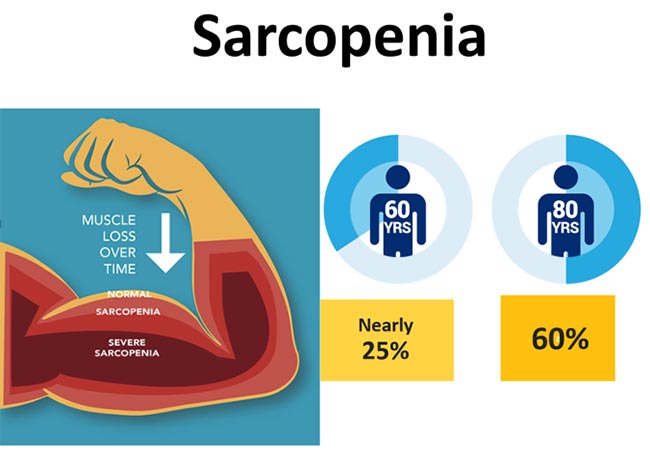
An estimated 25% of 60-year-olds have sarcopenia, and nearly two-thirds of those 80 years and older have lost serious amounts of muscle mass, which threatens a healthy lifespan and cuts down on your independence and quality of life.3,4 Sarcopenia leads to many functional limitations, including difficulties in walking, climbing stairs and carrying objects.5 The penalties of this functional decline include falls, disability, institutionalization6 and even death.7
One of the reasons I’m committed to lifelong exercise is because both of my parents died from frailty, and I’m determined to avoid sarcopenia, which took them prematurely. This was a powerful motivation for me to deeply study frailty so I could avoid their fate.
With society aging worldwide, the prevalence of sarcopenia increases the urgent need to establish prevention and intervention strategies. The U.S. Centers for Disease Control and Prevention now recognizes sarcopenia as an independently reportable medical condition.8
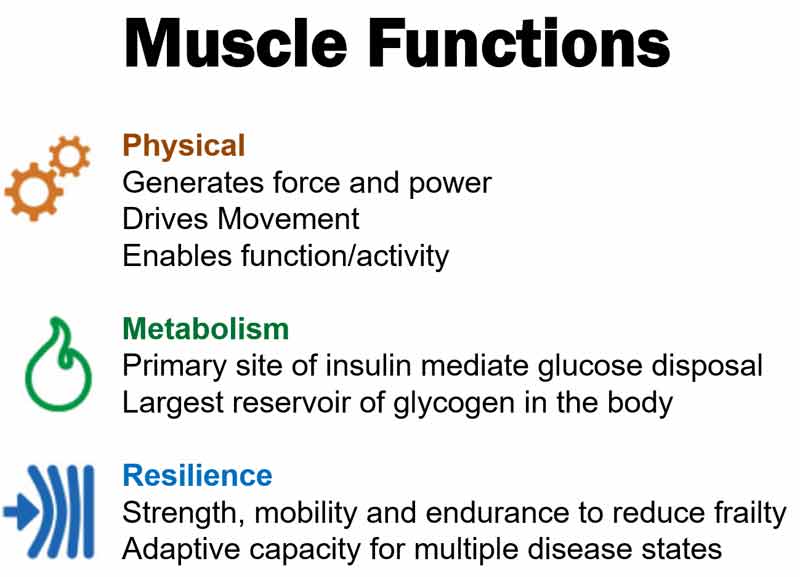
Skeletal muscles not only function to generate force and movement, but also play a major role in your metabolism, circulation and cognition, as seen in the following figure. Skeletal muscles also serve an important endocrine function. They secrete special cytokines (i.e., myokines) and transcription factors into the bloodstream, thereby regulating the function of other organs. It’s a metabolically active tissue with an important role in the maintenance of metabolic homeostasis.
Sarcopenia Is a Major Driver of Insulin Resistance and Disease
Skeletal muscle is the most abundant tissue in your body, comprising 40%9 to 55%10 of your body mass, and is the primary sink of insulin-mediated glucose disposal. Muscle is also the major site for insulin-stimulated glucose uptake, as well as the main energy consumer of fat.11 After meals, about 80% of glucose is deposited in your skeletal muscle.12,13
The loss of muscle mass with advancing age is thought to be a primary driver of insulin resistance in older adults.14 Again, this is because muscle is the major tissue where insulin causes glucose to be absorbed.
But it doesn’t end there. Remember, muscle makes up nearly half of your body’s tissues, so once your body runs out of sugar in the form of glycogen, it uses fat, especially if you are metabolically flexible. So, muscle is also the main energy user of fat in your body.15 The declining muscle strength and progressive mobility impairment with age also tends to reduce daily physical activity, which also contributes to metabolic dysfunction.16,17
The loss of resilience as a result of sarcopenia is underappreciated as a major factor in the ability to recover from life’s inevitable challenges. It is clear that elderly with low muscle mass experience delayed recovery,18,19 and have higher rates of complications and infections following surgery,20 greater drug toxicity21 and higher disease-specific and all-cause mortality.22
Sarcopenia also predicts both the risk for community-acquired pneumonia in the elderly,23 as well as 90-day mortality in patients suffering from aspiration pneumonia.24
Muscle Play a Role in Your Immune Function Too
Muscle is increasingly recognized as an organ with immune regulatory properties. As such, skeletal muscle cells modulate immune function by signaling through different soluble factors, cell surface molecules or cell-to-cell interactions.25 It is also speculated that sarcopenia contributes to immunosenescence — the gradual deterioration of your immune system — which is a leading cause of death in the elderly.26
Additionally, recent reviews found strong evidence that frailty due to sarcopenia27 is a risk factor for adverse outcomes, such as longer hospital stay, functional decline at discharge and both in-hospital and medium, lower quality of life,28 and long-term mortality.29
My Strategy and Recommendation to Combat Sarcopenia
So, what can we do about this progressive decline in muscle loss that sets you up for frailty and metabolic catastrophe? Why, exercise, of course. But here’s a little-known fact: Despite the well-known benefits of resistance training, less than 10% of those under the age of 75 in the United States participate in muscle-strengthening activities.
I believe one of the main reasons for this low rate of participation is that over half of those who do exercise engage in conventional resistance training end up getting injured. Another reason is that conventional strength training is considerably less effective in healthy older adults than in young adults.
This blunted anabolic response to exercise training in older individuals30 is likely a result of the age‐related decline in muscle fiber perfusion.31
This has been known for a long time. Seventeenth century physician Dr. Thomas Sydenham, who is known as the “English Hippocrates,” recognized nearly 400 years ago that vascular health and aging are interdependent and inversely related.32 His famous quote is: “A man is as old as his arteries.”
Microcirculation is the term used to describe blood flow through the capillaries. The main function of the microcirculation is the delivery of oxygen and nutrients to tissues while removing CO2, metabolic debris and toxins. Researchers believe this is related to a decrease in muscle fiber microcirculation of Type II muscle fibers and their associated stem cells.
Studies have shown that Type II muscle fiber-associated stem cells are located at a greater distance to their nearest capillary in older compared with younger men.33 There are a large number of circulating growth factors that are regulators of stem cell function34 and the delivery of these signals to activate your muscle stem cells and promote muscle growth relies on how close they are to the capillaries.
Once your microcirculation becomes compromised with age, Type II muscle fibers and their associated stem cells will be unable to receive enough nutrients and oxygen. Thankfully, there is a solution to this dilemma, and it is called blood flow restriction (BFR) or KAATSU in Japan, which is where it originated.
How I Radically Changed My Exercise and Lean Muscle
Now, I am no stranger to exercise. I have been exercising since 1968, which is 54 years. The problem is that the first 43 years were exclusively cardio, and in my case long distance running. I like to compete, so I got relatively decent and was eventually able to run a 2:50 marathon, which was good enough back then to get me on the post-graduate University of Chicago Track Club.
Unfortunately, I didn’t realize that while cardiovascular exercise can lower your risk of heart disease, it is a highly catabolic activity and will actually lower your ability to build muscle. Below is a picture of me taken during my peak running condition. As you can see by the arrow, I had a “gigantic,” 10.5-inch arm circumference.
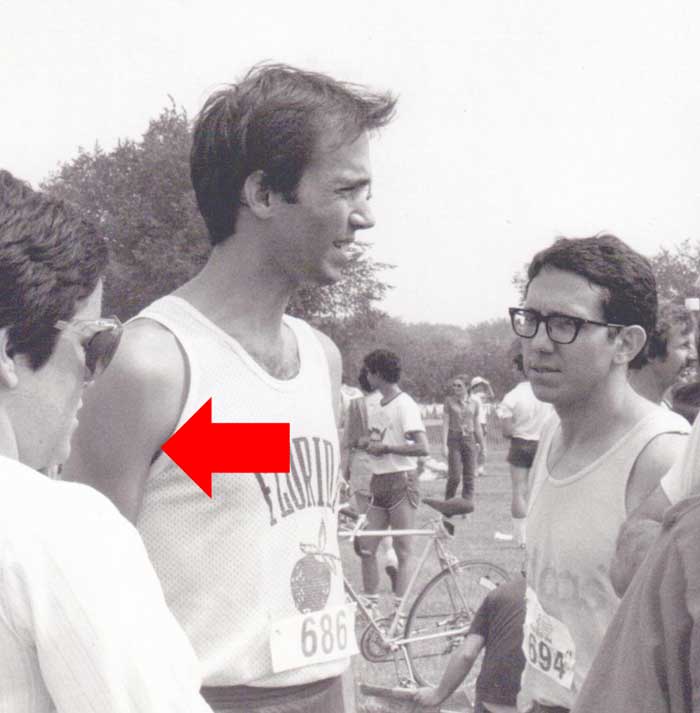
Contrast that to the picture below, taken December 8, 2020, where my arm circumference is 15 inches. I had just finished doing a PR video for the deadlift at 370 pounds. The video (below) was posted to Instagram on the same date.
The blue plates are 45 pounds each; the black ones are the same width as the blue ones, but are plastic and are 25 pounds; and the bar is 50 pounds. My team wanted me to do a story on how I did this to, hopefully, inspire you to similar, if not better, levels of strength.
I’m very proud to say that I’ve come even further since then and, now, even approaching 70, I’ve been able to regularly set personal records with some of the lifts that I’m doing, and have deadlifted four plates, which is 405 pounds.

Watch Me Leg Press 600 Pounds
Without doubt, building muscle is one of the most important strategies to improve and safeguard your health, especially as you age. You need protein reserves to survive serious disease, and most of your protein is stored in muscle. If you have very little muscle, you’re going to pass away prematurely because you have no amino acid reserves.
As mentioned, your muscle is also a primary regulator of your metabolism. It’s a primary site for glucose disposal because of the GLUT4 insulin receptors embedded in the muscle cell membranes. These receptors lower your glucose levels after a meal and decrease your risk for diabetes. It also interfaces with your immune system and helps optimize it.
If you take away one tip from this article, let it be this — it is rarely too late to start resistance training. You can build muscle mass after 60, which is about when I started and, earlier in 2022, as you can see in the video above, I set a new personal record in the leg press for 600 pounds, a significant improvement over the 400-pound deadlift I did in 2021.
How did I do it? That’s the focus of this article, and the great news is that virtually anyone can use this strategy, even if you’re older, like me, or already a bit frail, or have previously experienced exercise injuries.
The BEST Strategy I Know of to Increase Muscle Size
There are loads of ways to increase your muscle mass but they mostly involve moving, pushing or pulling heavy weights or resistance bands. The problem with this strategy is that if you are not in good shape, and especially if you are elderly, there is a very high likelihood that you will get injured. In most cases, it is not if you will get injured but when.
The answer to this problem is an exercise strategy known as BFR or KAATSU. As the name implies, BFR involves modifying the arterial inflow and venous outflow while you’re working the muscle by placing an inflatable band around the extremity.35 It is not like a tourniquet that stops all your blood flow, which is dangerous.
BFR was developed by Dr. Yoshiaki Sato of Japan about 50 years ago. In Japan, where it’s widely popular, it’s known as KAATSU, meaning “training with added pressure.”36 However since Sato does not speak or write English, the first article published about it in the U.S. was about 25 years ago.37
Conventional resistance training typically uses resistance at 70% to 85% of your one-rep max, i.e., the maximum amount of weight you can lift only one time. Since this weight is relatively heavy and close to your limit, injuries are almost guaranteed.
BFR is different, as it is a low-intensity resistance training, using weights that are just 20% to 35% of your one-rep max. With weights this light, your risk of injury is largely eliminated. In many elderly and frail individuals, weights of just 1 or 2 pounds, or no weight other than your body, are all that is needed to achieve the benefits.
How BFR Works
BFR’s ability to achieve such remarkable physiological benefits is directly related to slowing venous blood flow from the muscle group being engaged and creating a relatively hypoxic environment or low oxygen pressures in the exercising muscle.
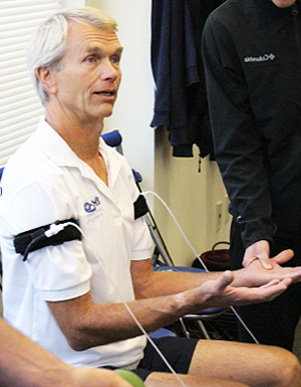
Venous flow moderation is optimally achieved by wrapping the extremity being exercised with an inflatable cuff or band.
The band needs to be tight enough to slow venous return to the heart, allowing venous blood to “pool” in the region of the limb that is being exercised, while loose enough to allow arterial blood to flow through.
With very light exercise, and in about 15 to 20 minutes, you get an exhaustive workout that sends a signal to your brain that says, “Hey, I’ve done something really hard here — you better help me recover and adapt to it.”
Your brain then sends out hormonal responses that cause your muscles and blood vessels to grow. Most would think that such light weights would be insufficient to provide any muscle strength improvements, but studies show a 36% to 40% increase in muscle strength after only 12 weeks, depending on your load and health.38
BFR Mimics Heavy Weight Training Without Any of the Risks
BFR training is frequently misunderstood as simply a conventional resistance training program with the addition of resistance bands. Nothing could be further from the truth.
Because the exercise is done with such low weights, there’s far less muscle fiber trauma and damage, especially relative to conventional strength training. This means you are able to recover much quicker, so you don’t have to dig yourself out of a hole the next few days. In most cases, you can exercise different body parts nearly every day and rapidly attain the metabolic and physical benefits.
To understand the mechanism of BFR you need to know that you have two basic types of muscle fibers. First you have slow-twitch oxidative (Type I) fibers designed for low-intensity long-lasting contractions. Secondly, you have fast-twitch glycolytic (Type II) fibers designed for high-intensity short-duration contractions. When you lose muscle, it typically occurs as a reduction in Type II muscle fibers.
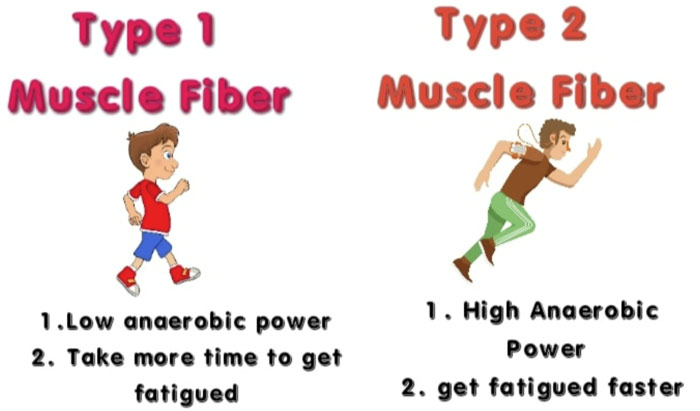
If you are going to increase muscle mass and strength in anyone, but especially the elderly, it is important to activate Type II muscle fibers during training, since these fibers have been shown to be far more responsive to growing muscle than Type I fibers39 and are generally much larger.
Weight training done at low weights will not activate Type II fibers — unless it’s done with BFR. Type I fibers are relatively more sensitive than type II fibers to hypoxia (low blood oxygen), as they have a greater oxygen consumption at rest compared to Type II fibers.40 BFR training takes advantage of this difference. Producing a relatively hypoxic environment in your muscles41 causes premature fatigue of the Type l fibers, thus forcing your body to rely on Type II fibers to continue the exercise.
At the same time, you’re also activating their associated muscle stem cells. This is likely one of the main mechanisms by which BFR can trigger muscle growth and prevent or prevent or treat sarcopenia. Simply moving light weights with high repetition without BFR will not engage Type II fibers because there is plenty of oxygen for the Type I fibers to work. Hence, the fast-twitch Type II fibers just aren’t called into action.
How BFR Affects Your Muscles and Overall Health
When you exercise and activate your Type 2 fibers with BFR, your muscles will generate a waste product called lactic acid or lactate, which is responsible for much of the metabolic magic. Activating Type 2 fibers also lowers the pH of the muscles. This is not because of lactic acid, but more related to the release of extra protons released in generating energy.42
Both lactate and proton accumulation are potent stimulators of growth hormone and insulin-like growth factor (IGF-1), which in turn leads to muscle growth.43 IGF-1 is a hormone that helps manage growth hormone (GH) in the body. It’s typically made by your liver, which is the largest contributor to IGF-1 circulating in your blood. However, when your liver secretes IGF-1, it will not act on those tissues that have capabilities of producing the hormone themselves, such as skeletal muscle.44
Interestingly, it is not the circulating levels of IGF-1 in your blood that cause your muscles to grow but, rather, the IGF-1 produced by your muscles when engaged in exercises like BFR, as that’s the key determinant for switching on the anabolic muscle building pathways.
While high levels of IGF-1 in your blood will inhibit autophagy and decrease your longevity,45 this does not appear to be the case when you increase IGF-1 in your muscle using anaerobic exercises like BFR. This IGF-1 does not leak out into your blood to suppress autophagy.46
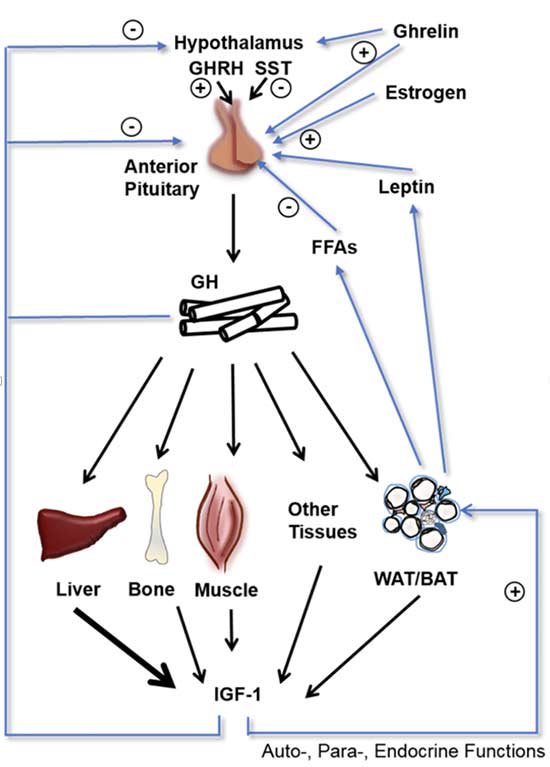
BFR will not only will add solid muscle mass, but also significantly increase your strength and endurance while reducing your body fat. For most people who are not competitive athletes, it’s really the only form of resistance training they need.
Competitive athletes also seem to benefit from BFR, but they would need to combine it with conventional strength training.47 In short, BFR works on a very simple principle: It tricks your body into believing that it’s moving far heavier weights than you’re actually using, and as a result generates compensatory metabolic responses, further detailed below.
Local and Systemic Effects of BFR
If you are elderly, what is really amazing is that your muscle growth with BFR is beyond what strength training with heavy weights can do. This is because you need good blood flow to your Type II muscle fiber stem cells, and as mentioned earlier, virtually everyone’s microcirculation decreases with age.
So, even if you send the signal to grow by doing conventional strength training, it won’t work as well if there isn’t enough capillary supply to your Type II fiber stem cells. BFR increases your microcirculation, your capillaries and venules and arterioles that are associated with them (see image below), largely because your muscles are working in a hypoxic (low oxygen) environment.
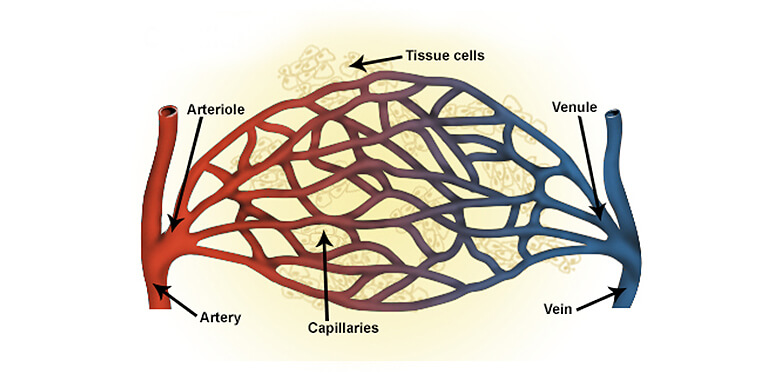 Microcirculation
How BFR Increases Your Microcirculation
This low oxygen tension causes the release of hypoxia-inducible factor-1 alpha (HIF-1 alpha),48 which in turn increases the hormone vascular endothelial growth factor (VEGF), which is one of the most powerful angiogenic signals in your body. It’s an extremely potent pro-blood vessel building cytokine or myokine. VEGF will help repair damage that has occurred to your blood vessels, improve elasticity and make them far more resilient to damage and accidents.
BFR has been shown to raise VEGF levels by 410% in young adults.49 Essentially it acts as “fertilizer” for growing new blood vessels and capillaries to your muscle stem cells. BFR training has been shown to increase muscle stem cells by 300% after eight days of training.50
Here is the KEY point: The VEGF released by BFR is systemic and carried in your blood to your entire body. It just doesn’t work on the limbs you are exercising. It increases blood vessel growth throughout your entire body, which seems to be the perfect antidote for Dr. Syndenham’s theory that a man is old as his arteries.
In short, BFR will help aging men have the arteries of boys. VEGF also increases microcirculation in your brain and heart. In Japan, BFR is frequently used for stroke and cardiac rehab precisely for this purpose.
BFR also increases the production of the important regulatory free radical, nitric oxide (NO), which further contributes to an increase in VEGF.51 NO is an important signaling molecule produced at high levels in muscle by neuronal nitric oxide synthase (nNOS). BFR, by way of increasing NO, has been found to stimulate muscle satellite stem cells and proliferation.52
There is a load of interest in NAD+, as it’s a primary fuel for longevity proteins, and it becomes depleted as you age. A combination of BFR along with 50 milligrams of niacinamide per day will radically increase NAMPT, which is the rate limiting enzyme for NAD+. Honoring your circadian rhythm is also an important part of the equation.
The Benefits of Osmotic Pressure

Metabolic stress, or the accumulation of metabolites during exercise, has been documented to be important for muscle growth.53,54,55 One of the most important metabolic stressors produced in BFR training is lactate, which I touched on earlier. The lactate released by the muscles is largely a result of Type II muscle fiber burning glucose into pyruvate and then converting pyruvate to lactate.
When you occlude the veins in BFR, you limit the venous blood flow return back to your heart, which allows the lactate to accumulate to high concentrations in your muscle,56 where it creates an osmotic pressure differential that requires the influx of water to normalize.
As you can see by the figure below, osmotic pressure is the pressure that must be applied to a solution to halt the flow of solvent molecules through a semipermeable membrane (osmosis). It is determined by how many molecules are in the solution. The more molecules, the higher the osmotic pressure.
This flow of water into the muscle57 contributes to intracellular swelling,58 which creates an acute and measurable increase in the size of the muscle that is typically quite visually obvious.
The mechanical pressures created by this cell swelling also trigger the activation of Type II muscle fiber stem cells, which causes muscle growth and further increases muscle protein synthesis and decreases protein breakdown in your muscles.59 So, the higher the lactate levels and swelling created with BFR training, the better the muscle-building results will be.
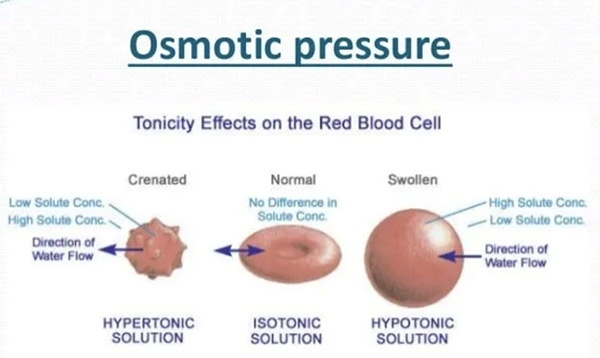
Interestingly, some of the lactate produced locally in your muscles actually diffuses into the bloodstream and crosses the blood brain barrier through monocarboxylate transporters (MCTs), and is utilized as fuel for the brain.60,61
Similar to ketones, lactate can be an important brain fuel, as at high lactate concentrations, up to 60% of the brain’s energy can come from lactate. Once the lactate reaches your brain — which occurs when you release the bands from your extremities — it increases brain derived neurotropic factor (BDNF),62 a member of brain growth factors that contributes to neuroplasticity and enhanced cognitive performance.63,64
I first learned about BFR in 2017 at a Beverly Hills biohacking event. I’ve been using it nearly every day for at least an hour a day since then and have compiled a number of insights in that time. The main difference between KAATSU and BFR is the tool you’re using. BFR can be done with restriction bands, but KAATSU uses a device that also provides intermittent and not just constant pressure.
From the start, I was really intrigued with the concept of BFR, so I purchased a KAATSU unit developed by Sato. In cycle mode, the KAATSU device produces 30 seconds of pressure followed by five seconds of no pressure, and does this for eight progressively increasing pressure steps per cycle. What this does is provide intermittent hypoxia, which catalyzes the steps I described above.
Since the intermittent hypoxia does not last more than 30 seconds, it does not damage your body, which can happen when you use the cheaper KAATSU bands or BRF bands that provide constant pressure. When I first started using BFR, I felt it was important enough to encourage people to get inexpensive bands that don’t provide intermittent compression. The BFR bands were only $15 and allowed far more people to access this powerful fitness strategy.
But after using the unit for five years, I have learned that when you use the cheap bands, or even KAATSU in the constant mode, you can get spastic large muscles. Using constant pressure increases the hypoxia time, and hence the lactic acid can build up to excessive levels. The only way to get the benefits without the downside is to avoid the constant mode and cheap bands.
This is why I only use the cycling KAATSU mode, not the constant mode or cheap bands, and why I now only recommend using the KAATSU intermittent hypoxia system, which is far safer and provides greater health benefits. Sato himself admits that the constant mode requires a lot of experience and know-how before it can be used safely. The cycling mode, however, is safe to use for anyone. “Even someone in their 80s can do the KAATSU cycle mode without risks,” he says.
 For a limited time, you can get 10% off the KAATSU band by using this link: www.kaatsu.com/go/NVIC
Since I first started using KAATSU, I have gained about 25 pounds of muscle mass after the age of 65, which is extraordinarily hard to do. I am convinced that this is largely a result of using KAATSU and getting enough protein, as I do not take any drugs at all, let alone performance-enhancing drugs.
If I had only done strength training without KAATSU, I would likely not have gained anywhere near as much muscle mass. Again, this is largely due to older people having decreased microcirculation to feed the Type 2 muscle stem cells. You need the VEGF to increase blood supply to these cells, and conventional strength training does not do that very well.
Why I Only Recommend KAATSU Cycle Mode
The KAATSU set is ideal as it is far easier to dial in to the correct pressures. You also get the benefit of intermittent pressure automatically, without having to adjust the bands yourself. With the KAATSU system you can control the tightness in two ways.
The initial tightness is after you manually tighten the bands. This is the base pressure and typically around 10 to 25 mm/Hg for the arms and 15 to 35 mm/Hg for the legs, depending on your age, vascular elasticity and physical condition.
The inflation pressure is what you set the compressor to pump the cuff up to. This ranges from 80 to 400 mm/Hg for both the arms and legs. KAATSU is the only unit that will cycle the inflation of the bands on and off, which, again, is far healthier for your muscles. Sato notes (see video above):
“I gradually increase the pressure on each set, personally, doing up to eight sets. The first set has no effect, but my muscles pump up significantly from the sixth to eighth sets. If you do that for two or three circuits, the KAATSU cycle mode will have the same effect as the KAATSU constant mode. Therefore, I recommend the KAATSU cycle mode to the general public.”
How to Determine Your Ideal Level of Resistance
Instead of using heavy weights that can increase your risk of injury during conventional strength training, BFR requires just 20% to 33% of the resistance used in conventional resistance training, which makes it much safer for everyone. This light weight is then combined with a high volume of repetitions while externally applied compression mildly restricts blood flow to the active skeletal muscles in the legs or arms.65

As for weight, your goal is to find the “sweet” spot. If you are elderly or have not been exercising regularly, this may mean no weights at all.
Ideally, you would have access to a variety of progressively increasing resistance movements to choose from, including body weight exercises. You typically won’t need to go higher than 25 pounds, though.
Once you have access to the weights, you can find the heaviest weight you can do for just one repetition of your planned exercise. This is your one-rep max (1RM).
Then you divide that weight by five (20%), four (25%) or three (33%). For example, if your max weight for a bicep curl is 25 pounds, you would select a 5-pound dumbbell to start.
If you don’t know your one-rep maximum, then it is always better to start too low, especially if this is your first time, as your tissues will need time to adapt to these pressures and movements. Eventually you will want to increase your weight so you notice the following signs during your KAATSU session.
|
Signs That You Are Using the Correct Weight
These two signs are an indication that you have activated your sympathetic nervous system by firing your Type II muscle fibers. This is because properly performed BFR is a high intensity exercise that will exhaust your Type I muscle fibers and activate your Type II fibers. You can also measure the circumference of your limb before and after the exercise. You should notice an increase of at least one-half inch and possibly 1 inch or more — or, alternatively, the muscle will most certainly feel tighter and appear more toned. Another great indication is that you will be able to do 30 reps the first set and then 15 to 20 reps the next and, most likely, are unable to do five to 10 reps in the last set because you are in muscle failure. It is important, though, not to fool yourself and stop just because it is hard. Muscle failure means that you are unable to do another rep if your life depended on it. |
Unless you are just starting (see warning box below), it is best to start by limiting your weight to only 20% of your 1RM and build up from there. By starting at a lighter weight, it will give your body a chance to adjust to BFR and avoid potential injuries.
An additional benefit is that if you stick with lighter weights you can train more frequently because you won’t cause as much muscle damage. For those interested in greater strength or muscle gains, you can increase to one-quarter and then to one-third the weight of your 1RM. If you are doing the exercises correctly, it will likely take you about three months to progress up to 33% of your 1RM. There is no need to go any higher than this.
If you don’t know your 1RM, then all you have to do is pick a weight you believe you can easily do 30 reps with and start there. If you can easily do all three sets at that weight, then it’s clearly too low a weight and you would benefit from increasing the resistance, especially if you don’t notice an increase of at least one-half inch in the circumference of your biceps after the exercise.
Conversely, if you are unable to complete 20 repetitions on your first set, the resistance is likely too high and needs to be decreased.
!WARNING FOR FIRST-TIME USERS
The only exception to these weight recommendations and initial pressure of the bands is when you are first starting out. It is important to realize that your tissues need time to adjust to BFR training. For the first session, you want to start with a light pressure, likely under 40%, and use only 10% of your 1RM. Then over the next two sessions increase to the minimum recommendations.
Important: You Need to Push Hard to Get the Benefits

It is important to recognize that the level of intensity you use is key. Muscle growth is highly dependent on metabolic factors, and training sets are ideally done to close to failure to achieve this.66,67
The number of repetitions completed during a training session is less important to cause long term changes in hypertrophy and strength than doing repetitions close to failure, which likely causes greater metabolic stress.
Perceived exertion is a major element here. You really need to push hard to muscle failure. This is a very subjective determination, but I hope the featured videos will give you an idea of the amount of intensity and effort one needs to put into this short exercise.
You can also notice if you are sweating and you are out of breath. Since BFR is a high intensity exercise and stimulates your sympathetic nervous system if done properly, this is precisely what you should be experiencing when you do BFR training.
A recent study in the elderly showed that physical weakness in aging may be due, at least in part, to impairments in brain and nerve function, rather than changes in the muscles themselves.68
The researchers did the study by asking participants to push to failure and once they said they had, they stimulated the muscle electrically and were still able to get the muscle to contract, which indicated that the muscle was not at full failure. In fact, in most cases the muscle was still able to contract about 25% more.
If you are unable to push close to failure, you will not receive the maximum benefits possible from BFR. Also, shorter recovery periods between exercises and sets will heighten the metabolic stimulus to enhance your body’s ability to build muscle and strength.69
Remember, you can start slowly and work your way up over time. Building muscle is a marathon, not a sprint. This is especially important if you are elderly or if you have been mostly sedentary; you likely will not need to use any weights.
You can start with just the weight of your body and gradually progress to 1- and 2-pound weights. But if you really are interested in triggering the benefits of reversing sarcopenia, then it is key to push hard — otherwise you will not achieve all the wonderful metabolic benefits that BFR has to offer you.
General KAATSU Workout Guidance
Although you can adapt KAATSU training to many types of resistance training, including machines, it seems the ideal way to implement it is by using simple dumbbells. Here’s some general workout guidance when using KAATSU.
Number of repetitions in each set:
|
Typically, upon starting KAATSU, you’ll notice a high perceived degree of difficulty. However, over a few weeks this perception of difficulty dampens as adaptation to training occurs.70 At that point, it becomes important to continue to push with the same level of intensity.
One of the major advantages of KAATSU versus high-load resistance training is that you cause far less muscle damage, which allows you to train more frequently. The frequency of training needs to be individualized as it varies widely. It can range from as little as twice a week up to three times a day, depending on your fitness and training goals.
Typically, the lower the percentage of 1RM used, the more frequently BFR can be done.71 Heart rate variability and the Oura ring can also be used to determine your ideal recovery periods. The Oura ring measures your heart rate all night and will tell you not only your lowest heart rate but also at what time it occurs. The higher your heart rate and the closer your lowest heart rate time is to awakening, the more recovery you need.
How to Perform BFR

Begin by applying the bands to your upper arm, very close to your armpit, just where your bicep muscle begins and deltoid muscle ends.
On your legs, you can apply them right below your hips at the top of your quads, close to your groin. There are misconceptions that you need to put the bands close to the muscle you are seeking to focus on, but this is unnecessary.
There is a crossover training effect and your muscles that aren’t blood flow-restricted will also receive benefit once the bands deflate. In other words, you will gain benefits in your chest muscles even though you are only restricting your arm muscles.
Do not put the bands over your knees or elbows, as this could cause nerve damage. Only put the bands on your body as described above, because the goal is to increase your vascular elasticity and elicit a metabolic and hormonal response that ultimately leads to aesthetic and muscular improvement.
When you engage in the exercise properly, lactic acid will accumulate in the muscle, which will be associated with a burning-like pain due to the excess hydrogen ions being produced. It will clearly be uncomfortable, especially as you push to muscle fatigue. It is important to understand that this subjective sensation of discomfort will improve with time.
It will likely take four to six weeks to develop the strength and hypertrophy gains. Once achieved, a study72 in elderly participants showed that doing BFR training twice a week was sufficient to maintain the gains. When training decreased to once a week, the gains failed to be maintained.
If you are able to, there is benefit to doing BFR every day. You can just vary the number of exercises you do per day. It could be as simple as applying the bands to your legs and walking for 30 minutes, or putting them on your arms and swimming. It doesn’t have to involve weights. You can also use them in your favorite sport.
Get Stronger and Healthier With Age
In summary, the four key lifestyle strategies that have allowed me to get healthier with age are TRE in combination with a cyclical ketogenic diet (which I’ll review below); exercising while fasting; and using KAATSU in my strength training routine.
While doing any one of these in isolation would likely improve your health, when done in combination, they really catalyze synergistic changes that optimize your entire system. The best news of all is that it’s never too late to start. My transformation began in my 50s, and I feel better now at 69 than I did back then. You can transform your health and physique too. You just have to get started, and keep going!
Your Food Choices Are Crucial for Muscle Building
My understanding of optimizing nutrition for health has been a greater than five-decade journey. At the beginning, I fell into the low-fat diet myth and thought I was eating healthy with my grains and margarine alternatives, but I was fooled. The key here is that I was motivated to make the right choices: I simply lacked proper mentoring and information.
That was one of the primary reasons I started this website over 25 years ago. I believed that people didn’t need to make the same silly mistakes I made, and by sharing my insight I could save them needless pain and grief.
Another major mistake I made was never taking time off from eating. It seemed to make sense that you need to eat around the clock, and that going without food for days could wreck your health by losing muscle mass from inadequate protein intake. After researching this, I realized it was seriously wrong and counterproductive. Your body actually requires regular intervals when you aren’t eating, and failing to do so is a prescription for metabolic disaster.
Research by Satchidananda Panda, Ph.D., suggests 90% of people eat across more than 12 hours per day, and perhaps 50% of the population eat across 16 hours a day. There are even many who wake up in the middle of the night to eat.
This constant hunger occurs because when you’re using carbs rather than fat as your primary fuel, you need constant refueling as carbs burn so much quicker than fat. I wrote extensively about this in my best-selling book, “Fat for Fuel,” Since your body has a minute supply of stored carbs relative to fats, you need to eat far more frequently to avoid feeling ravenously hungry and tired as your body runs out of fuel.
The remedy for this is twofold: Eat a cyclical ketogenic diet (high in healthy fats and low in carbs, with higher amounts of carbs cycled in), and restrict the window of time in which you consume all your meals each day. Both of these strategies will help retrain your body to burn fat for fuel, which is a sign of metabolic flexibility that is crucial for optimal health, and once you can burn fat, hunger is significantly decreased and you can go without food far longer.
Time-Restricted Eating Is a Key Health Principle
Time-restricted eating (TRE) is one of the most important health principles of our time. Contrary to modern belief, your body isn’t designed to be fed throughout the day, and the near-continuous grazing that most engage in can have serious health consequences.
When you eat throughout the day and never skip a meal, your body adapts to burning sugar as its primary fuel, resulting in the downregulation of enzymes that utilize and burn stored fat.73,74 As a result, you become progressively more insulin resistant and start gaining weight. Many biological repair and rejuvenation processes also take place while you’re fasting, and this is another reason why all-day grazing triggers diseases while fasting prevents them.75
Even though TRE was a major breakthrough for me, I have recently come to realize that it is not for everyone. However, it is for most people as 95% of the people in the U.S. are metabolically inflexible. If you are insulin resistant than TRE is vital to implement but only until you become insulin sensitive.
If you continue TRE for too long, you will create inflammatory stressors by having your body generate cortisol to have your liver create glucose because your body is low in it. So once you become metabolically flexible it is important to increase your eating window to eight to10 hours or even 12 hours in the summer.
There are a number of different intermittent fasting regimes, some of which are more extreme than others, but all are based on the premise that you need to fast for periods of time. TRE is one of the easiest to follow as you simply abstain from food for 16 to 18 hours a day and eat all your meals within a window of six to eight hours. A six- to eight-hour window seems to be close to the metabolic ideal for most.
You Must Eat Adequate Protein to Increase Muscle Mass
Your muscle is made of protein and if you don’t supply enough of the raw material your body will not be able to generate new muscle tissue. Fortunately, there is an easy formula to follow that will supply the crucial amino acids your body needs to stimulate muscle protein synthesis.
The most important amino acids will be the branched chain amino acids, leucine being the key. You will need about three grams of leucine within one to two hours of your workout to activate mTOR, the anabolic signal and trigger to build tissue.
If you eat enough high-quality protein according to the following formula you will invariably have enough leucine. The minimum is about 1.2 grams of protein per kilogram of body weight (0.54 grams/pound) per day. Athletes and the elderly could benefit from even higher levels at 1.6 grams/kilogram (0.71 grams/pound).
Just be sure to avoid seeds and all nuts (except macadamia) as they are high in omega-6 fat linoleic acid (LA), which will cause other metabolic complications. Chicken and pork should also be avoided as they are monogastric animals that are fed commercial grains that are high in LA. They also have high LA levels in their tissues.
- 1 von Haehling S, Morley JE, Anker SD. From muscle wasting to sarcopenia and myopenia: update 2012. J Cachexia Sarcopenia Muscle 2012;3:213–217
- 2 I.H. Rosenberg Sarcopenia: origins and clinical relevance J. Nutr., 127 (5 Suppl) (1997), pp. 990S-991S
- 3 Aversa Z, et al The clinical impact and biological mechanisms of skeletal muscle aging. Bone. 2019 May 22;127:26-36. doi: 10.1016/j.bone.2019.05.021
- 4 Calcif Tissue Int. 2018; 103(1): 35–43. doi: 10.1007/s00223-018-0388-2
- 5 J. Gerontol. A Biol. Sci. Med. Sci., 64 (12) (2009), pp. 1333-1336. doi: 10.1093/gerona/glp130
- 6 J. Am. Geriatr. Soc., 51 (3) (2003), pp. 314-322
- 7 J. Gerontol. A Biol. Sci. Med. Sci., 71 (1) (2016), pp. 63-71
- 8 Fed Pract 2017 Jul 9;34(7):24-32
- 9 Cell Metab 2009 Dec;10(6):507-515
- 10 Cell Metab10:507–515
- 11 Cell Biol. 2005 Oct;37(10):2047-63
- 12 Diabetes 1982 Nov; 31(11): 957-963
- 13 N Engl J Med 1990; 322:223-228
- 14 Diabetes Care 2009 Nov; 32(suppl 2): S157-S163
- 15 Int. J. Biochem. Cell Biol. 2005, 37, 2047–2063
- 16 J. Gerontol. A Biol. Sci. Med. Sci. August 2018; 73(8): 1070-1077
- 17, 27 Redox Biol. August 2020; 35:101513
- 18 Surg Today. 2018; 48: 151–157
- 19 Ageing Research Reviews 2018 Nov;47:123-132
- 20 Liver Transpl. 2013 Dec; 19(12): 10.1002/lt.23752
- 21 Clin. Cancer Res. 2009 Apr 15;15(8):2920-2926
- 22 Cancer 2014 Sep 15;120(18):2910-2918
- 23 Arch Gerontol Geriatr. May-Jun 2019;82:100-105
- 24 J Am Geriatr Soc. 2017; 65: e18–e22
- 25 Autoimmun Rev. 2018; 17: 518–529
- 26 EBioMedicine. 2019 Nov;49:381-388
- 28 Age Ageing. 2019; 48: 16–31
- 29 Ageing Research Reviews 2019 Dec;56:100960
- 30 J Physiol 2015;593:2721–2734, doi:10.1113/JP270343
- 31 Toda N. Age‐related changes in endothelial function and blood flow regulation. Pharmacol Ther 2012;133:159–176, doi:10.1016/j.pharmthera.2011.10.004
- 32 Life Sciences Volume 118, Issue 2, 24 November 2014, Pages 97-109 doi: 10.1016/j.lfs.2014.09.009
- 33 J Cachexia Sarcopenia Muscle 2016; doi:10.1002/jcsm12105
- 34 Am J Physiol Cell Physiol 2013;304:C717–28
- 35, 65 Frontiers in Physiology 2019; 10: 533
- 36 Sports Med. 45, 313–325. doi: 10.1007/s40279-014-0288-1
- 37 Eur J Appl Physiol Occup Physiol. 1998;77:189–191
- 38 Front Physiol. 2019; 10: 446, Discussion: Muscle Strength
- 39 J Appl Physiol. 1996;81(5):2004–12
- 40 Microvasc Res. 1968;1:1‐14
- 41 J. Strength Cond. Res. 26 611–617. 10.1519/JSC.0b013e3182281c69
- 42 Robergs, RA, et al. Biochemistry of exercise-induced metabolic acidosis. Am J Physiol Regul Integr Comp Physiol 287: R502–R516, 2004
- 43 Clin Physiol Funct Imaging. 2015 May;35(3):197-202. doi: 10.1111/cpf.1214
- 44 FASEB J. (2012) 26:3691–702. 10.1096/fj.11-203026
- 45 Ekmekcioglu C Nutrition and longevity – From mechanisms to uncertainties. Crit Rev Food Sci Nutr. 2019 Oct 21:1-20. doi: 10.1080/10408398.2019.1676698
- 46 Musaro, A, et al Counteracting sarcopenia: the role of IGF-1 isoforms Aging (Albany NY). 2019 Jun 15; 11(11): 3410–3411. doi: 10.18632/aging.102027
- 47 J Hum Kinet. 2018 Dec; 65: 249–26
- 48 Cell 2019 Mar 7;176(6):1248-1264
- 49 Med Sci Sports Exerc. 2012 Nov; 44(11): 2077–2083
- 50 J Physiol 2012; 590(17): 4351–4361, Myogenic stem cell content Page 4355 (PDF)
- 51 Journal of Applied Physiology May 1, 1999; 86(5): 1513–1518
- 52 Mol BiolCell. 2000;11(5):1859–97
- 53 J Appl Physiol.2012;113(2):199–205
- 54 Schoenfeld BJ. Potential mechanisms for a role of metabolic stress in hypertrophic adaptations to resistance training. SportsMed. 2013;43(3):179–94
- 55 J Appl Physiol. 2010;108(6):1563–7
- 56 Med Hypotheses. 2012;78(1):151–4
- 57 J. Appl. Physiol. 2015;118:742–749. doi: 10.1152/japplphysiol.00054.2014
- 58 Nutrients. 2019 Apr; 11(4): 869. doi: 10.3390/nu11040869
- 59 Lang F, Busch GL, Ritter M, et al. Functional significance of cell volume regulatory mechanisms. Physiol Rev. 1998;78(1):247–306
- 60 Ther. Adv. Psychopharmacol. 2017;7:85–89. doi: 10.1177/2045125316675579
- 61 Brooks G.A. The Science and Translation of Lactate Shuttle Theory. Cell Metab. 2018;27:757–785. doi: 10.1016/j.cmet.2018.03.008
- 62 Neurosci. Lett. 2011;488:234–237
- 63 Med. Hypotheses. 2017;106:1–5
- 64 Neurosci. Lett. 2016 Sep 6;630:247-253
- 66 Sports Medicine 2013;43:179–194
- 67 Frontiers in Physiology June 2019 (PDF)
- 68 JAMA Network Open September 25, 2019
- 69 Medical Hypotheses February 2015;84:145–149
- 70 J Sports Sci. 2019 Aug;37(16):1857-1864
- 71 Frontiers in Physiology 2019; 10: 533, BFR-RE
- 72 Proceedings of the International Conference on Sports and Exercise Science 2009. Bangkok, Thailand Pages 336-341 (PDF)
- 73 Cell February 8, 2018; 172(4): 731-743.E12
- 74 Medical News Today February 8, 2018
- 75 Science November 16, 2018; 362(6416): 770-775, Page 1
Sudden Death: The No. 1 Cause of Death for Under 65s in 2021 and 2022
Reproduced from original article:
https://articles.mercola.com/sites/articles/archive/2023/01/06/sudden-death-after-covid-shots.aspx
The original Mercola article may not remain on the original site, but I will endeavor to keep it on this site as long as I deem it to be appropriate.
Analysis by Dr. Joseph Mercola Fact Checked January 06, 2023

STORY AT-A-GLANCE
- Mounting evidence shows the COVID shots are destroying people’s immune systems and are triggering turbo-charged cancers
- A survey by Steve Kirsch found sudden death is the No. 1 cause of death among those under the age of 65 who got the COVID jab
- Myocarditis as a cause of death is now registering across all age ranges but only for the vaccinated. Cardiac-related deaths are also significantly elevated among younger people (under 65) who got the jab compared to their unjabbed peers
- Recent research shows repeated jabs trigger a switch in the types of antibodies your body produces and lower your ability to clear viruses. By switching from spike-specific neutralizing IgG antibodies to IgG4 antibodies, your body switches from tumor suppression mode into tumor progression mode
- In addition to the potential for cancer cells to run amok, IgG4 dominance may also have severe autoimmune implications, as the COVID jab spike protein share similarities with human proteins
Evidence showing the COVID shots are a public health disaster keeps mounting. In late December 2022, Steve Kirsch1 and Jessica Rose,2 Ph.D., both published Substack articles detailing some of the latest evidence showing the shots are destroying people’s immune systems and have triggered an avalanche of turbo-charged cancers.
Kirsch’s article3 features results from a recent survey he conducted. It included four questions: age, whether the deceased was jabbed or not, year of death and cause of death. While the number of responses is low, major insights can still be gleaned by looking at the trends.
First, we have the baseline data from 2020, which show cancer was the No. 1 killer of Americans younger than 65, followed by hospital treatment for COVID. Turbo-charged cancers accounted for one-ninth of the cancer reports, and there were no reports of death from myocarditis.
Among seniors over the age of 65, preexisting conditions were the top cause of death in 2020. Cancer was second, COVID infection third and cardiac events fourth. There were no turbo-charged cancer deaths, nor any myocarditis deaths. Kirsch then gets into the differences between the vaxxed and the unvaxxed in 2021 and 2022.
What the Unvaxxed Died of in 2021 and 2022
In 2021 and 2022, the primary cause of death for people 65 and younger was hospital treatment for COVID. Incidences of sudden death, pulmonary embolism and turbo-charged cancers were all low, and there were no unknown causes of death, nor any myocarditis deaths.
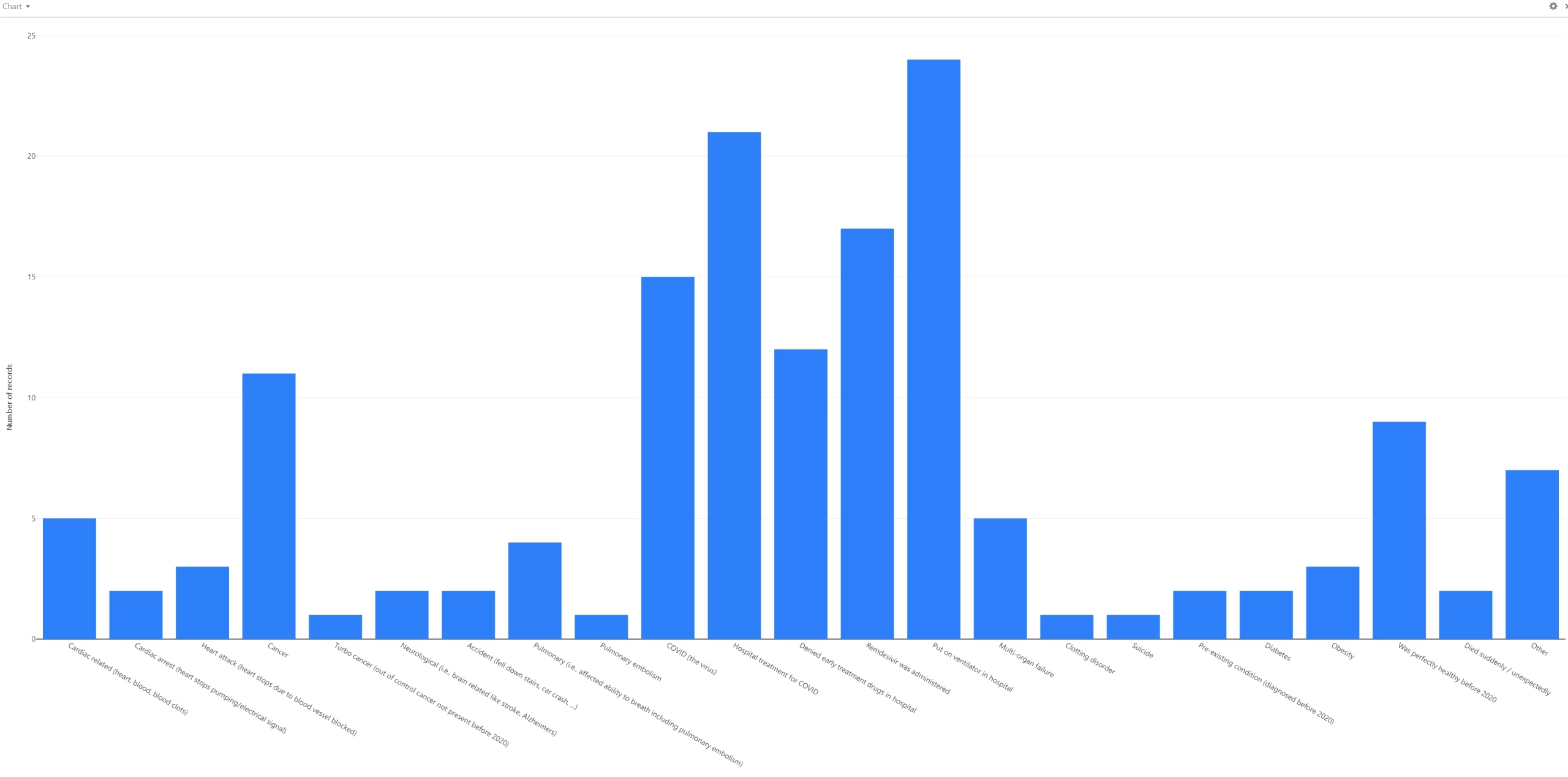
The same went for people older than 65. Hospital treatment for COVID was the No. 1 killer. Heart attacks, turbo-charged cancer and sudden death were all low, and there were no deaths from myocarditis.
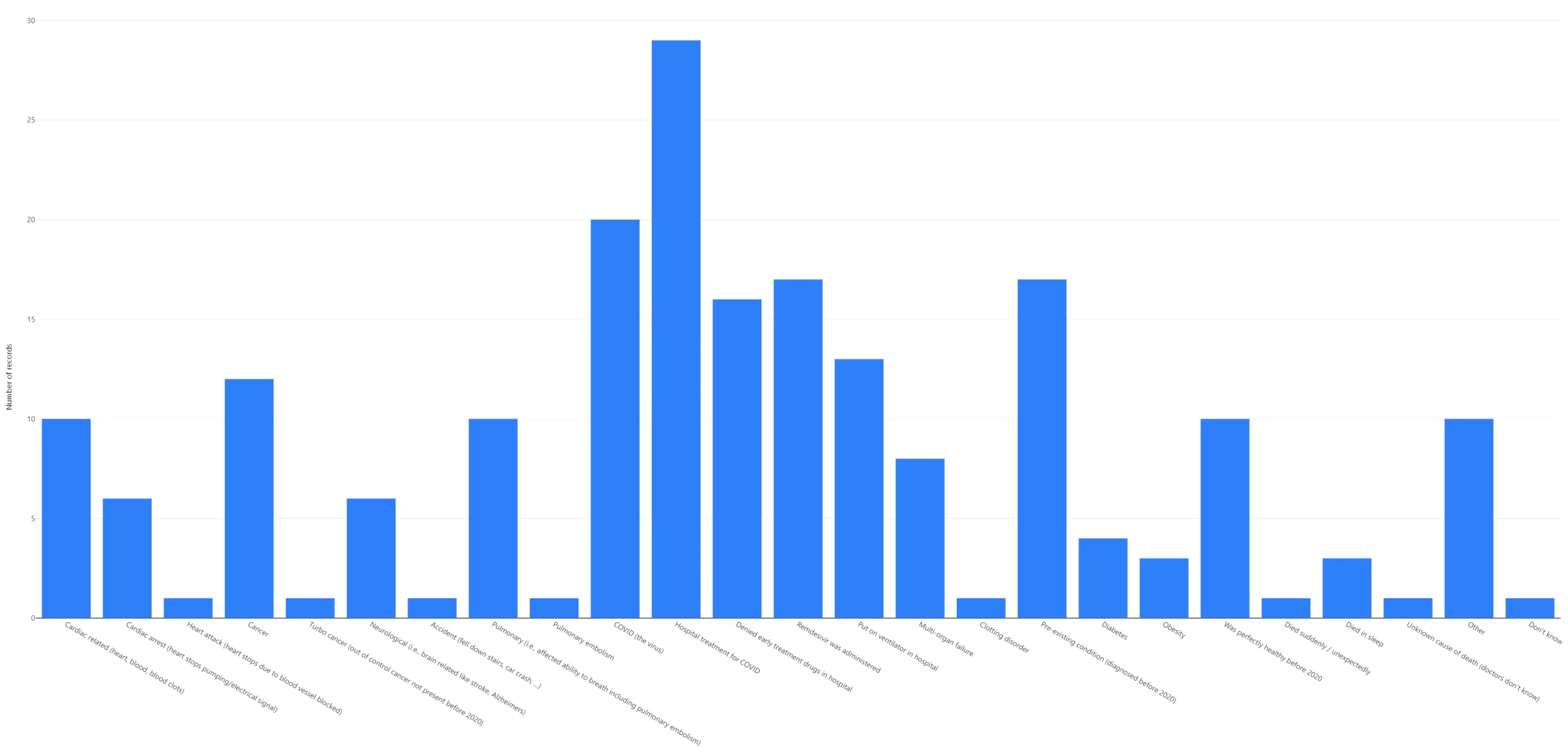
What the COVID-Jabbed Died of in 2021 and 2022
Among the COVID-jabbed aged 65 and younger, sudden death was the No. 1 cause of death in 2021 and 2022. The second was cardiac-related death and cancer was third. Importantly, the incidence of turbo-charged cancer among the jabbed was significant in this group, and myocarditis killed more than COVID-19.
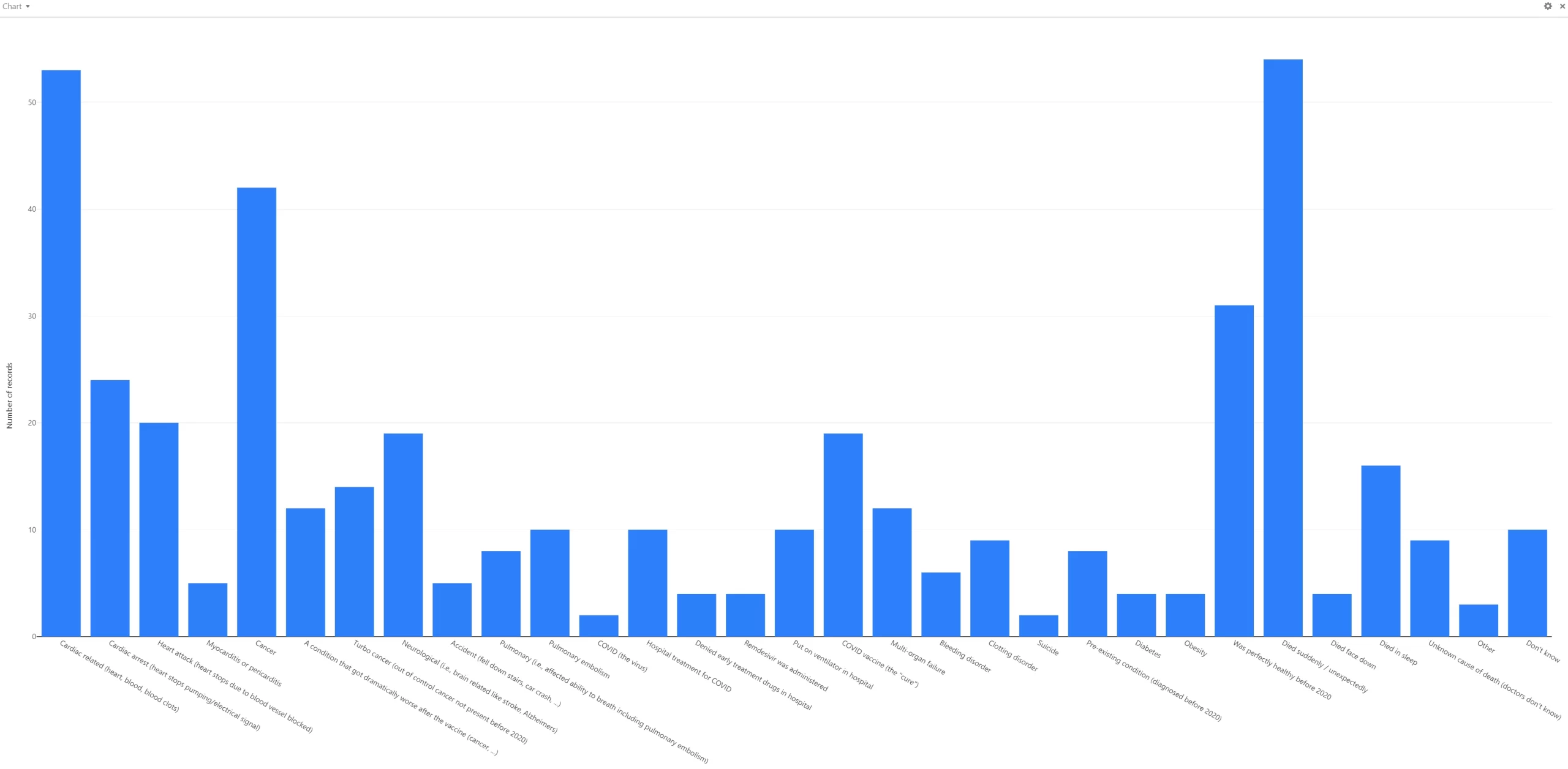
Among those older than 65, cancer was the No. 1 cause of death, and the turbo-charged cancer rate is “huge compared to those without the vaccine.” Sudden death was also significantly elevated.
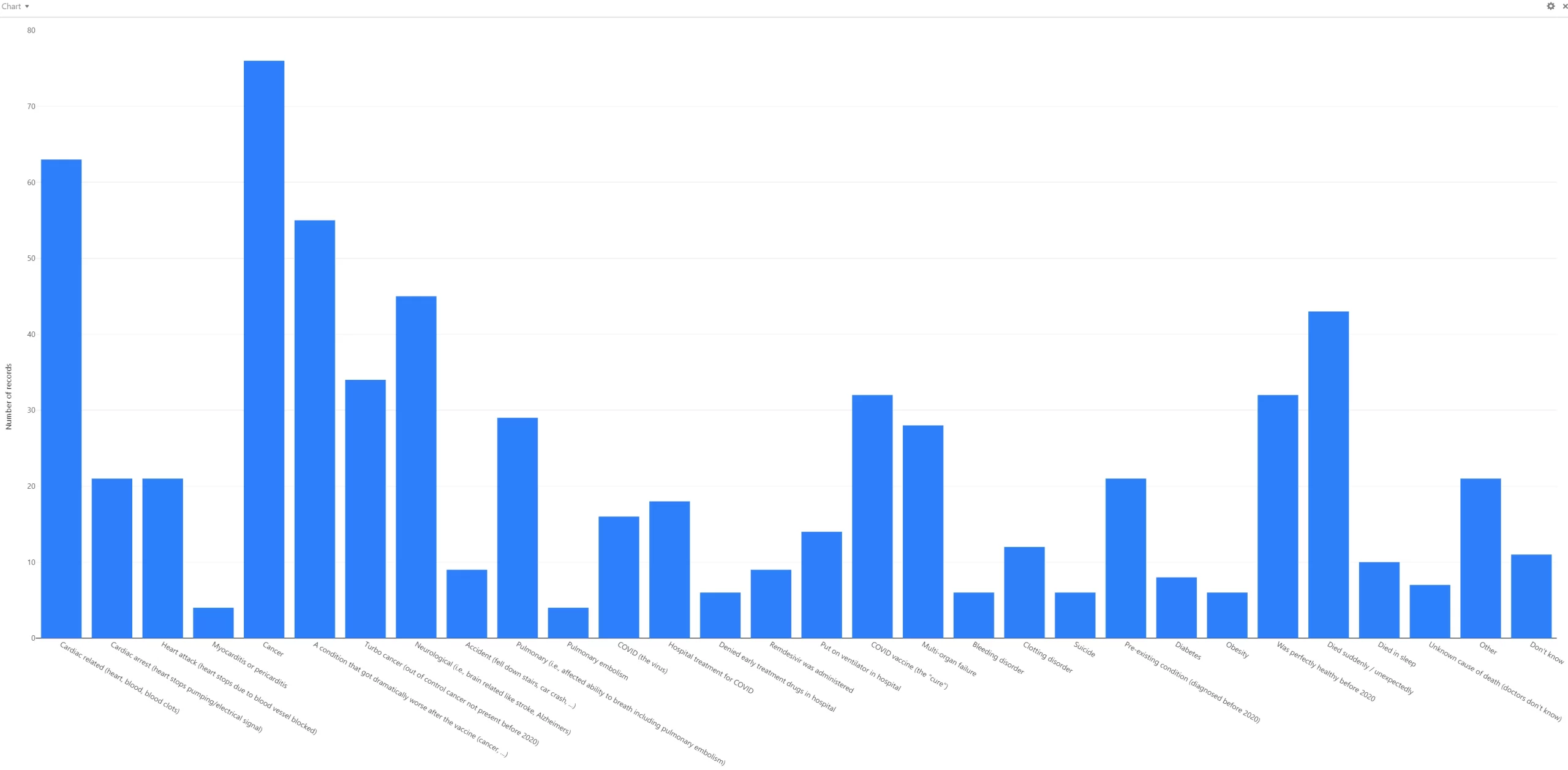
Stark Difference in Cancer Deaths Between Jabbed and Unjabbed
Kirsch summarizes the three most stunning differences between the jabbed and unjabbed:4
1. “Sudden death rates are off the charts for the vaccinated cf. unvaccinated for those <65 … It’s the #1 cause of death for this age group …
2. Myocarditis as a cause of death is registering now for both age ranges but only for the vaccinated …
3. Cardiac issues as a cause of death in vaccinated young people (<65) are significantly elevated vs. their unvaxxed peers.”
How COVID Jabs Raise Risk of Infections and Cancer
Exploding cancer rates is precisely what you would expect from a drug that impairs and destroys your immune system, which is what the COVID jabs do. The scientific paper “Innate Immune Suppression by SARS-CoV-2 mRNA Vaccinations”5 describes how the COVID shots suppress your innate immune system by inhibiting the type-1 interferon pathway, which is the first-stage response to all viral infections.
The reason type-1 interferon is suppressed is because it responds to viral RNA, and there’s no viral RNA in the COVID shot. The RNA is modified to look like human RNA, so the interferon pathway doesn’t get triggered. As a result, the COVID jab makes you more susceptible to infections.
One mechanism by which the jab causes cancer has to do with the fact that the SARS-CoV-2 spike protein obliterates 90% of the DNA repair mechanism in lymphocytes,6 a type of white blood cell that helps your body fight infections and chronic diseases such as cancer. That’s bad enough, yet that’s just one mechanism of many.
How the Jab Lowers Your Viral Clearance Capacity
Recent research7,8 also shows that repeated jabs trigger a switch in the types of antibodies your body produces and lower your ability to clear viruses. Jessica Rose reviews these findings in her Substack article:9
“A paper was published in Science Immunology on December 22, 2022 entitled: ‘Class switch towards non-inflammatory, spike-specific IgG4 antibodies after repeated SARS-CoV-2 mRNA vaccination’10 …
[It] explains in wonderful detail how a class of antibody that commands a non-inflammatory response (more like tolerizing) is prominent in people who have been repeatedly injected with the modified mRNA COVID-19 injectable products.
Translation: Instead of the intended pool of spike-specific neutralizing IgG antibodies being dominant in multiply-injected people, a pool of antibodies associated with spike-specific tolerance are dominant in multiply-injected people.
Besides the tolerizing capacity, they also showed that the phagocytic enabling capacities were much reduced overall. These activities lead to clearance of viral pathogens. Reduce them → reduction in viral clearance capacity …
To be clear, this wasn’t a ‘maybe the antibody profile was a little different’ … This was a ‘whoa there’s a 48,075% increase in spike-specific antibodies between the 2nd and 3rd injections …
IgG4 antibodies among all spike-specific IgG antibodies rose on average from 0.04% shortly after the second vaccination to 19.27% after the third … [I]mportantly, that is not a typical consequence of repeat antigen exposure from either natural infections and vaccination.”
Spike Overexposure Also Opens the Door for Cancer
As noted by Substack author Brian Mowrey:11
“This is a totally bonkers thing for an anti-spike-protein B cell to decide to do, and reflects B cell over-exposure to spike, which reflects super-excess production of spike by the Pfizer/BioNTech mRNA code …
It is not normal to make IgG4 when repeat encounter with a virus is spaced out over a lifetime, but injection-prompted antigen exposure promotes this response, and mRNA vaccines accelerate this effect …
There is no reason to predict that this would be ‘good’ in an antiviral response … ‘Wearing out’ the immune response in this way is believed to contribute to the development of tolerance against tumors.”
So, to summarize the effects in layman’s terms, the switch from spike-specific neutralizing IgG antibodies to IgG4 antibodies switches your body from tumor suppression mode into tumor progression mode, as cancerous cells now can evade your immune system. You become “tumor tolerant” as your immune system is no longer scavenging for and eliminating cancer cells. Mowrey also points out that:12
“Once a B cell has switched to IgG4, it cannot switch to any other IgG subclass, as the genes for all those other base designs have been discarded. All future clones of this B cell will code for IgG4 receptor/antibody for the antigen in question.”
What Other Health Effects May Result?
For clarification, IgG4 is a subclass of the immunoglobulin G (IgG) antibody type that responds to repeated and/or long-term exposure to an antigen. The mRNA shot evaluated here was that of Pfizer, and it was compared against Janssen’s viral vector-based shot. Moderna’s shot was not included. Notably, these results were not found among people who got Janssen’s shot, only Pfizer’s Comirnaty jab.
Comirnaty … induces a shift away from a viral clearing to a tolerance-inducing antibody class, and this is not the status quo for traditional vaccines or natural infections. The main problem here is … we have no idea of the effects of this ‘effect.’ ~ Jessica Rose, Ph.D.
As noted by Rose:13
“… the bottom line here is that the Comirnaty product … induces a shift away from a viral clearing to a tolerance-inducing antibody class, and this is not the status quo for traditional vaccines or natural infections. The main problem here is … we have no idea of the effects of this ‘effect.'”
That said, we can look at what happens in people with IgG4-related disease, and start formulating hypotheses from there. As explained by Rose, a hallmark of IgG4-related disease is fibrosis, i.e., tissue scarring, which can lead to organ dysfunction, organ failure and even death if left untreated.
Rose is now researching the possible links between this antibody switching and the stringy white deposits found in COVID-jabbed people who died. Might it be a new form of connective tissue disease?
In addition to the potential for cancer cells to run amok (as discussed in the section above), IgG4 dominance may also have severe autoimmune implications seeing how the COVID jab spike protein share similarities with human proteins.
“Molecular mimicry has been shown14 in multiple publications to be a potential problem with regard to the spike protein whereby it has been shown to share motifs with human proteins,” Rose writes.15 “What this means is that autoimmunity potential against these human proteins is clear and present.
In the context of this recent publication showing a dominant IgG4 pool, I have to wonder what the implications of this dominant pool are for molecular mimicry. Are these IgG4 antibodies capable of tolerizing in the context of our own protein?”
Resources for Those Injured by the COVID Jab
If you got one or more jabs and suffered an injury, first and foremost, never ever take another COVID booster, another mRNA gene therapy shot or regular vaccine. You need to end the assault on your system.
The same goes for anyone who has taken one or more COVID jabs and had the good fortune of not experiencing debilitating side effects. Your health may still be impacted long-term, so don’t take any more shots.
When it comes to treatment, there are still more questions than answers, and most doctors are clueless about what to do — in part because they never bothered to give early treatment for COVID and therefore don’t understand how different medicines and supplements impact the spike protein.
So far, it seems like many of the treatments that worked against severe COVID-19 infection also help ameliorate adverse effects from the jab. This makes sense, as the toxic, most damaging part of the virus is the spike protein, and that’s what your whole body is producing if you got the jab.
Two doctors who have started tackling the treatment of COVID jab injuries in earnest include Dr. Michelle Perro (DrMichellePerro.com), whom I’ve interviewed on this topic, and Dr. Pierre Kory (DrPierreKory.com).
Both agree that eliminating the spike protein your body is now continuously producing is a primary task. Perro’s preferred remedy for this is hydroxychloroquine, while Kory’s is ivermectin. Both of these drugs bind and thereby facilitate the removal of spike protein.
As a member of the Front Line COVID-19 Critical Care Alliance (FLCCC), Kory helped develop the FLCCC’s post-vaccine treatment protocol called I-RECOVER. Since the protocol is continuously updated as more data become available, your best bet is to download the latest version straight from the FLCCC website at covid19criticalcare.com16 (hyperlink to the correct page provided above).
The World Health Council has also published lists of remedies that can help inhibit, neutralize and eliminate spike protein. Inhibitors that prevent spike protein from binding to your cells include Prunella vulgaris, pine needle tea, emodin, neem, dandelion extract and the drug ivermectin.
Spike protein neutralizers, which prevent the spike from damaging cells, include N-acetylcysteine (NAC), glutathione, fennel tea, star anise tea, pine needle tea, St. John’s wort, comfrey tea and vitamin C. A March 2022 review paper17 suggests combating the neurotoxic effects of the spike protein using the flavonoids luteolin and quercetin.
Time-restricted eating (TRE) and/or sauna therapy can also help eliminate toxic proteins by stimulating autophagy. Several additional detox remedies can be found in “World Council for Health Reveals Spike Protein Detox.”
Other Helpful Treatments and Remedies
Other treatments and remedies that may be helpful for COVID jab injuries include:
• Hyperbaric oxygen therapy, especially in cases involving stroke, heart attack, autoimmune diseases and/or neurodegenerative disorders. To learn more, see “Hyperbaric Therapy — A Vastly Underused Treatment Modality.”
• Lower your Omega-6 intake. Linoleic acid is consumed in amounts ten times of ideal in well over 95% of the population and contributes to massive oxidative stress that impairs your immune response. Seed oils and processed foods need to be diligently avoided. You can review my previous post for more information.
• Pharmaceutical grade methylene blue, which improves mitochondrial respiration and aid in mitochondrial repair. It’s actually the parent molecule for hydroxychloroquine. A dose of 15 to 80 milligrams a day could go a long way toward resolving some of the fatigue many suffer post-jab.
It may also be helpful in acute strokes. The primary contraindication is if you have a G6PD deficiency (a hereditary genetic condition), in which case you should not use methylene blue at all. To learn more, see “The Surprising Health Benefits of Methylene Blue.”
• Near-infrared light, as it triggers production of melatonin in your mitochondria18 where you need it most. By mopping up reactive oxygen species, it too helps improve mitochondrial function and repair. Natural sunlight is 54.3% infrared radiation,19 so this treatment is available for free. For more information, see “What You Need to Know About Melatonin.”
• Lumbrokinase and serrapeptidase are both fibrinolytic enzymes taken on an empty stomach one hour before or two hours after to help reduce the risk of blood clots.
- 1, 3, 4 Steve Kirsch Substack December 27, 2022
- 2, 9, 13 Jessica Rose Substack December 27, 2022
- 5 Food Chem Toxicol June 2022; 164: 113008
- 6 The Expose August 2, 2022
- 7, 10 Science Immunology December 22, 2022
- 8, 11, 12 Brian Mowrey Substack July 22, 2022
- 14, 15 Jessica Rose Substack July 4, 2022
- 16 Covid19criticalcare.com
- 17 Molecular Neurobiology March 2022; 59(3): 1850-1861
- 18 Physiology February 5, 2020 DOI: 10.1152/physiol.00034.2019
- 19 Journal of Photochemistry and Photobiology February 2016; 155: 78-85
How the Wrong Dietary Component Can Wreck Your Health
Reproduced from original article:
https://articles.mercola.com/sites/articles/archive/2023/01/01/omega-6-linoleic-acid.aspx
The original Mercola article may not remain on the original site, but I will endeavor to keep it on this site as long as I deem it to be appropriate.
Analysis by Dr. Joseph Mercola Fact Checked January 01, 2023
STORY AT-A-GLANCE
- Omega-6 linoleic acid (LA) is the most common fat in the American diet. Most people get 25 times more LA than they need. At most, you need about 2 grams a day, but the average American gets about 50 grams a day, thanks to the fact that most processed foods and condiments are loaded with omega-6 seed oils
- LA gets incorporated into your cell membranes where it causes inflammation. Its half-life is nearly two years, so ridding your body of stored LA completely can take up to seven years
- Eliminating LA is a marathon, not a sprint. Ineffective and potentially harmful ways of eliminating LA include extended fasting and overtaxing your body with strenuous endurance exercise
- To stop the accumulation of LA in your cells, eliminate seed oils from your diet. Cook with beef tallow, butter, ghee or coconut oil, and avoid all processed foods, restaurant foods, condiments, and animals raised on grains, such as chicken and pork
- Vitamin E, in a dose of about 2 IU – 3 IU for every gram of PUFA (not just linoleate) consumed daily may also be able to provide some protection against the inflammatory and endocrine (estrogenic, pro-cortisol) effects of linoleate and PUFA in general
- To safely encourage the elimination of LA from your body, focus on building muscle and maximizing lean muscle mass with concentric exercise, and eat a balanced diet with a ratio of 2-to-1 healthy carbs to protein
In this interview, Georgi Dinkov, an expert on linoleic acid (LA), details some of the health hazards of this exceedingly common fat in the modern diet, and how to safely rid your body of it.
Both Georgi and I are convinced excessive LA intake is one of the most important variables that can make or break your health, especially in the long term. It’s a far greater contributor to chronic and degenerative disease and mortality than sugar, and it’s the primary culprit that makes processed foods so harmful.
The historical (last 50 to 75 years) incidence curves of cancer, cardiovascular disease (CVD), diabetes and neurological disease in the general population overlap remarkably well the ever-increasing PUFA consumption rates in developed countries, suggesting PUFA is a major factor in those diseases.1,2
How Georgi Became a Biohacker
Despite having a degree in computer science, Georgi has made a name for himself as an expert biohacker. After graduating from college in 2002, he got a job as a programmer at the National Biomedical Research Foundation (NBRF).
There, he helped develop uniprot.org, a database of all known protein sequences — Protein Information Resource (PIR — pir.georgetown.edu) and UniProt (www.uniprot.org).
Surrounded by up to 60 of the brightest doctors and biochemists in the world, Georgi developed an interest in biochemistry, and started studying on the side so he could more effectively collaborate with his coworkers. He provides an amazing example of what one can learn without any formal training if they merely apply themselves.
“Between 2002 and 2005, I was part of this group as a programmer, but I basically started attending all of their lectures and classes,” he says. “Some of them were teaching at nearby universities, so I kept going.
I was a young, single person, didn’t have anything better to do, and I tried to utilize my time the best I could. Over a period of about three years, it started to click, so I started to understand what these people were talking about.
In 2005, I left, got myself a full-time job in the IT sector, and then kept reading. The reason I got into this bioenergetic area, which linoleic acid is a big part of, is because around 2009, I … became a low-carber.
Being an athlete in college, I basically happened to combine very low carb diet with very exhaustive exercise, and I got myself into a really big predicament. I started getting these very weird neurological symptoms, tingling of the extremities, headaches, sensitivity to light.”
Low-Carb Considerations
In the interview, we clear up some of the pervasive confusion surrounding low-carb diets, and why long-term chronic low-carb is not ideal. It’s a great short-term intervention for most people, especially those with insulin resistance.
This is because lowering carbs can help reset your metabolism and recover your metabolic flexibility. However, in the long term you can run into trouble — especially if you’re also doing a lot of endurance training. The main reasons for the issues caused by chronic low-carb diets (and/or stress, which mimics the effects of low-carb diets) are:
- The elevated lipolysis in a low carb-state, which results in chronically elevated circulating levels of PUFA, with the resulting inflammatory and endocrine effects (e.g. PUFA is pro-cortisol, estrogenic and also synergizes with endogenous/exogenous estrogens, and promotes their effects even in low doses).
- The downregulation of the resting metabolic rate (RMR) by lowered synthesis of T3 when eating a low-carb diet and/or fasting and/or strenuous exercise.
For more details on this, be sure to listen to the interview at normal speed. Believe me, this is an interview that nearly everyone should listen to a few times to capture the incredible clinical pearls that Georgi shared. I personally learned more during this discussion than I have from most interviews.
If you listen to the interview, you will learn that once your sugar stores are expended, you start tapping into your fat stores through a process called lipolysis. This liberated fat is then circulated around your body and supplied to the cells as fuel to compensate for the low glucose availability.
However, certain types of fat block the effects of insulin in your body, so a long-distance endurance athlete can actually end up with a blood profile similar to that of a person with Type 2 diabetes. In Georgi’s case, as an endurance athlete, his blood sugar climbed higher the less sugar he ate. This competition/antagonism between glucose and fats (mostly PUFA) as fuel for the cells was first discovered in the 1970s and named the Randle Cycle.
Why does it occur? The process in your liver that controls blood sugar is gluconeogenesis. If you stop supplying carbs to your body, the organs that need them will activate glucose creation in your body by elevating the stress hormone cortisol, which ends up being very destructive to your tissues, including skeletal muscle, liver, brain and kidneys.
In Type 2 diabetes, a state with hyperglycemia, only about 10% of the circulating glucose is of dietary origin. The rest is due to chronically elevated gluconeogenesis — which suggests that cortisol is the driver of hyperglycemia in Type 2 diabetes — and elevating cortisol chronically by doing low-carb or exhaustive exercise is likely detrimental to insulin sensitivity.
People with elevated cortisol (Cushing phenotype) have the same central obesity and loss of muscle mass (sarcopenia) as the ones seen in diabetes 2. Conversely, blocking cortisol’s effects with the drug RU486 has been demonstrated to lead to sustained fat loss WITHOUT dieting, and improved insulin sensitivity.3,4,5
Cortisol goes up during exercise, and if there’s no glucose around, cortisol rises even higher. Shakes, problem sleeping, jitteriness and neurological abnormalities are some of the symptoms of high cortisol and low glycogen stores. In Georgi’s case, his symptoms slowly vanished once he started eating a more balanced diet, with a macronutrient ratio of about one-third carbs, one-third fat and one-third protein.
Dietary Fats and Fatty Liver Disease
In his search for answers to the symptoms he experienced on a low-carb diet, he came across Dr. Peat’s website,6 aka, Dr. T.A. Peterson, an American biologist who’s been studying the role of energy in the cell, and the effects of LA. Georgi started reading Peat’s work in 2009, and eventually started doing his own experiments.
As noted by Georgi, published research has long demonstrated that LA is far from a benign macronutrient. It’s actually a highly proinflammatory mediator and has endocrine effects that mimic estrogen. Contrary to popular belief, LA is also a major culprit in nonalcoholic fatty liver disease (NAFLD), more so than fructose and other sugars.7,8
Georgi cites research9,10,11 showing people with alcoholic cirrhosis (liver disease) who ate their normal diet, which was high in omega-6 fats, experienced classic progression of cirrhosis resulting in liver failure. The group whose diet was altered to eliminate all forms of fat aside from coconut oil, a saturated fat, was able to reverse their cirrhosis, even in the presence of continued alcohol abuse. Additional animal experiments12 confirmed these results. As explained by Georgi:
“The livers of people who are eating predominantly omega-6 fatty acids very quickly get fattened up. Also, there’s cell damage of the Kupffer cells due to the many oxidation byproducts (OxLAMs) of these omega-6 fatty acids … [Meanwhile], the livers of the animals that were still alcoholic but were given the saturated fatty acids had very little oxidative damage to the cells, and they weren’t fat.
What could explain this? Well, it turns out that when you’re consuming a meal with fat, it’s composed of many different fatty acids, but we can separate them into saturated fatty acids, monounsaturated and polyunsaturated [PUFAs].
It turns out that the liver and most of the organs preferentially oxidize (burn) the saturated fatty acids, and then the monounsaturated fatty acids, while the polyunsaturated acids are predominantly stored.
The polyunsaturated fatty acids, aside from being very susceptible to spontaneous auto oxidation … combustion … are precursors to inflammatory mediators such as prostaglandins and leukotrienes. Those inflammatory mediators are basically derived from … linoleic acid. So, if you eat a lot of polyunsaturated fats, and specifically linoleic acid, you’ll have more … systemic inflammation.
Now NAFLD is already known to be an inflammatory state. You cannot get an inflammatory state from saturated fat. It does not produce those same mediators. Saturated fat will either get stored or will get oxidized properly through the process of beta oxidation to carbon dioxide, ATP and water.
But the polyunsaturated fats, they’re unstable. They can get combusted and create a lot of toxic byproducts, and the liver being the site of the primary organ of detoxification of whatever you are eating through the diet — guess what? They’re going to go mostly there.
Also, because they’re precursors to a number of different mediators, enzymes in the body will take these fatty acids, specifically linoleic acid, and then through a chain of reactions convert it to prostaglandins, leukotrienes and thromboxane.”
PUFAs Are Stored, Not Digested
An important take-home here is that PUFAs such as LA are not digested. Instead they’re stored.13 Most of the body fat in obese individuals is composed of PUFAs, not saturated fat. Saturated dietary fat is mostly burned (oxidized) and used up.
So, obese individuals are typically not eating very much saturated fat; rather, they’re exponentially overdosing on LA. Animal studies in the early 20th century demonstrated conclusively that pigs fed saturated fats (mostly coconut oil) could not get fat but became lean and muscular, while the ones fed PUFA gained mostly fat.
This led to the adoption/promotion of PUFA as animal feed since the goal there is to maximize “caloric efficiency” — i.e., get the animals as heavy as possible with a little food as possible. In other words, the pro-obesity effects of PUFA and anti-obesity effects of saturated fats are well-known in the livestock industry and are not disputed.
Considering the similarity of our metabolism/structure/tissues/organs with those of pigs, it should not be at all surprising that we keep getting fatter while consuming ever-larger amounts of PUFA.
The half-life of PUFAs such as LA, which get embedded and integrated into your cell membranes, is about 680 days. This means that to rid your body of LA will take approximately seven years, provided you don’t load more in. And you really do want to get rid of this fat, as it’s highly inflammatory and prevents your mitochondria and cellular machinery from operating properly.
Research has shown that given enough PUFAs, your cells will go into apoptosis, they basically commit suicide. “It can actually work like a radiation or chemotherapy. It is a type of chemotherapy,” Georgi says. The implications14,15 of this insight are quite profound and I look forward to exploring that with Georgi on his next interview.
PUFAs Coming Out of Storage Can Cause Trouble
A key way to eventually lower your body burden of LA is to keep your total LA intake below 2%, maybe even close to 1%. You need to stop putting more in. Exercise and fasting will help drive the LA out, but you need to be really careful if you have a lot of LA storage.
“A recent study16 found that even lean people who are running marathons, a good portion (82%!) of them are actually in acute kidney failure by the time they reach the finish line,” Georgi says. “The question is, how is this possible? It looks like these circulating fatty acids, which are mostly PUFAs coming out of storage, circulate and cause energetic problems.
Also, because of the quick peroxidation and conversion into inflammatory mediators, they’re damaging many of the organs, predominantly the kidneys.17 Why the kidneys? Anything that is not oxidized for fuel basically gets sent to the liver through the blood stream, the Phase 2 detoxification mechanism. The liver attaches glucuronic acids to these fatty acids to make them more water soluble.
It can also sulfate them. When they’re more water soluble, you pee them out. But they have to go through the kidneys, and it looks like if a sufficiently big supply of these glucoronidated sulfated PUFAs, or let’s say linoleic acid just for the sake of the argument, is flooding the kidneys, it is causing local damage there.
So, what should we do? Well, it looks like we should be taking measures to not get into excessive lipolysis. What is excessive lipolysis? It’s any situation where you’ve run out of glycogen and now the body says, ‘I don’t have the fuel,’ because you’re not eating and you’ve run out of glycogen.
Then fat is your only other fuel, plus the amino acids that are coming from cortisol. So basically, you should not be getting to a state where you’re chronically starving. Acute, let’s say like eight to 12 hours of fasting, calorie restriction, has been shown to have benefits, but anything longer than that, then you’re starting to increase baseline lipolysis.”
My Recommendations for TRE Have Changed
Georgi pointed out the dangers of an excessive time-restricted eating (TRE) window.18,19,20,21,22,23,24,25 An extreme example of TRE is the one meal a day (OMAD) protocol, where you’re fasting 20 hours or more each day. Georgi believes this is too extreme for most people, as most have large stores of LA that need to be purged safely.
I have been personally practicing and advocating a six– to eight-hour time restricted eating window. What I learned from our conversation is that this, or even longer eating restrictions and fasts, are perfectly appropriate for 95% of the population as they are insulin resistant and metabolically inflexible.
The major problem comes once you lose your insulin resistance and become metabolically flexible. At that point, this strategy becomes counterproductive as you will increase your cortisol levels, which causes chronic inflammation that can lead to tissue damage. Usually, it takes about three to six months for you to recover your metabolic flexibility.
Prior to my interview with Georgi I would have a six- to eight-hour eating window and I did this for a few years. Now I am going to shift to one day a week of 12 hours, three days of 10 hours and three days of eight hours. If you are metabolically healthy, I would encourage you to avoid very short eating windows under eight hours.
This is because chronic fasting also elevates your cortisol, just like chronic endurance exercise does. Cortisol, in turn, is involved in insulin resistance and the synthesis of fat, and promotes the storage of fat. Also, as just mentioned above, high amounts of LA can kill your cells.
“So, you don’t want to be doing this to your normal tissues, and you’re doing it to your tissues every single time you over-exert yourself to the point of either glycogen running low or you’re so stressed that your adrenaline has gotten to the point where it’s increasing lipolysis and you’re starting to shed fat.”
This is a massive piece of the puzzle that I never fully appreciated. Molecular biology and pH physiology are based on a pre-1860s scenario where you didn’t have these high levels of LA, which totally distorts the strategies. If they weren’t there, you could fast to activate autophagy and get all these benefits.
You could have a much longer TRE window. But LA is a game changer. It radically modifies the concept of what you need to do to optimize your health. Essentially, if you’ve filled up your fat stores with LA — and in most people, over 20% of their fats are LA stored in their cell membranes and the optimum is 1% to 2% — then you need to integrate that knowledge into your strategy.
How to Safely Purge LA
How can you safely reduce these stores of LA without self-sabotaging? As explained by Georgi, extensive fasting will, in this instance, backfire, as will overtaxing yourself with heavy exercise. You’ll need to accept that this is a marathon, not a sprint, and that it’s going to take years to purge your LA stores. The best strategy, Georgi says, is to build muscle and maximize lean muscle mass.
“What does that mean? Concentric exercise, stimulating the muscles to grow. We already mentioned that cortisol is a very catabolic steroid for the muscles, so [you don’t want that] chronically. Acute spikes of cortisol are unavoidable. But things such as chronic fasting or eating inflammatory foods should be avoided as much as possible, which means cutting out vegetable oils.
If you’re cooking your own food, you have the tools at your disposal to eliminate almost completely the consumption of polyunsaturated fats. If you have to fry things or cook on high temperature, use butter, ghee or beef tallow. Even coconut oil [is good], but it has a lower smoke point. All of these are very good substitutes.”
Also avoid all processed foods, restaurant foods, condiments and animal foods raised on grains, such as chicken and pork. Aside from switching the types of dietary fats you eat, Georgi recommends a diet with a 2-to-1 ratio of carbs to protein, the carbs being in the form of fruits and vegetables, not processed sugary snacks.
“Protein is thermogenic. It’s going to raise your metabolic rate. It’s important to consume it with enough carbs because one of the quickest ways to damage your kidneys is consuming a very high protein diet without sufficient amount of carbs.
Even a competitive bodybuilder can only fully utilize about 120 grams of protein a day. Everything else that a person consumes is going to get oxidized as fuel and in the process gets deaminated, which means it produces ammonia, which is very toxic. It destroys the kidneys, liver and brain.
So, eat your protein, don’t cut down on the protein, but don’t overdo it. Make sure the ratio of carbs to protein is at least two to one, and completely cut out PUFAs as much as possible, especially if you’re cooking your own food.”
Hopefully you didn’t skim this and miss the pearl at the end, to take twice as many carbs as protein. What Georgi didn’t state here, though, is that is for people who are metabolically flexible and not insulin resistant.
So, the key is not to be afraid of healthy carbs: They are your friend. If you are eating enough protein to build muscle, please make sure you also have enough carbs because, if you fail to do this, you can hurt your kidneys, liver and brain.
He also shared another pearl about resistance exercises that I wasn’t aware of. Eccentric exercise, in which you are resisting gravity on the way down, builds muscles, BUT it also damages your muscles and destroys the mitochondria. It is far better to focus on the concentric phase of exercise, as it builds more and stronger mitochondria. Concentric exercise increase mitochondrial biogenesis, and steroidogenesis in muscle.26
How PUFAs Cause Heart Disease
Saturated fats improve the structure of cells, specifically the lipid bilayer, while PUFAs like LA impair it. The reason your cholesterol and LDL levels may go up when switching to saturated fats is because you’re giving the cells the structural material needed, from which the cells can synthesize their own cholesterol as needed. Hence, extra cholesterol gets dumped into the bloodstream because it isn’t needed.
Cholesterol is carried around by LDL. So, when you’re eating saturated fat, your LDL rises, but it’s rising because the cholesterol already in the cell is not as needed anymore. It’s actually a good sign.
Conversely, when you’re eating PUFAs, your cells need more cholesterol to strengthen their structure, so your body dumps cholesterol into the cells to protect them from the onslaught of the PUFAs. Hence, it appears your cholesterol level is going down, but it’s actually having a strongly negative effect.
Additionally, the LA becomes oxidized and the LDL carrying it is now oxidized LDL, which is strongly associated with plaque. Plaque, associated with heart attacks also contains white blood cells, calcium, 7-ketocholesterol and PUFA peroxidation byproducts. Saturated fat does not contribute to plaque.
“The plaque is basically a reaction to an inflammation caused by these toxic PUFA byproducts, and PUFA itself is inflammatory. When it gets lodged into the blood vessel walls, it causes a localized inflammatory reaction. The first response of the body is to send white blood cells to protect the blood vessel wall from damage and rupture. That’s really the purpose of the plaque.
So, the body’s not trying to kill you. It’s simply trying to repair in the best possible manner, to isolate the issue. And the issue that it’s trying to isolate is the PUFA peroxidation byproducts27 and 7-ketocholesterol.28 How can you get around this? Don’t eat PUFA, or at least drastically reduce it. Go back to whatever your grandmother was eating.”
Concluding Thoughts
Like me, Georgi is convinced LA is a primary culprit in chronic diseases. And, since LA is found in most whole foods, there’s really never any need to take an omega-6 supplement. It’s virtually impossible to get too little from your diet.
I believe omega-6 supplements really ought to be removed from the market altogether, as people are getting 25 times more omega-6 than they could possibly need from their diet. At most, you need about 2 grams a day, but the average American gets about 50 grams a day, thanks to the fact that most processed foods and condiments are loaded with omega-6 seed oils.
If our diet were to be shifted away from seed oils to saturated fats, the way it was 150 years ago, we’d likely see a massive decline in chronic diseases, including cancer and heart disease.
To learn more, be sure to listen to the entire interview, as we dive into far greater detail than what I’ve summarized here. Georgi is an absolute fire hydrant when it comes to biochemical details. Also check out Georgi’s blog at www.haidut.me. You can also obtain a major sampling of Ray Peat’s work for free by going to these two sites: wiki.chadnet.org/Ray-Peat and RayPeat.com.
- 1 Ray Peat Forum April 13, 2016
- 2 Open Heart August 22, 2018
- 3 Obesity September 6, 2012; 18(12): 2295-2300
- 4 Front Pharmacol April 24, 2020
- 5 BMC Endocr Disord 2015; 15: 63
- 6 Ray Peat
- 7 Ray Peat Forum January 23, 2018
- 8 Haidut.me October 20, 2021
- 9, 17 Gastroenterology August 1995; 109(2): 547-554
- 10 J Pharmacol Exp Ther November 2001; 299(2): 638-644
- 11 Haidut.me September 12, 2019
- 12 Alcoholism: Clinical and Experimental Research 1989; 13(1): 15-19
- 13 Haidut.me October 22, 2019
- 14 Ray Peat Forum March 23, 2021
- 15 Ray Peat Forum December 4, 2019
- 16 Ray Peat Forum March 28, 2017
- 18 Haidut.me February 16, 2021
- 19 Haidut.me September 27, 2022
- 20 Haidut.me March 4, 2021
- 21 Haidut.me December 10, 2021
- 22 Haidut.me June 21, 2022
- 23 Haidut.me November 17, 2020
- 24 Haidut.me December 21, 2021
- 25 Haidut.me September 30, 2020
- 26 Muscle & Nerve 2014; 50(5): 803-811
- 27 Int J Vitam Nutr Res 2013; 83(6): 367-376
- 28 Int J Biochem Cell Biol March-April 1999; 31(3-4): 369-375
How the Wrong Dietary Fat Can Wreck Your Health
Reproduced from original article:
https://articles.mercola.com/sites/articles/archive/2022/12/18/omega-6-linoleic-acid.aspx
The original Mercola article may not remain on the original site, but I will endeavor to keep it on this site as long as I deem it to be appropriate.
Analysis by Dr. Joseph Mercola Fact Checked December 18, 2022
STORY AT-A-GLANCE
- Omega-6 linoleic acid (LA) is the most common fat in the American diet. Most people get 25 times more LA than they need. At most, you need about 2 grams a day, but the average American gets about 50 grams a day, thanks to the fact that most processed foods and condiments are loaded with omega-6 seed oils
- LA gets incorporated into your cell membranes where it causes inflammation. Its half-life is nearly two years, so ridding your body of stored LA completely can take up to seven years
- Eliminating LA is a marathon, not a sprint. Ineffective and potentially harmful ways of eliminating LA include extended fasting and overtaxing your body with strenuous endurance exercise
- To stop the accumulation of LA in your cells, eliminate seed oils from your diet. Cook with beef tallow, butter, ghee or coconut oil, and avoid all processed foods, restaurant foods, condiments, and animals raised on grains, such as chicken and pork
- Vitamin E, in a dose of about 2 IU – 3 IU for every gram of PUFA (not just linoleate) consumed daily may also be able to provide some protection against the inflammatory and endocrine (estrogenic, pro-cortisol) effects of linoleate and PUFA in general
- To safely encourage the elimination of LA from your body, focus on building muscle and maximizing lean muscle mass with concentric exercise, and eat a balanced diet with a ratio of 2-to-1 healthy carbs to protein
In this interview, Georgi Dinkov, an expert on linoleic acid (LA), details some of the health hazards of this exceedingly common fat in the modern diet, and how to safely rid your body of it.
Both Georgi and I are convinced excessive LA intake is one of the most important variables that can make or break your health, especially in the long term. It’s a far greater contributor to chronic and degenerative disease and mortality than sugar, and it’s the primary culprit that makes processed foods so harmful.
The historical (last 50 to 75 years) incidence curves of cancer, cardiovascular disease (CVD), diabetes and neurological disease in the general population overlap remarkably well the ever-increasing PUFA consumption rates in developed countries, suggesting PUFA is a major factor in those diseases.1,2
How Georgi Became a Biohacker
Despite having a degree in computer science, Georgi has made a name for himself as an expert biohacker. After graduating from college in 2002, he got a job as a programmer at the National Biomedical Research Foundation (NBRF).
There, he helped develop uniprot.org, a database of all known protein sequences — Protein Information Resource (PIR — pir.georgetown.edu) and UniProt (www.uniprot.org).
Surrounded by up to 60 of the brightest doctors and biochemists in the world, Georgi developed an interest in biochemistry, and started studying on the side so he could more effectively collaborate with his coworkers. He provides an amazing example of what one can learn without any formal training if they merely apply themselves.
“Between 2002 and 2005, I was part of this group as a programmer, but I basically started attending all of their lectures and classes,” he says. “Some of them were teaching at nearby universities, so I kept going.
I was a young, single person, didn’t have anything better to do, and I tried to utilize my time the best I could. Over a period of about three years, it started to click, so I started to understand what these people were talking about.
In 2005, I left, got myself a full-time job in the IT sector, and then kept reading. The reason I got into this bioenergetic area, which linoleic acid is a big part of, is because around 2009, I … became a low-carber.
Being an athlete in college, I basically happened to combine very low carb diet with very exhaustive exercise, and I got myself into a really big predicament. I started getting these very weird neurological symptoms, tingling of the extremities, headaches, sensitivity to light.”
Low-Carb Considerations
In the interview, we clear up some of the pervasive confusion surrounding low-carb diets, and why long-term chronic low-carb is not ideal. It’s a great short-term intervention for most people, especially those with insulin resistance.
This is because lowering carbs can help reset your metabolism and recover your metabolic flexibility. However, in the long term you can run into trouble — especially if you’re also doing a lot of endurance training. The main reasons for the issues caused by chronic low-carb diets (and/or stress, which mimics the effects of low-carb diets) are:
- The elevated lipolysis in a low carb-state, which results in chronically elevated circulating levels of PUFA, with the resulting inflammatory and endocrine effects (e.g. PUFA is pro-cortisol, estrogenic and also synergizes with endogenous/exogenous estrogens, and promotes their effects even in low doses).
- The downregulation of the resting metabolic rate (RMR) by lowered synthesis of T3 when eating a low-carb diet and/or fasting and/or strenuous exercise.
For more details on this, be sure to listen to the interview at normal speed. Believe me, this is an interview that nearly everyone should listen to a few times to capture the incredible clinical pearls that Georgi shared. I personally learned more during this discussion than I have from most interviews.
If you listen to the interview, you will learn that once your sugar stores are expended, you start tapping into your fat stores through a process called lipolysis. This liberated fat is then circulated around your body and supplied to the cells as fuel to compensate for the low glucose availability.
However, certain types of fat block the effects of insulin in your body, so a long-distance endurance athlete can actually end up with a blood profile similar to that of a person with Type 2 diabetes. In Georgi’s case, as an endurance athlete, his blood sugar climbed higher the less sugar he ate. This competition/antagonism between glucose and fats (mostly PUFA) as fuel for the cells was first discovered in the 1970s and named the Randle Cycle.
Why does it occur? The process in your liver that controls blood sugar is gluconeogenesis. If you stop supplying carbs to your body, the organs that need them will activate glucose creation in your body by elevating the stress hormone cortisol, which ends up being very destructive to your tissues, including skeletal muscle, liver, brain and kidneys.
In Type 2 diabetes, a state with hyperglycemia, only about 10% of the circulating glucose is of dietary origin. The rest is due to chronically elevated gluconeogenesis — which suggests that cortisol is the driver of hyperglycemia in Type 2 diabetes — and elevating cortisol chronically by doing low-carb or exhaustive exercise is likely detrimental to insulin sensitivity.
People with elevated cortisol (Cushing phenotype) have the same central obesity and loss of muscle mass (sarcopenia) as the ones seen in diabetes 2. Conversely, blocking cortisol’s effects with the drug RU486 has been demonstrated to lead to sustained fat loss WITHOUT dieting, and improved insulin sensitivity.3,4,5
Cortisol goes up during exercise, and if there’s no glucose around, cortisol rises even higher. Shakes, problem sleeping, jitteriness and neurological abnormalities are some of the symptoms of high cortisol and low glycogen stores. In Georgi’s case, his symptoms slowly vanished once he started eating a more balanced diet, with a macronutrient ratio of about one-third carbs, one-third fat and one-third protein.
Dietary Fats and Fatty Liver Disease
In his search for answers to the symptoms he experienced on a low-carb diet, he came across Dr. Peat’s website,6 aka, Dr. T.A. Peterson, an American biologist who’s been studying the role of energy in the cell, and the effects of LA. Georgi started reading Peat’s work in 2009, and eventually started doing his own experiments.
As noted by Georgi, published research has long demonstrated that LA is far from a benign macronutrient. It’s actually a highly proinflammatory mediator and has endocrine effects that mimic estrogen. Contrary to popular belief, LA is also a major culprit in nonalcoholic fatty liver disease (NAFLD), more so than fructose and other sugars.7,8
Georgi cites research9,10,11 showing people with alcoholic cirrhosis (liver disease) who ate their normal diet, which was high in omega-6 fats, experienced classic progression of cirrhosis resulting in liver failure. The group whose diet was altered to eliminate all forms of fat aside from coconut oil, a saturated fat, was able to reverse their cirrhosis, even in the presence of continued alcohol abuse. Additional animal experiments12 confirmed these results. As explained by Georgi:
“The livers of people who are eating predominantly omega-6 fatty acids very quickly get fattened up. Also, there’s cell damage of the Kupffer cells due to the many oxidation byproducts (OxLAMs) of these omega-6 fatty acids … [Meanwhile], the livers of the animals that were still alcoholic but were given the saturated fatty acids had very little oxidative damage to the cells, and they weren’t fat.
What could explain this? Well, it turns out that when you’re consuming a meal with fat, it’s composed of many different fatty acids, but we can separate them into saturated fatty acids, monounsaturated and polyunsaturated [PUFAs].
It turns out that the liver and most of the organs preferentially oxidize (burn) the saturated fatty acids, and then the monounsaturated fatty acids, while the polyunsaturated acids are predominantly stored.
The polyunsaturated fatty acids, aside from being very susceptible to spontaneous auto oxidation … combustion … are precursors to inflammatory mediators such as prostaglandins and leukotrienes. Those inflammatory mediators are basically derived from … linoleic acid. So, if you eat a lot of polyunsaturated fats, and specifically linoleic acid, you’ll have more … systemic inflammation.
Now NAFLD is already known to be an inflammatory state. You cannot get an inflammatory state from saturated fat. It does not produce those same mediators. Saturated fat will either get stored or will get oxidized properly through the process of beta oxidation to carbon dioxide, ATP and water.
But the polyunsaturated fats, they’re unstable. They can get combusted and create a lot of toxic byproducts, and the liver being the site of the primary organ of detoxification of whatever you are eating through the diet — guess what? They’re going to go mostly there.
Also, because they’re precursors to a number of different mediators, enzymes in the body will take these fatty acids, specifically linoleic acid, and then through a chain of reactions convert it to prostaglandins, leukotrienes and thromboxane.”
PUFAs Are Stored, Not Digested
An important take-home here is that PUFAs such as LA are not digested. Instead they’re stored.13 Most of the body fat in obese individuals is composed of PUFAs, not saturated fat. Saturated dietary fat is mostly burned (oxidized) and used up.
So, obese individuals are typically not eating very much saturated fat; rather, they’re exponentially overdosing on LA. Animal studies in the early 20th century demonstrated conclusively that pigs fed saturated fats (mostly coconut oil) could not get fat but became lean and muscular, while the ones fed PUFA gained mostly fat.
This led to the adoption/promotion of PUFA as animal feed since the goal there is to maximize “caloric efficiency” — i.e., get the animals as heavy as possible with a little food as possible. In other words, the pro-obesity effects of PUFA and anti-obesity effects of saturated fats are well-known in the livestock industry and are not disputed.
Considering the similarity of our metabolism/structure/tissues/organs with those of pigs, it should not be at all surprising that we keep getting fatter while consuming ever-larger amounts of PUFA.
The half-life of PUFAs such as LA, which get embedded and integrated into your cell membranes, is about 680 days. This means that to rid your body of LA will take approximately seven years, provided you don’t load more in. And you really do want to get rid of this fat, as it’s highly inflammatory and prevents your mitochondria and cellular machinery from operating properly.
Research has shown that given enough PUFAs, your cells will go into apoptosis, they basically commit suicide. “It can actually work like a radiation or chemotherapy. It is a type of chemotherapy,” Georgi says. The implications14,15 of this insight are quite profound and I look forward to exploring that with Georgi on his next interview.
PUFAs Coming Out of Storage Can Cause Trouble
A key way to eventually lower your body burden of LA is to keep your total LA intake below 2%, maybe even close to 1%. You need to stop putting more in. Exercise and fasting will help drive the LA out, but you need to be really careful if you have a lot of LA storage.
“A recent study16 found that even lean people who are running marathons, a good portion (82%!) of them are actually in acute kidney failure by the time they reach the finish line,” Georgi says. “The question is, how is this possible? It looks like these circulating fatty acids, which are mostly PUFAs coming out of storage, circulate and cause energetic problems.
Also, because of the quick peroxidation and conversion into inflammatory mediators, they’re damaging many of the organs, predominantly the kidneys.17 Why the kidneys? Anything that is not oxidized for fuel basically gets sent to the liver through the blood stream, the Phase 2 detoxification mechanism. The liver attaches glucuronic acids to these fatty acids to make them more water soluble.
It can also sulfate them. When they’re more water soluble, you pee them out. But they have to go through the kidneys, and it looks like if a sufficiently big supply of these glucoronidated sulfated PUFAs, or let’s say linoleic acid just for the sake of the argument, is flooding the kidneys, it is causing local damage there.
So, what should we do? Well, it looks like we should be taking measures to not get into excessive lipolysis. What is excessive lipolysis? It’s any situation where you’ve run out of glycogen and now the body says, ‘I don’t have the fuel,’ because you’re not eating and you’ve run out of glycogen.
Then fat is your only other fuel, plus the amino acids that are coming from cortisol. So basically, you should not be getting to a state where you’re chronically starving. Acute, let’s say like eight to 12 hours of fasting, calorie restriction, has been shown to have benefits, but anything longer than that, then you’re starting to increase baseline lipolysis.”
My Recommendations for TRE Have Changed
Georgi pointed out the dangers of an excessive time-restricted eating (TRE) window.18,19,20,21,22,23,24,25 An extreme example of TRE is the one meal a day (OMAD) protocol, where you’re fasting 20 hours or more each day. Georgi believes this is too extreme for most people, as most have large stores of LA that need to be purged safely.
I have been personally practicing and advocating a six– to eight-hour time restricted eating window. What I learned from our conversation is that this, or even longer eating restrictions and fasts, are perfectly appropriate for 95% of the population as they are insulin resistant and metabolically inflexible.
The major problem comes once you lose your insulin resistance and become metabolically flexible. At that point, this strategy becomes counterproductive as you will increase your cortisol levels, which causes chronic inflammation that can lead to tissue damage. Usually, it takes about three to six months for you to recover your metabolic flexibility.
Prior to my interview with Georgi I would have a six- to eight-hour eating window and I did this for a few years. Now I am going to shift to one day a week of 12 hours, three days of 10 hours and three days of eight hours. If you are metabolically healthy, I would encourage you to avoid very short eating windows under eight hours.
This is because chronic fasting also elevates your cortisol, just like chronic endurance exercise does. Cortisol, in turn, is involved in insulin resistance and the synthesis of fat, and promotes the storage of fat. Also, as just mentioned above, high amounts of LA can kill your cells.
“So, you don’t want to be doing this to your normal tissues, and you’re doing it to your tissues every single time you over-exert yourself to the point of either glycogen running low or you’re so stressed that your adrenaline has gotten to the point where it’s increasing lipolysis and you’re starting to shed fat.”
This is a massive piece of the puzzle that I never fully appreciated. Molecular biology and pH physiology are based on a pre-1860s scenario where you didn’t have these high levels of LA, which totally distorts the strategies. If they weren’t there, you could fast to activate autophagy and get all these benefits.
You could have a much longer TRE window. But LA is a game changer. It radically modifies the concept of what you need to do to optimize your health. Essentially, if you’ve filled up your fat stores with LA — and in most people, over 20% of their fats are LA stored in their cell membranes and the optimum is 1% to 2% — then you need to integrate that knowledge into your strategy.
How to Safely Purge LA
How can you safely reduce these stores of LA without self-sabotaging? As explained by Georgi, extensive fasting will, in this instance, backfire, as will overtaxing yourself with heavy exercise. You’ll need to accept that this is a marathon, not a sprint, and that it’s going to take years to purge your LA stores. The best strategy, Georgi says, is to build muscle and maximize lean muscle mass.
“What does that mean? Concentric exercise, stimulating the muscles to grow. We already mentioned that cortisol is a very catabolic steroid for the muscles, so [you don’t want that] chronically. Acute spikes of cortisol are unavoidable. But things such as chronic fasting or eating inflammatory foods should be avoided as much as possible, which means cutting out vegetable oils.
If you’re cooking your own food, you have the tools at your disposal to eliminate almost completely the consumption of polyunsaturated fats. If you have to fry things or cook on high temperature, use butter, ghee or beef tallow. Even coconut oil [is good], but it has a lower smoke point. All of these are very good substitutes.”
Also avoid all processed foods, restaurant foods, condiments and animal foods raised on grains, such as chicken and pork. Aside from switching the types of dietary fats you eat, Georgi recommends a diet with a 2-to-1 ratio of carbs to protein, the carbs being in the form of fruits and vegetables, not processed sugary snacks.
“Protein is thermogenic. It’s going to raise your metabolic rate. It’s important to consume it with enough carbs because one of the quickest ways to damage your kidneys is consuming a very high protein diet without sufficient amount of carbs.
Even a competitive bodybuilder can only fully utilize about 120 grams of protein a day. Everything else that a person consumes is going to get oxidized as fuel and in the process gets deaminated, which means it produces ammonia, which is very toxic. It destroys the kidneys, liver and brain.
So, eat your protein, don’t cut down on the protein, but don’t overdo it. Make sure the ratio of carbs to protein is at least two to one, and completely cut out PUFAs as much as possible, especially if you’re cooking your own food.”
Hopefully you didn’t skim this and miss the pearl at the end, to take twice as many carbs as protein. What Georgi didn’t state here, though, is that is for people who are metabolically flexible and not insulin resistant.
So, the key is not to be afraid of healthy carbs: They are your friend. If you are eating enough protein to build muscle, please make sure you also have enough carbs because, if you fail to do this, you can hurt your kidneys, liver and brain.
He also shared another pearl about resistance exercises that I wasn’t aware of. Eccentric exercise, in which you are resisting gravity on the way down, builds muscles, BUT it also damages your muscles and destroys the mitochondria. It is far better to focus on the concentric phase of exercise, as it builds more and stronger mitochondria. Concentric exercise increase mitochondrial biogenesis, and steroidogenesis in muscle.26
How PUFAs Cause Heart Disease
Saturated fats improve the structure of cells, specifically the lipid bilayer, while PUFAs like LA impair it. The reason your cholesterol and LDL levels may go up when switching to saturated fats is because you’re giving the cells the structural material needed, from which the cells can synthesize their own cholesterol as needed. Hence, extra cholesterol gets dumped into the bloodstream because it isn’t needed.
Cholesterol is carried around by LDL. So, when you’re eating saturated fat, your LDL rises, but it’s rising because the cholesterol already in the cell is not as needed anymore. It’s actually a good sign.
Conversely, when you’re eating PUFAs, your cells need more cholesterol to strengthen their structure, so your body dumps cholesterol into the cells to protect them from the onslaught of the PUFAs. Hence, it appears your cholesterol level is going down, but it’s actually having a strongly negative effect.
Additionally, the LA becomes oxidized and the LDL carrying it is now oxidized LDL, which is strongly associated with plaque. Plaque, associated with heart attacks also contains white blood cells, calcium, 7-ketocholesterol and PUFA peroxidation byproducts. Saturated fat does not contribute to plaque.
“The plaque is basically a reaction to an inflammation caused by these toxic PUFA byproducts, and PUFA itself is inflammatory. When it gets lodged into the blood vessel walls, it causes a localized inflammatory reaction. The first response of the body is to send white blood cells to protect the blood vessel wall from damage and rupture. That’s really the purpose of the plaque.
So, the body’s not trying to kill you. It’s simply trying to repair in the best possible manner, to isolate the issue. And the issue that it’s trying to isolate is the PUFA peroxidation byproducts27 and 7-ketocholesterol.28 How can you get around this? Don’t eat PUFA, or at least drastically reduce it. Go back to whatever your grandmother was eating.”
Concluding Thoughts
Like me, Georgi is convinced LA is a primary culprit in chronic diseases. And, since LA is found in most whole foods, there’s really never any need to take an omega-6 supplement. It’s virtually impossible to get too little from your diet.
I believe omega-6 supplements really ought to be removed from the market altogether, as people are getting 25 times more omega-6 than they could possibly need from their diet. At most, you need about 2 grams a day, but the average American gets about 50 grams a day, thanks to the fact that most processed foods and condiments are loaded with omega-6 seed oils.
If our diet were to be shifted away from seed oils to saturated fats, the way it was 150 years ago, we’d likely see a massive decline in chronic diseases, including cancer and heart disease.
To learn more, be sure to listen to the entire interview, as we dive into far greater detail than what I’ve summarized here. Georgi is an absolute fire hydrant when it comes to biochemical details. Also check out Georgi’s blog at www.haidut.me. You can also obtain a major sampling of Ray Peat’s work for free by going to these two sites: wiki.chadnet.org/Ray-Peat and RayPeat.com.
- 1 Ray Peat Forum April 13, 2016
- 2 Open Heart August 22, 2018
- 3 Obesity September 6, 2012; 18(12): 2295-2300
- 4 Front Pharmacol April 24, 2020
- 5 BMC Endocr Disord 2015; 15: 63
- 6 Ray Peat
- 7 Ray Peat Forum January 23, 2018
- 8 Haidut.me October 20, 2021
- 9, 17 Gastroenterology August 1995; 109(2): 547-554
- 10 J Pharmacol Exp Ther November 2001; 299(2): 638-644
- 11 Haidut.me September 12, 2019
- 12 Alcoholism: Clinical and Experimental Research 1989; 13(1): 15-19
- 13 Haidut.me October 22, 2019
- 14 Ray Peat Forum March 23, 2021
- 15 Ray Peat Forum December 4, 2019
- 16 Ray Peat Forum March 28, 2017
- 18 Haidut.me February 16, 2021
- 19 Haidut.me September 27, 2022
- 20 Haidut.me March 4, 2021
- 21 Haidut.me December 10, 2021
- 22 Haidut.me June 21, 2022
- 23 Haidut.me November 17, 2020
- 24 Haidut.me December 21, 2021
- 25 Haidut.me September 30, 2020
- 26 Muscle & Nerve 2014; 50(5): 803-811
- 27 Int J Vitam Nutr Res 2013; 83(6): 367-376
- 28 Int J Biochem Cell Biol March-April 1999; 31(3-4): 369-375
The Best Foods for Your Skin
Reproduced from original article:
https://articles.mercola.com/sites/articles/archive/2022/12/12/best-foods-for-your-skin.aspx
The original Mercola article may not remain on the original site, but I will endeavor to keep it on this site as long as I deem it to be appropriate.
Analysis by Dr. Joseph Mercola Fact Checked December 12, 2022

STORY AT-A-GLANCE
- According to recent research, eating 2.25 cups of grape powder per day for two weeks, equal to 60 grapes a day, can help protect your skin against sunburn. After two weeks, one-third of study participants showed increased resistance to UV-induced skin erythema (reddening of the skin)
- Grape skins are rich in polyphenols, which are one of the primary components responsible for improving the resilience of your skin against UV damage
- Other polyphenol-rich foods include herbs like cloves, Mexican oregano, rosemary, spearmint and peppermint, elderberry, black olives, dark chocolate and cocoa powder
- Another powerful skin protector is astaxanthin, a carotenoid antioxidant derived from Haematococcus microalgae. Research has shown 16 weeks of astaxanthin supplementation can improve wrinkles, skin moisture and elasticity. Astaxanthin-rich foods include wild-caught Alaskan salmon, trout, krill (or krill oil), shrimp and crayfish
- Omega-3 fat is also important for skin health, while high omega-6 linoleic acid (LA) intake is a significant contributor to sunburn. To improve your skin and reduce your sunburn risk, strictly limit seed oils in your diet and eat more omega-3-rich fatty fish such as wild-caught Alaskan salmon, verified wild-caught sockeye salmon, sardines, anchovies, mackerel and herring. A krill oil supplement will provide you with both astaxanthin and omega-3
According to recent research,1,2 eating what amounts to a little over 60 grapes a day for two weeks can help protect your skin against sunburn. In the study, 29 volunteers were fed 70 grams of grape powder a day for two weeks, or the equivalent of three,126-gram servings of fresh grapes a day, with a three-fourth cup, or about 24 grapes, considered as one serving.3
After the two-week study period, one-third of study subjects (9 of 29) showed increased resistance to ultraviolet (UV)-induced skin erythema (reddening of the skin).
One in 10 retained this benefit for four weeks after they stopped eating the grape powder. Grape skins are rich in polyphenols, which are one of the primary components in grapes responsible for improving the resilience of your skin against UV damage.4 Polyphenols are also anti-inflammatory with antioxidant effects, and play a role in DNA repair mechanisms.5 As noted in a 2010 paper:6
“Chemoprevention refers to the use of agents that can inhibit, reverse, or retard the process of these harmful events in the UV-exposed skin. A wide variety of polyphenols or phytochemicals … have been reported to possess substantial skin photoprotective effects.
This review article summarizes the photoprotective effects of some selected polyphenols, such as green tea polyphenols, grape seed proanthocyanidins, resveratrol, silymarin and genistein, on UV-induced skin inflammation, oxidative stress, and DNA damage …
It is suggested that polyphenols may favorably supplement sunscreens protection, and may be useful for skin diseases associated with solar UV radiation-induced inflammation, oxidative stress and DNA damage.”
Polyphenols 101
Polyphenols are phytochemicals found in natural plant foods. More than 8,000 polyphenols have been identified in foods such as tea, wine, chocolate, fruits and vegetables. Antioxidants such as polyphenols help protect the cells in your body from free radical damage, thereby controlling the rate at which you age, and that includes your skin, where aging becomes quite visible.
If your body does not get adequate protection, free radicals can become rampant, causing impaired cell function that not only can lead to tissue degradation, but also put you at risk of chronic diseases.
Polyphenols are what give fruits, berries and vegetables their vibrant colors, and contribute to the bitterness, astringency, flavor, aroma and oxidative stability of the food. In the plant, they protect against ultraviolet radiation, pathogens, oxidative damage and harsh climatic conditions. In the human body, polyphenols have been shown to have a diverse array of biological properties,7,8 including the following:
| Protecting your skin against ultraviolet radiation, as demonstrated in the featured study9,10 |
| Fighting cancer cells and inhibiting angiogenesis11 (the growth of blood vessels that feed a tumor) — Several studies have demonstrated the usefulness of polyphenols in the prevention of cancer.12,13,14,15 Researchers believe the antioxidant effects of polyphenols help protect DNA from free radical damage, which can trigger cancer development. Polyphenols also reverse epigenetic markers in the DNA believed to reduce tumor growth |
| Promoting brain health and protecting against dementia16,17,18 |
| Fighting free radicals and reducing the appearance of aging |
| Reducing inflammation |
| Protecting your cardiovascular system,19 in part by inhibiting vascular endothelial growth factor (VEGF), which can cause complications with atherosclerotic plaques20 |
| Supporting normal blood sugar levels21 |
| Promoting normal blood pressure |
| Reducing your risk of osteoporosis, thanks to its positive effect on bone metabolism22,23 |
| Improving your gut health — Polyphenols appear to have a prebiotic effect, improving the beneficial bacteria living in your gut. Much of the research has been done on green tea, which plays an important role on balancing your gut flora by increasing good bacteria and reducing the number of bad bacteria.24,25,26,27 Researchers have also found improvements in gut flora with moderate consumption of red wine and chocolate28,29 |
How to Optimize the Polyphenol Content of Your Diet
Aside from grapes — where the polyphenols are found in the skin — many other foods also contain high amounts. In 2010, the European Journal of Clinical Nutrition published a list30 of the 100 richest dietary sources of polyphenols based on milligrams (mg) per 100 grams. Foods topping that list include:
| Cloves | Peppermint | Star anise |
| Cocoa powder | Mexican oregano | Celery seed |
| Dark chocolate | Flaxseed meal | Black elderberry |
| Chestnut seeds | Dried sage | Rosemary |
| Spearmint | Thyme | Blueberries |
| Blackcurrant | Capers | Black olives |
| Hazel nuts | Pecans |
You can further optimize the health benefits of these foods by eating them with a little bit of fat, as polyphenols are fat soluble.31 How the plant is grown can also influence its healing potential. As noted in 2004 paper,32 agricultural practices and industrial processes can reduce the health effects of the polyphenols in the food.
Research33 has shown organically grown foods contain statistically higher levels of polyphenols compared to conventionally grown varieties. Also, freeze-drying preserves higher phenol content than air-drying does.
Astaxanthin Also Protects Your Skin From UV Damage
Another powerful skin protector is astaxanthin, a carotenoid antioxidant derived from Haematococcus microalgae. The alga produces astaxanthin as a protective mechanism to shield itself from harsh UVs and other environmental stressors, and research has shown astaxanthin provides similar benefits in humans when consumed.34,35,36
As reported by Liver Doctor,37 research38 published in the Journal of Clinical Biochemistry and Nutrition in 2017 showed 16 weeks of astaxanthin supplementation protected against wrinkles and loss of skin moisture, and improved skin elasticity. It also helps lighten age spots by preventing the accumulation of too much melanin.39
“Additional studies have shown that astaxanthin inhibits the production of inflammatory chemicals by skin cells when they are exposed to UV radiation,” LiverDoctor.com writes.40
“The inflammatory chemicals break down collagen and elastin fibers, and increase the risk of pigmentation changes to the skin. The lead author of the study has stated that ‘Long term astaxanthin supplementation may prophylactically inhibit skin deterioration induced over time by environmental damage and consequently retard the skin aging process via its anti-inflammatory effect.'”
When it comes to UV radiation protection, astaxanthin specifically helps protect against UV-induced cell death. Unlike topical sun block, astaxanthin does not actually block UV rays, so it doesn’t prevent UVB from converting into vitamin D in your skin; it simply protects your skin against damage.
This protective effect is so potent studies even show it helps protect against total body irradiation,41 primarily by scavenging intracellular reactive oxygen species (ROS) and reducing cell apoptosis (programmed cell death), and burn-wound progression, by reducing oxidative stress-induced inflammation and mitochondrial-related apoptosis.42 You can learn more about astaxanthin’s skin benefits in “7 Nutrients to Boost Your Skin’s Natural SPF.”
Astaxanthin-Rich Foods
Foods that contain generous amounts of astaxanthin are restricted to seafoods that consume the microalgae, such as:
- Wild-caught Alaskan salmon
- Trout
- Krill (or krill oil)
- Shrimp
- Crayfish
If you rarely eat these foods, an astaxanthin supplement can be used. Just make sure it’s made from the Haematococcus pluvialis microalgae and not petrochemicals. While taking too many antioxidant supplements can be problematic, astaxanthin is far safer in this regard — in fact, it’s safe even in extremely high dosages — thanks to several unique features.
Unique Features of Astaxanthin
Astaxanthin is related to beta-carotene and lutein, but its unique molecular structure makes it both more potent and more widely usable than other carotenoids.
Importantly, while it donates electrons to neutralize free radicals, astaxanthin is not depleted by this electron donation. It has a massive surplus that allows it to remain active far longer — at least one order of magnitude longer than most other antioxidants.
The astaxanthin also remains intact, meaning there are no chemical reactions to break it down, which is what occurs in most other antioxidants. Another major difference is in the number of free radicals it can handle. Most antioxidants, such as vitamins C, E can typically handle only one free radical at a time.
Astaxanthin can address multiple free radicals simultaneously by forming an electron cloud around the molecule. This is known as the electron dislocation resonance. When free radicals try to steal electrons from the astaxanthin molecule, they’re simply absorbed into and neutralized by this electron cloud, all at once.
Astaxanthin also has the unique ability to protect both water- and fat-soluble parts of the cell. Carotenoids are typically divided into water-soluble or fat-soluble, but astaxanthin belongs to an in-between group that can interface between both water and fat.
This means the astaxanthin molecule can affect and expand the biolipid membrane of all cells. It’s not simply floating around in your bloodstream; it actually integrates into the cellular membrane. It also has the ability to cross the blood-brain barrier, which is part of its neuroprotective effects.
Another key feature is that it cannot function as a pro-oxidant. Many antioxidants will act as pro-oxidants (meaning they cause rather than combat oxidation) when present in sufficient concentrations. Astaxanthin, on the other hand, does not function as a pro-oxidant, even when present in high amounts, which makes it both safer and more beneficial. Lastly, it acts on at least five different inflammation pathways, making it a very potent anti-inflammatory.
Other Uses for Astaxanthin
In addition to its skin benefits, astaxanthin can also benefit your eye, brain, lung43 and heart health, and help prevent conditions such as cancer, metabolic syndrome, Type 2 diabetes, diabetic nephropathy, gastrointestinal disease, liver diseases, male infertility and HgCl₂-induced acute renal failure.44
Its potent anti-inflammatory effects also make it useful for inflammatory conditions and joint problems such as rheumatoid arthritis, carpal tunnel syndrome and tennis elbow. It’s also been shown to improve athletic performance, in part by ameliorating exercise-induced fatigue.
Omega-3 Versus Omega-6 for Skin Health
The third dietary factor for optimal skin health that I’ll cover in this article involves fat. Omega-3 fat is important for healthy skin. If your skin is rough, dry and wrinkly, you probably need more omega-3, as it helps regulate oil production in your skin, balance hydration, reduce inflammation and minimize the effects of sun damage and aging in general.45
High omega-3 intake will help protect your skin against UV damage, whereas high LA intake will INCREASE your risk of sunburn, as LA is highly perishable and readily oxidizes.
On the other side of this coin is omega-6 linoleic acid (LA). Like omega-3, LA gets integrated into your cell membranes, but unlike omega-3, LA impairs rather than optimizes cellular function. With regard to sun exposure, high omega-3 intake will help protect your skin against UV damage, whereas high LA intake will INCREASE your risk of sunburn, as LA is highly perishable and readily oxidizes.
So, to protect and improve your skin, you’ll want to eliminate as much LA from your diet as possible, and increase your omega-3 intake. This means you’ll need to:
• Avoid all seed oils, found in most processed foods, restaurant foods, condiments, pastries, conventional chicken and pork. Do not cook your food with seed oils; use butter, ghee, beef tallow or coconut oil instead.
• Eat more omega-3-rich fatty fish such as wild-caught Alaskan salmon, verified wild-caught sockeye salmon, sardines, anchovies, mackerel and herring. All of these are high in omega-3 while being low in contaminants. Canned Alaskan salmon is a less expensive than salmon steaks. As a general recommendation, try to get two servings of fatty fish per week.46
Avoid farm-raised salmon. Not only is farmed salmon one of the most contaminated foods on the market, but most are also loaded with harmful LA thanks to being fed genetically engineered (GE) corn and soy. Others are fed fishmeal, which is known to accumulate industrial chemicals like PCBs and dioxins.
Farmed salmon contain only half the omega-3 of wild salmon47,48,49 and one-fourth the vitamin D,50 while having more than 5.5 times the amount of omega-6.51,52 Farmed salmon are also routinely exposed to antibiotics and pesticides.
Alaska does not permit aquaculture, so all Alaskan fish are wild-caught. They also have some of the cleanest water and some of the best maintained and most sustainable fisheries. To verify authenticity, look for the state of Alaska’s “Wild Alaska Pure” logo. Sockeye salmon is now being farmed in certain areas of North America,53 so if you opt for sockeye, make sure it’s wild-caught.
Other Health Benefits of Omega-3 Fats
Beyond taking care of your skin, other health benefits of omega-3s include but are not limited to:
• Reducing inflammation, which can be helpful for those suffering with rheumatoid arthritis by reducing stiffness and pain.54 Women who suffer from menstrual pain may also experience milder pain55,56
• Optimizing muscle building and bone strength — Omega-3 fats help your body build healthy muscle mass, including people suffering from cancer who may experience cachexia.57 Omega-3 fats can also help improve your bone strength by improving the utilization of calcium in your body. This may lead to a reduction in the development of osteoporosis58
• Improving metabolic syndrome59 and insulin resistance60
• Improving mental health and behavior — Demonstrated benefits have been shown for children with attention deficit hyperactivity disorder (ADHD), including reduced aggression, hyperactivity,61 impulsivity,62 oppositional behavior63 and restlessness.64
Omega-3 is associated with lowered risk for other neurological/cognitive dysfunction as well, including: memory loss, brain aging, learning disorders and ADHD,65 autism and dyslexia66
• Protecting your vision — DHA is a major structural element in your eye and brain.67 Low levels of DHA may increase your risk for age related macular degeneration68
Summary
So, to summarize what we’ve reviewed here, foods that will nourish your skin and provide natural protection against sunburn include polyphenol-rich foods such as grapes, dark chocolate, cocoa, olives, green tea and certain herbs; astaxanthin from wild-caught Alaskan salmon, trout, shrimp and crayfish; and omega-3 fat from fatty fish.
A krill oil supplement will give you both astaxanthin and omega-3. At the same time, you also want to limit omega-6 LA as much as possible, which is done by avoiding the foodstuffs listed above.
- 1, 9 Antioxidants 2022; 11(12): 2372
- 2, 10 The Telegraph
- 3 Livestrong. Grapes Serving Size. December 26, 2019
- 4, 5, 6 Dermatology Research March 2010; 302(2): 71
- 7 Oxid Med Cell Longev. 2009 Nov-Dec; 2(5): 270–278
- 8 Global Healing Center, Polyphenols
- 11 Molecular Nutrition and Food Research March 2015: 59(3); 401-412
- 12 Pharmacological Research. 2012 Jun;65(6):565-76
- 13 Oxidative Medicine and Cellular Longevity, 2015, 1-14
- 14 National Cancer Institute, Tea and Cancer Prevention
- 15 Rev Physiol Biochem Pharmacol. 2007;159:79-113
- 16 Oxidative Medicine and Cellular Longevity July 6, 2009; 2(5): 270-278, Article ID: 897484
- 17 Curr Pharm Biotechnol. 2014;15(4):330-342
- 18 Oxidative Medicine and Cellular Longevity March 10, 2013; 2013: 1-18, Article ID 891748
- 19 The American Journal of Clinical Nutrition January 2005; 81(1): 292S-297S
- 20 Molecular Nutrition & Food Research December 25, 2014; 59(3), 401-412
- 21 Pacific College of Oriental Medicine August 1, 2014
- 22 Polyphenol Antioxidants and Bone Health: A Review, by Dr Venketeshwer Rao (Ed.), ISBN: 978-953-51- 0296-0
- 23 Nutrition Research July 2009; 29(7), 437-456
- 24 Microbiology And Immunology August 25, 2012; 56(11): 729-739
- 25 Research in Microbiology November 2006: 157(9); 876-884
- 26 Microbial Ecology in Health And Disease July 11, 2009; 3(6): 1990
- 27 Crit Rev Food Sci Nutr. 2012;52(10):936-48
- 28 American Journal of Clinical Nutrition June 2012; 95(6):1323-1334
- 29 American Journal of Clinical Nutrition January 2011; 93(1):62-72
- 30 European Journal of Clinical Nutrition November 3, 2010; 64: s112-s120
- 31, 32 The American Journal of Clinical Nutrition May 2004: 79(5); 727-747
- 33 Journal of Agricultural and Food Chemistry 2003; 51: 1237-1241 (PDF)
- 34 Food and Function 2014 Sep;5(9):1994-2003
- 35 Experimental Dermatology 2014 Mar;23(3):178-83
- 36 Photodermatol Photoimmunol Photomed. June 2008;24(3):134-41
- 37, 40 Liver Doctor Astaxanthin Protects Your Skin from the Sun
- 38 Clinical Biochemistry and Nutrition July 2017; 61(1): 33-39
- 39 CNN January 18, 2019
- 41 Stem Cell Res Ther. 2017; 8: 7
- 42 Scientific Reports January 27, 2017; 7 Article number: 41440
- 43 Food and Chemical Toxicology June 2013;56:450-458
- 44 Molecular Nutrition and Food Research 2011 Jan: 55(1):150-65
- 45, 46 Aveeno.com Omega-3 Skin Benefits
- 47 Scientific Reports 2016; 6 Article number 21892
- 48 Ecowatch October 8, 2016
- 49 CivilEats December 8, 2014
- 50 J Steroid Biochem Molecular Biol March 2007
- 51 Nutrition Data Wild Atlantic Salmon
- 52 Nutrition Data Farmed Atlantic Salmon
- 53 Fraser Farmed Sockeye
- 54 Arthritis Foundation, Fish Oil
- 55 European Journal of Clinical Nutrition 1995; 49(7):508-516
- 56 American Journal of Obstetrics and Gynecology 1996;17(4):1335-1338
- 57 Cancer 2004; 101(2): 370-378
- 58 Progress in Lipid Research, 1997; 36(2-3):131-151
- 59 Journal of Pediatrics, 2010; 157(3):395-400
- 60 Acta Cardiologica 2009; 64(3):321-327
- 61 Lipids, 2003; 38(10):1007-1021
- 62 Journal of Child Neurology 2012; 27(6):747-753
- 63 Acta Paediatrics 2010; 99(10):1540-1549
- 64 Nutrition 2012; 28(6):670-677
- 65 Nordic Journal of Psychiatry May 2, 2014
- 66 Alternative Medicine Review 2007 Sep;12(3):207-27
- 67 Pediatric Research, 1990; 27(1):89-97
- 68 Survey of Ophthalmology, 2014; 59(5): 532-539
How to Raise or Lower Your Dementia Risk Through Diet
Reproduced from original article:
https://articles.mercola.com/sites/articles/archive/2022/11/12/alzheimers-meal-plan.aspx
The original Mercola article may not remain on the original site, but I will endeavor to keep it on this site as long as I deem it to be appropriate.
Analysis by Dr. Joseph Mercola Fact Checked November 12, 2022

STORY AT-A-GLANCE
- A high-fat, moderate-protein, low net-carb ketogenic diet is crucial for preventing degeneration that can lead to Alzheimer’s. High-carb diets have been shown to increase your risk of dementia by 89% while high-fat diets lower it by 44%
- Other research highlights the importance of eating a diet rich in flavonols — antioxidants found in fruits, vegetables and tea. Those who got the highest amounts of flavonols had a 48% lower risk of developing Alzheimer’s than those getting the lowest amounts
- Drinking tea three times or more per week also lowers your risk of cardiovascular disease and all-cause mortality. A 50-year-old habitual tea drinker would develop heart disease and/or have a stroke 1.41 years later than someone who drinks it less frequently, and live 1.26 years longer
- Diets high in trans fats, refined sugar, grains and processed vegetable oils, as well as insufficient cholesterol, raise your risk of dementia
- Diets high in trans fats can raise your risk of dementia by 52% to 74%. The biggest dietary culprits include pastries, margarine, candy, caramels, croissants, nondairy creamers, ice cream and rice cakes
According to statistics released in 2022, Alzheimer’s disease — the most common form of dementia for which there is no effective conventional treatment or cure — affects an estimated 6 million Americans,1 up from 5.4 million in 2016.
Progression of Alzheimer’s disease varies, but often begins with short-term memory lapses that later progress to speech problems and trouble with executive functions.
Your Diet Plays a Significant Role in Dementia
While it’s never too early to start, if your memory slips frequently enough to raise even an inkling of concern, it’s time to take action. A high-fat, moderate-protein, low net-carb ketogenic diet is crucial for protecting your brain health and preventing degeneration that can lead to Alzheimer’s.
One of the most striking studies2 showing the effects of a high-fat/low-carb versus high-carb diets on brain health revealed that high-carb diets increase your risk of dementia by 89%, while high-fat diets lower it by 44%.
According to the authors, “A dietary pattern with relatively high caloric intake from carbohydrates and low caloric intake from fat and proteins may increase the risk of mild cognitive impairment or dementia in elderly persons.” Other research3,4 highlights the importance of eating a diet rich in flavonols — antioxidants found in fruits, vegetables and tea. As reported by Reuters:5
“Researchers followed 921 people without dementia for about six years, starting when they 81 years old, on average. During the study, 220 people were diagnosed with probable Alzheimer’s disease.
People who had the most flavonols in their diet were about half as likely to develop Alzheimer’s than those who consumed the least … While 15% of people who ate the most flavonol developed Alzheimer’s disease, this rose to 54% among those who consumed the least.
This difference remained even after researchers accounted for other risk factors for Alzheimer’s like diabetes, a prior heart attack or stroke, or high blood pressure …”
Overall, people in the lowest quintile got about 5.3 milligrams of flavonols per day on average, while the highest intake group got about 15.3 mg per day. Those who got the highest amounts of flavonols had a 48% lower risk of developing Alzheimer’s than those getting the lowest amounts.
Some Flavonols Are More Potent Than Others
The researchers were particularly interested in whether specific flavonols might offer better protection than others. To determine this, they tallied participants’ intake of:
- Kaempferol
- Quercetin
- Myricetin
- Isorhamnetin
Kaempferol came out a clear winner in this regard. Those with the highest consumption of kaempferol had a 51% lower risk of dementia, while the highest intakes of isorhamnetin and myricetin were linked to a 38% lower risk. Quercetin, a powerful antiviral and immune booster, did not appear to have any impact on Alzheimer’s risk.
Tea Drinkers Live Longer
In related news, a January 2020 study6 in the European Journal of Preventive Cardiology found habitual tea consumption (three times or more per week) helps lower your risk of cardiovascular disease and all-cause mortality.
Overall, the findings suggest a 50-year-old who drinks tea at least three times a week would develop heart disease and/or have a stroke 1.41 years later than someone who drinks it less frequently. Overall, they’d also live 1.26 years longer than someone who didn’t regularly drink tea. As reported by Science Daily:7
“Compared with never or non-habitual tea drinkers, habitual tea consumers had a 20% lower risk of incident heart disease and stroke, 22% lower risk of fatal heart disease and stroke, and 15% decreased risk of all-cause death.”
How a Ketogenic Diet Protects Your Brain Function
Getting back to the ketogenic diet, it has the ability to lower your dementia risk in a number of ways. For starters, a cyclical ketogenic diet will improve your insulin sensitivity, which is an important factor in Alzheimer’s.8 The link between insulin sensitivity and Alzheimer’s is so strong, the disease is sometimes referred to as Type 3 diabetes.
Even mild elevation of blood sugar is associated with an elevated risk for dementia.9 Diabetes and heart disease10 are also known to elevate your risk, and both are rooted in insulin resistance. For optimal health, you’ll want to keep your insulin level below 3 mcU/ml (fasting).
The connection between high-sugar diets and Alzheimer’s was highlighted in a decadelong study published in the journal Diabetologia in January 2018,11 which showed that the higher your blood sugar, the faster your rate of cognitive decline.
Studies have also confirmed that the greater an individual’s insulin resistance, the less sugar they have in key parts of their brain, and these areas typically correspond to the areas affected by Alzheimer’s.12,13
A cyclical ketogenic diet will also trigger your body to produce ketones, an important source of energy (fuel) for your brain14 that have been shown to help prevent brain atrophy and alleviate symptoms of Alzheimer’s.15 Ketones may even restore and renew neuron and nerve function in your brain after damage has set in.
Last but not least, a cyclical ketogenic diet helps reduce free radical damage and lower inflammation in your brain. This too is largely the result of ketones, as they generate fewer reactive oxygen species and less free radical damage than carbohydrates.
A ketone called beta hydroxybutyrate is also a major epigenetic player, stimulating radical decreases in oxidative stress by decreasing NF-kB, thus reducing inflammation and NADPH levels along with beneficial changes in DNA expression that improve your detoxification and antioxidant production.
I explain the ins and outs of implementing this kind of diet, and its many health benefits, in my “KetoFast” book. In it, I also explain why cycling through stages of feast and famine, opposed to continuously remaining in nutritional ketosis, is so important.
(For clarity, a ketogenic diet tends to be very high in both healthy fats and vegetables. There is in fact no limit to the vegetable carbs you can eat. There’s also no restriction on tea.
The only area where prudence might be needed is when it comes to fruits, as some are very high in fructose. Fructose, even from fruit, needs to be restricted in the earlier stages until you’ve successfully transitioned into burning fat as your primary fuel. For guidance on what fats to eat more of, see the Fats section of my free nutrition plan.)
Trans Fats Raise Your Risk of Alzheimer’s
While diets high in healthy fats and antioxidants can go a long way toward warding off dementia, diets high in trans fats, refined sugar and grains do the opposite. Research16 published in the October 2019 issue of Neurology found a strong link between trans fat consumption and incidence of dementia and its various subtypes, including Alzheimer’s.
The study included 1,628 Japanese seniors aged 60 and older. None had dementia at the outset of the study, which went on for 10 years. Levels of elaidic acid — a biomarker for industrial trans fat — in the participants’ blood were measured using gas chromatography/mass spectrometry.
Based on those levels, the hazard ratios for all-cause dementia, Alzheimer’s and vascular dementia were calculated using Cox proportional hazards model. As reported by the authors:17
“Higher serum elaidic acid levels were significantly associated with greater risk of developing all-cause dementia and AD [Alzheimer’s disease] after adjustment for traditional risk factors.
These associations remained significant after adjustment for dietary factors, including total energy intake and intakes of saturated and polyunsaturated fatty acids.”
This increase in risk was not slight. As reported by CNN,18 people in the highest quartile of elaidic acid levels were 74% more likely to develop dementia. Those in the second-highest quartile had a 52% higher risk.
Of the various processed foods found to contribute to elevated elaidic acid levels, pastries were the biggest contributors, followed by margarine, candy, caramels, croissants, nondairy creamers, ice cream and rice crackers.19
Oxidized Omega-6 — Another Harmful Fat to Stay Clear Of
While it’s clearly important to avoid trans fat, processed oils are the primary culprit in most Western diseases.
This is largely related to the oxidized omega-6 fat found in them, which may actually be even worse than trans fat. Now, omega-6 fat (linolenic acid) in and of itself is not the problem. Linoleic acid is also found in foods such as nuts, seeds and eggs, and is important for health. The problem is oxidized omega-6 fat, and the fact that most people eat far too much of it.
For years, I’ve stressed the importance of balancing your omega-3 to omega-6 intake to protect your health. Ideally, get an omega-3 index test done once a year to make sure you’re in a healthy range. Your omega-3 index should be above 8% and your omega 6-to-3 ratio between 0.5 and 3.0. To correct a lopsided omega-3 to omega-6 ratio, you typically need to:
1.Significantly decrease intake of damaged omega-6 by avoiding processed foods and foods cooked in vegetable oil at high temperatures. Common sources of harmful omega-6 include corn oil, canola oil, soy oil, hydrogenated or partially hydrogenated fats, margarine and shortening.
2.Increase your intake of animal-based omega-3 fats from sardines, anchovies, herring and wild-caught Alaskan salmon, or take a supplement such as krill oil, all of which provide you with DHA bound to phospholipids.
Research20,21 suggests DHA bound to phospholipids (not triglycerides, which is what you find in most fish oil supplements) may be particularly important for those with the APOE4 gene, which predisposes them to Alzheimer’s.
Low Cholesterol Can Impact Your Dementia Risk
Another dietary factor that has been shown to influence your risk for Alzheimer’s is low cholesterol. While there are many warnings about high total cholesterol, low levels can have equally serious repercussions. In fact, a number of studies have demonstrated the importance of higher cholesterol for the prevention of Alzheimer’s specifically.
According to senior research scientist Stephanie Seneff, Ph.D., insufficient fat and cholesterol in your brain play a crucial role in the Alzheimer’s disease process, detailed in her 2009 paper22 “APOE-4: The Clue to Why Low Fat Diet and Statins May Cause Alzheimer’s.” A 2014 study23 in JAMA Neurology came to a similar conclusion, stating that:
“Cholesterol, vital to neuronal structure and function, has important roles in the synthesis, deposition, and clearance of β-amyloid (Aβ) and may have a pathogenic role in Alzheimer disease (AD) … There are also important connections among apolipoprotein E (APOE), Aβ, and cholesterol.
A strong genetic risk factor for AD, the APOE ε4 allele is associated with earlier and higher deposition of Aβ. APOE is the primary transporter of cholesterol in the brain, and its isoforms differentially modulate brain cholesterol levels.”
Here, the researchers found that higher levels of HDL and lower levels of LDL were associated with a reduced risk for amyloid plaque deposits in the brain, and these findings were independent of age and presence of the APOE4 gene. Study co-author Dr. Charles DeCarli, a professor of neurology at UC Davis and director of the UC Davis Alzheimer’s Disease Center, offered the following advice, based on the results:24
“If you have an LDL above 100 or an HDL that is less than 40 … you want to make sure that you’re getting those numbers into alignment. You have to get the HDL up and the LDL down.”
That said, research25 published in 2008 found that elderly individuals who were not genetically predisposed to Alzheimer’s disease who had the highest levels of cholesterol — including the highest levels of LDL — had the best memory, so the verdict is still out on whether high LDL is a significant risk factor.
Healthy Eating Habits Protect Your Brain Function
To summarize the key dietary factors reviewed here, diets high in healthy fats, omega-3 DHA bound to phospholipids, and flavonols from fruits, vegetables and tea, will help protect against Alzheimer’s.
Dietary factors that deteriorate brain health and raise your dementia risk include diets high in refined sugar, grains, trans fats, industrially processed vegetable oils (high in damaged omega-6) and insufficient cholesterol.
- 1 Alz.org 2019 Disease Facts and Figures
- 2 J Alzheimers Dis. 2012; 32(2):329-339
- 3 Neurology January 29, 2020 DOI: 10.1212/WNL.000000000008981
- 4 UPI January 30, 2020
- 5 Reuters January 30, 2020
- 6 European Journal of Preventive Cardiology January 8, 2020 DOI: 10.1177/2047487319894685
- 7 Science Daily January 9, 2020
- 8 JAMA Neurology July 27, 2015. doi:10.1001/jamaneurol.2015.0613v
- 9 NEJM August 8, 2013; 369:540-548
- 10 Medicinenet.com March 31, 2014
- 11 Diabetologia January 25, 2018; 61: 839-848
- 12 JAMA Neurology 2015;72(9):1013-1020
- 13 Huffington Post July 29, 2015
- 14 British Journal of Nutrition 2015 Jul 14;114(1):1-14
- 15 Blogs.PLOS.org, July 16, 2016
- 16, 17 Neurology October 23, 2019, DOI: 10.1212/WNL.0000000000008464
- 18, 19 CNN October 24, 2019
- 20 FASEB Journal October 5, 2018
- 21 PR Newswire October 25, 2018
- 22 MIT.edu APOE-4: The Clue to Why Low Fat Diet and Statins May Cause Alzheimer’s by Stephanie Seneff
- 23 JAMA Neurology 2014;71(2):195-200
- 24 Medical News Today December 31, 2014
- 25 American Journal of Geriatric Psychiatry 2008 Sep;16(9):781-5