Keto
now browsing by category
Studies Raise Questions About Keto’s Impact on Liver and Heart Health
Reproduced from original article:
https://articles.mercola.com/sites/articles/archive/2025/11/18/keto-diet-liver-heart-health-risks.aspx
Analysis by Dr. Joseph Mercola November 18, 2025

Story at-a-glance
- While short-term ketogenic diets may aid weight loss, new research links prolonged ketosis to liver stress, impaired insulin secretion, and cardiovascular problems
- Long-term fat reliance increases circulating free fatty acids, burdening the liver, disrupting glucose regulation, and weakening metabolic flexibility — key factors in overall energy stability and heart health
- Elevated liver enzymes and triglyceride levels on keto indicate hepatic overload. This signals that the body is struggling to manage excess fat turnover and oxidation
- Treat keto as a short-term metabolic intervention, not a lifestyle diet. Gradually reintroduce whole-food carbohydrates to support steady energy, hormonal balance, and overall metabolic health
- To support balanced metabolism and long-term liver and heart health, keep total fat below 30% of daily calories, eliminate seed oils from your diet, and consume sufficient dietary fiber
For several years, I recommended the ketogenic diet as a way to optimize your metabolic and mitochondrial health. Restricting carbohydrates and shifting the body to rely on fat for fuel seemed, at the time, to be a sound strategy for stabilizing blood sugar and enhancing endurance. Backed by a growing body of published research, it appeared to offer a logical and effective route toward better energy regulation and improved metabolic flexibility.
However, after studying the work of the late Ray Peat, Ph.D., my perspective shifted. His insights into the bioenergetic theory of health revealed how carbohydrate availability is tied to your body’s capacity to sustain healthy energy production. The more I examined his work, the clearer it became that long-term carbohydrate restriction could work against many of the very systems it was meant to support.
Your liver and heart appear to be especially vulnerable under the metabolic strain of a high-fat, low-carb diet. That vulnerability has come under closer scrutiny in a recent Science Advances study1 that examined how prolonged adherence to a ketogenic diet affects metabolic balance, insulin regulation, and organ function. Their findings raise important questions about whether keto side effects outweigh its benefits.
Does Keto Raise Liver Enzymes or Cause Fatty Liver?
In the featured study, researchers examined the long-term keto liver effects in mice for nearly a year. The goal was to determine whether a ketogenic diet, often promoted for weight management and metabolic improvement, might instead strain the liver’s ability to process and regulate fat over time and compromise overall metabolic health.2
• Liver distress emerged despite lower body weight — The study found that even though mice on the ketogenic diet gained less weight than those fed a high-fat, high-carb diet, their liver profiles revealed signs of distress. Plasma triglycerides and non-esterified fats (free fatty acids released from stored fat) were significantly elevated, pointing to hyperlipidemia, a state of excess circulating fat in the bloodstream.
Male mice also developed hepatic steatosis (fat accumulation in the liver), along with increased alanine aminotransferase (ALT) activity. ALT is an enzyme concentrated inside liver cells and plays a role in amino acid metabolism. When liver cells are damaged or die, ALT leaks into the bloodstream, raising measurable levels. Elevated ALT directly reflects hepatocellular injury and indicates that the liver is under metabolic or inflammatory stress.
• Broader metabolic stress accompanied liver injury — Mice on the ketogenic diet developed glucose intolerance, meaning their bodies were less able to keep blood sugar stable after eating, and impaired insulin secretion, showing that the pancreas was not releasing enough insulin to regulate glucose. Together, these findings indicate that liver stress was part of a whole-body imbalance.
In particular, the pancreatic β cells (the cells that make and release insulin) showed disruptions in protein trafficking within the endoplasmic reticulum and Golgi apparatus, which fold and package proteins for secretion. This dysfunction resembled what is seen in early diabetes, where the machinery for insulin release becomes compromised.
• Microscopic evidence confirmed cellular damage — Electron microscopy revealed lipotoxic injury in the liver cells. The Golgi apparatus appeared dilated and fragmented, and genes linked to protein stress responses were upregulated. This pattern shows that long-term exposure to high lipid levels not only drives fat buildup but also interferes with protein processing and communication within cells, further aggravating liver dysfunction.
• Animal findings suggest parallels to human liver responses — Although this work was conducted in mice, the core mechanisms involved in fat regulation, glucose control, and protein processing are highly conserved across species. The authors wrote that their findings “have relevant translational ramifications” and “caution against the systematic use of a KD as a health-promoting dietary intervention.” The table below summarizes the animal findings alongside their human relevance:
Liver Outcomes — Enzymes and Steatosis
| Aspect | Preclinical (Science Advances, 2025) |
Human Relevance (as noted by authors) |
|---|---|---|
| Population | Mice | Not studied directly; authors emphasized the need for human research to confirm whether similar effects occur |
| Exposure | Long-term ketogenic feeding (~1 year) | Prolonged high-fat intake under carbohydrate restriction may have comparable metabolic implications in humans, but further trials are required |
| Main signal | Marked hyperlipidemia, hepatic steatosis, elevated ALT, impaired glucose tolerance, and reduced insulin secretion | Findings carry “relevant translational ramifications,” suggesting caution when applying long-term ketogenic diets for metabolic health |
| Interpretation | Chronic ketogenic feeding stresses liver and pancreatic metabolism, indicating risk of liver injury and glucose dysregulation | Authors caution that extended ketogenic use could have harmful effects on metabolic health, especially regarding β-cell function, plasma lipid levels, and liver health |
• Metabolic deterioration extends beyond the liver — In his analysis of the Science Advances study, bioenergetic researcher Georgi Dinkov added that chronic ketogenic patterns not only damage the liver but also suppress overall energy metabolism by reducing lean muscle mass. This has far-reaching metabolic consequences, since muscle is the most metabolically active tissue in the body and a major driver of resting energy use. He explained:
“[T]he resting metabolic rate (RMR) is determined primarily by the ratio of lean mass to fat mass. Thus, as the amount of muscle loss overtakes the amount of fat loss with chronic ingestion of keto diets, the RMR drops significantly. As such, after the person stops the keto diet and goes back to even low-to-moderate carb diets, the formerly keto diet patient rapidly regains the weight lost as a result of the keto diet, and regains it mostly in the form of fat.
Since fat is not nearly as metabolically active as muscle tissue, the newly re-obesified person not only regains all of the lost weight, but almost always exceeds the initial weight before the keto diet was started and finds that they keep gaining weight even if they restrict the calories way below what they used to consume prior to the keto diet.
That is due to the fact that the RMR dropped as a result of the keto diet (and muscle loss) and the regular diet, which the former keto patient used to consume and maintain a stable (though high) weight on, becomes directly obesogenic due to the much lower RMR.”3
These keto side effects often develop silently, without obvious symptoms. If you notice rising liver enzymes or a dull ache under your right rib cage, it may signal that your liver is under stress from the metabolic load. That’s the time to reassess your macronutrient balance before the strain turns chronic.
Why Would LDL Jump on Keto and Who Are ‘Hyper-Responders’?
In a detailed review published in the American Journal of Preventive Cardiology, researchers from the Mayo Clinic examined a striking pattern among people who experience extreme cholesterol elevations while following a ketogenic diet. This group, often referred to as “hyper-responders,” shows a disproportionate increase in low-density lipoprotein (LDL) “bad” cholesterol and apolipoprotein B (apoB), the particles that actually carry cholesterol through the blood.4,5
• LDL levels spiked dramatically in keto followers — The study reviewed clinical records of 17 adults who presented with LDL cholesterol levels above 190 milligrams per deciliter (mg/dL) while adhering to a high-fat, very-low-carb diet. Before starting keto, their mean LDL level was about 129 mg/dL. After roughly 12 months of strict adherence, that value rose by an average of 245%.
• ApoB reflects the number of cholesterol-carrying particles — Each LDL particle contains one molecule of apolipoprotein B (apoB), a structural protein that anchors cholesterol and triglycerides within the particle. ApoB therefore reflects not just how much cholesterol is present, but how many LDL particles are circulating. The more particles you have, the greater the chance they’ll penetrate inflamed artery walls and promote atherosclerosis, or plaque buildup.
• Genetic predisposition amplified the effect — Ten of the 17 patients had family histories of early heart disease or inherited lipid disorders. Five underwent genetic testing, and two carried mutations in the LDL receptor (LDL-R) gene, which impairs the body’s ability to remove LDL from circulation.
This means LDL particles linger in the blood longer, compounding the cholesterol rise. The researchers suggested that both diet composition and genetic background contributed to the extreme lipid response.
• Lean individuals showed the greatest LDL surge — The largest LDL increases appeared in participants with lower body mass index (BMI). The authors proposed that when carbohydrate intake is severely restricted, leaner individuals rely more heavily on fat oxidation, burning fat for fuel.
This shift ramps up production of very-low-density lipoprotein (VLDL) particles, which transport triglycerides from the liver. As VLDL offloads its fat cargo, it converts into LDL and HDL, explaining why even metabolically healthy or athletic people may see dramatic LDL spikes during keto adaptation.
• Stopping keto reversed the effects — In the study, when patients stopped the ketogenic diet, their LDL levels dropped by an average of 220% within nine months. This rebound emphasizes why anyone with a family history of early heart disease, lipid metabolism variants, or an unexplained rise in LDL or apoB while on keto should do so under medical supervision with regular lipid monitoring.
While the authors blamed saturated fats for higher cardiovascular risk among those on a high-fat, low-carb diet, I believe this repeats the same flawed narrative that has misled the public for decades. I’ll expand on this later, but for now, remember that any discussion of keto’s heart effects needs to move beyond the outdated “saturated fat equals heart disease” myth. The issue appears less about saturated fat itself and more about the metabolic overload created by extreme fat consumption.

Save This Article for Later – Get the PDF Now
Are Heart Palpitations on Keto a Red Flag — or Just Electrolytes?
Keto heart palpitations are among the more common side effects people notice soon after beginning this diet, especially during the first days or weeks of carbohydrate restriction. While mild, short-lived palpitations often resolve, persistent or worsening irregularity can signal deeper strain on the cardiovascular system. Recognizing this connection allows you to support your metabolism without ignoring what your heart is telling you.6,7
• Electrolyte loss drives early palpitations — When carbohydrate intake drops sharply, insulin levels fall and glycogen (stored carbohydrate) is depleted. This shift prompts the kidneys to excrete water along with key minerals, such as sodium, potassium, and magnesium.
These are the body’s electrolytes, which regulate the electrical signals that control heartbeat and muscle contraction. As they drop, the heart’s rhythm can become irregular or faster than usual (tachycardia), especially if hydration is inadequate. Replenishing electrolytes typically stabilizes symptoms within days.
• Fat-based fuel changes cardiac metabolism — Because ketogenic diets push the heart to depend almost entirely on fat oxidation instead of glucose for fuel, this metabolic shift can have unintended effects on cardiac performance, including disturbances in the heart’s electrical rhythm.
Experimental studies in animals also indicate that long-term ketogenic feeding may promote adverse remodeling of the heart muscle — characterized by fibrosis and changes in tissue structure — that can interfere with normal electrical conduction and raise the likelihood of arrhythmias such as atrial fibrillation.8
• When to address symptoms — Occasional palpitations during keto adaptation often resolve with hydration and mineral-rich foods like leafy greens and bone broth. However, ongoing rapid or irregular heartbeats, chest tightness, or palpitations accompanied by dizziness or shortness of breath require prompt evaluation. These may reflect electrical or structural strain on the heart, especially in individuals with high cholesterol, high blood pressure, or pre-existing heart disease.
• Simple checks before medical evaluation — Ensure adequate hydration, avoid caffeine and stimulant intake, and reassess whether palpitations persist once electrolytes stabilize. Thyroid hormone dosing, anemia, and overtraining can also contribute. If the symptoms continue after addressing these factors, a medical evaluation is essential. A basic electrocardiogram (ECG) and blood panel can identify early electrical or metabolic disturbances before they progress.
Learn more about the cardiovascular effects of ketogenic diets in “The Ketogenic Diet Can Put Your Cardiovascular Health at Risk.”
Could a Higher-Carb, Lower-Fat Diet Be Safer for Your Heart and Liver?
The fact is, your body requires glucose to function properly. When carbohydrate intake drops too low for too long, your body compensates by producing glucose from cortisol through a process called gluconeogenesis. This involves breaking down amino acids from muscle tissue to create glucose for essential energy needs.
• Cortisol’s real role in metabolism — Cortisol belongs to a class of steroid hormones called glucocorticoids.9 The prefix gluco refers to glucose (sugar),10 while cortico indicates its origin in the adrenal cortex.11
Although commonly labeled a stress hormone, cortisol’s primary biological purpose is to raise blood sugar when glucose and glycogen (the liver’s stored form of glucose) run low. When this shortage is detected, cortisol activates the PEPCK enzyme, triggering gluconeogenesis.12
• Chronic cortisol elevation signals metabolic imbalance — When cortisol remains elevated due to prolonged carb restriction, it drives inflammation and weakens immune function.13 This persistent stress state undermines long-term metabolic and hormonal health. While low-carb diets may promote short-term weight loss or glycemic control, sustained glucose deprivation pushes the body into a stress-driven, catabolic mode, breaking down tissue to meet energy needs.
• The Randle Cycle explains fat-glucose competition — Insights from Peat’s bioenergetic framework and related metabolic research highlight the Randle Cycle, a cellular “fuel switch” that determines whether your mitochondria burn fat or glucose at a given time. Think of it as a railroad junction — only one train (fuel source) can pass at once.

• For efficient glucose metabolism, the fat load must remain moderate — When dietary fat exceeds about 30% of total calories — lower if you’re overweight — the body shifts toward fat oxidation. This suppresses glucose use inside mitochondria, forcing glucose to remain in the bloodstream and raising blood sugar.
Balancing carbohydrate and fat intake ensures the Randle Cycle stays aligned with energy demand rather than metabolic stress. In a previous interview I had with Dinkov, he explained:
“I’ve noticed that between 15% and 20% [dietary fat] is probably where most people, in their current health state, can metabolize the fat without causing problems for the glucose through the Randle cycle. Especially Type 2 diabetics.
Most of them are overweight or obese, which means they have two sources of fats — one through the diet and the second one from their fatty tissue, because there’s always some lipolysis going on. So for diabetic people, it’s probably a good idea to lower the intake of fat from the diet, because they already have a lot coming from their own bodies.
There’s so many clinics around the world that treat and even cure Type 2 diabetes by putting them on a really restrictive diet until they lose most of their fat. And then suddenly, the metabolism of glucose gets restarted. I think this directly shows you that the problem with glucose wasn’t the glucose itself.
It wasn’t the glucose that was fattening them up. They had too much fat in their bodies, and once you get rid of that fat, no matter how you do it, the problems when metabolizing glucose disappear which, to me, is a great testament to the Randle Cycle.”
Shifting from a chronically low-carb pattern to a more balanced, carbohydrate-inclusive diet is one of the simplest ways to restore metabolic stability. By doing so, you create an internal environment where both your heart and liver can function at their natural pace — energetic, steady, and free of the constant biochemical tension that defines long-term ketosis. For a deeper look at why glucose is the body’s cleanest, most efficient fuel, read “Glucose — The Ideal Fuel for Your Cells.”
Rebalancing Your Macronutrients for Optimal Metabolism
When it comes to adjusting your macronutrient intake, a sensible approach is needed. The goal is not to fear any one macronutrient but to use each in the right proportion to keep metabolism functioning optimally.
1. Moderate your fat intake — While you need to lessen your fat consumption, that doesn’t mean fats need to be removed from your diet entirely. Make no mistake, fats — especially from clean, stable sources — remain essential for optimal health. The goal is to keep total dietary fat below 30% of your daily calories.
2. Eliminate linoleic acid (LA) from your diet — Common sources include seed oils like soybean, corn, canola, sunflower, and safflower oils, from your diet. Keep your LA intake below 5 grams a day — and if possible, under 2 grams. Replace industrial oils with traditional fats that resist oxidation, such as butter, tallow, and coconut oil.
For decades, government dietary policies encouraged Americans to replace these traditional fats with so-called “heart-healthy” vegetable oils. These guidelines, based on outdated lipid theories, convinced much of the public that seed oils were safer than saturated fats. Yet modern biochemical and clinical evidence shows that LA oxidizes easily, producing toxic byproducts that damage cells, fuel inflammation, and increase oxidative stress.14,15
To help you keep track of your intake, I recommend you download the Mercola Health Coach app, which will be out this year. One of its main features is the Seed Oil Sleuth, which calculates your vegetable oil intake to the tenth of a gram.
3. Choose healthy carbohydrates — Replace refined starches and processed sugars with nutrient-dense, whole-food carbohydrates like ripe fruits, root vegetables, sweet potatoes, and white rice. These restore glycogen stores in your liver and muscles, regulate blood sugar, and reduce the stress-driven glucose production that occurs during low-carb restriction.
Including resistant starches such as green bananas or cooked-and-cooled potatoes also feeds beneficial bacteria, increasing short-chain fatty acids (SCFAs) like butyrate that calm inflammation and protect the gut lining.
4. Consume sufficient dietary fiber — It’s ideal to consume about 30 grams of fiber. However, if your gut is inflamed or imbalanced, increase fiber gradually since pathogenic bacteria can also ferment it, producing endotoxins.
As your gut flora normalizes, aim for 200 to 250 grams of carbohydrates from whole, unprocessed foods to fully support microbial diversity and mucosal healing. For an in-depth understanding of this approach, read “Butyrate — The Metabolic Powerhouse Fueling the Gut and Beyond.”
5. Know when to use keto — While increasing your carb intake can help promote better health, that doesn’t mean the ketogenic diet will never have a place in a wellness regimen. In fact, I still recommend it if you’re just getting your health back on track, as it’s initially useful to help you become more metabolically flexible. But, while short-term keto has several benefits, prolonged ketosis, as discussed throughout this article, can be problematic.
When using keto as a short-term metabolic reset, it’s important to monitor how your body responds. The table below outlines key markers that show whether the diet is supporting recovery or beginning to strain metabolic balance.
Key Markers to Watch on a Ketogenic Diet
When to WorryPractical Levers
| Marker | Typical Keto Effect | ||
|---|---|---|---|
| LDL/apoB | May rise sharply in “hyper-responders,” especially lean individuals | A large or sustained increase from baseline, especially with signs of oxidative stress or inflammation | Eliminate seed oils and other LA sources; prioritize stable fats like butter, tallow, and coconut oil; increase antioxidant-rich foods (vitamin E, polyphenols); optimize thyroid and liver function |
| Triglycerides | Commonly decrease during early keto adaptation | A paradoxical rise, often from excess calories, alcohol, or impaired fat oxidation | Avoid alcohol and reduce total fat intake; include more fiber and whole-food carbohydrates to improve fat clearance |
| HDL | Typically increases modestly | Not a concern unless paired with inflammation or high apoB | Maintain balanced nutrition and oxidative stability; HDL rise alone doesn’t offset metabolic stress |
| Arrhythmia symptoms | Palpitations often tied to electrolyte loss or thyroid shifts | Persistent palpitations, irregular ECG, chest tightness, or dizziness | Rehydrate; restore electrolytes (sodium, magnesium, potassium); address thyroid and adrenal balance; seek medical evaluation if symptoms persist |
Frequently Asked Questions (FAQs) About the Ketogenic Diet
Q: Does keto cause fatty liver or help reverse it?
A: The Science Advances study showed that long-term ketosis elevated free fatty acids, hyperlipidemia, and fat accumulation inside liver cells — classic signs of hepatic steatosis. These changes occurred even without weight gain, showing that fat overload, not calories alone, can injure the liver. In essence, keto may appear helpful early on, but extended use risks shifting the liver from fat-burning to fat-burdened.
Q: Can a ketogenic diet raise LDL even if I’m losing weight?
A: Yes. The Mayo Clinic review documented sharp LDL and apoB increases among “hyper-responders,” many of whom were lean and metabolically healthy. Weight loss itself doesn’t prevent this, because the rise in circulating fats reflects how the body processes fat for fuel under severe carb restriction — not just how much fat it stores.
Q: Why are my alanine aminotransferase (ALT) levels high after starting keto?
A: ALT is an enzyme found primarily in liver cells, and elevated levels usually signal that the liver is under stress. During the early stages of keto, fat breakdown accelerates, flooding the liver with free fatty acids to convert into ketones. This sudden metabolic load can temporarily raise ALT.
However, if levels stay elevated, it may indicate that excess fat is accumulating in liver cells or that oxidative stress is damaging them. Persistent ALT elevation means the liver is struggling to keep up with fat processing — a sign that the diet may be doing more harm than good.
Q: Are heart palpitations on keto normal?
A: Transient palpitations are common during the first days or weeks of carbohydrate restriction because of fluid and electrolyte losses. When glycogen stores drop, the kidneys excrete sodium, magnesium, and potassium — minerals essential for normal heart rhythm. If palpitations persist after hydration and electrolyte restoration, or are accompanied by dizziness or chest tightness, you should seek medical evaluation.
Q: What do U.S. guidelines say about high-fat patterns and heart risk?
A: For decades, U.S. dietary policy has promoted a low-saturated-fat approach for heart health, encouraging Americans to rely on so-called “heart-healthy” vegetable oils like soybean, corn, canola, and sunflower.
However, while moderating overall fat intake is wise, natural saturated fats from traditional sources like grass fed butter, eggs, and meat are not the problem. The real focus should be on eliminating unstable industrial oils and restoring a balanced, nutrient-dense diet that includes whole-food carbohydrates for sustained metabolic health.
- 1, 2 Sci. Adv. 11, eadx2752(2025)
- 3 Haidut, October 3, 2025
- 4 American Journal of Preventive Cardiology Volume 15, Supplement, September 2023, 100548
- 5 Am J Prev Cardiol. 2023 Apr 6;14:100495
- 6 Ketogenic, November 13, 2023
- 7 AFIP Foundation, “Can the Keto Diet Trigger Atrial Fibrillation? Exploring the Science Behind This Diet-Heart Connection”
- 8 Nutrition & Metabolism volume 17, Article number: 91 (2020)
- 9 StatPearls [Internet], Physiology, Cortisol
- 10 Dictionary, gluco-
- 11 Dictionary, cortico-
- 12 StatPearls [Internet], Physiology, Glucocorticoids, Function
- 13 Cleveland Clinic, Cortisol
- 14 Seven Countries Study, About the study
- 15 BMJ 2016;353:i1246
Fat Oxidation — The Hidden Accelerator of Aging and Disease
Reproduced from original article:
https://articles.mercola.com/sites/articles/archive/2025/01/02/fat-oxidation.aspx
Analysis by Dr. Joseph Mercola January 02, 2025

STORY AT-A-GLANCE
- Increased fat oxidation is linked to cellular senescence, a process where cells stop dividing, contributing to aging and age-related diseases. The shift from glucose to fat metabolism accelerates this process
- ROS are byproducts of metabolism that can damage cells. They play a significant role in promoting senescence, in part through changes in gene expression, which can lead to various age-related conditions
- Shifting your body’s energy source from glucose to fat can lead to cellular dysfunction and increase your risk of diseases associated with aging
- Certain drugs can mimic the effects of increased fat oxidation, thereby exacerbating cellular aging and dysfunction
- Strategies to reduce fat oxidation and promote glucose metabolism could help delay aging and improve overall health. This includes exploring dietary changes and other approaches to maintain metabolic balance
Did you know that the way your body burns fat can directly influence how quickly you age and develop age-related diseases? As it turns out, increased fat oxidation is linked to cellular senescence — a process where cells stop dividing, which contributes to aging and age-related diseases — and shifting from glucose to fat metabolism accelerates this process.
This is not good news for the low-carb keto community, which is beyond enthralled with the ostensible health benefits of ketosis. While short bursts of fasting, like 12 to 16 hours, are acceptable, consistently relying on fats as your source of fuel is a prescription for long-term health disaster.
Cellular Senescence’s Role in Aging
Cellular senescence plays a crucial role in aging. As cells enter a state where they no longer divide, they start to secrete harmful substances that contribute to the deterioration of your body.1 This process is heavily influenced by factors like telomeres, which protect your DNA, and anti-oncogene pathways that can trigger senescence to prevent cancer.
Reactive oxygen species (ROS) are another key player in this story. High levels of ROS can damage your cells, pushing them into senescence and accelerating aging.2 These molecules are constantly at work in your body, and their balance is essential for maintaining your health as you age. Targeting these senescent cells could therefore be the key to delaying aging and improving your overall health.3
Once you understand the connection between fat oxidation and aging, you’ll understand why shifting your metabolism from fat to glucose can make such a significant difference in your aging process.
Exploring the Impact of Fat Oxidation on Aging
Fat oxidation, the process by which your body breaks down fatty acids for energy, is increasingly linked to cellular dysfunction and disease. This metabolic pathway, while important for energy production, can lead to adverse effects when it dominates over glucose oxidation. The shift from glucose to fat as a primary energy source is detrimental, as it disrupts the balance of cellular metabolism and accelerates aging.4
The role of reactive oxygen species (ROS) in this process cannot be overstated. ROS are byproducts of oxygen metabolism that, in excess, cause oxidative stress and damage cellular components, pushing cells into a state of senescence.5 This oxidative stress is exacerbated by increased fat oxidation, as it generates more ROS compared to glucose metabolism.
The benefits of prioritizing glucose oxidation are significant. By maintaining a balance between glucose and fat metabolism, you reduce oxidative stress in your body, improve cellular function, and delay the onset of age-related diseases. This approach not only supports overall health but also aligns with a holistic view of aging, where metabolic health plays a central role in longevity and quality of life.
Save This Article for Later – Get the PDF Now
Mitochondrial Fatty Acid Oxidation Spurs Cellular Aging
A recent study published in Science Advances uncovered how the way our cells burn fat directly influences aging.6,7 In short, it was found that a shift from glucose oxidation to fatty acid oxidation leads to cellular senescence by altering mitochondrial energy metabolism.8
When cells experience DNA damage, it sets off a chain reaction within the mitochondria, the cell’s powerhouse. This damage activates a protein called BNIP3, which plays a pivotal role in this process. BNIP3 modifies the mitochondria, leading them to burn more fatty acids for energy.
As fatty acid burning ramps up, it results in the accumulation of a molecule named acetyl-CoA. This buildup is significant because acetyl-CoA affects how our genes are expressed.
Specifically, acetyl-CoA promotes the addition of chemical groups to histones, proteins around which our DNA is wrapped. This modification increases the expression of p16, a protein that signals cells to stop dividing and enter a state of senescence.
Interestingly, the study also found that artificially increasing fatty acid oxidation using certain drugs can trigger this senescence process. This suggests that manipulating fat burning in cells could influence aging and the development of age-related diseases.9,10
FAO Competes with Glucose Oxidation, Disrupting Metabolism
Fatty acid oxidation (FAO) competes directly with glucose oxidation in the cell’s energy-producing pathways. Normally, glucose is the primary fuel, but when FAO increases, it occupies the metabolic pathways that glucose would typically use. This competition results in less glucose being oxidized, causing an overabundance of acetyl-CoA from FAO.
The excess acetyl-CoA from increased FAO promotes histone acetylation, which influences gene expression related to aging processes.11
What’s more, the excess acetyl-CoA interferes with the Krebs cycle, leading to a buildup of electrons in the electron transport chain, which disrupts cellular functions and promote aging.12 This buildup of excess electrons is known as reductive stress. It’s like your body’s systems are overwhelmed with energy they can’t properly use, which leads to decreased efficiency and damage over time.
As explained in the featured study, ROS, often mistaken as purely harmful byproducts, are actually indicators of reductive stress within cells. Unlike oxidative stress, which involves an excess of oxidants, reductive stress occurs when there’s an imbalance favoring reduction reactions. Increased FAO contributes to ROS generation through mitochondrial processes, which can drive cellular senescence.13
The study also found that increased FAO lowers the FAD/FADH ratio, causing electrons to accumulate and flow in reverse. This is known as reductive stress, and that too increases ROS production. It also affects the mitochondrial NAD+/NADH ratio, exacerbating metabolic stress. The ongoing reverse electron flow basically creates a vicious cycle that continually disrupts cellular metabolism, pushing cells towards dysfunction and aging.14,15
Interestingly, the research indicated that even saturated fats, which are generally more stable and less prone to oxidation than unsaturated fats, can still push the metabolism towards increased FAO. The study used octanoate, a medium-chain saturated fat, to demonstrate that high levels of saturated fat intake can trigger metabolic shifts similar to those caused by unsaturated fats.16,17
As I’ve stressed in many previous articles, consuming too many PUFAs can lead to significant cellular damage. When PUFAs interact with ROS, such as hydroxyl radicals, they undergo a process called lipid peroxidation. This reaction breaks down the fats, causing them to accumulate in vital parts of the cell, including membranes and mitochondria.
This buildup disrupts normal cell functions and lowers your cells’ ability to produce sufficient energy. Insufficient energy production, in turn, is a contributing factor to most chronic health problems.
As just one example, the lipid peroxidation caused by excessive PUFAs results in the formation of harmful molecules that interfere with insulin signaling. This interference leads to insulin resistance, where cells no longer respond effectively to insulin. Consequently, glucose uptake by cells is impaired, increasing blood sugar levels and raising the risk of developing Type 2 diabetes.
The accumulation of lipid droplets in the liver, a condition known as fatty liver disease, is another direct consequence of high PUFA intake.
High consumption of linoleic acid (LA), a common PUFA found in many seed oils, has also been repeatedly linked to obesity. Excessive intake of LA disrupts your metabolism, making it harder to maintain a healthy weight. Eliminating seed oils from your diet is therefore an effective strategy to manage and reduce your risk of obesity.
Certain Drugs Exacerbate These Metabolic Derangements
The study also revealed that some commonly used drugs, such as doxorubicin and fenofibrate, can mimic the effects of increased FAO, leading to similar metabolic issues. Doxorubicin, a cancer drug, was shown to induce senescence by activating FAO, which accelerates aging and contributes to secondary health problems.
Fenofibrate, used to lower lipid levels, also promotes FAO and reductive stress, increasing the risk of the very diseases it aims to prevent. These findings suggest that certain medications may inadvertently accelerate aging by disrupting normal metabolic processes.18,19
Solutions to Manage Fat Oxidation and Promote Healthy Aging
If you’re noticing signs of aging or feeling more fatigued than usual, addressing fat oxidation in your body can make a significant difference. Here are four steps you can take to help manage fat oxidation and support your overall health:
1. Optimize your fat intake — Focus on incorporating more saturated fats and reducing PUFAs in your diet. Choose sources like grass fed butter, ghee, and tallow instead of vegetable oils. These healthier fat options are more stable and less prone to oxidation, helping to protect your cell membranes and reduce inflammation.
2. Support mitochondrial health — Enhance your mitochondria’s function by including nutrients like magnesium threonate and pharmaceutical-grade methylene blue in your regimen. Only use methylene blue sourced from a compounding pharmacy in capsule or tablet form, adhering to the recommended dose of 5 mg once a day. These supplements can aid in energy production and protect your cells from oxidative damage.
Ensure you follow proper dosage guidelines and consult with a healthcare professional to tailor these supplements to your needs.
3. Incorporate targeted carbohydrates — Integrate 250 to 300 grams of carbohydrates into your daily diet. Select carbs based on your gut health. Good starter options include whole fruits and well-cooked white rice. If using fruit juice, make sure you sip it slowly over time to avoid excess insulin spikes.
If your gut health is good, starches like potatoes and root vegetables are great options. For those with severely compromised gut health, use dextrose water, sipped slowly over time. This approach helps maintain optimal glucose levels, supporting efficient fat metabolism without overwhelming your digestive system.
4. Minimize exposure to environmental oxidants — Reduce your exposure to pollutants such as cigarette smoke.
Managing Fat Oxidation to Slow Aging
In summary, increased fat oxidation disrupts cellular metabolism, leading to accelerated aging and the development of age-related diseases. When your body shifts from burning glucose to burning fats, it creates an imbalance that results in reductive stress and the buildup of harmful molecules like ROS.
This metabolic shift interferes with the Krebs cycle and cellular functions, pushing cells into a state of senescence where they stop dividing and contribute to tissue deterioration.
Reducing your PUFA consumption will help maintain metabolic balance and prevent cellular damage. However, even saturated fats, if consumed in excess, can exacerbate this process by promoting excessive fat burning and oxidative stress. Certain medications also drive this process.
So, to manage fat oxidation and support healthy aging, it is important to optimize fat intake by favoring saturated fats, balancing your intake of fat and carbs to maintain healthy glucose levels, and minimizing exposure to environmental oxidants. These strategies together can help reduce oxidative stress, improve cellular function, and promote longevity.
It is wise to replace the fats with healthy carbs that you can tolerate. As a general rule, you should strive for a minimum of 250 grams of carbs per day, as levels less than that will result in less than optimum health. Again, the safest carbs are fresh fruits. However, if your microbiome is seriously impaired, even fruit can cause problems. My new book, “Your Guide to Cellular Health: Unlocking the Science of Longevity and Joy,” provides more details on what to do in this case.
– Sources and References
- 1 Interdiscipl Top Gerontol. Basel, Karger, 2014, Vol 39, Pages 45–61
- 2, 5 Oxidative Medicine and Cellular Longevity, October 17, 2012
- 3 Oxidative Medicine and Cellular Longevity, May 10, 2016
- 4, 6, 8, 9, 11, 13, 14, 16, 18 Science Advances, October 25, 2024; 10(43)
- 7, 10, 12, 15, 17, 19 Haidut, November 1, 2024 (Archived)
From Farm to Health — A Vision for Regenerative Agriculture and Metabolic Wellness
Reproduced from original article:
https://articles.mercola.com/sites/articles/archive/2024/11/24/regenerative-agriculture-metabolic-wellness.aspx
Analysis by Dr. Joseph Mercola November 24, 2024
STORY AT-A-GLANCE
- Ashley Armstrong, co-founder of Angel Acres Egg Co., shifted from fitness coaching to health advocacy after discovering the connection between dietary choices and autoimmune issues
- Adequate carbohydrate intake — approximately 250 grams daily — is necessary for metabolic health, while low-carb diets increase cortisol and disrupt thyroid function
- Body temperature measurements three times daily provide a better indicator of metabolic health than conventional blood work, with 98.6 degrees F midday indicating normal function
- Polyunsaturated fatty acids (PUFAs) and phytoestrogens in modern diets interfere with thyroid function and estrogen detoxification, leading to metabolic disruptions
- Armstrong promotes regenerative farming practices, producing low-PUFA eggs and freeze-dried egg yolks while advocating for sustainable agriculture over conventional farming methods
I recently interviewed Ashley Armstrong, co-founder of Angel Acres Egg Co. and a leading advocate for regenerative agriculture. Ashley’s unique perspective bridges the gap between optimal health practices and sustainable farming, offering invaluable insights into how our food systems and dietary choices profoundly impact well-being.
Ashley began her health journey alongside her sister, Sarah, under the moniker “Strong Sisters.” Initially focused on weightlifting and resistance training, they documented their progress and reveled in the empowerment that came with physical strength. “It was so empowering … It’s you versus you,” Ashley shared.1
However, their path took a significant turn when both encountered health issues linked to their dietary choices, particularly the prevalence of polyunsaturated fatty acids (PUFAs) and processed ingredients. Sarah was diagnosed with a form of lupus at 21, prompting them to seek alternatives to conventional medicine.
“We went down rabbit holes of keto, fasting, carnivore, all of that … we felt relief initially … and then those decisions caught up to us. After about two years, we stumbled upon the work of Dr. Ray Pete, and the rest is history,” Ashley explained,2 emphasizing their shift toward understanding thyroid and metabolic health as interconnected facets of systemic well-being.
The Role of Carbohydrates in Metabolic Health
The importance of carbohydrates in maintaining metabolic rate and thyroid function is often overlooked. Ashley said, “Carbohydrates are vital. They’re optimal. They’re required. They’re necessary.” Part of their importance is linked to their effects on body temperature. She explained:3
“It’s up to you as an individual to find what carbs work well for you, focus on those for a period of time. Work on implementing more slowly, increasing those that work well for you, because that, over time, is going to raise your metabolic rate. As you raise your metabolic rate, your body temperature rises.
And that is the whole goal. We want to be hot. We don’t just want to look good. We want to be hot inside of us, because all the functions in our body, they run off of enzymes. And enzyme reaction rates depend on temperature.”
She criticized the dogmatic low-carb approaches prevalent in certain health communities, advocating instead for a personalized strategy to carbohydrate intake. By categorizing carbs into a traffic light system — green, yellow and red — my newest book, “Your Guide to Cellular Health: Unlocking the Science of Longevity and Joy,” provides a practical framework for you to identify and incorporate beneficial carbohydrates into your diet.
It’s important to meet a certain carbohydrate threshold, approximately 250 grams a day, to support metabolic functions. If you don’t reach that threshold, you’re going to run into health troubles. Low-carbohydrate diets, for instance, increase cortisol. Short-term elevation of cortisol is protective and necessary for survival.
However, chronic elevation leads to detrimental health effects, including muscle wasting, bone density loss and impaired cognitive function. Further, consuming enough healthy carbohydrates not only supports metabolic rate but also ensures the proper conversion of inactive thyroid hormone (T4) into its active form (T3), a process necessary for cellular energy production.
Measuring Health Beyond Conventional Blood Work
Ashley recommends the use of body temperature as a metric for assessing your metabolic health. Unlike conventional blood tests, which provide only a snapshot and are influenced by various external factors, body temperature measurements offer a continuous, real-time indicator of metabolic rate. “If your body temperature is rising, that’s a clear sign your cellular utilization of T3 is happening,” Ashley explained.4
She advocates for taking body temperature three times a day — upon waking, 30 to 45 minutes after breakfast and midday. This approach is effective because T3 levels are generally higher in the morning and decline as the day progresses. This routine allows you to monitor your metabolic trends and make informed dietary adjustments.
Ashley highlighted, “This is an easy tool … because blood work still doesn’t tell you whether your mitochondria are actually using that thyroid hormone T3.”5
Ideally, use a basal body temperature thermometer to measure your temperature, as they measure to 100th of a degree. A consistently low body temperature indicates a sluggish metabolism, while a morning body temperature of approximately 98 degrees F signifies healthy thyroid function. By midday, a temperature around 98.6 degrees F typically indicates a normal metabolic response.
Ashley also highlighted the limitations of conventional thyroid panels, which often focus solely on thyroid-stimulating hormone (TSH) levels. She stressed the importance of comprehensive thyroid testing, including free T3, reverse T3 and T4, to gain a true understanding of thyroid health and metabolic function.
Save This Article for Later – Get the PDF Now
The Dual Threat of PUFAs and Phytoestrogens
We also covered the detrimental effects of PUFAs, like linoleic acid (LA), and phytoestrogens on metabolic health. Ashley noted, “PUFAs damage our ability to detoxify estrogen,” explaining how these substances interfere with your body’s ability to convert T4 to T3, thereby lowering metabolic rates.6 This disruption not only hampers energy production but also fosters an environment conducive to autoimmune conditions and other health issues.
LA is found in seed oils, processed foods and even some seemingly healthy options like chicken, nuts and seeds. While it’s believed to be an essential fatty acid that your body needs, the modern Western diet typically provides far more than necessary. Optimizing your mitochondrial function is necessary for improving your cellular energy, but LA is a mitochondrial poison and also damages your gut health.
She also addressed the pervasive nature of phytoestrogens in the modern diet, particularly through soy and flax products. “Phytoestrogens have been shown to activate estrogen receptors in the same way we’re eating that through fake dairy products, soy milk, soy cheese,” Ashley warned. The accumulation of these estrogen-like compounds exacerbates metabolic disruptions, leading to estrogen dominance and further impeding thyroid function.
Exposure to endocrine-disrupting chemicals (EDCs) like phthalates and bisphenol A (BPA), often from microplastics, also overstimulates your estrogen receptors. Estrogen increases intracellular calcium levels, leading to peroxynitrite formation, a potent reactive oxygen species that contributes to poor health.
As bioenergetic researcher Georgi Dinkov explained in our previous interview, estrogen is carcinogenic and antimetabolic, radically reducing the ability of your mitochondria to create cellular energy. Many people believe that they are low in estrogen due to bloodwork, when they actually have high levels in their organs. This is because serum estrogen levels are not representative of estrogen that’s stored in tissues. Estrogen may be low in plasma, but high in tissues.
A better option for gauging estrogen levels in fat and tissues is a prolactin blood test. Estrogen promotes the production of prolactin, which is a hormone produced by the pituitary gland. Once you’ve dialed in your diet by reducing LA and consuming healthy carbs, an effective strategy that helps counteract estrogen excess is natural progesterone.
Transforming Agriculture — Regenerative Practices for Superior Nutrition
Ashley’s expertise as a chicken farmer is deeply intertwined with her health advocacy. She spearheads a movement toward regenerative agriculture, focusing on feeding chickens a diet low in PUFAs and free from harmful additives. “Our row crop farm partners are producing our grains that our chickens are eating regeneratively,” she explained, underscoring the importance of soil health and sustainable farming practices in producing nutrient-dense animal products.7
This commitment to regenerative practices enhances the nutritional profile of the eggs and ensures that the chickens are healthier and more robust. “We’re working with Mother Nature, with our row crop partners,” Ashley affirmed, highlighting the synergy between sustainable farming and optimal human health.8
One of the most exciting developments discussed was the introduction of freeze-dried egg yolks. This innovative product addresses the perishability and logistical challenges of traditional egg consumption while preserving the rich nutrient profile of the yolks. When you freeze-dry food, specifically egg yolks, you essentially remove all the moisture, reducing perishability and extending the shelf life.
These freeze-dried yolks are not only nutrient-dense but also versatile, allowing you to incorporate them into various dishes, like smoothies, without worrying about spoilage. Freeze-dried egg yolks offer a convenient, long-lasting source of essential nutrients like choline and vitamin K2. Ashley emphasized their role in supporting neurotransmitter function and overall metabolic health.
Choline is part of an important neurotransmitter called acetylcholine, which is part of the parasympathetic nervous system. Unfortunately, conventional health and agricultural systems prioritize profitability over health and sustainability. The dominance of Big Pharma and Big Agriculture has led to widespread use of harmful PUFAs, phytoestrogens and other additives that compromise both human and environmental health.
Ashley explained the economic challenges faced by small-scale farmers within these systems. “Farmers have to get off the farm jobs to support their farm,” she lamented, pointing out the unsustainable nature of current agricultural practices.9 Our collaborative efforts aim to create alternative markets and support structures that make regenerative farming viable and profitable, thereby ensuring the production of healthier food products.
She also touched upon the systemic issues perpetuated by federal subsidies, which have historically favored certain crops, leading to the overproduction of soy and corn — primary sources of PUFAs and phytoestrogens.
“The Farm Bill has subsidized the production of certain crops, and we’ve overproduced so much that now the costs are so low for feed producers,” Ashley explained.10 By shifting consumer demand toward regenerative and sustainable farming practices, we will gradually diminish the influence of these subsidies and promote a healthier, more resilient agricultural system.
Practical Steps to Enhance Metabolic Health
For those looking to improve their metabolic health, Ashley provided actionable advice rooted in her expertise. She emphasized the importance of:
- Ensuring a sufficient intake of healthy carbohydrates to support metabolic functions and thyroid health.
- Using body temperature measurements as a real-time indicator of metabolic rate and thyroid function.
- Avoiding foods high in PUFAs like LA and phytoestrogens to prevent metabolic disruptions and support thyroid hormone utilization.
- Incorporating nutrient-dense foods, including saturated fats and egg yolks to provide essential vitamins and minerals without harmful additives.
- Supporting regenerative agriculture by choosing products from regenerative farms to ensure the intake of healthier, sustainably produced food.
Ashley’s work serves as a reminder of the power of informed, sustainable practices. By prioritizing whole foods, minimizing harmful additives and supporting ethical farming methods, it’s possible to create a healthier, more resilient society.
Building a Sustainable, Healthy Future
As consumers become more aware of the profound connections between their dietary choices and overall health, the demand for regenerative products will naturally increase. This, in turn, will incentivize more farmers to adopt sustainable practices, creating a positive feedback loop that benefits both individuals and the planet.
Ashley concluded, “Health shouldn’t be hard. You shouldn’t be overwhelmed, and you are not forever broken if you give the body the tools it needs, remove the metabolic breaks and use simple body temperature measurements.”11 Her holistic approach underscores the interconnectedness of diet, agriculture and systemic health, offering a roadmap for individuals to achieve optimal well-being.
Ashley and I also discussed the forthcoming launch of the revolutionary Mercola Health Coach app and Mercola Health Labs. These initiatives will change how individuals access and interpret their health data, making comprehensive lab testing more accessible and affordable.
The Mercola Health Coach app will provide personalized monitoring and recommendations that support your best possible health. Food Buddy, an integral part of the Mercola Health Coach, is designed to help you effectively navigate daily food choices to reach optimal wellness.
Mercola Health Labs will offer a range of lab tests at a fraction of the current costs, with plans to provide some tests for free along with supplement purchases. This initiative is designed to empower you to take control of your health without the financial and logistical barriers associated with conventional lab testing. If you’d like to join the waitlist for the Mercola Health Coach app, click here.
As we continue to develop tools like the Mercola Health Coach app and expand regenerative farming partnerships, the vision of a healthier, more sustainable future becomes increasingly attainable.
We are pioneering a movement that not only transforms individual health but also redefines our relationship with the food we consume and the environment we inhabit. By empowering individuals with knowledge and supporting farmers with sustainable practices, we are laying the foundation for a thriving future.
- 1 Youtube, Dr. Mercola, A Vision for Regenerative Agriculture and Metabolic Wellness — Interview with Ashley Armstrong, 1:06
- 2 Youtube, Dr. Mercola, A Vision for Regenerative Agriculture and Metabolic Wellness — Interview with Ashley Armstrong, 2:09
- 3 Youtube, Dr. Mercola, A Vision for Regenerative Agriculture and Metabolic Wellness — Interview with Ashley Armstrong, 16:01
- 4, 5 Youtube, Dr. Mercola, A Vision for Regenerative Agriculture and Metabolic Wellness — Interview with Ashley Armstrong, 35:47
- 6 Youtube, Dr. Mercola, A Vision for Regenerative Agriculture and Metabolic Wellness — Interview with Ashley Armstrong, 1:27
- 7, 8 Youtube, Dr. Mercola, A Vision for Regenerative Agriculture and Metabolic Wellness — Interview with Ashley Armstrong, 1:09
- 9 Youtube, Dr. Mercola, A Vision for Regenerative Agriculture and Metabolic Wellness — Interview with Ashley Armstrong, 59:05
- 10 Youtube, Dr. Mercola, A Vision for Regenerative Agriculture and Metabolic Wellness — Interview with Ashley Armstrong, 1:03
- 11 Youtube, Dr. Mercola, A Vision for Regenerative Agriculture and Metabolic Wellness — Interview with Ashley Armstrong, 7:04
Optimizing Your Mitochondrial Function With Intermittent Hypoxia
Reproduced from original article:
https://articles.mercola.com/sites/articles/archive/2024/06/30/intermittent-hypoxia.aspx
Analysis by Dr. Joseph Mercola June 30, 2024
STORY AT-A-GLANCE
- Hypoxic training is successfully being used in the treatment of diseases such as asthma, high blood pressure, chronic inflammation and chronic infections, all of which are rooted in mitochondrial dysfunction
- The scientific application of intermittent hypoxic treatment started in Russia in the late 1970s. Early research showed it was radioprotective. When you reduce the partial pressure of oxygen in tissues that are being irradiated, there’s a significant protective effect on healthy tissues. Tumors are not protected, however, because they’re already hypoxic (hypoxic radioprotection)
- Intermittent hypoxia takes place during embryonic development. Scientists now hypothesize that this is a powerful mechanism that may control the quality of mitochondria
- One of the mechanisms that helps explain the benefits of hypoxia is that it raises your endogenous production of carbon dioxide (CO2) which, in turn, increases the efficiency of oxygen transport and metabolism
- One simple way to stimulate your mitochondrial function through intermittent hypoxia is to intermittently hold your breath. In clinical practice, oxygen-depleted air is intermittently administered using a hypoxic generator. The latest models include computerized biofeedback, and allow for all sorts of protocols to be administered
The interview above features Dr. Arkadi Prokopov, a Russian integrative medicine physician who specializes in hypoxic training and mitochondrial medicine. Optimizing your mitochondrial function is, of course, one of the most important strategies you can do to optimize your cellular energy, so it’s at the core of almost everything that you do to improve your health.
Prokopov graduated from Moscow Medical University in 1980. Most of his work has revolved around biomedical research, specifically research with professional divers. He did his postgraduate dissertation on the improvement of stress resistance in deep-sea divers.
After a decade of doing these kinds of studies, Russia started cutting research funding, so he returned to medical practice, where he began to apply his knowledge of diving physiology and controlled intermittent hypoxia (low oxygen) to the treatment of diseases such as asthma, high blood pressure, chronic inflammation and chronic infections.
“I was always interested, what is the best application of oxygen treatment to stimulate nonspecific, nonspecific [general] stress resistance?” he says. “And from many, many studies, it became clear, paradoxically, that the most efficient intervention is intermittent hypoxic treatment.”
Intermittent Hypoxia Treatment
The scientific application of intermittent hypoxic treatment started in Russia in the late 1970s. Early research showed it was radioprotective. As explained by Prokopov, when you reduce the partial pressure of oxygen in tissues that are being radiated, there’s a significant protective effect on healthy tissues. Tumors are not protected, however, because they’re already hypoxic, so they’re not affected by the small, physiological decrease of oxygen partial pressure.
Early pioneers also discovered that intermittent hypoxia takes place during embryonic development. So, in utero, there are significant variations of partial pressure of oxygen.
It was not clear what the physiological purpose of these oscillations was, but now, decades later, “we understand that this is a powerful mechanism to control the quality of mitochondria,” Prokopov says. Intermittent hypoxia is also very common in other instances.
“For instance, when we have some physical activity, when we stress our muscles, when they are contracted, the circulation is blocked and the muscle experiences [mild] hypoxia. Then, during relaxation, blood delivery [resumes] and muscles become again [saturated with] oxygen and nutrients.
This is the universal mechanism which is providing continuous repair and recovery of the mitochondria and other cellular structures. So why not to use this natural mechanism for other purposes, like enhancement of endurance in athletes? Now, this is this very well known as altitude training. Thousands of athletes use altitude training.”
As explained by Prokopov, one of the simplest ways to stimulate your mitochondrial function through hypoxia is simply to intermittently hold your breath.
Intermittent flow of oxygen-depleted air can also be administered via a face mask. These machines are known as hypoxic generators. The latest models also include computerized biofeedback, and allow for all sorts of protocols to be administered. I’ve been participating (involved?) in the development of such devices for the last two decades.
Basically, it cycles through the amount of oxygen you breathe, from the therapeutic low of 10% to 14%, to a high up to 21% to 34%.
Hypoxia and the Role of Carbon Dioxide
One of the mechanisms that helps explain the benefits of intermittent hypoxia training is that it raises your carbon dioxide (CO2) which, in turn, increases the efficiency of oxygen transport and metabolism. The hypoxia also relaxes your capillaries. In your brain, hypoxia increases blood perfusion up to 40%. This is a normal physiologic hypoxic response, and CO2 plays a significant role.
If you routinely overbreathe (breathe too deeply or too rapidly, or both), you end up with lower CO2 levels than are ideal. This kind of subclinical hyperventilation is frequently a learned response to stress, and needs to be unlearned — something we discuss in my interview with Peter Litchfield, which will be posted next week.
Interestingly, Prokopov claims that once people improve the quality of their mitochondria, they typically stop overbreathing automatically. He explains:
“Because where do we get carbon dioxide from? From the mitochondria. It’s an element metabolite, the byproduct of oxidative phosphorylation. And if the mitochondria are not active enough, they just don’t produce enough carbon dioxide.”
Normally, the urge to breathe is stimulated and regulated by a slight increase in CO2, which happens in any physical activity. But today, in stressful situations, we rarely switch on the “fight-or-flight” response that raves up metabolism and raises CO2 production. Instead, we have only a fast increase of CO2 removal by accelerated breathing, but without an increase of physical activity that would produce more CO2 and would compensate for its drop.
Add stress, when you hyperventilate even more, which further reduces your CO2 level. Before you know it, you’re in a vicious doom loop that can send you to the emergency room.
One way to increase the amount of CO2, thereby breaking this loop, is to breathe into a paper bag. That can reduce many symptoms of overbreathing and hyperventilating in just a couple of minutes. A hypoxia generator can also be used. The drawback of these kinds of tools is that they only offer temporary relief.
“It’s just a symptomatic treatment if used only sporadically,” Prokopov says. “As soon as you stop it, you overbreathe again and you have the same problems. But if regenerate your mitochondria, if you make them work more efficiently, more economically, it produces a much better level of endogenous carbon dioxide.
Normal partial pressure of carbon dioxide in blood plasma is from 35 to 45 torr, but most people are below 35. If mitochondria are functioning optimally, it automatically [resets the partial pressure of CO2] and we see reduction or complete elimination of all problems connected to overbreathing.”
Save This Article for Later – Get the PDF Now
The Most Efficient Way to Optimize Mitochondrial Function
One simple and most useful strategy to optimize your mitochondrial function is to eat the right carbs, in optimal amounts; simultaneously limiting fats. The reason for this is because glucose metabolism, when it occurs in the mitochondria, optimizes CO2.
As mentioned, virtually all the CO2 is produced in the electron transport chain of your mitochondria. Fat metabolism reduces mitochondrial efficiency by 25% to 50%.
Glucose metabolism also increases structured water (mitochondria-produced water), also known as deuterium-depleted water, and reduces reactive oxygen species (ROS) production in the mitochondria. Naturally, oxidative damage is a major contributor to ill health and premature death, so you want to minimize ROS production as much as possible. Prokopov comments:
“First of all, I must say that if you don’t load your mitochondria continuously, they automatically degrade. What do I mean by load? The mitochondria can feel only two interventions, two inputs — the amount of fuel, and the amount of oxygen.
If there is a continuous flow of fuel — nutrients — and a continuous, stable level of oxygen, the mitochondria undergo degradation, because during this ad libitum nutrition and ad libitum oxygen, oxidative damage in mitochondrial DNA results in a growing population of damaged mutated mitochondria, and mutated mitochondria have smaller DNA molecules.
Normal metabolism results in continuous mutation and it makes the mitochondrial DNA smaller, because mutations are repaired very insufficiently. In a stable situation, what molecules will reproduce faster?
The smaller molecule will make copies a little bit faster than the larger, therefore, if everything is stable, normal, the mutated disadvantaged mitochondrial DNA will dominate, and we see it with the normal aging process (as clonal expansion of mutated mtDNA).
We see it in some diseases also, especially in neurodegenerative diseases. And of course with chronic infection. So the task is to continuously eliminate, or help the natural process of elimination of mutated mitochondria. If we just help this natural process of mitochondrial regeneration, we prevent accelerated decline of mitochondrial quality.
And the best tool for this is intermittent hypoxic training, because … the aged mitochondria are much more sensitive to O2 oscillations. They don’t have enough protective mechanisms because mitochondrial DNA protects itself, but mutated mitochondria don’t have enough of these [protective] enzymes, so they are just killed by the oscillations [intermittent highs and lows of O2].”
Why Intermittent Fasting Doesn’t Always Work
So, to summarize, your mitochondria need fuel and oxygen, but both of these inputs are needed in a cyclical or intermittent fashion. Continuous fuel is a disaster and so is continuous oxygen. Both need to be augmented and throttled back at intervals. This would suggest that intermittent fasting is an ideal strategy. Or is it? Prokopov comments:
“What I see, and a lot of research and experience in the clinical field [shows], is that in the fasting state, when your ketone metabolism is much higher, the mitochondrial energy production is more optimal when we have healthy mitochondrial population.
But when the mitochondrial population is a mix of mutated and healthy mitochondria, [fasting] can cause problems. Many people cannot start fasting, they cannot start intermittent fasting or go on a ketogenic diet, because they have, let’s say, 50% mitochondria that are dysfunctional.
As soon as we repair the mitochondria with gradually introduced intermittent fasting, gradually introduced ketones, and in parallel, intermittent hypoxic training, we see immense improvement of energy metabolism, we see improvement of OXPHOS and ATP production, and most interestingly, much more economical [energy production].
So, mitochondria in an idling state consume much less oxygen. On the other hand, they’re much more efficient. So, we’re improving quality of the mitochondria … Most patients [with mitochondrial dysfunctions] show very low mitochondrial energy production.”
Once your mitochondria are sufficiently healthy to handle intermittent fasting, Prokopov suggests an 8/16 schedule, where you eat all your meals within an eight-hour window, and fast for the remaining 16 hours.
As your metabolic flexibility improves, which is also wholly dependent on the functionality of your mitochondria, your eating window can be narrowed to six hours or even less. Prokopov personally eats all his meals within a four- to five-hour window. Intermittent fasting also works synergistically with hypoxic training.
Reconciling Seemingly Opposing Concepts
Now, I used to intermittently fast and eat a ketogenic diet until I discovered the work of the late Ray Peat, which convinced me the high-fat/low-carb science had it all backward. When you don’t have enough glucose to fuel the mitochondria, when you deplete your glycogen level, then stress hormones — adrenaline and cortisol — are released to trigger endogenous production of glycogen.
Those stress hormones are pathologic, and if they’re continuously released at high levels to compensate for insufficient glucose, it will accelerate disease and premature death. There’s no question in my mind that these stress hormones are bad news. Cortisol, for example, drains the amino acids, the protein, from your tissues, thereby decreasing bone density and muscle mass, which is bad news.
But, if all of that is true, how do we reconcile that with the finding that intermittent fasting and ketone metabolism optimize mitochondrial energy production? Prokopov comments:
“This is a very important issue. First of all, gluconeogenesis is an extremely important evolutionary biological mechanism. If we take, let’s say, an herbivore, a cow or deer, and we measure their glucose level, it’s about 100. If we take a cat, or a lion, and if we measure their glucose level, it will also be about 100. Why? They don’t eat any carbohydrates.
[The answer is] they get glucose from gluconeogenesis. And glucogenesis consumes amino acids. A normal liver produces about 180 grams of glucose a day. But you should be healthy enough. You should be metabolically flexible. You should have good mitochondria, then it functions better.
Our erythrocytes, red blood cells, survive exclusively from glucose. That’s true. But, stress hormones, when they are continuously released, it’s a catastrophe.
Endurance athletes, if they’re overstressed, they get injuries and aerobic power will be reduced. But with properly organized training, they have recovery periods when they replenish all the exhausted hormones. So, it’s the combination [intermittent inducement] of stress and relaxation, stress and relaxation [that brings benefit]. Any continuous stress depletes hormones, exhausts steroid hormones and induces oxidative stress.”
So, to rephrase, a key part of the answer to this to-fast-or-not-to-fast dilemma is that your liver stores glycogen, and if you have sufficient glycogen stores, you can easily intermittently fast for 16 hours and not activate your stress response hormones like glucagon, cortisol and adrenaline.
If you go for a lot longer, certainly after two or three days, then your glycogen stores will be completely depleted and your stress hormones will be activated, because that’s the only route left to remain alive. The stress hormones will prevent your glucose level from dropping too low, as that could cause you to go into a coma and eventually die.
The problem is that 30% of adults in the U.S. have nonalcoholic fatty liver disease (NAFLD), which impairs your body’s ability to produce glucose through gluconeogenesis. You also can’t store as much. If your liver function is impaired, you will not be able to store as much glycogen in your liver. Then you have to be more careful about not letting your glucose level drop for too long, because then the stress response will kick in as there is less reserve glucose in your liver.
How CO2 Affects Your Microbiome
There’s no question intermittent hypoxia training works. I suspect one of the primary mechanisms, but certainly not the only one, is because it increases CO2. CO2 attaches to and forms an electric cloud over proteins, specifically lysine and histidine, which protects them from oxidative damage from LA metabolites like OXLAMs.
CO2 also modulates the functional expression of the proteins. This is important as nearly all hormones are proteins, and their function can be modulated by CO2 levels. So, you can activate and radically increase the efficiency of proteins and hormones in your body. Histones are proteins that surround nuclear DNA, and they modulate the expression of that DNA.
Akkermansia muciniphila, a specific type of anaerobic bacteria increases glucagon like peptide (GLP), which can be useful in the treatment of diabetes and obesity. Ideal levels of Akkermansia are about 10% of your microbiome. But most populations now have less than 1%, likely due to inadequate mitochondrial function and resultant oxygen leakage in the gut.
Akkermansia is a gram-negative bacterium, but it does not produce lipopolysaccharide (LPS) or endotoxin. In fact, if their population is increased, they will crowd out the endotoxin-producing gram-negative bacteria by competitive inhibition. Akkermansia also produces mucin, a thick, protective gel-like substance that lines the gastrointestinal tract.
Mucin forms a protective barrier on the gut lining, shielding the epithelial cells of the intestinal wall from mechanical damage, chemical irritation from stomach acids and digestive enzymes, and pathogenic organisms like bacteria and viruses.
Akkermansia probiotic supplement are available, but the good news is you can easily enhance the akkermansia levels in your gut through dietary interventions. Eating foods that support Akkermansia, such as polyphenol-rich fruit, and other beneficial bacteria, and avoiding processed foods and seed oils that contain linoleic acid will help to restructure your microbiome in a positive way. Other tips include:
- Eating more fiber — The short-chain fatty acids that form from fiber as it ferments in your intestines feed beneficial bacteria, including Akkermansia.
- Increasing FODMAPs in your diet — FODMAP refers to “fermentable oligo-, di- and mono-saccharides and polyols,” which include fructose (found in fresh fruit) and lactose (found in milk and other dairy products).
- Boosting intake of dietary polyphenols — Black tea, red wine grape extract, cranberry extract and Concord grape, specifically, have all been shown to significantly promote growth of Akkermansia.
- Avoiding alcohol and high-fat diets — Several studies have shown a correlation between high-fat diets (60% fat or higher) and significantly reduced Akkermansia colonization. Ditto for alcohol consumption.
- Supplementing with probiotics and prebiotics that promote Akkermansia growth in the gut — Specific examples include Lactobacillus rhamnosus, Bifidobacterium animalis, Lactococcus lactis (probiotics) and oral fructo-oligosaccharides (oligofructose or FOS, a common prebiotic).
As noted by Prokopov, CO2 also neutralizes peroxynitrite, one of the most damaging oxidants known. Peroxynitrite damages DNA, so CO2 helps support genome stability and slows down the aging process. This is something I was unaware of and am certain it is a major reason why increasing CO2 levels improves your biology.
More Information
To learn more about intermittent hypoxic training and Prokopov’s work, visit his website, www.oxyesta.com, follow him on Facebook, or subscribe to his YouTube channel. You can also find more information on cell-oxy.com’s science pages.
For those interested in using hypoxic training for Lyme disease, see his 2020 book, “Undoing Lyme Disease: How to Make Your Mitochondria Fight Lyme Borreliosis by Surfing Oxygen Waves.”
How Your Microbiome Influences Your Dietary Recommendations
Reproduced from original article:
https://articles.mercola.com/sites/articles/archive/2024/04/21/sugar-microbiome-endotoxin.aspx
Analysis by Dr. Joseph Mercola April 21, 2024
STORY AT-A-GLANCE
- Contrary to popular belief among followers, Ray Peat, Ph.D., did not advocate for high consumption of sugar. While sugar is acceptable in moderation, refined sugar, particularly in large amounts, can be problematic due to its impact on the microbiome. There’s also a debate over the best source of carbohydrates. Fruit is traditionally favored over starch. However, starch is likely superior, provided you have a healthy gut microbiome, which most people lack
- Efficient mitochondrial function is crucial as it provides the energy needed to maintain an optimal gut environment. Poor mitochondrial function can lead to an imbalance in gut microbiota, favoring pathogenic over beneficial bacteria
- Akkermansia, a highly beneficial bacteria in your large intestine, plays a crucial role in maintaining gut health and should constitute about 10% of the gut microbiome. However, it is absent in many individuals, likely due to inadequate mitochondrial function and resultant oxygen leakage in the gut. Widespread use of antibiotics can also disrupt the microbiome by killing both beneficial and harmful bacteria, leading to a dominance of pathogenic bacteria which produce harmful endotoxins
- Collagen supports skin health, joint strength, and gut health due to its amino acid profile. Collagen should ideally comprise about 5% of your daily calorie intake. Avoid going above 10% as it can be problematic
- Investigators using a pro-metabolic (energy-enhancing) approach are currently experimenting with vitamins and an aspirin analog to target cancer metabolism by inducing apoptosis through lowering intracellular pH. Preliminary studies show promising results in stopping tumor growth and even regressing tumors
In the ever-evolving field of bioenergetic medicine, the relationship between our diet, microbiome, and overall health continues to unveil complex and intriguing connections. At the heart of this exploration is the legacy of Ray Peat, Ph.D., whose theories on sugar intake and metabolic function have sparked widespread debate and interest among researchers and health enthusiasts alike.
In this interview, repeat guest Georgi Dinkov, a bioenergetic medicine researcher and I delve into the nuanced understanding of how our microbiome influences dietary choices, particularly the contentious decision between starch and fruit as preferable sources of carbohydrates. Dinkov also reviews groundbreaking research and innovative treatments that aim to manipulate cellular energy pathways to combat cancer.
My Take on the Fruit Versus Starch Controversy
Many of Peat’s followers believe that he advocated large amounts of sugar, but that’s not the case. Sugar, or glucose more specifically, is necessary for cellular health. Refined sugar can be a problem, especially in large amounts.
The issue really boils down to your microbiome, which Peat didn’t really understand as many technical advances have been made since he was actively learning. He certainly warned about the hazards of endotoxin, but I suspect he may not have fully appreciated the power of the microbiome.
The contention within the bioenergetic medicine community is that it’s wise to avoid starch and replace it with ripe fruit. They mostly believe fruit is the ultimate carbohydrate, but I now suspect starch may be the ideal type of carb, but only if your gut microbiome is optimal.
Since most people have poor gut health they don’t do well when eating a significant amount of starch. Most also have dysfunctional mitochondria, and if you don’t have enough mitochondria, you can’t create cellular energy efficiently enough to ensure a healthy gastrointestinal tract.
Your gut contains primarily two types of gram-negative bacteria: beneficial and pathogenic. The beneficial ones include obligate anaerobes, which cannot survive in the presence of oxygen and are essential for health. They do not produce harmful endotoxins and contribute positively by producing short-chain fatty acids, like butyrate, propionate, and glucagon-like peptide-1 (GLP-1).
Proper gut function requires energy to maintain an oxygen-free environment in the large intestine, where 99% of gut microbes reside. Insufficient energy leads to oxygen leakage, which harms obligate anaerobes while not impacting the facultative anaerobes, thereby disrupting the balance of the microbiome.
Pathogenic bacteria, or facultative anaerobes, can survive in oxygen and are harmful, as they possess endotoxins in their cell walls. Feeding these bacteria with starch can exacerbate their growth, leading to health issues.
The only carbohydrate that does not promote these bacteria is fruit juice, which some people may tolerate better than whole fruit. Polyphenols, found in high amounts in fruits but not starches, also has beneficial effects on the gut microbiome.
In short, enhancing mitochondrial energy production is crucial for maintaining a healthy gut environment. When you do that, it helps suppress the growth of pathogenic bacteria and support beneficial microbial populations.
The bacterium Akkermansia is particularly beneficial and should ideally constitute about 10% of your gut microbiome. However, DNA analyses suggest about one-third of people have few to no Akkermansia at all, and I suspect this is due to insufficient energy production (low metabolism) and resulting oxygen leakage in the gut.
Antibiotics Can Worsen an Already Bad Situation
As noted by Dinkov, the high prevalence of antibiotics in our food supply also has a detrimental effect on the microbiome by indiscriminately killing off both good and bad bacteria. Pathogenic bacteria tend to rebound faster, resulting in a predominance of endotoxin-producing bacteria that destroy the intestinal barrier.
A robust intestinal barrier can prevent bacterial fragments from entering the bloodstream, whereas a compromised barrier allows these harmful fragments through while blocking beneficial compounds like short-chain fatty acids (SCFAs).
The overall health impact of the microbiome, therefore, significantly depends on the integrity of the intestinal barrier, and the strength and function of the intestinal barrier, in turn, is determined by the presence or absence of endotoxins.
Considering the adverse effects of antibiotics on gut health, I do not support Peat’s recommendation to use antibiotics to kill off pathogenic bacteria. It’s not an ideal solution. What you need to do is restructure your microbiome, and the most effective way to do that, I believe, is through eating foods that support Akkermansia and other beneficial bacteria, and avoid foods like linoleic acid that destroy these bacteria.
One of the reasons Akkermansia is so important is because it produces mucin, a thick, protective gel-like substance that lines various parts of the body, including the gastrointestinal tract. Mucin forms a protective barrier on the gut lining, shielding the epithelial cells of the intestinal wall from mechanical damage, chemical irritation from stomach acids and digestive enzymes, and pathogenic organisms like bacteria and viruses.
Mucin also supports the immune system by trapping potential pathogens and other foreign particles, which are then expelled from the body through the digestive process. It also contains antibodies and antimicrobial peptides that help fight off infections.
Lastly, mucin serves as a food source for other beneficial gut bacteria. This relationship is essential for digestive health, as the bacteria fed by Akkermansia aid in digestion, produce essential nutrients, and help maintain an overall balance of gut flora.
Save This Article for Later – Get the PDF Now
Intestinal Motility Is Dependent on Your Metabolic Rate
As noted by Dinkov, there’s also a tight relationship between intestinal motility — the frequency and quality of bowel movements — and metabolic rate, particularly in relation to thyroid function. Historically, frequent bowel movements (nearly after every meal) were considered normal and were used as a diagnostic indicator of thyroid health.
Currently, however, the accepted norm for bowel movements has shifted to once a day or even once every two days without concern, unless constipation extends beyond a week. Ideally, you should have at least one or two bowel movements per day.
The composition of your stool can also provide insights into your hydration status and gut fermentation processes, which are indicative of the overall health of the colon and reflect your metabolic rate. Patterns in urination and bowel movements can also serve as indicators of metabolic health, with infrequent bowel movements and excessive urination suggesting a low metabolic rate.
The Importance of Collagen
Another one of Peat’s recommendations that I don’t think he stressed enough is the value of collagen (or gelatin). Collagen and gelatin are related substances, but they differ in structure and uses due to how they are processed and prepared. Gelatin, I think, is an inferior form of collagen.
They contain the same amino acids, and are known to support skin health, strengthen joints and bones, and improve digestive health. However, because collagen peptides are smaller and more bioavailable, they may be more efficiently absorbed by the body than gelatin.
About 30% of your bone is collagen, making it an essential dietary component to prevent osteoporosis (age-related bone loss). Your muscle fibers also contain loads of collagen, not to mention your tendons and ligaments, so you can’t build muscle if you don’t have enough collagen. Collagen intake can also help lower your risk of insulin resistance. As noted by Dinkov:
“Several studies have demonstrated that if you ingest collagen with a very large amount of glucose, it doesn’t trigger nearly the same insulin response because the collagen can fill in for a lot of the insulin. Some of the peptides are very similar in structure. So, it’s like you’re ingesting insulin and you don’t have to trigger your pancreas to produce as much. So, you directly improve your insulin sensitivity with every meal.”
Unfortunately, many who are following a carnivore diet fail to realize that most of the protein should be in the form of collagen, NOT red meat. An all-meat diet will only accelerate your demise, as most of the amino acids in muscle meat — methionine, histidine, tryptophan and cysteine — promote inflammation and suppress thyroid function and metabolism.1

According to Dinkov, tryptophan is also directly carcinogenic. Collagen, meanwhile, contains radically higher levels of glycine, proline, hydroxyproline and alanine, which are essential for health. Dinkov comments:
“Glycine is an actual neurotransmitter. It’s the major inhibitory neurotransmitter in the spinal cord and one of the major neurotransmitters that regulates gastrointestinal motility. So, without sufficient amounts of glycine in the body, you’ll have problems with digestion even if you don’t have an inflamed gastrointestinal tract.”
Bone Broth Is an Ideal Source of Collagen
The best source of collagen is homemade bone broth, which you can whip up in four hours using a pressure cooker, such as the Instant Pot. Simply place the bones in the pressure cooker, fill the pot with pure, filtered water — just enough to cover the bones — add salt and other spices to taste, then set it to cook on high for two hours if the bones are CAFO (from animals raised in a concentrated animal feeding operation), and four hours if organic and grass fed.
Organic grass fed beef bones are the best. Using bones from CAFO beef can be problematic due to potential heavy metal contamination. When cooking these bones in a pressure cooker, it’s best to limit the time to two hours to avoid introducing heavy metals into your broth.
If you’re using beef bones from grass fed organic sources, you can safely cook them for four hours. I recommend chilling the bone broth before you eat it. This will allow the fat to rise to the top so you can skim it off. While some beef fat is good, excess can be problematic.
On a side note, if you have a dog, you can carve off the loose cartilage around the joints after two hours and feed the cartilage to your pet. If you cook the bones for four hours or longer, most of the collagen will be dissolved in the broth, so there won’t be anything left to pick off. More importantly, you never want to give your dog cooked bones as they can splinter during chewing and cause great damage to the esophagus.
Another delicious way to get more collagen into your diet is to make homemade ice cream. My homemade healthy ice cream recipe done in a Ninja Creami includes one scoop of my collagen protein powder, three tablespoons of maple syrup, two egg yolks, and a cup of goat milk. It tastes almost identical to store-bought ice cream but is much healthier.
How Much Protein and Collagen Do You Need?
So, just how much collagen do you need? As noted by Dinkov, in studies conducted on rodents, researchers have discovered that adding 1% to 2% collagen to the diet can effectively mimic the life-extending effects observed from the depletion of certain amino acids such as cysteine, tryptophan and methionine.
This finding is particularly intriguing as it suggests a possible direct translation of these benefits to humans due to the metabolic nature of the intervention. When considering overall dietary protein, the consensus among nutritionists is that it should ideally comprise about 15% of your total daily calories.
Approximately one-third of this protein, or about 5%, should ideally be collagen. This recommendation is based on achieving the optimal balance for health benefits without adverse effects. It’s probably safe to increase the proportion of collagen up to 10% of total calorie intake.
A similar ratio — 5% to 30% — applies to dietary fat as well. That range is probably ideal. The remainder of your daily calories would then come from healthy carbs, mostly fresh fruits (if you can tolerate them) and fruit juice if you’re mitochondrially impaired, or starches like white rice and cooked potatoes if your metabolism is high (which is indicative of healthy mitochondrial energy production).
Amino Acids and Their Role in Fatigue
Interestingly, cheese is also high in tryptophan, significantly more than egg white. However, according to Dinkov, the casein in the cheese basically acts as a tryptophan blocker. Calcium also has tryptophan-buffering effects. He also goes on to explain how different types of amino acids interact in the body, particularly in relation to brain function and fatigue.
A key point to remember though is that most cheeses today are made with genetically modified rennet, so make sure you’re buying cheese made from raw, organic, grass fed milk and natural animal-based rennet only.
Amino acids are building blocks of proteins that have various functions in the body. Among them, branched-chain amino acids (BCAAs) and aromatic amino acids like L-tyrosine and phenylalanine are important. BCAAs include leucine, isoleucine, and valine. The blood-brain barrier is a filter that controls what substances can enter the brain from the bloodstream.
BCAAs and aromatic amino acids such as L-tyrosine and tryptophan compete to cross this barrier, and if you consume large amounts of BCAAs alone, they outcompete L-tyrosine and tryptophan at the blood-brain barrier. This results in lower levels of L-tyrosine and tryptophan in the brain, which in turn can decrease the levels of neurotransmitters like serotonin.
Dinkov cites animal research showing that fatigue during exhaustive exercise isn’t primarily caused by a lack of energy but rather by an increase in serotonin in the brain. Administering BCAAs and L-tyrosine seemed to mitigate this type of fatigue without significantly adding calories, suggesting the importance of amino acid balance over sheer energy intake.
He also reviews some of the natural ways to influence amino acid absorption and serotonin levels, such as consuming foods rich in BCAAs, aspirin, cheese, and fruits containing salicylic acid, such as blackberries and apricots. All of these have an inhibitory effect on the absorption of inflammatory amino acids from food.
Results of a Personal Experiment
Biomolecular biologist Brad Marshall, whom I recently interviewed, argues that starches are a more ideal carb than fruit, but again, the caveat is that you must have a healthy microbiome. If you don’t, starches can pose problems.
Since my gut health is good and my metabolism high, I make 6 cups of white rice cooked in bone broth for my dog and I each day, along with an egg yolk or two. I think these three foods — bone broth, white rice and low-linoleic acid egg yolk — make for a close to optimal meal, both for humans and dogs. I also eat about half a pound of organic, grass fed cheese each day.
After eating this amount of cheese, rice and bone broth for one month, I did a SICA test to assess my bone mass and body fat percentage. I’d grown half an inch in height, gained 4 pounds in total body weight yet my body fat decreased from 8.5% to 5.3%. Basically, I gained 4 pounds of pure muscle.
The increase in height is explained by improved structural integrity of my vertebral discs. They get crushed with time, which is why you tend to shrink with age. The bone broth supplies loads of collagen, which strengthens those vertebra. An increase in connective tissue also increases intracellular water, and at the time that I did this test, my intracellular water had increased by half a liter.
Vitamins and Cancer Metabolism
Dinkov also discusses the findings of experimental studies he’s involved in, in which they’re using vitamins and pharmaceutical agents to target the metabolism of cancer cells. Vitamins studied include B1 (thiamine), B3 (niacinamide), and B7 (biotin). These vitamins were chosen based on historical studies, some nearly a century old, that connect them to cancer metabolism.
As explained by Dinkov, thiamine (B1) acts as a cofactor for pyruvate dehydrogenase, a crucial enzyme in cellular energy production. Thiamine also inhibits pyruvate dehydrogenase kinase (PDK), which itself inhibits pyruvate dehydrogenase (PDH). Thus, B1 indirectly supports energy production by keeping PDH active.
Niacinamide (B3) converts to NAD+ in your body, thereby affecting the NAD+ to NADH ratio, which is vital for metabolic processes like the functioning of another enzyme, alpha-ketoglutarate dehydrogenase. NAD+ also inhibits lipolysis, reducing fat availability to cancer cells which can use fat as fuel.
Biotin (B7), meanwhile, is noted for significant effects in human studies involving neurological disorders like multiple sclerosis and Huntington’s disease.
High doses of biotin (300 mg) have been observed to halt the progression of primary progressive multiple sclerosis, with the proposed mechanism being an improvement in mitochondrial function. It also appears to enhance the Krebs cycle, a key component of cellular respiration, as shown by increased carbon dioxide production in cell cultures.
A combination of all three were found to completely stop tumor growth but didn’t trigger regression. The research used the JEKO-1 cell line, which is a type of human mantle cell lymphoma.
This cell line is described as being highly malignant and fatal when transplanted into immunocompromised animals, showing a 100% mortality rate and 0% chance of tumor regression, whether through treatment or spontaneously. This indicates the aggressive nature of the tumor and the challenge it presents for therapeutic intervention.
Seeking additional treatment options, the researcher then added aspirin at a dose of approximately 1.5 grams per day, which is high but below toxic levels typically associated with treatments for conditions like rheumatoid arthritis. This dosage successfully led to the full regression of tumors in three experimental mice.
After the tumors regressed, the mice were monitored for recurrence. One mouse showed signs of potential tumor recurrence, but this subsided, and after 70 days — a significantly extended period compared to the usual two-week lifespan due to the lethality of the tumors — all mice remained tumor-free.
With the success of aspirin, the focus shifted to a more potent analog, 2,6-dihydroxy benzoic acid, known for its stronger acidic properties and better lipophilicity, which can potentially lower the intracellular pH of cancer cells more effectively. This shift in pH is crucial because cancer cells typically avoid apoptosis (programmed cell death) by maintaining an alkaline internal environment. Lowering the pH is thought to trigger apoptosis.
This compound, 2,6-dihydroxy benzoic acid, which was used in the past to treat rheumatoid arthritis at doses significantly lower than those required for aspirin, showed promising results in further lowering the dose required for treatment compared to aspirin. The initial results from using this compound in conjunction with vitamins showed that tumors not only regressed but the treatment was effective at much lower doses.
So, in summary, a combination of vitamins and an aspirin analog may be a potent cancer treatment, minimizing side effects related to high doses of conventional aspirin. This shows how a combination of dietary supplements and pharmaceutical agents can target the metabolic vulnerabilities of cancer cells, specifically through the manipulation of intracellular pH to induce apoptosis.
Low PUFA Linked to Cancer Prevention
Dinkov also reviews other experimental approaches aimed at understanding and manipulating cancer cell behavior through dietary and pharmacological means. In a fascinating dietary experiment, mice were fed a fat-free diet for two weeks prior to tumor implantation attempts.
Remarkably, these mice exhibited resistance to tumor growth, suggesting that a deficiency in essential fatty acids, particularly polyunsaturated fats (PUFAs), could prevent cancer formation. This finding radically challenges existing theories on the benefits of ketosis and the use of high-fat diets as a way to manage cancer.
Dinkov’s team is now working on the transition from animal models to human cancer protocols. He’s confident this will happen because the pharmacokinetics — how the body absorbs, distributes, metabolizes, and excretes a drug — of the involved chemicals are well-understood.
This includes the acidic analog of aspirin (2,6-dihydroxy benzoic acid), which, although less familiar, has some historical human data supporting its use. The process involves translating dosage from mice to humans based on body surface area and metabolic differences, which are generally well-documented and allow for relatively straightforward adjustments.
He also notes that in the 1950s and 1960s, they used high doses of natural desiccated thyroid for terminal cancer cases, which aligns with Otto Warburg’s theories on cancer metabolism. Warburg hypothesized that cancer growth is caused by the energy generated from glucose fermentation; hence, a pro-metabolic (energy-enhancing) approach such as what Dinkov’s team is working on, rather than an anti-metabolic (energy-reducing) therapy, might be more effective.
More Information
For more details on the topics summarized here, be sure to listen to the interview in its entirety. Also check out Georgi’s blog at haidut.me or follow him on Twitter. He also has hundreds of videos on YouTube on a plethora of topics.
Excessive Endurance Exercise Causes Hyper-Cortisol State
Reproduced from original article:
https://articles.mercola.com/sites/articles/archive/2024/03/22/hyper-cortisol-state.aspx
The original Mercola article may not remain on the original site, but I will endeavor to keep it on this site as long as I deem it to be appropriate.
Analysis by Dr. Joseph Mercola March 22, 2024

STORY AT-A-GLANCE
- Cortisol, known as a stress hormone, plays a vital role in our health but can lead to severe health issues like muscle breakdown, inflammation, and impaired immune function when chronically elevated. Understanding cortisol’s dual feedback mechanisms in the brain and body is essential
- Long-duration, high-intensity exercises like long-distance running can inadvertently increase the body’s cortisol levels, pushing the body into a chronic stress state
- An enzyme called 11β-HSD1, present in most body tissues, is central to producing cortisol and becomes the focus for understanding and potentially treating elevated cortisol levels linked to metabolic diseases
- While drug companies explore inhibitors of the 11β-HSD1 enzyme to manage conditions caused by high cortisol, alternatives like aspirin, emodin, and progesterone offer potential natural solutions, as all three inhibit the activity of 11β-HSD1
- To address elevated tissue cortisol, consider reducing the amount of endurance exercise you do, make sure you’re getting enough healthy carbs, and supplement with progesterone
Despite what blood tests show, your body might be experiencing high stress levels internally that can fuel health problems. Research is ongoing to find ways to manage this issue, including possible medical treatments and understanding the effects of lifestyle changes like exercise.
In a recent blog post, bioenergetic researcher Georgi Dinkov highlighted research1 showing that endurance exercises cause a hyper-cortisol state. In other words, exercises like long-distance running may be ruining your health by putting your body in a chronic stress state.
Chronically Elevated Cortisol Takes a Toll on Health
As you probably know, cortisol is a stress hormone, and while it has a crucial role in keeping you alive, it exacts a high price when chronically elevated. One of the functions of cortisol is to raise low blood sugar, but it does this by breaking down your muscles, bones and brain.
It sacrifices your lean muscle mass to release amino acids that your liver converts to glucose in a process called gluconeogenesis. So, ultimately, chronically elevated cortisol will increase inflammation and impair your immune function.
Cortisol is also the primary aging hormone. If it is chronically elevated, you simply will die prematurely as it is highly catabolic, meaning it breaks down tissues. To stay healthy as you age you need to be anabolic and build healthy tissues like muscle and mitochondria, and high cortisol will seriously impair those efforts.
Cortisol Feedback Mechanisms
Importantly, cortisol can behave differently in various parts of the body due to different feedback mechanisms.2 There’s a central mechanism in your brain that usually tells your body to slow down cortisol production when there’s enough (negative feedback).
However, outside the brain, in other parts of the body (peripheral feedback), the mechanism actually works the opposite way (positive feedback). This means that in these areas, elevated cortisol can actually lead to even more cortisol being produced.
There’s also a difference between the cortisol level in your blood versus that in your tissues. Even if blood tests show normal or low levels of cortisol, it’s possible to have high levels of cortisol in your tissues.
This can happen because of an enzyme called 11β-HSD1, which helps make cortisol and is found in most parts of the body. It’s the rate-limiting step in synthesizing cortisol, and as noted by Dinkov, evidence suggests the activity of the 11β-HSD1 enzyme in the tissues (not just the cortisol level in the blood) is a good indicator of whether someone might develop Type 2 diabetes. He writes:3
“This discrepancy between the peripheral and central feedback mechanism of cortisol is probably a major reason why most endocrinologists still do not want to admit the primary causative role cortisol plays in conditions such as diabetes II — i.e. the blood levels of cortisol in such people are often normal, or even low.
However, multiple studies have demonstrated that tissue expressions of 11β-HSD1 are not only predictive of developing obesity/diabetes in the future, but are also predictive of the course of already established diabetes.”
When you’re stressed or change your diet (like fasting or going on a low-carb diet), you can produce more cortisol, which in turn increases this enzyme, leading to even more cortisol. At that point, you’re in a vicious cycle.
Save This Article for Later – Get the PDF Now
Long-Term Keto Can Also Induce Chronically Elevated Cortisol
Download Interview Transcript | Video Link
This is also part of why I no longer recommend chronic keto or extended fasting for most people, especially once you’re metabolically flexible. When you don’t have enough glucose to fuel your mitochondria, when you deplete your glycogen level, then stress hormones — adrenaline and cortisol — are released to trigger endogenous production of glycogen.
Both of these stress hormones are pathologic, and if they’re continuously released at high levels to compensate for insufficient glucose due to a lack of healthy carbs, it will accelerate disease and premature death.
To learn more, listen to my interview with Dinkov above. This interview was previously featured in my June 2023 article, “Important Information About Low Carb, Cortisol and Glucose.”
Exercise and Cortisol
Drug companies are now exploring drugs that can block 11β-HSD1 as potential treatments for health issues linked to high cortisol in the tissues, like obesity and diabetes. However, evidence suggests certain types of exercise can also increase the level of 11β-HSD1 in tissues, subsequently leading to elevated tissue cortisol levels. As reported by Dinkov:
“As a result of this tacit admission that elevated cortisol is pathological for health (especially for metabolic conditions), a number of pharma companies are running clinical trials with 11β-HSD1 inhibitors as treatments for obesity, diabetes, dementia, sarcopenia, and even Cushing syndrome/disease.
One of the criticisms I have heard from endocrinologists in regards to the positive feedback mechanism of cortisol peripherally is that most of the evidence so far is from in-vitro experiments.
The in-vivo study4 [published in the Journal of Applied Physiology in October 2017] may be able to address that criticism by demonstrating that running daily for a few weeks doubled 11β-HSD1 expression in tissues, confirming once again that even ‘beneficial’ stress such as ‘endurance’ exercise is sufficient to cause peripheral state of high cortisol, which probably persists even after the stress/exercise stops since the increased expression of 11β-HSD1 is not known to downregulate on its own.”
While a specific drug called RU486 can help reduce these high tissue cortisol levels, it’s almost impossible to get. The good news is that other substances, such as aspirin, emodin and progesterone, inhibit the activity of 11β-HSD1 as well, hence lowering tissue cortisol. These three also increase the activity of a related enzyme called 11β-HSD2, which deactivates cortisol. So, they lower cortisol in two ways.
Many Can Benefit From Progesterone
Of those three, progesterone may be one of the most beneficial, as it has many other health benefits as well. It’s one of only four hormones I believe many adults can benefit from. (The other three are thyroid hormone T3, DHEA and pregnenolone.) As a general recommendation, I recommend taking 30 to 50 mg of bioidentical progesterone per a day, taken in the evening before bed, as it can also promote sleep.
For optimal bioavailability, progesterone needs to be mixed into natural vitamin E. The difference in bioavailability between taking progesterone orally without vitamin E and taking it with vitamin E is 45 minutes versus 48 hours. Another good reason for taking progesterone with vitamin E is because it binds to red blood cells, which allows the progesterone to be carried throughout your body and be distributed to where it’s needed the most.
Simply Progesterone by Health Natura is premixed with vitamin E and MCT oil. You can also make your own by dissolving pure USP progesterone powder into one capsule of a high-quality vitamin E, and then rub the mixture on your gums. Fifty milligrams of powdered progesterone is about 1/32 teaspoons.
Do not use synthetic vitamin E (alpha tocopherol acetate — the acetate indicates that it’s synthetic). Natural vitamin E will be labeled “d alpha tocopherol.” This is the pure D isomer, which is what your body can use. There are also other vitamin E isomers, and you want the complete spectrum of tocopherols and tocotrienols, specifically the beta, gamma, and delta types, in the effective D isomer.
I do not recommend transdermal progesterone, as your skin expresses high levels of 5-alpha reductase enzyme, which causes a significant portion of the progesterone you’re taking to be irreversibly converted primarily into allopregnanolone and cannot be converted back into progesterone.
If you’re taking it orally with vitamin E as the solvent, a significant portion will be non-metabolized, and the non-metabolized progesterone has potent pro-thyroid effects. It’s also a thermogenic steroid. It induces uncoupling, so you’ll be producing more heat, which is one of the effects of taking T3.
While not as potent as taking T3, it can raise your metabolic rate by about 10%. In addition to blocking cortisol, progesterone also helps deactivate adrenaline, another potent stress hormone. As noted by Dinkov in a previous interview about hormone replacement:
“There are human studies demonstrating that when you administer progesterone, even in its nonoptimal form — such as just the powder without the long-chain fatty acids and definitely without the tocopherols — even in that form, a single dose [100 to 200 mg] is sufficient to drop cortisol and adrenaline by about 60%.”
Key Take-Home
The key take-home from all of this is that endurance-type exercises can seriously backfire, causing chronically elevated cortisol, which will prematurely age you. Other research has also shown that engaging in endurance training, such as full-distance triathlons, when you’re in your 40s and 50s increases your risk of atrial fibrillation by 500% to 800%.
I reviewed this research in “Nailing the Sweet Spots for Exercise Volume.” One of the many findings in that study was that, once you get into your mid-40s and 50s, exercise should be fun and stress-reducing, not competitive.
Another take-home is that your cortisol may be elevated even if it looks normal in blood tests, thanks to the presence of 11β-HSD1, which helps make cortisol, in most of your body’s tissues. To counteract chronically elevated cortisol, you may consider:
- Reducing the amount of endurance exercise you engage in
- Making sure you’re getting enough healthy carbs in your diet, and not getting too much fat (ideally, keep your fat intake below 35% to avoid inhibiting glucose metabolism in the electron transport chain of your mitochondria)
- Supplement with progesterone, mixed with high-quality natural vitamin E
Understanding the Randle Cycle
Reproduced from original article:
https://articles.mercola.com/sites/articles/archive/2024/03/09/randle-cycle.aspx
The original Mercola article may not remain on the original site, but I will endeavor to keep it on this site as long as I deem it to be appropriate.
Analysis by Dr. Joseph Mercola March 09, 2024
STORY AT-A-GLANCE
- Some in the keto and carnivore space argue that eating fats and carbs together will result in weight gain because of the Randle cycle, which serves as a switch that only allows your body to burn either fats or glucose, one at a time, not both together
- The Randle cycle refers to an antagonism between glucose and fats as fuel, which explains why you can become insulin resistant when you avoid carbohydrates
- If you’re in chronic ketosis, your tissues decrease their insulin sensitivity, which can lead to or contribute to insulin resistance
- A low-carb diet is best implemented as a temporary strategy to restore metabolic flexibility. Once metabolic flexibility is regained, adding more carbs back in will help to lower cortisol, which is highly inflammatory
- A narrow time-restricted eating (TRE) window is also counterproductive once you’ve regained metabolic flexibility, as extended fasting also raises cortisol
Many appreciate my openness to integrating new information into my personal health approach and what I teach. I am a perpetual learner and seek to constantly evolve my approach, so it is aligned with biological truth, even if I have to admit I was mistaken.
Along those lines, I only learned most of the information in this article earlier this year, and it has had a dramatic impact on how I view burning food for energy. This approach is dramatically different than I previously understood and recommended, which was focused on high-fat and low-carb consumption.
You might recall for the last few years I have warned that chronic low-carb eating is not a good idea, and that you need to cycle in and out of low carb. This was a great move in the right direction, but what I have recently learned is that it was not enough and that most people would benefit from far higher amounts of carbs.
When I first started keto, I was below 50 grams of carbs a day for about a year and then for the next five years increased to about 100 grams per day. For the past few months, I have increased that to 425 grams of carbs per day, mostly in the form of ripe fruit.
I have noticed dramatic beneficial changes in my blood work that I won’t go into now but will dive deep into in future articles. I will reveal that increasing my carbs by 400% resulted in a highly counterintuitive, 10% decrease in my fasting blood sugar, and that I also lost 10 pounds despite increasing the number of calories I was consuming — precisely the opposite of what most “experts” would predict.
This doesn’t mean you should stop what you are currently doing and switch, but if you have been struggling with keto and are unable to lose weight, it is likely that a high-fat diet is slowing down your metabolic rate, increasing your cortisol levels and contributing to an inability to achieve your ideal body weight.
My strong recommendation would be to not dismiss this concept as well-intentioned but seriously misguided nonsense, but to take the time needed to understand the solid science behind it.
The reason I switched to the higher carb, low-fat diet was due to learning the late Ray Peat’s work through his student Georgi Dinkov. Peat was a biologist and thyroid expert; Dinkov is a biohack expert. Since the beginning of the year I have been watching Georgi’s videos on YouTube for about two to three hours a day.
He has a thick Bulgarian accent and talks fast so you need to listen at 1X, although I typically watch his videos at least two to five times as it seems every time I relisten to them I learn something new or understand what he has to say in a new way.
Here is a chronologically sorted link to most of his past interviews.1 And wouldn’t you know it, he has not been censored by the globalists, so hundreds of hours are available for free on YouTube and it won’t cost you anything but your time to review.
However, please know that everyone is different and has a unique biochemistry, so your dietary program would have to be customized and fine-tuned for you. Many of the principles are universal and can be widely adopted, though, so If properly done I am convinced that most will notice profound improvement in their metabolic rate, mitochondrial function and energy levels, along with a reduction in inflammation.
Why I Changed My Mind About Low-Carb Diets
One of the foundational concepts of health that I’ve had to radically revise my thinking on, based on Peat’s and Dinkov’s work, is the idea that eating a low-carb diet long-term is the best way to optimize your metabolic and mitochondrial health.
I now realize that this was misguided, and the reason for that has to do with the fact that your body requires glucose, and if you aren’t eating it you will go into a hypoglycemic coma and die. Obviously, your body has safeguards to prevent that, and the major one is the hormone cortisol.
In medical school, we learned that cortisol is a glucocorticoid. Gluco means glucose (sugar) and cortico means it comes from the adrenal cortex. It’s also another word for steroid. We were told that cortisol is responsible for maintaining glucose homeostasis, but led to believe its primary purpose was for inflammation.
Well, that is just not true. While cortisol certainly contributes to glucose balance, its primary purpose is to raise your blood sugar when it is too low and you don’t have enough glycogen reserves in your liver.
How Does Cortisol Work?
But just how does cortisol increase your blood sugar? It does it by breaking down your muscles, bones and brain. It sacrifices your lean muscle mass to release amino acids that your liver converts to glucose in a process called gluconeogenesis.
So, ultimately, cortisol also is going to increase inflammation and impair your immune function. And it increases food cravings. So, you do not want your cortisol to be elevated. For a long time, I was a proponent of a low-carb diet, but now I realize that chronic low-carb is not a good idea.
As a fuel, glucose is vastly superior to fat, and this was something I simply got wrong. The same thing goes for fasting. Both low-carb and fasting are great interventions in the short-term for those who are overweight and metabolically inflexible.
However, once you’ve regained your metabolic flexibility, it is important to revise your strategy and add healthy carbs back in, or these strategies will backfire and lead to decreased metabolic health, compromised mitochondrial function and impaired metabolism.
Cortisol happens to be the primary aging hormone. If it is chronically elevated, you simply will die prematurely as it is highly catabolic, meaning it will break down your body tissues. To stay healthy as you age you need to be anabolic and build healthy tissues like muscle and mitochondria.
Elevated cortisol will seriously impair those efforts. So, it is clear that you need to be doing everything you can to keep your cortisol levels and chronic inflammation low.
Download this Article Before it Disappears
The Paradox of Simple Versus Complex Carbs
Since I recorded the video above, it has become clear to me why there is a problem with the seemingly paradoxical conclusion that simple carbs are better than complex carbs for most people. I did not understand this when I recorded the video.
I have since determined that this is a result of most people eating large amounts of metabolic poisons like linoleic acid (LA) their entire life, in addition to regular estrogen exposure in the form of plastics which are xenoestrogens. As a result of these exposures, they have dramatically altered the composition of their microbiomes.
This occurs because these metabolic poisons result in a decrease in cellular energy production in the mitochondria, which then decreases carbon dioxide production in the intestine. The relatively lower concentration of carbon dioxide in the large intestine promotes the growth of pathogenic disease-causing bacteria known as facultative anaerobes.
These specific bacteria have high amounts of lipopolysaccharide (LPS) embedded in their cell membranes. When they are provided with food in the form of complex carbohydrates, they serve as fertilizer to accelerate their growth, so they multiply and eventually die.
When they die, this LPS, otherwise known as endotoxin, is released, and that is another potent metabolic poison that will radically decrease your mitochondria’s ability to create cellular energy, thus contributing to a vicious downhill cycle.
This sets up the seemingly paradoxical scenario where healthy food such as complex carbohydrates can make your health worse, because they are increasing the concentration of endotoxin in your body, which in high concentrations can result in septic shock that kills you.
The solution is to improve your health by improving your mitochondrial function and their ability to create sufficient cellular energy, which will subsequently restore the balance of healthy bacteria in your gut. When this is achieved, then complex carbohydrates transition to becoming very healthy.
But until your mitochondria produce adequate energy, complex carbs frequently contribute to worsening your health through the production of endotoxin. So it’s wise to carefully navigate with the introduction of complex carbs if you have been exposed to metabolic poisons for most of your life.
I believe the most prudent strategy is to listen and trust your body. If you have any problems eating complex carbs that result in bowel symptoms, then it would be wise to consider restricting your carbs to very simple carbohydrates such as fruit juice, which is the easiest carbohydrate to digest.
Once that is tolerated then you can go to healthy whole fruits. Once that is tolerated then you can progress to including other more forms of more complex carbohydrates until you are feeling that you can tolerate those.
Important Cautions Before You Increase Carbs
It would be a major mistake to increase your carb intake if you are still on a high-fat diet. I did this experiment in the mid-‘80s after I read the book by Harvey and Marilyn Diamond called “Fit for Life.”
They suggested having fruit only for breakfast – which I tried. Then I did my lab work and found my fasting triglycerides and lipoprotein profiles had exploded for the worse. I prematurely concluded that a high fruit diet was nonsense and remained relatively low-carb for nearly four decades.
This was until I encountered Ray Peat’s work and reevaluated my initial impression. I now understand that I was missing important parts of the strategy. And now I eat 3 to 4 pounds of watermelon every morning at 5:30 as my first meal, followed by three eggs and 8 ounces of white rice and 2 ounces of maple syrup one to two hours later.
That sounds like a lot of carbs, and it is. I have additional fruits later in the day and now my carb intake is about 425 grams a day. You might wonder what has happened to my weight and blood sugar with all these extra carbs.
Well, I thought my weight was good at 192 as I increased my muscle mass, but it has decreased by 10 pounds to 182 with no change in muscle mass. My fasting blood sugar has dropped 10 points and, so far, it seems to be working for me.
The Vital Metabolic Switch You Need to Understand
This is one of the most important principles in food science that I had never learned or understood until recently. My strong guess is that this is also true for most natural medicine clinicians. That is why I created the figure below to help you visualize it, so you can better understand this vital concept.
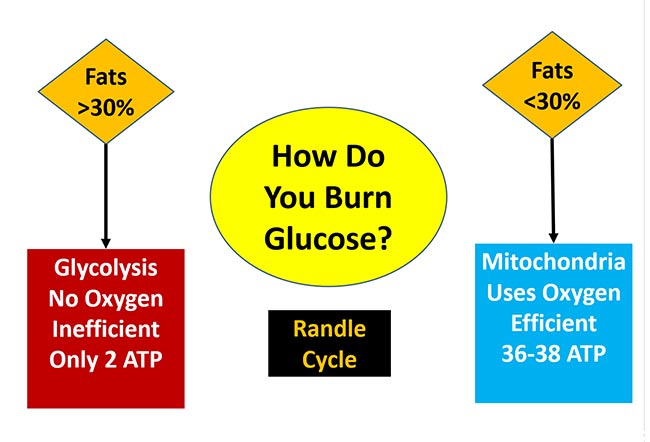
Low-carb diets have helped at least tens of millions of people improve their health for a very good reason, and that is there is a stealth switch that controls what fuel your mitochondria can burn. They can only burn one fuel at a time, either fat or glucose.
The switch has been given the name the Randle cycle, but it is more helpful to visualize it as a railroad switch that changes the tracks of the train. The train can only travel down one track; not both. This is because only one type of fuel can be burned at a time.
The best-case scenario is you metabolize, or burn, glucose in your mitochondria without any reductive stress (a term I will explain in my upcoming interview with Georgi Dinkov). When you do this, you will only generate 0.1% reactive oxygen species (ROS).
Not only does this route generate less ROS, but it also is incredibly efficient at energy production by creating 36 to 38 Adenosine triphosphates (ATP) for every molecule of glucose that is metabolized. It will also generate metabolic water and carbon dioxide, which are also important for your health.
For this to occur, as indicated in the figure above, you will need to consume less than 30% of your calories as fat. When you consume significantly more than that amount, the switch changes to burn fat in your mitochondria and you will not be able to burn glucose until your fat decreases to less than 30% of calories.
Since glucose is unable to be shuttled into the mitochondria to burn, it winds up backing up into your bloodstream, raising your blood sugar. This is a major contributor to diabetes. What little glucose is burned for fuel is done by using glycolysis, which is a primitive pathway that bacteria and cancer cells use.
It is great that we have this pathway, as you absolutely need it for quick fuel when you are activating your type II muscle fibers. But if this is the primary way you burn glucose, you are in a catastrophic metabolic state as you are creating loads of lactic acid as a waste product instead of healthy CO2. And, you are only generating two ATP for every molecule of glucose, which is 95% less energy.
Lactic acid increases reductive stress, which causes reverse electron flow in the mitochondria and causes reductive stress, which increases the ROS to 3% to 4%, which is 30 to 40 times more than when glucose is burned efficiently in the mitochondria. You likely don’t yet understand reductive stress, the opposite of oxidative stress, but I will be doing an interview with Georgi on this and will be posting it later this month.
Why Lactic Acid and CO2 Are so Important
Remember, when you are burning glucose efficiently in your mitochondria, the glucose is converted not only to 36 to 28 ATP, but when the electrons from the glucose are ultimately handed off to oxygen, metabolic water (deuterium free) is made and, very importantly, carbon dioxide.
This is vital to understand as carbon dioxide is a potent stimulator of mitochondrial biogenesis which will increase the number of mitochondria that you have so you can make even more energy.
Conversely, when you are burning glucose far less efficiently in glycolysis you are only generating two ATPs, and rather than creating life-sustaining carbon dioxide, you are generating life-damaging lactic acid, which will degrade your mitochondria and make them die sooner.
Georgi Dinkov’s Review of the Randle Cycle
In this second video, anti-vegan activist Paul Saladino interviews Dinkov about the Randle cycle. Dinkov comments:
“The first accusation against you, that whole milk will somehow make you fat because of the Randle cycle [is] misguided because if you look at the label, whole fat milk has like 5 grams of fat per serving but 12 grams of carbs, so you’re actually [getting] more carbs.
But let’s talk about meat. Most meats … are actually not that high in fat, and a lot of the fat in them is actually short chain fatty acids, which are not subject to the Randle cycle because they get transported into the cells through a known L-carnate-independent mechanism.
They metabolize similarly to sugar, and they don’t seem to be triggering the same sort of Randle cycle effect. Now, what drives the Randle cycle effect? When you’re oxidizing primarily fats … the master conductor redox modulator — which is the NAD to the NADH ratio, specifically the intra-mitochondrial one — drops. (This simply means the more NAD+ the better).
Basically, the NAD to the NADH ratio — which signals how oxidized versus how reduced you are, metabolically — [is] the primary regulator of whether the pyruvate dehydrogenase (PDH) will accept pyruvate and convert it into acetyl-CoA and then continue with the Krebs cycle in the electron transport chain, or not.
(Pyruvate is the three-carbon molecule breakdown product of glucose. PDH is the enzyme that converts it to acetyl-CoA which allows it to enter the mitochondria and be burned efficiently. If PDH is inhibited, it will force your body to use fat).
In other words, a high ratio of NAD to NADH (meaning high NAD+) when you’re very oxidized favors the activity of pyruvate dehydrogenase, so you will not be accumulating pyruvate [and] you will not be generating lactate.
But if you’re eating a lot of fat, the NAD to the NADH ratio drops, and then the buildup starts to happen. Pyruvate accumulates, lactic [acid] accumulates. [This means] the Krebs cycle is working because it’s accepting acetyl-CoA from the beta oxidation. That’s how the fatty acids get oxidized.
So, that’s the gist of the Randle cycle … If you’re providing a lot of glucose, in theory you should be able to out-compete the free fatty acids and oxidize more glucose versus fat, but that all depends on how much glucose can get into the cell.
And, unfortunately, when you’re eating these high-fat diets, when you have higher lipolysis, the actual uptake of glucose into the cell is already largely blocked …
Free fatty acids not only block the metabolism of glucose, they also block the uptake of glucose into the cell. So, they prevent the positive effects that the glucose would have had, in terms of competing with the free fatty acids …
Basically, too much fat blocks your uptake and utilization of glucose, and whatever glucose is taken up, you largely convert to nonbeneficial byproducts such as lactic acid …”
So, to summarize Dinkov’s rather complex exposition on the Randle cycle’s effects: a) fats can make you fat directly; and b) fats limit your ability to metabolize glucose. This is due to the Randle cycle’s preference to fat metabolism when more than 35% of your calories come from fats. And, even if you metabolize small amounts of glucose, your body will favor the conversion of glucose into fat versus ATP, water and carbon dioxide.
This is because the enzyme PDH, which converts the glucose metabolite pyruvate, is inhibited by high fat concentrations, and won’t convert pyruvate to acetyl-CoA to be burned in the mitochondria. Instead, because PDH is inhibited, the pyruvate is metabolized into lactate. This entire process is antimetabolic and slows down your metabolism, increases your ability to gain weight, and lowers your ability to generate cellular energy.
So, when more than 30% to 35% of your calories are coming from fat, you are forcing your cells to burn fat and put glucose on the back burner, instead of being metabolized like it should be.
Simple Strategies You Can Implement to Help Your Metabolism
Clearly, the most important strategy to help your metabolism is to avoid eating linoleic acid at all costs. It is impossible to avoid as it is in nearly every food, but you want to keep your levels below 2% of your daily calories. This means avoiding ALL processed foods and typically most restaurants.
A powerful strategy that nearly everyone should do is to make sure that you are taking a high-quality vitamin E supplement once a day. Why? Because most everyone has 20 to 30 times more LA in their body than optimal. Not only will vitamin E impair the release of it from fat cells, but once released it will help protect the LA from converting into dangerous oxidized linoleic acid metabolites (OXLAMs).
Most vitamin E supplements should be avoided, so how do you identify a high-quality vitamin E supplement? It should have most of the vitamin E isomer as alpha tocopherol, typically about 150 units. It should also have the other tocopherol isomers: alpha, beta and gamma, but at far lower doses.
Additionally, it should have alpha, beta and gamma tocotrienols. Finally, it should only have the “D” isomer. Avoid all vitamin E supplements that are “DL,” which are 50% of the wrong isomer.
It would be very wise to make sure you have enough NAD+ as it will also inhibit the release of LA from your fat cells. If you haven’t read and viewed by interview with molecular biologist Nichola Conlon on this topic, you can read it on my Substack. Sadly, NAD+ decreases dramatically as you age, which leads to nearly a 1-to-1 reduction in ATP, your cellular energy currency.
Fortunately, this can be inexpensively addressed by taking 50 mg of niacinamide three times a day. More is not better, so avoid 500 mg tablets as they will impair your longevity proteins. Typically, one sixty-fourth of a teaspoon of niacinamide powder is about 50 mg.
Finally, aspirin can be a very useful way to inhibit LA lipolysis. Aspirin is a very interesting approach and I go into far more details in my recent article on it.
Why Long-Term Low-Carb Diets Can Backfire
I previously touched on the Randle cycle in “How the Wrong Dietary Fat Can Wreck Your Health,” which also featured an interview with Dinkov. In that interview, Dinkov cleared up several areas of confusion, including the following:
•Low-carb dieting is a great short-term intervention for people who are overweight and insulin resistant. Lowering carbs will help reset your metabolism and recover your metabolic flexibility. However, in the long-term you will likely run into trouble — especially if you’re also doing a lot of endurance training.
One of the reasons for this is because when you’re in a low-carb state, lipolysis is elevated, which releases inflammatory polyunsaturated fatty acids (PUFAs) such as LA from your cells that are then into dangerous OXLAMs (oxidative linoleic acid metabolites) that will damage your tissues.
PUFAs such as LA are not digested. Instead, they’re stored.2 Most of the body fat in obese individuals is composed of PUFAs, not saturated fat. Saturated dietary fat is mostly burned (oxidized) and used up. So, most people have large stores of LA, and these stores need to be lowered to safe levels of 1% to 2% LA.
• Extended fasting and using an excessively narrow time-restricted eating (TRE) window can also backfire once you’re metabolically flexible, as it too helps push LA out of your cells.3,4,5,6,7,8,9,10 An extreme example of TRE is the one meal a day (OMAD) protocol, where you’re fasting 22 hours or more each day. Dinkov believes this is too extreme for most people.
The half-life of PUFAs such as LA, which get embedded and integrated into your cell membranes, is about 680 days. This means that ridding your body of LA will take approximately seven years, provided you don’t load more in. And you really do want to get rid of this fat, as it’s highly inflammatory and prevents your mitochondria and cellular machinery from operating properly. But you need to do it slowly and methodically.
Exercise and fasting will help drive the LA out, but you need to be really careful if you have a lot of LA storage. You want to avoid excessive lipolysis — any situation where you’ve run out of glycogen, which can easily happen when you’re not eating for long periods, when you’re on a chronic low-carb diet, and/or when you’re engaging in intense exercise, especially if you exercise in a fasted state.
• Chronic long-term, low-carb, and chronic extended fasting also result in elevated cortisol, which is highly inflammatory and promotes the storage of fat. Elevated cortisol is also highly catabolic and will cause you to lose lean muscle mass so your liver can make glucose. For these reasons, low-carb diets and fasting are best implemented as temporary strategies to restore metabolic flexibility.
How to Safely Reduce LA Stores Without Self-Sabotaging
With all of that in mind, how can you safely reduce your LA stores without self-sabotaging? Extensive fasting will, in this instance, backfire, as will overtaxing yourself with heavy exercise. You’ll need to accept that achieving optimal health is a marathon, not a sprint, and that it’s going to take years to purge your LA stores. Dinkov suggests the following strategy:
- Build muscle and maximize lean muscle mass
- Avoid fasting for longer than 16 hours
- Avoid all processed foods, restaurant foods, condiments and animal foods raised on grains, such as chicken and pork, as all of these are high in LA
- Eat a diet with about 15% protein, restricting fats to below 35% with the remainder consisting of carbs in the form of ripe fruits and some vegetables and well-cooked low-oxalate starches. Be careful to avoid all processed sugars as they typically are loaded with high fructose corn syrup that will increase endotoxin in your gut
So, to recap, temporarily implementing a six- to eight-hour time restricted eating window, or even longer eating restrictions and fasts, is appropriate for anyone who is insulin resistant and metabolically inflexible — and that’s about 95% of the population.
However, once you lose your insulin resistance and become metabolically flexible — which typically takes a few weeks — you’ll want to increase your eating window to eight to 12 hours to avoid elevating your cortisol, as cortisol promotes chronic inflammation that can lead to tissue damage, and promotes the storage of fat.
If you stop supplying carbs to your body, the organs that need them will activate glucose creation in your body by elevating cortisol. So, once you’re metabolically flexible, you want to avoid extended fasting.
How does TRE and extended fasting raise cortisol, you ask? It is important to understand that cortisol is a powerful hormone whose primary purpose is to shred your lean muscle mass and bones to obtain amino acids for your liver so it can produce glucose. This is cortisol’s primary role. If your blood sugar gets too low, you will go into a hypoglycemic coma and die. Your brain requires sugar and if it doesn’t get it, it is game over.
Usually, it takes a few weeks and occasionally longer, for you to recover your metabolic flexibility. During those first three to six months, stick to a six- to eight-hour eating window. Once you’re metabolically healthy, avoid eating windows under eight hours. I’ve now shifted to a schedule where I always have an eating window of more than eight hours a day and closer to 12, in the summer when there is plenty of daylight.
Interestingly a recent study showed that a lower fat, higher carb approach lowers the risk of death by 30%, while with the converse a high-fat, low-carb diet increases the risk of death by 30%.11,12 So, it’s your choice for sure, but I am convinced that having more healthy carbs than fat is a great choice to improve your metabolic health.
- 1 YouTube Georgi Dinkov
- 2 Haidut.me October 22, 2019 (Archived)
- 3 Haidut.me February 16, 2021 (Archived)
- 4 Haidut.me September 27, 2022 (Archived)
- 5 Haidut.me March 4, 2021 (Archived)
- 6 Haidut.me December 10, 2021 (Archived)
- 7 Haidut.me June 21, 2022 (Archived)
- 8 Haidut.me November 17, 2020 (Archived)
- 9 Haidut.me December 21, 2021 (Archived)
- 10 Haidut.me September 30, 2020 (Archived)
- 11 J Intern Med. 2023 May 3. Low-carbohydrate diets, low-fat diets, and mortality in middle-aged and older people: A prospective cohort study
- 12 Haidut.me May 9, 2023 (Archived)
How to Produce the Healthiest Foods Imaginable
Reproduced from original article:
https://articles.mercola.com/sites/articles/archive/2023/12/31/food-production.aspx
The original Mercola article may not remain on the original site, but I will endeavor to keep it on this site as long as I deem it to be appropriate.
Analysis by Dr. Joseph Mercola December 31, 2023
STORY AT-A-GLANCE
- Low-carb/high-fat diets ultimately backfire because they inhibit glucose metabolism, which is the most efficient form of energy production in the mitochondria; they also impair thyroid function
- One of the reasons why ketogenic and carnivore diets are usually helpful for a time is because, if implemented properly, you’re radically reducing your intake of omega-6 fats, linoleic acid (LA) in particular, which is one of the primary drivers of ill health
- LA is a primary driver of disease, in large part due to its detrimental effect on mitochondrial function and, hence, energy production
- Your body has a certain amount of energy and a number of biological processes that it can turn on or turn off with that energy pool. The more energy you have available, the more functions your body can turn on. When your energy production is lower than required to maintain all functions, your body must downregulate certain functions, which ultimately results in problems
- One of the easiest ways to assess how much energy your body is producing is to take your body temperature. Take your temperature 30 to 40 minutes after breakfast and midday. You want to see a rise in temperature
The interview above features Ashley Armstrong, who’s an expert in two areas. One is producing some of the healthiest food in the United States, and the second is understanding how your body uses it and how to select the right types of food to optimize your biology, based on the late biologist and thyroid expert, Ray Peat’s, principles of bioenergetic medicine. She also is a certified personal trainer with a Ph.D., MS and BS in engineering.
Like many others who are trying to improve their health, Armstrong tried low-carb diets, fasting, keto and even carnivore diets in the past. But while these all led to improvements initially, they didn’t eliminate them, which ultimately led her to investigate Peat’s principles.
“Ray Peat, he honestly saved my life and I owe so much to that man,” she says. “I’m forever grateful for him. The biggest wake-up for me was measuring my body temperature. I was on a carnivore diet and measured my body temperature — it was 96.5 degrees Fahrenheit.
I was like, wow, no wonder my hair is thinning. No wonder my complexion is so pale. No wonder I’m not sleeping through the night. There was just a number of red flags. That body temperature measurement just woke me up. It’s what I needed to [realize] I’m not thriving, I’m just surviving.
I’ve been implementing Dr. Peat’s principles for over three years now. I have more energy in life than I think I’ve ever had, even as a teenager. And it’s just amazing to see how being not restricted with your food, just being strategic with macros, types of food, how powerful that can be for your energy production.”
The Problem With Low-Carb and Keto
As I’ve detailed in previous articles over the past year, low-carb/high-fat diets ultimately backfire because they inhibit glucose metabolism, which is the most efficient form of energy production in your mitochondria; they also impair thyroid function. Your thyroid is crucial for energy production, and if your thyroid doesn’t work, you’re down the creek without a paddle.
One of the reasons for this is because ketogenic diets increase the stress hormones — cortisol, glucagon and adrenaline. On the other hand, one of the reasons why ketogenic and carnivore diets are usually helpful for a time is because, if implemented properly, you’re radically reducing your intake of omega-6 fats, linoleic acid (LA) in particular, which is one of the primary drivers of ill health.
Energy Production Is Key for Overall Health
As explained by Armstrong, the best way to understand the bioenergetic principle is to think of your body as a system. It has a certain amount of energy, and a number of biological processes that it can turn on or turn off with that energy source.
The greater your energy pool, the more functions your body can turn on. When your energy production is lower than required to maintain all functions, your body must downregulate certain functions, which ultimately results in problems. The human body is designed to promote survival, so it’s going to prioritize things like your heart rate.
Functions that aren’t necessarily vital for survival in the immediate moment, like sex hormone production, reproductive function, digestion, sleep and high cognitive thinking, get downregulated first. When you increase energy production, however, your body can then expend energy on those functions and bring them “back online.”
Download this Article Before it Disappears
Using Body and Pulse Measurements as Guides
As explained by Armstrong, one of the easiest ways to assess how much energy your body is producing is to take your body temperature.
“High stress hormones can keep your waking body temperature elevated,” she says, “so you’ve got to do your waking temperature 30 to 40 minutes after breakfast, and then I like to do midday. You want to see that temperature rise.
For many who are on low-carb or who are living on stress hormones, they’re going to have potentially high waking body temperature, but after breakfast, that temperature may drop. That’s because the food you’re consuming is lowering your stress hormones and your actual body temperature is then better exposed.
So we want to see that body temperature rise. And I love how both of us are so passionate about linoleic acid. As human linoleic acid consumption has gone up, human body temperature has gone down. So, the types of fats that we are consuming in our diet is impacting energy production in a negative way.
It’s shown with obesity rates out the roof. It’s shown with the decline in our body temperature. It’s shown with the decline in our healthy life expectancy, which is bizarre as a First-World country. There are just so many profound effects.
But when we just think of it as energy production — the more energy we can give our body to be able to perform functions, the better it’s going to function. I asked this question to someone who is really adamant about fasting. I said, ‘If you’ve got two bodies, one body that’s fasted and the other body that is fed nourishing food, which body is going to thrive and function better?’
It’s obvious. If you add a third person fed more of a standard American diet, of course maybe fasting is going to make you feel better, but you can elevate yourself a step above. You don’t have to rely on fasting to increase energy production. Your body is not going to increase energy when you’re not [putting] energy in.”
Indeed, when it comes to fasting, one of the primary benefits is that it lowers the fuel for gram-negative bacteria that produce endotoxin in your gut. Low-carb does this as well. Endotoxin, estrogen, LA and stress hormones will all decrease your mitochondrial function, mediated in big part by your thyroid function. Those are the big things that need to be reduced to enhance your mitochondrial function and energy production within the mitochondria.
How LA Harms Your Energy Production
As mentioned, LA is a primary driver of disease, in large part due to its detrimental effect on mitochondrial function and, hence, energy production. Your body can use both fat and glucose for energy. Muscle, in particular, will use fat for fuel, as will your heart. So, fat is not bad, but it’s important to realize that different fats affect your body in different ways, so it’s crucial to get the right fats. Armstrong explains:
“The different types of fatty acid molecules have drastically different structures and those impact the internal environment inside of us. They impact how your body is producing energy. The more saturated we can become, the better our internal environment is going to be.
When someone goes low-carb, maybe they reduce the amount of packaged food that they’re eating that contains a ton of vegetable oil and linoleic acid, and so potentially they’re resaturating some of their tissues.
But when you learn about what livestock are being fed these days, then you realize that a high animal fat diet can still contain quite a bit of PUFAs [polyunsaturated fats] and linoleic acid, depending on what those animals ate. So, think it’s important to consider the amount of each macronutrient that you’re intaking because that can have profound impacts on your energy production.
Saturating your tissues is going to take you to the next level, but adding in appropriate levels of carbohydrates is going to allow you to take your consciousness and energy production level to the next level [beyond that].”
The types of carbs you eat matter, however. I’m convinced the ideal carbohydrate is fresh, ripe fruit. Ripe is the key here. Of course, some fruits are better than others. Watermelon, for example, is among the best. Watermelon with feta cheese and a little mint on top makes for a delicious snack.
Aside from containing a lot of water, watermelon also contains a substance called citrulline, which converts into arginine, a precursor for nitric oxide (NO). NO is important to your body, but the caveat is that it needs to come from real food. Drugs like Cialis or Viagra, which act by increasing NO, will accelerate your path toward premature death. Artificial citrulline and other synthetic amino acids that raise NO are also best avoided.
“In Michigan, I rely a lot on frozen fruit,” Armstrong says. “In the summertime I’ll go to strawberry fields and pick strawberries when fresh and then freeze a ton of them. Same thing with blueberries and peaches. And then I rely on a lot of apples in the winter because apples are abundant around here and can be stored.”
Juices also have their place. Cold-pressed, pulp-free orange juice, for example, is a good choice. The reason you want pulp-free is because if you’re like most people, you have gram-negative, endotoxin bacteria in your gut that will thrive on the pulp, hence increasing endotoxin production.
So, if you have an unhealthy microbiome, pulp-free orange juice is a great carb that will gently and safely allow you to enter the higher carb world. As your microbiome improves, then you can transition to whole fruits and berries, which is, I believe, far superior to juices.
How to Produce the Best Eggs
Segueing into the topic of food production, Armstrong’s farm produces some of the highest quality eggs I’ve ever come across, and the feed recipe I use for my own chickens came from her. But I recently discovered something that could make them even better, and that is to allow the chickens to scratch for their own food.
Their ideal food is insects fresh from the ground, and while I previously thought chickens couldn’t get enough food this way, meaning you had to give them something, that may actually not be true.
Unfortunately, in places where the ground freezes, chickens will not be able to sustain themselves on insects, and you definitely do NOT want to feed your chickens dehydrated bugs. Why? Because the bugs are raised on corn and soy, making them very high in LA.
But in places like South Florida, for example, you can easily produce top-notch eggs, quality-wise, by allowing your chickens to peck for insects, without giving them any supplemental feed. Armstrong is also making plans to let her chickens forage for bugs year-round:
“I think that would be the ideal condition, and I have an image in my head of what I want to bring our farm to in the future — a greenhouse where we’ve got fodder growing on the ground and a worm farm … so [the chickens] will get abundant bugs in the winter. That’s what I want to move towards, but that requires a lot of financial investment. So we’ll get there one day.”
The Feed Has Dramatic Impacts on Animal Foods
The feed Armstrong developed, which I’ve been using as well, results in eggs that have about 75% less LA than conventional eggs. When it comes to conventional eggs, the LA is really the only problem. When the chickens are fed an ideal diet, the yolk in the egg is one of the best, most nutritious foods imaginable. The only thing that comes close is organ meat.
Egg yolks are the ultimate food; the problem is 99.99% of the eggs produced in this country are not that good. I don’t care if they say free range, grass fed, organic, it doesn’t matter. They’re terrible because they have four times more LA than they should. As noted by Armstrong:
“It’s important to consider organic soybeans have the same amount of linoleic acid as non-organic soybeans. Whether it’s grown conventionally, organically does not change the fatty acid composition of soybeans. You don’t want to be eating eggs from chickens fed a bunch of soy vegetable oil and other high omega-6 PUFA foods.”
According to Armstrong, the feed of the chickens may even determine the eggs’ allergenicity. In other words, if you’re allergic to eggs, you could potentially be able to eat the eggs from correctly-fed chickens.
“What is soy high in? Phytoestrogens that can be very problematic for some people. If a chicken is eating phytoestrogens that can be problematic for humans, those get passed through into the eggs. We have a number of customers that cannot eat any other eggs, but they’re totally fine with our eggs. And it’s because of the diet of the chicken.
So if you have allergic reactions or problems with eggs, try a different source where they’re not fed soy. Some people can be allergic to corn as well, and that allergenicity can pass through the egg as well. But it seems like soy is the biggest culprit.
But be careful of many corn and soy-free feeds, because those are high-PUFA ingredients like sunflower, flax, fish oil, vegetable oil and safflower oil. And so, just be really careful of your source, and ask what the chickens are eating. But yes, allergenicity of eggs I think really depends on what the chicken eats.”
LA-Rich Animal Feed Is Now Impacting Human Energy Production and Health
All of that said, it’s still crucial to ensure your chickens have enough food, be it fresh insects or a carefully planned feed that is low in LA and high in healthy saturated fats and other nutrients.
“Your chicken is not going to thrive if it’s underfed,” Armstrong says. “Your chicken is not going to thrive if it doesn’t have food. I am trying to boost the metabolic rate of our chickens as high as possible. Just like us, chickens are monogastric single stomach animals, the types of fat that they are fed, the types of fat that we are fed impacts the types of fat inside of us.
This is a little bit different for ruminant animals — cows, goats — but for monogastric chickens, pigs, their diet is very important. And this is why I am so passionate about it, because we have been lied to and convinced that saturated fat is bad for us.
So, you’ve seen a huge push for PUFAs in our diet. This is going beyond just human dietary choices. This is impacting our livestock food. And this is having profound impacts on not only livestock health, but also the food that we’re consuming …
Even in the dairy industry, they’re creating things called rumen-protected fats. They are PUFAs that in a typical rumen digestion system can go through the process called hydrogenation, which turns the PUFA into saturated fat.
They are designing rumen-protected fats so that the PUFA is passed through the rumen. The PUFA content of milk is increasing. That means any dairy fat — butter, cream, whole milk. The PUFA content of beef fat is increasing. And this is by design … Lard and chicken fat from conventional animals has the same amount of PUFA as canola oil.
This is profound. We have changed the types of fat inside of us. I think the linoleic acid content of humans has increased 136%. That is changing how our body is making energy inside of us. The types of fat we consume day-to-day have a long life inside of us — 600 days. So, the types of fat we’re consuming day to day impacts our energy production for years to come.
It’s unfortunate because this is just the reality for a lot of people, and that’s why I’m so passionate about it. Our food system is designed in a way that is not setting us up for success. That’s why I want to try to change it by going back to how our food was produced 100 years ago, where there was appropriate amounts of PUFAs in foods, small amounts, and saturated fat was the predominant fat source for both livestock and humans.”
High PUFA Diets Shut Down Your Metabolism
As explained by Armstrong, in nature, animals increase their PUFA consumption up to a certain amount to initiate torpor, which means their metabolism is so downregulated that they can survive the winter without eating. Think about that. Can you function optimally if your diet is one meant for hibernation? In that state, you have to eat fewer and fewer calories to avoid weight gain, which results in undernourishment and poor energy production.
“I try to keep my PUFA consumption as low as possible,” Armstrong says. “You can easily track that in Cronometer and see what your total PUFA, total linoleic acid content is per day. If you have four conventional eggs, you’re already at about 5 grams of linoleic acid in a day. And I would want people to be lower than that. All foods contain some amount of linoleic acid, so even milk is going to have a little bit.”
There’s no question that LA is NOT an essential fat, even though it’s categorized as such. It’s not essential because nearly all foods contain it. It’s virtually impossible to become deficient in LA if you eat food, regardless of what that food is.
Another fat that likely IS essential, but isn’t widely recognized as such, is the odd-chain saturated fats (OCFAs) found primarily in dairy. You can learn more about this in “The Amazing Benefits of Dairy Fat.” There’s also evidence suggesting that if you don’t get enough OCFAs in your diet, then high saturated fat intake might become problematic.
So, you need these odd-chain saturated fats. That’s why you need butter. You need milk. These are essential. Your optimized biology and health is dependent on these foods, because, again, the OCFAs help increase your body’s energy pool. They boost energy production, which will improve how your entire body functions.
In the interview we also discuss how dairy improves the health benefits of eggs, as the calcium in the dairy reduces the conversion of tryptophan in the egg white into serotonin. Serotonin is another compound you simply do not want too much of.
You also want to make sure you’re having enough carbohydrates with that meal. Carbohydrate oxidation produces 50% more carbon dioxide (CO2), so simply having carbs with your eggs will raise your CO2 level, which is very important for health.
“So, for breakfast, have eggs, milk, some honey or maple syrup and fruit. Boom, there you go. You’re drastically reducing the conversion of tryptophan to serotonin and it’s a simple meal,” Armstrong says.
More Information
We discuss a lot more in this interview than what I’ve covered here, so for more fascinating details, be sure to listen to the whole interview. For example, we discuss the pros and cons of egg whites, and why most cheese sold in the U.S. is less than healthy, as many cheese producers are using a microbial rennet made by Pfizer that is derived from mold that eats genetically modified corn and soy.
We also discuss various ideas for improving the feed of chickens, and how to maintain maximum egg production in the winter with incandescent lights and red light therapy.
If you want to purchase eggs from Armstrong’s farm, Angel Acres Egg Co., visit angel-acresfarm.com. She’s also started a new private member food system that offers milk, cheese, low-PUFA pork and low-PUFA chicken, called Nourish Cooperative. Both will ship farm-fresh food right to your door.
How to Help Prevent and Treat Alzheimer’s Disease
Reproduced from original article:
https://articles.mercola.com/sites/articles/archive/2023/08/27/dale-bredesen-alzheimers.aspx
The original Mercola article may not remain on the original site, but I will endeavor to keep it on this site as long as I deem it to be appropriate.
Analysis by Dr. Joseph Mercola Fact Checked August 27, 2023
STORY AT-A-GLANCE
- In 2014, Dr. Dale Bredesen published a paper demonstrating healthy lifestyle choices could reverse Alzheimer’s in 9 out of 10 patients. His team is now launching a new randomized, controlled trial at six sites. Biological aging, brain aging and epigenetics will be included in this trial, using newer blood tests that weren’t available even a few years ago
- The glial fibrillary acidic protein (GFAP) test can be a valuable tool. This test basically looks at brain changes associated with astrocytosis. Astrocytes respond when there’s a problem in the brain, so it can give you a heads-up that something is afoot up to 10 years before symptoms set in
- Supporting energy production and reducing inflammation in the brain are the two most important factors to prevent and treat Alzheimer’s
- The entire family of herpes viruses is associated with changes in the brain and neurons. Left untreated, chronic infections put your innate immune system into overdrive. Alzheimer’s is an innate immune system mismatch with the adaptive system. You’re not clearing the pathogen, so you’ve got a continued onslaught of cytokines causing damage in your brain
- Valuable adjuncts that can help improve mitochondrial energy production include methylene blue, niacinamide and glycine
In this video, I interview repeat guest Dr. Dale Bredesen, a neurologist specializing in the treatment of Alzheimer’s. In 2014, he published a paper1 demonstrating the power of lifestyle choices for the prevention and treatment of this tragic condition. By leveraging 36 healthy lifestyle parameters, he was able to reverse Alzheimer’s in 9 out of 10 patients.
This included the use of exercise, ketogenic diet, optimizing vitamin D and other hormones, increasing sleep, meditation, detoxification and eliminating gluten and processed foods. It’s been several years since we spoke last, so he’s got quite a few updates to share.
Randomized Trial Launch
For starters, his team has published another proof-of-concept paper and are now launching a randomized, controlled trial at six sites: Hollywood, Florida; Nashville, Tennessee; Cleveland, Ohio; and Sacramento, Oakland and San Francisco in California.
Biological aging, brain aging and epigenetics will be assessed in this trial, using newer blood tests that weren’t available even a few years ago, including phospho-tau 181, phospho-tau 217, A-beta 42 to 40 ratio, glial fibrillary acidic protein (GFAP) and neurofilament light polypeptide (NF-L).
“A couple of these are not commercially available yet, so we’re doing these as research, but they will all become commercially available,” Bredesen says. “Currently, phospho-tau 181 is commercially available and so is the A-beta 42 to 40 ratio. So now, for the first time, you can get an idea, without necessarily having a PET scan, where you stand.
More importantly, you can follow it as you improve. Prevention is key, but also reversing cognitive decline, which we were the first to do … We’ve seen it again and again, when you’re doing the right things, when you’re attacking the important drivers of the process, you see [reversal].”
Valuable Tests
The GFAP test, while nonspecific, can be a valuable tool. This test basically looks at brain changes associated with astrocytosis. Astrocytes respond when there’s a problem in the brain, so it can give you a heads-up that something is afoot up to 10 years before symptoms become apparent. “The good news is if it’s normal, you’re in pretty good shape. So you want to know that going forward,” he says.
The phospho-tau 181 and phospho-tau 217 are specific tests for Alzheimer’s changes related to the death of neurons. Genetic testing is also important to ascertain how many copies of the APOE ε4 gene you might have. “That’s a critical piece,” Bredesen says. “Everybody should know their APOE status.” Hormone testing and testing for toxins, including mycotoxins and heavy metals, are also important.
Download this Article Before it Disappears
Where There’s Smoke There’s Fire
According to conventional thought, elevated tau and beta-amyloid are causative factors in Alzheimer’s, but Bredesen’s research suggests otherwise. He explains:
“This is a little bit like saying, ‘There’s some smoke there. If we just blow away the smoke, then the house is not going to burn down.’ It makes no sense. The key thing to know is that [tau and beta-amyloid] are responses and mediators. You’ve talked a lot about mitochondrial function, which is absolutely critical in this disease, but we know of many upstream contributors, and that’s another update.
People have not known what’s causing this disease, and it’s often said there’s nothing that prevents, reverses or delays it. Nothing could be further from the truth. We know there are many contributors, [including] anything that damages mitochondria [and] different infections.
What we now see from the research is that Alzheimer’s disease fundamentally is a network insufficiency. You have this beautiful network of about 500 trillion synapses and as you get exposed to inflammation, infections in your mouth, insulin resistance, leaky gut, not enough blood flow, reduced oxygenation, reduced mitochondrial function, any of these things, that network is no longer sufficiently supported.
And, no surprise, it pulls back and that’s why you see the tau. They are part of the mediators of making this effect enhanced. They amplify the problem. Dr. Lee Hood and Dr. Nathan Price have just published a wonderful book called ‘The Age of Scientific Wellness,’ and as they point out, amyloid is an excellent biomarker but a terrible therapeutic target, and that’s exactly what’s coming out of the data.
Unfortunately, Lecanemab was just recommended by the panel for FDA approval. It slowed the decline. But here’s the thing they didn’t say, which they should have said, what are the things that performed better? Lecanemab doesn’t make you better, it doesn’t keep you the same, it slows the decline by 27%. That’s it.
So what worked better in their trials? No. 1, ketones alone worked better than this drug. No. 2, extra virgin olive oil alone in a trial worked better than this drug. No. 3, combined metabolic activators — carnitine, nicotinamide, riboside, things like that. Again, supporting energetics. This is about energetics and inflammation. Those are the two big players.
And then of course, the protocol we developed worked the best of anything. We’ve got people now who have sustained their improvement for more than 10 years. So, it’s sad that this drug has been recommended for approval.”
Two Key Causative Factors That Must Be Addressed
According to Bredesen, supporting energy and reducing inflammation in the brain are the two most important factors to prevent and treat Alzheimer’s. Basics that all of Bredesen’s patients implement include:
| Dietary intervention — Bredesen recommends a plant-rich, mildly ketogenic diet, with a good omega-3 to omega-6 ratio, no dairy, no grains and no simple carbs. “That’s the approach that has worked the best,” he says. “We call that KetoFLEX 12/3.” Nutrition for Longevity now offers meal kits for the KetoFLEX 12/3 diet at KetoFlex123.com, to make it easier to follow.
In the interview, I counter some of Bredesen’s dietary recommendations, as he still recommends polyunsaturated fats (PUFAs). I’m convinced all omega-6 PUFAs need to be kept low, below 2% or even 1% of daily calories, for optimal health, and I strongly suspect people with dementia need to be even more cautious, as the PUFA linoleic acid (LA) appears to be the biggest dietary source of all the drivers of Alzheimer’s, including inflammation, oxidative stress, mitochondrial dysfunction and dysfunction in electron transport chain such that you cannot efficiently produce ATP. I’ve written extensively on the ins and outs of this, so for more information, listen to the interview and/or review “Linoleic Acid — The Most Destructive Ingredient in Your Diet.” I’m also not convinced that the omega-3 to omega-6 ratio is as helpful as commonly suggested since you cannot counter the damage caused by omega-6 fats simply by taking more omega-3. On top of that, most omega-3 supplements, primarily fish oil, are worthless because they’re synthetic and rancid to boot, so making sure you’re getting high-quality omega-3 is an essential factor. |
| Exercise — Bredesen is seeing particularly good results with KAATSU (blood flow restriction training) and exercise with oxygen therapy (EWOT). |
| Sleep optimization — Sleep apnea is a common problem that unquestionably contributes to cognitive decline, as it reduces oxygen to your brain and raises adrenaline while you’re sleeping.
“Sleep is a huge area in and of itself,” Bredesen says. “Patient zero, the first person we treated back in 2012 who reversed her cognitive decline beautifully, she’s now over a decade in on this, doing great continually. She’s now in her late 70s. One of her issues was poor sleep and, of course, one of the things that was addressed. Getting at least an hour of deep sleep and at least an hour and a half of REM sleep is very helpful … Poor sleep gives you more amyloid. It’s just a marker, but it’s a marker of things that aren’t so good, and unfortunately, amyloid then gives you poorer sleep.” |
| Stress reduction |
| Brain training |
| Detox |
| Targeted supplements |
The other part of Bredesen’s program is customized to each patient. Many have undiagnosed chronic infections, for example, that need to be addressed. Common ones include P. gingivalis and T. denticola, which work their way into your brain from your oral microbiome, herpes simplex and human betaherpesvirus 6A (HHV-6A).
The entire family of herpes viruses is associated with changes in the brain and neurons. HHV-6A in particular is associated with the brain degeneration seen in Alzheimer’s. Chlamydia pneumoniae is also highly troublesome, as are all tick-borne infections, including Borrelia, Bartonella, Babesia and Anaplasma.
All these infections put your innate immune system into overdrive and need to be quenched. As noted by Bredesen, COVID-19 and Alzheimer’s are “both innate immune system mismatches with the adaptive system.” You’re not clearing the pathogen, so you’ve got this continued onslaught of cytokines. In the case of COVID, you die from the acute cytokine storm, whereas in Alzheimer’s, you die from cytokine drizzle. “It’s a long-term cytokine problem,” Bredesen says.
High-Fructose Corn Syrup Down-Regulates ATP Production
Bredesen also highlights the importance of avoiding fructose. In March 2023, Dr. Richard Johnson, Bredesen, Dr. David Perlmutter and several other coauthors published a paper2 on Alzheimer’s disease as “a maladaptation of an evolutionary survival pathway mediated by intracerebral fructose and uric acid metabolism.”
“It’s really the long-term research of Rick Johnson. You talk about mitochondrial function, about damage to mitochondria. He’s talking about a change in signal. They’re both important. As he points out, when you get that fructose, your body is literally responding to it saying, ‘Winter is coming. We are going to store fat and we’re going to turn down your ATP by about 15%.’
Well, when you’re right on the ragged edge of not getting enough energetics, then turning down your ATP by 15% is the last thing you want and is associated with cognitive decline.
Rick put together a whole table looking at all the relationships, changes in PET scans, changes in blood biomarkers. In each of these cases, what happens with fructose is the same thing that happens in Alzheimer’s disease.
So again, it comes back to the critical nature of the energetics, whether you’re turning them down by taking too much fructose and high fructose corn syrup, which is not to say you can’t eat some fruit, it just means you don’t want to have massive amounts of fructose.”
Fruit Versus High-Fructose Corn Syrup
Here too, my current views veer a bit. It’s important to understand there is a world of difference between fructose from fruit and high-fructose corn syrup. I used to recommend limiting both sources, but I’ve recently changed my thinking on this, as fructose from fruit activates pyruvate dehydrogenase, which you need to metabolize glucose from pyruvate to acetal-CoA in your mitochondria. If that enzyme is not activated, the glucose cannot be used for fuel.
The key to this riddle for me was the Randle Cycle, which basically acts as a metabolic switch. Your primary fuels are fats and carbs, and the Randle cycle determines how your cells decide which one to burn. When your diet is more than 30% to 35% fat, this switch shifts to fat metabolism, so that you’re burning fat in your mitochondria rather than glucose. The glucose instead gets shuttled into glycolysis and any excess goes out into your blood.
So, eating a lot of fruit and a lot of fat at the same time is not a good idea. In essence, fructose by itself is not what’s causing the problem. Rather it’s eating too much fructose in combination with too much fat. If you increase your fresh fruit intake, you also need to lower your fat intake, or else the sugar can’t be used for fuel.
Additionally, there are individual variations in metabolic flexibility, toxicity and microbiome that likely contribute to a person’s ability to tolerate increased carbohydrates.
The other point of contention I have is that PUFAs also appear to induce torpor (decreased physiological activity marked by a reduced metabolic rate), much like high-fructose corn syrup does. So, I suspect ripe fruit is not going to be a major contributor to dementia. In a previous interview with Johnson, he also admitted being surprised that fructose from fruit did not have the same effects as high-fructose corn syrup. Bredesen replies:
“Yes. And it makes perfect sense. The interesting thing to me is we are frugivore (animals that thrive on raw fruits), we are descended from frugivores. The problem we have today, of course, is that our fruit has been bred to have a much higher sugar content. That’s the issue. But the good news is, it retains the wonderful fiber and, as you pointed out, it doesn’t give you that effect that high fructose corn syrup and processed foods give you.”
Methylene Blue, Niacinamide and Glycine
One treatment adjunct Bredesen favors is methylene blue, which is something I recommend for just about anyone who wants to improve their health and reverse degenerative disease, primarily because it’s so effective at reducing reductive stress. It facilitates electron transfer forward in the mitochondria, thereby allowing ATP production to occur, even if the complexes are damaged.
Raising NAD+ is also important for energy production. NAD+ is oxidized, not reduced, so it facilitates the transfer of electrons forward in the electron transport chain. While there are expensive precursors out there, my favorite is plain old niacinamide, which is incredibly inexpensive yet raises NAD+ effectively.
Recent research has also confirmed that niacinamide helps slow brain aging. For general health, I recommend taking 50 milligrams of niacinamide three times a day. Niacinamide also works synergistically with methylene blue.
Many dementia patients also have low glutathione levels, especially if they’ve been exposed to mycotoxins or other toxins. I’m not a fan of taking glutathione, because glutathione is reduced, and you need the oxidized form to really make it work.
Two other ways to get more glycine into your diet are to eat “nose to tail,” not including muscle meat, or taking a collagen supplement or gelatin powder. “Nose to tail” refers to organ meats and connective tissues, which are rich in collagen. Collagen, in turn, makes up about one-third of the protein in your body, so it’s incredibly important. About 30% of the collagen and gelatin is glycine, so it’s an excellent source.
Precision Medicine Program to Launch
Bredesen is also part of a team launching a Precision Medicine Program at the Pacific Neuroscience Institute in Santa Monica, California. The program will work to prevent and treat chronic conditions at all stages, but will focus on getting people in for prevention and early treatment.
“When you get Alzheimer’s, you go through four stages,” Bredesen says. “You go through a presymptomatic phase, and you go through subjective cognitive impairment (SCI) that lasts on average 10 years. For these areas, prevention and treatment are pretty much 100% effective. We can prevent, and we can reverse virtually every time people are in SCI.
MCI is the next. It’s too bad it’s called mild cognitive impairment. It’s like telling someone they have mildly metastatic cancer. It’s a relatively late stage of Alzheimer’s disease. Still, in our trial, we had 84% of those people improve.
The final stage is dementia. And we still see some people with proof of dementia improve. But the farther you go, the harder it is to get them all the way back. So, we encourage everyone, please come in early.
We’ve had people go from MoCA [Montreal cognitive assessment] scores of 18 to 30, which is fantastic, from demented to normal. We’ve had people go from zero to 9. But we’ve never seen anyone yet be able to go from zero MoCA, which is end-stage Alzheimer’s, to perfect 30 …
A guy wrote me a nasty note a couple years ago, saying ‘How dare you tell people that if they’re too far along, they shouldn’t get on this protocol? My wife had a MoCA score of zero. She’s in a nursing home. We used the protocol that you developed, she only went up a little bit, but her symptoms were so much better.’ She could dress herself, she could speak again, she could engage.
So I don’t say there’s a limit, but it is much harder below 16. You can get some dramatic subjective improvements. And again, we’ve seen people go from 15 to 27. So, it does happen, it’s just that it’s harder the longer you wait, which is why we encourage everyone to come early. If everybody would come in in those first two phases — prevention or SCI — dementia would be a rare problem.”
Crucial Facts About Your Metabolism
Reproduced from original article:
https://articles.mercola.com/sites/articles/archive/2023/08/20/mitochondria-glucose-metabolism.aspx
The original Mercola article may not remain on the original site, but I will endeavor to keep it on this site as long as I deem it to be appropriate.
Analysis by Dr. Joseph Mercola Fact Checked August 20, 2023
STORY AT-A-GLANCE
- Cortisol is primarily a rescue hormone. It’s a glucocorticoid, so it increases your glucose level by shredding your muscle protein to produce glucose. Cortisol also accelerates the aging process and is implicated in most chronic diseases. It also uses your brain tissue to use amino acids to make glucose which contributes to brain atrophy and subsequent depression
- Your mitochondria can only burn one fuel at a time — either fat or glucose — and there’s a stealth switch that controls which of these fuels your mitochondria will burn. This switch is known as the Randle cycle
- Ideally, you want to metabolize (burn) glucose in your mitochondria, as this only generates 0.1% reactive oxygen species (ROS). This route also generates energy most efficiently, creating 36 to 38 adenosine triphosphates (ATP) for every molecule of glucose that is metabolized. For this to occur, you need to consume less than 30% of your calories as fat
- When you consume significantly more than 30% fat, the switch changes to burn fat in your mitochondria. As a result, glucose then backs up into your bloodstream, raising your blood sugar. This is a major contributor to diabetes
- When you lose muscle, your basal metabolic rate goes down, so it’s important to maintain muscle mass, because your muscle will burn fat even when you’re resting
In this interview, repeat guest Georgi Dinkov and I will again take a deep dive into the biochemistry of human metabolism. Dinkov is a student of the late Ray Peat, a biologist, thyroid expert and pioneer in prometabolic therapy and human metabolism.
Despite having a degree in computer science and having no formal academic training in health, Dinkov essentially has acquired a Ph.D. in molecular biology. After graduating from Georgetown University in 2002, Dinkov got a job as a programmer at the National Biomedical Research Foundation (NBRF).
There, he helped develop uniprot.org, a database of all known protein sequences. Surrounded by dozens of the brightest doctors and biochemists in the world, he developed an interest in biochemistry.
Clearing Up Confusion
I have long promoted a low-carb, high-fat diet for many years and have realized many are confused on the evolution of my recommendations. As I say in the interview, 95 to 97% of the population in the U.S. is metabolically inflexible and would likely benefit from a low-carb, high-fat keto approach with intermittent fasting.
However, once you have resolved your insulin resistance, which typically takes a few months but can take longer, and can optimally burn fat for fuel, it is very clear to me that you need to cycle carbs back into your diet. There are loads of questions about how this transition occurs, the timing of the transition, and the details of the cycling that need to be answered.
No one knows the answers, as the studies have not been done, but I am fairly convinced that many people will appear to do well in the long term on a low-carb, high-fat keto program like I did. However, I also believe they would do even better if they started to include more healthy carbs in their diet like I did. That does not mean processed foods or processed sugars, or virtually all grains and legumes. The ideal carbs are ripe fruits.
You should introduce carbs slowly and only after you have shifted your fat level down to 30%. This is easily calculated by using a free online program called Cronometer. If you still struggle with diabetes or obesity, then you can get your fat level down to 15 to 20% of your total calories.
Protein level should always remain the same and does not change from 0.7 to 1 gram protein/kg of lean body weight. So, if you are 20% body fat then you would multiply your body weight by 0.8 to get your lean body mass.
In my case, it took me about three to six months to go from 100 grams of carbs to 500 grams. The results for me were quite spectacular. I was already healthy, but it clearly improved my health even further as my body fat dropped from 15% to 12%, my inflammation decreased to radically low levels as my HS-CRP went from 0.8 to 0.18 which is almost below detection levels. Finally, even though I was not prediabetic as my blood sugar was in the low 90s, it dropped by 10 points to the low 80s.
The reason I made this shift is I was overwhelmed by the amount of strong scientific support for demonstrating that the ideal fuel in your mitochondria is indeed glucose, not fat. It has to do with decreasing reductive stress in your mitochondria which is a relatively unknown concept in molecular biology.
When implementing the transition to healthy carbs you need to be careful not to eat too many carbs as excess carbs will be shunted to glycolysis and into glucose into your blood and lead to an increased blood sugar. The more muscle mass you have and the more exercise you do, the more carbs you can eat.
I suspect most people could easily transition to 200 grams of carbs. I seem to do well with about 500 grams, mostly all fruit but do have white rice and red potatoes as well. You should see my shopping cart as every week it is loaded with about 60 pounds of fruit.
The Cortisol-Glucose Link
For example, Dinkov helped me understand the crucial role cortisol plays in glucose regulation. Cortisol is primarily a rescue hormone. It’s a glucocorticoid, and as the name implies, it increases your glucose level, because if your glucose level drops too low, you will go into a hypoglycemic coma and can die.
As such, cortisol is a lifesaver. The downside is that it uses up vital protein to make glucose, so high cortisol takes a toll on your muscles. The reason anabolic steroids build muscle mass is because they’re anti-cortisol. You would’ve thought anabolic steroids would have some direct action on the muscles, but no, they primarily inhibit cortisol’s catabolic impact.
Cortisol uses muscle protein to produce glucose in your liver, so when your glucose level drops, cortisol rises and shreds muscle to produce glucose. This is one of the puzzle pieces that explains why you don’t want your glucose levels to be low over prolonged periods.
Cortisol also accelerates the aging process and is implicated in most chronic diseases. In the case of Addison’s disease (adrenal failure), the opposite is present: low cortisol. These patients are typically required to take cortisol injections on a regular basis. On the upside, this chronic cortisol deficiency tends to impart a youthfulness. In most other chronic conditions, high cortisol is part of the problem.
Download this Article Before it Disappears
High Cortisol Speeds Aging
Dinkov comments:
“Studies as far back as the 1950s and 60s demonstrated that you can produce every single phenotype of aging if you inject cortisol, or at least create a state of relative glucocorticoid excess in the animal.
You can do that either by injecting synthetic or natural glucocorticoids, or by increasing the levels of natural anti-cortisol steroids in the body. Those are progesterone and DHEA, and in males testosterone and dihydrotestosterone.
It has been shown that cortisol levels do not decline with age unless you really have adrenal failure, while the levels of all these anti-cortisol, youth-promoting hormones decline with age. By the time you’re 80, their levels are at about 20% of what they used to be when you were in your 20s.
So, really, what happens is that cortisol stays the same, but your relative state of cortisol increases because there’s nothing to oppose the cortisol that is already there. Multiple intervention studies have demonstrated that if you administer agents that oppose cortisol, block it at the receptor level, or reduce its synthesis, you can achieve really good health results and also improve the way you look.
Anabolic steroids are probably the best known example. It’s really a misnomer because they’re not anabolic. They’re actually anticatabolic. Muscle has one of the highest expressions of the glucocorticoid receptor, through which cortisol shreds the muscle. It binds the receptor and increases a number of different proteolytic fibers.”
High Cortisol Linked to Depression
Your gastrointestinal tract and brain also have high numbers of glucocorticoid receptors, so cortisol shreds brain tissue as well, causing brain atrophy and subsequent depression. Research has shown that people with depression have smaller brain volumes than people who don’t have depression.
“Within 48 hours of the glucocorticoid blocker RU-486 being administered to people with clinical treatment-resistant depression, they experienced remission. So I think it’s a very good argument that cortisol is catabolic to the brain, and clearly, if it’s catabolic to the brain, it’s probably not going to improve your mood. If anything, it’s going to worsen it.”
Again, when your blood sugar level drops, that triggers your body to increase cortisol, which is the last thing you want if you struggle with depression or other chronic disease. Really, one of your primary goals in achieving optimal health is to limit the elevation of your cortisol. It’s far more destructive than having elevated blood sugar, which most focus on.
High Cortisol Is Far Worse Than High Blood Sugar
Many wear continuous glucose monitors that check your glucose level every five to 10 minutes. But high glucose is not the real danger here. Cortisol is, and it rises when glucose drops too low. As noted by Dinkov:
“All the drugs on the market, especially the more recent ones that lower HB A1C, the glycated hemoglobin, all of them increase mortality. So, clearly, messing directly with the levels of blood glucose, it’s not something you want to do.
You may temporarily decrease the biomarker, the glycated hemoglobin, but it does not mean you’re getting healthier. [These drugs] may lower your blood glucose, but they may kill you in the long run faster than the elevated glucose would’ve done by itself.”
Metformin is one classic example. Many are using this drug to lower their blood sugar. While it’s a natural product, and considered safe, it’s basically a mitochondrial toxin that will make your health decline in the long term.
All of that said, we’re NOT saying you should ignore elevated blood glucose. Absolutely not. But elevated glucose is a symptom that is best addressed indirectly. Once you address the foundational cause, it will normalize by itself. As a personal anecdote, when I first interviewed Dinkov, 70% to 80% of my diet was fat. Now, I’m down to 27% fat and 57% carbohydrates, and I’ve lost 5 pounds and my fasting blood sugar is down by 10 points.
So, it’s not the carbohydrate ingestion that’s causing high blood sugar. It’s what’s happening at the mitochondrial level. To help you understand that, I created a graphic (below) because this science can get somewhat complex.
The Randle Cycle
Your mitochondria can only burn one fuel at a time — either fat or glucose. Fats are broken down in a process called beta oxidation into acetyl-CoA, which gets fed into the Krebs cycle. Carbs are broken down to pyruvate, which cannot enter the electron transport chain until it is converted to acetyl-CoA by pyruvate dehydrogenase.
The key here is that there’s a stealth switch that controls which of these fuels your mitochondria will burn. The switch has been given the name the Randle Cycle, but it is more helpful to visualize it as a railroad switch that changes the tracks of the train. The train can only travel down one track: not both. This is because only one type of fuel can be burned at a time.
In a best-case scenario, you will metabolize, or burn, glucose in your mitochondria without any reductive stress. When you do this, you will only generate 0.1% reactive oxygen species (ROS).
Not only does this route generate less ROS, but it also is incredibly efficient at energy production by creating 36 to 38 adenosine triphosphates (ATP) for every molecule of glucose that is metabolized. It will also generate metabolic water and carbon dioxide, which are also important for your health.
For this to occur, as indicated in the figure above, you will need to consume less than 30% of your calories as fat. When you consume significantly more than that amount, the switch changes to burn fat in your mitochondria and you will not be able to burn glucose until your fat decreases to less than 30% of calories.
When your fat intake is higher than 30%, pyruvate is inhibited and unable to readily convert the glucose metabolite, pyruvate, into acetyl-CoA to be shuttled into the mitochondria to burn as fuel.
Consequently, glucose can back up into your bloodstream, raising your blood sugar. What little glucose is burned for fuel is done through glycolysis, which is a primitive pathway that bacteria and cancer cells use, and it generates the powerful metabolic reductant lactate.
This can be a major contributor to diabetes. If you’re exercising, healthy and doing strict keto, overt diabetes is unlikely to develop, but more than likely you will have fasting glucose in the 90s, rather than the more optimal 80s.
Additionally, chronically oxidizing fats as your primary fuel will tend to increase your cortisol level, resulting in chronic inflammation, both of which accelerate the aging process due to excess ROS generated in the mitochondria that occurs from increased reductive stress as a result of oxidizing fat instead of sugar.
It is great that we have this glycolysis pathway, as you absolutely need it for quick fuel when you are activating your Type 2 muscle fibers. But if this is the primary way you burn glucose, you are in a catastrophic metabolic state because you’re creating loads of lactate as a waste product instead of healthy CO2 and metabolic water.
What’s more, you’re only generating two ATP for every molecule of glucose, which is 95% less energy. Lactate increases reductive stress, which causes reverse electron flow in the mitochondria and increases the ROS to 3% to 4%, which is 30 to 40 times more than when glucose is burned efficiently in the mitochondria at 0/1% ROS.
When Adding Carbs, Reduce Your Fat Intake
Ideally, it is best to lower your fat intake and replace those calories with healthy carbs like ripe fruit. You likely won’t optimize your mitochondrial function, though, until your fat level decreases to 30% of your total calories. So, hold off on making a final decision about whether this change is helping you or not until you get your fat level to 30% or lower.
This is easily calculated by using a free online program called Cronometer. If you still struggle with diabetes or obesity, then you may need to get your fat level down to 15% to 20% of your total calories.
Protein Versus Fat and Carb Requirements
Determining the ideal balance between carbs and fats is the primary challenge for most people. The level of protein is a bit simpler. It tends to be about 15% of daily calories and remains stable. A basic guideline for protein intake is somewhere between 0.7 grams and 1 gram per kilogram of lean body mass (not total weight).
The level of dietary fat you need will depend on your endocrine balance. If you’re diabetic, for example, you may need to go below 20% to avoid shutting down your glucose metabolism. Dinkov comments:
“If you look at older people, and sick people as well, they have metabolic inflexibility. So, if you give them a meal that’s comprised of equal number of calories of carbs and fats, they’re going to oxidize mostly the fats and the carbohydrates will go unmetabolized.
So, they’ll raise their blood glucose and lactate. So, you need to play with the ratio, but I’ve noticed that between 15% and 20% is probably where most people in their current health state can metabolize the fat without causing problems through the Randle Cycle.
Most diabetics are overweight … which means they have plenty of supply of fat. In fact, they have two sources of fat: one through the diet, and the second one from their fatty tissue, because there’s always some lipolysis going on, which means shredding the fatty tissue and supplying the rest of the body with the fatty acids from a fatty tissue …
In the rested state, your muscles actually prefer to oxidize mostly fat. So, if you have a decent amount of muscle mass, you can actually burn most of this fat through the baseline lipolysis by simply resting and preferably raising the amount of lean muscle mass you have. The ratio of lean muscle mass to total body weight is the primary determinant of your basal metabolic rate. So it’s very important to not lose lean muscle mass …
So, for diabetic people, it’s probably a good idea to lower the intake of fat from the diet because they already have a lot coming from their own bodies. In fact, there are many clinics around the world that treat and even cure Type 2 diabetes by putting diabetics on this really restrictive diet until they lose most of their fat and then suddenly the metabolism of glucose gets restarted.
I think this directly shows you that it wasn’t the glucose that was fattening them up and causing the problems, rather they had too much fat in their bodies. Once you get rid of that fat, no matter how you do it … the problems with metabolizing glucose disappear.”
Signs of Excessive Fat/Insufficient Carb Intake
As explained by Dinkov, one of the reasons why obese people who lose a lot of weight end up gaining it all back, even when they continue to diet and exercise, is because most of the weight lost is actually muscle mass. When you lose muscle, your basal metabolic rate decreases, meaning you need fewer calories to maintain your weight.
As a result, you must stay on an extremely low-calorie diet to maintain your weight. So, again, it’s crucial to maintain muscle mass, because your muscles will burn fat even when you’re resting. During activity, especially strenuous activity, your muscles will burn mostly glucose.
“I think the best way to gauge if you are eating too much fat is cognitive function,” Dinkov says. “If you’re eating too much fat, to the point where you’re interfering with glucose metabolism, you’ll start getting brain fog. Your thinking process will slow. You’ll start searching for words. Your reaction time and coordination time will decrease.
Sleep quality is another. Also, exercise capacity. If you’re always catching your breath and you’re feeling fatigued all the time, that is actually a great sign/symptom of elevated lactate. In fact, many different interventions that lower lactate are used as performance improving substances, such as vitamin B1 and niacinamide …
I would say eat the more fat-heavy meals earlier in the day, for breakfast and maybe lunch, and then eat the more carb-heavy meals at night, because your brain and many of the other organs will really need that.
It’s very common that if you don’t consume sufficient amount of carbs before going to bed, you will have trouble sleeping … I think one of the reasons for this is that, if you don’t consume sufficient amount of glucose, you will raise cortisol at night, and cortisol is already higher at night than it should be.
The cortisol is lowest at around 3 or 4 p.m. and starts rising with the coming darkness. Cortisol is highest at around 6 to 8 a.m. in the morning. But if you don’t consume a sufficient amount of carbs, that cortisol will be up to 40% higher.”
Clean Carbs
Of course, when we say “eat more carbs,” we don’t mean pizza and doughnuts or even ostensibly healthy grains like whole wheat. Healthy or “clean” carbs include foods like ripe fruit, raw honey and maple syrup. Tropical fruits such as papaya, watermelon, oranges and tangerines are preferable, as in addition to higher levels of fructose, they also contain flavonoids that help to digest the sugars. Ripe melon, apples, peaches, plums, pears and grapes are also good.
Now, you’ve probably heard me say that you shouldn’t eat anything at least three or four hours before bedtime to optimize autophagy. Dinkov’s research, however, dispels some of the concerns about eating (clean) carbs before bed.
“You do not want to mess with autophagy too much,” Dinkov says. “It has a lot of beneficial effects in terms of getting rid of dead or metabolically deranged tissue. However, if you do have an already present tumor, autophagy and AMPK can actually drastically increase its aggressiveness and promote metastasis.
But let’s say you do want to increase autophagy. I think it’s a bit of a myth that eating will somehow suppress autophagy and put it at a suboptimal level. Several studies demonstrate that several of the carbohydrates — including fructose and sucrose — are autophagy enhancers.
I would say, [eat healthy carbs] an hour before bed, because if you eat a meal that’s too high in carbohydrates, there’s the infamous fructose malabsorption. There’s only a certain amount of carbohydrates that your gastrointestinal tract can absorb per unit of time.
So, you need about an hour or two before the meal, if it’s composed of simple carbohydrates, to get these things into your bloodstream. At that point, you’ll probably be very relaxed and naturally inclined to fall asleep.”
That fructose and sucrose enhance autophagy is probably news to most of you. It was to me. I personally eat a teaspoon of honey before I go to bed, which seems to be enough carbs to thwart an increase in cortisol and helps me get more deep sleep. So, to summarize, Dinkov suggests eating a small amount of healthy carbs, such as fruit, about an hour or two before bed to optimize sleep and, potentially, autophagy as well.
Serotonin Is Not Your Friend
Fruits to be consumed in small amounts include pineapple and bananas, as both contain serotonin. Bananas also contain tryptophan, which is used in the synthesis of serotonin.
While most people think of serotonin as a mood-booster, it’s actually one of your worst enemies. You do not want high levels of serotonin, because it’s an antimetabolite. This means it suppresses your body’s ability to create energy in your mitochondria in the electron transport chain, so you become tired and fatigued, your metabolic rate slows and you gain weight.
“The amount of serotonin we need is really, really low,” Dinkov says. “The biggest role of serotonin is gastrointestinal motility. Any increase, even minor increase of serotonin, has been known since the 1920s to rapidly lead to fibrosis. The most successful antifibrotic drugs on the market currently are serotonin blockers.”
More Information
For more details on the topics summarized here, be sure to listen to the entire interview, and keep your eyes peeled for Part 2, which will follow shortly. Also check out Georgi’s blog at www.haidut.me or follow him on Twitter. He also has hundreds of videos on YouTube on a plethora of topics. A major sampling of Ray Peat’s work is also available for free on these two sites: wiki.chadnet.org/Ray-Peat and RayPeat.com.