Fasting
now browsing by category
Reverse metabolic syndrome in 12 weeks by eating more calories from almonds
Reproduced from original article:
https://www.naturalhealth365.com/here-is-how-eating-more-calories-can-reverse-metabolic-syndrome-in-12-weeks.html
by: June 18, 2025
 (NaturalHealth365) What if reversing metabolic syndrome was as simple as reaching for the right snack? Scientists at Oregon State University have recently demonstrated that consuming a handful of almonds daily can significantly improve your health in ways that should prompt every doctor to reconsider their treatment approach.
Published in Nutrition Research, this 12-week study tracked people with metabolic syndrome and discovered something remarkable: those who ate just 2 ounces of almonds daily – about 45 nuts – showed dramatic improvements in cholesterol levels, waist circumference, and gut inflammation.
This matters because metabolic syndrome affects nearly 40% of American adults and makes them three times more likely to suffer heart attacks or strokes.
What happened when scientists fed people more calories
The Oregon State researchers split 77 people aged 35-60 with diagnosed metabolic syndrome into two groups. One group ate 320 calories worth of almonds daily. The control group ate crackers with identical calories but lacking the healthy fats, protein, and micronutrients found in almonds.
After just 12 weeks, the almond group showed:
Cardiovascular improvements:
- Significant decreases in total cholesterol
- Major reductions in LDL cholesterol
- Noticeable waist circumference reduction
Gut health benefits:
- Dramatic improvements in intestinal inflammation markers
- Better gut barrier function in participants with baseline inflammation
- Reduced inflammatory compounds like calprotectin and myeloperoxidase
Nutritional transformation:
- Marked increases in vitamin E levels
- Enhanced intake of magnesium, copper, biotin, and healthy fats
- Better overall nutrient status across multiple categories
What 9 out of 10 Americans don’t get enough of
Here’s something shocking: More than 90% of Americans don’t get enough vitamin E, a nutrient crucial for heart health, nerve function, and blood clotting regulation. Just one ounce of almonds provides 50% of daily vitamin E needs – the highest amount in any tree nut.
“Even factoring in those who take supplements, vitamin E remains a nutrient of concern in the U.S.,” notes co-author Maret Traber. “Consuming almonds could help fill this gap.”
The study participants showed improved vitamin E-to-cholesterol ratios within weeks, indicating better cardiovascular protection at the cellular level.
Why almonds work so well
Lead researcher Laura Beaver explains: “The changes in cholesterol levels suggest that a metabolic shift occurred in people who snacked on almonds daily.” This isn’t just about individual nutrients – it’s almonds’ unique combination working synergistically:
- Healthy fats improve lipid metabolism
- Fiber and polyphenols support gut barrier function
- Protein provides satiety without weight gain
- Concentrated micronutrients fill critical gaps that most people don’t even know they have
Participants managed to add 320 calories daily without packing on pounds. How? Almonds’ protein and fiber kept them satisfied longer, naturally crowding out cravings for junk food.
Other natural solutions to combat metabolic syndrome
Almonds aren’t the only game-changer. Several other natural approaches have demolished metabolic syndrome in clinical trials:
Chromium and magnesium: Chromium picolinate (200-400 mcg daily) helps cells effectively use insulin, while magnesium (400-600 mg daily) can help lower blood pressure and inflammation levels.
Intermittent fasting: The simple 16:8 eating window has been shown to reverse insulin resistance and shrink waistlines in multiple studies. People often see changes in cholesterol within 2-3 months.
Green Tea Extract: EGCG extract (400-500 mg daily) specifically targets belly fat while improving how cells respond to insulin. It even helps clear fat from the liver.
Berberine: Berberine works just as well as the diabetes drug metformin for blood sugar control, and also improves cholesterol levels and reduces inflammation. Most people take 500 mg twice daily.
Quick HIIT sessions: Just 15-20 minutes of high-intensity intervals three times a week can help reverse insulin resistance and improve every metabolic marker within three months.
Why food beats pills every time
This almond research upends Western medicine. Instead of masking symptoms with drugs, we’re seeing real root-cause healing through nutrition.
Dr. Emily Ho puts it perfectly: “Unless there is concern about nut allergies, it’s easy to recommend a handful or two of almonds as a healthy snack, especially for people concerned about their metabolic disease risk.”
Think about it – 45 almonds cost less than a typical supplement, need no prescription, and deliver benefits that extend way beyond metabolic syndrome. Additionally, people noticed real changes within weeks simply by swapping their usual snacks.
The bigger picture beyond almonds
Here’s what gets exciting: almonds work best as part of a complete strategy. Getting nutrients from whole foods creates effects you can’t replicate with just isolated supplements.
The nutrients in almonds work together synergistically, acting as a team. This same principle applies to other whole foods and lifestyle changes that target multiple metabolic pathways simultaneously.
For anyone dealing with metabolic syndrome, this research proves you don’t have to accept declining health or rely solely on medications with side effects. Simple, sustainable changes can create real improvements.
The key is consistency and combining approaches that make sense together. Your body responds better to comprehensive support than isolated interventions. If you’re ready to discover comprehensive strategies for cardiovascular health that go beyond simple dietary changes, the Cardiovascular Docu-Class features 22 leading experts who reveal advanced approaches to reversing heart disease, clearing arterial plaque, and optimizing circulation naturally, including the latest research on how nutrition directly impacts cardiovascular function.
Your heart doesn’t have to settle for gradual decline. Sometimes the most powerful healing comes in small, consistent amounts.
Sources for this article include:
Carbohydrates: The Unexpected Ally in Your Fat Loss Journey
Reproduced from original article:
https://articles.mercola.com/sites/articles/archive/2024/09/10/carbohydrates-fat-loss.aspx
Analysis by Ashley Armstrong September 10, 2024

STORY AT-A-GLANCE
- Carbohydrates are not inherently fattening and can be beneficial for fat loss when included in a calorie-controlled diet. Including carbs in a fat loss diet can improve long-term adherence and satisfaction, making sustainable weight loss more achievable
- Insulin spikes from carbohydrates do not directly cause fat gain; obesity and inactivity are the primary contributors to insulin resistance
- Including carbs in your diet helps preserve muscle mass during fat loss by reducing muscle protein breakdown and supporting exercise performance
- Low-carb diets can negatively impact hormones, decreasing testosterone and increasing cortisol in both males and females
- Carbohydrates play a role in maintaining progesterone levels, which is important for hormonal balance in both men and women. Adequate carbohydrate intake also supports thyroid function and metabolic health by maintaining T3 hormone levels during calorie deficits
Let’s start with a myth: carbohydrates are inherently fattening and should be removed from your diet if you want to lose weight. This is not true! Carbohydrates can and should be included in a healthy fat loss phase. So in this article let’s talk about why including carbs in your diet is BENEFICIAL for fat loss.
But What About Insulin?
When it comes to fat loss, carbohydrates are demonized in many diet camps likely because of the fear mongering around insulin and blood sugar.
The logic seems so clear and appealing: High carbs lead to insulin which leads to fat storage. Low carbs keep insulin low, which should get you effortlessly lean while you enjoy endless amounts of fat, right? No! Do carbs increase insulin levels? Yes, they do. Does increased insulin after meals lead to fat gain? No. Did you know that dietary protein spikes insulin?1 So following the above logic, does dietary protein cause fat gain? No!
Insulin isn’t the devil people want you to believe. Like every other hormone in your body, insulin has a specific purpose and isn’t always a bad thing. (For example — insulin plays a crucial role in promoting muscle growth and maintenance since it facilitates glucose and amino acid uptake into muscle cells, preventing muscle protein breakdown).2
Research demonstrates that obesity and inactivity are the biggest contributors to insulin resistance3,4,5,6 not carbs. In fact, high fat diets can negatively impact insulin sensitivity.7,8 Dietary fat is not a bad thing — but moderate fat and the inclusion of carbs can be beneficial for a number of reasons.
Let’s look at what happened in one study comparing low carb (5% cal) vs. moderate carb (40% cal) where calories were controlled and protein was matched (this is a huge problem in the research: many low carb diet studies don’t match protein intake between the groups leading to more variables.)
Subjects who ate the moderate carb diet reported significantly better mood and lost about the same amount of weight as those on a ketogenic low-carb diet — demonstrating that carb consumption does not inhibit weight loss.
The group who ate more carbs showed a small (though not statistically significant) tendency to lose more body fat as compared to those on a low carb diet (5.5 kg vs 3.4 kg in 6 weeks).
Can a low-carb diet work to help people lose weight? Of course it can. Is it because it is low in carbs? No. As a weight loss strategy, cutting carbs (while reducing the total number of calories) can work well for some people! But cutting carbs can come with costs:
- Reduced thyroid and metabolic function
- Decreased glycogen levels
- Increased muscle loss
- Hormonal imbalances
- More frequent binge eating episodes
So, let’s explore why carbs might actually be good for fat loss:
1. Metabolic health: The carb and thyroid connection — Carbohydrates play a vital role in supporting metabolic health. The liver requires glucose (derived from carbohydrates) to convert T4 to T3, a crucial thyroid hormone. T3 is a thyroid hormone that plays a significant role in regulating metabolism.
When T3 levels are low, the body’s metabolic processes tend to slow down, which means that fewer calories are burned at rest, making fat loss more challenging.
Research has shown that maintaining carbohydrate intake during a calorie deficit helps sustain T3 levels, which is essential for overall metabolic health.9 “During the low carbohydrate diet rT3 increased and T3 decreased but they remained unchanged during the carbohydrate-rich diet.”10
The research is clear that including more carbohydrates tends to increase T3 levels in the body, while low-carb diets tend to lower T3 levels.11,12
 Image from: Chews Food Wisely
Low Energy Availability (LEA) is a condition where the body doesn’t have enough energy to support normal physiological functions after accounting for the energy expended in exercise and daily activities. This can lead to various health problems, including hormonal imbalances, reduced bone density, and impaired immune function.
Studies indicate that adequate carbohydrate intake can help prevent LEA, even during a calorie deficit.13 By providing your body with a steady source of easily accessible energy, you minimize the risk of entering this low energy state, supporting overall health and well-being during your fat loss journey.
In conclusion, including carbs in your diet during a fat loss phase might help sustain T3 levels, potentially supporting metabolic rate and preventing some of the negative effects associated with low-calorie diets on thyroid function.
2. The glycogen factor: Beyond water weight — One of the primary advantages of including carbohydrates in your fat loss diet is their role in maintaining muscle glycogen stores. (Glycogen is stored carbohydrates that serve as a quick-release energy reserve.) Your body can store approximately 400 to 500 grams of glycogen in muscles and 80 to 120 grams in the liver.14
Interestingly, each gram of glycogen is stored with about three grams of water, which means that 500 to 600 grams of glycogen can account for 3 to 4 pounds of your body weight.
 Image from: Heatrick
This glycogen-water relationship explains why people on low-carb diets often see rapid initial weight loss. As the body burns through stored glycogen (since you aren’t consuming carbs), the body releases the associated water, leading to a quick drop in scale weight.15 However, this is primarily water loss, not fat loss.
By maintaining carbohydrate intake, you ensure that your weight loss comes primarily from fat stores rather than this initial water weight.
If you stay in a calorie deficit on a keto diet for long enough, you will of course lose body fat as well. However, when you reintroduce carbs, you’ll likely regain some water weight back as your glycogen stores are replenished.
3. Reduce muscle protein breakdown — Researchers have found that low-carb diets can increase muscle protein breakdown, as measured by increased urinary nitrogen excretion.16
As we just discussed above, consuming carbs keeps your muscle glycogen levels full, which improves your gym performance and helps your recovery — increasing your chances of maintaining muscle mass during a calorie deficit.
When you lose weight, that includes some fat and muscle. But by including carbs, you reduce the amount of muscle you lose since you are reducing muscle protein breakdown! When you get enough carbs to meet your needs, you replenish muscle glycogen and create an anabolic (building-up) hormonal environment.
Conversely, when you don’t eat enough carbohydrate, muscle glycogen is depleted and a catabolic (breaking-down) hormonal environment is created,17 which means more protein breakdown and less protein synthesis. This means slower muscle growth — or even muscle loss.
Research shows that lowering carb intake can affect your muscle mass even if protein remains constant.18 Low carb diets likely increase muscle breakdown, because severely low carbs lowered insulin levels.
Another reason for the reduction in muscle protein breakdown is that carbs can help enhance your performance in the gym. The more you can push yourself in the gym with pushing close to muscular failure at heavier weights, the better mechanical tension and stimulus you can achieve, sending a message to the muscle: “please stick around!”
Carbs are also protein sparing, meaning they supply the body the glucose it needs for vital functions so that it doesn’t have to break down muscle tissue to produce those carbs. When you don’t consume carbs, your body will use some of your dietary protein to perform higher amounts of gluconeogenesis19 in order for your body to meet its baseline glucose needs.
Gluconeogenesis is primarily performed in the liver, so consuming carbs will support liver health since you are reducing one more thing the liver must do (amongst its list of 500 tasks) — more gluconeogenesis!
Carbohydrates play a crucial role in preserving muscle mass during a calorie deficit by maintaining glycogen stores. Plus, muscles that are full of glycogen look MUCH better aesthetically than muscles depleted of glycogen.
4. Negatively impacts hormones — Low carbohydrate diets have been shown to negatively impact hormones for both males and females, decreasing testosterone while increasing cortisol.20,21,22,23
When in a low carb state, your body activates stress hormones in order to make the carbs that your body requires for basic physiological functions.24
Most people nowadays are estrogen dominant due to xenoestrogens, phytoestrogens in certain foods, modern pollutants, birth control, and estrogen hormone replacement.25 For example — menopause and PCOS are not conditions of estrogen deficiency, instead it is excess estrogen.
Improving progesterone production helps balance hormones and reverse estrogen dominance. Well, low carb diets can negatively affect progesterone production. Dr. Katharina Dalton, a pioneer in hormonal balance and PMS, found that dietary changes could significantly influence hormonal levels and alleviate symptoms of PMS.
To properly restore the progesterone hormonal function and hormone balance, she had her patients eat carbs (primarily starches) at each meal.26 Dr. Dalton had two main reasons:
a. To avoid dips in blood sugar — “Progesterone receptors cannot transport or bind to, a molecule of progesterone if there has been a drop in blood sugar.”
b. To keep adrenaline as low as possible — “Progesterone receptors do not transport progesterone molecules into the nucleus of cells if adrenaline is present.”
We are bombarded with estrogenic substances in daily life, so progesterone is vital for truly everyone, including males! And carbs can help optimize progesterone production.
Female hormones are extremely sensitive to diet. For example, one study following 45 patients aged 12 to 19 on a ketogenic diet found menstrual dysfunction was the most common side effect (45% of female subjects) and 6 experienced amenorrhea.27
5. Improved diet adherence and satisfaction — Perhaps one of the most underappreciated benefits of including carbohydrates in a fat loss diet is improved adherence. Carbs contribute to greater food variety, making meals more enjoyable and satisfying. This increased satisfaction can make it easier to stick to your diet long-term, which is crucial for sustainable weight loss.
Finding a diet approach that you can remain consistent with that is not unnecessarily restrictive will help you avoid the never ending restrict-binge-restrict-binge cycle where you may lose 10 lbs, regain it, lose 10 lbs, regain it … that is not sustainable and is a sign what you are doing isn’t working!
This psychological factor is often overlooked but can be crucial in achieving and maintaining your fat loss goals. When you feel less restricted in your food choices, you’re more likely to adhere to your diet plan in the long run.
Conclusion: The Carbohydrate Balance
While creating a calorie deficit is necessary for fat loss, completely eliminating carbohydrates may not be the most effective or sustainable approach. The removal of carbs may help you initially lose weight (since you remove an entire food group, and thus a lot of calories). But, then what? How do you come out of that state? Can you maintain that day in and day out?
By including quality carbohydrates in your diet, you can support your fat loss goals while maintaining muscle mass, metabolic health, better hormones and diet satisfaction. While everyone’s metabolism will be slightly lowered when dieting (this is why you may stall after a while and have to make tweaks along the way), research shows that consuming carbs while eating in a caloric deficit leads to LESS of a metabolism reduction due to higher thyroid functioning.
It is important to point out, however, that even if carbs are included, CHRONICALLY eating lower calorie will eventually lead to a low-energy-availability state. Which is why it is important to have planned out fat loss phases, and not chronically under eat calories.
Remember, sustainable weight loss is about finding a balanced approach that works for you in the long term. So, before you jump on the no-carb bandwagon, consider the potential benefits of keeping carbs as part of your fat loss strategy. Your body — and your taste buds — might thank you for it.

Save This Article for Later – Get the PDF Now
Transform Your Health — One Step at a Time


Ashley and her sister Sarah have put together a truly groundbreaking step-by-step course called “Rooted in Resilience.” They have compiled what clearly is the best application of Dr. Ray Peat’s work on Bioenergetic Medicine that I have ever seen.
It is so good that I am using the core of their program to teach the many Health Coaches that I am in the process of training for the new Mercola Health Clinics I am opening this fall. It took these women working nearly full-time on this project for a year to create it.
This has to be one of the absolute best values for health education I have ever seen. If you want to understand why you struggle with health problems and then have a clear program on how to reverse those challenges, then this is the course for you.
It is precisely the type of program I wish I would have had access to when I got out of medical school. I fumbled around for decades before I reached the conclusion they discuss in the course and share with you so you can restore your cellular energy production and recover your health.
| Select and eat the right foods to heal your metabolism and improve glucose utilization |
| Balance your hormones to help reduce anxiety, weight gain and sleep disturbances |
| Use reverse dieting to increase your calories without gaining weight and tanking your metabolism, all while improving your energy levels |
| Heal your gut for proper immune function, mood and weight management |
| Tweak your diet and lifestyle habits to improve your mindset and mental health |
| Crush your fitness goals with ease and get your life back on track |
| Master the most essential habits for health with bonus guides, including over 100 meal plans to take the stress out of meal time planning and shopping, and so much more! |
About the Author
Ashley Armstrong is the cofounder of Angel Acres Egg Co., which specializes in low-PUFA (polyunsaturated fat) eggs that are shipped to all 50 states (join waitlist here), and Nourish Cooperative, which ships low-PUFA pork, beef, cheese, A2 dairy and traditional sourdough to all 50 states. Waitlists will reopen shortly.
- 1 Physiol Rep. 2023 Jan; 11(2): e15577
- 2 Am J Physiol Endocrinol Metab. Author manuscript; available in PMC 2010 Jan 12
- 3 Am J Med. 2006 May;119(5 Suppl 1):S10-6, doi: 10.1016/j.amjmed.2006.01.009
- 4 Free Radic Res. 2014 Jan;48(1):93-108, doi: 10.3109/10715762.2013.847528. Epub 2013 Oct 17
- 5 Am J Physiol Endocrinol Metab. 2021 Dec 1;321(6):E766-E781, doi: 10.1152/ajpendo.00254.2020. Epub 2021 Nov 1
- 6 Clin Nutr. 2010 Jun;29(3):386-90, doi: 10.1016/j.clnu.2009.09.006. Epub 2009 Oct 28
- 7 Front Public Health. 2023 Mar 16:11:1115333
- 8 Eur J Nutr. 2017 Feb;56(1):431-443. doi: 10.1007/s00394-015-1108-6. Epub 2015 Nov 28
- 9 J Clin Endocrinol Metab. 1976 Jan;42(1):197-200. doi: 10.1210/jcem-42-1-197
- 10 Am J Clin Nutr. 1982 Jan;35(1):24-35. doi: 10.1093/ajcn/35.1.24
- 11 Nutrients. 2018 Jan; 10(1): 5
- 12 PLoS One. 2022; 17(6): e0269440
- 13 Med Sci Sports Exerc. 2022 Mar 1;54(3):377-387. doi: 10.1249/MSS.0000000000002819
- 14 Nutr Rev. 2018 Apr; 76(4): 243–259
- 15 Nutrients. 2022 Feb; 14(3): 423
- 16 J Clin Endocrinol Metab. 2003 Aug;88(8):3801-5. doi: 10.1210/jc.2002-021087
- 17, 18 Journal of Applied Psychology, Volume 109, Issue 2, August 2010, Pages 431-438
- 19 The Journal of Clinical Endocrinology & Metabolism, Volume 85, Issue 5, 1 May 2000, Pages 1963–1967, doi: 10.1210/jcem.85.5.6573
- 20 Eur J Appl Physiol Occup Physiol. 1993;66(4):304-8. doi: 10.1007/BF00237773
- 21 Eur J Appl Physiol. 2010 Apr;108(6):1125-31. doi: 10.1007/s00421-009-1220-5. Epub 2009 Dec 20
- 22 Life Sciences, 40(18):1761-8 40(18):1761-8, doi: 10.1016/0024-3205(87)90086-5
- 23 Eur Food Res Technol 242, 2001–2009 (2016). doi: 10.1007/s00217-016-2772-3
- 24 Jay Feldman Wellness, April 30, 2024
- 25 Ray Peat, Aging, estrogen, and progesterone
- 26 Shakespeare & Co., Once a Month: Understanding and Treating PMS (Paperback)
- 27 Epilepsia. 2003 Jun;44(6):847-51. doi: 10.1046/j.1528-1157.2003.57002.x
Optimizing Your Mitochondrial Function With Intermittent Hypoxia
Reproduced from original article:
https://articles.mercola.com/sites/articles/archive/2024/06/30/intermittent-hypoxia.aspx
Analysis by Dr. Joseph Mercola June 30, 2024
STORY AT-A-GLANCE
- Hypoxic training is successfully being used in the treatment of diseases such as asthma, high blood pressure, chronic inflammation and chronic infections, all of which are rooted in mitochondrial dysfunction
- The scientific application of intermittent hypoxic treatment started in Russia in the late 1970s. Early research showed it was radioprotective. When you reduce the partial pressure of oxygen in tissues that are being irradiated, there’s a significant protective effect on healthy tissues. Tumors are not protected, however, because they’re already hypoxic (hypoxic radioprotection)
- Intermittent hypoxia takes place during embryonic development. Scientists now hypothesize that this is a powerful mechanism that may control the quality of mitochondria
- One of the mechanisms that helps explain the benefits of hypoxia is that it raises your endogenous production of carbon dioxide (CO2) which, in turn, increases the efficiency of oxygen transport and metabolism
- One simple way to stimulate your mitochondrial function through intermittent hypoxia is to intermittently hold your breath. In clinical practice, oxygen-depleted air is intermittently administered using a hypoxic generator. The latest models include computerized biofeedback, and allow for all sorts of protocols to be administered
The interview above features Dr. Arkadi Prokopov, a Russian integrative medicine physician who specializes in hypoxic training and mitochondrial medicine. Optimizing your mitochondrial function is, of course, one of the most important strategies you can do to optimize your cellular energy, so it’s at the core of almost everything that you do to improve your health.
Prokopov graduated from Moscow Medical University in 1980. Most of his work has revolved around biomedical research, specifically research with professional divers. He did his postgraduate dissertation on the improvement of stress resistance in deep-sea divers.
After a decade of doing these kinds of studies, Russia started cutting research funding, so he returned to medical practice, where he began to apply his knowledge of diving physiology and controlled intermittent hypoxia (low oxygen) to the treatment of diseases such as asthma, high blood pressure, chronic inflammation and chronic infections.
“I was always interested, what is the best application of oxygen treatment to stimulate nonspecific, nonspecific [general] stress resistance?” he says. “And from many, many studies, it became clear, paradoxically, that the most efficient intervention is intermittent hypoxic treatment.”
Intermittent Hypoxia Treatment
The scientific application of intermittent hypoxic treatment started in Russia in the late 1970s. Early research showed it was radioprotective. As explained by Prokopov, when you reduce the partial pressure of oxygen in tissues that are being radiated, there’s a significant protective effect on healthy tissues. Tumors are not protected, however, because they’re already hypoxic, so they’re not affected by the small, physiological decrease of oxygen partial pressure.
Early pioneers also discovered that intermittent hypoxia takes place during embryonic development. So, in utero, there are significant variations of partial pressure of oxygen.
It was not clear what the physiological purpose of these oscillations was, but now, decades later, “we understand that this is a powerful mechanism to control the quality of mitochondria,” Prokopov says. Intermittent hypoxia is also very common in other instances.
“For instance, when we have some physical activity, when we stress our muscles, when they are contracted, the circulation is blocked and the muscle experiences [mild] hypoxia. Then, during relaxation, blood delivery [resumes] and muscles become again [saturated with] oxygen and nutrients.
This is the universal mechanism which is providing continuous repair and recovery of the mitochondria and other cellular structures. So why not to use this natural mechanism for other purposes, like enhancement of endurance in athletes? Now, this is this very well known as altitude training. Thousands of athletes use altitude training.”
As explained by Prokopov, one of the simplest ways to stimulate your mitochondrial function through hypoxia is simply to intermittently hold your breath.
Intermittent flow of oxygen-depleted air can also be administered via a face mask. These machines are known as hypoxic generators. The latest models also include computerized biofeedback, and allow for all sorts of protocols to be administered. I’ve been participating (involved?) in the development of such devices for the last two decades.
Basically, it cycles through the amount of oxygen you breathe, from the therapeutic low of 10% to 14%, to a high up to 21% to 34%.
Hypoxia and the Role of Carbon Dioxide
One of the mechanisms that helps explain the benefits of intermittent hypoxia training is that it raises your carbon dioxide (CO2) which, in turn, increases the efficiency of oxygen transport and metabolism. The hypoxia also relaxes your capillaries. In your brain, hypoxia increases blood perfusion up to 40%. This is a normal physiologic hypoxic response, and CO2 plays a significant role.
If you routinely overbreathe (breathe too deeply or too rapidly, or both), you end up with lower CO2 levels than are ideal. This kind of subclinical hyperventilation is frequently a learned response to stress, and needs to be unlearned — something we discuss in my interview with Peter Litchfield, which will be posted next week.
Interestingly, Prokopov claims that once people improve the quality of their mitochondria, they typically stop overbreathing automatically. He explains:
“Because where do we get carbon dioxide from? From the mitochondria. It’s an element metabolite, the byproduct of oxidative phosphorylation. And if the mitochondria are not active enough, they just don’t produce enough carbon dioxide.”
Normally, the urge to breathe is stimulated and regulated by a slight increase in CO2, which happens in any physical activity. But today, in stressful situations, we rarely switch on the “fight-or-flight” response that raves up metabolism and raises CO2 production. Instead, we have only a fast increase of CO2 removal by accelerated breathing, but without an increase of physical activity that would produce more CO2 and would compensate for its drop.
Add stress, when you hyperventilate even more, which further reduces your CO2 level. Before you know it, you’re in a vicious doom loop that can send you to the emergency room.
One way to increase the amount of CO2, thereby breaking this loop, is to breathe into a paper bag. That can reduce many symptoms of overbreathing and hyperventilating in just a couple of minutes. A hypoxia generator can also be used. The drawback of these kinds of tools is that they only offer temporary relief.
“It’s just a symptomatic treatment if used only sporadically,” Prokopov says. “As soon as you stop it, you overbreathe again and you have the same problems. But if regenerate your mitochondria, if you make them work more efficiently, more economically, it produces a much better level of endogenous carbon dioxide.
Normal partial pressure of carbon dioxide in blood plasma is from 35 to 45 torr, but most people are below 35. If mitochondria are functioning optimally, it automatically [resets the partial pressure of CO2] and we see reduction or complete elimination of all problems connected to overbreathing.”
Save This Article for Later – Get the PDF Now
The Most Efficient Way to Optimize Mitochondrial Function
One simple and most useful strategy to optimize your mitochondrial function is to eat the right carbs, in optimal amounts; simultaneously limiting fats. The reason for this is because glucose metabolism, when it occurs in the mitochondria, optimizes CO2.
As mentioned, virtually all the CO2 is produced in the electron transport chain of your mitochondria. Fat metabolism reduces mitochondrial efficiency by 25% to 50%.
Glucose metabolism also increases structured water (mitochondria-produced water), also known as deuterium-depleted water, and reduces reactive oxygen species (ROS) production in the mitochondria. Naturally, oxidative damage is a major contributor to ill health and premature death, so you want to minimize ROS production as much as possible. Prokopov comments:
“First of all, I must say that if you don’t load your mitochondria continuously, they automatically degrade. What do I mean by load? The mitochondria can feel only two interventions, two inputs — the amount of fuel, and the amount of oxygen.
If there is a continuous flow of fuel — nutrients — and a continuous, stable level of oxygen, the mitochondria undergo degradation, because during this ad libitum nutrition and ad libitum oxygen, oxidative damage in mitochondrial DNA results in a growing population of damaged mutated mitochondria, and mutated mitochondria have smaller DNA molecules.
Normal metabolism results in continuous mutation and it makes the mitochondrial DNA smaller, because mutations are repaired very insufficiently. In a stable situation, what molecules will reproduce faster?
The smaller molecule will make copies a little bit faster than the larger, therefore, if everything is stable, normal, the mutated disadvantaged mitochondrial DNA will dominate, and we see it with the normal aging process (as clonal expansion of mutated mtDNA).
We see it in some diseases also, especially in neurodegenerative diseases. And of course with chronic infection. So the task is to continuously eliminate, or help the natural process of elimination of mutated mitochondria. If we just help this natural process of mitochondrial regeneration, we prevent accelerated decline of mitochondrial quality.
And the best tool for this is intermittent hypoxic training, because … the aged mitochondria are much more sensitive to O2 oscillations. They don’t have enough protective mechanisms because mitochondrial DNA protects itself, but mutated mitochondria don’t have enough of these [protective] enzymes, so they are just killed by the oscillations [intermittent highs and lows of O2].”
Why Intermittent Fasting Doesn’t Always Work
So, to summarize, your mitochondria need fuel and oxygen, but both of these inputs are needed in a cyclical or intermittent fashion. Continuous fuel is a disaster and so is continuous oxygen. Both need to be augmented and throttled back at intervals. This would suggest that intermittent fasting is an ideal strategy. Or is it? Prokopov comments:
“What I see, and a lot of research and experience in the clinical field [shows], is that in the fasting state, when your ketone metabolism is much higher, the mitochondrial energy production is more optimal when we have healthy mitochondrial population.
But when the mitochondrial population is a mix of mutated and healthy mitochondria, [fasting] can cause problems. Many people cannot start fasting, they cannot start intermittent fasting or go on a ketogenic diet, because they have, let’s say, 50% mitochondria that are dysfunctional.
As soon as we repair the mitochondria with gradually introduced intermittent fasting, gradually introduced ketones, and in parallel, intermittent hypoxic training, we see immense improvement of energy metabolism, we see improvement of OXPHOS and ATP production, and most interestingly, much more economical [energy production].
So, mitochondria in an idling state consume much less oxygen. On the other hand, they’re much more efficient. So, we’re improving quality of the mitochondria … Most patients [with mitochondrial dysfunctions] show very low mitochondrial energy production.”
Once your mitochondria are sufficiently healthy to handle intermittent fasting, Prokopov suggests an 8/16 schedule, where you eat all your meals within an eight-hour window, and fast for the remaining 16 hours.
As your metabolic flexibility improves, which is also wholly dependent on the functionality of your mitochondria, your eating window can be narrowed to six hours or even less. Prokopov personally eats all his meals within a four- to five-hour window. Intermittent fasting also works synergistically with hypoxic training.
Reconciling Seemingly Opposing Concepts
Now, I used to intermittently fast and eat a ketogenic diet until I discovered the work of the late Ray Peat, which convinced me the high-fat/low-carb science had it all backward. When you don’t have enough glucose to fuel the mitochondria, when you deplete your glycogen level, then stress hormones — adrenaline and cortisol — are released to trigger endogenous production of glycogen.
Those stress hormones are pathologic, and if they’re continuously released at high levels to compensate for insufficient glucose, it will accelerate disease and premature death. There’s no question in my mind that these stress hormones are bad news. Cortisol, for example, drains the amino acids, the protein, from your tissues, thereby decreasing bone density and muscle mass, which is bad news.
But, if all of that is true, how do we reconcile that with the finding that intermittent fasting and ketone metabolism optimize mitochondrial energy production? Prokopov comments:
“This is a very important issue. First of all, gluconeogenesis is an extremely important evolutionary biological mechanism. If we take, let’s say, an herbivore, a cow or deer, and we measure their glucose level, it’s about 100. If we take a cat, or a lion, and if we measure their glucose level, it will also be about 100. Why? They don’t eat any carbohydrates.
[The answer is] they get glucose from gluconeogenesis. And glucogenesis consumes amino acids. A normal liver produces about 180 grams of glucose a day. But you should be healthy enough. You should be metabolically flexible. You should have good mitochondria, then it functions better.
Our erythrocytes, red blood cells, survive exclusively from glucose. That’s true. But, stress hormones, when they are continuously released, it’s a catastrophe.
Endurance athletes, if they’re overstressed, they get injuries and aerobic power will be reduced. But with properly organized training, they have recovery periods when they replenish all the exhausted hormones. So, it’s the combination [intermittent inducement] of stress and relaxation, stress and relaxation [that brings benefit]. Any continuous stress depletes hormones, exhausts steroid hormones and induces oxidative stress.”
So, to rephrase, a key part of the answer to this to-fast-or-not-to-fast dilemma is that your liver stores glycogen, and if you have sufficient glycogen stores, you can easily intermittently fast for 16 hours and not activate your stress response hormones like glucagon, cortisol and adrenaline.
If you go for a lot longer, certainly after two or three days, then your glycogen stores will be completely depleted and your stress hormones will be activated, because that’s the only route left to remain alive. The stress hormones will prevent your glucose level from dropping too low, as that could cause you to go into a coma and eventually die.
The problem is that 30% of adults in the U.S. have nonalcoholic fatty liver disease (NAFLD), which impairs your body’s ability to produce glucose through gluconeogenesis. You also can’t store as much. If your liver function is impaired, you will not be able to store as much glycogen in your liver. Then you have to be more careful about not letting your glucose level drop for too long, because then the stress response will kick in as there is less reserve glucose in your liver.
How CO2 Affects Your Microbiome
There’s no question intermittent hypoxia training works. I suspect one of the primary mechanisms, but certainly not the only one, is because it increases CO2. CO2 attaches to and forms an electric cloud over proteins, specifically lysine and histidine, which protects them from oxidative damage from LA metabolites like OXLAMs.
CO2 also modulates the functional expression of the proteins. This is important as nearly all hormones are proteins, and their function can be modulated by CO2 levels. So, you can activate and radically increase the efficiency of proteins and hormones in your body. Histones are proteins that surround nuclear DNA, and they modulate the expression of that DNA.
Akkermansia muciniphila, a specific type of anaerobic bacteria increases glucagon like peptide (GLP), which can be useful in the treatment of diabetes and obesity. Ideal levels of Akkermansia are about 10% of your microbiome. But most populations now have less than 1%, likely due to inadequate mitochondrial function and resultant oxygen leakage in the gut.
Akkermansia is a gram-negative bacterium, but it does not produce lipopolysaccharide (LPS) or endotoxin. In fact, if their population is increased, they will crowd out the endotoxin-producing gram-negative bacteria by competitive inhibition. Akkermansia also produces mucin, a thick, protective gel-like substance that lines the gastrointestinal tract.
Mucin forms a protective barrier on the gut lining, shielding the epithelial cells of the intestinal wall from mechanical damage, chemical irritation from stomach acids and digestive enzymes, and pathogenic organisms like bacteria and viruses.
Akkermansia probiotic supplement are available, but the good news is you can easily enhance the akkermansia levels in your gut through dietary interventions. Eating foods that support Akkermansia, such as polyphenol-rich fruit, and other beneficial bacteria, and avoiding processed foods and seed oils that contain linoleic acid will help to restructure your microbiome in a positive way. Other tips include:
- Eating more fiber — The short-chain fatty acids that form from fiber as it ferments in your intestines feed beneficial bacteria, including Akkermansia.
- Increasing FODMAPs in your diet — FODMAP refers to “fermentable oligo-, di- and mono-saccharides and polyols,” which include fructose (found in fresh fruit) and lactose (found in milk and other dairy products).
- Boosting intake of dietary polyphenols — Black tea, red wine grape extract, cranberry extract and Concord grape, specifically, have all been shown to significantly promote growth of Akkermansia.
- Avoiding alcohol and high-fat diets — Several studies have shown a correlation between high-fat diets (60% fat or higher) and significantly reduced Akkermansia colonization. Ditto for alcohol consumption.
- Supplementing with probiotics and prebiotics that promote Akkermansia growth in the gut — Specific examples include Lactobacillus rhamnosus, Bifidobacterium animalis, Lactococcus lactis (probiotics) and oral fructo-oligosaccharides (oligofructose or FOS, a common prebiotic).
As noted by Prokopov, CO2 also neutralizes peroxynitrite, one of the most damaging oxidants known. Peroxynitrite damages DNA, so CO2 helps support genome stability and slows down the aging process. This is something I was unaware of and am certain it is a major reason why increasing CO2 levels improves your biology.
More Information
To learn more about intermittent hypoxic training and Prokopov’s work, visit his website, www.oxyesta.com, follow him on Facebook, or subscribe to his YouTube channel. You can also find more information on cell-oxy.com’s science pages.
For those interested in using hypoxic training for Lyme disease, see his 2020 book, “Undoing Lyme Disease: How to Make Your Mitochondria Fight Lyme Borreliosis by Surfing Oxygen Waves.”
Optimizing Your Mitochondrial Function With Intermittent Hypoxia
Reproduced from original article:
https://articles.mercola.com/sites/articles/archive/2024/03/31/intermittent-hypoxia.aspx
Analysis by Dr. Joseph Mercola March 31, 2024
STORY AT-A-GLANCE
- Hypoxic training is successfully being used in the treatment of diseases such as asthma, high blood pressure, chronic inflammation and chronic infections, all of which are rooted in mitochondrial dysfunction
- The scientific application of intermittent hypoxic treatment started in Russia in the late 1970s. Early research showed it was radioprotective. When you reduce the partial pressure of oxygen in tissues that are being irradiated, there’s a significant protective effect on healthy tissues. Tumors are not protected, however, because they’re already hypoxic (hypoxic radioprotection)
- Intermittent hypoxia takes place during embryonic development. Scientists now hypothesize that this is a powerful mechanism that may control the quality of mitochondria
- One of the mechanisms that helps explain the benefits of hypoxia is that it raises your endogenous production of carbon dioxide (CO2) which, in turn, increases the efficiency of oxygen transport and metabolism
- One simple way to stimulate your mitochondrial function through intermittent hypoxia is to intermittently hold your breath. In clinical practice, oxygen-depleted air is intermittently administered using a hypoxic generator. The latest models include computerized biofeedback, and allow for all sorts of protocols to be administered
The interview above features Dr. Arkadi Prokopov, a Russian integrative medicine physician who specializes in hypoxic training and mitochondrial medicine. Optimizing your mitochondrial function is, of course, one of the most important strategies you can do to optimize your cellular energy, so it’s at the core of almost everything that you do to improve your health.
Prokopov graduated from Moscow Medical University in 1980. Most of his work has revolved around biomedical research, specifically research with professional divers. He did his postgraduate dissertation on the improvement of stress resistance in deep-sea divers.
After a decade of doing these kinds of studies, Russia started cutting research funding, so he returned to medical practice, where he began to apply his knowledge of diving physiology and controlled intermittent hypoxia (low oxygen) to the treatment of diseases such as asthma, high blood pressure, chronic inflammation and chronic infections.
“I was always interested, what is the best application of oxygen treatment to stimulate nonspecific, nonspecific [general] stress resistance?” he says. “And from many, many studies, it became clear, paradoxically, that the most efficient intervention is intermittent hypoxic treatment.”
Intermittent Hypoxia Treatment
The scientific application of intermittent hypoxic treatment started in Russia in the late 1970s. Early research showed it was radioprotective. As explained by Prokopov, when you reduce the partial pressure of oxygen in tissues that are being radiated, there’s a significant protective effect on healthy tissues. Tumors are not protected, however, because they’re already hypoxic, so they’re not affected by the small, physiological decrease of oxygen partial pressure.
Early pioneers also discovered that intermittent hypoxia takes place during embryonic development. So, in utero, there are significant variations of partial pressure of oxygen.
It was not clear what is the physiological purpose of these oscillations were, but now, decades later, “we understand that this is a powerful mechanism to control the quality of mitochondria,” Prokopov says. Intermittent hypoxia is also very common in other instances.
“For instance, when we have some physical activity, when we stress our muscles, when they are contracted, the circulation is blocked and the muscle experiences [mild] hypoxia. Then, during relaxation, blood delivery [resumes] and muscles become again [saturated with] oxygen and nutrients.
This is the universal mechanism which is providing continuous repair and recovery of the mitochondria and other cellular structures. So why not to use this natural mechanism for other purposes, like enhancement of endurance in athletes? Now, this is this very well known as altitude training. Thousands of athletes use altitude training.”
As explained by Prokopov, one of the simplest ways to stimulate your mitochondrial function through hypoxia is simply to intermittently hold your breath.
Intermittent flow of oxygen-depleted air can also be administered via a face mask. These machines are known as hypoxic generators. The latest models also include computerized biofeedback, and allow for all sorts of protocols to be administered. I’ve been participating (involved?) in the development of such devices for the last two decades.
Basically, it cycles through the amount of oxygen you breathe, from the therapeutic low of 10% to 14%, to a high up to 21% to 34%.
Hypoxia and the Role of Carbon Dioxide
One of the mechanisms that helps explain the benefits of intermittent hypoxia training is that it raises your carbon dioxide (CO2) which, in turn, increases the efficiency of oxygen transport and metabolism. The hypoxia also relaxes your capillaries. In your brain, hypoxia increases blood perfusion up to 40%. This is a normal physiologic hypoxic response, and CO2 plays a significant role.
If you routinely overbreathe (breathe too deeply or too rapidly, or both), you end up with lower CO2 levels than are ideal. This kind of subclinical hyperventilation is frequently a learned response to stress, and needs to be unlearned — something we discuss in my interview with Peter Litchfield, which will be posted next week.
Interestingly, Prokopov claims that once people improve the quality of their mitochondria, they typically stop overbreathing automatically. He explains:
“Because where do we get carbon dioxide from? From the mitochondria. It’s an element metabolite, the byproduct of oxidative phosphorylation. And if the mitochondria are not active enough, they just don’t produce enough carbon dioxide.”
Normally, the urge to breathe is stimulated and regulated by a slight increase in CO2, which happens in any physical activity. But today, in stressful situations, we rarely switch on the “fight-or-flight” response that raves up metabolism and raises CO2 production. Instead, we have only a fast increase of CO2 removal by accelerated breathing, but without an increase of physical activity that would produce more CO2 and would compensate for its drop.
Add stress, when you hyperventilate even more, which further reduces your CO2 level. Before you know it, you’re in a vicious doom loop that can send you to the emergency room.
One way to increase the amount of CO2, thereby breaking this loop, is to breathe into a paper bag. That can reduce many symptoms of overbreathing and hyperventilating in just a couple of minutes. A hypoxia generator can also be used. The drawback of these kinds of tools is that they only offer temporary relief.
“It’s just a symptomatic treatment if used only sporadically,” Prokopov says. “As soon as you stop it, you overbreathe again and you have the same problems. But if regenerate your mitochondria, if you make them work more efficiently, more economically, it produces a much better level of endogenous carbon dioxide.
Normal partial pressure of carbon dioxide in blood plasma is from 35 to 45 torr, but most people are below 35. If mitochondria are functioning optimally, it automatically [resets the partial pressure of CO2] and we see reduction or complete elimination of all problems connected to overbreathing.”
Save This Article for Later – Get the PDF Now
The Most Efficient Way to Optimize Mitochondrial Function
One simple and most useful strategy to optimize your mitochondrial function is to eat the right carbs, in optimal amounts; simultaneously limiting fats. The reason for this is because glucose metabolism, when it occurs in the mitochondria, optimizes CO2.
As mentioned, virtually all the CO2 is produced in the electron transport chain of your mitochondria. Fat metabolism reduces mitochondrial efficiency by 25% to 50%.
Glucose metabolism also increases structured water (mitochondria-produced water), also known as deuterium-depleted water, and reduces reactive oxygen species (ROS) production in the mitochondria. Naturally, oxidative damage is a major contributor to ill health and premature death, so you want to minimize ROS production as much as possible. Prokopov comments:
“First of all, I must say that if you don’t load your mitochondria continuously, they automatically degrade. What do I mean by load? The mitochondria can feel only two interventions, two inputs — the amount of fuel, and the amount of oxygen.
If there is a continuous flow of fuel — nutrients — and a continuous, stable level of oxygen, the mitochondria undergo degradation, because during this ad libitum nutrition and ad libitum oxygen, oxidative damage in mitochondrial DNA results in a growing population of damaged mutated mitochondria, and mutated mitochondria have smaller DNA molecules.
Normal metabolism results in continuous mutation and it makes the mitochondrial DNA smaller, because mutations are repaired very insufficiently. In a stable situation, what molecules will reproduce faster?
The smaller molecule will make copies a little bit faster than the larger, therefore, if everything is stable, normal, the mutated disadvantaged mitochondrial DNA will dominate, and we see it with the normal aging process (as clonal expansion of mutated mtDNA).
We see it in some diseases also, especially in neurodegenerative diseases. And of course with chronic infection. So the task is to continuously eliminate, or help the natural process of elimination of mutated mitochondria. If we just help this natural process of mitochondrial regeneration, we prevent accelerated decline of mitochondrial quality.
And the best tool for this is intermittent hypoxic training, because … the aged mitochondria are much more sensitive to O2 oscillations. They don’t have enough protective mechanisms because mitochondrial DNA protects itself, but mutated mitochondria don’t have enough of these [protective] enzymes, so they are just killed by the oscillations [intermittent highs and lows of O2].”
Why Intermittent Fasting Doesn’t Always Work
So, to summarize, your mitochondria need fuel and oxygen, but both of these inputs are needed in a cyclical or intermittent fashion. Continuous fuel is a disaster and so is continuous oxygen. Both need to be augmented and throttled back at intervals. This would suggest that intermittent fasting is an ideal strategy. Or is it? Prokopov comments:
“What I see, and a lot of research and experience in the clinical field [shows], is that in the fasting state, when your ketone metabolism is much higher, the mitochondrial energy production is more optimal when we have healthy mitochondrial population.
But when the mitochondrial population is a mix of mutated and healthy mitochondria, [fasting] can cause problems. Many people cannot start fasting, they cannot start intermittent fasting or go on a ketogenic diet, because they have, let’s say, 50% mitochondria that are dysfunctional.
As soon as we repair the mitochondria with gradually introduced intermittent fasting, gradually introduced ketones, and in parallel, intermittent hypoxic training, we see immense improvement of energy metabolism, we see improvement of OXPHOS and ATP production, and most interestingly, much more economical [energy production].
So, mitochondria in an idling state consume much less oxygen. On the other hand, they’re much more efficient. So, we’re improving quality of the mitochondria … Most patients [with mitochondrial dysfunctions] show very low mitochondrial energy production.”
Once your mitochondria are sufficiently healthy to handle intermittent fasting, Prokopov suggests an 8/16 schedule, where you eat all your meals within an eight-hour window, and fast for the remaining 16 hours.
As your metabolic flexibility improves, which is also wholly dependent on the functionality of your mitochondria, your eating window can be narrowed to six hours or even less. Prokopov personally eats all his meals within a four- to five-hour window. Intermittent fasting also works synergistically with hypoxic training.
Reconciling Seemingly Opposing Concepts
Now, I used to intermittently fast and eat a ketogenic diet until I discovered the work of the late Ray Peat, which convinced me the high-fat/low-carb science had it all backward. When you don’t have enough glucose to fuel the mitochondria, when you deplete your glycogen level, then stress hormones — adrenaline and cortisol — are released to trigger endogenous production of glycogen.
Those stress hormones are pathologic, and if they’re continuously released at high levels to compensate for insufficient glucose, it will accelerate disease and premature death. There’s no question in my mind that these stress hormones are bad news. Cortisol, for example, drains the amino acids, the protein, from your tissues, thereby decreasing bone density and muscle mass, which is bad news.
But, if all of that is true, how do we reconcile that with the finding that intermittent fasting and ketone metabolism optimize mitochondrial energy production? Prokopov comments:
“This is a very important issue. First of all, gluconeogenesis is an extremely important evolutionary biological mechanism. If we take, let’s say, an herbivore, a cow or deer, and we measure their glucose level, it’s about 100. If we take a cat, or a lion, and if we measure their glucose level, it will also be about 100. Why? They don’t eat any carbohydrates.
[The answer is] they get glucose from gluconeogenesis. And glucogenesis consumes amino acids. A normal liver produces about 180 grams of glucose a day. But you should be healthy enough. You should be metabolically flexible. You should have good mitochondria, then it functions better.
Our erythrocytes, red blood cells, survive exclusively from glucose. That’s true. But, stress hormones, when they are continuously released, it’s a catastrophe.
Endurance athletes, if they’re overstressed, they get injuries and aerobic power will be reduced. But with properly organized training, they have recovery periods when they replenish all the exhausted hormones. So, it’s the combination [intermittent inducement] of stress and relaxation, stress and relaxation [that brings benefit]. Any continuous stress depletes hormones, exhausts steroid hormones and induces oxidative stress.”
So, to rephrase, a key part of the answer to this to-fast-or-not-to-fast dilemma is that your liver stores glycogen, and if you have sufficient glycogen stores, you can easily intermittently fast for 16 hours and not activate your stress response hormones like glucagon, cortisol and adrenaline.
If you go for a lot longer, certainly after two or three days, then your glycogen stores will be completely depleted and your stress hormones will be activated, because that’s the only route left to remain alive. The stress hormones will prevent your glucose level from dropping too low, as that could cause you to go into a coma and eventually die.
The problem is that 30% of adults in the U.S. have nonalcoholic fatty liver disease (NAFLD), which impairs your body’s ability to produce glucose through gluconeogenesis. You also can’t store as much. If your liver function is impaired, you will not be able to store as much glycogen in your liver. Then you have to be more careful about not letting your glucose level drop for too long, because then the stress response will kick in as there is less reserve glucose in your liver.
How CO2 Affects Your Microbiome
There’s no question intermittent hypoxia training works. I suspect one of the primary mechanisms, but certainly not the only one, is because it increases CO2. CO2 attaches to and forms an electric cloud over proteins, specifically lysine and histidine, which protects them from oxidative damage from LA metabolites like OXLAMs.
CO2 also modulates the functional expression of the proteins. This is important as nearly all hormones are proteins, and their function can be modulated by CO2 levels. So, you can activate and radically increase the efficiency of proteins and hormones in your body. Histones are proteins that surround nuclear DNA, and they modulate the expression of that DNA.
Akkermansia, a specific type of anaerobic bacteria increases glucagon like peptide (GLP), which can be useful in the treatment of diabetes and obesity. Ideal levels of Akkermansia are about 10% of your microbiome. But most populations now have less than 1%.
Akkermansia is a gram-negative bacterium, but it does not produce lipopolysaccharide (LPS) or endotoxin. In fact, if their population is increased, they will crowd out the endotoxin-producing gram-negative bacteria by competitive inhibition.
As noted by Prokopov, CO2 also neutralizes peroxynitrite, one of the most damaging oxidants known. Peroxynitrite damages DNA, so CO2 helps support genome stability and slows down the aging process. This is something I was unaware of and am certain it is a major reason why increasing CO2 levels improves your biology.
More Information
To learn more about intermittent hypoxic training and Prokopov’s work, visit his website, www.oxyesta.com, follow him on Facebook, or subscribe to his YouTube channel. You can also find more information on cell-oxy.com’s science pages.
For those interested in using hypoxic training for Lyme disease, see his 2020 book, “Undoing Lyme Disease: How to Make Your Mitochondria Fight Lyme Borreliosis by Surfing Oxygen Waves.”
Hidden Hazards: Nearly 1,000 Everyday Items Identified as Estrogenic Carcinogens
Reproduced from original article:
https://articles.mercola.com/sites/articles/archive/2024/03/25/estrogen.aspx
Analysis by Dr. Joseph Mercola March 25, 2024
STORY AT-A-GLANCE
- Estrogens are linked to serious health risks, including cancer. The National Institutes of Health added steroidal estrogens used in estrogen replacement therapy and oral contraceptives to its list of known human carcinogens in December 2002
- Synthetic estrogen exposure has surged due to environmental contamination and the widespread use of estrogenic chemicals in consumer products
- A January 2024 study identified 279 estrogenic compounds commonly found in consumer products that induce mammary tumors in animals; another 642 chemicals that could potentially increase the risk of breast cancer by stimulating estrogen or progesterone signaling
- Estrogen dominance, characterized by high estrogen levels, is associated with obesity, particularly around the thighs, hips and buttocks
- Strategies to reduce estrogen exposure include avoiding synthetic products, choosing natural alternatives and supporting liver health. Lifestyle modifications, such as maintaining a healthy weight, minimizing plastic use and managing stress can also help lower your estrogen level and reduce associated health risks
While estrogen replacement is generally regarded as beneficial, if not crucial, for women entering into menopause, a closer look reveals it can cause severe problems and you do not, in fact, want high levels of estrogen.
Originally called adipin, estrogen got its name from its association with weight gain, as in adipose (fat) tissue. In the mid-‘50s, when the drug industry started pushing synthetic estrogens, this knowledge faded from memory.
One of the most infamous early synthetic estrogens prescribed was diethylstilbestrol (DES), which caused fetal malformations and deaths, and cancers in the mothers who took it. DES was eventually withdrawn and banned for use in humans.
DES is not estrogen itself but rather a chemical that mimics estrogen’s actions by activating estrogen receptors. In fact, DES can potentially activate these receptors even more strongly than natural estrogen. This alone is a strong indication that estrogen excess is of serious concern. Studies looking at the effects of estrogen and estrogenic chemicals only add to the certainty.
Estrogen Is Carcinogenic
The National Institutes of Health added steroidal estrogens used in estrogen replacement therapy and oral contraceptives to its list of KNOWN human carcinogens all the way back in December 2002.1 In my mind, estrogen and excess linoleic acid are the two primary reasons for most cancers.
Likewise, the Women’s Health Initiative (WHI) studies, which began in 1991,2 showed estrogen replacement therapy in menopausal women significantly increased the risk of heart attacks, strokes, dementia, Parkinson’s disease and cancer, not just in the breast but all female reproductive organs.
In October 2023, I interviewed bioenergetic researcher Georgi Dinkov about the hazards of estrogen. I’ve included that interview above for your convenience.
As noted by Dinkov in a recent blog post,3 that interview apparently “struck a nerve” with a doctor who “went through the trouble of writing an extensive blog post trying to debunk the already established fact that estrogen is a carcinogen, by claiming that most of that data stems from the WHI studies, and that those are now considered flawed, ergo estrogen cannot be considered a carcinogen.”
In response, Dinkov sent the doctor a long, yet not exhaustive, list of academic articles and studies demonstrating that estrogen is indeed a mutagenic carcinogen — and that any chemical with estrogenic properties poses a serious threat to health.
Hundreds of Everyday Chemicals Linked to Increased Breast Cancer Risk
As just one example, a January 2024 paper4 in Environmental Health Perspectives identified 279 estrogenic compounds commonly found in consumer products that induce mammary tumors in animals, and another 642 chemicals that could potentially increase the risk of breast cancer by stimulating estrogen or progesterone signaling. As reported by Environmental Health News:5
“… More than 900 chemicals commonly found in consumer products and the environment have been linked to breast cancer risk in a new study. The study … identified 921 chemicals that could potentially increase the risk of breast cancer and found that 90% are ubiquitous in consumer products, food and drinks, pesticides, medications and workplaces.
The list includes chemicals like parabens and phthalates, which are commonly found in makeup, skin and hair care products; and numerous pesticide ingredients, including malathion, atrazine and triclopyr, which are used on food and in household pest control products in the U.S.
Breast cancer among young women has increased in recent years.6 Between 2010 and 2019, diagnoses among people 30 to 39 years old increased 19.4%, and among those ages 20 to 29, rates increased 5.3%. This change is too fast to be explained by genetics, so researchers have begun looking more closely at potential environmental causes for the disease.
A 2020 study7 found that women who used chemical hair straighteners more than six times a year had about a 30% higher risk of breast cancer than those who didn’t use chemical straighteners. Those products typically contain one or more of the chemicals identified in the new study as increasing the chances of getting breast cancer.”
Save This Article for Later – Get the PDF Now
Everyday Items May Expose You to Hazardous Levels of Estrogen
In modern times, many synthetic compounds, especially plasticizing compounds, have been developed that have estrogenic properties. Other terms for such compounds are endocrine disruptors and xenoestrogens.
DES is strikingly similar in composition to bisphenol-A (BPA), which the U.S. Food and Drug Administration banned for use in baby bottles and sippy cups in 2012.8 Many pesticides, preservatives, organic pollutants, drugs and even textiles also have estrogenic activity. Polyester and spandex, for example, contain high levels of estrogen-mimicking BPA.9 As noted by Dinkov:10
“… it looks like we are bathing 24×7 in a toxic sea of almost 1,000 chemicals with such properties (aka xenoestrogens), and given their ubiquity in food, drugs, industry, household, hospitals, and even nature it is little surprise the population of Western countries is sicker than ever.
Considering the sheer number of chemicals involved and the near impossibility of avoiding them, keeping the metabolic rate high (helps with excretion of xenoestrogens) and usage of anti-estrogenic chemicals (eg. vitamin E, progesterone, pregnenolone, aspirin, DHT, antihistamines, etc) becomes that much more important.”
The Physiological Role of Estrogen
Estrogen’s carcinogenic properties can in part be explained by its ability to increase cells’ ability to hold water. This is why women with estrogen dominance are prone to edema (water retention). Cellular swelling is both a characteristic of the cellular stress response and a signal for cellular proliferation.
During the follicular phase of the menstrual cycle, estrogen stimulates the uterine lining and follicles to swell and multiply in preparation for the fertilization of an egg. Similarly, during and after pregnancy, breast tissue swells and grows larger to facilitate milk production.
But cellular swelling and proliferation is also a hallmark of cancer. Indeed, the word oncology comes from the Greek word “oncos,” which simply means swelling.
In his 1997 book, “From PMS to Menopause: Female Hormones in Context,”11 biologist Ray Peat12 stated that estrogen had been shown to replicate the shock phase of the stress reaction in animals. According to Peat, the physiological purpose of estrogens is to stimulate cell division by triggering water uptake by the cell.
This is one of the greatest books in health I have ever read. Currently it is out of print and being sold by resellers for $350. I hope to connect with Ray’s widow later this year and get permission to republish his book with a new publishing company I am starting called Joy House and hope we can republish it later this year.
Peat believed that estrogen is a metabolic inhibitor that slows down energy production in the cell. Otto Warburg, after whom the Warburg Effect was named, stated that “the prime cause of cancer is the replacement of the respiration of oxygen in normal body cells by a fermentation of sugar.”
In simpler terms, this is when your body has more than enough oxygen to burn (oxidize) glucose in your mitochondria but instead shuttles glucose outside the mitochondria into the cytoplasm to oxidize or burn in glycolysis and produce lactate. This is the classic form of energy production in cancer cells.
It is not that cancer burns sugar for fuel; it is that cancer cells are sick and unable to effectively burns glucose in their mitochondria so they must shift to inefficiently burn glucose in glycolysis in the cytoplasm, despite having enough oxygen present. This is typically due to mitochondrial metabolic dysfunction.
Essentially, this means anything that limits or prevents your cells’ ability to efficiently burn glucose in your mitochondria is capable of causing cancer, and according to Peat, this is precisely what estrogen is doing.
Obesity, Especially in Women, Is Estrogen-Driven
Estrogen can also promote the accumulation of fat around the thighs, hips and buttocks through several mechanisms. For starters, it influences where fat is stored in the body. Women tend to store fat in these areas due to having higher estrogen levels than men. This pattern is often referred to as the “pear-shaped” body type.
Estrogen also promotes the differentiation and proliferation of fat cells (adipocytes) in the subcutaneous fat layer, which is particularly prevalent in the thighs, hips and buttocks and therefore leads to increased fat storage in these areas.
As mentioned, estrogen also plays a role in regulating metabolism, including glucose and lipid metabolism. Higher estrogen levels can promote the uptake and storage of fatty acids in adipose tissue, contributing to fat accumulation in the lower body.
Hormonal interactions and cellular signaling also play a role. Estrogen interacts with other hormones involved in fat metabolism, such as insulin and cortisol, and these interactions can influence fat deposition and distribution in the body, favoring storage in the lower body regions.
Bioidentical estrogens are every bit as dangerous as synthetic ones and are dangerous, in any amounts, unless they are balanced by an abundance of the natural forms of thyroid, progesterone, and DHEA. Estrogen is a cumulative toxin, because it causes changes in every system of your body, even when present in normal amounts. These cumulative changes appear to accelerate aging in all tissues.
Estrogens are one of the primary factors contributing to increasing your cancer risk, along with the plastic burden contributing their xenoestrogens, as both decrease mitochondrial function. Progesterone is the antidote because it is not only anti-estrogen but is a potent cortisol blocker and will improve mitochondria production of cellular energy by blocking estrogen and cortisol.
Progesterone is the main female hormone, and is a protective hormone during pregnancy, but it is also important in men since it is a general brain-regulating and protective hormone. Lastly, adipose tissue contains estrogen receptors, and estrogen signaling can directly affect the function and activity of fat cells. It promotes the expression of genes involved in fat storage and inhibits genes associated with fat breakdown.
Fasting Isn’t the Answer
Contrary to popular belief, extended fasting isn’t the answer if you’re trying to reshape a pear-shaped body type.13 The reason for this is because chronic fasting often ends up burning more muscle than fat. As reported in the Times of India seven years ago:14
“Dr. Purwa Duggal says stubborn fat in areas such as abdomen, thighs, hips, butt, etc are linked to high estrogen. Prolonged starvation does not necessarily mean burning fat. It may initially cause muscle wasting or utilization of glycogen stores.
Catecholamines, which are fight or flight hormones produced in the body in response to stress, are required to burn fat. ‘Blood flow to stubborn fat areas is usually very poor, as a result, the catecholamines are unable to reach the area to mobilize the fat. Even if the fat is mobilized, while it continues to be in the blood stream, it may get re-deposited in the original areas,’ she adds.”
How to Lower Your Estrogen Load
One of the most important strategies aside from avoiding estrogen and xenoestrogens is to take natural progesterone. Most formulations are not effective as they are oral or transdermal. Ideally it should be dissolved in a high-quality vitamin E with MCT oil and rubbed on mucous membranes like your cheeks or gums. Typical doses are 25 to 50 mg once or twice a day.
Considering the health risks associated with estrogen excess, here are some commonsense strategies that can help you limit your exposure and lower your estrogen load:
| Avoid synthetic estrogens — Minimize exposure to synthetic estrogens, such as those found in hormone replacement therapy and oral contraceptives. Consult with a qualified health care professional about alternative treatments and/or contraceptive methods with lower estrogen content. |
| Choose natural products — Opt for natural and organic personal care products, including makeup, skin care, and hair care items, to reduce exposure to synthetic chemicals like parabens and phthalates, which have estrogenic properties. |
| Limit pesticide exposure — Choose organic produce whenever possible to reduce exposure to pesticides, many of which have estrogenic effects. Washing fruits and vegetables thoroughly can also help remove pesticide residues. |
| Rethink your household products — Many household cleaning products, laundry detergents and air fresheners contain chemicals with estrogenic properties. Swap them out for natural, nontoxic alternatives or make your own cleaning solutions using vinegar, baking soda and essential oils instead. |
| Avoid plastic containers — Minimize the use of plastic containers and food packaging, which can leach estrogenic compounds into food and beverages. Instead, opt for glass or stainless steel containers for food storage and water bottles. |
| Maintain a healthy weight — Aim for a healthy weight and body composition through a balanced diet and regular exercise. Excess body fat, particularly around the thighs, hips, and buttocks, can contribute to higher estrogen levels. |
| Support liver health — Support liver function, as the liver plays a crucial role in metabolizing and eliminating excess estrogen from the body. Eat a nutrient-rich diet, limit alcohol consumption, and consider incorporating liver-supporting herbs and supplements, such as milk thistle or dandelion root. |
| Promote hormonal balance — Explore natural approaches to promote hormonal balance, such as consuming foods rich in cruciferous vegetables (such as broccoli, cauliflower and kale) and flaxseeds, which contain compounds that help support estrogen metabolism and detoxification. |
| Reduce stress — Manage stress through relaxation techniques like meditation, deep breathing exercises, yoga or spending time in nature. Chronic stress can disrupt hormone balance, including estrogen levels, so prioritizing stress reduction is essential. |
- 1 Science Daily December 13, 2002
- 2 Women’s Health Initiative
- 3, 10 Haidut.me February 20, 2024 (Archived)
- 4 Environmental Health Perspectives January 10, 2024; 132(1)
- 5 Environmental Health News January 10, 2024
- 6 JAMA Network Open 2023; 6(8):e2328171
- 7 Cancer Epidemiology December 3, 2019
- 8 Legislative Bans of BPA
- 9 CEH.org September 1, 2021
- 11 From PMS to Menopause: Female Hormones in Context (PDF)
- 12 Ray Peat Articles
- 13 Haidut.me December 17, 2023 (Archived)
- 14 Times of India April 25, 2017
Excessive Endurance Exercise Causes Hyper-Cortisol State
Reproduced from original article:
https://articles.mercola.com/sites/articles/archive/2024/03/22/hyper-cortisol-state.aspx
The original Mercola article may not remain on the original site, but I will endeavor to keep it on this site as long as I deem it to be appropriate.
Analysis by Dr. Joseph Mercola March 22, 2024

STORY AT-A-GLANCE
- Cortisol, known as a stress hormone, plays a vital role in our health but can lead to severe health issues like muscle breakdown, inflammation, and impaired immune function when chronically elevated. Understanding cortisol’s dual feedback mechanisms in the brain and body is essential
- Long-duration, high-intensity exercises like long-distance running can inadvertently increase the body’s cortisol levels, pushing the body into a chronic stress state
- An enzyme called 11β-HSD1, present in most body tissues, is central to producing cortisol and becomes the focus for understanding and potentially treating elevated cortisol levels linked to metabolic diseases
- While drug companies explore inhibitors of the 11β-HSD1 enzyme to manage conditions caused by high cortisol, alternatives like aspirin, emodin, and progesterone offer potential natural solutions, as all three inhibit the activity of 11β-HSD1
- To address elevated tissue cortisol, consider reducing the amount of endurance exercise you do, make sure you’re getting enough healthy carbs, and supplement with progesterone
Despite what blood tests show, your body might be experiencing high stress levels internally that can fuel health problems. Research is ongoing to find ways to manage this issue, including possible medical treatments and understanding the effects of lifestyle changes like exercise.
In a recent blog post, bioenergetic researcher Georgi Dinkov highlighted research1 showing that endurance exercises cause a hyper-cortisol state. In other words, exercises like long-distance running may be ruining your health by putting your body in a chronic stress state.
Chronically Elevated Cortisol Takes a Toll on Health
As you probably know, cortisol is a stress hormone, and while it has a crucial role in keeping you alive, it exacts a high price when chronically elevated. One of the functions of cortisol is to raise low blood sugar, but it does this by breaking down your muscles, bones and brain.
It sacrifices your lean muscle mass to release amino acids that your liver converts to glucose in a process called gluconeogenesis. So, ultimately, chronically elevated cortisol will increase inflammation and impair your immune function.
Cortisol is also the primary aging hormone. If it is chronically elevated, you simply will die prematurely as it is highly catabolic, meaning it breaks down tissues. To stay healthy as you age you need to be anabolic and build healthy tissues like muscle and mitochondria, and high cortisol will seriously impair those efforts.
Cortisol Feedback Mechanisms
Importantly, cortisol can behave differently in various parts of the body due to different feedback mechanisms.2 There’s a central mechanism in your brain that usually tells your body to slow down cortisol production when there’s enough (negative feedback).
However, outside the brain, in other parts of the body (peripheral feedback), the mechanism actually works the opposite way (positive feedback). This means that in these areas, elevated cortisol can actually lead to even more cortisol being produced.
There’s also a difference between the cortisol level in your blood versus that in your tissues. Even if blood tests show normal or low levels of cortisol, it’s possible to have high levels of cortisol in your tissues.
This can happen because of an enzyme called 11β-HSD1, which helps make cortisol and is found in most parts of the body. It’s the rate-limiting step in synthesizing cortisol, and as noted by Dinkov, evidence suggests the activity of the 11β-HSD1 enzyme in the tissues (not just the cortisol level in the blood) is a good indicator of whether someone might develop Type 2 diabetes. He writes:3
“This discrepancy between the peripheral and central feedback mechanism of cortisol is probably a major reason why most endocrinologists still do not want to admit the primary causative role cortisol plays in conditions such as diabetes II — i.e. the blood levels of cortisol in such people are often normal, or even low.
However, multiple studies have demonstrated that tissue expressions of 11β-HSD1 are not only predictive of developing obesity/diabetes in the future, but are also predictive of the course of already established diabetes.”
When you’re stressed or change your diet (like fasting or going on a low-carb diet), you can produce more cortisol, which in turn increases this enzyme, leading to even more cortisol. At that point, you’re in a vicious cycle.
Save This Article for Later – Get the PDF Now
Long-Term Keto Can Also Induce Chronically Elevated Cortisol
Download Interview Transcript | Video Link
This is also part of why I no longer recommend chronic keto or extended fasting for most people, especially once you’re metabolically flexible. When you don’t have enough glucose to fuel your mitochondria, when you deplete your glycogen level, then stress hormones — adrenaline and cortisol — are released to trigger endogenous production of glycogen.
Both of these stress hormones are pathologic, and if they’re continuously released at high levels to compensate for insufficient glucose due to a lack of healthy carbs, it will accelerate disease and premature death.
To learn more, listen to my interview with Dinkov above. This interview was previously featured in my June 2023 article, “Important Information About Low Carb, Cortisol and Glucose.”
Exercise and Cortisol
Drug companies are now exploring drugs that can block 11β-HSD1 as potential treatments for health issues linked to high cortisol in the tissues, like obesity and diabetes. However, evidence suggests certain types of exercise can also increase the level of 11β-HSD1 in tissues, subsequently leading to elevated tissue cortisol levels. As reported by Dinkov:
“As a result of this tacit admission that elevated cortisol is pathological for health (especially for metabolic conditions), a number of pharma companies are running clinical trials with 11β-HSD1 inhibitors as treatments for obesity, diabetes, dementia, sarcopenia, and even Cushing syndrome/disease.
One of the criticisms I have heard from endocrinologists in regards to the positive feedback mechanism of cortisol peripherally is that most of the evidence so far is from in-vitro experiments.
The in-vivo study4 [published in the Journal of Applied Physiology in October 2017] may be able to address that criticism by demonstrating that running daily for a few weeks doubled 11β-HSD1 expression in tissues, confirming once again that even ‘beneficial’ stress such as ‘endurance’ exercise is sufficient to cause peripheral state of high cortisol, which probably persists even after the stress/exercise stops since the increased expression of 11β-HSD1 is not known to downregulate on its own.”
While a specific drug called RU486 can help reduce these high tissue cortisol levels, it’s almost impossible to get. The good news is that other substances, such as aspirin, emodin and progesterone, inhibit the activity of 11β-HSD1 as well, hence lowering tissue cortisol. These three also increase the activity of a related enzyme called 11β-HSD2, which deactivates cortisol. So, they lower cortisol in two ways.
Many Can Benefit From Progesterone
Of those three, progesterone may be one of the most beneficial, as it has many other health benefits as well. It’s one of only four hormones I believe many adults can benefit from. (The other three are thyroid hormone T3, DHEA and pregnenolone.) As a general recommendation, I recommend taking 30 to 50 mg of bioidentical progesterone per a day, taken in the evening before bed, as it can also promote sleep.
For optimal bioavailability, progesterone needs to be mixed into natural vitamin E. The difference in bioavailability between taking progesterone orally without vitamin E and taking it with vitamin E is 45 minutes versus 48 hours. Another good reason for taking progesterone with vitamin E is because it binds to red blood cells, which allows the progesterone to be carried throughout your body and be distributed to where it’s needed the most.
Simply Progesterone by Health Natura is premixed with vitamin E and MCT oil. You can also make your own by dissolving pure USP progesterone powder into one capsule of a high-quality vitamin E, and then rub the mixture on your gums. Fifty milligrams of powdered progesterone is about 1/32 teaspoons.
Do not use synthetic vitamin E (alpha tocopherol acetate — the acetate indicates that it’s synthetic). Natural vitamin E will be labeled “d alpha tocopherol.” This is the pure D isomer, which is what your body can use. There are also other vitamin E isomers, and you want the complete spectrum of tocopherols and tocotrienols, specifically the beta, gamma, and delta types, in the effective D isomer.
I do not recommend transdermal progesterone, as your skin expresses high levels of 5-alpha reductase enzyme, which causes a significant portion of the progesterone you’re taking to be irreversibly converted primarily into allopregnanolone and cannot be converted back into progesterone.
If you’re taking it orally with vitamin E as the solvent, a significant portion will be non-metabolized, and the non-metabolized progesterone has potent pro-thyroid effects. It’s also a thermogenic steroid. It induces uncoupling, so you’ll be producing more heat, which is one of the effects of taking T3.
While not as potent as taking T3, it can raise your metabolic rate by about 10%. In addition to blocking cortisol, progesterone also helps deactivate adrenaline, another potent stress hormone. As noted by Dinkov in a previous interview about hormone replacement:
“There are human studies demonstrating that when you administer progesterone, even in its nonoptimal form — such as just the powder without the long-chain fatty acids and definitely without the tocopherols — even in that form, a single dose [100 to 200 mg] is sufficient to drop cortisol and adrenaline by about 60%.”
Key Take-Home
The key take-home from all of this is that endurance-type exercises can seriously backfire, causing chronically elevated cortisol, which will prematurely age you. Other research has also shown that engaging in endurance training, such as full-distance triathlons, when you’re in your 40s and 50s increases your risk of atrial fibrillation by 500% to 800%.
I reviewed this research in “Nailing the Sweet Spots for Exercise Volume.” One of the many findings in that study was that, once you get into your mid-40s and 50s, exercise should be fun and stress-reducing, not competitive.
Another take-home is that your cortisol may be elevated even if it looks normal in blood tests, thanks to the presence of 11β-HSD1, which helps make cortisol, in most of your body’s tissues. To counteract chronically elevated cortisol, you may consider:
- Reducing the amount of endurance exercise you engage in
- Making sure you’re getting enough healthy carbs in your diet, and not getting too much fat (ideally, keep your fat intake below 35% to avoid inhibiting glucose metabolism in the electron transport chain of your mitochondria)
- Supplement with progesterone, mixed with high-quality natural vitamin E
Understanding the Randle Cycle
Reproduced from original article:
https://articles.mercola.com/sites/articles/archive/2024/03/09/randle-cycle.aspx
The original Mercola article may not remain on the original site, but I will endeavor to keep it on this site as long as I deem it to be appropriate.
Analysis by Dr. Joseph Mercola March 09, 2024
STORY AT-A-GLANCE
- Some in the keto and carnivore space argue that eating fats and carbs together will result in weight gain because of the Randle cycle, which serves as a switch that only allows your body to burn either fats or glucose, one at a time, not both together
- The Randle cycle refers to an antagonism between glucose and fats as fuel, which explains why you can become insulin resistant when you avoid carbohydrates
- If you’re in chronic ketosis, your tissues decrease their insulin sensitivity, which can lead to or contribute to insulin resistance
- A low-carb diet is best implemented as a temporary strategy to restore metabolic flexibility. Once metabolic flexibility is regained, adding more carbs back in will help to lower cortisol, which is highly inflammatory
- A narrow time-restricted eating (TRE) window is also counterproductive once you’ve regained metabolic flexibility, as extended fasting also raises cortisol
Many appreciate my openness to integrating new information into my personal health approach and what I teach. I am a perpetual learner and seek to constantly evolve my approach, so it is aligned with biological truth, even if I have to admit I was mistaken.
Along those lines, I only learned most of the information in this article earlier this year, and it has had a dramatic impact on how I view burning food for energy. This approach is dramatically different than I previously understood and recommended, which was focused on high-fat and low-carb consumption.
You might recall for the last few years I have warned that chronic low-carb eating is not a good idea, and that you need to cycle in and out of low carb. This was a great move in the right direction, but what I have recently learned is that it was not enough and that most people would benefit from far higher amounts of carbs.
When I first started keto, I was below 50 grams of carbs a day for about a year and then for the next five years increased to about 100 grams per day. For the past few months, I have increased that to 425 grams of carbs per day, mostly in the form of ripe fruit.
I have noticed dramatic beneficial changes in my blood work that I won’t go into now but will dive deep into in future articles. I will reveal that increasing my carbs by 400% resulted in a highly counterintuitive, 10% decrease in my fasting blood sugar, and that I also lost 10 pounds despite increasing the number of calories I was consuming — precisely the opposite of what most “experts” would predict.
This doesn’t mean you should stop what you are currently doing and switch, but if you have been struggling with keto and are unable to lose weight, it is likely that a high-fat diet is slowing down your metabolic rate, increasing your cortisol levels and contributing to an inability to achieve your ideal body weight.
My strong recommendation would be to not dismiss this concept as well-intentioned but seriously misguided nonsense, but to take the time needed to understand the solid science behind it.
The reason I switched to the higher carb, low-fat diet was due to learning the late Ray Peat’s work through his student Georgi Dinkov. Peat was a biologist and thyroid expert; Dinkov is a biohack expert. Since the beginning of the year I have been watching Georgi’s videos on YouTube for about two to three hours a day.
He has a thick Bulgarian accent and talks fast so you need to listen at 1X, although I typically watch his videos at least two to five times as it seems every time I relisten to them I learn something new or understand what he has to say in a new way.
Here is a chronologically sorted link to most of his past interviews.1 And wouldn’t you know it, he has not been censored by the globalists, so hundreds of hours are available for free on YouTube and it won’t cost you anything but your time to review.
However, please know that everyone is different and has a unique biochemistry, so your dietary program would have to be customized and fine-tuned for you. Many of the principles are universal and can be widely adopted, though, so If properly done I am convinced that most will notice profound improvement in their metabolic rate, mitochondrial function and energy levels, along with a reduction in inflammation.
Why I Changed My Mind About Low-Carb Diets
One of the foundational concepts of health that I’ve had to radically revise my thinking on, based on Peat’s and Dinkov’s work, is the idea that eating a low-carb diet long-term is the best way to optimize your metabolic and mitochondrial health.
I now realize that this was misguided, and the reason for that has to do with the fact that your body requires glucose, and if you aren’t eating it you will go into a hypoglycemic coma and die. Obviously, your body has safeguards to prevent that, and the major one is the hormone cortisol.
In medical school, we learned that cortisol is a glucocorticoid. Gluco means glucose (sugar) and cortico means it comes from the adrenal cortex. It’s also another word for steroid. We were told that cortisol is responsible for maintaining glucose homeostasis, but led to believe its primary purpose was for inflammation.
Well, that is just not true. While cortisol certainly contributes to glucose balance, its primary purpose is to raise your blood sugar when it is too low and you don’t have enough glycogen reserves in your liver.
How Does Cortisol Work?
But just how does cortisol increase your blood sugar? It does it by breaking down your muscles, bones and brain. It sacrifices your lean muscle mass to release amino acids that your liver converts to glucose in a process called gluconeogenesis.
So, ultimately, cortisol also is going to increase inflammation and impair your immune function. And it increases food cravings. So, you do not want your cortisol to be elevated. For a long time, I was a proponent of a low-carb diet, but now I realize that chronic low-carb is not a good idea.
As a fuel, glucose is vastly superior to fat, and this was something I simply got wrong. The same thing goes for fasting. Both low-carb and fasting are great interventions in the short-term for those who are overweight and metabolically inflexible.
However, once you’ve regained your metabolic flexibility, it is important to revise your strategy and add healthy carbs back in, or these strategies will backfire and lead to decreased metabolic health, compromised mitochondrial function and impaired metabolism.
Cortisol happens to be the primary aging hormone. If it is chronically elevated, you simply will die prematurely as it is highly catabolic, meaning it will break down your body tissues. To stay healthy as you age you need to be anabolic and build healthy tissues like muscle and mitochondria.
Elevated cortisol will seriously impair those efforts. So, it is clear that you need to be doing everything you can to keep your cortisol levels and chronic inflammation low.
Download this Article Before it Disappears
The Paradox of Simple Versus Complex Carbs
Since I recorded the video above, it has become clear to me why there is a problem with the seemingly paradoxical conclusion that simple carbs are better than complex carbs for most people. I did not understand this when I recorded the video.
I have since determined that this is a result of most people eating large amounts of metabolic poisons like linoleic acid (LA) their entire life, in addition to regular estrogen exposure in the form of plastics which are xenoestrogens. As a result of these exposures, they have dramatically altered the composition of their microbiomes.
This occurs because these metabolic poisons result in a decrease in cellular energy production in the mitochondria, which then decreases carbon dioxide production in the intestine. The relatively lower concentration of carbon dioxide in the large intestine promotes the growth of pathogenic disease-causing bacteria known as facultative anaerobes.
These specific bacteria have high amounts of lipopolysaccharide (LPS) embedded in their cell membranes. When they are provided with food in the form of complex carbohydrates, they serve as fertilizer to accelerate their growth, so they multiply and eventually die.
When they die, this LPS, otherwise known as endotoxin, is released, and that is another potent metabolic poison that will radically decrease your mitochondria’s ability to create cellular energy, thus contributing to a vicious downhill cycle.
This sets up the seemingly paradoxical scenario where healthy food such as complex carbohydrates can make your health worse, because they are increasing the concentration of endotoxin in your body, which in high concentrations can result in septic shock that kills you.
The solution is to improve your health by improving your mitochondrial function and their ability to create sufficient cellular energy, which will subsequently restore the balance of healthy bacteria in your gut. When this is achieved, then complex carbohydrates transition to becoming very healthy.
But until your mitochondria produce adequate energy, complex carbs frequently contribute to worsening your health through the production of endotoxin. So it’s wise to carefully navigate with the introduction of complex carbs if you have been exposed to metabolic poisons for most of your life.
I believe the most prudent strategy is to listen and trust your body. If you have any problems eating complex carbs that result in bowel symptoms, then it would be wise to consider restricting your carbs to very simple carbohydrates such as fruit juice, which is the easiest carbohydrate to digest.
Once that is tolerated then you can go to healthy whole fruits. Once that is tolerated then you can progress to including other more forms of more complex carbohydrates until you are feeling that you can tolerate those.
Important Cautions Before You Increase Carbs
It would be a major mistake to increase your carb intake if you are still on a high-fat diet. I did this experiment in the mid-‘80s after I read the book by Harvey and Marilyn Diamond called “Fit for Life.”
They suggested having fruit only for breakfast – which I tried. Then I did my lab work and found my fasting triglycerides and lipoprotein profiles had exploded for the worse. I prematurely concluded that a high fruit diet was nonsense and remained relatively low-carb for nearly four decades.
This was until I encountered Ray Peat’s work and reevaluated my initial impression. I now understand that I was missing important parts of the strategy. And now I eat 3 to 4 pounds of watermelon every morning at 5:30 as my first meal, followed by three eggs and 8 ounces of white rice and 2 ounces of maple syrup one to two hours later.
That sounds like a lot of carbs, and it is. I have additional fruits later in the day and now my carb intake is about 425 grams a day. You might wonder what has happened to my weight and blood sugar with all these extra carbs.
Well, I thought my weight was good at 192 as I increased my muscle mass, but it has decreased by 10 pounds to 182 with no change in muscle mass. My fasting blood sugar has dropped 10 points and, so far, it seems to be working for me.
The Vital Metabolic Switch You Need to Understand
This is one of the most important principles in food science that I had never learned or understood until recently. My strong guess is that this is also true for most natural medicine clinicians. That is why I created the figure below to help you visualize it, so you can better understand this vital concept.
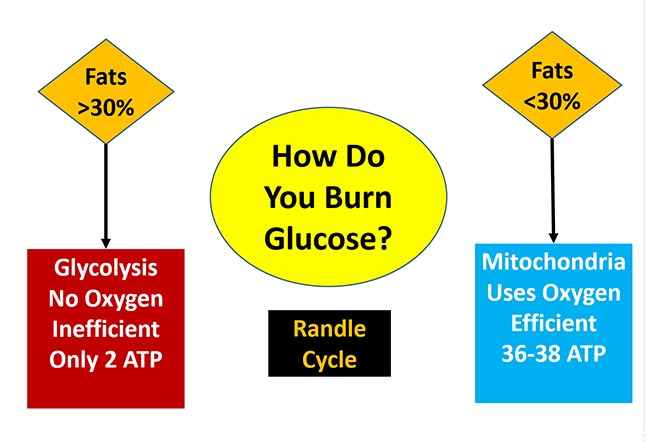
Low-carb diets have helped at least tens of millions of people improve their health for a very good reason, and that is there is a stealth switch that controls what fuel your mitochondria can burn. They can only burn one fuel at a time, either fat or glucose.
The switch has been given the name the Randle cycle, but it is more helpful to visualize it as a railroad switch that changes the tracks of the train. The train can only travel down one track; not both. This is because only one type of fuel can be burned at a time.
The best-case scenario is you metabolize, or burn, glucose in your mitochondria without any reductive stress (a term I will explain in my upcoming interview with Georgi Dinkov). When you do this, you will only generate 0.1% reactive oxygen species (ROS).
Not only does this route generate less ROS, but it also is incredibly efficient at energy production by creating 36 to 38 Adenosine triphosphates (ATP) for every molecule of glucose that is metabolized. It will also generate metabolic water and carbon dioxide, which are also important for your health.
For this to occur, as indicated in the figure above, you will need to consume less than 30% of your calories as fat. When you consume significantly more than that amount, the switch changes to burn fat in your mitochondria and you will not be able to burn glucose until your fat decreases to less than 30% of calories.
Since glucose is unable to be shuttled into the mitochondria to burn, it winds up backing up into your bloodstream, raising your blood sugar. This is a major contributor to diabetes. What little glucose is burned for fuel is done by using glycolysis, which is a primitive pathway that bacteria and cancer cells use.
It is great that we have this pathway, as you absolutely need it for quick fuel when you are activating your type II muscle fibers. But if this is the primary way you burn glucose, you are in a catastrophic metabolic state as you are creating loads of lactic acid as a waste product instead of healthy CO2. And, you are only generating two ATP for every molecule of glucose, which is 95% less energy.
Lactic acid increases reductive stress, which causes reverse electron flow in the mitochondria and causes reductive stress, which increases the ROS to 3% to 4%, which is 30 to 40 times more than when glucose is burned efficiently in the mitochondria. You likely don’t yet understand reductive stress, the opposite of oxidative stress, but I will be doing an interview with Georgi on this and will be posting it later this month.
Why Lactic Acid and CO2 Are so Important
Remember, when you are burning glucose efficiently in your mitochondria, the glucose is converted not only to 36 to 28 ATP, but when the electrons from the glucose are ultimately handed off to oxygen, metabolic water (deuterium free) is made and, very importantly, carbon dioxide.
This is vital to understand as carbon dioxide is a potent stimulator of mitochondrial biogenesis which will increase the number of mitochondria that you have so you can make even more energy.
Conversely, when you are burning glucose far less efficiently in glycolysis you are only generating two ATPs, and rather than creating life-sustaining carbon dioxide, you are generating life-damaging lactic acid, which will degrade your mitochondria and make them die sooner.
Georgi Dinkov’s Review of the Randle Cycle
In this second video, anti-vegan activist Paul Saladino interviews Dinkov about the Randle cycle. Dinkov comments:
“The first accusation against you, that whole milk will somehow make you fat because of the Randle cycle [is] misguided because if you look at the label, whole fat milk has like 5 grams of fat per serving but 12 grams of carbs, so you’re actually [getting] more carbs.
But let’s talk about meat. Most meats … are actually not that high in fat, and a lot of the fat in them is actually short chain fatty acids, which are not subject to the Randle cycle because they get transported into the cells through a known L-carnate-independent mechanism.
They metabolize similarly to sugar, and they don’t seem to be triggering the same sort of Randle cycle effect. Now, what drives the Randle cycle effect? When you’re oxidizing primarily fats … the master conductor redox modulator — which is the NAD to the NADH ratio, specifically the intra-mitochondrial one — drops. (This simply means the more NAD+ the better).
Basically, the NAD to the NADH ratio — which signals how oxidized versus how reduced you are, metabolically — [is] the primary regulator of whether the pyruvate dehydrogenase (PDH) will accept pyruvate and convert it into acetyl-CoA and then continue with the Krebs cycle in the electron transport chain, or not.
(Pyruvate is the three-carbon molecule breakdown product of glucose. PDH is the enzyme that converts it to acetyl-CoA which allows it to enter the mitochondria and be burned efficiently. If PDH is inhibited, it will force your body to use fat).
In other words, a high ratio of NAD to NADH (meaning high NAD+) when you’re very oxidized favors the activity of pyruvate dehydrogenase, so you will not be accumulating pyruvate [and] you will not be generating lactate.
But if you’re eating a lot of fat, the NAD to the NADH ratio drops, and then the buildup starts to happen. Pyruvate accumulates, lactic [acid] accumulates. [This means] the Krebs cycle is working because it’s accepting acetyl-CoA from the beta oxidation. That’s how the fatty acids get oxidized.
So, that’s the gist of the Randle cycle … If you’re providing a lot of glucose, in theory you should be able to out-compete the free fatty acids and oxidize more glucose versus fat, but that all depends on how much glucose can get into the cell.
And, unfortunately, when you’re eating these high-fat diets, when you have higher lipolysis, the actual uptake of glucose into the cell is already largely blocked …
Free fatty acids not only block the metabolism of glucose, they also block the uptake of glucose into the cell. So, they prevent the positive effects that the glucose would have had, in terms of competing with the free fatty acids …
Basically, too much fat blocks your uptake and utilization of glucose, and whatever glucose is taken up, you largely convert to nonbeneficial byproducts such as lactic acid …”
So, to summarize Dinkov’s rather complex exposition on the Randle cycle’s effects: a) fats can make you fat directly; and b) fats limit your ability to metabolize glucose. This is due to the Randle cycle’s preference to fat metabolism when more than 35% of your calories come from fats. And, even if you metabolize small amounts of glucose, your body will favor the conversion of glucose into fat versus ATP, water and carbon dioxide.
This is because the enzyme PDH, which converts the glucose metabolite pyruvate, is inhibited by high fat concentrations, and won’t convert pyruvate to acetyl-CoA to be burned in the mitochondria. Instead, because PDH is inhibited, the pyruvate is metabolized into lactate. This entire process is antimetabolic and slows down your metabolism, increases your ability to gain weight, and lowers your ability to generate cellular energy.
So, when more than 30% to 35% of your calories are coming from fat, you are forcing your cells to burn fat and put glucose on the back burner, instead of being metabolized like it should be.
Simple Strategies You Can Implement to Help Your Metabolism
Clearly, the most important strategy to help your metabolism is to avoid eating linoleic acid at all costs. It is impossible to avoid as it is in nearly every food, but you want to keep your levels below 2% of your daily calories. This means avoiding ALL processed foods and typically most restaurants.
A powerful strategy that nearly everyone should do is to make sure that you are taking a high-quality vitamin E supplement once a day. Why? Because most everyone has 20 to 30 times more LA in their body than optimal. Not only will vitamin E impair the release of it from fat cells, but once released it will help protect the LA from converting into dangerous oxidized linoleic acid metabolites (OXLAMs).
Most vitamin E supplements should be avoided, so how do you identify a high-quality vitamin E supplement? It should have most of the vitamin E isomer as alpha tocopherol, typically about 150 units. It should also have the other tocopherol isomers: alpha, beta and gamma, but at far lower doses.
Additionally, it should have alpha, beta and gamma tocotrienols. Finally, it should only have the “D” isomer. Avoid all vitamin E supplements that are “DL,” which are 50% of the wrong isomer.
It would be very wise to make sure you have enough NAD+ as it will also inhibit the release of LA from your fat cells. If you haven’t read and viewed by interview with molecular biologist Nichola Conlon on this topic, you can read it on my Substack. Sadly, NAD+ decreases dramatically as you age, which leads to nearly a 1-to-1 reduction in ATP, your cellular energy currency.
Fortunately, this can be inexpensively addressed by taking 50 mg of niacinamide three times a day. More is not better, so avoid 500 mg tablets as they will impair your longevity proteins. Typically, one sixty-fourth of a teaspoon of niacinamide powder is about 50 mg.
Finally, aspirin can be a very useful way to inhibit LA lipolysis. Aspirin is a very interesting approach and I go into far more details in my recent article on it.
Why Long-Term Low-Carb Diets Can Backfire
I previously touched on the Randle cycle in “How the Wrong Dietary Fat Can Wreck Your Health,” which also featured an interview with Dinkov. In that interview, Dinkov cleared up several areas of confusion, including the following:
•Low-carb dieting is a great short-term intervention for people who are overweight and insulin resistant. Lowering carbs will help reset your metabolism and recover your metabolic flexibility. However, in the long-term you will likely run into trouble — especially if you’re also doing a lot of endurance training.
One of the reasons for this is because when you’re in a low-carb state, lipolysis is elevated, which releases inflammatory polyunsaturated fatty acids (PUFAs) such as LA from your cells that are then into dangerous OXLAMs (oxidative linoleic acid metabolites) that will damage your tissues.
PUFAs such as LA are not digested. Instead, they’re stored.2 Most of the body fat in obese individuals is composed of PUFAs, not saturated fat. Saturated dietary fat is mostly burned (oxidized) and used up. So, most people have large stores of LA, and these stores need to be lowered to safe levels of 1% to 2% LA.
• Extended fasting and using an excessively narrow time-restricted eating (TRE) window can also backfire once you’re metabolically flexible, as it too helps push LA out of your cells.3,4,5,6,7,8,9,10 An extreme example of TRE is the one meal a day (OMAD) protocol, where you’re fasting 22 hours or more each day. Dinkov believes this is too extreme for most people.
The half-life of PUFAs such as LA, which get embedded and integrated into your cell membranes, is about 680 days. This means that ridding your body of LA will take approximately seven years, provided you don’t load more in. And you really do want to get rid of this fat, as it’s highly inflammatory and prevents your mitochondria and cellular machinery from operating properly. But you need to do it slowly and methodically.
Exercise and fasting will help drive the LA out, but you need to be really careful if you have a lot of LA storage. You want to avoid excessive lipolysis — any situation where you’ve run out of glycogen, which can easily happen when you’re not eating for long periods, when you’re on a chronic low-carb diet, and/or when you’re engaging in intense exercise, especially if you exercise in a fasted state.
• Chronic long-term, low-carb, and chronic extended fasting also result in elevated cortisol, which is highly inflammatory and promotes the storage of fat. Elevated cortisol is also highly catabolic and will cause you to lose lean muscle mass so your liver can make glucose. For these reasons, low-carb diets and fasting are best implemented as temporary strategies to restore metabolic flexibility.
How to Safely Reduce LA Stores Without Self-Sabotaging
With all of that in mind, how can you safely reduce your LA stores without self-sabotaging? Extensive fasting will, in this instance, backfire, as will overtaxing yourself with heavy exercise. You’ll need to accept that achieving optimal health is a marathon, not a sprint, and that it’s going to take years to purge your LA stores. Dinkov suggests the following strategy:
- Build muscle and maximize lean muscle mass
- Avoid fasting for longer than 16 hours
- Avoid all processed foods, restaurant foods, condiments and animal foods raised on grains, such as chicken and pork, as all of these are high in LA
- Eat a diet with about 15% protein, restricting fats to below 35% with the remainder consisting of carbs in the form of ripe fruits and some vegetables and well-cooked low-oxalate starches. Be careful to avoid all processed sugars as they typically are loaded with high fructose corn syrup that will increase endotoxin in your gut
So, to recap, temporarily implementing a six- to eight-hour time restricted eating window, or even longer eating restrictions and fasts, is appropriate for anyone who is insulin resistant and metabolically inflexible — and that’s about 95% of the population.
However, once you lose your insulin resistance and become metabolically flexible — which typically takes a few weeks — you’ll want to increase your eating window to eight to 12 hours to avoid elevating your cortisol, as cortisol promotes chronic inflammation that can lead to tissue damage, and promotes the storage of fat.
If you stop supplying carbs to your body, the organs that need them will activate glucose creation in your body by elevating cortisol. So, once you’re metabolically flexible, you want to avoid extended fasting.
How does TRE and extended fasting raise cortisol, you ask? It is important to understand that cortisol is a powerful hormone whose primary purpose is to shred your lean muscle mass and bones to obtain amino acids for your liver so it can produce glucose. This is cortisol’s primary role. If your blood sugar gets too low, you will go into a hypoglycemic coma and die. Your brain requires sugar and if it doesn’t get it, it is game over.
Usually, it takes a few weeks and occasionally longer, for you to recover your metabolic flexibility. During those first three to six months, stick to a six- to eight-hour eating window. Once you’re metabolically healthy, avoid eating windows under eight hours. I’ve now shifted to a schedule where I always have an eating window of more than eight hours a day and closer to 12, in the summer when there is plenty of daylight.
Interestingly a recent study showed that a lower fat, higher carb approach lowers the risk of death by 30%, while with the converse a high-fat, low-carb diet increases the risk of death by 30%.11,12 So, it’s your choice for sure, but I am convinced that having more healthy carbs than fat is a great choice to improve your metabolic health.
- 1 YouTube Georgi Dinkov
- 2 Haidut.me October 22, 2019 (Archived)
- 3 Haidut.me February 16, 2021 (Archived)
- 4 Haidut.me September 27, 2022 (Archived)
- 5 Haidut.me March 4, 2021 (Archived)
- 6 Haidut.me December 10, 2021 (Archived)
- 7 Haidut.me June 21, 2022 (Archived)
- 8 Haidut.me November 17, 2020 (Archived)
- 9 Haidut.me December 21, 2021 (Archived)
- 10 Haidut.me September 30, 2020 (Archived)
- 11 J Intern Med. 2023 May 3. Low-carbohydrate diets, low-fat diets, and mortality in middle-aged and older people: A prospective cohort study
- 12 Haidut.me May 9, 2023 (Archived)
The Importance of Enzymes for Health, Longevity and Chronic Disease Prevention
Reproduced from original article:
https://articles.mercola.com/sites/articles/archive/2023/12/19/importance-of-enzymes.aspx
The original Mercola article may not remain on the original site, but I will endeavor to keep it on this site as long as I deem it to be appropriate.
Analysis by Dr. Joseph Mercola December 19, 2023
STORY AT-A-GLANCE
- Enzymes are catalysts that accelerate biochemical reactions in your body. Digestive enzymes are important for proper digestion and nutrient absorption, but the benefits of enzymes do not end there
- Researchers have discovered enzymes for all sorts of uses, from boosting athletic endurance by optimizing digestion and nutrient uptake to treating cancer
- To optimize enzyme function, eat plenty of fresh, raw and/or fermented foods. Sprouts are a particularly excellent source. Fasting has also been shown to conserve enzymes
As the name implies, digestive enzymes are important for optimal digestion and nutrient absorption. But their functions and benefits do not end there. Enzymes are actually necessary for most cellular functions and biological processes.
Enzymes — proteins composed of amino acids — are secreted by your body to catalyze functions that normally would not occur at body temperature, making them vital to good health and longevity.1,2
Science has identified more than 3,000 different enzymes, yet we’ve likely only scratched the surface. There are at least 75,000 enzymes in our bodies.3 Each organ has its own set of enzymes, and each enzyme has a different function. In essence, they act like specialized keys cut to fit specific locks. In this analogy, the locks are biochemical reactions.
Enzymes Do More Than Aid Digestion
Over the years, researchers have discovered enzymes for all sorts of uses, from boosting athletic endurance by optimizing digestion and nutrient uptake4 to treating cancer. According to some researchers, enzyme preservation is an important aspect of longevity, as younger people have far higher levels than older ones.
For example, young adults have about 30 times more amylase in their saliva than 69-year-olds, and 27-year-olds have twice the amount of lipase as 77-year-olds. Chronically ill people also tend to have much lower levels of enzymes.5
In one recent animal study,6 the nicotinamide mononucleotide (NMN) — an enzyme involved in energy metabolism, found in broccoli, cucumbers and cabbage — helped regenerate aging cells, making them behave as younger cells and preventing certain age-related genetic changes.
As a result, the NMN-treated mice gained less weight than untreated ones (likely a result of increased energy conversion) and experienced improved eyesight. Fortunately, optimizing your enzymes is as easy as eating plenty of fresh, raw and/or fermented foods. Sprouts are a particularly excellent source of live enzymes.
Fasting has also been shown to conserve enzymes. If you do not eat, you will not produce digestive enzymes, allowing metabolic enzyme production and activity to proliferate instead.
Types of Enzymes and Their Functions
Enzymes can be broadly divided into the following categories:7
• Digestive enzymes, involved in digestion; the breaking down of foods into nutrients and elimination of waste products. Digestive enzymes are extra-cellular, meaning they’re found outside your cells.
There are eight primary digestive enzymes, each designed to help break down different types of food:
| Protease — Digesting protein | Maltase — Converting complex sugars from grains into glucose |
| Amylase — Digesting carbohydrates | Lactase — Digesting milk sugar (lactose) in dairy products |
| Lipase — Digesting fats (If you have IBS, cystic fibrosis , celiac disease, no gallbladder or gallbladder dysfunction and/or obesity, you may benefit from higher levels of lipase.
Also beware that fluorinated water may decrease lipase and protease production)8 |
Phytase — Helps with overall digestion, especially in producing the B vitamins |
| Cellulase — Breaking down fiber | Sucrase — Digesting most sugars |
• Metabolic enzymes, involved in energy production and detoxification. Metabolic enzymes are intra-cellular, meaning inside your cells, where they help the cell carry out a variety of functions related to its reproduction and replenishment.
• Food-based enzymes, contained in raw, uncooked/unprocessed foods and/or supplements. Dietary enzyme supplements are derived either from plants or animals.
For example, enzymes can be extracted from certain fungi and bacteria, raw foods, such as the bromelain in pineapple and papain from papaya. Pancreatic enzyme supplements, such as pepsin and trypsin, are obtained from the stomach, small intestine and pancreas of animals.
People who may benefit from eating more raw foods and/or taking a food enzyme supplement include those who:
• Eat cooked, microwaved or processed foods. The more raw foods you eat, the lower the burden on your body to produce the enzymes it needs, not only for digestion, but for practically everything.
Whatever enzymes are not used up in digestion are then available to help with other important physiological processes.
• Are over the age of 30. Studies show your body’s production of enzymes decreases by about 13% every decade. So by age 40, your enzyme production could be 25% lower than it was when you were a child.
By the time you’re 70, you could be producing only one-third of the enzymes you need for good health. Making matters worse, your stomach produces less hydrochloric acid as you age, and hydrochloric acid is crucial in activating your stomach’s digestive enzymes.
When digestion of foods requires such a heavy demand, enzyme supplies run short and your enzyme-producing capacity can become exhausted.
• Struggle with toxicity.
• Are acutely or chronically ill, including those with digestive problems, endocrine gland imbalances, high blood sugar, diabetes, obesity, high cholesterol, stress-related problems, arthritis and other inflammatory conditions.
Supplements containing amylase, lipase and proteases (enzymes that help break down starches, fats and proteins respectively) have been shown to benefit those with food sensitivities.9 For optimal digestion, you need all three. Other less well-known digestive enzymes include ribonuclease and deoxycyribonuclease-I, which digest nucleic acids and DNA/nuclease respectively.
Download this Article Before it Disappears
Enzymes and Coenzymes Play Important Roles in Health
Enzymes are catalysts that cause biochemical reactions to happen. In other words, they assist and accelerate reactions, sometimes to a mind-boggling several million reactions per second. In this way, enzymes significantly lower the amount of energy needed for a reaction to occur. And, without them, some reactions would not even be able to take place at all. Here’s a sampling of activities in your body that require enzymes in order to occur:
| Energy production | Carrying away toxic wastes |
| Absorption of oxygen | Dissolving blood clots |
| Fighting infections and healing wounds | Breaking down carbohydrates, proteins and fats, and regulating cholesterol and triglyceride levels |
| Reducing inflammation | Hormone regulation |
| RNA/DNA functioning | Nerve impulse regulation |
| Getting nutrients into your cells | Slowing the aging process |
As important as they are, enzymes do not work alone. They rely on other elements to accomplish their tasks, such as certain vitamins and minerals. These elements are called coenzymes.10 One of the most well-known coenzymes is coenzyme Q10 (CoQ10), found in the mitochondria (power centers) of your cells where it is involved in making ATP, a principal energy source. Another example is magnesium, which participates in over 300 enzyme reactions.
However, while your body produces its own enzymes, this ability begins to decline as early as your late 20s. The situation is worsened if you eat primarily processed foods, as viable enzymes are only found in fresh foods. This is yet another reason why diet has such a tremendous impact on disease risk, as enzyme imbalance or deficiency can significantly raise your risk of cancer and autoimmune diseases.
Annesse Brockley’s and Kristin Urdiales’ book, “Autoimmune,” explores the link between digestive enzyme deficiency and autoimmune disease. While still controversial, the link between digestive enzymes and immune dysfunction is quite compelling, and helps us understand why and how diet can be such a powerful intervention.
Cancer-Fighting Benefits of Pancreatic Enzymes
A large portion of your digestion occurs in your duodenum, the early part of your small intestine. Your pancreas secretes digestive juices in response to food in your stomach. These digestive juices contain the eight groups of enzymes responsible for breaking down carbs, protein, fats and other nutrients.
When your pancreas is not working well, a deficiency in pancreatic enzymes can lead to malabsorption of nutrients and overgrowth of bacteria in your small intestine, a condition that presents itself as gas and bloating, fatigue and constipation. It may also play a role in irritable bowel syndrome (IBS).11 Pancreatic insufficiency may be treated by taking a pancreatic enzyme supplement.
Interestingly, pancreatic enzymes may also be very useful in the treatment of cancer. When used for this purpose, pancreatic enzymes are taken between meals rather than with them. When taken at a time when they’re not needed for digestion, the enzymes have been shown to go to work systemically, affecting your body organs via your blood.
One of the mechanisms by which enzymes fight cancer is by stripping away the fibrin coating that cancer cells protect themselves with. Fibrin is a fibrous protein that cancer cells wrap themselves with in order to protect themselves against attack by your immune system. Due to its fibrous nature, this coating is 15 times thicker than the outer layer of a normal, healthy cell.
By stripping off this layer, enzymes help your immune system detect the antigens contained within the cancer cell, thereby allowing your immune system to kill the cell and dispose of it naturally. Moreover, certain enzymes trigger macrophage to release tumor necrosis factor (TNF), which plays an important role in downregulating an overactive immune system, thereby helping those with autoimmune conditions.
Enzymes Used in Leukemia Treatment
L-asparaginase, an enzyme isolated from the bacteria Escherichia coli and Erwinia chrysanthemi, has a long history of use in the treatment of acute lymphoblastic leukemia, the most common form of childhood leukemia in the U.S.
It’s also widely used in veterinary medicine to treat certain types of cancers in cats and dogs, specifically cancers involving the immune system.12 L-asparaginase works by “starving” the cancer cell of asparaginase, an enzyme needed in the production of proteins.
Healthy cells need only a small amount of asparaginase, and can produce what it needs internally. Cancer cells not only need hefty amounts; they also cannot produce this enzyme internally and must obtain it from outside sources.
L-asparaginase works by eliminating asparaginase and, by depriving the cancer cell of it, the cell dies since it cannot produce what it needs to thrive. Researchers have now found an L-asparaginase-like enzyme found in baker’s yeast may be a less toxic alternative to the bacteria-derived enzyme. As reported by Medical News Today:13
“First study author Iris Munhoz Costa … explains that unlike bacteria, yeast is eukaryotic. This means that it contains a membrane-covered nucleus consisting of genetic material, as is the case with human cells. As such, it is hypothesized that yeast-derived enzymes are less likely than bacterial enzymes to trigger severe immune responses.”
The Kelley Treatment — Cancer Treatment Using Enzymes
In 2011, I interviewed Dr. Nick Gonzalez, a prominent cancer doctor who specialized in alternative treatment methods. Gonzalez died in 2015 from what appears to have been a heart attack. Prior to his untimely death, he’d had remarkable success treating cancer patients with a three-pronged nutritional approach based on the groundbreaking work of Dr. William Kelley, a dentist who cofounded nutritional typing.
Many of these patients were diagnosed with highly lethal forms of cancer that conventional medicine cannot effectively address, including pancreatic cancer, brain cancer and leukemia. Gonzalez’s program consisted of three basic components:
- Individualized diet based on nutritional (metabolic) typing
- Individualized supplement program, which includes vitamins, minerals, trace elements and pancreatic enzymes
- Detoxification, which included coffee enemas and colon cleanses
In regard to the enzymes, he stressed the importance of taking the correct ratio of active and inactive enzymes. Interestingly, the inactive precursors are particularly active against cancer. They also have a far longer shelf life, and are more stable than the active ones.
According to Gonzalez, pancreatic enzymes not only are useful as treatment for active cancer but are also one of the best preventive measures. Before his death, Gonzalez published two highly rated books, “The Trophoblast and the Origins of Cancer,” and “One Man Alone: An Investigation of Nutrition, Cancer, and William Donald Kelley.”
The Many Benefits of Seaprose-S
Seaprose-S (also known as protease-s) is one proteolytic, meaning systemic, enzyme with powerful health benefits.14 It’s particularly effective for breaking up of mucus15 and reducing inflammation.16 Some studies also suggest it may have antibiotic properties. Its anti-inflammatory and mucus-dissolving activities have been shown to benefit conditions such as:
| Arthritis | Edema |
| Pleurisy (inflammation of your lung lining) | Peritonitis (inflammation of your abdominal lining) |
| Thrombophlebitis (pain and inflammation in your veins following a blood clot) |
Pulmonary tuberculosis |
| Bronchitis | Pulmonary emphysema |
| COPD | Bronchiolitis |
| Bronchial asthma | Wound complications following vaginal birth or C-section17 |
| Venous inflammatory disease18 |
This enzyme is one you would take in-between meals, not with your meals, as it’s not aimed at improving digestion but rather doing its work systemically. By passing unused into your digestive tract, seaprose-S can enter your bloodstream, thereby reaching all the tissues in your body.
How to Boost Your Enzyme Levels Naturally
There are four ways to naturally increase your enzyme levels:
- Increase your intake of raw, living foods
- Fast
- Chew your food thoroughly
- Avoid chewing gum
The very best way to get enzymes into your body is by consuming at least 75% of your foods raw. For many of you, you’ll have to work toward this goal gradually. While all raw foods contain enzymes, the most powerful enzyme-rich foods are those that are sprouted (seeds and legumes). Sprouting increases the enzyme content in these foods tremendously. Besides sprouts, other enzyme-rich foods include:
| Papaya, pineapple, mango, kiwifruit and grapes | Raw honey (the enzymes actually come from the bee’s saliva) |
| Extra virgin olive oil | Raw meat and dairy |
| Avocado | Bee pollen |
| Coconut oil | Fish sauce19,20,21 and other fermented fish products22 |
By eating these types of foods, you supply your body with the amino acids and the enzyme co-factors needed to boost your own natural enzyme production. Another way to lower your body’s demand for enzymes is to reduce your caloric intake. Did you know the average person spends 80% of his available energy simply digesting food?
By reducing overall consumption, as well as introducing more living foods, you reduce your need for digestive enzymes, which allows your body to put more of its energy into producing metabolic enzymes, which brings us to chewing: Quite apart from the esthetic pleasure of an unhurried meal, there are important physiological reasons to chew your food well.
Chewing stimulates saliva production, and the more time you spend chewing, the longer your saliva enzymes have to work in your mouth, lessening the workload of your stomach and small intestine. This is also the reason for the recommendation to avoid chewing gum. Chewing gum fools your body into believing it is digesting something, so it pumps out digestive enzymes unnecessarily.
Digestive Enzyme Supplementation
If you suffer from occasional bloating, minor abdominal discomfort and/or occasional constipation and suspect your enzyme production is low, you might want to consider a digestive enzyme supplement in addition to eating more of your foods raw.
Keep in mind that digestive enzymes should be taken WITH a meal, whereas systemic enzymes, taken for other health reasons, are taken between meals (see following section). There are hundreds of digestive enzymes on the market. Ideally, look for an enzyme formula with the following characteristics:
- It should contain a mixture of different types of enzymes, to help digest all of the different components of your diet (including lipase, protease and amylase)
- The ingredients should be high-quality, all-natural and free of allergens and additives
- The supplement should be labeled as to the enzymatic strength of each ingredient, not just its weight
- It should be made by a reputable company with rigorous quality control and testing for potency
Use of Systemic Enzymes May Improve Your Health
Besides digestive enzyme supplementation, oral enzymes can be used systemically. This requires taking enzymes on an empty stomach between meals so they can be absorbed through your gut into your bloodstream, where your cells can use them metabolically to clear away debris and accumulated metabolic buildups.
However, getting enzymes from your digestive tract into your bloodstream isn’t as easy as it would seem. Enzymes are very susceptible to denaturing and must be helped to survive the highly acidic environment in your stomach. For this reason, they’re often given an “enteric coating” to help them survive the journey through your digestive tract.
Systemic oral enzymes have been used to treat problems ranging from sports injuries to arthritis to heart disease and cancer, particularly in European countries. But most of the research has been published in non-English language journals.
This systemic use of enzymes is still in its infancy in the U.S. Keep in mind that in order for enzymes to be used systemically, they must be ingested on an empty stomach. Otherwise, your body will use them for digesting your food, instead of being absorbed into the blood and doing their work there.
- 1, 9 Johns Hopkins Medicine. Digestive Enzymes and Digestive Enzymes Supplements
- 2 Healthy Diet Healthy You, Digestive Enzymes
- 3 Institute for Integrative Nutrition. Enzymes: The Key to a Long and Healthy Life. August 16, 2017
- 4 Memorial Sloan Kettering Cancer Center. Proteolytic Enzymes: Purported Benefits, Side Effects 7 More
- 5 Medical News Today. Blocking One Enzymes Could Help Treat Many Chronic Disorders. July 27, 2018
- 6 Time October 27, 2016
- 7 Health. Should You Take Digestive Enzymes? October 31, 2023
- 8 Fluoride 2005;38(3):215–219
- 10 Chemistry Explained, Coenzymes
- 11 bodyecology.com, Digestive Enzymes
- 12 J Pharmacol Pharmacother. v.7(2); Apr-Jun 2016
- 13 Medical News Today January 18, 2017
- 14 Drugs Exp Clin Res. 1999;25(6):263-70
- 15 Pharmacological Research 1990 Sep-Oct;22(5):611-7
- 16 Drugs Under Experimental and Clinical Research 1999;25(6):263-70
- 17 Minerva Ginecologica 1990 Jul-Aug;42(7-8):313-5
- 18 Minerva Cardioangiologica 1996 Oct;44(10):515-24
- 19 Journal of Aquatic Food Product Technology 2004: 13(2)
- 20 Int J Mol Med. 2003 Oct;12(4):621-5
- 21 Mol Med Rep. 2010 Jul-Aug;3(4):663-8
- 22 Weston A Price January 15, 2016
Acclaimed Documentary Explores Global Health Consequences of Eating Too Much Sugar
Reproduced from original article:
https://articles.mercola.com/sites/articles/archive/2023/12/14/eating-too-much-sugar.aspx
The original Mercola article may not remain on the original site, but I will endeavor to keep it on this site as long as I deem it to be appropriate.
Analysis by Dr. Joseph Mercola December 14, 2023
STORY AT-A-GLANCE
- Our evolutionary history doesn’t support a high-carb diet, yet the majority of foods we eat are loaded with added sugar
- On average, Americans consume about 23 teaspoons of sugar per day
- Sugar threatens to wipe out some of the oldest communities on Earth
There is increasingly compelling research showing your biology is not optimized for a high-carb diet. Consuming excessive sugar just doesn’t bode well for you. Yet the majority of foods eaten in the U.S. and around the world (including in some previously unaffected aborigine communities) contain significant amounts of sugar.
However, this has not always been the case. Historically — and as recently as the 20th century — sugar was viewed as a treat. It was a delicacy enjoyed only on occasion, such as with a cup of coffee or tea. Fast-forward to the 21st century and added sugar is found in just about everything we eat, including many non-junk food items such as pasta sauce, salad dressing, crackers, fruit juices, yogurt, energy drinks and many other foods.
Sugar Transitions From Sweet Treat to Every Day Habit
The adoption of a high sugar diet has caused public health worldwide to rapidly deteriorate, resulting in a host of chronic and potentially fatal diseases. Clever marketing tactics deployed by the food industry to boost sugary food sales are largely responsible for sugar overconsumption and the subsequent diseases it has caused.1
In 2015, U.S. Department of Agriculture data showed Americans consumed an average of 94 grams or 23.5 teaspoons of sugar per day.2 In 1999, that number was even higher, with the average American consuming 111 grams or nearly 28 teaspoons of sugar daily. U.S. sugar consumption both then and now greatly exceeds the federal government’s recommended limit of 50 grams or 12.5 teaspoons per day for an individual consuming 2,000 daily calories.
The Health Effects of Doubling Up on Sugar
The fact that Americans are eating about twice as much sugar as is recommended by health authorities — and nearly four times the amount suggested for optimal health — is great for Big Food, but what are the health implications of this unnatural trend?
In an effort to study the health effects of a high sugar diet, documentary filmmaker Damon Gameau, from “That Sugar Film,” conducted an experiment during which he consumed the average amount of sugar eaten daily by Australians, which amounts to 160 grams or about 40 teaspoons.
It’s important to note that before the experiment Gameau ate very little sugar. Surprisingly enough, Gameau didn’t feast on junk food all day to reach his goal. Instead, he ate commonly sold processed foods, many of which are marketed as healthy, such as fruit juice, yogurt and energy drinks.
Initially, Gameau thought it would be difficult to reach his daily goal of 40 teaspoons but to his surprise found it disturbingly easy. The film shows Gameau nearly reaching his daily sugar goal in just one meal with a small bowl of cereal, yogurt and fruit juice. It wasn’t long before Gameau began feeling both the physical and psychological effects of eating a high sugar diet. One of the first symptoms he noticed was wild mood swings.
After eating a sugary food, Gameau experienced what’s known as the typical “sugar high,” accompanied by short-lived feelings of alertness and even euphoria. His wife reported spontaneous and even manic-like bursts of laughter. But less than an hour later he would crash, noting severe feelings of lethargy. Gameau also reported feeling aloof, distracted and unable to concentrate at home — a trait his wife described as extremely uncharacteristic.
Download this Article Before it Disappears
High Sugar Diet Wrecks Your Metabolism
Prior to the experiment, Gameau was in good health. A medical exam determined he was slightly healthier than the average western male in his age range. His diet consisted of about 2,300 calories per day, 50% of which was made up of healthy fats found in foods like nuts and avocado; 26% was derived from protein-based foods such as meat, eggs and fish, and the remaining 24% consisted of carbohydrates found in fresh vegetables.
Gameau weighed about 167 pounds and had a waist circumference of 33 inches (84 centimeters). Blood tests showed his liver was healthy and that he had low triglyceride levels (fat in the bloodstream) and no signs of insulin resistance or diabetes.
Gameau also kept up his exercise routine, which consisted of running three laps around his garden twice a week followed by a 10-minute workout in his home gym. But despite maintaining weekly exercise, Gameau’s health quickly deteriorated.
After 12 days of ramping up his sugar intake, Gameau had gained almost seven pounds, the majority of which went straight to his abdomen. In a month of eating 40 teaspoons of sugar per day, he added 2.75 inches (7 centimeters) to his waistline. But the health effects were more serious than just weight gain.
Within three short weeks, doctors were shocked to find that Gameau was already displaying signs of fatty liver disease. “By the end, I’d developed pre-type 2 diabetes, I had heart disease, I had 11 centimeters of visceral fat. But the big one was, the non-alcoholic fatty liver disease was almost in a full-blown state,” said Gameau in a news article highlighting his film.3
How the Human Body Processes Sugar
In small amounts, sugar is typically harmless. As a carbohydrate, it helps supply you with the energy you need for your daily activities. All of your cells can use glucose. But at the same time, sugar is also calorie-rich, and once it is consumed in excess, negative health effects inevitably follow.
As noted in “That Sugar Film,” sucrose or table sugar consists of 50% fructose and 50% glucose. Fructose used to be rare in nature and was only found in products such as honey and fruit; today however, highly processed fructose (typically from corn) is added to a large variety of food products.
Fructose, the simple sugar that is part of table sugar, has particularly pernicious effects. Your body actually processes fructose in the same way it processes alcohol, rapidly turning it into fat. This fat remains in your liver, increasing your risk of insulin resistance, nonalcoholic fatty liver disease (NAFLD) and diabetes. Once this fat is released into your bloodstream as triglycerides, it increases your risk for weight gain, blocked arteries and heart disease.
Why Too Much Sugar Stops the Fat-Burning Process
As Gameau points out in “That Sugar Film,” when you eat a lot of sugar and net carbs, such as breads and pastas, your body responds by producing lots of glucose. Insulin is released when you eat sugar. The more glucose in your blood, the more insulin is released. What’s important to realize is that while insulin is dealing with all the glucose, it tells your fat cells to hold onto fat and, as a result, your fat-burning processes actually shut down.
Fructose activates the enzyme fructokinase, which in turn activates another enzyme that causes cells to accumulate fat. Your body also has a hard time burning this fat off when it’s metabolizing excess sugar. This is what’s happening to many people, says Gameau, who wonders whether many of today’s obesity- and diabetes-related diseases — including cancer, gout, hypertension and possibly Alzheimer’s — would exist if it were not for the widespread adoption of a high sugar diet.
Studies Link Sugar Addiction to Learning Disabilities in Schoolchildren
Mounting research suggests that massive sugar addiction is responsible for not only obesity and diabetes, but also heart damage and heart failure, cancer, depletion of brainpower and shorter lifespans.4 As illustrated, consuming too much sugar can lead to detrimental effects to your health. I managed to count 76 ways in which the sweet treat can cause serious health problems.
As Gameau experienced, consuming excess sugar can cause behavioral changes including reduced learning capacity in children, depression, antisocial behavior and emotional instability. It may also induce cell death (as seen in Gameau’s case) and lead to kidney stones, headaches, dizziness and gastrointestinal tract problems, among other health conditions.
New Sugar-Related Diseases Surface in Australia’s Aborigine Communities
Sadly, the health effects of a high sugar diet have spread to remote communities, including Australia’s aborigines. “That Sugar Film” follows Gameau to Amata, a small aborigine community located in South Australia that, despite being alcohol-free, has witnessed an uptick in fatty liver disease and early deaths linked to kidney failure.
John Tregenza, an aboriginal community development worker, says the introduction of a high sugar diet in Amata is to blame. In 1973, the people of Amata purchased about 10% of their food from local stores; today it’s almost a 100%, he says. Tregenza reports observing a direct correlation between the widespread availability of sugary junk foods in local stores and a steep decline in the community’s health.
Amata, which has a population of about 400, had been consuming an astounding 40,000 liters of soft drink each year. The result? A graveyard full of preventable deaths. Gameau and Tregenza tour a local cemetery during which the social worker points out numerous graves of people he says suffered an early and unnecessary death.
“All those folks were under 40,” says Tregenza, adding that their death could have been prevented with the correct diet and exercise. Sugar is in fact threatening to wipe out some of the oldest communities on Earth, concludes Gameau.
How to Limit Your Sugar Consumption
As previously stated, sugar, in its natural form, is not inherently damaging as long as it’s consumed in moderation and you are able to burn fat as your primary fuel. It is best to avoid all sources of processed fructose, particularly processed foods and beverages like soda and fruit juice.
According to SugarScience.org, 74% of processed foods contain added sugar stealthily hidden under at least 61 different names.5 Ideally, you would spend 90% of your food budget on whole foods and only 10% or less on processed foods. I also advise you to severely limit your consumption of refined carbohydrates and grains, as they actually break down to sugar in your body, which increases your insulin level and causes insulin resistance.
As a general recommendation, I advise keeping your total fructose consumption below 25 grams per day from all sources. Keep in mind that although fruits are rich in nutrients and antioxidants, they also naturally contain fructose, and if consumed in high amounts may actually worsen your insulin sensitivity and raise your uric acid levels.
You can view this previous article to see how much fructose is in the fruits you eat. Awareness is key in preventing unnecessary disease and death worldwide as a result of sugar. The better we understand what happens inside our minds and bodies when we eat too much sugar, the sooner we can start making healthier choices and live a longer and fuller life.
Low-Carb, High-Fat Diet Helps Solve Many Health Problems
Having delved deep into the medical literature in preparation for my book, “Fat for Fuel,” I believe a diet high in healthy fats with low net carbs and moderate amounts of protein will help you burn fat as your primary fuel, thereby improving your mitochondria and radically decrease your risk of disease.
Not only does it help you shed excess body fat, it does so while improving metabolism, boosting overall energy levels, lowering inflammation, promoting optimal health and maximizing longevity in a number of different ways. As a general guideline, to optimize your fat-burning system:
- Limit your net carbs (total carbs minus fiber) to a maximum of 30 to 40 grams per day. You can consume as many high-fiber veggies as you like. They’re carbs, but since they’re high in fiber, they’re typically quite low in net carbs
- Limit protein to a maximum of 1 gram of protein per kilogram of lean body mass
- Increase healthy fats to 50% to 85% of your daily calories
- Once you achieve fat burning it is best to cycle in and out of it
Intermittent fasting will facilitate and speed up the process. Once your fat-burning ability has returned, (assuming you’re still eating right), you only need to intermittently fast on a maintenance basis.
Eating Mistakes That Can Damage Your Kidneys
Reproduced from original article:
https://articles.mercola.com/sites/articles/archive/2023/11/19/low-acid-meal-plan.aspx
The original Mercola article may not remain on the original site, but I will endeavor to keep it on this site as long as I deem it to be appropriate.
Analysis by Dr. Joseph Mercola November 19, 2023
STORY AT-A-GLANCE
- Your kidneys lower your body acid burden. As kidney failure progresses, acid tends to accumulate in your system, causing severe harm
- A high-acid diet can deteriorate your kidney function and accelerate the progression of kidney disease
- Any diet high in fruits and vegetables and low or devoid of processed foods and dairy products will be lower in acid
- Anything that helps improve diabetes will also improve kidney health. This includes fasting or time-restricted eating and exercise
- High-protein diets can also damage your kidneys, thanks to the ammonia generated. To protect your renal health when eating a high-protein diet, add in more fruits and vegetables to buffer the acid created
In this interview, Dr. Lynda Frassetto, a nephrologist and Professor Emeritus in the department of medicine at University of California San Francisco (UCSF), shares important information about how acid in your diet affects your kidney health and longevity.
“When I was in internal medicine training, I happened to have a really super mentor, Dr. Eli Friedman, at the State University of New York (SUNY) in Brooklyn,” Frassetto says. “He made nephrology sound really interesting.
And so, after I finished my residency and was a hospitalist for a couple of years, I decided to go back and do nephrology, because people who did nephrology just have a better understanding of physiology than most internists do.
I thought that would help make me a better doctor. After I finished my fellowship, I started working with Anthony Sebastian here at UCSF. He was interested in diet acid load in people who were relatively healthy.
The kidneys do a lot of things. One of the things they do is they get rid of acid. We know that as kidney failure progresses, you have trouble getting rid of the acid. It accumulates in your system and has a lot of bad side effects.
We also know that, as you get older, your kidneys tend not to work as well. What Tony was looking at was, in otherwise healthy, older people — whose kidneys just aren’t working as well as they did, let’s say, 40 or 50 years earlier — does eating a high-acid diet have any potential side effects?”
Low-Acid Diets as a Means to Protect Kidney Function
In the initial stages of their work, Frassetto and Sebastian worked on neutralizing acid in the diet using bicarbonate. Then, just over a decade ago, they started looking at low-acid diets. While all foods contain precursors that can be metabolized into acids, fruits and vegetables contain a lot of alkali precursors that are metabolized into bicarbonate, like citrate or malate.
Frassetto’s interest in low-acid diets began with the paleo diet, promoted by Loren Cordain, Ph.D. According to Cordain, many foods in our modern diet were unavailable to our ancestors, such as processed grains and sugars.
He believed a diet closer to our ancestral diet would be healthier, and one of the reasons for this is because any diet high in fruits and vegetables (and devoid of processed food) will be lower in acid. As explained by Frassetto:
“If you look at any large population, and you just look at the average kidney function over time, on average, everybody’s kidney function declines. But if you look at specific individuals, kidney function either declines much more slowly or may even level out.
The question is, ‘How related is that to eating a low-acid diet or doing things that wouldn’t bother your kidneys?’ This has actually been looked at by Dr. Donald Wesson, a nephrologist at University of Texas (UT) Southwestern.
He’s looked at both alkalized supplements and fruits and vegetable diets in people with Stage 2 kidney disease, with an estimated glomerular filtration rate (GFR) between 60 and 90, and Stage 3 chronic kidney disease (CKD), which has an estimated GFR from 30 to 60.
[GFR is] an estimate of kidney function. So, if you’re 50 years old, your GFR is about 90. If you’re 80 years old, your GFR is about 60. On average, people who are older are going to have … Stage 2 or Stage 3 CKD.
Wesson showed that in these people, if you either give them alkalized supplements like baking soda, or put them on a diet with more fruits and vegetables, that you could slow the rate of decline …
If you extrapolate that from people with kidney failure to just older people, the idea would be that, maybe, you can slow the rate of decline of your kidney function, even if you’re otherwise healthy and just getting older. That’s the idea.
Everything that you do, everything, is related to kidney function in some degree. Because the kidneys get rid of a lot of things. The worse the kidneys work, the worse everything works.”
Fasting Also Protects Kidney Function
According to Frassetto, most kidney disease in western countries is more advanced kidney disease caused by high blood pressure and Type 2 diabetes. Three-quarters of patients on dialysis are there due to high blood pressure and diabetes. So, ultimately, anything that helps improve diabetes and high blood pressure will also improve kidney health.
One strategy known to significantly lower your risk of Type 2 diabetes is fasting, including time-restricted eating. I’ve previously interviewed Dr. Jason Fung, a nephrologist in Canada, who uses fasting to reverse diabetes in his patients. Exercise is yet another strategy that will lower your risk of diabetes, and thus protect your kidney health.
Download this Article Before it Disappears
Acid Versus Protein Damage
Acid isn’t the only thing that can damage your kidneys. High-protein diets can also cause harm, thanks to the ammonia generated. As for which may ultimately be worse for you — high acid or high protein — Frassetto explains:
“All proteins contain acid precursors. If you’re eating a high protein load and you don’t have enough alkali to help the kidneys either buffer or get rid of the acid, then that’s ultimately bad for your kidneys. But you do need to eat a certain amount of protein, or you’re going to have problems building things too.
This is really a balance question. It’s not that protein is bad. It’s that, if you’re eating a lot of protein, you should also be eating a lot of alkali. That will help you not use the body systems to neutralize or buffer the acid in your system. The whole idea is that you want to maintain your blood pH within the range considered to be normal.
To do that, you either move the acid inside the cells, you break down the muscles to supply glutamine, ultimately to the kidneys, to excrete the acid as ammonium. You also break down your bone, which is calcium hydroxyapatite, which is the alkali.
Or, you have to decrease the amount of endogenous acids that you produce in order to be able to maintain your blood pH. Your body has a lot of ways of dealing with the acids that the kidney has to get rid of.
So, if you’re giving the body exogenous alkali, meaning you either take bicarbonate or you eat a lot of fruits and vegetables, you don’t need to break down your bones and muscles in order to be able to neutralize the acid in your system …
Hydrogen ions are balanced at the level of 10-9, which is a super-low level of free hydrogen ions in the body. And the changes that you can make to that without going outside the range of normal and becoming ill is not very big.
There are only a couple of things you can do here. Either you’re going to break down your body systems or you [need to] give your body exogenous alkali.”
Patients with advanced kidney disease will typically get exogenous alkali — usually a combination of sodium bicarbonate and sodium citrate — as it’s been shown to slow the advancement of the disease and delay the need for dialysis. The sodium citrate will also lower your risk of kidney stones.
Potassium bicarbonate should not be used when you have kidney disease. The reason for this is because, when you have kidney failure, potassium can accumulate to lethal levels. Controlling blood pressure and diabetes are also important when you have kidney disease, as is controlling proteinuria (damage to the glomerular barrier).
How Klotho Benefits Kidney Function
The protein klotho is helpful for ridding your body of phosphate, and phosphate is another acid that has to be excreted by your kidneys. Interestingly, transgenic animals that have been genetically edited to overexpress the klotho gene also live 10% to 40% longer.
Klotho is a membrane transporter and a soluble protein. When you eat a high-phosphate diet, you release fibroblast growth factor 23 (FGF23), which attaches to klotho as a cofactor and then goes to the kidneys, where it removes the transporters that allow your kidneys to reabsorb phosphate. This helps maintain a normal phosphate balance.
However, with age and declining kidney function, you need more and more FGF23 to get rid of the phosphate. FGF23 also prevents the actions of 1-alpha hydroxylase, an enzyme necessary for the activation of vitamin D, and vitamin D is necessary for the production of klotho.
So, as you get older and continue eating a high-phosphate diet (which is easy since phosphate is in most foods), your FGF23 goes up while your vitamin D and klotho levels go down. As a result, your kidneys start reabsorbing more phosphate, thus incurring more and more damage.
The answer, then, is not only a low-acid diet. You also want your diet to be relatively low in phosphate. What is a high-phosphate diet? Frassetto explains:
“First off, dairy products. All dairy products contain essentially four things: calcium, phosphorus, protein and fat … So, for kidney failure patients, we pretty much eliminate dairy products.
And then colas. They add phosphatidic acid to a lot of things, including soda. We try to get people not to drink stuff that has phosphatidic acid in it. And then there are some other specific foods, like chocolate and nuts that we tell people with advanced kidney failure to avoid … Beans are another high source of phosphate.”
Assessing Your Kidney Function
To get an idea of how well your kidneys are functioning, you’d typically start with a renal panel. This will give you your blood urea nitrogen level and serum creatinine. Your GFR is then calculated based on your gender, age, race and serum creatinine level. Based on the results of your renal panel, other tests may be prudent.
“In terms of just looking at kidney health, there are two things that we look at,” Frassetto says. “One is [the estimated] GFR number. Two is, ‘Do you have any protein in the urine?’ Those can be two separate problems. Protein in the urine, in and of itself, is bad for kidney function …
This was discovered many years ago by Dr. Barry Brenner. He did five/sixth nephrectomies in rats (so only a small part of one kidney remained) and showed that the remaining kidney, the so-called nephron remnant, had to hyperfilter to be able to clear all the blood. That hyperfiltration through the glomerular membrane was bad for the membrane, so the membrane started to leak protein, and the kidneys failed faster.
So, we now know that there are a number of kidney problems where the membrane is leaking protein. That causes the kidney to be more damaged.
If you had to do just two things just to see how healthy you are, the first would be to get a blood test to see where your kidney function is. The second is to get a urinalysis. Pretty much any time you go in for a primary care visit, those are the two tests that they usually do.”
Acidotic Stress
While most people are familiar with oxidative stress, acidotic stress is another type of stress that can take a significant toll on your health. Frassetto believes both are equally important, especially where kidney disease is concerned. Acidotic stress also plays a role in aging.
“A friend of mine named Dr. Elissa Epel has looked at the relationship between telomere length, telomerase activity and oxidative stress. [She] has shown people who are under a lot of psychological stress have shorter telomeres and abnormal telomerase function.
They have higher levels of oxidative stress. I happen to have done more research on [acidotic stress], but really, I think it’s a combination of both,” Frassetto says. “So, the whole idea would be to lower the amount of oxidative stress and lower the amount of acidotic stress, and therefore limit the damage to the body.”
More Information
To summarize, a low-acid diet is basically a diet high in fruits and vegetables, with a moderate amount of protein. Again, the more protein you eat, the more fruits and vegetables you need to maintain a healthy balance. A low-acid diet is also low in or devoid of dairy products.
Keep in mind that by the time most people are sent to a nephrologist, they’ve already lost three-quarters of their kidney function. So, to make a difference, you really want to start thinking about your kidney function early on. Get regular blood tests of your BUN and creatinine, and a urinalysis, and if they start revealing a problem, address it as soon as possible.
While the kidney transplant process has improved a great deal in recent years, the number of available donors is limited, so the number of patients on dialysis has steadily risen.
As noted by Frassetto, dialysis is extremely expensive, and just barely keeps you alive. Moreover, while end-stage renal disease is covered by Medicare in the U.S., it only really covers dialysis. It does not cover all needed medications, for example.
The take-home message is that you cannot count on sophisticated end-stage therapies. The answer is preventing the problem in the first place. The role of dietary acid is a fairly recent discovery that is not widely known, but that can make a big difference in your renal health.
Avoiding high-phosphate foods could go a long way toward improving and maintaining your kidney function as you get older. Cronometer, a free online nutrition tracker, is an easy way to track the amount of phosphorous is in your diet. The National Kidney Foundation’s website1 is another helpful resource.