Depression
now browsing by category
Depression Strongly Influences Surgical Recovery and Healing Outcomes
Reproduced from original article:
https://articles.mercola.com/sites/articles/archive/2025/12/01/depression-surgery-recovery.aspx
Analysis by Dr. Joseph Mercola December 01, 2025

Story at-a-glance
- Depression affects how your body heals after surgery by increasing inflammation and weakening your immune defenses, which lead to longer recovery times and higher complication rates
- Older adults with cancer who also have depression experience significantly higher post-surgical costs — nearly $25,000 compared to about $17,500 for patients without depression — showing that untreated mental health directly impacts both recovery and finances
- In patients undergoing spine surgery, depression nearly doubled the risk of delirium and tripled the likelihood of blood clots or infections, underscoring how mood disorders influence physical outcomes
- Depression triggers systemic inflammation and disrupts hormonal balance, particularly through chronically high cortisol levels, which slow wound healing and increase blood pressure — key drivers of poor recovery
- Addressing depression before surgery — through dietary changes, gut support, regular movement, sunlight exposure, and consistent rest — helps restore your body’s energy systems, reduces inflammation, and supports faster, more complete healing
Depression affects far more than your mood — it reaches into every system of your body, influencing how well you recover from illness, injury, or surgery. When your mind is under strain, your immune system weakens, inflammation rises, and your body’s repair processes slow down. That’s why people struggling with depression often take longer to heal, face more complications, and endure higher medical costs after surgery.
What’s striking is that depression often hides in plain sight. Its symptoms — fatigue, disrupted sleep, lack of motivation, and mental fog — are often dismissed as stress or aging. Yet these same signs reveal a deeper issue: your cells aren’t producing enough energy to keep your body functioning at full capacity. This shortage of cellular energy makes recovery harder and increases the risk of infections and chronic inflammation, both of which interfere with surgical healing.
Addressing depression — especially before an operation — isn’t just about emotional well-being. It’s about restoring your body’s energy systems so that you’re better equipped to handle the physical stress of surgery and recovery. Your mental state determines how effectively your body fights inflammation, repairs tissue, and manages pain — all key factors in whether you recover quickly or face setbacks.
In recent years, researchers have begun linking mental health directly to surgical outcomes, revealing that your brain-body connection is stronger than anyone once believed. The studies that follow explore how depression impacts postoperative recovery — and why addressing it early could make all the difference in your survival, resilience, and long-term health.
Depressed Cancer Patients Face Higher Post-Surgical Risk and Costs
A study examining outcomes in older adults with colorectal, hepatobiliary, and pancreatic cancers found that a diagnosis of depression, whether made up to a year before or after cancer detection, significantly worsens post-surgical recovery and drives up health care costs.1
Out of 32,726 participants, 1,731 had depression, and about three-quarters of them were prescribed antidepressants. The goal was to determine how depression — treated or untreated — affected recovery, hospital stays, readmissions, complications, and costs after surgery.
• Depressed patients faced tougher recoveries — Patients with depression faced higher risks of surgical complications, longer recovery times, and increased mortality. Those without depression fared best overall.
• Untreated depression drove costs up by thousands — The financial gap told a clear story. Non-depressed patients averaged $17,551 in total care costs. Those treated for depression spent about $22,086, while untreated depressed patients reached $24,897 — a 10.2% increase compared to patients without depression. These figures reveal that untreated mental health issues directly raise health care costs and slow recovery.
• Depression impairs your body’s ability to heal — Depression isn’t just a matter of mood. It interferes with self-care, disrupts immune responses, and increases inflammation — all of which slow wound healing. When depression goes untreated, patients are more likely to experience complications such as infections or delayed recovery.
• Experts call for integrating mental health into surgical care — Lead author Erryk S. Katayama explained that understanding mental health risk factors “can help create holistic and individualized treatment plans, anticipate and prevent complications, and ultimately optimize patient outcomes.” Senior author Dr. Timothy M. Pawlik added that treating depression may improve treatment compliance and overall self-care success.
• Your mindset matters before surgery — If you’re facing surgery, your emotional state isn’t secondary — it’s central. Addressing depression before an operation improves your physical resilience, shortens recovery time, and lowers costs. Simply put, healing starts long before you enter the operating room.
Depression Greatly Increases the Risk of Complications After Spine Surgery
As revealing as these findings are, they highlight a larger truth: depression doesn’t stay confined to your mind — it affects every system that determines how your body responds to injury, stress, and healing. The consistency of these results across very different types of surgery underscores a simple reality — no operation happens in isolation from your emotional health.
A study published in the Journal of Clinical Medicine reviewed 26 studies investigating how depression influences surgical recovery and complication rates in people undergoing spine surgeries.2 This meta-analysis evaluated outcomes like infection rates, reoperation frequency, and postoperative complications across tens of thousands of patients to determine whether depression altered the body’s ability to recover after major spinal procedures.
• Depressed patients experienced far more complications — The data revealed that depression was linked to a dramatic rise in surgical and medical complications. Depressed patients were almost twice as likely to experience delirium (sudden confusion or disorientation) and more than three times as likely to suffer from blood clots, including deep vein thrombosis and pulmonary embolism — conditions that often become life-threatening if untreated.
• Infections and neurological problems were far more common — Those with depression had higher odds of developing surgical site infections, urinary retention, or urinary tract infections, each of which can slow healing and prolong recovery. The odds of developing neurological injury — damage to nerves that control sensation and movement — were six times higher among depressed patients. These complications directly affect recovery time and quality of life after surgery.
• Hospital readmissions and reoperations increased significantly — Compared to non-depressed patients, those with depression were 35% more likely to be readmitted to the hospital and twice as likely to require a second operation. Even though their length of hospital stay was similar, their overall outcomes were worse, suggesting that the physical recovery process continued to be more complicated after discharge.
• Depression triggers systemic inflammation and disrupts immune balance — This means your body becomes less efficient at fighting infection or repairing tissue after injury. Depression also influences hormones like cortisol, which, when chronically elevated, slows wound healing and increases blood pressure. Together, these effects set the stage for poorer outcomes after surgery.

Save This Article for Later – Get the PDF Now
How to Strengthen Your Mind and Body to Overcome Depression
Depression weakens your body’s natural energy systems, making you feel tired, unmotivated, and disconnected from the world around you. It also affects your immune function, digestion, and ability to handle stress — the very systems you need to thrive, especially if you’re facing surgery. Before agreeing to any procedure, be sure it’s absolutely necessary. Ask questions, explore second opinions, and understand all your options so you can make the most informed decision possible.
Taking this pause to evaluate your choices also helps you begin shifting out of the helplessness that often surrounds depression. Regaining that sense of control and confidence is a powerful first step toward healing. You have far more control over this process than you may realize. By targeting the root causes that disrupt your body’s energy and mood balance, you can restore resilience from the inside out.
1. Remove seed oils and processed foods from your diet — Consuming ultraprocessed foods increases the risk of depression in older adults.3 These foods are loaded with linoleic acid (LA), a polyunsaturated fat that builds up in your tissues and damages mitochondria. This fat stresses your cells and impairs your brain’s ability to regulate mood. Start replacing vegetable oils — such as soybean, corn, and sunflower — with saturated fats like grass fed butter, ghee, or tallow.
Your target is less than 5 grams of LA daily, ideally under 2 grams. To track your intake, I recommend you download my Mercola Health Coach app when it’s available this year. It has a feature called the Seed Oil Sleuth, which monitors your LA intake to a tenth of a gram so you can stay in charge of your metabolism.
2. Rebuild your gut to repair your mood and immunity — Your gut and brain are in constant communication. When your microbiome — the community of bacteria living in your intestines — is imbalanced, it triggers inflammation that worsens depression. Your body needs about 250 grams of carbohydrates daily to maintain optimal cellular energy production, but too much fiber too soon ramps up endotoxin release and triggers digestive issues.
To fix this, focus on easily digestible carbohydrates like fruit and white rice first, then move to root vegetables and well-cooked legumes as your gut strengthens. When your digestion stabilizes, introduce whole grains that your body tolerates well. This step-by-step approach helps you restore balance, energy, and mood without unpleasant side effects.
3. Exercise regularly but gently — Movement helps regulate neurotransmitters that influence mood and energy production. One comprehensive review concluded that physical activity is 1.5 times more effective than the most prescribed antidepressants in reducing symptoms of depression and anxiety.4,5
Focus on daily walks and light strength training to improve circulation, oxygen delivery, and lymphatic flow. Even a 20-minute walk outdoors helps clear inflammation and supports better metabolic function — but gradually work your way up to one hour daily for best results.
4. Protect your mitochondria with daily sunlight — Expose your skin and eyes to morning sunlight to trigger natural energy production in your cells. This light signals your mitochondria to generate adenosine triphosphate (ATP) — your body’s energy currency — and stabilizes circadian rhythms. Avoid harsh midday sun until you’ve been off seed oils for at least six months; this helps prevent oxidative damage and rebuilds your skin’s tolerance to UV light.
5. Feed your body and mind with rest and rhythm — Healing starts with consistency. Keep regular sleep and meal times to support your circadian biology. To support high-quality sleep, dim your lights after sunset, and avoid screens late at night. When your body runs on rhythm, your stress hormones stabilize, inflammation drops, and your immune system can do its job — helping you recover faster and stronger after surgery.
FAQs About Depression and Surgical Recovery
Q: How does depression affect surgical outcomes?
A: Depression interferes with your body’s ability to heal by increasing inflammation and weakening your immune system. These effects slow wound repair, heighten infection risk, and make recovery longer and more difficult. Studies show that patients with depression experience more complications, higher readmission rates, and increased mortality after surgery compared to those without depression.
Q: Why does managing depression before surgery make such a difference?
A: Addressing depression before surgery gives your body a major advantage over going into an operation while depressed. Patients whose depression was managed had shorter hospital stays, fewer complications, and lower overall costs, while those who went into surgery untreated faced slower healing, higher inflammation, and a greater risk of readmission — clear proof that mental health directly determines physical recovery.
Q: What steps can I take to overcome depression naturally?
A: You can strengthen both mind and body by addressing the root causes of low mood and energy. Key steps include removing seed oils and processed foods, rebuilding gut health, getting daily sunlight, exercising regularly, and maintaining a consistent sleep routine. Each of these supports mitochondrial function, hormonal balance, and emotional stability.
Q: Is it true that diet affects mood and depression risk?
A: Yes. Research shows that consuming ultraprocessed foods increases the risk of depression. These foods contain fats like LA that damage mitochondria and promote inflammation. Replacing them with stable fats like grass fed butter, ghee, or tallow helps restore metabolic and mental health.
Q: What should I consider before having surgery if I’m struggling with depression?
A: First, make sure the procedure is truly necessary. Ask questions, explore second opinions, and understand your full range of options. Taking time to evaluate your choices helps you regain a sense of control — a key factor in overcoming depression. Strengthening your mental health before surgery not only supports faster healing but also improves your overall long-term outcome.
The Antidepressant Properties of Lycopene
Reproduced from original article:
https://articles.mercola.com/sites/articles/archive/2025/03/08/lycopene-antidepressant-properties.aspx
Analysis by Dr. Joseph Mercola March 08, 2025

STORY AT-A-GLANCE
- Research reveals lycopene’s antidepressant properties, showing it reverses stress-induced synaptic damage and enhances brain plasticity, thereby improving mood and emotional resilience
- Lycopene demonstrates significant anticancer effects against multiple types of cancer, including pancreatic, ovarian, cervical, and liver cancers
- Lycopene offers powerful protection for digestive and neurological health, including combating H. pylori infections, preventing peptic ulcers and reducing age-related cognitive decline, memory loss and neuroinflammation
- Lycopene has benefits for cardiovascular health, including reducing inflammation markers, improving blood pressure and protecting against heart damage while enhancing vascular health
- Studies indicate lycopene effectively combats metabolic disorders by neutralizing harmful reactive oxygen species and reducing inflammatory mediators, making it a natural intervention for conditions like obesity and Type 2 diabetes
Lycopene, the vibrant red pigment that gives tomatoes their characteristic hue, is a powerful carotenoid that has been increasingly recognized for its diverse health benefits, ranging from cardiovascular support to cancer prevention. Beyond these well-established roles, emerging research suggests another application for lycopene: mental well-being, as it has antidepressant properties.
Specifically, scientists suggest this natural compound could play a surprising role in lifting your mood and bolstering your emotional resilience. However, lycopene’s reach doesn’t stop at mental health. Its potent antioxidant actions extend far beyond, acting as a cellular bodyguard throughout your body. By neutralizing harmful free radicals and reducing oxidative stress, lycopene contributes to a foundational level of wellness.
Adding another layer to its impressive profile, research is increasingly highlighting lycopene’s beneficial role in digestive health and metabolic disorders. By consuming more of this natural compound, readily accessible in everyday foods, you could unlock a more balanced and healthier life.
Lycopene Found to Lift Mood in Animal Study
A study published in Food Science & Nutrition explored the ability of lycopene to act as an antidepressant1 by using a model of chronic stress in mice. This type of stress, known as chronic social defeat stress, is designed to mimic conditions that lead to depression-like symptoms in humans.
• Lycopene helped alleviate depression in mice subjects — Symptoms exhibited by the stressed mice included a noticeable reduction in social interaction, and a marked loss of pleasure, a condition known as anhedonia. However, when the mice were treated with lycopene, they saw significant improvements in these depression-like behaviors as well as improvement in their overall demeanor.
• Researchers examined how lycopene achieved these effects — Stress wreaks havoc on the intricate connections in your brain, specifically at the points called synapses. Think of synapses as communication junctions between brain cells that are essential for everything from daily mood regulation to your ability to think clearly. The study showed that stress reduced important synaptic proteins in the mice brains, and lycopene reversed this damage.
• Lycopene enhances synaptic plasticity — This is your brain’s ability to reorganize itself by forming new neural connections. Synaptic plasticity occurs throughout life, and allows nerve cells in your brain to compensate for injury and disease, and adjust their activities in response to new situations or changes in the environment.
This improvement suggests that lycopene helps the brain become more resilient and adaptable, which is key to overcoming the negative impacts of stress.
• Lycopene also affects brain pathways — The research highlighted lycopene’s influence on a brain pathway known as BDNF-TrkB. BDNF, or brain-derived neurotrophic factor, acts like fertilizer for your brain cells, promoting their growth, survival and the formation of new synapses. TrkB is essentially the receptor for BDNF, the docking station on brain cells that allows BDNF to exert its beneficial effects.
The study found that lycopene increases the levels of BDNF and the activity of its TrkB receptor, strengthening the very system within your brain that’s involved in maintaining mental health and emotional balance. So, this research indicates that lycopene helps alleviate depression symptoms by promoting healthier synaptic plasticity through the BDNF-TrkB pathway.
What Are the Other Health Benefits of Lycopene?
A 2024 review published in the Journal of Nutrition and Metabolism highlights the wide range of health benefits attributed to lycopene.2 It emphasizes lycopene’s role as a potent antioxidant, underscoring its capacity to neutralize harmful free radicals within your body.
• Lycopene combats oxidative stress — This process is implicated in numerous health problems and the aging process itself. Lycopene stands out in this regard, offering stronger protection than many other antioxidants you may be familiar with.
• It has cancer-protective benefits — The review details how research consistently links lycopene consumption to a reduced risk of serious conditions that are heavily influenced by oxidative stress, including pancreatic cancer, ovarian cancer, cervical cancer and hepatocellular carcinoma, a type of liver cancer. Studies mentioned in the review show that lycopene has demonstrated anticancer effects in both animal models and human cell lines.
For instance, in rat models, lycopene was shown to slow down the progression of ovarian cancer. Human studies even suggest that lycopene can enhance the effectiveness of chemotherapy treatments for cervical cancer. Further, lycopene suppresses the development of liver cancer in animal models and has toxic effects against colorectal cancer cells in lab settings.
• Lycopene supports your digestive health — Beyond cancer prevention and support, the review explores lycopene’s protective effects on your digestive system. Peptic ulcers are often caused or worsened by factors like stress, alcohol and certain medications. Here, lycopene emerged as a gastroprotective agent, with animal studies showing that lycopene shields the stomach lining from alcohol-induced injury.
Moreover, lycopene combats Helicobacter pylori infection, a common bacterial culprit in peptic ulcers.
• It plays a role in safeguarding your neurological health — Neurodegenerative diseases, which are characterized by the gradual loss of neurons, represent a major health challenge worldwide. Alzheimer’s and Parkinson’s are just two examples from a long list.
Research highlighted in the review suggests that lycopene mitigates memory loss, cognitive decline and neuronal damage often associated with aging. It also combats age-related oxidative stress in the brain by reducing lipid peroxidation — damage to fats in cells — and boosting the activity of antioxidant enzymes. Dietary lycopene is even linked to a reduction in age-related neuroinflammation.
• Your cardiovascular health also stands to benefit from lycopene intake — Epidemiological studies, as outlined in the review, consistently link lycopene intake with a lower risk of cardiovascular disease. Lycopene supplementation reduces markers of inflammation like C-reactive protein and interleukin-6, improves blood pressure and enhances vascular health.
Studies in animal models further reveal lycopene’s ability to protect against heart damage induced by toxins and mitigate vascular arteriosclerosis, a condition involving the hardening of arteries.
The review also details lycopene’s lung-protective properties and benefits for sperm quality and fertility, skin health and vision. Further, lycopene has been shown to offer protection against various toxins, including bacterial and chemical toxins, pesticides, herbicides and fluoride.
In short, the review positions lycopene as a powerful, naturally derived compound with far-reaching implications for human health and disease prevention.
Save This Article for Later – Get the PDF Now
How Does Lycopene Help Combat Metabolic Disorders?
Another 2024 review published in the journal Nutrients explores the connection between lycopene and a cluster of related conditions, specifically metabolic syndrome, obesity and Type 2 diabetes.3 As it turns out, lycopene, with its notable antioxidant and anti-inflammatory properties, offers a natural way to improve metabolic health as well.
• Lycopene helps prevent metabolic conditions — The paper emphasizes the significant role of both oxidative stress and chronic inflammation in the development of metabolic illnesses. These processes, the review explains, contribute to a range of metabolic dysfunctions, setting the stage for conditions like insulin resistance, high blood pressure and unhealthy blood lipid levels.
• It excels at neutralizing reactive oxygen species (ROS) — These are harmful molecules that contribute to oxidative stress. This ability to combat ROS is attributed to lycopene’s unique chemical structure, packed with conjugated double bonds. These bonds enable lycopene to effectively scoop up and neutralize these damaging free radicals, thereby reducing oxidative stress throughout your body.
• Study highlights lycopene’s anti-inflammatory effects — The Nutrients review also points to numerous studies showing that lycopene effectively reduces inflammation in the context of metabolic diseases, both in animal models and human trials. Lycopene acts by regulating signaling pathways that are involved in the production of inflammatory mediators — essentially, it helps to turn down the volume on your body’s inflammatory responses.
Specifically, it reduces the levels of pro-inflammatory cytokines, such as IL-6, IL-1β and TNF-α. These cytokines are like messengers that promote inflammation, and lycopene helps to dampen their activity. Additionally, lycopene reduces the expression of pro-inflammatory mediators like COX-2 and iNOS and also reduces nitric oxide production, all of which contribute to the overall inflammatory burden in metabolic disorders.
Four Easy Ways to Boost Your Lycopene Intake
If you’re looking to harness the mood-boosting and health-protecting power of lycopene, incorporating more of it into your daily diet is a straightforward approach. It’s all about making simple, delicious choices in your everyday meals. You can easily increase your lycopene consumption by focusing on foods that are naturally rich in this beneficial compound. Here are five practical tips to help you get started:
1. Make cooked tomatoes a dietary staple — Tomatoes are an excellent source of lycopene, especially when cooked, as cooking them makes the lycopene more bioavailable. Think rich tomato sauces, hearty tomato-based soups and stews, or even simple roasted tomatoes as a side dish. By making cooked tomato dishes a regular part of your meals, you add a natural lycopene source to your meal rotation.
2. Snack on watermelon — Beyond tomatoes, watermelon is another tasty way to get lycopene. While it doesn’t contain as much lycopene as tomatoes, watermelon is still a good source, and it’s both hydrating and enjoyable, especially during warmer months. Choose ripe watermelon for the best lycopene content and enjoy it as a snack regularly. If you are someone who enjoys fruit for dessert, watermelon is a particularly beneficial choice.
3. Vary your lycopene-rich fruits and vegetables — Don’t rely on just one type of lycopene-containing food. To ensure you’re getting a broad spectrum of nutrients and making your diet more interesting, actively vary your choices. Incorporate options like guava, which provides a surprising amount of lycopene, alongside your tomatoes and watermelon.
Pink grapefruit and papaya are also excellent choices. Enjoy half a pink grapefruit or add slices of papaya to your breakfast or smoothies. Bell peppers, particularly red ones, also contribute to your lycopene intake and are easily added to many dishes. By rotating between these different fruits and vegetables, you’ll not only boost your lycopene levels but also enjoy a wider range of flavors and textures in your diet.
4. Combine lycopene-rich foods with healthy fats — To maximize lycopene absorption, pair your lycopene-rich foods with healthy fats. Lycopene is fat-soluble, meaning it’s absorbed best when consumed alongside healthy fats such as grass fed butter, ghee or tallow. Remember, small changes in how you prepare and combine your meals make a big difference in boosting your lycopene intake and reaping its many health rewards.
Frequently Asked Questions (FAQs) About Lycopene
Q: What is lycopene, and how does it benefit mental health?
A: Lycopene is a powerful antioxidant and carotenoid responsible for the red color in tomatoes and other foods. Research suggests it has antidepressant properties, as it helps reverse stress-induced synaptic damage, enhances brain plasticity and supports emotional resilience. Lycopene increases levels of brain-derived neurotrophic factor (BDNF), which promotes neural growth and improves mental well-being.
Q: How does lycopene help prevent and fight cancer?
A: Lycopene has been shown to provide anticancer effects against multiple cancers, including pancreatic, ovarian, cervical and liver cancers. Studies suggest it slows tumor growth, enhances the effectiveness of chemotherapy and protects cells from oxidative stress. Lycopene’s antioxidant properties help neutralize harmful free radicals, which can contribute to cancer development.
Q: What are lycopene’s benefits for digestive and neurological health?
A: Lycopene supports gut health by preventing peptic ulcers and combating Helicobacter pylori (H. pylori) infections, a common cause of stomach issues. It also helps protect the brain from age-related cognitive decline, memory loss and neuroinflammation, making it beneficial for preventing neurodegenerative diseases like Alzheimer’s and Parkinson’s.
Q: How does lycopene support cardiovascular and metabolic health?
A: Lycopene improves heart health by reducing inflammation, lowering blood pressure and protecting blood vessels. It also plays a role in preventing metabolic disorders, such as obesity and Type 2 diabetes, by reducing oxidative stress, controlling inflammatory markers and supporting insulin regulation.
Q: What are the best ways to increase lycopene intake?
A: To boost lycopene levels, include cooked tomatoes (sauces, soups and stews) in your diet, eat lycopene-rich fruits like watermelon, guava, papaya and pink grapefruit, and pair these foods with healthy fats (e.g., grass fed butter, ghee or tallow) for better absorption.
The Role of Vitamin D Deficiency in Mental Illness
Reproduced from original article:
https://articles.mercola.com/sites/articles/archive/2024/12/23/vitamin-d-deficiency-mental-illness.aspx
Analysis by Dr. Joseph Mercola December 23, 2024
STORY AT-A-GLANCE
- Vitamin D receptors exist throughout your brain, affecting mental health by regulating neurotransmitters and reducing inflammation. Deficiency is linked to depression, anxiety and psychosis
- Mental health patients show higher rates of vitamin D deficiency, caused by reduced sun exposure, obesity and other factors
- Studies show vitamin D supplementation improves depression symptoms, particularly in elderly and adolescent patients. Optimal blood levels range from 60 to 80 ng/mL
- Safe sun exposure remains the best source of vitamin D, but those consuming seed oils should wait four to six months after elimination before increasing sun exposure; if regular sun exposure isn’t feasible, vitamin D supplementation may be necessary
- Protective strategies for safe sun exposure include taking astaxanthin (12 mg daily), using niacinamide cream, pre-exposure baby aspirin and molecular hydrogen supplementation
Vitamin D receptors are not just limited to your skeletal system for bone health — they’re also present in various brain regions like your hippocampus, substantia nigra and cerebellum.
This hints at vitamin D’s key role in neurological development and the functioning of your nervous system. When your body lacks sufficient vitamin D, it disrupts neurotransmitter release, affects neurotrophic factors and impairs neuroprotection.1
These disruptions are linked to mood and behavioral changes, contributing to psychiatric conditions such as depression, anxiety and even psychosis. Moreover, vitamin D helps modulate inflammation, which is often elevated in mental health disorders. This is why optimizing your vitamin D levels is important for both physical health and maintaining your mental well-being.
Vitamin D Deficiency and Its Prevalence in Mental Health Conditions
Vitamin D deficiency is common, affecting over half of the global population regardless of age or ethnicity.2 For individuals battling psychiatric disorders, the rates of deficiency are even higher. Studies indicate that psychiatric patients often have lower vitamin D levels compared to the general population.
Factors contributing to this deficiency include reduced sunlight exposure due to time spent indoors, poor dietary intake and obesity, which sequesters vitamin D in fat tissues. Additionally, certain psychiatric medications lead to weight gain, further complicating vitamin D status.3
This widespread deficiency is concerning because low levels of vitamin D have been linked to a higher incidence of various mental health issues, including depression, schizophrenia and anxiety disorders4 — each affected in unique ways.
In depression, low vitamin D levels are associated with increased symptoms and a higher risk of developing the disorder. Vitamin D may protect the hippocampus during stress-related dysregulation and support the release of dopamine, a neurotransmitter involved in mood regulation.5
Schizophrenia, a chronic mental health disorder characterized by distorted thinking and perceptions, is another area of interest concerning vitamin D’s benefits. Research reveals a high prevalence of vitamin D deficiency among individuals with schizophrenia, particularly those experiencing acute episodes.6
Some studies have also found a strong association between low vitamin D levels and the severity of schizophrenia symptoms, suggesting that vitamin D could play a role in cognitive function and neuroprotection.7 In psychotic spectrum diseases like schizophrenia, deficiency is often linked to poorer outcomes and increased symptom severity, due to reduced neuroprotection and impaired neurotransmission.
The Impact of Vitamin D on Specific Mental Health Conditions
Neurodevelopmental disorders, including autism and attention-deficit hyperactivity disorder (ADHD), also show significant correlations with vitamin D levels, where supplementation has been found to improve behavioral and cognitive symptoms.8
Some research also indicates that individuals with bipolar disorder often exhibit lower levels of vitamin D compared to those without the condition. For instance, higher levels of vitamin D binding protein have been observed in bipolar patients, suggesting a link between vitamin D metabolism and mood regulation.9
Additionally, vitamin D plays a role in sleep-wake disorders, where deficiency disrupts circadian rhythms and leads to poor sleep quality.10 Optimizing vitamin D levels is therefore a promising therapeutic strategy for many mental health conditions. Studies have shown that vitamin D supplementation leads to improvements in depressive symptoms, particularly in individuals with existing deficiencies.
For instance, elderly patients with depression, adolescents and those recovering from acute illnesses have all benefited from increased vitamin D intake. In the context of schizophrenia, adding vitamin D to standard antipsychotic treatments has been linked to better cognitive outcomes and reduced symptom severity.11
Neuroinflammation, the inflammation of the nervous tissue, plays a role in many neurological and mental disorders, including traumatic brain injury, Alzheimer’s disease and vascular dementia. Vitamin D has emerged as a promising agent in combating neuroinflammation due to its anti-inflammatory and immunomodulatory properties.12
Animal studies, such as those conducted on rats with traumatic brain injury, have also demonstrated that vitamin D supplementation shifts microglial cells toward an anti-inflammatory state, reducing brain edema and protecting the blood-brain barrier.
Save This Article for Later – Get the PDF Now
Vitamin D Helps Relieve Depression and Anxiety
A meta-analysis published in the Journal of Affective Disorders explored the effectiveness of vitamin D supplementation in managing primary depression.13 The study reviewed 18 randomized controlled trials to assess whether vitamin D alleviates depressive symptoms in adults. The findings revealed a significant overall reduction in depression scores among those who received vitamin D supplements compared to those who received a placebo.
Notably, the benefits were more pronounced in individuals with baseline vitamin D levels exceeding 20 ng/mL, where the reduction in depressive symptoms was substantial. This suggests that higher levels of vitamin D may be necessary to achieve meaningful improvements in depression.
A study published in The American Journal of Geriatric Psychiatry also revealed a compelling association between vitamin D deficiency and increased depressive symptoms in older adults.14 The study analyzed data from 299 participants, with over 60% classified as either vitamin D deficient or insufficient.
These individuals exhibited higher scores on the Geriatric Depression Scale, particularly in the dysphoria and meaninglessness subdomains. This negative correlation suggests that lower vitamin D levels are directly linked to heightened feelings of sadness, hopelessness and a lack of purpose — core elements of depression. Notably, the study found that higher vitamin D sufficiency levels, nearing 95.5 ng/mL, were associated with minimal to no depressive symptoms.
These results underscore the crucial role that adequate vitamin D plays in maintaining mental health, highlighting the potential of VD supplementation as a strategic intervention to alleviate depressive symptoms in older populations. Anxiety disorders, much like depression, significantly impact your daily life and overall well-being.
Separate research highlights that low vitamin D levels are not only associated with increased symptoms of depression but also with heightened anxiety.15 Vitamin D’s antioxidant and anti-inflammatory properties play a role in mitigating the oxidative stress and inflammation that are key players in the pathophysiology of anxiety disorders.
Brain regions such as the prefrontal cortex and hippocampus, which are involved in regulating mood and anxiety, contain vitamin D receptors and the enzyme necessary for activating vitamin D. This suggests that adequate vitamin D levels are essential for maintaining the health and functionality of these brain areas. Supplementing with vitamin D has also been found to help reduce anxiety symptoms.16
Maximizing the Benefits of Sunlight for Vitamin D Production
While vitamin D supplements are widely available, sunlight remains the gold standard for vitamin D synthesis in your body. Beyond just vitamin D production, sun exposure offers additional health advantages. In fact, elevated vitamin D levels often indicate healthy sun exposure, which may explain many of the health benefits traditionally attributed to vitamin D alone, including reduced mental health benefits, cancer risk and enhanced longevity.
One important factor that’s often overlooked in sun exposure discussions, however, is the impact of dietary oils, particularly seed oils. If you regularly consume seed oils, you’ll need to exercise extra caution with sun exposure. These oils contain high amounts of linoleic acid (LA), which becomes problematic when exposed to ultraviolet radiation. The interaction between sunlight and LA-rich skin triggers inflammation and DNA damage.
For this reason, it’s advisable to limit sun exposure to earlier in the morning or later in the afternoon if you’ve been consuming these oils regularly. A safe approach is to wait four to six months after eliminating these oils from your diet before increasing sun exposure. Several personal characteristics also influence how your body tolerates and responds to sunlight:
• Skin pigmentation — Melanin serves as a natural sunscreen. People with darker skin need longer sun exposure to produce the same amount of vitamin D as those with lighter skin.
• Body composition — Fat tissue stores fat-soluble compounds, including oxidized seed oils. Those with higher body fat percentages may need to be more cautious, as stored oils extend the risk period even after dietary changes.
Guidelines for Safe Sun Exposure
The simplest way to gauge appropriate sun exposure is the “sunburn test.” Monitor your skin for any signs of redness. If you don’t notice even slight pinkness, you’re likely within a safe exposure range. Always avoid sunburn, as it indicates damage. As you reduce LA stores in your body, your susceptibility to sunburn and skin cancer decreases significantly.
These recommendations account for both optimal vitamin D production and protection against oxidative stress while your body eliminates stored LA so during the transition period:
• Until you’ve been seed oil-free for six months, avoid direct sun 2 to 3 hours before and after solar noon. While complete tissue clearance of seed oils takes about two years, the six-month mark typically allows enough detoxification for beneficial sun exposure during peak hours.
• Remember that during Daylight Saving Time (summer months), solar noon occurs at 1 PM, not 12 PM. This means peak sunlight hours are roughly 10 AM to 4 PM during these months.
• As your body eliminates stored seed oils over the initial six months, gradually increase sun exposure closer to solar noon. Start with early morning or late afternoon sun, slowly working toward midday exposure as your tissues become cleaner and more resilient to UV light.
If sun exposure is necessary before your body has cleared seed oils, consider these protective measures:
1. Astaxanthin supplementation — Take 12 milligrams daily to enhance skin resistance to sun damage.
2. Topical niacinamide — Apply vitamin B3 cream before sun exposure to protect against UV-induced DNA damage.
3. Pre-exposure aspirin — Taking a baby aspirin 30 to 60 minutes before sun exposure may reduce skin cancer risk by preventing LA conversion to harmful oxidized linoleic acid metabolites (OXLAMs).
4. Molecular hydrogen — This compound helps neutralize free radicals and reduces oxidative stress while maintaining beneficial reactive oxygen species.
Vitamin D Supplementation Tips
If regular sun exposure isn’t feasible, vitamin D supplementation may be necessary. However, the current definition of vitamin D deficiency (less than 20 ng/mL) has been shown to be inadequate for good health and disease prevention. While sufficiency begins around 40 ng/mL (100 nmol/L in European measurements), the target range for optimal health is 60 to 80 ng/mL (150 to 200 nmol/L). To optimize your vitamin D levels:
- Test your levels twice a year
- Adjust sun exposure or supplementation based on the results
- Retest after three to four months to confirm you’ve reached target levels
- Continue monitoring to maintain optimal levels
Remember that everyone’s relationship with the sun is unique. Listen to your body’s signals and adjust your exposure accordingly. The goal is to harness the benefits of sunlight while avoiding sunburn. Further, keep in mind that the interplay between vitamin D and mental health is intricate and multifaceted. While supplementation shows promise, it’s not a one-size-fits-all solution.
Vitamin D deficiency could be both a consequence of mental illness — due to factors like reduced sunlight exposure and poor diet — and a contributing factor to the severity and resistance to treatment of these conditions. Therefore, addressing vitamin D levels should be part of a holistic approach to mental health care, alongside dietary improvements, physical activity and other psychosocial interventions.
However, ensuring adequate vitamin D levels through safe sun exposure and supplementation when necessary is a valuable component in supporting your mental well-being. By taking proactive steps to manage your vitamin D status, you contribute positively to your overall mental health and resilience against psychiatric disorders.
- 1, 2, 3, 4, 5, 8, 10, 11 Medicina (Kaunas). 2023 Nov 21;59(12):2056
- 6, 7, 9, 12 Diseases. 2024 Jun 20;12(6):131
- 13 J Affect Disord. 2024 Jan 1:344:653-661. doi: 10.1016/j.jad.2023.10.021. Epub 2023 Oct 16
- 14 The American Journal of Geriatric Psychiatry July 2024, Volume 32, Issue 7, P808-820
- 15, 16 Curr Nutr Rep. 2022 Sep 13;11(4):675–681
Exercise Protects Against Heart Disease by Lowering Stress
Reproduced from original article:
https://articles.mercola.com/sites/articles/archive/2024/05/24/exercise-lowering-stress.aspx
Analysis by Dr. Joseph Mercola May 24, 2024

STORY AT-A-GLANCE
- A reduction in stress-related brain activity may be behind some of exercise’s heart health benefits
- People with higher levels of physical activity had lower stress-related activity in the brain and a 23% lower risk of developing cardiovascular disease compared to those who didn’t exercise regularly
- Stress signals in the brain are linked to inflammation, hardening or thickening of the arteries, increased blood pressure and higher sympathetic nervous system activity
- Exercise was about twice as effective in lowering cardiovascular disease risk among people with depression
- If you’re middle-aged or beyond, focus on fun, social and moderate-intensity exercise; too much vigorous exercise can backfire
Part of the reason why exercise is so good for your heart may be its ability to help relieve stress. While exercise’s role in heart health is often attributed to related physical improvements, like improved circulation, blood pressure and blood sugar levels, physical activity also helps reduce stress levels, which is important because stress can increase the risk of cardiovascular disease.
A study led by investigators at Massachusetts General Hospital (MGH) revealed, however, that a reduction in stress-related brain activity may be behind some of exercise’s heart health benefits.1
Exercise Boosts Heart Health by Lowering Stress-Related Brain Activity
Stress-related brain activity, which refers to the brain’s responses and changes in function due to stress, is linked to both heart disease and mental health issues like anxiety and depression. This activity is primarily associated with the amygdala, a part of the brain that plays a key role in processing emotions, particularly fear and stress.
When the amygdala is activated by stressful situations, it can influence other parts of your brain and the body, leading to various physical and psychological effects. For instance, the amygdala can signal the hypothalamus to initiate the release of stress hormones, such as cortisol and adrenaline.
These hormones prepare your body to react to a perceived threat or stressor, a response often referred to as the “fight or flight” response. Over time, however, repeated activation of this stress response and the resulting high levels of stress hormones can contribute to the development of cardiovascular disease and other health issues.
Under stress, the functioning of the prefrontal cortex, which plays a role in cognitive functions such as decision making, emotional regulation and problem-solving, can also be notably impacted.
The featured study explored whether physical activity reduces stress-related brain activity and whether these brain changes help lessen heart disease risk, particularly in people with depression. It involved data from 50,359 participants from the Mass General Brigham Biobank, who completed a physical activity survey. Among them, 774 participants had brain imaging tests to measure stress-related activity.
Those with higher levels of physical activity had lower stress-related activity in the brain and a 23% lower risk of developing cardiovascular disease compared to those who didn’t exercise regularly.2
According to a Massachusetts General Hospital news release, the reductions in stress-related brain activity were “driven by gains in function in the prefrontal cortex, a part of the brain involved in executive function (i.e., decision making, impulse control) and is known to restrain stress centers of the brain.”3
“Individuals who exercise more had a graded reduction in stress related signals in the brain,” lead study author Dr. Ahmed Tawakol, a cardiologist at Mass General Hospital and associate professor of medicine at Harvard Medical School in Boston, told CNN.4 “We found nice associations that exercise appeared to, in part, reduce heart disease risks by decreasing stress-related signals.”
Stress signals in the brain, Tawakol explained, are linked to inflammation, hardening or thickening of the arteries, increased blood pressure and higher sympathetic nervous system activity.5
Exercise’s Heart Benefits Even Greater for Those With Depression
The cardiovascular benefit of exercise was especially impressive among people with higher stress-related brain activity, including people with depression. Tawakol noted:6
“Physical activity was roughly twice as effective in lowering cardiovascular disease risk among those with depression. Effects on the brain’s stress-related activity may explain this novel observation.
Prospective studies are needed to identify potential mediators and to prove causality. In the meantime, clinicians could convey to patients that physical activity may have important brain effects, which may impart greater cardiovascular benefits among individuals with stress-related syndromes such as depression.”
Exercising at levels above recommended guidelines also led to a reduction in cardiovascular events, such as heart attack and stroke, but only among those with depression.
For people without a history of depression, no further reductions in cardiovascular disease risk were seen after about 300 minutes of exercise.7 Karmel Choi, clinical psychologist and assistant professor at Harvard Medical School and Massachusetts General Hospital, further told CNN:8
“We know depression is an important risk factor for heart disease and it is also one of the most common stress-related conditions. Even though some people may be more susceptible to stress and its health consequences, here we see they may also stand to benefit more from exercise and its stress-modulating effects. Which is encouraging.”
Save This Article for Later – Get the PDF Now
What’s the Sweet Spot for Exercise?
Most Americans don’t exercise enough, but it’s important to find that sweet spot when it comes to exercise dosing. Exercise too little and you’ll miss out on important benefits, but exercise too much or too vigorously and you also risk harming your health.
A landmark study that radically changed my views on exercise was published by Dr. James O’Keefe, a cardiologist with the Mid-America Heart Institute at St. Louis Hospital in Kansas City, and three coauthors.9
If you’re sedentary and begin to exercise, you get a dose-dependent decrease in mortality, diabetes, depression, high blood pressure, coronary disease, osteoporosis, sarcopenia, falls and more. But people who are doing the highest volume of vigorous exercise start losing longevity benefits. If you’re doing full-distance triathlons when you’re in your 40s and 50s, your risk of atrial fibrillation increases by 500% to 800%.
However, in the case of moderate exercise — loosely defined as exercising to the point where you’re slightly winded but can still carry on a conversation — there’s clear evidence that more IS better and cannot be overdone. Perhaps even more surprising, moderate exercise, which includes walking, also improves all-cause survival better than vigorous exercise — about two times better, according to O’Keefe.
Too Much Vigorous Exercise Backfires
If your goal is to optimize your cardiovascular health and longevity, more is better for moderate-intensity exercise, but not for vigorous exercise. For high-intensity exercise, optimal benefits plateau at approximately 150 minutes/week. As explained in O’Keefe’s study, “Very large volumes of strenuous exercise and/or weightlifting may not be the ideal for optimizing longevity.”10 The study, a systematic review of research from 2011 to 2022, explained:
“[A] Harvard School of Public Health study that included 116,221 individuals assessed 15 times during 30 years of follow up suggests that if one’s goal is optimizing long-term CV [cardiovascular] health and overall longevity, more is better for moderate-intensity exercise.
However, the same cannot be said for vigorous exercise, where optimal benefits are achieved at approximately 150 minutes/week … For an individual whose goal is to decrease the risk of CVD and boost life expectancy, a routine of MPA [moderate physical activity] appears to be adequate.
Although chronically performing very high doses of VPA [vigorous physical activity] may attenuate some of the benefits bestowed by less extreme efforts, this is relevant for only about 2.5% of the United States (U.S.) adult population.
This is not to say that VPA is harmful; it substantially reduces all-cause mortality and CVD mortality compared to a sedentary lifestyle. Yet, the magnitude of the mortality and CVD risk reductions with high doses of VPA do not appear to be as substantial as for high doses of MPA.
In the Lee study,11 chronically doing very high doses of moderate exercise reduced risks of all-cause mortality and CVD mortality at least two-fold better compared to chronically performing very high doses of vigorous exercise.”
Keep Exercise Social and Fun After 40
In our interview, O’Keefe further noted that he used to push his body with high levels of exercise, running triathlons, 5K and 10K races and marathons.
“But when I got to be about 45, I started to get palpitations and sometimes I’d get this aching after a really high intensity bike ride or things like that,” he said. “I realized, ‘Wait a minute, where did I get this notion that if exercise is good, this extreme exercise in middle age is better?’ It’s just not.” He continued:12
“Exercise is good for you — 70% of U.S. adults don’t get enough exercise, and they would be healthier getting more exercise, any exercise. In fact, the first 20 minutes of exercise will get you most of the benefits. Even getting out for a walk is dramatically better than sitting on the couch, sitting in front of a screen or sitting behind a windshield.
We have a sedentary lifestyle, and if you don’t actively incorporate movement into your day, you’re going to be in trouble, no question about it, just like following the standard American diet will absolutely get you in trouble. But about 2% of people are overdoing it. It might be 5%. Highly active people, competitive people. And it’s probably because the world you and I live in — I know a lot of people like this. I see patients like this all the time.
They come with AFib, or accelerated atherosclerosis with a lot of calcium in the coronary, or ventricular problems. It can even shorten your lifespan if you get really extreme about it … you don’t want to be exercising intensely for five, seven hours a day, let alone do a full-distance triathlon. You’re just asking way too much of your heart.
There’s an intuitive logic about this as well. Like everything in nature, you’re better off not [being] in the extremes. And that’s true with exercise. When you drill down on what types of exercise really correlate best with longevity, it’s not the maximum amount of high intensity interval training. Some of that’s important, but more is not necessarily better for vigorous intense exercise.”
In short, O’Keefe says, once you get into your mid-40s and 50s, exercise should be fun and stress-reducing, not competitive. In his analysis, O’Keefe also stresses the importance of “social exercise” over solo exercise: playing a game of pickleball with friends, for example. O’Keefe and colleagues published a study in 2018 that looked at long-term granular data on physical activity and longevity.13
It turned out playing tennis added 9.5 years of extra life expectancy, badminton 6.2 and soccer 4.7, compared to 3.2 years for jogging and 1.5 years for health club activities like weight lifting and running on a treadmill. At first, O’Keefe thought the analysis had somehow gone wrong. But then he realized it was the social aspects of the sports that conferred the added benefits.
“Exercising and making social connections at the same time, that is an absolute goldmine of a longevity activity. That means that even walking with your dog or your friend or [playing] pickleball is huge … The whole thing is to move your body in a fun, playful manner and make it social.”
Is Walking an Ideal Form of Exercise?
Walking is a powerful form of activity for a number of reasons. It’s free and accessible — you can do it virtually anywhere. And it’s gentle enough that most people can engage in it, even if you’re out of shape and haven’t exercised in a while. If you walk with a friend or group, you also get that social element that O’Keefe describes.
Research has shown that even a modest amount of walking offers significant longevity benefits. In a study of 3,101 adults, those who took 8,000 steps or more just one or two days a week had significantly lower all-cause and cardiovascular mortality risk.
“The study’s findings suggest that for adults who face difficulties in exercising regularly, achieving the recommended daily steps only a couple days a week may have meaningful health benefits,” researchers wrote in JAMA Network Open.14
People who participate in outdoor walking groups also enjoy significant reductions in systolic and diastolic blood pressure, resting heart rate, body fat, depression scores and body mass index, along with increases in VO2max, a marker of fitness level.15
Meanwhile, a review published in GeroScience16 found that walking is a powerful antiaging intervention that can reduce the risk of chronic age-related diseases like heart disease, high blood pressure, Type 2 diabetes and cancer, while relieving pain and improving function in musculoskeletal disorders.
The bottom line is, exercise is protective of your heart and overall health, in part by reducing stress-related activity in your brain, and in part by positively influencing everything from mitochondria health to your mood. If you’re middle-aged or beyond, focus on fun, social and moderate-intensity exercise that makes you feel rejuvenated and alive — not grueling high-intensity sessions that drain your energy or leave you with aches and pains.
- 1 J Am Coll Cardiol. 2024 Apr 23;83(16):1543-1553. doi: 10.1016/j.jacc.2024.02.029
- 2, 3, 6 Massachusetts General Hospital April 16, 2024
- 4, 5, 7, 8 CNN April 15, 2024
- 9, 10 Missouri Medicine March-April 2023; 120(2): 155–162
- 11 Circulation August 16, 2022;146(7):523–534
- 12 Youtube November 22, 2023
- 13 Mayo Clinic Proceedings December 2018, Volume 93, Issue 12, P1775-1785
- 14 JAMA Netw Open. 2023 Mar; 6(3): e235174
- 15 Br J Sports Med. 2015 Jun;49(11):710-5. doi: 10.1136/bjsports-2014-094157. Epub 2015 Jan 19
- 16 GeroScience. 2023 Dec; 45(6): 3211–3239
The Role of GABA in Health and Well-Being
Reproduced from original article:
https://articles.mercola.com/sites/articles/archive/2024/02/25/role-of-gaba.aspx
The original Mercola article may not remain on the original site, but I will endeavor to keep it on this site as long as I deem it to be appropriate.
Analysis by Dr. Joseph Mercola February 25, 2024
STORY AT-A-GLANCE
- Most modern people live in constant fight-or-flight mode and find it hard to relax. GABA helps put you into parasympathetic mode, thereby promoting relaxation and stress reduction, indirectly
- Glutamate is the primary excitatory neurotransmitter and GABA the main inhibitory neurotransmitter. These two are always working in conjunction with each other to maintain a balance. Glutamate converts into GABA in your brain. If you have trouble converting glutamate into GABA, you’ll have excitatory-like symptoms, as the glutamate over-accumulates
- Underlying factors that can prevent the efficient conversion of glutamate to GABA include a lack of cofactors, and a lack of the enzyme glutamate decarboxylase, which is what converts the glutamate to GABA. Two common problems that inhibit the function of this enzyme are infections and chronic stress
- Mentally, GABA deficiency is associated with anxiety, fear, depression, short temper, phobias, impulsiveness, disorganization, addictions, schizophrenia and OCD. IBS, diarrhea, hypertension, tinnitus, chronic pain, migraines, allergies, frequent urination, flushing, sweating, salt cravings and muscle tension are physical symptoms of GABA deficiency
- Supplements that help raise GABA include N-nicotinoyl GABA or nanoliposomal varieties of GABA, kava, valerian root and cannabinoids such as CBD and CBG. Other ways to increase GABA include exercise, and things like meditation, mindfulness training, breathing exercises and yoga, which raise GABA by putting you in a parasympathetic state
In this interview, Dr. Scott Sherr, director of integrative hyperbaric medicine and health optimization at Hyperbaric Medical Solutions, reviews the action of gamma aminobutyric acid (GABA) and the role it plays in your physical and mental health.
“I worked with people all over the world, and I worked with clinics all over the world, using hyperbaric therapy as the fulcrum or main focus point of what I do,” Sherr explains.
“I then gravitated towards a colleague of mine who was working in a foundational approach to medicine called health optimization medicine and practice, which is an educational platform.
It’s a nonprofit that’s training doctors and practitioners, including myself, on how to optimize health. And from there I’ve kind of delved into multiple things, including neurotransmitter balancers like GABA.”
Most modern people live in constant fight-or-flight mode and find it hard to relax. GABA helps put you into parasympathetic mode, which is why it helps promote relaxation and stress reduction. Indirectly, GABA can also aid detoxification because detoxification happens during parasympathetic mode.
Serotonin Is Not a ‘Happy Hormone’
Most have heard of serotonin, dopamine, glutamate and norepinephrine, but they don’t realize that GABA is a major player involved in 20% of your brain’s neurotransmission.
Glutamate is the primary excitatory neurotransmitter and GABA the main inhibitory neurotransmitter. These two are always working in conjunction with each other to maintain a balance.
Serotonin is typically referred to as “the happiness hormone,” and deficiency is thought to be the source of depression. That’s why depression is routinely treated with selective serotonin reuptake inhibitors (SSRIs) that raise serotonin levels in your brain.
The problem is, serotonin is NOT responsible for depression, and raising your serotonin is the last thing you want to do. Elevated serotonin destroys empathy, love and wisdom, and impairs thyroid function, reduces metabolism, and contributes to reductive stress and insomnia.
Increasing GABA, on the other hand, can indeed be part of the solution for depression. Many who struggle with depression are GABA deficient, and augmenting the GABA system can in these instances make a big difference.
“GABA deficiencies are associated with so many things,” Sherr says. “It’s associated with anxiety, with fear, with depression, with a short temper, phobias, impulsiveness, disorganization, addictions. It’s even associated with schizophrenia and OCD [obsessive-compulsive disorder].
You can also have things like IBS and diarrhea, hypertension, tinnitus, chronic pain, migraines, allergies, frequent urination, flushing, sweating, salt cravings, muscle tension. These are all things that could be signs of GABA deficiency.
Many have been prescribed an SSRI for some of these symptoms, but it may not have been related to a serotonin deficiency. Actually, we know that depression is not related to serotonin deficiency. That’s been well-studied over the last several years now.”
Why GABA Is so Important for Mental Health
As explained by Sherr, GABA decreases the firing of neurons. When GABA binds to its receptor, it prevents that neuron from firing. So, it’s what we would call a postsynaptic neuron. The presynaptic neuron fires and the postsynaptic neuron doesn’t fire because GABA prevents it from doing so.
GABA also functions as an interneuron. An interneuron is a neuron located between other neurons, and it regulates the firing between the other neurons. Sherr explains:
“[Interneurons] are extremely important for learning, processing, memory and skill acquisition, because it’s not about how much you can intake in your brain; it’s how much you can stop that information from coming in so that your brain can actually process it, so you can learn and understand and have new memories and skill acquisition …
So, if we can enhance and balance the GABA system, we can see a significant shift in the health of our patients and clients. I’ve been seeing this in real time, looking at the whole arc of GABA production, everything from the amino acid glutamine, which gets converted into glutamate in the brain. Glutamate is your excitatory neurotransmitter. And then glutamate gets converted into GABA.”
The conversion of glutamate to GABA only goes in one direction, so GABA doesn’t convert back into glutamate. According to Sherr, if you have trouble converting glutamate into GABA, you’ll have excitatory-like symptoms, as the glutamate overaccumulates.
Download this Article Before it Disappears
Factors That Inhibit Glutamate’s Conversion to GABA
Underlying factors that can prevent the efficient conversion of glutamate to GABA include:
• A lack of cofactors, such as vitamin B6, which many are deficient in.
• A lack of the enzyme glutamate decarboxylase, which is what converts the glutamate to GABA. Two common problems that inhibit the function of this enzyme are:
◦ Infection, either acute or chronic.
◦ Chronic stress causing cortisol and glucocorticoid elevations — When your stress hormones are elevated, you’re going to decrease the production of GABA.
The chronic stress angle is one of the reasons I quit low carb and intermittent fasting, as one of the side effects of those strategies is an increase in stress hormones, primarily epinephrine and cortisol. That said, Sherr points out that the ketogenic diet does increase GABA production. It’s an effect related to the production of ketone bodies. So, there is some balance there.
The stress of fasting, however, could easily deplete your GABA reserves, depending on what those stores are to begin with. Eating too little can also affect your gut lining and cause problems via that route. I firmly believe that optimizing mitochondrial function with appropriate carb intake is the best way to increase GABA. Ideally you will also need about 0.7 grams of protein per pound of body weight. Sherr explains:
“[People who eat very little] might not be getting enough protein in the day, for example. As a result of that, they’re not getting enough glutamine. Glutamine is an amino acid that’s extremely important for the health of the gut lining.
If you have any leaky gut, for example, or stress in the gut with infection, or if you have a leaky brain, which is very common if you have a leaky gut, you’re probably going to need significantly greater amounts of glutamine to convert to glutamate, because you’re using all the glutamine for your colonic cells. It’s the main fuel of your cells in the gut themselves. So, you have to be looking at the whole picture when you’re thinking about this.
The other thing is that GABA supplements don’t typically work because the molecule itself, GABA, is too big to get across the blood-brain barrier. However, if you have a leaky brain, they may work. So if you’re taking GABA and it’s working, it may be because you have a leaky brain, which sounds scary, but that just means that you have a leaky gut as well.
So, be aware that if you’re trying to enhance the GABA system, you’re going to be thinking about all the aspects of the biology — leaky gut, leaky brain, glutamine production, glutamate conversion, cofactors.
And then if you’re looking to enhance the GABA system, you have to be thinking about other things rather than just GABA itself. And there are many other ways to do that. There are herbals, there are even ways of attaching GABA to other things to help it get through the blood-brain barrier.”
Does Oral GABA Work?
Now, there’s ongoing debate as to whether oral supplementation with GABA works on brain-related issues as it’s still unclear whether, and how well, GABA can cross the blood-brain-barrier (BBB). Studies looking into this matter have come to wildly differing conclusions.
For decades, the drug industry and mainstream medicine have spent a ton of money on questionable studies to “prove” GABA supplementation has no effects on the brain. This is understandable once you realize that many of the most popular anti-anxiety meds, such as benzodiazepines, are GABA agonists.
If you can just take a GABA supplement to treat your anxiety, depression and sleeplessness, the drug industry would suffer major losses. Interestingly, companies are now working on alcohol replacement products based on GABA, so, the industry faces a tricky problem. If oral GABA can’t cross the BBB, just how could a GABA-based synthetic alcohol produce alcohol-like effects in the brain? Sherr comments:
“Alcohol has a high affinity for the GABA receptor. This is where benzodiazepines, barbiturates and Quaaludes will also bind. Those are called allosteric binding sites of the GABA receptor. So, GABA binds to the receptor, and it’s got all these other binding sites on the receptor where other things can bind.
So, alcohol and benzos and barbiturates bind very tightly to the GABA receptor, and when they do that, it enhances GABA production and GABA function. So you have more of the inhibition. So yes, this is how alcohol works.
Unfortunately, things like alcohol, benzos and barbiturates are highly addictive because they bind so tightly to the GABA receptor at their sites, and then they cause a conformational shift in the receptor themselves. So, if you go cold turkey off of those things, it could cause withdrawal and even death.
But there are other natural equivalents that are much safer. Things like kava, for example, have been known for thousands of years to affect the GABA receptor without causing any potential addiction, withdrawal or tolerance. Honokiol from magnolia bark is another one that binds to a receptor site outside of the GABA receptor itself but actually does the same thing.
It helps with enhancing GABA production. Valerian root is another one that increases GABA production in the brain, but it doesn’t bind to the GABA receptor itself. It binds to these allosteric sites.
There’s something called N-nicotinoyl GABA, which is vitamin B3 attached to a GABA molecule. Because it’s attached to B3, it very easily gets through the blood brain barrier and then hydrolyzes vitamin B3 and GABA in the brain.
As a result of that, you have increased vitamin B3 in GABA directly. So that becomes a GABA agonist, also called an orthosteric ligand at the GABA receptor. So, you have other ways to modulate the receptor, even if you can’t get GABA in directly.
Now, I have heard that nanoliposomal varieties will potentially work because they’re attached in a fat molecule itself. And if you take very, very high doses of GABA directly, that may have an effect as well. But, at least clinically, if patients have a pretty good gut overall, they don’t have any effect of the GABA supplements themselves.
Then, I give them vitamin B3 attached to GABA. If we give them these allosteric molecules like the ones I’ve just described, then they start having significant improvement. Then their anxiety and stress get better and they sleep better as well.”
Cannabinoids such as CBD and CBG will also enhance the GABA system, as will THC, although it can produce a paradoxical response. “The reason some people who take THC will get a lot of anxiety is that it’s doing something to the GABA receptor where you [end up having] less GABA to play around with. As a result of that, you get more excitatory anxiety and things like that,” Sherr explains.
Other ways to increase GABA include exercise, which helps reset the balance between glutamate and GABA, and things like meditation, mindfulness training, breathing exercises and yoga. All these strategies put your body in a parasympathetic state, which increases GABA production.
The Importance of Carbon Dioxide
One of the reasons breath work is so helpful for resetting your sympathetic and parasympathetic balance has to do with carbon dioxide (CO2), commonly misunderstood as nothing more than a harmful waste product of respiration. As it turns out, CO2 has many important roles, including improving oxygenation and tolerance to stress. Sherr explains:
“I’ve been an oxygen guy for a decade, doing hyperbaric oxygen therapy and understanding how oxygen works. It wasn’t until maybe two years ago, when I met a couple of colleagues in the breath space and the CO2 retention space, that I truly started to understand that if I wanted oxygen to work better, I needed to understand how CO2 was working.
Because, if you’re hyperventilating, for example, you don’t unbind oxygen from your red blood cells and you can’t get it to your peripheral tissue because of how you shift your oxygen dissociation curve. The oxygen dissociation curve shifts depending on multiple different things.
Oxygen availability is one of them, CO2 is another. The pH in the body will shift. I used to think about it as, ‘Oh, we just make carbon dioxide and breathe it out.’ But CO2 has lots of other major effects, especially in the brain. It causes vasodilation, for example.
If you have too little CO2, you’re going to constrict blood vessels, and if you’re constricting blood vessels, you’re going to have a challenge with getting oxygen to the tissues that need it.
So, the breath work that works on CO2 tolerance is really important, because that’s going to shift your oxygen dissociation curve. As a result of that, you’re going to have a better parasympathetic and sympathetic balance because you’re going to be more tolerant to stress overall if you have more CO2 tolerance overall.
So, I think a part of what’s going on with breath work and balancing out your sympathetic and parasympathetic nervous system is CO2 tolerance. By extension, I think GABA is playing a role as we have more parasympathetic balance around as well.”
Most people think you need to breathe more — heavier and more quickly — to get more oxygen, but it’s the exact opposite. Rapid deep breathing lowers your oxygen. Slow, shallow breathing allows CO2 to rise, which in turn allows more oxygen to be distributed. Nasal breathing is also important for improving your oxygen carrying capacity.
More Information
If you’re intrigued by Sherr’s approaches and want to learn more, be sure to check out his website, drscottSherr.com. To learn more about health optimization medicine, which focuses on optimizing cellular health, gut health and the effects of neurotransmitters like GABA, check out homehope.org. You can also connect with Sherr on Instagram.
New Study Shows Link Between Testosterone and Anxiety
Reproduced from original article:
https://articles.mercola.com/sites/articles/archive/2024/02/16/link-between-testosterone-and-anxiety.aspx
The original Mercola article may not remain on the original site, but I will endeavor to keep it on this site as long as I deem it to be appropriate.
Analysis by Dr. Joseph Mercola February 16, 2024

STORY AT-A-GLANCE
- Researchers have now identified the molecular connection between testosterone, genetic expression in the brain, and anxiety, calling the relationship a “mutual regulation” that may be positively affected by administration of testosterone
- Symptoms of low testosterone levels may be associated with physical conditions such as metabolic syndrome, Type 2 diabetes and obesity. Other factors that influence levels include certain medications and exposure to environmental toxins. Nonprescription drugs that impact levels are alcohol, anabolic steroids and illicit drugs
- Men with androgen deficiency may experience decreased libido, reduced frequency and quality of erections, gynecomastia (enlarged breast tissue), sweating, fatigue, reduced muscle mass and increased body fat
- There are several contraindications to using testosterone replacement therapy, including severe lower urinary tract symptoms, erythrocytosis, congestive heart failure, and prostate or breast cancers. Nonpharmacological treatments include controlling lifestyle factors and avoiding medications that affect testosterone levels
- Testosterone replacement can affect fertility in the future, so many experts recommend gonadotropin hormone replacement to stimulate testosterone production. You can support treatment by avoiding plastics and phthalates, which are endocrine-disrupting chemicals
Researchers have recognized that testosterone plays a role in anxiety and depression-like behavior. A study1 from Ben-Gurion University in Israel used genetic sequencing to reveal the connection between a protein in the brain, low testosterone levels and anxiety, which offers a possible explanation for how testosterone affects mental health.
In the U.S., anxiety disorders are common and affect 19.1% of the population.2 People between the ages of 18 and 24 are more likely to experience symptoms of anxiety than older adults and women are more likely than men. It is normal to have anxious feelings in certain circumstances, but when it becomes overwhelming and affects your ability to function, it may have crossed the line into an anxiety disorder.
According to a federal survey, 32.3% of U.S. adults reported experiencing symptoms of anxiety and depression in 2023. An estimated 31.1% reported experiencing an anxiety disorder at some point during their life. While 3.1% of the population has generalized anxiety disorder, only 43.2% of that group are receiving treatment.
Although a low testosterone level is not an explanation for all anxiety disorders, researchers believe that identifying males with low testosterone and applying appropriate treatment may help reduce symptoms.3
Molecular Connection Found Between Testosterone and Anxiety
Sex hormones, including testosterone and estrogen, affect brain function. Past research has demonstrated a link between testosterone, anxiety and depression. This effect has been found in animal studies,4 which found that both excess and under-exposure to testosterone during brain development have a significant effect on anxiety levels in males.
“Testosterone exposure or deficiency during critical periods of development may have long-lasting consequences persisting into middle or old age,”5 concluded the authors of one study. The same effect has been found in men.6 After six months of replacement therapy, the men demonstrated improvements in anxiety, depression, quality of life and sexual function, which suggested that low endogenous levels could increase the incidence of psychological symptoms.
Moving forward, researchers in the current study were interested in the missing piece of the puzzle, which was the nature of the connection between testosterone and anxiety.7 The research was led by Shira Knafo, who is head of the molecular cognitive lab at the university. The researchers first began observing hundreds of laboratory rats, trying to determine why those from the same litter behaved differently.
“Some showed a very high level of anxiety, some a very low level of anxiety, and the majority were in the middle with a normal amount of anxiety,” Knafo told The Times of Israel.8 Following this observation, the team separated highly anxious male rats and those with very low levels of anxiety to test their behavior.
They then examined gene expression in the ventral hippocampus of the brain to try to identify the genetic link involved in the variation of anxiety expression. They found the tachykinin receptor 3 (TACR3) that encodes the TACR3 protein was expressed differently in the two groups of rats.
The Connection Between TACR3 and Anxiety
Additional lab testing confirmed the initial findings, and a literature search revealed a study that showed male children with a TACR3 protein mutation had congenital hypogonadism. This is a condition in which young males do not produce enough testosterone, which reduces puberty expression and sexual function.
“So, at that point, we had a link between this TACR3 and puberty. But what was the connection to anxiety? Then I found that people with hypogonadism have problems with anxiety and depression,” Knafo said.9 The researcher’s next step was to measure blood testosterone levels in rats. They found that the more testosterone the rats had, the less anxiety they exhibited, in “a direct linear correlation.”
After injecting testosterone into some of the rats, which raised the blood level of testosterone, the researchers found that it also boosted the level of TACR3 protein in the brains. “So, it’s like a mutual regulation. The TACR3 affects the amount of testosterone, and the testosterone affects the amount of TACR3,” Knafo said.10
Knafo was excited to have established a molecular connection between anxiety and depression, low testosterone, and TACR3. He hopes to move research forward by investigating whether testosterone administration to people with anxiety might help. She cautions that this should never be done on your own as testosterone administration has significant side effects, including a higher risk for cancer.11
Download this Article Before it Disappears
More Symptoms of Low Testosterone Levels
Low levels of circulating testosterone will result in symptoms of androgen deficiency. Androgens are a group of sex hormones, of which testosterone is one. The clinical presentations of low testosterone will vary and are dependent on when androgen deficiency begins, whether it’s a defect in spermatogenesis or testosterone production, is associated with a genetic factor or the man has a history of androgen therapy.12
Primary hypogonadism can result from testicular disease or secondary hypogonadism, which results from dysfunction of the hypothalamic-pituitary axis.13 Symptoms of androgen deficiency can include fatigue, irritability, infertility, poor feeling of well-being, or decreased libido and reduced frequency and quality of erections.14 Men may also experience gynecomastia (enlarged breast tissue), hot flushes, sweating, fatigue, reduced muscle mass and increased body fat.15
In some cases, men may present with unrelated concerns,16 such as a history of Type 2 diabetes, obesity, metabolic syndrome or systemic diseases that impact testosterone physiology. Researchers from the featured study also suggest that anxiety may be a part of the presentation in men with androgen deficiency.
Hypogonadism can also result from medications or exposure to environmental toxins. Medications with known effects on androgens include steroids, opioids, statins, dopamine antagonists and 5-alpha reductase inhibitors. Nonprescription drugs can also affect testosterone levels, including alcohol, anabolic steroids and illicit drugs such as marijuana.
Environmental Factors Can Affect Testosterone Levels
Shanna H. Swan, Ph.D., a leading environmental and reproductive epidemiologist and professor of environmental medicine and public health at the Icahn School of Medicine at Mount Sinai in New York City, has examined the role of environmental toxins in reproductive health.
After a 1992 study that demonstrated the quality of sperm counts in men had been nearly cut in half over the past 50 years, Swan decided to investigate further and spent the next 20 years looking at why human reproduction is plummeting.
In 2017, she published a systematic review and meta-regression analysis,17 which showed a 50% to 60% drop in total sperm count among men in North America, Europe, Australia and New Zealand between 1973 and 2011. Overall, men in these countries had a 52.4% decline in sperm concentration and a 59.3% decline in total sperm count (sperm concentration multiplied by the total volume of an ejaculate).
As discussed above, a defect in spermatogenesis, or the production of mature sperm, is one sign of androgen deficiency. Swan refers to this 30-year decline as “the 1% effect,” meaning the cumulative effect that an annual change of just 1% has over time. In tandem with lower sperm counts, testosterone has also declined and miscarriage rates among women and erectile dysfunction among men have been steadily rising.
A 2020 study18 that evaluated the trends in anxiety in adults from 2008 to 2018, well before the pandemic, found that anxiety prevalence has consistently increased among adult Americans and the most notable increase was in the 18 to 25-year-old range where it rose from 7.97% to 14.66% during the study years.
According to Swan, there are likely a host of factors that have contributed to this decline in fertility. As I detail further in “Are These Chemicals Part of a Depopulation Agenda?” the causes are likely related to lifestyle and chemical exposure.
Lifestyle factors that are known to negatively impact fertility include binge drinking, stress, smoking and obesity. Chemical exposures that are most concerning are endocrine-disrupting chemicals (EDCs) that mimic hormones and effectively take their place.
A 2024 study identified plastics, known EDCs, as a substantial contributor to disease and estimated the associated cost in the U.S. to be 1.22% of the gross domestic product, which the researchers estimated to be $249 billion in 2018.19
Swan suspects EDCs are a primary culprit in infertility, in part because we’re surrounded by them every day of our lives. We’re exposed to them through our food, water, personal care products, furniture, building materials, plastics and much more.
Support Your Hormonal Balance
In a 2018 paper20 published in Metabolism, researchers found that symptoms of hypogonadism are frequent in aging men but the diagnosis is typically neglected. While the need to treat young adults with pituitary or testicular failure using testosterone replacement is universally accepted, there are some controversies in treating older men, especially since it is not risk-free.
There are several contraindications to using testosterone replacement therapy, including severe lower urinary tract symptoms, erythrocytosis, congestive heart failure, and prostate or breast cancers.21
Several of the nonpharmacological treatments that have been used include controlling chronic diseases such as obesity and type 2 diabetes, and eliminating certain drugs as these can help normalize testosterone levels. Experts also understand that testosterone replacement therapy can negatively impact fertility and so recommend gonadotropin hormone replacement to help stimulate sperm production and induce puberty to promote testicular growth and maturation.
You can support treatment by avoiding as many plastics and phthalates as possible. Phthalates are what make plastic soft and flexible, which you can find in raincoats, rubber boots, plastic shower curtains, plastic tubing and foods that have been processed in plastic. Phthalates are also found in cosmetics, perfumes and personal care products as well as scented products such as laundry soap and air fresheners.
Phthalates are just one class of EDCs, and there are others. However, they are the most hazardous for male reproductive health because of their ability to block testosterone.
As I’ve written before, another option to discuss with your physician before beginning medication is supplementing with fenugreek, which is known to promote increased testosterone levels. Although it increases testosterone levels, it does not convert to dihydrotestosterone (DHT) which contributes to male pattern hair loss and prostate cancer. Instead, fenugreek lowers DHT levels, helps to modulate blood sugar, and helps improve glucose tolerance in those with Type 2 diabetes.
- 1 Molecular Psychiatry, December 2023
- 2 Forbes, October 23, 2023
- 3, 7, 8, 9, 10, 11 The Times of Israel, January 29, 2024
- 4 Translational Psychiatry, 2021;11(432)
- 5 Frontiers in Endocrinology, 2018
- 6 Endocrine Journal 2012;59(12)
- 12, 13, 21 Lancet, 2014; 383(9924)
- 14, 16 Practitioner, 2017; 261(1803)
- 15 Better Health Channel, Androgen Deficiency in Men, Symptoms of androgen deficiency
- 17 Human Reproduction Update November-December 2017; 23(6)
- 18 Journal of Psychiatric Research, 2020; 130
- 19 The Journal of the Endocrine Society, 2024;8(2)
- 20 Metabolism, 2018; 86
Why You Should Only Take Folate and Never Folic Acid
Reproduced from original article:
https://articles.mercola.com/sites/articles/archive/2024/02/12/folate-folic-acid.aspx
The original Mercola article may not remain on the original site, but I will endeavor to keep it on this site as long as I deem it to be appropriate.
Analysis by Dr. Joseph Mercola February 12, 2024

STORY AT-A-GLANCE
- It’s extremely rare to get too much folate from foods, but it is possible to get too much folic acid, the synthetic version of folate found in supplements and fortified foods
- In pregnant mice, high levels of folic acid harmed brain development in offspring, and low levels of vitamin B12 made the damage worse
- The combination of low vitamin B12, which often occurs in people eating vegan or vegetarian diets, along with high folic acid, could be increasing neurodevelopment disorders in children
- Due to prenatal supplements and fortified foods, many people have abnormally high levels of folic acid
- Studies looking into the effects of folic acid on autism development are conflicting, with some showing a protective effect, but a growing body of evidence points to potential harms when consumed in excess
The terms folate and folic acid are often used interchangeably, but they’re not the same. Folic acid is the synthetic version of folate, or vitamin B9. While folate is found naturally in foods like leafy greens, folic acid is found in supplement form as well as in fortified foods, such as cereal and bread.
It’s extremely rare to get too much folate from foods, but it is possible to get too much folic acid,1 with potentially significant adverse effects. In pregnant mice, high levels of folic acid harmed brain development in offspring, and low levels of vitamin B12 made the damage worse.
The combination of low vitamin B12, which often occurs in people eating vegan or vegetarian diets, along with high folic acid “could potentially be driving neurodevelopment problems among children in the U.S.,” independent journalist Nina Teicholz tweeted.2
Folic Acid Food Fortification May Have a Dark Side
In the 1990s, U.S. health officials recommended that women who may become pregnant should take 400 micrograms (mcg) of folic acid daily to reduce the risk of having a baby with neural tube defects. However, since the neural tube closes early on during pregnancy — about 28 days after conception — some women may miss the vulnerable period during which folate is critical.
“For folate to be effective, it must be taken in the first few weeks after conception, often before a woman knows she is pregnant,” explains the Harvard School of Public Health.3 This is why the U.S. Food and Drug Administration started folic acid fortification in foods in 1998.4 It’s now required that folic acid be added to enriched breads, flour, cornmeal, pastas, rice and other foods made with cereal grains.5
According to the CDC, neural tube defects have decreased since the beginning of folic acid fortification, such that “about 1,300 babies are born each year without a neural tube defect who might otherwise have had a neural tube defect.”6 But while neural tube defects have declined, other health conditions — namely neurodevelopmental disorders — have risen.
“There’s no doubt the introduction of folic acid diet fortification has been beneficial, substantially lowering the incidence of neural tube defects,” Ralph Green, UC Davis professor in the Department of Pathology and Laboratory Medicine, said in a news release. “However, too much folic acid may have detrimental impacts on brain development, and that’s something we need to sort out.”7
Davis and colleagues conducted a study that found excess folic acid is associated with neurodevelopmental risks, especially in concert with vitamin B12 deficiency8 — a significant concern as folic acid intake has grown.
Many People Have Abnormally High Levels of Folic Acid
“The food industry has been adding folic acid to breakfast cereals, snack foods, and vitamins, and that has likely increased intake above recommended guidelines,” Green said. “The safe upper limit for folate is 1,000 micrograms per day. The National Health and Nutrition Examination Survey data showed that a substantial percentage of women’s diets were above that limit.”9
Many women consume folic acid not only in fortified foods but also in prenatal vitamins. The study, published in Communications Biology, noted, “[T]otal folate intake, largely in the form of FA [folic acid], has risen substantially as have blood folate levels in populations, with a considerable proportion persistently exhibiting extreme supraphysiological concentrations in their blood, as well as increases in unmetabolized folic acid (UMFA) in those taking supplements.”10
Meanwhile, both too little and too much folic acid during pregnancy may influence neurodevelopment in offspring, previous research has found, by modulating prenatal neurogenesis.11 High amounts of supplemental folic acid — 1,000 μg per day or more — during pregnancy have also been linked with impairments in neurocognitive development in 4- to 5-year-old children.12
Other research revealed that daily folic acid doses of more than 5,000 μg led to reduced psychomotor development in children compared to children whose mothers took lower doses of 400 to 1,000 μg.13,14
Download this Article Before it Disappears
Neurodevelopmental Disorders Skyrocketed Since Folic Acid Fortification
As folic acid in foods increased, so, too, have neurodevelopmental disorders. “Data collected by the Centers for Disease Control and Prevention suggest that in recent decades several neurodevelopmental disorders have seen considerable rises in prevalence, chief amongst them autism spectrum disorder (ASD), but also attention deficit hyperactivity disorder (ADHD) and epilepsy,” according to the Communications Biology study.15
CDC data show that 1 in 36 U.S. children has autism16 — up from 1 in 10,000 in the 1970s.17 The rapid rise suggests environmental factors are involved. “One environmental exposure that has increased substantially over recent decades is intake of the B vitamin folate in the synthesized, oxidized form of folic acid,” the researchers wrote.18
While studies looking into the effects of folic acid on autism development are conflicting, with some showing a protective effect, a growing body of evidence points to potential harms when consumed in excess. The scientists explained:19
“Some of the latest research in this area using data from the Boston Birth Cohort uncovered a positive association between maternal plasma folate levels and autism risk. Autism incidence was greatest in children born to mothers with the highest maternal plasma folate levels, exceeding the cutoff suggested by the WHO (>45.3 nmol/L).
Moreover, subsequent work showed that children with cord blood levels of unmetabolized FA (UMFA) in the highest, versus lowest quartile, had a greater risk for developing ASD.
Similarly, a Swedish study testing association of 62 maternal blood biomarkers during early pregnancy with later ASD diagnosis identified total folate as having the highest odds ratio at 1.7. These results are supported by epidemiological investigations from the Rochester Epidemiological Project in Rochester, MN and earlier CDC data.”
Even Moderately High Folic Acid May Harm Brain Development
For the study, researchers investigated folic acid intake in mice on brain development in their offspring, specifically the cerebral cortex, which plays a role in cognitive and emotional functions, as well as psychiatric disorders. One group of mice was fed normal levels of folic acid and B12, while four other groups were fed diets including:20
- High folic acid
- Low vitamin B12
- High folic acid and low vitamin B12
- High folinic acid, a natural folate
While the natural folate led to no changes to the developing mouse brains, changes in neural development occurred with exposure to high levels of folic acid. The most pronounced abnormalities occurred in those given high folic acid low vitamin B12. Study author Konstantinos Zarbalis, professor of pathology and laboratory medicine, explained:21
“These different dietary conditions appear to influence the way neurons arise in the developing brain. With high levels of folic acid or B12 deficiency, there was a change in neural development.
Cortical neurons that usually emerge during a later stage of brain development were produced over a longer period of time and required a longer period to settle in and assume their proper position in the developing brain. In addition, both high folic acid and B12 deficiency appear to cause many neurons to develop fewer interconnections.”
The team found that “even moderately excessive amounts” of folic acid had a detrimental effect on prenatal cortical development, which was made worse by vitamin B12 deficiency.22
The Folate Cycle Depends on Vitamin B12
The findings highlight the complex interplay that occurs between various nutrients in your body, and why proper balance is so critical to optimal health. This is particularly true for folic acid and vitamin B12. According to the Communications Biology study:23
“The folate cycle is critically dependent on the availability of the essential micronutrient, vitamin B12 (B12), which is a required cofactor for the methionine synthase reaction in which homocysteine is converted to methionine through transfer of a methyl group from N-5-methyltetrahydrofolate (CH3-THF). B12 is needed for this reaction to enable folate cycle progression and regeneration of tetrahydrofolate (THF) from CH3-THF.
In the absence of B12, folate becomes functionally trapped in the form of CH3-THF. This suggests that the effects of FA excess, which paradoxically may decrease functional folate availability, can be further exacerbated by B12 deficiency, as studies on cognitive performance of older adults have suggested.”
Vitamin B12, also known as cobalamin, is necessary for your body to make red blood cells as well as for proper nerve function and DNA synthesis. Without adequate levels, a number of physical symptoms, ranging from numbness to fatigue, can occur. Mental health can also suffer significantly, as vitamin B12 plays an important role in neurological function.
It’s been shown, for instance, that people with depression and high B12 levels have better responses to treatment,24 while up to 30% of patients hospitalized for depression may be B12 deficient.25
The only reliable and absorbable sources of vitamin B12 are animal products, which is why vegans or strict vegetarians who abstain from animal products and do not supplement their diet with vitamin B12 will often become deficient and may face increased risks of neuropsychiatric and neurological problems as a result.26
As Teicholz tweeted, “In many countries, pregnant women for decades have been told to take folic acid to prevent neural tube defects in their babies. Yet folic acid also added to refined grains (which we eat a LOT of) … sending folic acid levels [up]. Low B12 occurs with vegan/vegetarian diets,” which could be responsible for increasing neurodevelopmental disorders among U.S. children.27
Where to Find Natural Folate
While too much synthetic folic acid in fortified processed foods and supplements may be problematic, your body needs natural folate in your diet for optimal mitochondrial function,28 protein metabolism and breaking down homocysteine, which can be harmful in high amounts.29
The best way to increase your levels of this important micronutrient is to eat foods rich in natural folate, which include asparagus, avocados, Brussels sprouts, broccoli and spinach. Meanwhile, vitamin B12-rich foods include grass fed beef liver, wild rainbow trout and wild sockeye salmon. If you suspect you may be deficient, weekly B12 shots or a high-dose, daily supplement may be necessary.
- 1, 3, 5, 29 Harvard School of Public Health, The Nutrition Source, Folate (Folic Acid) — Vitamin B9
- 2, 27 X, Nina Teicholz January 7, 2024
- 4, 6 U.S. CDC, Folic Acid Fortification and Supplementation
- 7, 9, 20, 21 UC Davis Health January 4, 2024
- 8 Communications Biology volume 6, Article number: 1133 (2023)
- 10, 12, 14, 15, 17, 18, 23 Communications Biology volume 6, Article number: 1133 (2023), Intro
- 11 Communications Biology volume 6, Article number: 1133 (2023), Abstract
- 13 JAMA Pediatr. 2014 Nov;168(11):e142611. doi: 10.1001/jamapediatrics.2014.2611. Epub 2014 Nov 3
- 16 MMWR Surveillance Summaries / March 24, 2023 / 72(2);1–14
- 19, 22 Communications Biology volume 6, Article number: 1133 (2023), Discussion
- 24 Open Neurol J. 2013; 7: 44–48
- 25 Compr Psychiatry. 1997 Nov-Dec;38(6):305-14
- 26 Neurosciences (Riyadh). 2017 Jul;22(3):228-232
- 28 BitChute February 17, 2022
Popular Heartburn Meds Linked to Osteoporosis
Reproduced from original article:
https://articles.mercola.com/sites/articles/archive/2023/12/19/ppi-osteoporosis.aspx
The original Mercola article may not remain on the original site, but I will endeavor to keep it on this site as long as I deem it to be appropriate.
Analysis by Dr. Joseph Mercola December 19, 2023
STORY AT-A-GLANCE
- An estimated 12.3 million Americans over 50 are affected by osteoporosis (“porous bone” or low bone density), and an additional 47 million younger Americans are in the early stages. Worldwide, the prevalence is 18.3%
- Rates of hip fractures vary from tenfold to a hundredfold between countries, showing that low bone density is not a consequence of aging per se, but is dependent on lifestyle factors, including the use of certain drugs such as proton pump inhibitors (PPIs), the most popular heartburn medications on the market
- PPIs are only recommended for short-term use, yet 60% of users report staying on the drug for more than one year; 31% are still on them after three years. More than 60% are also taking them to treat conditions for which these drugs are not indicated, such as indigestion
- Dozens of studies show rates of hip fractures are elevated among both long- and short-term users of PPIs, and at all dose levels
- More recent research suggests one of the primary ways by which PPIs damage bone may be by way of collagen, as these drugs have been shown to inhibit collagen production through several mechanisms of action
Americans spend a whopping $13 billion a year on over-the-counter (OTC) antacids (acid neutralizers) and OTC and prescription proton pump inhibitors (PPIs), which are the most popular heartburn medications on the market.1 It’s estimated that more than 15% of the population are on PPIs.2,3
Prescription PPIs like Nexium, Dexilant, Prilosec, Zegerid, Prevacid, Protonix, Aciphex and Vimovo inhibit acid production in your stomach and are routinely used to treat gastroesophageal reflux disease (GERD), a condition affecting about 20% of the U.S. population.4 OTC versions like Prilosec OTC, Zegerid OTC and Prevacid 24HR are also available.
Once prescribed, your doctor may keep you on a PPI drug for years, despite label warnings suggesting they be used only for short periods. One of the potential ramifications of long-term use of heartburn medication is osteoporosis. In the Nutrition Facts video above,5 Dr. Michael Greger reviews the evidence for this.
Your Osteoporosis Risk Is Highly Modifiable
As of 2020, an estimated 12.3 million Americans over 50 were affected by osteoporosis (“porous bone” or low bone density), and an additional 47 million younger Americans were in the early stages.6 Worldwide, the prevalence is 18.3%, according to data cited by Greger.
If your bones are getting compromised in your 40s or even 30s, your life expectancy, not to mention quality of life, will be seriously lowered. As noted by Greger, the good news is, osteoporosis is not an inevitable outcome even in advanced age, as lifestyle has been shown to play the greatest role in its development.
Rates of hip fractures vary from tenfold to a hundredfold between countries,7 showing that low bone density is not a consequence of aging per se, but is dependent on things like diet, exercise, alcohol use — and the use of certain drugs, including:8
- PPIs and H2 blockers
- Antidepressants, anti-anxiety and antipsychotic drugs
- Antiparkinsonian drugs
- Benzodiazepines and other sedatives
- Systemic corticosteroids
PPIs Linked to Bone Fractures
The link between PPIs and brittle bone is strong enough that the U.S. Food and Drug Administration issued a safety alert on it in 2010, warning that the use of these drugs increases the risk of wrist, hip and spine fractures. As noted in that safety announcement:9
“The new safety information is based on FDA’s review of several epidemiological studies that reported an increased risk of fractures of the hip, wrist, and spine with proton pump inhibitor use.
Some studies found that those at greatest risk for these fractures received high doses of proton pump inhibitors or used them for one year or more. The majority of the studies evaluated individuals 50 years of age or older and the increased risk of fracture primarily was observed in this age group.
While the greatest increased risk for fractures in these studies involved people who had been taking prescription proton pump inhibitors for at least one year or who had been taking high doses of the prescription medications (not available over-the-counter), as a precaution, the ‘Drug Facts’ label on the OTC proton pump inhibitors (indicated for 14 days of continuous use) also is being revised to include information about this risk.
Healthcare professionals and users of proton pump inhibitors should be aware of the possible increased risk of fractures of the hip, wrist, and spine with the use of proton pump inhibitors, and weigh the known benefits against the potential risks when deciding to use them.”
Download this Article Before it Disappears
FDA Safety Alert Is Out of Date
However, in March 2011, the FDA removed the warning for PPIs sold over the counter, claiming they had “concluded that fracture risk with short-term low dose PPI use is unlikely.” The caveat, of course, is that users of OTC PPIs must then strictly follow usage recommendations to avoid the risk of bone fractures.
OTC PPIs are not to be used for more than 14 days in a row, up to three times in a single year. Chances are, many users do not stick to these parameters, and since there’s no warning label, they might not think anything of it.
According to one survey, 60% of PPI users stayed on the drug for more than one year, and 31% were still on them after three years. More than 60% were also taking them to treat conditions for which these drugs are not indicated, such as indigestion.10 So, overuse is clearly a problem.
What’s more, as noted by Greger, as of 2023 there are dozens of studies showing rates of hip fractures are elevated among both long- and short-term users, and at all dose levels. So, the FDA’s safety alert is seriously outdated.
PPIs and the Risk of Bone Fractures
Studies showing a clear link between PPI usage and bone fractures include a prospective study11 published in 2009, which found that use of the PPI omeprazole was “a significant and independent predictor of vertebral fractures,” with a 3.50 relative risk compared to nonusers.
Relative risk ratio refers to the probability of an event occurring in the exposed group versus the probability of the same event occurring in a nonexposed group.12 So, in this case, PPI users were 3.5 times, or 350%, more likely to fracture their spines during the six-year follow-up compared to those who did not use the drug.
A meta-analysis13 published in 2016, which looked at 18 studies involving a total of 244,109 fracture cases, concluded PPI use was associated with a “modestly” increased risk of all fractures, including hip and spine fractures.
Here, pooled analysis showed PPI use raised the relative risk of hip fracture by 1.26 times, and this was true both for short-term (less than one year) and long-term (more than one year) use. The relative risk of spine fracture was also 1.58 times higher, and any-site fractures 1.33 times higher among PPI users.
How PPIs Cause Osteoporosis
As for how PPIs cause osteoporosis, studies suggest they can affect bone density by:
| Inducing hypochlorhydria (a state where production of hydrochloric acid production is absent or very low), which inhibits calcium absorption14 |
| Dysregulating bone resorption, which is essential for healthy bone15 |
| Secondary hyperparathyroidism caused by a negative calcium balance16 |
| PPI-induced hypergastrinemia resulting in parathyroid hypertrophy or hyperplasia17 |
| Gut microbiome alterations18 |
| Hypomagnesemia (low magnesium)19 |
Interestingly, more recent research suggests one of the primary ways by which PPIs damage bone may actually be by way of collagen, as these drugs have been shown to:20
- Inhibit Type 1 collagen found in bone by increasing the release of calcium and deoxypyridinoline (the latter of which provides structural stiffness to Type 1 collagen)
- Inhibit the gene expression of several collagen types
- Reduce total collagen levels by inhibiting expression of dimethylarginine dimethylaminohydrolase (DDAH)
- Impair vitamin B12 absorption, which can lead to elevated homocysteine. High homocysteine increases the risk of fractures by altering the quality of collagen21
As noted in a 2020 paper in the Frontiers in Endocrinology:22
“PPIs may actually target the ECM [extracellular matrix] in general and members of the collagen family in particular to influence bone pathophysiology including increasing the risk of osteoporosis and osteoporotic fractures …”
Other Risks Associated With PPIs
Dependency is also a real risk. Research cited by Greger found that just two months of PPI therapy in healthy volunteers induced “acid-related symptoms” when the drug was withdrawn.23 Besides bone fractures, other health risks associated with PPIs include:24
| Kidney disease25 |
| Intestinal infections, including Clostridioides difficile infection — In one study, those taking PPIs had a 1.7 to 3.7 times increased risk of developing C. difficile or Campylobacter infection compared to nonusers26 |
| Stomach cancer |
| Gastrointestinal polyps |
| Pneumonia |
| Heart disease27 and heart attacks, even if you have no prior history of cardiovascular disease28 |
| Erectile dysfunction |
| Premature death |
| Higher risk of knee replacement29 |
| Dementia30 and Alzheimer’s disease31,32 — In one study, PPIs were found to cause statistically and clinically significant impairments in the participants’ executive functions, visual memory and planning function after just one week of use33 |
Natural Remedies for Treating Occasional Reflux Problems
As explained in “Keys to Optimal Digestion” and “Why You Should Never Take Antacids for Digestive Reflux,” stomach acid serves several important functions, such as breaking down proteins, killing ingested pathogens, ensuring optimal nutrient absorption, and regulating the rest of the digestion process.
If you use acid-blockers, you’re compromising your entire digestive system. You may also be compromising your bone health and significantly raising your risk of osteoporosis and serious bone fractures that take a long time to heal.
So, if you suffer from occasional heartburn, indigestion and other minor reflux symptoms, forgo the PPIs and try one or more of the following nondrug alternatives instead:34,35,36,37,38
| Aloe juice — The juice of the aloe plant naturally helps reduce inflammation, which may ease symptoms of acid reflux. Drink about one-half cup of aloe juice before meals. To avoid its laxative effect, look for a brand in which the laxative component has been removed. |
| Apple cider vinegar (raw, unfiltered) — Take 1 tablespoon of raw unfiltered apple cider vinegar in a large glass of water before or directly after meals. |
| Astaxanthin — When compared to a placebo, this potent antioxidant was found to reduce symptoms of acid reflux, especially for individuals with pronounced H. pylori infection.39 The researchers concluded a daily dose of 40 mg of astaxanthin was effective for reflux reduction. |
| Baking soda — One-half to 1 teaspoon of baking soda (sodium bicarbonate) in an 8-ounce glass of water, or orange juice, will help neutralize your stomach acid and ease the burn of acid reflux. While I do not advise this as an ongoing remedy, it is effective on an “emergency” basis when you are in excruciating pain. |
| Ginger root — Ginger has a gastroprotective effect by suppressing H. pylori. It also accelerates gastric emptying which, when impaired, contributes to heartburn. Add two or three slices of fresh ginger root to 2 cups of hot water and let it steep for several minutes. Drink it about 20 minutes prior to your meal. |
| Sauerkraut — Consuming sauerkraut or cabbage juice will stimulate your body to produce stomach acid. |
| Glutamine — The amino acid glutamine has been shown to address gastrointestinal damage caused by H. pylori. Glutamine is found in many foods, including beef, chicken, dairy products, eggs, fish and selected fruits and vegetables. L-glutamine is widely available as a supplement. |
| Ripe papaya or a papain supplement — Papaya contains papain, an enzyme useful for breaking down both protein and carbohydrates. |
| Fresh pineapple or bromelain supplement — Bromelain is a proteolytic enzyme found in pineapple that helps digest proteins. |
| Pepsin supplement — Like bromelain, pepsin is a proteolytic enzyme involved in protein digestion.40 |
| Betaine HCI supplement — Betaine HCl is the hydrochloride salt of betaine, not to be confused with betaine or trimethylglycine (TMG). As noted in a 2020 review paper:41 “… the most common recommendation for the use of betaine HCl supplements is usually implemented using an empirical test for low stomach acid whereby increasing doses of betaine HCl are given during sequential meals until such time as an uncomfortable sensation is noticed by the patient.
Along with improvements in symptoms of dyspepsia (or laboratory analysis of improved protein digestion), the lack of side effects acts is an empirical confirmation that low gastric acid production was contributing to poor digestion and/or dyspeptic symptoms.” |
| Bitters — Bitters have a long history of use in herbal medicinal traditions to promote digestion and/or to relieve digestive complaints.42 |
| Slippery elm — Slippery elm coats and soothes your mouth, throat, stomach and intestines, and contains antioxidants that may help address inflammatory bowel conditions. Because it stimulates nerve endings in your gastrointestinal tract, it is useful for increasing mucus secretion, which has a protective effect against ulcers and excess acidity. |
| Vitamin D — Vitamin D is important for your gut health. Once your vitamin D levels are optimized, you will benefit from your body’s production of about 200 antimicrobial peptides that will help eradicate gut infections. |
| Zinc — Your stomach needs zinc to produce stomach acid, so make sure your body has the necessary raw ingredients. The recommended daily amount for adults is 8 to 11 mg. Zinc-rich foods include oysters, lobster, beef, cashew nuts, beans and raw yogurt. A zinc supplement can be used if you rarely eat these foods.43 |
Talk to Your Doctor About Getting Off PPIs
If you’re currently on a PPI, I strongly recommend working with your doctor to wean off it, as inhibiting stomach acid can raise your risk of other, far more serious health conditions, including:44
| Osteoporosis | Asthma |
| Depression | Gallbladder disease |
| Migraines | Macular degeneration |
| Autoimmune conditions, including but not limited to Celiac disease, Type 1 juvenile diabetes, Grave’s disease (hyperthyroid), lupus, multiple sclerosis (MS), rheumatoid arthritis and ulcerative colitis |
The best and safest way to do that is to work with your doctor to lower the dose you’re taking while simultaneously implementing the following lifestyle modifications:
- Avoid reflux triggers and/or any food that irritates your stomach
- Avoid processed foods and sugar
- Eat a Mediterranean diet, focused on fruits, healthy fats, lean meats, nuts and vegetables. Research published in the Journal of the American Medical Association Otolaryngology — Head & Neck Surgery found a Mediterranean diet was as effective as PPIs in treating acid reflux symptoms45
- Reseed your gut with beneficial bacteria from traditionally fermented foods or a high-quality probiotic supplement
- Thoroughly chew each bite of food
Once you get down to the lowest dose of the PPI, you can start substituting with an over-the-counter H2 blocker like Pepcid (famotidine) which appears to be the safest of all the OTC H2 blocker options out there. Then, gradually wean off the H2 blocker over the next several weeks.
- 1 Time September 7, 2017
- 2, 44 Midwestern Doctor Substack September 16, 2023
- 3 Therapeutic Advances in Gastroenterology 2018; 11: 1756284818777943
- 4 The Surgical Clinic. What Is GERD?
- 5 Nutrition Facts December 11, 2023
- 6 The Washington Post October 17, 2023 (Archived)
- 7 YouTube NutritionFacts December 11, 2023 1:38 minutes
- 8 YouTube NutritionFacts December 11, 2023 5:53 minutes
- 9 FDA Safety Alert May 25, 2010
- 10 YouTube NutritionFacts December 11, 2023 3:37 minutes
- 11 Calcif Tissue Int January 2009; 84(1): 13-19
- 12 StatPearls Relative Risk
- 13 Osteoporosis International January 2016; 27(1): 339-347
- 14 JAMA December 27, 2006; 296(24): 2947-2953
- 15, 20, 22 Front. Endocrinol. July 22, 2020
- 16, 17, 18, 19, 21 International Journal of Molecular Sciences September 2022; 23(18): 10733, Section 3
- 23 YouTube NutritionFacts December 11, 2023 4:21 minutes
- 24 YouTube NutritionFacts December 11, 2023 4:33 through 5:03 minutes
- 25 The Journal of the American Medical Association 2016;176(2):238
- 26 British Journal of Clinical Pharmacology, January 5, 2017, DOI: 10.1111/bcp.13205
- 27 PLOS ONE December 27, 2013, DOI: 10.1371/journal.pone.0084890
- 28 PLOS One June 10, 2015 DOI: 10.1371/journal.pone.0124653
- 29 Osteoarthritis Cartilage April 2022; 30(4): 559-569
- 30 JAMA Neurology February 15, 2016, doi: 10.1001/jamaneurol.2015.4791
- 31 Annals of Translational Medicine 2016;4(12):240
- 32 Journal of the American Medical Association 2016;73(4):410-416
- 33 Alzheimer’s Research & Therapy 2015;7:79
- 34 Health January 25, 2016
- 35 Everyday Roots, 15 Natural Remedies for Heartburn & Severe Acid Reflux
- 36, 40, 43 Medical News Today 6 Ways to Increase Stomach Acid
- 37, 41, 42 Integr Med February 2020; 19(1): 32-36
- 38 Drugwatch PI Alternatives
- 39 Phytomedicine June 2008; 15(6-7): 391-9
- 45 Journal of the American Medical Association Otolaryngology – Head & Neck Surgery September 7, 2017; doi: 10.1001/jamaoto.2017.1454
Crucial Facts About Your Metabolism
Reproduced from original article:
https://articles.mercola.com/sites/articles/archive/2023/11/12/mitochondria-glucose-metabolism.aspx
The original Mercola article may not remain on the original site, but I will endeavor to keep it on this site as long as I deem it to be appropriate.
Analysis by Dr. Joseph Mercola November 12, 2023
STORY AT-A-GLANCE
- Cortisol is primarily a rescue hormone. It’s a glucocorticoid, so it increases your glucose level by shredding your muscle protein to produce glucose. Cortisol also accelerates the aging process and is implicated in most chronic diseases. It also uses your brain tissue to use amino acids to make glucose which contributes to brain atrophy and subsequent depression
- Your mitochondria can only burn one fuel at a time — either fat or glucose — and there’s a stealth switch that controls which of these fuels your mitochondria will burn. This switch is known as the Randle cycle
- Ideally, you want to metabolize (burn) glucose in your mitochondria, as this only generates 0.1% reactive oxygen species (ROS). This route also generates energy most efficiently, creating 36 to 38 adenosine triphosphates (ATP) for every molecule of glucose that is metabolized. For this to occur, you need to consume less than 30% of your calories as fat
- When you consume significantly more than 30% fat, the switch changes to burn fat in your mitochondria. As a result, glucose then backs up into your bloodstream, raising your blood sugar. This is a major contributor to diabetes
- When you lose muscle, your basal metabolic rate goes down, so it’s important to maintain muscle mass, because your muscle will burn fat even when you’re resting
In this interview, repeat guest Georgi Dinkov and I will again take a deep dive into the biochemistry of human metabolism. Dinkov is a student of the late Ray Peat, a biologist, thyroid expert and pioneer in prometabolic therapy and human metabolism.
Despite having a degree in computer science and having no formal academic training in health, Dinkov essentially has acquired a Ph.D. in molecular biology. After graduating from Georgetown University in 2002, Dinkov got a job as a programmer at the National Biomedical Research Foundation (NBRF).
There, he helped develop uniprot.org, a database of all known protein sequences. Surrounded by dozens of the brightest doctors and biochemists in the world, he developed an interest in biochemistry.
Clearing Up Confusion
I have long promoted a low-carb, high-fat diet for many years and have realized many are confused on the evolution of my recommendations. As I say in the interview, 95 to 97% of the population in the U.S. is metabolically inflexible and would likely benefit from a low-carb, high-fat keto approach with intermittent fasting.
However, once you have resolved your insulin resistance, which typically takes a few months but can take longer, and can optimally burn fat for fuel, it is very clear to me that you need to cycle carbs back into your diet. There are loads of questions about how this transition occurs, the timing of the transition, and the details of the cycling that need to be answered.
No one knows the answers, as the studies have not been done, but I am fairly convinced that many people will appear to do well in the long term on a low-carb, high-fat keto program like I did. However, I also believe they would do even better if they started to include more healthy carbs in their diet like I did. That does not mean processed foods or processed sugars, or virtually all grains and legumes. The ideal carbs are ripe fruits.
You should introduce carbs slowly and only after you have shifted your fat level down to 30%. This is easily calculated by using a free online program called Cronometer. If you still struggle with diabetes or obesity, then you can get your fat level down to 15 to 20% of your total calories.
Protein level should always remain the same and does not change from 0.7 to 1 gram protein/kg of lean body weight. So, if you are 20% body fat then you would multiply your body weight by 0.8 to get your lean body mass.
In my case, it took me about three to six months to go from 100 grams of carbs to 500 grams. The results for me were quite spectacular. I was already healthy, but it clearly improved my health even further as my body fat dropped from 15% to 12%, my inflammation decreased to radically low levels as my HS-CRP went from 0.8 to 0.18 which is almost below detection levels. Finally, even though I was not prediabetic as my blood sugar was in the low 90s, it dropped by 10 points to the low 80s.
The reason I made this shift is I was overwhelmed by the amount of strong scientific support for demonstrating that the ideal fuel in your mitochondria is indeed glucose, not fat. It has to do with decreasing reductive stress in your mitochondria which is a relatively unknown concept in molecular biology.
When implementing the transition to healthy carbs you need to be careful not to eat too many carbs as excess carbs will be shunted to glycolysis and into glucose into your blood and lead to an increased blood sugar. The more muscle mass you have and the more exercise you do, the more carbs you can eat.
I suspect most people could easily transition to 200 grams of carbs. I seem to do well with about 500 grams, mostly all fruit but do have white rice and red potatoes as well. You should see my shopping cart as every week it is loaded with about 60 pounds of fruit.
The Cortisol-Glucose Link
For example, Dinkov helped me understand the crucial role cortisol plays in glucose regulation. Cortisol is primarily a rescue hormone. It’s a glucocorticoid, and as the name implies, it increases your glucose level, because if your glucose level drops too low, you will go into a hypoglycemic coma and can die.
As such, cortisol is a lifesaver. The downside is that it uses up vital protein to make glucose, so high cortisol takes a toll on your muscles. The reason anabolic steroids build muscle mass is because they’re anti-cortisol. You would’ve thought anabolic steroids would have some direct action on the muscles, but no, they primarily inhibit cortisol’s catabolic impact.
Cortisol uses muscle protein to produce glucose in your liver, so when your glucose level drops, cortisol rises and shreds muscle to produce glucose. This is one of the puzzle pieces that explains why you don’t want your glucose levels to be low over prolonged periods.
Cortisol also accelerates the aging process and is implicated in most chronic diseases. In the case of Addison’s disease (adrenal failure), the opposite is present: low cortisol. These patients are typically required to take cortisol injections on a regular basis. On the upside, this chronic cortisol deficiency tends to impart a youthfulness. In most other chronic conditions, high cortisol is part of the problem.
Download this Article Before it Disappears
High Cortisol Speeds Aging
Dinkov comments:
“Studies as far back as the 1950s and 60s demonstrated that you can produce every single phenotype of aging if you inject cortisol, or at least create a state of relative glucocorticoid excess in the animal.
You can do that either by injecting synthetic or natural glucocorticoids, or by increasing the levels of natural anti-cortisol steroids in the body. Those are progesterone and DHEA, and in males testosterone and dihydrotestosterone.
It has been shown that cortisol levels do not decline with age unless you really have adrenal failure, while the levels of all these anti-cortisol, youth-promoting hormones decline with age. By the time you’re 80, their levels are at about 20% of what they used to be when you were in your 20s.
So, really, what happens is that cortisol stays the same, but your relative state of cortisol increases because there’s nothing to oppose the cortisol that is already there. Multiple intervention studies have demonstrated that if you administer agents that oppose cortisol, block it at the receptor level, or reduce its synthesis, you can achieve really good health results and also improve the way you look.
Anabolic steroids are probably the best known example. It’s really a misnomer because they’re not anabolic. They’re actually anticatabolic. Muscle has one of the highest expressions of the glucocorticoid receptor, through which cortisol shreds the muscle. It binds the receptor and increases a number of different proteolytic fibers.”
High Cortisol Linked to Depression
Your gastrointestinal tract and brain also have high numbers of glucocorticoid receptors, so cortisol shreds brain tissue as well, causing brain atrophy and subsequent depression. Research has shown that people with depression have smaller brain volumes than people who don’t have depression.
“Within 48 hours of the glucocorticoid blocker RU-486 being administered to people with clinical treatment-resistant depression, they experienced remission. So I think it’s a very good argument that cortisol is catabolic to the brain, and clearly, if it’s catabolic to the brain, it’s probably not going to improve your mood. If anything, it’s going to worsen it.”
Again, when your blood sugar level drops, that triggers your body to increase cortisol, which is the last thing you want if you struggle with depression or other chronic disease. Really, one of your primary goals in achieving optimal health is to limit the elevation of your cortisol. It’s far more destructive than having elevated blood sugar, which most focus on.
High Cortisol Is Far Worse Than High Blood Sugar
Many wear continuous glucose monitors that check your glucose level every five to 10 minutes. But high glucose is not the real danger here. Cortisol is, and it rises when glucose drops too low. As noted by Dinkov:
“All the drugs on the market, especially the more recent ones that lower HB A1C, the glycated hemoglobin, all of them increase mortality. So, clearly, messing directly with the levels of blood glucose, it’s not something you want to do.
You may temporarily decrease the biomarker, the glycated hemoglobin, but it does not mean you’re getting healthier. [These drugs] may lower your blood glucose, but they may kill you in the long run faster than the elevated glucose would’ve done by itself.”
Metformin is one classic example. Many are using this drug to lower their blood sugar. While it’s a natural product, and considered safe, it’s basically a mitochondrial toxin that will make your health decline in the long term.
All of that said, we’re NOT saying you should ignore elevated blood glucose. Absolutely not. But elevated glucose is a symptom that is best addressed indirectly. Once you address the foundational cause, it will normalize by itself. As a personal anecdote, when I first interviewed Dinkov, 70% to 80% of my diet was fat. Now, I’m down to 27% fat and 57% carbohydrates, and I’ve lost 5 pounds and my fasting blood sugar is down by 10 points.
So, it’s not the carbohydrate ingestion that’s causing high blood sugar. It’s what’s happening at the mitochondrial level. To help you understand that, I created a graphic (below) because this science can get somewhat complex.
The Randle Cycle
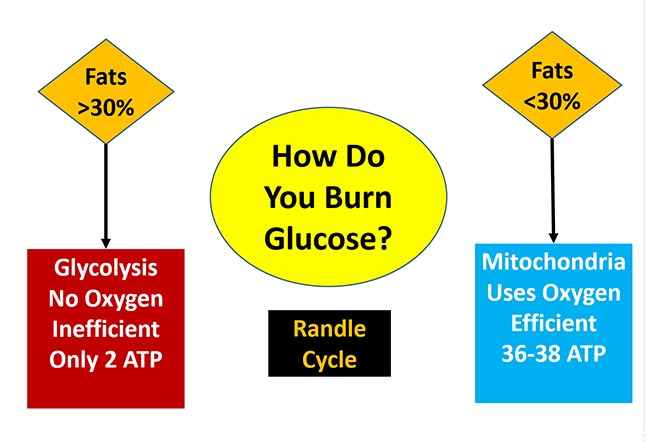
Your mitochondria can only burn one fuel at a time — either fat or glucose. Fats are broken down in a process called beta oxidation into acetyl-CoA, which gets fed into the Krebs cycle. Carbs are broken down to pyruvate, which cannot enter the electron transport chain until it is converted to acetyl-CoA by pyruvate dehydrogenase.
The key here is that there’s a stealth switch that controls which of these fuels your mitochondria will burn. The switch has been given the name the Randle Cycle, but it is more helpful to visualize it as a railroad switch that changes the tracks of the train. The train can only travel down one track: not both. This is because only one type of fuel can be burned at a time.
In a best-case scenario, you will metabolize, or burn, glucose in your mitochondria without any reductive stress. When you do this, you will only generate 0.1% reactive oxygen species (ROS).
Not only does this route generate less ROS, but it also is incredibly efficient at energy production by creating 36 to 38 adenosine triphosphates (ATP) for every molecule of glucose that is metabolized. It will also generate metabolic water and carbon dioxide, which are also important for your health.
For this to occur, as indicated in the figure above, you will need to consume less than 30% of your calories as fat. When you consume significantly more than that amount, the switch changes to burn fat in your mitochondria and you will not be able to burn glucose until your fat decreases to less than 30% of calories.
When your fat intake is higher than 30%, pyruvate is inhibited and unable to readily convert the glucose metabolite, pyruvate, into acetyl-CoA to be shuttled into the mitochondria to burn as fuel.
Consequently, glucose can back up into your bloodstream, raising your blood sugar. What little glucose is burned for fuel is done through glycolysis, which is a primitive pathway that bacteria and cancer cells use, and it generates the powerful metabolic reductant lactate.
This can be a major contributor to diabetes. If you’re exercising, healthy and doing strict keto, overt diabetes is unlikely to develop, but more than likely you will have fasting glucose in the 90s, rather than the more optimal 80s.
Additionally, chronically oxidizing fats as your primary fuel will tend to increase your cortisol level, resulting in chronic inflammation, both of which accelerate the aging process due to excess ROS generated in the mitochondria that occurs from increased reductive stress as a result of oxidizing fat instead of sugar.
It is great that we have this glycolysis pathway, as you absolutely need it for quick fuel when you are activating your Type 2 muscle fibers. But if this is the primary way you burn glucose, you are in a catastrophic metabolic state because you’re creating loads of lactate as a waste product instead of healthy CO2 and metabolic water.
What’s more, you’re only generating two ATP for every molecule of glucose, which is 95% less energy. Lactate increases reductive stress, which causes reverse electron flow in the mitochondria and increases the ROS to 3% to 4%, which is 30 to 40 times more than when glucose is burned efficiently in the mitochondria at 0/1% ROS.
When Adding Carbs, Reduce Your Fat Intake
Ideally, it is best to lower your fat intake and replace those calories with healthy carbs like ripe fruit. You likely won’t optimize your mitochondrial function, though, until your fat level decreases to 30% of your total calories. So, hold off on making a final decision about whether this change is helping you or not until you get your fat level to 30% or lower.
This is easily calculated by using a free online program called Cronometer. If you still struggle with diabetes or obesity, then you may need to get your fat level down to 15% to 20% of your total calories.
Protein Versus Fat and Carb Requirements
Determining the ideal balance between carbs and fats is the primary challenge for most people. The level of protein is a bit simpler. It tends to be about 15% of daily calories and remains stable. A basic guideline for protein intake is somewhere between 0.7 grams and 1 gram per kilogram of lean body mass (not total weight).
The level of dietary fat you need will depend on your endocrine balance. If you’re diabetic, for example, you may need to go below 20% to avoid shutting down your glucose metabolism. Dinkov comments:
“If you look at older people, and sick people as well, they have metabolic inflexibility. So, if you give them a meal that’s comprised of equal number of calories of carbs and fats, they’re going to oxidize mostly the fats and the carbohydrates will go unmetabolized.
So, they’ll raise their blood glucose and lactate. So, you need to play with the ratio, but I’ve noticed that between 15% and 20% is probably where most people in their current health state can metabolize the fat without causing problems through the Randle Cycle.
Most diabetics are overweight … which means they have plenty of supply of fat. In fact, they have two sources of fat: one through the diet, and the second one from their fatty tissue, because there’s always some lipolysis going on, which means shredding the fatty tissue and supplying the rest of the body with the fatty acids from a fatty tissue …
In the rested state, your muscles actually prefer to oxidize mostly fat. So, if you have a decent amount of muscle mass, you can actually burn most of this fat through the baseline lipolysis by simply resting and preferably raising the amount of lean muscle mass you have. The ratio of lean muscle mass to total body weight is the primary determinant of your basal metabolic rate. So it’s very important to not lose lean muscle mass …
So, for diabetic people, it’s probably a good idea to lower the intake of fat from the diet because they already have a lot coming from their own bodies. In fact, there are many clinics around the world that treat and even cure Type 2 diabetes by putting diabetics on this really restrictive diet until they lose most of their fat and then suddenly the metabolism of glucose gets restarted.
I think this directly shows you that it wasn’t the glucose that was fattening them up and causing the problems, rather they had too much fat in their bodies. Once you get rid of that fat, no matter how you do it … the problems with metabolizing glucose disappear.”
Signs of Excessive Fat/Insufficient Carb Intake
As explained by Dinkov, one of the reasons why obese people who lose a lot of weight end up gaining it all back, even when they continue to diet and exercise, is because most of the weight lost is actually muscle mass. When you lose muscle, your basal metabolic rate decreases, meaning you need fewer calories to maintain your weight.
As a result, you must stay on an extremely low-calorie diet to maintain your weight. So, again, it’s crucial to maintain muscle mass, because your muscles will burn fat even when you’re resting. During activity, especially strenuous activity, your muscles will burn mostly glucose.
“I think the best way to gauge if you are eating too much fat is cognitive function,” Dinkov says. “If you’re eating too much fat, to the point where you’re interfering with glucose metabolism, you’ll start getting brain fog. Your thinking process will slow. You’ll start searching for words. Your reaction time and coordination time will decrease.
Sleep quality is another. Also, exercise capacity. If you’re always catching your breath and you’re feeling fatigued all the time, that is actually a great sign/symptom of elevated lactate. In fact, many different interventions that lower lactate are used as performance improving substances, such as vitamin B1 and niacinamide …
I would say eat the more fat-heavy meals earlier in the day, for breakfast and maybe lunch, and then eat the more carb-heavy meals at night, because your brain and many of the other organs will really need that.
It’s very common that if you don’t consume sufficient amount of carbs before going to bed, you will have trouble sleeping … I think one of the reasons for this is that, if you don’t consume sufficient amount of glucose, you will raise cortisol at night, and cortisol is already higher at night than it should be.
The cortisol is lowest at around 3 or 4 p.m. and starts rising with the coming darkness. Cortisol is highest at around 6 to 8 a.m. in the morning. But if you don’t consume a sufficient amount of carbs, that cortisol will be up to 40% higher.”
Clean Carbs
Of course, when we say “eat more carbs,” we don’t mean pizza and doughnuts or even ostensibly healthy grains like whole wheat. Healthy or “clean” carbs include foods like ripe fruit, raw honey and maple syrup. Tropical fruits such as papaya, watermelon, oranges and tangerines are preferable, as in addition to higher levels of fructose, they also contain flavonoids that help to digest the sugars. Ripe melon, apples, peaches, plums, pears and grapes are also good.
Now, you’ve probably heard me say that you shouldn’t eat anything at least three or four hours before bedtime to optimize autophagy. Dinkov’s research, however, dispels some of the concerns about eating (clean) carbs before bed.
“You do not want to mess with autophagy too much,” Dinkov says. “It has a lot of beneficial effects in terms of getting rid of dead or metabolically deranged tissue. However, if you do have an already present tumor, autophagy and AMPK can actually drastically increase its aggressiveness and promote metastasis.
But let’s say you do want to increase autophagy. I think it’s a bit of a myth that eating will somehow suppress autophagy and put it at a suboptimal level. Several studies demonstrate that several of the carbohydrates — including fructose and sucrose — are autophagy enhancers.
I would say, [eat healthy carbs] an hour before bed, because if you eat a meal that’s too high in carbohydrates, there’s the infamous fructose malabsorption. There’s only a certain amount of carbohydrates that your gastrointestinal tract can absorb per unit of time.
So, you need about an hour or two before the meal, if it’s composed of simple carbohydrates, to get these things into your bloodstream. At that point, you’ll probably be very relaxed and naturally inclined to fall asleep.”
That fructose and sucrose enhance autophagy is probably news to most of you. It was to me. I personally eat a teaspoon of honey before I go to bed, which seems to be enough carbs to thwart an increase in cortisol and helps me get more deep sleep. So, to summarize, Dinkov suggests eating a small amount of healthy carbs, such as fruit, about an hour or two before bed to optimize sleep and, potentially, autophagy as well.
Serotonin Is Not Your Friend
Fruits to be consumed in small amounts include pineapple and bananas, as both contain serotonin. Bananas also contain tryptophan, which is used in the synthesis of serotonin.
While most people think of serotonin as a mood-booster, it’s actually one of your worst enemies. You do not want high levels of serotonin, because it’s an antimetabolite. This means it suppresses your body’s ability to create energy in your mitochondria in the electron transport chain, so you become tired and fatigued, your metabolic rate slows and you gain weight.
“The amount of serotonin we need is really, really low,” Dinkov says. “The biggest role of serotonin is gastrointestinal motility. Any increase, even minor increase of serotonin, has been known since the 1920s to rapidly lead to fibrosis. The most successful antifibrotic drugs on the market currently are serotonin blockers.”
More Information
For more details on the topics summarized here, be sure to listen to the entire interview, and keep your eyes peeled for Part 2, which will follow shortly. Also check out Georgi’s blog at www.haidut.me or follow him on Twitter. He also has hundreds of videos on YouTube on a plethora of topics. A major sampling of Ray Peat’s work is also available for free on these two sites: wiki.chadnet.org/Ray-Peat and RayPeat.com.
What You Need to Know About Estrogen and Serotonin
Reproduced from original article:
https://articles.mercola.com/sites/articles/archive/2023/10/22/estrogen-and-serotonin.aspx
The original Mercola article may not remain on the original site, but I will endeavor to keep it on this site as long as I deem it to be appropriate.
Analysis by Dr. Joseph Mercola October 22, 2023
STORY AT-A-GLANCE
- Estrogen is an obesity promoter and well-established human carcinogen
- The Women’s Health Initiative studies, which began in 1991, showed estrogen replacement therapy in menopausal women significantly increased the risk of heart attacks, strokes, dementia, Parkinson’s disease and cancer, not just in the breast but all female reproductive organs
- The biochemical role of estrogen is to aid in wound healing. In cases of tissue trauma, estrogen reverts the differentiated cells in that specific tissue back to a stem cell-like condition, to repair the damaged tissue. In young, healthy women, progesterone will turn off estrogen’s activity. Progesterone declines with ages, but estrogen synthesis typically does not. Hence, if your estrogen is high and progesterone low, your cancer risk will rise
- Estrogen is antimetabolic and radically reduces the ability of your mitochondria to create cellular energy in a form of ATP
- Elevated serotonin destroys empathy, love and wisdom, and contributes to fibrosis, impaired thyroid function, reduced metabolism and reductive stress. High serotonin is also responsible for bizarre, recurring nightmares and may play a role in PTSD as well
In this interview, Bulgarian bioenergetic researcher Georgi Dinkov discusses the downsides of estrogen and serotonin, both of which are generally considered beneficial for physical and mental health.
The drug industry is making a mint on the idea that depression is caused by low serotonin, for example. However, a closer look reveals both estrogen and serotonin can cause severe problems and you do not want high levels of either of them.
Estrogen Is an Obesity Promoter and Known Human Carcinogen
The original name for estrogen was adipin, so called because it was known to make you fat, as in adipose (fat) tissue. In the mid-‘50s, when the drug industry started pushing synthetic estrogens, this knowledge faded from memory. One of the most infamous early synthetic estrogens prescribed was diethylstilbestrol (DES), which caused fetal malformations and deaths, and cancers in the mothers who took it.
DES was eventually withdrawn and banned for use in humans. DES is not estrogen. It’s an estrogenic chemical, and it does activate estrogen receptors, but potentially more potently than estrogen does, and it has no other mechanisms of action except through its estrogenic effects.
This gives us a strong signal that estrogen excess is of serious concern. That estrogen can cause cancer is well-established. In December 2002, the National Institutes of Health added steroidal estrogens used in estrogen replacement therapy and oral contraceptives to its list of KNOWN human carcinogens.1
“Even mainstream doctors will admit that there is this thing called estrogen receptor-positive breast cancer,” Georgi says. “The role of estrogen there is well known. Nobody’s denying it, but the story has always been, it’s a localized-only effect. It’s a tissue-specific effect.
If you look at the estrogen levels of menopausal women … it’s undetectable. However, if you take a tissue biopsy from the tumor or the breast tissue around it, you’ll see that estrogen levels are sky-high there.
Begrudgingly, medicine said, ‘OK, yes, estrogen is involved as a causal agent in estrogen receptor-positive breast cancer. However, this effect is specific only to the breast. Elsewhere, estrogen is really beneficial, and that’s the reason why we’re seeing ovarian uterine atrophy, vulva atrophy and all these menopausal women need more estrogen.’”
However, the Women’s Health Initiative (WHI) studies, which began in 1991,2 showed estrogen replacement therapy in menopausal women significantly increased the risk of heart attacks, strokes, dementia, Parkinson’s disease and cancer, not just in the breast but all female reproductive organs. In the interview, Georgi also reviews evidence showing that estrogen can play a role in all types of cancer, not just reproductive ones.
Estrogen Therapy Has Seen a Revival, With Dire Consequences
The publication of the WHI results led to a significant decline in estrogen replacement therapy, starting in the late 1990s, early 2000s, until about 2015, when studies refuting those earlier results started coming out. Scientists argued estrogen could be safely used if dosed and timed better. Cancer rates don’t bear that out though.
“If you look at cancer rates, not just for breast cancer but for all of the female reproductive organs, you’ll see there was a drop in deaths from these cancers over the last 20 years, and then that rate started going up, and not just up, but exponentially up over the last five or six years,” Georgi says.
“This coincides perfectly with the gap, which is about 15 years of not using estrogen on a mass scale, and then … reintroducing it back into the treatment protocols. Both the rates of the cancers and the deaths from these cancers plummeted over this 15-year period, and now it’s back, and actually exceeds what it used to be.”
Download this Article Before it Disappears
Estrogen Myths
According to Georgi, the biochemical role of estrogen is to aid in wound healing. In cases of tissue trauma, estrogen reverts the differentiated cells in that specific tissue back to a stem cell-like condition, to repair the damaged tissue.
In young, healthy women, progesterone will tend to antagonize estrogen’s activity. In men, that pro-differentiation factor is androgens. Both pro-differentiation factors (progesterone and androgens) decline with age. However, estrogen synthesis typically does not.
“That’s another big myth that we need to address,” Georgi says. “Talk to any doctor and they’ll tell you, ‘Menopause is a condition of severe progesterone and estrogen deficiency. We’ve done countless tests of the blood and we’ve seen that estrogen levels and progesterone levels are undetectable.’
That’s expected because most of the estradiol — which is the main estrogen both for males or females — and progesterone are of ovarian origin in females. In other words, if the ovaries atrophy, yes, you will expect to see declining levels of the steroids in the blood because the ovaries are not working so well. In fact, eventually they fail.
However, another thing that’s probably not well known, even among doctors, is that every cell in the body expresses the enzyme aromatase and contains the machinery to synthesize its own estrogen from circulating precursors. And those circulated precursors are always there, usually cholesterol which, by the way, rises with age.
So that would imply that if we test tissues, even in menopausal women, we should see increase in estrogen — especially in women that are having problems with their health — versus decrease, which is what’s seen in the blood. And every test I’ve seen on biopsies done confirms that.
In 2022, a Chinese group published a very large study with Chinese women where they measured the levels of more than 20 different hormones in hair … which is kind of like a surrogate for what’s going on in the tissues because hair grows out of cells called follicular cells.
Basically, the levels of steroids in these cells are probably representative of what gets deposited into a hair. If you look at the estrogen levels of these women, which span all age groups, estrogen levels not only did not decline with age, they actually slightly increased …
Progesterone did decline, almost to undetectable levels. Thyroid hormone, the active portion, T3, also declined. Reverse T3 increased, and there was an inverse correlation between body mass index (BMI) and the levels of either T3 and progesterone, and a positive correlation between BMI and the levels of estrogen.
So, to me, that gives you very strong evidence that estrogen is really not what we’re being told it is, in the sense that you can freely administer it and will restore youthfulness in menopausal women.”
Estrogen Summary
So, to summarize, low estrogen levels in your blood is not an indictment of estrogen deficiency. This is because most cells can synthesize estrogen from common precursors that are widely available in your body, including cholesterol.
The problem is that the estrogen that these cells produce doesn’t equilibrate with the blood, but stays within these cells and gives a false impression of estrogen deficiency. And, while estrogen is an essential component in tissue repair, that growth and repair process needs to be turned off when the job is completed, and if it isn’t, the risk of cancer rises dramatically.
The problem is that progesterone and androgens — the off-switches for estrogen in women and men respectively — do decline with age, because cells do not have a comparable enzyme like aromatase, to synthesize them. Their synthesis is restricted to gonadal tissues. This leads to elevated estrogen levels and decreased progesterone and testosterone, which typically results in unregulated cell growth, the essence of cancer.
Making matters worse, estrogen is antimetabolic and radically reduces the ability of your mitochondria to create cellular energy in a form of ATP by depending on aerobic glycolysis (the Warburg effect) which radically impairs oxidative phosphorylation. This further contributes to its carcinogenic effect. Georgi explains:
“When you have to repair tissue, you can forego, for a little bit, the oxidative phosphorylation, but it always needs to come back, because that is the differentiating factor. Stem cells stay in ‘cancer metabolism’ because … it’s the way cells have to be in order to divide at the maximum rate possible with the minimum consumption of resources possible.
But if you want this tissue to become an organ instead of a blob of cells that consumes all your energy, you need to turn off that estrogen signal, and either high metabolism and/or progesterone, and/or thyroid [hormone], both of which also prometabolic, are known as the main differentiating factors in humans.”
The Many Health Benefits of Progesterone
As explained by Georgi, progesterone is the main endogenous and most direct and potent glucocorticoid receptor antagonist. This is a profound important point that I was unaware of until Georgi mentioned it. As such, it’s also a cortisol blocker, with a similar activity as the anticancer drug and cortisol blocker RU-486, which is now virtually impossible to get.
The primary difference between them is that RU-486 also blocks progesterone, so when you take it you have to be very careful about supplementing. Taking progesterone bypasses this issue, and Georgi believes it has about the same effectiveness as mifepristone (RU-486).
Georgi goes into great detail about RU-486. As I said, it’s virtually impossible to get a hold of this compound outside the mifepristone these days, which is why I won’t expound on it here, but if you want to learn more about it, listen to the interview.
Progesterone is also a GABA agonist and could be useful to take concomitant with a GABA supplement. You may even be able to use much lower doses of both if you combine them together. This affinity for GABA accounts for some of progesterone’s psychological benefits. Georgi explains:
“The strongest GABA agonist in the body, slightly stronger than progesterone, is a progesterone derivative, a metabolite, known as allopregnanolone. It was recently approved by the FDA for postpartum depression.3
A company is developing an oral formulation with the long-chain fatty acids called LYT-300, and now they’re applying to the FDA for clinical trials for post-traumatic stress disorder, psychosis, sleep disturbances, anxiety — all of these things GABA is known to relieve.
They’re saying, ‘Oh, we have the most potent endogenous GABA agonist here, allopregnanolone, for all these conditions.’ But we can say, ‘Well, you don’t have to get allopregnanolone by prescription. You can do it with progesterone, maybe a slightly higher dosage, but still in the same ballpark.”
As mentioned, progesterone also inhibits cortisol, and cortisol has been well-documented to play a major role in depression.
On a side note, GABA and allopregnanolone also appear to have anticancer activity. According to Georgi, GABA is known to improve mitochondrial energy production and inhibit excessive glycolysis. Excessive glycolysis and impaired mitochondrial function just happen to be the classic hallmarks of cancer. In older studies, injecting GABA directly into tumors was found to trigger complete regression in a matter of days.
Progesterone Dosing
In my view, what mature women really need are progesterone and pregnenolone, not estrogen. So, in practical terms, you’ll want to make sure your levels of progesterone and pregnenolone are within healthy limits, which are the levels you’d have in your 20s.
According to Georgi, “a physiological dose for a young healthy child before they actually reach puberty is about 30 milligrams of progesterone daily … so, 30 milligrams seems to be a decent dosage prophylactically.”
How to Optimize Progesterone Absorption
To maintain an optimal progesterone level, you can either take preformed progesterone or its precursor, pregnenolone. If you’re taking oral progesterone, be sure to take it with a small amount of saturated or monounsaturated fat — something with a carbon chain above 14, to optimize absorption. Butter is an ideal choice.
“If you don’t avoid the first-pass metabolism, you’re going to waste about 85% of the progesterone taken,” Georgi says.
But the key, and what I had misunderstood from my previous conversations with Georgi, is that the pregnenolone or DHEA, can’t be merely taken at the same meal with butter. It needs to be taken out of the pill and mixed well into the butter.
You don’t need much butter (or ghee), just about one-fourth of a teaspoon. You can mix it with a toothpick or similar small tool and put on your food and you are off to the races avoiding the 85% destruction that typically occurs when you swallow the capsule without this trick.
Progesterone has potent sedative effects, so if you’re getting to a point where you’re getting disoriented, or your thinking or speech slows or you’re getting sleepy, you’ll probably know that your dose was too high and have taken too much. You can take advantage of its GABA agonist effect by taking it 30 to 60 minutes before bedtime.
“A hefty dose of progesterone causes symptoms indistinguishable from being drunk,” Georgi says, “so don’t operate machinery when you’re taking a lot of progesterone.” Of course, if you have trouble sleeping, then taking the progesterone in the evening can be helpful.
One commercial product that Georgi and I discussed was Progest-E which the late biologist and thyroid expert Ray Peat developed, and contains progesterone mixed with vitamin E. Since our interview, however, I did some research and now would strongly recommend avoiding Progest-E.
Why? For two reasons. One, it is put into a cheap plastic squeeze bottle. I’m not sure why Peat did not realize that flexible plastic is loaded with plasticizers like BPA and phthalates and are strong estrogen mimics.
But, the more important reason is that it is virtually impossible to squeeze out a precise dose of “one drop” from the bottle. My experience suggests that one drop could be a small fraction of a drop or five or even more drops. So, this product needs to be avoided.
Fortunately, there is a far better one available called Simply Progesterone that you can get at Health Natura.4 It has the same progesterone concentration of 3 mg/drop as the Progest-E. The products comes in a glass bottle with a real glass dropper that you can easily and accurately measure. This product is a winner and the one that I use.
DHEA Dosing and Considerations
For optimal health, you also want to keep an eye on your cortisol-to-DHEA ratio.
“The cortisol-to-DHEA ratio — whether in blood, tissue, hair or nails — has now been established as the single most reliable predictor of all-cause mortality and morbidity throughout the entire lifespan,” Georgi says.
“That ratio should be less than 0.3. In other words, heavily in favor of DHEA. Anything over 0.5 is known to start causing mood disturbances [like] depression. Anything over 1, you’re probably at risk of diabetes or cardiovascular disease, or worse.”
That said, DHEA is a precursor to estrogens, so you don’t want excessive amounts of DHEA. For most people, 10 mg to 12 mg of DHEA is more than adequate. That’s how much you produce in your mid-20s.
It would be highly unwise to simply swallow DHEA, as 85% will be broken down by your liver and we have no idea how harmful the liver metabolites are. You can use the same butter trick described above for pregnenolone, to avoid this. But it would also be wise to not take doses over 10 mg without professional supervision. You do not want to increase your estrogen and prolactin levels.
You must be careful, though, as taking DHEA can easily be converted to estrogen by aromatase and subsequently increase prolactin levels. It you are going to take DHEA it would be best to take it with progesterone as that will inhibit DHEA’s conversion into estrogen since progesterone is a potent aromatase inhibitor.
“As far as dosages [are concerned] … if you’re still producing DHEA, which you can verify on blood tests, you can calculate the delta between what the optimal interval was when you were young [and what it is now].
Let’s say the optimal level was 500, and now you are in your 60s. The [lab] range says you’re fine, but your level is 200. The delta is about 60%, so you need to take 60% of that daily [amount] that you used to produce when you were in your 20s.
Sixty percent of 12 mg is what you really need to be taking in order to restore the level to the youthful level without running into the risk of raising estrogen too much. And if you combine it with progesterone, you should be getting an even stronger anti-cortisol effect while further preventing the conversion of DHEA into estrogen.”
Pregnenolone Benefits and Dosing Suggestions
Pregnenolone, which your body makes from cholesterol, converts first to progesterone and then to allopregnanolone. Pregnenolone is also converted to DHEA, which is a precursor for estrogens and androgens.
“Pregnenolone is really unique in the sense that if you have an excess of a specific steroid, it will likely lower it,” Georgi says, “and if you have a deficiency of a specific steroid, it will probably raise it.
About 100 mg is probably enough because, being the top level hormone, it’s going to convert downstream into whatever you need … I know of a study with schizophrenia where 50 mg decreased significantly both the symptoms of schizophrenia and bipolar disorder.”
While most people opt for oral pregnenolone, I prefer rectal suppositories. I make my own by mixing the pregnenolone with cacao butter, a very long chain fat that facilitates absorption. For most people, 100 mg is sufficient. If you opt for oral pregnenolone, mix it into half a teaspoon of butter to make an emulsion.
Low Serotonin Is Not the Cause of Depression
Next, we discuss serotonin, which used to be called enteramine because it’s produced in the gut. Enteric refers to things related to your intestines. Serotonin has been incorrectly dubbed the “happy hormone.” It’s not.
Selective serotonin reuptake inhibitors (SSRIs) are a class of antidepressants that raise your serotonin levels, but contrary to popular belief, this can cause significant problems. The easiest solution for depression, anxiety and insomnia is GABA, with or without progesterone.
“Even 100 mg of oral GABA was enough to lower the assessment scores of patients with anxiety and depression disorders. The Beck’s Depression Inventory is for depression, and there’s another one for anxiety. Just 100 mg of GABA was sufficient to lower significantly in the score on both scales.
Combining it with another GABA agonist amino acid known as L-theanine, which is founding in tea, drastically increased the effects. And L-theanine lowers the levels of serotonin in the brain. It’s perhaps the most direct evidence that serotonin in the brain is not good at elevated levels.
So for people who are on antidepressants, one of the first things that I would do is go to a doctor and ask about two drugs that are approved for treating depression but are antiserotonergic. One is called mepirzapine, also known as mirtazapine.
If you look at the structure, it’s very similar to a drug called cyproheptadine, which is a known selective serotonin antagonist. Mepirzapine or mirtazapine is approved for treating patients in the United States.
If you want to get your psychiatrist angry, please ask him or her to explain how an antiserotonin drug is approved for depression, considering that all the other proserotonin drugs are also approved for depression. Something doesn’t add up there.”
Cyproheptadine also acts as a sleeping pill, so if you do not have insomnia, don’t go over 2.5 mg. Cut it in half or even a quarter. It’s also a potent histamine blocker and can be used for acute allergic reactions. It is a prescription and think it would be wise to have it on hand, but Benadryl could also be used.
It also might have benefit for those who are on SSRIs, sleeping pills or anti-anxiety agents. However, I think high dose GABA therapy is likely a far better, safer, and less expensive approach. Georgi and I discuss this in the podcast.
Just be careful about combination products as they may contain magnesium. While magnesium is very helpful if you push the GABA to high doses you will get far too much magnesium and it will have a laxative effect.
The other drug Georgi recommends is tianeptine, which is a selective serotonin reuptake enhancer (SSRE), basically the converse of an SSRI, and it too is a potent antidepressant.
If you don’t want to go the pharmaceutical route, you can use GABA, at a dose of 500 mg to 2,000 mg (2 grams) daily. This range has been shown to relieve anxiety and insomnia in people who are already taking SSRI drugs, Georgi notes, adding, “I’ve seen people in very severe cases of anxiety and depression plateau it about 3 to 4 grams. After that … the mental effects usually plateau.”
Interestingly, if you take too much GABA, some of it will get deaminated and convert into succinic acid, an intermediate of the Krebs cycle. As such, GABA also helps boost mitochondrial function at high doses. So from a toxicity perspective it appears to be very safe.
Elevated Serotonin Has Devastating Psychological Effects
Ironically, while many doctors blame insomnia on depression caused by low serotonin, it may actually be the other way around. Georgi explains:
“Every single antiserotonin drug ever tested … has demonstrated both antidepressant and prosomnic, basically anti-insomnic, effects in animal studies and some human studies as well. So, serotonin is known to actually cause insomnia. How?
If serotonin is a precursor to melatonin, how can it actually cause problems with the sleep? It’s because serotonin is the most potent activator in the body of the release of cortisol through ACTH. In fact, the first antidepressant drug, Prozac, is a partial serotonin antagonist. It specifically blocks the serotonin receptor responsible for the release of cortisol, serotonin receptor 2C5-HT2C.
Prozac is a potent inhibitor of that receptor while maintaining the rest of its serotonergic effects. So, it’s the perfect coverup, right? You can claim that serotonin is great for your depression, while in reality you’re giving a drug that’s blocking the effects of serotonin and lowering cortisol, but that’s unknown to most people, even doctors that I’ve discussed it with.
Another side effect of GABA is that GABA increases the degradation rate of serotonin even when it’s taken orally. So you cannot have high levels of both. So people that are high in GABA are usually low in serotonin. They’re very calm, they’re very gregarious.
Serotonin is not a happiness hormone. Multiple studies, even a court case recently agreed that serotonin actually destroys empathy, love and wisdom. Those are specific quotes from the court study. Another animal study found that crabs exposed to very low levels of SSRIs because of sewage being dumped into the ocean … turn extremely violent, homicidal and cannibalistic.
They turn on each other. There’s nothing else that can explain this behavior except for the SSRI drugs. So really that’s what serotonin does. It’s also a metabolic inhibitor … The primary role of serotonin is metabolic, and the evolutionary role of serotonin is probably for numbing pain when you’re under stress.
It turns off your pain reaction, even your grief reaction, but at the expense of turning off all the other emotions as well. Multiple studies have demonstrated that serotonin is basically a lobotomizing chemical when it comes to emotions. Sure, it’ll numb your depression, but it will also numb everything else too. You’ll be walking around like a zombie.”
Other Adverse Effects of Serotonin
High serotonin can also cause serotonin syndrome and contribute to fibrosis (including cardiac and pulmonary fibrosis), impaired thyroid function, reduced metabolism due to excessive glycolysis and high lactic acid production, and reductive stress. High serotonin is also responsible for bizarre, recurring nightmares and may play a role in PTSD as well.
Serotonin also inhibits pyruvate dehydrogenase, cytochrome c oxidase and Complex 2 of the electron transport chain (succinic acid dehydrogenase, which also participates in the Krebs cycle).
“The evolutionary reason is probably that in times of stress and injury, these things rise in order to help you repair. But it should be acute only,” Georgi says.
“These days we have them chronically elevated, and that’s a signal to the body that things are chronically bad, and it will dispose of any known essential function that it thinks it can in order to conserve energy, which means your high metabolism (which means you’re gaining weight), your good mood (which means you’re going to be depressed).
Then eventually, if things go down that route, the body will start turning off ‘nonessential’ organs by turning them into fibrotic clumps so that they don’t have to waste energy on repairing them. That’s how you get fibrosis. Ultimately, the end stage of fibrosis is cancer, unless you die from the organ failure before that.”
In closing, the take-home from all of this is that you really want to minimize estrogen and keep your serotonin level as low as possible, and increasing progesterone, pregnenolone and GABA will help lower both and appear to be useful, inexpensive, nonprescription modalities if you use them correctly. For even more details, be sure to listen to the interview in its entirety.