Autism
now browsing by category
Nearly 1 in 3 Children Now Faces Chronic Health Conditions
Reproduced from original article:
https://articles.mercola.com/sites/articles/archive/2026/11/12/one-in-three-children-chronic-health-conditions.aspx
Analysis by Dr. Joseph Mercola November 12, 2026

Story at-a-glance
- Nearly 1 in 3 children in the United States now live with a chronic health condition or functional limitation, and many of these conditions follow them into adulthood
- Asthma, ADHD, autism, and prediabetes have risen steadily over the past two decades, which can make it harder for children to succeed in school and life
- Children from low-income families face a higher risk, with poverty, public insurance, and parental unemployment all linked to a higher prevalence of chronic health problems
- Environmental toxins, poor diet, and stress are thought to be important contributors to these conditions
- Early detection and prevention through clean eating, better sleep, sunlight, and stress management may help protect your child’s future
Researchers have documented a dramatic rise in pediatric-onset chronic conditions over the last two decades. The most common examples include asthma, attention-deficit hyperactivity disorder (ADHD), and prediabetes — which can progress to full diabetes over time, raising the risk of heart disease, nerve damage, and kidney failure. In the United States, nearly 1 in 3 children are living with a chronic condition or functional limitation.
If you think this issue only impacts their childhood, think again. Many children do not outgrow these health challenges, but instead carry them into adulthood.
Chronic Health Conditions in Kids Are Rising Faster Than You Think
A study — a secondary analysis of nationally representative survey data — published in Academic Pediatrics examined how chronic health conditions in children and young adults have changed in the United States from 1999 to 2018. Conducted by researchers from University of California, Los Angeles’ (UCLA) David Geffen School of Medicine and Harvard Medical School, the study focused on conditions that begin in childhood and continue into adulthood.
Their goal was to show how big the problem has become, which conditions are rising the fastest, and how these health burdens affect both children and society at large.1
• Researchers studied a large, diverse group across the country — The study included a nationally representative sample of 236,412 individuals between ages 5 and 25. The data was from the 1999 to 2018 National Health Interview Survey (NHIS).
According to News-Medical.Net, the researchers “estimated the annual average increase in chronic conditions (CC) and functional limitations (FL) over time.” Because these conditions were self-reported by participants or a caregiver, the estimates are subject to recall bias — a limitation that the researchers acknowledged.2
• Nearly 1 in 3 children had a chronic condition or functional limitation by 2018 — The researchers found that the frequency of chronic conditions or functional limitations among children ages 5 to 17 years increased from about 23% in 1999/2000 to over 30% by 2017/2018. Even more concerning, the study estimated that 1.2 million young people with chronic conditions or functional limitations are now entering adulthood each year, carrying these challenges into college, work, and adult life.
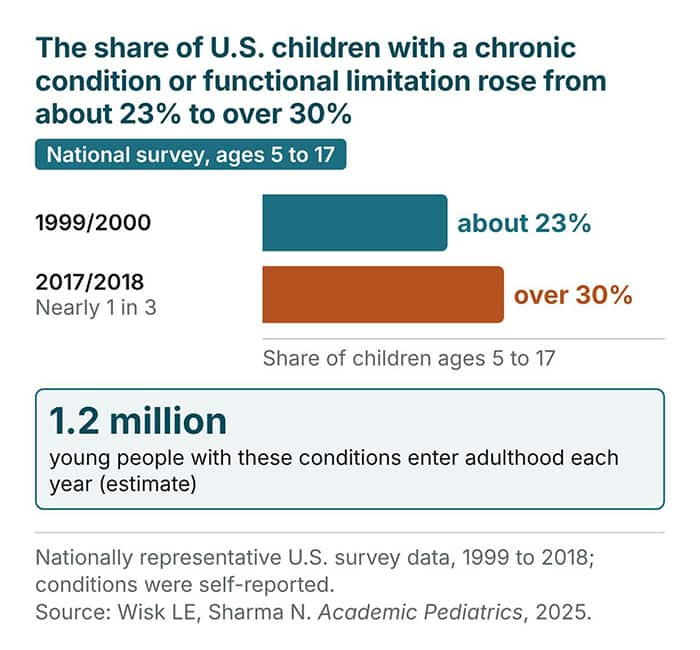
Figure 1. The share of U.S. children ages 5 to 17 with a chronic condition or functional limitation rose from about 23% in 1999/2000 to over 30% by 2017/2018.
• Asthma, ADHD, autism, and prediabetes are leading the increase — Asthma, ADHD (attention-deficit hyperactivity disorder), autism, and prediabetes are the top drivers of this growing problem. Specifically, ADHD, autism, and asthma among children, and asthma, seizures, and prediabetes among young adults. These conditions can interfere with learning, playing, and building relationships.
• The numbers show steady and consistent growth — According to their findings, ADHD rates among children jumped by 0.24 percentage points per year, while autism diagnoses went up by 0.13 percentage points annually. Asthma cases climbed by 0.12 percentage points per year, and prediabetes in young adults rose by 0.12 percentage points annually.
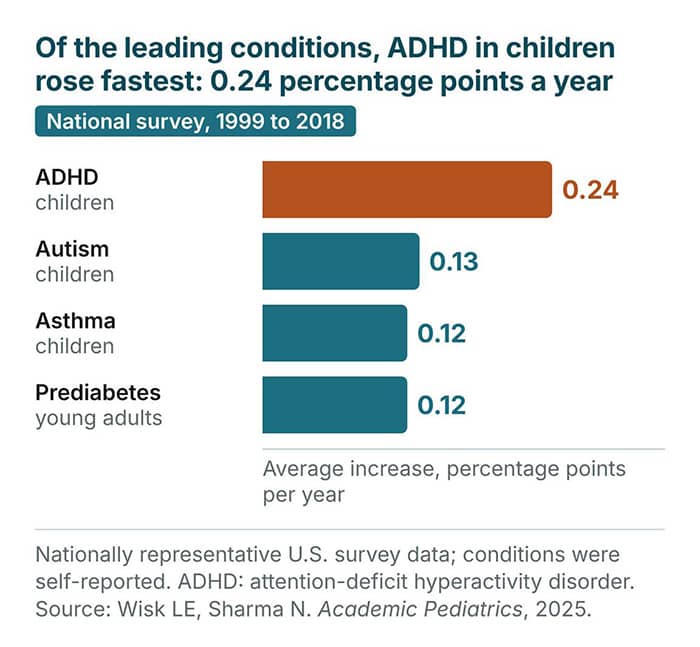
Figure 2. ADHD among children rose by 0.24 percentage points a year, autism by 0.13, and asthma by 0.12. Meanwhile, prediabetes in young adults rose by 0.12.
While these yearly changes seem small, they build up to substantial increases over time. If you have children, this means their schools, sports programs, and healthcare providers are dealing with far more chronic conditions than ever before — and they may not be ready to handle it well.
Low-Income Families Are Being Hit the Hardest
The study found clear inequalities among the children who develop chronic conditions. In particular, less-privileged children are more likely to live with these conditions.3
• Children from families earning below the poverty line are more often affected — These children had a 3.39 percentage point higher adjusted prevalence of chronic conditions or functional limitations than children from the highest-income families. Children on public insurance had an 8.63 percentage point higher prevalence compared to those with private insurance.
• Poverty and lack of stable employment are linked to poorer health outcomes — Children with unemployed parents had a 7.65 percentage point higher rate of chronic conditions. Because this was a cross-sectional analysis, it shows an association rather than proof that financial hardship causes these conditions, but the pattern is consistent across income, insurance, and employment.
If you’re facing financial stress, your children may be at greater risk, not just because of genetics, but possibly also because of barriers to care and nutrition.
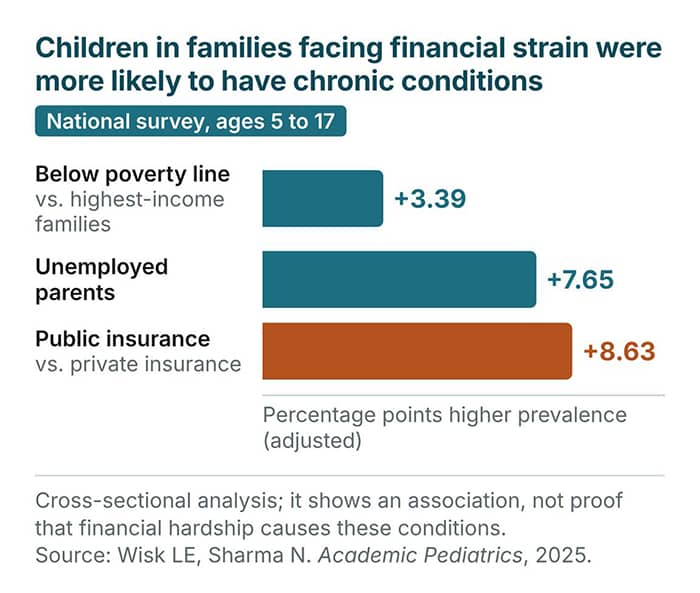
Figure 3. Children below the poverty line, with unemployed parents, or on public insurance, had a higher adjusted prevalence of chronic conditions. Note that this is an association rather than proof of cause.
• These conditions can lead to physical, emotional, and educational limitations — Children who struggle with these conditions may experience functional limitations such as speech problems, musculoskeletal problems, and emotional challenges like anxiety and depression. These issues can make it harder for kids to succeed in school, participate in physical activities, and build friendships.
As children age, these struggles can compound, contributing to lower job prospects and higher healthcare costs. This means parents can watch for early warning signs and work proactively to support their child’s development and mental health.
What Are the Other Contributing Factors to Chronic Conditions in Children?
The authors noted that other factors may be affecting disease rates, such as regional differences. Their findings note that children in the Western U.S. had the lowest rates of chronic conditions or functional limitations, while rates in the Northeast, Midwest, and South were similar to one another. If you’re in a high-risk area, it’s worth taking extra steps to reduce environmental triggers and promote healthy habits.4
• Poor diet, pollution, and stress are thought to be major contributors — While the study didn’t measure diet, pollution, or stress directly, the authors noted that the causes behind these rising conditions are many, involving a complex interaction of individual biology, community context and environment, and healthcare systems. Environmental exposures, chronic stress, and poor diet are widely considered to be part of that picture.
For asthma, pollutants and allergens are common triggers. Prediabetes is closely linked to eating too many processed foods and not getting enough movement, which can lead to insulin resistance — where your body stops responding properly to insulin, making blood sugar levels rise. ADHD and autism likely also have environmental and dietary factors involved.
• Transitions to adult healthcare often fall short — Children and young adults with chronic conditions often lose support when they age out of pediatric care. This makes managing their conditions harder, which can put them at risk of disengaging from care and experiencing flare-ups of their conditions. If you have a teenager with a chronic condition, it would be wise to help them plan and prepare for managing their health as adults.
• Early detection and prevention are key to reducing the burden — The researchers emphasized the importance of primary prevention in pediatric care, noting that many of the rising conditions, such as prediabetes and asthma, may be prevented or managed in primary care. Parents and pediatricians can work together to look for early signs like fatigue, changes in behavior, or physical symptoms like wheezing and weight gain.
Addressing these issues early may help limit long-term effects and support better outcomes. Lauren Wisk, Ph.D., assistant professor of medicine at UCLA, and the study’s lead author, said:
“Most youth with chronic conditions need to access health and social services for the rest of their lives, but our health system is not set up to successfully move young people from pediatric to adult focused care and so many of these youth are at risk of disengaging with care and experiencing disease exacerbations.
We should invest in assisting these youth in engaging appropriately with healthcare across their lifespan in order to protect their health and well-being, and to facilitate their maximum participation in society with respect to education, vocation, social groups, and community spaces.”5
What’s Triggering the Rising Autism and ADHD Rates?
According to Autism Parenting Magazine, about 1 in 36 children are now diagnosed with autism — that’s roughly 317% higher compared to autism rates in 2000.6 As for ADHD, approximately 6% of youth and 2.5% of adults are affected globally. The rise in these disorders is concerning, with evidence pointing to gene-environment interactions as key contributors to their development.7
• The causes of autism are complex — There are both genetic and environmental factors involved. One factor under investigation is parental chemical intolerance, which is often linked to toxicant-induced loss of tolerance (TILT), where exposure to certain chemicals leads to heightened sensitivity.
In a 2024 population-based survey of U.S. adults, parents with chemical intolerance scores in the top 10% were 5.7 times as likely to report having a child with autism, and 2.1 times as likely to report a child with ADHD, as those in the bottom 10%. Note that this is an observational finding that the authors say needs confirmation in controlled studies.
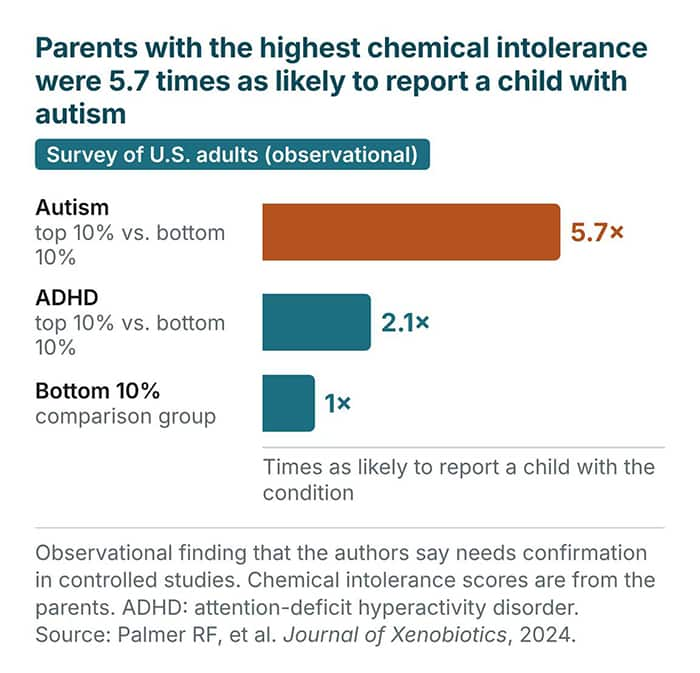
Figure 4. In a survey of U.S. adults, parents with the highest chemical intolerance scores were 5.7 times as likely to report a child with autism, and 2.1 times as likely to report a child with ADHD.
• Pesticides, heavy metals, and other toxic chemicals have been linked to autism and ADHD — According to a 2022 perspective article published in Pediatrics journal, which notes that several studies point in this direction:
“[G]estational exposures to some neurotoxic and endocrine-disrupting pesticides, including organochlorines, organophosphates, and pyrethroids, increase the chances of an autism diagnosis or autism-related behaviors in children.
Evidence is emerging that other toxic chemicals are associated with autism or autism-related behaviors, notably phthalates, ubiquitous chemicals that cause a decrease in testosterone.”8
• Poor gut health in early life is also another factor under study — Researchers propose that this may disrupt brain development through the gut-brain axis. According to a prospective birth-cohort study of Swedish children published in the journal Cell, children later diagnosed with autism or ADHD tended to have lower levels of key gut bacteria in infancy, such as Akkermansia muciniphila, Bifidobacterium, and Faecalibacterium.
These beneficial microbes are thought to play important roles in regulating inflammation and producing compounds, including neurotransmitter precursors, that support mood and brain function.9
• Electromagnetic fields (EMFs) are another growing concern — EMFs may activate voltage-gated calcium channels (VGCCs), which has been proposed to lead to oxidative stress, mitochondrial dysfunction, and inflammation in the brain.
These effects may interfere with brain development, particularly in pregnant women and young children, whose developing nervous systems are especially sensitive to environmental stressors. To learn more about this, read “The Invisible Risk Factor of Autism.”
• Nutritional deficiencies often add to these challenges — Diets loaded with processed foods, refined sugars, and inflammatory omega-6 fats like linoleic acid (LA) can deprive the body of nutrients critical for brain health. Poor nutrition not only may impair cognitive function, but may also amplify the impact of other environmental stressors, creating a compounding effect on brain development.
Childhood Obesity Is Now a Widespread Problem
Childhood obesity poses significant health risks, affecting children’s physical and emotional well-being. It is associated with complications like insulin resistance, impaired glucose tolerance, and dyslipidemia. Severe childhood obesity, in particular, is strongly associated with prediabetes, high blood pressure, dyslipidemia, and early mortality.10
• Hundreds of millions of children worldwide are now living with overweight or obesity — According to the World Health Organization (WHO), 400 million children and adolescents ages 5 to 19 were overweight in 2024, including 170 million living with obesity. In the U.S., 1 in 5 children and adolescents are obese.11
Among 2- to 19-year-olds, the prevalence of obesity was 19.7% from 2017 to March 2020, or 14.7 million individuals affected.12 Early obesity is strongly predictive of obesity in later life, with 90% of children who develop obesity at age 3 still having obesity in adolescence.13
• Childhood obesity raises the risk of physical and mental health conditions — These include high blood pressure, Type 2 diabetes, asthma, sleep apnea, joint problems, and gallbladder disease. It also takes a mental toll and is associated with an increased risk of anxiety, depression, low self-esteem, social problems, and lower quality of life.
• Four factors account for a large share of early childhood obesity — A prospective cohort study of 5,734 children in New Zealand found that there are four primary factors that, when combined, account for nearly half (about 43%) of obesity cases in young children by age 4.5. These include lower food security during infancy, early exposure to screens and digital gadgets, not getting adequate sleep, and regular consumption of takeaway (fast) food and soft drinks.14
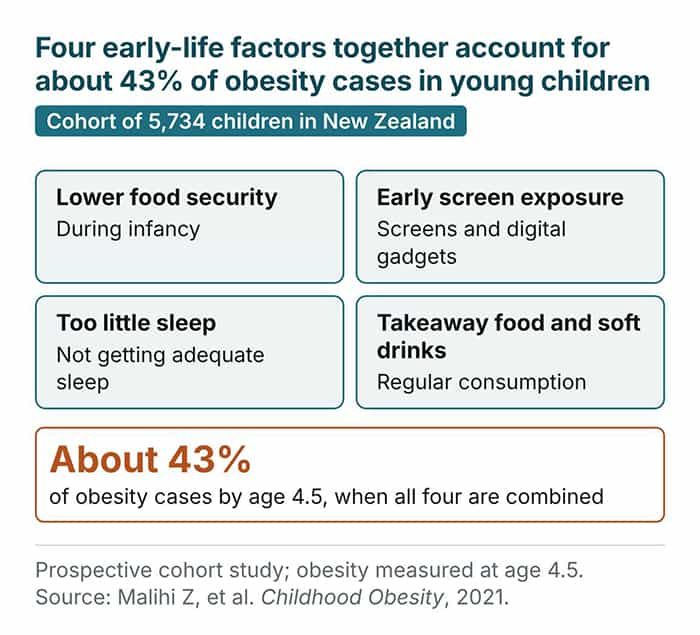
Figure 5. In a New Zealand cohort of 5,734 children, four early-life factors combined accounted for about 43% of obesity cases by age 4.5.
Part of the problem with addressing and resolving childhood obesity is that the nutritional guidance children and their parents get is flawed — the focus is on reducing saturated fats and other whole foods, while promoting industrial seed oils (often marketed as vegetable oils) and heavily processed, low-fat diets. This may contribute to a cascade of health problems rooted in mitochondrial dysfunction and insulin resistance. To learn more about this, read “Toddler Obesity Is on the Rise.”
The Benefits of Breastfeeding Are Being Sidelined in Favor of Infant Formula
Another factor that may play a role in children’s long-term health is how they are fed in infancy. Many parents bottle-feed their babies, which means missing out on the unique benefits of breast milk. Partly as a result of infant formula marketing, our current culture now views breastfeeding as a lifestyle choice rather than a biological norm.
• Societal expectations undermine breastfeeding — In the West, mothers often feel pressured to stop breastfeeding once their child turns 1 year old. It’s often framed as inconvenient or unnecessary to breastfeed a baby once they reach this age. Furthermore, women who extend breastfeeding beyond a year are often seen as “weirdos” or overly attached.
• Breast milk is called “liquid gold” for a reason — Unlike formula, breast milk offers a unique blend of antibodies, immune factors, hormones, and stem cells that are thought to adapt to the needs of the child. It’s dynamic, and research suggests it may adjust its composition in response to cues from the baby’s saliva and feeding frequency.
•Breastfeeding supports your child’s immunity and cognitive health — Breastfed infants tend to have better immune responses, lower risks of respiratory infections, and better cognitive development. Studies suggest that breastfed babies often score higher on IQ tests.15
• It’s also associated with a lower risk of being overweight and obese — A cross-sectional study of more than 10,000 children and adolescents in China found that longer breastfeeding was linked to lower body mass index (BMI). In addition, children breastfed for more than 12 months had a lower risk of overweight and obesity.
The authors suggest one reason is that breastfeeding allows solid foods to be delayed until about 6 months of age, and early introduction of solids has been linked to higher obesity risk.16 Breastfeeding is also thought to help establish a healthy gut microbiome, which supports lifelong health.
• Breastfeeding benefits mothers as well — Research has linked breastfeeding to lower risks of postpartum depression, breast and ovarian cancers, and Type 2 diabetes in mothers, and some studies also link it to fewer osteoporosis-related hip fractures later in life. Breastfeeding is also instrumental in establishing a bond between mother and child.17,18
Breast milk is uniquely suited to an infant’s nutritional needs, so if you are a new mother and still lactating, breastfeeding is an excellent choice for both you and your child and may help lower their risk of chronic health conditions later in life. If breastfeeding isn’t possible for you, talk with a lactation consultant or your child’s healthcare provider about the best alternatives. I also recommend reading “The Power of Breastfeeding” to learn more about the benefits of breastfeeding.
Fostering Healthy Habits Early in Life May Help Lower the Risk of Chronic Conditions
The chronic conditions covered by the featured study have been linked to poor diet, stress, pollution, and lack of access to healthy habits from the start. If you feel overwhelmed, don’t be. There are strategies to help your child avoid becoming part of these statistics. I’ve put together five steps you can use right now to help reduce risk and support their long-term health.
1. Clean up your child’s diet and remove inflammatory foods — Eliminate processed foods, seed oils, and anything made with high amounts of processed sugar. Start cooking simple meals at home with animal-based proteins, grass fed butter, ghee, root vegetables, white rice, and whole fruits. If your child has gut issues or food sensitivities, start with easily digestible carbs like white rice and whole fruits.
Avoid store-bought sauces and packaged snacks that are filled with chemicals and hidden industrial fats. If you are not sure what’s safe, use this rule — If it comes in a box with marketing on the front, don’t buy it.
2. Reduce exposure to environmental toxins — If you live in a polluted city or near industrial areas, filter your indoor air. Avoid synthetic fragrances, candles, and harsh cleaning chemicals. Focus on using simple products — baking soda, vinegar, and natural soap goes a long way. If your child has asthma, this step is especially important — reducing environmental irritants may help ease the burden on their lungs, alongside the care plan from your child’s doctor.
3. Focus on sleep and stress management — Children need structured sleep routines. Aim for 10 to 12 hours of sleep for younger kids and at least nine hours for teenagers. Reduce their screentime — gadgets should be turned off an hour before bed.
If your child struggles with anxiety or behavioral issues, establish calming rituals like reading together, spending time outdoors, and cutting out high-sugar snacks that spike and crash energy levels. I recommend making sleep a family priority — it helps regulate hormones, may help lower cortisol, and gives their bodies time to recover.
4. Prioritize safe movement and sunlight — Allow your child to play and spend time outdoors, especially if they have behavioral or mood issues. Light exposure in the morning can support mood, circadian rhythm, and brain function.
Walking, swimming, and gentle play help regulate energy, build strong muscles, and encourage healthy metabolism. Avoid over-scheduled lives packed with indoor screen time. Simpler routines with daily activity outdoors are a foundation for stable mental and physical health.
5. Watch for early warning signs and act quickly — If you notice weight gain, chronic fatigue, skin rashes, or changes in mood and focus, don’t ignore them. These can be your child’s body’s warning signals. Address them early with your child’s healthcare provider, along with diet changes, reducing toxins in your home environment, and restoring healthy sleep.
If your child has blood sugar issues or you suspect prediabetes, talk to your child’s healthcare provider, cut processed carbs, and introduce balanced meals with protein and clean, easily digested carbs like white rice and whole fruits. Prevention is far easier than reversal, and you have control over these daily choices.
Frequently Asked Questions (FAQs) About Chronic Health Conditions in Children
Q: Why are so many kids developing chronic health conditions?
A: Poor diet, stress, pollution, and lack of movement are thought to contribute to chronic conditions like asthma, ADHD, autism, and prediabetes. Kids today are exposed to processed foods, environmental toxins, and disrupted sleep, all of which may raise their risk early in life.
Q: What are early warning signs to watch for in my child?
A: Look out for weight gain, fatigue, mood changes, skin issues, frequent wheezing, and trouble focusing. These can be signals that your child’s health needs attention, and are worth discussing with your child’s healthcare provider.
Q: How does poverty affect my child’s risk of chronic disease?
A: Children in low-income homes are more likely to live with chronic conditions, and likely contributors include poor nutrition, lack of safe environments, and limited access to healthcare. Stability and clean food can make a meaningful difference.
Q: What are the initial steps I can take to help protect my child’s health?
A: Clean up your child’s diet, reduce environmental toxins, make sleep and stress management a family priority, encourage daily sunlight and movement, and act on early symptoms.
Q: Why does prediabetes matter for kids?
A: Prediabetes can progress to full diabetes if it isn’t addressed, which can put your child at risk for heart disease, nerve damage, and kidney failure. Nutritionally balanced, unprocessed meals, eliminating processed sugars, and active play are key tools that may help lower that risk.
This article is for informational purposes only and does not constitute medical advice. Consult a qualified healthcare provider before making changes to your health regimen.
- 1, 3, 4 Academic Pediatrics, 2025
- 2, 5 News-Medical.Net, March 10, 2025
- 6 Autism Parenting Magazine, June 4, 2024
- 7 J. Xenobiot. 2024, 14(1), 350-367, doi: 10.3390/jox14010022
- 8 Pediatrics (2022) 149 (1): e2021053012
- 9 Cell. 2024 Apr 11;187(8):1853-1873.e15
- 10, 13 Pediatrics (2024) 153 (1): e2023063799
- 11 U.S. CDC, Childhood Overweight & Obesity (Archived)
- 12 U.S. CDC, Childhood Obesity Facts
- 14 Childhood Obesity April 7, 2021
- 15 Children’s Health Defense TV, The Power of Breastfeeding September 6, 2024
- 16 BMC Pediatrics (2022) 22:347
- 17 Acta Paediatr. 2015 Dec;104(467):96-113
- 18 Journal of Orthopaedic Surgery and Research 2020;15:15
Shocking study links vaccine ingredient to autism severity in nearly 5,000 children
Reproduced from original article:
https://www.naturalhealth365.com/shocking-study-links-vaccine-ingredient-to-autism-severity-in-nearly-5000-children.html
by: July 4, 2025 (NaturalHealth365) A new study has uncovered disturbing evidence that a toxic mercury-based preservative used in vaccines may be directly influencing how severe autism becomes in American children. This research, published in Science, Public Health Policy and the Law, represents the first time anyone has systematically tracked autism severity trends over more than two decades. What they found should alarm every parent.
Dr. Cynthia Nevison analyzed data from nearly 5,000 autism cases in the CDC’s Autism and Developmental Disabilities Monitoring Network from 1992 to 2014. What she discovered completely contradicts what the medical establishment keeps telling us – that rising autism rates are simply because doctors are getting better at diagnosing mild cases.
The pattern that changes everything
Nevison tracked how many autistic children had intellectual disability (IQ below 70) – a way to measure severe autism – and found a pattern that lines up perfectly with vaccine policy changes.
The intellectual disability rate among autistic children dropped dramatically from 48% in 1992 to 31% in 2002. But here’s the really disturbing part: the steepest drop happened between 2000 and 2002, right when thimerosal (a mercury-containing preservative) was being removed from most childhood vaccines.
After staying stable at 31% through 2006, the severe autism rate started climbing again, reaching 41% by 2014, right back where it was before 2000. This increase occurred shortly after the CDC began aggressively promoting flu shots containing thimerosal for pregnant women and infants, starting in 2004.
“This trend contradicts the prevailing assumption that rising ASD prevalence is largely attributable to expanded diagnostic criteria capturing more mildly affected, higher-functioning individuals,” noted researcher Dr. James Lyons-Weiler.
The thimerosal timeline nobody talks about
The timeline is too obvious to dismiss:
1999: CDC, American Academy of Pediatrics, and vaccine manufacturers agree to remove thimerosal as a “precautionary measure”
2001: Thimerosal removed from most childhood vaccines (except multi-dose flu shots)
2000-2002: Severe autism rates plummet from 38% to 31%
2004: CDC begins recommending flu shots for pregnant women and children 6-23 months
2006: Flu shot recommendations expanded to children 6 months to 5 years old
2006-2014: Severe autism rates steadily climb back to pre-removal levels
How mercury damages developing brains
Nevison explained that children with autism consistently have higher levels of toxic metals, including mercury, lead, and aluminum, in their systems. These toxins cross the placenta and accumulate in the developing fetal brain, causing chronic inflammation and oxidative stress that can permanently disrupt brain development.
Mercury from thimerosal is particularly dangerous because it crosses the blood-brain barrier and has been directly linked to autism severity in multiple studies. When given during pregnancy, especially in the first trimester, these toxins can cause devastating neurological damage.
“Autism is increasingly understood to have a strong environmental component involving toxic exposures in utero and early childhood,” Nevison wrote. “These exposures can cause chronic systemic and neuro-inflammation as well as mitochondrial oxidative stress.”
Even the medical establishment finally admits something’s wrong
In what appears to be an acknowledgment that the evidence is overwhelming, the CDC’s Advisory Committee on Immunization Practices recently voted to stop recommending thimerosal-containing flu vaccines, with only one doctor dissenting.
But the damage might already be done. According to data presented at the meeting, over 60,000 pregnant women got thimerosal-containing vaccines during just the 2019-2020 flu season alone.
Children’s Health Defense researcher Karl Jablonowski put it bluntly: “Autism is not a natural disaster, it is a disaster of our own making. We cannot un-injure children, but we can stop the injuries from continuing.”
What parents can do right now
While we can’t undo decades of mercury exposure, we can take steps to protect children from ongoing toxic damage:
Support your body’s detox systems that help eliminate heavy metals and other toxins that build up in developing brains
Avoid unnecessary vaccines during pregnancy and early childhood, especially those with toxic preservatives or adjuvants
Choose single-dose vaccines when vaccination is your desire to avoid thimerosal exposure
Build immune systems naturally so children are less vulnerable to environmental toxins
Address the toxic overload that modern children face from multiple sources – vaccines, food, air, and water
Why detox matters more than ever
This study provides smoking-gun evidence that environmental toxins are driving both the autism rates and the severity of autism. With nearly 1 in 31 children now diagnosed with autism, supporting the body’s natural detox systems has become critical for every family.
Ready to learn comprehensive detoxification strategies that support your family’s health in our increasingly toxic world? The Whole Body Detox Summit features 27 leading experts in detoxification sharing natural approaches to support your body’s elimination pathways and reduce toxic burden. Discover evidence-based strategies for liver support, cellular detox, and addressing environmental toxin exposure through nutrition and lifestyle changes. Learn how to strengthen your family’s natural defenses against the mounting chemical exposures we all face daily.
Sources for this article include:
Autism Rates Keep Rising as Environmental Causes Face Renewed Scrutiny
Reproduced from original article:
https://articles.mercola.com/sites/articles/archive/2025/06/24/rising-autism-rates-environmental-causes.aspx
Analysis by Dr. Joseph Mercola June 24, 2025

Story at-a-glance
- Autism rates in the U.S. have surged by 17% in just two years, with 1 in 31 children now affected — a public health crisis experts say must no longer be ignored
- Most diagnosed children have intellectual disabilities, debunking claims that rising rates are due to better detection of mild cases
- The U.S. Centers for Disease Control and Prevention (CDC) report omitted environmental factors entirely, despite mounting research linking toxins like glyphosate, heavy metals, and EMFs to neurological harm and autism-related outcomes
- Health Secretary Robert F. Kennedy Jr. is launching an unprecedented investigation into environmental triggers, urging researchers to “follow the science” and deliver initial findings by September to guide future action
- Disparities in autism rates across racial groups raise urgent questions, as Asian, Black, and Hispanic children face significantly higher diagnoses — a signal that systemic and environmental factors demand deeper scrutiny
One in every 31 children in the United States now carries an autism diagnosis — That’s what the U.S. Centers for Disease Control and Prevention (CDC) confirmed in its recent report.1 This is a significant rise compared to 2020 data, when the rate was 1 in 36.
But what’s fueling this rise? That’s the question many health agencies are hoping to answer. U.S. Secretary of Health and Human Services (HHS) Robert F. Kennedy Jr. has also launched a “massive testing and research effort” to better understand and identify the environmental causes of this growing epidemic.
Autism Rates Surge While Environmental Causes Go Ignored
As reported by the Children’s Health Defense website,2 CDC’s latest findings on the prevalence of autism in the United States were taken from the Autism and Developmental Disabilities Monitoring (ADDM) Network, which tracked autism rates among 8- and 4-year-olds across multiple sites nationwide. Their findings revealed a sobering shift — the rates of this disorder have increased by 17% in just two years.3
• The steep rise wasn’t confined to one group — Boys remain the most impacted, with a national average of 1 in 20 receiving a diagnosis. In California, that number climbed to 1 in 12.5.
• The report also underscored a stark racial disparity — Rates were higher among Asian, Black, Hispanic, and multiracial children than in White children. These patterns suggest this isn’t just a case of “better awareness” or “expanded definitions.” Something deeper is driving the numbers.
• The root causes have not been given significant attention — Mary Holland, CEO of Children’s Health Defense, commented on these findings, pointing out despite the rates rising steadily for decades, there’s been no comprehensive research initiative into the root causes.
“Tens of thousands of parents have come forward in recent decades to say they believe vaccines triggered their children’s autism. Yet mainstream science, media and government regulators have rejected the idea of even examining this observation seriously,” she said. “The 1 in 31 number is a testament to the failure of the medical system as we know it.”
The ‘Better Diagnosis’ Theory Doesn’t Support Rising Autism Rates
The CHD article stresses that this report is hard to ignore due to the nature of the new cases. Contrary to popular belief that the rise might be due to milder or high-functioning cases being added to the spectrum, the 2022 data show that nearly two-thirds of diagnosed children had an intellectual disability or borderline functioning — defined as an IQ of 85 or lower.
• These aren’t just slight delays or quirks being over-medicalized — These are children who will need specialized education, therapies, and long-term care. Rebecca Estepp, an autism advocate and mother, emphasized this reality:
“These children face lifelong challenges with learning, communication, and independence. Many will need specialized care, educational supports, and social services for decades — services that are already stretched thin in many communities.”
• Autism rates are “beyond an epidemic” — The increases are not just statistical noise — they represent a true public health crisis that has been largely ignored. According to Toby Rogers, Ph.D., co-author of “Autism Tsunami: The Impact of Rising Prevalence on the Societal Cost of Autism in the United States”:
“How long is the U.S. public health establishment going to keep pretending there isn’t a problem? An ASD rate of 3.2% nationwide among children aged 8 years in 2022, 4.9% for boys, 5.3% in California, 4.7% in Pennsylvania and autism rates a full percentage point higher in Asian and Black communities than in White communities — this is beyond an epidemic.”
• Autism rates are also rising among younger children — The CDC report also looked at 4-year-olds and found autism rates were rising in this age group — 1.7 times higher for those born in 2018 compared to those born in 2014. In some states, younger kids already have higher autism rates than older ones, which suggests things are not slowing down.
• The most glaring omission in the CDC report? Any mention of environmental factors. Despite a long list of known or suspected environmental risks, such as heavy metals like aluminum and mercury, glyphosate exposure, acetaminophen use during pregnancy, and even industrial pollutants like lead and arsenic, the risks of exposure to these environmental causes are ignored.
So why has the system failed to investigate these areas? Rogers offers a blunt answer: “Autism is an industry in the U.S. that has become ‘too big to fail.’ Causing and treating autism generates hundreds of billions of dollars in profits every year for Big Pharma and various professions … the autism industry does not want the autism epidemic to end, ever.”

Save This Article for Later – Get the PDF Now
Kennedy Pushes for Answers While Experts Argue Over What’s Being Ignored
Autism spectrum disorder (ASD), a neurological and developmental condition that affects how individuals communicate, learn, and interact, was once a rare disorder. In fact, during the 1970s, only 1 in 10,000 children were diagnosed with this condition. Now, it’s everywhere.4
While most government officials continue to feign ignorance on exact cause, there’s growing hope — The new administration, along with Kennedy as the appointed HHS Secretary, is now committed to look at all the possible causes of autism. During a news conference held in Washington, RFK Jr. stressed his plan to launch an “exhaustive” investigation into autism’s environmental causes.5
• Kennedy’s focus isn’t just on the numbers — It’s on what those numbers actually mean for you, your kids, and your future. He frames autism as a preventable condition as opposed to being a mysterious or inherited issue, and by doing so, he shifts the attention toward causes that must be addressed.
“Autism destroys families,” he said in an AP News article. “More importantly, it destroys our greatest resource, which is our children. These are children who should not be suffering like this.”
• Kennedy is determined to pinpoint the environmental causes — Unlike many officials before him, Kennedy is making it clear that his team won’t shy away from controversial or politically inconvenient causes. He says his department will award research grants to universities and scientists willing to look into all environmental variables.
“The researchers will be encouraged to ‘follow the science, no matter what it says,’” he said. This is a major shift from the previous administration, which actually canceled billions in scientific grants, and stalled research in this area.
• Another overlooked point? The demographic breakdown — The featured study highlights that autism rates are especially high among Asian/Pacific Islander, American Indian/Alaska Native, and Black children.6 If you’re part of these communities, you deserve to know why your children are being diagnosed more often than others — and what, if anything, can be done to prevent that.
• Kennedy is setting a firm deadline for at least some answers — He told reporters his department will release findings by September. “By then, his department will determine at least ‘some’ of the answers,” according to the AP News article.7 That urgency is rare in government, and it signals a shift toward real accountability. If the goal is to pinpoint preventable factors, then you’re not just left waiting — you’ll actually know what steps to take.
• Not everyone agrees with calling autism preventable — As expected, Kennedy’s position raised eyebrows. Autism Science Foundation Chief Science Officer Dr. Alycia Halladay insisted the recent spike reflects “changes in factors like access to services and de-stigmatization,”8 not environmental damage.
But even if that’s true for part of the population, the refusal to even consider other causes leaves many families without options — or hope.
Common Risk Factors for Autism
Like Kennedy, Peter Sullivan and Dr. Martha Herbert, who co-wrote the book “The Autism Revolution: Whole-Body Strategies for Making Life All It Can Be,” believe that there are toxic environmental factors that contribute to the development of autism.
• Autism is a response to environmental exposure, not just genetics — Herbert, whose two children struggled with symptoms of autism when they were young, hypothesizes that autism is not something you’re born with. It’s something you develop in response to environmental factors like mercury, electromagnetic fields (EMFs), and glyphosate.
• Environmental triggers lead to brain irritability, increasing autism risk — These factors contribute to irritability in the brain, and the risk of autism could be predicted by looking at the level of irritability. “There are 10,000 different ways to injure mitochondria. It all piles up. All these little seemingly innocuous exposures add to the pile, so they all matter,” Herbert says.
• Processed food is another major contributor — “Simply reducing allergens in the mother’s diet from preconception to pregnancy is a really big deal,” she says.
• Anecdotal evidence links EMF exposure to autism, and efforts are underway to collect more data — There are many anecdotal stories from families with autistic children suggesting EMF causes problems, and Herbert and Sullivan are working on setting up an online database to capture this data.
To learn more about Herbert and Sullivan’s findings regarding autism and the environmental factors associated with it, read “EMF Exposure — A Major Factor in the Development of Autism.”
EMFs — One of the Most Notorious Risk Factors of Autism
Sullivan has been particularly passionate about helping the autism community understand the impact of EMF, as two of his own children were mildly on the spectrum. To raise awareness about the health effects of EMFs, he founded the organization Clear Light Ventures.
• EMF exposure is associated with mitochondrial damage and several brain disorders — EMFs lead to significant mitochondrial dysfunction due to free radical damage. When you’re chronically exposed to these EMF sources, it triggers not just autism but other brain-related conditions as well, like Alzheimer’s disease, anxiety, and depression.
• Reducing exposure to magnetic fields in the home is one of Sullivan’s key strategies — In his experience, getting rid of magnetic fields such as transformers and power boxes and cleaning up dirty electricity were most helpful. Appliances like your refrigerator are another common source; either turn the appliance off or move further away from it. With each doubling of the distance, you reduce your exposure by about 75%, he says.
• Creating an EMF-free sleep environment is crucial for restoring quality rest — Sullivan also recommends cleaning up your bedroom and removing EMF sources. In fact, one of the most common symptoms of excessive EMF exposure is sleep disruption. “I like to make sure people create space for themselves — kind of an electronic-free zone — around their beds,” he says.
• Dr. Martin Pall also identified a biological mechanism through which EMFs damage the brain — Pall discovered that microwaves emitted by cellphones and other wireless technologies harm your brain through voltage-gated calcium channels (VGCCs) located in your cell membranes.
VGCCs are highly concentrated in the brain, and animal studies have demonstrated that even low levels of microwave EMFs produce significant and diverse effects on brain function. When EMFs activate these VGCCs, it results in a variety of neuropsychiatric issues.
Pall has published an extensive study9 that digs deeper into the role of EMFs in our VGCCs, and how they give rise to autism. Learn more about his findings in “The Invisible Risk Factor of Autism” – I highly recommend reading this article, as it gives an in-depth look at just how pernicious EMFs are not just in increasing autism risk but also other conditions like infertility and cancer.
What You Must Do to Lower Your Child’s Autism Risk
The rise in autism diagnoses is not random, and it’s not purely genetic. It’s time to take a closer look at the environmental triggers that are contributing to this condition and start reducing your family’s exposure right now. Based on evidence from the recent data, this is where your attention needs to be:
1. Remove all seed oils from your home — The most overlooked toxin in our modern diets is hidden in plain sight — industrial seed oils. These oils (like soybean, canola, sunflower, and safflower) are in nearly every processed food and restaurant meal.
They’re extremely high in linoleic acid (LA), which has been linked to mitochondrial dysfunction, oxidative stress, and increased vulnerability to environmental damage. If you’re feeding young children, removing these oils is one of the most important steps for you to take. Use grass fed butter, ghee, or tallow instead.
2. Filter your water and avoid glyphosate-contaminated foods — Glyphosate, the main ingredient in the Roundup herbicide, is showing up in everything from cereals to baby food. It disrupts the gut microbiome, impairs detox pathways, and has been named repeatedly by researchers as a possible environmental driver of neurological disorders. Install a high-quality water filter that removes glyphosate and other agricultural chemicals.
Choose organic produce whenever possible, especially for the foods your kids eat the most. If you’re on a budget, prioritize organic versions of the produce in the Environmental Working Group’s (EWG) “Dirty Dozen” list.
3. Stop using acetaminophen during pregnancy and infancy — The CDC may not be talking about this, but research and parental reports have long linked acetaminophen (Tylenol) use in early life with neurological changes.
It depletes glutathione, your body’s master detoxifier, at the exact time your baby’s brain is developing. If you’re pregnant or have a young child, don’t assume this drug is harmless. There are other ways to manage pain or fever that don’t compromise long-term neurological health.
4. Avoid aluminum-containing injections during early development — If you are a parent considering the current childhood jab schedule, you must understand what’s being introduced into your child’s body during their most fragile stages of brain development. Many of these shots contain aluminum-based adjuvants — additives used to stimulate immune response.
5. Create a low-toxin home environment for brain safety — Your home is your child’s first ecosystem. That means everything from scented candles and cleaning sprays to heavy metals in cookware could play a role in disrupting development. Start by removing anything synthetic or fragranced — air fresheners, dryer sheets, cleaning wipes. Switch to glass, stainless steel, and cast iron in your kitchen.
Dust regularly, since toxins like flame retardants and microplastics accumulate in household dust. Your child’s brain is building connections rapidly in the first few years — eliminating toxins from their immediate surroundings gives them the strongest foundation possible.
Taking action now helps your child build resilience in an increasingly toxic world. These steps don’t rely on policies or headlines — they rely on you. Start where you can. Pick one thing today. That’s how you take your power back.
Frequently Asked Questions (FAQs) About Autism Risk Factors
Q: Why are autism rates continuing to rise so rapidly in the United States?
A: Autism rates have increased by 17% in just two years, now affecting 1 in 31 children. While improved diagnosis is often blamed, the majority of new cases involve children with intellectual disabilities, suggesting the rise is not merely due to awareness or expanded definitions.
Q: What environmental factors are being investigated as potential causes of autism?
A: Despite being overlooked by mainstream reports like the CDC’s, several environmental risks are being investigated, including heavy metals (aluminum, mercury), glyphosate, acetaminophen, and EMFs. Experts like RFK Jr., Peter Sullivan, and Dr. Martha Herbert believe these exposures may play a significant role in triggering autism.
Q: What action is the federal government taking under Robert F. Kennedy Jr. to address this issue?
A: As the new U.S. Secretary of Health and Human Services, RFK Jr. has announced a sweeping initiative to investigate autism’s environmental causes. His department will fund independent research and publish preliminary findings by September, emphasizing scientific integrity and transparency.
Q: Are there racial or demographic disparities in autism diagnoses?
A: Yes. The latest CDC report found that autism rates are higher among Asian, Black, Hispanic, and multiracial children compared to White children. These disparities highlight the need to examine not only genetics but also social and environmental factors contributing to the increase.
Q: What can parents do now to reduce their children’s risk of autism?
A: Experts suggest actionable steps like removing industrial seed oils, filtering water to avoid glyphosate, avoiding acetaminophen during pregnancy and infancy, limiting EMF exposure, and reducing household toxins. Creating a low-toxin environment may support healthier neurological development in children.
The Hidden Link: How Modern Diets May Be Fueling the Rise in Autism
Reproduced from original article:
https://articles.mercola.com/sites/articles/archive/2024/08/20/modern-diets-autism.aspx
Analysis by Ashley Armstrong August 20, 2024

STORY AT-A-GLANCE
- Autism rates have risen dramatically, from 2 to 4 cases per 10,000 children in the 1960s to ’70s to about 1 in 36 children in the U.S. today
- A groundbreaking study found a link between polyunsaturated fatty acid (PUFA) metabolites in umbilical cord fluid and autism severity in children. The study found that high levels of diHETrE, a metabolite of arachidonic acid (derived from linoleic acid), in cord blood significantly impacted autism spectrum disorder (ASD) symptom severity
- Modern diets have seen a massive shift towards consuming more PUFAs, with linoleic acid intake increasing from less than 2% to over 25% of total daily calories. High-PUFA intake during pregnancy may influence fetal neurodevelopment through increased production of inflammatory molecules called eicosanoids
- Similar studies have linked high maternal omega-6 intake to increased risks of ADHD and cognitive impairments in children
- Experts suggest returning to traditional fat sources lower in PUFAs and reconsidering prenatal nutrition advice that currently promotes vegetable oils over saturated fats
In recent years, the prevalence of autism spectrum disorder (ASD) has risen dramatically, leaving researchers and parents alike searching for answers. While the exact causes remain elusive, emerging evidence points to an unexpected culprit: the fats we eat.
A groundbreaking study has uncovered a potential link between polyunsaturated fatty acids (PUFAs) in our diets and the development of autism. This discovery not only sheds light on the possible origins of ASD but also raises important questions about the long-term effects of our modern dietary habits.
The Changing Face of Autism
To understand the significance of this research, we must first look at how our understanding and recognition of autism have evolved over time. In the 1950s, autism was barely on the medical radar. It wasn’t until the early 1960s that pioneers like Leo Kanner and Hans Asperger brought autism into the spotlight as a distinct condition.
The first prevalence studies, conducted in the 1960s and 1970s, painted a very different picture from what we see today. Back then, autism was estimated to affect just 2 to 4 cases per 10,000 children.1 Fast forward to the present day, and the numbers are staggering. Current estimates suggest that about 1 in 36 children in the U.S. is identified with ASD2 — a dramatic increase that cannot be explained by improved diagnosis alone.
This surge in autism rates has coincided with significant changes in our dietary patterns, particularly in the types of fats we consume. Could there be a connection?
The PUFA Problem
At the heart of this potential link are polyunsaturated fatty acids, or PUFAs. These are a type of fat found in many foods, particularly vegetable (seed) oils, certain seeds and nuts, and even in the meat of animals fed high-PUFA diets. High-PUFA diets can interfere with thyroid hormone utilization and impair gut health, contributing to inflammation and metabolic issues. (As discussed in my previous article, here.)
The study in question made a startling discovery: the presence of metabolic byproducts of PUFA breakdown in the umbilical cord fluid was linked to severity of autism symptoms in children.3 In other words, the waste products created when our bodies process PUFAs may be negatively impacting the neurodevelopment of children, even before they’re born.

This isn’t entirely new information in the scientific community. Similar results have been observed in mice, but this study marks one of the first times these findings have been confirmed in humans. It’s a crucial step in understanding the potential risks associated with our modern diets.
Save This Article for Later – Get the PDF Now
The Dietary Shift
To fully grasp the implications of this research, we need to look at how our diets have changed over the past century. In the early 1900s, the average person’s fat intake looked very different from what it does today. Animal fats like tallow, lard, butter, and eggs were dietary staples. Vegetable oils, now ubiquitous in processed foods and cooking, simply didn’t exist in the human diet.
Today, we’ve seen a massive shift towards consuming more PUFAs and fewer saturated fats. This change is particularly pronounced in the consumption of linoleic acid (LA), an omega-6 PUFA that’s abundant in vegetable oils. Prior to the 20th century, LA made up less than 2% of total daily caloric intake. Now, it accounts for over 25% of total calories for the average person4 — a more than tenfold increase!
This dietary revolution hasn’t been limited to humans. The animals we eat, particularly chickens and pigs, are now often raised on high-PUFA feed in confinement barns. As a result, chicken has become the highest source of linoleic acid consumption in the United States.5 We’re not just changing our own diets; we’re changing the nutritional profile of our entire food chain.
The Science Behind the Link
In this research paper, levels of diHETrE in umbilical cord fluid significantly impacted ASD symptoms in children and were associated with impaired adaptive functioning. What is diHETrE and how does that relate to PUFA intake? To understand how PUFAs might influence autism development, we need to briefly delve into some biochemistry.
When we consume PUFAs, our bodies break them down through a complex process involving digestion, absorption, and metabolism. To simplify this discussion, let’s focus on Linoleic Acid (LA) intake, which is an omega-6 that is high in vegetable (seed) oils, some seeds and nuts, and the fat of chickens and pigs fed a diet high in LA.
Some of the LA we consume is used directly for energy or as structural components in our bodies. The rest is converted into a compound called Arachidonic Acid (AA) through a series of chemical reactions.
AA can then be further transformed into other bioactive molecules called eicosanoids. Eicosanoids are a broad class of signaling molecules that play crucial roles in inflammation, pain perception, and other physiological processes. They’re formed through two main pathways:
1. The Cyclooxygenase (COX) pathway — Here, AA is converted by COX enzymes into various eicosanoids like prostaglandins and thromboxanes.
2. The Lipoxygenase (LOX) pathway — In this route, AA is transformed by lipoxygenase enzymes into other eicosanoids such as leukotrienes and lipoxins.
Once formed, these eicosanoids act locally on nearby cells, modulating various physiological processes. The key point here is that eicosanoids are primarily derived from PUFAs. The more PUFAs we consume, the more eicosanoids our bodies produce.
COX and LOX enzymes work through oxidation processes. The multiple double bonds in PUFAs create points of unsaturation that are reactive and can be easily oxidized by COX and LOX enzymes. These unsaturated sites are crucial for the enzymes to introduce oxygen and form the bioactive eicosanoids.
Saturated fatty acids lack double bonds in their carbon chains, making them less reactive and unsuitable substrates for the COX and LOX enzymes. The absence of double bonds means that there are no reactive sites for the introduction of oxygen. Thus, COX and LOX enzymes cannot act on saturated fats to produce eicosanoids.

Just another reason why the TYPES of fat we eat matter — they not only serve roles for energy and structure, but they also play a very important role in signaling and physiological functions. Eicosanoids are primarily derived from PUFAs. So, the less PUFA we eat, the less eicosanoids there will be around the body.
The Smoking Gun: diHETrE
The study that uncovered the link between PUFAs and autism severity found elevated levels of a specific eicosanoid called diHETrE in umbilical cord blood. DiHETrE is derived from AA and has known inflammatory properties. Its production involves the action of LOX enzymes, which introduce hydroxyl groups into the fatty acid chain.
While we do consume small amounts of AA directly in our diets, the vast majority comes from the conversion of dietary LA. This means that increased intake of LA can lead to higher levels of AA, as more raw material is available for conversion.
The study’s conclusions were striking: “Specifically, high levels of AA-derived diols in cord blood, including total diHETrE, 11,12-diHETrE, and 14,15-diHETrE, were found to impact ASD symptom severity significantly. At high levels of 11,12-diHETrE, it was associated with SA disability … Based on these findings, AA-derived metabolites in cord blood may influence subsequent neurodevelopment in children.”
These findings suggest that the presence of PUFA metabolites (which rise through higher consumption of dietary PUFAs) during the fetal period may influence the development of ASD symptoms through inflammatory cytokines.
 Schematic figure from the paper of arachidonic acid (AA) metabolism in neonatal cord blood and its relation to ASD
Beyond Autism: The Broader Impact
While this study focused on autism, it’s important to note that the potential negative effects of high-PUFA intake extend beyond ASD.
Another study investigating umbilical cord fluid found that elevated levels of AA were linked to higher ADHD symptom scores during childhood.6 Further, maternal diets high in omega-6s increases ADHD risk in the child.7,8
High omega-6 diets in mothers have also been associated with increased risk of cognitive impairments in their children.9,10 These findings collectively support the “fetal origins of disease” concept, which suggests that altered nutrition in early life can lead to disease development later on.
This is particularly relevant to central nervous system (CNS) development, as “the developing CNS is particularly vulnerable during intrauterine development to metabolic compromise given the exceptional energy demands of its many cell types that are being generated (including neurons, astroglia, microglia, oligodendroglia, vasculature), their protracted movements (migration), morphogenesis, and assembly into functional circuits.
Thus, disruption of these processes by environmental factors will likely provoke long-lived modifications to brain structure and, ultimately, function”.11
The Generational Impact
Perhaps one of the most concerning aspects of this dietary shift is its potential to affect multiple generations. And this impacts the child’s development after birth as well, as the fatty acid composition of breast milk has drastically changed in parallel with changes in dietary fats.
As Dr. Mercola’s review paper on LA12 notes: “A seminal study conducted in 1959 [27] provided lactating women with a high-LA diet consisting of fats from lard, corn oil, or linseed oil, which approximated the LA content of the standard American diet, with approximately 15% to 30% of total calories coming from LA.
Within 2 to 3 days of changing their usual diet to the high-LA diet, the amounts of LA in their breast milk increased from 8% to 10% to 42%. The study highlights that the LA content of breast milk has significantly increased in human breast milk due primarily to marked changes in the nature of the fats consumed.”
This rapid change in breast milk composition means that infants are now being exposed to significantly higher levels of LA from their very first meals. The dietary shifts we’ve made aren’t just affecting us; they’re changing the nutritional landscape for generations to come.
The Path Forward
Given the mounting evidence of potential harm from excessive PUFA consumption, particularly in the context of fetal and early childhood development, what can be done?
1. Return to traditional fats — One obvious step is to shift back towards more traditional fat sources that are richer in saturated fats and lower in PUFAs. In the 1800s, fats consumed in the diet included animal fats like tallow, lard, eggs and butter.13
Vegetable (seed) oils did not exist at this time for humans or animals! We need to go back to consuming traditional fats which were richer in saturated fat and lower in PUFAs. Limiting consumption of vegetable (seed oils), nuts and seeds, plus fattier cuts of meats from chickens and pigs fed a high-PUFA diet will help lower your total PUFA intake.
2. Educate and raise awareness — Many people are unaware of the dramatic changes in our dietary fat consumption over the past century. Educating the public, friends and family about these changes and their potential impacts is crucial.
3. Reconsider prenatal nutrition advice — Given the potential impact of maternal diet on fetal development, a renewed focus on prenatal nutrition that takes these findings into account is warranted.
In fact, the USDA ‘Tips for Pregnant Moms’ document currently states: “Choose vegetable oils instead of butter.”14
Conclusion
It’s important to note that the link between PUFAs and autism is not without controversy. The dramatic increase in autism rates over the past few decades is likely multifactorial, with potential contributors including improved diagnosis, changes in diagnostic criteria, environmental factors, and genetic influences.
However, in the face of rising rates of neurodevelopmental disorders, every potential contributing factor must be carefully examined. The link between PUFAs and autism development may prove to be a crucial piece of the puzzle, opening up new avenues for prevention and intervention.
Ultimately, this research serves as a reminder of the profound impact our dietary choices can have, not just on our own health, but on the health and development of future generations.
About the Author
Ashley Armstrong is the cofounder of Angel Acres Egg Co., which specializes in low-PUFA (polyunsaturated fat) eggs that are shipped to all 50 states (join waitlist here), and Nourish Cooperative, which ships low-PUFA pork, beef, cheese, A2 dairy and traditional sourdough to all 50 states. Waitlists will reopen shortly.
- 1 J Intellect Disabil Res. 2005 Apr;49(Pt 4):231-8. doi: 10.1111/j.1365-2788.2005.00676.x
- 2 Surveillance Summaries / March 24, 2023 / 72(2);1–14
- 3 Psychiatry and Clinical Neurosciences, doi: 10.1111/pcn.13710
- 4 Am J Clin Nutr. 1999 Sep;70(3 Suppl):560S-569S. doi: 10.1093/ajcn/70.3.560s
- 5 National Cancer Institute, Identification of Top Food Sources of Various Dietary Components
- 6 The Journal of Pediatrics Volume 209, June 2019, Pages 204-211.e4
- 7, 10 J Pediatr. 2019 Jun:209:204-211.e4. doi: 10.1016/j.jpeds.2019.02.022. Epub 2019 Mar 28
- 8 J Child Psychol Psychiatry. 2018 Sep;59(9):1003-1011. doi: 10.1111/jcpp.12898. Epub 2018 Mar 24
- 9 J Nutr. 2013 Sep;143(9):1481-8. doi: 10.3945/jn.113.178640. Epub 2013 Jul 31
- 11 J Neuroendocrinol. 2023 Sep; 35(9): e13320, Introduction
- 12 Nutrients 2023, 15(14), 3129; doi: 10.3390/nu15143129
- 13 The American Journal of Clinical Nutrition Volume 93, Issue 5, May 2011, Pages 950-962
- 14 USDA, Tips for Pregnant Moms
Autism and ADHD Linked to Disturbed Gut Flora Very Early in Life
Reproduced from original article:
https://articles.mercola.com/sites/articles/archive/2024/04/25/neurodevelopmental-disorders-gut-flora.aspx
Analysis by Dr. Joseph Mercola April 25, 2024

STORY AT-A-GLANCE
- The makeup of gut flora at birth and during the first year of life may play a key role in the development of neurodevelopmental disorders, including autism spectrum disorder, attention deficit hyperactivity disorder, communication disorders and intellectual disability
- The research connected changes in gut bacteria in early life to neurodevelopmental disorders and identified early signs of mood and digestive problems
- Children with three or more ear infections treated with antibiotics were more likely to develop a speech disorder, ADHD or an intellectual disability
- Among children who developed neurodevelopmental disorders, higher levels of inflammatory Citrobacter bacteria and lower levels of beneficial Coprococcus were found in the microbiome
- Antibiotics may be responsible for this effect, with researchers suggesting penicillin may increase Citrobacter while decreasing or eliminating Coprococcus
The makeup of gut flora at birth and during the first year of life may play a key role in the development of neurodevelopmental disorders, including autism spectrum disorder (ASD), attention deficit hyperactivity disorder (ADHD), communication disorders and intellectual disability.1 Worldwide, 3.4 billion people suffer from health conditions that affect the nervous system.2
While much remains to be discovered about how early gut microbiota affect cognition, it’s known that gut bacteria are involved in metabolism, neurological health, immune function and the health of the gastrointestinal tract. Further, gut-brain communication occurs via multiple avenues, including along the vagus nerve and through transport of short-chain fatty acids (SCAs).3
Gut microbes can also synthesize neurotransmitters, according to researchers with the University of Florida. In a study published in the journal Cell, they reveal that disruptions to gut flora in very early life may raise the risk of autism, ADHD and more.4
Gut Bacteria in Early Life Tied to Neurodevelopmental Disorders
The study tracked a group of Swedish children from birth over a 20-year period to identify factors that might influence whether they develop a neurodevelopmental disorder. Researchers collected extensive data from early in the children’s lives using detailed questionnaires about infections, antibiotic use, stress, prenatal conditions and family health history.
They also analyzed biological markers such as metabolites in umbilical cord blood and stool, types of body cell proteins and gut bacteria. Out of the 16,440 children monitored, 1,197 — or 7.3%5 — were diagnosed with a neurodevelopmental disorder, and significant links were found between certain early-life factors and the likelihood of developing NDs.
Notably, the research connected changes in gut bacteria to these disorders and identified early signs of mood and digestive problems.
“The remarkable aspect of the work is that these biomarkers are found at birth in cord blood or in the child’s stool at 1 year of age over a decade prior to the diagnosis,” study author Eric Triplett said in a news release.6 Interestingly, infants who went on to develop neurodevelopmental disorders were deficient in many bacteria known to promote gut health, including Akkermansia, Bifidobacterium, Ruminococcus and Faecalibacterium.
“Akkermansia muciniphila was associated with substances that contribute to the production of chemical signals in the brain known as neurotransmitters. These neurotransmitters play a crucial role in brain function and mood regulation,” the University of Florida reported.7
Antibiotics, Stress May Alter Microbiome, Contributing to Neurodevelopmental Damage
The study also revealed that children who had three or more ear infections treated with penicillin from the time they were born until age 5 were at increased risk of NDs compared to those in the control group. Specifically, they were:8
- 3.89 times more likely to develop a speech disorder
- 3.27 times more likely to develop ADHD
- 2.44 times more likely to develop an intellectual disability
Further, among children who developed neurodevelopmental disorders, higher levels of Citrobacter bacteria, which are associated with inflammation, and lower levels of Coprococcus, which are linked to mental health benefits, were found in the microbiome. Antibiotics may be responsible for this effect, with researchers suggesting penicillin may increase Citrobacter while decreasing or eliminating Coprococcus.9
“We’re not trying to say that antibiotics are necessarily a bad thing,” lead study author Angelica Ahrens said. “But perhaps overuse can be detrimental to the microbiome, and for some children, for whatever reason, their microbiome might not recover as readily.”10
Meanwhile, both environmental and emotional stress also increased the risk of NDs. Children whose mothers smoked during pregnancy were three times more likely to develop NDs, while toddlers exposed to secondhand smoke were 4.88 times more likely to develop ADHD. Toddlers whose fathers smoked more than 15 cigarettes daily were also 3.47 times more likely to develop autism.11
Further, among children later diagnosed with autism, higher levels of PFDA (perfluorodecanoic acid) were found. PFDA is a breakdown product often found in food packaging, especially those made to be grease-resistant, such as microwave popcorn bags and fast-food wrappers.12 “These substances are known to be associated with chronic inflammation, oxidative stress, immune suppression, and possible involvement in autoimmune diseases,” the researchers noted.13
According to Ahrens, “There’s a pretty consistent pattern where it seems increased stressors — whether from emotional stress or exposure to adverse health influences — can impact the immune system and, subsequently, the microbiome — along with all its downstream effects.”14
Save This Article for Later – Get the PDF Now
Children Are Exposed to an ‘Enormous Burden of Stressors’
It’s rarely just one factor that triggers a neurodevelopmental disorder or other chronic disease. Typically, it’s a combination of factors — like processed food loaded with linoleic acid, childhood vaccines, antibiotic overuse and environmental pollutants — that causes gut dysfunction and other imbalances in the body.
Beth Lambert, who in 2009 founded Epidemic Answers, a research organization focused on helping children with autism and other chronic diseases, explained in our interview that it’s the total load of modern living that often adds up to chronic diseases like autism:
“It’s what we call the total load of modern living. The total load is a concept that’s been around for a very long time, especially in environmental medicine … Patricia Lemer, who wrote a book called ‘Outsmarting Autism,’ first applied the concept of total load to neurodevelopmental conditions like autism, where she would say, basically, ‘It isn’t one thing that causes autism. It’s really a perfect storm, a total load.
It’s too many stressors of modern living on a body that doesn’t have enough resources to withstand those stressors.’
Here’s an example. Why is it that two children go into a pediatrician’s office, one gets their 18-month vaccines and the other one gets their 18-month vaccines, one develops autism and the other one doesn’t? Is it genes? Is it what the child ate that day? Is it the fact that one child had a sickness and the other one didn’t?
Was it because this child was on antibiotics when he had vaccines and this one wasn’t? There are so many variables in each child and in each story. So, that’s where I think the total load concept or total load theory really stands up is because there’s so much medical literature on modern living and the ways that we live in the modern world and how it damages your health.
Inflammatory foods, processed foods, the enormous quantity of sugar that modern children consume, the number of pharmaceuticals children have, the antibiotics, for instance … Antibiotics … destroy your gut bacteria. What is the significance of that? That gut bacteria regulates everything from your immune system to your digestion of food and your metabolism.
So, all of those factors are going to impact a child, especially when they are in that critical developmental time. So, if you think about an infant and all the work they have to do to get to crawl, and walk, and talk, and relate to the humans in their lives, all of that takes an enormous amount of energy.
If their body is burdened with toxins from the laundry detergent, and from the mercury and cadmium on their toys, and from the inflammatory foods they’re eating, and their vaccines and their antibiotics and their proton pump inhibitors … that’s when you’re going to see them begin to develop symptoms, whether those are skin symptoms, like eczema, allergies, or whether it’s neurodevelopmental symptoms.
As we’re going through this developmental timeline, if you have an enormous burden of stressors, inflammation going on in your body, and you’re supposed to be developing vision or speech, your body’s too busy dealing with all those stressors, so you’re going to have an arrested, impaired, or delayed development.”
Are EMFs the No. 1 Risk Factor?
Electromagnetic fields (EMFs) are the cigarettes of the 21st century — and most people are being exposed 24 hours a day. Most of the radiation emits from cellphones, cell towers, computers, smart meters and Wi-Fi, to name just a few of the culprits.
Exposure causes serious mitochondrial dysfunction due to free radical damage. Among the most common consequences of chronic EMF exposure to your brain are chronic conditions like Alzheimer’s, anxiety, depression and autism.15
Research published in Pathophysiology suggests autism may be associated with biological disturbances that are similar to the effects of EMF and radiofrequency exposures.16 Martin Pall, Ph.D., also discovered a previously unknown mechanism of biological harm from microwaves emitted by cellphones and other wireless technologies via voltage gated calcium channels (VGCCs) embedded in your cell membranes.17
VGCCs are found in high concentrations in the brain, and research involving animals has shown that even low levels of microwave EMFs can have significant and varied effects on the brain. Studies suggest that when these VGCCs are activated by EMFs, it can lead to a range of neuropsychiatric effects.
At least 26 studies have linked EMFs to neuropsychiatric effects, and five specific criteria have been used to demonstrate that this relationship is causal, meaning EMFs can cause these effects.18 While it’s nearly impossible to avoid EMF exposure completely, there are practical ways to limit it.
Given the number of EMFs that bombard you all day long, getting educated about the negative effects of EMFs is imperative to your well-being. Particularly if you are dealing with a serious illness or neurodevelopmental disorder like autism, it is well worth your time to reduce your EMF exposure as much as possible.
One strategy is to connect your desktop computer to the internet via a wired connection and put your desktop — and cellphone — in airplane mode. Also avoid wireless keyboards, trackballs, mice, game systems, printers and house phones. Opt for the wired versions instead. If you must use Wi-Fi, shut it off when not in use, especially at night when you’re sleeping. Shutting off the electricity to your bedroom at night will also help reduce your exposure.
How to Support a Healthy Microbiome
Avoiding antibiotics, including those found in conventionally raised meat, is key to keeping your microbiome health intact. Ultraprocessed foods, artificial sweeteners, chlorinated and fluoridated water and antibacterial products are other culprits that can worsen your microbial health.
Consuming fermented foods is an important step to increase microbiome diversity as well as decreases markers of inflammation.19 If you do take antibiotics or are looking for another supportive measure for gut health, consider spore-based probiotics, or sporebiotics. These are part of a group of derivatives of the Bacillus microbe and have been shown to dramatically increase your immune tolerance.
During pregnancy and in early life, vaginal delivery (versus caesarean), breastfeeding and exposure to older siblings can help establish a healthy microbiome during these crucial periods of development.20 As noted by microbiologist Dr. Marty Blaser:21
“Before modern times, microbes were transferred from mother to child during vaginal birth, from the mother’s breast during nursing, through skin-to-skin contact, and from the mother’s mouth by kissing.
Now, widespread cesarean delivery, bottle-feeding, extensive bathing (especially with antibacterial soaps), and especially the use of antibiotics have changed the human ecology and altered transmission and maintenance of ancestral microbes, which affects the composition of the microbiota.
The microbes, both good and bad, that are usually acquired early in life are especially important, since they affect a developmentally critical stage.”
- 1, 3, 4, 13 Cell April 3, 2024
- 2, 8, 9, 10, 11, 14 University of Florida April 3, 2024
- 5, 6, 7 Medical Xpress April 4, 2024
- 12 Salon March 23, 2023
- 15 Journal of Chemical Neuroanatomy September 2016; 75(Pt B): 43-51
- 16 Pathophysiology June 2013, Volume 20, Issue 3, Pages 191-209
- 17 Rev Environ Health. 2015;30(2):99-116
- 18 Journal of Chemical Neuroanatomy September 2016, Volume 75, Part B, Pages 43-51
- 19 Cell July 12, 2021
- 20 Nat Rev Cancer. 2018 May 21
- 21 Cleveland Clinic Journal of Medicine December 2018, 85 (12) 928-930
What Do L-Carnitine Supplements Really Do?
Reproduced from original article:
https://articles.mercola.com/sites/articles/archive/2024/03/07/what-do-l-carnitine-supplements-really-do.aspx
The original Mercola article may not remain on the original site, but I will endeavor to keep it on this site as long as I deem it to be appropriate.
Analysis by Dr. Joseph Mercola March 07, 2024

STORY AT-A-GLANCE
- Your body needs carnitine for energy production; it helps transport long-chain fatty acids into your mitochondria where they’re oxidized and turned into energy in the form of adenosine triphosphate (ATP)
- Acetyl-L-carnitine has many beneficial effects on brain metabolism, protects against neurotoxic insults and has been shown to benefit certain forms of depression
- Carnitine has been widely studied for autism as a treatment that targets mitochondria; one meta-analysis found low carnitine in 80% of children with autism
- Carnitine may help moderate oxidative stress and decrease inflammation, benefiting heart health; it may also help prevent potentially fatal arrhythmias
- Carnitine supplementation significantly improved ovulation and pregnancy rates, while reducing BMI and insulin resistance, in women with polycystic ovary syndrome (PCOS)
Carnitine is another important nutrient that’s abundant in animal foods. Your body produces L-carnitine from the amino acid lysine, and while healthy people are typically able to synthesize enough, certain conditions — like pregnancy — may cause your body’s need for carnitine to exceed its ability to produce it. For this reason, carnitine is considered a conditionally essential nutrient.1
L-carnitine and acetyl-L-carnitine are forms of carnitine found in dietary supplements. While your body absorbs carnitine from animal foods such as grass fed beef better than carnitine in dietary supplements,2 some research suggests L-carnitine supplements may benefit certain conditions.
Carnitine for Brain Health
Your body needs carnitine for energy production. It helps transport long-chain fatty acids into your mitochondria where they’re oxidized and turned into energy in the form of adenosine triphosphate (ATP),3 which is needed by your cells for life, repair and regeneration. Carnitine may also help remove toxins from the mitochondria.4
Acetyl-L-carnitine (ALCAR) is more easily absorbed in your gut than L-carnitine, and also crosses the blood-brain barrier.5 ALCAR has many beneficial effects on brain metabolism, protects against neurotoxic insults and has been shown to benefit certain forms of depression. In one study,6 healthy mice given ALCAR for 25 days at a dose of about half a gram per kilo were found to have increased levels of the neurotransmitters noradrenaline and serotonin.
According to the authors, this is “consistent with ALCAR’s potential efficacy for depressive symptoms.” In another study, ALCAR was found to improve the clinical condition of patients with degenerative cerebellar ataxia, a condition resulting in the loss of control of bodily movements.7 According to the authors, “statistically significant improvement of some symptoms and a slow progression of the disease in both groups of patients” were observed.
Carnitine for Alzheimer’s Disease and Autism
Carnitine is also being studied for use in Alzheimer’s disease. According to the National Institutes of Health:8
“Cholinergic neurons use the neurotransmitter acetylcholine, and Alzheimer’s disease is often treated by increasing acetylcholine levels or preventing its breakdown. Carnitine might be conditionally essential in individuals with Alzheimer’s disease because it may support acetylcholine synthesis and help remove toxic compounds to alleviate mitochondrial dysfunction associated with extensive degeneration of brain structures.
Therefore, researchers have examined whether acetyl-L-carnitine supplements benefit individuals with Alzheimer’s disease or other forms of dementia, but studies have had mixed results.”
In a meta-analysis of 21 studies, adults with mild cognitive impairment or Alzheimer’s disease took 1.5 grams to 3 grams of acetyl-L-carnitine or placebo daily for three to 12 months. Those taking acetyl-L-carnitine had greater improvements than those taking placebo.9,10
It’s also been widely studied for autism as a treatment that targets mitochondria. One meta-analysis found low carnitine in 80% of children with autism.11 As explained in Seminars in Pediatric Neurology:12
“Two medium sized (n = 30, 30) double-blind placebo-controlled studies using L-carnitine treatment (50 mg/kg/d for 3 months and 100 mg/kg/d for 6 months) found that scores on the Childhood Autism Rating Scale (CARS) improved with L-carnitine as compared to placebo with one study finding that greater symptomatic improvement was correlated with a greater increase in blood carnitine levels.
A small (n = 10) 8-week open-label trial of L-carnitine used particularly high doses (up to 400 mg/kg/d in 3 divided doses, maximum of 6000 mg/d) …
Several parental rated measures showed improvements in behavior and hyperactivity before correction for multiple comparisons and improvements in language correlated with post-treatment blood carnitine levels. Children with ASD and genetic mutations in the carnitine pathway also appear to response to L-carnitine.
… Thus, L-Carnitine is a promising treatment for children with ASD. For child neurologists, it is always important to remember that children with ASD could have an underlying defect in carnitine metabolism.”
Download this Article Before it Disappears
Carnitine for Heart Health
There’s some evidence that carnitine may help moderate oxidative stress and decrease inflammation, benefitting heart health. It may also help prevent potentially fatal arrhythmias, or irregular heart rhythms.13
One meta-analysis involving 3,629 adults found, “Compared with placebo or control, L-carnitine is associated with a 27% reduction in all-cause mortality, a 65% reduction in Vas [ventricular arrhythmias], and a 40% reduction in anginal symptoms in patients experiencing an acute myocardial infarction.”14
There’s some controversy over carnitine for cardiovascular disease, however, because it’s metabolized by gut microbiota into trimethylamine-N-oxide (TMAO), a substance associated with an increased risk of cardiovascular disease,15 although the evidence on that is mixed.
According to James DiNicolantonio, Pharm.D., who is also the coauthor of my book, “Superfuel: Ketogenic Keys to Unlock the Secrets of Good Fats, Bad Fats, and Great Health,” the likely true cause of elevated TMAO levels is hepatic insulin resistance.16 Because carnitine (and choline) raises TMAO, some recommend limiting dietary and supplementary intake of these nutrients.
However, DiNicolantonio and his coauthors point out there’s a significant flaw in this theory, stating, “… supplemental carnitine is known to be highly protective in patients with vascular disease; and fish, the richest dietary source of preformed TMAO, is also protective.”17 There’s little evidence to suggest that dietary intake of TMAO or its precursors actually promote CVD, provided your renal function is normal. DiNicolantonio explains:18
“With respect to carnitine and CV risk, a meta-analysis19 of prospective clinical trials in patients who had recently experienced a myocardial infarction concluded that carnitine supplementation is markedly protective with respect to total mortality, ventricular arrhythmias and new-onset angina …
Clinical trials20,21 have also reported favorable effects of supplemental carnitine or carnitine esters on angina, intermittent claudication and heart failure.
Moreover, rodent atherogenesis studies, in which carnitine has been administered in doses reasonably proportional to the supplementation doses used clinically, have found that carnitine is anti-atherogenic, despite its propensity to raise TMAO …
It is therefore reasonable to suspect that moderately elevated TMAO, rather than being a mediator of the associated CV risk, is a marker for factors which both promote CV events and increase plasma TMAO.”
Carnitine for Weight Loss
Research suggests L-carnitine supplements, which are the least expensive form on the market with an absorption rate of 14% to 18%,22 may be useful for weight loss. In a systematic review and meta-analysis of 37 trials, L-carnitine supplementation significantly decreased body weight, body mass index and fat mass, particularly in adults who are overweight or obese.23
“A nonlinear dose-response association was seen between L-carnitine supplementation and body weight reduction … suggesting that ingestion of 2000 mg L-carnitine per day provides the maximum effect in adults,” the team, from Shahid Sadoughi University of Medical Sciences in Iran, noted.24
Carnitine May Improve Fertility
L-carnitine concentrates in the epididymis, a duct behind the testis where sperm mature. Concentrations of L-carnitine in semen have been linked to the number of sperm, suggesting it may play an important role in fertility in men. Some research also shows that L-carnitine supplementation for two months may improve sperm quality and motility.25 According to the NIH:26
“Carnitine might play a role in sperm maturation, sperm motility, and spermatogenesis. It might also reduce oxidative stress, which could improve oocyte growth and maturation. Therefore, researchers are examining whether supplemental carnitine improves sperm count, concentration, and motility as well as pregnancy rates.”
Women with polycystic ovary syndrome (PCOS), which can affect fertility, may also benefit from carnitine. A systematic review and meta-analysis involving women with PCOS revealed that carnitine supplementation ranging from 250 mg to 3,000 mg daily for 84 to 90 days significantly improved ovulation and pregnancy rates, while reducing BMI and insulin resistance.27
Carnitine to Boost Athletic Performance
There’s interest in the use of carnitine to enhance athletic performance, in part because carnitine preserves muscle glycogen while boosting fat oxidation. “It also spares the use of amino acids as energy sources during exercise, making them potentially available for new protein synthesis, and decreases the accumulation of lactate,” NIH notes,28 but research is mixed on its benefits.
In one study published in the Journal of Physiology, the data showed L-carnitine supplementation for six months raised levels of muscle carnitine by 21%.29 Further, participants taking carnitine supplements raised their athletic performance and work output by 11% in a 30-minute performance trial.
The researchers explained this improvement “by the dual role of carnitine — glycogen sparing at low intensities and reduced muscle lactate accumulation at high intensities.”30
Where carnitine further shines is for those with frailty. It’s been suggested that carnitine deficiency could cause frailty via mitochondrial dysfunction, with research showing pre-frail older adults had decreases in frailty and improvement in hand grip strength when they took 1.5 grams of carnitine daily for 10 weeks.31
Carnitine for Liver Health and More
Additional research is looking into the effects of carnitine supplementation on nonalcoholic fatty liver disease (NAFLD). A systematic review and meta-analysis revealed that L-carnitine supplementation may improve liver function and regulate triglyceride metabolism in those with NAFLD. Writing in Systematic Reviews, researchers explained:32
“The main drivers in NAFLD are inflammation and accumulation of lipids, and L-carnitine has been shown to have anti-inflammatory effects by upregulating the peroxisome proliferator activator receptor-γ (PPAR-γ) in the liver. L-carnitine is also closely related to fat metabolism.”
Beyond the liver, carnitine also shows promise for a range of other health conditions, including:33,34
- Insulin resistance
- Diabetes
- Osteoarthritis
- Muscle cramps
In another example, a systematic review and meta-analysis found men and women experienced improvements in waist circumference and blood pressure, two biomarkers of metabolic syndrome, when taking carnitine supplements.35
The studies used carnitine doses between 0.75 grams (gm) and 3 gm per day for eight to 24 weeks, with researchers suggesting biomarkers of metabolic syndrome could improve with a carnitine dose of 1 gm to 3 gm per day, by reducing fasting blood sugar and triglycerides, while increasing high-density lipoprotein (HDL) cholesterol.
Are You Getting Enough Carnitine?
Most people can effectively synthesize between 11 mg and 34 mg of carnitine per day, which is typically enough to prevent deficiency.36 Animal foods, including meat, seafood and dairy, are the richest sources of L-carnitine, so if you eat animal protein it will virtually assure you receive enough carnitine without having to take supplements.
However, if you eat a primarily plant-based diet or are targeting certain conditions, you may need to consider supplementation. Acetyl-L-carnitine (not regular L-carnitine), for instance, appears to be particularly beneficial for improving memory, but you need about 2,000 mg to 2,500 mg a day. Most notice a difference after a few weeks.
If you do choose to supplement, be sure to choose a reputable source. When NOW Foods tested seven largely unknown brands of acetyl-L-carnitine, none met label claims and most were labeled incorrectly.37
- 1 Linus Pauling Institute, L-Carnitine
- 2 NIH, Carnitine, Consumer
- 3, 4, 8, 9, 13, 15, 33 NIH, Carnitine, Health Professional
- 5, 22 Yahoo June 23, 2023
- 6 Neurochemistry International 2012 Jul;61(1):100-7
- 7 Clinical Neuropharmacology 2000 Mar-Apr;23(2):114-8
- 10 Int Clin Psychopharmacol. 2003 Mar;18(2):61-71. doi: 10.1097/00004850-200303000-00001
- 11 Seminars in Pediatric Neurology October 2020, Volume 35, 100829, ASD Is Associated With Unique Disorders of Mitochondrial Metabolism
- 12 Seminars in Pediatric Neurology October 2020, Volume 35, 100829
- 14, 19 Mayo Clin Proc. 2013 Jun;88(6):544-51. doi: 10.1016/j.mayocp.2013.02.007. Epub 2013 Apr 15
- 16, 17, 18 Open Heart 2019; 6: e000890 (PDF)
- 20 Int J Clin Pharmacol Ther Toxicol. 1985 Oct;23(10):569-72
- 21 Arzneimittelforschung. 1992 Sep;42(9):1101-4
- 23, 24 Clin Nutr ESPEN. 2020 Jun;37:9-23. doi: 10.1016/j.clnesp.2020.03.008. Epub 2020 Apr 18
- 25 Linus Pauling Institute, L-Carnitine, Infertility
- 26 NIH, Carnitine, Health Professional, Infertility
- 27 Clin Endocrinol (Oxf). 2023 May;98(5):682-691. doi: 10.1111/cen.14885. Epub 2023 Feb 17
- 28 NIH, Carnitine, Health Professional, Athletic performance enhancement
- 29 Journal of Physiology, 2011;589(pt.4)
- 30 Journal of Physiology, 2011;589(pt.7)
- 31, 34, 36 Linus Pauling Institute, L-Carnitine, Frailty
- 32 Syst Rev. 2023; 12: 74
- 35 Nutrients, 2020;12(9):2795
- 37 NOW, All Acetyl-l-Carnitine Is Not Created Equal
Why You Should Only Take Folate and Never Folic Acid
Reproduced from original article:
https://articles.mercola.com/sites/articles/archive/2024/02/12/folate-folic-acid.aspx
The original Mercola article may not remain on the original site, but I will endeavor to keep it on this site as long as I deem it to be appropriate.
Analysis by Dr. Joseph Mercola February 12, 2024

STORY AT-A-GLANCE
- It’s extremely rare to get too much folate from foods, but it is possible to get too much folic acid, the synthetic version of folate found in supplements and fortified foods
- In pregnant mice, high levels of folic acid harmed brain development in offspring, and low levels of vitamin B12 made the damage worse
- The combination of low vitamin B12, which often occurs in people eating vegan or vegetarian diets, along with high folic acid, could be increasing neurodevelopment disorders in children
- Due to prenatal supplements and fortified foods, many people have abnormally high levels of folic acid
- Studies looking into the effects of folic acid on autism development are conflicting, with some showing a protective effect, but a growing body of evidence points to potential harms when consumed in excess
The terms folate and folic acid are often used interchangeably, but they’re not the same. Folic acid is the synthetic version of folate, or vitamin B9. While folate is found naturally in foods like leafy greens, folic acid is found in supplement form as well as in fortified foods, such as cereal and bread.
It’s extremely rare to get too much folate from foods, but it is possible to get too much folic acid,1 with potentially significant adverse effects. In pregnant mice, high levels of folic acid harmed brain development in offspring, and low levels of vitamin B12 made the damage worse.
The combination of low vitamin B12, which often occurs in people eating vegan or vegetarian diets, along with high folic acid “could potentially be driving neurodevelopment problems among children in the U.S.,” independent journalist Nina Teicholz tweeted.2
Folic Acid Food Fortification May Have a Dark Side
In the 1990s, U.S. health officials recommended that women who may become pregnant should take 400 micrograms (mcg) of folic acid daily to reduce the risk of having a baby with neural tube defects. However, since the neural tube closes early on during pregnancy — about 28 days after conception — some women may miss the vulnerable period during which folate is critical.
“For folate to be effective, it must be taken in the first few weeks after conception, often before a woman knows she is pregnant,” explains the Harvard School of Public Health.3 This is why the U.S. Food and Drug Administration started folic acid fortification in foods in 1998.4 It’s now required that folic acid be added to enriched breads, flour, cornmeal, pastas, rice and other foods made with cereal grains.5
According to the CDC, neural tube defects have decreased since the beginning of folic acid fortification, such that “about 1,300 babies are born each year without a neural tube defect who might otherwise have had a neural tube defect.”6 But while neural tube defects have declined, other health conditions — namely neurodevelopmental disorders — have risen.
“There’s no doubt the introduction of folic acid diet fortification has been beneficial, substantially lowering the incidence of neural tube defects,” Ralph Green, UC Davis professor in the Department of Pathology and Laboratory Medicine, said in a news release. “However, too much folic acid may have detrimental impacts on brain development, and that’s something we need to sort out.”7
Davis and colleagues conducted a study that found excess folic acid is associated with neurodevelopmental risks, especially in concert with vitamin B12 deficiency8 — a significant concern as folic acid intake has grown.
Many People Have Abnormally High Levels of Folic Acid
“The food industry has been adding folic acid to breakfast cereals, snack foods, and vitamins, and that has likely increased intake above recommended guidelines,” Green said. “The safe upper limit for folate is 1,000 micrograms per day. The National Health and Nutrition Examination Survey data showed that a substantial percentage of women’s diets were above that limit.”9
Many women consume folic acid not only in fortified foods but also in prenatal vitamins. The study, published in Communications Biology, noted, “[T]otal folate intake, largely in the form of FA [folic acid], has risen substantially as have blood folate levels in populations, with a considerable proportion persistently exhibiting extreme supraphysiological concentrations in their blood, as well as increases in unmetabolized folic acid (UMFA) in those taking supplements.”10
Meanwhile, both too little and too much folic acid during pregnancy may influence neurodevelopment in offspring, previous research has found, by modulating prenatal neurogenesis.11 High amounts of supplemental folic acid — 1,000 μg per day or more — during pregnancy have also been linked with impairments in neurocognitive development in 4- to 5-year-old children.12
Other research revealed that daily folic acid doses of more than 5,000 μg led to reduced psychomotor development in children compared to children whose mothers took lower doses of 400 to 1,000 μg.13,14
Download this Article Before it Disappears
Neurodevelopmental Disorders Skyrocketed Since Folic Acid Fortification
As folic acid in foods increased, so, too, have neurodevelopmental disorders. “Data collected by the Centers for Disease Control and Prevention suggest that in recent decades several neurodevelopmental disorders have seen considerable rises in prevalence, chief amongst them autism spectrum disorder (ASD), but also attention deficit hyperactivity disorder (ADHD) and epilepsy,” according to the Communications Biology study.15
CDC data show that 1 in 36 U.S. children has autism16 — up from 1 in 10,000 in the 1970s.17 The rapid rise suggests environmental factors are involved. “One environmental exposure that has increased substantially over recent decades is intake of the B vitamin folate in the synthesized, oxidized form of folic acid,” the researchers wrote.18
While studies looking into the effects of folic acid on autism development are conflicting, with some showing a protective effect, a growing body of evidence points to potential harms when consumed in excess. The scientists explained:19
“Some of the latest research in this area using data from the Boston Birth Cohort uncovered a positive association between maternal plasma folate levels and autism risk. Autism incidence was greatest in children born to mothers with the highest maternal plasma folate levels, exceeding the cutoff suggested by the WHO (>45.3 nmol/L).
Moreover, subsequent work showed that children with cord blood levels of unmetabolized FA (UMFA) in the highest, versus lowest quartile, had a greater risk for developing ASD.
Similarly, a Swedish study testing association of 62 maternal blood biomarkers during early pregnancy with later ASD diagnosis identified total folate as having the highest odds ratio at 1.7. These results are supported by epidemiological investigations from the Rochester Epidemiological Project in Rochester, MN and earlier CDC data.”
Even Moderately High Folic Acid May Harm Brain Development
For the study, researchers investigated folic acid intake in mice on brain development in their offspring, specifically the cerebral cortex, which plays a role in cognitive and emotional functions, as well as psychiatric disorders. One group of mice was fed normal levels of folic acid and B12, while four other groups were fed diets including:20
- High folic acid
- Low vitamin B12
- High folic acid and low vitamin B12
- High folinic acid, a natural folate
While the natural folate led to no changes to the developing mouse brains, changes in neural development occurred with exposure to high levels of folic acid. The most pronounced abnormalities occurred in those given high folic acid low vitamin B12. Study author Konstantinos Zarbalis, professor of pathology and laboratory medicine, explained:21
“These different dietary conditions appear to influence the way neurons arise in the developing brain. With high levels of folic acid or B12 deficiency, there was a change in neural development.
Cortical neurons that usually emerge during a later stage of brain development were produced over a longer period of time and required a longer period to settle in and assume their proper position in the developing brain. In addition, both high folic acid and B12 deficiency appear to cause many neurons to develop fewer interconnections.”
The team found that “even moderately excessive amounts” of folic acid had a detrimental effect on prenatal cortical development, which was made worse by vitamin B12 deficiency.22
The Folate Cycle Depends on Vitamin B12
The findings highlight the complex interplay that occurs between various nutrients in your body, and why proper balance is so critical to optimal health. This is particularly true for folic acid and vitamin B12. According to the Communications Biology study:23
“The folate cycle is critically dependent on the availability of the essential micronutrient, vitamin B12 (B12), which is a required cofactor for the methionine synthase reaction in which homocysteine is converted to methionine through transfer of a methyl group from N-5-methyltetrahydrofolate (CH3-THF). B12 is needed for this reaction to enable folate cycle progression and regeneration of tetrahydrofolate (THF) from CH3-THF.
In the absence of B12, folate becomes functionally trapped in the form of CH3-THF. This suggests that the effects of FA excess, which paradoxically may decrease functional folate availability, can be further exacerbated by B12 deficiency, as studies on cognitive performance of older adults have suggested.”
Vitamin B12, also known as cobalamin, is necessary for your body to make red blood cells as well as for proper nerve function and DNA synthesis. Without adequate levels, a number of physical symptoms, ranging from numbness to fatigue, can occur. Mental health can also suffer significantly, as vitamin B12 plays an important role in neurological function.
It’s been shown, for instance, that people with depression and high B12 levels have better responses to treatment,24 while up to 30% of patients hospitalized for depression may be B12 deficient.25
The only reliable and absorbable sources of vitamin B12 are animal products, which is why vegans or strict vegetarians who abstain from animal products and do not supplement their diet with vitamin B12 will often become deficient and may face increased risks of neuropsychiatric and neurological problems as a result.26
As Teicholz tweeted, “In many countries, pregnant women for decades have been told to take folic acid to prevent neural tube defects in their babies. Yet folic acid also added to refined grains (which we eat a LOT of) … sending folic acid levels [up]. Low B12 occurs with vegan/vegetarian diets,” which could be responsible for increasing neurodevelopmental disorders among U.S. children.27
Where to Find Natural Folate
While too much synthetic folic acid in fortified processed foods and supplements may be problematic, your body needs natural folate in your diet for optimal mitochondrial function,28 protein metabolism and breaking down homocysteine, which can be harmful in high amounts.29
The best way to increase your levels of this important micronutrient is to eat foods rich in natural folate, which include asparagus, avocados, Brussels sprouts, broccoli and spinach. Meanwhile, vitamin B12-rich foods include grass fed beef liver, wild rainbow trout and wild sockeye salmon. If you suspect you may be deficient, weekly B12 shots or a high-dose, daily supplement may be necessary.
- 1, 3, 5, 29 Harvard School of Public Health, The Nutrition Source, Folate (Folic Acid) — Vitamin B9
- 2, 27 X, Nina Teicholz January 7, 2024
- 4, 6 U.S. CDC, Folic Acid Fortification and Supplementation
- 7, 9, 20, 21 UC Davis Health January 4, 2024
- 8 Communications Biology volume 6, Article number: 1133 (2023)
- 10, 12, 14, 15, 17, 18, 23 Communications Biology volume 6, Article number: 1133 (2023), Intro
- 11 Communications Biology volume 6, Article number: 1133 (2023), Abstract
- 13 JAMA Pediatr. 2014 Nov;168(11):e142611. doi: 10.1001/jamapediatrics.2014.2611. Epub 2014 Nov 3
- 16 MMWR Surveillance Summaries / March 24, 2023 / 72(2);1–14
- 19, 22 Communications Biology volume 6, Article number: 1133 (2023), Discussion
- 24 Open Neurol J. 2013; 7: 44–48
- 25 Compr Psychiatry. 1997 Nov-Dec;38(6):305-14
- 26 Neurosciences (Riyadh). 2017 Jul;22(3):228-232
- 28 BitChute February 17, 2022
Here’s Why You Should Avoid Acetaminophen Use During Pregnancy
Reproduced from original article:
https://articles.mercola.com/sites/articles/archive/2024/01/29/avoid-acetaminophen-use-during-pregnancy.aspx
The original Mercola article may not remain on the original site, but I will endeavor to keep it on this site as long as I deem it to be appropriate.
Analysis by Dr. Joseph Mercola January 29, 20214

STORY AT-A-GLANCE
- Although most consumers believe that over-the-counter medications are safe and effective, recent data offers more evidence that acetaminophen during pregnancy increases your child’s risk of attention deficit hyperactivity disorder (ADHD)
- Using acetaminophen during pregnancy can also increase your child’s risk of autism spectrum disorder (ASD). Acetaminophen is found in over 600 medications that are commonly consumed, making it easy to cross the line between a safe dose and a harmful one
- Data show that children who are exposed to acetaminophen after birth to reduce fever and discomfort after vaccination may also have an increased risk of autistic disorder
- I believe it’s important to stay away from as many potential toxins as possible to protect the health of your child. Besides steering clear of alcohol, street drugs and unnecessary prescription drugs, consider avoiding plastic children’s toys, using glass for food and beverage storage, installing a whole-house water filter, using only natural cleaning products and toiletries, and avoiding any products with “fragrance”
In general, most consumers believe that over-the-counter medications are both helpful and safe. The results of one survey1 showed that as familiarity with the product grew, so did the consumers’ impression of the safety and efficacy of the product. The American College of Obstetricians and Gynecologists (ACOG) warns pregnant women to avoid substances that are not required for medical reasons to support a healthy pregnancy.2
Despite mounting evidence to the contrary, ACOG, obstetricians and gynecologists from across the U.S. have typically identified acetaminophen (Tylenol) as a safe pain reliever for pregnant women.3 Yet, another study4 published in January 2024 found an increased risk of attention deficit hyperactivity disorder (ADHD) in children when mothers used acetaminophen, particularly during the second trimester.5
According to the Centers for Disease Control and Prevention,6 roughly 6 million children aged 3 to 17 years were ever diagnosed with ADHD. This is 9.8% of the population using data extracted from 2016 to 2019. Additionally, that number rose dramatically between 2003 and 2011, from 4.4% to 6.4% of the general population.
ADHD is a neurodevelopmental disorder that affects an individual’s ability to manage their attention, stay organized, and control their behavior. Data also show that 64% of those with ADHD also have at least one other mental, emotional, or behavioral disorder.7 While the featured study focused on the neurological implications in children, other data show how acetaminophen affects behavior in adults.
Acetaminophen is found in over 600 medications and is one of the most consumed drugs in the U.S. Researchers tested the hypothesis that 1,000 mg could influence judgment and decisions. In three double-blind, placebo-controlled studies in healthy adults, they found acetaminophen increased risk-taking behavior.8 The most recent data demonstrate that exposure during pregnancy may increase a child’s risk of symptoms of ADHD.
Acetaminophen During Pregnancy Linked to ADHD in Children
In a 2021 consensus paper9 researchers called for precautionary action in the use of acetaminophen (paracetamol) in light of increasing research data that suggests it may alter fetal development. The review triggered a response from ACOG in which they wrote that there is “no clear evidence that proves a direct relationship between the prudent use of acetaminophen during any trimester and fetal developmental issues.”10
The most recent paper to support data that acetaminophen during pregnancy could affect neurological development in children was part of the Illinois Kids Development Study that involved tracking prenatal chemical exposure. The data showed that in women who had higher acetaminophen usage during the second trimester, there was an increase in attention-related problems and ADHD-type behavior.11
The researchers used the Child Behavior Checklist (CBCL) to identify behaviors associated with attention deficit and found increased scores at ages 2, 3 and 4 years.12 The association appeared to be dose-related, as women with higher exposure during the second trimester had children with higher CBCL scores for attention problems, ADHD and externalizing behavior.
Children whose mothers had a higher cumulative exposure across the entire pregnancy had increased scores for attention problems and ADHD at ages 2 and 3. Megan Woodbury led the research as a graduate student alongside comparative biosciences Professor Emerita Susan Schantz. A recent study by these scientists also found that exposure to acetaminophen during pregnancy led to language delays in children.13
One difference between this study about exposure to acetaminophen during pregnancy and past studies was that researchers in the current study asked pregnant women about acetaminophen use six times during the course of their pregnancy while in other studies they were asked at most once per trimester. Caregivers were also asked dozens of standardized questions about their children’s behavior.
“The kinds of behaviors the caregivers reported included things like the child talking out of turn, not paying attention, not being quiet when they were supposed to be quiet, not sitting down when they were supposed to be sitting down, and being a little aggressive with other children,” Schantz said.14
Acetaminophen During Pregnancy Also Raises Risk of Autism
A study15 published in 2020 in JAMA Psychiatry strengthened the link between acetaminophen use during pregnancy and ADHD and the risk of autism spectrum disorder (ASD). According to the authors:
“Prior studies have raised concern about maternal acetaminophen use during pregnancy and increased risk of attention-deficit/hyperactivity disorder (ADHD) and autism spectrum disorder (ASD) in their children; however, most studies have relied on maternal self-report …
In this cohort study of 996 mother-infant dyads from the Boston Birth Cohort, cord plasma biomarkers of fetal exposure to acetaminophen were associated with significantly increased risk of childhood attention-deficit/hyperactivity disorder and autism spectrum disorder.”
Of the 996 participants, only 32.8% were neurotypical, 25.8% had only ADHD, 6.6% had only autism, 4.2% had both ADHD and autism and 30.5% had other types of developmental delays. The association also appeared to be dose dependent. The researchers measured cord plasma biomarkers for acetaminophen and found those in the first tertile had a far lower risk of diagnosis of ADHD and ASD than those in the second and third tertiles.
The researchers concluded that the biomarkers in cord blood of fetal exposure to acetaminophen were significantly associated with an increased risk of diagnosis of childhood ADHD and autism in a dose-response fashion, writing that their findings “support previous studies regarding the association between prenatal and perinatal acetaminophen exposure and childhood neurodevelopmental risk.”16
As I reported in 2021, more data document disturbing links between acetaminophen use during pregnancy and neurological problems in children, including poor gross motor development, communication issues, increased risk of preeclampsia, and a moderately increased risk of undescended testicles and boys.
Data also shows that acetaminophen used after birth may also be linked to an increased risk of autism. In a small study published in 2008, the researchers concluded that using acetaminophen after vaccination may increase the risk of autism, writing “acetaminophen use after measles-mumps-rubella vaccination was associated with autistic disorder.”17
While parents give babies and infants Tylenol for numerous reasons, one instance in which Tylenol is routinely used is after childhood vaccinations. According to 2009 research18 published in the journal Lancet, acetaminophen might render vaccinations less effective when administered together.
Infants who received acetaminophen right after getting a vaccination experienced lowered immune response and developed significantly fewer antibodies against the disease they were vaccinated against.
Download this Article Before it Disappears
Acetaminophen During Pregnancy Associated With More Risks
In addition to the risks to babies during pregnancy, acetaminophen use can also increase risks to the mother and other adults. Overdose is responsible for nearly half of all acute liver failure cases in the U.S.19 While it is considered safe when taken as recommended, the margin between a safe dose and a lethal one is small.
Additionally, you may not always recognize that the over-the-counter drugs you are taking contain acetaminophen. Harvard Health20 recommends caution when dishing out acetaminophen as it is often contained in many other over-the-counter medications.
Acetaminophen pills are available in 325 mg, 500 mg or 650 mg. If you take two 500 mg pills three times a day, you have quickly reached the low end of the recommended dose range. Acetaminophen is metabolized in the liver, so drinking alcohol can cause the liver to convert acetaminophen into a toxic by-product. It is important to recognize that acetaminophen sickens tens of thousands of people every year, and kills several hundred more.
Tips for a More Toxin-Free Pregnancy
I believe it is essential to abstain from as many potential toxins as possible to protect the health of your child. Our environment is saturated with a wide variety of toxic substances, so you may not be able to defend against each one. However, you have a great deal of control over the medications you take and within your immediate household.
For example, it’s important to understand the chemicals you ingest in your food and drink and what’s absorbed through your skin from the household and personal care products you use. Each of these can have an impact on your child’s development and long-term health. In the past few decades, the prevalence of ADHD and autism have both skyrocketed, which indicates that something is going terribly wrong in the environment.
Unfortunately, our children are paying the price for a chemical-laden lifestyle, including the overuse of over-the-counter drugs like acetaminophen. Consider avoiding any unnecessary drugs or medications, including the COVID jab, which the CDC has officially recommended for pregnant women. This can have long-lasting ramifications for your child and your future reproductive health.
| As much as you’re able, buy and eat organic produce and grass fed, pastured animal foods to reduce your exposure to agricultural chemicals like glyphosate and others. Don’t eat processed, prepackaged foods of any kind, which helps you automatically avoid pesticides, artificial food additives, dangerous artificial sweeteners, food coloring, MSG and unlabeled genetically engineered ingredients. |
| Avoid conventional or farm-raised fish, which are often heavily contaminated with PCBs and mercury. Wild-caught Alaskan salmon is one of the very few fish I still recommend eating, as well as small fatty fish like anchovies, sardines, mackerel and herring. If you don’t eat these on a regular basis, consider taking a krill oil supplement to optimize your omega-3 level. |
| Store your food and beverages in glass rather than plastic, to avoid exposure to plastic chemicals known to disrupt endocrine function, and avoid using plastic wrap and canned foods. |
| Install an appropriate whole-house water filter on all your faucets (even those in your shower or bath). |
| Only use natural cleaning products in your home. |
| Switch over to natural brands of toiletries such as shampoo, toothpaste, antiperspirants and cosmetics. The Environmental Working Group has a great database21 to help you find safer personal care products. |
| Avoid artificial air fresheners, dryer sheets, fabric softeners or other synthetic fragrances. Relinquish the idea that fragrance equals “clean.” It doesn’t. Clean laundry does not smell like anything at all. |
| Replace your nonstick pots and pans with ceramic or glass cookware to avoid toxic PFOA chemicals. |
| When shopping for baby items, look for “green” toxin-free alternatives. Avoid plastic toys, especially teething toys, and make sure items like mattresses, car seats and nursing pillows do not contain toxic flame-retardant chemicals. |
| Replace your vinyl shower curtain with one made of fabric or install a glass shower door. Most flexible plastics, like shower curtains, contain dangerous plasticizers like phthalates. |
- 1 Pharmacy, 2023; 11(2)
- 2 American College of Obstetricians and Gynecologists, Tobacco, Alcohol, Drugs, and Pregnancy FAQ No. 1
- 3, 10 American College of Obstetricians and Gynecologists, September 29, 2021
- 4, 12 Neurotoxicology and Teratology, 2024;101(107319)
- 5, 11, 13, 14 Neuroscience News, January 16, 2024
- 6, 7 Centers for Disease Control and Prevention, Data and Statistics About ADHD
- 8 Social Cognitive and Affective Neuroscience, 2020; 15(7)
- 9 Nature Reviews Endocrinology, 2021;17
- 15, 16 JAMA Psychiatry, 2020;77(2)
- 17 Autism, 2008;12(3)
- 18 Lancet, 2009; 374(9698)
- 19 Hepatology, 2004;40(1)
- 20 Harvard Health, April 15, 2020
- 21 Environmental Working Group, Skin Deep Database
Unstoppable Mom Uncovers Allergy Fix, Could It Help You?
Reproduced from original article:
https://articles.mercola.com/sites/articles/archive/2023/10/22/glyphosate-exposure-health-hazards.aspx
The original Mercola article may not remain on the original site, but I will endeavor to keep it on this site as long as I deem it to be appropriate.
Analysis by Dr. Joseph Mercola October 22, 2023
STORY AT-A-GLANCE
- Zen Honeycutt, founder of Moms Across America, is the author of “Unstoppable: Transforming Sickness and Struggle Into Triumph, Empowerment and a Celebration of Community”
- Her book delves into the state of the world’s food supply, how to navigate through the many hazards of the standard American diet, and how you can become a powerful change agent yourself
- Her health activism grew out of her struggle with her three children’s food allergies, autoimmune problems and autism symptoms. All of her children successfully recovered their health after switching to an organic diet to remove GMOs and glyphosate-contaminated foods
- Peer-reviewed, independent studies have found glyphosate to be a carcinogen, a DNA mutagen, a chelator of important minerals, an antibiotic, an endocrine disruptor and more
- Research found that among children born of women with high exposure to glyphosate during pregnancy the rate of autism spectrum disorder with intellectual disability was 30% higher than among those born of mothers who lived further from highly-sprayed areas
Editor’s Note: This article is a reprint. It was originally published June 23, 2019.
Zen Honeycutt, founder of Moms Across America, is nothing if not committed to action. In this inspiring interview, we discuss her book, “Unstoppable: Transforming Sickness and Struggle Into Triumph, Empowerment and a Celebration of Community,” which delves into the state of the world’s food supply, how to navigate through the many hazards of the standard American diet, and how you can become a powerful change agent yourself.
Like so many other parents, Honeycutt struggled to identify the roots of her children’s many health issues, which included allergies, autoimmune problems and symptoms of autism.
“I was completely confused and baffled,” she says. “Why was this happening? My kids had 19, 20 and 22 food allergies [respectively]. My husband and I had none of them. What was going on with the food supply? Thanks to Robyn O’Brien, Jeffrey Smith and all the scientists who started exposing information, I found out about genetically modified organisms (GMOs).”
She also discovered the disturbing truth about glyphosate, and how this pernicious weed killer, used on a wide variety of foods, whether they’re GMO or not, decimates your gut microbiome and contributes to a host of health problems, some of which plagued her own children.
“The problem is glyphosate’s so prevalent. This is the declared active chemical ingredient in Roundup that 80% of GMOs are engineered to withstand. It’s sprayed on all kinds of crops as a drying agent. It’s in most of our food.
And then you combine that with all the other toxins in our environment, in our vaccines, in our pajamas, in our sofas and baby bottles and all of that — you’ve got all these chemicals and toxins coming at our kids. That’s just a recipe for disaster.
Our kids are sick. One out of 2 children have a chronic illness; 1 in 2 males and 1 in 3 females are expected to get cancer in America today. That’s not OK with me. That was the impetus for me starting Moms Across America. It was to raise awareness about GMOs and toxic chemicals in our food supply.”
Standing Up to Monsanto
On January 30, 2015, Honeycutt was given the opportunity to speak at a Monsanto shareholders meeting1 as a proxy for the John Harrington Investment Group. You can read her presentation here. The referendum she presented was passed, causing Monsanto’s stock to significantly drop in the aftermath.
“I think a lot of the shareholders in that room probably were uncomfortable with owning Monsanto’s stock after that meeting,” she says. “That was probably one of the most terrifying and significant moments of my life, because I had the opportunity to speak on behalf of parents … with sick children.
I got to stand up in front of the entire shareholders meeting and basically hold them to account, to say how their products are harming our children. I got to meet Hugh Grant … the former chief executive officer (CEO) of Monsanto.
I looked him in the eye and said, ‘You know, Mr. Grant, it takes a big man to make a big and powerful company. But it takes an even bigger man to acknowledge when something’s not working and to go in a new direction … Moms Across America is looking forward to the day when Monsanto makes products that no longer harm our children.’
He said, ‘We’re always looking forward to have progress. We’ve got science on our side.’ I said, ‘Well, we actually have science on our side too, [and it shows] that your products harm our children … Just consider, what if you’re wrong? What are the consequences?’ … There’s … global consequence.’
He said, ‘If you’re wrong, you’re worrying an awful lot of people.’ I said, ‘But if I’m wrong, the consequence is only that people are eating organic. There’s nothing wrong with organic’ …
So many of us get concerned about … ‘What if trolls come after me? What if I get attacked?’ People are actually concerned for their physical safety in this climate right now. But … we cannot be stopped … We need to be unstoppable … We cannot let fear interfere with our commitment. We need to take action … Chemical companies should not be involved in our food supply. That’s all there is to it.”
As noted by Honeycutt, it’s important to realize that the science Monsanto (now Bayer) claims is on their side was bought and paid for by them. Some studies have even been shown to have been ghostwritten by the company itself. Such facts have come out during the discovery process of some of the lawsuits against Monsanto, which now number well over 11,000.
Meanwhile, many peer-reviewed, independent studies have found glyphosate-based herbicides to be carcinogenic.2 Glyphosate has also been shown to be a DNA mutagen, a chelator of important minerals,3 an antibiotic,4 an endocrine disruptor5,6 and more.7,8,9,10,11
Research12 even found that among children born of women with high exposure to glyphosate during pregnancy the rate of autism spectrum disorder with intellectual disability was 30% higher than among those born of mothers who lived further from highly-sprayed areas. Children who on top of that were exposed to pesticides during their first year were at 50% increased risk.
As noted by Honeycutt, while the U.S. Environmental Protection Agency’s review13 found glyphosate was not a carcinogen, its conclusion was based on industry-funded science, not independent science. In fact, according to some of the members on the scientific advisory panel convened to evaluate the strength of the EPA’s decision, the agency violated its own guidelines by discounting and downplaying data from studies linking glyphosate to cancer.14
Turning Devastation Into Triumph
More often than not, people who stand up to big industry end up paying a high price. Many lose their careers in the process. A similar situation, although impossible to prove, happened to the Honeycutts. Two weeks after Honeycutt attended Monsanto’s shareholders meeting, an outside consultant came into and reorganized her husband’s company.
“My husband was the only one fired,” Honeycutt says. “Now, I can’t say that it was definitely connected to Monsanto, but Monsanto was one of their clients. My husband was in the information technology (IT) division. He had nothing to do with Monsanto. He had nothing to do with sales. I don’t even think he knew that they were a client for a very long time, not until I got into this.
He lost his job. At first we thought it was devastating … But … everything that seems devastating can actually be the best thing that ever happened to you … We made this into the best thing that ever happened to us. My husband got search engine optimization training. He became a consultant. His company is called Organic Results.
He now does consulting for companies that we believe in, to improve the traffic to their websites. He’s a consultant for Moms Across America. He runs our marketing. He … helps us with our Health Solutions Store … He’s been an integral part of Moms Across America, and part of the reason why we’re able to still stay around.
The cool thing is we get to work together every day. He gets to be with our sons who are 16, 13 and 10 now. They get to have their dad around. It’s just phenomenal. I just absolutely love that we get to do what we’re doing.”
Download this Article Before it Disappears
Eating Organic Can Make a World of Difference
As mentioned, all three of Honeycutt’s children struggled with food allergies. Her oldest son had a severe allergic reaction at 18 months after eating a nut. At the age of 5, he nearly died on Thanksgiving due to a pecan in the stuffing.
“One day, when he was about 8 years old, he had this rash around his mouth that had been going on and off for about seven months. It would last for about two weeks at a time. We didn’t know what it was. He looked at me really forlornly. He said, ‘Mom, I wish all my allergies would go away.’ I said, ‘Me too, buddy.’ But in my head, I was thinking, ‘That’s never going to happen.’
Then I realized what I was saying in my head. I was like, ‘Wait a second. That’s not what I’m committed to. I’m committed to empowerment. What if there was something we could do?’ I remembered my cousin, Sara, who had gone gluten-free for a long time and then was able to eat gluten about a year later.
I said, ‘Ben, would you like to be able to eat a slice of pizza or have a piece of birthday cake at a birthday party like a year from now?’ I painted that picture; that future. He said yes. I said, ‘Well then, would you be my partner in your health? Would you drink green drinks and go to alternative doctors?’ He said yes … We made a deal, and he did.
I did the research. He took the actions. He drank the green drinks. We took care of his gut bacteria. Within four months of going GMO-free, the rash was dramatically better. You could barely see it. It was a faint pink line under his lip if he was exposed to the allergen, which we figured out was carrageenan, by going to an alternative doctor.
And then within about a year or two of going organic … his allergies to walnuts and pecans went from a 19 down to 0.2. He no longer has a life-threatening food allergy. The peace of mind that I have as a mother that my son won’t die from food is priceless. It’s enormous. Our doctors’ bills, by the way, are dramatically lower.
We used to spend $12,000 to $15,000 with good health insurance. Now it’s maybe a couple hundred. It’s nothing. That’s just for checkups or whatever. We haven’t had to go for a sick doctor visit in three and a half years. He’s dramatically better.”
Autism Symptoms Linked to Glyphosate Exposure
Honeycutt’s second child developed a sudden onset of autism symptoms. “He was basically like an 8-year-old who was acting like a 3- or 4-year old. He was having tantrums. His grades went from As to Ds in math … His behavior was very erratic. He was trying to hit us … He was not being himself.” Honeycutt says.
A medical checkup revealed he had gut dysbiosis caused by C. difficile. According to the doctor, who specialized in autism, the inflammation in his gut was also causing inflammation in his brain. Glyphosate is known to do this, which prompted the Honeycutt’s to have him tested for glyphosate exposure.
“My son was the first one to be tested in America for glyphosate in his urine. We had finally initiated that. Moms Across America had put out the word to everybody. You can get your urine, your tap water and your breast milk tested for glyphosate.
His levels were eight times higher than was ever found in Europe, when Friends of the Earth did testing in Europe. I was furious that Roundup was in my son. We went 100% organic. Within six weeks, we retested him. His glyphosate levels were no longer detectable, and his autism symptoms were gone.
All we did was take care of his gut. We did give him an antifungal. We didn’t have to do a probiotic in there, but we gave him lots of sauerkraut, organic food. He ate no sugar from Thanksgiving to New Year’s, so he didn’t feed the bad gut bacteria. He recovered. He has not had a single autism symptom [in] five years now.”
Glyphosate Found in Vaccines
Now, food is not the only source of glyphosate exposure. Years ago, Honeycutt came across a Facebook post listing vaccine ingredients. Among them: polysorbate 80 — which like glyphosate can break down the blood-brain barrier and let toxins in — aluminum, bovine serum (blood) and egg.
Honeycutt realized some of these ingredients are likely GMO, or have been fed GMOs, and if so, they’re likely contaminated with glyphosate since glyphosate cannot be washed off. When an animal eats glyphosate-contaminated feed, their body parts become contaminated as well. Moms Across America sent five childhood vaccines to be tested for glyphosate, and every single one of them came back positive.
“The measles, mumps, rubella (MMR) vaccine came back 25 times higher than the other vaccines. Another scientist independently tested 14 more vaccines, and they also came back and confirmed our results,” Honeycutt says.
“His MMR vaccine came back 35 times higher. We all know that the problem around the MMR vaccine is that … it causes gut dysbiosis. [Andrew Wakefield] didn’t say it causes autism. He said it causes gut dysbiosis. Incidentally, practically every child who has autism has gut dysbiosis.
This, to me, was huge, because what I’m thinking is, ‘What if glyphosate in vaccines is one of the major contributing factors to vaccine damage?’ If you think about it, mercury was in vaccines back in 1929, but it wasn’t until the late ’90s when GMOs and glyphosate came on the scene that there was a huge spike in autism.
Now, to be fair, there was also a huge spike in the numbers of vaccines given. Our children are now getting 49 doses by age 12 and 69 doses by age 18. The numbers of vaccines our children are getting are also extremely high. But there are children who get one vaccine and they’re damaged after that. You have to look at what changed in the ingredients.”
Another variable that happened in the late ’90s was the dramatic increase in exposure to wireless radiation, and this too may be a significant contributor. There may even be a toxic synergy between the two that is contributing to the health deterioration we now see in so many children. The good news is that you have the ability to make a difference.
More Information
Aside from reading Honeycutt’s book, “Unstoppable: Transforming Sickness and Struggle Into Triumph, Empowerment and a Celebration of Community,” you can also learn more by visiting MomsAcrossAmerica.org and signing up for their newsletter. When you sign up, you’ll receive a free mini e-book of “Unstoppable.” Under the Action tab, you can also sign up to volunteer and post events.
“When you have that event, we know you’re serious about getting the word out, so we send you free materials,” Honeycutt says. “You only have to pay for shipping … We have some great flyers, ‘Why Eat Organic?’ ‘What’s Going on With Toxins in Our Food Supply?’ … We don’t make it a scary situation. It’s just informative. We always bring solutions …
You give them a stack of 100 flyers and you say, ‘Could you leave this at your school? Or your library? Or your community center?’ … Just get the word out about what’s happening in our food supply … That’s a great way to get involved … You can also join in the 4th of July parades. It costs anywhere from nothing to maybe 30 to 50 dollars, if you want to buy a banner and also pass out flyers.
You can have movie nights. There are some great movies you can show over an organic potluck. That’s my favorite thing to do. We’ll also connect you with other moms on our Monday Moms Connect Calls at 5 p.m., Pacific time. If you sign up to our newsletter, you’ll get an invitation to that.
We’ve expanded our mission to ‘We educate and inspire mothers and others to transform the food industry and environment, creating healthy communities together.’ By environment, we include anything that’s coming at our kids. If that’s a vaccine, if it’s drugs, if it’s pollution, if it’s EMFs — no matter what it is that’s coming at our kids that’s going to overwhelm them [or] increase the toxic burden — we will address that …
To opt out of this toxic system, we need to not only eat organic food or grow our own organic food. We need to also learn how to take care of ourselves through herbs and plants and opt out of that whole Big Pharma system.”
Moms Across America is also looking for more advisers, including moms who want to help educate others on these topics. If you’re interested, please contact them.
Get Involved!
As noted by Honeycutt, everyone has a moment when they decide to take action. For her, the realization that she had the power to make a difference came early. Her father was a great supporter from an early age and when, at the age of 12, Honeycutt came home saying class president elections were coming up, he suggested she should run.
“I said, ‘Me? Why me?’ He said, ‘Why not?’ I was like, ‘Oh. OK. Why not?’ I ran and won,” she says. “If there’s something you want to do or you’re interested in doing, something you want to take on, [ask yourself] why not you? That quote from Lilly Tomlin: ‘I always thought someone should do something about that, and then I realized I am somebody’ — that’s it.
I want everybody to believe that they are somebody; that they are, in fact … amazing … My personal commitment now is to empower community leaders to be global game changers, because that’s what it’s going to take …
Moms who are watching us right now … say, ‘You know what? I’m the one who’s going to get Roundup out of my town. I’m the one who’s going to stop this vaccine mandate in my city. I’m the one who’s going to get my school to have GMO-free food.’
When you do that, you — us, all of us collectively — we change the game around the world … So, sign up to Moms Across America and see where you can start taking action. Because when you do, it’s incredibly fulfilling.”
- 1 Moms Across America, Full Account of Monsanto Shareholder Meeting Jan. 30, 2015
- 2 The Lancet Oncology March 20, 2015
- 3, 9 Surgical Neurology International 2015
- 4 Environmental Health 2018
- 5, 8 Entropy 2013, 15(4), 1416-1463
- 6 Glyphosate Pretending to be Glycine: Devastating Consequences, Stephanie Seneff
- 7 Interdisciplinary Toxicology December 6, 2013
- 10 Food and Chemical Toxicology July 2017
- 11 Int J Environ Res Public Health. 2014 Feb; 11(2): 2125–2147
- 12 BMJ 2019;364:l962
- 13 EPA.gov, September 12, 2016, Glyphosate Issue Paper, Evaluation of Carcinogenic Potential (PDF)
- 14 Huffington Post December 16, 2016
Reversing Chronic Diseases in Children
Reproduced from original article:
https://articles.mercola.com/sites/articles/archive/2023/08/27/reversing-chronic-diseases-in-children.aspx
The original Mercola article may not remain on the original site, but I will endeavor to keep it on this site as long as I deem it to be appropriate.
Analysis by Dr. Joseph Mercola Fact Checked August 27, 2023
STORY AT-A-GLANCE
- Epidemic Answers, founded by Beth Lambert in 2009, is a research organization focused on helping children with autism and other chronic diseases
- In her 2010 book, “A Compromised Generation: The Epidemic of Chronic Illness in America’s Children,” Lambert reviewed not only the epidemic of autism but also other childhood epidemics, such as autoimmune diseases, and their environmental root cause
- Epidemic Answers’ research project, “Documenting Hope,” is analyzing the environmental causes behind chronic conditions and what we can do to reverse them
- Autism and most other chronic childhood diseases are caused by a constellation of factors that contribute to the total toxic load of modern living
In the featured video, I interview Beth Lambert, who in 2009 founded Epidemic Answers, a research organization focused on helping children with autism and other chronic diseases.
When I graduated medical school, the incidence of autism was 1 in 10,000. For the first decade of my medical practice, I didn’t have a single autistic patient. By the mid- to late-1990s, I was treating hundreds of autistic children in my practice, and since then, autism has reached truly epidemic proportions.
In her 2010 book, “A Compromised Generation: The Epidemic of Chronic Illness in America’s Children,” Lambert reviewed not only the epidemic of autism but also other childhood epidemics, such as autoimmune diseases, and their environmental root causes.
“I cataloged these kids who were getting better and told their stories,” she says. “Since that time, I have been documenting stories of kids who have reversed all kinds of conditions, and I have launched a nonprofit organization to help connect parents with the resources they need to help their kids get on the road to recovery.
Subsequently, I also started several research studies to look at the environmental causes of autism, ADHD and autoimmune diseases, and what can be done to help reverse these [problems].
So, it’s really become a life mission for me to help people understand that their kids don’t need to be sick, and there’s plenty of tools and resources we have today to solve this epidemic. It’s just information and access to resources. That’s really it. Because that’s the answer, I’m just hell-bent on getting that message out there.”
Studies Underway
Chris D’Adamo, who co-wrote my paper on linoleic acid (LA), published in the journal Nutrients, is the research director for the Epidemic Answer’s research project called “Documenting Hope,” which is looking at the environmental causes of chronic conditions and what we can do to reverse them.
“Our first study is gathering tons of information about what it means to be a child in modern America,” Lambert explains. “What they are eating, what they are putting on their skin, what they are doing all day long — screen habits, sleep — anything you can imagine that is as part of their health. We correlate all of these things with health outcomes, symptoms and diagnoses, et cetera.”
They’re also working on an intervention study in which they’re doing a deep dive into the health of a small group of children with chronic health conditions to identify the root causes. Each child is then placed on a customized 18-month program to reverse their condition and their progress is documented along the way.
“So, we’re not only trying to understand what is causing these conditions, but what we can do to reverse them,” Lambert says.
“We know we need to gather the evidence, because for over 10 years, I’ve been talking to physicians who will say, ‘Well, there’s no evidence that autism is reversible. That’s only anecdotal.’ Well, if it’s only anecdotal, why aren’t we doing research to demonstrate that it is possible? Why don’t we pull together some evidence of hope for these children who are impacted?”
Lay of the Land
As explained by Lambert, in the 1980s, a movement of parents who suspected their child’s autism was not necessarily genetic and irreversible started gaining traction. Physicians also began asking questions, wondering whether it’s a systemic problem as opposed to just a brain-based one, and started opening to the possibility that it might be reversible.
“They started looking into the GI tract, they started looking into toxicity and nutrition — all these kinds of things … Defeat Autism Now was one of the first physician and parent movements where they got together and had conferences. AutismOne was another.
I would say the biggest legacy of that movement right now is probably TACA, which used to be called Talk About Curing Autism … They are looking at the root causes of autism and provide resources for parents that … are looking for nutrition changes, how to detoxify a child, and how to approach it from a biomedical perspective.”
Unfortunately, many autism organizations have struggled to gain traction because the only autism treatments that are reimbursed by insurance are applied behavioral analysis (ABA), physical therapy (PT) and occupational therapy (OT).
Download this Article Before it Disappears
Putting the Cart Before the Horse
The widely accepted form of treating autism, ABA, basically trains the child into expected or typical behaviors. Oftentimes, however, ABA is putting the proverbial cart before the horse. As explained by Lambert:
“They have brains and bodies that aren’t talking to each other, the communication’s out of whack. That needs to be addressed first. That’s why I talk about root causes, because if you can address the root causes and what’s going on that precipitates the behaviors we associate with autism, then you’re going to have all kinds of success using modalities like ABA or OT or PT.
They can all be helpful in modalities, but not until you look at some of the things that precipitated the symptoms in the first place …
No one’s asking about the child’s diet. No one is asking about how they’re sleeping, or how they’re pooping, or are they going outside? Are they sitting in front of a screen? Nobody’s asking those questions. But those are all really important for kids, especially kids on the spectrum.
When you’re talking about a child who is not going to be able to live independently unless we intervene, who may not be able to do things for themselves unless we intervene, you have to start asking questions about the health of their whole body, because the brain is connected to the body, and if you have something out of balance in the body, it’s going to impact your brain and it’s going to precipitate symptoms of autism.
So, going back to the origins of this whole movement, there were a lot of parents and practitioners who started asking the right questions, asking about nutrition, asking about their environment.
And when they followed the path to bring their child’s body back into balance by eating nutritious foods, getting them outside, making sure they’re sleeping, making sure their environment is detoxified, the symptoms of autism started evaporating.
That to me is so profoundly inspiring. If we know that by changing the environment you can improve this child’s life and perhaps drop that diagnosis, help them to thrive, why wouldn’t we be pursuing these options? That’s where TACA came in to try and to close that gap.
Epidemic Answers has started to not just do that for kids with autism, but for kids with all kinds of chronic conditions, whether it’s Type 1 diabetes or rheumatoid arthritis or autism. You just look at the root causes and your child can have a better outcome if you make those changes that you need to their environment and their lifestyle.”
The Real Cause of Autism: The Toxic Load of Modern Living
Root causes contributing to the epidemic of chronic diseases in children include (but are not limited to) things like processed food loaded with sugar and harmful fats like linoleic acid, gut dysfunction, childhood vaccines, antibiotic overuse and mold.
But it’s almost never just one of those things, but rather a constellation of contributing factors. Genetics also plays a role. For example, your genes dictate how well your body can detoxify. But contrary to popular belief, genetics are rarely the sole or even primary cause, because genes are epigenetically regulated, meaning they’re influenced and modified by the environment.
“At the end of the day, when you start looking in the literature, and you start compiling all of these stories, you begin to see a picture of what is causing autism,” Lambert says. “It’s what we call the total load of modern living. The total load is a concept that’s been around for a very long time, especially in environmental medicine …
Patricia Lemer, who wrote a book called ‘Outsmarting Autism,’ first applied the concept of total load to neurodevelopmental conditions like autism, where she would say, basically, ‘It isn’t one thing that causes autism. It’s really a perfect storm, a total load. It’s too many stressors of modern living on a body that doesn’t have enough resources to withstand those stressors.’
Here’s an example. Why is it that two children go into a pediatrician’s office, one gets their 18-month vaccines and the other one gets their 18-month vaccines, one develops autism and the other one doesn’t? Is it genes? Is it what the child ate that day? Is it the fact that one child had a sickness and the other one didn’t?
Was it because this child was on antibiotics when he had vaccines and this one wasn’t? There are so many variables in each child and in each story. So, that’s where I think the total load concept or total load theory really stands up is because there’s so much medical literature on modern living and the ways that we live in the modern world and how it damages your health.
Inflammatory foods, processed foods, the enormous quantity of sugar that modern children consume, the number of pharmaceuticals children have, the antibiotics, for instance … Antibiotics … destroy your gut bacteria. What is the significance of that? That gut bacteria regulates everything from your immune system to your digestion of food and your metabolism.
So, all of those factors are going to impact a child, especially when they are in that critical developmental time. So, if you think about an infant and all the work they have to do to get to crawl, and walk, and talk, and relate to the humans in their lives, all of that takes an enormous amount of energy.
If their body is burdened with toxins from the laundry detergent, and from the mercury and cadmium on their toys, and from the inflammatory foods they’re eating, and their vaccines and their antibiotics and their proton pump inhibitors … that’s when you’re going to see them begin to develop symptoms, whether those are skin symptoms, like eczema, allergies, or whether it’s neurodevelopmental symptoms.
As we’re going through this developmental timeline, if you have an enormous burden of stressors, inflammation going on in your body, and you’re supposed to be developing vision or speech, your body’s too busy dealing with all those stressors, so you’re going to have an arrested, impaired, or delayed development.
The short answer is, it’s not one thing. Autism is not caused by one thing. It’s caused by modern living. And all the things that we do that we think are normal, the food we eat, the medicines we take, the activities we do — sitting inside and playing on devices rather than doing the things that humans evolved to do over millions of years.
We are so disconnected from nature. We don’t eat natural food, we don’t do natural activities. We don’t even see the sunlight anymore. So, that, in a nutshell, is really what’s causing, not just autism, but the epidemic of asthma, obesity, diabetes, autoimmune diseases. It’s all part of the same thing.”
Multipronged Treatment Approach Is Required
Epidemic Answers is the only group currently conducting research to identify root causes and how to reverse chronic childhood diseases, and preliminary data confirm that the more stressors a child has, the worse their health outcomes.
They’re also one of the few groups looking at the impact of multiple interventions at once. Most studies focus on one thing at a time, but that’s not how the real world works.
“These kids who have recovered from autism, they never did one thing at a time,” Lambert says. “The parents did everything all at once to support that child and get their body what it needed to course correct … You can’t just do one thing.
You have to address diet at the same time you’re addressing sleep, at the same time you’re addressing stooling, at the same time you’re addressing integrating the brain and the body with therapies that help correct those developmental problems that emerge.
By doing all of those things at once, we hypothesize that these kids can get better, that they can drop their diagnoses. That’s why we’re doing the research like this, because people don’t believe it. Anecdotes don’t carry weight.
We need to do the research in order to convince the medical community that this really is the way to go. Kids are developing these conditions because of the way we’re living, so we have to change the way they’re living in order to get them better.”
Basic Nutritional Considerations
I strongly suspect linoleic acid in processed food is a major contributor to ill health, so making sure you’re feeding your child whole food, ideally organic, is key. Sugar is frequently thought to be the primary culprit, but I believe linoleic acid is far more dangerous in the long term than sugar.
Now, that doesn’t mean carbohydrates are unfairly criticized. My first book, published in 2004, was “The No-Grain Diet.” Many autistic children put on a no-grain diet fared quite well. But while grains contain sugar, many also have high linoleic acid content.
Resistant starches can also cause problems, as the fiber, which your body cannot digest, ends up fueling gram-negative bacteria that produce endotoxin in your colon. Endotoxin causes loads of inflammation and increases your serotonin level.
Serotonin is probably another major contributing factor for these kids. Lowering their serotonin levels and increasing GABA, an inhibitory neurotransmitter, would probably be quite helpful.
Other key strategies include spending more time outdoors in natural environments and minimizing your electromagnetic field (EMF) exposure. These things don’t cost anything, and they not only can reduce your child’s risk for autism but also most chronic degenerative diseases.
Adventures in Healing Conference
If you want to learn more about how to address autism and/or chronic childhood diseases, you don’t want to miss the Adventures in Healing conference, which will be held November 10 through 12, 2023, in Orlando. The conference has two tracks, one for professionals and one for parents, and I’ll be speaking at both.
“It is meant to simulate some of what we’re learning in our intervention study. Our intervention study through Documenting Hope is called the FLIGHT Study. Part of what we’re doing in there is bringing in experts from a variety of perspectives. We have a nutrition expert. Somebody who understands the environment, and what kinds of environmental toxins can impact a child.
We have somebody who does functional medicine. We have people who bring in structural health, like the dental piece, the oral motor piece and vision. All of these pieces are being looked at in each individual child in our intervention study.
In this conference, we wanted to represent that with speakers. So, we’re having speakers who can speak about environmental elements, [such as] Amy Ziff, who knows a lot about the environmental toxins in your personal care products, and how to get those out of your home.
We have a dietician and a nutritionist coming in to talk about specialized diets for kids with chronic conditions, autism and autoimmune diseases and more. We have functional medicine doctors coming in to talk about things like mold in the environment. We have doctors who are coming in to talk about rewiring the brain to the body.”
Consider Donating to Epidemic Answers
Please, consider making a donation to Epidemic Answers today, and I will match your donation dollar for dollar up to $10,000. I believe the work Lambert is doing is incredibly crucial for our future. If we can crack the nut of autism, we will also be able to help people with other conditions, such as Alzheimer’s disease, which is affecting people at increasingly younger ages.

To learn more, please visit EpidemicAnswers.org and/or DocumentingHope.com. Epidemic Answers also has a membership community called Healing Together, where you can learn how to tackle your child’s most challenging health symptoms. As explained by Lambert:
“It’s a path forward and a way to not just reverse autism, but all of these modern living conditions, including the ones at the other end of the spectrum like Alzheimer’s.
Healing Together is a support group. We show a step-by-step process how to do the diet changes, how to change your environment, what kinds of therapeutics to seek for your child’s particular symptoms.
We provide life support. We do research, but we also provide support and education and outreach to families who are impacted and are looking for the tools and resources to reverse their child’s condition.”