Omega-6
now browsing by category
The Importance of Omega-3 for Cell Membrane Functionality
Reproduced from original article:
https://articles.mercola.com/sites/articles/archive/2023/09/03/nils-hoem-omega-3-cell-membrane.aspx
The original Mercola article may not remain on the original site, but I will endeavor to keep it on this site as long as I deem it to be appropriate.
Analysis by Dr. Joseph Mercola Fact Checked September 03, 2023
STORY AT-A-GLANCE
- The cellular membrane is the universal surface onto which, and into which, the cellular machinery is assembled. The integrity of the inner and outer membranes is vital for the function of the cell
- The cell membrane also hosts response elements and almost all signaling, except for hormones. Almost all short path signaling begins in the membrane
- Membranes are lipid structures made of phospholipids and other constituents. The food you eat provides the raw material substrate that is then assembled into the mitochondrial and cellular membranes, which is why the type of fats you consume is so important
- Most people aren’t willing to forgo processed foods and end up with far too much LA, which then necessitates taking extra omega-3. By increasing your omega-3 intake, the EPA and DHA can push the omega-6 out of your membranes
- Lysophosphatidylcholine (LPC) shuttles EPA and DHA into your eyes, liver and, in pregnant women, the placenta. LPC is endogenously produced, but your capacity to produce it is dependent on choline
In this interview, Nils Hoem, Ph.D., — a research scientist with Aker Biomarine, the largest krill oil company in the world — takes a deep dive into omega-3s and the crucial role they play in the health and functionality of your cell membranes.
“In my academic life, I spent the first 20 years as a researcher at the University of Oslo. I got my master’s and doctorate from the University of Oslo in pharmacology, and was an associate professor there … Fifteen years ago, I came … to work for Aker Biomarine … as the chief scientist, but I’m, by heart and mind, really, a pharmacologist,” Hoem says.
The Importance of Membranes
As explained by Hoem, the cellular membrane is the universal surface onto which, and into which, the cellular machinery is assembled. “Very little in the cell just floats around. It’s a very complex structure and the integrity of membranes is absolutely vital for the function of the cell,” he says.
The cell membrane also hosts response elements and almost all signaling, except for hormones. Almost all short path signaling begins in the membrane. Your mitochondria also have an inner and outer membrane, and the function of these are also crucial for health.
Membranes are lipid structures made of phospholipids and other constituents. Inside we find phosphatidylcholine and phosphatidylethanolamine, two ampholytic phospholipids, meaning they have a polar end and nonpolar end.
The food you eat provides the raw material substrate that is then assembled into the mitochondrial and cellular membranes, which is why the type of fats you consume is so important.
Omega-6 Competes Against Omega-3
As explained by Hoem, there are two polyunsaturated fats (PUFAs) that are considered to be essential in conventional medicine. One of them is the omega-6 linoleic acid (LA), which is an 18-carbon molecule. Although the level of LA needed is likely significantly lower than suggested, it is a moot point as virtually consuming 10 times the suggestion. The other is omega-3 alpha-linolenic acid (ALA), which also has 18 carbons.
Your body cannot make these fats, so you must get them from your diet. That said, since LA is found in nearly every food, and you need very small amounts, it’s virtually impossible to become deficient in LA.
Others, such as the omega-3 EPA and DHA, which have 20 and 22 carbons respectively, can be synthesized in your body, provided you have enough available delta-6-desaturase, an enzyme responsible for their conversion.
The problem is that there’s competitive inhibition for that enzyme, so when you have 10-fold (1,000%) more omega-6 in your system, then the delta-6-desaturase will be used to convert the omega-6 into arachidonic acid, instead of converting the ALA into EPA.
Processed foods are loaded with omega-6 fats, which radically skews the omega-3 to omega-6 ratio and inhibits your body’s innate ability to synthesize EPA and DHA.
“A Japanese professor showed me data from inner Mongolia, where they eat no seafood at all, but eat a lot of meat and dairy products from grass fed cattle. They get a lot of ALA and very little omega-6, and they actually had pretty high levels of EPA and DHA despite not eating any seafood at all. So that tells the story, I think,” Hoem says.

Download this Article Before it Disappears
Most People Consume Far Too Much LA
Historically, LA used to account for only 1% to 2% of daily calories. Today, it’s between 20% and 25%, which means most people have enormous stores of LA in their cells.
If you reduce your LA intake to historical norms, then there’s not this competition for delta-6. And if you have a baseline level of the omega-3 ALA, then you can make substantial amounts of DHA and EPA and probably don’t need supplements.
The problem is that most people aren’t willing to forgo processed foods and end up with far too much LA, which then necessitates taking extra omega-3. Basically, if you’re eating higher than historical amounts of LA, you have to either add more omega-3s or reduce your intake of omega-6. Ideally, you’d do both.
“The amount of omega-6 is so huge compared with the omega-3s that the only feasible way of increasing your omega-3s in the membranes is through taking omega-3s,” Hoem says. “Then there is a 1-to-1 exchange of EPA and DHA for omega-6s in the membrane.
So, if you increase one molar amount of EPA and DHA in the membrane, then you kick out exactly the same amount of omega-6. And it’s important to realize that the membrane will be a reflection of your intake of omega-6s versus omega-3s. You can’t really do much with the omega-6s because they’re everywhere, but you can fix it by increasing your intake of long chain omega-3s.”
That said, it is possible to dramatically reduce your intake of omega-6. I keep my intake below 1%, so it can be done. I’ve been doing it for about three or four years now. It takes about six or seven years to fully eliminate the stores of LA from your adipose tissue due to their long two-year half-life.
Upping Omega-3 Intake Is Necessary for Most People
Based on what Hoem is saying, you could facilitate the removal of LA by upping your omega-3 intake. The question is, how much omega-3 is needed to make a difference? And what happens to the omega-6 once it’s displaced? Is it burned as fuel, or put back into the adipose cells? Unfortunately, Hoem doesn’t have firm answers to those questions. His guess is that some of it gets burned as fuel and some gets stored.
“If you have a meal of salmon today, the EPA and DHA from that meal is going to wash around in your circulation and be exchanged within all different organs in your body for 14 days afterwards. We see that it undulates, so it goes in and out of plasma.
So, it increases in plasma, then it decreases in plasma, and increases again from six hours, then you have a 24-hour peak, and then you have another one usually, around 30 hours. When we look at how it’s being incorporated into different tissues, that might give you some ideas. You see how, for example, the liver really, really wants EPA and DHA, as does the brain.
We’ve done experiments with lysophosphatidylcholine (LPC), which is the form that is being transported into the brain and into neuronal tissue … The fatty acid is bound to lysophosphatidylcholine and that molecule is way more water soluble, 10 to the minus 4th actually.
Instead of being on its own, it’s like EPA and DHA and a number of other fats sit on a ferry boat, and that ferry boat is lysophosphatidylcholine, that transports them into the brain …
If you inject EPA and DHA LPC — lysophosphatidylcholine with EPA and DHA on it — it shoots into the brain and across the blood-retina barrier. So you see some organs that are very keen on grabbing these molecules. We call it infinite sink.
So, for example, what goes to the brain seems to stay in the brain until it’s broken down. With half-life, that is probably hundreds of hours, while in the circulation, the half-life is pretty much like a hundred-ish hours longer for DHA than for EPA.
What this means is that when you change your intake, it takes about 600 hours, at least, until you are back at steady state. So, you can’t fix anything fast with those fatty acid. You really need to be patient.”
The Importance of Choline
The same transporter, LPC, also shuttles EPA and DHA into your eyes, liver and, in pregnant women, the placenta. Since LPC is so crucial, you also need to have a regular supply of phosphatidylcholine, and this is a common nutritional deficiency.
LPC is endogenously produced, but your capacity to produce it is dependent on choline. You also need the raw materials to make it, which means you need EPA and DHA. Seafood is a great source of phosphatidylcholine. Many seafood sources also contain some EPA and DHA. For choline, the richest source is eggs.
“Research shows that if you increase your intake of choline, increase your intake of omega-3s, or basically increase your intake of phosphatidylcholine, you could actually reverse from nonalcoholic fatty liver back to a more normal liver, instead of sliding further down into steatosis and metabolic syndrome,” Hoem notes.
What’s the Best Omega-3 Supplement?
While many understand the importance of omega-3s, few realize that fish oil supplements aren’t necessarily the best source. In most fish oil supplements, the omega-3 is in the form of ethyl ester, a synthetic form of omega-3. Natural omega-3 comes in three forms: triglyceride form, phospholipid form and free fatty acids. Contrary to these natural forms, ethyl esters are difficult to digest, so they must be taken with a fatty meal.
“Your body doesn’t recognize it as fat, so if you take pure ethyl esters on its own, it will just slide through your body. It actually ends up in your stool. But if you take it with a fatty meal, then your body recognizes fat and starts the digestion process. But I’ve seen ethyl esters glide through the gut almost unabsorbed,” Hoem says.
“Most seafood would have both triglyceride and phospholipids, and of course, the interchange form is the free fatty acids. Free fatty acids is really minor. You won’t find much of free fatty acid. You find some, but it’s really the two major classes of glycerolipids — triglycerides and phospholipids.
That’s nature’s way of doing it, so whenever you eat whole foods, that’s what you get. Even though I work with phospholipids and krill oil, I won’t talk down fish oils because that’s how most people get their EPA and DHA, and it is way better than not getting it.
But there is one thing that I really do not appreciate, and this is a particular for the United States. You’re allowed to call ethyl esters fish oils, and frankly, I don’t like that at all. It needs to be clearly labeled, so that is something that needs to be done.
One advantage of the ethyl esters is that you can take out environmental toxins. Now, the price you pay for that is that there is a high thermic load on the molecule. You know the history of partially hydrogenated fats and trans fats … 50 years down the road, we found that it had killed a million Americans … and now they’re banned both in the U.S. and in Europe.
Trans fats are dangerous because they have the wrong geometry. They have the wrong structure. They bend in the wrong direction, and enzymes with certain response elements that read fat read them wrong. The way they are inserted into membranes, for example, is not normal, so you get a bent fat.”
Another downside of ethyl ester omega-3 is that it’s highly unstable, even more unstable than omega-6 fats, which means it’s perishable and highly susceptible to oxidative stressors. That leaves it predisposed to oxidation, which can spin off advanced lipoxidation end products (ALEs) that cause significant damage.
The key point here is that it’s predisposed to doing this spontaneously. When you have a whole food version, you typically don’t get this. Krill oil, for example, contains natural astaxanthin, which prevents this peroxidation. Phospholipids also do not oxidize as easily.
Krill Harvesting Is Carefully Regulated
In the interview, Hoem reviews how Aker Biomarine produces its krill oil, and what distinguishes it in terms of quality and sustainability. Aker is the world’s largest harvester of krill, mostly from the Antarctic, where Hoem spends much of his time doing research.
“Krill is probably the largest single species marine biomass,” he says. “Around the Antarctic region, you find more than 500 million tons. In the region where we harvest it, in west Antarctica, the estimated biomass is 60 million tons. I’ve been on surveys to find out how much there is, and at least for now, the amount has not gone down.
So, for the last at least decade, or even longer, the amount seems to be stable around 60 million tons. At the same time, the number of whales has increased. Occasionally, you now see thousands of whales. So the whale population is back at where it was pretty much pre-whaling.
There is an international body called CAMLR that regulates all the fisheries in the Antarctic region. You find types of krill all over the globe, but the Antarctic krill is very particular. It is larger than other krill, and krill oil by definition only comes from Antarctic krill because in other parts of the world, the lipid structure will be different.
We are allowed to catch less than 1% or 1% of the total biomass, so 620,000 tons, and we’ve been around half a percent up until now. That’s extremely conservative. And there isn’t anything to suggest that what we do will harm the whale population.”
Antarctic krill harvesting is also certified by an international body called the Marine Stewardship Council. It’s a third-party, independent body, not a paid-off front group, that oversees the harvesting. And, again, the amount of krill allowed to be harvested is very conservative, to ensure there are no adverse environmental impacts.
“Whales will eat way more krill than we harvest,” Hoem says. “I’ve seen a calculation that suggests whales, at a full population, will take out something in the neighborhood of up to 200 million tons a year.
Krill live for about six years and seems to have a tremendous ability, given enough algae, to increase its biomass. It increases its biomass up until levels regulated by other factors really. So, it’s really the algae bloom in Antarctica that governs the amount of krill available.”
Processing Dictates Quality
When it comes to the quality of an omega-3 supplement, the way it’s processed makes all the difference, and this is true whether we’re dealing with fish oil or krill oil. Hoem describes how Aker Biomarine assures the highest quality possible:
“We harvest krill in a continuous process. We have a trawl, which is a huge net, and then there is a suction pump at the end. The krill comes live onboard. We then immediately dry it at relatively low temperatures.
Then, we bring that on land and extract it, not by any type of heat treatment, but by ethanol extraction, which is very unusual for marine fats. Usually, you need a lot of heat. And this is because it’s a phospholipid triglyceride mixture.
Triglycerides are not soluble in ethanol, but phospholipids are, and the phospholipids drag the triglycerides out together with them. So, the way we fish and process it is different for krill oil than for the other marine fats.
It’s all about the processing. It’s all about being fresh. People may not know this, but most of the cheaper fish oil products are made from fish oil that is stored in huge tanks for years. Then you would have to process that raw fish oil into something that has the quality that you want.
We don’t do it that way. We take care of the raw material from second one. We don’t store it away in large storage tanks and then refine it to the quality we need. We try to take care of the quality from the very beginning to the very end. And, by the way, we own the whole value chain … We also have the infrastructure necessary. Quality is something that you get when you put quality into every step in your chain.”
Antarctic Krill Is Very Clean
Aside from its high omega-3 content, Antarctic krill also contains a fair amount of copper — approximately five micrograms per gram — while being very low in environmental contaminants such as phosphates, PCBs and heavy metals like mercury.
“There is no phosphate pollution in Antarctica. You do see some PCBs, a very, very small amount. We analyze for heavy metals, and others have analyzed for it, and you find very low amounts of, for example, mercury and lead. They’re not there. There are volcanoes in the area, for example, in what is called Deception Island, and there you can find it, but it’s not spread around.”
Is Krill a Good Food Source for Humans?
One argument that many people have about consuming krill is that krill is not a natural food source for humans. Ancestral humans didn’t consume krill. Hoem responds to this critique:
“Krill is a crustacean as good as any other crustacean, and certainly humans have been eating crustaceans. We haven’t harvested Antarctic krill because it’s where it is, but we certainly eat other types of krill. Shrimp are actually krill.
Nine out of 10 whales eat krill, so why shouldn’t we do it? The first paper on the suggestion on eating krill was published in 1958, and a guy called Peloquin suggested in Scientific American that we should stop whaling and rather fish for krill.
Of course, we should harvest as far down in the food chain as we could. Now, ideally, we should have harvested algae, but don’t ask me to harvest the microalgae that is five micrometers across. You won’t be able to do that. And to me krill is just the sweet spot of it.
Krill does the algae harvesting for us, and then we harvest krill instead … The Japanese also actually have eaten krill, what is called Pacific krill. If you go to Japan, in every bar, they will serve you dried Pacific krill as a snack.”
Krill Oil Has Better Absorption Than Synthetic Fish Oil
Interestingly, the EPA and DHA found in krill is relatively low compared to your typical fish oil supplement — up to 90% lower — but the radically improved absorption and distribution within your body makes up for it.
“It doesn’t really help you that much if your EPA and DHA reside in your white fat. So, it’s really about the utility of it,” Hoem says. “Ethyl esters are special. They do have an absorption problem.
I would say neither phospholipids nor triglycerides really have an absorption problem. They’re fairly well digested. Where you see the differences between them is in how they’re distributed. And that’s exactly why I think you need both.
So, I would never talk down fish oils. Now krill oil is more similar to what was called 18/12 oils. Krill is typically 8% to 9% DHA and 12% to 15% EPA, so they’re not that different from what you find in other natural sources. You do not find any natural source with super-high concentrations of EPA and DHA. Then it is a concentrate of some kind.
I’m actually writing up a paper on some of this. To be able to analyze this, you have to use radiolabel substances. So, we’ve made them synthetic and then we’ve put in a radioligand, C14, because otherwise your experiment is going to be way too diluted.
By doing this, in animals, you can actually see exactly where the different labeled fatty acids go, and there is a clear difference between the different forms. Again, phospholipids have certain specifics when it comes to the brain, the eye, the liver.
Triglycerides seems to have some specifics when it comes to the heart muscle for example, but our heart is able to extract EPA and DHA from the circulation quite well. There is a very high lipase activity there. But what I can say is that it is a really diverse pattern, and what it tells me so far is that we need both forms.
Let me also point out that krill oil also contains EPA and DHA in triglyceride form. Krill oil really isn’t an oil, it is lecithin. It’s a mixture of triglycerides and phospholipids. So, nature provides both, and I think we need both.”
EPA and DHA Are Required for Intercellular Communication
While certain tissues such as the brain, heart, liver, eyes and placenta need more EPA and DHA, they serve important functions in all tissues. As explained by Hoem, EPA and DHA serve as substrates for lipid-derived signaling between cells. This intercellular communication is part of how cells self-regulate to maintain health.
“The substrate for that signaling is usually fats or a fatty acid, and that’s not strange at all, because those membranes are everywhere in the cell. Everything in the cell is connected to a membrane. And then, prostaglandins or prostacyclins or thromboxanes, they are made from fats excised from the membrane.
You could excise either omega-6s or omega-3s from the membranes, and that’s dependent on the amount of these in the membrane. From this, you get two classes of signaling molecules. When you make the signaling molecules from EPA, for example, you get PGE-3 and not PGE-2. And the same goes for a number of these super important signaling molecules.
Further down the road, there is a type of molecule called resolving. Inflammation is there to fix a problem, but then it needs to be stopped, to be resolved, [which is what resolving does]. Resolvins are absolutely necessary to stop inflammation from overdoing its job. That’s the key to healthy inflammation.”
Resolvins are produced in situ, but to have a good specialized pro-resolving mediator (SPM) response, you need to load your membranes with EPA and DHA.
EPA and DHA Roles in Membranes
EPA and DHA are also incorporated into the inner membranes of the cell, and likely the mitochondrial membranes as well.
“Mitochondria need to communicate, so there will also be lipid-derived signals there. But now I’m easily ending into something that scientists shouldn’t do; we end up in speculation. But I think we have to realize that these are white spots on the map. We have been viewing lipids as energy for decades, and not as structure, despite the fact that we’re made of lipids.
The phospholipid membrane defines life. It defines the border between me and the environment outside. Without the membrane, there’s no life. So we are at the very, very core of our own definition.
The unsaturated fatty acid in general, and in particular EPA and DHA, are bulky fatty acids. And they’re bulky simply because they have these double bonds fixed. DHA is more of a linear bulky structure, while EPA is more of a circular bulky structure, and it can’t rotate around its carbon, so it’s really fixed. I think of them more as architectural building blocks.
And then you have to start asking yourself, ‘What’s going on in the membrane?’ Well, the membrane has response elements in it — transporters, iron channels, the electron transport chain, you name it. All of this is connected to the membrane, and a lot of response elements needs to flow transversely in the membrane.
So, when I say fluidity of the membrane, don’t necessarily think of it as it’s flexible on its outside, but more of how response elements can flow transversely in the membrane, how element A can reach to element B, because, quite often, you have two or three such elements that need to coalesce into one element to be activated.
Now, if we go to signaling substance, the best way to describe this is to be specific. And if we take prostaglandin, which is a universal inflammatory signal, it is being made from arachidonic acid, an omega-6. The enzyme that is doing this sits on the inside of the membrane, in the cytosolic part of the membrane.
And it sits there, closely to the membrane, because the substrate is a fat. The fat isn’t soluble in water. So, phospholipase A-2, for example, is excising out a fatty acid and feeds it directly into the hydrophobic pocket of that molecule. So, it doesn’t have to traverse water to get in there. And it’s not really one enzyme, it’s two enzymes in one. So it’s an epoxidase and an oxidase. And instead of arachidonic acid, it spits out PGE-2.
If instead phospholipase A-2 takes out an EPA, it spits out PGE-3. And PGE-3 has been shown to be less inflammatory, usually, than PGE-2. So that’s one. So the omega-3s are not anti-inflammatory. They are modulators of inflammation, and they’re part of a measured inflammatory response.
And then, downstream, PGE-3 is formed into moracins, the resolvins, and actually actively stops the inflammation and starts restoration instead. The omega-6s do not do that to the same extent. So you need EPA, DHA and DPA to have this resolving function going as it should.”
Closing Remarks
So, in closing, the summary take-home from all this is that most people probably need omega-3 supplementation, especially if you’ve been eating a lot of processed foods and therefore have high LA stores. Again, as your omega-3 intake increases, the EPA and DHA start replacing the omega-6s in your membranes at a ratio of 1 to 1.
Hoem recommends getting an omega-3 index test once a year. Ideally, you’d want to have an index of 7 or higher.
“Just remember, the kinetics is very slow,” he says. “So if you double your dose, it will take the best part of three to six months until you are at a steady state again. The same goes for if you reduce your dose to half; it also takes three to six months. It’s exactly the reverse. This is something that makes this tricky, because you won’t recognize from day one to day two your change, but you will recognize it in six months. So it’s long-term.
This is not pharmacology, it is nutrition. And it’s a question about being prepared when you need your lipid-based systems to function correctly. If you do not take care of your membranes with regards to the right fatty acids, when you need them to respond correctly or in a measured way, it’s too late to take them.”
Once your LA stores are depleted (which can take up to seven years, provided you’re not loading more in), and provided you’re consuming enough ALA, then your body will likely have the ability to endogenously produce the EPA and DHA it needs.
How to Help Prevent and Treat Alzheimer’s Disease
Reproduced from original article:
https://articles.mercola.com/sites/articles/archive/2023/08/27/dale-bredesen-alzheimers.aspx
The original Mercola article may not remain on the original site, but I will endeavor to keep it on this site as long as I deem it to be appropriate.
Analysis by Dr. Joseph Mercola Fact Checked August 27, 2023
STORY AT-A-GLANCE
- In 2014, Dr. Dale Bredesen published a paper demonstrating healthy lifestyle choices could reverse Alzheimer’s in 9 out of 10 patients. His team is now launching a new randomized, controlled trial at six sites. Biological aging, brain aging and epigenetics will be included in this trial, using newer blood tests that weren’t available even a few years ago
- The glial fibrillary acidic protein (GFAP) test can be a valuable tool. This test basically looks at brain changes associated with astrocytosis. Astrocytes respond when there’s a problem in the brain, so it can give you a heads-up that something is afoot up to 10 years before symptoms set in
- Supporting energy production and reducing inflammation in the brain are the two most important factors to prevent and treat Alzheimer’s
- The entire family of herpes viruses is associated with changes in the brain and neurons. Left untreated, chronic infections put your innate immune system into overdrive. Alzheimer’s is an innate immune system mismatch with the adaptive system. You’re not clearing the pathogen, so you’ve got a continued onslaught of cytokines causing damage in your brain
- Valuable adjuncts that can help improve mitochondrial energy production include methylene blue, niacinamide and glycine
In this video, I interview repeat guest Dr. Dale Bredesen, a neurologist specializing in the treatment of Alzheimer’s. In 2014, he published a paper1 demonstrating the power of lifestyle choices for the prevention and treatment of this tragic condition. By leveraging 36 healthy lifestyle parameters, he was able to reverse Alzheimer’s in 9 out of 10 patients.
This included the use of exercise, ketogenic diet, optimizing vitamin D and other hormones, increasing sleep, meditation, detoxification and eliminating gluten and processed foods. It’s been several years since we spoke last, so he’s got quite a few updates to share.
Randomized Trial Launch
For starters, his team has published another proof-of-concept paper and are now launching a randomized, controlled trial at six sites: Hollywood, Florida; Nashville, Tennessee; Cleveland, Ohio; and Sacramento, Oakland and San Francisco in California.
Biological aging, brain aging and epigenetics will be assessed in this trial, using newer blood tests that weren’t available even a few years ago, including phospho-tau 181, phospho-tau 217, A-beta 42 to 40 ratio, glial fibrillary acidic protein (GFAP) and neurofilament light polypeptide (NF-L).
“A couple of these are not commercially available yet, so we’re doing these as research, but they will all become commercially available,” Bredesen says. “Currently, phospho-tau 181 is commercially available and so is the A-beta 42 to 40 ratio. So now, for the first time, you can get an idea, without necessarily having a PET scan, where you stand.
More importantly, you can follow it as you improve. Prevention is key, but also reversing cognitive decline, which we were the first to do … We’ve seen it again and again, when you’re doing the right things, when you’re attacking the important drivers of the process, you see [reversal].”
Valuable Tests
The GFAP test, while nonspecific, can be a valuable tool. This test basically looks at brain changes associated with astrocytosis. Astrocytes respond when there’s a problem in the brain, so it can give you a heads-up that something is afoot up to 10 years before symptoms become apparent. “The good news is if it’s normal, you’re in pretty good shape. So you want to know that going forward,” he says.
The phospho-tau 181 and phospho-tau 217 are specific tests for Alzheimer’s changes related to the death of neurons. Genetic testing is also important to ascertain how many copies of the APOE ε4 gene you might have. “That’s a critical piece,” Bredesen says. “Everybody should know their APOE status.” Hormone testing and testing for toxins, including mycotoxins and heavy metals, are also important.
Download this Article Before it Disappears
Where There’s Smoke There’s Fire
According to conventional thought, elevated tau and beta-amyloid are causative factors in Alzheimer’s, but Bredesen’s research suggests otherwise. He explains:
“This is a little bit like saying, ‘There’s some smoke there. If we just blow away the smoke, then the house is not going to burn down.’ It makes no sense. The key thing to know is that [tau and beta-amyloid] are responses and mediators. You’ve talked a lot about mitochondrial function, which is absolutely critical in this disease, but we know of many upstream contributors, and that’s another update.
People have not known what’s causing this disease, and it’s often said there’s nothing that prevents, reverses or delays it. Nothing could be further from the truth. We know there are many contributors, [including] anything that damages mitochondria [and] different infections.
What we now see from the research is that Alzheimer’s disease fundamentally is a network insufficiency. You have this beautiful network of about 500 trillion synapses and as you get exposed to inflammation, infections in your mouth, insulin resistance, leaky gut, not enough blood flow, reduced oxygenation, reduced mitochondrial function, any of these things, that network is no longer sufficiently supported.
And, no surprise, it pulls back and that’s why you see the tau. They are part of the mediators of making this effect enhanced. They amplify the problem. Dr. Lee Hood and Dr. Nathan Price have just published a wonderful book called ‘The Age of Scientific Wellness,’ and as they point out, amyloid is an excellent biomarker but a terrible therapeutic target, and that’s exactly what’s coming out of the data.
Unfortunately, Lecanemab was just recommended by the panel for FDA approval. It slowed the decline. But here’s the thing they didn’t say, which they should have said, what are the things that performed better? Lecanemab doesn’t make you better, it doesn’t keep you the same, it slows the decline by 27%. That’s it.
So what worked better in their trials? No. 1, ketones alone worked better than this drug. No. 2, extra virgin olive oil alone in a trial worked better than this drug. No. 3, combined metabolic activators — carnitine, nicotinamide, riboside, things like that. Again, supporting energetics. This is about energetics and inflammation. Those are the two big players.
And then of course, the protocol we developed worked the best of anything. We’ve got people now who have sustained their improvement for more than 10 years. So, it’s sad that this drug has been recommended for approval.”
Two Key Causative Factors That Must Be Addressed
According to Bredesen, supporting energy and reducing inflammation in the brain are the two most important factors to prevent and treat Alzheimer’s. Basics that all of Bredesen’s patients implement include:
| Dietary intervention — Bredesen recommends a plant-rich, mildly ketogenic diet, with a good omega-3 to omega-6 ratio, no dairy, no grains and no simple carbs. “That’s the approach that has worked the best,” he says. “We call that KetoFLEX 12/3.” Nutrition for Longevity now offers meal kits for the KetoFLEX 12/3 diet at KetoFlex123.com, to make it easier to follow.
In the interview, I counter some of Bredesen’s dietary recommendations, as he still recommends polyunsaturated fats (PUFAs). I’m convinced all omega-6 PUFAs need to be kept low, below 2% or even 1% of daily calories, for optimal health, and I strongly suspect people with dementia need to be even more cautious, as the PUFA linoleic acid (LA) appears to be the biggest dietary source of all the drivers of Alzheimer’s, including inflammation, oxidative stress, mitochondrial dysfunction and dysfunction in electron transport chain such that you cannot efficiently produce ATP. I’ve written extensively on the ins and outs of this, so for more information, listen to the interview and/or review “Linoleic Acid — The Most Destructive Ingredient in Your Diet.” I’m also not convinced that the omega-3 to omega-6 ratio is as helpful as commonly suggested since you cannot counter the damage caused by omega-6 fats simply by taking more omega-3. On top of that, most omega-3 supplements, primarily fish oil, are worthless because they’re synthetic and rancid to boot, so making sure you’re getting high-quality omega-3 is an essential factor. |
| Exercise — Bredesen is seeing particularly good results with KAATSU (blood flow restriction training) and exercise with oxygen therapy (EWOT). |
| Sleep optimization — Sleep apnea is a common problem that unquestionably contributes to cognitive decline, as it reduces oxygen to your brain and raises adrenaline while you’re sleeping.
“Sleep is a huge area in and of itself,” Bredesen says. “Patient zero, the first person we treated back in 2012 who reversed her cognitive decline beautifully, she’s now over a decade in on this, doing great continually. She’s now in her late 70s. One of her issues was poor sleep and, of course, one of the things that was addressed. Getting at least an hour of deep sleep and at least an hour and a half of REM sleep is very helpful … Poor sleep gives you more amyloid. It’s just a marker, but it’s a marker of things that aren’t so good, and unfortunately, amyloid then gives you poorer sleep.” |
| Stress reduction |
| Brain training |
| Detox |
| Targeted supplements |
The other part of Bredesen’s program is customized to each patient. Many have undiagnosed chronic infections, for example, that need to be addressed. Common ones include P. gingivalis and T. denticola, which work their way into your brain from your oral microbiome, herpes simplex and human betaherpesvirus 6A (HHV-6A).
The entire family of herpes viruses is associated with changes in the brain and neurons. HHV-6A in particular is associated with the brain degeneration seen in Alzheimer’s. Chlamydia pneumoniae is also highly troublesome, as are all tick-borne infections, including Borrelia, Bartonella, Babesia and Anaplasma.
All these infections put your innate immune system into overdrive and need to be quenched. As noted by Bredesen, COVID-19 and Alzheimer’s are “both innate immune system mismatches with the adaptive system.” You’re not clearing the pathogen, so you’ve got this continued onslaught of cytokines. In the case of COVID, you die from the acute cytokine storm, whereas in Alzheimer’s, you die from cytokine drizzle. “It’s a long-term cytokine problem,” Bredesen says.
High-Fructose Corn Syrup Down-Regulates ATP Production
Bredesen also highlights the importance of avoiding fructose. In March 2023, Dr. Richard Johnson, Bredesen, Dr. David Perlmutter and several other coauthors published a paper2 on Alzheimer’s disease as “a maladaptation of an evolutionary survival pathway mediated by intracerebral fructose and uric acid metabolism.”
“It’s really the long-term research of Rick Johnson. You talk about mitochondrial function, about damage to mitochondria. He’s talking about a change in signal. They’re both important. As he points out, when you get that fructose, your body is literally responding to it saying, ‘Winter is coming. We are going to store fat and we’re going to turn down your ATP by about 15%.’
Well, when you’re right on the ragged edge of not getting enough energetics, then turning down your ATP by 15% is the last thing you want and is associated with cognitive decline.
Rick put together a whole table looking at all the relationships, changes in PET scans, changes in blood biomarkers. In each of these cases, what happens with fructose is the same thing that happens in Alzheimer’s disease.
So again, it comes back to the critical nature of the energetics, whether you’re turning them down by taking too much fructose and high fructose corn syrup, which is not to say you can’t eat some fruit, it just means you don’t want to have massive amounts of fructose.”
Fruit Versus High-Fructose Corn Syrup
Here too, my current views veer a bit. It’s important to understand there is a world of difference between fructose from fruit and high-fructose corn syrup. I used to recommend limiting both sources, but I’ve recently changed my thinking on this, as fructose from fruit activates pyruvate dehydrogenase, which you need to metabolize glucose from pyruvate to acetal-CoA in your mitochondria. If that enzyme is not activated, the glucose cannot be used for fuel.
The key to this riddle for me was the Randle Cycle, which basically acts as a metabolic switch. Your primary fuels are fats and carbs, and the Randle cycle determines how your cells decide which one to burn. When your diet is more than 30% to 35% fat, this switch shifts to fat metabolism, so that you’re burning fat in your mitochondria rather than glucose. The glucose instead gets shuttled into glycolysis and any excess goes out into your blood.
So, eating a lot of fruit and a lot of fat at the same time is not a good idea. In essence, fructose by itself is not what’s causing the problem. Rather it’s eating too much fructose in combination with too much fat. If you increase your fresh fruit intake, you also need to lower your fat intake, or else the sugar can’t be used for fuel.
Additionally, there are individual variations in metabolic flexibility, toxicity and microbiome that likely contribute to a person’s ability to tolerate increased carbohydrates.
The other point of contention I have is that PUFAs also appear to induce torpor (decreased physiological activity marked by a reduced metabolic rate), much like high-fructose corn syrup does. So, I suspect ripe fruit is not going to be a major contributor to dementia. In a previous interview with Johnson, he also admitted being surprised that fructose from fruit did not have the same effects as high-fructose corn syrup. Bredesen replies:
“Yes. And it makes perfect sense. The interesting thing to me is we are frugivore (animals that thrive on raw fruits), we are descended from frugivores. The problem we have today, of course, is that our fruit has been bred to have a much higher sugar content. That’s the issue. But the good news is, it retains the wonderful fiber and, as you pointed out, it doesn’t give you that effect that high fructose corn syrup and processed foods give you.”
Methylene Blue, Niacinamide and Glycine
One treatment adjunct Bredesen favors is methylene blue, which is something I recommend for just about anyone who wants to improve their health and reverse degenerative disease, primarily because it’s so effective at reducing reductive stress. It facilitates electron transfer forward in the mitochondria, thereby allowing ATP production to occur, even if the complexes are damaged.
Raising NAD+ is also important for energy production. NAD+ is oxidized, not reduced, so it facilitates the transfer of electrons forward in the electron transport chain. While there are expensive precursors out there, my favorite is plain old niacinamide, which is incredibly inexpensive yet raises NAD+ effectively.
Recent research has also confirmed that niacinamide helps slow brain aging. For general health, I recommend taking 50 milligrams of niacinamide three times a day. Niacinamide also works synergistically with methylene blue.
Many dementia patients also have low glutathione levels, especially if they’ve been exposed to mycotoxins or other toxins. I’m not a fan of taking glutathione, because glutathione is reduced, and you need the oxidized form to really make it work.
Two other ways to get more glycine into your diet are to eat “nose to tail,” not including muscle meat, or taking a collagen supplement or gelatin powder. “Nose to tail” refers to organ meats and connective tissues, which are rich in collagen. Collagen, in turn, makes up about one-third of the protein in your body, so it’s incredibly important. About 30% of the collagen and gelatin is glycine, so it’s an excellent source.
Precision Medicine Program to Launch
Bredesen is also part of a team launching a Precision Medicine Program at the Pacific Neuroscience Institute in Santa Monica, California. The program will work to prevent and treat chronic conditions at all stages, but will focus on getting people in for prevention and early treatment.
“When you get Alzheimer’s, you go through four stages,” Bredesen says. “You go through a presymptomatic phase, and you go through subjective cognitive impairment (SCI) that lasts on average 10 years. For these areas, prevention and treatment are pretty much 100% effective. We can prevent, and we can reverse virtually every time people are in SCI.
MCI is the next. It’s too bad it’s called mild cognitive impairment. It’s like telling someone they have mildly metastatic cancer. It’s a relatively late stage of Alzheimer’s disease. Still, in our trial, we had 84% of those people improve.
The final stage is dementia. And we still see some people with proof of dementia improve. But the farther you go, the harder it is to get them all the way back. So, we encourage everyone, please come in early.
We’ve had people go from MoCA [Montreal cognitive assessment] scores of 18 to 30, which is fantastic, from demented to normal. We’ve had people go from zero to 9. But we’ve never seen anyone yet be able to go from zero MoCA, which is end-stage Alzheimer’s, to perfect 30 …
A guy wrote me a nasty note a couple years ago, saying ‘How dare you tell people that if they’re too far along, they shouldn’t get on this protocol? My wife had a MoCA score of zero. She’s in a nursing home. We used the protocol that you developed, she only went up a little bit, but her symptoms were so much better.’ She could dress herself, she could speak again, she could engage.
So I don’t say there’s a limit, but it is much harder below 16. You can get some dramatic subjective improvements. And again, we’ve seen people go from 15 to 27. So, it does happen, it’s just that it’s harder the longer you wait, which is why we encourage everyone to come early. If everybody would come in in those first two phases — prevention or SCI — dementia would be a rare problem.”
Which Exercises Are Best for Lowering Blood Pressure?
Reproduced from original article:
https://articles.mercola.com/sites/articles/archive/2023/08/11/exercises-for-lowering-blood-pressure.aspx
The original Mercola article may not remain on the original site, but I will endeavor to keep it on this site as long as I deem it to be appropriate.
Analysis by Dr. Joseph Mercola Fact Checked August 11, 2023

STORY AT-A-GLANCE
- Exercise is well-known for its ability to normalize blood pressure, but all forms of exercise are not the same in this regard
- A recent meta-analysis of 2,070 studies found that isometric exercise was the most effective for lowering blood pressure
- Effectiveness based on the “surface under the cumulative ranking curve” (SUCRA) values for systolic blood pressure — which refers to the mean probability of being the best — placed isometric exercise in the No. 1 slot with an effectiveness rating of 98.3%, followed by combined training (75.7%), dynamic resistance training (46.1%), aerobic exercise training (40.5%) and high-intensity interval training (39.4%)
- In secondary meta-analyses of submodes, the wall squat was the most effective for reducing systolic blood pressure while running was most effective for reducing diastolic blood pressure
- Dietary-wise potassium and magnesium are important for healthy blood pressure regulation. More often than not, it’s not too much sodium that is the problem, but a lack of potassium
Exercise is well-known for its ability to normalize blood pressure, but are all forms of exercise the same in this regard? A recent meta-analysis1 published July 25, 2023, in the British Journal of Sports Medicine, sought to determine the answer to this question.
Two-hundred and seventy randomized controlled trials published between 1990 and February 2023 that reported reductions in systolic blood pressure (SBP) and/or diastolic blood pressure (DBP) following an exercise intervention of two weeks or more were included, with a pooled sample size of 15, 827 people.
The top number of your blood pressure measurement, the systolic, is a measurement of the maximum pressure inside your arteries as your heart contracts. The bottom number, the diastolic, is a measurement of the pressure in your blood vessels when your heart is not contracting. Both numbers are important in determining how much damage may occur over time to your blood vessels and other organ systems.
The Best Exercises for High Blood Pressure
In rank order, analyses demonstrated significant reductions in resting SBP and DBP following:
- Isometric exercise (–8.24/–4.00 mmHg)
- Combined training (–6.04/–2.54 mmHg)
- Dynamic resistance training (–4.55/–3.04 mmHg)
- Aerobic exercise (−4.49/–2.53 mmHg)
- High-intensity interval training (–4.08/–2.50 mmHg)
Effectiveness based on the “surface under the cumulative ranking curve” (SUCRA) values for systolic — which refers to the mean probability of being the best for lowering your systolic blood pressure — placed isometric exercise in the No. 1 slot with an effectiveness rating of 98.3%, followed by combined training (75.7%), dynamic resistance training (46.1%), aerobic exercise training (40.5%) and high-intensity interval training (39.4%).
Various exercise training modes improve resting blood pressure, particularly isometric exercise. The results of this analysis should inform future exercise guideline recommendations for the prevention and treatment of arterial hypertension. ~ British Journal of Sports Medicine
In secondary meta-analyses of submodes, the wall squat was the most effective for reducing SBP while running was most effective for reducing DBP. In conclusion, the authors noted:2
“Various exercise training modes improve resting blood pressure, particularly isometric exercise. The results of this analysis should inform future exercise guideline recommendations for the prevention and treatment of arterial hypertension.”
What Is Isometric Exercise?
A key take-home from this meta-analysis is that static contraction of muscle as you hold your body in one position, i.e., isometric exercise, is the most effective type of exercise if you want to lower your blood pressure. Static contraction is what defines isometric exercise. Examples of isometric exercises include:3,4,5
| Wall squat | Isometric calf raise | Planking |
| Hollow-body hold | Low isometric squat | Static slide lunge |
| Overhead hold | Iso hang | Glute bridge |
| Incline pushup hold | V-sit | Single-leg stand |
Existing exercise guidelines for blood pressure management emphasize cardio, such as running and cycling, but following that advice will not give you the best results. In fact, aerobic exercise ended up being next to last in terms of effectiveness.
Download this Article Before it Disappears
Imbalanced Potassium-to-Sodium Ratio and Your Blood Pressure
Of course, your diet and other lifestyle factors may also need to be addressed if you have high blood pressure. One really important factor that is often overlooked is your potassium-to-sodium ratio.
Most conventional doctors still focus on the sodium part of this equation, but a low-sodium diet is rarely the answer. Most of the time, it’s not too much sodium that is the problem, but a lack of potassium.
Potassium is one of the most abundant positively charged ions inside your cell and is essential for normal cell function. The potassium and sodium relationship is strong, and is the main regulator of extracellular fluid volume, including your plasma (blood). Your body works most efficiently when there is a balance in your potassium and sodium.
You can lose potassium through diarrhea, vomiting, excessive sweating or the use of some drugs, including excessive alcohol. However, the most common reason potassium levels are not within normal limits is related to your dietary intake.
According to the U.S. Department of Agriculture,6 the average intake of potassium in the U.S. population is 2,640 milligrams (mg) per day. Other surveys have found similar intakes.7 Meanwhile, the Institute of Medicine recommends 4,700 mg per day for people over the age of 14.
Potassium helps lower your blood pressure by relaxing the walls of your arteries, and according to Harvard Health,8 many people with high systolic blood pressure can successfully lower it simply by increasing their potassium intake.
In my view the absolute best way to increase your potassium is by beating ripe fruit. I typically get around 3,000 mg from watermelon, orange juice and tangerines, and another 2,000 mg from other sources. For a more complete list, see DietaryGuidelines.gov’s “Food Sources of Potassium” page.9
For more precise and accurate results, you can input your foods into Cronometer.com and easily find out precisely how much potassium you are getting. Taking potassium supplements is not a good strategy and will simply not provide you with the benefits you are seeking.
Magnesium Is Important for Blood Pressure Regulation
Magnesium is also important for healthy blood pressure and few people get enough from their diet these days. Hundreds of studies and scientific papers show there’s a clear correlation between magnesium and high blood pressure.
According to a 2011 paper10 in The Journal of Clinical Hypertension, magnesium intake of 500 mg to 1,000 mg per day may reduce blood pressure by as much as 5.6/2.8 mmHg. Its blood pressure lowering effects are most pronounced when potassium intake is also high, and sodium intake low.
Magnesium also boosts the effectiveness of “all antihypertensive drug classes,” according to this paper. The mechanisms behind magnesium’s BP-lowering effects were described as follows:11
“One of the mechanisms by which magnesium lowers BP is by acting like a natural calcium channel blocker.
Magnesium competes with sodium for binding sites on vascular smooth muscle cells, increases prostaglandin E, binds to potassium in a cooperative manner, induces endothelial-dependent vasodilation, improves endothelial dysfunction in hypertensive and diabetic patients, decreases intracellular calcium and sodium, and reduces BP.
Magnesium is more effective in reducing BP when administered as multiple minerals in a natural form and as a combination with magnesium, potassium, and calcium than when given alone.
Magnesium is also an essential cofactor for the delta-6-desaturase enzyme, which is the rate-limiting step for the conversion of linoleic acid (LA) to gamma-LA (GLA).
GLA, in turn, elongates to form DGLA … the precursor for prostaglandin E1 (PGE1), [which] is both a vasodilator and platelet inhibitor. Low magnesium states lead to insufficient amounts of PGE1, causing vasoconstriction and increased BP.
In addition … magnesium regulates intracellular calcium, sodium, potassium, and pH as well … arterial compliance. Magnesium also suppresses circulating Na+K+ATPase inhibitory activity that reduces vascular tone.”
Dietary Do’s and Don’ts
For those with current kidney problems, it’s important to seek your physician’s advice before using potassium supplements as it may lead to irregular heart rhythms.12 Of course, excessive salt consumption can also contribute to an imbalance, but unless your intake is a) extreme, and b) you’re using processed table salt and not unprocessed salt like Himalayan salt, I rarely worry about salt intake.
Magnesium-rich foods13 include baked potato and white rice, just to name a few. That said, the magnesium content of most foods is dwindling due to the destruction of soils, so it’s one nutrient, unlike potassium, that I recommend taking as a supplement.
However, as with potassium, before taking any magnesium supplement, be sure to consult with your health care practitioner, especially if you have kidney disease. An alternative way of supplementing with magnesium is to soak in magnesium sulfate, commonly known as Epsom salts.
In addition to making sure you’re getting enough potassium, also avoid the following foods, which are notorious for causing blood pressure levels to rise:14
- Processed foods
- Most grains
- Partially hydrogenated oils (synthetic trans fats), found in many processed foods, including packaged cookies, crackers, chips and other snacks
- Seed oils (aka vegetable oils) such as corn, canola, soy and safflower oils
Isometric Exercise Instructions
Getting back to isometric exercises, here are instructions for how to perform several of the most popular ones. Also remember that an amazing resource is YouTube. Although you absolutely can’t trust it for truth about politics or health, it has not censored exercise content.
Just type in the exercise you want to perform, and you will typically find dozens if not hundreds of incredibly useful videos. It is always best to watch at least several of them so you can get a consensus and different types of exercises from instructors.
| Wall squat and low squat — For the wall squat, stand with your back flat against a wall, then walk your feet about 1.5 feet (0.5 meter) out from the wall. With your feet shoulder-width apart, back flat against the wall and your abs tight, squat until your knees are bent at a 90-degree angle, or as low as you can comfortably go. Remain squatting for as long as you can, then stand back up by pushing up from your heels.
The low squat is similar, but here you’re not using a wall. Start by standing with your feet slightly more than hip-width apart. Keep your hands on your hips, or straight out in front of you. Push your hips back into a sitting position while bending your knees. Keep your spine long (don’t round forward). Hold for 10 to 30 seconds, then return to the starting position. |
| High plank and side plank — For the high plank, start in a kneeling pushup with your hands shoulder-distance apart. Straighten your knees, pushing down into the balls of your feet to raise your body into a high plank position, which looks exactly like the upward position of a pushup.
With your hands aligned with your shoulders and legs straight, engage your core and hold for 20 to 60 seconds, or as long as you can maintain proper form. For the side plank, start out lying on your left side with legs straight (your hips, knees and feet stacked). Bend your left elbow and place your forearm on the ground under your shoulder. Push your left forearm into the ground to lift your torso and hips off the ground. Engage your core to maintain your body in a straight line from head to heel. You can keep your right arm by your side or stretched up in the air. Hold for at least 10 seconds. Lower your torso down and switch sides. |
| Overhead hold — Using a suitable weight (based on your level of fitness) with both hands, engage your core and extend your arms above your head. Keep your arms fully extended and in line with your shoulders. Hold the weight steady over your head for 20 to 30 seconds. |
| Glute bridge — Lie on your back. Bend your knees so that your heels are about 12 to 16 inches from your behind. Keep your arms by your sides. Press into your heels, brace your core, and push your pelvis upwards by squeezing your glutes. Maintain the bridge position for 30 seconds without letting your hips sink. |
| Hollow-body hold — Lie on your back with your legs extended toward the ceiling, perpendicular to the floor. Squeeze your core to press your low back into the floor, then raise your head and shoulders a few inches off the floor while simultaneously lowering your legs as close to the floor as possible. Hold until you can’t hold any longer, then lower your head and shoulders to the floor. |
| Incline pushup hold — Place your hands on a sturdy surface, such as a bench or low table. Position your hands slightly wider than your shoulders. Walk backward until you’re in a pushup position, with your body weight supported on your hands and the balls of your feet. Engage your core and make sure your shoulders are not pushing up toward your ears.
Bend your elbows as in the downward motion of a pushup until your chest nearly touches the bench or table. Your arms should flare outward, forming 45-degree angles with your torso. Pause here and hold as long as you can, then step forward to stand up. |
- 1 British Journal of Sports Medicine July 25, 2023 DOI: 10.1136/bjsports-2022-106503
- 2 British Journal of Sports Medicine July 25, 2023 DOI: 10.1136/bjsports-2022-106503, Conclusion
- 3 Vertimax
- 4 US News June 15, 2020
- 5 Vertimax 20 Isometric Exercises
- 6 U.S. Department of Agriculture Food Research Group, Potassium Intake of the U.S. Population
- 7 Nutrition Today September-October 2018; 53(5): 184-195
- 8, 12 Harvard Health Publishing, January 23, 2017
- 9 DietaryGuidelines.gov Food Sources of Potassium
- 10 The Journal of Clinical Hypertension November 2011; 13(11): 843–847
- 11 The Journal of Clinical Hypertension November 2011; 13(11): 843–847, Mechanisms of BP Reduction With Magnesium
- 13 Cleveland Clinic Magnesium-Rich Foods
- 14 Dr. Sinatra, What is the Best Heart Healthy Diet Plan?
Fibromyalgia Linked to Extensive Brain Inflammation
Reproduced from original article:
https://articles.mercola.com/sites/articles/archive/2023/08/05/fibromyalgia-brain-inflammation-link.aspx
The original Mercola article may not remain on the original site, but I will endeavor to keep it on this site as long as I deem it to be appropriate.
Analysis by Dr. Joseph Mercola Fact Checked August 05, 2023
STORY AT-A-GLANCE
- Brain scans of fibromyalgia patients have offered hard evidence that the pain they experience is real; their threshold for tolerating pain impulses is substantially lower than that of most individuals
- Recent research shows fibromyalgia patients tend to have severe inflammation in their body, including their nervous system and brain
- The cannabinoid receptor that produces the “high” in response to THC in marijuana also helps regulate inflammatory reactions in your brain
- The signal that instructs glial cells to stop their inflammatory activity is endocannabinoids, which work by binding to cannabinoid receptors on certain neurons
- With age, your natural production of endocannabinoids decreases, which then leads to impaired immune response regulation and chronic inflammation
Editor’s Note: This article is a reprint. It was originally published October 18, 2018.
Fibromyalgia, characterized by chronic, widespread pain is an often-debilitating condition that primarily affects women. While as many as 10 million Americans have fibromyalgia, its cause remains a mystery.
Brain scans of fibromyalgia patients have offered hard evidence that the pain they experience is indeed real — mainly because their threshold for tolerating pain impulses is substantially lower than that of most individuals. But the mechanism causing this lowered pain threshold is still unknown.
Some experts, such as Dr. Frederick Wolfe, the director of the National Databank for Rheumatic Diseases and the lead author of the 1990 paper that first defined fibromyalgia’s diagnostic guidelines, believe fibromyalgia is mainly a physical response to mental and emotional stress.
But while stress and emotions may indeed play an important role, more recent research shows fibromyalgia patients tend to have severe inflammation in their body, including their nervous system and brain.
Signs and Symptoms of Fibromyalgia
Diagnosis can be a challenge, but the updated case definitions of fibromyalgia, issued in 2010 and later simplified in 2012, claim to correctly diagnose about 83% of cases.1 Originally, the condition was thought to be a peripheral musculoskeletal disease. Today, fibromyalgia has become increasingly recognized as a neurobiological problem causing central pain sensitization.
Unfortunately, there are currently no laboratory tests available for diagnosing fibromyalgia, so physicians primarily depend on patient histories, reported symptoms and physical exam findings. Classic symptoms of this condition include:
• Pain — The key marker of fibromyalgia is pain, which is profound, widespread and chronic. Pain inside of your elbows and knees, collarbones and hips is indicative of fibromyalgia when it’s present on both sides.
People also frequently report pain all over their bodies — including in their muscles, ligaments and tendons — and the pain tends to vary in intensity. It has been described as deep muscular aching, stabbing, shooting, throbbing and twitching.
Neurological complaints add to the discomfort, such as numbness, tingling and burning. The severity of the pain and stiffness is often worse in the morning. Aggravating factors include cold/humid weather, nonrestorative sleep, fatigue, excessive physical activity, physical inactivity, anxiety and stress.
• Cognitive impairment — So-called “fibro-fog” or foggy-headedness is a common complaint.
• Fatigue — The fatigue of fibromyalgia is different from the fatigue that many people complain of in today’s busy world. It is more than being tired; it’s an all-encompassing exhaustion that interferes with even the simplest daily activities, often leaving the patient with a limited ability to function both mentally and physically for an extended period of time.
• Sleep disruption — Another major part of the diagnostic criteria for this condition is some type of significant sleep disturbance. In fact, part of an effective treatment program is to make sure you’re sleeping better.
Medical researchers have documented specific and distinctive abnormalities in the Stage 4 deep sleep of fibromyalgia patients. During sleep, they are constantly interrupted by bursts of awake-like brain activity, limiting the amount of time they spend in deep sleep.
• Other symptoms — Other common symptoms include irritable bowel and bladder, headaches and migraines, restless leg syndrome and periodic limb movements, impaired memory and concentration, skin sensitivities and rashes, dry eyes and mouth, anxiety, depression, ringing in the ears, dizziness, Raynaud’s Syndrome and impaired coordination.
Conventional treatment typically involves some form of pain medication, and perhaps psychotropic drugs like antidepressants. I don’t recommend either as they fail to address the cause of your problem. Many fibromyalgia sufferers also do not respond to conventional painkillers, which can set in motion a vicious circle of overmedicating on these dangerous drugs.
Brain Inflammation — Another Hallmark of Fibromyalgia
Using PET imaging, an investigation2 by researchers at Massachusetts General Hospital and Karolinska Institutet in Sweden revealed the presence of widespread brain inflammation in patients diagnosed with fibromyalgia.3,4
Earlier research5 conducted at Karolinska Institutet also discovered high concentrations of cytokines (inflammatory proteins) in the cerebrospinal fluid, suggesting fibromyalgia patients have inflammation in their nervous system as well.6
The team at Massachusetts General Hospital, meanwhile, has previously shown that neural inflammation, and glial cell (immune cells) activation specifically, plays a role in chronic back pain. Animal studies have also offered evidence for the hypothesis that glial cell activation can be a cause of chronic pain in general.7
Here, they found that when glial cells in the cerebral cortex were activated, the more aggressive the activation, the greater the fatigue experienced by the patient. As reported by Medical Life Sciences:8
“The current study first assessed fibromyalgia symptoms in patients using a questionnaire. A PET tracer was then used, that is, a radioactive marker which binds a specific protein called translocator protein (TSPO) that is expressed at levels much above the normal in activated glial cells, namely, astrocytes and microglia …
[G]lial activation was found to be present at significantly higher levels in multiple brain areas in patients who had fibromyalgia than in controls. Glial cell activation causes inflammatory chemicals to be released, which cause the pain pathways to be more sensitive to pain, and promote fatigue …
One area showing higher TSPO binding in direct proportion to the self-reported level of fatigue was the cingulate gyrus, an area of the brain linked to emotional processing. Previous research has reported that this area is inflamed in chronic fatigue syndrome.”
Download this Article Before it Disappears
Brain Inflammation Linked to Loss of Brain Cells
In related news, German researchers investigating inflammation mechanisms in the brain have found that as mice get older and regulation of inflammatory responses become increasingly impaired, they start losing brain cells.9
Interestingly, the cannabinoid receptor type 1 (CB1), which produces the “high” in response to tetrahydrocannabinol (THC) in marijuana, also helps regulate inflammatory reactions in your brain. In short, chronic brain inflammation is in part driven by the CB1 receptors’ failure to respond. To understand how this works, you need to know a little bit about how microglial cells work.
Microglial cells are specialized immune cells found in your central nervous system, including your spinal cord and brain. These immune cells respond to bacteria and are responsible for clearing out malfunctioning nerve cells. They also signal and recruit other immune cells when needed and trigger the inflammatory response when necessary.
Problems arise when the inflammatory response becomes dysregulated and overactive. In the brain, the inflammation can easily damage healthy brain tissue. The “brake signal” that instructs glial cells to stop their inflammatory activity is endocannabinoids, and the endocannabinoids work by binding to certain receptors, including CB1 and cannabinoid receptor type 2 (CB2).
Immune Cells Communicate, Influence Inflammatory Response
Curiously, microglial cells have virtually no CB1 and very few CB2 receptors, yet they still react to endocannabinoids. The present study was designed to investigate this puzzling riddle. As it turns out, there’s a type of neuron that does contain a large number of CB1 receptors, and it appears that it is the CB1 receptors on these specific neurons that control microglial cell activity.
In other words, it appears microglial cells do not communicate with nerve cells directly; rather, they release endocannabinoids, which then bind to CB1 receptors found in nearby neurons. These neurons in turn communicate directly with other nerve cells. So, the brain’s immune response is regulated in an indirect manner rather than a direct one.
Now, what happens with age is that your natural production of endocannabinoids decreases, which then leads to impaired immune response regulation and chronic inflammation. As noted by coauthor Dr. Andras Bilkei-Gorzo:10
“Since the neuronal CB1 receptors are no longer sufficiently activated, the glial cells are almost constantly in inflammatory mode. More regulatory neurons die as a result, so the immune response is less regulated and may become free-running.”
Earlier research11 by this same team found that THC can help restore cognitive function in older brains, and the current study also hints at THC-containing cannabis may have valuable neuroprotective benefits in older people by quelling brain inflammation and preventing loss of brain cells. As the study was done on mice, further research is needed to confirm that the same mechanisms apply to humans, but it’s compelling nonetheless.
Are You Living an Inflammatory Lifestyle?
Your diet can either promote or decrease inflammation. For example, foods that increase the inflammatory response in your body include:
- Sugar, especially processed corn syrup
- Synthetically produced trans fats
- Processed vegetable and seed oils, high in oxidized omega-6 fat
- Processed meats
- Refined carbohydrates
Meanwhile, marine-based omega-3 fats have powerful anti-inflammatory effects, and are crucial for healthy brain function in general. Antioxidant-rich fruits and vegetables are also important for controlling inflammation, as is optimizing your vitamin D to a level of 60 to 80 ng/mL, ideally through sensible sun exposure.
In addition to anti-inflammatory and immune-boosting properties, vitamin D receptors appear in a wide variety of brain tissue, and researchers believe optimal vitamin D levels may enhance important chemicals in your brain and protect brain cells by increasing the effectiveness of glial cells that help nurse damaged neurons back to health.
A number of ubiquitous chemicals have also been implicated in inflammation, so if you struggle with fibromyalgia you’d be wise to take a close look at your choice of foods, household and personal care products. As mentioned earlier, getting enough high-quality sleep is another key treatment component for fibromyalgia.
Suppressing Inflammation Improves Pain
Senior study author Dr. Raymond Swanson, a professor of neurology at UCSF and chief of the neurology service at the San Francisco Veterans Affairs Medical Center, commented on the results, saying:
“I was most surprised by the magnitude of this effect, because I thought ketogenic diets might help just a little bit. But when we got these big effects with 2DG, I thought wow, there’s really something here.
The team further found that reduced glucose metabolism lowered a key barometer of energy metabolism — the NADH/NAD+ ratio — which in turn activated a protein called CtBP that acts to suppress activity of inflammatory genes.”
The study also pointed out that a ketogenic diet may relieve pain via several mechanisms, similar to the ways it’s known to help epilepsy.
“Like seizures, chronic pain is thought to involve increased excitability of neurons; for pain, this can involve peripheral and/or central neurons. Thus, there is some similarity of the underlying biology,” the authors stated, adding:
“A major research focus should be on how metabolic interventions such as a ketogenic diet can ameliorate common, comorbid and difficult-to-treat conditions such as pain and inflammation.”15
Address Emotional Contributors
Since fibromyalgia is a chronic condition, it becomes emotionally challenging in addition to the physical challenges it imposes on your life. Having a game plan to deal with your emotional well-being is especially important if you suffer from any chronic disease.
If you have fibromyalgia, you might be able to trace it back to a triggering event, or you might not. Any traumatic experience has the potential to linger in your mind for a lifetime. You can have the perfect diet, the perfect exercise routine, and an ideal life; but if you have lingering unresolved emotional issues, you can still become very sick.
A tool that can help release this emotional sludge is the Emotional Freedom Techniques (EFT). If you are a regular reader of my newsletter, this won’t be an unfamiliar term to you. EFT is a form of bioenergetic normalization. If you have fibromyalgia, this is something that is going to be extremely helpful. You can do this yourself, at home, and it takes just a few minutes to learn. For a demonstration, see the video above.
- 1 Rheumatology Network, February 9, 2012; 29
- 2 Brain, Behavior and Immunity, September 14, 2018 [Epub ahead of print]
- 3, 8 Medical Life Sciences September 28, 2018
- 4 Medical Xpress September 26, 2018
- 5 Journal of Pain Research 2017; 10: 515–525
- 6 Journal of Neuroimmunology 2015 Mar 15; 280: 49–5
- 7 Nat Rev Neurosci. 2009 Jan;10(1):23-36
- 9 Frontiers in Molecular Neuroscience August 28, 2018
- 10 Medical News Today September 6, 2018
- 11 Nature Medicine May 8, 2017; 23: 782-787
- 12, 14 Nature Communications 2017; 8, Article number: 624
- 13 Medical Xpress 2011-2017
- 15 J Child Neurol. 2013 August; 28(8):993-1001
Linoleic Acid — The Most Destructive Ingredient in Your Diet
Reproduced from original article:
https://articles.mercola.com/sites/articles/archive/2023/07/17/linoleic-acid.aspx
The original Mercola article may not remain on the original site, but I will endeavor to keep it on this site as long as I deem it to be appropriate.
Analysis by Dr. Joseph Mercola Fact Checked July 17, 2023
STORY AT-A-GLANCE
- Fats are the primary building block of your cell membranes. This is one of the reasons why eating the right types of fat is so important for your health and longevity
- While most nutritional experts blame the epidemic of chronic disease on the increase in sugar consumption, the role of sugar is relatively minor when compared to the impact of seed oils
- There are two basic types of fatty acids, based on how many of their carbon bonds are paired with hydrogen: saturated fats and unsaturated fats. Unsaturated fats are further subdivided into monounsaturated fats and polyunsaturated fats (PUFAs), depending on how many pairs of hydrogen atoms they are missing
- Because your tissues are made up mostly of saturated and monounsaturated fats, your body requires more of them than PUFAs
- The main dietary PUFAs are omega-3 and omega-6 fats, and while your body does need these, it needs them in relatively small quantities. The most pernicious toxin in the modern diet, and the fat you need to minimize consumption of, is the omega-6 fat linoleic acid (LA). LA makes up 60% to 80% of omega-6 fats and is the primary contributor to chronic disease
Fats — which are water-insoluble biological molecules also known as lipids1 — are the primary building block of your cell membranes. This is one of the reasons why eating the right types of fat is so important for your health and longevity.
Well, after three grueling rounds of peer review over the last three months, my paper on the hazards of linoleic acid (LA), an omega-6 polyunsaturated fat (PUFA), is now published in the high impact Nutrition journal Nutrients and available for free download, here.2
Please download the article and save it on your hard drive as you never know what will happen with a future crisis. You can send it to doctors who don’t yet believe how dangerous seed oils are, but truthfully, the video above is likely better for your friends.
I couldn’t have done it without my co-author Dr. Chris D’Adamo who skillfully and diplomatically helped to navigate the minefield of peer review. Our next paper will likely be on reductive stress which is one of the most important foundational and unknown concepts in health. It helps explains why LA is so devastating to your health at a molecular biological level.
Lowering your LA is the single most important strategy you can take to not only lower reductive stress in your mitochondria, but improve your overall health. It took me over six months to create the video above and I would strongly encourage each of you to watch is several times so you embed in your brain how important avoiding LA is for your long-term health so you can develop unconscious reflex behaviors to avoid this pernicious fat.
Fatty Acid Basics
What distinguishes one fat from another is the specific combination of fatty acids it’s composed of, and the properties of fats and fatty acids depend on their hydrogen saturation and the length of their molecules, also referred to as “chain length.”
There are two basic types of fatty acids, based on how many of their carbon bonds are paired with hydrogen:3
• Saturated fats are fully loaded with hydrogen atoms forming straight chains, and are typically solid at room temperature (examples include butter and coconut oil)
• Unsaturated fats have lost at least one of the pairs of hydrogen atoms from their carbon chain and come in two varieties:
◦ Monounsaturated fats, which are missing one pair of hydrogen atoms
◦ Polyunsaturated Fats (PUFAs), which are missing more than one pair of hydrogen atoms, hence the name “poly”
The loss of hydrogen results in molecules that kink or bend at each double bond. The more hydrogen pairs that are missing, the more bent the molecules, which causes the molecules to occupy more space. This is what makes the fat a liquid oil at room temperature.
In addition to varying levels of hydrogen saturation, fats also vary in the length of their carbon chains, leading to another classification scheme based on their number of carbon atoms:4
- Short-chain fatty acids (SCFAs) — Two to four carbon atoms
- Medium-chain fatty acids (MCFAs) — Six to 10 carbon atoms
- Long-chain fatty acids (LCFAs) — 12 to 26 carbon atoms
- Very-long-chain fatty acids5 (VLCFAs) — 26 to 30 carbon atoms
The chain length and hydrogen saturation level control a fat’s melting point. As chain length increases, melting point increases. Likewise, fats that are solid at room temperature (butter, coconut oil) have longer chain lengths than fats that are liquid at room temperature (fish oil, olive oil). With chain lengths being equal, the polyunsaturated fats found in seeds oils have lower melting points than saturated fats.
Omega-3 and Omega-6 Basics
PUFAs can also be subdivided into omega-3 and omega-6 fats. The end of the fatty acid chain that is opposite the acid end is the “omega end.” The location of the first double bond from the omega end dictates whether a fatty acid is an omega-3, omega-6, omega-9 (oleic acid) or another member of the omega family.
The most pernicious toxin in the modern diet, and the fat you need to minimize consumption of, is the omega-6 fat linoleic acid (LA). LA makes up 60% to 80% of omega-6 fats and is the primary contributor to chronic disease.
To be clear, it’s only toxic when consumed in excessive quantities, but the vast majority of people nowadays consuming far more than the ideal amounts. The history of how seed oils ended up replacing far healthier animal fats is detailed in the video above.
Many still believe that if you have a distorted omega-3 to omega-6 ratio, the solution is simply to consume more omega-3, but that’s a serious mistake. While you certainly need a certain amount of omega-3s for good health, adding excessive omega-3s is a prescription for disaster, as omega-3 is also a PUFA.
So, when consumed in excessive quantities, omega-3 will cause metabolic damage similar to that of LA, as it breaks down into dangerous metabolites known as ALEs (advanced lipoxidation end products).
Download this Article Before it Disappears
Commonly Confused Fats
It is also important to highlight a primarily plant-based omega-3 fat called alpha linolenic acid (ALA). ALA should not be confused with LA, as they are quite different from a biological standpoint. LA is an omega-6 fat and ALA is an omega-3 fat.
Also, do not confuse LA with CLA (conjugated linoleic acid). Although CLA is an omega-6 fat and most think CLA and LA are interchangeable, they’re not. CLA has many potent health benefits and will not cause the problems that LA does.
The Problem With PUFAs
As a general rule, vegetable and seed oils are high in PUFAs and low in saturated fats while animal fats are the converse. Saturated and monounsaturated fats are more easily used by your body than PUFAs, hence animal fats are generally healthier than seed oils.
One significant problem with PUFAs is that they are chemically unstable, which makes them highly susceptible to being damaged by oxygen species generated from the energy production in your cells.
Because your tissues are made up mostly of saturated and monounsaturated fats, your body also requires more of them than PUFAs. The main dietary PUFAs are omega-3 and omega-6 fats, and while your body does need these, it needs them in relatively small quantities.
One significant problem with PUFAs is that they are chemically unstable, which makes them highly susceptible to being damaged by oxygen species generated from the energy production in your cells. This damage causes them to form ALEs, which in turn generate dangerous free radicals that damage your cell membranes, mitochondria, proteins and DNA.
What’s worse, PUFAs are integrated into your cell membranes and can remain so for five to seven years. The missing hydrogen atoms also make PUFAs highly susceptible to oxidation, which causes the fat to break down into harmful metabolites such as OXLAMs (oxidized LA metabolites), which have a profoundly negative impact on your health.
LA Is Not an ‘Essential’ Fat
“Essential fatty acids” (EFAs) is a term referring to the PUFAs that scientists believe are crucial for health and that your body cannot produce. Hence, you have to get them from your diet. Currently only two types of fats are considered “essential”:
- Omega-3 (EPA, DHA, and ALA)
- Omega-6 fat (LA)
The inclusion of LA is unfortunate, as excessive amounts of LA actually wreck your cellular and mitochondrial function. The reality is you need very small amounts of LA, and because it’s found in most foods, it’s virtually impossible to become deficient. Moreover, modern research has shown that up to 10 generations of animals can be raised without any LA in their diet whatsoever and remain perfectly healthy.
Research has also shown that when you have a large amount of LA in your diet, an enzyme called delta-desaturase — which converts the plant-based omega-3 fat, ALA, to the long-chain fats DHA and EPA — is inhibited. So, consuming high amounts of LA increases your dependence on sea food as a source of preformed EPA and DHA.
This is important, as DHA and EPA are indeed essential and provide a wide range of health benefits. One of the most important benefits of DHA is lowering inflammation, which is a factor in most chronic and degenerative diseases. EPA, meanwhile, is important for heart and cardiovascular health.6,7
Seed Oils Are the Root of All Chronic Diseases
The video above reviews the health risks associated with vegetable oils and seed oils, which are found in most processed foods. It shows how chronic diseases such as heart disease began to skyrocket after the introduction of these oils to the market.
Before 1866, the Western world for the most part only consumed animal fats. Tallow, suet, lard and butter are examples of these fats. Eastern societies used cold-pressed fats like coconut and palm oil. Vegetable oils like we know them today simply did not exist.
The single-greatest change to the human diet in all of history was the introduction of industrially processed seed oils around 1866.8 At that time Procter & Gamble used a newly invented hydrogenation process to convert surplus unusable cotton seeds into a synthetic seed oil, sold to this day under the name Crisco.
Shortly after that, margarine, which is made from seed oils, was introduced. In recent years the company has largely converted to using palm, soy and canola oil for its Crisco, but cottonseed oil is still very much in use for cooking, especially in restaurants for their fryers.9
Historically, we can see that seed oil use increased from approximately 2 grams per day in 1865, to 5 grams per day in 1909, to 18 grams a day in 1999. As of 2008, the average consumption was 29 grams a day. In terms of percentages, seed oils accounted for approximately 1/100th of total calories in 1865 and increased to more than 1/4th of total calories by 2010 — a 25-fold increase!
Seed Oils Are Far Worse Than Sugar
While most nutritional experts blame the epidemic of chronic disease on the increase in sugar consumption, the role of sugar is relatively minor when compared to the impact of seed oils.
In 1822 the average U.S. sugar consumption was 6 pounds per person per year. This rose to a high of 108 pounds per person per year by 1999.10 This is a 17-fold increase, but seed oils went up 25-fold during that same time period.
In the 1960s and ‘70s,11 cardiologist Dr. Robert Atkins was largely responsible for creating the interest in low-carb (low-sugar) diets that seemed to work for many. However, eliminating foods like french fries, potato chips, breads, pasta, pizza and donuts not only eliminates sugar-based carbs, but also seed oils. It is not intuitively obvious, but the carb-loaded foods his diet eliminated are also loaded with dangerous refined seed oils.
Processed foods typically contain about 21% sugar. However, up to 50% or more of the overall calories contained in most processed foods come from seed oils.12,13 The connection is further confirmed by looking at the U.S. carb consumption. It’s been declining since 1997, yet obesity and Type 2 diabetes have steadily increased. Interestingly, this continued rise coincides with the surge of seed oil consumption.


Another major reason why seed oils are exponentially more pernicious to your health than sugar is that they last much longer in your body. The half-life of LA is around 600 to 680 days, or approximately two years. This means it will take you about six years to replace 95% of the LA in your body with healthy fats. This is the primary reason for keeping your LA intake low as possible.
Meanwhile, your glycogen stores will be exhausted in about one to two days. So if you go on a sugar binge, that sugar doesn’t stick around for years destroying your health like the LA in seed oils does.
How Excess LA Consumption Can Wreck Your Health
The main reason why excess LA causes disease is that it prevents your mitochondria from working well. Mitochondria are subcellular organelles responsible for producing most of your cellular energy in the form of ATP, and without ATP, your cells cannot function and repair themselves normally.
As mentioned earlier, PUFAs such as LA are easily damaged by oxygen in a process called oxidation,14 which triggers the creation damaging free radicals.15 These, in turn, give rise to ALEs16 and in the case of omega-6 fats, OXLAMs.17,18
These ALEs and OXLAMs then go on to cause mitochondrial dysfunction, which is a hallmark of most all chronic disease. In addition to oxidation, inflammation and mitochondrial dysfunction, processed seed oils can also:
| Damage the cells lining your blood vessels |
| Cause memory impairment and increase your risk of Alzheimer’s disease (canola oil, in particular, has been linked to Alzheimer’s) |
| Strip your liver of glutathione thereby lowering your antioxidant defenses |
| Inhibit delta-6 desaturase (delta-6), an enzyme involved in the conversion of short-chained omega-3s to longer chained omega-3s in your liver |
| Impair your immune function and increase mortality |
| Make your fat cells more insulin sensitive, thereby causing insulin resistance |
| Inhibit cardiolipin, an important fat in the inner membrane of your mitochondria |
The Importance of Cardiolipin
The inhibition of cardiolipin in the inner membrane of your mitochondria explains much of the damage caused by LA. You have about 40 quadrillion to 100 quadrillion mitochondria throughout the cells of your body. The cristae of the inner membrane of the mitochondria contains a fat called cardiolipin,19 and its function is dependent on the type of fat you get from your diet.
Cardiolipin is important because it influences the structure of the cristae inside your mitochondria, which is the area where energy production occurs. If cardiolipin is damaged, then the complexes will not be close enough together to form supercomplexes and thus the mitochondrial energy production will be impaired.
Cardiolipin also works like a cellular alarm system that triggers apoptosis (cell death) by signaling caspase-3 when something goes wrong with the cell. If the cardiolipin is damaged from oxidative stress due to having too much LA, it cannot signal caspase-3, and hence apoptosis does not occur.
As a result, dysfunctional cells are allowed to continue to grow, which can turn into a cancerous cell. The type of dietary fat that promotes healthy cardiolipin is omega-3 fat, and the type that destroys it is omega-6, especially LA.
The image below illustrates a typical mitochondria on the left. Figure C shows how the folds cause cardiolipin to provide the curve in the mitochondrial cristae. The folding causes the super complexes in the electron transport chain to get closer together and more efficiently transfer electrons to produce ATP
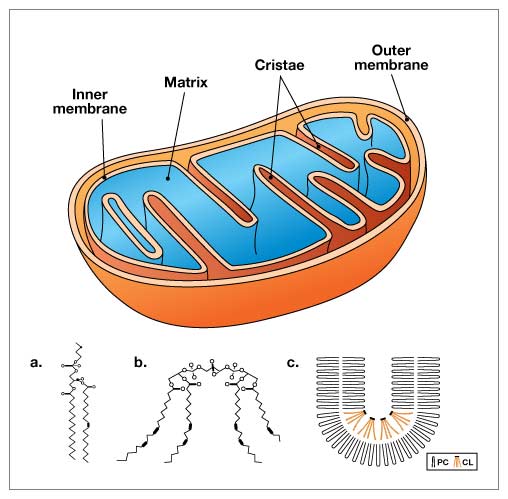
The good news is that dietary changes can improve the composition of fats in your cardiolipin in a matter of weeks, or even days. So, even though it will take years to lower your total body burden of LA, you will likely notice improvements well before then.
LA Contributes to Heart Disease and Cancer
Heart disease and cancer are two of the primary killers in the Western world, and LA is a significant contributor to both of these lethal conditions. One of the first things that happens in atherosclerosis, which is the precursor to heart disease, is that your macrophages (a type of white blood cell) turn into foam cells — essentially a macrophage stuffed with fat and cholesterol.
Atherosclerotic plaque is basically dead macrophages and other types of cells loaded with cholesterol and fat. This is why heart disease is blamed on saturated fat and cholesterol. However, researchers have found that for foam cells to form, the LDL (low density lipoprotein cholesterol) must be oxidized, and that is precisely what seed oils do.
Seed oils cause the LDL to oxidize, thereby forming foam cells. So, LDL in and of itself does not initiate atherosclerosis. LDL’s susceptibility to this oxidative process is controlled by the LA content of your diet. Excess PUFAs also make cell membranes more fragile, allowing them to be easily damaged by oxidation.20,21
Seed oils are also a major contributor to cancer. In fact, a surefire way to induce cancer in many animal models is to feed them seed oils. Animals typically develop cancer once the LA in their diet reaches 4% to 10% of their energy intake.
And, as mentioned, most Americans get approximately 25% of their total daily calories from seed oils, so we’re far over the safety threshold for these fats — at least based on the laboratory work in animals. Remember our ancestors typically got less than 2% of their calories in the form of omega-6.
There’s even evidence showing that eliminating seed oils from your diet will dramatically reduce your risk of sunburn and lower your risk of skin cancer,22,23,24 as susceptibility to UV radiation damage is controlled by how much LA is in your diet.25,26
What Foods to Avoid, and How
Primary sources of LA include seed oils used in cooking, processed foods and restaurant foods made with seed oils, condiments, seeds and nuts, most olive oils and avocado oils (due to the high prevalence of adulteration with cheaper seed oils), and animal foods raised on grains such as conventional chicken and pork.
Ideally, consider cutting LA down to below 7 grams per day, which is close to what our ancestors used to get. If you’re not sure how much you’re eating, enter your food intake into Cronometer — a free online nutrition tracker — and it will provide you with your total LA intake.
Cronometer will tell you how much omega-6 you’re getting from your food down to the 10th of a gram, and you can assume 90% of that is LA. Anything over 10 grams of LA is likely to cause problems. Healthy fat replacements include tallow, butter or ghee, all of which are excellent for cooking.
The table below provides a fairly comprehensive list of the most commonly consumed oils and their approximate LA content.27,28,29 In general, the lowest LA-containing fats — butter and beef tallow — would be the fats of choice. These excellent cooking fats would not only be the lowest in LA, but will also provide the fat-soluble vitamins, A, D, and K2. Coconut oil is also very low in LA but doesn’t provide the important fat-soluble vitamins that tallow and butter contain.
Vast Majority of Olive Oil and Avocado Oil Are Adulterated
Most people introduced to the topic of omega-6 toxicity have questions about olive oil and avocado oil. Consumption of olive oil has increased more than 10-fold in the U.S. over the past 35 years.30 Olives and olive oil are well-known for their many health benefits, especially for your heart, but using adulterated olive oil will not do your health any favors.
Tests have revealed that anywhere from 60% to 90% of the olive oils sold in American grocery stores and restaurants are adulterated with cheap, oxidized, omega-6 vegetable oils, such as sunflower oil or peanut oil, or nonhuman-grade olive oils, which are harmful to health in a number of ways.31
This is even true for “extra virgin” olive oil Cheap seed oils are added and will not be listed on the label, nor will most people be able to discern that their olive oil is not 100% pure. Chances are, you’ve been eating poor-quality olive oil so long — or you’ve never tasted a pure, high-quality olive oil to begin with — you don’t even realize there’s something wrong with it.
The same applies to avocado oil. Many believe avocado oil is as healthy as olive oil, but this is simply not the case. A 2020 study showed that 82% of avocado oil is adulterated, mislabeled or of poor quality.32
In general, people believe the U.S. Food and Drug Administration is policing and regulating food fraud, but that’s not the case. Its primary focuses are making sure the ingredient label is accurate and tracking food-related disease outbreaks.
The FDA does little in terms of preventing illegally adulterated foods from being sold. This makes discerning quality a difficult task, and unless you can somehow ensure you’re getting 100% pure, unadulterated olive oil and/or avocado oil, you’re better off avoiding them altogether.
Go Easy on the Nuts and Seeds
Most people who are interested in health believe that nuts and seeds are “heart healthy” staples.33 However, as you can see in the table below, most nuts and seeds are exceedingly high in LA. For example, 50% of the fat in pecans is LA.34 The only exception is macadamia nuts.
So, while nuts and seeds are often unprocessed and are the best type of omega-6 fats to eat, they will still contribute to the LA content of your diet, and once you hit 5 grams of LA per day, the perishable double bonds will begin to oxidize and generate dangerous free radicals that lead to health problems.
So, nuts and seeds need to be significantly minimized or even eliminated if you want to lower your LA. As mentioned, the exception to this rule is macadamia. Since only 2% of their fat is LA, you can have 10 to 30 a day without significantly raising your LA level.
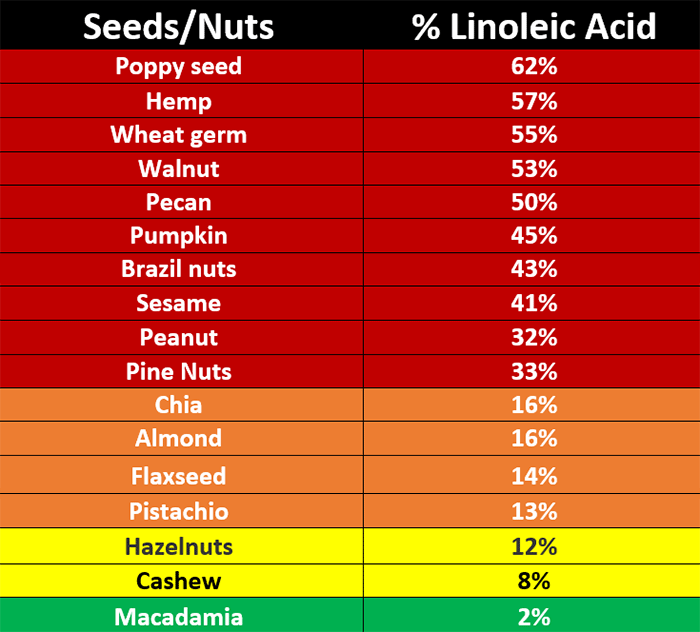
LA in Animal Foods
While seed oils are a primary source of LA, a number of animal foods you might not suspect are also loaded with this harmful fat. Ruminant animals such as cows, buffalo, sheep, lamb, goats, deer, elk and many other game animals have low LA content in their milk and meat, no matter what they eat, thanks to the fact that they have multiple stomachs with bacteria that can convert the high LA fat they eat into saturated and monounsaturated fats.
Animals with a single stomach, however, like chickens and pigs, cannot make this conversion. So, when they’re fed corn and soy, which are high in LA, their meat and eggs will also be high in LA.35 Most chicken and pork have over 25% LA. Chicken eggs are acceptable, though, as each egg has less than 1 gram of LA, and that is assuming they are fed commercial feeds that are loaded with high LA.
Interestingly, the difference in LA in ruminants that are 100% grass-fed and those that are fed corn and soy is only about 0.5%, which is why, from an LA perspective, there isn’t much difference between conventional beef and grass fed-only beef. That said, grass fed beef is still preferred as it typically has less glyphosate and hormones.
So, in summary, your best option is to get most of your animal protein from ruminants and avoid or limit all chicken and pork. My favorite meats are bison and lamb, but any of the ones listed above will work. Ideally it should be organic and the animals should not be fed any food that is contaminated with glyphosate or other pesticides.
LA in Seafood
Ideally, you’d get your omega-3s from healthy seafood. However, not all seafoods contain omega-3s. Only fatty, cold-water fish do. Examples include wild-caught Alaskan salmon, sardines, anchovies, mackerel and herring.
Farmed fish, especially farmed salmon, is best avoided altogether due to the exaggerated potential for contamination. At first glance, farmed fish may seem like a good idea to help protect wild seafood populations from overfishing, but in reality, the industry is plagued with many of the same problems surrounding land-based concentrated animal feeding operations (CAFOs), including pollution, disease, toxicity and inferior nutritional quality.
Most farmed fish are fed genetically engineered (GE) corn and soy, which are a completely unnatural diet for marine life and are loaded with hazardous omega-6 fats. Others are fed fishmeal, which is known to accumulate industrial chemicals like PCBs and dioxins.
From a nutritional perspective, farmed salmon also have the drawbacks of containing only half the omega-3 of wild salmon,36,37,38 and one-fourth the vitamin D,39 while having more than 5.5 times the amount of omega-6.40,41 Farmed salmon are also routinely exposed to antibiotics and pesticides.
Carnosine Can Help Reduce LA-Induced Oxidative Damage
While your body will slowly eliminate stored LA over time, provided you reduce your intake, a peptide supplement called carnosine can help reduce the oxidative damage caused by LA while your body is cleaning itself out.
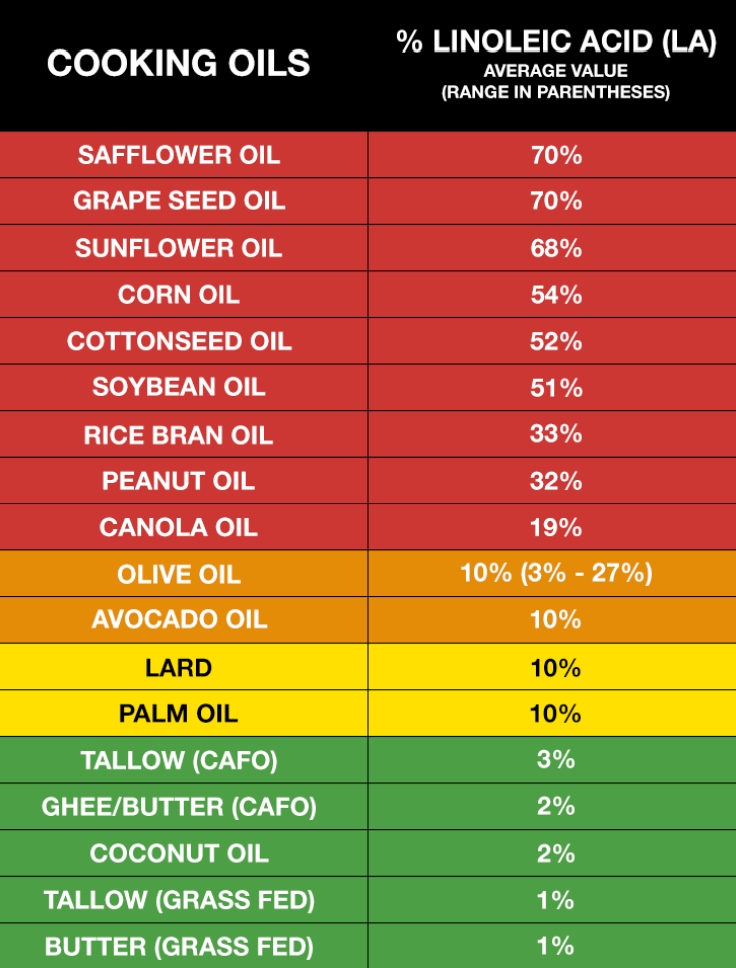
Carnosine is a dipeptide your body makes and it consists of two amino acids, beta-alanine and histidine. It serves as a sacrificial sink for reactive oxygen species (ROS) and ALEs, meaning it lets these very damaging molecules destroy it rather than your mitochondria, DNA or proteins, as depicted in the image below.
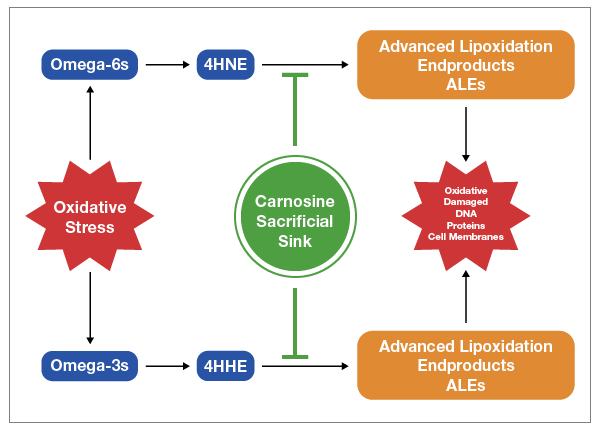
Carnosine is found in meats, and eating animal protein is known to efficiently raise carnosine levels.42 It’s not found in any plant foods. Alternatively, you could use a supplement. In this case, beta-alanine is a superior choice, as it’s the rate limiting amino acid in the formation of carnosine and raises carnosine levels more efficiently. It’s also far less expensive than carnosine.
Summary
Do yourself and your family a favor and embark on a journey of eliminating all seed oils from your diet today to ward off virtually all chronic degenerative diseases. This means avoiding all seed oils, and even fruit oils like olive oil and avocado oils as they are frequently adulterated with cheap seed oils.
Cook with ghee, butter or beef tallow, and avoid all processed foods, as they are typically loaded with seed oils. Also avoid eating in restaurants, as nearly all use massive amounts of seed oils to cook with and put it in their sauces and dressings. Lastly, avoid chicken and pork, and stick to bison and lamb as your primary meat sources.
- 1 Britannica. Lipids
- 2 Nutrients 2023, 15(14), 3129; doi: 10.3390/nu15143129
- 3 Open Oregon. Fatty Acid Types and Food Sources
- 4, 12 Science Direct. Fatty Acids
- 5, 13 Cells. 2021 Jun; 10(6): 1284
- 6 Mount Sinai. EPA
- 7 Heart & Stroke February 6, 2021
- 8 J Political Econ. 1930;38(1):73-85
- 9 Smithsonian Magazine November 23, 2019
- 10 “Profiling Food Consumption in America.” USDA Economic Research Service, Factbook, Chapter 2. ND
- 11 Atkins History
- 14 Oxid Med Cell Longev. 2014;2014: 360438. doi: 10.1155/2014/360438
- 15 Pharmacognosy Review. 2010;4(8):118-126
- 16 Biochemical Journal. 1982;208(1):129-140
- 17 Nephrol Dialysis Transplant. 2001;16(8):1598-1606
- 18 Free Radical Biol Med. 1992;13:341-390
- 19 YouTube, Omega-6 Apocalypse 2, Chris Knobbe August 25, 2021
- 20 Steinberg D, et al. Beyond Cholesterol N Engl J Med 1989; 320:915-924 April 6
- 21 European Heart Journal, June 21, 2020; 41(24): 2313–2330
- 22 Oncology Nurse Advisor July 6, 2018
- 23 Cancer Epidemiology, Biomarkers & Prevention. July 4, 2018
- 24 Free Radic Res. 2015;49(7):827-34
- 25 Photochem Photobiol. 2002 Dec;76(6):657-63
- 26 Exp Dermatol. 2003;12 Suppl 2:18-21
- 27 Renewable Energy. 2018; 126: 403-419
- 28 Int J Mol Sci. 2015;16(6):12871-12890
- 29 The Plan Journal. 2008;54:640-655
- 30 North American Olive Oil Association. The Future of Olive Oil in the United States. March 2019
- 31 Food Safety News April 12, 2022
- 32 Green HS, et al. First report on quality and purity evaluations of avocado oil sold in the US Food Control Volume 116, October 2020, 107328
- 33 Int J Curr Pharm Rev Res. 2011;2(3):145-160
- 34 Applied Sciences. 2019;1 Article no: 1531
- 35 Livestock Production Science. 1998;56:145-156
- 36 Scientific Reports 2016; 6 Article number 21892
- 37 Ecowatch October 8, 2016
- 38 CivilEats December 8, 2014
- 39 BU Today
- 40 Nutrition Data Wild Atlantic Salmon
- 41 Nutrition Data Farmed Atlantic Salmon
- 42 Science Direct, Carnosine; Nutritional Supplements and Metabolic Syndrome
How to Boost Brain Health and Reverse Neurological Disease
Reproduced from original article:
https://articles.mercola.com/sites/articles/archive/2023/07/15/boost-brain-health-reverse-neurological-disease.aspx
The original Mercola article may not remain on the original site, but I will endeavor to keep it on this site as long as I deem it to be appropriate.
Analysis by Dr. Joseph Mercola Fact Checked July 15, 2023
STORY AT-A-GLANCE
- The less inflammatory your diet is, the faster you’re going to get well, because inflammation is nearly always a contributor to neurological dysfunction. Sugar, damaged omega-6 oils, trans fats and processed vegetable oils need to be avoided
- A simple stress reduction technique done before meals can improve your digestion and absorption of nutrients, boost your immune function, and relax your body
- Melatonin provides the best protection for your neurons against free radical damage, and you need a healthy release of melatonin through the night to calm and heal your brain
- As you get older, the enzymatic activity required to produce melatonin becomes impaired. To boost your body’s production, take 5-HTP before bedtime. 5-HTP is converted to serotonin, which is further converted to melatonin
- Natural alternatives to diuretics, commonly prescribed for hypertension, are discussed, as are the many health benefits of proteolytic enzymes
Editor’s Note: This article is a reprint. It was originally published June 10, 2018.
Your brain is a really important part of your body. I’m sure no one would disagree with that. In this interview, Dr. Lee Cowden, co-founder of the Academy of Comprehensive Integrative Medicine (ACIM), discusses some really simple and inexpensive strategies that boost brain health and support neuroregeneration. This is also the topic of this year’s ACIM conference, which will be held in Orlando, Florida, in November.
The Academy of Comprehensive Integrative Medicine was founded in 2008 with the vision of educating integrative practitioners around the globe, for the most part online. “Many practitioners are so busy that they can never take the time to go to all of the meetings they need to go to, to learn what they need to learn,” Cowden says, “so we decided to start putting educational courses online.”
ACIM Offers Training Programs
In 2014, ACIM began offering a 300-hour online integrative medicine fellowship training program. Workshops are held in Dallas every few months to allow practitioners to get hands-on training. In 2018, there were hands-on conferences in July and September 20. Those were all preludes to the main conference in Orlando in November.
“Everything we’re doing this year is focused on the brain [and] neuroregeneration,” Cowden says. “With integrative medicine, we look at the causation, and see if we can resolve the causation of the illness. Once the cause goes away, usually the illness goes away.”
You don’t have to be a health care professional to benefit from ACIM. Even laypeople can study with ACIM.
The academy offers a core wellness coach program that includes 70 hours of training. “I think every integrative practitioner needs to have half a dozen or more wellness coaches working with them to hold the hands of the patients until they get well,” Cowden says.
ACIM Conference 2018: Neuroregeneration
The November conference focused on strategies that can help regenerate all types of neurological conditions, including Alzheimer’s, autism, multiple sclerosis, amyotrophic lateral sclerosis, Parkinson’s disease and other less severe conditions such as the neurological effects of fibromyalgia, and less common conditions such as reflex sympathetic dystrophy and peripheral neuropathy.
“The tendency of the American public is to look for a magic bullet. But, really, for neurological diseases, I haven’t found a magic bullet. There’s a lot of very important pieces.
I call those the foundational pieces: Diet, removing electromagnetic fields (EMFs) from the patient’s surroundings, physical activity, as well as brain games. There are a lot of other emotional issues that impact chronic neurological conditions that we need to address as well.”
Download this Article Before it Disappears
Quenching Inflammation Is a Key Foundational Step
In regard to diet, the less inflammatory it is, the faster you’re going to get well, because inflammation is nearly always a contributor to neurological dysfunction. The most inflammatory of all foods is probably sugar, followed by damaged, oxidized omega-6 oils, trans fats and processed vegetable oils. These all need to be strictly avoided. In addition to an anti-inflammatory diet, nutritional and herbal supplements can offer targeted support.
“Eating a ketogenic diet with clean fats and oils, doing some [intermittent] fasting throughout the week and getting rid of the inflammation-creating things — sugars, omega-6 oils, peanut products that have high arachidonic acid and so on … can make a great start in getting a patient’s neurological condition improved,” Cowden says.
“In 1988, I had a colleague who had a father in a nursing home in Louisiana who had advanced Alzheimer’s. He was a full-care case. In the morning, the nurses would have to get him out of bed, dress him and feed him. He was always pooping and peeing in his pants. He couldn’t remember the names of the nurses, the family members or anybody. My colleague said, ‘Can you give me some ideas of things that will help my father?’
I said, the problem is that it’s going to take a lot of intervention, and getting that at a nursing home is not likely to happen. He said, ‘I’m pretty sure it will happen, because the head nurse of the nursing home has a mother, just like my dad, with severe dementia. She wants to see if what I try on my dad works, so that she can try it on her mom.’
I recommended a regimen: Dietary changes, supplemental nutrients and proteolytic enzymes 30 minutes before food, magnesium, vitamin D3, tocotrienols, tocopherols, bacopa monieri, other herbs, homeopathics and some things to get the metals out … chlorella … dimercaptosuccinic acid (DMSA) and so on.
I said, ‘You need to get your dad out of bed and walk him every day. Get the nurses to do this. Get them to play brain games with him.’
He called me back about four months later. He said, ‘I’ve got to give you an update on this … My dad now gets out of bed, dresses himself, feeds himself, does not poop or pee in his pants anymore. He walks around with the nurses and helps them take care of the other patients in the nursing home.
Then he sits down and plays cards with the nurses, and sometimes wins.’ That’s a big shift in just four months’ time, [and] we’ve had lots of other cases like that with dementia.”
Can You Reverse Autism?
Cowden has also seen near-magical improvements in children with autism. A remarkable case is that of a young man named Bryan. Cowden first met Bryan’s dad when Bryan was just 7 years old. He had neither speech nor socialization skills.
His dad was a restaurant owner who went back to school to become a naturopathic doctor in a desperate attempt to help his son after all of his allopathic doctors told him there was no hope for Bryan — he’d never graduate high school, go to college, hold a job, get married or have children of his own.
Cowden worked with Bryan’s father, and not only did Bryan start speaking within a year or two, he graduated high school at 18, played football in college on a scholarship and got B’s in school. After college, he became a massage therapist; fell in love, married and had two children.
He is now helping autistic children and adult patients with neurological disease to recover. I’ve met Bryan, and this story is all the more remarkable by the fact that he’s one of the healthiest people I have ever met.
There is a very objective heart rate variability test that measures the fitness of your autonomic nervous system and a variety of other variables called HeartQuest. Bryan scored virtually a perfect score on this test. From being an autistic child at age 7 to someone who’s one of the healthiest people around is a rather dramatic example showing that if you apply these principles, they really can work.
“After his dad helped him get to the point where he was able to do a lot of things for himself, Bryan became highly motivated to eat a clean diet, to do a physical activity, to drink enough water, to get enough sleep and so on,” Cowden notes. “He lives right.”
A Simple Stress Reduction Technique That Pays Dividends
The beauty of integrative medicine is that there are literally hundreds if not thousands of tools available, and sometimes the simplest, least expensive ones are among the most effective. One foundational aspect of good health is stress reduction. A stress reduction technique I learned from Cowden that has helped me decrease my sleep latency, allowing me to fall asleep really quickly when done before bed, is performed as follows:
- Place your left index finger and thumb together, then grasp a hold of these two fingers with your right hand (see video demonstration starting around 29:55). It’s important to use your left fingers, as the left side of your body entrains the right side of your body rather quickly, whereas the right side entrains the left very slowly.
- Place your hands on your lap and breathe deeply in through your nose. Hold your breath for one second before breathing out through your mouth. Keep breathing in through your nose and out through your mouth while visualizing yourself in the most relaxing place you have ever been. Be sure to include sound, taste, touch and smell in your visualization and not just the visual component. Really remember that place with all of your senses.
Doing this for four to five minutes before each meal will help improve your digestion and absorption of nutrients, boost your immune function, and relax your body. Done before bedtime, it’ll improve how fast you fall asleep, how deeply you fall asleep and the amount of healing your body can get while asleep as it boosts your immune function. For very little time, energy and effort, at no cost, you can get a lot of improvement. Cowden explains the rationale for these specific finger holds:
“On the index finger, on the middle-finger finger side, the dorsal surface, is the energy pathway for your nervous system. On the palm-side surface of the index finger is the energy pathway for your neurotransmitter system. On the thumb, on the outer aspect, is the pathway for your lymphatic system. Everybody who is chronically stressed has a stressed-out nervous system, stressed-out neurotransmitters and a clogged lymphatic system.
When you hold [your left index finger and thumb] with your right hand, you’re taking the excess energy that’s usually in these other pathways and dissipating that into the pathways that run on the palm surface of your right hand. If there are areas or pathways that are deficient in energy, then energy comes out of the pathways in your right hand and goes into the pathways in your left hand.
The principle is balancing the energy pathways. The Chinese have said for 3,000 years that disease develops whenever energy stagnates. If you stagnate energy, then you’re going to have all kinds of problems, including maldigestion and insomnia … This helps, probably more than anything I’ve found, to balance the sympathetic and parasympathetic nervous system.
The sympathetic is what causes the fight-or-flight. The parasympathetic, which is to balance out the sympathetic, is responsible for digestion, relaxation, sleep and the calming parts of our nervous system. So many people have almost exclusively, sympathetic and almost no parasympathetic function.”
5-HTP Boosts Melatonin and Helps Optimize Sleep
Another gem I learned from Cowden during a visit to my home was the use of 5-hydroxytryptophan (5-HTP). My deep sleep measured at zero minutes, despite spending time at the beach daily to expose myself to bright sunshine and using blackout drapes to sleep in the dark. I also turned off the electricity to my bedroom. I thought that’s all you needed to optimize melatonin. It turns out that’s not the case when you get older. Cowden explains:
“Tryptophan, which you find in turkey and pumpkin seeds, gets converted to 5-HTP. 5-HTP is converted to 5-hydroxytryptamine, also called serotonin. 5-hydroxytryptamine finally gets converted into melatonin. However, as we age, toxins pile up in the enzymes [responsible for these conversions] and prevent those enzymes from performing the work they need to do.
You have, over time, lower and lower levels of 5-HTP, serotonin and melatonin, even though you’re doing everything else right. So, yes, we have to continually detoxify, and also, sometimes, support those enzyme systems by what we call excessive precursor supply. You boost the building blocks to make the final product.
Melatonin is not very well absorbed out the gut. Some people take melatonin, but some people have kind of a paradoxical response from that. But if they take 5-HTP, they can actually make as much 5-hydroxytryptamine as they need to fairly easily, and then they have the serotonin and melatonin.”
Low Serotonin Will Impede Melatonin Production
Once I began taking 100 milligrams of 5-HTP about 20 minutes before bed, my deep sleep rapidly increased to about 30 minutes a night. Since then I’ve also painted my bedroom with grounded shielding paint that provides an ultra-low EMF environment. Turning off the electricity wasn’t enough, as assessed by measuring the electric field’s influence on my body voltage. Hopefully that’ll improve my deep sleep further.
Many are aware that serotonin is important for mood, but if you don’t have enough of it, you can’t make melatonin either, and melatonin is the most important antioxidant nutrient in the brain. As noted by Cowden, melatonin is far more important than the oral antioxidants you may take. It’s even more important than glutathione and superoxide dismutase, because it’s fat-soluble.
Melatonin provides the best protection for your neurons against free radical damage, and you need a healthy release of melatonin through the night to calm and heal your brain.
The enzyme that converts 5-HTP to serotonin requires vitamin B6 as a cofactor, so if you’re taking 5-HTP and not seeing results, that means you probably need to take some coenzymated B6 (pyridoxal 5′-phosphate) sublingually to get enough of the active form of B6 to enable the conversion of 5-HTP to serotonin.
The Many Benefits of Magnesium
Another supplement that is helpful for sleep is magnesium. Cowden prefers magnesium malate, but you can also use magnesium threonate. There are literally dozens of different types of magnesium supplements.
Magnesium threonate has the added benefit of providing some antiretroviral activity, and retroviruses tend to be a challenge inherent with many neurodegenerative diseases. Threonate is also a neurotransmitter, in addition to being an amino acid.
To avoid creating an imbalance, it’s wise to alternate between different forms of magnesium. Cowden prefers magnesium malate because malic acid is a Krebs citric acid cycle intermediate and actually helps generate more ATP energy. If you’re deficient in malic acid inside the cell and you take a magnesium malate, the malic acid is drawn into the interior of the mitochondria and will drag the magnesium in with it.
Without a doubt, magnesium is essential for mitochondrial ATP production. About 50% of the metabolic enzymes in your body require magnesium as a cofactor, so it’s a really important nutrient. It’s also required for conduction of nerve impulses and the contraction-relaxation cycle of muscles, including your heart muscle.
There’s also compelling evidence suggesting magnesium may reduce the impacts and side effects of EMF exposure. Importantly, if you don’t have enough magnesium, your body also cannot absorb potassium. Cowden explains:
“If a person is deficient in magnesium and potassium both, you can give them potassium in large amounts on an ongoing basis, and their potassium levels never come up. But if you give them magnesium and get it repleted, and then give them potassium, then their potassium levels come up.
That’s because the kidney tubules selectively hold on to magnesium and waste potassium into the toilet in order to retain the magnesium. Because, apparently, the body sees the magnesium as being a more vital nutrient than potassium.
One more thing. A lot of people in the United States are on some form of diuretic medication, either for blood pressure, swelling of their legs or for some other reason. When you take a diuretic, it has a magnesium- and potassium-wasting effect on the kidneys. They’re wasting both magnesium and potassium into the toilet. But most doctors only give potassium. They don’t give the magnesium.”
Alternatives to Diuretics
Diuretics are frequently prescribed for high blood pressure and/or swelling in the extremities. As in most cases, drugs are not necessary for treating these conditions. Swelling of the legs is often due to congestion in your lymphatic system, or kidney toxicity preventing your kidneys from properly processing water. Hence the water is retained in your tissues. Sometimes, it’s just severe toxicity in the tissues.
“One of the ways the body protects itself from toxic overload is to allow water to go out into the tissues where the toxins are, to dilute the toxins. If you have enough toxicity in your legs, then you’re going to have fluid accumulation there to try to dilute those toxins,” Cowden explains. “The lymphatic system can get clogged up for lots of different reasons.
The lymphatic system is commonly clogged up in people in the United States, because they have a love affair with dairy products and wheat products, both of which produce thick sticky mucoid material in the lymphatic system, which clogs it up. If they’ll get rid of the dairy and wheat products, then the lymphatic system becomes more fluid and able to clear toxins from the tissues through the lymphatic system.”
If you have an extremely weak heart, you may not be able to pump blood properly. This is also known as right-sided congestive heart failure. A very common cause of that is coenzyme Q10 (CoQ10) deficiency. According to Cowden, taking CoQ10, addressing any emotional issues and eliminating heavy metals will help the swelling to go away even in these more serious cases.
Why Diuretics Are Not Ideal for Treatment of Hypertension
Hypertension is a more complex issue. The first line of treatment and the No. 1 recommended drug for treating hypertension are thiazide diuretics. However, thiazide diuretics cause chromium wasting, which then creates insulin resistance, which in turn raises your blood pressure. As noted by Cowden:
“That seems to be a pretty oxymoronic way to do that. We really need to try to find a better solution. Most people who have hypertension emotionally feel under pressure to do something or not do something. If they can recognize what that is and resolve that emotional conflict, their blood pressure usually goes down quite a bit …
If you get the plaque reversed in the arteries, then the [arteries] are no longer stiff, so then you don’t have a systolic hypertension. You don’t need the drug, because your blood pressure comes down just by getting rid of the plaque in the arteries.
How do you do that? In the early ’90s, I was giving patients with advanced atherosclerotic disease proteolytic enzymes 30 minutes before food, a clean diet, supplements, nutrients, magnesium, vitamin C, vitamin E, etc., and reversing 80% to 90% plaque in the arteries down to 20% and 30% plaque in just three or four months.
We proved that with the ultrasound Doppler duplex imaging. If we can do that, then why are we doing open heart surgeries, carotid endarterectomies and all that other stuff? It’s because people are not educated about what’s possible.
If they haven’t been told that this could be done by their medical doctor, then they don’t believe that it’s possible. Unfortunately, there are a lot of things the medical doctor doesn’t know, because they weren’t taught it in medical school.”
The Benefits of Proteolytic Enzymes
Proteolytic enzymes are an effective strategy not only for decreasing atherosclerotic plaque but also for thinning your blood, lowering your risk of a blood clot. Cowden’s father was placed on Coumadin by his doctor, which caused him to bleed profusely whenever he hurt himself working outside. Cowden suggested proteolytic enzymes instead, which his father was eager to try.
“He started that when he was about 60. He lived to be 80. He was on proteolytic enzymes 30 minutes before food twice a day for 20 years, without any more clots, without any more of the symptoms for which he was being treated with the sodium warfarin or the Coumadin.
Since then, I’ve treated several dozen other patients with the same strategy. As far as I know, there’s no peer-reviewed literature proving that this is so, but we have lots of anecdotal evidence … As far as I know, everybody has remained plaque-free.”
The enzymes Cowden uses for this purpose, in order of effectiveness are:
- Lumbrokinase, made from bacteria that live in the gut of the earthworm
- Nattokinase, a fermented soy product
- Serrapeptase, made from bacteria that grow in the gut of the silkworm
- Bromelain, obtained from pineapple stems
- Papaya leaf enzyme
“A person can be energetically tested for several of these enzymes to see which pair is the best pair and just rotate back and forth. Monday, Wednesday and Friday, one; Tuesday, Thursday, Saturday and Sunday the other.
If they do enough of those, then usually they’ll have no clot formation,” he says. Proteolytic enzymes also combat tiny clots, frequently caused by chronic infections. The infection, wherever it is located, causes your body to produce excessive amounts of fibrin, a clot-producing agent.
This fibrin can plaster itself up against the capillary walls, restricting the delivery of oxygen from red blood cells through the capillary wall into the tissues.
The above-mentioned enzymes will strip away fibrin, allowing oxygen delivery through the capillary walls into tissues. Once the tissues are no longer starved of oxygen, they can go into aerobic metabolism instead of anaerobic metabolism, and when you’re in anaerobic metabolism, you don’t stimulate cancer growth and microbial growth. So, there are many related health benefits.
Did Lou Gehrig Die Because of Low Omega-3s?
Reproduced from original article:
https://articles.mercola.com/sites/articles/archive/2023/07/05/omega-3-and-als-risk.aspx
The original Mercola article may not remain on the original site, but I will endeavor to keep it on this site as long as I deem it to be appropriate.
Analysis by Dr. Joseph Mercola Fact Checked July 05, 2023
STORY AT-A-GLANCE
- A lack of omega-3 fats may have been involved in Lou Gehrig’s death from the disease, as research shows these healthy fats offer protection for ALS patients
- Higher levels of omega-3 fats, particularly the plant-based omega-3 fat alpha-linolenic acid (ALA), were linked to slowed decline and reduced risk of death in ALA patients
- The balance of omega-3s you consume is key; since processed foods are loaded with omega-6 fats, it radically skews the omega-3 to omega-6 ratio and inhibits your body’s innate ability to synthesize beneficial EPA and DHA
- It was 1939 when Gehrig bid farewell to baseball, as his ALS symptoms left his body unable to perform; history shows that our lopsided consumption of ALAs began in the early 1900s, when people were discouraged from eating natural animal fats, leading to increased intake of vegetable oils
- There are likely a number of contributing factors to ALS, but it’s quite possible that low omega-3 fats were among those that contributed to Gehrig’s case
Amyotrophic lateral sclerosis (ALS) is better known as Lou Gehrig’s disease, named for the beloved New York Yankees baseball player who died of the condition. A number of factors may have played a role in Gehrig’s health decline, including repeated head trauma,1 which is associated with ALS.
A lack of omega-3 fats may have also been involved, however, as research shows these healthy fats offer protection for ALS patients.2 The study, by Harvard researchers, found higher levels of omega-3s led to longer survival and slower functional decline in those with ALS.
However, what this study fails to point out, and that I discuss in my interview with Nils Hoem above, is the fact that reducing seed oil omega-6 in the form of linoleic acid is likely equally important. This is because when your body is loaded with omega-6, the enzymes that convert the omega-3 fat, ALA, are largely used up by the omega-6 fat, LA, and used to make arachidonic acid rather that the important EPA and DHA fats.
Eating Foods High in Omega-3s May Benefit ALS
Omega-3 fats are well-known for their neuroprotective effects, and research published in Neurology3 supports their favorable role in ALS. The study involved 449 people with ALS, whose symptom severity and disease progression were scored and tracked for 18 months. Blood levels of omega-3 fats were also measured, with participants divided into four groups, from lowest to highest.4
Higher levels of omega-3 fats, particularly the plant-based omega-3 fat alpha-linolenic acid (ALA), were linked to slowed decline and reduced risk of death.5 Among those who died during the study, 33% belonged to the group with the lowest levels of ALA, compared to 19% in the highest ALA group.
Even after adjusting for family history, age and other factors, people with the highest ALA levels had a 50% lower risk of death than those with the lowest.6 Eicosapentaenoic acid (EPA), another omega-3 fat that’s found in fatty fish and krill oil, was also associated with lower death risk in the study.7
Lead study author Kjetil Bjornevik, assistant professor of epidemiology and nutrition with Harvard T.H. Chan School of Public Health, explained:8
“Prior findings from our research group have shown that a diet high in ALA and increased blood levels of this fatty acid may decrease the risk of developing ALS. In this study, we found that among people living with ALS, higher blood levels of ALA were also associated with a slower disease progression and a lower risk of death within the study period.
These findings, along with our previous research, suggest that this fatty acid may have neuroprotective effects that could benefit people with ALS.”
The Correct Balance of Omega-3s Is Essential
It’s interesting that this study highlighted ALA, and even stated linoleic acid (LA), a type of omega-6 found in industrially processed seed oils, had a protective effect.9 As explained by Hoem — a research scientist with Aker BioMarine, the largest krill oil company in the world — in the video above, there are two polyunsaturated fats (PUFAs) that are considered essential in conventional medicine.
One of them is LA, which is an 18-carbon molecule. The other is ALA, which also has 18 carbons. Since your body cannot make these fats, you must get them from your diet. That said, since LA is found in nearly every food, and you only need very small amounts, it’s virtually impossible to become deficient in LA. In fact, most people consume far too much LA, as it’s abundantly present in most ultraprocessed foods.
Others, such as the omega-3s EPA and DHA, which have 20 and 22 carbons respectively, can be synthesized in your body, provided you have enough available delta-6-desaturase, an enzyme responsible for their production from ALA.
The problem is that there’s competitive inhibition for that enzyme, so when you have 10-fold (1,000%) more omega-6 in your system, as many people do, then the delta-6-desaturase will be used to convert the omega-6 into arachidonic acid, instead of converting the ALA into EPA.
Since processed foods are loaded with omega-6 fats, it radically skews the omega-3 to omega-6 ratio and inhibits your body’s innate ability to synthesize beneficial EPA and DHA.
Download this Article Before it Disappears
Increasing Omega-3 Is Necessary for Most People
Again, when you have large quantities of LA in your diet, it inhibits the enzyme, delta-6 desaturase, that converts ALA into EPA and then DHA. So, it’s important to lower your LA intake as much as possible so your body can more easily convert any plant-based omega-3, found in flax, hemp and chia seeds, into the animal-based omega-3 fats EPA and DHA.
This competition for delta-6 becomes a moot point if you reduce your LA intake to only 1% to 2% of daily calories. But most people consume 20% to 25% of their calories in the form of LA, which means they have stored up this fat in their cells and it will take up to seven years to get it out.
Restricting LA intake will automatically balance out your omega-3s naturally. But the other alternative is to increase your intake of animal-based omega-3s, which can essentially push the omega-6 out of your membranes. Ideally, you’d do both. According to Hoem:
“The amount of omega-6 is so huge compared with the omega-3s that the only feasible way of increasing your omega-3s in the membranes is through taking omega-3s. Then there is a 1-to-1 exchange of EPA and DHA for omega-6s in the membrane.
So, if you increase one molar amount of EPA and DHA in the membrane, then you kick out exactly the same amount of omega-6. And it’s important to realize that the membrane will be a reflection of your intake of omega-6s versus omega-3s. You can’t really do much with the omega-6s because they’re everywhere, but you can fix it by increasing your intake of long chain omega-3s.”
It was 1939 when Gehrig bid a fond farewell to baseball, as his ALS symptoms left his body unable to perform.10 History shows that our lopsided consumption of ALAs began in the early 1900s, when people were discouraged from eating natural animal fats such as butter and lard.11
This led to a significant increase — more than twofold — in the intake of LA, largely from vegetable oils.12 So, while there are likely a number of contributing factors to ALS,13 it’s quite possible that low omega-3 fats were among those that contributed to Gehrig’s case.
Sports-Related Head Injuries Also Have an Omega-3, ALS Link
Another interesting connection is the many head injuries that Gehrig suffered — and this, too, has an omega-3 connection. Repetitive head injuries can lead to chronic traumatic encephalopathy (CTE),14 which may be associated with development of motor neuron disease.
CTE doesn’t typically occur after one or two concussions. Most individuals affected have had hundreds or thousands of blows to the head, including not only concussions but also many lesser sub-concussive impacts, the latter often being the biggest factor.15 This seems to describe Gehrig. As reported by PBS:16
“Lou Gehrig was called the Iron Horse not only for his incredible strength and speed, but also because he was always in the line-up, no matter what injury he incurred the day before.
On numerous occasions, he was ‘beaned’ by an errant pitch or hit in the face by ground balls, suffered repeated concussions, episodes of loss of consciousness, and other forms of head trauma, without the slightest protection, beyond wearing a woolen baseball cap.
Gehrig collided with rapidly moving objects unrelated to the batter’s box or first base, as well. In 1924, for example, during a post-game fight with the Detroit Tigers, Gehrig took a swing at Ty Cobb, missed, fell, and hit his head on concrete pavement, only to lose consciousness for a brief period of time.”
The omega-3 fat DHA may help for brain trauma, specifically helping the brain resist oxidative stress while preserving membrane homeostasis and function after injury. University of California at Los Angeles researchers suggested that dietary DHA may “counteract broad and fundamental aspects of TBI [traumatic brain injury] pathology that may translate into preserved cognitive capacity.”17
Brain Benefits of Omega-3s Are Well-Established
Omega-3 fats are vital to your brain. A study in the journal Neurology found “older women with the highest levels of omega-3 fats … had better preservation of their brain as they aged than those with the lowest levels, which might mean they would maintain better brain function for an extra year or two.”18
In addition, older adults with memory complaints who consumed DHA, alone or in combination with EPA, had improved memory.19 Low DHA levels have been linked to memory loss and Alzheimer’s disease, and some studies suggest degenerative brain diseases may potentially be reversible with sufficient DHA.20,21
This makes sense, since DHA is an essential structural component of your brain, found in high levels in your neurons, the cells of your central nervous system. When your omega-3 intake is inadequate, your nerve cells become stiff and more prone to inflammation as the missing omega-3 fats are substituted with omega-6 instead.
Once your nerve cells become rigid and inflamed, proper neurotransmission from cell to cell and within cells becomes compromised. You can read more about this in my book, “Superfuel,” cowritten with James DiNicolantonio, Pharm.D. DHA also stimulates the Nrf2 pathway, one of the most important transcription factors that regulates cellular oxidation and reduction, and aids in detoxification.22
Additionally, DHA increases heme oxygenase 1,23 a protein produced in response to oxidative stress, and upregulates antioxidant enzymes — all of which are important for brain health.
Best Sources of Omega-3s
While fish oil is often what comes to mind when considering omega-3 supplementation, it’s not the best option. This is because, in most commercial fish oil supplements, the DHA and EPA are delivered in the form of ethyl esters.
Ethyl esters are essentially a synthetic substrate, created through the micro distillation process of crude fish oil. Most corporations produce ethyl ester fish oil because it’s far less expensive to produce than the triglyceride form. Ethyl esters are also easier to work with during processing, as they have a higher boiling point, which becomes important when the oils are heated and purified of environmental pollutants.
The problem with ethyl esters is they’re the least bioavailable form of omega-3. Free acids of fish oil have an absorption rate of at least 95%. EPA in its natural triglyceride form had a 69% absorption rate in one study, while ethyl ester forms absorbed only about 20% as well as the free acids.24
Importantly, unstable molecules are also more prone to oxidative damage and thus rancidity, which means consuming synthetic fish oil could potentially cause more harm than good.25 Ideally, consume omega-3 fats in whole-food form by eating fatty, cold-water fish.
This includes wild-caught Alaskan salmon, sardines, anchovies, mackerel and herring. If you choose to use a supplement, krill oil provides a superior alternative to fish oil. To ensure you’re getting enough beneficial omega-3 fats, whether you’re getting them from cold-water fish or krill oil, measure your omega-3 index, a measure of the amount of EPA and DHA in the membranes of your red blood cells.
And remember, for optimal health and brain benefits, in addition to increasing EPA and DHA, you’ll absolutely want to radically reduce your intake of LA as low as possible to ensure your omega-3 intake is properly balanced.
You can use Cronometer.com to carefully measure and enter your foods and it will tell you just how much LA you are eating. The goals is under 5 grams, but the lower the better. Mine is about 2.5 grams or about 0.8% of total daily calories. The goal is to get below 2% of daily calories.
- 1, 14 J Neuropathol Exp Neurol. 2010 Sep;69(9):918-29. doi: 10.1097/NEN.0b013e3181ee7d85
- 2, 3 Neurology June 21, 2023
- 4, 5, 6, 7, 8, 9 The Harvard Gazette June 21, 2023
- 10, 16 PBS June 17, 2016
- 11, 12 BMJ Open Heart August 22, 2018
- 13 Version 1. F1000Res. 2017; 6: 371
- 15 Concussion Legacy Foundation, What Is CTE?
- 17 J Neurotrauma. 2011 Oct;28(10):2113-22. doi: 10.1089/neu.2011.1872. Epub 2011 Oct 4
- 18 Neurology, doi: 10.1212/WNL.0b013e3182a9584c
- 19 PLoS One. 2015; 10(3): e0120391
- 20 Alzheimer’s and Dementia 2010 Nov;6(6):456-64
- 21 Nutritional Neuroscience 2008 Apr;11(2):75-83
- 22 Journal of Diabetes Investigation September 14, 2018 [Epub ahead of print]
- 23 BMC Cancer. 2018; 18: 1042
- 24 Biochem Biophys Res Commun. 1988 Apr 15;152(1):328-35
- 25 Pharmacogn Rev. 2010 Jul-Dec; 4(8): 118-126
How to Help Prevent and Treat Alzheimer’s Disease
Reproduced from original article:
https://articles.mercola.com/sites/articles/archive/2023/07/02/dale-bredesen-alzheimers.aspx
The original Mercola article may not remain on the original site, but I will endeavor to keep it on this site as long as I deem it to be appropriate.
Analysis by Dr. Joseph Mercola Fact Checked July 02, 2023
STORY AT-A-GLANCE
- In 2014, Dr. Dale Bredesen published a paper demonstrating healthy lifestyle choices could reverse Alzheimer’s in 9 out of 10 patients. His team is now launching a new randomized, controlled trial at six sites. Biological aging, brain aging and epigenetics will be included in this trial, using newer blood tests that weren’t available even a few years ago
- The glial fibrillary acidic protein (GFAP) test can be a valuable tool. This test basically looks at brain changes associated with astrocytosis. Astrocytes respond when there’s a problem in the brain, so it can give you a heads-up that something is afoot up to 10 years before symptoms set in
- Supporting energy production and reducing inflammation in the brain are the two most important factors to prevent and treat Alzheimer’s
- The entire family of herpes viruses is associated with changes in the brain and neurons. Left untreated, chronic infections put your innate immune system into overdrive. Alzheimer’s is an innate immune system mismatch with the adaptive system. You’re not clearing the pathogen, so you’ve got a continued onslaught of cytokines causing damage in your brain
- Valuable adjuncts that can help improve mitochondrial energy production include methylene blue, niacinamide, NAC and glycine
In this video, I interview repeat guest Dr. Dale Bredesen, a neurologist specializing in the treatment of Alzheimer’s. In 2014, he published a paper1 demonstrating the power of lifestyle choices for the prevention and treatment of this tragic condition. By leveraging 36 healthy lifestyle parameters, he was able to reverse Alzheimer’s in 9 out of 10 patients.
This included the use of exercise, ketogenic diet, optimizing vitamin D and other hormones, increasing sleep, meditation, detoxification and eliminating gluten and processed foods. It’s been several years since we spoke last, so he’s got quite a few updates to share.
Randomized Trial Launch
For starters, his team has published another proof-of-concept paper and are now launching a randomized, controlled trial at six sites: Hollywood, Florida; Nashville, Tennessee; Cleveland, Ohio; and Sacramento, Oakland and San Francisco in California.
Biological aging, brain aging and epigenetics will be assessed in this trial, using newer blood tests that weren’t available even a few years ago, including phospho-tau 181, phospho-tau 217, A-beta 42 to 40 ratio, glial fibrillary acidic protein (GFAP) and neurofilament light polypeptide (NF-L).
“A couple of these are not commercially available yet, so we’re doing these as research, but they will all become commercially available,” Bredesen says. “Currently, phospho-tau 181 is commercially available and so is the A-beta 42 to 40 ratio. So now, for the first time, you can get an idea, without necessarily having a PET scan, where you stand.
More importantly, you can follow it as you improve. Prevention is key, but also reversing cognitive decline, which we were the first to do … We’ve seen it again and again, when you’re doing the right things, when you’re attacking the important drivers of the process, you see [reversal].”
Valuable Tests
The GFAP test, while nonspecific, can be a valuable tool. This test basically looks at brain changes associated with astrocytosis. Astrocytes respond when there’s a problem in the brain, so it can give you a heads-up that something is afoot up to 10 years before symptoms become apparent. “The good news is if it’s normal, you’re in pretty good shape. So you want to know that going forward,” he says.
The phospho-tau 181 and phospho-tau 217 are specific tests for Alzheimer’s changes related to the death of neurons. Genetic testing is also important to ascertain how many copies of the APOE ε4 gene you might have. “That’s a critical piece,” Bredesen says. “Everybody should know their APOE status.” Hormone testing and testing for toxins, including mycotoxins and heavy metals, are also important.
Download this Article Before it Disappears
Where There’s Smoke There’s Fire
According to conventional thought, elevated tau and beta-amyloid are causative factors in Alzheimer’s, but Bredesen’s research suggests otherwise. He explains:
“This is a little bit like saying, ‘There’s some smoke there. If we just blow away the smoke, then the house is not going to burn down.’ It makes no sense. The key thing to know is that [tau and beta-amyloid] are responses and mediators. You’ve talked a lot about mitochondrial function, which is absolutely critical in this disease, but we know of many upstream contributors, and that’s another update.
People have not known what’s causing this disease, and it’s often said there’s nothing that prevents, reverses or delays it. Nothing could be further from the truth. We know there are many contributors, [including] anything that damages mitochondria [and] different infections.
What we now see from the research is that Alzheimer’s disease fundamentally is a network insufficiency. You have this beautiful network of about 500 trillion synapses and as you get exposed to inflammation, infections in your mouth, insulin resistance, leaky gut, not enough blood flow, reduced oxygenation, reduced mitochondrial function, any of these things, that network is no longer sufficiently supported.
And, no surprise, it pulls back and that’s why you see the tau. They are part of the mediators of making this effect enhanced. They amplify the problem. Dr. Lee Hood and Dr. Nathan Price have just published a wonderful book called ‘The Age of Scientific Wellness,’ and as they point out, amyloid is an excellent biomarker but a terrible therapeutic target, and that’s exactly what’s coming out of the data.
Unfortunately, Lecanemab was just recommended by the panel for FDA approval. It slowed the decline. But here’s the thing they didn’t say, which they should have said, what are the things that performed better? Lecanemab doesn’t make you better, it doesn’t keep you the same, it slows the decline by 27%. That’s it.
So what worked better in their trials? No. 1, ketones alone worked better than this drug. No. 2, extra virgin olive oil alone in a trial worked better than this drug. No. 3, combined metabolic activators — carnitine, nicotinamide, riboside, things like that. Again, supporting energetics. This is about energetics and inflammation. Those are the two big players.
And then of course, the protocol we developed worked the best of anything. We’ve got people now who have sustained their improvement for more than 10 years. So, it’s sad that this drug has been recommended for approval.”
Two Key Causative Factors That Must Be Addressed
According to Bredesen, supporting energy and reducing inflammation in the brain are the two most important factors to prevent and treat Alzheimer’s. Basics that all of Bredesen’s patients implement include:
| Dietary intervention — Bredesen recommends a plant-rich, mildly ketogenic diet, with a good omega-3 to omega-6 ratio, no dairy, no grains and no simple carbs. “That’s the approach that has worked the best,” he says. “We call that KetoFLEX 12/3.” Nutrition for Longevity now offers meal kits for the KetoFLEX 12/3 diet at KetoFlex123.com, to make it easier to follow.
In the interview, I counter some of Bredesen’s dietary recommendations, as he still recommends polyunsaturated fats (PUFAs). I’m convinced all omega-6 PUFAs need to be kept low, below 2% or even 1% of daily calories, for optimal health, and I strongly suspect people with dementia need to be even more cautious, as the PUFA linoleic acid (LA) appears to be the biggest dietary source of all the drivers of Alzheimer’s, including inflammation, oxidative stress, mitochondrial dysfunction and dysfunction in electron transport chain such that you cannot efficiently produce ATP. I’ve written extensively on the ins and outs of this, so for more information, listen to the interview and/or review “Linoleic Acid — The Most Destructive Ingredient in Your Diet.” I’m also not convinced that the omega-3 to omega-6 ratio is as helpful as commonly suggested since you cannot counter the damage caused by omega-6 fats simply by taking more omega-3. On top of that, most omega-3 supplements, primarily fish oil, are worthless because they’re synthetic and rancid to boot, so making sure you’re getting high-quality omega-3 is an essential factor. |
| Exercise — Bredesen is seeing particularly good results with KAATSU (blood flow restriction training) and exercise with oxygen therapy (EWOT). |
| Sleep optimization — Sleep apnea is a common problem that unquestionably contributes to cognitive decline, as it reduces oxygen to your brain and raises adrenaline while you’re sleeping.
“Sleep is a huge area in and of itself,” Bredesen says. “Patient zero, the first person we treated back in 2012 who reversed her cognitive decline beautifully, she’s now over a decade in on this, doing great continually. She’s now in her late 70s. One of her issues was poor sleep and, of course, one of the things that was addressed. Getting at least an hour of deep sleep and at least an hour and a half of REM sleep is very helpful … Poor sleep gives you more amyloid. It’s just a marker, but it’s a marker of things that aren’t so good, and unfortunately, amyloid then gives you poorer sleep.” |
| Stress reduction |
| Brain training |
| Detox |
| Targeted supplements |
The other part of Bredesen’s program is customized to each patient. Many have undiagnosed chronic infections, for example, that need to be addressed. Common ones include P. gingivalis and T. denticola, which work their way into your brain from your oral microbiome, herpes simplex and human betaherpesvirus 6A (HHV-6A).
The entire family of herpes viruses is associated with changes in the brain and neurons. HHV-6A in particular is associated with the brain degeneration seen in Alzheimer’s. Chlamydia pneumoniae is also highly troublesome, as are all tick-borne infections, including Borrelia, Bartonella, Babesia and Anaplasma.
All these infections put your innate immune system into overdrive and need to be quenched. As noted by Bredesen, COVID-19 and Alzheimer’s are “both innate immune system mismatches with the adaptive system.” You’re not clearing the pathogen, so you’ve got this continued onslaught of cytokines. In the case of COVID, you die from the acute cytokine storm, whereas in Alzheimer’s, you die from cytokine drizzle. “It’s a long-term cytokine problem,” Bredesen says.
High-Fructose Corn Syrup Down-Regulates ATP Production
Bredesen also highlights the importance of avoiding fructose. In March 2023, Dr. Richard Johnson, Bredesen, Dr. David Perlmutter and several other coauthors published a paper2 on Alzheimer’s disease as “a maladaptation of an evolutionary survival pathway mediated by intracerebral fructose and uric acid metabolism.”
“It’s really the long-term research of Rick Johnson. You talk about mitochondrial function, about damage to mitochondria. He’s talking about a change in signal. They’re both important. As he points out, when you get that fructose, your body is literally responding to it saying, ‘Winter is coming. We are going to store fat and we’re going to turn down your ATP by about 15%.’
Well, when you’re right on the ragged edge of not getting enough energetics, then turning down your ATP by 15% is the last thing you want and is associated with cognitive decline.
Rick put together a whole table looking at all the relationships, changes in PET scans, changes in blood biomarkers. In each of these cases, what happens with fructose is the same thing that happens in Alzheimer’s disease.
So again, it comes back to the critical nature of the energetics, whether you’re turning them down by taking too much fructose and high fructose corn syrup, which is not to say you can’t eat some fruit, it just means you don’t want to have massive amounts of fructose.”
Fruit Versus High-Fructose Corn Syrup
Here too, my current views veer a bit. It’s important to understand there is a world of difference between fructose from fruit and high-fructose corn syrup. I used to recommend limiting both sources, but I’ve recently changed my thinking on this, as fructose from fruit activates pyruvate dehydrogenase, which you need to metabolize glucose from pyruvate to acetal-CoA in your mitochondria. If that enzyme is not activated, the glucose cannot be used for fuel.
The key to this riddle for me was the Randle Cycle, which basically acts as a metabolic switch. Your primary fuels are fats and carbs, and the Randle cycle determines how your cells decide which one to burn. When your diet is more than 30% to 35% fat, this switch shifts to fat metabolism, so that you’re burning fat in your mitochondria rather than glucose. The glucose instead gets shuttled into glycolysis and any excess goes out into your blood.
So, eating a lot of fruit and a lot of fat at the same time is not a good idea. In essence, fructose by itself is not what’s causing the problem. Rather it’s eating too much fructose in combination with too much fat. If you increase your fresh fruit intake, you also need to lower your fat intake, or else the sugar can’t be used for fuel.
Additionally, there are individual variations in metabolic flexibility, toxicity and microbiome that likely contribute to a person’s ability to tolerate increased carbohydrates.
The other point of contention I have is that PUFAs also appear to induce torpor (decreased physiological activity marked by a reduced metabolic rate), much like high-fructose corn syrup does. So, I suspect ripe fruit is not going to be a major contributor to dementia. In a previous interview with Johnson, he also admitted being surprised that fructose from fruit did not have the same effects as high-fructose corn syrup. Bredesen replies:
“Yes. And it makes perfect sense. The interesting thing to me is we are frugivore (animals that thrive on raw fruits), we are descended from frugivores. The problem we have today, of course, is that our fruit has been bred to have a much higher sugar content. That’s the issue. But the good news is, it retains the wonderful fiber and, as you pointed out, it doesn’t give you that effect that high fructose corn syrup and processed foods give you.”
Methylene Blue, Niacinamide, NAC and Glycine
One treatment adjunct Bredesen favors is methylene blue, which is something I recommend for just about anyone who wants to improve their health and reverse degenerative disease, primarily because it’s so effective at reducing reductive stress. It facilitates electron transfer forward in the mitochondria, thereby allowing ATP production to occur, even if the complexes are damaged.
Raising NAD+ is also important for energy production. NAD+ is oxidized, not reduced, so it facilitates the transfer of electrons forward in the electron transport chain. While there are expensive precursors out there, my favorite is plain old niacinamide, which is incredibly inexpensive yet raises NAD+ effectively.
Recent research has also confirmed that niacinamide helps slow brain aging. For general health, I recommend taking 50 milligrams of niacinamide three times a day. Niacinamide also works synergistically with methylene blue.
Many dementia patients also have low glutathione levels, especially if they’ve been exposed to mycotoxins or other toxins. I’m not a fan of taking glutathione, because glutathione is reduced, and you need the oxidized form to really make it work.
To make the actual glutathione molecule, you need both cysteine and glycine, so one way to boost your glutathione level would be to take glycine and N-acetylcysteine (NAC).
Two other ways to get more glycine into your diet are to eat “nose to tail,” not including muscle meat, or taking a collagen supplement or gelatin powder. “Nose to tail” refers to organ meats and connective tissues, which are rich in collagen. Collagen, in turn, makes up about one-third of the protein in your body, so it’s incredibly important. About 30% of the collagen and gelatin is glycine, so it’s an excellent source.
Precision Medicine Program to Launch
Bredesen is also part of a team launching a Precision Medicine Program at the Pacific Neuroscience Institute in Santa Monica, California. The program will work to prevent and treat chronic conditions at all stages, but will focus on getting people in for prevention and early treatment.
“When you get Alzheimer’s, you go through four stages,” Bredesen says. “You go through a presymptomatic phase, and you go through subjective cognitive impairment (SCI) that lasts on average 10 years. For these areas, prevention and treatment are pretty much 100% effective. We can prevent, and we can reverse virtually every time people are in SCI.
MCI is the next. It’s too bad it’s called mild cognitive impairment. It’s like telling someone they have mildly metastatic cancer. It’s a relatively late stage of Alzheimer’s disease. Still, in our trial, we had 84% of those people improve.
The final stage is dementia. And we still see some people with proof of dementia improve. But the farther you go, the harder it is to get them all the way back. So, we encourage everyone, please come in early.
We’ve had people go from MoCA [Montreal cognitive assessment] scores of 18 to 30, which is fantastic, from demented to normal. We’ve had people go from zero to 9. But we’ve never seen anyone yet be able to go from zero MoCA, which is end-stage Alzheimer’s, to perfect 30 …
A guy wrote me a nasty note a couple years ago, saying ‘How dare you tell people that if they’re too far along, they shouldn’t get on this protocol? My wife had a MoCA score of zero. She’s in a nursing home. We used the protocol that you developed, she only went up a little bit, but her symptoms were so much better.’ She could dress herself, she could speak again, she could engage.
So I don’t say there’s a limit, but it is much harder below 16. You can get some dramatic subjective improvements. And again, we’ve seen people go from 15 to 27. So, it does happen, it’s just that it’s harder the longer you wait, which is why we encourage everyone to come early. If everybody would come in in those first two phases — prevention or SCI — dementia would be a rare problem.”
The Uncommon Heart Attack That Kills Healthy, Young Women
Reproduced from original article:
https://articles.mercola.com/sites/articles/archive/2023/05/30/spontaneous-coronary-artery-dissection.aspx
The original Mercola article may not remain on the original site, but I will endeavor to keep it on this site as long as I deem it to be appropriate.
Analysis by Dr. Joseph Mercola Fact Checked May 30, 2023
STORY AT-A-GLANCE
- Symptoms of an uncommon type of heart attack known as spontaneous coronary artery dissection (SCAD) are easily overlooked, as few SCAD patients have any history of or risk factors for heart disease
- SCAD is a leading cause of heart attacks in healthy women under 55; the average age of SCAD patients is 42. Eighty percent of SCAD patients are women; 20% have recently given birth
- SCAD occurs when the layers of your blood vessel wall tear apart from each other, trapping blood between the layers. As the blood collects between the layers, your blood vessel gets choked off, triggering a heart attack
- Most SCAD patients are healthy. Risk factors for the condition include underlying blood vessel conditions such as fibromuscular dysplasia, extreme exercise and severe emotional stress
- Common signs and symptoms of a SCAD-induced heart attack, and current treatment recommendations are included
Editor’s Note: This article is a reprint. It was originally published March 8, 2018.
The symptoms of an uncommon type of heart attack known as spontaneous coronary artery dissection (SCAD)1 are dangerously easy to overlook, as few SCAD patients have any history of or risk factors for heart disease. SCAD is a leading cause of heart attacks in healthy women under 55; the average age of SCAD patients is 42.
ABC News recounts the stories of two women whose sudden heart attacks were triggered by SCAD.2 Five weeks after giving birth to a healthy baby girl, Maryn Cox suddenly developed troubling symptoms. “It felt like pressure, possibly gas; acid reflux, I wasn’t sure what it was. One of my arms went numb, I started getting nauseous; cold sweats,” she says. The symptoms, while common, turned out to be SCAD, a condition few have ever heard of.
While SCAD is a cause of heart attack, it’s different from a heart attack caused by coronary artery disease. Essentially, SCAD occurs when the layers of your blood vessel wall tear apart from each other, trapping blood between the layers. As the blood pools and collects between the layers, your blood vessel gets choked off, killing heart muscle tissue downstream from the blockage, thereby triggering a heart attack.
Signs and Symptoms of SCAD
Commonly reported signs and symptoms of SCAD include the following. If you experience these symptoms, call for immediate emergency medical assistance (in the U.S., call 911). It’s important to realize that many who develop SCAD are otherwise quite healthy and most do not have risk factors for heart disease. For this reason, it’s important to seek medical attention if you experience symptoms of SCAD, in order to avoid a lethal heart attack.
Indeed, the No. 1 symptom of a heart attack is sudden death, and the same applies to SCAD. In essence, by the time recognizable symptoms of a heart attack occur, you’re well on your way toward death, so early intervention is crucial.
| Lightheadedness | Sweating |
| Radiating pain in your neck, back or jaw | Shortness of breath |
| Pain, tightness, pressure or discomfort in your chest (some women report feeling like their bra is suddenly too tight, even though they know it’s not) | Stomach pain |
| Fatigue | Pain radiating down one or both arms |
For whatever reason, SCAD tends to be more common in women — especially younger women, and following pregnancy — although it’s a relatively rare condition overall. While the cause for SCAD is unknown, medical experts have theorized the gender difference may have something to do with hormonal variations. Common risk factors for SCAD include:
- Being female (80% of SCAD patients are women)
- Recently giving birth (20% of SCAD patients have recently given birth)
- Underlying blood vessel conditions such as fibromuscular dysplasia (a condition that causes abnormal cell growth in the arteries)
- Extreme physical exercise
- Severe emotional stress
Best Treatment for SCAD Is Allowing Body to Heal Naturally
Because the underlying cause of SCAD is still unknown, the best course of treatment has been equally uncertain. However, according to a recent scientific statement by Mayo Clinic researchers, SCAD sufferers tend to benefit the most from “conservative treatment, letting the body heal on its own.”3
Dr. Sharonne Hayes, the Mayo Clinic cardiologist who since 2010 has dedicated herself to the study of SCAD (see videos above), says, “It may seem counterintuitive, but we discovered that treating SCAD the same way we treat heart attacks due to atherosclerosis can cause further tearing and damage to the vessel. [T]he initial proper diagnosis is critical in guiding the care.”
The Mayo Clinic consensus statement is a significant step forward, providing health care providers with information about how to diagnose and treat SCAD. Importantly, their findings reveal that, in most patients who were not treated with a stent, the dissection in the blood vessel healed on its own within weeks or months.
In some patients, healing began within mere days. The statement also recommends a tailored cardiac rehabilitation program for patients, and stresses the importance of addressing mental health, as anxiety and depression tend to be quite common in SCAD patients.
Download this Article Before it Disappears
Many Women Mistake Heart Attack Symptoms With Anxiety, Stress
In related research,4 researchers found women are less likely to report chest pain when having a heart attack. According to the authors, compared to men, “women were more likely to perceive symptoms as stress/anxiety (20.9% versus 11.8%) but less likely to attribute symptoms to muscle pain (15.4% versus 21.2%).” They were also more likely to use terms such as “pressure,” “tightness” or “discomfort” in the chest rather than referring to it as chest pain.
They also found that a significantly greater number of women reported their doctor did not think their symptoms were heart-related. Overall, 53% of female heart attack patients reported this, compared to just 37% of men.
Nearly 30% of women had actually sought medical help prior to being hospitalized with a heart attack, compared to just 22% of men. What these findings suggest is that both women and their doctors tend to misdiagnose or dismiss symptoms of heart attack, placing them at increased risk of death than men. As noted by the authors:
“The presentation of [acute myocardial infarction] symptoms was similar for young women and men, with chest pain as the predominant symptom for both sexes. Women presented with a greater number of additional non-chest pain symptoms regardless of the presence of chest pain, and both women and their health care providers were less likely to attribute their prodromal symptoms to heart disease in comparison with men.”
Top 6 Factors That Predict Your Heart Attack Risk
If you want to reduce your risk of a heart attack, you should absolutely pay attention to your diet and exercise habits. These, along with four other habits, are said to make young women more or less “heart attack-proof,” according to research published in the Journal of the American College of Cardiology.5
Women who adhered to all six guidelines lowered their heart disease risk by 92%. Based on these findings, the researchers estimated that more than 70% of heart attacks could be prevented by implementing the following:
- A healthy diet discussed in my two most recent books “Effortless Healing” and “Fat for Fuel“
- Normalizing your body weight (your waist-to-hip ratio being a more reliable risk predictor than body mass index, as it reflects your visceral fat deposits)
- Getting at least 2.5 hours of exercise each week and moving regularly throughout the day
- Restricting your TV watching to seven or fewer hours per week
- Not smoking
- Limiting alcohol intake to one drink or less per day
These results echo those of a 2014 study,6 which concluded that the following five healthy lifestyle strategies could prevent nearly 80% of first-time heart attacks in men. As noted by the authors, “It is not surprising that healthy lifestyle choices would lead to a reduction in heart attacks … What is surprising is how drastically the risk dropped due to these factors.”
- A healthy diet
- Being physically active (walking/bicycling ≥ 40 minutes/day and exercising ≥ one hour/week)
- Maintaining a healthy waist circumference (waist circumference < 37.4 inches or 95 centimeters)
- Moderate alcohol consumption (10 to 30 grams/day)
- No smoking
Tests to Evaluate Your Heart Disease Risk
While SCAD is an exception, most heart attacks are caused by heart disease. Unfortunately, many are still evaluating risk based on the flawed cholesterol hypothesis. In reality, high cholesterol is not a significant risk factor for heart disease or heart attacks at all.
As you evaluate your risk of cardiovascular disease, there are specific ratios and blood level values that will tell you much more than your total cholesterol numbers. The following tests will also give you a better assessment of your potential risk for heart attack or coronary artery disease:
• Cholesterol ratios — Your HDL to cholesterol ratio and triglyceride to HDL ratio are strong indicators of your risk. To calculate your HDL/cholesterol ratio, divide your HDL by your total cholesterol and multiply by 100. That percentage should ideally be above 24%. For your triglyceride/HDL ratio, divide your triglyceride total by your HDL and multiply by 100. The ideal percentage is below 2%.
• NMR LipoProfile — The size of your low-density lipoprotein (LDL) cholesterol is more important than your overall total LDL level. Large particle LDLs are not harmful to your health while the smaller, denser LDL particles may create problems as they squeeze through the lining of your arteries, oxidize and trigger inflammation.
An NMR LipoProfile that measures the size of your LDL particles is a better assessment of your risk of heart disease than total cholesterol or total LDL.
• Fasting insulin level — Sugar and carbohydrates increase inflammation. Once eaten, they trigger a release of insulin, promoting the accumulation of fat and creation of triglycerides, making it more difficult for you to lose weight or maintain your normal weight. Excess fat around your midsection is one of the major contributors to heart disease.7
Your fasting insulin level can be determined by a simple, inexpensive blood test. A normal fasting blood insulin level is below 5 microunits per milliliter (mcU/ml) but, ideally, you’ll want it below 3 mcU/ml. If your insulin level is higher than 3 to 5, the most effective way to optimize it is to reduce net carbs, replacing them with higher amounts of healthy fats, including saturated fats.
• Fasting blood sugar level — Studies have demonstrated people with higher fasting blood sugar levels have a higher risk of coronary heart disease.8 In fact, when your fasting blood sugar is between 100 and 125 mg/dl, your risk of coronary artery disease is 300% higher than having a level below 79 mg/dl.
• Iron level — Iron creates an environment for oxidative stress, so excess iron may increase your inflammation and increase your risk of heart disease. An ideal iron level for adult men and non-menstruating women is between 40 and 60 nanograms per milliliter (ng/ml). You do not want to be below 20 ng/ml or above 80 ng/ml.
Learn to Implement Heart Healthy Lifestyle Strategies
Any time you experience any kind of chest pain or discomfort, it’s important to take it seriously and contact your doctor. Keep in mind that not everyone experiences chest pain or discomfort during a heart attack. Other signs and symptoms include:
- Upper body pain or discomfort in your arms, back, neck, jaw or upper stomach
- Shortness of breath
- Nausea
- Lightheadedness
- Cold sweats
You’re far better off getting a diagnosis of heartburn than dying, which is the most common “symptom” of a heart attack. Your chances of survival are greater if you get emergency treatment quickly. Especially if you’re a woman, be extra mindful of troublesome symptoms that might be heart-related, as women are misdiagnosed far more often than men. You may even have to insist on a more in-depth evaluation by your doctor if he or she seems immediately dismissive.
Last but not least, remember that heart attack prevention is primarily lifestyle related, as indicated by the studies above. In addition to the strategies mentioned earlier, consider:
| Reducing, with the plan of eliminating, grains and sugars in your diet. It is vitally important to eliminate gluten-containing grains and sugars, especially fructose. Also consume a good portion of your food raw. |
| Replacing harmful vegetable oils and synthetic trans fats with healthy fats, such as olive oil, butter, avocado, organic pastured eggs and coconut oil (remember olive oil should be used cold only; use coconut oil for cooking and baking). |
| Also make sure you’re getting plenty of high-quality, animal-based omega-3 fats. |
| Eating more fermented foods. In addition to optimizing your intestinal microflora, which will boost your overall immunity, it will also introduce beneficial bacteria into your mouth. Poor oral health is another powerful indicator of increased heart disease risk. |
| Optimizing your vitamin D levels, ideally through appropriate sun exposure as this will allow your body to also create vitamin D sulfate — another factor that may play a crucial role in preventing the formation of arterial plaque. |
| Ideally, incorporate high-intensity interval exercises into your fitness routine, as this will also optimize your human growth hormone production. |
| Getting plenty of high-quality, restorative sleep. |
| Practicing regular stress-management techniques. |
Strategies to Optimize Mitochondrial Health in Long COVID
Reproduced from original article:
https://articles.mercola.com/sites/articles/archive/2023/02/26/optimize-mitochondrial-health-long-covid.aspx
The original Mercola article may not remain on the original site, but I will endeavor to keep it on this site as long as I deem it to be appropriate.
Analysis by Dr. Joseph Mercola Fact Checked February 26, 2023
STORY AT-A-GLANCE
- Mitochondrial dysfunction is at the root of most all chronic diseases, and it also plays a crucial role in conditions such as long COVID, which is becoming quite common. It’s also a root factor that must be addressed in COVID jab injuries, regardless of symptoms or severity
- One of the most foundational lifestyle components that can make or break your mitochondrial health is electromagnetic field (EMF) exposure. To allow your body to heal, you’ll want to minimize EMF exposure as much as possible
- The cristae of the inner membrane of the mitochondria contains a fat called cardiolipin, the function of which is dependent on the type of fat you get from your diet. Cardiolipin is important because, if cardiolipin is damaged, mitochondrial energy production will be impaired. The most damaging fat is omega-6 linoleic acid, found in seed oils
- Another major culprit that destroys mitochondrial function is excess iron, and almost everyone has too much iron. Copper is also important for energy metabolism, detoxification and mitochondrial function, and copper deficiency is common. Copper is also required for proper iron recycling, and low ferritin is typically a sign of copper insufficiency
- Other strategies reviewed include sun exposure and near-infrared light therapy, time-restricted eating, NAD+ optimizers and methylene blue, which can be a valuable rescue remedy
The video above features a recent lecture I gave to the American College for Advancement in Medicine (ACAM) on how to optimize your mitochondrial health and function.
Mitochondrial dysfunction is at the root of most all chronic diseases, and it also plays a crucial role in conditions such as long COVID, which is becoming quite common. It’s also a root factor that must be addressed in COVID jab injuries, regardless of symptoms or severity.
Features of the post-jab injuries we see point to severe mitochondrial dysfunction, which in turn causes energy failure. The same goes for long COVID in people who struggle with unrelenting fatigue and other symptoms for months after they’ve recovered from COVID-19 infection.
If you can improve your mitochondrial function and restore energy supply to your cells, you’re going to massively increase your odds of reversing the problems caused by the jab or the virus.
US Life Expectancy Falls in Historic Decline
Allopathic medicine has been a leading cause of death in the U.S. for over two decades. In 1998, researchers concluded that properly prescribed and correctly taken pharmaceutical drugs were the fourth leading cause of death in the U.S.
Two years later, in 2000, Dr. Barbara Starfield published her groundbreaking paper, “Is US Health Really the Best in the World?”1 in which she provided data showing that medical errors by doctors were the third leading cause of death. Little has changed since then.
In 2016, Johns Hopkins patient safety experts calculated that more than 250,000 patients died each year from medical errors, again pegging it as the third leading cause of death.2
In July 2022, the National Institutes of Health concluded the annual death toll from medical errors could be as high as 440,000 — and possibly even more because of lack of reporting — making it, still, the third leading cause of death.3
In future years, I believe the medical intervention sold as “COVID vaccines” will prove to be the No. 1 killer of Americans, and we’re already seeing that trend. Something extraordinarily odd happened in 2020 and 2021, something that shaved nearly three years off the life expectancy in the U.S.4
Even a tenth or two-tenths of a year mean decline in life expectancy on a population level is a big deal, as it means a lot more people are dying prematurely than they really should be. A three-year drop is simply unheard of.
While media blame this drop on COVID-19 infection, that makes no sense because the average age of those who died from COVID was about 85, well over the life expectancy in 2019. No, this massive drop in life expectancy is due to younger people dying decades earlier than they should, and the only factor that can account for that is the mass injection of people with an experimental bioweapon.
Limit Your EMF Exposure
One of the most foundational lifestyle components that can make or break your mitochondrial health is electromagnetic field (EMF) exposure. To allow your body to heal, you’ll want to minimize EMF exposure as much as possible. The World Health Organization classified cell phone radiation as a 2B carcinogen in May 2011.
However, as I detail in my 2020 book, “EMF*D,” it’s actually a Class 2A carcinogen. To minimize your EMF exposure, which includes electric fields, magnetic fields and radiofrequencies:
- Keep your cell phone in airplane mode whenever you’re not actively using it
- Do not sleep with it near your bed
- At night, be sure to turn off your Wi-Fi
- Turn the breakers off to your bedroom, as the electrical wiring in most homes also emit dirty electricity
- Alternatively, sleep in an EMF-shielding tent, which is what I use whenever I travel and have no control over the EMF exposure in my room
Download this Article Before it Disappears
Dietary Fat Choices Influence Energy Production
You have about 40 quadrillion to 100 quadrillion mitochondria throughout the cells of your body. In my lecture, I show a picture of the structure of your mitochondria. The cristae of the inner membrane of the mitochondria contains a fat called cardiolipin,5 the function of which is dependent on the type of fat you get from your diet.
Cardiolipin is important, because it influences the structure of the cristae inside your mitochondria, which is the area where energy production occurs. If cardiolipin is damaged, then the complexes will not be close enough together to form supercomplexes and thus the mitochondrial energy production will be impaired.
Cardiolipin also works like a cellular alarm system that triggers apoptosis (cell death) by signaling caspase-3 when something goes wrong with the cell. If the cardiolipin is damaged from oxidative stress due to having too much LA, it cannot signal caspase-3, and hence apoptosis does not occur. As a result, dysfunctional cells are allowed to continue to grow, which can turn into a cancerous cell.
The type of dietary fat that promotes healthy cardiolipin is omega-3 fat, and the type that destroys it is omega-6, especially linoleic acid (LA), which is highly susceptible to oxidation. So, to optimize your mitochondrial function, you want to avoid LA as much as possible, and increase your intake of omega-3s.
Primary sources of LA include seed oils used in cooking, processed foods and restaurant foods made with seed oils, condiments, seeds and nuts, most olive oils and avocado oils (due to the high prevalence of adulteration with cheaper seed oils), and animal foods raised on grains such as conventional chicken and pork.
Ideally, consider cutting LA down to below 7 grams per day, which is close to what our ancestors used to get. If you’re not sure how much you’re eating, enter your food intake into Cronometer — a free online nutrition tracker — and it will provide you with your total LA intake.
Cronometer will tell you how much omega-6 you’re getting from your food down to the tenth of a gram, and you can assume 90% of that is LA. Anything over 10 grams of LA is likely to cause problems. Healthy fat replacements include tallow, butter or ghee, all of which are excellent for cooking.
Address Iron Excess and Copper Insufficiency
Another major culprit that destroys mitochondrial function is excess iron, and almost everyone, with the exception of menstruating women and those with large blood losses, have too much iron. On the other side of this coin is copper, which most people are deficient in.
Iron and copper are highly interdependent and need to be considered together. Low ferritin is rarely indicative of low iron. In most cases, it’s a sign that copper insufficiency is preventing proper iron recycling. Copper is also crucial for energy metabolism, detoxification and mitochondrial function.6 You can learn more about this in “The Poorly-Understood Role of Copper in Anemia.”
To increase your copper level, you can either take 4 to 10 milligrams of copper bisglycinate per day, or eat more copper-rich foods, such as bee pollen, grass fed beef liver and acerola cherry. (Acerola cherry is very high in vitamin C, which contains the copper-rich tyrosinase enzyme.)
The other side of the equation is to lower your iron, which is easily done through regular blood donations. One way is to simply donate blood two to four times a year. If losing 10% of your blood in one sitting is problematic, then you can remove blood in smaller amounts once a month on the schedule I have listed below. If you have congestive heart failure or severe COPD, you should discuss this with your doctor, but otherwise this is a fairly appropriate recommendation for most.
| Men | 150 ml |
| Postmenopausal Women | 100 ml |
| Premenopausal Women | 50 ml |
The Importance of Sun Exposure
A third leading contributor to mitochondrial dysfunction is lack of sun exposure. Getting regular sun exposure is crucial for several different reasons:
1. UVB triggers vitamin D production in your skin — In addition to playing an important role in infections, vitamin D is also necessary for mitochondrial function and cell health in general.7,8 The ideal source of vitamin D is sun exposure, so if you live in an area with plenty of year-round sunshine, aim to expose as much bare skin as possible for about an hour during solar noon.
If you live in an area that doesn’t get enough sunshine during parts of the year, you’ll want to take a vitamin D3 supplement, along with magnesium and vitamin K2.
You need 244% more oral vitamin D if you’re not also taking magnesium and vitamin K2,9 so taking them together means you need far less vitamin D in order to achieve a healthy vitamin D level, which is between 60 ng/mL and 80 ng/mL (150 nmol/L to 200 nmol/L).
2. Near-infrared rays in sunlight shining on your bare skin trigger melatonin production in your mitochondria10 — The vast majority of the melatonin your body produces (95%) is made inside your mitochondria in response to near-infrared radiation from the sun. Only 5% of melatonin is produced in your pineal gland.
Melatonin is a master hormone,11 a potent antioxidant12 and antioxidant recycler,13 a master regulator of inflammation and cell death,14 and an important anticancer molecule.15
Melatonin has also been shown to be an important part of COVID treatment, reducing incidence of thrombosis and sepsis16 and lowering mortality,17,18 and is a known cytoprotector with neuroprotective properties that can potentially reduce the neurological sequelae documented in patients infected with COVID-19.19
When your mitochondria produce ATP (the energy currency of your cells), reactive oxygen species (ROS) are created as a byproduct. ROS are responsible for oxidative stress, and excessive amounts of ROS will damage your mitochondria, contributing to suboptimal health, inflammation and thrombosis (blood clots).
Melatonin production in your mitochondria is your body’s built-in mechanism to counteract this damage, but in order for this invaluable system to work, you must expose your body to near-infrared light. While you can raise your vitamin D level using a supplement, this cannot be done with melatonin.
Oral melatonin supplements do not wind up in your mitochondria where they are needed most to quench the damage from oxidative stress produced in the electron transport chain. An alternative to sun exposure would be to use a near-infrared sauna, described in “Near-Infrared Sauna Therapy — A Key Biohack for Health.”
3.Near-infrared light also:
- Increases mitochondrial ATP production
- Increases autophagy
- Increases heat shock proteins, which help proteins maintain their three-dimensional structure and refold misfolded proteins
- Reduces inflammation
- Triggers the conversion of retinol (vitamin A) to retinoids, which are crucial for immune function
- Structures the water in your body — Structured water acts like a storage battery that stores energy in your body in your blood, and helps push blood cells through your capillaries
Restore Metabolic Function With Time-Restricted Eating
The vast majority of people eat across 12 hours or more, which is a recipe for metabolic disaster. Health statistics bear this out. In July 2022, the Journal of the American College of Cardiology20 posted an update on the metabolic fitness or flexibility of the American population.
Metabolic fitness includes things like blood glucose and blood sugar, blood pressure and weight, and metabolic flexibility refers to your body’s ability to seamlessly transition between burning fat and carbohydrates as your primary fuel.
TRE is one of the easiest yet most powerful interventions for restoring metabolic flexibility and optimizing your mitochondrial function, which is key for recovery from any illness or disease.
In 2016, 12.2% of Americans were considered metabolically fit.21 Two years later, in 2018, only 6.8% of U.S. adults had optimal cardiometabolic health.22 That was four years ago so, today, that ratio is probably even lower, especially if you consider the number of people who are now struggling with mitochondrial dysfunction as a result of the COVID jab.
TRE is one of the easiest yet most powerful interventions for restoring metabolic flexibility and optimizing your mitochondrial function, which is key for recovery from any illness or disease.
As a general rule, I recommend compressing your eating window to between six and eight hours, and fasting for the remaining 14 to 16 hours each day. The timing of that eating window is important though.
You want to avoid eating first thing in the morning (wait at least two or three hours) and you want to avoid eating right before bed. Ideally, have your last meal at least three hours or more before bedtime. So, to give you an example, you could eat all your meals between 10 a.m. and 6 p.m., or 11 a.m. and 5 p.m.
Optimize NAD+
Boosting nicotinamide adenine dinucleotide (NAD+) is, I believe, another crucial component when treating COVID jab injuries and long COVID. NAD+ is a crucial signaling molecule believed to play an important role in mitochondrial function and longevity.
NAD is used up by DNA repair enzymes and enzymes involved in inflammation and immunity, such that chronic inflammation or acute illness can rapidly result in depletion. To learn more about the role of NAD+ in health, see my interview with Nichola Conlon, Ph.D., a molecular biologist, featured in “The Crucial Role of NAD+ in Optimal Health.” There are a number of ways to boost NAD+ without resorting to expensive supplements, including:
- Circadian rhythm optimization
- TRE and other forms of intermittent fasting
- Low-dose niacinamide (not niacin), taken at a dose of 50 mg three times a day. More is not better as it will impair the function of your longevity proteins (sirtuins)
- Intense exercise in a fasted state
Mitochondrial Rescuer: Methylene Blue
Methylene blue can be particularly useful for addressing the fatigue and neurological problems that are common in long COVID and COVID jab injuries, as it works as an electron cycler. It basically acts like a battery, but unlike other compounds that do the same thing, it doesn’t cause damaging oxidation in the process.
If anything interferes with oxygenation or cellular respiration, methylene blue is able to bypass that point of interference through electron cycling, thus allowing mitochondrial respiration, oxygen consumption and energy production to function as it normally would.
Methylene blue can also be helpful in instances where you have impaired blood flow that prevents the delivery of oxygenated hemoglobin to the tissues. In this case, methylene blue helps counteract the reduced blood flow by optimizing the efficiency of mitochondrial respiration.
Methylene blue also activates the Nrf2 pathway. Nrf2 is a transcription factor that, when activated, goes into the cell’s nucleus and binds to the antioxidant response element (AREs) in the DNA. It then induces the transcription of further cytoprotective enzymes such as glutathione, superoxide dismutase catalase, glutathione peroxidase, phase II enzymes, heme-1 oxygenase and many others.
Methylene blue’s action on mitochondrial respiration is also coupled with biochemical upregulation of your oxygen consumption machinery in general. This upregulation remains even after the methylene blue is expelled from your system, and over time, it can actually increase the number of mitochondria.
For neurological conditions, consider using methylene blue in combination with near-infrared sauna therapy. A 2020 paper23 in Translational Neurodegeneration reviews the benefits of this combination, specifically as it refers to neuroprotection.
Methylene Blue Dosages and Quality Considerations
Methylene blue is a hormetic, so low dosages have the opposite effect of high dosages. While every possible dose response has not been tested, as a general guideline, the benefits mentioned here are based on lower dosages, ranging from 0.5 mg per kilogram of bodyweight to 4 mg per kg at most. For brain health and nootropic effects, a dosage between 0.5 mg to 1 mg per kg per day is recommended.
Selecting the correct product is of crucial importance. There are three basic types of methylene blue: industrial, chemical and pharmaceutical-grade. The only version you’ll want to use medicinally is pharmaceutical-grade, which is 99%+ pure. Lower grades will contain varying levels of heavy metals and other contaminants.
Pharmaceutical grade will be marked USP, which stands for United States Pharmacopeia. Taking it with some ascorbic acid (vitamin C) facilitates absorption. To learn more, see “The Surprising Health Benefits of Methylene Blue,” in which I interview Francisco Gonzalez-Lima, Ph.D., who has spent many years studying this drug.
- 1 JAMA. 2000;284(4):483-485
- 2 Hopkins Medicine May 3, 2016
- 3 NIH. Medical Error. July 4, 2022
- 4 New York Times August 31, 2022 (Archived)
- 5 YouTube, Omega-6 Apocalypse 2, Chris Knobbe August 25, 2021
- 6 Medeiros, et al, 2009, Kansas State University Select Cardiac Copper Chaperone Proteins Up-Regulated by Dietary Copper Deficiency
- 7 Int J Mol Sci June 2018; 19(6): 1672
- 8 Am J. Physiol Cell Physiol March 1, 2020; 318(3): c536-c541
- 9 GrassrootsHealth Magnesium and Vitamin K2 Combined Important for Vitamin D Levels
- 10 Physiology February 5, 2020 DOI: 10.1152/physiol.00034.2019
- 11 Indian J. Exp Biol. May 1996; 34(5): 391-402
- 12 Frontiers in Pharmacology August 21, 2020 DOI: 10.3389/fphar.2020.01220
- 13 Allergy Research Group, Melatonin, the Antioxidant Recycler
- 14 Cell Death & Disease 2019; 10 article number 317
- 15 Oncotarget June 13, 2017; 8(24): 39896–39921
- 16, 17 Diseases, 2021; doi.org/10.1016/j.ijid.2021.10.012
- 18 Frontiers in Medicine, 2020; doi.org/10.3389/fmed.2020.00226
- 19 Diseases, 2020;8(4)
- 20 Journal of the American College of Cardiology July 2022; 80(2): 138-151
- 21, 22 Metab Syndr Relat Disord February 2019; 17(1): 46-52
- 23 Translational Neurodegeneration 2020; 9: 19