Fat
now browsing by category
Transforming Health — How to Navigate Reductive Stress and the Metabolic Impact of Dietary Fats
Reproduced from original article:
https://articles.mercola.com/sites/articles/archive/2024/05/26/monounsaturated-fats.aspx
Analysis by Dr. Joseph Mercola May 26, 2024
STORY AT-A-GLANCE
- Reductive stress, caused by an excess of electrons in the electron transport chain, decreases metabolism and leads to degenerative diseases
- Dietary fats, particularly the balance of saturated and unsaturated, have a direct influence on your metabolic rate and health
- Desaturase enzymes, which are affected by dietary fats, signal your body to adjust its metabolic rate for energy conservation
- High consumption of polyunsaturated fats (PUFAs) mimics signals for metabolic slowdown, thereby contributing to metabolic syndrome
- Strategies to improve your metabolic health include managing your dietary fat intake and understanding the role of specific nutrients like stearoylethanolamide (SEA) in counteracting the negative effects monounsaturated fats, particularly oleic acid. These fats are implicated in slowing down the metabolic rate and increasing reductive stress, which SEA helps to mitigate by influencing metabolic processes and reducing inflammation
In this interview, repeat guest Brad Marshall, a molecular biologist, explains how different dietary fats influence your metabolism and overall health. You may want to listen to this interview a couple of times. If you still find it hard to understand, copy and paste the corresponding sections of the transcript into ChatGPT and ask it to explain it to you in even simpler terms.
In our previous interview, Marshall explained reductive stress and how it causes damage that leads to virtually every degenerative disease and the most common causes of death. Molecular biology can be hard to understand which is why I created the best 2-D illustration of how your body creates cellular energy. It will be helpful for you to review this illustration during our discussion.

The other strategy that will help you learn this important information is to have a dialog with ChatGPT 4 or your favorite large language model and ask it to help explain any concepts you don’t understand. If the answer is something you still don’t understand ask Chat to simplify its answer. Continue asking questions so you understand everything.
In summary, reductive stress results from an excess of electrons that slow down your metabolism and energy production. It’s like your body’s systems are overwhelmed with energy they can’t properly use, which leads to decreased efficiency and damage over time.
Why is it so important to understand these concepts? Because they’re the central keys to your health. If you understand these foundational concepts, you can make choices that will move you out of disease and towards health — because your body wants to be healthy. It’s designed to be healthy and will achieve that automatically once you give it what it needs.
I’ve admired Brad’s work so much that I’ve hired him to be my research director and we’re developing a test to measure the redox potential of your body. At present, such tests are not commercially available, and those that do exist provide results that are questionable at best.
How Dietary Fats Affect Metabolism
As explained by Marshall, reductive stress and metabolic syndrome might be better understood through the lens of evolution and animal behaviors like torpor — a state of decreased metabolic activity.
Animals adapt by changing the types of fat in their bodies seasonally to prepare for periods of dormancy like hibernation. The thing that triggers this fat composition change is the composition of fats in the animal’s diet.
For instance, the consumption of insects with high saturated fat content indicates to mammals the need for a more active metabolism suitable for warmer climates. Conversely, diets high in monounsaturated fats signal the approach of winter, prompting animals to lower their metabolic rate in preparation for hibernation.
Key components of this process are desaturase enzymes, which are responsible for adjusting the types of fats within your cells. These enzymes — Delta-6-desaturase, Delta-5-desaturase, and Delta-9-desaturase — signal your body to slow down its metabolic rate in anticipation of periods when less energy will be required or available by converting saturated fats into unsaturated fats, including monounsaturated fats.
As animals approach colder months, they naturally increase the production of these desaturase enzymes. This increase leads to a higher concentration of monounsaturated fats in the body, which is more efficiently stored as fat. This accumulation is part of the body’s preparation to conserve energy and maintain survival during periods of scarcity.
Thus, you could say that desaturase enzymes act as a metabolic switch that turns on your body’s torpor mode. By modifying the fat composition within your body, they effectively lower your metabolic rate, thereby allowing your body to conserve energy.
And again, this switch is influenced by the type of fat you consume. Saturated fats are associated with a higher metabolic rate and less reductive stress, while monounsaturated and polyunsaturated fats (PUFAs) lower your metabolic rate and increase reductive stress.
In short, if you consume high amounts of PUFAs, you’re tricking your body into thinking you need to conserve energy for hard times, like a famine or long winter with scarce food supplies. This process of conservation, in turn, downregulates or shuts down various biological processes because your body doesn’t have enough energy for all of them.
Why LA Is So Destructive
While we typically don’t think of torpor applying to humans, most Americans are in this state. The increase in unsaturated fats in the human diet over the last century — particularly PUFAs — mimic the natural signal for animals to enter a torpid state, but since humans do not hibernate, this reduced metabolism is neither necessary nor healthy. The process is further exacerbated when these fats become oxidized, as this increases reductive stress.
“In the last 100 years, we’ve eaten more and more and more of these unsaturated fats,” Marshall says. “And, of course, the polyunsaturated fats contribute to this process as well because the Delta-6-desaturates is the limiting step in the oxidation of the polyunsaturated fats.
You’ve talked a lot about concerns with polyunsaturated fats, and what I see when I look at it is, linoleic acid (LA) … is okay if it stays as linoleic acid, but once it starts getting converted to oxidized fats, that’s when it becomes a real problem.”
Through a series of enzymatic steps, LA is transformed into arachidonic acid. Arachidonic acid, when oxidized, can form various types of hydroxyeicosatetraenoic acids (HETEs), which are signaling molecules involved in numerous physiological processes, including inflammation and the immune response.
Marshall believes that two HETEs in particular, 5-HETE and 12-HETE, control the shifting of metabolism towards torpor metabolism. These HETEs, in turn, appear to be controlled by highly destructive oxidative linoleic acid metabolites (OXLAMs) that are produced when LA is oxidized.

Save This Article for Later – Get the PDF Now
The Link Between High-PUFA Diets, Metabolic Syndrome and Related Issues
When you oxidize a lot of PUFAs you also activate a nuclear receptor called the aryl hydrocarbon receptor (AHR), which controls your circadian rhythm. Marshall comments:
“If you give a mouse a drug that strongly activates the aryl hydrocarbon receptor, it shuts down the circadian rhythm of the mouse. The aryl hydrocarbon receptor controls your circadian rhythm. And people who have metabolic syndrome have issues with sleep.
If you trigger the aryl hydrocarbon receptor, you also get a dysregulated gut microbiome. If you are oxidizing a lot of polyunsaturated fat, you activate the aryl hydrocarbon receptor and all of a sudden you have overgrowth of bad gut bugs and you’ll have a decrease in the good gut bugs.”
The reason why AHR activation catalyzes a transition from beneficial to pathogenic gut bacteria is because the AHR is highly involved in controlling the immune system. If you activate the AHR, you see an increase in myeloid derived suppressor cells — immune cells that suppress your immune response.
Are Starches Good or Bad? It Depends
At this point in the conversation, Marshall brings up a crucial point. Many in the Ray Peat community believe that starches, especially resistant starches, will promote the growth of pathogenic bacteria that produce endotoxin, also known as lipopolysaccharide or LPS. LPS can get into your bloodstream and cause all kinds of problems, so you don’t want a high LPS response.
However, after looking at this issue for the last 18 months, I’ve started to understand the flaws in Peat’s work. One of the primary functions of the gut is to maintain an anaerobic environment (an environment without oxygen). The problem is, you need energy to keep oxygen out of there, and if that energy is not available, oxygen is going to seep in.
Most beneficial bacteria are gram-negative, and they’re called obligate anaerobes. They do not have LPS in their cell wall and hence will not produce endotoxin when they die off. However, when you don’t create enough cellular energy you are unable to create a low oxygen environment in your large intestine.
This kills the beneficial bacteria as oxygen seeps in and they are unable to survive. When they leave, they create a hole that allows endotoxin-producing bacteria — facultative anaerobes — to take over through competitive inhibition. Facultative anaerobes can tolerate oxygen and survive.
The primary obligate anaerobic bacterium in your gut is a species called Akkermansia, which makes mucin, the protective layer in your gut. When your Akkermansia die off due to lack of cellular energy to maintain the proper oxygen gradient in the large intestine, then your mucin barrier starts to break down and you end up with leaky gut.
Now, the reason starch CAN be problematic is because, if you are metabolically inflexible (and most are), then you’re not making enough mitochondrial energy to maintain a healthy gut. So, the idea that starch is problematic is likely true for most people, because most people have a disrupted microbiome. Starch is indiscriminate and will feed any bacteria. So, since most people have a preponderance of pathogenic gut bacteria, starch causes problems.
The flip side of this is that if you have a healthy microbiome, starch can be quite beneficial. So, the primary goal is to get your cellular energy up and improve your microbiome first. Then you can eat starch.
I now eat about 1.5 pounds of white rice a day and have cut down on my fruit consumption. In total, I consume over 500 grams of carbs a day, but I now get less fructose (as starch doesn’t contain fructose like fruit does). Ultimately, I suspect starch may be the ideal fuel once your microbiome is optimized. But again, it’s all dependent on your gut health.
I also added over 50 grams of collagen from homemade bone broth per day and added raw milk cheese with animal rennet. This experiment has resulted in gaining 4 pounds but my percent body fat dropped from 8.5% to 6.5%. So, I gained over 4 pounds of muscle and no fat. That’s a good trade from my perspective.
Other Feedback Loops That Push Us Toward Metabolic Syndrome
While Marshall agrees with my theory of why starches can cause problems, he points out that there are other feedback loops at work as well:
“This is all part of one sort of big complicated positive feedback loop. I 100% agree with you about the gut barrier function. But I also think that there’s a whole bunch of aligned systems that are pushing us towards this outcome [metabolic syndrome].
When you look at the hibernating animals, when they go towards winter and you see all those desaturase enzymes are increased, their gut permeability increases. One of the tricks that the animal does as the hibernating season is approaching is they increase gut permeability, and they let more LPS in.
That may also let more oxygen through. I’m not sure. One of the patterns that you see in obesity and metabolic syndrome is that branched-chain amino acids in your bloodstream increase and glycine goes down. In mice, if you supplement with glycine, it increases gut barrier function.
So, you have this pattern going into winter where AHR is activated, desaturases are activated, gut barrier function is decreasing and LPS is coming in that causes release of CD38, [which] breaks down NAD+. And so, anytime LPS is coming through, it’s decreasing NAD+ availability.
The thing about that is, all three desaturases run off NADH and not NAD+. So, the gut inflammation leads to increased activity of these desaturases, which leads to increased monounsaturated fat production, which continues to push you further in that direction of reductive stress, which lowers glycine, which makes the gut leakier. To me, it looks like it’s all wrapped into the same process.
These processes all work together, and they all work in these feedback loops because if you are an animal in the right situation, you want to have a low metabolic rate, you want to have slow metabolism, and you want to be storing extra fuel.
It’s a very complicated process with a lot of different parts, and they’re all working together to achieve the outcome, which we call metabolic syndrome. Because in our situation, we don’t have to store extra fat for winter and we’re not going to hibernate.”
Tracing the Inflammatory Cascade to Its Root
Marshall also points out research showing mice that lack SCD1, and therefore cannot make monounsaturated fat, have very low inflammatory markers.
In autumn, hibernating animals increase SCD1, which increases production of monounsaturated fats, which in turn increases the inflammatory immune cells like TLR4 and NF kappa beta. At the same time, stearoylethanolamide (SEA) production is reduced. SEA is a bioactive lipid made from stearic acid that is noted for its effects on reducing appetite and inflammation.
However, if you decrease Delta-9 desaturase activity, you eliminate that whole inflammatory cascade. So, Marshall suspects that it’s the inflammatory cascade resulting in elevated C-reactive protein can be traced back to the activation of Delta-9 desaturase. Hence, the remedy needs to include the deactivation of Delta-9 desaturase.
SEA, which is available as a supplement, has the remarkable effect of drastically raising your metabolic rate if the negative feedback loops just described are in play. In animal studies, SEA has been shown to reduce inflammation, suppress production of TNF alpha, SCD1 and Delta-9 desaturase.
“So, it’s doing all of the things that you would predict would help your metabolic rate,” Marshall says. In the interview, he describes the effects his SEA supplement had on his morning body temperature readings, which is a simple way to gauge your metabolic rate, and how he was able to use that to fine-tune his dosage.
What Do Countries With Low Diabetes Rates Eat?
As noted by Marshall, West Africa has one of the world’s lowest diabetes rates, partially attributed to its diet, which is rich in starchy tubers like plantains, cassava, and African yams, as well as collagenous meats like beef skin. These foods are often used in stews, extracting collagen and gelatin.
This dietary pattern, emphasizing starchy tubers and collagen-rich meats, contrasts with diets higher in processed foods and may contribute to the region’s lower diabetes prevalence, which is below 3%.
My idea of a healthy meal would be white rice cooked in bone broth, topped off with a couple of egg yolks and a small amount of beef liver. This meal would be high in starch and collagen, and low in fructose and muscle meat, which has a very different amino acid composition than collagen. For a refresher on the difference between muscle meat and collagen, see “Why Collagen Is a Proven Necessity.” Marshall comments:
“One of the things about starch is, if you eat a bunch of starch, your NAD+ availability increases postprandially. After the meal, you have more NAD+ availability if you’re burning a lot of starch. And so, it all comes down to reductive stress.”
Why Olive Oil Isn’t as Healthy as It’s Made Out To Be
Marshall also recounts research showing the differences between saturated and unsaturated fats in terms of how they affect your metabolism.
“This experiment has been done in humans about four or five times. They feed people bread and butter or bread and olive oil, and measure how much oxygen they’re consuming and how much carbon dioxide they’re breathing out. That’s called respiratory exchange ratio.
If you look at those two numbers, you can determine how much carbohydrate and fat people are burning. And so, if people eat bread with butter, they’ll have a relatively high respiratory exchange ratio, and that means that they’re burning a lot of the carbohydrate in the meal. So, you eat bread and butter, you can burn that carbohydrate cleanly, which is the right way to do it.
If you eat bread and butter, you want to burn those carbs first. Then, as your blood glucose levels drop, then you’ll start to burn more of the fat from the meal. That’s the correct sequence. If you eat olive oil and bread, you burn less of the glucose right away.
I would argue that the olive oil makes you essentially acutely insulin resistant. Because the insulin, you eat that bread, the insulin is signaling, it’s trying to clear the other things out to allow that glucose to burn. But if you eat bread and olive oil, your respiratory exchange ratio will be lower, and that means you’re burning more fat.
And of course, if you read those articles, they say, ‘Oh, eureka. If you eat olive oil, you’ll burn more fat than if you eat butter.’ When I look at that, I say, ‘This is bad. This is not what you want.’”
Olive oil, if pure (and most aren’t) is mostly oleic acid, a monounsaturated fat, but PUFAs have the same effect. Both will inhibit glucose metabolism. What’s more, when you consume oleic acid, it creates oleoylethanolamide (OEA), which has the opposite effect of SEA.
OEA activates a nuclear receptor called PPAR-alpha, which directly turns off glucose metabolism. So, every time you eat monounsaturated fat, PPAR-alpha is activated and turns off your ability to break down glucose.
High Metabolism Is the Goal
Marshall continues:
“If you compare bread and butter to bread and olive oil, the bread and butter looks like that’s what you want … as you want to burn those carbs. Because if you burn those carbs, your NAD+ availability will go up. And I said this in the last show, but there’s this old saying that ‘fat burns in the flame of carbohydrate.’
You get that NAD+ availability up and you get that flywheel spinning, and now you can efficiently burn the fat in the meal and also your stored body fat, because the carbs are really driving that process.”
One way to accomplish that is by taking a SEA supplement, as that will increase your metabolic rate. Remember, the key goal is to increase your body’s ability to create cellular energy, which means improving your mitochondrial function and increasing your metabolic rate. If you can do that, it doesn’t matter what disease you have; most will begin to improve.
Again, to summarize, SEA helps counteract the effects of oleic acid by influencing your body’s metabolism and its response to fats. It does this, in part, by suppressing the enzyme delta-9 desaturase in the liver, which plays a role in converting saturated fats into monounsaturated fats like oleic acid.
By doing so, SEA helps reduce your body’s tendency to store fat, mimicking a condition where energy storage for winter is unnecessary. This, in turn, helps to improve your metabolic rate and reduce inflammation by affecting NF kappa beta, a protein complex involved in inflammatory responses.
Lab Test for Redox Status Is in the Works
As mentioned earlier, Marshall and I are developing a lab test to assess redox status by analyzing three pairs of compounds: lactate and pyruvate, acetoacetate and beta-hydroxybutyrate, and oxidized and reduced glutathione.
We believe this approach will offer more precise insight into cellular health than directly measuring NAD+. We want this test to be affordable and able to provide detailed information about your mitochondrial function to help you monitor your progress as you make various lifestyle changes.
In the interview we discuss, in detail, how and why evaluating these three redox pairs are crucial for understanding how your body processes fuel and manages oxidative stress. We also explain how the balance of these pairs in the mitochondria and cytoplasm can indicate overall metabolic health and the effectiveness of your body’s antioxidant defenses, such as glutathione.
In short, the test aims to provide insight into your mitochondrial function and how it can be overwhelmed by excessive or improper fuel intake, which has significant implications for your health.
Marshall also explains how antioxidants, like vitamin C, interact with free radicals, substances with unpaired electrons that can damage cells. When antioxidants donate an electron to free radicals, like superoxide or lipid peroxides, they neutralize them, preventing damage.
However, this process can be complex, as illustrated by glutathione, a crucial antioxidant that, when in its reduced form, helps eliminate harmful substances but can also indicate reductive stress in cancer cells. Thus, maintaining a balanced level of reduced glutathione is essential for health.
More Information
To learn more, please listen to the interview in its entirety. You may need to listen to it several times, even, to really understand it. Once you do, however, the answers to many of your health problems will become that much clearer. And, if you want to dive deeper into molecular biology, be sure to check out Marshall’s YouTube channel, Fire in a Bottle. Marshall also sells a SEA supplement that is available at his website.
The Best Nutrition Course Is NOW Available for You!
In closing, I have other good news. Shortly, I will be sending out invites to train individuals interested in becoming one of my health coaches. My health coaches will be some of the best trained coaches on the planet because they will understand how biology works and how to correct it to optimize health.
Many will apply but only a few will be accepted. Once they are accepted, they will be allowed to enroll in my nutritional biochemistry course at no charge. This course is based on the concepts of the late Dr. Ray Peat who popularized bioenergetic medicine. That’s a fancy word for optimizing diet choices to maximize cellular energy production.
Poorly functioning mitochondria is pervasive and probably exists in 98% of the population. Diligent application of the principles outlined by Peat will help your mitochondria recover so they can produce the amount of energy they were designed to. This is important because your body needs energy to activate its intrinsic healing capacity.
The foundation for the nutritional biochemistry course that will be taught to our health coaches is from a course that Ashley and Sarah Armstrong put together. In my view, it is the best health course I’ve ever seen.
I only wish I had had this course when I first started practicing medicine. It would have been a game changer. It’s hard to imagine how many additional hundreds of millions of people I could have helped with this knowledge. Not to worry though, as the knowledge is now available for you.
If you are seriously interested in understanding how your body works, and more importantly, what specific actions you can take to guide it to working the way it was designed to, then this is the course you need to take.
You can enroll for the course on their website. I take no commissions from recommending this course. All the funds go directly to the Armstrong sisters. They’re probably the most knowledgeable farmers on the planet when it comes to health. This is why they can produce some of the healthiest food possible. But you may realize that farmers don’t earn very much, so you can support their mission to provide the world with healthy food by purchasing their course.
I would encourage you to seriously consider taking advantage of the wealth of knowledge that has taken them many years to compile and make available to you in an easy to learn format.
Key Strategies to Reduce Your Cortisol Levels
Reproduced from original article:
https://articles.mercola.com/sites/articles/archive/2024/05/09/reduce-cortisol-levels.aspx
Analysis by Dr. Joseph Mercola May 09, 2024

STORY AT-A-GLANCE
- Cortisol’s principal purpose in the body is to increase your blood sugar when levels are low by breaking down lean muscles, bones and brain tissue into amino acids that your liver converts into glucose
- It also uses stored peripheral and subcutaneous fat, but leaves behind the harmful visceral fat surrounding your internal organs, which contributes to inflammation
- You can reduce your cortisol levels by increasing carbohydrate intake. The carbohydrates help maintain your blood sugar level so your body no longer needs to raise cortisol to generate glucose
- More tips on how to add the right carbs into your diet are included, along with other strategies that can further reduce your cortisol levels, such as stress-lowering activities and progesterone
Interest in the adverse effects of elevated cortisol levels has been on the rise — a topic I’ve been dedicated to shedding light on for my readers. As reported in a recent article in the Huffington Post,1 “According to Google Trends, there has been a huge uptick in people searching the words ‘high cortisol’ as we all learn more about cortisol and how different levels of it can impact our health.”
Many people think of cortisol simply as the stress hormone, but that is not its main role in your body. Cortisol is primarily your body’s protective mechanism to keep your glucose levels from dropping dangerously low, preventing you from going into a hypoglycemic coma and dying.2
However, its mechanism of action contributes to its long-term consequences and makes elevated cortisol levels undesirable. It is also one of the factors that made me radically revise my recommendations about low-carb diets.
What Is Cortisol and How Does It Work?
Cortisol belongs to a class of steroid hormones called glucocorticoid.3 The term “gluco” means glucose (sugar),4 while “cortico” indicates its origin in the adrenal cortex.5 While its role in maintaining glucose balance is recognized, cortisol’s primary function was often emphasized to be the regulation of inflammatory responses to stressors.
However, that is not true. Cortisol’s main purpose in your body is to increase your blood sugar when there’s not enough glucose in your bloodstream and your liver does not have enough glycogen reserves. It does this by sacrificing your lean muscles, bones and even brain tissue, breaking them down into amino acids that your liver then converts into glucose through a process known as gluconeogenesis.6
This is what made me realize that being on a chronic low-carb diet is not a good idea. While both low-carb and fasting are helpful short-term interventions for those who are overweight and metabolically inflexible, it’s important to add carbs back into your diet once you’ve regained metabolic flexibility. Otherwise, these strategies will backfire and lead to decreased metabolic health, compromised mitochondrial function and impaired metabolism.
Cortisol also uses up stored fat through a process known as lipolysis.7 While this might seem beneficial, the problem with it is that cortisol primarily targets the beneficial peripheral and subcutaneous fat, leaving behind the harmful visceral fat surrounding your internal organs, which contributes to inflammation.
So, while cortisol may initially exert anti-inflammatory action, having consistently high levels of it also leads to inflammation and compromises your immune system. Ultimately, whether your body is producing high amounts of cortisol due to chronic stress or to compensate for the lack of healthy carbs in your diet, this is not a state you want to be in for a prolonged period if you want to live a long and healthy life.
Elevated Cortisol Levels Is Highly Catabolic
In a previous interview about cortisol and its association with carbohydrates and glucose, Georgi Dinkov, who is an expert on the work of the late Ray Peat, Ph.D.,8 an author and pioneer in nutrition, bioenergetic medicine, environmental factors and regenerative processes, commented:
“I think there’s hardly a chronic condition where you don’t see cortisol implicated, and usually, in the majority of cases, it is elevated cortisol, not low cortisol. In fact, the only situation in which low cortisol becomes problematic is probably Addison’s disease, which is adrenal failure. And that’s very rare.”
The catabolic nature of elevated cortisol is responsible for its negative effects. It not only damages brain tissue, contributing to brain atrophy seen in conditions like dementia and depression,9 but also accelerates aging,10 which is something very few in the longevity community are even aware of.
To stay healthy as you age, you need to build healthy tissues, but chronically high cortisol levels prevent that. Additionally, cortisol stimulates the release of neurotransmitters that trigger food cravings,11 putting you at risk of unhealthy eating habits.
Save This Article for Later – Get the PDF Now
Reduce Your Fat Intake Before Increasing Carbs in Your Diet
Given the health ramifications of cortisol, it’s clearly important to take every proactive step possible to maintain optimal levels of this hormone. One strategy that can help you achieve this is to increase your carb intake so that your body no longer has to generate glucose to raise low blood sugar.
Carbs are also a better fuel than fat because they generate less reactive oxygen species in your mitochondria. However, before increasing your carb intake, it’s crucial to consider two key points — when to increase it and the best type of carbs.
Before you increase carbs, make sure you’re no longer on a high-fat diet. This is because your body can only burn one fuel at a time — either fat or glucose. It has a “switch” called the Randle Cycle that decides which fuel you burn. When you eat a lot of fat, the Randle Cycle switches your body to burn fat for fuel.
But if you’re eating high-carb while still on a high-fat diet, your body will not be able to burn the excess glucose (carbs) for energy. Instead, it stays in your bloodstream, raising your blood sugar levels and putting you at risk of chronic diseases like diabetes.
To make the metabolic switch happen, you need to lower your fat intake below 30% of your calories per day. I created the figure below to help you visualize it, so you can better understand this vital concept.

Choose Your Carbs Wisely
Although consuming more carbs is recommended for lowering cortisol, it’s important to be mindful of the type of carbs you consume. You should avoid processed foods and snacks because these junk carbs contain ingredients like linoleic acid and high-fructose corn syrup (HFCS). These disrupt your gut microbiome and contribute to endotoxin production, which is a major driver of increased cortisol and inflammation.
“Yakult’s Nutritionist and Science Manager UK & Ireland, Dr. Emily Prpa spoke with us to discuss just how these [high cortisol] levels can be tackled …
Dr. Prpa added that nourishing our gut microbiome is essential. This means loading up on fruit, vegetables and whole grains. Dr. Prpa said: ‘[These foods] are packed with anti-inflammatory compounds and prebiotic fibres that support gut health,’” The featured Huffington Post12 article reports.
While I agree with eating more fruits and vegetables, I respectfully disagree with the advice to load up on grains because they contain numerous substances that can disrupt your health and contribute to endotoxin production, including inflammatory lectins,13 gliadin (an immunotoxic protein)14 and glyphosate residues.15
Grains also contain resistant starches, which are a type of complex carbohydrate. If you have an impaired gut microbiome, complex carbs can worsen your health by increasing the concentration of endotoxin in your body. You should avoid legumes, beans, lentils, uncooked potatoes, green bananas and pasta for this same reason.
Moreover, while I believe ripe fruits and starches like white rice are ideal carbs, it’s important to note that they’re rich in fiber, which will feed endotoxin-producing gut bacteria UNLESS your gut health is optimal.
If you experience problems eating complex carbs that result in bowel issues, then consider temporarily restricting your carb intake to very simple carbohydrates such as fruit juice, which is easier to digest. Once your gut health improves, you’ll be able to incorporate more fiber-rich fruits, vegetables and starches.
Carefully Introduce Complex Carbs Into Your Diet
Complex carbs have long been thought to be beneficial for the gut microbiome, whereas simple carbs (sugar) have been linked to aging. So, what is it that makes supposedly beneficial complex carbohydrates problematic for your health?
Indeed, complex carbohydrates nourish your gut microbiome, but they can also feed pathogenic bacteria, which thrive in your gut when you’re exposed to metabolic poisons like linoleic acid16 and xenoestrogens.17 These can impair your mitochondrial energy production and reduce carbon dioxide levels in the intestine, creating an environment conducive to pathogenic bacteria growth.
When these harmful bacteria consume complex carbs, they proliferate. When larger numbers of the bacteria eventually die, they release high levels of lipopolysaccharide, an endotoxin that further compromises cellular energy production. The solution is to improve your mitochondrial function and their ability to produce enough cellular energy.
Once you achieve that, you can benefit from complex carbs again. Until then, it’s best to carefully introduce complex carbs into your diet. Start with fresh fruit juice, and if you can tolerate that, try healthy whole ripe fruits. Some of the ripe fruits I recommend include:
| Oranges | Tangerines | Mango |
| Grapes | Melon | Watermelon |
| Pineapple (keep intake moderate as it contains serotonin) | ||
Once you can tolerate whole fruits, you can add more forms of complex carbs into your diet. Cooked starches such as potatoes and white rice are good options. Potatoes contain water-soluble oxalates, though, which can be problematic, so make sure to boil them to lower their oxalate content. You can also increase the amount of resistant starch,18 which doesn’t spike your blood sugar, by cooking, refrigerating, and reheating before eating.
Incorporate Stress-Lowering Strategies for Optimal Results
Aside from switching to a high-carb diet, you should also address your stress levels to keep your body from producing excessive cortisol. As reported in the featured HuffPost article,19 “Dr. Prpa advised that incorporating relaxation techniques and self-care can reduce cortisol levels, giving our gut a chance to reset and activating our parasympathetic nervous system, which helps us to relax.”
“Stress doesn’t just affect our mental state; it’s got a profound impact on our gut health too. When stress levels soar, our gut bacteria – the unsung heroes of digestion – can take a hit,” Dr. Prpa elaborated.
The Huffington Post lists the following techniques to help you relax, according to the mental health charity, Mind:20
| Do things you enjoy, like reading, taking a bath, watching movies, playing with pets or trying new recipes. |
| Engage in active relaxation activities like going for walks or doing yoga, Pilates or gentle stretching. |
| Take a few minutes each day for deep breathing. Keep your shoulders down and relaxed when doing so. Place a hand on your stomach; it should rise and fall as you breathe in and out. |
| Try painting, drawing, crafting, music or baking for fun. |
| Spend time outdoors, being in the moment as you take note of trees, plants and animals. |
| Imagine yourself in a peaceful place. |
| Listen to your favorite music. |
| Take a break from your phone for an hour to unwind. |
Consider Taking Progesterone
An in vivo study published in the Journal of Applied Physiology21 linked high cortisol levels to the increased expression of the enzyme 1β-HSD1, which is responsible for converting inactive cortisone into active cortisol.
Fortunately, some substances can block the activity of 11β-HSD1, thereby reducing tissue cortisol levels. These include aspirin, emodin and progesterone. These substances also boost the activity of another enzyme called 11β-HSD2, which can help deactivate cortisol.
Of these three, progesterone may be one of the most beneficial, as it has many other health benefits. I generally recommend a daily dose of 30 to 50 milligrams of bioidentical progesterone, ideally taken in the evening before bed, as it can also promote sleep. Combine it with natural vitamin E (look for supplements labeled “d alpha tocopherol”) to increase its bioavailability.
You can also dissolve about 1/32 teaspoon of pure USP progesterone powder into one capsule of high-quality vitamin E, and then rub the mixture on your gums. Aside from blocking cortisol, progesterone also helps deactivate adrenaline, another potent stress hormone. As noted by Dinkov in another interview about hormone replacement:
“There are human studies demonstrating that when you administer progesterone, even in its nonoptimal form — such as just the powder without the long-chain fatty acids and definitely without the tocopherols — even in that form, a single dose [100 to 200 mg] is sufficient to drop cortisol and adrenaline by about 60%.”
- 1, 12, 19 Huffington Post, April 21, 2024
- 2, 3, 7 StatPearls [Internet], Physiology, Cortisol
- 4 Dictionary, gluco-
- 5 Dictionary, cortico-
- 6 StatPearls [Internet]. Physiology, Glucocorticoids, Metabolic Functions
- 8 RayPeat.com
- 9 Neurology, 2018 Nov 20;91(21):e1961-e1970
- 10 Science Daily, November 10, 2011
- 11 Physiol Behav. 2019 Sep 1; 208: 112563
- 13 Foods. 2021 Nov; 10(11): 2796
- 14 Nutrients. 2013 Mar; 5(3): 771–787, Wheat Grain and Gluten
- 15 Foods. 2021 Nov; 10(11): 2785, Table 3
- 16 Gut Microbes. 2023; 15(1): 2229945
- 17 Curr Opin Endocr Metab Res. 2021 Aug; 19: 41–45
- 18 Time May 6, 2016, para 8
- 20 Mind, Relaxation
- 21 Journal of Applied Physiology October 1, 2017; 123(4): 717-727
How Your Microbiome Influences Your Dietary Recommendations
Reproduced from original article:
https://articles.mercola.com/sites/articles/archive/2024/04/21/sugar-microbiome-endotoxin.aspx
Analysis by Dr. Joseph Mercola April 21, 2024
STORY AT-A-GLANCE
- Contrary to popular belief among followers, Ray Peat, Ph.D., did not advocate for high consumption of sugar. While sugar is acceptable in moderation, refined sugar, particularly in large amounts, can be problematic due to its impact on the microbiome. There’s also a debate over the best source of carbohydrates. Fruit is traditionally favored over starch. However, starch is likely superior, provided you have a healthy gut microbiome, which most people lack
- Efficient mitochondrial function is crucial as it provides the energy needed to maintain an optimal gut environment. Poor mitochondrial function can lead to an imbalance in gut microbiota, favoring pathogenic over beneficial bacteria
- Akkermansia, a highly beneficial bacteria in your large intestine, plays a crucial role in maintaining gut health and should constitute about 10% of the gut microbiome. However, it is absent in many individuals, likely due to inadequate mitochondrial function and resultant oxygen leakage in the gut. Widespread use of antibiotics can also disrupt the microbiome by killing both beneficial and harmful bacteria, leading to a dominance of pathogenic bacteria which produce harmful endotoxins
- Collagen supports skin health, joint strength, and gut health due to its amino acid profile. Collagen should ideally comprise about 5% of your daily calorie intake. Avoid going above 10% as it can be problematic
- Investigators using a pro-metabolic (energy-enhancing) approach are currently experimenting with vitamins and an aspirin analog to target cancer metabolism by inducing apoptosis through lowering intracellular pH. Preliminary studies show promising results in stopping tumor growth and even regressing tumors
In the ever-evolving field of bioenergetic medicine, the relationship between our diet, microbiome, and overall health continues to unveil complex and intriguing connections. At the heart of this exploration is the legacy of Ray Peat, Ph.D., whose theories on sugar intake and metabolic function have sparked widespread debate and interest among researchers and health enthusiasts alike.
In this interview, repeat guest Georgi Dinkov, a bioenergetic medicine researcher and I delve into the nuanced understanding of how our microbiome influences dietary choices, particularly the contentious decision between starch and fruit as preferable sources of carbohydrates. Dinkov also reviews groundbreaking research and innovative treatments that aim to manipulate cellular energy pathways to combat cancer.
My Take on the Fruit Versus Starch Controversy
Many of Peat’s followers believe that he advocated large amounts of sugar, but that’s not the case. Sugar, or glucose more specifically, is necessary for cellular health. Refined sugar can be a problem, especially in large amounts.
The issue really boils down to your microbiome, which Peat didn’t really understand as many technical advances have been made since he was actively learning. He certainly warned about the hazards of endotoxin, but I suspect he may not have fully appreciated the power of the microbiome.
The contention within the bioenergetic medicine community is that it’s wise to avoid starch and replace it with ripe fruit. They mostly believe fruit is the ultimate carbohydrate, but I now suspect starch may be the ideal type of carb, but only if your gut microbiome is optimal.
Since most people have poor gut health they don’t do well when eating a significant amount of starch. Most also have dysfunctional mitochondria, and if you don’t have enough mitochondria, you can’t create cellular energy efficiently enough to ensure a healthy gastrointestinal tract.
Your gut contains primarily two types of gram-negative bacteria: beneficial and pathogenic. The beneficial ones include obligate anaerobes, which cannot survive in the presence of oxygen and are essential for health. They do not produce harmful endotoxins and contribute positively by producing short-chain fatty acids, like butyrate, propionate, and glucagon-like peptide-1 (GLP-1).
Proper gut function requires energy to maintain an oxygen-free environment in the large intestine, where 99% of gut microbes reside. Insufficient energy leads to oxygen leakage, which harms obligate anaerobes while not impacting the facultative anaerobes, thereby disrupting the balance of the microbiome.
Pathogenic bacteria, or facultative anaerobes, can survive in oxygen and are harmful, as they possess endotoxins in their cell walls. Feeding these bacteria with starch can exacerbate their growth, leading to health issues.
The only carbohydrate that does not promote these bacteria is fruit juice, which some people may tolerate better than whole fruit. Polyphenols, found in high amounts in fruits but not starches, also has beneficial effects on the gut microbiome.
In short, enhancing mitochondrial energy production is crucial for maintaining a healthy gut environment. When you do that, it helps suppress the growth of pathogenic bacteria and support beneficial microbial populations.
The bacterium Akkermansia is particularly beneficial and should ideally constitute about 10% of your gut microbiome. However, DNA analyses suggest about one-third of people have few to no Akkermansia at all, and I suspect this is due to insufficient energy production (low metabolism) and resulting oxygen leakage in the gut.
Antibiotics Can Worsen an Already Bad Situation
As noted by Dinkov, the high prevalence of antibiotics in our food supply also has a detrimental effect on the microbiome by indiscriminately killing off both good and bad bacteria. Pathogenic bacteria tend to rebound faster, resulting in a predominance of endotoxin-producing bacteria that destroy the intestinal barrier.
A robust intestinal barrier can prevent bacterial fragments from entering the bloodstream, whereas a compromised barrier allows these harmful fragments through while blocking beneficial compounds like short-chain fatty acids (SCFAs).
The overall health impact of the microbiome, therefore, significantly depends on the integrity of the intestinal barrier, and the strength and function of the intestinal barrier, in turn, is determined by the presence or absence of endotoxins.
Considering the adverse effects of antibiotics on gut health, I do not support Peat’s recommendation to use antibiotics to kill off pathogenic bacteria. It’s not an ideal solution. What you need to do is restructure your microbiome, and the most effective way to do that, I believe, is through eating foods that support Akkermansia and other beneficial bacteria, and avoid foods like linoleic acid that destroy these bacteria.
One of the reasons Akkermansia is so important is because it produces mucin, a thick, protective gel-like substance that lines various parts of the body, including the gastrointestinal tract. Mucin forms a protective barrier on the gut lining, shielding the epithelial cells of the intestinal wall from mechanical damage, chemical irritation from stomach acids and digestive enzymes, and pathogenic organisms like bacteria and viruses.
Mucin also supports the immune system by trapping potential pathogens and other foreign particles, which are then expelled from the body through the digestive process. It also contains antibodies and antimicrobial peptides that help fight off infections.
Lastly, mucin serves as a food source for other beneficial gut bacteria. This relationship is essential for digestive health, as the bacteria fed by Akkermansia aid in digestion, produce essential nutrients, and help maintain an overall balance of gut flora.
Save This Article for Later – Get the PDF Now
Intestinal Motility Is Dependent on Your Metabolic Rate
As noted by Dinkov, there’s also a tight relationship between intestinal motility — the frequency and quality of bowel movements — and metabolic rate, particularly in relation to thyroid function. Historically, frequent bowel movements (nearly after every meal) were considered normal and were used as a diagnostic indicator of thyroid health.
Currently, however, the accepted norm for bowel movements has shifted to once a day or even once every two days without concern, unless constipation extends beyond a week. Ideally, you should have at least one or two bowel movements per day.
The composition of your stool can also provide insights into your hydration status and gut fermentation processes, which are indicative of the overall health of the colon and reflect your metabolic rate. Patterns in urination and bowel movements can also serve as indicators of metabolic health, with infrequent bowel movements and excessive urination suggesting a low metabolic rate.
The Importance of Collagen
Another one of Peat’s recommendations that I don’t think he stressed enough is the value of collagen (or gelatin). Collagen and gelatin are related substances, but they differ in structure and uses due to how they are processed and prepared. Gelatin, I think, is an inferior form of collagen.
They contain the same amino acids, and are known to support skin health, strengthen joints and bones, and improve digestive health. However, because collagen peptides are smaller and more bioavailable, they may be more efficiently absorbed by the body than gelatin.
About 30% of your bone is collagen, making it an essential dietary component to prevent osteoporosis (age-related bone loss). Your muscle fibers also contain loads of collagen, not to mention your tendons and ligaments, so you can’t build muscle if you don’t have enough collagen. Collagen intake can also help lower your risk of insulin resistance. As noted by Dinkov:
“Several studies have demonstrated that if you ingest collagen with a very large amount of glucose, it doesn’t trigger nearly the same insulin response because the collagen can fill in for a lot of the insulin. Some of the peptides are very similar in structure. So, it’s like you’re ingesting insulin and you don’t have to trigger your pancreas to produce as much. So, you directly improve your insulin sensitivity with every meal.”
Unfortunately, many who are following a carnivore diet fail to realize that most of the protein should be in the form of collagen, NOT red meat. An all-meat diet will only accelerate your demise, as most of the amino acids in muscle meat — methionine, histidine, tryptophan and cysteine — promote inflammation and suppress thyroid function and metabolism.1

According to Dinkov, tryptophan is also directly carcinogenic. Collagen, meanwhile, contains radically higher levels of glycine, proline, hydroxyproline and alanine, which are essential for health. Dinkov comments:
“Glycine is an actual neurotransmitter. It’s the major inhibitory neurotransmitter in the spinal cord and one of the major neurotransmitters that regulates gastrointestinal motility. So, without sufficient amounts of glycine in the body, you’ll have problems with digestion even if you don’t have an inflamed gastrointestinal tract.”
Bone Broth Is an Ideal Source of Collagen
The best source of collagen is homemade bone broth, which you can whip up in four hours using a pressure cooker, such as the Instant Pot. Simply place the bones in the pressure cooker, fill the pot with pure, filtered water — just enough to cover the bones — add salt and other spices to taste, then set it to cook on high for two hours if the bones are CAFO (from animals raised in a concentrated animal feeding operation), and four hours if organic and grass fed.
Organic grass fed beef bones are the best. Using bones from CAFO beef can be problematic due to potential heavy metal contamination. When cooking these bones in a pressure cooker, it’s best to limit the time to two hours to avoid introducing heavy metals into your broth.
If you’re using beef bones from grass fed organic sources, you can safely cook them for four hours. I recommend chilling the bone broth before you eat it. This will allow the fat to rise to the top so you can skim it off. While some beef fat is good, excess can be problematic.
On a side note, if you have a dog, you can carve off the loose cartilage around the joints after two hours and feed the cartilage to your pet. If you cook the bones for four hours or longer, most of the collagen will be dissolved in the broth, so there won’t be anything left to pick off. More importantly, you never want to give your dog cooked bones as they can splinter during chewing and cause great damage to the esophagus.
Another delicious way to get more collagen into your diet is to make homemade ice cream. My homemade healthy ice cream recipe done in a Ninja Creami includes one scoop of my collagen protein powder, three tablespoons of maple syrup, two egg yolks, and a cup of goat milk. It tastes almost identical to store-bought ice cream but is much healthier.
How Much Protein and Collagen Do You Need?
So, just how much collagen do you need? As noted by Dinkov, in studies conducted on rodents, researchers have discovered that adding 1% to 2% collagen to the diet can effectively mimic the life-extending effects observed from the depletion of certain amino acids such as cysteine, tryptophan and methionine.
This finding is particularly intriguing as it suggests a possible direct translation of these benefits to humans due to the metabolic nature of the intervention. When considering overall dietary protein, the consensus among nutritionists is that it should ideally comprise about 15% of your total daily calories.
Approximately one-third of this protein, or about 5%, should ideally be collagen. This recommendation is based on achieving the optimal balance for health benefits without adverse effects. It’s probably safe to increase the proportion of collagen up to 10% of total calorie intake.
A similar ratio — 5% to 30% — applies to dietary fat as well. That range is probably ideal. The remainder of your daily calories would then come from healthy carbs, mostly fresh fruits (if you can tolerate them) and fruit juice if you’re mitochondrially impaired, or starches like white rice and cooked potatoes if your metabolism is high (which is indicative of healthy mitochondrial energy production).
Amino Acids and Their Role in Fatigue
Interestingly, cheese is also high in tryptophan, significantly more than egg white. However, according to Dinkov, the casein in the cheese basically acts as a tryptophan blocker. Calcium also has tryptophan-buffering effects. He also goes on to explain how different types of amino acids interact in the body, particularly in relation to brain function and fatigue.
A key point to remember though is that most cheeses today are made with genetically modified rennet, so make sure you’re buying cheese made from raw, organic, grass fed milk and natural animal-based rennet only.
Amino acids are building blocks of proteins that have various functions in the body. Among them, branched-chain amino acids (BCAAs) and aromatic amino acids like L-tyrosine and phenylalanine are important. BCAAs include leucine, isoleucine, and valine. The blood-brain barrier is a filter that controls what substances can enter the brain from the bloodstream.
BCAAs and aromatic amino acids such as L-tyrosine and tryptophan compete to cross this barrier, and if you consume large amounts of BCAAs alone, they outcompete L-tyrosine and tryptophan at the blood-brain barrier. This results in lower levels of L-tyrosine and tryptophan in the brain, which in turn can decrease the levels of neurotransmitters like serotonin.
Dinkov cites animal research showing that fatigue during exhaustive exercise isn’t primarily caused by a lack of energy but rather by an increase in serotonin in the brain. Administering BCAAs and L-tyrosine seemed to mitigate this type of fatigue without significantly adding calories, suggesting the importance of amino acid balance over sheer energy intake.
He also reviews some of the natural ways to influence amino acid absorption and serotonin levels, such as consuming foods rich in BCAAs, aspirin, cheese, and fruits containing salicylic acid, such as blackberries and apricots. All of these have an inhibitory effect on the absorption of inflammatory amino acids from food.
Results of a Personal Experiment
Biomolecular biologist Brad Marshall, whom I recently interviewed, argues that starches are a more ideal carb than fruit, but again, the caveat is that you must have a healthy microbiome. If you don’t, starches can pose problems.
Since my gut health is good and my metabolism high, I make 6 cups of white rice cooked in bone broth for my dog and I each day, along with an egg yolk or two. I think these three foods — bone broth, white rice and low-linoleic acid egg yolk — make for a close to optimal meal, both for humans and dogs. I also eat about half a pound of organic, grass fed cheese each day.
After eating this amount of cheese, rice and bone broth for one month, I did a SICA test to assess my bone mass and body fat percentage. I’d grown half an inch in height, gained 4 pounds in total body weight yet my body fat decreased from 8.5% to 5.3%. Basically, I gained 4 pounds of pure muscle.
The increase in height is explained by improved structural integrity of my vertebral discs. They get crushed with time, which is why you tend to shrink with age. The bone broth supplies loads of collagen, which strengthens those vertebra. An increase in connective tissue also increases intracellular water, and at the time that I did this test, my intracellular water had increased by half a liter.
Vitamins and Cancer Metabolism
Dinkov also discusses the findings of experimental studies he’s involved in, in which they’re using vitamins and pharmaceutical agents to target the metabolism of cancer cells. Vitamins studied include B1 (thiamine), B3 (niacinamide), and B7 (biotin). These vitamins were chosen based on historical studies, some nearly a century old, that connect them to cancer metabolism.
As explained by Dinkov, thiamine (B1) acts as a cofactor for pyruvate dehydrogenase, a crucial enzyme in cellular energy production. Thiamine also inhibits pyruvate dehydrogenase kinase (PDK), which itself inhibits pyruvate dehydrogenase (PDH). Thus, B1 indirectly supports energy production by keeping PDH active.
Niacinamide (B3) converts to NAD+ in your body, thereby affecting the NAD+ to NADH ratio, which is vital for metabolic processes like the functioning of another enzyme, alpha-ketoglutarate dehydrogenase. NAD+ also inhibits lipolysis, reducing fat availability to cancer cells which can use fat as fuel.
Biotin (B7), meanwhile, is noted for significant effects in human studies involving neurological disorders like multiple sclerosis and Huntington’s disease.
High doses of biotin (300 mg) have been observed to halt the progression of primary progressive multiple sclerosis, with the proposed mechanism being an improvement in mitochondrial function. It also appears to enhance the Krebs cycle, a key component of cellular respiration, as shown by increased carbon dioxide production in cell cultures.
A combination of all three were found to completely stop tumor growth but didn’t trigger regression. The research used the JEKO-1 cell line, which is a type of human mantle cell lymphoma.
This cell line is described as being highly malignant and fatal when transplanted into immunocompromised animals, showing a 100% mortality rate and 0% chance of tumor regression, whether through treatment or spontaneously. This indicates the aggressive nature of the tumor and the challenge it presents for therapeutic intervention.
Seeking additional treatment options, the researcher then added aspirin at a dose of approximately 1.5 grams per day, which is high but below toxic levels typically associated with treatments for conditions like rheumatoid arthritis. This dosage successfully led to the full regression of tumors in three experimental mice.
After the tumors regressed, the mice were monitored for recurrence. One mouse showed signs of potential tumor recurrence, but this subsided, and after 70 days — a significantly extended period compared to the usual two-week lifespan due to the lethality of the tumors — all mice remained tumor-free.
With the success of aspirin, the focus shifted to a more potent analog, 2,6-dihydroxy benzoic acid, known for its stronger acidic properties and better lipophilicity, which can potentially lower the intracellular pH of cancer cells more effectively. This shift in pH is crucial because cancer cells typically avoid apoptosis (programmed cell death) by maintaining an alkaline internal environment. Lowering the pH is thought to trigger apoptosis.
This compound, 2,6-dihydroxy benzoic acid, which was used in the past to treat rheumatoid arthritis at doses significantly lower than those required for aspirin, showed promising results in further lowering the dose required for treatment compared to aspirin. The initial results from using this compound in conjunction with vitamins showed that tumors not only regressed but the treatment was effective at much lower doses.
So, in summary, a combination of vitamins and an aspirin analog may be a potent cancer treatment, minimizing side effects related to high doses of conventional aspirin. This shows how a combination of dietary supplements and pharmaceutical agents can target the metabolic vulnerabilities of cancer cells, specifically through the manipulation of intracellular pH to induce apoptosis.
Low PUFA Linked to Cancer Prevention
Dinkov also reviews other experimental approaches aimed at understanding and manipulating cancer cell behavior through dietary and pharmacological means. In a fascinating dietary experiment, mice were fed a fat-free diet for two weeks prior to tumor implantation attempts.
Remarkably, these mice exhibited resistance to tumor growth, suggesting that a deficiency in essential fatty acids, particularly polyunsaturated fats (PUFAs), could prevent cancer formation. This finding radically challenges existing theories on the benefits of ketosis and the use of high-fat diets as a way to manage cancer.
Dinkov’s team is now working on the transition from animal models to human cancer protocols. He’s confident this will happen because the pharmacokinetics — how the body absorbs, distributes, metabolizes, and excretes a drug — of the involved chemicals are well-understood.
This includes the acidic analog of aspirin (2,6-dihydroxy benzoic acid), which, although less familiar, has some historical human data supporting its use. The process involves translating dosage from mice to humans based on body surface area and metabolic differences, which are generally well-documented and allow for relatively straightforward adjustments.
He also notes that in the 1950s and 1960s, they used high doses of natural desiccated thyroid for terminal cancer cases, which aligns with Otto Warburg’s theories on cancer metabolism. Warburg hypothesized that cancer growth is caused by the energy generated from glucose fermentation; hence, a pro-metabolic (energy-enhancing) approach such as what Dinkov’s team is working on, rather than an anti-metabolic (energy-reducing) therapy, might be more effective.
More Information
For more details on the topics summarized here, be sure to listen to the interview in its entirety. Also check out Georgi’s blog at haidut.me or follow him on Twitter. He also has hundreds of videos on YouTube on a plethora of topics.
Best Kept Secrets to Prevent, Halt, or Even Reverse Macular Degeneration
© GreenMedInfo LLC. This work is reproduced and distributed with the permission of GreenMedInfo LLC.
Want to learn more from GreenMedInfo? Sign up for the newsletter here:
www.greenmedinfo.com/greenmed/newsletter
Reproduced from original article:
https://greenmedinfo.com/blog/best-kept-secrets-prevent-halt-or-even-reverse-macular-degeneration1
Posted on: Wednesday, April 10th 2024
Written By: Katherine Carroll, NTP

Have you ever felt your money was wasted on supplements? That even though you consistently followed the protocol from your health-care practitioner you were not getting the results others obtained with the same program? You may have been right! We’ve helped hundreds of patients with age-related macular degeneration (ARMD) with these healing secrets designed to help “non-responders”; those for whom the average supplement and dietary protocol fails to work.
ARMD is the leading cause of blindness in elderly Western populations and it is marked by central vision loss where blind spots or scotomas intrude. Threading a needle and passing the driver’s licensing test eventually become impossible but ARMD is preventable – even reversible to some degree with the diligent, intelligently targeted efforts we have put into practice in our clinics to increase the chances of success.

The best doctor’s recommendations or nutritional consulting for ARMD are fruitless unless nutrients are able to be broken down or micellized, transported to the macula, and assimilated there. After years of observing how some patients prevent ARMD despite strong hereditary tendencies, how some halt or even reverse impending blindness, and how some patients actually get worse despite being on the same protocol, it became clear that powerful tactics were needed in addition to recommending dietary changes or supplements.
The strategies we employ are successful for many individuals and have applications far beyond the diagnosis of ARMD. They will influence conditions or diseases where proper fat breakdown is essential to impact issues such as dry eye, post-cholecystectomy (gallbladder surgery) status, liver disease, etc. The eye, GI tract, liver, and gallbladder are intricately entwined. Think about it, when your liver is sick, your eyes turn yellow or jaundiced. When your GI tract is out of balance, red, itching “allergy” eyes often result. Interesting signaling! The solution is more complicated than just popping a supplement or even making some dietary changes. Are you ready to learn the secrets? Whether you have macular degeneration or not, these concepts will serve you well.
Best Kept Secret #1: Work from the GI Tract Outward
Some doctors, when pressed if they had only one system to specialize in, would tell you, “The GI tract.” Why? Because the GI tract is central to good health and its ability to affect the entire body so powerful when operating at its peak. It is here that we begin to improve vision. The target nutrients used in past studies[1] to prevent, halt, or reverse ARMD are lutein, zeaxanthin, beta-carotene, antioxidants, and fish oil. The carotenoids (lutein, zeaxanthin, and beta-carotene) concentrate in the central part of the retina, and help us identify colors and see fine details, so they are vital in a healing strategy. They also provide protection against blue light, which damages the retina. Building macular optical pigment density (MOPD) is the goal in this approach, replenishing the macula; but first we have to break down these carotenoids and antioxidants and then shuttle them to the macula by following several simple tactics.
Dr. Stuart Richer, who demonstrated success in reversing macular degeneration with the LAST studies,[2] shares an encouraging increase in MOPD in the pictures below. From July 14, 2011, to October 6, 2011, the degree of MOPD increased by employing some of the following strategies. A picture is worth a thousand words and is the tool best used to motivate patients to committed action. These pictures give hope to those losing their eyesight; the macula is refilling nicely with lutein and zeaxanthin.


The graphs show MOPD, at baseline on the left and increasing in the right-hand picture reflected by the non-red portions of the image after nearly three months of supplementation use. This means the macula is refilling with lutein and zeaxanthin.
To ensure proper breakdown of supplements, use a good digestive supplement, preferably one that contains ox bile, taurine, lecithin, and adequate hydrochloric acid, or a combination of these. Thinning the bile is a major key to eye health as it will help more lutein get to the macula. Doing a liver/gallbladder flush[3] seasonally is an aggressive part of the plan, if one wishes to take a serious, logical approach. Remember, the liver and gallbladder influence the eye, so aim to create a healthy, fully functioning liver and gallbladder. We are not only our eyes. We are a complete system, so thinking from a systems biology approach[4] may create the desired healing response. To do this, head south to the GI tract first.

Interior Terrain Influences Absorption, So Start Clean
A well-functioning GI tract influences the eye tremendously. Support digestive ability by following the 4-R[5] or GI Restoration program. Absorption of the macula-replenishing carotenoids like beta-carotene will be hindered by the presence of Helicobacter pylori bacteria and/or an imbalance of intestinal bacteria. This interior terrain needs a healthy balance of good bacteria versus bad bacteria by using targeted supplements and the support of digestive enzymes along with the other approaches discussed in the 4-R protocol.
All of the targeted supplements and carotenoid-rich foods we suggest will not do you a bit of good unless they are first broken down or micellized.
As even Wikipedia notes, “Micelle formation is essential for the absorption of fat-soluble vitamins and complicated lipids within the human body. Bile salts formed in the liver and secreted by the gall bladder allow micelles of fatty acids to form. This allows the absorption of complicated lipids (e.g., lecithin) and lipid soluble vitamins (A, D, E and K) within the micelle by the small intestine.”[6]
These are the micellizing “magicians” that get the job done: (1) Ox Bile: Supply exogenous ox bile, particularly to post-cholecystectomy patients; (2) Lecithin: (Sunflower or soy) can be added to the diet to aid in fat breakdown; and (3) Taurine: A precursor to bile production, which also thins bile.
Fat-soluble lutein and zeaxanthin, essential to replenish the macula, require being emulsified or broken down to the micellized state in order to enter the bloodstream for transport by a very surprising particle “shuttle,” high-density lipoprotein (HDL).
Sufficient, Well-functioning Bile Is Vital
Bile acids are made from cholesterol in the liver and stored and concentrated in the gallbladder where they act as an emulsifying agent to break up fat into smaller globules, making it more soluble or hydrophilic. This process is called micelle formation. Fat and fat-soluble vitamins like A, D, E, K, beta-carotene, and the carotenoid family are carried to the intestinal mucosa, absorbed into the lymphatic system, and then into the bloodstream. So what is the best kept secret? First, break down the fat-soluble vitamins and then get them to the macula by raising HDL levels to 61 or above. Do you know what your HDL level is?
We discovered this secret by observing hundreds of macular-degeneration patients and had noted in their history that many had had their gallbladder removed or else they were obese or otherwise compromised and had trouble digesting fats, as evidenced by their dry skin, dry eyes, weight gain, gas and bloating, or floating or shiny stools after fatty meals had been consumed. The connection was obvious! No gallbladder, fat maldigestion, or liver or GI issues equaled problems. Half a million people a year are opting for cholecystectomy (gallbladder surgery), not realizing that they can simply cleanse the liver and gallbladder with a “flush,”[7] which is basically an “oil change” that removes old, stasis bile and relieves symptoms in most cases. It is not hard or expensive to do and anyone can do it. And it is certainly worth a try.
However, we are concerned – particularly in a patient with macular degeneration who has undergone cholecystectomy – that fat-soluble vitamins be effectively broken down and absorbed. It is hoped that practitioners caring for macular-degeneration patients incorporate these strategies into their standard of care so that non-responders will have more chance of improvement.
But proper breakdown isn’t the end of the story. Nutrient transport is another key player. Call the HDL “Shuttle.”
Best Kept Secret #2: Lutein and Zeaxanthin Need HDL Particles
Lutein and zeaxanthin, critical components to replenish the macula, are carried in the bloodstream to the macula on HDL particles. That’s amazing. Carotenoids responsible for central vision hitch a ride on a cholesterol particle and hone in on their destination: the macula. And you thought cholesterol was the enemy … wrong! Cholesterol in a healthy ratio and thin bile are key players in this healthy-eye strategy.
Bile is made of bile salts, cholesterol esters, and lecithin. Keep cholesterol at a healthy, total level and at an optimal HDL-to-low density lipoprotein (LDL) ratio because if cholesterol is too low, we will not have enough of the raw materials we need to make bile. Be sure you have what it takes to make cholesterol. Even magnesium plays a part. Blood-serum concentration of lutein and zeaxanthin by proper breakdown of nutrients into micellized globules is important, but equally important is the ability to transport them to their targeted destination. Unless HDL cholesterol is adequate – at least 61 milligrams per deciliter – time and money are potentially wasted on supplements.
Strategies to Raise HDL
Since keeping your HDL at 61 mg/dl or over is important, you might consider the following strategies:
- Exercise: Regular exercise that raises your heart rate for 20 to 30 minutes increases HDL.
- Lose Weight and stop eating transfats: Carotenoids concentrate in the fat first, so if overweight, lose weight! Meantime, while you’re working on it, take more lutein and zeaxanthin and employ the most successful diet recorded to lose weight and reduce disease: the Hale Project[8] documented the amazing success of the Mediterranean Diet (MeDi). Not only is it a smart way to eat, but it also reduced all causes of death and disease by fifty percent in study participants aged 70-90 with active disease processes established after ten years adherence, practicing moderate red wine consumption, light exercise, and not smoking. Macular degeneration or not, this diet is proven!
- Drink Red Wine or use Resveratrol: High-altitude or heat-stressed vine wines from Argentina, Chile, Australia, or damp, moldy vines found in areas like the Finger Lakes of New York are typically higher in resveratrol and will not only raise HDL but also influence health at 1-2 glasses per day. If you don’t drink wine or it is contraindicated for you, then use non-alcoholic resveratrol.
- Take Niacin and Fish Oil: both increase HDL.
- Quit Smoking: Besides reducing HDL smoking asphyxiates the eye.
- Get an Oil Change: Remove all transfats from your diet and replace them with healthy, healing oils to raise your HDL. Employ olive oil, coconut oil, ghee, hemp oil, and flax oil.
There is strength in combining a multi-pronged approach, so consider employing the total approach. Preventing, halting, and even reversing blindness is worth every sacrifice or new habit employed to ensure success and these secrets are a winning combination.
Summarizing the Total Approach
- Aim for an HDL of 61 mg/dl.
- Lose weight, if needed, and take a combination of supplements proven to halt or reverse macular degeneration. If overweight, take more than the recommended amount of carotenoids or use water-soluble zeaxanthin. In either case, employ the MeDi. It extends life and reduces disease.
- Take a supplement that supports proper fat breakdown along with a good eye vitamin.
- Do the 4R program[9] and/or a liver/gallbladder flush in the Spring and Fall to improve fat assimilation.
- Flush and nourish the liver/gallbladder.
- Eat a preferably organic diet, rich in the carotenoids, to replenish the macular pigment (MOPD -remember the pictures?). Egg yolk, kale, spinach, collard and turnip greens lightly steamed, romaine lettuce, broccoli, Brussels sprouts, red and yellow vegetables, and fruits are all great sources.
*A special thanks to Dr. Stuart Richer, Dr. Donald Carroll, NTP, and Bill Sardi, Medical Researcher, for reviewing this article.
This article is for informational purposes only. By providing the information herein, I am not diagnosing, treating, curing, mitigating or preventing any type of disease or medical condition. Before beginning any type of natural, integrative, or conventional treatment or regime, it is advisable to seek the advice of a licensed healthcare professional.
©2013 Katherine Ann Carroll. All Rights Reserved.
Resources
[1] https://www.ncbi.nlm.nih.gov/pubmed/15117055
[2] https://www.ncbi.nlm.nih.gov/pubmed/15117055
[3] https://curezone.com/schulze/herbal_5day_liver_cleanse.asp
[4] https://en.wikipedia.org/wiki/Systems_biology
[5] https://flt.metagenics.com/practitioners/programs/4r-gi-health-program
[6] https://en.wikipedia.org/wiki/Micelle
[7] https://curezone.com/schulze/herbal_5day_liver_cleanse.html
[8] https://www.ncbi.nlm.nih.gov/pubmed/15383513
[9] https://flt.metagenics.com/practitioners/programs/4r-gi-health-program
 Kat Carroll is Executive Director of the National Health Federation and Managing Editor of the National Health Federation’s magazine, Health Freedom News, and is on the Board of Directors of the National Health Federation Canada and the Advisory Board for GreenMedInfo. Kat received the NHF 2014 Health Freedom Hero award. She also writes for several publications, and is currently compiling a book on Codex Alimentarius based on first-hand experience attending International Codex meetings.
Optimizing Your Mitochondrial Function With Intermittent Hypoxia
Reproduced from original article:
https://articles.mercola.com/sites/articles/archive/2024/03/31/intermittent-hypoxia.aspx
Analysis by Dr. Joseph Mercola March 31, 2024
STORY AT-A-GLANCE
- Hypoxic training is successfully being used in the treatment of diseases such as asthma, high blood pressure, chronic inflammation and chronic infections, all of which are rooted in mitochondrial dysfunction
- The scientific application of intermittent hypoxic treatment started in Russia in the late 1970s. Early research showed it was radioprotective. When you reduce the partial pressure of oxygen in tissues that are being irradiated, there’s a significant protective effect on healthy tissues. Tumors are not protected, however, because they’re already hypoxic (hypoxic radioprotection)
- Intermittent hypoxia takes place during embryonic development. Scientists now hypothesize that this is a powerful mechanism that may control the quality of mitochondria
- One of the mechanisms that helps explain the benefits of hypoxia is that it raises your endogenous production of carbon dioxide (CO2) which, in turn, increases the efficiency of oxygen transport and metabolism
- One simple way to stimulate your mitochondrial function through intermittent hypoxia is to intermittently hold your breath. In clinical practice, oxygen-depleted air is intermittently administered using a hypoxic generator. The latest models include computerized biofeedback, and allow for all sorts of protocols to be administered
The interview above features Dr. Arkadi Prokopov, a Russian integrative medicine physician who specializes in hypoxic training and mitochondrial medicine. Optimizing your mitochondrial function is, of course, one of the most important strategies you can do to optimize your cellular energy, so it’s at the core of almost everything that you do to improve your health.
Prokopov graduated from Moscow Medical University in 1980. Most of his work has revolved around biomedical research, specifically research with professional divers. He did his postgraduate dissertation on the improvement of stress resistance in deep-sea divers.
After a decade of doing these kinds of studies, Russia started cutting research funding, so he returned to medical practice, where he began to apply his knowledge of diving physiology and controlled intermittent hypoxia (low oxygen) to the treatment of diseases such as asthma, high blood pressure, chronic inflammation and chronic infections.
“I was always interested, what is the best application of oxygen treatment to stimulate nonspecific, nonspecific [general] stress resistance?” he says. “And from many, many studies, it became clear, paradoxically, that the most efficient intervention is intermittent hypoxic treatment.”
Intermittent Hypoxia Treatment
The scientific application of intermittent hypoxic treatment started in Russia in the late 1970s. Early research showed it was radioprotective. As explained by Prokopov, when you reduce the partial pressure of oxygen in tissues that are being radiated, there’s a significant protective effect on healthy tissues. Tumors are not protected, however, because they’re already hypoxic, so they’re not affected by the small, physiological decrease of oxygen partial pressure.
Early pioneers also discovered that intermittent hypoxia takes place during embryonic development. So, in utero, there are significant variations of partial pressure of oxygen.
It was not clear what is the physiological purpose of these oscillations were, but now, decades later, “we understand that this is a powerful mechanism to control the quality of mitochondria,” Prokopov says. Intermittent hypoxia is also very common in other instances.
“For instance, when we have some physical activity, when we stress our muscles, when they are contracted, the circulation is blocked and the muscle experiences [mild] hypoxia. Then, during relaxation, blood delivery [resumes] and muscles become again [saturated with] oxygen and nutrients.
This is the universal mechanism which is providing continuous repair and recovery of the mitochondria and other cellular structures. So why not to use this natural mechanism for other purposes, like enhancement of endurance in athletes? Now, this is this very well known as altitude training. Thousands of athletes use altitude training.”
As explained by Prokopov, one of the simplest ways to stimulate your mitochondrial function through hypoxia is simply to intermittently hold your breath.
Intermittent flow of oxygen-depleted air can also be administered via a face mask. These machines are known as hypoxic generators. The latest models also include computerized biofeedback, and allow for all sorts of protocols to be administered. I’ve been participating (involved?) in the development of such devices for the last two decades.
Basically, it cycles through the amount of oxygen you breathe, from the therapeutic low of 10% to 14%, to a high up to 21% to 34%.
Hypoxia and the Role of Carbon Dioxide
One of the mechanisms that helps explain the benefits of intermittent hypoxia training is that it raises your carbon dioxide (CO2) which, in turn, increases the efficiency of oxygen transport and metabolism. The hypoxia also relaxes your capillaries. In your brain, hypoxia increases blood perfusion up to 40%. This is a normal physiologic hypoxic response, and CO2 plays a significant role.
If you routinely overbreathe (breathe too deeply or too rapidly, or both), you end up with lower CO2 levels than are ideal. This kind of subclinical hyperventilation is frequently a learned response to stress, and needs to be unlearned — something we discuss in my interview with Peter Litchfield, which will be posted next week.
Interestingly, Prokopov claims that once people improve the quality of their mitochondria, they typically stop overbreathing automatically. He explains:
“Because where do we get carbon dioxide from? From the mitochondria. It’s an element metabolite, the byproduct of oxidative phosphorylation. And if the mitochondria are not active enough, they just don’t produce enough carbon dioxide.”
Normally, the urge to breathe is stimulated and regulated by a slight increase in CO2, which happens in any physical activity. But today, in stressful situations, we rarely switch on the “fight-or-flight” response that raves up metabolism and raises CO2 production. Instead, we have only a fast increase of CO2 removal by accelerated breathing, but without an increase of physical activity that would produce more CO2 and would compensate for its drop.
Add stress, when you hyperventilate even more, which further reduces your CO2 level. Before you know it, you’re in a vicious doom loop that can send you to the emergency room.
One way to increase the amount of CO2, thereby breaking this loop, is to breathe into a paper bag. That can reduce many symptoms of overbreathing and hyperventilating in just a couple of minutes. A hypoxia generator can also be used. The drawback of these kinds of tools is that they only offer temporary relief.
“It’s just a symptomatic treatment if used only sporadically,” Prokopov says. “As soon as you stop it, you overbreathe again and you have the same problems. But if regenerate your mitochondria, if you make them work more efficiently, more economically, it produces a much better level of endogenous carbon dioxide.
Normal partial pressure of carbon dioxide in blood plasma is from 35 to 45 torr, but most people are below 35. If mitochondria are functioning optimally, it automatically [resets the partial pressure of CO2] and we see reduction or complete elimination of all problems connected to overbreathing.”
Save This Article for Later – Get the PDF Now
The Most Efficient Way to Optimize Mitochondrial Function
One simple and most useful strategy to optimize your mitochondrial function is to eat the right carbs, in optimal amounts; simultaneously limiting fats. The reason for this is because glucose metabolism, when it occurs in the mitochondria, optimizes CO2.
As mentioned, virtually all the CO2 is produced in the electron transport chain of your mitochondria. Fat metabolism reduces mitochondrial efficiency by 25% to 50%.
Glucose metabolism also increases structured water (mitochondria-produced water), also known as deuterium-depleted water, and reduces reactive oxygen species (ROS) production in the mitochondria. Naturally, oxidative damage is a major contributor to ill health and premature death, so you want to minimize ROS production as much as possible. Prokopov comments:
“First of all, I must say that if you don’t load your mitochondria continuously, they automatically degrade. What do I mean by load? The mitochondria can feel only two interventions, two inputs — the amount of fuel, and the amount of oxygen.
If there is a continuous flow of fuel — nutrients — and a continuous, stable level of oxygen, the mitochondria undergo degradation, because during this ad libitum nutrition and ad libitum oxygen, oxidative damage in mitochondrial DNA results in a growing population of damaged mutated mitochondria, and mutated mitochondria have smaller DNA molecules.
Normal metabolism results in continuous mutation and it makes the mitochondrial DNA smaller, because mutations are repaired very insufficiently. In a stable situation, what molecules will reproduce faster?
The smaller molecule will make copies a little bit faster than the larger, therefore, if everything is stable, normal, the mutated disadvantaged mitochondrial DNA will dominate, and we see it with the normal aging process (as clonal expansion of mutated mtDNA).
We see it in some diseases also, especially in neurodegenerative diseases. And of course with chronic infection. So the task is to continuously eliminate, or help the natural process of elimination of mutated mitochondria. If we just help this natural process of mitochondrial regeneration, we prevent accelerated decline of mitochondrial quality.
And the best tool for this is intermittent hypoxic training, because … the aged mitochondria are much more sensitive to O2 oscillations. They don’t have enough protective mechanisms because mitochondrial DNA protects itself, but mutated mitochondria don’t have enough of these [protective] enzymes, so they are just killed by the oscillations [intermittent highs and lows of O2].”
Why Intermittent Fasting Doesn’t Always Work
So, to summarize, your mitochondria need fuel and oxygen, but both of these inputs are needed in a cyclical or intermittent fashion. Continuous fuel is a disaster and so is continuous oxygen. Both need to be augmented and throttled back at intervals. This would suggest that intermittent fasting is an ideal strategy. Or is it? Prokopov comments:
“What I see, and a lot of research and experience in the clinical field [shows], is that in the fasting state, when your ketone metabolism is much higher, the mitochondrial energy production is more optimal when we have healthy mitochondrial population.
But when the mitochondrial population is a mix of mutated and healthy mitochondria, [fasting] can cause problems. Many people cannot start fasting, they cannot start intermittent fasting or go on a ketogenic diet, because they have, let’s say, 50% mitochondria that are dysfunctional.
As soon as we repair the mitochondria with gradually introduced intermittent fasting, gradually introduced ketones, and in parallel, intermittent hypoxic training, we see immense improvement of energy metabolism, we see improvement of OXPHOS and ATP production, and most interestingly, much more economical [energy production].
So, mitochondria in an idling state consume much less oxygen. On the other hand, they’re much more efficient. So, we’re improving quality of the mitochondria … Most patients [with mitochondrial dysfunctions] show very low mitochondrial energy production.”
Once your mitochondria are sufficiently healthy to handle intermittent fasting, Prokopov suggests an 8/16 schedule, where you eat all your meals within an eight-hour window, and fast for the remaining 16 hours.
As your metabolic flexibility improves, which is also wholly dependent on the functionality of your mitochondria, your eating window can be narrowed to six hours or even less. Prokopov personally eats all his meals within a four- to five-hour window. Intermittent fasting also works synergistically with hypoxic training.
Reconciling Seemingly Opposing Concepts
Now, I used to intermittently fast and eat a ketogenic diet until I discovered the work of the late Ray Peat, which convinced me the high-fat/low-carb science had it all backward. When you don’t have enough glucose to fuel the mitochondria, when you deplete your glycogen level, then stress hormones — adrenaline and cortisol — are released to trigger endogenous production of glycogen.
Those stress hormones are pathologic, and if they’re continuously released at high levels to compensate for insufficient glucose, it will accelerate disease and premature death. There’s no question in my mind that these stress hormones are bad news. Cortisol, for example, drains the amino acids, the protein, from your tissues, thereby decreasing bone density and muscle mass, which is bad news.
But, if all of that is true, how do we reconcile that with the finding that intermittent fasting and ketone metabolism optimize mitochondrial energy production? Prokopov comments:
“This is a very important issue. First of all, gluconeogenesis is an extremely important evolutionary biological mechanism. If we take, let’s say, an herbivore, a cow or deer, and we measure their glucose level, it’s about 100. If we take a cat, or a lion, and if we measure their glucose level, it will also be about 100. Why? They don’t eat any carbohydrates.
[The answer is] they get glucose from gluconeogenesis. And glucogenesis consumes amino acids. A normal liver produces about 180 grams of glucose a day. But you should be healthy enough. You should be metabolically flexible. You should have good mitochondria, then it functions better.
Our erythrocytes, red blood cells, survive exclusively from glucose. That’s true. But, stress hormones, when they are continuously released, it’s a catastrophe.
Endurance athletes, if they’re overstressed, they get injuries and aerobic power will be reduced. But with properly organized training, they have recovery periods when they replenish all the exhausted hormones. So, it’s the combination [intermittent inducement] of stress and relaxation, stress and relaxation [that brings benefit]. Any continuous stress depletes hormones, exhausts steroid hormones and induces oxidative stress.”
So, to rephrase, a key part of the answer to this to-fast-or-not-to-fast dilemma is that your liver stores glycogen, and if you have sufficient glycogen stores, you can easily intermittently fast for 16 hours and not activate your stress response hormones like glucagon, cortisol and adrenaline.
If you go for a lot longer, certainly after two or three days, then your glycogen stores will be completely depleted and your stress hormones will be activated, because that’s the only route left to remain alive. The stress hormones will prevent your glucose level from dropping too low, as that could cause you to go into a coma and eventually die.
The problem is that 30% of adults in the U.S. have nonalcoholic fatty liver disease (NAFLD), which impairs your body’s ability to produce glucose through gluconeogenesis. You also can’t store as much. If your liver function is impaired, you will not be able to store as much glycogen in your liver. Then you have to be more careful about not letting your glucose level drop for too long, because then the stress response will kick in as there is less reserve glucose in your liver.
How CO2 Affects Your Microbiome
There’s no question intermittent hypoxia training works. I suspect one of the primary mechanisms, but certainly not the only one, is because it increases CO2. CO2 attaches to and forms an electric cloud over proteins, specifically lysine and histidine, which protects them from oxidative damage from LA metabolites like OXLAMs.
CO2 also modulates the functional expression of the proteins. This is important as nearly all hormones are proteins, and their function can be modulated by CO2 levels. So, you can activate and radically increase the efficiency of proteins and hormones in your body. Histones are proteins that surround nuclear DNA, and they modulate the expression of that DNA.
Akkermansia, a specific type of anaerobic bacteria increases glucagon like peptide (GLP), which can be useful in the treatment of diabetes and obesity. Ideal levels of Akkermansia are about 10% of your microbiome. But most populations now have less than 1%.
Akkermansia is a gram-negative bacterium, but it does not produce lipopolysaccharide (LPS) or endotoxin. In fact, if their population is increased, they will crowd out the endotoxin-producing gram-negative bacteria by competitive inhibition.
As noted by Prokopov, CO2 also neutralizes peroxynitrite, one of the most damaging oxidants known. Peroxynitrite damages DNA, so CO2 helps support genome stability and slows down the aging process. This is something I was unaware of and am certain it is a major reason why increasing CO2 levels improves your biology.
More Information
To learn more about intermittent hypoxic training and Prokopov’s work, visit his website, www.oxyesta.com, follow him on Facebook, or subscribe to his YouTube channel. You can also find more information on cell-oxy.com’s science pages.
For those interested in using hypoxic training for Lyme disease, see his 2020 book, “Undoing Lyme Disease: How to Make Your Mitochondria Fight Lyme Borreliosis by Surfing Oxygen Waves.”
Can Eating Refined Carbs Make You Appear Less Attractive?
Reproduced from original article:
https://articles.mercola.com/sites/articles/archive/2024/03/28/refined-carbs-attractiveness.aspx
Analysis by Dr. Joseph Mercola March 28, 2024

STORY AT-A-GLANCE
- Eating a meal rich in refined carbohydrates, like high-fructose corn syrup, may make you less attractive
- Eating a high-glycemic breakfast decreased facial attractiveness in both men and women
- Chronic consumption of refined carbs was also linked to reduced attractiveness
- Chronic consumption of refined carbs leads to hyperglycemia and related hyperinsulinemia that influences growth factors and sex hormones, which in turn could affect attractiveness
- Hyperglycemia caused by chronic consumption of refined carbohydrates may also accelerate glycation processes that influence skin aging
Eating a meal rich in refined carbohydrates, like high-fructose corn syrup, may make you less attractive, according to researchers with the University of Montpellier in France.1 The physical repercussions of eating a diet high in refined carbs are well-known and include obesity, insulin resistance, Type 2 diabetes, cardiovascular diseases, Alzheimer’s disease, high blood pressure and myopia.2
Chronic high blood sugar (hyperglycemia) and hyperinsulinemia, along with insulin resistance, are also associated with excess consumption of refined carbs. However, the researchers explored how eating meals high in refined carbs affects non-medical traits, namely facial attractiveness, revealing a significant connection.
Meals High in Refined Carbs May Make You Less Attractive
The study, which involved 104 adults, found eating a high-glycemic breakfast decreased facial attractiveness in both men and women. Chronic consumption of refined carbs was also linked to reduced attractiveness.
As for how refined carbohydrates affect facial attractiveness, two hours after the high-glycemic breakfast, when the facial photos were taken, subjects had hypoglycemia, or low blood sugar. “Hypoglycemia is known to have visible symptoms, as it affects blood flow and skin, which could be detectable on photos and thus affect attractiveness perception,” the researchers explained.3
Chronic consumption, meanwhile, leads to hyperglycemia and related hyperinsulinemia, which influences growth factors and sex hormones. “Chronic hyperinsulinemia influences the synthesis of androgens, which are the precursors of male and female sex hormones. It has been shown that facial femininity/masculinity can be influenced by sex hormones, which in turn could affect attractiveness,” according to the study.4
Hyperglycemia caused by chronic consumption of refined carbohydrates may also accelerate glycation processes that influence skin aging. “As skin aging directly impacts age appearance, hyperglycemia could affect age perception. Moreover, age is known to influence attractiveness,” the researchers noted.5
Diets rich in hyperglycemic carbohydrates are also known to promote acne,6 while the researchers added that diet’s influence of facial attractiveness could be linked to evolution:7
“In general, traditional foods (pre-industrial or non-refined) do not generate hyperglycemia, with the exception of ripe fruits or honey which are energetically rewarding but are traditionally seasonal or scarce. In fact, humans did not evolve with constant access to food provoking a high glycemic response, even after the rise of agriculture in the Neolithic era.
It has been previously proposed that in the current industrial dietary environment, consumption of food that generates hyperglycemia is no longer a signal of quality, because this type of food is now not limited. Its massive consumption generates phenotypic and physiological changes in the body, such as obesity and Type 2 diabetes, which are attracting medical attention due to their life-threatening effects.
It is thus not surprising that other negative effects not directly affecting health are also generated, such as reduced facial attractiveness.”
What Are Refined Carbohydrates?
Refined carbohydrates or sugars, which are also sometimes referred to as free sugars, include those that are added to ultraprocessed foods and drinks. High-fructose corn syrup is an example of a refined sugar. These sugars are linked to health problems such as dental decay and heart disease, as well as cancer.8 Many health organizations and governments, including in the U.K., recommend limiting intake of free sugars, but not intrinsic sugars.9
Intrinsic sugars, also known as naturally occurring sugars, are those found within the cellular structure of foods, including whole fruits and vegetables. These sugars are part of the food’s natural composition, not added during processing, and come with the beneficial nutrients and fiber found in whole foods, which can slow down sugar absorption and mitigate its impact on blood sugar levels.
One of the primary differences between these two types of sugars is that refined sugars, as well as many starches, are a common cause of endotoxin production in your gut, which destroys mitochondrial function and results in cancer metabolism.
The fructose present in whole foods does not typically result in the production of endotoxin. This is one of the primary differences between refined sugar and fructose from ripe fruit and helps explain why refined sugars fuel cancer.
Save This Article for Later – Get the PDF Now
Ultraprocessed Foods Are the No. 1 Source of Refined Sugars in US Diet
In the U.S., 57.9% of energy intake comes from ultraprocessed foods, which not only tend to be high in refined carbohydrates but also linoleic acid from seed oils. Further, ultraprocessed foods contribute 89.7% of the energy intake from added sugars to Americans’ diets.10
Consuming heavily processed junk food takes a toll on your whole body, including your brain. Research published in JAMA Neurology demonstrated that consuming ultraprocessed foods, such as breakfast cereal and soda, could lead to cognitive decline and increase your risk of Alzheimer’s disease.11
However, instead of using 50% or 60% of the daily caloric intake of ultraprocessed food as high consumption, this study defined high consumption as “more than 20%.” The study didn’t identify whether there was a dose-dependent effect. In other words, they only looked at whether eating more than 20% of the daily caloric intake in ultraprocessed foods would affect cognitive decline. If a person ate double or triple that amount, would the rate of cognitive decline be greater?
In a comprehensive assessment of the link between ultraprocessed food consumption and cancers, researchers from Imperial College London’s School of Public Health also found these cheap convenience foods are linked to an increased risk of developing and dying from cancer.12
Overall, consuming more ultraprocessed foods was linked with a greater risk of developing any cancer, as well as ovarian and brain cancers specifically. It was also associated with an increased risk of dying from cancer, including ovarian and breast cancers.13
Why Refined Sugars Fuel Cancer
All dietary carbohydrates are digested into sugars called glucose. Glucose, in turn, can be metabolized (burned) for fuel using two different pathways. First, the glucose is metabolized into pyruvate. The pyruvate can then either enter the glycolysis pathway in the cytoplasm of the cell and produce lactate (this is an inefficient backup pathway), or it can be converted into acetyl-CoA and shuttled to the mitochondrial electron transport chain, which results in optimal energy production.
The glycolysis pathway is great for quick fuel when you are activating your Type 2 muscle fibers, such as during high-intensity exercise. But if this is the primary way you burn glucose, then you are in a catastrophic metabolic state because you’re promoting insulin resistance and diabetes and creating loads of lactate as a waste product instead of healthy CO2 and metabolic water.
Lactate increases reductive stress, which causes reverse electron flow in the mitochondria and increases the ROS to 3% to 4%, which is 30 to 40 times more than when glucose is burned in the mitochondria. What’s more, glycolysis generates only two ATP for every molecule of glucose, which is 95% less energy than would be generated if the glucose were metabolized in your mitochondria.
You’re also promoting cancer, because cancer cells preferentially use glycolysis. But it’s not sugar that is driving the cancer process per se. It’s really rooted in mitochondrial dysfunction, and fatty acid oxidation (metabolism of fats instead of glucose) is part of what causes that dysfunction.
Nearly everyone believes that cancer feeds on sugar, but that is simply inaccurate. The truth is the polar opposite. Cancer cells have such seriously damaged mitochondria they are simply incapable of burning sugar in the mitochondria and must rely on the backup system to survive.
This is why the most effective strategy is to not jump to low-carb keto to avoid feeding the cancer, but rather to use metabolic therapies that fundamentally address why the cells are unable to oxidize sugar in the mitochondria.
Once you fix the mitochondria and allow the cancer cells to metabolize glucose in the mitochondria, the cancer regresses back to normal healthy cells because the mitochondria work again and they don’t require to use the emergency backup system.
Refined sugars and many starches are more likely to cause gut dysbiosis that leads to the production of endotoxin. This endotoxin is one of the factors that destroys mitochondrial function, resulting in cancer metabolism (the Warburg Effect), where glucose is burned through glycolysis.
Your Body Needs Carbohydrates
There’s a common misconception that all sugar, i.e., carbohydrates in general, will act as fuel for cancer, but nothing could be further from reality. I’ve been following the work of the late Ray Peat through his student Georgi Dinkov. Peat was a biologist and thyroid expert; Dinkov is a bioenergetic researcher.
One of the foundational concepts of health that I’ve had to radically revise my thinking on as a result is the idea that eating a low-carb diet long-term is the best way to optimize your metabolic and mitochondrial health.
I now realize that this was misguided, and the reason for that has to do with the fact that your body requires glucose, and if you aren’t eating it you will go into a hypoglycemic coma and die. Your body has safeguards to prevent that, and the major one is the hormone cortisol. Cortisol’s primary purpose is to raise your blood sugar when it is too low and you don’t have enough glycogen reserves in your liver.
Cortisol increase your blood sugar by breaking down your muscles, bones and brain. It sacrifices your lean muscle mass to release amino acids that your liver converts to glucose in a process called gluconeogenesis. So, ultimately, cortisol also is going to increase inflammation and impair your immune function. And it increases food cravings. So, you do not want your cortisol to be elevated.
For the past few months, I’ve increased that to 425 grams of carbs per day, mostly in the form of ripe fruit. I’ve noticed dramatic beneficial changes in my blood work as a result. Increasing my carbs by 400% resulted in a highly counterintuitive 10% decrease in my fasting blood sugar. I also lost 10 pounds despite increasing the number of calories I was consuming — the opposite outcome of what most “experts” would predict.
In short, a low-carb diet is best implemented as a temporary strategy to restore metabolic flexibility. Further, when you’re in a low-carb state, lipolysis is elevated, which releases inflammatory polyunsaturated fatty acids (PUFAs) such as LA from your cells that are then converted into dangerous oxidative linoleic acid metabolites (OXLAMs) that will damage your tissues.
But once metabolic flexibility is regained, adding more carbs back in will help to lower cortisol, which is highly inflammatory. Ultimately, glucose is the ideal fuel for your mitochondria and the one that will create the most energy with the least amount of “exhaust” in the form of free radicals causing oxidative stress that damages your mitochondria, cell membranes and proteins.
It will also create the most carbon dioxide in your body which is highly beneficial for your health. But you don’t want to consume refined sugars to increase your carbohydrates. Instead:14
- Keep PUFA intake below 10 grams; below 5 grams would be even better
- Avoid high-fructose corn syrup when adding carbs to your diet
- Stick with sugars from ripe fruit, raw honey (make sure it’s not adulterated with high-fructose corn syrup, as many are) and/or pure organic cane sugar
- 1, 2 PLoS ONE 19(3): e0298984. doi: 10.1371/journal.pone.0298984
- 3, 4, 5, 7 PLoS ONE 19(3): e0298984. doi: 10.1371/journal.pone.0298984, Discussion
- 6 Clin Cosmet Investig Dermatol. 2015 Jul 15:8:371-88. doi: 10.2147/CCID.S69135. eCollection 2015
- 8 PLOS ONE 2014; 9(6): e99816
- 9 AOL February 4, 2024
- 10 BMJ Open 2016;6:e009892. doi: 10.1136/bmjopen-2015-009892
- 11 JAMA Neurology December 5, 2022
- 12, 13 Imperial College London February 1, 2023
- 14 Bitchute May 17, 2023
6 Healthy Lifestyle Habits That May Help Slow Memory Decline

STORY AT-A-GLANCE
- Some people notice changes in memory as they get older, which one study suggests you can influence by making lifestyle changes in diet, exercise, smoking, alcohol consumption, cognitive activity and social contact
- Each factor was categorized, and statistical analysis of the raw data demonstrated that each of the individual behaviors was associated with a slower decline in memory
- The researchers also looked at individuals with the APOE4 genotype, linked to memory decline and Alzheimer’s disease, finding that those who made positive changes in at least two to three of the lifestyle factors had a slower memory decline than those who did not
- Linoleic acid is a dietary factor that negatively influences overall health and brain health. This ubiquitous fat is the most destructive ingredient in your diet; a 2017 study found it was linked to worsening memory and learning ability in animals with Alzheimer’s-type disease
- Several more steps you might consider making to protect brain health and slow memory decline include eating more mushrooms, gaining better balance, good oral health, walking backward and steering clear of statin medications to name just a few
Research1 published in The BMJ has found links between a healthy lifestyle and memory decline in older adults using a 10-year, population based prospective cohort study. As people get older, some notice that they have changes in memory, like forgetting where they put their keys or having trouble remembering someone’s name.
For the most part, these changes don’t significantly impact a person’s daily life. Many people believe these are normal changes that occur with aging, and yet they don’t occur in everyone. It is normal for people of all ages to forget things occasionally, but progression to mild cognitive impairment, which is an early stage of loss of memory and other cognitive abilities, is not a normal part of aging.2
The prevalence of memory decline may be increasing. In a 1993 Spanish study3 of people aged 40 years and over, researchers found the prevalence of memory impairment was 3.6%, and in individuals 65 years and older it was 7.1%. According to the CDC, a more current measurement found that 1 in 10 U.S. adults aged 45 years and older reported having memory loss.4
While they are similar in nature, memory decline and dementia are two distinct conditions that affect how the brain functions. However, worsening memory loss is sometimes an early sign of Alzheimer’s disease,5 which affects an estimated 6 million Americans, 73% of which are 75 years and older. But there is hope, since data from the featured study indicates that making simple lifestyle choices can have a significant impact on your long-term brain health.
These Six Simple Steps Are Linked to Slower Memory Loss
A group of researchers from China were seeking to identify the types of lifestyle choices that might protect against memory loss as an individual ages.6 The researchers gathered participants aged 60 years or older from the northern, southern and western parts of China. In total, 29,072 people participated in the study. The researchers followed up with participants over a 10-year period, from 2009 to 2019.
Anyone who had a life-threatening disease, or hearing or vision loss, which are factors associated with cognitive decline, was excluded from the study. During the second phase, the people who were in Phase 1 who had available APOE genotyping, and who were not diagnosed with mild cognitive impairment or dementia, were included.
The researchers followed up with the participants four times over 10 years to look for links between memory in participants with normal cognitive function and lifestyle choices. Researchers used neuropsychological testing to identify cognitive performance at baseline, and at each follow-up during the 10-year period. Data for anyone who progressed to mild cognitive impairment or dementia was excluded in the main analysis.
The researchers analyzed six modifiable lifestyle factors, which included physical exercise, diet, alcohol, smoking, cognitive activity and social contact. In each category, individuals were ranked according to how much they participated in a particular factor. For example, people were categorized as currently smoking, never smoked or used to smoke.
After data collection, the researchers evaluated the association of each of these lifestyle factors against memory function. They found three distinct groups. Those who followed four to six of the lifestyle choices were in a favorable group, those who followed two to three were in an average group, and those who followed 0 to 1 were in the unfavorable group.
Statistical analysis of the raw data demonstrated that each of the individual behaviors was associated with a slower memory decline. After adjusting for health and socioeconomic factors, the individuals who had a healthy diet had the strongest protection against memory decline.7 This was followed by those who engaged in cognitive activity and then physical exercise.
The researchers began with the statement that “memory continuously declines as people age,” but the rate of that decline may be affected by lifestyle factors. Age-related memory decline is not always associated with Alzheimer’s disease or other types of dementia. Additionally, forgetfulness in old age may “be reversed or become stable rather than progress to a pathological state.”8
Results Were Also True for APOE4 Carriers
Factors that have been identified in past research that could affect memory include aging, chronic diseases, lifestyle patterns and the apolipoprotein (APOE) ε4 genotype.9 The researchers considered the APOE genotype because of its association with Alzheimer’s disease. APOE4 is a specific allele of the apolipoprotein E gene.
The APOE gene is involved in the production of a protein called apolipoprotein E, which plays a role in cholesterol metabolism and lipid transportation. The APOE gene has several alleles — or slight variations in the genetic sequencing — including APOE2, APOE3 and APOE4.
It is APOE4 that’s associated with an earlier and more rapid decline in memory and an increased risk of Alzheimer’s disease.10 People who inherit one copy of the APOE4 allele have an increased risk of developing Alzheimer’s disease and those who inherit two copies have an even higher risk.
However, the data from this study showed that while APOE4 genotype could increase your risk for developing dementia, those who carried APOE4 and had favorable or average lifestyles showed a slower memory decline as compared to those who had unfavorable lifestyles.11 In other words, while the gene can increase your risk, you have some control over whether that risk is expressed by how you take care of yourself.
Save This Article for Later – Get the PDF Now
Diet, Linoleic Acid and Memory Decline
I have long believed and talked about the difference that you can make in your health by making simple lifestyle choices in each of these same areas: nutrition, physical exercise, mental exercise, smoking, excessive alcohol and socialization. I would also suggest that there are other simple steps you can take to protect your memory and cognition, which I’ll discuss below.
But before moving further, I think we need to address one of the most destructive ingredients in your diet — linoleic acid. I take a more in-depth look at how linoleic acid destroys your health in “Linoleic Acid — The Most Destructive Ingredient in Your Diet.” But, if you don’t have time, let’s summarize the key points.
Fats are the primary building block of your cell membranes, which is why it’s important to eat the right type of fat for your health and longevity. Vegetable and seed oils are loaded with polyunsaturated fats (PUFAs), which are chemically unstable, making them highly susceptible to damage by oxygen species that are generated during energy production in the cells.
This damage causes them to form advanced lipoxidation end (ALE) products and free radicals that damage cell membranes, proteins, mitochondria and your DNA. Even worse, PUFAs are integrated into your cell membranes, where they can remain for five to seven years.
In the article linked above I explain why seed oils are far worse than sugar and how consuming LA can have a significant impact on your overall health, including increasing your risk of memory impairment and Alzheimer’s disease.
A 2017 study12 published in Scientific Reports from Temple University concluded that replacing olive oil with canola oil (a seed oil) was not justified. However, in the press release,13 the researchers admitted that canola oil was linked to worsening memory and learning ability in animals with Alzheimer’s disease.
Other Strategies That Can Protect Your Memory and Cognitive Health
As the featured study demonstrated, protecting your cognitive health and memory is as much a function of what you should do as it is what you shouldn’t do. Let’s look at some other steps you can take to help protect your memory and cognitive health.
| Mushrooms — As I discuss in “How Mushrooms Help Protect Your Brain,” these fungi contain ergothioneine and glutathione, also known as the “master antioxidant.” Both help protect against age-related diseases like heart disease, cancer and dementia. In countries with the highest levels of ergothioneine in the diet, individuals have the lowest risk of neurodegenerative diseases.
Data show that eating more than two portions of mushrooms in a week can reduce the risk of mild cognitive impairment by a significant percentage. Be sure to choose organic mushrooms or grow your own because fungi easily absorb air and soil contaminants. |
| 10-second balance test — This quick 10-second test is independently linked to all-cause mortality. Data also shows that if you cannot stand on one leg for 20 seconds you may have an increased risk of reduced cognitive function.
If you don’t have an underlying health condition that causes vertigo or loss of balance, you can improve your balance and stability, reducing your risk of falling and taking a step toward taking care of your brain health. I share six ways to improve your balance and stability in “Can You Pass the 10-Second Balance Test?“ |
| Address periodontal disease — Data show that periodontal disease may contribute to the development of Alzheimer’s. The risk of mild cognitive impairment and Alzheimer’s disease in those with periodontal disease is significantly higher than in those without periodontal disease. This underscores the importance of maintaining good oral health throughout your life. |
| Walking backward — A small study by researchers from London University has suggested that walking backward could boost your memory. Each time participants in the study walked backward consistently, they got more test answers correct, which suggested to researchers that there’s a link between time and space that is fundamental to the way our brain forms memory.
Walking backward is believed to have originated in ancient China. Today, it’s also used to build muscle, improve sports performance and promote balance. |
| Flavonol and choline — Nutrient deficiencies can impact memory function. A large-scale study of flavanol and epicatechin supplementation demonstrated that people with a baseline flavanol deficiency experienced improvements in memory. Choline is another essential nutrient that plays a role in memory, energy and metabolism.
Choline is necessary to make acetylcholine, which is a neurotransmitter involved in memory performance. Researchers have established a relationship between high dietary choline and better cognitive performance and low choline intake has been associated with an increase in anxiety. |
| Magnesium threonate — Researchers have found that some people’s brains shrink with age more than others, but now it’s believed that increasing synapses and their density could help prevent cognitive decline.
Scientists developed magnesium L-threonate in 2010, which is a patented compound with the ability to enhance working memory, short and long-term memory and learning. In 2016 they found that not only did it enhance performance, but it could reverse brain aging by more than nine years. |
| Avoid statins — Statins are promoted by Big Pharma to help protect against cardiovascular disease, yet they do not. People with early mild cognitive impairment and low to moderate cholesterol levels may more than double their risk of dementia when they use statin medications. The medication also contributes to a decline in metabolism in the brain’s posterior cingulate cortex, which is the region that declines significantly in early Alzheimer’s disease. |
| Shed excess body fat — Mounting evidence suggests that maintaining a healthy level of body fat and an increased level of muscle mass can affect your brain health and slow the rate of cognitive aging.
People with higher amounts of abdominal fat had lower levels of fluid intelligence with age while those with greater muscle mass were more protected against this decline. To fully understand your metabolism, and therefore the changes you can make to achieve a healthy weight see, “Crucial Facts About Your Metabolism.” |
- 1, 6 The BMJ, 2023; 380
- 2 Alzheimer’s Association, Mild Cognitive Impairment, line 1
- 3 Journal of Neurology, Neurosurgery and Psychiatry, 1993; 56(9)
- 4 Centers for Disease Control and Prevention, When to Talk to Your Doctor About Memory Loss, A growing problem – bullet 1
- 5 Alzheimer’s Association, Alzheimer’s Disease Facts and Figures
- 7 MDedge, Six Healthy Lifestyle Habits Linked to Slowed Memory Decline
- 8 The BMJ, 2023; 380 Introduction para 1
- 9 The BMJ, 2023; 380 Introduction para 2
- 10 The BMJ, 2023; 380 Comparison with other studies, para 3, 75% DTP – search “The APOE ε4 allele is reportedly correlated”
- 11 MDedge, Six Healthy Lifestyle Habits Linked to Slowed Memory Decline, Page 2, section 1, under the table
- 12 Scientific Reports, 2017;7
- 13 Temple University, December 7, 2017
Canola Oil Proven to Destroy Your Body and Mind
Reproduced from original article:
https://articles.mercola.com/sites/articles/archive/2024/03/18/canola-oil-health-effects.aspx
The original Mercola article may not remain on the original site, but I will endeavor to keep it on this site as long as I deem it to be appropriate.
Analysis by Dr. Joseph Mercola March 18, 2024

STORY AT-A-GLANCE
- According to AARP, 93% of Americans are concerned with their brain health, but few understand how to protect it
- Research demonstrates canola oil led to significant declines in working memory and has a significant impact on weight management
- Canola oil is not healthy fat vital to your brain; it is manufactured from genetically engineered rapeseed plants altered to reduce levels of erucic acid toxic to humans and processed through several chemical baths before being bleached
- Healthier options include pastured, organic butter, virgin coconut oil, ghee (clarified butter) and lard for cooking and olive oil for non-cooking purposes
According to a study by AARP,1 93% of Americans are concerned with their brain health, but very few understood some of the natural strategies they could use to improve it. Contrary to popular belief, your brain function and cognitive performance do not have to decline with age. There are steps you can take that influence your memory, processing, executive functions and more.
Even if you are already in your “golden years,” simple changes may prompt brain health for the better. For instance, where once it was believed that neurons were only generated early in life, scientists now know that neurogenesis (generation of new neurons) continues into adulthood.2 Exactly what influences the rate of new neuron growth is still being explored, as are other factors that play a role in brain health.
Research, for instance, has uncovered damage canola oil consumption triggers in your brain and the effect this may have on your memory and learning ability.3 The study, published in the journal Nature, also found the consumption of canola oil increased weight gain.
Canola Oil Negatively Affects Brain Health and Weight Management
The study was led by researcher Dr. Domenico Praticò from Lewis Katz School of Medicine at Temple University in Philadelphia, Pennsylvania. Praticò commented to the Los Angeles Times that canola oil is perceived by many to be healthy — a widespread misconception:4
“Canola oil is appealing because it is less expensive than other vegetable oils, and it is advertised as being healthy. Very few studies, however, have examined that claim, especially in terms of the brain.”
Researchers used an animal model to evaluate the effect canola oil has on the brains of mice genetically engineered to develop Alzheimer’s disease.5 Canola oil developed a reputation of being healthy when doctors began warning people to reduce their saturated fat intake and consume vegetable oils instead. Canola has the lowest percentage of saturated fat of all commonly used vegetable oils and is relatively inexpensive, but is actually one of the worst oils for your health.
Canola oil is often used in homes and restaurants for baking, sautéing, frying and other forms of cooking, with consumers being deceived into believing it’s better for them than saturated fats. The mice were split into two groups; one group was fed the usual chow and the second group was fed chow with the human equivalent of 2 teaspoons of canola oil per day.
At the end of the experimental six months, researchers observed that the mice eating chow laced with canola oil were significantly heavier than the mice that did not eat canola oil. Additionally, the mice who had eaten canola oil demonstrated significant declines in working memory together with a decreased level of post-synaptic density protein-94, a marker of synaptic integrity. The researchers found canola oil had a negative effect on health and concluded:6
“Taken together, our findings do not support a beneficial effect of chronic canola oil consumption on two important aspects of AD [Alzheimer’s disease] pathophysiology which includes memory impairments as well as synaptic integrity.”
Your Brain Needs Healthy Fats
The same researchers used a similar model to evaluate the effects of olive oil on the brain function of mice.7 In that study,8,9 neither group was heavier than the other, and the mice fed chow enriched with extra-virgin olive oil performed significantly better on testing that evaluated the animals’ working memory, spatial memory and ability to learn.
The brain tissue of these mice, genetically engineered to develop Alzheimer’s disease as they age like the mice in the featured study, also revealed dramatic differences. The mice fed olive oil demonstrated preserved synaptic integrity and an increase in nerve cell autophagy, ultimately responsible for a reduction in amyloid plaques common in the brain of those with Alzheimer’s disease.10
Healthy fat is an essential component of the structure of your brain, which is composed of nearly 60% fat.11 It should come as no surprise that your brain needs quality fat to function optimally. Although your brain is a small part of your complete bodyweight, it uses 20% of your metabolic energy. Essential fatty acids are required but cannot be synthesized in your body, and so must come from dietary sources.
Most people get well over what is needed of omega-6 fats, which are found in most vegetable oils, and not nearly enough omega-3 fats. One omega-3 fat, DHA, has been linked with the growth of your retina and visual cortex during development,12 visual acuity and reduction in depression. Research has found those suffering from attention deficit hyperactivity disorder (ADHD) have lower levels of DHA, and DHA may play a role in neuroprotection.
Unlike the highly damaged fats in vegetable oil, saturated fat is the optimal “clean” fuel for your brain and is one of the main components of brain cells. As such, it’s excellent for brain health, with one study demonstrating that those who ate more saturated fat reduced their risk of developing dementia while those who favored carbohydrates had a significantly increased risk.13
To maintain optimal brain function, you need high-quality, undamaged omega-3s and omega-6 along with antioxidants to protect them from oxidation — not processed vegetable oils like canola oil. In summary, processed vegetable oils are bad for your brain health for a number of reasons, including the following:
- They are loaded with damaged omega-6 fatty acids without protective antioxidants
- They strip your liver of glutathione, which produces antioxidant enzymes, which further lowers your antioxidant defenses
- Most vegetable oils are made with genetically engineered (GE) crops designed to resist herbicides like glyphosate. As such, they may be more contaminated with glyphosate than non-GE crops, and glyphosate has been shown to disrupt the tight junctions in your gut and increase penetration of foreign invaders, especially heated proteins, which can cause allergies
Save This Article for Later – Get the PDF Now
Vilification of Healthy Fats Has Contributed to Rising Rates of Disease
Defaming healthy fats over the past decades has contributed to a rising rate of disease. Although healthy fats are used as fuel and leave you feeling full, many turned to eating carbohydrates when fats were discouraged. Carbs are metabolized and burned quickly, using insulin to usher blood glucose into the cell.
However, carbs trigger insulin resistance over time and increase the potential for crashing blood sugar levels two to three hours after a meal, leaving you hungry once again and increasing your food intake. This one mechanism increases your risk for obesity, which in turn increases your potential risk for insulin resistance, Type 2 diabetes, cardiovascular disease and stroke.
In a time when healthy saturated fats and dietary cholesterol were publicly slandered, Canada developed an alternative oil that met with the approval of the American Heart Association (AHA) — canola oil.14 Now sitting in the first position of recommended oils for healthy cooking on the AHA website, author Praticò had this to say about the results of his canola oil study:15
“Amyloid-beta 1-40 neutralizes the actions of amyloid 1-42, which means that a decrease in 1-40, like the one observed in our study, leaves 1-42 unchecked. In our model, this change in ratio resulted in considerable neuronal damage, decreased neural contacts, and memory impairment.”
In other words, consuming canola oil may increase your risk of developing Alzheimer’s disease, as the oil decreases the production of a protein that protects your brain against neuronal damage and cognitive impairment.
Toxicity of Canola Oil May Result From the Seed, Source or Processing
This short video shows you the conditions under which canola oil is manufactured and produced, including the deplorable number of chemicals and bleaches added to the product to achieve the clear liquid you see on your grocery store shelves. Just the way the oil is processed should be enough to encourage you to steer clear of consuming the product. But the risk associated with canola oil doesn’t stop with processing.
The canola plant was developed from rapeseed plants by Agriculture and Agri-Food Canada and the University of Manitoba using plant breeding techniques. In fact, the Canola Council of Canada calls the development, “Canada’s greatest agricultural success story.”16 Rapeseed oil was originally used as a motor lubricant during World War II.17 Once the war ended, demand plummeted and Canada began an intensive program to make the product edible.
Before it could be ingested the erucic acid and glucosinolates had to be bred out of the plant, as they are dangerous to human health.18 By the late 1970s, both chemicals were reduced to lower levels, and the plant was officially accepted as consumable. In the 1980s, research focused on shelf stability of the oil, animal diets and gaining a wider consumer acceptance.
By 2012, nearly all low-erucic acid rapeseed plants were genetically engineered to increase yield. Today, what began as a motor lubricant is now one of Canada’s most profitable crops.
The featured study evaluated the effect of canola oil on brain function without identifying which characteristic of the product triggers the problems. However, as most canola oil is produced from GE seeds, using plants originally unfit for human consumption and taken through a process that injects multiple chemicals and bleaches, it isn’t surprising the study was so conclusive.
Genetic Engineering Raises Health Risk With Each GE Food Consumed
This documentary details what happens when we use GE foods. Scientists are only beginning to uncover the long-term effects of splicing the genes of one living creature into another or developing a plant immune to the effects of herbicides.
However, some companies are not convinced by independently funded research and have relied on information from organizations such as the American Medical Association (AMA) and World Health Organization (WHO), which claim there is no credible evidence that GE foods are unsafe. However, even WHO admits:19
“Different GM [genetically modified] organisms include different genes inserted in different ways. This means that individual GM foods and their safety should be assessed on a case-by-case basis and that it is not possible to make general statements on the safety of all GM foods.”
In 2015, the European Commission decided it was in the best interest of their citizens to say “no” to genetically modified organisms (GMOs) within their borders, and all 28 countries required labeling of foods containing GMO products.20 This is in stark contrast to the U.S., where most canola grown is GE21 and products created from it not labeled as such.
Healthy Cooking Options
Cooking with nearly all vegetable oils is problematic as they don’t tolerate high heat. Healthier options for cooking include pastured, organic butter, virgin coconut oil, ghee (clarified butter) and lard. Olive oil and sesame oil add wonderful flavor and healthy fats to your foods, but they have very low smoke points and should be used unheated in salad dressings or drizzled over meats or vegetables for flavor.
Boosting Brain Health Naturally
It is never too late to support your neurological health. Remember, even small changes you make each day reap big rewards over time. Seek to change your habits consistently and persistently to support your memory, cognitive function and ultimately your enjoyment of everyday life. Here are several strategies you may use to improve your brain health:
| Vitamin D — There are strong links between low levels of vitamin D in Alzheimer’s patients and poor outcome on cognitive testing. Optimal vitamin D levels may protect brain cells by increasing the effectiveness of the glial cells in restoring damaged neurons. Additionally, vitamin D has anti-inflammatory properties. |
| Carotenoids — These antioxidant compounds are found most often in orange colored vegetables, such as sweet potatoes and carrots. Some carotenoids, such as lutein and zeaxanthin, are found in dark green vegetables, namely kale and spinach (as well as egg yolks). Lutein and zeaxanthin are best known for the role they play in vision health, but accumulating evidence suggests they play a role in cognitive health as well by enhancing neural efficiency.22 |
| Probiotics — You are likely familiar with the importance of probiotics for your gut health but may not know of the role they play in your cognitive health. Certain beneficial bacterial strains, such as those found in fermented foods, have a positive effect on your brain function.
In a study by the University of California Los Angeles, scientists found women who regularly consumed beneficial bacteria via yogurt experienced changes in multiple areas of their brain, including those related to sensory processing, cognition and emotion.23 |
| Exercise — Physical activity produces biochemical changes that strengthen and renew not only your body but also your brain — particularly areas associated with memory and learning. |
| Diet — Reducing overall calorie and carbohydrate consumption, while increasing healthy fats, has a powerful effect on your brain health. Beneficial health-promoting sources of healthy fats that your body — and your brain in particular — needs for optimal function include organic grass fed raw butter, olives, organic virgin olive oil and coconut oil, nuts like pecans and macadamia, free-range eggs, wild Alaskan salmon and avocado, for example.
Increasing your omega-3 fat intake and reducing consumption of damaged omega-6 fats (i.e., processed vegetable oils) in order to balance your omega-3-to-omega-6 ratio also has a significant benefit for your brain. |
| Sleep — Sleep not only is essential for regenerating your physical body, but imperative for reaching new mental insights and being able to see new creative solutions to old problems. Sleep removes the blinders and helps “reset” your brain to look at problems from a different perspective.
Research from Harvard indicates that people are 33% more likely to infer connections among distantly related ideas after sleeping,24 but few realize that their performance has actually improved. Sleep is also known to enhance your memories and help you “practice” and improve your performance of challenging skills. In fact, a single night of sleeping only four to six hours can impact your ability to think clearly the next day. |
- 1 AARP, January 20, 2015
- 2 Brain Aging: Models, Methods and Mechanisms
- 3, 6 Nature, 2017;7(17134)
- 4, 5 Los Angeles Times, December 11, 2017
- 7 Science Daily, June 21, 2017
- 8 Ann Clin Transl Neurol. 2017 Jun 21;4(8):564-574
- 9, 10 EurekAlert! June 21, 2017
- 11, 12 ACTA Neurology Taiwan, 2009; 18:231
- 13 Journal of Alzheimer’s Disease, 2012;32(2): 329
- 14 American Heart Association, Healthy Cooking Oils
- 15 Forbes, December 11, 2017
- 16 Canola Council of Canada
- 17 Small Footprint Family, The Inconvenient Truth About Canola Oil
- 18 Canola History, Good as Gold
- 19 World Health Organization, Food, genetically modified
- 20 Library of Congress, Restrictions on genetically modified organisms
- 21 Agricultural Marketing Resource Center, Canola Profile February 2022
- 22 Journal of International Neuropsychological Society, 2016; 23(1):11
- 23 Gastroenterology. 2013 Jun;144(7):1394-1401.e4
- 24 New York Times September 27, 2008
Foods That Make You Fat
Reproduced from original article:
https://articles.mercola.com/sites/articles/archive/2024/03/13/foods-that-make-you-fat.aspx
The original Mercola article may not remain on the original site, but I will endeavor to keep it on this site as long as I deem it to be appropriate.
Analysis by Sally Fallon Morell March 13, 2024

STORY AT-A-GLANCE
- MSG in food is linked to weight gain, challenging mainstream views that label it safe
- Diet sodas, linked to overeating and metabolic issues, may contribute to weight gain
- Industrial seed oils can lead to weight gain and metabolic dysfunction, whereas saturated fats like butter and lard support weight loss and metabolic health
- Full-fat dairy products have been linked to less weight gain and better health outcomes
- Low-salt food alternatives can disrupt normal body functions and contribute to weight gain
We know that excess carbs like sugar and white flour can make us gain weight, but there are other culprits lurking in the food supply.
MSG
Recently the Washington Post published a puff piece on monosodium glutamate (MSG), claiming that we have nothing to fear from the artificial flavoring that adds umami “spark” to many dishes. The author, Aaron Hutchinson, marginalizes headaches and allergic reactions as minor symptom in a few hypersensitive people. Says Hutchinson:
“In addition to soup and eggs, MSG can be added to salad dressings, bread, tomato sauce, meats, popcorn, ‘an absolutely filthy martini,’ you name it. MSG is a great way to add flavor to just about anything except sweets. It’s particularly great with vegetables, too.”
He makes no mention of the real problem with MSG: weight gain. If you search “msg-induced obesity” at PubMed, you will come up with almost one hundred citations. It’s hard to get research animals to overeat and become obese — in order to study obesity — so scientists feed the rats, mice and hamsters MSG to make them eat more and put on weight.
Most of the citations are animal studies, not human trials, and the food industry has argued that the amount of MSG given to the animals is way more, as a function of body weight, than humans would ever eat. Or, they say, the association with weight gain and MSG is really an association of weight gain and processed foods, since MSG is in almost all processed foods.
What happens when we consume small amounts of MSG as a flavoring day after day after day? A 2008 study1 published in the journal Obesity provides confirmation that MSG indeed causes weight gain in humans, and not because of its inclusion in processed foods.
In this well-designed trial, researchers at the University of North Carolina at Chapel Hill studied 750 Chinese men and women, ages 40-59, living in three rural Chinese villages. Most of the study subjects prepared their meals at home without commercial processed foods and about 82% used MSG.
Those participants who used the highest amounts of MSG had nearly three times the incidence of overweight as those who did not use MSG, even when physical activity and caloric intake were accounted for.
MSG Is Not Metabolized in the Same Way as Glutamic Acid
What about the argument that the glutamic acid in MSG is the same as the essential amino acid glutamic acid that we get from protein foods? According to the Washington Post article, “The glutamate in MSG is chemically indistinguishable from glutamate present in food proteins. Our bodies ultimately metabolize both sources of glutamate in the same way.” The first sentence is true but the second sentence is false.
The glutamic acid in foods like meat is attached to various peptides and other compounds that release it when required and prevent it from overstimulating the nervous and endocrine systems; while the glutamic acid in MSG is “naked,” highly reactive and unmitigated by its milieu.
Americans consumed about one million pounds of MSG in 1950; today that number is three-hundred million pounds. Almost all processed and fast food contains MSG2 (usually not labeled), and the food industry certainly knows that the additive they use to make their food taste good is a major cause of the current obesity epidemic. The message to consumers is clear: to lose weight, it’s important to avoid all processed food, and certainly not add it to the foods you prepare at home.
Save This Article for Later – Get the PDF Now
Diet Sodas
As I have never met a diet soda-drinker who is slim, the results of a review study by Susie Swithers, Purdue University professor of psychological sciences and a behavioral neuroscientist, do not surprise me. Swithers found that consumption of diet soft drinks increases the likelihood of overeating.
One large study found that people who drink artificially sweetened sodas are more likely to experience weight gain than those who drink non-diet sodas. Other studies3 found that those who drink diet sodas have twice the risk of developing metabolic syndrome, often a precursor to cardiovascular disease, than those who abstained.
Use of diet sodas, sweetened with non-caloric sweeteners such as aspartame, sucralose and saccharin, has increased enormously over the last twenty-five years, as consumers try to steer clear of sugar and high fructose corn syrup. About 30% of American adults regularly consume these artificial sweeteners. What to drink if you need to watch your weight?
Try sour kombucha made with organic cane sugar — look for kombucha with less than 5 grams of sugar per serving. Or, make your own, letting it brew a long time (see my blog post “Kombucha Like Fine Champagne”4). Sparkling water with a squeeze of lemon and pinch of unrefined salt makes a refreshing and healthy soft drink. Herbal tea and bone broth are additional choices.
Industrial Seed Oils
When it comes to weight loss, not all fats and oils are the same. Many studies have shown that saturated animal fats are far less likely to cause weight gain than polyunsaturated vegetable oils.
For example, one study5 found that mice fed excessive corn oil had increased caloric intake and obesity. In another,6 rats were divided into different groups receiving diets with identical proportions of calories from fat, protein, and carbohydrate but different types of fats.
The rats in the group receiving fat from safflower oil had a 12.3% increase in total body weight compared to the rats eating traditional fats. Weight gain was lower in the rats fed a higher proportion of saturated fats. For the average human, a 12.3% increase in total body weight translates into 23 pounds.
Vegetable oils that have been heated are even more obesogenic. In a randomized trial on rabbits,7 three groups of rabbits were given access to identical foods, with only one difference: the first group of rabbits was fed unheated vegetable oil, the second group was fed vegetable oil that had been heated once, and the third group was fed vegetable oil that had been repeatedly heated multiple times — as happens in deep friers. Everything else about their diets was kept the same.
The surprising outcome was that compared to the group of rabbits eating unheated oil, the group eating single heated oil gained 6% more weight, and the group eating repeatedly heated oil gained 45% more weight — even though the rabbits eating heated oil actually consumed a slightly lower level of calories. It seems that foods fried in vegetable oil are dieters’ worst enemy. Why would polyunsaturated vegetable oils cause weight gain? As explained by Jeff Nobbs:8
“When we eat a diet high in polyunsaturated fatty acids, omega-6s and or linoleic acid, over time, this leads to mitochondrial dysfunction, primarily with our electron transport chain. And the ETC is a very important process that creates ATP or energy … if these processes become dysfunctional, this is really bad, because what happens is we can’t effectively or properly burn fat as fuel.
Another thing that we start to see is reduced fatty acid beta oxidation which also means that we become less efficient at using fat as fuel and as a result we begin to prioritize carbohydrates as fuel … we are consuming high amounts of vegetable oils, we become less efficient at using fat as energy, while also making our fat cells bigger and grow in size, which is exactly what we don’t want and this could be a huge reason why we’re gaining weight and why it’s so difficult for us to lose weight!”
Butter and Lard Are a Dieter’s Friend
Dieters are often reluctant to embrace saturated animal fats, believing the propaganda that butter and lard will make you fat. But the science suggests otherwise. For example, a study9 by Temple University School of Medicine provides welcome vindication for Atkins and other practitioners who insist that the best way to lose weight is to eat a lot of fat — animal fat.
The study took place in a clinical research center where every calorie eaten and spent was measured. After a week of typical eating, 10 obese patients with Type 2 diabetes followed a diet that limited carbohydrates to 20 grams per day but allowed unlimited protein and fat.
With carbs out of the diet, the patients spontaneously reduced their daily energy consumption by 1,000 calories per day. “When carbohydrates were restricted,” said lead researcher Guenther Boden, MD, “the subjects spontaneously reduced their caloric intake to a level appropriate for their height, did not compensate by eating more protein or fat, and lost weight. We concluded that excessive overeating had been fueled by carbohydrates.”
In addition to calorie reduction and weight loss, subjects experienced markedly improved glucose levels and insulin sensitivity as well as lower triglycerides and cholesterol. The interesting thing about this study was that the subjects did not consciously try to restrict calories or lose weight, showing that restricting carbs and increasing fat in the diet works better than will power.
Full-Fat Dairy Linked to Weight Loss
In yet another defeat for the low fat, you-must-suffer-to-lose-weight school of thought, a Swedish study10 has found that women who regularly consume at least one serving of full-fat dairy every day gained about 30% less weight than women who didn’t.
The researchers, from the Karolinska Institute in Stockholm, looked at the intake of whole, sour, medium- and low-fat milk, as well as cheese and butter for almost twenty-thousand Swedish women aged 40-55 years old — the age when most women should and do gain weight … but not too much.
The researchers reported that a regular and constant intake of whole milk, sour milk and cheese was significantly and inversely associated with weight gain (that is, those consuming whole-milk products did not gain much weight), compared to the other groups.
A constant intake of at least one daily serving of whole and sour milk was associated with 15% less weight gain, while cheese was associated with 30% less weight gain.
Two other studies have concluded that the consumption of whole fat dairy products is linked to reduced body fat. In one paper,11 middle aged men who consumed high-fat milk, butter and cream were significantly less likely to become obese over a period of 12 years compared to men who never or rarely ate high-fat dairy.
The second study12 is a meta-analysis of sixteen observational studies aimed at exploring the hypothesis that high-fat dairy foods contribute to obesity and heart disease risk. The researchers concluded that the evidence does not support this hypothesis; in fact, the reviewers found that in most of the studies, high-fat dairy consumption was associated with a lower risk of obesity.
The tragic practice of feeding reduced-fat milk to growing children, even prohibiting full-fat milk in schools and day care centers, in order to prevent weight gain, has no basis in science, as shown in a study13 from Canada.
Researchers followed over 2,700 children, ages 1 to 6. Children who got full-fat milk had a lower body mass index and also higher vitamin D status. Children who drank full-fat milk were less likely to end up hungry, and less likely to snack on high-calorie foods, suggested the researchers.
In U.S. schools, children have a choice of low-fat milk, which they hate, or chocolate milk made with skim milk powder and high fructose corn syrup — often containing almost as much sweetener as sodas! The message is clear: for weight loss, avoid all industrial seed oils and enjoy animal fats and full-fat dairy foods.
Low-Salt Foods
When you eat too much salt, you become thirsty and drink water so as to dilute the amount of sodium chloride in the bloodstream, keeping sodium at the proper levels and excreting the excess. This is the conventional view of the “salt equation.”
But experiments with mice found that mice burned more calories when they got more salt, eating 25% more just to maintain their weight. It seems that salt stimulates the production of more glucocorticoid hormones, which break down fat and muscle in the body.
In addition, salt-detecting neurons in the mouth control the urge to drink, and more salt results in a lower sensation of thirst. “The work suggests that we really do not understand the effect of sodium chloride on the body,” said a study author.14 “These effects may be far more complex and far-reaching than the relatively simple laws that dictate movement of fluid, based on pressures and particles.”
These results suggest that increasing salt may be a useful strategy for weight loss, as long as the diet contains sufficient levels of fat to mitigate increased feelings of hunger. The results also show the folly of the recent FDA push15 to get the food industry to lower salt content in processed foods.
The food industry isn’t complaining because they now have an additive they can use to make low-salt foods taste saltier: it’s called Senomyx. Senomyx and other flavor enhancers stimulate your taste buds without them actually tasting anything. Much like MSG, these flavor enhancers operate on the neurological level to produce these reactions.
Since they are not actually ingredients but rather “enhancers,” FDA does not require manufacturers to list them in the ingredients panel except as “artificial flavors.” Because very small amounts of the additives are used, Senomyx’s chemicals have not undergone the FDA’s usual safety approval process for food additives.
In fact, they are not flavors at all. They are chemicals that contain no flavor of their own, rather they activate or block taste receptors in your mouth. The chemicals can mimic or enhance the taste not only of salt, but also sugar and monosodium glutamate (MSG).
Already the industry is adding Senomyx to a huge number of products, from soups to coffee (for a salty taste) and from sodas to candies (for a sweet taste).16 So what could possibly go wrong?
Here’s one thing: your body has an absolute requirement for salt and if we don’t get the salt we need in our food, we just might eat and eat and eat salty-tasting foods in order to get the salt we need. Sounds like a great recipe for weight gain.
Can Water Make You Fat?
Those who write about the worldwide obesity epidemic have focused almost exclusively on life style issues such as consumption of high-calorie junk food and decreases in exercise. These remain plausible interpretations and are certainly contributing factors.
But new research opens up an entirely new theory — the disruption of weight regulation by hormone-disrupting contaminants. Japanese researchers17 have found that exposure to bisphenol A (BPA) in combination with insulin increases the number of fat cells in mouse cell tissue culture, and also causes the enlargement of fat cells.
Human exposure is widespread through consumption of water in plastic bottles. (Other sources are dental sealants, used on children’s teeth to “prevent cavities,” and foods packaged in plastic.)
Dr. Barry Durrant-Peatfield of the UK has also proposed the theory that even drinking water from the tap can make you fat — fluoridated water, that is. “There is no doubt that fluoride is enzyme disruptive and one thing it affects is thyroid hormones. As a result of this disruption, people can finish up with partial under-activity of the thyroid gland.”
According to Dr. Durrant-Peatfield, fluorine can replace iodine in the body, leading to thyroid problems and weight gain. He believes that children may be particularly susceptible to obesity if their mothers drank fluoridated water while pregnant.
He notes that UK obesity levels are highest in the West Midlands, the only area in England now fluoridated (Sunday Mercury, July 11, 2004). Yes, lots of compounds that make us gain weight are lurking in the food supply! If you want to lose weight, the very first assignment is to avoid them like the plague.
About the Author
Sally Fallon Morell is author of the best-selling cookbook Nourishing Traditions and many other books on diet and health. She is the founding president of the Weston A. Price Foundation (westonaprice.org) and a founder of A Campaign for Real Milk (realmilk.com). Visit her blog at nourishingtraditions.com.
- 1 Obesity 2008 Aug;16(8):1875-8
- 2 Nourishing Traditions, MSG and Free Glutamate: Lurking Everywhere
- 3 Purdue University July 11, 2013
- 4 Nourishing Traditions, Kombucha Like Fine Champagne
- 5 Nutrition. 2001 Feb;17(2):117-20
- 6 Journal of Nutrition 1993 Mar;123(3):512-9
- 7 Lipids in Health and Disease 2020; 19, Article number: 69
- 8 Jeff Nobbs May 7, 2020
- 9 Ann Intern Med. 2005 Mar 15;142(6):403-11
- 10 Am J Clin Nutr. 2006 Dec;84(6):1481-8
- 11 Scand J Prim Health Care. 2013 Jun;31(2):89-94
- 12 Eur J Nutr. 2013 Feb;52(1):1-24
- 13 The Telegraph November 16, 2016
- 14 New York Times May 8, 2017
- 15 New York Post October 13, 2021
- 16 Weston A. Price Senomyx
- 17 J Lipid Res. 2002 May;43(5):676-84
Understanding the Randle Cycle
Reproduced from original article:
https://articles.mercola.com/sites/articles/archive/2024/03/09/randle-cycle.aspx
The original Mercola article may not remain on the original site, but I will endeavor to keep it on this site as long as I deem it to be appropriate.
Analysis by Dr. Joseph Mercola March 09, 2024
STORY AT-A-GLANCE
- Some in the keto and carnivore space argue that eating fats and carbs together will result in weight gain because of the Randle cycle, which serves as a switch that only allows your body to burn either fats or glucose, one at a time, not both together
- The Randle cycle refers to an antagonism between glucose and fats as fuel, which explains why you can become insulin resistant when you avoid carbohydrates
- If you’re in chronic ketosis, your tissues decrease their insulin sensitivity, which can lead to or contribute to insulin resistance
- A low-carb diet is best implemented as a temporary strategy to restore metabolic flexibility. Once metabolic flexibility is regained, adding more carbs back in will help to lower cortisol, which is highly inflammatory
- A narrow time-restricted eating (TRE) window is also counterproductive once you’ve regained metabolic flexibility, as extended fasting also raises cortisol
Many appreciate my openness to integrating new information into my personal health approach and what I teach. I am a perpetual learner and seek to constantly evolve my approach, so it is aligned with biological truth, even if I have to admit I was mistaken.
Along those lines, I only learned most of the information in this article earlier this year, and it has had a dramatic impact on how I view burning food for energy. This approach is dramatically different than I previously understood and recommended, which was focused on high-fat and low-carb consumption.
You might recall for the last few years I have warned that chronic low-carb eating is not a good idea, and that you need to cycle in and out of low carb. This was a great move in the right direction, but what I have recently learned is that it was not enough and that most people would benefit from far higher amounts of carbs.
When I first started keto, I was below 50 grams of carbs a day for about a year and then for the next five years increased to about 100 grams per day. For the past few months, I have increased that to 425 grams of carbs per day, mostly in the form of ripe fruit.
I have noticed dramatic beneficial changes in my blood work that I won’t go into now but will dive deep into in future articles. I will reveal that increasing my carbs by 400% resulted in a highly counterintuitive, 10% decrease in my fasting blood sugar, and that I also lost 10 pounds despite increasing the number of calories I was consuming — precisely the opposite of what most “experts” would predict.
This doesn’t mean you should stop what you are currently doing and switch, but if you have been struggling with keto and are unable to lose weight, it is likely that a high-fat diet is slowing down your metabolic rate, increasing your cortisol levels and contributing to an inability to achieve your ideal body weight.
My strong recommendation would be to not dismiss this concept as well-intentioned but seriously misguided nonsense, but to take the time needed to understand the solid science behind it.
The reason I switched to the higher carb, low-fat diet was due to learning the late Ray Peat’s work through his student Georgi Dinkov. Peat was a biologist and thyroid expert; Dinkov is a biohack expert. Since the beginning of the year I have been watching Georgi’s videos on YouTube for about two to three hours a day.
He has a thick Bulgarian accent and talks fast so you need to listen at 1X, although I typically watch his videos at least two to five times as it seems every time I relisten to them I learn something new or understand what he has to say in a new way.
Here is a chronologically sorted link to most of his past interviews.1 And wouldn’t you know it, he has not been censored by the globalists, so hundreds of hours are available for free on YouTube and it won’t cost you anything but your time to review.
However, please know that everyone is different and has a unique biochemistry, so your dietary program would have to be customized and fine-tuned for you. Many of the principles are universal and can be widely adopted, though, so If properly done I am convinced that most will notice profound improvement in their metabolic rate, mitochondrial function and energy levels, along with a reduction in inflammation.
Why I Changed My Mind About Low-Carb Diets
One of the foundational concepts of health that I’ve had to radically revise my thinking on, based on Peat’s and Dinkov’s work, is the idea that eating a low-carb diet long-term is the best way to optimize your metabolic and mitochondrial health.
I now realize that this was misguided, and the reason for that has to do with the fact that your body requires glucose, and if you aren’t eating it you will go into a hypoglycemic coma and die. Obviously, your body has safeguards to prevent that, and the major one is the hormone cortisol.
In medical school, we learned that cortisol is a glucocorticoid. Gluco means glucose (sugar) and cortico means it comes from the adrenal cortex. It’s also another word for steroid. We were told that cortisol is responsible for maintaining glucose homeostasis, but led to believe its primary purpose was for inflammation.
Well, that is just not true. While cortisol certainly contributes to glucose balance, its primary purpose is to raise your blood sugar when it is too low and you don’t have enough glycogen reserves in your liver.
How Does Cortisol Work?
But just how does cortisol increase your blood sugar? It does it by breaking down your muscles, bones and brain. It sacrifices your lean muscle mass to release amino acids that your liver converts to glucose in a process called gluconeogenesis.
So, ultimately, cortisol also is going to increase inflammation and impair your immune function. And it increases food cravings. So, you do not want your cortisol to be elevated. For a long time, I was a proponent of a low-carb diet, but now I realize that chronic low-carb is not a good idea.
As a fuel, glucose is vastly superior to fat, and this was something I simply got wrong. The same thing goes for fasting. Both low-carb and fasting are great interventions in the short-term for those who are overweight and metabolically inflexible.
However, once you’ve regained your metabolic flexibility, it is important to revise your strategy and add healthy carbs back in, or these strategies will backfire and lead to decreased metabolic health, compromised mitochondrial function and impaired metabolism.
Cortisol happens to be the primary aging hormone. If it is chronically elevated, you simply will die prematurely as it is highly catabolic, meaning it will break down your body tissues. To stay healthy as you age you need to be anabolic and build healthy tissues like muscle and mitochondria.
Elevated cortisol will seriously impair those efforts. So, it is clear that you need to be doing everything you can to keep your cortisol levels and chronic inflammation low.
Download this Article Before it Disappears
The Paradox of Simple Versus Complex Carbs
Since I recorded the video above, it has become clear to me why there is a problem with the seemingly paradoxical conclusion that simple carbs are better than complex carbs for most people. I did not understand this when I recorded the video.
I have since determined that this is a result of most people eating large amounts of metabolic poisons like linoleic acid (LA) their entire life, in addition to regular estrogen exposure in the form of plastics which are xenoestrogens. As a result of these exposures, they have dramatically altered the composition of their microbiomes.
This occurs because these metabolic poisons result in a decrease in cellular energy production in the mitochondria, which then decreases carbon dioxide production in the intestine. The relatively lower concentration of carbon dioxide in the large intestine promotes the growth of pathogenic disease-causing bacteria known as facultative anaerobes.
These specific bacteria have high amounts of lipopolysaccharide (LPS) embedded in their cell membranes. When they are provided with food in the form of complex carbohydrates, they serve as fertilizer to accelerate their growth, so they multiply and eventually die.
When they die, this LPS, otherwise known as endotoxin, is released, and that is another potent metabolic poison that will radically decrease your mitochondria’s ability to create cellular energy, thus contributing to a vicious downhill cycle.
This sets up the seemingly paradoxical scenario where healthy food such as complex carbohydrates can make your health worse, because they are increasing the concentration of endotoxin in your body, which in high concentrations can result in septic shock that kills you.
The solution is to improve your health by improving your mitochondrial function and their ability to create sufficient cellular energy, which will subsequently restore the balance of healthy bacteria in your gut. When this is achieved, then complex carbohydrates transition to becoming very healthy.
But until your mitochondria produce adequate energy, complex carbs frequently contribute to worsening your health through the production of endotoxin. So it’s wise to carefully navigate with the introduction of complex carbs if you have been exposed to metabolic poisons for most of your life.
I believe the most prudent strategy is to listen and trust your body. If you have any problems eating complex carbs that result in bowel symptoms, then it would be wise to consider restricting your carbs to very simple carbohydrates such as fruit juice, which is the easiest carbohydrate to digest.
Once that is tolerated then you can go to healthy whole fruits. Once that is tolerated then you can progress to including other more forms of more complex carbohydrates until you are feeling that you can tolerate those.
Important Cautions Before You Increase Carbs
It would be a major mistake to increase your carb intake if you are still on a high-fat diet. I did this experiment in the mid-‘80s after I read the book by Harvey and Marilyn Diamond called “Fit for Life.”
They suggested having fruit only for breakfast – which I tried. Then I did my lab work and found my fasting triglycerides and lipoprotein profiles had exploded for the worse. I prematurely concluded that a high fruit diet was nonsense and remained relatively low-carb for nearly four decades.
This was until I encountered Ray Peat’s work and reevaluated my initial impression. I now understand that I was missing important parts of the strategy. And now I eat 3 to 4 pounds of watermelon every morning at 5:30 as my first meal, followed by three eggs and 8 ounces of white rice and 2 ounces of maple syrup one to two hours later.
That sounds like a lot of carbs, and it is. I have additional fruits later in the day and now my carb intake is about 425 grams a day. You might wonder what has happened to my weight and blood sugar with all these extra carbs.
Well, I thought my weight was good at 192 as I increased my muscle mass, but it has decreased by 10 pounds to 182 with no change in muscle mass. My fasting blood sugar has dropped 10 points and, so far, it seems to be working for me.
The Vital Metabolic Switch You Need to Understand
This is one of the most important principles in food science that I had never learned or understood until recently. My strong guess is that this is also true for most natural medicine clinicians. That is why I created the figure below to help you visualize it, so you can better understand this vital concept.
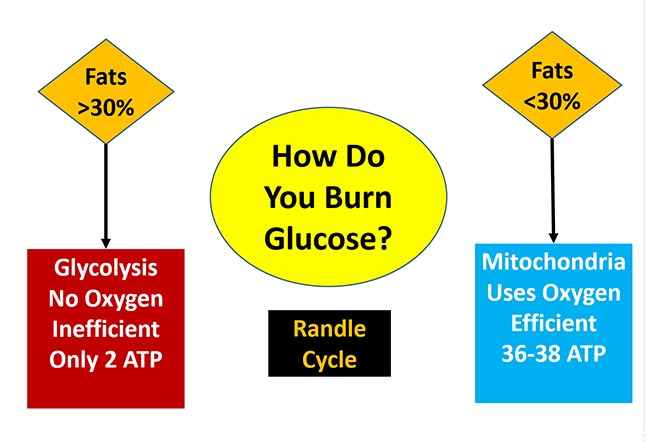
Low-carb diets have helped at least tens of millions of people improve their health for a very good reason, and that is there is a stealth switch that controls what fuel your mitochondria can burn. They can only burn one fuel at a time, either fat or glucose.
The switch has been given the name the Randle cycle, but it is more helpful to visualize it as a railroad switch that changes the tracks of the train. The train can only travel down one track; not both. This is because only one type of fuel can be burned at a time.
The best-case scenario is you metabolize, or burn, glucose in your mitochondria without any reductive stress (a term I will explain in my upcoming interview with Georgi Dinkov). When you do this, you will only generate 0.1% reactive oxygen species (ROS).
Not only does this route generate less ROS, but it also is incredibly efficient at energy production by creating 36 to 38 Adenosine triphosphates (ATP) for every molecule of glucose that is metabolized. It will also generate metabolic water and carbon dioxide, which are also important for your health.
For this to occur, as indicated in the figure above, you will need to consume less than 30% of your calories as fat. When you consume significantly more than that amount, the switch changes to burn fat in your mitochondria and you will not be able to burn glucose until your fat decreases to less than 30% of calories.
Since glucose is unable to be shuttled into the mitochondria to burn, it winds up backing up into your bloodstream, raising your blood sugar. This is a major contributor to diabetes. What little glucose is burned for fuel is done by using glycolysis, which is a primitive pathway that bacteria and cancer cells use.
It is great that we have this pathway, as you absolutely need it for quick fuel when you are activating your type II muscle fibers. But if this is the primary way you burn glucose, you are in a catastrophic metabolic state as you are creating loads of lactic acid as a waste product instead of healthy CO2. And, you are only generating two ATP for every molecule of glucose, which is 95% less energy.
Lactic acid increases reductive stress, which causes reverse electron flow in the mitochondria and causes reductive stress, which increases the ROS to 3% to 4%, which is 30 to 40 times more than when glucose is burned efficiently in the mitochondria. You likely don’t yet understand reductive stress, the opposite of oxidative stress, but I will be doing an interview with Georgi on this and will be posting it later this month.
Why Lactic Acid and CO2 Are so Important
Remember, when you are burning glucose efficiently in your mitochondria, the glucose is converted not only to 36 to 28 ATP, but when the electrons from the glucose are ultimately handed off to oxygen, metabolic water (deuterium free) is made and, very importantly, carbon dioxide.
This is vital to understand as carbon dioxide is a potent stimulator of mitochondrial biogenesis which will increase the number of mitochondria that you have so you can make even more energy.
Conversely, when you are burning glucose far less efficiently in glycolysis you are only generating two ATPs, and rather than creating life-sustaining carbon dioxide, you are generating life-damaging lactic acid, which will degrade your mitochondria and make them die sooner.
Georgi Dinkov’s Review of the Randle Cycle
In this second video, anti-vegan activist Paul Saladino interviews Dinkov about the Randle cycle. Dinkov comments:
“The first accusation against you, that whole milk will somehow make you fat because of the Randle cycle [is] misguided because if you look at the label, whole fat milk has like 5 grams of fat per serving but 12 grams of carbs, so you’re actually [getting] more carbs.
But let’s talk about meat. Most meats … are actually not that high in fat, and a lot of the fat in them is actually short chain fatty acids, which are not subject to the Randle cycle because they get transported into the cells through a known L-carnate-independent mechanism.
They metabolize similarly to sugar, and they don’t seem to be triggering the same sort of Randle cycle effect. Now, what drives the Randle cycle effect? When you’re oxidizing primarily fats … the master conductor redox modulator — which is the NAD to the NADH ratio, specifically the intra-mitochondrial one — drops. (This simply means the more NAD+ the better).
Basically, the NAD to the NADH ratio — which signals how oxidized versus how reduced you are, metabolically — [is] the primary regulator of whether the pyruvate dehydrogenase (PDH) will accept pyruvate and convert it into acetyl-CoA and then continue with the Krebs cycle in the electron transport chain, or not.
(Pyruvate is the three-carbon molecule breakdown product of glucose. PDH is the enzyme that converts it to acetyl-CoA which allows it to enter the mitochondria and be burned efficiently. If PDH is inhibited, it will force your body to use fat).
In other words, a high ratio of NAD to NADH (meaning high NAD+) when you’re very oxidized favors the activity of pyruvate dehydrogenase, so you will not be accumulating pyruvate [and] you will not be generating lactate.
But if you’re eating a lot of fat, the NAD to the NADH ratio drops, and then the buildup starts to happen. Pyruvate accumulates, lactic [acid] accumulates. [This means] the Krebs cycle is working because it’s accepting acetyl-CoA from the beta oxidation. That’s how the fatty acids get oxidized.
So, that’s the gist of the Randle cycle … If you’re providing a lot of glucose, in theory you should be able to out-compete the free fatty acids and oxidize more glucose versus fat, but that all depends on how much glucose can get into the cell.
And, unfortunately, when you’re eating these high-fat diets, when you have higher lipolysis, the actual uptake of glucose into the cell is already largely blocked …
Free fatty acids not only block the metabolism of glucose, they also block the uptake of glucose into the cell. So, they prevent the positive effects that the glucose would have had, in terms of competing with the free fatty acids …
Basically, too much fat blocks your uptake and utilization of glucose, and whatever glucose is taken up, you largely convert to nonbeneficial byproducts such as lactic acid …”
So, to summarize Dinkov’s rather complex exposition on the Randle cycle’s effects: a) fats can make you fat directly; and b) fats limit your ability to metabolize glucose. This is due to the Randle cycle’s preference to fat metabolism when more than 35% of your calories come from fats. And, even if you metabolize small amounts of glucose, your body will favor the conversion of glucose into fat versus ATP, water and carbon dioxide.
This is because the enzyme PDH, which converts the glucose metabolite pyruvate, is inhibited by high fat concentrations, and won’t convert pyruvate to acetyl-CoA to be burned in the mitochondria. Instead, because PDH is inhibited, the pyruvate is metabolized into lactate. This entire process is antimetabolic and slows down your metabolism, increases your ability to gain weight, and lowers your ability to generate cellular energy.
So, when more than 30% to 35% of your calories are coming from fat, you are forcing your cells to burn fat and put glucose on the back burner, instead of being metabolized like it should be.
Simple Strategies You Can Implement to Help Your Metabolism
Clearly, the most important strategy to help your metabolism is to avoid eating linoleic acid at all costs. It is impossible to avoid as it is in nearly every food, but you want to keep your levels below 2% of your daily calories. This means avoiding ALL processed foods and typically most restaurants.
A powerful strategy that nearly everyone should do is to make sure that you are taking a high-quality vitamin E supplement once a day. Why? Because most everyone has 20 to 30 times more LA in their body than optimal. Not only will vitamin E impair the release of it from fat cells, but once released it will help protect the LA from converting into dangerous oxidized linoleic acid metabolites (OXLAMs).
Most vitamin E supplements should be avoided, so how do you identify a high-quality vitamin E supplement? It should have most of the vitamin E isomer as alpha tocopherol, typically about 150 units. It should also have the other tocopherol isomers: alpha, beta and gamma, but at far lower doses.
Additionally, it should have alpha, beta and gamma tocotrienols. Finally, it should only have the “D” isomer. Avoid all vitamin E supplements that are “DL,” which are 50% of the wrong isomer.
It would be very wise to make sure you have enough NAD+ as it will also inhibit the release of LA from your fat cells. If you haven’t read and viewed by interview with molecular biologist Nichola Conlon on this topic, you can read it on my Substack. Sadly, NAD+ decreases dramatically as you age, which leads to nearly a 1-to-1 reduction in ATP, your cellular energy currency.
Fortunately, this can be inexpensively addressed by taking 50 mg of niacinamide three times a day. More is not better, so avoid 500 mg tablets as they will impair your longevity proteins. Typically, one sixty-fourth of a teaspoon of niacinamide powder is about 50 mg.
Finally, aspirin can be a very useful way to inhibit LA lipolysis. Aspirin is a very interesting approach and I go into far more details in my recent article on it.
Why Long-Term Low-Carb Diets Can Backfire
I previously touched on the Randle cycle in “How the Wrong Dietary Fat Can Wreck Your Health,” which also featured an interview with Dinkov. In that interview, Dinkov cleared up several areas of confusion, including the following:
•Low-carb dieting is a great short-term intervention for people who are overweight and insulin resistant. Lowering carbs will help reset your metabolism and recover your metabolic flexibility. However, in the long-term you will likely run into trouble — especially if you’re also doing a lot of endurance training.
One of the reasons for this is because when you’re in a low-carb state, lipolysis is elevated, which releases inflammatory polyunsaturated fatty acids (PUFAs) such as LA from your cells that are then into dangerous OXLAMs (oxidative linoleic acid metabolites) that will damage your tissues.
PUFAs such as LA are not digested. Instead, they’re stored.2 Most of the body fat in obese individuals is composed of PUFAs, not saturated fat. Saturated dietary fat is mostly burned (oxidized) and used up. So, most people have large stores of LA, and these stores need to be lowered to safe levels of 1% to 2% LA.
• Extended fasting and using an excessively narrow time-restricted eating (TRE) window can also backfire once you’re metabolically flexible, as it too helps push LA out of your cells.3,4,5,6,7,8,9,10 An extreme example of TRE is the one meal a day (OMAD) protocol, where you’re fasting 22 hours or more each day. Dinkov believes this is too extreme for most people.
The half-life of PUFAs such as LA, which get embedded and integrated into your cell membranes, is about 680 days. This means that ridding your body of LA will take approximately seven years, provided you don’t load more in. And you really do want to get rid of this fat, as it’s highly inflammatory and prevents your mitochondria and cellular machinery from operating properly. But you need to do it slowly and methodically.
Exercise and fasting will help drive the LA out, but you need to be really careful if you have a lot of LA storage. You want to avoid excessive lipolysis — any situation where you’ve run out of glycogen, which can easily happen when you’re not eating for long periods, when you’re on a chronic low-carb diet, and/or when you’re engaging in intense exercise, especially if you exercise in a fasted state.
• Chronic long-term, low-carb, and chronic extended fasting also result in elevated cortisol, which is highly inflammatory and promotes the storage of fat. Elevated cortisol is also highly catabolic and will cause you to lose lean muscle mass so your liver can make glucose. For these reasons, low-carb diets and fasting are best implemented as temporary strategies to restore metabolic flexibility.
How to Safely Reduce LA Stores Without Self-Sabotaging
With all of that in mind, how can you safely reduce your LA stores without self-sabotaging? Extensive fasting will, in this instance, backfire, as will overtaxing yourself with heavy exercise. You’ll need to accept that achieving optimal health is a marathon, not a sprint, and that it’s going to take years to purge your LA stores. Dinkov suggests the following strategy:
- Build muscle and maximize lean muscle mass
- Avoid fasting for longer than 16 hours
- Avoid all processed foods, restaurant foods, condiments and animal foods raised on grains, such as chicken and pork, as all of these are high in LA
- Eat a diet with about 15% protein, restricting fats to below 35% with the remainder consisting of carbs in the form of ripe fruits and some vegetables and well-cooked low-oxalate starches. Be careful to avoid all processed sugars as they typically are loaded with high fructose corn syrup that will increase endotoxin in your gut
So, to recap, temporarily implementing a six- to eight-hour time restricted eating window, or even longer eating restrictions and fasts, is appropriate for anyone who is insulin resistant and metabolically inflexible — and that’s about 95% of the population.
However, once you lose your insulin resistance and become metabolically flexible — which typically takes a few weeks — you’ll want to increase your eating window to eight to 12 hours to avoid elevating your cortisol, as cortisol promotes chronic inflammation that can lead to tissue damage, and promotes the storage of fat.
If you stop supplying carbs to your body, the organs that need them will activate glucose creation in your body by elevating cortisol. So, once you’re metabolically flexible, you want to avoid extended fasting.
How does TRE and extended fasting raise cortisol, you ask? It is important to understand that cortisol is a powerful hormone whose primary purpose is to shred your lean muscle mass and bones to obtain amino acids for your liver so it can produce glucose. This is cortisol’s primary role. If your blood sugar gets too low, you will go into a hypoglycemic coma and die. Your brain requires sugar and if it doesn’t get it, it is game over.
Usually, it takes a few weeks and occasionally longer, for you to recover your metabolic flexibility. During those first three to six months, stick to a six- to eight-hour eating window. Once you’re metabolically healthy, avoid eating windows under eight hours. I’ve now shifted to a schedule where I always have an eating window of more than eight hours a day and closer to 12, in the summer when there is plenty of daylight.
Interestingly a recent study showed that a lower fat, higher carb approach lowers the risk of death by 30%, while with the converse a high-fat, low-carb diet increases the risk of death by 30%.11,12 So, it’s your choice for sure, but I am convinced that having more healthy carbs than fat is a great choice to improve your metabolic health.
- 1 YouTube Georgi Dinkov
- 2 Haidut.me October 22, 2019 (Archived)
- 3 Haidut.me February 16, 2021 (Archived)
- 4 Haidut.me September 27, 2022 (Archived)
- 5 Haidut.me March 4, 2021 (Archived)
- 6 Haidut.me December 10, 2021 (Archived)
- 7 Haidut.me June 21, 2022 (Archived)
- 8 Haidut.me November 17, 2020 (Archived)
- 9 Haidut.me December 21, 2021 (Archived)
- 10 Haidut.me September 30, 2020 (Archived)
- 11 J Intern Med. 2023 May 3. Low-carbohydrate diets, low-fat diets, and mortality in middle-aged and older people: A prospective cohort study
- 12 Haidut.me May 9, 2023 (Archived)