Chronic disease rates in America have increased dramatically, from 7.5% of the population in the 1930s to 60% today, representing a 700% surge, while obesity now affects 40% of Americans
Four companies (Bayer, Syngenta, BASF, and Corteva) dominate the agricultural market, with Bayer controlling 18.2% of global agrochemicals and, together with Corteva, over half of U.S. retail seed sales for major crops
The concentration ratio (CR4) in U.S. agriculture has reached extreme levels — 85% in beef packing, 70% in pork packing, and 95% control of corn intellectual property by just four companies
In 2024, pharmaceutical companies spent $294 million on lobbying, while agribusinesses spent $32.7 million, with Bayer alone spending $6.46 million in the U.S.
Modern industrial agriculture mimics pharmaceutical business models by creating dependency cycles. Farmers must repeatedly purchase synthetic inputs while patients require ongoing medication rather than cure-focused treatments
America is facing a health crisis. In the 1930s, just 7.5% of Americans suffered from chronic diseases.1 Today, that figure has surged by over 700%, with 60% of Americans now living with one or more chronic conditions.2 We are also fatter than ever — obesity rates have reached 40% and continue to climb.3
Even more alarming, the U.S. is the only developed nation where both healthy life expectancy and total life expectancy are in decline4 — a trend that began before COVID-19. In other words, we’re not living as long as our grandparents did, despite all of our technological advancements.
How did we get here? One answer lies in the disturbing parallels between Big Pharma and Big Ag — two industries that wield enormous power over our health. The relationship between our food systems and our healthcare systems is no coincidence. Food is being produced in ways that undermine our health and keep us dependent on pharmaceuticals.
The business models of both the pharmaceutical and agriculture industries thrive on treating symptoms rather than addressing root causes, ensuring a continuous cycle of dependency.
Pharmaceutical companies profit immensely by focusing on symptom management instead of curing underlying conditions. Chronic diseases like diabetes or hypertension, for example, have become lucrative markets, as patients often require lifelong medication rather than one-time treatments.
Big Ag mirrors this approach. Farmers are locked into systems reliant on synthetic fertilizers, pesticides, herbicides, and genetically modified crops — inputs they must repurchase every season. Rather than restoring soil health or embracing regenerative farming, these practices perpetuate chemical dependency. (And fail to provide truly nutritious, health-promoting food).
Both industries promise solutions but often create new problems. In agriculture, pests develop resistance, leading to the need for even stronger chemicals. In healthcare, one medication’s side effects often require another drug to manage.
This cycle of dependency benefits corporations but leaves the rest of us sick, overmedicated, and struggling. The unfortunate reality is that the power over our health is concentrated in the hands of a few corporations.
Understanding this connection between Big Ag and Big Pharma is the first step toward change. By supporting alternative systems — whether regenerative agriculture or holistic health practices — we can begin to reclaim our well-being.
Bayer — Bridging Big Pharma and Big Ag
When exploring the overlap between Big Pharma and Big Ag, Bayer stands out as a stark example. As of December 2023, Bayer comprised 340 consolidated companies operating in 80 countries.5,6 Its vast reach ensures its influence spans nearly every aspect of health and agriculture, blurring the lines between industries that should prioritize health over profit.
Before Bayer acquired Monsanto in 2018, the two companies operated in separate realms. Monsanto was a powerhouse in agriculture, dominating the seed and agrochemical markets, while Bayer focused primarily on pharmaceuticals and consumer health products. The $63 billion merger merged these sectors, creating a global behemoth that exerts significant influence over both food production and health care.
This acquisition solidified Bayer’s dominance in agriculture. By 2018, Bayer controlled 18.2% of the global agrochemical market.7 Between 2018 and 2020, Bayer and Corteva collectively accounted for more than half of U.S. retail seed sales for corn, soybeans, and cotton. Globally, Bayer, Syngenta, BASF, and Corteva dominate the agricultural market, controlling a substantial share.8
This German multinational now operates across pharmaceuticals, consumer health, and agriculture — a structure that raises serious concerns. Bayer’s pharmaceutical division spans several therapeutic areas:
Cardiology — Medications like Xarelto (rivaroxaban) treat blood clots, hypertension, and cardiovascular issues.
Oncology — Cancer treatments such as Stivarga (regorafenib) and Nexavar (sorafenib) address colorectal, liver, and kidney cancers.
Women’s health — Products include hormonal contraceptives and treatments for menopause-related conditions.
Ophthalmology — Drugs like Eylea (aflibercept) combat macular degeneration.
Bayer’s consumer health division includes household names, reinforcing Bayer’s influence in everyday health decisions:
Allergy and cold remedies — Claritin and Alka-Seltzer.
Digestive health — MiraLAX and Rennie.
Skin and wound care — Bepanthen and Canesten.
Bayer’s agricultural division, bolstered by Monsanto’s expertise, focuses on “crop science” and food production. While this may seem to serve public health by addressing food security, the reality is more complicated. Bayer’s focus on genetically modified seeds, synthetic fertilizers, and pesticides promotes systems of dependency that harm soil health and perpetuate chemical use.
Bayer’s dual role in pharmaceuticals and agriculture exemplifies how intertwined these sectors have become. The consolidation of power across both industries raises pressing questions about the health of people and the planet. Is it truly possible for one corporation to champion health while contributing to agricultural practices that undermine it?
Consolidation of Power and CR4 — A Rigged System
The centralization of power in both Big Ag and Big Pharma has created systems that prioritize corporate profits over the health of people, farmers, and the environment. By examining the CR4 (Concentration Ratio of 4) — a metric that measures the market share of the four largest firms in an industry — we can see just how concentrated these industries have become. The CR4 provides a clear picture of market competitiveness:
When the CR4 > 50%, the top four firms control more than half the market, suggesting significant concentration.
A CR4 > 80% indicates a highly concentrated, oligopolistic market.
A CR4 < 40% reflects a relatively competitive industry.
High CR4 values signify reduced competition, giving dominant firms significant power over pricing, policies, and market access, often at the expense of consumers and smaller players. In the U.S. agricultural sector, CR4 values are alarmingly high, showcasing how a handful of corporations dominate key markets:
Beef packing — From a CR4 of 25% in 1977, it soared to 85% by 2018.
Pork packing — Rose from 33% in 1976 to 70% in 2018.
Broiler (chicken) processing — Increased from 34% in 1986 to 54% in 2018.
Seed market — By 2023, BASF, Bayer, Corteva, and Syngenta controlled 95% of U.S. corn and 84% of soybean intellectual property.
Nitrogen fertilizer (North America) — CR4 stands at 77%.
Agricultural machinery — The CR4 is approximately 60.8%.
Farmers are forced into a system where they have little choice over inputs, crops, livestock, or markets, and a system that encourages a “go big or go home” mindset to make the numbers work. This industrialized and concentrated setup marginalizes small farmers and alienates consumers from the family farms that grow their food. Meanwhile, biodiversity, rural communities, and soil health suffer as corporations push monocultures and chemical dependency.
While the pharmaceutical industry is slightly more fragmented, certain sectors exhibit high CR4 values:
Vaccines — Pfizer, GSK, Sanofi, and Merck control nearly 80% of the global market.
Diabetes drugs — Dominated by Novo Nordisk, Eli Lilly, and Sanofi, with a CR4 of about 70%.
Oncology — The top four companies (Roche, Merck, BMS, and Novartis) control 45% to 50% of the market.
High CR4 values highlight a troubling reality: concentrated power creates a system ripe for market abuse. Whether it’s Big Ag controlling what farmers plant or Big Pharma deciding what treatments are available, these industries hold disproportionate power over our food and health systems.
The result? Consumers pay more, farmers earn less, and the broader systems we depend on — our health and our environment — continue to erode.
Government Funding — Reinforcing Unsustainable Systems
Both Big Ag and Big Pharma rely on government funding and policies that prioritize their profit-driven models. This institutional support not only perpetuates cycles of dependency but also manipulates public perception through lobbying and control of educational narratives.
Government subsidies unfortunately prioritize industrial farming practices, favoring monocultures that require chemical inputs to manage pests and maintain yields. Monocultures, with their lack of biodiversity, create environments where pests thrive, driving farmers to use more synthetic pesticides.
The Federal Crop Insurance Program guarantees minimum profits for farmers. While this reduces risk for farmers, it also drives up input costs as suppliers exploit this guaranteed revenue stream. With rising costs for fertilizers, pesticides, and machinery, farmers’ slim profit margins make them increasingly dependent on subsidies.
Subsidized crop insurance also incentivizes conventional farming methods over sustainable alternatives. Farmers are often required to use high-yield practices, genetically modified seeds, and chemical inputs to qualify. This system rewards high-yield chemical-intensive farming and does not provide any financial incentive to pursue regenerative practices like crop rotation, no till, and cover cropping.
Subsidies help sustain chemical dependency in agriculture, so Big Ag companies want to make sure the subsidies stick around.
Healthcare policies mirror agriculture, prioritizing conventional methods while sidelining preventive care. Health Insurance coverage focuses on medications, surgeries, and hospital visits but neglects preventive measures like nutrition, exercise, or alternative therapies.
Isn’t it so frustrating that your gym membership or chiropractor visits aren’t covered by “health insurance”? Chronic diseases are often managed with pharmaceuticals, which treat symptoms but rarely address root causes.
This creates a cycle of dependency similar to agriculture, where conventional practices are perpetuated, leaving healthier alternatives underfunded and underutilized.
Manipulating and Controlling the Narrative
Both industries invest heavily in shaping public perception and regulatory outcomes through extensive lobbying.
In 2024, U.S. agribusinesses spent $32.7 million on lobbying to influence policies and regulations.9
The pharmaceutical and health products sector spent a staggering $294 million on lobbying efforts.10
In 2024, Bayer spent $6.46 million on lobbying in the U.S. alone.11
In the EU, Bayer reported lobbying expenditures between €7 million and €8 million in 2023, the highest of any company.12
Both Big Ag and Big Pharma also influence educational curricula to align with their interests.
Textbooks often emphasize conventional farming methods, including synthetic pesticides, fertilizers, and GMOs, while giving less attention to sustainable alternatives.
Large agribusinesses shape agricultural programs at universities, promoting practices that support their products.
Pharmaceutical companies sponsor Continuing Medical Education (CME) programs for Doctors, promoting the latest drugs over non-pharmaceutical treatments.
Many medical textbooks are influenced by pharmaceutical companies, sometimes including advertisements or content that favors their products.
Companies like Bayer also shape public health narratives through educational campaigns about diseases such as cancer, cardiovascular conditions, and diabetes. While these campaigns raise awareness, they often steer solutions toward pharmaceutical products rather than holistic or preventative measures. Both industries have created systems that …
Reward conventional, unsustainable practices.
Suppress alternatives through lobbying and narrative control.
Drive dependency on synthetic inputs and pharmaceutical treatments.
The foundation of their massive profits lies in creating perpetual dependency by focusing on symptom management which ensures a consistent revenue stream.
Cures, on the other hand, like addressing food choices and lifestyle habits, or implementing regenerative farming practices, would reduce long-term dependency, undermining the continuous profit model.
It’s undeniably a clever business model — though one that comes at the expense of our health and well-being. Farmers and patients are not to blame! They are doing the best they can trying to navigate these difficult systems.
The structures themselves — bolstered by government funding and corporate influence — limit options for healthier, more sustainable alternatives.
Gut Health and Soil Health Parallels
The analogy between gut health and soil health highlights a deeper connection between the human health and agriculture industries. Gut health is now scientifically linked to a wide range of chronic diseases (diabetes, autoimmune disorders, neurological disorders, digestive disorders, and more), highlighting the critical role of the gut microbiome in maintaining overall health.
Just as a balanced, healthy microbiome is essential for human well-being, a thriving soil microbiome is crucial for producing nutrient-dense, sustainable food.
An imbalanced soil microbiome disrupts the essential ecosystem functions that sustain healthy soil, triggering widespread issues like pest invasions, nutrient deficiencies, and disruptions in natural carbon and water cycles.
Over-tilled soil, deprived of organic matter, and inundated with chemicals like pesticides and synthetic fertilizers, causes the microbiome to destabilize. As a result, soil fertility and plant health decline, creating a greater reliance on harmful chemicals to maintain crop production.
Now imagine if you took an antibiotic every day. Over time, this could disrupt the delicate balance of beneficial bacteria in your gut, leading to digestive issues, weakened immunity, and overall health problems, right?
Well, the same effect occurs in the soil when we rely heavily on agrochemicals. Many of these chemicals function like an “antibiotic” to the soil microbiome, killing or suppressing beneficial microorganisms that are essential for soil health and plant growth. Without a thriving community of beneficial microbes, the soil becomes less resilient, more prone to pests and disease, and less effective at absorbing water and nutrients.
Over time, this leads to a dependence on even more chemical inputs to maintain productivity, much like how the overuse of antibiotics can lead to the need for stronger medications to manage infections.
Just as enhancing gut health reduces our reliance on pharmaceuticals, improving soil health is essential to reducing the dependence on toxic chemicals in agriculture. Plus, these two microbiomes are deeply interconnected — healthy soil supports nutrient-dense crops, which, in turn, positively impact the human microbiome.
Intellectual Power and Seed Saving
The parallels between the agricultural and pharmaceutical industries become even more apparent when examining their approach to intellectual property (IP) development. Both industries profit by creating so-called “novel” products marketed as innovations to “improve our health.” This IP focus puts a heavy emphasis on technological solutions, often at the expense of more sustainable, natural alternatives.
In reality, these efforts often center on market domination and securing exclusive access to resources, ensuring their control and profitability rather than prioritizing genuine health or sustainability.
In agriculture, seed saving was a longstanding tradition that allowed farmers to preserve crop diversity and maintain independence. By saving and replanting seeds each year, farmers ensured they had access to crops suited to their local environments.
However, with the advent of patented genetically modified (GM) seeds from companies like Bayer and Monsanto, this practice has been largely undermined. These corporations not only patent the seeds but also often bundle them with the requirement to buy proprietary herbicides, pesticides, and fertilizers, creating a “package deal” that traps farmers into a cycle of dependence.
The widespread use of GM seeds has led to monoculture farming, where large tracts of land are dedicated to a single crop. This practice is vulnerable to pests, diseases, and soil degradation, increasing the need for toxic chemical interventions.
At the same time, the consolidation of the seed industry into a few powerful corporations has raised seed prices, limiting access for small-scale farmers and pushing out traditional varieties in favor of commercial crops designed for high yields, not biodiversity.
The large-scale adoption of monoculture farming truly began around 1950, driven by the Green Revolution. This period saw the introduction of high-yielding crop varieties, chemical fertilizers, pesticides, and modern irrigation techniques, which significantly shifted farming toward monoculture.
It revolutionized agriculture, especially in developing countries, with crops like wheat, rice, and corn being grown in vast, uniform fields to maximize production. Prior to this, farming systems were more diverse, incorporating a mix of crops and livestock. Practices such as crop rotation, polyculture, and pasture-livestock integration were common and contributed to nurturing the soil microbiome.
While some claim that industrial agriculture is necessary to feed the growing global population, the reality is that we already produce enough food to feed 1.5 times the world’s population.13 The problem lies in food distribution, waste, and political barriers that prevent nourishing food from reaching those who need it most.
Big Ag invests heavily in synthetic and technological solutions — such as genetic engineering, precision agriculture, and chemical treatments — that can be patented, protected, and profited from. These innovations often prioritize short-term yield increases without regard for the long-term health of the soil or ecosystem.
In contrast, natural farming practices like agroecology and permaculture, which focus on biodiversity and ecosystem balance, can’t be patented. After all, you can’t dominate markets when you work in harmony with Mother Nature!
This shift in focusing on IP and tech solutions over natural methods mirrors the situation in the pharmaceutical industry. Just as agricultural giants control the seed market through patents and proprietary technologies, pharmaceutical companies like Pfizer, Merck, and Johnson & Johnson hold patents on “life-saving” medications, limiting access to affordable alternatives.
Generic drugs often face barriers due to patent protections, and smaller producers struggle to compete with these industry giants.
Big Pharma “innovation” is primarily focused on developing new drugs, therapies, or medical devices, frequently overlooking low-cost, lifestyle-based interventions that they can’t profit from (like dietary, lifestyle and exercise improvements).
In both sectors, the focus has shifted away from independent solutions to a reliance on corporate-controlled products. For agriculture, it means dependence on GM seeds and chemicals; for healthcare, it means reliance on patented pharmaceuticals.
This model ensures a continuous revenue stream but limits the exploration of more holistic or alternative approaches — whether that’s crop rotation and heirloom seeds in farming or preventive care and natural treatments in medicine.
How to Make Real Change
The current systems in both healthcare and agriculture are designed to ensure that corporations profit at the expense of public health and sustainability. These industries prioritize efficiency, profit, and corporate control, rather than the long-term well-being of people or the planet.
Just as access to non-GMO or heirloom seeds becomes more limited and expensive in agriculture, alternative healthcare treatments often face similar barriers. Natural remedies or integrative approaches are often excluded from insurance coverage or priced out of reach, much like organic or heirloom crops are more expensive than their conventional counterparts.
Now don’t get me wrong — Technology and efficiency improvements are important, and pharmaceutical and chemical interventions do have their place! However, it’s clear that our current approach involving heavy reliance isn’t working. We rely on these solutions for short-term relief, but they often come with long-term consequences.
In agriculture, the focus is on high-yield, chemical-intensive farming that sacrifices biodiversity and soil health. In healthcare, the emphasis is on symptom management through drugs, rather than addressing the root causes of illness.
Both industries are becoming dangerously consolidated, limiting choice, increasing costs, and deepening a cycle of dependency on corporate-controlled solutions.
Real change won’t come from the top down, as entrenched corporate interests hold too much power. It will come from the bottom up — through consumers, patients, and farmers making conscious decisions to support a healthier, more sustainable future.
The alternative is clear: regenerative farming that nurtures the land and promotes biodiversity, paired with a healthcare system that empowers individuals through preventative, holistic approaches.
We have the power to make a difference. By supporting farmers who embrace regenerative practices and avoiding food produced with harmful chemicals, we can drive a market shift toward healthier, more sustainable food. Likewise, by taking control of our health and focusing on prevention — through proper diet, exercise, and stress management — we can reduce our dependence on pharmaceutical drugs.
The change we need starts with us. By choosing to invest in regenerative agriculture and preventative healthcare, we can break free from the systems that profit from our dependency. Together, we can build a future where health and sustainability take priority over corporate control.
About the Author
Ashley Armstrong is passionate about helping others restore metabolic health and in creating an alternative food system low in PUFAs and low in toxic agrochemicals. She’s the co-founder of Angel Acres Egg Club, which specializes in low-PUFA (polyunsaturated fat) eggs that are shipped to all 50 states.
Armstrong also co-founded Nourish Food Club, which ships low-PUFA chicken, low-PUFA pork, beef, cheese, A2 dairy and traditional sourdough to all 50 states. While the egg club has memberships open, Nourish Food Club has a temporary waiting list.
The risk of permanent disability or death from the MMR vaccine may be greater than the risk posed by measles, mumps or rubella infection because large enough vaccine safety studies haven’t been done, according to a collection of new documents released by Physicians for Informed Consent (PIC).
The collection includes disease information statements for measles, mumps and rubella, and a vaccine risk statement for the MMR vaccine.
According to the Mayo Clinic, measles is a viral infection typically accompanied by a skin rash, fever, cough, runny nose, sore throat, inflamed eyes and tiny white spots on the inner cheek.
Mumps and rubella also are viral infections. According to PIC, all three viral infections typically resolve on their own with proper rest and hydration in almost all cases.
Dr. Shira Miller, PIC’s founder and president, told The Defender, “The main takeaway is that the MMR vaccine has not been proven safer than measles, mumps and rubella.”
PIC is a nonprofit that delivers data to doctors and the public so they can “evaluate the data on infectious diseases and vaccines objectively, and voluntarily engage in informed decision-making about vaccination.”
Miller explained that the MMR vaccine clinical trials didn’t include enough subjects to be able to prove that the risk of permanent disability or death from the vaccine is less than the risk of permanent disability or death from measles, mumps or rubella.
The number of measles, mumps or rubella infections that result in permanent disability or death is so low that researchers would need to have at least 50,000 subjects in a clinical trial to be able to show that the vaccine is safer than the disease.
The MMR vaccine’s clinical trials fall very short of that benchmark, according to PIC’s statement on MMR vaccine risk.
Prelicensure clinical trials for vaccines, including the MMR shot, are “relatively small and usually last no longer than a few years,” according to the Centers for Disease Control and Prevention’s (CDC) 2024 “Manual for the Surveillance of Vaccine-Preventable Diseases.”
The 2024 edition of the CDC manual doesn’t specify exactly how many subjects are in these “relatively small” trials. However, the 2011 edition stated that “relatively small” meant that such trials are “usually limited to a few thousand subjects.”
The rate of disability or death among healthy children from any of those three diseases is incredibly rare. PIC wrote:
“For children under age 10 at normal risk (i.e., with normal levels of vitamin A and infected after birth), the pre-vaccine annual risk of death or permanent disability from measles, mumps, and rubella respectively was 1 in 1 million, 1 in 1.6 million, and 1 in 2.1 million. …
“Therefore, the cumulative annual risk of a fatal or permanently disabling case of any of those diseases was about 1 in 500,000, and the risk over a 10-year span was 1 in 50,000.”
In other words, clinical trials would need at least 50,000 subjects to detect one case of death or disability from a measles, mumps or rubella infection.
Meanwhile, no safety studies on the MMR vaccine have been done that looked for possible genetic mutations, impaired fertility or cancer, according to the product’s package insert.
Dr. Liz Mumper, a pediatrician, praised PIC for releasing the collection of data on measles, mumps and rubella, and on the MMR vaccine.
“Most parents have not had access to the information contained in the thoughtful analysis done by Physicians for Informed Consent. Parents should recognize that the risk of bad outcomes from a measles infection — if their child lives in a developed country with clean water and is not immune-deficient — is extraordinarily rare, as PIC reports.”
Unfortunately, she added, recent U.S. media reports “sensationalized” the risks of measles.
What’s typically missing from measles media reports
Studies also suggested a link between a naturally acquired measles infection and a lower risk of asthma, eczema and hay fever.
Malnutrition — particularly vitamin A deficiency — is a primary cause of over 100,000 measles deaths in underdeveloped countries.
Mumper said that the risk of bad outcomes from a measles infection drastically declined with improved public health and better nutrition long before MMR vaccines were available.
“The risk of bad outcomes has always been more for children in developing countries who are more likely to have nutritional deficiencies including vitamin A and lack access to clean water,” Mumper added.
Last week, independent journalist Alex Berenson reported that a preschool-aged child died of “cardio-respiratory arrest” after taking a dose of Moderna’s Covid mRNA vaccine during its clinical trials. Despite federal requirements to report all trial information, the company withheld the truth for years as it raked in billions from its Covid shots.
The extent of the cover-up remains unknown, but Moderna, headed by CEO Stéphane Bancel, disregarded federal law requiring companies to report “summary results information, including adverse event information, for specified clinical trials of drug products” to clinicaltrials.gov. The company, not the government, is responsible for posting all results, and failure to report the death of a child constitutes a clear breach of US law, which threatens civil action against any party that “falsifies, conceals, or covers up by any trick, scheme, or device a material fact.”
To this point, pharmaceutical companies have remained largely immune for their role in perpetrating globally-scaled deception resulting in thousands of vaccine injuries and billions in profits. They have enjoyed a liability shield courtesy of the PREP Act, which offers protections for injuries resulting from vaccines; that indemnity, however, does not extend to non-compliance with federal regulations, material misstatements or omissions of fact, or other offenses.
The death of the child only became known because of an obscure European report released last year, which revealed that Moderna has known about the death for over two years while it continues to advertise Covid shots to children as young as six months old.
Moderna’s European filing also revealed that the company withheld trial results demonstrating that children under 12 who received the vaccine were ten times more likely than those who received the placebo to suffer “serious side effects.” Without any evidence, Moderna claimed that the side effects, including the death of a child, were unrelated to the shots.
The incoming Trump administration offers a rare opportunity to hold pharmaceutical companies accountable and to investigate the depth of the cover-up.
The FDA is responsible for enforcing the reporting of vaccine trial results, but recent heads of the agency such as Scott Gottlieb and Robert Califf have been fanatical supporters of Big Pharma. Trump’s choice for FDA, Dr. Marty Makary, presents a stark contrast to his predecessors. Makary has criticized the US Government’s reluctance to acknowledge the role of natural immunity in preventing Covid infection, and he opposed the widespread vaccination of children. He testified to Congress, “In the U.S. we gave thousands of healthy kids myocarditis for no good reason, they were already immune. This was avoidable.”
President-elect Trump has tapped Robert F. Kennedy, Jr., perhaps the most well-known critic of the Covid vaccines, to lead the Department of Health and Human Services, which oversees the FDA. He has named Dr. Jay Bhattacharya, an author of the Great Barrington Declaration, as his choice to head the National Institutes of Health. Further, Senator Ron Johnson (R-WI) told Berenson that he plans to subpoena the FDA once Republicans become the majority party in the Senate this month.
President Trump’s first term was ultimately defined by his failure to fulfill his pledge to “drain the swamp.” A corrupt bureaucracy, personified in many ways by Dr. Anthony Fauci, aided and abetted by advisors like his son-in-law, Jared Kushner, hijacked the president’s agenda. Now, the Trump administration has an unlikely yet monumental opportunity for health reform, which can start on January 20 with an investigation into Moderna’s cover-up.
The Covid response doomed Trump 1.0. Whether one regards this as a monumental error, the betrayal of a president by his advisors, an event beyond the president’s control, or a deeper and more complex plot involving everything and everyone associated with the government, both in the US and around the world, there is no question of the scale of the calamity for the public. The shots are part of that, the capstone failure of a long line of foreshadowing with lockdowns and all that was associated with pre-pharmaceutical interventions. The antidote came not as a cure but, for many, the disease itself.
Articles by Brownstone Institute, a nonprofit organization founded in May of 2021 in support of a society that minimizes the role of violence in public life.
Recently, new data emerged showing that the COVID vaccines persist for up to 700 days within patients (and likely longer). As this is quite concerning to many, I was required to write an article explaining how this happens, and how it relates to the egregious production process that characterized the COVID-19 vaccines.
Upsides and Downsides
A lot of things in life are trade-offs, and as I’ve gotten older, more and more I’ve come to appreciate how many things in our society boil down to the fact that the options for addressing them all have significant downsides, so in many cases no solution exists which is satisfactory to all parties involved.
As such, this dilemma is typically managed by some combination of the following:
• Having a biased focus which emphasizes the benefits of an approach a side supports and downplays its downsides (or conversely disproportionately focuses on the downsides of an opposing position). To this point, I’ve had countless issues I’ve debated both sides of and been able to effectively persuade audiences of each one—which highlights how subjective many of the entrenched beliefs we hold actually are (and, in turn, is why I put so much work here into fairly presenting both sides of each controversial topic I cover).
• Sweeping the downsides under the rug and gaslighting the populace into believing they don’t exist.
• Blitzing the public into supporting a questionable policy before they have time to recognize its downsides, and if that fails, overtly forcing them to go along with it.
Note: I believe one of the reasons why governments frequently do horrible things to their people is because they are put in the position of having to “solve” a problem (but with no truly satisfactory way to do it), so they become habituated to using the three previous strategies to push their chosen policies along and simultaneously develop a collective mentality that those questionable approaches are necessary for the “greater good.”
There are many different manifestations of this dilemma, many of which I believe are essentially reflective of a foundational concept in medicine—sensitivity and specificity.
An ideal diagnostic test would catch every instance of a disease (100% sensitivity) and simultaneously never have a false positive (100% specificity). Unfortunately, in almost all cases, this is impossible to do, and instead a trade-off exists where you can either prioritize sensitivity (which leads to a significant number of false positives) or prioritize specificity (which leads to a significant number of false negatives). During COVID for example, a decision was made to prioritize sensitivity with the PCR tests (by having a high replication cycle thresholds) so no cases of COVID would be missed, but this resulted in such poor specificity that the PCR tests effectively became worthless (except for drumming up fear) since they produced so many false positives.
As such, when tests are designed, attempts are made to ensure there is a good balance between sensitivity and specificity. In some cases this is successful (e.g., there are many lab results we will take at face value), but in many other cases, given the technology involved, it’s not really possible to do so (or it is, but lobbying led to overdiagnosis so a medical product could be sold).
Similarly:
• Many policies in the justice system aims to enact fall into this same situation. For example, an ideal death penalty is robust enough to deter murder (and keep violent criminals away from the public), but simultaneously lenient enough that it doesn’t accidentally execute innocent individuals. Since there is no way to have both perfect sensitivity and specificity on this, different states take radically different approaches to how they enforce the death penalty (lying all along the spectrum between sensitivity and specificity). Likewise, our judicial system was founded under the principle “innocent until proven guilty” whereas many other countries have judicial systems that are the exact opposite.
• In medicine, one of the greatest challenges is finding the appropriate dose, as people differ, so what might be a safe and therapeutic dose for one person could be toxic for another. As such, standardized doses are typically chosen by finding the best overall balance between efficacy (a sufficient dose) and safety (avoiding a toxic dose), but for many drugs, the standardized dose leads to many more sensitive patients becoming severely injured by the drugs (which is then commonly “addressed” by gaslighting those injured patients). Note: a much more detailed discussion on the art of dosing can be found here.
• Every medical intervention has its risks and benefits, and ideally, the job of a physician should be to accurately weigh those to determine the best treatment for a patient (while simultaneously conveying what they are to the patient). Unfortunately, in many cases, they don’t (which is a large part of why patients are so dissatisfied with the medical system).
Overall, there are three key takeaways from this paradigm I wish to focus on in this article:
1. It is often incredibly difficult to find an acceptable balance between sensitivity and specificity, and many of the conventions our society now follows were the result of years of debate and protest from both sides to find a palatable middle ground between the two.
2. In almost any sphere I frequently find rushed attempts to find an acceptable balance between two conflicting positions to be immensely flawed and prone to creating significant issues in the future.
3. Many of the issues with the vaccine program are encapsulated by this framework.
The Forgotten Side of Medicine is a reader-supported publication. To receive new posts and support my work, consider becoming a free or paid subscriber. To see how others have benefitted from this newsletter, click here!
How Vaccines “Work”
Note: many believe the immune system is one of the least understood parts of physiology, something I would argue is a result of immunological research being focused on making profitable pharmaceuticals (e.g., vaccines) rather than understanding how it works.
In the classical conception of immunity, there are two types, innate immunity and adaptive immunity, with the innate response being relatively nonspecific (so it can work against a wide variety of infectious threats, including those the body has never seen before) and the adaptive one, which is uniquely suited to eliminating the specific invading organism.
The most widely accepted explanation for how the adaptive immune system works is “clonal selection theory” which states that the immune system:
1. Uses a random generation process to create a vast pool of potential antigen matching sequences.
2. Has vast number of different immune cells that each have those sequences attached to them circulate the blood stream.
3. Waits for one of those immune cells to contact an invading pathogen that the sequence it carries matches.
4. Have each of the immune cells be programmed to start rapidly reproducing once they get a sequence match.
5. Through the previous 4 steps, make it possible to produce a large number of immune cells which are specific to an invading organism (because they can bind to their antigens and alert the rest of the immune system to the organism’s presence), and thus effectively neutralize the infection.
6. Once the process is complete, to leave behind memory B cells, which match the invading pathogen and are able to stimulate the immune response in a much more rapid fashion (thereby shortening the time that steps 3 and 4 take).
The theory behind vaccination is that if the specific immune response and memory B cells can be created before the body encounters a dangerous microbe, this can:
• Allow the body to mount a robust immune response before a harmful invading organism has time to multiply within the body and cause significant damage.
• Cause individuals to rapidly clear infections (rather than needing to wait for the adaptive response to kick in), thereby reducing or eliminating the amount of time they can spread the disease into the population.
• Cause individuals to develop an immune response at the site of infection (e.g., the membranes of the nose and throat), thereby preventing the organism from being able to colonize those areas and thus preventing its transmission.
Being able to do this is hence immensely appealing to governments, as it allows a single intervention (the vaccine) which can easily be distributed to everyone in a top-down manner (which is what governments are good at doing) to address a longstanding problem (infectious disease outbreaks) and more importantly, to allow the government to present the appearance of working in earnest to safeguard the public’s health. Because of this appeal, throughout history, governments will get deeply invested in vaccine programs, and then once issues arise with those programs, double-down on the vaccine (e.g., with mandates) rather than reconsider the wisdom of the vaccine program. Note: in a previous article, I showed how this misguided and tyrannical conduct has existed ever since the first vaccine (smallpox).
Vaccine Production
To “work” vaccines aim to mass produce a dangerous organism’s antigen without the organism itself being present and then administer that antigen into the body. By doing so, the intermediate stage of an infection (where the organism has already reproduced enough inside its host to have a large number of antigens be available to match a circulating immune cell) can be achieved without the individual being in danger of being damaged or overwhelmed by the infection.
Unfortunately, unlike chemicals which can be rapidly synthesized, antigens are complex enough that they can only be produced by biological systems. As such, to produce the antigen, one of the following is typically done.
• Mass produce the infectious organism, then “kill” it so that its antigens can be collected, but the organism itself is not able to cause infections.
• Genetically modify another organism to mass produce a desired antigen, then kill it and extract the antigen (e.g. the HPV vaccine does this with modified yeasts).
• Modify the live pathogen (typically a virus) so that it can still cause the infection and reproduce inside the recipient but simultaneously is “weakened” so that it is less likely to cause illness.
• Genetically modify a “benign” virus to contain the antigen but be unable to replicate in the human body, then mass produce it outside the body, and have the body develop an immune response to the virus and the antigen on it once it is injected.
• Introduce mRNA into cells so human cells can produce large amounts of the desired antigen, which the immune system then sees (e.g., on the surface of the cells) and develops an immune response to.
The basic problem is that none of these approaches are perfect, and each has both its ups and downsides. For example:
• Most can create autoimmunity.
• In those where only a single antigen is used (and the virus spreads from human to human), if the vaccine actually works, it rapidly stop working because the pathogen quickly evolves a new antigen that no longer matches the vaccine.
• It contrast, the multi-antigen ones (which don’t have that issue) are typically live attenuated vaccines, which then can cause those with weakened immune systems to develop infections from the vaccine itself (e.g., this happens with the polio vaccine—which is why the primary cause of polio now is from the vaccines rather than natural infections, but also can happen with others like the shingles and measles vaccine).
Furthermore, some infectious diseases respond fairly well to vaccination, but the majority do not, so at this point, the vaccine industry has already picked all the “low-hanging fruit” and hence faces an existential struggle to develop new proprietary (patentable) vaccines it can bring to market. For example, had it not been for COVID-19 (SARS-CoV-2), a SARS vaccine would have never been brought to market as it was well recognized the SARS virus was poorly suited for vaccination (which what we then saw throughout the pandemic).
Finally. even if a vaccine “works” it still has to be manufactured, and there are numerous cases of the tradeoffs being made resulting in a disaster. For example:
• To make the inactivated polio vaccine, the live polio virus had to be exposed to formaldehyde. However, the challenge with this was that if too much formaldehyde was used, it would damage the antigens on polio to the point they no longer matched those on the poliovirus, whereas if too little was used, some of the polioviruses would remain active and could then give the vaccine recipient polio. The creator of the vaccine (Salk) opted to prioritize efficacy over safety, which the government in turn supported, even when one of their own scientists (Bernice Eddy) warned them against releasing the vaccine (as it caused polio in her lab). That 1955 vaccine then infected at least 220,000 people with live polio virus in Cutter’s vaccine, of whom 70,000 developed muscle weakness, 164 were severely paralyzed, and 10 died.
Note: an identical issue had happened on a smaller scale (9000 infections, 12 severe cases, 6 deaths) in 1935 with an earlier version of the inactivated polio vaccine. Likewise, (as I showed here) there have been dozens of incidents where an insufficiently inactivated or attenuated diphtheria, rabies or yellow fever vaccines severely injured hundreds of people (as the attenuated vaccines faced a similar issue with it being easy to over or under attenuate).
• Growing viruses for vaccines requires having a cell culture to grow them in. Monkey kidney cells were chosen because they worked well for doing this, but unfortunately were contaminated with the cancer causing SV40 virus. In 1962, Eddy again warned the government about the vaccine, but they still chose to give it to the public (and retaliated against her for speaking out), which in turn led to a wave of cancer sweeping through America, which until the COVID-19 vaccines was unprecedented:
Note: many other viral vaccines (particularly the live ones) also have had harmful viral contaminants identified within them, but unlike SV40, that contamination has not been acknowledged. Most noteably, a strong case can be made that HIV emerged from virally contaminated vaccines (that had been grown in monkey tissues).
• After a potentially dangerous strain of influenza (due to it having similarities to the 1918 influenza) was identified, a rush began to make an emergency vaccine for it (despite the FDA’s chief influenza expert Morris accurately warning that strain posed no risk to America). Since it took a while to cultivate the virus for a live attenuated vaccine, in order to make the vaccine be produced fast enough to hit the market before the influenza strain disappeared, a decision was made to hybridize it with the PR8 strain, a fast growing influenza strain directly descended from the 1918 influenza. Morris warned against doing this, but was ignored (and fired). That 1976 vaccine subsequently injured a large number of people (including some of our patients) and was a publicity disaster for the US government.
• The anthrax vaccine used during (and after) the Gulf War required growing large amounts of the bacteria, killing them, and then filtering out the most toxic components from the final vaccine preparation. The issue the manufacturer ran into was that because of how dirty the vaccine was, its contaminants clogged the filters the manufacturer used, so “solve” the problem and be able to manufacture the vaccine at scale for the military, the manufacturer opted to use larger filters which did not clog, but also didn’t filter many of the toxic components out of the final products—which resulted in one of the most harmful vaccines in history being unleashed upon our military.
Pertussis vaccine is one of the more troublesome products to produce and assay. As an example of this, pertussis vaccine has one of the highest failure rates of all products submitted to the Bureau of Biologies for testing and release. Approximately 15-20 percent of all lots which pass the manufacturer’s tests fail to pass the Bureau’s tests.
Eventually, the injuries that vaccine created led to so many lawsuits that the manufactures could not afford to continue producing the vaccine, at which point, the 1986 Vaccine Injury Act was passed. This shielded the manufactures from all future liability from it (hence allowing them to stay in business), and eventually incentivized the production of a safer but more costly pertussis vaccine.
• Frequently when an antigen is produced, it cannot solicit a sufficient immune response (unless a lot of it is used—which frequently makes the vaccine too costly to produce). To solve this problem, cheap (and toxic) adjuvants which enhance the immune response to the antigen are used, thereby allowing an affordable amount of antigen to be required for the final product. When the HPV vaccine was developed, it was discovered that its antigen (along with standard adjuvants) could not mount a sufficient immune response to get FDA approval, so a decision was made to use an experimental (but much stronger adjuvant) which worked—but also gave a large number of recipients autoimmune disorders (at least 2.3%). Nonetheless, that trade-off was also accepted to get it to market.
In short, if you look at all these cases, a consistent pattern should be clear. Whenever there is a choice between getting a dangerous vaccine to market or holding off because there isn’t a way to do it safely, the vaccine industry will always do the risky approach (especially in “emergency” situations) as they know they can unconditionally rely upon the US government to promote the product as “safe and effective” and then legally shield them from the disaster which inevitably follows.
COVID-19 Vaccine Hurdles
When COVID-19 began, the industry faced three major issues:
• Whoever was the first to develop a successful vaccine would make a lot of money, but those whose products took longer to reach the market would like miss out on the bonanza.
• There was a finite amount of time the lockdowns could be sustained (which made people want to vaccinate so they could be “free”) and it was very likely the population would rapidly develop herd immunity to COVID-19—so they was a limited window to get a vaccine to market.
• It was extraordinarily difficult to make a safe and effective vaccine for SARS (e.g., decades of work had not yielded a viable product).
Fortunately for the industry, the WHO (and Bill Gates), in 2010, had enacted their “Decade of Vaccine” plan, and with the World Economic Forum (between 2014-2016) had developed a framework for pushing through emergency vaccines that could bypass the regulatory process in the event of a health “emergency.” This framework gave lavish lavish fiscal incentives for vaccine manufacturers and positioned unaccountable organizations like the WHO, Gates foundation, or the World Economic Forum as the directors of a future pandemic response.
Shortly after that framework was finished, the FDA on January 13, 2017 released extremely detailed regulations for obtaining emergency use authorizations, and five days later, Gates publicly announced his plan to the world. This framework was endorsed by pharmaceutical companies, including Pfizer Moderna and J&J, and when Operation Warp Speed was finally conducted in 2020, it mirrored the framework Gates had previously developed.
Note: Event 201, a Gates funded “simulation” exercise modeling the release of a dangerous SARS virus from China was conducted on October 18, 2019. Reading through it in December of 2019 allowed me to accurately predict how COVID-19 would play out. Likewise, on 9/4/2019, Gates invested 55 million in the company that produced Pfizer’s mRNA vaccine—which in two years was worth 550 million.
So as you might expect, the industry chose to adopt the fastest possible production pathway, and was quickly granted the legal immunity (and lavish funding) necessary to accomplish that.
mRNA Vaccine Challenges
Note: one of the major advantages to the mRNA platform was that its production turn around time was much faster than existing alternatives (e.g., growing a virus in chicken eggs). This was a key reason why Fauci’s agency made decades of investments to develop the platform (as with the existing options, seasonal flu vaccines had to start being produced long before the circulating strain was known—which frequently led to the annual flu vaccine being for the wrong strain).
For the mRNA vaccines to “work,” the following needed to occur:
1. An antigen needed to be chosen that was highly likely to elicit a robust immune response that suggested SARS-CoV-2 immunity (and hence could win approval).
2. mRNA matching that antigen needed to be produced at scale.
3. The mRNA needed to be able to get into cells.
4. Once it got into the cells, the mRNA needed to be produce sufficient protein to create an immune response.
Many who have examined Pfizer and Moderna’s vaccines were perplexed by the design that was chosen, as many of the immensely harmful decisions that were chosen strongly imply the vaccine was deliberately designed to harm as many people as possible. While this very well might be the case, many of those issues can instead be explained by the fact each of those 4 challenges was addressed in a way that prioritized getting a vaccine to market rather than producing a safe one.
For example, the spike protein was the most reactive (immunogenic) part of the virus and necessary for SARS to infect cells, so it was an ideal vaccine target. However, it was also a terrible antigen to chose as:
• The spike protein was highly toxic, so if it was mass produced within the body, it likely would injure the recipient.
• It was a rapidly mutating part of the virus, which guaranteed the circulating spike protein would quick evolve into a variant the vaccine did not work against it—leading to the remarkable situation where we mandated a vaccine for an extinct virus (which, in turn, caused those vaccinated to become more likely to catch COVID-19 as their immune systems were continually primed to respond to a different virus from that they were exposed to)—something best demonstrated by the Cleveland Clinic’s study of 51,011 people):
Similarly, when I was trying to understand the acute toxicity of the vaccines, I suspected the lipid nanoparticles used to produce the vaccines had to be responsible for their acute toxicity (e.g., which could be seen within seconds of it being put into blood) as those effects onset far faster than it seemed possible for significant numbers of spike proteins to be produced.
After I looked into, I realized that for decades it had been deemed impossible to produce mRNA carrying lipid nanoparticles that had sufficient safety and efficacy to produce viable vaccines (to the point pioneers in the technology like Robert Malone who had invested decades of work into it abandoned it as they felt it was impossible to make a lipid nanoparticle which were not cytotoxic). In turn, when I reviewed leaked Pfizer regulatory documents, I noticed that their lipid nanoparticle had been chosen on the basis of it being the only one that had efficacy—again suggesting safety wasn’t taken into consideration.
Note: there were many other safety issues with mRNA techonolgy (e.g., synthetic mRNA induced immune suppression and antigenic spike protein coating cells and causing the immune system to destroy those cells) that are beyond the scope of this article.
mRNA manufacturing
In my eyes, the two biggest production issues with the mRNA vaccines were producing them at scale and then having them produce spike protein in the body at scale.
Note: these were easy to predict as one of the greatest challenges the pharmaceutical industry, and particularly biotech faces is producing their products at scale—a process which typically takes years to work out, but for Operation Warp Speed needed to be done in a few months.
mRNA design
A major challenge with synthetic mRNA was that the immune system would rapidly break it down, which resulted in not enough of the spike protein being produced to trigger a sufficient immune response. This in turn was “solved” through pseudouridylation, a process where pseudouridine replaces uridine in mRNA molecules as pseudouridylated mRNA resists immune system degradation.
Unfortunately:
• This process occurs in a very limited and tightly regulated manner inside the body. At the time the mRNA vaccines were developed, there was limited understanding on the biological significance of pseudouridylation, however many (e.g., Robert Malone) felt the preliminary data showed this approach had serious risks (e.g., immune suppression).
• These existing technology for pseudouridylation causes it to occur in a random and haphazard way. As such, rather than being able to determine a “safe” dose of pseudouridylation, an all or nothing approach had to be adopted, which in turn led to a significant number of vaccines having “excessive” pseudouridylation (either due to how much of it happened to the mRNA or where in the mRNA the pseudouridylation occurred). In short, this approach was extremely reckless, and akin to playing Russian roulette but hoping everything worked out.
In turn, the pseudouridylation did “solve” the mRNA degradation problem (to the point it won an unscrupulous Noble Prize), but it also created a new issue—the mRNA (and spike protein production) persisting in the body for a prolonged period, and likely due to the haphazard nature of the vaccine’s production, it persisting much longer in some cases that others. Lastly, while this invention “won” the Noble Prize, there were also viable mRNA vaccines that did not utilize it (and hence did not have the risks it entailed).
Note: Codon optimization (which increases protein production from mRNA) may have also caused the vaccine to excessively produce spike protein in the cells.
mRNA preservation
One of the major issues with synthetic mRNA is that its immensely fragile, so even if it could be protected from immune degradation within the cells (e.g., via pseudouridylation) it still was highly susceptible to common environmental factors. As such, when the lots of finished vaccines were examined by regulators, they determined there was both significant degradation of the mRNA and significant variability in what mRNA was preserved.
This is one of the many tables from the leaked EMA documents (which shows how quickly mRNA is destroyed at normal temperatures).
As this degradation and the resulting “truncated mRNA” was one of the primary concerns from the drug regulators Pfizer “solved” this problem by having all of their vaccines be ultra frozen (under the belief this would prevent mRNA degradation). However, this was largely for show, and before long the practice was abandoned (e.g., many vaccine sites had vials sitting outside throughout the day).
Note: at the time I learned about it, I thought that the primary issues would be broken mRNA sequences producing unintended and potentially harmful protein sequences. We now believe it’s actually the opposite, and that this breakdown process was a blessing in disguise, as evidence gradually accumulated that the older vaccines were and the further from their production site they were injected into the body, the less toxic they were—suggesting that the vaccine’s toxicity was mitigated by portions of its mRNA breaking down and hence preventing it from producing as much spike protein.
Process 1 vs. Process 2
The original process used to produce the mRNA vaccine had two ways it could be done. In the cleaner process (which was used to produce the vaccines for the trials), mRNA was produced through controlled replications with minimal contaminants present. Unfortunately, this process could not be scaled.
As such, an alternative approach was done:
• E. coli bacteria were genetically modified to have DNA that contained the spike protein, antibiotic resistance, and the SV-40 promoter.
• Those bacteria were mass produced, then doused with an antibiotic (so those without the resistance gene and thus the spike protein gene) died and did not contaminate the final product.
• The remaining bacteria are killed and their DNA is extracted.
• An mRNA polymerase is used turn that bacterial DNA into vaccine mRNA.
• Everything besides the mRNA is eliminated.
• The mRNA is packaged into lipid nanoparticles.
The essential problem with this process was that it was not feasible to remove many of the contaminants from each stage of production and there was significant room for variability at each stage (and thus in the final product). While many contaminants could be an issue, the vaccine safety community primarily focused on the plasmids as:
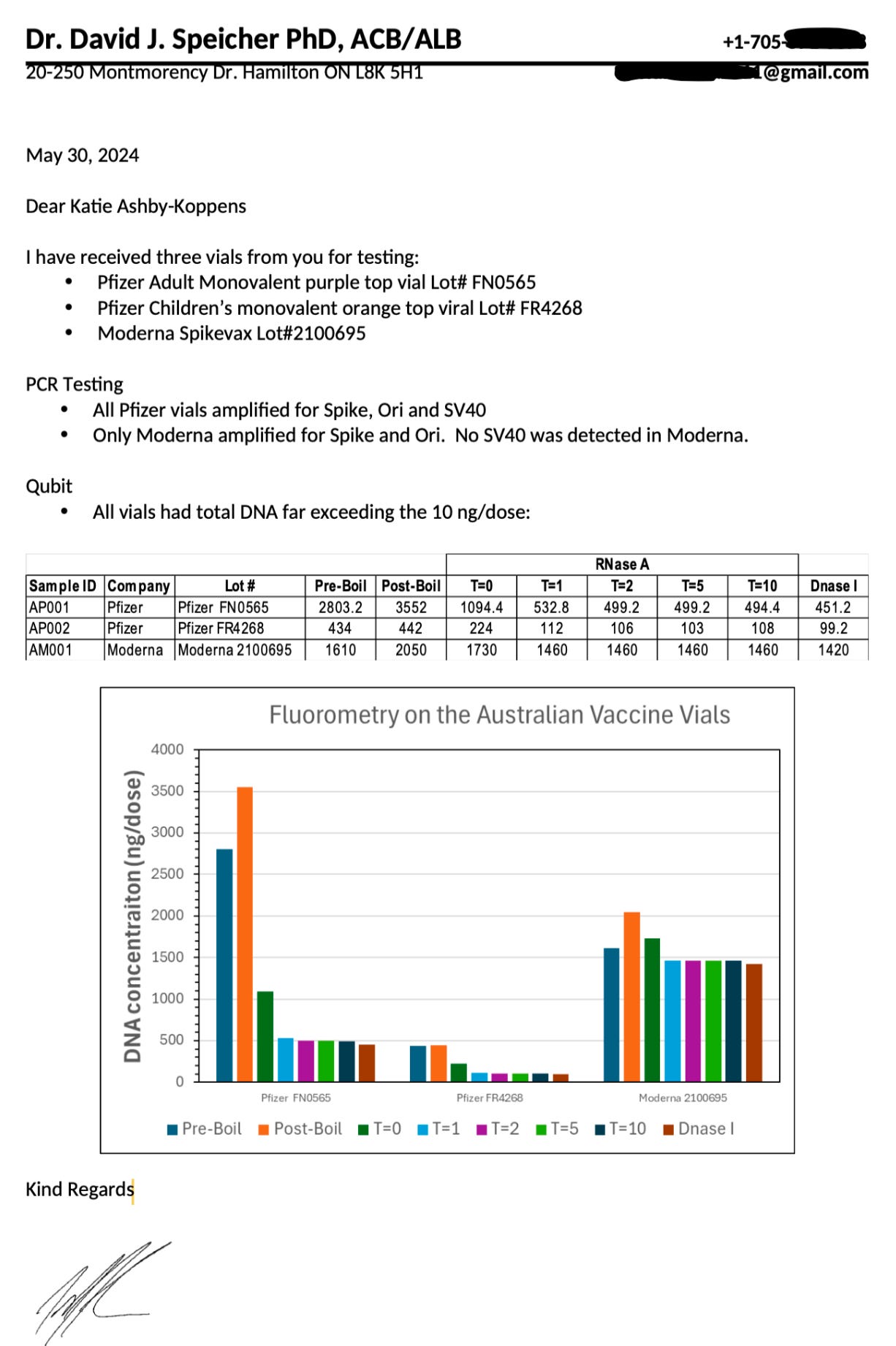
• The SV40 promoter (a key part of the cancer causing SV40 virus) was grafted onto the plasmids as this was an effective way to increase mRNA production.
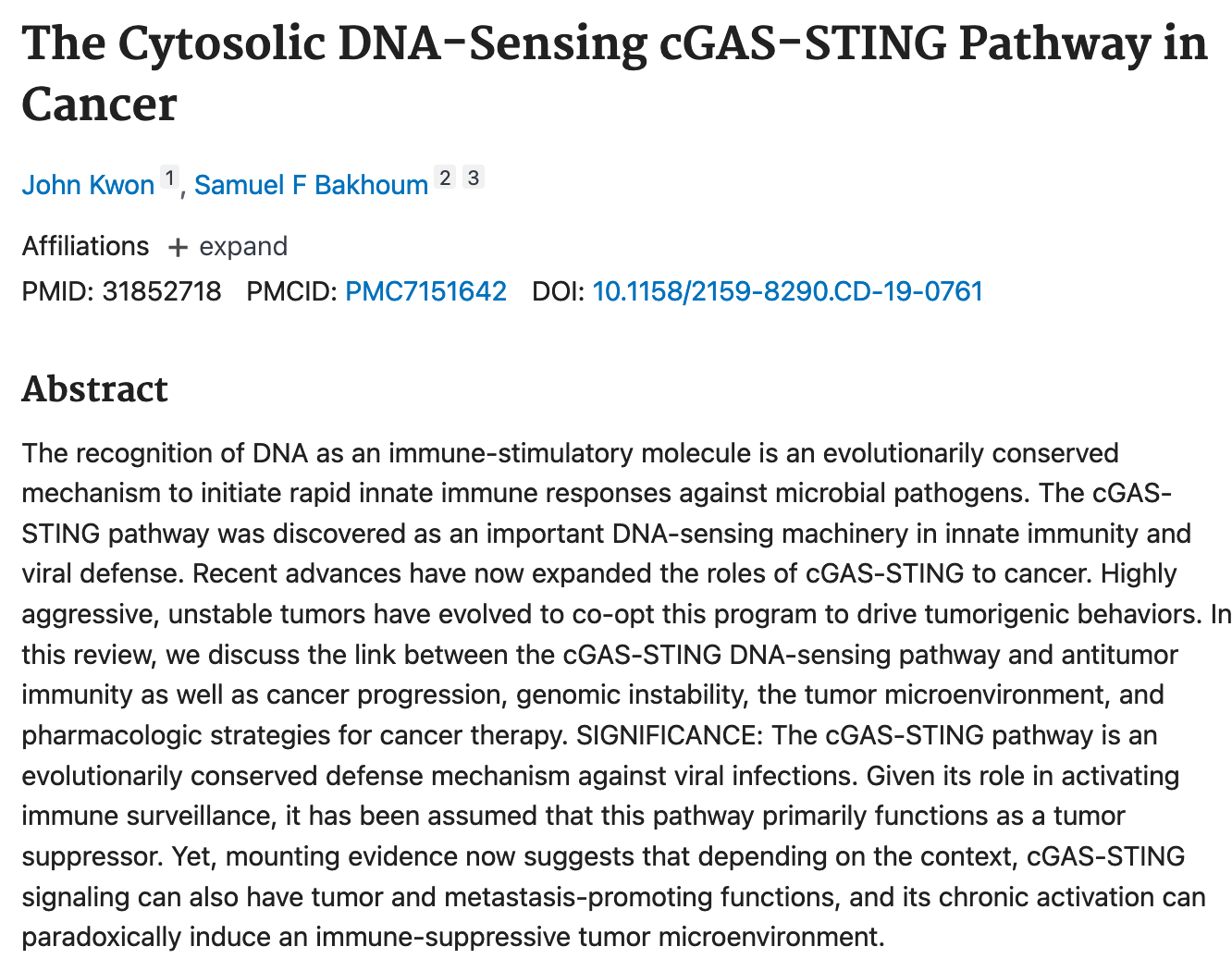
• If there was a genomic integration, it was likely creating indefinite spike protein production in the cells.
• When vaccine lots were analyzed for their plasmid levels, it was found the lots which more frequently injured their recipients had higher levels of DNA plasmids (suggesting either harmful genomic integration was occurring, that the plasmids were toxic absent genomic integration, or that they were a proxy for other harmful contaminants).
Inconsistent Manufacturing
Each of the previous points illustrates that the vaccine industry was not ready to bring the mRNA vaccines to market and that the manufacturing of them was rife with errors. Many other points also support this such as:
• Japan pulled 1.63M vials of Moderna’s vaccine after visible metal particles were found in them and when examining vaccine vials, Ryan Cole found glass shards in the vaccines. Both of these suggest the production of the vaccines was rushed to the point basic quality control steps were not taken.
We looked at all the different vaccines and I think one of the conclusions we came away with is that it’s just a hodgepodge..there were vaccines that seems as though there were no particles within them, almost nothing there it was almost like a saline shot and then there were Pfizer’s that were just packed with them and you just get the sense that the manufacturing of this is totally inconsistent…some were more concentrated and some were less.
Note: this suggests that there was either very poor mixing when the vaccines were packaged (leading to some having lots of the lipid nanoparticles and others none) or that the vaccine manufacturers were unable to produce enough vaccine to meet the existing orders and switched to packing placebo vials to meet their contracted orders.
• In one mass spectrometry examination of 4 vaccine vials, it was determined that the lipid nanoparticles, but not the mRNA, were present in each of the vials. This suggests that the vaccine was not prepared in a consistent manner, or that the manufacturers ran out of mRNA to fill the vaccines with.
• A large body of evidence from the adverse event reporting databases (compiled here) demonstrated that the toxicity of the vaccine lots greatly varied, which again was likely explained by inconsistencies in their manufacturing.
Note: in a previous article about the mRNA lipid nanoparticles, I showed how inconsistencies in the manufacturing of the vaccines likely explained why the vaccines tended to affect different organs in the body (as their charge was affected by how much mRNA they contained and the area they deposited in the body was influenced by their charge) and why some individuals had acute reactions to them.
Blot Gate
One method of analyzing which proteins are present is with an approach known as “Western Blot.” Periodically, individuals will fake Western Blots (which can be detected because its very easy to identify computer generated ones).
With the COVID-19 vaccines, Western Blots were meant to serve as a quality control measure which ensured the mRNA vaccine were producing their intended protein. However, when we examined the available Western Blots we discovered:
• Some of them were computer generated (and hence likely fake).
• Others showed proteins besides the intended vaccine antigen were there (possibly due to broken RNA fragments being turned into proteins).
All of this again suggested that there were serious manufacturing issues with the COVID vaccines, but a decision was made to sweep all of that under the rug to protect the vaccine manufacturers (particularly since the drug regulators willfully ignored this fraud).
Note: this is similar to how there was extensive fraud throughout the COVID-19 clinical trials to exaggerate vaccine efficacy and safety (which essentially invalidated all the data was gathered), yet even after the trial participants and trial supervisors repeatedly notified the FDA, nothing was done. Likewise, shortly before the vaccine rollout, Vanity Fair published an article highlighting the serious issues in Americas’s vaccine manufacturing plants and that the FDA essentially was unable to monitor them—hence arguing things would get even worse during Operation Warp Speed.
mRNA persistence
Once the COVID-19 vaccine hit the market and the injuries began to mount, we noticed a three curious patterns.
1. The susceptibility to vaccine injuries greatly differed, but in many cases seemed to cluster (e.g., I knew a husband and wife who got vaccinated at the same time and both have near fatal complications from the vaccine).
2. A significant number of individuals appeared to be sensitive to vaccine shedding, something that is supposed to be “impossible” but nonetheless was occurring in a fairly repeatable manner to a large number of people, with symptoms similar to COVID vaccine injuries but typically less severe. Note: everything we know about shedding is discussed here.
3. Many individuals with vaccine injuries appeared to be suffering toxic reactions to spike proteins in their blood steam months if not years after vaccination. For example:
• Autopsy studies (conducted on individuals who died suddenly up to 6 months after the vaccine) have shown that their tissues were flooded with spike protein. Beyond the inflammatory and necrotic responses to the spike protein being their likely cause of death, it also suggested those individuals had had large amounts of spike protein being perpetually produced within their bodies.
• Both myself and Pierre Kory have come across numerous cases of individuals with vaccine injuries who, months, if not years after vaccination, respond to spike protein binders (suggesting unbound spike protein was causing their issues). Additionally, those individuals either remained recovered, significantly regress, or partially regress once the binder is stopped (implying there is a sustained but possibly diminishing production of spike protein in the body in many vaccine injured patients).
• The only commercially available test for the spike protein (offered by Quest) measures existing antibodies to the spike protein receptor binding domain, and provides values anywhere from 0-25,000 (or higher than 25,000). Clinically, we’ve seen that long COVID rarely get levels above 4,000, whereas in those with vaccine injuries, it can be anywhere from 0-25,000 with many being over 25,000. In turn, a rough (but not precise) correlation exists between the antibody levels (which do not directly measure spike protein levels) and a patient’s illness (along with its levels improving or worsening generally correlating to a patient’s symptoms improving or worsening). Curiously, many patients do not have their antibody levels decline with time (which is what you typically see after a COVID infection), which again suggests spike protein is being produced within the body that then stimulates an immune response. Conversely however, some of these cases may instead have been from people who had antibody levels far above 25,000 who then had their antibody levels decline (but this cannot be detected as they are still above the 25,000 cut off). Note: Alex Bereneson has also shared reports of vaccinated individuals who’ve had spike protein antibody levels over 25,000 for months after vaccination.
Pivotal mRNA Studies
When the COVID vaccines were pitched to the public, two of the greatest concerns were that the experimental gene therapies could change our DNA and that they would persist in the body for a prolonged period. To address these sales barriers, the media continually platformed experts like Paul Offit and Anthony Fauci) who dismissed us by continually saying things like:
The vaccines cannot enter the nucleus of the cell
mRNA from the vaccines breaks down rapidly in the cell, so it does not have time to enter the nucleus and change your DNA.
mRNA is not DNA, so believing mRNA can change DNA represents a fundamental lack of knowledge of biology.
These points raised red flags to me, as beyond their being issues with each of them, no data was ever provided to disprove genomic integration of the vaccine (which would have been quite easy to do). As such, I assumed the vaccines did integrate into the genome, and evidence would eventually emerge that they did (and likewise that at least some of the vaccines would continually produce spike protein in the recipients).
Throughout this process, two very important, but largely forgotten studies came out.
Note: due to the extreme scientific embargo on anything which challenged the COVID narrative, it is somewhat of a miracle either of these were published.
The first was a March 2022 study from Stanford which showed that both vaccine mRNA and spike protein persisted at high levels at least 2 months after vaccination. This was highly unusual for mRNA, and suggested something (e.g., the pseudouridylation) was preventing it from breaking down. Most importantly, the study did not go beyond 8 weeks, so it was likely the mRNA was persisting for a much longer time.
The second was a January 2023 study (with many Harvard authors) which found in adolescents and young adults who developed myocarditis within a few days of vaccination, that compared to controls, they had significantly higher levels of free spike protein circulating in their blood (due to them not forming antibodies which bound it). This in turn suggested that those who were reacting the worst to the vaccines lacked the ability to form antibodies which could counteract its effects in the body, which both explained why some individuals were so sensitive to the vaccine (e.g., shedding) but also that those likely to “benefit” from vaccination also would have mounted a robust response against a natural infection (hence invalidating the justification for getting vaccinated).
Note: with the smallpox vaccines, vaccination was deemed successful if there was a strong inflammatory reaction at the vaccination site, whereas if no reaction occurred, the vaccination was deemed unsuccessful and the individual was repeatedly revaccinated (as when it didn’t “take” the individuals could still get smallpox). Many early medical dissidents observed that severe reactions to the smallpox vaccine typically followed the vaccine not “taking.” They hence came to believe that the smallpox vaccine working was due to the recipient having a functional immune system that could both already fight off smallpox and create the superficial inflammatory reaction to the vaccine and that the vaccine was simply taking credit for what their immune system could already do. This study made me wonder if something similar has occurred with the COVID-19 vaccines.
Most recently, Yale’s immunology team (which had previously strongly endorsed using the vaccine to prevent COVID and to treat long COVID—which is often disastrous) conducted a longterm study of the effects of vaccination on immune function. Recently, they shared their preliminary results with the participants and disclosed that they were having difficultly publishing the study due to the political pushback they were receiving.
Note: it is extremely common for studies which challenge a medical dogma to never be published. For example, the study demonstrating COVID vaccination causes shedding was stonewalled for well over a year, as I show here, many studies demonstrating harm from the childhood vaccines have been blocked from publication (or even being conducted), and in one well known incident, the CDC deleted data that incriminated the vaccine program. Likewise, I recently highlighted how once the ultrasound industry took off, research into its dangers abruptly ended (due to funding being withdrawn and journals refusing to publish it), which eventually created a collective amnesia that this data ever existed.
As the study was being conducted, a few of us were contacted by participants in the trial who kept us appraised of what was going on, but asked us not to disclose any of it so that we would not interfere with the trial’s publication (as Yale putting their name behind a study demonstrating longstanding immunological injury would make “long-vax” become a medically accepted condition—but the scientific community tends to react quite badly to study results being prematurely leaked).
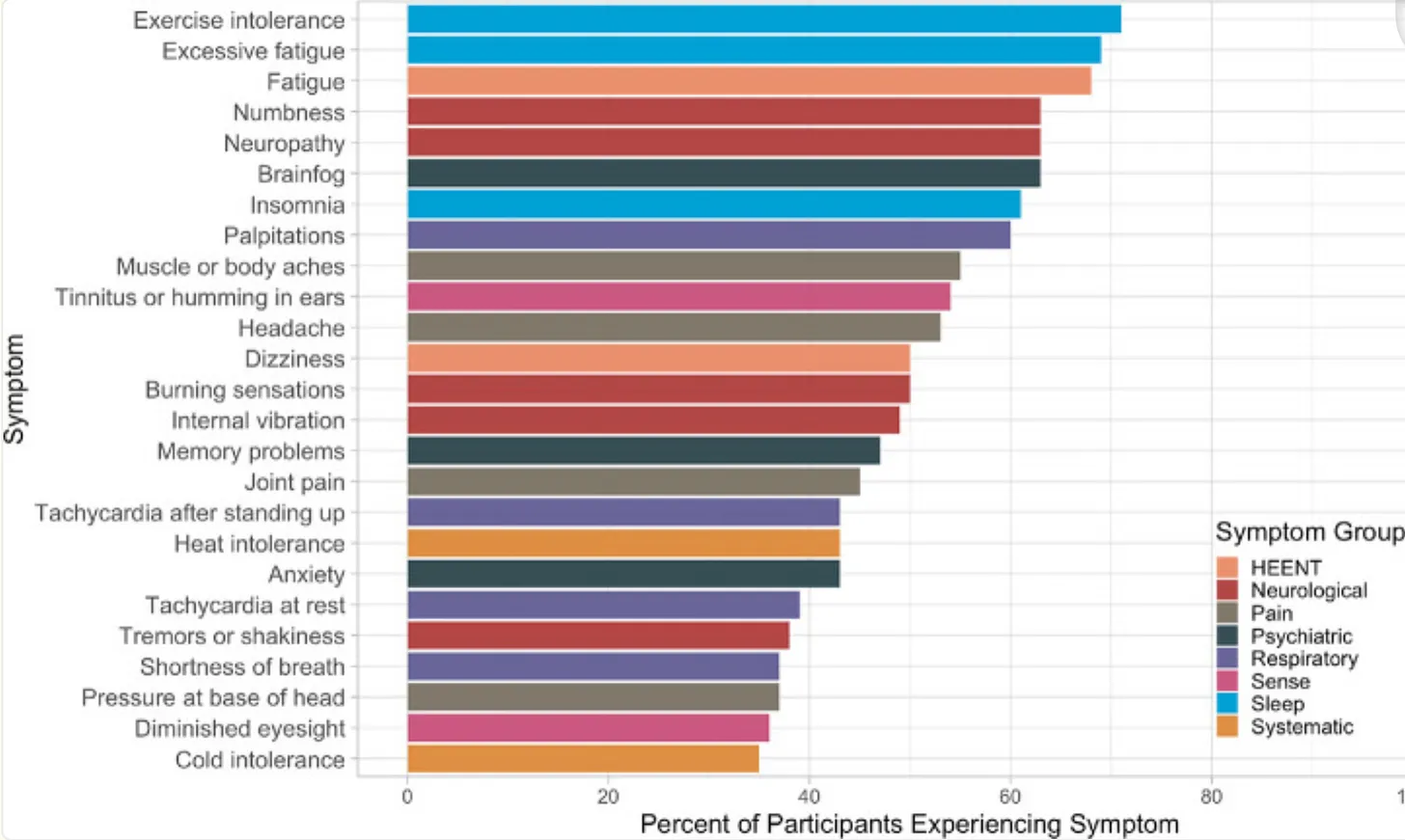
Prior to that meeting, preliminary data had been published a 2023 pre-print (which has still not been published) which detailed the common symptoms seen in the 241 participants with post vaccination syndrome (PVS), which match what we’ve seen in clinical practice:
To quote the study:
In conclusion, people reporting PVS after covid-19 vaccination in this study are highly symptomatic, have poor health status, and have tried many treatment strategies without success. As PVS is associated with considerable suffering, there is an urgent need to understand its mechanism to provide prevention, diagnosis, and treatment strategies.
Note: these results were discussed in more detail in this October 2023 online conference (e.g., the mast cell component of the illness). From watching this conference, my impression was that the investigators sincerely want to help the trial participants, but due to the unpleasant implications of their findings, are in a very challenging position (hence why their 2023 pre-print has still not been published).
Recently, Alex Berenson decided to use his platform to publicize what was disclosed at the recent meeting, at which point, I felt it was appropriate to share some of what we’d learned, and shortly after it became a trending topic on 𝕏. There I highlighted that:
• There was a sustained drop in CD4 levels which the Yale group suspected could account for the sustained immune suppression following vaccination (e.g., AIDS is characterized by severe CD4 suppression). I do not know the average CD4 drop they saw, but one participant in the trial (who has extensive post vaccine symptoms) shared with me her labs which included:
• Study participants were found to have sustained vaccine spike protein in their blood (e.g., 700 days after vaccination), which led the researchers to suspect the vaccine was integrating into the genome.
Note: while there are no commercially available spike protein tests (instead we have to test the antibody levels), research institutions like Yale (and the studies I cited above) have access to tests for free spike protein. Fortunately, after years of work, a commercially available (and affordable) blood spike protein test appears to be just around the corner.
All of this briefly means:
• There is objective proof that long vax is a real syndrome. Unfortunately, given the pace at which science works, it will likely be a few more years before it is formally acknowledged (which will likely dovetail with new pharmaceuticals to treat it entering the market and all remaining interest in the COVID vaccines disappearing). However, given that Trump promoted these vaccines (and has been unwilling to distance himself from them), I could see left-wing institutions like Yale accelerating their publication timeline so that this becomes widely publicized throughout his presidency.
• The persistence of spike protein in the body indicates that the 2022 Stanford study would have found positive results if it had tested patients more than two months post vaccination and that the spike protein antibody titers are indicative of spike protein persisting within the body.
Note: I recently discussed this topic with Dr. Malone (who I consider to be the most knowledgeable people in this area). We are both of the opinion that while genomic integration may play a role in spike protein persistence, the more probable explanation is simply that the body cannot break down the mRNA (and possibly the spike proteins) due to how it was modified. Presently, the data does not exist to quantify the scale of spike protein genomic integration, but with what is currently known (which could change as more data becomes available) cellular production of vaccine mRNA is most likely not responsible for the majority of the free spike protein found in the vaccine injured individuals.
Conclusion
Throughout my life, as I’ve come to feel that because of the bad trade-offs inherent to many policies or technologies, those behind them (particularly the government) will take an approach akin to trying to pound a square peg through a round hole (as government always defaults to utilizing the force at its disposal to solve the problems it encounters). In contrast, whenever I encounter situations where there really does not seem to be a good way to balance the trade-offs, I take that as a sign I need to consider a completely different approach rather than forcing the one I’ve committed to into working.
With COVID for example, I realized near the start that it would be an exercise in futility to address it with a vaccine—a truth much of the world has now had its eyes opened to. Instead, it was my assessment from the start that the best option would be to quickly develop viable treatments for the illness that could prevent severe complications from it and then allow infected individuals to recover with a strong immunity to the disease (and as we’ve now seen, natural immunity is vastly superior to vaccine immunity for COVID-19).
Unfortunately, rather than heed that approach, our medical apparatus decided to do everything it possibly could to push the vaccine upon us, while simultaneously doing all they could to bury the myriad of effective off-patent treatments developed for COVID-19.
Since the pathway Bill Gates put into place for lucrative accelerated approvals is still in place, I believe this highlights how important it is for us to actually understand how these technologies work and the trade-offs involved with them (which are never disclosed). In turn, it is my sincere belief that if the public had known part of what I presented here, they likely would have never taken the COVID vaccines. Similarly, as I’ve tried to illustrate here, contamination and poor production is a systemic problem with vaccines, and were robust independent testing to be conducted (so people actually knew what was in the vaccines they were taking), the demand for them would likely disappear until the industry was forced to clean up its act.
Overall, it is my belief that the most effective way to stop these unsafe products is to simply have enough people boycott them that they become financially unsustainable (and due to the new era of information diffusion we are walking into thanks to platforms like 𝕏, it’s actually possible). The FDA and CDC have lost an immense amount of trust because of how flagrantly they lied to the public, and have thus far refused to take any accountability for their actions—something that will likely change once financial pressures (e.g., people no longer buying the drugs rubber-stamped by the FDA) force the agency to make genuine amends for its conduct throughout the pandemic.
While COVID-19 was a profound tragedy, because of it we now have an extraordinary opportunity to fix this continually proliferating corruption, and I sincerely thank each of you who has helped to make this moment possible.
An updated index of all the articles published in the Forgotten Side of Medicine (including the DMSO ones) can be viewed here. Additionally, to learn how other readers have benefitted from this publication and the community it has created, their feedback can be viewed here.
“Non-GMO” labeling does not mean chemical-free farming. These crops may still be treated with pesticides and herbicides. Many nonorganic grains are heavily sprayed with toxic pesticides like glyphosate just before harvest, a practice called desiccation
A recent study found glyphosate in 44 out of 46 organic and nonorganic gluten-free products tested, with some at alarmingly high levels
Glyphosate exposure can disrupt gut health by killing beneficial bacteria and promoting the growth of harmful bacteria. Consuming organic food has been linked to reduced cancer risk, according to a study published in JAMA Internal Medicine
The EPA’s acceptable daily intake for glyphosate is 7,000 times higher than European standards, raising concerns about regulatory oversight
Supporting organic and regenerative farming practices through consumer choices can help drive positive change in the food system
In an era where health consciousness is at an all-time high, many of us have become increasingly vigilant about the food we consume. We scrutinize labels, opt for organic produce when possible, and make concerted efforts to avoid processed foods. However, there’s a critical aspect of our food system that often flies under the radar … the production and processing of grains.
While many of us strive to make healthier choices, financial constraints often limit our ability to consistently purchase organic produce. (Check out the Environmental Working Group (EWG) “Clean 15,” the 15 produce items that had the lowest levels of pesticide residues, here).
However, when it comes to grains and grain legumes (wheat, oats, chickpeas, and more), the stakes are significantly higher. This overlooked component of our diet may be harboring more dangers than we realize, particularly when it comes to the use of pesticides and herbicides.
Unbeknownst to many consumers, numerous grains are heavily sprayed with toxic pesticides just before harvest, making the sourcing of organic grains, or at least knowing their origin, crucial for our health.
The Non-GMO Misconception
It’s important to note that organic agriculture isn’t without its flaws. While it generally involves fewer synthetic chemicals, some are still permitted. Moreover, organic farming often relies on tillage, a practice that involves mechanically manipulating the soil through plowing or cultivation. This process can be detrimental to soil health, degrading its structure, increasing erosion, and disrupting vital microbial populations.
A common misconception, however, is that “Non-GMO” labeling equates to chemical-free farming. In reality, this label merely indicates that the crops haven’t been genetically modified. It says nothing about the use of pesticides or herbicides during the growing process. This misunderstanding often leads consumers to believe they’re making a healthier choice when, in fact, they may still be exposing themselves to harmful chemicals.
While many people are aware that glyphosate and other toxic herbicides are used to control weeds, fewer realize that these chemicals are also employed as drying agents in some nonorganic farming operations — leading to higher levels of glyphosate in nonorganic products made from oats, wheat and other grains.1
This practice, known as desiccation, involves spraying crops with glyphosate 1 to 2 weeks before harvest to accelerate the drying process, allowing farmers to harvest sooner.2 It’s like giving crops a chemical spa day, except instead of coming out relaxed and rejuvenated, it comes out dead and potentially carcinogenic. Fancy!
The use of glyphosate as a pre-harvest desiccant has seen a dramatic increase in recent years. For example, even though wheat is not a GMO crop, glyphosate use on wheat has skyrocketed by 400% in the past two decades.3 This trend isn’t limited to wheat; it extends to a wide range of grains and legumes, including barley, oats, corn, soy, chickpeas, and more.
The practice of using glyphosate for crop desiccation can be traced back to Scotland in the 1980s. According to Charles Benbrook, Ph.D., farmers there struggled with uneven drying of wheat and barley crops. To solve this problem, they began using glyphosate to kill the crops shortly before harvest, accelerating the drying process.
And thus, the practice of spraying glyphosate on crops before harvest was born, soon spreading to other regions and crops. The use of glyphosate as a pre-harvest desiccant leaves chemical residues that are then processed into our food, significantly increasing our dietary exposure.4 While this practice isn’t universal, it’s particularly common in regions with short growing seasons and wetter harvests.
The Alarming Findings
Recent studies have revealed shocking levels of glyphosate in various grain products.5 The EWG conducted tests on popular breakfast cereals and snacks, finding significant amounts of glyphosate in many samples. The highest level was detected in Quaker Oatmeal Squares Honey Nut, which contained 2,837 parts per billion (ppb) of glyphosate — nearly 18 times the EWG’s benchmark.
Even more concerning, a study from March of this year6 tested 46 samples of organic and nonorganic gluten-free products for glyphosate and other pesticides.
The results were alarming: 44 out of 46 samples tested positive for glyphosate. The highest level was found in Banza Chickpea Pasta, at a staggering 2,693 parts per million (ppm), the highest amount ever recorded in human food by the lab conducting the study! (Also, some of the foods labeled as gluten-free in this study were found to contain gluten.)
While glyphosate has been the focus of much research and public concern, it’s not the only chemical we should be worried about. The same study from March of this year that found high levels of glyphosate also identified 2,4-D, a component of Agent Orange, as the most prevalent pesticide in the samples. Products like King Arthur’s Gluten Free Flour and Milton’s Sea Salt Crackers were found to have the highest levels of pesticides.
The health consequences of glyphosate exposure are becoming increasingly clear, with one of the most significant concerns being its impact on our gut microbiome.7
The suffix “-cide” in “herbicide” (and other similar terms like pesticide, fungicide, etc.) comes from the Latin word “caedere,” which means “to kill” or “to cut down.” Therefore, in the context of herbicide, “cide” indicates that the substance is designed to kill.
Glyphosate is designed to kill weeds and microorganisms in the soil, but our digestive systems contain trillions of microorganisms! Studies have shown that glyphosate can hinder the growth of beneficial gut bacteria while promoting the growth of pathogenic bacteria, leading to dysbiosis.8
“Glyphosate residues on food could cause dysbiosis, given that opportunistic pathogens are more resistant to glyphosate compared to commensal bacteria.”9
The Human Microbiome Project found that 732 out of 941 bacteria species in our gut have at least one copy of the gene that glyphosate targets. This means that 55% of our gut bacteria are sensitive to glyphosate, 38% are resistant, and 7% are unclassified.10 The potential for glyphosate to disrupt our gut health is, therefore, significant and concerning!
Regulatory Shortcomings
But don’t worry, folks. The Environmental Protection Agency (EPA) has got our backs. They’ve set the acceptable daily intake of glyphosate in our drinking water at a level that’s only … checks notes … 7,000 times higher than the European standard. Because nothing says “We care about public health” quite like allowing a generous helping of herbicide.
For food, the EPA in the United States has set the Acceptable Daily Intake (ADI) for glyphosate at 1.75 mg/kg body weight/day, which is significantly higher than the standards in Europe (0.5 mg/kg) and Canada (0.3 mg/kg).11 Even more alarming is that these standards only consider direct glyphosate toxicity, completely overlooking its potential impact on gut health.
Adding to the complexity of the issue is what researchers call the “cocktail effect.” While glyphosate is the active ingredient in many herbicides, crops are often treated with a mixture of agrochemicals. The synergistic effects of these chemical combinations are largely unknown and unstudied, particularly concerning their impact on the gut microbiome. This gap in our understanding poses significant risks to human health!
Another often-overlooked aspect of pesticide exposure is the cumulative effect. Even if individual foods contain “safe” levels of pesticides relative to the EPAs standards, regular consumption of multiple foods with residues can lead to a significant total exposure over time. This cumulative effect is rarely considered in regulatory decisions or public health guidelines.
“While glyphosate is the active ingredient, food crops are desiccated with GBH, which contain compounds in addition to glyphosate. Complicating matters further is the fact that most GBH are proprietary and their ingredients and the relative percentages are unknown.
This ambiguity poses a significant challenge for researchers as they do not know what they’re working with, the amount present and the synergistic effects of these chemicals when combined. Additionally, crops are often treated with a proverbial ‘cocktail’ of agrochemicals, including other herbicides, in addition to glyphosate and GBH.
The cytotoxic effects of glyphosate appear to increase when combined with other herbicides, including Paraquat … This synergistic phenomenon suggests that relatively low glyphosate residues within our food supply could have serious consequences when combined with other commonly used agrochemicals.”12
As awareness of glyphosate’s potential harm grows, some farmers are turning to alternative chemicals like Dicamba. However, this shift doesn’t necessarily represent an improvement in terms of health or environmental impact. It merely replaces one potentially harmful chemical with another, perpetuating a cycle of chemical dependency in agriculture.
It’s crucial to understand that the widespread use of toxic chemicals in farming is not the fault of individual farmers, but rather a result of the broken agricultural system shaped by government policies and industry influences over decades. Farmers often find themselves caught in a challenging situation, pressured by economic realities, market demands, and agricultural policies that have long favored high-yield, chemically intensive farming practices.
The current system, largely shaped by government subsidies, research funding priorities, and regulatory frameworks, has created an environment where conventional, chemical-dependent farming is often the most economically viable option for many farmers.
Additionally, years of specialized education and industry messaging (and propaganda) have reinforced these practices, making it difficult for farmers to transition to alternative methods without significant support and systemic change. Many farmers are simply trying to survive in a system that wasn’t designed with long-term environmental and health consequences in mind.
The Way Forward
The prevalence of glyphosate in our food system is alarming, with the chemical even being detected in women’s breast milk,13 indicating its ability to bio-accumulate in the human body.
But we can reduce our exposure significantly by paying attention to where our food comes from (ESPECIALLY when it comes to grains). And the research now supports that reducing consumption of foods high in glyphosate can lead to significant health improvements.
A review conducted by the University of Washington found that agricultural workers who used glyphosate extensively were 41% more likely to develop Non-Hodgkin’s lymphoma during their lifetime compared to those who used it infrequently or not at all.14
Furthermore, a major study published in JAMA Internal Medicine revealed a significant reduction in cancer risk for individuals who consumed a diet rich in organic food.15
Conclusion
While sourcing organic produce isn’t always feasible, it’s crucial for consumers to be more aware of where their grains (wheat, oats, corn, rice, barley, chickpeas, etc.) or grain by-products (bread, baked-goods, cereal, crackers, etc.) come from. Just as many people advocate knowing your meat’s origin, the same principle should apply to grains and cereal crops.
It’s important to further emphasize that simply eliminating soy or wheat from one’s diet and choosing “gluten-free” doesn’t guarantee the elimination of glyphosate exposure, as many other nonorganic crops are desiccated before harvest.
For example, if you were regularly buying the Banza Chickpea pasta because you thought it was a healthier gluten-free option, you were unknowingly significantly increasing your glyphosate exposure.
Now, I know we’ve covered a lot of ground here, and you might be feeling a bit overwhelmed. You might even be eyeing your morning toast with suspicion, wondering if it’s plotting against you!
But remember, knowledge is power! And in this case, it’s the power to make better choices about what you put in your body. This will not be a “top-down” effort, as the government does not put public health first.
Instead, change will be from the “bottom-up” through consumer demand. Since public health is secondary to corporate interests, it is on us as consumers to educate ourselves about these issues, ask questions, and make informed choices about the foods we consume.
Organic is the better option relative to non-GMO for grains. However, the ideal solution would be sourcing from regenerative farms, although these can be harder to find.
Regenerative grain production involves minimal or zero chemical use and instead focuses on building soil health to produce healthy crops. This approach not only reduces chemical exposure but also improves soil health since tillage is not employed.
Supporting organic and regenerative farming practices and demanding transparency in food production from farmers, cooperatives, and food companies are crucial steps towards a healthier food system. It really is on us!
In the end, the question isn’t always just about what we eat, but about how our food is produced. By paying attention to these often-overlooked aspects of our food system, we can take control of our health and contribute to a more sustainable future for agriculture.
You can make a difference by supporting organic and regenerative farmers. Think of it as voting with your fork (or spoon). Every time you choose an organic grain product, you’re essentially voting against the chemical-based conventional farming system.
The article was written by Ashley Armstrong, who is on a mission to change the food system to produce the highest quality food possible (free of chemicals).
Armstrong is the cofounder of Angel Acres Egg Co., which specializes in low-PUFA (polyunsaturated fat) eggs. Angel Acres Egg Co ships low-PUFA eggs to all 50 states — but there is currently a waiting list as she slowly increases the number of chickens within the network to fulfill the demand. More egg boxes will be available very soon this fall — join the waitlist for low-PUFA egg boxes here.
Armstrong also co-founded Nourish Cooperative which ships the best low-PUFA pork, low-PUFA chicken, vaccine free beef, raw cheese, and traditional sourdough to all 50 states. They are also close to accepting new members to the farm cooperative — join the waitlist here: nourishcooperative.com.
For both Angel Acres and Nourish Cooperative, Armstrong and her team have livestock AND row crop farm partners, so that they can have control of every step of their food production, from seed to fork. She has regenerative row crop farm partners that not only produce the heritage wheat for their sourdough products, but also feed ingredients for all their livestock (chickens, dairy goats, and hogs). Thus, bridging the gap between livestock and row crop regenerative farming.
here is a screen shot from the preliminary report returned by Dr David Speicher .. the Post-Boil figures and the chart are what you need to focus on:
last week we shared this data (as a prelude to the final report Dr Speicher will be providing soon) with a select group of Australian Senators and MPs
part of the correspondence was as follows:
A part of the GMO proceedings is the allegation the Pfizer and Moderna products contain excessive synthetic DNA contamination, which contamination forms another much more insidious form of GMO.
After many Australian labs refused to conduct testing, we organised for Australian vials to be tested in Canada, by David Speicher PhD, the first author on the paper confirming excessive DNA contamination of Canadian vials (509 x above limits).
Dr Speicher has provided an initial report to us which is attachment 6 for your consideration. Dr Speicher has confirmed excessive synthetic DNA contamination in Pfizer was over 350 times above per dose limits set by the TGA (34,900% above), and over 200 times above per dose limits for Moderna (19,900% above).
We distinguish old TGA limits because the TGA limits for DNA did not contemplate synthetic DNA encapsulated in lipid nanoparticles (LNPs) which is the vehicle that efficiently delivers the synthetic DNA within cells for transit to the nucleus, to in turn affect natural human DNA.
The former Research Director for the Human Genome Project, Kevin McKernan, and expert in the GMO case, has confirmed the LNPs are encapsulating the synthetic DNA for transit throughout human bodies and into cells. See article here.
Recent preliminary findings by McKernan (and associates) has confirmed the DNA contamination from the Pfizer product integrates with human DNA, and this synthetic DNA has the capacity to replicate. See article here.
The report by Dr Speicher of vials supplied from Australia underlines yet another reason why it may be supposed powerful and vested interests do not want the GMO proceedings to be heard.
As many readers here know, the GMO proceedings specifically raise excessive DNA contamination .. a heinous form of GMO when encapsulated in LNPs, particularly when containing sequences from the SV40 virus that ensure entry into the nucleus of cells, and access to Human DNA
So this is not theory folks .. we are not in a training exercise .. this is not a drill .. this entry into the nucleus has been confirmed and until evidence shows otherwise, must be assumed to have affected millions of Australians
.. millions
And for the rest of the DNA contamination that does not enter the nucleus for creating genetic disease disorder and havoc, like kicking-starting cancers, there are a multitude of other pathways of destruction synthetic DNA triggers just by being present outside the nucleus, in the cytoplasm .. have a read of this peer reviewed paper to get a measure of the destruction ..
.. as for cancers following entry into the nucleus of Human cells
don’t take my word for it
take the word of Moderna CEO Stephane Bancel, co-author and co-owner of patent US10077439B2
synthetic (= heterologous) DNA screws with offspring’ in other words: Australian babies
in another patent owned by Moderna the company once again tells the world how much they knew and know synthetic DNA causes cancers ..
‘insertional mutagenesis’ = integration with our natural DNA
‘activation of oncogenes’ = once integrated, the synthetic DNA activates genes that cause cancers
‘inhibition of tumour suppressor genes’ = the synthetic DNA interferes with our genes that protect us from cancers
the last point of interfering with our genes that protect us from cancer was confirmed again to be occurring by Dr Wafik El-Deiry
a globally eminent American physician and cancer researcher who is the Associate Dean for Oncologic Sciences at the Warren Alpert Medical School, Brown University, Director of the Cancer Center at Brown University, and the Director of the Joint Program in Cancer Biology at Brown University and its affiliated hospitals, in the peer reviewed paper:
.. and do you know what competitors like Pfizer and Moderna do?
they read each others patents very closely
so everything
about DNA contamination and its cancerous effects Moderna knew and knows
Pfizer has known equally too
and they knew all of the above and much much more
well before rolling out their Covid-19 crap
.. and guess what else?
all our drugs regulators knew and know about all this stuff too
but they did nothing
and continue to do nothing
so good Substack folk, this was no accident
indeed, Moderna knew it was contaminating their vials
this folks .. all of the above and much much more damning evidence besides, is why many are desperately trying to shut-down the Australian GMO proceedings
rogue judge Helen Rofe tried but failed due to her misconduct
so for everyone’s sake
for your fellow Australians who have been poisoned
and
for your friends and family overseas who have also been poisoned too
express your outrage over the attempt by Helen Rofe to derail the GMO proceedings
and the Aussies reading this, head on over to Section72.au for informing your Senators and MPs if you are cross with Helen Rofe
According to AARP, 93% of Americans are concerned with their brain health, but few understand how to protect it
Research demonstrates canola oil led to significant declines in working memory and has a significant impact on weight management
Canola oil is not healthy fat vital to your brain; it is manufactured from genetically engineered rapeseed plants altered to reduce levels of erucic acid toxic to humans and processed through several chemical baths before being bleached
Healthier options include pastured, organic butter, virgin coconut oil, ghee (clarified butter) and lard for cooking and olive oil for non-cooking purposes
According to a study by AARP,1 93% of Americans are concerned with their brain health, but very few understood some of the natural strategies they could use to improve it. Contrary to popular belief, your brain function and cognitive performance do not have to decline with age. There are steps you can take that influence your memory, processing, executive functions and more.
Even if you are already in your “golden years,” simple changes may prompt brain health for the better. For instance, where once it was believed that neurons were only generated early in life, scientists now know that neurogenesis (generation of new neurons) continues into adulthood.2 Exactly what influences the rate of new neuron growth is still being explored, as are other factors that play a role in brain health.
Research, for instance, has uncovered damage canola oil consumption triggers in your brain and the effect this may have on your memory and learning ability.3 The study, published in the journal Nature, also found the consumption of canola oil increased weight gain.
Canola Oil Negatively Affects Brain Health and Weight Management
The study was led by researcher Dr. Domenico Praticò from Lewis Katz School of Medicine at Temple University in Philadelphia, Pennsylvania. Praticò commented to the Los Angeles Times that canola oil is perceived by many to be healthy — a widespread misconception:4
“Canola oil is appealing because it is less expensive than other vegetable oils, and it is advertised as being healthy. Very few studies, however, have examined that claim, especially in terms of the brain.”
Researchers used an animal model to evaluate the effect canola oil has on the brains of mice genetically engineered to develop Alzheimer’s disease.5 Canola oil developed a reputation of being healthy when doctors began warning people to reduce their saturated fat intake and consume vegetable oils instead. Canola has the lowest percentage of saturated fat of all commonly used vegetable oils and is relatively inexpensive, but is actually one of the worst oils for your health.
Canola oil is often used in homes and restaurants for baking, sautéing, frying and other forms of cooking, with consumers being deceived into believing it’s better for them than saturated fats. The mice were split into two groups; one group was fed the usual chow and the second group was fed chow with the human equivalent of 2 teaspoons of canola oil per day.
At the end of the experimental six months, researchers observed that the mice eating chow laced with canola oil were significantly heavier than the mice that did not eat canola oil. Additionally, the mice who had eaten canola oil demonstrated significant declines in working memory together with a decreased level of post-synaptic density protein-94, a marker of synaptic integrity. The researchers found canola oil had a negative effect on health and concluded:6
“Taken together, our findings do not support a beneficial effect of chronic canola oil consumption on two important aspects of AD [Alzheimer’s disease] pathophysiology which includes memory impairments as well as synaptic integrity.”
Your Brain Needs Healthy Fats
The same researchers used a similar model to evaluate the effects of olive oil on the brain function of mice.7 In that study,8,9 neither group was heavier than the other, and the mice fed chow enriched with extra-virgin olive oil performed significantly better on testing that evaluated the animals’ working memory, spatial memory and ability to learn.
The brain tissue of these mice, genetically engineered to develop Alzheimer’s disease as they age like the mice in the featured study, also revealed dramatic differences. The mice fed olive oil demonstrated preserved synaptic integrity and an increase in nerve cell autophagy, ultimately responsible for a reduction in amyloid plaques common in the brain of those with Alzheimer’s disease.10
Healthy fat is an essential component of the structure of your brain, which is composed of nearly 60% fat.11 It should come as no surprise that your brain needs quality fat to function optimally. Although your brain is a small part of your complete bodyweight, it uses 20% of your metabolic energy. Essential fatty acids are required but cannot be synthesized in your body, and so must come from dietary sources.
Most people get well over what is needed of omega-6 fats, which are found in most vegetable oils, and not nearly enough omega-3 fats. One omega-3 fat, DHA, has been linked with the growth of your retina and visual cortex during development,12 visual acuity and reduction in depression. Research has found those suffering from attention deficit hyperactivity disorder (ADHD) have lower levels of DHA, and DHA may play a role in neuroprotection.
Unlike the highly damaged fats in vegetable oil, saturated fat is the optimal “clean” fuel for your brain and is one of the main components of brain cells. As such, it’s excellent for brain health, with one study demonstrating that those who ate more saturated fat reduced their risk of developing dementia while those who favored carbohydrates had a significantly increased risk.13
To maintain optimal brain function, you need high-quality, undamaged omega-3s and omega-6 along with antioxidants to protect them from oxidation — not processed vegetable oils like canola oil. In summary, processed vegetable oils are bad for your brain health for a number of reasons, including the following:
They are loaded with damaged omega-6 fatty acids without protective antioxidants
They strip your liver of glutathione, which produces antioxidant enzymes, which further lowers your antioxidant defenses
Most vegetable oils are made with genetically engineered (GE) crops designed to resist herbicides like glyphosate. As such, they may be more contaminated with glyphosate than non-GE crops, and glyphosate has been shown to disrupt the tight junctions in your gut and increase penetration of foreign invaders, especially heated proteins, which can cause allergies
Vilification of Healthy Fats Has Contributed to Rising Rates of Disease
Defaming healthy fats over the past decades has contributed to a rising rate of disease. Although healthy fats are used as fuel and leave you feeling full, many turned to eating carbohydrates when fats were discouraged. Carbs are metabolized and burned quickly, using insulin to usher blood glucose into the cell.
However, carbs trigger insulin resistance over time and increase the potential for crashing blood sugar levels two to three hours after a meal, leaving you hungry once again and increasing your food intake. This one mechanism increases your risk for obesity, which in turn increases your potential risk for insulin resistance, Type 2 diabetes, cardiovascular disease and stroke.
In a time when healthy saturated fats and dietary cholesterol were publicly slandered, Canada developed an alternative oil that met with the approval of the American Heart Association (AHA) — canola oil.14 Now sitting in the first position of recommended oils for healthy cooking on the AHA website, author Praticò had this to say about the results of his canola oil study:15
“Amyloid-beta 1-40 neutralizes the actions of amyloid 1-42, which means that a decrease in 1-40, like the one observed in our study, leaves 1-42 unchecked. In our model, this change in ratio resulted in considerable neuronal damage, decreased neural contacts, and memory impairment.”
In other words, consuming canola oil may increase your risk of developing Alzheimer’s disease, as the oil decreases the production of a protein that protects your brain against neuronal damage and cognitive impairment.
Toxicity of Canola Oil May Result From the Seed, Source or Processing
This short video shows you the conditions under which canola oil is manufactured and produced, including the deplorable number of chemicals and bleaches added to the product to achieve the clear liquid you see on your grocery store shelves. Just the way the oil is processed should be enough to encourage you to steer clear of consuming the product. But the risk associated with canola oil doesn’t stop with processing.
The canola plant was developed from rapeseed plants by Agriculture and Agri-Food Canada and the University of Manitoba using plant breeding techniques. In fact, the Canola Council of Canada calls the development, “Canada’s greatest agricultural success story.”16 Rapeseed oil was originally used as a motor lubricant during World War II.17 Once the war ended, demand plummeted and Canada began an intensive program to make the product edible.
Before it could be ingested the erucic acid and glucosinolates had to be bred out of the plant, as they are dangerous to human health.18 By the late 1970s, both chemicals were reduced to lower levels, and the plant was officially accepted as consumable. In the 1980s, research focused on shelf stability of the oil, animal diets and gaining a wider consumer acceptance.
By 2012, nearly all low-erucic acid rapeseed plants were genetically engineered to increase yield. Today, what began as a motor lubricant is now one of Canada’s most profitable crops.
The featured study evaluated the effect of canola oil on brain function without identifying which characteristic of the product triggers the problems. However, as most canola oil is produced from GE seeds, using plants originally unfit for human consumption and taken through a process that injects multiple chemicals and bleaches, it isn’t surprising the study was so conclusive.
Genetic Engineering Raises Health Risk With Each GE Food Consumed
This documentary details what happens when we use GE foods. Scientists are only beginning to uncover the long-term effects of splicing the genes of one living creature into another or developing a plant immune to the effects of herbicides.
However, some companies are not convinced by independently funded research and have relied on information from organizations such as the American Medical Association (AMA) and World Health Organization (WHO), which claim there is no credible evidence that GE foods are unsafe. However, even WHO admits:19
“Different GM [genetically modified] organisms include different genes inserted in different ways. This means that individual GM foods and their safety should be assessed on a case-by-case basis and that it is not possible to make general statements on the safety of all GM foods.”
In 2015, the European Commission decided it was in the best interest of their citizens to say “no” to genetically modified organisms (GMOs) within their borders, and all 28 countries required labeling of foods containing GMO products.20 This is in stark contrast to the U.S., where most canola grown is GE21 and products created from it not labeled as such.
Healthy Cooking Options
Cooking with nearly all vegetable oils is problematic as they don’t tolerate high heat. Healthier options for cooking include pastured, organic butter, virgin coconut oil, ghee (clarified butter) and lard. Olive oil and sesame oil add wonderful flavor and healthy fats to your foods, but they have very low smoke points and should be used unheated in salad dressings or drizzled over meats or vegetables for flavor.
Boosting Brain Health Naturally
It is never too late to support your neurological health. Remember, even small changes you make each day reap big rewards over time. Seek to change your habits consistently and persistently to support your memory, cognitive function and ultimately your enjoyment of everyday life. Here are several strategies you may use to improve your brain health:
Vitamin D — There are strong links between low levels of vitamin D in Alzheimer’s patients and poor outcome on cognitive testing. Optimal vitamin D levels may protect brain cells by increasing the effectiveness of the glial cells in restoring damaged neurons. Additionally, vitamin D has anti-inflammatory properties.
Carotenoids — These antioxidant compounds are found most often in orange colored vegetables, such as sweet potatoes and carrots. Some carotenoids, such as lutein and zeaxanthin, are found in dark green vegetables, namely kale and spinach (as well as egg yolks). Lutein and zeaxanthin are best known for the role they play in vision health, but accumulating evidence suggests they play a role in cognitive health as well by enhancing neural efficiency.22
Probiotics — You are likely familiar with the importance of probiotics for your gut health but may not know of the role they play in your cognitive health. Certain beneficial bacterial strains, such as those found in fermented foods, have a positive effect on your brain function.
In a study by the University of California Los Angeles, scientists found women who regularly consumed beneficial bacteria via yogurt experienced changes in multiple areas of their brain, including those related to sensory processing, cognition and emotion.23
Exercise — Physical activity produces biochemical changes that strengthen and renew not only your body but also your brain — particularly areas associated with memory and learning.
Diet — Reducing overall calorie and carbohydrate consumption, while increasing healthy fats, has a powerful effect on your brain health. Beneficial health-promoting sources of healthy fats that your body — and your brain in particular — needs for optimal function include organic grass fed raw butter, olives, organic virgin olive oil and coconut oil, nuts like pecans and macadamia, free-range eggs, wild Alaskan salmon and avocado, for example.
Increasing your omega-3 fat intake and reducing consumption of damaged omega-6 fats (i.e., processed vegetable oils) in order to balance your omega-3-to-omega-6 ratio also has a significant benefit for your brain.
Sleep — Sleep not only is essential for regenerating your physical body, but imperative for reaching new mental insights and being able to see new creative solutions to old problems. Sleep removes the blinders and helps “reset” your brain to look at problems from a different perspective.
Research from Harvard indicates that people are 33% more likely to infer connections among distantly related ideas after sleeping,24 but few realize that their performance has actually improved. Sleep is also known to enhance your memories and help you “practice” and improve your performance of challenging skills. In fact, a single night of sleeping only four to six hours can impact your ability to think clearly the next day.
Pfizer’s mRNA COVID-19 shots instruct cells to produce additional “off-target” proteins that could pose significant health risks
The finding was revealed by a team of U.K. researchers, who found a “glitch” occurred due to the way the COVID-19 shots were genetically modified
According to the study, off-target cellular immune responses occur in 25% to 33% of those who have received Pfizer’s COVID-19 shot
The “Pfrankenstein” proteins could potentially lead to health problems, including autoimmune conditions or endocrine disruption
Pfizer’s Pfrankenstein proteins should have been detected and reduced or eliminated long before mRNA COVID-19 shots were given to millions of people
The toxic spike protein produced in your body if you receive a COVID-19 shot is not the only health concern to be aware of. Pfizer’s mRNA COVID-19 shots also instruct cells to produce additional “off-target” proteins that could pose significant health risks.
The finding was revealed by a team of U.K. researchers1 who found a “glitch” occurred due to the way the COVID-19 shots were genetically modified. As a result, unwanted proteins are produced, with unknown effects — a phenomenon that should have been detected long before the experimental shots were given to millions of people.
Modified mRNA in COVID-19 Shots Is ‘Prone to Reading Errors’
Ribosomes decode mRNA in cells, but about 8% of the time those in COVID-19 shots may misread the coded instructions, Maryanne Demasi, Ph.D., a former medical scientist with the University of Adelaide and former reporter for ABC News in Australia, explains:2
“The researchers say that ribosomes, which are responsible for decoding the mRNA in cells, can slip and misread the coded instructions about 8% of the time — known as ‘ribosomal frameshifting.’ They say the ‘glitch’ has to do with how the mRNA in the vaccine has been genetically modified.
Unlike naturally-occurring mRNA, the mRNA that exists in the vaccines has had a ‘uridine’ base replaced with a ‘N1-methyl pseudouridine’ (to stabilize it) and unfortunately, has made it prone to reading errors.”
In May 2021, I interviewed Stephanie Seneff, Ph.D., a senior research scientist at MIT for over five decades, about the likely hazards of replacing the uracil in the RNA used in the COVID shots with synthetic methylpseudouridine.3 This process of substituting letters in the genetic code is known as codon optimization, which is known to be problematic.
At the time, Seneff predicted the shots would cause a rise in prion, autoimmune and neurodegenerative diseases and, at younger ages, blood disorders and heart failure. One of the primary reasons for this is because they genetically manipulated the RNA in the shots with synthetic methylpseudouridine, which enhances RNA stability by inhibiting its breakdown.
Now, researchers at Cambridge University and the Universities of Kent, Oxford and Liverpool, have discovered4 that the use of methylpseudouridine results in a high rate of ribosomal “frameshifting,” which causes your cells to produce off-target proteins with unknown effects. In an interview with Demasi, research scientist David Wiseman explained the concerning findings:5
“They found the Pfizer vaccine can cause your cells to make proteins that they are not supposed to make — you end up with what I call ‘Pfrankenstein proteins.’ … Imagine the following three-letter English words ABE DAN TEA TON ERA TWO — the letters are like the code on the mRNA. Now instead of starting to read the sentence at the letter ‘A’ of the first word, you frameshift to the next letter — the letter ‘B.’
That means that all the other letters are shifted to the left and it will give you a new sentence with three-letter words BED ANT EAT ONE RAT etcetera. So, the new words have a completely different meaning from the original words. This is what happened in the body of some people vaccinated with Pfizer’s product. New unwanted ‘off-target’ proteins were produced, that actually led to an ‘off-target’ immune response.”
Your Body Is Being Hijacked to Produce ‘Pfrankenstein’ Proteins
According to the study, off-target cellular immune responses occur in 25% to 33% of those who have received Pfizer’s COVID-19 shot. “It means their lymphocytes had seen the proteins before — their immune system had already been primed from a prior exposure, presumably after that person had received the mRNA vaccine,” Wiseman said.6
The study authors stated there were no adverse outcomes related to the “frameshifted products,” and the media has similarly downplayed any risk of harm. However, molecular virologist David Speicher Ph.D., told Trial Site News reporter Sonia Elijah:7
“Whenever our cells create an abundance of unintended proteins or prevent production of appropriate proteins it could lead to an unintended immune response with a huge potential to cause harm.”
Wiseman was also clear in his explanation that the “Pfrankenstein” proteins could potentially lead to health problems, including autoimmune conditions or endocrine disruption. He told Demasi:8
“What you have to realize is that your body is being hijacked, not just to produce spike protein, but also to produce other, what I call, ‘Pfrankenstein’ proteins that are completely uncharacterized. We don’t know what they are, what they do, for how long they’re made or how long they last in the body, and we have no idea what their toxicity is.
From the Nature paper however, we do know that these unwanted proteins elicit immune reactions in the body.
… These researchers showed that frameshifting could create chimeric proteins. Basically, as the ribosome reads the code for the spike protein, it may slip in the middle of reading the code. So, the first half is spike protein, and the second half is a Pfrankenstein protein.
Now, just imagine one half can still attach to the ACE2 receptor on cells but on the other end, you’ve got this Pfrankenstein protein dangling outside of the cells. Your immune system is going to destroy the cell because it looks foreign, and now you’ve got something that looks like an autoimmune condition.
Or you could have a protein that turns out to be not necessarily identical, but sufficiently similar to another protein in our body like a hormone and it ends up mimicking the hormone’s activity and disturbing your endocrine system.”
Reading Errors Could Be Reduced — So Why Weren’t They?
While claiming that frameshifted products weren’t harmful, the Nature study authors stated it was important for future mRNA technologies to reduce ribosome frameshifting events. They suggested that they could identify the garbled sites or sequences and alter the mRNA sequence to reduce such effects in the future.9
But as Wiseman pointed out, this should have been done already. “This work should’ve been done by the vaccine manufacturers and by the regulators before the product was authorized and given to billions of people. They’ve asked people to take a vaccine, and put it into children and they have no clue what is happening inside the body.”10
Further, the study authors are basing their assessment that there’s no risk posed by these ‘Pfrankenstein proteins’ on just 21 people. Wiseman continued to Demasi:11
“The authors wrote, ‘… there is no evidence that frameshifted products in humans generated from BNT162b2 vaccination are associated with adverse outcomes.’ But they only looked at 21 people who received Pfizer’s vaccine, so you cannot call that a serious safety study by any stretch of the imagination.
And how did they select these people? The volunteers were part of another government funded study and had not reported undue effects from vaccination. Since they did not study subjects who had reported adverse vaccine effects, the selection of participants was probably biased.
… What they’re trying to say now is that there have been no problems identified in 21 people, but in the future there may be problems, so we should just keep studying it. Are you kidding me? What they’re saying is that ‘we will inject you first and ask safety questions later.’ It’s not good enough.”
It’s worth noting that two of the researchers on the team have a pending patent application for mRNA technology,12 so they certainly have reason to downplay the problem and propose all we need to do is a bit of tweaking and all will be well moving forward.
Is Foreign DNA Integrating Into Human Cells?
Along with Pfizer’s Pfrankenstein proteins, there’s potential that DNA integration from COVID-19 shots could pose a risk to the human genome. Tucker Carlson spoke with Florida Surgeon General Dr. Joseph Ladapo, who has called for an end to the use of COVID-19 mRNA shots, citing concerns about DNA fragments in the products.13
“Could foreign DNA enter your cells through the mRNA COVID vax and change your DNA — and humanity itself — forever? Sounds nutty. It’s not,” Carlson tweeted. “Absolutely that could happen,” says Dr. Joseph Ladapo, the surgeon general of Florida.14 In a December 6, 2023, letter sent to the U.S. FDA and CDC, Ladapo outlined findings showing the presence of lipid nanoparticle complexes and simian virus 40 (SV40) promoter/enhancer DNA.
While there are limits on how much DNA can be in a vaccine due to concern over DNA integration, the guidelines don’t consider lipid nanoparticles and other factors in COVID-19 shots that could enhance how much DNA can enter a cell.
“Lipid nanoparticles are an efficient vehicle for delivery of the mRNA in the COVID-19 vaccines into human cells and may therefore be an equally efficient vehicle for delivering contaminant DNA into human cells. The presence of SV40 promoter/enhancer DNA may also pose a unique and heightened risk of DNA integration into human cells,” according to a news release from the Florida Department of Health (DOH).15
In a 2023 preprint study, microbiologist Kevin McKernan — a former researcher and team leader for the MIT Human Genome project16 — and colleagues assessed the nucleic acid composition of four expired vials of the Moderna and Pfizer mRNA shots. “DNA contamination that exceeds the European Medicines Agency (EMA) 330ng/mg requirement and the FDAs 10ng/dose requirements” was found.17
So, in addition to the spike protein and mRNA in COVID-19 shots, McKernan’s team discovered SV40 promoters that, for decades, have been suspected of causing cancer in humans.18 Further, according to the Florida DOH, the FDA’s own 2007 guidance states:19
“DNA integration could theoretically impact a human’s oncogenes – the genes which can transform a healthy cell into a cancerous cell.
DNA integration may result in chromosomal instability.
The Guidance for Industry discusses biodistribution of DNA vaccines and how such integration could affect unintended parts of the body including blood, heart, brain, liver, kidney, bone marrow, ovaries/testes, lung, draining lymph nodes, spleen, the site of administration and subcutis at injection site.”
The FDA responded to Ladapo’s letter December 14, 2023, but provided no evidence that appropriate DNA integration assessments had been conducted. Ladapo called for a halt in their use as a result.20 “It starts at crazy but it ends at somewhere else that someone could be just so nonchalant and, frankly, willy-nilly, with something as precious and as sacred as our human DNA,” Ladapo told Carlson.21
Help for Those Suffering From COVID-19 Shot Injuries
If you’re suffering from side effects of a COVID-19 shot, your first order of business is to eliminate the spike protein — and/or any aberrant off-target protein — that your body is producing. Two remedies shown to bind to and facilitate the removal of SARS-CoV-2 spike protein are hydroxychloroquine and ivermectin. It’s unknown whether these drugs will work on off-target proteins as well, but it probably wouldn’t hurt to try.
The Front Line COVID-19 Critical Care Alliance (FLCCC) has developed a post-vaccine treatment protocol called I-RECOVER. The protocol is continuously updated as more data become available, so your best bet is to download the latest version straight from the FLCCC website at covid19criticalcare.com.22
The World Council for Health (WCH), a worldwide coalition of health-focused organizations and civil society groups, has also released a spike protein detox guide,23 which provides straightforward steps you can take to potentially lessen the effects of toxic spike protein that may be helpful. Another option is sauna therapy, which can also help eliminate toxic and misfolded proteins by stimulating autophagy.24
A study reveals that when former smokers increase their intake of tomatoes and fruit, especially apples, the decreased capacity of their lung function begins to lessen and may even be restored
A similar diet not only may slow the aging process that would normally take place in the lungs of former smokers, but actually in anyone, even if they’ve never smoked
Lung function is one of the most important factors regarding mortality, for both patients with lung disease and those who’ve never smoked, and preventing chronic respiratory diseases is a significant public health objective
Knowing how to buy, store, cook and eat these plant-based foods is essential, as conventional growing, packaging and preparation can damage or destroy the important compounds they hold, namely flavonoids and lycopene
Editor’s Note: This article is a reprint. It was originally published January 8, 2018.
One of the most encouraging studies to come out concerns the dramatically improved lung function of people who’ve recently stopped smoking, especially those who like eating tomatoes and apples.
The research, which appeared in the December 2017 issue of the European Respiratory Journal,1 shows that when former smokers increase their intake of these two foods — essentially making them their new habit — the decreased capacity of their lung function begins to lessen, and their chances for restored lung function is increased.
Former smokers who consumed an average of more than two tomatoes or three portions of fresh fruits, particularly apples, per day experienced a slower decline in lung function compared to people who ate fewer than one tomato or less than one portion of fruits on a daily basis, who didn’t show the same benefit.
Poor lung function is associated with a higher risk of death from any cause, including chronic obstructive pulmonary disease (aka COPD), lung cancer and heart disease. Even if you don’t smoke, lung function naturally starts to decrease around age 30. As Well+Good quipped, “In other words, if you hope to reap the benefits of fruit consumption, quantity counts.”2
Besides the goal of convincing people to stop smoking to reduce the likelihood of developing one or more chronic lung-related diseases, the study noted two major points related to lung function:
How your lungs function is a predictor of mortality for anyone, including patients with lung disease, as well as people who have never smoked.
Maintaining lung function and preventing chronic respiratory diseases are also important public health objectives.
Apples and Tomatoes for Better Lung Function
Lead study author Vanessa Garcia-Larsen, an assistant professor in the Johns Hopkins Bloomberg School of Public Health’s department of international health, noted that a diet rich in fruits can slow the natural aging process of your lungs even if you’ve never smoked, and might even help repair damage caused by smoking. Their research was part of the Ageing Lungs in European Cohorts (ALEC) Study, funded by the European Commission and led by Imperial College London.
In 2002, Garcia-Larsen and her colleagues examined the lung function and diet of more than 650 adults from Britain, Norway and Germany, using questionnaires as well as spirometry to measure forced expiratory volume and forced vital capacity (aka the capacity of the lungs to take in oxygen), then tested the lung function of the same individuals a decade later. According to Vanguard:
“The researchers found a more striking diet-lung-function among former smokers, who had around 80 ml slower decline over the 10-year period because their diets were highly rich in tomatoes and fruits. Such a result suggests that the nutrients in their diets are beneficial to repairing the lung damage done by smoking.”3
Also noted in the study was that a major part of the benefit of the foods noted in the study (including bananas and herbal tea) was the flavonoid content, which is corroborated by earlier research: Tomatoes,4 as well as apples, are an important source of dietary flavonoids.
An Apple a Day: Better for Your Health Than You Realized
Plenty of studies show how healthy fruit is for you, and apples are no exception. One study5 noted the peel in particular as capable of benefiting endothelial function, blood pressure and atherosclerosis and reducing your risk of cardiovascular disease.
In the realm of lung function alone, the research shows that the valuable compounds in apples may help prevent and treat lung cancer,6 asthma and respiratory diseases, bronchial hyperactivity and persistent allergic rhinitis, not to mention Type 2 diabetes, asthma7 and several other types of cancer.
But while it’s true that apples are a healthy food, moderation is key. As the U.S. Department of Agriculture (USDA)8 notes, the amounts of fruit you should eat per day vary depending on certain factors:
Children under 8 — 1 to 1 1/2 cups per day
Children and teens — 1 1/2 to 2 cups of fruit per day
Women age 19 to 30 — 2 cups per day, while women older than 30 — 1 1/2 cups per day
Men of any age — 2 cups of fruit per day
What they don’t note, however, is that while fruits offer many vitamins, enzymes and minerals, they should be eaten in moderation due to fructose content, especially if you’re insulin resistant. And please understand that drinking fruit juices does not provide the same benefit as consuming whole fruits.
As far as servings of apples go, the same site broke it down to show that one small apple or half of a large one each constitute 1 cup, as does 1 cup of sliced, chopped, raw or cooked apples. A 4-ounce snack container of applesauce counts as one-half cup.
Here’s why that’s important: Portion sizes, particularly for those eating a typically Western diet, are often bigger than they should be. And while many think drinking an 8-ounce glass of juice would be good for you, the USDA National Nutrient Database9 shows that 8 ounces of apple juice have more sugar and less than a minute amount of fiber compared to a medium-sized apple.
(Similar numbers can be assumed for other fruits, as well). Specifically, a typical 8-ounce glass of organic Honeycrisp juice contains:
ACV Balances Your Blood Sugar, Optimizes Your Gut Health
If you’ve never seen a list of all the ways apple cider vinegar, or ACV, benefits your health, you should definitely take a look. Besides remedying things like bug bites, cuts and scrapes, athlete’s foot, sunburn, dandruff and more, fermented apple juice, with its active ingredient, ascetic acid, has been shown by clinical studies to:
• Lower blood sugar levels — Three groups of adults with Type 2 diabetes, prediabetes and a healthy control group were given an ounce of ACV, after which all had lower glucose levels, and those with either diabetes or prediabetes showed dramatic improvement.11
• Sore throat soother — Combinations of ACV with the added bonus of other bacteria-fighting substances like lemon juice, honey, ginger and cayenne pepper not only soothes but heals sore throat pain.
• Boosts gut health — As a prebiotic, ACV helps maintain a beneficial balance in microbiota, and may as a consequence help prevent cardiovascular disease. As one study noted:
“Up to 90 percent of dietary plant polyphenols including apples, reach the colon intact. The interaction with the gut microbiota is reciprocal, since commensal bacteria transform polyphenols into simple aromatic metabolites while polyphenols have the ability to modulate the gut microbiota composition, inhibiting some bacterial populations and stimulating others.”12
• Weight loss — A Japanese animal study13 reveals that mice given ACV with their meals developed 10% less body fat compared to their no-ACV counterparts, even when eating the same amount of high-fat food. Researchers concluded that humans could expect the same benefit.
• Urinary tract infections (UTIs) — Besides UTIs, studies show apple cider vinegar may have an antibacterial effect on interstitial cystitis, aka painful bladder syndrome. Part of the action may come from the presence of quercetin in ACV, as well as the potassium, which National Institutes of Health14 says may inhibit bad bacteria and promote the growth of healthy bacteria.
Tomatoes: A Fruit With Unique Nutritional Advantages
Ask nearly anybody what their favorite vegetable is, and many will answer that it’s a tomato. You may already know that a tomato is actually a fruit, but probably thought of it as a vegetable because it’s used most often in savory rather than sweeter recipes as fruits usually are. One of the most advantageous compounds in tomatoes is lycopene, known to have an anticancer effect, but which also may help prevent stroke.
Imparting tomatoes their bright red color, lycopene was identified in one study as being associated with a reduced risk of prostate cancer.15 One study observed that human lungs are particularly vulnerable to oxidative damage and that “concentrations of dietary antioxidants in the lung epithelial lining and lining fluids may provide protection against oxidative damage.”16 Another study rather carefully notes:
“Increasing evidence suggests that tomato lycopene may be preventive against the formation and the development of lung cancer. Experimental studies demonstrated that lycopene may inhibit the growth of several cultured lung cancer cells and prevent lung tumorigenesis in animal models through various mechanisms …
Our understanding of the anticancer role played by tomato lycopene will be enhanced and help us to develop complementary strategies for the prevention, treatment and management of lung cancer.”17
Notable Facts on Tomato Storage, Consumption and Cooking
A few things are important to know regarding tomato consumption, however. One is that, as a nightshade plant along with white potatoes, bell peppers, legumes, grains and some gourds, they contain lectins. Lectins are plant proteins that bind sugar and attach to cell membranes, causing weight gain, interfering with gene expression and disrupting endocrine function.
They can also contribute to leaky gut and act as “antinutrients” that can wreak havoc on not just your gut health but your health as a whole.
You may be able to get away with eating tomatoes sparingly, but especially if you love tomatoes and other nightshade foods, sprouting, fermenting, soaking and cooking them will effectively diminish much of the lectin problem. Further, cooking tomatoes to diminish the lectin content will simultaneously increase the lycopene content. Importantly, when you eat tomatoes, do so with a fat such as olive oil or avocado oil, since lycopene is a fat-soluble nutrient.
Also, whether it’s ketchup, salsa, tomato sauce or the whole tomato, choose organic whenever possible. Here’s a tip that is crucial for the best tomato taste: Never refrigerate tomatoes, as it breaks down the flavor as well as the texture, making them mushy and tasteless. Room temperature is best.
In addition, avoid canned tomatoes because the acidity of tomatoes increases leaching of toxic, endocrine-disrupting chemicals like bisphenol-A (BPA) tainting the lining of many canned foods (as well as plastic water bottles, baby bottles and plastic storage bowls).
A Few Things to Note Regarding Plant-Based Foods
Many foods today don’t have the same health aspects you may once have counted on to keep your family healthy. “Modern” farming techniques, industrial food production, additives, preservatives, nutritionally depleted soils and many other factors have harmed, not helped, in the quest for ever better food.
Genetically engineered (GE) foods, including apples, are now part of the landscape, so to speak, since the Powers That Be want to help with things like browning (oxidation) when apples are sliced.
Through the lab-assisted suppression of polyphenol oxidase (PPO), a GE product known as Arctic apples, pre-sliced and non-browning, has been released, but it won’t even have to be labeled as GE. There’s also the fact that many conventionally produced apples, like the (once) Red Delicious, are often cross-bred within an inch of their lives to make them look more appealing, while rendering them mealy and practically inedible. They can also be dyed with color-enhancing pigments.
Pesticide use is arguably one of the worst ways food is compromised with harmful chemicals. Eating organic foods as much as possible is important for several reasons, as organic foods have a much lower risk of pesticide contamination compared to foods grown conventionally. In fact, studies show (through urine analysis) that people who eat organic foods whenever possible have fewer pesticides in their bodies.18
Apples, cucumbers, lemons, bell peppers and other fruits and vegetables are often given a difficult-to-remove wax or other coating to resist scarring and insects, which can be petroleum-based. Whenever you buy plant-based foods, especially unpackaged, “wash before eating” should be a rule of the house, but perhaps “buy organic” should be rule No. 1.
“Genetically Modified Children” film exposes how Philip Morris and Monsanto have exploited impoverished farmers since 1966, when the Argentinian government authorized the use of GMO crops to withstand Monsanto’s Roundup weedkiller
Tobacco farmers in Argentina are forced to use a multitude of dangerous agrochemicals in order to grow a crop that’s certifiable by U.S. tobacco company Philip Morris
An increasing number of children are being born with severe birth defects and deformities in Argentina
The film interviews Dr. Hugo Gomez Demaio and Dr. Mario Barrera, who are dedicated to highlighting and treating the link between agrochemicals and birth defects
The film features anti-agrochemical activist Sofia Gatica, who is renowned for her work in tracking abnormal rates of cancer, kidney disease and other ailments linked to aerial spraying of glyphosate on GMO soy crops
Editor’s Note: This article is a reprint. It was originally published August 25, 2018.
The shocking film “Genetically Modified Children” unveils the horrors of decades of chemical-intensive agricultural practices in Argentina, where the majority of crops are genetically modified (GM) and routinely doused in dangerous agrochemicals, and the chokehold big tobacco companies such as Philip Morris and chemical and seed giants have on poverty-stricken farmers desperate to earn a living.
The film, produced by Juliette Igier and Stephanie Lebrun, shows the devastating health effects the region’s agricultural sector is having on children,1 an increasing number of whom are being born with monstrous physical deformities. Some of the children’s cases are so severe that, without a medical intervention, will result in death before the age of 5.
The film begins with the crew traveling from North Argentina in the Province of Misiones to the Brazilian frontier, an agricultural region that was one of the nation’s first to begin growing genetically modified organisms (GMOs) in the mid-’90s.
Featured in the film is Ricardo Rivero, regional head of the local electricity company. He learned that the reason families cannot pay their bills is because often they are taking care of a sick or handicapped child, and receiving no assistance from the Argentinian government.
The film shows them visiting the humble home of a tobacco farmer where they meet Lucas Texeira, a 5-year-old boy with an incurable genetic skin disease. The family believes it was caused by the mother’s exposure to Monsanto’s Roundup weedkiller early on in her pregnancy. No one told her it was toxic, she says.
The genetic mutation that caused her son’s condition left him with no pores in his skin, which means he doesn’t perspire. The heat from his body stays inside, causing him severe and painful itching that leads to frequent crying spells. Mr. Texeira expresses his sadness over Lucas’ condition, as well as his fears that he could have another child in the future with a similar deformity.
Agrochemicals Lead to Rise in Birth Defects, Deformities
Like many families in rural Argentina, the Texeiras have grown GM tobacco on their land for years, using a number of various agrochemicals required to produce a crop that’s certifiable by Philip Morris, an American multinational cigarette and tobacco manufacturing company (a division of Altria Company since 2003).
Philip Morris provides farmers GM burley tobacco seeds for the manufacturer of light tobacco cigarettes. Each year, Argentinian farmers are forced to use more than 100 different chemicals in order to grow the perfect-looking tobacco crop — that is, if they hope to make any money.
The Texeira family is no exception. For more than a decade, they have treated their tobacco plants with glyphosate and other agrochemicals — and without any protection. However, after seeing a rise in birth defects among the community’s children, including in their own child, they began to fear for their safety and moved off their farmland, away from the toxic chemicals.
“It’s not easy, but you have to live the life you have,” said Mr. Texeira. “Thank God, Lucas’ problem is just his skin. He’s healthy and can eat. He eats almost anything.” Lucas is a miracle, says the film’s narrator. In this region, there’s a disproportionate number of children born with deformities.
300 Million Liters of Glyphosate Are Applied Each Year
GM crops first entered the country through the Misiones Province of Argentina after the government authorized their use from 1996 onward, a decision based solely on studies conducted by Monsanto, and with no contradicting research.
For more than two decades the land was sprayed with glyphosate and other agrochemicals, contaminating the region’s soil and water. By 2013, more than 24 million hectares2 (59.3 million acres) of GM crops were grown in Argentina, including soy, maize, cotton and tobacco.
Mounting scientific evidence connecting the rise in miscarriages, birth defects and cancer to GMOs and agrochemicals did not dissuade the Argentinian government from subsidizing GM crops. Perhaps, that decision is due in part to the 35% in taxes Argentina receives from GMO soy exports.
Despite the dangers, no one warned tobacco farmers of the risks. In fact, the opposite was true. Farmers in the Misiones province were inundated with various forms of marketing, including commercials from chemical companies insisting agrochemicals were the key to prosperity.
Television advertisements touted the benefits of Monsanto’s Roundup weedkiller, including its ability to kill everything except for GMOs. The marketing worked. Today, more than 300 million liters (79.2 million gallons) of glyphosate are dumped each year onto more than 28 million hectares (69.1 million acres) of land in Argentina.3
The film shows the crew visiting the home of another sick child. Lucas Krauss was born with congenital microcephaly. He suffers from epilepsy, delayed motor and mental development, multiple muscular atrophy and numerous other related pathologies.
The first doctor the family consulted said their son’s condition was due to a lack of oxygen; however, the neurologist had a different opinion. At first, he agreed and said it was due to a lack of oxygen; however, when they pressed him further he admitted that a lack of oxygen was not the only cause, but he refused to say what he believed the true cause was of Lucas’ condition. They wouldn’t even run medical tests, said the boy’s mother.
The family understands that Lucas’ condition, as well as many others in the community, is likely tied to the agrochemicals used to farm tobacco. But the family can’t quit the trade because it’s the main source of income in their area, and most importantly, it’s the only sector that provides social security for its workers. Without the financial aid of the tobacco industry, the father fears he will be unable to care for his special needs son.
“The whole family feels discriminated against because it seems that society doesn’t want to see their reality,” said Rivero. “His parents don’t ask anything for themselves. They’re not asking for anything out of the ordinary. It’s just that the responsible parties — the state is the responsible one for these children’s problems — and it’s not taking responsibility and there’s total desertion.”
In 2010, things started to move. Lawyers from the U.S. traveled to Misiones to visit the families of severely handicapped children. One of their stops included the home of 17-year-old William Nuñez, who was born severely handicapped.
He can’t walk or talk, and has to be fed through a feeding tube in his stomach. The family has received no aid from the government for the medical treatment William needs. Instead, they have learned on their own how to care for their disabled child.
Ignorance and Exploitation
The Nuñez family says they were visited by American lawyers four or five times in a sixth-month period, as well as a handful of doctors from the U.S. and Mexico. The Nuñez family were told that they were not at fault for using agrochemicals, and that they could be awarded up to $3 million for William’s case.
The attorneys asked the family to sign a contract with a commitment not to discuss their case with anyone. Up until now, they have respected the contract. But they haven’t heard from the lawyers in over four years and don’t want to keep quiet any longer.
Next the film introduces a man named Emilio, the son of a tobacco farmer who has created an independent labor union to contend with the two tobacco companies in the region, which often take the side of Big Tobacco.
Tobacco farming is a tough job, says Emilio, adding that people suffer a lot because they work all year long, and the financial incentive is not great. Emilio describes the tobacco industry in San Jacinto, Argentina as a slavery system, one encapsulated by ignorance and exploitation.
The film crew visits a warehouse where all of the region’s tobacco farmers come to sell their product. The farmers’ tobacco crop is transported here at the end of the growing cycle, which includes the sowing, treating, harvesting, drying and sorting. This is the only place they can sell their crop, says Emilio. The film crew is there on the day the farmers learn the value of their year’s work.
“It’s when you get happy or get angry, because if it went well, you know that you’ll be able to buy what you need or what you dreamed about when you were working for it. So, you’ll find out here,” says Emilio.
The crop must meet strict standards set by the cooperative, which inspects each bale in the blink of an eye. They examine the texture, breadth and the color of the leaves. Tobacco in its natural state would never pass the test — only the use of agrochemicals can ensure a good result.
Big Tobacco Dominates the Industry
The film interviews one of the farmers about his feelings on his earnings. He says he received 11,575 Mexican pesos (or about $610 U.S. dollars) for 975 kilos of tobacco. That’s about $3.50 per pound of tobacco. It’s a low price, he says. “To me, it seems like a total rip-off. It’s unfair.”
The farmers say their income was especially low this year as result of the expensive chemical inputs they are forced to use. The chemical companies charge them in U.S. dollars, but they pay in pesos, says one frustrated farmer, adding that he has no way out of the business because he can’t risk losing his social security.
Big Tobacco dominates the industry in San Jacinto, Argentina. It dominates to such an extent that companies like Philip Morris have completely changed tobacco farming. Today, farmers are enslaved by the companies that produce and sell the agrochemicals required to grow a crop that can be certified by Philip Morris.
The film crew manages to capture footage inside a warehouse where farmers go to buy pesticides. Tall stacks of herbicides, fungicides and insecticides line the walls — all of it handled with bare hands.
Among the insecticides is a chemical manufactured by Bayer called Confidor, which contains the insecticides clothianidin, imidacloprid, thiamethoxam and methiocarb,4 all of which, except for methiocarb, belong to a class of bee-killing pesticides known as neonicotinoids, which were banned on all crops grown outdoors in Europe.5
Poison Is a Recurrent Word in Argentina
Before leaving the region, the film crew makes one last stop to visit 50-year-old Raul Gomez, who has created a list of all the chemicals he has had to handle over the past two decades, most of which are now banned due to their toxicity. Gomez is concerned about having to keep the chemicals on his property, most of which are too dangerous for him to dispose of.
He says he was told someone would come and take them, but no one has, so he built shacks to store them. Gomez says he believes he was definitely a guinea pig in that he was forced to work with such dangerous poisons without any knowledge of the implication to his or his family’s health.
He and other farmers say the question isn’t if they will become ill, but when. Everyone in this region has poison running through their bodies, he says, and while he doesn’t feel it now, in a few years he may. “That’s how it is. The consequences come later.”
Next the film crew travels to Posadas, the capital of the Province of Misiones, where doctors are considering a terrifying hypothesis: Exposure to agrochemicals may actually modify the human genome.
They meet 73-year-old Dr. Hugo Gomez Demaio, head of the neurosurgery service at the Pediatric Hospital of Posadas, and Dr. Mario Barrera, neurosurgeon at the Medical School of Nordeste. (Both institutions are in Buenos Aries). The doctors are dedicated to highlighting and treating the link between glyphosate exposure and other agrochemicals and birth defects caused by DNA damage.
Over the years, Demaio has witnessed an increasing number of children suffering from malformations. “These are no more empirical observations, but an inescapable statistic that he has drawn up with his successor, Dr. Barrera,” says the film’s narrator. One hundred percent of these children with severe deformities will die before the age of 5 if they do not have a medical intervention, says Demaio.
The film shows two little girls suffering from hydrocephalus, a condition linked to an abnormality affecting the X chromosome. Hydrocephalus is the buildup of fluids deep within the brain. The excess fluids put pressure on the brain causing damage to brain tissue. Symptoms of hydrocephalus include an unusually large head, a rapid increase in the size of the head and a bulging spot on top.6
‘They Have the Money and We Have the Illness’
The mothers of the two little girls with hydrocephalus say they were exposed to agrochemicals, but indirectly. While agrochemicals were not stored in their home, they say they were exposed to them through the contaminated clothing of their male family members who farm tobacco. The women would wash the men’s clothing in a nearby creek, which also served as their source of drinking water.
Demaio says exposure to agrochemicals may cause genetic damage that’s transmitted to an individual’s offspring, causing a modification of genetic heritage. Barrera explains:
“Even if the entire local environment is contaminated, it does not mean that all children will become sick. But when the father is exposed to herbicides, they are absorbed into the body and alter his DNA. He then passes that genetic mutation on to his children.”
In the beginning, Demaio and Barrera worked alone, but soon other doctors who had made similar observations joined them in their work. In 2009, they published results showing miscarriages and congenital defects among newborns were six times higher than normal, and cancers in small children were five times more common than elsewhere.7
The doctors say the agrochemicals pass from mother to child and cause damage within the first 28 days of pregnancy, resulting in monstrous deformities that are difficult to repair. The most common expression is myelomeningocele,8 a birth defect of the backbone and spinal cord. It’s the most severe lesion of the central nervous system that one can still live with.
Demaio says the Argentinian government refuses to listen to him, so he has dedicated his time to educating young people at universities, many of whom have grown up in tobacco farming families and around pesticides, but know very little about them.
They were told agrochemicals are safe, and necessary, to feed people. “They have the money and we have the illness,” says Demaio, referring to the chemical companies and the profits they’ve earned on unsuspecting farmers forced in a chemical-reliant trade.
A David Versus Goliath Battle
The film crew visits the lawyers in their office in Bueno Aires, the ones who never followed up after visiting the families four years ago. They were not very knowledgeable about the case, so the film crew visits the New York office for which the attorneys had worked on the file years ago.
They speak with Steven J. Phillips of the Phillips & Paolicelli LLP office, which specializes in defending children from toxic products. Phillips says he believes he has a strong case against Monsanto and Philip Morris. Monsanto designed and sold glyphosate to people in South America under conditions in which it knew there would be pregnant women mixing the chemicals.
Monsanto knew it was extremely dangerous but sold the stuff anyway and made a ton of money, said Phillips. Philip Morris insisted the farmers grow the tobacco in a specific way that included the use of glyphosate, and if they didn’t, Philip Morris wouldn’t buy the tobacco. So, the farmers had no choice.
“If you force someone to behave in a way that’s dangerous, mislead them about it, and then their children get hurt, then that’s a reason to bring them to court,” said Phillips. While the attorneys recognize the battle as being a David versus Goliath type, they also know that the truth is on their side.
The truth often prevails, as is the case in the guilty verdict in the landmark Monsanto trial. A jury in San Francisco, California, awarded plaintiff Dewayne Johnson $289 million in damages after determining his cancer was caused by exposure Monsanto’s Roundup weedkiller.9 Organic Consumers Association (OCA) reports:
“The jury’s decision was unanimous: Monsanto was guilty of manufacturing and selling a product that caused Johnson’s cancer. What’s more, the company knew its product could cause cancer — and yet it intentionally hid that fact from Johnson and the public.”
The case is eerily similar to that of the farmers and their families who are suffering from exposure to agrochemicals, including glyphosate, in Argentina. And the tobacco farmers aren’t alone in their battle. There’s another region in Argentina that has become the symbol in the fight against agrochemicals.
Cordoba, the Realm of the Transgenic Soybean
The film crew travels to Cordoba, Argentina’s second most important city, and the last stop in their investigation. Cordoba is characterized for its planting of transgenic soy and where glyphosate is applied from above through aerial spraying.
The town is littered with anti-Monsanto graffiti. In 2012, a historical verdict10 was delivered in Cordoba when a farmer and the owner of a crop-dusting plane were sentenced to three years in prison for illegal aerial spraying. They had been spraying glyphosate within 2,500 meters of a densely, populated area.
The film introduces anti-agrochemical activist Sofia Gatica, who cofounded Mothers of Ituzaingo,11 a group of moms working to stop the indiscriminate agrochemical use that has poisoned the region’s children. Gatica lost her own infant daughter to kidney malformation, and her son lost his ability to walk following exposure to a local agrochemical fumigation.
Gatica is recognized for her work in tracking the abnormal rates of cancer, kidney disease and other conditions in areas close to where glyphosate was applied to GMO soy crops. The Mothers of Ituzaingo had blood tests done on their kids and found that 3 in 4 children living in their community had agrochemicals in their blood, including pesticides, chromium, lead and arsenic.
Hoping to get help from the government, the group presented the results to Argentinian officials, who told them they would only improve the water if the families signed away their right to sue for the water contamination.
Gatica has repeatedly been threatened and physically assaulted for her efforts in fighting the chemical companies. On one occasion in 2014, she was threatened with a gun and told by a man that if she didn’t stop protesting against Monsanto, he would “blow her brains out.”
Making Progress
Despite the uphill battle, Mothers of Ituzaingo and other activists have made good progress. As the OCA reports:12
“In 2008, Argentina’s president ordered the minister of health to investigate the impact of pesticide use in Ituzaingó. A study was conducted by the Department of Medicine at Buenos Aires University and the results corroborated with the research the mothers had done linking pesticide exposure to the many health issues experienced by people in the community.
Gatica also succeeded in getting a municipal ordinance passed that prohibited aerial spraying in Ituzaingó at distances of less than 2,500 meters from residences.
And, in a huge victory, a 2010 Supreme Court ruling banned agrochemical spraying near populated areas and reversed the burden of proof — now the government and soy producers have to prove the chemicals they are using are safe, instead of residents having to prove that the spraying is making them sick.”
Despite the victories, people living in Argentina and other regions saturated with GMOs and agrochemicals have a long, hard road ahead. In 2021, according to a systematic review of the scientific literature published between 2006 and 2018, it was estimated that 385 million cases of unintentional, acute pesticide poisoning (UAPP) occur annually worldwide.13 But agrochemicals are worth $40 billion per year, and are projected to reach $308 billion in value by the year 2025.14
Will the world’s multinational chemical companies ever sacrifice profits to protect public health? Only time will tell; however, the solution likely lies in the legal system, which is making strides around the world to protect the public from harmful agrochemicals.
We use cookies to improve your experience on our site. By using our site, you consent to cookies.
This website uses cookies
Websites store cookies to enhance functionality and personalise your experience. You can manage your preferences, but blocking some cookies may impact site performance and services.
Essential cookies enable basic functions and are necessary for the proper function of the website.
Name
Description
Duration
Cookie Preferences
This cookie is used to store the user's cookie consent preferences.
30 days
These cookies are needed for adding comments on this website.
Name
Description
Duration
comment_author_email
Used to track the user across multiple sessions.
Session
comment_author_url
Used to track the user across multiple sessions.
Session
comment_author
Used to track the user across multiple sessions.
Session
These cookies are used for managing login functionality on this website.
Name
Description
Duration
wordpress_logged_in
Used to store logged-in users.
Persistent
wordpress_sec
Used to track the user across multiple sessions.
15 days
wordpress_test_cookie
Used to determine if cookies are enabled.
Session
Statistics cookies collect information anonymously. This information helps us understand how visitors use our website.
Clarity is a web analytics service that tracks and reports website traffic.
Contains information related to marketing campaigns of the user. These are shared with Google AdWords / Google Ads when the Google Ads and Google Analytics accounts are linked together.
90 days
__utma
ID used to identify users and sessions
2 years after last activity
__utmt
Used to monitor number of Google Analytics server requests
10 minutes
__utmb
Used to distinguish new sessions and visits. This cookie is set when the GA.js javascript library is loaded and there is no existing __utmb cookie. The cookie is updated every time data is sent to the Google Analytics server.
30 minutes after last activity
__utmc
Used only with old Urchin versions of Google Analytics and not with GA.js. Was used to distinguish between new sessions and visits at the end of a session.
End of session (browser)
__utmz
Contains information about the traffic source or campaign that directed user to the website. The cookie is set when the GA.js javascript is loaded and updated when data is sent to the Google Anaytics server
6 months after last activity
__utmv
Contains custom information set by the web developer via the _setCustomVar method in Google Analytics. This cookie is updated every time new data is sent to the Google Analytics server.
2 years after last activity
__utmx
Used to determine whether a user is included in an A / B or Multivariate test.
18 months
_ga
ID used to identify users
2 years
_gali
Used by Google Analytics to determine which links on a page are being clicked
30 seconds
_ga_
ID used to identify users
2 years
_gid
ID used to identify users for 24 hours after last activity
24 hours
_gat
Used to monitor number of Google Analytics server requests when using Google Tag Manager
1 minute
Clarity is a web analytics service that tracks and reports website traffic.




 Image from:
 Image from: