Fat
now browsing by category
Changing the Food System From the Bottom Up
Reproduced from original article:
https://articles.mercola.com/sites/articles/archive/2024/02/11/healthy-eggs.aspx
The original Mercola article may not remain on the original site, but I will endeavor to keep it on this site as long as I deem it to be appropriate.
Analysis by Dr. Joseph Mercola February 11, 2024
STORY AT-A-GLANCE
- Around the advent of the American Civil War, in the 1870s or so, is when they developed the technology to extract oils from seeds. Before then, the average LA intake was less than 5 grams a day, and likely closer to 2 or 3 grams
- Eggs and bacon are two sources that, today, have very high LA levels, thanks to being fed an unnatural and PUFA-rich diet
- The mainstream is so convinced that saturated fat is bad and PUFAs are good that they’re now starting to use technology to turn the saturated fats in ruminant animals into PUFAs
- Ashley Armstrong’s farm, Angel Acres Egg Co., produces eggs that are low in linoleic acid (LA), as nature intended. On average, her eggs contain 17 to 20 milligrams of LA, which is about one-quarter of the LA found in conventional eggs
- Armstrong has also started a new private member food system called Nourish Cooperative that offers milk, cheese, low-PUFA pork, low-PUFA chicken and grass fed beef. Angel Acres Egg Co. and Nourish Cooperative both ship farm-fresh food right to your door
The video above features an interview with return guest Ashley Armstrong, a certified personal trainer with a Ph.D., MS and BS in engineering, and cofounder of Angel Acres Egg Co., which specializes in low-PUFA (polyunsaturated fat) eggs. On average, her eggs contain 17 to 20 milligrams of linoleic acid (LA), which is about one-quarter of the LA found in conventional eggs.
She’s also started a new private member food system that offers milk, cheese, low-PUFA pork and low-PUFA chicken, called Nourish Cooperative. Both ship farm-fresh food right to your door.
“One of my favorite topics is essentially just returning back to how food used to be made,” Armstrong says. “One-hundred fifty years ago, the dietary linoleic acid (LA) was naturally low, so people would just go to the grocery store and their food options didn’t have a bunch of linoleic acid.
It was, in my opinion, probably easier to source food back then. And now we’re inundated with not just PUFAs from vegetable oils, but also from animal products as well, because some animals are just vehicles for vegetable oils. The statement that ‘You are what you eat’ has never been more true because of how much the agriculture industry has changed over the last 100 years.”
Modern Diet Is Loaded With Harmful LA
Around the advent of the American Civil War, in the 1870s or so, is when they developed the technology to extract oils from seeds. Before then, the average LA intake was less than 5 grams a day, and likely closer to 2 or 3 grams.
Today, most people exceed that by the time they’re done with breakfast. As noted by Armstrong, eggs and bacon are two sources that, today, have very high LA levels, thanks to being fed an unnatural and PUFA-rich diet.
Eggs and bacon are typically perceived as healthy food options, especially among carnivores, but what most are missing is that LA is a metabolic poison that impairs, if not destroys, mitochondrial function and, as such, conventional eggs and bacon is a recipe for ill health. The good news is there are ways to raise eggs and pork that aren’t loaded with LA, which is what Armstrong specializes in.
“I think the best thing someone can do for their health is track their food on chronometer for five days and just pay attention to the amount of PUFAs in their diet. If you can push that as low as possible, I think you’re going to see improvements in your health pretty quickly,” Armstrong says.
“And you can’t achieve that going out to eat at restaurants. You can’t achieve that eating a ton of nuts and seeds. You can’t achieve that eating conventional bacon, conventional egg yolks, conventional drumsticks and things like that.
You have to really pay attention to the types of fat you’re eating. It’s kind of eye-opening that food sourcing really does matter in today’s day and age, because the abundance we have in these high-PUFA, high-LA options is kind of alarming and frightening.”
Fortunately, the word is starting to get out. There’s now an app called Seed Oil Scout that identifies which restaurants cook their food in seed oils and which do not. Unless you go to a seed oil-free restaurant, you can be virtually guaranteed they’re cooking in seed oil, because it’s far cheaper than cooking in butter.
Why Healthy Eggs Are so Important
Chicken eggs are an enormously important part of our diet because they contain nutrients that are really difficult to get from other foods, choline in particular. Choline, found in ample amounts in organic, pastured egg yolks, was first discovered in 1862.1
It was officially recognized as an essential nutrient for human health by the Institute of Medicine in 1998.2 Since then, we’ve learned that choline has a long list of health benefits. For example, it’s required for:
| Healthy fetal development3 |
| Optimal brain function, memory and cognition |
| Nervous system health — Choline is necessary for making acetylcholine, a neurotransmitter involved in healthy muscle, heart and memory performance |
| Cell structure — Choline is needed for the synthesis of phosphatidylcholine, better known as lecithin, which is required for the composition of cell membranes |
| Mitochondrial function4 |
| Metabolism (energy production) |
| DNA synthesis |
| Methylation reactions5 |
| Cardiovascular health |
| Liver health, as choline is needed to carry cholesterol from your liver; a choline deficiency could result in excess fat and cholesterol buildup6 |
Research7 published in 2020 also concluded that choline has anti-inflammatory activity and can be particularly useful in those with insulin resistance and/or metabolic syndrome. And, while a choline supplement was good in this regard, eggs were far better.

Download this Article Before it Disappears
Choline Is Required for Energy Production
Armstrong comments:
“In terms of maximal nutrients in square footage, I don’t know if you can beat egg yolk. Mother nature designed the egg to protect the yolk because the yolk is the most precious part of the egg. The shell acts as a physical barrier to protect the yolk, and the egg white is very antimicrobial, antibacterial in nature to protect the integrity of the yolk.
So the egg yolk is a nutrient powerhouse. It has all of the nutrients needed to grow a chicken. From this little yolk, an entire chicken is grown. How beautiful is that? It’s incredible. It contains a large amount of B vitamins, and all of the B vitamins are necessary cofactors in the steps to produce energy in your body.
If you don’t have enough of the micronutrients, if you’re micronutrient deficient, your metabolism won’t be as robust, because you don’t have the necessary cofactors to generate ATP. Choline, I think, is one of the most important nutrients that a lot of people are deficient in. In carbohydrate metabolism, carbohydrate oxidation, choline is a necessary step in energy production.”
Assuming you’re not getting choline from other sources, you need to eat at least two, probably three and more, egg yolks per day. I eat six yolks a day, but only one egg white, because I work out and walk at least five to six miles a day. The more active you are, the more choline you need to support a higher metabolic rate.
Armstrong recommends trying honey cured egg yolk. Simply place the egg yolk in a glass container and pour enough honey over the yolk to cover it. Let it cure overnight. This will firm up the yolk a bit, making it less runny. You can just scoop it out of the honey, eat it raw, and then reuse the honey to cure more yolk.
Mad Science — Transforming the Fatty Acid Profiles of Animals
As explained by Armstrong, livestock are classified into two types: ruminant animals, which includes cows, lamb, goats and deer, and monogastric animals such as chickens and swine (and humans).
Ruminant animals have a complex digestive system consisting of, typically, four stomachs. Their digestion involves a variety of microbes that help break down the food they eat. These digestive microbes also convert dietary PUFAs into saturated fats through a process called biohydrogenation. As a result, ruminant animal products tend to be lower in PUFA, even if they’re fed a high-PUFA diet.
Monogastric animals have just one stomach, and whatever fats they eat is translated into their tissues. This is why conventionally raised chicken meat and pork are so high in PUFAs.
Unfortunately, the mainstream is so convinced that saturated fat is bad and PUFAs are good that they’re creating technologies to manipulate the fatty acid composition in ruminant animals. In other words, they’re using technology to turn the saturated fats in ruminant animals into PUFAs, which is nothing short of a disaster.
“That’s why I think conversations like this are so important, to spread awareness and empower those who are in food production,” Armstrong says. “Our farmers need to be educated on why we need to go back to traditional farming styles, traditional feed programs, so we can return the natural fatty acid profiles that mother nature created.”
While monogastric feed diets are already very high in PUFAs, conventional farmers are also using dried distillers grains (DDGs), made from the waste products of the ethanol industry, which is driving the PUFA content in monogastric livestock even higher.
“There are studies showing that for pigs fed DDGs, their fat composition has the same amount of PUFAs as canola oil. So we’re literally transforming the fatty acid profile in our agriculture system for the worst,” Armstrong says.
This wouldn’t be quite as bad if it was given to ruminant animals, as they have the capacity to convert the PUFAs into saturated fat. Alas, they’re giving it to monogastric animals like chickens and pigs, turning those foods into something that can only harm your health in the long run. Unfortunately, there are no regulations around the use of DDGs, so we don’t know how much is being used, or who’s using it.
Barriers to Healthier Foods
Equally unfortunate is that farmers like Armstrong, who understands nutrition and wants to raise animals right, are held back in more ways than one. She can’t take advantage of government subsidized feed, for example. She also doesn’t have the benefit of scale. She explains:
“The biggest obstacle is the feed, because the big feed mills are so efficient in what they do that they can bring in massive quantities of the feed ingredients at the same time. They have that economy of scale that is really hard to have at a single farm level.
We’re not bringing in truckloads of feed ingredients at a time. And the more trucking that you have in creating your feed automatically raises the prices. Anyone involved in trucking knows how expensive trucking is right now. So if there’s this system set in place where massive quantities of corn and soy are trucked in at the same time, and a bunch of feed is made at the same time, that’s where you can cut a lot of costs.
That’s good thing, that’s advantageous. But right now, I don’t have enough volume to push those types of economies of scale. It’s just going to be more expensive as we’re starting to grow and grow.
But the more farmers that we bring into our partnership … if we develop hubs in our area and we can create those economies of scale a little bit better … bringing feed to a general hub, that’s where we can start to lower costs over time and can get more and more competitive with the prices at the grocery store.
If anyone were to log onto my website right now and see what the price per egg box is, they’d probably be a little bit alarmed, but I’m not making a ton of money on the eggs. It is my goal to lower the costs significantly over time. We are actively making steps towards that.
One thing, for example, is we’re optimizing box dimensions so that we can get better shipping rates. Another thing is our feed, hopefully in the next couple months, will be delivered in semi-trucks with an auger arm. We’ve been doing feed bags for years now, and that’s so expensive.
The fact that now we have the option of a semi-truck, that’s going to save significant costs on delivery of the feed. Ultimately, at the end of the day, I think one of the coolest things that can happen is connecting feed crop farmers with livestock farmers.
We need people to grow our feed. I don’t have enough land to grow the crops for our livestock. We’re not going to have feed that’s sprayed with pesticides. That’s unacceptable on our end. So how can we have a network of row crop farmers working with livestock farmers to produce low-PUFA, low linoleic acid food grown as nature intended?
We’re currently working on those steps behind the scenes, as well as to directly connect with the people growing the feed as well, because that’s a very integral part of this … We’re just trying to replicate what mother nature did 100, 200 years ago.
It doesn’t matter if the eggs are [labeled] ‘organic;’ if the chickens are still fed organic soy, it’s still going to have high linoleic acid. Organic soybeans don’t have low linoleic acid. A conventional and organic soybean is the same.”
Livestock Guardians
If you want to raise your own chickens for eggs, you not only need to ensure you’re feeding them correctly, but you must also protect them from predators. I’ve had at least 50 chickens killed by predators. Armstrong has now hooked me up with a livestock guard dog, a Great Pyrenees puppy named Joy. We discuss the reason for using this breed in the interview. Of course, once you have a guard dog or two, you also need to make sure you’re feeding them correctly as well.
“Feeding them what they are biologically designed to eat is very important so that they can function at their best and protect the chickens,” Armstrong says. “So, an integral part of what we do here, and this is just something that I started way back in the beginning when costs were so high.
How do I reduce costs in a way that doesn’t sacrifice quality? And I was like, well, for some reason the butcher shop by me has a bunch of extra organ scraps because humans don’t like organs and they’ve got meat scraps. So for the last two and a half years, I’ve gone every week to a local butcher shop, picked up beef meat scraps and beef organs … that I feed to our chickens.
And the nice thing is that the livestock guardian dogs just munch right along the chickens. So, they get bones, they get calcium, they get all the connective tissue around the bones, they get the muscle meat, they get the organs.
And so that’s an integral part of something that I’ll try to set up for all of the farmers in our network — connecting to a local butcher because there is so much food waste. It allows the chickens to get a protein boost. It allows the chickens to get a nutrient intake boost, and it really helps the livestock guardian dogs as well.
I just go weekly to pick it up. I tip him and I also bring trash bags, and it’s a great relationship because it costs the butcher money for garbage trucks to come take these scraps to landfill.”
Why Ashley Was Able to Make Such Brave and Courageous Choices
Ashley had been on a quest for health and wellness her whole life. She dabbled with various fad diets, but never was able to identify what truly resonated with her. While attending graduate school for her Ph.D., she chased a path in prosthetics, 3D printing and control engineering, believing it to be her passion.
Yet, deep down, she felt a disconnect, realizing she was more influenced by others’ expectations than her own desires. Despite her initial excitement, a grand sense of fulfillment completely eluded her.
Her true calling came unexpectedly through her fascination with regenerative agriculture. Volunteering at local farms opened her eyes to a world where food production not only nourishes humans, but also revitalizes the soil and respects livestock. This newfound passion consumed her free time, igniting a Joy within her that academic pursuits never could.
Her story also illustrates the consequences of making similar choices. Not only did she radically improve the quality of her own life, but her choice allowed her to create a business that provides the finest commercially produced eggs in the United States. Her brand is Golden Nuggets because that is what they are.
They literally are golden nuggets of nutrition that are rarely available outside of growing your own chickens. Her eggs help people avoid one of the most potent metabolic toxins in their diet. So not only can you improve your own life by making brave and courageous choices, but you can also improve the lives of many others.
It is highly probable that her story will resonate very powerfully with you and offer both insight and inspiration as she describes her journey to reclaim her Joy.
By setting aside the advice of others to unearth her own truths, she embodies the essence of bravery and courage. Choosing to walk away from years of hard work influenced by the expectations of others, she exemplifies a profound example of someone rediscovering her Joy. It’s difficult to envision a more fitting example of a return to Joy.
Very similar to Ashley, I also made a courageous and brave decision a few days after our interview that will have profound implications on the future exciting trajectory of this site. I suspect it will radically increase your ability to experience Joy.
In the video segment above Ashley reflects on the timeline of her decision, considering how just a few years ago, her health was far from ideal. She struggled with mitochondrial energy production, and her body was in a low thyroid state. Your body prioritizes energy for essential tasks, and decision-making requires significant energy.
Your brain consumes about 20% of your body’s energy despite being only 2% of its weight. Ashley simply would not have had enough cellular energy to supply her brain to make a decision like she did unless she improved her health. Factors like excess linoleic acid, estrogen and endotoxins were depleting her cellular energy, which is crucial for making energy-intensive decisions.
Her transformation underscores the power of nurturing your health to gain the energy necessary for making significant life changes. Avoiding dietary pitfalls like seed oils played a key role in this journey, enabling her to tap into a newfound capacity for brave decisions — a testament to the profound impact of regaining cellular energy on her ability to navigate life’s choices.
It is my sincere desire and hope that you consider her journey to inspire and empower you to make similar choices in your own life and reclaim the Joy that you deserve. Imagine experiencing the nearly limitless Joy that Ashley has with her 1000 chickens and four Livestock Guard Dogs below.
Join the New Food Revolution
If you want to purchase eggs from Armstrong’s farm, Angel Acres Egg Co., visit angel-acresfarm.com. She’s slowly increasing the number of chickens within the network to fulfill the demand, so be sure to add your name to the wait list. She is doing everything to scale this business as fast as possible, but remember that your support will help her scale the operation so that we can train more farmers to raise the chickens closer to where you live so you can avoid shipping costs and have the highest quality Golden Nuggets of nutrition for you and your family.
“Regenerative agriculture and mobile pasture raised is very important for me. So, on a single farm, I don’t want to have more than 2,000 chickens, because at that point, potential diseases start to come into play. You start degrading the landscape, and I don’t think that that’s where chickens can really be super healthy.
So it’s ultimately going to be hubs and more and more farmers getting involved,” she says. “Those who join the wait list will be notified first when more spots open up.”
She’s also started a new private member food system called Nourish Cooperative that offers milk, cheese, low-PUFA pork, low-PUFA chicken, grass fed beef and lamb. Both will ship farm-fresh food right to your door.
“The goal of both is returning back to how food used to be produced and creating these food systems where humans can naturally consume lower levels of linoleic acid,” Armstrong says. “We’re trying to make it easier for humans to get their nutrients without increasing their PUFA intake. So we’re starting both from the ground, up, and as we reach more economies of scale, we bring more farmers into the network.
That’s how we make a change — when we show these big players in the industry that ‘Hey, these are metrics that consumers care about. So either make that change or get out of the way.’
That’s when we can truthfully make a change, when we can start making the people high up in the agriculture system start to question, ‘Maybe we were wrong about polyunsaturated fatty acids. Maybe saturated fat actually isn’t bad.’ We can show that by consumer interest and where consumers are buying food from.”
Intro to the Bioenergetic Theory of Health
Reproduced from original article:
https://articles.mercola.com/sites/articles/archive/2023/12/31/bioenergetic-theory-of-health.aspx
The original Mercola article may not remain on the original site, but I will endeavor to keep it on this site as long as I deem it to be appropriate.
Analysis by Dr. Joseph Mercola December 31, 2023
STORY AT-A-GLANCE
- While insulin resistance is routinely identified as a root cause of most chronic diseases, it too is only a symptom of a deeper problem. At the root will be impaired cellular energy production in the mitochondria
- Insulin resistance occurs when the cells are unable to properly oxidize or burn glucose
- When your body shifts into fat burning this results in lowering your metabolic rate, which is antithetical to optimal health. For optimal health, you need a high metabolic rate, and this is facilitated when your metabolism speeds up when you’re burning glucose in your mitochondria
- A general baseline for most average-sized people is between 150 grams and 250 grams of healthy carbs per day. If you’re very active, it could be as high as 500 or 600 grams a day. Keep in mind that as you increase carbs, you also need to cut down fat. Fat intakes above 30 to 40% or so of daily calories will tend to inhibit glucose metabolism
- Healthy carb choices include fresh whole fruit, fruit juice, root vegetables such as potatoes, sweet potatoes, parsnips and carrots, white rice, raw honey and maple syrup
In this video, I interview independent health researcher Jay Feldman, who has a podcast called “The Energy Balance Podcast.” I recently came to understand the importance of the late Ray Peat’s work, which I had previously dismissed for over three decades, largely due to confirmational bias.
Peat was a biologist and physiologist, and a cofounder of the prometabolic diet based on the bioenergetic theory of health.1 After re-exploring his work, I’ve come to realize just how ahead of his time he was. Feldman is among the few health researchers out there who has also embraced Peat’s work and understands it at a level that allows him to explain it in layman’s terms.
As some of you may know, I’m in the process of creating a master class in preparation for the next pandemic crisis, which I believe is inevitable, and it became obvious to me that Peat’s work is a really crucial component of being metabolically resilient and prepared for the next crisis.
You don’t have to wait for my master class to learn about Peat’s work, however. You can just dive into Feldman’s podcast. There are more than 100 episodes and I suggest starting at Episode 1 and working your way up. Feldman does a terrific job teaching you how to easily and practically implement these strategies.
What Causes Disease?
Well before I encountered Peat’s work, I was convinced most chronic disease was rooted in insulin resistance. I still think that’s a primary problem, but I’m convinced it’s not caused by excess sugar. High linoleic acid (LA) levels are the primary factor that drives insulin resistance, and LA is clearly far more damaging than sugar, especially in the long term.
As explained by Feldman, insulin resistance occurs when the cells are unable to properly oxidize or burn glucose, resulting in a backlog of glucose metabolites and a buildup of glucose in the cells, along with the production of lactate.
This forces the cells to rely on fatty acid oxidation, and the combination of fatty acid oxidation and glucose buildup prevents the cells from taking up more glucose, causing elevated blood sugar. It’s a symptom of a deeper problem, namely impaired energy production in the mitochondria:
“I always come back to the idea that the amount of cellular energy available is what’s going to drive our health, and the lack of energy is what’s going to lead to disease processes, dysfunction, degeneration.
When it comes to insulin resistance, I think there’s a bit of a misnomer. It’s a helpful term for encapsulating a larger idea, but we get caught up in the idea of insulin.
If we’re going to say that there’s one driver [of disease], it’s typically a lack of energy caused by issues with energy production, or inefficiencies in producing energy, due to mitochondrial dysfunction, and that causes insulin resistance.
Those things go hand in hand. When we’re talking about insulin resistance, we’re talking about a situation where the cells aren’t able to properly use glucose, so the glucose builds up. And regardless of how much insulin we have, it’s really hard to get more glucose into the cells, and we see rising blood sugar and all of the other downstream effects.
So, insulin resistance is there. I think it’s just a matter of what we call it. Do we call insulin resistance the fundamental problem, or energy dysfunction — low metabolism issues with energy production?
From my view, I would say that’s where we start, and insulin resistance is an effect of that. And the only reason why I would make that distinction is because we can get caught up in the idea that insulin is the problem and things that increase insulin will cause the cells to stop responding to insulin.
We need to figure out why the cells aren’t responding to insulin, and if we get down to that deeper layer, it comes back to an issue with producing energy.”
That said, Feldman agrees that fasting insulin is a good marker for health, in that it provides you with a good estimate of the efficiency of your cellular energy production. So, provided you’re consuming a healthy amount of carbohydrates, your fasting insulin is a good marker for how well you’re using that glucose and how well you’re producing energy.
Understanding the Underlying Problem
Just keep in mind that while you can lower your fasting insulin by avoiding carbs, that won’t fix the underlying energy production problem. In fact, if you’re on a low-carb diet, you’re causing insulin resistance. Sometimes you might not realize it because your insulin and glucose levels are so suppressed. Eventually, however, you might notice that your glucose level starts to rise.
As explained by Feldman, the underlying problem is not that you’re eating too many carbs. It’s that you cannot properly burn carbs. That’s what caused your glucose and insulin levels to be elevated in the first place. Cutting carbs will lower glucose and insulin, making it appear that all is well, but can you burn carbs? That’s the question.
If you’ve been on a ketogenic diet for some time and are experiencing deleterious effects like sleep disturbances, anxiety, a drop in testosterone and/or T3, reduced energy and exercise performance, then you may have “stealth insulin resistance.”
In other words, your cellular energy production is fundamentally impaired and the low-carb diet was just a Band-Aid masking the symptoms. The real problem persists, because carbs were never the driver of insulin resistance in the first place. An inability to properly oxidize (burn) the carbs was.
Download this Article Before it Disappears
How to Safely Add Carbs Back In
So, how do you bring carbs back in so that you actually improve your ability to use them and minimize negative effects? First and foremost, avoid omega-6-rich polyunsaturated seed oils, as they effectively interfere with energy production and the utilization of glucose. Instead, use monounsaturated and saturated fats.
Next, add carbs back in very slowly, to allow for the upregulation of enzymes that increase carb utilization and conversion to energy. Start by adding easily digestible carbs that won’t cause intestinal irritation or endotoxin production, such as whole fruits.
If you have microbial overgrowth in your gut, you’re producing a lot of endotoxin. In this case, you need to be careful about introducing fermentable carbohydrates, including fruit fibers, so fruit juice may be a better choice than whole fruit. Just be mindful of the juice you select. Apple juice, for example, has fermentable carbs.
Assuming you don’t have an underlying digestive problem, whole fruit is a great place to start. If you start eating whole fruit and notice an increase in gas or bloating, gurgling or belching, or if you feel sluggish or lethargic afterward, you likely have an intestinal issue such as SIBO (small intestinal bacterial overgrowth). You can also try having whole fruit sometimes and fruit juice at other times and see if you notice a major difference.
“If you feel a lot better with the fruit juice, then that’s a pretty clear sign that you are having some issues with fermentable carbohydrates,” Feldman says. In this case, you need to restore your microbiome before you add in more carbs. In the interview, we also discuss the use of antibiotics, either herbal or pharmaceutical, to treat small intestinal bacterial overgrowth (SIBO), so for more information on that, listen to the interview.
“Typically, we want [gas and bloating] to be minimal. This is central. In the same way we can’t overstate the importance of avoiding PUFA, we cannot overstate how much endotoxin — these bacterial byproducts — destroy your health.
You see it in every chronic health condition. In every degenerative condition you see this mild endotoxemia. You see it in fatty liver disease and diabetes, obesity, atherosclerosis.
This is one of the main reasons why people feel better on a low-carb diet or when they’re fasting. They’re avoiding anything that’s feeding the [bacteria in the] intestines. So, if you are one of those people who felt way better and lost weight and noticed a bunch of improvements [on a low-carb diet], there are two main reasons why that would be the case.
One is reductions in endotoxin … The other possible reason is, if they were extremely insulin resistant going in, they were having a lot of trouble using glucose, and so switching to fat and ketones led to a lot of relief.
That’s likely also a situation where your utilization of the carbohydrates is going to have to be ramped up slowly, and your capacity for that might be a little bit lower. So, we want to work on resolving that issue. It could be caused by endotoxin, polyunsaturated fats, by nutrient deficiencies, a lack of sleep and other forms of stress.
If you didn’t have these major benefits on low-carb, you might be able to bring in the carbs much faster and feel much better quicker. But that’s why it’s all dependent on the individual’s context.”
Quick Summary of How to Start
Feldman recommends starting with one piece of fruit with each meal for a week or two. If your appetite increases and you feel better overall, that’s a good sign that your metabolic rate is increasing. As long as you’re feeling good, increase to two pieces of fruit per meal and go from there. If you’re having negative effects, decrease your intake and go slower.
Feldman suggests the baseline for most average-sized people is between 150 grams and 250 grams of healthy carbs per day. If you’re very active, it could be as high as 500 or 600 grams a day. Keep in mind that as you increase carbs, you also need to cut down fat, as fat intake above 30 to 40% or so of daily calories will inhibit glucose metabolism. Other healthy carb choices include:
- Organic dried fruits without added sugars, additives or preservatives
- Root vegetables: potatoes, sweet potatoes, parsnips, carrots
- White rice (well-cooked) and ideally consumed with saturated fat to prevent the rice from feeding bad bacteria
- Raw honey
- Maple syrup
Carbs that may be tolerated by some but not others include grains that are traditionally processed, fermented, soaked and/or sprouted. Sourdough bread is one example. On the more harmful end are unprocessed whole grains and brown rice, as they’re high in anti-nutrients that impair all aspects of digestion.
They contain anti-nutrients like trypsin and amylase inhibitors, phytic acid and oxlates, which can inhibit the digestion of protein and starch while also reducing vitamin and mineral absorption. Most grains are also high in LA. And, of course, processed foods are also on the list of carbs to avoid.
Troubleshooting
Hopefully, if all goes well, you’ll make this transition and realize that both your glucose and fasting insulin are still at healthy levels, or maybe even lower than before. But what if you’ve made the transition to a higher-carb, lower-fat diet, and still have a fasting insulin level of 7 or 8?
Ideally, it should be below 3. Maybe you’re also gaining weight and still feeling sluggish. What’s going on? In short, these are all signs that you’re still metabolically inflexible. So, now what?
“There are a number of things I would go to,” Feldman says, “but again, the question is, what is causing the issue with [not] converting those carbohydrates to energy?
We talked about endotoxin being a huge one. If someone’s already cut out the polyunsaturated fats, endotoxin is really common, so we want to make sure that we’ve fixed everything up gut-wise. If not, that would be my target.
If that’s doing pretty well, and we’re generally not overstressing, we’re getting some good comfortable movement in, we’re eating carbohydrates from the right sources, and we’re still not seeing the benefits that we were looking for, we’re still not seeing the restoration of insulin sensitivity, then I might look for some other support for glucose metabolism.
That could be B vitamins … I know you’ve talked a lot about niacinamide. Thiamine is another one that is crucial for producing energy from carbohydrates … Supplementing with those would be potentially warranted there.
I would also look at other hormonal indications. I’d look at thyroid status at that point, because if we’ve made some of these shifts but we’re not seeing the conversion from T4 to T3, or we’re not seeing good thyroid hormone production, that could be a higher level issue that’s causing a ton of things farther down the chain, and that can include insulin resistance.
If that’s the case, I would look toward doing everything we can to restore that … I would also look at the steroid sex hormone production for women, maybe there’s too much estrogen, maybe not enough progesterone. That can be another huge factor here that can drive or contribute to insulin resistance.
For men, I’d be looking at low testosterone. There’s certainly a place for things like pregnenolone, progesterone, maybe a bit of DHEA to help support that hormonal state as well.”
Why Glucose Is the Ideal Fuel
As explained in the interview, glucose is the optimal fuel for creating energy in your mitochondria. Two byproducts of that process are metabolic or deuterium depleted water, and carbon dioxide. While commonly thought of as a waste product, Peat has made abundantly clear that carbon dioxide is a massively important molecule, and a far superior vasodilator than nitric oxide.
When you are low on carbon dioxide, you can’t be optimally healthy, and if you’re oxidizing (burning) fat in your mitochondria rather than glucose, you’re not going to generate as much carbon dioxide, which also protects proteins from being glycosylated, and lipids from being oxidized. Carbon dioxide also counteracts ROS and RNS (reactive nitrogen species). That’s not the only reason glucose is a better fuel than fat, though. As explained by Feldman:
“I think it’s always helpful to put this in the larger biological context. In any situation where we are starved, where we’re under major stress, when things are dysfunctional, we shift into fat oxidation, fat burning. And this includes when we’re not eating anything. This is why when we’re fasting, we will shift into ketosis, and we can mimic those states by going on a low-carb, high-fat diet, and low protein.
The biological context there is that our bodies view that as a situation when we’re under stress, when we don’t have a lot of fuel available, when we’re in a famine, when we need to survive for a long period of time. In a situation like that, we want to decrease our metabolic rate.
We don’t want to use a lot of energy on reproduction, cognition, digestion, growth and repair. We want to conserve energy because we don’t know when we’re getting food. So, everything around fat burning involves a slowing of the metabolic rate, and we see this again on that bigger picture level.
We see it when we look at thyroid hormone conversion, which gets impaired when we’re low in carbohydrate intake. We see it in terms of testosterone, and we also see it on the mitochondrial level, because on the mitochondrial level, that’s where this all starts.
That’s how our body senses whether it’s burning the fats or the carbs. When it’s burning fats, it has a number of different places that slow down the actual respiration, that slow down the conversion from the fats to energy. And again, this is all healthy and adaptive in that it allows us to survive if we’re starving.
But it’s not ideal for thriving. It’s not ideal for optimal function. It’s not ideal for reproduction. Our bodies don’t want to reproduce if there’s no food available. It’s not ideal for high-level cognition.
When we zoom into the mitochondria, what we see is that the primary difference between glycolysis, the starting of burning carbs and the bad oxidation of the fats, is a difference in the amount of NADH and FADH2 that gets produced.
And when we finish out through the Krebs cycle, and then go to the electron transport chain, depending on the length of the fatty acid, there will be considerably more, sometimes 250% more FADH2 relative to NADH than if we were to oxidize glucose.
What happens is, because we have this major drop off of electrons at Complex 2 through the FADH2, relative to Complex 1, we end up with reverse electron transport. [This is] reductive stress, and that’s because Complex 1 and Complex 2 both use the CoQ electron acceptor.
If you’re favoring Complex 2, you’re going to reduce the amount of electrons that can be dropped off at Complex 1, and you’re going to reduce the amount of electrons at Complex 1 that can keep going down the chain.
So, you get a buildup there, and you get this reverse electron transport and major production of ROS at Complex 1. The other thing that happens is, because of this buildup at Complex 1, the NADH can’t drop off its electrons, so you get buildup of NADH, relative to NAD.
Our bodies are really smart when they see this, because this then affects everything further up the chain. It affects various steps of the Krebs cycle. There are three different steps that need the NAD, so each of those get reduced. So, we’re slowing the activity through the Krebs cycle. We’re getting buildup of citrate, for example, that increases the synthesis of fat, and that gets built up even further.
We end up with a buildup of acetyl-coA that reduces the conversion of pyruvate to acetyl-coA, which also is dependent on NAD, so we’ve got two ways that that’s being inhibited.
And then when you look back up at glycolysis, there’s a number of steps there that get inhibited as well due to this high NADH to NAD ratio, this highly reduced state of the mitochondria. That is just a part of the natural braking mechanism that happens to make sure that when we’re burning fats, we’re doing it slowly. We also produce a lot of ROS, which slows this down.
As a result of this, you’ll eventually induce things like uncoupling, which will fully stop ATP production. So, we’ve got a number of different mechanisms that basically are signals. It’s telling our body that when we’re burning fats, we need to slow everything down, we need to slow our metabolic rate, and we’re going to produce a lot more ROS. We’re going to be slowing things down in the electron transport chain.
This is not ideal if energy is the currency of our health, if that’s what allows us to function and get us out of this constant stress state … That’s the crux of this difference between the carb and fat burning. And then we have the CO2 as the cherry on top … because it protects against the oxidative stress, or reductive stress, as well as being the main thing that oxygenates the cell, which keeps respiration going faster.
Again, that’s another braking mechanism. The cell will take up less oxygen because it’s producing less CO2, which it needs for that uptake of oxygen itself. I was in the low-carb sphere as well and got hooked on the idea that sugar burning is the one that’s the unhealthy and produces all the oxidative stress and everything, but totally missed what’s actually going on.”
Simple Way to Gauge Your Metabolic Rate
Feldman also takes a deeper dive into how glucose and fat burning affects your thyroid function but, basically, when you burn fat in the mitochondria, you inhibit your thyroid gland, which in turn invites weight gain, as your thyroid is your main metabolic regulator.
So, the answer to many a sluggish thyroid is not thyroid hormone supplementation, but eating the correct fuel so that your body has the energy it needs, and your thyroid doesn’t need to downregulate your metabolic rate. He also notes that many people are simply not eating enough calories. Low-calorie diets will also suppress your metabolism, for all the same reasons as detailed above.
While the ideal amount of calories vary based on your age, metabolic rate, physical activity and more, as a starting place, Feldman suggests using a typical calorie calculator to estimate your daily calorie requirement, and if you’re eating fewer calories than that and are gaining weight or maintaining your weight, your metabolism is low.
After you’ve estimated your daily calorie requirement, calculate how much protein you need. The formula for that is 0.6 to 0.8 grams of protein per pound of lean body mass or ideal body weight. The amount of protein you need should be about 15% of your daily calories. Then divide the rest into 45% to 65% healthy carbs and 20% to 40% healthy fats. In closing, Feldman has the following advice:
“If someone’s insulin resistant, they’re not using the carbs coming in, and if they’re not going to fix it, then sure, we might as well avoid carbs for a period of time. But I would say the better route is to work on fixing it. And in the vast majority of cases, the people who are in that state are not coming from a whole food, fruit, root vegetables, low PUFA fat sources type of diet …
So my suggestion would be, just go to that. We don’t even have to over-complicate it … just shift toward whole food, low PUFA, easily digestible foods, away from the grains. For the vast majority of people that gets them to where they need to go without needing something as restrictive and inherently stressful as keto and carnivore.
If that is the only way for someone to move forward, if it’s that or sticking with what they’re doing, then yeah, do it. Do keto or carnivore. There is an inherent long-term negative to it. There’s inherent stress that comes with it, but if that is the route that someone needs to go to make a change, then I think it’s fine to start there. I would just say let’s not stick with that long-term.
I’d really prefer to shift to including healthy carbohydrates as soon as possible. And that’s because whether the stress is for three months or a year, it’s always going to be a negative. What happens is, we have these major benefits from reducing the endotoxin, and relief from throwing carbs into an insulin resistant state, but once you’ve attained those benefits, the negatives will start to creep in.
I’d rather get all of those benefits without the negatives. I’d rather lower endotoxin by taking out grains and raw vegetables, raw leafy greens, those kinds of things, lowering fiber if we need to, but keeping carbohydrates so we can avoid the stress. I’d way rather get that benefit in that way as opposed to just taking out all carbohydrates.”
More Information
To check out more of Feldman’s work, visit his website, JayFeldmanWellness.com. Again, I recommend starting with Episode 1 and working your way up for a life-changing, immersive-learning experience on implementing bioenergetic medicine. Each episode has show notes and links to studies cited. You can also listen to his podcast on Apple Podcasts, Google Podcasts, Stitcher and Spotify. Just search for “The Energy Balance Podcast.”
How to Produce the Healthiest Foods Imaginable
Reproduced from original article:
https://articles.mercola.com/sites/articles/archive/2023/12/31/food-production.aspx
The original Mercola article may not remain on the original site, but I will endeavor to keep it on this site as long as I deem it to be appropriate.
Analysis by Dr. Joseph Mercola December 31, 2023
STORY AT-A-GLANCE
- Low-carb/high-fat diets ultimately backfire because they inhibit glucose metabolism, which is the most efficient form of energy production in the mitochondria; they also impair thyroid function
- One of the reasons why ketogenic and carnivore diets are usually helpful for a time is because, if implemented properly, you’re radically reducing your intake of omega-6 fats, linoleic acid (LA) in particular, which is one of the primary drivers of ill health
- LA is a primary driver of disease, in large part due to its detrimental effect on mitochondrial function and, hence, energy production
- Your body has a certain amount of energy and a number of biological processes that it can turn on or turn off with that energy pool. The more energy you have available, the more functions your body can turn on. When your energy production is lower than required to maintain all functions, your body must downregulate certain functions, which ultimately results in problems
- One of the easiest ways to assess how much energy your body is producing is to take your body temperature. Take your temperature 30 to 40 minutes after breakfast and midday. You want to see a rise in temperature
The interview above features Ashley Armstrong, who’s an expert in two areas. One is producing some of the healthiest food in the United States, and the second is understanding how your body uses it and how to select the right types of food to optimize your biology, based on the late biologist and thyroid expert, Ray Peat’s, principles of bioenergetic medicine. She also is a certified personal trainer with a Ph.D., MS and BS in engineering.
Like many others who are trying to improve their health, Armstrong tried low-carb diets, fasting, keto and even carnivore diets in the past. But while these all led to improvements initially, they didn’t eliminate them, which ultimately led her to investigate Peat’s principles.
“Ray Peat, he honestly saved my life and I owe so much to that man,” she says. “I’m forever grateful for him. The biggest wake-up for me was measuring my body temperature. I was on a carnivore diet and measured my body temperature — it was 96.5 degrees Fahrenheit.
I was like, wow, no wonder my hair is thinning. No wonder my complexion is so pale. No wonder I’m not sleeping through the night. There was just a number of red flags. That body temperature measurement just woke me up. It’s what I needed to [realize] I’m not thriving, I’m just surviving.
I’ve been implementing Dr. Peat’s principles for over three years now. I have more energy in life than I think I’ve ever had, even as a teenager. And it’s just amazing to see how being not restricted with your food, just being strategic with macros, types of food, how powerful that can be for your energy production.”
The Problem With Low-Carb and Keto
As I’ve detailed in previous articles over the past year, low-carb/high-fat diets ultimately backfire because they inhibit glucose metabolism, which is the most efficient form of energy production in your mitochondria; they also impair thyroid function. Your thyroid is crucial for energy production, and if your thyroid doesn’t work, you’re down the creek without a paddle.
One of the reasons for this is because ketogenic diets increase the stress hormones — cortisol, glucagon and adrenaline. On the other hand, one of the reasons why ketogenic and carnivore diets are usually helpful for a time is because, if implemented properly, you’re radically reducing your intake of omega-6 fats, linoleic acid (LA) in particular, which is one of the primary drivers of ill health.
Energy Production Is Key for Overall Health
As explained by Armstrong, the best way to understand the bioenergetic principle is to think of your body as a system. It has a certain amount of energy, and a number of biological processes that it can turn on or turn off with that energy source.
The greater your energy pool, the more functions your body can turn on. When your energy production is lower than required to maintain all functions, your body must downregulate certain functions, which ultimately results in problems. The human body is designed to promote survival, so it’s going to prioritize things like your heart rate.
Functions that aren’t necessarily vital for survival in the immediate moment, like sex hormone production, reproductive function, digestion, sleep and high cognitive thinking, get downregulated first. When you increase energy production, however, your body can then expend energy on those functions and bring them “back online.”
Download this Article Before it Disappears
Using Body and Pulse Measurements as Guides
As explained by Armstrong, one of the easiest ways to assess how much energy your body is producing is to take your body temperature.
“High stress hormones can keep your waking body temperature elevated,” she says, “so you’ve got to do your waking temperature 30 to 40 minutes after breakfast, and then I like to do midday. You want to see that temperature rise.
For many who are on low-carb or who are living on stress hormones, they’re going to have potentially high waking body temperature, but after breakfast, that temperature may drop. That’s because the food you’re consuming is lowering your stress hormones and your actual body temperature is then better exposed.
So we want to see that body temperature rise. And I love how both of us are so passionate about linoleic acid. As human linoleic acid consumption has gone up, human body temperature has gone down. So, the types of fats that we are consuming in our diet is impacting energy production in a negative way.
It’s shown with obesity rates out the roof. It’s shown with the decline in our body temperature. It’s shown with the decline in our healthy life expectancy, which is bizarre as a First-World country. There are just so many profound effects.
But when we just think of it as energy production — the more energy we can give our body to be able to perform functions, the better it’s going to function. I asked this question to someone who is really adamant about fasting. I said, ‘If you’ve got two bodies, one body that’s fasted and the other body that is fed nourishing food, which body is going to thrive and function better?’
It’s obvious. If you add a third person fed more of a standard American diet, of course maybe fasting is going to make you feel better, but you can elevate yourself a step above. You don’t have to rely on fasting to increase energy production. Your body is not going to increase energy when you’re not [putting] energy in.”
Indeed, when it comes to fasting, one of the primary benefits is that it lowers the fuel for gram-negative bacteria that produce endotoxin in your gut. Low-carb does this as well. Endotoxin, estrogen, LA and stress hormones will all decrease your mitochondrial function, mediated in big part by your thyroid function. Those are the big things that need to be reduced to enhance your mitochondrial function and energy production within the mitochondria.
How LA Harms Your Energy Production
As mentioned, LA is a primary driver of disease, in large part due to its detrimental effect on mitochondrial function and, hence, energy production. Your body can use both fat and glucose for energy. Muscle, in particular, will use fat for fuel, as will your heart. So, fat is not bad, but it’s important to realize that different fats affect your body in different ways, so it’s crucial to get the right fats. Armstrong explains:
“The different types of fatty acid molecules have drastically different structures and those impact the internal environment inside of us. They impact how your body is producing energy. The more saturated we can become, the better our internal environment is going to be.
When someone goes low-carb, maybe they reduce the amount of packaged food that they’re eating that contains a ton of vegetable oil and linoleic acid, and so potentially they’re resaturating some of their tissues.
But when you learn about what livestock are being fed these days, then you realize that a high animal fat diet can still contain quite a bit of PUFAs [polyunsaturated fats] and linoleic acid, depending on what those animals ate. So, think it’s important to consider the amount of each macronutrient that you’re intaking because that can have profound impacts on your energy production.
Saturating your tissues is going to take you to the next level, but adding in appropriate levels of carbohydrates is going to allow you to take your consciousness and energy production level to the next level [beyond that].”
The types of carbs you eat matter, however. I’m convinced the ideal carbohydrate is fresh, ripe fruit. Ripe is the key here. Of course, some fruits are better than others. Watermelon, for example, is among the best. Watermelon with feta cheese and a little mint on top makes for a delicious snack.
Aside from containing a lot of water, watermelon also contains a substance called citrulline, which converts into arginine, a precursor for nitric oxide (NO). NO is important to your body, but the caveat is that it needs to come from real food. Drugs like Cialis or Viagra, which act by increasing NO, will accelerate your path toward premature death. Artificial citrulline and other synthetic amino acids that raise NO are also best avoided.
“In Michigan, I rely a lot on frozen fruit,” Armstrong says. “In the summertime I’ll go to strawberry fields and pick strawberries when fresh and then freeze a ton of them. Same thing with blueberries and peaches. And then I rely on a lot of apples in the winter because apples are abundant around here and can be stored.”
Juices also have their place. Cold-pressed, pulp-free orange juice, for example, is a good choice. The reason you want pulp-free is because if you’re like most people, you have gram-negative, endotoxin bacteria in your gut that will thrive on the pulp, hence increasing endotoxin production.
So, if you have an unhealthy microbiome, pulp-free orange juice is a great carb that will gently and safely allow you to enter the higher carb world. As your microbiome improves, then you can transition to whole fruits and berries, which is, I believe, far superior to juices.
How to Produce the Best Eggs
Segueing into the topic of food production, Armstrong’s farm produces some of the highest quality eggs I’ve ever come across, and the feed recipe I use for my own chickens came from her. But I recently discovered something that could make them even better, and that is to allow the chickens to scratch for their own food.
Their ideal food is insects fresh from the ground, and while I previously thought chickens couldn’t get enough food this way, meaning you had to give them something, that may actually not be true.
Unfortunately, in places where the ground freezes, chickens will not be able to sustain themselves on insects, and you definitely do NOT want to feed your chickens dehydrated bugs. Why? Because the bugs are raised on corn and soy, making them very high in LA.
But in places like South Florida, for example, you can easily produce top-notch eggs, quality-wise, by allowing your chickens to peck for insects, without giving them any supplemental feed. Armstrong is also making plans to let her chickens forage for bugs year-round:
“I think that would be the ideal condition, and I have an image in my head of what I want to bring our farm to in the future — a greenhouse where we’ve got fodder growing on the ground and a worm farm … so [the chickens] will get abundant bugs in the winter. That’s what I want to move towards, but that requires a lot of financial investment. So we’ll get there one day.”
The Feed Has Dramatic Impacts on Animal Foods
The feed Armstrong developed, which I’ve been using as well, results in eggs that have about 75% less LA than conventional eggs. When it comes to conventional eggs, the LA is really the only problem. When the chickens are fed an ideal diet, the yolk in the egg is one of the best, most nutritious foods imaginable. The only thing that comes close is organ meat.
Egg yolks are the ultimate food; the problem is 99.99% of the eggs produced in this country are not that good. I don’t care if they say free range, grass fed, organic, it doesn’t matter. They’re terrible because they have four times more LA than they should. As noted by Armstrong:
“It’s important to consider organic soybeans have the same amount of linoleic acid as non-organic soybeans. Whether it’s grown conventionally, organically does not change the fatty acid composition of soybeans. You don’t want to be eating eggs from chickens fed a bunch of soy vegetable oil and other high omega-6 PUFA foods.”
According to Armstrong, the feed of the chickens may even determine the eggs’ allergenicity. In other words, if you’re allergic to eggs, you could potentially be able to eat the eggs from correctly-fed chickens.
“What is soy high in? Phytoestrogens that can be very problematic for some people. If a chicken is eating phytoestrogens that can be problematic for humans, those get passed through into the eggs. We have a number of customers that cannot eat any other eggs, but they’re totally fine with our eggs. And it’s because of the diet of the chicken.
So if you have allergic reactions or problems with eggs, try a different source where they’re not fed soy. Some people can be allergic to corn as well, and that allergenicity can pass through the egg as well. But it seems like soy is the biggest culprit.
But be careful of many corn and soy-free feeds, because those are high-PUFA ingredients like sunflower, flax, fish oil, vegetable oil and safflower oil. And so, just be really careful of your source, and ask what the chickens are eating. But yes, allergenicity of eggs I think really depends on what the chicken eats.”
LA-Rich Animal Feed Is Now Impacting Human Energy Production and Health
All of that said, it’s still crucial to ensure your chickens have enough food, be it fresh insects or a carefully planned feed that is low in LA and high in healthy saturated fats and other nutrients.
“Your chicken is not going to thrive if it’s underfed,” Armstrong says. “Your chicken is not going to thrive if it doesn’t have food. I am trying to boost the metabolic rate of our chickens as high as possible. Just like us, chickens are monogastric single stomach animals, the types of fat that they are fed, the types of fat that we are fed impacts the types of fat inside of us.
This is a little bit different for ruminant animals — cows, goats — but for monogastric chickens, pigs, their diet is very important. And this is why I am so passionate about it, because we have been lied to and convinced that saturated fat is bad for us.
So, you’ve seen a huge push for PUFAs in our diet. This is going beyond just human dietary choices. This is impacting our livestock food. And this is having profound impacts on not only livestock health, but also the food that we’re consuming …
Even in the dairy industry, they’re creating things called rumen-protected fats. They are PUFAs that in a typical rumen digestion system can go through the process called hydrogenation, which turns the PUFA into saturated fat.
They are designing rumen-protected fats so that the PUFA is passed through the rumen. The PUFA content of milk is increasing. That means any dairy fat — butter, cream, whole milk. The PUFA content of beef fat is increasing. And this is by design … Lard and chicken fat from conventional animals has the same amount of PUFA as canola oil.
This is profound. We have changed the types of fat inside of us. I think the linoleic acid content of humans has increased 136%. That is changing how our body is making energy inside of us. The types of fat we consume day-to-day have a long life inside of us — 600 days. So, the types of fat we’re consuming day to day impacts our energy production for years to come.
It’s unfortunate because this is just the reality for a lot of people, and that’s why I’m so passionate about it. Our food system is designed in a way that is not setting us up for success. That’s why I want to try to change it by going back to how our food was produced 100 years ago, where there was appropriate amounts of PUFAs in foods, small amounts, and saturated fat was the predominant fat source for both livestock and humans.”
High PUFA Diets Shut Down Your Metabolism
As explained by Armstrong, in nature, animals increase their PUFA consumption up to a certain amount to initiate torpor, which means their metabolism is so downregulated that they can survive the winter without eating. Think about that. Can you function optimally if your diet is one meant for hibernation? In that state, you have to eat fewer and fewer calories to avoid weight gain, which results in undernourishment and poor energy production.
“I try to keep my PUFA consumption as low as possible,” Armstrong says. “You can easily track that in Cronometer and see what your total PUFA, total linoleic acid content is per day. If you have four conventional eggs, you’re already at about 5 grams of linoleic acid in a day. And I would want people to be lower than that. All foods contain some amount of linoleic acid, so even milk is going to have a little bit.”
There’s no question that LA is NOT an essential fat, even though it’s categorized as such. It’s not essential because nearly all foods contain it. It’s virtually impossible to become deficient in LA if you eat food, regardless of what that food is.
Another fat that likely IS essential, but isn’t widely recognized as such, is the odd-chain saturated fats (OCFAs) found primarily in dairy. You can learn more about this in “The Amazing Benefits of Dairy Fat.” There’s also evidence suggesting that if you don’t get enough OCFAs in your diet, then high saturated fat intake might become problematic.
So, you need these odd-chain saturated fats. That’s why you need butter. You need milk. These are essential. Your optimized biology and health is dependent on these foods, because, again, the OCFAs help increase your body’s energy pool. They boost energy production, which will improve how your entire body functions.
In the interview we also discuss how dairy improves the health benefits of eggs, as the calcium in the dairy reduces the conversion of tryptophan in the egg white into serotonin. Serotonin is another compound you simply do not want too much of.
You also want to make sure you’re having enough carbohydrates with that meal. Carbohydrate oxidation produces 50% more carbon dioxide (CO2), so simply having carbs with your eggs will raise your CO2 level, which is very important for health.
“So, for breakfast, have eggs, milk, some honey or maple syrup and fruit. Boom, there you go. You’re drastically reducing the conversion of tryptophan to serotonin and it’s a simple meal,” Armstrong says.
More Information
We discuss a lot more in this interview than what I’ve covered here, so for more fascinating details, be sure to listen to the whole interview. For example, we discuss the pros and cons of egg whites, and why most cheese sold in the U.S. is less than healthy, as many cheese producers are using a microbial rennet made by Pfizer that is derived from mold that eats genetically modified corn and soy.
We also discuss various ideas for improving the feed of chickens, and how to maintain maximum egg production in the winter with incandescent lights and red light therapy.
If you want to purchase eggs from Armstrong’s farm, Angel Acres Egg Co., visit angel-acresfarm.com. She’s also started a new private member food system that offers milk, cheese, low-PUFA pork and low-PUFA chicken, called Nourish Cooperative. Both will ship farm-fresh food right to your door.
The Amazing Benefits of Dairy Fat
Reproduced from original article:
https://articles.mercola.com/sites/articles/archive/2023/12/26/dairy-fat-benefits.aspx
The original Mercola article may not remain on the original site, but I will endeavor to keep it on this site as long as I deem it to be appropriate.
Analysis by Dr. Joseph Mercola December 26, 2023
STORY AT-A-GLANCE
- Studies have repeatedly failed to find an association between full-fat dairy and cardiovascular events. Instead, full-fat dairy actually reduces your risk of cardiovascular events and deaths thereof. Dairy products are also associated with lower risks of Type 2 diabetes, liver disease and more
- Whole-fat dairy contains the odd-chain saturated fats (OCFAs) pentadecanoic acid (C15:0) and heptadecanoic acid (C17:0), which have significant health benefits
- OCFAs are found only in small amounts in certain foods, primarily dairy fat, and your body only makes C17:0. Researchers now believe C15:0 may be an essential fat, as your body cannot make it
- Higher circulating levels of OCFAs in the blood is associated with lower risks of obesity, chronic inflammation, cardiovascular disease, metabolic syndrome, Type 2 diabetes, NASH, COPD, pancreatic cancer and all-cause mortality
- OCFAs do not have an inhibitory effect on glucose burning because they are not converted to acetyl-CoA; rather, they enter the Krebs Cycle as succinyl-CoA. What this means in practical terms is that you don’t need to restrict your consumption of full fat dairy, as it won’t affect your ability to burn glucose
Do you avoid whole milk, or better yet, raw milk, because of its saturated fat content? If so, you may be missing out on one of the greatest health foods there is. Studies1 have repeatedly failed to find an association between full-fat dairy and cardiovascular events. Instead, they’ve found the opposite — full-fat dairy reduces your risk of cardiovascular events and deaths thereof.
Dairy products are also associated with lower risks of Type 2 diabetes,2 liver disease and more. One of the reasons for these health benefits is because whole-fat dairy contains health promoting compounds such as:3
| Specific amino acids | Unsaturated, medium-chain, and branched-chain fats |
| Odd-chain saturated fats — pentadecanoic acid (C15:0) and heptadecanoic acid (C17:0) | Phospholipids |
| Vitamins and minerals | Probiotics |
Odd-Chain Saturated Fats From Dairy Are Likely Essential Fats
Of these, the odd-chain saturated fats (OCFAs) are of particular importance. In fact, recent research4 suggests these are likely one of the most essential fats in the human diet, unlike linoleic acid (LA) that most foods are loaded with. It’s virtually impossible to become deficient in LA outside of a laboratory diet.
The same cannot be said for the OCFAs. You need to get them from dairy, because that’s the primary source. As noted in the 2020 scientific report, “Efficacy of Dietary Odd-Chain Saturated Fatty Acid Pentadecanoic Acid Parallels Broad Associated Health Benefits in Humans: Could It Be Essential?”:5
“Dietary odd-chain saturated fatty acids (OCFAs) are present in trace levels in dairy fat and some fish and plants. Higher circulating concentrations of OCFAs, pentadecanoic acid (C15:0) and heptadecanoic acid (C17:0), are associated with lower risks of cardiometabolic diseases, and higher dietary intake of OCFAs is associated with lower mortality.
Population-wide circulating OCFA levels, however, have been declining over recent years. Here, we show C15:0 as an active dietary fatty acid that attenuates inflammation, anemia, dyslipidemia, and fibrosis in vivo, potentially by binding to key metabolic regulators and repairing mitochondrial function.
This is the first demonstration of C15:0’s direct role in attenuating multiple comorbidities using relevant physiological mechanisms at established circulating concentrations.
Pairing our findings with evidence that (1) C15:0 is not readily made endogenously, (2) lower C15:0 dietary intake and blood concentrations are associated with higher mortality and a poorer physiological state, and (3) C15:0 has demonstrated activities and efficacy that parallel associated health benefits in humans, we propose C15:0 as a potential essential fatty acid.”
Dietary Guidelines Got It Backward
The low-fat recommendation has been around for more than 40 years, and since that time cholesterol levels and heart disease rates have gone in the opposite direction of what was intended.
As noted in the featured paper,6 in the two decades following that recommendation, average intake of whole fat milk dropped more than fourfold, from 283 grams to 65 grams a day, yet prevalence of obesity, Type 2 diabetes, metabolic syndrome and nonalcoholic fatty liver disease (NAFLD) rose to new heights.
Meanwhile, researchers kept finding that people who consumed whole fat milk had lower risks of obesity, Type 2 diabetes and cardiovascular diseases. Clearly, something was off. At the same time, consumption of LA skyrocketed as saturated fats were replaced with processed seed oils, and we now have robust evidence showing that excessive LA is a key driver of these chronic diseases, as it destroys mitochondrial function and metabolism.
In short, the U.S. dietary guidelines discouraged consumption of what now appears to be a TRULY essential fat — odd-chained saturated fats found in milk — while encouraging consumption of what was believed to be an essential fat, but in fact is one of the most destructive ingredients in the modern diet.
Contrary to popular belief, LA is not an essential fat, in part because it’s found in most foods, making it near-impossible to become deficient. Odd-chained saturated fats, on the other hand, are found only in small amounts in certain foods, primarily milk, and your body only makes C17:0. It doesn’t appear to make any C15:0 endogenously,7 which means you have to get it from your diet.
Download this Article Before it Disappears
Milk Fats 101
As you can see by the list above, whole milk contains several different kinds of fat. About 68% of the fats are even-chain saturated fats (ECSFs), the primary ones being:8
- Myristic acid (C14:0)
- Palmitic acid (C16:0)
- Stearic acid (C18:0)
The odd-chain saturated fat (OCFA) pentadecanoic acid (C15:0) represents only 1% of the fat content, and heptadecanoic acid (C17:0) makes up 0.5% of the total.9
OCFAs Linked to Lower Disease Risk
Previous studies have shown that higher dietary intake of OCFAs, and subsequently higher circulating levels of OCFAs in the blood, is associated with LOWER risks of:10
| Obesity | Chronic inflammation |
| Cardiovascular disease | Metabolic syndrome |
| Type 2 diabetes | Nonalcoholic steatohepatitis (NASH) |
| Chronic obstructive pulmonary disease (COPD) | Pancreatic cancer |
| All-cause mortality |
In the video above, Dr. Paul Saladino reviews studies showing similar benefits for butter. For example, one eight-week-long randomized controlled trial found people who ate about 1.5 tablespoons of butter per day had lower levels of inflammation (based on inflammatory markers) at the end of the trial.
A Closer Look at OCFAs
To get a better idea of how OCFAs affect human health and prevent disease, the featured Scientific Reports paper conducted a series of in vitro and in vivo studies using 99% pure OCFAs. First, OCFAs were tested for peroxisome proliferator-activated receptor (PPAR) agonist activity.
There are three primary PPARs: α (alpha), δ (delta) and γ (gamma). PPARs are transcription factors known to reduce triglyceride levels when activated.11 They’re also involved in the regulation of metabolism and inflammation, and they do that by detecting and responding to the presence of dietary fats.12
Agonists are compounds that activate a given receptor, so what they were looking for was whether OCFAs might work by activating PPARs.
They also assessed the impact of OCFAs on mitochondrial function and the production of reactive oxygen species (ROS). Mitochondrial dysfunction is at the heart of all disease, and elevated ROS production, which is indicative of inflammation, is another hallmark of most, if not all, disease states.
OCFAs were also tested across a variety of human cell systems mimicking chronic inflammatory and fibrotic disease states. Next, the effects of oral OCFA supplementation were studied in in vivo models of cardiometabolic, inflammatory, liver, hematologic, and fibrotic diseases. Here’s a summary of what they found:13
| C15:0 is a dual, partial agonist for PPARα (65.8%) and PPARδ (52.8%). Effective concentrations of C15:0 needed to reach half-maximum activities for PPARα and PPARδ were 11.5 and 2.7 micrometer (µM), respectively. |
| C15:0 repaired mitochondrial function and reduced mitochondrial ROS production in a dose-response u-curve. Mitochondrial function and reduced ROS were found in cells supplemented at doses of 10 µM, 20 µM and 50 µM, but at C15:0 concentrations of 100 µM and 200 µM, there were no differences in ROS production compared to non-supplemented controls. |
| C15:0 reduced proinflammatory and profibrotic states in the human cell systems tested. C17:0 also had these effects, but to a lesser degree.
According to the authors, “this study … supports that a relatively minor increase in C15:0 concentrations (e.g. from 2.2 µM to 6.7 µM) can positively impact its anti-inflammatory and antifibrotic activities.” On a side note, µM is a unit of measure, not a dose. To convert µM to milligrams (mg), divide it by 1,000. So, a concentration of 2.2 µM equates to 0.0022 mg and 6.7 µM is 0.0067 mg. |
| Daily supplementation of C15:0 at a dose of 5 mg per kilo of bodyweight lowered inflammation, glucose and cholesterol levels in obese mice. |
| Daily supplementation of C15:0 at a dose of 35 mg per kilo of bodyweight improved hemolytic anemia in rabbits with diet-induced hypercholesterolemia, anemia and NASH, decreasing the loss of red blood cells and lowering new red blood cell production.
This dose also resulted in lower cholesterol, triglycerides, globulins, and platelets compared to non-supplemented diseased controls. Liver health indices also improved to the point they matched that of healthy controls. They had less severe liver fibrosis, and unlike the diseased controls, they did not progress from Stage 2 to Stage 3 fibrosis. |
| C15:0 had no off-target pharmacological activities and was noncytotoxic across the 12 human cell systems tested. |
| C17:0 is a PARδ agonist, with a maximum activity of 39.8%. To achieve half-maximum PPARδ activity, a concentration of 17.4 µM was required. |
| The ECSFs myristic acid (C14:0) and palmitic acid (C16:0) had similar activity as C15:0. Both are agonists for PPARα and PPARδ, leading the researchers to hypothesize that “carbon chain length may be a determinant of PPARα/δ binding.” |
| None of the saturated fatty acids had PPARγ agonist activity at concentrations below 100 µM. |
What Dose of OCFA Will Achieve These Benefits?
To assess the dose required to achieve these kinds of benefits, they gave an oral dose of C15:0 at 35 mg per kilo of body weight to Sprague Dawley rats. Within 30 minutes, plasma concentrations of C15:0 were increased. Maximum concentration (20 µM) was achieved at one hour post-ingestion, and plasma levels remained above baseline for 24 hours.
“Thus, a single oral dose of C15:0 at 35 mg/kg succeeded in achieving our targeted active plasma concentrations in this rodent model, between 2.5 to 5 µg/ml (equivalent to 6.7 to 20 µM), from 1 to 8 hours post-dose,” the authors write.14 “Plasma total C17:0 levels also increased, albeit less so than C15:0, following a single oral dose of C15:0.”
To further evaluate the safety of C15:0, rats were dosed orally once a day for 14 days with increasing doses, up to 350 mg per kilo of body weight. No abnormalities were found, and there were also no significant differences in body weights, organ weight-to-body weight ratios, abnormal chemistry values or histologic observations between those who got the C15:0 and the controls.
C15:0 Is Likely an Essential Fat
Based on the findings from this investigation, the researchers concluded that C15:0 (but not C17:0) is most likely an essential fatty acid:15
“Essential fatty acids are defined as active dietary fatty acids that: (1) are required to maintain a healthy physiological state, (2) are not made at adequate levels endogenously, and (3) require dietary intake in order to maintain healthy concentrations in the body.
Given our demonstration of C15:0 and C17:0 as active dietary fatty acids, we reviewed the literature for evidence supporting or negating C15:0 and C17:0 as potential essential fatty acids.
Due to reported direct correlations between dietary C15:0 intake and circulating C15:0 concentrations, indicative of primarily diet-based drivers of circulating C15:0, and evidence of endogenous production of C17:0, only C15:0 had supportive evidence across all three criteria that were consistent with a potential essential fatty acid …
Chronic low-grade inflammation, driven by proinflammatory chemokines and cytokines, contributes to cardiometabolic comorbidities and the aging process.
Here, daily oral supplementation with C15:0 and C17:0 lowered proinflammatory states in obese mice with metabolic syndrome, as well as lowered proinflammatory biomarkers in primary human cell systems mimicking chronic inflammation …
Dyslipidemia and hyperglycemia are components of metabolic syndrome, a cluster of conditions impacting approximately 1 in 3 people globally. Metabolic syndrome increases the risk of type 2 diabetes, heart disease, and all-cause mortality.
In our studies, daily oral C15:0 supplementation over 12 weeks lowered total cholesterol and glucose in an in vivo model with metabolic syndrome.”
Dairy Fat — It Does Your Body Good
The take-home from all of this is that diary fat is a crucial source of an essential fat — pentadecanoic acid or C15:0 — that your body needs and cannot make.
A long list of studies16,17 through the years have shown that this and other OCSFs improve mitochondrial function and increase ATP production,18 lower your risk of obesity,19 diabetes20,21,22 and cardiovascular disease,23 including the risk of heart problems in diabetics,24 promote healthy hair growth,25,26 lower inflammation and much more.
While you can drink whole fat milk, it has 4% fat. Butter has 20 times the fat concentration of whole fat milk, and ghee 25 times the fat as whole fat milk. It is far easier to get these odd chain saturated fats by eating a healthy butter. Ghee is easer and has 25% more fat than butter.
A reasonable dose for most people is 1 tablespoon of butter a day. You can increase that, but it would be unwise to go over 5 tablespoons a day. Unlike raw milk, high quality butters are far more difficult to purchase commercially. About the only way you can is to purchase directly from the farmer.
If you are looking for an easier commercial solution, you can purchase 1 pound of organic ghee for about $20 a pound, including shipping.
Milk Fats Do Not Inhibit Glucose Metabolism
Interestingly, OCFAs are only partially metabolized via the beta-oxidation pathway that ECFAs use. In this pathway, fats are first converted to acetyl-CoA, which allows them to enter the Krebs Cycle. OCFAs, in contrast, are first converted into succinic acid, then succinyl-CoA, which then enters the Krebs Cycle and helps support electron transfer at complex II in the mitochondria. As explained by Georgi Dinkov, an expert on bioenergetic medicine:27
“Since rising levels of acetyl-CoA has an inhibitory effects on pyruvate dehydrogenase (PDH), eating a diet high in fat with mostly even-chain fats would result in reduction of glucose metabolism, even if all the fats are of the SFA type, as per the Randle Cycle.
However, if those fats are of the odd-chain species and enter the Krebs Cycle as succinic acid (i.e. without effect on the acetyl-CoA/CoA ratio), then virtually no such reduction of glucose metabolism is expected to occur and, in fact, PA [pentadecanoic acid] was described in … Japanese studies as stimulating mitochondrial function and ATP production, which ultimately resulted in improved hair growth.
The Japanese researchers even filed a patent for treating hair-loss with PA and in that patent they opined that other odd-chain fatty acids with similar length, especially the C17:0 fat … would have similarly beneficial effects on hair-growth through increasing mitochondrial function (OXPHOS).”
Put another way, as I’ve described in several previous articles, including “Crucial Facts About Your Metabolism,” when your fat intake is too high (likely above 35 grams or so), then your body’s ability to metabolize (burn) glucose in your mitochondria is reduced. Instead, it gets shuttled into the glycolysis pathway, which is extremely inefficient and produces far fewer ATP molecules per molecule of glucose. That’s what Dinkov is talking about here.
What’s fascinating is that OCFAs do not have this inhibiting effect on glucose burning, because they are not converted to acetyl-CoA but rather enter the Krebs Cycle as succinyl-CoA. What this means in practical terms is that you don’t need to restrict your consumption of full fat dairy, as it won’t affect your ability to burn glucose.
Equally interesting, excessive consumption of other dietary fats has been shown to lower your plasma level of C15:0 and C17:0.28 So, there are more reasons than one to make sure your total fat intake isn’t too high.
- 1 The Lancet November 24, 2018; 392(10161): 2288-2297, DOI: 10.1016/S0140-6736(18)31812-9, Page 2
- 2 PLOS Medicine October 10, 2018, DOI: 10.1371/journal.pmed.1002670
- 3 The Lancet November 24, 2018; 392(10161): 2288-2297
- 4, 5, 6, 8, 9, 10 Scientific Reports 2020; 10: 8161
- 7 Scientific Reports March 23, 2017; 7: Article number 44845
- 11 J Adv Pharm Technol Res October-December 2011; 2(4): 236-240
- 12, 13 Scientific Reports 2020; 10: 8161, Results
- 14 Scientific Reports 2020; 10: 8161, Oral C15:0 achieved active concentrations in vivo
- 15 Scientific Reports 2020; 10: 8161, There is supportive evidence of C15:0 as a potential essential fatty acid
- 16, 23, 27 Haidut.me December 5, 2023
- 17 Scientific Reports 2020; 10: 8161, See reference list
- 18, 25 International Journal of Cosmetic Science June 1993; 15(3): 125-131
- 19 Pediatric Obesity May 2020; 15(5):e12612
- 20 Med J Islam Repub Iran December 18, 2017; 31: 110
- 21 NPR April 18, 2016
- 22 Clinical Nutrition June 18, 2021; 40(8): 4988-4999
- 24 Deseret News July 14, 2023
- 26 J-Stage 1995; 37(6): 800-806
- 28 The International Journal of Biochemistry & Cell Biology February 2022; 143: 106135
Major Shift About Whole Milk — Now a Health Food?
Reproduced from original article:
https://articles.mercola.com/sites/articles/archive/2023/12/21/whole-milk.aspx
The original Mercola article may not remain on the original site, but I will endeavor to keep it on this site as long as I deem it to be appropriate.
Analysis by Dr. Joseph Mercola December 21, 2023

STORY AT-A-GLANCE
- For decades, Americans have been told to avoid whole milk due to its saturated fat content, which has been falsely accused of clogging arteries and causing heart disease. This guidance goes back to the first edition of the dietary guidelines, issued in 1980, and most studies performed since then have exonerated full-fat whole milk
- Most studies have found that dairy products are associated with lower risks of high blood pressure, heart disease and Type 2 diabetes, regardless of fat content. And even though full-fat dairy products have higher calorie content, they don’t appear to contribute to weight gain either
- A 2018 Lancet study found that, compared to those who did not consume dairy (milk, yogurt and cheese), those who consumed two or more servings per day were 17% less likely to die from any cause, 23% less likely to die from cardiovascular disease, and 34% less likely to die from a stroke
- Another large-scale trial found those with the highest levels of milk fats in their diet had a 29% lower incidence of Type 2 diabetes
- The most ideal choices are products made from raw, unpasteurized milk, as the pasteurization process destroys many valuable nutrients. Pasteurization also destroys lactase, the enzyme responsible for the breakdown of lactose. Many people with lactose intolerance have no problem drinking raw milk, because it has lactase in it
For decades, Americans have been told to avoid whole milk due to its saturated fat content, which has been falsely accused of clogging arteries and causing heart disease. To this day, the U.S. dietary guidelines and health authorities like the American Heart Association and the World Health Organization recommend drinking low-fat or skim milk for this reason.
However, as Dr. Dariush Mozaffarian, a cardiologist and professor of medicine at Tufts University, recently told New York Times reporter Alice Callahan,1 this guidance goes back to the first edition of the dietary guidelines, issued in 1980, and most studies performed since then have exonerated full-fat whole milk.
In fact, most studies have found that dairy products are associated with lower risks of high blood pressure, heart disease and Type 2 diabetes, regardless of fat content. What’s more, even though full-fat dairy products have higher calorie content, they don’t appear to contribute to weight gain, either.
Dairy Protects Heart Health
For example, a 2018 Lancet study,2 which followed 136,384 adults across five continents for nine years, found that, compared to those who did not consume dairy (milk, yogurt and cheese), those who consumed two or more servings per day were:
- 17% less likely to die from any cause
- 22% less likely to die from cardiovascular disease
- 34% less likely to die from a stroke
Milk and yogurt, in particular, were associated with a lower risk of mortality and/or major cardiovascular events, and there was no discernible difference between low-fat and high-fat products. Cheese and butter intake were not significantly associated with these outcomes. Serving sizes were as follows:
- Milk and yogurt — 1 cup or 244 grams
- Cheese — one slice or 15 grams
- Butter — 1 teaspoon or 5 grams
There’s More to Milk Than Milk Fat
As noted in the Lancet paper:3
“… dietary guidelines recommend minimizing consumption of whole-fat dairy products for cardiovascular disease prevention …
However, dairy products and dairy fat also contain potentially beneficial compounds — including specific amino acids, medium-chain and odd-chain saturated fats, milk fat globule phospholipids, unsaturated and branched-chain fats … vitamin K1 and K2, and calcium — and can contain probiotics, many of which also affect health outcomes.
Therefore, the net effect of dairy intake on health outcomes might not be reliably informed solely from its effect on a single risk marker (i.e., LDL cholesterol) or fatty acids.”
The authors also review the results from previous meta-analyses,4 none of which were able to discern a significant problem with dairy. For example, one meta-analysis of cohort studies found higher milk intake lowered the risk of high blood pressure while having “a neutral effect on cardiovascular disease.”
The DASH trial also found a link between milk consumption and reduced blood pressure. Other meta-analyses have punctured the LDL argument as well. One such analysis, which included 20 randomized trials, found a “non-significant” increase in LDL cholesterol among those who consumed either low-fat or high-fat dairy products. Ditto for cheese.
One potential reason for this is because milk fat is packaged in globule phospholipids, which help bind cholesterol in your digestive tract.5,6
Another large-scale trial,7 also published in 2018, which pooled results from 16 cohorts from the U.S., Europe, Australia and Taiwan, involving 63,682 individuals with a follow-up of nine years, found those with the highest levels of milk fats (odd-chain fatty acids 15:0 and 17:0, and trans-palmitoleic acid specifically) had a 29% lower incidence of Type 2 diabetes.
Download this Article Before it Disappears
No Need to Avoid Full-Fat Dairy
According to The New York Times,8 an independent panel of nutrition experts is currently reviewing the evidence9 on how saturated fat consumption affects your cardiovascular disease risk. Their findings may eventually result in updated dietary guidelines, with regard to dairy.
In the meantime, Penny Kris-Etherton, Professor Emeritus of nutritional sciences at Pennsylvania State University, recommends three servings of dairy per day as part of a balanced diet, and “Based on the most recent dairy fat data … it’s probably OK if one or two of those servings are whole-fat milk, yogurt or cheese.”10
Curiously, Kris-Etherton still recommends plant-based oils like canola oil, soybean oil and margarine instead of butter, which is flat-out horrible advice, as these oils are loaded with mitochondrial-destroying linoleic acid (LA), which appears to be one of the primary drivers of chronic disease. To learn more about this, see my previous report, “Linoleic Acid — The Most Destructive Ingredient in Your Diet.”
Raw Milk Is Your Best Option
When it comes to dairy products, whether we’re talking about milk, yogurt, cheese or butter, the most ideal choices are products made from raw, unpasteurized milk, as the pasteurization process destroys many valuable nutrients. Even organic grass fed dairy is not identical to raw dairy.
Unfortunately, the U.S. Centers for Disease Control and Prevention to this day claims that “All raw milk is risky,”11 simply because it hasn’t been pasteurized. According to the CDC:12
“The use of good hygiene practices on the farm can reduce but cannot eliminate the chance of milk getting contaminated. Healthy animals can carry germs that make people sick. Also, testing isn’t a guarantee that raw milk is free from harmful germs. Even if testing one batch of a farm’s raw milk does not find harmful germs, the next batch can contain them.
Plus, tests do not always detect low levels of contamination. Germs that go undetected in raw milk can multiply between the time the milk is tested and people drinking it.”
While it’s true that raw milk CAN be contaminated, the reality is that it rarely ever is. As explained in the video above, raw milk contains components that protect against disease-causing pathogens.
Research13 by Dr. Ted Beals shows you are actually 35,000 times more likely to get sick from other foods than you are from raw dairy. This includes pasteurized dairy, which has been linked to 73 deaths, whereas raw milk has not been linked to a single death so far.14
The key to healthy raw milk is making sure it’s from organically raised grass-fed cows. Never ever drink raw milk obtained from concentrated animal feeding operations (CAFOs).
Doing so could indeed be life threatening, as CAFOs are hotbeds for pathogens of all kinds. In fact, the propensity for pathogens to thrive in CAFOs is one of the reasons the milk must be pasteurized in the first place. It’s simply not safe to drink otherwise. Of course, pasteurization also extends shelf life, which is a convenience, but it comes at a cost to health.
Iowa Has Legalized Raw Milk Sales
The video above is from 2014 and, sadly, not much has changed since then, at least not on the federal level. Some states, however, have gotten wiser about raw milk. Iowa, for example, signed Senate File 315 into law earlier in 2023, which allows farmers to sell raw milk directly to consumers in the state. The law came into effect July 1, 2023.
This, despite heavy lobbying AGAINST the bill by the Iowa State Dairy Association, the Iowa Dairy Foods Association and the Iowa Public Health Association.
The reason they’re so against legalizing the sale of raw milk is because by preventing farmers from selling directly to consumers, processors can (and do) price fix the market. As a result, they can push small, family dairy farms out of business, leaving industrialized, CAFO dairy farms to dominate.
Raw Milk Can Bring Farmers Out of Poverty
In its Campaign for Real Milk, the Weston A. Price Foundation describes the stark difference in income for farmers selling conventional, pasteurized milk compared to those selling raw milk, and once you understand the economics of the situation, it’s easy to see why Big Dairy wants to keep raw milk under wraps.
A conventional dairy farmer may receive about $16 per hundredweight (100 pounds), which keeps him and his family in near-poverty:15
“In order to maximize his return, he has modern Holstein cows and he feeds them lots of grain. So, he may get 190 hundredweight per year from each cow, which works out to a total yearly income of about $90,000 in round numbers, most of which is eaten up with feed and vet bills.
His wife has to work to bring in some cash and obtain health insurance, and they live just above the poverty line. If they have gone into debt and the prices drop even a little bit, or their cows produce less than expected, they lose their farm.”
In contrast, a farmer selling raw, grass-fed dairy directly to consumers will have a very different outcome — one that allows him to thrive while selling a superior, healthier product to his customers:16
“He would use Guernseys, Jerseys or some other old-fashioned breed because these cows do better on grass. He would only get about 100 hundredweight per cow per year, about half as much, but if he sells the milk at $6 per gallon, he would get at least three times as much for the milk.
Actually, some farmers are getting $10 or even $15 per gallon for their raw milk, but let’s be conservative and stick to the figure of $6 per gallon. If he sells it at $6 per gallon, he makes about $73 per hundredweight.
At $73 per hundredweight, he grosses $7,300 per cow per year. With 30 cows his gross income on the milk products alone is $219,000. If he makes cheese, yogurt, kefir or butter, his gross income will be more.
But there’s more. If Mike makes butter, cream and cheese, he will have whey and skim milk as by-products, which is free food for pigs and chickens. So, in addition to milk and milk products, he can sell eggs, chicken, turkeys, pork, bacon and lard as by-products.”
As they make more money, raw milk farmers can also provide a major boost to rural economies. If 100 farms in Wisconsin could provide raw milk to 50 local families, it would lead to more than $10 million in “increased wealth and well-being” for Wisconsin residents, according to the Farm-to-Consumer Legal Defense Fund.17
Raw Milk Is the Healthiest Choice
Raw milk is also far healthier for you in terms of nutrition. Beneficial components destroyed by pasteurization include:18
- Lactoferrin, which binds to iron
- Lactoperoxidase, which has antimicrobial properties
- Enzymes, needed for healthy digestion
- Prebiotics that support gut health
Raw milk also contains highly bioavailable calcium to support thyroid and adrenal health, along with higher amounts of potassium, B vitamins, choline and zinc. (Pasteurized milk actually contains about 70% less zinc than raw.) The saturated fats in raw milk also aid in the production of important hormones, including testosterone, pregnenolone, DHEA and progesterone.
Pasteurization also destroys lactase, the enzyme responsible for the breakdown of lactose into glucose and galactose (the two sugars that makes milk taste sweet). Once broken down into its two constituent parts, each sugar can then be absorbed by your bowel.19
Lactase deficiency is one of the primary reasons for lactose intolerance, as your bowel cannot absorb the undigested lactose. On a side note, lactose intolerance could be indicative of low thyroid function, as your thyroid aids in the production of lactase in your intestines.20 Many people with lactose intolerance have no problem drinking raw milk, because it has lactase in it.
How to Assess the Quality of Raw Milk
When choosing raw milk, remember that quality matters. Raw milk produced by CAFOs, which is intended for pasteurization, is typically not safe for consumption as the cows live in filthy conditions and are typically in poor health. CAFO raw milk often tests positive for pathogens and must be pasteurized to kill the pathogenic bacteria before it’s safe to drink.
Raw milk produced by small, grass fed dairies, which is intended to be consumed in its fresh state, is another animal entirely. Even so, the Raw Milk Institute has created standards to look for when choosing raw milk to ensure its quality and safety. The common standards for raw milk farmers include:21
| Having a Risk Analysis and Management Plan (RAMP) for raw milk production; this is a basic food safety plan that includes risk assessment and mitigation for milk handling, manure management, feed sources, human factors (such as health of the milking team), nutritional management of the cow, cleaning protocol, health screening of animals and much more. |
| Frequent testing (based on their individual RAMP) for zoonotic pathogens such as salmonella, E. coli, campylobacter and listeria, none of which are permitted. |
| Monthly testing for coliform bacteria, with a target rate of less than 10 coliforms per milliliter (ml) raw milk over a three-month average. |
| Monthly testing for Standard Plate Count, with a rolling three-month average of less than 5,000 per ml raw milk. |
| Selling raw milk for direct human consumption only from their own farm (not comingled with raw milk from other dairies). |
| Providing documentation and assurance that herds are free of brucellosis and tuberculosis (TB), and that they’re tested once per year or meet local TB requirements. |
To locate a farmer selling raw milk near you, check out the Campaign for Real Milk’s raw milk finder page.
- 1, 6, 8, 10 New York Times December 8, 2023 (Archived)
- 2, 3 The Lancet November 24, 2018; 392(10161): 2288-2297, DOI: 10.1016/S0140-6736(18)31812-9 (Archived)
- 4 The Lancet November 24, 2018; 392(10161): 2288-2297, DOI: 10.1016/S0140-6736(18)31812-9, Page 2
- 5 Gut March 2020; 69(3): 487-501
- 7 PLOS Medicine October 10, 2018, DOI: 10.1371/journal.pmed.1002670
- 9 Dietary Guidelines Work Under Way
- 11, 12 CDC Raw Milk
- 13 Real Milk March 16, 2021
- 14 Real Milk, See Raw Milk Is Safe illustration
- 15, 16 A Campaign for Real Milk, The Economics of Raw Milk
- 17 FarmtoConsumer.org Economic Impact on Wisconsin From the Sales of Raw Milk
- 18, 20 Twitter George Ferman June 3, 2023 Twitter thread
- 19 NIH Causes and Diagnoses of Lactose Intolerance
- 21 Raw Milk Institute, Common Standards
Acclaimed Documentary Explores Global Health Consequences of Eating Too Much Sugar
Reproduced from original article:
https://articles.mercola.com/sites/articles/archive/2023/12/14/eating-too-much-sugar.aspx
The original Mercola article may not remain on the original site, but I will endeavor to keep it on this site as long as I deem it to be appropriate.
Analysis by Dr. Joseph Mercola December 14, 2023
STORY AT-A-GLANCE
- Our evolutionary history doesn’t support a high-carb diet, yet the majority of foods we eat are loaded with added sugar
- On average, Americans consume about 23 teaspoons of sugar per day
- Sugar threatens to wipe out some of the oldest communities on Earth
There is increasingly compelling research showing your biology is not optimized for a high-carb diet. Consuming excessive sugar just doesn’t bode well for you. Yet the majority of foods eaten in the U.S. and around the world (including in some previously unaffected aborigine communities) contain significant amounts of sugar.
However, this has not always been the case. Historically — and as recently as the 20th century — sugar was viewed as a treat. It was a delicacy enjoyed only on occasion, such as with a cup of coffee or tea. Fast-forward to the 21st century and added sugar is found in just about everything we eat, including many non-junk food items such as pasta sauce, salad dressing, crackers, fruit juices, yogurt, energy drinks and many other foods.
Sugar Transitions From Sweet Treat to Every Day Habit
The adoption of a high sugar diet has caused public health worldwide to rapidly deteriorate, resulting in a host of chronic and potentially fatal diseases. Clever marketing tactics deployed by the food industry to boost sugary food sales are largely responsible for sugar overconsumption and the subsequent diseases it has caused.1
In 2015, U.S. Department of Agriculture data showed Americans consumed an average of 94 grams or 23.5 teaspoons of sugar per day.2 In 1999, that number was even higher, with the average American consuming 111 grams or nearly 28 teaspoons of sugar daily. U.S. sugar consumption both then and now greatly exceeds the federal government’s recommended limit of 50 grams or 12.5 teaspoons per day for an individual consuming 2,000 daily calories.
The Health Effects of Doubling Up on Sugar
The fact that Americans are eating about twice as much sugar as is recommended by health authorities — and nearly four times the amount suggested for optimal health — is great for Big Food, but what are the health implications of this unnatural trend?
In an effort to study the health effects of a high sugar diet, documentary filmmaker Damon Gameau, from “That Sugar Film,” conducted an experiment during which he consumed the average amount of sugar eaten daily by Australians, which amounts to 160 grams or about 40 teaspoons.
It’s important to note that before the experiment Gameau ate very little sugar. Surprisingly enough, Gameau didn’t feast on junk food all day to reach his goal. Instead, he ate commonly sold processed foods, many of which are marketed as healthy, such as fruit juice, yogurt and energy drinks.
Initially, Gameau thought it would be difficult to reach his daily goal of 40 teaspoons but to his surprise found it disturbingly easy. The film shows Gameau nearly reaching his daily sugar goal in just one meal with a small bowl of cereal, yogurt and fruit juice. It wasn’t long before Gameau began feeling both the physical and psychological effects of eating a high sugar diet. One of the first symptoms he noticed was wild mood swings.
After eating a sugary food, Gameau experienced what’s known as the typical “sugar high,” accompanied by short-lived feelings of alertness and even euphoria. His wife reported spontaneous and even manic-like bursts of laughter. But less than an hour later he would crash, noting severe feelings of lethargy. Gameau also reported feeling aloof, distracted and unable to concentrate at home — a trait his wife described as extremely uncharacteristic.
Download this Article Before it Disappears
High Sugar Diet Wrecks Your Metabolism
Prior to the experiment, Gameau was in good health. A medical exam determined he was slightly healthier than the average western male in his age range. His diet consisted of about 2,300 calories per day, 50% of which was made up of healthy fats found in foods like nuts and avocado; 26% was derived from protein-based foods such as meat, eggs and fish, and the remaining 24% consisted of carbohydrates found in fresh vegetables.
Gameau weighed about 167 pounds and had a waist circumference of 33 inches (84 centimeters). Blood tests showed his liver was healthy and that he had low triglyceride levels (fat in the bloodstream) and no signs of insulin resistance or diabetes.
Gameau also kept up his exercise routine, which consisted of running three laps around his garden twice a week followed by a 10-minute workout in his home gym. But despite maintaining weekly exercise, Gameau’s health quickly deteriorated.
After 12 days of ramping up his sugar intake, Gameau had gained almost seven pounds, the majority of which went straight to his abdomen. In a month of eating 40 teaspoons of sugar per day, he added 2.75 inches (7 centimeters) to his waistline. But the health effects were more serious than just weight gain.
Within three short weeks, doctors were shocked to find that Gameau was already displaying signs of fatty liver disease. “By the end, I’d developed pre-type 2 diabetes, I had heart disease, I had 11 centimeters of visceral fat. But the big one was, the non-alcoholic fatty liver disease was almost in a full-blown state,” said Gameau in a news article highlighting his film.3
How the Human Body Processes Sugar
In small amounts, sugar is typically harmless. As a carbohydrate, it helps supply you with the energy you need for your daily activities. All of your cells can use glucose. But at the same time, sugar is also calorie-rich, and once it is consumed in excess, negative health effects inevitably follow.
As noted in “That Sugar Film,” sucrose or table sugar consists of 50% fructose and 50% glucose. Fructose used to be rare in nature and was only found in products such as honey and fruit; today however, highly processed fructose (typically from corn) is added to a large variety of food products.
Fructose, the simple sugar that is part of table sugar, has particularly pernicious effects. Your body actually processes fructose in the same way it processes alcohol, rapidly turning it into fat. This fat remains in your liver, increasing your risk of insulin resistance, nonalcoholic fatty liver disease (NAFLD) and diabetes. Once this fat is released into your bloodstream as triglycerides, it increases your risk for weight gain, blocked arteries and heart disease.
Why Too Much Sugar Stops the Fat-Burning Process
As Gameau points out in “That Sugar Film,” when you eat a lot of sugar and net carbs, such as breads and pastas, your body responds by producing lots of glucose. Insulin is released when you eat sugar. The more glucose in your blood, the more insulin is released. What’s important to realize is that while insulin is dealing with all the glucose, it tells your fat cells to hold onto fat and, as a result, your fat-burning processes actually shut down.
Fructose activates the enzyme fructokinase, which in turn activates another enzyme that causes cells to accumulate fat. Your body also has a hard time burning this fat off when it’s metabolizing excess sugar. This is what’s happening to many people, says Gameau, who wonders whether many of today’s obesity- and diabetes-related diseases — including cancer, gout, hypertension and possibly Alzheimer’s — would exist if it were not for the widespread adoption of a high sugar diet.
Studies Link Sugar Addiction to Learning Disabilities in Schoolchildren
Mounting research suggests that massive sugar addiction is responsible for not only obesity and diabetes, but also heart damage and heart failure, cancer, depletion of brainpower and shorter lifespans.4 As illustrated, consuming too much sugar can lead to detrimental effects to your health. I managed to count 76 ways in which the sweet treat can cause serious health problems.
As Gameau experienced, consuming excess sugar can cause behavioral changes including reduced learning capacity in children, depression, antisocial behavior and emotional instability. It may also induce cell death (as seen in Gameau’s case) and lead to kidney stones, headaches, dizziness and gastrointestinal tract problems, among other health conditions.
New Sugar-Related Diseases Surface in Australia’s Aborigine Communities
Sadly, the health effects of a high sugar diet have spread to remote communities, including Australia’s aborigines. “That Sugar Film” follows Gameau to Amata, a small aborigine community located in South Australia that, despite being alcohol-free, has witnessed an uptick in fatty liver disease and early deaths linked to kidney failure.
John Tregenza, an aboriginal community development worker, says the introduction of a high sugar diet in Amata is to blame. In 1973, the people of Amata purchased about 10% of their food from local stores; today it’s almost a 100%, he says. Tregenza reports observing a direct correlation between the widespread availability of sugary junk foods in local stores and a steep decline in the community’s health.
Amata, which has a population of about 400, had been consuming an astounding 40,000 liters of soft drink each year. The result? A graveyard full of preventable deaths. Gameau and Tregenza tour a local cemetery during which the social worker points out numerous graves of people he says suffered an early and unnecessary death.
“All those folks were under 40,” says Tregenza, adding that their death could have been prevented with the correct diet and exercise. Sugar is in fact threatening to wipe out some of the oldest communities on Earth, concludes Gameau.
How to Limit Your Sugar Consumption
As previously stated, sugar, in its natural form, is not inherently damaging as long as it’s consumed in moderation and you are able to burn fat as your primary fuel. It is best to avoid all sources of processed fructose, particularly processed foods and beverages like soda and fruit juice.
According to SugarScience.org, 74% of processed foods contain added sugar stealthily hidden under at least 61 different names.5 Ideally, you would spend 90% of your food budget on whole foods and only 10% or less on processed foods. I also advise you to severely limit your consumption of refined carbohydrates and grains, as they actually break down to sugar in your body, which increases your insulin level and causes insulin resistance.
As a general recommendation, I advise keeping your total fructose consumption below 25 grams per day from all sources. Keep in mind that although fruits are rich in nutrients and antioxidants, they also naturally contain fructose, and if consumed in high amounts may actually worsen your insulin sensitivity and raise your uric acid levels.
You can view this previous article to see how much fructose is in the fruits you eat. Awareness is key in preventing unnecessary disease and death worldwide as a result of sugar. The better we understand what happens inside our minds and bodies when we eat too much sugar, the sooner we can start making healthier choices and live a longer and fuller life.
Low-Carb, High-Fat Diet Helps Solve Many Health Problems
Having delved deep into the medical literature in preparation for my book, “Fat for Fuel,” I believe a diet high in healthy fats with low net carbs and moderate amounts of protein will help you burn fat as your primary fuel, thereby improving your mitochondria and radically decrease your risk of disease.
Not only does it help you shed excess body fat, it does so while improving metabolism, boosting overall energy levels, lowering inflammation, promoting optimal health and maximizing longevity in a number of different ways. As a general guideline, to optimize your fat-burning system:
- Limit your net carbs (total carbs minus fiber) to a maximum of 30 to 40 grams per day. You can consume as many high-fiber veggies as you like. They’re carbs, but since they’re high in fiber, they’re typically quite low in net carbs
- Limit protein to a maximum of 1 gram of protein per kilogram of lean body mass
- Increase healthy fats to 50% to 85% of your daily calories
- Once you achieve fat burning it is best to cycle in and out of it
Intermittent fasting will facilitate and speed up the process. Once your fat-burning ability has returned, (assuming you’re still eating right), you only need to intermittently fast on a maintenance basis.
Two Common Mistakes Athletes Make
STORY AT-A-GLANCE
- Runners can jeopardize their life by drinking too much water during a long-distance event. An estimated 10% to 20% of people have inappropriate secretion of antidiuretic hormone and retain fluid even though they’re overhydrated. As a result, they can lose consciousness and may die unless treated with concentrated salt solutions
- The treatment for overhydration is to give a high-saline IV (3% to 5% sodium). The sodium will absorb and help expel the excess water through urination, typically resulting in rapid recovery
- For non-athletes who are metabolically inflexible and have insulin resistance, a low-carb diet can help you regain your metabolic flexibility
- Dr. Mercola believes that once you’ve regained your metabolic flexibility, scientific evidence suggests a diet higher in carbs (primarily from ripe fruit) and restricting fat to about 30% of calories can optimize energy production and minimize harmful reactive oxygen species (ROS) production
In this interview, Timothy Noakes, Ph.D., a physician and sports medicine researcher in South Africa, clarifies common confusions about sports hydration and high-carb diets.
Noakes graduated from medical school in Cape Town, South Africa, in 1974, and received his research degree a few years later. Since then, he’s published more than 750 papers and a number of books, including the groundbreaking, “Waterlogged: The Serious Problem of Overhydration in Endurance Sports.”
“Waterlogged” countered the conventional view that you should drink as much as you can, even before you feel thirsty, to optimize your hydration. As it turns out, that can be dangerous advice for endurance athletes.
Overhydration Can Be Deadly
In early 1981, Noakes wrote an article arguing that runners must drink as much as they possibly can tolerate when running. “I’d been pushing that story for about 10 years,” he says.
A few months later, he received a letter from a woman who’d competed in the Comrades Marathon, a 56-mile South African ultramarathon. Some 40 miles into the race, she started losing her cognitive faculties and her husband took her to a medical facility.
Doctors declared that she was dehydrated and gave her 2 liters of intravenous normal saline (0.9% NaCl), at which point she lost consciousness and had an epileptic seizure. Her blood sodium was 112 units, well below the normal 140. Had she been given more dilute saline at this point, she may have died. Fortunately, the attending doctor restricted fluids and just waited. It took four days for her to regain consciousness.
“She’d been told she’d lost a lot of salt … and that this was the problem. I said to her, ‘Well, I have no idea, because this is the first case ever reported.’ But obviously, I was interested to find out [more]. So, I started phoning around and studying it.
Turned out there was another athlete who’d suffered a similar problem in the same race. And then I found another two cases. So, by 1985, I had four cases and it was clear to me that all had drunk too much fluid during the race …
The reason is because as the blood sodium concentration drops, the fluid expands the brain, and so the brain volume starts to increase. Ultimately, the pressure rises, stopping the blood flowing in or flowing out. As a consequence, the part of the brain that controls breathing herniates through the base of skull, and then you stop breathing. So that’s the cause of death. You stop breathing.”
According to Noakes, the treatment for overhydration is to give a high-saline IV (3% to 5% NaCl). Your kidneys cannot hold that much sodium, so it’s released into your urine where it helps expel the excess water through urination. Basically, the sodium acts as a diuretic. People usually make a rapid recovery within minutes to hours with this treatment.
Why Some Are Prone to Dangerous Overhydration
Because of all this, Noakes reversed his position on hydration during marathons, and published a paper on the dangers of fluid overload in 1985. Alas, the sports drinks industry in the U.S. was taking off at that time, and American runners were told to drink as much as possible, so his advice was not well-received.
“I predicted that the first person who would die from this condition would be a female runner in an American race,” Noakes says, “and that’s exactly what happened. In 1993, a runner in a California marathon died after the race. And again, she finished the race, she was semi-conscious, and then she was treated and the treatment was wrong.
Ultimately, we were able to prove that the condition doesn’t occur in everyone who overdrinks. Most people who overdrink simply pass more urine … What happens in this condition is that they’ve got inappropriate hormone secretion, antidiuretic hormone, and they retain fluid even though they’re overhydrated …
I think it’s genetic, in the sense that you either have it or you don’t. I think about 10% to 20% of people have that condition, so that when they overdrink, the body doesn’t recognize it as being overhydrated. It still thinks it’s dehydrated …
They’re running along and not passing urine, so they think, ‘My gosh, I’m dehydrated, so I must drink more.’ And that fluid is retained because this hormone is so powerful at retaining water. Ultimately, the brain swells and they lose consciousness.
Provided you leave them alone or give them a solid high-sodium infusion, they’re fine, but if you give them a low-sodium infusion, you’re going to kill them. I was demonized for saying all this. Eventually I wrote ‘Waterlogged,’ which … describes the whole history of what happened and [why] you should just drink to thirst.”
Download this Article Before it Disappears
Prosecuted for Breaking With Dietary Convention
Noakes also broke with conventional nutritional advice when he started recommending a high-fat diet. One day, he read a book called “The New Atkins for the New You,” and realized his dietary advice was likely completely wrong.
He decided to try the Atkins diet, which is a high-fat, high-protein, low-carb diet, and “had spectacular results,” including reversing his Type 2 diabetes. He recounts what happened next.
“I joined Twitter and did this very famous tweet [about the benefits of a low-carb diet] which caused me to be charged by the medical profession in South Africa for unprofessional behavior.
I had to go to court for over four years. Eventually I won the case and proved that the low carbohydrate diet has plenty of evidence behind it. It’s not unscientific. It’s in fact the most scientifically studied diet in the world.
So I won that case … At the same time, I was asked to start helping some other people with research and we started delving deeper, doing studies that I hadn’t done before on low carbohydrate diets.
Essentially, we are on the cusp of proving that humans don’t need carbohydrates … but when you come from an athletic background, you can’t believe that. Well, we’ve taken it to the extreme and we’ve shown that athletes who eat a high-fat diet, their performance is perfect, it’s completely normal.
So, my opinion is that the dietary macronutrient composition — the amount of carbohydrate and amount of fat you’re eating — has no effect on your athletic performance with one exception.
But the reason you burn carbohydrate is very clear to me. You burn carbohydrates to regulate your blood glucose concentration. That’s the key element of metabolism — to regulate your blood glucose.”
It is interesting that as a long-distance runner, Noakes developed diabetes. I used to believe that cardio was the cure for diabetes. It is well-known now that this is simply not the case. Food choices are responsible for causing diabetes.
However, excess carbs and not enough fat are not the reason someone develops diabetes. It is interesting to note that in 1890, about 2.8 people per 100,000 had diabetes. Today that number is likely north of 30,000 if you include those with prediabetes. That is a more than 100,000 times increase in a little over 130 years.
Increases in sugar intake or carbs did not cause this. It was the introduction of seed oils that caused severe mitochondrial dysfunction, causing the body to burn fatty acids rather than glucose. While limiting carbs can help when one develops diabetes, the solution is to radically reduce seed oils and every milligram of processed foods.
Athletes Don’t Need Carbs, Research Shows
Noakes believes humans didn’t have the need to regulate blood glucose until more recently, because we evolved eating mostly high-fat, high-protein diets. “We didn’t have a need to regulate blood glucose concentration because we weren’t eating stuff that was raising it,” he says.
I have great respect for Noakes and he is a kind and wonderful human being, but I believe that he is seriously mistaken on this point. He is just as confused as I was a few years ago on this issue. While fats can clearly fuel endurance cardio participants, that is entirely different from understanding what the best and most optimal fuel is for the mitochondria.
Noakes believes that over the last 50 years or so, we started eating very large quantities of carbs, but because our biology isn’t designed to cope with all those carbs, the coping mechanism is to burn it as soon as it’s consumed to lower the blood glucose level.
Sadly, the data simply don’t support Noakes’ assertion. From 1935 to 2016, the percentage of calories from sugar in the American diet rose only marginally from 22.5% to 24%. That’s an increase of just 1.5 percentage points.
Meanwhile, the consumption of seed oil skyrocketed from around 7% of total calories, which is still three times the recommended daily allowance (RDA), to a staggering 29% — nearly one-third of the modern American diet. So, while sugar edged up slightly, seed oils experienced exponential growth over the same time. Noakes continues:
“That’s why, when we study athletes who are eating a high carbohydrate diet … you see they’re burning so much carbohydrate, but they’re burning it to get rid of it, not because they need to use it,” Noakes says.
“We are the first people in 100 years to show that fat-adapted athletes can burn fat at very high rates in high intensity exercise, to the point where you could run a two-hour marathon burning fat alone. That’s what the data suggests.
We haven’t had a person run a two-hour marathon on a high fat diet, but the amount of energy required by Elliot Kipchoge when he runs a sub-two-hour marathon, is about 80 kilojoules per minute. Fat can provide 76 kilojoules per minute at least.
So he could run that race just burning fat, which of course conflicts with everything we’re taught. So that’s where we’re at, at the moment, and I’m working vigorously on finalizing the documents which prove that humans don’t need carbohydrates for exercise.
They can do very well with a minimum amount of carbohydrate … all you need is just to maintain your blood glucose concentration. Your blood glucose concentration is under stress during exercise, because even if you’re fully fat adapted, you can’t quite generate enough glucose to maintain your blood glucose for more than about three or four hours.
So, ultimately, if you don’t have carbs and if you’re a low-carb athlete, after about four hours you run into trouble. We are testing that hypothesis. We want to determine the minimum amount of carbohydrates you need, much as we determine the minimum amount of fluids you need during exercise.”
Processed Food Is a Primary Driver of Ill Health
I also embraced low-carb early on, and wrote a best-selling book called “Fat for Fuel.” So, I really understand the concept. I’ve endorsed it and recommended it. And, while my current recommendations have changed somewhat, I still think there’s great value in low-carb, primarily because most Americans are metabolically inflexible and insulin resistant. If that applies to you, a low-carb diet can help you regain your metabolic flexibility.
That said, since I wrote “Fat for Fuel,” I’ve come across additional information that has forced me to reconsider the value of staying on a low-carb, high-fat diet long-term. The late Ray Peat, a pioneer of bioenergetic medicine, advocated a relatively high glucose diet, but with specific types or carbs.
It is important to have carbs that have fructose in them, as fructose is an important fuel with many beneficial effects if it is consumed in the form of whole foods. The best foods with fructose are fruits and honey. Conversely, starches are long polymers of glucose with virtually no fructose.
Starches like white rice and white or red potatoes can be safely consumed if well-cooked, but most other starches are not digested in your small intestine, but travel to your large intestine where they are digested and form endotoxin, which is highly problematic for your health.
Curiously, evidence suggests both low-fat, high-carb, and high-fat, low-carb diets work equally well for Type 2 diabetes, but this would be extraordinary extremes, as health blogger Denise Minger points out in a lecture I plan to post soon.
I suspect the reason for that is because both diets tend to be whole food-based, so it’s really the avoidance of processed food that makes the biggest difference, and the single most destructive ingredient in processed food, based on my current understanding, is the omega-6 fat linoleic acid (LA).
So, to be clear, what Noakes is finding is that you don’t need carbohydrates to compete effectively in endurance events. I think that’s probably true, but the reason I went into medicine was because I have a passion to be healthy and to live as long as I can and teach others how to do that. And for a healthy life span, I now believe that optimizing glucose metabolism in your mitochondria is the key.
Glucose Appears To Be an Optimal Fuel for Health
Up until recently, I was convinced that fat was the ideal fuel to burn as a substrate in your mitochondria, but Peat’s work suggests that’s not true. What’s more, while you could technically survive without carbohydrates, because your body can make glucose from other substrates, that comes at a significant price.
The supposition is that to optimize longevity, you must optimize mitochondrial efficiency, and to do that, you want to burn the fuel that creates the most ATP and the least amount of ROS. If you have forward electron flow in the mitochondria, you can get to 99.9% efficiency.
Reductive stress facilitates reversal electron flow in the mitochondria, which raises ROS generation 30 to 40 times, and one of the things that contributes to reductive stress is beta oxidation of fat.
When beta oxidation occurs, the electrons don’t jump to Complex 1 in the electron transport chain; they jump to Complex 2, which contributes to reductive stress. And, while LA is the worst culprit, causing the greatest amount of reductive stress, even healthy saturated fats will have this effect.
In addition to creating far less ROS, burning glucose in your mitochondria will also generate far more carbon dioxide and metabolic water, as opposed to creating lactate when it is burned in glycolysis.
What’s more, when your glucose level gets too low, you’re going to secrete cortisol. Cortisol creates glucose by stripping amino acids from your bones, brain and muscles. So, the danger of going low-carb long-term is that you can end up with chronically elevated cortisol, which leads to a lot of complications, including sarcopenia (muscle loss).
I believe Noakes’ observation may be related to the fact he was working with cardiac cells, which are an exception to most tissues in your body, as at rest, heart cells are designed to burn fat, not sugar. Noakes comments:
“The focus for my Ph.D. was, what was the fuel that made the heart perform the best? And I came to the conclusion that glucose and insulin were actually the optimum, but the very first experiment I did was to add ketones to glucose and the heart functioned a lot better.
I left it at that and didn’t deal with it any further, unfortunately, because Richard Veech did exactly the same experiments 10 years or so later, and came to the conclusion that ketone metabolism was crucial for whole body metabolism.
If I read the introduction to his article, therapeutic potentials of mild ketosis flow directly from a thorough understanding of their metabolic effects, particularly upon mitochondrial redox states, energetics and substrate availability …
There’s a lovely book, ‘Ketones, the Fourth Fuel,’ written by Travis Christofferson, in which he talks about [Otto] Warburg … Hans Krebs [and] Veech … They were the three people who really promoted ketone metabolism and its understanding.
So I’m not the authority, but it seems to me that ketones do have a special role in mitochondrial metabolism, and do exactly what you’re suggesting the carbohydrates do …
Veech came up to the conclusion that ketones had a special role in minimizing mitochondrial electron overflow, as you suggested, and oxidative stress. But I haven’t really studied closely enough all his research …”
How Much Fat Is Too Much?
An expert in the Randle cycle, Noakes agrees that high amounts of fat inhibit glucose metabolism, which is why you cannot simply add more carbs if you’re eating high amounts of fat. Your body simply won’t be able to burn those extra carbs for fuel.
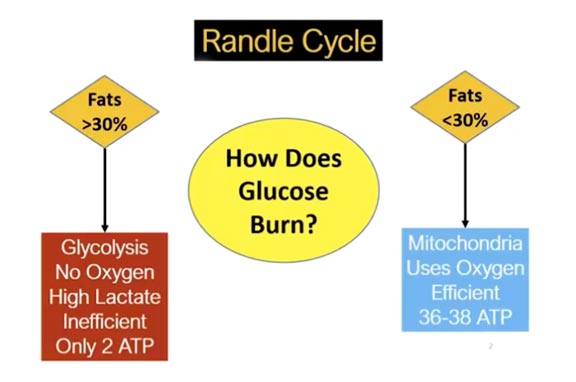
The Randle cycle is going to inhibit the oxidation of glucose in the mitochondria, resulting in weight gain, reduced energy production and other problems. If you’re metabolically impaired, as most people are, your fat intake may need to be as low as 10% to 15% initially, to prevent glycolysis from occurring.
Over time, you can then raise your fat intake to about 30% and still maintain healthy glucose metabolism. Unless you minimize your LA intake and get your total fat content below 30%, you really can’t go high-carb, because the end result is predictable. It’ll lead to diabetes, especially you have high tissue levels of LA, because the glucose cannot be metabolized in your mitochondria and will go to glycolysis instead.
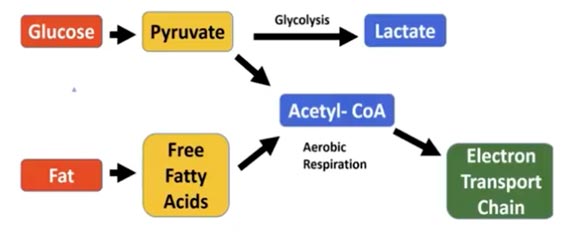
You also cannot load in just any type of carbohydrates. Most grains are loaded with LA and are therefore best avoided. Resistant starches also need to be limited, as they fuel the production of endotoxins in your gut.
The best carbs are ripe fruits. In addition to being a source of carbohydrates, ripe fruits also contain high levels of potassium, which will balance your sodium. Other healthy carbs include white rice and well-cooked potatoes.
Noakes’ Model: Muscle Glycogen Determines Fat Metabolism
Interestingly, in 1999, Noakes did a study showing that it’s not the Randle cycle that determines fat metabolism but, rather, the muscle glycogen content. In other words, the amount of glycogen in your muscles determines how much fat you burn. He explains:
“We made people glycogen depleted, and then we infused glucose. The glucose infusion made no difference. They refused to burn the extra glucose because they were burning so much fat when the glycogen was low.
In fact, I found an old paper [showing] that the best way to normalize your glucose tolerance is to get your muscle glycogen to zero, or as low as possible, and that fits my model.
My model is that when you take carbohydrate, the first thing you do is you try to burn it, so you inhibit fat oxidation, and then you dump it into muscle … and then you’ve got to exercise, get rid of it, and you cannot stop muscle glycogen burning. You cannot.
You can do what you like, it doesn’t stop muscle glycogen use. So, you can infuse glucose at high rates, the muscles will still burn the glycogen. If there’s glycogen in the muscle, it will be burned. And you have to ask why, when there’s so much fat to be oxidized?
So that’s the model that I see. I see the human as being loving to burn fat, and we’ve destroyed that by feeding them linoleic acid and carbs for too long. That’s how I see it.”
Why Strength Training Is so Important
Importantly, muscle glycogen is only used in the muscle. The glycogen cannot be excreted or secreted into your bloodstream. Only glycogen in the liver can do that. This makes a strong case for resistance training and building significant muscle mass. Like me, Noakes switched from running to doing resistance training when he got older:
“I’ve also shifted to weights and resistance training and it’s astonishing. When I look back, the benefits I get as a 74-year-old from resistance training are equal to the benefits I used to get at running as a 20 year old or a 30 year old. Today I can’t get those benefits from running anymore.
You have to change. And I’ve met a lot of endurance athletes who’ve told me that once they crossed 60, they reduced the running or the cycling and moved into resistance training, with huge benefits.”
Life Requires Constant Adaptation
In conclusion, Noakes correctly (and humbly) admits that when it comes to diet and exercise, we cannot make absolute statements that will be correct and always apply to everyone. We have an obligation to experiment and discover what works best for us, in the moment, and realize that what was best a few years ago may no longer be ideal.
To give you a personal example, when I shifted over from high-fat, low-carb to relatively high-carb, low-fat (upping my carbs from 150 grams a day to 400 or 500 grams) I lost 10 pounds, my body fat decreased 3% and my fasting blood sugar went down 10 points.
So, my body was telling me, “This is something I want to do.” It was clear that, from a blood work perspective and biological parameters, I was moving in the right direction. That intrigued me, because I like to test these theories out on myself before I start espousing them to others.
Before that, I was convinced that long-term high fat, low carb dieting was the way to go. My experience told me I hadn’t completely nailed it and needed to refine my recommendations further, which is why I’m now presenting more information about the benefits of higher-carb, lower-fat diets.
The caveat is that you need to be mindful of the types of carbs you add in, and to avoid seed oils. Unless you lower the LA, high-carb is not going to be a good strategy. Also, if you’re not exercising enough, eating 500 grams of carbs is going to be a disaster.
To learn more about Noakes’ work, please visit thenoakesfoundation.org. Also consider sponsoring his research efforts by making a donation, or become a research participant by filling out an anecdotal data collection form.
The Biology of Carbon Dioxide
Reproduced from original article:
https://articles.mercola.com/sites/articles/archive/2023/11/18/carbon-dioxide-biology.aspx
The original Mercola article may not remain on the original site, but I will endeavor to keep it on this site as long as I deem it to be appropriate.
Analysis by Dr. Joseph Mercola November 18, 202
STORY AT-A-GLANCE
- Carbon dioxide (CO2) is a driver of energy production, as it improves the delivery of oxygen into your cells. CO2 also helps protect against the harmful effects of lipid peroxidation
- CO2 and lactate have opposing effects. Lactate is the byproduct of metabolizing glucose without oxygen in the cytoplasm. So, where lactate causes problems, CO2 has beneficial effects
- Elevated lactate production is a common theme in diabetes, Alzheimer’s, heart failure, shock and general aging. It promotes inflammation and degrades mitochondrial function. Conversely, low CO2 concentrations have been linked to epileptic seizures, muscle spasms, inflammation, hypothyroidism, stroke and clotting disorders
- All these issues, whether caused by elevated lactate or low CO2, can be successfully treated with CO2 therapies of various kinds, such as CO2 baths (where CO2 is pumped into the tub, much like bathing in carbonated mineral water) or adding CO2 into standard hyperbaric treatment
- Simpler ways to raise your tissue content of CO2 include breathing into a paper bag, having an adequate supply of calcium, and supplementing with salt, baking soda or carbonated beverages
In this 2010 interview, the late Ray Peat, a biologist and physiologist who specialized in the bioenergetic theory of health,1 reviewed some of the key benefits of CO2 and how it works within the human body. This article is a summary of the key points made in that interview.
I apologize for the video quality. The video was recorded 13 years ago, and appears to have been shot on a cell phone. In 2010 the cameras were not very good. However, the audio is fine, and more importantly, this information is really hard to come by since Peat is no longer with us. Only 2,000 people had viewed it when I first saw it.
I watched it four times as it is so good. I’m convinced optimizing your carbon dioxide (CO2) level is one of the most important strategies you can do to slow down degeneration due to aging.
On that point, I will be interviewing one of the leading breathing experts in the world, Peter Litchfield, Ph.D., who will educate us on why most breathing techniques don’t work, as they don’t address the underlying triggered breathing habits that lower CO2.
CO2 Is Crucial for Optimal Health
CO2 is typically thought of as nothing more than a harmful waste product of respiration, and a “pollutant” that endangers the earth by raising global temperatures.
The reality is that CO2 is a driver of mitochondrial energy production, and it improves the delivery of oxygen into your cells. It’s also essential for most life on Earth, plants in particular. In fact, CO2 appears to be a more fundamental component of living matter than oxygen.2 All of this was well-known in decades past, but somehow knowledge about the beneficial effects of CO2 has been suppressed over time.
Importantly, CO2 allows for more efficient energy production in your mitochondria, which is why people who live or spend time at higher altitudes tend to be healthier and have fewer chronic health problems such as asthma. The reason for this is because the pressure of CO2 relative to oxygen is greater at higher altitudes.
A Simple Biohack to Boost CO2
According to Forbes Health, biohacking is “a term used to describe various tips and tricks for enhancing the body’s ability to function at peak performance — and maybe even extend one’s lifespan.”
A biohack for mimicking being at a higher altitude in order to boost CO2 is to breathe into a paper lunch bag for a minute or two. The bag should not be too small or too large (an ideal size is 6 inches by 15 inches, or 15 centimeters by 38 centimeters). Breathe into the bag with your mouth and nose covered until you feel better.
With each exhale, you expel carbon dioxide. By rebreathing the carbon dioxide inside the paper bag, you effectively raise your carbon dioxide level. According to Peat, breathing into a paper bag a few times a day has been shown to bring blood pressure down by as much as 30 points, and stabilize it there after a few days of repetition.
Download this Article Before it Disappears
CO2 and Lactate Have Opposing Effects
As explained by Peat, CO2 and lactate have opposing effects.3,4,5 So, where lactate causes problems, CO2 has beneficial effects.
For example, elevated lactate production is a common theme in diabetes, Alzheimer’s, heart failure, shock and general aging. It promotes inflammation and degrades mitochondrial function. Conversely, low CO2 concentrations have been linked to epileptic seizures, muscle spasms, inflammation, hypothyroidism, stroke, and clotting disorders.
According to Peat, all these issues, whether caused by elevated lactate or low CO2, can be successfully treated with CO2 therapies of various kinds, such as CO2 baths (where CO2 is pumped into the tub, much like bathing in carbonated mineral water) or adding CO2 into standard hyperbaric treatment.
Simpler ways to raise your tissue content of CO2 include breathing into a small paper lunch bag a few times a day as detailed above, having an adequate supply of calcium, and supplementing with salt, baking soda or carbonated beverages.6
Peat tells the story of how he told an individual suffering from transient ischemic attacks who’d gone to the emergency room with stroke symptoms and paralysis on several occasions to drink a soda or carbonated water when the attacks occurred, as the bubbles in carbonated drinks are CO2 gas. “That worked for him,” he said.
CO2 Promotes Efficient Energy Production
Lactate is the byproduct of glycolysis, or nonaerobic respiration. It occurs when your mitochondria are compromised and are unable to metabolize glucose. Instead of pyruvate going to the mitochondria to be burned, it is oxidized to lactate in the cell’s cytoplasm. When this occurs in the presence of oxygen it is called the Warburg Effect, which is major pathway that cancer cells use.
As illustrated in the graph below, glucose can be metabolized in two different ways. When fat intake is too high, glucose is burned though glycolysis, which uses no oxygen and produces lactate. This is a highly inefficient way to produce energy, as it generates only 2 ATP per glucose molecule. And, in the context of this article, no CO2.
When fat intake is in the sweet spot of 15% to 40%, and glucose intake is high enough, it can be burned for fuel in the mitochondria. This generates up to 38 ATP per glucose molecule. In this process, NADH and CO2 are also produced.7
If fat intake is over 40% and the carb intake is below 200 grams per day, the glucose is burned in glycolysis in the cell’s cytoplasm, which produces lactate that suppresses glucose oxidation and shifts metabolism to the burning of fats instead.
Lactate also promotes inflammation and fibrosis. CO2, meanwhile, limits the formation of lactate, increases oxidation of glucose, helps trigger mitochondrial formation (i.e., boosts the number of mitochondria in your cells) and boosts cellular ATP concentrations.8
As explained by Peat, glycolysis products (pyruvate and lactate) compete with CO2 for binding sites inside the mitochondrion. Glycolysis decreases energy production by reducing CO2.
Energy Production Summary
In summary, two key points from all this are:
- 1. The most efficient way to generate cellular energy is to burn glucose in the electron transport chain of your mitochondria (aerobic respiration). In addition to generating up to 38 ATP molecules per glucose molecule (opposed to the two generated through glycolysis), it also generates an estimated 50% more CO2 than fat oxidation.9
In order for glucose to be metabolized in your mitochondria, your dietary fat intake needs to be sufficiently low so as not to inhibit the oxidation of glucose. While there’s no hard evidence on how much fat is too much, I suspect you need to restrict fat to 30% or 40%, depending on your individual needs, to optimize your glucose metabolism. - 2. There are two possible energy states:
- i. A glycolytic stress state in which energy production is reduced by the inhibition of CO2.
- ii. An energy-efficient state in which CO2 is produced and lactate is suppressed.
CO2 Protects Against Lipid Peroxidation
CO2 also helps protect against the harmful effects of lipid peroxidation. Lipid peroxidation10 refers to a process in which free radicals and other harmful oxidants attack lipids (fats) that have carbon-carbon double bonds. Polyunsaturated fats (PUFAs) such as linoleic acid (LA) are particularly prone to this.
The key that many fail to recognize is that lipid peroxidation increases when CO2 levels are low, as CO2 protects the fats from damage. As explained by Peat, when CO2 is low, that’s when PUFAs increase their production of lipid peroxides11 (oxidation products of phospholipids).
Lipid peroxides degrade into reactive aldehydes such as malondialdehyde and 4-hydroxy-2-noneal (4-HNE), which damage DNA and proteins, causing them to malfunction. Lipid peroxidation is known to contribute to conditions such as cancer, atherosclerosis and neurodegenerative conditions, just to name a few.12
Peat cites one experiment in which they showed that when you raise the CO2 in human tissues to three times normal, the amount of lipid peroxides went to zero. So, CO2 has a potent anti-inflammatory effect and effectively protects against lipid peroxidation.
This is an important piece of information, as most people nowadays consume enormously excessive amounts of seed oils that are loaded with PUFAs, and thus have very elevated levels of stored LA in their cells.
As explained in “Linoleic Acid — The Most Destructive Ingredient in Your Diet,” LA is a primary contributor to chronic disease, as it causes mitochondrial dysfunction and promotes inflammation.
Augmenting CO2 in your tissues may be an effective way to limit LA-induced damage while you work to eliminate the excess LA from your tissues and replace it with healthy fats (which can take six or seven years).
How Lactate and CO2 Influence Stress
Peat also goes into an extended discussion involving many separate pieces to explain how lactate and CO2 influence the stress response and other parts of human biology that impact disease, including cancer.
For starters, the cytochrome oxidase enzyme — also known as Complex IV in the mitochondrial electron transport chain, which is what uses oxygen — governs your rate of oxygen consumption.
So, the more cytochrome oxidase you have, and the more active it is, the greater your oxygen consumption. Cytochrome oxidase is also responsible for increasing the total number of mitochondria within the cell as needed to accommodate for increased oxygen consumption.
When you saturate a cell with a very large amount of CO2, you rapidly increase the amount of cytochrome oxidase in the cell, and you boost its activity almost instantly. This shifts the oxidative balance of the cell towards the oxidized state, as electrons are being pulled out of the system. This lowers reductive stress in the cell, which is what you want to do.
In healthy cells, there’s a balance between NAD+ and NADH that is critical for energy production. Conditions like cancer or diabetes disrupt this balance, leading to excess lactate and reduced NAD+. Carbon dioxide is crucial because it prevents excessive lactate production, maintaining a healthy NAD+ to NADH ratio.
CO2 also influences the water balance in cells, supporting an oxidized cellular condition with lowered reductive stress that results in proper oxygen utilization. Hyperventilation, or over-breathing, which reduces CO2, typically leads to overproduction of lactate, contributing to stress and disrupting cellular balance.
CO2 in Emergency Care
Peat also discusses the role of CO2 in emergency care that has the potential to save your life or the life of someone you love. Stroke patients are typically ventilated with pure oxygen to prevent hypoxia-induced brain damage,13 but this isn’t the best way to help these patients.
A ventilation strategy called permissive hypercapnia appears to be far better. Permissive hypercapnia refers to a ventilation strategy employing partial pressures of CO2 that are higher than physiological norms. I have been encouraging those in the hyperbaric oxygen community to explore and adopt this strategy in their hyperbaric chambers. As explained by Peat:
“Quite a few people are now, just in the last few years, starting to talk about permissive hypercapnia … instead of ventilating someone to death [by] giving them pure oxygen. When people aren’t getting enough oxygen to the brain, they’ll give them pure oxygen and then hyperventilate them.
The idea is to shrink their brain by hyperventilating them, because it shuts down the blood circulation of the brain. But if they’re dying of a lack of oxygen to the brain, [that’s] not what you want to do …
I had mentioned [using carbonated beverages during ischemic stroke] in a nutrition class. I had said soda water, meaning carbonated water, but the next week, one of the students said that she had interpreted it as baking soda in water.
Basically, it’s the same idea, but she said she gave a spoonful of baking soda to her mother who had been half-paralyzed for six months, and 15 minutes after drinking just a glass of baking soda water the paralysis lifted and stayed away.”
The reason baking soda worked in this case is probably because CO2 is carried through your bloodstream by sodium bicarbonate (baking soda).14 Peat goes on to discuss how, in the past, firemen used to carry CO2 for the treatment of shock and respiratory arrest.
In the 1920s, Yandell Henderson, director of the Yale Laboratory of Applied Physiology, devised a system using oxygen with 5%, 7% or 10% CO2 added in. Fire departments all over the United States, and many hospitals, were using 5% CO2 to resuscitate babies that had stopped breathing and treat shock cases. It was also used post-operatively to aid in the recovery process.
The Green Agenda’s Flawed View of CO2
In closing, Peat also overturned key arguments of the green agenda by pointing out that during the Carboniferous period of Earth’s history, when plant and animal life was extraordinarily abundant, carbon dioxide levels were some 20 times higher than they are now, and temperatures were relatively stable.
“The expansion of vegetation will reflect infrared rays back into space,” he said, “so it’s sort of like the Earth has a thermostat that will regulate for huge changes in in CO2,” he said.
Even more importantly, nothing thrives in low CO2 environments — not plants, not animals or insects and, as evidenced by everything discussed above, not humans. If anything, the world may actually need a bit more CO2, seeing how CO2-deficiency states are rampant, forests are dying and plants aren’t growing very well. As noted by Peat:
“All animals and even plants suffer from a lack of carbon dioxide. If you lower it, even plants won’t do well … In the 1940s, people experimented with poisoning to death rats or mice with 50% carbon dioxide, keeping them dead for an hour and then reviving them, and they had no brain damage. If they gave them extra CO2, they weren’t damaged by the absence of oxygen. So, for primitive organisms, it’s more essential than oxygen.”
The increasingly erratic weather systems we’re now experiencing likely have little to do with the CO2 content of our atmosphere, and far more to do with a combination of decades-long weather manipulation15 and natural solar cycles.16,17
- 1 Umzu. Who Is Ray Peat?
- 2 Conscious Breathing Carbon Dioxide, Physiology
- 3, 8 Ray Peat, Mitochondria and Mortality
- 4 Skool.com Ray Peat Simplified
- 5 Functional Performance Systems CO2 v. Lactic Acid
- 6 Ray Peat, Protective CO2 and Aging
- 7 StatPearls Biochemistry, Electron Transport Chain
- 9 Ray Peat Forum May 29, 2017
- 10, 12 Toxicological Research March 2011; 27(1): 1-6
- 11 Science Direct Lipid Peroxide
- 13 Stroke October 1, 1999; 30: 2033-2037
- 14 Conscious Breathing Carbon Dioxide
- 15 Geoengineering Watch
- 16 Patreon Adapt2030
- 17 YouTube Adapt2030
Crucial Facts About Your Metabolism
Reproduced from original article:
https://articles.mercola.com/sites/articles/archive/2023/11/12/mitochondria-glucose-metabolism.aspx
The original Mercola article may not remain on the original site, but I will endeavor to keep it on this site as long as I deem it to be appropriate.
Analysis by Dr. Joseph Mercola November 12, 2023
STORY AT-A-GLANCE
- Cortisol is primarily a rescue hormone. It’s a glucocorticoid, so it increases your glucose level by shredding your muscle protein to produce glucose. Cortisol also accelerates the aging process and is implicated in most chronic diseases. It also uses your brain tissue to use amino acids to make glucose which contributes to brain atrophy and subsequent depression
- Your mitochondria can only burn one fuel at a time — either fat or glucose — and there’s a stealth switch that controls which of these fuels your mitochondria will burn. This switch is known as the Randle cycle
- Ideally, you want to metabolize (burn) glucose in your mitochondria, as this only generates 0.1% reactive oxygen species (ROS). This route also generates energy most efficiently, creating 36 to 38 adenosine triphosphates (ATP) for every molecule of glucose that is metabolized. For this to occur, you need to consume less than 30% of your calories as fat
- When you consume significantly more than 30% fat, the switch changes to burn fat in your mitochondria. As a result, glucose then backs up into your bloodstream, raising your blood sugar. This is a major contributor to diabetes
- When you lose muscle, your basal metabolic rate goes down, so it’s important to maintain muscle mass, because your muscle will burn fat even when you’re resting
In this interview, repeat guest Georgi Dinkov and I will again take a deep dive into the biochemistry of human metabolism. Dinkov is a student of the late Ray Peat, a biologist, thyroid expert and pioneer in prometabolic therapy and human metabolism.
Despite having a degree in computer science and having no formal academic training in health, Dinkov essentially has acquired a Ph.D. in molecular biology. After graduating from Georgetown University in 2002, Dinkov got a job as a programmer at the National Biomedical Research Foundation (NBRF).
There, he helped develop uniprot.org, a database of all known protein sequences. Surrounded by dozens of the brightest doctors and biochemists in the world, he developed an interest in biochemistry.
Clearing Up Confusion
I have long promoted a low-carb, high-fat diet for many years and have realized many are confused on the evolution of my recommendations. As I say in the interview, 95 to 97% of the population in the U.S. is metabolically inflexible and would likely benefit from a low-carb, high-fat keto approach with intermittent fasting.
However, once you have resolved your insulin resistance, which typically takes a few months but can take longer, and can optimally burn fat for fuel, it is very clear to me that you need to cycle carbs back into your diet. There are loads of questions about how this transition occurs, the timing of the transition, and the details of the cycling that need to be answered.
No one knows the answers, as the studies have not been done, but I am fairly convinced that many people will appear to do well in the long term on a low-carb, high-fat keto program like I did. However, I also believe they would do even better if they started to include more healthy carbs in their diet like I did. That does not mean processed foods or processed sugars, or virtually all grains and legumes. The ideal carbs are ripe fruits.
You should introduce carbs slowly and only after you have shifted your fat level down to 30%. This is easily calculated by using a free online program called Cronometer. If you still struggle with diabetes or obesity, then you can get your fat level down to 15 to 20% of your total calories.
Protein level should always remain the same and does not change from 0.7 to 1 gram protein/kg of lean body weight. So, if you are 20% body fat then you would multiply your body weight by 0.8 to get your lean body mass.
In my case, it took me about three to six months to go from 100 grams of carbs to 500 grams. The results for me were quite spectacular. I was already healthy, but it clearly improved my health even further as my body fat dropped from 15% to 12%, my inflammation decreased to radically low levels as my HS-CRP went from 0.8 to 0.18 which is almost below detection levels. Finally, even though I was not prediabetic as my blood sugar was in the low 90s, it dropped by 10 points to the low 80s.
The reason I made this shift is I was overwhelmed by the amount of strong scientific support for demonstrating that the ideal fuel in your mitochondria is indeed glucose, not fat. It has to do with decreasing reductive stress in your mitochondria which is a relatively unknown concept in molecular biology.
When implementing the transition to healthy carbs you need to be careful not to eat too many carbs as excess carbs will be shunted to glycolysis and into glucose into your blood and lead to an increased blood sugar. The more muscle mass you have and the more exercise you do, the more carbs you can eat.
I suspect most people could easily transition to 200 grams of carbs. I seem to do well with about 500 grams, mostly all fruit but do have white rice and red potatoes as well. You should see my shopping cart as every week it is loaded with about 60 pounds of fruit.
The Cortisol-Glucose Link
For example, Dinkov helped me understand the crucial role cortisol plays in glucose regulation. Cortisol is primarily a rescue hormone. It’s a glucocorticoid, and as the name implies, it increases your glucose level, because if your glucose level drops too low, you will go into a hypoglycemic coma and can die.
As such, cortisol is a lifesaver. The downside is that it uses up vital protein to make glucose, so high cortisol takes a toll on your muscles. The reason anabolic steroids build muscle mass is because they’re anti-cortisol. You would’ve thought anabolic steroids would have some direct action on the muscles, but no, they primarily inhibit cortisol’s catabolic impact.
Cortisol uses muscle protein to produce glucose in your liver, so when your glucose level drops, cortisol rises and shreds muscle to produce glucose. This is one of the puzzle pieces that explains why you don’t want your glucose levels to be low over prolonged periods.
Cortisol also accelerates the aging process and is implicated in most chronic diseases. In the case of Addison’s disease (adrenal failure), the opposite is present: low cortisol. These patients are typically required to take cortisol injections on a regular basis. On the upside, this chronic cortisol deficiency tends to impart a youthfulness. In most other chronic conditions, high cortisol is part of the problem.
Download this Article Before it Disappears
High Cortisol Speeds Aging
Dinkov comments:
“Studies as far back as the 1950s and 60s demonstrated that you can produce every single phenotype of aging if you inject cortisol, or at least create a state of relative glucocorticoid excess in the animal.
You can do that either by injecting synthetic or natural glucocorticoids, or by increasing the levels of natural anti-cortisol steroids in the body. Those are progesterone and DHEA, and in males testosterone and dihydrotestosterone.
It has been shown that cortisol levels do not decline with age unless you really have adrenal failure, while the levels of all these anti-cortisol, youth-promoting hormones decline with age. By the time you’re 80, their levels are at about 20% of what they used to be when you were in your 20s.
So, really, what happens is that cortisol stays the same, but your relative state of cortisol increases because there’s nothing to oppose the cortisol that is already there. Multiple intervention studies have demonstrated that if you administer agents that oppose cortisol, block it at the receptor level, or reduce its synthesis, you can achieve really good health results and also improve the way you look.
Anabolic steroids are probably the best known example. It’s really a misnomer because they’re not anabolic. They’re actually anticatabolic. Muscle has one of the highest expressions of the glucocorticoid receptor, through which cortisol shreds the muscle. It binds the receptor and increases a number of different proteolytic fibers.”
High Cortisol Linked to Depression
Your gastrointestinal tract and brain also have high numbers of glucocorticoid receptors, so cortisol shreds brain tissue as well, causing brain atrophy and subsequent depression. Research has shown that people with depression have smaller brain volumes than people who don’t have depression.
“Within 48 hours of the glucocorticoid blocker RU-486 being administered to people with clinical treatment-resistant depression, they experienced remission. So I think it’s a very good argument that cortisol is catabolic to the brain, and clearly, if it’s catabolic to the brain, it’s probably not going to improve your mood. If anything, it’s going to worsen it.”
Again, when your blood sugar level drops, that triggers your body to increase cortisol, which is the last thing you want if you struggle with depression or other chronic disease. Really, one of your primary goals in achieving optimal health is to limit the elevation of your cortisol. It’s far more destructive than having elevated blood sugar, which most focus on.
High Cortisol Is Far Worse Than High Blood Sugar
Many wear continuous glucose monitors that check your glucose level every five to 10 minutes. But high glucose is not the real danger here. Cortisol is, and it rises when glucose drops too low. As noted by Dinkov:
“All the drugs on the market, especially the more recent ones that lower HB A1C, the glycated hemoglobin, all of them increase mortality. So, clearly, messing directly with the levels of blood glucose, it’s not something you want to do.
You may temporarily decrease the biomarker, the glycated hemoglobin, but it does not mean you’re getting healthier. [These drugs] may lower your blood glucose, but they may kill you in the long run faster than the elevated glucose would’ve done by itself.”
Metformin is one classic example. Many are using this drug to lower their blood sugar. While it’s a natural product, and considered safe, it’s basically a mitochondrial toxin that will make your health decline in the long term.
All of that said, we’re NOT saying you should ignore elevated blood glucose. Absolutely not. But elevated glucose is a symptom that is best addressed indirectly. Once you address the foundational cause, it will normalize by itself. As a personal anecdote, when I first interviewed Dinkov, 70% to 80% of my diet was fat. Now, I’m down to 27% fat and 57% carbohydrates, and I’ve lost 5 pounds and my fasting blood sugar is down by 10 points.
So, it’s not the carbohydrate ingestion that’s causing high blood sugar. It’s what’s happening at the mitochondrial level. To help you understand that, I created a graphic (below) because this science can get somewhat complex.
The Randle Cycle
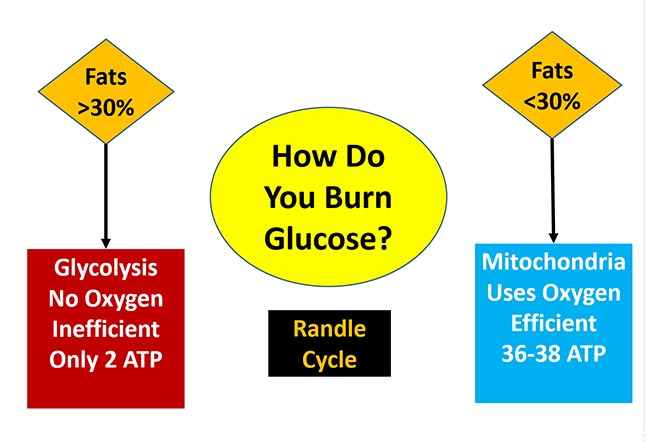
Your mitochondria can only burn one fuel at a time — either fat or glucose. Fats are broken down in a process called beta oxidation into acetyl-CoA, which gets fed into the Krebs cycle. Carbs are broken down to pyruvate, which cannot enter the electron transport chain until it is converted to acetyl-CoA by pyruvate dehydrogenase.
The key here is that there’s a stealth switch that controls which of these fuels your mitochondria will burn. The switch has been given the name the Randle Cycle, but it is more helpful to visualize it as a railroad switch that changes the tracks of the train. The train can only travel down one track: not both. This is because only one type of fuel can be burned at a time.
In a best-case scenario, you will metabolize, or burn, glucose in your mitochondria without any reductive stress. When you do this, you will only generate 0.1% reactive oxygen species (ROS).
Not only does this route generate less ROS, but it also is incredibly efficient at energy production by creating 36 to 38 adenosine triphosphates (ATP) for every molecule of glucose that is metabolized. It will also generate metabolic water and carbon dioxide, which are also important for your health.
For this to occur, as indicated in the figure above, you will need to consume less than 30% of your calories as fat. When you consume significantly more than that amount, the switch changes to burn fat in your mitochondria and you will not be able to burn glucose until your fat decreases to less than 30% of calories.
When your fat intake is higher than 30%, pyruvate is inhibited and unable to readily convert the glucose metabolite, pyruvate, into acetyl-CoA to be shuttled into the mitochondria to burn as fuel.
Consequently, glucose can back up into your bloodstream, raising your blood sugar. What little glucose is burned for fuel is done through glycolysis, which is a primitive pathway that bacteria and cancer cells use, and it generates the powerful metabolic reductant lactate.
This can be a major contributor to diabetes. If you’re exercising, healthy and doing strict keto, overt diabetes is unlikely to develop, but more than likely you will have fasting glucose in the 90s, rather than the more optimal 80s.
Additionally, chronically oxidizing fats as your primary fuel will tend to increase your cortisol level, resulting in chronic inflammation, both of which accelerate the aging process due to excess ROS generated in the mitochondria that occurs from increased reductive stress as a result of oxidizing fat instead of sugar.
It is great that we have this glycolysis pathway, as you absolutely need it for quick fuel when you are activating your Type 2 muscle fibers. But if this is the primary way you burn glucose, you are in a catastrophic metabolic state because you’re creating loads of lactate as a waste product instead of healthy CO2 and metabolic water.
What’s more, you’re only generating two ATP for every molecule of glucose, which is 95% less energy. Lactate increases reductive stress, which causes reverse electron flow in the mitochondria and increases the ROS to 3% to 4%, which is 30 to 40 times more than when glucose is burned efficiently in the mitochondria at 0/1% ROS.
When Adding Carbs, Reduce Your Fat Intake
Ideally, it is best to lower your fat intake and replace those calories with healthy carbs like ripe fruit. You likely won’t optimize your mitochondrial function, though, until your fat level decreases to 30% of your total calories. So, hold off on making a final decision about whether this change is helping you or not until you get your fat level to 30% or lower.
This is easily calculated by using a free online program called Cronometer. If you still struggle with diabetes or obesity, then you may need to get your fat level down to 15% to 20% of your total calories.
Protein Versus Fat and Carb Requirements
Determining the ideal balance between carbs and fats is the primary challenge for most people. The level of protein is a bit simpler. It tends to be about 15% of daily calories and remains stable. A basic guideline for protein intake is somewhere between 0.7 grams and 1 gram per kilogram of lean body mass (not total weight).
The level of dietary fat you need will depend on your endocrine balance. If you’re diabetic, for example, you may need to go below 20% to avoid shutting down your glucose metabolism. Dinkov comments:
“If you look at older people, and sick people as well, they have metabolic inflexibility. So, if you give them a meal that’s comprised of equal number of calories of carbs and fats, they’re going to oxidize mostly the fats and the carbohydrates will go unmetabolized.
So, they’ll raise their blood glucose and lactate. So, you need to play with the ratio, but I’ve noticed that between 15% and 20% is probably where most people in their current health state can metabolize the fat without causing problems through the Randle Cycle.
Most diabetics are overweight … which means they have plenty of supply of fat. In fact, they have two sources of fat: one through the diet, and the second one from their fatty tissue, because there’s always some lipolysis going on, which means shredding the fatty tissue and supplying the rest of the body with the fatty acids from a fatty tissue …
In the rested state, your muscles actually prefer to oxidize mostly fat. So, if you have a decent amount of muscle mass, you can actually burn most of this fat through the baseline lipolysis by simply resting and preferably raising the amount of lean muscle mass you have. The ratio of lean muscle mass to total body weight is the primary determinant of your basal metabolic rate. So it’s very important to not lose lean muscle mass …
So, for diabetic people, it’s probably a good idea to lower the intake of fat from the diet because they already have a lot coming from their own bodies. In fact, there are many clinics around the world that treat and even cure Type 2 diabetes by putting diabetics on this really restrictive diet until they lose most of their fat and then suddenly the metabolism of glucose gets restarted.
I think this directly shows you that it wasn’t the glucose that was fattening them up and causing the problems, rather they had too much fat in their bodies. Once you get rid of that fat, no matter how you do it … the problems with metabolizing glucose disappear.”
Signs of Excessive Fat/Insufficient Carb Intake
As explained by Dinkov, one of the reasons why obese people who lose a lot of weight end up gaining it all back, even when they continue to diet and exercise, is because most of the weight lost is actually muscle mass. When you lose muscle, your basal metabolic rate decreases, meaning you need fewer calories to maintain your weight.
As a result, you must stay on an extremely low-calorie diet to maintain your weight. So, again, it’s crucial to maintain muscle mass, because your muscles will burn fat even when you’re resting. During activity, especially strenuous activity, your muscles will burn mostly glucose.
“I think the best way to gauge if you are eating too much fat is cognitive function,” Dinkov says. “If you’re eating too much fat, to the point where you’re interfering with glucose metabolism, you’ll start getting brain fog. Your thinking process will slow. You’ll start searching for words. Your reaction time and coordination time will decrease.
Sleep quality is another. Also, exercise capacity. If you’re always catching your breath and you’re feeling fatigued all the time, that is actually a great sign/symptom of elevated lactate. In fact, many different interventions that lower lactate are used as performance improving substances, such as vitamin B1 and niacinamide …
I would say eat the more fat-heavy meals earlier in the day, for breakfast and maybe lunch, and then eat the more carb-heavy meals at night, because your brain and many of the other organs will really need that.
It’s very common that if you don’t consume sufficient amount of carbs before going to bed, you will have trouble sleeping … I think one of the reasons for this is that, if you don’t consume sufficient amount of glucose, you will raise cortisol at night, and cortisol is already higher at night than it should be.
The cortisol is lowest at around 3 or 4 p.m. and starts rising with the coming darkness. Cortisol is highest at around 6 to 8 a.m. in the morning. But if you don’t consume a sufficient amount of carbs, that cortisol will be up to 40% higher.”
Clean Carbs
Of course, when we say “eat more carbs,” we don’t mean pizza and doughnuts or even ostensibly healthy grains like whole wheat. Healthy or “clean” carbs include foods like ripe fruit, raw honey and maple syrup. Tropical fruits such as papaya, watermelon, oranges and tangerines are preferable, as in addition to higher levels of fructose, they also contain flavonoids that help to digest the sugars. Ripe melon, apples, peaches, plums, pears and grapes are also good.
Now, you’ve probably heard me say that you shouldn’t eat anything at least three or four hours before bedtime to optimize autophagy. Dinkov’s research, however, dispels some of the concerns about eating (clean) carbs before bed.
“You do not want to mess with autophagy too much,” Dinkov says. “It has a lot of beneficial effects in terms of getting rid of dead or metabolically deranged tissue. However, if you do have an already present tumor, autophagy and AMPK can actually drastically increase its aggressiveness and promote metastasis.
But let’s say you do want to increase autophagy. I think it’s a bit of a myth that eating will somehow suppress autophagy and put it at a suboptimal level. Several studies demonstrate that several of the carbohydrates — including fructose and sucrose — are autophagy enhancers.
I would say, [eat healthy carbs] an hour before bed, because if you eat a meal that’s too high in carbohydrates, there’s the infamous fructose malabsorption. There’s only a certain amount of carbohydrates that your gastrointestinal tract can absorb per unit of time.
So, you need about an hour or two before the meal, if it’s composed of simple carbohydrates, to get these things into your bloodstream. At that point, you’ll probably be very relaxed and naturally inclined to fall asleep.”
That fructose and sucrose enhance autophagy is probably news to most of you. It was to me. I personally eat a teaspoon of honey before I go to bed, which seems to be enough carbs to thwart an increase in cortisol and helps me get more deep sleep. So, to summarize, Dinkov suggests eating a small amount of healthy carbs, such as fruit, about an hour or two before bed to optimize sleep and, potentially, autophagy as well.
Serotonin Is Not Your Friend
Fruits to be consumed in small amounts include pineapple and bananas, as both contain serotonin. Bananas also contain tryptophan, which is used in the synthesis of serotonin.
While most people think of serotonin as a mood-booster, it’s actually one of your worst enemies. You do not want high levels of serotonin, because it’s an antimetabolite. This means it suppresses your body’s ability to create energy in your mitochondria in the electron transport chain, so you become tired and fatigued, your metabolic rate slows and you gain weight.
“The amount of serotonin we need is really, really low,” Dinkov says. “The biggest role of serotonin is gastrointestinal motility. Any increase, even minor increase of serotonin, has been known since the 1920s to rapidly lead to fibrosis. The most successful antifibrotic drugs on the market currently are serotonin blockers.”
More Information
For more details on the topics summarized here, be sure to listen to the entire interview, and keep your eyes peeled for Part 2, which will follow shortly. Also check out Georgi’s blog at www.haidut.me or follow him on Twitter. He also has hundreds of videos on YouTube on a plethora of topics. A major sampling of Ray Peat’s work is also available for free on these two sites: wiki.chadnet.org/Ray-Peat and RayPeat.com.
NAFLD Has Become a Health Emergency Among Children
Reproduced from original article:
https://articles.mercola.com/sites/articles/archive/2023/10/31/nafld-health-emergency-children.aspx
The original Mercola article may not remain on the original site, but I will endeavor to keep it on this site as long as I deem it to be appropriate.
Analysis by Dr. Joseph Mercola October 31, 2023
STORY AT-A-GLANCE
- NAFLD is characterized by excess fat buildup in your liver. Without proper treatment, it can lead to serious liver problems including nonalcoholic steatohepatitis (NASH), which causes inflammation and fibrosis, or scarring of the liver. NAFLD also increases the risk of other health conditions, including cardiovascular disease
- The first documented cases of nonalcoholic fatty liver disease (NAFLD) didn’t come about until 1980. Today, NAFLD affects 32.4% of people globally, and it’s the most common cause of liver transplant in adults under the age of 50
- NAFLD also affects up to 9.6% of American children aged 2 to 19, making it as common as asthma. In 15- to 19-year-olds, prevalence is as high as 17.3%. Prevalence among children 0 to 17 has risen 168.3% since 2017, with a particularly precipitous rise starting in 2020
- The dramatic rise in NAFLD in early 2020 may in part be due to the COVID lockdowns, which had the effect of raising childhood obesity rates by 8.3% to 13.4%, depending on the age group
- Maternal obesity and high consumption of diet soda and/or junk food during pregnancy have both been linked to NAFLD in offspring, and one theory is that artificial sweeteners may be programming the metabolism of the fetus to favor fat storage over energy production
Fatty liver disease used to be a disease seen almost exclusively in the elderly, primarily heavy drinkers. The first documented cases of nonalcoholic fatty liver disease (NAFLD) didn’t come until I was in medical school in 1980.1 At the time, the researchers described it as a “hitherto unnamed liver disease of unknown cause.”
In June 2023, scientists proposed rebranding NAFLD to “metabolic dysfunction-associated steatotic liver disease,” to highlight its relation to other metabolic conditions such as diabetes. What connects all metabolic conditions is that your body is not converting food to energy in an efficient manner.
In the video above, independent health researcher Jay Feldman investigates the true causes of NAFLD. This is Part 2 of an eight-part series. It’s like a master’s course on NAFLD, as he goes over virtually everything you could possibly want or need to know about it. If you or someone you know is currently struggling with NAFLD, I strongly encourage you to view all eight episodes.
In the featured episode, he explains why fructose is NOT the main culprit as commonly thought, how your liver produces fat from both fructose and dietary fats, and how impaired energy production in your mitochondria results in NAFLD.
What Is NAFLD?
NAFLD is characterized by excess fat buildup in your liver. Without proper treatment, it can lead to serious liver problems including nonalcoholic steatohepatitis (NASH), which causes inflammation and fibrosis, or scarring of the liver.
NASH may lead to cirrhosis, which increases the risk of liver cancer, and end-stage liver disease. NAFLD also increases the risk of other health conditions, including cardiovascular disease, which is the No. 1 cause of death in people with NAFLD. NAFLD often has no symptoms, although it may cause fatigue, jaundice, swelling in the legs and abdomen, mental confusion and more.
Your liver carries out more than 500 functions that are essential for health. This includes the production of bile (which breaks down dietary fats and carries away waste), converting excess glucose into glycogen, and regulating amino acids in the blood. It’s also important for detoxification, helping to clear your blood of toxins.
The good news is that your liver, more than almost any other tissue in your body, has phenomenal regeneration capabilities. Even if 90% of it has been removed, it can regrow to its normal size. NAFLD can also be successfully reversed in its early stages via lifestyle changes, like healthy eating and exercising.
NAFLD Prevalence Has Skyrocketed
Today, NAFLD affects 32.4% of people globally,2 and it’s the most common cause of liver transplant in adults under the age of 50.3 NAFLD also affects up to 9.6% of American children aged 2 to 19,4 making it as common as asthma.5 In 15- to 19-year-olds, prevalence is as high as 17.3%.6
What’s particularly strange is that the skyrocketing prevalence in children and teens is quite new. As illustrated in the graph below from Trilliant Health,7 prevalence of NAFLD has risen 168.3% since 2017, with a particularly precipitous rise starting in 2020.
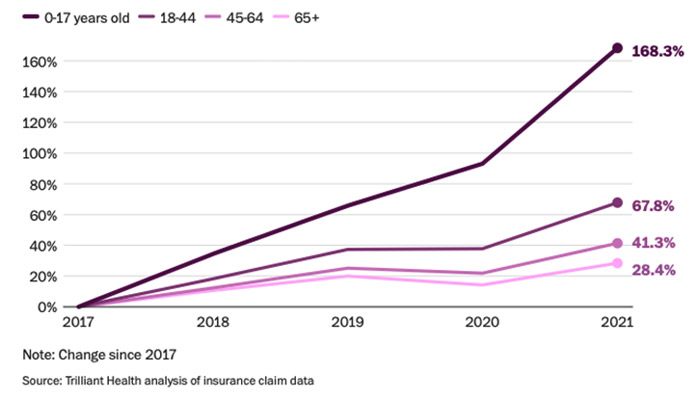
Download this Article Before it Disappears
Obesity Is a Primary Risk Factor for NAFLD
As reported in a March 2021 paper on pediatric NAFLD:8
“The largest risk factor for NAFLD is obesity. Obesity and NAFLD in children are often associated; however, they are not concomitant.
In a 2019 study in 408 children with obesity using whole liver magnetic resonance imaging–proton density fat fraction, the prevalence rate of NAFLD was 26.0%, or roughly one in every four children. In the Teen LABS study of adolescents with obesity severe enough to warrant weight loss surgery, the prevalence rate of NAFLD was higher at 59%.”
The dramatic rise in NAFLD in early 2020 may in part be due to the COVID lockdowns, which had the effect of raising childhood obesity rates by 8.3% to 13.4%, depending on the age group.9
Artificial Sweeteners May Impair Metabolism
That said, NAFLD also occurs in an estimated 8% of normal weight children.10 Inherited predisposition may be part of the problem. But the environment in utero can also influence a child’s risk of NAFLD,11 and this is a far more likely explanation for the recent explosion in prevalence among children.
Maternal obesity and high consumption of diet soda and/or junk food have both been linked to NAFLD in offspring. Artificial sweeteners may be programming the metabolism of the fetus to favor fat storage over energy production.
Maternal obesity and high consumption of diet soda and/or junk food during pregnancy have both been linked to NAFLD in offspring, and one theory is that artificial sweeteners may be programming the metabolism of the fetus to favor fat storage over energy production.12
Babies are also routinely fed unnaturally high amounts of sweeteners in infant formula and baby food. In recent years, the baby formula industry has started marketing formula made with corn syrup solids instead of lactose from cow’s milk. It’s said to be better for babies with sensitivity to lactose.
However, recent research13 suggests formula made with corn syrup solids significantly increases your child’s risk of obesity by age 4, and by extension NAFLD, and those who consume the highest amounts of formula have the highest risk.
So-called “transition formula” and “toddler milk” also contain higher amounts of sugar than regular cow’s milk. Both products are pure marketing inventions that have no nutritional basis. Meanwhile, research14 has shown that consumption of unsweetened cow’s milk is associated with a lower risk of NAFLD.
The Role of Diet
Indeed, our modern diet is probably the most important driver of this condition. As reported by The Washington Post:15
“… many doctors believe that our modern lifestyle — diet, the increase in sedentary activities related to technology and environmental exposures — is to blame. One of the liver’s jobs is to filter toxins, and when something in the body is out of balance, the organ can become damaged and fail …
A little fat in the liver is normal, but when more than 5% of its cells contain fat, the organ’s ability to do its job is impeded, and pediatric specialists say some children they treat have livers with 30 to 40% or even as high as 60% fat …
Some pediatric experts theorize there’s a mismatch between our genetics and the highly processed and sugary foods that have come to dominate childhood diets.
Nutritional surveys show that meals eaten by kids changed radically in a generation, going from very little ultra-processed foods in the early 1980s … to more than 67%16 in recent years. Such diets lead to hormonal changes and other stresses on our bodies.
‘It creates a time bomb, and it is killing our kids,’ said Barry M. Popkin, a professor of nutrition at the Gillings School of Global Public Health at the University of North Carolina at Chapel Hill.”
The Washington Post goes on to cite a January 2022 systematic review17 that found “a parallel but delayed rise” in noncommunicable diseases with rising prevalence of ultraprocessed foods.
Between 1800 and 2019, processed and ultraprocessed foods rose from less than 5% to more than 60%. This radically altered the macronutrient content of our diets. Sugar and seed oil (or “vegetable oil”) consumption rose dramatically, while saturated fat from animals dropped.
Ditch the Fast Food to Protect Your Child’s Health
Of these, I believe the transition from saturated animal fats to seed oils has played the biggest role. As detailed in “Linoleic Acid — The Most Destructive Ingredient in Your Diet,” seed oil is the primary source of linoleic acid (LA), which destroys your mitochondrial function.
I’m convinced excessive LA consumption is the biggest contributor to chronic disease in the Western world, including NAFLD. To understand how LA undermines your health, and that of your children, please read through that article and watch the video included in it. Both provide a comprehensive overview of how LA drives chronic disease of all kinds.
To avoid LA, you’ll need to avoid processed foods, fast foods and most restaurant foods, and focus on real, whole, organically grown foods instead. Processed foods are also routinely contaminated with glyphosate, which can contribute to liver problems. Disturbingly, recent testing revealed 95% of school lunch items had detectable levels of glyphosate,18 so, if at all possible, provide your child with homemade lunches.
A shocking 100% of meals also contained heavy metals at levels up to 6,293 times higher than the maximum levels allowed in drinking water. Meanwhile, most of the meals were “abysmally low” in essential nutrients.
Fast food also contains extremely low amounts of essential nutrients, especially B vitamins. In fact, zero amounts of vitamin B9 or B12 were detected in the top 10 fast foods sampled.19
That’s rather remarkable, considering B12-rich foods include beef and chicken, both of which are staples in fast food, yet fast food beef and chicken provide no B12 at all! If that doesn’t convince you that fast food meat is nowhere near the same as grass fed organic meat, I don’t know what will.
Fatty liver can also be driven by excess sugar when, in addition to seed oils, you are consuming more than 35% or so of your calories as fat. This is likely why this condition is now found even in young children.
Nutrients That Help Combat NAFLD
Upping your intake of specific nutrients can also be helpful if you have NAFLD. Examples include:
| Choline — Choline is important for normal liver function and liver health by moving fat out of your liver. It also helps maintain membrane integrity and manages cholesterol metabolism, including low density lipoproteins (LDL) and very low-density lipoproteins (VLDL). Choline deficiency has been shown to enhance abnormal fat deposits in your liver, causing NAFLD.20
In fact, some experts believe NAFLD is largely the result of shunning choline-rich foods like liver and egg yolks,21 which is then worsened by consuming too much LA. You can increase your intake by consuming more choline-rich foods, such as organic pastured egg yolks, grass fed beef liver, wild-caught Alaskan salmon and krill oil. Arugula is also an excellent source. |
| Vitamin B12 and folic acid may also be protective and have been found to decrease the progression of NASH.22 |
| Niacinamide, also known as nicotinamide (NAM) — Niacinamide is a precursor to nicotinamide adenine dinucleotide (NAD+), a vital signaling molecule that’s believed to play an important role in longevity. Supplementation has also been found to decrease oxidative stress and prevent fatty liver.23 |
| N-acetylcysteine (NAC) — NAC is a precursor needed for glutathione biosynthesis. It’s used as an antidote for acetaminophen toxicity, which causes liver damage by depleting glutathione. Research published in Hepatitis Monthly has shown NAC supplementation helps improve liver function in patients with NAFLD.24 |
| Milk thistle — This herb contains silymarin and silybin, antioxidants that are known to help protect your liver from toxins and even help regenerate liver cells.25 |
| CoQ10 — CoQ10 keeps your mitochondria healthy and plays a crucial role in the production of ATP, the cellular energy required to keep you alive. Supplementing with CoQ10, or the natural form called ubiquinol, has been shown to improve NAFLD by reducing oxidative stress and inflammation.26 |
Remember that supplements should always be used in combination with a healthy lifestyle, including eating right and exercising. If you’re overweight, losing 7% to 10% of your body weight can improve NAFLD, including lowering liver fat content, liver inflammation and fibrosis.27
- 1, 5, 7, 12, 15 Washington Post October 3, 2023 (Archived)
- 2 The Lancet Gastroenterology & Hepatology September 2022; 7(9): 851-861
- 3, 4, 6, 8, 10, 11 Clinical Liver Disease March 2021; 17(3): 196–199
- 9 JAMA 2021;326(14):1434-1436
- 13 American Journal of Clinical Nutrition October 2022; 116(4): 1002–1009
- 14 Frontiers in Nutrition 2023; 10: 1119118
- 16 JAMA 2021;326(6):519-530
- 17 Frontiers of Nutrition January 13, 2022
- 18 Moms Across America September 28, 2022
- 19 Moms Across America October 18, 2023
- 20 Oregon State University Linus Pauling Institute
- 21 chrismasterjohnphd.com November 23, 2010
- 22 Journal of Hepatology, 2022; doi: 10.1016/j.hep.2022.06.033
- 23 The Journal of Nutritional Biochemistry May 21, 2022
- 24 Hepatitis Monthly, 2010; 10(1):12
- 25 Indian J Biochem Biophys. 2006 Oct;43(5):306-11
- 26 Journal of Prescribing Practice. 2020;2(4)
- 27 Curr Obes Rep. 2019 Sep; 8(3): 220–228