Carbon Dioxide
now browsing by category
Bioenergetic Expert Warns Against Misguided Cancer Treatment Trends, Offers New Insights
Reproduced from original article:
https://articles.mercola.com/sites/articles/archive/2025/10/12/bioenergetic-expert-warns-cancer-treatment-trends.aspx?
Analysis by Dr. Joseph Mercola October 12, 2025
Story at-a-glance
- Cancer occurs when cells abandon efficient mitochondrial energy production for glycolysis, creating lactic acid buildup and cellular dysfunction
- Estrogen drives cancer progression by forcing cells into glycolysis, while protective hormones like progesterone, testosterone, and pregnenolone counteract these harmful effects
- Environmental toxins including pesticides, plastics, soy, flax, and blue light waves act as endocrine disruptors, creating estrogen dominance and damaging mitochondrial function
- Standard cancer treatments like chemotherapy backfire by leaving cellular debris that triggers inflammation throughout the body, spreading the disease further
- Therapeutic approaches using aspirin, carbon dioxide, B vitamins, and hormone optimization restore healthy cellular energy production and guide damaged cells toward apoptosis
In an interview by the Rooted in Resilience podcast, bioenergetic researcher Georgi Dinkov provided an update on his research regarding the pitfalls of common cancer treatments, arguing that this approach often goes in the wrong direction. Instead of focusing on what fuels tumors, many doctors target hormones in ways that may worsen the disease.1 He also discussed innovative strategies that result in better outcomes.
All these and more, are discussed in the podcast. I encourage you to listen to it, as it contains a wealth of new information that will change the way you think about cancer and the promising treatments that will be available in the future.
Why Do Cells Become Cancerous?
According to Dinkov, cancer is not just about random mutations, as mainstream medicine often teaches. Instead, he described it as your body falling back on an older, less efficient way of producing energy. But when stress or toxins push your cells to rely on it all the time, you are left with uncontrollable cells.
• Your cells cannibalize their own mitochondria — Dinkov described this change as your cells dismantling their mitochondria. Once those engines are taken apart, the cells start depending on a faster but dirtier process that leaves behind waste like lactic acid. This is what keeps the cancer state alive. The more your cells rely on this shortcut, the more likely they are to keep breaking down instead of functioning normally.
• Many cancer cells are not beyond saving — If you improve the cellular environment, your cells often return to normal energy production. This means that cancer, at least in its earlier stages, doesn’t always need to be attacked or destroyed. Instead, giving the cells what they need to repair themselves can turn them back into healthy, functioning tissue:
“[I] recently was on another podcast with, Dr. [Thomas] Seyfried, who’s the one who demonstrated that it’s not the mutations that are causing the cancer. It’s the dysfunctional mitochondria. And his research, as well as mine, shows that you can reverse a cancer cell and make it normal again, but only in the circumstances where the mitochondria is not damaged completely.”
• What to do for cells that are too far gone — Dinkov said they should be guided toward a natural shutdown process called apoptosis. This is a built-in safety feature in your body that removes damaged cells. “If it’s severely damaged and the cell can and should be forced to commit apoptosis, which is the controlled self-destruction,” he says.
The 2 Energy Pathways in Your Cells
Dinkov described how your cells rely on two different ways of making energy. The first is oxidative phosphorylation, which happens inside your mitochondria. This is the clean, high-powered method your cells are designed to use. The second is glycolysis, which takes place outside the mitochondria. Glycolysis is faster but much less efficient, producing only a small amount of energy along with a lot of waste products.
• When your cells begin depending mostly on glycolysis, trouble starts — Dinkov explained that glycolysis doesn’t just mean less energy — it also changes the chemistry inside the cell. The buildup of lactic acid pushes your cells into a more reductive state, which signals them to break down their mitochondria even further. The result is a downward spiral where the cells lose their ability to return to normal function.
• The breakdown in energy production is central to cancer behavior — According to Dinkov, glycolysis is meant as a backup for short-term survival, but cancer locks cells into that mode permanently. If the mitochondria are not working properly, cells become aggressive, multiplying rapidly.
• Restoring oxidative phosphorylation is the key to turning the tide — If you can push energy production back into the mitochondria, your cells have a chance to function normally again. But if the mitochondria are too badly damaged, then the better option is for those cells to self-destruct through apoptosis. Either way, focusing on mitochondrial health rather than simply blasting cells with drugs or radiation offers a different healing pathway.

Save This Article for Later – Get the PDF Now
How Estrogen Pushes Cancer Forward
Estrogen is a powerful force inside your body that changes how your cells make energy. Considering this, Dinkov argued that estrogen forces the cells to rely more on the backup system of glycolysis. This shift creates more lactic acid and weakens your mitochondria, pushing your cells toward a cancerous state.
• Other hormones balance your system — Progesterone, pregnenolone, testosterone, and dihydrotestosterone (DHT) provide a beneficial effect. Dinkov explained that these hormones help your cells resist estrogen’s effects by keeping energy flowing through the mitochondria.
• Here’s one example of how hormones protect against cancer — According to Dinkov, progesterone directly blocks estrogen’s activity at the cell level:
“So, first of all, pregnenolone, progesterone, to a smaller degree, DHEA [Dehydroepiandrosterone], testosterone dehydrogenase — they’re all aromatase inhibitors. So, they directly limit the synthesis of new estrogen no matter where it has been synthesized.
Every cell expresses the aromatase enzyme, which is the rate-limiting step in synthesizing estrogen. So, anything that that inhibits aromatase, you know, basically will decrease the production of estrogen.”
The Hidden Threats Around You
The environment you live in is stealthily shifting your body’s chemistry in ways that increase your risk of cancer.
• Toxic chemicals all around you fuel cancer risk — Dinkov explained that pesticides, plastics, and even foods like soy and flax carry compounds that act like estrogen once they enter your body. These are known as endocrine disruptors, and according to him, they create a constant state of estrogen dominance.
• Blue light exposure fuels cancer — Dinkov pointed out that the vast majority of people are exposed to blue light via fluorescent bulbs, which affect your health:
“Our mitochondria does not like blue light because blue light is toxic to bacteria, viruses, fungi, all these primitive microorganisms, which is probably another corroboration of the theory that mitochondria is originally, such an organism that fused with our primitive human cells because blue light is toxic to mitochondria as well.”
• Other side effects of blue light — Aside from increasing your risk of cancer, Dinkov noted that blue light affects your health in different ways. For example, if you sit under it for hours a day, such as being in an office, you’ll eventually develop headaches, cognitive disturbances and increased risk of mental health disorders.
Why Standard Cancer Treatments Might Backfire
As mentioned in the introduction, mainstream cancer treatments often create more harm than help. Dinkov explained that when doctors aggressively attack tumors with chemotherapy or radiation, the dying cells spill their insides into the bloodstream.
• Killed cancer put your immune system on overdrive — Once you kill cancer cells through pharmaceutical drugs, the debris acts like a danger signal to your body. The immune system reacts as if you are under attack from a major infection, spreading inflammation throughout your body. “A lot of the mitochondrial debris and the debris from the nucleus trigger the exact same pathways and receptors that bacteria or viral infections trigger,” he says.
• Inflammation shuts down your body’s preferred energy system — Oxidative phosphorylation takes a back seat. When that switch is flipped, healthy tissues across your body start acting more like cancer cells. “The entire body says, I’m under attack,” he explained, which pushes cells into the cancer metabolism instead of restoring balance.
This helps explain why many people see their cancer return after initially successful treatments. Dinkov said that doctors are very good at killing the primary tumor, but the aftermath often leads to scattered, aggressive new tumors appearing throughout the body. He described this as turning “a million little cancers, and it’s all over the body” because the environment has been shifted into the wrong metabolic state.
• Returning cancer cells to normal before apoptosis — Instead of going to war with cancer right away, Dinkov suggested another path. He argued that cancer cells can be coaxed back to normal function if energy production is restored:
“[M]ost cancer cells are still structurally normal, they are metabolically deranged, but they’re still normal. Some of them are too damaged, but it looks like there’s a small percentage. So really, the goal should be don’t immediately go on an all-out assault, right, which, it turns out to be self-destructive. Try to coax the cancer cell to act normal again and that can be done metabolically with various approaches.”
Why the Latest Research Isn’t in Research Journals Yet
Dinkov noted that his latest research on cancer hasn’t made it into mainstream medical journals, explaining that publishing bold results often triggers powerful pushback. “You should be ready with lawyers because they’re going to attack,” he said, noting that once a controversial study is challenged and retracted, your ability to publish again is severely damaged.
• Simply share the information — Instead of chasing recognition, Dinkov said he focuses on getting information directly to people. He’s already received confirmation from doctors around the world who are quietly using his protocols. One oncologist in Ireland, for example, emailed him saying several patients had their surgeries canceled because their tumors had completely disappeared.
• Nefarious forces are pushing back — Dinkov also pointed out how easy it is for his research to be challenged. Powerful interests in the cancer industry could run the same experiments and report different results. If that happens, journals often retract the original paper, which damages the credibility of the scientists involved. That fear, he said, is one reason many professors refuse to publish such controversial work, even if the data looks strong.
• Big Pharma wants to preserve the status quo — Dinkov noted that even if human trials confirm his approach, powerful resistance will remain. Cancer treatment today is a massive industry, and anything that threatens its profit model faces enormous barriers. For him, the biggest confirmation may not come from journals but from a grassroots movement of patients and doctors who have proven results:
“[I]f it works for sufficiently large number of people, then I don’t need to publish. In fact, I don’t care about publishing. Why do I need to give the enemies a sign that, you know, we’re brewing a resistance here and the resistance is working?”
There Are Ways to Bring Cells Back Toward an Optimally Healthy State
There are several tools that can help your cells return to healthy energy production instead of staying locked in the cancer state. Dinkov goes over them throughout the course of the podcast:
• Aspirin — You might think of aspirin only for pain or fever, but Dinkov described how it works inside your cells to slightly lower their internal pH. This acidic environmental shift gives cells a choice — if they’re still repairable, they switch back to the healthier oxidative phosphorylation, but if they’re too damaged, they self-destruct through apoptosis.
• Carbon dioxide (CO₂) — When you increase CO₂ in your body, it moves through your cells like a current, carrying electrons and helping energy flow more smoothly. Dinkov described carbon dioxide as doing the opposite of lactic acid — it encourages proper energy production and slows down cancer metabolism:
“[T]he acidic nature of the carbon dioxide molecule, it draws electrons across the cell as it moves, as it diffuses out of the cell. And that helps speed up the oxidative phosphorylation reaction. Also, carbon dioxide and lactate are inversely correlated in the body.”
• B vitamins — Vitamins B1 and B3 act as cofactors. Without them, the electron transport chain stalls out, and cells can’t make enough energy. In Dinkov’s research, combining aspirin with these nutrients restored energy flow in cells that had been struggling.
• Hormones — These include pregnenolone, which Dinkov described as the “structural cell stabilizer,” and testosterone. As mentioned earlier, progesterone blocks estrogen’s harmful effects as well. To learn how to use it properly and optimize your health, follow the instructions in the following sections.
Frequently Asked Questions (FAQs) About Cancer Growth and Treatment
Q: What drives cancer growth?
A: Bioenergetic researcher Georgi Dinkov explained that estrogen plays a central role in driving cancer by forcing cells into a backup energy process that produces lactic acid and weakens mitochondria. On the other hand, protective hormones like progesterone, pregnenolone, testosterone, and dihydrotestosterone (DHT) help balance the system by keeping energy flowing through mitochondria, making it harder for cancer to take hold.
Q: How does Dinkov view cancer compared to mainstream medicine?
A: Mainstream medicine often sees cancer as a problem of random mutations, but Dinkov described it differently. He said cancer is your body falling back on an old, inefficient energy system when mitochondria are damaged. Instead of being hopelessly broken, many cancer cells can be returned to normal if their environment is improved and healthy energy production is restored. Only the most damaged cells need to be removed through apoptosis.
Q: What role do mitochondria play in cancer?
A: Mitochondria are like the power plants of your cells. When they work well, they run on oxidative phosphorylation, an efficient way of making energy. But if stress or toxins damage them, your cells dismantle mitochondria and switch to glycolysis, a dirty backup process. This leads to lactic acid buildup, aggressive cell growth, and cancer behavior. Restoring oxidative phosphorylation gives cells the best chance to function normally again.
Q: How does the environment increase cancer risk?
A: Dinkov highlighted that the world around you is full of hidden stressors that push your cells toward cancer. Everyday chemicals such as pesticides, plastics, soy, and flax contain compounds that mimic estrogen, creating a constant hormonal imbalance. He also warned about blue light exposure from fluorescent bulbs and screens, which harms mitochondria, increases cancer risk, and contributes to headaches, mood issues, and even mental health problems.
Q: Why do common cancer treatments backfire?
A: Dinkov argued that aggressive treatments like chemotherapy and radiation shrink tumors but often make things worse overall. When large numbers of cancer cells are killed at once, they spill toxic debris into the bloodstream.
This triggers inflammation and shuts down oxidative energy production across the body, creating an environment where new, more aggressive cancers spread. Instead, he recommends supporting mitochondria so that repairable cells can return to normal, while the most damaged cells quietly shut down through apoptosis.
Optimizing Your Mitochondrial Function With Intermittent Hypoxia
Reproduced from original article:
https://articles.mercola.com/sites/articles/archive/2024/06/30/intermittent-hypoxia.aspx
Analysis by Dr. Joseph Mercola June 30, 2024
STORY AT-A-GLANCE
- Hypoxic training is successfully being used in the treatment of diseases such as asthma, high blood pressure, chronic inflammation and chronic infections, all of which are rooted in mitochondrial dysfunction
- The scientific application of intermittent hypoxic treatment started in Russia in the late 1970s. Early research showed it was radioprotective. When you reduce the partial pressure of oxygen in tissues that are being irradiated, there’s a significant protective effect on healthy tissues. Tumors are not protected, however, because they’re already hypoxic (hypoxic radioprotection)
- Intermittent hypoxia takes place during embryonic development. Scientists now hypothesize that this is a powerful mechanism that may control the quality of mitochondria
- One of the mechanisms that helps explain the benefits of hypoxia is that it raises your endogenous production of carbon dioxide (CO2) which, in turn, increases the efficiency of oxygen transport and metabolism
- One simple way to stimulate your mitochondrial function through intermittent hypoxia is to intermittently hold your breath. In clinical practice, oxygen-depleted air is intermittently administered using a hypoxic generator. The latest models include computerized biofeedback, and allow for all sorts of protocols to be administered
The interview above features Dr. Arkadi Prokopov, a Russian integrative medicine physician who specializes in hypoxic training and mitochondrial medicine. Optimizing your mitochondrial function is, of course, one of the most important strategies you can do to optimize your cellular energy, so it’s at the core of almost everything that you do to improve your health.
Prokopov graduated from Moscow Medical University in 1980. Most of his work has revolved around biomedical research, specifically research with professional divers. He did his postgraduate dissertation on the improvement of stress resistance in deep-sea divers.
After a decade of doing these kinds of studies, Russia started cutting research funding, so he returned to medical practice, where he began to apply his knowledge of diving physiology and controlled intermittent hypoxia (low oxygen) to the treatment of diseases such as asthma, high blood pressure, chronic inflammation and chronic infections.
“I was always interested, what is the best application of oxygen treatment to stimulate nonspecific, nonspecific [general] stress resistance?” he says. “And from many, many studies, it became clear, paradoxically, that the most efficient intervention is intermittent hypoxic treatment.”
Intermittent Hypoxia Treatment
The scientific application of intermittent hypoxic treatment started in Russia in the late 1970s. Early research showed it was radioprotective. As explained by Prokopov, when you reduce the partial pressure of oxygen in tissues that are being radiated, there’s a significant protective effect on healthy tissues. Tumors are not protected, however, because they’re already hypoxic, so they’re not affected by the small, physiological decrease of oxygen partial pressure.
Early pioneers also discovered that intermittent hypoxia takes place during embryonic development. So, in utero, there are significant variations of partial pressure of oxygen.
It was not clear what the physiological purpose of these oscillations was, but now, decades later, “we understand that this is a powerful mechanism to control the quality of mitochondria,” Prokopov says. Intermittent hypoxia is also very common in other instances.
“For instance, when we have some physical activity, when we stress our muscles, when they are contracted, the circulation is blocked and the muscle experiences [mild] hypoxia. Then, during relaxation, blood delivery [resumes] and muscles become again [saturated with] oxygen and nutrients.
This is the universal mechanism which is providing continuous repair and recovery of the mitochondria and other cellular structures. So why not to use this natural mechanism for other purposes, like enhancement of endurance in athletes? Now, this is this very well known as altitude training. Thousands of athletes use altitude training.”
As explained by Prokopov, one of the simplest ways to stimulate your mitochondrial function through hypoxia is simply to intermittently hold your breath.
Intermittent flow of oxygen-depleted air can also be administered via a face mask. These machines are known as hypoxic generators. The latest models also include computerized biofeedback, and allow for all sorts of protocols to be administered. I’ve been participating (involved?) in the development of such devices for the last two decades.
Basically, it cycles through the amount of oxygen you breathe, from the therapeutic low of 10% to 14%, to a high up to 21% to 34%.
Hypoxia and the Role of Carbon Dioxide
One of the mechanisms that helps explain the benefits of intermittent hypoxia training is that it raises your carbon dioxide (CO2) which, in turn, increases the efficiency of oxygen transport and metabolism. The hypoxia also relaxes your capillaries. In your brain, hypoxia increases blood perfusion up to 40%. This is a normal physiologic hypoxic response, and CO2 plays a significant role.
If you routinely overbreathe (breathe too deeply or too rapidly, or both), you end up with lower CO2 levels than are ideal. This kind of subclinical hyperventilation is frequently a learned response to stress, and needs to be unlearned — something we discuss in my interview with Peter Litchfield, which will be posted next week.
Interestingly, Prokopov claims that once people improve the quality of their mitochondria, they typically stop overbreathing automatically. He explains:
“Because where do we get carbon dioxide from? From the mitochondria. It’s an element metabolite, the byproduct of oxidative phosphorylation. And if the mitochondria are not active enough, they just don’t produce enough carbon dioxide.”
Normally, the urge to breathe is stimulated and regulated by a slight increase in CO2, which happens in any physical activity. But today, in stressful situations, we rarely switch on the “fight-or-flight” response that raves up metabolism and raises CO2 production. Instead, we have only a fast increase of CO2 removal by accelerated breathing, but without an increase of physical activity that would produce more CO2 and would compensate for its drop.
Add stress, when you hyperventilate even more, which further reduces your CO2 level. Before you know it, you’re in a vicious doom loop that can send you to the emergency room.
One way to increase the amount of CO2, thereby breaking this loop, is to breathe into a paper bag. That can reduce many symptoms of overbreathing and hyperventilating in just a couple of minutes. A hypoxia generator can also be used. The drawback of these kinds of tools is that they only offer temporary relief.
“It’s just a symptomatic treatment if used only sporadically,” Prokopov says. “As soon as you stop it, you overbreathe again and you have the same problems. But if regenerate your mitochondria, if you make them work more efficiently, more economically, it produces a much better level of endogenous carbon dioxide.
Normal partial pressure of carbon dioxide in blood plasma is from 35 to 45 torr, but most people are below 35. If mitochondria are functioning optimally, it automatically [resets the partial pressure of CO2] and we see reduction or complete elimination of all problems connected to overbreathing.”
Save This Article for Later – Get the PDF Now
The Most Efficient Way to Optimize Mitochondrial Function
One simple and most useful strategy to optimize your mitochondrial function is to eat the right carbs, in optimal amounts; simultaneously limiting fats. The reason for this is because glucose metabolism, when it occurs in the mitochondria, optimizes CO2.
As mentioned, virtually all the CO2 is produced in the electron transport chain of your mitochondria. Fat metabolism reduces mitochondrial efficiency by 25% to 50%.
Glucose metabolism also increases structured water (mitochondria-produced water), also known as deuterium-depleted water, and reduces reactive oxygen species (ROS) production in the mitochondria. Naturally, oxidative damage is a major contributor to ill health and premature death, so you want to minimize ROS production as much as possible. Prokopov comments:
“First of all, I must say that if you don’t load your mitochondria continuously, they automatically degrade. What do I mean by load? The mitochondria can feel only two interventions, two inputs — the amount of fuel, and the amount of oxygen.
If there is a continuous flow of fuel — nutrients — and a continuous, stable level of oxygen, the mitochondria undergo degradation, because during this ad libitum nutrition and ad libitum oxygen, oxidative damage in mitochondrial DNA results in a growing population of damaged mutated mitochondria, and mutated mitochondria have smaller DNA molecules.
Normal metabolism results in continuous mutation and it makes the mitochondrial DNA smaller, because mutations are repaired very insufficiently. In a stable situation, what molecules will reproduce faster?
The smaller molecule will make copies a little bit faster than the larger, therefore, if everything is stable, normal, the mutated disadvantaged mitochondrial DNA will dominate, and we see it with the normal aging process (as clonal expansion of mutated mtDNA).
We see it in some diseases also, especially in neurodegenerative diseases. And of course with chronic infection. So the task is to continuously eliminate, or help the natural process of elimination of mutated mitochondria. If we just help this natural process of mitochondrial regeneration, we prevent accelerated decline of mitochondrial quality.
And the best tool for this is intermittent hypoxic training, because … the aged mitochondria are much more sensitive to O2 oscillations. They don’t have enough protective mechanisms because mitochondrial DNA protects itself, but mutated mitochondria don’t have enough of these [protective] enzymes, so they are just killed by the oscillations [intermittent highs and lows of O2].”
Why Intermittent Fasting Doesn’t Always Work
So, to summarize, your mitochondria need fuel and oxygen, but both of these inputs are needed in a cyclical or intermittent fashion. Continuous fuel is a disaster and so is continuous oxygen. Both need to be augmented and throttled back at intervals. This would suggest that intermittent fasting is an ideal strategy. Or is it? Prokopov comments:
“What I see, and a lot of research and experience in the clinical field [shows], is that in the fasting state, when your ketone metabolism is much higher, the mitochondrial energy production is more optimal when we have healthy mitochondrial population.
But when the mitochondrial population is a mix of mutated and healthy mitochondria, [fasting] can cause problems. Many people cannot start fasting, they cannot start intermittent fasting or go on a ketogenic diet, because they have, let’s say, 50% mitochondria that are dysfunctional.
As soon as we repair the mitochondria with gradually introduced intermittent fasting, gradually introduced ketones, and in parallel, intermittent hypoxic training, we see immense improvement of energy metabolism, we see improvement of OXPHOS and ATP production, and most interestingly, much more economical [energy production].
So, mitochondria in an idling state consume much less oxygen. On the other hand, they’re much more efficient. So, we’re improving quality of the mitochondria … Most patients [with mitochondrial dysfunctions] show very low mitochondrial energy production.”
Once your mitochondria are sufficiently healthy to handle intermittent fasting, Prokopov suggests an 8/16 schedule, where you eat all your meals within an eight-hour window, and fast for the remaining 16 hours.
As your metabolic flexibility improves, which is also wholly dependent on the functionality of your mitochondria, your eating window can be narrowed to six hours or even less. Prokopov personally eats all his meals within a four- to five-hour window. Intermittent fasting also works synergistically with hypoxic training.
Reconciling Seemingly Opposing Concepts
Now, I used to intermittently fast and eat a ketogenic diet until I discovered the work of the late Ray Peat, which convinced me the high-fat/low-carb science had it all backward. When you don’t have enough glucose to fuel the mitochondria, when you deplete your glycogen level, then stress hormones — adrenaline and cortisol — are released to trigger endogenous production of glycogen.
Those stress hormones are pathologic, and if they’re continuously released at high levels to compensate for insufficient glucose, it will accelerate disease and premature death. There’s no question in my mind that these stress hormones are bad news. Cortisol, for example, drains the amino acids, the protein, from your tissues, thereby decreasing bone density and muscle mass, which is bad news.
But, if all of that is true, how do we reconcile that with the finding that intermittent fasting and ketone metabolism optimize mitochondrial energy production? Prokopov comments:
“This is a very important issue. First of all, gluconeogenesis is an extremely important evolutionary biological mechanism. If we take, let’s say, an herbivore, a cow or deer, and we measure their glucose level, it’s about 100. If we take a cat, or a lion, and if we measure their glucose level, it will also be about 100. Why? They don’t eat any carbohydrates.
[The answer is] they get glucose from gluconeogenesis. And glucogenesis consumes amino acids. A normal liver produces about 180 grams of glucose a day. But you should be healthy enough. You should be metabolically flexible. You should have good mitochondria, then it functions better.
Our erythrocytes, red blood cells, survive exclusively from glucose. That’s true. But, stress hormones, when they are continuously released, it’s a catastrophe.
Endurance athletes, if they’re overstressed, they get injuries and aerobic power will be reduced. But with properly organized training, they have recovery periods when they replenish all the exhausted hormones. So, it’s the combination [intermittent inducement] of stress and relaxation, stress and relaxation [that brings benefit]. Any continuous stress depletes hormones, exhausts steroid hormones and induces oxidative stress.”
So, to rephrase, a key part of the answer to this to-fast-or-not-to-fast dilemma is that your liver stores glycogen, and if you have sufficient glycogen stores, you can easily intermittently fast for 16 hours and not activate your stress response hormones like glucagon, cortisol and adrenaline.
If you go for a lot longer, certainly after two or three days, then your glycogen stores will be completely depleted and your stress hormones will be activated, because that’s the only route left to remain alive. The stress hormones will prevent your glucose level from dropping too low, as that could cause you to go into a coma and eventually die.
The problem is that 30% of adults in the U.S. have nonalcoholic fatty liver disease (NAFLD), which impairs your body’s ability to produce glucose through gluconeogenesis. You also can’t store as much. If your liver function is impaired, you will not be able to store as much glycogen in your liver. Then you have to be more careful about not letting your glucose level drop for too long, because then the stress response will kick in as there is less reserve glucose in your liver.
How CO2 Affects Your Microbiome
There’s no question intermittent hypoxia training works. I suspect one of the primary mechanisms, but certainly not the only one, is because it increases CO2. CO2 attaches to and forms an electric cloud over proteins, specifically lysine and histidine, which protects them from oxidative damage from LA metabolites like OXLAMs.
CO2 also modulates the functional expression of the proteins. This is important as nearly all hormones are proteins, and their function can be modulated by CO2 levels. So, you can activate and radically increase the efficiency of proteins and hormones in your body. Histones are proteins that surround nuclear DNA, and they modulate the expression of that DNA.
Akkermansia muciniphila, a specific type of anaerobic bacteria increases glucagon like peptide (GLP), which can be useful in the treatment of diabetes and obesity. Ideal levels of Akkermansia are about 10% of your microbiome. But most populations now have less than 1%, likely due to inadequate mitochondrial function and resultant oxygen leakage in the gut.
Akkermansia is a gram-negative bacterium, but it does not produce lipopolysaccharide (LPS) or endotoxin. In fact, if their population is increased, they will crowd out the endotoxin-producing gram-negative bacteria by competitive inhibition. Akkermansia also produces mucin, a thick, protective gel-like substance that lines the gastrointestinal tract.
Mucin forms a protective barrier on the gut lining, shielding the epithelial cells of the intestinal wall from mechanical damage, chemical irritation from stomach acids and digestive enzymes, and pathogenic organisms like bacteria and viruses.
Akkermansia probiotic supplement are available, but the good news is you can easily enhance the akkermansia levels in your gut through dietary interventions. Eating foods that support Akkermansia, such as polyphenol-rich fruit, and other beneficial bacteria, and avoiding processed foods and seed oils that contain linoleic acid will help to restructure your microbiome in a positive way. Other tips include:
- Eating more fiber — The short-chain fatty acids that form from fiber as it ferments in your intestines feed beneficial bacteria, including Akkermansia.
- Increasing FODMAPs in your diet — FODMAP refers to “fermentable oligo-, di- and mono-saccharides and polyols,” which include fructose (found in fresh fruit) and lactose (found in milk and other dairy products).
- Boosting intake of dietary polyphenols — Black tea, red wine grape extract, cranberry extract and Concord grape, specifically, have all been shown to significantly promote growth of Akkermansia.
- Avoiding alcohol and high-fat diets — Several studies have shown a correlation between high-fat diets (60% fat or higher) and significantly reduced Akkermansia colonization. Ditto for alcohol consumption.
- Supplementing with probiotics and prebiotics that promote Akkermansia growth in the gut — Specific examples include Lactobacillus rhamnosus, Bifidobacterium animalis, Lactococcus lactis (probiotics) and oral fructo-oligosaccharides (oligofructose or FOS, a common prebiotic).
As noted by Prokopov, CO2 also neutralizes peroxynitrite, one of the most damaging oxidants known. Peroxynitrite damages DNA, so CO2 helps support genome stability and slows down the aging process. This is something I was unaware of and am certain it is a major reason why increasing CO2 levels improves your biology.
More Information
To learn more about intermittent hypoxic training and Prokopov’s work, visit his website, www.oxyesta.com, follow him on Facebook, or subscribe to his YouTube channel. You can also find more information on cell-oxy.com’s science pages.
For those interested in using hypoxic training for Lyme disease, see his 2020 book, “Undoing Lyme Disease: How to Make Your Mitochondria Fight Lyme Borreliosis by Surfing Oxygen Waves.”
Migraines Strongly Associated With High Estrogen and Low Thyroid
Reproduced from original article:
https://articles.mercola.com/sites/articles/archive/2024/05/20/migraines-high-estrogen-low-thyroid.aspx
Analysis by Dr. Joseph Mercola May 20, 2024

STORY AT-A-GLANCE
- Migraines impact 12% of Americans and are the second leading cause of disability worldwide, affecting 1 billion people globally and ranking as the third most prevalent illness
- Excess estrogen and inadequate progesterone, along with high linoleic acid (LA) intake, are key factors in migraines. Lowering LA and estrogen can eliminate most migraines
- Estrogen enhances pain signals by sensitizing cells around the trigeminal nerve and blood vessels in the head. Research has also found that progesterone — a natural estrogen blocker — is protective against migraines
- Balancing your estrogen-progesterone levels involves choosing natural products, limiting pesticide exposure, avoiding plastic, supporting liver health, maintaining a healthy weight, and considering trans mucosal progesterone for its estrogen-blocking effects
- High LA intake and estrogen dominance are also key culprits in hypothyroidism, as PUFAs inhibit T3, and those with a history of migraines are also at increased risk for hypothyroidism. Migraine sufferers who manage their hypothyroidism effectively often report improvements in migraine frequency and severity, which is another indication that thyroid hormone balance plays a role in migraine
Migraines affect an estimated 12% of the American population and is the second leading cause of disability worldwide.1 Worldwide, as many as 1 billion people are affected,2 making migraine the third most prevalent illness in the world.
They can strike both young and old, but most sufferers are women. According to research,3 migraine prevalence begins to rise around puberty and continues to rise until 39 years of age, after which it decreases again. Menopause frequently offers migraine relief for women, which hints at the role of estrogen.
Unfortunately, despite their prevalence, researchers still struggle to understand exactly how and why migraines occur.
Few understand that excess estrogen and inadequate progesterone is a key factor, or that high linoleic acid (LA) intake exacerbates the situation. If you lower LA and estrogen, most migraines vanish without further intervention. Thyroid function also plays an important role, which makes sense considering high LA intake is a primary causative factor of hypothyroidism as well.
Estrogen Is a Major Player in Migraines
Migraines are thought to be a disorder of your central nervous system, most likely originating in your brain stem.4 While most brain regions do not register or transmit pain signals, the trigeminal nerve network does.
Pain is relayed through the trigeminal network to an area in your brain stem called the trigeminal nucleus. From there, it is conveyed to the sensory cortex in your brain that is involved in awareness of pain and other senses. As it turns out, estrogen is a major factor in this chain of events.
The late Ray Peat, a pioneer in bioenergetic medicine, argued that estrogen is a major cause of migraines, and in 2018, research5,6,7 was published that offered fresh support for that view. Researchers found that estrogen sensitizes cells around the trigeminal nerve and connected blood vessels in the head, thereby augmenting pain signals.
Estrogen, of course, is at its highest during women’s reproductive years, which also helps explain not only the gender difference in prevalence but also the age range at which migraines are most common.
Additionally, the study in question not only implicated estrogen as a causative factor in migraines, but also stated that progesterone is protective. This makes sense if estrogen is causative, as progesterone is an estrogen blocker.
How to Improve Your Estrogen-Progesterone Balance
If you struggle with migraines, avoiding estrogen replacement therapy (including bioidentical estrogen), birth control pills and xenoestrogens from plastics will be paramount. As I’ve noted in previous articles, estrogen dominance is nearly as dangerous as excessive LA intake when it comes to destroying your mitochondrial function.
Nearly 1,000 everyday items contain estrogenic compounds, so avoiding xenoestrogens may be easier said than done. However, making a concerted effort can go a long way. Here are some common-sense strategies that can help you limit your exposure and lower your estrogen load:
| Avoid synthetic estrogens — Minimize exposure to synthetic estrogens, such as those found in hormone replacement therapy and oral contraceptives. Consult with a qualified health care professional about alternative treatments and/or contraceptive methods with lower estrogen content. |
| Choose natural products — Opt for natural and organic personal care products, including makeup, skin care, and hair care items, to reduce exposure to synthetic chemicals like parabens and phthalates, which have estrogenic properties. |
| Limit pesticide exposure — Choose organic produce whenever possible to reduce exposure to pesticides, many of which have estrogenic effects. Washing fruits and vegetables thoroughly can also help remove pesticide residues. |
| Rethink your household products — Many household cleaning products, laundry detergents and air fresheners contain chemicals with estrogenic properties. Swap them out for natural, nontoxic alternatives or make your own cleaning solutions using vinegar, baking soda and essential oils instead. |
| Avoid plastic containers and cutting boards — Minimize the use of plastic containers and food packaging, which can leach estrogenic compounds (xenoestrogens) into food and beverages. Instead, opt for glass or stainless-steel containers for food storage and water bottles. Also, never microwave plastics, as heat leaches the chemicals into your food. Use glass or ceramic containers for microwaving. |
| Filter your tap water and avoid water bottled in plastic — If you need to buy bottled water, opt for glass bottles. Also make sure the filter you use to purify your tap water can filter out microplastics, which have estrogenic properties.
If you have hard tap water, consider boiling it before using it for cooking or drinking, as hard water traps more microplastics. Recent research shows boiling hard tap water for five minutes removes up to 90% of the microplastics in the water.8 |
| Maintain a healthy weight — Aim for a healthy weight and body composition through a balanced diet and regular exercise. Excess body fat, particularly around the thighs, hips, and buttocks, can contribute to higher estrogen levels. |
| Support liver health — Support liver function, as the liver plays a crucial role in metabolizing and eliminating excess estrogen from the body. Eat a nutrient-rich diet, limit alcohol consumption, and consider incorporating liver-supporting herbs and supplements, such as milk thistle or dandelion root. |
| Promote hormonal balance — Explore natural approaches to promote hormonal balance, such as consuming foods rich in cruciferous vegetables (such as broccoli, cauliflower and kale) and flaxseeds, which contain compounds that help support estrogen metabolism and detoxification. |
| Reduce stress — Manage stress through relaxation techniques like meditation, deep breathing exercises, yoga or spending time in nature. Chronic stress can disrupt hormone balance, including estrogen levels, so prioritizing stress reduction is essential. |
Save This Article for Later – Get the PDF Now
Progesterone Counteracts Estrogen Dominance
Another effective strategy that can help counteract estrogen excess is to take trans mucosal progesterone (not oral or transdermal), which is a natural estrogen antagonist. Progesterone is one of only four hormones I believe many adults can benefit from. (The other three are thyroid hormone T3, DHEA and pregnenolone.)
As a general recommendation, I recommend taking 25 to 50 mg of bioidentical progesterone per a day, taken in the evening one hour before bed, as it can also promote sleep. For optimal bioavailability, progesterone needs to be mixed into natural vitamin E. The difference in bioavailability between taking progesterone orally without vitamin E and taking it with vitamin E is 45 minutes versus 48 hours.
Simply Progesterone by Health Natura is premixed with vitamin E and MCT oil. You can also make your own by dissolving pure USP progesterone powder into one capsule of a high-quality vitamin E, and then rub the mixture on your gums. Fifty milligrams of powdered progesterone is about 1/32 teaspoon.
Do not use synthetic vitamin E (alpha tocopherol acetate — the acetate indicates that it’s synthetic). Natural vitamin E will be labeled “d alpha tocopherol.” This is the pure D isomer, which is what your body can use. There are also other vitamin E isomers, and you want the complete spectrum of tocopherols and tocotrienols, specifically the beta, gamma, and delta types, in the effective D isomer.
I do not recommend transdermal progesterone, as your skin expresses high levels of 5-alpha reductase enzyme, which causes a significant portion of the progesterone you’re taking to be irreversibly converted primarily into allopregnanolone and cannot be converted back into progesterone.
Migraines Are a Clear Sign of Mitochondrial Dysfunction
An even more foundational cause of migraines is mitochondrial dysfunction. As such, any strategy that helps improve your mitochondrial function is likely to be helpful.
The most important of these strategies is to limit your intake of LA, an omega-6 polyunsaturated fat (PUFA), as it acts as a mitochondrial toxin when consumed in excess. I published a paper together with Christopher D’Adamo on the detrimental health effects of LA in July 2023, which you can read for free.9
In summary, the main reason why excess LA causes so many health problems — including migraines — is that it prevents your mitochondria from working properly. Mitochondria are subcellular organelles responsible for producing most of your cellular energy in the form of ATP, and without ATP, your cells cannot function and repair themselves normally.
PUFAs such as LA are easily damaged by oxygen in a process called oxidation,10 which triggers the creation damaging free radicals.11 These, in turn, give rise to advanced lipoxidation end-products (ALEs)12 and oxidized linoleic acid metabolites (OXLAMs).13,14 These ALEs and OXLAMs are what cause mitochondrial dysfunction, which is a hallmark of most all chronic disease, including migraines.
Migraines and Low Thyroid Function
As detailed in “Your Thyroid Is the Regulator of Your Entire Existence,” high LA intake and estrogen dominance are also key culprits in hypothyroidism (low thyroid function), as PUFAs interfere with your cell’s ability to use active thyroid hormone (T3).
To maintain or increase energy production, your cells must be able to access T3. Studies have demonstrated that PUFAs function as competitive inhibitors of T3 action,15 and LA is the most potent inhibitor of T3.16
Not surprisingly, research has indicated a potential link between migraines and hypothyroidism.17 For example, a 2013 study18 highlighted that 3% of migraine sufferers also had hypothyroidism, with a significant majority finding out about their thyroid condition after the onset of migraines.
More strikingly, a 2016 study19 reported a 41% increased risk of hypothyroidism in individuals with a history of migraines. Further research20 conducted in India in 2021 with 100 participants found that those suffering from migraines were more likely to have a thyroid disorder, especially hypothyroidism.
Migraine sufferers who manage their hypothyroidism effectively often report improvements in migraine frequency and severity, which is another indication that thyroid hormone balance plays a role in migraine.21
Radically Reduce Your LA Intake to Avoid Migraine Attacks
Ideally, you’d want to keep your LA intake below 2% of your daily calories, but even 5% would be a significant improvement since most people consume far more than that.
If you’re not sure how much you’re eating, enter your food intake into Cronometer — a free online nutrition tracker — and it will provide you with your total LA intake. Cronometer will tell you how much omega-6 you’re getting from your food down to the 10th of a gram, and you can assume 90% of that is LA. The primary sources of LA that need to be radically limited are:
| Seed oils for cooking. Healthy fat replacements include tallow, butter or ghee | Most processed foods, including condiments |
| Any restaurant food cooked in seed oil rather than butter | Most nuts and seeds |
| Most olive oil and avocado oil, due to the high prevalence of adulteration with cheaper seed oils | Conventionally raised chicken and pork, due to being fed LA-rich grains |
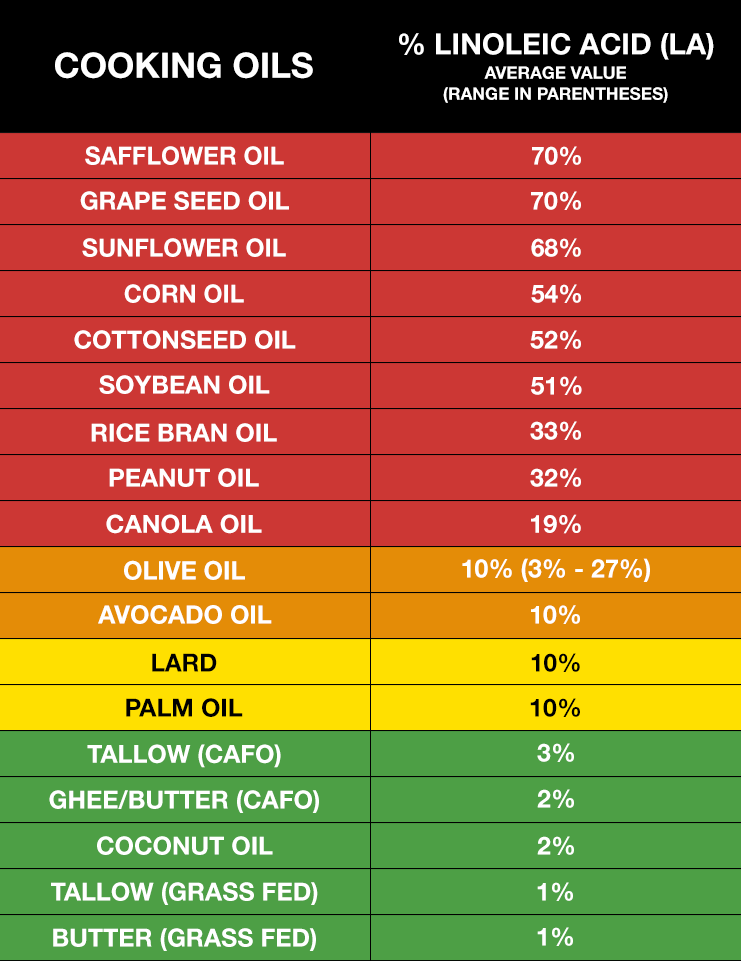
LA Content of Common Cooking Oils
The table below provides a relatively comprehensive list of the most commonly consumed oils and their approximate LA content.22,23,24
In general, the lowest LA-containing fats — butter and beef tallow — would be the fats of choice. These excellent cooking fats also provide the fat-soluble vitamins, A, D, and K2. Coconut oil is also very low in LA but doesn’t provide the important fat-soluble vitamins that tallow and butter contain.
Aspirin for the Prevention and Treatment of Migraines
In addition to lowering your estrogen burden and LA intake, several nutritional supplements, medications and alternative remedies can be employed. Aspirin is one inexpensive and readily available option.
As reported in a 2019 paper in The American Journal of Medicine, properly dosed aspirin can safely and effectively abort a migraine attack when taken early enough, and may also be used preventatively in lower doses:25,26
“The totality of evidence, which includes data from randomized trials, suggests that high-dose aspirin, in doses from 900 to 1300 mg, taken at the onset of symptoms, is an effective and safe treatment option for acute migraine headaches.
In addition, the totality of evidence, including some, but not all, randomized trials, suggests the possibility that daily aspirin, in doses from 81 to 325 mg, may be an effective and safe treatment option for the prevention of recurrent migraine headaches.
The relatively favorable side effect profile of aspirin and extremely low costs compared with other prescription drug therapies may provide additional options for primary healthcare providers in the treatment of both acute and recurrent migraine headaches.”
Helpful Supplements
Other supplements that can help reduce migraine frequency and/or severity include:
| Magnesium — Which can affect both serotonin receptor function and the production and use of neurotransmitters — has also been shown to play an important role in the prevention and treatment of migraines, and migraine sufferers are more likely to suffer from magnesium deficiency than non-migraineurs.27
Since magnesium administration is both easy and safe, researchers have noted that empiric treatment with a magnesium supplement is justified for all migraine sufferers.28 As a prophylactic, be prepared to boost your magnesium intake for at least three months to experience results. In many cases, receiving a high dose of magnesium can also abort an attack in progress. The most effective way to administer magnesium for migraine would be to get an intravenous (IV) infusion. I used to regularly administer magnesium IVs for those with acute migraines and it seemed to work for most patients to abort the headache. Barring that option, magnesium threonate may be your best option for an oral supplement, as its superior ability to cross the blood-brain barrier makes it more likely to have a beneficial effect on your brain. |
| B vitamins — Other vitamin deficiencies linked to migraines include riboflavin (B2), B6, B12 and folic acid. One 2009 study29 evaluated the effect of 2 mg of folic acid, 25 mg vitamin B6 and 400 micrograms (mcg) of vitamin B12 in 52 patients diagnosed with migraine with aura. Compared to the placebo group, those receiving these supplements experienced a 50% reduction in migraine disability over a six-month period.
Previous studies30 have also reported that high doses of riboflavin can help prevent migraine attacks. In one study, patients who took 400 mg of riboflavin per day experienced a 50% reduction in migraine frequency after three months. |
| CoQ10 — Ubiquinol — the reduced form of CoQ10 — plays a vital role in ATP production, which is the basic fuel for your mitochondria. Your body does produce ubiquinol naturally; in fact, it is the predominant form in most healthy cells, tissues and organs. However, with rampant pollution and poor diet, mitochondrial dysfunction has become increasingly common, warranting supplementation with either ubiquinol or CoQ10.
One study published in the journal Neurology31 found that CoQ10 was superior to a placebo in preventing migraines and reducing severity. Of the patients who received 100 mg of CoQ10 three times a day, 50% reported significantly reduced frequency of headaches compared to only 14% of those who took the placebo. |
| GABA — Migraine is one of several common symptoms of GABA deficiency. |
Carbon dioxide — Migraines can also be addressed with CO2. In some cases, migraines can be triggered by overbreathing, causing a lack of CO2 that constricts the blood vessels in your brain. Exogenous CO2 delivery methods include:
|
- 1, 3 Stat Pearls, Migraine Headache
- 2 Migraine Research Foundation, Migraine Facts
- 4 Scientific American July 21, 2013
- 5 Ray Peat Forum August 29, 2018
- 6 Frontiers in Molecular Biosciences August 14, 2018
- 7 EurekAlert! August 14, 2018
- 8 ZeroHedge March 8, 2024
- 9 Nutrients July 2023; 15(14): 3129
- 10 Oxid Med Cell Longev. 2014;2014: 360438. DOI: 10.1155/2014/360438
- 11 Pharmacognosy Review. 2010;4(8):118-126
- 12 Biochemical Journal. 1982;208(1):129-140
- 13 Nephrol Dialysis Transplant. 2001;16(8):1598-1606
- 14 Free Radical Biol Med. 1992;13:341-390
- 15 Journal of Nutrition June 1990; 120(6):625-30
- 16 Metabolism July 1992; 41(7): 788-792
- 17 Healthier U September 25, 2023
- 18 Journal of Headache and Pain 2013; 14, Article number P138
- 19 Headache September 27, 2016
- 20 Mymensingh Med J 2021 Jan;30(1):43-47
- 21 Paloma Health February 17, 2022
- 22 Renewable Energy. 2018; 126: 403-419
- 23 Int J Mol Sci. 2015;16(6):12871-12890
- 24 The Plan Journal. 2008;54:640-655
- 25 The American Journal of Medicine November 8, 2019; 133(4): 412-416
- 26 Haidut.me December 4, 2019 (Archived)
- 27, 28 J Neural Transm (Vienna). 2012 May;119(5):575-9
- 29 Pharmacogenetics and Genomics 2009 Jun;19(6):422-8
- 30 European Journal of Neurology 2004 Jul;11(7):475-7
- 31 Neurology 2005 Feb 22;64(4):713-5
Symptoms of Diverticulitis and How to Treat It
Reproduced from original article:
https://articles.mercola.com/sites/articles/archive/2024/05/10/diverticulitis-symptoms.aspx
Analysis by Dr. Joseph Mercola May 10, 2024
STORY AT-A-GLANCE
- Diverticulitis is an inflammation or infection of small pouches called diverticula that can develop along the walls of your intestines
- Diverticulitis can cause abdominal pain, constipation, diarrhea, nausea, vomiting, fever and rectal bleeding
- More severe cases can lead to serious complications, including abscesses, fistulas and intestinal blockage
- Restoring your gut microflora and cellular energy production are key to resolving diverticulitis
- Eating foods that support Akkermansia, such as polyphenol-rich fruit, and other beneficial bacteria, and avoiding linoleic acid, are important for diverticulitis; rectal CO2 insufflation may also help
Diverticulitis is an inflammation or infection of small pouches called diverticula that can develop along the walls of your intestines. The formation of these pouches is known as diverticulosis, a common condition that typically causes few or no symptoms. However, when these pouches become inflamed or infected, it leads to diverticulitis, which can be painful and may lead to serious complications.
Diverticulosis is common in the U.S. and other parts of the world where heavily processed diets are the norm. It’s estimated that 30% of Americans over 50 have diverticulosis, which rises to 50% of those over 60% and 75% in people over 80.1
Most often, the condition affects the sigmoid colon, a section of the large intestine near the end of the digestive tract. Among those with diverticulosis, about 4% develop diverticulitis.2
What Are the Symptoms of Diverticulitis?
You can have diverticulosis and not know it, since it often causes no symptoms. But in the case of diverticulitis, it’s typically a different story. Common symptoms include:3
• Abdominal pain — When diverticula become inflamed, they cause the surrounding tissues in the intestinal wall to also become inflamed. This inflammation can lead to pain that’s typically felt in the lower left side of the abdomen and may be severe.
The pain may also spread to your pelvis and back. In people of Asian descent, diverticulosis may occur more often in the first part of the colon, so diverticulitis in that region may cause pain in the upper right abdomen.4
• Bowel changes — The inflammation associated with diverticulitis can affect the movement of the bowel, leading to disruptions in the normal rhythm of digestion. This can result in constipation or diarrhea, along with bloating and gas. Feelings of fullness can also occur.
• Nausea and vomiting — Gastrointestinal irritation may lead to nausea while increased movement of the intestines in an attempt to expel irritants and bacteria may lead to vomiting. In more severe cases, the inflammation can lead to a partial or complete blockage of the intestine, which can trigger vomiting.
• Fever — When diverticula become inflamed, they can also become infected, usually by bacteria. The fever is a sign that your body is actively fighting an infection.
• Rectal bleeding — As diverticulitis progresses, the inflamed diverticula can cause small blood vessels to stretch and rupture, leading to bleeding. This can result in blood appearing in the stool.
Diverticulitis can be classified as acute, which occurs suddenly and often causes intense abdominal pain, fever and nausea, or chronic, with persistent symptoms due to the ongoing inflammation.
More severe cases can lead to serious complications, which are sometimes the first sign of the disease. Each year, about 200,000 people are hospitalized due to diverticulitis, while 71,000 are hospitalized with diverticular bleeding.5 Complications may include:6
- Abscesses
- Perforation, or a hole, in your colon
- Fistulas, an abnormal tunnel between your colon and another area of the body, such as your bladder
- Intestinal blockages
- Peritonitis, an infection of the abdominal cavity
What Causes Diverticulitis?
Certain genes may increase your risk of diverticulitis, but lifestyle factors also play a role, including:7
- Eating ultraprocessed foods
- Inactivity
- Using certain medications, including nonsteroidal anti-inflammatory drugs (NSAIDs) and steroids
- Obesity
- Smoking
While a number of factors contribute to diverticulitis, a disrupted microbiome and eating a highly processed, low-fiber diet are chief among them. Dietary fiber is crucial for maintaining a healthy digestive system. It helps to bulk up your stool and softens it, making it easier to pass through the colon. This reduces the strain and pressure in your colon during bowel movements.
When your diet lacks sufficient fiber, your stools become harder and smaller, requiring your colon to exert more pressure to move them along. This increased pressure can cause your colon’s muscular wall to develop weak spots.
Over time, the continuous pressure may force the inner lining of your colon through these weak spots in the muscle layer, forming diverticula. Further, a diet low in fiber keeps the intra-colonic pressure elevated because of the harder, smaller stools and the greater effort needed to expel them.
This sustained high pressure is believed to not only contribute to the formation of diverticula but also increase the risk of these diverticula becoming inflamed or infected, leading to diverticulitis. As noted in Cureus:8
“Many theories have been suggested for the different etiologies of diverticular disease, and the most common cause is believed to be a low-fiber diet. It is believed that diets low in fibers are associated with increased intra-colonic pressure, which leads to diverticula formation.”
Save This Article for Later – Get the PDF Now
Diverticulitis Linked to Gut Microbiome Composition
Researchers with Massachusetts General Hospital and Harvard Medical School in collected stool samples from 121 women with severe diverticulitis and compared them to stool samples from 121 women without the condition.9 They conducted a detailed analysis of the overall microbial community structures and metabolomic profiles in the collected samples, revealing significant differences between the groups.
Women with diverticulitis had more pro-inflammatory agents such as the microbe Ruminococcus gnavus, 1,7-dimethyluric acid and various histidine-related metabolites. There was also a notable depletion of butyrate-producing bacteria, which are known for their anti-inflammatory properties, as well as a reduction in anti-inflammatory ceramides.
The study highlighted how microbial composition may influence the protective association between a fiber-rich diet and diverticulitis, suggesting that dietary fiber’s protective effects can be significantly altered by a person’s existing gut microbiota composition. A review published in the Journal of Personalized Medicine further described gut microbiota’s potential role in diverticulitis, noting:10
“Changes in microbiota composition have been observed in patients who were developing acute diverticulitis, with a reduction of taxa with anti-inflammatory activity, such as Clostridium cluster IV, Lactobacilli and Bacteroides.
Recent observations supported that a dysbiosis characterized by decreased presence of anti-inflammatory bacterial species might be linked to mucosal inflammation, and a vicious cycle results from a mucosal inflammation driving dysbiosis at the same time.
An alteration in gut microbiota can lead to an altered activation of nerve fibers, and subsequent neuronal and muscular dysfunction, thus favoring abdominal symptoms’ development.”
Restoring Your Gut Microflora and Cellular Energy Production Are Key
Dysbiosis, or an imbalance of microbial communities, in your gut plays a central role in the development of diverticulitis.11 A balanced gut microbiota helps reduce inflammation in the colon. Certain beneficial bacteria produce short-chain fatty acids (SCFAs) like butyrate, which have anti-inflammatory properties. These SCFAs help maintain the health of the colon lining and prevent inflammation that can lead to diverticulitis.
A robust intestinal barrier can also prevent bacterial fragments from entering your bloodstream, whereas a compromised barrier allows these harmful fragments through while blocking SCFAs. However, most people have dysfunctional mitochondria, and if you don’t have enough mitochondria, you can’t create cellular energy efficiently enough to ensure a healthy gastrointestinal tract.
Your gut contains primarily two types of gram-negative bacteria: beneficial and pathogenic. The beneficial ones include obligate anaerobes, which cannot survive in the presence of oxygen and are essential for health. They do not produce harmful endotoxins and contribute positively by producing SCFAs like butyrate, propionate and glucagon-like peptide-1 (GLP-1).
Proper gut function requires energy to maintain an oxygen-free environment in the large intestine, where 99% of gut microbes reside. Insufficient energy leads to oxygen leakage, which harms obligate anaerobes while not impacting the facultative anaerobes, thereby disrupting the balance of the microbiome.
Pathogenic bacteria, or facultative anaerobes, can survive in oxygen and are harmful, as they possess endotoxins in their cell walls. In short, enhancing mitochondrial energy production is crucial for maintaining a healthy gut environment. When you do that, it helps suppress the growth of pathogenic bacteria and support beneficial microbial populations, which in turns reduces your risk of diverticulitis.
Widespread use of antibiotics can also disrupt the microbiome by killing both beneficial and harmful bacteria, leading to a dominance of pathogenic bacteria which produce harmful endotoxins. Optimizing your mitochondrial function is, however, one of the most important strategies you can do to optimize your cellular energy, so it’s at the core of almost everything that you do to improve your health.
How to Restructure Your Microbiome
Akkermansia, highly beneficial bacteria in your large intestine, plays a crucial role in maintaining gut health and should constitute about 10% of the gut microbiome. However, it is absent in many individuals, likely due to inadequate mitochondrial function and resultant oxygen leakage in the gut.
Eating foods that support Akkermansia, such as polyphenol-rich fruit, and other beneficial bacteria, and avoiding foods like linoleic acid — found in vegetable and seed oils in most processed foods — that destroy these bacteria, will help to restructure your microbiome in a positive way. You can also use an Akkermansia probiotic supplement.
One of the reasons Akkermansia is so important is because it produces mucin, a thick, protective gel-like substance that lines various parts of the body, including the gastrointestinal tract. Mucin forms a protective barrier on the gut lining, shielding the epithelial cells of the intestinal wall from mechanical damage, chemical irritation from stomach acids and digestive enzymes, and pathogenic organisms like bacteria and viruses.
Mucin also supports the immune system by trapping potential pathogens and other foreign particles, which are then expelled from the body through the digestive process. It also contains antibodies and antimicrobial peptides that help fight off infections.
Lastly, mucin serves as a food source for other beneficial gut bacteria. This relationship is essential for digestive health, as the bacteria fed by Akkermansia aid in digestion, produce essential nutrients and help maintain an overall balance of gut flora.
Increasing CO2 Likely Beneficial
Carbon dioxide (CO2) is a driver of energy production, as it improves the delivery of oxygen into your cells. While CO2 is typically thought of as nothing more than a harmful waste product of respiration, and a “pollutant” that endangers the planet, the reality is that it’s essential for most life on Earth. In fact, CO2 appears to be a more fundamental component of living matter than oxygen.12
“Really, every condition you can think of, both physiological and mental, can be remediated, and in many cases cured, by increasing endogenous CO2 production and decreasing degradation,” Georgi Dinkov says.
Importantly, CO2 allows for more efficient energy production in your mitochondria, which is why people who live or spend time at higher altitudes tend to be healthier and have fewer chronic health problems such as asthma. The reason for this is because the pressure of CO2 relative to oxygen is greater at higher altitudes.
In order to have sufficient CO2 production, you need healthy mitochondria, because CO2 is produced exclusively in the Krebs cycle in the mitochondria. If you have mitochondrial dysfunction, if you’re hypothyroid or have high levels of inflammation, as is the case in diverticulitis, then you will not be producing enough CO2.
While it’s important to optimize your endogenous (internal) production of CO2, exogenous delivery or supplementation will produce the greatest benefits, as you can deliver far greater amounts than your body can produce. Such strategies include:
- Breathing into a paper bag
- Drinking carbonated water and other carbonated beverages
- CO2 baths
- A special suit into which CO2 is pumped
- Taking small amounts of baking soda in your drinking water
A book written in 1905 by Achilles Rose, M.D. discusses delivery by rectal insufflation. During rectal CO2 insufflation, a small tube or catheter is inserted into the rectum, and a controlled amount of CO2 is gently infused. This is a highly effective way to deliver CO2.
I am currently in the process of setting up an IRB (Institutional Review Board) approved study that will be exploring the therapeutic value of administering CO2 gas rectally to reverse the damage caused by decades of excess LA consumption that caused a radical decrease in mitochondrial function and cellular energy production resulting in a compromised oxygen gradient differential in the large intestine that allows pathogenic bacteria to become squatters and occupy the spaces of the obligate anaerobic species like Akkermansia that provide benefits and do not produce toxic endotoxin.
- 1, 3, 4 Cleveland Clinic, Diverticulosis
- 2 Cleveland Clinic, Diverticulitis
- 5, 6 National Institute of Diabetes and Digestive and Kidney Diseases, Definition & Facts for Diverticular Disease
- 7 National Institute of Diabetes and Digestive and Kidney Diseases, Symptoms & Causes of Diverticular Disease
- 8 Cureus. 2023 Aug; 15(8): e43158
- 9 Nat Commun. 2024 Apr 29;15(1):3612. doi: 10.1038/s41467-024-47859-4
- 10 J Pers Med. 2021 Apr; 11(4): 298
- 11 Neurogastroenterology & Motility May 27, 2023
- 12 Conscious Breathing Carbon Dioxide, Physiology
Oxalates — The Hidden Dangers in ‘Healthy’ Foods
Reproduced from original article:
https://articles.mercola.com/sites/articles/archive/2024/04/28/oxalates-in-food.aspx
Analysis by Dr. Joseph Mercola April 28, 2024
STORY AT-A-GLANCE
- Oxalates, or dicarboxylic acids, are natural compounds found in many foods like leafy greens and nuts. Despite their simple carbon dioxide-based structure, they can form harmful crystals in the body and disrupt biological processes
- Oxalates can bind to calcium to form insoluble crystals that may lead to kidney stones and other health issues
- Oxalates can also inhibit crucial enzymes in the mitochondrial electron transport chain, reducing energy production and increasing oxidative stress
- If you struggle with chronic health issues related to mineral imbalances or metabolic inflexibility, minimizing your oxalate intake is advisable
- Foods high in oxalates that should be avoided if sensitive include spinach, almonds, peanut butter and sweet potatoes
In today’s episode, I am thrilled to welcome back Sally Norton, an esteemed authority on oxalates, whose expertise is invaluable for anyone seeking to understand this topic.
Norton has dedicated years to meticulously analyzing data and compiling an authoritative guide on oxalates, “Toxic Superfoods: How Oxalate Overload Is Making You Sick — and How to Get Better.” In it, she reviews how and why foods we’ve been told are healthy can undermine your health.
Her academic background includes a bachelor’s degree in nutritional science from Cornell University and her master’s degree in public health from the University of North Carolina, Chapel Hill. In this interview, we explore the broader implications of oxalates on health, Norton’s personal journey with oxalate sensitivity, and her innovative solutions for common nutritional misunderstandings.
What Are Oxalates?
Oxalates are natural compounds found in many foods, including leafy greens, nuts, and seeds. Another term for oxalate is dicarboxylic acid, which is made up by two carbon dioxide (CO2) molecules. As I’ve discussed in previous articles, CO2 is essential for health and life itself, so how is it that two CO2 molecules together cause so much harm?
The key problem with oxalates is not their CO2 origin but rather their ability to form crystals that interfere with normal biological processes. Dicarboxylic acids, such as oxalate, are characterized by having two carboxyl groups (COOH), which can lose protons under physiological conditions, leaving them with a negative charge.
This negative charge allows them to bind positively charged ions like calcium. When oxalates bind with calcium, they form calcium oxalate crystals, which are not soluble and can accumulate, leading to the formation of kidney stones or other tissue deposits.
Moreover, the electromagnetic properties of these charged oxalate ions can interfere with cellular functions. For example, the negatively charged oxalate can disrupt enzyme functions that are crucial for cellular energy production.
The enzymes in the mitochondrial electron transport chain, which are vital for ATP (energy) production, can be inhibited by the binding of oxalate ions, resulting in decreased energy production and increased oxidative stress within cells. In this way, oxalates contribute to broader metabolic and physiological dysfunctions.
This paradoxical nature of oxalates — arising from a simple and essential molecule like CO2 but leading to complex health challenges — illustrates the nuanced interactions within human biochemistry. In essence, the “charging” of dicarboxylic acids like oxalate transforms them into reactive molecules that can disrupt normal cellular processes through electromagnetic interactions.
As a result, people with compromised kidney function aren’t the only ones who need to be concerned about oxalates. Just about anyone struggling with chronic health issues related to mineral imbalances and/or metabolic flexibility may be adversely impacted by them and would do well to minimize their intake.
Oxalate Rashes Are a Common Symptom of Oxalate Toxicity
Oxalate toxicity can cause several problems that are very common, such as oxalate rashes — intensely itchy rashes that have no apparent cause. I struggled with that for 15 years before I finally discovered the cause. While using my aloe vera plants helped me, the best solution is to avoid oxalate-rich foods, as they’re what’s causing it.
Topical calcium citrate can also help resolve those itchy rashes. The reason topical calcium citrate works so well is twofold. Calcium binds to and forms precipitates with oxalates. It also addresses the calcium and electrolyte interference caused by oxalates.
“This interference with electrolytes and calcium is a major toxic effect,” Norton says. “And as the immune system is trying to deal with those oxalates in the subdermis, you’re getting additional electrolyte disturbances.
I don’t really know the mechanism of why that calcium topically is so powerful, but it’s amazing [for] any skin injury, People who are doing hair removal or whatever, damaging their skin, putting calcium on top of it, it just heals like overnight …
Interestingly, you can see it in the primary hyperoxaluria literature where high oxalate levels turn fascia and other connective tissues into calcified sheets. You can see it in the X-rays in kids that end up dying of oxalate poisoning that, just because the body is high oxalate, it causes calcification in tissues …
Calcium encourages oxalate clearing depending on how much oxalate is already in the diet, but once you’re low in oxalate, adding more calcium can increase the mobilization of oxalate.”
Citrate, such as fresh-squeezed lemon juice, taken internally, will also help dissolve oxalates.
Save This Article for Later – Get the PDF Now
Oxalate-Rich Foods to Avoid
In the interview, Norton specifies several foods that are particularly high in oxalate and need to be avoided if you’re sensitive. Top examples include:
• Spinach — Typically, spinach can have oxalate levels as high as 600-800 mg per 100 grams
• Almonds — Almonds generally contain about 122 mg of oxalates per 100 grams. Nuts in general tend to be problematic, not only for oxalates but also for linoleic acid. As noted by Norton:
“These seeds from the trees are designed with all these multiple anti-nutrients to kick you in the gut. All the anti-nutrients are gut toxic. They’re all causing some degree of gut damage. Nuts are just designed to be indigestible. They’re designed to dismantle your ability to digest food. If you want a healthy gut, you don’t want nuts kicking your gut over and over again.”
• Peanut butter — Peanut butter can have around 140 mg per 100 grams
• Sweet potatoes — They contain about 30 mg of oxalates per 100 grams, which is considered high compared to other vegetables but much lower than spinach or nuts
• Figs — Figs have approximately 40 mg per 100 grams
Surprisingly, collagen-rich protein sources, including gelatin, bone broth, animal skins, tendons and ligaments, meat cuts that include a lot of connective tissues such as oxtail, neck and shank, and organ meats like heart and liver, can also be aggravating if you’re sensitive to oxalates or struggle with recurring kidney stones. So, it is wise to avoid oxalates until your gut is healed and you can tolerate them.
Decreased Mitochondrial Energy Production Contributes to Oxalate Toxicity
Metabolic inflexibility refers to your body’s reduced ability to switch between fuel sources, particularly between carbohydrates and fats, efficiently. This inflexibility can impair your energy production capabilities. When energy production is compromised, especially at the cellular level in the gut lining, it impairs your body’s ability to maintain a low oxygen environment in the large intestine, which is required to keep pathogenic bacteria in check.
The large intestine is typically an anaerobic (low oxygen) environment where beneficial bacteria thrive. These bacteria are crucial for various functions, including maintaining the integrity of the gut barrier and modulating immune responses.
A healthy gut with a properly maintained anaerobic environment supports the growth of beneficial obligate anaerobes, such as the keystone species Akkermansia. When the oxygen gradient is disturbed due to insufficient energy production (as seen in metabolically inflexible individuals), it allows facultative anaerobes (bacteria that can utilize oxygen when available) to proliferate.
These bacteria often produce endotoxins, also known as lipopolysaccharides (LPS), which can cause inflammation if they translocate across the compromised gut barrier into the systemic circulation.
Oxalates indirectly contribute to this scenario by exacerbating mitochondrial dysfunction and reducing cellular energy production. This reduction in ATP production can impair the maintenance of the anaerobic conditions necessary in the large intestine, facilitating the overgrowth of facultative anaerobes and the subsequent production of endotoxins.
The Intricate Relationship Between Gut Bacteria and Oxalates
Another important bacterium is Oxalobacter formigenes, a beneficial bacterium in the gut that plays a crucial role in the metabolism and regulation of bodily oxalate levels. It digests oxalate crystals and basically signals the gut wall to excrete oxalate for its own nourishment.
In this way, Oxalobacter helps reduce the concentration of oxalate in your gut, which can consequently lower the risk of oxalate crystallization and the formation of kidney stones and other health problems. However, the relationship between oxalates and Oxalobacter also has a hazardous aspect.
While these bacteria can mitigate some of the risks associated with high oxalate levels, their presence and effectiveness can be compromised if the oxalate levels become too high or if the gut environment becomes inhospitable due to other dietary or metabolic imbalances.
Excessive oxalates can overwhelm the gut system, inhibit other beneficial gut flora, and contribute to a reduction in Oxalobacter populations, thus diminishing their protective role. But the reason oxalates are able to overwhelm your system goes right back to having low or impaired metabolism again.
Your body’s inability to produce cellular energy to maintain the oxygen gradient in your gut causes the Oxalobacter to disappear in the first place, which allows the oxalates to accumulate. It’s basically a self-perpetuating cycle in the wrong direction. As noted by Norton:
“It’s this vicious cycle because one of the major ways that oxalate itself is toxic is by breaking down cellular production of ATP. It blocks the last step of glycolysis. It blocks Complex II.
It causes all this oxidative stress and inflammation that messes up the mitochondria. It’s messing up the membranes of the mitochondria in the cell. So, this is one of its mechanisms of harm. And then you have these redundant ways in which the energy production is being destroyed.
And unfortunately, the body really tries hard to look like everything’s fine. So, this can go on under the hood for decades. Then suddenly in your late 30s or in your 40s, you suddenly feel old and broken.”
How to Minimize the Harmful Effects of Oxalates
We cover a lot of ground in this interview, so here’s a quick summary of the strategies and food choices discussed that can help minimize the harmful effects of oxalates or aid in their elimination:
| Limit high-oxalate foods — This is of course a no-brainer. Reducing your intake of foods known to be high in oxalates such as spinach, almonds, and peanut butter will decrease your overall oxalate load. |
| Increase your calcium intake — Consuming foods high in calcium or using calcium supplements can bind to oxalates in the gut, preventing their absorption and facilitating their excretion through the stool. Foods rich in calcium include dairy products, leafy greens, and fortified foods. |
| Hydrate adequately — Drinking sufficient water is crucial as it helps to flush out oxalates through the urine and prevents kidney stones from forming. |
| Balance your collagen intake — While collagen is extremely beneficial, it’s important to moderate its intake if you are sensitive to oxalates, given that collagen breakdown can lead to oxalate production. So, do consume sources of collagen like bone broth, but do so in moderation. |
| Optimize your gut health — Promoting a healthy gut microbiome by consuming probiotic-rich foods like yogurt, kefir and fermented vegetables can support the growth of beneficial bacteria, including those that can degrade oxalates like Oxalobacter. |
| Citrate consumption — Citrate, found in citrus fruits like lemons and oranges, can help by binding with calcium and oxalate, thereby reducing the formation of kidney stones. Avoid over-supplementation with ascorbic acid, however, as high doses can convert into oxalate. Ascorbic acid is the most common form of vitamin C used in dietary supplements. |
| Cook high-oxalate foods well — Cooking methods that involve boiling can help reduce oxalate content in foods as the oxalates will leach into the cooking water. |
| Topical calcium for oxalate-related skin irritations — If oxalates are causing skin irritations, applying topical calcium can alleviate symptoms by precipitating oxalates at the site. |
More Information
To learn more, pick up a copy of “Toxic Superfoods: How Oxalate Overload Is Making You Sick — and How to Get Better.” You can also find more information on her website, SallyKNorton.com, or follow her on YouTube, Facebook, Twitter/X and Instagram.
Why You Want More Carbon Dioxide
Reproduced from original article:
https://articles.mercola.com/sites/articles/archive/2024/04/23/benefits-of-co2.aspx
Analysis by Ashley Armstrong April 23, 2024

STORY AT-A-GLANCE
- CO2 plays a critical role in oxygen transport within the body; higher CO2 levels enable hemoglobin to release more oxygen to cells, a process explained by the Bohr and Haldane effects
- CO2 supports vital physiological functions such as improving vasodilation, gut health, and the functionality of Vitamin K, which includes enhancing blood clotting and bone mineralization
- Proper carbohydrate oxidation produces 50% more CO2 compared to fat oxidation, enhancing the delivery of oxygen to cells and boosting energy production
- Increasing your CO2 levels can elevate your metabolic rate, as CO2 helps deliver oxygen more efficiently, allowing cells to produce significantly more energy from glucose
- Proper carbohydrate metabolism and controlled breathing (preferably nasal) will help you maintain optimal CO2 levels
Understanding the importance of CO2 to human physiology was one of the things that made me realize that being a good carb burner is necessary to achieve optimal health. CO2 is health supporting.
And the proper oxidation of carbohydrates produces 50% more carbon dioxide than fat oxidation (in other words, you produce 50% more CO2 when you properly burn carbs).
Many understand how important oxygen is — we have to breathe, right? Oxygen is vital for energy metabolism. It is the final electron acceptor in the electron transport chain. And when O2 isn’t available in the cell, our cells then use the inefficient glycolytic pathway (fermentation) for energy production more than necessary.
What is not commonly understood is HOW oxygen gets to our cells, and that process relies on CO2! CO2 is often labeled a “byproduct” of energy metabolism, but it is not given the credit it deserves. More CO2 means more oxygen is delivered to our cells, improving our energy production. It is a feedforward cycle since we are able to produce more energy and thus more CO2.
This is because the delivery of O2 requires an exchange of gases (CO2 and O2) at the cellular level. Hemoglobin, a protein in our blood responsible for carrying CO2 and oxygen, releases the oxygen bound to it in the presence of higher CO2 concentrations. And releases CO2 in the presence of higher O2 concentrations. The relationship between O2 and CO2 in the body is explained by the Bohr and Haldane effect:1
- Bohr — High concentration of CO2 in the cells causes a low pH (acidic environment), causing hemoglobin to unload more O2 in the cells and take up CO2
- Haldane — High concentration of O2 in the lungs means hemoglobin will unload CO2 and take up oxygen
The higher the concentration of CO2, the more effectively oxygen can be utilized and the better we will make energy. But improving oxygen delivery is just one benefit of CO2. Here are eight more.
Eight Benefits of CO2
1. CO2 increases the metabolic rate — Since CO2 promotes delivery of O to cells, we can produce more energy per molecule of glucose (~36 ATP relative to 2 ATP) using full oxidative phosphorylation (proper carb burning).
“The presence of carbon dioxide is an indicator of proper mitochondrial respiratory functioning.” ~ Ray Peat, Ph.D.
2. CO2 improves function of Vitamin K since CO2 concentrations determine the rate of Vit K dependent carboxylation reactions2 — CO2 activates the Vit K dependent proteins & thus assists fat soluble vitamins in fulfilling their physiological functions.
“The greater the supply of carbon dioxide, the better vitamin K can do its job.” ~ Chris Masterjohn, Ph.D.
“[V]itamin K uses [CO2] to activate proteins that protect our heart valves and blood vessels from calcification.” ~ Chris Masterjohn, Ph.D.
CO2 is thus important for the following Vit K functions: blood clotting, preventing soft tissue calcification, mineralizing bones and teeth, utilizing energy, and hormonal health.
3. CO2 improves vasodilation by relaxing smooth muscles around blood vessels3,4 — A vasodilator is a substance that causes smooth muscle to relax thus dilating the tubular passages it lines.
4. CO2 improves gut health — You want HIGH CO2 levels in your gut, and many people, unfortunately, have LOW CO2 levels and HIGH O2 levels (not what we want!)
The colonic microflora is extremely complex. And while it is near impossible to define what the ideal microbiome should look like (resident microbes are highly diverse, vary between individuals, and change with diet), recent evidence supports that colonic bacteria should be dominated by obligate anaerobic bacteria (meaning they cannot survive in high oxygen environments) that are able to benefit us by breaking down non-usable fibers.5
Balanced gut microbiomes are characterized by the dominance of obligate organisms, while an expansion of facultative organisms (bacteria that can survive in high O2 environments) is a common marker of gut dysbiosis.
Thus, the inside of the colon should be a low oxygen and high CO2 environment to ensure we have dominance of obligate anaerobes that can breakdown complex carbs and provide our cells with short chain fatty acids, and lower levels of facultative organisms since these facultative anaerobic bacteria do not specialize in consuming fiber and might even interfere with host nutrition.
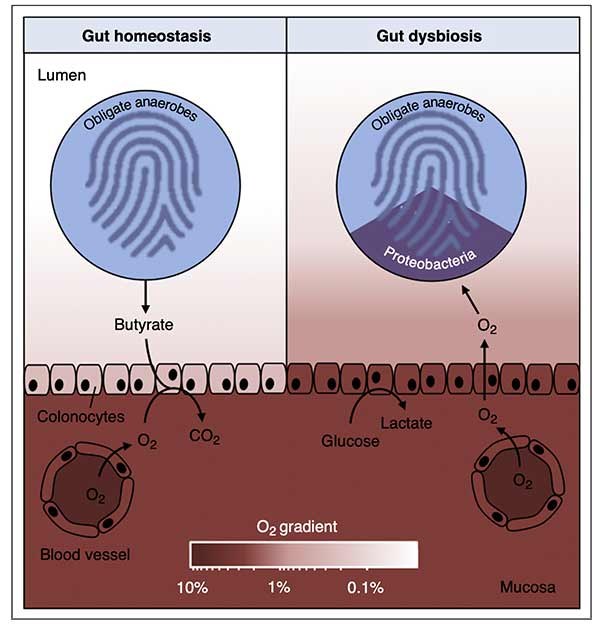 Image from
 So, maintaining a low oxygen and high CO2 environment helps keep the microbiome in check. The internal environment of our body impacts how our body functions.
5. CO2 improves calcium utilization6 — When CO2 exits the cell, it brings with it free water and calcium,7 lowering cellular bulk water. It is toxic to have persistent intracellular calcium, and you want as little free water as possible inside cells. In fact, some machines use the intracellular water level when looking for cancer.8
“The carbon dioxide can be changed into carbonic acid, by chemically combining with water. Carbonic acid is hydrophilic, and so it quickly leaves the cell, taking with it some of the oppositely charged ions, such as calcium and sodium.”9
6. CO2 protects the cell and mitochondria structure from damage, acting like an antioxidant and cell stabilizer — Since it improves oxygen delivery, it reduces free radical damage.10,11,12,13,14 It also protects against hypoxia and the negative effects of intracellular calcium and inflammation.15,16,17,18,19,20 Abundant CO2 inside and outside the cell protects lipids and proteins susceptible to oxidation.21,22 In fact, CO2 is part of our antioxidant defense system.23
“The suppression of mitochondrial respiration increases the production of toxic free radicals, and the decreased carbon dioxide makes the proteins more susceptible to attack by free radicals.” ~ Ray Peat, Ph.D.
“The failure to oxidize glucose to CO2 is oxidative stress.” ~ Ray Peat, Ph.D.
7. CO2 prevents accumulation of lactic acid in the cell, which we see in cancer, diabetes, and other chronic conditions24,25,26,27 — Lactic acid is a byproduct of inefficient carb metabolism that suppresses efficient oxidation of glucose and burdens the liver’s energy supply. Elevated lactic acid levels have a hypoxic effect and signals to the cell that it is under stress.
“The presence of lactic acid, which indicates stress or defective respiration, interferes with energy metabolism in ways that tend to be self-promoting. Harry Rubin’s experiments demonstrated that cells become cancerous before genetic changes appear. The mere presence of lactic acid can make cells more susceptible to the transformation into cancer cells. (Mothersill, et al., 1983.)
Diabetics typically have elevated lactate, which shows that glucose doesn’t have a problem getting into their cells, just getting oxidized.” ~ Ray Peat, Ph.D.
More CO2 improves oxidation and thus prevents accumulation of lactic acid since full oxidative phosphorylation (proper carb metabolism) can occur.
“Lactic acid and carbon dioxide have opposing effects.” ~ Ray Peat, Ph.D.
8. CO2 improves longevity — The higher you live in altitude (and thus the higher CO2 levels), the lower the cancer, heart disease and overall better health.28 Moreover, maximum lifespan of mammals is positively correlated with blood CO2.29
“People who live at very high altitudes live significantly longer; they have a lower incidence of cancer (Weinberg, et al., 1987) and heart disease (Mortimer, et al., 1977), and other degenerative conditions, than people who live near sea level.” ~ Ray Peat, Ph.D.
How Do We Achieve Higher CO2 Levels?
How we eat and breathe impacts how much CO2 we have in our body. You can increase the endogenous production (with proper carb burning), or reduce the outflow (with proper breathing).
CO2 is formed intracellularly during energy metabolism inside the mitochondria. Since carbs are richer in oxygen than fat, they consume less water in their metabolism and release 50% more CO230 (if we use them properly). The more carbs we efficiently burn for energy, the more CO2 we make.
“Higher CO2 has benefits, and a higher ratio of carbohydrates to fat being oxidized for fuel yields greater CO2.”31
The body’s primary source of CO2 is cellular metabolism — so properly burning carbs is the primary source of CO2. In fact, the Keto diet significantly reduces carbon dioxide stores.32 Even Dr. Lustig admits that ketosis reduces the amount of CO2 produced by the body in relation to the amount of oxygen it consumes.33
How we breathe also impacts the CO2 levels inside of our body, as we blow off a ton of CO2 with mouth breathing! Mouth breathing is, in a sense, self-suffocation and hyperventilation when taken to the extreme because we’re driving down CO2 levels to the point that we decrease oxygen availability to the cells. Overtime this can lead to degeneration, and a lot of mouth breathing is a sign of a stressed and lowered metabolism.
Nose breathing is a MUST, and utilizing mouth tape can help reduce levels of mouth breathing while sleeping. For extra CO2 work, try nose bag breathing with a brown paper bag to increase CO2 levels. This is very powerful to do before bed!
In summary, there are a number of health advantages of having elevated cellular CO2 levels. Proper breathing is very important for blood CO2 levels, but it does not change cellular CO2 levels — what you eat does! And being a good carb burner is one of the best ways to achieve elevated levels.
Save This Article for Later – Get the PDF Now
Transform Your Health — One Step at a Time


Ashley and her sister Sarah have put together a truly groundbreaking step-by-step course called “Rooted in Resilience.” They have compiled what clearly is the best application of Dr. Ray Peat’s work on Bioenergetic Medicine that I have ever seen.
It is so good that I am using the core of their program to teach the many Health Coaches that I am in the process of training for the new Mercola Health Clinics I am opening this fall. It took these women working nearly full-time on this project for a year to create it.
This has to be one of the absolute best values for health education I have ever seen. If you want to understand why you struggle with health problems and then have a clear program on how to reverse those challenges, then this is the course for you.
It is precisely the type of program I wish I would have had access to when I got out of medical school. I fumbled around for decades before I reached the conclusion they discuss in the course and share with you so you can restore your cellular energy production and recover your health.
| Select and eat the right foods to heal your metabolism and improve glucose utilization |
| Balance your hormones to help reduce anxiety, weight gain and sleep disturbances |
| Use reverse dieting to increase your calories without gaining weight and tanking your metabolism, all while improving your energy levels |
| Heal your gut for proper immune function, mood and weight management |
| Tweak your diet and lifestyle habits to improve your mindset and mental health |
| Crush your fitness goals with ease and get your life back on track |
| Master the most essential habits for health with bonus guides, including over 100 meal plans to take the stress out of meal time planning and shopping, and so much more! |
Learn more about Rooted in Resilience here.
About the Author
Ashley Armstrong is the cofounder of Angel Acres Egg Co., which specializes in low-PUFA (polyunsaturated fat) eggs that are shipped to all 50 states (join waitlist here), and Nourish Cooperative, which ships low-PUFA pork, beef, cheese, A2 dairy and traditional sourdough to all 50 states. Waitlists will reopen shortly.
- 1 Jpn J Physiol 1984;34(2):205-16
- 2 J Biol Chem 2011 Dec 30;286(52):44821-32
- 3 Stroke 1977;8:226–229
- 4 J Thorac Cardiovasc Surg. 2004 Sep;128(3):354-6
- 5 Nat Rev Microbiol 2018 Feb;16(2):103-110
- 6 Aviat Space Environ Med 1998 Mar;69(3):291-8
- 7 Pflugers Arch 2010 Nov;460(6):953-64
- 8 Structural Dynamics 7, 054701 (2020)
- 9 Ray Peat Water: swelling, tension, pain, fatigue, aging
- 10 Physiol Res 2002;51(4):335-9
- 11 Vopr Med Khim 1996 Jul-Sep;42(3):193-202
- 12 Izv Akad Nauk Ser Biol 1997 Mar-Apr:(2):204-17
- 13 Patol Fiziol Eksp Ter 1995 Jul-Sep:(3):34-40
- 14, 22 Vojnosanit Pregl 1996 Jul-Aug;53(4):261-74
- 15 Fiziol Zh SSSR Im I M Sechenova 1978 Oct;64(10):1456-62
- 16, 21, 23 Fiziol Zh Im I M Sechenova 1995 Feb;81(2):47-52
- 17 Stroke 1996;27:1634–1640
- 18 Acta Neurobiol Exp 2007;67(2):197-206
- 19 Biull Eksp Biol Med 1994 Oct;118(10):395-8
- 20 Biull Eksp Biol Med 1995 Jun;119(6):590-3
- 24 Clin Endocrinol 2011 Feb;74(2):191-6
- 25 Int J Epidemiol 2010 Dec;39(6):1647-55
- 26 Diabetes 1988;37(8):1020–1024
- 27 Ray Peat Lactate vs. CO2 in wounds, sickness, and aging; the other approach to cancer
- 28 Aging Dis 2014 Aug; 5(4): 274–280
- 29 Biogerontology 2013; 14: 687-691
- 30 ChrisMasterjohnphd.com
- 31 Journal of Evolution and Health An Ancestral Health Society Publication March 2017; 2(1)
- 32 Lung 2015 Dec;193(6):939-45
- 33 Harvard TH Chan Keto diet considered for Navy SEALS
Why Proper Breathing Is the Key to Optimal Health
Reproduced from original article:
https://articles.mercola.com/sites/articles/archive/2024/04/07/proper-breathing.aspx
Analysis by Dr. Joseph Mercola April 07, 2024
STORY AT-A-GLANCE
- Dysfunctional breathing habits are typically developed in response to some type of emotional trauma. The trauma gets embedded in your brain circuits, and when you encounter triggers, they activate specific breathing habits, some of which may significantly lower your carbon dioxide (CO2) concentration level
- The higher the CO2 concentration you can maintain while remaining within the biologically normal CO2 concentration range, the greater the likelihood that your breathing is supporting your health and performance
- Breathing techniques such as belly breathing, deep breathing and Buteyko breathing may not address breathing triggers or why you developed an inappropriate breathing habit in the first place
- When you overventilate you get numerous physiological changes. As a result, overbreathing can trigger a wide variety of physical and psychological changes, which can be reversed by implementing breathing behavior analysis learning techniques
- Breathing behavior analysts help you become conscious of your breathing habits, what’s triggering them and how to resolve them. This is important, as improper breathing habits can unconsciously sabotage your health
The interview above features Peter Litchfield, Ph.D., who is, in my view, one of the best breathing experts in the world. I’ve taken his breathing course, which gave me a deep appreciation for what he’s teaching. None of the breathing experts I’ve interviewed before compare to Litchfield when it comes to understanding respiratory physiology and its impact on your health.
Many of you who read this article may react in fear because the information may challenge your understanding of what others have told you to be true and you struggle trusting yourself to guide this new belief process. I strongly encourage you to watch the interview in its entirety. I believe it will alleviate most of these fears as Dr. Litchfield is an excellent teacher in helping people trust themselves. It would be easy to react negatively to this information and choose not view the interview, but I believe that would be a major mistake. I sincerely hope you avoid making that choice.
According to Litchfield — who has decades of clinical training in both respiratory physiology and behavioral psychology — dysfunctional breathing habits are typically developed in response to some type of emotional trauma. It gets embedded in your brain circuits, and when you encounter this trigger, it activates them and lowers your carbon dioxide (CO2) level.
You may have been getting a hint over the last few months that I really value CO2. It’s probably one of the most important molecules in your body. I’m going to go deep into this in the coming year, as strategies to increase your CO2 are probably some of the best things you can do to optimize your health.
The higher the level you can get within the biological normal optimal range, the better. Most of us are not even close to that. And, if you think you’re already breathing well because you’re belly breathing, deep breathing, or doing Buteyko breathing, you’re in for a surprise, because there’s a lot more to optimal breathing than learning to slow down, lessen or deepen your breathing.
Behavioral Physiology
Litchfield has a long and varied professional history, but his primary interest is behavioral physiology, a field in which physiology is viewed as a programmable system. As he explains, your physiology self-regulates:
“It learns, in essence. It does something and there’s a consequence, and based on that consequence it changes what it does. Physiology collects information, stores information. It uses information on all levels, not just on the level of the brain, but even on a cellular level. It’s collecting and using data. That’s what we call learning, ultimately; that is, physiology is behavioral, it’s psychology in action.
Physiology really is psychophysiological because it’s a learning system … One of the things that’s important in the work that we do in breathing behavior analysis, based on this, is that people need to learn to form a working partnership with their bodies …
The body is a learning, living system. The day the first cell came into existence, psychology was born. That is really such an important thing to understand. It’s not just ‘you’ who’s doing the breathing. Your body is doing the breathing. These aren’t just genetic or organic considerations. The body gets programmed constantly by virtue of what it does, and what results from what it does, and breathing is no exception.
Look at the habits we learn in our lives. Look at my hands. I’m moving my hands right now. Look at my head and how I move it. I learned this unconsciously. I’m a whole collection of amazing habits, thousands of habits that come into play at just precisely the right place and time.
So, the right thing happens at the right time, and I don’t even have to think about it. That’s the nature of a habit. But they don’t always go well, they can go very wrong.”
Habits Serve a Purpose
As explained by Litchfield, habits always serve a purpose. You don’t engage in a habit unless it serves you or your physiology in some way. This is why it’s so important to form a partnership with your body, to explore your habits, and how or why you learned them in the first place.
In a sense, you could say that your physiological system is part of your unconscious or subconscious mind, or an expression thereof. The task is to become conscious of what’s going on because your breathing habits may be unconsciously sabotaging your health.
“So, what we’re really focused on in our work is observing and learning about breathing as a behavior,” Litchfield says. “We’re not using breathing as a technique where you manipulate breathing so you can relax, or you manipulate breathing to achieve some otherworldly experience where you dissociate.
There are all kinds of reasons that people implement breathing techniques for presumed positive outcomes … Our work isn’t about breathing techniques.
Another thing that’s very important, is that there is a trigger for every habit. Triggers are not there all the time. They show up at specific times. For example, in the statistics pointing the larger cities of the United States, like New York City, Chicago, Los Angeles, where surveys suggest that about 60% of the ambulance runs are a result of symptoms brought on by dysfunctional breathing.
And it’s not as if this person is breathing dysfunctionally all the time. It’s that at that particular moment, they breathe this way, that then precipitates these symptoms.
They don’t understand where these symptoms and deficits are coming from. They don’t think of their breathing. They call 911, if you’re in the United States, and they end up in [the] emergency [room] … A lot of what our work is about is identifying these habits.”
Save This Article for Later – Get the PDF Now
What Is a Breathing Habit?
So, how do you identify a breathing habit? There are many components to look at, including the following:
• Motivation — Behavior is motivated by something. There’s motivation behind all habits, and any one of them can be tied up with your breathing.
• Behaviors — You need to identify the exact behavior involved. For example, you may be aborting the breath, meaning you inhale before you’ve fully exhaled.
In most cases, it’s rooted in a subconscious fear about not getting enough air. Whatever the cause, there’s motivation embedded in the behavior. Aborting the breath and inhaling early may serve the breather by reducing worry or anxiety about not getting enough air.
However, when you inhale too soon, air hunger sets in — a feeling like you can’t get enough air — and that can trigger the very anxiety the habit is trying to avoid.
“It’s nothing to do with oxygen,” Litchfield says. “It’s about claustrophobia. So, this person then develops a kind of claustrophobia that’s now embedded in the breath.
You’ll find some people constantly reaching, trying to get that one good breath. They may suffer with air hunger for an extended period of time. As they breathe out, they abort [the breath] constantly, trying to get a satisfying breath as soon as possible.”
• Outcomes — What are the outcomes of your learned breathing behavior, and how are those outcomes serving you? For example, when you start taking larger breaths, you may think you’re going to get more air.
You may feel like you’re in charge and in control, and that keeps you going. But what happens is you lose CO2 without realizing it. You may experience symptoms that you and your healthcare providers may misinterpret and attribute to unrelated causes.
In reality, you need far less air than you think. For every liter of blood you can move through your lungs, you can move 20 liters of air. But you only need 1 liter of air. So optimal breathing is usually not about getting enough oxygen. It’s about regulating the CO2 concentrations in your extracellular body fluids, like blood plasma.
What Deep Breathing Does to Your Body
Contrary to popular belief, deep breathing does not improve oxygenation. When you’re deep breathing, blood flow to your brain actually decreases as a result of a tightening of the blood vessels (vasoconstriction) in the brain.
Additionally, the cytoplasm in your red blood cells can become too alkaline and the hemoglobin carried by the red blood cells can become unfriendly, that is, less willing to give up the oxygen it carries to the tissues that need it. So, deep breathing actually contributes to an oxygen deficit already in progress as a result of vasoconstriction.
The vasoconstriction occurs because the primary vascular purpose of CO2 is vasodilation. When you have sufficient CO2 in your system, it will open your blood vessels much more effectively than nitric oxide, because nitric oxide has a dark side. It binds to Complex IV in your mitochondria and shuts down the electron transport chain. So, ideally, you want the vasodilation to be done by CO2 rather than nitric oxide.
So, the outcome of overbreathing is loss of blood in the brain, loss of oxygen, loss of glucose and electrolyte changes in the brain that then lead to setting the stage for lactic acidosis in neurons (brain cells). “Most people, lay or professional, have no idea that this is going on,” Litchfield says.
These brain changes, in turn, tend to trigger disinhibition where emotions — oftentimes anger or fear — are discharged. This release of emotions can serve you by allowing you to cope with a challenging situation or environment. Overbreathing (breathing that results in a CO2 deficit) leads to an outcome (a reinforcement) that serves you and is thus a “solution” to a perceived problem, a successful coping mechanism.
“Maybe they’ve come from a very traumatic kind of a background, and the only way they could really cope with it is to get angry,” Litchfield says. “But usually there is fear operating in the background …
There are things like this that, when you overbreathe, you get a symptom, a physiological change, and people have learned to respond to that change in their own unique ways. Some people, for example, when they get dizzy because they lose oxygen in the brain, when they overventilate, feel like they’re losing control and freak out. They can’t understand what’s going on.
They can’t focus. They don’t remember what’s happening. They feel unable to function. They’re on the verge of a panic attack. The next person goes, ‘Hey, this is kind of cool. I really like this.’ They have a whole different response to it. So, one of the things we’re always looking at are how people relate to the physiological changes brought on by breathing.”
Automatic Reflexes Regulate Your CO2 Level
As explained by Litchfield, your CO2 level is regulated by automatic reflexes. There are receptors in the brain and in the arterial system that are sensitive to CO2 concentration and to the pH of various extracellular fluids, such as blood plasma and interstitial fluids (surrounding cells). There are receptor sites in the arterial system which are sensitive to oxygen concentration but, surprisingly, not in the brain.
This system wasn’t designed to get out of whack just because you get stressed. Provided you haven’t learned bad breathing habits, your breathing optimizes respiration regardless of most circumstances., e.g., while talking.
As explained by Litchfield, breathing regulates acid-based physiology1 in extracellular body fluids. Your body must have the capacity to change your pH rapidly, almost immediately, because if it didn’t, you would be in serious trouble and in could even die. Although bad breathing habits can quickly bring on fainting, for example, there are safety mechanisms that protect us.
“There’s a simple little equation … that addresses how blood pH is regulated by the relationship of carbon dioxide concentration with bicarbonate concentration; ‘together they regulate acid-based balance from breath to breath.’
The carbon dioxide is controlled by the way you breathe. So as soon as you start to take over breathing, you take the control away from the reflexes, the result of which can be determined by doing a breathing behavior analysis.
You might be OK because in the background breathing and respiration are being coordinated properly, but maybe not, like when I’m eating and talking, I’m breathing. They have to be coordinated and linked. This is behavior. They get linked.
Sometimes they get out of sync and then people are really in trouble. They’re struggling whenever they eat. Their breathing is all wrong. When they’re talking, the breathing goes wrong.
They get real lightheaded when they’re talking because they’re overventilating. They’re constantly trying to take another breath while they’re talking to people … What’s happening is that they’re losing carbon dioxide. They’re getting completely disoriented, can’t function …”
Do You Overbreathe?
Symptoms of low CO2 (hypocapnia), caused by overbreathing, include but are not limited to:
| Headache | Nausea and vomiting |
| Abdominal symptoms and bloating | Fatigue |
| Muscle pain and weakness, tetany, hyperreflexia, spasm, tingling in the hands and lips, numbness, trembling and difficulty swallowing | Cardiovascular changes like palpitations, tachycardia, arrhythmias, angina, ECG abnormalities |
| Cognitive changes, including attention deficit, difficulty learning, poor memory and brain fog | Symptoms involving consciousness, such as dissociation, disconnecting from your environment, disconnecting from people, fainting and hallucinations |
| Emotional changes associated with the reduction of blood flow in the brain | Personality and self-esteem changes |
If you frequently suffer any of these symptoms, it is possible that you may be struggling with hypocapnia, meaning low CO2 levels, and the No. 1 reason for hypocapnia is a poor breathing habit in response to all kinds of habit triggers, such as stress. The solution in this case is to identify the faulty habitual breathing behaviors and then correct them.
Optimizing Your CO2 by Relearning Better Breathing Habits
You can very accurately measure your CO2 concentration with a tool called a capnometer, the wellness-educational version of it known as a CapnoTrainer:
“Being able to measure carbon dioxide is obviously the best of all worlds. There are ways you can look at overbreathing without a capnometer, but it’s quite limited. It may be that you’re not aware of how you’re being influenced, so it’s very difficult without a capnometer or CapnoTrainer.
But ultimately, the idea is not to need technology. The idea is you understand that you’ve learned habits and that you identify what those habits are, their components, their motivation, their outcomes, your belief systems and all kinds of things around it so that you can learn about who you are from a breathing perspective.
It’s not about a breathing technique. This is about learning techniques, about how you become a different being when it comes to the way that you breathe, and your habits optimize respiration, your habits optimize acid-based physiology.
If you want to have your CO2 looked at from a perspective of habits that you may have learned, you can rent a device, which makes it affordable for many people. A CapnoTrainer is different in a certain way than a capnometer. A capnometer technically is used in medicine, in surgery and in critical care, emergency medicine and so on.
But a CapnoTrainer is used to learn about your breathing. How are you breathing? How is it affecting you? What habits do you have? How can you learn new habits? That kind of thing. So you can rent these devices and you can also buy them. There are different versions of them.
There are professional, basic and personal versions of them. They’re all software-based, and you can operate these instruments on your cell phone and on tablets and Apple computers, PC computers, whatever, and really get to know your breathing in detail …
What breathing behavior analysts do is they help you do that. Now, however, you can learn to do it on your own. We have a book out that can walk you through that … The idea is to try to help you optimize your functioning. So many people just don’t realize that they’re breathing dysfunctionally and they attribute their symptoms to all kinds of other sources completely unrelated to breathing.
And so do the health care professionals because they don’t know about it either. They’re trying to figure out where these symptoms are coming from, but they don’t think about the breathing …
The breathing techniques out there generally don’t address habits. They may, by accident, address a habit and then give credit to the technique rather than understanding it’s about some kind of embedded learning that has occurred in the process — that fear was addressed, for example.
But they may think, well, it’s the slowness of breathing. Breathing slow is really good. And so it’s [about the] parasympathetic nervous system, and that’s why it worked, when in reality what it was about was that you lost your fear associated with the end of the exhale, for example, because of the technique they were using.
But people aren’t focusing on it that way … They aren’t looking at the experiential side of it, which is key to understanding breathing behavior.”
Trust Your Body
Again, your body knows how to breathe. The only time you get into problems is when you unconsciously override it with a learned breathing habit that throws the system out of whack. So, trust your body.
“That’s totally fundamental,” Litchfield says. “That’s what we work on — helping people build trust in that system. And that’s what I was talking about at the very beginning about partnering with your body. That partnership is vital.
You’re not a victim of your body. You’re in the body. This is who you are. You own this. You own your breathing. You’re not a victim of your breathing. And that’s often a problem. People think they’re a victim of all of this.”
Why Most Breathing Techniques Don’t Address Your Health Problems
While we’ve already mentioned this, it bears repeating. What Litchfield is talking about is not learning a specific set of breathing techniques. It’s not about the technique per se. It’s about understanding why your breath gets dysregulated and how new habits can be learned. In regard to the Buteyko technique, for example, he comments:
“Most issues around breathing, when it comes to hypocapnia, are acute. It isn’t chronic. Buteyko [breathing] is really limited to [chronic overbreathing]. Secondly, you have to ask yourself, where did that hypocapnia come from in the first place? Why is this person breathing like that, that you now have to train them to habituate to a higher level of CO2? How did that happen? What’s the history of that?
And if the history is that this is a way I can control my wife, if you’re overventilating so you can get angry to control your environment, what good is Buteyko [breathing] going to do? That person isn’t going to raise their CO2 level. They want it down so they can get angry.
So you have to address the motivation behind the behavior and what the outcomes are that sustain it. Just because you can habituate to a higher level of CO2 doesn’t mean you’ve addressed the problem. The problem is the habit. You want to identify the habit, help the person through it, help them understand where it came from and what they can do about it.
And that may have a significant philosophical impact on them as well, their belief system about their physiology, the trust in their system and so on. So the [Buteyko breathing technique is] limited because you’re not addressing history of the breathing. You’re not addressing any of these various factors that we’ve been talking about. You’re just looking at the CO2 level — ‘My god, it’s too low. We need to raise it.’
Another problem with Buteyko is that they don’t measure it. Some do, but it’s not part of their curriculum. We have a lot of people who graduated from our program who are Buteyko workers and they measure it. When you think you’ve been successful with your client, you need to see that the CO2 actually went up.
If it didn’t go up, you weren’t successful. So it’s very important to be able to assess it right from the start because Buteyko, when they do their assessment, they’re looking at correlational findings …
On the other hand, they really do a great job because when people get … comfortable with allowing the breath to sit out there for long periods of time, they can build trust, and they may find the reflex in it. Identifying the reflex is what ultimately builds trust because you can feel it kick in.
If you can find that reflex, then you’ve won a significant part of the battle. And there’s a good chance that can happen because of what the Buteyko people do. Desensitization to the transition time eliminates anxiety and air hunger during the transition time by doing Buteyko, so that’s helpful.”
The Breathing Behavior Analysis Procedure
In the course I took with Litchfield, he provided many impressive practical examples. One was of a young woman, about 19 years old, whose CO2 level dramatically decreased when they began her breathing interview. Among the symptoms she’d indicated on the checklist was that she would get dizzy a lot, and when she gets these dizzy spells, she’d become frightened.
“So, we’re talking and I see her CO2 level go down. I say, ‘Are you feeling dizzy right now?’ And she says, ‘Yeah, as a matter of fact, this is exactly how I feel in these kinds of situations.’ ‘Well, look at your CO2 level. Look what happened here.’
This is what we call transactional psychophysiology. We’re interacting with the person around their physiology, and they’re seeing what’s happening while they’re behaving in the way they are. So, we explore that together. And then we do all kinds of testing together depending on who the person is and what the issues are.
A good example might be, we’ll have them overbreathe on purpose. Now, this isn’t as simple as it sounds. You need to do it the right way. There’s a real right way to do it, and there are wrong ways to do it. We have someone overventilate on purpose. And what happens when you do that, they start to get symptoms, and they start to get deficits, and they’re there and they’re focusing on their experience.
They’re not talking. I’m the one who’s doing the talking. I’m asking them questions to think about the answers, not to interact with me, but just to think about the answers to the questions.
I’ll ask questions like, ‘Are there any emotions coming up right now? Are there any memories that are being triggered right now? Does this remind you of anything in your current life circumstances? Does this remind you of something that happened to you in the past?’
And I have a lot of information before I do this. I have this form. So they’re not just random questions. They’re really specific. They’re about that person and their lives and what we’ve uncovered together. And then what often happens is, they’re trapped. They can’t get out. They’re breathing that way and the CO2 level simply does not come up no matter what they do. And this is what happens in their real life situation when they get trapped …
As I work with them, I use certain kinds of experiential paradigms that I implement so they can raise the CO2 level. The symptoms go away and they’re amazed. Someone will say something like … ‘My God, it seemed like I wasn’t even breathing. I feel so much better and I was hardly breathing at all. How can that be?’
It’s because their belief system was that they weren’t getting enough oxygen and couldn’t possibly be OK breathing with these very small kinds of breaths.
In fact, this is what allowed the trap to break open so they could allow those reflexes to operate, to trust the system so they get to where they need to be from a respiratory point of view. And this may all happen in one short session, if you know what you’re doing.”
A Quick Rescue Method
A good test that can tell you if your symptoms are due to a CO2 deficiency is to breathe into a paper bag. If the symptoms disappear, you know hypocapnia and hence overbreathing is the problem. Never use a plastic bag, as it can cause suffocation. Always use a paper bag, about 6 inches by 15 inches. If it’s too small or too large, it won’t work.
Place the paper bag over your nose and mouth and hold it in place with your hands as you breathe into it. The CO2 will accumulate in the bag, thereby raising your CO2 level as you breathe it in.
“I remember a woman we met in Georgia, in the United States, my partner Sandra and I. She had this irritable bowel syndrome kind of problem with major anxiety around it, so she wanted some advice. There wasn’t much I could offer her, but one of them was a paper bag.
About four months later she wrote back and said her whole life had completely changed. She no longer had to suffer with these episodes. She hadn’t had any for months, and she couldn’t believe it. But of course, she was dependent on the bag. She wasn’t learning a new habit. She just grabbed the bag when she needed it, unfortunately.”
Negative Practice
Another simple technique, which is part of the core of Litchfield’s program, is something called “negative practice.” Litchfield explains:
“What you do is you become an expert at performing the bad habit. So you’re not a victim of the bad habit. You own it. You take ownership of it because you can do it whenever you want to. And if you can do it whenever you want to, you can disengage it.
So you learn to do it, disengage it, do it, disengage it. And there are specific ways of doing this. We use biofeedback in this whole process. That’s an important part of it. So, then you’re not afraid anymore of the symptoms because you can turn them on, you can turn them off, you don’t really care. It’s not a big deal.
In that process, you get highly reinforced. Again, that’s how physiology works. The outcome of what it does determines what it can do within the potential it has. The idea is that there’s a positive outcome for restoring good respiration.
On the other hand, it can be much more challenging because if someone is overbreathing to get angry at their husband, that’s a more complex issue. You have to address that. So it can be very simple or it can be quite complex, but nevertheless, it works wonders for people.”
More Information
To learn more, visit:
- Better Physiology Ltd. at betterphysiology.com for information about and purchase of CapnoTrainer instrumentation for personal and professional applications
- RespiMatters at www.CapnoLearning.org for information regarding online breathing behavior analysis services available worldwide
- Professional School of Behavioral Health Sciences at www.bp.edu and www.e-campus.bp.edu for information regarding professional training in breathing behavior analysis
- Breathing Science Inc., a nonprofit publisher, at www.theBSJ.org, where you can purchase the book “CapnoLearning: An Introductory Guide
Optimizing Your Mitochondrial Function With Intermittent Hypoxia
Reproduced from original article:
https://articles.mercola.com/sites/articles/archive/2024/03/31/intermittent-hypoxia.aspx
Analysis by Dr. Joseph Mercola March 31, 2024
STORY AT-A-GLANCE
- Hypoxic training is successfully being used in the treatment of diseases such as asthma, high blood pressure, chronic inflammation and chronic infections, all of which are rooted in mitochondrial dysfunction
- The scientific application of intermittent hypoxic treatment started in Russia in the late 1970s. Early research showed it was radioprotective. When you reduce the partial pressure of oxygen in tissues that are being irradiated, there’s a significant protective effect on healthy tissues. Tumors are not protected, however, because they’re already hypoxic (hypoxic radioprotection)
- Intermittent hypoxia takes place during embryonic development. Scientists now hypothesize that this is a powerful mechanism that may control the quality of mitochondria
- One of the mechanisms that helps explain the benefits of hypoxia is that it raises your endogenous production of carbon dioxide (CO2) which, in turn, increases the efficiency of oxygen transport and metabolism
- One simple way to stimulate your mitochondrial function through intermittent hypoxia is to intermittently hold your breath. In clinical practice, oxygen-depleted air is intermittently administered using a hypoxic generator. The latest models include computerized biofeedback, and allow for all sorts of protocols to be administered
The interview above features Dr. Arkadi Prokopov, a Russian integrative medicine physician who specializes in hypoxic training and mitochondrial medicine. Optimizing your mitochondrial function is, of course, one of the most important strategies you can do to optimize your cellular energy, so it’s at the core of almost everything that you do to improve your health.
Prokopov graduated from Moscow Medical University in 1980. Most of his work has revolved around biomedical research, specifically research with professional divers. He did his postgraduate dissertation on the improvement of stress resistance in deep-sea divers.
After a decade of doing these kinds of studies, Russia started cutting research funding, so he returned to medical practice, where he began to apply his knowledge of diving physiology and controlled intermittent hypoxia (low oxygen) to the treatment of diseases such as asthma, high blood pressure, chronic inflammation and chronic infections.
“I was always interested, what is the best application of oxygen treatment to stimulate nonspecific, nonspecific [general] stress resistance?” he says. “And from many, many studies, it became clear, paradoxically, that the most efficient intervention is intermittent hypoxic treatment.”
Intermittent Hypoxia Treatment
The scientific application of intermittent hypoxic treatment started in Russia in the late 1970s. Early research showed it was radioprotective. As explained by Prokopov, when you reduce the partial pressure of oxygen in tissues that are being radiated, there’s a significant protective effect on healthy tissues. Tumors are not protected, however, because they’re already hypoxic, so they’re not affected by the small, physiological decrease of oxygen partial pressure.
Early pioneers also discovered that intermittent hypoxia takes place during embryonic development. So, in utero, there are significant variations of partial pressure of oxygen.
It was not clear what is the physiological purpose of these oscillations were, but now, decades later, “we understand that this is a powerful mechanism to control the quality of mitochondria,” Prokopov says. Intermittent hypoxia is also very common in other instances.
“For instance, when we have some physical activity, when we stress our muscles, when they are contracted, the circulation is blocked and the muscle experiences [mild] hypoxia. Then, during relaxation, blood delivery [resumes] and muscles become again [saturated with] oxygen and nutrients.
This is the universal mechanism which is providing continuous repair and recovery of the mitochondria and other cellular structures. So why not to use this natural mechanism for other purposes, like enhancement of endurance in athletes? Now, this is this very well known as altitude training. Thousands of athletes use altitude training.”
As explained by Prokopov, one of the simplest ways to stimulate your mitochondrial function through hypoxia is simply to intermittently hold your breath.
Intermittent flow of oxygen-depleted air can also be administered via a face mask. These machines are known as hypoxic generators. The latest models also include computerized biofeedback, and allow for all sorts of protocols to be administered. I’ve been participating (involved?) in the development of such devices for the last two decades.
Basically, it cycles through the amount of oxygen you breathe, from the therapeutic low of 10% to 14%, to a high up to 21% to 34%.
Hypoxia and the Role of Carbon Dioxide
One of the mechanisms that helps explain the benefits of intermittent hypoxia training is that it raises your carbon dioxide (CO2) which, in turn, increases the efficiency of oxygen transport and metabolism. The hypoxia also relaxes your capillaries. In your brain, hypoxia increases blood perfusion up to 40%. This is a normal physiologic hypoxic response, and CO2 plays a significant role.
If you routinely overbreathe (breathe too deeply or too rapidly, or both), you end up with lower CO2 levels than are ideal. This kind of subclinical hyperventilation is frequently a learned response to stress, and needs to be unlearned — something we discuss in my interview with Peter Litchfield, which will be posted next week.
Interestingly, Prokopov claims that once people improve the quality of their mitochondria, they typically stop overbreathing automatically. He explains:
“Because where do we get carbon dioxide from? From the mitochondria. It’s an element metabolite, the byproduct of oxidative phosphorylation. And if the mitochondria are not active enough, they just don’t produce enough carbon dioxide.”
Normally, the urge to breathe is stimulated and regulated by a slight increase in CO2, which happens in any physical activity. But today, in stressful situations, we rarely switch on the “fight-or-flight” response that raves up metabolism and raises CO2 production. Instead, we have only a fast increase of CO2 removal by accelerated breathing, but without an increase of physical activity that would produce more CO2 and would compensate for its drop.
Add stress, when you hyperventilate even more, which further reduces your CO2 level. Before you know it, you’re in a vicious doom loop that can send you to the emergency room.
One way to increase the amount of CO2, thereby breaking this loop, is to breathe into a paper bag. That can reduce many symptoms of overbreathing and hyperventilating in just a couple of minutes. A hypoxia generator can also be used. The drawback of these kinds of tools is that they only offer temporary relief.
“It’s just a symptomatic treatment if used only sporadically,” Prokopov says. “As soon as you stop it, you overbreathe again and you have the same problems. But if regenerate your mitochondria, if you make them work more efficiently, more economically, it produces a much better level of endogenous carbon dioxide.
Normal partial pressure of carbon dioxide in blood plasma is from 35 to 45 torr, but most people are below 35. If mitochondria are functioning optimally, it automatically [resets the partial pressure of CO2] and we see reduction or complete elimination of all problems connected to overbreathing.”
Save This Article for Later – Get the PDF Now
The Most Efficient Way to Optimize Mitochondrial Function
One simple and most useful strategy to optimize your mitochondrial function is to eat the right carbs, in optimal amounts; simultaneously limiting fats. The reason for this is because glucose metabolism, when it occurs in the mitochondria, optimizes CO2.
As mentioned, virtually all the CO2 is produced in the electron transport chain of your mitochondria. Fat metabolism reduces mitochondrial efficiency by 25% to 50%.
Glucose metabolism also increases structured water (mitochondria-produced water), also known as deuterium-depleted water, and reduces reactive oxygen species (ROS) production in the mitochondria. Naturally, oxidative damage is a major contributor to ill health and premature death, so you want to minimize ROS production as much as possible. Prokopov comments:
“First of all, I must say that if you don’t load your mitochondria continuously, they automatically degrade. What do I mean by load? The mitochondria can feel only two interventions, two inputs — the amount of fuel, and the amount of oxygen.
If there is a continuous flow of fuel — nutrients — and a continuous, stable level of oxygen, the mitochondria undergo degradation, because during this ad libitum nutrition and ad libitum oxygen, oxidative damage in mitochondrial DNA results in a growing population of damaged mutated mitochondria, and mutated mitochondria have smaller DNA molecules.
Normal metabolism results in continuous mutation and it makes the mitochondrial DNA smaller, because mutations are repaired very insufficiently. In a stable situation, what molecules will reproduce faster?
The smaller molecule will make copies a little bit faster than the larger, therefore, if everything is stable, normal, the mutated disadvantaged mitochondrial DNA will dominate, and we see it with the normal aging process (as clonal expansion of mutated mtDNA).
We see it in some diseases also, especially in neurodegenerative diseases. And of course with chronic infection. So the task is to continuously eliminate, or help the natural process of elimination of mutated mitochondria. If we just help this natural process of mitochondrial regeneration, we prevent accelerated decline of mitochondrial quality.
And the best tool for this is intermittent hypoxic training, because … the aged mitochondria are much more sensitive to O2 oscillations. They don’t have enough protective mechanisms because mitochondrial DNA protects itself, but mutated mitochondria don’t have enough of these [protective] enzymes, so they are just killed by the oscillations [intermittent highs and lows of O2].”
Why Intermittent Fasting Doesn’t Always Work
So, to summarize, your mitochondria need fuel and oxygen, but both of these inputs are needed in a cyclical or intermittent fashion. Continuous fuel is a disaster and so is continuous oxygen. Both need to be augmented and throttled back at intervals. This would suggest that intermittent fasting is an ideal strategy. Or is it? Prokopov comments:
“What I see, and a lot of research and experience in the clinical field [shows], is that in the fasting state, when your ketone metabolism is much higher, the mitochondrial energy production is more optimal when we have healthy mitochondrial population.
But when the mitochondrial population is a mix of mutated and healthy mitochondria, [fasting] can cause problems. Many people cannot start fasting, they cannot start intermittent fasting or go on a ketogenic diet, because they have, let’s say, 50% mitochondria that are dysfunctional.
As soon as we repair the mitochondria with gradually introduced intermittent fasting, gradually introduced ketones, and in parallel, intermittent hypoxic training, we see immense improvement of energy metabolism, we see improvement of OXPHOS and ATP production, and most interestingly, much more economical [energy production].
So, mitochondria in an idling state consume much less oxygen. On the other hand, they’re much more efficient. So, we’re improving quality of the mitochondria … Most patients [with mitochondrial dysfunctions] show very low mitochondrial energy production.”
Once your mitochondria are sufficiently healthy to handle intermittent fasting, Prokopov suggests an 8/16 schedule, where you eat all your meals within an eight-hour window, and fast for the remaining 16 hours.
As your metabolic flexibility improves, which is also wholly dependent on the functionality of your mitochondria, your eating window can be narrowed to six hours or even less. Prokopov personally eats all his meals within a four- to five-hour window. Intermittent fasting also works synergistically with hypoxic training.
Reconciling Seemingly Opposing Concepts
Now, I used to intermittently fast and eat a ketogenic diet until I discovered the work of the late Ray Peat, which convinced me the high-fat/low-carb science had it all backward. When you don’t have enough glucose to fuel the mitochondria, when you deplete your glycogen level, then stress hormones — adrenaline and cortisol — are released to trigger endogenous production of glycogen.
Those stress hormones are pathologic, and if they’re continuously released at high levels to compensate for insufficient glucose, it will accelerate disease and premature death. There’s no question in my mind that these stress hormones are bad news. Cortisol, for example, drains the amino acids, the protein, from your tissues, thereby decreasing bone density and muscle mass, which is bad news.
But, if all of that is true, how do we reconcile that with the finding that intermittent fasting and ketone metabolism optimize mitochondrial energy production? Prokopov comments:
“This is a very important issue. First of all, gluconeogenesis is an extremely important evolutionary biological mechanism. If we take, let’s say, an herbivore, a cow or deer, and we measure their glucose level, it’s about 100. If we take a cat, or a lion, and if we measure their glucose level, it will also be about 100. Why? They don’t eat any carbohydrates.
[The answer is] they get glucose from gluconeogenesis. And glucogenesis consumes amino acids. A normal liver produces about 180 grams of glucose a day. But you should be healthy enough. You should be metabolically flexible. You should have good mitochondria, then it functions better.
Our erythrocytes, red blood cells, survive exclusively from glucose. That’s true. But, stress hormones, when they are continuously released, it’s a catastrophe.
Endurance athletes, if they’re overstressed, they get injuries and aerobic power will be reduced. But with properly organized training, they have recovery periods when they replenish all the exhausted hormones. So, it’s the combination [intermittent inducement] of stress and relaxation, stress and relaxation [that brings benefit]. Any continuous stress depletes hormones, exhausts steroid hormones and induces oxidative stress.”
So, to rephrase, a key part of the answer to this to-fast-or-not-to-fast dilemma is that your liver stores glycogen, and if you have sufficient glycogen stores, you can easily intermittently fast for 16 hours and not activate your stress response hormones like glucagon, cortisol and adrenaline.
If you go for a lot longer, certainly after two or three days, then your glycogen stores will be completely depleted and your stress hormones will be activated, because that’s the only route left to remain alive. The stress hormones will prevent your glucose level from dropping too low, as that could cause you to go into a coma and eventually die.
The problem is that 30% of adults in the U.S. have nonalcoholic fatty liver disease (NAFLD), which impairs your body’s ability to produce glucose through gluconeogenesis. You also can’t store as much. If your liver function is impaired, you will not be able to store as much glycogen in your liver. Then you have to be more careful about not letting your glucose level drop for too long, because then the stress response will kick in as there is less reserve glucose in your liver.
How CO2 Affects Your Microbiome
There’s no question intermittent hypoxia training works. I suspect one of the primary mechanisms, but certainly not the only one, is because it increases CO2. CO2 attaches to and forms an electric cloud over proteins, specifically lysine and histidine, which protects them from oxidative damage from LA metabolites like OXLAMs.
CO2 also modulates the functional expression of the proteins. This is important as nearly all hormones are proteins, and their function can be modulated by CO2 levels. So, you can activate and radically increase the efficiency of proteins and hormones in your body. Histones are proteins that surround nuclear DNA, and they modulate the expression of that DNA.
Akkermansia, a specific type of anaerobic bacteria increases glucagon like peptide (GLP), which can be useful in the treatment of diabetes and obesity. Ideal levels of Akkermansia are about 10% of your microbiome. But most populations now have less than 1%.
Akkermansia is a gram-negative bacterium, but it does not produce lipopolysaccharide (LPS) or endotoxin. In fact, if their population is increased, they will crowd out the endotoxin-producing gram-negative bacteria by competitive inhibition.
As noted by Prokopov, CO2 also neutralizes peroxynitrite, one of the most damaging oxidants known. Peroxynitrite damages DNA, so CO2 helps support genome stability and slows down the aging process. This is something I was unaware of and am certain it is a major reason why increasing CO2 levels improves your biology.
More Information
To learn more about intermittent hypoxic training and Prokopov’s work, visit his website, www.oxyesta.com, follow him on Facebook, or subscribe to his YouTube channel. You can also find more information on cell-oxy.com’s science pages.
For those interested in using hypoxic training for Lyme disease, see his 2020 book, “Undoing Lyme Disease: How to Make Your Mitochondria Fight Lyme Borreliosis by Surfing Oxygen Waves.”
Can Eating Refined Carbs Make You Appear Less Attractive?
Reproduced from original article:
https://articles.mercola.com/sites/articles/archive/2024/03/28/refined-carbs-attractiveness.aspx
Analysis by Dr. Joseph Mercola March 28, 2024

STORY AT-A-GLANCE
- Eating a meal rich in refined carbohydrates, like high-fructose corn syrup, may make you less attractive
- Eating a high-glycemic breakfast decreased facial attractiveness in both men and women
- Chronic consumption of refined carbs was also linked to reduced attractiveness
- Chronic consumption of refined carbs leads to hyperglycemia and related hyperinsulinemia that influences growth factors and sex hormones, which in turn could affect attractiveness
- Hyperglycemia caused by chronic consumption of refined carbohydrates may also accelerate glycation processes that influence skin aging
Eating a meal rich in refined carbohydrates, like high-fructose corn syrup, may make you less attractive, according to researchers with the University of Montpellier in France.1 The physical repercussions of eating a diet high in refined carbs are well-known and include obesity, insulin resistance, Type 2 diabetes, cardiovascular diseases, Alzheimer’s disease, high blood pressure and myopia.2
Chronic high blood sugar (hyperglycemia) and hyperinsulinemia, along with insulin resistance, are also associated with excess consumption of refined carbs. However, the researchers explored how eating meals high in refined carbs affects non-medical traits, namely facial attractiveness, revealing a significant connection.
Meals High in Refined Carbs May Make You Less Attractive
The study, which involved 104 adults, found eating a high-glycemic breakfast decreased facial attractiveness in both men and women. Chronic consumption of refined carbs was also linked to reduced attractiveness.
As for how refined carbohydrates affect facial attractiveness, two hours after the high-glycemic breakfast, when the facial photos were taken, subjects had hypoglycemia, or low blood sugar. “Hypoglycemia is known to have visible symptoms, as it affects blood flow and skin, which could be detectable on photos and thus affect attractiveness perception,” the researchers explained.3
Chronic consumption, meanwhile, leads to hyperglycemia and related hyperinsulinemia, which influences growth factors and sex hormones. “Chronic hyperinsulinemia influences the synthesis of androgens, which are the precursors of male and female sex hormones. It has been shown that facial femininity/masculinity can be influenced by sex hormones, which in turn could affect attractiveness,” according to the study.4
Hyperglycemia caused by chronic consumption of refined carbohydrates may also accelerate glycation processes that influence skin aging. “As skin aging directly impacts age appearance, hyperglycemia could affect age perception. Moreover, age is known to influence attractiveness,” the researchers noted.5
Diets rich in hyperglycemic carbohydrates are also known to promote acne,6 while the researchers added that diet’s influence of facial attractiveness could be linked to evolution:7
“In general, traditional foods (pre-industrial or non-refined) do not generate hyperglycemia, with the exception of ripe fruits or honey which are energetically rewarding but are traditionally seasonal or scarce. In fact, humans did not evolve with constant access to food provoking a high glycemic response, even after the rise of agriculture in the Neolithic era.
It has been previously proposed that in the current industrial dietary environment, consumption of food that generates hyperglycemia is no longer a signal of quality, because this type of food is now not limited. Its massive consumption generates phenotypic and physiological changes in the body, such as obesity and Type 2 diabetes, which are attracting medical attention due to their life-threatening effects.
It is thus not surprising that other negative effects not directly affecting health are also generated, such as reduced facial attractiveness.”
What Are Refined Carbohydrates?
Refined carbohydrates or sugars, which are also sometimes referred to as free sugars, include those that are added to ultraprocessed foods and drinks. High-fructose corn syrup is an example of a refined sugar. These sugars are linked to health problems such as dental decay and heart disease, as well as cancer.8 Many health organizations and governments, including in the U.K., recommend limiting intake of free sugars, but not intrinsic sugars.9
Intrinsic sugars, also known as naturally occurring sugars, are those found within the cellular structure of foods, including whole fruits and vegetables. These sugars are part of the food’s natural composition, not added during processing, and come with the beneficial nutrients and fiber found in whole foods, which can slow down sugar absorption and mitigate its impact on blood sugar levels.
One of the primary differences between these two types of sugars is that refined sugars, as well as many starches, are a common cause of endotoxin production in your gut, which destroys mitochondrial function and results in cancer metabolism.
The fructose present in whole foods does not typically result in the production of endotoxin. This is one of the primary differences between refined sugar and fructose from ripe fruit and helps explain why refined sugars fuel cancer.
Save This Article for Later – Get the PDF Now
Ultraprocessed Foods Are the No. 1 Source of Refined Sugars in US Diet
In the U.S., 57.9% of energy intake comes from ultraprocessed foods, which not only tend to be high in refined carbohydrates but also linoleic acid from seed oils. Further, ultraprocessed foods contribute 89.7% of the energy intake from added sugars to Americans’ diets.10
Consuming heavily processed junk food takes a toll on your whole body, including your brain. Research published in JAMA Neurology demonstrated that consuming ultraprocessed foods, such as breakfast cereal and soda, could lead to cognitive decline and increase your risk of Alzheimer’s disease.11
However, instead of using 50% or 60% of the daily caloric intake of ultraprocessed food as high consumption, this study defined high consumption as “more than 20%.” The study didn’t identify whether there was a dose-dependent effect. In other words, they only looked at whether eating more than 20% of the daily caloric intake in ultraprocessed foods would affect cognitive decline. If a person ate double or triple that amount, would the rate of cognitive decline be greater?
In a comprehensive assessment of the link between ultraprocessed food consumption and cancers, researchers from Imperial College London’s School of Public Health also found these cheap convenience foods are linked to an increased risk of developing and dying from cancer.12
Overall, consuming more ultraprocessed foods was linked with a greater risk of developing any cancer, as well as ovarian and brain cancers specifically. It was also associated with an increased risk of dying from cancer, including ovarian and breast cancers.13
Why Refined Sugars Fuel Cancer
All dietary carbohydrates are digested into sugars called glucose. Glucose, in turn, can be metabolized (burned) for fuel using two different pathways. First, the glucose is metabolized into pyruvate. The pyruvate can then either enter the glycolysis pathway in the cytoplasm of the cell and produce lactate (this is an inefficient backup pathway), or it can be converted into acetyl-CoA and shuttled to the mitochondrial electron transport chain, which results in optimal energy production.
The glycolysis pathway is great for quick fuel when you are activating your Type 2 muscle fibers, such as during high-intensity exercise. But if this is the primary way you burn glucose, then you are in a catastrophic metabolic state because you’re promoting insulin resistance and diabetes and creating loads of lactate as a waste product instead of healthy CO2 and metabolic water.
Lactate increases reductive stress, which causes reverse electron flow in the mitochondria and increases the ROS to 3% to 4%, which is 30 to 40 times more than when glucose is burned in the mitochondria. What’s more, glycolysis generates only two ATP for every molecule of glucose, which is 95% less energy than would be generated if the glucose were metabolized in your mitochondria.
You’re also promoting cancer, because cancer cells preferentially use glycolysis. But it’s not sugar that is driving the cancer process per se. It’s really rooted in mitochondrial dysfunction, and fatty acid oxidation (metabolism of fats instead of glucose) is part of what causes that dysfunction.
Nearly everyone believes that cancer feeds on sugar, but that is simply inaccurate. The truth is the polar opposite. Cancer cells have such seriously damaged mitochondria they are simply incapable of burning sugar in the mitochondria and must rely on the backup system to survive.
This is why the most effective strategy is to not jump to low-carb keto to avoid feeding the cancer, but rather to use metabolic therapies that fundamentally address why the cells are unable to oxidize sugar in the mitochondria.
Once you fix the mitochondria and allow the cancer cells to metabolize glucose in the mitochondria, the cancer regresses back to normal healthy cells because the mitochondria work again and they don’t require to use the emergency backup system.
Refined sugars and many starches are more likely to cause gut dysbiosis that leads to the production of endotoxin. This endotoxin is one of the factors that destroys mitochondrial function, resulting in cancer metabolism (the Warburg Effect), where glucose is burned through glycolysis.
Your Body Needs Carbohydrates
There’s a common misconception that all sugar, i.e., carbohydrates in general, will act as fuel for cancer, but nothing could be further from reality. I’ve been following the work of the late Ray Peat through his student Georgi Dinkov. Peat was a biologist and thyroid expert; Dinkov is a bioenergetic researcher.
One of the foundational concepts of health that I’ve had to radically revise my thinking on as a result is the idea that eating a low-carb diet long-term is the best way to optimize your metabolic and mitochondrial health.
I now realize that this was misguided, and the reason for that has to do with the fact that your body requires glucose, and if you aren’t eating it you will go into a hypoglycemic coma and die. Your body has safeguards to prevent that, and the major one is the hormone cortisol. Cortisol’s primary purpose is to raise your blood sugar when it is too low and you don’t have enough glycogen reserves in your liver.
Cortisol increase your blood sugar by breaking down your muscles, bones and brain. It sacrifices your lean muscle mass to release amino acids that your liver converts to glucose in a process called gluconeogenesis. So, ultimately, cortisol also is going to increase inflammation and impair your immune function. And it increases food cravings. So, you do not want your cortisol to be elevated.
For the past few months, I’ve increased that to 425 grams of carbs per day, mostly in the form of ripe fruit. I’ve noticed dramatic beneficial changes in my blood work as a result. Increasing my carbs by 400% resulted in a highly counterintuitive 10% decrease in my fasting blood sugar. I also lost 10 pounds despite increasing the number of calories I was consuming — the opposite outcome of what most “experts” would predict.
In short, a low-carb diet is best implemented as a temporary strategy to restore metabolic flexibility. Further, when you’re in a low-carb state, lipolysis is elevated, which releases inflammatory polyunsaturated fatty acids (PUFAs) such as LA from your cells that are then converted into dangerous oxidative linoleic acid metabolites (OXLAMs) that will damage your tissues.
But once metabolic flexibility is regained, adding more carbs back in will help to lower cortisol, which is highly inflammatory. Ultimately, glucose is the ideal fuel for your mitochondria and the one that will create the most energy with the least amount of “exhaust” in the form of free radicals causing oxidative stress that damages your mitochondria, cell membranes and proteins.
It will also create the most carbon dioxide in your body which is highly beneficial for your health. But you don’t want to consume refined sugars to increase your carbohydrates. Instead:14
- Keep PUFA intake below 10 grams; below 5 grams would be even better
- Avoid high-fructose corn syrup when adding carbs to your diet
- Stick with sugars from ripe fruit, raw honey (make sure it’s not adulterated with high-fructose corn syrup, as many are) and/or pure organic cane sugar
- 1, 2 PLoS ONE 19(3): e0298984. doi: 10.1371/journal.pone.0298984
- 3, 4, 5, 7 PLoS ONE 19(3): e0298984. doi: 10.1371/journal.pone.0298984, Discussion
- 6 Clin Cosmet Investig Dermatol. 2015 Jul 15:8:371-88. doi: 10.2147/CCID.S69135. eCollection 2015
- 8 PLOS ONE 2014; 9(6): e99816
- 9 AOL February 4, 2024
- 10 BMJ Open 2016;6:e009892. doi: 10.1136/bmjopen-2015-009892
- 11 JAMA Neurology December 5, 2022
- 12, 13 Imperial College London February 1, 2023
- 14 Bitchute May 17, 2023
The Underappreciated Role of Carbon Dioxide in Health
Reproduced from original article:
https://articles.mercola.com/sites/articles/archive/2024/03/03/co2-benefits.aspx
The original Mercola article may not remain on the original site, but I will endeavor to keep it on this site as long as I deem it to be appropriate.
Analysis by Dr. Joseph Mercola March 03, 2024
STORY AT-A-GLANCE
- CO2 is typically thought of as nothing more than a harmful waste product of respiration, but it’s actually a driver of mitochondrial energy production, and it improves the delivery of oxygen into your cells
- One of the simplest ways to optimize your CO2 is by breathing properly. Most people tend to over-breathe, which causes you to expel too much CO2. Proper breathing involves breathing less and breathing slower. Both of these allow CO2 to build up, and that appears to be part of why breathwork has such wide-ranging benefits
- To have sufficient CO2 production, you need healthy mitochondria because CO2 is produced exclusively in the Krebs cycle in the mitochondria. If you have mitochondrial dysfunction, if you’re hypothyroid or have high levels of inflammation, then you will not be producing enough CO2
- When your CO2 is too low, your body reverts to an “emergency” vasodilator, nitric oxide (NO). Drawbacks of elevated NO include peroxynitrite species formation and pseudohypoxia. NO also damages the polyunsaturated fats (PUFAs) in your cells, and inhibits energy production
- CO2 combats cancer development by lowering the pH of the cell, thereby allowing extra water to be excreted. This is the opposite of linoleic acid (LA) and estrogen, both of which suck water in and cause the cell to swell. Cellular swelling is a feature of cancer cells
In this interview, repeat guest Georgi Dinkov reviews the role of carbon dioxide (CO2) in health. CO2 is typically thought of as nothing more than a harmful waste product of respiration, but it’s actually a driver of mitochondrial energy production, and it improves the delivery of oxygen into your cells.
While this may come as a shock to most people, of all the strategies I know of to increase life extension, CO2 is one of the most effective longevity interventions available. There really isn’t anything that comes close, other than a low linoleic acid diet and reducing estrogen dominance.
Unfortunately, virtually no doctors understand this. The now deceased Ray Peat, a biologist and physiologist who developed the bioenergetic theory of health,1 was one of the few who understood it inside and out, and actually recommended its clinical use.
I wrote an article about this that featured his lecture on CO2, which I watched six times as it catalyzed my interest in the topic. At the time I found his video there were fewer than 2,000 views on YouTube. You can find it by going to YouTube and typing in Ray Peat CO2.
Proper Breathing Is Important for Optimal CO2 Levels
One of the simplest ways to optimize your CO2 is by breathing properly. Unfortunately, bad advice is rampant in the breathing arena as well. The problem is that most people tend to over-breathe, which causes them to expel (breathe out) too much CO2, resulting in respiratory alkalosis. Chronic CO2 deficiency will also contribute to premature death.
In a nutshell, “proper” or life-extending breathing involves breathing less and breathing slower. Both of these allow CO2 to build up, and that appears to be part of why breathwork has such wide-ranging benefits.
“As it turns out, carbon dioxide, even though medically it’s mostly viewed as a waste product of respiration, is actually the thing that protects us from oxygen’s well-known toxicity,” Dinkov explains.
“In fact, if you speak to people who work in trauma or in the intensive care unit, when they have to revive people that are in shock or have suffered some kind of ischemic attack, they will tell you that the premature delivery of oxygen, or delivering too much oxygen … is actually what kills most patients after they come out of the initial shock stage.
The introduction of too much oxygen too quickly creates this massive cytokine storm and inflammatory reaction, and one of the reasons [for that] is that the cells are hypermetabolic — they’re not producing sufficient carbon dioxide, so they’re not able to utilize the oxygen properly.”
Forgotten Truths
It’s rather surprising that the benefits of CO2 have become forgotten considering its historical use. Asian cultures, for example, have a long history of using carbonated water for its health benefits.
The Romans recommended taking baths in naturally carbonated water for all kinds of ailments but especially arthritis, infertility and psychiatric ailments, and this practice extended well into the Middle Ages when monks prescribed it. To this day many visit natural hot springs, and the likely benefit in many of these springs is the CO2 content of the water.
In the 20th century, Russian scientists did loads of research on CO2, and to this day, many Russian clinics offer CO2 baths and other CO2 treatments. There’s even a suit that can be filled up with CO2, which then diffuses into your tissues. You’ll start feeling hot very rapidly and this is a sign of vasodilation, which is one of the cardiovascular effects of CO2.
It’s been shown that CO2 can, over the long term, even reverse arterial calcification. It can also reverse many other signs of and damage caused by the aging process.
Download this Article Before it Disappears
Mitochondrial Dysfunction Inhibits CO2 Production
The key, though, is that in order to have sufficient CO2 production, you need healthy mitochondria, because CO2 is produced exclusively in the Krebs cycle in the mitochondria. If you have mitochondrial dysfunction, if you’re hypothyroid or have high levels of inflammation, then you will not be producing enough CO2.
When your CO2 is too low, your body reverts to an “emergency” vasodilator, nitric oxide (NO). There are three types of nitric oxide:2 neuronal nitric oxide synthases (nNOS); endothelial NOS (eNOS); and inducible NOS (iNOS). Low CO2 triggers iNOS. The problem with that is that now you’re overproducing NO, which is not ideal. Dinkov explains:
“Most of the eNOS … stays in the actual blood vessel. iNOS also spills into the blood. That’s kind of the purpose of iNOS because the primary purpose of nitric oxide in the body is to fight pathogens. It’s a reactive nitrogen species.
It’s produced for only two reasons, either as an emergency vasodilator, or if the immune system senses an invasion from pathogens, specifically bacteria and viruses, in which case iNOS is activated.
The reason iNOS is bad is because the nitric oxide does not stay localized. It’s made available systemically because you want to affect all blood vessels, and that’s what happens when you don’t have sufficient amounts of carbon dioxide production. So, if you don’t have [enough] CO2, you will have elevated NO.
But with NO, nitric oxide, you have a lot of other bad things happening. It’s a highly reactive molecule. It can form peroxynitrite species. It can damage the polyunsaturated fats (PUFAs) in the cells, no matter where they are.
Nitric oxide itself can form a covalent bond with something called cytochrome c oxidase [Complex 4 in the electron transport chain], which is the rate limiting step of the oxidative phosphorylation …
You want to break that bond because otherwise your oxidative phosphorylation is inhibited. Methylene blue can do it, magnesium can do it, carbon dioxide can do it, near-infrared light and some quinols.”
Another significant problem associated with elevated NO is pseudohypoxia, because you have oxygen in the cells but it cannot be utilized because No impairs Complex IV in the electron transport chain.
CO2 prevents this by dissociating the covalent bond between NO and Complex IV. Hence, oxygenation is optimized when sufficient CO2 is present. So, to summarize, CO2 keeps your blood vessels supple without the drawback of blocking Complex IV.
The Bohr Effect
Needless to say, optimal delivery of oxygen is crucial for good health. Oxygen from the air binds to hemoglobin when you inhale and enter your blood circulation. This bond is relatively strong. To break that bond and deliver the oxygen where it’s needed, you need CO2. This is known as the Bohr Effect.
Basically, the Bohr Effect describes the process in which CO2 weakens the bond between oxygen and hemoglobin so that the oxygen can separate and enter into the tissues.
As the hemoglobin releases the oxygen, it binds to the CO2 instead. The CO2 is then expelled through your outbreath. Without enough CO2, you will not be able to liberate sufficient amounts of oxygen from hemoglobin.
A Note on Oxygen Saturation
On a side note, a pulse oximeter measures the amount of oxygen in your blood. However, if your CO2 is extremely low, it could still read 100% saturation because you’re not dissociating the oxygen. It’s circulating in your bloodstream but cannot be used.
The major factor that determines your tissue oxygenation is how much CO2 you’re producing. If you’re hypermetabolic, if your mitochondria are not working, then you’re oxidizing mostly fats, which produces less CO2 per molecule, so you’ll be deficient in CO2.
In the past (going back 100 years ago or so), the test for seizure susceptibility was hyperventilating. The doctor would instruct you to breathe through your mouth very quickly for 30 seconds, and if seizure symptoms emerged, it was a sign that you have insufficient CO2, as that’s what’s causes the seizure activity.
How CO2 Can Combat Cancer
Another important aspect of CO2 is that it lowers the pH of your cells, thereby allowing extra water to be excreted. This is the exact opposite of linoleic acid (LA) and estrogen, both of which suck water into your cells which causes the cells to swell. Cellular swelling, aside from being the cause of edema, is also a feature of cancer cells. So, you don’t want your cells to retain excess fluids. Dinkov explains:
“Because carbon dioxide is a Lewis acid, it’s an electron withdrawing agent, even though it doesn’t directly bind them like a quinol. If you look at the structure, it’s very similar to a quinol. It’s a carbon atom with two carbonyl groups, and the quinol is very similar. They usually have a ring and two or more carbonyl groups.
Lewis acids drop the pH of the cell, which automatically decreases the cell’s affinity for water. Which means you’re going to be excreting some of that extra water of the cell.
It’s not a coincidence that linoleic acid has multiple double bonds. It’s much more hydrophilic than the saturated fats, which lack the double bonds. Any time you have an increase of intracellular pH, you have increased affinity for water. The moment water streams in, that’s a signal for de-differentiation and metosis (division). If this process continues uncontrollably, we basically get cancer.
Conversely, when you excrete water, the cell becomes acidified and a little bit dehydrated, so to speak. Then you’re getting high amounts of differentiation. You’re also increasing the affinity of the intracellular proteins for potassium and magnesium, while decreasing their affinity for sodium and calcium. In fact, when carbon dioxide is produced and streams out of the cell, it draws calcium and sodium with it.
If you’re not producing sufficient amounts of carbon dioxide, you’re also probably not producing sufficient amounts of ATP, because carbon dioxide and ATP go hand in hand; they’re signs of good mitochondrial function. ATP has affinity for magnesium, but if you don’t have sufficient amounts of ATP, you’ll have more ADP, which is the degraded version.
ADP has an affinity for calcium. So low metabolic rate, by definition, means cellular excitotoxicity, cellular alkalinity and cellular division, because of the lack of carbon dioxide and the lack of the ATP. ATP always exists in the body in a complex with magnesium. So, if you’re taking magnesium but not producing sufficient amounts of ATP, it will not become bioavailable. But the production of ATP is tied to the production of carbon dioxide.
Carbon dioxide also increases the uptake of serotonin into the platelets, so producing sufficient amounts of carbon dioxide will lower your extracellular levels of serotonin.
It also increases the uptake of histamine, a very highly inflammatory mediator. Its transport also depends on carbon dioxide and on sodium as well, just like the serotonin … So, almost everything that you do metabolically, in terms of health, depends on the production of CO2. It’s not a waste product.”
Respiratory Alkalosis and Cancer
Cells can only produce a certain amount of CO2 per unit of time, so when you breathe too fast, you overwhelm your cells’ ability to maintain an appropriate level of CO2. As a result, you’ll have excess oxygen circulating in your blood stream, but because the CO2 production cannot keep up with the amount of CO2 you exhale, you end up with respiratory alkalosis.
Respiratory alkalosis also increases intracellular water uptake, as just described, and as the pH of the cell increases, it causes overproduction of several inflammatory mediators, including lactate, which is another hallmark of cancer cells.
“Cancer cells are highly alkaline, they’re overproducing a lot of lactate and they have a very high uptake of water,” Dinkov says. “In fact, I think the word tumor is a Latin word which meant swelling.
You can reduce the swelling of the tumor to a tremendous degree simply by either increasing delivery of CO2 around the tumor, if it’s on the surface, or increasing uptake of CO2 through a CO2 bath or drugs that increase the levels of CO2 in the blood.”
Drugs that increase CO2 include carbonic and hydrate inhibitors such as acetazolamide, which decrease the degradation of CO2, allowing more CO2 to build up in your blood.
CO2 Benefits Your Entire Body
A nearly 150-year-old medical book describes the many uses and health benefits of CO2 that were known at the time. It basically included the entire body, and an extensive list of ailments of the day, including:
| Dementia | Psychiatric disorders like mania |
| Dysentery | Fistulas |
| Fibrotic conditions | Whooping cough |
| Tuberculosis | Rhinitis |
“Really, every condition you can think of, both physiological and mental, can be remediated, and in many cases cured, by increasing endogenous CO2 production and decreasing degradation,” Dinkov says. Migraines, are another common ailment that can be addressed with CO2. In many cases migraines are due to overbreathing causing a lack of CO2 that constricts the blood vessels in your brain.
Exogenous CO2 Delivery Methods
While it’s obviously important to optimize your endogenous (internal) production of CO2, exogenous delivery or supplementation will definitely produce the greatest benefits, as you can deliver far greater amounts than your body can produce. Such strategies include:
| Breathing into a paper bag | Drinking carbonated water and other carbonated beverages |
| CO2 baths | A special suit into which CO2 is pumped |
| Hyperbaric administration | Taking small amounts of baking soda in your drinking water |
One of our readers, LSquare, shared their experience with bag breathing in treating their hypertension a few days ago and I thought you would enjoy their story in case you did not see it in the comment section.
“Exercise, regular walking, and upping my potassium helped to lower my hypertension to the 120-130’s. However, I started doing the paper bag breathing when Dr M first mentioned it last month, and the results could not be more amazing. My systolic readings now are regularly now less than 110, and my diastolic ones are in the 50s.
I just had my annual physical 2 weeks ago, and my Dr. REMOVED hypertension from my records. Bad things are almost never removed from your ‘permanent record’. And I’d only done the CO2 breathing for several days before that appt. I implore you to try it if you suffer from High BP. It’s free, and it only costs you 4-6 minutes a day.”
A book written in 1905 by Achilles Rose, M.D. discusses various methods of delivery including inhalation, irrigation and rectal insufflation. It contains case reports of it being used for asthma, whooping cough, dysentery, colitis, rectal fistulas, rhinitis and ear infections. It is a fascinating read.