Fasting
now browsing by category
Are Your Adrenal Glands Affecting Your Thyroid?
Reproduced from original article:
https://articles.mercola.com/sites/articles/archive/2023/10/26/adrenal-glands-thyroid.aspx
The original Mercola article may not remain on the original site, but I will endeavor to keep it on this site as long as I deem it to be appropriate.
Analysis by Dr. Joseph Mercola October 26, 2023
STORY AT-A-GLANCE
- One of the primary functions of your thyroid is to produce hormones — thyroxine (T4) and triiodothyronine (T3) — that regulate your metabolic rate
- Elevated reverse T3 (rT3) may be a sign of nutrient deficiency, because when there’s a scarcity of nutrients, your body is forced to slow down metabolism
- Your adrenals produce more than 50 hormones, including cortisol, aldosterone and adrenaline. Like thyroid hormones, these hormones play important roles in your metabolism
- Weeklong fasting significantly deteriorates thyroid function, as do low-carb eating and time-restricted eating (TRE). All three of these strategies will activate your adrenals, trigger cortisol release and down-regulate your thyroid function and metabolism
- Fatigue and low energy are commonly blamed on “adrenal fatigue,” but more often than not, cortisol production is normal. It’s just that the cortisol is being degraded and/or too much is being converted into inactive cortisone, and instead of converting back to cortisol, the cortisone is metabolized into metabolites. Inflammation, obesity and other factors associated with poor health accelerate these conversions
In the video above, independent health researcher Jay Feldman, who specializes in the bioenergetic theory of health, reviews how to analyze and assess your thyroid function using a combination of blood work and symptoms such as body temperature and pulse rate. He also discusses the causes of Hashimoto’s hypothyroidism, which is an autoimmune condition that causes impaired thyroid function.
Jay is my recommended teacher to learn more about Ray Peat’s bioenergetic medicine and how it impacts every aspect of your health, from, thyroid health, energy levels, weight and blood sugar control, and virtually every chronic illness. I would strongly recommend visiting his YouTube channel and watching all of his podcasts, but start from the beginning, rather than watching the most recent first.
Below, another video by Dr. Peter Attia provides a comprehensive overview of your endocrine systems, which include your thyroid, adrenals and sex hormones. He reviews the basic biology and feedback cycles that regulate hormone production, as well as the possible treatments for deficiencies, such as hormone replacement therapy (HRT).
My summary of these two videos will focus primarily on the thyroid and adrenal systems. For additional details not covered here, I highly recommend viewing the videos.
Thyroid Basics
Your thyroid is a butterfly-shaped gland located at the front of your neck just below your larynx (Adam’s apple). The two lobes are located on either side of your trachea (windpipe). One of the primary functions of your thyroid is to produce hormones — thyroxine (T4) and triiodothyronine (T3) — that regulate your metabolic rate.
Your thyroid is regulated by thyroid-stimulating hormone (TSH) produced in your pituitary gland, located at the bottom of your brain. TSH tells your thyroid how much hormone to secrete, in response to your body’s needs. As circulating T4 drops, TSH rises and when T4 rises, TSH goes down. When everything is working as it should, this maintains a stable level of T4 in your body.
Your pituitary also responds to thyrotropin-releasing hormone (TRH) released from your hypothalamus, which is located just above the pituitary gland. This network is known as the hypothalamic-pituitary-thyroid axis (HTP), and it adapts to the ever-changing metabolic changes and needs of your body.
Thyroid Testing
While a complete discussion of thyroid testing is beyond the written part of this article, I strongly encourage you to review Jay’s excellent comments on thyroid testing in his video above. Some of the highlights are that typically TSH is used to diagnose thyroid disease but it is frequently misused for the reasons Jay lists in his video.
TSH is only reliable to diagnose hypothyroidism and when your TSH is high, it means you very likely have hypothyroidism. However, when you lower your TSH this does not mean your thyroid dose is correct. It is a mistake to use TSH as an indicator of sufficiency of your thyroid hormone replacement. You need other lab tests and monitoring of clinical symptoms to make this assessment.

Download this Article Before it Disappears
Treating Hypothyroidism
One of the ways you can differentiate a natural medical doctor from a conventional medical doctor is the type of thyroid replacement they use. Virtually all conventional physicians prescribe T4 which is thyroxine and the brand name is Synthroid. This does not have any T3. Most natural medical physicians will prescribe a combination of T4 and T3 or use a desiccated thyroid preparation.
However the next step up would be the approach of a bioenergetic clinician that would not use any thyroid hormone until they addressed the reason why the person was hypothyroid in the first place.
Let me give you an example. One of my best friends is clinically hypothyroid. She has an elevated cholesterol level which is a very common symptom and before thyroid testing evolved was used to diagnose hypothyroidism. She also had delayed deep tendon reflexes which is another common symptom.
One could easily justify putting her on thyroid replacement therapy but that would be a mistake. Why? Because she is underweight as her hypothyroidism is a result of not getting enough calories. When you fail to give your body the amount of calories it needs it will slow down your metabolic rate. Giving her thyroid hormone will dramatically worsen her health as she will be overriding her body’s protective reflex to keep her alive.
Understanding the Function of Thyroid Hormones
T4 is an inactive prohormone and T3 is the active hormone. The “3” and “4” refers to the number of iodine molecules each has. T4 makes up most of the hormones produced by your thyroid. Enzymes called deiodinases in your liver and kidneys then convert the T4 into active T3.
As the name implies, deiodinases remove iodine molecules, so they convert the T4 to T3 by removing an iodine molecule. There are three deiodinases, named D1, D2 and D3. D1 and D2 convert T4 to T3; they just do it in different areas of the cell. D3, however, converts T4 into reverse T3 (rT3).
Reverse T3 will occupy the same receptors but won’t activate them. As a result, rT3 blocks the beneficial effects of T3. Typically, having elevated levels of rT3 is a sign of chronic inflammation and other disease processes.
As explained by Attia, rT3 is very similar to regular T3. The difference is, it does not activate the receptors that T3 activates. So, rT3 will occupy the same receptors but won’t activate them. As a result, rT3 blocks the beneficial effects of T3. Typically, having elevated levels of rT3 is a sign of chronic inflammation and other disease processes.
According to Attia, high rT3 may also be a sign of nutrient deficiency, because when there’s a scarcity of nutrients, your body is forced to slow down metabolism. By blocking active T3, metabolism slows and growth processes are inhibited, because those processes require a lot of energy and there’s not enough energy available.
The Importance of Measuring rT3
Attia also points out that assessing your thyroid function based on TSH alone can be misleading. If T4 is being shunted into rT3 rather than T3, you’ll end up with symptoms that are near-indistinguishable from hypothyroidism, or low thyroid function, but the underlying mechanism is different and hence the treatment can backfire.
The problem is that hypothyroidism is typically treated with synthetic T4 supplementation, with the assumption that most people will convert that T4 into T3, via the D1 and D2 enzymes. As T3 increases, it will provide all the associated health benefits, while also suppressing TSH and TRH, thereby bringing everything back into homeostasis.
However, in some cases this doesn’t work. The patient takes T4 hormone, yet feels worse, even if TSH improves. In this case, the T4 may simply be converted into rT3 by way of D3 enzyme, which is the exact opposite of what you want. As rT3 rises, the beneficial effects of T3 are blocked, growth and development is inhibited and metabolism slows to a crawl. Hence, the reason you’re feeling so lousy.
Inflammation and insulin resistance are two factors that tend to drive this state. In cases like this, it may be far better to take T3, as that will bypass the erroneous conversion from T4 to rT3. T3 is available either as a compounded slow-release T3 formula, or as desiccated thyroid, which contains both T3 and T4.
Adrenal Gland Basics
Your adrenals are two triangular-shaped glands situated on top of each kidney. They produce more than 50 hormones, including cortisol, aldosterone and adrenaline. Like thyroid hormones, these hormones play important roles in your metabolism.
The primary differences between the two are that adrenal hormones regulate your physical and mental responses to stress, and affect your mood, immune function and blood pressure, while thyroid hormones regulate your body temperature, energy and tissue growth.
While many bodily systems can be assessed using blood tests, there are no blood tests that can give you an accurate picture of your adrenal function. While cortisol is frequently tested using blood, what’s being measured is your total cortisol, which includes both free and bound cortisol.
Most of the cortisol in your body is bound to various proteins and does not exert biological activity, so “high cortisol” on a blood test doesn’t tell you much. What matters is the free cortisol because that’s what has biological activity. One of the best tests for this is a urine test (DUTCH test), taken several times over 24 hours.
The DUTCH test will measure the amount of free cortisol, cortisone and their metabolites, alpha-tetrahydrocortisol (a-THF), beta-tetrahydrocortisol (b-THS) and tetrahydrocortisone (THE). These metabolites are important because that’s how you can assess your adrenal output.
Adrenal Fatigue Is Rare
Fatigue and low energy are commonly blamed on “adrenal fatigue,” the idea being that your adrenal output of cortisol can become insufficient from long-term stress. According to Attia, this is rarely the case, even if free cortisol is low, and you can tell that by the metabolite levels.
Cortisol production is often normal, but the cortisol is either a) being degraded, b) too much of it is being converted into inactive cortisone, or c) instead of converting back to cortisol, the cortisone is metabolized into THE.
Enzymes called reductases regulate the conversion of cortisol and cortisone into their respective metabolites. Inflammation, obesity and other factors associated with poor health accelerate these conversions.
So, if you are feeling lousy and have no energy but your cortisol and cortisone metabolites indicate that production of these hormones is normal, then you need to address the underlying factors, i.e., the obesity, insulin and leptin resistance, and inflammation.
Low-Carb and Fasting Are Ill-Advised
As noted by Attia, weeklong fasting significantly deteriorates thyroid function, and that can be explained by the lack of nutrients during a fast. While he does not address this, the same applies to low-carb eating and time-restricted eating (TRE). All three of these strategies will activate your adrenals, trigger cortisol release and down-regulate your thyroid function and metabolism.
So, while low-carb and various fasting regimens can be helpful in the short term to address extreme obesity, I now believe there are safer, albeit slower, ways to address that.
As explained in “Important Information About Low Carb, Cortisol and Glucose,” elevated cortisol is highly problematic, as it breaks down your lean muscle, bones and brain to make amino acids that your liver then converts to glucose. It also promotes inflammation and is a primary driver of aging.
If cortisol is chronically elevated, you will likely die prematurely, as it is highly catabolic, meaning it will break down your body tissues. Cortisol is released when your body doesn’t have enough glucose available, so it’s important to eat enough healthy carbs and not deprive your body of glucose for extended periods.
Are Your Adrenals Affecting Your Thyroid?
Your thyroid and adrenals work in tandem, so dysfunction in one can affect the other. For example, if you have low thyroid function and your adrenals aren’t producing enough cortisol, it can worsen your symptoms. Since both are involved in metabolism, dysfunction in either your thyroid or adrenals can also produce very similar symptoms, such as fatigue, memory impairment and low mood.
In the video above, Dr. Jinaan Jawad, a specialist in chiropractic and functional medicine, reviews how adrenal dysfunction can affect your thyroid function. Jawad likes to think of your adrenals as the “battery backup” for your thyroid. If your adrenals are overtaxed, your thyroid function will suffer.
If you’re hypothyroid and on hormone replacement therapy, yet still experience symptoms of low thyroid function, you could be shutting down too much cortisol. To address this, Jawad recommends avoiding adrenal stimulators, such as:
| Coffee, soda, energy drinks and other caffeinated and/or stimulating beverages |
| Refined sugars, high fructose corn syrup and artificial sweeteners. Jawad also recommends avoiding fruit, which I do not, for reasons I’ll review later |
| Nicotine |
| Alcohol |
| Any food you have an allergy or sensitivity to (example: dairy, wheat, corn, gluten or shellfish), as these foods will cause a release of histamine and inflammatory chemicals that active your fight-or-flight response |
| Seed oils (partially hydrogenated fats high in omega-6 linoleic acid) and any food made with them, which includes most processed and fast food. Examples include cottonseed oil, corn oil and canola oil. All of these oils inhibit adrenal hormone synthesis |
| Excessive exercise, as this keeps your body locked in fight-or-flight response |
Adaptogens for Adrenal Support
If you’re struggling with persistent stress, certain adaptogenic herbs can be useful. Adaptogens are unique in that they help your body adapt to stress, in part by regulating hormones and improving your immune function. Five of the most well-recognized adaptogens for adrenal support are:
• Ashwagandha, which helps your body adapt to stress by balancing your immune system, metabolism and hormonal systems. The root contains the highest concentration of active ingredients that modulate hormones, including thyroid hormone, estrogen, progesterone and testosterone.
• Rhodiola, which has been shown to be particularly beneficial for your nervous system. It has antidepressant and anti-anxiety benefits, and has been shown to reduce symptoms of burnout associated with work stress. Its energy and vitality-boosting effects can have clear benefits for those struggling with chronic fatigue. As an added boon, it tends to be fast-acting.
• Asian (Panax) ginseng — Like ashwagandha, Asian ginseng impacts thyroid hormones. More specifically, it contains properties that block production of excessive amounts of rT3. A study looking at the impact of ginseng injections found it produced healthy increases of T3 and T4 and a reduction in rT3.1
• Siberian ginseng (Eleutherococcus senticosus) — Its active components are called eleutherosides, which are thought to stimulate your immune system. Like Asian ginseng, Siberian ginseng is an adaptogen that’s traditionally been used to increase energy, stimulate the immune system and increase longevity.
It also has mild antidepressive effects, and is useful for insomnia, behavioral and memory problems, and has been shown to improve exercise endurance by improving oxygen utilization in your body.
• Tulsi — Highly revered in India for over 5,000 years, tulsi, also known as holy basil, has been valued for its many health-promoting properties. This herb is said to purify the mind, body and spirit, and has been cherished for its protective and uplifting nature.
Tulsi tea is an antioxidant-rich beverage with a complex and unique chemistry. It contains hundreds of beneficial phytochemicals — non-nutritive plant compounds with protective and health promoting properties. Working together, these compounds have adaptogenic and immune-enhancing properties that combat stress, bolster your immune system and promote healthy metabolism, including helping your body maintain an optimal level of blood sugar.
New Study Shows a Specific Gut Bacteria Linked to Alzheimer’s
Reproduced from original article:
https://articles.mercola.com/sites/articles/archive/2023/10/26/gut-bacteria-linked-to-alzheimers.aspx
The original Mercola article may not remain on the original site, but I will endeavor to keep it on this site as long as I deem it to be appropriate.
Analysis by Dr. Joseph Mercola October 26, 2023
STORY AT-A-GLANCE
- Specific gut bacteria are linked to Alzheimer’s disease, potentially triggering neuroinflammatory processes via the microbiota-gut-brain axis
- An analysis revealed 10 microbiota genera with a significant link to Alzheimer’s, four of which were associated with apolipoprotein E (APOE), a gene that may raise Alzheimer’s risk
- Among them was the proinflammatory genus Collinsella, which is not only linked to Alzheimer’s but also Type 2 diabetes, atherosclerosis and rheumatoid arthritis
- Collinsella may increase Alzheimer’s risk by increasing the expression of inflammatory cytokines as well as increasing gut permeability
- Certain members of the Firmicutes phylum were protective against Alzheimer’s, as they metabolized butyrate from carbohydrates; butyrate is anti-inflammatory, reduces gut permeability and activates the secretion of brain-derived neurotrophic factor (BDNF), reduced levels of which have been linked to Alzheimer’s
Despite 6 million U.S. adults living with Alzheimer’s — with numbers expected to reach 13 million by 20501 — its cause remains elusive. The gut, including its unique makeup up microbial inhabitants, may play an important role, however.
An analysis published in Scientific Reports2 even uncovered specific gut bacteria that may be linked to Alzheimer’s disease, potentially triggering neuroinflammatory processes via the microbiota-gut-brain axis.
Certain Gut Bacteria May Promote Alzheimer’s
An imbalance in gut microbiota has previously been linked with neurodegenerative diseases, including Alzheimer’s.3 Certain microbes may secrete toxins and short-chain fatty acids (SCFAs) that make the gut more permeable or alter immune function. It’s also been found that people with Alzheimer’s may have less diversity in their gut bacteria, promoting disease.
As such, researchers wrote in Scientific Reports, “Uncovering the genetic basis of microbial abundance and its effect on AD [Alzheimer’s disease] could suggest lifestyle changes that may reduce an individual’s risk for the disease.”4 The team used data from the largest genome-wide association study of gut microbiota, analyzing records of 119 bacterial genera.
Initially, 20 gut microbiota genera stood out for their potential link to Alzheimer’s. A more refined search then revealed 10 genera with a significant link to Alzheimer’s, four of which were associated with apolipoprotein E (APOE), a gene that may raise Alzheimer’s risk.
Among them was the proinflammatory genus Collinsella, which not only is linked to Alzheimer’s but also Type 2 diabetes, atherosclerosis and rheumatoid arthritis.5 According to the study:6
“Overall, the host genetic factors influencing the abundance of ten genera are significantly associated with AD, suggesting that these genera may serve as biomarkers and targets for AD treatment and intervention. Our results highlight that proinflammatory gut microbiota might promote AD development through interaction with APOE.”
Gut Microbes Interact With Your Nervous System
There are more than 100 trillion microbial cells in your body, 95% of which are in your gut.7 Gut microbes interact with your central nervous system via the microbiota-gut-brain axis, which involves neural, immune, endocrine and metabolic pathways.8
Certain gut bacteria may release lipopolysaccharide (LPS) and amyloids, which contribute to inflammation in the brain that may drive Alzheimer’s. LPSs are dead bacteria or, more specifically, the cell walls of dead bacteria. Your immune system treats them as living bacteria and mounts immune defenses against the perceived invaders.
LPSs have been found in amyloid plaques in the brains of Alzheimer’s patients.9 By promoting proinflammatory cytokines, bacteria may also play a role in damaging the integrity of the microbiota-gut-brain axis and the blood-brain barrier.10
Of the 10 gut microbiota genera uncovered with a significant link to Alzheimer’s, six were negatively associated with Alzheimer’s, meaning that they were less common in people with Alzheimer’s than in those without the disease and may therefore have a protective effect.
The remaining four were positively associated with Alzheimer’s, meaning they were more abundant in those with Alzheimer’s disease, making them a risk factor for the condition. Specifically:11
- Bacteria protective against Alzheimer’s included Firmicutes phylum (Eubacterium nodatum group, Eisenbergiella and Eubacterium fissicatena group) as well as from Actinobacteria (Adlercreutzia, Gordonibacter) and Bacteroidetes (Prevotella9)
- Bacteria associated with Alzheimer’s included Firmicutes (Lachnospira and Veillonella), Actinobacteria (Collinsella) and Bacteroidetes (Bacteroides)
Download this Article Before it Disappears
Gut Bacteria Can Be Protective or Pathogenic
Collinsella appeared as a risk factor for Alzheimer’s in both phases of the study and has previously been found exist in abundance in mice and people with Alzheimer’s disease. It’s likely that Collinsella may increase Alzheimer’s risk by increasing the expression of inflammatory cytokines as well as increasing gut permeability.12
As for the protective bacteria, certain members of the Firmicutes phylum metabolize butyrate from carbohydrates. Butyrate activates the secretion of brain-derived neurotrophic factor (BDNF),13 reduced levels of which have been linked to Alzheimer’s disease. Further, the team explained:14
“Butyrate is a major SCFA metabolite in the colon that might be a critical mediator of the colonic inflammatory response. Alongside its anti-inflammatory properties, butyrate is also essential in maintaining tight junctions that prevent dysbiotic gut permeability.”
Despite their beneficial effects in regard to butyrate, however, Eubacterium nodatum and Eisenbergiella have previously been associated with neurodegenerative diseases, showing the complexity of gut microbiota interactions in the body.
“This suggests that oral and gut populations of the same microbial taxa may have different etiologies with the same disease … we are the first to report a protective association between genetically-predicted Eisenbergiella, Eubacterium nodatum group, and Eubacterium fissicatena group abundance with AD,” the researchers noted.15
Gut Bacteria Linked to Amyloid Deposits in the Brain
Alzheimer’s is characterized by an accumulation of beta-amyloid plaques and neurofibrillary tangles in the brain. There’s debate over whether amyloid beta is a symptom of Alzheimer’s, rather than a cause, and could potentially have a protective role in the disease process.16
However, a team of Swiss and Italian researchers found a connection between imbalanced gut microbiota and the development of amyloid plaques in the brain.17 The researchers used PET imaging to measure amyloid deposition in their brains, then measured markers of inflammation and proteins produced by intestinal bacteria, such as LPSs and SCFAs, in their blood.
High blood levels of LPSs and the SCFAs acetate and valerate were associated with large amyloid deposits in the brain, while butyrate appeared to have a protective effect; high levels of butyrate were associated with less amyloid.
Probiotics and Fasting Protect Brain Health
Given the strong associations between gut health and Alzheimer’s, it’s possible that a “bacterial cocktail” could be given early on to help slow disease progression or prevent it altogether.18 Not only do animal studies suggest that probiotics, along with exercise, may decrease the progression of Alzheimer’s disease by altering the microbiome,19 but a number of studies found probiotics represent a viable therapeutic option:20
“Currently available studies showed that probiotic administration conferred neuroprotective benefits and could attenuate cognitive deficits and modulate gut microbiota dysbiosis, which may be related to oxidative and inflammatory pathways … Thus, probiotics seem to be an attractive approach to combat AD, which deserves to be further studied by well-designed large-scale clinical studies.”
Changes in the gut may also help explain why fasting may be beneficial for neurodegenerative diseases. Fasting activates autophagy, which is your body’s way of taking out the trash, and will also trigger the regeneration of stem cells. In our 2017 interview, Dr. Steven Gundry explained that this also may have a direct connection with LPSs, and giving your gut a rest from these proinflammatory proteins via fasting may be healing:
“We have an amazing repair system that goes to work when you’re fasting. Not the least of which is [letting] your gut rest. It’s probably one of the smartest things that any of us can do — putting the wall of your gut at rest, not having to absorb nutrients, not having to deal with the constant inflow of lectins or toxins.
But I think more importantly, it gives [your body] a chance to finally do some serious cleaning of your brain … Alzheimer’s and Parkinson’s have a unifying cause, and that is the brain is defending itself against perceived threat, a lot of which are LPSs. If you put your gut at rest and don’t have LPSs coming into your system, and the longer you can maintain that, realistically, the better off you are.
As Jason Fung would say, intermittent fasting is great; doing a modified calorie-restricted diet is great, but it technically is so much easier to just stop eating … The second level of my modified food pyramid is ‘Don’t eat anything.’”
Gut’s Link to Parkinson’s Disease Grows Stronger
It’s interesting that Gundry points out the unifying cause between Alzheimer’s and Parkinson’s, as they may both begin in the gut. The “gut first” hypothesis states that Parkinson’s disease is the result of abnormal, misfolded proteins in the gastrointestinal tract.
“According to the hypothesis, the inciting agent — this misfolded protein — starts in the nerves of the gut wall and ascends to the brain, causing those pathological changes that lead to Parkinson’s,” Dr. Pankaj J. Pasricha, chair of internal medicine at the Mayo Clinic, told The Washington Post.21
Pasricha and colleagues found that four gastrointestinal issues — constipation, difficulty swallowing, delayed stomach emptying and irritable bowel syndrome — are associated with Parkinson’s disease and might be predictive of diagnosis.22
Gut-related symptoms often begin years before typical symptoms of Parkinson’s like tremors and stiffness, but 2003 research by German neuroanatomist Heiko Braak first suggested that Parkinson’s disease may originate in the gastrointestinal tract.23
Then, in 2019, researchers injected misfolded alpha-synuclein into the guts of healthy mice, then tracked it to see where it ended up.24 Alpha-synuclein is a type of protein naturally found in the human body. When the proteins are misfolded, they may clump together and cause damage to nerve cells that lead to areas of dead brain matter called Lewy bodies.25
These areas of dead brain cells lead to Parkinson’s disease symptoms such as problems with movement and speech.26 After one month, alpha-synuclein had turned up in the brainstems of the mice, while after three months it had traveled to the brain’s amygdala and midbrain. Within seven and 10 months, it had turned up in even more regions of the brain.
Next, the researchers injected the misfolded proteins into the guts of mice that had a severed vagus nerve. After seven months, no signs of cell death were present in the mice brains, and it appeared that the proteins were not able to advance to the brain. The study also evaluated behavioral changes in the groups of mice, such as their ability to build nests.
After seven months, mice with intact vagus nerves that received the misfolded proteins in their gut built smaller, messier nests, a sign of problems with motor control. Mice that did not receive the injection, and mice that received the injection but had a severed vagus nerve, scored consistently higher on nest-building activities.27
Problems with memory and anxiety also appeared in the intact vagus nerve mice that received the misfolded proteins in their guts, which were not seen in the other groups of mice.28 If Parkinson’s does, indeed, begin in the gut, it paves the way for early treatment and potential prevention, similar to Alzheimer’s.
How to Build a Healthier Gut
While much remains to be discovered about the role of your gut in diseases like Alzheimer’s and Parkinson’s, you can take steps today to nourish your body’s microbiota.
Fiber is “the single most important component of the diet to feed the microbiome,” Gloria Dominguez-Bello, president of The Microbiota Vault, says,29 but it’s largely absent in ultraprocessed foods that make up the majority of Americans’ diets. Chemicals in the food supply, such as the herbicide glyphosate, also disrupt microbes.30
Consumption of whole foods is linked to higher gut microbiota diversity,31 as is consuming herbs and spices like cinnamon, oregano, ginger, black pepper and cayenne pepper.32 In one study, diversity of gut bacteria increased after four weeks of consuming herbs and spices, in three-fourths teaspoon or 1.5 teaspoon daily doses.33
Consuming fermented foods is another solid strategy for optimizing the health of your gut microbiome. A study assigned 36 adults to consume a diet high in fermented foods or high-fiber foods for 10 weeks. Those consuming fermented foods had an increase in microbiome diversity as well as decreases in markers of inflammation.34
The issue is that many Americans do not consume these healthy whole foods on a regular basis, instead consuming processed junk foods devoid of fiber and nutrients and packed with additives.
Artificial sweeteners have also been found to alter gut bacteria in adverse ways.35 You’ll also want to avoid antibiotics unless absolutely necessary and, if you do use them, reseed your gut with beneficial bacteria by eating fermented foods or taking a high-quality probiotic supplement.
- 1 Alzheimer’s Association, Alzheimer’s Disease Facts and Figures
- 2, 3, 4, 6, 7, 8, 10, 11, 12, 14, 15 Scientific Reports March 31, 2023
- 5 Science Alert September 27, 2023
- 9, 18 Science Daily November 13, 2020
- 13 Brain Circulation 2019; 3: 124-129
- 16 J Alzheimers Dis. 2009 Oct; 18(2): 447–452
- 17 J Alzheimers Dis. 2020;78(2):683-697. doi: 10.3233/JAD-200306
- 19 Exp Gerontol. 2019 Jan;115:122-131. doi: 10.1016/j.exger.2018.12.005. Epub 2018 Dec 6
- 20 Appl Microbiol Biotechnol. 2021 Oct;105(20):7721-7730. doi: 10.1007/s00253-021-11607-1. Epub 2021 Oct 1
- 21 The Washington Post September 28, 2023
- 22 Gut August 24, 2023
- 23 J Neural Transm (Vienna). 2003 May;110(5):517-36
- 24 Neuron. 2019 Jun 17
- 25, 27 EurekAlert June 26, 2019
- 26, 28 The Guardian June 26, 2019
- 29 People January 3, 2023
- 30 Substack, ‘Toxic Legacy’ — How Glyphosate Destroys Your Health June 27, 2021
- 31 Int. J. Mol. Sci. 2019, 20(8), 1835
- 32, 33 The Journal of Nutrition, Volume 152, Issue 11, November 2022, Pages 2461–2470
- 34 Cell July 12, 2021
- 35 Gut Microbes. 2015; 6(2): 149–155
Simple Strategies That Will Help You Live Longer
Reproduced from original article:
https://articles.mercola.com/sites/articles/archive/2023/10/08/strategies-that-will-help-you-live-longer.aspx
The original Mercola article may not remain on the original site, but I will endeavor to keep it on this site as long as I deem it to be appropriate.
Analysis by Dr. Joseph Mercola Fact Checked October 08, 2023
STORY AT-A-GLANCE
- Supercentenarians are the rare individuals who have made it to the age of 110 and beyond. At any given time, there are only 50 to 80 supercentenarians in the entire world. In the U.S., an estimated 120,000 people make it to 100, but only 20 of them make it to 110
- What sets them apart is that, up until the ages of 105 to 108, they’ve maintained the health of someone in their 70s and 80s. They have no age-related diseases, and typically die from sudden onset immune failure
- In many respects, supercentenarians age normally, while the rest of us age at an accelerated rate. The basis of the book, “The Switch: Ignite Your Metabolism With Intermittent Fasting, Protein Cycling, and Keto,” is essentially how to normalize your aging rate, thus allowing you to optimize your life span
- Cyclically activating and deactivating the mTOR pathway to intermittently trigger autophagy is a key element that will increase your longevity. Time-restricted eating and other fasting regimens accomplish this. Fasted exercise can further boost results
- NAD+ is one of the most important longevity molecules that we know of. NAD+ is a coenzyme needed by longevity-related enzymes called sirtuins. It’s also required for DNA repair, but levels plummet with age, necessitating ways to boost NAD+ levels. Strategies include time-restricted eating, fasted exercise and supplementation
Editor’s Note: This article is a reprint. It was originally published Decemebr 29, 2019.
If you’re interested in healthy living, you won’t want to miss this interview with antiaging scientist James Clement, author of “The Switch: Ignite Your Metabolism With Intermittent Fasting, Protein Cycling, and Keto,” While a lawyer by trade, he has since transitioned into a full-time research position, running his own antiaging research laboratory.
From Lawyer to Full-Time Researcher
Clement wrote “The Switch” because he saw that many still don’t understand the basics of health and longevity. The “switch” refers to the switch between activating and deactivating the mammalian target of rapamycin (mTOR) pathway, which is the central topic of discussion here. His book also covers how to upregulate your mitochondrial function and other important pathways for health and longevity, such as NAD+.
“For [as long as] I can remember, I’ve always been interested in longevity,” Clement says. “I just didn’t know that there was a field that dealt with [longevity] until Durk Pearson and Sandy Shaw’s book, ‘Life Extension: A Practical Scientific Approach,’ came out in 1982.
I happened to be a third-year law student at the time, married to another law student. As soon as I read the book, which I did in like two days, I said, ‘I’m going to be a molecular biologist.’ She jokingly said, ‘No. You aren’t.’ But I did start reading molecular biology. I became very passionate about keeping up with antiaging science.
I was lucky enough in 2009 to get on the board of the first direct-to-consumer genome company called Knome that George Church had co-founded. I had my own whole genome sequenced in 2009. George was the scientist who read me my interpretation of my genome.
We started talking about aging. I found out that he had this similar passion. We came up with a project called the Supercentenarian Research Study. That sort of launched my becoming a full-time scientist as opposed to a lawyer and entrepreneur that I’ve done previously …
We were a couple of years into the supercentenarian project. I was starting to open my own lab. I started a vivarium and eventually added 1,200 mice that I raised by myself with a couple of interns. At that time, I approached George and asked him, ‘Do you think it would be beneficial to my credibility, career and knowledge to enroll in a Ph.D. program?’
George kind of looked at me and said, ‘You’re doing projects that grad students would give their right arm for. You’re already reading 10 to 20 scientific papers a day. You’re involved in writing up research papers. This is what a scientist is. This is what they do. You don’t need to go work for someone else to learn these processes.’ So, I stuck with what I was doing.”
What Sets Supercentenarians Apart?
Supercentenarians are the rare individuals who have made it to the age of 110 and beyond. According to Clement, there are only 50 to 80 supercentenarians in the entire world at any given point. In the U.S., an estimated 120,000 people make it to 100, but only 20 of them make it to 110.
As Clement began working with these supercentenarians, he realized that what set them apart was the fact that, up until the age of 105 to 108, they’d really had the health of someone in their 70s and 80s. They have no age-related diseases, and typically die from sudden onset immune failure followed by pneumonia.
This suggests that improving your immune function is an essential criterion to make it past 100. Clement goes so far as to say that, in many respects, supercentenarians age normally, while the rest of us age at an accelerated rate. The basis of his book is essentially how to normalize your aging, thus allowing you to optimize your life span.
It’s worth noting that while your lifestyle plays a tremendous role, there’s also a strong genetic influence. Siblings of supercentenarians have a 17 times greater chance of reaching 100 years old than the rest of us, for example, and many female supercentenarians have a mutation in the IGF-1 pathway.
This makes them short in stature, so 5 feet is about the size of the normal supercentenarian woman. In men, it tends to be a growth hormone mutation that similarly makes supercentenarian men somewhat shorter than the average man. Importantly, these mutations limit mTOR and turns on autophagy, which is what gives these people such a head-start on longevity. But there are ways for the rest of us to limit mTOR and increase autophagy as well.
Download this Article Before it Disappears
The Switch
The target of rapamycin (TOR), from which mTOR derives, is an evolutionary mechanism that started with bacteria. All organisms need nutrition, and the ability to make proteins and reproduce. When nutrition is scarce, as it tends to be from time to time in the natural world, the organism must venture out to seek more resources.
“The organisms that developed ways to hunker down and protect themselves during these times of scarcity are the ones that survived and we evolved from,” Clement explains.
“We evolved and carried with us those genes that protected bacteria, yeast cells, C. elegans worms, drosophila, mice, primates, et cetera. They all have a version of mTOR. They all go through this metabolic switch called mTOR and have an anabolistic state, anabolism, and a catabolic state, or catabolism.”
Anabolism is what allows you to grow and increase muscle mass, whereas catabolism is the process of breaking down, repairing and removing old worn-out cells. Importantly, catabolism is the phase that cells enter when resources are scarce.
The cells essentially slow down protein production and cell division at this time, and activate the process of autophagy, which gets rid of misfolded proteins and dysfunctional organelles.
These old, worn-out proteins and organelles are recycled by lysosome, which breaks them down into their base component parts and then releases them back into the cell. These components can then be used to make new amino acids capable of rebuilding new proteins.
This natural clean-out and regeneration process is why activating autophagy on a regular basis is key for health and longevity. The same process occurs in your mitochondria, which is called mitophagy.
“Like all other organisms, humans, for most our evolutionary history, encountered this feast-or-famine state. Only recently, like literally the last 150 years, has food production, industrialization of farming and livestock management and refrigeration made it possible … to have a never-ending abundance, mostly of foods that we didn’t evolve to eat in the first place,” Clement says.
Why Cycling Through Feast and Famine Is so Important
One common mistake, which I also made, is continuously inhibiting mTOR. It’s really important to cycle back and forth between inhibition and activation of mTOR. The anabolic state triggers cell growth, and that includes stem cells — cells that can become any cell needed, anywhere in your body.
“If you learn about mTOR and you say, ‘I don’t want cancer, and turning on mTOR full-time and keeping autophagy off leads to cancer, so I’m going to do the reverse,’ then what you end up doing is not having a strong populating of stem cells, not replacing damaged tissue, and you end up losing muscle mass through sarcopenia.
I experienced this myself. I was on a vegan version of the ketogenic diet for five years. I was doing this as self-experimentation … I ended up losing a lot of muscle mass.
But as soon as I recognized what was going on and really thought about the literature and what this meant, I realized that I was foregoing the thing that nature had previously required, which is that you go through this feast [stage],” Clement says.
“We have a whole chapter describing the different ways that you can implement this in your own life. There’s no one plan. There are basically guidelines. … You can still have your pizza, your cheese, cake, ice cream, et cetera, but you can’t do this day in and day out. You can’t leave mTOR on [activated] and the brakes on autophagy full-time.”
How to Incorporate Exercise for Optimal Results
The timing of exercise can also play a role. If you’re fasting for 20 hours and eating within a four-hour window, aggressively working out about two hours before you break your fast will suppress mTOR and activate autophagy even further, increasing metabolic markers such as 5 AMP-activated protein kinase (AMPK) and decreasing insulin-like growth factor (IGF), at least in your muscle.
As noted by Clement, this strategy will actually allow you to achieve the benefits of a two- to three-day long fast.
“By and large, the average person, who is obese and on seven medications by the time they’re 70 years old and has hypertension and all these problems, those people got there because they weren’t paying attention to this switch,” Clement says.
“These discussions about autophagy tell people essentially what to do to turn it on, but hasn’t really focused much on the balance — the fact that we need both sides of this. I’ve also concentrated on the triggers that turn on mTOR, because if we want it on, then we want to make sure we aren’t taking supplements or doing something else that tends to inhibit it …
A branched-chain amino acid named leucine, which is four times higher in dairy than it is in human breast milk, essentially locks on mTOR … Leucine is almost like a key that, alone, without any help from anything else, in sufficient quantities, will trigger mTOR activation and turn off autophagy …
Generally speaking, if you are consuming dairy or animal meat, you will likely have sufficient levels of leucine. Now, the cell also needs, for mTOR to be working fully, insulin … which means you need certain levels of blood sugar that will essentially trigger insulin to be relatively high …
Without leucine or sufficient amino acids, mTOR is going to essentially wait. That’s what autophagy is actually meant to do — it’s to create more amino acids by breaking down organelles and misfolded proteins to supply the cell [raw material to reuse].
It’s got the sugar. It’s got the energy. The insulin receptor is turned on but it lacks the amino acids. So, through a short bout of autophagy, the cell would most likely have enough to go through with cell division or protein production.”
The Importance of NAD+
Overall, NAD+ may be one of the most important longevity molecules that we know of. As explained by Clement, NAD+ is a coenzyme needed by longevity-related enzymes called sirtuins. It’s also required for DNA repair.
Finding data on NAD+ sorely lacking, Clement began his own research, starting with a clinical trial testing intravenous (IV) NAD+ in elderly people, in collaboration with Dr. John Sturges. Clement also underwent the treatment, which involved an infusion of 1,000 milligrams of NAD+ per day for six straight days, finding it remarkably effective for tremors he’d had since he was 20 years old.
“My hands would shake … It was just some neurological problem. It wasn’t the onset of Parkinson’s at 20 years old or anything else that anyone could point to. But surprisingly, within an hour or two of starting the IV infusion, my tremors went away completely, which I had had for the previous 40 years.
I noticed later that evening that I fell asleep and didn’t wake up during the middle of the night … I woke up way earlier than I normally would, completely refreshed and ready to get back to work. This was the same kind of experiences all of our elderly patients were telling us as well. We had several people who had tremors that went away.
I think [1,000 mg of NAD+] is too much for people who don’t have issues that would cause incredibly severe NAD+ depletion … Your body uses copious amounts of NAD+ to detoxify alcohol, for example. In and of itself, drinking every single night of your life will drastically deplete your NAD+ levels.
There are other things that people do that can deplete their NAD+ levels. We’ve seen that in teenagers who get an infection, influenza or something and then all of a sudden start getting migraines.
NAD+ will totally prevent the onset of migraines for periods of two or three months at a time. People who have had multiple migraines a month who get on these iontophoresis NAD+ patches can go years without having migraines.
There are many, many symptoms of NAD+ depletion that we’re just now learning. We’re finding that restoring the NAD+ to healthy levels gets rid of these symptoms almost immediately.”
NAD Plummets With Age
NAD+ levels plummet by the time you’re 60 years old, and is nearly undetectable by the time you’re 80. NAD+ is a crucial part of the longevity puzzle, as it’s essential for repairing broken DNA. Broken DNA is not something that occurs once in a while.
Single-stranded DNA breaks occur about 125 times an hour in every cell of your body, and double-stranded breaks occur about 25 times per day in every cell. DNA breaks are further accelerated if you’re exposed to high levels of electromagnetic fields, which virtually everyone in the developed world are.
“There are lots of lifestyle practices and exposures that will increase [DNA breaks] dramatically, and you need NAD+ in order to turn on gene repair,” Clement says.
“If [NAD+] is naturally going down — by the time you’re 60 it’s maybe 50% of what it was when you were in your 20s and 30s, and then by the time you’re 70, it’s 10% and then at 80, there’s almost none — you can see how this huge build-up of damaged DNA in every cell of your body is potentially one of the driving forces of these morbidities that you see with aging, heart disease, cancer [and] Alzheimer’s …”
While IV NAD+ is available, it’s cost prohibitive at $1,000 per IV. Fortunately, there are less expensive ways to raise your NAD+. Two precursors to NAD+ are nicotinamide riboside (NR) and nicotinamide mononucleotide (NMN), both of which are available in supplement form. NAD+ patches are also available, and all of these are far more economical than IV.
A 1,000-milligram dose of NR has been shown to double your NAD+ level. The problem is that for the elderly, doubling a grossly deficient level is not enough. In people with near-undetectable levels, the NAD+ levels need to be increased by 10 to 100 times.
So, while taking an NR or NMN precursor for six months will double your level, you may still be depleted. Clement’s study revealed many older people need 4 or 5 grams a day for a period of time to restore more youthful levels, which could end up being costly at today’s price of NAD supplements.
To circle back to exercise and time-restricted eating, both of these strategies will increase nicotinamide phosphoribosyl transferase (NAMPT) by about 30%, and NAMPT is the rate-limiting enzyme for the recovery of NAD+ from its metabolic breakdown product, nicotinamide. In other words, implementing time-restricted eating and fasted exercise will naturally increase your NAD+ levels even without taking any NAD+ supplements.
More Information
Clement also reviews the possibilities of using CRISPR technology for gene editing, so for additional information, please listen to the interview in its entirety, or read through the transcript. He also discusses how his laboratory is pushing the limits to minimize the transitional period from discovery to integration into clinical medicine.
“[Many] for-profit companies that have gone into the antiaging field … have one particular target, one arrow in their quiver, essentially, to aim at [antiaging].
Most … get locked into spending the next four or five years working on a particular antiaging pathway that may or may not turn out to be all that important, whereas as a nonprofit and supported by donors who really want to foster antiaging, I can say that we’re looking at dozens of different completely independent pathways for antiaging,” Clement says.
“I’ve read between 18,000 and 20,000 scientific papers on aging. I’ve made long notes about the things that were working on model organisms, like flies and mice, for example. In many cases, we know that these same things should work in humans, but the molecules or the techniques used are generic drugs or compounds that you can’t patent for various reasons …
Therefore, there’s just not a financial incentive for a venture capital company to fund someone researching metformin, let’s say, and rapamycin, both of which are generic drugs, specifically for antiaging.
What you see is the venture capital companies are putting money into companies that want to create novel compounds that mimic compounds we already know about.
But no one’s really studied or optimized those compounds … and because anybody can knock that off, you might see a pharma company trying to create a synthetic molecule that takes attributes of those and has a particular molecular benefit similar to what they do.
But my parents, my elderly friends, they don’t have 10 years to wait. And then, often, these drugs are really powerful. For a lot of people, they aren’t appropriate anyway. The natural compound or the generic drug that we already knew about would have probably been a better choice.
What we want to do is take a lot of these compounds that are already proven to work in other organisms, try them on humans, and then if they do seem to work, then we go through a process of optimizing them.
If they don’t work, we just simply drop it and move on. Because no one’s counting on us turning this particular thing into a product, so we don’t have that weight over us that somehow the one and only thing that we chose now has to be [profitable] …
Everything that we’ve talked about today is a result of decades’ worth of very intense research by hundreds and hundreds of scientists that are focused on antiaging and who are not specifically trying to make a profit from a single molecule or cell line or therapy, but merely doing the hard work of telling us what seems to work and what doesn’t.
And then testing those in model organisms, from C. elegans, worms, drosophila, fruit flies and rodents, like mice and rats.
Much of this is already known that we can rapidly, I think, qualify these things in humans using these clinical trials and know, ‘OK. This is worth spending more time on because it has profound antiaging effects or it helps one particular morbidity pathology.'”
It was to this end, also, that Clement wrote “The Switch: Ignite Your Metabolism With Intermittent Fasting, Protein Cycling, and Keto,” which I highly recommend adding to your library. Reading through it, and implementing the strategies covered in this book can go a long way toward warding off age-related diseases and optimizing your longevity.
Can Fenugreek Boost Testosterone?
Reproduced from original article:
https://articles.mercola.com/sites/articles/archive/2023/09/04/fenugreek-testosterone.aspx
The original Mercola article may not remain on the original site, but I will endeavor to keep it on this site as long as I deem it to be appropriate.
Analysis by Dr. Joseph Mercola Fact Checked September 04, 2023
STORY AT-A-GLANCE
- Several studies support the theory that fenugreek promotes an increase in testosterone levels, which supports a reduction in body fat, improvement in upper and lower extremity strength and an improvement in men’s sexual function
- Testosterone is a sex hormone important to hormonal balance in men and women. Small amounts of circulating testosterone are converted to estradiol and, in turn, improve women’s sexual function and desire
- Testosterone is converted to dihydrotestosterone (DHT), another sex hormone. High levels of DHT contribute to prostate cancer, polycystic ovarian syndrome and male pattern hair loss
- Fenugreek increases testosterone levels but lowers DHT levels, which helps reduce hair loss. Fenugreek also helps modulate blood glucose levels and improves glucose tolerance in those with Type 2 diabetes
In this eight-minute video, Dorian Wilson reviews some of the effects fenugreek can have on hormonal balance. Fenugreek has a long history in traditional medicine and is a common ingredient in foods found in the Mediterranean region, Western Asia and Southern Europe, which is its native habitat.
Fenugreek seeds smell and taste like maple syrup and the extract is used in many soaps and cosmetics. According to the National Center for Complementary and Integrative Health,1 it’s believed to be safe in amounts commonly found in food but should not be used during pregnancy in larger amounts as it’s been linked to birth defects.
In areas where the herb grows natively, it was traditionally used to increase milk supply in breastfeeding women and to treat diabetes. Another benefit of fenugreek supplements is a boost in testosterone. Testosterone is a sex hormone that’s known to regulate fat distribution, muscle mass and strength, cognitive health, sex drive and bone mass in men.
As men age, they can produce less testosterone, which contributes to testosterone deficiency and an accompanying decline in estradiol. Small amounts of circulating testosterone are converted into estradiol,2 which is a form of estrogen important to men’s and women’s health.
While testosterone is the most significant sex hormone for men and estrogen the most significant sex hormone for women, men and women require a balance of estrogen and testosterone, just in different ratios.
Fenugreek Boosts Testosterone Levels and More
In this short four-minute video, Dr. Michael Greger reviews research evidence demonstrating the effect fenugreek has on testosterone levels and subsequent health benefits. In the first study titled, “The Effects of a Commercially Available Botanical Supplement on Strength, Body Composition, Power Output, and Hormonal Profiles in Resistance-Trained Males,” Gregor notes several benefits.3
The researchers engaged 49 participants in an eight-week intervention in which they participated in resistance training and took either 500 mg of a placebo or fenugreek. The results demonstrated a reduction in body fat and an improvement in lower and upper extremity strength. Greger noted that the only side effect the men appeared to have was that the fenugreek made their sweat and urine smell like maple syrup.
Past research studies on castrated rats have demonstrated that fenugreek could raise testosterone levels enough to improve muscle bulking in the animal study. But it wasn’t until recently that a review of four trials demonstrated that fenugreek could significantly increase total serum testosterone,4 with subsequent health benefits.
A study5 published in The Aging Male showed fenugreek improved men’s sexual function and another study demonstrated it facilitated an increase in testosterone and estradiol in women, which in turn improved sexual desire and function.
The results were so significant that researchers measured double the sexual activity as compared to the women taking a placebo. The next logical question was that if fenugreek could improve estrogen levels in women could it influence menopausal symptoms?
Greger discusses a 2017 study6 published in Phytotherapy Research, in which the researchers found a significant reduction across every domain measured, including in weekly hot flashes and night sweats, cutting those nearly in half over three months.
Since fenugreek appeared to improve symptoms of hormonal imbalance, another study measured whether it could improve painful periods, also called dysmenorrhea. They found that taking just a third of a teaspoon of fenugreek in the first three days of the woman’s menstrual period reduced pain and improved other menstrual symptoms as well.
Finally, Greger reviewed research from a randomized double-blind placebo-controlled trial that demonstrated that fenugreek is a galactagogue which increases breast milk production by 50% within two weeks and 100% within four weeks.
Relationship Between Testosterone and DHT
As the video from Wilson describes,7 an enzyme in the body converts circulating testosterone to dihydrotestosterone, also known as DHT. This is the hormone responsible for the expression of male features. When DHT rises too high or too low, it can create health issues, depending on your age and stage of sexual development.
While DHT helps the expression of male physiology during puberty, it is testosterone that maintains that expression throughout adulthood.8 In an adult, high levels of DHT are associated with prostate cancer, polycystic ovarian syndrome, benign prostatic hyperplasia and androgenic alopecia or male pattern hair loss.
Wilson describes two studies9 in which fenugreek demonstrated a small increase in circulating testosterone with a subsequent decrease in circulating DHT. The theory is that a compound in fenugreek inhibits the 5 alpha-reductase enzymes that are responsible for converting testosterone to DHT. This decrease in DHT may offer some benefit to men and women suffering from male pattern hair loss, as demonstrated by several studies.10,11
As Wilson points out, the increase in testosterone and subsequent reduction in DHT is not enough to explain the increase in men’s libido while taking fenugreek. Additionally, the androgen receptors in the brain respond to DHT and not testosterone, which means that as DHT levels drop taking fenugreek, you might expect libido to also drop.
However, as it turns out with many other mechanisms within the body, it’s much more complex than the effect of one hormone on one receptor.12 Wilson consulted with Beth Steels, Ph.D., from the University of Sydney, who explained that libido is a complex relationship between hormones, in which testosterone plays just one part.
She explained that fenugreek also interacts with gut bacteria, which may help balance other hormones within the body. Wilson proposes that fenugreek affects anabolic signaling pathways in the brain and doesn’t just simply raise hormone levels, which may be one explanation for how fenugreek affects libido without significantly raising testosterone levels.
Download this Article Before it Disappears
Fenugreek and Blood Sugar Benefits
Wilson goes on to describe the benefits in one study13 that participants experienced when consuming between 2 and 5 grams of fenugreek seeds. On average, the participants experienced a 13.4% decrease in blood glucose and an improved glucose tolerance. Reduction in blood sugar and improvement in glucose tolerance may help those with Type 2 diabetes.
The number of people with diabetes continues to rise each year, which has a significant financial impact on health care and affects life expectancy as it’s a modifiable leading or contributing factor to at least five of the 10 leading causes of death in the U.S.14
Researchers in one study15 evaluated the addition of soaked fenugreek seeds to the diet and found it had a synergistic effect with diet and exercise on fasting blood glucose and hemoglobin A1c. The study enrolled 60 patients with Type 2 diabetes who had been diagnosed for at least six months and were on blood glucose-lowering medication.
The group was randomized to receive 10 grams of soaked fenugreek seeds and the control group that did not. Additionally, both groups adhered to strict diet and exercise guidelines from the American Diabetic Association. Each month both groups were tested for fasting blood sugar levels and hemoglobin A1c. Statistical analysis of the data showed a significant reduction in fasting blood glucose in the intervention group that occurred in the fifth month of the study.
A second study published in Food and Nutrition Research,16 enrolled 154 people with Type 2 diabetes. The participants took a daily dosage of 500 mg twice a day of Fenfuro, an enriched fenugreek seed extract. There were 108 men and 46 women between the ages of 25 and 60 years.
The researchers measured body weight, pulse rate, blood pressure, fasting and postprandial plasma blood sugar, hemoglobin A1c and C peptide levels. The data revealed a significant reduction in fasting plasma and postprandial blood sugar levels with roughly 83% of the participants exhibiting a decrease in fasting plasma sugar levels and 89% experiencing a reduction in post parental plasma sugar levels.
The researchers did not record any significant adverse effects from blood chemistry analysis and 48.8% of those taking Fenfuro reported reducing their anti-diabetic therapy.17
The mechanism by which fenugreek helps lower blood glucose levels is not well understood. It could be that the hormonal balancing effect has a positive effect on several bodily systems. However, while fenugreek has demonstrated the potential to raise testosterone levels and lower blood sugar, it is important to use this as an adjunct to other lifestyle changes.
As I have written before, intermittent fasting helps balance testosterone in men and women and you can naturally raise testosterone levels by maintaining a normal weight, getting exercise and seven to eight hours of quality sleep.18 Additionally, you should avoid tobacco, stress and excessive alcohol.
- 1 National Center for Complementary and Integrative Medicine, Fenugreek
- 2 Reviews in Urology, 2017;19(1)
- 3 Nutrition Facts, August 1, 2022, Click “View Transcript” in gray bar below the video – may have to scroll to see the bar, para 1
- 4 Nutrition Facts, August 1, 2022
- 5 Nutrition Facts, August 1, 2022, Video min 1:02 & 1:07
- 6 Nutrition Facts, August 1, 2022, Video Min 2:00 Dysmenorrhea min 2:17
- 7 YouTube, April 17, 2018; min 3:28
- 8 Cleveland Clinic, DHT (dihydrotestosterone), section 2
- 9 YouTube, April 17, 2018; min 4:20
- 10 International Journal of Current Research, 2013;5(11)
- 11 Kosmetische Medizin, 2006;27(4)
- 12 YouTube, April 17, 2018; min 5:40
- 13 YouTube, April 17, 2018; min 6:40
- 14 Centers for Disease Control and Prevention, Leading Causes of Death
- 15 AYU, 2017; 38(1-2) Abstract/Materials/Results
- 16, 17 Food and Nutrition Research, 2016;60
- 18 VA Office of Patient Centered Care and Cultural Transformation, Improving Low Testosterone Naturally
Top Tips to Lower Your Blood Pressure
Reproduced from original article:
https://articles.mercola.com/sites/articles/archive/2023/08/24/tips-to-lower-your-blood-pressure.aspx
The original Mercola article may not remain on the original site, but I will endeavor to keep it on this site as long as I deem it to be appropriate.
Analysis by Dr. Joseph Mercola Fact Checked August 24, 2023

STORY AT-A-GLANCE
- Nearly half of American adults have high blood pressure (hypertension), which increases your risk for stroke, heart failure, sexual dysfunction, vision loss, heart attack, kidney disease and kidney failure
- Elevated insulin and leptin levels are typically the cause of hypertension, so implementing strategies to normalize these levels are the first steps to resolving hypertension. In addition to checking your blood pressure, check your fasting insulin level. A healthy level to strive for is about 2 μU/mL or 3 μU/mL
- To address high blood pressure, be sure to swap out processed foods for whole foods. Also consider going organic. Foods notorious for causing blood pressure to rise that should be avoided include processed foods, most grains, partially hydrogenated oils (synthetic trans fats) and seed oils (aka vegetable oils) such as corn, canola, soy and safflower oils
- Keep an eye on your sodium-to-potassium and omega-3-to-omega-6 ratios. Also optimize your vitamin D level, ideally through regular sun exposure
- Exercise regularly, making sure you include isometric (static contraction) exercises such as wall squats and planking, and learn how to effectively address day-to-day stress. One effective stress management tool is the Emotional Freedom Techniques (EFT)
According to the U.S. Department of Health and Human Services, nearly half of American adults have high blood pressure, currently defined as blood pressure consistently at or above 130/80 mm Hg.1
High blood pressure increases your risk for a number of serious health problems, including stroke, heart failure, sexual dysfunction, vision loss, heart attack, kidney disease and kidney failure.2
Four out of 5 adults with high blood pressure are outrageously recommended to take prescription medication as the first step to lowering it, and all are advised to implement lifestyle changes. The fact that 3 out of 4 hypertensive patients still do not have their blood pressure under control really emphasizes the need for basic lifestyle changes to resolve this problem.3
While medical textbooks claim most cases of high blood pressure are idiopathic, meaning the underlying cause is unknown, this is simply not true. High blood pressure is typically a symptom of insulin and leptin resistance, and most people can normalize their blood pressure without resorting to drugs.
What Causes High Blood Pressure?
One of the primary underlying causes of high blood pressure is related to your body being metabolically inflexible and producing too much insulin and leptin in response to a high-carbohydrate and processed food diet. As your insulin and leptin levels rise, it causes your blood pressure to increase. As noted in one study:4
“Insulin resistance and hypertension are the components of metabolic syndrome and often coexist. Clinical studies have shown that about 50% of hypertensive individuals have hyperinsulinemia or glucose intolerance, whereas up to 80% of patients with Type 2 diabetes have hypertension.”
Elevated uric acid levels are also significantly associated with high blood pressure, so any program adopted to address high blood pressure needs to help normalize both your insulin sensitivity and uric acid level.
As it turns out, by radically lowering your sugar and processed food intake, you can address all three issues in one fell swoop. I’ll also review several other treatment strategies in upcoming sections. But first, let’s review some of the basics of what high blood pressure is, how to assess obesity-related hypertension risk, and why drugs aren’t an ideal solution.
How’s Your Blood Pressure?
There are two numbers given in a blood pressure reading. The upper or first number is your systolic blood pressure. The lower or second number is your diastolic pressure. For example, a reading of 120/80 mm Hg means you have a systolic pressure of 120 and a diastolic pressure of 80.
Systolic arterial pressure is the highest pressure in your arteries. It occurs when your ventricles contract at the beginning of your cardiac cycle. Diastolic pressure refers to the lowest pressure and occurs during the resting phase of your cardiac cycle. Ideally, your blood pressure should be about 120/80 without medication.
If you’re older than 60, your systolic pressure is the most important cardiovascular risk factor. If you’re younger than 60 and have no other major risk factors for cardiovascular disease, then your diastolic pressure is believed to be a more important risk factor.5
According to the latest guidelines,6 issued in 2017 by the American Heart Association, the American College of Cardiology, and nine other health organizations, the following blood pressure classifications are used to determine whether you might suffer from hypertension:
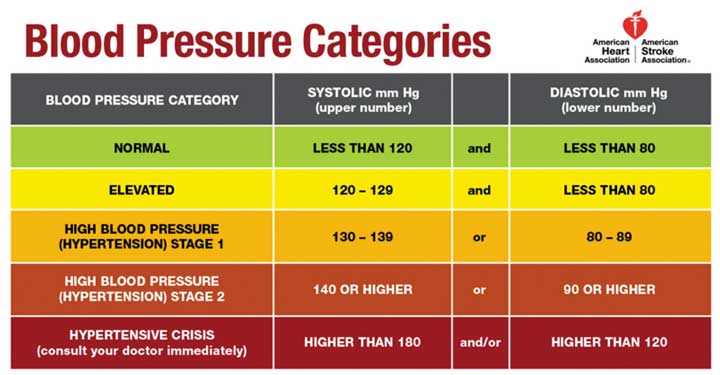
Hypertension is also categorized as either primary or secondary. Primary hypertension applies to most people with high blood pressure, and while the conventional view is that the cause is idiopathic or unknown, it’s typically linked to insulin/leptin resistance. Secondary hypertension refers to high blood pressure that is caused by another medical condition, such as chronic liver disease.
Download this Article Before it Disappears
What’s Your Fasting Insulin Level?
I believe most all Stage 1 and even a high percentage of Stage 2 hypertension can be successfully treated to where drugs become unnecessary, provided you’re aggressive enough in your diet and lifestyle modifications. However, if you have seriously elevated blood pressure, it would be wise to be on medication to prevent a stroke while you’re revising your lifestyle.
In addition to checking your blood pressure on a regular basis, I highly recommend getting a fasting insulin level test done. Remember, high blood pressure and insulin resistance tend to go together, and if your hypertension is the result of elevated insulin levels, you’ll know how to nip it in the bud by the end of this article.
The fasting insulin level you want to strive for is about 2 or 3 microU per mL (μU/mL). If it’s 5 or above, you clearly need to lower your insulin level to reduce your risk of high blood pressure and other cardiovascular health hazards. Keep in mind that the so-called “normal” fasting insulin level is anywhere from 5 to 25 μU/mL. Please do not make the mistake of thinking that this “normal” insulin range equates to optimal.
How to Find a Blood Pressure Measuring Device
According to a 2019 study,7 nearly 46% of American adults could benefit from self-monitoring to avoid “white coat” hypertension. Whether you suspect (or know) you have high blood pressure, an automatic blood pressure meter is a good investment for every household.
Top rated blood pressure meters for home use include the following. Consumer Reports tested these devices for accuracy, comfort, clarity of display and ease of use, and all are commercially available on Amazon and other large retailers and pharmacies:8
- Omron Platinum BP5450
- Omron Silver BP5250
- Omron 10 Series BP7450
- A&D Medical UA767
- Rite Aid Deluxe Automatic BP3AR1-4DRITE
To measure your blood pressure, follow these guidelines:9
- Don’t exercise, smoke or drink coffee or caffeinated beverages within 30 minutes of measuring your blood pressure. Also empty your bladder and relax for at least five minutes beforehand.
- Sit with your back straight on a firm chair. Avoid sitting on the couch as that encourages slouching. Keep your feet flat on the floor and do not cross your ankles or legs.
- Make sure your arm is supported on a flat surface, such as an armrest or table, with your upper arm at heart level.
- Place the blood pressure cuff directly above the bend of your elbow on bare skin. Do not measure on top of clothes. The cuff should be snug but not too tight nor too loose. Press the Start button and remain still while the pressure is being taken.
- Measure your blood pressure at the same time every day, and take multiple readings each time. Ideally, take two readings one minute apart and record the results.
How to Avoid a False Hypertension Diagnosis
To avoid a false hypertension diagnosis, keep in mind that your blood pressure reading can vary significantly from day to day, and even from one hour to the next, so don’t overreact if you get one high reading here or there. It’s when your blood pressure remains consistently or chronically elevated that significant health problems can occur. Several factors can affect the validity of your blood pressure reading, including:
•Incorrect blood pressure cuff size — If you’re overweight, taking your reading with a size “average” blood pressure cuff can lead to a falsely elevated blood pressure reading, so make sure your doctor or health care professional is using the correct cuff size for your arm.
•Incorrect arm position — If your blood pressure is taken while your arm is parallel to your body, your reading can be up to 10% higher than it really is. Blood pressure readings should always be taken with your arm at a right angle to your body.
•Nervousness — “White coat hypertension” is a term used for when a high blood pressure reading is caused by the stress or fear associated with a doctor or hospital visit. This can be a transient yet serious concern. If this applies to you, stress reduction is key.
To decrease your risk of being falsely diagnosed with hypertension in this situation, take a moment to calm down (be sure to arrive for your appointment ahead of time so you can unwind), then breathe deeply and relax when you’re getting your blood pressure taken.
Use Waist-to-Hip Ratio to Assess Your Hypertension Risk
Research suggests your waist size may be an effective measure for assessing obesity-related hypertension risk.10 If you have a high waist-to-hip ratio, i.e., you carry more fat around your waist than on your hips, you may be at an increased risk for obesity-related hypertension. Your waist size is also a powerful indicator of insulin sensitivity, and studies indicate that waist size is one of the most powerful ways to predict your risk for diabetes.
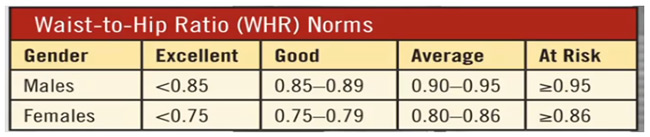
To calculate your waist-to-hip ratio, measure the circumference of your hips at the widest part, across your buttocks, and your waist at the smallest circumference of your natural waist, just above your belly button. Then divide your waist measurement by your hip measurement to get the ratio.
The University of Maryland offers an online waist-to-hip ratio calculator11 you can use. The Mayo Clinic uses the following waist-to-hip ratio designations to evaluate your health risk:
Drugs Can Increase Risk of Fall-Related Injuries
Before I review lifestyle modifications that can help you normalize your blood pressure, I want to address the issue of medications. It’s important to realize that while blood pressure medications can be very effective at lowering blood pressure, they do not in any way, shape or form address the underlying cause.
According to the most recent statistics from the American Heart Association, about 20% of people with hypertension have resistant hypertension, meaning they cannot control it with three or more medications,12 so these drugs clearly don’t work as advertised for a lot of people.
There are also side effects to contend with; some of them quite harmful and/or debilitating. For example, one JAMA study13 found that hypertensive patients over the age of 70 who were taking blood pressure medication increased their risk of serious falls requiring hospitalization due to fractures, brain injuries, or dislocation of the hip, knee, shoulder or jaw.
The risk of falling can increase if your blood pressure drops too low, too suddenly, upon standing. According to the authors:14
“Antihypertensive medications were associated with an increased risk of serious fall injuries, particularly among those with previous fall injuries. The potential harms vs benefits of antihypertensive medications should be weighed in deciding to continue treatment with antihypertensive medications in older adults with multiple chronic conditions.”
Some Blood Pressure Drugs Raise Risk of Blindness
Another major population study discovered that hypertension drugs called vasodilators increase your risk of early onset age-related macular degeneration (AMD), which is the most common cause of blindness among American seniors. As noted in a press release:15
“… [R]esearchers … conducted a long-term population-based cohort study from 1988 to 2013 of nearly 5,000 residents of Beaver Dam, Wis., aged 43 to 86 years …
The researchers found that, after adjusting for age, sex and other factors, using any vasodilator such as Apresoline and Loniten, which open (dilate) the blood vessels — was associated with a 72% greater risk of developing early-stage AMD.
Among people who were not taking vasodilators, an estimated 8.2% developed signs of early AMD. In comparison, among those taking a vasodilator medication, 19.1% developed the disease.
The researchers also found that taking oral beta blockers such as Tenormin and Lopressor was associated with a 71% increase in the risk of neovascular AMD, a more advanced and vision-threatening form of the disease.
Among those who were not taking oral beta blockers an estimated 0.5% developed signs of neovascular AMD. In comparison among those taking oral beta blockers, 1.2% developed neovascular AMD.”
Key Lifestyle Strategies for Lowering Your Blood Pressure
Alright, time to get down to the nitty gritty of normalizing your blood pressure. As mentioned earlier, high blood pressure is typically associated with insulin resistance, which results from eating a diet too high in the omega-6 fat linoleic acid (LA). As your insulin level elevates, so does your blood pressure.
Excessive omega-6/LA consumption is another dietary factor that contributes to high blood pressure by hardening your arteries (atherosclerosis), which researchers now have pinpointed as yet another treatment focus for hypertension.
So, make sure you avoid all trans fats or hydrogenated fats that have been modified in such a way to extend their shelf life. This includes margarine, seed oils and “butter-like” spreads. Of course, this also includes all foods made or cooked with these fats.
The late Dr. Fred Kummerow was the first scientist to document the dangers of trans fats. Trans fats prevent the formation of prostacyclin, which acts as a natural blood-thinning agent. By diligently avoiding trans fats, your body will make prostacyclin that keeps your blood thin, which will reduce your risk of heart attack and stroke.
Now, if you think about these two factors alone — insulin resistance and atherosclerosis — what kind of diet is bound to produce high blood pressure? The answer, of course, is a processed food diet, loaded with high fructose corn syrup, grains and damaged omega-6 fats, a majority of which are LA.
Knowing that, the answer to correcting high blood pressure becomes rather self-evident. If your blood pressure is running high, you need to restore your insulin and leptin sensitivity, and the following strategies are among the most effective for doing so:
1. Replacing processed foods with whole, unprocessed organic foods.
2. Avoiding all seed oils — It would be helpful to also eliminate seeds and nuts unless you have been on a low LA diet for at least three years.
3. Optimizing your vitamin D (which I discuss in greater detail below).
4. Only use healthy fats — Sources of healthy fats to add to your diet include: grass fed butter, raw organic dairy, organic pastured egg yolks, coconuts, coconut oil and macadamia nuts, grass fed meats and pasture-raised poultry.
The best carbs to add would be ripe fruit that you tolerate well. But, the key is to make sure your fat intake is below 30%, which you can determine with Cronometer. If you fail to do this the carbs can convert to fat and change your cholesterol profile unfavorably.
5. Exercising regularly — In an upcoming section, I’ll review the most effective type of exercise if you have high blood pressure.
Vitamin D Can Relax Arteries and Improve Blood Pressure
Vitamin D deficiency and high consumption of harmful omega-6 fats like linoleic acid (LA) can lead to stiff arteries. Vitamin D deficiency appears to be associated with both arterial stiffness and hypertension.16
Each cell in your body has a DNA library that contains information needed to address virtually every kind of stimulus it may encounter, and the master key to enter this library is activated vitamin D. This is why vitamin D functions in so many different tissues and affects such a large number of different diseases and health conditions, one of which is heart disease.
Research17 has shown that the farther you live from the equator, the higher your risk of developing high blood pressure. Blood pressure also tends to be higher in winter months than during the summer. Exposing your bare skin to sunlight affects your blood pressure through a variety of different mechanisms, including the following:
- Sun exposure causes your body to produce vitamin D. Lack of sunlight reduces your vitamin D stores and increases parathyroid hormone production, which increases blood pressure.
- Vitamin D deficiency has also been linked to insulin resistance and metabolic syndrome, a group of health problems that can include insulin resistance, elevated cholesterol and triglyceride levels, obesity, and high blood pressure.
- Vitamin D is also a negative inhibitor of your body’s renin-angiotensin system (RAS), which regulates blood pressure.18 If you’re vitamin D deficient, it can cause inappropriate activation of your RAS, which may lead to hypertension.
- Additionally, exposure to UV rays is thought to cause the release of endorphins, chemicals in your brain that produce feelings of euphoria and relief from pain. Endorphins naturally relieve stress, and stress management is an important factor in resolving hypertension.
Guidelines for Optimizing Your Vitamin D Level
Ideally, you’ll want to get your vitamin D through sun exposure on your bare skin. If you opt for an oral vitamin D supplement, make sure you use vitamin D3, not D2, which is typically prescribed by doctors but has been linked to poorer health outcomes.
Also, make sure to measure your vitamin D level before you start supplementing. The reason for this is because you cannot rely on blanket dosing recommendations. The crucial factor here is your blood level, not the dose, as the dose you need is dependent on several individual factors, including your baseline blood level.
Data from GrassrootsHealth’s D*Action studies suggest the optimal level for health and disease prevention is between 60 ng/mL and 80 ng/mL, while the cutoff for sufficiency appears to be around 40 ng/mL.
In Europe, the measurements you’re looking for are 150 to 200 nmol/L and 100 nmol/L respectively. That said, as a general guideline, research by GrassrootsHealth suggests that adults need about 8,000 IUs per day to achieve a serum level of 40 ng/mL.
I’ve published a comprehensive vitamin D report in which I detail vitamin D’s mechanisms of action and how to ensure optimal levels. I recommend downloading and sharing that report with everyone you know. A quick summary of the key steps is as follows:
1. First measure your vitamin D level — Your doctor can order this test for you.
2. Assess your individualized vitamin D dosage — To do that, you can either use the chart below, or use GrassrootsHealth’s Vitamin D*calculator. To convert ng/mL into the European measurement (nmol/L), simply multiply the ng/mL measurement by 2.5. To calculate how much vitamin D you may be getting from regular sun exposure in addition to your supplemental intake, use the DMinder app.19
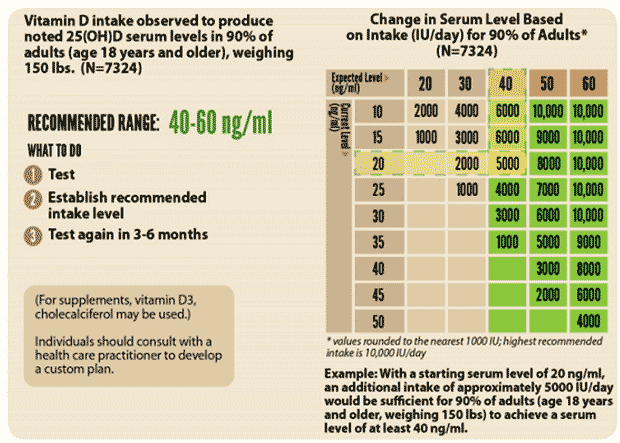
3. Retest in three to six months — Lastly, you’ll need to remeasure your vitamin D level in three to six months, to evaluate how your sun exposure and/or supplement dose is working for you.
Take Your Vitamin D With Magnesium and K2
Keep in mind that if you decide to supplement with oral vitamin D3, you also need to boost your vitamin K2 intake, as these two nutrients work in tandem. Together, vitamin D and vitamin K2 produce and activate Matrix GLA Protein (MGP), which congregates around the elastic fibers of your arterial lining, guarding them against calcium crystal formation.
Vitamin K2 also activates a protein hormone called osteocalcin, produced by osteoblasts, which is needed to bind calcium into the matrix of your bone. Osteocalcin also appears to help prevent calcium from depositing into your arteries.
In other words, without the help of vitamin K2, the calcium that vitamin D so effectively lets in can work against you by building up inside your arteries rather than your bones.
It’s also strongly recommended to take magnesium concomitant with oral vitamin D and K2. Data from nearly 3,000 individuals reveal you need 244% more oral vitamin D if you’re not also taking magnesium and vitamin K2.20 What this means in practical terms is that if you take all three supplements in combination, you need far less oral vitamin D in order to achieve a healthy vitamin D level.
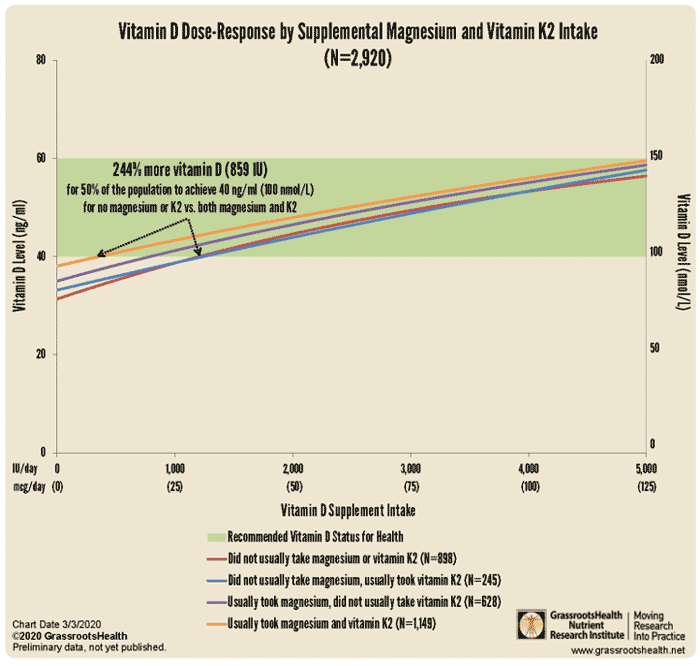
Two Key Factors to Consider When Buying Meat
While some studies suggest a vegetarian diet can help resolve high blood pressure, I do not believe this makes for an ideal diet in the long run, as avoiding all meats can lead to nutritional deficiencies.
From what I’ve learned, I believe the quality and quantity of the meat may be a major part of the equation. First, in terms of quantity, if you eat more protein than your body needs, it will convert most of those calories to sugar. Additionally, it will need to remove the nitrogen waste products from your blood, which will stress your kidneys and deteriorate kidney function if you already have compromised kidneys.
As a general guideline, most adults need about 0.6 to 0.8 grams of protein per pound of lean body mass. (As an example, if your body fat mass is 20%, your lean mass is 80% of your total body weight.)
In terms of quality, meat from organically raised, grass fed and finished animals is far superior to that from animals raised in concentrated animal feeding operations (CAFOs).
CAFO beef and poultry have many disadvantages, including fewer of the most valuable nutrients found in organically raised meats, while being contaminated with hormones, antibiotics, drugs, pesticides and herbicides like glyphosate. Furthermore, since most CAFOs feed animals genetically engineered (GE) grains (primarily corn and soy), there’s also the issue of whether such feed might alter the meat in ways we still have not recognized.
Also, it is best to restrict your meat choices to beef, bison, lamb and other ruminant game animals. It is best to avoid chicken and pigs as, even if pasture-raised and organically fed, they are given grains and other foods that are high in LA so they will increase your LA levels.
Should You Cut Sodium to Lower Your Blood Pressure?
Insulin also affects your blood pressure by causing your body to retain sodium. Sodium retention causes fluid retention. Fluid retention in turn can cause high blood pressure, which may ultimately lead to congestive heart failure.
A standard recommendation if you have high blood pressure is to reduce the amount of sodium in your diet. While it’s certainly beneficial to cut out processed foods and salt, limiting sodium is not the hypertension cure that many think it is.
If you’re simply opting for low-sodium processed foods, you’re hardly doing your health any favors, as such fare is likely compensating for the lack of flavor with harmful fats and/or sugar. You’ve probably heard of the DASH diet,21 which is claimed to be among the most effective for controlling hypertension. It consists largely of fresh vegetables, fruits, lean protein, whole grains, low-fat dairy and very low sodium content.
Processed foods and LA promote hypertension to a far greater degree than excess salt. Salt is essential for maintaining and regulating blood pressure, but the crux lies in the type of salt you consume.
Natural unprocessed salt, such as Himalayan salt, contains 84% sodium chloride and 16% naturally occurring trace minerals. Processed (table) salt, on the other hand, contains 97.5% sodium chloride and the rest are manmade chemicals. The natural, unprocessed form is essential for good health; table salt is best avoided altogether.
But there’s yet another factor that comes into play when we’re talking about sodium and blood pressure, and that’s the issue of maintaining a healthy sodium-to-potassium ratio. Your body needs potassium to maintain proper pH levels in your body fluids, and it also plays an integral role in regulating your blood pressure. In fact, potassium deficiency may be a greater contributor to high blood pressure than excess sodium.
The Importance of Proper Sodium-to-Potassium Ratio
People who eat processed foods frequently and very few fresh fruits and vegetables likely have an imbalance in their sodium-potassium ratio. The key to relaxing your arterial walls and reducing blood pressure is the ratio between sodium and potassium.
If you’re unsure of your sodium and potassium intake, use chronometer.com/mercola, which is a nutrient tracker that allows you to enter foods and then calculates the ratios automatically. Generally, it’s recommended that you eat five times more potassium than sodium.
According to the U.S. Department of Agriculture,22 the average intake of potassium in the U.S. population is 2,640 milligrams (mg) per day. Other surveys have found similar intakes.23 Meanwhile, the National Academies Sciences Engineering Medicine (formerly Institute of Medicine) recommends 4,700 mg per day for people over the age of 14.24
Potassium helps lower your blood pressure by relaxing the walls of your arteries, and according to Harvard Health,25 many people with high systolic blood pressure can successfully lower it simply by increasing their potassium intake.
In my view the absolute best way to increase your potassium is by beating ripe fruit. I typically get around 3,000 mg from watermelon, orange juice and tangerines, and another 2,000 mg from other sources.
For a more complete list of potassium-rich foods, see DietaryGuidelines.gov’s “Food Sources of Potassium” page.26 Taking potassium supplements is not a good strategy and simply will not provide you with the benefits you seek.
The Best Exercises for High Blood Pressure
Exercise is well-known for its ability to normalize blood pressure, but all forms of exercise are not the same in this regard. Existing exercise guidelines for blood pressure management emphasize cardio, such as running and cycling.
But, a recent investigation revealed that isometric exercise, where your muscles are in static contraction, is the most effective for lowering blood pressure, while aerobic exercise is next to last in terms of effectiveness.
A July 2023 meta-analysis27 reviewed 270 randomized controlled trials published between 1990 and February 2023 that reported reductions in systolic blood pressure (SBP) and/or diastolic blood pressure (DBP) following an exercise intervention of two weeks or more, with a pooled sample size of 15, 827 people. In rank order, the analysis found significant reductions in resting SBP and DBP following:
- Isometric exercise (–8.24/–4.00 mmHg)
- Combined training (–6.04/–2.54 mmHg)
- Dynamic resistance training (–4.55/–3.04 mmHg)
- Aerobic exercise (−4.49/–2.53 mmHg)
- High-intensity interval training (–4.08/–2.50 mmHg)
Effectiveness based on the “surface under the cumulative ranking curve” (SUCRA) values for systolic — which refers to the mean probability of being the best for lowering your systolic blood pressure — placed isometric exercise in the No. 1 slot with an effectiveness rating of 98.3%, followed by combined training (75.7%), dynamic resistance training (46.1%), aerobic exercise training (40.5%) and high-intensity interval training (39.4%).
In secondary meta-analyses of submodes, the wall squat was the most effective for reducing SBP, while running was most effective for reducing DBP. In conclusion, the authors noted:28
“Various exercise training modes improve resting blood pressure, particularly isometric exercise. The results of this analysis should inform future exercise guideline recommendations for the prevention and treatment of arterial hypertension.”
The key take-home is that static contraction of muscle as you hold your body in one position, i.e., isometric exercise, is the most effective type of exercise if you want to lower your blood pressure. Examples of isometric exercises include the following.29,30,31 For more details, including exercise instructions, see “Which Exercises Are Best for Lowering Blood Pressure?”
| Wall squat | Isometric calf raise | Planking |
| Hollow-body hold | Low isometric squat | Static slide lunge |
| Overhead hold | Iso hang | Glute bridge |
| Incline pushup hold | V-sit | Single-leg stand |
Addressing Stress-Related Hypertension
Although many people believe that the “tension” part of hypertension refers to stress as the cause, the primary cause is, as previously mentioned, insulin and leptin resistance. That said, the link between stress and hypertension is well-documented.
In fact, it has been shown that people with heart disease can significantly lower their risk of a cardiac event by learning to manage their stress. Suppressed negative emotions such as fear, anger and sadness can radically increase your cortisol levels and severely limit your ability to cope with the unavoidable everyday stresses of life.
It’s not the stressful events themselves that are harmful, but your lack of ability to cope. The good news is, strategies exist to rapidly and effectively transform your suppressed, negative emotions, and relieve stress.
One of the most well-studied of these is an energy psychology method called the Emotional Freedom Techniques (EFT). By teaching your body to slow down and relax when stress hits — essentially short-circuiting your physical stress reaction — you can protect your health. EFT is easy to learn and can be done just about anytime, anywhere. For a demonstration, see the video below.
Other Helpful Strategies
In addition to everything already mentioned, there are still more dietary and lifestyle strategies that can be of help if you struggle with high blood pressure. Here are several additional alternatives for your consideration:
| Avoid caffeine — The connection between coffee consumption and high blood pressure is not well understood, but there is ample evidence to indicate that if you have high blood pressure, coffee and other caffeinated drinks and foods can exacerbate your condition. |
| Supplement with vitamins C and E — Studies indicate that vitamins C32 and E33 may be helpful in lowering blood pressure. If you’re eating a whole food diet, you should be getting enough of these nutrients through your diet alone.
Unless you have radically lowered your LA tissue levels, it is vital to take the correct vitamin E supplement until you do, as it will limit the damage that LA can cause. I consider it to be one of the three most important supplements you can take. It is also helpful in lowering dangerous estrogen levels in your body that can increase your risk of cancer. If you decide you need a supplement, make sure to take a natural (not synthetic) form of vitamin E. You can tell what you’re buying by carefully reading the label. Natural vitamin E is always listed as the ‘d-‘ isomer (d-alpha-tocopherol, d-beta-tocopherol, etc.) Synthetic vitamin E is listed as ‘dl-‘ isomers. |
| Eat more fruit and berries — In what researchers called the first-of-its-kind study in the U.K., scientists used objective measures for dietary intake across thousands of residents, using data for 25,618 people in Norfolk, U.K., and compared the data against their blood pressure measurements.34
The difference in blood pressure between those with the lowest 10% of flavanol intake and those with the highest 10% of intake was between 2 and 4 mmHg. According to the authors, this was comparable to the difference measured when a person switched to a Mediterranean diet or the Dietary Approaches to Stop Hypertension (DASH) diet. Because fruit contains fructose, it can increase your risk of insulin resistance if you eat large amounts; examples of lower fructose fruits that are beneficial for most people include avocados, berries, kiwi and citrus fruits. |
| Quercetin — Quercetin has also been shown to lower blood pressure. Quercetin is a flavonol found in red grapes, onions, red leaf lettuce, elderflower and green tea, to name a few.35
According to a Japanese study,36 quercetin helps lower blood pressure by modifying vascular compliance and resistance, total blood volume and the autonomic nervous system. It also appears to have a unique ability to regulate gene expression that is mediated by controlling negative chloride actions in the cell’s cytosol. Negative chloride ions help control the intracellular activity of many other ions in the cytosol, which is the water-based fluid that surrounds intracellular structures. The gene expression that controls the chloride ions triggers sodium reabsorption, which then reduces body fluid volume and therefore influences volume-mediated high blood pressure. The researchers noted several past studies that demonstrated taking between 150 mg per day and 730 mg per day could lower high blood pressure, decreasing both systolic and diastolic pressures. |
| Supplement with magnesium — Magnesium is also important for healthy blood pressure and few people get enough from their diet these days. Hundreds of studies and scientific papers show there’s a clear correlation between magnesium and high blood pressure.
Magnesium stored in your cells relaxes muscles. If your magnesium level is too low, your blood vessels will constrict rather than relax, and this constriction raises your blood pressure. According to a 2011 paper37 in The Journal of Clinical Hypertension, magnesium intake of 500 mg to 1,000 mg per day may reduce blood pressure by as much as 5.6/2.8 mmHg. Its blood pressure lowering effects are most pronounced when potassium intake is also high, and sodium intake low. Magnesium also boosts the effectiveness of “all antihypertensive drug classes,” according to this paper. Magnesium-rich foods38 include baked potato and white rice, just to name a few. That said, the magnesium content of most foods is dwindling due to the destruction of soils, so it’s one nutrient that I recommend taking as a supplement. |
| Engage in inspiratory muscle strength training (IMST) — Strengthening your breathing muscles with IMST can also be helpful. IMST was originally developed for critically ill patients with respiratory diseases. It helped to improve the strength of their inspiratory muscles by using a handheld device that provides resistance while inhaling.
A 2021 study39 evaluated the effect that IMST could have on reducing blood pressure and thus reducing the risk of cardiovascular disease. Thirty-six adults aged 50 to 79 who had above normal systolic blood pressure were enrolled. Half the participants used high resistance IMST and the other half used low resistance IMST for six weeks. At the end of the intervention, the group using high resistance had a nine-point reduction in their systolic blood pressure. The daily training consists of 30 breaths a day. The breathing exercise takes just five to 10 minutes a day, with benefits noticeable within two weeks. You can learn more about this in “Breathing Exercise Could Reduce Blood Pressure.” |
Take Control of Your Blood Pressure
The best treatment strategy for high blood pressure is to evaluate your lifestyle and make the necessary adjustments, with particular emphasis on normalizing your insulin and leptin levels. We’ve covered a lot of ground in this report, so here’s a summary of key points to remember:
| In addition to checking your blood pressure, check your fasting insulin level. A healthy level to strive for is about 2 μU/mL or 3 μU/mL. |
| Swap out processed foods for whole foods and implement TRE. Also consider going organic. Meats should ideally be grass fed and pasture finished. Foods notorious for causing blood pressure to rise and that should be avoided include processed foods, most grains, partially hydrogenated oils (synthetic trans fats), and seed oils (aka vegetable oils) such as corn, canola, soy and safflower oils.40 |
| Keep an eye on your sodium-to-potassium and omega-3-to-omega-6 ratios. This is automatically done if you swap processed foods for whole foods and make sure you are eating plenty of ripe fruit that you enjoy and is adjusted to your activity rate and fat intake. |
| Optimize your vitamin D level, ideally through regular sun exposure. |
| Exercise regularly, and make sure you include isometric (static contraction) exercises such as wall squats and planking. |
| Learn how to effectively address day-to-day stress. One effective stress management tool is the Emotional Freedom Techniques (EFT). |
- 1, 3 HHS.gov Estimated Hypertension Prevalence, Key Findings Bullet One
- 2 Heart.org Health Threats from High Blood Pressure
- 4 Diabetology & Metabolic Syndrome 2014; 6: 12
- 5 AJMC.com, JNC 8 Hypertension Guidelines: An In-Depth Guide
- 6 Harvard Health November 16, 2021
- 7 Hypertension June 24, 2019; 74: 399-406
- 8 Consumer Reports Best Blood Pressure Meters February 3, 2023
- 9 Heart.org How to Use a Blood Pressure Monitor
- 10 Canadian Journal of Cardiology September 2012: 28(5); S122
- 11 University of Maryland, Waist to Hip Ratio Calculator
- 12 Harvard Health August 1, 2023
- 13, 14 JAMA Internal Medicine 2014;174(4):588-595
- 15 EurekAlert! May 28, 2014
- 16 Vitamin D Council, Hypertension
- 17 Hypertension. 1997; 30: 150-156
- 18 J Steroid Biochem Mol Biol. 2004 May;89-90(1-5):387-92
- 19 DMinder app
- 20 GrassrootsHealth Magnesium and Vitamin K2 Combined Important for Vitamin D Levels
- 21 N Engl J Med 1997; 336:1117-1124
- 22 U.S. Department of Agriculture Food Research Group, Potassium Intake of the U.S. Population
- 23 Nutrition Today September-October 2018; 53(5): 184-195
- 24 National Academies Sciences Engineering Medicine Table S-3
- 25 Harvard Health Publishing, January 23, 2017
- 26 DietaryGuidelines.gov Food Sources of Potassium
- 27 British Journal of Sports Medicine July 25, 2023 DOI: 10.1136/bjsports-2022-106503
- 28 British Journal of Sports Medicine July 25, 2023 DOI: 10.1136/bjsports-2022-106503, Conclusion
- 29 Vertimax
- 30 US News June 15, 2020
- 31 Vertimax 20 Isometric Exercises
- 32 American Journal of Clinical Nutrition 2012 May; 95(5): 1079–1088
- 33 Journal of Human Hypertension 2019; 33: 499-507
- 34 Scientific Reports, 2020;10(1)
- 35 Superfoodly, 100 Quercetin Foods
- 36 Molecules, 2017;22(2)
- 37 The Journal of Clinical Hypertension November 2011; 13(11): 843–847
- 38 Cleveland Clinic Magnesium-Rich Foods
- 39 Journal of the American Heart Association, 2021;10:e020980
- 40 Dr. Sinatra, What is the Best Heart Healthy Diet Plan?
Crucial Facts About Your Metabolism
Reproduced from original article:
https://articles.mercola.com/sites/articles/archive/2023/08/20/mitochondria-glucose-metabolism.aspx
The original Mercola article may not remain on the original site, but I will endeavor to keep it on this site as long as I deem it to be appropriate.
Analysis by Dr. Joseph Mercola Fact Checked August 20, 2023
STORY AT-A-GLANCE
- Cortisol is primarily a rescue hormone. It’s a glucocorticoid, so it increases your glucose level by shredding your muscle protein to produce glucose. Cortisol also accelerates the aging process and is implicated in most chronic diseases. It also uses your brain tissue to use amino acids to make glucose which contributes to brain atrophy and subsequent depression
- Your mitochondria can only burn one fuel at a time — either fat or glucose — and there’s a stealth switch that controls which of these fuels your mitochondria will burn. This switch is known as the Randle cycle
- Ideally, you want to metabolize (burn) glucose in your mitochondria, as this only generates 0.1% reactive oxygen species (ROS). This route also generates energy most efficiently, creating 36 to 38 adenosine triphosphates (ATP) for every molecule of glucose that is metabolized. For this to occur, you need to consume less than 30% of your calories as fat
- When you consume significantly more than 30% fat, the switch changes to burn fat in your mitochondria. As a result, glucose then backs up into your bloodstream, raising your blood sugar. This is a major contributor to diabetes
- When you lose muscle, your basal metabolic rate goes down, so it’s important to maintain muscle mass, because your muscle will burn fat even when you’re resting
In this interview, repeat guest Georgi Dinkov and I will again take a deep dive into the biochemistry of human metabolism. Dinkov is a student of the late Ray Peat, a biologist, thyroid expert and pioneer in prometabolic therapy and human metabolism.
Despite having a degree in computer science and having no formal academic training in health, Dinkov essentially has acquired a Ph.D. in molecular biology. After graduating from Georgetown University in 2002, Dinkov got a job as a programmer at the National Biomedical Research Foundation (NBRF).
There, he helped develop uniprot.org, a database of all known protein sequences. Surrounded by dozens of the brightest doctors and biochemists in the world, he developed an interest in biochemistry.
Clearing Up Confusion
I have long promoted a low-carb, high-fat diet for many years and have realized many are confused on the evolution of my recommendations. As I say in the interview, 95 to 97% of the population in the U.S. is metabolically inflexible and would likely benefit from a low-carb, high-fat keto approach with intermittent fasting.
However, once you have resolved your insulin resistance, which typically takes a few months but can take longer, and can optimally burn fat for fuel, it is very clear to me that you need to cycle carbs back into your diet. There are loads of questions about how this transition occurs, the timing of the transition, and the details of the cycling that need to be answered.
No one knows the answers, as the studies have not been done, but I am fairly convinced that many people will appear to do well in the long term on a low-carb, high-fat keto program like I did. However, I also believe they would do even better if they started to include more healthy carbs in their diet like I did. That does not mean processed foods or processed sugars, or virtually all grains and legumes. The ideal carbs are ripe fruits.
You should introduce carbs slowly and only after you have shifted your fat level down to 30%. This is easily calculated by using a free online program called Cronometer. If you still struggle with diabetes or obesity, then you can get your fat level down to 15 to 20% of your total calories.
Protein level should always remain the same and does not change from 0.7 to 1 gram protein/kg of lean body weight. So, if you are 20% body fat then you would multiply your body weight by 0.8 to get your lean body mass.
In my case, it took me about three to six months to go from 100 grams of carbs to 500 grams. The results for me were quite spectacular. I was already healthy, but it clearly improved my health even further as my body fat dropped from 15% to 12%, my inflammation decreased to radically low levels as my HS-CRP went from 0.8 to 0.18 which is almost below detection levels. Finally, even though I was not prediabetic as my blood sugar was in the low 90s, it dropped by 10 points to the low 80s.
The reason I made this shift is I was overwhelmed by the amount of strong scientific support for demonstrating that the ideal fuel in your mitochondria is indeed glucose, not fat. It has to do with decreasing reductive stress in your mitochondria which is a relatively unknown concept in molecular biology.
When implementing the transition to healthy carbs you need to be careful not to eat too many carbs as excess carbs will be shunted to glycolysis and into glucose into your blood and lead to an increased blood sugar. The more muscle mass you have and the more exercise you do, the more carbs you can eat.
I suspect most people could easily transition to 200 grams of carbs. I seem to do well with about 500 grams, mostly all fruit but do have white rice and red potatoes as well. You should see my shopping cart as every week it is loaded with about 60 pounds of fruit.
The Cortisol-Glucose Link
For example, Dinkov helped me understand the crucial role cortisol plays in glucose regulation. Cortisol is primarily a rescue hormone. It’s a glucocorticoid, and as the name implies, it increases your glucose level, because if your glucose level drops too low, you will go into a hypoglycemic coma and can die.
As such, cortisol is a lifesaver. The downside is that it uses up vital protein to make glucose, so high cortisol takes a toll on your muscles. The reason anabolic steroids build muscle mass is because they’re anti-cortisol. You would’ve thought anabolic steroids would have some direct action on the muscles, but no, they primarily inhibit cortisol’s catabolic impact.
Cortisol uses muscle protein to produce glucose in your liver, so when your glucose level drops, cortisol rises and shreds muscle to produce glucose. This is one of the puzzle pieces that explains why you don’t want your glucose levels to be low over prolonged periods.
Cortisol also accelerates the aging process and is implicated in most chronic diseases. In the case of Addison’s disease (adrenal failure), the opposite is present: low cortisol. These patients are typically required to take cortisol injections on a regular basis. On the upside, this chronic cortisol deficiency tends to impart a youthfulness. In most other chronic conditions, high cortisol is part of the problem.
Download this Article Before it Disappears
High Cortisol Speeds Aging
Dinkov comments:
“Studies as far back as the 1950s and 60s demonstrated that you can produce every single phenotype of aging if you inject cortisol, or at least create a state of relative glucocorticoid excess in the animal.
You can do that either by injecting synthetic or natural glucocorticoids, or by increasing the levels of natural anti-cortisol steroids in the body. Those are progesterone and DHEA, and in males testosterone and dihydrotestosterone.
It has been shown that cortisol levels do not decline with age unless you really have adrenal failure, while the levels of all these anti-cortisol, youth-promoting hormones decline with age. By the time you’re 80, their levels are at about 20% of what they used to be when you were in your 20s.
So, really, what happens is that cortisol stays the same, but your relative state of cortisol increases because there’s nothing to oppose the cortisol that is already there. Multiple intervention studies have demonstrated that if you administer agents that oppose cortisol, block it at the receptor level, or reduce its synthesis, you can achieve really good health results and also improve the way you look.
Anabolic steroids are probably the best known example. It’s really a misnomer because they’re not anabolic. They’re actually anticatabolic. Muscle has one of the highest expressions of the glucocorticoid receptor, through which cortisol shreds the muscle. It binds the receptor and increases a number of different proteolytic fibers.”
High Cortisol Linked to Depression
Your gastrointestinal tract and brain also have high numbers of glucocorticoid receptors, so cortisol shreds brain tissue as well, causing brain atrophy and subsequent depression. Research has shown that people with depression have smaller brain volumes than people who don’t have depression.
“Within 48 hours of the glucocorticoid blocker RU-486 being administered to people with clinical treatment-resistant depression, they experienced remission. So I think it’s a very good argument that cortisol is catabolic to the brain, and clearly, if it’s catabolic to the brain, it’s probably not going to improve your mood. If anything, it’s going to worsen it.”
Again, when your blood sugar level drops, that triggers your body to increase cortisol, which is the last thing you want if you struggle with depression or other chronic disease. Really, one of your primary goals in achieving optimal health is to limit the elevation of your cortisol. It’s far more destructive than having elevated blood sugar, which most focus on.
High Cortisol Is Far Worse Than High Blood Sugar
Many wear continuous glucose monitors that check your glucose level every five to 10 minutes. But high glucose is not the real danger here. Cortisol is, and it rises when glucose drops too low. As noted by Dinkov:
“All the drugs on the market, especially the more recent ones that lower HB A1C, the glycated hemoglobin, all of them increase mortality. So, clearly, messing directly with the levels of blood glucose, it’s not something you want to do.
You may temporarily decrease the biomarker, the glycated hemoglobin, but it does not mean you’re getting healthier. [These drugs] may lower your blood glucose, but they may kill you in the long run faster than the elevated glucose would’ve done by itself.”
Metformin is one classic example. Many are using this drug to lower their blood sugar. While it’s a natural product, and considered safe, it’s basically a mitochondrial toxin that will make your health decline in the long term.
All of that said, we’re NOT saying you should ignore elevated blood glucose. Absolutely not. But elevated glucose is a symptom that is best addressed indirectly. Once you address the foundational cause, it will normalize by itself. As a personal anecdote, when I first interviewed Dinkov, 70% to 80% of my diet was fat. Now, I’m down to 27% fat and 57% carbohydrates, and I’ve lost 5 pounds and my fasting blood sugar is down by 10 points.
So, it’s not the carbohydrate ingestion that’s causing high blood sugar. It’s what’s happening at the mitochondrial level. To help you understand that, I created a graphic (below) because this science can get somewhat complex.
The Randle Cycle
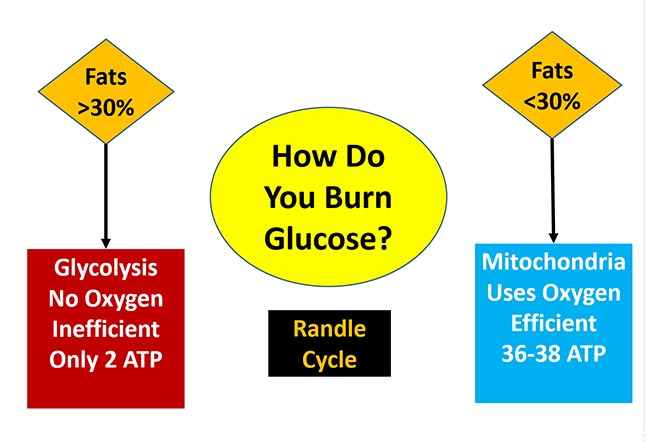
Your mitochondria can only burn one fuel at a time — either fat or glucose. Fats are broken down in a process called beta oxidation into acetyl-CoA, which gets fed into the Krebs cycle. Carbs are broken down to pyruvate, which cannot enter the electron transport chain until it is converted to acetyl-CoA by pyruvate dehydrogenase.
The key here is that there’s a stealth switch that controls which of these fuels your mitochondria will burn. The switch has been given the name the Randle Cycle, but it is more helpful to visualize it as a railroad switch that changes the tracks of the train. The train can only travel down one track: not both. This is because only one type of fuel can be burned at a time.
In a best-case scenario, you will metabolize, or burn, glucose in your mitochondria without any reductive stress. When you do this, you will only generate 0.1% reactive oxygen species (ROS).
Not only does this route generate less ROS, but it also is incredibly efficient at energy production by creating 36 to 38 adenosine triphosphates (ATP) for every molecule of glucose that is metabolized. It will also generate metabolic water and carbon dioxide, which are also important for your health.
For this to occur, as indicated in the figure above, you will need to consume less than 30% of your calories as fat. When you consume significantly more than that amount, the switch changes to burn fat in your mitochondria and you will not be able to burn glucose until your fat decreases to less than 30% of calories.
When your fat intake is higher than 30%, pyruvate is inhibited and unable to readily convert the glucose metabolite, pyruvate, into acetyl-CoA to be shuttled into the mitochondria to burn as fuel.
Consequently, glucose can back up into your bloodstream, raising your blood sugar. What little glucose is burned for fuel is done through glycolysis, which is a primitive pathway that bacteria and cancer cells use, and it generates the powerful metabolic reductant lactate.
This can be a major contributor to diabetes. If you’re exercising, healthy and doing strict keto, overt diabetes is unlikely to develop, but more than likely you will have fasting glucose in the 90s, rather than the more optimal 80s.
Additionally, chronically oxidizing fats as your primary fuel will tend to increase your cortisol level, resulting in chronic inflammation, both of which accelerate the aging process due to excess ROS generated in the mitochondria that occurs from increased reductive stress as a result of oxidizing fat instead of sugar.
It is great that we have this glycolysis pathway, as you absolutely need it for quick fuel when you are activating your Type 2 muscle fibers. But if this is the primary way you burn glucose, you are in a catastrophic metabolic state because you’re creating loads of lactate as a waste product instead of healthy CO2 and metabolic water.
What’s more, you’re only generating two ATP for every molecule of glucose, which is 95% less energy. Lactate increases reductive stress, which causes reverse electron flow in the mitochondria and increases the ROS to 3% to 4%, which is 30 to 40 times more than when glucose is burned efficiently in the mitochondria at 0/1% ROS.
When Adding Carbs, Reduce Your Fat Intake
Ideally, it is best to lower your fat intake and replace those calories with healthy carbs like ripe fruit. You likely won’t optimize your mitochondrial function, though, until your fat level decreases to 30% of your total calories. So, hold off on making a final decision about whether this change is helping you or not until you get your fat level to 30% or lower.
This is easily calculated by using a free online program called Cronometer. If you still struggle with diabetes or obesity, then you may need to get your fat level down to 15% to 20% of your total calories.
Protein Versus Fat and Carb Requirements
Determining the ideal balance between carbs and fats is the primary challenge for most people. The level of protein is a bit simpler. It tends to be about 15% of daily calories and remains stable. A basic guideline for protein intake is somewhere between 0.7 grams and 1 gram per kilogram of lean body mass (not total weight).
The level of dietary fat you need will depend on your endocrine balance. If you’re diabetic, for example, you may need to go below 20% to avoid shutting down your glucose metabolism. Dinkov comments:
“If you look at older people, and sick people as well, they have metabolic inflexibility. So, if you give them a meal that’s comprised of equal number of calories of carbs and fats, they’re going to oxidize mostly the fats and the carbohydrates will go unmetabolized.
So, they’ll raise their blood glucose and lactate. So, you need to play with the ratio, but I’ve noticed that between 15% and 20% is probably where most people in their current health state can metabolize the fat without causing problems through the Randle Cycle.
Most diabetics are overweight … which means they have plenty of supply of fat. In fact, they have two sources of fat: one through the diet, and the second one from their fatty tissue, because there’s always some lipolysis going on, which means shredding the fatty tissue and supplying the rest of the body with the fatty acids from a fatty tissue …
In the rested state, your muscles actually prefer to oxidize mostly fat. So, if you have a decent amount of muscle mass, you can actually burn most of this fat through the baseline lipolysis by simply resting and preferably raising the amount of lean muscle mass you have. The ratio of lean muscle mass to total body weight is the primary determinant of your basal metabolic rate. So it’s very important to not lose lean muscle mass …
So, for diabetic people, it’s probably a good idea to lower the intake of fat from the diet because they already have a lot coming from their own bodies. In fact, there are many clinics around the world that treat and even cure Type 2 diabetes by putting diabetics on this really restrictive diet until they lose most of their fat and then suddenly the metabolism of glucose gets restarted.
I think this directly shows you that it wasn’t the glucose that was fattening them up and causing the problems, rather they had too much fat in their bodies. Once you get rid of that fat, no matter how you do it … the problems with metabolizing glucose disappear.”
Signs of Excessive Fat/Insufficient Carb Intake
As explained by Dinkov, one of the reasons why obese people who lose a lot of weight end up gaining it all back, even when they continue to diet and exercise, is because most of the weight lost is actually muscle mass. When you lose muscle, your basal metabolic rate decreases, meaning you need fewer calories to maintain your weight.
As a result, you must stay on an extremely low-calorie diet to maintain your weight. So, again, it’s crucial to maintain muscle mass, because your muscles will burn fat even when you’re resting. During activity, especially strenuous activity, your muscles will burn mostly glucose.
“I think the best way to gauge if you are eating too much fat is cognitive function,” Dinkov says. “If you’re eating too much fat, to the point where you’re interfering with glucose metabolism, you’ll start getting brain fog. Your thinking process will slow. You’ll start searching for words. Your reaction time and coordination time will decrease.
Sleep quality is another. Also, exercise capacity. If you’re always catching your breath and you’re feeling fatigued all the time, that is actually a great sign/symptom of elevated lactate. In fact, many different interventions that lower lactate are used as performance improving substances, such as vitamin B1 and niacinamide …
I would say eat the more fat-heavy meals earlier in the day, for breakfast and maybe lunch, and then eat the more carb-heavy meals at night, because your brain and many of the other organs will really need that.
It’s very common that if you don’t consume sufficient amount of carbs before going to bed, you will have trouble sleeping … I think one of the reasons for this is that, if you don’t consume sufficient amount of glucose, you will raise cortisol at night, and cortisol is already higher at night than it should be.
The cortisol is lowest at around 3 or 4 p.m. and starts rising with the coming darkness. Cortisol is highest at around 6 to 8 a.m. in the morning. But if you don’t consume a sufficient amount of carbs, that cortisol will be up to 40% higher.”
Clean Carbs
Of course, when we say “eat more carbs,” we don’t mean pizza and doughnuts or even ostensibly healthy grains like whole wheat. Healthy or “clean” carbs include foods like ripe fruit, raw honey and maple syrup. Tropical fruits such as papaya, watermelon, oranges and tangerines are preferable, as in addition to higher levels of fructose, they also contain flavonoids that help to digest the sugars. Ripe melon, apples, peaches, plums, pears and grapes are also good.
Now, you’ve probably heard me say that you shouldn’t eat anything at least three or four hours before bedtime to optimize autophagy. Dinkov’s research, however, dispels some of the concerns about eating (clean) carbs before bed.
“You do not want to mess with autophagy too much,” Dinkov says. “It has a lot of beneficial effects in terms of getting rid of dead or metabolically deranged tissue. However, if you do have an already present tumor, autophagy and AMPK can actually drastically increase its aggressiveness and promote metastasis.
But let’s say you do want to increase autophagy. I think it’s a bit of a myth that eating will somehow suppress autophagy and put it at a suboptimal level. Several studies demonstrate that several of the carbohydrates — including fructose and sucrose — are autophagy enhancers.
I would say, [eat healthy carbs] an hour before bed, because if you eat a meal that’s too high in carbohydrates, there’s the infamous fructose malabsorption. There’s only a certain amount of carbohydrates that your gastrointestinal tract can absorb per unit of time.
So, you need about an hour or two before the meal, if it’s composed of simple carbohydrates, to get these things into your bloodstream. At that point, you’ll probably be very relaxed and naturally inclined to fall asleep.”
That fructose and sucrose enhance autophagy is probably news to most of you. It was to me. I personally eat a teaspoon of honey before I go to bed, which seems to be enough carbs to thwart an increase in cortisol and helps me get more deep sleep. So, to summarize, Dinkov suggests eating a small amount of healthy carbs, such as fruit, about an hour or two before bed to optimize sleep and, potentially, autophagy as well.
Serotonin Is Not Your Friend
Fruits to be consumed in small amounts include pineapple and bananas, as both contain serotonin. Bananas also contain tryptophan, which is used in the synthesis of serotonin.
While most people think of serotonin as a mood-booster, it’s actually one of your worst enemies. You do not want high levels of serotonin, because it’s an antimetabolite. This means it suppresses your body’s ability to create energy in your mitochondria in the electron transport chain, so you become tired and fatigued, your metabolic rate slows and you gain weight.
“The amount of serotonin we need is really, really low,” Dinkov says. “The biggest role of serotonin is gastrointestinal motility. Any increase, even minor increase of serotonin, has been known since the 1920s to rapidly lead to fibrosis. The most successful antifibrotic drugs on the market currently are serotonin blockers.”
More Information
For more details on the topics summarized here, be sure to listen to the entire interview, and keep your eyes peeled for Part 2, which will follow shortly. Also check out Georgi’s blog at www.haidut.me or follow him on Twitter. He also has hundreds of videos on YouTube on a plethora of topics. A major sampling of Ray Peat’s work is also available for free on these two sites: wiki.chadnet.org/Ray-Peat and RayPeat.com.
Does This Popular Pill Lower Risk of Death in Men?
Reproduced from original article:
https://articles.mercola.com/sites/articles/archive/2023/02/11/pde-5is-linked-to-lower-risk-of-death-in-men.aspx
The original Mercola article may not remain on the original site, but I will endeavor to keep it on this site as long as I deem it to be appropriate.
Analysis by Dr. Joseph Mercola Fact Checked February 11, 2023

STORY AT-A-GLANCE
- A study funded by drug company Sanofi found treatment with phosphodiesterase type 5 inhibitors (PDE-5is), such as Viagra, lowers the risk of death in men
- The study was observational, so it can’t confirm that the reduced death risk was caused by the pills
- Sanofi markets the PDE-5is avanafil (Stendra), so it’s far from an unbiased study
- Viagra produces therapeutic levels of nitric oxide, which is responsible for much of its benefit
- You can boost nitric oxide levels naturally via diet, exercise and other lifestyle factors
A study funded by drug company Sanofi found treatment with phosphodiesterase type 5 inhibitors (PDE-5is), such as Viagra, lowers the risk of death in men.1 But the study was observational, so it can’t confirm that the reduced death risk was caused by the pills. Further, Sanofi markets the PDE-5is avanafil (Stendra), so it’s far from an unbiased study.
“Put simply, if a pharmaceutical company funds a trial, the chances of results and conclusions in that company’s favor are increased,” Sergio Sismondo of Queen’s University, Canada, explained in Frontiers in Research Metrics and Analytics.2 He was referring to a 2017 Cochrane Review, which found that when drug manufacturer funds a drug study, it “leads to more favorable efficacy results and conclusions than sponsorship by other sources.”3
So, it’s not surprising that this industry-sponsored study led to favorable results for the drug. However, even putting likely bias aside, there’s reason to believe that the pills’ perceived longevity benefits may be due to other factors.
Industry-Funded Study Shows Viagra Reduces Death Risk
The study, published in The Journal of Sexual Medicine, evaluated the effect of PDE-5is on major adverse cardiovascular events (MACE), including hospitalization for heart attack, stroke, heart failure and coronary revascularization, and overall mortality.4
It involved data from men with erectile dysfunction without a major adverse cardiovascular event within one year. Among the subjects, exposure to PDE-5is was associated with lower incidence of MACE, cardiovascular death and overall mortality compared to no exposure. Further, the risk reduction was linked with PDE-5i exposure level, meaning the noted benefits increased in those taking higher doses.
Specifically, men who took a PDE-5i were 39% less likely to die from heart disease compared to those who did not take the drugs. Men who took PDE-5is also had a 25% lower risk of dying from any cause and a 13% lower risk of having a cardiac event, like a heart attack or stroke.5 But are the purported benefits too good to be true? Dr. Deepak Bhatt, cardiologist and director of Mount Sinai Heart in New York, told ScienceAlert:6
“While it is possible that Viagra may have some cardiovascular benefits, that would require further investigation, and this current study does not prove it. Rather, it is more likely that the patients in this study who were placed on Viagra by their doctors were less likely to have heart disease, because if patients have severe heart disease, they are often not placed on Viagra in the first place.”
The study authors also noted that men taking PDE-5is and capable of engaging in sexual activity may be healthier than other men to begin with, and it’s possible that the increased sexual activity may have also favorably affected their health:7
“It may be postulated that men who have ED and are capable of taking PDE-5is and engaging in sexual activity may be healthier to begin with, and that unmeasured baseline differences may contribute to the effects observed.
A second study limitation is the absence of an independent measure of sexual activity in these men, so it is not clear whether increased sexual activity may have contributed to the benefits seen that were independent of pharmacological effects of PDE-5i exposure.”
Does Viagra Also Lower Alzheimer’s Risk?
Viagra was originally approved and marketed for high blood pressure and angina8 and was prescribed off-label for erectile dysfunction before it was approved for that use. However, drug companies haven’t stopped looking for new ways to market this drug. In 2005, the U.S. Food and Drug Administration (FDA) approved sildenafil — the same active ingredient in Viagra — to treat pulmonary arterial high blood pressure, using the brand name Revatio.9
Further, in 2022, researchers with the Cleveland Clinic analyzed 1,600 approved drugs in the hopes that one of them could be repurposed as an Alzheimer’s treatment.10 Viagra turned out to be surprisingly effective. Usage reduced the risk of Alzheimer’s disease by 69%, while increasing neurite growth and reducing levels of toxic tau proteins.11
It’s important, however, to look into the underlying reasons why Viagra appears to be so beneficial. As a PDE 5 inhibitor, Viagra enhances vasodilation mediated by nitric oxide (NO). Viagra produces therapeutic levels of NO,12 which is responsible for much of its benefit. In fact, in 2003, researchers at Virginia Commonwealth University13 showed, for the first time, that Viagra stimulates the release of NO in heart cells, which reduces damage to the heart muscle during heart attacks.14
However, Viagra comes with a risk of serious side effects, including sudden vision loss and hearing loss, heart attack, stroke, irregular heartbeat and death.15 Viagra use is also associated with an increased risk of developing melanoma,16 the deadliest form of skin cancer. As such, I don’t recommend using Viagra.
That being said, you may be able to harness its potential benefits by naturally boosting NO in your body. NO is a soluble gas produced from the amino acid L-arginine inside your cells, where it supports endothelial function and protects your mitochondria.
Download this Article Before it Disappears
You Can Boost Your Nitric Oxide Naturally
Taking Viagra in the hopes of lowering your risk of death exposes you to potential side effects. Fortunately, there are ways to boost your NO naturally, without the use of drugs. Eating nitrate-rich foods like beets is one of them. Fermented beets contain even higher nitrate levels. Other vegetables high in nitrates include arugula, butter leaf lettuce and spring greens. NO production can be further magnified by combining these foods with probiotics.17
What’s great about boosting NO is that it offers a wide range of benefits. For instance, NO has a direct antiviral effect on SARS-CoV-2, effectively blocking viral replication in vitro.18
High-intensity exercise will also trigger NO production in your body.19 Ideally, you’d both eat nitrate-rich veggies and engage in exercise regularly. While it’s important to give your body the raw materials to create NO, after it’s made it’s stored inside vesicles lining your blood vessels, and it won’t work until you release it. High-intensity exercises are great at releasing it, and I recommend blood flow restriction training (BFR) for this purpose.
The local muscle hypoxia brought on by BFR exercise significantly increases vascular endothelial growth factor (VEGF), which acts like “fertilizer” for your blood vessels. The medical term for this development of new blood vessels is angiogenesis. Angiogenesis, in turn, enhances NO bioavailability. BFR, by way of increasing NO, has also been found to stimulate muscle satellite stem cells and proliferation.20
Exercise, meanwhile, is one of the best ways to extend your longevity and reduce your risk of premature death. While lack of activity is the cause of more than 5 million deaths each year,21 a study published in the European Journal of Preventive Cardiology revealed that estimated age based on subjects’ exercise stress test was a better predictor of mortality than chronological age.22 The results held true for both men and women.
Getting sensible sun exposure on large portions of your body is also important, as NO is released into your bloodstream when sunlight hits your skin.23,24 Ultraviolet A and the near-infrared light spectrum both increase NO, so you’re getting that benefit from both ends of the light spectrum.
As explained in a 2009 paper in the journal Circulation Research,25 when you expose your body to sunlight, photolabile NO derivates such as nitrite and S-nitroso thiols decompose and form vasoactive NO. (Photolabile means the compounds are altered or undergo chemical changes in response to light).
Take Action if You Have Erectile Dysfunction
It’s also important to understand that erectile dysfunction (ED) can act as a “canary in the coalmine,” signaling underlying health problems. One study of 95,000 men found that those with ED had an increased risk of heart-related problems, including:26
- Heart failure
- Stroke
- Peripheral vascular disease
- Ischemic heart disease
- “Other” cardiovascular disease
This doesn’t necessarily mean that erectile dysfunction causes heart problems, but, more likely, that both share a common pathology of the blood vessels known as endothelial dysfunction. The researchers explained:27
“Erectile dysfunction per se is unlikely to be a major independent cause of CVD, and is best considered as a risk marker rather than a risk factor for CVD. That is, it is likely to serve as an indicator, or ‘biomarker,’ of the severity of underlying pathological processes such as atherosclerosis and endothelial dysfunction.”
Natural Strategies for ED
If you have ED, be sure to get your heart health checked out by a holistic health care practitioner and be proactive in making lifestyle changes to support heart health. Taking Viagra, even if it solves the symptoms of ED, will not solve the underlying pathological processes contributing to it. Remember, too, that not every case of ED is physical in nature; there can also be emotional and psychological contributors.
There are, however, natural strategies to target ED as well. Research from Harvard University demonstrated that men younger than 70 who regularly consume foods rich in flavonoids have an 11% to 16% reduced risk of experiencing ED, for instance.28
Pomegranate juice might also be useful for men struggling with mild to moderate erectile dysfunction,29 thanks to its ability to preserve nitric oxide and enhance its biological actions.30 Nitric oxide relaxes and widens blood vessels, thereby increasing penile blood flow.
Toward that end, L-arginine may also improve microcirculation in your genitals that can result in stronger erections and better sexual responsiveness, but without the side effects of Viagra and similar drugs.
L-arginine is more effective when combined with pycnogenol, resulting in significant improvement of sexual functioning.31 Another study found using a combination of 6 grams of L-arginine and 6 milligrams of the compound yohimbine improved the sexual functioning of men diagnosed with mild to moderate ED.32
So whether you’re looking to reduce your risk of premature death or improve ED — or both — taking Viagra is rarely the answer. Instead, you’ll want to ensure your overall lifestyle is a healthy one, as this will not only enhance your longevity but also your sexual health.
- 1, 4 The Journal of Sexual Medicine, Volume 20, Issue 1, January 2023, Pages 38–48
- 2 Front. Res. Metr. Anal., 08 March 2021
- 3 Cochrane Database Syst Rev. 2017 Feb 16;2(2):MR000033
- 5, 6, 9 Science Alert January 23, 2023
- 7 The Journal of Sexual Medicine, Volume 20, Issue 1, January 2023, Pages 38–48, Discussion
- 8 History, March 27, 1998
- 10 Nature Aging volume 1, pages 1175–1188 (2021)
- 11 Greek Reporter December 11, 2022
- 12, 14 Virginia Commonwealth University March 13, 2003
- 13 Circulation Research April 4, 2003, Vol 92, Issue 6
- 15 Drugwatch, Viagra
- 16 JAMA Intern Med. 2014;174(6):964-970. doi: 10.1001/jamainternmed.2014.594
- 17 PLOS One 2015; 10(3): e0119712
- 18 Redox Biology 2020; 37: 101734
- 19 J Sports Med Phys Fitness. 2021 Sep;61(9):1208-1211. doi: 10.23736/S0022-4707.21.11640-8. Epub 2021 Jan 20
- 20 Mol BiolCell. 2000;11(5):1859–97
- 21 The Lancet, 2016;388(10051):1511
- 22 European Journal of Preventive Cardiology, 2019; doi: 10.1177/2047487319826400
- 23 J Invest Dermatol. 2014 Jul;134(7):1839-1846
- 24, 25 Circ Res. 2009 Nov 6;105(10):1031-40
- 26, 27 PLOS Medicine January 22, 2013
- 28 The American Journal of Clinical Nutrition, Volume 103, Issue 2, February 2016, Pages 534–541
- 29 Int J Impot Res. 2007 Nov-Dec;19(6):564-7
- 30 Nitric Oxide 2006 Sep;15(2):93-102
- 31 Journal of Sex & Marital Therapy November 30, 2010
- 32 Eur Urol. 2002 Jun;41(6):608-13; discussion 613. doi: 10.1016/s0302-2838(02)00175-6
Can Intermittent Fasting Change How Your DNA Works?
Reproduced from original article:
https://articles.mercola.com/sites/articles/archive/2023/01/30/intermittent-fasting-dna.aspx
The original Mercola article may not remain on the original site, but I will endeavor to keep it on this site as long as I deem it to be appropriate.
Analysis by Dr. Joseph Mercola Fact Checked January 30, 2023

STORY AT-A-GLANCE
- A 2023 animal study showed how limiting food to the hours of the day when you are most active may alter up to 80% of genetic expression in multiple organ systems
- Activation of these pathways may help explain how fasting improves health and longevity. Roughly 40% of genetic expression in the hypothalamus, pancreas and adrenal glands was affected, which may affect hormone regulation
- Data show restricted eating patterns have a neuroprotective effect and are associated with better cognitive and heart health; data also find it reduces the ability of cancer cells to adapt and survive and may help improve the effectiveness of cancer treatments
- Fasting promotes pancreatic beta-cell growth in animal studies, which may be another pathway in which it helps markedly improve blood sugar control and affect metabolic health
- Most people find it easier to skip breakfast instead of dinner to limit the number of hours they consume food, but take care to restrict eating at least three hours before bed. Skipping breakfast before your workout may offer additional benefits throughout the day
Obesity rates are climbing, along with associated health conditions, such as Type 2 diabetes, metabolic syndrome and cardiovascular disease. According to the CDC,1 the rate of obesity in adults rose from 30.5% in 1999-2000 to 41.9% in 2017-2020, and the estimated annual medical costs were $173 billion in 2019 dollars.
There are a variety of reasons that contribute to these rising numbers, including a sedentary lifestyle,2 increased consumption of highly processed food,3 medications4 and psychological triggers.5 One beneficial strategy to lower weight gain and improve insulin resistance associated with obesity and Type 2 diabetes is intermittent fasting. A 2023 animal study6 demonstrated that restricted feeding schedules affected 80% of how genes were expressed.
Resistance to insulin and leptin signaling drives your blood glucose level high, which is a hallmark symptom of Type 2 diabetes. Conventional medicine treats the symptoms of the condition, which is in fact preventable and in most cases reversible by simply changing your diet and lifestyle habits.
A significant risk factor for insulin resistance is overeating carbohydrates and added sugars, which spike your insulin level and gradually increase cellular resistance to insulin. Overeating carbohydrates and sugar are the primary causes of obesity.
The featured animal study in Cell Metabolism helps explain how fasting benefits these health conditions. Shaunak Deota is the first author of the study and a postdoctoral fellow at the Salk Institute for Biological Studies in San Diego. He is encouraged by the data, saying:7
“Molecularly speaking, we saw a lot of pathways which are activated by (the time-restricted diet) in multiple organ systems. And a lot of these pathways actually have been implicated in improving health and leading to a longer, healthy life.”
Intermittent Fasting Affects 80% of Genetic Expression
The results from the 2023 study demonstrated that it’s not only about what you eat, but also about when you eat it. The researchers tested time-restricted feeding in mice. Deota defined the researcher’s use of the term “time-restricted feeding” as “eating consistently in a narrow window of eight to 10 hours”8 when a person or animal is most active and fasting during the rest of the day.
Intermittent fasting is one form of time-restricted feeding according to the definitions used by the researchers. The researchers placed two groups of mice on the same high-calorie diet. One group was allowed to eat only during a nine-hour window and the other had free access to food whenever they wanted it.
The researchers found that after seven weeks, the time-restricted fed animals gained less weight than the other group and biopsies showed that the genetic expression of the mice in the intervention group was synchronized to their feeding schedules.
Interestingly, the paper reported that nearly 80% of the animal’s “genes show differential expression or rhythmicity under TRF [time restricted feeding] in at least one tissue.”9 Deota explained the importance of this finding, saying, “… these genes will get translated into proteins. Those proteins are helping our body to anticipate that there is food coming.”10
The data from the study supports past research that demonstrated the benefits of restricting the number of hours during the day in which you’re allowed to eat. This has included increasing lifespan in animal studies.11 The featured study sought to determine how fasting affects multiple organ systems and genetic expression.
The researchers looked at more than 22 areas of the body and brain, finding that by changing what time food was given, the genetic expression in an animal’s body could also be changed. Time-restricted feeding affected nearly 40% of genetic expression in the pancreas, hypothalamus and adrenal glands. This in turn may affect hormone regulation.
It is possible that since hormones coordinate functions throughout the body, and hormonal imbalance is associated with many diseases, fasting may help to improve health along several pathways. The researchers also found that restricting food supply to the most active time of the day helped align circadian rhythms in multiple organ systems. Satchidananda Panda, Ph.D., from the Salk Institute and senior writer of the study, told World Pharma News:12
“Circadian rhythms are everywhere in every cell. We found that time-restricted eating synchronized the circadian rhythms to have two major waves: one during fasting, and another just after eating. We suspect this allows the body to coordinate different processes.”
Periodic Feast and Famine Improve Health
In this short three-minute clip from BBC studios, Michael Mosley discusses the effects of feast or famine feeding with professor Mark Mattson from the National Institute on Aging. Mattson describes the results of their intervention with mice in relation to cognitive impairment and memory loss.
The researchers used mice that were bred to develop Alzheimer-type symptoms. Mattson described one study in which one group was offered food intermittently and the others were fed a diet that resembled fast food. The group that ate intermittently lived significantly longer without memory impairment, in one study by six months to one year. Mosley notes that this is the difference in human life between developing Alzheimer’s at age 50 or age 80.
Researchers have also noted that eating a high-fat, low-carbohydrate diet has a fasting-like effect on the body and the brain.13 During fat metabolism, ketone bodies are produced which have a neuroprotective impact on the brain. This could help enhance mitochondrial function and reduce inflammation.
Eating a high-fat diet has been analyzed as a potential adjunctive therapy for neurodegenerative conditions, like Alzheimer’s disease. One paper14 reported that some studies have shown modest functional improvement in people with Parkinson’s disease and cognitive benefits in people with Alzheimer’s disease.
Limiting the hours of the day in which you eat also has a beneficial effect on your cardiovascular system. One paper15 theorized that the effect may be exhibited through multiple pathways, including optimizing your circadian rhythms and reducing oxidative stress.
An umbrella review16 of 11 meta-analyses totaling 130 random controlled trials found a beneficial association between intermittent fasting and cardiometabolic outcomes that was supported by moderate to high-quality evidence. Fasting has also been shown to have a pronounced impact on longevity.
One narrative review of the literature17 summarized the impact of restricting calories and protein, and the effect on biomarkers of healthy aging. They predicted that periodic use of low-calorie, fasting-mimicking diets (FMD) and low protein intake could promote health benefits while minimizing the difficulty associated with chronic calorie restriction.
Researchers have also discovered that an FMD influences growth factors and reduces the capacity of cancer cells to adapt and survive. They propose that “combining an FMD with chemotherapy or other cancer treatments is a promising strategy to increase treatment efficacy, prevent resistance acquisition and reduce side effects.”18
Download this Article Before it Disappears
Fasting May Promote Pancreatic Beta-Cell Growth
Research has demonstrated that fasting can improve insulin sensitivity,19 reverse Type 2 diabetes20 and support your weight management efforts when it’s combined with exercise.21 Interestingly, an editorial in the BMJ22 by noted research scientist James DiNicolantonio, Pharm.D., discusses the results of several studies that found repeated episodes of fasting may induce cell growth of pancreatic beta cells in an animal model.
The growth was associated with an increased expression of Ngn3,23 a protein involved in converting DNA into RNA critical for endocrine cells in the pancreatic islet of Langerhans, the cells responsible for producing insulin. The increase in islet beta cells induced through intermittent fasting was accompanied by a marked improvement in blood sugar control in the animal studies.24
This observation is of great interest to individuals who suffer from Type 1 diabetes since they often experience near-complete inflammatory destruction of the islet beta cells. In the latter stages of severe Type 2 diabetes, the same destruction of islet of beta cells can occur.
DiNicolantonio believes these findings may be replicated clinically, which opens the path to reversing Type 2 diabetes in those with “enough discipline and commitment to adopt a lifestyle that would have prevented diabetes in the first place.”25
He first recommends practicing a diabetes-preventive lifestyle by eating a diet primarily of whole foods and complemented with regular exercise. This helps to improve insulin sensitivity and may be sufficient for those with a recent diagnosis of diabetes to reduce their condition over time.
In those who fail to respond, he recommends an intermittent fasting protocol and using supplemental measures during the transition back to a health-protective diet to shield the beta cells from toxicity so they retain functional capacity. Reducing oxidative stress may be accomplished using spirulina, NAC and or berberine.26 The goal is to achieve normal blood sugar control without drugs and maintain compliance with a diabetic preventive diet and lifestyle.
Skipping Breakfast Before Your Workout May Add Benefits
For many people, restricting food intake to the hours between lunch and dinner feels easier than skipping dinner. A 2019 study27 in The Journal of Nutrition found that omitting a meal before your workout increases the effectiveness of your weight loss efforts. Researchers enrolled 12 healthy, physically active young men who completed all three stages of the study in a randomized order separated by over one week.
During the first stage, the men ate a breakfast of oats and milk followed by rest. In the second stage, they ate the same breakfast and then exercised for 60 minutes, and during the third stage, they fasted overnight and exercised in the morning before eating. The researchers then monitored the following 24 hours of calorie intake.
They found that those who fasted and then exercised had a negative 400-calorie intake during the following 24 hours as compared to those who ate and rested or those who ate breakfast before exercising. Javier Gonzalez, Ph.D., from the University of Bath, oversaw the study and suggested working out on an empty stomach will not likely trigger overeating but, instead, may lead to a calorie deficit.28
The study was limited in that there was a small number of participants who were all fit young men. There is some question if those results would be comparable in a group of older, overweight, out-of-shape or female participants. The data could not explain why the men who skipped eating before exercise did not continue to eat the rest of the day. Gonzalez hopes to continue work to study these questions.
Take Care to Restrict Eating Three Hours Before Bed
While it may be easier to skip breakfast as you practice intermittent fasting, it’s also necessary to avoid eating at least three hours before bed. For most Americans, the evening meal is often the largest of the day and usually consists of heavily processed foods. Under the best of circumstances, it takes your stomach several hours to empty after you’ve eaten.
However, as you age, the process can take even longer. As you lie down to sleep, this increases the risk that acid can enter your esophagus and lead to acid reflux. Even if you do not have heartburn, symptoms like hoarseness, chronic throat clearing and even asthma can indicate acid reflux. Additionally, as the featured study demonstrates, eating outside of your most active times of the day can throw off your body’s circadian rhythm.
This in turn has a detrimental effect on your mitochondria as they are “highly regulated by the body’s biological, or circadian, clocks.”29 As described in an article in Neuroscience News, offsetting your circadian clock increases your risk of developing metabolic syndrome, obesity and diabetes.
In a follow-up paper,30 the same researcher describes how the circadian clocks in your cells respond to a variety of metabolic cues and play a principal role in metabolic control. In the review of the literature, he finds diurnal changes affect mitochondrial biology in mammals. Dysfunction of these little powerhouses located in most of your body cells is a foundational cause of many degenerative diseases.
When the mitochondria receive inappropriate amounts of fuel at the wrong time of the day they can deteriorate and malfunction, laying the groundwork for the subsequent breakdown in a variety of bodily symptoms. As a featured study shows, you can take control of your health through fasting. It is a profoundly effective intervention that can help stimulate mitochondrial biosynthesis.
It is important to understand that as you’re fasting, you may experience symptoms of low salt intake and your body will automatically begin to liberate toxins from your fat stores. It’s recommended to consume some high-quality unprocessed salt each day and use an infrared sauna to help your body rid itself of these toxins.
Binders like modified citrus pectin, cilantro, chlorella or activated charcoal can help eliminate these toxins as well, and prevent their reabsorption. Although it’s highly beneficial for most, fasting is not for everyone. You should not do any type of extended fasting if you’re underweight, pregnant, breastfeeding or have an eating disorder.
- 1 Centers for Disease Control and Prevention, Adult Obesity Facts
- 2 WHO, April 4, 2002
- 3 National Institutes of Health, May 21, 2019
- 4 Obesity Action Community, Prescription Medications and Weight Gain
- 5 Journal of Eating Disorders, 2018;6:23
- 6 Cell Metabolism, 2023;35(1)
- 7, 8 Toronto Star, January 7, 2023
- 9 Cell Metabolism, 2023;35(1) Summary
- 10 Toronto Star, January 7, 2023, Subhead 2 para 2
- 11, 12 World Pharma News, January 3, 2023
- 13 International Journal of Molecular Sciences, 2020; 21(22)
- 14 International Journal of Molecular Sciences, 2019;20(16)
- 15 American Journal of Medicine, 2020; 133(8)
- 16 JAMA Network Open, 2021; 4(12)
- 17 Advances in Nutrition, 2019; 10 (Suppl 4)
- 18 Nature Reviews: Cancer 2018;18(11)
- 19 Science Daily, May 21, 2019
- 20, 22, 24, 25, 26 Open Heart BMJ, 2019;6(e001028)
- 21, 27 The Journal of Nutrition, 2019;149(8); doi: 10.1093/jn/nxz018
- 23 Developmental Dynamics, 2008;237(11)
- 28 The New York Times, May 22, 2019
- 29 Neuroscience News, March 16, 2016
- 30 Current Opinion in Physiology, 2018;5
How to Fast for Metabolic Fitness and Hormone Balance
Reproduced from original article:
https://articles.mercola.com/sites/articles/archive/2023/01/29/how-to-fast-metabolic-fitness-hormone-balance.aspx
The original Mercola article may not remain on the original site, but I will endeavor to keep it on this site as long as I deem it to be appropriate.
Analysis by Dr. Joseph Mercola Fact Checked January 29, 2023
STORY AT-A-GLANCE
- The vast majority of people eat across 12 hours or more, which is a recipe for metabolic disaster. Health statistics bear this out, showing that 93.2% of Americans are metabolically unfit
- Time-restricted eating (TRE) is one of the most foundational strategies to stay healthy, and when done appropriately can also help balance your sex hormones
- Your body has two primary energy systems. One of them is activated when you eat. When your blood sugar goes up, your body uses that glucose for energy. When you don’t eat for a period of time, your blood sugar goes down, which switches when your body is metabolically flexible to a different energy system that uses ketones derived from fat instead of glucose
- These energy systems are intimately tied to your circadian rhythm. Food is the most important regulator for the clocks inside your cells. If you don’t get your feeding times right, your circadian rhythms, which are responsible for turning cellular protein production on and off, will become seriously impaired.
- Three key rules of TRE are: Your eating window should be shorter than 12 hours; avoid eating first thing in the morning — wait at least two or three hours; avoid eating right before bed. Have your last meal at least three hours or more before bedtime. With those rules in mind, your eating window could be anywhere from two to 10 hours, tailored to your unique circumstances
In this interview, Dr. Mindy Pelz, author of “Fast Like a Girl,” reviews how time-restricted eating (TRE) can improve your health and balance your sex hormones. In general, I believe TRE is one of the most foundational strategies to stay healthy, but the devil’s in the details, and Pelz will tease out some of those here.
Metabolic Health Is at an All-Time Low
The vast majority of people eat across 12 hours or more, which is a recipe for metabolic disaster. Health statistics bear this out, showing that 93.2% of Americans are metabolically unfit.1
In July 2022, the Journal of the American College of Cardiology2 posted an update on the metabolic fitness or flexibility of the American population. In 2016, 12.2% of Americans were considered metabolically fit.3 Two years later, in 2018, only 6.8% of U.S. adults had optimal cardiometabolic health.4 That was four years ago so, today, that ratio is probably even lower.
Metabolic fitness includes things like blood glucose and blood sugar, blood pressure and weight, and metabolic flexibility refers to your body’s ability to seamlessly transition between burning fat and carbohydrates as your primary fuel.
The take-home message is that now 19 out of 20 Americans would benefit from improving their metabolic health, and TRE is one of the easiest yet most powerful interventions for reducing insulin resistance, restoring metabolic flexibility and losing excess body fat.
Pelz has spent the last eight years of her clinical career using TRE, fine-tuning it in the trenches and gaining an understanding of the hormonal components that need to be taken into consideration, especially in women.
Your Two Energy Systems
As explained by Pelz, your body has two primary energy systems. One of them is activated when you eat. When your blood sugar goes up, your body uses that glucose for energy. When you don’t eat for a period of time, your blood sugar goes down, and if you are metabolically flexible your body switches over to a different energy system that uses ketones derived from fat, instead of glucose.
“Some people call it the fat burner energy system. But we’re really meant to metabolically switch over to this system,” Pelz says. “What I think has happened is that people are trying to just manipulate the food. We have so many discussions about what type of food [to eat] and the calorie counting idea.
But what we’re starting to see is that the more powerful conversation is WHEN to eat and how to switch over to this fat burning system. And what we know based on research, and what I’m seeing now in millions of people, is that the longer we stay in this fat burning ketogenic system, the more healing happens.
We know that at 13 to 15 hours [of fasting], we start to make ketones. We see growth hormone rise. We see inflammation come down. At 17, 18 hours in this fasted state, we start to see autophagy kick in. At 24 hours, we know that stem cells can start to come about in the intestinal area.
At 48 hours, we’re seeing antioxidant production go up. And Valter Longo taught us that [with] 72 hours [of fasting], you can reboot your whole immune system. So, it’s like this neurochemical magic that can happen in the body, but you can only access it when you go without food.”
Download this Article Before it Disappears
The Circadian Connection
Another interesting component is that these energy systems are intimately tied to your circadian rhythm. Many know that the circadian rhythm is regulated by a master clock in the suprachiasmatic nucleus of your brain. But what most people don’t realize is that most all cells in your body also have an internal clock that is unrelated to this master clock.
While light and darkness regulate the master clock, food is the most important regulator or trigger for this other clock inside your cells. So, if you don’t get your feeding times right, your circadian rhythms, which are responsible for turning cellular protein production on and off, will get seriously impaired. Pelz explains:
“The easiest way to understand this is go back to how we lived in the primal days. Everything that we did back in those primal days was around the rising of the sun, the falling of the sun and the search for food.
Now we’re so affected by artificial light, and we have access to food all day long, that we are out of touch with our natural rhythm, the circadian rhythm being one of them. So, when we start to fast, we actually mimic what our primal ancestors did, which is go a little longer without food.
Usually that was in the morning. They had to get up and go search for food. They came home in the afternoon and they feasted. So, this feast-famine cycling, when done within a day period, tends to tap into this circadian rhythm and can start to bring back some normalcy to these natural rhythms that modern life has pulled us away from.”
How Long Is Your Ideal Eating Window?
The basic premise of TRE is that you eat all your meals within a specified window of time each day, and fast for the remainder. Where people differ is the length of that window. Here are three key rules to keep in mind:
- Your eating window should definitely be shorter than 12 hours
- Avoid eating first thing in the morning. Wait at least two or three hours
- Avoid eating right before bed. Have your last meal at least three hours or more before bedtime
With those “absolutes” in mind, your eating window could be anywhere from two to 10 hours. Eventually, you’ll need to find the ideal window for yourself, but to start, here are some other basic considerations.
“The first thing is to remember that you are trying to mimic what we did primally. So, feast-famine cycling. Sometimes they feasted and sometimes they went two or three days without food, and that’s how they’re able to switch in and out. The best way to approach fasting, in my opinion, and what I’m seeing with my community, is finding your natural rhythm.
We rarely want absolutes. I started to teach autophagy on my YouTube channel and people fell in love with the concept. But what we found is that a lot of people got very rigid with their fasting window. They’d get great results, but then they’d get stuck and start to get bad results because it became too rigid and they weren’t mimicking this feast-famine cycling.
So, what I started teaching was how to vary it. I like a general 5-1-1 concept, where five days a week, you’re intermittent fasting maybe 15 hours. One day a week you stretch it a little bit, and one day a week, you don’t fast.
What we’re seeing with that is unreal — the amounts of medication people are getting off of, the weight people are losing, and the super charging of their brain, all by just getting back into this feast-famine rhythm [that is] unique to them. So, there’s really not one answer of what’s the perfect fasting window.
A lot of people love the 16:8 [fasting for 16 hours and eating within eight]. That seems to be a very popular fasting window, and I think that works really great. But again, we’ve got to keep variation at the forefront of this conversation.”
How to Customize Your Fasting Window
So, how do you go about finding your unique and ideal feasting-fasting schedule? Pelz suggests starting by getting your fat burning system working again. If you’ve been an all-day grazer, start by compressing the window of time within which you eat.
Note the time you normally eat your first meal or snack, and when you eat your last. Count the hours, and then cut that down by one or two hours. Pelz recommends pushing back breakfast by one hour to start.
“You want to get a little uncomfortable,” she says. “Because you’ve applied a hormetic stress that your body can adapt to now. Once you get comfortable there, you push it back another hour, and another hour, until you get to 15 hours.
You want to feel ketones. And ketones feel like they supercharge your brain, you have better energy and your hunger goes away. That’s how you really know you’ve switched over, and for most people, that will happen around 15, 16 hours of not eating.”
Do that for one month, or until you’re completely comfortable with it, and then move into a more varied schedule, such as the 5-1-1 schedule mentioned earlier. The key at that point is variation. Feasting one day, and fasting for longer and shorter times on others.
Time Window Once You Are Metabolically Healthy
After I did this interview with Dr. Mindy, I began studying Ray Peat’s work and realized an important point. If you are one of the 19 out of 20 people who are metabolically inflexible, insulin resistant, and unable to easily switch between burning sugar and fat as your primary fuel, then the program that Dr. Mindy describes may be beneficial for you.
However, once you regain your metabolic flexibility, which can take anywhere from a few weeks to a few months, you will need to increase your eating window. This is because your body needs glucose and if you deprive it for too long, it will produce cortisol to stimulate your liver to make it. This increased cortisol can contribute to chronic inflammation and cellular damage.
Therefore, once you are no longer insulin resistant, it is best to vary your eating window between 8 and 12 hours and avoid going lower or higher than that window. It is also best to avoid eating before sunrise or after sunset and at least three hours before bedtime.
Another Starter Tip
Interestingly, research has shown that when you compress your eating window to around 16 hours or more, you become relatively metabolically immune to the damage that otherwise unhealthy foods would cause, such as processed food and refined carbohydrates.
This is not permission to eat junk food forever, but it does allow you to have a less than perfect diet all the time and still lose weight. This also means that when you’re first starting out, don’t change WHAT you’re eating. Only change WHEN you’re eating. So, if you eat a lot of processed foods, continue as normal, and just compress the eating window.
Once you’re used to that, THEN you can start making nutritional changes, start cutting out some of the unhealthiest foods and add in more wholesome choices you may not be used to. This will give you the greatest chance of success.
Dip Into Longer Fasts
In her book, “Fast Like a Girl,” Pelz describes six different fasts, ranging from 13 to 72 hours, all of which have been tested on millions of people. She suggests thinking of fasts as “switches,” where the longer you stay in a fasted state, the more healing is allowed to take place in your body.
“The idea of an eight- to 10-hour eating window is really easy. But I want to encourage people to dip into some of the longer fasts because that’s where we’re seeing incredible results. For example, a lot of people who are struggling to lose weight will do an eight- to 10-hour eating window, and they’re like, ‘I don’t have any ketones. I’m still hungry. I’m not losing weight.’
And so we’ve got to push it a little bit more so that we can get the body to find the glucose that it stored years ago (as triglycerides in your adipose tissue). The one for weight loss I love is 36 hours, where for 30 days, people do 36 hours of fasting followed by 12 hours of eating.
They saw a tremendous amount of reductions specifically in belly fat, which is an area where people really want to see a lot of weight loss. So, we know that when we go to those longer fast, we can push weight loss a little more.
There’s an incredible study showing that at 48 hours we start to see the whole dopamine system reboot, and we actually get new dopamine receptors. And we see that in our community, where people with mood disorders, not clinically intense ones but just general depression, malaise and anxiety, when they go into a 48-hour fast, they start to notice that they’re happier in the weeks afterward.
So, we’re saying, find what works for you most of the time, and then experiment and dabble in some of these longer fast. Sprinkle them in so that you get the healing benefit that occurs in these longer periods [of fasting].”
Goal Considerations
Aside from improved mood, those benefits also include autophagy and increased stem cell production. All of that said, though, longer fasts are not ideal for everyone. While in the past I’ve done up to 10-day water fasts, I no longer go beyond 20 hours or so, due to my age and my already optimized metabolic flexibility.
At this point in my life I’m far more concerned about maintaining muscle mass and preventing sarcopenia. I am more than convinced that the daily 18-hour fasts I do provide me with more than enough autophagy.
If I cut calories by 500 or 1,000, I can lose a pound or two, maybe even 5 pounds if I do it over a weekend of travel. So, again, there are no hard and fast rules. You really need to determine what works best for you, and keep your eye on your goal. What is it that you’re trying to achieve? Weight loss? Disease reversal? Antiaging benefits? Muscle mass maintenance?
Each may benefit from a different fasting schedule. “As long as fasting is working for you and you’re not getting stuck [on a plateau], then you don’t need to take that one-day [fast],” Pelz says. For the record, muscle loss is not a given, even with longer fasting intervals, so if you’re younger and fit, you can still do them. The key then lies in making sure you’re feeding your muscles correctly when you do eat. As explained by Pelz:
“When you’re fasting, you’re going without food. But then once you open up that eating window, eat! This is a time to nourish yourself.
And what we see in our community is, if you go from that fasting window and eat more protein, you start to stimulate not only mTOR in a positive way, but you also can trigger amino acid receptors in the muscles that will help the muscles grow stronger. So, the trick is once you eat, you got to eat and you got to eat the right macronutrients to keep that muscle really strong.”
The Importance of Protein
For muscle maintenance, you want at least 30 grams of protein, twice a day, to activate mTOR and provide enough raw materials to sustain your muscle mass, if not increase it. The reason muscle mass is so important is because within your muscle you have receptors that drive sugar into the muscle, so they act as a glucose sink. That’s how increasing your muscle mass helps counteract high blood sugar and lower your risk of diabetes.
“My recommendation is, always break your fast with protein, and come in with at least 30 grams,” Pelz says. “So now we’re switched back into sugar burner, but we got mTOR to build that muscle.
The hardest thing is that you might have to eat, even if you’re not hungry, because the ketones have killed that hunger hormone. So, you may have to really be mindful and intentional about your food.
This is where I get in a lot of debates sometimes, especially in the women’s health world, about calorie restriction versus fasting. Women, especially women over 40, do not want to be in calorie restriction. When you eat, you want to eat, and you want to eat protein.
Think of it like this: There’s a time when the eating window is closed, and then once you open it, then it’s like, ‘OK, now I’m going to eat.’ And the research [suggests eating] 30 grams [of protein] a few times a day.
Sometimes we can get away with 20, but the clinical research on protein cycling [shows] 30 grams every two to three hours is the best way to stimulate those amino acid receptors in the muscle that will build muscle …
The other really cool tool is working out in a fasted state, stress your muscle, break that muscle down, and then follow up with protein. We’re seeing a lot of lean body muscle masses happening approaching it that way.”
Guidance for Timing Your Eating Window
As mentioned earlier, you want to eat your last meal at least three to four hours before bed. One reason for this is because digestion continues for five to six hours after our last bite or drink of any food (calories). So, if you eat your last meal three hours before bed, you’ll remain in digestive mode for another three while sleeping.
Assuming you sleep for eight hours, that gives you five hours in repair and regeneration mode while sleeping, plus however many hours you fast into the morning. Getting this timing right is important, as it affects your insulin level and related hormones, such as melatonin. When you’re digesting food, melatonin will be inhibited, and hence the quality of your sleep will go down and your insulin resistance will go up.
“If we could solve insulin resistance, we’d solve a lot of problems. So, you have to remember that when melatonin goes up, you’re going to become more insulin resistant. When does melatonin go up? It starts to go up as the sun goes down. So, in the winter time, you’re going to need to eat a lot earlier. You’re going to need to stop eating around 2 p.m. or 3 p.m.
If you want an eight-hour eating window, you want to make sure you’re measuring that window to melatonin’s demands. When you first get up in the morning, melatonin’s high, you’re again going to be more insulin resistant. So, we’ve got these bookends of light that we need to look at for our eating window and act accordingly.
Personally, in the summertime, I’m a fan of [eating between] 11 and 5, maybe even 4. In the wintertime, you’re going to probably have to move that eating window up a little bit so that you end up stopping well before sunset so that your body can be more insulin sensitive with that meal.”
Fasting and Female Hormones
Men and women differ in terms of the sex hormones that predominate and drive key health processes. For men, testosterone is a primary one, and research shows intermittent fasting has a beneficial impact on testosterone in men. A 15-hour fast can raise testosterone by as much as 1,300%.
In women, testosterone, estrogen and progesterone are a key triad. While women don’t have as high a testosterone level as men, it’s still a very important hormone. After the age of 40, estrogen starts to fluctuate, often resulting in weight gain and insulin resistance. Timing your fasting to your menstrual cycle can help smooth out these estrogen dips.
Glucose is required to make progesterone, so the week before a woman’s cycle, her body will raise glucose and become more insulin resistant.
A woman who follows a one-meal-a-day lifestyle will often see adverse changes related to her sex hormones, such as hair loss, cycle changes and early menopause, because her progesterone is tanking. The good news is you can normalize your hormones by changing the length of your eating window during the different phases of your menstrual cycle.
“So, it’s these three hormones that we have to learn to cycle,” Pelz says. “In ‘Fast Like a Girl,’ I show how to cycle it for a menstruating woman and for perimenopausal women. But even postmenopausal women have to think about this as those hormones decline.
I have been shocked by how many women don’t have a regular cycle. This is a problem, because our cycle is how we detox … In the book, we have a 30-day fasting reset that women can do if they don’t have a cycle to time it to.
You want to go through a 30-day period where you’re playing with the principles of how estrogen, testosterone and progesterone would play. So, you’re having some [intervals] where you’re going into a little longer fast, then you step out of fasting and you move into some liver-promoting foods and more gut healthy foods that’ll help you break down those hormones.
Then you go into longer fasts trying to simulate coming out of ovulation. And then you have a period where you’re not fasting and you’re leaning into more root vegetables, potatoes and squashes, to raise progesterone.
There’s a lot of nuance in that statement I just made. But for women without a cycle, who age-appropriately should be having a cycle, we’ve got to start to kind of mimic what that cycle would look like. And what we’re seeing is, eventually, with that rhythm, their cycle comes back.”
A Woman’s Fasting Cycle
One of the prime reasons for the interview was to understand how time-restricted eating is modified based on a woman’s menstrual cycle. In her book, Pelz maps out what she calls the fasting cycle, which is a tool women need when they first start fasting.
“It looks like this. Day 1 through Day 10 of a woman’s cycle, estrogen is building. You can go into those longer fast. So, if you’re already fasting and want to throw a three-day water fast, throw it in during that first 10 days.
When you get into ovulation and all these hormones are surging — we’ve got estrogen at its highest, testosterone at its highest and a little bit of progesterone — we need to bring the fast down to 13, 15 hours. And you definitely don’t want to push it. If that’s a stretch, you can even do 12. This is not a time to push your fast. It’s a time to lean into more vegetables and bitter foods to really help support the liver and the gut to break down those hormones.
Then around Day 16, we come out of ovulation and the hormones have dropped, so we can go back into a little longer fast. If you like a 24-hour fast, you can do that at this point. But as we start to get into about Day 19, progesterone’s building, and this is where we don’t want to fast, and we don’t want to be in keto.
That’s another big piece. We’ve got to raise glucose so that progesterone has what it needs to be able to kick in. A lot of these 25-year-olds, 32-year-olds that have abnormal cycles, if they start to create that rhythm, they’ll start to bring their cycle back.”
The graphics below from Pelz’s book can be helpful in understanding the female fasting cycle.
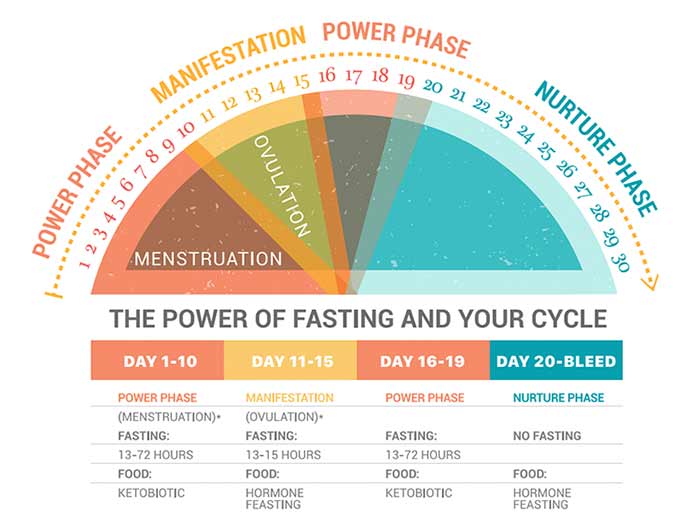
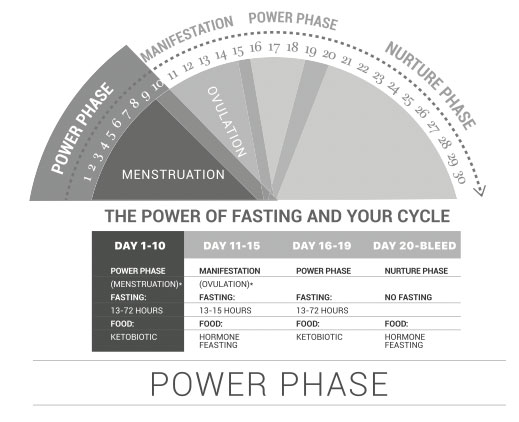
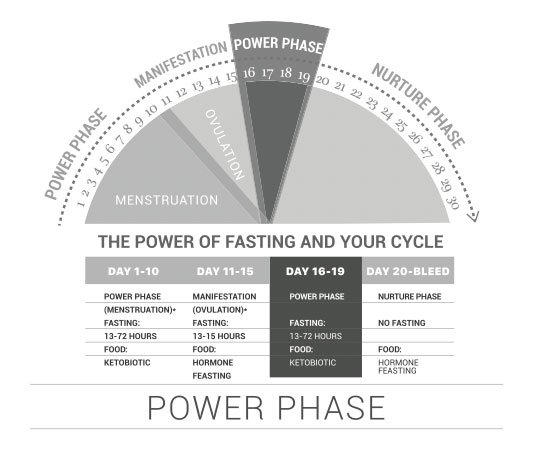
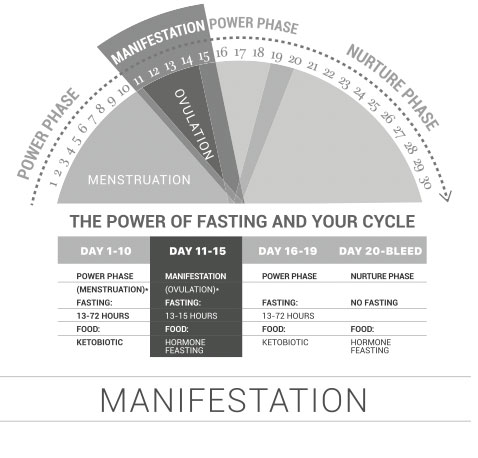
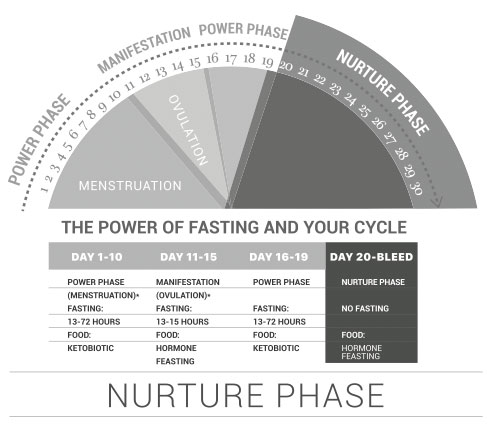
Fasting Cycle for Perimenopausal and Menopausal Women
If you no longer menstruate because of your age, this next section is for you:
“Around 40, you really need to start to get to know the characteristics of progesterone and estrogen, primarily because as your ovaries are going into retirement, you’re going to see some pretty dramatic shifts in those two hormones …
If you’re spotting, that’s progesterone tapping you on the shoulder saying, ‘Hey, I need a little more glucose.’ So, you would step out of a keto fasting day, and the next day you may shorten your fast, elongate your eating window and use more of nature’s carbs to give progesterone more glucose. So, spotting is a big one.
Anxiety is another big one. Trouble sleeping is another big one, where we need to have women step out of keto and fasting and step into more of this higher glucose [level, i.e., eat more, and expand your eating window]. Progesterone loves root vegetables, all the squashes, grass-fed beef, even tropical fruits. Bananas, mangoes, papayas, citrus fruits, those really help support progesterone production.
A perimenopausal woman will know that estrogen’s really low when she starts getting hot flashes, when her hair starts getting frizzy and dry. When her skin is really dry, she’s starting to get more wrinkles, her mucosal membranes become really dry and cognition is difficult.
If that’s happening, then you actually want to lean into a little bit of the longer fast, because estrogen does really well with a longer fasting window, and you want to lean into more of a ketogenic diet. I think she still needs some carbs, but she really needs to lean into longer fast to get estrogen and more protein. And that will dramatically help.”
If you’re in menopause, Pelz recommends doing the 30-day reset detailed in her book, but timed to the moon cycle. You may notice that the four cycles in the charts above have the same names as the moon cycles. So, you’d start your reset based on the moon cycle that is present at the time that you begin. For example, the day of the full moon is ovulation at Day 11, so you’d start at Day 11 and follow the schedule for the next 29.5 days from there.
More Information
To learn more, be sure to pick up a copy of “Fast Like a Girl.” She’s also releasing an app that will guide you on what you should be doing each day, which can be a very helpful tool.
Key Food and Lifestyle Strategies for a Healthier Life
Reproduced from original article:
https://articles.mercola.com/sites/articles/archive/2023/01/08/lifestyle-strategies-healthier-life.aspx
The original Mercola article may not remain on the original site, but I will endeavor to keep it on this site as long as I deem it to be appropriate.
Analysis by Dr. Joseph Mercola Fact Checked January 08, 2023
STORY AT-A-GLANCE
- Avoiding industrial seed oils, due to their high linoleic acid (LA) content, can go a long way toward safeguarding your health. Examples of cooking oils to avoid include canola, corn, rapeseed, cottonseed and soybean oil. As a general rule, anything over 10 grams of LA a day is likely to cause problems
- For cooking, excellent substitutions include butter, tallow, ghee and organic coconut oil. Olive oil and avocado oil are problematic, as most are adulterated with cheap seed oils
- If you’re older, or eat a vegan or vegetarian diet, you’re at high-risk for vitamin B12 deficiency, which can have serious ramifications for your neurological function. Low B12 can also lead to elevated homocysteine, which raises your risk for dementia and cardiovascular problems
- Carnosine, found in meat, helps reduce oxidative stress, especially as it relates to LA. Carnosine binds to harmful LA byproducts and helps your body excrete them. It’s also important for building muscle, and acetyl carnitine is very beneficial for your memory
- Oxalates, found in a wide variety of fruits, vegetables and nuts, can cause problems when they overaccumulate. Harmful effects include fibromyalgia, chronic inflammation and kidney stones
In the “Inspired” interview above, I discuss what I believe are some of the most important dietary and lifestyle strategies to safeguard your health, starting with avoiding seed oils (also commonly referred to as vegetable oils). Examples of cooking oils to avoid include canola, corn, rapeseed, cottonseed and soybean oil.
The reason for this recommendation is these kinds of industrial seed oils contain high amounts of a harmful omega-6 fat called linoleic acid (LA). LA is not dangerous in and of itself. The danger is really in the dosing. Most people consume up to 10 times more LA than they need, and the excessive amount is what causes the problem.
LA is referred to as an essential fat, which is true. You do need some. But it’s present in nearly all foods — including whole foods but processed foods and condiments in particular — so there’s virtually no way for you to become deficient.
In all likelihood, you’re getting far more than your body needs, and in excess, LA creates free radicals that cause oxidative stress and damage your DNA, cell membranes and mitochondria. In this way, they contribute to chronic degenerative diseases of all kinds and premature aging.
How to Calculate Your LA Intake
The best way to ensure your LA intake is within the safe range is to use a nutritional calculator such as Cronometer. Ideally, it is best to enter your food for the day before you actually eat it. The reason for this is quite simple: It’s impossible to delete the food once you have already eaten it, but you can easily delete it from your menu if you find something pushes you over the ideal limit.
Once you’ve entered the food for the day, go to the “Lipid” section on the lower left side of the Cronometer app. To find out how much LA is in your diet for that day, just note how many grams of omega-6 is present. About 90% of the omega-6 you eat is LA. You can also move your cursor over the omega-6 field and the program will rank the order your largest contributors of LA, and tell you how much is in each food.
How to Reduce LA in Your Diet
As a general rule, anything over 10 grams of LA a day is likely to cause problems. The lower the better, but a reasonable goal for most people is to get your level below 5 grams per day. So, how do you cut seed oils out of your diet? Top culprits to minimize or eliminate include:
| Vegetable oils or seed oils used in cooking | Processed foods, especially sauces, dressings and other condiments |
| All restaurant foods (not just fast food), as most will cook the food in seed oil, not butter or lard | Conventionally raised chicken and pork (both are high in LA due to being fed omega-6 grains1) |
| Most seeds and nuts (most, with the exception of macadamia nuts are loaded with LA) | Bread and other grain products |
Safer Alternatives
The next question then becomes, what do you replace these oils with? While I’m not a fan of avocado oil, fresh avocados are a great source of healthy fat as long as you limit them to one per day or less. Both olive oil and avocado oil, however, are problematic in that most of these oils are adulterated with cheap seed oils and/or have gone rancid.
It’s very difficult to find really high-quality, fresh, unadulterated olive and avocado oil. For example, a 2020 Food Control report2 found a vast majority of commercially available avocado oils labeled as “extra virgin” and “refined” were in fact adulterated and of poor quality; 82% were found to have gone rancid before their expiration date.3 The same goes for olive oil.
For cooking, excellent substitutions include butter, tallow, ghee and organic coconut oil. Lard used to be fine, but virtually all commercial hogs for the past 50 years have been fed grains, which makes lard relatively high in LA.
Still, even if you do find a good brand, I would limit the amount of olive oil or avocado oil to 1 tablespoon a day, as they can be high in LA. The total amount varies from brand to brand. In the case of olive oil, it could be as low as 3% or as high as 25%, depending on the type of olives used. Your best bet is to simply assume there’s LA in there and limit the amount you use each day.
For cooking, excellent substitutions include butter, tallow, ghee and organic coconut oil. Lard used to be fine, but virtually all commercial hogs for the past 50 years have been fed grains, which makes lard relatively high in LA.
Butter contains retinol (the active form of vitamin A), vitamin D, E and K2, antioxidants, minerals and iodine, all of which are important for health.4 About 20% of butterfat also consists of short- and medium-chain fatty acids, which are used right away for quick energy and therefore don’t contribute to fat levels in your blood. Therefore, a significant portion of the butter you consume is used immediately for energy — similar to a carbohydrate.
Chicken fat is lower on my list of cooking oils primarily because of the unhealthy diet chickens are fed. Conventional chickens are routinely fed genetically engineered grains loaded with glyphosate, so their fat will be negatively affected. The grains and corn are also loaded with LA, which will make the fat higher in LA. The same is true for pork, so when buying lard, make sure it’s from organically raised animals.
The Importance of B12
Chemical-dependent farming has depleted soils of many important minerals. While many are frantically concerned about the looming fertilizer shortage, there are very effective and efficient ways to grow food without synthetic fertilizers. The switch-over, however, does take time, so it’s not an immediate solution. But, in the long-term, if farmers do the right thing, we could actually improve our food production.
Soil depletion is the reason why many of us need to take nutritional supplements. This is particularly true if you’re eating a primarily plant-based diet. If you’re a vegan or vegetarian, you’re at high-risk for vitamin B12 deficiency, which can have serious ramifications for your health, especially your neurological function. Low B12 can also lead to elevated homocysteine, which raises your risk for dementia and cardiovascular problems.
B12 is best taken either by injection or sublingually (under the tongue). You also want to make sure you’re taking methylcobalamin, not cyanocobalamin (which is the most commonly found B12). When taken sublingually (either by tablet or spray), it goes straight into your bloodstream.
If you take it as an oral supplement, you have to rely on a glycoprotein produced in your stomach called intrinsic factor, which binds to the B12 and shuttles it into the intestine to the end of the small intestine where it’s absorbed. As you get older, you lose the ability to produce intrinsic factor, making you more likely to suffer from B12 deficiency.
Carnosine, Carnitine, Magnesium and Copper
Another important nutrient is carnosine, a dipeptide (meaning it has two amino acids — beta alanine and histidine — and carnosine is found in meat. It’s really important for reducing oxidative stress, especially as it relates to LA.
LA is highly susceptible to oxidation, and as the fat oxidizes, it breaks down into harmful subcomponents such as advanced lipid oxidation end products (ALEs) and oxidized LA metabolites (OXLAMs). These ALEs and OXLAMs are what cause the damage.
Carnosine binds to ALEs like a magnet and acts as a sort of sacrificial sink. It’s a substitute target for this really profoundly damaging molecule. In this way, carnosine allows your body to excrete the ALEs from your body before they damage you.
However, taking a carnosine supplement is not a good idea. Not only is it expensive, but your body doesn’t break it down well. If you do opt for a supplement, I recommend taking beta alanine, as this precursor will help raise your carnosine level. The best way is to eat animal products. You typically won’t need a supplement if you eat sufficient amounts of animal proteins.
Carnitine is another important nutrient found in animal foods. It is especially useful for building muscle and facilitating fats into your mitochondria for energy production. A special type of carnitine called acetyl carnitine, taken in large amounts (1 to 2 grams a day), is very beneficial for your memory, and when used topically in your eyes, as an eye drop formulation, can help prevent cataracts.
Magnesium and copper deficiencies are also very common. Copper deficiency is particularly problematic as it contributes to high iron levels in your tissues, which is extremely potent oxidative stressor.
One of the best way to raise your copper level is to eat whole foods high in copper, acerola cherries being the classic example. The acerola cherry is high in tyrosinase, which is high in copper. Magnesium is also something that most people need these days.
The Danger of Oxalates
Vegans and vegetarians can also run into problems through oxalates. Oxalate, also known as oxalic acid, is found in a wide variety of fruits and vegetables. While not harmful in and of itself — your liver actually produces oxalate naturally5 — oxalates can cause problems when they overaccumulate.
Overaccumulation can occur either from overconsumption, or because your body either absorbs exceptionally high amounts of soluble oxalates or overproduces oxalate (primary hyperoxaluria6), or if you excrete excessive amounts of urinary calcium (hypercalciuria7).8
An overaccumulation of oxalate in your kidneys can lead to the development of calcium oxalate kidney stones, the most common type of kidney stones.9 If you are predisposed to kidney stones or have calcium oxalate stones already, your doctor may recommend avoiding foods rich in oxalates, such as dark green vegetables (especially spinach and Swiss chard), bran, rhubarb, beets and beet greens, chocolate, nuts (especially almonds, cashews and peanuts), nut milks and nut butters.10,11
It can also be helpful to increase your calcium intake. While this may seem counterintuitive, seeing how calcium is the largest component of these stones, the answer to this paradox is that high dietary calcium actually blocks a chemical action that causes the formation of the stones in the first place.12,13
Oxalates can affect other organs and conditions as well. Examples include fibromyalgia, vulvodynia (vulvar pain)14 and chronic inflammation.15 Oxalate also impairs the absorption of nonheme iron and can lower your iron stores,16 needed for red blood cell formation.
What’s more, oxalates have the ability to chelate a number of toxic metals, including mercury and lead. Unfortunately, they do this by trapping the heavy metals in your tissues, which makes it difficult to eliminate them.17
The Importance of Strength Training
Exercise is, of course, a foundational aspect of good health, but the type of exercise you do can make a big difference. I’ve been an avid exerciser since 1968, and for the first 40 years of my life I focused almost exclusively on cardiovascular exercise such as running.
I completely ignored resistance training. Now, as I’ve gotten older, reality has driven home the importance of building and maintaining muscle. An estimated 9 out of 10 Americans are metabolically inflexible, insulin resistant or both, which contributes to obesity, diabetes, heart disease, cancer, inflammation and arthritis, just to name a few.
One of the ways you can improve your metabolic flexibility is to have more muscle mass, because muscle is the biggest sink in your body for glucose (sugar). So, when you eat a meal, the receptors in the cells of your muscles, called GLUT4 receptors, absorb blood sugar, thereby lowering the level of sugar in your blood. Once inside your muscle, the blood sugar is converted to glycogen and stored for when your muscle needs it.
So, if you have enough muscle mass, you have built-in protection against high blood sugar and insulin spikes that cause insulin resistance and diabetes. You also need to be mindful of your LA intake, because high levels of LA are more damaging to metabolic flexibility than high levels of carbs.
What’s more, glutamine, a nonessential amino acid (meaning your body can generate it) is an important nutrient source for your immune cells, and the way your body generates glutamine is through muscle contraction. So, when you’re contracting skeletal muscle, you’re quite literally nourishing your immune system.
Are You Getting Enough Protein?
To build muscle, it’s really important to get enough protein in your diet, ideally animal protein. There are 20 amino acids and nine of them are essential, which means you have to get them from your diet, as your body cannot make them from other substrates. In particular, skeletal muscle requires branched-chain amino acids — leucine, isoleucine and valine.
Must you eat animal protein? No, but one of the problems with avoiding animal protein is that it is quite difficult to obtain enough complete essential amino acids, especially branched chained amino acids to stimulate the mammalian target of rapamycin (mTOR), an important anabolic switch that is activated by about 3 grams of branched chain amino acids.
While there are plants that are high in protein, they’re not identical or even equivalent to animal protein in most cases. Certain micronutrients found in animal foods you simply cannot get from plants. This includes vitamin B12, vitamin A (retinol not beta-carotene), creatine, bioavailable iron, carnitine and carnosine, all of which are important for muscle growth and health in general.
To determine your personal protein requirement, Lyon recommends 1 gram of protein per pound of ideal body weight (the weight you would ideally be, not necessarily the weight you are now). Once you have that number, you can divide it by the number of meals you eat to get your per-meal quota which, for older adults should be around 30 to 50 grams per meal.
For reference, there’s approximately 7 grams of protein in each ounce of steak, so a 5-ounce steak would give you 35 grams of high-quality protein. For children, the average amount per meal is around 5 to 10 grams, while young adults typically can get away with 20 grams per meal.
For most normal-weight adults, 30 grams per meal is really the minimum you need to stimulate muscle protein synthesis. If you have a robust strength training program, you may need to go even higher. To make sure you’re getting enough protein in your meals, consider using Cronometer. That way, you’re not guessing.
Time-Restricted Eating Helps Optimize Your Health
Another core lifestyle strategy that will help optimize your health by making you metabolically flexible is time-restricted eating (TRE), a form of intermittent fasting. I believe TRE is best done 16 to 18 hours a day, every day, which is probably the sweet spot to optimize metabolic health if you are insulin resistant or metabolically inflexible.
This schedule will give you virtually all the same benefits as calorie restriction with respect to longevity benefits, but without any of the downsides, the primary one being compliance. However, if you are one of the one in 20 that is not insulin resistant than you don’t want to decrease your eating time to less than 8 hours per day.
Most people eat more or less continuously throughout each day, which will keep mTOR continuously activated. When you’re doing TRE, mTOR gets stimulated only once or twice a day, which is not a problem. mTOR is best activated twice a day in a pulsatile fashion. When you activate it continuously as most people do, it can lead to an increase in risk in diseases like cancer.
I prefer to do my workout in a fasted state, followed by an infrared sauna and swim, and then break my fast afterward. This will reduce the carbohydrate load in the muscles as they’re using up glucose during the workout. This, in turn, gives you the additional benefits of autophagy.
In addition, when muscle contracts, it releases myokines, which play a role in both lipolysis (the breakdown of fat) and glucose utilization, and when you train in a low-glycogen fasted state, myokine release is increased.
- 1 YouTube, Omega-6 Apocalypse 2, Chris Knobbe August 25, 2021, 15:01
- 2 Food Control October 2020; 116: 107328
- 3 The Counter June 17, 2020
- 4 Weston A. Price Foundation January 1, 2000
- 5, 8, 11, 13 Asia-Pacific Journal of Clinical Nutrition. 1999
- 6 NIH.gov Primary Hyperoxaluria
- 7 Medscape, Hypercalciuria
- 9 Kidney Fund, Four Main Types of Kidney Stones
- 10, 12 The Cleveland Clinic, Oxalate-Controlled Diet
- 14 Restormedicine.com Oxalates and Their Role in Fibromyalgia Syndrome
- 15 BJUI International, Oxalate at physiological urine concentrations induces oxidative injury in renal epithelial cells: effect of α-tocopherol and […]
- 16 Iron Disorders Institute, Iron Balance With Diet
- 17 Great Plains Laboratory November 16, 2015