Obesity
now browsing by category
Carbohydrates: The Unexpected Ally in Your Fat Loss Journey
Reproduced from original article:
https://articles.mercola.com/sites/articles/archive/2024/09/10/carbohydrates-fat-loss.aspx
Analysis by Ashley Armstrong September 10, 2024

STORY AT-A-GLANCE
- Carbohydrates are not inherently fattening and can be beneficial for fat loss when included in a calorie-controlled diet. Including carbs in a fat loss diet can improve long-term adherence and satisfaction, making sustainable weight loss more achievable
- Insulin spikes from carbohydrates do not directly cause fat gain; obesity and inactivity are the primary contributors to insulin resistance
- Including carbs in your diet helps preserve muscle mass during fat loss by reducing muscle protein breakdown and supporting exercise performance
- Low-carb diets can negatively impact hormones, decreasing testosterone and increasing cortisol in both males and females
- Carbohydrates play a role in maintaining progesterone levels, which is important for hormonal balance in both men and women. Adequate carbohydrate intake also supports thyroid function and metabolic health by maintaining T3 hormone levels during calorie deficits
Let’s start with a myth: carbohydrates are inherently fattening and should be removed from your diet if you want to lose weight. This is not true! Carbohydrates can and should be included in a healthy fat loss phase. So in this article let’s talk about why including carbs in your diet is BENEFICIAL for fat loss.
But What About Insulin?
When it comes to fat loss, carbohydrates are demonized in many diet camps likely because of the fear mongering around insulin and blood sugar.
The logic seems so clear and appealing: High carbs lead to insulin which leads to fat storage. Low carbs keep insulin low, which should get you effortlessly lean while you enjoy endless amounts of fat, right? No! Do carbs increase insulin levels? Yes, they do. Does increased insulin after meals lead to fat gain? No. Did you know that dietary protein spikes insulin?1 So following the above logic, does dietary protein cause fat gain? No!
Insulin isn’t the devil people want you to believe. Like every other hormone in your body, insulin has a specific purpose and isn’t always a bad thing. (For example — insulin plays a crucial role in promoting muscle growth and maintenance since it facilitates glucose and amino acid uptake into muscle cells, preventing muscle protein breakdown).2
Research demonstrates that obesity and inactivity are the biggest contributors to insulin resistance3,4,5,6 not carbs. In fact, high fat diets can negatively impact insulin sensitivity.7,8 Dietary fat is not a bad thing — but moderate fat and the inclusion of carbs can be beneficial for a number of reasons.
Let’s look at what happened in one study comparing low carb (5% cal) vs. moderate carb (40% cal) where calories were controlled and protein was matched (this is a huge problem in the research: many low carb diet studies don’t match protein intake between the groups leading to more variables.)
Subjects who ate the moderate carb diet reported significantly better mood and lost about the same amount of weight as those on a ketogenic low-carb diet — demonstrating that carb consumption does not inhibit weight loss.
The group who ate more carbs showed a small (though not statistically significant) tendency to lose more body fat as compared to those on a low carb diet (5.5 kg vs 3.4 kg in 6 weeks).
Can a low-carb diet work to help people lose weight? Of course it can. Is it because it is low in carbs? No. As a weight loss strategy, cutting carbs (while reducing the total number of calories) can work well for some people! But cutting carbs can come with costs:
- Reduced thyroid and metabolic function
- Decreased glycogen levels
- Increased muscle loss
- Hormonal imbalances
- More frequent binge eating episodes
So, let’s explore why carbs might actually be good for fat loss:
1. Metabolic health: The carb and thyroid connection — Carbohydrates play a vital role in supporting metabolic health. The liver requires glucose (derived from carbohydrates) to convert T4 to T3, a crucial thyroid hormone. T3 is a thyroid hormone that plays a significant role in regulating metabolism.
When T3 levels are low, the body’s metabolic processes tend to slow down, which means that fewer calories are burned at rest, making fat loss more challenging.
Research has shown that maintaining carbohydrate intake during a calorie deficit helps sustain T3 levels, which is essential for overall metabolic health.9 “During the low carbohydrate diet rT3 increased and T3 decreased but they remained unchanged during the carbohydrate-rich diet.”10
The research is clear that including more carbohydrates tends to increase T3 levels in the body, while low-carb diets tend to lower T3 levels.11,12
 Image from: Chews Food Wisely
Low Energy Availability (LEA) is a condition where the body doesn’t have enough energy to support normal physiological functions after accounting for the energy expended in exercise and daily activities. This can lead to various health problems, including hormonal imbalances, reduced bone density, and impaired immune function.
Studies indicate that adequate carbohydrate intake can help prevent LEA, even during a calorie deficit.13 By providing your body with a steady source of easily accessible energy, you minimize the risk of entering this low energy state, supporting overall health and well-being during your fat loss journey.
In conclusion, including carbs in your diet during a fat loss phase might help sustain T3 levels, potentially supporting metabolic rate and preventing some of the negative effects associated with low-calorie diets on thyroid function.
2. The glycogen factor: Beyond water weight — One of the primary advantages of including carbohydrates in your fat loss diet is their role in maintaining muscle glycogen stores. (Glycogen is stored carbohydrates that serve as a quick-release energy reserve.) Your body can store approximately 400 to 500 grams of glycogen in muscles and 80 to 120 grams in the liver.14
Interestingly, each gram of glycogen is stored with about three grams of water, which means that 500 to 600 grams of glycogen can account for 3 to 4 pounds of your body weight.
 Image from: Heatrick
This glycogen-water relationship explains why people on low-carb diets often see rapid initial weight loss. As the body burns through stored glycogen (since you aren’t consuming carbs), the body releases the associated water, leading to a quick drop in scale weight.15 However, this is primarily water loss, not fat loss.
By maintaining carbohydrate intake, you ensure that your weight loss comes primarily from fat stores rather than this initial water weight.
If you stay in a calorie deficit on a keto diet for long enough, you will of course lose body fat as well. However, when you reintroduce carbs, you’ll likely regain some water weight back as your glycogen stores are replenished.
3. Reduce muscle protein breakdown — Researchers have found that low-carb diets can increase muscle protein breakdown, as measured by increased urinary nitrogen excretion.16
As we just discussed above, consuming carbs keeps your muscle glycogen levels full, which improves your gym performance and helps your recovery — increasing your chances of maintaining muscle mass during a calorie deficit.
When you lose weight, that includes some fat and muscle. But by including carbs, you reduce the amount of muscle you lose since you are reducing muscle protein breakdown! When you get enough carbs to meet your needs, you replenish muscle glycogen and create an anabolic (building-up) hormonal environment.
Conversely, when you don’t eat enough carbohydrate, muscle glycogen is depleted and a catabolic (breaking-down) hormonal environment is created,17 which means more protein breakdown and less protein synthesis. This means slower muscle growth — or even muscle loss.
Research shows that lowering carb intake can affect your muscle mass even if protein remains constant.18 Low carb diets likely increase muscle breakdown, because severely low carbs lowered insulin levels.
Another reason for the reduction in muscle protein breakdown is that carbs can help enhance your performance in the gym. The more you can push yourself in the gym with pushing close to muscular failure at heavier weights, the better mechanical tension and stimulus you can achieve, sending a message to the muscle: “please stick around!”
Carbs are also protein sparing, meaning they supply the body the glucose it needs for vital functions so that it doesn’t have to break down muscle tissue to produce those carbs. When you don’t consume carbs, your body will use some of your dietary protein to perform higher amounts of gluconeogenesis19 in order for your body to meet its baseline glucose needs.
Gluconeogenesis is primarily performed in the liver, so consuming carbs will support liver health since you are reducing one more thing the liver must do (amongst its list of 500 tasks) — more gluconeogenesis!
Carbohydrates play a crucial role in preserving muscle mass during a calorie deficit by maintaining glycogen stores. Plus, muscles that are full of glycogen look MUCH better aesthetically than muscles depleted of glycogen.
4. Negatively impacts hormones — Low carbohydrate diets have been shown to negatively impact hormones for both males and females, decreasing testosterone while increasing cortisol.20,21,22,23
When in a low carb state, your body activates stress hormones in order to make the carbs that your body requires for basic physiological functions.24
Most people nowadays are estrogen dominant due to xenoestrogens, phytoestrogens in certain foods, modern pollutants, birth control, and estrogen hormone replacement.25 For example — menopause and PCOS are not conditions of estrogen deficiency, instead it is excess estrogen.
Improving progesterone production helps balance hormones and reverse estrogen dominance. Well, low carb diets can negatively affect progesterone production. Dr. Katharina Dalton, a pioneer in hormonal balance and PMS, found that dietary changes could significantly influence hormonal levels and alleviate symptoms of PMS.
To properly restore the progesterone hormonal function and hormone balance, she had her patients eat carbs (primarily starches) at each meal.26 Dr. Dalton had two main reasons:
a. To avoid dips in blood sugar — “Progesterone receptors cannot transport or bind to, a molecule of progesterone if there has been a drop in blood sugar.”
b. To keep adrenaline as low as possible — “Progesterone receptors do not transport progesterone molecules into the nucleus of cells if adrenaline is present.”
We are bombarded with estrogenic substances in daily life, so progesterone is vital for truly everyone, including males! And carbs can help optimize progesterone production.
Female hormones are extremely sensitive to diet. For example, one study following 45 patients aged 12 to 19 on a ketogenic diet found menstrual dysfunction was the most common side effect (45% of female subjects) and 6 experienced amenorrhea.27
5. Improved diet adherence and satisfaction — Perhaps one of the most underappreciated benefits of including carbohydrates in a fat loss diet is improved adherence. Carbs contribute to greater food variety, making meals more enjoyable and satisfying. This increased satisfaction can make it easier to stick to your diet long-term, which is crucial for sustainable weight loss.
Finding a diet approach that you can remain consistent with that is not unnecessarily restrictive will help you avoid the never ending restrict-binge-restrict-binge cycle where you may lose 10 lbs, regain it, lose 10 lbs, regain it … that is not sustainable and is a sign what you are doing isn’t working!
This psychological factor is often overlooked but can be crucial in achieving and maintaining your fat loss goals. When you feel less restricted in your food choices, you’re more likely to adhere to your diet plan in the long run.
Conclusion: The Carbohydrate Balance
While creating a calorie deficit is necessary for fat loss, completely eliminating carbohydrates may not be the most effective or sustainable approach. The removal of carbs may help you initially lose weight (since you remove an entire food group, and thus a lot of calories). But, then what? How do you come out of that state? Can you maintain that day in and day out?
By including quality carbohydrates in your diet, you can support your fat loss goals while maintaining muscle mass, metabolic health, better hormones and diet satisfaction. While everyone’s metabolism will be slightly lowered when dieting (this is why you may stall after a while and have to make tweaks along the way), research shows that consuming carbs while eating in a caloric deficit leads to LESS of a metabolism reduction due to higher thyroid functioning.
It is important to point out, however, that even if carbs are included, CHRONICALLY eating lower calorie will eventually lead to a low-energy-availability state. Which is why it is important to have planned out fat loss phases, and not chronically under eat calories.
Remember, sustainable weight loss is about finding a balanced approach that works for you in the long term. So, before you jump on the no-carb bandwagon, consider the potential benefits of keeping carbs as part of your fat loss strategy. Your body — and your taste buds — might thank you for it.

Save This Article for Later – Get the PDF Now
Transform Your Health — One Step at a Time


Ashley and her sister Sarah have put together a truly groundbreaking step-by-step course called “Rooted in Resilience.” They have compiled what clearly is the best application of Dr. Ray Peat’s work on Bioenergetic Medicine that I have ever seen.
It is so good that I am using the core of their program to teach the many Health Coaches that I am in the process of training for the new Mercola Health Clinics I am opening this fall. It took these women working nearly full-time on this project for a year to create it.
This has to be one of the absolute best values for health education I have ever seen. If you want to understand why you struggle with health problems and then have a clear program on how to reverse those challenges, then this is the course for you.
It is precisely the type of program I wish I would have had access to when I got out of medical school. I fumbled around for decades before I reached the conclusion they discuss in the course and share with you so you can restore your cellular energy production and recover your health.
| Select and eat the right foods to heal your metabolism and improve glucose utilization |
| Balance your hormones to help reduce anxiety, weight gain and sleep disturbances |
| Use reverse dieting to increase your calories without gaining weight and tanking your metabolism, all while improving your energy levels |
| Heal your gut for proper immune function, mood and weight management |
| Tweak your diet and lifestyle habits to improve your mindset and mental health |
| Crush your fitness goals with ease and get your life back on track |
| Master the most essential habits for health with bonus guides, including over 100 meal plans to take the stress out of meal time planning and shopping, and so much more! |
About the Author
Ashley Armstrong is the cofounder of Angel Acres Egg Co., which specializes in low-PUFA (polyunsaturated fat) eggs that are shipped to all 50 states (join waitlist here), and Nourish Cooperative, which ships low-PUFA pork, beef, cheese, A2 dairy and traditional sourdough to all 50 states. Waitlists will reopen shortly.
- 1 Physiol Rep. 2023 Jan; 11(2): e15577
- 2 Am J Physiol Endocrinol Metab. Author manuscript; available in PMC 2010 Jan 12
- 3 Am J Med. 2006 May;119(5 Suppl 1):S10-6, doi: 10.1016/j.amjmed.2006.01.009
- 4 Free Radic Res. 2014 Jan;48(1):93-108, doi: 10.3109/10715762.2013.847528. Epub 2013 Oct 17
- 5 Am J Physiol Endocrinol Metab. 2021 Dec 1;321(6):E766-E781, doi: 10.1152/ajpendo.00254.2020. Epub 2021 Nov 1
- 6 Clin Nutr. 2010 Jun;29(3):386-90, doi: 10.1016/j.clnu.2009.09.006. Epub 2009 Oct 28
- 7 Front Public Health. 2023 Mar 16:11:1115333
- 8 Eur J Nutr. 2017 Feb;56(1):431-443. doi: 10.1007/s00394-015-1108-6. Epub 2015 Nov 28
- 9 J Clin Endocrinol Metab. 1976 Jan;42(1):197-200. doi: 10.1210/jcem-42-1-197
- 10 Am J Clin Nutr. 1982 Jan;35(1):24-35. doi: 10.1093/ajcn/35.1.24
- 11 Nutrients. 2018 Jan; 10(1): 5
- 12 PLoS One. 2022; 17(6): e0269440
- 13 Med Sci Sports Exerc. 2022 Mar 1;54(3):377-387. doi: 10.1249/MSS.0000000000002819
- 14 Nutr Rev. 2018 Apr; 76(4): 243–259
- 15 Nutrients. 2022 Feb; 14(3): 423
- 16 J Clin Endocrinol Metab. 2003 Aug;88(8):3801-5. doi: 10.1210/jc.2002-021087
- 17, 18 Journal of Applied Psychology, Volume 109, Issue 2, August 2010, Pages 431-438
- 19 The Journal of Clinical Endocrinology & Metabolism, Volume 85, Issue 5, 1 May 2000, Pages 1963–1967, doi: 10.1210/jcem.85.5.6573
- 20 Eur J Appl Physiol Occup Physiol. 1993;66(4):304-8. doi: 10.1007/BF00237773
- 21 Eur J Appl Physiol. 2010 Apr;108(6):1125-31. doi: 10.1007/s00421-009-1220-5. Epub 2009 Dec 20
- 22 Life Sciences, 40(18):1761-8 40(18):1761-8, doi: 10.1016/0024-3205(87)90086-5
- 23 Eur Food Res Technol 242, 2001–2009 (2016). doi: 10.1007/s00217-016-2772-3
- 24 Jay Feldman Wellness, April 30, 2024
- 25 Ray Peat, Aging, estrogen, and progesterone
- 26 Shakespeare & Co., Once a Month: Understanding and Treating PMS (Paperback)
- 27 Epilepsia. 2003 Jun;44(6):847-51. doi: 10.1046/j.1528-1157.2003.57002.x
How Low Testosterone Affects Men’s Health
Reproduced from original article:
https://articles.mercola.com/sites/articles/archive/2024/09/13/low-testosterone-mens-health.aspx
Analysis by Dr. Joseph Mercola September 13, 2024
STORY AT-A-GLANCE
- Low testosterone affects up to 38.7% of men over 45, causing symptoms like low libido, fatigue and weight gain. It’s linked to increased risks of metabolic syndrome and cardiovascular disease
- Obesity and diabetes are closely connected to lower testosterone levels, creating a cycle that’s hard to break. Excess fat tissue interferes with testosterone production through various mechanisms
- Low testosterone levels (below 213 ng/dL) are associated with higher all-cause mortality risk. Balanced hormone levels, including luteinizing hormone and estradiol, are crucial for overall health
- Andropause, or male menopause, involves a gradual decline in testosterone levels starting around age 40. This affects cardiovascular health, body composition and increases risks of heart problems
- Natural strategies to boost testosterone include KAATSU training, regular sun exposure and avoiding endocrine-disrupting chemicals
If you’re a man over 45, you may be experiencing symptoms like low libido, fatigue, mood changes or weight gain without realizing one common underlying cause — low testosterone. Up to 38.7% of men in this age group have insufficient testosterone levels.1
The American Urology Association considers levels below 350 ng/dL to be low, though some experts argue for a lower threshold of 250 ng/dL.2 Regardless of the exact number, it’s the combination of low levels and symptoms that matters.
Low testosterone isn’t just about sexual health. It can increase your risk of metabolic syndrome and cardiovascular disease as you age. Symptoms may include obesity, Type 2 diabetes, osteoporotic fractures, generalized weakness and even facial hair loss.3 If you’re experiencing these signs, it’s worth investigating your testosterone levels.
Ideally, blood samples should be taken between 7:00 a.m. and 11:00 a.m. when testosterone is highest. Don’t dismiss your symptoms just because you’re getting older — low testosterone is a treatable condition that can significantly impact your quality of life. While I don’t recommend testosterone supplements, there are multiple ways to increase your testosterone levels naturally.
The Testosterone-Obesity-Diabetes Connection
Your body composition plays a crucial role in testosterone production. Obesity and diabetes are closely linked to lower testosterone levels, creating a vicious cycle that can be hard to break. Excess fat tissue, especially around your abdomen, can interfere with testosterone production in several ways:4
1. Leptin resistance — Fat cells produce leptin, which can lead to central leptin resistance and reduce signals in your brain that stimulate testosterone production.
2. Increased estrogen — Fat tissue contains an enzyme that converts testosterone to estrogen, further lowering your testosterone levels.
3. Inflammation — Fat cells produce inflammatory cytokines that can interfere with testosterone production and reduce insulin sensitivity.
These mechanisms not only lower your testosterone but also contribute to insulin resistance, putting you at risk for Type 2 diabetes. Low testosterone can also lead to decreased muscle mass and increased fat accumulation, worsening the cycle. If you’re struggling with weight issues or diabetes, it’s essential to have your testosterone levels checked. Addressing low testosterone could be a key factor in improving your metabolic health and breaking this harmful cycle.
Low Testosterone May Increase Your Risk of All-Cause Mortality
There’s a strong relationship between sex hormones and mortality risk in men. A comprehensive meta-analysis of nine studies, covering more than 255,830 participant-years, has revealed some eye-opening insights.5 If your testosterone levels fall below 213 ng/dL, you may face a higher risk of all-cause mortality. Also concerning, testosterone levels below 153 ng/dL were associated with increased cardiovascular mortality risk.
But testosterone isn’t the only hormone you should be concerned about. The study found that men with luteinizing hormone (LH) levels above 10 IU/L or estradiol levels below 5.1 pmol/L also had a higher risk of all-cause mortality. These findings underscore the importance of maintaining balanced hormone levels as you age. It’s not just about feeling energetic or maintaining muscle mass — your hormone levels could be a matter of life and death.
While testosterone often takes center stage in discussions about male hormones, this research highlights the importance of often-overlooked players, including dihydrotestosterone (DHT). DHT, a potent form of testosterone responsible for the expression of male features, showed a nonlinear relationship with mortality risk.6
Both very low and very high levels were associated with increased risk. Men with DHT levels below 0.69 nmol/L had a 19% higher risk of all-cause mortality and a 29% higher risk of cardiovascular mortality compared to those with levels around 2.45 nmol/L.7 However, risk also increased at DHT levels above 2.45 nmol/L. These findings underscore the complexity of hormonal health. It’s not always a case of “more is better” — balance is key.
While much of the research focused on mortality risk, the study, published in the Annals of Internal Medicine, also provided valuable insights into the relationship between hormones and cardiovascular disease (CVD) risk. Men with DHT concentrations below 0.59 nmol/L had an increased risk of incident cardiovascular events.8
Save This Article for Later – Get the PDF Now
The Link Between ‘Male Menopause’ and Cardiovascular Health
As you enter your 40s and beyond, you may be unaware of a silent threat to your heart health: andropause, also known as male menopause. While it’s not directly comparable to female menopause, there are some similarities and important differences to consider.
Unlike female menopause, which involves a relatively abrupt drop in hormone levels, men experience a gradual decline in testosterone levels as they age. This process typically begins around age 40 and continues throughout life. Men can experience a decrease in testosterone levels of about 1% per year after age 40.9
This gradual decline in testosterone levels doesn’t just affect your libido and muscle mass; it also impacts your cardiovascular system. Research has shown that men with lower testosterone levels are at higher risk for cardiac problems and mortality.10 In fact, a significant number of men with congestive heart failure have been found to have testosterone deficiency.11
Low testosterone levels can contribute to the accumulation of visceral fat, which is closely linked to insulin resistance and an unfavorable lipid profile. These factors can accelerate the hardening of your arteries, a process known as atherosclerosis. However, maintaining healthy testosterone levels can have protective effects on your heart. It can help shorten the heart-rate-corrected QT interval, improve glycemic control and induce vasodilation.12
Andropause and Body Composition: More Than Just Weight Gain
As you age and your testosterone levels decline, you might notice changes in your body composition that go beyond simply gaining a few pounds. Testosterone plays a crucial role in regulating your body’s fat distribution and muscle mass. When levels drop, you may experience a shift in where your body stores fat — from under your skin to deep in the abdomen (visceral fat).13
Visceral fat is metabolically active and can increase your risk of various health problems, including diabetes and heart disease. At the same time, lower testosterone can lead to a loss of muscle mass, a condition known as sarcopenia. This double whammy of increased fat and decreased muscle can significantly impact your strength, mobility and overall health.
The good news is that addressing low testosterone levels can help reverse these trends. Increasing testosterone levels has been shown to decrease visceral fat accumulation and increase lean body mass.14 It does this by activating androgen receptors, which initiate a fat-burning process and promote the differentiation of mesenchymal cells into muscle fibers rather than fat cells.
The Role of Biomarkers in Diagnosing Andropause
Recognizing andropause isn’t always straightforward, but certain biomarkers can provide valuable insights into your hormonal health. While testosterone is the primary hormone associated with andropause, it’s not the only one to consider. Other hormones and proteins in your body can offer a more complete picture of your endocrine health.15
For instance, sex hormone-binding globulin (SHBG) levels tend to increase with age, which can affect the amount of free testosterone available in your body. Estradiol, a form of estrogen, also plays a role. The ratio of testosterone to estradiol can be a useful indicator of andropause, with lower ratios associated with more severe symptoms.16
Other biomarkers to consider include dehydroepiandrosterone sulfate (DHEAS), a precursor to testosterone that also declines with age, and prolactin, which tends to increase in older men and can contribute to symptoms like decreased libido. Even your thyroid hormone (thyroxine) and sleep hormone (melatonin) levels can provide clues about your andropause status.17
Obesity and Sleep Apnea: A Double Threat to Testosterone Levels
If you’re carrying excess weight, particularly around your midsection, you may be facing a double threat to your testosterone levels. A study of severely obese men revealed that obstructive sleep apnea (OSAS) is strongly associated with lower testosterone, independent of age and body mass index.18 OSAS, characterized by repeated breathing pauses during sleep, affected a staggering 96.2% of the study participants.
The more severe the sleep apnea, as measured by frequency of breathing disruptions and oxygen desaturation, the lower the total and free testosterone levels tended to be. This relationship held true even after accounting for other factors like metabolic syndrome, a cluster of conditions including high blood pressure, high blood sugar and abnormal cholesterol levels.
The findings suggest that poor sleep quality and intermittent nighttime oxygen deprivation may be directly impacting your body’s ability to produce testosterone, beyond the known effects of excess body fat. Your overall metabolic health also plays a crucial role in maintaining healthy testosterone levels. Both total and free testosterone showed negative correlations with various metabolic factors, including waist circumference, blood pressure and fasting glucose levels.
Interestingly, the researchers used a continuous metabolic syndrome score to quantify overall metabolic health, finding that higher scores (indicating poorer metabolic health) were linked to lower testosterone levels.19 This underscores the importance of addressing not just weight, but also the underlying metabolic imbalances that often accompany obesity, to support your hormonal health.
Testosterone Therapy: No Increased Heart Risk for Men
While I don’t recommend testosterone supplements, concerns about testosterone replacement therapy (TRT) and heart health may be unfounded, according to a comprehensive study published in Progress in Cardiovascular Diseases.20 This meta-analysis of 30 randomized controlled trials, involving 11,502 patients, suggests that TRT does not increase your risk of heart problems or death.21
The researchers examined various cardiovascular outcomes, including overall cardiovascular events, stroke, heart attack and death from any cause. They found no significant difference between men receiving testosterone therapy and those given a placebo. This held true across all measured outcomes, with similar rates of events in both groups.
These findings challenge the 2015 U.S. Food and Drug Administration warning about potential cardiovascular risks associated with testosterone products.22 This information could be particularly relevant if you’re over 50, as the average age of participants in the analyzed studies ranged from 61 to 62 years old.
However, it’s important to note that this research doesn’t mean TRT is risk-free or suitable for everyone. The study focused specifically on men with diagnosed hypogonadism, not those using testosterone for other reasons.
Strategies to Raise Testosterone Naturally
There are only four hormones I believe many adults can benefit from — progesterone, thyroid hormone T3, DHEA and pregnenolone. However, if you have low testosterone, there are several evidence-based strategies you can use to boost your levels naturally.
One innovative approach gaining attention is KAATSU training, also known as blood flow restriction training. This technique involves using specialized bands to partially restrict blood flow to your limbs during exercise, tricking your body into thinking it’s working harder than it actually is. Research suggests this can lead to increased growth hormone and testosterone production.23
Avoiding endocrine-disrupting chemicals, such as phthalates, bisphenol A and PFOAs is also important, as these chemicals affect testosterone levels.24 Regular sun exposure is another strategy; if you get sufficient sun exposure it will increase your testosterone levels.25
While a gradual decline in testosterone levels is a common part of aging, it’s important to recognize that significant drops can lead to serious health consequences. To optimize your levels, work with a holistic health care provider to develop a personalized approach, as hormone balance is complex and individual. By staying informed and proactive about hormonal health, men can take steps to maintain their vitality and reduce health risks as they age.
Last but not least, it’s also important to recognize that excess estrogen will impair testosterone levels and functions as well. To address estrogen dominance, I recommend using a natural anti-estrogen compound hormone like progesterone. Progesterone also helps address problems with endocrine-disrupting chemicals from plastics and other environmental sources that activate estrogen receptors.
How to Use Progesterone
Before you consider using progesterone, it is important to understand that it is not a magic bullet, and that you get the most benefit by implementing a Bioenergetic diet approach that allows you to effectively burn glucose as your primary fuel without backing up electrons in your mitochondria that reduces your energy production. My new book, “Cellular Health: The Unified Theory of All Disease for Ultimate Longevity and Joy” comes out very soon and covers this process in great detail.
Once you have dialed in your diet, an effective strategy that can help counteract estrogen excess is to take transmucosal progesterone (i.e., applied to your gums, not oral or transdermal), which is a natural estrogen antagonist. Progesterone is one of only four hormones I believe many adults can benefit from. (The other three are thyroid hormone T3, DHEA and pregnenolone.)
I do not recommend transdermal progesterone, as your skin expresses high levels of 5-alpha reductase enzyme, which causes a significant portion of the progesterone you’re taking to be irreversibly converted primarily into allopregnanolone and cannot be converted back into progesterone.
Ideal Way to Administer Progesterone
Please note that when progesterone is used transmucosally on your gums as I advise, the FDA believes that somehow converts it into a drug and prohibits any company from advising that on its label. This is why companies like Health Natura promotes their progesterone products as “topical.”
However, please understand that it is perfectly legal for any physician to recommend an off-label indication for a drug to their patient. In this case, progesterone is a natural hormone and not a drug and is very safe even in high doses. This is unlike synthetic progesterone called progestins that are used by drug companies, but frequently, and incorrectly, referred.
Dr. Ray Peat has done the seminal work in progesterone and probably was the world’s greatest expert on progesterone. He wrote his Ph.D. on estrogen in 1982 and spent most of his professional career documenting the need to counteract the dangers of excess estrogen with low LA diets and transmucosal progesterone supplementation.
He determined that most solvents do not dissolve progesterone well and discovered that vitamin E is the best solvent to optimally provide progesterone in your tissue. Vitamin E also protects you against damage from LA. You just need to be very careful about which vitamin E you use as most supplemental vitamin E on the market is worse than worthless and will cause you harm not benefit.
It is imperative to avoid using any synthetic vitamin E (alpha tocopherol acetate — the acetate indicates that it’s synthetic). Natural vitamin E will be labeled “d alpha tocopherol.” This is the pure D isomer, which is what your body can use.
There are also other vitamin E isomers, and you want the complete spectrum of tocopherols and tocotrienols, specifically the beta, gamma, and delta types, in the effective D isomer. As an example of an ideal vitamin E, you can look at the label on our vitamin E in our store. You can use any brand that has a similar label.
You can purchase pharmaceutical grade bioidentical progesterone as Progesterone Powder, Bioidentical Micronized Powder, 10 grams for about $40 on many online stores like Amazon. That is nearly a year’s supply, depending on the dose you choose.
However, you will need to purchase some small stainless steel measuring spoons as you will need a 1/64 tsp, which is 25 mg and a 1/32 tsp, which is 50 mg. A normal dose is typically 25-50 mg and is taken 30 minutes before bed, as it has an anti-cortisol function and will increase GABA levels for a good night’s sleep.
Unfortunately, this vendor frequently runs out of product, and if that’s the case, then you can use Simply Progesterone by Health Natura. It’s premixed with vitamin E and MCT oil. Again, while Health Natura states that its product is for “topical use only,” I recommend applying it transmucosally, by rubbing it on your gums.
If you are a menstruating woman, you should take the progesterone during the luteal phase or the last half of your cycle, which can be determined by starting 10 days after the first day of your period and stopping the progesterone when your period starts.
If you are a male or non-menstruating woman, you can take the progesterone every day for four to six months and then cycle off for one week. The best time of day to take progesterone is 30 minutes before bed as it has an anti-cortisol function and will increase GABA levels for a good night’s sleep.
This is what I have been personally doing for over a year with very good results. I am a physician so do not have any problems doing this. If you aren’t a physician, you should consult one before using this therapy, as transmucosal progesterone therapy requires a doctor’s prescription.
- 1, 2, 3, 4 Aging Pathobiology and Therapeutics 2024; 6(1): 42-45, DOI: 10.31491/APT.2024.03.136 (Archived)
- 5, 6, 7, 8 Annals of Internal Medicine May 14, 2024
- 9 Mayo Clinic, Men’s Health, Male menopause: Myth or reality?
- 10, 11, 12, 13, 14, 15, 16, 17 OBM Geriatrics 2024; 8(2): 276; doi: 10.21926/obm.geriatr.2402276
- 18, 19 Front Endocrinol (Lausanne). 2021; 12: 622496
- 20, 21 Progress in Cardiovascular Diseases April 7, 2024
- 22 U.S. FDA February 26, 2018
- 23 J Int Med Res. 2021 Sep; 49(9): 03000605211039564
- 24 Transl Androl Urol. 2018 Jun; 7(3): 490–503
- 25 Endocrinology 1939 25:7-12
Top 5 Reasons Never to Use Splenda
© GreenMedInfo LLC. This work is reproduced and distributed with the permission of GreenMedInfo LLC.
Want to learn more from GreenMedInfo? Sign up for the newsletter here:
www.greenmedinfo.com/greenmed/newsletter
Reproduced from original article:
https://greenmedinfo.com/blog/top-5-reasons-never-use-splenda
Posted on: Saturday, June 29th 2024 at 8:45 pm
Written By: Sayer Ji, Founder
This article is copyrighted by GreenMedInfo LLC, 2024
.jpg)
Splenda is marketed as a no-calorie, no-guilt sugar substitute. Blood sugar stable, it “passes right through” the body, so it’s safe for diabetics AND you won’t gain weight! Are these claims masking the ugly truth about this chemical imposter? As mounting research shows, when it comes to our diet, there is no free lunch
Splenda’s Spurious Claims
The allure is plain to see: a sweetener made from sugar, that tastes like sugar, but has zero calories. If the marketing is to be believed, this product is better than the real thing. It’s everything we love, with all of the evils removed.
When it comes to product marketing, beware the free lunch. Despite claims by the manufacturers that Splenda use is part of a healthy lifestyle, research is piling up that tells a very different story.
From the myth-busting studies linking Splenda to diabetes and weight-gain to sobering research showing increased risks of cancer, and more, our sucralose research portal reveals 22 different signs of trouble associated with this artificial sweetener.
Before we dive into the top reasons to avoid Splenda, let’s separate fact from fiction regarding exactly what this false promise really is.
What IS Splenda?
The brand name “Splenda” refers to the chemical compound sucralose. The story of this substance does not attempt to conceal its bizarre origin: The year was 1974, when a chemist at a British college was told to “test” this new creation. Instead, he heard “taste,” which he did. The substance had an intensely sweet impact on the tongue, and like that, a new “food” was created for the public.
Seeing the actual chemical name of Splenda makes the synthetic product’s true nature much clearer:
1,6-dichloro-1,6-dideoxy-BETA-D-fructofuranosyl-4-chloro-4-deoxy-alpha-D-galactopyranoside
Although the product is touted as being derived from sugar, sucralose, aka Splenda, is not a form of sucrose, or cane sugar. Natural sugar is a hydrocarbon built around 12 carbon atoms. Sucralose is produced through substituting three hydroxyl groups (hydrogen + oxygen) with three chlorine atoms in the sugar (sucrose) molecule.
When sugar molecules are transformed into Splenda, they become chlorocarbons, the same chemical family as the deadly pesticide, DDT, disinfectants like Clorox Bleach, and the WWI poison gas, dichlorourea. Thanks to its sugary simulation, this dangerous toxicant has earned a place on grocery store shelves and in products worldwide.
Who’s Protecting You?
You may be thinking, “The FDA would never approve this if it wasn’t safe.” Common sense dictates that trying to pass toxic chemicals off as foods would never be allowed to happen in civilized society, right?
Sadly, our collective past has proven that regulatory safety nets often fail to protect consumer safety. Artificial sweeteners like sucralose and aspartame are approved for sale in 90 nations around the world, despite overwhelming evidence linking them to a wide range of serious health conditions, such as cancer, liver failure, and brain damage.
But as concerns about sucralose mount, the scientific consensus is taking notice. A recent Italian study linking Splenda to leukemia in mice prompted the Center for the Public Interest in Science to downgrade the safety classification for Splenda from “safe” to “caution.”
New evidence indicates that many of the associated health concerns present at even lower exposure levels than the manufacturers would have us believe. “Use caution” may prove to be an understatement with serious health consequences.
How Much is Too Much?
While manufacturers go to great lengths to cherry-pick studies in which damage occurs only in high doses, research shows the amount of Splenda required to cause toxic effects is much lower than current guidelines allow. In fact, the acceptable daily intake of Splenda may be set hundreds of times too high to ensure safety.
In 1998, the FDA approved an acceptable daily intake (ADI) for humans of 5 mg/kg per day, based on toxicity studies in rats measuring observed effect level. This safety limit was based on observations of the rats’ outward presentations of disease symptoms.
Since that time, much has been learned about the importance of what is unseen in our biological ecosystem, namely the trillions of microbes that constitute the microbiome. Research into the impact of Splenda on gut health concluded that the observation threshold for adverse effects to the microbiome of rats was 454 times lower than when initially measured, indicating that significant effects are expected in humans who are consuming far less than the advertised acceptable daily intake of Splenda.
Top 5 Reasons to Avoid Splenda
When you understand what Splenda is, and realize there is no regulatory safety net between you and harm, it makes understanding the facts about Splenda even more critical. Here are five alarming reasons to avoid this artificial sweetener.
- It’s toxic and carcinogenic
Regulatory agencies may be slow to recognize the signs, but our bodies know immediately what is food, and what is poison. A recent study published in the European Journal of Nutrition concluded that rats metabolize sucralose in the same way they metabolize other harmful drugs and toxins. The body treats Splenda as a poison, and works fast to remove it.
Scientists found other toxicological issues with long-term exposure to sucralose. Bowel enlargement, kidney mineralization, and changes to pelvic tissue were some of the side-effects of doses well within limits of the allowable daily intake level set for humans.
These findings do much to disprove the manufacturers claim that this substance merely passes, unaltered, through the digestive tract. The makers of Splenda argue that this “remarkably stable” chemical transits, unchanged, into the urine and feces, when in fact, up to 11% to 27% is absorbed into the body (FDA, 1999).
What effects will these accumulated chemicals have on our health? According to James Bowen, M.D:
“Any chlorocarbons not excreted intact from the body can cause immense damage to the processes of human metabolism and, eventually, our internal organs.”
Warning: Heating Splenda Increases the Risks
Recent findings add increased urgency to existing safety concerns surrounding Splenda’s heat-stability. Advertised as “ideal for baking”, results show that Splenda is even more dangerous when heated to a mere 248℉.
At this relatively low-heat level, Splenda degrades into toxic compounds like chloropropanol and deadly dioxins. This evidence presents a sharp contrast to the claim that Splenda can safely be used in high-heat processes.
- Increases risks of diabetes and obesity
Splenda is marketed as a way to “get a little sweetness in your life” without any of the concerns surrounding weight gain or sugar sensitivity. It’s becoming clear just how false this advertising really is. In fact, the trade-off may be far worse than the real thing.
Studies on human test subjects show that sucralose alters the body’s ability to process glucose, creating glucose intolerance, metabolic disturbances, and diabetes-promoting effects that are key factors in obesity. These harmful responses occur despite sucralose containing no calories and being classified as a ‘non-nutritive sweetener.’
In one such trial, a single dose of sucralose led to increases in plasma glucose concentrations, a 20% increase in insulin levels, a 22% greater peak insulin secretion rate, and a 7% decrease in insulin sensitivity.
This human study linked Splenda to diabetes-associated metabolic changes, including increased appetite and weight gain, calling into question its value as a sweetener for those suffering with, or wishing to prevent, blood sugar disorders.
If these sweeteners pass through the gut intact, and are mostly unabsorbed by the body, what could be responsible for these adverse impacts on gut function and insulin response?
It’s in the Microbiota
Researchers hypothesized, and later proved, that gut microbiota drove these adverse effects, including “increased weight and waist-to-hip ratio; higher fasting blood glucose, impaired glucose tolerance, and elevated markers of fatty liver disease.”
They observed significant changes to the gut bacterial composition of mice consuming artificial sweeteners, which brings us to the next reason to avoid Splenda: its effects on the all-important intestinal microbiome.
- Harms the GI tract
Research into the microbiome continues to yield breakthrough discoveries on the intimate relationship between the ‘enteric brain’ and the central nervous system. This connection may reveal previously unrecognized consequences of the use of this artificial sweetener. It’s negative impact on the microbiome is clear:
- Sucralose reduced the number of beneficial bacteria in the gastrointestinal tract (e.g., lactobacilli, bifidobacteria),
- While increasing the count of detrimental bacteria (e.g., enterobacteria).
- Adverse effects on gut flora did not return to normal (baseline) despite the allowance of a 3-month recovery period.
- Sucralose altered the pH of the gastrointestinal tract, a prime factor in the development of disease states
These findings coincide with a global uptick in inflammatory bowel disease, particularly evident in Canada, where Sucralose has been proposed to be a primary driver of this disturbing trend.
- Contaminates breast milk
The use of sucralose has grown so prevalent, even our most vulnerable populations are incapable of opting out of exposure. A recent government-funded study found sucralose contaminated 65% of all breast milk samples assayed.
The groundbreaking study, “Nonnutritive Sweeteners in Breast Milk“, found that sucralose survives maternal metabolism and enters breast milk in the majority of samples tested. The presence of non-nutritive sweeteners in the breast milk was irrespective of whether the mother knowingly consumed the substance.
Adequate proof of the safety of sucralose in infants is not available, and tests are unethical to perform in human subjects. This is one reason for the use of animals in surrogate risk assessments. One such assessment involves testing a chemical’s safety by determining the amount needed to kill 50% of rodents within a short time frame (“acute toxicity”), and then deducing an “acceptable level of harm” to humans. This is done primarily by adjusting for body weight differences between rodents and humans.
This outdated and misleading standard does not account for low-dose, chronic exposures over time, nor does it account for the synergistic toxicities of multiple chemical exposures occurring simultaneously in real-world situations. Until such rigorous testing can be performed, the use of non-nutritive sweeteners should be halted by those wishing to conceive, and women who are pregnant or breastfeeding.
- Suppresses Thyroid Function, Disrupts Hormones
A study published in the European Journal of Nutrition is the first study of its kind to evaluate the effects of Splenda on thyroid function and metabolism.
Their findings reveal that sucralose is an endocrine disruptor: it disrupts the body’s hormonal systems. In this study, resultant effects included thyroid hormone suppression, increased appetite, and weight gain.
The researchers believed that Splenda’s adverse effects would be reflected in “thyroid histopathology,” i.e. increased instances of thyroid lesions and tumors. Could this be one of the drivers behind the mysterious global uptick in thyroid cancer diagnoses?
In this study, researchers lament the widespread use of non-nutritive sweeteners, particularly concerning due to lack of research on their effects on thyroid:
“Non-nutritive sweeteners are the most widely used food additives worldwide. However, their metabolic outcomes are still a matter of controversy and their effect on the thyroid activity, a key regulator of metabolism, has not been previously studied.”
The chief aim of this study was to reveal the effect of “sweet-type flavor on selected parameters of thyroid activity.”
105 rats were divided into 3 groups that could consume, free-choice, one of three different diets. The three, wheat starch-based diets had identical caloric content, yet differed in the following ways:
- Diet #1 contained no sugar
- Diet #2 contained 10 grams of sucrose (cane sugar)
- Diet #3 contained .0167 grams of sucralose, enough to create the same sweet flavor intensity as Diet #2
Because previous research has established that carbohydrates directly affect thyroid, this study was designed to isolate only the difference between the artificial and natural sweetener. Results indicated that both the presence and type of sweet-flavor carrier effects thyroid activity.
Compared to the diet with cane sugar which stimulates thyroid activity, sucralose diminished thyroid hormone activity. Additionally, key hormone concentrations (T4 & T3) were lower for subjects eating sucralose than in either the sugary or non-sweet diets. Researchers determined that sucralose significantly altered the thyroid and metabolic functions of the animals, with symptoms resembling those of hypothyroidism.
This study proved sucralose is not metabolically inert, the claim often made when questions of toxicity are raised. The results provide compelling evidence that the difference in thyroid and metabolic effects observed between the study groups were due to sucralose’s significant and complex toxicological properties.
For more information and the latest medical research, check out GreenMedInfo’s sucralose research database.
Check out the research on the health benefits of natural sweeteners like honey, and stevia, a no-calorie alternative to synthetic sweeteners.
Sayer Ji is founder of Greenmedinfo.com, author of international best-seller REGENERATE: Unlocking Your Body’s Radical Resilience through the New Biology, co-founder of Stand for Health Freedom (501c4), and UNITE.live, a global, multi-media platform for conscious creators and their communities.
Disclaimer: This article is not intended to provide medical advice, diagnosis or treatment. Views expressed here do not necessarily reflect those of GreenMedInfo or its staff.
How to Diagnose and Treat Osteoarthritis
Reproduced from original article:
https://articles.mercola.com/sites/articles/archive/2024/06/07/how-to-diagnose-and-treat-osteoarthritis.aspx
Analysis by Dr. Joseph Mercola June 07, 2024

STORY AT-A-GLANCE
- Osteoarthritis (OA) is often described as a “wear and tear” disease because it typically involves the breakdown of joint cartilage due to repetitive use and load over time
- However, the understanding of osteoarthritis has evolved, and it is now recognized as a more complex condition influenced by a combination of factors beyond just mechanical wear and tear
- Growing recognition among medical professionals suggests osteoarthritis should be considered a systemic disease, not just a localized joint condition
- Maintaining a healthy weight is a key part of osteoarthritis prevention; avoiding linoleic acid in seed oils can help you avoid obesity
- Homemade bone broth is rich in collagen, making it a natural food to support joint health; collagen is a major component of cartilage, the tissue that’s degraded in OA
Osteoarthritis (OA), the most common form of arthritis, is a degenerative joint disease that affects 32.5 million U.S. adults.1 Worldwide, about 595 million people are living with the condition, a 132% increase since 1990.2
Osteoarthritis occurs when the protective cartilage that cushions the ends of your bones wears down over time. Although osteoarthritis can damage any joint, the knee joint is most frequently affected, followed by the hip and hand.3 While there’s no known cure for osteoarthritis, it typically progresses slowly.
This means you can take steps to reduce further damage from the disease, like avoiding obesity and making collagen-rich bone broth. Scientists are also working on methods for early detection, which would allow treatment to begin before joint damage occurs.
Osteoarthritis Is Often Diagnosed After the Damage Is Done
Osteoarthritis is typically diagnosed based on a combination of clinical symptoms, physical examinations and diagnostic tests, including X-rays. Key symptoms of osteoarthritis include:
- Joint pain and tenderness — Affected joints may hurt during or after movement.
- Stiffness — Joint stiffness may be most noticeable upon waking up in the morning or after a period of inactivity.
- Loss of flexibility — There may be a loss of flexibility in the affected joint.
- Grating sensation — You might feel a grating sensation or hear a popping or crackling sound, when you use the joint.
- Bone spurs — These extra bits of bone, which feel like hard lumps, can form around the affected joint.
Your doctor will ask about any such symptoms and how long you’ve had them, as well as whether you’ve had past injuries or engage in activities that could contribute to joint damage. For instance, according to the Osteoarthritis Action Alliance (OAAA):4
“Certain occupations (e.g., construction, healthcare, farming, law enforcement, first responders, military) involving prolonged standing, squatting, lifting, kneeling, and repetitive motion with resultant excessive mechanical stress on a joint, raises the risk of OA and can worsen symptoms.
Osteoarthritis and back pain are the most common diagnoses related to disability-caused separation from the military, both during periods of peacetime and war.
High impact professional sports (e.g., hockey, soccer, and football), where there is not only repetitive loading with excessive force, but also increased joint trauma puts players at risk of OA. In addition to elite-level athletes (soccer, long-distance running, weightlifting and wrestling), non-elite soccer athletes are also at risk of developing OA.”
X-rays are commonly used to diagnose osteoarthritis, as they can reveal changes in joint structure. The problem is that by the time osteoarthritis is visible on an X-ray, the joint is already damaged. Research suggests, however, that earlier diagnosis may be possible.
Blood Biomarkers May Reveal Osteoarthritis Eight Years Before X-Rays Can
Researchers from Duke University conducted a study to find blood markers that could predict the development of knee osteoarthritis in women before any joint damage is visible on X-rays.5 In a group of 200 women, they found that just six specific blood proteins were able to indicate a 77% chance of developing OA, up to eight years before it could be seen on X-rays.
Predicting OA based on these blood markers was more accurate than using age, body mass index (BMI) or reports of knee pain, all of which showed much lower accuracy (51% for age and BMI, 57% for knee pain). The findings suggest that the joint tissue may already be undergoing changes long before OA is visible on an X-ray, hinting at an ongoing inflammatory process or “OA continuum.”
Moreover, the majority of the blood proteins that indicated the potential onset of OA also suggested the possibility of OA getting worse. So, the early changes leading to OA and the worsening of OA once it’s begun may share similar underlying processes.
“This tells us that there is an osteoarthritis continuum,” lead study author Dr. Virginia Byers Kraus told The New York Times. “You’re already on an escalator that’s leading you up the path to symptoms and X-ray changes way before we thought.”6 One day, a blood test may be used to diagnose osteoarthritis in its early stages, when treatment may be able to stop joint damage from occurring.
Save This Article for Later – Get the PDF Now
Osteoarthritis Is Caused by More Than Wear and Tear
Osteoarthritis is often described as a “wear and tear” disease because it typically involves the breakdown of joint cartilage due to repetitive use and load over time. However, the understanding of osteoarthritis has evolved, and it is now recognized as a more complex condition influenced by a combination of factors beyond just mechanical wear and tear.
While excessive or abnormal forces on your joints can accelerate the breakdown of cartilage, biomechanical imbalances that place uneven stresses on your joints can also contribute. Further, although osteoarthritis is not a traditional inflammatory arthritis like rheumatoid arthritis, inflammation does play a role. Chemicals in the joint can cause inflammation and damage to the cartilage and surrounding structures. According to OAAA:7
“Osteoarthritis is not simply caused by ‘wear and tear’ of the joint but is rather a complex disorder characterized by molecular, anatomic and physiologic changes. As such a complex disease, there are a variety of risk factors — both modifiable and non-modifiable — that contribute to its onset and progression, some of which can be mediated with appropriate management strategies.”
There is growing evidence, for instance, linking metabolic syndrome — a cluster of conditions including high blood pressure, high blood sugar excess body fat around the waist and abnormal cholesterol levels — to an increased risk of osteoarthritis.8
Extra body weight also increases the stress on weight-bearing joints like the knees and hips, increasing osteoarthritis risk, but adipose (fat) tissue also produces inflammatory substances that may contribute to joint deterioration. In fact, the Osteoarthritis Research Society International (OARSI) defines osteoarthritis as:9
“A disorder involving movable joints characterized by cell stress and extracellular matrix degradation initiated by micro- and macro-injury that activates maladaptive repair responses including pro-inflammatory pathways of innate immunity.
The disease manifests first as a molecular derangement (abnormal joint tissue metabolism) followed by anatomic, and/or physiologic derangements (characterized by cartilage degradation, bone remodeling, osteophyte formation, joint inflammation and loss of normal joint function), that can culminate in illness.”
Age is also a primary risk factor, as the cumulative effects of use on your joints are often compounded by an age-related decrease in the body’s ability to heal and maintain tissue. Hormonal changes, particularly during menopause, also play a significant role in the development of osteoarthritis in women. Genetics may also predispose individuals to osteoarthritis, influencing the durability of cartilage and the body’s repair mechanisms.
Is Osteoarthritis a Systemic Disease?
Growing recognition among medical professionals suggests osteoarthritis should be considered a systemic disease, not just a localized joint condition. Writing in Aging Clinical and Experimental Research, one team of scientists proposed renaming the disease “systemic OA” to move away from the perception that it’s focused solely on joints. They explained:10
“Its pathogenic mechanisms involve a variety of systemic conditions that contribute to joint damage. These include metabolic dysfunction, chronic low-grade inflammation, neuroplastic pain, and the influence of the central nervous system in the development of neuropathic pain.
Besides, OA can negatively affect other aspects of health, such as quality of life, reduced physical activity, social isolation, depression, and anxiety. OA can be considered a complex system in which pathological interactions involve not only obesity and metabolic dysfunction, but also fragility syndrome, sarcopenia, neurological complications, and systemic energy redistribution.”
This has implications for the way osteoarthritis is treated as well, since conventional treatment typically relies on support care, such as medications, physical therapy and heating pads.11 Instead, the researchers noted that medical care for OA should be “more holistic and personalized.”12
In addition to considering individual factors like genetics, lifestyle must be addressed, and resolving obesity should be a primary treatment, along with maintaining muscle health to support the joints.
Tips for Osteoarthritis Prevention
Maintaining a healthy weight is a key part of osteoarthritis prevention. Reducing body weight if you’re overweight can decrease the stress on weight-bearing joints like hips and knees and lower inflammation levels associated with obesity. Obesity is also a leading cause of knee replacements. One Australian study of 56,217 patients showed that, of the patients who received a knee replacement due to osteoarthritis, 31.9% were overweight and 57.7% were obese.13
Consuming too much linoleic acid (LA) in seed oils is a primary factor driving the overweight and obesity epidemics. At a molecular level, excess LA consumption also damages your metabolism and impedes your body’s ability to generate energy in your mitochondria.
Examples of seed oils high in LA include soybean, cottonseed, sunflower, rapeseed (canola), corn and safflower. To limit LA in your diet, you’ll need to avoid most processed foods.
Injury prevention is also important, as it’s estimated that up to 12% of OA cases result from injuries caused by automobile or military accidents, falls or sports.14 “Proper precautions such as stretching and strengthening exercises, appropriate footwear and other devices, along with supportive workplace or athletic team policies, can help reduce onset and progression of OA in occupational and sports settings,” OAAA notes.
Consuming specific anti-inflammatory and healing foods is another strategy to support overall health and osteoarthritis prevention. Cruciferous vegetables like broccoli, Brussels sprouts, cauliflower and cabbage, for instance, contain a compound called sulforaphane, which also helps reduce the risk of osteoarthritis,15 in part by blocking enzymes that are linked to joint destruction.
A team of researchers from the University of East Anglia published a study in the journal Arthritis and Rheumatism that showed substances in cruciferous vegetables could slow the progression of osteoarthritis, or possibly prevent it.16
Sulforaphane did this by inhibiting metalloproteinases that have been implicated in the development and progression of osteoarthritis. The researchers found it also blocked inflammation to protect against cartilage destruction both in the lab and animal models.
Other natural compounds, like turmeric, are useful for relieving osteoarthritis pain. A 2021 randomized trial compared turmeric against paracetamol, a painkiller also known as acetaminophen.
Bioavailable turmeric extract was as effective as paracetamol against osteoarthritis pain and symptoms in the knee and was safe and more effective in reducing tumor necrosis factor alpha (TNF alpha) and C-reactive protein (CRP).17 Acupuncture is another natural strategy that’s useful for pain relief and improving function in osteoarthritis.18
Bone Broth for Joint Health
Considering the underlying pathological processes leading to osteoarthritis start long before its symptoms, taking steps to support your joint health early on makes sense. One way to do this is by making homemade bone broth. Bone broth is made by simmering animal bones and connective tissue, which releases collagen and other nutrients into the broth.
Collagen is a major component of cartilage, the tissue that’s degraded in OA. While there are plenty of collagen supplements on the market, bone broth is by far the least expensive option. Collagen accounts for about 30% of the total protein in your body.
One of its primary functions is to provide structural support and strength to your tissues, such as skin, bones, tendons, ligaments and cartilage,19,20,21 allowing them to stretch while still maintaining tissue integrity. As such, collagen is crucial for repairing soft tissue, muscle and connective tissue, all of which tend to get weaker and less elastic with age.
Further, bone broth may help reduce joint pain and stiffness,22 including osteoarthritis pain.23 It helps reduce joint pain and inflammation, in part, courtesy of chondroitin sulfates, glucosamine and other compounds extracted from the boiled down cartilage.
To make homemade bone broth, simply place bones in an Instant Pot, fill the pot with pure, filtered water — just enough to cover the bones — add salt and other spices to taste, then set it to cook on high for two hours if the bones are from a concentrated animal feeding operation (CAFO) or four hours if organic and grass fed.
Using bones from CAFO beef can be problematic due to potential heavy metal contamination. So, when cooking these bones in the Instant Pot, it’s best to limit the time to two hours to avoid introducing heavy metals into your broth.
If you’re using beef bones from grass fed organic sources, you can safely cook them for four hours. Using bones from an organic source is even more important if you’re using chicken, as CAFO chickens tend to produce stock that doesn’t gel,24 which raises questions about the quality of the collagen you’re getting.
You can further customize your bone broth to align with specific health goals and nutritional needs. For instance, if you’re looking to support joint health, consider adding other ingredients that are rich in collagen such as chicken feet to maximize the health benefits.
- 1 Osteoarthritis Action Alliance, OA Prevalence and Burden
- 2 The Lancet Rheumatology September 2023
- 3 WHO, Osteoarthritis July 14, 2023
- 4, 7, 9 Osteoarthritis Action Alliance, OA Pathogenesis and Risk Factors
- 5 Science Advances April 26, 2024, Volume 10, Issue 17
- 6, 11 The New York Times May 2, 2024 (Archived)
- 8 J Clin Endocrinol Metab. 2024 Mar 14:dgae169. doi: 10.1210/clinem/dgae169. Online ahead of print
- 10, 12 Aging Clin Exp Res. 2024; 36(1): 45
- 13 ANZ Journal of Surgery, 2022;92(7-8)
- 14 Osteoarthritis Action Alliance, OA Prevention
- 15 CNN Health August 29, 2013
- 16 Arthritis & Rheumatism 2013;65(12)
- 17 Trials, 2021;22(105)
- 18 Annals of Internal Medicine 2004 Dec 21;141(12):901-10
- 19 Bone 2010 Mar;46(3):827-3
- 20 PLoS One 2014 Jun 13;9(6):e99920
- 21 J Agric Food Chem. 2010 Jan 27;58(2):835-41
- 22 Curr Med Res Opin. 2008 May;24(5):1485-96
- 23 Curr Med Res Opin. 2006 November; 22(11):2221-32
- 24 Weston A. Price January 1, 2000
Hidden Hazards: Nearly 1,000 Everyday Items Identified as Estrogenic Carcinogens
Reproduced from original article:
https://articles.mercola.com/sites/articles/archive/2024/03/25/estrogen.aspx
Analysis by Dr. Joseph Mercola March 25, 2024
STORY AT-A-GLANCE
- Estrogens are linked to serious health risks, including cancer. The National Institutes of Health added steroidal estrogens used in estrogen replacement therapy and oral contraceptives to its list of known human carcinogens in December 2002
- Synthetic estrogen exposure has surged due to environmental contamination and the widespread use of estrogenic chemicals in consumer products
- A January 2024 study identified 279 estrogenic compounds commonly found in consumer products that induce mammary tumors in animals; another 642 chemicals that could potentially increase the risk of breast cancer by stimulating estrogen or progesterone signaling
- Estrogen dominance, characterized by high estrogen levels, is associated with obesity, particularly around the thighs, hips and buttocks
- Strategies to reduce estrogen exposure include avoiding synthetic products, choosing natural alternatives and supporting liver health. Lifestyle modifications, such as maintaining a healthy weight, minimizing plastic use and managing stress can also help lower your estrogen level and reduce associated health risks
While estrogen replacement is generally regarded as beneficial, if not crucial, for women entering into menopause, a closer look reveals it can cause severe problems and you do not, in fact, want high levels of estrogen.
Originally called adipin, estrogen got its name from its association with weight gain, as in adipose (fat) tissue. In the mid-‘50s, when the drug industry started pushing synthetic estrogens, this knowledge faded from memory.
One of the most infamous early synthetic estrogens prescribed was diethylstilbestrol (DES), which caused fetal malformations and deaths, and cancers in the mothers who took it. DES was eventually withdrawn and banned for use in humans.
DES is not estrogen itself but rather a chemical that mimics estrogen’s actions by activating estrogen receptors. In fact, DES can potentially activate these receptors even more strongly than natural estrogen. This alone is a strong indication that estrogen excess is of serious concern. Studies looking at the effects of estrogen and estrogenic chemicals only add to the certainty.
Estrogen Is Carcinogenic
The National Institutes of Health added steroidal estrogens used in estrogen replacement therapy and oral contraceptives to its list of KNOWN human carcinogens all the way back in December 2002.1 In my mind, estrogen and excess linoleic acid are the two primary reasons for most cancers.
Likewise, the Women’s Health Initiative (WHI) studies, which began in 1991,2 showed estrogen replacement therapy in menopausal women significantly increased the risk of heart attacks, strokes, dementia, Parkinson’s disease and cancer, not just in the breast but all female reproductive organs.
In October 2023, I interviewed bioenergetic researcher Georgi Dinkov about the hazards of estrogen. I’ve included that interview above for your convenience.
As noted by Dinkov in a recent blog post,3 that interview apparently “struck a nerve” with a doctor who “went through the trouble of writing an extensive blog post trying to debunk the already established fact that estrogen is a carcinogen, by claiming that most of that data stems from the WHI studies, and that those are now considered flawed, ergo estrogen cannot be considered a carcinogen.”
In response, Dinkov sent the doctor a long, yet not exhaustive, list of academic articles and studies demonstrating that estrogen is indeed a mutagenic carcinogen — and that any chemical with estrogenic properties poses a serious threat to health.
Hundreds of Everyday Chemicals Linked to Increased Breast Cancer Risk
As just one example, a January 2024 paper4 in Environmental Health Perspectives identified 279 estrogenic compounds commonly found in consumer products that induce mammary tumors in animals, and another 642 chemicals that could potentially increase the risk of breast cancer by stimulating estrogen or progesterone signaling. As reported by Environmental Health News:5
“… More than 900 chemicals commonly found in consumer products and the environment have been linked to breast cancer risk in a new study. The study … identified 921 chemicals that could potentially increase the risk of breast cancer and found that 90% are ubiquitous in consumer products, food and drinks, pesticides, medications and workplaces.
The list includes chemicals like parabens and phthalates, which are commonly found in makeup, skin and hair care products; and numerous pesticide ingredients, including malathion, atrazine and triclopyr, which are used on food and in household pest control products in the U.S.
Breast cancer among young women has increased in recent years.6 Between 2010 and 2019, diagnoses among people 30 to 39 years old increased 19.4%, and among those ages 20 to 29, rates increased 5.3%. This change is too fast to be explained by genetics, so researchers have begun looking more closely at potential environmental causes for the disease.
A 2020 study7 found that women who used chemical hair straighteners more than six times a year had about a 30% higher risk of breast cancer than those who didn’t use chemical straighteners. Those products typically contain one or more of the chemicals identified in the new study as increasing the chances of getting breast cancer.”
Save This Article for Later – Get the PDF Now
Everyday Items May Expose You to Hazardous Levels of Estrogen
In modern times, many synthetic compounds, especially plasticizing compounds, have been developed that have estrogenic properties. Other terms for such compounds are endocrine disruptors and xenoestrogens.
DES is strikingly similar in composition to bisphenol-A (BPA), which the U.S. Food and Drug Administration banned for use in baby bottles and sippy cups in 2012.8 Many pesticides, preservatives, organic pollutants, drugs and even textiles also have estrogenic activity. Polyester and spandex, for example, contain high levels of estrogen-mimicking BPA.9 As noted by Dinkov:10
“… it looks like we are bathing 24×7 in a toxic sea of almost 1,000 chemicals with such properties (aka xenoestrogens), and given their ubiquity in food, drugs, industry, household, hospitals, and even nature it is little surprise the population of Western countries is sicker than ever.
Considering the sheer number of chemicals involved and the near impossibility of avoiding them, keeping the metabolic rate high (helps with excretion of xenoestrogens) and usage of anti-estrogenic chemicals (eg. vitamin E, progesterone, pregnenolone, aspirin, DHT, antihistamines, etc) becomes that much more important.”
The Physiological Role of Estrogen
Estrogen’s carcinogenic properties can in part be explained by its ability to increase cells’ ability to hold water. This is why women with estrogen dominance are prone to edema (water retention). Cellular swelling is both a characteristic of the cellular stress response and a signal for cellular proliferation.
During the follicular phase of the menstrual cycle, estrogen stimulates the uterine lining and follicles to swell and multiply in preparation for the fertilization of an egg. Similarly, during and after pregnancy, breast tissue swells and grows larger to facilitate milk production.
But cellular swelling and proliferation is also a hallmark of cancer. Indeed, the word oncology comes from the Greek word “oncos,” which simply means swelling.
In his 1997 book, “From PMS to Menopause: Female Hormones in Context,”11 biologist Ray Peat12 stated that estrogen had been shown to replicate the shock phase of the stress reaction in animals. According to Peat, the physiological purpose of estrogens is to stimulate cell division by triggering water uptake by the cell.
This is one of the greatest books in health I have ever read. Currently it is out of print and being sold by resellers for $350. I hope to connect with Ray’s widow later this year and get permission to republish his book with a new publishing company I am starting called Joy House and hope we can republish it later this year.
Peat believed that estrogen is a metabolic inhibitor that slows down energy production in the cell. Otto Warburg, after whom the Warburg Effect was named, stated that “the prime cause of cancer is the replacement of the respiration of oxygen in normal body cells by a fermentation of sugar.”
In simpler terms, this is when your body has more than enough oxygen to burn (oxidize) glucose in your mitochondria but instead shuttles glucose outside the mitochondria into the cytoplasm to oxidize or burn in glycolysis and produce lactate. This is the classic form of energy production in cancer cells.
It is not that cancer burns sugar for fuel; it is that cancer cells are sick and unable to effectively burns glucose in their mitochondria so they must shift to inefficiently burn glucose in glycolysis in the cytoplasm, despite having enough oxygen present. This is typically due to mitochondrial metabolic dysfunction.
Essentially, this means anything that limits or prevents your cells’ ability to efficiently burn glucose in your mitochondria is capable of causing cancer, and according to Peat, this is precisely what estrogen is doing.
Obesity, Especially in Women, Is Estrogen-Driven
Estrogen can also promote the accumulation of fat around the thighs, hips and buttocks through several mechanisms. For starters, it influences where fat is stored in the body. Women tend to store fat in these areas due to having higher estrogen levels than men. This pattern is often referred to as the “pear-shaped” body type.
Estrogen also promotes the differentiation and proliferation of fat cells (adipocytes) in the subcutaneous fat layer, which is particularly prevalent in the thighs, hips and buttocks and therefore leads to increased fat storage in these areas.
As mentioned, estrogen also plays a role in regulating metabolism, including glucose and lipid metabolism. Higher estrogen levels can promote the uptake and storage of fatty acids in adipose tissue, contributing to fat accumulation in the lower body.
Hormonal interactions and cellular signaling also play a role. Estrogen interacts with other hormones involved in fat metabolism, such as insulin and cortisol, and these interactions can influence fat deposition and distribution in the body, favoring storage in the lower body regions.
Bioidentical estrogens are every bit as dangerous as synthetic ones and are dangerous, in any amounts, unless they are balanced by an abundance of the natural forms of thyroid, progesterone, and DHEA. Estrogen is a cumulative toxin, because it causes changes in every system of your body, even when present in normal amounts. These cumulative changes appear to accelerate aging in all tissues.
Estrogens are one of the primary factors contributing to increasing your cancer risk, along with the plastic burden contributing their xenoestrogens, as both decrease mitochondrial function. Progesterone is the antidote because it is not only anti-estrogen but is a potent cortisol blocker and will improve mitochondria production of cellular energy by blocking estrogen and cortisol.
Progesterone is the main female hormone, and is a protective hormone during pregnancy, but it is also important in men since it is a general brain-regulating and protective hormone. Lastly, adipose tissue contains estrogen receptors, and estrogen signaling can directly affect the function and activity of fat cells. It promotes the expression of genes involved in fat storage and inhibits genes associated with fat breakdown.
Fasting Isn’t the Answer
Contrary to popular belief, extended fasting isn’t the answer if you’re trying to reshape a pear-shaped body type.13 The reason for this is because chronic fasting often ends up burning more muscle than fat. As reported in the Times of India seven years ago:14
“Dr. Purwa Duggal says stubborn fat in areas such as abdomen, thighs, hips, butt, etc are linked to high estrogen. Prolonged starvation does not necessarily mean burning fat. It may initially cause muscle wasting or utilization of glycogen stores.
Catecholamines, which are fight or flight hormones produced in the body in response to stress, are required to burn fat. ‘Blood flow to stubborn fat areas is usually very poor, as a result, the catecholamines are unable to reach the area to mobilize the fat. Even if the fat is mobilized, while it continues to be in the blood stream, it may get re-deposited in the original areas,’ she adds.”
How to Lower Your Estrogen Load
One of the most important strategies aside from avoiding estrogen and xenoestrogens is to take natural progesterone. Most formulations are not effective as they are oral or transdermal. Ideally it should be dissolved in a high-quality vitamin E with MCT oil and rubbed on mucous membranes like your cheeks or gums. Typical doses are 25 to 50 mg once or twice a day.
Considering the health risks associated with estrogen excess, here are some commonsense strategies that can help you limit your exposure and lower your estrogen load:
| Avoid synthetic estrogens — Minimize exposure to synthetic estrogens, such as those found in hormone replacement therapy and oral contraceptives. Consult with a qualified health care professional about alternative treatments and/or contraceptive methods with lower estrogen content. |
| Choose natural products — Opt for natural and organic personal care products, including makeup, skin care, and hair care items, to reduce exposure to synthetic chemicals like parabens and phthalates, which have estrogenic properties. |
| Limit pesticide exposure — Choose organic produce whenever possible to reduce exposure to pesticides, many of which have estrogenic effects. Washing fruits and vegetables thoroughly can also help remove pesticide residues. |
| Rethink your household products — Many household cleaning products, laundry detergents and air fresheners contain chemicals with estrogenic properties. Swap them out for natural, nontoxic alternatives or make your own cleaning solutions using vinegar, baking soda and essential oils instead. |
| Avoid plastic containers — Minimize the use of plastic containers and food packaging, which can leach estrogenic compounds into food and beverages. Instead, opt for glass or stainless steel containers for food storage and water bottles. |
| Maintain a healthy weight — Aim for a healthy weight and body composition through a balanced diet and regular exercise. Excess body fat, particularly around the thighs, hips, and buttocks, can contribute to higher estrogen levels. |
| Support liver health — Support liver function, as the liver plays a crucial role in metabolizing and eliminating excess estrogen from the body. Eat a nutrient-rich diet, limit alcohol consumption, and consider incorporating liver-supporting herbs and supplements, such as milk thistle or dandelion root. |
| Promote hormonal balance — Explore natural approaches to promote hormonal balance, such as consuming foods rich in cruciferous vegetables (such as broccoli, cauliflower and kale) and flaxseeds, which contain compounds that help support estrogen metabolism and detoxification. |
| Reduce stress — Manage stress through relaxation techniques like meditation, deep breathing exercises, yoga or spending time in nature. Chronic stress can disrupt hormone balance, including estrogen levels, so prioritizing stress reduction is essential. |
- 1 Science Daily December 13, 2002
- 2 Women’s Health Initiative
- 3, 10 Haidut.me February 20, 2024 (Archived)
- 4 Environmental Health Perspectives January 10, 2024; 132(1)
- 5 Environmental Health News January 10, 2024
- 6 JAMA Network Open 2023; 6(8):e2328171
- 7 Cancer Epidemiology December 3, 2019
- 8 Legislative Bans of BPA
- 9 CEH.org September 1, 2021
- 11 From PMS to Menopause: Female Hormones in Context (PDF)
- 12 Ray Peat Articles
- 13 Haidut.me December 17, 2023 (Archived)
- 14 Times of India April 25, 2017
Lower Your Blood Pressure With This Simple Exercise
Reproduced from original article:
https://articles.mercola.com/sites/articles/archive/2024/02/15/isometric-exercise.aspx
The original Mercola article may not remain on the original site, but I will endeavor to keep it on this site as long as I deem it to be appropriate.
Analysis by Dr. Joseph Mercola February 15, 2024

STORY AT-A-GLANCE
- Simple isometric exercises, including wall sits, offer a natural strategy to lower blood pressure
- Out of multiple forms of physical activity, isometric exercise came out on top as “the most effective mode in reducing both systolic and diastolic blood pressure”
- Broken down to individual exercises, wall squats (isometric) were the most effective for reducing systolic blood pressure while running (aerobic) was most effective for reducing diastolic blood pressure
- About eight minutes of isometric training three times a week may be enough to significantly lower blood pressure
- Wall squats, planks, glute bridge and the overhead hold are examples of simple isometric exercises you can do virtually anywhere
For the 48.1% of U.S. adults with high blood pressure,1 learning how to do simple isometric exercises, including wall sits, may offer a natural strategy for relief. In fact, a systematic review and meta-analysis of 270 randomized controlled trials looked at the effects of multiple types of exercise, including aerobics, high-intensity interval training (HIIT), resistance training and combined training, on blood pressure.
While all were beneficial, isometric exercise came out on top as “the most effective mode in reducing both systolic and diastolic blood pressure.”2 It turns out that static contraction of muscle as you hold your body in one position, i.e., isometric exercise, may offer blood pressure benefits that some other types of more dynamic movement don’t.
Isometric Exercises Improve Resting Blood Pressure
When it comes to exercise recommendations to lower blood pressure, cardio aerobic-type exercises typically come to mind. But, according to researchers from Canterbury Christ Church University, this is outdated advice based on older study data that excludes HIIT and isometric exercise.3
The meta-analysis, which included clinical trials that analyzed the effects of exercise for two weeks or more on resting blood pressure, found all types of exercise led to significant reductions in resting systolic and diastolic blood pressure. However, the greatest reductions occurred after isometric training.4
The top number of your blood pressure measurement, the systolic, is a measurement of the maximum pressure inside your arteries as your heart contracts. The bottom number, the diastolic, is a measurement of the pressure in your blood vessels when your heart is not contracting. Both numbers are important in determining how much damage may occur over time to your blood vessels and other organ systems.
Effectiveness based on the “surface under the cumulative ranking curve” (SUCRA) values for systolic — which refers to the mean probability of being the best for lowering your systolic blood pressure — placed isometric exercise in the No. 1 slot with an effectiveness rating of 98.3%, followed by combined training (75.7%), dynamic resistance training (46.1%), aerobic exercise training (40.5%) and high-intensity interval training (39.4%).5
In rank order, the analysis found significant reductions in resting systolic blood pressure and diastolic blood pressure:
- Isometric exercise (–8.24/–4.00 mmHg)
- Combined training (–6.04/–2.54 mmHg)
- Dynamic resistance training (–4.55/–3.04 mmHg)
- Aerobic exercise (−4.49/–2.53 mmHg)
- High-intensity interval training (–4.08/–2.50 mmHg)
Broken down to individual exercises, wall squats (isometric) were the most effective for reducing systolic blood pressure while running (aerobic) was most effective for reducing diastolic blood pressure. Overall, however, isometric exercise worked best for lowering both systolic and diastolic blood pressure. Study author Jamie O’Driscoll told The Washington Post:6
“Our main message is that actually engaging in exercise is fantastic and any exercise might reduce your blood pressure. But if you’re an individual who is currently exercising to the guidelines and you’re still having a bit of difficulty reducing that blood pressure and you want to avoid going on medication, perhaps isometrics is an additional mode to complement the exercise you’re already doing.”
What Are Isometric Exercises?
Isometric exercises are low-impact movements that involve holding a position so the same muscle length is maintained, tiring out your muscles to fatigue.7 “Any kind of an exercise that is holding tension in any position which doesn’t involve dynamic movement is generally isometric exercise,” study author Jamie Edwards told The Washington Post.8 In other words, static contraction defines isometric exercise, examples of which include:9
| Wall squat | Isometric calf raise | Planking |
| Hollow-body hold | Low isometric squat | Static slide lunge |
| Overhead hold | Iso hang | Glute bridge |
| Incline pushup hold | V-sit | Single-leg stand |
In addition to blood pressure benefits, isometric strength exercises may help strengthen joints better than dynamic strength training,10 and it’s useful for reducing pain while increasing range of motion and functional ability in people with knee osteoarthritis.11 Isometric training is also beneficial for relieving neck pain, improving joint mobility and improving neck dysfunction.12
Past research similarly revealed that isometric resistance training reduces systolic blood pressure by nearly 7 mmHg and diastolic blood pressure by close to 4 mmHg. Performing isometric handgrip exercise also significantly reduces systolic blood pressure and mean arterial pressure, offering another accessible tool for blood pressure health.
As the scientists explained in the journal Medicine, “Low- to moderate-intensity isometric handgrip exercise can be performed anywhere, requires relatively inexpensive equipment, and does not elicit the same level of cardiovascular stress as aerobic exercise.”13 As for how isometric exercise lowers blood pressure so effectively, The Washington Post reported:14
“Isometric exercises effectively lower blood pressure because contracting a muscle and holding the position temporarily reduces blood flow to that muscle, O’Driscoll said. When you release that contraction, blood flow through the muscle tissue increases. This produces important signals that prompt blood vessels to relax more and creates less resistance to blood flow, which ultimately reduces blood pressure, O’Driscoll said.”
Download this Article Before it Disappears
Eight Minutes of Isometric Exercise, Three Times a Week
How much isometric exercise is necessary to lower blood pressure? Isometric exercise training programs often use protocols involving four, two-minute contractions separated by one to four-minute rest intervals. The sessions are done three times a week.15 In other words, about eight minutes of isometric training three times a week may significantly lower blood pressure.
A wall sit is one straightforward option that can be easily done in two-minute increments, followed by two minutes of rest and repeated four times. The entire workout is then repeated three times each week. “On average, a regular isometric routine of wall sits lowered systolic blood pressure (the top number) by 10 mmHg and diastolic pressure by 5 mmHg, according to the research,” The Washington Post reported.16
Meditation Exercises Also Lower Blood Pressure
On the topic of low-impact forms of exercise that are useful for maintaining healthy blood pressure, meditation exercises, particularly qigong, are useful for lowering diastolic blood pressure in people with elevated levels,17 while research shows meditation may also help lower blood pressure with just three months of practice, while at the same time decreasing psychological distress and increasing coping ability among young adults.18
Another group of researchers conducted a meta-analysis involving 13 studies on meditation and yoga for blood pressure health. Blood pressure decreased in response to both meditation and yoga, and meditation appeared to be particularly useful in decreasing the blood pressure of subjects older than 60 years.19
The calming effect of meditation has also been shown in numerous studies to benefit blood pressure. In a 2019 study published in the Journal of Human Hypertension, mindfulness meditation was evaluated for its effects on not only blood pressure but also anxiety, stress and depression.
For an eight-week period, participants engaged in mindfulness training for two hours a week, or participated in a control group involving health education talks. The meditation group had lower blood pressure monitoring values after the intervention, and were also less judgmental, more accepting and less depressed than the control group.20
Practicing “mindfulness” means you’re actively paying attention to the moment you’re in right now. Rather than letting your mind wander, when you’re mindful, you’re living in the moment and letting distracting thoughts pass through your mind without getting caught up in their emotional implications.
What Else Works to Lower Blood Pressure?
If your blood pressure is running high, you need to restore your insulin and leptin sensitivity, and the following strategies are among the most effective for doing so:
- Replace processed foods with whole, unprocessed organic foods.
- Avoiding seed oils — It would be helpful to also eliminate seeds and nuts unless you have been on a low-LA (linoleic acid) diet for at least three years.
- Optimize your vitamin D level.
- Only use healthy fats — Sources of healthy fats to add to your diet include grass fed butter, raw organic dairy, organic pastured egg yolks, coconuts, coconut oil and macadamia nuts and grass fed meats. The best carbs to add would be ripe fruit that you tolerate well. But the key is to make sure your fat intake is below 30%, which you can determine with Cronometer. If you fail to do this, the carbs can convert to fat and change your cholesterol profile unfavorably.
- Exercise regularly.
Optimizing your sodium to potassium ratio is also important. It’s generally recommended that you consume five times more potassium than sodium, but most Americans get the opposite ratio, eating two times more sodium than potassium. If you eat a lot of processed foods, which contain processed table salt, your sodium to potassium ratio is likely out of balance.
While conventional health care practitioners may suggest you remedy this by limiting salt intake, especially when it comes to lowering the risk of high blood pressure, focusing on increasing potassium is key. Research shows an association between higher potassium intake and lower blood pressure, regardless of sodium intake.21
To improve your ratio, eliminate processed foods, which are very high in processed salt and low in potassium and other essential nutrients. When using added salt, use a natural salt such as Himalayan salt. Further, eat a diet of whole, unprocessed foods, ideally organically and locally-grown to ensure optimal nutrient content.
This type of diet will naturally provide much larger amounts of potassium in relation to sodium. In my view the absolute best way to increase your potassium is by eating ripe fruit. Taking potassium supplements is not a good strategy and will simply not provide you with the benefits you are seeking. Other examples of potassium-rich foods include:22
| Spinach | Broccoli | Beet greens |
| Avocado | Bananas | Cantaloupe |
| Oranges | Coconut water | Tomatoes |
| Yogurt | Winter squash | Wild-caught salmon |
Latest Obesity Drugs to Do Wonders for Blood Pressure — How Perfect
Eli Lilly’s obesity drug tirzepatide — brand name Zepbound — is being positioned as the latest breakthrough to lower blood pressure. The U.S. Food and Drug Administration approved tirzepatide to manage Type 2 diabetes in 2021, under the brand name Mounjaro, a direct competitor to semaglutide (Ozempic). It was then approved to treat obesity in 2023,23 competing with the popular weight loss drug Wegovy.24
Now, however, tirzepatide is being said to “do wonders” for blood pressure,25 after research published in the journal Hypertension26 found it led to an average 7.4 mmHg drop in systolic blood pressure among those taking the lowest dose. Those taking the highest dose had an average drop of 8 mmHg.27 In a statement from the American Heart Association, study author Dr. James A. de Lemos said:28
“Although tirzepatide has been studied as a weight loss medication, the blood pressure reduction in our patients in this study was impressive. While it is not known if the impact on blood pressure was due to the medication or the participants’ weight loss, the lower blood pressure measures seen with tirzepatide rivaled what is seen for many hypertension medications.”
The news came just days before an announcement by former director of the U.S. Centers for Disease Control and Prevention Tom Frieden called for high blood pressure to be the “focus of the next breakthrough”:29
“In 2023, the weight-loss drug Wegovy and similar medications were a scientific and cultural — and profit-making — breakthrough … But what if we had medications that cost 5,000 times less and are better at preventing heart attacks and strokes? And what if only 1 in 5 people who need these medications get them? That’s the situation with drugs to treat high blood pressure — and it needs to change.”
It seems to be the perfect setup to roll out the next “blockbuster” blood pressure medication, but tirzepatide can cause side effects ranging from nausea and diarrhea to hair loss and gastroesophageal reflux disease.30
It also causes thyroid C-cell tumors in rats and, according to the FDA, “contains warnings for inflammation of the pancreas (pancreatitis), gallbladder problems, hypoglycemia (blood sugar that is too low), acute kidney injury, diabetic retinopathy (damage to the eye’s retina) in patients with Type 2 diabetes mellitus and suicidal behavior or thinking.”31
Given these significant risks, it’s important to remember that blood pressure can often be effectively lowered via lifestyle changes, including simple isometric exercises.
How to Perform 6 Popular Isometric Exercises
Getting back to isometric exercises, they provide a simple way to support healthy blood pressure while offering additional health gains. Best of all, you can do them virtually anywhere. If you’d like to give it a try, here are six examples of isometric exercises and how to perform them.
1. Wall squat and low squat — For the wall squat, stand with your back flat against a wall, then walk your feet about 1.5 feet (0.5 meter) out from the wall. With your feet shoulder-width apart, back flat against the wall and your abs tight, squat until your knees are bent at a 90-degree angle, or as low as you can comfortably go. Remain squatting for as long as you can, then stand back up by pushing up from your heels.
The low squat is similar, but here you’re not using a wall. Start by standing with your feet slightly more than hip-width apart. Keep your hands on your hips, or straight out in front of you. Push your hips back into a sitting position while bending your knees. Keep your spine long (don’t round forward). Hold for 10 to 30 seconds, then return to the starting position.
2. High plank and side plank — For the high plank, start in a kneeling pushup with your hands shoulder-distance apart. Straighten your knees, pushing down into the balls of your feet to raise your body into a high plank position, which looks exactly like the upward position of a pushup.
With your hands aligned with your shoulders and legs straight, engage your core and hold for 20 to 60 seconds, or as long as you can maintain proper form.
For the side plank, start out lying on your left side with legs straight (your hips, knees and feet stacked). Bend your left elbow and place your forearm on the ground under your shoulder. Push your left forearm into the ground to lift your torso and hips off the ground.
Engage your core to maintain your body in a straight line from head to heel. You can keep your right arm by your side or stretched up in the air. Hold for at least 10 seconds. Lower your torso down and switch sides.
3. Overhead hold — Using a suitable weight (based on your level of fitness) with both hands, engage your core and extend your arms above your head. Keep your arms fully extended and in line with your shoulders. Hold the weight steady over your head for 20 to 30 seconds.
4. Glute bridge — Lie on your back. Bend your knees so that your heels are about 12 to 16 inches from your behind. Keep your arms by your sides. Press into your heels, brace your core, and push your pelvis upwards by squeezing your glutes. Maintain the bridge position for 30 seconds without letting your hips sink.
5. Hollow-body hold — Lie on your back with your legs extended toward the ceiling, perpendicular to the floor. Squeeze your core to press your low back into the floor, then raise your head and shoulders a few inches off the floor while simultaneously lowering your legs as close to the floor as possible. Hold until you can’t hold any longer, then lower your head and shoulders to the floor.
6. Incline pushup hold — Place your hands on a sturdy surface, such as a bench or low table. Position your hands slightly wider than your shoulders. Walk backward until you’re in a pushup position, with your body weight supported on your hands and the balls of your feet. Engage your core and make sure your shoulders are not pushing up toward your ears.
Bend your elbows as in the downward motion of a pushup until your chest nearly touches the bench or table. Your arms should flare outward, forming 45-degree angles with your torso. Pause here and hold as long as you can, then step forward to stand up.
- 1 U.S. CDC, Facts About Hypertension
- 2, 5 British Journal of Sports Medicine 2023;57:1317-1326
- 3, 4 Canterbury Christ Church University July 26, 2023
- 6, 8, 14, 16 The Washington Post January 30, 2024 (Archived)
- 7 Cleveland Clinic September 14, 2023
- 9 Vertimax 20 Isometric Exercises
- 10 Int J Sports Med. 2019 May;40(6):363-375. doi: 10.1055/a-0863-4539. Epub 2019 Apr 3
- 11 Cureus. 2021 Oct; 13(10): e18972
- 12 Medicine (Baltimore). 2022 Sep 30; 101(39): e30864
- 13 Medicine (Baltimore). 2016 Dec; 95(52): e5791
- 15 British Journal of Sports Medicine 2023;57:1317-1326., Screening and study eligibility
- 17 Evid Based Complement Alternat Med. 2017; 2017: 9784271
- 18 American Journal of Hypertension, December 2009
- 19 J Altern Complement Med. 2017 Sep;23(9):685-695. doi: 10.1089/acm.2016.0234. Epub 2017 Apr 6
- 20 J Hum Hypertens. 2019 Mar;33(3):237-247. doi: 10.1038/s41371-018-0130-6. Epub 2018 Nov 13
- 21 American Journal of Physiology — Endocrinology and Metabolism April 4, 2017
- 22 Harvard T.H. Chan School of Public Health, Potassium
- 23, 29 The Washington Post February 7, 2024 (Archived)
- 24 The New York Times November 8, 2023
- 25, 27 Gizmodo February 5, 2024
- 26 Hypertension February 5, 2024
- 28 American Heart Association February 5, 2024
- 30, 31 U.S. FDA November 8, 2023
Does Your Finger Length Reveal Psychopathic Tendencies?
Reproduced from original article:
https://articles.mercola.com/sites/articles/archive/2024/02/08/finger-length-reveal-psychopathic-tendencies.aspx
The original Mercola article may not remain on the original site, but I will endeavor to keep it on this site as long as I deem it to be appropriate.
Analysis by Dr. Joseph Mercola February 08, 2024

STORY AT-A-GLANCE
- The index finger-to-ring finger-ratio (2D:4D-ratio) is linked to exposure to hormones, specifically testosterone and estrogen, in the womb
- A lower 2D-to-4D ratio — meaning the ring finger is longer than the index finger — signals an increased likelihood of certain psychiatric disorders
- In one study, people with psychiatric conditions had significantly lower 2D-to-4D ratios compared to those without
- Those with both amphetamine use disorder and antisocial personality disorder had the lowest 2D-to-4D ratios
- Having a lower 2D-to-4D ratio was also linked with higher ‘Dark Triad’ (DT) traits, which involve narcissism, Machiavellianism and psychopathy
Take a look at the length of your index finger and your ring finger. Is your ring finger longer? If so, it could be a sign of psychopathic tendencies and antisocial personality traits.1 This is because the index finger-to-ring finger ratio (2D-to-4D ratio) is linked to exposure to hormones, specifically testosterone and estrogen, in the womb.
These exposures may have a lasting effect on human health and behavior, it turns out. A lower 2D-to-4D ratio — meaning the ring finger is longer than the index finger — is associated with higher testosterone exposure and lower estrogen exposure in the womb during the first trimester. It also signals an increased likelihood of certain psychiatric disorders, according to research published in the Journal of Psychiatric Research.2
Digit Ratios May Predict Eating Disorders, Personalities, Obesity and More
Digit ratios, particularly the 2D-to-4D ratio, is widely considered a proxy for prenatal sex hormone exposure. As such, there are noted differences between men and women, with males, who are exposed to more testosterone, typically having lower ratios than females.
Further, in men a lower 2D-to-4D ratio is linked with physical aggression and enhanced sports performance,3 while lower digit ratios are also associated with being left-handed, an increased risk for anxiety and, in females, assertiveness. But the tendency for digit ratio to predict behavior and health status goes even further, as digit ratios, whether low or high, are associated with:4
| Numerical competencies | Spatial skills | Handedness |
| Cognitive abilities | Academic performance | Sperm counts |
| Personalities | Obesity | Migraine |
| Eating disorders | Depression | Myopia |
| Autism |
“The topic is interesting, because the relation of the lengths of index finger (2D) and ring finger (4D) is one of the most robust biological markers formed during the prenatal stage with a remarkable impact later on an adult’s behavior,” Serge Brand of the University of Basel and Kermanshah University of Medical Sciences told PsyPost, adding:5
“More specifically, a lower 2D:4D-ratio, that is to say, that the index finger is shorter compared to the ring finger, is strongly associated with an increased exposure to testosterone and with a decreased exposure to estrogen during the prenatal stage.
Now, several original studies, meta-analyses and systematic reviews showed that a lower 2D:4D-ratio as a proxy of prenatal sex steroid exposure enables an adult organism to outperform in behavior in case of necessity.
What was unclear so far was, if such sex steroid exposure during the prenatal stage might be mirrored in an adult’s behavior such as amphetamine use disorder and antisocial personality disorder.”
Brand and colleagues conducted a study to find out, assessing whether 2D:4D ratios differed among people with amphetamine use disorder (AUD) and antisocial personality disorder (ASPD), which involves manipulative, impulsive and often criminal behavior.
People With Psychiatric Conditions Have Lower 2D-to-4D Ratios
To calculate digit ratio, the length of the index finger (2D) is divided by the length of the ring finger (4D). A ring finger that’s longer than the index finger, which leads to a lower digit ratio, suggests higher exposure to testosterone in the womb.
The study involved 44 people with AUD, ASPD or both AUD and ASPD, along with 36 healthy controls. Those with the psychiatric conditions had significantly lower 2D-to-4D ratios compared to those without. Further, those with both AUD and ASPD had the lowest 2D-to-4D ratios. Having a lower 2D-to-4D ratio was also linked with higher ‘Dark Triad’ (DT) traits, which involve narcissism, Machiavellianism and psychopathy. According to the study:6
“The lower the 2D:4D-ratio, the higher the DT scores among the clinical sample. In our opinion, this finding is of greater importance, in that DT traits were associated with various types of negative psychosocial and psychological outcomes, including IU [intolerance of uncertainty], callous affect and interpersonal manipulation.
Given this, it appears that DT traits could be biologically rooted in higher testosterone and lower estrogen concentrations during the fetal phase of the first trimester.”
Even the researchers were surprised to see such a strong association between greater psychopathology symptoms and a longer ring finger compared to the index finger. Brand told PsyPost:7
“We were surprised to observe such a linear association between higher symptoms of psychopathology and lower 2D:4D-ratios. That is to say: The more an adult participant had signs of psychopathology, the more it appeared that this adult has been exposed to higher testosterone concentrations and lower estrogen concentrations during the prenatal period of life.”
He also pointed out, however, that finger length alone doesn’t dictate the state of your mental health and, in some cases, a lower 2D-to-4D ratio could be beneficial, such as in competitive sports:8
“It is important to understand that the finger lengths-ratio as a proxy of a specific exposure to prenatal sex steroids should not be understood as a person’s irrevocable fate! Rather, a lower 2D-to-4D ratio and thus a higher exposure to testosterone during the prenatal period of physiological development might enable an adult person to show a specific pattern of behavior.
To make the case in point, compared to 117 age- and sex-matched sedentary females, 104 Swedish female Olympic athletes had statistically significantly lower 2D-to-4D ratios9 or, simply put: The Swedish female Olympic athletes were exposed to higher testosterone and lower estrogen concentrations during their prenatal stage of development.”
Download this Article Before it Disappears
Psychiatric Patients Tend to Have Longer Ring Fingers Than Index Fingers
A systematic review of case-control studies similarly found that psychiatric patients had lower 2D-to-4D ratios than people without psychiatric disorders.10 In the case of autism spectrum disorder, attention deficit hyperactivity disorder (ADHD) and addictions, 2D:4D ratio was significantly lower than in those without the conditions. The researchers noted:11
“Our finding is important because, on one hand, it may propose 2D:4D as a potential biomarker for psychiatric disorders in general; on the other hand, it highlights the role of prenatal exposure to hormones, specifically testosterone, in the etiopathogenesis of psychiatric disorders.”
Beyond mental health, 2D:4D ratio has also been linked with “a wide number of traits and conditions, ranging in almost every field of medicine,” the study explained, including conditions dependent on sex hormones as well as physical characteristics and behaviors. Examples include:12
| Breast cancer | Prostate cancer | Osteoarthritis |
| Facial shape | Age of menarche | Penis size |
| Stuttering | Visuo-spatial ability | Schizotypal personality |
| Sporting ability | Successful financial risk-taking | Sexual orientation |
Men With Long Ring Fingers May Experience Mild COVID-19
Digit ratio may also be a strong indicator of men’s vulnerability to COVID-19, due to its relation to testosterone exposure in utero. Higher testosterone levels are deemed protective due to their effects on the angiotensin-converting enzyme 2 (ACE2). Researchers at the U.K.’s Swansea University measured the ring fingers of 103,482 men and 83,366 women from 41 countries in relation to their index fingers.13
In countries with a smaller digit ratio (0.976 millimeters (mm)), such as Malaysia, Russia and Mexico, COVID-19 fatality rates were lower than in countries with a higher digit ratio (0.99 mm and greater, which indicates a shorter ring finger), such as the U.K., Spain and Bulgaria.14 Overall, men in countries with longer ring fingers had a COVID-19 death rate of 2.7 per 100,000, compared to 4.9 per 100,000 in countries with a shorter overall ring finger length.15
“Our findings support a link between high 2-to-4D (low prenatal testosterone) and high severity of COVID-19 in men,” the researchers explained, adding, “Thus, high prenatal testosterone (low 2D-to-4D) in men may be protective of the serious effects of COVID-19 … A strong positive association between male 2D-to-4D and mortality may provide a biomarker for male COVID-19 susceptibility …”16
One theory for why men with shorter ring fingers have a higher risk of severe outcomes from COVID-19 has to do with ACE2, an enzyme that’s beneficial in that it promotes tissue regeneration. The problem is that coronavirus binds to ACE2 and uses it to enter cells,17 where it then multiplies. But when levels rise high enough, ACE2 may actually be protective.
Professor John Manning, lead researcher of the study, noted, “The theory is that someone with high prenatal testosterone — and a long ring finger — has greater levels of ACE2. These concentrations are large enough to oppose the virus … Our findings may be men with long ring fingers will experience mild symptoms and could return to work.”18 Writing in Early Human Development,19 the researchers further explained the paradox:
“SARS-CoV2 enters cells via the receptor molecule ACE2. Paradoxically, the up-regulation of ACE2 relates to protective effects from COVID-19 infection, possibly because it opposes the loss of ACE2 from cell surfaces. We speculate that in men the up-regulation of ACE2 relates to high testosterone and low 2D:4D.”
How to Support Positive Mental Health
While you can’t choose or change your 2D-to-4D ratio — and it remains constant throughout life20 — it’s not the only measure of your mental health. Further, there’s plenty you can do to support optimal psychological well-being. Getting optimal exposure to sunlight daily and regular physical activity, particularly three to five days a week for 45 minutes,21 can improve mental health.
You can also use the Emotional Freedom Techniques (EFT) or the Neuro-Emotional Technique’s First Aid Stress Tool, or NET FAST,22 to help relieve stress. Here is a summary of the FAST procedure:
- While thinking about an issue that is bothering you, place your right wrist, palm up, into your left hand. Place three fingers of your left hand onto the area of your right wrist where you can feel your pulse.
- Place your open right hand on your forehead. Gently breathe in and out several times while concentrating on feeling the issue that bothers you.
- Switch hands and repeat steps 1 and 2.
Getting a sound night’s sleep is also important, as too little sleep may increase anxiety by up to 30%,23 while deep sleep was shown to have anxiety-relieving effects. If you’re struggling with anxiety, making sleep a priority may calm your brain and your mind, helping to resolve anxiety symptoms.
Further, the more sleep deprived you are, the less social you become, and others pick up on this largely subconscious cue to be left alone, essentially turning people into “social lepers” and fueling an epidemic of loneliness.24 A short temper and unwanted behaviors such as rudeness can also be the result of a poor night’s rest.25
Eating healthy is another key. Researchers from Macquarie University, Australia, studied 76 students between the ages of 17 and 35 who followed a poor diet and had moderate to high levels of depression symptoms.26,27
One group of participants was asked to improve their diet by cutting back on refined carbohydrates, sugar, processed meats and soft drinks, while eating more vegetables, fruits, dairy products, healthy fats and anti-inflammatory spices such as turmeric and cinnamon.28 After only three weeks of healthier eating, those in the healthy diet group had significant improvements in mood and their depression scores went into the normal range.
In addition to 2D-to-4D ratio, researchers are also exploring whether other prenatal factors influence personality and behavior later in life.29 No matter the cause, if you’re experiencing a serious mental health problem, always seek the guidance of an integrative health practitioner who can help you get started on your healing journey. If you’re in the midst of a mental health crisis, get emergency medical care.
- 1 NDTV January 16, 2024
- 2, 6 Journal of Psychiatric Research February 2024, Volume 170, Pages 81-89
- 3 Biol Psychol. 2005 Mar;68(3):215-22. doi: 10.1016/j.biopsycho.2004.05.001
- 4 J Clin Diagn Res. 2016 Dec; 10(12): CM01–CM03
- 5, 7, 8, 29 PsyPost January 12, 2024
- 9 Front. Endocrinol., 12 May 2020
- 10, 11, 12, 20 Clin Psychopharmacol Neurosci. 2021 Feb 28; 19(1): 26–45
- 13, 16, 19 Early Human Development July 2020, Volume 146, 105074
- 14, 15 The New York Post May 26, 2020
- 17 Cell. 2020 Apr 16;181(2):271-280.e8. doi: 10.1016/j.cell.2020.02.052. Epub 2020 Mar 5
- 18 Daily Mail May 26, 2020
- 21 The Lancet Psychiatry September 1, 2018, Volume 5, Issue 9, P739-746
- 22 Firstaidstresstool.com
- 23 Berkeley News November 4, 2019
- 24 The Guardian August 16, 2018
- 25 Rotterdam School of Management Discovery March 28, 2017
- 26 Science Daily October 9, 2019
- 27 PLoS ONE 14(10): e0222768. doi: 10.1371/journal.pone.0222768
- 28 CNN October 9, 2019
Can This Molecule Boost Fertility and Longevity in Aging Humans?
Reproduced from original article:
https://articles.mercola.com/sites/articles/archive/2024/02/06/spermidine-fertility-longevity.aspx
The original Mercola article may not remain on the original site, but I will endeavor to keep it on this site as long as I deem it to be appropriate.
Analysis by Dr. Joseph Mercola February 06, 2024

STORY AT-A-GLANCE
- Spermidine, a polyamine compound originally isolated from semen, encourages autophagy, a cellular ‘self-eating’ process known to positively affect aging and longevity
- Spermidine, an antiaging molecule, has the potential to reverse declining fertility in older mice, with potential ramifications for humans as well
- Older mice not only had less spermidine in their ovaries compared to young and middle-aged mice, but they also had more degraded oocytes and follicles
- When the older mice received spermidine, their oocytes developed faster and with fewer defects compared to untreated mice of the same age
- Spermidine is found in common foods, including aged cheese and fermented soy products, as well as mushrooms, pears and potatoes
Fertility declines in women as they age, in part due to decreases in the quality of developing eggs, or oocytes. Little is known, however, about how this process occurs — and whether it could be prevented or slowed. A study on mice suggests it’s possible to improve oocyte quality with spermidine supplementation.1
It found that spermidine, an antiaging molecule, has the potential to reverse declining fertility in older mice, with potential ramifications for humans as well.2 Spermidine, a polyamine compound originally isolated from semen, encourages autophagy, a cellular ‘self-eating’ process known to positively affect aging and longevity.3
Why Spermidine Is Considered a Fountain of Youth
While spermidine was first found in semen, it has various metabolic functions in many types of cells and is naturally found in all living organisms.4 It’s also found in common foods, including aged cheese and fermented soy products, as well as mushrooms, pears and potatoes. A review published in the journal Autophagy details some of spermidine’s benefits:5
“This chemical affects numerous biological processes, including cell growth and proliferation, tissue regeneration, DNA and RNA stabilization, enzymatic modulation, and regulation of translation, among others. Furthermore, spermidine exhibits anti-inflammatory and antioxidant properties, enhances mitochondrial metabolic function and respiration, promotes chaperone activity and improves proteostasis.”
Spermidine also appears to act as a fountain of youth, offering longevity benefits in a number of species. In addition to extending lifespan, studies show spermidine offers cardio- and neuroprotection, stimulates anticancer immune response and may decrease immunosenescence6 — the gradual deterioration of your immune system — which is a leading cause of death in the elderly.7
Many of spermidine’s antiaging effects are believed to be linked to its stimulation of cytoprotective macroautophagy. According to the Autophagy review, “Age-associated conditions including cancer, neurodegeneration and cardiovascular diseases are directly connected to the intracellular accumulation of toxic debris, and its removal by autophagy constitutes a well-documented avenue for protection against age and disease.”8
In fact, spermidine’s potency is equivalent to that of rapamycin,9 a prescription immunosuppressant drug with autophagy-stimulating properties that’s used in cancer treatment.
Spermidine Boosts Fertility in Older Mice
Research published in Nature Aging suggests spermidine may have a role to play in helping fertility issues. In humans, spermidine levels decline with aging, and researchers have suggested the molecule may act as an “antiaging vitamin.”10 This may include turning back the reproductive clock.
Researchers with Nanjing Agricultural University in China found that older mice not only had less spermidine in their ovaries compared to young and middle-aged mice, but they also had more degraded oocytes and follicles. When the older mice received spermidine, however, their oocytes developed faster and with fewer defects compared to untreated mice of the same age.11
The number of follicles also increased. In humans, the number of follicles, which hold and release oocytes, is often used to measure the quantity and quality of oocytes. “Even when the researchers delivered spermidine in drinking water instead of with an injection, it still reversed signs of oocyte ageing,” according to a news release in Nature.12
And the benefits didn’t end there. The formation of blastocysts, the early stage of an embryo, also improved after spermidine exposure. Older mice given the compound also produced about double the number of young per litter compared to older mice not given spermidine.13 It’s possible that it works to boost fertility by improving mitochondrial function and helping clear away damaged cell components.
“Genes linked to cell energy production and processes that clean up cellular debris had different expression patterns in young mice, older mice and older mice that had received spermidine,” the Nature release noted. “In spermidine-enriched mice, oocytes recovered their ability to clear out broken components. The compound also seemed to enhance the function of healthy mitochondria in ageing mice.”14
What’s more, when the team applied spermidine to aged pig oocytes in a lab that were under stress, similar beneficial effects occurred, suggesting its fertility-boosting effects may apply to multiple species15 — possibly even humans. Next, the team plans to test spermidine on human oocytes in a lab.
Download this Article Before it Disappears
Spermidine May Lower Mortality, Support Brain Health
Beyond offering a potential option to stave off declining fertility, spermidine is also linked to increased survival in humans. Consuming spermidine-rich food lowers mortality associated with cardiovascular diseases and cancer.16 Further, a study published in The American Journal of Clinical Nutrition found a diet rich in spermidine, at levels commonly found in the Western diet, lowers the risk of all-cause mortality:17
“Spermidine showed the strongest inverse relation with mortality among 146 nutrients studied. The reduction in mortality risk related to a diet rich in spermidine (top compared with bottom third of spermidine intake) was comparable to that associated with a 5.7-y younger age. All of the findings apply to spermidine from dietary sources and to amounts characteristically found in the Western diet …”
Cognitive benefits are also possible. In fruit flies, spermidine slows age-induced memory impairment,18 while also delaying brain aging and improving cognitive dysfunction in mice with age-related cognitive decline. Spermidine helped to decrease malondialdehyde levels, an indication of an overproduction of reactive oxygen species, while improving superoxide dismutase, which defends against oxidative stress.19
In humans, higher dietary intake of spermidine is also linked with a reduced risk of cognitive impairment.20
A research team with Manipal College of Pharmaceutical Sciences in India further suggested spermidine could be a useful therapeutic strategy for neurological disorders due to its autophagy-inducing properties. They noted that a healthy brain is dependent on its concentration of polyamines:21
“Polyamines interact with the opioid system, glutamatergic signaling and neuroinflammation in the neuronal and glial compartments. Among the polyamines, spermidine is found highest in the human brain. Age-linked fluctuations in the spermidine levels may possibly contribute to the impairments in neural network and neurogenesis.”
Protection for Your Heart and Liver, Obesity Benefits
Spermidine also offers cardioprotective properties, even when simply added to drinking water. One study on mice found feeding spermidine:22
- Enhanced cardiac autophagy, mitophagy and mitochondrial respiration
- Improved the mechano-elastic properties of cardiomyocytes, which coincided with increased titin phosphorylation and suppressed subclinical inflammation
- Preserved diastolic function
- Reduced systemic blood pressure
- Reduced cardiac hypertrophy
In humans, a diet high in spermidine is associated with reduced blood pressure and lower incidence of cardiovascular disease.23 It also reverses arterial aging, which is characterized by stiffening of large arteries and the development of arterial endothelial dysfunction, which increases the risk of cardiovascular disease (CVD).
This benefit may be due to its interactions with nitric oxide (NO) and other factors, according to researchers with the University of Colorado, Boulder:24
“Our results indicate that spermidine exerts a potent anti-aging influence on arteries by increasing NO bioavailability, reducing oxidative stress, modifying structural factors and enhancing autophagy. Spermidine may be a promising nutraceutical treatment for arterial aging and prevention of age-associated CVD.”
Research published in the journal Cancer Research also demonstrated how spermidine can be used to prevent liver fibrosis and hepatocellular carcinoma (HCC), a common type of liver cancer, in lab mice.25 Researchers noted the mice lived longer after receiving a 3 millimolar (mM) spermidine supplement in their drinking water.
The spermidine-treated mice were also less likely than their untreated counterparts to develop liver fibrosis and cancerous liver tumors, even if they were predisposed to those conditions. Whereas the mice groups treated lifelong with spermidine achieved a 25% greater life extension, those treated at older ages saw a 10% increase in longevity.
The team explained, “Consuming spermidine over the lifetime of humans provides a novel paradigm to prevent, change, or reverse the pathogenic course of liver fibrosis and HCC in a safe and cost-effective way for patients with chronic liver diseases or with high risk for developing HCC, and patients already developing HCC.”26 They further suggested that spermidine’s wide-reach health benefits may significantly impact human health for the better:
“As spermidine is a natural component … plentiful in a variety of food and agricultural products such as wheat germ, grapefruit, and Natto (a Japanese product of fermented soy), and can be chemically synthesized and developed as a drink or a dietary supplement to serve with normal diets, it will be a promising safe and cost-effective intervention that will be readily adopted for long-term intervention by the general human population to extend lifespans.”
Indeed, spermidine also alters the composition and function of gut microbiota, and intake is linked with a lower risk of obesity. The compound leads to significant weight loss and improved insulin resistance in obese mice, which may be related to alleviation of metabolic endotoxemia, which causes low-grade inflammation, and its ability to enhance intestinal barrier function.27
Spermidine-Rich Foods to Add to Your Diet
If you’re interested in harnessing spermidine’s health potential, it may be as simple as increasing spermidine-rich foods in your diet. According to The American Journal of Clinical Nutrition study:28
“Spermidine is the polyamine most readily absorbed from the human gut. A broad and diverse palette of foods contain high amounts of spermidine, such as fresh green pepper, wheat germ, cauliflower, broccoli, mushrooms, and a variety of cheeses, whereas even higher amounts are found in soybean products such as natto, shitake mushrooms, amaranth grain, and durian.”
Polyamines like spermidine are also present in aged (fermented) cheese, including blue cheese, Brie, cheddar, Swiss, Gouda, Gruyere, Manchego and Parmesan. Intake of spermidine-rich foods is important at any age but may be particularly useful as you get older, when spermidine levels tend to decline.
- 1 Nature Aging October 16, 2023
- 2, 11, 12, 13, 14, 15 Nature October 16, 2023
- 3, 4, 5, 6, 8, 9, 10, 16 Autophagy. 2019; 15(1): 165–168
- 7 EBioMedicine. 2019 Nov;49:381-388
- 17 The American Journal of Clinical Nutrition August 2018, Volume 108, Issue 2, Pages 371-380, Discussion
- 18 Aging (Albany NY). 2020 Apr 15; 12(7): 6401–6414
- 19 Aging (Albany NY). 2020 Apr 15; 12(7): 6401–6414., Discussion
- 20 Cell Rep. 2021 Apr 13;35(2):108985. doi: 10.1016/j.celrep.2021.108985
- 21 Neuropeptides. 2020 Oct:83:102083. doi: 10.1016/j.npep.2020.102083. Epub 2020 Aug 24
- 22, 23 Nature Medicine November 14, 2016; 22: 1428–1438
- 24 Mech Ageing Dev. 2013 Jul-Aug;134(7-8):314-20. doi: 10.1016/j.mad.2013.04.004. Epub 2013 Apr 20
- 25, 26 Cancer Res (2017) 77 (11): 2938–2951
- 27 Gut Microbes. 2020; 12(1): 1832857
- 28 The American Journal of Clinical Nutrition August 2018, Volume 108, Issue 2, Pages 371-380, Intro
Liposomal Carnosine Is Essential for Detoxing Linoleic Acid
Reproduced from original article:
https://articles.mercola.com/sites/articles/archive/2024/02/05/liposomal-carnosine.aspx
The original Mercola article may not remain on the original site, but I will endeavor to keep it on this site as long as I deem it to be appropriate.
Analysis by Dr. Joseph Mercola February 05, 2024
STORY AT-A-GLANCE
- Carnosine is a dipeptide found in meat. The highest concentrations of carnosine are found in your muscles, brain, central nervous system and gastrointestinal tract
- If you’re a vegetarian or vegan, you will have lower levels of carnosine in your muscles. This is one reason why many strict vegans who do not properly compensate for this tend to have trouble building muscle
- Carnosine binds to advanced lipoxidation endproducts (ALEs) that form from oxidized seed oils in your diet, making it a crucial aid in the detoxification of linoleic acid (LA)
- Thanks to its ability to scavenge 4-hydroxynonenal (4HNE), carnosine is also protective against obesity, diabetes, cardiovascular disease and Alzheimer’s disease, just to name a few
- The best way to optimize your carnosine level is to eat organic grass fed beef. When it comes to carnosine supplements, your best bet is liposomal versions as they have the highest bioavailability
Carnosine is a dipeptide found in meat. It’s not found in any plant foods. Dipeptide means it’s made up of two amino acids, in this case beta-alanine and histidine. The highest concentrations of carnosine are found in your muscles, brain, central nervous system1 and gastrointestinal tract,2 which gives you an indication of its potential importance.
Unfortunately, it’s also one of the top 10 most common nutrient deficiencies, especially among vegans. If you’re a vegetarian or vegan, you will have lower levels of carnosine in your muscles. This is one reason why many strict vegans who do not properly compensate for this tend to have trouble building muscle.
Carnosine also binds to advanced lipoxidation endproducts (ALEs) that form from oxidized seed oils in your diet, making it a crucial aid in the detoxification of linoleic acid (LA).
Carnosine’s Physiological Roles
Carnosine has several physiological roles and benefits. For example, it:3
| Provides athletic benefits — Approximately 99% of carnosine is found in muscle tissue where it facilitates lactic acid detoxification, improves muscle contraction and muscle relaxation and enhances endurance |
| Alleviates diabetic nephropathy by protecting podocyte and mesangial cells4 |
| Modulates energy metabolism in macrophages and microglia by restoring and/or enhancing the basal conditions |
| Has antioxidant properties and scavenges reactive oxygen species (ROS) and aldehydes created by peroxidation of fatty acid cell membranes during oxidative stress5 |
|
Regulates the activity of stem cells |
| Modulates glucose metabolism |
| Enhances the degradation and/or scavenging of nitric oxide (NO) |
| Promotes wound healing |
| Opposes glycation6 |
| Slows down the aging process by prolonging the life of cells and preserving cellular homeostasis7 |
| Regulates osmotic pressure |
| Modulates glutamate production and transport |
| Modulates brain metabolism |
| Chelates heavy metals8 |
| Acts as a pH buffer9 |
| Acts as a neurotransmitter |
| Protects olfactory receptor neurons in the elderly |
Beef, Liposomal Carnosine and Precursors Are the Best Sources
Interestingly, a June 2023 paper10 in the medical journal Pharmaceuticals reviewed the science behind carnosine with the aim of developing new delivery systems for carnosine-based drugs. As noted in this paper:
“Because of its well-demonstrated multimodal pharmacodynamic profile, which includes anti-aggregant, antioxidant, and anti-inflammatory activities, as well as its ability to modulate the energy metabolism status in immune cells, this dipeptide has been investigated in numerous experimental models of diseases, including Alzheimer’s disease, and at a clinical level.
The main limit for the therapeutic use of carnosine is related to its rapid hydrolysis … [This is the] reason why the development of new strategies, including the chemical modification of carnosine or its vehiculation into innovative drug delivery systems (DDS), aiming at increasing its bioavailability and/or at facilitating the site-specific transport to different tissues, is of utmost importance.”
Delivery systems currently in use or in development include intraperitoneal injections, intranasal sprays and oral administration of various nanoformulations. But while the drug industry is keen on figuring out how to profit from carnosine by making it into a drug, you certainly don’t need a drug to get these benefits.
Simply eating organic grass fed beef is one of the most efficient ways to raise your carnosine level.11 This is one of many reasons why cultured beef is not a viable substitute for real beef. Not only does fake beef lack carnosine but also B vitamins, retinol, long-chain omega-3 fatty acids, taurine, creatine and bioavailable forms of iron and zinc.12
Most carnosine supplements aren’t very effective either because the carnosine is rapidly broken down into its constituent amino acids by certain enzymes. Your body then reformulates those amino acids back to carnosine in your muscles.
An exception to this is liposomal carnosine, which appears to work quite well. Another alternative is to supplement with beta-alanine, which is the rate limiting amino acid in the formation of carnosine. According to a 2021 paper,13 daily intake of beta-alanine can raise the carnosine content of skeletal muscle by as much as 80%.
Download this Article Before it Disappears
Carnosine Protects Against LA-Induced Oxidative Stress
One benefit not expounded upon in the Pharmaceuticals paper is carnosine’s ability to reduce LA-induced oxidative stress. While your body will slowly eliminate stored LA over time, provided you reduce your intake, carnosine can help reduce the oxidative damage caused by LA while your body is cleaning itself out. I take liposomal carnosine every day before meals to help detoxify LA.
The omega-6 fat LA is highly susceptible to oxidation, and as the fat oxidizes it breaks down into harmful sub-components such as ALEs and oxidized LA metabolites (OXLAMs). These ALEs and OXLAMs are what cause most of the damage.
Carnosine binds to ALEs like a magnet and acts as a sacrificial sink. It’s basically a substitute target for these profoundly damaging molecules. In this way, carnosine allows your body to excrete the ALEs from your body before they damage your mitochondria, DNA or proteins. (Another molecule that protects against LA-induced damage is carbon dioxide). The illustration below shows how carnosine works in this regard.
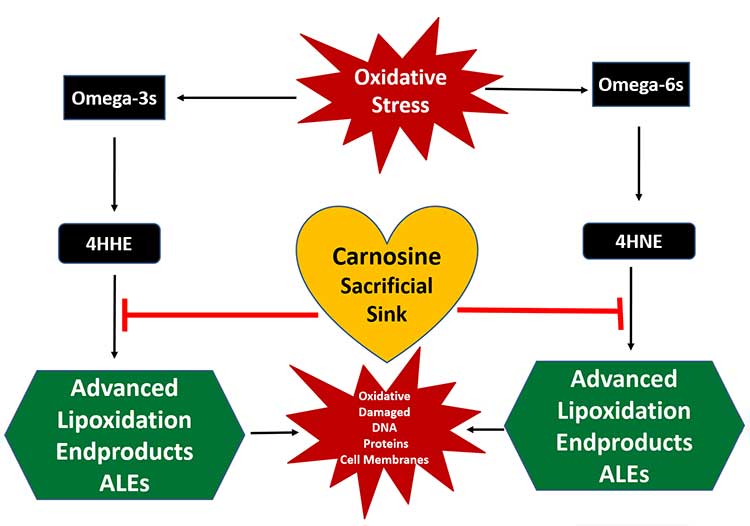
Carnosine May Be Protective Against a Wide Range of Diseases
A more detailed explanation of how carnosine protects against reactive oxygen species (ROS) and how that helps protect against oxidative stress-related pathologies is given in a 2021 paper in the journal Antioxidants:14
“A study that examined the effect of carnosine on oxidative stress in human kidney tubular epithelial (HK-2) cells indicated that carnosine decreased NADPH oxidase (NOX) 4 expression and increased total superoxide dismutase (T-SOD) activity, thus reducing the production of intracellular ROS, relieving the oxidative stress of cells, and ultimately inhibiting the mitochondrial pathway of apoptosis.
Ability of carnosine to protect against pathologies characterized by oxidative stress has been shown in a number of conditions … Carnosine changes the reactivity of superoxide anion by forming a charge-transfer complex with the superoxide radical and also by reducing the efficiency of hydroxyl radicals, creating a compound less reactive than the hydroxyl radical.
One of the mechanisms to protect organisms from oxidative stress is the chelation of transition metals, preventing them from participating in deleterious processes involving ROS … Interestingly, when comparing metals involved in free radical generation, carnosine was found to have a greater antioxidant activity coupled with copper than iron …
At physiological concentrations, carnosine directly reacts with superoxide anion similar to ascorbic acid. In physiological conditions, carnosine was found to reduce oxidative damage and to improve antioxidant activity of different antioxidative enzymes …
Experiments on aged rats showed that therapy with 250 mg/kg/carnosine per day significantly decreased oxidative stress and increased activity of antioxidative enzymes … In similar model of aged rats, carnosine increased liver vitamin E, which further demonstrates its importance in defending the organism from free radicals.
Rising data indicate that carnosine acts as a scavenger of reactive and cytotoxic carbonyl species including 4-hydroxynonenal (HNE). HNE is an aldehyde generated endogenously by lipid peroxidation of unsaturated fatty acids that act as ‘toxic second messengers,’ extending the harmful potential of free radicals.
HNE is considered an important biomarker of oxidative stress and accumulating data indicate that it may modulate signaling pathways of cell proliferation, apoptosis, and inflammation.”
How Carnosine Protects Against Alzheimer’s
As noted in the Pharmaceuticals paper,15 one of the pathologies that carnosine is protective against is Alzheimer’s disease. In my November 2021 interview with Tucker Goodrich, he explained the role of HNE, specifically, in Alzheimer’s, and why it’s so important to get rid of it.
“In heart failure, Alzheimer’s, and AMD [age-related macular degeneration], one of the things they see is an inability of the cell to produce enough energy. The mitochondria are getting damaged. HNE does that damage. It damages 24% of the proteins in the cell, primarily around energy production.
One of the ways your cells produce energy is they basically ferment glucose into pyruvate outside of the mitochondria. This is a perfectly normal part of metabolism and they produce something called pyruvate. A molecule called pyruvate dehydrogenase takes pyruvate into the mitochondria and converts it to acetyl-CoA so the mitochondria can burn it very efficiently for fuel.
Well, one of the things HNE does is it breaks pyruvate dehydrogenase, and they see this in Alzheimer’s where their cells are no longer able to produce enough energy. This is why your cells are dying in Alzheimer’s.
The beta amyloid plaques in Alzheimer’s disease are induced by HNE. There’s a great model that came out of Harvard a couple of years ago showing that.
Even the critical, the most important part of the mitochondria, complex 5, — ADP synthase — which is what takes all the energy coming from your mitochondria and turns it into ATP, which is what fuels the rest of your body — is damaged by HNE. This is a huge issue. There’s no more fundamental problem in aging and health than protein damage.”
Carnosine is the most effective scavenger of HNE, so optimizing your level can go a long way toward protecting against the HNE-induced damage that promotes Alzheimer’s.
Carnosine — A Promising Therapeutic for Obesity-Related Conditions
Elevated HNE has also been found in obese and diabetic patients,16 so there’s reason to suspect carnosine can be important in the treatment of these conditions as well. Another disease where elevated HNE plays a role is atherosclerosis. As noted in the 2021 Antioxidants paper:17
“… emerging studies have indicated that these reactive aldehydes are more than simply markers of oxidative stress.
Rather, it is suggested that these reactive species may play a significant pathogenic role in obesity-associated disorders such as insulin resistance and a carnosine analog alleviates the production or enhances the removal of reactive carbonyl species, providing promising new therapeutic compounds for cardiovascular and metabolic diseases related to obesity.”
Take Control of Your Health by Lowering Your LA Intake
As detailed in several previous articles, the evidence strongly suggests excessive LA is driving most if not all modern diseases, including heart disease and cancer. Fortunately, the solution is simple. Just lower your LA intake.
The easiest way to do this is to use an online nutritional calculator such as Cronometer to calculate your daily intake. Cronometer will tell you how much omega-6 you’re getting from your food down to the 10th of a gram, and you can assume 90% of that is LA. Anything over 10 grams is likely to cause problems. I keep my intake below 5 grams a day.
Since there’s no downside to limiting your LA, you’ll want to keep it as low as possible, which you do by avoiding high-LA foods. Keep in mind you’ll never be able to get to zero, and you wouldn’t want to do that either. You do need some LA, but since it’s found in most foods, and since you need only small amounts, there’s really no way to end up with a deficiency.
- 1, 3, 10, 15 Pharmaceuticals June 2023; 16(6): 778
- 2, 4, 5, 6, 7, 8, 9, 13, 14, 16, 17 Antioxidants July 2021; 10(7): 1037
- 11 Science Direct, Carnosine; Nutritional Supplements and Metabolic Syndrome
- 12 Animal Frontiers April 15, 2023
What You Need to Know About Estrogen and Serotonin
Reproduced from original article:
https://articles.mercola.com/sites/articles/archive/2024/01/14/estrogen-and-serotonin.aspx
The original Mercola article may not remain on the original site, but I will endeavor to keep it on this site as long as I deem it to be appropriate.
Analysis by Dr. Joseph Mercola January 14, 2024
STORY AT-A-GLANCE
- Estrogen is an obesity promoter and well-established human carcinogen
- The Women’s Health Initiative studies, which began in 1991, showed estrogen replacement therapy in menopausal women significantly increased the risk of heart attacks, strokes, dementia, Parkinson’s disease and cancer, not just in the breast but all female reproductive organs
- The biochemical role of estrogen is to aid in wound healing. In cases of tissue trauma, estrogen reverts the differentiated cells in that specific tissue back to a stem cell-like condition, to repair the damaged tissue. In young, healthy women, progesterone will turn off estrogen’s activity. Progesterone declines with ages, but estrogen synthesis typically does not. Hence, if your estrogen is high and progesterone low, your cancer risk will rise
- Estrogen is antimetabolic and radically reduces the ability of your mitochondria to create cellular energy in a form of ATP
- Elevated serotonin destroys empathy, love and wisdom, and contributes to fibrosis, impaired thyroid function, reduced metabolism and reductive stress. High serotonin is also responsible for bizarre, recurring nightmares and may play a role in PTSD as well
In this interview, Bulgarian bioenergetic researcher Georgi Dinkov discusses the downsides of estrogen and serotonin, both of which are generally considered beneficial for physical and mental health.
The drug industry is making a mint on the idea that depression is caused by low serotonin, for example. However, a closer look reveals both estrogen and serotonin can cause severe problems and you do not want high levels of either of them.
Estrogen Is an Obesity Promoter and Known Human Carcinogen
The original name for estrogen was adipin, so called because it was known to make you fat, as in adipose (fat) tissue. In the mid-‘50s, when the drug industry started pushing synthetic estrogens, this knowledge faded from memory. One of the most infamous early synthetic estrogens prescribed was diethylstilbestrol (DES), which caused fetal malformations and deaths, and cancers in the mothers who took it.
DES was eventually withdrawn and banned for use in humans. DES is not estrogen. It’s an estrogenic chemical, and it does activate estrogen receptors, but potentially more potently than estrogen does, and it has no other mechanisms of action except through its estrogenic effects.
This gives us a strong signal that estrogen excess is of serious concern. That estrogen can cause cancer is well-established. In December 2002, the National Institutes of Health added steroidal estrogens used in estrogen replacement therapy and oral contraceptives to its list of KNOWN human carcinogens.1
“Even mainstream doctors will admit that there is this thing called estrogen receptor-positive breast cancer,” Georgi says. “The role of estrogen there is well known. Nobody’s denying it, but the story has always been, it’s a localized-only effect. It’s a tissue-specific effect.
If you look at the estrogen levels of menopausal women … it’s undetectable. However, if you take a tissue biopsy from the tumor or the breast tissue around it, you’ll see that estrogen levels are sky-high there.
Begrudgingly, medicine said, ‘OK, yes, estrogen is involved as a causal agent in estrogen receptor-positive breast cancer. However, this effect is specific only to the breast. Elsewhere, estrogen is really beneficial, and that’s the reason why we’re seeing ovarian uterine atrophy, vulva atrophy and all these menopausal women need more estrogen.’”
However, the Women’s Health Initiative (WHI) studies, which began in 1991,2 showed estrogen replacement therapy in menopausal women significantly increased the risk of heart attacks, strokes, dementia, Parkinson’s disease and cancer, not just in the breast but all female reproductive organs. In the interview, Georgi also reviews evidence showing that estrogen can play a role in all types of cancer, not just reproductive ones.
Estrogen Therapy Has Seen a Revival, With Dire Consequences
The publication of the WHI results led to a significant decline in estrogen replacement therapy, starting in the late 1990s, early 2000s, until about 2015, when studies refuting those earlier results started coming out. Scientists argued estrogen could be safely used if dosed and timed better. Cancer rates don’t bear that out though.
Some people and clinicians believe that bioidentical estrogen solves the problem but it does nothing of the sort. Bioidentical estrogen still has all the negative characteristics described in this article. It increases the risk of all cancers, not just breast and prostate, lowers your metabolic rate, and increases your risk of obesity, diabetes and osteoporosis.
“If you look at cancer rates, not just for breast cancer but for all of the female reproductive organs, you’ll see there was a drop in deaths from these cancers over the last 20 years, and then that rate started going up, and not just up, but exponentially up over the last five or six years,” Georgi says.
“This coincides perfectly with the gap, which is about 15 years of not using estrogen on a mass scale, and then … reintroducing it back into the treatment protocols. Both the rates of the cancers and the deaths from these cancers plummeted over this 15-year period, and now it’s back, and actually exceeds what it used to be.”
Download this Article Before it Disappears
Estrogen Myths
According to Georgi, the biochemical role of estrogen is to aid in wound healing. In cases of tissue trauma, estrogen reverts the differentiated cells in that specific tissue back to a stem cell-like condition, to repair the damaged tissue.
In young, healthy women, progesterone will tend to antagonize estrogen’s activity. In men, that pro-differentiation factor is androgens. Both pro-differentiation factors (progesterone and androgens) decline with age. However, estrogen synthesis typically does not.
“That’s another big myth that we need to address,” Georgi says. “Talk to any doctor and they’ll tell you, ‘Menopause is a condition of severe progesterone and estrogen deficiency. We’ve done countless tests of the blood and we’ve seen that estrogen levels and progesterone levels are undetectable.’
That’s expected because most of the estradiol — which is the main estrogen both for males or females — and progesterone are of ovarian origin in females. In other words, if the ovaries atrophy, yes, you will expect to see declining levels of the steroids in the blood because the ovaries are not working so well. In fact, eventually they fail.
However, another thing that’s probably not well known, even among doctors, is that every cell in the body expresses the enzyme aromatase and contains the machinery to synthesize its own estrogen from circulating precursors. And those circulated precursors are always there, usually cholesterol which, by the way, rises with age.
So that would imply that if we test tissues, even in menopausal women, we should see increase in estrogen — especially in women that are having problems with their health — versus decrease, which is what’s seen in the blood. And every test I’ve seen on biopsies done confirms that.
In 2022, a Chinese group published a very large study with Chinese women where they measured the levels of more than 20 different hormones in hair … which is kind of like a surrogate for what’s going on in the tissues because hair grows out of cells called follicular cells.
Basically, the levels of steroids in these cells are probably representative of what gets deposited into a hair. If you look at the estrogen levels of these women, which span all age groups, estrogen levels not only did not decline with age, they actually slightly increased …
Progesterone did decline, almost to undetectable levels. Thyroid hormone, the active portion, T3, also declined. Reverse T3 increased, and there was an inverse correlation between body mass index (BMI) and the levels of either T3 and progesterone, and a positive correlation between BMI and the levels of estrogen.
So, to me, that gives you very strong evidence that estrogen is really not what we’re being told it is, in the sense that you can freely administer it and will restore youthfulness in menopausal women.”
Estrogen Summary
So, to summarize, low estrogen levels in your blood is not an indictment of estrogen deficiency. This is because most cells can synthesize estrogen from common precursors that are widely available in your body, including cholesterol.
The problem is that the estrogen that these cells produce doesn’t equilibrate with the blood, but stays within these cells and gives a false impression of estrogen deficiency. And, while estrogen is an essential component in tissue repair, that growth and repair process needs to be turned off when the job is completed, and if it isn’t, the risk of cancer rises dramatically.
The problem is that progesterone and androgens — the off-switches for estrogen in women and men respectively — do decline with age, because cells do not have a comparable enzyme like aromatase, to synthesize them. Their synthesis is restricted to gonadal tissues. This leads to elevated estrogen levels and decreased progesterone and testosterone, which typically results in unregulated cell growth, the essence of cancer.
Making matters worse, estrogen is antimetabolic and radically reduces the ability of your mitochondria to create cellular energy in a form of ATP by depending on aerobic glycolysis (the Warburg effect) which radically impairs oxidative phosphorylation. This further contributes to its carcinogenic effect. Georgi explains:
“When you have to repair tissue, you can forego, for a little bit, the oxidative phosphorylation, but it always needs to come back, because that is the differentiating factor. Stem cells stay in ‘cancer metabolism’ because … it’s the way cells have to be in order to divide at the maximum rate possible with the minimum consumption of resources possible.
But if you want this tissue to become an organ instead of a blob of cells that consumes all your energy, you need to turn off that estrogen signal, and either high metabolism and/or progesterone, and/or thyroid [hormone], both of which also prometabolic, are known as the main differentiating factors in humans.”
The Many Health Benefits of Progesterone
As explained by Georgi, progesterone is the main endogenous and most direct and potent glucocorticoid receptor antagonist. This is a profound important point that I was unaware of until Georgi mentioned it. As such, it’s also a cortisol blocker, with a similar activity as the anticancer drug and cortisol blocker RU-486, which is now virtually impossible to get.
The primary difference between them is that RU-486 also blocks progesterone, so when you take it you have to be very careful about supplementing. Taking progesterone bypasses this issue, and Georgi believes it has about the same effectiveness as mifepristone (RU-486).
Georgi goes into great detail about RU-486. As I said, it’s virtually impossible to get a hold of this compound outside the mifepristone these days, which is why I won’t expound on it here, but if you want to learn more about it, listen to the interview.
Progesterone is also a GABA agonist and could be useful to take concomitant with a GABA supplement. You may even be able to use much lower doses of both if you combine them together. This affinity for GABA accounts for some of progesterone’s psychological benefits. Georgi explains:
“The strongest GABA agonist in the body, slightly stronger than progesterone, is a progesterone derivative, a metabolite, known as allopregnanolone. It was recently approved by the FDA for postpartum depression.3
A company is developing an oral formulation with the long-chain fatty acids called LYT-300, and now they’re applying to the FDA for clinical trials for post-traumatic stress disorder, psychosis, sleep disturbances, anxiety — all of these things GABA is known to relieve.
They’re saying, ‘Oh, we have the most potent endogenous GABA agonist here, allopregnanolone, for all these conditions.’ But we can say, ‘Well, you don’t have to get allopregnanolone by prescription. You can do it with progesterone, maybe a slightly higher dosage, but still in the same ballpark.’”
As mentioned, progesterone also inhibits cortisol, and cortisol has been well-documented to play a major role in depression.
On a side note, GABA and allopregnanolone also appear to have anticancer activity. According to Georgi, GABA is known to improve mitochondrial energy production and inhibit excessive glycolysis. Excessive glycolysis and impaired mitochondrial function just happen to be the classic hallmarks of cancer. In older studies, injecting GABA directly into tumors was found to trigger complete regression in a matter of days.
Progesterone Dosing
In my view, what mature women really need are progesterone and pregnenolone, not estrogen. So, in practical terms, you’ll want to make sure your levels of progesterone and pregnenolone are within healthy limits, which are the levels you’d have in your 20s.
According to Georgi, “a physiological dose for a young healthy child before they actually reach puberty is about 30 milligrams of progesterone daily … so, 30 milligrams seems to be a decent dosage prophylactically.”
How to Optimize Progesterone Absorption
To maintain an optimal progesterone level, you can either take preformed progesterone or its precursor, pregnenolone. If you’re taking oral progesterone, be sure to take it with a small amount of saturated or monounsaturated fat — something with a carbon chain above 14, to optimize absorption. Butter is an ideal choice.
“If you don’t avoid the first-pass metabolism, you’re going to waste about 85% of the progesterone taken,” Georgi says.
But the key, and what I had misunderstood from my previous conversations with Georgi, is that the pregnenolone or DHEA, can’t be merely taken at the same meal with butter. It needs to be taken out of the pill and mixed well into the butter.
You don’t need much butter (or ghee), just about one-fourth of a teaspoon. You can mix it with a toothpick or similar small tool and put on your food and you are off to the races avoiding the 85% destruction that typically occurs when you swallow the capsule without this trick.
Progesterone has potent sedative effects, so if you’re getting to a point where you’re getting disoriented, or your thinking or speech slows or you’re getting sleepy, you’ll probably know that your dose was too high and have taken too much. You can take advantage of its GABA agonist effect by taking it 30 to 60 minutes before bedtime.
“A hefty dose of progesterone causes symptoms indistinguishable from being drunk,” Georgi says, “so don’t operate machinery when you’re taking a lot of progesterone.” Of course, if you have trouble sleeping, then taking the progesterone in the evening can be helpful.
One commercial product that Georgi and I discussed was Progest-E which the late biologist and thyroid expert Ray Peat developed, and contains progesterone mixed with vitamin E. Since our interview, however, I did some research and now would strongly recommend avoiding Progest-E.
Why? For two reasons. One, it is put into a cheap plastic squeeze bottle. I’m not sure why Peat did not realize that flexible plastic is loaded with plasticizers like BPA and phthalates and are strong estrogen mimics.
But, the more important reason is that it is virtually impossible to squeeze out a precise dose of “one drop” from the bottle. My experience suggests that one drop could be a small fraction of a drop or five or even more drops. So, this product needs to be avoided.
Fortunately, there is a far better one available called Simply Progesterone that you can get at Health Natura.4 It has the same progesterone concentration of 3 mg/drop as the Progest-E. Simply Progesterone comes in a glass bottle with a real glass dropper that you can easily and accurately measure. This product is a winner and the one that I personally use and believe most people would benefit from taking.
DHEA Dosing and Considerations
For optimal health, you also want to keep an eye on your cortisol-to-DHEA ratio.
“The cortisol-to-DHEA ratio — whether in blood, tissue, hair or nails — has now been established as the single most reliable predictor of all-cause mortality and morbidity throughout the entire lifespan,” Georgi says.
“That ratio should be less than 0.3. In other words, heavily in favor of DHEA. Anything over 0.5 is known to start causing mood disturbances [like] depression. Anything over 1, you’re probably at risk of diabetes or cardiovascular disease, or worse.”
That said, DHEA is a precursor to estrogens, so you don’t want excessive amounts of DHEA. For most people, 10 mg to 12 mg of DHEA is more than adequate. That’s how much you produce in your mid-20s.
It would be highly unwise to simply swallow DHEA, as 85% will be broken down by your liver and we have no idea how harmful the liver metabolites are. You can use the same butter trick described above for pregnenolone, to avoid this. But it would also be wise to not take doses over 10 mg without professional supervision. You do not want to increase your estrogen and prolactin levels.
You must be careful, though, as taking DHEA can easily be converted to estrogen by aromatase and subsequently increase prolactin levels. It you are going to take DHEA it would be best to take it with progesterone as that will inhibit DHEA’s conversion into estrogen since progesterone is a potent aromatase inhibitor.
“As far as dosages [are concerned] … if you’re still producing DHEA, which you can verify on blood tests, you can calculate the delta between what the optimal interval was when you were young [and what it is now].
Let’s say the optimal level was 500, and now you are in your 60s. The [lab] range says you’re fine, but your level is 200. The delta is about 60%, so you need to take 60% of that daily [amount] that you used to produce when you were in your 20s.
Sixty percent of 12 mg is what you really need to be taking in order to restore the level to the youthful level without running into the risk of raising estrogen too much. And if you combine it with progesterone, you should be getting an even stronger anti-cortisol effect while further preventing the conversion of DHEA into estrogen.”
Pregnenolone Benefits and Dosing Suggestions
Pregnenolone, which your body makes from cholesterol, converts first to progesterone and then to allopregnanolone. Pregnenolone is also converted to DHEA, which is a precursor for estrogens and androgens.
“Pregnenolone is really unique in the sense that if you have an excess of a specific steroid, it will likely lower it,” Georgi says, “and if you have a deficiency of a specific steroid, it will probably raise it.
About 100 mg is probably enough because, being the top level hormone, it’s going to convert downstream into whatever you need … I know of a study with schizophrenia where 50 mg decreased significantly both the symptoms of schizophrenia and bipolar disorder.”
While most people opt for oral pregnenolone, I prefer rectal suppositories. I make my own by mixing the pregnenolone with cacao butter, a very long chain fat that facilitates absorption. For most people, 100 mg is sufficient. If you opt for oral pregnenolone, mix it into half a teaspoon of butter to make an emulsion.
Low Serotonin Is Not the Cause of Depression
Next, we discuss serotonin, which used to be called enteramine because it’s produced in the gut. Enteric refers to things related to your intestines. Serotonin has been incorrectly dubbed the “happy hormone.” It’s not.
Selective serotonin reuptake inhibitors (SSRIs) are a class of antidepressants that raise your serotonin levels, but contrary to popular belief, this can cause significant problems. The easiest solution for depression, anxiety and insomnia is GABA, with or without progesterone.
“Even 100 mg of oral GABA was enough to lower the assessment scores of patients with anxiety and depression disorders. The Beck’s Depression Inventory is for depression, and there’s another one for anxiety. Just 100 mg of GABA was sufficient to lower significantly in the score on both scales.
Combining it with another GABA agonist amino acid known as L-theanine, which is founding in tea, drastically increased the effects. And L-theanine lowers the levels of serotonin in the brain. It’s perhaps the most direct evidence that serotonin in the brain is not good at elevated levels.
So for people who are on antidepressants, one of the first things that I would do is go to a doctor and ask about two drugs that are approved for treating depression but are antiserotonergic. One is called mepirzapine, also known as mirtazapine.
If you look at the structure, it’s very similar to a drug called cyproheptadine, which is a known selective serotonin antagonist. Mepirzapine or mirtazapine is approved for treating patients in the United States.
If you want to get your psychiatrist angry, please ask him or her to explain how an antiserotonin drug is approved for depression, considering that all the other proserotonin drugs are also approved for depression. Something doesn’t add up there.”
Cyproheptadine also acts as a sleeping pill, so if you do not have insomnia, don’t go over 2.5 mg. Cut it in half or even a quarter. It’s also a potent histamine blocker and can be used for acute allergic reactions. It is a prescription and think it would be wise to have it on hand, but Benadryl could also be used.
It also might have benefit for those who are on SSRIs, sleeping pills or anti-anxiety agents. However, I think high dose GABA therapy is likely a far better, safer, and less expensive approach. Georgi and I discuss this in the podcast.
Just be careful about combination products as they may contain magnesium. While magnesium is very helpful if you push the GABA to high doses you will get far too much magnesium and it will have a laxative effect.
The other drug Georgi recommends is tianeptine, which is a selective serotonin reuptake enhancer (SSRE), basically the converse of an SSRI, and it too is a potent antidepressant.
If you don’t want to go the pharmaceutical route, you can use GABA, at a dose of 500 mg to 2,000 mg (2 grams) daily. This range has been shown to relieve anxiety and insomnia in people who are already taking SSRI drugs, Georgi notes, adding, “I’ve seen people in very severe cases of anxiety and depression plateau it about 3 to 4 grams. After that … the mental effects usually plateau.”
Interestingly, if you take too much GABA, some of it will get deaminated and convert into succinic acid, an intermediate of the Krebs cycle. As such, GABA also helps boost mitochondrial function at high doses. So from a toxicity perspective it appears to be very safe.
Elevated Serotonin Has Devastating Psychological Effects
Ironically, while many doctors blame insomnia on depression caused by low serotonin, it may actually be the other way around. Georgi explains:
“Every single antiserotonin drug ever tested … has demonstrated both antidepressant and prosomnic, basically anti-insomnic, effects in animal studies and some human studies as well. So, serotonin is known to actually cause insomnia. How?
If serotonin is a precursor to melatonin, how can it actually cause problems with the sleep? It’s because serotonin is the most potent activator in the body of the release of cortisol through ACTH. In fact, the first antidepressant drug, Prozac, is a partial serotonin antagonist. It specifically blocks the serotonin receptor responsible for the release of cortisol, serotonin receptor 2C5-HT2C.
Prozac is a potent inhibitor of that receptor while maintaining the rest of its serotonergic effects. So, it’s the perfect coverup, right? You can claim that serotonin is great for your depression, while in reality you’re giving a drug that’s blocking the effects of serotonin and lowering cortisol, but that’s unknown to most people, even doctors that I’ve discussed it with.
Another side effect of GABA is that GABA increases the degradation rate of serotonin even when it’s taken orally. So you cannot have high levels of both. So people that are high in GABA are usually low in serotonin. They’re very calm, they’re very gregarious.
Serotonin is not a happiness hormone. Multiple studies, even a court case recently agreed that serotonin actually destroys empathy, love and wisdom. Those are specific quotes from the court study. Another animal study found that crabs exposed to very low levels of SSRIs because of sewage being dumped into the ocean … turn extremely violent, homicidal and cannibalistic.
They turn on each other. There’s nothing else that can explain this behavior except for the SSRI drugs. So really that’s what serotonin does. It’s also a metabolic inhibitor … The primary role of serotonin is metabolic, and the evolutionary role of serotonin is probably for numbing pain when you’re under stress.
It turns off your pain reaction, even your grief reaction, but at the expense of turning off all the other emotions as well. Multiple studies have demonstrated that serotonin is basically a lobotomizing chemical when it comes to emotions. Sure, it’ll numb your depression, but it will also numb everything else too. You’ll be walking around like a zombie.”
Other Adverse Effects of Serotonin
High serotonin can also cause serotonin syndrome and contribute to fibrosis (including cardiac and pulmonary fibrosis), impaired thyroid function, reduced metabolism due to excessive glycolysis and high lactic acid production, and reductive stress. High serotonin is also responsible for bizarre, recurring nightmares and may play a role in PTSD as well.
Serotonin also inhibits pyruvate dehydrogenase, cytochrome c oxidase and Complex 2 of the electron transport chain (succinic acid dehydrogenase, which also participates in the Krebs cycle).
“The evolutionary reason is probably that in times of stress and injury, these things rise in order to help you repair. But it should be acute only,” Georgi says.
“These days we have them chronically elevated, and that’s a signal to the body that things are chronically bad, and it will dispose of any known essential function that it thinks it can in order to conserve energy, which means your high metabolism (which means you’re gaining weight), your good mood (which means you’re going to be depressed).
Then eventually, if things go down that route, the body will start turning off ‘nonessential’ organs by turning them into fibrotic clumps so that they don’t have to waste energy on repairing them. That’s how you get fibrosis. Ultimately, the end stage of fibrosis is cancer, unless you die from the organ failure before that.”
In closing, the take-home from all of this is that you really want to minimize estrogen and keep your serotonin level as low as possible, and increasing progesterone, pregnenolone and GABA will help lower both and appear to be useful, inexpensive, nonprescription modalities if you use them correctly. For even more details, be sure to listen to the interview in its entirety.