Men
now browsing by category
How Low Testosterone Affects Men’s Health
Reproduced from original article:
https://articles.mercola.com/sites/articles/archive/2024/09/13/low-testosterone-mens-health.aspx
Analysis by Dr. Joseph Mercola September 13, 2024
STORY AT-A-GLANCE
- Low testosterone affects up to 38.7% of men over 45, causing symptoms like low libido, fatigue and weight gain. It’s linked to increased risks of metabolic syndrome and cardiovascular disease
- Obesity and diabetes are closely connected to lower testosterone levels, creating a cycle that’s hard to break. Excess fat tissue interferes with testosterone production through various mechanisms
- Low testosterone levels (below 213 ng/dL) are associated with higher all-cause mortality risk. Balanced hormone levels, including luteinizing hormone and estradiol, are crucial for overall health
- Andropause, or male menopause, involves a gradual decline in testosterone levels starting around age 40. This affects cardiovascular health, body composition and increases risks of heart problems
- Natural strategies to boost testosterone include KAATSU training, regular sun exposure and avoiding endocrine-disrupting chemicals
If you’re a man over 45, you may be experiencing symptoms like low libido, fatigue, mood changes or weight gain without realizing one common underlying cause — low testosterone. Up to 38.7% of men in this age group have insufficient testosterone levels.1
The American Urology Association considers levels below 350 ng/dL to be low, though some experts argue for a lower threshold of 250 ng/dL.2 Regardless of the exact number, it’s the combination of low levels and symptoms that matters.
Low testosterone isn’t just about sexual health. It can increase your risk of metabolic syndrome and cardiovascular disease as you age. Symptoms may include obesity, Type 2 diabetes, osteoporotic fractures, generalized weakness and even facial hair loss.3 If you’re experiencing these signs, it’s worth investigating your testosterone levels.
Ideally, blood samples should be taken between 7:00 a.m. and 11:00 a.m. when testosterone is highest. Don’t dismiss your symptoms just because you’re getting older — low testosterone is a treatable condition that can significantly impact your quality of life. While I don’t recommend testosterone supplements, there are multiple ways to increase your testosterone levels naturally.
The Testosterone-Obesity-Diabetes Connection
Your body composition plays a crucial role in testosterone production. Obesity and diabetes are closely linked to lower testosterone levels, creating a vicious cycle that can be hard to break. Excess fat tissue, especially around your abdomen, can interfere with testosterone production in several ways:4
1. Leptin resistance — Fat cells produce leptin, which can lead to central leptin resistance and reduce signals in your brain that stimulate testosterone production.
2. Increased estrogen — Fat tissue contains an enzyme that converts testosterone to estrogen, further lowering your testosterone levels.
3. Inflammation — Fat cells produce inflammatory cytokines that can interfere with testosterone production and reduce insulin sensitivity.
These mechanisms not only lower your testosterone but also contribute to insulin resistance, putting you at risk for Type 2 diabetes. Low testosterone can also lead to decreased muscle mass and increased fat accumulation, worsening the cycle. If you’re struggling with weight issues or diabetes, it’s essential to have your testosterone levels checked. Addressing low testosterone could be a key factor in improving your metabolic health and breaking this harmful cycle.
Low Testosterone May Increase Your Risk of All-Cause Mortality
There’s a strong relationship between sex hormones and mortality risk in men. A comprehensive meta-analysis of nine studies, covering more than 255,830 participant-years, has revealed some eye-opening insights.5 If your testosterone levels fall below 213 ng/dL, you may face a higher risk of all-cause mortality. Also concerning, testosterone levels below 153 ng/dL were associated with increased cardiovascular mortality risk.
But testosterone isn’t the only hormone you should be concerned about. The study found that men with luteinizing hormone (LH) levels above 10 IU/L or estradiol levels below 5.1 pmol/L also had a higher risk of all-cause mortality. These findings underscore the importance of maintaining balanced hormone levels as you age. It’s not just about feeling energetic or maintaining muscle mass — your hormone levels could be a matter of life and death.
While testosterone often takes center stage in discussions about male hormones, this research highlights the importance of often-overlooked players, including dihydrotestosterone (DHT). DHT, a potent form of testosterone responsible for the expression of male features, showed a nonlinear relationship with mortality risk.6
Both very low and very high levels were associated with increased risk. Men with DHT levels below 0.69 nmol/L had a 19% higher risk of all-cause mortality and a 29% higher risk of cardiovascular mortality compared to those with levels around 2.45 nmol/L.7 However, risk also increased at DHT levels above 2.45 nmol/L. These findings underscore the complexity of hormonal health. It’s not always a case of “more is better” — balance is key.
While much of the research focused on mortality risk, the study, published in the Annals of Internal Medicine, also provided valuable insights into the relationship between hormones and cardiovascular disease (CVD) risk. Men with DHT concentrations below 0.59 nmol/L had an increased risk of incident cardiovascular events.8

Save This Article for Later – Get the PDF Now
The Link Between ‘Male Menopause’ and Cardiovascular Health
As you enter your 40s and beyond, you may be unaware of a silent threat to your heart health: andropause, also known as male menopause. While it’s not directly comparable to female menopause, there are some similarities and important differences to consider.
Unlike female menopause, which involves a relatively abrupt drop in hormone levels, men experience a gradual decline in testosterone levels as they age. This process typically begins around age 40 and continues throughout life. Men can experience a decrease in testosterone levels of about 1% per year after age 40.9
This gradual decline in testosterone levels doesn’t just affect your libido and muscle mass; it also impacts your cardiovascular system. Research has shown that men with lower testosterone levels are at higher risk for cardiac problems and mortality.10 In fact, a significant number of men with congestive heart failure have been found to have testosterone deficiency.11
Low testosterone levels can contribute to the accumulation of visceral fat, which is closely linked to insulin resistance and an unfavorable lipid profile. These factors can accelerate the hardening of your arteries, a process known as atherosclerosis. However, maintaining healthy testosterone levels can have protective effects on your heart. It can help shorten the heart-rate-corrected QT interval, improve glycemic control and induce vasodilation.12
Andropause and Body Composition: More Than Just Weight Gain
As you age and your testosterone levels decline, you might notice changes in your body composition that go beyond simply gaining a few pounds. Testosterone plays a crucial role in regulating your body’s fat distribution and muscle mass. When levels drop, you may experience a shift in where your body stores fat — from under your skin to deep in the abdomen (visceral fat).13
Visceral fat is metabolically active and can increase your risk of various health problems, including diabetes and heart disease. At the same time, lower testosterone can lead to a loss of muscle mass, a condition known as sarcopenia. This double whammy of increased fat and decreased muscle can significantly impact your strength, mobility and overall health.
The good news is that addressing low testosterone levels can help reverse these trends. Increasing testosterone levels has been shown to decrease visceral fat accumulation and increase lean body mass.14 It does this by activating androgen receptors, which initiate a fat-burning process and promote the differentiation of mesenchymal cells into muscle fibers rather than fat cells.
The Role of Biomarkers in Diagnosing Andropause
Recognizing andropause isn’t always straightforward, but certain biomarkers can provide valuable insights into your hormonal health. While testosterone is the primary hormone associated with andropause, it’s not the only one to consider. Other hormones and proteins in your body can offer a more complete picture of your endocrine health.15
For instance, sex hormone-binding globulin (SHBG) levels tend to increase with age, which can affect the amount of free testosterone available in your body. Estradiol, a form of estrogen, also plays a role. The ratio of testosterone to estradiol can be a useful indicator of andropause, with lower ratios associated with more severe symptoms.16
Other biomarkers to consider include dehydroepiandrosterone sulfate (DHEAS), a precursor to testosterone that also declines with age, and prolactin, which tends to increase in older men and can contribute to symptoms like decreased libido. Even your thyroid hormone (thyroxine) and sleep hormone (melatonin) levels can provide clues about your andropause status.17
Obesity and Sleep Apnea: A Double Threat to Testosterone Levels
If you’re carrying excess weight, particularly around your midsection, you may be facing a double threat to your testosterone levels. A study of severely obese men revealed that obstructive sleep apnea (OSAS) is strongly associated with lower testosterone, independent of age and body mass index.18 OSAS, characterized by repeated breathing pauses during sleep, affected a staggering 96.2% of the study participants.
The more severe the sleep apnea, as measured by frequency of breathing disruptions and oxygen desaturation, the lower the total and free testosterone levels tended to be. This relationship held true even after accounting for other factors like metabolic syndrome, a cluster of conditions including high blood pressure, high blood sugar and abnormal cholesterol levels.
The findings suggest that poor sleep quality and intermittent nighttime oxygen deprivation may be directly impacting your body’s ability to produce testosterone, beyond the known effects of excess body fat. Your overall metabolic health also plays a crucial role in maintaining healthy testosterone levels. Both total and free testosterone showed negative correlations with various metabolic factors, including waist circumference, blood pressure and fasting glucose levels.
Interestingly, the researchers used a continuous metabolic syndrome score to quantify overall metabolic health, finding that higher scores (indicating poorer metabolic health) were linked to lower testosterone levels.19 This underscores the importance of addressing not just weight, but also the underlying metabolic imbalances that often accompany obesity, to support your hormonal health.
Testosterone Therapy: No Increased Heart Risk for Men
While I don’t recommend testosterone supplements, concerns about testosterone replacement therapy (TRT) and heart health may be unfounded, according to a comprehensive study published in Progress in Cardiovascular Diseases.20 This meta-analysis of 30 randomized controlled trials, involving 11,502 patients, suggests that TRT does not increase your risk of heart problems or death.21
The researchers examined various cardiovascular outcomes, including overall cardiovascular events, stroke, heart attack and death from any cause. They found no significant difference between men receiving testosterone therapy and those given a placebo. This held true across all measured outcomes, with similar rates of events in both groups.
These findings challenge the 2015 U.S. Food and Drug Administration warning about potential cardiovascular risks associated with testosterone products.22 This information could be particularly relevant if you’re over 50, as the average age of participants in the analyzed studies ranged from 61 to 62 years old.
However, it’s important to note that this research doesn’t mean TRT is risk-free or suitable for everyone. The study focused specifically on men with diagnosed hypogonadism, not those using testosterone for other reasons.
Strategies to Raise Testosterone Naturally
There are only four hormones I believe many adults can benefit from — progesterone, thyroid hormone T3, DHEA and pregnenolone. However, if you have low testosterone, there are several evidence-based strategies you can use to boost your levels naturally.
One innovative approach gaining attention is KAATSU training, also known as blood flow restriction training. This technique involves using specialized bands to partially restrict blood flow to your limbs during exercise, tricking your body into thinking it’s working harder than it actually is. Research suggests this can lead to increased growth hormone and testosterone production.23
Avoiding endocrine-disrupting chemicals, such as phthalates, bisphenol A and PFOAs is also important, as these chemicals affect testosterone levels.24 Regular sun exposure is another strategy; if you get sufficient sun exposure it will increase your testosterone levels.25
While a gradual decline in testosterone levels is a common part of aging, it’s important to recognize that significant drops can lead to serious health consequences. To optimize your levels, work with a holistic health care provider to develop a personalized approach, as hormone balance is complex and individual. By staying informed and proactive about hormonal health, men can take steps to maintain their vitality and reduce health risks as they age.
Last but not least, it’s also important to recognize that excess estrogen will impair testosterone levels and functions as well. To address estrogen dominance, I recommend using a natural anti-estrogen compound hormone like progesterone. Progesterone also helps address problems with endocrine-disrupting chemicals from plastics and other environmental sources that activate estrogen receptors.
How to Use Progesterone
Before you consider using progesterone, it is important to understand that it is not a magic bullet, and that you get the most benefit by implementing a Bioenergetic diet approach that allows you to effectively burn glucose as your primary fuel without backing up electrons in your mitochondria that reduces your energy production. My new book, “Cellular Health: The Unified Theory of All Disease for Ultimate Longevity and Joy” comes out very soon and covers this process in great detail.
Once you have dialed in your diet, an effective strategy that can help counteract estrogen excess is to take transmucosal progesterone (i.e., applied to your gums, not oral or transdermal), which is a natural estrogen antagonist. Progesterone is one of only four hormones I believe many adults can benefit from. (The other three are thyroid hormone T3, DHEA and pregnenolone.)
I do not recommend transdermal progesterone, as your skin expresses high levels of 5-alpha reductase enzyme, which causes a significant portion of the progesterone you’re taking to be irreversibly converted primarily into allopregnanolone and cannot be converted back into progesterone.
Ideal Way to Administer Progesterone
Please note that when progesterone is used transmucosally on your gums as I advise, the FDA believes that somehow converts it into a drug and prohibits any company from advising that on its label. This is why companies like Health Natura promotes their progesterone products as “topical.”
However, please understand that it is perfectly legal for any physician to recommend an off-label indication for a drug to their patient. In this case, progesterone is a natural hormone and not a drug and is very safe even in high doses. This is unlike synthetic progesterone called progestins that are used by drug companies, but frequently, and incorrectly, referred.
Dr. Ray Peat has done the seminal work in progesterone and probably was the world’s greatest expert on progesterone. He wrote his Ph.D. on estrogen in 1982 and spent most of his professional career documenting the need to counteract the dangers of excess estrogen with low LA diets and transmucosal progesterone supplementation.
He determined that most solvents do not dissolve progesterone well and discovered that vitamin E is the best solvent to optimally provide progesterone in your tissue. Vitamin E also protects you against damage from LA. You just need to be very careful about which vitamin E you use as most supplemental vitamin E on the market is worse than worthless and will cause you harm not benefit.
It is imperative to avoid using any synthetic vitamin E (alpha tocopherol acetate — the acetate indicates that it’s synthetic). Natural vitamin E will be labeled “d alpha tocopherol.” This is the pure D isomer, which is what your body can use.
There are also other vitamin E isomers, and you want the complete spectrum of tocopherols and tocotrienols, specifically the beta, gamma, and delta types, in the effective D isomer. As an example of an ideal vitamin E, you can look at the label on our vitamin E in our store. You can use any brand that has a similar label.
You can purchase pharmaceutical grade bioidentical progesterone as Progesterone Powder, Bioidentical Micronized Powder, 10 grams for about $40 on many online stores like Amazon. That is nearly a year’s supply, depending on the dose you choose.
However, you will need to purchase some small stainless steel measuring spoons as you will need a 1/64 tsp, which is 25 mg and a 1/32 tsp, which is 50 mg. A normal dose is typically 25-50 mg and is taken 30 minutes before bed, as it has an anti-cortisol function and will increase GABA levels for a good night’s sleep.
Unfortunately, this vendor frequently runs out of product, and if that’s the case, then you can use Simply Progesterone by Health Natura. It’s premixed with vitamin E and MCT oil. Again, while Health Natura states that its product is for “topical use only,” I recommend applying it transmucosally, by rubbing it on your gums.
If you are a menstruating woman, you should take the progesterone during the luteal phase or the last half of your cycle, which can be determined by starting 10 days after the first day of your period and stopping the progesterone when your period starts.
If you are a male or non-menstruating woman, you can take the progesterone every day for four to six months and then cycle off for one week. The best time of day to take progesterone is 30 minutes before bed as it has an anti-cortisol function and will increase GABA levels for a good night’s sleep.
This is what I have been personally doing for over a year with very good results. I am a physician so do not have any problems doing this. If you aren’t a physician, you should consult one before using this therapy, as transmucosal progesterone therapy requires a doctor’s prescription.
- 1, 2, 3, 4 Aging Pathobiology and Therapeutics 2024; 6(1): 42-45, DOI: 10.31491/APT.2024.03.136 (Archived)
- 5, 6, 7, 8 Annals of Internal Medicine May 14, 2024
- 9 Mayo Clinic, Men’s Health, Male menopause: Myth or reality?
- 10, 11, 12, 13, 14, 15, 16, 17 OBM Geriatrics 2024; 8(2): 276; doi: 10.21926/obm.geriatr.2402276
- 18, 19 Front Endocrinol (Lausanne). 2021; 12: 622496
- 20, 21 Progress in Cardiovascular Diseases April 7, 2024
- 22 U.S. FDA February 26, 2018
- 23 J Int Med Res. 2021 Sep; 49(9): 03000605211039564
- 24 Transl Androl Urol. 2018 Jun; 7(3): 490–503
- 25 Endocrinology 1939 25:7-12
Microscopic Menace — Scientists Discover Plastic Nanoparticles in Men’s Testicles
Reproduced from original article:
https://articles.mercola.com/sites/articles/archive/2024/07/15/plastic-nanoparticles-in-mens-testicles.aspx
Analysis by Dr. Joseph Mercola July 15, 2024

STORY AT-A-GLANCE
- Scientists discovered microplastics in men’s testicles, raising concerns about their potential impact on reproductive health
- Researchers were surprised to find microplastics in the testicles, given the tight blood-tissue barrier in the male reproductive system, known as the blood-testis barrier
- The study found microplastics in all the testes examined, with polyethylene (PE) being the most common type of plastic
- A 2023 study similarly found microplastics in the male reproductive system, including the testis and semen
- Plastics are loaded with chemicals that are xenoestrogens that can mimic the effects of estrogen in your body; much of their danger is related to their stimulation of estrogen receptors
The average person eats about 5 grams of plastic per week — about the amount found in one credit card.1 So it’s no wonder that tiny pieces of plastic are turning up throughout the human body, including in places you might not expect. Following research that found plastic particles in the human bloodstream,2 and another study that found them in the human heart,3 scientists have now discovered microplastics in men’s testicles.4
The study’s lead author, Dr. John Yu, a toxicologist in the College of Nursing at the University of New Mexico, wasn’t expecting microplastics to have infiltrated the testicles, given the tight blood-tissue barrier in the male reproductive system, known as the blood-testis barrier.
As noted in Pharmacological Reviews, “The blood-testis barrier (BTB) is one of the tightest blood-tissue barriers in the mammalian body.”5 The presence of microplastics in the testes suggests that microplastics can bypass or penetrate the BTB, raising concerns about their ability to infiltrate other protected and sensitive tissues in the body, as well as their potential impact on reproductive health.
Microplastics Found in Human and Dog Testicles
For the study, researchers from the University of New Mexico measured 12 types of microplastics in 47 canine and 23 human testes.6 Microplastics are small plastic particles that are less than 5 millimeters in size. They may be intentionally manufactured for use in products like cosmetics, personal care items (such as exfoliating beads in face scrubs) and industrial applications. They also include microfibers shed from synthetic clothing during washing.
Microplastics also include small plastic fragments that result from the breakdown of larger plastic items, such as bottles, bags and other plastic debris. This breakdown can occur due to environmental exposure, such as sunlight (photodegradation), ocean waves and weathering.
The study involved both human and dog testicles, as dogs share many physiological and anatomical similarities with humans, making them a valuable model for studying human diseases and conditions.
Further, because dogs share the same living environment as humans, they are exposed to similar pollutants, chemicals and other potential hazards. As such, they’re often considered sentinel animals,7 meaning they can serve as early warning indicators of potential health risks and environmental hazards that might also affect humans.
The study found microplastics in all the canine and human testes examined, with significant differences between individuals. On average, total microplastic levels were 122.63 µg (micrograms) per gram (g) in dogs and 328.44 µg/g in humans.8 Both humans and canines had similar proportions of the main types of microplastics, with polyethylene (PE) being the most common.
Polyvinyl chloride (PVC) was also detected and linked with lower sperm count in dog testicles. Higher levels of PVC were also associated with decreased weight of the testicles, as was polyethylene terephthalate (PET).9 A 2023 study similarly found microplastics in the male reproductive system, including the testis and semen.10
Are Microplastics Involved in Male Infertility?
It’s estimated that 11 million tons of plastic waste enter the world’s oceans annually — an amount that could nearly triple by 2040.11 What’s the end result of a plastic world? An impending fertility crisis is upon us. Men experienced a 50% to 60% decline in sperm counts from 1973 to 2011, according to a 2017 study published in Human Reproduction Update.12
An update to the study, which includes data from 53 countries and an additional seven years13 — 2011 to 2018 — found sperm concentration declined “appreciably” by 51.6% from 1973 to 2018. The percent decline per year doubled, increasing from 1.16% after 1972 to 2.64% after 2000.14
Total sperm count also declined at an alarming level — 62.3% from 1973 to 2018. A class of plastic chemicals called phthalates, which are so ubiquitous that the U.S. Centers for Disease Control and Prevention has stated “phthalate exposure is widespread in the U.S. population,”15 may be particularly to blame.
An estimated 8.4 million metric tons of plasticizers, including phthalates, are used worldwide each year,16 with phthalate production amounting to about 4.9 million metric tons annually.17 Microplastics often contain phthalates, which can leach out of the material18 causing endocrine-disrupting effects.
Save This Article for Later – Get the PDF Now
Exposure to Plastic Chemicals in Utero May Affect Male Fertility as an Adult
Women’s exposure to phthalates during pregnancy is linked to male babies’ anogenital distance (AGD) — the distance from the anus to the base of the penis — with higher exposure associated with shortened AGD.19 Later in life, shorter AGD is linked with a smaller penis20 and poorer semen quality, such that AGD at birth may be predictive of adult reproductive function.21
Phthalate syndrome refers to a number of disturbances to male reproductive development that have been observed after exposure to phthalates in utero.22 In studies on rats, it’s been found that when a rat that’s been gestating in a mother rat fed phthalates during the sensitive periods of reproduction, his genitals end up smaller and less developed, his testicles might not be fully descended, his penis may be smaller, and the whole size of the genital area is smaller.23,24
What’s more, phthalates represent only one class of endocrine-disrupting chemicals. There are many more, including bisphenol-A (BPA), flame retardants, pesticides and per- and polyfluoroalkyl chemicals (PFAS) chemicals.25 Since microplastics often contain harmful endocrine-disrupting chemicals, this is one way they may affect fertility.
It’s also likely that they affect fertility via other mechanisms as well, including inflammation, oxidative stress and even direct disruption of reproductive functions if they accumulate in the testes and other sensitive areas.
An evidence review conducted for California State Legislature in 2023 revealed, in fact, that “exposure to microplastics is suspected to adversely impact sperm quality and testicular health in humans based on … high quality of the body of evidence.”26
Plastic’s Estrogenic Effects
Plastics are xenoestrogens that can mimic the effects of estrogen in the body.27 Much of their danger is related to their stimulation of estrogen receptors. Phthalates, for instance, have estrogenic properties, and some endocrine-disrupting chemicals are also considered estrogenic carcinogens.
This is because the abnormal stimulation of estrogen receptors promotes cell proliferation and potentially contributes to the development and progression of estrogen-sensitive cancers, such as breast cancer28 and endometrial cancer.29
Due to their estrogenic effects, plastics exposure contributes to estrogen dominance, which may affect men’s reproductive health. Exposure to certain endocrine disruptors is associated with reduced semen quality and impaired fertility in men,30 for instance, while endocrine disruptors — particularly xenoestrogens — are also “etiologic factors in the global decrease of sperm counts and other problems of the male reproductive tract.”31
Progesterone Can Help Lower Your Estrogen Burden
Before you consider using progesterone it is important to understand that it is not a magic bullet and you get the most benefit by implementing a Bioenergetic diet approach that allows you to effectively burn glucose as your primary fuel with backing up electrons in your mitochondria that reduces your energy production. My new book coming out shortly about Cellular Health covers this process in great detail.
Once you have dialed in your diet, an effective strategy that can help counteract estrogen excess is to take transmucosal progesterone (not oral or transdermal), which is a natural estrogen antagonist. Progesterone is one of only four hormones I believe many adults can benefit from. (The other three are thyroid hormone T3, DHEA and pregnenolone.)
I do not recommend transdermal progesterone, as your skin expresses high levels of 5-alpha reductase enzyme, which causes a significant portion of the progesterone you’re taking to be irreversibly converted primarily into allopregnanolone and cannot be converted back into progesterone.
Ideal Way to Administer Progesterone
Please note that when progesterone is used transmucosally on your gums as I advise, the FDA believes that somehow converts it into a drug and prohibits any company from advising that on its label.
However, please understand that it is perfectly legal for any physician to recommend an off-label indication for a drug to their patient. In this case progesterone is a natural hormone and not a drug and is very safe even in high doses. This is unlike synthetic progesterone called progestins that are used by drug companies, but frequently, and incorrectly, referred.
Dr. Ray Peat has done the seminal work in progesterone and probably was the world’s greatest expert on progesterone. He wrote his Ph.D. on estrogen in 1982 and spent most of his professional career documenting the need to counteract the dangers of excess estrogen with low LA diets and transmucosal progesterone supplementation.
He determined that most solvents do not dissolve progesterone well and discovered that vitamin E is the best solvent to optimally provide progesterone in your tissue. Vitamin E also protects you against damage from LA. You just need to be very careful about which vitamin E you use as most supplemental vitamin E on the market is worse than worthless and will cause you harm not benefit.
It is imperative to avoid using any synthetic vitamin E (alpha tocopherol acetate — the acetate indicates that it’s synthetic). Natural vitamin E will be labeled “d alpha tocopherol.” This is the pure D isomer, which is what your body can use. There are also other vitamin E isomers, and you want the complete spectrum of tocopherols and tocotrienols, specifically the beta, gamma, and delta types, in the effective D isomer.
There are also other vitamin E isomers, and you want the complete spectrum of tocopherols and tocotrienols, specifically the beta, gamma, and delta types, in the effective D isomer. As an example of an ideal vitamin E you can look at the label on our vitamin E in our store. You can use any brand that has a similar label.
You can purchase pharmaceutical grade bioidentical progesterone as Progesterone Powder, Bioidentical Micronized Powder, 10 Grams for about $40 on many online stores like Amazon. That is nearly a year’s supply, depending on the dose you choose.
However, you will need to purchase some small stainless steel measuring spoons as you will need a 1/64 tsp which is 25 mg and a 1/32 tsp which is 50 mg. A normal dose is typically 25-50 mg and is taken 30 minutes before bed as it has an anti-cortisol function and will increase GABA levels for a good night’s sleep.
Unfortunately, this vendor frequently runs out of product, and if that’s the case, then you can use Simply Progesterone by Health Natura. It’s premixed with vitamin E and MCT oil.
If you are a menstruating woman, you should take the progesterone during the luteal phase or the last half of your cycle, which can be determined by starting 10 days after the first day of your period and stopping the progesterone when your period starts.
If you are a male or non-menstruating woman you can take the progesterone every day for four to six months and then cycle off for one week. The best time of day to take progesterone is 30 minutes before bed as it has an anti-cortisol function and will increase GABA levels for a good night’s sleep.
This is what I have personally doing for over a year with very good results. I am a physician so do not have any problems doing this. If you aren’t a physician you should consult one before using this therapy, as transmucosal progesterone therapy requires a doctor’s prescription.
Additional Strategies to Decrease Your Estrogen Load
Considering that estrogenic microplastics are ubiquitous in the environment, including in food and drinking water, taking steps to avoid them is important both for reproductive and overall health — and may help lower your estrogen burden.
You can help reduce your exposure by becoming conscious of the plastic you’re using daily — and cut back where you can. Some steps are easy, like swapping plastic bags, bottles, straws, utensils and food containers for more durable, reusable options. You’ll also want to choose fresh foods as much as possible. Avoid fast foods and ultraprocessed foods, and choose those with minimal natural packaging or glass packaging instead.
You should also filter your drinking water and be mindful of the materials you use in your home. Avoid flooring, shower curtains and furniture made with phthalates, and vacuum often to pick up household dust, which is often contaminated. Some additional commonsense strategies that can help you limit your exposure and lower your estrogen load include:
| Avoid synthetic estrogens — Minimize exposure to synthetic estrogens, such as those found in hormone replacement therapy and oral contraceptives. Consult with a qualified health care professional about alternative treatments and/or contraceptive methods with lower estrogen content. |
| Avoid linoleic acid (LA) — Omega-6 PUFA like LA functions very similarly to estrogen as they both increase your risk for cancer and decrease metabolic function by suppressing your thyroid. Best to read my comprehensive LA article for more details. |
| Choose natural products — Opt for natural and organic personal care products, including makeup, skin care, and hair care items, to reduce exposure to synthetic chemicals like parabens and phthalates, which have estrogenic properties. |
| Limit pesticide exposure — Choose organic produce whenever possible to reduce exposure to pesticides, many of which have estrogenic effects. Washing fruits and vegetables thoroughly can also help remove pesticide residues. |
| Rethink your household products — Many household cleaning products, laundry detergents and air fresheners contain chemicals with estrogenic properties. Swap them out for natural, nontoxic alternatives or make your own cleaning solutions using vinegar, baking soda and essential oils instead. |
| Avoid plastic containers — Minimize the use of plastic containers and food packaging, which can leach estrogenic compounds into food and beverages. Instead, opt for glass or stainless steel containers for food storage and water bottles. |
| Maintain a healthy weight — Aim for a healthy weight and body composition through a balanced diet and regular exercise. Excess body fat, particularly around the thighs, hips, and buttocks, can contribute to higher estrogen levels. |
| Support liver health — Support liver function, as your liver plays a crucial role in metabolizing and eliminating excess estrogen from your body. Eat a nutrient-rich diet, limit alcohol consumption and consider incorporating liver-supporting herbs and supplements, such as milk thistle or dandelion root. |
| Promote hormonal balance — Explore natural approaches to promote hormonal balance, such as consuming foods rich in cruciferous vegetables (such as broccoli, cauliflower and kale) and flaxseeds, which contain compounds that help support estrogen metabolism and detoxification. |
| Reduce stress — Manage stress through relaxation techniques like meditation, deep breathing exercises, yoga or spending time in nature. Chronic stress can disrupt hormone balance, including estrogen levels, so prioritizing stress reduction is essential. |
- 1 WWF Analysis, No Plastic in Nature: Assessing Plastic Ingestion From Nature To People June 2019
- 2 Environment International May 2022, Abstract
- 3 Environ. Sci. Technol. 2023, 57, 30, 10911–10918, Abstract
- 4, 6, 8 Toxicological Sciences May 15, 2024
- 5 Pharmacol Rev. 2012 Jan;64(1):16-64. doi: 10.1124/pr.110.002790. Epub 2011 Oct 28
- 7, 9 NPR May 22, 2024
- 10 Sci Total Environ. 2023 Jun 15:877:162713. doi: 10.1016/j.scitotenv.2023.162713. Epub 2023 Mar 21
- 11 Pew Trusts July 23, 2020
- 12 Human Reproduction Update, Volume 23, Issue 6, November-December 2017, Pages 646–659, doi: 10.1093/humupd/dmx022
- 13 EurekAlert! November 15, 2022
- 14 Human Reproduction Update November 15, 2022, Outcomes
- 15 U.S. CDC, Phthalates Factsheet (Archived)
- 16 CNN February 20, 2021
- 17 American Journal of Public Health February 18, 2021, page e1
- 18 Environ Sci Technol. 2021 Sep 7; 55(17): 11814–11823
- 19 Environ Health Perspect. 2005 Aug; 113(8): 1056–1061
- 20 Scientific American March 16, 2021
- 21 Environ Health Perspect. 2011 Jul 1; 119(7): 958–963
- 22 Environ Int. 2020 Jan;134:105287. doi: 10.1016/j.envint.2019.105287. Epub 2019 Nov 26
- 23 YouTube, After Skool, A Global Fertility Crisis, Shanna Swan October 12, 2021, 13:31
- 24 Environ Res. 2008 Oct; 108(2): 177–184
- 25 Scientific American March 13, 2024
- 26 California State Policy Evidence Consortium (CalSPEC). Microplastics Occurrence, Health Effects, and […] January 2023. Sacramento, CA., Page 33
- 27 Cancers 2022, 14(19): 4637
- 28 Environ Sci Pollut Res Int., 2018 Aug; 25(24):23624-23630
- 29 Environ Health Perspect., 2020 Dec;128(12):127005
- 30 Medicine, Biology, Environmental Science February 1, 2010
- 31 Rev Environ Health. 2002 Oct-Dec;17(4):253-62. doi: 10.1515/reveh.2002.17.4.253
Skyrocketing Male Infertility May Threaten Mankind’s Survival
Reproduced from original article:
https://articles.mercola.com/sites/articles/archive/2024/03/21/skyrocketing-male-infertility.aspx
The original Mercola article may not remain on the original site, but I will endeavor to keep it on this site as long as I deem it to be appropriate.
Analysis by Dr. Joseph Mercola March 21, 2024

STORY AT-A-GLANCE
- According to the largest meta-analysis of its kind, sperm counts around the world declined by more than 50%, to 47 million sperm per mL, between 1973 and 2013, and continue to dwindle
- The most significant declines were found in samples from men in North America, Europe, Australia and New Zealand, where many had sperm concentrations below 40 million/mL — a level at which a man will have trouble fertilizing an egg
- Endocrine-disrupting chemicals have undoubtedly contributed to the dramatic decline in reproductive health among men. Excessive microwave radiation from wireless technologies, obesity and inactivity also play a significant role
Human fertility is in a downward spiral, scientists warn and modern life — with its technological and chemical “progress” — is likely to blame. Female infertility tends to get the most attention, but in this case, it’s male infertility that has made headlines, as research shows sperm concentration and quality has dramatically declined in decades.1,2,3,4,5
According to the first of two published papers,6 a meta-analysis of 185 studies and the largest of its kind, sperm counts around the world declined by more than 50%, to 47 million sperm per milliliter (mL), between 1973 and 2013, and continue to dwindle.
The most significant declines were found in samples from men in North America, Europe, Australia and New Zealand, where many had sperm concentrations below 40 million/mL. (Men suspected of infertility, such as those attending IVF clinics, were excluded from the study.) Overall, men in these countries had a 52.4% decline in sperm concentration and a 59.3% decline in total sperm count (sperm concentration multiplied by the total volume of an ejaculate).
Male Infertility Rates Warn of Impending Human Extinction
According to the World Health Organization (WHO), 40 million sperm per mL is considered the cutoff point at which a man will have trouble fertilizing an egg, which means half of the men in most developed nations are near or at the point of being infertile. South American, Asian and African men had no noticeable decline, although this discrepancy could be due to the smaller sample sizes obtained from those countries.
As noted by Frederick vom Saal, professor emeritus of biological sciences at the University of Missouri, who was not involved in the study, these findings are a wake-up call and a warning that “we are in a death spiral of infertility in men.” Indeed, lead author Dr. Hagai Levine, who called the results “profound” and “shocking,”7 worries that human extinction is a very real possibility, should the trend continue unabated.8
Danish researcher and pediatrician Dr. Niels Skakkebæk, who in 1992 published a paper9 showing male fertility declined between 1940 and 1990, also commented on the findings, saying:
“These two new papers add significantly to existing literature on adverse trends in male reproductive health problems … Here in Denmark, there is an epidemic of infertility. More than 20 percent of Danish men do not father children.
Most worryingly [in Denmark] is that semen quality is in general so poor that an average young Danish man has much fewer sperm than men had a couple of generations ago, and more than 90 percent of their sperm are abnormal.”
Endocrine-Disrupting Chemicals Wreak Havoc on Men’s Reproductive Ability
The second paper,10 published in PLOS Genetics, suggests endocrine-disrupting chemicals are to blame for the dramatic decline in reproductive health among men.11 It found that exposing male mice to ethinyl estradiol, a synthetic sex hormone found in birth control pills, causes developmental problems in the reproductive tract, thereby lowering sperm counts.
While men do not use birth control pills, they’re exposed to them nonetheless through contaminated water and other sources. Men are also exposed to a number of other endocrine-disrupting chemicals in their day-to-day lives,12 thanks to the pernicious use of endocrine-disrupting chemicals in plastics, personal care products, herbicides such as glyphosate13 (which is a very common contaminant in nonorganic foods) and more.
The study also confirmed that the effects of environmental estrogens have generational effects. Males are successively becoming increasingly more sterile with each passing generation. As reported by Environmental Health News:14
“They observed adverse effects starting in the first generation of mouse lineages where each generation was exposed for a brief period shortly after birth. The impacts worsened in the second generation compared to the first, and by the third generation the scientists were finding animals that could not produce sperm at all.
This latter condition was not seen in the first two generations exposed. Details of the experimental results actually suggested that multiple generations of exposure may have increased male sensitivity to the chemical.”
Testicular cancer is also on the rise, as are congenital malformations of the penis, and these problems have also been linked to endocrine-disrupting chemicals. Experiments on fathead minnows show endocrine disruptors turn the fish into a sterile intersex species, meaning they have both male and female reproductive systems yet are incapable of reproducing.15
While women are also adversely affected by these kinds of chemicals, men are disproportionally affected due to the way the male reproductive system develops in utero. At the outset, male and female fetuses are fairly identical. Sex hormones are what drive the differentiation between the sexes. Alas, when synthetic chemicals that mimic these all-important hormones enter into the mix, it confuses the process and interferes with the biological process of turning the fetus into a male.
Save This Article for Later – Get the PDF Now
Corruption and Lies Threaten Human Health and Survival
The United States permits more than 84,000 chemicals to be used in household products, cosmetics, food and food packaging, and a majority of these have never been tested for safety. According to the U.S. Government Accountability Office, 85% of new chemical applications include no testing whatsoever.
What’s worse, the chemical industry has a long history of lying about the safety of their wares, and its powerful lobby has allowed the industry to saturate the world in extremely dangerous chemicals with little or no oversight.
As revealed by Grant David Gillham,16 a political consultant who ran Citizens for Fire Safety, the American Chemistry Council17 (the chemical industry’s trade group) flat out lied when it said it had no involvement with Citizens for Fire Safety. The group was in fact created with the specific aim of defending the use of flame retardants in furniture — despite the fact that they don’t work and are profoundly toxic — to protect the industry’s interests.
Everything an expectant mother takes into her body can potentially get passed along to her developing child, and scientific evidence strongly suggests exposure to chemicals is contributing to cancer, reproductive abnormalities, early puberty18,19,20 and a host of other endocrine, neurological and metabolic problems.
In a 2005 study,21 the Environmental Working Group (EWG) found an average of 200 industrial chemicals and pollutants in the umbilical cord blood of infants born in the U.S. Tests detected a total of 287 chemicals from pesticides, consumer products, food packaging and environmental waste, including BPA, flame retardants, PCBs and even DDT. As noted in a 2009 scientific statement from the Endocrine Society:22
“The evidence for adverse reproductive outcomes (infertility, cancers, malformations) from exposure to endocrine disrupting chemicals is strong, and there is mounting evidence for effects on other endocrine systems, including thyroid, neuroendocrine, obesity and metabolism, and insulin and glucose homeostasis …
Effects of endocrine disrupting chemicals may be transmitted to further generations through germline epigenetic modifications or from continued exposure of offspring to the environmental insult.”
Hormone-Disrupting Chemicals — The Dirty Dozen
As mentioned, endocrine-disrupting chemicals specifically alter the normal function of your hormones.23 A hormone’s job is to interact with the cells in your body, sending signals that instruct them to perform certain tasks, and endocrine-disrupting chemicals interfere with this communication process. In 2013, the EWG24 identified 12 of the most troublesome hormone wreckers.
Surprisingly, along with some very well-known endocrine disruptors,25,26 the review also identified several you might not normally associate with hormone disruption, such as lead, mercury and arsenic. The EWG’s “dirty dozen” list for the 12 worst endocrine disruptors are outlined in the following table.
| Bisphenol-A (BPA) | Dioxin | Atrazine |
| Phthalates | Perchlorate | Fire retardants27 |
| Lead | Mercury | Arsenic |
| Perfluorinated chemicals (PFCs) | Organophosphate pesticides28 | Glycol ethers |
Other Root Causes of Infertility
While endocrine-disrupting chemicals are high on the list of contributing factors, they’re not the only ones. Other variables that can affect a man’s reproductive ability include:
- Electromagnetic field (EMF) exposures
- Nutritional deficiencies and/or food intolerances
- Stress
- Immune deficiencies
- Obesity and/or inactivity
These subtle but critical factors synergistically interact to impact the quality of a woman’s eggs and a man’s sperm, affecting a couple’s ability to conceive and the health of the embryo. For example, while a gluten intolerance alone cannot cause infertility, the resulting gut inflammation can affect your nutrient absorption and lead to deficiencies in nutrients you need for optimal sperm, egg and hormone production and a healthy pregnancy.
In terms of diet, certain nutrients are also more important than others when it comes to fertility. Animal-based omega-3 fats and vitamin D are two vital components that can have a significant impact. Both are also crucial during pregnancy to protect the health of both mother and child.
Optimizing your vitamin D could be one of the most important things a woman could possibly do in pregnancy, as research clearly shows that achieving a vitamin D serum level of at least 40 ng/mL (100 nmol/L) reduces the risk of premature birth by 60%. It also helps protect against a number of pregnancy complications, as well as autism spectrum disorder and Type 1 diabetes in the child.
Microwave Exposure Is Decimating Male Reproductive Health
I personally believe this may be the most significant factor for the observed decrease in male sperm count. You may not recall this, but it was well known in World War II that radar operators could easily create sterility by exposing the groin to radar waves. Radar is microwave radiation and was the precursor to cellphones that use similar frequencies.
In May 2011, the cancer research arm of the WHO, the International Agency for Research on Cancer, classified radiofrequency EMF — such as the radiation from cellphones — a class 2B carcinogen, meaning it is possibly carcinogenic to humans.29 Research also suggests microwave radiation may play a significant role in male reproductive health.
While evaluating studies showing you can radically reduce biological microwave damage using calcium channel blockers, Dr. Martin Pall discovered a previously unknown mechanism of biological harm from microwaves emitted by cellphones and other wireless technologies.30
Embedded in your cell membranes are voltage-gated calcium channels (VGCCs). It turns out these VGCCs are activated by microwaves, and when that happens, about 1 million calcium ions per second are released.
This massive excess of intracellular calcium then stimulates the release of nitric oxide (NO) inside your cell and mitochondria, which combines with superoxide to form peroxynitrite. Not only do peroxynitrites cause oxidative damage, but they also create hydroxyl free radicals — the most destructive free radicals known to man.
Hydroxyl free radicals decimate mitochondrial and nuclear DNA, their membranes and proteins. The end result is mitochondrial dysfunction, which we now know is at the heart of most chronic diseases.
The tissues with the highest density of VGCCs are your brain, the pacemaker in your heart and male testes. (A man’s testicles are also more vulnerable to EMFs for the fact that they’re on the outside of the body. Women’s eggs, on the other hand, are somewhat protected and shielded from EMFs due to them being further inside the body.31)
What this research tells us is that excessive microwave exposure can be a direct contributor to conditions such as Alzheimer’s, anxiety, depression, autism, cardiac arrhythmias and infertility.32 Indeed, other studies have linked low-level electromagnetic radiation (EMR) exposure from cellphones to an 8% reduction in sperm motility and a 9% reduction in sperm viability.33,34
Wi-Fi equipped laptop computers have also been linked to decreased sperm motility and an increase in sperm DNA fragmentation after just four hours of use!35 So, if you care about your reproductive health, avoid carrying your cellphone in your pockets or on your hip, and avoid using portable computers and tablets on your lap.
Strategies to Treat Infertility and Boost Fertility Naturally
Considering there are many factors contributing to male infertility, any comprehensive list of recommendations is bound to be a long one. That said, following are a number of common-sense suggestions that will address the root causes of infertility.
For more detailed information on treating infertility naturally, including specific information on all fertility nutrients, fertility diet, what to avoid and the influence of stress and sleep on fertility, check out Iva Keene’s home study fertility program, “The Natural Fertility Prescription.”36
| Minimize your exposure to toxic chemicals — Exposure to environmental toxins, both in utero and neonatally, may dramatically affect adult fertility.
Compounds that can alter hormone function and result in adverse reproductive health effects include but are not limited to heavy metals; endocrine disruptors; phthalates (associated with testicular toxicity and hormonal disruption even at low levels); VCH chemicals used in rubber tires, plastics and pesticides; PAHs released from cigarettes, car fumes and road tar; pesticides and herbicides; formaldehyde; bisphenols found in plastic products; organic solvents; dry-cleaning chemicals and paint fumes. 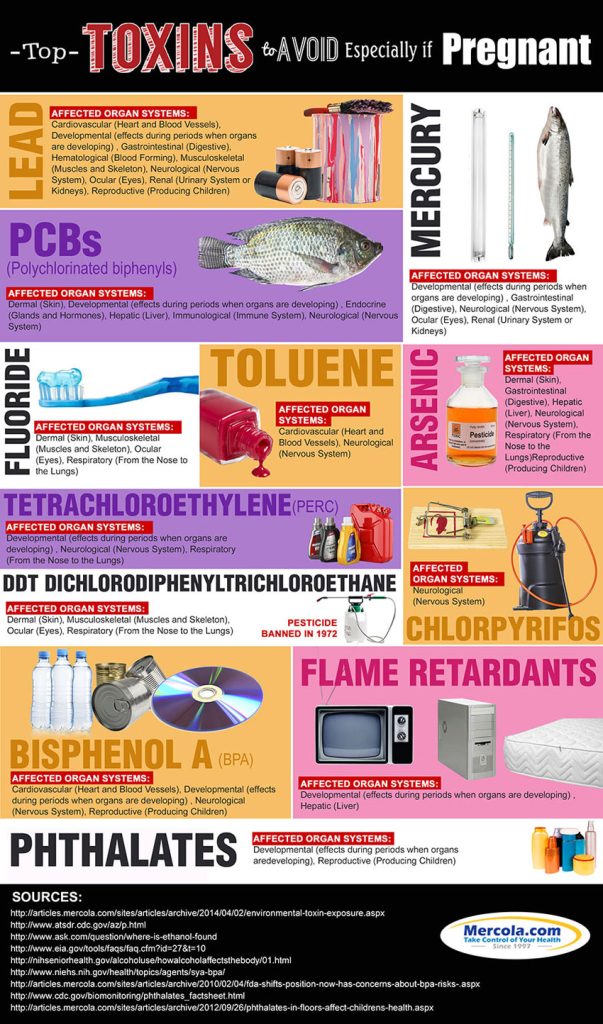 Toxins to Avoid if Pregnant Infographic – click image to expand |
Avoid drinking unfiltered tap water — Our waterways are constantly being polluted by industrial waste and byproducts, pharmaceutical drugs (such as birth control pills and other hormone therapies), pesticides and commercial cleaning products. Heavy metals are the most common of the reproductive toxins reaching our water supply through industrial waste, jet fuel exhaust residue and a variety of other sources.
Eat an optimal fertility diet — An optimal fertility diet is about what to avoid as much as it is about what to include. Eat REAL food, ideally organic, to avoid pesticide residues, and locally grown. Processed and packaged foods are a common source not only of pesticides but also chemicals such as bisphenol-A and phthalates.
Key elements are good-quality protein sources (organic and grass fed when it comes to animal products) and healthy fats.
Avoid factory farmed animal products, harmful trans fats and processed vegetable oils. Also avoid unfermented soy products, as soybeans contain phytoestrogens that act on hormones. For an added boost, consider adding more of the following “sperm-enhancing” foods:37 organic pastured eggs, spinach, bananas, dark chocolate, asparagus, broccoli, pomegranates, walnuts, garlic and all zinc-rich foods (as zinc plays a key role in sperm development).
Avoid common allergens — An overactive immune system is more likely to attack its own body cells, and the link between food intolerances and anti-sperm antibodies is well established. The two most widely spread food intolerances are gluten and dairy. Factory farmed milk can also be a source of estrogen that can harm a man’s fertility. Hormones found in factory farmed cows’ milk include:
- Prolactin
- Somatostatin
- Melatonin
- Oxytocin
- Growth hormone
- Luteinizing hormone-releasing hormone
- Thyroid-stimulating hormone
- Estrogens
- Progesterone
- Insulin
- Corticosteroids and many more
Minimize microwave exposure — Avoid carrying your cellphone on your body while it is on, and avoid using laptops and tablets on your lap. More generally, it would also be wise to limit your total exposure by turning your Wi-Fi off at night, and make your bedroom an EMF-free zone.
Get checked for sexually transmitted diseases (STDs) — Some STDs can be asymptomatic, meaning you may not be aware you have them as there are no obvious symptoms. One such STD is a chlamydia infection. In men, chlamydia can lead to sperm abnormalities including sperm antibodies.
In women, it can lead to scarring, blocked tubes and miscarriage. Most STDs are easy to treat, so it pays for both partners to have an STD check. There is no point in only one partner going for a test as the other partner can reinfect them again.
Avoid coffee, smoking and alcohol — While organic black coffee has a number of health benefits, fertility does not appear to be one of them. On the contrary, studies suggest it decreases fertility. In one study, men who drank three or more caffeinated beverages per day during the conception phase raised their partner’s risk of miscarriage by more than 70%.38
Alcohol is also harmful to both eggs and sperm, and increases the risk of miscarriage. Needless to say, smoking and recreational drugs also have an adverse effect on fertility, reducing the size of your testes and lowering your sperm count.
Get regular exercise — According to research, getting at least 30 minutes of exercise three times a week can help boost men’s sperm count. And, to maintain healthy swimmers, you need to stay active — within a month of quitting exercise, sperm count starts to wane again.39 That said, be aware that bicycling may have an adverse effect on your sperm. In one study, men who routinely cycled 300 kilometers per week ended up having fertility problems.40Normalize your weight — Obesity contributes to infertility, so normalizing your weight can help improve your sperm quality and quantity. For guidance, please review my free nutrition plan.Limit hot baths and saunas — While hot baths and saunas have a myriad of health benefits, the heat can take a toll on sperm. In one three-year-long study, 5 of 11 men who quit taking hot baths were able to raise their sperm count by nearly 500%. So, limiting hot baths and saunas for a few months may be helpful during the conception phase. I do a far-infrared sauna nearly every day, but I put a small freezer block of ice next to my groin to keep the temperature low.Combat stress — From making sure you’re getting sufficient amounts of sleep and exercising regularly to incorporating a tool like the Emotional Freedom Techniques (EFT) or taking up yoga or meditation, there are many ways to address stress. Try a few different things and stick to whatever works.
Clean up your home environment — Use natural cleaning products or make your own. Avoid those containing 2-butoxyethanol (EGBE) and methoxydiglycol (DEGME) — two toxic glycol ethers that can compromise your fertility and cause fetal harm. Look for products made by companies that are Earth-friendly, animal-friendly, sustainable, certified organic and GMO-free.
This applies to everything from food and personal care products to building materials, carpeting, paint, furniture, mattresses and others.
When buying new products such as furniture, mattresses or carpet padding, consider buying flame retardant-free varieties, containing naturally less flammable materials, such as leather, wool, cotton, silk and Kevlar.
Avoid stain- and water-resistant clothing, furniture and carpets to avoid perfluorinated chemicals. Use a vacuum cleaner with a HEPA filter to remove contaminated house dust. This is one of the major routes of exposure to flame retardant chemicals.
Also switch over to organic toiletries, including shampoo, toothpaste, antiperspirants and cosmetics. EWG’s Skin Deep database41 can help you find personal care products that are free of phthalates and other potentially dangerous chemicals.
– Sources and References
- 1 Washington Post July 25, 2017
- 2 Scientific American July 26, 2017
- 3 Medical News Today July 26, 2017
- 4 Science Daily, July 26, 2017
- 5 CNN July 25, 2017
- 6 Human Reproduction Update July 25, 2017 [Epub ahead of print]
- 7 Time July 25, 2017
- 8 BBC News July 25, 2017
- 9 BMJ 1992 Sep 12;305(6854):609-13
- 10 PLOS Genetics July 20, 2017 [Epub ahead of print]
- 11, 15 New York Times March 11, 2017
- 12 Consumer Affairs May 18, 2017
- 13 Toxicology 2009 Aug 21;262(3):184-91
- 14 Environmental Health News July 26, 2017
- 16 The Daily Beast May 13, 2015
- 17 SourceWatch, American Chemistry Council
- 18 The Guardian November 4, 2013
- 19 JCRPE 2011 Mar; 3(1): 1–6
- 20 The New York Times March 30, 2012
- 21 EWG July 14, 2005
- 22 American Public Health Association, November 9, 2010
- 23 National Institute of Environmental Health Sciences, Endocrine Disruptors
- 24 EWG August 12, 2022
- 25 NIEHS, Endocrine Disruptors
- 26 EWG, July 21, 2022
- 27 The Guardian July 25, 2017
- 28 Natural Fertility Info, Pesticides in Food Affect Male Fertility
- 29 IARC, Press Release May 31, 2011
- 30 Rev Environ Health. 2015;30(2):99-116
- 31 The Journal of Sexual Medicine, Volume 20, Issue Supplement 1, May 2023
- 32 Safe Space Protection, Male Fertility Impacted by EMFs
- 33 Environ Int. 2014 Sep; 70C:106-112
- 34 Central European Journal of Urology 2014; 67(1): 65–71
- 35 Fertility and Sterility January 2012; 97(1): 39-45.e2
- 36 Natural Fertility Prescription
- 37 Practo December 17, 2016
- 38 Reuters March 30, 2016
- 39 BBC News December 6, 2016
- 40 Telegraph July 26, 2017 (Archived)
- 41 EWG Skin Deep Database
Excess Sleep Can Increase Stroke Risk by 85%
Reproduced from original article:
https://articles.mercola.com/sites/articles/archive/2022/11/21/too-much-sleep-increase-stroke-risk.aspx
The original Mercola article may not remain on the original site, but I will endeavor to keep it on this site as long as I deem it to be appropriate.
Analysis by Dr. Joseph Mercola Fact Checked November 21, 2022

STORY AT-A-GLANCE
- Compared with sleeping seven to eight hours a night, those who slept for nine hours or more had a 23% greater risk of stroke
- Those who took long midday naps of more than 90 minutes also had a greater stroke risk — by 25% — than those who napped for 30 minutes or less
- The greatest risk occurred among those who both slept for nine hours or more at night and napped for more than 90 minutes; this combination increased stroke risk by 85%
- Sleeping for less than seven or more than eight hours per night is associated with an increased risk of high blood pressure, a leading risk factor for stroke
While the pitfalls of too little sleep have been well documented, there are also risks of sleeping too much, which is generally defined as more than nine hours a night. Specifically, excessive sleep, along with long midday naps, may increase your risk of stroke, according to a Chinese study involving 31,750 people.1
It’s unclear exactly why excess sleep increases stroke risk, but long nappers and sleepers are more likely to have increased waist circumferences and inactive lifestyles, both of which are risk factors for stroke. However, other mechanisms could also be at play, as the relationship between sleep and cardiovascular health is complex and still being explored.
Too Much Sleep, Long Naps Increase Stroke Risk by 85%
Compared with sleeping seven to eight hours a night, those who slept for nine hours or more had a 23% greater risk of stroke, while shorter sleep (less than six hours a night) had no significant effect on stroke risk. Those who took long midday naps of more than 90 minutes also had a greater stroke risk — by 25% — than those who napped for 30 minutes or less.2
The greatest risk of all, however, occurred among those who both slept for nine hours or more at night and napped for more than 90 minutes. This excessive sleep combination increased stroke risk by 85% compared to moderate sleepers and nappers.
Sleep quality also matters, and the researchers found, “Compared with good sleep quality, those with poor sleep quality showed a 29%, 28% and 56% higher risk of total, ischemic, and hemorrhagic stroke, respectively.”3 People who were long nighttime sleepers with poor sleep quality were 82% more likely to have a stroke compared to moderate sleepers with good-quality sleep.
What’s more, even switching sleep duration from moderate to long increased stroke risk. Those who switched from seven to nine hours of sleep a night to nine hours or more were 44% more likely to have a stroke than persistent moderate sleepers.4 Previous research has also linked sleeping for more than eight hours per night with stroke, particularly in the elderly and women.5
The Link Between Sleep Duration and Stroke
In the U.S., more than 795,000 people have a stroke every year, which amounts to one stroke every 40 seconds.6 While stroke is the second leading cause of death, and a leading cause of disability, worldwide,7 it’s only recently that its link to sleep has become more widely recognized. In fact, most strokes occur in the first hours of the day, a time during sleep when blood pressure patterns dip, then surge in the morning.
“This morning blood pressure surge has been suggested to lead to increased cardiovascular and cerebrovascular events in the morning by disrupting vulnerable plaques, leading to rupture and thrombosis,” researchers explained in the journal Frontiers in Neurology.8
Sleep duration is also associated with an increased risk of high blood pressure, a leading risk factor for stroke. One study revealed, for instance, that sleeping for less than seven or more than eight hours per night is associated with an increased risk of high blood pressure.9
Disrupted sleep, including that caused by sleep apnea or limb movements during sleep, can also raise stroke risk, as noted in the Journal of Stroke,10 perhaps because it puts extra stress on your cardiovascular system:
“Any causes of sleep curtailment or fragmentation such as sleep restriction, sleep apnea, insomnia, periodic limb movements during sleep, and shift work, not only impair cardiovascular restoration but also impose a stress on the cardiovascular system. Sleep disturbances have been reported to play a role in the development of stroke and other cardiovascular disorders.”
In order to reduce your risk of stroke and other chronic conditions, optimizing your sleep is crucial — but what’s the “magic” number? Adults need an average of seven to nine hours of sleep a night, with most doing well with about eight.
Additional Risk Factors for Stroke
There are a number of risk factors for stroke aside from excess sleep, many of them physical in nature. As mentioned, high blood pressure is the greatest one, increasing risk of stroke by two- to fourfold.11 Other health conditions, including heart disease, diabetes, atherosclerosis and obesity, also increase the risk, as do smoking cigarettes and physical inactivity.
Using antibiotics for an extended period of time during middle-age or later may also increase the risk of cardiovascular disease, including heart attack and stroke, in women.12
Among younger adults, in particular, men have a higher risk of stroke than women, and African-American and Hispanic Americans are about two times more likely to have a stroke than Caucasians.13
Further, according to Dr. Lee H. Schwamm, stroke neurologist at Massachusetts General Hospital, and Dr. Lawrence R. Wechsler, professor of neurology at Perelman School of Medicine School of Medicine, the risk factors for stroke among people under the age of 50 differ from those in older patients, and include the following:14
| Arterial dissection causing a blood clot — Causes of arterial dissection, which is when the lining of an artery tears, can occur during sudden neck movements, including sports injuries to the neck and jolting that can occur when riding a roller coaster |
| Hole in the heart (patent foramen ovale) — An estimated 1 in 4 people has this condition, which raises your odds of a stroke, as it can allow a blood clot to cross through your heart and into your brain |
| Blood clots |
| Heart defects or disturbed heart rhythm |
| Narrowing of the arteries caused by stimulants or drugs, causing a sudden lack of oxygen to your brain |
| Aneurism or arteriovenous malformation |
Exercise Slashes Stroke Risk
What’s worse for your health than excess sleep is excess sleep combined with physical inactivity and prolonged sitting. In fact, one study found “… physical inactivity, prolonged sitting and/or long sleep duration … had the strongest associations with all-cause mortality.”15
The good news is that exercise is very effective at both improving your sleep quality and reducing your risk of stroke, even in small doses. Less than an hour of strength training per week can reduce your risk for heart attack and stroke anywhere from 40% to 70%.16 Less than one hour of strength training per week also lowered the risk of metabolic syndrome, which raises your risk for Type 2 diabetes, heart disease and stroke, by 29%.17
Daily walks may also have a protective effect, particularly in reducing stroke severity should one occur. Adults who participate in light to moderate physical activity may have less severe strokes than their physically inactive peers, with researchers recommending at least four hours of walking or two to three hours of swimming a week as a potential means of reducing stroke severity.18
One reason why exercise is protective against stroke is because elevating your core temperature through exercise, steam rooms, hot baths or saunas helps optimize heat shock proteins (HSP) inside your cells, which limit cellular damage facilitate cellular recovery,19 and improves protein misfolding and repair.
Accumulation of damaged HSP may lead to plaque formation in your brain or cardiovascular system, thus leading to an increased risk of stroke or cardiovascular disease. Toward that end, researchers have also linked sauna use with a reduced risk for stroke and high blood pressure, because it increases heat shock proteins.20
Most Strokes Are Due to Lifestyle Factors
The vast majority of strokes are linked to modifiable lifestyle factors, which is why I strongly encourage you to take control of your health to reduce your risk. If you’re sleeping too much, seek out the underlying reasons why and address them at the source.
Overall, however, many of the same risk factors that raise your risk of heart disease — such as obesity, smoking and inactivity — also raise your risk of stroke. Common nutrient deficiencies, like vitamin D and magnesium, also raise your risk.
Ideally, measure your vitamin D level twice a year and make sure you maintain a healthy level between 60 and 80 ng/mL (150 and 200 nmol/L) year-round, either from sensible sun exposure or oral supplementation, or both. To raise your magnesium level, eat magnesium-rich foods and/or take a magnesium supplement, balanced with vitamins D3, K2 and calcium. Other key stroke-prevention strategies include:
- Eat real food — A diet of unprocessed or minimally processed whole foods, rich in healthy fats and fermented foods and low in net carbs, will protect your heart and cardiovascular health.
- Manage your stress — Stress is associated with a high-risk of stroke,21 and while experiencing stress is inevitable, how you manage it can make the difference in how it affects your health. My favorite overall tool to manage stress is EFT (Emotional Freedom Techniques).
Act FAST if Stroke Occurs
If you or a loved one is having a stroke, emergency medications can dissolve the clot that is blocking blood flow to your brain. Acting fast is crucial, however, as in order to be effective, you typically need to get help within three hours — and the sooner the better.22
Most strokes occur without warning, so knowing the following symptoms of stroke and calling 911 immediately can therefore be the difference between life and long-lasting disability or death.
- Sudden numbness or weakness of face, arm or leg, especially when occurring on one side of the body; face drooping, typically on just one side
- Sudden confusion; trouble talking or understanding speech
- Sudden trouble seeing in one or both eyes, or double vision
- Sudden trouble walking, dizziness or loss of balance or coordination
- Sudden severe headache with no known cause; nausea or vomiting
Even if the symptoms are brief and disappear, a mini stroke may have occurred, so get emergency help if you or a loved one experiences any of these symptoms. A helpful acronym to memorize is FAST:
F: Face drooping
A: Arm weakness
S: Speech impairment
T: Time to call 911!
After a stroke, neuroplasticity training can also help you to regain lost function if implemented immediately. Bob Dennis’ book “Stroke of Luck: Master Neuroplasticity for Recovery and Growth After Stroke,” and its shortened version, “Stroke of Luck: NOW! Fast and Free Exercises to Immediately Begin Mastering Neuroplasticity Following a Stroke,” are excellent reference books that can help you to optimize recovery after a stroke.
- 1, 3 Neurology December 11, 2019
- 2, 4 MedPage Today December 11, 2019
- 5 Sci Rep. 2016; 6: 33664
- 6 U.S. CDC, Stroke Facts
- 7, 8 Front Neurol. 2017; 8: 392
- 9 Sleep. 2006 Aug;29(8):1009-14
- 10 J Stroke. 2018 Jan; 20(1): 12–32
- 11 National Institute of Neurological Disorders and Stroke, Brain Basics: Preventing a Stroke, What are treatable risk factors?
- 12 European Heart Journal April 24, 2019
- 13 National Institute of Neurological Disorders and Stroke, Brain Basics: Preventing a Stroke, What are risk factors for a stroke
- 14 New York Times March 5, 2019
- 15 PLOS Medicine December 8, 2015
- 16 Medicine & Science in Sports & Exercise March 2019, 51(3):499-508
- 17 Science Daily November 13, 2018
- 18 Neurology 2018; 00: e1-e7 [PDF]
- 19 Journal of Cell Science, 2004, 117:2641
- 20 BMC Med. 2018; 16: 219
- 21 J Neurol Neurosurg Psychiatry. 2012 Nov;83(11):1104-10. doi: 10.1136/jnnp-2012-302420. Epub 2012 Aug 27
- 22 American Stroke Association, Why Getting Quick Stroke Treatment Is Important
COVID Jabs Impact Both Male and Female Fertility
Reproduced from original article:
https://articles.mercola.com/sites/articles/archive/2022/07/25/covid-vaccine-fertility-issues.aspx
The original Mercola article may not remain on the original site, but I will endeavor to keep it on this site as long as I deem it to be appropriate, and will not be bullied into removing it.
Analysis by Dr. Joseph Mercola Fact Checked
STORY AT-A-GLANCE
- The first COVID shots rolled out in December 2020, and it didn’t take long before doctors and scientists started warning of possible reproductive effects, as the jab may cross-react with syncytin and reproductive genes in sperm, ova and placenta in ways that might impair reproduction
- According to one recent investigation, 42% of women with regular menstrual cycles said they bled more heavily than usual after vaccination; 39% of those on gender-affirming hormone treatments reported breakthrough bleeding, as did 71% of women on long-acting contraceptives and 66% of postmenopausal women
- Other recent research has found the Pfizer COVID jab impairs semen concentration and motile count in men for about three months
- Miscarriages, fetal deaths and stillbirths have also risen after the rollout of the COVID shots. In November 2021, Lions Gate Hospital in North Vancouver, British Columbia (BC), delivered 13 stillborn babies in a 24-hour period, and all of the mothers had received the COVID jab
- Many countries are now reporting sudden declines in live birth rates, including Germany, the U.K., Taiwan, Hungary and Sweden. In the five countries with the highest COVID jab uptake, fertility has dropped by an average of 15.2%, whereas the five countries with the lowest COVID jab uptake have seen an average decline of just 4.66%
The first COVID shots rolled out in December 2020, and it didn’t take long before doctors and scientists started warning of possible reproductive effects.
Among them were Janci Chunn Lindsay, Ph.D., director of toxicology and molecular biology for Toxicology Support Services LLC, who in April 2021 submitted a public comment1 to the U.S. Centers for Disease Control and Prevention’s Advisory Committee on Immunization Practices (ACIP), highlighting the high potential for adverse effects on fertility.
I previously interviewed Lindsay in 2021. That article is not updated with the new information, but the interview (above) is a good primer for the information she shares below. In many ways, she predicted what we are now observing.
She stressed there’s credible evidence that the COVID shots may cross-react with syncytin and reproductive genes in sperm, ova and placenta in ways that might impair reproductive outcomes. “We could potentially be sterilizing an entire generation,” she warned.
Lindsay also pointed out that reports of significant menstrual irregularities and vaginal hemorrhaging in women who received the injections by then already numbered in the thousands, and that this too was a safety signal that should not be ignored.
4 in 10 COVID-Jabbed Women Report Menstrual Irregularities
As it turns out, early reports of menstrual irregularities were not a fluke. More recent investigations have confirmed that, indeed, many women experience menstrual irregularities after the shots. As reported by NBC News in mid-July 2022:2
“An analysis3 published Friday in the journal Science Advances found that 42% of people with regular menstrual cycles said they bled more heavily than usual after vaccination. Meanwhile, 44% reported no change and around 14% reported a lighter period.
Among nonmenstruating people — those post-menopause or who use certain long-term contraceptives, for example — the study suggests many experienced breakthrough or unexpected bleeding after their COVID shots.”
Other categories of people reporting abnormal breakthrough bleeding included 39% of those on gender-affirming hormone treatments, 71% of women on long-acting contraceptives and 66% of postmenopausal women.4
Older women, those who used hormonal contraception, had been pregnant previously, or had diagnoses of endometriosis, fibroids or polycystic ovarian syndrome were more likely to experience heavier bleeding than normal after their shots.
Are Menstrual Irregularities Inconsequential?
It’s worth noting that the COVID trials did not ask female participants about their menses, and didn’t collect any data on reproductive impacts. Yet, despite this clear lack of data collection, the official narrative is that everything is fine — the shots are safe and won’t impact fertility.
Just how do they know? They don’t, and that’s what makes such claims so egregious. Making matters worse, media reporting these findings continue to insist that post-jab menstrual irregularities are “normal” and not a sign that reproductive capacity is being impacted. For example, Science writes:5
“Clarifying the issue is vital. ‘It’s important to know about,’ says Victoria Male, a reproductive immunologist at Imperial College London. ‘Let’s say you got the vaccine and the next day you felt really dreadful the way some people do.’
If you hadn’t been informed of the chance of fever, muscle aches, and other effects that quickly dissipate, ‘you would be really worried,’ she said. Illuminating the chance of menstrual irregularities and confirming they aren’t a health risk also helps combat widespread misinformation that COVID-19 vaccines impair fertility, Male and others say.”
Again, no one knows whether the shots affect fertility or not for the simple fact that it hasn’t been studied. No study means no data, which means no knowledge. It’s that simple. Any claims to the contrary are based on pure guesswork, and guessing is not science.
And, while a woman’s menstrual cycle can fluctuate, abrupt changes have historically not been brushed off as inconsequential. On the contrary, suddenly abnormal menses has been listed as a potential sign of things like:6,7,8
- Uterine and/or cervical cancer
- Bleeding disorders
- Thyroid dysfunction and/or pituitary disorders affecting your hormonal balance
- Infection and/or disease
- Perimenopause
Menstrual Cycle Length Is Also Affected
Research9 published April 1, 2022, in the journal Obstetrics and Gynecology, also found an association between the COVID jab and changes in menstrual cycle length. The change was small — about one day shorter than pre-injection after the second dose — and was not deemed to be of any great concern. Still, in my mind, the change indicates that something is happening. The question is what?
Infection Can Suppress Ovarian Function
Some investigators have suggested the menstrual irregularities seen in female COVID patients and the COVID-jabbed alike may be attributed to an immune response to the spike protein.
Back in January 2021, a Chinese study10 published in Reproductive BioMedicine Online found that 28% of unvaccinated women of reproductive age diagnosed with COVID-19 had a change in the length of their cycle, 19% had prolonged cycles and 25% had a change in menstrual blood volume.
The researchers hypothesized that “the menstruation changes of these patients might be the consequence of transient sex hormone changes” caused by a temporary suppression of ovarian function during infection.
Dr. Natalie Crawford, a fertility specialist, has suggested that the menstrual irregularities seen in female COVID-19 patients may be linked to a cellular immunity response, and since the COVID shot instructs your body to make the SARS-CoV-2 spike protein, which your immune system then responds to, the effects of the jab may be similar to the natural infection.11 In a 2021 BMJ editorial, Male, quoted by Science above, presented a similar view:12
“Menstrual changes have been reported after both mRNA and adenovirus vectored COVID-19 vaccines, suggesting that, if there is a connection, it is likely to be a result of the immune response to vaccination rather than a specific vaccine component. Vaccination against human papillomavirus (HPV) has also been associated with menstrual changes.
… Biologically plausible mechanisms linking immune stimulation with menstrual changes include immunological influences on the hormones driving the menstrual cycle or effects mediated by immune cells in the lining of the uterus, which are involved in the cyclical build-up and breakdown of this tissue. Research exploring a possible association between COVID-19 vaccines and menstrual changes may also help understand the mechanism.”
That doesn’t mean menstrual irregularities are of no consequence, though. After all, it appears we’re dealing with a manmade virus, and the mRNA in the shot that programs for spike protein production is genetically engineered on top of that.
Perhaps this is why a greater percentage of women report menstrual irregularities following the COVID jab, compared to the percentage of women who experience irregularities following natural infection?
It may also be worth looking into the parallels between the blood clotting disorders reported — both in some COVID-19 cases and post-COVID-19 jab — and Von Willebrand disease,13 a chronic condition that prevents normal blood clotting, thus resulting in excessively heavy periods.
Miscarriages, Fetal Deaths and Stillbirths Have Skyrocketed
Menstrual irregularities aren’t the only safety signal. Miscarriages, fetal deaths and stillbirths have also risen after the rollout of the COVID shots. In November 2021, Lions Gate Hospital in North Vancouver, British Columbia (BC), delivered an astonishing 13 stillborn babies in a 24-hour period, and all of the mothers had received the COVID jab.14
In a typical month, there may be one stillborn baby at the hospital, making 13 stillbirths in 24 hours highly unusual. Scotland has also experienced an unusual rise in infant death rates. During September 2021, at least 21 babies under 4 weeks old died — a rate of 4.9 per 1,000 births. Historically, the average death rate among newborns in Scotland is about 2 per 1,000 births.15
Yet, despite stillbirths going up after the introduction of the COVID jabs — as opposed to rising beforehand — studies linking stillbirths to SARS-CoV-2 infection have been used to encourage pregnant women to get the shot.16
So, basically, it’s been discovered that the infection itself can cause stillbirth (and we know the spike protein of the virus is the part that causes most of the problems), yet they want you to believe that the spike protein produced by the shot will somehow have a protective impact on pregnancy.
This line of reasoning falls apart even further when you consider that scientists are now saying post-jab menstrual irregularities are likely due to immune responses that arise in response to both the virus and the jab. If that’s true, then why would the COVID shot not also be able to cause stillbirths to the same or greater degree than the virus?
There Are No Data to Support COVID Jab for Pregnant Women
Health officials are adamant that pregnant women get a COVID-19 injection, but the data don’t support its safety. The CDC-sponsored study17 published in The New England Journal of Medicine (NEJM) that was widely used to support the U.S. recommendation for pregnant women to get injected was corrected in October 2021, with the correction stating:18
“In the table footnotes, the following content should have been appended to the double dagger footnote:
‘No denominator was available to calculate a risk estimate for spontaneous abortions, because at the time of this report, follow-up through 20 weeks was not yet available for 905 of the 1224 participants vaccinated within 30 days before the first day of the last menstrual period or in the first trimester. Furthermore, any risk estimate would need to account for gestational week-specific risk of spontaneous abortion.'”
COVID Jab Affects Male Fertility Too
Other recent research19,20 has found the Pfizer COVID jab also “temporarily impairs semen concentration and motile count” in men. As noted by the authors:21
“The development of COVID-19 vaccinations represents a notable scientific achievement. Nevertheless, concerns have been raised regarding their possible detrimental impact on male fertility …
Thirty-seven SD [semen donors] from three sperm banks that provided 216 samples were included in that retrospective longitudinal multicenter cohort study. BNT162b2 vaccination included two doses, and vaccination completion was scheduled 7 days after the second dose.
The study included four phases: T0 — pre-vaccination baseline control, which encompassed 1–2 initial samples per SD; T1, T2 and T3 — short, intermediate, and long terms evaluations, respectively. Each included 1-3 semen samples per donor provided 15-45, 75-125 and over 145 days after vaccination completion, respectively …
Repetitive measurements revealed −15.4% sperm concentration decrease on T2 (CI −25.5%-3.9%, p = 0.01) leading to total motile count 22.1% reduction (CI −35% – −6.6%, p = 0.007) compared to T0.
Similarly, analysis of first semen sample only and samples’ mean per donor resulted in concentration and total motile count (TMC) reductions on T2 compared to T0 — median decline of 12 million/ml and 31.2 million motile spermatozoa, respectively … on first sample evaluation and median decline of 9.5 × 10⁶ and 27.3 million motile spermatozoa … on samples’ mean examination. T3 evaluation demonstrated overall recovery without …
This longitudinal study focused on SD demonstrates selective temporary sperm concentration and TMC deterioration 3 months after vaccination followed by later recovery verified by diverse statistical analyses.”
As with women’s menstrual problems, the authors blame these adverse effects in men on a “systemic immune response” to the COVID shot. However, while they claim men’s’ reproductive capacity will recover in about three months, this could still be a tremendous problem.
Remember, the mRNA shots are recommended at three-month intervals for the original series, and boosters are now being recommended at varying intervals thereafter. If you destroy a man’s sperm for three months every time he gets a COVID shot, you’re significantly reducing the probability of him fathering a child for a good part of any given year.
Massive Depopulation Underway
Whether accidental or intentional, the fact of the matter is that we’re now seeing an abrupt drop in live births along with an equally sudden rise in excess deaths among adults. The end result will be a reduction in the global population.
That seems inevitable at this point, and the timing of these trends correspond with the release of these experimental COVID gene transfer injections. For example, Germany recently released data showing a 10% decline in birth rate during the first quarter of 2022.22

The live birth rate graph for Sweden looks much the same:23,24

Other countries are also seeing unexpected birth rate reductions, nine months after the start of the mass vaccination campaign against COVID. Between January and April 2022, Switzerland’s birth rate was 15% lower than expected, the U.K.’s was down by 10% and Taiwan’s was down 23%.25,26,27
In the five countries with the highest COVID jab uptake, fertility has dropped by an average of 15.2%, whereas the five countries with the lowest COVID jab uptake have seen an average reduction of just 4.66%.
In a July 5, 2022, Counter Signal article, Mike Campbell reported concerns expressed by Hungarian MP Dúró Dóra during a Parliamentary speech:28
“In January this year, something happened that has not happened for decades. The birth rate fell by 20% compared to the same period last year. And what is even more worrying is that the fertility has also fallen — something not seen since 2011 …
[A] researcher at the KRTK Institute of Economics points out that this drastic decline came just nine months after the COVID mass vaccinations began in Hungary.”
After looking into further, Campbell discovered that in the five countries with the highest COVID jab uptake, fertility has dropped by an average of 15.2%, whereas the five countries with the lowest COVID jab uptake have seen an average reduction of just 4.66%.
The U.S. is also showing signs of a drop in live births. Provisional data from North Dakota shows a 10% decline in February 2022, 13% reduction in March and an 11% reduction in April, compared to the corresponding months in 2021.29 Below is a chart from Birth Gauge30 on Twitter comparing live birth data for 2021 and 2022 in a large number of countries.

Take Responsibility for Your Health
At this time, women are not being warned about the risks for miscarriage, menstrual irregularities and the potential for fertility problems and stillbirths, even though all of these safety signals are glaringly obvious. As obstetrician-gynecologist specialist, Dr. James Thorp, told The Epoch Times in April 2022:31
“I’ve seen many, many, many complications in pregnant women, in moms and in fetuses, in children, offspring, fetal death, miscarriage, death of the fetus inside the mom… What I’ve seen in the last two years is unprecedented.”
Tragically, doctors are under a worldwide gag order. They steer patients away from the COVID shot at the risk of losing their medical license. This puts patients in an incredibly risky situation, as most rely on their doctors to tell them the truth. Few expect doctors to lie or hide life saving information from them simply to protect their own career. So, we’re in unprecedented times in more ways than one.
What this means is that you have no choice, really, but to do your own research and gauge the risks as best you can. There are tons of data out there — data that the mainstream media won’t touch, and if they do, they still insist adverse events aren’t a sign of danger. In such situations, you simply have to put on your thinking cap and think it through for yourself.
As of July 15, 2022, the U.S. Vaccine Adverse Event Reporting System (VAERS) had logged 1,350,947 adverse event reports following the COVID jab, including 29,635 deaths,32 and there’s evidence that reports are being deleted from the system by the thousands. You can learn more about that in “Thousands of Deaths and Adverse Reactions Deleted From VAERS.”
The safety signals coming from the COVID jabs exceed anything else in medical history. No drug or vaccine has ever been associated with as many injuries and deaths, including harm to the unborn.
At this point, it appears we’re looking at a certain depopulation event. The question then is, are you willing to accept the risks? Are you willing to risk your fertility, even if only temporarily? Are you willing to risk the life of your baby? Are you willing to risk your own? If not, the answer is simple. Don’t take the jab, and if you’ve already taken one or two (or three), never take another.
- 1 SoundCloud Dr. Janci Chunn Lindsay CDC ACIP Public Comment April 23, 2021
- 2 NBC News July 15, 2022
- 3, 5 Science July 15, 2022
- 4 Yahoo News July 17, 2022
- 6 Cleveland Clinic Abnormal Menstruation
- 7 NIH Menstrual Irregularities
- 8 Menopause Now June 18, 2020
- 9 Obstetrics and Gynecology April 1, 2022: 139(4):481-489
- 10 Reproductive BioMedicine 2021 Jan; 42(1): 260–267
- 11 The Defender April 28, 2021
- 12 BMJ 2021;374:n2211
- 13 Mayo Clinic Von Willebrand Disease
- 14 The Phaser November 18, 2021
- 15 BBC News November 19, 2021
- 16 WDSU November 24, 2021
- 17 N Engl J Med 2021; 384:2273-2282
- 18 N Engl J Med 2021; 385:1536, Correction October 14, 2021
- 19, 21 Andrology June 17, 2022 DOI: 10.111/andr.13209
- 20 Expose June 26, 2022
- 22 Expose News July 18, 2022
- 23, 25, 28 The Counter Signal July 5, 2022
- 24 Twitter Havard Skjaervik June 27, 2022
- 26, 29 Igor Chudov Substack June 25, 2022
- 27 SWPRS June 2022
- 30 Twitter Birth Gauge June 3, 2022
- 31 Epoch Times April 27, 2022
- 32 OpenVAERS data as of July 15, 2022
Are These Chemicals Part of a Depopulation Agenda?
Reproduced from original article:
https://articles.mercola.com/sites/articles/archive/2022/05/14/endocrine-disrupting-chemicals.aspx
The original Mercola article may not remain on the original site, but I will endeavor to keep it on this site as long as I deem it to be appropriate, and will not be bullied into removing it.
Analysis by Dr. Joseph Mercola Fact Checked May 14, 2022
STORY AT-A-GLANCE
- In 1992, researchers published data showing the quality of sperm counts in men had been cut nearly in half over the previous 50 years. A 2017 systematic review confirmed this trend, showing a 50% to 60% drop in total sperm count among men in North America, Europe, Australia and New Zealand between 1973 and 2011
- Testosterone has also declined in tandem with lower sperm counts, while miscarriage rates among women and erectile dysfunction among men have been steadily rising
- We can rule out genetics as the cause, because the decline in sperm count is simply too rapid. That leaves us with environmental causes. Environmental causes can be broadly divided into two broad categories: Lifestyle and chemicals
- Lifestyle factors that negatively impact fertility include obesity, smoking, binge drinking and stress
- A great number of chemicals can impact fertility either directly or indirectly, but the most concerning class are endocrine disrupting chemicals (EDCs) such as phthalates. EDCs disrupt hormones, including sex hormones necessary for reproductive function, such as testosterone
In the After Skool video above, Shanna H. Swan, Ph.D., a leading environmental and reproductive epidemiologist and professor of environmental medicine and public health at the Icahn school of Medicine at Mount Sinai in New York City, examines the role of environmental toxins in reproductive health.
In 1992, researchers published data showing the quality of sperm counts in men had been cut nearly in half over the previous 50 years. According to this study:1
“Linear regression of data weighted by number of men in each study showed a significant decrease in mean sperm count from 113 x 10(6)/ml in 1940 to 66 x 10(6)/ml in 1990 and in seminal volume from 3.40 ml to 2.75 ml, indicating an even more pronounced decrease in sperm production than expressed by the decline in sperm density …
As male fertility is to some extent correlated with sperm count the results may reflect an overall reduction in male fertility. The biological significance of these changes is emphasized by a concomitant increase in the incidence of genitourinary abnormalities such as testicular cancer and possibly also cryptorchidism and hypospadias, suggesting a growing impact of factors with serious effects on male gonadal function.”
Are Humans Going Extinct?
Swan was initially skeptical, but she decided to look into it some more. To her amazement, after reviewing each of the 60 studies included in that 1992 analysis, she could find nothing to indicate that the finding was a fluke. It was the most stable trend she’d ever come across, and she spent the next 20 years investigating why human reproduction is plummeting.
In 2017, she published a systematic review and meta-regression analysis2 showing a 50% to 60% drop in total sperm count among men in North America, Europe, Australia and New Zealand between 1973 and 2011. Overall, men in these countries had a 52.4% decline in sperm concentration and a 59.3% decline in total sperm count (sperm concentration multiplied by the total volume of an ejaculate).
Swan refers to this shocking 39-year decline as “the 1% effect,” meaning the cumulative effect that an annual change of just 1% has over time. Testosterone has also declined in tandem with lower sperm counts, while miscarriage rates among women and erectile dysfunction among men have been steadily rising.
If these trends continue, and there’s no indication that they won’t, in the not-so-distant future, we’ll be looking at a male population that is completely infertile. At that point, the human population will become extinct. Along the way, however, we’ll be facing a number of other pressing problems.
How Will We Care for Aging Baby Boomers?
Historically, the age distribution of the population has looked like a pyramid. The bottom largest section was children, the middle, slightly smaller section was working adults, and the top of the pyramid was seniors. This worked out well, because the younger population was able to financially support and care for the much smaller older segment.
We no longer have that pyramid. In most countries, the population distribution now looks like a light bulb, with a narrow base of children, a bulbous segment of adults, and a narrowing but still very large segment of older adults.
Part of the equation is the fact that life spans have gotten longer, which is wonderful. But the funds to support this aging population — through social security and Medicare in the U.S., for example — are dwindling, as the payer base is shrinking so dramatically.
Another problem is the fact that we won’t have the labor force required to keep the economy afloat. There aren’t enough children to fill all the jobs after the adult population retires.
What’s the Cause?
According to Swan, there are likely a whole host of factors contributing to this reproductive calamity. We can, however, rule out genetics, because the decline in sperm count is simply too rapid. A 50% decline in just two generations cannot be explained by genetics.
That leaves us with environmental causes. Environmental causes can be broadly divided into two broad categories: Lifestyle and chemicals. Lifestyle factors that negatively impact fertility include:
- Obesity
- Smoking
- Binge drinking
- Stress
On the chemical side, we know that a great number of chemicals can impact fertility either directly or indirectly, but the most concerning class are endocrine disrupting chemicals (EDCs).3 EDCs disrupt hormones, including sex hormones necessary for reproductive function.
Many EDCs will mimic hormones, effectively taking their place. But, of course, the chemical doesn’t function the way the natural hormone does, so whatever that hormone controls won’t function well either. As explained in the 2019 report, “Male Infertility and Environmental Factors”:4
“Classically the EDCs bind to the androgen or estrogen receptor triggering an agonist or antagonist action. These in turn lead to increased or decreased gene expression of sex-specific genes.
In addition, EDCs act on steroidogenic enzymes and the metabolism of hormones, for example, inhibit the activity of 5-α reductase, which is the most important enzyme in the production of dihydrotestosterone and hence the regulation of the masculinization of the external genitalia and the prostate.
Furthermore, P450 enzymes in the liver that metabolize steroid hormones may be affected. In animal models EDCs affect hormone receptor levels. In addition to the effect on hormone action, animal experiments suggest that EDCs may also result in epigenetic changes and miRNA levels.”
Shaw suspects EDCs are a primary culprit in infertility, in part because we’re surrounded by them every day of our lives. We’re exposed to them through our food, water, personal care products, furniture, building materials, plastics and much more.
In Utero Exposure to EDCs Can Drive Down Fertility
The most vulnerable time of a person’s life is in utero. This is when the building blocks for your reproductive system are laid down, and exposure to EDCs at this time can wreak havoc with a child’s adult reproductive capacity. Since the fetus shares the mother’s body, everything the mother is exposed to, the fetus is exposed to.
As explained in the video, a boy’s reproductive system is dependent on a certain level of testosterone for proper development. If the testosterone level is too low, his reproductive system will be impaired to some degree. In short, without sufficient testosterone, the boy’s reproductive system will “default” to female. He will be feminized, or as Shaw describes it, “incompletely masculinized.”
Phthalates Are in Everybody
Shaw was tipped off to investigate phthalates by a chemist at the U.S. Centers for Disease Control and Prevention, who noted that these EDCs have been found in everybody, including pregnant women.
Specifically, phthalates have been shown to disrupt the reproductive development of males, because they lower testosterone levels and incomplete male development in animals has now become so prevalent, there’s even a name for it: phthalate syndrome.
Animal studies have shown that when a pregnant mother is fed phthalates in early pregnancy, her male offspring will have smaller and less developed reproductive organs. His testicles may not be descended, his penis may be smaller, and his anogenital distance (the distance between the anus and the genitals) tends to be shorter.
Shaw was the first to study the anogenital distance in human male infants, and was able to confirm phthalate syndrome is occurring in humans as well. Boys born of women with high levels of phthalic metabolites in their urine — specifically those that lower testosterone — had phthalate syndrome, and the severity was dose-dependent.
Shaw then replicated the study with another set of mothers and their babies, and found the same result. The next question then is, does a shorter anogenital distance result in lower sperm count?
According to Shaw, boys with a short anogenital distance are more likely to have reproductive defects such as undescended testicles and defects of the penis. He’s also more likely to develop testicular cancer at an earlier age than normal, and he’s more likely to be sub-fertile.
So, it is her professional conclusion that phthalate exposure in utero is “undoubtedly part of the explanation of the decrease in sperm count and fertility.” Phthalates and polyfluoroalkyl substances (PFAS) have also been linked to reduced bone mineral density in male teens,5 which could have significant implications later in life.
Common Sources of Phthalate Exposure
Phthalates are found in plastics. They’re what make the plastic soft and flexible, so wherever you find soft and pliable plastic, you find phthalates. Examples include:
- Vinyl clothing, such as raincoats and rubber boots
- Plastic shower curtains
- Plastic tubing of all kinds
- Foods that have been processed through plastic tubing, such as dairy products (the milking machines have plastic tubing)
Phthalates also increase absorption and help retain scent and color, so you’ll find them in:
- Cosmetics, perfumes and personal care products
- Scented household products such as laundry soap and air fresheners
- Pesticides
As noted by Shaw, phthalates are only one class of EDCs. There are several others, including phytoestrogens, dioxins, flame retardants, phenols, PCBs and polyaromatic hydrocarbons. Phthalates, however, are among the most hazardous for male reproductive health due to their ability to block testosterone.
Joe Rogan also recently interviewed Shaw about this. An excerpt is included below. The full interview is available on Spotify.
Phenols Increase Female Sex Hormones
The phenols, such as bisphenol-A (BPA), have the opposite effect in that they make plastic more rigid and hard. In the human body, they increase the female hormone estrogen, resulting in breast development and a flabby midsection. BPA also damages the DNA in sperm.6 Like phthalates, BPA and other bisphenols are extremely pervasive. They’re found in:
| The lining of tin cans | Dental sealants |
| Nonstick food wrappers (food wrappers also contain PFAS) | Hard plastic sippy cups and bottles |
| Carpeting | Personal care products such as shampoos and lotions |
The Good News
The good news here is that many of the chemicals that are most harmful to reproduction are not persistent, and your body can eliminate them in four to six hours.
Sperm production take about 70 days from start to finish, so over time, a man may be able to reverse some of the damage, provided it’s not congenital. The problem, of course, is that most people are exposed to multiple sources 24/7, so successful detox means you have to stop taking them in.
Another piece of good news is that researchers have shown that if you clean up the environment of the offspring from a toxic, unhealthy rat, normal reproductive capacity is restored after three generations of clean living.
While this is a relatively quick fix for rats, the life span of which is only two years, it’s not quite as simple for humans. Three generations in human terms is about 75 years, “but we can start in that direction,” Shaw says, by making sure we a) don’t expose children to EDCs in utero, and b) eliminate further exposure during childhood if the child was exposed in utero.
Forever Chemicals in Our Food and Water
While phthalates and bisphenols are nonpersistent, PFAS — a class of chemicals that are pervasive in soil, water, and human bodies — are so persistent they’re known as “forever chemicals.” In Maine, farmers are now blowing the whistle, warning that PFAS on farmland are a “slow-motion disaster.”7
How do the chemicals get there? While spills and seepage from industrial sites are part of the problem in some areas, the most prevalent source of the contamination is biosolids — toxic human waste sludge — which is being marketed as an affordable fertilizer.
In 2019, I wrote about how the Environmental Protection Agency (EPA) has failed to adequately regulate the biosolids industry, thereby allowing massive quantities of toxic materials to be introduced into our food supply.
You can learn more about this in the Natural News documentary “Biosludged,” above. PFAS accumulate in the soil and is transferred into your food. Proof of this can be seen in food testing, which in 2017 found PFAS chemicals in 10 of the 91 foods tested.
Chocolate cake had the highest amount — 250 times above the advisory limit for drinking water. (There’s currently no limit for food.) Nearly half of the meat and fish tested also contained double the advisory limit for water. Leafy greens grown within 10 miles of a PFAS plant also contained very high amounts. As you might expect, PFAS also accumulate in your body.
Maine Takes Action
In Maine, PFAS contaminated water wells have sparked both outrage and action. A March 2022 article in The Maine Monitor spells out the game plan:8
“Maine is the first state to comprehensively test for the impacts of forever chemicals from sludge spreading on farmland, a practice occurring nationwide where fully half of wastewater sludge is land-applied. Consequently, Maine has had to pioneer policy actions, moving to implement recommendations of a year-long PFAS task force.
The next policy step must be passage of LD 1911, which would ban land application of sludge and the land application or sale of compost derived from sludge. Two dozen companies and municipalities are licensed to convert sludge into compost, despite the state’s own finding that 89% of finished compost samples exceeded the screening level for PFOA, a common PFAS compound.
Adam Nordell, co-owner of Songbird Farm in Unity — another site of high PFAS contamination — summarized the importance of LD 1911 this way: ‘No one can undo the historic contamination of our land. But we know enough now to turn off the tap.’
A second bill before the Legislature, LD 1639, would prevent the state-owned Juniper Ridge landfill, managed by Casella Waste Systems, from accepting construction and demolition debris that originated out of state and is laden with PFAS and other toxics, increasing the contaminated leachate entering the Penobscot River.”
Toxic Pesticides
Communities in Maryland and Massachusetts have also confirmed that pesticides used against mosquitoes were contaminated with PFAS, even though they’re not supposed to contain such chemicals. In April 2022, the Pesticide Action Network (PAN) reported:9
“EPA claimed that there were no PFAS chemicals used in this way, but independent testing10 revealed that there was PFAS contamination in pesticides being used by mosquito control districts — of 14 mosquito control products tested, half were found to contain PFAS. These products are heavily applied across communities, often weekly, from Spring through Fall.
In response to these concerns, EPA claimed that the PFAS contamination was due to leaching from fluorinated plastic HDPE storage containers. While this explanation has been touted by many as proof that PFAS contamination of pesticides is not a serious concern, the testing in Maryland and Massachusetts revealed that three products were contaminated from another source than the containers.
Beyond this kind of contamination, PFAS are active ingredients in at least 40 pesticide products used worldwide. And this only accounts for pesticides that include PFAS as an active ingredient.
PFAS products are a popular surfactant (helps spray more easily) so PFAS may also be used as inert ingredients in pesticides, which unfortunately don’t have to be reported since chemical composition falls under ‘trade secret’ jurisdiction.
It is clear that PFAS are present in a variety of commonly-used pesticide products, regardless of storage conditions. No research has been done on the synergistic effects of PFAS and pesticides — which we know pose their own set of human and environmental health risks.”
Again and again, the EPA has failed in its duty to protect public health from chemicals that wreak havoc on human health, fetal development and fertility. As noted by PAN, “EPA has engaged in a regulatory stalling tactic — changing the definition of what is considered to be a PFAS to shirk responsibility.”
The new “working definition” of PFAS has been considerably narrowed from what it was, thereby excluding many chemicals used in drugs and pesticides. To counter the EPA’s deliberate shortcomings, the U.S. Congress has also introduced a bill (HR.5987 — the PFAS Definition Improvement Act11) that would require the EPA to use the widest and most comprehensive definition of PFAS.
I join PAN in urging you to call on your representatives to co-sponsor this bill. Maine and Maryland have also proposed bills to prevent PFAS contamination in pesticides specifically.
It’s hard to be optimistic when faced with such dire statistics as a 1% reduction in male fertility per year. But if we care about life, we must at least try to turn things around. One step in the right direction would be to eliminate EDCs from common use. In the meantime, men and women of childbearing age would be wise to take precautions and clear out anything that might expose them to these chemicals in their day-to-day lives, before they try to conceive.
- 1 BMJ September 12, 1992, 305(6854): 609-613
- 2 Human Reproduction Update November-December 2017; 23(6): 646-659
- 3, 4 Global Reproductive Health 2019; 4(2): e28
- 5 Newswise April 29, 2022
- 6 WTOL11 April 29, 2022, Updated May 2, 2022
- 7, 8 The Maine Monitor March 13, 2022
- 9 PANNA.org April 20, 2022
- 10 Maryland Pesticide Network March 26, 2021
- 11 HR.5987
Biodistribution Study of Pfizer Covid-19 Injection suggests use of mRNA Vaccines should be suspended immediately
A biodistribution study of the Pfizer Covid-19 injection suggests a suspension of the use of mRNA ‘Vaccines’ is urgently required and blood donor organisations need to take a long hard look at their policies surrounding the acceptance of donations of blood from people who have received an mRNA based Covid-19 injection.
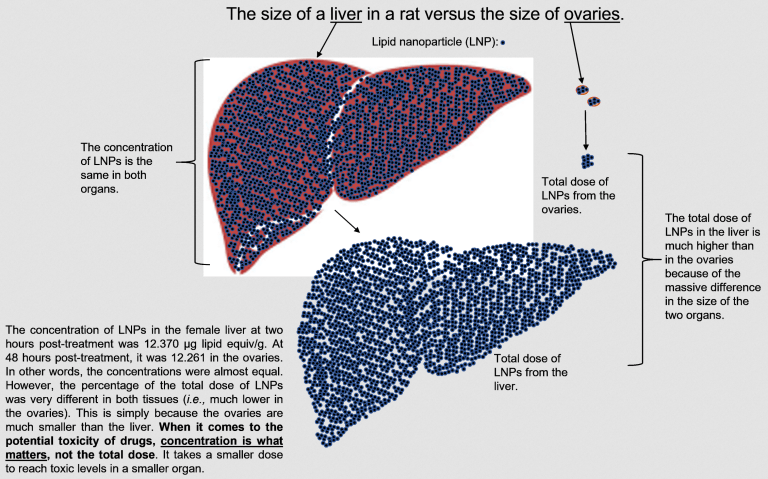
The Exposé is now censored by Facebook & Twitter. Let’s not lose touch, subscribe today to receive the latest news from The Exposé in your inbox…
Do you remember when public health and government officials assured everyone that the mRNA ‘vaccines’ function like traditional vaccine technologies? …meaning that they largely remain in the shoulder muscle where they are injected, with some portion going to the draining lymph nodes where an immune response is initiated.
Well, back in May 2021, I, along with some international colleagues, looked at a document that Pfizer had submitted to the Japanese health regulatory agency. It was a pre-clinical biodistribution study. This means it was an experiment done with an animal model to predict where the vaccine formulation might go when injected into people.
What I saw was startling.
Most of Pfizer’s vaccine spread throughout the body instead of staying at the injection site. This also meant there was the potential for toxicities that would never occur with traditional vaccines that largely remain at or close to the injection site. To ensure people could make a fully informed decision about whether to take the jab I went public with this information in a radio interview.
I wasn’t surprised by the systemic distribution of the vaccine per se. Being a vaccinologist, I knew that lipid nanoparticle delivery systems were originally designed to spread far and wide throughout the body with the hopes they could be a vehicle for gene therapy and/or drug delivery.
Instead, my surprise came from the fact that the data confirmed my historical understanding and contradicted public health messaging that the mRNA jabs behaved like traditional vaccines. Public statements by health officials made me assume the lipid nanoparticles had somehow been modified to stay at the injection site, which was news to me. This highlights one of the first rules of thumb when practicing science.
Transparently presented raw and/or peer-reviewed data are the cornerstones of objective science; not personal proclamations or data disseminated via media releases. In May 2021 I realized two things: 1. There was a lack of transparency about data supporting COVID-19 inoculations. 2. Incorrect messaging was being relayed to the public. As an academic public servant with relevant expertise, I spoke up when enquiries came from the public. I spoke the truth then and continue to do so.
As a result of this, a public campaign to impersonate and discredit me was mounted; it has not stopped and has likely caused irreparable harm to my career. Nobody involved in these personal attacks has ever been willing to talk to me about the scientific basis for my concerns. It is unfair to discredit a scientist based on a short interview for a lay audience in which only a tiny fraction of the messaging could be relayed.
My challenge to detractors then remains the same now: if you want to prove that I don’t know what I am talking about, then debate me in a moderated public forum. I contend that a real-time back-and-forth discussion of the science will show that I know exactly what I am talking about; I’m not sure the same would hold true for most of those participating in the smear campaign against me.
In that interview back in May 2021 I was asked if there might be a link between mRNA vaccines and cases of myocarditis that were being observed at increased frequency, especially among young males. My answer was yes and I started to present some potential mechanistic explanations for this, including Pfizer’s Japanese version of their biodistribution study.
Now, myocarditis is a publicly acknowledged side-effect of mRNA vaccines. Sadly, I have not received an apology from anyone who attacked me. Forgiving people is much easier when apologizing and seeking forgiveness is part of the resolution process. But this is no longer popular in our society, so I continue to struggle with forgiving those who relentlessly harass me. I need to do this to effectively move on.
In the meantime, the US Food and Drug Administration has been ordered by a court to release the data that they reviewed when authorizing Pfizer’s vaccine for emergency. Health Canada almost certainly would have reviewed the same information. It is unfortunate that the scientific community is only now starting to see reasonably transparent core data that were used to justify the rushed rollout of SARS-CoV-2 inoculations; an only due to a court order.
On March 1, 2022 an English version of the biodistribution study was released. It contains much more information than the Japanese version I had looked at. Also, this accurate English language translation has revealed inappropriate biases in the conclusions drawn by the study director. You can obtain the document from the website of Public Health and Medical Professionals for Transparency. Once at the website, enter the search term “185350”, which is the study number. What follows is a step-by-step breakdown of this study to help you understand its implications (page #s refer to this hyperlinked report).
Taking a Close Look at Pfizer’s Full Report of the Biodistribution Study
The study looked at the distribution of lipid nanoparticles (LNPs) manufactured by Acuitas Therapeutics, British Columbia, Canada. LNPs are essentially very tiny bubbles of fat that are used to deliver genetic material into our cells. In the case of Pfizer’s ‘vaccine’, the payload is a messenger RNA molecule that encodes the spike protein from SARS-CoV-2, which is the causative agent of COVID-19. When the mRNA gets into a cell, it uses the existing manufacturing capacity of the cell to make copies of the spike protein.
Of concern, Pfizer was never required to run a biodistribution study with the same ‘vaccine’ formulation that is being used in people. Instead, the study focused on the LNPs, which carried a mRNA encoding a protein that can be used in imaging studies; not the spike protein. Unfortunately, the expression of this protein was not evaluated, so we can not assess where the protein ended up in the body; only where the LNPs went.
Page 6: The title of the study is “A Tissue Distribution Study of a [3H]-Labelled Lipid Nanoparticle-mRNA Formulation Containing ALC-0315 and ALC-0159 Following Intramuscular Administration in Wistar Han Rats.” Rats are a commonly used animal model for pre-clinical research. In this case, three males and three females were euthanized at each of multiple timepoints to harvest a variety of tissues to quantify the amount of LNPs in them.
The mRNA in this study encoded ‘luciferase’; a protein that can be used to visualize where the mRNA is being converted into proteins. However, this analysis was not done in this particular experiment. “[3H]-labelled” means the LNPs were tritiated, or tagged with tritium. Tritium is a radioactive form of hydrogen.
This allowed the LNPs to be quantified in tissues by measuring radioactivity. “ALC-0315” is a fat-based molecule that helps to compact mRNA into a nanoparticle and also promotes the introduction of the mRNA into a cell. “ALC-0159“ is a molecule that contains polyethylene glycol (PEG). You might have heard a lot about PEG in the context of COVID-19 ‘vaccines’ since it is the component that has been most associated with causing anaphylactic shock (a severe hyperacute allergic reaction) in some recipients. It serves a couple of functions:
1. This is the commonly mentioned purpose: It helps to stabilize the mRNA molecules; if mRNA degrades before it gets into a cell, the protein that the immune system is supposed to target will never be produced.
2. This is the other function of PEG that you may never have heard about (but those who have followed mRNA vaccine technologies have known about for many years): It helps the LNPs avoid the immune system to promote wide-spread dissemination throughout the body. Yes, you read that correctly. But, don’t take my word for it. Check out this published peer-reviewed science as a few examples:
Watters, R.J., Kester, M., Tran, M.A., Loughran, T.P. & Liu, X. Chapter five – Development and Use of Ceramide Nanoliposomes in Cancer. In: Düzgüneş, N. (ed). Methods in Enzymology, vol. 508. Academic Press, 2012, pp 89-108
Suk, J.S., Xu, Q., Kim, N., Hanes, J. & Ensign, L.M. PEGylation as a strategy for improving nanoparticle-based drug and gene delivery. Advanced drug delivery reviews 99, 28-51 (2016)
Gabizon, A. & Martin, F. Polyethylene glycol-coated (pegylated) liposomal doxorubicin. Rationale for use in solid tumours. Drugs54 Suppl 4,15-21 (1997)
Papahadjopoulos, D. et al. Sterically stabilized liposomes: improvements in pharmacokinetics and antitumor therapeutic efficacy. Proc Natl Acad Sci U S A 88,11460-11464 (1991) Check out this quote: “This effect is substantially greater than that observed previously with conventional liposomes and is associated with a more than 5-fold prolongation of liposome circulation time in blood.”
Systemic distribution of LNPs was needed to try to replace genes in cells throughout the body, including the brain in order to treat things like Alzheimer’s disease and Parkinson’s disease. It was also necessary to deliver chemotherapeutic drugs to cancers that could have metastasized anywhere in the body, including the brain. However, this is not anywhere close to how a traditional vaccine technology behaves. Also, this wide distribution is accomplished by helping the LNPs avoid uptake by phagocytic cells, which are the cells of the immune system that promote induction of immune responses! I postulate that the mRNA inoculations would function better as vaccines if mRNAs could be stabilized without PEG.
Page 11 (section 5; Introduction): I have two serious concerns about this part.
- The aim of the study was to evaluate a single dose of the surrogate ‘vaccine’. This is very odd and suggests this experiment was run as an afterthought and was overly rushed. The proper way to do this type of study is to test a range of doses. The ideal situation is to reach a dose that is too high (i.e., it causes undesirable results) while simultaneously capturing ‘safe’ doses. This helps to inform proper dosing for subsequent studies, including those conducted with humans.
- Something is revealed here that was never revealed in the Japanese version of the document; namely that the first attempt to run the study was a failure due to overt toxicity. Rats were supposed to receive 100 μg of mRNA, but the study had to be truncated because the selected dose was causing obvious harm to the rats (see section 7.1 on page 19 of the report). The results were not formally discussed but some raw data were provided in the appendices.The study director noted that “a subsequent review of the data showed concentrations [of LNPs] were well detected in tissues”. The treatment caused an acute body weight loss of ~7% . Of the three males that were due to be euthanized at 48-hours post-inoculation, the treatment proved lethal for one, which was euthanized at 30 hours. Of the remaining two rats, they were showing clear signs of distress at 48 hours.As stated, “Additionally, animals 019M and 020M were hunched and piloerect from approximately 30 h post-dose onwards”. “Onwards” means up to 48 hours when they were euthanized to harvest tissues. In other words 3/3 (100%) of the rats were clearly sick by 30-hours post-jab and we have no idea whether this would have got worse or resolved beyond 48 hours.Only males were tested at the 100 μg dose, so we don’t know what it would have done to females.I have a real problem with this experiment. I conduct these kinds of studies all the time.If only a single dose of a treasured new medical intervention is going to be tested, one would always try to predict a dose that is going to place it in the ‘best light’. As such, Acuitas and Pfizer must have been confident in the safety of the 100 μg dose. The fact that they were wrong on this gamble is disconcerting and does not speak well of their knowledge of the safety margin of their own product.The study director contacted Acuitas to tell them the study was failing and the decision rendered was to repeat it at half the dose; multiple doses were still not considered, nor was expansion of the scope of the study done, despite obvious safety concerns, and signals that the experiment was too short. On the basis of this failed first attempt and an unwillingness to adjust course, regulatory agencies never should have let Pfizer proceed with their vaccine until a large array of safety questions were addressed experimentally.
Page 14 (section 6.3): Urine and fecal samples were collected but never analyzed (also see section 6.9.4). This is a shame considering the world-wide debate about potential shedding of mRNA ‘vaccine’ components and/or the spike protein they encode.
Page 15 (section 6.7): Blood cells were discarded from the blood samples. Therefore, the amount of LNPs in blood cells was presumably estimated by taking the total in whole blood and subtracting the amount in the plasma. This is unfortunate because an inappropriate conclusion was drawn about the irrelevance of blood cells as a destination for the LNPs. This is discussed below.
Pag 16 (section 6.8): It appears that some samples were analyzed while fresh; others were frozen, stored at -20oC for an unknown period of time, thawed and then analyzed. This would not be ideal for the stability of mRNAs, which might be one reason they and their protein products were not assessed in this study. These may also be less than ideal conditions for LNPs, but, presumably, they were OK for the radioactive tritium, which is what was measured. However, none of these issues were discussed nor were data provided to alleviate the concerns.
Page 18 (section 6.11): The wrong bones were taken from some rats so the correct ones were harvested from frozen and thawed carcasses. Again, it would be helpful to see analyses of LNP concentrations in tissues with and without a freeze-thaw to assure that they are equivalent. This should be standard practice when analyzing samples that have been handled differently.
Page 19 (section 7.1): Another aspect unique to the FDA’s version of the Pfizer biodistribution study is that it provides separate data for males and females. The data were pooled in the Japanese version, which hid important sex differences. Because the 100 μg dose of RNA was overly toxic, the study was truncated and re-started with a dose of 50 μg of RNA. However, the clinical observations reveal something disturbing.
Even at this lower dose, the mRNA ‘vaccine’ proved to be acutely toxic to one of the three females that was monitored beyond 24-hours post-injection. No obvious signs of illness were observed with the three males that were allowed to live past 24 hours (the endpoint was 48 hours).
Some may say it was only one female rat, but it is 1/3 (33.3%) of the female rats. Further, it is unknown whether others would have become visibly sick had the observation period been extended beyond 48 hours; especially when one understands that concentrations of LNPs were still rising in many female tissues (discussed below). Remember, in Canada, AstraZeneca’s COVID-19 ‘vaccine’ was deemed to be too unsafe for adults when public statements suggested it was causing dangerous blood clots in 1:55,000 people. So, writing off a 1:3 incidence of obvious toxicity in the pre-clinical study was unwise.
Also, although the numbers of rats used were far too small to draw any firm conclusions, these results suggest the mRNA ‘vaccine’ may have been more toxic in females, which could be due to a sex- or size difference. This is yet another reason why the study should have been repeated several times to build up the statistical power for proper analyses.
Biodistribution
Now for the biodistribution data. Table 1 spanning pages 23-24 is the same as the one in the Japanese document that I highlighted in May 2021. More telling, however, is table 2, spanning pages 25-26, because this separates the data for males and females. In assessing these data I will highlight some conclusions that were drawn by the study director.
Page 20: “The overall injection site concentrations and % dose values were higher in males than in females. Since concentrations in other tissues were broadly similar between the sexes, it is likely that the higher injection site values in males were a result of its more consistent identification and collection in males.” This fails to account for the fact that concentrations in tissues tended to peak or plateau at relatively early time points in males and were still climbing at the last time point in females. It also doesn’t consider the possibility that the LNPs might have been accumulating at higher concentrations than males in tissues that were not evaluated in the study.
Page 20: “the greatest mean tissue concentration and, in most instances, % of injected dose was found remaining in the injection site at each time point in both sexes.” Although technically true, the percentage of the injected dose was higher in the livers of males and females at 8- and 48-hours, respectively.
Further, this statement is highly misleading in that it draws attention away from the obvious. We were told that most of the dose would stay at the injection site. However, there was only one out of seven time points in males (i.e., 1-hour post-injection) where most of the dose was at the injection site (69%).
For the other seven time points and at all times in females, only a minority of the dose was detected at the injection site. In females, as little as 7% of the injected dose remained at the site of inoculation. This means the vast majority of the dose went somewhere else. Where did it go? The short answer is everywhere.
When I publicized these data from the Japanese study, many people tried to get the public to focus on the low percentages of the overall dose in most tissues. They were missing the point. These low percentages were because the ‘vaccine’ had spread so far and wide throughout the body; a little bit sprinkled everywhere.
Indeed, near the top of page 21, the study director concluded “Over 48 hours, [3H]-08-A01-C01 [this is the surrogate vaccine] distributed from the injection site to most tissues”. It is cherry-picking to try to compare the percentage of the total dose in something like the tiny adrenal glands to the large muscle in which the ‘vaccine’ bolus was injected. When the public were told that most of the dose remains at the injection site but only 7% of it could be detected there at a mere 15 minutes post-injection, then the messaging was wrong.
The proper way to assess distribution of a drug when telling people that most of the bolus is supposed to remain at the injection site would be to assess the percentage at the injection site versus ‘not at the injection site’. Here is this assessment for males (everything above the grey line represents the fraction of the dose that went somewhere else)…

Here is how much of the dose remained at the injection site in females…

The average proportion of the dose at the injection site across all time points for both sexes was only 29.7%. On this basis, I would not conclude that most of the dose stayed at the injection site.
Also, focusing on the percentage of the dose that went to individual tissues loses sight of the fact that it is the concentration that matters. And the concentrations of LNPs in many tissues cannot be defined as insubstantial, especially when a safe concentration has never been established. Here is an illustration that I put together to highlight why the percentage of the total dose should not be used as a distraction from the concentration of the drug…

Here is an analogy to provide additional help…
Think about the risk of an accidental drug overdose in two people. One is a 250-pound man, the other is a 50-pound boy. They each accidentally consume the same high dose of a drug. In other words, 100% of the dose was found in the body of the man and 100% of the dose was found in the body of the boy. The percentage of the dose is equal but are they at equal risk of experiencing toxicity from an overdose? Obviously not. The tiny boy is at enhanced risk because the same high dose in a smaller body equals a higher concentration of the drug. The percentage of the drug given to the boy would have be scaled back a lot to avoid toxicity.
Looked at another way, let’s say the boy has consumed the minimum dose of a drug that causes toxicity. Would the same dose cause toxicity in the man? No, it would require a higher dose to be toxic.
In the same fashion, that is why dosage recommendations are lower for younger/smaller people. To prove this, go to your medicine cabinet and pull out a bottle of Aspirin or Tylenol or something similar. Look at the recommended dose for a child versus an adult. Children need lower total doses to achieve the same concentration of the drug once it is distributed in their body. Adult doses can potentially be toxic in children.
This same principle applies to the biodistribution of the lipid nanoparticles used to make mRNA vaccines. If a toxic dose were to be reached in the liver, the dose needed to cause toxicity in the vastly smaller ovaries would be much lower. Because the concentration of a drug is what matters.
Interestingly, the study director ignored that fact that the two-times higher dose of the mRNA ‘vaccine’ (100 μg) resulted in approximately two-times higher concentrations (that were toxic) in the various tissues as compared to the 50 μg dose; a classic dose-response effect. The percentage of the total doses reaching the tissues was almost equivalent between the 50 μg and 100 μg doses, but the latter proved more toxic because the concentrations were higher.
Page 20: “Mean plasma concentrations peaked by 4 hours post-dose in males and by 1 hour post-dose in females”. This is evidence of rapid systemic distribution with the kinetics accelerated in females.
Pages 20-21: “Concentrations were higher in plasma than in blood, with mean blood:plasma ratios generally ca. 0.5-0.6, indicating that the majority of the total radioactivity is associated with the plasma fraction.” Page 22: “and [3H]-08-A01-C01 did not associate with red blood cells.” But approximately one-third of the LNPs circulating in the blood were found in the cell fraction! Plus, the study director’s conclusion is based on the assumption that the ratio of cells to plasma in whole blood is ~50:50, but it is not; plasma represents a higher percentage. Here is a nice illustration from the University of Washington, Dept. of Laboratory Medicine, Specimen Procurement Section:

This means the amount of the LNPs in the cellular fraction was more likely ~40% of the total dose in the blood. How can one write this off as irrelevant? Further, the conclusion was that red blood cells weren’t a significant destination of the LNPs. Not only do the data contradict this assertion, it also fails to recognize that white blood cells and platelets make up <1% of whole blood. What if all the LNPs in the cellular fraction were in the white blood cells and/or platelets? This would represent a very high concentration of LNPs. Why wasn’t this studied? Instead, the cellular fraction was discarded. This is a very important question because white blood cells constitute a major component of the immune system. If they were to be negatively impacted, this would impede the vaccination effect. And if they aren’t killed but take up the mRNA, they would express the spike protein, which would then make them a target for spike-specific antibodies and/or T cells. Also, there have been reports of bleeding, blood clots, and thrombocytopenia (low platelet counts) post-‘vaccination’. The common factor with all of these is that they involve platelets, another component of the cellular fraction that was ignored. The question regarding the impact of LNPs on cells in the blood should have been addressed before there was any consideration of proceeding into human trials.
Page 22: The study director drew this overall biased conclusion: “The concentrations of [3H]-08-A01-C01 were greatest in the injection site at all time points”. Pardon me?!? Am I supposed to forget the statement on page 20 of the report, “the greatest mean tissue concentration and, in most instances, % of injected dose was found remaining in the injection site at each time point in both sexes”. This statement could only be applied to the data where results for males and females were pooled (i.e., the only data shown in the Japanese document), thereby hiding the fact that the % of the injected dose was higher in the liver than at the injection site at different times in males versus females.
Page 22: “The concentrations of [3H]-08-A01-C01 were greatest in the injection site at all time points, with levels peaking in the plasma by 1-4 hours post-dose and distribution mainly into liver, adrenal glands, spleen and ovaries over 48 hours.” I was lambasted by colleagues when I expressed concerns about biodistribution of LNPs to ovaries after seeing the Japanese document. But in the version of the document that was released by court-order, the study director concludes that the ovary is a main target organ for distribution of the LNPs! This concern is only enhanced when one looks at the kinetics of this biodistribution to the ovaries…

…the concentration of LNPs were rising almost exponentially at the conclusion of the study. How high would it have gone?
Page 21: “Maximum concentrations (Cmax) in liver and spleen were observed at 8 hours post-dose in males and 48 hours post dose in females, but were broadly similar and appeared to plateau at 8 hours post-dose when considering variability.” This conclusion needs to be corrected. The highest concentrations in female livers and spleens were observed at 48-hours post-treatment. But there is no way of knowing that these were maximal concentrations. In fact, the data suggest that maximum concentrations could be reached some time after 48 hours…


This idea of capturing a concentration plateau is based on averaging the values from males and females. In many of the male tissues, apparent peaks or plateaus appear to have been captured within 48 hours post-injection. However, the kinetics were different in females, with concentrations still rising in many cases. If one averages the post-peak values of males with rising values from females, it gives the false impression that a plateau has been captured.
This is very important because one of the key purposes of a biodistribution study is to determine when peak concentrations occur. Concerns related to potential toxicities can obviously not be allayed if only pre-peak concentrations have been captured; and this appears to be what happened with the females. Look at the following LNP concentrations over time in various tissues, with an emphasis on females (I already showed several other tissues above) and ask if you feel confident that a peak or plateau was captured. In other words, how confident are you that the concentrations would go no higher beyond 48 hours?


I question whether a peak was reached in male muscles…

All the Data are Indicative of Systemic Distribution
If a drug gets into the blood, one of the first places you should look for uptake is the spleen. This is because the spleen filters the blood. Indeed, with Pfizer’s ‘vaccine’ we see a rapid influx of LNPs into the blood and subsequent seeding of the spleen. Also, lymph nodes are designed to drain fluids from local tissues. So, if a drug seeds a tissue, one would expect to find it in the regional lymph nodes. In this study, the LNPs were found in two lymph nodes that were studied.
These lymph nodes drain distinct tissues (one drains the jaw region and the other drains fluids around the intestines). Although it was not stated, I assume the surrogate ‘vaccine’ was likely injected into one of the large muscles of the hind legs as this is what is commonly done. If true, the most relevant draining lymph node would be the popliteal node. Surprisingly, it looks like lymph nodes draining the injection site were not evaluated.
The fact that two ‘irrelevant’ lymph nodes had LNPs accumulating in them is suggestive of widespread dissemination into various tissues. I hypothesize that LNPs would have been found in most, if not all the lymph nodes in the rats. These results confirm a distribution pattern that is very different from traditional vaccine technologies where the dose would be concentrated at acute time points at the injection site, with some taken to the local draining lymph nodes.
6% of the Dose was in the Blood at Two Hours Post-Injection
No attempt was made by those conducting the biodistribution study to estimate the total amount of the dose of LNPs that were circulating in the blood, so I did this. We know the concentration per milliliter in the blood of males and females at each timepoint. So I took the average concentration across both sexes and picked the peak, which was at two hours after treatment. I estimated the total blood volumes (BV) in males and females using the formula BV (mL) = 0.06 x body weight + 0.77, which was derived from this study using the same strain of rats.
After plugging in the relevant numbers, I came up with a total average dose of blood-borne lipids of 1,290 μg; or ~6% of the total dose. This is substantial considering it represents a single time point in a dynamic tissue in which the LNPs are entering and exiting the blood throughout the duration of the study.
How the Study Should Have Been Conducted
As an expert in pre-clinical experimentation, I can assure you that Pfizer’s biodistribution study was of poor quality. It appears to have been rushed, with many corners cut, possibly in an effort to meet a deadline at ‘warp speed’. If one of my graduate students presented the data in Pfizer’s biodistribution study to their advisory committee and proposed to include it in their thesis, they would immediately be advised that it represented no more than a preliminary experiment; the type that is used to design much more informative and conclusive experiments. They would be required to expand its scope and repeat it multiple times. Here are some things I would recommend:
- The experiment should have been conducted independently at least three times to ensure the findings could be replicated and to provide sufficient statistical power to facilitate objective analyses.
- The experiment should have been run longer; specifically, until peak concentrations were clearly captured in all tissues.
- More doses should have been evaluated to determine when unwanted effects began and whether they could be mitigated.
- More tissues should have been assessed since there was evidence of extremely broad distribution. This should have included the lymph nodes draining the injection site, white blood cells, red blood cells, platelets, etc.
- Tissues should have been assessed for the presence of LNPs, plus the mRNA, plus the protein product; not just the LNPs. It would be helpful to know how long the mRNA remains intact versus how long the protein product and LNPs can be detected.
- Samples should have been analyzed to detect potential shedding. These samples should have included saliva, urine, feces and skin swabs.
- The study should have been run with the same formulation that is being used in people.
- A small-scale biodistribution study should have been incorporated into a phase I human clinical trial. If nothing else, it would have been very easy to monitor distribution in serial blood samples, as well as shedding samples, since these are all easy to obtain.
Repeated Dosing With Lipid Nanoparticles is Dangerous
Here is some information that is of concern considering that many people have already received three or four doses of an mRNA ‘vaccine’ in less than one year, with the potential for more on the horizon…
This might be news to many members of the public, but it is a long-accepted scientific fact that lipid nanoparticles used to deliver the mRNA in ‘vaccines’ can be toxic. In fact, that is the very reason why some big pharmaceutical companies strategically focused on using them as vaccine technologies instead of for gene therapies and to deliver drugs. A good quality vaccine, such as those used in the mandated childhood series, only require one or two doses for a person’s lifetime. It was assumed the same would hold true for mRNA vaccines. Repeated administration of lipid nanoparticles, especially over a limited period of time, is known to be toxic.
This was openly discussed with the media prior to the declared COVID-19 pandemic, but many people are either unaware of this or have forgotten. This included an interview with the Chief Executive Officer of Moderna and others in the biotechnology industry. Here are quotes from the hyperlinked article:
“In nature, mRNA molecules function like recipe books, directing cellular machinery to make specific proteins. Moderna believes it can play that system to its advantage by using synthetic mRNA to compel cells to produce whichever proteins it chooses. In effect, the mRNA would turn cells into tiny drug factories. It’s highly risky. Big pharma companies had tried similar work and abandoned it because it’s exceedingly hard to get RNA into cells without triggering nasty side effects.”; “Delivery — actually getting RNA into cells — has long bedeviled the whole field. On their own, RNA molecules have a hard time reaching their targets. They work better if they’re wrapped up in a delivery mechanism, such as nanoparticles made of lipids. But those nanoparticles can lead to dangerous side effects, especially if a patient has to take repeated doses over months or years. Novartis abandoned the related realm of RNA interference over concerns about toxicity, as did Merck and Roche”.
Indeed, there are many peer-reviewed scientific publications that have highlighted serious safety issues related to the administration of lipid nanoparticles used to deliver mRNAs. Some examples of toxicities that can be caused by lipid nanoparticles can be found here, here, and here. Remarkably, lipid nanoparticles used to deliver mRNAs have even been shown to be toxic to cells of the immune system that play a critical role in promoting vaccine-mediated immune responses. This would counteract the very immunization effect that is being sought. It could even, in theory, potentially cause counterproductive acute immunosuppression. A key question is to what degree are these toxicities additive? Unless lipid nanoparticles are definitively proven safe in humans, their repeated administration to people should be avoided.
Implications for Blood Donations
Blood donor organizations conduct fabulous, life-saving work. However, they need to take a long look at their policies surrounding mRNA-based vaccines. For example, Canadian Blood Services has the following policy: “Consistent with our eligibility criteria for other non-live vaccines, Canadian Blood Services accepts donations from otherwise eligible donors who have received a Health Canada-authorized COVID-19 vaccine, with no required deferral period following vaccination”. The problem is that mRNA ‘vaccines’ don’t function like traditional non-live vaccines. Pfizer’s own data suggest that their mRNA ‘vaccine’ circulates in the blood (in both the plasma and the cellular fraction) for at least 48 hours post-inoculation. Should blood containing variable quantities of a mRNA ‘vaccine’ that is still in its initial phase 3 human clinical trial be used in patients?
I strongly recommend that a simple time-course study evaluating the duration of circulation of lipid nanoparticles, mRNA, and the spike protein be conducted. This would allow a safe waiting period to be determined prior to accepting donations from individuals who have received a mRNA ‘vaccine’.
Practical Applications
What should be done with all this information? Well, I would suggest that you investigate the myriad of questions raised by Pfizer’s biodistribution study. Ask yourself if you have been presented with sufficient scientific evidence to address your queries. Do not settle for personal opinions, no matter how much of an ‘expert’ the person or organization appears to be. If you are not confident that systemic biodistribution of mRNA vaccines in people is a non-issue, then consider encouraging the promotion of research to provide definitive answers. Expecting public health officials to practice the precautionary principle is reasonable.
Further, encourage uncensored public discussions of the science between experts on both sides of the debate. After all, the full spectrum of scientific information should not be hidden from the public.
Finally, encourage health regulatory agencies to recruit unbiased scientists with pre-clinical research skills to carefully evaluate these early types of studies. It is challenging for a large company that is responsible for vast amounts of investor dollars to change course in the human clinical trial stages of research where massive amounts of money are one the line; much like trying to turn an oil tanker around. In contrast, there is much less invested at the earlier pre-clinical and translational stages due to the much lower cost of that type of research.
Changing course at this point is more akin to turning a speedboat around. Pre-clinical studies can be very informative and, if carefully critiqued, can be used to formulate important questions that can be answered with new, relatively inexpensive, easy and rapid experiments.
Unfortunately, most regulatory agencies and advisory committees that have been evaluating COVID-19 ‘vaccines’ have focused on the recruitment of clinically focused researchers. The many problems with Pfizer’s biodistribution study should have been obvious to a pre-clinical scientist.
Ideally, places like Health Canada should offer their regulatory scientists the equivalent of tenure in academia to ensure that they can maintain job security no matter how unpopular their reviews of submitted data may be.
In my continued effort to correct mis/dis-information, present information with greater transparency, and promote informed decision-making,
You can subscribe to Dr Bridle’s Substack here.
Eight Important Health Screens Commonly Overlooked
Reproduced from original article:
https://articles.mercola.com/sites/articles/archive/2022/03/12/overlooked-lab-tests.aspx
The original Mercola article may not remain on the original site, but I will endeavor to keep it on this site as long as I deem it to be appropriate, and will not be bullied into removing it.
Analysis by Dr. Joseph Mercola Fact Checked March 12, 2022

STORY AT-A-GLANCE
- While studies suggest the health of Americans suffers due to excessive, unnecessary and/or ineffective medical tests and treatments, certain lab tests can offer truly important clues about your health
- Some of the most valuable tests are rarely ordered by conventional physicians. These include the omega-3 index, ferritin, RBC magnesium, homocysteine and LDL particle number
- Other important lab tests include vitamin D, fasting insulin and C-reactive protein
- You may also consider doing a GGT test. Not only will it tell you if you have liver damage, it’s also an excellent marker for excess free iron and is a great indicator of your sudden cardiac death risk
- As of 2014, individuals (or a person designated by the patient) have the right to gain direct access to their laboratory test reports without having to have them sent to a physician first
This article was previously published September 24, 2018, and has been updated with new information.
While studies suggest the health of Americans suffers due to excessive, unnecessary and/or ineffective medical tests and treatments, certain lab tests can offer truly important clues about your health. Unfortunately, some of the most valuable tests are rarely ordered by conventional physicians.
What’s more, the reference ranges provided on lab test reports are often misleading, as what’s considered “normal” is not necessarily ideal for optimal health. So, which lab tests are really worth getting on an annual basis, and what are the ideal reference ranges you’re looking for?
I wrote this chapter for my new book on partial fasting that is coming out in the spring, but it was so important that I wanted to give it to you now for free. So, below is a list of eight of the most important lab tests that are frequently overlooked.
No. 1 — Vitamin D
Optimizing your vitamin D is one of the easiest and least expensive things you can do for your health. My recommendation is to get your vitamin D level tested twice a year, when your level is likely to be at its lowest (midwinter) and highest (midsummer).
This is particularly important if you’re pregnant or planning a pregnancy, or if you have cancer. Based on the research done and data collected by GrassrootsHealth, 40 ng/mL (100 nm/L) is the cutoff point for sufficiency to prevent a wide range of diseases.
For example, most cancers occur in people with a vitamin D blood level between 10 and 40 ng/mL,1,2 and published data suggests a whopping 80% of breast cancer recurrences — 4 out of 5 — could be prevented simply by optimizing vitamin D and nothing else.3
For optimal health and disease prevention, a level between 60 and 80 ng/mL (150 to 200 nm/L) appears to be ideal.4 While the American Medical Association claims 20 ng/mL is sufficient, research suggests 20 ng/mL is barely adequate for the prevention of osteomalacia, and clearly far too low for other disease prevention or improvement.
When it comes to dosage, you need to take whatever dose required to get you into the optimal range, with 40 ng/mL being the low-end cutoff for sufficiency. Research5 suggests it would require 9,600 IUs of vitamin D per day to get 97.5% of the population to reach 40 ng/mL, but there’s a wide variance in individual requirements.
If you’ve been getting regular sun exposure, have eaten vitamin D-rich foods such as beef liver, mushrooms and organic free-range egg yolks6 and/or taken a certain amount of vitamin D3 for a number of months and retesting reveals you’re still not within the recommended range, then you know you need to increase your dosage.
Over time, with continued testing, you’ll find your individual sweet spot and have a good idea of how much you need to take to maintain a year-round level of 40 to 60 ng/mL. GrassrootsHealth offers vitamin D testing at a great value through its D*Action study, and has an online vitamin D calculator you can use to estimate your vitamin D3 dosage once you know your current serum level.
No. 2 — Omega-3 Index
Like vitamin D, your omega-3 level is also a powerful predictor of your all-cause mortality risk and plays a vital role in overall health, especially your heart and brain health.
Recent research7 funded by the National Institutes of Health found having a higher omega-3 index was associated with a lower risk for cardiovascular events, coronary heart disease events and strokes. Omega-3 also helps improve pain, especially when combined with vitamin D.
(Omega-3 fats are precursors to mediators of inflammation called prostaglandins, which is, in part, how they help reduce pain. Anti-inflammatory painkillers also work by manipulating prostaglandins.)
The omega-3 index is a blood test that measures the amount of EPA and DHA omega-3 fatty acids in your red blood cell (RBC) membranes. Your index is expressed as a percent of your total RBC fatty acids.
The omega-3 index reflects your tissue levels of EPA and DHA and has been validated as a stable, long-term marker of your omega-3 status. An omega-3 index over 8% is associated with the lowest risk of death from heart disease. An index below 4% puts you at the highest risk of heart disease-related mortality. If you’re below 8%, increase your omega-3 intake and retest in three to six months.
You can save money by getting the combined vitamin D and omega-3 index testing kit, offered by GrassrootsHealth as part of its consumer-sponsored research.
Your best sources of animal-based omega-3 are small, cold-water fatty fish such as anchovies, herring and sardines. Wild Alaskan salmon is another good source that is low in mercury and other environmental toxins. These fish are also a decent source of vitamin D, making them doubly beneficial.
If you’re not eating these foods on a regular basis, your alternatives include fish oil and krill oil. Krill is my preferred choice, as it contains DHA and EPA in a form that’s less prone to oxidation. The fatty acids in krill oil are also bound to phospholipids, which allow the DHA and EPA to travel efficiently into your hepatic system; hence they’re more bioavailable. Studies8 have shown that krill oil may be 48 times more potent than fish oil.
No. 3 — Fasting Insulin
Insulin resistance is a driving factor for virtually all chronic disease, making fasting insulin testing a really important health screen. Any meal high in grain and sugar carbs typically generates a rapid rise in your blood glucose. To compensate, your pancreas secretes insulin into your bloodstream, which lowers your blood sugar.
If you did not have insulin to do this, you would go into a hyperglycemic coma and die. Insulin, however, will also catalyze the conversion of excess sugar into fat cells.
Typically, the more insulin you make, the fatter you become. If you consistently consume a high-sugar, high-grain diet, your blood glucose level will be correspondingly high and over time your body becomes desensitized to insulin, requiring more and more insulin to get the job done.
Eventually, you become insulin resistant and prone to weight gain, then prediabetic, and then you enter full-blown diabetes. Prediabetes9 is defined as an elevation in blood glucose over 100 mg/dL but lower than 125 mg/dl, at which point it formally becomes Type 2 diabetes.
However, any fasting blood sugar regularly over 90 mg/dL is really suggestive of insulin resistance, and the seminal work of the late Dr. Joseph Kraft — considered the father of the insulin assay10 — suggests 80% — 8 out of 10 — Americans are in fact insulin resistant.11 Although he recommended an oral glucose tolerance test, which also measures insulin, this is a far more challenging test, and for most a fasting insulin test will suffice.
The fasting blood insulin test is far better than a fasting glucose test as it reflects how healthy your blood glucose levels are over time. It’s important to realize it’s possible to have low fasting glucose but still have a significantly elevated insulin level. And yes, it must be fasting for at least eight hours, otherwise the results are nearly meaningless.
A normal fasting blood insulin level is below 5, but ideally, you’ll want it below 3. If your insulin level is higher than 3 to 5, the most effective way to optimize it is to reduce or eliminate all forms of dietary sugar. Intermittent fasting, partial fasting and/or water fasting are also effective, and intermittent fasting combined with a ketogenic diet appears to be the most aggressively effective of all.
No. 4 — Serum Ferritin
A ferritin test is a laboratory blood test that measures the amount of ferritin in your blood. Ferritin is the major iron storage protein in your body, so the ferritin test is ordered as an indirect way to measure the iron stores in your body.
For adults, I strongly recommend getting a serum ferritin test on an annual basis, as iron overload can be every bit as dangerous as vitamin D deficiency. While iron is necessary for biological function, when you get too much, it can do tremendous harm by increasing oxidative stress.
When iron reacts with hydrogen peroxide, typically in your mitochondria, dangerous hydroxyl free radicals are formed. These are among the most damaging free radicals known and are highly reactive and can damage DNA, cell membranes and proteins. They contribute to mitochondrial dysfunction, which in turn is at the heart of most chronic degenerative diseases.
Unfortunately, the first thing people think about when they hear “iron” is anemia, or iron deficiency, not realizing that iron overload is actually a more common problem, and far more dangerous.
Virtually all adult men and postmenopausal women are at risk for iron overload since they do not lose blood on a regular basis and since humans are not at all designed to excrete excess iron, it is simply stored for a rainy day when you might need extra iron from some type of trauma resulting in blood loss.
There’s also an inherited disease, hemochromatosis, which causes your body to accumulate excessive and dangerously damaging levels of iron. If left untreated, high iron can contribute to cancer, heart disease, diabetes, neurodegenerative diseases and many other health problems, including gouty arthritis.12
As with many other lab tests, the “normal” range for serum ferritin is far from ideal. A level of 200 to 300 ng/mL falls within the normal range for women and men respectively, but if you’re in this range, know you’re virtually guaranteed to develop some sort of health problem.
An ideal level for adult men and nonmenstruating women is actually somewhere between 30 and 40 ng/mL. (You do not want to be below 20 ng/mL or much above 40 ng/mL.) The most commonly used threshold for iron deficiency in clinical studies is less than 10 ng/mL.13
You may also consider doing a gamma-glutamyl transpeptidase (sometimes called gamma-glutamyltransferase or GGT) test. GGT is a liver enzyme correlated with iron toxicity and all-cause mortality. Not only will the GGT test tell you if you have liver damage, it’s also an excellent marker for excess free iron and is a great indicator of your sudden cardiac death risk.
In recent years, scientists have discovered GGT is highly interactive with iron, and when serum ferritin and GGT are both high, you are at significantly increased risk of chronic health problems, because then you have a combination of free iron, which is highly toxic, and iron storage to keep that toxicity going.14
No. 5 — High-Sensitivity C-Reactive Protein (hs-CRP)
The hs-CRP is a highly sensitive test15 that measures a liver protein produced in response to inflammation in your body, and chronic inflammation is a hallmark of most chronic diseases. The lower your level the better. Goal would be to be below 0.7 mg/dl. I like to keep mine under 0.2 mg/dl.
Conventional medicine will typically treat underlying inflammation with nonsteroidal anti-inflammatory drugs or corticosteroids. Patients with normal cholesterol but elevated CRP are also frequently prescribed a statin drug. None of these drug treatments address the underlying cause of the inflammation, and can do more harm than good in the long run.
Eating a healthy diet low in added sugars and higher in healthy fats, optimizing your vitamin D and omega-3, lowering your insulin level and exercising on a regular basis will all help to address chronic inflammation. Certain herbs and supplements can also be useful, including astaxanthin, boswellia, bromelain, ginger, resveratrol, evening primrose and curcumin.16
One drug option that is both safe and effective is low-dose naltrexone. Naltrexone is an opiate antagonist, originally developed for the treatment of opioid addiction. However, when takin at very low doses, it triggers endorphin production, which helps boost immune function, and has anti-inflammatory effects on the central nervous system.17
No. 6 — RBC Magnesium
Magnesium deficiency is extremely common, and recent research18 shows even subclinical deficiency can jeopardize your heart health. Magnesium is also important for brain health, detoxification, cellular health and function, energy production,19,20 regulation of insulin sensitivity,21 normal cell division,22 the optimization of your mitochondria23 and much more.
Magnesium resides at the center of the chlorophyll molecule, so if you rarely eat fresh leafy greens, you’re probably not getting much magnesium from your diet. Furthermore, while eating organic whole foods24 will help optimize your magnesium intake, it’s still not a surefire way to ward off magnesium deficiency, as most soils have become severely depleted of nutrients, including magnesium.
Magnesium absorption is also dependent on having sufficient amounts of selenium, parathyroid hormone and vitamins B6 and D, and is hindered by excess ethanol, salt, coffee and phosphoric acid in soda. Sweating, stress, lack of sleep, excessive menstruation, certain drugs (especially diuretics and proton-pump inhibitors) also deplete your body of magnesium.25
For these reasons, many experts recommend taking supplemental magnesium. The recommended dietary allowance for magnesium is 310 to 420 mg per day depending on your age and sex,26 but many experts believe you may need 600 to 900 mg per day, which is more in line with the magnesium uptake during the Paleolithic period.27
Personally, I believe many may benefit from amounts as high as 1 to 2 grams (1,000 to 2,000 mg) of elemental magnesium per day in divided doses, as most have electromagnetic field exposures that simply cannot be mitigated, and the extra magnesium may help lower the damage from that exposure.
The key to effectively using higher doses, however, is to make sure you avoid loose bowels as that will disrupt your gut microbiome, which would be highly counterproductive.
One of the best forms is magnesium threonate, as it appears to be the most efficient at penetrating cell membranes, including your mitochondria and blood-brain barrier. Another effective way to boost your magnesium level is to take Epsom salt (magnesium sulfate) baths, as the magnesium effectively absorbs through your skin.
I prepare a supersaturated solution of Epsom salts by dissolving 7 tablespoons of the salt into 6 ounces of water and heating it until all the salt has dissolved. I pour it into a dropper bottle and then apply it to my skin and rub fresh aloe leaves over it to dissolve it. This is an easy and inexpensive way to increase your magnesium and will allow you to get higher dosages into your body without having to deal with its laxative effects.
Optimizing your magnesium level is particularly important when taking supplemental vitamin D, as your body cannot properly utilize the vitamin if you’re your magnesium is insufficient.28 The reason for this is because magnesium is required for the actual activation of vitamin D.
If your magnesium level is too low, the vitamin D will simply get stored in its inactive form. As an added boon, when your magnesium level is sufficiently high, it will be far easier to optimize your vitamin D level, as you’ll require a far lower dose.29 In fact, research30 shows higher magnesium intake helps reduce your risk of vitamin D deficiency — likely by activating more of it.
No. 7 — Homocysteine
Homocysteine is an amino acid in your body and blood obtained primarily from meat consumption. Checking your homocysteine level is a great way to identify a vitamin B6, B9 (folate) and B12 deficiency.
Vitamins B6, B9 and B12 help convert homocysteine into methionine — a building block for proteins. If you don’t get enough of these B vitamins, this conversion process is impaired and results in higher homocysteine. Conversely, when you increase intake of B6, B9 and B12, your homocysteine level decreases.
Elevated homocysteine is a risk factor for heart disease, and when combined with a low omega-3 index, it’s associated with an increased risk of brain atrophy and dementia.
Vitamins B6, B9 and B12 are also really important for cognition and mental health in general, so identifying and addressing a deficiency in these vitamins can go a long way toward warding off depression and other, even more serious, mental health conditions. If you do take folate and/or B12 it would be best to take the methyl forms of these vitamins.
No. 8 — NMR Lipoprofile
One of the most important tests you can get to determine your heart disease risk is the NMR LipoProfile, which measures your low-density lipoprotein (LDL) particle number. This test also has other markers that can help determine if you have insulin resistance, which is a primary cause of elevated LDL particle number and increased heart disease risk.
Conventional doctors will typically only check your total cholesterol, LDL cholesterol, high-density lipoprotein (HDL) cholesterol and triglycerides. However, these are not very accurate predictors for cardiovascular disease risk, as it’s quite possible to have normal total cholesterol and/or normal LDL cholesterol yet have a high LDL particle number.
In a nutshell, it’s not the amount of cholesterol that is the main risk factor for heart disease but rather it’s the number of cholesterol-carrying LDL particles. The greater the number of LDL particles you have, the more likely it is that you also have oxidized LDL, which tend to be far more atherogenic.
Oxidized LDL is more harmful than normal nonoxidized LDL because it’s smaller and denser. This allows it to penetrate the lining of your arteries, where it stimulates plaque formation.
Some groups, such as the National Lipid Association, have started to shift the focus toward LDL particle number instead of total and LDL cholesterol, but it still has not hit mainstream. Fortunately, if you know about it, you can take control of your health and either ask your doctor for this test, or order it yourself.
There are several ways to test for your LDL particle number. The NMR LipoProfile is offered by a lab called Liposcience, and is the test used in most scientific studies on LDL particles. If your LDL particle number is high, chances are you have insulin and leptin resistance, as these are driving causes of high LDL particle numbers.
Endotoxins in your gut will also increase your LDL particle number, and thyroid dysfunction may be at play as well. In the video above, Chris Kresser, an acupuncturist and a licensed integrative medicine clinician, explains how LDL particle number is influenced via these and other mechanisms.
2014 Rule Gave Patients Direct Access to Lab Results
While there are hundreds of blood tests and other health screens available, the eight reviewed in this article are, I believe, among the most valuable, arming you with vital information you can then use to take proactive steps to protect and improve your health.
In case you’ve ever wondered if you can get your lab test results directly from the lab that conducted the testing, know that you do have that right. In 2014, the U.S. Department of Health and Human Services issued a final rule that grants individuals (or a person designated by the patient) direct access to their laboratory test reports without having to have them sent to a physician first.31
Clearly, doctors should not have exclusive rights to information about your body, but prior to this rule, this wasn’t a guarantee. The final rule updated the Clinical Laboratory Improvement Amendments of 1988, allowing laboratories to give patients direct access to their lab results.
Even so, it’s not always as simple as it should be to get your results without going through your doctor. Laboratories may require patients to make requests for lab results in writing, and they may charge you extra to mail or electronically deliver them.
Further, the rule states that most results must be made available to patients within 30 days of the completion of testing, so depending on the contentiousness of the lab, you may have to wait weeks to find out crucial health information. Most tend to be fairly quick, though.
- 1 PLOS ONE 2016; 11 (4): e0152441
- 2 Oncology Nurse Advisor April 22, 2016
- 3 Science Daily June 15, 2018
- 4 Grassrootshealth.net, General Health
- 5 Anticancer Research 2011 Feb;31(2):607-11
- 6 Nutritiondata.self.com, Foods Highest in Vitamin D
- 7 Journal of Clinical Lipidology May/June 2018; 12(3): 718-727.e6
- 8 Lipids 2011 Jan;46(1):37-46
- 9 Mayo Clinic, Prediabetes Overview
- 10 YouTube Kraft – Father of the Insulin Assay
- 11 The Fat Emperor May 10, 2015
- 12 Rheumatology 2003 Dec;42(12):1550-5
- 13 NIH. Iron-Deficiency Anemia
- 14 Disease Markers 2015; 2015: 818570
- 15 Medbroadcast.com, hs-CRP Test
- 16 Arthritis & Rheumatism November 2006; 54(11): 3452–3464
- 17 Clinical Rheumatology 2014; 33(4): 451–459
- 18, 27 Open Heart 2018:e000668 (PDF)
- 19 Journal of Biological Chemistry 1999 Oct 8;274(41):28853-6
- 20 Magnesium 1987;6(1):28-33
- 21 Nutrients September 27, 2013
- 22 Current Biology January 18, 2018 [Epub ahead of print]
- 23 Biomedicine 2016 Dec; 6(4): 20
- 24 USDA National Nutrient Database for Standard Reference Release 28, November 10, 2015
- 25 Medical Hypotheses 2001 Feb;56(2):163-70
- 26 National Institutes of Health, Magnesium
- 28, 29 Eurekalert February 27, 2018
- 30 BMC Medicine 2013; 11: 187
- 31 HHS.gov, Rights Under HIPAA
Humans Will Require Assisted Reproduction, Mechanical Wombs

Reproduced from original article:
https://articles.mercola.com/sites/articles/archive/2021/04/08/humans-will-require-assisted-reproduction-mechanical-wombs.aspx
Analysis by Dr. Joseph Mercola Fact Checked April 08, 2021

STORY AT-A-GLANCE
- Certain aspects of the modern world, especially hormone-disrupting chemicals, are not only threatening sperm counts but also altering reproductive development in males and females
- If sperm count declines continue on the current trajectory, a significant part of the global population may not be able to reproduce without technological assistance come 2050
- Environmental chemicals that interfere with hormones — known as hormone disrupters — are at the crux of the problem; phthalates, bisphenol A, atrazine and flame retardants are among the most problematic
- Scientists are already working on how to grow life outside of a human womb and, for the first time, grew a mouse embryo in a mechanical womb for a time period equal to a human embryo at 5 weeks
- The researchers hope to use the mechanical womb to grow a human embryo to 5 weeks, raising serious ethical questions
From 1973 to 2011, men experienced a 50% to 60% decline in sperm counts, according to a 2017 study by Shanna Swan, Ph.D., an environmental and reproductive epidemiologist at Icahn School of Medicine at Mount Sinai in New York, and colleagues.1
For more than two decades, Swan has been warning of an impending fertility crisis, one that’s often blamed on lifestyle or the choice to delay childbearing but which she says is being driven by environmental chemicals.
“I am not saying other factors aren’t involved. But I am saying chemicals play a major causal role,” she told The Guardian.2
Her book, “Count Down: How Our Modern World Is Threatening Sperm Counts, Altering Male and Female Reproductive Development, and Imperiling the Future of the Human Race,” goes into detail about how the modern world is not only threatening sperm counts but also altering reproductive development in males and females,3 and in so doing “imperiling the future of the human race.”4
Infertile World: By 2045, Sperm Counts Could Be Zero
According to Swan, if the curve of declining sperm counts from the 2017 study continues, by 2045 the median sperm count will be zero. “It is speculative to extrapolate, but there is also no evidence that it is tapering off. This means that most couples may have to use assisted reproduction,” she said.5
One reason why Swan believes environmental chemicals are to blame is that her research has shown younger women have experienced greater declines in the ability to have children than older women.6,7 This suggests that it’s not only aging or choosing to put off starting a family until later in life that’s involved. Miscarriage rates have also been on the rise, increasing at a relative rate of 2% per year from 1990 to 2011.8
“Count Down” brings some disturbing findings into the spotlight, like the fact that a significant part of the global population may not be able to reproduce without technological assistance come 2050.9 And, the book suggests, men today have about half the number of sperm compared to their grandfathers.
“In some parts of the world, the average twenty-something woman today is less fertile than her grandmother was at 35,” Swan wrote in her book. “The current state of reproductive affairs can’t continue much longer without threatening human survival … It’s a global existential crisis.”10
Environmental Chemicals Wreaking Havoc With Hormones
Environmental chemicals that interfere with hormones — known as hormone disrupters — are at the crux of the problem. The worst chemicals, Swan told The Guardian, are “those that can interfere with or mimic the body’s sex hormones – such as testosterone and estrogen – because these make reproduction possible. They can make the body think it has enough of a particular hormone and it doesn’t need to make any more, so production goes down.”11
Chemical exposure during pregnancy has been found to affect both masculinization and long-term fertility in males. In the wild, fish, frogs and reptiles are also increasingly being born with both ovaries and testes.12
Research published in PLOS Genetics13 also found that exposing male mice to ethinyl estradiol, a synthetic sex hormone found in birth control pills, causes developmental problems in the reproductive tract, thereby lowering sperm counts (men may be exposed to birth control pills through contaminated water and other sources).
Part of the problem is that hormone-disrupting chemicals are ubiquitous and are found in everything from food, drinking water and household goods to personal care products, cleaning products, nonstick cookware and plastics.
Much of the damage occurs in early pregnancy during crucial developmental windows, when the fetus is first forming and cells are rapidly dividing. Exposure then continues with accumulating exposures throughout life, and, worse still, the damage that occurs can be passed on to future generations.
“A female fetus, in utero,” Swan explained, “is growing the eggs that she will use to have her own children. These chemicals can make their way to those germ cells, too.”14 The PLOS Genetics study also demonstrated generational effects of hormone-disrupting chemicals, with effects worsening with each subsequent generation until, by the third generations, some of the animals could not produce any sperm.15

The 1% Effect
An alarming synergy is occurring as well, which “Count Down” dubs “the 1% effect,” because sperm count, testosterone and fertility are dropping, and testicular cancer and miscarriage are rising, all at about 1% per year.16 Erectile dysfunction and the rate of gestational surrogacy are also increasing by about 1% a year, while the global total fertility rate dropped by close to 1% from 1960 to 2018.17
All of these concerning reproductive changes occurring in unison are not a coincidence, according to Swan. “They’re just too synchronous for that to be possible,” she wrote in Scientific American.18 Male babies may be particularly vulnerable to toxic exposures that occur during the reproductive programing window in early pregnancy.
Phthalates, chemicals used to make plastic soft, are known to lower testosterone and women’s exposure to phthalates during pregnancy is linked to male babies’ anogenital distance (AGD) — the distance from the anus to the base of the penis — with higher exposure associated with shortened AGD.19 Later in life, shorter AGD is linked with a smaller penis20 and poorer semen quality, such that Swan believes AGD at birth is predictive of adult reproductive function.21
Exposure to hormone-disrupting chemicals in utero also increases the risk that male babies will be born with undescended testicles or a malformed penis, both of which increase the risk of low sperm count and testicular cancer in later life.22
Along with the dropping sperm counts, changes in sexual development pose a threat to human survival, according to Swan, who also notes that human beings already meet three of the five criteria for what makes a species endangered.23
Phthalates Among the Worst Hormone-Disrupting Chemicals
Swan cites phthalates, bisphenol A (BPA) and flame retardants as among the worst chemicals for reproductive health. Regarding phthalates, she told The Guardian:24
“They are in everybody and we are probably primarily exposed through food as we use soft plastic in food manufacture, processing and packaging. They lower testosterone and so have the strongest influences on the male side, for example diminishing sperm count, though they are bad for women, too, shown to decrease libido and increase risk of early puberty, premature ovarian failure, miscarriage and premature birth.”
An estimated 8.4 million metric tons of plasticizers, including phthalates, are used worldwide each year,25 with phthalate production amounting to about 4.9 million metric tons annually.26 The Norwegian Institute of Public Health found that 90% of those tested from 2016 to 2017 had eight different plasticizers in their urine.27
Aside from their risks to reproductive health, phthalates can also impair brain development, increasing children’s risk of learning, attention and behavioral disorders. In one example, children born to mothers that were in the highest quintile of urinary phthalate levels (specifically, DEHP metabolites) during the second trimester of pregnancy were nearly three times more likely to be diagnosed with ADHD compared to children born to mothers in the lowest quintile.28
Prenatal exposure to phthalates, especially metabolites of DBP and DEHP, has also been linked to a range of additional problem behaviors such as an increased likelihood of delinquent behaviors and more aggressive behaviors,29 along with reductions in child perceptual reasoning, lowered IQ by seven points, anxiety and poorer working memory.30
The widespread use of face masks could be accelerating the problem, as research accumulates that microplastics in masks, which may contain phthalates, are ending up discarded in the environment31 and may be inhaled by the wearer.32
BPA, Atrazine and Flame Retardants Also Problematic
BPA is another prevalent hormone-disrupting chemical used to harden plastics, line metal cans and make receipts. This toxic chemical has been found to change the timing of puberty, reduce fertility, increase body fat and affect the nervous and immune systems.33
“It is estrogen mimicking and so is a particularly bad actor on the female side, increasing risks of fertility challenges,” Swan told The Guardian, “but likewise it can affect men. Men occupationally exposed to BPA have shown decreased sperm quality, reduced libido and higher rates of erectile dysfunction.”34
The pesticide atrazine is another culprit. Early research by Tyrone Hayes, Ph.D., an integrative biologist at the University of California, Berkeley, hypothesized that atrazine turned on an enzyme (aromatase) that caused testosterone to be converted into estrogen.35 If you’re a male, this means that you won’t make sperm, but you will make estrogen, even though you shouldn’t.
Flame retardants are also notorious and ubiquitous toxins that have been linked to hormone-disrupting effects36 with serious repercussions for fertility, reproductive health and brain development.
Animals Grown in Mechanical Womb
Scientists are already working on how to grow life outside of a human womb and, for the first time, grew a mouse embryo in a mechanical womb for about half of a typical gestational term — a time period equal to a human embryo at 5 weeks.37
Growing mouse embryos “ex utero,” the researchers said, is a valuable tool to investigate embryonic development in detail,38 but it comes with serious ethical questions, including might humans be next?39
The answer is yes, as lead researcher Jacob Hanna, a developmental biologist at the Weizmann Institute of Science, already told MIT Technology Review, “This sets the stage for other species. I hope that it will allow scientists to grow human embryos until Week 5.”40
For those interested in protecting their own fertility — and that of future generations — as much as possible, avoiding hormone-disrupting chemicals is essential. Toward this end, Swan recommends some simple solutions, like eating unprocessed foods that you cook yourself as much as possible, as this will reduce your exposure to plastic food packaging. She also advises:41
“[W]hen cooking, don’t use Teflon or anything coated and don’t microwave in plastic. For personal care and household products use a minimum of simple products and try to avoid those that are scented; phthalates are added to hold scent.”
- 1 Human Reproduction Update, Volume 23, Issue 6, November-December 2017, Pages 646–659
- 2, 5, 7, 14, 24, 34, 41 The Guardian March 28, 2021
- 3, 10, 11 Children’s Health Defense March 22, 2021
- 4 ShannaSwan.com, Count Down
- 6 Family Planning Perspectives Vol. 31, No. 3 (May – Jun., 1999), pp. 156-157
- 8 Paediatr Perinat Epidemiol. 2018 Jan;32(1):19-29. doi: 10.1111/ppe.12417. Epub 2017 Oct 20
- 9, 12, 16 Sustainable Pulse February 26, 2021
- 13, 15 PLOS Genetics July 20, 2017
- 17, 18, 20, 22 Scientific American March 16, 2021
- 19 Environ Health Perspect. 2005 Aug; 113(8): 1056–1061
- 21 Environ Health Perspect. 2011 Jul 1; 119(7): 958-963
- 23 The Guardian February 26, 2021
- 25 CNN February 20, 2021
- 26, 29 American Journal of Public Health February 18, 2021
- 27 Science Norway, November 29, 2020
- 28 Environmental Health Perspectives May 10, 2018
- 30 American Journal of Public Health February 18, 2021, page e4
- 31 Mar Pollut Bull. 2020 Oct; 159: 111517
- 32 J Hazard Mater. 2021 Jun 5; 411: 124955
- 33 World Health Organization, February 19, 2013
- 35 PNAS March 9, 2010. 107 (10) 4612-4617
- 36 Int J Mol Sci. 2018 Jun; 19(6): 1647
- 37, 39 Popular Mechanics March 18, 2021
- 38 Nature March 17, 2021
- 40 MIT Technology Review March 17, 2021
1 in 4 pregnancy loss linked to poor paternal health, new study finds
Reproduced from original article:
www.naturalhealth365.com/pregnancy-miscarriage-3689.html
by: Sara Middleton, staff writer | January 10, 2021
 (NaturalHealth365) It might surprise you to hear, but estimates suggest about half of all infertility problems are related to the health of the would-be father. Unfortunately, difficulty getting pregnant isn’t the only risk that poor men’s health can cause for couples who are trying to start a family.
A recent study published in Human Reproduction reveals just how impactful the father-to-be’s health is on the outcomes of pregnancy.
Men should pay attention: Why is pregnancy loss such an issue, according to new research
Pregnancy loss is defined as the death of an unborn baby, which can occur at any point during the pregnancy. Research estimates that the unintended loss of a baby occurs as frequently as 1 out of every 4 pregnancies. (Incidentally, the nation just honored Pregnancy and Infant Loss Awareness Month this past October.)
Now, a new study offers some important insights into why pregnancy loss is so devastatingly common.
The researchers conducted a retrospective analysis of almost one million U.S. pregnancies that occurred between 2009 and 2016. They discovered that if the father was diagnosed with metabolic syndrome – a collection of health problems including obesity, high blood pressure, high cholesterol, and type 2 diabetes – there was a significantly increased risk of pregnancy loss.
Specifically, if men had just one of these components of metabolic syndrome, the risk of pregnancy loss increased by 10 percent. If they had two or three of these components, the risk increased by 15 and 19 percent, respectively.
Do NOT ignore the health dangers linked to toxic indoor air. These chemicals – the ‘off-gassing’ of paints, mattresses, carpets and other home/office building materials – increase your risk of nasal congestion, fatigue, poor sleep, skin issues plus many other health issues.
Get the BEST indoor air purification system – at the LOWEST price, exclusively for NaturalHealth365 readers. I, personally use this system in my home AND office. Click HERE to order now – before the sale ends.
Overall, well over a quarter of pregnancies are likely to end in miscarriage or stillbirth if the man has three or more of these common health issues. Moreover, female partners of unhealthy fathers are even more likely to have ectopic pregnancies – complicated and high-risk pregnancies in which the fertilized egg implants somewhere other than the uterus (90 percent of the time in the fallopian tube).
Fathers-to-be: Here are some top preconception tips for a healthy pregnancy and a healthy baby
To any men out there trying to start or grow a family, the best thing you can do for your partner and your children is to look after your own health. With this in mind, here are some of the top preconception men’s health tips according to the U.S. Centers for Disease Control and Prevention:
- Get to and maintain a healthy weight. Obesity is associated with increased male infertility as well as other long-term health complications (e.g., type 2 diabetes, heart disease, and cancer) that can threaten a man’s ability to support his family.
- Stop smoking. Did you know pregnant women exposed to secondhand smoke are 20 percent more likely to give birth to a low birth weight baby?
- While you’re at it, give up or curb your other vices, too. Excessive alcohol intake and the use of other drugs (legal or otherwise) are known to impair men’s fertility.
- Avoid exposure to common environmental toxins, which are found in things like synthetic chemicals, metals, fertilizer, bug spray, and animal feces.
- Be sure to talk to your partners about your life goals, values, and reproductive plans. Be on the same page, shore up any relationship conflicts, and work together to maintain effective communication and minimize stress.
While a lot of these tips seem to make intuitive sense, it is helpful to keep them in mind – especially since a lot of people only think about women’s health when it comes to preconception preparedness.
Sources for this article include:
Eurekalert.org
Semanticscholar.org
Pregnancybirthbaby.org.au
CDC.gov
ACOG.org
Nationalshare.org
Stanfordchildrens.org