Mitochondria
now browsing by category
Omega-3 — A Simple Way to Lower Your Risk of Disease
Reproduced from original article:
https://articles.mercola.com/sites/articles/archive/2023/11/12/omega-3-to-lower-your-risk-of-disease.aspx
The original Mercola article may not remain on the original site, but I will endeavor to keep it on this site as long as I deem it to be appropriate.
Analysis by Dr. Joseph Mercola November 12, 2023
STORY AT-A-GLANCE
- The Omega-3 Index test measures the amount of EPA and DHA, the two long-chain omega-3s found in marine sources, in red blood cell membranes, expressed as a percentage of the total fatty acids in the membrane
- Most Americans have an index of 4% to 5% of EPA/DHA in their red blood cell membranes, and the target is between 8% to 12%. To raise your index from 5% to 8%, you need roughly 1,000 mg to 1,200 mg of EPA/DHA per day
- Higher omega-3 index has been linked to better health across the board, and appears to lower the risk of most, if not all, chronic diseases
- Another ratio commonly referred to is the omega-6 to omega-3 ratio, but this ratio is not nearly as useful or important as the omega-3 index
- EPA and DHA help thin the blood, lower the risk of stroke and heart attack, lower serum triglyceride levels, blood pressure and inflammation, add structural stability to the mitochondrial membrane and aid mitochondrial energy processes
In this video, I interview William (Bill) Harris, Ph.D., an internationally recognized expert on omega-3 fatty acids. He’s been studying omega-3s since 1980 and has published more than 300 scientific papers on fatty acids and health.
Three years ago, he founded the Fatty Acid Research Institute (FARI)1 in South Dakota, which specializes in epidemiological research, where they look at the relationship between blood omega-3 levels and risk for disease. He’s also a faculty member of the University of South Dakota School of Medicine.
“We’re trying to build a case that omega-3 levels in the blood are as, if not more, important than knowing your cholesterol level when it comes to your health and being able to control it,” he says.
The Omega-3 Index
What he’s referring to is the level of omega-3 in your red blood cell membranes. Two decades ago, his team developed a red blood cell membrane-based omega-3 test called the Omega-3 Index. You can take the Omega-3 Index test at their website for only $49.95.
The Index measures the amount of EPA and DHA, the two long-chain omega-3s found in marine sources, in red blood cell membranes, expressed as a percent of the total fatty acids in the membrane.
“We thought that was absolutely the best way to assess your body’s omega-3 status, and so we’ve been using that ever since,” he says. Harris has conducted correlation studies showing the Omega-3 Index test reflects the status of the heart in heart transplant patients, for example. Commenting on the usefulness of the index, Harris says:
“It responds very well to increased intake of EPA and DHA, like a good biomarker should, and higher levels have been linked to better health across the board of a variety of disease conditions, so I think it really is meaningful.”
Higher Omega-3 Consistently Linked to Better Health
Harris goes on to discuss the relevance of epidemiological, population-based studies, which is where you look at large datasets of people. The Framingham Study is one classic example, where they sought to determine why so many men were dying of heart attacks in a Boston suburb in the 1940s.
Healthy men and women were recruited and data were collected on their lifestyles, diet and bloodwork. Participants were then followed for decades, to see who died of heart attack. The Framingham studies developed the concept of risk factors, which for heart attack include high blood pressure and smoking.
In the mid-1970s, offspring of participants in the original Framingham study were recruited for additional research. This is known as the Framingham Offspring Study, and it included Omega-3 Index testing of stored blood samples.
“The people, on average, were about 65 at the time that blood was drawn in the early 2000s. We then asked the question, ‘If you have a high (or low) omega-3 index at that age, does that predict any disease outcomes?’ Yes, it does. It predicts risk for Alzheimer’s disease. It predicts risk for heart disease. It predicts risk for death from any cause.
With higher levels of omega-3, people live longer. That’s a microcosm of the kinds of studies we work on at the Fatty Acid Research Institute because there have been 50 or 60 Framingham-type studies all around the world. [A]lmost all have measured omega-3 levels and disease outcomes. This is our sandbox!”

Download this Article Before it Disappears
What About the Omega-6 to Omega-3 Ratio?
Another ratio commonly referred to is the omega-6 to omega-3 ratio, but Harris doesn’t think this ratio is nearly as useful or important as the omega-3 index. For starters, it’s not very precise because there are other omega-3 fats besides EPA and DHA, such as DPA and ALA.
There are also seven different types of omega-6 fatty acids, and we don’t know a whole lot about them. One exception is linoleic acid (LA), which I’ve written about on many occasions. I also cowrote a paper on LA2 with Christopher D’Adamo, which was published in the peer-reviewed journal Nutrients in July 2023.
“So, when you say omega-6 or omega-3, you don’t really know what the denominator is and what the numerator is, and it presumes that all the omega-3s behave the same and have the same health benefits, and all the omega-6s have the same health benefits or detriments, which is really not true,” Harris explains.
“That’s not very nuanced in my view, because we’ve seen some studies where some omega-6 fatty acids are apparently good. They’re associated with better outcomes, whereas, others are not. So, to pool them into one metric where you don’t know how it’s made up is another reason I don’t like this particular ratio.
I guess the third one is, you can have a high level of omega-6 and a high omega-3, or a low omega-3 and a low omega-6 and have exactly the same ratio. It’s really the amount that’s there that’s the most important. What we’re lacking in America, or in the West in general, is the long-chain omega-3s. That’s the biggest problem.
I hate to distract from that problem by digging into the omega-6 side of it because some people could say, ‘Well, I can fix my ratio just by eating less omega-6 and not increasing my omega-3,’ and I don’t think that’s going to help.”
The counterargument to that would be that there are enzymes, desaturases and elongases, that take the baseline essential fats — ALA and LA — and convert these precursors into the long chains products, EPA/DHA and ARA, and if you overwhelm the system with LA, you essentially monopolize those enzyme systems and the omega-3 products are harder to make.
If you consume preformed long-chain omega-3s, then that is not an issue, but if you don’t, then excessive omega-6s will prevent the conversion of omega-3. Limiting omega-6 can, in this way, be somewhat helpful, as it allows for the shorter chain omega-3 (ALA) to be converted to the longer chain EPA and DHA. Harris responds:
“That’s true, but there are certain metabolites of even arachidonic acid that are beneficial. For example, lipoxgenase A1 is anti-inflammatory, and prostacyclin prevents platelet aggregation.
There are metabolites of linoleic acid itself that don’t go through arachidonic that have at least beneficial relationships with blood pressure and inflammation. It’s a much more complicated system, I think, than just omega-6 is bad, omega-3 is good. It’s just much more nuanced than that.”
OmegaQuant does offer an omega-6 to omega-3 ratio test called Omega-3 Index plus Omega-6/Omega-3 Ratio. But when it comes to addressing a bad ratio, Harris still believes the best way to do that is to increase your EPA and DHA intake, as opposed to merely lowering your omega-6 intake.
Why Omega-3s Are so Beneficial to Health
So, what is it about omega-3 EPA and DHA that makes them so important for health? In summary, these fatty acids:
| Help thin the blood, which discourages inappropriate clotting that can lead to a stroke or heart attack |
| Lower serum triglyceride levels |
| Help lower blood pressure, in part by improving the health of the lining of your blood vessels so that they can relax better |
| Have several anti-inflammatory effects — For example, provided you have enough EPA and DHA in your membranes, when an inflammatory insult occurs, metabolites of the EPA and DHA — resolvins and protectins — will be synthesized. As their names imply, these metabolites help protect against and resolve inflammation. If you do not have sufficient omega-3, the inflammatory response persists longer and can become chronic |
| Help the mitochondrial membrane process energy — Improving the fluidity and flexibility of the mitochondrial membrane allows enzymes and the other proteins embedded in the membrane to operate more smoothly |
| Add structural stability to cell membranes throughout the body — Importantly, if the membrane is loaded with monounsaturated or saturated fats, the omega-3 cannot get in there. The membrane will then be stiffer in that area, which impedes the activity of essential receptors, enzymes, transporters and other proteins that control the flow of nutrients into and waste products out of the cell.
With the proper amount of omega-3, the membranes allow these agents to move freely, making everything work as it should |
Why Fish Oil Is Not an Ideal Omega-3 Source
While most reach for fish oil to increase their omega-3 level, this isn’t the best choice. In fact, most “fish oils” on the market today are actually synthetic ethyl esters, which are different from the triglyceride and phospholipid forms omega-3 found in sea foods, which are roughly 50/50 triglycerides and phospholipids. Krill oil also delivers omega-3 primarily in the phospholipid form. Harris explains:
Yesterday I spoke to a few hundred people at the Documenting Hope Conference in Orlando and was able to share my latest insights on how to optimize your health and prepare for the next crisis. I was surprised that people fly in from around the world to see me.
“Yes, there are two natural forms. The omega-3s are found in triglycerides, which we classically think of as oils. A triglyceride has three fatty acids on each molecule. Typically, in most fish that are rich in omega-3, one of those three will be EPA or DHA, so about 30% of the fish oil will be omega-3. That’s the triglyceride.
The other natural form that marine omega-3s are found in is phospholipids. Phospholipids are the primary constituents of cell membranes, and it’s in the cell membrane where the omega-3s do their primary work.
There are two spots for fatty acids on a phospholipid, and it depends on the fish, but typically about maybe 20% to 30% of the phospholipids have EPA and DHA. Those two forms are natural. You get both triglycerides and phospholipids when you eat a salmon steak or any other “oily” fish; these are the highest in omega-3.
The ethyl ester is a completely synthetic product. It starts out as a raw fish oil. That’s where that EPA and DHA molecules comes from in the first place, but at the refinery, all the fatty acids get chopped off of the triglyceride backbone. Then they throw away the monounsaturates, the saturates and the small amount of omega-6s, and that leaves the omega-3s by themselves.
The omega-3s have to be hooked to something before encapsulation, and so the favorite thing is to hook them up to ethanol (alcohol) to make “ethyl esters.” When all they have in the vat is now omega-3 ethyl esters, then they can pack more EPA and DHA into each capsule, so the concentration is higher.
Virtually all of the pharmacologic products that are omega-3-based are ethyl esters, and they have been used since the mid-1990s. But there is nothing “natural” about an ethyl ester.
I guess there’s debate on how effective they are. We do know that if you take the ethyl ester on an empty stomach, you’re not really going to absorb it. They’re very poorly absorbed.
Their absorption can be improved if you take the ethyl ester with a fatty meal, because that will stimulate the digestive juices and allow some of it to be absorbed, but it’s not the best form for absorption. Triglycerides and phospholipids are much better forms for absorption.”
Are Ethyl Esters Beneficial?
In the Italian GISSI-Prevenzione Trial,3 published in 1999, heart attack survivors were given one capsule of Omacor (an ethyl ester form with 840 mg of EPA+DHA per 1 g capsule) a day. After two to three years of follow-up, they reported a tremendous drop in cardiovascular death and all-cause mortality.
However, there was no placebo group. They merely compared it to standard of care. It was also an open-label trial, with no objective assessment of compliance.4 Moreover, the study was funded by companies that sell the product, so there’s a conflict of interest there that may have influenced the results.
Indeed, since then, several studies have used Omacor (or Lovaza, the US version) and have produced mixed results. Some showed no benefit at all, others were positive. An example of the latter is the REDUCE-IT Study, which used an EPA-only ethyl ester called Vascepa, made by Amarin. Patients at high risk for heart disease were given 4 grams a day.
Compared to placebo, at the five-year mark, the treatment group had a 25% lower risk of cardiovascular disease, nonfatal heart attacks and all-cause mortality. That was a very positive outcome. However, the placebo was an indigestible mineral oil, which may have confounded results. Did Vascepa really improve health, or did the “placebo” increase the risk of cardiac events?
“That’s been hotly debated,” Harris says. “Of course, if your placebo really is harmful, even if your drug does nothing, it will look like the latter is doing great because it’s doing better than the placebo, which is supposed to be neutral.
Well, there is considerable evidence now that at least some of the apparent benefit of the EPA ethyl ester was derived from a worsening of outcomes in the placebo group. Taking 4 grams, almost a teaspoon of mineral oil a day for five years, well, that’s just not natural at all.”
See Me Speak Live in Miami Next Sunday
Next Sunday I will be speaking at the Everything Matters Event in Miami. It will be a very small event of only a few hundred people at the Sacred Space in Miami and we will be diving deep into the world of quantum healing and spiritual connection. For the first time ever I will be sharing my spritiual journey and my latest insights on how to optimize your health through bioidentcal progesterone therapy that I just learned last week and am using myself to balance my hormones.
It is a rare opportunity to hear me speak as the next time I am scheduled to speak will be at Biohacking in June next year. You will also have an opportunity to have dinner with me on Sunday evening. And one of the biggest surprises is that the tickets for this event are 95% less expensive than Biohacking. The dinner and admission is only $200 next week and is $5000 at Biohacking. My guess is that tickets for the event will sell out today.
So come and see me speak live and have dinner with me next Sunday at the Everything Matters Event in Miami. You can enjoy the warm weather and sunshine with temperatures projected to be 82 for a high and 72 for a low in lovely south Florida. It will likely be the last opportunity to hear me speak before the next crisis hits. Hope to see you there.
How Much Omega-3 Do You Need?
So, in summary, the best sources of omega-3 DHA and EPA are cold-water fatty fish like wild-caught Alaskan salmon (farm-raised salmon has omega-3 but in lower amounts than it used to since farmers have been adding vegetable oils to the salmon feed), mackerel, herring, sardines and krill oil.
The next question is, how much do you need for optimal health and disease prevention? This brings us back to the Omega-3 Index. Most Americans have an index of 4% to 5% of EPA/DHA in their red blood cell membranes, and the target is thought to be between 8% and 12%.
From Harris’ studies, raising your index from 5% to 8%, you need roughly 1,000 mg to 1,200 mg of EPA/DHA per day. As for the ratio of EPA to DHA, Harris says the general recommendation is either a 60-to-40 or 40-to-60 mix. “Just don’t do a 10-to-90 mix.” The ratio is a nonissue if you’re getting your omega-3s from fatty fish, which provide these fatty acids in a fairly balanced amount.
“Personally, I try to eat fish a couple of times a week,” Harris says. “But I don’t always succeed, so I do what a lot of people do. I take a supplement. I take about 1,400 mg a day, EPA and DHA.”
The best way to determine the dose you need is to do an Omega-3 Index test, available from OmegaQuant. It’s a dried blood spot test and the kit is sent to your home. The basic test is about $50, and you get your results about five days after it’s received in the lab. After a few months of supplementing, retest to see where you’re at, and adjust your dose accordingly. In closing, Harris notes:
“Again, my mantra is the Omega-3 index. EPA and DHA [levels] are what need to be improved, need to be increased. It’s not a silver bullet, but it’s one thing you CAN do something about cheaply, safely, easily, quickly. There’s not a disease yet that we’ve seen that has not benefited from having a higher omega-3.”
Obesity Study: ‘Fat but Fit’ Is a Myth
Reproduced from original article:
https://articles.mercola.com/sites/articles/archive/2023/10/20/metabolically-healthy-obesity-myth.aspx
The original Mercola article may not remain on the original site, but I will endeavor to keep it on this site as long as I deem it to be appropriate.
Analysis by Dr. Joseph Mercola October 20, 2023
STORY AT-A-GLANCE
- An estimated 15% to 20% of obese individuals have none of the metabolic derangements associated with obesity, such as high blood sugar, high blood fats, high blood pressure and Type 2 diabetes. This has led to the idea that you can be obese yet in good health
- According to recent research, “metabolically healthy obesity” (MHO) is a fallacy. Obese individuals, even without metabolic risk markers, are at increased risk of diabetes and heart disease
- High body mass index (BMI) in combination with normal glucose and lipid levels, and the absence of high blood pressure, is not sufficient for MHO classification. Rather, it’s the behavior of the adipose tissue that matters. People with normally sized adipocytes (cells that store fat), have far fewer obesity complications compared to those who have enlarged and inflamed adipocytes
- Where you store most of your fat also matters. Obese individuals with large visceral fat stores, meaning the fat is primarily stored around their internal organs, are far more likely to develop Type 2 diabetes than those whose fat stores are distributed more evenly around their body
- Obesity is a state of energy deficiency due to inhibited mitochondrial respiration, which causes calories to be stored as fat instead of being burned for fuel. The solution is to optimize your mitochondrial function and raise your metabolic rate
Can you be fat and still be fit? An estimated 15% to 20% of obese individuals have none of the metabolic derangements associated with obesity, such as high blood sugar, high blood fats, high blood pressure, Type 2 diabetes and other risk factors for cardiovascular disease.1
This phenomenon has led to the idea that you can be obese yet in good health. But according to recent research,2,3,4 this popular belief — known as “metabolically healthy obesity” (MHO) — is a fallacy. As reported by studyfinds.org:5
“The myth of being ‘fat but fit’ is, again, being debunked by a new study. Researchers found that obese individuals, even if they appear healthy, have an increased risk of diabetes and … are still 50% more susceptible to coronary heart disease.”
No Such Thing as ‘Fat and Fit’
According to professor Matthias Blüher, who presented the findings at the 2023 Meeting of the European Association for the Study of Diabetes,6 high body mass index (BMI) in combination with normal glucose and lipid levels, and the absence of high blood pressure, is not sufficient for MHO classification. Rather, it’s the behavior of the adipose cells that matters.
People who have normally sized adipocytes (cells that store fat), have far fewer obesity complications compared to those who have enlarged and inflamed adipocytes.
Dysfunctional adipocytes can result in fibrosis and the release of harmful molecules that contribute to organ damage. Fat-secreted hormones, known as adipokines, can also directly affect cells in your vascular system, leading to atherosclerosis.
Where you store most of your fat may also be key. Obese individuals with large visceral fat stores, meaning the fat is primarily stored around their internal organs, are far more likely to develop Type 2 diabetes than those whose fat stores are distributed more evenly around their body, the study found. Other studies have also confirmed this.7
What this means in practical terms is that obese patients still need to focus on losing weight and may need other preventive treatments as well. In an October 3, 2023, press release, Blüher explained:8
“So there is still a residual increased risk for those people living with obesity, even with what we would call metabolically healthy obesity.
Even in the absence of other cardiometabolic risk factors, increased fat mass and adipose tissue dysfunction contribute to a higher risk of Type 2 diabetes and cardiovascular disease. Therefore, weight management and recommendations for weight loss are still important for people living with metabolically healthy obesity.”
Other Studies Concur
Other recent research has come to the same conclusion. A prospective cohort study of 381,363 British participants, published in 2021, found that:9
“Compared with people who were not obese at baseline, those with MHO had higher incident HF [heart failure] (HR [hazard ratio] 1.60 …) and respiratory disease (HR 1.20 …). The associations of MHO were generally weaker for fatal outcomes and only significant for all-cause (HR 1.12 …) and HF mortality rates (HR 1.44 …).
However, when compared with people who were metabolically healthy without obesity, participants with MHO had higher rates of incident diabetes (HR 4.32 …), ASCVD [atherosclerotic cardiovascular disease] (HR 1.18 …), HF (HR 1.76 …), respiratory diseases (HR 1.28 …) and all-cause mortality (HR 1.22 …) …
Conclusions/interpretation: Weight management should be recommended to all people with obesity, irrespective of their metabolic status, to lower risk of diabetes, ASCVD, HF and respiratory diseases. The term ‘MHO’ should be avoided as it is misleading and different strategies for risk stratification should be explored.”
Download this Article Before it Disappears
Excess Calorie Intake Is Not the Cause of Weight Gain
In the Energy Balance Podcast above, independent health researchers Jay Feldman and Mike Fave explain why eating too much and exercising too little is not the reason for weight gain. Jay is one of the best teachers of the Bioenergetic view of health. I would strongly encourage you to listen to his YouTube channel, but watch the oldest ones first so you can get grounded in the basics.
Obesity is a state of energy DEFICIENCY due to inhibited mitochondrial respiration, which causes calories to be stored as fat instead of being burned for fuel. The solution, therefore, is not to eat less and exercise more. Rather, it’s to optimize your mitochondrial function and raise your metabolic rate.
This inefficient burning of fuel (metabolizing of food) is why people who are obese typically also struggle with other health issues, such as low energy, fatigue, an inability to maintain focus, digestive problems and poor immune function.
The Bioenergetic View of Energy
As explained by Feldman, “energy,” in terms of the human body, primarily refers to your ATP level. So, ATP equals energy. The conventional view is that calories equal energy, but that’s a misconception, because calories come from three primary substrates (fat, glucose and protein), and they do not produce the same amount of ATP calorie for calorie.
Another major misconception is that when you’re gaining weight, you’re converting all your fuel (from food) into ATP and simply don’t need any more (typically because you’re not active enough), and so the excess energy is stored as body fat instead of being burned.
What actually happens is that you have a problem converting the fuel you consume into energy, so the fuel gets stored as body fat instead. In other words, you’re not producing enough energy and are in an energy-deficient state. So, it’s not excess ATP/energy that gets stored. It’s the fuel that is stored, and it’s stored because your body cannot efficiently metabolize it.
The end result is excess body fat AND insufficient energy, which in turn forces your body to downregulate other systems, such as your thyroid activity and reproductive hormones — anything that is not essential for survival.
You’re also cursed with perpetual hunger because the hunger signal is predominantly regulated by energy availability. This in turn leads to overeating, resulting in a vicious cycle of low energy and weight gain.
Decreased Energy Causes Obesity
A study10 was recently published in the International Journal of Molecular Sciences, attributing obesity to broken mitochondria. As noted by the authors:
“An important component of the pathogenesis of the metabolic syndrome is mitochondrial dysfunction, which is associated with tissue hypoxia, disruption of mitochondrial integrity, increased production of reactive oxygen species, and a decrease in ATP, leading to a chronic inflammatory state that affects tissues and organ systems.”
In the podcast, Feldman cites an earlier study, published in 2003 in the Journal of Theoretical Biology, titled “Decreased Energy Levels Can Cause and Sustain Obesity.” An excerpt from the abstract reads:11
“Current theories consider obesity a result of overeating and sedentary life style and most efforts to treat or prevent weight gain concentrate on exercise and food intake. This approach does not improve the situation as may be seen from the steep increase in the prevalence of obesity.
This encouraged us to reanalyze existing information and look for biochemical basis of obesity … We began with the contradictory information: in obesity, more calories are consumed than used up, suggesting that obese people should have excess energy.
On the other side, obese people experience fatigue and decreased physical endurance that indicates diminished energy supply in the body. The result of our work is a chain of metabolic events leading to obesity.
The crucial event is the inhibition of the TCA [tricarboxylic acid] cycle at the step of aconitase. It disturbs energy metabolism and results in ATP deficiency with simultaneous fat accumulation.
Further steps in obesity development are the consequences of diminished energy supply: inhibition of beta-oxidation, leptin resistance, increase in appetite and food intake and a decrease in physical activity.
Thus, our theory shows that obesity does not have to be caused by overeating and sedentary life-style but may be the result of the ‘obese’ change in metabolism which is forcing people to overeat and save energy to sustain metabolic functions of cells. This ‘obese’ change is caused by environmental factors that activate chronic low-grade inflammatory process in the body …”
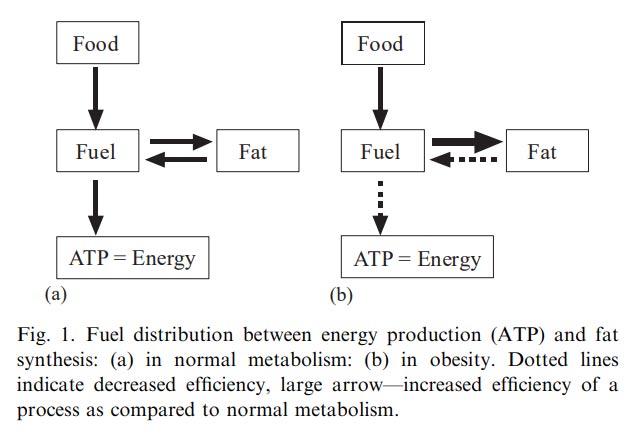
The screenshot below can be helpful. On the left is what normal metabolism looks like. The food you eat is turned into fuel, some of which is burned for energy and some of which is stored as body fat. When needed, body fat is also burned as fuel and converted into energy.
On the right is the “obese” metabolism. The primary differences here are the dotted arrows. The food consumed is turned into fuel, but very little of that fuel is converted into energy. Most of it is instead shuttled into fat storage, and because the metabolism is so inefficient, the stored fat is not released and burned for energy.
Many Normal Weight People Have Deranged Metabolism Too
As explained by Feldman, not only do obese individuals have this deranged metabolism, but many normal weight people do too. People who exercise a lot, or fast, or eat a low-carb diet may appear to have healthy metabolism because they’re not overweight, but the real reason they’re not overweight is because they’re forcing the conversion of fuel to energy through STRESS.
So, while they may not accumulate body fat, they still struggle with an energy deficiency, which can present as fatigue, brain fog, low mood, hormonal dysfunction and more.
As noted by Feldman, the bioenergetic solution to these problems is to improve the conversion of fuel to energy, “which means you have the energy available to properly function in terms of all your organ systems — your digestion, your reproductive systems, cognitive function, all of that.”
Endotoxin and PUFAs Decimate Mitochondrial Energy Production
One key strategy to optimize your mitochondrial energy production is to remove blocks in the electron transport chain so that electrons can move smoothly forward, without accumulating and backing up.
Endotoxin (lipopolysaccharide or LPS) and other bacterial toxins are among the biggest culprits when it comes to things that hinder mitochondrial energy production. These toxins can directly impair electron transport through the complexes of the electron transport chain. They can also impair certain enzymes in the Krebs cycle.
The primary solution for obesity and most other conditions is to raise your metabolic rate, and a key strategy for that is to remove blocks in the electron transport chain. Endotoxin and polyunsaturated fats (PUFAs) are two key culprits that need to be eliminated.
Poor digestion is frequently associated with negative gram bacteria in your gut that produce endotoxin, and this will inhibit your ability to convert food to energy, resulting in increased body fat. So, it’s important to reduce your endotoxin load. Aside from poor digestion, excess endotoxin is also a common culprit in degenerative conditions, metabolic syndrome, diabetes and fatty liver. To reduce your endotoxin load:
- Rebalance your gut microbiome by reintroducing beneficial bacteria (probiotics and prebiotics). One of the best and least expensive ways to do this is to eat a serving of fermented vegetables each day.
- Temporarily go on a low-fiber diet and avoid fiber supplements as it can feed undesirable bacteria. Avoid all vegetables temporarily and use fruit juice as your source of calories until your gut microbiome improves. Once it improves you can gradually add in whole fruits.
Once your microbiome is balanced and symptoms of poor gut function have resolved, you can slowly reintroduce starches like white rice and, if tolerated, progress to very well-cooked vegetables. Always cut back if you have signs of indigestion like belching, bloating or gas as this suggests you are not digesting those carbs yet.
Another effective blocker of mitochondrial energy production is polyunsaturated fat (PUFA). These are your processed seed oils, canola oil being among the worst of the worst. Seed oils are loaded with linoleic acid, an omega-6 PUFA, which appears to be one of the primary drivers of chronic diseases, in part due to its detrimental impact on your mitochondrial function and energy production.
So, you’ll want to severely limit your consumption of PUFAs. In addition to not cooking with them, this also means abstaining from processed foods, most of which are loaded with these harmful fats.
Rescue Remedies
While there are no magic pills to fix slow metabolism or low energy production, there are some that can help. I’ve previously written about the usefulness of niacinamide, for example. Another helpful one is methylene blue, which can both accept and donate electrons.
So, if you have blocks in the electron transport chain where most of the ATP is produced, say endotoxin or PUFAs, methylene blue can bypass those blocks, allowing your mitochondrial to produce energy anyway.
How to Gauge Your Metabolic Rate
According to the rate-of-living theory, the higher your metabolic rate — which means the quicker the electrons move from food toward oxygen, which is the final acceptor of electrons — the faster you’ll age because there’ll be higher oxidative stress.
However, deeper analysis reveals the exact opposite. The truth is, the higher your metabolic rate, the slower you age, because a high metabolism creates fewer reactive oxygen species (ROS) that can damage your tissues.
Your metabolism is high when electrons move rapidly and easily through the mitochondrial electron transport chain, which results in optimal energy production. When electrons are impeded from moving forward, they can back up, leak through the mitochondrial electron transport chain and start moving backward, where they combine with oxygen to create excessive ROS.
So, for optimal health, you want high energy production and that means a high metabolic rate. You can gauge your metabolic rate using your pulse, body temperature and calorie counting. These are not exact sciences, but can give you a general idea of where you’re at. Signs of low metabolism include:
- A body temperature below 97.8 degrees Fahrenheit upon waking, and/or 98.6 degrees F in the afternoon. You can also check your temperature before and after a meal. If your temperature drops after breakfast (compared to what it was in the morning), this could be a sign of less than optical metabolism as well.
- A resting pulse below mid-70 to low-80s, depending on your level of fitness. The greater your cardiovascular fitness, the lower your pulse rate will be, independent of your metabolic state, because your stroke volume is higher. The stroke volume is the amount of blood your heart pumps with each beat. When you’re very fit, your heart can push greater amounts of blood per beat.
- Assess how many, or how few, calories you can consume without adding to your weight. If you should be burning 3,000 calories a day, but you’re maintaining your weight on 2,200 calories a day, then your metabolism is likely low. Conversely, if you can maintain your weight when you add more calories, your metabolic rate is likely high, and the extra food will oftentimes improve your sleep, relaxation, energy and recovery.
- 1, 2 Endocrine Reviews June 2020; 41(3): bnaa004
- 3 Endocrine Review May 1, 2020; 41(3): bnaa004
- 4 Medical Xpress October 3, 2023
- 5 Study Finds October 3, 2023
- 6 Diabetologia, 59th EASD Annual Meeting of the European Association for the Study of Diabetes
- 7 Frontiers in Cardiovascular Medicine February 25, 2020; 7
- 8 EurekAlert! October 3, 2023
- 9 Diabetologia September 2021; 64(9): 1963-1972
- 10 International Journal of Molecular Sciences July 2023; 24(15): 12012
- 11 Journal of Theoretical Biology November 7, 2003; 225(1): 33-44
This Mushroom Compound Is a Longevity Powerhouse
Reproduced from original article:
The original Mercola article may not remain on the original site, but I will endeavor to keep it on this site as long as I deem it to be appropriate.
Analysis by Dr. Joseph Mercola Fact Checked October 13, 2023
STORY AT-A-GLANCE
- Ergothioneine, a sulfur-containing amino acid found in mushrooms, is a powerhouse when it comes to promoting longevity
- Out of 112 measured plasma metabolites, ergothioneine is the metabolite most significantly associated with lower morbidity and mortality, being associated with a lower risk of coronary artery disease, stroke and death of all causes
- In 2005, scientists discovered that most human tissues have a highly specific carnitine-based transporter for ergothioneine, which suggests humans are designed to eat and reap specific benefits from mushrooms
- Ergothioneine has antioxidant, anti-inflammatory, antimutagenic and cytoprotectant properties, and research shows depletion of ergothioneine leads to higher oxidative stress and cell death
- Mushrooms that contain ergothioneine include pine mushrooms, oyster mushrooms, shiitake, king boletes, porcinis, chanterelles, lion’s mane and Enokitake, just to name a few. Porcini, shiitake, oyster, maitake and king oyster typically contain the highest amounts
In the Nutrition Facts video above, Dr. Michael Greger reviews the scientific literature showing that ergothioneine, a sulfur-containing amino acid found in mushrooms, is a real powerhouse when it comes to promoting longevity.
For example, he cites a 2020 study1 published in the journal Heart, which found that out of 112 measured plasma metabolites:
“Ergothioneine was the metabolite most significantly associated with lower morbidity and mortality, being associated with a lower risk of CAD [coronary artery disease], stroke, death of all causes, and death of cardiovascular causes.”
The authors concluded that “higher ergothioneine was an independent marker of lower risk of cardiometabolic disease and mortality, which potentially can be induced by a specific healthy dietary intake.”
Mushrooms that contain ergothioneine include pine mushrooms, oyster mushrooms, shiitake, king boletes, porcinis, chanterelles, lion’s mane and Enokitake,2 just to name a few.
Porcini, shiitake, oyster, maitake and king oyster typically contain the highest amounts. White button mushrooms also contain it, but in far lower amounts. Greger presents some comparative data on these mushrooms in his video.
We Were Made to Eat Mushrooms
As noted by Greger, ergothioneine was largely ignored until 2005, when scientists discovered that most human tissues have a highly specific carnitine-based3 transporter for ergothioneine.4
This transporter is even chronobiologically upregulated before mealtimes. These facts strongly indicate that mankind was designed to eat and reap specific benefits from mushrooms. But what are those benefits, exactly?
One of the mechanisms of action that make ergothioneine so beneficial for health is its antioxidant properties,5,6 which are similar to that of glutathione.7 As an antioxidant, it reduces cellular damage by gobbling up harmful free radicals.
It has an extra edge over many other antioxidants, however, because it accumulates in tissues and organs after ingestion,8 and can help prevent oxidative damage in those tissues over a long period of time.9
What’s more, the tissues in which it tends to accumulate the most are tissues that also tend to be more prone to free radical damage, such as the lenses of your eyes and liver, as well as tissues that are more sensitive to damage in general, such as bone marrow, seminal fluid and blood.
Ergothioneine has antioxidant, anti-inflammatory, antimutagenic and cytoprotectant properties, and research shows depletion of ergothioneine leads to higher oxidative stress and cell death.
Mushrooms May Protect Mitochondrial Health
Remarkably, it may even accumulate in, and protect, your mitochondria,10 the tiny organelles inside your cells that produce cellular energy in the form of ATP. As explained in a 2021 paper:11
“Early studies suggested (but did not rigorously establish) that OCTN1 is found in the mitochondria, allowing ET [ergothionione] accumulation in this organelle. Indeed, ET could protect mitochondrial DNA from oxidative damage due to hydrogen peroxide or UV exposure.
Since then, few studies have investigated the intracellular localization of OCTN1 and ET. Mitochondrial dysfunction is implicated in a wide range of disorders and the therapeutic benefits of ET have been suggested to be mediated through protection of this organelle.
We recently demonstrated that ET protects mitochondrial morphology in transgenic Drosophila models of PD [Parkinson’s disease] (unpublished data). Definitive evidence of ET uptake and accumulation in the mitochondria is required.”
Download this Article Before it Disappears
Ergothioneine — A Longevity Vitamin?
Ergothioneine also has anti-inflammatory, antimutagenic12 and cytoprotectant13 properties. In short, it protects your cells against all sorts of damage. “Depletion of ETT (ergothioneine) leads to augmented oxidative stress and cell death,” one study notes.14
As such, the authors suggested it might represent a new vitamin. However, as explained by Greger, vitamins are classified as such “by the manifestation of overt dietary deficiency diseases,” and no such diseases have been identified for ergothioneine. Or have they?
“Perhaps deficiency diseases are staring us in the face,” Greger says. Low plasma levels of ergothioneine have been linked to frailty, cardiovascular disease, mild cognitive impairment, dementia and Parkinson’s disease,15,16 for example, all of which are rampant.
Others have suggested ergothioneine might be better classified as “longevity vitamin.”17 While some vitamins may not be essential for life, “longevity vitamins” appear to be crucial for extended health- and life span, and ergothioneine fits that bill.
Health Benefits of Ergothioneine
While research into the health benefits of ergothioneine is still in its infancy, ergothioneine has been shown to:
Support healthy brain function, cognition18 and mood19 — As noted in the review paper “Ergothioneine in the Brain”:20
Eating two or more portions of mushrooms per week has been shown to reduce your risk of mild cognitive impairment by more than half, compared to one portion a week or less.21 Another study found people who consumed mushrooms three times a week or more had a significantly lower risk of developing dementia, over a period of six years, compared to those who only ate mushrooms once a week or less.22 A third study found seniors with early-stage Alzheimer’s disease who consumed one-third to a full teaspoon of powdered lion’s mane mushroom per day for several months saw mild but measurable improvement in their cognitive function and Activities of Daily Living scores, compared to placebo.23 As noted in the 2022 review paper, “Decline of Ergothioneine in Frailty and Cognition Impairment”:24
|
| Bolster the immune response, thereby reducing your risk of infections.25 |
| Protect cardiovascular health by reducing oxidative stress, inflammation and lipid peroxidation.26 |
| Improve atherosclerosis.27 |
| Protect skin and mitochondrial DNA from UV-related damage.28 |
| Promote eye health and protect against age-related macular degeneration (AMD) and vision loss by neutralizing free radicals and lowering oxidative stress in the retina.29 |
| Protect and maintain the health of your central nervous system by promoting neuronal stem cell differentiation.30 |
| Protect fertility in men when taken two weeks before administration of the anticancer drug cisplatin, which is known to cause testicular damage resulting in infertility.31 |
| Slow or prevent fibrosis by modulating levels of inflammatory cytokines and mitigating oxidative damage in tissues.32 |
| Lower your risk of cancer, in particular breast cancer.33 |
| Lower all-cause mortality.34 |
A Cup of Mushrooms a Day May Keep the Doctor Away
A 2019 study35 published in Nutrition Today, which compared ergothioneine intakes between various countries, found the lowest estimated daily consumption in the U.S., at 1.1 milligrams per day, and the highest in Italy, at 4.6 mg per day. A primary factor in this outcome was believed to be Italians’ preference for ergo-rich porcini mushrooms.
However, even just adding white button mushrooms to your daily diet, which has among the lowest amounts of ergothioneine, can more than double your blood level.
A retrospective study36 in Plant Foods for Human Nutrition, which looked at how daily mushroom consumption might affect Type 2 diabetes risk factors, found that eating 1 cup of white button mushrooms a day raised ergothioneine concentrations from a mean of 317 nanograms per milliliter at baseline to 677 ng/mL at the end of 16 weeks. Participants with metabolic syndrome also experienced significant:
“… increases in the antioxidant marker ORAC (oxygen radical absorption capacity) and anti-inflammatory hormone, adiponectin and significant decreases in serum oxidative stress inducing factors, carboxymethyllysine (CML) and methylglyoxal (MG).”
A Promising Therapeutic for Longer, Healthier Life Span
In closing, consider the following final thoughts presented in the paper “Ergothioneine, Recent Developments”:37
“The unique chemistry of ET [ergothioneine] gives rise to its high stability and ability to accumulate in the body, enabling a wide range of cytoprotective and disease mitigating properties.
While associations have been made between low blood levels of ET and various human disorders, there is much still unknown. Nevertheless, the uptake in the fetus and infant, the near, if not fully, ubiquitous presence in tissues and the avid retention by the body are strong evidence that ET plays a critical role in human development and health.
Numerous animal studies have also demonstrated its benefits, whereas preventing uptake through silencing OCTN1 appears to worsen pathology in these disease models.
It remains to be seen whether supplementation in humans, especially the elderly or the subset of individuals with lower blood levels of ET (due to polymorphic variants of the transporter or diet), could reduce the risk of age-related and other diseases, or act as a therapeutic by slowing or halting disease progression.
The safety profile of ET and regulatory approvals facilitate such studies. With the rapid surge in interest, it is undoubtedly exciting times for this unique … compound.”
- 1 Heart 2020; 106: 691-697
- 2, 6, 18, 25, 26, 29 Health by Mushrooms January 16, 2023
- 3, 7, 9, 15 Neurochem Res September 2022; 47(9):2513-2521
- 4 PNAS April 5, 2005; 102(14): 5256–5261
- 5, 12 Mycobiology March 2009; 37(1): 43-47
- 8 Redox Biology June 2021; 42: 101868
- 10, 11 Redox Biology June 2021; 42: 101868, Section 2.3
- 13 Nutrition Research Reviews December 2020; 33(2): 190–217
- 14 Cell Death & Differentiation 2010; 17: 1134-1140
- 16 YouTube Nutrition Facts October 2, 2023; 1:48 minutes
- 17 Journal of Nutritional Science 2020; 9: e52
- 19, 20 FEBS Letters May 2022; 596(10):1290-1298
- 21 YouTube Nutrition Facts October 2, 2023; 5:02 minutes
- 22 YouTube Nutrition Facts October 2, 2023; 5:11 minutes
- 23 YouTube Nutrition Facts October 2, 2023; 5:35 minutes
- 24 FEBS Letters May 2022; 596(10): 1270-1278
- 27 YouTube Nutrition Facts October 2, 2023; 4:04 minutes
- 28 Redox Biology June 2021; 42: 101868, Section 3.2.6
- 30 Redox Biology June 2021; 42: 101868, Section 3.2.1
- 31 Redox Biology June 2021; 42: 101868, Section 3.2.2
- 32 Redox Biology June 2021; 42: 101868, Section 3.2.3
- 33 YouTube Nutrition Facts October 2, 2023; 4:24 minutes
- 34 YouTube Nutrition Facts October 2, 2023; 4:30 minutes
- 35 Nutrition Today January 1, 2019; 54(1):16-22
- 36 Plant Foods for Human Nutrition September 2016; 71(3): 245-251
- 37 Redox Biology June 2021; 42: 101868, Final Thoughts
What Are the Key Micronutrients for Your Brain?
Reproduced from original article:
https://articles.mercola.com/sites/articles/archive/2023/10/09/brain-nutrients.aspx
The original Mercola article may not remain on the original site, but I will endeavor to keep it on this site as long as I deem it to be appropriate.
Analysis by Dr. Joseph Mercola Fact Checked October 09, 2023

STORY AT-A-GLANCE
- Micronutrients refer to food-based vitamins and minerals your body requires for optimal functioning. The four primary types are water-soluble vitamins, fat-soluble vitamins, macrominerals and trace minerals
- Micronutrients catalyze enzymatic processes, have antioxidant activity and modulate your immune system
- Long-term micronutrient deficiencies can contribute to the development of neurodegenerative processes and neurological diseases such as Alzheimer’s disease, Parkinson’s disease, Huntington’s disease and amyotrophic lateral sclerosis (ALS)
- Some of the most important micronutrients involved in Alzheimer’s disease are vitamins A, B, C, D and E, selenium, copper, zinc, iron and manganese. In the case of copper, iron and manganese, elevated levels are typically the problem
- In the case of Parkinson’s disease, key micronutrients include vitamins A, D, E, B1, B6, B9 and C
Micronutrients refer to food-based vitamins and minerals your body requires for optimal functioning, and even mild deficiencies can contribute to chronic disease. Micronutrients can be divided into four primary types:
- Water-soluble vitamins such as B vitamins and vitamin C
- Fat-soluble vitamins such as vitamins A, D, E and K
- Macrominerals such as calcium, magnesium, sodium and potassium (minerals your body needs in larger amounts)
- Trace minerals such as iron, zinc, copper and selenium (minerals your body needs in very small amounts)
Micronutrient Deficiencies Can Drive Neurodegeneration
A recent scientific review1,2 published in the peer-reviewed journal Nutrients discusses the role of micronutrients in neurological disorders specifically, noting that long-term deficiencies may be involved in the cause and subsequent development of neurodegenerative processes and neurological diseases such as Alzheimer’s disease, Parkinson’s disease, Huntington’s disease and amyotrophic lateral sclerosis (ALS).
As noted in this paper, the primary function of micronutrients is their “catalytic effect in enzyme systems, either as cofactors or as components of metalloenzymes.” Other essential roles include antioxidant activity and immune modulation.
When you’re deficient in micronutrients, especially long term, peripheral nerve damage and/or damage to the central nervous system can result, which in turn can contribute to a variety of neurological diseases, including Alzheimer’s and Parkinson’s.
Key Nutrients Involved in Alzheimer’s Disease
While any number of nutrients can impact your risk for Alzheimer’s disease, some of the most important players are vitamins A, B, C, D, and E, selenium, copper, zinc, iron and manganese. In the case of copper, iron and manganese, elevated levels are typically the problem. As explained by the authors:3
“Elevated levels of Hcy [homocysteine] are associated with cognitive impairment. Because of the involvement of vitamins B9, B12, and B6 in Hcy metabolism, hypovitaminosis of these vitamins [i.e., lack of these vitamins] lead to hyperhomocysteinemia [elevated homocysteine].
Substitution of these vitamins helps to decrease the levels of Hcy. However, it has been reported that high doses of vitamins B9, B12, and B6 do not influence the cognition of patients with mild AD [Alzheimer’s disease].
Other vitamins are also associated with AD pathogenesis: thiamine (B1) deficiency has been observed in patients with cognitive impairment, and supplementation improved the symptoms. Vitamin B12 has a direct effect on tau proteins — it inhibits their fibrilization. Vitamin B3 (niacin) may have protective properties against AD and other types of cognitive decline.
Prolonged treatment with vitamin E is in consideration as beneficial in the management of AD, but the outcome is still unclear. Vitamin A inhibits amyloid-β plaque formation.
Vitamin D hypovitaminosis is acknowledged as a risk factor for AD. The pathogenic and therapeutic effects of vitamin D are not yet fully known, but its neuroprotective and anti-inflammatory functions are crucial. It was proposed as a potential therapeutic option for individuals with AD.
Detection of copper can be useful when diagnosing and preventing AD. Significantly higher levels of copper have been found in the brain tissue of AD patients. Copper supports oxidative stress, and it induces neurofibrillary tangle formation by tau hyperphosphorylation.
Another element involved in the pathogenesis of AD is zinc. Low plasmatic levels of zinc are repeatedly associated with decreases in learning ability and memory. Zinc status affects the progression of AD.
The neurotoxicity of manganese can also be associated with AD: it influences the function of astrocytes and the synthesis and degradation of glutamate. Monitoring of manganese can be one of the strategies for preventing AD.
The correlation of higher selenium levels with higher cognitive abilities in the elderly was reported. It is also believed that selenium deficiency may be linked to AD causation. Imbalance in iron metabolism and its accumulation also participates in AD development. One of the proposed novel strategies for Alzheimer’s disease prevention is a diet rich in antioxidants.”
Download this Article Before it Disappears
Important Notes on Iron
Unfortunately, this review does not go into detail about iron. The key issue with iron is you don’t want elevated iron levels. Most adults have excessive iron and do not need more.
Instead, they need to lower their iron, which is easily done by donating blood on a regular basis. What’s more, low ferritin is typically a sign that copper insufficiency is preventing proper iron recycling. In this case, increasing copper will allow the stored iron to recycle, thereby correcting the problem. To learn more about the hazards of high iron and simple ways to screen for and lower it, please see “Why Managing Your Iron Level Is Crucial to Your Health.”
Key Nutrients Involved in Parkinson’s and ALS
In the case of Parkinson’s disease, key micronutrients include:4
| Vitamin A |
| Vitamin D — Has anti-inflammatory effects and lowers oxidative stress. Deficiency is associated with dopaminergic neuronal death. according to the authors, it’s been “proven that adequate vitamin D serum levels might avoid Parkinson’s disease onset and possibly improve clinical outcomes.”
Higher serum concentration of vitamin D has also been shown to improve motor symptoms, and getting at least 15 minutes or more of sunlight exposure per week is associated with a lower risk of Parkinson’s |
| Vitamin E — Improves the function of the dopaminergic receptors, and higher levels are associated with lower Parkinson’s incidence. Vitamin E-rich diets have been shown to be protective, reducing the risk of Parkinson’s more than carotenoids or vitamin C |
| Thiamine (B1) — Low thiamine speeds up the degeneration of dopaminergic neurons. Thiamine and folate play important roles in the olfactory system, and many Parkinson’s patients develop impaired taste and smell, which is indicative of a deficiency in one or both of these B vitamins |
| B6 — Low B6 is a known risk factor for Parkinson’s |
| Folate (B9) — Elevated homocysteine is a risk factor for Parkinson’s and induces dopaminergic neuron death in Parkinson’s patients. B6, B9 and B12 help keep homocysteine levels in check |
| Vitamin C — Parkinson’s patients routinely have lower plasma vitamin C levels than healthy controls |
The featured paper also reviews the key micronutrients involved in ALS and other motor neuron diseases, myasthenia gravis (an autoimmune disorder affecting the neuromuscular junction), multiple sclerosis (MS), Huntington’s disease (a neurodegenerative disorder resulting in involuntary movements and cognitive impairment), epilepsy, ischemic stroke, myopathy (a muscle disorder), neuropathy, restless leg syndrome and injuries to the central and peripheral nervous systems.
Signs and Symptoms of Nutrient Deficiency
In most cases, symptoms of micronutrient deficiencies do not become apparent until your body is severely depleted, and even then, they can be difficult to identify if there’s no test available.
Oftentimes, symptoms are nonspecific, and include things like frequent infections and skin problems, and as your health deteriorates, more micronutrients are used up, thereby speeding up their depletion. Some micronutrient deficiencies do have more identifiable symptoms, though, such as:
| Anemia (iron, copper and/or B12 deficiency) | Scurvy (vitamin C) |
| Osteomalacia or softening of the bones (vitamin D) | Pellagra (niacin) |
| Hemorrhagic diseases (vitamin K) | Night blindness (vitamin A) |
Your Brain Needs Glucose for Optimal Function
It’s important to recognize that, of all the organs in your body, your brain has the highest energy requirement, and as you age, the mitochondrial genes that drive energy production become less active, leaving your brain more susceptible to disease.5
The mitochondria tend to be less dense and more fragmented, and generate much lower amounts of energy. That does not mean that neurodegeneration is a given, however. You can effectively prevent this fate by eating correctly and having a healthy lifestyle in general.
Free radicals catalyzed by excessive reactive oxygen species (ROS) formed at the level of the mitochondria are typically extremely harmful, and one of the most effective ways to minimize them is to make sure you’re eating enough healthy carbs, such as fruit, because glucose is the optimal fuel for creating energy in your mitochondria.
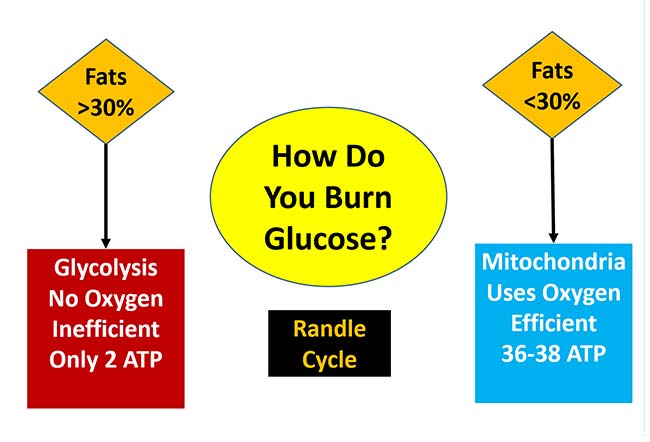
Your mitochondria can only burn one fuel at a time — either fat or glucose. As illustrated above, fats are broken down in a process called beta oxidation into acetyl-co A, which gets fed into the Krebs cycle. Carbs are broken down to pyruvate, which cannot enter the electron transport chain until they are converted to Acetyl-Co-A by pyruvate dehydrogenase.
The key here is that there’s a stealth switch that controls which of these fuels your mitochondria will burn. The switch has been given the name the Randle Cycle, but it is more helpful to visualize it as a railroad switch that changes the tracks of the train. The train can only travel down one track: not both. This is because only one type of fuel can be burned at a time.
Burning glucose in your mitochondria creates more energy and fewer ROS, raises your metabolic rate, and produces carbon dioxide, which protects against oxidative (reductive) stress and oxygenates cells. All of these things will help protect your brain function.
In a best-case scenario, you will metabolize, or burn, glucose in your mitochondria with minimal reductive stress. When you do this, you will only generate 0.1% ROS.
This route is also incredibly efficient at energy production, creating 36 to 38 adenosine triphosphates (ATP) for every molecule of glucose that is metabolized. However, for this to occur, you need to consume less than 30 to 40% of your calories as fat. When you consume significantly more than that amount, the switch changes to burn fat in your mitochondria and your ability to burn glucose will be impaired.
Chronically oxidizing fats as your primary fuel will also tend to increase your cortisol level, resulting in chronic inflammation, both of which accelerate the aging process.
So, in summary, burning glucose in your mitochondria creates more energy and fewer ROS, and raises your metabolic rate. It also produces carbon dioxide as a byproduct, which protects against oxidative (reductive) stress and oxygenates cells. All these things will help protect your brain function.
For more details about the Randle Cycle and how your metabolism works, see “Crucial Facts About Your Metabolism” and “Crucial Facts About Your Metabolism, Part 2.”
Gut Problems Also Likely Cause of Parkinson’s Disease
A new study6 in the October 2023 issue of Molecular Psychiatry showed that the presence of damaged mitochondrial DNA in the bloodstream is sufficient to cause all symptoms of Parkinson’s disease. The mitochondrial debris is then activated by the endotoxin (lipopolysaccharide) receptor TLR4.
Endotoxin is produced in your gut when you eat fermentable carbs that you are unable to digest in your stomach and small intestine. The carbs then travel to the large intestine, where they fuel the growth of gram-negative bacteria that grow and die. When they die, the endotoxin in their cell wall is released, activating the TLR4 receptor.
The Ray Peat approach is to increase the amount of simple carbs in your diet so your mitochondria can be optimally fueled. But there is strict caution to avoid fermentable carbs for the very reason that they can create endotoxin and activate the TLR4 receptor.
When introducing carbs, it is important to do it slowly, and make sure you are not having digestive symptoms like belching, bloating or gas, which are signs that the carbs aren’t being digested in your upper digestive system. If this is the case, you will need to use small amounts of fruit juices without pulp until your gut can digest the carbs without symptoms.
Lion’s Mane Mushroom May Protect Your Cognitive Function
In addition to basic micronutrients, a number of other supplements can also help protect your cognitive function. One interesting one is lion’s mane mushroom (Hericium erinaceus), which has a long history of use in traditional medicine.
Buddhist monks, for example, traditionally used lion’s mane mushroom tea to enhance brain function and heighten focus. In modern times, several studies have confirmed lion’s mane’s neuroprotective and cognition-enhancing effects, including the following:
| A 2023 study7 found that Lion’s mane extract can enhance memory by promoting neuron projections and connections to other neurons. |
| In a 2020 study,8 patients with mild Alzheimer’s disease who were given three 350-milligram capsules of lion’s mane mushroom per day for 49 weeks improved their cognitive test scores. |
| An epidemiological study9 published in 2017, which included 13,230 participants 65 years of age and older, found those who ate mushrooms at least once a week had “a lower risk of incident dementia, even after adjustment for possible confounding factors.” The greatest risk reduction was among those ate mushrooms three times or more per week. |
| A similar but smaller study10 published in 2019 reported that those who ate the most mushrooms had a 43% lower risk of developing mild cognitive impairment, independent of confounding factors such as alcohol consumption, cigarette smoking and high blood pressure. |
| A 2016 study found extracts from lion’s mane mushroom reduced symptoms of memory loss in mice and prevented neuronal damage caused by amyloid beta plaques known to accumulate in the brain with Alzheimer’s disease. |
| A 2010 study11 involving seniors between the ages of 70 and 74 found higher intakes of fruits, vegetables, grain products and mushrooms improved cognitive performance. |
You can consider adding mushrooms like lion’s mane to your diet as they can be an excellent addition to nearly any meal. They complement all kinds of grass-fed meats and wild-caught fish, go well in nearly any salad and can be added to soups, casseroles and other meals.
However, it is crucial to choose organically grown mushrooms as fungi easily absorb air and soil contaminants. Alternatively, you could opt for an organic supplement or extract.
- 1, 4 Nutrients September 25, 2023; 15(9): 4129
- 2 Medical News Today October 2, 2023
- 3 Nutrients September 25, 2023; 15(9): 4129, Section 6.1.1
- 5 Cell Reports May 29, 2018; 23(9): 2550-2558
- 6 Molecular Psychiatry October 2, 2023
- 7 Journal of Neurochemistry, 2023; doi: 10.1111/jnc.15767
- 8 Frontiers in Aging Neuroscience, 2020;12
- 9 Journal of the American Geriatrics Society, 2017;65(7)
- 10 Journal of Alzheimer’s Disease, 2019;68(1)
- 11 British Journal of Nutrition, 2010;104(8)
Intro to the Bioenergetic Theory of Health
Reproduced from original article:
https://articles.mercola.com/sites/articles/archive/2023/10/08/bioenergetic-theory-of-health.aspx
The original Mercola article may not remain on the original site, but I will endeavor to keep it on this site as long as I deem it to be appropriate.
Analysis by Dr. Joseph Mercola Fact Checked October 08, 2023
STORY AT-A-GLANCE
- While insulin resistance is routinely identified as a root cause of most chronic diseases, it too is only a symptom of a deeper problem. At the root will be impaired cellular energy production in the mitochondria
- Insulin resistance occurs when the cells are unable to properly oxidize or burn glucose
- When your body shifts into fat burning this results in lowering your metabolic rate, which is antithetical to optimal health. For optimal health, you need a high metabolic rate, and this is facilitated when your metabolism speeds up when you’re burning glucose in your mitochondria
- A general baseline for most average-sized people is between 150 grams and 250 grams of healthy carbs per day. If you’re very active, it could be as high as 500 or 600 grams a day. Keep in mind that as you increase carbs, you also need to cut down fat. Fat intakes above 30 to 40% or so of daily calories will tend to inhibit glucose metabolism
- Healthy carb choices include fresh whole fruit, fruit juice, root vegetables such as potatoes, sweet potatoes, parsnips and carrots, white rice, raw honey and maple syrup
In this video, I interview independent health researcher Jay Feldman, who has a podcast called “The Energy Balance Podcast.” I recently came to understand the importance of the late Ray Peat’s work, which I had previously dismissed for over three decades, largely due to confirmational bias.
Peat was a biologist and physiologist, and a cofounder of the prometabolic diet based on the bioenergetic theory of health.1 After re-exploring his work, I’ve come to realize just how ahead of his time he was. Feldman is among the few health researchers out there who has also embraced Peat’s work and understands it at a level that allows him to explain it in layman’s terms.
As some of you may know, I’m in the process of creating a master class in preparation for the next pandemic crisis, which I believe is inevitable, and it became obvious to me that Peat’s work is a really crucial component of being metabolically resilient and prepared for the next crisis.
You don’t have to wait for my master class to learn about Peat’s work, however. You can just dive into Feldman’s podcast. There are more than 100 episodes and I suggest starting at Episode 1 and working your way up. Feldman does a terrific job teaching you how to easily and practically implement these strategies.
What Causes Disease?
Well before I encountered Peat’s work, I was convinced most chronic disease was rooted in insulin resistance. I still think that’s a primary problem, but I’m convinced it’s not caused by excess sugar. High linoleic acid (LA) levels are the primary factor that drives insulin resistance, and LA is clearly far more damaging than sugar, especially in the long term.
As explained by Feldman, insulin resistance occurs when the cells are unable to properly oxidize or burn glucose, resulting in a backlog of glucose metabolites and a buildup of glucose in the cells, along with the production of lactate.
This forces the cells to rely on fatty acid oxidation, and the combination of fatty acid oxidation and glucose buildup prevents the cells from taking up more glucose, causing elevated blood sugar. It’s a symptom of a deeper problem, namely impaired energy production in the mitochondria:
“I always come back to the idea that the amount of cellular energy available is what’s going to drive our health, and the lack of energy is what’s going to lead to disease processes, dysfunction, degeneration.
When it comes to insulin resistance, I think there’s a bit of a misnomer. It’s a helpful term for encapsulating a larger idea, but we get caught up in the idea of insulin.
If we’re going to say that there’s one driver [of disease], it’s typically a lack of energy caused by issues with energy production, or inefficiencies in producing energy, due to mitochondrial dysfunction, and that causes insulin resistance.
Those things go hand in hand. When we’re talking about insulin resistance, we’re talking about a situation where the cells aren’t able to properly use glucose, so the glucose builds up. And regardless of how much insulin we have, it’s really hard to get more glucose into the cells, and we see rising blood sugar and all of the other downstream effects.
So, insulin resistance is there. I think it’s just a matter of what we call it. Do we call insulin resistance the fundamental problem, or energy dysfunction — low metabolism issues with energy production?
From my view, I would say that’s where we start, and insulin resistance is an effect of that. And the only reason why I would make that distinction is because we can get caught up in the idea that insulin is the problem and things that increase insulin will cause the cells to stop responding to insulin.
We need to figure out why the cells aren’t responding to insulin, and if we get down to that deeper layer, it comes back to an issue with producing energy.”
That said, Feldman agrees that fasting insulin is a good marker for health, in that it provides you with a good estimate of the efficiency of your cellular energy production. So, provided you’re consuming a healthy amount of carbohydrates, your fasting insulin is a good marker for how well you’re using that glucose and how well you’re producing energy.
Understanding the Underlying Problem
Just keep in mind that while you can lower your fasting insulin by avoiding carbs, that won’t fix the underlying energy production problem. In fact, if you’re on a low-carb diet, you’re causing insulin resistance. Sometimes you might not realize it because your insulin and glucose levels are so suppressed. Eventually, however, you might notice that your glucose level starts to rise.
As explained by Feldman, the underlying problem is not that you’re eating too many carbs. It’s that you cannot properly burn carbs. That’s what caused your glucose and insulin levels to be elevated in the first place. Cutting carbs will lower glucose and insulin, making it appear that all is well, but can you burn carbs? That’s the question.
If you’ve been on a ketogenic diet for some time and are experiencing deleterious effects like sleep disturbances, anxiety, a drop in testosterone and/or T3, reduced energy and exercise performance, then you may have “stealth insulin resistance.”
In other words, your cellular energy production is fundamentally impaired and the low-carb diet was just a Band-Aid masking the symptoms. The real problem persists, because carbs were never the driver of insulin resistance in the first place. An inability to properly oxidize (burn) the carbs was.
Download this Article Before it Disappears
How to Safely Add Carbs Back In
So, how do you bring carbs back in so that you actually improve your ability to use them and minimize negative effects? First and foremost, avoid omega-6-rich polyunsaturated seed oils, as they effectively interfere with energy production and the utilization of glucose. Instead, use monounsaturated and saturated fats.
Next, add carbs back in very slowly, to allow for the upregulation of enzymes that increase carb utilization and conversion to energy. Start by adding easily digestible carbs that won’t cause intestinal irritation or endotoxin production, such as whole fruits.
If you have microbial overgrowth in your gut, you’re producing a lot of endotoxin. In this case, you need to be careful about introducing fermentable carbohydrates, including fruit fibers, so fruit juice may be a better choice than whole fruit. Just be mindful of the juice you select. Apple juice, for example, has fermentable carbs.
Assuming you don’t have an underlying digestive problem, whole fruit is a great place to start. If you start eating whole fruit and notice an increase in gas or bloating, gurgling or belching, or if you feel sluggish or lethargic afterward, you likely have an intestinal issue such as SIBO (small intestinal bacterial overgrowth). You can also try having whole fruit sometimes and fruit juice at other times and see if you notice a major difference.
“If you feel a lot better with the fruit juice, then that’s a pretty clear sign that you are having some issues with fermentable carbohydrates,” Feldman says. In this case, you need to restore your microbiome before you add in more carbs. In the interview, we also discuss the use of antibiotics, either herbal or pharmaceutical, to treat small intestinal bacterial overgrowth (SIBO), so for more information on that, listen to the interview.
“Typically, we want [gas and bloating] to be minimal. This is central. In the same way we can’t overstate the importance of avoiding PUFA, we cannot overstate how much endotoxin — these bacterial byproducts — destroy your health.
You see it in every chronic health condition. In every degenerative condition you see this mild endotoxemia. You see it in fatty liver disease and diabetes, obesity, atherosclerosis.
This is one of the main reasons why people feel better on a low-carb diet or when they’re fasting. They’re avoiding anything that’s feeding the [bacteria in the] intestines. So, if you are one of those people who felt way better and lost weight and noticed a bunch of improvements [on a low-carb diet], there are two main reasons why that would be the case.
One is reductions in endotoxin … The other possible reason is, if they were extremely insulin resistant going in, they were having a lot of trouble using glucose, and so switching to fat and ketones led to a lot of relief.
That’s likely also a situation where your utilization of the carbohydrates is going to have to be ramped up slowly, and your capacity for that might be a little bit lower. So, we want to work on resolving that issue. It could be caused by endotoxin, polyunsaturated fats, by nutrient deficiencies, a lack of sleep and other forms of stress.
If you didn’t have these major benefits on low-carb, you might be able to bring in the carbs much faster and feel much better quicker. But that’s why it’s all dependent on the individual’s context.”
Quick Summary of How to Start
Feldman recommends starting with one piece of fruit with each meal for a week or two. If your appetite increases and you feel better overall, that’s a good sign that your metabolic rate is increasing. As long as you’re feeling good, increase to two pieces of fruit per meal and go from there. If you’re having negative effects, decrease your intake and go slower.
Feldman suggests the baseline for most average-sized people is between 150 grams and 250 grams of healthy carbs per day. If you’re very active, it could be as high as 500 or 600 grams a day. Keep in mind that as you increase carbs, you also need to cut down fat, as fat intake above 30 to 40% or so of daily calories will inhibit glucose metabolism. Other healthy carb choices include:
- Organic dried fruits without added sugars, additives or preservatives
- Root vegetables: potatoes, sweet potatoes, parsnips, carrots
- White rice (well-cooked) and ideally consumed with saturated fat to prevent the rice from feeding bad bacteria
- Raw honey
- Maple syrup
Carbs that may be tolerated by some but not others include grains that are traditionally processed, fermented, soaked and/or sprouted. Sourdough bread is one example. On the more harmful end are unprocessed whole grains and brown rice, as they’re high in anti-nutrients that impair all aspects of digestion.
They contain anti-nutrients like trypsin and amylase inhibitors, phytic acid and oxlates, which can inhibit the digestion of protein and starch while also reducing vitamin and mineral absorption. Most grains are also high in LA. And, of course, processed foods are also on the list of carbs to avoid.
Troubleshooting
Hopefully, if all goes well, you’ll make this transition and realize that both your glucose and fasting insulin are still at healthy levels, or maybe even lower than before. But what if you’ve made the transition to a higher-carb, lower-fat diet, and still have a fasting insulin level of 7 or 8?
Ideally, it should be below 3. Maybe you’re also gaining weight and still feeling sluggish. What’s going on? In short, these are all signs that you’re still metabolically inflexible. So, now what?
“There are a number of things I would go to,” Feldman says, “but again, the question is, what is causing the issue with [not] converting those carbohydrates to energy?
We talked about endotoxin being a huge one. If someone’s already cut out the polyunsaturated fats, endotoxin is really common, so we want to make sure that we’ve fixed everything up gut-wise. If not, that would be my target.
If that’s doing pretty well, and we’re generally not overstressing, we’re getting some good comfortable movement in, we’re eating carbohydrates from the right sources, and we’re still not seeing the benefits that we were looking for, we’re still not seeing the restoration of insulin sensitivity, then I might look for some other support for glucose metabolism.
That could be B vitamins … I know you’ve talked a lot about niacinamide. Thiamine is another one that is crucial for producing energy from carbohydrates … Supplementing with those would be potentially warranted there.
I would also look at other hormonal indications. I’d look at thyroid status at that point, because if we’ve made some of these shifts but we’re not seeing the conversion from T4 to T3, or we’re not seeing good thyroid hormone production, that could be a higher level issue that’s causing a ton of things farther down the chain, and that can include insulin resistance.
If that’s the case, I would look toward doing everything we can to restore that … I would also look at the steroid sex hormone production for women, maybe there’s too much estrogen, maybe not enough progesterone. That can be another huge factor here that can drive or contribute to insulin resistance.
For men, I’d be looking at low testosterone. There’s certainly a place for things like pregnenolone, progesterone, maybe a bit of DHEA to help support that hormonal state as well.”
Why Glucose Is the Ideal Fuel
As explained in the interview, glucose is the optimal fuel for creating energy in your mitochondria. Two byproducts of that process are metabolic or deuterium depleted water, and carbon dioxide. While commonly thought of as a waste product, Peat has made abundantly clear that carbon dioxide is a massively important molecule, and a far superior vasodilator than nitric oxide.
When you are low on carbon dioxide, you can’t be optimally healthy, and if you’re oxidizing (burning) fat in your mitochondria rather than glucose, you’re not going to generate as much carbon dioxide, which also protects proteins from being glycosylated, and lipids from being oxidized. Carbon dioxide also counteracts ROS and RNS (reactive nitrogen species). That’s not the only reason glucose is a better fuel than fat, though. As explained by Feldman:
“I think it’s always helpful to put this in the larger biological context. In any situation where we are starved, where we’re under major stress, when things are dysfunctional, we shift into fat oxidation, fat burning. And this includes when we’re not eating anything. This is why when we’re fasting, we will shift into ketosis, and we can mimic those states by going on a low-carb, high-fat diet, and low protein.
The biological context there is that our bodies view that as a situation when we’re under stress, when we don’t have a lot of fuel available, when we’re in a famine, when we need to survive for a long period of time. In a situation like that, we want to decrease our metabolic rate.
We don’t want to use a lot of energy on reproduction, cognition, digestion, growth and repair. We want to conserve energy because we don’t know when we’re getting food. So, everything around fat burning involves a slowing of the metabolic rate, and we see this again on that bigger picture level.
We see it when we look at thyroid hormone conversion, which gets impaired when we’re low in carbohydrate intake. We see it in terms of testosterone, and we also see it on the mitochondrial level, because on the mitochondrial level, that’s where this all starts.
That’s how our body senses whether it’s burning the fats or the carbs. When it’s burning fats, it has a number of different places that slow down the actual respiration, that slow down the conversion from the fats to energy. And again, this is all healthy and adaptive in that it allows us to survive if we’re starving.
But it’s not ideal for thriving. It’s not ideal for optimal function. It’s not ideal for reproduction. Our bodies don’t want to reproduce if there’s no food available. It’s not ideal for high-level cognition.
When we zoom into the mitochondria, what we see is that the primary difference between glycolysis, the starting of burning carbs and the bad oxidation of the fats, is a difference in the amount of NADH and FADH2 that gets produced.
And when we finish out through the Krebs cycle, and then go to the electron transport chain, depending on the length of the fatty acid, there will be considerably more, sometimes 250% more FADH2 relative to NADH than if we were to oxidize glucose.
What happens is, because we have this major drop off of electrons at Complex 2 through the FADH2, relative to Complex 1, we end up with reverse electron transport. [This is] reductive stress, and that’s because Complex 1 and Complex 2 both use the CoQ electron acceptor.
If you’re favoring Complex 2, you’re going to reduce the amount of electrons that can be dropped off at Complex 1, and you’re going to reduce the amount of electrons at Complex 1 that can keep going down the chain.
So, you get a buildup there, and you get this reverse electron transport and major production of ROS at Complex 1. The other thing that happens is, because of this buildup at Complex 1, the NADH can’t drop off its electrons, so you get buildup of NADH, relative to NAD.
Our bodies are really smart when they see this, because this then affects everything further up the chain. It affects various steps of the Krebs cycle. There are three different steps that need the NAD, so each of those get reduced. So, we’re slowing the activity through the Krebs cycle. We’re getting buildup of citrate, for example, that increases the synthesis of fat, and that gets built up even further.
We end up with a buildup of acetyl-coA that reduces the conversion of pyruvate to acetyl-coA, which also is dependent on NAD, so we’ve got two ways that that’s being inhibited.
And then when you look back up at glycolysis, there’s a number of steps there that get inhibited as well due to this high NADH to NAD ratio, this highly reduced state of the mitochondria. That is just a part of the natural braking mechanism that happens to make sure that when we’re burning fats, we’re doing it slowly. We also produce a lot of ROS, which slows this down.
As a result of this, you’ll eventually induce things like uncoupling, which will fully stop ATP production. So, we’ve got a number of different mechanisms that basically are signals. It’s telling our body that when we’re burning fats, we need to slow everything down, we need to slow our metabolic rate, and we’re going to produce a lot more ROS. We’re going to be slowing things down in the electron transport chain.
This is not ideal if energy is the currency of our health, if that’s what allows us to function and get us out of this constant stress state … That’s the crux of this difference between the carb and fat burning. And then we have the CO2 as the cherry on top … because it protects against the oxidative stress, or reductive stress, as well as being the main thing that oxygenates the cell, which keeps respiration going faster.
Again, that’s another braking mechanism. The cell will take up less oxygen because it’s producing less CO2, which it needs for that uptake of oxygen itself. I was in the low-carb sphere as well and got hooked on the idea that sugar burning is the one that’s the unhealthy and produces all the oxidative stress and everything, but totally missed what’s actually going on.”
Simple Way to Gauge Your Metabolic Rate
Feldman also takes a deeper dive into how glucose and fat burning affects your thyroid function but, basically, when you burn fat in the mitochondria, you inhibit your thyroid gland, which in turn invites weight gain, as your thyroid is your main metabolic regulator.
So, the answer to many a sluggish thyroid is not thyroid hormone supplementation, but eating the correct fuel so that your body has the energy it needs, and your thyroid doesn’t need to downregulate your metabolic rate. He also notes that many people are simply not eating enough calories. Low-calorie diets will also suppress your metabolism, for all the same reasons as detailed above.
While the ideal amount of calories vary based on your age, metabolic rate, physical activity and more, as a starting place, Feldman suggests using a typical calorie calculator to estimate your daily calorie requirement, and if you’re eating fewer calories than that and are gaining weight or maintaining your weight, your metabolism is low.
After you’ve estimated your daily calorie requirement, calculate how much protein you need. The formula for that is 0.6 to 0.8 grams of protein per pound of lean body mass or ideal body weight. The amount of protein you need should be about 15% of your daily calories. Then divide the rest into 45% to 65% healthy carbs and 20% to 40% healthy fats. In closing, Feldman has the following advice:
“If someone’s insulin resistant, they’re not using the carbs coming in, and if they’re not going to fix it, then sure, we might as well avoid carbs for a period of time. But I would say the better route is to work on fixing it. And in the vast majority of cases, the people who are in that state are not coming from a whole food, fruit, root vegetables, low PUFA fat sources type of diet …
So my suggestion would be, just go to that. We don’t even have to over-complicate it … just shift toward whole food, low PUFA, easily digestible foods, away from the grains. For the vast majority of people that gets them to where they need to go without needing something as restrictive and inherently stressful as keto and carnivore.
If that is the only way for someone to move forward, if it’s that or sticking with what they’re doing, then yeah, do it. Do keto or carnivore. There is an inherent long-term negative to it. There’s inherent stress that comes with it, but if that is the route that someone needs to go to make a change, then I think it’s fine to start there. I would just say let’s not stick with that long-term.
I’d really prefer to shift to including healthy carbohydrates as soon as possible. And that’s because whether the stress is for three months or a year, it’s always going to be a negative. What happens is, we have these major benefits from reducing the endotoxin, and relief from throwing carbs into an insulin resistant state, but once you’ve attained those benefits, the negatives will start to creep in.
I’d rather get all of those benefits without the negatives. I’d rather lower endotoxin by taking out grains and raw vegetables, raw leafy greens, those kinds of things, lowering fiber if we need to, but keeping carbohydrates so we can avoid the stress. I’d way rather get that benefit in that way as opposed to just taking out all carbohydrates.”
More Information
To check out more of Feldman’s work, visit his website, JayFeldmanWellness.com. Again, I recommend starting with Episode 1 and working your way up for a life-changing, immersive-learning experience on implementing bioenergetic medicine. Each episode has show notes and links to studies cited. You can also listen to his podcast on Apple Podcasts, Google Podcasts, Stitcher and Spotify. Just search for “The Energy Balance Podcast.”
Fat vs. Glucose for Weight Loss: Constructing the Ideal Menu
Reproduced from original article:
https://articles.mercola.com/sites/articles/archive/2023/09/23/ideal-menu-to-maximize-energy.aspx
The original Mercola article may not remain on the original site, but I will endeavor to keep it on this site as long as I deem it to be appropriate.
Analysis by Dr. Joseph Mercola Fact Checked September 23, 2023
STORY AT-A-GLANCE
- When the fuel from the food you eat cannot efficiently be burned and converted to energy (ATP), it’s typically diverted and stored as fat. So, the primary cause of obesity is the inability to efficiently metabolize food, typically glucose in the mitochondria, into energy
- The inefficient burning of fuel (metabolizing of food) is why people who are obese typically also struggle with other health issues, such as low energy, fatigue, an inability to maintain focus, digestive problems and poor immune function
- Mitochondrial dysfunction, psychological stress, oxidative stress (reductive stress), heavy metals, endotoxin, lack of sleep and certain nutritional deficiencies can flip your metabolism into fat burning, which then impedes the metabolism of glucose and converts the glucose into fat rather than energy
- High energy production equates to high metabolism, so part of the solution for obesity and most other conditions is to raise your metabolic rate
- A key strategy to optimize your mitochondrial energy production is to remove blocks in the electron transport chain. Endotoxin and other bacterial toxins are among the biggest culprits, as they can directly impair electron transport. Another effective blocker of mitochondrial energy production is polyunsaturated fat (PUFA)
In the “GET LEAN Eat Clean” podcast above, personal health and wellness coach Brian Gryn interviews Jay Feldman — a health coach and independent health researcher who is extremely knowledgeable in the work of the late Ray Peat — about the underlying causes of obesity and how to optimize mitochondrial energy. I am also scheduled to interview Jay in the near future.
Feldman is the founder of Jay Feldman Wellness and hosts the Energy Balance podcast. A key concept he presents is that when the fuel from your food you eat cannot be efficiently metabolized and converted to energy (ATP), it’s instead typically diverted and stored as fat. In my view, he is the best teacher of Ray Peat’s work. You can view the first seven episodes of his podcast to develop a foundational understanding of bioenergetic medicine.
Another key concept is that high energy production equates to high metabolism, so part of the solution for obesity is to raise your metabolic rate. Unlike conventional wisdom which suggests calorie restriction is associated with longevity, a high metabolic rate slows aging and helps you remain more youthful — at least biologically speaking — as you age.
Lack of Energy Is a Foundational Problem in Obesity
The inefficient burning of fuel (metabolizing of food) is why people who are obese typically also struggle with other health issues, such as low energy, fatigue, an inability to maintain focus, digestive problems and poor immune function.
As noted by Feldman, these all result from a lack of energy production in your mitochondria. So, the primary problem in obesity is that your body cannot efficiently convert the food you eat into energy. Instead, it gets converted into fat. As a result, you end up with obesity, low energy and perpetual hunger, which leads to overeating. Feldman explains:
“I … come from the bioenergetic view of health … the idea that energy, the energy that’s produced in our mitochondria, is the main driver of our health, and a lack of that energy is what leads to dysfunction …
I would say obesity is an energy problem, and endocrine problems are superimposed, happening on the energetic front. So, it’s really helpful to look at hormones … like cortisol … thyroid hormones … the reproductive hormones …
Those things are really helpful when we’re trying to get a gauge on where somebody’s at because you can’t always see what’s happening in the cells and the mitochondria. So, we can look at hormones as a proxy there, but those hormones are just signals and messengers that are being produced or inhibited in response to what’s going on in terms of the energetic state.”
Glucose Metabolism Is Easily Hindered
As noted by Feldman, your metabolism is a sensitive system, especially when it comes to glucose metabolism. Things like mitochondrial dysfunction, psychological stress, oxidative stress (reductive stress), heavy metals, endotoxin, lack of sleep and certain nutritional deficiencies can flip your metabolism into fat burning, which then impedes the metabolism of glucose and converts the glucose into fat rather than energy.
“This is why we want to be looking at food choices in terms of how they affect our energy production,” Feldman says. The conventional view is that fuel equates to energy, which is why obesity is thought of as an energy excess and all you need to do is eat less and exercise more. But that’s not accurate.
“That [view] is something I think we definitely want to work ourselves away from and instead focus on how well we’re using the food that’s coming in, and what types of foods are better used, considering our human physiology,” Feldman says. “That’s really where we want to focus, as opposed to eating less or exercising more.”
Download this Article Before it Disappears
Lack of Fat Burning Is Not the Problem
Many, myself included, used to believe that optimizing fat burning was the solution not only to obesity but most other health problems as well, but we’re now starting to realize that this is borne out of a misconception. As explained by Feldman:
“I think what’s happened is we’ve come into this with preconceived notions that people are overweight and have excess body fat, so there must be a fat burning problem. And that is an assumption that I would say is definitely not true …
There have been clear metabolic studies where they see that you can be on a low-carb diet and you can be burning more fat with lower insulin, and having more fat released from the fat stores, and still be losing less body fat because there’s also more fat coming into the fat stores.
And on the flip side, you can be on a higher carb diet, burning less body fat, and still losing more body fat because in that case you’re storing less body fat. So, we’ve just focused in on this one piece of the equation — how much fat are we burning — when it doesn’t acknowledge the whole flow in and out of of the fat stores …
I used to think that … everyone was oxidizing carbs and the problem was that we needed to become better fat burners, but when you actually look at what’s going on in these states, fat burning is part of the problem. That is what happens when things are problematic.
There is one caveat here that’s important, which is that burning carbohydrates doesn’t always mean the same thing. We can oxidize glucose through oxidative processes, meaning we go through glycolysis, and then we go through the Krebs cycle, and then we go through the electron transport chain …
The glucose gets oxidized and we end up with a decent amount of energy. When we are in a degenerated state, in addition to burning more fat, we also run through glycolysis more, and glycolysis is the first step … of glucose burning.
Because there are blocks farther down, we can’t use the glucose all the way, and that’s a problem … but that is not caused by the sugar, it’s not caused by the carbohydrates, it’s not caused by carb burning.
That’s caused by mitochondrial dysfunction caused by our ability to produce energy. So, we’re stuck in a very inefficient glucose burning along with fat burning, and that’s not a great state to be in. But that is not the same thing as fully oxidizing glucose in a healthy metabolic state.”
How Your Body Produces Energy
I like to use graphics when explaining this, so let me restate what Feldman is saying, along with a couple of images. In summary, your body can use two fuels for energy: glucose and fat. If you eat any type of sugar or complex carbohydrate, it’s metabolized to glucose. Glucose is then broken down to pyruvate.
At that point in the process, there’s a “switch,” known as the Randle Cycle. The pyruvate can either enter the glycolysis pathway and turn into lactate, or it can be metabolized into acetyl-CoA through aerobic respiration, as shown in the image below.
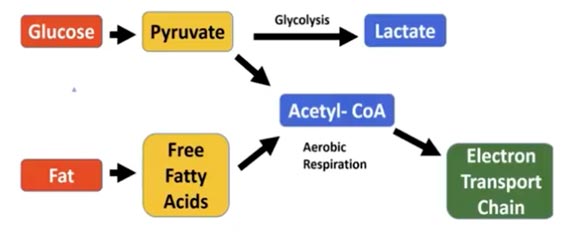
Provided your fat intake is below 30% or so (this is merely a best-guess at this point, as no one knows exactly what the threshold is), the glucose you consume will be shuttled into acetyl-CoA. When it goes to acetyl-CoA, it goes into the electron transport chain in the mitochondria.
Free fatty acids can also be metabolized into acetyl-CoA through beta-oxidation in the mitochondria, and there’s a competition that occurs there with glucose, which is why your fat intake needs to be low enough for glucose to enter this pathway.
Aerobic respiration uses oxygen in the mitochondria, whereas glycolysis, which occurs in the cytosol, does not use oxygen and is very inefficient. Glycolysis only generates two ATP molecules for each molecule of glucose, whereas aerobic respiration, which occurs in the mitochondria, generates 36 to 38 ATPs per molecule of glucose.
Ultimately, you want to burn glucose in your mitochondria. That’s the most efficient, allowing you to generate the most energy, while simultaneously producing the least amount of harmful “exhaust” in the form of reactive oxygen species (ROS).
And, again, the only way to ensure that is to keep your dietary fat content below 30% of your total calories. If you’re insulin resistant, which means you’re metabolically inflexible, that threshold may be closer to 20% or even 10%. So, if you’re insulin resistant, you’ll want to significantly lower your fat intake until your insulin resistance is resolved. Then you can increase it to 30%.
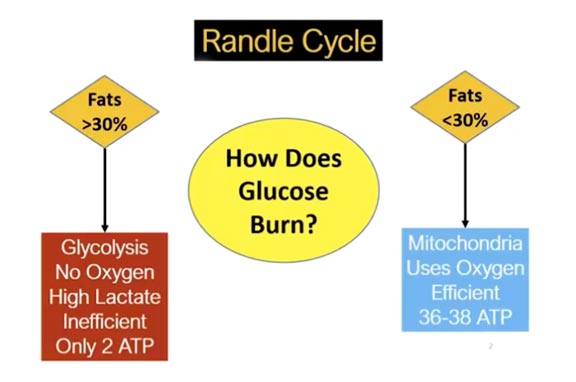
Endotoxin and PUFAs Decimate Mitochondrial Energy Production
Next, Feldman discusses a key strategy to optimize your mitochondrial energy production, which is to remove blocks in the electron transport chain so that electrons can move smoothly forward, without accumulating and backing up.
“We don’t need to focus on doing extra things to stimulate [mitochondrial energy production],” Feldman says. “Our mitochondria will work perfectly well if they have the right fuel and nutrients, and they aren’t being inhibited or blocked.”
According to Feldman, endotoxin (lipopolysaccharide or LPS) and other bacterial toxins are among the biggest culprits when it comes to things that hinder mitochondrial energy production. These toxins can directly impair electron transport through the complexes of the electron transport chain. They can also impair certain enzymes in the Krebs cycle.
The primary solution for obesity and most other conditions is to raise your metabolic rate, and a key strategy for that is to remove blocks in the electron transport chain. Endotoxin and polyunsaturated fats (PUFAs) are two key culprits that need to be eliminated.
Poor digestion is frequently associated with negative gram bacteria in your gut that produce endotoxin, and this will inhibit your ability to convert food to energy, resulting in increased body fat. So, it’s important to reduce your endotoxin load. Aside from poor digestion, excess endotoxin is also a common culprit in degenerative conditions, metabolic syndrome, diabetes and fatty liver. To reduce your endotoxin load:
- Rebalance your gut microbiome by reintroducing beneficial bacteria (probiotics and prebiotics). One of the best and least expensive ways to do this is to eat a serving of fermented vegetables each day.
- Temporarily go on a low-fiber diet and avoid fiber supplements as it can feed undesirable bacteria. Cook your vegetables thoroughly rather than eating them raw, and if your condition is serious, limit fruits for a time too.
- Eat a low-carb ketogenic diet and/or fast until the problem is resolved. As noted by Feldman, “This is one of the main places where low-carb diets, ketogenic diets, fasting, carnivore [diets] are really helpful, as they provide relief from the feeding of bacteria that are producing a lot of endotoxin.” Foods to avoid include most grains, legumes, nuts, and seeds.
- Avoid resistant starches, as they feed LPS-producing bacteria.
Once your microbiome is balanced and symptoms of poor gut function have resolved, you can slowly reintroduce whole fruits, vegetables, roots and tubers, and other foods. Another effective blocker of mitochondrial energy production is polyunsaturated fat (PUFA).
These are your processed seed oils, canola oil being among the worst of the worst. Seed oils are loaded with linoleic acid, an omega-6 PUFA, which appears to be one of the primary drivers of chronic diseases, in part due to its detrimental impact on your mitochondrial function and energy production.
The Expensive Tissue Hypothesis
After a short discussion about ancestral diets and the likelihood that such diets were generally high in carbs, Feldman and Gryn review the “expensive tissue hypothesis,” which is the idea that the less energy you waste on hard to digest, fibrous foods, the more energy is available for your brain.
“… that’s also a reason to be consuming a lot of carbohydrates and not excess protein, because the conversion from protein to glucose and then to energy is very inefficient,” Feldman says.
“It’s about 30% less efficient than just using glucose. So, if we consider the … expensive tissue hypothesis, we shouldn’t be consuming excess protein beyond our needs and trying to use that for energy, because … that leaves less energy for our immune function, our brain function, for reproductive function and and on …
Coming back to weight loss, there’s the constrained model of energy expenditure, which is very related here, which basically says that you can’t just expend more and more calories from, let’s say, exercise, without it coming at a cost.
So, if you exercise 1,000 calories’ worth and before you were burning 2,000 calories, that doesn’t mean that you just burned 3,000. What actually happens is, you start to cut into your own basal metabolic rate, and you start to cut into your bodily function.
So, your reproduction is turned down, your immune function is turned down … Extrapolated, it really also gets at the problem with the ‘eat less exercise more’ advice for weight loss.”
Endotoxin, Not Fructose, Causes Fatty Liver Disease
Feldman also debunks the argument that fructose, unlike what is being promoted by Drs, Robert Lustig, Richard Johnson and David Perlmutter, causes nonalcoholic fatty liver disease (NAFLD). He reminds listeners that both dietary fat and fructose can be converted into fat, and fructose isn’t automatically destined to end up as liver fat.
“In fact, very little fructose gets converted to fat,” he says, because “there are all sorts of of routes for it to go before it’s getting converted to fat … Fructose does go to the liver and it gets picked up by the liver immediately, whereas glucose will go out into the bloodstream and can be picked up by the muscles.
But our livers have developed to handle massive amounts of fructose. Most of the research that is looking at what happens to fructose … is going on in rats. And there are a few differences, there are a few problems there. One is that rat livers are very different from human livers in their capacity for fructose handling.
Our livers have an incredible capacity for handling fructose. Hundreds and hundreds of grams can be stored as glycogen, can be converted to glucose or lactate and sent out to be stored elsewhere, or used elsewhere, and then can also be oxidized.
So, when we consume excess fructose in a normal context, in a healthy liver, very little is going to be going to fat. It takes huge amounts of carbohydrates before you’re … producing much fat in the liver through de novo lipogenesis. And that’s because our livers have this incredible capacity for handling it …”
Feldman also remarks that many fructose studies are flawed in that they’re looking at fructose-only sources, which rarely ever exists in our food supply as it is virtually always accompanied with glucose. Results from such studies therefore do not tell you much about how natural, whole food-based fructose, say from fruit or honey, acts in the body.
“Whether you’re consuming fruit or honey or anything else, the fructose to glucose ratio is always near 1-to-1,” he says. “Sometimes there’s a slight bit more fructose [than] glucose, but even in high fructose corn syrup … it’s about 55% fructose and 45% glucose. We’re really not talking about major differences here.
And that’s important because our intestines don’t absorb pure fructose. If there’s glucose present, we absorb it very well. But if there’s no glucose present … you can’t really absorb it very well.
So, what happens is a lot of it doesn’t get absorbed in our small intestine. [It] continues down to the large intestine where it feeds bacteria. Those bacteria produce endotoxin, and that is what leads to things like fatty liver production [and] fatty liver disease.”
How to Gauge Your Metabolic Rate
According to the rate-of-living theory, the higher your metabolic rate — which means the quicker the electrons move from food toward oxygen, which is the final acceptor of electrons — the faster you’ll age because there’ll be higher oxidative stress.
However, deeper analysis reveals the exact opposite. The truth is, the higher your metabolic rate, the slower you age, because a high metabolism creates fewer ROS that can damage your tissues.
Your metabolism is high when electrons move rapidly and easily through the mitochondrial electron transport chain, which results in optimal energy production. When electrons are impeded from moving forward, they can back up, leak through the mitochondrial membrane and start moving backward, where they combine with oxygen to create excessive ROS.
So, for optimal health, you want high energy production and that means a high metabolic rate. As explained by Feldman, you can gauge your metabolic rate using your pulse and body temperature.
“If you’re not hitting 98.6 [degrees Fahrenheit] later in the day, if you’re not hitting 97.8 or 98.0°F when you’re waking up, that can be a sign of a hypometabolic state,” he says.
“If your [resting] pulse [first thing in the morning] is particularly low, if you’re not getting into the mid-70s or potentially low-80s, depending on your fitness state, that can also be a sign of a low metabolic rate.
The caveat is that the more cardiovascularly fit you are, the lower your pulse rate will be, independent of metabolic state. That’s because your stroke volume increases. The stroke volume is the amount of blood your heart pumps with each beat. So you can have fewer beats and still pump the same amount of blood … You can also look at temperature and pulse before and after a meal.
If … somebody wakes up at temperature 98.4°F. and then they have their breakfast and it drops to 97.5°F., that is a situation of a drop in stress hormones, where someone was waking up in a stress state, their sleep’s probably not optimal, they’re probably not optimal metabolically, then they’re consuming some carbohydrates and their stress hormones drop.
If you’re seeing that happen after a meal, it’s a pretty good sign that that’s what’s happening.
Another good way to do it is just seeing how many calories you can consume while maintaining your weight … If, with your activity and everything else, you should be burning 3,000 calories a day, but you’re maintaining your weight on 2,200 calories a day, that’s a sign that you’re pretty hypometabolic.”
Conversely, if you can maintain your weight when you add more calories, your metabolic rate is likely high, and the extra food will oftentimes improve your sleep, relaxation, energy and recovery.
Methylene Blue — A Useful Rescue Remedy
While there are no magic pills to fix slow metabolism or low energy production, there are some that can help. I’ve previously written about the usefulness of niacinamide, for example. Another helpful one is methylene blue. As explained by Feldman:
“As a supplement, it’s got a number of interesting effects. For one, it’s antimicrobial … but it also has some pretty interesting mitochondrial or energetic effects, where it is able to work as an electron acceptor and donor.
So, if things are not working well in the electron transport chain, the main site where we produce ATP, [if] something’s blocked, let’s say by endotoxin or polyunsaturated fats, whatever it is, methyl blue can help us bypass those issues and allow us to continue to produce energy despite those things.
It also lowers nitric oxide, which is another inhibitor of mitochondrial respiration. So, it’s got a number of benefits. I will say, like any other supplement, there’s a place for it and there’s also a place where it can be problematic, and it’s never the first thing I would go to.
We always want to work at those foundations first — get diet on point, eat consistently, get enough carbs and fats in, make sure we’re getting the nutrients we need, trying to work on our sleep hygiene, our movement …
But I do think there’s a place for methylene blue to help with either those microbial issues or for getting the metabolism going in certain instances. It also, in particular, has some benefits neurologically, because of these stimulating effects on respiration … So, yeah, I like it. Again, it’s not magic in that it is going to fix the problems, but it can be helpful along the way.”
Constructing the Ideal Diet to Maximize Energy
While it’s nearly impossible to come up with a diet that is ideal for everyone, general guidelines can be provided. After that, it’s up to you to experiment and note what works and what doesn’t. For example, some are outfitted with genes that can handle dietary fats better than others, while some may have had their gallbladder removed and can’t handle much fat at all. Following are some general principles for devising your ideal diet:
• Protein — Most adults need about 0.6 to 0.8 grams of protein per pound of lean body mass. As an example, if your body fat mass is 20%, your lean mass is 80% of your total body weight. Ideally, stick to animal-based protein such as clean seafood and low-LA animals like beef, bison, lamb and other ruminant game animals, raw grass fed dairy and organic pastured eggs.
Avoid chicken and pork as, even if pasture-raised and organically fed, they are given grains and other foods that are high in LA so they will increase your LA levels. Many plant-based proteins, including nuts and seeds (with the exception of macadamia nuts), are also high in PUFAs.
• Carbs — Avoid hard-to-digest carbs like most grains, including brown rice, and legumes, unless they’re soaked, properly cooked, sprouted or fermented. Good options include raw authentic honey, maple syrup, white rice, ripe and dried fruit, and well-cooked (preferentially pressure cooked) tubers like red potatoes, sweet potatoes and parsnip.
• Fats — Avoid seed oils, which are loaded with PUFAs like LA. Good options include butter, tallow, ghee, coconut oil and avocados.
If you’ve been on a low-carb, high-fat diet, slowly add in more carbs while simultaneously lowering your fat intake. As mentioned earlier, your fat intake probably needs to be somewhere around 30% or lower to allow for efficient glucose metabolism.
Feldman typically recommends a range of 20% to 40%, with the upper limit being for more physically active people with greater muscle mass. With fats at 30%, carbs would then be in the range of 55% to 60%, with protein making up the remaining 10% to 15%.
Increase Your Metabolism to Slow Your Aging
As mentioned earlier, high metabolism is the key to slowing down aging. And the slower you age, the more youthful and resilient you’ll be. As noted by Feldman:
“When we’re in our 20s, let’s say, or late teens, we can kind of eat whatever, our metabolic rate’s really, [we have] high libido’s, sleep is never an issue … digestion is really good; things don’t bother you. That’s the state … we want to be getting to. And I would say the key difference there is, where is our metabolic rate at?
Over time, metabolic rate slows, mitochondrial respiration slows. If you take aged mitochondria from someone who’s above the age of let’s say 60 or 70, there’s a dramatic reduction in energy production … So, the solution is to get back to that young metabolism. And I think it’s totally doable.
It’s just a matter of eating the things that are designed for optimal function, that allow for maximal energy production, [and] avoiding the things that interfere with that — avoiding the polyunsaturated fats, lowering endotoxin, having good, consistent sleep, consistent movement.
It’s a complex, right? It’s never as simple as ‘Just eat this one thing,’ or ‘just take this one pill.’ [It’s] having that perspective of trying to think of speeding things up, as opposed to slowing things down.”
How to Help Prevent and Treat Alzheimer’s Disease
Reproduced from original article:
https://articles.mercola.com/sites/articles/archive/2023/08/27/dale-bredesen-alzheimers.aspx
The original Mercola article may not remain on the original site, but I will endeavor to keep it on this site as long as I deem it to be appropriate.
Analysis by Dr. Joseph Mercola Fact Checked August 27, 2023
STORY AT-A-GLANCE
- In 2014, Dr. Dale Bredesen published a paper demonstrating healthy lifestyle choices could reverse Alzheimer’s in 9 out of 10 patients. His team is now launching a new randomized, controlled trial at six sites. Biological aging, brain aging and epigenetics will be included in this trial, using newer blood tests that weren’t available even a few years ago
- The glial fibrillary acidic protein (GFAP) test can be a valuable tool. This test basically looks at brain changes associated with astrocytosis. Astrocytes respond when there’s a problem in the brain, so it can give you a heads-up that something is afoot up to 10 years before symptoms set in
- Supporting energy production and reducing inflammation in the brain are the two most important factors to prevent and treat Alzheimer’s
- The entire family of herpes viruses is associated with changes in the brain and neurons. Left untreated, chronic infections put your innate immune system into overdrive. Alzheimer’s is an innate immune system mismatch with the adaptive system. You’re not clearing the pathogen, so you’ve got a continued onslaught of cytokines causing damage in your brain
- Valuable adjuncts that can help improve mitochondrial energy production include methylene blue, niacinamide and glycine
In this video, I interview repeat guest Dr. Dale Bredesen, a neurologist specializing in the treatment of Alzheimer’s. In 2014, he published a paper1 demonstrating the power of lifestyle choices for the prevention and treatment of this tragic condition. By leveraging 36 healthy lifestyle parameters, he was able to reverse Alzheimer’s in 9 out of 10 patients.
This included the use of exercise, ketogenic diet, optimizing vitamin D and other hormones, increasing sleep, meditation, detoxification and eliminating gluten and processed foods. It’s been several years since we spoke last, so he’s got quite a few updates to share.
Randomized Trial Launch
For starters, his team has published another proof-of-concept paper and are now launching a randomized, controlled trial at six sites: Hollywood, Florida; Nashville, Tennessee; Cleveland, Ohio; and Sacramento, Oakland and San Francisco in California.
Biological aging, brain aging and epigenetics will be assessed in this trial, using newer blood tests that weren’t available even a few years ago, including phospho-tau 181, phospho-tau 217, A-beta 42 to 40 ratio, glial fibrillary acidic protein (GFAP) and neurofilament light polypeptide (NF-L).
“A couple of these are not commercially available yet, so we’re doing these as research, but they will all become commercially available,” Bredesen says. “Currently, phospho-tau 181 is commercially available and so is the A-beta 42 to 40 ratio. So now, for the first time, you can get an idea, without necessarily having a PET scan, where you stand.
More importantly, you can follow it as you improve. Prevention is key, but also reversing cognitive decline, which we were the first to do … We’ve seen it again and again, when you’re doing the right things, when you’re attacking the important drivers of the process, you see [reversal].”
Valuable Tests
The GFAP test, while nonspecific, can be a valuable tool. This test basically looks at brain changes associated with astrocytosis. Astrocytes respond when there’s a problem in the brain, so it can give you a heads-up that something is afoot up to 10 years before symptoms become apparent. “The good news is if it’s normal, you’re in pretty good shape. So you want to know that going forward,” he says.
The phospho-tau 181 and phospho-tau 217 are specific tests for Alzheimer’s changes related to the death of neurons. Genetic testing is also important to ascertain how many copies of the APOE ε4 gene you might have. “That’s a critical piece,” Bredesen says. “Everybody should know their APOE status.” Hormone testing and testing for toxins, including mycotoxins and heavy metals, are also important.
Download this Article Before it Disappears
Where There’s Smoke There’s Fire
According to conventional thought, elevated tau and beta-amyloid are causative factors in Alzheimer’s, but Bredesen’s research suggests otherwise. He explains:
“This is a little bit like saying, ‘There’s some smoke there. If we just blow away the smoke, then the house is not going to burn down.’ It makes no sense. The key thing to know is that [tau and beta-amyloid] are responses and mediators. You’ve talked a lot about mitochondrial function, which is absolutely critical in this disease, but we know of many upstream contributors, and that’s another update.
People have not known what’s causing this disease, and it’s often said there’s nothing that prevents, reverses or delays it. Nothing could be further from the truth. We know there are many contributors, [including] anything that damages mitochondria [and] different infections.
What we now see from the research is that Alzheimer’s disease fundamentally is a network insufficiency. You have this beautiful network of about 500 trillion synapses and as you get exposed to inflammation, infections in your mouth, insulin resistance, leaky gut, not enough blood flow, reduced oxygenation, reduced mitochondrial function, any of these things, that network is no longer sufficiently supported.
And, no surprise, it pulls back and that’s why you see the tau. They are part of the mediators of making this effect enhanced. They amplify the problem. Dr. Lee Hood and Dr. Nathan Price have just published a wonderful book called ‘The Age of Scientific Wellness,’ and as they point out, amyloid is an excellent biomarker but a terrible therapeutic target, and that’s exactly what’s coming out of the data.
Unfortunately, Lecanemab was just recommended by the panel for FDA approval. It slowed the decline. But here’s the thing they didn’t say, which they should have said, what are the things that performed better? Lecanemab doesn’t make you better, it doesn’t keep you the same, it slows the decline by 27%. That’s it.
So what worked better in their trials? No. 1, ketones alone worked better than this drug. No. 2, extra virgin olive oil alone in a trial worked better than this drug. No. 3, combined metabolic activators — carnitine, nicotinamide, riboside, things like that. Again, supporting energetics. This is about energetics and inflammation. Those are the two big players.
And then of course, the protocol we developed worked the best of anything. We’ve got people now who have sustained their improvement for more than 10 years. So, it’s sad that this drug has been recommended for approval.”
Two Key Causative Factors That Must Be Addressed
According to Bredesen, supporting energy and reducing inflammation in the brain are the two most important factors to prevent and treat Alzheimer’s. Basics that all of Bredesen’s patients implement include:
| Dietary intervention — Bredesen recommends a plant-rich, mildly ketogenic diet, with a good omega-3 to omega-6 ratio, no dairy, no grains and no simple carbs. “That’s the approach that has worked the best,” he says. “We call that KetoFLEX 12/3.” Nutrition for Longevity now offers meal kits for the KetoFLEX 12/3 diet at KetoFlex123.com, to make it easier to follow.
In the interview, I counter some of Bredesen’s dietary recommendations, as he still recommends polyunsaturated fats (PUFAs). I’m convinced all omega-6 PUFAs need to be kept low, below 2% or even 1% of daily calories, for optimal health, and I strongly suspect people with dementia need to be even more cautious, as the PUFA linoleic acid (LA) appears to be the biggest dietary source of all the drivers of Alzheimer’s, including inflammation, oxidative stress, mitochondrial dysfunction and dysfunction in electron transport chain such that you cannot efficiently produce ATP. I’ve written extensively on the ins and outs of this, so for more information, listen to the interview and/or review “Linoleic Acid — The Most Destructive Ingredient in Your Diet.” I’m also not convinced that the omega-3 to omega-6 ratio is as helpful as commonly suggested since you cannot counter the damage caused by omega-6 fats simply by taking more omega-3. On top of that, most omega-3 supplements, primarily fish oil, are worthless because they’re synthetic and rancid to boot, so making sure you’re getting high-quality omega-3 is an essential factor. |
| Exercise — Bredesen is seeing particularly good results with KAATSU (blood flow restriction training) and exercise with oxygen therapy (EWOT). |
| Sleep optimization — Sleep apnea is a common problem that unquestionably contributes to cognitive decline, as it reduces oxygen to your brain and raises adrenaline while you’re sleeping.
“Sleep is a huge area in and of itself,” Bredesen says. “Patient zero, the first person we treated back in 2012 who reversed her cognitive decline beautifully, she’s now over a decade in on this, doing great continually. She’s now in her late 70s. One of her issues was poor sleep and, of course, one of the things that was addressed. Getting at least an hour of deep sleep and at least an hour and a half of REM sleep is very helpful … Poor sleep gives you more amyloid. It’s just a marker, but it’s a marker of things that aren’t so good, and unfortunately, amyloid then gives you poorer sleep.” |
| Stress reduction |
| Brain training |
| Detox |
| Targeted supplements |
The other part of Bredesen’s program is customized to each patient. Many have undiagnosed chronic infections, for example, that need to be addressed. Common ones include P. gingivalis and T. denticola, which work their way into your brain from your oral microbiome, herpes simplex and human betaherpesvirus 6A (HHV-6A).
The entire family of herpes viruses is associated with changes in the brain and neurons. HHV-6A in particular is associated with the brain degeneration seen in Alzheimer’s. Chlamydia pneumoniae is also highly troublesome, as are all tick-borne infections, including Borrelia, Bartonella, Babesia and Anaplasma.
All these infections put your innate immune system into overdrive and need to be quenched. As noted by Bredesen, COVID-19 and Alzheimer’s are “both innate immune system mismatches with the adaptive system.” You’re not clearing the pathogen, so you’ve got this continued onslaught of cytokines. In the case of COVID, you die from the acute cytokine storm, whereas in Alzheimer’s, you die from cytokine drizzle. “It’s a long-term cytokine problem,” Bredesen says.
High-Fructose Corn Syrup Down-Regulates ATP Production
Bredesen also highlights the importance of avoiding fructose. In March 2023, Dr. Richard Johnson, Bredesen, Dr. David Perlmutter and several other coauthors published a paper2 on Alzheimer’s disease as “a maladaptation of an evolutionary survival pathway mediated by intracerebral fructose and uric acid metabolism.”
“It’s really the long-term research of Rick Johnson. You talk about mitochondrial function, about damage to mitochondria. He’s talking about a change in signal. They’re both important. As he points out, when you get that fructose, your body is literally responding to it saying, ‘Winter is coming. We are going to store fat and we’re going to turn down your ATP by about 15%.’
Well, when you’re right on the ragged edge of not getting enough energetics, then turning down your ATP by 15% is the last thing you want and is associated with cognitive decline.
Rick put together a whole table looking at all the relationships, changes in PET scans, changes in blood biomarkers. In each of these cases, what happens with fructose is the same thing that happens in Alzheimer’s disease.
So again, it comes back to the critical nature of the energetics, whether you’re turning them down by taking too much fructose and high fructose corn syrup, which is not to say you can’t eat some fruit, it just means you don’t want to have massive amounts of fructose.”
Fruit Versus High-Fructose Corn Syrup
Here too, my current views veer a bit. It’s important to understand there is a world of difference between fructose from fruit and high-fructose corn syrup. I used to recommend limiting both sources, but I’ve recently changed my thinking on this, as fructose from fruit activates pyruvate dehydrogenase, which you need to metabolize glucose from pyruvate to acetal-CoA in your mitochondria. If that enzyme is not activated, the glucose cannot be used for fuel.
The key to this riddle for me was the Randle Cycle, which basically acts as a metabolic switch. Your primary fuels are fats and carbs, and the Randle cycle determines how your cells decide which one to burn. When your diet is more than 30% to 35% fat, this switch shifts to fat metabolism, so that you’re burning fat in your mitochondria rather than glucose. The glucose instead gets shuttled into glycolysis and any excess goes out into your blood.
So, eating a lot of fruit and a lot of fat at the same time is not a good idea. In essence, fructose by itself is not what’s causing the problem. Rather it’s eating too much fructose in combination with too much fat. If you increase your fresh fruit intake, you also need to lower your fat intake, or else the sugar can’t be used for fuel.
Additionally, there are individual variations in metabolic flexibility, toxicity and microbiome that likely contribute to a person’s ability to tolerate increased carbohydrates.
The other point of contention I have is that PUFAs also appear to induce torpor (decreased physiological activity marked by a reduced metabolic rate), much like high-fructose corn syrup does. So, I suspect ripe fruit is not going to be a major contributor to dementia. In a previous interview with Johnson, he also admitted being surprised that fructose from fruit did not have the same effects as high-fructose corn syrup. Bredesen replies:
“Yes. And it makes perfect sense. The interesting thing to me is we are frugivore (animals that thrive on raw fruits), we are descended from frugivores. The problem we have today, of course, is that our fruit has been bred to have a much higher sugar content. That’s the issue. But the good news is, it retains the wonderful fiber and, as you pointed out, it doesn’t give you that effect that high fructose corn syrup and processed foods give you.”
Methylene Blue, Niacinamide and Glycine
One treatment adjunct Bredesen favors is methylene blue, which is something I recommend for just about anyone who wants to improve their health and reverse degenerative disease, primarily because it’s so effective at reducing reductive stress. It facilitates electron transfer forward in the mitochondria, thereby allowing ATP production to occur, even if the complexes are damaged.
Raising NAD+ is also important for energy production. NAD+ is oxidized, not reduced, so it facilitates the transfer of electrons forward in the electron transport chain. While there are expensive precursors out there, my favorite is plain old niacinamide, which is incredibly inexpensive yet raises NAD+ effectively.
Recent research has also confirmed that niacinamide helps slow brain aging. For general health, I recommend taking 50 milligrams of niacinamide three times a day. Niacinamide also works synergistically with methylene blue.
Many dementia patients also have low glutathione levels, especially if they’ve been exposed to mycotoxins or other toxins. I’m not a fan of taking glutathione, because glutathione is reduced, and you need the oxidized form to really make it work.
Two other ways to get more glycine into your diet are to eat “nose to tail,” not including muscle meat, or taking a collagen supplement or gelatin powder. “Nose to tail” refers to organ meats and connective tissues, which are rich in collagen. Collagen, in turn, makes up about one-third of the protein in your body, so it’s incredibly important. About 30% of the collagen and gelatin is glycine, so it’s an excellent source.
Precision Medicine Program to Launch
Bredesen is also part of a team launching a Precision Medicine Program at the Pacific Neuroscience Institute in Santa Monica, California. The program will work to prevent and treat chronic conditions at all stages, but will focus on getting people in for prevention and early treatment.
“When you get Alzheimer’s, you go through four stages,” Bredesen says. “You go through a presymptomatic phase, and you go through subjective cognitive impairment (SCI) that lasts on average 10 years. For these areas, prevention and treatment are pretty much 100% effective. We can prevent, and we can reverse virtually every time people are in SCI.
MCI is the next. It’s too bad it’s called mild cognitive impairment. It’s like telling someone they have mildly metastatic cancer. It’s a relatively late stage of Alzheimer’s disease. Still, in our trial, we had 84% of those people improve.
The final stage is dementia. And we still see some people with proof of dementia improve. But the farther you go, the harder it is to get them all the way back. So, we encourage everyone, please come in early.
We’ve had people go from MoCA [Montreal cognitive assessment] scores of 18 to 30, which is fantastic, from demented to normal. We’ve had people go from zero to 9. But we’ve never seen anyone yet be able to go from zero MoCA, which is end-stage Alzheimer’s, to perfect 30 …
A guy wrote me a nasty note a couple years ago, saying ‘How dare you tell people that if they’re too far along, they shouldn’t get on this protocol? My wife had a MoCA score of zero. She’s in a nursing home. We used the protocol that you developed, she only went up a little bit, but her symptoms were so much better.’ She could dress herself, she could speak again, she could engage.
So I don’t say there’s a limit, but it is much harder below 16. You can get some dramatic subjective improvements. And again, we’ve seen people go from 15 to 27. So, it does happen, it’s just that it’s harder the longer you wait, which is why we encourage everyone to come early. If everybody would come in in those first two phases — prevention or SCI — dementia would be a rare problem.”
Protect Yourself From Disease and Outrageous Medical Costs
Reproduced from original article:
https://articles.mercola.com/sites/articles/archive/2023/08/26/medical-costs-debt-trap.aspx
The original Mercola article may not remain on the original site, but I will endeavor to keep it on this site as long as I deem it to be appropriate.
Analysis by Dr. Joseph Mercola Fact Checked August 26, 2023
STORY AT-A-GLANCE
- In the U.S., 66.5% of bankruptcies are due to medical bills, which amounts to 530,000 medical bankruptcies each year
- Staying healthy by taking control of your health is key to avoiding this medical bill debt trap
- Seek to get one hour of sun exposure daily with minimal clothing; ideally, combine your sun exposure with one hour of daily walking
- Eliminate seed oils from your diet; they’re high in linoleic acid (LA), which is toxic at high levels and when consumed out of balance with omega-3; eliminating processed foods is key to reducing LA
- Improve mitochondrial function using niacinamide at a dose of 50 milligrams three times per day, and take a daily aspirin tablet
In the U.S., 66.5% of bankruptcies are due to medical bills, which amounts to 530,000 medical bankruptcies each year.1 Among those who file bankruptcy due to medical expenses, 72% have health insurance,2,3 highlighting the outrageous state of health care in America.
If you end up in the hospital, you know you’re going to receive a bill — but you don’t typically know how much that bill will be. It’s no wonder that two-thirds of adults worry about being able to afford surprise medical bills like these.4,5
In fact, in a survey of public financial worries, being able to afford unexpected medical bills topped the list, followed by concerns about paying for health insurance deductibles and prescription drugs.6 Staying healthy by taking control of your health is key to avoiding this medical bill debt trap.
Big Pharma Manipulates Patents to Drive Up Drug Costs
If U.S. medical costs seem sky-high, it’s not in your imagination. Big Pharma keeps drug costs elevated due to patents, which last 20 years, and sometimes up to 40, preventing competitors from introducing less expensive generics to the market.7 A report from I-Mak analyzed the 12 best-selling drugs in the U.S., finding that their makers file hundreds of patent applications, most of which are granted.8
While U.S. patent law intends patents to provide 10 years of protection, the mass patents allow drug makers to monopolize the market and drive up costs. “These patents are used by drugmakers for the purpose of forestalling generic competition while continuing to increase the price of these drugs,” I-Mak reported.9
On average, among the top 12 drugs studied, there were 125 applications filed and 71 patents granted per drug. Prices also increased 68% since 2012. According to I-Mak, “There are 38 years of attempted patent protection blocking generic competition sought by drugmakers for each of these top grossing drugs — or nearly double the 20-year monopoly intended under U.S. patent law.”10
Hospitals Charge You Up to 18 Times Over Their Cost
It’s not only drug costs that are bankrupting Americans. Hospital stays can also lead to financial ruin — and it’s easy to see why when you realize the price-gouging going on. In “Fleecing Patients,”11 National Nurses United highlighted that the 100 most expensive U.S. hospitals charge patients from $1,129 to $1,808 for every $100 of their costs.12
That is 11.3 to 18 times what their actual costs are. Many companies, like grocery stores, typically operate on margins of 1 to 3% profits,13 or 0.1 to 0.3 times their costs.
“There is no excuse for these scandalous prices. These are not markups for luxury condo views, they are for the most basic necessity of your life: your health,” Jean Ross, RN, president of National Nurses United, said in a news release, adding:14
“Unpayable charges are a calamity for our patients, too many of whom avoid — at great risk to their health — the medical care they need due to the high cost, or they become burdened by devastating debt, hounded by bill collectors or driven into bankruptcy.”
It’s gotten so bad that 30% of adults in one survey said they had to choose between paying for medical bills or necessities like food and housing.15 Hospitals then go after patients who can’t pay. In Maryland alone, one of the only states to publish such data, hospitals have filed more than 145,000 medical debt lawsuits in the last decade, trying to recover $268.7 million.16
Download this Article Before it Disappears
5 Keys to Take Control of Your Health
I’ve long recommended staying out of hospitals as much as possible to protect your health. But doing so will also protect your pocketbook. While you should always seek medical care when you need it — especially in cases of emergency — I am going to list the most powerful lifestyle strategies I know that you can take to radically reduce your likelihood of getting sick and ending up saddled with oppressive medical debt that can lead to bankruptcy.
Assiduously following these recommendations will go a long way to immunizing you against all chronic diseases that are the primary reason most people wind up in the hospital.
1. Get one hour of daily sunshine — Head outdoors for a daily dose of sunshine as often as possible. Ideally, seek to get one hour of sun exposure daily with minimal clothing. If you spend more time in the sun, the rates of many types of cancers would radically decrease and there would be fewer cardiovascular disease deaths.17
One of the primary benefits is that your skin produces vitamin D in response to sun exposure. Vitamin D upregulates your ability to fight infections, as well as chronic inflammation, and produces over 200 antimicrobial peptides (AMPs), one of which is cathelicidin, a naturally occurring broad-spectrum antibiotic.
The cathelicidin antimicrobial peptide, or CAMP, is made by immune cells and skin and gut cells, which act as a barrier to infection.18,19 Beyond vitamin D, which may serve as more of a marker for proper sun exposure, getting out in the sun is involved in melatonin production.
Near-infrared rays from the sun penetrate deep into your body and activate cytochrome c oxidase, and also stimulate the production of melatonin inside your mitochondria. Your mitochondria produce ATP, the energy currency of your body. A byproduct of this ATP production is reactive oxidative species (ROS), which are responsible for oxidative stress.
Excessive amounts of ROS will damage the mitochondria, contributing to suboptimal health, inflammation and chronic health conditions such as diabetes, obesity and thrombosis (blood clots). But melatonin essentially mops up ROS that damage your mitochondria. So, by getting plenty of sun exposure during the day, your mitochondria will be bathed in melatonin, thereby reducing oxidative stress.20,21
2. Eliminate seed oils from your diet
You might be concerned about getting skin cancer from all the sun exposure in the first recommendation, but it turns out that the primary reason for getting skin cancer is related to the amount of linoleic acid (LA) that is in your skin. It is really hard to get any cancer, including skin cancer, if you have low LA levels.
I would strongly recommend that you view the video above even if you have previously seen it, as it will remind you of the vital importance of this strategy and, more importantly, how to properly implement a low LA diet.
Linoleic acid is the primary fat found in polyunsaturated fatty acids (PUFAs), including vegetable/seed oils. It accounts for about 80% of the fat composition of these oils. Examples of seed oils high in omega-6 include soybean, cottonseed, sunflower, rapeseed (canola), corn and safflower.22
The single best comprehensive rule to follow is to avoid virtually all processed foods. If you simply do that you will be in the ball park and will only need some fine tweaks that are reviewed in the video above.
3. Avoid all processed foods — LA is found in virtually every processed food, including restaurant foods, sauces and salad dressings, so to eliminate it you’ll need to eliminate most processed foods and restaurant foods from your diet — unless you can confirm that the chef only cooks with butter.
Processed convenience foods are linked to an increased risk of developing and dying from cancer,23 and they contribute to premature death.24 Yet, 61% of Americans’ food intake comes in the form of highly processed foods and drinks. The amount is similar in Canada (62%) and the U.K. (63%).25
When you cut processed foods from your diet, not only will you drastically reduce LA but also other toxic additives, such as emulsifiers and artificial sweeteners, which can lead to pathophysiological changes such as impaired glucose tolerance, neuroinflammation and oxidative stress.26 Eating processed junk foods is also linked to metabolic syndrome and all-cause mortality,27 along with cognitive decline28 and depression.29
One caveat, because animals are fed grains that are high in linoleic acid,30 it’s also hidden in “healthy” foods like chicken and pork, which makes these meats a major source as well. Olive oil is another health food that can be a hidden source of linoleic acid, as it’s often cut with cheaper seed oils.
4. Walk one hour a day — Daily movement is another critical element of health and longevity. Ideally, walk outdoors, so you can combine No. 1 — sun exposure — with your exercise. Walking is a powerful form of activity for a number of reasons. It’s free and accessible — you can do it virtually anywhere. And it’s gentle enough that most people can engage in it, even if you’re out of shape and haven’t exercised in a while.
Walking even 8,000 steps once or twice a week is associated with significantly lower all-cause and cardiovascular mortality risk.31 People who participate in outdoor walking groups also enjoy significant reductions in systolic and diastolic blood pressure, resting heart rate, body fat, depression scores and body mass index, along with increases in VO2max, a marker of fitness level.32
Any type of walking appears beneficial, but if you want to increase intensity, Nordic walking, which involves walking with fixed-length ski poles, leads to even greater increases in functional capacity — or the ability to carry out activities related to daily living — compared to other forms of exercise, including high-intensity interval training (HIIT) and moderate-to-vigorous intensity continuous training (MICT).33
5. Improve mitochondrial function — Your mitochondrial health plays a vital role in longevity and disease prevention. To put it simply, if your mitochondria are not functioning well, nothing else will either. Mitochondria are the powerhouses of your cells, producing about 85% of the energy generated in your body.
There are a number of ways to optimize your mitochondrial function, but one element is niacinamide (aka nicotinamide), a form of niacin (vitamin B3) that plays a vital role in energy metabolism. It’s essential for the mitochondrial electron transport chain to function. Without it, your mitochondria cannot make energy.
Niacinamide is so important because it is a precursor for NAD+, which is involved in the conversion of food to energy, maintaining DNA integrity and ensuring proper cell function. NAD+ is also a primary fuel for PARP, which is an important DNA repair enzyme. NAD+ also fuels the conversion of cortisol to its inactive form, cortisone.
Niacinamide at a dose of 50 milligrams three times per day will provide the fuel for the rate limiting enzyme for NAD+, NAMPT. Niacinamide also has potent antiobesity effects, can help prevent neurodegeneration and heart failure, and reverse leaky gut.
I recommend getting niacinamide in powder form because the lowest available dose in most supplements is 500 mg, and that will decrease NAD+ due to negative feedback on NAMPT, which is the opposite of what you’re looking for.
Niacinamide will only cost you about 25 cents a month if you get it as a powder. Typically, one-sixty-fourth of a teaspoon of niacinamide powder is about 50 mg. There is a company, though, that has just created an inexpensive 50 mg tablet for convenience.
I also recommend taking one aspirin tablet daily. Aspirin plays a role in mitochondria function34 and also has other health benefits. Importantly, it helps increase the oxidation of glucose as fuel for your body while inhibiting the oxidation of fatty acids, specifically linoleic acid.
I know this one seems silly, but it really does work to prevent so many diseases and it is dirt cheap. Aspirin has been (and still is) the target of a massive discrediting campaign by Pharma as it competes with newer, far more expensive blood thinners and pain relievers.
If you are taking it for blood thinning the dose is a baby aspirin (85 mg) per day. If you are using it for disease prevention it would be one regular aspirin. Ideally get a clean version of aspirin. You can find a bottle of 1000 on Amazon that only has corn starch. There is a company though (healthnatura.com) that sells pure USP grade aspirin powder that is about as good as you can get.
If you are sensitive to aspirin, it would be best to use a salicylic acid or willow bark supplement, as this is the active ingredient. Look for a clean, high-quality willow bark supplement.
By taking the five steps above, you can significantly improve your health — inexpensively — and reduce your risk of chronic disease. In turn, you’re less likely to require expensive medical treatments that put both your physical and financial health at risk.
– Sources and References
- 1 Am J Public Health. 2019 March; 109(3): 431–433
- 2 HuffPost March 24, 2015
- 3 YouTube, Valuetainment July 31, 2023, 0:17
- 4 YouTube, Valuetainment July 31, 2023, 1:54
- 5, 6 KFF February 28, 2020
- 7 YouTube, Valuetainment, June 2, 2023, 1:20
- 8, 9, 10 I-Mak, Overpatented, Overpriced, Executive Summary
- 11 National Nurses United, Fleecing Patients November 2020
- 12, 14, 15, 16 National Nurses United November 16, 2020
- 13 Marketing Food Online November 30, 2022
- 17 YouTube, CarnivoreMD, The Sun Episode May 10, 2022, 19:11
- 18 Medical Xpress December 31, 2019
- 19 The Journal of Steroid Biochemistry and Molecular Biology April 2020
- 20 Physiology February 5, 2020 DOI: 10.1152/physiol.00034.2019
- 21 YouTube, MedCram, Sunlight: Optimize Health and Immunity January 21, 2022
- 22 Int J Mol Sci. 2020 Feb; 21(3): 741
- 23 Imperial College London February 1, 2023
- 24 American Journal of Preventive Medicine November 7, 2022
- 25 Front Nutr. 2019; 6: 70
- 26 Public Health Nutr. 2022 Nov; 25(11): 3225–3234., Discussion
- 27 Front Nutr. 2019; 6: 70., Intro
- 28 CNN, August 1, 2022
- 29 Public Health Nutr. 2022 Nov; 25(11): 3225–3234
- 30 Journal of Dairy Science January 2018; 101(1): 222-232
- 31 JAMA Netw Open. 2023 Mar; 6(3): e235174
- 32 Br J Sports Med. 2015 Jun;49(11):710-5. doi: 10.1136/bjsports-2014-094157. Epub 2015 Jan 19
- 33 SciTechDaily July 17, 2022
- 34 Biochem Biophys Res Commun. 2017 Jan 8; 482(2): 346–351
Crucial Facts About Your Metabolism
Reproduced from original article:
https://articles.mercola.com/sites/articles/archive/2023/08/20/mitochondria-glucose-metabolism.aspx
The original Mercola article may not remain on the original site, but I will endeavor to keep it on this site as long as I deem it to be appropriate.
Analysis by Dr. Joseph Mercola Fact Checked August 20, 2023
STORY AT-A-GLANCE
- Cortisol is primarily a rescue hormone. It’s a glucocorticoid, so it increases your glucose level by shredding your muscle protein to produce glucose. Cortisol also accelerates the aging process and is implicated in most chronic diseases. It also uses your brain tissue to use amino acids to make glucose which contributes to brain atrophy and subsequent depression
- Your mitochondria can only burn one fuel at a time — either fat or glucose — and there’s a stealth switch that controls which of these fuels your mitochondria will burn. This switch is known as the Randle cycle
- Ideally, you want to metabolize (burn) glucose in your mitochondria, as this only generates 0.1% reactive oxygen species (ROS). This route also generates energy most efficiently, creating 36 to 38 adenosine triphosphates (ATP) for every molecule of glucose that is metabolized. For this to occur, you need to consume less than 30% of your calories as fat
- When you consume significantly more than 30% fat, the switch changes to burn fat in your mitochondria. As a result, glucose then backs up into your bloodstream, raising your blood sugar. This is a major contributor to diabetes
- When you lose muscle, your basal metabolic rate goes down, so it’s important to maintain muscle mass, because your muscle will burn fat even when you’re resting
In this interview, repeat guest Georgi Dinkov and I will again take a deep dive into the biochemistry of human metabolism. Dinkov is a student of the late Ray Peat, a biologist, thyroid expert and pioneer in prometabolic therapy and human metabolism.
Despite having a degree in computer science and having no formal academic training in health, Dinkov essentially has acquired a Ph.D. in molecular biology. After graduating from Georgetown University in 2002, Dinkov got a job as a programmer at the National Biomedical Research Foundation (NBRF).
There, he helped develop uniprot.org, a database of all known protein sequences. Surrounded by dozens of the brightest doctors and biochemists in the world, he developed an interest in biochemistry.
Clearing Up Confusion
I have long promoted a low-carb, high-fat diet for many years and have realized many are confused on the evolution of my recommendations. As I say in the interview, 95 to 97% of the population in the U.S. is metabolically inflexible and would likely benefit from a low-carb, high-fat keto approach with intermittent fasting.
However, once you have resolved your insulin resistance, which typically takes a few months but can take longer, and can optimally burn fat for fuel, it is very clear to me that you need to cycle carbs back into your diet. There are loads of questions about how this transition occurs, the timing of the transition, and the details of the cycling that need to be answered.
No one knows the answers, as the studies have not been done, but I am fairly convinced that many people will appear to do well in the long term on a low-carb, high-fat keto program like I did. However, I also believe they would do even better if they started to include more healthy carbs in their diet like I did. That does not mean processed foods or processed sugars, or virtually all grains and legumes. The ideal carbs are ripe fruits.
You should introduce carbs slowly and only after you have shifted your fat level down to 30%. This is easily calculated by using a free online program called Cronometer. If you still struggle with diabetes or obesity, then you can get your fat level down to 15 to 20% of your total calories.
Protein level should always remain the same and does not change from 0.7 to 1 gram protein/kg of lean body weight. So, if you are 20% body fat then you would multiply your body weight by 0.8 to get your lean body mass.
In my case, it took me about three to six months to go from 100 grams of carbs to 500 grams. The results for me were quite spectacular. I was already healthy, but it clearly improved my health even further as my body fat dropped from 15% to 12%, my inflammation decreased to radically low levels as my HS-CRP went from 0.8 to 0.18 which is almost below detection levels. Finally, even though I was not prediabetic as my blood sugar was in the low 90s, it dropped by 10 points to the low 80s.
The reason I made this shift is I was overwhelmed by the amount of strong scientific support for demonstrating that the ideal fuel in your mitochondria is indeed glucose, not fat. It has to do with decreasing reductive stress in your mitochondria which is a relatively unknown concept in molecular biology.
When implementing the transition to healthy carbs you need to be careful not to eat too many carbs as excess carbs will be shunted to glycolysis and into glucose into your blood and lead to an increased blood sugar. The more muscle mass you have and the more exercise you do, the more carbs you can eat.
I suspect most people could easily transition to 200 grams of carbs. I seem to do well with about 500 grams, mostly all fruit but do have white rice and red potatoes as well. You should see my shopping cart as every week it is loaded with about 60 pounds of fruit.
The Cortisol-Glucose Link
For example, Dinkov helped me understand the crucial role cortisol plays in glucose regulation. Cortisol is primarily a rescue hormone. It’s a glucocorticoid, and as the name implies, it increases your glucose level, because if your glucose level drops too low, you will go into a hypoglycemic coma and can die.
As such, cortisol is a lifesaver. The downside is that it uses up vital protein to make glucose, so high cortisol takes a toll on your muscles. The reason anabolic steroids build muscle mass is because they’re anti-cortisol. You would’ve thought anabolic steroids would have some direct action on the muscles, but no, they primarily inhibit cortisol’s catabolic impact.
Cortisol uses muscle protein to produce glucose in your liver, so when your glucose level drops, cortisol rises and shreds muscle to produce glucose. This is one of the puzzle pieces that explains why you don’t want your glucose levels to be low over prolonged periods.
Cortisol also accelerates the aging process and is implicated in most chronic diseases. In the case of Addison’s disease (adrenal failure), the opposite is present: low cortisol. These patients are typically required to take cortisol injections on a regular basis. On the upside, this chronic cortisol deficiency tends to impart a youthfulness. In most other chronic conditions, high cortisol is part of the problem.
Download this Article Before it Disappears
High Cortisol Speeds Aging
Dinkov comments:
“Studies as far back as the 1950s and 60s demonstrated that you can produce every single phenotype of aging if you inject cortisol, or at least create a state of relative glucocorticoid excess in the animal.
You can do that either by injecting synthetic or natural glucocorticoids, or by increasing the levels of natural anti-cortisol steroids in the body. Those are progesterone and DHEA, and in males testosterone and dihydrotestosterone.
It has been shown that cortisol levels do not decline with age unless you really have adrenal failure, while the levels of all these anti-cortisol, youth-promoting hormones decline with age. By the time you’re 80, their levels are at about 20% of what they used to be when you were in your 20s.
So, really, what happens is that cortisol stays the same, but your relative state of cortisol increases because there’s nothing to oppose the cortisol that is already there. Multiple intervention studies have demonstrated that if you administer agents that oppose cortisol, block it at the receptor level, or reduce its synthesis, you can achieve really good health results and also improve the way you look.
Anabolic steroids are probably the best known example. It’s really a misnomer because they’re not anabolic. They’re actually anticatabolic. Muscle has one of the highest expressions of the glucocorticoid receptor, through which cortisol shreds the muscle. It binds the receptor and increases a number of different proteolytic fibers.”
High Cortisol Linked to Depression
Your gastrointestinal tract and brain also have high numbers of glucocorticoid receptors, so cortisol shreds brain tissue as well, causing brain atrophy and subsequent depression. Research has shown that people with depression have smaller brain volumes than people who don’t have depression.
“Within 48 hours of the glucocorticoid blocker RU-486 being administered to people with clinical treatment-resistant depression, they experienced remission. So I think it’s a very good argument that cortisol is catabolic to the brain, and clearly, if it’s catabolic to the brain, it’s probably not going to improve your mood. If anything, it’s going to worsen it.”
Again, when your blood sugar level drops, that triggers your body to increase cortisol, which is the last thing you want if you struggle with depression or other chronic disease. Really, one of your primary goals in achieving optimal health is to limit the elevation of your cortisol. It’s far more destructive than having elevated blood sugar, which most focus on.
High Cortisol Is Far Worse Than High Blood Sugar
Many wear continuous glucose monitors that check your glucose level every five to 10 minutes. But high glucose is not the real danger here. Cortisol is, and it rises when glucose drops too low. As noted by Dinkov:
“All the drugs on the market, especially the more recent ones that lower HB A1C, the glycated hemoglobin, all of them increase mortality. So, clearly, messing directly with the levels of blood glucose, it’s not something you want to do.
You may temporarily decrease the biomarker, the glycated hemoglobin, but it does not mean you’re getting healthier. [These drugs] may lower your blood glucose, but they may kill you in the long run faster than the elevated glucose would’ve done by itself.”
Metformin is one classic example. Many are using this drug to lower their blood sugar. While it’s a natural product, and considered safe, it’s basically a mitochondrial toxin that will make your health decline in the long term.
All of that said, we’re NOT saying you should ignore elevated blood glucose. Absolutely not. But elevated glucose is a symptom that is best addressed indirectly. Once you address the foundational cause, it will normalize by itself. As a personal anecdote, when I first interviewed Dinkov, 70% to 80% of my diet was fat. Now, I’m down to 27% fat and 57% carbohydrates, and I’ve lost 5 pounds and my fasting blood sugar is down by 10 points.
So, it’s not the carbohydrate ingestion that’s causing high blood sugar. It’s what’s happening at the mitochondrial level. To help you understand that, I created a graphic (below) because this science can get somewhat complex.
The Randle Cycle
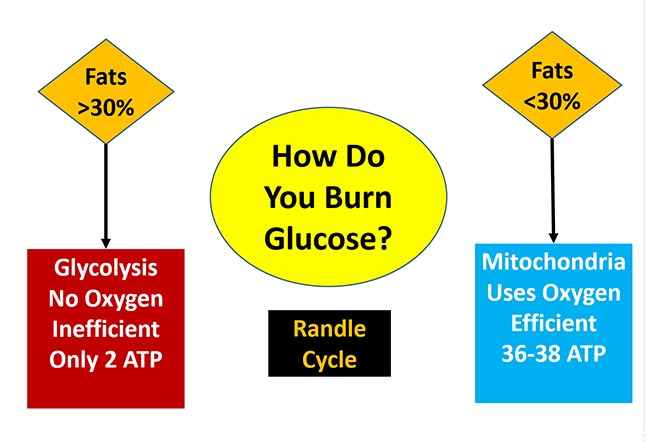
Your mitochondria can only burn one fuel at a time — either fat or glucose. Fats are broken down in a process called beta oxidation into acetyl-CoA, which gets fed into the Krebs cycle. Carbs are broken down to pyruvate, which cannot enter the electron transport chain until it is converted to acetyl-CoA by pyruvate dehydrogenase.
The key here is that there’s a stealth switch that controls which of these fuels your mitochondria will burn. The switch has been given the name the Randle Cycle, but it is more helpful to visualize it as a railroad switch that changes the tracks of the train. The train can only travel down one track: not both. This is because only one type of fuel can be burned at a time.
In a best-case scenario, you will metabolize, or burn, glucose in your mitochondria without any reductive stress. When you do this, you will only generate 0.1% reactive oxygen species (ROS).
Not only does this route generate less ROS, but it also is incredibly efficient at energy production by creating 36 to 38 adenosine triphosphates (ATP) for every molecule of glucose that is metabolized. It will also generate metabolic water and carbon dioxide, which are also important for your health.
For this to occur, as indicated in the figure above, you will need to consume less than 30% of your calories as fat. When you consume significantly more than that amount, the switch changes to burn fat in your mitochondria and you will not be able to burn glucose until your fat decreases to less than 30% of calories.
When your fat intake is higher than 30%, pyruvate is inhibited and unable to readily convert the glucose metabolite, pyruvate, into acetyl-CoA to be shuttled into the mitochondria to burn as fuel.
Consequently, glucose can back up into your bloodstream, raising your blood sugar. What little glucose is burned for fuel is done through glycolysis, which is a primitive pathway that bacteria and cancer cells use, and it generates the powerful metabolic reductant lactate.
This can be a major contributor to diabetes. If you’re exercising, healthy and doing strict keto, overt diabetes is unlikely to develop, but more than likely you will have fasting glucose in the 90s, rather than the more optimal 80s.
Additionally, chronically oxidizing fats as your primary fuel will tend to increase your cortisol level, resulting in chronic inflammation, both of which accelerate the aging process due to excess ROS generated in the mitochondria that occurs from increased reductive stress as a result of oxidizing fat instead of sugar.
It is great that we have this glycolysis pathway, as you absolutely need it for quick fuel when you are activating your Type 2 muscle fibers. But if this is the primary way you burn glucose, you are in a catastrophic metabolic state because you’re creating loads of lactate as a waste product instead of healthy CO2 and metabolic water.
What’s more, you’re only generating two ATP for every molecule of glucose, which is 95% less energy. Lactate increases reductive stress, which causes reverse electron flow in the mitochondria and increases the ROS to 3% to 4%, which is 30 to 40 times more than when glucose is burned efficiently in the mitochondria at 0/1% ROS.
When Adding Carbs, Reduce Your Fat Intake
Ideally, it is best to lower your fat intake and replace those calories with healthy carbs like ripe fruit. You likely won’t optimize your mitochondrial function, though, until your fat level decreases to 30% of your total calories. So, hold off on making a final decision about whether this change is helping you or not until you get your fat level to 30% or lower.
This is easily calculated by using a free online program called Cronometer. If you still struggle with diabetes or obesity, then you may need to get your fat level down to 15% to 20% of your total calories.
Protein Versus Fat and Carb Requirements
Determining the ideal balance between carbs and fats is the primary challenge for most people. The level of protein is a bit simpler. It tends to be about 15% of daily calories and remains stable. A basic guideline for protein intake is somewhere between 0.7 grams and 1 gram per kilogram of lean body mass (not total weight).
The level of dietary fat you need will depend on your endocrine balance. If you’re diabetic, for example, you may need to go below 20% to avoid shutting down your glucose metabolism. Dinkov comments:
“If you look at older people, and sick people as well, they have metabolic inflexibility. So, if you give them a meal that’s comprised of equal number of calories of carbs and fats, they’re going to oxidize mostly the fats and the carbohydrates will go unmetabolized.
So, they’ll raise their blood glucose and lactate. So, you need to play with the ratio, but I’ve noticed that between 15% and 20% is probably where most people in their current health state can metabolize the fat without causing problems through the Randle Cycle.
Most diabetics are overweight … which means they have plenty of supply of fat. In fact, they have two sources of fat: one through the diet, and the second one from their fatty tissue, because there’s always some lipolysis going on, which means shredding the fatty tissue and supplying the rest of the body with the fatty acids from a fatty tissue …
In the rested state, your muscles actually prefer to oxidize mostly fat. So, if you have a decent amount of muscle mass, you can actually burn most of this fat through the baseline lipolysis by simply resting and preferably raising the amount of lean muscle mass you have. The ratio of lean muscle mass to total body weight is the primary determinant of your basal metabolic rate. So it’s very important to not lose lean muscle mass …
So, for diabetic people, it’s probably a good idea to lower the intake of fat from the diet because they already have a lot coming from their own bodies. In fact, there are many clinics around the world that treat and even cure Type 2 diabetes by putting diabetics on this really restrictive diet until they lose most of their fat and then suddenly the metabolism of glucose gets restarted.
I think this directly shows you that it wasn’t the glucose that was fattening them up and causing the problems, rather they had too much fat in their bodies. Once you get rid of that fat, no matter how you do it … the problems with metabolizing glucose disappear.”
Signs of Excessive Fat/Insufficient Carb Intake
As explained by Dinkov, one of the reasons why obese people who lose a lot of weight end up gaining it all back, even when they continue to diet and exercise, is because most of the weight lost is actually muscle mass. When you lose muscle, your basal metabolic rate decreases, meaning you need fewer calories to maintain your weight.
As a result, you must stay on an extremely low-calorie diet to maintain your weight. So, again, it’s crucial to maintain muscle mass, because your muscles will burn fat even when you’re resting. During activity, especially strenuous activity, your muscles will burn mostly glucose.
“I think the best way to gauge if you are eating too much fat is cognitive function,” Dinkov says. “If you’re eating too much fat, to the point where you’re interfering with glucose metabolism, you’ll start getting brain fog. Your thinking process will slow. You’ll start searching for words. Your reaction time and coordination time will decrease.
Sleep quality is another. Also, exercise capacity. If you’re always catching your breath and you’re feeling fatigued all the time, that is actually a great sign/symptom of elevated lactate. In fact, many different interventions that lower lactate are used as performance improving substances, such as vitamin B1 and niacinamide …
I would say eat the more fat-heavy meals earlier in the day, for breakfast and maybe lunch, and then eat the more carb-heavy meals at night, because your brain and many of the other organs will really need that.
It’s very common that if you don’t consume sufficient amount of carbs before going to bed, you will have trouble sleeping … I think one of the reasons for this is that, if you don’t consume sufficient amount of glucose, you will raise cortisol at night, and cortisol is already higher at night than it should be.
The cortisol is lowest at around 3 or 4 p.m. and starts rising with the coming darkness. Cortisol is highest at around 6 to 8 a.m. in the morning. But if you don’t consume a sufficient amount of carbs, that cortisol will be up to 40% higher.”
Clean Carbs
Of course, when we say “eat more carbs,” we don’t mean pizza and doughnuts or even ostensibly healthy grains like whole wheat. Healthy or “clean” carbs include foods like ripe fruit, raw honey and maple syrup. Tropical fruits such as papaya, watermelon, oranges and tangerines are preferable, as in addition to higher levels of fructose, they also contain flavonoids that help to digest the sugars. Ripe melon, apples, peaches, plums, pears and grapes are also good.
Now, you’ve probably heard me say that you shouldn’t eat anything at least three or four hours before bedtime to optimize autophagy. Dinkov’s research, however, dispels some of the concerns about eating (clean) carbs before bed.
“You do not want to mess with autophagy too much,” Dinkov says. “It has a lot of beneficial effects in terms of getting rid of dead or metabolically deranged tissue. However, if you do have an already present tumor, autophagy and AMPK can actually drastically increase its aggressiveness and promote metastasis.
But let’s say you do want to increase autophagy. I think it’s a bit of a myth that eating will somehow suppress autophagy and put it at a suboptimal level. Several studies demonstrate that several of the carbohydrates — including fructose and sucrose — are autophagy enhancers.
I would say, [eat healthy carbs] an hour before bed, because if you eat a meal that’s too high in carbohydrates, there’s the infamous fructose malabsorption. There’s only a certain amount of carbohydrates that your gastrointestinal tract can absorb per unit of time.
So, you need about an hour or two before the meal, if it’s composed of simple carbohydrates, to get these things into your bloodstream. At that point, you’ll probably be very relaxed and naturally inclined to fall asleep.”
That fructose and sucrose enhance autophagy is probably news to most of you. It was to me. I personally eat a teaspoon of honey before I go to bed, which seems to be enough carbs to thwart an increase in cortisol and helps me get more deep sleep. So, to summarize, Dinkov suggests eating a small amount of healthy carbs, such as fruit, about an hour or two before bed to optimize sleep and, potentially, autophagy as well.
Serotonin Is Not Your Friend
Fruits to be consumed in small amounts include pineapple and bananas, as both contain serotonin. Bananas also contain tryptophan, which is used in the synthesis of serotonin.
While most people think of serotonin as a mood-booster, it’s actually one of your worst enemies. You do not want high levels of serotonin, because it’s an antimetabolite. This means it suppresses your body’s ability to create energy in your mitochondria in the electron transport chain, so you become tired and fatigued, your metabolic rate slows and you gain weight.
“The amount of serotonin we need is really, really low,” Dinkov says. “The biggest role of serotonin is gastrointestinal motility. Any increase, even minor increase of serotonin, has been known since the 1920s to rapidly lead to fibrosis. The most successful antifibrotic drugs on the market currently are serotonin blockers.”
More Information
For more details on the topics summarized here, be sure to listen to the entire interview, and keep your eyes peeled for Part 2, which will follow shortly. Also check out Georgi’s blog at www.haidut.me or follow him on Twitter. He also has hundreds of videos on YouTube on a plethora of topics. A major sampling of Ray Peat’s work is also available for free on these two sites: wiki.chadnet.org/Ray-Peat and RayPeat.com.
The Many Benefits of CoQ10 and Ubiquinol
Reproduced from original article:
https://articles.mercola.com/sites/articles/archive/2023/08/10/many-benefits-of-coq10-and-ubiquinol.aspx
The original Mercola article may not remain on the original site, but I will endeavor to keep it on this site as long as I deem it to be appropriate.
Analysis by Dr. Joseph Mercola Fact Checked August 10, 2023

STORY AT-A-GLANCE
- CoQ10 is a powerful, fat-soluble antioxidant that also has anti-inflammatory effects and plays a role in energy production
- It’s found throughout your body in cell membranes, but it’s most abundant in your heart, lungs, liver, kidneys, spleen, pancreas and adrenal glands
- CoQ10 offers significant benefits for heart health, kidney function, liver disease, migraines and more
- Your production of CoQ10 peaks around the age of 25, then begins to decline; by the age of 65, your body typically produces only about half the amount it did at 25
- Many people, including older adults, those with certain chronic diseases and people taking statin drugs, benefit from ubiquinol supplementation; ubiquinol is the reduced version of CoQ10 that’s more easily absorbed
Coenzyme Q10 or simply CoQ10, (ubiquinone) is a fat-soluble molecule that is found in all cells of your body. It plays a crucial role in the electron transport chain, which is a series of reactions that occur in the mitochondria to generate energy in the form of ATP.1
In addition to its role in energy production, CoQ10 also has antioxidant properties. It can neutralize harmful free radicals and protect cells from oxidative damage. This is particularly important in mitochondria, as the electron transport chain can sometimes leak electrons, leading to the formation of free radicals. CoQ10 helps prevent this leakage and reduces the risk of oxidative stress.
It is worth noting that the quality and composition of CoQ10 supplements can vary. Some commercially available CoQ10 products may be dissolved in vegetable oil, which can affect the interaction between it and other molecules. This may have implications for its respiratory function and potential toxicity for mitochondria.
“CoQ10 is essential for the health of virtually all human tissues and organs,” a review in the Journal of Pharmacy & BioAllied Sciences notes.2 While it’s found throughout the body in cell membranes, it’s most abundant in your heart, lungs, liver, kidneys, spleen, pancreas and adrenal glands.3
As the third most consumed dietary supplement,4 CoQ10’s reputation for health and wellness has gotten around, but its clinical relevance is still very much underappreciated. And the same holds true for ubiquinol — the reduced, electron-rich form of CoQ10 that your body produces naturally.
How CoQ10 Benefits Your Health
CoQ10 protects cellular membranes from oxidative stress induced by free radicals. It also has anti-inflammatory properties. Supplementing with 60 milligrams (mg) to 500 mg of CoQ10 for eight to 12 weeks can significantly reduce tumor necrosis factor alpha (TNF-α), IL-6 and C-reactive protein (CRP);5,6 three measures of widespread inflammation, impacting a number of chronic diseases. CoQ10 also plays a role in a number of other important functions, including:7
| Cholesterol metabolism | Regeneration of vitamins C and E |
| Maintaining lysosomal pH | Sulfur metabolism |
| Amino acid metabolism | Gene expression |
Heart health, however, is CoQ10’s claim to fame. Many conditions, including heart disease, appear to be rooted in mitochondrial dysfunction.8 Cardiac muscle cells have about 5,000 mitochondria per cell,9 where CoQ10 concentrates. For further comparison, mitochondria make up about 35% of the volume of cardiac tissue and only 3% to 8% of the volume of skeletal muscle tissue.10
Further, scavenging of reactive oxygen species (ROS) and a reduction in oxidative stress are an essential part of keeping the heart functioning normally,11 including helping to ward off atrial fibrillation.12
Atrial fibrillation is an abnormal, often rapid, heart rhythm that occurs when the atria, your heart’s upper chambers, beat out of sync with the ventricles, the heart’s lower chambers. It’s a common symptom in those with heart failure or heart disease.
In one study, 102 patients with atrial fibrillation were divided into two groups. One group was given a CoQ10 supplement while the other group was given a placebo. After 12 months of supplementation, 12 people in the placebo group had atrial fibrillation episodes compared to only three people in the CoQ10 group.13 Levels of malondialdehyde, a known biomarker of oxidative stress, also went down significantly in the CoQ10 group.
A systematic review and meta-analysis of cardiovascular risk factors spanning 884 randomized controlled trials with 883,627 participants also found CoQ10 decreased all-cause mortality events.14 Meanwhile, CoQ10 influences several other aspects of heart health, including:
- High blood pressure — CoQ10 acts directly on your endothelium, dilating your blood vessels and lowering blood pressure.15,16 CoQ10 also decreases aldosterone, a hormone that makes you retain salt and water.17,18 When aldosterone goes down, excess salt and water are excreted through your kidneys, often causing your blood pressure to go down.
- Stroke — Systemic inflammation, oxidative stress and nerve cell damage play a role in the development of stroke. Research suggests supplementing with CoQ10 can reduce ischemic lesions and improve outcomes in patients who have been treated with a statin drug after having a stroke (statins reduce CoQ10 levels in your body).19
CoQ10 Benefits Migraines, Kidney Function, NAFLD and More
If you suffer from migraine headaches, you may be interested to know that CoQ10 may play a preventative role in the condition. A meta-analysis of five studies found CoQ10 was more effective than placebo in reducing the number of migraine days per month, along with migraine duration.20
CoQ10 is also protective of the kidneys and may be useful in cases of acute kidney injury due to drugs like nonsteroidal anti-inflammatories, sepsis and other causes. The protective benefits are likely due to CoQ10’s “anti-inflammatory effects, gene expression regulation, enhancement of the activity of antioxidant enzymes, free-radical scavenging, and lipid bilayer membrane stabilization.”21
Its ability to reduce oxidative stress makes CoQ10 useful for age-related diseases as well, with some studies suggesting it can increase lifespan in animal models.22 Benefits have also been found for improving fertility in older women and reducing fertility decline in men.23 It may also stop the progression of nonalcoholic fatty liver disease (NAFLD).
In one study, 44 patients were divided into two groups. One group was given 100 mg of CoQ10 each day, while the other was given a placebo. After four weeks of supplementation, the group taking CoQ10 dropped weight and had lower levels of serum AST, a blood marker that indicates liver disease and/or damage.24
Download this Article Before it Disappears
CoQ10 Levels Decrease With Age
Your body can naturally make CoQ10, but genetic alterations in metabolism, poor diet, oxidative stress, chronic conditions and aging can all interfere with CoQ10 production and lead to CoQ10 deficiency.
While the optimal daily requirement for CoQ10 isn’t known, it’s been estimated at 500 mg per day. Since only an estimated 5 mg comes from dietary sources, most of this is dependent on being synthesized within your body. Your production of CoQ10 peaks around the age of 25, however, then begins to decline. By the age of 65, your body typically produces only about half the amount it did at 25.25
A CoQ10 deficiency can result, which causes a number of deleterious effects, not the least of which is impaired antioxidant defense against oxidative stress caused by free radicals. According to researchers with Liverpool John Moores University in the U.K.:26
“Primary CoQ10 deficiency can affect any part of the body, but particularly the brain, muscle and kidney tissues, as a consequence of their high energy demands. The severity and time frame of symptoms are variable; severe symptoms may be evident in infancy, whereas mild symptoms may not become apparent until the individual is in their 60s.”
In the brain, CoQ10 deficiency can lead to impaired balance and coordination known as ataxia, along with other neurological symptoms. In the kidneys, lack of CoQ10 may cause dysfunction, while in the heart, a weakened heart muscle, similar to hypertrophic cardiomyopathy, can occur.27 Further, the U.K. team explained:28
“Secondary deficiencies of CoQ10 typically occur in the mitochondrial myopathies, cardiovascular disease, type II diabetes, chronic kidney disease, liver disease and critical illness. Depletion of CoQ10 in these disorders may compromise cellular antioxidant status and result in impaired mitochondrial function and cellular energy supply, resulting in, for example, heart failure.”
If you take statin cholesterol-lowering drugs, be aware that they block HMG coenzyme A reductase in your liver, which is how they reduce cholesterol. But this is also the same enzyme that makes CoQ10, making its depletion likely.
Statin-induced CoQ10 deficiency may be responsible for the myopathic — or relating to muscle control — side effects often attributed to these drugs. Interestingly, LDL cholesterol is the major carrier of CoQ10 in your circulation, so it’s also been suggested that the decrease in CoQ10 among statin users is related to the decrease in LDL.29
The Difference Between CoQ10 and Ubiquinol
Ubiquinol is the reduced version of CoQ10, also known as ubiquinone. They’re the same molecule, but when CoQ10 is reduced it takes on two electrons, which turns it into ubiquinol. In your body, this conversion occurs thousands of times every second inside your mitochondria.
The flipping back and forth between these two molecular forms is part of the redox (oxidation/reduction) process that transforms food into energy. Young people are able to use CoQ10 supplements quite well, but older people do better with ubiquinol, as it’s more readily absorbed. You can get some CoQ10 from food as well. Food sources include wild-caught salmon, mackerel, sardines, eggs and organ meats.30
You may also be able to improve your body’s conversion of CoQ10 to ubiquinol by eating lots of green leafy vegetables, which are loaded with chlorophyll, in combination with sun exposure.31,32
CoQ10 and Ubiquinol Dosing
Before we get to the dosing, if you plan on supplementing with CoQ10 you must be absolutely certain the supplement does not contain any vegetable oil in it, as the unsaturated fat will damage the CoQ10 and it will not work optimally.
Most of your CoQ10 requirements are met by making your own. But if your body’s production has declined with age or due to other reasons, like statin drugs, supplementation may be beneficial. Dosing requirements vary depending on your individual situation and needs.
If you’re just starting out with ubiquinol, start with 200 mg to 300 mg per day. Within three weeks, your plasma level will typically plateau to its optimum level. After that, you can go down to a 100 mg per day maintenance dose. This dose is typically sufficient for healthy people. If you have an active lifestyle, exercise a lot or are under a lot of stress, you may want to increase your dose to 200 to 300 mg per day.
If you’re taking a statin drug you must also take at least 100 to 200 mg of ubiquinol or CoQ10 per day, or more. Supplementation is also appropriate for those with chronic diseases such as heart disease, diabetes, amyotrophic lateral sclerosis (ALS), chronic fatigue and autism. Ideally, split the dose up so you’re taking it two or three times a day, rather than taking it all at once, as this will result in higher blood levels.
To find out the best dose for your needs, you’ll want to work with your integrative physician. Remember, too, that CoQ10 is a fat-soluble antioxidant, so consume it along with a healthy source of fat for optimal absorption.
- 1, 30 Cleveland Clinic, What Is CoQ10 March 28, 2022
- 2, 3 J Pharm Bioallied Sci. 2011 Jul-Sep; 3(3): 466–467
- 4 Compr Rev Food Sci Food Saf. 2020 Mar;19(2):574-594. doi: 10.1111/1541-4337.12539. Epub 2020 Feb 19
- 5 Pharmacol Res. 2017;119:128-136
- 6 Pharmacol Res. 2019;148:104290
- 7 Int J Mol Sci. 2020 Sep; 21(18): 6695., Intro
- 8 Integr Med (Encinitas). 2014;13(4):35-43
- 9 PeerJ. 2018;6:e4790
- 10 Am J Physiol Heart Circ Physiol. 2014;307(3):H346-52
- 11 Antioxidants (Basel). 2020;9(4)
- 12, 13 J Investig Med. 2015;63(5):735-9
- 14 Journal of the American College of Cardiology December 13, 2022, Volume 80, Issue 24, Pages 2269-2285
- 15 Molecular Aspects of Medicine. 1994;15(1):s257-s263
- 16 Circ Res. 1989;65(1):1-21
- 17 Am J Physiol. 1965;208:1275-80
- 18 Molecular Aspects of Medicine. 1994;15(1):s265-s272
- 19 Nutr Neurosci. 2019;22(4):264-272
- 20 Acta Neurol Scand. 2019 Mar;139(3):284-293. doi: 10.1111/ane.13051. Epub 2018 Dec 3
- 21 Cell Mol Biol Lett. 2022; 27: 57
- 22 Nutrients. 2019 Sep; 11(9): 2221., Conclusions
- 23 Nutrients. 2019 Sep; 11(9): 2221., Section 3.3
- 24 Arch Med Res. 2014;45(7):589-95
- 25 Int J Mol Sci. 2020 Sep; 21(18): 6695
- 26, 27, 28, 29 Int J Mol Sci. 2020 Sep; 21(18): 6695., 3. Clinical Consequences of CoQ10 Deficiency
- 31 Photochem Photobiol. 2013 Mar-Apr;89(2):310-3. doi: 10.1111/j.1751-1097.2012.01230.x. Epub 2012 Sep 26
- 32 NutritionFacts.org April 4, 2016