Prescription Medication
now browsing by category
The Shaw Twins Case: A Mother, a Murder Charge, and Eighty Years of Evidence No One Wants to See
© GreenMedInfo LLC. This work is reproduced and distributed with the permission of GreenMedInfo LLC.
Want to learn more from GreenMedInfo? Sign up for the newsletter here:
www.greenmedinfo.com/greenmed/newsletter
Reproduced from original article:
https://sayerji.substack.com/p/the-shaw-twins-didnt-suffocate-they
Sayer Ji July 18, 2026

How five vaccines and a bottle of Tylenol converge on the infant brainstem — and why the medical examiner’s “smothering” verdict is the last stage of a century-long classification laundry
On the night of April 30, 2025, Andrea Shaw put her 18-month-old twins to bed in a small house in Payette, Idaho. She had watched them collapse eight days earlier — blue-lipped, eyes rolled back, unable to walk — hours after their pediatrician injected them with five vaccines during a single well-baby visit. The emergency room that night wrote “post-immunization reaction” in the chart, handed her a bottle of children’s Tylenol, and sent her home. For seven more days the twins were listless, feverish, refusing food, passing green diarrhea. On the morning of May 1, she found Dallas and Tyson cold and still in their shared crib.

In July 2026, prosecutors indicted her for their murder — alleging she smothered both children in a single night. She is being held without bail and faces the death penalty.[^1] What the state of Idaho refuses to see is that the etiology of these deaths is not obscure, not speculative, and not novel. It is, in fact, the most extensively documented — and most systematically suppressed — pediatric toxicology pattern of the past eighty years. Two exposures, biochemically synergistic, converging on the same fragile brainstem structures at precisely the moment when the medical literature predicts fatal apnea. This is not a whodunit. It is a why-won’t-we-look. And it is the inevitable, engineered consequence of a public-health apparatus that has spent forty years insisting — against a mountain of its own peer-reviewed evidence — that all childhood vaccines are “safe and effective” for all children. When the medicine kills, the mother must have.

Figure 1. The combined etiological pathway. Two “independently safe” exposures — a multi-antigen vaccine cocktail and acetaminophen given for post-vaccine fever — converge on glutathione depletion, sulfation pathway failure, and brainstem/cardiac injury. The final classification stage on the bottom row shows how the same physiological outcome has been rerouted through three institutional categories over the past four decades.
What the Chart Actually Says
The publicly available record of the Shaw twins’ final week is, on its face, sufficient to raise the diagnostic possibility of vaccine-plus-acetaminophen–induced central apnea in any pediatrician trained before 1986.[2] Consider the timeline:
- April 23, 2025: Dallas and Tyson Shaw, 18-month-old fraternal twins, received five vaccines at a routine well-baby visit — DTaP, influenza (with prior paternal reaction history), and hepatitis A.[1] Both Andrea Shaw and the twins’ paternal grandmother reportedly warned the pediatrician of the father’s adverse reaction to influenza vaccine. The vaccines were administered anyway.[3]
- April 24: Within twenty-four hours, both twins collapsed. Symptoms included cyanosis (blue lips), rolled-back eyes, inability to walk, and green watery diarrhea. Emergency department documentation records “post-immunization reaction.” The children were sent home with acetaminophen (Tylenol) and popsicles.[1][3]
- April 25 – April 30: Seven days of continued lethargy, severe diarrhea, food refusal, and low-grade illness. Standard pediatric guidance — including the guidance the ER discharge instructions almost certainly reflected — is repeat acetaminophen dosing for post-vaccination symptoms.[4]
- April 30 (evening): The twins were put to bed early.
- May 1 (morning): Both children were found dead, cold, in their shared crib. Autopsy findings included pulmonary vascular congestion.[3]
Dr. Pierre Kory, who reviewed the full medical record, concluded the deaths were consistent with severe apnea induced by the vaccines administered eight days earlier.[2] The state of Idaho, three doctors it declines to identify, and the Payette County prosecutor concluded instead that Andrea Shaw suffocated both of her children in a single night. They cite the pulmonary vascular congestion as consistent with smothering, and note that both twins were found dead simultaneously as evidence against natural causes: “It is also the only reasonable explanation,” prosecutor Michael Duke argued, “for why both would die at the same time, on the same night, in the same room, in the same bed.”[5]
This argument is exactly backwards. The literature on simultaneous twin deaths after vaccination is neither sparse nor recent. It stretches from 1946 to 2025. The Shaw twins are at least the ninth documented pair.
Eighty Years of Simultaneous Twin Deaths After Vaccination
The baseline mathematics is unambiguous. Malloy and Freeman’s 1999 analysis of 172,029 U.S. twin pregnancies over five years identified only seven cases in which both twins died of Sudden Infant Death Syndrome (SIDS), and only one in which both died on the same day — a rate of 0.58 per 100,000 twin pregnancies.[6] The forensic pathologist Millard Bass, cited in the same literature, put the matter plainly: “The likelihood of twin infants dying suddenly and simultaneously of SIDS, a natural disorder, defies credibility.”[7]
And yet the medical literature — peer-reviewed, publicly indexed, largely ignored — contains at least eight sets of twins who died together in tight temporal proximity to vaccination before the Shaw twins made nine. Every one of these cases involved the same pattern: healthy children, routine vaccination, silent death within days:
![YearAgesInterval post-vaccineVaccinesCitation1946Identical twin boys16–20 hoursDiphtheria toxoid + pertussis (2nd dose)Werne & Garrow, JAMA[^8]1985Twin boys2–3 hoursDPTRoberts, Arch Dis Child[^9]1987Twin boys, 5 mo3 hoursDPTCoulter & Fisher[^10]2007Identical twin girls, 15 wk2 daysDPT + Hep B + oral polio (+ acetaminophen for post-vaccine fever)Balci et al., Forensic Sci Int[^11]2010Identical twin boys, 12 wk5 daysDTaP + OPV + Hep B + HibMitchell et al., Int J Legal Med[^12]2013Twin boys, 10 wk10 daysDPT + OPV (1st dose)Huang et al.[^13]2025Boy/girl, 18 mo8 daysDTaP + influenza + hepatitis A (+ acetaminophen at ER Day 1)Shaw twins (case in litigation)[^1]](https://substackcdn.com/image/fetch/$s_!z426!,w_1456,c_limit,f_webp,q_auto:good,fl_progressive:steep/https%3A%2F%2Fsubstack-post-media.s3.amazonaws.com%2Fpublic%2Fimages%2Fb04f5647-e45b-482a-8aa2-09d0743b3abe_1520x838.png "YearAgesInterval post-vaccineVaccinesCitation1946Identical twin boys16–20 hoursDiphtheria toxoid + pertussis (2nd dose)Werne & Garrow, JAMA[^8]1985Twin boys2–3 hoursDPTRoberts, Arch Dis Child[^9]1987Twin boys, 5 mo3 hoursDPTCoulter & Fisher[^10]2007Identical twin girls, 15 wk2 daysDPT + Hep B + oral polio (+ acetaminophen for post-vaccine fever)Balci et al., Forensic Sci Int[^11]2010Identical twin boys, 12 wk5 daysDTaP + OPV + Hep B + HibMitchell et al., Int J Legal Med[^12]2013Twin boys, 10 wk10 daysDPT + OPV (1st dose)Huang et al.[^13]2025Boy/girl, 18 mo8 daysDTaP + influenza + hepatitis A (+ acetaminophen at ER Day 1)Shaw twins (case in litigation)[^1]")
The 1946 Werne and Garrow case is particularly important because the U.S. Institute of Medicine — an institution not known for its skepticism of vaccination — concluded in its 2003 Immunization Safety Review that “the evidence favors acceptance of a causal relationship between diphtheria toxoid- and whole cell pertussis vaccine and death due to anaphylaxis in infants,” basing this conclusion primarily on the twin case.[14] The IOM has, in other words, already conceded the mechanism at the level of individual case reports. What it has never accepted is the population-level extrapolation.
The 2007 Balci case is even more directly relevant to the Shaw twins. Fifteen-week-old identical girls in Istanbul received a second dose of DPT, first dose of hepatitis B, and second dose of oral polio. They developed fever on Day 1. Their mother administered acetaminophen per pediatric guidance. Two days later, both were dead in their crib, supine, no signs of struggle.[11] The Turkish Institute of Forensic Medicine ruled the deaths “consistent with SIDS.” The parallel to Payette is exact: vaccines + post-vaccine acetaminophen + simultaneous death of twins within days.
The Cytokine Storm and the Vulnerable Brainstem
The mechanistic evidence for vaccine involvement in infant death does not depend on twin cases. It has been reconstructed in molecular detail from three converging bodies of evidence: cytokine physiology, brainstem neuropathology, and cardiac conduction pathology.
The cytokine cascade. Foreign antigens introduced via vaccination activate the innate immune system within hours, producing interleukin-1β, interleukin-6, tumor necrosis factor-α, and interleukin-2. In infants, these cytokines cross the immature blood-brain barrier and act directly on the medullary serotonergic (5-HT) neurons that regulate respiratory chemosensitivity and auto-resuscitation from apnea. Kinney and Thach’s 2009 New England Journal of Medicine review of the neuropathology of SIDS documents that impaired 5-HT signaling in the medulla is the single most consistent postmortem finding across SIDS cohorts.[^15] Vege and Rognum showed as early as 1999 that SIDS infants exhibit elevated IL-6 in cerebrospinal fluid, with the identical topographic distribution — solitary nucleus tractus, spinal trigeminal nucleus, arcuate nucleus — in both SIDS cases and non-SIDS infants dying of acute infectious illness.[16] The physiological effect: prolonged central apnea, inhibited arousal from hypoxia, failure to auto-resuscitate.
The brainstem lesion. Ottaviani, Lavezzi, and Matturri, working at the University of Milan, published in Virchows Archiv in 2006 a detailed neuropathological analysis of a three-month-old female infant who died within hours of hexavalent vaccination. Serial-section examination of the brainstem revealed bilateral hypoplasia of the arcuate nucleus. The cardiac conduction system showed persistent fetal dispersion and resorptive degeneration. The authors concluded that the case “offers a unique insight into the possible role of hexavalent vaccine in triggering a lethal outcome in a vulnerable baby.”[17] They subsequently expanded their series to 110 SIDS cases, finding that 13 (11.8%) had died within 1–7 days of hexavalent vaccination, and in one case identified acute encephalitis of the tractus solitarii nucleus in the brainstem — a finding, they noted, that cannot be explained by developmental abnormality alone.[18] Zinka et al. in Munich independently reported six additional cases of unexplained sudden infant death within 48 hours of hexavalent vaccination the same year.[19]
The regulatory signal. Von Kries et al., analyzing German pharmacovigilance data, found that in the second year of life — precisely the Shaw twins’ age range — the standardized mortality ratio for sudden unexpected death within one day of hexavalent vaccination reached 31.3 (95% CI 3.8–113.1) and within two days 23.5 (95% CI 4.8–68.6). The authors, writing in the European Journal of Pediatrics, described these findings as “a signal for one of the two hexavalent vaccines which should prompt intensified surveillance.”[20] The European Medicines Agency’s response was to withdraw one of the two hexavalent formulations (Hexavac) from the market — while simultaneously insisting there was no evidence of a causal relationship. The Italian PLoS One case series subsequently found a 2.0-fold risk ratio (95% CI 1.2–3.5) for sudden unexpected death in the seven days following first-dose hexavalent vaccination.[21] Kuhnert et al. reported a 16-fold risk elevation following the fourth dose of penta/hexavalent vaccine.[22]
The population signal. Goldman and Miller’s 2011 analysis of 34 developed nations found a Pearson correlation of r = 0.992 (p = 0.0009) between the number of scheduled infant vaccine doses and the infant mortality rate.[23] Nations requiring more doses have higher infant mortality. Their 2012 VAERS analysis showed that infants receiving five to eight vaccines simultaneously — precisely the Shaw twins’ exposure — had a hospitalization rate ratio of 1.5 (95% CI 1.4–1.7) and a mortality rate 50% higher than infants receiving fewer.[24] Hooker and Miller’s 2021 Toxicology Reports analysis of 2,605 VAERS infant death reports over three decades found that 58% occurred within three days of vaccination and 78% within one week — a temporal clustering the authors described as “highly suggestive of a causal relationship.”[25]
The picture that emerges is not ambiguous. It is a coherent, cross-decade, cross-methodology body of work spanning pathology, epidemiology, VAERS analysis, ecological correlation, and pharmacovigilance signal detection.
The Second Poisoning: Acetaminophen as Etiological Amplifier

Here is where the Shaw twins case departs from any prior public discussion of their deaths — and where the mechanistic evidence becomes most damning.
Acetaminophen (paracetamol; Tylenol) is not a neutral fever reducer. It is a xenobiotic that, in infants, is preferentially metabolized through cytochrome P450 2E1 into N-acetyl-p-benzoquinone imine (NAPQI) — a reactive metabolite that immunologist William Parker, formerly of Duke University and author of nearly 200 peer-reviewed papers, has described as a “free radical bomb.”[26] NAPQI’s primary detoxification pathway requires glutathione, the cell’s central antioxidant reserve. When glutathione is intact, NAPQI is neutralized. When glutathione is depleted, NAPQI attacks membrane lipids, mitochondrial proteins, and — critically for the Shaw twins — the same brainstem structures already sensitized by vaccine-induced cytokines.
For a far deeper dive, I’ve written extensively on the topic of Tylenol’s wide-ranging and underreported toxicity in my Tylenol Investigation series here on Substack.
The infant biochemical vulnerability is well-established:
- Immature glucuronidation. Newborns and toddlers clear acetaminophen inefficiently through the mature glucuronidation pathway, shunting a higher proportion into the NAPQI-producing CYP450 2E1 pathway. The metabolic profile in early infancy resembles that of cats — an animal famously fatal-to-Tylenol.[26]
- Impaired sulfation. Waring and Klovrza documented in 1999 that children with autism — and, by extension, an unknown fraction of neurotypical children with subclinical sulfation deficits — exhibit impaired sulfation, a critical secondary detoxification pathway for acetaminophen.[27] The Shaw twins’ baseline sulfation capacity was never measured. It never is.
- Glutathione baseline in acute illness. Infants who are already ill, febrile, inflamed, or under oxidative stress — for instance, infants in the immediate post-vaccination cytokine surge window — have depleted glutathione reserves before the first dose of acetaminophen enters the system.[26][28]
The Schultz et al. 2008 study in Autism is the single most important epidemiological finding for understanding the Shaw case, and it has been almost totally ignored in mainstream medical discourse. Using a parent-survey design covering post-MMR vaccination exposures, Schultz’s team found that children given acetaminophen after MMR had approximately 8-fold higher odds of developing autism (OR ~8.2) compared to children given ibuprofen or no analgesic. Children given ibuprofen showed no elevated risk. Among children who experienced post-vaccination fever specifically, the acetaminophen-associated regressive autism incidence was twenty-fold higher.[29] The vaccine alone did not produce the effect. The vaccine plus acetaminophen did.
The Boston Birth Cohort — an NIH-funded prospective study measuring acetaminophen biomarkers directly in umbilical cord blood — found that infants in the highest cord-blood acetaminophen quartile had 3.6 times the risk of subsequent autism diagnosis compared to those in the lowest, with clear dose-response.[30] The 2021 international consensus statement in Nature Reviews Endocrinology, co-authored by 91 scientists, formally called for precautionary restriction of acetaminophen use during pregnancy on the basis of accumulating neurodevelopmental evidence.[31]
The convergence with vaccination is not coincidental. Standard American pediatric practice, throughout the 1980s and 1990s and continuing into the present, has been to preemptively or reactively administer acetaminophen for post-vaccination fever.[^4] The result is that virtually every American child born in the past four decades has been exposed to combined vaccine + acetaminophen at the exact developmental windows — 2, 4, 6, 12, 15, and 18 months — when the medullary serotonergic system is most vulnerable. The Shaw twins were poisoned twice: once by five simultaneous vaccine antigens depleting their glutathione reserves and priming their brainstems for apnea, and again by the acetaminophen given by an emergency department to manage the recognized “post-immunization reaction” — the very drug most likely to finish what the vaccines started.

Figure 2. Biochemical and physiological overlay of the Shaw twins’ final eight days. The upper panel plots relative magnitude of vaccine-induced cytokines, acetaminophen-derived NAPQI, and depleting glutathione reserve. The lower panel shows the two well-documented apnea event peaks — one Day 1–2 (per Scheibner’s 1991 Cotwatch data) and a second, larger peak Day 5–7 — against the clinical timeline. All three biochemical curves converge fatally in the Day 5–8 window when both twins died.
The Angela Cannings Precedent — When “Statistical Impossibility” Convicts the Innocent

The prosecution’s central theory in the Shaw case — voiced by Payette County prosecutor Michael Duke as “the only reasonable explanation for why both would die at the same time, on the same night, in the same room, in the same bed”[5] — is not a novel argument. It is a nearly verbatim recapitulation of the theory that sent Angela Cannings, Sally Clark, and Donna Anthony to prison in Britain in the late 1990s and early 2000s, and that the England and Wales Court of Appeal ultimately declared unsafe as a matter of law.[40a]
Angela Cannings lost three infants — Gemma (13 weeks, 1989), Jason (7 weeks, 1991), and Matthew (18 weeks, 1999). Doctors initially diagnosed the first as SIDS. When the second and third died, prosecutors argued that multiple unexplained infant deaths in a single family were so statistically improbable that homicide was the more likely explanation. Their star witness was pediatrician Sir Roy Meadow, then president of the British Paediatric Association, whose “Meadow’s Law” declared: one infant death is a tragedy, two is suspicious, three is murder unless proven otherwise. In 2002 Cannings was convicted of murdering Jason and Matthew and sentenced to life in prison. There was no confession, no eyewitnesses, no physical evidence of smothering, no injuries — only the statistical argument.[^40a]
On December 10, 2003, after Cannings had served twenty months, the Court of Appeal overturned her convictions. The court’s holding is directly applicable to the Shaw prosecution: where a case depends “exclusively, or almost exclusively, on a serious disagreement between distinguished and reputable experts,” it is “unwise, and therefore, unsafe” to permit a conviction to stand.[^40a] Within weeks, Attorney General Lord Goldsmith announced a systematic review of hundreds of similar cases. Sally Clark’s conviction was overturned the same year. Donna Anthony was freed in 2005. In every one of those cases, subsequent scientific investigation revealed genetic, metabolic, or environmental causes for infant deaths that had been declared “statistically impossible” and therefore homicidal.[40a]
The parallels to the Shaw case are exact:
- Statistical-impossibility theory of guilt. Duke’s “only reasonable explanation” argument is Meadow’s Law transposed to Idaho. Both rest on the premise that unusual clusters of infant death in one family cannot be natural. Both ignore that vaccine-associated twin death is a documented, recurring pattern in the peer-reviewed literature since 1946.
- No physical evidence of homicide. As in Cannings, there is no confession, no eyewitness, no injury, no forensic marker consistent with smothering — only pulmonary vascular congestion, a finding equally consistent with the vaccine-plus-acetaminophen etiology described above.
- Reliance on disputed expert opinion. Idaho prosecutors cite three unnamed physicians who “ruled out vaccines” without producing their credentials, methodology, or reports. Dr. Pierre Kory, who has reviewed the full medical record, has publicly stated the deaths are consistent with vaccine-induced apnea.[^2] This is precisely the “serious disagreement between distinguished and reputable experts” that the Cannings court held renders prosecution unsafe.
- Genetic/metabolic susceptibility ignored. In the post-Cannings British reviews, cases repeatedly turned on inherited disorders — Long QT syndrome, medium-chain acyl-CoA dehydrogenase deficiency, and other channelopathies that produce apparent “SIDS” clusters in siblings. The Shaw twins’ documented paternal history of adverse vaccine reaction points to precisely such a susceptibility, and Ottaviani’s neuropathological literature identifies at least a dozen predisposing factors that would explain simultaneous death after simultaneous exposure.[17][25]
As attorney Chad Davenport told The Defender in July 2026: “The Angela Cannings case taught us a hard lesson: Even top medical experts can be wrong, and guesswork should never replace hard evidence. When dealing with sudden, unexplained tragedies like the Andrea Shaw case, the justice system cannot afford to rush to judgment. If police and medical examiners ignore a family’s medical history or dismiss other possible causes right out of the gate, we risk putting another innocent mother behind bars.”[40a]
The Cannings precedent is not binding on an Idaho court. But it is directly persuasive authority on the fundamental due-process question at the heart of the Shaw case: whether a prosecution may proceed to conviction on nothing more than the statistical improbability of a natural explanation, when a documented natural explanation exists in the peer-reviewed literature and reputable experts disagree with the state’s theory. Under the Cannings standard, this prosecution should not go forward.
The Classification Laundry
If the etiology is so well-established, why is Andrea Shaw in a jail cell? Why did three unnamed physicians “rule out” vaccines as a cause of death? Why did the Payette County coroner refuse to release the autopsy? The answer requires understanding the institutional architecture that has, over the past half-century, systematically absorbed vaccine-related infant deaths into administrative categories that make them statistically invisible.
The mechanism operates in three layers:
Layer 1 — Eliminated ICD codes. The International Classification of Diseases contains 130 official categories for infant cause of death. Prior to 1979, one of those categories was “death from prophylactic vaccination.” That code was eliminated. There is now no ICD code under which a medical examiner can classify a vaccine-attributable infant death.[32] The category was replaced, functionally, by the diagnosis of exclusion known as SIDS — a category that did not exist before 1973, invented in that year to accommodate an epidemic of unexplained infant deaths that had emerged in the 1960s alongside the mass rollout of DPT, oral polio, and measles vaccines.[32]
Layer 2 — Reclassification. After the 1992 American Academy of Pediatrics “Back to Sleep” campaign was credited with an 8.6% annual decline in SIDS between 1992 and 2001, Malloy and MacDorman’s Pediatrics analysis demonstrated that deaths coded as “accidental suffocation in bed” had risen 11.2% annually over the same period. The reclassification accounted for approximately 90% of the apparent SIDS decline.[33] The deaths did not decrease. Their names did.
Layer 3 — Prosecutorial classification. The Shaw case represents the newest layer of this laundry: when the vaccine + acetaminophen exposure produces simultaneous twin death — a pattern that cannot plausibly be classified as SIDS given the extreme statistical improbability — the deaths are reassigned to homicide. The mother is prosecuted. The vaccines and the acetaminophen never appear in the courtroom except as items her defense attorney must struggle to introduce over prosecutorial objection. The National Vaccine Injury Compensation Program has paid out over $5.4 billion in compensation for vaccine injuries and deaths since 1988,[34] many of the settled infant-death cases having originally carried a SIDS or suffocation diagnosis. This is public knowledge. It plays no role in Idaho’s case against Andrea Shaw.
The institutional pattern is not accidental. It is the same governance-by-classification that has characterized every major pharmaceutical harm suppression of the past century — from thalidomide to Vioxx to opioids. The specific stakeholders in the vaccine + acetaminophen dyad are not obscure: Johnson & Johnson has been simultaneously one of the largest global manufacturers of both pediatric vaccines and Tylenol (until the 2023 spinoff of Kenvue), and William Parker’s Duke University laboratory was shuttered in 2021 — with the department deeming further acetaminophen-autism research “not in the strategic best interest” of Duke — while two Duke administrators, including the Chancellor for Health Affairs, simultaneously served on Johnson & Johnson’s Board of Directors.[35] An anonymous donor’s offer to fully fund Parker’s salary and experiments was declined.
Broken Trust: The Tylenol Cover-Up That May Have Damaged Millions of Children

Read, share, and comment on the X post dedicated to this thread here: https://x.com/sayerjigmi/status/1966659933694296412
What the Autopsy Should Have Looked For — and Almost Certainly Did Not
The Ottaviani protocol, published in Virchows Archiv in 2006 and refined in the 2014 expanded series, is explicit about what a competent post-mortem examination in a suspected vaccine-associated infant death must include:[17][18]
- Serial sectioning of the brainstem, with specific examination of the arcuate nucleus, the tractus solitarii nucleus, the spinal trigeminal nucleus, and the dorsal vagal nucleus.
- Immunohistochemistry for cytokine expression (IL-1β, IL-2, IL-6, TNF-α) in medullary respiratory control centers.
- Cardiac conduction system examination for persistent fetal dispersion, resorptive degeneration, and sinoatrial/atrioventricular node abnormalities.
- Hepatic and cerebral glutathione measurement, with quantitation of NAPQI-protein adducts as evidence of acetaminophen-induced oxidative stress.
- Beta-tryptase quantitation to evaluate for anaphylactoid mast-cell activation — the mechanism identified in the 2008 Forensic Science International case of an infant dying 24 hours post-hexavalent vaccination.[36]
Payette County coroner Ethan Mittelstadt has stated that the Shaw twins’ autopsy records will remain confidential until the criminal proceedings conclude.[1] There is no public evidence any of the Ottaviani-protocol examinations were performed. The finding of “pulmonary vascular congestion” cited by prosecutors is consistent with mechanical suffocation — but it is equally consistent with central respiratory arrest from any cause, including vaccine + acetaminophen–induced brainstem failure. The prosecutorial argument treats this pathological finding as though it were pathognomonic for smothering. It is not. It is nonspecific. And the standard forensic literature has known this since Werne and Garrow published in 1946.
The Japanese Natural Experiment
The single most persuasive population-level evidence that the vaccine + acetaminophen etiology is not merely temporal correlation comes from Japan. In 1975, following two infant deaths within 24 hours of DPT vaccination, the Japanese government raised the minimum vaccination age from 3 months to 2 years. In the five years preceding the change, Japan had paid 37 compensation claims for infant sudden death within seven days of DPT vaccination. In the 6.5 years following the change, that number dropped to 3.[37] The sudden-death rate per million doses fell from 1.47 to 0.15 — a 90% reduction. Japanese infant mortality overall dropped from 12.4 to 5.0 per 1,000 births over the following decade, moving Japan from an unremarkable position to the lowest infant mortality rate in the world.[^37]
If DPT vaccination in early infancy is causally unrelated to sudden death, this natural experiment should have shown no effect. It showed a 90% effect.
When “Safe and Effective” Becomes a Prison Sentence
The mother of the Shaw twins is in a jail cell today because of a slogan.
“Safe and effective.” “The science is settled.” “Vaccines do not cause SIDS.” “There is no evidence of harm.” These are not scientific statements. They are marketing directives issued by a pharmaceutical-regulatory-media complex that has systematically refused, for more than four decades, to acknowledge what its own peer-reviewed literature — much of it cited in this article — has been documenting since 1946. The refusal is not incidental. It is structural. It is protected by the 1986 National Childhood Vaccine Injury Act, which stripped vaccine manufacturers of liability for pediatric vaccine deaths and injuries and rerouted claims into a no-fault administrative program that has quietly paid out more than $5.4 billion — while the manufacturers whose products caused those injuries assert publicly that no such injuries exist.[34] It is protected by the elimination of the ICD code for vaccine-related death in 1979.[32] It is protected by the SIDS category invented in 1973 to absorb the very deaths this article documents. It is protected by editorial gatekeepers who fast-track rejection of manuscripts challenging the safety consensus,[40] by university administrators who close laboratories rather than publish inconvenient findings,[35] and by media outlets that cover the criminal indictment of Andrea Shaw without mentioning that eight prior sets of twins in the peer-reviewed literature died the same way.
The blanket claim that all childhood vaccines are safe and effective for all children is not merely wrong. It is a category error. No pharmaceutical intervention in the history of medicine has ever been universally safe across all recipients. Aspirin causes Reye’s syndrome. Penicillin causes anaphylaxis. Every drug has a susceptible subpopulation. The peer-reviewed literature identifies at least a dozen susceptibility factors for vaccine-associated infant death: CYP450 polymorphisms, impaired sulfation, arcuate nucleus hypoplasia, MTHFR variants, mitochondrial dysfunction, prior family history of adverse vaccine reaction, prematurity, low birth weight, concurrent illness, multiple simultaneous doses, hot vaccine lots, and post-vaccination acetaminophen exposure.[25][26][28] Every one of these was present or plausibly present in the Shaw twins. The father had a documented prior adverse reaction to influenza vaccine. The mother and grandmother warned the pediatrician. Five vaccines were administered anyway. Acetaminophen was administered on top of them. Both children died.
What follows from a safety claim that admits no subpopulations, no susceptibilities, no bad lots, and no adverse events? Only one thing can follow: when the medicine kills, someone else must be blamed. This is not a hypothetical. It is a mechanical prediction. If the drug cannot fail, the patient must have failed — or the patient’s caretaker. The public-health machine has known this for at least three generations, and it has structured its institutions accordingly:
- When a vaccinated infant dies in the crib, the death becomes “SIDS” — a diagnostic category that literally means we do not know what killed the child, but we assure the parents it was not the shots.[15][32]
- When SIDS statistics become embarrassing, the deaths are reclassified as “accidental suffocation in bed,” and the parents are counseled about safe-sleep practices they did not violate.[33]
- When “accidental suffocation” cannot explain a case — because, for example, both twins died in the same night in the same crib, a statistical near-impossibility — the death is escalated to homicide. The parent is arrested. The vaccine record is sealed as “irrelevant” to the criminal proceeding. The autopsy is withheld from the public until after the criminal trial. The pediatrician who administered five simultaneous injections over the parents’ warning is never questioned. The manufacturer whose adjuvants and antigens circulated through the infant brainstem is never named in the indictment. The ER physician who documented the “post-immunization reaction” is not called as a witness against the vaccine — only, if at all, against the mother.
This is what every parent of a vaccine-injured child has understood for decades. When Barbara Loe Fisher and Harris Coulter published DPT: A Shot in the Dark in 1985 — documenting infant deaths within forty-eight hours of DPT vaccination — the response of the pediatric establishment was not to investigate the deaths but to accuse Fisher of endangering public health. When William Parker published evidence that acetaminophen-vaccine interaction was a probable trigger of regressive autism, his Duke laboratory was closed on the recommendation of a department chaired by administrators who sat on Johnson & Johnson’s board.[35] When investigators raise safety concerns about combination pediatric vaccines, their careers are systematically ended in a manner unprecedented in modern medical history. The message to every subsequent investigator has been unmistakable: publish the wrong finding and your career ends. Report the wrong death and your child was smothered.
Andrea Shaw is not an isolated case. She is the predictable output of a public-health information architecture that requires — as a matter of institutional survival — that vaccine deaths not exist. Because if they exist, the entire edifice of universal childhood vaccination as a moral imperative collapses into what it actually is: a risk-benefit calculation that must be made, honestly and case by case, by informed parents and their physicians, with full disclosure of susceptibility factors, lot data, and combination-exposure risks. The blanket safety claim exists to prevent that calculation from happening. And the cost of preventing that calculation, for the past fifty years, has been paid by the children who die and, increasingly, by the parents who are then charged with their murder.
The machinery that produced Andrea Shaw’s indictment did not begin in Payette, Idaho, in July 2026. It began in 1979, when the ICD code was eliminated. It continued in 1986, when manufacturer liability was stripped. It hardened in the 1990s, when “Back to Sleep” reclassification laundered the SIDS numbers. It calcified in the 2000s, when CDC and AAP messaging converged on the phrase “safe and effective” as an incantation to be repeated without qualification. It reached its logical terminus the moment a prosecutor in Idaho looked at a case of simultaneous twin death within a week of five vaccinations plus emergency-room acetaminophen and concluded that the only reasonable explanation was that the mother did it.
The victims of this system are not only the dead children. They are also their parents. And they will continue to be their parents — criminalized, incarcerated, driven to suicide, separated from their surviving children — until the public-health establishment is forced to acknowledge what its own literature has documented for eighty years: that vaccines, like every other pharmaceutical, can and do kill some children some of the time, and that the pretense otherwise is not science but sacrament.
What Justice Would Look Like
The evidence base assembled above is not new. Substantially all of it was available in 2007. Most of it was available in 1985. The Werne and Garrow case has been in the literature for eighty years. What is new is that we now have two additional lines of evidence that were not available even in 2015: (a) the direct biochemical documentation of NAPQI generation and glutathione depletion as the acetaminophen mechanism of neurotoxicity (Parker et al. 2024[26]), and (b) the Boston Birth Cohort’s cord-blood biomarker confirmation of the acetaminophen-autism dose-response.[30] The synergy between these two exposures is no longer speculative. It is the most parsimonious explanation of the pattern.
The state of Idaho is prosecuting Andrea Shaw for homicide on the theory that she smothered both of her toddlers in the same night, in the same bed, without a witness, without a motive, without any forensic evidence beyond a nonspecific finding of pulmonary vascular congestion that is entirely consistent with the alternative etiology. It is doing so at the same time that:
- Health and Human Services Secretary Robert F. Kennedy Jr. is preparing to formally acknowledge the acetaminophen-autism link,[38]
- The National Vaccine Injury Compensation Program continues to pay families whose vaccinated children died of “SIDS,”[34]
- The IOM has already conceded that vaccines can cause fatal anaphylaxis in infants on the basis of the identical fact pattern in the Werne and Garrow case,[14]
- And the peer-reviewed medical literature contains at least eight prior sets of twins who died together after vaccination, none of whose mothers were charged with murder.[25]
Justice would require, at minimum:
- Immediate exhumation-quality re-examination of the Shaw twins’ brainstems and cardiac conduction systems under the Ottaviani protocol, by a pathologist with expertise in vaccine-associated infant death rather than routine forensic pathology.
- Formal quantitation of NAPQI-protein adducts in hepatic and cerebral tissue, and of beta-tryptase in serum, to evaluate the acetaminophen contribution to the terminal event.
- Full disclosure of the vaccine lot numbers administered on April 23, 2025, with cross-referencing against VAERS reports for those lots — the FDA has known since 1979 that “hot lots” cluster infant deaths, and confidential manufacturer memos have historically instructed distributors to disperse suspect lots geographically to avoid detectable clusters.[39]
- Dismissal of the murder indictment and re-classification of the deaths as vaccine-associated sudden death pending independent forensic review.
Whether Andrea Shaw ever holds her surviving newborn outside of a prison visiting room depends on whether her defense team is permitted to introduce this evidence, and whether the presiding judge is willing to consider that a pattern documented in the peer-reviewed medical literature since 1946 might be more parsimonious than the alternative theory that a twenty-three-year-old mother suffocated both of her children on the same night without leaving forensic traces.
The Shaw twins did not die from smothering. They died from a poisoning that our medical infrastructure is institutionally incapable of naming. Their mother did not kill them. A regulatory-industrial complex that will not permit its products to fail killed them, and is now preparing to have their mother killed — or caged for life — for the crime of trusting it. This is what happens, always and inevitably, when a government-pharmaceutical alliance declares that its interventions are universally safe: the victims of those interventions become the criminals. It has happened to Andrea Shaw. It will happen to the next mother, and the next, until enough of us refuse the slogan and demand the science.
Until we are willing to name what killed Dallas and Tyson Shaw, we will continue to bury the children and prosecute the parents.

Author’s note
This piece is one in a series examining the intersection of pediatric vaccination policy, acetaminophen exposure, and infant mortality. A prior installment (“Broken Trust: The Tylenol Cover-Up That May Have Damaged Millions of Children”) documented the William Parker–Duke University–Johnson & Johnson conflict-of-interest architecture. A forthcoming installment will address the Ottaviani neuropathological protocol and the international pharmacovigilance signal for hexavalent vaccines in detail. A subsequent installment will address the Andrea Shaw defense strategy.
If you are a pediatrician, forensic pathologist, or medical examiner with knowledge or documentation relevant to the Shaw case, please contact the author through Children’s Health Defense or through the comments below.
Notes and citations
[^1]: Sara Regensberg, “The Shaw Twins Didn’t Die From SIDS,” Substack, 2025, https://open.substack.com/pub/sararegensberg/p/the-shaw-twins-didnt-die-from-sids; Isabelle Taft, “Plaintiff for Anti-Vaccine Group’s Suit Is Charged With Murder of Her Twins,” New York Times, July 7, 2026, https://www.nytimes.com/2026/07/07/us/idaho-twins-death-shaw-vaccines-murder.html.
[^2]: Pierre Kory, “Medical Record Review of the Twins Who Died After Vaccination and a Review of the Literature Proving SIDS Is Caused by Vaccines,” Pierre Kory’s Medical Musings, June 23, 2025, https://pierrekorymedicalmusings.com/p/medical-record-review-of-the-twins.
[^3]: Zachary Stieber, “Experts Ruled Out Vaccines in Deaths of Twins, Prosecutors Say,” The Epoch Times, July 15, 2026, https://www.theepochtimes.com/us/experts-ruled-out-vaccines-in-deaths-of-twins-prosecutors-say-6062060.
[^4]: American Academy of Pediatrics, Red Book: Report of the Committee on Infectious Diseases, 32nd ed. (Itasca, IL: AAP, 2021), routine recommendation for acetaminophen management of post-vaccination fever.
[^5]: Michael Duke, “Objection to Motion to Reduce Bond, State of Idaho v. Andrea Renee Shaw,” Payette County District Court, July 13, 2026, cited in The Epoch Times, July 15, 2026.
[^6]: Michael H. Malloy and Howard Freeman, “Sudden Infant Death Syndrome Among Twins,” Archives of Pediatrics and Adolescent Medicine 153, no. 7 (July 1999): 736–740, https://pubmed.ncbi.nlm.nih.gov/10401808/.
[^7]: Millard Bass, cited in Neil Z. Miller, “Vaccines and Sudden Infant Death: An Analysis of the VAERS Database 1990–2019 and Review of the Medical Literature,” Toxicology Reports 8 (2021): 1324–1335, https://pmc.ncbi.nlm.nih.gov/articles/PMC8255173/.
[^8]: J. Werne and I. Garrow, “Fatal Anaphylactic Shock: Occurrence in Identical Twins Following Second Injection of Diphtheria Toxoid and Pertussis Antigen,” Journal of the American Medical Association 131, no. 9 (1946): 730–735.
[^9]: S. C. Roberts, “Vaccination and Cot Deaths in Perspective,” Archives of Disease in Childhood 62, no. 7 (1987): 754–759, https://pmc.ncbi.nlm.nih.gov/articles/PMC1779219/.
[^10]: Harris L. Coulter and Barbara Loe Fisher, DPT: A Shot in the Dark (New York: Harcourt Brace Jovanovich, 1985), 88–92.
[^11]: Yasemin Balci et al., “Simultaneous Sudden Infant Death Syndrome,” Journal of Forensic and Legal Medicine 14, no. 2 (February 2007): 87–91, https://www.sciencedirect.com/science/article/abs/pii/S1353113106000071.
[^12]: E. A. Mitchell et al., “Simultaneous Sudden Unexpected Death in Infancy of Twins: Case Report,” International Journal of Legal Medicine 125, no. 1 (January 2011): 143–146, https://pubmed.ncbi.nlm.nih.gov/20082088/.
[^13]: Huang et al., cited in Neil Z. Miller and Brian S. Hooker, “Vaccines and Sudden Infant Death: An Analysis of the VAERS Database 1990–2019 and Review of the Medical Literature,” Toxicology Reports 8 (2021): 1324–1335.
[^14]: Institute of Medicine, Immunization Safety Review: Vaccinations and Sudden Unexpected Death in Infancy (Washington, DC: National Academies Press, 2003), https://www.ncbi.nlm.nih.gov/books/NBK221473/.
[^15]: Hannah C. Kinney and Bradley T. Thach, “The Sudden Infant Death Syndrome,” New England Journal of Medicine 361, no. 8 (August 20, 2009): 795–805.
[^16]: A. Vege and T. O. Rognum, “Inflammatory Responses in Sudden Infant Death Syndrome — Past and Present Views,” FEMS Immunology and Medical Microbiology 25, no. 1–2 (1999): 67–78.
[^17]: Giulia Ottaviani, Anna Maria Lavezzi, and Luigi Matturri, “Sudden Infant Death Syndrome (SIDS) Shortly After Hexavalent Vaccination: Another Pathology in Suspected SIDS?” Virchows Archiv 448, no. 1 (January 2006): 100–104, https://pubmed.ncbi.nlm.nih.gov/16231176/.
[^18]: Anna Maria Lavezzi et al., “Sudden Infant Death Following Hexavalent Vaccination: A Neuropathologic Study,” Current Medicinal Chemistry 21, no. 32 (2014): 3697–3705, https://pubmed.ncbi.nlm.nih.gov/24083600/.
[^19]: B. Zinka et al., “Unexplained Cases of Sudden Infant Death Shortly After Hexavalent Vaccination,” Vaccine 24, no. 31–32 (July 26, 2006): 5779–5780, https://pubmed.ncbi.nlm.nih.gov/15908063/.
[^20]: R. von Kries et al., “Sudden and Unexpected Deaths After the Administration of Hexavalent Vaccines (Diphtheria, Tetanus, Pertussis, Poliomyelitis, Hepatitis B, Haemophilus influenzae Type B): Is There a Signal?” European Journal of Pediatrics 164, no. 2 (February 2005): 61–69, https://pubmed.ncbi.nlm.nih.gov/15602672/.
[^21]: Giuseppe Traversa et al., “Sudden Unexpected Deaths and Vaccinations During the First Two Years of Life in Italy: A Case Series Study,” PLoS ONE 6, no. 1 (January 26, 2011): e16363, https://pmc.ncbi.nlm.nih.gov/articles/PMC3027668/.
[^22]: Ronny Kuhnert et al., “Reanalyses of Case-Control Studies Examining the Temporal Association Between Sudden Infant Death Syndrome and Vaccination,” Vaccine 30, no. 13 (March 16, 2012): 2349–2356.
[^23]: Neil Z. Miller and Gary S. Goldman, “Infant Mortality Rates Regressed Against Number of Vaccine Doses Routinely Given: Is There a Biochemical or Synergistic Toxicity?” Human and Experimental Toxicology 30, no. 9 (September 2011): 1420–1428, https://journals.sagepub.com/doi/10.1177/0960327111407644.
[^24]: Gary S. Goldman and Neil Z. Miller, “Relative Trends in Hospitalizations and Mortality Among Infants by the Number of Vaccine Doses and Age, Based on the Vaccine Adverse Event Reporting System (VAERS), 1990–2010,” Human and Experimental Toxicology 31, no. 10 (October 2012): 1012–1021, https://journals.sagepub.com/doi/10.1177/0960327112440111.
[^25]: Neil Z. Miller and Brian S. Hooker, “Vaccines and Sudden Infant Death: An Analysis of the VAERS Database 1990–2019 and Review of the Medical Literature,” Toxicology Reports 8 (2021): 1324–1335, https://pmc.ncbi.nlm.nih.gov/articles/PMC8255173/.
[^26]: William Parker et al., “The Dangers of Acetaminophen for Neurodevelopment Outweigh Scant Evidence for Long-Term Benefits,” Children 11, no. 1 (2024): 44, https://www.mdpi.com/2227-9067/11/1/44.
[^27]: Rosemary H. Waring and L. V. Klovrza, “Sulphur Metabolism in Autism,” Journal of Nutritional and Environmental Medicine 10, no. 1 (2000): 25–32.
[^28]: John P. Jones III et al., “Evaluating the Role of Susceptibility Inducing Cofactors and of Acetaminophen in the Etiology of Autism Spectrum Disorder,” Life 14, no. 8 (2024): 918.
[^29]: Stephen T. Schultz et al., “Acetaminophen (Paracetamol) Use, Measles-Mumps-Rubella Vaccination, and Autistic Disorder: The Results of a Parent Survey,” Autism 12, no. 3 (May 2008): 293–307.
[^30]: Yuelong Ji et al., “Association of Cord Plasma Biomarkers of In Utero Acetaminophen Exposure With Risk of Attention-Deficit/Hyperactivity Disorder and Autism Spectrum Disorder in Childhood,” JAMA Psychiatry 77, no. 2 (February 2020): 180–189.
[^31]: Ann Z. Bauer et al., “Paracetamol Use During Pregnancy — A Call for Precautionary Action,” Nature Reviews Endocrinology 17, no. 12 (December 2021): 757–766.
[^32]: Sayer Ji, “131 Ways for an Infant to Die: How SIDS Camouflages Vaccine Injury,” GreenMedInfo, https://greenmedinfo.com/blog/131-ways-infant-die.
[^33]: Michael H. Malloy and Marian F. MacDorman, “Changes in the Classification of Sudden Unexpected Infant Deaths: United States, 1992–2001,” Pediatrics 115, no. 5 (May 2005): 1247–1253.
[^34]: U.S. Health Resources and Services Administration, National Vaccine Injury Compensation Program, monthly statistics reports, https://www.hrsa.gov/vaccine-compensation.
[^35]: Jennifer Margulis, “Top Professor Ousted as His Research on Tylenol Became Too Much of a Headache for His University and Big Pharma,” The Epoch Times, 2023.
[^36]: Sayer Ji, “Epidemic of Sudden Infant Deaths a Medically-Induced Syndrome,” GreenMedInfo, https://greenmedinfo.com/blog/epidemic-sudden-infant-deaths-medically-induced-syndrome-1, citing beta-tryptase elevation in a 2008 Forensic Science International case report.
[^37]: Cited in Sayer Ji, “131 Ways for an Infant to Die”; source data: Japanese Ministry of Health, Labour and Welfare compensation statistics 1970–1990.
[^38]: “RFK Jr., HHS to Link Autism to Tylenol Use in Pregnancy and Folate Deficiencies,” Wall Street Journal, September 2025, reported by Kenvue interim CEO lobbying meetings, September 2025.
[^39]: See discussion of Tennessee 1978 DPT lot-clustering incident in “Please Help Prevent a Medical Miscarriage of Justice,” The Midwestern Doctor, https://www.midwesterndoctor.com/p/please-help-prevent-a-medical-miscarriage.
[^40]: William Parker, personal communication regarding manuscript rejections on procedural rather than scientific grounds, cited in Jennifer Margulis, “Top Professor Ousted as His Research on Tylenol Became Too Much of a Headache for His University and Big Pharma,” The Epoch Times, 2023, https://www.theepochtimes.com.
[^40a]: Lisa P., “What a Landmark Case in Britain Could Mean for Mother Charged in Idaho Twins’ Deaths,” The Defender (Children’s Health Defense), July 15, 2026, https://childrenshealthdefense.org/defender/angela-cannings-england-landmark-case-meaning-idaho-mother-charged-twins-deaths/. The Court of Appeal decision is R v Cannings EWCA Crim 01. See also R v Clark EWCA Crim 1020.
© 2026. This work is licensed for full or partial republication for educational, journalistic, and legal purposes. Please cite as: Ji, Sayer. “The Shaw Twins Didn’t Suffocate. They Were Poisoned Twice.” Substack, July 2026.
What They Don’t Tell Us About Treating Pain
Reproduced from original article:
https://articles.mercola.com/sites/articles/archive/2026/04/18/what-they-dont-tell-us-about-treating-pain.aspx
Analysis by A Midwestern Doctor April 18, 2026

Story at-a-glance
- Spinal pain affects millions despite over $134 billion spent annually in the USA alone, with most patients remaining stuck in chronic pain cycles due to treatments that address symptoms rather than root causes
- Common pain generators are frequently missed, including weak ligaments, tight muscles, structural misalignments, trapped emotions, and inflammatory conditions — leaving patients to cycle through increasingly dangerous interventions without addressing underlying issues
- Conventional medications create more problems than they solve — NSAIDs are the leading cause of drug-related hospital admissions, Tylenol causes 56,000 ER visits annually from toxicity, and Gabapentin provides minimal benefit while causing cognitive effects such as drowsiness
- Corticosteroids, despite being “wonder drugs,” cause devastating long-term damage, including 5% to 15% yearly bone loss, 70% weight gain rates, and dramatic increases in heart attacks (226%), heart failure (272%), and strokes (73%)
- Spinal surgeries remain highly profitable but questionable in effectiveness, with significant risks that patients often don’t learn about until after complications occur, and no ability to “undo” surgical damage
Most patients with chronic pain will typically first be recommended a variety of pain medications and physical therapy, then once those fail, steroid injections, and then a joint surgery.
Unfortunately, each step in this process is often ineffective at addressing the patient’s pain or creates a variety of complications that make their situation even more unbearable. For this reason, it is critical to understand the risks of each part of this process and the safer alternatives that can permanently alleviate joint and spinal pain.
Note: Persistent or recurrent pain after spinal surgery, back pain following spinal surgery is referred to as “Failed Back Surgery Syndrome” and affects between 10% to 40% of people who receive a spinal surgery.
Common Spinal Pain Generators
In most cases, joint pain has a cause that needs to be identified to treat it. For example, when treating spinal pain, we find it is critical to address:
• Tight muscles — Rarely recognized despite being common (particularly of the iliopsoas and quadratus lumborum — two large and frequently tight muscle groups which directly attach to the lumbar spine). Physical therapists typically focus on strengthening rather than stretching/releasing tight muscles.
• Misalignment — Requires adjustment and lifestyle corrections. A common cause of misalignment are uneven leg lengths which tilt the pelvis and hence the spine (and can be corrected with an appropriate heel lift).
• Ligamentous laxity — Often the primary cause of spinal arthritis, muscle tightness, and disc problems as tight ligaments are necessary to ensure bones stay in the correct location and do not impinge tissues.
• Disc herniation — Not the most common cause of back pain but sometimes a significant contributor (and frequently used as a justification for disastrous spinal surgeries). In most cases, disc herniations result from vertebrae bending too far forward, which pushes the discs back and compresses the nerves behind them.


This can frequently result from a weakening of the spinal ligaments or poor posture which eliminates the natural backwards curve in the neck and low back.

Note: Tight muscles, joint misalignments, and ligamentous laxity also create issues in other regions of the body (e.g., the knees).
Additional Pain Generators
• Trapped emotions — Chronic stress and emotional distress frequently exacerbate pain (and in some cases are the primary cause of back pain). Dr. Sarno for example, addressed back pain through psychotherapy and generated a large following1 as his approach helped many (but not everyone).
Note: We frequently find a direct release of trapped emotions (rather than psychotherapy) is necessary to address chronic emotional trauma.
• Nervous system dysregulation — Over-activation of the sympathetic nervous system alongside under-activation of the parasympathetic system exacerbates pain.
Note: A common effect of unresolved trauma is fight-or-flight system over-activation.2
• Chronic inflammatory conditions (e.g., dietary allergies, mold toxicity, Lyme disease, spike protein injuries) often worsen pain patterns.
Note: Many individuals have found that eliminating dietary food allergens resolves arthritis.
• Scars from surgeries can frequently generate significant autonomic dysregulation and pain, and frequently, treatment of those scars yields dramatic improvements.
• Altered brain pain processing — Often due to chronically over-activated nerves or microstroke injuring the thalamus (which otherwise dampens pain signals).3 In these instances, small stimuli can be extremely painful.
Systemic Medications
Since joint or spinal pain has multiple causes and diagnosis is time-consuming, physicians typically prescribe pills or refer patients elsewhere rather than address the root causes of their pain. Common medications include NSAIDs, Tylenol, Steroids, Gabapentin (or Lyrica), and Opioids — all with major issues.
Note: Due to the high rate of addiction which follows opioid prescriptions (and the societal damage that follows), more and more, the government has moved to restrict opioid prescriptions. Because of this, patients in significant pain who will only respond to opioids, despite their best efforts, often cannot get these drugs and instead are given another ineffective option (e.g., NSAIDs), hence making it imperative that effective non-opioid solutions for pain be made available to the public.
• NSAIDs — NSAIDs (e.g., ibuprofen, naproxen) temporarily reduce pain but only partially, leading patients to overuse them — often dangerously, as NSAIDs are toxic at high doses (which frequently occur since NSAIDs are taken for pain and are available over the counter). Many consider NSAIDs among the most hazardous drugs in the U.S. because:
◦ They are the leading cause of drug-related hospital admissions — Often due to heart attacks, strokes, bleeding, and kidney failure.4
◦ Kidney damage is a significant risk — One study found a 20% increased risk of kidney disease from NSAIDs;5 others found up to 212%.6 Amongst kidney failure patients, 65.7% were found to be chronic NSAID users.7
◦ NSAIDs raise cardiovascular risks — NSAIDs also increase the risk of heart attacks and death (e.g., extensive studies have found between a 24% to 326% increase8,9,10). Two of the worst ones, Vioxx (Merck) and Celebrex (Pfizer), were designed to reduce stomach bleeding but instead caused heart attacks and strokes.
Merck hid data on Vioxx’s risks; eventually it was withdrawn after an estimated 120,000 deaths.11 Celebrex, still on the market, has been linked to 75,000 deaths.12 Merck’s handling of Vioxx13 later informed how pharma pushed the HPV vaccine14 and mRNA vaccines.
Note: A year before Vioxx hit the market, Dr. Mercola warned about its clear dangers, but was ignored.
◦ Gastrointestinal bleeding is common and often fatal — In 1999, over 16,000 Americans died from it.15 NSAIDs also cause small bowel damage in over 50% of chronic users16 — often undetected — leading to “small bowel enteropathy” and possibly chronic illness through gut permeability.17
◦ They impair healing, especially of ligaments, creating long-term re-injury risk.18
“Trials alleging the benefit of NSAIDs are frequently intentionally deceptive and frequently create the illusion of a benefit where none exists. What this means is that many patients ruin their lives with drugs that did almost nothing for them in the first place.” — Peter Gøtzsche19
Unfortunately, NSAIDs remain amongst the most commonly prescribed drugs, and are frequently given for musculoskeletal injuries.
Note: The dangers of NSAIDs are discussed further here.
• Tylenol — Tylenol (acetaminophen) is one of the few over-the-counter alternatives to NSAIDs and is generally considered safer, though often ineffective for severe pain. Still, it carries serious risks:
◦ Liver toxicity — Overuse leads to 56,000 ER visits, 2,600 hospitalizations, and 500 deaths annually in the U.S. due to Tylenol toxicity.20
◦ Fever suppression — Tylenol reduces fevers, which are key immune defenses. Suppressing them can worsen or prolong infections — a pattern observed during COVID-19.21 Many parents of vaccine-injured children reported symptoms (e.g., autism) appeared after using Tylenol to suppress high post-vaccine fevers, explored in this 2021 paper.22
• Gabapentin and pregabalin — Gabapentin (Neurontin) was originally approved to treat epilepsy — a small market. After approval, Pfizer aggressively pushed it for unapproved uses, especially neuropathic pain, despite limited evidence.23 The federal government fined Pfizer nearly $1 billion for illegal promotion.
While less toxic than NSAIDs, side effects for these drugs are common and include: lethargy, dizziness, sedation, and cognitive impairment, as well as rarer but serious reactions like respiratory depression and hypersensitivity. Gabapentin can also be habit forming.
Note: Since gabapentin and pregabalin (Lyrica) only work for specific types of pain (e.g., neuropathic pain), they typically do very little for most patients’ pain. However, they are widely prescribed because they lack many of the severe risks associated with other pain reducing drugs, and as a result, many are placed on inappropriate prescriptions for them.
• Corticosteroids — Initially hailed as a wonder drug, corticosteroids like prednisone and hydrocortisone gradually were discovered to have significant side effects (e.g., weight gain, adrenal suppression, heart attacks, diabetes, insomnia, and psychiatric effects). Since corticosteroids trigger tissue breakdown, they also often greatly weaken the body’s structural integrity, impair wound healing and weaken collagen synthesis.24
Furthermore, corticosteroids double one’s risk of fracture (especially vertebrae),25 with 12% of users reporting fractures.26 Steroids cause 5% to 15% bone loss yearly,27 and 37% of long-term users experience vertebral fractures.28 High doses increase vertebral fracture risk fivefold.29 Higher doses also cause avascular necrosis in 6.7% of users.30
Note: The primary drugs used to treat Osteoporosis (bisphosphonates) have severe side effects including making the bones more likely to break. In turn, one of the few approved uses for bisphosphonates is steroid-induced bone loss.31
Since both collagen, ligaments (which are composed of collagen), and bones are weakened by steroids, chronic use leads to joint weakening and chronic pain. Because of this, we frequently encounter patients who achieved a temporary alleviation of joint pain (e.g., in the spine or knee) who then have their condition worsen and require surgery. Unfortunately, this side effect is rarely disclosed to patients, leading to many surgeries that could have been prevented.
Note: In many cases, if joint pain is instead treated by strengthening the ligaments (e.g., with nutritional supplementation or prolotherapy), the pain will resolve and future surgeries can be prevented.
The Surgery Funnel
Surgeries often have risks that patients don’t learn about until after complications occur, which is problematic since you can’t “undo” surgery. For this reason, patients should seek unbiased second opinions from doctors who aren’t being paid to do a proposed surgery.
Unbearable pain (e.g., in a joint) is one of the strongest motivators for surgery, and spinal surgeries are the most common elective surgery I’m consulted about. Unfortunately, since spinal surgeries are one of the most profitable areas in medicine,32 there’s reluctance to consider if risks outweigh benefits or if safer and more effective alternative exist, and over the years I’ve become increasingly skeptical of them.
Likewise, despite trillions spent on spinal pain (e.g., in 2016, 134.4 billion dollars was spent on neck and low back pain in the USA),33 most patients remain stuck with chronic pain and experience significant side effects from treatments.
Note: There have been numerous newspaper investigations of spinal surgeons who recklessly performed large volumes of unnecessary surgeries,34 killing or injuring many of their patients who were nonetheless protected by their hospitals because of how much revenue they generated.
DMSO — A Safer Alternative
Over the last seven months, I have been working to spread awareness of dimethyl sulfoxide to the world, a natural compound which provides dramatic benefit for a variety of challenging conditions (e.g., autoimmunity, strokes, paralysis, antibiotic resistant infections, cancers, vision loss, and tinnitus).
DMSO also increases blood circulation to tissue, reduces inflammation, interrupts pain transmission, relaxes muscles, and decreases activity of the sympathetic nervous system.35 Because of this, DMSO is highly effective at:
• Healing tissue injury (including paralyzing spinal cord injuries).
• Reducing acute and chronic pain.
• Treating many forms of pain, conventional therapies (including opioids) are often ineffective for such as cancer pain, complex regional pain syndrome, fibromyalgia, post-surgical pain and phantom limb pain.
For example, in this article, I summarized dozens of studies (comprising thousands of patients) which consistently showed DMSO improved the majority of musculoskeletal conditions it was tested on (e.g., one of 38 patients with lumbar and disc herniations that found DMSO made them recover twice as quickly).36
Likewise, I have now received thousands of remarkable testimonials from readers who used DMSO, most of which were of a significant improvement in pain or rapid healing of an injury.37 Likewise, many doctors such as James Miller MD have been inspired to use it in their practice and seen similar remarkable results for a variety of challenging conditions.
For musculoskeletal injuries (e.g., pain or injuries), in most instances where a steroid or NSAID would be used, we find DMSO:
• Is more effective at addressing the immediate issues.
• Also heals the underlying issue (e.g., a herniated disc or injured ligament) rather than worsening it and creating future musculoskeletal injuries.
• Does not have the myriad of (often severe) side effects frequently seen from standard treatment options.
As such, for years, we’ve found that in most cases where drugs like NSAIDs are widely used, much better and far safer results could be obtained from DMSO. Unfortunately, while this was recognized in the past (e.g., many professional athletes in the 1960s and 1970s found DMSO dramatically improved their ability to recover from injuries and facilitated rapid returns to the field), all of that has now been largely forgotten. Consider for example, this 1980 60 Minutes episode:
Conclusion
The medical business model revolves around maximizing sales, either by perpetually selling a patient medications or by funneling them into high ticket items, and as I’ve tried to show here, pain management exemplifies this business model.
For instance, spinal surgeries (the last step for many patients whose pain was improperly managed), can make a hospital well over $100,000 each. In turn, as an investigation of numerous botched neurosurgeries showed, ambitious neurosurgeons (e.g., those who wanted to do so many surgeries they would often have multiple operating rooms running concurrently) will make enough money to sustain a hospital:38

Similarly, as this article showed, patients with chronic pain are often put onto lifelong prescriptions of pain medications which fail to address much of their pain, have significant (and sometimes life-threatening) side effects, and frequently force them down the sales funnel to the lucrative joint and spine surgeries.
That predatory business model in turn, was exemplified by Purdue Pharma, which bribed an FDA reviewer to claim their proprietary opioid (OxyContin) was not addictive.39 In 1995, the drug was then marketed with that claim and having the American Pain Society declare “pain was the 5th vital sign,”40 compelling doctors to routinely assess for it and treat any existing pain with opioids (as otherwise they faced malpractice investigations from state medical boards).
This, in turn, created the modern opioid crisis (as many opioid users develop permanent addictions after brief courses of these “non-addictive” drugs) which eventually affected so many communities doctors lost much of their ability to prescribe opioids to patients with crippling pain nothing else worked on.
In my eyes, the root cause of all of this is that since pain is an ideal market, there is very little interest in looking at either the shortcomings of existing treatments or looking into actual treatments for pain which destroy that perpetual revenue stream.
Fortunately, the need to reduce wasteful spending (e.g., for costly and unnecessary surgery) MAHA moment is at last giving us a chance to change things and begin looking at the actual causes and treatments for these conditions rather than costly ones that do neither.
Author’s Note: This is an abridged version of a longer article that goes into more detail on dangers of common pain killers like NSAIDs and safe alternatives for treating neck and spine pain (which can be read here), along with a companion article on how DMSO can treat pain injury and arthritis (which can be read here), an article on the dangers of corticosteroids (which can be read here) and an article on the many dangers of spinal surgery (which can be read here).
A Note from Dr. Mercola About the Author
A Midwestern Doctor (AMD) is a board-certified physician from the Midwest and a longtime reader of Mercola.com. I appreciate AMD’s exceptional insight on a wide range of topics and am grateful to share it. I also respect AMD’s desire to remain anonymous since AMD is still on the front lines treating patients. To find more of AMD’s work, be sure to check out The Forgotten Side of Medicine on Substack.
- 1 Wikipedia, John E. Sarno
- 2 A Midwestern Doctor, May 26, 2024, The Profound Consequences of Trauma and Insomnia
- 3 A Midwestern Doctor, September 7, 2022, What Makes All Vaccines So Dangerous?
- 4, 5 Br J Gen Pract. 2016 Apr;66(645):172–173
- 6 Clin J Am Soc Nephrol. 2021 Jun;16(6):898–907
- 7 Journal of the Egyptian Public Health Association, Volume 94, Article number: 8 (2019)
- 8 Circulation, (2011), 123(10), 1119-1131
- 9 Arch Intern Med. 2009;169(2):141-149. doi: 10.1001/archinternmed.2008.525
- 10 BMJ 2017;357:j1909
- 11, 12, 19 Amazon, Deadly Medicines and Organised Crime: How Big Pharma Has Corrupted Healthcare
- 13 Exp Diabetes Res. 2012 Aug 1;2012:824305
- 14 Mol Med Rep. 2015 Jun 22;12(3):4037–4042
- 15 Cleveland Clinic Journal of Medicine, Volume 66, Number 9, October 1999
- 16 J Gastroenterol 44, 879–888 (2009)
- 17 Alzheimers Dement. 2020 Dec 7;16(Suppl 6):e047558
- 18 Advanced Physical Therapy Education Institute (APTEI), Thornhill, ON, Canada, July 14, 2014
- 20 Rep Pract Oncol Radiother. 2021 Aug 12;26(4):503–511
- 21 PLoS One. 2020 Aug 31;15(8):e0237865
- 22 Front Immunol. 2021 Feb 24;12:624789
- 23 Plant Signal Behav. 2012 Sep 1;7(9):1088–1091
- 24 Int J Biol Sci 2022; 18(16):6102-6113
- 25, 27, 28 RMD Open. 2015 Apr 8;1(1):e000014
- 26 Arthritis Rheum. 2006 Jun 15;55(3):420-6
- 29 J Bone Miner Res, 15: 993-1000
- 30 J Pharm Technol. 2022 Aug 30;38(6):360–367
- 31 Fosamax (alendronate sodium) tablets label
- 32 NY Times, December 30, 2006
- 33 Medical X Press, March 3, 2020
- 34 A Midwestern Doctor, October 27, 2023, The Many Dangers of Spinal Surgery
- 35 A Midwestern Doctor, September 29, 2024, DMSO is a Miraculous Therapy for Chronic Pain and Musculoskeletal Injuries
- 36 Przegl Lek. 1968;24(2):298-300
- 37 A Midwestern Doctor, October 12, 2024, The Remarkable History and Safety of DMSO
- 38 Seattle Times, Staff Reporters, February 10, 2017
- 39 Wikipedia, Curtis Wright IV (Archived)
- 40 Wikipedia, American Pain Society
The Vast Dangers of Corticosteroids and the Safe Treatments for Autoimmunity
Reproduced from original article:
https://articles.mercola.com/sites/articles/archive/2026/04/07/vast-dangers-of-corticosteroids.aspx
Analysis by A Midwestern Doctor April 07, 2026
Story at-a-glance
- Corticosteroids are widely used in medicine, but their safety has long been questioned, with more and more dangers being discovered
- Understanding the effects of the body’s natural corticosteroids explains many of the common side effects from synthetic steroids like diabetes, fractures, and tissue loss
- Steroids exemplify a common criticism of modern medicine — treating symptoms rather than addressing the root cause can lead to far more severe chronic health issues
- While they are frequently misused, in some cases, steroids can also be lifesaving, hence requiring knowledge of their appropriate uses
- Superior natural and conventional alternatives to steroid therapy now exist, reducing the justification for using these unsafe drugs
To regulate itself, the body often relies upon sensors that detect something amiss and then emit a signal that is amplified by the body so that a process can be set in motion to fix the issue that set the sensor off. One of the key signals the body relies upon are hormones, as small amounts of these molecules being released are often sufficient to change the internal state of the body drastically.
The hypothalamic-pituitary-adrenal (HPA) axis is the body’s central stress response system. It has three main components: the hypothalamus and pituitary gland in the brain, and the adrenal glands on top of the kidneys. When you experience stress, the hypothalamus releases corticotropin-releasing hormone (CRH), which signals the pituitary gland to secrete adrenocorticotropic hormone (ACTH).
ACTH then travels through the bloodstream to the adrenal glands, prompting them to release the corticosteroid cortisol (the body’s primary stress hormone). Finally, once cortisol levels are high enough, they signal the brain to reduce CRH and ACTH production, creating a negative feedback loop that prevents over-activation of the stress response. Cortisol, in turn, has a few key functions in the body:
• Immune modulation — Cortisol first enhances the immune system’s immediate response to threats (protecting the body during stress), then limits excessive immune activity to prevent autoimmunity. It does this partly by inhibiting proinflammatory cytokines (e.g., IL-1, IL-6) and reducing T-cell activity. Over time, this shifts to immune suppression, making synthetic corticosteroids, a popular treatment for inflammation and autoimmunity.

Note: At lower doses, this transition from immune stimulation to immune suppression takes much longer, whereas at high doses it’s faster (hence why high steroid doses are given for dangerous autoimmune flares).
• Blood sugar — When blood sugar is low, cortisol raises it by stimulating gluconeogenesis in the liver, mobilizing amino acids (from muscle) and fatty acids (from fat) for glucose production, and reducing insulin sensitivity in tissues like muscle and fat. Excessive cortisol can lead to diabetes, abdominal fat accumulation (obesity), weight gain, insulin resistance, and cardiovascular issues.
• Connective tissues — Cortisol promotes protein catabolism (breakdown) in muscles, providing substrates for glucose synthesis and inhibiting collagen synthesis. Excessive cortisol causes muscle wasting, bone loss (e.g., osteoporosis or osteonecrosis), poor wound healing (which is also a result of immune suppression), skin thinning, easy bruising, and purple striae.
• Circulation — Cortisol raises blood pressure by increasing sodium and water retention, sensitizing blood vessels to epinephrine and norepinephrine. This causes vasoconstriction and an increased heart rate while also damaging the blood vessel lining. This elevates the risk for cardiovascular disease1,2,3 (e.g., a one-standard deviation increase in morning plasma cortisol is linked to an 18% higher risk of future cardiovascular events4).
• Cognition — Cortisol modulates arousal, attention, and memory consolidation. Chronic excess corticosteroids (from either endogenous cortisol or synthetic steroids) impair hippocampal function, causing memory deficits, increased pain sensitivity, attention issues, cravings for high-calorie foods, substance abuse, and, rarely, psychosis.
• HPA axis dysfunction — Since the HPA axis is regulated by cortisol levels, once natural or synthetic corticosteroids are chronically elevated, the HPA axis becomes desensitized, leading to excessive cortisol secretion or loss of the ability to secrete cortisol when needed.
This in turn creates many issues such as those associated with chronically excessive cortisol or varying degrees of fatigue (e.g., due to the adrenal glands not secreting cortisol when needed).
Note: Excessive cortisol can also cause other effects such as blood electrolyte imbalances, alkalosis, cataracts, and glaucoma.
Because of this, many argue excessive cortisol secretion and HPA axis dysfunction (e.g., due to chronic stress, poor diet, poor sleep, alcoholism, too many stimulants like caffeine, social isolation, a lack of exercise, or irregular daily rhythms) is a root cause of disease (e.g., the metabolic syndrome afflicting our country).
As such, they advocate for lifestyle practices that counteract these HPA axis-disrupting factors, and in many cases significant health benefits follow the adoption of those practices.
Corticosteroids
The hormone cortisol belongs to a class of steroids known as corticosteroids due to its release by the cortex of the adrenal glands. While many related corticosteroids (henceforth referred to as “steroids”) exist within the body, the body’s primary ones are cortisol (a glucocorticoid) and aldosterone, a mineralocorticoid that regulates blood pressure, volume, and electrolyte balance.
In 1946, the first synthetic steroid (cortisone) was synthesized.5 Two years later, enough had been produced to test it on a human, where it was discovered to improve rheumatoid arthritis symptoms (which won the 1950 Nobel Prize6) and was immediately hailed as a ‘wonder drug.’7 Before long, it was discovered that other inflammatory syndromes also responded to cortisone, and a rush of other steroids hit the market:

Following its success in rheumatoid arthritis, steroids (e.g., prednisone, hydrocortisone) were rapidly adopted for a wide range of inflammatory and autoimmune disorders, including systemic lupus erythematosus, inflammatory bowel disease, and multiple sclerosis, due to their ability to suppress immune-mediated tissue damage.
In the early 1950s, steroids were hailed as a revolutionary treatment for those conditions (and hence widely prescribed), with new steroids (e.g., prednisone) being rapidly introduced to the market, but in the late 1950s, serious side effects began to accumulate from long-term steroid use.
By the early 1960s, steroid treatment was “shunned altogether by the rheumatology community”8 (to the point shortly after that NSAIDs like ibuprofen were named nonsteroidal anti-inflammatory drugs to distinguish them from the disastrous steroids9) after which point steroids were prescribed with more caution and at lower doses until it was reborn in the 1980s under a low dose regimen.
Currently, steroids remain widely used, and their use has gradually increased. For example, in 2009, 6.4% of American adults had used oral steroids at least once in the last year,10 whereas in 2018, 7.7% did, while a 2017 study found 21.4% of adults (age 18 to 64) had used at least one oral steroid prescription in the last three years.11
Note: After harms were discovered with steroids, a pivot was made that they are safe if “low doses” are given. However, over the decades, what constituted a safe “low dose” has greatly declined (i.e., doses now considered toxic previously were routinely prescribed), and that drop will likely continue to (e.g., in 2016, Europe’s Rheumatology group concluded it was unsafe to give more than 5 mg a day of long-term steroids12 — a figure significantly lower than the current amounts used in America13).
Steroid Side Effects
As you would expect, the side effects from taking steroids mirror those seen with excessive cortisol, although in many cases are much more severe.
Furthermore, they are quite common (e.g., one study found 90% of users report adverse effects, and 55% report at least one that is very bothersome14). Consider this summary of what users across the internet have reported:

Likewise, much of that has been established within the scientific literature:
• Bone loss — Corticosteroids double one’s risk of a fracture (and even more so for a vertebra15), with 12% of users reporting fractures.16 At typical doses, steroids cause a 5% to 15% loss of bone each year,17 and in long-term users, 37% experience vertebral fractures18 (additionally, high dose steroid use increases the risk of vertebral fractures fivefold19).
Steroid bone loss, in fact, is such a common problem that treating it is one of the few official indications the FDA provides for bisphosphonates20 (which while widely prescribed for bone loss have many severe side effects — including making your bones more likely to break). Lastly, higher doses increase the likelihood of avascular necrosis (with 6.7% of users taking higher steroid doses developing it21).
• Weight gain — Approximately 70% of individuals taking oral corticosteroids long-term (over 60 days) report weight gain.22 One study found a 5.73 to 12.79 lbs. increase per year,23 and another found a 4% to 8% increase in body weight after two years of steroid use. Additionally, this fat typically stores in areas like the face, neck, and belly.24
• Adrenal insufficiency — Corticosteroids reduce the adrenal gland’s ability to produce cortisol (which can sometimes be life-threatening). This is a huge problem that increases with the duration of therapy and systemic routes of administration (e.g., affecting 48.7% of oral users25).

• Diabetes — A systematic review found individuals taking systemic corticosteroids were 2.6 times more likely to develop hyperglycemia26 (with 1.8% of those receiving steroids in a hospital then developing diabetes).27
Likewise, patients who’d taken systemic corticosteroids at least once were 1.85 times more likely to develop diabetes.28 Finally, a meta-analysis found that, in patients without pre-existing diabetes, a month or more of steroids caused hyperglycemia in 32% and diabetes mellitus in 19% of them.29
• Cardiovascular — High doses of steroids have been observed to increase heart attacks by 226%, heart failure by 272%, and strokes by 73%.30
• Eyes — Steroids have been found to increase the risk of cataracts by 245% to 311%31 (with 15% of users reporting this side effect)32 and the risk of ocular hypertension or open angle glaucoma by 41%.33
• Gastrointestinal — Steroids are linked to many gastrointestinal events (e.g., nausea and vomiting)34 and have been found to increase the risk of gastrointestinal bleeding or perforation by 40%.35
• Psychiatric — Between 1.3% to 18.4% of steroid users develop psychiatric reactions (with the rates increasing with the dose),36 and around 5.7% experience severe reactions. Additionally, 61% of steroid users reported sleep disturbances,37 and steroids can also sometimes cause psychosis.38,39
• Infections — Steroids also increase the risk of infections. For example, users of inhaled steroids were found to be 20% more likely to develop tuberculosis,40 and this increased at higher doses in patients with asthma or COPD. Similarly, patients on steroids were 20% more likely to develop sepsis41 (possibly due to the initial symptoms of the infection being masked by the steroids).
•Skin — Prolonged topical use of steroids also frequently causes skin issues42 (e.g., up to 5% experience skin atrophy after a year of use).
Lastly, certain steroids are much more potent than others, and the more potent ones that persist in the body (e.g., dexamethasone) are more likely to create systemic effects like HPA axis dysfunction.

Uses of Steroids
The toxicity of steroids greatly increases with prolonged doses and routes of administration that have systemic absorption (e.g., oral). Because of this, many now believe they should be reserved for life-threatening emergencies (with the side effects that frequently follow being an acceptable trade off) and for a prolonged period, only be used in a manner with minimal systemic absorption (e.g., topically).
Note: I recently interviewed a variety of specialists for their perspectives on using steroids in their fields of medicine. Collectively, they felt that while steroids can be helpful, they are frequently prescribed in an inappropriate manner that causes more harm than good (discussed here).
• Inhaled steroids — Inhaled steroids are routinely used to treat asthma and COPD. Since the systemic absorption of inhaled steroids is much less than from oral steroids, systemic side effects are rarer (but can still occur with prolonged use at higher doses).
While inhaled steroids (along with the other medications commonly prescribed for these respiratory conditions) can help and are often the only option available to patients, I believe in most cases natural therapies that directly treat the conditions are preferable. For example, COPD is seen as a progressive and incurable illness which can only be delayed or partially mitigated with the existing therapies.
In contrast, when nebulized glutathione is used to replenish the protective lining of the lungs, it halts the progression of the disease, and unlike steroids does so without side effects. Likewise, many natural therapies exist for asthma.
• Topical steroids — Topical steroids are routinely used for skin issues and sometimes in other areas as well, such as for certain eye conditions, like preventing graft rejection after a necessary corneal transplant. In these instances, systemic side effects are rare, and most local issues result from prolonged use (e.g., skin changes or skin thinning — particularly on the face).
Note: I have long suspected topical steroids in part work by reducing fluid circulation to the skin (via the interstitium43), thereby preventing inflammatory toxins from arriving there and creating skin reactions (whereas agents like DMSO treat skin conditions by augmenting the skin’s microcirculation so stagnant toxins cannot irritate a set area).
As such, due to the potential issues with suppressing skin symptoms, I typically treat skin issues with natural therapies like DMSO or by eliminating the underlying cause of the skin issue.
• Injectable steroids — Frequently, when patients have significant pain in a joint, steroids will be injected into the joint to improve the pain. There are three major issues with this approach.
◦First, a certain degree of systemic absorption occurs, so many of the previously mentioned side effects can follow steroid injections (e.g., high blood sugar for over a week44).
◦Second, if the injected steroid is not water soluble (most aren’t), it will often remain in the joint (e.g., you can often see previously injected steroids within a joint when it is arthroscopically) examined.
◦Third, steroids weaken and degrade connective tissue (e.g., the ligaments holding a joint together).
Since arthritis often results from weakened ligaments no longer holding the joint in the correct position (causing it to grind against itself when it moves), this creates a situation where a temporary relief is gained from the steroid that is followed by a worsening of the underlying issues, which then typically results in the patient eventually needing surgery — which is very common story with knee replacements and is particularly disastrous in cases where a spinal fusion is performed.45
Note: For this reason, we treat joint pain either by strengthening the joint’s ligaments (which for instance often cures spinal pain) or using a natural therapy which reduces inflammation and pain without damaging the ligaments (such as DMSO).
Lastly, it is important to note that many (and arguably the majority) of joint issues have an inflammatory component (e.g., many patients have undiagnosed seronegative spondyloarthropathies46 that often do not show up on standard diagnostic tests47).
On the one hand, this illustrates why both conventional and natural approaches for reducing inflammation can help with so many different joint issues. Conversely, it also helps explain why arthritis increase with age, as inflammation and metabolic health worsen with age.48
• Intravenous steroids — Certain more severe illnesses respond to steroids, and as a result intravenous steroids are routinely given to certain hospitalized patients. In those instances (especially given the options available for hospitalized patients),49 this is often necessary and lifesaving. At the same time however, it must be remembered that this approach can lead to significant side effects.
• Oral steroids — Oral steroids have the widest range of diseases they are used to treat, which is unfortunate since they also tend to cause the most side effects. Some of their common uses include:
◦Severe cases of chronic lung conditions (e.g., asthma or COPD).
◦Allergic reactions of varying severity.
◦Various rheumatologic disorders, along with many other autoimmune conditions such as inflammatory bowel diseases and certain blood disorders.
◦Preventing the rejection of transplanted organs.
◦Replacing hormones that the adrenal glands have lost the ability to produce.
◦Certain skin disorders.
◦For disc herniations, along with other acute musculoskeletal issues like gout, bursitis, or tendonitis that are not responding to NSAIDs, or to reduce swelling and pain from a recent severe injury.
While some of these are justified, a strong case can be made that many other uses cause more harm than any benefit they provide.
Alternatives to Steroids
A central issue with steroids is that while they do suppress the immune system (which is sometimes needed), they are too broad in their effects, and as a result, in most conditions, they cause a significant number of unwanted consequences.
Because of this, a variety of attempts have been made over the years to find alternative ways to suppress the immune system.
For example, Anthony Fauci is a hero to the rheumatology field because shortly after he joined the NIH in 1968, he had the insight that chemotherapy drugs (which destroyed the white blood cells at standard doses), when given at low doses could instead be used to suppress dangerous autoimmune responses.50 This worked, and cyclophosphamide allowed certain once terminal diseases to become quite manageable.51
Many of those drugs were not at all safe (e.g., cyclophosphamide often gives you cancer), but compared to the previously existing options were revolutionary, and as such, immune suppressing drugs which created various consequences of immune suppression (e.g., frequent and unusual infections) were seen as justified and were widely adopted.
Note: The drug Fauci pioneered for life-threatening vasculitides, cyclophosphamide, is still used in that manner but never received an FDA approval52 (which is noteworthy given how aggressively Fauci targeted “unapproved” therapies during the AIDS crisis and COVID-19).
Since then, a variety of less toxic but still effective rheumatologic drugs have been developed that have greatly improved the prognosis of autoimmune disorders (listed here). Unfortunately, due to the medical field’s tendency to greatly delay the adoption of new therapeutic approaches, many of these newer drugs are rarely utilized and instead far more toxic immune suppressing medications like steroids remain the standard of care.
In tandem, a variety of natural approaches have been discovered over the years that often effectively treat a wide range of autoimmune disorders (or at least improve them enough for lower doses and less toxic doses of immunosuppressive medications to be needed). Likewise, much safer natural alternatives have been found for many of the other conditions steroids “treat” (e.g., DMSO for musculoskeletal pain and injury).
Note: Many things we have direct control over (e.g., exercise, sunlight exposure, diet, and stress), can greatly improve autoimmune disorders and reduce the need for costly therapies.
Conclusion
Having an autoimmune disorder often forces a patient to accept utilizing a therapy they know entails significant side effects. However, while drugs like steroids are sometimes necessary, in most cases, a far less toxic alternative exists that allows a patient to live a long and fulfilling life.
Worse still, because the increasing toxicity of our environment and the refusal to look at what causes autoimmunity, we are now seeing an annual increase of 3% to 12% in the rates of these life-changing diseases.53,54
For far too long, we’ve had to accept these abysmal trade-offs as the medical system incentivizes lucrative pharmaceuticals irrespective of their toxicity while actively shunning natural therapies. However, now that the MAHA movement is ushering in a historic change in healthcare, we at last have an opportunity to shift this dysfunctional dynamic and begin looking at real solutions to chronic illness rather than outdated ones that no longer serve their purpose.
Author’s Note: This is an abridged version of a longer article which goes into more detail on the dangers of steroids, the ways to safely utilize or withdraw from them, and the safest natural or conventional methods for treating autoimmune disorders and musculoskeletal issues. That article can be read here.
A Note from Dr. Mercola About the Author
A Midwestern Doctor (AMD) is a board-certified physician from the Midwest and a longtime reader of Mercola.com. I appreciate AMD’s exceptional insight on a wide range of topics and am grateful to share it. I also respect AMD’s desire to remain anonymous since AMD is still on the front lines treating patients. To find more of AMD’s work, be sure to check out The Forgotten Side of Medicine on Substack.
- 1 Am J Cardiol. 2012 Sep 10;110(12):1711–1716
- 2 Psychosom Med. 2014 Jul-Aug;76(6):468–475
- 3 The Cardiology Advisor, February 3, 2023
- 4 European Journal of Endocrinology, Volume 181, Issue 4, Oct 2019, Pages 429–438
- 5 Journal of Endocrinology, 10 Jul 2007, Volume 195: Issue 1
- 6 The Nobel Prize in Physiology or Medicine 1950. NobelPrize.org. Nobel Prize Outreach 2025. Fri. 9 May 2025
- 7, 8, 9 Inflammopharmacology 22, 263–267 (2014)
- 10 Clin Transl Sci. 2023; 16: 2565-2576
- 11 BMJ 2017;357:j1415
- 12 Rheumatology Advisor, March 21, 2016
- 13 Drugs.com, August 22, 2024
- 14, 16, 22, 32 Arthritis Rheum. 2006 Jun 15;55(3):420-6
- 15, 17, 18 RMD Open. 2015 Apr 8;1(1):e000014
- 19 J Bone Miner Res, 15: 993-1000
- 20 Fosamax, February 2012
- 21, 30, 33, 35, 40, 41 J Pharm Technol. 2022 Aug 30;38(6):360–367
- 23 Arthritis Rheum. 2008 May 15;59(5):746–753
- 24 Arthritis.org, Corticosteroids
- 25 J Clin Endocrinol Metab. 2015 Jun;100(6):2171-80
- 26 Diabet Med. 2025 Mar;42(3):e15475
- 27 Radcliffe Department of Medicine, September 10, 2024
- 28 Diabetes Obes Metab. 2022 Nov;24(11):2222-2231
- 29 Nat Rev Endocrinol. 2022 Sep;18(9):540-557
- 31 Ophthalmology. 2009 Apr;116(4):652-7
- 34 Pharmacotherapy. 2008 Nov;28(11):1325–1334
- 36 Diagnostics (Basel). 2023 Jan 17;13(3):337
- 37 Arthritis & Rheumatism, 55: 420-426. doi: 10.1002/art.21984
- 38 Cureus. 2023 May 19;15(5):e39221
- 39 Wikem.org, Steroid-induced psychosis
- 42 J Eur Acad Dermatol Venereol. 2012 May:26 Suppl 3:47-51
- 43 The Forgotten Side of Medicine, December 1, 2024
- 44 AJR Am J Roentgenol. 2024 Mar;222(3):e2330458
- 45 The Forgotten Side of Medicine, October 27, 2023
- 46 StatPearls [Internet], Treasure Island (FL): StatPearls Publishing; 2025 Jan
- 47 Creakyjoints.org, November 15, 2018
- 48 Nat Rev Endocrinol. 2018 Oct;14(10):576-590
- 49 The Forgotten Side of Medicine, November 24, 2024
- 50, 51 Pathog Immun. 2024 Sep 16;9(2):152–171
- 52 Cyclophosphamide Injection, June 2023
- 53 J Clin Invest. 2025;135(4):e178722
- 54 International Journal of Celiac Disease 3, no. 4 (2015): 151-155
Popular Drug Causes ‘Prescribing Cascades’ That Lead to Poor Health
Reproduced from original article:
https://articles.mercola.com/sites/articles/archive/2026/01/31/gabapentin-prescribing-cascade-polypharmacy.aspx
Analysis by Dr. Joseph Mercola January 31, 202

Story at-a-glance
- The prescription drug gabapentin is now heavily prescribed to millions, despite limited approved uses and a growing link to drug-driven cascades like edema, which leads to unnecessary diuretics
- Aggressive off-label promotion pushed gabapentin into mainstream use, leading to millions of seniors taking it for unapproved conditions and increasing the risk of edema being misdiagnosed as a new disease instead of being a side effect
- Doctors often misinterpret gabapentin-induced swelling, triggering extensive testing, added prescriptions, fragmented care, and harmful complications such as electrolyte imbalances and falls
- Certain groups face higher risk of prescribing cascades, especially adults in their 60s and 70s and anyone already taking multiple medications from different prescribers
- Rising prescription spending signals a need to reassess medication lists, recognize signs of overmedication, and take proactive steps to reduce unnecessary drugs and protect long-term health
Polypharmacy is a growing health problem in America, particularly among the elderly. According to Johns Hopkins Medicine, around one-third of American adults in their 60s and 70s are taking five or more prescription medications every day for various conditions, such as depression, arthritis, and high blood pressure.1
That’s because the initial drug usually causes side effects, and to treat those, new drugs are prescribed. Within this context, a well-known drug is often left out in the conversation — gabapentin.
According to The New York Times, about 5.7 million older adults have taken gabapentin, and most were not for the conditions it was originally approved to treat. The U.S. Food and Drug Administration approved gabapentin in 1993 for epileptic seizures and, in 2002, for postherpetic neuralgia.2 Yet today, it’s commonly prescribed for a wide range of off-label uses, including alcohol dependence and sciatica.
So why the surge in gabapentin use? Much of it traces back to aggressive marketing. Warner-Lambert, the drug’s original manufacturer, promoted gabapentin for unapproved uses to boost sales — tactics that eventually led to a $430 million settlement for illegal marketing. By the time penalties were handed down, the drug’s widespread off-label use was already firmly in place.
Experts are now linking its widespread use to an increased risk for a “prescribing cascade.”3 This is a situation wherein a prescription drug causes an adverse event, which becomes mistaken as a new condition. This causes the doctor to prescribe a new medication, hence the cascade.4 Within the context of gabapentin, it causes edema, and patients are subsequently prescribed loop diuretics arbitrarily, making the situation worse.5
Gabapentin Is a Frequent Trigger of Prescribing Cascades
In a study published in JAMA Network Open, researchers investigated how often gabapentinoids spark a prescribing cascade in older adults. For the analysis, they manually reviewed medical charts to understand exactly what clinicians thought, documented, ordered, and prescribed. Their goal was to determine how often the swelling was recognized as a gabapentin side effect and how often it was mistaken for a brand-new disease.6
• Framework of the study — A total of 120 U.S. veterans who had recently been prescribed a gabapentinoid and then received a loop diuretic within six months were selected for the study. These were not people diagnosed with heart failure or kidney disease before the swelling. They were adults seeking to address their nerve pain or similar symptoms, and the swelling emerged only after the gabapentinoid entered the picture.
According to researchers, clinicians rarely mention the drug as a cause of the edema, even though gabapentin is known to produce fluid buildup.7 That omission sets the stage for every problem that follows and explains why so many older adults find themselves on a diuretic loop despite having no underlying cardiac or renal condition.
• Doctors were consistently mistaken — Details from the chart reviews reveal how consistently doctors attributed the swelling to heart failure or venous disease rather than the gabapentinoid itself. The authors noted that “clinicians almost never explicitly considered gabapentinoid adverse drug effects in their management of edema,” which means your doctor might think your swollen legs reflect a new disease instead of a drug reaction.
Once that incorrect assumption enters your health records, it becomes extremely hard to undo. Every specialist who reads your medical history assumes the new disease is real, not medication-induced. This leads to repeat testing and more appointments that drain your time, money, and energy.
• The implications of overprescription — Several patients went through what the researchers described as a “care cascade,” which included echocardiography, ultrasound tests, and multiple follow-up visits before the loop diuretic was added. Each of those tests is designed to search for heart or vascular conditions — problems that are not truly there.
It’s easy to assume that extra testing keeps you safe, but in this study, it did the opposite. It delayed the correct remedy (removal of the drug causing the problem) and increased the odds of ending up on a powerful diuretic that forces kidneys to work harder.
• Drugs are prescribed haphazardly — In roughly two-thirds of cases, the clinician who prescribed the gabapentinoid was not the same clinician who prescribed the diuretic. This kind of fragmented care makes it extremely hard to connect the dots.
You know your full medication story, but the doctor who examines you for swelling might not. When they don’t know what the original doctor prescribed or why, it becomes far easier for them to treat the symptom rather than address the cause, setting the stage for polypharmacy.
• How far the cascade reached — Downstream problems after the diuretic included electrolyte abnormalities and falls, two issues that can significantly endanger your health.
When a diuretic pulls too many electrolytes out of your system, your blood pressure drops, dizziness increases, and your balance suffers. That combination sends many older adults to the emergency room. The study showed that these complications were not random — they followed the exact moment the diuretic was added to treat the swelling caused by the gabapentinoid.
• The study also sheds light on rates of misattribution — Only a very small percentage of clinicians recognized gabapentin as the source of the edema and adjusted or discontinued the medication accordingly.
• The cascade often unfolded gradually — Swelling appeared weeks after the gabapentinoid started, and the diuretic prescription followed only after multiple tests and evaluations failed to find another explanation. That slow timeline makes it more difficult to attribute the effect to the proper cause, i.e., the medication. When symptoms do not appear immediately after the start of a new drug, clinicians often dismiss a medication link.
• Differences between participant groups — Patients with more fragmented care had a higher likelihood of entering the prescribing cascade.
So, if you see multiple specialists, or if different clinicians manage your pain versus your general health, consolidation becomes very important. Every new prescriber adds distance between your medication list and the person making decisions about your symptoms. It becomes easier for them to misread the situation and harder for them to notice that a drug is causing the new symptom.
Older Adults Face a Much Higher Risk for Prescribing Cascade
In a related study published in the Journal of the American Geriatrics Society, researchers set out to discover who is most likely to experience the gabapentinoid prescribing cascade. Instead of looking only at a small group of individuals (like the previous study), this particular analysis cast a wider net, using national prescription data to track the sequence of medication starts across a very large population.8
The goal was to see whether loop diuretics were consistently prescribed after gabapentinoids and to determine which personal or clinical factors increased that likelihood.
• Prescribing cascades are widespread — The study involved 151,442 people who received gabapentinoids for pain or related conditions. They were community-dwelling older adults who were living independently or semi-independently, dealing with chronic pain, and age-related medical issues. Of those, 1,599 people developed a prescribing cascade.
• Older patients are commonly affected — Seniors in their late 60s and early 70s experienced the prescribing cascade more often than those aged 85 years old and older. At first glance, that may seem odd, but clinicians tend to be more cautious when prescribing for people in advanced ages, and they’re more flexible when it comes to reducing the number of prescriptions, too.
• The number of medications you take affects your risk of the cascade — According to the researchers, older adults who were already taking 10 or more medications had significantly higher odds of receiving a loop diuretic after a gabapentinoid. Even those taking five to nine medications faced increased risk compared to individuals on four or fewer.
• The study also looked at how medication timing influenced the cascade — The researchers used a method that compares whether loop diuretics appeared more often after a gabapentinoid than before, and the results were clear — there was a consistent timeline in which gabapentinoids come first, swelling comes next, and loop diuretics follow.
 Source: J Am Geriatr Soc. 2024 Mar 28;72(6):1728–1740
• Anyone can be affected by a prescribing cascade — Beyond age and medication count, no single factor sharply defined who was at risk. The researchers found broad vulnerability across the entire older adult population.
• The prescribing environment itself influences your risk — Similar to the previous study, this one also highlighted the impact of fragmented care in influencing the risk of creating a cascade.
If one clinician prescribes your gabapentinoid and a different clinician evaluates your swelling, neither may connect the dots. This lack of continuity increases your chance of receiving a loop diuretic instead of having the original drug adjusted or removed.

Save This Article for Later – Get the PDF Now
Are You Taking Too Many Prescription Drugs?
Based on data compiled by the Peter G. Peterson Foundation, Americans are spending more money on prescription medication compared to other nationalities.9 It’s estimated that Americans spend around $1,400 for prescriptions per year. Second are the Germans with $1,000, and third are Canadians with $865.10
Do you really need all the meds you’re taking? It’s good practice to sit down with your prescribing doctors on a regular basis to review all the medications you’re taking and assess their usefulness and whether any of them might be causing side effects. Here are some common factors that put you at risk for a prescribing cascade:11
• You visit multiple doctors — You may think that all the different specialists you visit communicate with each other and exchange notes on how to help you address your health concerns. However, that rarely happens.
If you see one specialist for a particular issue and another specialist for a different problem, they oftentimes do not know what the other doctor has prescribed, or exactly why. It’s important to review your medical records at each specialist and update the records at each doctor’s office when you add or delete a prescription.
• New health conditions appear — If you’ve been taking several medications, new health conditions and symptoms may appear due to interactions. Before taking a new prescription from your doctor, always do your due diligence and ask for possible interactions and side effects. Record the dates of symptom onset and review them with your prescriber.
• You belong to a high-risk group — If you’re over the age of 65, you are more likely to be overprescribed medications. According to the Canadian Deprescribing Network, women are also at higher risk because they have a longer life expectancy, and their physiology increases the risk of adverse drug events.12
• You have access to good health care — Those with good health insurance may be at higher risk for polypharmacy. It’s not uncommon for people in this position to see multiple doctors who are unaware of the medications being prescribed.
• You have trouble keeping up with your medication — When you’re taking too many prescription drugs, you may start having problems keeping up with the frequency and timing. This could signify that you’re on too many drugs, and a visit to your primary care physician is warranted.
• Financial pressure — A potential sign that you might be taking more medication than is necessary is the added financial strain on your budget.
Strategies to Help Reduce Your Dependency on Medications
While some drugs may be essential, others might no longer serve a purpose — or were never needed in the first place. Reducing unnecessary medications can help you cut costs and lower your risk of side effects or harmful drug interactions. Here’s how to get started:
• List all medications you’re currently taking — Write down every prescription and over-the-counter product (OTC) you’re using. Bring that list to your primary care doctor and review anything prescribed by other specialists and ask which ones are truly needed and which ones can be replaced with healthy lifestyle changes.13
It would be wise to repeat this strategy once a year and again after any hospital stay, since it’s common to be sent home with medications that were meant only for short-term use.
Create a simple chart that includes the drug name, the reason you take it, the prescriber, the start date, and any side effects. This gives your primary care doctor a clear view of your situation in minutes. If you see multiple specialists, carry the chart to each appointment so every provider knows exactly what you’re taking, including OTC products.
• Fill all prescriptions at one pharmacy — When a single pharmacist sees your full medication list, they can quickly identify dangerous interactions and give you reliable answers about OTC products and supplements.
• Carefully pay attention every time someone prescribes new medications — Read the label carefully and spend time researching the drug yourself. If something concerns you, speak with your primary care doctor. They can help you find alternatives or a lifestyle plan that avoids adding yet another drug to your routine.
Frequently Asked Questions (FAQs) About Gabapentin-Related Prescribing Cascades
Q: Why is gabapentin a major concern in polypharmacy?
A: Gabapentin is widely prescribed to older adults despite limited FDA-approved uses. Its off-label promotion led millions to take it, increasing the risk of swelling, misdiagnosis, and prescribing cascades.
Q: What is a prescribing cascade and how does gabapentin trigger it?
A: A prescribing cascade occurs when a drug’s side effect is mistaken for a new illness, leading to another prescription. Gabapentin-induced swelling is often misread as heart or vascular disease, prompting unnecessary loop diuretics.
Q: How often do doctors overlook gabapentin-related side effects?
A: Studies show clinicians rarely recognize gabapentin as the source of edema. Most attribute symptoms to unrelated diseases, causing extra testing, more drugs, fragmented care, and higher health risks.
Q: Who is at highest risk for entering a gabapentin prescribing cascade?
A: Older adults in their 60s and 70s, individuals taking five or more medications, and those seeing multiple specialists face the greatest risk due to miscommunication and difficulty tracking medication effects.
Q: What steps help reduce the risk of polypharmacy and cascading prescriptions?
A: Keeping a detailed medication list, using one pharmacy, reviewing prescriptions regularly with a primary doctor, and questioning every new drug helps prevent unnecessary medications and harmful drug reactions.
- 1 Johns Hopkins Medicine, Polypharmacy in Adults 60 and Older
- 2 The New York Times, August 17, 2024
- 3 Pain News Network, December 2, 2025
- 4 The Lancet, Volume 389, Issue 10081, 1778-1780
- 5 News-Medical, December 2, 2025
- 6 JAMA Netw Open. 2025 Dec 1;8(12):e2545274
- 7 Biomedicine & Pharmacotherapy Volume 149, May 2022, 112807
- 8 J Am Geriatr Soc. 2024 Mar 28;72(6):1728-1740
- 9 Peter G. Peterson Foundation, November 7, 2022
- 10 Bloomberg, June 6, 2024
- 11 Health High Road, May 9, 2022
- 12 CMADN, Am I taking too many medications?
- 13 NPR, August 15, 2019
Your prescription drugs may be contaminated: 580,000 bottles recalled
Reproduced from original article:
https://www.naturalhealth365.com/your-prescription-drugs-may-be-contaminated-580000-bottles-recalled.html
by: November 6, 2025

(NaturalHealth365) The U.S. Food and Drug Administration (FDA) has recalled over 580,000 bottles of prazosin hydrochloride – a widely prescribed blood pressure medication – after testing revealed contamination with N-nitroso Prazosin impurity C, a potentially cancer-causing nitrosamine compound exceeding acceptable safety limits.
New Jersey-based Teva Pharmaceuticals and drug distributor Amerisource Health Services initiated voluntary nationwide recalls in October 2025 affecting 1 mg, 2 mg, and 5 mg capsules. The FDA classified this as a Class II recall, meaning the contaminated medication “may cause temporary or medically reversible adverse health consequences,” though the probability of serious harm is considered remote.
According to the FDA’s enforcement report (available at FDA.gov), nitrosamines are potentially cancer-causing chemicals that can form during drug manufacturing or storage. Long-term exposure may increase the risk of liver, stomach, and lung cancers.
A pattern of pharmaceutical contamination
This recall follows another high-profile medication safety alert just days earlier, when Ascend Laboratories pulled over 140,000 bottles of atorvastatin (generic Lipitor) due to improper tablet dissolution. These back-to-back incidents expose a troubling pattern: nitrosamine contamination has triggered massive recalls of valsartan, losartan, metformin, ranitidine, and varenicline (Chantix) since 2018.
The timing couldn’t be worse. America is the world’s largest pharmaceutical market, and prescription drug dependence has reached unprecedented levels. According to recent data, 61% of Americans currently take at least one prescription medication, 27% take four or more, and nearly 90% of adults over 65 regularly use prescription drugs. The U.S. consumes 8% of the world’s prescription drugs despite representing just 4% of the global population.
With 6.7 billion total prescriptions dispensed across the U.S. in 2022 and Americans spending more per capita on prescription drugs than any other country, the stakes for pharmaceutical safety have never been higher. When manufacturing quality controls fail, hundreds of millions of people face potential exposure to carcinogenic contaminants.
The hidden nitrosamine threat beyond medications
While pharmaceutical contamination makes headlines, most Americans remain unaware of pervasive nitrosamine exposure from unexpected everyday sources.
Processed and cured meats contain high nitrosamine levels. Bacon, hot dogs, deli meats, and sausages treated with nitrite preservatives form nitrosamines during cooking – especially when fried at high temperatures. The crispy, well-done edges contain the highest concentrations.
Drinking water harbors nitrosamine contamination. When water treatment facilities use chloramine disinfection, nitrosamines form as byproducts when chloramine reacts with organic matter. The predominant compound formed is N-nitrosodimethylamine (NDMA), classified as probably carcinogenic to humans.
Cosmetics and personal care products were major sources. Until recent regulations, over 40% of tested cosmetics, shampoos, and lotions contained N-nitrosodiethanolamine at concentrations up to 260 mg/kg. While banned in the EU, contamination remains a concern in products from unregulated markets.
Tobacco smoke delivers concentrated nitrosamine exposure. Cigarettes and smokeless tobacco contain tobacco-specific nitrosamines classified as carcinogenic to humans. Secondhand and thirdhand smoke (residue on surfaces) also expose non-smokers.
Simple steps to reduce your cancer risk naturally
Eliminate processed meats entirely. No amount is safe. Replace with organic, unprocessed proteins like wild-caught fish, 100% grass-fed beef, and pasture-raised poultry.
Install quality water filtration. Reverse osmosis or activated carbon filters remove nitrosamines from drinking water. Don’t rely solely on municipal treatment.
Choose clean personal care products. Use EWG’s Skin Deep database to verify products are free from nitrosamine precursors. Avoid products containing DEA, TEA, or other ethanolamines.
Support liver detoxification. Your liver processes nitrosamines through specific pathways. Optimize function with milk thistle, N-acetyl cysteine, glutathione, and organic cruciferous vegetables rich in sulforaphane.
Consume protective compounds. Vitamin C blocks nitrosamine formation in the stomach. Green tea polyphenols, resveratrol, and curcumin provide additional protection against DNA damage from nitrosamine exposure.
Address chronic inflammation. Nitrosamines cause cancer partly through oxidative stress and inflammation. Anti-inflammatory diets emphasizing omega-3 fatty acids, antioxidants, and organic whole foods reduce susceptibility to carcinogenic damage.
The complete cancer defense strategy Western medicine ignores
Nitrosamine exposure from contaminated drugs, processed foods, water, cosmetics, and air represents just one category of cancer-causing threats most people face daily.
Discover how to detect cancer cells before they become life-threatening and which hidden infections dramatically increase cancer risk. Learn which “healthy” foods actually feed cancer growth and access vitamin C therapy protocols with 30+ years of clinical experience. Understand emotional and energetic cancer triggers; the liver-cancer connection; and natural protocols to successfully eliminate cancer cells from your body.
Sources for this article include:
FDA.gov
FDA.gov
6abc.com
FDA.gov
NIH.gov
CDC.gov
Singlecare.com
Types of Medications That Harm Your Kidneys
Reproduced from original article:
https://articles.mercola.com/sites/articles/archive/2025/07/28/medications-that-damage-kidneys.aspx
Analysis by Dr. Joseph Mercola July 28, 2025

Story at-a-glance
- Common medications like NSAIDs, antibiotics, acid blockers, and laxatives quietly damage your kidneys, even when used as directed
- Kidney symptoms often show up late, so damage is underway before you feel anything, especially if you’re older or taking multiple prescriptions
- NSAIDs reduce blood flow, antibiotics clog, or inflame kidney filters and proton pump inhibitors trigger immune reactions that harm kidney tissue
- Imaging contrast dyes used in CT or MRI scans sharply reduce kidney function in vulnerable people, particularly those with diabetes or dehydration
- Reviewing your medications regularly, leading a healthy lifestyle and using natural alternatives help reduce your kidney burden and prevent long-term harm
Kidney damage doesn’t always start with disease — it often starts with prescriptions. Many of the medications you’ve been told are safe are filtered through your kidneys, creating a constant workload that backfires over time. As drug use climbs, so does the hidden toll on this key organ.
Your kidneys handle far more than waste. They help balance fluids, regulate blood pressure, and support red blood cell production. But the more medications your body has to process, the more strain your kidneys are under, especially if you’re older, managing chronic illness, or taking multiple prescriptions.
Most people don’t think to question their medications until something goes wrong. But when kidney function declines, the signs often show up late, after the real damage has been done. That’s why catching the risk early matters. Let’s break down which drug classes pose the greatest kidney risks — and what to do to stay protected.
NSAIDs and Other Painkillers Are Tough on Your Kidneys
An article, published by AARP, highlighted how widely used medications, including both over-the-counter (OTC) and prescription drugs, damage your kidneys even when taken as directed.1 The most vulnerable include older adults, people with diabetes, and anyone who’s dehydrated or managing other illnesses. However, even people without diagnosed kidney issues are at risk if they take multiple medications or ignore dosage guidelines.
• Nonsteroidal anti-inflammatory drugs (NSAIDs) reduce blood flow to your kidneys — Drugs like ibuprofen and naproxen, often used to relieve pain, inflammation, or fever, work by blocking enzymes that cause inflammation. But they also reduce a hormone that keeps the blood vessels in your kidneys open. Without enough of that hormone, these vessels narrow, making it harder for blood to flow in. This leads to reduced kidney function, especially during illness or if you’re dehydrated.
• Don’t take them for too long — Clinical pharmacist Derek Owen, with the University of Chicago Department of Medicine, told AARP that NSAIDs shouldn’t be taken for more than 10 days in a row for pain, or more than three days for fever. These drugs seem harmless because they’re sold over the counter, but regular or prolonged use does real damage.
• Taking NSAIDs with blood pressure and water pills is dangerous — When NSAIDs are combined with ACE inhibitors (for blood pressure) and diuretics (to reduce swelling or fluid buildup), your kidneys are hit from multiple angles. This combination reduces blood flow and filtration pressure, leading to a dangerous drop in kidney function — often without early symptoms. It’s called the “triple whammy” for a reason.
• Get simple tests to check your kidneys — Your doctor can run basic lab tests to measure how well your kidneys are filtering waste and whether they’re leaking protein. Catching small changes early helps you adjust your medications before permanent damage occurs.
Antibiotics, Antivirals, and Immunosuppressants Are Powerful Drugs with Hidden Risks
Antibiotics, antivirals, and immunosuppressants come with serious risks for your kidneys. Even when taken as prescribed, these medications disrupt filtration, block urine flow or cause direct damage if not carefully managed.2
• Some antibiotics damage kidney cells directly — Drugs like tobramycin are especially hard on your kidneys. They build up inside the tiny filtering cells and cause structural damage. The longer these antibiotics are used, the greater the risk, which is why they’re usually only given in short courses under close supervision.
• Others block urine flow — Sulfonamides, another type of antibiotic, form crystals that don’t dissolve well in urine. If you’re dehydrated or your urine flow is slow, these crystals clog the tiny tubes in your kidneys, leading to inflammation, back pressure, and pain. Even if you don’t notice right away, your creatinine levels could start creeping up — a warning sign that filtration is slowing down.
• Doses need to match how well your kidneys are working — If your kidneys aren’t filtering properly and the dose isn’t adjusted, drugs like amoxicillin and ciprofloxacin build up and become harmful. In some cases, they even cause an allergic reaction in the kidneys, leading to swelling and more damage.3
• HIV and transplant drugs also harm your kidneys — Medications like tenofovir for HIV and cyclosporine to prevent organ rejection reduce blood flow in the kidneys and damage the same cells that handle waste removal. People taking these drugs are often on complex medication regimens, making it even more important to track kidney labs regularly.4
Save This Article for Later – Get the PDF Now
Proton Pump Inhibitors and Other Acid Suppressants Are Quiet Contributors to Chronic Kidney Trouble
Proton pump inhibitors (PPIs), such as omeprazole (Prilosec), esomeprazole (Nexium) and lansoprazole (Prevacid), are widely used to reduce stomach acid. They’re commonly taken for heartburn, indigestion, or ulcers, sometimes for years. But long-term PPI use is linked to chronic kidney disease.5
• They inflame your kidney’s filters — PPIs are associated with a condition called interstitial nephritis, an allergic-type reaction that causes swelling in the spaces between kidney structures. This leads to fatigue, swelling in your legs, and darker urine. Because the symptoms are sometimes mild or vague, they often go unnoticed until serious damage has occurred.
• People often stay on these drugs too long — Many start taking PPIs for temporary symptoms but never stop. If you’re using PPIs, taper off slowly and switch to famotidine (Pepcid), a safer option that not only avoids PPI-related heart risks but also helps block excess serotonin that disrupts energy and drives inflammation.
• Lifestyle changes often replace the need for acid blockers — Low stomach acid — not high — is often the actual problem behind acid reflux. The solution isn’t just symptom relief with drugs. It’s optimizing your mitochondrial function to restore the foundation that helps your stomach break down food, absorb nutrients, and protect you from pathogens.
Laxatives Seem Harmless but Quietly Hurt Your Kidneys
Stimulant laxatives like senna and osmotic types like Miralax work by pulling water into your intestines or speeding up how fast things move through your gut. But if you’re not drinking enough fluids — or if you use these products regularly — you lose too much water. That drop in body fluid also reduces blood flow to your kidneys, making it harder for them to do their job.6
• Long-term use often leads to kidney stones — When you’re dehydrated, your urine becomes more concentrated with minerals like calcium and oxalate. Over time, these minerals form crystals and turn into kidney stones. These stones often block urine flow, cause pain and damage the kidneys further if not treated.
• Frequent laxative use is more common than you think — Many people use laxatives several times a week, or even daily, without realizing it could be hurting their kidneys. This is especially true for older adults who are already prone to dehydration or who are on other medications that affect kidney function.
• There are safer, natural ways to manage constipation — Instead of relying on laxatives, try focusing on your gut health and increasing your intake of fiber-rich foods like fruit and vegetables. Drinking more water and moving your body daily also support regular bowel movements.
• Ask your doctor about safer options — If you feel like you can’t go without laxatives, talk to your integrative health care provider. You could have an underlying issue, like low stomach acid, a sluggish thyroid or imbalanced gut bacteria, that’s better off fixed naturally, without risking damage to your kidneys.
Imaging Contrast Dyes Overload Your Kidneys
Doctors often use contrast dyes during CT or MRI scans. These dyes highlight organs and blood vessels, but they also pass through your kidneys. In some people, especially those with diabetes, heart disease or reduced kidney function, these dyes reduce blood flow and damage the filters inside the kidneys.7
• Iodine-based contrast from CT scans trigger acute kidney problems — Some contrast agents contain iodine, which your kidneys have to filter out. In people with existing kidney concerns, this sudden workload leads to contrast-induced nephropathy, a condition where kidney function drops sharply within 48 hours of the scan.
• MRI dyes carry a different kind of risk — Gadolinium-based contrast dyes, used in MRI scans, have been linked to a rare condition called nephrogenic systemic fibrosis. This causes thickening of the skin and connective tissue, mainly in people with severely impaired kidney function.
• The risks go up if you’re sick or dehydrated — If you have a chronic illness, are already taking multiple medications or haven’t been drinking enough fluids, your kidneys could be too stressed to handle the extra load from imaging dyes. The effects don’t always show up right away but are often long-lasting.
How to Protect Your Kidneys
If you’re managing chronic pain, blood pressure, reflux, or inflammation with multiple medications, your kidneys are bearing the brunt, not because they’re weak, but because they’re forced to filter and excrete drug residues day after day. What starts as temporary relief quietly becomes permanent dependence, especially when no one revisits the original reason the drug was prescribed.
Breaking that cycle doesn’t begin with another pill. It starts by restoring your body’s own ability to function. Here’s how to take the pressure off your kidneys and reclaim control over your health:
1. Revisit the original reason for each drug — Was it for a short-term issue like post-surgery pain or an infection? Many people stay on medications for years simply because no one rechecked whether they still need them. If the root cause has resolved, the drug is likely doing more harm than good.
2. Watch for warning signs your kidneys are under strain — Fatigue, fluid retention, back pain, changes in urination, or brain fog all point to sluggish kidney function, especially if you’re on multiple medications. These symptoms are often dismissed as “just aging,” but they’re often your body’s early alert system. Don’t ignore them.
3. Support the systems that make medication unnecessary — Chronic symptoms like fatigue, bloating, reflux, or joint pain are often signs of deeper imbalances. Focus on restoring your body’s energy production, improving mitochondrial health, eating nutrient-dense carbs and avoiding vegetable oils that disrupt metabolism. As health improves, medications become easier to taper.
4. Switch out harmful drugs for safer strategies — NSAIDs damage kidney tissues over time but topical magnesium, turmeric, or gentle exercise offer relief without the risk. Acid blockers reduce stomach acid, but the real cause of reflux, for most people, is low stomach acid, not too much of it; switching to digestive bitters before meals to signal your body to start acid production could ease symptoms without long-term harm.
5. Make a medication review part of your routine — Set a calendar reminder every six months to review your medications with your doctor. Ask one powerful question: “Is this fixing the problem — or just covering up symptoms?” That single shift in thinking could help protect your kidneys for years to come.
When your treatment plan aligns with your biology — instead of working against it — most medications become optional, not mandatory. That’s the path to true healing and long-term kidney protection.
FAQs About Medications That Harm Your Kidneys
Q: Which types of medications are most likely to harm my kidneys over time?
A: Common culprits include NSAIDs (like ibuprofen and naproxen), antibiotics (such as tobramycin and sulfonamides), acid blockers (especially PPIs like omeprazole), certain antivirals, and immunosuppressants (like tenofovir and cyclosporine), laxatives and imaging contrast dyes. These drugs reduce kidney blood flow, cause inflammation, or block urine filtration, often without obvious symptoms at first.
Q: Why don’t most people realize their kidneys are being damaged by medications?
A: Kidney damage typically develops slowly and symptoms often appear late. Early signs, like fatigue, swelling, changes in urination or brain fog, are frequently mistaken for aging or other conditions. Without routine lab tests, many people remain unaware until permanent damage is done.
Q: How do NSAIDs and acid blockers affect kidney function?
A: NSAIDs reduce a hormone that keeps kidney blood vessels open, leading to restricted flow and lower filtration, especially during illness or dehydration. PPIs cause an inflammatory reaction in kidney tissues known as interstitial nephritis and are also linked to chronic kidney disease with long-term use.
Q: Does using laxatives or undergoing medical scans also affect kidney health?
A: Yes. Overuse of laxatives cause dehydration and kidney stone formation, while contrast dyes used in CT and MRI scans reduce kidney function, particularly in people with preexisting conditions or poor hydration. Both scenarios increase your risk of long-term kidney damage if not managed carefully.
Q: How do I protect my kidneys if I use these medications?
A: Start by reviewing each drug’s original purpose to see if it’s still necessary. Also watch for signs of kidney stress while supporting your body’s natural healing systems through diet and lifestyle. Taper off unnecessary medications and explore safer nondrug alternatives. Set a six-month reminder to review all prescriptions regularly.
Big Pharma’s dirty secret: Nearly 100 kids land in ER daily from “safe” medications
Reproduced from original article:
https://www.naturalhealth365.com/big-pharmas-dirty-secret-nearly-100-kids-land-in-er-daily-from-safe-medications.html
by: May 30, 2025
 (NaturalHealth365) A shocking new report from Australia has exposed what may be the most devastating healthcare crisis of our time – and it’s happening right under our noses. Every single day, nearly 100 children are rushed to emergency rooms because the very medications designed to help them are instead causing serious harm.
But this isn’t just an Australian problem – it’s a global epidemic that’s ravaging American families at an unprecedented scale.
The staggering scale of pharmaceutical harm
The latest Pharmaceutical Society of Australia Medicine Safety report reveals a healthcare system in crisis. 93 children present to emergency departments daily with suspected medicine poisoning, with 40 of these requiring hospital admission. Even more alarming? Half of these cases are completely preventable.
But here’s what should terrify every parent: this represents only the tip of the iceberg. The report found that 120,000 children under 14 experienced adverse drug reactions in just six months, nearly a third of them under age 5. These aren’t rare, freak accidents. This is systematic pharmaceutical harm happening to our most vulnerable population.
Dr. Imaina Widagdo, the report’s lead researcher, delivered a chilling assessment: “Given that nearly 100 children present at hospitals each day for adverse reactions, it’s clear that more needs to be done to protect their health.”
America’s hidden pharmaceutical crisis
While this Australian data is alarming, the situation in the United States is far worse. With a population 13 times larger than Australia, we can conservatively estimate that over 1,200 American children are hospitalized daily from prescription drug reactions. That’s more than 400,000 children per year – a number that dwarfs most childhood diseases we actively work to prevent.
The FDA’s own Adverse Event Reporting System (FAERS) has documented millions of serious adverse drug events, yet this represents only a fraction of actual cases since reporting is voluntary, and many healthcare providers fail to connect symptoms with pharmaceutical causes.
The Tylenol time bomb
The Australian report identified acetaminophen (sold as Tylenol in the US) as one of the primary culprits behind childhood medication poisoning. But this revelation barely scratches the surface of a much darker truth that pharmaceutical companies desperately want to keep hidden.
We’re not just talking about accidental overdoses – we’re talking about systematic harm from “therapeutic” doses that doctors routinely prescribe to developing children whose bodies process medications completely differently than adults.
The off-label experimentation on children
Perhaps the most disturbing aspect of this crisis is how the pharmaceutical industry has essentially turned children into unwitting test subjects. As Dr. Widagdo noted, “Because medicines are rarely trialed with children, the doses, safety, and efficacy of certain medicines may not be fully known or always accurate.”
This means doctors are routinely prescribing medications to children based on adult studies, adjusting doses by weight, and hoping for the best. Off-label prescribing – using drugs for conditions or populations for which they weren’t approved – has become standard practice in pediatric medicine, with devastating consequences.
The FDA estimates that 75% of medications used in children have never been adequately studied in pediatric populations. We’re conducting a massive, uncontrolled experiment on America’s children, and the results are catastrophic.
Antidepressants poison young minds
The Australian report also identified antidepressants as a major cause of medication poisoning in children. Antidepressant use among children and teens has exploded over the past two decades, despite mounting evidence of serious risks, including increased suicide risk, violent behavior, sexual dysfunction, and withdrawal syndromes that can last months or years.
Yet doctors continue prescribing these powerful psychoactive drugs to developing brains, often based on subjective assessments rather than objective medical tests.
The $2 billion cost of medical negligence
The Australian report calculated that medication-related harm costs their healthcare system at least $130 million annually. Scaling this to the US population and healthcare costs, American families are likely facing over $2 billion in direct costs from preventable pharmaceutical injuries to children.
But the real cost cannot be measured in dollars. We’re talking about permanent brain damage, lifelong disabilities, and destroyed futures – all from medications that were supposed to help.
Natural immune system solutions for parents
Instead of relying on pharmaceuticals that often cause more harm than good, parents can build their children’s natural immunity through proven, safe strategies:
Immune-building nutrients:
- Vitamin D3: Most children are severely deficient in this crucial immune regulator. Optimal levels (50-80 ng/ml) dramatically reduce infection rates and severity.
- Zinc: Critical for immune cell function and wound healing. Natural sources include pumpkin seeds and grass-fed beef.
- Vitamin C: Supports white blood cell production and antioxidant protection. Use whole food sources like acerola cherry and camu camu or a high quality supplement.
- Probiotics: 70% of immune function originates in the gut. Fermented foods and high-quality probiotic supplements restore beneficial bacteria.
Immune-strengthening foods:
- Raw honey: Contains powerful antimicrobial compounds and enzymes
- Elderberry: Proven antiviral properties that reduce illness duration
- Garlic and onions: Natural antibiotics that support immune function
- Bone broth: Provides minerals and amino acids essential for immune cell production
Lifestyle immune boosters:
- Adequate sleep: Growth hormone and immune cells regenerate during deep sleep
- Regular outdoor play: Fresh air, sunlight, and moderate exercise strengthen immunity
- Stress reduction: Chronic stress suppresses immune function in children
- Limiting processed foods: Sugar and artificial additives weaken the immune response
Breaking free from pharmaceutical dependency
Children’s immune systems are designed to be incredibly robust when given proper support through nutrition and natural therapeutics. Real health comes from supporting the body’s natural healing systems, not suppressing symptoms with drugs that create more problems than they solve.
Every parent needs to understand that “FDA approved” does not mean “safe for children,” especially when most pediatric prescribing is off-label experimentation.
The pharmaceutical industry has turned our children into profit centers, subjecting their developing bodies to dangerous chemical experiments disguised as “medicine.” The time for awakening is now. Jonathan Landsman’s Immune Defense Summit brings together 34 world-renowned scientists, researchers, doctors, and nutritionists who reveal how to build genuine immunity naturally and protect your children from the pharmaceutical assault on their health.
Sources for this article include:
Unisa.edu.au
FAERS.gov
PSA.org.au
Childrenshealthdefemse.org
Osteoporosis warning: How bone loss signals inflammation and a risk of disease
Reproduced from original article:
https://www.naturalhealth365.com/osteoporosis-warning-how-bone-loss-signals-inflammation-and-a-risk-of-disease.html
by: November 23, 2024
 (NaturalHealth365) Osteoporosis, a disease in which bones become brittle and prone to breakage, is so widespread that 50 percent of all women over age 50 (and 25 percent of all over-50 men) will eventually suffer an osteoporosis-related bone fracture. A new study published in the Journal of Cachexia, Sarcopenia and Muscle reveals systemic inflammation and frailty as key contributors to osteoporosis and fracture risks.
Unfortunately, the consequences of osteoporosis extend even beyond the pain and disabling effect of broken bones. In fact, recent research highlights a shocking connection between osteoporosis and life-threatening conditions such as heart disease, Alzheimer’s disease, and cancer.
Fortunately, a combination of natural nutrients may help prevent osteoporosis – and offer protection against the devastating diseases that can accompany it.
Pro-inflammatory molecules released by bone loss are linked to increased risk of deadly diseases
The creation of bone is regulated by the actions of the body’s osteoblasts (bone cells that create new bone) and osteoclasts (cells that break down bone).
At about age 35, the “balancing act” begins to shift – and the rate of bone breakdown starts to overtake the rate of bone development, leading to bone loss. Researchers are now learning that aging bones contain more “senescent” cells – meaning they have stopped reproducing themselves and now exclusively promote the breakdown of bone tissue.
These senescent cells release pro-inflammatory molecules into the bloodstream, laying the groundwork for disease. Senescent bone cells have been found in plaque deposits in heavily calcified arteries.
And, having large numbers of senescent cells in the bones is linked in studies with accelerated aging – particularly affecting the brain. Finally, people with osteoporosis have an increased risk of cancer.
Keep in mind, when over-activated, the bone proteins that normally regulate bone maintenance and healing can lead to uncontrollable cell growth and replication.
Discover a natural way to strengthen your bones
The antioxidant vitamin C plays a critical role in preventing bone loss – which it does by preventing the oxidative stress that destroys bone structure. Vitamin C also plays a pivotal role in the formation and structure of bones by forming collagen and developing other bone proteins.
If the body’s need for vitamin C is unmet, insufficient collagen production can result – leading to easily fractured bones. Many natural health experts believe osteoporosis is a vitamin C deficiency or “scurvy of the bones.”
Bone-building vitamin C is found in citrus fruits, kiwi, strawberries, and bell peppers. However, supplementation may be necessary – especially if you have osteoporosis. By the way, for superior bioavailability (absorption), natural health experts advise using a liposomal form of vitamin C.
Boron reduces the loss of indispensable calcium from the bones
This little-known trace mineral packs a powerful punch when it comes to supporting bone health.
Simply put, boron helps the body produce and use vitamin D – a mainstay of bone health. The mineral also helps regulate calcium, magnesium, and phosphorus levels – all “MVPs” of bone maintenance and support.
A study published in the Federation of American Societies for Experimental Biology Journal showed that 3 mg of boron daily helped prevent calcium loss and bone demineralization in postmenopausal women.
Natural health experts may advise 3 to 6 mg of boron daily. You can increase your dietary boron intake by eating organic nuts, beans, avocados, and whole grains.
Calcium: The primary structural component of bones
Bones contain 99 percent of the body’s calcium stores – integral to bone building.
But, for your body to use calcium to build bone, you must have sufficient levels and adequate amounts of vitamin D. Deficiency in both minerals can cause bone loss and symptoms of muscle pain, muscle cramps, and weakness.
Calcium exists in sardines, including the bones, dark leafy greens, and cruciferous vegetables, such as Brussels sprouts. Most adults require between 1,000 and 1,200 mg of calcium a day.
Magnesium deficiency is a cause of “incalculable” suffering
Magnesium works in concert with calcium to suppress hormones that break down bones – while activating enzymes needed to produce new bone. Unfortunately, experts estimate that about half of all Americans fail to consume enough of this important mineral.
More than 40 percent of post-menopausal women have low magnesium blood levels, which can trigger excessive bone breakdown.
In one landmark study on magnesium benefits, the researchers lamented that the deficiency of such an “inexpensive, low-toxicity nutrient” is currently causing diseases that are a source of untold “suffering and expense” worldwide.
Eating organic dark leafy greens, potatoes, raisins, chocolate, pumpkin seeds, nuts, and avocados can help ramp up your dietary intake of magnesium. Of course, your holistic healthcare provider may recommend supplementing with magnesium to avoid shortfalls.
Most natural healers recommend 250 to 750 mg a day. Magnesium citrate, magnesium glycinate, and magnesium taurate are considered the most bioavailable forms.
Vitamin D helps improve calcium absorption
Vitamin D reduces the activity of the pro-inflammatory signaling molecules that are released from senescent bone cells during bone breakdown. Unsurprisingly, vitamin D shortfalls are bad news for your bones and the rest of your body.
Vitamin D deficiency has been identified as a major contributor to osteoporosis – as well as to cancer, heart disease, type 2 diabetes, and lowered cognitive functioning. This fat-soluble vitamin is found in cold-water fatty fish (like wild-caught salmon), as well as in mushrooms and egg yolks.
Because the body manufactures vitamin D in response to sunlight, many natural health experts advise getting 20 minutes of direct sunlight three or four times a week. However, supplementation may be necessary to maintain healthy vitamin D levels, especially in northern climates.
Just remember to opt for vitamin D3 (cholecalciferol) over vitamin D2.
Vitamin K2 directs calcium in the body
Vitamin K2’s job is to route calcium where it belongs – in the bones and teeth – while keeping it out of blood vessel walls (thereby helping to prevent heart disease).
Vitamin K2 improves bone mineral density and is particularly beneficial for improving bone mineral content of the femoral bone – which is particularly susceptible to fracture during falls. Researchers have found that vitamin K2 is synergistic with vitamin D3 – meaning that each nutrient enhances the beneficial effect of the other.
In an influential study published in Maturitas, supplementation with a combination of vitamins K2 and D3 protected and increased vertebral bone mass in postmenopausal women.
Food sources of vitamin K2 include liver, egg yolks, and natto, a food made from fermented soybeans.
Your doctor may recommend 100 mcg per day of vitamin K2 in the form of menaquinone-7, a highly available form of the nutrient.
Prescription drugs can jeopardize zinc supply
Zinc is needed for bone cells (osteoblasts) to create bone tissue – and is crucial for the entry of vitamin D into cells. And, yes, patients with osteoporosis have been found to have low levels of zinc.
Ironically, pharmaceutical osteoporosis drugs – such as Boniva and Reclast – actually rob the body of this important trace mineral. The RDA for zinc is 8 mg for women and 11 for men.
You can increase your dietary zinc intake by eating organic pumpkin seeds, chickpeas, nuts, yogurt, and cruciferous vegetables, such as broccoli. Grass-fed beef, oysters, and pasture raised poultry are also rich in zinc.
As with the other vitamins and minerals, consult your holistic doctor before supplementing with zinc.
With millions of people either suffering from osteoporosis – or at serious risk – it’s time to fight back. And, your best weapons in the battle to slow and reverse bone loss could be these non-toxic, natural micronutrients.
Sources for this article include:
NIH.gov
LifeExtension.com
SaveOurBones.com
UniversityHealthNews
The Dangers of Blood Pressure Medications
Reproduced from original article:
https://articles.mercola.com/sites/articles/archive/2024/09/27/blood-pressure-medications.aspx
Analysis by A Midwestern Doctor

STORY AT-A-GLANCE
- High blood pressure (hypertension) is increasingly common, with more people diagnosed each decade
- This is because the threshold for “high” blood pressure keeps getting lowered — despite no evidence existing that those levels reduce deaths
- Excessively low blood pressure carries significant risk. Likewise, many of the blood pressure medications have common and significant side effects doctors often don’t recognize
- In this article we will review the key aspects of each common blood pressure lowering medication and healthier ways to address elevated blood pressures
Frequently, when you dig into medical myths, you discover that many of the dogmas that underlie a popular drug are actually sales slogans a marketing company created. For instance, cholesterol lowering statins are widely prescribed despite the fact lowering cholesterol does not prevent heart disease (in fact cholesterol protects you, so when it’s low, you more likely to die1), statins don’t prevent death, and these drugs harm 20% of users (often severely).
In turn, since so many people have been severely harmed by The Great Statin Scam, more and more public figures, such as comedian Jimmy Dore and Robert F. Kennedy Jr. have begun to speak out against this:
Sadly, statins are not the only mass-prescribed drug that’s marketed on deceptive premises and frequently makes the problem it “treats” worse. For example:
• A chemical imbalance from low serotonin was never linked to depression (in fact patients who commit suicide are found to have elevated brain serotonin).
• Acid reflux is due to too little acid in the stomach (as acidity gives the stomach’s opening the signal to close). However, in medical school, we are always taught it is due to too much acidity.
• “Sleeping” pills are actually sedatives that block the restorative phase of the sleep cycle.
Each of these drugs in turn is immensely harmful to their users, but due to how effectively their myths were established (just like “safe and effective”) they continue to be used by large numbers of people and harm them.
In turn, when you look into blood pressure, a similar pattern emerges. As I showed in the first part of this series there are two huge issues with this:
1. We have it backward. High blood pressure is a symptom not a cause of arterial damage.

2. There’s no evidence that aggressively lowering blood pressure saves lives:2

Changing Guidelines
When the blood pressure craze took off, there was a rush to bring the blood pressure lowering drugs to market before their benefit was actually proven (outside of a few short-term studies which showed a small benefit for people with very high blood pressures).
That mindset in turn cemented itself, so as the years have gone by, without evidence to support it (and contrary data being ignored), the blood pressure thresholds keep on getting lowered and more and more people are being put on blood pressure lowering medications. Because of this, roughly 60 million American adults3 (23%) take these drugs.
However, excessively lowering blood pressure cuts blood flow to parts of the body that can’t function without sufficient blood flow. For example, blood pressure medications increase the risk of kidney disease,4,5 and suddenly passing out (from insufficient blood flow to the brain) is one of the most common side effects of blood pressure medications.6
My best guess is that this inexorable march to putting everyone on these drugs is due to some combination of the following:
• Research funding is available for these areas (e.g., from the drug manufacturers) hence being a safe area of research for academics to explore.
• It illustrates the “if you have a hammer, everything looks like a nail” phenomenon and the medical profession’s desire to find more justifications for using its tools (especially since humans tend to double down on their existing approach when it fails rather than consider a new one).
• “Experts” on guideline panels are paid to create recommendations that result in more and more people taking the drugs, a sadly common phenomenon in medicine (e.g., in this article I conclusively showed how that happened with statins).
Let’s now look at how the blood pressure guidelines have changed over the years:

Note: As these guidelines show, originally the focus was on treating diastolic blood pressure under the belief the heart had to “work harder” if there was too much blood in the circulation. I believe this is helpful to note since it was believed for decades (but now is not) and hence illustrates how arbitrary many medical dogmas are.
To quote the 2017 guidelines:
“Rather than 1 in 3 U.S. adults having high blood pressure (32%) with the previous definition, the new guidelines will result in nearly half of the U.S. adult population (46%) having high blood pressure, or hypertension.”7
Note: This rate further increases with age8 (e.g., 79% of men and 85% of women over 75 now have hypertension, while 71% of men and 78% of women now meet the threshold to start blood pressure medications).
The Effects of Hypertensive Medications
In many cases, the actual mechanism of a drug greatly differs from the purported one (e.g., the tiny benefit statins provide is most likely due to them reducing inflammation9).
In the case of blood pressure medications (which each work in a different manner), very different degrees of benefits are seen from their use despite them creating the same drop in blood pressure. This in turn strongly argues that their benefits are not due to them lowering blood pressure, but rather how each one specifically affects the body. To illustrate:
• A 1997 paper in JAMA reviewed the literature and found significantly different benefits from the antihypertensive drugs depending on which type was used.10
• A 1998 review found that the (known) cardiovascular benefits of ACE inhibitors were not seen with calcium channel blockers, despite the latter having a more significant effect on blood pressure.11
• A 2000 study of 3577 diabetics found that a specific ACE inhibitor, despite minimally reducing blood pressure (a 2.4 reduction in SBP and 1.0 reduction in DBP) had a massive effect (a 25% reduction) on the risk of a heart attack, stroke or cardiovascular death.12
• A 2007, eight year long (and NIH funded) double-blind study of 42,418 subjects found that when two different types of blood pressure medications were used, there was no difference in their effect on blood pressure but simultaneously, found their rate of preventing heart failure varied by 18% to 80% depending on the drug, leading the investigations to conclude: “blood pressure reduction is an inadequate surrogate marker for health benefits in hypertension.”13
Harms of Hypertensive Medications
The typical management of blood pressure is to use a combination of drugs until they collectively achieve the desired blood pressure and simultaneously to switch out drugs that cause too many side effects for ones the patients can tolerate.
This is a problem, because, as the previous section showed, the drugs have very different effects on the body and should each be considered on the basis of whether their individual effects are appropriate for the individual patient’s situation rather than whatever reaches the desired blood pressure — but as that would get in the way of drug sales, it never happens.
Typically, the most common side effect of blood pressure medications are complications of poor perfusion. For example, blood pressure medications increase the risk of fainting by 28% and are notorious for causing older individuals (who have calcified arteries and hence difficulty getting blood to the brain without insufficient blood pressure) to become lightheaded and then suffer falls that can be devastating.14
To illustrate, a 2014 JAMA study of 4961 adults over 70 with hypertension compared 14.1% who received no antihypertensive medications, 54.6% who were on moderate-intensity medical therapy, and 31.3% on high-intensity medical therapy. They were monitored for three years, during which 9% experienced falls, and 16.9% died.15
Note: In 2007, an important Israeli study was conducted that found that discontinuing an average of 2.8 drugs per elderly patient reduced their 1-year death rate from 45% to 21% and hospitalization rate from 30% to 11.8%.16
Emergency medicine also recognizes the risks of aggressively treating high blood pressure, as rapid reductions can impair blood flow to the brain, potentially triggering ischemic strokes. Similarly, organs like the brain and kidneys suffer when blood pressure is too low. Hypertension drugs increase the risk of an acute renal injury by 18%,17 and in patients who have end stage renal disease low blood pressure increases mortality by nearly 39%.18
Many other more serious diseases also result from low blood pressure, especially in the organs most sensitive to a loss of blood flow. For example, low blood pressure is strongly linked to cognitive decline19 (since the brain needs adequate blood to function). Likewise, as you lower the blood pressure the kidneys start to struggle as they require sufficient blood flow to function.
For example, when adults 75 and older with blood pressures below 130 were compared to those with ones between 130 to 140, those with lower blood pressure were 11% to 62% more likely to die.20
Additionally, each blood pressure medication works differently. On one hand, this is a good thing because it allows each of them to exert unique therapeutic benefits independent of their effect on blood pressure, but on the other hand, it means they each have unique side effects. Presently, four main types of antihypertensive drugs exist:1.
1. Diuretics (the oldest) — These drugs lower blood pressure by increasing urination by blocking the reabsorption of sodium in the kidneys. Many different types of diuretics exist with slightly different side effect profiles and different electrolytes they affect, but generally, these drugs:
• Cause a wide range of symptoms from electrolyte imbalances, particularly of sodium and potassium (e.g., low sodium levels are a common cause of weakness and hospital admissions, while low potassium affects 8.2% of users21 — occurring at a rate 973% greater than those not on the drugs).
• Cause many of the gastrointestinal side effects associated with dehydration (due to the drugs effectively dehydrating you).
• They (depending on the class) can sometimes create sulfa sensitivities or allergies.
• They cause many of the general effects associated with low blood pressure (e.g., lightheadedness).
• Some of them (ie. the thiazides) also increase uric acid levels, which may explain22 why these drugs increase the risk of diabetes23 or why they significantly increase one’s risk of gout.24
2. Beta-blockers — These drugs slow the heart and make it pump less forcefully. This is found to be very helpful for heart failure patients, but simultaneously has a variety of common side effects such as constricting the peripheral arteries. Typically, patients have the greatest difficulty tolerating beta blockers and frequently report a worsened quality of life from them (which doctors sadly often don’t recognize). Some of their most common side effects include:
| Mood swings | Low blood pressure (hypotension) | Cold hands or feet |
| Depression | Sexual dysfunction | Nausea |
| Extreme tiredness and fatigue | An excessively slow heart rate | Trouble sleeping |
| Dizziness or light-headedness | Weight gain | Shortness of breath |
3. Calcium channel blockers — These reduce the force of contraction of the heart, dilate arteries by relaxing the smooth muscle in them, and somewhat slow the heart rate. The major issues with these drugs are that they cause edema (swelling) throughout the body (affecting between 5.7% to 16.1% of users25 depending on if a low or high dose is taken) and frequently cause dizziness, lightheadedness, or constipation.
These drugs are often quite helpful for resetting an abnormal heart rhythm, but also can cause other symptoms such as tiredness, headaches, abnormal heart rates, and shortness of breath.
4. ACE inhibitors (and related medications) — When the kidney does not have enough blood, it releases a hormone that sets off a cascade within the body to raise blood pressure.26 ACE inhibitors in turn block that cascade and most doctors in practice consider the ACE inhibitors to be the most beneficial to the body (e.g., they are commonly prescribed for diabetes and heart failure).
The most common side effect associated with these drugs is a chronic dry cough (which patients often develop over time as they become sensitized to the drugs — with estimates of its frequency ranging from 3.9% to 35% of users27 — e.g., this detailed review28 determined it was 8.0%). Other common side effects include headaches, lightheadedness, and a loss of taste (although may other side effects have also been linked to these drugs).29
More severe side effects include a 26% increased risk of acute kidney injuries (affecting 1.5% of users),30 a 103% increased risk of hyperkalemia (which can be quite dangerous and affects 4.8% of users),31 and a 19% increase in the risk of lung cancer.32
Under Recognition of Side Effects
While the numbers I just showed are quite concerning, I believe they actually underestimate the rate of side effects as much of that data comes from industry clinical trials which deliberately finds ways to downplay their drug’s side effects. Because of this, I believe patient survey’s provide a far better perspective on the rate of symptomatic side effects. Consider for example this 1995 Survey in Sweden33 which found roughly 1 in 5 users experience side effects:

Because of these side effects, patients frequently stop taking antihypertensives. For example, a study of 370,000 patients34 under 65 between 2007 to 2014 found 23.5% stopped taking the drugs within 270 days of starting them, while 40.2% of those who continued often skipped the medications.
Given such a high discontinuation rate of these drugs, one of the most surprising things about blood pressure drugs is how little awareness exists regarding their side effects, especially amongst doctors (e.g., the article I just cited acknowledged side effects were a reason for discontinuation but insisted it was due to patient ignorance about the importance of the drugs).
All of that was best shown by this 1982 study35 (which would not be repeated in today’s political climate) that compared how patients, their families and their doctors felt about the effects of these drugs on them. It found:

Salt
Finally, aggressive salt lowering is frequently advised to patients. I personally do not support this approach since:
• As mentioned before, significant salt reduction has almost no effect on blood pressure. Furthermore, something many people don’t consider is that patients in the hospital are routinely given large amounts of IV sodium chloride, in many cases receiving ten times the daily recommended sodium chloride we are supposed to consume. Despite this, their blood pressure does not rise.
• Low sodium levels are strongly correlated with a risk of dying (e.g., the salt consumption target we are recommended to follow increases one’s risk of dying by 25%).36 Likewise, a common reason for hospital admissions is symptoms resulting from low sodium levels (as once they get too low, they can be very dangerous), and 15% to 20% of hospitalized patients have low sodium levels at admission.37
Note: I presently believe many of the associations between salt and heart conditions are due to the zeta potential destroying38 aluminum processed salt often contains as a desiccant — something not for example found in natural salt products or IV saline given at hospitals. Conversely, I believe many of the benefits from hospital care are a result of IV fluids being routinely given as they partially restore the physiologic zeta potential.
Conclusion
One of the biggest problems with medicine is that it’s been transformed from an artful doctor patient relationship to a disconnected interaction where the doctor carries out clinical algorithms.
As I’ve tried to show in this article, the current guidelines we use to treat everyone’s blood pressure to are flawed, and need to replaced with approaches individualized to each patient’s circumstances (e.g., a chronically stressed adult in their 20s with a blood pressure consistently above 160 needs to address their blood pressure, whereas a 160 blood pressure in an older adult is often not an issue).
Likewise, the ways we lower blood pressure are far too standardized to meet the needs of each individual patient. Treating the natural causes of high blood pressure (e.g., chronic anxiety, a sedentary lifestyle,39 blood stagnation coming from an impaired physiologic zeta potential, or missing micronutrients) should come before medications.
Similarly, if used, the blood pressure medication used should be selected on the basis of it best fitting the individual patient’s situation at the lowest dose that works rather than numerous medications being indiscriminately piled onto the patient until their target blood pressure is reached.
While vast societal forces are pushing us to a depersonalized model of algorithmic medicine that cannot create health, the widespread lost of trust in our medical authorities (due to the COVID-19 response) is now creating a push in the opposite direction.
In turn, it is my hope and belief that many things the medical orthodoxy has habituated us to like needing an ever lower blood pressure can now be critically re-examined and that we are now in an era where it may be possible to make America healthy again.
Author’s note: This is an abridged version of a longer article about the great blood pressure scam which goes into greater detail on the points mentioned here, the causes of high blood pressure and natural ways to safely lower blood pressure. That article and its additional references can be read here.
A Note from Dr. Mercola About the Author
A Midwestern Doctor (AMD) is a board-certified physician from the Midwest and a longtime reader of Mercola.com. I appreciate their exceptional insight on a wide range of topics and I’m grateful to share them. I also respect AMD’s desire to remain anonymous since AMD is still on the front lines treating patients. To find more of AMD’s work, be sure to check out The Forgotten Side of Medicine on Substack.
- 1, 9 The Forgotten Side of Medicine, June 30, 2024
- 2, 20 Age and Ageing, Volume 49, Issue 5, September 2020, Pages 807–813, doi: 10.1093/ageing/afaa028
- 3 Million Hearts, May 12, 2023
- 4, 5 Cochrane Database Syst Rev. 2020 Dec 17;12(12):CD004349
- 6 Journal of Hypertension 40(Suppl 1):p e5, June 2022
- 7 American Heart Association, November 13, 2017
- 8 Journal of the American College of Cardiology, Volume 71, Issue 19, 15 May 2018, Pages e127-e248
- 10 JAMA. 1997 Mar 5;277(9):739-45
- 11 J Cardiovasc Pharmacol. 1998:32 Suppl 2:S24-35
- 12 Lancet. 2000 Jan 22;355(9200):253-9
- 13 Am Heart J. 2007 Jan;153(1):42-53. doi: 10.1016/j.ahj.2006.10.012
- 14, 17, 21, 30, 31 BMJ 2021; 372 doi: 10.1136/bmj.n189
- 15 JAMA Intern Med. 2014;174(4):588-595. doi: 10.1001/jamainternmed.2013.14764
- 16 Isr Med Assoc J. June 2007;9(6):430-4
- 18 Clin J Am Soc Nephrol. 2009 Apr; 4(4): 830–837
- 19 The Conversation, October 1, 2019
- 22 Amazon, The Fat Switch
- 23 J Clin Hypertens (Greenwich). 2016 Apr; 18(4): 342–351
- 24 Cureus. 2019 Aug; 11(8): e5457
- 25 Database of Abstracts of Reviews of Effects (DARE): Quality-assessed Reviews [Internet]. York (UK): Centre for Reviews and Dissemination (UK); 1995
- 26 Wikipedia, Renin–angiotensin system
- 27 Turk Thorac J. 2019 Jan; 20(1): 36–42
- 28, 29 Int J Environ Res Public Health. 2022 July; 19(14): 8373
- 32 British Journal of Cancer, Volume 128, Pages 168–176 (2023)
- 33 Blood Pressure, 9:6, 328-334, DOI: 10.1080/080370500300000905
- 34 Hypertension. 2019 Jul; 74(1): 35-46
- 35 Journal of the Royal College of General Practitioners, 1982, 32, 103-105
- 36 Medscape, May 7, 2014
- 37 Medscape, August 15, 2014
- 38 The Forgotten Side of Medicine, March 31, 2024
- 39 Hypertension, 2018 Nov;72(5):1037-1046
Decades of Evidence That SSRI Antidepressants Can Cause Mass Shootings
Reproduced from original article:
https://articles.mercola.com/sites/articles/archive/2023/12/30/ssri-antidepressants-mass-shootings.aspx
The original Mercola article may not remain on the original site, but I will endeavor to keep it on this site as long as I deem it to be appropriate.
Analysis by A Midwestern Doctor December 30, 2023

STORY AT-A-GLANCE
- SSRI antidepressants have a variety of horrendous side effects. These include sometimes causing the individual to become agitated, feeling they can’t be in their skin, turning psychotic, and occasionally becoming violently psychotic
- During these psychoses, individuals can have out of body experiences where they commit lethal violence either to themselves or others
- As lawsuits later showed, this violent behavior (and the frequent suicides that followed it) were observed throughout the SSRI clinical trials, but were covered up by the SSRI manufacturers and then the drug regulators (e.g., the FDA)
- Once the SSRIs entered the market, there has been a wave of SSRI suicides and unspeakable acts of violence
- Sadly, the idea that SSRIs could cause any of this has always been viewed as a “conspiracy theory” or “mistaking correlation with causation” because very few are aware of the extensive evidence linking SSRIs to violent and psychotic behavior — despite it now being on the warning label of those drugs
Most holistic doctors consider Selective Serotonin Reuptake Inhibitors (SSRI) anti-depressants to be one of most harmful mass-prescribed drugs on the market (it typically makes their top 5). However unlike the other drugs, which are just unsafe and ineffective, SSRIs also have a fairly unique problem — they can kill people who are not even taking the drugs.
Note: Other common contenders for that list are Statins, NSAIDs (e.g., ibuprofen), and acid reflux medications (proton pump inhibitors like prilosec). The harms and irrationality of those drugs are discussed here, here and here.
Since SSRIs first entered the market, many have noticed the unusual correlation between their consumption and completely out of character violently psychotic behavior, such as extremely disturbing homicides or suicides being committed by the individual.
As the years have gone by, more and more evidence has accumulated (e.g., through lawsuits against the drug companies) that SSRIs cause psychotic violence, and in parallel, as the usage of these drugs has spiked, more and more grisly killings have occurred.
As you might imagine, there are many taboo areas in medicine (e.g., suggesting that vaccines can cause neurological damage to children). However, out of all of them, I’ve found by far the most hostility is directed towards anyone who insinuates mass shootings may be linked to SSRIs (e.g., I got in quite a bit of professional trouble for doing this in the past).
One of the first articles I wrote on Substack (on 5-27-22) was about this topic. It went viral and since then I’ve noticed there has gradually been more and more people who have been willing to speak out on it.
I attribute this to the current political climate (the Trump presidency and the vaccine mandates has made conservatives much more willing to question both big media and big Pharma) being one where this message wanted to be heard and other conservative commentators seeing a large audience for it existed.
Two months later (on 7-25-22), Tucker Carlson aired what I believe to be the first segment I’ve seen in the mainstream media discussing this taboo topic:
Note: I edited out the political commentary from this segment. The full version of it can be viewed here.
Since that time, other prominent conservatives have spoken out on this issue (e.g., Rep. Marjorie Taylor Greene). Conversely, the horror of the “far-right hysteria against SSRIs” has become a talking point of the left (e.g., see this Huffington Post piece and this Slate piece) — something I suspect is due to the high rates of psychiatric medication usage in the modern left and big Pharma buying out the Democratic party during Obama’s presidency.
Fortunately, those attacks did not work, and the violent risks of SSRI’s have gradually become more acceptable to talk about (e.g., RFK Jr. has mentioned them during his presidential campaign and not backed down when challenged on the point).
In turn, each time a mass shooting happens, the same script is repeated (we need to ban all guns and have more mental health care [i.e. psyche meds] for everyone). Fortunately, this script is losing its appeal and SSRIs are more and more frequently being mentioned each time a mass shooting happens.
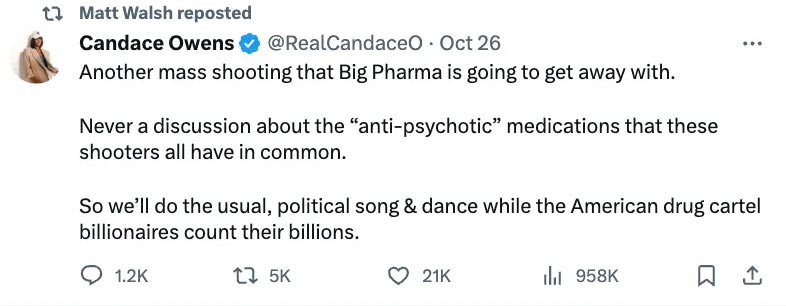
Recently Matt Walsh also did a segment on this topic, which like Tucker’s segment was seen by millions of people.
Note: The full version of this episode can be viewed here.
Having watched this dynamic play out for decades, it’s hard for me to put into words how monumental of a change this newfound awareness of the dangers of SSRIs is.
The only comparable example I can think of are many people now being open to considering the dangers of childhood vaccination — something which has taken a century to bring into the public awareness (e.g., my friends who gave everything they had to speak out in the 1980s and 1990s on vaccine safety were almost completely alone and cannot believe just how much the public’s receptivity to this message has changed in the last few years).
Correlation or Causation?
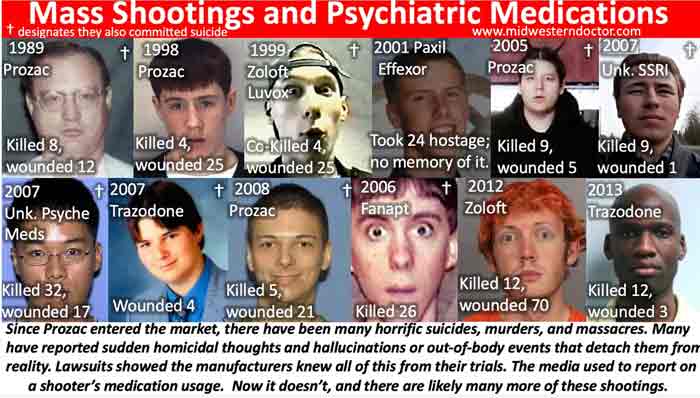
One of the most common arguments used to dismiss the link between SSRIs and psychotic violence is that people who are mentally ill are more likely to be on psyche meds, so the “correlation” between psyche meds and psychotic violence is simply a product of pre-existing mental illness and would have happened independently of the psyche med.
However, while claiming “correlation is not causation” makes it possible to refute this link while sounding intelligent in the process, there are a few major problems with this argument.
First, there is a lot of evidence tying SSRI usage to these events, including clinical trial data that was hidden from the public. Since that evidence was not covered in Tucker or Walsh’s presentation, it will be the focus of this article.
Second, there is a black-box warning on the SSRIs for them increasing the risk of suicide, something which can only be possible if some degree of causation does in fact exist.
Third, these psychotic events are completely out of character for the individuals who commit them, and in many cases they report a very similar (and disconcerting) narrative of what they experienced prior to and during the shooting.
Note: Big Pharma, working hand in hand with the FDA fought tooth and nail for decades to prevent a warning from ever being added to the SSRIs. I believe this is in part due to how much money is made off of these drugs (presently their sales make approximately 40 billion dollars a year).
The SSRI Era
Selective serotonin reuptake inhibitors (SSRIs) have a similar primary mechanism of action to cocaine. SSRIs block the reuptake of Serotonin, SNRIs, also commonly prescribed block the reuptake of Serotonin and Norepinephrine (henceforth “SSRI refers to both SSRI and SNRI), and Cocaine blocks the reuptake of Serotonin, Norepinephrine, and Dopamine.
SSRIs (and SNRIs) were originally used as anti-depressants, then gradually had their use marketed into other areas and along the way have amassed a massive body count.
Once the first SSRI entered the market in 1988, Prozac quickly distinguished itself as a particularly dangerous medication and after nine years, the FDA had received 39,000 adverse event reports for Prozac, a number far greater than for any other drug.
This included hundreds of suicides, atrocious violent crimes, hostility and aggression, psychosis, confusion, distorted thinking, convulsions, amnesia, brain-zaps, a feeling that your brain longer works right, and sexual dysfunction (long-term or permanent sexual dysfunction is one of the most commonly reported side effects from anti-depressants, which is ironic given that the medication is supposed to make you less, not more depressed).
Note: I and many colleagues also believe the widespread adoption of psychotropic drugs has significantly distorted the cognition of the demographics of the country that frequently utilize them (which to some extent stratifies by political orientation), which in turn has created a wide range of detrimental shifts in our society.
SSRI homicides are common, and a website exists that has compiled thousands upon thousands of documented occurrences. As far as I know (there are most likely a few exceptions), in all cases where a mass school shooting has happened, and it was possible to know the medical history of the shooter, the shooter was taking a psychiatric medication that was known for causing these behavioral changes.
After each mass shooting, memes illustrating this topic typically circulate online (often citing many of the same individuals in the picture in the previous section).
However, as mentioned above, the idea that “SSRIs cause mass shootings” is treated with widespread ridicule and animosity in a manner not that different from how anyone who claimed the “COVID vaccines were NOT safe and effective” was treated in 2020.
For instance, the argument to debunk both was always “correlation is not causation” (e.g., the young healthy lady who had a fatal heart attack immediately after a vaccine might have had that happen anyways), and when data to support this contention is presented, it is always ignored by the other side.
Since there are many serious issues with psychiatric medications, to avoid being too long, this article will exclusively focus on their tendency to cause horrific violent crimes, something which was known long before they entered the market by both the drug companies and the FDA.
Note: A significant portion of this article came from the book Deadly Psychiatry and Organized Denial by Peter C. Gøtzsche (which builds upon the critical work Peter Breggin did to expose this issue). For those of you interested in learning more about this topic, I would strongly advise reading that book, as I can only scratch the surface of the issues with these medications within this brief article.
Lastly, for anyone who reads this article is presently taking an SSRI or SNRI, it is critically important to NOT suddenly stop taking them. These addictive drugs produce very strong (and longlasting) withdrawal symptoms that many of my readers have shared. More importantly, there are many cases of catastrophic events (e.g., a suicide or mass murder) that followed the abrupt discontinuation of an SSRI.
If this is something you choose to do, you need to gradually taper down the dosage (sometimes to the point you use sandpaper to slowly shrink a pill) with a professional who has experience in this area.
However, since doctors who help can you safely withdraw from an SSRI are difficult to find, we put together a guide on the (incredibly unfair) withdrawal process which can be viewed in the second half of this article.
Note: Many of the stories I will share in this article are similar to those I have received from numerous readers (e.g., see the comments on the first article, second article, third article, and fourth article along with numerous comments on Twitter) — which I believe highlights how common SSRI injuries are. Many of these stories are very difficult to read through, but I nonetheless believe need to be heard.
Download this Article Before it Disappears
Akathisia
One of my relatives grew up in a big city during a particularly bad crime wave. One of his most notable memories from the time was looking up and seeing a man who was screaming “the ants are trying to get me” frantically tying bedsheets together (so he could flee down the fire escape) as armed men were rushing to his location yelling “get that ***** ******.”
My relative ran out of the area to avoid getting shot, but from the brief look he had at the fleeing man, was almost certain that man was high on cocaine, and experiencing coke (or crack) bugs, one form of Akathisia and a well-documented effect of those drugs.
Akathisia, an extreme form of restlessness is defined as a psycho-motor disorder where it is extremely difficult to stay still. What this definition omits to mention is that akathisia is incredibly unpleasant to the degree that many individuals who experience it frequently commit suicide or homicide (or both). One of the earliest reports from patients with drug-induced akathisia was:
“They reported increased feelings of strangeness, verbalized by statements such as ‘I don’t feel myself’ or ‘I’m afraid of some of the unusual impulses I have.’”
Akathisia is much more common than most people realize. To share a personal anecdote — I occasionally discuss this topic with medical students and a few have confided they previously experienced akathisia after using a psychiatric medication and it was so excruciating that one told me they seriously contemplated suicide at the time.
Akathisia (and psychosis) are known side effects of cocaine, methamphetamine, SSRIs, antipsychotics, and ADHD stimulant medications.
However, while the common triggers have been identified, the actual mechanism for akathisia is still poorly understood and theorized to result from alterations in the center of the brain involved in movement. These behavioral changes are so unusual and disturbing there are often simply described as the individual appearing to be possessed.
Note: Numerous patients I’ve talked to (with or without akathisia) who had bad reactions to SSRIs have shared that they felt as though some type of dark force was trying to take over their body.
From my own exploration of this topic, I have noticed that some individuals with cocaine intoxication (I have not yet examined a patient on the other drugs experiencing akathisia) have a characteristic (often porous) perturbation in their bio-electric field, which while very complex to describe, does resemble “frantic ants running all over the body,” and in theory could explain part of the akathisia experience.
As this idea is contained within a medical model most healthcare practitioners do not ascribe to, it has been difficult for me to evaluate the validity of this hypothesis. I have met a few other colleagues who made the identical observation, so this is a periodic topic of discussion amongst us as we believe there is significant value in developing a model that can explain this puzzling condition.
To further illustrate how perplexing the behaviors observed are on SSRIs consider this correspondence from a clinical investigator to Pfizer:

More importantly, consider Pfizer’s response:

A week ago, I heard the most compelling illustrations of this phenomenon I’ve come across after a 20-year-old with every characteristic of a mass shooter, snuck into an amusement park in Northern Colorado during the night.
“The suspect had been heavily armed with a semi-automatic rifle and semi-automatic handgun and multiple, loaded magazines for both weapons,” it added. “He was wearing body armor and what appeared to be a ballistic helmet. Additionally, multiple improvised explosive devices (IEDs) were discovered with the suspect and in a vehicle associated with the suspect.
The sheriff’s office said that while an investigation into the incident was ongoing, “given the amount of weaponry, ammunition, and explosive devices found, the suspect could have implemented an attack of devastating proportions upon our community.”
However, rather than conduct the shooting, he committed before the park opened and left a remarkable message:
“In the bathroom where Barajas Medina was discovered, written on the wall were the messages “I am not a killer” and “I just want to get into the caves,” a police spokesperson confirmed to Newsweek.”
Note: Like many other mass shooters, these actions were completely out of character for Barajas. His brother (who he lived with) “was at a loss for what was going on in his brother’s mind,” “didn’t know of any connections his brother had to the park” and stated “I didn’t think he was a dangerous person.”
This narrative suggests that the psychosis Barajas was under partially wore off during the night, at which he recognized something evil was compelling him to do the shooting and he chose to end his life to prevent it. This is similar to a few other stories I’ve heard of SSRI violence.
For instance, Cory Baadsgaard developed increasing (and sometimes demonic) hallucinations after starting an SSRI, went to school with a loaded rifle and then partially realized what he was doing after he’d taken everyone hostage, surrendered, partially regained consciousness in the principle’s office, but had no memories of what had happened until he woke up in a cell at Juvenile Hall (where he spent 14 months).
Note: The next (three minute) video featured provides an even more powerful illustration of this phenomenon.
Akathisia Homicides
This section will list some of the evidence substantiating the link between psychiatric medications and horrific homicides. When you review this type of information, it is very easy to intellectually disassociate from what’s contained within it. For that reason, I would like to request you first watch this two-minute video of one father who has to live with knowing he killed his child he still loves from the bottom of his heart.
He was ultimately not criminally convicted, however, most individuals in these circumstances typically are.
Note: I need to emphasize that this individual’s story is not unique, he just has been unusually dedicated in bringing public awareness to what happened. It also illustrates how evil these drugs are, as like the individuals mentioned above, they become forced to do something that violates every core principle they stand for.
Much like the vaccine industry, the psychiatric industry will always try to absolve their dangerous medications of responsibility and will aggressively gaslight their victims. Despite these criticisms, there are three facts can be consistently found throughout the literature on akathisia homicides which Gøtzsche argues irrefutably implicate psychiatric medications as the cause of violent homicides:
• “These violent events occur in people of all ages, who by all objective and subjective measures were completely normal before the act and where no precipitating factors besides the psychiatric medication could be identified.
• The events were preceded by clear symptoms of akathisia.
• The violent offenders returned to their normal personality when they came off the antidepressant.”
Numerous cases where this has happened are summarized within this article from the Palm Beach Post. In most of those cases, a common trend of these spontaneous acts of violence emerges: the act of violence was immediately preceded by a significant change in the psychiatric medications used by the individual.
In one case, shortly before committing one of these murders, one of the perpetrators also journaled that, while taking Prozac, that he felt as if he was observing himself “from above.”
Individuals with a mutation in the gene that metabolizes psychiatric drugs are much more vulnerable to developing excessive levels of these drugs and triggering severe symptoms such as akathisia and psychosis.
There is a good case to be made that individuals with this gene are responsible for many of the horrific acts of iatrogenic (medically induced) violence that occur, however to my knowledge, this is never considered when psychiatric medications are prescribed.
Gøtzsche summarized a peer-reviewed forensic investigation of 10 cases where this happened (all but one of these involved an SSRI or an SNRI):
“Male, 18 years, Prozac, sister was comatose after a car crash, violent akathisia for 14 days, killed his father four days after he ran out of pills.
Male, 35 years, Paxil, distressed by “on and off” relationship with mother of his child, stabbed former partner 30+ times to death after 11 weeks of akathisia.
Male, 46 years, Paxil, anxiety about not making enough money to support the family, killed his son in a manic-shift akathisia and delirium after 42 days.
Male, 16 years, Zoloft and Prozac, depressed, struggled at school, and the girlfriend left him, attempted suicide on both drugs, killed therapist in hospital after 11 weeks.
Male, 50 years, Effexor, distress over divorce, shot a stranger four days after stopping drug.
Female, 35 years, nortriptyline, distress due to husband’s drinking, killed teenage daughter in toxic delirium after three days.
Male, 24 years, Lexapro, anxiety and illicit substance use, several suicide attempts and assaults, nearly killed partner, 12 years in jail for attempted murder.
Female, 26 years, several SSRIs, difficulties with in-laws, two attempts to kill her two children.
Female, 52 years, Paxil and Celexa, harassment at work, suicide attempt and tried to kill her two children.
Female, 25 years, Celexa and Effexor, marital distress, several suicide attempts on both drugs, jumped in front of a train with her child while on citalopram.”
There are many other sad cases of akathisia homicides. One detailed by Gøtzsche is representative of how the pharmaceutically injured patients can be gaslighted by psychiatry.
When reviewing the story, keep in mind that the FDA insert explicitly lists the following as side effects of Effexor (an SNRI): intentional injury, malaise, suicide attempt, depersonalization, abnormal thinking, akathisia, apathy, ataxia, CNS stimulation, emotional lability, hostility, manic reaction, psychosis, suicidal ideation, abnormal behavior, adjustment disorder (which became a psychiatric diagnosis for her, although it was a side effect), akinesia, increased energy, homicidal ideation, and impulse control difficulties.
“A 26-year-old woman tried to kill her two children on two occasions. She was prescribed Paxil for stress but experienced an episode of rage and attempted suicide by inhalation of carbon monoxide, and then stopped taking the drug. Despite this, she was prescribed Paxil again and reassured about its safety two years later.
This time she experienced intense restlessness, surges of rage and anger, panic attacks, impulsive spending sprees, and constant suicidal ideation. She reasoned that her low self-esteem, insomnia, and suicidal behavior were due to difficulties with her in-laws. She overdosed and was admitted to the hospital where her Paxil was increased. She tried to kill herself again and was diagnosed with an “adjustment disorder.”
She was switched to Effexor, which was increased over three months until the dose was eight times higher than the initial dose. Each dose increase occasioned a week spent in bed with exhaustion, as she was unable to get up (akinesia). Her mental state deteriorated and violent outbursts and suicidal ideation became frequent and severe.
Unable to stay in one place, she drove several hundred miles with her children and tried to kill them and herself by car exhaust. A few days later she tried to kill her children and herself again.”
Evidence for SSRI Suicides
Violent psychotic reactions from SSRIs can manifest as both suicides and homicides. There is extensive documentation to support the occurrence of SSRI suicides, and while the psychiatric profession still uses an endless litany of excuses to deny this happens, many antidepressants now have a black box warning from the FDA for the occurrence of suicide.
The side effects were definitively known to result from SSRIs as far back as their early clinical trials (which were of course hidden from everyone) and a mountain of evidence proving this regularly occurs has accumulated since these drugs entered the market (which led to the FDA having to find numerous unscrupulous ways to conceal that danger such as silencing employees who saw it, ignoring rampant clinical trial fraud by the manufacturers, publishing a fraudulent meta-analysis to erase it, and stonewalling Congress during hearings on the drugs).
There are a large number of studies showing the link between SSRIs and suicide (especially those kept secret by the pharmaceutical industry). These will not be discussed as they are not the main focus of this article, but to provide some context on the issue, I will briefly discuss a microscopic and macroscopic study examining this picture. First to quote this peer-reviewed study’s abstract:
“Six depressed patients free of recent serious suicidal ideation developed intense, violent suicidal preoccupation after 2-7 weeks of fluoxetine treatment. This state persisted for as little as 3 days to as long as 3 months after discontinuation of fluoxetine. None of these patients had ever experienced a similar state during treatment with any other psychotropic drug.”
Second, the CDC has a system for reporting violent deaths that have occurred, and one subset of those deaths are suicides (which may be associated with a homicide or a concurrent suicide). 3616 of these deaths were evaluated for the presence of an antidepressant, and 35.3% tested positive for one at the time of their death.
A large number of individual mood-altering substances were tested for, and the only one that had a higher positive test rate than the antidepressants was alcohol (38.2%), although only 26.9% of those tested had enough alcohol present to be considered legally drunk. In the general population, between 11-13.2% of adults use antidepressants, which suggests there is a note-worthy correlation here.
Evidence for Akathisia Homicides
Most of the placebo-controlled data which is available showing the instances of homicidal behavior after taking an SSRI is available because of court orders from lawsuits where someone sued an SSRI manufacturer for their actions while on the SSRI. Consider for example this report from one clinical trial:

[Pt. began to verbalize feelings of killing other people and then himself. Pt. looked much more anxious and depressed than baseline; even though this is not reflected in Hamliton (the scale used to quantify anxiety in research)]
When you consider these figures, it is important to remember that while a 0.1% death rate for a drug is tragic (but typically deemed acceptable within medicine), it is incomparable in consequence to a 0.1% homicide rate for a drug.
As millions of children are given SSRIs, even numbers that small mean homicides will regularly occur. I can’t even guess how low a risk would constitute an acceptable threshold, but for the sake of conveying other points in this section, I will assume it to be 0.1%. In reality, any elevated risk in this regard should be viewed as unacceptable without any exceptions. I am emphasizing this point because I have never seen it considered by proponents of psychotropic drugs.
An excellent paper reviews private pharmaceutical research made public through litigation. The paper discusses internal company documents that compared 9219 research subjects (many of whom had pre-existing psychiatric diagnoses) that received Paxil, to 6455 research subjects (also with pre-existing psychiatric conditions) that received a placebo, 0.65% of the patients in clinical trials became hostile on Paxil compared with 0.31% on placebo.
The highest risk for hostility on Paxil was for those who also had Obsessive Compulsive Disorder. (0.34% is more than the 0.1% threshold)
The authors of this paper hypothesized that the violent actions following the usage of SSRIs may be explained by their tendency to trigger akathisia, emotional blunting, and manic or psychotic reactions. I will quote a few select passages from that paper:
“In healthy volunteer studies, hostile events occurred in three of 271 (1.1%) volunteers taking Paxil, compared with zero in 138 taking placebo.” (1.1% is more than 0.1%).
In data from sertraline pediatric trials submitted by Pfizer, aggression was the most common cause for discontinuation [removal from the trial] from the two Zoloft placebo-controlled trials in depressed children.
In these trials, eight of 189 patients randomized to Zoloft were discontinued for aggression, agitation, or hyperkinesis (another term for akathisia frequently used to conceal it), compared with discontinuations for these reasons in the 184 patients on placebo …
When discontinuations for any manifestation of treatment induced activation (suicidal ideation or attempts, aggression, agitation, hyperkinesis, or aggravated depression) were considered, there were 15 discontinuations on Zoloft compared with two on placebo, which meant this was 7.3 times more likely to happen when on sertraline.” (8.9% is more that 0.1%., 7.3 times more likely likewise is also unacceptable).
In pediatric trials of Effexor, two percent of children dropped out because of hostility, more than double the rate of dropout on placebo.
After a program on Paxil in 2002, the producers of the BBC television programme Panorama received 1,374 e-mails from viewers, mostly patients. Researchers then analyzed the full set of these responses. Many respondents linked emotional storms and thoughts and acts of violence or self-harm to Paxil, both to starting drug treatment and to dosage change.
These were not simple anecdotal reports, in that the analysis clearly pointed to a linkage with dosage. Second, they were self-reports of violence from patients with no apparent background of violent behavior. Third, the analysis was consistent with an analysis of reports of thoughts and acts of violence or self-harm on paroxetine that doctors had sent to the MHRA (England’s FDA) about other patients between 1991 and 2002.
In both patient and medical reports, severe mood changes were commonly associated with changes of drug dosage during the first week of treatment, with later dosage increase, or with dosage decrease or drug withdrawal. The accounts reported in both the medical and the patient series had much in common, including time frame and a linkage to dosage.”
Gøtzsche likewise has located less biased sources of data on the violent risks of SSRIs:
“As the published trial literature related to suicidality and aggression on antidepressants is unreliable, we looked at 64,381 pages of clinical study reports (70 trials) we got from the European Medicines Agency. We showed for the first time that SSRIs in comparison with placebo increase aggression in children and adolescents, odds ratio 2.79 (95% CI 1.62 to 4.81) (2).
This is an important finding considering the many school shootings where the killers were on SSRIs.
In a systematic review of placebo-controlled trials in adult healthy volunteers, we showed that antidepressants double the occurrence of events that the FDA has defined as possible precursors to suicide and violence, odds ratio 1.85 (95% CI 1.11 to 3.08)(3). The number needed to treat to harm one healthy adult person was only 16 (95% CI 8 to 100).
Based on the clinical study reports, we showed that adverse effects that increase the risk of suicide and violence were 4-5 times more common with duloxetine than with placebo in trials in middle-aged women with stress urinary incontinence. There were also more women on duloxetine who experienced a core or potential psychotic event, relative risk RR 2.25 (95% CI 1.06 to 4.81).
The number needed to harm was only seven. It would have been quite impossible to demonstrate how dangerous duloxetine is, if we had only had access to published research. In accordance with our findings, the FDA has previously announced that women who were treated with duloxetine for incontinence in the open-label extension phase of the clinical studies had 2.6 times more suicide attempts than other women of the same age.”
Gøtzsche has also reviewed some of the key legal cases regarding SSRIs:
“Akathisia homicides have been defended as instances of involuntary intoxication both with and without genetic evidence, and some people have succeeded in receiving damages from the manufacturers for failure to warn … the filings in a case on Paxil against SmithKline Beecham [now named GSK] included an unpublished company study of incidents of serious aggression in 80 patients, of which 25 resulted in homicide.
In one case, a man aged 74 strangled his wife, and another was 66 when he became delusional on Prozac and killed his wife who was found with 200 stab wounds.
In 2001, for the first time, a jury found a pharmaceutical firm liable for deaths caused by an antidepressant. Donald Schell, aged 60, had been taking Paxil for just 48 hours when he shot and killed his wife, his daughter, his granddaughter and himself.
Central to the case were SmithKline Beecham internal documents showing the company was aware that a small number of people could become agitated or violent from Paxil. Despite this knowledge, paroxetine packaging deliberately did not include a warning about suicide, violence or aggression.
The internal documents, stamped “confidential,” list the results of tests involving more than 2,000 healthy volunteers taking either Paxil or placebo. Some volunteers experienced anxiety, nightmares, hallucinations and other side effects – definitely caused by the drug – within two days of taking it.
Two volunteers attempted suicide after 11 and 18 days, respectively … Ten years after the verdict, GSK still denies that Paxil can cause people to commit homicide and suicide and that there are withdrawal problems.”
Note: After publishing the original article, I received this comment from a reader and their permission to share it:
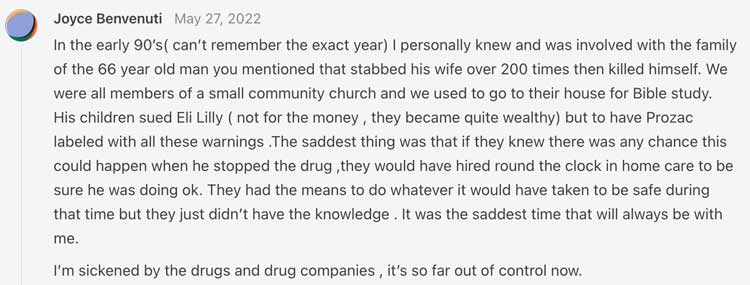
Typically, American courts are more likely to rule in favor of the pharmaceutical company, and Donald Shell (mentioned above) was a lucky exception. For example consider the three following cases:
“Christopher Pittman became manic and shot his two grandparents to death two days after his dose of Zoloft had been doubled. Despite being only 12 years old when he did this, he was sentenced to 30 years of prison.
David Crespi was on Prozac and three other drugs, which he had taken for a couple of weeks, when he killed his two twin daughters with a knife. He pleaded guilty to avoid the death penalty and got a life sentence with no chance of parole, although he became his old self after coming off the drugs.
Kurt Danysh was 18 years old when he was inappropriately prescribed Prozac by a general practitioner. He became restless and violent and shot his father, the person he loved the most, 17 days later in a totally out-of-character mood. Kurt had no history of violence prior to Prozac, but in 1996, he was convicted of murdering his father and sentenced to 22.5 to 60 years in prison.
During this case, Eli Lilly lied in court, and claimed that Prozac would not cause aggressive behaviour resulting in his conviction. Later in 2004 when it was exposed Lilly had concealed data from 1988 showing Prozac caused violence, the FDA recognized that SSRIs can cause violent behaviour, particularly in children and adolescents.
Despite these events and dozens of cases of homicide linked to Prozac that had subsequently been reported to the FDA, the judge has dismissed all appeals, and it took 24 years of legal work and petitioning for Kurt to finally be released from prison.”
Next, I would briefly like to share the work of an activist who was intimately involved in those court cases.

Note: Pfizer’s manual that was used to criminally convict victims of its SSRI (so the market could be shielded from public scrutiny) can be viewed here. Having reviewed it, I can state with certainty Pfizer included statements known to Pfizer to be false at the time this was written.
If you have time after you finish reading this article, I would highly recommend reading Pfizer’s prosecutor manual so you can see just what vintage early 1990s gaslighting looked like (it is quite a bit more sophisticated now). Additionally, the judgement from Witczak’s lawsuit against Pfizer can be viewed here, while many more appalling stories from whistleblowers within Pfizer can be viewed here and here.
Gøtzsche also notes the Canadian court system is more open to acknowledging pharmaceutical induced homicide. For example:
“In 2011 a Canadian judge ruled that Prozac induced a 16-year old boy to commit murder; he knifed a friend to death. In another case David Carmichael, who killed his 11-year old son while on antidepressants, was ruled “not criminally responsible on account of a mental disorder,” and today, Carmichael writes and speaks on the dangers of antidepressants.”
Mass Shooting and Psychiatric Medications
In the 1990s, school shootings transitioned from being very rare to a frequent facet of American life. As this timeline overlaps with the entrance of SSRIs to the US market (and the populace suddenly being flooded with psyche drugs), many articles have evaluated the link between mass shootings and psychiatric medications. I will quote a one of the more comprehensive summaries (written in 2013) which attempted to analyze all known mass shootings:
- Eric Harris age 17 (first on Zoloft then Luvox) and Dylan Klebold aged 18 (Columbine school shooting in Littleton, Colorado), killed 12 students and one teacher and wounded 23 others, before killing themselves. Klebold’s medical records have never been made available to the public.
- Jeff Weise, age 16, had been prescribed 60 mg/day of Prozac (three times the average starting dose for adults!) when he shot his grandfather, his grandfather’s girlfriend and many fellow students at Red Lake, Minnesota. He then shot himself. Ten dead, 12 wounded.
- Cory Baadsgaard, age 16, Wahluke (Washington state) High School, was on Paxil (which caused him to have hallucinations) when he took a rifle to his high school and held 23 classmates hostage. He has no memory of the event.
- Christopher Pittman, age 12, murdered both his grandparents while taking Zoloft.
- Kip Kinkel, age 15, (on Prozac and Ritalin) shot his parents while they slept then went to school and opened fire, killing two classmates and injuring 22 shortly after beginning Prozac treatment.
- Luke Woodham, age 16 (Prozac) killed his mother and then killed two students, wounding six others.
- A boy in Pocatello, ID (Zoloft) in 1998 had a Zoloft-induced seizure that caused an armed standoff at his school.
- Michael Carneal (Ritalin), age 14, opened fire on students at a high school prayer meeting in West Paducah, Kentucky. Three teenagers were killed, five others were wounded.
- Andrew Golden, age 11, (Ritalin) and Mitchell Johnson, aged 14, (Ritalin) shot 15 people, killing four students, one teacher, and wounding ten others.
- TJ Solomon, age 15, (Ritalin) high school student in Conyers, Georgia opened fire on and wounded six of his classmates.
- James Wilson, age 19, (various psychiatric drugs) from Breenwood, South Carolina, took a .22 caliber revolver into an elementary school killing two young girls and wounding seven other children and two teachers.
- Elizabeth Bush, age 13, (Paxil) was responsible for a school shooting in Pennsylvania
- Jason Hoffman (Effexor and Celexa) – school shooting in El Cajon, California
- Neal Furrow (Prozac) in LA Jewish school shooting reported having been court-ordered to be on Prozac along with several other medications.
- Hammad Memon, age 15, shot and killed a fellow middle school student. He had been diagnosed with ADHD and depression and was taking Zoloft and “other drugs for his conditions.”
- Matti Saari, a 22-year-old culinary student, shot and killed nine students and a teacher, and wounded another student, before killing himself. Saari was taking an SSRI and a benzodiazapine.
- Steven Kazmierczak, age 27, shot and killed five people and wounded 21 others before killing himself in a Northern Illinois University auditorium. According to his girlfriend, he had recently been taking Prozac, Xanax, and Ambien. Toxicology results showed that he still had trace amounts of Xanax in his system.
- Finnish gunman Pekka-Eric Auvinen, age 18, had been taking antidepressants before he killed eight people and wounded a dozen more at Jokela High School – then he committed suicide.
- Asa Coon from Cleveland, age 14, shot and wounded four before taking his own life. Court records show Coon was on Trazodone.
- Jon Romano, age 16, on medication for depression, fired a shotgun at a teacher in his New York high school.
The article also discussed a few recent school shootings where the information to determine if a psychiatric medication was used was not available (since is mentioned before, the industry has gotten much better at concealing this):
- What drugs was Jared Lee Loughner on, age 21 … killed six people and injuring 14 others in Tuscon, Az? [I was unable to locate any information on this case]
- What drugs was James Eagan Holmes on, age 24 … killed 12 people and injuring 59 others in Aurora Colorado? [Holmes was on Zoloft, which likely triggered violent behaviors in him in the weeks preceding the mass shooting, all of which his psychiatrist ignored.]
- What drugs was Adam Peter Lanza on, age 20, Killed 26 and wounded 2 in Newtown Ct.? [Lanza was later confirmed to have been prescribed Celexa in the past and was on a questionable antipsychotic, fanapt, known for inducing violent behavior at the time of the shooting].
Since the time that article was published, there have been many more large school shootings. In the five which immediately followed:
• Christopher Harper-Mercer (2015) who killed 10 was likely on psychiatric medication but there is no definitive proof.
• Nikolas Cruz (2017) who killed 17 was likely on psychiatric medication but there is no definitive proof.
• Dimitrios Pagourtzis (2018) who killed 10 was probably not on a psychiatric medication. His attorney said he was not (which may have been a deceitful legal maneuver, but most likely was the truth), while the president of the NRA said he was (and I was not able to determine his basis for this assertion).
• For Salvador Ramos (2022) who recently killed 22, there have been many posts stating he was on antidepressants, but while there is some circumstantial evidence suggesting this, there is presently no reliable information to confirm or deny it. For a more detailed summary of my thoughts on this matter, please see this comment.
• With the recent school shooter Audrey Hale, most of the focus has been on the shooter presumably taking testosterone, as this can trigger aggression.
While like many things, this potentially explains what happened, in the reports I found where testosterone led to homicidal behavior, it required a pre-existing psychiatric illness (which would typically be treated with a violence inducing psychiatric medication) to also be present.
Since a clear link has already been established to psychiatric medications causing this behavior (and based on the shooter’s background it is likely some were prescribed), I would suggest that until more information becomes known, the standard psychiatric medication violence it is a more probable explanation for the recent tragic events.
Note: Since Audrey Hale’s shooting, additional mass shootings have also occurred (e.g., those mentioned by Walsh like the recent one in Maine) where it was known the individual had psychiatric issues, despite repeated warnings those issues were not addressed, and based their history was almost certainly on psyche meds (but the public has not been permitted to know if they were).
Conclusion
While the tendency to provoke violence toward others is a major issue with SSRIs and other related medications, it is rarely considered a side effect of these drugs. One reason for this is that the other severe adverse effects from these medications are much more common (for example, SSRIs are one of most common causes of bipolar disorder) and as a result, these awful effects occupy a disproportionate focus when discussing their toxicity.
I however focused on this issue, because like the sudden deaths caused by the COVID-19 vaccines, it is so unmistakable and concerning it cuts through any the ambiguity over what the drug or vaccine is doing.
Sadly, In addition to SSRIs extremely damaging, it is very questionable if for most people (excluding those with a metabolic type that responds to SSRIs) these drugs have any benefit beyond statistical artifacts created by biased corporate research. This is incredibly tragic since:
• It results in many people taking a pill that ruins their life but simultanously had nothing of benefit to offer them in the first place.
Note: Did you know what Prozac was first discovered, Eli Lilly originally planned to sell it as a obsesity pill but pivoted to it treating depression because Lilly recognized that since “depression” is so subjective, it would be easy to create “proof” Prozac worked even if nothing happened?
• It results in effective treatments for depression (of which there are many) becoming largely forgotten since there is no money in adopting those approaches.
Note: We attempted to summarize those treatments in the second half of this article.
• The SSRIs being muscled through the approval process had a corrosive influence on the drug regulators and left us with a profound degree of corruption the public has repeatedly had to suffer through.
Note: Many of the regulators who signed off on the SSRIs either had already worked for the SSRI industry or soon after pushing the SSRIs through, left their regulatory agency (e.g., the FDA) and were hired by the drug industry.
This is not to different to how many of the officials (e.g., two sequential FDA commissioners) who muscled the COVID-19 vaccines through the approval process then left the agency and were rewarded with lucrative executive positions with the mRNA vaccine manufacturers.
In short, I believe what happened with the SSRIs provides a pivotal lesson for the modern vaccine safety movement. In both cases, we’ve seen incredibly dangerous (but profitable) pharmaceuticals be pushed upon the entire world but rather than our regulators do their jobs and protect the public, they’ve sided with the industry they are supposed to regulate (which in part is due to how much of the FDA’s funding comes from Big Pharma).
However, while the COVID-19 vaccines are almost complete immune from lawsuits, the SSRIs were not, and as a result, extensive litigation spearheaded by families of those directly harmed by SSRI violence were able to get the secret files which showed how abhorrent the industry’s conduct actually was.
One of the most remarkable things about the SSRI saga, is that as bad as the SSRI story is, the government was actually much less corrupt then and many were willing to try to do something about what was happening — something which has been almost non-existent throughout COVID-19. In turn, Kim made a particularly poignant comment on our sad state of affairs:
As we conclude, I recognize that this is an immensely challenging subject and I appreciate you for being able to maintain a level head while reading it. Thank you for the time and focus you have given to this topic and for sharing it with others who can benefit from it.
Lastly, I know this is already been stated, but do not attempt to stop taking an SSRI without the assistance of a physician who understands how to taper them. Very bad things can happen if you do not follow that advice.
In the next part of this series, I discuss the less severe but far more frequent harms of the SSRIs (some of which affect over half of the users).
This will be followed by examining how the drugs this dangerous could have gotten onto the market and the egregious corruption within the FDA that kept anything from being done about it as the injuries and deaths piled up.
Finally, this series will cover how the pharmaceutical industry created the “depression” industry and convinced the entire world to spend billions on their unsafe and frequently ineffective treatments for it while simultaneously dismissing the actual causes of depression and its (non- monetizable) treatments.
Lastly, if you have a way to get the data in this series to courageous journalists who are raising awareness on this issue, that would be greatly appreciated. I believe once this data becomes public knowledge, it will be much harder to maintain the current status disastrous quo with the SSRIs.
A Note From Dr. Mercola About the Author
A Midwestern Doctor (AMD) is a board-certified physician in the Midwest and a longtime reader of Mercola.com. I appreciate his exceptional insight on a wide range of topics and I’m grateful to share them. I also respect his desire to remain anonymous as he is still on the front lines treating patients. To find more of AMD’s work, be sure to check out The Forgotten Side of Medicine on Substack.