Mitochondria
now browsing by category
The Wide-Ranging Health Benefits of Taurine
Reproduced from original article:
https://articles.mercola.com/sites/articles/archive/2023/07/28/health-benefits-of-taurine.aspx
The original Mercola article may not remain on the original site, but I will endeavor to keep it on this site as long as I deem it to be appropriate.
Analysis by Dr. Joseph Mercola Fact Checked July 28, 2023
STORY AT-A-GLANCE
- The amino acid taurine is found in animal foods such as seafood, grass-fed red meat, dairy products, pastured eggs, and poultry
- Of the amino acids, it’s the most abundant source of sulfur, and is required for many biological processes, including the healthy function of your immune system, nervous system, metabolism, and digestion
- Taurine is important for brain and heart health, muscle function, bile salt formation and antioxidant defenses. It also helps rebuild damaged collagen fibers and can help ease anxiety
- According to recent research, taurine may also play an important role in longevity and healthy aging. In mice, the median lifespan increased by 10% to 12%. Life expectancy at 28 months was raised by 18% to 25%
- Taurine improved strength, coordination and endurance, bone mass and bone quality, glucose homeostasis and glucose tolerance, age-related inflammation, immune function, gut health, memory, mitochondrial function and the function of all organs
The amino acid taurine is found in animal foods such as seafood, grass-fed red meat, dairy products, pastured eggs, and poultry. Of the amino acids, it’s the most abundant source of sulfur, and is required for a wide range of physiological processes, including the healthy function of your immune system, nervous system,1,2 metabolism and digestion.3
As noted in a 2021 scientific review titled “The Role of Taurine in Mitochondrial Health: More Than Just an Antioxidant”:4
“Taurine is a naturally occurring sulfur-containing amino acid that is found abundantly in excitatory tissues, such as the heart, brain, retina and skeletal muscles …
Accumulating studies have shown that taurine supplementation also protects against pathologies associated with mitochondrial defects, such as aging, mitochondrial diseases, metabolic syndrome, cancer, cardiovascular diseases, and neurological disorders.”
Mechanisms of Action
More specific mechanisms of action of taurine include but are not limited to:
| Stabilizing proteins5 |
| Enhancing the function of endogenous antioxidants, thereby supporting your body’s ability to defend against oxidative/reductive damage.6 It protects your antioxidant status in several ways, including by neutralizing hypochlorous acid,7 diminishing the generation of superoxide by the mitochondria,8 and by minimizing oxidative stress,9 including mitochondrial oxidative stress induced by toxins10 |
| Reducing insulin resistance, hyperglycemia, and glucose serum concentrations11,12 |
|
Lowering lipid peroxidation13,14 |
| Reducing inflammation and associated organ injury15,16 |
| Conjugating cholesterol into bile acids, thereby aiding digestion and absorption of fats17 |
| Enhancing electron transport chain activity by regulating mitochondrial protein synthesis, and protects mitochondria against excessive superoxide generation18 |
| Neuroprotection, by regulating intracellular calcium;19 protecting against age-related memory degradation |
| Protecting against ionizing radiation-induced cell damage20 |
| Regulating sodium and calcium homeostasis21 |
| Reducing plasma LDL and triglycerides, and lowering cholesterol in the liver, thereby retarding development of atherosclerosis22 |
| Regulating gene expression by up-regulating 87 known genes and down-regulating 206 known genes in the liver, many of which are involved in cell growth, division, differentiation and apoptosis23 |
| Antiepileptic activity24 |
| Easing anxiety by increasing glycine and GABA25 |
Importantly, taurine can also help raise your metabolic rate, thereby serving as a useful aid against obesity and overall health optimization. Being similar in structure to glycine, it may also have anti-estrogenic effects.26
Symptoms and Health Effects of Taurine Deficiency
The fact that taurine can only be found in the foods that globalists are now trying to eliminate from our food supply is one of many reasons to push back and refuse their fake lab-made alternatives. Without natural animal foods, taurine deficiency will likely skyrocket and health may suffer across the board. Common symptoms and effects of taurine deficiency include:27,28,29,30
| Fatigue and low energy, as taurine is involved in energy production |
| Muscle cramps, muscle weakness, muscle wasting/atrophy and poor exercise performance, as taurine is essential for muscle health and function |
| Increased oxidative stress and systemic inflammation, which contributes to and is a hallmark of most chronic diseases |
| Impaired immune function, as taurine is involved in immune cell function and the regulation of inflammation |
| Vision problems associated with retinal degeneration, as taurine is essential for development and maintenance of the cells in your retina |
| Cardiovascular problems such as high blood pressure, irregular heart rhythm and cardiovascular diseases, as taurine helps regulate blood pressure31 and heart function.32
Taurine deficiency is common among patients with congestive heart failure (CHF),33 and oral supplementation has been linked to improved cardiac performance,34 improved contractile function of the heart,35 reduced pathology in the left main artery wall,36 and lower CHF mortality37 |
| Digestive problems such as bloating, diarrhea and malabsorption, as taurine is involved in bile production (and hence digestion and absorption of fats) |
| Accelerated aging, as taurine is slowing DNA damage, slows degradation of telomeres, improves mitochondrial function and is involved in cellular senescence; low taurine has been linked to a wide variety of age-related diseases in humans38 |
| Obesity, insulin resistance and diabetes39,40,41 |
| Liver disease |
Of course, since taurine is one of the nutrients missing in plant-based diets, vegans may want to consider a high-quality taurine supplement. While your body can synthesize some taurine, it’s not going to be sufficient in the long run, especially as you get older and your body’s ability to synthesize it diminishes.
Taurine levels decrease by an estimated 80% over the course of the average lifetime,42 and this decline is in part related to a loss of endogenous synthesis capacity over time. Still, the amount of taurine you get from your diet also plays a role, and even young healthy vegans have approximately 20% lower taurine levels than their meat-eating counterparts.43

Download this Article Before it Disappears
Taurine Supplementation Improves Exercise Performance
If you’re a fitness buff like me, you’ll be pleased to know that taurine can also help improve your athletic performance and reduce muscle damage. As reported in a systematic review published in 2021:44
“From the selected literature, we observed that taurine supplementation (2 g three times daily) with exercise can decrease DNA damage. Furthermore, 1 g of acute taurine administration before or after exercise can decrease lactate levels.
However, acute administration of taurine (6 g) at a high dose before the start of exercise had no effect on reducing lactate level, but increased glycerol levels, suggesting that taurine could be an effective agent for prolonged activities, particularly at higher intensities …
Finally, we observed that a low dose of taurine (0.05 g) before performing strength enhancing exercises can decrease muscular fatigue and increase enzymatic antioxidants …
This review systematically reported the dose response of taurine in improving exercise performance. We found from the selected literature that endurance training requires a higher dose of taurine, ~1 g five times daily, to prevent muscle-related damage whereas strength exercise requires a lower dose of taurine (0.05 g) to increase enzymatic antioxidants and decrease muscular fatigue.”
It also helps rebuild damaged collagen fibers, which can help you recover and recuperate from sports injuries faster.45
Taurine Increases Longevity
More recent research, published in the June 2023 issue of the journal Science,46,47 also found that oral taurine supplementation significantly increased the healthy lifespan of a variety of animals. In mice, the median lifespan increased by 10% to 12%. Life expectancy at 28 months was raised by 18% to 25%. In the video at the top of the article, biohacker and author Siim Land reviews these findings.
As reported by Science Alert:48
“Scientists have discovered not only that animals age more quickly when they don’t have enough of the amino acid taurine in the body, but that oral taurine supplements can delay aging and increase a healthy lifespan …
‘For the last 25 years, scientists have been trying to find factors that not only let us live longer, but also increase health span, the time we remain healthy in our old age,’ says biologist Vijay Yadav from Columbia University, senior author on the study. ‘This study suggests that taurine could be an elixir of life within us that helps us live longer and healthier lives.’”
Taurine Protects Against Hallmarks of Aging
Animals given supplemental taurine didn’t just live longer, they were also healthier overall. In mice, taurine improved:
| Strength, coordination, and endurance | Bone mass and bone quality |
| Glucose homeostasis and glucose tolerance | Age-related inflammation |
| Immune function | Gut health |
| Memory | Function of all organs |
| Mitochondrial function and health |
Interestingly, according to the authors, taurine “cured” osteoporosis. It’s not often you see the word “cure” being used in medical literature. Taurine also “suppressed ovariectomy-induced body-weight gain in a rodent model of menopause.”
Treated mice also had less body fat (approximately 10% less at 1,000 milligrams of taurine per day) and higher energy levels. According to the authors, “Fat-pad weight divided by body weight percentage was dose-dependently reduced in taurine-treated mice.”
As shown in previous studies, taurine supplementation also improved several markers of aging, including:
| Senescence | Intercellular communication |
| Telomere length | Epigenetic changes |
| Genomic stability | Mitochondrial function |
| Stem cell populations | Nutrient sensing |
Taurine Effects in Monkeys
Similar effects were observed when feeding taurine to rhesus monkeys. Fifteen-year-old monkeys (equivalent to 45 to 50 years old in humans) were given 250 mg per kg of bodyweight (equivalent to the 1,000 mg/kg given to mice) once a day for six months.
Compared to controls, taurine-fed monkeys gained less weight and had lower rates of body fat. After six months, they also had higher bone density, confirmed by higher serum markers for bone formation (osteocalcin) and decreased resorption. They also had 19% lower fasting blood glucose, a 20% to 36% reduction in liver damage markers, and a significant reduction in indirect markers of ROS-induced molecular damage.
“Thus, taurine has beneficial effects on most tested health parameters (body weight, bone, glucose, liver, and immunophenotype) in nonhuman primates,” the authors concluded.49
Previous animal research50 on mice lacking the taurine transporter also suggests taurine is involved in a wide variety of biologically protective processes, as these mice ended up developing multiorgan dysfunction. This too supports the notion that taurine is a key player in longevity and healthy lifespan.
Taurine in the Treatment of Stroke
Stroke victims may also benefit from taurine. As explained in a 2013 paper titled “Neuroprotective Mechanisms of Taurine Against Ischemic Stroke”:51
“Ischemic stroke (cerebral ischemia) is due to a partial or complete reduction in blood flow to the brain … Insufficient oxygen and glucose supply in cerebral ischemia leads to unsustainable cellular homeostasis which initiates cell injury.
Cellular injury progresses as a result of excitotoxicity, ionic imbalance, oxidative and nitrosative stresses, endoplasmic reticulum (ER) stress and mitochondrial disturbances, ultimately resulting in programmed cell death …
Taurine is able to cross the blood-brain barrier and displays a plethora of functions in the central nervous system (CNS) … Although taurine is not definitively classified as a neurotransmitter it fulfills most of the necessary criteria …
It modulates neurotransmission by eliciting inhibitory neuronal transmission through GABAA receptors, glycine receptors and putative taurine receptors … The fundamental pathophysiological mechanisms involved in ischemic stroke are glutamate excitotoxicity, calcium imbalance and oxidative stress which individually or collectively results in cell death.
Therefore, taurine’s role as an inducer of inhibitory neurotransmission, an antioxidant, neuromodulator, regulator of calcium homeostasis and neuroprotector, potentially makes it an ideal therapeutic agent for ischemic stroke.”
Taurine for Neurodegenerative Diseases and Post-Jab Injuries
Taurine may also be an important aid in the treatment of neurodegenerative diseases such as Alzheimer’s and Parkinson’s. The reason for this is because taurine deficiency is associated with endoplasmic reticulum stress,52 a major contributor to prion diseases. Taurine is also thought to be important for proper protein folding.53
Disturbingly, the SARS-CoV-2 spike protein — introduced by natural infection or the mRNA COVID jabs — can pass through the blood-brain-barrier and cause damage resulting in everything from brain fog and dementia to Creutzfeldt-Jakob disease (human mad-cow disease),54,55,56 so taurine may also be valuable in the treatment of COVID, long-COVID and/or post-jab injuries.
Taurine Is Important From Cradle to Grave
As noted by the authors of the 2023 Science study, taurine’s effects on established hallmarks of aging makes it a veritable fountain of youth:57
“Although we do not yet know the initial events that taurine elicits, we provide evidence for the suppressed taurinylation of mitochondrial tRNAs during aging in mitochondrial dysfunction, a prominent feature of aging …
We propose that a combination of taurine and taurine-derived biomolecules may delay aging by affecting various aging hallmarks in distinct cells and tissues …
[D]uring early life, taurine appears to be essential for homeostasis in several organ systems, and its deficiency during development may compromise these functions postnatally.
Consistent with this hypothesis, organisms have a three- to fourfold higher taurine concentration in embryonic tissues than in adult tissues; moreover, taurine deficiency during development leads to growth retardation, blindness, and osteoporosis, and its supplementation during gestation increased bone mass postnatally …
It is possible that developmental or postnatal changes in taurine metabolism might affect the rate of aging during late life, and adjusting this endogenous machinery might extend healthy life span.”
- 1 Healthline Taurine
- 2 Journal of Biomedical Science August 24, 2010; 17 Article No. S1
- 3 Medical News Today Taurine
- 4 Molecules August 2021; 26(16): 4913
- 5 Amino Acids 2018; 50(1): 125-140
- 6 Molecular Medicine Reports June 24, 2021, Article No. 605
- 7 Amino Acids January 2014; 46(1): 89-100
- 8 Amino Acids January 2014; 46(1): 47-56
- 9 Mol Cell Biochem May 2016; 416(1-2): 11-22
- 10 Can J Physiol Pharmacol February 2009; 87(2): 91-99
- 11 Experimental and Molecular Medicine November 30, 2012; 44(11): 665–673
- 12 Food Chemistry: Molecular Sciences July 30, 2022; 4: 100106
- 13 Adv Exp Med Biol 1998;442:163-168
- 14 International Journal of Gerontology September 2011; 5(3): 166-170
- 15 Nutrition Journal 2021; 20: 53
- 16 Cellular Immunology May 2022; 375: 104503
- 17 Biocrates, Taurine
- 18 Amino Acids June 2012;42(6):2223-2232
- 19 J Neurosci Res November 15, 2001; 66(4):612-619
- 20 Advances in Experimental Medicine and Biology Book Series, Taurine 11, Pages 443-450
- 21, 34 International Journal of Clinical Cardiology, DOI: 10.23937/2378-2951/1410246
- 22 Amino Acids 2014; 46: 73-80
- 23 J Med Food Spring 2006; 9(1): 33-41
- 24 Riv Neurol October-December 1975; 45(4): 391-398
- 25 Anxiety Medication, Taurine
- 26 Ray Peat, Gelatin, Stress, Longevity
- 27, 32 NAO Medical Symptoms of Taurine Deficiency
- 28, 39, 42, 43, 46, 49, 57 Science June 9; 380(6649) DOI: 10.1126/science abn9257
- 29, 40 Biomolecules & Therapeutics 2018; 26(3): 225-241
- 30, 41 Twitter Dr. Eashwarran Kohilathas April 7, 2023
- 31 European Journal of Pharmacology May 3, 1990; 180(1):119-127
- 33 Hearts 2020; 1(2): 86-98
- 35 American Heart Journal June 2002; 143(6): 1092-1100
- 36 Hypertension April 27, 2009; 53:1017–1022
- 37 Journal of Biomedical Science 2010; 17 Article No. S6
- 38 Science June 9, 2023; 380(6649)
- 44 Frontiers in Physiology 2021; 12: 700352
- 45 Tohoku J Exp Med March 2015; 235(3): 201-213
- 47 Science June 8, 2023; 380(6649): 1010-1011, Perspective/Commentary
- 48 Science Alert June 12, 2023
- 50 Nutrients 2017; 9(8): 795
- 51 Brain Sciences June 2013; 3(2): 877-907
- 52, 53 Adv Exp Med Biol 2015; 803: 481-487
- 54 Prion 2022; 16(1): 78-83
- 55 Cureus February 2023; 15(2): e34872
- 56 Twitter Dr. Eashwarran Kohilathas February 15, 2023
Why Molecular Hydrogen Is a Superior Antioxidant
Reproduced from original article:
https://articles.mercola.com/sites/articles/archive/2023/07/23/why-molecular-hydrogen-superior-antioxidant.aspx
The original Mercola article may not remain on the original site, but I will endeavor to keep it on this site as long as I deem it to be appropriate.
Analysis by Dr. Joseph Mercola Fact Checked July 23, 2023
STORY AT-A-GLANCE
- Molecular hydrogen acts as a selective antioxidant, meaning it doesn’t indiscriminately suppress free radicals
- It uses your body’s biological systems and feedback loops to identify where and when you’re under oxidative stress, and when found, pathways are activated and key proteins released that cause your DNA to make the antioxidants themselves
- Molecular hydrogen is not intrinsically an antioxidant. Rather, it helps your body make its own endogenous antioxidants. This is what makes molecular hydrogen so unique
- Molecular hydrogen has been shown to have therapeutic benefits in more than 170 different animal disease models
- The reason it has such diverse benefits in so many different disease models is because all of them have excessive oxidative stress, redox dysregulation and inflammation as their root cause. By regulating the oxidative pathways, molecular hydrogen is able to address these root causes
In this interview, repeat guest Tyler LeBaron, MSc., Ph.D., reviews some of the many benefits of molecular hydrogen (H2). Perhaps most importantly, molecular hydrogen acts as a selective antioxidant, meaning it doesn’t indiscriminately suppress free radicals.
It uses your body’s own biological systems and feedback loops to identify where and when you’re under oxidative stress, and when found, antioxidant genes are stimulated and key antioxidants are transcribed from your DNA. So, molecular hydrogen is not in and of itself a direct radical-scavenging antioxidant. Rather, it helps your body make its own endogenous antioxidants. This is what makes molecular hydrogen so unique.
This is crucial because excessive antioxidants use can be deleterious and molecular hydrogen serves as a redox regulator, so, just like Goldilocks, you get just the right amount, not too much and not too little, which makes your cells very happy.
H2 Activates Nrf2 Pathway
One of the pathways activated by H2 when free radicals are present is the Nrf2 pathway. LeBaron explains:
“In your cell you have this protein, Nrf2, and it’s attached to Keap1. They’re always attached together. But when you get oxidative stress … it can cleave off.
[Oxidative stress] causes the cleaving off of the Nrf2 and the Keap1, and the Nrf2 can then diffuse into the nucleus [where] it binds to the ARE, the antioxidant response element of the DNA. [This triggers] the production of all these endogenous antioxidants — Phase 2 enzymes of detoxification and antioxidation — and there are over 200 of them.”
This is one of the primary benefits of molecular hydrogen. It’s also what makes molecular hydrogen so useful for such a wide variety of conditions. According to LeBaron, it’s been shown to have therapeutic benefits in more than 170 different animal disease models.
“What this means is, for example, there are lots of ways to induce diabetes in an animal model. Using these different models, we can show molecular hydrogen has therapeutic effects. And, yes, the Nrf2 in some cases seems to be extremely important. In fact, by using gene knockout or or interfering RNA, you can blunt the benefits of molecular hydrogen. So, the Nrf2 is very important,” LeBaron says.
Molecular Hydrogen Is an Important Nrf2 Regulator
Sulforaphane, found in broccoli, is another well-studied Nrf2 activator. But in contrast to sulforaphane (as well as other Nrf2 activators), molecular hydrogen does not disturb redox homeostasis within the cell by adding too many antioxidants.
Redox homeostasis is when there’s a specific balance between reducing and oxidizing reactions within the cell. Homeostasis is what you need for optimal cellular health, and either too many free radicals or too many antioxidants can have detrimental effects. When you add molecular hydrogen to a cell that is already at redox homeostasis, however, there’s no increase in Nrf2 or other proteins, so it doesn’t accidentally push it out of homeostasis. As explained by LeBaron:
“That’s important because we don’t want to have reductive stress. If you were to induce the Nrf2 pathway indiscriminately and just keep it going, that would be reductive stress and that would be problematic.
In fact, there are genetic mutations where the Nrf2 is hyperactivated, and that leads to all sorts of problems. Cancer sometimes can activate the Nrf2 really strongly … So what we really are talking about is the regulation of Nrf2.
When we administer molecular hydrogen to healthy cells, we don’t see changes in the Nrf2 level at the protein level. However, if we were to administer a toxin or some other stress, that’s when we would see that molecular hydrogen was able to induce the Nrf2 — and many other proteins, not just the Nrf2 — and provide a protective effect.
That is different than anything else out there. And it has this pretreatment effect as well. So, for example, in one study, they administered molecular hydrogen into a cell culture, and after that, they administered a common environmental toxin.
The exposure caused a decrease in the antioxidant status. So, you could see markers of increased oxidative stress, you could see decrease in superoxide dismutase levels, all these important antioxidants, as well as a decrease in NAD+ to NADH ratio. Having a high ratio is very important, and this stress caused a reduction in this ratio.
However, in the cells that were pretreated with molecular hydrogen, it prevented those reductions from happening, and it provided a protective effect for 24 hours even after the hydrogen gas was out of the cell culture and there was no molecular hydrogen left. That’s because molecular hydrogen works at the gene level, epigenetically even, modulating proteins, the signaling pathways and the phosphorylation cascades …
So, we’re not just activating Nrf2. We’re regulating its production so it’s not too high, not too low … [Molecular hydrogen is an] adaptogenic redox regulator, basically …
And, we are able to provide a protective effect for, say, 24 hours in this case, as opposed to only when it’s present. It’s amazing to think that molecular hydrogen is able to change how the genes express themselves so that it’s going to have favorable effects even after it’s out of the body.”
Download this Article Before it Disappears
Considerations When Administering Molecular Hydrogen
While there’s no risk of overdosing on molecular hydrogen, intermittent exposure produces the best results. It’s also important to get the optimal concentration of H2 molecules to your cells, at least a concentration of about 10 micromolar or higher at the cellular level.
Dose-dependent benefits are seen between 10 micromolar all the way up to 800 micromolar, which is considered the saturation level of molecular hydrogen in water at sea level. The therapeutic dose of regular hydrogen water is 0.5 milligrams per liter (mg/L). Saturation is reached at 1.57 mg/L, but some technologies such as tablets can give much higher levels.
So, when we talk about the “right” and “wrong” ways to take molecular hydrogen, it has to do with the concentration of H2 that you’re getting. For example, the “wrong” way to drink H2 water might be to take a few sips every few minutes, finishing it in an hour.
With each passing minute, the H2 concentration reduces, leaving you with next to nothing by the time you’re finished. You also won’t get that approximate 10 micromolar level concentration required to transcribe the DNA to produce your endogenous antioxidants.
When using molecular hydrogen tablets, which is my preferred method, the nanobubbles contain hydrogen gas, so once the bubbles are gone, you’ve lost most of the hydrogen. So, to ensure maximum concentration, you have to drink it as soon as the tablet has dissolved and the water is still cloudy-looking.
Hydrogen is the smallest-known molecule in the universe and it has no electrical charge, so it can easily penetrate any cell membrane once in your body. However, it will follow a concentration gradient, so when you drink hydrogen water, it’ll go to the stomach first, followed by the intestines and liver before entering your systemic circulation.
“Through Brownian motion and this diffusion gradient, it’ll be a passive diffusion, simple diffusion into the cells, where it’s going to induce effects,” LeBaron says.
“So going back to the tablets, the concentration of the hydrogen in the tablets is not just in dissolved form, but it’s in this quasi-suspended, micro-macro nano bubble form that has a lot of hydrogen density, so to speak, in the water.
So, it’s not going to be as stable. So, absolutely, in that case, you’ve got to drink it very, very quickly while it’s still cloudy. Otherwise, you’re going to lose a high percentage of the hydrogen …
Unfortunately, some hydrogen products do not reach that threshold of 0.5 mg/L. But with the tablets, because so much [hydrogen] is dissolved and a lot of that is in the suspended or quasi form, you have a very high volume of molecular hydrogen, which requires you to drink it faster, but you can get these higher doses of molecular hydrogen.”
What to Look for When Buying Molecular Hydrogen
When it comes to buying a high-quality H2 product, make sure it’s certified according to the International Hydrogen Standards Association (IHSA). This is your assurance that the product is truly capable of at least delivering the proper amount of molecular hydrogen. LeBaron explains:
“We published a paper showing how ORP [oxidation-reduction potential] is very inaccurate, especially if the pH is anything but neutral. So, with the tablets, you might measure something like 0.5 mg/L when really it’s 5 mg/L because of the pH. So, we really can’t use ORP-type meters or other methods.
It has to be gas chromatography. And IHSA uses the gold standard, gas chromatography, and then does a series of testing for safety and purity and a number of other things in order to be classified as a product that could be recommended and used in clinical studies.”
In the interview, LeBaron also does a quick review on the ideal dosing when using inhaled hydrogen. I’ve limited my summary to hydrogen water here, as this is the easiest way to get it, and in many cases, drinking hydrogen water is more effective than inhalation. Molecular tablets are also ideal when traveling, as you can simply drop one in a glass of water.
“In certain cases, it’s 100 times more effective, just looking at different protein expressions, for example,” LeBaron says. “But in other scenarios, the inhalation might be able to work on different pathways, different areas that the drinking cannot, and so they don’t really compete with each other and there could be an additive or synergistic benefit from them.
In the past, I would say most of the research has been done on drinking hydrogen water in clinical studies, and that’s still probably the case, but there are more and more clinical studies being done now with the inhalation of molecular hydrogen that are showing favorable effects.”
Molecular Hydrogen Protects Against Radiation Damage
One of the benefits of molecular hydrogen is that it helps protect against radiation damage, including X-rays from medical diagnostics and the gamma rays you’re exposed to during flights. Every time I fly, I take it just before takeoff, as it takes about an hour before the ARE enzymes are activated and you start producing endogenous antioxidants.
Then I take it once every hour for as long as I’m in the air. If you’re using tablets, put one tablet in 16 ounces of room temperature water and drink it as soon as it’s dissolved. Cold water will make the tablet dissolve slower, so you’ll lose some H2 while waiting for it to fully dissolve. Don’t use carbonated water as the carbon dioxide gas will lower the concentration of hydrogen gas that you can have in the water.
Alternatively, you could pretreat yourself by taking molecular hydrogen for two or three days beforehand. That way, by the time you’re exposed to the radiation, you’ll already have a level of built-in protection. If you need a CT scan, consider pretreating yourself for a couple of days and then take another dose about 30 minutes or so directly before the test.
Molecular Hydrogen Helps Ward Off EMF Damage
Molecular hydrogen may also help ward off some of the damage incurred by nonionizing electromagnetic fields (EMF). One theory advanced by Martin Pall, Ph.D., is that the primary danger of EMFs is the mitochondrial damage triggered by peroxynitrites, one of the most damaging types of reactive nitrogen species.
Low-frequency microwave radiation activates the voltage-gated calcium channels (VGCCs) in the outer membrane of your cells, causing them to open, thus allowing an abnormal influx of calcium ions. This activates nitric oxide, which is a precursor for peroxynitrite.1
What we need to do is decrease the excessive production of superoxide or nitric oxide. Then we could essentially prevent peroxynitrite formation. And that’s exactly what molecular hydrogen does. ~ Tyler LeBaron, MSc, Ph.D.
These potent reactive nitrogen species are associated with an increased level of systemic inflammation and mitochondrial dysfunction and are thought to be a root cause for many of today’s chronic diseases.
Clearly, limiting your EMF exposure should be your primary strategy, but if for whatever reason you cannot, then you may want to consider taking molecular hydrogen regularly to increase your endogenous antioxidants and limit the damage from peroxynitrite and other oxidative stressors. How does this work? LeBaron explains:
“One of the first studies, published in Nature Medicine in 20072 … found that in addition to [molecular hydrogen’s] ability to reduce hydroxyl radicals, [it could] reduce peroxynitrite. We see a reduction of the peroxynitrite levels, and we also see reductions — like in animals and tissue samples — of nitrotyrosine levels, which is a marker of the peroxynitrite as well.
Now, calcium signals can induce nitric oxide and activate various NOX enzymes to increase superoxide production, and then you have superoxide and nitric oxide, and they react instantaneously. If they come in contact with each other, they will form peroxynitrite. The only thing that limits how fast they react is the rate of diffusion.
So, what we need to do is … decrease the excessive production of superoxide or nitric oxide. Then we could essentially prevent peroxynitrite formation. And that’s exactly what molecular hydrogen does.
This is really fascinating because if you took other antioxidants and you put them in the presence of nitric oxide or superoxide, you could scavenge them. They would donate their electrons and neutralize them. That can be good, but it can also be bad, because your body makes and specifically uses things like superoxide to increase mitochondrial biogenesis, or nitric oxide for vasodilation.
So, we don’t want to just neutralize all of these. Hydrogen [is] selective, and if you put molecular hydrogen in the presence of superoxide or nitric oxide, there is no reaction. They don’t have a strong enough oxidizing power for hydrogen to react, so we don’t have to worry about that happening.
The question then is, how does hydrogen help with the superoxide and the nitric oxide when their levels are in excess production? That goes to this signal modulating effect. With superoxide, typically that’s from NADPH oxidase or NOX enzymes that can become hyperactivated.
Molecular hydrogen has this ability to down-regulate this NOX enzyme, so you end up producing less superoxide in the first place. And, if you have less superoxide, then you’re going to make less peroxynitrite.
And then, on the other side, when you have nitric oxide production, you have three main isozymes or enzymes. You have the neuronal nitric oxide synthase (nNOS), endothelial nitric oxide synthase (eNOS) and the inducible nitric oxide synthase (iNOS). eNOS, that’s in the endothelial cells, so typically, that’s good. You want more of that, you kind of lose that as you get older.
Incidentally enough, on a side note, molecular hydrogen can actually improve eNOS. So, we can have better blood perfusion and things in this way.
But the iNOS, specifically from macrophages, can be problematic. And hydrogen has this ability to down-regulate the activity of iNOS, of making this excessive nitric oxide production. So now you’re decreasing superoxide and nitric oxide levels, and consequently you get less peroxynitrite.”
How Molecular Hydrogen Can Optimize Exercise Performance
Molecular hydrogen can also be used to boost exercise endurance. LeBaron published a paper on this in the Canadian Journal of Physiology and Pharmacology a few years ago. There are also several others, including a systematic review and meta-analysis, that detail its favorable effects. As explained by LeBaron, it can help you push yourself harder, improve blood flow and reduce fatigue.
“One of the earliest studies found [molecular hydrogen could] prevent fatigue during a maximal isokinetic knee extension exercise. Isokinetic just means same speed, so you’re on a machine and you’re just doing these leg extensions. I think they did 50 in a row, and you just do them as hard as you can.
The group that took molecular hydrogen was able to maintain a higher force output during those 50 maximal isokinetic knee extensions. Also, they looked at exercising at around 70% your VO2 max, which is about close 70% of your max heart rate, and those who were doing this were able to exercise longer [and] had lower levels of lactate …
One interpretation is that molecular hydrogen may have improved the function of the mitochondria … Now, if we’re getting our ATP production from the mitochondria using aerobic respiration, then we don’t have to go through the anaerobic pathway of making lactate.
So that’s … why we’re seeing lactate decrease; we’re able to use the mitochondria to make ATP, so now we can exercise better, longer and have less fatigue, especially the perceived exertion.
There are also explanations in terms of lactate clearance and accelerating the Cori cycle and different things. But mitochondrial bioenergetics are probably a major target of molecular hydrogen …
[It’s also] protective, because when you exercise, you breathe a lot more and that’s going to make more free radicals. A lot of those free radicals are going to be very good for your body because it’s going to force you to make more antioxidants, it’s going to increase mitochondrial bioenergetics and all this stuff, but you’re still causing damage.
You’re still damaging DNA. With molecular hydrogen, you can negate or reduce the damaging effects of exercise while not inhibiting the benefits of exercise, and in fact, maybe even potentiating the benefits of exercises. This is the idea that hydrogen in some ways can act as an exercise mimetic. Not in the true sense, but maybe it’s a pseudo mimetic because it can activate some of the same metabolic pathways that exercise does.
And, in this case, it can maybe potentiate those benefits of exercise. Then again, to compare that to conventional antioxidants … taking high dose antioxidants can negate the benefits of exercise training.
Normally, with exercise you have improved insulin sensitivity, your glucose levels go down, you have better antioxidant status. Taking high levels of synthetic antioxidants can completely negate those benefits. So, again, hydrogen is superior because it doesn’t do that.”
How Molecular Hydrogen Rejuvenates Your Mitochondria
Interestingly, molecular hydrogen also induces heat shock protein responses, thereby mimicking some of the benefits of sauna therapy. One of the most important benefits of heat shock proteins is that they help refold misfolded proteins that no longer work properly and facilitates their removal if they can’t be properly refolded.
Some of LeBaron’s colleagues in Japan investigated this, showing molecular hydrogen is able to induce mtUPR, the mitochondrial unfolded protein response, which is thought to promote rejuvenation of the mitochondria. Molecular hydrogen has also been shown to upregulate collagen biosynthesis, which is important both for youthfulness and post-injury healing.
More Information
So, to recap, the reason molecular hydrogen can have such diverse benefits in so many different disease models is because, essentially, all of them have excessive oxidative stress, redox dysregulation and inflammation as their root cause.
By regulating the oxidative pathways, molecular hydrogen can address these root causes. It’s also selective and doesn’t create reductive stress by avoiding making excessive antioxidants if your body doesn’t need them.
For these reasons, it’s my absolute favorite antioxidant and, I believe, the best option for most. One potential contraindication would be if you have small intestinal bowel overgrowth (SIBO), as, theoretically, those bacteria may feed on the hydrogen. This has not been confirmed, but it’s a theoretical possibility. So, if you have SIBO, carefully evaluate how you feel after taking it.
If you want to take a deep dive into the science and application of molecular hydrogen, check out LeBaron’s courses, available at molecularhydrogeninstitute.org. The institute offers four levels of certification, plus an apprentice course, but you don’t have to be a health professional to take them.
“These courses are specifically designed to eradicate a lot of the misinformation, get the correct information out and allow you to think about how to use molecular hydrogen the best, how to optimize it and so on. So I think people are going to really like them,” he says.
How to Best Optimize Your Muscular Health
Reproduced from original article:
https://articles.mercola.com/sites/articles/archive/2023/07/23/concentric-vs-eccentric-exercise.aspx
The original Mercola article may not remain on the original site, but I will endeavor to keep it on this site as long as I deem it to be appropriate.
Analysis by Dr. Joseph Mercola Fact Checked July 23, 2023
STORY AT-A-GLANCE
- Concentric exercise refers to movements where your muscle is shortened, whereas eccentric movement is when the muscles lengthen. Another way to think about it is moving with or against gravity. During the eccentric part of an exercise, you’re resisting the pull of gravity, and during the concentric part you’re moving against gravity
- Concentric exercise is preferred if you’re trying to improve mitochondrial biogenesis
- Eccentric exercise is typically superior to concentric exercise if you’re looking for strength, performance and hypertrophy (muscle enlargement)
- When doing blood flow restriction (BFR) training, concentric exercise tends to be the most effective
- During concentric exercise, the faster you’re able to lift something, the less amount of weight you’re able to lift. The heavier the weight, the slower the velocity. This relationship is inversed for eccentric exercise, so you’re able to lift far heavier weights eccentrically at a faster velocity
This interview features two repeat guests, Georgi Dinkov, a pro-metabolic expert and a student of the late Ray Peat’s work, and Tyler LeBaron, Ph.D., an adjunct professor of chemistry, exercise physiology, nutrition, and sports bioenergetics. LeBaron is also the founder of the Molecular Hydrogen Institute and as an elite athlete is more than qualified for this discussion. Peat was a biologist with a specialization in physiology.
A large part of our discussion revolves around the pros and cons of eccentric versus concentric exercise, but toward the end we also delve into important topics like the metabolism of cancer, if and when baking soda can be used to treat cancer, and how molecular hydrogen helps prevent stroke damage.
Admittedly this is a dense scientific discussion on the fine details of the specifics of resistance training as a form of health. I felt it was important to bring it to the public as it is somewhat controversial, but it clearly will only be useful for a small segment of the population.
So, if you aren’t interested in resistance training then let me reinforce right at the start, as we do mention it in the interview, but it is buried at the end, that the most important exercise you can do is regular movement throughout the day. If you are a wearing an Oura ring or step counter, you should be shooting for five to seven miles (10,000 to 15,000 steps) per day.
There was a compelling study published earlier this year that showed that moderate activity was far more important than vigorous activity at decreasing mortality. Ideally you can do this activity outside during the middle of the day with minimal clothing on so you can also get your daily sun exposure full of UVB, and near IR to optimize your health.
Since this interview has limited practical use for most of us, I am reposting my new summary of why KAATSU is likely the most important resistance training you can do after 40 to 50 years old. I would also encourage you to read the free article on Substack as it has all the specific details you need to know about KAATSU. If you are interested in purchasing the KAATSU please use the 10% off link that is in the Substack article.
I believe using KAATSU for the last few years is why I was recently able to win an arm-wrestling contest in June at the Orlando Biohacking event with Dr. Marcos De Andrade, who is nearly half my age and in great shape. I am actually doing a full interview with him as to why I believe I was able to beat him and will post that in a future article.
What Are Concentric and Eccentric Exercises?
Concentric exercise refers to movements where your muscle is shortened, whereas eccentric movement is when the muscles lengthen. During a bicep curl, for example, pulling the weight toward your chest is concentric contraction, and extending your arm back out to lower the weight is eccentric contraction.
Another way to think about it is moving with or against gravity. During the eccentric part of an exercise, you’re resisting the pull of gravity, and during the concentric part you’re moving against gravity.
Concentric Exercise Improves Mitochondrial Biogenesis
Dinkov is of the opinion that concentric exercise is preferred if you’re trying to improve mitochondrial biogenesis, or an increase in the quantity of your mitochondria. He feels that eccentric exercise could impair mitochondrial reproduction and explains:
“So, I make [three] main claims here. One is that — at least the studies that I’ve seen — concentric exercise increases mitochondrial biogenesis, the density and the size of the mitochondria a lot more than eccentric does.
The second thing is that concentric exercise has been shown to improve glucose uptake into the cell and reduce lactic acid. Third is that concentric exercise, but not so much eccentric … increases [and] allows muscle cells to synthesize a lot of these protective steroids.
In males, specifically testosterone, and in females, things like dehydroepiandrosterone, which is supposed to be predominantly of adrenal origin. Turns out that it’s not, and muscles can produce it as well.
While eccentric seems to be mostly good for hypertrophy and maybe in corroboration to that, during eccentric exercise only … muscles produce predominantly estrogen …
So you can get bulkier on eccentric exercise, but probably not stronger and not as metabolically healthy, if you assume that a good oxidation of glucose and production of these anti-catabolic hormones — such as propranolol, progesterone, DHA, testosterone from males and mostly DHA for women — is what we’re after. That’s really it in a nutshell.”
LeBaron comments:
“You did clarify one point … regarding the concentric versus eccentric in terms of the mitochondrial biogenesis that, yes, I would agree with. There’s a lot of data that would show that eccentric exercises — eccentric running, eccentric cycling — simply don’t have as much oxygen consumption. The O2 cost is a lot lower.
Also, during that eccentric exercise, you’re damaging the contractile proteins, you’re breaking down the architecture of the sarcomeres. So, yes, in those regards it doesn’t seem that there would be any stimulus — at least not near as much compared to concentric exercise — for mitochondria biogenesis, for oxygen uptake, ATP demands and everything. Eccentric exercises don’t require that.
I also agree with your statement regarding the hypertrophy aspect. I was telling Dr. Mercola that eccentric exercise is really key for hypertrophy and strength. Now, I would say then, what are the superiorities … of the eccentric exercise?”
Download this Article Before it Disappears
Benefits of Eccentric Exercise
According to LeBaron, in many studies, including meta-analyses and systemic reviews, eccentric exercise ends up being superior to concentric exercise in terms of strength, performance and hypertrophy (muscle enlargement). He explains:
“First off, if the eccentric exercise damages the muscular architecture, that damage to the muscle cells is one of the potent stimuli for anabolism (increasing muscle growth) and for muscle protein synthesis. It’s not the only one, of course. Metabolic waste and many other stimuli are also important, but eccentric exercise damaging the actual muscle fibers and is a potent stimulus.
In some of these studies, when they did just a concentric exercise without the eccentric portion, there was hardly any benefit in terms of increased strength and or increased hypertrophy, versus a group that did only eccentric and not the concentric portion.
So essentially, they’re doing half the amount of reps because they’re doing [only] the concentric portion. That’s halfway. The other group is only doing the lowering phase, right? So, essentially doing half the amount, they were able to improve just as much, if not often more in different parameters in terms of strength and hypertrophy.
The other part that was interesting is, doing that eccentric portion of the exercise seems to increase muscle hypertrophy longitudinally. Basically, you’re putting sarcomere, the functional unit of the muscle in series, and that could have some benefits. You have maybe more muscle growth at the distal lens of the muscle.
That could explain even some differences between why, say, power lifters who are lifting extremely heavy weight often do eccentric loading, their muscles, and the way they look is different than a bodybuilder where they’re trying to train their muscles to look a certain way versus for absolute strength.
So going back to what we agree with, yes, mitochondrial biogenesis, all the oxygen utilization, that makes much more sense for a concentric exercise. But I would still say in terms of muscle strength and hypertrophy, the eccentric exercise is very important.”
Concentric Movement May Be More Effective With BFR
Another interesting caveat highlighted by LeBaron is a study showing that when doing blood flow restriction (BFR) training, concentric exercise was the most effective.
This makes sense, LeBaron says, “because when you do an eccentric exercise with blood flow restriction, you’re not lifting very much weight.” Since the weight is so light, you’re not breaking down your muscle much, so the primary stimulus in that case is metabolic waste.
With BFR, you get a lot more metabolic waste when doing concentric movements, because during eccentric movement you’re not creating as much metabolic energy since it’s less demanding metabolically. “So, with BFR, concentric is probably more important than the eccentric phase, but not with standard resistance training,” LeBaron says.
Summary of Concentric Versus Eccentric Benefits
Dinkov comments:
“So … we can say that eccentric exercise is like a hormetic response, because you are damaging the muscle periodically and then you have an over-response by the growth, while the concentric exercise is mostly stimulating oxygen consumption and oxidation of glucose.
I have a counter example, because you said that powerlifters do a lot of eccentric. I’m originally from Bulgaria and one of the few sports that we used to be known for … was Olympic power lifting.
They never do eccentric exercise. They’re doing snatches. They’re doing a push and then drop. They never ever do, in the actual training portion, eccentric exercise. They don’t run either. They lift the weight once and they drop it.
And studies on that have shown that is probably the highest muscle contraction force per square inch that has been measured so far. How do you explain that? Or would you agree that concentric is better for strength, while eccentric is better for hypertrophy?”
LeBaron replies:
“I would say that they’re both true, but it’s not totally a paradox. It’s because now we’re talking about elite levels. And this goes into terms of specificity. In general, all in all, eccentric exercise is going to make you stronger and it’s going to grow your muscles more.
But when you start getting to that elite level, now you start talking about sports specificity. And if you’re going to do really, really well at eccentric exercise, you’re going to get really, really good at eccentric exercise — not necessarily maximal concentric, voluntary concentric action.
And so, when you take elite level athletes or people who are extremely well resistance-trained, and you have one group do 100% concentric, partial repetitions and isometric static holds, and another group that does just the eccentric portion, well then, at the end of the study … you’re going to find that the group that did the isometric is going to perform the best in isometric and not as well in the eccentric or concentric.
And the group that does the concentric performs the best in concentric, but not as well in isometric or eccentric. And the group that does eccentric is going to perform the best in eccentric, but not as well in the other two groups. And they’re both going to see these improvements …
I would still say that the eccentric group will probably see the least decrease in the other two, but still not as good as just the concentric. But again, this is the elite level.”
Eccentric Exercise Boosts Results for Nonathletes
LeBaron points out that the No. 1 recommendation he gives people who can’t do a pullup is to simply hold yourself over the bar and lower yourself down slowly. Doing this will allow you to perform a complete pullup much faster than if you were to train by trying to pull yourself up or doing jumping pullups.
The reason this works is because the eccentric exercise reduces neural inhibition while increasing muscle activation of the agonist muscles, which helps to activate those muscle fibers. You’re also engaging more Type 2 muscle fibers. But again, this is primarily true for untrained individuals, not elite-level athletes. Dinkov comments:
“So maybe in summary, we can say that eccentric exercise will allow you to apply lower amount of force for longer [period of time] … while concentric will create ability to apply much higher peak force … but for much shorter times.”
Force Velocity
LeBaron also points out that there is a force velocity relationship with our muscle fibers. If you were to create a graph to illustrate this relationship, on the Y axis you’d have the strength of contraction, and on the X axis you’d have velocity.
During concentric exercise, the faster you’re able to lift something, the less amount of weight you’re able to lift. There’s a curved, linear, inverse relationship where the heavier the weight, the slower the velocity.
“For strength training, it’s often good to work along this entire curve,” LeBaron says. “So sometimes you’re lifting at a lower weight, but you’re keeping that velocity along that curve so you can continue feeding your Type 2 muscle fibers and getting the recruitment of all fiber type distributions.”
This relationship is inversed for eccentric exercise.
“With the eccentric exercise, as the speed of contraction increases, the amount of weight that can be maneuvered also increases. So, you’re able to lift an enormous amount of weight eccentrically at a faster velocity,” LeBaron says.
Remedies for Delayed Onset Muscle Soreness
On a side note, according to LeBaron, delayed onset muscle soreness (DOMS) can largely be prevented by focusing on eccentric exercises. “We get what’s called the repeated bout effect, where doing a heavy day of eccentric exercise and then the very next day doing another set, it doesn’t really break down the muscular architecture even more,” he says.
In other words, there’s a protective effect. It could also help prevent injuries, and increase tendon strength, muscle motor neuron connection and muscle fibers. Of course, pro-metabolic interventions can also be used to address DOMS, including:
- Methylene blue
- Niacinamide
- Vitamin B1 (thiamine) — Taken one hour before exercise, 100 to 150 milligrams of vitamin B1 will inhibit lactic acid buildup
- Red and/or near-infrared light therapy, done as soon as possible after the precipitating event
Benefits of Lactate
That said, lactic acid isn’t necessarily a bad thing. It has certain benefits. LeBaron explains:
“It’s important that we recognize that lactic acid is never actually formed in the body, and almost all textbooks even get that wrong. Generally, they say that the lactic acid molecule is produced and then as soon as it shuttled out of the cell, it converts to lactate and the hydrogen ion.
But that’s actually not even true itself. That lactic acid is never formed, only lactate. That pyruvate is the end of glycolysis. You take pyruvate and you add onto that two hydrogens and two electrons. And so, the formation of lactate actually increases the pH of the body.
I just want to talk a little bit about the benefits of lactate … First off, if you were to take pyruvate and lactate dehydrogenase and put it in water to pH of 7 and make the reaction go forward, you’d actually see the pH of the water rise because, again, you are acquiring a hydrogen ion from the solution, so the pH rises.
That’s critical because it is the production of lactate that retards acidosis. Two reasons, one, because it’s [an] increase in intracellular pH from the production of formation of lactate from pyruvate. And then two, when it does go into the cell — it goes through the cell into the blood — it has to go through a transporter, this model carboxylate transporter, which requires another cation or a hydrogen ion in order to transport out.
So basically, for every lactate molecule that gets excreted into the blood, you are losing two hydrogen ions. And so the pH of the cells is able to maintain that higher pH a lot more effectively. And of course, the blood is full of bicarbonates and hemoglobin, and in many, buffering molecules in protein. So, it can easily handle that for the most part.
But the other big thing is that production of lactate causes regeneration of NAD+, so that the glycolysis can continue. That’s the No. 1 reason why we start producing lactate in the first place … So, you’re always able to regenerate that NAD+. That’s key.
And, this lactate is a neuromodulatory hormone that has so many benefits. It stimulates muscle protein synthesis, for example. It correlates with acid production and metabolic waste … which we know [stimulates] protein synthesis.
Lactate is a preferred energy source of the brain as well. It has very therapeutic effects in the brain … increasing BDNF, brain-derived neurotrophic factor. So, I love lactate. I think it’s great. The mitochondria can also uptake lactate. Mitochondrial lactate transporter can uptake and oxidize lactate as well.”
Myostatin in Eccentric Versus Concentric Exercise
According to Dinkov, several studies have shown that when you’re doing eccentric exercise, the amount of myostatin in the muscles initially decreases. Myostatin is a myokine (a cytokine produced in muscle) that inhibits muscle growth, so if you inhibit myostatin, you gain more muscle growth.
Eventually, however, myostatin levels return to baseline and in some cases even increases, which, according to one study, helps explain why long distance runners are never hypertrophic, meaning they’re typically very lean and don’t have bulky muscles.
“You see that effect even in shorter durations, such as high level high competitive rowing,” Dinkov says. “The heavyweights of the sport, in the first and second year look like bodybuilders, but after that, when they adapt, they start to look lean. One of the studies said that this is basically a result of the adaptive increase in myostatin, if you do chronic eccentric exercise, predominantly.”
LeBaron comments:
“Endurance runners are doing a lot of eccentric running, basically they’re hitting the ground. It’s a lot of muscle damage to their legs, yet they’re not huge. The muscles are very, very small … I agree with you that I think that with the myostatin, that is certainly what is happening initially.
Myostatin levels decrease and then it goes back to baseline and increase even further, which makes sense, because the eccentric exercise is a potent stimulator of hypertrophy. And so, the higher the hypertrophy, the higher the myostatin levels are going to be.
But that’s just one of the reasons. Some of those other reasons is, you’re still not doing your typical Type 2 muscle fiber recruitment. You’re running for hours at a time, and that’s not going to be the same stimulus. In fact, you’re activating AMPK, PGC-1alpha and the peroxisome proliferator-activated receptors, your PPAR gamma areas.”
Basically, you’re emulating fasting, and that’s not going to increase your muscle size. Interestingly, BFR inhibits myostatin, which is part of why it’s so effective for building muscle mass, despite the low weights.
Cancer Misconception Reviewed
Next, we transition to a discussion about cancer and the influence of pH. As noted by both LeBaron and Dinkov, many believe that cancer cells are acidic and can’t survive in an alkaline environment, but that’s incorrect. It’s a misconception that goes back to a false attribution to Dr. Otto Warburg.
Warburg never said that cancer can’t survive in an oxygen-rich or alkaline environment, and, in fact, his research shows the opposite is true. Acidic pH will kill cancer cells, whereas alkalization can induce cancer progression and metastasis.
The core thesis of pro-metabolic therapy for cancer is that mitochondria are dysfunctional because of excessive fatty acid oxidation. For most people consuming more than 30% dietary fat limits your ability to oxidize glucose in the mitochondria and your metabolism shifts to glycolysis which increases lactate.
The shift in the percentage of cells involved in glycolysis can contribute to the development of the cancer, and then eventual spread or metastasis. Dinkov points out that the cancer drug acetazolamide kills cancer by preventing the breakdown of carbon dioxide, which acidifies the cancer cell and induced apoptosis (cell death). This drug has been found to work on many types of cancer and is now in human trials.
Bicarbonate Can Be Helpful in Some Cases
A nondrug therapy that will also acidify your cells would be to take 1 teaspoon of bicarbonate a few times a day. Now, you’re probably thinking, wait a minute, bicarbonate is alkaline and increases pH, and to kill cancer we want to lower the pH. How do we reconcile this? LeBaron explains:
“We want to lower the pH of the cancer cell … to induce apoptosis. But the cancer cells are putting out a lot of acid … first interstitially, but very quickly [also] in the extracellular space. By taking bicarbonate, your body can regulate and buffer that extra acid load a lot more effectively.”
Basically, by retaining the acid within the cell, the pH of the cell is lowered. That said, not all cancers respond well to this.
“There are some studies where bicarbonate actually has the opposite effect because maybe you’re inducing alkalosis,” LeBaron warns. “When you have alkalosis, it’s making that gradient not as favorable because the pH of the cancer cell is already really high, and then the pH of the blood is high.
And so, it’s going to be contraindicated. I’m just saying if somebody has cancer, it’s not the best idea in every case to go get some extra bicarbonate. That may not be what you want to do.”
According to Dinkov, elevated lactate in the blood could be an indication that bicarbonate might be warranted. Many cancer patients have extremely low bicarbonate levels, so testing your bicarbonate level is also a good idea. You can also test your pH. Together, these tests can give you an indication of whether bicarbonate is a good idea for you specifically.
For more in-depth discussion about this and other cancer-related issues — including the risks of a chronic high-fat diet, which causes reductive stress, reverse electron transport and more free radicals — please listen to the interview.
Molecular Hydrogen Helps Prevent Stroke Damage
We also delve into some of the benefits of molecular hydrogen, which is one of LeBaron’s specialty since he is the founder of the Molecular Hydrogen Institute.
“Because I do research on hydrogen gas, I wanted to mention why hydrogen gas is so interesting … specifically in the realm of ischemia and reperfusion. Ischemia [is] … anytime there’s a stop in blood flow … where you don’t have oxygen present, so you have a hypoxic environment. That’s going to cause some free radical damage, because you get a mismatch between oxygen availability and the electron flow …
But most of the damage comes from the reperfusion side, where now the heart starts beating again [in the case of a heart attack] and you clear the blockage, and so the oxygen-rich blood is able to travel through those tissues. Well, now you’re waking up the mitochondria and they’re trying to get active again, and you end up producing a lot of free radicals and oxidative damage.
The first study that really showed us therapeutic effect of hydrogen gas was in Nature Medicine, published in 2007. It was a stroke model, and they found 2% hydrogen gas completely prevented the brain damage …
Hydrogen gas does a couple things, but it’s a pretreatment to improve the oxygen handling capacity of the mitochondria. And, in fact, some data indicates that molecular hydrogen somehow acts as an electron transport chain rectifier. This is extremely fascinating, because we talk about how the electron transport chain is so important.
We want forward electron transport so we can get ATP production, and we can get a little bit of free radicals that we can handle. Sometimes we can get a little bit of reverse electron transport chain, a little bit more free radicals, just for some hormetic effects. We don’t want to go too far out of that homeostatic range, and hydrogen gas is able to modulate this entire process as a rectifier.
It does so because in some cases it’s going to act as an electron sync and sometimes as an electron donor, to get things to go where it needs to be. If you look at the redox potential of the different complexes — complex 1, 2, 3 and 4 — and then you look at the redox potential of hydrogen gas at physiological pH, it’s right in line with where you would want it to be so that it can participate as a rectifier of the electron transport chain.”
More Information
For more details on the topics summarized here, be sure to listen to the entire interview. Also check out Dinkov’s blog at www.haidut.me or follow him on Twitter. He also has hundreds of videos on YouTube on a plethora of topics. A major sampling of Ray Peat’s work is also available for free on these two sites: wiki.chadnet.org/Ray-Peat and RayPeat.com.
If you want to take a deep dive into the science and application of molecular hydrogen, check out LeBaron’s courses, available at molecularhydrogeninstitute.org. The institute offers four levels of certification, plus an apprentice course, but you don’t have to be a health professional to take them.
Important Information About Low Carb, Cortisol and Glucose
Reproduced from original article:
https://articles.mercola.com/sites/articles/archive/2023/07/02/georgi-dinkov-cortisol-part-1.aspx
The original Mercola article may not remain on the original site, but I will endeavor to keep it on this site as long as I deem it to be appropriate.
Analysis by Dr. Joseph Mercola Fact Checked July 02, 2023
STORY AT-A-GLANCE
- If your fat intake is higher than 30%, glucose will be metabolized through glycolysis and not in the mitochondria, which increases lactic acid. The fat percentage limit for most healthy people is likely around 35%, whereas diabetics and the obese may need to limit their fat intake to 15%
- Your body releases cortisol to produce endogenous glucose when your blood sugar is low. Cortisol breaks down your lean muscle, bones and brain to make amino acids that your liver then converts to glucose. Cortisol also promotes inflammation
- The best complex carbs are ripe fruits that grow in tropical conditions, such as oranges, tangerines, mango, melon, watermelon and grapes. Cooked starches such as potatoes and white rice are also good if well-cooked. Avoid resistant starches, as they promote endotoxin production in your colon
This interview features repeat guest Georgi Dinkov who is a virtual firehose of information and an expert on the work of the late Ray Peat,1,2 Ph.D., an author and pioneer in nutrition, bioenergetic medicine, environmental factors and regenerative processes.
Some of the information in this interview will challenge some of your long held views as it did mine. We all have conformational biases and I encourage you to let yours go for awhile and consider the possibility that some of this information might be true for you and others.
This is among the best interviews I’ve done in years, and we take deep dives into a wide variety of topics. The full interview is over three hours long, so I’m dividing it into two parts. This is Part 1.
This year, on a near-daily basis, I’ve been listening to Dinkov’s podcast for two to three hours at a stretch, and I sometimes repeat them two or three times, because each episode is just so chockful of information. If you want to get a deep understanding of biochemistry and bioenergetic medicine, his podcasts on his YouTube channel and blog contain a treasure trove of information that is well worth your time exploring.
The good news is that you don’t have to pay anything to learn this information. No books to purchase, no membership sites to join; it is free for the taking, at least for the time being. Georgi doesn’t have his own channel, but merely is a guest on other people’s channels, which makes him hard to deplatform.
But who knows what the future holds? If this material interests you even a bit I would encourage you to start listening while you can before it disappears. And, as mentioned, I would also strongly recommend that you listen to my podcast with Georgi multiple times as I am sure that 99.9% of listeners will not understand or fully understand this information unless you are exposed to it multiple times.
How Does Cortisol Work?
Most of us think of cortisol as the stress hormone, but that is not its primary purpose in your body, which is to make sure your glucose level never drops too low, as that could result in a hypoglycemic coma which could kill you prematurely.
Both low-carb and fasting are great interventions in the short-term for those who are overweight and metabolically inflexible, but when used chronically they can damage your metabolism and lead to health complications because they tend to cause chronic elevations in cortisol resulting in inflammation and catabolic lean muscle loss.
So, if you don’t have enough glucose in your bloodstream, your body makes glucose by secreting cortisol, which breaks down your lean muscles, bones and brain to make amino acids that then convert to glucose in your liver. In one of his recent podcasts, Dinkov explained that the primary benefit of anabolic steroids is that they’re anti-cortisol. That’s how anabolic steroids work to build muscle mass.
Cortisol also uses up stored fat in a process called lipolysis. While this may sound like a great thing, the problem is that it doesn’t get rid of the harmful visceral fat found around your internal organs that causes inflammation. It burns your good fat, the peripheral and subcutaneous fat, which is useful.
So, ultimately, chronic excess cortisol is going to cause inflammation and impair your immune function. It also increases food cravings. So, you do not want your cortisol to be elevated continuously in an effort to rescue you from hypoglycemia. Hence, a chronic low-carb diet is not a good idea for most people.
Cortisol is also one of the primary drivers of aging. It accelerates the aging process, which is something very few in the longevity community are even aware of. If it is chronically elevated, you simply will die prematurely as it is highly catabolic, meaning it will break down your body tissues. To stay healthy as you age you need to be anabolic and build healthy tissues like muscle and mitochondria. Elevated cortisol will seriously impair those efforts. Dinkov comments:
“I think there’s hardly a chronic condition where you don’t see cortisol implicated, and usually, in the majority of cases, it is elevated cortisol, not low cortisol. In fact, the only situation in which low cortisol becomes problematic is probably Addison’s disease, which is adrenal failure. And that’s very rare.
Studies as far back as the 1950s and ‘60s demonstrated that you can produce every single phenotype of aging if you inject cortisol, or at least create a state of relative glucocorticoid excess in the animal. So you can do it either by injecting synthetic or natural glucocorticoids, or you can do it by reducing the levels of the natural anti-cortisol steroids in the body.
Those are pregnenolone, progesterone and DHEA. In males, testosterone and also dihydrotestosterone. If you reduce the levels of those anti-cortisol steroids and keep the cortisol levels normal, you will still achieve the same kind of phenotype of aging. And that’s pretty much what happens to people as well.
It has been shown that cortisol levels do not decline with age unless you have adrenal failure, while the levels of all of these anti-cortisol, youth-promoting hormones decline with age. Multiple intervention studies have demonstrated that if you administer agents that oppose cortisol at the receptor level, or reduce its synthesis, you can achieve both health results and improve the way you look.”
High Cortisol Is Bad for Your Brain and Mental Health
Importantly, cortisol not only shreds lean muscle, but also brain tissue, so elevated cortisol promotes brain atrophy, which is a hallmark of both dementia and depression. Dinkov cites studies showing that administering anti-cortisol medication to people with treatment-resistant depression put them into remission within as little as 48 hours.
“So I think it’s a very good argument that cortisol is catabolic to the brain, and clearly, if it’s catabolic to the brain, it’s probably not going to improve your mood, if anything is going to worsen it,” he says.
Download this Article Before it Disappears
Important Cautions Before You Increase Carbs
So, it’s clearly important that you need to be doing everything you can to keep your cortisol levels and chronic inflammation low. But it would also be a major mistake to increase your carb intake if you are still on a high-fat diet. I did this experiment in the mid-‘80s after I read the book by Harvey and Marilyn Diamond, called “Fit for Life”.
They suggested having fruit only for breakfast, which I tried. Then I did my lab work and found my fasting triglycerides and lipoprotein profiles had exploded for the worse. I prematurely concluded that a high-fruit diet was nonsense and remained relatively low-carb, eating little to no fruit for nearly four decades.
I recently reevaluated this approach after encountering Ray Peat’s work. I now understand that I was missing important parts of the strategy. I decided to experiment with my eating and now incorporate healthy carbs, primarily from ripe fruit, a few times a day.
However, just because carbs appear to be a better fuel because they generate less reactive oxygen species in your mitochondria, one can’t indiscriminately increase carbs in your diet without paying strict attention to the amount of fat you are consuming, and just as importantly, the quantify and the type of carbs you are consuming. Failure to do may result in a decrease in your health and vitality.
The Vital Metabolic Switch You Need to Understand
This is one of the most important principles in food science that I had never learned or understood until recently. My strong guess is that this is also true for most natural medicine clinicians. That is why I created the figure below to help you visualize so you can better understand this vital concept.
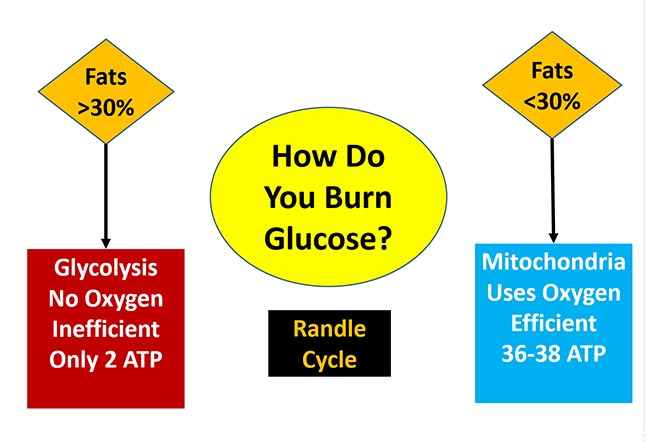
Low-carb diets have helped at least tens of millions of people improve their health for a very good reason, and that is there is a stealth switch that controls what fuel your mitochondria can burn, as they can only burn one fuel at a time: either fat or glucose.
The switch has been given the name the Randle Cycle, but it is more helpful to visualize it as a railroad switch that changes the tracks of the train, and the train can only travel down one track, not both. This is because only one type of fuel can be burned at a time.
The best-case scenario is you metabolize, or burn, glucose in your mitochondria without any reductive stress (a term I will explain in my upcoming interview with Georgi Dinkov). When you do this, you will only generate 0.1% reactive oxygen species (ROS).
Not only does this route generate less ROS, but it also is incredibly efficient at energy production by creating 36 to 38 ATPs for every molecule of glucose that is metabolized. It will also generate metabolic water and carbon dioxide, which are also important for your health.
For this to occur, as indicated in the figure above, you will need to consume less than 30% of your calories as fat. When you consume significantly more than that amount, the switch changes to burn fat in your mitochondria and you will not be able to burn glucose until your fat decreases to less than 30% of calories.
Since glucose is unable to be shuttled into the mitochondria to burn, it winds up backing up into your bloodstream, raising your blood sugar. This is a major contributor to diabetes. What little glucose is burned for fuel is done by using glycolysis, which is a primitive pathway that bacteria and cancer cells use.
It is great we have this pathway as you absolutely need it for quick fuel when you are activating your type II muscle fibers. But if this is the primary way you burn glucose, you are in a catastrophic metabolic state as you are creating loads of lactic acid as a waste product instead of healthy CO2, and you are only generating 2 ATPs for every molecule of glucose, which is 95% less energy.
Lactic acid increases reductive stress, which causes reverse electron flow in the mitochondria and causes reductive stress, which increases the ROS to 3 to 4%, which is 30 to 40 times more than when glucose is burned efficiently in the mitochondria.
Why Lactic Acid and CO2 Are so Important
Remember, when you are burning glucose efficiently in your mitochondria, the glucose is converted not only to 36 to 28 ATP, but when the electrons from the glucose are ultimately handed off to oxygen, metabolic water (deuterium-free) is made and, very importantly, carbon dioxide.
This is vital to understand, as carbon dioxide is a potent stimulator of mitochondrial biogenesis, which will increase the number of mitochondria that you have so you can make even more energy.
Conversely, when you are burning glucose far less efficiently in glycolysis, you are only generating two ATP and rather than creating life-sustaining carbon dioxide, you are generating life-damaging lactic acid, which will degrade your mitochondria and make them die sooner.
Too Much Dietary Fat Impedes Glucose Metabolism
Remember, the metabolic switch happens at about 30% fat. So, if you’re eating more than 30% fat you’re going to be mostly burning fat, and glucose metabolism (oxidation) will be inhibited. If you’re obese, the cutoff for fat is likely even lower. According to Dinkov:
“I’ve noticed that between 15% and 20% [dietary fat] is probably where most people, in their current health state, can metabolize the fat without causing problems for the glucose through the Randle cycle. Especially Type 2 diabetics.
Most of them are overweight or obese, which means they have two sources of fats — one through the diet and the second one from their fatty tissue, because there’s always some lipolysis going on. So for diabetic people, it’s probably a good idea to lower the intake of fat from the diet, because they already have a lot coming from their own bodies.
There’s so many clinics around the world that treat and even cure Type 2 diabetes by putting them on a really restrictive diet until they lose most of their fat. And then suddenly, the metabolism of glucose gets restarted. I think this directly shows you that the problem with glucose wasn’t the glucose itself.
It wasn’t the glucose that was fattening them up. They had too much fat in their bodies, and once you get rid of that fat, no matter how you do it, the problems when metabolizing glucose disappear which, to me, is a great testament to the Randle Cycle.”
You also don’t want fat to be too low, say, less than 15%. Between 15% and 30% might be the sweet spot, although, as noted by Dinkov, the ideal ratio of macronutrients isn’t known. That said, he believes, based on epidemiological studies, that an approximately equal ratio of calories from fat, carbs and protein (i.e., about 33% each) appears to be optimal for long-term health.
I respectfully disagree with this, as I believe 33% protein may be too high unless you weren’t eating many calories. Eating more than 35 to 40 grams of protein at a meal is likely counterproductive, as their absorption will be impaired, and you will be left with having to remove the ammonia and nitrogen, which could damage your kidneys.
At present, I believe that obtaining 15% of your overall calories from protein is probably about right when eating between 2,000 and 3,000 calories per day. Most people don’t need more than 120 grams of protein per day. Beyond that, you start burdening your kidneys. I’ve long used the formula of 1 gram per kilo of lean body mass (not total bodyweight), which Dinkov agrees seems to be an ideal way to determine your daily protein intake.
Weight Loss Rebound Explained
The Randle Cycle also helps explain why many people who lose large amounts of weight end up rebounding and gaining it all back, even when they’re still restricting calories. Dinkov explains:
“There’s always some baseline lipolysis going on. And in the rested state, your muscles prefer to oxidize fat. So, if you have a decent amount of muscle mass, you can burn most of this fat through this baseline lipolysis. The ratio of lean muscle mass to total body weight is the primary determinant of your basal metabolic rate. So, it’s very important to not lose lean muscle mass.
I think a lot of people get themselves in a situation where, through extreme fasting or extreme exercise, they lose a lot of body weight, but they’re not paying attention to how much they’re losing of each of the two components — fat mass and lean muscle mass.
Multiple studies have shown that over long-term fasting or a long-term exhaustive exercise, people lose a lot of body weight, but about 80% of that is lean muscle mass. So, they were much leaner, but their basal metabolic rate was much lower than what they started with because they lost most of their muscle mass.
So, when they went back to their normal lives and stayed on a reduced calorie regimen, they still regained all of their weight, and they were devastated. They said how is this possible?
Well, of course, what do you expect? Your basal metabolic rate went down by 50%. So, unless you stay on this severely restricted-calorie diet, you will regain all of those pounds.
So, the main thing is, maintain muscle mass, restrict a little bit of your dietary intake, and don’t overshoot with the lipolysis. Every time you stress yourself, you’re going to increase the rate of lipolysis. And if you float too much fat into the bloodstream, you will shut down the glucose oxidation, which will contribute to the lactic acid and all the other downstream effects mentioned.”
Not All Carbs Are Created Equal
When most people hear it’s OK to eat carbs, they think it’s an invitation to eat bread, pasta and processed foods and snacks. Nothing could be further from the truth. If your fat intake is over 30% and you throw junk carbs on there, you’re going to disrupt your lipoprotein profiles and increase your risk for heart disease, because you’re not metabolizing the carbs and are contributing to endotoxin production in your large intestine.
You also need to eat the right types of carbs to avoid endotoxin production, which is a major driver of increased cortisol and inflammation. High-fructose corn syrup (HFCS) is a processed carb that you should avoid. Most process including any processed foods that use HFCS because it is so cheap.
Other carbs to avoid would be resistant starches from legumes, beans, lentils, most grains, uncooked potatoes, green bananas, and pasta. Oatmeal can also cause trouble for many. You’ll know it’s incompatible with you if you get gas and/or constipation, or if it slows your digestion. Oatmeal is also high in linoleic acid (LA), which is why I avoid it.
The best complex carbs are ripe fruits that grow in tropical conditions, such as oranges, tangerines, mango, pineapple (keep intake moderate as it contains serotonin), melon, watermelon and grapes. Cooked starches such as potatoes and white rice are also acceptable. Potatoes contain oxalates, which can be problematic, but oxalates are water-soluble, so most will be radically lowered if you boil the potatoes.
If you have small intestinal bacterial overgrowth (SIBO), you may need to avoid starches like rice and potatoes, as you have inhibited ability to break down the starch into glucose. As a result, these kinds of starches may impede your recovery.
Incorporating Exercise for Optimal Results
The older you get, the more important your muscle mass becomes. Not only are strong muscles a requirement for mobility, balance, and the ability to live independently, but having reserve muscle mass will also increase your chances of survival3 when sick or hospitalized.
Muscle is lost far more easily and quicker than it’s built, so finding ways to continuously promote and maintain your muscle mass is crucial, especially as you get older.
Age-related loss of muscle mass is known as sarcopenia, and if you don’t do anything to stop it you can expect to lose about 15% of your muscle mass between your 30s and your 80s.4 An estimated 10% to 25% of seniors under the age of 70 have sarcopenia and as many as half those over the age of 80 are impaired with it.5
While declines in muscle mass and strength are relatively well-synchronized in the 35- to 40-year-old group, strength dramatically drops off as you get into the 75-year-old and over groups, with 85-year-olds usually seeing dramatic declines in strength and function relative to the decline in muscle size.
Blood Flow Restriction Training
One of the reasons I’m so passionate about blood flow restriction (BFR) training is because it has the ability to prevent and widely treat sarcopenia like no other type of training.
There are several reasons why BFR is far superior to conventional types of resistance training in the elderly. Importantly, it allows you to use very light weights, which makes it suitable for the elderly and those who are already frail or recovering from an injury. And, since you’re using very light weights, you don’t damage the muscle and therefore don’t need to recover as long.
I am also a huge fan of walking on the beach and typically go every day for about an hour. I also use the sauna and do targeted stretching daily.
More Information
To learn more, be sure to listen to the entire interview, and keep your eyes peeled for Part 2, which will follow shortly. Also check out Georgi’s blog at www.haidut.me or follow him on Twitter. He also has hundreds of videos on YouTube on a plethora of topics. A major sampling of Ray Peat’s work is also available for free on these two sites: wiki.chadnet.org/Ray-Peat and RayPeat.com.
How to Help Prevent and Treat Alzheimer’s Disease
Reproduced from original article:
https://articles.mercola.com/sites/articles/archive/2023/07/02/dale-bredesen-alzheimers.aspx
The original Mercola article may not remain on the original site, but I will endeavor to keep it on this site as long as I deem it to be appropriate.
Analysis by Dr. Joseph Mercola Fact Checked July 02, 2023
STORY AT-A-GLANCE
- In 2014, Dr. Dale Bredesen published a paper demonstrating healthy lifestyle choices could reverse Alzheimer’s in 9 out of 10 patients. His team is now launching a new randomized, controlled trial at six sites. Biological aging, brain aging and epigenetics will be included in this trial, using newer blood tests that weren’t available even a few years ago
- The glial fibrillary acidic protein (GFAP) test can be a valuable tool. This test basically looks at brain changes associated with astrocytosis. Astrocytes respond when there’s a problem in the brain, so it can give you a heads-up that something is afoot up to 10 years before symptoms set in
- Supporting energy production and reducing inflammation in the brain are the two most important factors to prevent and treat Alzheimer’s
- The entire family of herpes viruses is associated with changes in the brain and neurons. Left untreated, chronic infections put your innate immune system into overdrive. Alzheimer’s is an innate immune system mismatch with the adaptive system. You’re not clearing the pathogen, so you’ve got a continued onslaught of cytokines causing damage in your brain
- Valuable adjuncts that can help improve mitochondrial energy production include methylene blue, niacinamide, NAC and glycine
In this video, I interview repeat guest Dr. Dale Bredesen, a neurologist specializing in the treatment of Alzheimer’s. In 2014, he published a paper1 demonstrating the power of lifestyle choices for the prevention and treatment of this tragic condition. By leveraging 36 healthy lifestyle parameters, he was able to reverse Alzheimer’s in 9 out of 10 patients.
This included the use of exercise, ketogenic diet, optimizing vitamin D and other hormones, increasing sleep, meditation, detoxification and eliminating gluten and processed foods. It’s been several years since we spoke last, so he’s got quite a few updates to share.
Randomized Trial Launch
For starters, his team has published another proof-of-concept paper and are now launching a randomized, controlled trial at six sites: Hollywood, Florida; Nashville, Tennessee; Cleveland, Ohio; and Sacramento, Oakland and San Francisco in California.
Biological aging, brain aging and epigenetics will be assessed in this trial, using newer blood tests that weren’t available even a few years ago, including phospho-tau 181, phospho-tau 217, A-beta 42 to 40 ratio, glial fibrillary acidic protein (GFAP) and neurofilament light polypeptide (NF-L).
“A couple of these are not commercially available yet, so we’re doing these as research, but they will all become commercially available,” Bredesen says. “Currently, phospho-tau 181 is commercially available and so is the A-beta 42 to 40 ratio. So now, for the first time, you can get an idea, without necessarily having a PET scan, where you stand.
More importantly, you can follow it as you improve. Prevention is key, but also reversing cognitive decline, which we were the first to do … We’ve seen it again and again, when you’re doing the right things, when you’re attacking the important drivers of the process, you see [reversal].”
Valuable Tests
The GFAP test, while nonspecific, can be a valuable tool. This test basically looks at brain changes associated with astrocytosis. Astrocytes respond when there’s a problem in the brain, so it can give you a heads-up that something is afoot up to 10 years before symptoms become apparent. “The good news is if it’s normal, you’re in pretty good shape. So you want to know that going forward,” he says.
The phospho-tau 181 and phospho-tau 217 are specific tests for Alzheimer’s changes related to the death of neurons. Genetic testing is also important to ascertain how many copies of the APOE ε4 gene you might have. “That’s a critical piece,” Bredesen says. “Everybody should know their APOE status.” Hormone testing and testing for toxins, including mycotoxins and heavy metals, are also important.
Download this Article Before it Disappears
Where There’s Smoke There’s Fire
According to conventional thought, elevated tau and beta-amyloid are causative factors in Alzheimer’s, but Bredesen’s research suggests otherwise. He explains:
“This is a little bit like saying, ‘There’s some smoke there. If we just blow away the smoke, then the house is not going to burn down.’ It makes no sense. The key thing to know is that [tau and beta-amyloid] are responses and mediators. You’ve talked a lot about mitochondrial function, which is absolutely critical in this disease, but we know of many upstream contributors, and that’s another update.
People have not known what’s causing this disease, and it’s often said there’s nothing that prevents, reverses or delays it. Nothing could be further from the truth. We know there are many contributors, [including] anything that damages mitochondria [and] different infections.
What we now see from the research is that Alzheimer’s disease fundamentally is a network insufficiency. You have this beautiful network of about 500 trillion synapses and as you get exposed to inflammation, infections in your mouth, insulin resistance, leaky gut, not enough blood flow, reduced oxygenation, reduced mitochondrial function, any of these things, that network is no longer sufficiently supported.
And, no surprise, it pulls back and that’s why you see the tau. They are part of the mediators of making this effect enhanced. They amplify the problem. Dr. Lee Hood and Dr. Nathan Price have just published a wonderful book called ‘The Age of Scientific Wellness,’ and as they point out, amyloid is an excellent biomarker but a terrible therapeutic target, and that’s exactly what’s coming out of the data.
Unfortunately, Lecanemab was just recommended by the panel for FDA approval. It slowed the decline. But here’s the thing they didn’t say, which they should have said, what are the things that performed better? Lecanemab doesn’t make you better, it doesn’t keep you the same, it slows the decline by 27%. That’s it.
So what worked better in their trials? No. 1, ketones alone worked better than this drug. No. 2, extra virgin olive oil alone in a trial worked better than this drug. No. 3, combined metabolic activators — carnitine, nicotinamide, riboside, things like that. Again, supporting energetics. This is about energetics and inflammation. Those are the two big players.
And then of course, the protocol we developed worked the best of anything. We’ve got people now who have sustained their improvement for more than 10 years. So, it’s sad that this drug has been recommended for approval.”
Two Key Causative Factors That Must Be Addressed
According to Bredesen, supporting energy and reducing inflammation in the brain are the two most important factors to prevent and treat Alzheimer’s. Basics that all of Bredesen’s patients implement include:
| Dietary intervention — Bredesen recommends a plant-rich, mildly ketogenic diet, with a good omega-3 to omega-6 ratio, no dairy, no grains and no simple carbs. “That’s the approach that has worked the best,” he says. “We call that KetoFLEX 12/3.” Nutrition for Longevity now offers meal kits for the KetoFLEX 12/3 diet at KetoFlex123.com, to make it easier to follow.
In the interview, I counter some of Bredesen’s dietary recommendations, as he still recommends polyunsaturated fats (PUFAs). I’m convinced all omega-6 PUFAs need to be kept low, below 2% or even 1% of daily calories, for optimal health, and I strongly suspect people with dementia need to be even more cautious, as the PUFA linoleic acid (LA) appears to be the biggest dietary source of all the drivers of Alzheimer’s, including inflammation, oxidative stress, mitochondrial dysfunction and dysfunction in electron transport chain such that you cannot efficiently produce ATP. I’ve written extensively on the ins and outs of this, so for more information, listen to the interview and/or review “Linoleic Acid — The Most Destructive Ingredient in Your Diet.” I’m also not convinced that the omega-3 to omega-6 ratio is as helpful as commonly suggested since you cannot counter the damage caused by omega-6 fats simply by taking more omega-3. On top of that, most omega-3 supplements, primarily fish oil, are worthless because they’re synthetic and rancid to boot, so making sure you’re getting high-quality omega-3 is an essential factor. |
| Exercise — Bredesen is seeing particularly good results with KAATSU (blood flow restriction training) and exercise with oxygen therapy (EWOT). |
| Sleep optimization — Sleep apnea is a common problem that unquestionably contributes to cognitive decline, as it reduces oxygen to your brain and raises adrenaline while you’re sleeping.
“Sleep is a huge area in and of itself,” Bredesen says. “Patient zero, the first person we treated back in 2012 who reversed her cognitive decline beautifully, she’s now over a decade in on this, doing great continually. She’s now in her late 70s. One of her issues was poor sleep and, of course, one of the things that was addressed. Getting at least an hour of deep sleep and at least an hour and a half of REM sleep is very helpful … Poor sleep gives you more amyloid. It’s just a marker, but it’s a marker of things that aren’t so good, and unfortunately, amyloid then gives you poorer sleep.” |
| Stress reduction |
| Brain training |
| Detox |
| Targeted supplements |
The other part of Bredesen’s program is customized to each patient. Many have undiagnosed chronic infections, for example, that need to be addressed. Common ones include P. gingivalis and T. denticola, which work their way into your brain from your oral microbiome, herpes simplex and human betaherpesvirus 6A (HHV-6A).
The entire family of herpes viruses is associated with changes in the brain and neurons. HHV-6A in particular is associated with the brain degeneration seen in Alzheimer’s. Chlamydia pneumoniae is also highly troublesome, as are all tick-borne infections, including Borrelia, Bartonella, Babesia and Anaplasma.
All these infections put your innate immune system into overdrive and need to be quenched. As noted by Bredesen, COVID-19 and Alzheimer’s are “both innate immune system mismatches with the adaptive system.” You’re not clearing the pathogen, so you’ve got this continued onslaught of cytokines. In the case of COVID, you die from the acute cytokine storm, whereas in Alzheimer’s, you die from cytokine drizzle. “It’s a long-term cytokine problem,” Bredesen says.
High-Fructose Corn Syrup Down-Regulates ATP Production
Bredesen also highlights the importance of avoiding fructose. In March 2023, Dr. Richard Johnson, Bredesen, Dr. David Perlmutter and several other coauthors published a paper2 on Alzheimer’s disease as “a maladaptation of an evolutionary survival pathway mediated by intracerebral fructose and uric acid metabolism.”
“It’s really the long-term research of Rick Johnson. You talk about mitochondrial function, about damage to mitochondria. He’s talking about a change in signal. They’re both important. As he points out, when you get that fructose, your body is literally responding to it saying, ‘Winter is coming. We are going to store fat and we’re going to turn down your ATP by about 15%.’
Well, when you’re right on the ragged edge of not getting enough energetics, then turning down your ATP by 15% is the last thing you want and is associated with cognitive decline.
Rick put together a whole table looking at all the relationships, changes in PET scans, changes in blood biomarkers. In each of these cases, what happens with fructose is the same thing that happens in Alzheimer’s disease.
So again, it comes back to the critical nature of the energetics, whether you’re turning them down by taking too much fructose and high fructose corn syrup, which is not to say you can’t eat some fruit, it just means you don’t want to have massive amounts of fructose.”
Fruit Versus High-Fructose Corn Syrup
Here too, my current views veer a bit. It’s important to understand there is a world of difference between fructose from fruit and high-fructose corn syrup. I used to recommend limiting both sources, but I’ve recently changed my thinking on this, as fructose from fruit activates pyruvate dehydrogenase, which you need to metabolize glucose from pyruvate to acetal-CoA in your mitochondria. If that enzyme is not activated, the glucose cannot be used for fuel.
The key to this riddle for me was the Randle Cycle, which basically acts as a metabolic switch. Your primary fuels are fats and carbs, and the Randle cycle determines how your cells decide which one to burn. When your diet is more than 30% to 35% fat, this switch shifts to fat metabolism, so that you’re burning fat in your mitochondria rather than glucose. The glucose instead gets shuttled into glycolysis and any excess goes out into your blood.
So, eating a lot of fruit and a lot of fat at the same time is not a good idea. In essence, fructose by itself is not what’s causing the problem. Rather it’s eating too much fructose in combination with too much fat. If you increase your fresh fruit intake, you also need to lower your fat intake, or else the sugar can’t be used for fuel.
Additionally, there are individual variations in metabolic flexibility, toxicity and microbiome that likely contribute to a person’s ability to tolerate increased carbohydrates.
The other point of contention I have is that PUFAs also appear to induce torpor (decreased physiological activity marked by a reduced metabolic rate), much like high-fructose corn syrup does. So, I suspect ripe fruit is not going to be a major contributor to dementia. In a previous interview with Johnson, he also admitted being surprised that fructose from fruit did not have the same effects as high-fructose corn syrup. Bredesen replies:
“Yes. And it makes perfect sense. The interesting thing to me is we are frugivore (animals that thrive on raw fruits), we are descended from frugivores. The problem we have today, of course, is that our fruit has been bred to have a much higher sugar content. That’s the issue. But the good news is, it retains the wonderful fiber and, as you pointed out, it doesn’t give you that effect that high fructose corn syrup and processed foods give you.”
Methylene Blue, Niacinamide, NAC and Glycine
One treatment adjunct Bredesen favors is methylene blue, which is something I recommend for just about anyone who wants to improve their health and reverse degenerative disease, primarily because it’s so effective at reducing reductive stress. It facilitates electron transfer forward in the mitochondria, thereby allowing ATP production to occur, even if the complexes are damaged.
Raising NAD+ is also important for energy production. NAD+ is oxidized, not reduced, so it facilitates the transfer of electrons forward in the electron transport chain. While there are expensive precursors out there, my favorite is plain old niacinamide, which is incredibly inexpensive yet raises NAD+ effectively.
Recent research has also confirmed that niacinamide helps slow brain aging. For general health, I recommend taking 50 milligrams of niacinamide three times a day. Niacinamide also works synergistically with methylene blue.
Many dementia patients also have low glutathione levels, especially if they’ve been exposed to mycotoxins or other toxins. I’m not a fan of taking glutathione, because glutathione is reduced, and you need the oxidized form to really make it work.
To make the actual glutathione molecule, you need both cysteine and glycine, so one way to boost your glutathione level would be to take glycine and N-acetylcysteine (NAC).
Two other ways to get more glycine into your diet are to eat “nose to tail,” not including muscle meat, or taking a collagen supplement or gelatin powder. “Nose to tail” refers to organ meats and connective tissues, which are rich in collagen. Collagen, in turn, makes up about one-third of the protein in your body, so it’s incredibly important. About 30% of the collagen and gelatin is glycine, so it’s an excellent source.
Precision Medicine Program to Launch
Bredesen is also part of a team launching a Precision Medicine Program at the Pacific Neuroscience Institute in Santa Monica, California. The program will work to prevent and treat chronic conditions at all stages, but will focus on getting people in for prevention and early treatment.
“When you get Alzheimer’s, you go through four stages,” Bredesen says. “You go through a presymptomatic phase, and you go through subjective cognitive impairment (SCI) that lasts on average 10 years. For these areas, prevention and treatment are pretty much 100% effective. We can prevent, and we can reverse virtually every time people are in SCI.
MCI is the next. It’s too bad it’s called mild cognitive impairment. It’s like telling someone they have mildly metastatic cancer. It’s a relatively late stage of Alzheimer’s disease. Still, in our trial, we had 84% of those people improve.
The final stage is dementia. And we still see some people with proof of dementia improve. But the farther you go, the harder it is to get them all the way back. So, we encourage everyone, please come in early.
We’ve had people go from MoCA [Montreal cognitive assessment] scores of 18 to 30, which is fantastic, from demented to normal. We’ve had people go from zero to 9. But we’ve never seen anyone yet be able to go from zero MoCA, which is end-stage Alzheimer’s, to perfect 30 …
A guy wrote me a nasty note a couple years ago, saying ‘How dare you tell people that if they’re too far along, they shouldn’t get on this protocol? My wife had a MoCA score of zero. She’s in a nursing home. We used the protocol that you developed, she only went up a little bit, but her symptoms were so much better.’ She could dress herself, she could speak again, she could engage.
So I don’t say there’s a limit, but it is much harder below 16. You can get some dramatic subjective improvements. And again, we’ve seen people go from 15 to 27. So, it does happen, it’s just that it’s harder the longer you wait, which is why we encourage everyone to come early. If everybody would come in in those first two phases — prevention or SCI — dementia would be a rare problem.”
The Wide-Ranging Health Benefits of Niacinamide
Reproduced from original article:
https://articles.mercola.com/sites/articles/archive/2023/06/22/health-benefits-of-niacinamide.aspx
The original Mercola article may not remain on the original site, but I will endeavor to keep it on this site as long as I deem it to be appropriate.
Analysis by Dr. Joseph Mercola Fact Checked June 22, 2023

STORY AT-A-GLANCE
- Niacinamide (aka nicotinamide) is a form of niacin (vitamin B3) that plays an important role in energy metabolism. Without it, your mitochondria cannot make energy
- Niacinamide is also a precursor to NAD+, which is essential in the conversion of food to energy, maintaining DNA integrity and ensuring proper cell function. NAD+ is also a primary fuel for longevity proteins that become depleted with age
- According to recent research, a century-long decline in our basic metabolic rate (BMR) can by itself account for the obesity epidemic. For some reason, we’re spending less energy (burning fewer calories) now, when resting, than people did in decades past
- Consumption of polyunsaturated fats may be to blame for this BMR decline. Niacinamide has potent antiobesity effects and also helps inhibit release of inflammatory PUFAs from fat cells
- Niacinamide can also help prevent neurodegeneration, kidney disease and heart failure, and reverse leaky gut
In a series of articles, biohacker Georgi Dinkov highlights a variety of benefits of niacinamide (aka nicotinamide), a form of niacin (vitamin B3) that plays a vital role in energy metabolism, as it’s essential for the mitochondrial electron transport chain to function. Without it, your mitochondria cannot make energy.
Niacinamide is so important because it is a precursor for NAD+, which is involved in the conversion of food to energy, maintaining DNA integrity and ensuring proper cell function. NAD+ is also a primary fuel for sirtuins, longevity proteins that become depleted with age.
As such, niacinamide can be an important longevity hack. As I’ve explained in previous articles, niacinamide at a dose of 50 milligrams per day will provide the fuel for NAMPT, the rate limiting enzyme for NAD+. Niacinamide also has potent antiobesity effects, can help prevent neurodegeneration and heart failure, and reverse leaky gut.
Obesity Epidemic Linked to Decline in Basic Metabolic Rate
In a May 2023 article,1 Dinkov reviewed evidence showing that lack of exercise and increased calorie intake are not the cause of the obesity epidemic. Interestingly, there has been a century-long decline in our basic metabolic rate (BMR), or basal energy expenditure. BMR refers to the number of calories your body burns when you’re at rest, which accounts for 60% to 75% of your total daily energy expenditure.
According to research published in the April 2023 issue of Nature Metabolism,2 the adjusted basal metabolic rates (BMR) in the U.S. and Europe have declined by 14.7% in men and 2% in women since the 1990s. While the decline in women was not considered significant, when they looked at a larger data set that stretched back 100 years, a significant drop was confirmed for both sexes.
This, the authors believe, is “a previously unrecognized factor” in the obesity epidemic. In plain English, what this means is that, for some reason, we’re burning fewer calories now when resting or even sleeping than people did in decades past.
“It does not take much acumen to realize that with double digit declines over a 3-decade period, by now our BMR is probably only half of the BMR of people who lived at the turn of the 20th century,” Dinkov writes.3
“What makes the situation worse is that if BMR has declined so much, the current guidelines for ‘optimal’ health — reduced caloric intake and plenty of exercise — are virtually guaranteed to make the situation even worse since they will invariably further lower the BMR …
What could be causing these declines in BMR? Well, chronic stress aside, that decline in BMR mirrors almost perfectly the curves of PUFA [polyunsaturated fat] consumption rates in the general population.
Namely, as the BMR curve has steadily declined over the last 100 years the PUFA consumption rate curve has steadily moved upwards over time. Unless this trend of ever-increasing PUFA consumption is interrupted, I don’t see the decline of BMR flattening (let alone reversing) any time soon.”
Niacinamide’s Antiobesity Effects
In another article, Dinkov cites recent research4,5 showing that niacinamide reprograms cellular metabolism in adipose (fat) tissue and increases mitochondrial biogenesis, which in turn results in fat loss. Basically, it ameliorates obesity-related metabolic dysfunction by increasing fatty acid catabolism.
Obese mice given a daily dose of 2.5 mg of niacinamide per kilo of bodyweight for three weeks lost 47% of their body fat. They also saw increases in lean muscle mass.
Obese mice that were given a daily dose of 2.5 mg of niacinamide per kilo of bodyweight for three weeks lost 47% of their body fat, and this was true whether they ate a regular diet or a high-fat one. They also saw increases in lean muscle mass, mitochondrial biogenesis and energy production, CO2 levels, and physical activity. Insulin sensitivity was also improved.
Download this Article Before it Disappears
Niacinamide Is Helpful When Clearing PUFAs
Where does niacinamide fit into this? Primarily, it has to do with the fact that it raises NAD+, and NAD+ inhibits the release of inflammatory polyunsaturated fats (PUFAs) such as linoleic acid (LA) from your fat cells. Another term for this is anti-lipolytic.
This is a good thing, because when LA is released from your fat cells it is metabolized into highly inflammatory molecules, so you want to release it from your cells very gradually.
PUFAs such as LA are not typically burned as fuel like saturated fats. Instead, they’re stored,6 and the half-life of PUFAs, which get embedded and integrated into your cell membranes, is about 680 days. This means that to rid your body of LA will take approximately seven years, provided you don’t load more in.
It is fascinating to note that most of the body fat in obese individuals is composed of PUFAs. Saturated dietary fat is mostly burned (oxidized) and used up. So, most people have large stores of LA, and these stores need to be lowered to safe levels of 1% to 2% LA.
If your cells are loaded with these inflammatory fats (which they will be if you’ve been eating processed foods), rapid release of LA from your fat cells will precipitate or increase inflammation, so you really want to limit that. Aside from niacinamide, aspirin is also an anti-lipolytic and also slows down the release of LA from your fat cells.
Taking a high-quality vitamin E supplement once a day can also be helpful. In addition to impairing the release of LA from fat cells, just like NAD+ and aspirin, vitamin E also helps prevent the LA from converting into dangerous oxidative linoleic acid metabolites (OXLAMs) once released, so it does double-duty.
Most vitamin E supplements are garbage. To ensure you’re getting a high-quality vitamin E, you want most of the vitamin E isomer as alpha tocopherol, typically about 150 units. It should also have the other tocopherol isomers, alpha, beta and gamma, but at far lower doses.
Additionally, it should have alpha, beta and gamma tocotrienols. Finally, it should only have the “D” isomer. Avoid all vitamin E supplements that are “DL,” as half of it is the wrong isomer and not biologically useful and may even be harmful.
Niacinamide May Protect Against Neurodegeneration
In another May 2023 article,7 Dinkov reviews evidence showing niacinamide may help prevent neurodegeneration by allowing for higher energy levels through energy metabolism in the mitochondria. “There are many studies, going back decades, demonstrating that a drop in NAD+ levels, and thus of NAD/NADH, is a common feature of virtually all neurodegenerative diseases,” he writes.
Studies have also demonstrated that raising NAD+ levels can help prevent and treat many neurological conditions, including Alzheimer’s and ischemic stroke. Dinkov goes on to cite a recent study8,9 that suggests the primary purpose of autophagy, particularly autophagy in your brain, is to maintain optimal NAD+ levels.
When autophagy is low, the resulting NAD depletion causes cytotoxicity in the brain cells and degeneration of brain tissue. Since declining NAD+ levels appear to be what’s behind the neurodegenerative processes, the authors suggest the remedy is to raise NAD+ using precursors such as nicotinamide, nicotinamide mononucleotide (NMN), nicotinamide riboside (NR) or niacin (vitamin B3).
Of these, I’m convinced niacinamide is the best. I’ll review why in the next section. The reason so few promote it is because it’s incredibly inexpensive, so there’s no financial incentive at play.
Another inexpensive solution to increasing or modulating autophagy is aspirin,10 which may activate autophagy without the downside of fasting’s increasing cortisol levels. Also, as Georgi states below:
“Since aspirin is known to modulate autophagy (raise it when it is abnormally low and lower it when it is abnormally high) and niacinamide is a very effective NAD precursor, it is reasonable to try them in combination that should be synergistic when it comes to protecting the brain (and the entire organism) from diseases and even aging.”
Dinkov continues by mentioning some surprising tidbits that I was previously unaware of:
“Last but not least, the study is one of the few to pour cold water on everybody’s favorite anti-aging target — the sirtuins (SIRT). I mentioned SIRT years ago in a post demonstrating that its activity is greatly increased in cancer and that SIRT promotes fatty acid oxidation (FAO), which drives cancer growth and metastases.
Now, [this study] demonstrates that the sirtuin genes are also heavy consumers of NAD and also mentions that their activity actually increases in aging and pathological states. Conversely, inhibiting the sirtuins (SIRT) would be beneficial, as the study itself demonstrates …
The really good news here is that niacinamide is not only a precursor to NAD+, but is also an inhibitor (in higher doses) of both NAD-consuming enzymes mentioned in the study (PARP-1 and SIRT). None of the other NAD precursors have been shown (so far) to inhibit the NAD-consuming enzymes.”
Why Choose Niacinamide?
The reason I’m convinced niacinamide is the best NAD+ precursor is because the immediate breakdown product of NAD+ is niacinamide. As you can see in the illustration below, when NAD is used up, it gets broken down into niacinamide.
This niacinamide is then recycled. First, it’s converted into NMN, and then into NAD+. This is likely why some researchers promote NMN. However, the enzyme NMNAT1-3 that converts NMN to NAD+ is not the rate limiting enzyme. NAMPT is what controls how much NAD+ you make. So, flooding your body with NMN is not going to be as useful as using small amounts of niacinamide and activating NAMPT.
The ideal dosing of niacinamide is from 50 mg three times a day. It is the rare person that will not respond favorably to this simple intervention for increasing NAD+.
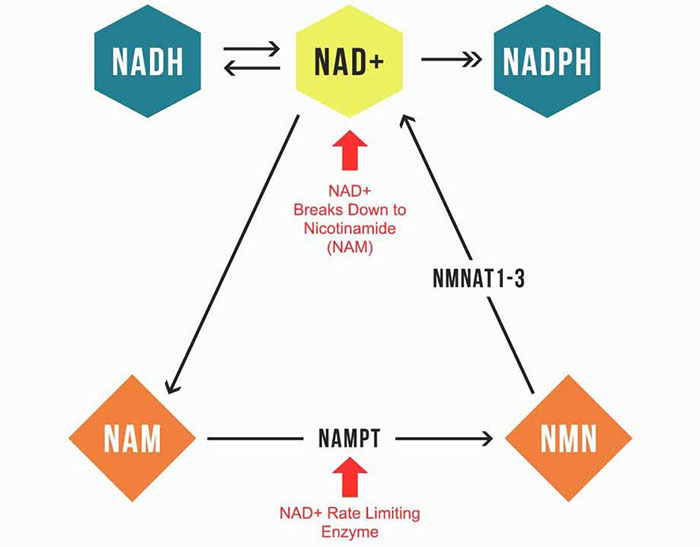
Niacinamide Prevents Kidney Disease
Speaking of NAD+, NAD+ deficiency has been linked to kidney disease, and niacinamide can help prevent that too.11 As Dinkov explains in a May 18, 2023, article:12
“Many studies have … shown that elevated lipolysis (delivering inflammatory PUFA to the kidneys) and, consequently, elevated fatty acid oxidation (FAO) as per the Randle Cycle are the … likely culprits. It is well-known that one of the effects of elevated FAO is a decline in the mitochondrial NAD/NADH ratio — i.e. relative deficiency of NAD+.
This is actually the primary mechanism through which elevated FAO inhibits glucose oxidation since lower NAD/NADH ratio inhibits the activity of the enzyme pyruvate dehydrogenase.
In any event, the study … demonstrates that relative deficiency in NAD+ (i.e. lower NAD/NADH ratio) is the direct cause of kidney damage due to the resulting OXPHOS dysfunction. Conversely, elevating NAD+ (and thus NAD/NADH) levels with precursors such as nicotinamide mononucleotide (NMN) or nicotinamide riboside (NR) was effective in completely preventing kidney damage and CKD.
Since NMN is no longer available over the counter and NR is rather expensive, niacinamide remains as the most viable option for replicating the study in humans with CKD, especially considering the fact that niacinamide is just as effective as an NAD+ precursor as NMN/NR while also having potential additional benefits the other two precursor do not.
Namely, niacinamide is an inhibitor of the NAD-consuming enzymes PARP-1 and CD38, so taking niacinamide not only directly increases NAD+ levels but also inhibits its excessive consumption/decline. I can’t find the actual published study that article is based on, but other studies have demonstrated benefits for CKD in animals from human-equivalent (HED) doses in the 250mg-500mg daily range.”
Niacinamide for Leaky Gut
Niacinamide also holds out the promise of healing for all those who struggle with increased gut permeability, so-called “leaky gut,” and related problems. When lipopolysaccharide (LPS), an endotoxin, leaks from your gut into your bloodstream, it causes low-grade systemic inflammation that fuels a wide range of chronic diseases and conditions.
While certain toxins such as glyphosate and gluten have been implicated in leaky gut, recent research13,14 suggests it may be rooted in an energy deficiency which, again, niacinamide can help fix. Dinkov explains:15
“Since apparently intestinal epithelial cells (forming the bulk of the gut barrier) consume at least 20% of the ATP we synthesize daily, any sizable drop in ATP levels results in massive dysfunction in both the structure and function of these cells …
Endotoxin (LPS), produced by the gram-negative members of our microbiome, is known to deplete ATP levels in the epithelial cells. The study used another known ATP depleting agent — ethanol — to cause the energetic deficiency in the epithelial cells and, unsurprisingly, found that endotoxin levels in the blood massively increased.
However … administering niacinamide at a human-equivalent dose of 30mg/kg daily, for 10 days, fully prevented the endotoxemia caused by ethanol, and reversed all the energetic (ATP, NAD, Krebs cycle function) deficits as well, thereby restoring the gut barrier function.
In fact, niacinamide supplementation reversed the energetic deficits to a level surpassing the healthy control group! As I mentioned above, the study is relevant even for people who do not drink alcohol since endotoxin naturally formed in our intestines in response to feeding can also cause similar energetic depletion in the intestinal cells and thus cause the same state of ‘leaky gut’ as ethanol.
While 30mg/kg of niacinamide daily is not a small dose, it is below the daily dose even mainstream medicine considers toxic, and the duration of usage was just 10 days. Furthermore, the treatment lasted 10 days since ethanol was also administered for 10 days. If a person is not drinking daily, then the niacinamide treatment would also likely not be needed daily.
In the absence of daily drinking, I think a reasonable protocol would be to take 30mg/kg on weekends (2 days), maybe twice a month, as a general prophylactic and/or gut-repair regimen.
A daily dose of 200 mg-300 mg would probably have similar beneficial effects as the larger doses taken sporadically. Several human studies already demonstrated that a daily dose of 300 mg niacinamide raises NAD levels to the same degree as 1,000 mg daily.”
Niacinamide for Heart Failure Prevention
Finally, niacinamide may also act as a preventive against heart failure — again because heart failure is a localized symptom of energy deficiency and mitochondrial dysfunction. As explained by Dinkov,16 when your NAD+ level drops, your ATP level also drops, and this puts stress on the cardiomyocytes in your heart. Cardiomyocytes are specialized cells in your heart that generate contractive force.
Thusly stressed, the cardiomyocytes release pro-fibrotic mediators that further suppress mitochondrial function. Over time, this leads to cell death, collagen deposition and fibrosis, which are hallmarks of heart failure.
Research17 published in February 2023 found that replenishing NAD+ prevented this energetic dysfunction, and therefore the subsequent development of heart failure. Here, the human-equivalent of 3.5 mg per kilo of bodyweight was administered via daily injection for two months, but Dinkov and I both believe that oral niacinamide might be just as effective, although you might have to use it for a longer period of time.
General Niacinamide Recommendations
As a blanket recommendation for optimal health, I recommend taking 50 mg of niacinamide three times per day. Niacinamide will only cost you about 25 cents a month if you get it as a powder. Typically, one-sixty-fourth of a teaspoon of niacinamide powder is about 50 mg.
The reason I recommend getting it in powder form is because in most supplement brands, the lowest available dose is 500 mg, and that will decrease NAD+ due to negative feedback on NAMPT, which is the opposite of what you’re looking for.
Also, please note that although niacinamide and niacin are both called vitamin B3, niacin will not activate NAMPT like niacinamide, so it is best to use niacinamide. Additionally, niacinamide, unlike niacin, will not cause flushing which is due to a large release of histamine.
It would also be helpful to make sure you’re getting all the other B vitamins, as they too are crucial for mitochondrial function, especially regular niacin, riboflavin, and folate. Oftentimes, decreased mitochondrial function is due to a deficiency in B vitamins, and that’s easy to fix with a low dose high quality B complex. Usually, when this is the case, improvement can be seen within two to three weeks.
- 1, 3 Haidut.me May 11, 2023
- 2 Nature Metabolism April 26, 2023; 5: 579-588 Full Text PDF
- 4 Journal of Nutritional Biochemistry September 2022; 107: 109056
- 5 Haidut.me May 31, 2023
- 6 Haidut.me October 22, 2019
- 7 Haidut.me May 11, 2023, Niacinamide may prevent neurodegeneration
- 8 Cell Reports April 20, 2023; 42(5): 112372
- 9 Phys.org April 27, 2023
- 10 Aspirin Recapitulates Features of Caloric Restriction Cell Rep. 2018 Feb 27; 22(9): 2395–2407
- 11 Nat Metab March 2023; 5(3): 357-359
- 12 Haidut.me May 18, 2023
- 13 Nutrients 2023; 15(1): 174
- 14 Lifespan January 11, 2023
- 15 Haidut.me February 22, 2023
- 16 Haidut.me March 3, 2023
- 17 Nature Cardiovascular Research February 13, 2023; 2: 174-191
What You Need to Know About Vitamin K2, D and Calcium
Reproduced from original article:
https://articles.mercola.com/sites/articles/archive/2023/06/17/vitamin-k2.aspx
The original Mercola article may not remain on the original site, but I will endeavor to keep it on this site as long as I deem it to be appropriate.
Analysis by Dr. Joseph Mercola Fact Checked June 17, 2023
STORY AT-A-GLANCE
- Vitamin K2 is an important fat-soluble vitamin that plays critical roles in protecting your heart and brain, and building strong bones. It also plays an important role in cancer protection
- The biological role of vitamin K2 is to help move calcium into the proper areas in your body, such as your bones and teeth. It also helps remove calcium from areas where it shouldn’t be, such as in your arteries and soft tissues
- The optimal amounts of vitamin K2 are still under investigation, but it seems likely that 180 to 200 micrograms of vitamin K2 might be enough to activate your body’s K2-dependent proteins to shuttle calcium to the proper areas
- If you take oral vitamin D, you also need to take vitamin K2. Vitamin K2 deficiency is actually what produces the symptoms of vitamin D toxicity, which includes inappropriate calcification that can lead to hardening of your arteries
- If you take a calcium supplement, it’s important to maintain the proper balance between calcium, vitamin K2, vitamin D, and magnesium. Lack of balance between these nutrients is why calcium supplements have become associated with increased risk of heart attack and stroke
Editor’s Note: This article is a reprint. It was originally published December 16, 2012.
Vitamin K is a fat-soluble vitamin most well-known for the important role it plays in blood clotting. However, many do not realize that there are different kinds of vitamin K, and they are completely different.
The health benefits of vitamin K2 go far beyond blood clotting, which is done by vitamin K1, and vitamin K2 also works synergistically with a number of other nutrients, including calcium and vitamin D.
Dr. Kate Rheaume-Bleue, a naturopathic physician with a keen interest in nutrition, has authored what I believe is one of the most comprehensive books on this important topic, titled: Vitamin K2 and the Calcium Paradox: How a Little Known Vitamin Could Save Your Life.
“I tuned in to the emerging research about K2 early in 2007,” she says. “Not long before, I had read Nutrition and Physical Degeneration by Weston A. Price. When I learned about vitamin K2, I thought:
“Hey, you know what? I’m sure Price talked all about this in his book.” I went to the book, looked through it, and didn’t find any reference to vitamin K2. I was really stumped. A little bit later in 2007, I read a brilliant article by Chris Masterjohn that links vitamin K2 to Price’s work on Activator X.
Once I realized that link, the light bulb went on about how important this nutrient is, and how overlooked it’s been for so long. It really provides the missing piece to the puzzle of so many health conditions, and yet it was being completely overlooked, despite the overwhelming amounts of modern-day research.”
What’s so Special About Vitamin K2?
Vitamin K is actually a group of fat-soluble vitamins. Of the two main ones, K1 and K2, the one receiving the most attention is K1, which is found in green leafy vegetables and is very easy to get through your diet. This lack of distinction has created a lot of confusion, and it’s one of the reasons why vitamin K2 has been overlooked for so long. The three types of vitamin K are:
1.Vitamin K1, or phylloquinone, is found naturally in plants, especially green vegetables; K1 goes directly to your liver and helps you maintain healthy blood clotting
2.Vitamin K2, also called menaquinone, is made by the bacteria that line your gastrointestinal tract; K2 goes straight to your blood vessel walls, bones, and tissues other than your liver
3.Vitamin K3, or menadione, is a synthetic form I do not recommend; it’s important to note that toxicity has occurred in infants injected with this synthetic vitamin K3
It also plays a role in removing calcium from areas where it shouldn’t be, such as in your arteries and soft tissues. “K2 is really critical for keeping your bones strong and your arteries clear,” Rheaume-Bleue says. Now, vitamin K2 can be broken into two additional categories, called:
- MK-4 (menaquinone-4), a short-chain form of vitamin K2 found in butter, egg yolks, and animal-based foods.
- MK-7 (menaquinone-7), longer-chain forms found in fermented foods. There’s a variety of these long-chain forms but the most common one is MK-7. This is the one you’ll want to look for in supplements, because in a supplement form, the MK-4 products are actually synthetic. They are not derived from natural food products containing MK-4.
Vitamin K1 exclusively participates in blood clotting — that’s sole purpose. K2 on the other hand comes from a whole different set of food sources, and its biological role is to help move calcium into the proper areas in your body, such as your bones and teeth.
The MK-7 – these long-chain, natural bacterial-derived vitamin K2 – is from a fermentation process, which offers a number of health advantages:
- It stays in your body longer, and
- It has a longer half-life, which means you can just take it once a day in very convenient dosing
How Much Vitamin K2 Do You Need?
The optimal amounts of vitamin K2 are still under investigation, but it seems likely that 180 to 200 micrograms of vitamin K2 should be enough to activate your body’s K2-dependent proteins to shuttle the calcium where it needs to be, and remove it from the places where it shouldn’t.
“The most recent clinical trials used around those amounts of K2,” Rheaume-Bleue says. “The average person is getting a lot less than that. That’s for sure. In the North American diet, you can see as little as maybe 10 percent of that or less. Certainly, not near enough to be able to optimize bone density and improve heart health.”
She estimates that about 80% of Americans do not get enough vitamin K2 in their diet to activate their K2 proteins, which is similar to the deficiency rate of vitamin D. Vitamin K2 deficiency leaves you vulnerable for a number of chronic diseases, including:
| Osteoporosis | Heart disease | Heart attack and stroke |
| Inappropriate calcification, from heel spurs to kidney stones | Brain disease | Cancer |
“I talked about vitamin K2 moving calcium around the body. Its other main role is to activate proteins that control cell growth. That means K2 has a very important role to play in cancer protection,” Rheaume-Bleue says.
“When we’re lacking K2, we’re at much greater risk for osteoporosis, heart disease, and cancer. And these are three concerns that used to be relatively rare. Over the last 100 years, as we’ve changed the way we produced our food and the way we eat, they have become very common.”
Researchers are also looking into other health benefits. For example, a study published in the journal Modern Rheumatology1 found that vitamin K2 has the potential to improve disease activity besides osteoporosis in those with rheumatoid arthritis (RA).
Another, published in the journal Science,2 found that vitamin K2 serves as a mitochondrial electron carrier, thereby helping maintain normal ATP production in mitochondrial dysfunction, such as that found in Parkinson’s Disease. According to the authors:
“We identified Drosophila UBIAD1/Heix as a modifier of pink1, a gene mutated in Parkinson’s disease that affects mitochondrial function. We found that vitamin K(2) was necessary and sufficient to transfer electrons in Drosophila mitochondria.
Heix mutants showed severe mitochondrial defects that were rescued by vitamin K(2), and, similar to ubiquinone, vitamin K(2) transferred electrons in Drosophila mitochondria, resulting in more efficient adenosine triphosphate (ATP) production. Thus, mitochondrial dysfunction was rescued by vitamin K(2) that serves as a mitochondrial electron carrier, helping to maintain normal ATP production.”
Download this Article Before it Disappears
The Interplay Between Vitamin K2, Vitamin D and Calcium
As I’ve discussed on numerous occasions, vitamin D is a critical nutrient for optimal health and is best obtained from sun exposure or a safe tanning bed. However, many are taking oral vitamin D, which may become problematic unless you’re also getting sufficient amounts of vitamin K2. Dr. Rheaume-Bleue explains:
“When you take vitamin D, your body creates more of these vitamin K2-dependent proteins, the proteins that will move the calcium around. They have a lot of potential health benefits. But until the K2 comes in to activate those proteins, those benefits aren’t realized. So, really, if you’re taking vitamin D, you’re creating an increased demand for K2. And vitamin D and K2 work together to strengthen your bones and improve your heart health.
… For so long, we’ve been told to take calcium for osteoporosis … and vitamin D, which we know is helpful. But then, more studies are coming out showing that increased calcium intake is causing more heart attacks and strokes.
That created a lot of confusion around whether calcium is safe or not. But that’s the wrong question to be asking, because we’ll never properly understand the health benefits of calcium or vitamin D, unless we take into consideration K2. That’s what keeps the calcium in its right place.”
IMPORTANT: If You Take Vitamin D, You Need K2
This is a really crucial point: If you opt for oral vitamin D, you need to also consume in your food or take supplemental vitamin K2.
“There are so many people on the vitamin-D-mega-dose bandwagon, taking more and more of vitamin D. And it could absolutely be causing harm if you are lacking the K2 to complete the job to get the calcium where it’s supposed to be,” Rheaume-Bleue warns.
“We don’t see symptoms of vitamin D toxicity very often. But when we do, those symptoms are inappropriate calcification. That’s the symptom of vitamin D toxicity. And it is actually a lack of vitamin K2 that can cause that …”
While the ideal or optimal ratios between vitamin D and vitamin K2 have yet to be elucidated, Rheaume-Bleue suggests about 150-200 micrograms of K2 will meet the need for the “average” healthy person.
“My earlier recommendation was not taking into account people who were doing high dose of vitamin D supplementation,” Rheaume-Bleue says. “That’s where it gets a little bit more technical. It seems that for the average person, around 200 to 280 micrograms will activate your K2 proteins and do a lot of good for your bones and your heart. If you’re taking high levels of vitamin D … then I would recommend taking more K2.”
The good news is that vitamin K2 has no toxicity. No toxic effects have ever been demonstrated in the medical literature.
“The reason why K2 doesn’t have potential toxic effect is that all vitamin K2 does is activate K2 proteins. It will activate all the K2 proteins it finds. And if they’re all activated and you take extra K2, it simply won’t do that. That’s why we don’t see a potential for toxicity the way we do with vitamin A or D,” she says.
If You Need Calcium, Aim for Calcium-Rich Foods First
For those who are calcium deficient, Rheaume-Bleue recommends looking to food sources high in calcium, before opting for a supplement. This is because many high calcium foods also contain naturally high amounts of, you guessed it, vitamin K2! Nature cleverly gives us these two nutrients in combination, so they work optimally. Good sources of calcium include dairy, especially cheeses, and vegetables, although veggies aren’t high in K2.
Additionally, magnesium is far more important than calcium if you are going to consider supplementing. Magnesium will also help keep calcium in the cell to do its job far better. In many ways it serves as nutritional version of the highly effective class of drugs called calcium channel blockers. If you do chose to supplement with calcium, for whatever reason, it’s important to maintain the proper balance between your intake of calcium and other nutrients such as:
- Vitamin K2
- Vitamin D
- Magnesium
The Importance of Magnesium
As mentioned previously, magnesium is another important player to allow for proper function of calcium. As with vitamin D and K2, magnesium deficiency is also common, and when you are lacking in magnesium and take calcium, you may exacerbate the situation. Vitamin K2 and magnesium complement each other, as magnesium helps lower blood pressure, which is an important component of heart disease.
Dietary sources of magnesium include sea vegetables, such as kelp, dulse, and nori. Few people eat these on a regular basis however, if at all. Vegetables can also be a good source, along with whole grains. However, grains MUST be prepared properly to remove phytates and anti-nutrients that can otherwise block your absorption of magnesium.
As for supplements, Rheaume-Bleue recommends using magnesium citrate. Another emerging one is magnesium threonate, which appears promising primarily due to its superior ability to penetrate the mitochondrial membrane.
How Can You Tell if You’re Lacking in Vitamin K2?
There’s no way to test for vitamin K2 deficiency. But by assessing your diet and lifestyle, you can get an idea of whether or not you may be lacking in this critical nutrient. If you have any of the following health conditions, you’re likely deficient in vitamin K2 as they are all connected to K2:
- Do you have osteoporosis?
- Do you have heart disease?
- Do you have diabetes?
If you do not have any of those health conditions, but do NOT regularly eat high amounts of the following foods, then your likelihood of being vitamin K2 deficient is still very high:
• Grass-fed organic animal products (i.e. eggs, butter, dairy)
• Certain fermented foods such as natto, or vegetables fermented using a starter culture of vitamin K2-producing bacteria. Please note that most fermented vegetables are not really high in vitamin K2 and come in at about 50 mcg per serving. However, if specific starter cultures are used they can have ten times as much, or 500 mcg per serving
• Goose liver pâté
• Certain cheeses such as Brie and Gouda (these two are particularly high in K2, containing about 75 mcg per ounce)
“An important thing to mention when it comes to cheese (because this becomes an area of confusion), [is that] because cheese is a bacterial derived form of vitamin K2, it actually doesn’t matter if the cheese came from grass-fed milk.
That would be nice, but it’s not the milk that went into the cheese that makes the K2. It’s the bacteria making the cheese, which means it doesn’t matter if you’re importing your brie from France or getting it domestically. Brie cheese, the bacteria that makes brie cheese, will make vitamin K2,” she says.
Fermented vegetables, which are one of my new passions, primarily for supplying beneficial bacteria back into our gut, can be a great source of vitamin K if you ferment your own using the proper starter culture.
We had samples of high-quality fermented organic vegetables made with our specific starter culture tested, and were shocked to discover that not only does a typical serving of about two to three ounces contain about 10 trillion beneficial bacteria, but it also contained 500 mcg of vitamin K2.
Note that not every strain of bacteria makes K2. For example, most yoghurts have almost no vitamin K2. Certain types of cheeses are very high in K2, and others are not. It really depends on the specific bacteria. You can’t assume that any fermented food will be high in K2, but some fermented foods are very high in K2, such as natto. Others, such as miso and tempeh, are not high n K2.
Pregnant? Make Sure You’re Getting Enough Vitamin K2
Last but not least, while vitamin K2 is critical for the prevention of a number of chronic diseases listed above, it’s also vital for women who are trying to conceive, who are pregnant, and for growing healthy children.
“K2 plays a very important role throughout pregnancy (for the development of teeth for both primary and adult teeth, the development of proper facial form, healthy facial form, as well as strong bones), then again throughout childhood to prevent cavities, and through adolescence as the skeleton is growing,” Rheaume-Bleue says.
Vitamin K2 is needed throughout pregnancy, and later while breastfeeding. It may be particularly important during the third trimester, as most women’s levels tend to drop at that time, indicating there’s an additional drain on the system toward the end of the pregnancy. Since vitamin K2 has no toxicity issues, it may be prudent to double or even triple — which is what Rheaume-Bleue did during her own pregnancy — your intake while pregnant.
Could This Common Supplement Be the Answer to Tumors?
Reproduced from original article:
https://articles.mercola.com/sites/articles/archive/2023/06/06/n-acetylcysteine-tumors.aspx
The original Mercola article may not remain on the original site, but I will endeavor to keep it on this site as long as I deem it to be appropriate.
Analysis by Dr. Joseph Mercola Fact Checked June 06, 2023

STORY AT-A-GLANCE
- NAC restores the sensitivity of drug-resistant breast cancer cells to treatment, according to researchers with the Department of Biomedicine of the University of Basel in Switzerland
- NAC unexpectedly even increased alpelisib’s effectiveness in previously resistant cancer cells
- NAC has the potential to prevent DNA damage, cancer and other mutation-related diseases via inhibition of invasion and metastasis, effects in mitochondria and more
- Another study found NAC inhibits the growth, adhesion, migration and invasion of human bladder cancer cells
- Beyond its role as a cancer fighter, NAC may help ward off premature aging and offers benefits for neurological health, stroke, COVID-19 and more
N-acetylcysteine (NAC), a precursor for glutathione biosynthesis, is a common dietary supplement that could hold a secret to treating tumors resistant to conventional cancer drugs. Researchers with the Department of Biomedicine of the University of Basel in Switzerland, found NAC restores the sensitivity of breast cancer cells to treatment.1
NAC is already valued in the medical field for helping increase glutathione in the body, which prevents liver damage in cases of acetaminophen (Tylenol) overdose. It also reduces acetaldehyde toxicity,2 which causes many hangover symptoms. But, it seems, NAC is living up to its reputation as an “old drug with new tricks,” as the featured study suggests it may significantly improve treatment of advanced breast cancer.
NAC May Help Fight Resistant Breast Cancer
Breast cancer is the most common cancer in women, with more than 2.2 million cases developing annually.3 Among women with recurring disease, survival rates have barely improved in the last two decades. “Most recurring metastatic cancers are either drug resistant or will become resistant to therapy,” researchers wrote in Cell Reports Medicine. “Thus, drug resistance is a substantial hurdle in the long-lasting cure of patients.”4
About 70% of breast cancers have mutations in genes that affect the PI3K signaling pathway.5 The overactivation of PI3K promotes tumor development, which is why the drug alpelisib (brand name Piqray) — a PI3Kα-selective inhibitor — is often used to treat it. Resistance to the drug, however, is a serious problem.
“Unfortunately, it turned out that the success of the medication is severely limited by resistance,” researcher Mohamed Bentires-Alj said in a University of Basel news release. “Hence, we urgently need to find out more about how resistance arises.”6
The team found mutations that turn off production of a protein called NF1, which suppresses tumor growth, were involved in cancers resistant to alpelisib. “The absence of NF1 is the elephant in the room; it throws everything into disarray within the cell and hinders successful treatment,” Bentires-Alj said.7
With NF1 lost, the team found cells produce less energy via their mitochondria and rely more on other energy production pathways. NAC, an antioxidant, affects energy metabolism similarly, so the researchers expected it would have similar effects in cancer cells as NF1 loss. Instead, the opposite happened.
NAC unexpectedly restored — and increased — alpelisib’s effectiveness in previously resistant cancer cells. NF1 loss is also often involved in other cases of drug resistance, including in skin, ovarian, endometrial, lung and bladder cancers, so it’s possible NAC could be useful for treatment of multiple drug-resistant cancers.8
“As N-acetylcysteine is a safe and widespread additive, this result is highly relevant for clinical research,” says Bentires-Alj. The team plans to conduct further trials in breast cancer patients to see if NAC improves treatment of resistant cases.9 The study concluded:10
“NF1 loss is a resistance-enhancing event in PI3Kα inhibition. This suggests that patients with tumors lacking NF1 are likely to develop resistance to PI3Kα inhibition. Furthermore, we discovered that NAC treatment circumvents resistance to PI3Kα inhibition, likely by dampening glycolytic activity and mTOR signaling, and may be an attractive strategy to be tested in patients with NF1 loss-evoked resistance.”
NAC’s Anticancer Effects
NAC, a form of the amino acid cysteine, has long been regarded as a preventive and therapeutic tool in conditions that involve glutathione depletion. It’s been found to be safe “even at very high doses and for long-term treatments,” according to University of Genoa researchers in a Carcinogenesis review.11
The study pointed out that NAC has the potential to prevent DNA damage, cancer and other mutation-related diseases, noting its “impressive array of mechanisms and protective effects towards DNA damage and carcinogenesis.” This includes:12
| Nucleophilicity | Antioxidant activity | Modulation of metabolism |
| Effects in mitochondria | Decrease of the biologically effective dose of carcinogens | Modulation of DNA repair |
| Inhibition of genotoxicity and cell transformation | Modulation of gene expression and signal transduction pathways | Regulation of cell survival and apoptosis |
| Anti-inflammatory activity | Anti-angiogenetic activity | Immunological effects |
| Inhibition of progression to malignancy | Influence on cell cycle progression | Inhibition of preneoplastic and neoplastic lesions |
| Inhibition of invasion and metastasis | Protection toward adverse effects of other chemopreventive agents or chemotherapeutical agents |
A number of studies support NAC’s anticancer potential. In a study on mice, the combination of a ketogenic with NAC significantly reduced tumor growth in anaplastic thyroid cancer, an aggressive and often deadly form of the disease.13 Another study found NAC inhibits the growth, adhesion, migration and invasion of human bladder cancer cells.14
Similar effects have been observed in breast cancer cells, with NAC reducing proliferation and increasing apoptosis, or cell death.15 When combined with bromelain, NAC also significantly inhibited proliferation and survival of gastrointestinal cancer cells.16
Download this Article Before it Disappears
Is NAC a Fountain of Youth?
Beyond its role as a cancer fighter, NAC may help ward off premature aging with its longevity-enhancing effects. Specifically, a combination of NAC and glycine, known as GlyNAC, improved “deficits associated with premature aging” in people with HIV.17 This included improvements to oxidative stress, mitochondrial dysfunction, inflammation, endothelial dysfunction, insulin resistance, genotoxicity, strength and cognition.18
A subsequent pilot trial in older humans found similar results, with GlyNAC supplementation for 24 weeks correcting glutathione deficiency and improving multiple measures of health, including:19
| Mitochondrial dysfunction | Oxidative stress | Inflammation |
| Endothelial dysfunction | Insulin resistance | Genomic damage |
| Cognition | Strength | Gait speed |
| Exercise capacity | Body fat levels | Waist circumference |
The researchers concluded, “Supplementing GlyNAC in aging humans could be a simple and viable method to promote health and warrants additional investigation.”20 GlyNAC supplementation also improved four of nine hallmarks of aging known to contribute to age-related disorders. This includes:21
- Mitochondrial dysfunction
- Inflammation
- Insulin resistance
- Genomic damage
NAC’s Neuroprotective Effects and Stroke Benefits
People with hereditary cystatin C amyloid angiopathy (HCCAA), a rare genetic disorder,22 have an average life expectancy of just 30 years, and most die within five years of their first stroke,23 so reducing their incidence could prove to be essential to increasing survival.
NAC may help prevent strokes in the population by preventing the formation of amyloid-producing proteins, which promote amyloid deposits linked to strokes.24
Researchers from Children’s Hospital of Philadelphia (CHOP) conducted the study, noting NAC could also have potential for Alzheimer’s disease because the process of protein deposition that occurs in HCCAA is similar to what occurs in Alzheimer’s, although at an accelerated pace in HCCAA.
NAC Shows Promise for Psychiatric and Neurological Disorders
NAC also shows particular promise in the treatment of mental health disorders, including post-traumatic stress disorder,25 depression26 and substance use disorders.27
It’s known to modulate pathophysiological processes — such as oxidative stress, neuroinflammation and dysregulation of glutamate and dopamine neurotransmitter systems — that contribute to psychiatric and neurological disorders.28 According to a systematic review published in Neuroscience & Behavioral Reviews:29
“In this systematic review we find favorable evidence for the use of NAC in several psychiatric and neurological disorders, particularly autism, Alzheimer’s disease, cocaine and cannabis addiction, bipolar disorder, depression, trichotillomania, nail biting, skin picking, obsessive-compulsive disorder, schizophrenia, drug-induced neuropathy and progressive myoclonic epilepsy.
Disorders such as anxiety, attention deficit hyperactivity disorder and mild traumatic brain injury have preliminary evidence and require larger confirmatory studies … Overall, NAC treatment appears to be safe and tolerable.”
Was NAC Targeted Because It Fights COVID-19?
Among NAC’s many benefits is the ability to reduce viral replication of certain viruses, including the influenza virus.30 During the pandemic, NAC emerged as a tool for preventing and treating COVID-19, including the hypercoagulation that can result in stroke and/or blood clots31 that impair the ability to exchange oxygen in the lungs. As noted in the FASEB Journal in 2020:32
“Based on a broad range of antioxidant and anti-inflammatory mechanisms … the oral administration of NAC is likely to attenuate the risk of developing COVID-19, as it was previously demonstrated for influenza and influenza-like illnesses.
Moreover, high-dose intravenous NAC may be expected to play an adjuvant role in the treatment of severe COVID-19 cases and in the control of its lethal complications … including pulmonary and cardiovascular adverse events.”
Another literature analysis33 concluded glutathione deficiency may be associated with COVID-19 severity, leading the author to conclude that NAC may be useful both for its prevention and treatment.
Not long after several scientists had called attention to NAC’s benefits against COVID, the U.S. Food and Drug Administration (FDA) suddenly cracked down on the supplement, claiming it was excluded from the definition of a dietary supplement because it was approved as a new drug in 196334 — before it was marketed as a dietary supplement or as a food.
Retailers, including Amazon, pulled supplements containing NAC from their shelves in response, as the FDA’s move meant NAC could no longer legally be marketed as a supplement, even though there were no fewer than 1,170 NAC-containing products in the National Institutes of Health’s Dietary Supplement Label Database at the time.35
Draft guidance released by the FDA in April 2022,36 however, included verbiage suggesting the FDA would not be enforcing their policy that NAC cannot be marketed as a dietary supplement, even though it was technically still illegal to do so. In August 2022, following the FDA’s release of its final guidance, Amazon “quietly notified” supplement makers that it was resuming the sale of NAC dietary supplements.37
Fortunately, research into NAC’s potential anticancer and other disease-reducing effects is ongoing. And if you’re intrigued by NAC’s health-boosting potential and are interested in supplementing with NAC, it’s inexpensive and, for now, widely available.
- 1 Cell Reports Medicine April 11, 2023
- 2 Indian Journal of Clinical Biochemistry 1994, 9 (2)
- 3, 4, 5 Cell Reports Medicine April 11, 2023, Intro
- 6, 7, 9 University of Basel April 11, 2023
- 8, 10 Cell Reports Medicine April 11, 2023, Discussion
- 11, 12 Carcinogenesis. 2001 Jul;22(7):999-1013. doi: 10.1093/carcin/22.7.999
- 13 Surgery. 2020 Jan;167(1):87-93. doi: 10.1016/j.surg.2019.06.042. Epub 2019 Sep 12
- 14 J Med Assoc Thai. 2009 Sep;92(9):1171-7
- 15 Semin Oncol. 2017 Jun;44(3):226-232. doi: 10.1053/j.seminoncol.2017.10.001. Epub 2017 Oct 10
- 16 J Exp Clin Cancer Res. 2014 Nov 12;33(1):92. doi: 10.1186/s13046-014-0092-7
- 17 Baylor College of Medicine March 29, 2021
- 18 Biomedicines September 30, 2020
- 19 Clinical and Translational Medicine March 27, 2021, Abstract, Results
- 20 Clinical and Translational Medicine March 27, 2021, Abstract, Conclusions
- 21 Clinical and Translational Medicine March 27, 2021, Section 4.12
- 22 Nature Communications March 23, 2021
- 23, 24 Newswise March 19, 2021
- 25 Journal of Clinical Psychiatry 2016;77(11):e1439–e1446
- 26 CNS Drugs. 2022; 36(5): 451–482
- 27 Curr Psychiatr. 2018 Jun; 17(6): 30–55
- 28, 29 Neuroscience & Biobehavioral Reviews August 2015, Volume 55, Pages 294-321, Intro
- 30 European Respiratory Journal 1997 Jul;10(7):1535-41
- 31 Redox Biology 2018 Apr; 14: 218–228
- 32 FASEB Journal August 11, 2020; doi: 10.1096/fj.202001807
- 33 Alexey V. Polonikov, “Endogenous Deficiency of Glutathione as the Most Likely Cause of Serious Manifestations and Death in Patients […],” preprint
- 34 New Hope Network April 27, 2022
- 35 Natural Products Insider August 11, 2020
- 36 U.S. FDA April 21, 2022
- 37 Natural Products Insider August 25, 2022
Thousands Have Developed Tinnitus After COVID Shots
Reproduced from original article:
https://articles.mercola.com/sites/articles/archive/2023/05/16/tinnitus-covid-vaccine.aspx
The original Mercola article may not remain on the original site, but I will endeavor to keep it on this site as long as I deem it to be appropriate.
Analysis by Dr. Joseph Mercola Fact Checked May 16, 2023
STORY AT-A-GLANCE
- At least 16,183 people say they’ve developed tinnitus after receiving a COVID-19 shot, and this is likely an underestimate
- Dr. Konstantina Stankovic, director of the Stanford Medicine Molecular Neurotology Laboratory, is leading research to uncover how COVID-19 and COVID-19 shots may be affecting auditory function and triggering tinnitus
- She says her email is bombarded with reports from people who developed tinnitus after getting a COVID-19 shot
- Dr. Gregory Poland, director of the Mayo Clinic’s Vaccine Research Group in Rochester, Minnesota, also developed tinnitus after a COVID-19 shot; he’s been suffering from tinnitus for two years as a result and says he receives emails nearly every day from people with similar stories
- Molecular mimicry, which occurs when similarities between different antigens confuse the immune system, is one potential mechanism that could explain the link between COVID-19 shots and tinnitus
At least 16,183 people say they’ve developed tinnitus after receiving a COVID-19 shot.1,2 The reports were filed with the U.S. Centers for Disease Control and Prevention’s Vaccine Adverse Event Reporting System (VAERS) database. But considering only between 1%3 and 10%4 of adverse reactions are ever reported to VAERS, the actual number is likely much higher.
Tinnitus causes a perception of sound in the ear without an external source. While the sound is often described as ringing in the ears, it can also be a whistling, buzzing, hissing, clicking, swooshing or roaring sensation. In rare cases, it can even sound like music.5 An estimated 10% to 25% of adults, as well as children, suffer from tinnitus of varying degrees.6
Of the approximately 25 million Americans who live with tinnitus, 5 million have chronic tinnitus that’s burdensome while 2 million describe the condition as debilitating.7 Now, with so many people developing tinnitus after COVID-19 shots, theories have emerged about the possible connection.
Shots May Trigger Chronic Inflammation, Other Risk Factors
Shaowen Bao, an associate professor at the University of Arizona, Tucson, who’s also a representative of the American Tinnitus Association’s scientific advisory board, has been researching tinnitus for more than 10 years. He’s also a tinnitus sufferer. A support group on social media created for people who developed tinnitus after a COVID-19 shot contacted Bao to study the potential link.
He surveyed 398 people from the group, who tended to suffer from severe tinnitus along with symptoms such as headaches, dizziness, vertigo, ear pain, anxiety and depression.8
While Bao is still analyzing his findings, he told NBC News that tinnitus tended to develop after the first dose of a COVID-19 shot, suggesting “the vaccine is interacting with preexisting risk factors for tinnitus. If you have the risk factor, you will probably get it from the first dose.”9 He also suggested chronic inflammation in the brain or spinal cord could be involved.
The CDC also looked into a link between COVID-19 shots and tinnitus. The agency said it didn’t find any connection, but their review hasn’t been made public.10 Dr. Harlan Krumholz, director of the Center for Outcomes Research and Evaluation at Yale University, is also studying tinnitus as it relates to COVID-19 shots and long COVID, as part of the Yale LISTEN study.11
“Tinnitus is a prominent symptom in many people with long COVID and in those with vaccine-associated conditions,” he told USA Today.12 “We are seeking to bring together many people with this symptom and hope we can learn together what might be the cause — on the path toward evidence-based strategies to help these people.”
Dr. Konstantina Stankovic, an otolaryngologist-head and neck surgeon who directs the Stanford Medicine Molecular Neurotology Laboratory, is also leading research to uncover how COVID-19 and COVID-19 shots may be affecting auditory function — and whether tinnitus is a side effect of the shots.
“My email is being bombarded by people from across the world who really feel that they don’t have a voice,” she told NBC News. “They feel that they’re being dismissed, that people don’t take them seriously, and yet they tell me in very moving ways how they can tie it to the vaccine.”13
Vaccine Proponent Gets Tinnitus After COVID-19 Shot
While media and health officials alike often brush off anecdotal reports of vaccine reactions, when Dr. Gregory Poland developed tinnitus after a COVID-19 shot, people took notice.
Poland is the director of the Mayo Clinic’s Vaccine Research Group in Rochester, Minnesota. He’s also a paid scientific adviser for Johnson & Johnson and a vaccine development consultant for Moderna and other pharmaceutical companies.14 When the tinnitus first struck — on his drive home from his second COVID-19 shot, “It startled me,” Poland said. “I thought it was a dog whistle going off right next to me.”15
Poland has been suffering from tinnitus for two years and says he receives emails nearly every day from people who say they also developed tinnitus after a COVID-19 shot. He says he’s frustrated by the CDC’s lack of action on the issue. “Why has the CDC not done all of the research that they should do on this and published it?” he stated to NBC News.16
Some days, he says, the tinnitus is so bad “I could just scream … You don’t ever get over tinnitus.”17 It’s unusual that a person of Poland’s background and close ties to Big Pharma would speak out about vaccine-induced tinnitus. But he told NBC News, “I refuse to be anything less than transparent. I refuse to cherry-pick the information that should be presented to people to make good decisions.”18
Download this Article Before it Disappears
Is Molecular Mimicry Behind Shot-Induced Tinnitus?
A review published in the Annals of Medicine & Surgery looked at the potential mechanisms behind vaccine-associated-tinnitus.19 Molecular mimicry is one possibility. It occurs when similarities between different antigens confuse the immune system.
There are often significant similarities between elements in the vaccine and human proteins, which can lead to immune cross-reactivity. When this occurs, researchers explained in Cellular & Molecular Immunology, “… the reaction of the immune system towards the pathogenic antigens may harm the similar human proteins, essentially causing autoimmune disease.”20
In relation to COVID-19 shots, specifically, researchers wrote in the Journal of Autoimmunity, “Indeed, antibodies against the spike protein S1 of SARS-CoV-2 had a high affinity against some human tissue proteins. As vaccine mRNA codes the same viral protein, they can trigger autoimmune diseases in predisposed patients.”21 The Annals of Medicine & Surgery researchers explained:22
“Based on the mechanisms behind other COVID-19 vaccine-induced disorders and the phenomenon of molecular mimicry, a cross-reactivity between anti-spike SARS-CoV-2 antibodies and otologic antigens is a possibility. The heptapeptide resemblance between coronavirus spike glycoprotein and numerous human proteins further supports molecular mimicry as a potential mechanism behind such vaccine-induced disorders.
Several autoimmune conditions, including vaccine-induced thrombotic thrombocytopenia (VITT) and Guillain-Barré syndrome (GBS), have been reported following coronavirus vaccination. Anti-spike antibodies may potentially react with antigens anywhere along the auditory pathway and initiate an inflammatory reaction involving the tympanic membrane, ossicular chain, cochlea, cochlear vessels, organ of Corti, etc.”
Other Ways COVID-19 Shots May Be Triggering Tinnitus
Autoimmune reactions are another possibility. “Antibodies can form complexes with one or more antigens leading to a type III hypersensitivity reaction. Deposition of circulating immune complexes and vestibule-cochlear antibodies can play a role in autoimmune inner ear disease,” according to the review, which also noted, “genetic predisposition and immunologic pathways may play a role in post-vaccination-tinnitus.”23
The review also raised the possibility that COVID-19 shots could be directly ototoxic, or damaging to the auditory pathway. They may also cause nitric oxide (NO) dysregulation, as inhibition of NO production may underly tinnitus — and glaucoma, which increases tinnitus risk:24
“Any potential association between vaccines and NO dysregulation should be investigated. Certain COVID-19 vaccines have been associated with vaccine-induced thrombotic thrombocytopenia.
Developing thrombus can reduce the blood supply to the ear and increase the probability of developing tinnitus. The existing literature lacks articles investigating associations between vaccines and NO levels. Therefore, the association of vaccines with NO deficiency in genetically susceptible patients should be investigated.”
Tinnitus Is a Symptom of Long COVID
COVID-19 may also cause tinnitus. A January 2021 systematic review evaluated the effect COVID-19 has on the auditory system.25 The study looked at 28 case reports or series and 28 cross-sectional studies that included reports of hearing loss, tinnitus and vertigo.
The researchers pooled estimates of the prevalence of these conditions based on the patient’s recall of their symptoms. They discovered that in this patient cohort that had COVID-19, 7.6% reported hearing loss, 14.8% reported tinnitus and 7.2% reported rotary vertigo.
Another study, published in the Indian Journal of Otolaryngology and Head & Neck Surgery in December 2021, assessed hearing in 100 individuals who had a mild to moderate COVID-19 infection.26 In that group, 22 had received remdesivir for treatment of COVID-19.
The researchers found 31 of the 100 participants had ear symptoms, the most common of which was tinnitus, followed closely by new-onset hearing loss. Long COVID, also known as long-haul COVID, chronic COVID or long-haul syndrome, refers to symptoms that persist for four or more weeks after an initial COVID-19 infection.27 Tinnitus, often severe, and vertigo are common symptoms of long COVID.28
It’s interesting to note that, in one study from early in the pandemic, more than two-thirds of those reporting long COVID symptoms had negative antibody tests, suggesting at least some of them didn’t even have COVID-19.29 Meanwhile, many COVID jab recipients report long COVID-like symptoms. As reported by Science magazine, “In rare cases, coronavirus vaccines may cause long COVID-like symptoms.”30
How to Relieve Tinnitus
The Front Line COVID-19 Critical Care Working Group’s (FLCCC) I-RECOVER31 protocol can be downloaded in full,32 giving you step-by-step instructions on how to treat long COVID33 and/or reactions from COVID-19 injections.34 You also can try my strategies to optimize mitochondrial health if you’re suffering from long COVID and related symptoms like tinnitus, with a focus on boosting mitochondrial health.
It is important you do not overlook any new ringing or buzzing in your ears that lasts more than a day, as starting treatment early can help reduce the effects. An otolaryngologist, more commonly known as an Ear, Nose and Throat (ENT) specialist, may be able to help with symptom relief. Although there is no known cure for tinnitus, it may resolve on its own or become less bothersome.
Cognitive-behavioral therapy helps teach coping strategies and relaxation techniques that can reduce the distress tinnitus triggers. Music therapy35 is another form of treatment for tinnitus that can help lower the negative reactions a patient has and stimulate the auditory cortex simultaneously.
Other natural options include melatonin, which may help decrease tinnitus intensity,36 and ginkgo biloba extract, which works as well as the drug pentoxifylline to reduce loudness, “annoyance” and overall suffering in patients with tinnitus.37
The University of California San Francisco also uses neuromonics acoustic desensitization protocol.38 This incorporates a processor connected to earphones that deliver music individualized to the person’s hearing loss, as well as counseling. To help prevent and minimize tinnitus, the University of California San Francisco also recommends:39
- Exercise
- Reduce fatigue
- Manage stress
- Reduce exposure to extremely loud noise
- Avoid total silence
- 1, 8, 9, 10, 16, 17 NBC News April 23, 2023
- 2 WION April 24, 2023
- 3 The Vaccine Reaction January 9, 2020
- 4 BMJ 2005;330:433
- 5, 7 American Tinnitus Association, About Tinnitus
- 6 National Institute on Deafness and Other Communication Disorders, Tinnitus
- 11 Yale LISTEN Study
- 12 USA Today April 25, 2023
- 13, 14, 15, 18 NBC News March 20, 2022
- 19 Ann Med Surg (Lond). 2022 Mar; 75: 103293
- 20 Cellular & Molecular Immunology volume 15, pages 586–594 (2018)
- 21 Journal of Autoimmunity December 2021, Volume 125
- 22 Ann Med Surg (Lond). 2022 Mar; 75: 103293., 4.1 Molecular Mimicry
- 23 Ann Med Surg (Lond). 2022 Mar; 75: 103293., 4.2 Autoimmune Reactions
- 24 Ann Med Surg (Lond). 2022 Mar; 75: 103293., 4.3 Past medical history
- 25 International Journal of Audiology, 2021; 60(12)
- 26 Indian Journal of Otolaryngology and Head & Neck Surgery, 2021; 73(4)
- 27 CDC, COVID-19, Post-COVID Conditions September 16, 2021
- 28 Front Neurol. 2022; 13: 884002
- 29 TNR December 8, 2022
- 30 Science January 20, 2022
- 31, 32 FLCCC Alliance, I-RECOVER
- 33 FLCCC Alliance, I-RECOVER, Long COVID
- 34 FLCCC Alliance, I-RECOVER, Post-Vaccine Treatment Protocol
- 35 Indian J Otolaryngol Head Neck Surg. 2022 Jun;74(2):185-189. doi: 10.1007/s12070-021-02799-z. Epub 2021 Aug 9
- 36 Ann Otol Rhinol Laryngol. 2011 Jul;120(7):433-40. doi: 10.1177/000348941112000703
- 37 Int J Clin Pharm. 2018 Oct;40(5):1335-1341. doi: 10.1007/s11096-018-0654-4. Epub 2018 Jun 1
- 38, 39 University of California San Francisco Health, Tinnitus Treatments
Phospholipids: A Hidden Superpower for Your Health
Reproduced from original article:
https://articles.mercola.com/sites/articles/archive/2023/04/24/omega-3-phospholipids.aspx
The original Mercola article may not remain on the original site, but I will endeavor to keep it on this site as long as I deem it to be appropriate.
Analysis by Dr. Joseph Mercola Fact Checked April 24, 2023

STORY AT-A-GLANCE
- Unlike krill oil — a superior source of omega-3 fats — fish oil lacks phospholipids, which increase omega-3 fat absorption and provide other benefits
- A new lysophospholipid form of DHA shows promise for preventing the visual decline that often occurs alongside chronic diseases like Alzheimer’s and diabetes
- While the DHA in most fish oil supplements cannot reach the retina, where DHA concentrates, LPC-DHA crosses into the retina from the bloodstream
- Krill oil counteracts neuroinflammatory processes, due to its phospholipids and additional beneficial compounds, like astaxanthin
- Although krill oil contains less EPA and DHA per gram of supplement than fish oil does, it’s more bioavailable since the EPA and DHA are bound in a phospholipid form
You’ve likely heard about the many benefits of omega-3 fats for your heart, brain and more, but if you’re consuming it in supplement form, be sure it’s alongside phospholipids. Wild-caught salmon, sardines and certain other fish are excellent sources of the omega-3 fats eicosapentaenoic acid (EPA) and docosahexaenoic acid (DHA).1
However, because most Americans do not consume much seafood, many rely on fish oil supplements instead. This is a mistake for virtually anyone who makes this choice. This is because the chemical process used to make most of these products — trans-esterification — transforms the oil into a synthetic product that’s far removed from the natural fats you’d get when eating sardines or other fatty fish.2
There are many issues with synthetic fish oil, and absorption is only one of them. Free fatty acids of fish oil have an absorption rate of at least 95%. EPA in its natural triglyceride form had a 68% absorption rate in one study, while ethyl ester forms — the type found in nearly all fish oil supplements — absorbed only about 20% as well as the free fatty acids.3
Unlike krill oil — a superior source of omega-3 fats — fish oil lacks any phospholipids. Research is now confirming just how important the phospholipid component is when it comes to gleaning all the benefits you can from your omega-3 fats.
Phospholipid Form of Omega-3 Helps Prevent Visual Decline
Recent studies show a new lysophospholipid form of DHA (LPC-DHA) shows promise for preventing the visual decline that often occurs alongside chronic diseases like Alzheimer’s and diabetes, according to a study presented at the 2023 annual meeting of the American Society for Biochemistry and Molecular Biology.4 While the DHA in most fish oil supplements cannot reach the retina, where DHA concentrates, LPC-DHA crosses into the retina from the bloodstream.
“Increasing the retinal DHA at clinically feasible doses has not been possible until now because of the specificity of the blood-retinal barrier that is incompatible with the specificity of the intestinal barrier,” study author Sugasini Dhavamani explained. “This study uses the novel approach of dietary LPC-DHA that overcomes both intestinal and blood-retinal barriers and improves retinal function.”5
In order to reach the retina, the DHA must first be absorbed from the intestine into the bloodstream and from there cross into the retina. The study, which involved mice, found that not only did LPC-DHA increase DHA in the retina, it reduced eye problems related to Alzheimer’s disease.6 Mice fed LPC-DHA daily for six months had a 96% increase in DHA and signs that the structure of the retina was better preserved.7
Low levels of DHA in the retina are common in people with Alzheimer’s, diabetes and age-related macular degeneration (ARMD), and if you don’t have enough DHA in the retina it’s associated with vision loss. Dhavamani explained:8
“Dietary LPC-DHA is enormously superior to TAG-DHA [triacylglycerol DHA, the type found in fish oil supplements] in enriching retinal DHA and could be potentially beneficial for various retinopathies in patients. This approach provides a novel therapeutic approach for the prevention or mitigation of retinal dysfunction associated with Alzheimer’s disease and diabetes.”
While these certainly are impressive results, they certainly are not novel and essentially replicate the characteristics of the phospholipids that are in krill and have been well-documented for many decades.
Krill Oil Protects Against Cognitive Impairment
Typically, DHA and EPA are water insoluble and therefore cannot be transported in their free form in your blood. They must be packaged into lipoprotein vehicles such as a phospholipid. This is primarily why the bioavailability of krill oil is so much higher than fish oil, because in fish oil, the DHA and EPA are bound to triglycerides.
Many studies highlight krill oil’s effectiveness, including for brain health. In an animal study, krill oil had a beneficial effect on neuroinflammation and oxidative stress, which are associated with the development of Alzheimer’s disease. In mice with Alzheimer’s disease, krill oil also inhibited memory loss.9
Writing in the journal Neuroscience Research, scientists from Central Michigan University again highlighted krill’s unique position to counteract neuroinflammatory processes, due to its phospholipids and additional beneficial compounds, like astaxanthin:10
“Similar to the more widely studied fish oil, KO [krill oil] contains the long chain fatty acids eicosapentaenoic acid (EPA) and docosahexaenoic acid (DHA) which are essential for basic brain functions.
Moreover, the phospholipid bound nature of fatty acids found in KO improves bioavailability and efficiency of absorption, thus supporting the belief that KO may offer a superior method of dietary n-3 delivery. Finally, KO contains astaxanthin, an antioxidant capable of reducing potentially excessive oxidative stress and inflammation within the brain.”
Download this Article Before it Disappears
Krill Oil Protects Neurons From Age-Related Degeneration
In another example, this time involving roundworms and human cells to investigate whether krill oil promotes healthy aging, a number of hallmarks of aging were modified. “There is accumulating evidence that interfering with the basic aging mechanisms can enhance healthy longevity,” the team noted.11
In a model of Parkinson’s disease, krill oil protected dopaminergic neurons, which synthesize the neurotransmitter dopamine, from aging-related degeneration while improving behaviors and cognition that depends on dopamine.
“Krill oil rewires distinct gene expression programs that contribute to attenuating several aging hallmarks, including oxidative stress, proteotoxic stress, senescence, genomic instability, and mitochondrial dysfunction,” according to the researchers.12
They suggested krill oil increases neurons’ resilience by helping to ward off inflammation and oxidative stress — “thus,” they note, “krill oil supplementation might serve as a possible approach for healthy brain aging interventions.”13
Krill Offers Unique Benefits for Iron Overload, Choline
Why else is krill oil, with its valuable phospholipids, so valuable? Research suggests it alleviates oxidative stress and iron accumulation, such that it could be used as a treatment for toxicity caused by iron overload which is pervasive in most adults.14
Krill oil is also a particularly good source of choline. While choline is found in a variety of foods, intakes for adults and children are believed to be far below optimal levels, putting public health at risk and leading experts to suggest that [intake of choline-rich foods should be encouraged.15
Krill oil contains 69 choline-containing phospholipids to synthesize phosphatidylcholine, a critical component of human cell membranes.16 This is key to its benefits as a source of choline, because it’s estimated that 60% of choline in organic salts is otherwise lost when gut bacteria convert it to the metabolite trimethylamine (TMA).
Enzymes then turn TMA into trimethylamine-N-oxide (TMAO), a potential biomarker for insulin resistance and heart problems. Krill oil, however, contains fatty acids in the form of phosphatidylcholine (PC) — unlike fish oil, which contains them in triglyceride form.
As noted by the researchers, “Choline in the form of PC is considerably less converted to TMA as demonstrated in a single-dose study with krill oil,17 potentially resulting in more efficient delivery of choline.”18 It’s been shown for instance, that 28 days of krill oil supplementation increased choline levels in healthy young adults.19
In a study comparing phosphatidylcholine, present in krill oil, and choline bitartrate salt, it was found that the krill oil led to higher levels of the important metabolites betaine and dimethylglycine (DMG) along with lower levels of TMAO, which can lead to health issues, compared to the other choline source. Researchers explained:20
“Krill oil is increasingly recognized as a useful source of phosphatidylcholine, in addition to its acknowledged role in providing the omega-3 fatty acids EPA and DHA. In a former study, phosphatidylcholine was shown to raise plasma choline levels more efficiently compared to ingestion of free choline as choline chloride.”
With Krill Oil, You Get Astaxanthin
It’s worth mentioning that when you choose omega-3s in the form of krill oil, you also get some astaxanthin, an antioxidant produced by the microalgae Haematococcus pluvialis when its water supply dries up, forcing it to protect itself from UV radiation. Besides the microalgae that produce it, the only other sources are the sea creatures that consume the algae, such as wild salmon, shellfish and krill.
Many researchers believe astaxanthin is the most powerful antioxidant ever discovered for eye health.21,22 It has protective benefits against a number of eye-related problems, including ARMD and cataracts, as well as:
- Cystoid macular edema
- Diabetic retinopathy23
- Retinal arterial occlusion and venous occlusion
- Glaucoma24
- Inflammatory eye diseases (retinitis, iritis, keratitis and scleritis)
Astaxanthin easily crosses into the tissues of your eye and exerts its effects safely and with more potency than any of the other carotenoids, without adverse reactions. Specifically, astaxanthin has been shown to ameliorate or prevent light-induced damage, photoreceptor cell damage,25 ganglion cell damage and damage to the neurons of the inner retinal layers.
Research published in the Journal of Clinical Biochemistry and Nutrition in 2017 showed 16 weeks of astaxanthin supplementation protected against wrinkles and loss of skin moisture, and improved skin elasticity.26
Most Fish Oil Supplements Should Be Avoided
I recommend avoiding nearly all commercial fish oil supplements, because the DHA and EPA are delivered in the form of ethyl esters. These are essentially a synthetic substrate, created through the microdistillation process of crude fish oil, in which ethanol and/or industrial alcohol is added. This mix is heat distilled in a vacuum chamber, resulting in a concentrated omega-3 ethyl ester condensate.
Not only does this molecular distillation process remove vital resolvins and protectins that are important in reducing inflammation, but it also concentrates the EPA and DHA. You can tell the concentration of these two fats in any given supplement by looking at the label. In fish, the oil consists of 20% to 30% EPA and DHA, whereas purified fish oil concentrate typically contains between 60% and 85% EPA and DHA.27
Most corporations produce ethyl ester fish oil because it’s far less expensive to produce than the triglyceride form. Ethyl esters are also easier to work with during processing, as they have a higher boiling point, which becomes important when the oils are heated and purified of environmental pollutants.
Ethyl esters are the least bioavailable form of omega-3. Manufacturers could convert them back into the triglyceride form by detaching the ethyl alcohol molecule and reattaching a glycerol molecule in a process known as re-esterification,28 but most don’t because it’s so costly.
Your Body Metabolizes Ethyl Ester Forms Differently
It’s important to understand that your body metabolizes the triglyceride and ethyl ester forms of omega-3 differently, and this is when the issues arise. Since the glycerol backbone is missing in the ethyl ester form, the EPA and DHA will scavenge for available triglycerides or steal a glycerol molecule from somewhere.
The fatty acids need to be converted back into triglyceride form or your gut epithelium will not be able to process them. When the ethyl ester form of EPA or DHA ends up stealing glycerol molecules, the molecule that lost its glycerol will then go searching for a replacement, creating a negative domino effect. Further, the fatty acids cannot be transported through your blood unless they’re in triglyceride form.
On the other hand, when you consume omega-3s in triglyceride form, the fatty acids are first separated from the glycerol backbone. All of the individual parts are then absorbed by gut epithelial cells, where they’re reattached to form triglyceride.
When you consume ethyl esters, they must be processed in your liver. There, the ethanol backbone is separated from the free fatty acids, and your body must then reattach the free fatty acids to glycerol to form triglyceride. Your liver must also process the ethyl alcohol, which may release free radicals and cause oxidative stress — the opposite of what you’re trying to achieve when you consume fish oil.
Ideally, consume omega-3 fats in whole-food form by eating fatty, cold-water fish. This includes wild-caught Alaskan salmon, sardines, anchovies, mackerel and herring. If you choose to use a supplement, krill oil provides a superior alternative to fish oil.
Although krill oil contains less EPA and DHA per gram of supplement than fish oil does, it’s more bioavailable since the EPA and DHA are bound in a phospholipid form. This means you can take lower doses while reaping superior results.
- 1, 2 Class Action Complaint, Filed September 24, 2021
- 3 Biochem Biophys Res Commun. 1988 Apr 15;152(1):328-35
- 4, 5, 6, 8 EurekAlert! March 27, 2023
- 7 New York Post March 28, 2023
- 9 Int. J. Mol. Sci. 2017, 18(12), 2554; doi: 10.3390/ijms18122554
- 10 Neurosci Res. 2020 Aug;157:1-14. doi: 10.1016/j.neures.2019.08.001. Epub 2019 Aug 22
- 11, 12 Aging November 9, 2022
- 13 Aging November 9, 2022, Conclusions
- 14 Environ Sci Pollut Res Int. 2020 Feb;27(4):3950-3961. doi: 10.1007/s11356-019-06983-1. Epub 2019 Dec 10
- 15 Nutr Rev. 2009 Nov; 67(11): 615–623
- 16 Lipids. 2011;46(1):25-36
- 17 Nutrients. (2019) 11:2548. doi: 10.3390/nu11102548
- 18 Front. Nutr., 18 August 2020 | doi: 10.3389/fnut.2020.00133
- 19 Lipids Health Dis. 2015 Dec 15;14:163. doi: 10.1186/s12944-015-0162-7
- 20 Nutrients. 2019 Oct; 11(10): 2548
- 21 Journal of the Science of Food and Agriculture May 1, 2001: 81(6); 559-568
- 22 Oxid Med Cell Longev. 2019; 2019: 3849692
- 23 J Ophthalmol. 2022; 2022: 8071406
- 24 Mar Drugs. 2020 May; 18(5): 239
- 25 Antioxidants (Basel). 2020 Aug; 9(8): 729
- 26 Clinical Biochemistry and Nutrition July 2017; 61(1): 33-39
- 27, 28 A Comparison of Synthetic Ethyl Ester Form Fish Oil vs. Natural Triglyceride Form (PDF), What Are Triglycerides and Ethyl Esters?