DHA
now browsing by category
Omega-3 — A Simple Way to Lower Your Risk of Disease
Reproduced from original article:
https://articles.mercola.com/sites/articles/archive/2023/11/12/omega-3-to-lower-your-risk-of-disease.aspx
The original Mercola article may not remain on the original site, but I will endeavor to keep it on this site as long as I deem it to be appropriate.
Analysis by Dr. Joseph Mercola November 12, 2023
STORY AT-A-GLANCE
- The Omega-3 Index test measures the amount of EPA and DHA, the two long-chain omega-3s found in marine sources, in red blood cell membranes, expressed as a percentage of the total fatty acids in the membrane
- Most Americans have an index of 4% to 5% of EPA/DHA in their red blood cell membranes, and the target is between 8% to 12%. To raise your index from 5% to 8%, you need roughly 1,000 mg to 1,200 mg of EPA/DHA per day
- Higher omega-3 index has been linked to better health across the board, and appears to lower the risk of most, if not all, chronic diseases
- Another ratio commonly referred to is the omega-6 to omega-3 ratio, but this ratio is not nearly as useful or important as the omega-3 index
- EPA and DHA help thin the blood, lower the risk of stroke and heart attack, lower serum triglyceride levels, blood pressure and inflammation, add structural stability to the mitochondrial membrane and aid mitochondrial energy processes
In this video, I interview William (Bill) Harris, Ph.D., an internationally recognized expert on omega-3 fatty acids. He’s been studying omega-3s since 1980 and has published more than 300 scientific papers on fatty acids and health.
Three years ago, he founded the Fatty Acid Research Institute (FARI)1 in South Dakota, which specializes in epidemiological research, where they look at the relationship between blood omega-3 levels and risk for disease. He’s also a faculty member of the University of South Dakota School of Medicine.
“We’re trying to build a case that omega-3 levels in the blood are as, if not more, important than knowing your cholesterol level when it comes to your health and being able to control it,” he says.
The Omega-3 Index
What he’s referring to is the level of omega-3 in your red blood cell membranes. Two decades ago, his team developed a red blood cell membrane-based omega-3 test called the Omega-3 Index. You can take the Omega-3 Index test at their website for only $49.95.
The Index measures the amount of EPA and DHA, the two long-chain omega-3s found in marine sources, in red blood cell membranes, expressed as a percent of the total fatty acids in the membrane.
“We thought that was absolutely the best way to assess your body’s omega-3 status, and so we’ve been using that ever since,” he says. Harris has conducted correlation studies showing the Omega-3 Index test reflects the status of the heart in heart transplant patients, for example. Commenting on the usefulness of the index, Harris says:
“It responds very well to increased intake of EPA and DHA, like a good biomarker should, and higher levels have been linked to better health across the board of a variety of disease conditions, so I think it really is meaningful.”
Higher Omega-3 Consistently Linked to Better Health
Harris goes on to discuss the relevance of epidemiological, population-based studies, which is where you look at large datasets of people. The Framingham Study is one classic example, where they sought to determine why so many men were dying of heart attacks in a Boston suburb in the 1940s.
Healthy men and women were recruited and data were collected on their lifestyles, diet and bloodwork. Participants were then followed for decades, to see who died of heart attack. The Framingham studies developed the concept of risk factors, which for heart attack include high blood pressure and smoking.
In the mid-1970s, offspring of participants in the original Framingham study were recruited for additional research. This is known as the Framingham Offspring Study, and it included Omega-3 Index testing of stored blood samples.
“The people, on average, were about 65 at the time that blood was drawn in the early 2000s. We then asked the question, ‘If you have a high (or low) omega-3 index at that age, does that predict any disease outcomes?’ Yes, it does. It predicts risk for Alzheimer’s disease. It predicts risk for heart disease. It predicts risk for death from any cause.
With higher levels of omega-3, people live longer. That’s a microcosm of the kinds of studies we work on at the Fatty Acid Research Institute because there have been 50 or 60 Framingham-type studies all around the world. [A]lmost all have measured omega-3 levels and disease outcomes. This is our sandbox!”

Download this Article Before it Disappears
What About the Omega-6 to Omega-3 Ratio?
Another ratio commonly referred to is the omega-6 to omega-3 ratio, but Harris doesn’t think this ratio is nearly as useful or important as the omega-3 index. For starters, it’s not very precise because there are other omega-3 fats besides EPA and DHA, such as DPA and ALA.
There are also seven different types of omega-6 fatty acids, and we don’t know a whole lot about them. One exception is linoleic acid (LA), which I’ve written about on many occasions. I also cowrote a paper on LA2 with Christopher D’Adamo, which was published in the peer-reviewed journal Nutrients in July 2023.
“So, when you say omega-6 or omega-3, you don’t really know what the denominator is and what the numerator is, and it presumes that all the omega-3s behave the same and have the same health benefits, and all the omega-6s have the same health benefits or detriments, which is really not true,” Harris explains.
“That’s not very nuanced in my view, because we’ve seen some studies where some omega-6 fatty acids are apparently good. They’re associated with better outcomes, whereas, others are not. So, to pool them into one metric where you don’t know how it’s made up is another reason I don’t like this particular ratio.
I guess the third one is, you can have a high level of omega-6 and a high omega-3, or a low omega-3 and a low omega-6 and have exactly the same ratio. It’s really the amount that’s there that’s the most important. What we’re lacking in America, or in the West in general, is the long-chain omega-3s. That’s the biggest problem.
I hate to distract from that problem by digging into the omega-6 side of it because some people could say, ‘Well, I can fix my ratio just by eating less omega-6 and not increasing my omega-3,’ and I don’t think that’s going to help.”
The counterargument to that would be that there are enzymes, desaturases and elongases, that take the baseline essential fats — ALA and LA — and convert these precursors into the long chains products, EPA/DHA and ARA, and if you overwhelm the system with LA, you essentially monopolize those enzyme systems and the omega-3 products are harder to make.
If you consume preformed long-chain omega-3s, then that is not an issue, but if you don’t, then excessive omega-6s will prevent the conversion of omega-3. Limiting omega-6 can, in this way, be somewhat helpful, as it allows for the shorter chain omega-3 (ALA) to be converted to the longer chain EPA and DHA. Harris responds:
“That’s true, but there are certain metabolites of even arachidonic acid that are beneficial. For example, lipoxgenase A1 is anti-inflammatory, and prostacyclin prevents platelet aggregation.
There are metabolites of linoleic acid itself that don’t go through arachidonic that have at least beneficial relationships with blood pressure and inflammation. It’s a much more complicated system, I think, than just omega-6 is bad, omega-3 is good. It’s just much more nuanced than that.”
OmegaQuant does offer an omega-6 to omega-3 ratio test called Omega-3 Index plus Omega-6/Omega-3 Ratio. But when it comes to addressing a bad ratio, Harris still believes the best way to do that is to increase your EPA and DHA intake, as opposed to merely lowering your omega-6 intake.
Why Omega-3s Are so Beneficial to Health
So, what is it about omega-3 EPA and DHA that makes them so important for health? In summary, these fatty acids:
| Help thin the blood, which discourages inappropriate clotting that can lead to a stroke or heart attack |
| Lower serum triglyceride levels |
| Help lower blood pressure, in part by improving the health of the lining of your blood vessels so that they can relax better |
| Have several anti-inflammatory effects — For example, provided you have enough EPA and DHA in your membranes, when an inflammatory insult occurs, metabolites of the EPA and DHA — resolvins and protectins — will be synthesized. As their names imply, these metabolites help protect against and resolve inflammation. If you do not have sufficient omega-3, the inflammatory response persists longer and can become chronic |
| Help the mitochondrial membrane process energy — Improving the fluidity and flexibility of the mitochondrial membrane allows enzymes and the other proteins embedded in the membrane to operate more smoothly |
| Add structural stability to cell membranes throughout the body — Importantly, if the membrane is loaded with monounsaturated or saturated fats, the omega-3 cannot get in there. The membrane will then be stiffer in that area, which impedes the activity of essential receptors, enzymes, transporters and other proteins that control the flow of nutrients into and waste products out of the cell.
With the proper amount of omega-3, the membranes allow these agents to move freely, making everything work as it should |
Why Fish Oil Is Not an Ideal Omega-3 Source
While most reach for fish oil to increase their omega-3 level, this isn’t the best choice. In fact, most “fish oils” on the market today are actually synthetic ethyl esters, which are different from the triglyceride and phospholipid forms omega-3 found in sea foods, which are roughly 50/50 triglycerides and phospholipids. Krill oil also delivers omega-3 primarily in the phospholipid form. Harris explains:
Yesterday I spoke to a few hundred people at the Documenting Hope Conference in Orlando and was able to share my latest insights on how to optimize your health and prepare for the next crisis. I was surprised that people fly in from around the world to see me.
“Yes, there are two natural forms. The omega-3s are found in triglycerides, which we classically think of as oils. A triglyceride has three fatty acids on each molecule. Typically, in most fish that are rich in omega-3, one of those three will be EPA or DHA, so about 30% of the fish oil will be omega-3. That’s the triglyceride.
The other natural form that marine omega-3s are found in is phospholipids. Phospholipids are the primary constituents of cell membranes, and it’s in the cell membrane where the omega-3s do their primary work.
There are two spots for fatty acids on a phospholipid, and it depends on the fish, but typically about maybe 20% to 30% of the phospholipids have EPA and DHA. Those two forms are natural. You get both triglycerides and phospholipids when you eat a salmon steak or any other “oily” fish; these are the highest in omega-3.
The ethyl ester is a completely synthetic product. It starts out as a raw fish oil. That’s where that EPA and DHA molecules comes from in the first place, but at the refinery, all the fatty acids get chopped off of the triglyceride backbone. Then they throw away the monounsaturates, the saturates and the small amount of omega-6s, and that leaves the omega-3s by themselves.
The omega-3s have to be hooked to something before encapsulation, and so the favorite thing is to hook them up to ethanol (alcohol) to make “ethyl esters.” When all they have in the vat is now omega-3 ethyl esters, then they can pack more EPA and DHA into each capsule, so the concentration is higher.
Virtually all of the pharmacologic products that are omega-3-based are ethyl esters, and they have been used since the mid-1990s. But there is nothing “natural” about an ethyl ester.
I guess there’s debate on how effective they are. We do know that if you take the ethyl ester on an empty stomach, you’re not really going to absorb it. They’re very poorly absorbed.
Their absorption can be improved if you take the ethyl ester with a fatty meal, because that will stimulate the digestive juices and allow some of it to be absorbed, but it’s not the best form for absorption. Triglycerides and phospholipids are much better forms for absorption.”
Are Ethyl Esters Beneficial?
In the Italian GISSI-Prevenzione Trial,3 published in 1999, heart attack survivors were given one capsule of Omacor (an ethyl ester form with 840 mg of EPA+DHA per 1 g capsule) a day. After two to three years of follow-up, they reported a tremendous drop in cardiovascular death and all-cause mortality.
However, there was no placebo group. They merely compared it to standard of care. It was also an open-label trial, with no objective assessment of compliance.4 Moreover, the study was funded by companies that sell the product, so there’s a conflict of interest there that may have influenced the results.
Indeed, since then, several studies have used Omacor (or Lovaza, the US version) and have produced mixed results. Some showed no benefit at all, others were positive. An example of the latter is the REDUCE-IT Study, which used an EPA-only ethyl ester called Vascepa, made by Amarin. Patients at high risk for heart disease were given 4 grams a day.
Compared to placebo, at the five-year mark, the treatment group had a 25% lower risk of cardiovascular disease, nonfatal heart attacks and all-cause mortality. That was a very positive outcome. However, the placebo was an indigestible mineral oil, which may have confounded results. Did Vascepa really improve health, or did the “placebo” increase the risk of cardiac events?
“That’s been hotly debated,” Harris says. “Of course, if your placebo really is harmful, even if your drug does nothing, it will look like the latter is doing great because it’s doing better than the placebo, which is supposed to be neutral.
Well, there is considerable evidence now that at least some of the apparent benefit of the EPA ethyl ester was derived from a worsening of outcomes in the placebo group. Taking 4 grams, almost a teaspoon of mineral oil a day for five years, well, that’s just not natural at all.”
See Me Speak Live in Miami Next Sunday
Next Sunday I will be speaking at the Everything Matters Event in Miami. It will be a very small event of only a few hundred people at the Sacred Space in Miami and we will be diving deep into the world of quantum healing and spiritual connection. For the first time ever I will be sharing my spritiual journey and my latest insights on how to optimize your health through bioidentcal progesterone therapy that I just learned last week and am using myself to balance my hormones.
It is a rare opportunity to hear me speak as the next time I am scheduled to speak will be at Biohacking in June next year. You will also have an opportunity to have dinner with me on Sunday evening. And one of the biggest surprises is that the tickets for this event are 95% less expensive than Biohacking. The dinner and admission is only $200 next week and is $5000 at Biohacking. My guess is that tickets for the event will sell out today.
So come and see me speak live and have dinner with me next Sunday at the Everything Matters Event in Miami. You can enjoy the warm weather and sunshine with temperatures projected to be 82 for a high and 72 for a low in lovely south Florida. It will likely be the last opportunity to hear me speak before the next crisis hits. Hope to see you there.
How Much Omega-3 Do You Need?
So, in summary, the best sources of omega-3 DHA and EPA are cold-water fatty fish like wild-caught Alaskan salmon (farm-raised salmon has omega-3 but in lower amounts than it used to since farmers have been adding vegetable oils to the salmon feed), mackerel, herring, sardines and krill oil.
The next question is, how much do you need for optimal health and disease prevention? This brings us back to the Omega-3 Index. Most Americans have an index of 4% to 5% of EPA/DHA in their red blood cell membranes, and the target is thought to be between 8% and 12%.
From Harris’ studies, raising your index from 5% to 8%, you need roughly 1,000 mg to 1,200 mg of EPA/DHA per day. As for the ratio of EPA to DHA, Harris says the general recommendation is either a 60-to-40 or 40-to-60 mix. “Just don’t do a 10-to-90 mix.” The ratio is a nonissue if you’re getting your omega-3s from fatty fish, which provide these fatty acids in a fairly balanced amount.
“Personally, I try to eat fish a couple of times a week,” Harris says. “But I don’t always succeed, so I do what a lot of people do. I take a supplement. I take about 1,400 mg a day, EPA and DHA.”
The best way to determine the dose you need is to do an Omega-3 Index test, available from OmegaQuant. It’s a dried blood spot test and the kit is sent to your home. The basic test is about $50, and you get your results about five days after it’s received in the lab. After a few months of supplementing, retest to see where you’re at, and adjust your dose accordingly. In closing, Harris notes:
“Again, my mantra is the Omega-3 index. EPA and DHA [levels] are what need to be improved, need to be increased. It’s not a silver bullet, but it’s one thing you CAN do something about cheaply, safely, easily, quickly. There’s not a disease yet that we’ve seen that has not benefited from having a higher omega-3.”
The Importance of Omega-3 for Cell Membrane Functionality
Reproduced from original article:
https://articles.mercola.com/sites/articles/archive/2023/09/03/nils-hoem-omega-3-cell-membrane.aspx
The original Mercola article may not remain on the original site, but I will endeavor to keep it on this site as long as I deem it to be appropriate.
Analysis by Dr. Joseph Mercola Fact Checked September 03, 2023
STORY AT-A-GLANCE
- The cellular membrane is the universal surface onto which, and into which, the cellular machinery is assembled. The integrity of the inner and outer membranes is vital for the function of the cell
- The cell membrane also hosts response elements and almost all signaling, except for hormones. Almost all short path signaling begins in the membrane
- Membranes are lipid structures made of phospholipids and other constituents. The food you eat provides the raw material substrate that is then assembled into the mitochondrial and cellular membranes, which is why the type of fats you consume is so important
- Most people aren’t willing to forgo processed foods and end up with far too much LA, which then necessitates taking extra omega-3. By increasing your omega-3 intake, the EPA and DHA can push the omega-6 out of your membranes
- Lysophosphatidylcholine (LPC) shuttles EPA and DHA into your eyes, liver and, in pregnant women, the placenta. LPC is endogenously produced, but your capacity to produce it is dependent on choline
In this interview, Nils Hoem, Ph.D., — a research scientist with Aker Biomarine, the largest krill oil company in the world — takes a deep dive into omega-3s and the crucial role they play in the health and functionality of your cell membranes.
“In my academic life, I spent the first 20 years as a researcher at the University of Oslo. I got my master’s and doctorate from the University of Oslo in pharmacology, and was an associate professor there … Fifteen years ago, I came … to work for Aker Biomarine … as the chief scientist, but I’m, by heart and mind, really, a pharmacologist,” Hoem says.
The Importance of Membranes
As explained by Hoem, the cellular membrane is the universal surface onto which, and into which, the cellular machinery is assembled. “Very little in the cell just floats around. It’s a very complex structure and the integrity of membranes is absolutely vital for the function of the cell,” he says.
The cell membrane also hosts response elements and almost all signaling, except for hormones. Almost all short path signaling begins in the membrane. Your mitochondria also have an inner and outer membrane, and the function of these are also crucial for health.
Membranes are lipid structures made of phospholipids and other constituents. Inside we find phosphatidylcholine and phosphatidylethanolamine, two ampholytic phospholipids, meaning they have a polar end and nonpolar end.
The food you eat provides the raw material substrate that is then assembled into the mitochondrial and cellular membranes, which is why the type of fats you consume is so important.
Omega-6 Competes Against Omega-3
As explained by Hoem, there are two polyunsaturated fats (PUFAs) that are considered to be essential in conventional medicine. One of them is the omega-6 linoleic acid (LA), which is an 18-carbon molecule. Although the level of LA needed is likely significantly lower than suggested, it is a moot point as virtually consuming 10 times the suggestion. The other is omega-3 alpha-linolenic acid (ALA), which also has 18 carbons.
Your body cannot make these fats, so you must get them from your diet. That said, since LA is found in nearly every food, and you need very small amounts, it’s virtually impossible to become deficient in LA.
Others, such as the omega-3 EPA and DHA, which have 20 and 22 carbons respectively, can be synthesized in your body, provided you have enough available delta-6-desaturase, an enzyme responsible for their conversion.
The problem is that there’s competitive inhibition for that enzyme, so when you have 10-fold (1,000%) more omega-6 in your system, then the delta-6-desaturase will be used to convert the omega-6 into arachidonic acid, instead of converting the ALA into EPA.
Processed foods are loaded with omega-6 fats, which radically skews the omega-3 to omega-6 ratio and inhibits your body’s innate ability to synthesize EPA and DHA.
“A Japanese professor showed me data from inner Mongolia, where they eat no seafood at all, but eat a lot of meat and dairy products from grass fed cattle. They get a lot of ALA and very little omega-6, and they actually had pretty high levels of EPA and DHA despite not eating any seafood at all. So that tells the story, I think,” Hoem says.
Download this Article Before it Disappears
Most People Consume Far Too Much LA
Historically, LA used to account for only 1% to 2% of daily calories. Today, it’s between 20% and 25%, which means most people have enormous stores of LA in their cells.
If you reduce your LA intake to historical norms, then there’s not this competition for delta-6. And if you have a baseline level of the omega-3 ALA, then you can make substantial amounts of DHA and EPA and probably don’t need supplements.
The problem is that most people aren’t willing to forgo processed foods and end up with far too much LA, which then necessitates taking extra omega-3. Basically, if you’re eating higher than historical amounts of LA, you have to either add more omega-3s or reduce your intake of omega-6. Ideally, you’d do both.
“The amount of omega-6 is so huge compared with the omega-3s that the only feasible way of increasing your omega-3s in the membranes is through taking omega-3s,” Hoem says. “Then there is a 1-to-1 exchange of EPA and DHA for omega-6s in the membrane.
So, if you increase one molar amount of EPA and DHA in the membrane, then you kick out exactly the same amount of omega-6. And it’s important to realize that the membrane will be a reflection of your intake of omega-6s versus omega-3s. You can’t really do much with the omega-6s because they’re everywhere, but you can fix it by increasing your intake of long chain omega-3s.”
That said, it is possible to dramatically reduce your intake of omega-6. I keep my intake below 1%, so it can be done. I’ve been doing it for about three or four years now. It takes about six or seven years to fully eliminate the stores of LA from your adipose tissue due to their long two-year half-life.
Upping Omega-3 Intake Is Necessary for Most People
Based on what Hoem is saying, you could facilitate the removal of LA by upping your omega-3 intake. The question is, how much omega-3 is needed to make a difference? And what happens to the omega-6 once it’s displaced? Is it burned as fuel, or put back into the adipose cells? Unfortunately, Hoem doesn’t have firm answers to those questions. His guess is that some of it gets burned as fuel and some gets stored.
“If you have a meal of salmon today, the EPA and DHA from that meal is going to wash around in your circulation and be exchanged within all different organs in your body for 14 days afterwards. We see that it undulates, so it goes in and out of plasma.
So, it increases in plasma, then it decreases in plasma, and increases again from six hours, then you have a 24-hour peak, and then you have another one usually, around 30 hours. When we look at how it’s being incorporated into different tissues, that might give you some ideas. You see how, for example, the liver really, really wants EPA and DHA, as does the brain.
We’ve done experiments with lysophosphatidylcholine (LPC), which is the form that is being transported into the brain and into neuronal tissue … The fatty acid is bound to lysophosphatidylcholine and that molecule is way more water soluble, 10 to the minus 4th actually.
Instead of being on its own, it’s like EPA and DHA and a number of other fats sit on a ferry boat, and that ferry boat is lysophosphatidylcholine, that transports them into the brain …
If you inject EPA and DHA LPC — lysophosphatidylcholine with EPA and DHA on it — it shoots into the brain and across the blood-retina barrier. So you see some organs that are very keen on grabbing these molecules. We call it infinite sink.
So, for example, what goes to the brain seems to stay in the brain until it’s broken down. With half-life, that is probably hundreds of hours, while in the circulation, the half-life is pretty much like a hundred-ish hours longer for DHA than for EPA.
What this means is that when you change your intake, it takes about 600 hours, at least, until you are back at steady state. So, you can’t fix anything fast with those fatty acid. You really need to be patient.”
The Importance of Choline
The same transporter, LPC, also shuttles EPA and DHA into your eyes, liver and, in pregnant women, the placenta. Since LPC is so crucial, you also need to have a regular supply of phosphatidylcholine, and this is a common nutritional deficiency.
LPC is endogenously produced, but your capacity to produce it is dependent on choline. You also need the raw materials to make it, which means you need EPA and DHA. Seafood is a great source of phosphatidylcholine. Many seafood sources also contain some EPA and DHA. For choline, the richest source is eggs.
“Research shows that if you increase your intake of choline, increase your intake of omega-3s, or basically increase your intake of phosphatidylcholine, you could actually reverse from nonalcoholic fatty liver back to a more normal liver, instead of sliding further down into steatosis and metabolic syndrome,” Hoem notes.
What’s the Best Omega-3 Supplement?
While many understand the importance of omega-3s, few realize that fish oil supplements aren’t necessarily the best source. In most fish oil supplements, the omega-3 is in the form of ethyl ester, a synthetic form of omega-3. Natural omega-3 comes in three forms: triglyceride form, phospholipid form and free fatty acids. Contrary to these natural forms, ethyl esters are difficult to digest, so they must be taken with a fatty meal.
“Your body doesn’t recognize it as fat, so if you take pure ethyl esters on its own, it will just slide through your body. It actually ends up in your stool. But if you take it with a fatty meal, then your body recognizes fat and starts the digestion process. But I’ve seen ethyl esters glide through the gut almost unabsorbed,” Hoem says.
“Most seafood would have both triglyceride and phospholipids, and of course, the interchange form is the free fatty acids. Free fatty acids is really minor. You won’t find much of free fatty acid. You find some, but it’s really the two major classes of glycerolipids — triglycerides and phospholipids.
That’s nature’s way of doing it, so whenever you eat whole foods, that’s what you get. Even though I work with phospholipids and krill oil, I won’t talk down fish oils because that’s how most people get their EPA and DHA, and it is way better than not getting it.
But there is one thing that I really do not appreciate, and this is a particular for the United States. You’re allowed to call ethyl esters fish oils, and frankly, I don’t like that at all. It needs to be clearly labeled, so that is something that needs to be done.
One advantage of the ethyl esters is that you can take out environmental toxins. Now, the price you pay for that is that there is a high thermic load on the molecule. You know the history of partially hydrogenated fats and trans fats … 50 years down the road, we found that it had killed a million Americans … and now they’re banned both in the U.S. and in Europe.
Trans fats are dangerous because they have the wrong geometry. They have the wrong structure. They bend in the wrong direction, and enzymes with certain response elements that read fat read them wrong. The way they are inserted into membranes, for example, is not normal, so you get a bent fat.”
Another downside of ethyl ester omega-3 is that it’s highly unstable, even more unstable than omega-6 fats, which means it’s perishable and highly susceptible to oxidative stressors. That leaves it predisposed to oxidation, which can spin off advanced lipoxidation end products (ALEs) that cause significant damage.
The key point here is that it’s predisposed to doing this spontaneously. When you have a whole food version, you typically don’t get this. Krill oil, for example, contains natural astaxanthin, which prevents this peroxidation. Phospholipids also do not oxidize as easily.
Krill Harvesting Is Carefully Regulated
In the interview, Hoem reviews how Aker Biomarine produces its krill oil, and what distinguishes it in terms of quality and sustainability. Aker is the world’s largest harvester of krill, mostly from the Antarctic, where Hoem spends much of his time doing research.
“Krill is probably the largest single species marine biomass,” he says. “Around the Antarctic region, you find more than 500 million tons. In the region where we harvest it, in west Antarctica, the estimated biomass is 60 million tons. I’ve been on surveys to find out how much there is, and at least for now, the amount has not gone down.
So, for the last at least decade, or even longer, the amount seems to be stable around 60 million tons. At the same time, the number of whales has increased. Occasionally, you now see thousands of whales. So the whale population is back at where it was pretty much pre-whaling.
There is an international body called CAMLR that regulates all the fisheries in the Antarctic region. You find types of krill all over the globe, but the Antarctic krill is very particular. It is larger than other krill, and krill oil by definition only comes from Antarctic krill because in other parts of the world, the lipid structure will be different.
We are allowed to catch less than 1% or 1% of the total biomass, so 620,000 tons, and we’ve been around half a percent up until now. That’s extremely conservative. And there isn’t anything to suggest that what we do will harm the whale population.”
Antarctic krill harvesting is also certified by an international body called the Marine Stewardship Council. It’s a third-party, independent body, not a paid-off front group, that oversees the harvesting. And, again, the amount of krill allowed to be harvested is very conservative, to ensure there are no adverse environmental impacts.
“Whales will eat way more krill than we harvest,” Hoem says. “I’ve seen a calculation that suggests whales, at a full population, will take out something in the neighborhood of up to 200 million tons a year.
Krill live for about six years and seems to have a tremendous ability, given enough algae, to increase its biomass. It increases its biomass up until levels regulated by other factors really. So, it’s really the algae bloom in Antarctica that governs the amount of krill available.”
Processing Dictates Quality
When it comes to the quality of an omega-3 supplement, the way it’s processed makes all the difference, and this is true whether we’re dealing with fish oil or krill oil. Hoem describes how Aker Biomarine assures the highest quality possible:
“We harvest krill in a continuous process. We have a trawl, which is a huge net, and then there is a suction pump at the end. The krill comes live onboard. We then immediately dry it at relatively low temperatures.
Then, we bring that on land and extract it, not by any type of heat treatment, but by ethanol extraction, which is very unusual for marine fats. Usually, you need a lot of heat. And this is because it’s a phospholipid triglyceride mixture.
Triglycerides are not soluble in ethanol, but phospholipids are, and the phospholipids drag the triglycerides out together with them. So, the way we fish and process it is different for krill oil than for the other marine fats.
It’s all about the processing. It’s all about being fresh. People may not know this, but most of the cheaper fish oil products are made from fish oil that is stored in huge tanks for years. Then you would have to process that raw fish oil into something that has the quality that you want.
We don’t do it that way. We take care of the raw material from second one. We don’t store it away in large storage tanks and then refine it to the quality we need. We try to take care of the quality from the very beginning to the very end. And, by the way, we own the whole value chain … We also have the infrastructure necessary. Quality is something that you get when you put quality into every step in your chain.”
Antarctic Krill Is Very Clean
Aside from its high omega-3 content, Antarctic krill also contains a fair amount of copper — approximately five micrograms per gram — while being very low in environmental contaminants such as phosphates, PCBs and heavy metals like mercury.
“There is no phosphate pollution in Antarctica. You do see some PCBs, a very, very small amount. We analyze for heavy metals, and others have analyzed for it, and you find very low amounts of, for example, mercury and lead. They’re not there. There are volcanoes in the area, for example, in what is called Deception Island, and there you can find it, but it’s not spread around.”
Is Krill a Good Food Source for Humans?
One argument that many people have about consuming krill is that krill is not a natural food source for humans. Ancestral humans didn’t consume krill. Hoem responds to this critique:
“Krill is a crustacean as good as any other crustacean, and certainly humans have been eating crustaceans. We haven’t harvested Antarctic krill because it’s where it is, but we certainly eat other types of krill. Shrimp are actually krill.
Nine out of 10 whales eat krill, so why shouldn’t we do it? The first paper on the suggestion on eating krill was published in 1958, and a guy called Peloquin suggested in Scientific American that we should stop whaling and rather fish for krill.
Of course, we should harvest as far down in the food chain as we could. Now, ideally, we should have harvested algae, but don’t ask me to harvest the microalgae that is five micrometers across. You won’t be able to do that. And to me krill is just the sweet spot of it.
Krill does the algae harvesting for us, and then we harvest krill instead … The Japanese also actually have eaten krill, what is called Pacific krill. If you go to Japan, in every bar, they will serve you dried Pacific krill as a snack.”
Krill Oil Has Better Absorption Than Synthetic Fish Oil
Interestingly, the EPA and DHA found in krill is relatively low compared to your typical fish oil supplement — up to 90% lower — but the radically improved absorption and distribution within your body makes up for it.
“It doesn’t really help you that much if your EPA and DHA reside in your white fat. So, it’s really about the utility of it,” Hoem says. “Ethyl esters are special. They do have an absorption problem.
I would say neither phospholipids nor triglycerides really have an absorption problem. They’re fairly well digested. Where you see the differences between them is in how they’re distributed. And that’s exactly why I think you need both.
So, I would never talk down fish oils. Now krill oil is more similar to what was called 18/12 oils. Krill is typically 8% to 9% DHA and 12% to 15% EPA, so they’re not that different from what you find in other natural sources. You do not find any natural source with super-high concentrations of EPA and DHA. Then it is a concentrate of some kind.
I’m actually writing up a paper on some of this. To be able to analyze this, you have to use radiolabel substances. So, we’ve made them synthetic and then we’ve put in a radioligand, C14, because otherwise your experiment is going to be way too diluted.
By doing this, in animals, you can actually see exactly where the different labeled fatty acids go, and there is a clear difference between the different forms. Again, phospholipids have certain specifics when it comes to the brain, the eye, the liver.
Triglycerides seems to have some specifics when it comes to the heart muscle for example, but our heart is able to extract EPA and DHA from the circulation quite well. There is a very high lipase activity there. But what I can say is that it is a really diverse pattern, and what it tells me so far is that we need both forms.
Let me also point out that krill oil also contains EPA and DHA in triglyceride form. Krill oil really isn’t an oil, it is lecithin. It’s a mixture of triglycerides and phospholipids. So, nature provides both, and I think we need both.”
EPA and DHA Are Required for Intercellular Communication
While certain tissues such as the brain, heart, liver, eyes and placenta need more EPA and DHA, they serve important functions in all tissues. As explained by Hoem, EPA and DHA serve as substrates for lipid-derived signaling between cells. This intercellular communication is part of how cells self-regulate to maintain health.
“The substrate for that signaling is usually fats or a fatty acid, and that’s not strange at all, because those membranes are everywhere in the cell. Everything in the cell is connected to a membrane. And then, prostaglandins or prostacyclins or thromboxanes, they are made from fats excised from the membrane.
You could excise either omega-6s or omega-3s from the membranes, and that’s dependent on the amount of these in the membrane. From this, you get two classes of signaling molecules. When you make the signaling molecules from EPA, for example, you get PGE-3 and not PGE-2. And the same goes for a number of these super important signaling molecules.
Further down the road, there is a type of molecule called resolving. Inflammation is there to fix a problem, but then it needs to be stopped, to be resolved, [which is what resolving does]. Resolvins are absolutely necessary to stop inflammation from overdoing its job. That’s the key to healthy inflammation.”
Resolvins are produced in situ, but to have a good specialized pro-resolving mediator (SPM) response, you need to load your membranes with EPA and DHA.
EPA and DHA Roles in Membranes
EPA and DHA are also incorporated into the inner membranes of the cell, and likely the mitochondrial membranes as well.
“Mitochondria need to communicate, so there will also be lipid-derived signals there. But now I’m easily ending into something that scientists shouldn’t do; we end up in speculation. But I think we have to realize that these are white spots on the map. We have been viewing lipids as energy for decades, and not as structure, despite the fact that we’re made of lipids.
The phospholipid membrane defines life. It defines the border between me and the environment outside. Without the membrane, there’s no life. So we are at the very, very core of our own definition.
The unsaturated fatty acid in general, and in particular EPA and DHA, are bulky fatty acids. And they’re bulky simply because they have these double bonds fixed. DHA is more of a linear bulky structure, while EPA is more of a circular bulky structure, and it can’t rotate around its carbon, so it’s really fixed. I think of them more as architectural building blocks.
And then you have to start asking yourself, ‘What’s going on in the membrane?’ Well, the membrane has response elements in it — transporters, iron channels, the electron transport chain, you name it. All of this is connected to the membrane, and a lot of response elements needs to flow transversely in the membrane.
So, when I say fluidity of the membrane, don’t necessarily think of it as it’s flexible on its outside, but more of how response elements can flow transversely in the membrane, how element A can reach to element B, because, quite often, you have two or three such elements that need to coalesce into one element to be activated.
Now, if we go to signaling substance, the best way to describe this is to be specific. And if we take prostaglandin, which is a universal inflammatory signal, it is being made from arachidonic acid, an omega-6. The enzyme that is doing this sits on the inside of the membrane, in the cytosolic part of the membrane.
And it sits there, closely to the membrane, because the substrate is a fat. The fat isn’t soluble in water. So, phospholipase A-2, for example, is excising out a fatty acid and feeds it directly into the hydrophobic pocket of that molecule. So, it doesn’t have to traverse water to get in there. And it’s not really one enzyme, it’s two enzymes in one. So it’s an epoxidase and an oxidase. And instead of arachidonic acid, it spits out PGE-2.
If instead phospholipase A-2 takes out an EPA, it spits out PGE-3. And PGE-3 has been shown to be less inflammatory, usually, than PGE-2. So that’s one. So the omega-3s are not anti-inflammatory. They are modulators of inflammation, and they’re part of a measured inflammatory response.
And then, downstream, PGE-3 is formed into moracins, the resolvins, and actually actively stops the inflammation and starts restoration instead. The omega-6s do not do that to the same extent. So you need EPA, DHA and DPA to have this resolving function going as it should.”
Closing Remarks
So, in closing, the summary take-home from all this is that most people probably need omega-3 supplementation, especially if you’ve been eating a lot of processed foods and therefore have high LA stores. Again, as your omega-3 intake increases, the EPA and DHA start replacing the omega-6s in your membranes at a ratio of 1 to 1.
Hoem recommends getting an omega-3 index test once a year. Ideally, you’d want to have an index of 7 or higher.
“Just remember, the kinetics is very slow,” he says. “So if you double your dose, it will take the best part of three to six months until you are at a steady state again. The same goes for if you reduce your dose to half; it also takes three to six months. It’s exactly the reverse. This is something that makes this tricky, because you won’t recognize from day one to day two your change, but you will recognize it in six months. So it’s long-term.
This is not pharmacology, it is nutrition. And it’s a question about being prepared when you need your lipid-based systems to function correctly. If you do not take care of your membranes with regards to the right fatty acids, when you need them to respond correctly or in a measured way, it’s too late to take them.”
Once your LA stores are depleted (which can take up to seven years, provided you’re not loading more in), and provided you’re consuming enough ALA, then your body will likely have the ability to endogenously produce the EPA and DHA it needs.
Omega-3 Fat EPA Significantly Lowers Heart Disease Risk
Reproduced from original article:
https://articles.mercola.com/sites/articles/archive/2023/08/12/epa-lowers-heart-disease-risk.aspx
The original Mercola article may not remain on the original site, but I will endeavor to keep it on this site as long as I deem it to be appropriate.
Analysis by Dr. Joseph Mercola Fact Checked August 12, 2023

STORY AT-A-GLANCE
- Omega-3 fats are essential fats your body needs for proper cell division and function of cell receptors, digestion, muscle activity, blood clotting, visual acuity, cognition, heart health and much more
- A proprietary prescription formulation of fish oil called Vascepa — a highly-processed form of the omega-3 fat EPA — lowered cardiovascular health risks by 25% compared to placebo
- Participants in the Vascepa trial received 4 grams of EPA per day — which is two to four times more EPA than typically given — for five years
- A pair of parallel studies published in 2008 — both lasting four years — found fish oil supplements worked better than placebo and the cholesterol-lowering drug Crestor in patients with chronic heart failure
- While a general recommendation is to take 3 to 4 grams of marine-based omega-3 per day, the only way to identify your ideal dose is to measure your omega-3 index with a blood test. For optimal health, aim for an omega-3 index of 8% or higher
Editor’s Note: This article is a reprint. It was originally published October 8, 2018.
Omega-3 fats are essential polyunsaturated fats (PUFAs) your body needs for proper cell division and function of cell receptors, digestion, muscle activity, blood clotting, visual acuity, cognition, heart health and much more.
Most omega-3s are considered “essential fats” as your body cannot make them. You have to get them from your diet. Omega-3 fats are found in both marine animals and plants, but each of these sources provides different types of omega-3, and they are not interchangeable.
It’s really important to be aware of these differences, especially if you’re taking omega-3 to protect or improve your heart or neurological health. For these benefits, you need marine-based omega-3. So, before I get into the evidence behind omega-3 fats for heart health, which is the primary focus of this article, let’s quickly review the basics.
Omega-3 Basics
Both plant- and animal-based omega-3 have their first double-bond in the third position — hence the name “omega-3.” However, the length of the carbon chain of each omega-3 fat makes a significant difference when it comes to bioavailability and biological effect.1,2,3
• Marine animal-based omega-3 — Found in fatty fish, fish oil and krill oil, marine animal-based omega-3s primarily contain docosahexaenoic acid (DHA), a long-chained PUFA consisting of 22 carbons, and eicosapentaenoic acid (EPA), which has 20 carbons.
• Plant-based omega-3 — Found in flaxseed, flaxseed oil, chia seeds, walnuts and leafy greens, for example, plant-based omega-3s contain alpha-linolenic acid (ALA), a shorter-chained PUFA consisting of 18 carbons. Plant-based omega-3s are completely devoid of DHA and EPA, which is why they cannot be used to obtain EPA and DHA-related health benefits.
While ALA is a precursor to EPA and DHA, the enzyme required for this conversion does not work very well in most people, hence the conversion rate is exceptionally small. Typically, less than 0.5 to 1% of the ALA is converted to EPA.4
DHA is especially important for optimal health, as it is a component of every cell in your body. This is particularly true for your brain, about 90% of which is made up of DHA. All other omega-3 fats are found only in trace amounts in your brain, including ALA, regardless of how much ALA you consume.5
There are actually specific transporters for long-chained omega-3s in your blood-brain barrier, the placenta (in pregnant women), and likely also in your liver, which transport these molecules in a very precise way into the cell membranes where they belong. No such transporters exist for the short-chained omega-3s.
EPA Lowers Heart Disease Risk
Aside from protecting and benefiting your brain, marine-based omega-3 is also really important for heart health. More recently, a study6,7,8 involving a proprietary prescription formulation of fish oil called Vascepa — a highly-processed form of EPA — found the drug lowered cardiovascular health risks by 25% compared to placebo containing mineral oil.
This included heart attacks, strokes, bypass surgery and chest pain requiring hospitalization. The drug trial was called REDUCE-IT and was done for five years. Perhaps the most unusual aspect of this trial is that they used a far higher dosage than is typically used in these types of studies.
Here, participants received 4 grams of EPA per day, which is two to four times more EPA than typically given. Also notable: A 25% reduction in cardiovascular risk is typically what you see with the use of statins, and this significant reduction is believed to be a byproduct of EPA’s ability to lower triglycerides.
While the full study will not be available for review until it is presented at the American Heart Association’s annual meeting November 10, 2018, the preliminary information looks promising, and supports what James DiNicolantonio and I predicted in our book “Superfuel,” which is being published November 13.
While this study is very strong support for the use of marine-based omega-3 fats, please understand that Vascepa is a highly processed and very expensive form of omega-3 that costs around $2,500 a year. You can purchase loads of krill, which I believe is superior because of its absorption and astaxanthin, for that price. As reported by Forbes:9
“Vascepa is already approved by the Food and Drug Administration to cut triglycerides in patients in whom levels have risen above 500 milligrams per deciliter [mg/dL], triple normal.
But there had been skepticism regarding whether it would provide a benefit in heart disease, because other fish oil pills had used much lower doses and because it has proved difficult for any drug significantly to reduce the risk of heart attacks and strokes when given on top of cholesterol-lowering medicines, which are already very effective.
But the results from the 8,179-patient study … seem to leave little doubt that the effect of the drug was substantial in people who had high triglycerides (median triglyceride levels in the study were 219 mg/dL, 50 percent more than normal) and had either had previous cardiovascular problems, such as a heart attack or stroke, or had diabetes and another risk factor for heart disease.”
Download this Article Before it Disappears
Higher Doses of Omega-3 Required for Optimal Health
For all its potential benefits, it’s worth noting that Vascepa costs over $200 per month. Natural EPA sources such as krill oil and clean fish such as anchovies and sardines are far less expensive. The key to achieving these results, though, is to approach the 4 grams per day dose.
As discussed in “Superfuel,” 3 to 4 grams of EPA and DHA appears to be ideal. (Meanwhile, you only need 1 to 2 grams of whole food-based omega-6 linoleic acid per day, ideally from plant seeds and tree nuts, not vegetable oils.)
Taking 3 to 4 grams of omega-3 (EPA and DHA in the form of fatty fish, triglyceride fish oil or krill oil) per day will saturate your cells and cell membranes with DHA, making them very fluid. As a result of improved cell function, your basal metabolic rate increases by as much as 15%, and your fat burning capacity during rest and exercise increases by 20 and 30% respectively.
As an example, research shows replacing 6 grams of visible fat in your diet (such as steak) with 6 grams of high-quality fish oil can help you lose 2 pounds of fat and gain half a pound of muscle in just three weeks.
Again, the reason for this is because omega-3 fat, particularly DHA, makes the cell membrane really fluid, allowing amino acids, glucose, sodium and potassium to easily flow in and out of the cell. Omega-3s also help synthesize protein, so muscle protein synthesis dramatically increases when you consume 3 to 4 grams of animal-based omega-3 per day.
Fish Oil Is Better Than Drugs for Preventing Heart Failure
The Varicepa trial is not the first to find omega-3 benefits your heart. For example, a pair of parallel studies10,11 published in 2008 — both lasting four years — found fish oil supplements worked better than placebo and the cholesterol-lowering drug Crestor in patients with chronic heart failure.
Chronic heart failure is a condition that occurs when the heart becomes enlarged and cannot pump blood efficiently around the body. Omega-3 fats have long been proven to protect and boost heart health in a number of ways. Here is just a sampling of omega-3’s heart benefits:12,13
| Antiarrhythmic — Counteracts and prevents cardiac arrhythmia |
| Antithrombotic — Prevent thrombosis (a blood clot within a blood vessel) |
| Antiatherosclerotic — Prevents fatty deposits and fibrosis of the inner layer of your arteries from forming |
| Anti-inflammatory — Counteracts inflammation |
| Improves endothelial function — A major factor in promoting the growth of new blood vessels |
| Has beneficial effects on the heart’s electrical system, preventing potentially life-threatening heart rhythm disorders |
| Lowers blood pressure |
| Lowers triglyceride concentrations |
DHA and EPA Lower Risk of Heart-Related Death
Other research published in 2016 found eating fatty fish and other omega-3 rich foods (including certain plant-based sources) may lower your risk of a fatal heart attack by about 10%.14
This effect held true even after accounting for confounding factors like age, sex, ethnicity, diabetes and use of aspirin or cholesterol-lowering drugs. While there are benefits from the fish fats you just need to be ultracareful to have clean fish that aren’t loaded with fat soluble toxins that will outweigh the fats’ benefits.
Other studies have found even more significant effects. In one, heart attack survivors who took 1 gram of marine-based omega-3 per day for three years had a 50% reduced chance of sudden cardiac death.15 That’s quite significant considering this is about one-quarter of the ideal dose.
Another placebo controlled study16 published in 2016 found that when taken after a heart attack, high doses of omega-3 can also significantly improve your odds of survival.17,18,19 Here, 360 heart attack patients were divided into two groups. The treatment group took 4 grams of the prescription omega-3 fish oil called Lovaza. The placebo group received corn oil.
After six months, the treatment group showed a 5.6% reduction in scarring of undamaged heart muscle. Their hearts were also better able to pump blood compared to the controls. Despite a positive result, it’s worth noting that corn oil is a terrible placebo. Placebos are supposed to be completely inert, like water.
Corn oil is actually a harmful industrially processed GMO-contaminated omega-6 fat that clearly adversely affects your heart. So, using a corn oil placebo could make the drug appear more potent than it really is.
Other Health Benefits of Marine-Based Omega-3
Aside from the benefits already discussed, omega-3s are also important for:
| Healthy, strong bones | Mood regulation |
| Reducing your risk of Parkinson’s disease | Reducing your risk of death from ALL causes |
| Protecting your tissues and organs from inflammation | Brain and eye development in babies, and preventing premature delivery |
| Reducing your risk of Alzheimer’s disease | Delaying progression to psychosis among patients at high risk for schizophrenia |
| Protecting against osteoarthritis and rheumatoid arthritis (RA)20,21,22 | Protecting against metabolic syndrome,23 including obesity, fatty liver,24 and type 2 diabetes (by reducing inflammation and blood sugar) |
| Improving in premenstrual syndrome (PMS) and dysmenorrhea25 | Lowering your risk for neurological/cognitive dysfunction, including: memory loss, brain aging, learning disorders and ADHD,26 autism and dyslexia27 |
| Reducing your risk of Crohn’s disease | Reducing your risk of colon cancer.28 Colon cancer patients who consumed a minimum of 0.3 grams of omega-3 from fish each day also reduced their risk of dying over the next decade by 41%29 |
| Reducing your risk of kidney disease30 | Reducing your risk of autoimmune disorders, such as lupus and nephropathy |
Your Blood Level, Not the Dosage, Is Key for Optimization
Despite many studies showing the importance of marine-based omega-3 for heart health, some have come to conflicting conclusions. For example, a Cochrane Collaboration review31 concluded omega-3 supplementation has little to no discernible benefit for heart health or longevity.
There are a number of reasons for these perplexing results. Perhaps most importantly, many nutritional studies fail to assess the correct parameters. The importance of looking at achieved blood levels of a nutrient rather than dosage has been made abundantly clear by GrassrootsHealth vitamin D researchers.
When studies look at dosage, no apparent benefits of vitamin D supplementation are found. However, when you look at people’s blood level — the concentration of the nutrient in the body — truly dramatic effects are detected.
The problem is that people metabolize the nutrient at different rates, and while one may need a very small dose to achieve a certain blood level, another may need several times that dose. As a result, assessing health effects based on supplement dosage can be unreliable.
For this reason, I recommend getting your omega-3 level tested on an annual basis. As with vitamin D, blood testing is the best way to customize your dosage to ensure sufficiency, because requirements for omega-3 will vary depending on your lifestyle; your intake of fatty fish, for example, and your level of physical activity.
So, while a general recommendation is to take 3 to 4 grams of omega-3 per day, the only way to really know whether this is too much or too little is via a blood test. For optimal health, you’ll want an omega-3 index of 8% or higher.
Buyer Beware: Most Commercial Fish Oils Are Synthetic
Another reason some fish oil studies reach negative results may be related to the use of inferior products. As noted by Naomi Whittel, former CEO of Twinlab, the processing of fish oil is deeply problematic, rendering the final product into something far from the natural oils you get from the whole fish.
Whittel estimates about 98% of the omega-3 products on the market are inferior (and perhaps even toxic) due to the way the fish are caught and processed — a summary of which is provided in the graphic below.

Several factors come into play that affect the efficacy of fish oil. One is the form of the long-chained omega-3 fats. In fish, about 98% of the DHA and EPA are in the form of triglycerides, which are the most bioavailable. In most commercial fish oil supplements, however, the DHA and EPA are delivered in the form of ethyl esters.32
Triglycerides Versus Ethyl Esters
A triglyceride consists of a three-carbon molecule that forms a “backbone” for the fatty acids to latch onto. Each carbon molecule is linked to a fatty acid so, in total, a triglyceride is composed of three carbons bonded to three fatty acids.
Ethyl ester fish oil is most prevalent simply because it’s far less expensive to produce than the triglyceride form. Ethyl esters are also easier to work with during processing, as they have a higher boiling point. This becomes important during the molecular distillation phase (see above), during which the oils are heated and purified of harmful environmental pollutants.
The molecular distillation phase also concentrates the EPA and DHA. You can tell the concentration of these two fats in any given supplement by looking at the label. In fish, the oil consists of about 20 to 30% EPA and DHA, whereas purified fish oil concentrate typically contains between 60 and 85% EPA and DHA.
Ethyl esters are essentially a synthetic substrate, created through the micro distillation process of crude fish oil, in which ethanol and/or industrial alcohol is added. This mix is heat distilled in a vacuum chamber, resulting in a concentrated omega-3 ethyl ester condensate.
It is also important to note that this purifying molecular distillation process removes vital resolvins and protectins present in the raw material that are important in reducing inflammation, and inflammation is a hallmark of both neurological and cardiovascular diseases and dysfunction.
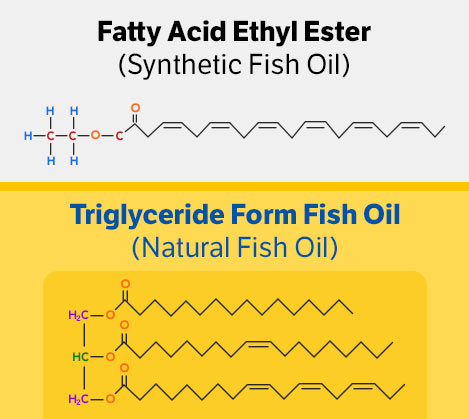
Ethyl Esters Are Poorly Absorbed, May Do More Harm Than Good
Ethyl esters — found in most fish oils — are the least bioavailable form of omega-3. Studies33 suggest a mere 20% of the EPA and DHA in ethyl ester form are absorbed by your body. When taken with other dietary fat, absorption increased threefold to 60%.
Meanwhile, EPA and DHA in their natural triglyceride form were found to have a 69% absorption rate from the start, and when taken with additional dietary fat, absorption increased to 90%. As a result, taking a triglyceride fish oil results in a 50% greater rise in omega-3 blood plasma levels than ethyl ester fish oil.
Another major drawback of ethyl ester fish oils is their rapid oxidation rate. Ethyl ester DHA is far more reactive than triglyceride DHA, oxidizing 33% more rapidly, and consuming rancid omega-3 is not going to do your health any good.
While manufacturers could convert them back into triglyceride form (by detaching the ethyl alcohol molecule and reattaching a glycerol molecule in a process known as re-esterification), this process is a costly one. So, in summary, it’s important to realize that the vast majority of clinical evidence showing health benefits of omega-3 relates to actual fish consumption, and virtually all of the omega-3s in fish are in triglyceride form.
Hence, to achieve reliable results, you really need to either eat omega-3-rich fish, or make sure the supplement you’re taking contains DHA and EPA in their triglyceride form. For a more in-depth understanding of these differences, see the paper, “A Comparison of Synthetic Ethyl Ester Form Fish Oil vs. Natural Triglyceride Form,”34 by Dr. Douglas MacKay.
- 1, 5 Omega-3 Institute, Differentiation of ALA (plant sources) from DHA + EPA (marine sources) as Dietary Omega-3 Fatty Acids for Human Health
- 2 Alwaysomega3s.com, Fact: Not all omega-3s are created equal
- 3 Harvard Nutrition Science, Omega-3s
- 4 Int J Vitam Nutr Res. 1998;68(3):159-73
- 6 STAT News September 24, 2018
- 7 CBS New York September 25, 2018
- 8 European Heart Journal Supplements Volume 22, Issue Supplement J, October 2020, Pages J34-J48
- 9 Forbes September 24, 2018
- 10 The Lancet August 31, 2008; 372(9545): 1223-1230
- 11 The Lancet August 31, 2008; 372(9545): 1231-1239
- 12 University of Rochester Medical Center 2018
- 13 Cleveland Clinic June 2017
- 14 Medical News Today June 27, 2016
- 15 Lancet 1999; 354:447-55
- 16 Circulation. 2016;134:378–391
- 17 Reuters August 1, 2016
- 18 Medical News Today August 2, 2016
- 19 Science Daily August 1, 2016
- 20, 22 Am J Gastroenterol. 2005 Dec;100(12):2674-80
- 21 BMC Musculoskelet Disord. 2010;11:136
- 23 J Anim Physiol Anim Nutr (Berl). 2012 Apr;96(2):295-306
- 24 J Agric Food Chem. 2009 Oct 14;57(19):9339-45
- 25, 26 Alternative Medicine Review 2003 May;8(2):171-9
- 27 Alternative Medicine Review 2007 Sep;12(3):207-27
- 28 Lipids Health Dis. 2008 Aug 29;7(1):30
- 29 Science Daily July 19, 2016
- 30 Urol Res. 2011 Feb;39(1):59-67
- 31 Cochrane Library July 18, 2018
- 32, 33 J Nutr. 2021 May; 151(5): 1111-1118
- 34 A Comparison of Synthetic Ethyl Ester Form Fish Oil vs. Natural Triglyceride Form (PDF)