Glucose
now browsing by category
Vitamin B3 Boosts Muscle Mass, Improves Glucose Control
Reproduced from original article:
https://articles.mercola.com/sites/articles/archive/2024/05/06/vitamin-b3-muscle-mass-glucose-control.aspx
Analysis by Dr. Joseph Mercola May 06, 2024
STORY AT-A-GLANCE
- Getting enough vitamin B3 could help maintain muscle mass and strength as you age, while also helping control body fat and blood sugar levels
- A study found consuming more niacin was linked to stronger hand grip, increased muscle mass and higher bone mineral content
- People with higher niacin intake also had less body fat and a lower risk of losing muscle mass as they age
- Niacin also helped with blood sugar control, showing benefits in reducing insulin resistance and keeping fasting blood sugar and insulin levels in check, especially in people without diabetes
- For optimal health, I recommend taking 50 milligrams of niacinamide — one form of vitamin B3 — three times per day
Vitamin B3 comes in two primary forms: niacin, also known as nicotinic acid, and niacinamide (NAM), which is sometimes referred to as nicotinamide. Both forms of vitamin B3 are essential to human health and play important roles in cellular metabolism, converting the food you eat into energy.
These forms of vitamin B3 also serve as precursors for the coenzymes nicotinamide adenine dinucleotide (NAD+) and nicotinamide adenine dinucleotide phosphate (NADP), which are vital for energy production, DNA repair and cell signaling. Increasing your intake of vitamin B3 as you age may also be useful for supporting optimal health, with research showing it not only improves body composition but also glucose control.
Vitamin B3 Increases Muscle Mass, Decreases Fat and Improves Glucose Homeostasis
A study published in The Journal of Nutrition, Health and Aging suggests getting enough vitamin B3 in your diet could help maintain muscle mass and strength as you age, while also helping control body fat and blood sugar levels.1
The study involved people aged 40 and older, with researchers analyzing information from three data sets: one focusing on hand grip strength, with 3,772 participants, another on body composition like muscle and fat, with 3,279 participants, and a third on how the body handles glucose, or blood sugar, with 9,189 participants.
The scientists looked at niacin intake and other factors like physical activity and diet, then used various statistical methods to see how they related to muscle strength, muscle mass, fat levels, bone health, insulin resistance, blood sugar levels and the risk of losing muscle mass with age, or sarcopenia.
Consuming more niacin was linked to stronger hand grip, increased muscle mass and higher bone mineral content. People with higher niacin intake also had less body fat and a lower risk of losing muscle mass as they age. Further, niacin seemed to help with blood sugar control, showing benefits in reducing insulin resistance and keeping fasting blood sugar and insulin levels in check, especially in people without diabetes.
Vitamin B3 Increases NAD+ and NADP Levels, Leading to Significant Health Gains
One reason why vitamin B3 may be so useful as you age is due to its ability to increase NAD+ and NADP levels. As noted in the blog To Extract Knowledge From Matter, which is inspired by the work of the late Ray Peat:2
“The study is epidemiological and it did not distinguish between the various forms of vitamin B3 available through the diet or supplements. However, it was well-controlled and its findings match the known biochemical effects of vitamin B3, which the study authors cite themselves as the likely reasons for the observed results.
Namely, vitamin B3 increases NAD and NADP levels, which results in improved glucose metabolism as well as higher tissue anabolism (through NADP).”
NAD+ modulates energy production and many enzymes and in so doing controls hundreds of processes in your body including the survival of cells and energy metabolism. NAD+ is influenced on a daily basis by what you eat, exercise levels and more, and also declines with age, leading to changes in metabolism and an increased risk of disease.3
Boosting NAD+ levels may be akin to a fountain of youth, which is where vitamin B3 — as an NAD+ precursor — comes in. Supplementation with NAM has been found to improve insulin sensitivity in models of human diabetes, for instance, and it also decreases oxidative stress and prevents fatty liver.4
It also shows impressive promise for fighting obesity and associated diseases, including stroke, cardiovascular diseases, diabetes and certain cancers, which have reached epidemic levels worldwide.5
Writing in The Journal of Nutritional Biochemistry, researchers from Tsinghua University, Beijing, revealed that NAM reprograms adipose cellular metabolism and increases mitochondrial biogenesis to ameliorate obesity.6 In a study on obese mice, NAM supplementation led to significant reductions in fat mass and improved glucose tolerance, while increasing mitochondrial biogenesis in fat tissue.7

Save This Article for Later – Get the PDF Now
‘Striking’ Dose-Dependent Effects — But Only to a Point
The featured Journal of Nutrition, Health and Aging study found that niacin improves insulin resistance and glucose homeostasis at doses commonly consumed in the U.S. diet.8 However, it also revealed a strong dose-dependent effect. As reported by To Extract Knowledge From Matter:9
“Perhaps the most useful finding of the study was the striking dose-dependence of the effects it discovered — i.e., for every extra 1 mg/kg of weight of daily vitamin B3 consumed, a person lost 60 g of fat and gained 60 g of muscle. Oh, and if this was not already a spectacular result, the effects of vitamin B3 were the strongest in people with obesity (high BMI), hypertension, or advanced age — precisely the people who need benefits the most.”
The researchers pointed out that high doses of niacin may cause undesirable effects, including promoting insulin resistance. This is due to its dosage:10
“Some previous studies have suggested that niacin promotes insulin resistance, which is a significant side effect when niacin is used as a lipid-lowering drug. The reason for this inconsistent result lies in the dosage of niacin. When niacin is used as a lipid-lowering drug, its daily dose is 2-6 g, which far exceeds the daily dietary dose.”
To Extract Knowledge From Matter further explained:11
“Now, the study did have a cutoff in its vitamin B3 intake range. The maximum intake included in the study was about 238 mg daily. We don’t know if the benefits of vitamin B3 hold beyond those daily intake levels, but animal studies seem to suggest at least the metabolic benefits hold until at least a human-equivalent dose (HED) of 5mg/kg daily.
Since muscle and fat mass are largely a function of the metabolic rate, the study seems to suggest that an intake of vitamin B3 up to 5mg/kg daily may be even more beneficial.
The study does caution that when vitamin B3 is used as a lipid-lowering agent (i.e. in doses of 2g+ daily) negative effects and even reversal of the benefits may occur, so I’d suggest careful experimentation until the optimal daily dose is found, which will probably be different for each person.”
As I’ve explained in previous articles, however, too much niacinamide can backfire. A dose of just 50 milligrams (mg) three times per day will provide the fuel for nicotinamide phosphoribosyltransferase (NAMPT), the rate limiting enzyme for NAD+. Nichola Conlon, Ph.D., a molecular biologist, antiaging specialist and founder of a nutraceutical company that produces an NAD+ boosting supplement, explained in our past interview:12
“The reason the salvage pathway declines with age is because of this one key enzyme. NAMPT actually recycles niacinamide and converts it into NMN [nicotinamide mononucleotide], which then gets converted back into NAD. The rate limiting step, the bottleneck in that process, is NAMPT. And lo and behold, that is the key enzyme that declines as we get older.
Studies have demonstrated that you get a 50% decrease in this enzyme between the ages of 45 and 60. That’s a significant decline considering how important this is for new NAD production. The decline in the levels of this enzyme again correlate with the decline in NAD that we experience.
Many diseases and issues that are associated with NAD decline are found to be because of a reduction in this enzyme. So, it’s absolutely critical to try and improve the activation and expression of this enzyme in the body to enhance NAD. It worked brilliantly to give us high NAD levels when we were younger, so why not restore it back to that?”
Tips for Vitamin B3 Intake
For optimal health, I recommend taking 50 mg of niacinamide three times per day. This dosage has been shown to optimize energy metabolism and boost NAD+ levels, which are foundational for everything else to work. It can be taken four times a day if you space them out. Take a dose as soon as you get up, another before going to bed, and two more evenly spaced between those times.
The problem with taking too much vitamin B3, whether in the form of niacin or niacinamide, is that it might backfire and contribute to cardiovascular disease as documented by the Cleveland Clinic.13 Also, please note that although niacinamide and niacin are both forms of vitamin B3, niacin will not activate NAMPT like niacinamide, so it is best to use niacinamide. Additionally, niacinamide, unlike niacin, will not cause flushing, which is due to a large release of histamine.
It would also be helpful to make sure you’re getting all the other B vitamins, as they too are crucial for good health, including optimal mitochondrial function — especially regular niacin, riboflavin and folate. Decreased mitochondrial function is often due to a deficiency in B vitamins, and that’s easy to fix with a low-dose, high-quality B complex.
As for food sources, vitamin B3 is found in grass fed beef, mushrooms and avocados.14 Vitamin B6 is plentiful in grass fed beef, potatoes, bananas and avocados.15 You can find folate, or vitamin B9, in spinach, broccoli, avocado and asparagus.16 Vitamin B12-rich foods include grass fed beef liver, wild rainbow trout and wild sockeye salmon.
- 1, 8, 10 The Journal of Nutrition, Health and Aging September 2023, Volume 27, Issue 9, Pages 709-718
- 2, 9, 11 To Extract Knowledge From Matter February 23, 2024 (Archived)
- 3 Cell Metabolism, 28 Feb 2018, 27(3):529-547
- 4, 5 The Journal of Nutritional Biochemistry May 21, 2022, Introduction
- 6 The Journal of Nutritional Biochemistry May 21, 2022
- 7 The Journal of Nutritional Biochemistry May 21, 2022, Abstract
- 12 Substack March 28, 2022
- 13 Nature Medicine February 19, 2024; 30: 424-434
- 14 My Food Data, Top 10 Foods Highest in Vitamin B3 (Niacin) April 25, 2024
- 15 My Food Data, Top 10 Foods Highest in Vitamin B6 April 25, 2024
- 16 My Food Data, Top 10 Foods Highest in Vitamin B9 (Folate) April 25, 2024
Can Eating Refined Carbs Make You Appear Less Attractive?
Reproduced from original article:
https://articles.mercola.com/sites/articles/archive/2024/03/28/refined-carbs-attractiveness.aspx
Analysis by Dr. Joseph Mercola March 28, 2024

STORY AT-A-GLANCE
- Eating a meal rich in refined carbohydrates, like high-fructose corn syrup, may make you less attractive
- Eating a high-glycemic breakfast decreased facial attractiveness in both men and women
- Chronic consumption of refined carbs was also linked to reduced attractiveness
- Chronic consumption of refined carbs leads to hyperglycemia and related hyperinsulinemia that influences growth factors and sex hormones, which in turn could affect attractiveness
- Hyperglycemia caused by chronic consumption of refined carbohydrates may also accelerate glycation processes that influence skin aging
Eating a meal rich in refined carbohydrates, like high-fructose corn syrup, may make you less attractive, according to researchers with the University of Montpellier in France.1 The physical repercussions of eating a diet high in refined carbs are well-known and include obesity, insulin resistance, Type 2 diabetes, cardiovascular diseases, Alzheimer’s disease, high blood pressure and myopia.2
Chronic high blood sugar (hyperglycemia) and hyperinsulinemia, along with insulin resistance, are also associated with excess consumption of refined carbs. However, the researchers explored how eating meals high in refined carbs affects non-medical traits, namely facial attractiveness, revealing a significant connection.
Meals High in Refined Carbs May Make You Less Attractive
The study, which involved 104 adults, found eating a high-glycemic breakfast decreased facial attractiveness in both men and women. Chronic consumption of refined carbs was also linked to reduced attractiveness.
As for how refined carbohydrates affect facial attractiveness, two hours after the high-glycemic breakfast, when the facial photos were taken, subjects had hypoglycemia, or low blood sugar. “Hypoglycemia is known to have visible symptoms, as it affects blood flow and skin, which could be detectable on photos and thus affect attractiveness perception,” the researchers explained.3
Chronic consumption, meanwhile, leads to hyperglycemia and related hyperinsulinemia, which influences growth factors and sex hormones. “Chronic hyperinsulinemia influences the synthesis of androgens, which are the precursors of male and female sex hormones. It has been shown that facial femininity/masculinity can be influenced by sex hormones, which in turn could affect attractiveness,” according to the study.4
Hyperglycemia caused by chronic consumption of refined carbohydrates may also accelerate glycation processes that influence skin aging. “As skin aging directly impacts age appearance, hyperglycemia could affect age perception. Moreover, age is known to influence attractiveness,” the researchers noted.5
Diets rich in hyperglycemic carbohydrates are also known to promote acne,6 while the researchers added that diet’s influence of facial attractiveness could be linked to evolution:7
“In general, traditional foods (pre-industrial or non-refined) do not generate hyperglycemia, with the exception of ripe fruits or honey which are energetically rewarding but are traditionally seasonal or scarce. In fact, humans did not evolve with constant access to food provoking a high glycemic response, even after the rise of agriculture in the Neolithic era.
It has been previously proposed that in the current industrial dietary environment, consumption of food that generates hyperglycemia is no longer a signal of quality, because this type of food is now not limited. Its massive consumption generates phenotypic and physiological changes in the body, such as obesity and Type 2 diabetes, which are attracting medical attention due to their life-threatening effects.
It is thus not surprising that other negative effects not directly affecting health are also generated, such as reduced facial attractiveness.”
What Are Refined Carbohydrates?
Refined carbohydrates or sugars, which are also sometimes referred to as free sugars, include those that are added to ultraprocessed foods and drinks. High-fructose corn syrup is an example of a refined sugar. These sugars are linked to health problems such as dental decay and heart disease, as well as cancer.8 Many health organizations and governments, including in the U.K., recommend limiting intake of free sugars, but not intrinsic sugars.9
Intrinsic sugars, also known as naturally occurring sugars, are those found within the cellular structure of foods, including whole fruits and vegetables. These sugars are part of the food’s natural composition, not added during processing, and come with the beneficial nutrients and fiber found in whole foods, which can slow down sugar absorption and mitigate its impact on blood sugar levels.
One of the primary differences between these two types of sugars is that refined sugars, as well as many starches, are a common cause of endotoxin production in your gut, which destroys mitochondrial function and results in cancer metabolism.
The fructose present in whole foods does not typically result in the production of endotoxin. This is one of the primary differences between refined sugar and fructose from ripe fruit and helps explain why refined sugars fuel cancer.
Save This Article for Later – Get the PDF Now
Ultraprocessed Foods Are the No. 1 Source of Refined Sugars in US Diet
In the U.S., 57.9% of energy intake comes from ultraprocessed foods, which not only tend to be high in refined carbohydrates but also linoleic acid from seed oils. Further, ultraprocessed foods contribute 89.7% of the energy intake from added sugars to Americans’ diets.10
Consuming heavily processed junk food takes a toll on your whole body, including your brain. Research published in JAMA Neurology demonstrated that consuming ultraprocessed foods, such as breakfast cereal and soda, could lead to cognitive decline and increase your risk of Alzheimer’s disease.11
However, instead of using 50% or 60% of the daily caloric intake of ultraprocessed food as high consumption, this study defined high consumption as “more than 20%.” The study didn’t identify whether there was a dose-dependent effect. In other words, they only looked at whether eating more than 20% of the daily caloric intake in ultraprocessed foods would affect cognitive decline. If a person ate double or triple that amount, would the rate of cognitive decline be greater?
In a comprehensive assessment of the link between ultraprocessed food consumption and cancers, researchers from Imperial College London’s School of Public Health also found these cheap convenience foods are linked to an increased risk of developing and dying from cancer.12
Overall, consuming more ultraprocessed foods was linked with a greater risk of developing any cancer, as well as ovarian and brain cancers specifically. It was also associated with an increased risk of dying from cancer, including ovarian and breast cancers.13
Why Refined Sugars Fuel Cancer
All dietary carbohydrates are digested into sugars called glucose. Glucose, in turn, can be metabolized (burned) for fuel using two different pathways. First, the glucose is metabolized into pyruvate. The pyruvate can then either enter the glycolysis pathway in the cytoplasm of the cell and produce lactate (this is an inefficient backup pathway), or it can be converted into acetyl-CoA and shuttled to the mitochondrial electron transport chain, which results in optimal energy production.
The glycolysis pathway is great for quick fuel when you are activating your Type 2 muscle fibers, such as during high-intensity exercise. But if this is the primary way you burn glucose, then you are in a catastrophic metabolic state because you’re promoting insulin resistance and diabetes and creating loads of lactate as a waste product instead of healthy CO2 and metabolic water.
Lactate increases reductive stress, which causes reverse electron flow in the mitochondria and increases the ROS to 3% to 4%, which is 30 to 40 times more than when glucose is burned in the mitochondria. What’s more, glycolysis generates only two ATP for every molecule of glucose, which is 95% less energy than would be generated if the glucose were metabolized in your mitochondria.
You’re also promoting cancer, because cancer cells preferentially use glycolysis. But it’s not sugar that is driving the cancer process per se. It’s really rooted in mitochondrial dysfunction, and fatty acid oxidation (metabolism of fats instead of glucose) is part of what causes that dysfunction.
Nearly everyone believes that cancer feeds on sugar, but that is simply inaccurate. The truth is the polar opposite. Cancer cells have such seriously damaged mitochondria they are simply incapable of burning sugar in the mitochondria and must rely on the backup system to survive.
This is why the most effective strategy is to not jump to low-carb keto to avoid feeding the cancer, but rather to use metabolic therapies that fundamentally address why the cells are unable to oxidize sugar in the mitochondria.
Once you fix the mitochondria and allow the cancer cells to metabolize glucose in the mitochondria, the cancer regresses back to normal healthy cells because the mitochondria work again and they don’t require to use the emergency backup system.
Refined sugars and many starches are more likely to cause gut dysbiosis that leads to the production of endotoxin. This endotoxin is one of the factors that destroys mitochondrial function, resulting in cancer metabolism (the Warburg Effect), where glucose is burned through glycolysis.
Your Body Needs Carbohydrates
There’s a common misconception that all sugar, i.e., carbohydrates in general, will act as fuel for cancer, but nothing could be further from reality. I’ve been following the work of the late Ray Peat through his student Georgi Dinkov. Peat was a biologist and thyroid expert; Dinkov is a bioenergetic researcher.
One of the foundational concepts of health that I’ve had to radically revise my thinking on as a result is the idea that eating a low-carb diet long-term is the best way to optimize your metabolic and mitochondrial health.
I now realize that this was misguided, and the reason for that has to do with the fact that your body requires glucose, and if you aren’t eating it you will go into a hypoglycemic coma and die. Your body has safeguards to prevent that, and the major one is the hormone cortisol. Cortisol’s primary purpose is to raise your blood sugar when it is too low and you don’t have enough glycogen reserves in your liver.
Cortisol increase your blood sugar by breaking down your muscles, bones and brain. It sacrifices your lean muscle mass to release amino acids that your liver converts to glucose in a process called gluconeogenesis. So, ultimately, cortisol also is going to increase inflammation and impair your immune function. And it increases food cravings. So, you do not want your cortisol to be elevated.
For the past few months, I’ve increased that to 425 grams of carbs per day, mostly in the form of ripe fruit. I’ve noticed dramatic beneficial changes in my blood work as a result. Increasing my carbs by 400% resulted in a highly counterintuitive 10% decrease in my fasting blood sugar. I also lost 10 pounds despite increasing the number of calories I was consuming — the opposite outcome of what most “experts” would predict.
In short, a low-carb diet is best implemented as a temporary strategy to restore metabolic flexibility. Further, when you’re in a low-carb state, lipolysis is elevated, which releases inflammatory polyunsaturated fatty acids (PUFAs) such as LA from your cells that are then converted into dangerous oxidative linoleic acid metabolites (OXLAMs) that will damage your tissues.
But once metabolic flexibility is regained, adding more carbs back in will help to lower cortisol, which is highly inflammatory. Ultimately, glucose is the ideal fuel for your mitochondria and the one that will create the most energy with the least amount of “exhaust” in the form of free radicals causing oxidative stress that damages your mitochondria, cell membranes and proteins.
It will also create the most carbon dioxide in your body which is highly beneficial for your health. But you don’t want to consume refined sugars to increase your carbohydrates. Instead:14
- Keep PUFA intake below 10 grams; below 5 grams would be even better
- Avoid high-fructose corn syrup when adding carbs to your diet
- Stick with sugars from ripe fruit, raw honey (make sure it’s not adulterated with high-fructose corn syrup, as many are) and/or pure organic cane sugar
- 1, 2 PLoS ONE 19(3): e0298984. doi: 10.1371/journal.pone.0298984
- 3, 4, 5, 7 PLoS ONE 19(3): e0298984. doi: 10.1371/journal.pone.0298984, Discussion
- 6 Clin Cosmet Investig Dermatol. 2015 Jul 15:8:371-88. doi: 10.2147/CCID.S69135. eCollection 2015
- 8 PLOS ONE 2014; 9(6): e99816
- 9 AOL February 4, 2024
- 10 BMJ Open 2016;6:e009892. doi: 10.1136/bmjopen-2015-009892
- 11 JAMA Neurology December 5, 2022
- 12, 13 Imperial College London February 1, 2023
- 14 Bitchute May 17, 2023
Excessive Endurance Exercise Causes Hyper-Cortisol State
Reproduced from original article:
https://articles.mercola.com/sites/articles/archive/2024/03/22/hyper-cortisol-state.aspx
The original Mercola article may not remain on the original site, but I will endeavor to keep it on this site as long as I deem it to be appropriate.
Analysis by Dr. Joseph Mercola March 22, 2024

STORY AT-A-GLANCE
- Cortisol, known as a stress hormone, plays a vital role in our health but can lead to severe health issues like muscle breakdown, inflammation, and impaired immune function when chronically elevated. Understanding cortisol’s dual feedback mechanisms in the brain and body is essential
- Long-duration, high-intensity exercises like long-distance running can inadvertently increase the body’s cortisol levels, pushing the body into a chronic stress state
- An enzyme called 11β-HSD1, present in most body tissues, is central to producing cortisol and becomes the focus for understanding and potentially treating elevated cortisol levels linked to metabolic diseases
- While drug companies explore inhibitors of the 11β-HSD1 enzyme to manage conditions caused by high cortisol, alternatives like aspirin, emodin, and progesterone offer potential natural solutions, as all three inhibit the activity of 11β-HSD1
- To address elevated tissue cortisol, consider reducing the amount of endurance exercise you do, make sure you’re getting enough healthy carbs, and supplement with progesterone
Despite what blood tests show, your body might be experiencing high stress levels internally that can fuel health problems. Research is ongoing to find ways to manage this issue, including possible medical treatments and understanding the effects of lifestyle changes like exercise.
In a recent blog post, bioenergetic researcher Georgi Dinkov highlighted research1 showing that endurance exercises cause a hyper-cortisol state. In other words, exercises like long-distance running may be ruining your health by putting your body in a chronic stress state.
Chronically Elevated Cortisol Takes a Toll on Health
As you probably know, cortisol is a stress hormone, and while it has a crucial role in keeping you alive, it exacts a high price when chronically elevated. One of the functions of cortisol is to raise low blood sugar, but it does this by breaking down your muscles, bones and brain.
It sacrifices your lean muscle mass to release amino acids that your liver converts to glucose in a process called gluconeogenesis. So, ultimately, chronically elevated cortisol will increase inflammation and impair your immune function.
Cortisol is also the primary aging hormone. If it is chronically elevated, you simply will die prematurely as it is highly catabolic, meaning it breaks down tissues. To stay healthy as you age you need to be anabolic and build healthy tissues like muscle and mitochondria, and high cortisol will seriously impair those efforts.
Cortisol Feedback Mechanisms
Importantly, cortisol can behave differently in various parts of the body due to different feedback mechanisms.2 There’s a central mechanism in your brain that usually tells your body to slow down cortisol production when there’s enough (negative feedback).
However, outside the brain, in other parts of the body (peripheral feedback), the mechanism actually works the opposite way (positive feedback). This means that in these areas, elevated cortisol can actually lead to even more cortisol being produced.
There’s also a difference between the cortisol level in your blood versus that in your tissues. Even if blood tests show normal or low levels of cortisol, it’s possible to have high levels of cortisol in your tissues.
This can happen because of an enzyme called 11β-HSD1, which helps make cortisol and is found in most parts of the body. It’s the rate-limiting step in synthesizing cortisol, and as noted by Dinkov, evidence suggests the activity of the 11β-HSD1 enzyme in the tissues (not just the cortisol level in the blood) is a good indicator of whether someone might develop Type 2 diabetes. He writes:3
“This discrepancy between the peripheral and central feedback mechanism of cortisol is probably a major reason why most endocrinologists still do not want to admit the primary causative role cortisol plays in conditions such as diabetes II — i.e. the blood levels of cortisol in such people are often normal, or even low.
However, multiple studies have demonstrated that tissue expressions of 11β-HSD1 are not only predictive of developing obesity/diabetes in the future, but are also predictive of the course of already established diabetes.”
When you’re stressed or change your diet (like fasting or going on a low-carb diet), you can produce more cortisol, which in turn increases this enzyme, leading to even more cortisol. At that point, you’re in a vicious cycle.
Save This Article for Later – Get the PDF Now
Long-Term Keto Can Also Induce Chronically Elevated Cortisol
Download Interview Transcript | Video Link
This is also part of why I no longer recommend chronic keto or extended fasting for most people, especially once you’re metabolically flexible. When you don’t have enough glucose to fuel your mitochondria, when you deplete your glycogen level, then stress hormones — adrenaline and cortisol — are released to trigger endogenous production of glycogen.
Both of these stress hormones are pathologic, and if they’re continuously released at high levels to compensate for insufficient glucose due to a lack of healthy carbs, it will accelerate disease and premature death.
To learn more, listen to my interview with Dinkov above. This interview was previously featured in my June 2023 article, “Important Information About Low Carb, Cortisol and Glucose.”
Exercise and Cortisol
Drug companies are now exploring drugs that can block 11β-HSD1 as potential treatments for health issues linked to high cortisol in the tissues, like obesity and diabetes. However, evidence suggests certain types of exercise can also increase the level of 11β-HSD1 in tissues, subsequently leading to elevated tissue cortisol levels. As reported by Dinkov:
“As a result of this tacit admission that elevated cortisol is pathological for health (especially for metabolic conditions), a number of pharma companies are running clinical trials with 11β-HSD1 inhibitors as treatments for obesity, diabetes, dementia, sarcopenia, and even Cushing syndrome/disease.
One of the criticisms I have heard from endocrinologists in regards to the positive feedback mechanism of cortisol peripherally is that most of the evidence so far is from in-vitro experiments.
The in-vivo study4 [published in the Journal of Applied Physiology in October 2017] may be able to address that criticism by demonstrating that running daily for a few weeks doubled 11β-HSD1 expression in tissues, confirming once again that even ‘beneficial’ stress such as ‘endurance’ exercise is sufficient to cause peripheral state of high cortisol, which probably persists even after the stress/exercise stops since the increased expression of 11β-HSD1 is not known to downregulate on its own.”
While a specific drug called RU486 can help reduce these high tissue cortisol levels, it’s almost impossible to get. The good news is that other substances, such as aspirin, emodin and progesterone, inhibit the activity of 11β-HSD1 as well, hence lowering tissue cortisol. These three also increase the activity of a related enzyme called 11β-HSD2, which deactivates cortisol. So, they lower cortisol in two ways.
Many Can Benefit From Progesterone
Of those three, progesterone may be one of the most beneficial, as it has many other health benefits as well. It’s one of only four hormones I believe many adults can benefit from. (The other three are thyroid hormone T3, DHEA and pregnenolone.) As a general recommendation, I recommend taking 30 to 50 mg of bioidentical progesterone per a day, taken in the evening before bed, as it can also promote sleep.
For optimal bioavailability, progesterone needs to be mixed into natural vitamin E. The difference in bioavailability between taking progesterone orally without vitamin E and taking it with vitamin E is 45 minutes versus 48 hours. Another good reason for taking progesterone with vitamin E is because it binds to red blood cells, which allows the progesterone to be carried throughout your body and be distributed to where it’s needed the most.
Simply Progesterone by Health Natura is premixed with vitamin E and MCT oil. You can also make your own by dissolving pure USP progesterone powder into one capsule of a high-quality vitamin E, and then rub the mixture on your gums. Fifty milligrams of powdered progesterone is about 1/32 teaspoons.
Do not use synthetic vitamin E (alpha tocopherol acetate — the acetate indicates that it’s synthetic). Natural vitamin E will be labeled “d alpha tocopherol.” This is the pure D isomer, which is what your body can use. There are also other vitamin E isomers, and you want the complete spectrum of tocopherols and tocotrienols, specifically the beta, gamma, and delta types, in the effective D isomer.
I do not recommend transdermal progesterone, as your skin expresses high levels of 5-alpha reductase enzyme, which causes a significant portion of the progesterone you’re taking to be irreversibly converted primarily into allopregnanolone and cannot be converted back into progesterone.
If you’re taking it orally with vitamin E as the solvent, a significant portion will be non-metabolized, and the non-metabolized progesterone has potent pro-thyroid effects. It’s also a thermogenic steroid. It induces uncoupling, so you’ll be producing more heat, which is one of the effects of taking T3.
While not as potent as taking T3, it can raise your metabolic rate by about 10%. In addition to blocking cortisol, progesterone also helps deactivate adrenaline, another potent stress hormone. As noted by Dinkov in a previous interview about hormone replacement:
“There are human studies demonstrating that when you administer progesterone, even in its nonoptimal form — such as just the powder without the long-chain fatty acids and definitely without the tocopherols — even in that form, a single dose [100 to 200 mg] is sufficient to drop cortisol and adrenaline by about 60%.”
Key Take-Home
The key take-home from all of this is that endurance-type exercises can seriously backfire, causing chronically elevated cortisol, which will prematurely age you. Other research has also shown that engaging in endurance training, such as full-distance triathlons, when you’re in your 40s and 50s increases your risk of atrial fibrillation by 500% to 800%.
I reviewed this research in “Nailing the Sweet Spots for Exercise Volume.” One of the many findings in that study was that, once you get into your mid-40s and 50s, exercise should be fun and stress-reducing, not competitive.
Another take-home is that your cortisol may be elevated even if it looks normal in blood tests, thanks to the presence of 11β-HSD1, which helps make cortisol, in most of your body’s tissues. To counteract chronically elevated cortisol, you may consider:
- Reducing the amount of endurance exercise you engage in
- Making sure you’re getting enough healthy carbs in your diet, and not getting too much fat (ideally, keep your fat intake below 35% to avoid inhibiting glucose metabolism in the electron transport chain of your mitochondria)
- Supplement with progesterone, mixed with high-quality natural vitamin E
Research Links Mitochondrial Dysfunction to Immune Decline, Opening Paths for Cancer Treatment
Reproduced from original article:
https://articles.mercola.com/sites/articles/archive/2024/03/14/reversing-immunodeficiency.aspx
The original Mercola article may not remain on the original site, but I will endeavor to keep it on this site as long as I deem it to be appropriate.
Analysis by Dr. Joseph Mercola March 14, 2024

STORY AT-A-GLANCE
- New research shows mitochondrial dysfunction in T cells leads to immune system decline, affecting the body’s ability to fight infections and cancer
- The study identifies glycolysis as an inefficient way to produce energy, and the reactive oxygen species (ROS) produced in the process damage T cells
- The findings suggest reversing mitochondrial damage could improve immune response and cancer therapies
- Excess linoleic acid (LA) intake and estrogen dominance are major contributors to mitochondrial dysfunction
- Strategies that will improve your mitochondrial function include lowering your LA intake, reducing stress and taking a niacinamide supplement
Immune system weakening has long been attributed to aging and poor lifestyle choices, but according to an October 2023 study1 in Nature Communications, the key reason for this immune system decline is dysfunctional mitochondria, your cells’ powerhouses, particularly the mitochondria found in T cells (a type of immune cell).
When the mitochondria don’t work well, the T cells don’t have the energy required to perform their functions, which leads to a decline in immune system function. This in turn, results in an inability to ward off both acute infections and chronic diseases. As reported by Medical Xpress:2
“… In the immune system, chronic infections and the defense against tumors often lead to the phenomenon of T cell exhaustion: In this process, the T lymphocytes gradually lose their function, which impairs their responses against cancer and infections …
This research has now shown that the exhaustion process is significantly influenced by … the mitochondria. When mitochondrial respiration fails, a cascade of reactions is triggered, culminating in the genetic and metabolic reprogramming of T cells, a process that drives their functional exhaustion.”
The good news, which was confirmed by the featured study, is that this decline can be reversed with treatments that target mitochondrial function.
Poor Mitochondrial Function Can Lead to T Cell Exhaustion
In simple terms, when your body fights an infection, immune cells called CD8+ T cells transform into cytotoxic T lymphocytes (CTLs) to destroy the infected cells. This transformation requires changes in gene expression, cell structure and energy use.
However, in long-lasting infections or cancer, the T cells can become worn out or “exhausted,” losing their effectiveness. This exhaustion is related to energy problems within the cells, particularly in the mitochondria. Researchers are now exploring how fixing these energy problems can rejuvenate exhausted T cells, thereby improving cancer treatments. Bioenergetic researcher Georgi Dinkov comments on these findings:3
“So far, the decline in immune function seen in aging had been explained with the simplistic ‘wear and tear’ concept, and when immunodeficiency occurs in younger people it is ascribed either to genetic vulnerability or lifestyle choices such as alcohol/drug consumption.
In other words, to this day medicine does not seem to have a good grip on why immune function fails in aging and disease, and what (if anything) can be done to prevent that.
The study … demonstrates that the direct cause of immune decline is rather simple — decline in mitochondrial function (OXPHOS). When T-cells (immune cells produced by the thymus) have dysfunctional mitochondria, they have to rely exclusively on glycolysis for energy production.
Glycolytic production of energy is insufficient to support proper T-cell differentiation and activity, and in fact can lead to T-cell damage or even death due to the high amount of reactive oxygen species (ROS) produced when glycolysis is the main mode of energy production.
The study also demonstrated that such mitochondrial dysfunction is a necessary and sufficient condition for immune decline to occur (aka T-cell ‘exhaustion’) and that the decline was reversible when mitochondrial function was restored pharmacologically.”
Glucose Metabolism 101
So, what is “glycolytic production of energy” and why is it so detrimental? All dietary carbohydrates are digested and broken down into glucose, a type of sugar. Glucose, in turn, can be metabolized (burned) for fuel using two different pathways, as illustrated below.
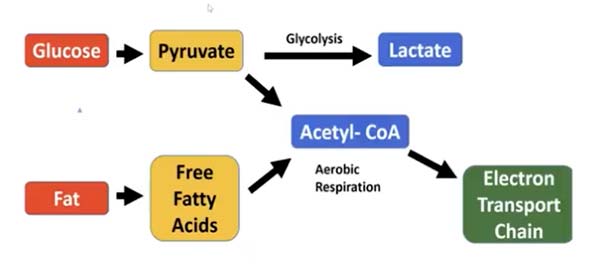
First, the glucose is metabolized into pyruvate. The pyruvate can then either enter the glycolysis pathway in the cytoplasm of the cell and produce lactate, or it can be converted into acetyl-CoA and shuttled to the mitochondrial electron transport chain.
Cancer cells are notorious for using the glycolysis pathway — the same pathway glucose goes through when your glucose metabolism is impaired in mitochondria. Basically, this is the pathway your body uses whenever it reaches its limit to how much ATP can be produced in the mitochondria (which is the most efficient and least damaging way to produce energy).
Save This Article for Later – Get the PDF Now
The Downstream Hazards of Glycolysis
While the glycolysis pathway is wonderful when you need quick fuel, if this is the primary way you burn glucose, then you are in a constant state of activating stress hormones and promoting insulin resistance and diabetes, which in turn creates loads of lactate as a waste product instead of healthy carbon dioxide (CO2) and metabolic water.
Lactate increases reductive stress, which causes reverse electron flow in the mitochondria and increases the ROS to 3% to 4%, which is 30 to 40 times more than when glucose is burned in the mitochondria. This elevated ROS production is what causes T cell damage and death.
What’s more, glycolysis generates only two ATP for every molecule of glucose, which is 95% less energy than would be generated if the glucose was metabolized in your mitochondria.
The Devil’s in the Details
Now, you’ve probably heard that sugar promotes cancer, because cancer cells preferentially use glycolysis. However, it’s a mistake to think that all glucose uses the glycolysis pathway. As illustrated above, glucose can also be burned in the electron transport chain of the mitochondria, which is the most efficient way to produce energy.
So, when it comes to the “sugar fuels cancer” issue, it’s important to make a distinction between the sources of the carbs. While it is technically accurate to call all carbs sugar, there is a radical difference in the source of the carbs — ripe whole fruits versus starches, for example, and whole fruits versus refined processed sugar (ex: table sugar and high fructose corn syrup).
Refined sugars, as well as many starches, are a common cause of endotoxin production in your gut, which destroys mitochondrial function and results in cancer metabolism, whereas the fructose present in whole foods does not typically result in the production of endotoxin.
This is one of the primary differences between refined sugar and fructose from ripe fruit and helps explain why refined sugars fuel cancer while natural fructose does not. So, to be clear, it’s not sugar that is driving the cancer process per se. It’s really rooted in mitochondrial dysfunction, and fatty acid oxidation (the metabolism of fats instead of glucose) is part of what causes that dysfunction.
You Want to Burn Glucose in Your Mitochondria
For a long time, I believed fats burned “cleaner” than carbs — that’s one of the “selling points” for keto — but I’ve since realized we had it backward. Glucose, when burned in the mitochondria, actually burns far cleaner than fat.
So, it’s important to get your macronutrient ratios right, because if the glucose you eat is constantly shuttled into glycolysis, you’re fueling cancer. At the same time, the fat you consume ends up in fat storage rather than being used up for fuel.
Ultimately, you want to burn glucose in your mitochondria, and the way you ensure that is by keeping your dietary fat intake below 35% of your total calories. The reason for this is because when fat intake is too high, glucose gets shuttled into glycolysis. For a more in-depth explanation of this metabolic switch, see “Understanding the Randle Cycle.”
If you’re insulin resistant, which means you’re metabolically inflexible, that threshold may be closer to 20% or even 10%. So, if you’re insulin resistant, you’ll want to significantly lower your fat intake until your insulin resistance is resolved. Then you can increase it to 30%.
Dysfunctional T Cells and Cancer Cells Use Glycolysis
The reason cancer cells use the glycolysis pathway is because they have severely dysfunctional mitochondria. The mitochondria are so damaged, they cannot burn glucose. As a result, the cancer cells must rely on the backup system, glycolysis, to survive. This is what the Warburg Effect is all about.
Likewise, when the mitochondria inside T cells become dysfunctional, the T cells are forced to rely on glycolysis for energy production, which is what causes immune system weakening and failure.
As mentioned in the featured study, T cell exhaustion is a feature of cancer, which makes sense when you consider that it’s all tied to mitochondrial dysfunction. The cancer starts because the mitochondria in cells are severely damaged, and as the disease progresses, the mitochondria in the T cells begin to fail as well.
Once you fix the mitochondria so that they can generate sufficient energy again, then the cancer will typically regress and immune function will be restored, as they no longer need to rely on glycolysis.
Since mitochondrial dysfunction is at the heart of it all, the most effective strategy is to use metabolic therapies that address why the cells are unable to oxidize (burn) sugar in the mitochondria. Once you fix the mitochondria so that they can generate sufficient energy again, then the cancer will typically regress and immune function will be restored, as they no longer need to rely on glycolysis.
What Causes Mitochondrial Dysfunction?
There are four primary contributors to mitochondrial dysfunction:
- Excess linoleic acid (LA) intake
- Estrogen dominance
- Electromagnetic field (EMF) exposure
- Endotoxin — Refined sugars and many starches are more likely to cause gut dysbiosis that leads to the production of endotoxin. This endotoxin is one of the factors that destroys mitochondrial function, resulting in the Warburg Effect (cancer metabolism), where glucose is burned through glycolysis
These all play major roles, but excess LA and estrogen dominance, I believe, are the leading contributors to mitochondrial dysfunction. This is largely because LA and estrogen negatively impact your body in similar ways. They both:
- Increase free radicals that cause oxidative stress and damage your mitochondria’s ability to produce energy.
- Increase calcium intake inside the cell that causes an increase in nitric oxide and superoxide that increases peroxynitrite that also increases oxidative stress.
- Cause an increase in intracellular water causing your body to retain water.
- Slow down your metabolic rate and suppress your thyroid gland.
Nearly everyone in the developing world has 10 times the amount of LA in their tissues than their ancestors of 100 years ago had. This polyunsaturated fat (PUFA) is very susceptible to oxidative damage, and produces free radicals like reactive aldehydes in your body that destroy your mitochondria.
These toxic metabolites of LA create enormous amounts of reductive stress as a result of electrons building up in the ETC and blocking the forward movement of electrons to complex IV and V to create ATP. And, because LA is embedded in the inner mitochondrial membrane, it gets damaged and leaks protons that normally build up in the inner mitochondrial space.
This proton gradient is responsible for driving the nano motor in complex V to create ATP. Both processes combine to shut down and ultimately prematurely destroy the mitochondria. Also, when you eat starches, they can end up feeding endotoxin-producing bacteria in your intestine, and endotoxin is a potent mitochondrial poison.
Solutions
In closing then, some of the key solutions, if you want to improve or restore your mitochondrial function, would be to:
- Lower your LA intake as low as possible by avoiding processed foods, seed oils, chicken, pork, seeds and nuts.
- Make sure you’re eating healthy carbs such as ripe fruit, raw honey and maple syrup.
- Decrease lactate production and increase carbon dioxide, as they have opposing effects.4 You can learn more about this in “The Biology of Carbon Dioxide.”
- Reduce your stress, as chronic stress promotes cortisol release, which is a potent suppressor of mitochondrial function and biogenesis. Progesterone can be quite helpful here, as it’s a potent cortisol blocker. You can learn more about this in “What You Need to Know About Estrogen and Serotonin.”
- Take supplemental niacinamide, as your mitochondria cannot make energy without it. I recommend taking 50 mg of niacinamide three times a day.
Understanding the Randle Cycle
Reproduced from original article:
https://articles.mercola.com/sites/articles/archive/2024/03/09/randle-cycle.aspx
The original Mercola article may not remain on the original site, but I will endeavor to keep it on this site as long as I deem it to be appropriate.
Analysis by Dr. Joseph Mercola March 09, 2024
STORY AT-A-GLANCE
- Some in the keto and carnivore space argue that eating fats and carbs together will result in weight gain because of the Randle cycle, which serves as a switch that only allows your body to burn either fats or glucose, one at a time, not both together
- The Randle cycle refers to an antagonism between glucose and fats as fuel, which explains why you can become insulin resistant when you avoid carbohydrates
- If you’re in chronic ketosis, your tissues decrease their insulin sensitivity, which can lead to or contribute to insulin resistance
- A low-carb diet is best implemented as a temporary strategy to restore metabolic flexibility. Once metabolic flexibility is regained, adding more carbs back in will help to lower cortisol, which is highly inflammatory
- A narrow time-restricted eating (TRE) window is also counterproductive once you’ve regained metabolic flexibility, as extended fasting also raises cortisol
Many appreciate my openness to integrating new information into my personal health approach and what I teach. I am a perpetual learner and seek to constantly evolve my approach, so it is aligned with biological truth, even if I have to admit I was mistaken.
Along those lines, I only learned most of the information in this article earlier this year, and it has had a dramatic impact on how I view burning food for energy. This approach is dramatically different than I previously understood and recommended, which was focused on high-fat and low-carb consumption.
You might recall for the last few years I have warned that chronic low-carb eating is not a good idea, and that you need to cycle in and out of low carb. This was a great move in the right direction, but what I have recently learned is that it was not enough and that most people would benefit from far higher amounts of carbs.
When I first started keto, I was below 50 grams of carbs a day for about a year and then for the next five years increased to about 100 grams per day. For the past few months, I have increased that to 425 grams of carbs per day, mostly in the form of ripe fruit.
I have noticed dramatic beneficial changes in my blood work that I won’t go into now but will dive deep into in future articles. I will reveal that increasing my carbs by 400% resulted in a highly counterintuitive, 10% decrease in my fasting blood sugar, and that I also lost 10 pounds despite increasing the number of calories I was consuming — precisely the opposite of what most “experts” would predict.
This doesn’t mean you should stop what you are currently doing and switch, but if you have been struggling with keto and are unable to lose weight, it is likely that a high-fat diet is slowing down your metabolic rate, increasing your cortisol levels and contributing to an inability to achieve your ideal body weight.
My strong recommendation would be to not dismiss this concept as well-intentioned but seriously misguided nonsense, but to take the time needed to understand the solid science behind it.
The reason I switched to the higher carb, low-fat diet was due to learning the late Ray Peat’s work through his student Georgi Dinkov. Peat was a biologist and thyroid expert; Dinkov is a biohack expert. Since the beginning of the year I have been watching Georgi’s videos on YouTube for about two to three hours a day.
He has a thick Bulgarian accent and talks fast so you need to listen at 1X, although I typically watch his videos at least two to five times as it seems every time I relisten to them I learn something new or understand what he has to say in a new way.
Here is a chronologically sorted link to most of his past interviews.1 And wouldn’t you know it, he has not been censored by the globalists, so hundreds of hours are available for free on YouTube and it won’t cost you anything but your time to review.
However, please know that everyone is different and has a unique biochemistry, so your dietary program would have to be customized and fine-tuned for you. Many of the principles are universal and can be widely adopted, though, so If properly done I am convinced that most will notice profound improvement in their metabolic rate, mitochondrial function and energy levels, along with a reduction in inflammation.
Why I Changed My Mind About Low-Carb Diets
One of the foundational concepts of health that I’ve had to radically revise my thinking on, based on Peat’s and Dinkov’s work, is the idea that eating a low-carb diet long-term is the best way to optimize your metabolic and mitochondrial health.
I now realize that this was misguided, and the reason for that has to do with the fact that your body requires glucose, and if you aren’t eating it you will go into a hypoglycemic coma and die. Obviously, your body has safeguards to prevent that, and the major one is the hormone cortisol.
In medical school, we learned that cortisol is a glucocorticoid. Gluco means glucose (sugar) and cortico means it comes from the adrenal cortex. It’s also another word for steroid. We were told that cortisol is responsible for maintaining glucose homeostasis, but led to believe its primary purpose was for inflammation.
Well, that is just not true. While cortisol certainly contributes to glucose balance, its primary purpose is to raise your blood sugar when it is too low and you don’t have enough glycogen reserves in your liver.
How Does Cortisol Work?
But just how does cortisol increase your blood sugar? It does it by breaking down your muscles, bones and brain. It sacrifices your lean muscle mass to release amino acids that your liver converts to glucose in a process called gluconeogenesis.
So, ultimately, cortisol also is going to increase inflammation and impair your immune function. And it increases food cravings. So, you do not want your cortisol to be elevated. For a long time, I was a proponent of a low-carb diet, but now I realize that chronic low-carb is not a good idea.
As a fuel, glucose is vastly superior to fat, and this was something I simply got wrong. The same thing goes for fasting. Both low-carb and fasting are great interventions in the short-term for those who are overweight and metabolically inflexible.
However, once you’ve regained your metabolic flexibility, it is important to revise your strategy and add healthy carbs back in, or these strategies will backfire and lead to decreased metabolic health, compromised mitochondrial function and impaired metabolism.
Cortisol happens to be the primary aging hormone. If it is chronically elevated, you simply will die prematurely as it is highly catabolic, meaning it will break down your body tissues. To stay healthy as you age you need to be anabolic and build healthy tissues like muscle and mitochondria.
Elevated cortisol will seriously impair those efforts. So, it is clear that you need to be doing everything you can to keep your cortisol levels and chronic inflammation low.
Download this Article Before it Disappears
The Paradox of Simple Versus Complex Carbs
Since I recorded the video above, it has become clear to me why there is a problem with the seemingly paradoxical conclusion that simple carbs are better than complex carbs for most people. I did not understand this when I recorded the video.
I have since determined that this is a result of most people eating large amounts of metabolic poisons like linoleic acid (LA) their entire life, in addition to regular estrogen exposure in the form of plastics which are xenoestrogens. As a result of these exposures, they have dramatically altered the composition of their microbiomes.
This occurs because these metabolic poisons result in a decrease in cellular energy production in the mitochondria, which then decreases carbon dioxide production in the intestine. The relatively lower concentration of carbon dioxide in the large intestine promotes the growth of pathogenic disease-causing bacteria known as facultative anaerobes.
These specific bacteria have high amounts of lipopolysaccharide (LPS) embedded in their cell membranes. When they are provided with food in the form of complex carbohydrates, they serve as fertilizer to accelerate their growth, so they multiply and eventually die.
When they die, this LPS, otherwise known as endotoxin, is released, and that is another potent metabolic poison that will radically decrease your mitochondria’s ability to create cellular energy, thus contributing to a vicious downhill cycle.
This sets up the seemingly paradoxical scenario where healthy food such as complex carbohydrates can make your health worse, because they are increasing the concentration of endotoxin in your body, which in high concentrations can result in septic shock that kills you.
The solution is to improve your health by improving your mitochondrial function and their ability to create sufficient cellular energy, which will subsequently restore the balance of healthy bacteria in your gut. When this is achieved, then complex carbohydrates transition to becoming very healthy.
But until your mitochondria produce adequate energy, complex carbs frequently contribute to worsening your health through the production of endotoxin. So it’s wise to carefully navigate with the introduction of complex carbs if you have been exposed to metabolic poisons for most of your life.
I believe the most prudent strategy is to listen and trust your body. If you have any problems eating complex carbs that result in bowel symptoms, then it would be wise to consider restricting your carbs to very simple carbohydrates such as fruit juice, which is the easiest carbohydrate to digest.
Once that is tolerated then you can go to healthy whole fruits. Once that is tolerated then you can progress to including other more forms of more complex carbohydrates until you are feeling that you can tolerate those.
Important Cautions Before You Increase Carbs
It would be a major mistake to increase your carb intake if you are still on a high-fat diet. I did this experiment in the mid-‘80s after I read the book by Harvey and Marilyn Diamond called “Fit for Life.”
They suggested having fruit only for breakfast – which I tried. Then I did my lab work and found my fasting triglycerides and lipoprotein profiles had exploded for the worse. I prematurely concluded that a high fruit diet was nonsense and remained relatively low-carb for nearly four decades.
This was until I encountered Ray Peat’s work and reevaluated my initial impression. I now understand that I was missing important parts of the strategy. And now I eat 3 to 4 pounds of watermelon every morning at 5:30 as my first meal, followed by three eggs and 8 ounces of white rice and 2 ounces of maple syrup one to two hours later.
That sounds like a lot of carbs, and it is. I have additional fruits later in the day and now my carb intake is about 425 grams a day. You might wonder what has happened to my weight and blood sugar with all these extra carbs.
Well, I thought my weight was good at 192 as I increased my muscle mass, but it has decreased by 10 pounds to 182 with no change in muscle mass. My fasting blood sugar has dropped 10 points and, so far, it seems to be working for me.
The Vital Metabolic Switch You Need to Understand
This is one of the most important principles in food science that I had never learned or understood until recently. My strong guess is that this is also true for most natural medicine clinicians. That is why I created the figure below to help you visualize it, so you can better understand this vital concept.
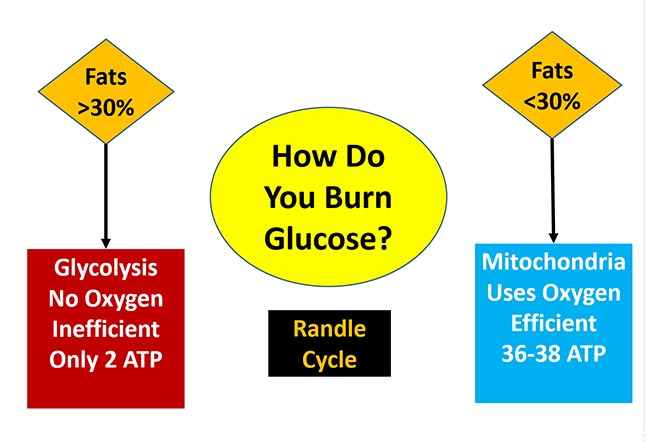
Low-carb diets have helped at least tens of millions of people improve their health for a very good reason, and that is there is a stealth switch that controls what fuel your mitochondria can burn. They can only burn one fuel at a time, either fat or glucose.
The switch has been given the name the Randle cycle, but it is more helpful to visualize it as a railroad switch that changes the tracks of the train. The train can only travel down one track; not both. This is because only one type of fuel can be burned at a time.
The best-case scenario is you metabolize, or burn, glucose in your mitochondria without any reductive stress (a term I will explain in my upcoming interview with Georgi Dinkov). When you do this, you will only generate 0.1% reactive oxygen species (ROS).
Not only does this route generate less ROS, but it also is incredibly efficient at energy production by creating 36 to 38 Adenosine triphosphates (ATP) for every molecule of glucose that is metabolized. It will also generate metabolic water and carbon dioxide, which are also important for your health.
For this to occur, as indicated in the figure above, you will need to consume less than 30% of your calories as fat. When you consume significantly more than that amount, the switch changes to burn fat in your mitochondria and you will not be able to burn glucose until your fat decreases to less than 30% of calories.
Since glucose is unable to be shuttled into the mitochondria to burn, it winds up backing up into your bloodstream, raising your blood sugar. This is a major contributor to diabetes. What little glucose is burned for fuel is done by using glycolysis, which is a primitive pathway that bacteria and cancer cells use.
It is great that we have this pathway, as you absolutely need it for quick fuel when you are activating your type II muscle fibers. But if this is the primary way you burn glucose, you are in a catastrophic metabolic state as you are creating loads of lactic acid as a waste product instead of healthy CO2. And, you are only generating two ATP for every molecule of glucose, which is 95% less energy.
Lactic acid increases reductive stress, which causes reverse electron flow in the mitochondria and causes reductive stress, which increases the ROS to 3% to 4%, which is 30 to 40 times more than when glucose is burned efficiently in the mitochondria. You likely don’t yet understand reductive stress, the opposite of oxidative stress, but I will be doing an interview with Georgi on this and will be posting it later this month.
Why Lactic Acid and CO2 Are so Important
Remember, when you are burning glucose efficiently in your mitochondria, the glucose is converted not only to 36 to 28 ATP, but when the electrons from the glucose are ultimately handed off to oxygen, metabolic water (deuterium free) is made and, very importantly, carbon dioxide.
This is vital to understand as carbon dioxide is a potent stimulator of mitochondrial biogenesis which will increase the number of mitochondria that you have so you can make even more energy.
Conversely, when you are burning glucose far less efficiently in glycolysis you are only generating two ATPs, and rather than creating life-sustaining carbon dioxide, you are generating life-damaging lactic acid, which will degrade your mitochondria and make them die sooner.
Georgi Dinkov’s Review of the Randle Cycle
In this second video, anti-vegan activist Paul Saladino interviews Dinkov about the Randle cycle. Dinkov comments:
“The first accusation against you, that whole milk will somehow make you fat because of the Randle cycle [is] misguided because if you look at the label, whole fat milk has like 5 grams of fat per serving but 12 grams of carbs, so you’re actually [getting] more carbs.
But let’s talk about meat. Most meats … are actually not that high in fat, and a lot of the fat in them is actually short chain fatty acids, which are not subject to the Randle cycle because they get transported into the cells through a known L-carnate-independent mechanism.
They metabolize similarly to sugar, and they don’t seem to be triggering the same sort of Randle cycle effect. Now, what drives the Randle cycle effect? When you’re oxidizing primarily fats … the master conductor redox modulator — which is the NAD to the NADH ratio, specifically the intra-mitochondrial one — drops. (This simply means the more NAD+ the better).
Basically, the NAD to the NADH ratio — which signals how oxidized versus how reduced you are, metabolically — [is] the primary regulator of whether the pyruvate dehydrogenase (PDH) will accept pyruvate and convert it into acetyl-CoA and then continue with the Krebs cycle in the electron transport chain, or not.
(Pyruvate is the three-carbon molecule breakdown product of glucose. PDH is the enzyme that converts it to acetyl-CoA which allows it to enter the mitochondria and be burned efficiently. If PDH is inhibited, it will force your body to use fat).
In other words, a high ratio of NAD to NADH (meaning high NAD+) when you’re very oxidized favors the activity of pyruvate dehydrogenase, so you will not be accumulating pyruvate [and] you will not be generating lactate.
But if you’re eating a lot of fat, the NAD to the NADH ratio drops, and then the buildup starts to happen. Pyruvate accumulates, lactic [acid] accumulates. [This means] the Krebs cycle is working because it’s accepting acetyl-CoA from the beta oxidation. That’s how the fatty acids get oxidized.
So, that’s the gist of the Randle cycle … If you’re providing a lot of glucose, in theory you should be able to out-compete the free fatty acids and oxidize more glucose versus fat, but that all depends on how much glucose can get into the cell.
And, unfortunately, when you’re eating these high-fat diets, when you have higher lipolysis, the actual uptake of glucose into the cell is already largely blocked …
Free fatty acids not only block the metabolism of glucose, they also block the uptake of glucose into the cell. So, they prevent the positive effects that the glucose would have had, in terms of competing with the free fatty acids …
Basically, too much fat blocks your uptake and utilization of glucose, and whatever glucose is taken up, you largely convert to nonbeneficial byproducts such as lactic acid …”
So, to summarize Dinkov’s rather complex exposition on the Randle cycle’s effects: a) fats can make you fat directly; and b) fats limit your ability to metabolize glucose. This is due to the Randle cycle’s preference to fat metabolism when more than 35% of your calories come from fats. And, even if you metabolize small amounts of glucose, your body will favor the conversion of glucose into fat versus ATP, water and carbon dioxide.
This is because the enzyme PDH, which converts the glucose metabolite pyruvate, is inhibited by high fat concentrations, and won’t convert pyruvate to acetyl-CoA to be burned in the mitochondria. Instead, because PDH is inhibited, the pyruvate is metabolized into lactate. This entire process is antimetabolic and slows down your metabolism, increases your ability to gain weight, and lowers your ability to generate cellular energy.
So, when more than 30% to 35% of your calories are coming from fat, you are forcing your cells to burn fat and put glucose on the back burner, instead of being metabolized like it should be.
Simple Strategies You Can Implement to Help Your Metabolism
Clearly, the most important strategy to help your metabolism is to avoid eating linoleic acid at all costs. It is impossible to avoid as it is in nearly every food, but you want to keep your levels below 2% of your daily calories. This means avoiding ALL processed foods and typically most restaurants.
A powerful strategy that nearly everyone should do is to make sure that you are taking a high-quality vitamin E supplement once a day. Why? Because most everyone has 20 to 30 times more LA in their body than optimal. Not only will vitamin E impair the release of it from fat cells, but once released it will help protect the LA from converting into dangerous oxidized linoleic acid metabolites (OXLAMs).
Most vitamin E supplements should be avoided, so how do you identify a high-quality vitamin E supplement? It should have most of the vitamin E isomer as alpha tocopherol, typically about 150 units. It should also have the other tocopherol isomers: alpha, beta and gamma, but at far lower doses.
Additionally, it should have alpha, beta and gamma tocotrienols. Finally, it should only have the “D” isomer. Avoid all vitamin E supplements that are “DL,” which are 50% of the wrong isomer.
It would be very wise to make sure you have enough NAD+ as it will also inhibit the release of LA from your fat cells. If you haven’t read and viewed by interview with molecular biologist Nichola Conlon on this topic, you can read it on my Substack. Sadly, NAD+ decreases dramatically as you age, which leads to nearly a 1-to-1 reduction in ATP, your cellular energy currency.
Fortunately, this can be inexpensively addressed by taking 50 mg of niacinamide three times a day. More is not better, so avoid 500 mg tablets as they will impair your longevity proteins. Typically, one sixty-fourth of a teaspoon of niacinamide powder is about 50 mg.
Finally, aspirin can be a very useful way to inhibit LA lipolysis. Aspirin is a very interesting approach and I go into far more details in my recent article on it.
Why Long-Term Low-Carb Diets Can Backfire
I previously touched on the Randle cycle in “How the Wrong Dietary Fat Can Wreck Your Health,” which also featured an interview with Dinkov. In that interview, Dinkov cleared up several areas of confusion, including the following:
•Low-carb dieting is a great short-term intervention for people who are overweight and insulin resistant. Lowering carbs will help reset your metabolism and recover your metabolic flexibility. However, in the long-term you will likely run into trouble — especially if you’re also doing a lot of endurance training.
One of the reasons for this is because when you’re in a low-carb state, lipolysis is elevated, which releases inflammatory polyunsaturated fatty acids (PUFAs) such as LA from your cells that are then into dangerous OXLAMs (oxidative linoleic acid metabolites) that will damage your tissues.
PUFAs such as LA are not digested. Instead, they’re stored.2 Most of the body fat in obese individuals is composed of PUFAs, not saturated fat. Saturated dietary fat is mostly burned (oxidized) and used up. So, most people have large stores of LA, and these stores need to be lowered to safe levels of 1% to 2% LA.
• Extended fasting and using an excessively narrow time-restricted eating (TRE) window can also backfire once you’re metabolically flexible, as it too helps push LA out of your cells.3,4,5,6,7,8,9,10 An extreme example of TRE is the one meal a day (OMAD) protocol, where you’re fasting 22 hours or more each day. Dinkov believes this is too extreme for most people.
The half-life of PUFAs such as LA, which get embedded and integrated into your cell membranes, is about 680 days. This means that ridding your body of LA will take approximately seven years, provided you don’t load more in. And you really do want to get rid of this fat, as it’s highly inflammatory and prevents your mitochondria and cellular machinery from operating properly. But you need to do it slowly and methodically.
Exercise and fasting will help drive the LA out, but you need to be really careful if you have a lot of LA storage. You want to avoid excessive lipolysis — any situation where you’ve run out of glycogen, which can easily happen when you’re not eating for long periods, when you’re on a chronic low-carb diet, and/or when you’re engaging in intense exercise, especially if you exercise in a fasted state.
• Chronic long-term, low-carb, and chronic extended fasting also result in elevated cortisol, which is highly inflammatory and promotes the storage of fat. Elevated cortisol is also highly catabolic and will cause you to lose lean muscle mass so your liver can make glucose. For these reasons, low-carb diets and fasting are best implemented as temporary strategies to restore metabolic flexibility.
How to Safely Reduce LA Stores Without Self-Sabotaging
With all of that in mind, how can you safely reduce your LA stores without self-sabotaging? Extensive fasting will, in this instance, backfire, as will overtaxing yourself with heavy exercise. You’ll need to accept that achieving optimal health is a marathon, not a sprint, and that it’s going to take years to purge your LA stores. Dinkov suggests the following strategy:
- Build muscle and maximize lean muscle mass
- Avoid fasting for longer than 16 hours
- Avoid all processed foods, restaurant foods, condiments and animal foods raised on grains, such as chicken and pork, as all of these are high in LA
- Eat a diet with about 15% protein, restricting fats to below 35% with the remainder consisting of carbs in the form of ripe fruits and some vegetables and well-cooked low-oxalate starches. Be careful to avoid all processed sugars as they typically are loaded with high fructose corn syrup that will increase endotoxin in your gut
So, to recap, temporarily implementing a six- to eight-hour time restricted eating window, or even longer eating restrictions and fasts, is appropriate for anyone who is insulin resistant and metabolically inflexible — and that’s about 95% of the population.
However, once you lose your insulin resistance and become metabolically flexible — which typically takes a few weeks — you’ll want to increase your eating window to eight to 12 hours to avoid elevating your cortisol, as cortisol promotes chronic inflammation that can lead to tissue damage, and promotes the storage of fat.
If you stop supplying carbs to your body, the organs that need them will activate glucose creation in your body by elevating cortisol. So, once you’re metabolically flexible, you want to avoid extended fasting.
How does TRE and extended fasting raise cortisol, you ask? It is important to understand that cortisol is a powerful hormone whose primary purpose is to shred your lean muscle mass and bones to obtain amino acids for your liver so it can produce glucose. This is cortisol’s primary role. If your blood sugar gets too low, you will go into a hypoglycemic coma and die. Your brain requires sugar and if it doesn’t get it, it is game over.
Usually, it takes a few weeks and occasionally longer, for you to recover your metabolic flexibility. During those first three to six months, stick to a six- to eight-hour eating window. Once you’re metabolically healthy, avoid eating windows under eight hours. I’ve now shifted to a schedule where I always have an eating window of more than eight hours a day and closer to 12, in the summer when there is plenty of daylight.
Interestingly a recent study showed that a lower fat, higher carb approach lowers the risk of death by 30%, while with the converse a high-fat, low-carb diet increases the risk of death by 30%.11,12 So, it’s your choice for sure, but I am convinced that having more healthy carbs than fat is a great choice to improve your metabolic health.
- 1 YouTube Georgi Dinkov
- 2 Haidut.me October 22, 2019 (Archived)
- 3 Haidut.me February 16, 2021 (Archived)
- 4 Haidut.me September 27, 2022 (Archived)
- 5 Haidut.me March 4, 2021 (Archived)
- 6 Haidut.me December 10, 2021 (Archived)
- 7 Haidut.me June 21, 2022 (Archived)
- 8 Haidut.me November 17, 2020 (Archived)
- 9 Haidut.me December 21, 2021 (Archived)
- 10 Haidut.me September 30, 2020 (Archived)
- 11 J Intern Med. 2023 May 3. Low-carbohydrate diets, low-fat diets, and mortality in middle-aged and older people: A prospective cohort study
- 12 Haidut.me May 9, 2023 (Archived)
Could Your Blood Sugar Levels Be Hindering Your Exercise Performance?
Reproduced from original article:
https://articles.mercola.com/sites/articles/archive/2024/03/01/blood-sugar-level-sabotaging-your-workout.aspx
The original Mercola article may not remain on the original site, but I will endeavor to keep it on this site as long as I deem it to be appropriate.
Analysis by Dr. Joseph Mercola March 01, 2024

STORY AT-A-GLANCE
- Elevated blood sugar levels may interfere with certain aerobic fitness gains
- Mice with hyperglycemia had reduced aerobic capacity compared to their healthy counterparts, despite equal exercise levels
- Similar findings were observed in subsequent studies involving 24 young adult participants; those with higher blood sugar levels after ingesting glucose had diminished aerobic exercise capacity
- Increased extracellular matrix proteins observed in hyperglycemic mice potentially obstructed the formation of new blood vessels, contributing to the blunted response to aerobic exercise
- People with hyperglycemia or slightly elevated blood sugar levels may experience enhanced aerobic fitness gains by making dietary and lifestyle adjustments aimed at lowering blood sugar levels
If you’ve been exercising diligently but still aren’t achieving the fitness gains you’d expect, elevated blood sugar levels could be at fault, according to a study conducted by researchers affiliated with Harvard Medical School’s Joslin Diabetes Center.1
Moreover, while diet and exercise are commonly lauded as synergistic components for overall health, emerging research indicates a deeper interconnection between them than many realize.
Specifically, findings suggest that a Westernized diet characterized by high sugar and processed food intake may undermine your exercise endeavors. The primary culprit behind this phenomenon is hyperglycemia, or high blood sugar levels, stemming from compromised insulin and leptin sensitivity.
Elevated Blood Sugar Dampens Exercise Advantages
Despite consistent exercise routines, certain individuals remain resistant to improvements in exercise capacity, a phenomenon influenced by both environmental and genetic factors that remain largely unknown. However, findings from a study involving two mouse models suggest that higher-than-normal blood sugar levels, including those falling within the “prediabetes” spectrum, may serve as a contributing factor.2
One cohort of mice was fed a Western diet, resulting in weight gain and hyperglycemia, while another cohort consumed a diet lower in fat and sugar. The latter group did not gain weight but had prediabetes, a condition characterized by elevated blood sugar levels, which increases the risk of Type 2 diabetes.
Over a six-week period, both groups engaged in running activities on a wheel equivalent to covering distances of about 500 kilometers.3 Although the overweight mice experienced weight loss by the end of the study duration, and all mice realized some metabolic benefits, those with hyperglycemia demonstrated significantly less gains in aerobic capacity.
Notably, their muscle adaptation to increased activity levels deviated from the anticipated norm. Ordinarily, muscle fibers undergo optimization in oxygen utilization and tissue remodeling in response to exercise, thereby enhancing endurance over time.
Sarah Lessard, Ph.D., lead author of the study and assistant investigator at Joslin Diabetes Center, elaborated in a press release, “We also grow new blood vessels to allow more oxygen to be delivered to the muscle, which helps to increase our aerobic fitness levels.”4
Effects of High Blood Sugar on ‘Extracellular Matrix’ Proteins
The potential mechanisms underlying the blunting of certain exercise-induced benefits by high blood sugar were explored by the researchers, who proposed the involvement of extracellular matrix proteins.5 Situated amidst muscle cells within the vascular space, these proteins provide structural support for cells. Notably, the hyperglycemic mice exhibited an elevated presence of extracellular matrix, impeding the formation of new blood vessels.
The researchers hypothesized that the heightened extracellular matrix induced by hyperglycemia triggered increased c-Jun N-terminal kinase (JNK) signaling.6 Ordinarily, the JNK pathway responds to heightened mechanical stress, such as that induced by strength training. However, in hyperglycemic animals, aerobic activity prompted muscle cells to add bulk rather than adapt aerobically.
Consequently, muscles in hyperglycemic animals had enlarged fibers and fewer blood vessels, outcomes typically associated with strength training rather than aerobic exercise, Lessard noted.7
Follow-up investigations involving 24 young adult participants yielded similar findings, with individuals exhibiting higher blood sugar levels in response to glucose ingestion displaying heightened JNK activity post-exercise, alongside reduced aerobic exercise capacity.8
“Looking at how their muscles responded to a single bout of typical aerobic exercise, we also saw that those with the lowest glucose tolerance had the highest activation of the JNK signaling pathway, which blocks aerobic adaptations,” Lessard explained.9
Download this Article Before it Disappears
Dietary Modifications May Enhance Fitness Gains
The researchers stressed the importance of aerobic exercise for individuals with hyperglycemia, pointing out its role in facilitating weight loss and metabolic improvements. However, the pivotal takeaway from their findings is that individuals with hyperglycemia or slightly elevated blood sugar levels may experience greater aerobic fitness gains by making dietary changes aimed at reducing blood sugar levels.10 This assertion is supported by the researchers’ conclusion:11
“Our work indicates that current shifts in dietary and metabolic health, associated with increasing incidence of hyperglycemia, might impair muscular and organismal adaptations to exercise training, including aerobic capacity as one of its key health outcomes.”
The study also underscores the intrinsic relationship between diet and exercise, highlighting how optimizing both may promote overall well-being. Notably, sedentary behavior heightens the risk of prediabetes, independent of your body weight.
In a survey of 1,153 individuals maintaining a healthy weight, those characterized as physically inactive (engaging in less than 30 minutes of physical activity per week) were more likely to have an A1C level indicative of prediabetes (5.7 or higher).12
Among all inactive participants aged 20 and above, approximately one-quarter were either prediabetic or diabetic. Notably, this percentage surged to 45.7% among inactive individuals aged 45 and above.
These findings imply that individuals leading predominantly sedentary lifestyles but maintaining a healthy weight may have “normal-weight obesity” or be “skinny fat,” a term describing metabolic obesity despite a normal body weight.13
If you have elevated blood sugar levels, even if they’re not high enough to be indicative of diabetes, proactive measures to mitigate associated health risks are warranted without delay, regardless of your age.
Optimizing Your Diet for Blood Sugar Control
Consuming meals high in grain and sugar carbohydrates often leads to a rapid surge in blood sugar levels. Your pancreas responds by releasing increased amounts of insulin into your bloodstream to counterbalance this elevation.
However, while insulin effectively reduces blood sugar levels, it also facilitates the conversion of glucose into fat, consequently promoting fat accumulation within your body. The more insulin secreted, the greater the propensity for fat accumulation.
Consistent consumption of a high-sugar, high-grain diet exacerbates this cycle, resulting in elevated blood sugar levels over time and contributing to insulin desensitization. Higher insulin levels are required to fulfill its blood sugar-regulating function, eventually culminating in insulin resistance, which increases the risk of weight gain and Type 2 diabetes.
To mitigate this risk, incorporating full-fat grass fed dairy products such as cheese and yogurt into your diet can be beneficial. These products have been shown to aid in blood sugar regulation and lower the risk of Type 2 diabetes.14
Furthermore, integrating foods rich in healthy fats can contribute to blood sugar management. Examples include avocado, olives, coconut, raw cacao butter and organic pastured egg yolks.
In addition to healthy fats, certain foods offer specific benefits for blood sugar control. Garlic, for instance, contains alliin, a compound known to enhance glucose homeostasis and increase insulin sensitivity.15 Similarly, cinnamon has been linked to blood sugar regulation,16 while the grape compound resveratrol has demonstrated potential in this regard as well.17
Black cumin (nigella sativa) warrants special attention due to its potential to prevent both Type 1 and Type 2 diabetes. Research also indicates that black cumin may enhance glucose tolerance comparably to the diabetes drug metformin.18
Optimizing Meal Timing for Metabolic Health
The timing of your meals plays a pivotal role in bolstering your metabolic well-being. Incorporating fasting periods into your routine enhances metabolic flexibility, enabling your body to efficiently utilize both fat and glucose for energy. This is crucial for maintaining optimal health and mitigating metabolic rigidity associated with insulin resistance.
Various intermittent fasting regimens exist, with one example being daily fasting for 18 hours and confining all meals within a six-hour window. If you’re new to intermittent fasting, starting out by skipping breakfast and scheduling your lunch and dinner within a six-hour timeframe, such as between 11 a.m. and 5 p.m., is advisable. It’s essential to conclude your meals at least three hours prior to bedtime.
While engaging in intermittent fasting, the meals you do consume must be well-balanced, featuring ample healthy fats and minimal net carbohydrates. Excessive net carbohydrate intake (total carbs minus fiber), excessive protein consumption and inadequate healthy fat intake are primary contributors to insulin resistance.
For optimal metabolic health, your body must effectively metabolize fat for energy, a process that’s compromised by daily overconsumption of net carbs. Intermittent fasting helps diminish liver fat accumulation and enhances blood sugar regulation. This may curb pancreatic fat deposition, thereby mitigating Type 2 diabetes risk.19
Furthermore, research indicates that men predisposed to Type 2 diabetes can enhance blood sugar management by confining all meals within a nine-hour period, even in the absence of other dietary modifications.20
Exercise: A Key Player in Blood Sugar Regulation
Interestingly, while elevated blood sugar levels may dampen some benefits of aerobic exercise, prioritizing strength training could help maintain optimal blood sugar levels, indirectly amplifying aerobic workout gains.
Published research in Medicine & Science in Sports & Exercise highlights that even a single session of moderate exercise can enhance your body’s glucose regulation and diminish postprandial glucose spikes.21 Moreover, multiple studies underscore the specific advantages of strength training.22
Strength training contributes to improved glucose metabolism by increasing the translocation of glucose transporter type 4 (GLUT4) in skeletal muscle. This translocation, triggered by muscle contractions,23 plays a pivotal role in regulating glucose uptake within muscles. As explained in a review featured in Physiological Reviews:24
“Exercise training is the most potent stimulus to increase skeletal muscle GLUT4 expression, an effect that may partly contribute to improved insulin action and glucose disposal and enhanced muscle glycogen storage following exercise training in health and disease.”
A study involving individuals with Type 2 diabetes also demonstrated that a single interval training session improved blood sugar regulation — an effect that persisted for the next 24 hours.25 Notably, stress induces the secretion of cortisol and glucagon, both of which influence blood sugar levels,26 underscoring the significance of stress management in maintaining optimal blood sugar levels.
Improving Blood Sugar Levels Enhances Overall Health
Per conventional guidelines, those without diabetes or health issues should have a fasting blood glucose level below 100 mg/dL upon waking. However, I recommend striving for a fasting level below 90 mg/dL. Should your blood sugar levels fall outside of the optimal range, make dietary modifications, ramp up physical activity and mitigate daily stressors to foster improved blood sugar management.
Beyond potentially boosting the benefits derived from aerobic exercise routines, addressing insulin resistance linked to elevated blood sugar levels holds promise in warding off chronic ailments and mitigating your susceptibility to infectious diseases.
- 1, 8, 11 Nature Metabolism volume 2, pages 902–917 (2020)
- 2, 3 Science Daily July 20, 2020
- 4, 6, 7, 9 EurekAlert! July 20, 2020
- 5 National Institutes of Health August 4, 2020
- 10 Medical News Today August 2, 2020, Recommendations
- 12 Am J Prev Med. 2017 Jan 19
- 13 Obesity Volume 28 Number 2 February 2020
- 14 PLOS Medicine October 10, 2018
- 15 Scientific Reports, 2018;8: 3527, Abstract
- 16 Diabetic Medicine: A Journal of the British Diabetic Association October 2010
- 17 Phytother Res. 2019 Sep 1
- 18 Journal of Endocrinology and Metabolism April 2011; 1(1): 1-8
- 19 Metabolism, 2019;97:9
- 20 Obesity April 19, 2019; 27(5)
- 21 Med Sci Sports Exerc. 2012 Feb;44(2):225-31
- 22 Mayo Clinic Proceedings, Online March 11, 2019 [Epub ahead of print]
- 23, 24 Physiol Rev. 2013 Jul;93(3):993-1017
- 25 Diabetes, Obesity, and Metabolism, 2012 Jan 23 [Epub ahead of print]
- 26 J Clin Endocrinol Metab. 1980 Jan;50(1):131-6
What’s the Best Predictor of Heart Disease?
Reproduced from original article:
https://articles.mercola.com/sites/articles/archive/2024/01/18/predictors-atherosclerosis.aspx
The original Mercola article may not remain on the original site, but I will endeavor to keep it on this site as long as I deem it to be appropriate.
Analysis by Dr. Joseph Mercola January 18, 2024
STORY AT-A-GLANCE
- High total cholesterol and/or elevated low-density lipoprotein (LDL) cholesterol do not cause atherosclerosis
- Low levels of high-density lipoprotein (HDL) cholesterol are associated with both atherosclerosis and insulin resistance, and insulin resistance appears to be the foundational cause of heart disease. As such, the fasting insulin test is one of the best predictors of atherosclerosis
- Insulin resistance is primarily driven by excessive consumption of the omega-6 fat linoleic acid (LA). High LA intake is also associated with elevated levels of oxidized LDL — found in atherosclerosis plaque — further confirming this link
- One theory is that oxidized LDL protects your body from oxidative damage by sacrificing itself. If true, it may be beneficial to have higher, rather than lower, LDL levels
- The apoB test can also be helpful in assessing your atherosclerosis risk. As mentioned above, apoB is the primary carrier for LDL, and research over the past decade shows it’s an accurate predictor of cardiovascular risk when apoB is high and LDL is normal
Is high total cholesterol and/or elevated low-density lipoprotein (LDL) cholesterol indicative of elevated heart disease risk? According to Dr. Paul Saladino, the answer is no. With regard to total cholesterol, as far back as 1977, with the publication of the Framingham Study,1 no correlation between heart disease and total cholesterol could be found.
Low levels of high-density lipoprotein (HDL) cholesterol was associated with coronary heart disease, but not high LDLs or total cholesterol. However, as noted by Saladino, low HDL is also associated with insulin resistance, and he believes this is part of the confusion.
Saladino suspects that what has been blamed on LDL (atherosclerosis) is due to insulin resistance, i.e., metabolic dysfunction. Insulin resistance/metabolic dysfunction, in turn, is primarily driven by excessive consumption of the omega-6 fat linoleic acid (LA).
High LA intake also raises your levels of oxidized LDL, which are what you find in atherosclerosis plaque. In the video above, Saladino and Dr. Nadir Ali specifically discuss the role of oxidized LDL, and why it is not a direct cause of atherosclerosis, as commonly thought.
Summary of Available LDL Tests
But before I summarize Saladino’s and Ali’s discussion, let’s take a look at the available LDL-related tests, as there’s more to LDLs than the total amount.
- A regular LDL cholesterol blood test (LDL-C), which measures the total amount of LDL cholesterol in your blood
- A nuclear magnetic resonance lipoprofile (NMR lipoprofile) test, which measures the size of the LDL particles (LDL-P), which is thought to be more predictive of your cardiovascular risk, even if you have low total cholesterol2
- Oxidized LDL (oxLDL) test, which measures the level of LDLs that have been damaged by oxidation
- The apolipoprotein B (apoB) test, which measures the number of apoB particles in your blood. ApoB is a protein involved in the metabolism of lipids and the primary carrier for LDL. This test is a good predictor of cardiovascular risk, and does so far more accurately than the standard cholesterol panel
- Advanced lipid testing, which measures the amounts of large-buoyant LDLs (lbLDL) and small-dense LDLs (sdLDL), with the sdLDLs being associated with insulin resistance and heart disease3
High LDL Does Not Cause Atherosclerosis
When it comes to LDL cholesterol, the most important factor is the level of oxidized LDL, as oxLDLs are primarily what you find in atherosclerosis plaque.4 Unfortunately, most doctors will simply prescribe a statin drug or PCSK9 inhibitor if LDLs are high, to reduce the total LDL.
As noted by Ali in the short video above, this is a serious mistake. The primary question that needs to be asked is why is LDL oxidized in the first place, and how can you prevent that oxidation from taking place?
“Is the oxidized LDL a bad player?” Ali asks, “[or] is it there to protect us from oxidative injury? Rather than letting the important cells get oxidized, is the LDL sacrificing itself in protecting the body? Then, your whole paradigm changes …
LDL is not a bad player — it’s trying to protect us. What I need to figure out is how do I prevent this oxidative injury in the first place, and an argument that should surface is that, maybe I should have more LDL around so that oxidative injury can be … prevented, rather than having less LDL? These are the kinds of fundamental questions that science should be asking.”
Download this Article Before it Disappears
Oxidized LDL May Be a Protective Mechanism
Saladino agrees, saying that LDL “is probably a repository for oxidized phospholipids,” much like lipoprotein(a) (Lp(a)). He cites research showing that the more polyunsaturated fats (PUFAs) you consume — such as LA — the higher your Lp(a) and oxidized LDL.
So, your LDL may in fact have a protective rather than injurious role. It may protect you from the harmful effects of LA and other PUFAs. What this means, then, is that high oxidized LDL may be a marker of high PUFA consumption, and it’s the PUFAs, LA in particular, that are driving the atherosclerotic disease process.
The primary way to prevent atherosclerosis, then, is to radically reduce your LA intake by eliminating seed oils from your cooking, and avoiding processed foods (which are loaded with seed oils) and restaurant foods (as most are cooked in seed oils).
When it comes to measuring your oxLDL, the Boston Heart test called oxidized phospholipids on APO-B (OxPL/apoB) appears to be a better choice than the traditional oxLDL. The oxLDL tends to be inaccurate because it’s just a proxy for APO-B and the LDL number, while the OxPL/apoB test gives you a truer measure of your oxidized LDLs.
The ApoB Test
Aside from oxLDL, the apoB test can also be helpful in assessing your atherosclerosis risk. As mentioned above, apoB is the primary carrier for LDL, and research over the past decade shows it’s an accurate predictor of cardiovascular risk when apoB is high and LDL is normal. As reported by The Washington Post:5
“The standard cholesterol panel calculates the total quantity or concentration of ‘bad’ cholesterol or LDL in the blood, in milligrams per deciliter (technically, LDL-C). Because cholesterol is a fatty substance and thus not water-soluble, it must be carried around in little particles known as lipoproteins.
Testing for apoB, a protein on the outside of LDL-carrying particles, counts the number of these lipoprotein particles in the blood. In addition to LDL, it also captures other types of cholesterol such as IDL (intermediate-density lipoproteins) and VLDL (very low-density lipoproteins), which carry triglycerides.
Why is this important? As our understanding of heart disease improves, scientists are recognizing that apoB particles are more likely to become lodged in the arterial wall and cause it to thicken and eventually form atherosclerotic plaques. Thus, the total number of apoB particles matters more than the overall quantity of cholesterol that they carry.
In a majority of people, apoB and LDL-C track fairly closely, says Allan Sniderman, a professor of cardiology at McGill University in Montreal. But some people have a ‘normal’ amount of LDL-C, but a high concentration of apoB particles — a condition called ‘discordance,’ which means they are at greater risk.”
sdLDL — Another Helpful Predictor of Atherosclerosis
Measuring your sdLDL-C can also be helpful, as explained by Dr. Eric Berg, a chiropractor, in the video above. The small-dense type of LDLs are indicative of inflammation inside your arteries, which is a hallmark of atherosclerosis. As noted by Berg, potential causes of this inflammation include:
- Seed oils
- Processed foods and junk foods
- Smoking
- Low vitamin E
- High glucose levels
Unfortunately, Berg lumps high-carb diets into these risk factors and recommends a ketogenic diet to avoid elevated sdLDL, but as I’ve explained in previous articles, high glucose levels are not necessarily a sign that you’re eating too many (healthy) carbs.
In summary, when you consume significantly more than 30% fat, a metabolic switch called the Randle Cycle switches from burning glucose in your mitochondria to burning fat instead. As a result, glucose backs up into your bloodstream, thereby raising your blood sugar.
Glucose is actually a cleaner and far more efficient fuel than dietary fats, provided it’s metabolized in your mitochondria and not through glycolysis. For a refresher, refer back to “Crucial Facts About Your Metabolism” and “Important Information About Low Carb, Cortisol and Glucose.”
Atherosclerosis Is a Consequence of Metabolic Dysfunction
In the video directly above, Saladino debates LDL cholesterol with Dr. Mohammed Alo, a cardiologist and personal trainer. While Alo argues for the conventional LDL-atherosclerosis connection, Saladino highlights evidence showing that it’s not LDL per se that is the cause, but rather insulin resistance in combination with high oxLDL, both of which are caused by high LA intake.
For this reason, Saladino believes one of the best assessments of your heart disease risk is a fasting insulin test, as your insulin sensitivity is such a foundational factor of your metabolic function. The OxPL/apoB test mentioned earlier would be a good complement.
If you have high fasting insulin, you are insulin resistant and hence have some degree of metabolic dysfunction (and, of course, mitochondrial dysfunction). Ideally, you want a fasting insulin level of 3 mcg/mL or less.
Most definitely, do not go by the “normal” ranges offered by labs in this case. Many will list levels as high as 24 mcg/mL as normal, when in fact that’s a clear sign of serious insulin resistance and metabolic dysfunction.
If you’re already eating a healthy diet, exercising, and all of your metabolic parameters look good, yet you have an insulin level of 7 or 8, the core culprit may be stress, because when cortisol goes up, insulin rises with it. Cortisol release is a rescue mechanism to ensure you don’t die from low blood sugar.
To assess whether stress is at play, keep an eye on your white blood cell count. Chronically depleted white blood cells are often a sign of chronic stress and high cortisol.
You can also get an AM cortisol test after fasting for 12 to 16 hours. You don’t want to fast longer than that because, after 16 hours of fasting, cortisol will naturally start to rise. An ideal AM cortisol range is between 15 and 17. If your fasting AM cortisol is below 15, it’s a sign you’ve become stuck in a long-term stress response.
High LA Intake Promotes Atherosclerosis
So, to summarize, Saladino argues that insulin resistance is the primary root cause for atherosclerosis — not elevated LDL or total cholesterol — and the primary driver of insulin resistance is excessive LA intake from seed oils. Lowering your LA intake is the foundational strategy to embrace.6
Low levels of high-density lipoprotein (HDL) is a proxy for insulin resistance, and if you have low HDL, then LDL tracks well with cardiovascular disease. But if you have normal HDL (65 to 85 mg/dL), then you typically have good insulin sensitivity and the correlation with LDL and atherosclerosis vanishes.
The Keto Trial Match Analysis7 presented in mid-December 2023 (video below) confirms this, as they found no relationship between elevated LDL levels and arthrosclerosis plaque.
Other Tests to Assess Your Metabolic Health
In addition to the tests already mentioned, other blood tests that can help you assess your metabolic health include the following. Additional information about these and other lab tests can be found in my interviews with Dr. Nasha Winters and Dr. Bryan Walsh.
• Fasting glucose — The ideal range is between 82 and 88 milligrams per deciliter (mg/dL), based on the available literature, while nonfasting glucose should ideally be between 82 and 130 mg/dL.
• Gamma-glutamyl transferase (GGT), a powerful predictor of mortality, also should not be above 20 U/L. GGT is a liver enzyme involved in glutathione metabolism and the transport of amino acids and peptides.
Not only will the GGT test tell you if you have liver damage, it can also be used as a screening marker for excess free iron and is a great indicator of your sudden cardiac death risk.
GGT is highly interactive with iron. Excessive iron will tend to raise GGT, and when both your serum ferritin and GGT are high, you are at significantly increased risk of chronic health problems, because then you have a combination of free iron, which is highly toxic, and iron storage to keep that toxicity going.
Cysteinylglycine is liberated from glutathione via GGT. That, in the presence of iron or copper, initiates the Fenton reaction. That’s when you get massive oxidative stress.
• The Intermountain health risk score is a mortality risk score created based on the basic blood chemistry markers of tens of thousands of patients in a hospital setting, including complete blood count (CBC), sodium, potassium bicarbonate, mean platelet volume and other basics. Based on these markers, you end up with a 30-day, a one-year and a five-year mortality risk.
A risk score calculator is freely available on the Intermountain website, where you can also find more information about this score.8 Simply enter your variables and it will calculate your score for you.
• Coronary artery calcium (CAC) scan — This test provides images of your coronary arteries. Existing calcium deposits, an early sign of coronary artery disease, will show up on these images, and can therefore reveal your risk of heart disease before other warning signs become apparent.9
For even more information about cholesterol, and why high cholesterol and/or high LDL are not risk factors for heart disease, check out the video below by Dr. Ken Berry.
- 1 American Journal of Medicine May 1977; 62(5): 707-714
- 2 Front. Nuci. Med July 13, 2022; 2
- 3 Health Matters LDL Size
- 4 Mediators of Inflammation 2013; 2013: 714653
- 5 Washington Post January 8, 2024
- 6 Chem Phys Lipids January 1998; 91(1): 1-11
- 7 Citizens Science Foundation December 13, 2023
- 8 Intermountain Risk Scores
- 9 Hopkins Medicine CAC Test
What Causes Healthy People to Faint?
Reproduced from original article:
https://articles.mercola.com/sites/articles/archive/2024/01/02/what-causes-healthy-people-to-faint.aspx
The original Mercola article may not remain on the original site, but I will endeavor to keep it on this site as long as I deem it to be appropriate.
Analysis by Dr. Joseph Mercola January 02, 2024

STORY AT-A-GLANCE
- The vagus nerve’s connection to your heart may be involved in triggering people to faint
- Your heart sends signals to your brain via the vagus nerve, and a disruption in these signals may be responsible for fainting
- Autonomic dysfunction is common in patients with long COVID, including symptoms like dizziness and fainting, and it’s possible COVID-19 may influence signals passing through the vagus nerve
- A disruption in blood flow of even a few seconds is all it takes to cause fainting or loss of consciousness
- If you start to feel dizzy, lightheaded and clammy, and your vision gets blurry or filled with spots, sit or lie down immediately; this will reduce your chances of getting hurt by falling, and the horizontal position helps get blood flowing to your head
About 40% of people faint at some point during their lifetime.1 While the experience can be jarring — both for the victim and those around them — and can be indicative of a serious underlying condition, most often the cause is benign.
Vasovagal syncope, or fainting, is the most common type, accounting for one-third of cases.2 During a vasovagal syncope episode, your heart rate and blood pressure drop suddenly, reducing circulation to your brain and causing you to lose consciousness.
The vagus nerve, the primary information highway between your gut and your brain, which connects the two organs, is involved, but according to research published in Nature,3 it’s the nerve’s connection to your heart that may trigger people to faint.
Heart-Brain Pathway May Trigger Fainting
While it was long believed that your vagus nerve was simply a way for your brain to communicate with your organs, it’s now known that information is sent both ways; for instance, from your gut to your brain. Your heart, however, also sends signals to your brain via the vagus nerve, and a disruption in these signals may be responsible for fainting.4
The fact that your vagus nerve is involved in fainting isn’t new knowledge. This has been known since the 19th century, according to study author Vineet Augustine, a neurobiologist at the University of California San Diego. Speaking with NPR, Augustine explained:5
“What was not clear was which part of the vagus nerve [was involved]. The vagus nerve is big. It’s a major highway between the body and the brain …What we were trying to argue — well, the heart also sends signals back to the brain, which can influence its function and behavior.”
The scientists found nerve cells that link the heart’s blood-pumping ventricles with the area postrema in the brain, a region that controls breathing and heart rate.6,7 When the pathway was stimulated with a laser in mice, it led to fainting-like symptoms. “When the pulse hits them, the heart rate immediately dips. They wobble around a little bit, and then around seven seconds, they fall over,” Augustine said.8
It’s possible the finding could lead to new treatment options to help prevent fainting due to autonomic disorders, including the rise in fainting cases that occurred since the COVID-19 pandemic. Autonomic dysfunction is common in patients with long COVID, including symptoms like dizziness and fainting, and it’s possible COVID-19 may influence signals passing through the vagus nerve.9
The vagus nerve influences many crucial bodily functions, as it’s a primary part of the parasympathetic nervous system. It’s involved in controlling your mood, immune response, digestion and heart rate, and transmits information about different inner organs to the brain via afferent fibers.
In addition to affecting fainting, vagus nerve stimulation is being looked into as a potential treatment for depression, posttraumatic stress disorder, inflammatory bowel disease and more.10 Interestingly, since the vagal tone is influenced by breathing, yoga, which involves breath work, may offer benefits via the vagus nerve. It’s been found, for instance, that yoga therapy can reduce fainting frequency and pre-fainting symptoms among people with recurrent fainting.11
Common Fainting Triggers
Cerebral blood flow is necessary to provide your brain with a steady supply of glucose to function properly. A disruption in blood flow of even a few seconds is all it takes to cause fainting or loss of consciousness. As noted in the National Library of Medicine’s Stat Pearls:12
“Cerebral blood flow is maintained by a complex mechanism involving cardiac output, systemic vascular resistance, mean arterial pressure, and intravascular volume. Any defect in one or more of these systems leads to decreased cerebral blood flow.”
Fainting, which is sometimes described as blacking out, accounts for 1% to 3.5% of emergency department visits and 6% of hospital visits in the U.S.13 Many factors increase the risk, including prolonged standing, crowded places, hot temperatures, severe pain, extreme fatigue, anxiety and stress.14 Some people may also faint if they see blood.
Bed rest, underlying conditions that affect the nervous system and certain medications, particularly those that influence blood pressure or fluid levels, can also trigger fainting.15 Standing up too quickly, meanwhile, can cause a drop in blood pressure known as orthostatic hypotension, which can lead to lightheadedness and fainting.16
Dehydration is another common cause of fainting. If you don’t drink enough water, your blood becomes thicker and circulates less, which may lead to muscle cramps, as well as trigger your kidneys to hold on to water, so your urine output decreases. Further, according to Toby Mündel, senior lecturer in sport and exercise science, Massey University, New Zealand:17
“The thicker and more concentrated your blood becomes, the harder it is for your cardiovascular system to compensate by increasing heart rate to maintain blood pressure. When your dehydrated body is ‘pushed’ — such as when exercising or faced with heat stress — the risk of exhaustion or collapse increases. This can cause you to faint, for instance, when you stand up too quickly.”
Download this Article Before it Disappears
Signs You’re About to Faint
Often, symptoms occur prior to the fainting episode. These include:18,19
| Blurred vision | Nausea |
| Dizziness | Weakness |
| Sweating | Pale appearance |
| Headache | Disorientation |
| Confusion | Slurred speech |
Less commonly, irregular heart rhythms may cause a person to faint. This may be a sign of a potentially serious condition. Aortic stenosis, enlarged heart and both fast or slow heart rates can trigger fainting.
Atrial fibrillation, an abnormal, often rapid, heart rhythm that occurs when the atria, your heart’s upper chambers, beat out of sync with the ventricles, may also lead to fainting.20 In cardiac fainting, heart palpitations may occur prior to the episode.21 If you pass out with no warning, it’s possible heart rhythm problems are to blame.22
Fainting Is Common After Vaccines
Medical procedures can trigger fainting, and this includes vaccinations. In fact, the U.S. Centers for Disease Control and Prevention says it has received reports of people fainting after nearly all vaccines, including the flu shot. NPR reported the case of a 39-year-old man who fainted five minutes after a flu shot, requiring a trip to the emergency room and resulting in a bill for $4,692.23
However, fainting after vaccines is particularly common in adolescents and most often occurs after the human papillomavirus (HPV) vaccine, meningococcal conjugate vaccine and the tetanus, diphtheria and acellular pertussis (Tdap) vaccine.24 The CDC noted:25
“Because the ingredients of these three vaccines are different, yet fainting is seen with all of them, scientists think that fainting is due to the vaccination process and not to the vaccines themselves. However, there is not yet a definite answer about whether an ingredient of the vaccines is responsible for the fainting or if adolescents are simply more likely than children or adults to experience fainting.”
According to the CDC, the Vaccine Adverse Event Reporting System (VAERS) receives many reports each year of people fainting after vaccinations, “and many more are likely to go unreported.” It’s estimated that 62% of fainting reports after vaccines occur among adolescents aged 11 to 18 years.26
Another study of 9- to 18-year-olds who received a vaccine or venipuncture found that 2.99 per 10,000 vaccination events resulted in fainting, as did 16.33 per 10,000 venipunctures.27 Fainting became more likely when more than one vaccine was given, rising from 1.51 per 10,000 vaccination events following a single vaccine to 9.94 per 10,000 following three or more vaccines. In about 15% of vaccine and venipuncture events, fainting resulted in injury.
Fainting-related falls can be serious, with head injury the most significant risk. One study of fainting-related reports to VAERS found that 7% of the fainting episodes were serious, and 12% involved head injuries.28 The CDC described one case as follows:29
“A girl aged 13 years fainted within 10 minutes of receiving HPV and MCV4 vaccinations. She fell backward and hit her head on the carpeted floor of the clinic. The girl was admitted to the pediatric intensive-care unit because of skull fractures and subarachnoid hemorrhage.”
In another case reported in the Archives of Pediatrics and Adolescent Medicine, a 15-year-old boy with no known medical problems fainted several minutes after receiving the third dose of hepatitis B vaccine.30 He fell backward onto a concrete floor covered by a thin carpet, striking the back of his head.
He regained consciousness but had convulsions, went into cardiopulmonary arrest and died. An autopsy revealed he suffered from traumatic brain injury, including frontal lobe contusions, along with brain swelling and bleeding, even though he had no skull fracture.
Due to these risks, the CDC recommends patients sit or lie down while receiving a vaccine, and be observed for 15 minutes afterward, as 70% of fainting episodes typically occur within that timeframe.31 However, this means 30% may occur outside of this window. And with many shots given at pharmacies and other non-doctors’ office settings, these observation periods are often neglected.
What to Do if You Feel Like You’re Going to Faint
If you start to feel dizzy, lightheaded and clammy, and your vision gets blurry or filled with spots, sit or lie down immediately. Not only does this reduce your chances of getting hurt by falling, but the horizontal position helps get blood flowing to your head.32
Using applied tension can also help reduce symptoms and lower the risk of fainting. In a study of adult blood donors — a population that often experiences fainting symptoms and fainting — applied tension helped reduce symptoms and lowered the risk of a vasovagal reaction consistent with fainting.33 This can be as simple as:34
- Making a fist
- Crossing your legs
- Squeezing your thighs together
- Tightening the muscles in your arms
The National Institute of Neurological Disorders and Stroke recommends lying down for 10 to 15 minutes in a cool, quiet spot. If this isn’t an option, sit with your head between your knees, and sip cold water. Typically, recovery occurs within a few minutes to a few hours,35 but you should seek medical care to rule out potentially serious complications and underlying causes.
- 1, 3 Nature volume 623, pages 387–396 (2023)
- 2 Front Physiol. 2014; 5: 471., Etiology
- 4, 5, 6, 8, 9 NPR December 6, 2023
- 7 NPR December 7, 2023
- 10 Front Psychiatry. 2018; 9: 44
- 11 Complement Ther Clin Pract. 2022 Aug:48:101579. doi: 10.1016/j.ctcp.2022.101579. Epub 2022 Apr 4
- 12, 13, 14, 18 NIH, StatPearls June 12, 2023
- 15, 19, 21 Medical News Today, Fainting symptoms without fainting
- 16, 34, 35 National Institute of Neurological Disorders and Stroke, Syncope
- 17 The Conversation January 31, 2016
- 20 Johns Hopkins Medicine, What Is Afib?
- 22, 32 Today July 21, 2023
- 23 NPR January 28, 2019
- 24, 25, 26, 28 U.S. CDC, Fainting (Syncope) after Vaccination
- 27 J Adolesc Health. 2023 Dec 9:S1054-139X(23)00586-4. doi: 10.1016/j.jadohealth.2023.11.005
- 29, 31 CDC, MMWR Weekly 57(17);457-460
- 30 Arch Pediatr Adolesc Med. 2005;159(11):1083. doi: 10.1001/archpedi.159.11.1083
- 33 Annals of Behavioral Medicine, Volume 37, Issue 3, June 2009, Pages 306–314, doi: 10.1007/s12160-009-9114-7
The Amazing Benefits of Dairy Fat
Reproduced from original article:
https://articles.mercola.com/sites/articles/archive/2023/12/26/dairy-fat-benefits.aspx
The original Mercola article may not remain on the original site, but I will endeavor to keep it on this site as long as I deem it to be appropriate.
Analysis by Dr. Joseph Mercola December 26, 2023
STORY AT-A-GLANCE
- Studies have repeatedly failed to find an association between full-fat dairy and cardiovascular events. Instead, full-fat dairy actually reduces your risk of cardiovascular events and deaths thereof. Dairy products are also associated with lower risks of Type 2 diabetes, liver disease and more
- Whole-fat dairy contains the odd-chain saturated fats (OCFAs) pentadecanoic acid (C15:0) and heptadecanoic acid (C17:0), which have significant health benefits
- OCFAs are found only in small amounts in certain foods, primarily dairy fat, and your body only makes C17:0. Researchers now believe C15:0 may be an essential fat, as your body cannot make it
- Higher circulating levels of OCFAs in the blood is associated with lower risks of obesity, chronic inflammation, cardiovascular disease, metabolic syndrome, Type 2 diabetes, NASH, COPD, pancreatic cancer and all-cause mortality
- OCFAs do not have an inhibitory effect on glucose burning because they are not converted to acetyl-CoA; rather, they enter the Krebs Cycle as succinyl-CoA. What this means in practical terms is that you don’t need to restrict your consumption of full fat dairy, as it won’t affect your ability to burn glucose
Do you avoid whole milk, or better yet, raw milk, because of its saturated fat content? If so, you may be missing out on one of the greatest health foods there is. Studies1 have repeatedly failed to find an association between full-fat dairy and cardiovascular events. Instead, they’ve found the opposite — full-fat dairy reduces your risk of cardiovascular events and deaths thereof.
Dairy products are also associated with lower risks of Type 2 diabetes,2 liver disease and more. One of the reasons for these health benefits is because whole-fat dairy contains health promoting compounds such as:3
| Specific amino acids | Unsaturated, medium-chain, and branched-chain fats |
| Odd-chain saturated fats — pentadecanoic acid (C15:0) and heptadecanoic acid (C17:0) | Phospholipids |
| Vitamins and minerals | Probiotics |
Odd-Chain Saturated Fats From Dairy Are Likely Essential Fats
Of these, the odd-chain saturated fats (OCFAs) are of particular importance. In fact, recent research4 suggests these are likely one of the most essential fats in the human diet, unlike linoleic acid (LA) that most foods are loaded with. It’s virtually impossible to become deficient in LA outside of a laboratory diet.
The same cannot be said for the OCFAs. You need to get them from dairy, because that’s the primary source. As noted in the 2020 scientific report, “Efficacy of Dietary Odd-Chain Saturated Fatty Acid Pentadecanoic Acid Parallels Broad Associated Health Benefits in Humans: Could It Be Essential?”:5
“Dietary odd-chain saturated fatty acids (OCFAs) are present in trace levels in dairy fat and some fish and plants. Higher circulating concentrations of OCFAs, pentadecanoic acid (C15:0) and heptadecanoic acid (C17:0), are associated with lower risks of cardiometabolic diseases, and higher dietary intake of OCFAs is associated with lower mortality.
Population-wide circulating OCFA levels, however, have been declining over recent years. Here, we show C15:0 as an active dietary fatty acid that attenuates inflammation, anemia, dyslipidemia, and fibrosis in vivo, potentially by binding to key metabolic regulators and repairing mitochondrial function.
This is the first demonstration of C15:0’s direct role in attenuating multiple comorbidities using relevant physiological mechanisms at established circulating concentrations.
Pairing our findings with evidence that (1) C15:0 is not readily made endogenously, (2) lower C15:0 dietary intake and blood concentrations are associated with higher mortality and a poorer physiological state, and (3) C15:0 has demonstrated activities and efficacy that parallel associated health benefits in humans, we propose C15:0 as a potential essential fatty acid.”
Dietary Guidelines Got It Backward
The low-fat recommendation has been around for more than 40 years, and since that time cholesterol levels and heart disease rates have gone in the opposite direction of what was intended.
As noted in the featured paper,6 in the two decades following that recommendation, average intake of whole fat milk dropped more than fourfold, from 283 grams to 65 grams a day, yet prevalence of obesity, Type 2 diabetes, metabolic syndrome and nonalcoholic fatty liver disease (NAFLD) rose to new heights.
Meanwhile, researchers kept finding that people who consumed whole fat milk had lower risks of obesity, Type 2 diabetes and cardiovascular diseases. Clearly, something was off. At the same time, consumption of LA skyrocketed as saturated fats were replaced with processed seed oils, and we now have robust evidence showing that excessive LA is a key driver of these chronic diseases, as it destroys mitochondrial function and metabolism.
In short, the U.S. dietary guidelines discouraged consumption of what now appears to be a TRULY essential fat — odd-chained saturated fats found in milk — while encouraging consumption of what was believed to be an essential fat, but in fact is one of the most destructive ingredients in the modern diet.
Contrary to popular belief, LA is not an essential fat, in part because it’s found in most foods, making it near-impossible to become deficient. Odd-chained saturated fats, on the other hand, are found only in small amounts in certain foods, primarily milk, and your body only makes C17:0. It doesn’t appear to make any C15:0 endogenously,7 which means you have to get it from your diet.
Download this Article Before it Disappears
Milk Fats 101
As you can see by the list above, whole milk contains several different kinds of fat. About 68% of the fats are even-chain saturated fats (ECSFs), the primary ones being:8
- Myristic acid (C14:0)
- Palmitic acid (C16:0)
- Stearic acid (C18:0)
The odd-chain saturated fat (OCFA) pentadecanoic acid (C15:0) represents only 1% of the fat content, and heptadecanoic acid (C17:0) makes up 0.5% of the total.9
OCFAs Linked to Lower Disease Risk
Previous studies have shown that higher dietary intake of OCFAs, and subsequently higher circulating levels of OCFAs in the blood, is associated with LOWER risks of:10
| Obesity | Chronic inflammation |
| Cardiovascular disease | Metabolic syndrome |
| Type 2 diabetes | Nonalcoholic steatohepatitis (NASH) |
| Chronic obstructive pulmonary disease (COPD) | Pancreatic cancer |
| All-cause mortality |
In the video above, Dr. Paul Saladino reviews studies showing similar benefits for butter. For example, one eight-week-long randomized controlled trial found people who ate about 1.5 tablespoons of butter per day had lower levels of inflammation (based on inflammatory markers) at the end of the trial.
A Closer Look at OCFAs
To get a better idea of how OCFAs affect human health and prevent disease, the featured Scientific Reports paper conducted a series of in vitro and in vivo studies using 99% pure OCFAs. First, OCFAs were tested for peroxisome proliferator-activated receptor (PPAR) agonist activity.
There are three primary PPARs: α (alpha), δ (delta) and γ (gamma). PPARs are transcription factors known to reduce triglyceride levels when activated.11 They’re also involved in the regulation of metabolism and inflammation, and they do that by detecting and responding to the presence of dietary fats.12
Agonists are compounds that activate a given receptor, so what they were looking for was whether OCFAs might work by activating PPARs.
They also assessed the impact of OCFAs on mitochondrial function and the production of reactive oxygen species (ROS). Mitochondrial dysfunction is at the heart of all disease, and elevated ROS production, which is indicative of inflammation, is another hallmark of most, if not all, disease states.
OCFAs were also tested across a variety of human cell systems mimicking chronic inflammatory and fibrotic disease states. Next, the effects of oral OCFA supplementation were studied in in vivo models of cardiometabolic, inflammatory, liver, hematologic, and fibrotic diseases. Here’s a summary of what they found:13
| C15:0 is a dual, partial agonist for PPARα (65.8%) and PPARδ (52.8%). Effective concentrations of C15:0 needed to reach half-maximum activities for PPARα and PPARδ were 11.5 and 2.7 micrometer (µM), respectively. |
| C15:0 repaired mitochondrial function and reduced mitochondrial ROS production in a dose-response u-curve. Mitochondrial function and reduced ROS were found in cells supplemented at doses of 10 µM, 20 µM and 50 µM, but at C15:0 concentrations of 100 µM and 200 µM, there were no differences in ROS production compared to non-supplemented controls. |
| C15:0 reduced proinflammatory and profibrotic states in the human cell systems tested. C17:0 also had these effects, but to a lesser degree.
According to the authors, “this study … supports that a relatively minor increase in C15:0 concentrations (e.g. from 2.2 µM to 6.7 µM) can positively impact its anti-inflammatory and antifibrotic activities.” On a side note, µM is a unit of measure, not a dose. To convert µM to milligrams (mg), divide it by 1,000. So, a concentration of 2.2 µM equates to 0.0022 mg and 6.7 µM is 0.0067 mg. |
| Daily supplementation of C15:0 at a dose of 5 mg per kilo of bodyweight lowered inflammation, glucose and cholesterol levels in obese mice. |
| Daily supplementation of C15:0 at a dose of 35 mg per kilo of bodyweight improved hemolytic anemia in rabbits with diet-induced hypercholesterolemia, anemia and NASH, decreasing the loss of red blood cells and lowering new red blood cell production.
This dose also resulted in lower cholesterol, triglycerides, globulins, and platelets compared to non-supplemented diseased controls. Liver health indices also improved to the point they matched that of healthy controls. They had less severe liver fibrosis, and unlike the diseased controls, they did not progress from Stage 2 to Stage 3 fibrosis. |
| C15:0 had no off-target pharmacological activities and was noncytotoxic across the 12 human cell systems tested. |
| C17:0 is a PARδ agonist, with a maximum activity of 39.8%. To achieve half-maximum PPARδ activity, a concentration of 17.4 µM was required. |
| The ECSFs myristic acid (C14:0) and palmitic acid (C16:0) had similar activity as C15:0. Both are agonists for PPARα and PPARδ, leading the researchers to hypothesize that “carbon chain length may be a determinant of PPARα/δ binding.” |
| None of the saturated fatty acids had PPARγ agonist activity at concentrations below 100 µM. |
What Dose of OCFA Will Achieve These Benefits?
To assess the dose required to achieve these kinds of benefits, they gave an oral dose of C15:0 at 35 mg per kilo of body weight to Sprague Dawley rats. Within 30 minutes, plasma concentrations of C15:0 were increased. Maximum concentration (20 µM) was achieved at one hour post-ingestion, and plasma levels remained above baseline for 24 hours.
“Thus, a single oral dose of C15:0 at 35 mg/kg succeeded in achieving our targeted active plasma concentrations in this rodent model, between 2.5 to 5 µg/ml (equivalent to 6.7 to 20 µM), from 1 to 8 hours post-dose,” the authors write.14 “Plasma total C17:0 levels also increased, albeit less so than C15:0, following a single oral dose of C15:0.”
To further evaluate the safety of C15:0, rats were dosed orally once a day for 14 days with increasing doses, up to 350 mg per kilo of body weight. No abnormalities were found, and there were also no significant differences in body weights, organ weight-to-body weight ratios, abnormal chemistry values or histologic observations between those who got the C15:0 and the controls.
C15:0 Is Likely an Essential Fat
Based on the findings from this investigation, the researchers concluded that C15:0 (but not C17:0) is most likely an essential fatty acid:15
“Essential fatty acids are defined as active dietary fatty acids that: (1) are required to maintain a healthy physiological state, (2) are not made at adequate levels endogenously, and (3) require dietary intake in order to maintain healthy concentrations in the body.
Given our demonstration of C15:0 and C17:0 as active dietary fatty acids, we reviewed the literature for evidence supporting or negating C15:0 and C17:0 as potential essential fatty acids.
Due to reported direct correlations between dietary C15:0 intake and circulating C15:0 concentrations, indicative of primarily diet-based drivers of circulating C15:0, and evidence of endogenous production of C17:0, only C15:0 had supportive evidence across all three criteria that were consistent with a potential essential fatty acid …
Chronic low-grade inflammation, driven by proinflammatory chemokines and cytokines, contributes to cardiometabolic comorbidities and the aging process.
Here, daily oral supplementation with C15:0 and C17:0 lowered proinflammatory states in obese mice with metabolic syndrome, as well as lowered proinflammatory biomarkers in primary human cell systems mimicking chronic inflammation …
Dyslipidemia and hyperglycemia are components of metabolic syndrome, a cluster of conditions impacting approximately 1 in 3 people globally. Metabolic syndrome increases the risk of type 2 diabetes, heart disease, and all-cause mortality.
In our studies, daily oral C15:0 supplementation over 12 weeks lowered total cholesterol and glucose in an in vivo model with metabolic syndrome.”
Dairy Fat — It Does Your Body Good
The take-home from all of this is that diary fat is a crucial source of an essential fat — pentadecanoic acid or C15:0 — that your body needs and cannot make.
A long list of studies16,17 through the years have shown that this and other OCSFs improve mitochondrial function and increase ATP production,18 lower your risk of obesity,19 diabetes20,21,22 and cardiovascular disease,23 including the risk of heart problems in diabetics,24 promote healthy hair growth,25,26 lower inflammation and much more.
While you can drink whole fat milk, it has 4% fat. Butter has 20 times the fat concentration of whole fat milk, and ghee 25 times the fat as whole fat milk. It is far easier to get these odd chain saturated fats by eating a healthy butter. Ghee is easer and has 25% more fat than butter.
A reasonable dose for most people is 1 tablespoon of butter a day. You can increase that, but it would be unwise to go over 5 tablespoons a day. Unlike raw milk, high quality butters are far more difficult to purchase commercially. About the only way you can is to purchase directly from the farmer.
If you are looking for an easier commercial solution, you can purchase 1 pound of organic ghee for about $20 a pound, including shipping.
Milk Fats Do Not Inhibit Glucose Metabolism
Interestingly, OCFAs are only partially metabolized via the beta-oxidation pathway that ECFAs use. In this pathway, fats are first converted to acetyl-CoA, which allows them to enter the Krebs Cycle. OCFAs, in contrast, are first converted into succinic acid, then succinyl-CoA, which then enters the Krebs Cycle and helps support electron transfer at complex II in the mitochondria. As explained by Georgi Dinkov, an expert on bioenergetic medicine:27
“Since rising levels of acetyl-CoA has an inhibitory effects on pyruvate dehydrogenase (PDH), eating a diet high in fat with mostly even-chain fats would result in reduction of glucose metabolism, even if all the fats are of the SFA type, as per the Randle Cycle.
However, if those fats are of the odd-chain species and enter the Krebs Cycle as succinic acid (i.e. without effect on the acetyl-CoA/CoA ratio), then virtually no such reduction of glucose metabolism is expected to occur and, in fact, PA [pentadecanoic acid] was described in … Japanese studies as stimulating mitochondrial function and ATP production, which ultimately resulted in improved hair growth.
The Japanese researchers even filed a patent for treating hair-loss with PA and in that patent they opined that other odd-chain fatty acids with similar length, especially the C17:0 fat … would have similarly beneficial effects on hair-growth through increasing mitochondrial function (OXPHOS).”
Put another way, as I’ve described in several previous articles, including “Crucial Facts About Your Metabolism,” when your fat intake is too high (likely above 35 grams or so), then your body’s ability to metabolize (burn) glucose in your mitochondria is reduced. Instead, it gets shuttled into the glycolysis pathway, which is extremely inefficient and produces far fewer ATP molecules per molecule of glucose. That’s what Dinkov is talking about here.
What’s fascinating is that OCFAs do not have this inhibiting effect on glucose burning, because they are not converted to acetyl-CoA but rather enter the Krebs Cycle as succinyl-CoA. What this means in practical terms is that you don’t need to restrict your consumption of full fat dairy, as it won’t affect your ability to burn glucose.
Equally interesting, excessive consumption of other dietary fats has been shown to lower your plasma level of C15:0 and C17:0.28 So, there are more reasons than one to make sure your total fat intake isn’t too high.
- 1 The Lancet November 24, 2018; 392(10161): 2288-2297, DOI: 10.1016/S0140-6736(18)31812-9, Page 2
- 2 PLOS Medicine October 10, 2018, DOI: 10.1371/journal.pmed.1002670
- 3 The Lancet November 24, 2018; 392(10161): 2288-2297
- 4, 5, 6, 8, 9, 10 Scientific Reports 2020; 10: 8161
- 7 Scientific Reports March 23, 2017; 7: Article number 44845
- 11 J Adv Pharm Technol Res October-December 2011; 2(4): 236-240
- 12, 13 Scientific Reports 2020; 10: 8161, Results
- 14 Scientific Reports 2020; 10: 8161, Oral C15:0 achieved active concentrations in vivo
- 15 Scientific Reports 2020; 10: 8161, There is supportive evidence of C15:0 as a potential essential fatty acid
- 16, 23, 27 Haidut.me December 5, 2023
- 17 Scientific Reports 2020; 10: 8161, See reference list
- 18, 25 International Journal of Cosmetic Science June 1993; 15(3): 125-131
- 19 Pediatric Obesity May 2020; 15(5):e12612
- 20 Med J Islam Repub Iran December 18, 2017; 31: 110
- 21 NPR April 18, 2016
- 22 Clinical Nutrition June 18, 2021; 40(8): 4988-4999
- 24 Deseret News July 14, 2023
- 26 J-Stage 1995; 37(6): 800-806
- 28 The International Journal of Biochemistry & Cell Biology February 2022; 143: 106135
Crucial Facts About Your Metabolism
Reproduced from original article:
https://articles.mercola.com/sites/articles/archive/2023/11/12/mitochondria-glucose-metabolism.aspx
The original Mercola article may not remain on the original site, but I will endeavor to keep it on this site as long as I deem it to be appropriate.
Analysis by Dr. Joseph Mercola November 12, 2023
STORY AT-A-GLANCE
- Cortisol is primarily a rescue hormone. It’s a glucocorticoid, so it increases your glucose level by shredding your muscle protein to produce glucose. Cortisol also accelerates the aging process and is implicated in most chronic diseases. It also uses your brain tissue to use amino acids to make glucose which contributes to brain atrophy and subsequent depression
- Your mitochondria can only burn one fuel at a time — either fat or glucose — and there’s a stealth switch that controls which of these fuels your mitochondria will burn. This switch is known as the Randle cycle
- Ideally, you want to metabolize (burn) glucose in your mitochondria, as this only generates 0.1% reactive oxygen species (ROS). This route also generates energy most efficiently, creating 36 to 38 adenosine triphosphates (ATP) for every molecule of glucose that is metabolized. For this to occur, you need to consume less than 30% of your calories as fat
- When you consume significantly more than 30% fat, the switch changes to burn fat in your mitochondria. As a result, glucose then backs up into your bloodstream, raising your blood sugar. This is a major contributor to diabetes
- When you lose muscle, your basal metabolic rate goes down, so it’s important to maintain muscle mass, because your muscle will burn fat even when you’re resting
In this interview, repeat guest Georgi Dinkov and I will again take a deep dive into the biochemistry of human metabolism. Dinkov is a student of the late Ray Peat, a biologist, thyroid expert and pioneer in prometabolic therapy and human metabolism.
Despite having a degree in computer science and having no formal academic training in health, Dinkov essentially has acquired a Ph.D. in molecular biology. After graduating from Georgetown University in 2002, Dinkov got a job as a programmer at the National Biomedical Research Foundation (NBRF).
There, he helped develop uniprot.org, a database of all known protein sequences. Surrounded by dozens of the brightest doctors and biochemists in the world, he developed an interest in biochemistry.
Clearing Up Confusion
I have long promoted a low-carb, high-fat diet for many years and have realized many are confused on the evolution of my recommendations. As I say in the interview, 95 to 97% of the population in the U.S. is metabolically inflexible and would likely benefit from a low-carb, high-fat keto approach with intermittent fasting.
However, once you have resolved your insulin resistance, which typically takes a few months but can take longer, and can optimally burn fat for fuel, it is very clear to me that you need to cycle carbs back into your diet. There are loads of questions about how this transition occurs, the timing of the transition, and the details of the cycling that need to be answered.
No one knows the answers, as the studies have not been done, but I am fairly convinced that many people will appear to do well in the long term on a low-carb, high-fat keto program like I did. However, I also believe they would do even better if they started to include more healthy carbs in their diet like I did. That does not mean processed foods or processed sugars, or virtually all grains and legumes. The ideal carbs are ripe fruits.
You should introduce carbs slowly and only after you have shifted your fat level down to 30%. This is easily calculated by using a free online program called Cronometer. If you still struggle with diabetes or obesity, then you can get your fat level down to 15 to 20% of your total calories.
Protein level should always remain the same and does not change from 0.7 to 1 gram protein/kg of lean body weight. So, if you are 20% body fat then you would multiply your body weight by 0.8 to get your lean body mass.
In my case, it took me about three to six months to go from 100 grams of carbs to 500 grams. The results for me were quite spectacular. I was already healthy, but it clearly improved my health even further as my body fat dropped from 15% to 12%, my inflammation decreased to radically low levels as my HS-CRP went from 0.8 to 0.18 which is almost below detection levels. Finally, even though I was not prediabetic as my blood sugar was in the low 90s, it dropped by 10 points to the low 80s.
The reason I made this shift is I was overwhelmed by the amount of strong scientific support for demonstrating that the ideal fuel in your mitochondria is indeed glucose, not fat. It has to do with decreasing reductive stress in your mitochondria which is a relatively unknown concept in molecular biology.
When implementing the transition to healthy carbs you need to be careful not to eat too many carbs as excess carbs will be shunted to glycolysis and into glucose into your blood and lead to an increased blood sugar. The more muscle mass you have and the more exercise you do, the more carbs you can eat.
I suspect most people could easily transition to 200 grams of carbs. I seem to do well with about 500 grams, mostly all fruit but do have white rice and red potatoes as well. You should see my shopping cart as every week it is loaded with about 60 pounds of fruit.
The Cortisol-Glucose Link
For example, Dinkov helped me understand the crucial role cortisol plays in glucose regulation. Cortisol is primarily a rescue hormone. It’s a glucocorticoid, and as the name implies, it increases your glucose level, because if your glucose level drops too low, you will go into a hypoglycemic coma and can die.
As such, cortisol is a lifesaver. The downside is that it uses up vital protein to make glucose, so high cortisol takes a toll on your muscles. The reason anabolic steroids build muscle mass is because they’re anti-cortisol. You would’ve thought anabolic steroids would have some direct action on the muscles, but no, they primarily inhibit cortisol’s catabolic impact.
Cortisol uses muscle protein to produce glucose in your liver, so when your glucose level drops, cortisol rises and shreds muscle to produce glucose. This is one of the puzzle pieces that explains why you don’t want your glucose levels to be low over prolonged periods.
Cortisol also accelerates the aging process and is implicated in most chronic diseases. In the case of Addison’s disease (adrenal failure), the opposite is present: low cortisol. These patients are typically required to take cortisol injections on a regular basis. On the upside, this chronic cortisol deficiency tends to impart a youthfulness. In most other chronic conditions, high cortisol is part of the problem.
Download this Article Before it Disappears
High Cortisol Speeds Aging
Dinkov comments:
“Studies as far back as the 1950s and 60s demonstrated that you can produce every single phenotype of aging if you inject cortisol, or at least create a state of relative glucocorticoid excess in the animal.
You can do that either by injecting synthetic or natural glucocorticoids, or by increasing the levels of natural anti-cortisol steroids in the body. Those are progesterone and DHEA, and in males testosterone and dihydrotestosterone.
It has been shown that cortisol levels do not decline with age unless you really have adrenal failure, while the levels of all these anti-cortisol, youth-promoting hormones decline with age. By the time you’re 80, their levels are at about 20% of what they used to be when you were in your 20s.
So, really, what happens is that cortisol stays the same, but your relative state of cortisol increases because there’s nothing to oppose the cortisol that is already there. Multiple intervention studies have demonstrated that if you administer agents that oppose cortisol, block it at the receptor level, or reduce its synthesis, you can achieve really good health results and also improve the way you look.
Anabolic steroids are probably the best known example. It’s really a misnomer because they’re not anabolic. They’re actually anticatabolic. Muscle has one of the highest expressions of the glucocorticoid receptor, through which cortisol shreds the muscle. It binds the receptor and increases a number of different proteolytic fibers.”
High Cortisol Linked to Depression
Your gastrointestinal tract and brain also have high numbers of glucocorticoid receptors, so cortisol shreds brain tissue as well, causing brain atrophy and subsequent depression. Research has shown that people with depression have smaller brain volumes than people who don’t have depression.
“Within 48 hours of the glucocorticoid blocker RU-486 being administered to people with clinical treatment-resistant depression, they experienced remission. So I think it’s a very good argument that cortisol is catabolic to the brain, and clearly, if it’s catabolic to the brain, it’s probably not going to improve your mood. If anything, it’s going to worsen it.”
Again, when your blood sugar level drops, that triggers your body to increase cortisol, which is the last thing you want if you struggle with depression or other chronic disease. Really, one of your primary goals in achieving optimal health is to limit the elevation of your cortisol. It’s far more destructive than having elevated blood sugar, which most focus on.
High Cortisol Is Far Worse Than High Blood Sugar
Many wear continuous glucose monitors that check your glucose level every five to 10 minutes. But high glucose is not the real danger here. Cortisol is, and it rises when glucose drops too low. As noted by Dinkov:
“All the drugs on the market, especially the more recent ones that lower HB A1C, the glycated hemoglobin, all of them increase mortality. So, clearly, messing directly with the levels of blood glucose, it’s not something you want to do.
You may temporarily decrease the biomarker, the glycated hemoglobin, but it does not mean you’re getting healthier. [These drugs] may lower your blood glucose, but they may kill you in the long run faster than the elevated glucose would’ve done by itself.”
Metformin is one classic example. Many are using this drug to lower their blood sugar. While it’s a natural product, and considered safe, it’s basically a mitochondrial toxin that will make your health decline in the long term.
All of that said, we’re NOT saying you should ignore elevated blood glucose. Absolutely not. But elevated glucose is a symptom that is best addressed indirectly. Once you address the foundational cause, it will normalize by itself. As a personal anecdote, when I first interviewed Dinkov, 70% to 80% of my diet was fat. Now, I’m down to 27% fat and 57% carbohydrates, and I’ve lost 5 pounds and my fasting blood sugar is down by 10 points.
So, it’s not the carbohydrate ingestion that’s causing high blood sugar. It’s what’s happening at the mitochondrial level. To help you understand that, I created a graphic (below) because this science can get somewhat complex.
The Randle Cycle
Your mitochondria can only burn one fuel at a time — either fat or glucose. Fats are broken down in a process called beta oxidation into acetyl-CoA, which gets fed into the Krebs cycle. Carbs are broken down to pyruvate, which cannot enter the electron transport chain until it is converted to acetyl-CoA by pyruvate dehydrogenase.
The key here is that there’s a stealth switch that controls which of these fuels your mitochondria will burn. The switch has been given the name the Randle Cycle, but it is more helpful to visualize it as a railroad switch that changes the tracks of the train. The train can only travel down one track: not both. This is because only one type of fuel can be burned at a time.
In a best-case scenario, you will metabolize, or burn, glucose in your mitochondria without any reductive stress. When you do this, you will only generate 0.1% reactive oxygen species (ROS).
Not only does this route generate less ROS, but it also is incredibly efficient at energy production by creating 36 to 38 adenosine triphosphates (ATP) for every molecule of glucose that is metabolized. It will also generate metabolic water and carbon dioxide, which are also important for your health.
For this to occur, as indicated in the figure above, you will need to consume less than 30% of your calories as fat. When you consume significantly more than that amount, the switch changes to burn fat in your mitochondria and you will not be able to burn glucose until your fat decreases to less than 30% of calories.
When your fat intake is higher than 30%, pyruvate is inhibited and unable to readily convert the glucose metabolite, pyruvate, into acetyl-CoA to be shuttled into the mitochondria to burn as fuel.
Consequently, glucose can back up into your bloodstream, raising your blood sugar. What little glucose is burned for fuel is done through glycolysis, which is a primitive pathway that bacteria and cancer cells use, and it generates the powerful metabolic reductant lactate.
This can be a major contributor to diabetes. If you’re exercising, healthy and doing strict keto, overt diabetes is unlikely to develop, but more than likely you will have fasting glucose in the 90s, rather than the more optimal 80s.
Additionally, chronically oxidizing fats as your primary fuel will tend to increase your cortisol level, resulting in chronic inflammation, both of which accelerate the aging process due to excess ROS generated in the mitochondria that occurs from increased reductive stress as a result of oxidizing fat instead of sugar.
It is great that we have this glycolysis pathway, as you absolutely need it for quick fuel when you are activating your Type 2 muscle fibers. But if this is the primary way you burn glucose, you are in a catastrophic metabolic state because you’re creating loads of lactate as a waste product instead of healthy CO2 and metabolic water.
What’s more, you’re only generating two ATP for every molecule of glucose, which is 95% less energy. Lactate increases reductive stress, which causes reverse electron flow in the mitochondria and increases the ROS to 3% to 4%, which is 30 to 40 times more than when glucose is burned efficiently in the mitochondria at 0/1% ROS.
When Adding Carbs, Reduce Your Fat Intake
Ideally, it is best to lower your fat intake and replace those calories with healthy carbs like ripe fruit. You likely won’t optimize your mitochondrial function, though, until your fat level decreases to 30% of your total calories. So, hold off on making a final decision about whether this change is helping you or not until you get your fat level to 30% or lower.
This is easily calculated by using a free online program called Cronometer. If you still struggle with diabetes or obesity, then you may need to get your fat level down to 15% to 20% of your total calories.
Protein Versus Fat and Carb Requirements
Determining the ideal balance between carbs and fats is the primary challenge for most people. The level of protein is a bit simpler. It tends to be about 15% of daily calories and remains stable. A basic guideline for protein intake is somewhere between 0.7 grams and 1 gram per kilogram of lean body mass (not total weight).
The level of dietary fat you need will depend on your endocrine balance. If you’re diabetic, for example, you may need to go below 20% to avoid shutting down your glucose metabolism. Dinkov comments:
“If you look at older people, and sick people as well, they have metabolic inflexibility. So, if you give them a meal that’s comprised of equal number of calories of carbs and fats, they’re going to oxidize mostly the fats and the carbohydrates will go unmetabolized.
So, they’ll raise their blood glucose and lactate. So, you need to play with the ratio, but I’ve noticed that between 15% and 20% is probably where most people in their current health state can metabolize the fat without causing problems through the Randle Cycle.
Most diabetics are overweight … which means they have plenty of supply of fat. In fact, they have two sources of fat: one through the diet, and the second one from their fatty tissue, because there’s always some lipolysis going on, which means shredding the fatty tissue and supplying the rest of the body with the fatty acids from a fatty tissue …
In the rested state, your muscles actually prefer to oxidize mostly fat. So, if you have a decent amount of muscle mass, you can actually burn most of this fat through the baseline lipolysis by simply resting and preferably raising the amount of lean muscle mass you have. The ratio of lean muscle mass to total body weight is the primary determinant of your basal metabolic rate. So it’s very important to not lose lean muscle mass …
So, for diabetic people, it’s probably a good idea to lower the intake of fat from the diet because they already have a lot coming from their own bodies. In fact, there are many clinics around the world that treat and even cure Type 2 diabetes by putting diabetics on this really restrictive diet until they lose most of their fat and then suddenly the metabolism of glucose gets restarted.
I think this directly shows you that it wasn’t the glucose that was fattening them up and causing the problems, rather they had too much fat in their bodies. Once you get rid of that fat, no matter how you do it … the problems with metabolizing glucose disappear.”
Signs of Excessive Fat/Insufficient Carb Intake
As explained by Dinkov, one of the reasons why obese people who lose a lot of weight end up gaining it all back, even when they continue to diet and exercise, is because most of the weight lost is actually muscle mass. When you lose muscle, your basal metabolic rate decreases, meaning you need fewer calories to maintain your weight.
As a result, you must stay on an extremely low-calorie diet to maintain your weight. So, again, it’s crucial to maintain muscle mass, because your muscles will burn fat even when you’re resting. During activity, especially strenuous activity, your muscles will burn mostly glucose.
“I think the best way to gauge if you are eating too much fat is cognitive function,” Dinkov says. “If you’re eating too much fat, to the point where you’re interfering with glucose metabolism, you’ll start getting brain fog. Your thinking process will slow. You’ll start searching for words. Your reaction time and coordination time will decrease.
Sleep quality is another. Also, exercise capacity. If you’re always catching your breath and you’re feeling fatigued all the time, that is actually a great sign/symptom of elevated lactate. In fact, many different interventions that lower lactate are used as performance improving substances, such as vitamin B1 and niacinamide …
I would say eat the more fat-heavy meals earlier in the day, for breakfast and maybe lunch, and then eat the more carb-heavy meals at night, because your brain and many of the other organs will really need that.
It’s very common that if you don’t consume sufficient amount of carbs before going to bed, you will have trouble sleeping … I think one of the reasons for this is that, if you don’t consume sufficient amount of glucose, you will raise cortisol at night, and cortisol is already higher at night than it should be.
The cortisol is lowest at around 3 or 4 p.m. and starts rising with the coming darkness. Cortisol is highest at around 6 to 8 a.m. in the morning. But if you don’t consume a sufficient amount of carbs, that cortisol will be up to 40% higher.”
Clean Carbs
Of course, when we say “eat more carbs,” we don’t mean pizza and doughnuts or even ostensibly healthy grains like whole wheat. Healthy or “clean” carbs include foods like ripe fruit, raw honey and maple syrup. Tropical fruits such as papaya, watermelon, oranges and tangerines are preferable, as in addition to higher levels of fructose, they also contain flavonoids that help to digest the sugars. Ripe melon, apples, peaches, plums, pears and grapes are also good.
Now, you’ve probably heard me say that you shouldn’t eat anything at least three or four hours before bedtime to optimize autophagy. Dinkov’s research, however, dispels some of the concerns about eating (clean) carbs before bed.
“You do not want to mess with autophagy too much,” Dinkov says. “It has a lot of beneficial effects in terms of getting rid of dead or metabolically deranged tissue. However, if you do have an already present tumor, autophagy and AMPK can actually drastically increase its aggressiveness and promote metastasis.
But let’s say you do want to increase autophagy. I think it’s a bit of a myth that eating will somehow suppress autophagy and put it at a suboptimal level. Several studies demonstrate that several of the carbohydrates — including fructose and sucrose — are autophagy enhancers.
I would say, [eat healthy carbs] an hour before bed, because if you eat a meal that’s too high in carbohydrates, there’s the infamous fructose malabsorption. There’s only a certain amount of carbohydrates that your gastrointestinal tract can absorb per unit of time.
So, you need about an hour or two before the meal, if it’s composed of simple carbohydrates, to get these things into your bloodstream. At that point, you’ll probably be very relaxed and naturally inclined to fall asleep.”
That fructose and sucrose enhance autophagy is probably news to most of you. It was to me. I personally eat a teaspoon of honey before I go to bed, which seems to be enough carbs to thwart an increase in cortisol and helps me get more deep sleep. So, to summarize, Dinkov suggests eating a small amount of healthy carbs, such as fruit, about an hour or two before bed to optimize sleep and, potentially, autophagy as well.
Serotonin Is Not Your Friend
Fruits to be consumed in small amounts include pineapple and bananas, as both contain serotonin. Bananas also contain tryptophan, which is used in the synthesis of serotonin.
While most people think of serotonin as a mood-booster, it’s actually one of your worst enemies. You do not want high levels of serotonin, because it’s an antimetabolite. This means it suppresses your body’s ability to create energy in your mitochondria in the electron transport chain, so you become tired and fatigued, your metabolic rate slows and you gain weight.
“The amount of serotonin we need is really, really low,” Dinkov says. “The biggest role of serotonin is gastrointestinal motility. Any increase, even minor increase of serotonin, has been known since the 1920s to rapidly lead to fibrosis. The most successful antifibrotic drugs on the market currently are serotonin blockers.”
More Information
For more details on the topics summarized here, be sure to listen to the entire interview, and keep your eyes peeled for Part 2, which will follow shortly. Also check out Georgi’s blog at www.haidut.me or follow him on Twitter. He also has hundreds of videos on YouTube on a plethora of topics. A major sampling of Ray Peat’s work is also available for free on these two sites: wiki.chadnet.org/Ray-Peat and RayPeat.com.