Glucose
now browsing by category
Intro to the Bioenergetic Theory of Health
Reproduced from original article:
https://articles.mercola.com/sites/articles/archive/2023/10/08/bioenergetic-theory-of-health.aspx
The original Mercola article may not remain on the original site, but I will endeavor to keep it on this site as long as I deem it to be appropriate.
Analysis by Dr. Joseph Mercola Fact Checked October 08, 2023
STORY AT-A-GLANCE
- While insulin resistance is routinely identified as a root cause of most chronic diseases, it too is only a symptom of a deeper problem. At the root will be impaired cellular energy production in the mitochondria
- Insulin resistance occurs when the cells are unable to properly oxidize or burn glucose
- When your body shifts into fat burning this results in lowering your metabolic rate, which is antithetical to optimal health. For optimal health, you need a high metabolic rate, and this is facilitated when your metabolism speeds up when you’re burning glucose in your mitochondria
- A general baseline for most average-sized people is between 150 grams and 250 grams of healthy carbs per day. If you’re very active, it could be as high as 500 or 600 grams a day. Keep in mind that as you increase carbs, you also need to cut down fat. Fat intakes above 30 to 40% or so of daily calories will tend to inhibit glucose metabolism
- Healthy carb choices include fresh whole fruit, fruit juice, root vegetables such as potatoes, sweet potatoes, parsnips and carrots, white rice, raw honey and maple syrup
In this video, I interview independent health researcher Jay Feldman, who has a podcast called “The Energy Balance Podcast.” I recently came to understand the importance of the late Ray Peat’s work, which I had previously dismissed for over three decades, largely due to confirmational bias.
Peat was a biologist and physiologist, and a cofounder of the prometabolic diet based on the bioenergetic theory of health.1 After re-exploring his work, I’ve come to realize just how ahead of his time he was. Feldman is among the few health researchers out there who has also embraced Peat’s work and understands it at a level that allows him to explain it in layman’s terms.
As some of you may know, I’m in the process of creating a master class in preparation for the next pandemic crisis, which I believe is inevitable, and it became obvious to me that Peat’s work is a really crucial component of being metabolically resilient and prepared for the next crisis.
You don’t have to wait for my master class to learn about Peat’s work, however. You can just dive into Feldman’s podcast. There are more than 100 episodes and I suggest starting at Episode 1 and working your way up. Feldman does a terrific job teaching you how to easily and practically implement these strategies.
What Causes Disease?
Well before I encountered Peat’s work, I was convinced most chronic disease was rooted in insulin resistance. I still think that’s a primary problem, but I’m convinced it’s not caused by excess sugar. High linoleic acid (LA) levels are the primary factor that drives insulin resistance, and LA is clearly far more damaging than sugar, especially in the long term.
As explained by Feldman, insulin resistance occurs when the cells are unable to properly oxidize or burn glucose, resulting in a backlog of glucose metabolites and a buildup of glucose in the cells, along with the production of lactate.
This forces the cells to rely on fatty acid oxidation, and the combination of fatty acid oxidation and glucose buildup prevents the cells from taking up more glucose, causing elevated blood sugar. It’s a symptom of a deeper problem, namely impaired energy production in the mitochondria:
“I always come back to the idea that the amount of cellular energy available is what’s going to drive our health, and the lack of energy is what’s going to lead to disease processes, dysfunction, degeneration.
When it comes to insulin resistance, I think there’s a bit of a misnomer. It’s a helpful term for encapsulating a larger idea, but we get caught up in the idea of insulin.
If we’re going to say that there’s one driver [of disease], it’s typically a lack of energy caused by issues with energy production, or inefficiencies in producing energy, due to mitochondrial dysfunction, and that causes insulin resistance.
Those things go hand in hand. When we’re talking about insulin resistance, we’re talking about a situation where the cells aren’t able to properly use glucose, so the glucose builds up. And regardless of how much insulin we have, it’s really hard to get more glucose into the cells, and we see rising blood sugar and all of the other downstream effects.
So, insulin resistance is there. I think it’s just a matter of what we call it. Do we call insulin resistance the fundamental problem, or energy dysfunction — low metabolism issues with energy production?
From my view, I would say that’s where we start, and insulin resistance is an effect of that. And the only reason why I would make that distinction is because we can get caught up in the idea that insulin is the problem and things that increase insulin will cause the cells to stop responding to insulin.
We need to figure out why the cells aren’t responding to insulin, and if we get down to that deeper layer, it comes back to an issue with producing energy.”
That said, Feldman agrees that fasting insulin is a good marker for health, in that it provides you with a good estimate of the efficiency of your cellular energy production. So, provided you’re consuming a healthy amount of carbohydrates, your fasting insulin is a good marker for how well you’re using that glucose and how well you’re producing energy.
Understanding the Underlying Problem
Just keep in mind that while you can lower your fasting insulin by avoiding carbs, that won’t fix the underlying energy production problem. In fact, if you’re on a low-carb diet, you’re causing insulin resistance. Sometimes you might not realize it because your insulin and glucose levels are so suppressed. Eventually, however, you might notice that your glucose level starts to rise.
As explained by Feldman, the underlying problem is not that you’re eating too many carbs. It’s that you cannot properly burn carbs. That’s what caused your glucose and insulin levels to be elevated in the first place. Cutting carbs will lower glucose and insulin, making it appear that all is well, but can you burn carbs? That’s the question.
If you’ve been on a ketogenic diet for some time and are experiencing deleterious effects like sleep disturbances, anxiety, a drop in testosterone and/or T3, reduced energy and exercise performance, then you may have “stealth insulin resistance.”
In other words, your cellular energy production is fundamentally impaired and the low-carb diet was just a Band-Aid masking the symptoms. The real problem persists, because carbs were never the driver of insulin resistance in the first place. An inability to properly oxidize (burn) the carbs was.

Download this Article Before it Disappears
How to Safely Add Carbs Back In
So, how do you bring carbs back in so that you actually improve your ability to use them and minimize negative effects? First and foremost, avoid omega-6-rich polyunsaturated seed oils, as they effectively interfere with energy production and the utilization of glucose. Instead, use monounsaturated and saturated fats.
Next, add carbs back in very slowly, to allow for the upregulation of enzymes that increase carb utilization and conversion to energy. Start by adding easily digestible carbs that won’t cause intestinal irritation or endotoxin production, such as whole fruits.
If you have microbial overgrowth in your gut, you’re producing a lot of endotoxin. In this case, you need to be careful about introducing fermentable carbohydrates, including fruit fibers, so fruit juice may be a better choice than whole fruit. Just be mindful of the juice you select. Apple juice, for example, has fermentable carbs.
Assuming you don’t have an underlying digestive problem, whole fruit is a great place to start. If you start eating whole fruit and notice an increase in gas or bloating, gurgling or belching, or if you feel sluggish or lethargic afterward, you likely have an intestinal issue such as SIBO (small intestinal bacterial overgrowth). You can also try having whole fruit sometimes and fruit juice at other times and see if you notice a major difference.
“If you feel a lot better with the fruit juice, then that’s a pretty clear sign that you are having some issues with fermentable carbohydrates,” Feldman says. In this case, you need to restore your microbiome before you add in more carbs. In the interview, we also discuss the use of antibiotics, either herbal or pharmaceutical, to treat small intestinal bacterial overgrowth (SIBO), so for more information on that, listen to the interview.
“Typically, we want [gas and bloating] to be minimal. This is central. In the same way we can’t overstate the importance of avoiding PUFA, we cannot overstate how much endotoxin — these bacterial byproducts — destroy your health.
You see it in every chronic health condition. In every degenerative condition you see this mild endotoxemia. You see it in fatty liver disease and diabetes, obesity, atherosclerosis.
This is one of the main reasons why people feel better on a low-carb diet or when they’re fasting. They’re avoiding anything that’s feeding the [bacteria in the] intestines. So, if you are one of those people who felt way better and lost weight and noticed a bunch of improvements [on a low-carb diet], there are two main reasons why that would be the case.
One is reductions in endotoxin … The other possible reason is, if they were extremely insulin resistant going in, they were having a lot of trouble using glucose, and so switching to fat and ketones led to a lot of relief.
That’s likely also a situation where your utilization of the carbohydrates is going to have to be ramped up slowly, and your capacity for that might be a little bit lower. So, we want to work on resolving that issue. It could be caused by endotoxin, polyunsaturated fats, by nutrient deficiencies, a lack of sleep and other forms of stress.
If you didn’t have these major benefits on low-carb, you might be able to bring in the carbs much faster and feel much better quicker. But that’s why it’s all dependent on the individual’s context.”
Quick Summary of How to Start
Feldman recommends starting with one piece of fruit with each meal for a week or two. If your appetite increases and you feel better overall, that’s a good sign that your metabolic rate is increasing. As long as you’re feeling good, increase to two pieces of fruit per meal and go from there. If you’re having negative effects, decrease your intake and go slower.
Feldman suggests the baseline for most average-sized people is between 150 grams and 250 grams of healthy carbs per day. If you’re very active, it could be as high as 500 or 600 grams a day. Keep in mind that as you increase carbs, you also need to cut down fat, as fat intake above 30 to 40% or so of daily calories will inhibit glucose metabolism. Other healthy carb choices include:
- Organic dried fruits without added sugars, additives or preservatives
- Root vegetables: potatoes, sweet potatoes, parsnips, carrots
- White rice (well-cooked) and ideally consumed with saturated fat to prevent the rice from feeding bad bacteria
- Raw honey
- Maple syrup
Carbs that may be tolerated by some but not others include grains that are traditionally processed, fermented, soaked and/or sprouted. Sourdough bread is one example. On the more harmful end are unprocessed whole grains and brown rice, as they’re high in anti-nutrients that impair all aspects of digestion.
They contain anti-nutrients like trypsin and amylase inhibitors, phytic acid and oxlates, which can inhibit the digestion of protein and starch while also reducing vitamin and mineral absorption. Most grains are also high in LA. And, of course, processed foods are also on the list of carbs to avoid.
Troubleshooting
Hopefully, if all goes well, you’ll make this transition and realize that both your glucose and fasting insulin are still at healthy levels, or maybe even lower than before. But what if you’ve made the transition to a higher-carb, lower-fat diet, and still have a fasting insulin level of 7 or 8?
Ideally, it should be below 3. Maybe you’re also gaining weight and still feeling sluggish. What’s going on? In short, these are all signs that you’re still metabolically inflexible. So, now what?
“There are a number of things I would go to,” Feldman says, “but again, the question is, what is causing the issue with [not] converting those carbohydrates to energy?
We talked about endotoxin being a huge one. If someone’s already cut out the polyunsaturated fats, endotoxin is really common, so we want to make sure that we’ve fixed everything up gut-wise. If not, that would be my target.
If that’s doing pretty well, and we’re generally not overstressing, we’re getting some good comfortable movement in, we’re eating carbohydrates from the right sources, and we’re still not seeing the benefits that we were looking for, we’re still not seeing the restoration of insulin sensitivity, then I might look for some other support for glucose metabolism.
That could be B vitamins … I know you’ve talked a lot about niacinamide. Thiamine is another one that is crucial for producing energy from carbohydrates … Supplementing with those would be potentially warranted there.
I would also look at other hormonal indications. I’d look at thyroid status at that point, because if we’ve made some of these shifts but we’re not seeing the conversion from T4 to T3, or we’re not seeing good thyroid hormone production, that could be a higher level issue that’s causing a ton of things farther down the chain, and that can include insulin resistance.
If that’s the case, I would look toward doing everything we can to restore that … I would also look at the steroid sex hormone production for women, maybe there’s too much estrogen, maybe not enough progesterone. That can be another huge factor here that can drive or contribute to insulin resistance.
For men, I’d be looking at low testosterone. There’s certainly a place for things like pregnenolone, progesterone, maybe a bit of DHEA to help support that hormonal state as well.”
Why Glucose Is the Ideal Fuel
As explained in the interview, glucose is the optimal fuel for creating energy in your mitochondria. Two byproducts of that process are metabolic or deuterium depleted water, and carbon dioxide. While commonly thought of as a waste product, Peat has made abundantly clear that carbon dioxide is a massively important molecule, and a far superior vasodilator than nitric oxide.
When you are low on carbon dioxide, you can’t be optimally healthy, and if you’re oxidizing (burning) fat in your mitochondria rather than glucose, you’re not going to generate as much carbon dioxide, which also protects proteins from being glycosylated, and lipids from being oxidized. Carbon dioxide also counteracts ROS and RNS (reactive nitrogen species). That’s not the only reason glucose is a better fuel than fat, though. As explained by Feldman:
“I think it’s always helpful to put this in the larger biological context. In any situation where we are starved, where we’re under major stress, when things are dysfunctional, we shift into fat oxidation, fat burning. And this includes when we’re not eating anything. This is why when we’re fasting, we will shift into ketosis, and we can mimic those states by going on a low-carb, high-fat diet, and low protein.
The biological context there is that our bodies view that as a situation when we’re under stress, when we don’t have a lot of fuel available, when we’re in a famine, when we need to survive for a long period of time. In a situation like that, we want to decrease our metabolic rate.
We don’t want to use a lot of energy on reproduction, cognition, digestion, growth and repair. We want to conserve energy because we don’t know when we’re getting food. So, everything around fat burning involves a slowing of the metabolic rate, and we see this again on that bigger picture level.
We see it when we look at thyroid hormone conversion, which gets impaired when we’re low in carbohydrate intake. We see it in terms of testosterone, and we also see it on the mitochondrial level, because on the mitochondrial level, that’s where this all starts.
That’s how our body senses whether it’s burning the fats or the carbs. When it’s burning fats, it has a number of different places that slow down the actual respiration, that slow down the conversion from the fats to energy. And again, this is all healthy and adaptive in that it allows us to survive if we’re starving.
But it’s not ideal for thriving. It’s not ideal for optimal function. It’s not ideal for reproduction. Our bodies don’t want to reproduce if there’s no food available. It’s not ideal for high-level cognition.
When we zoom into the mitochondria, what we see is that the primary difference between glycolysis, the starting of burning carbs and the bad oxidation of the fats, is a difference in the amount of NADH and FADH2 that gets produced.
And when we finish out through the Krebs cycle, and then go to the electron transport chain, depending on the length of the fatty acid, there will be considerably more, sometimes 250% more FADH2 relative to NADH than if we were to oxidize glucose.
What happens is, because we have this major drop off of electrons at Complex 2 through the FADH2, relative to Complex 1, we end up with reverse electron transport. [This is] reductive stress, and that’s because Complex 1 and Complex 2 both use the CoQ electron acceptor.
If you’re favoring Complex 2, you’re going to reduce the amount of electrons that can be dropped off at Complex 1, and you’re going to reduce the amount of electrons at Complex 1 that can keep going down the chain.
So, you get a buildup there, and you get this reverse electron transport and major production of ROS at Complex 1. The other thing that happens is, because of this buildup at Complex 1, the NADH can’t drop off its electrons, so you get buildup of NADH, relative to NAD.
Our bodies are really smart when they see this, because this then affects everything further up the chain. It affects various steps of the Krebs cycle. There are three different steps that need the NAD, so each of those get reduced. So, we’re slowing the activity through the Krebs cycle. We’re getting buildup of citrate, for example, that increases the synthesis of fat, and that gets built up even further.
We end up with a buildup of acetyl-coA that reduces the conversion of pyruvate to acetyl-coA, which also is dependent on NAD, so we’ve got two ways that that’s being inhibited.
And then when you look back up at glycolysis, there’s a number of steps there that get inhibited as well due to this high NADH to NAD ratio, this highly reduced state of the mitochondria. That is just a part of the natural braking mechanism that happens to make sure that when we’re burning fats, we’re doing it slowly. We also produce a lot of ROS, which slows this down.
As a result of this, you’ll eventually induce things like uncoupling, which will fully stop ATP production. So, we’ve got a number of different mechanisms that basically are signals. It’s telling our body that when we’re burning fats, we need to slow everything down, we need to slow our metabolic rate, and we’re going to produce a lot more ROS. We’re going to be slowing things down in the electron transport chain.
This is not ideal if energy is the currency of our health, if that’s what allows us to function and get us out of this constant stress state … That’s the crux of this difference between the carb and fat burning. And then we have the CO2 as the cherry on top … because it protects against the oxidative stress, or reductive stress, as well as being the main thing that oxygenates the cell, which keeps respiration going faster.
Again, that’s another braking mechanism. The cell will take up less oxygen because it’s producing less CO2, which it needs for that uptake of oxygen itself. I was in the low-carb sphere as well and got hooked on the idea that sugar burning is the one that’s the unhealthy and produces all the oxidative stress and everything, but totally missed what’s actually going on.”
Simple Way to Gauge Your Metabolic Rate
Feldman also takes a deeper dive into how glucose and fat burning affects your thyroid function but, basically, when you burn fat in the mitochondria, you inhibit your thyroid gland, which in turn invites weight gain, as your thyroid is your main metabolic regulator.
So, the answer to many a sluggish thyroid is not thyroid hormone supplementation, but eating the correct fuel so that your body has the energy it needs, and your thyroid doesn’t need to downregulate your metabolic rate. He also notes that many people are simply not eating enough calories. Low-calorie diets will also suppress your metabolism, for all the same reasons as detailed above.
While the ideal amount of calories vary based on your age, metabolic rate, physical activity and more, as a starting place, Feldman suggests using a typical calorie calculator to estimate your daily calorie requirement, and if you’re eating fewer calories than that and are gaining weight or maintaining your weight, your metabolism is low.
After you’ve estimated your daily calorie requirement, calculate how much protein you need. The formula for that is 0.6 to 0.8 grams of protein per pound of lean body mass or ideal body weight. The amount of protein you need should be about 15% of your daily calories. Then divide the rest into 45% to 65% healthy carbs and 20% to 40% healthy fats. In closing, Feldman has the following advice:
“If someone’s insulin resistant, they’re not using the carbs coming in, and if they’re not going to fix it, then sure, we might as well avoid carbs for a period of time. But I would say the better route is to work on fixing it. And in the vast majority of cases, the people who are in that state are not coming from a whole food, fruit, root vegetables, low PUFA fat sources type of diet …
So my suggestion would be, just go to that. We don’t even have to over-complicate it … just shift toward whole food, low PUFA, easily digestible foods, away from the grains. For the vast majority of people that gets them to where they need to go without needing something as restrictive and inherently stressful as keto and carnivore.
If that is the only way for someone to move forward, if it’s that or sticking with what they’re doing, then yeah, do it. Do keto or carnivore. There is an inherent long-term negative to it. There’s inherent stress that comes with it, but if that is the route that someone needs to go to make a change, then I think it’s fine to start there. I would just say let’s not stick with that long-term.
I’d really prefer to shift to including healthy carbohydrates as soon as possible. And that’s because whether the stress is for three months or a year, it’s always going to be a negative. What happens is, we have these major benefits from reducing the endotoxin, and relief from throwing carbs into an insulin resistant state, but once you’ve attained those benefits, the negatives will start to creep in.
I’d rather get all of those benefits without the negatives. I’d rather lower endotoxin by taking out grains and raw vegetables, raw leafy greens, those kinds of things, lowering fiber if we need to, but keeping carbohydrates so we can avoid the stress. I’d way rather get that benefit in that way as opposed to just taking out all carbohydrates.”
More Information
To check out more of Feldman’s work, visit his website, JayFeldmanWellness.com. Again, I recommend starting with Episode 1 and working your way up for a life-changing, immersive-learning experience on implementing bioenergetic medicine. Each episode has show notes and links to studies cited. You can also listen to his podcast on Apple Podcasts, Google Podcasts, Stitcher and Spotify. Just search for “The Energy Balance Podcast.”
Link Between Insulin Resistance and Disease Acceleration
Reproduced from original article:
https://articles.mercola.com/sites/articles/archive/2023/09/29/insulin-resistance-disease-acceleration.aspx
The original Mercola article may not remain on the original site, but I will endeavor to keep it on this site as long as I deem it to be appropriate.
Analysis by Dr. Joseph Mercola Fact Checked September 29, 2023

STORY AT-A-GLANCE
- I’ve long warned that insulin resistance is at the foundation of most chronic disease, from heart disease and Type 2 diabetes to cancer
- Researchers with the University of Copenhagen are now encouraging doctors to monitor blood sugar levels in their cancer patients after finding that many struggle with insulin resistance
- In their systematic review and meta-analysis, they revealed cancer patients are “markedly insulin resistant”
- Processed foods — which are loaded with added sugars, processed grains and industrially processed omega-6 seed oils rich in linoleic acid (LA) — are the primary culprits causing insulin resistance
- Most cases of insulin resistance can be resolved via dietary changes, time restricted eating and enough daily movement
I’ve long warned that insulin resistance is at the foundation of most chronic disease, from heart disease and Type 2 diabetes to cancer. Now, researchers with the University of Copenhagen in Denmark are encouraging doctors to monitor blood sugar levels in their cancer patients after finding that many struggle with insulin resistance.1
“Insulin resistance is a critical cause of metabolic dysfunctions. Metabolic dysfunction is common in patients with cancer and is associated with higher cancer recurrence rates and reduced overall survival. Yet, insulin resistance is rarely considered in the clinic,” the team explained.2 In their systematic review and meta-analysis, they revealed cancer patients are “markedly insulin resistant,”3 which should guide priorities for treatment and prevention.
Many Cancer Patients Are Insulin Resistant
While insulin resistance is still not factored in to mainstream cancer treatment, it’s been known since the 1920s that cancer patients often had sweet-smelling urine due to high blood sugar levels.
“This was one of the first things we learned about cancer patients,” study author Lykke Sylow told SciTechDaily. “In cancer patients, the cells do not respond well to the hormone insulin. It therefore takes more insulin to create the same effect in cancer patients. If you suffer from insulin resistance, your body has to produce more insulin than usual to be able to regulate the blood sugar.”4
It’s not only people with cancer who tend to be insulin resistant, however. At least 40% of U.S. adults between the ages of 18 and 44 have insulin resistance, which is associated with obesity and Type 2 diabetes, as well as high blood pressure and limited physical activity.5 Other estimates suggest even more Americans are insulin resistant, and that can be true even if your fasting glucose is normal.6
A bombshell study came out in July 2022, showing that in 2017 to 2018, only 6.8% of U.S. adults had optimal cardiometabolic health.7 What this means is that more than 93% of U.S. adults are metabolically unfit, and the actual percentage is probably over 95%.8
Without lifestyle changes, Type 2 diabetes may develop about 10 to 15 years after insulin resistance begins. However, this isn’t the only consequence.9 While insulin is essential to staying alive, insulin resistance accelerates the aging process and contributes to the development of degenerative diseases.
To compensate, your pancreas secretes more insulin into your bloodstream to lower your blood sugar. Insulin, however, is very efficient at lowering blood sugar by turning it into fat. The more you secrete, the more fat your body will accumulate.
“The metabolic consequences of insulin resistance can result in hyperglycemia, hypertension, dyslipidemia, hyperuricemia, elevated inflammatory markers, endothelial dysfunction, and a prothrombotic state,” according to the National Library of Medicine.10 But cancer is also related.
“In cancer patients the cells do not respond well to the hormone insulin,” one of the study’s main authors, Lykke Sylow, explained. “It therefore takes more insulin to create the same effect in cancer patients. If you suffer from insulin resistance, your body has to produce more insulin than usual to be able to regulate the blood sugar.” And that, according to a second main author, Joan Màrmol, “can be a huge problem for cancer patients.”11
Alzheimer’s, Other Diseases Linked to Insulin Resistance
The featured study suggested further research to determine if resolving insulin resistance in cancer patients could improve outcomes. In fact, it’s already known that resolving insulin resistance is important for optimal health and warding off most chronic diseases.
Alzheimer’s disease is intricately connected to insulin resistance;12 even mild elevation of blood sugar is associated with an elevated risk for dementia.13 Further, as noted in Frontiers in Endocrinology, “Insulin resistance (IR) plays a crucial role in the development and progression of metabolism-related diseases such as diabetes, hypertension, tumors, and nonalcoholic fatty liver disease, and provides the basis for a common understanding of these chronic diseases.”14
Chronic kidney disease, heart attack, coronary artery disease, vascular stiffness, polycystic ovarian syndrome and cerebrovascular diseases are also linked to insulin resistance.15 In terms of cancer, insulin resistance may increase risk and worsen outcomes via multiple mechanisms, including chronic inflammation, promotion of cell proliferation, epigenetic modifications and gut dysbiosis.16
Its health consequences are varied and significant, as insulin resistance results in mitochondrial dysfunction. The process begins because your body is unable to burn fat as a primary fuel. When your body relies primarily on sugar instead, more reactive oxygen species (ROS) are generated, which damage the mitochondria in your cells.
Download this Article Before it Disappears
What Causes Insulin Resistance — and What to Do About It?
Insulin resistance is typically caused by lifestyle factors, especially poor diet choices. Specifically, processed foods — which are loaded with added sugars and processed grains. But, most deleterious are the industrially processed omega-6 seed oils rich in linoleic acid (LA) — which are the primary culprits causing insulin resistance.
The most important change to make is cutting out industrially processed seed oils, which are misleadingly labeled as vegetable oils. Examples of seed oils high in LA, which will radically increase oxidative free radicals and cause mitochondrial dysfunction,17 include soybean, cottonseed, sunflower, rapeseed (canola), corn and safflower.18
In order to avoid LA, you’ll need to avoid eating processed foods and most restaurant food and focus on real food instead. Consider cutting LA down to below 5 grams per day, which is close to what our ancestors consumed before chronic health conditions, including cancer, became widespread.
For most people it takes three years of a rigid seed oil restriction to normalize their tissue LA levels to healthy ranges. To be more specific, LA should be less than 2% of your daily calories. To keep track, enter your food data into Cronometer and it will calculate your percentage automatically.
Time-restricted eating is another important strategy. Our ancient ancestors did not have access to food 24/7, so our genetics are optimized to having food at variable intervals, not every few hours. When you eat every few hours for months, years or decades, never missing a meal, your body forgets how to burn fat as a fuel.
Most people who practice TRE limit the time they consume food to eight to 10 hours or less on most days of each week. In one study, adults with obesity who used an eight-hour eating window lost more weight, and had better improvements in diastolic blood pressure and mood, than those who used a 12-hour or more eating window.19
Fasting is also useful for Type 2 diabetes, leading to increased insulin sensitivity.20 Once you regain insulin sensitivity, you can increase your food intake window to 10 to 12 hours.
How to Keep Track of Your Blood Sugar Level
A blood sugar level over 90 mg/dl puts you in the danger zone for insulin resistance. Your blood sugar is measured through a glucose test, of which there are four types:
1. Fasting plasma glucose test — When you fast overnight and take your blood sample in the morning
2. Oral glucose tolerance test — Similar to the fasting blood sugar test, overnight fasting is required for this, and your fasting blood sugar level is measured. Afterward, a sugary liquid is provided and the levels are then tested for the next two hours
3. Hemoglobin A1C test — This test checks the percentage of blood sugar attached to the hemoglobin and will indicate your average blood sugar level for the past two to three months
4. Random plasma glucose test — This makes use of a blood sample that is taken at a random time
For most people, a simple at-home glucose test, where you prick your finger and deposit a drop of blood onto a glucose testing strip, will do the job.21 Ideally, test yourself two to three times a day: first thing in the morning, before your first meal and a couple of hours after your last meal.
However, glucose levels can be deceptive because once you fast for a day or go low-carb, your blood glucose levels will decrease; but then they increase because your body requires a certain amount of glucose and your body increases cortisol to sacrifice protein from your muscles and bones to make it.
Your blood glucose levels will vary throughout the day. According to conventional recommendations, if you are healthy and do not have diabetes, your fasting blood glucose upon waking should be below 100 mg/dL. But I recommend aiming for a fasting (when you wake up) level below 90 mg/dL.
Before meal time, your glucose level should read between 70 to 99 mg/dL. After meals — or what’s called “postprandial” and is usually taken two hours after eating — the level should be below 140 mg/dL. Keep in mind there are two measurements used for blood sugar levels.
In the U.S., the measurement is in milligrams of glucose per deciliter of blood (mg/dL). In the U.K. and Canada, the measurement for blood sugar is in millimoles/liter (mmol/L). To convert to mg/dL, multiply the amount by 18. So, if a person in the U.K. has a blood glucose result of 7 mmol/L, in the U.S. it’s read as 126 mg/dL.
Berberine Helps Regulate Blood Sugar
Insulin resistance is typically easy to resolve by making dietary changes. However, if you’re looking for additional support, consider berberine, a compound that’s extracted from goldenseal, barberry, Oregon grape and tree turmeric. It shows promise for helping to regulate blood pressure. In a 2022 systematic review of the literature, berberine reduced insulin levels, with the optimal dose being 1.8 grams a day.22
Berberine functions much like metformin, a commonly used medication for the treatment of diabetes. Both work, at least in part, by activating adenosine monophosphate-activated protein kinase (AMPK). Known as the “metabolic master switch,” AMPK is an enzyme that controls how energy is produced in your body and how it’s used by the cells.
By activating this enzyme, berberine and metformin help regulate the biological activities that normalize lipid, glucose and energy imbalances. Berberine, used in Chinese medicine to treat diabetes, has also been shown to counteract hepatic insulin resistance in diabetic rodents.23,24
Berberine may also help alleviate metabolic disorders via favorable effects on the gut microbiome, including strengthening intestinal barrier function and reducing inflammation.25 Supplements like berberine should be used as part of a comprehensive strategy to optimize your blood sugar.
Exercise and daily movement are also important. One study published in Medicine & Science in Sports & Exercise found even a single session of moderate exercise can improve the way your body regulates glucose and reduces postprandial glucose spikes.26
So, whether you’re specifically targeting cancer or not, taking steps to resolve insulin resistance is an important strategy for warding off chronic disease and maintaining optimal health.
- 1, 4, 11 SciTechDaily September 11, 2023
- 2, 3 Acta Oncologica 2023, Volume 62, Issue 4, Abstract
- 5, 9, 10 National Library of Medicine, StatPearls, Insulin Resistance August 17, 2023, Epidemiology
- 6 The Fat Emperor May 10, 2015
- 7, 8 J Am Coll Cardiol. 2022 Jul 12;80(2):138-151. doi: 10.1016/j.jacc.2022.04.046
- 12 JAMA Neurology July 27, 2015. doi:10.1001/jamaneurol.2015.0613v
- 13 NEJM August 8, 2013; 369:540-548
- 14 Front. Endocrinol., 28 March 2023
- 15 Front. Endocrinol., 28 March 2023, Figure 1
- 16 Front. Endocrinol., 28 March 2023, 2.2 IR and tumor
- 17 BMJ Open Heart 2018;5:e000946. doi: 10.1136/openhrt-2018-000946, Intro
- 18 Int J Mol Sci. 2020 Feb; 21(3): 741, Intro
- 19 JAMA Internal Medicine August 8, 2022
- 20 Nutrients. 2023 Aug 10;15(16):3525. doi: 10.3390/nu15163525
- 21 Medical News Today April 23, 2019
- 22 Frontiers in Nutrition, 2022; 9
- 23 J Ethnopharmacol. 2015 Feb 23;161:69-81
- 24 Evidence-Based Complementary and Alternative Medicine 2012, article ID 591654
- 25 Frontiers in Cellular and Infection Microbiology, 2022;12(854885)
- 26 Med Sci Sports Exerc. 2012 Feb;44(2):225-31
Fat vs. Glucose for Weight Loss: Constructing the Ideal Menu
Reproduced from original article:
https://articles.mercola.com/sites/articles/archive/2023/09/23/ideal-menu-to-maximize-energy.aspx
The original Mercola article may not remain on the original site, but I will endeavor to keep it on this site as long as I deem it to be appropriate.
Analysis by Dr. Joseph Mercola Fact Checked September 23, 2023
STORY AT-A-GLANCE
- When the fuel from the food you eat cannot efficiently be burned and converted to energy (ATP), it’s typically diverted and stored as fat. So, the primary cause of obesity is the inability to efficiently metabolize food, typically glucose in the mitochondria, into energy
- The inefficient burning of fuel (metabolizing of food) is why people who are obese typically also struggle with other health issues, such as low energy, fatigue, an inability to maintain focus, digestive problems and poor immune function
- Mitochondrial dysfunction, psychological stress, oxidative stress (reductive stress), heavy metals, endotoxin, lack of sleep and certain nutritional deficiencies can flip your metabolism into fat burning, which then impedes the metabolism of glucose and converts the glucose into fat rather than energy
- High energy production equates to high metabolism, so part of the solution for obesity and most other conditions is to raise your metabolic rate
- A key strategy to optimize your mitochondrial energy production is to remove blocks in the electron transport chain. Endotoxin and other bacterial toxins are among the biggest culprits, as they can directly impair electron transport. Another effective blocker of mitochondrial energy production is polyunsaturated fat (PUFA)
In the “GET LEAN Eat Clean” podcast above, personal health and wellness coach Brian Gryn interviews Jay Feldman — a health coach and independent health researcher who is extremely knowledgeable in the work of the late Ray Peat — about the underlying causes of obesity and how to optimize mitochondrial energy. I am also scheduled to interview Jay in the near future.
Feldman is the founder of Jay Feldman Wellness and hosts the Energy Balance podcast. A key concept he presents is that when the fuel from your food you eat cannot be efficiently metabolized and converted to energy (ATP), it’s instead typically diverted and stored as fat. In my view, he is the best teacher of Ray Peat’s work. You can view the first seven episodes of his podcast to develop a foundational understanding of bioenergetic medicine.
Another key concept is that high energy production equates to high metabolism, so part of the solution for obesity is to raise your metabolic rate. Unlike conventional wisdom which suggests calorie restriction is associated with longevity, a high metabolic rate slows aging and helps you remain more youthful — at least biologically speaking — as you age.
Lack of Energy Is a Foundational Problem in Obesity
The inefficient burning of fuel (metabolizing of food) is why people who are obese typically also struggle with other health issues, such as low energy, fatigue, an inability to maintain focus, digestive problems and poor immune function.
As noted by Feldman, these all result from a lack of energy production in your mitochondria. So, the primary problem in obesity is that your body cannot efficiently convert the food you eat into energy. Instead, it gets converted into fat. As a result, you end up with obesity, low energy and perpetual hunger, which leads to overeating. Feldman explains:
“I … come from the bioenergetic view of health … the idea that energy, the energy that’s produced in our mitochondria, is the main driver of our health, and a lack of that energy is what leads to dysfunction …
I would say obesity is an energy problem, and endocrine problems are superimposed, happening on the energetic front. So, it’s really helpful to look at hormones … like cortisol … thyroid hormones … the reproductive hormones …
Those things are really helpful when we’re trying to get a gauge on where somebody’s at because you can’t always see what’s happening in the cells and the mitochondria. So, we can look at hormones as a proxy there, but those hormones are just signals and messengers that are being produced or inhibited in response to what’s going on in terms of the energetic state.”
Glucose Metabolism Is Easily Hindered
As noted by Feldman, your metabolism is a sensitive system, especially when it comes to glucose metabolism. Things like mitochondrial dysfunction, psychological stress, oxidative stress (reductive stress), heavy metals, endotoxin, lack of sleep and certain nutritional deficiencies can flip your metabolism into fat burning, which then impedes the metabolism of glucose and converts the glucose into fat rather than energy.
“This is why we want to be looking at food choices in terms of how they affect our energy production,” Feldman says. The conventional view is that fuel equates to energy, which is why obesity is thought of as an energy excess and all you need to do is eat less and exercise more. But that’s not accurate.
“That [view] is something I think we definitely want to work ourselves away from and instead focus on how well we’re using the food that’s coming in, and what types of foods are better used, considering our human physiology,” Feldman says. “That’s really where we want to focus, as opposed to eating less or exercising more.”
Download this Article Before it Disappears
Lack of Fat Burning Is Not the Problem
Many, myself included, used to believe that optimizing fat burning was the solution not only to obesity but most other health problems as well, but we’re now starting to realize that this is borne out of a misconception. As explained by Feldman:
“I think what’s happened is we’ve come into this with preconceived notions that people are overweight and have excess body fat, so there must be a fat burning problem. And that is an assumption that I would say is definitely not true …
There have been clear metabolic studies where they see that you can be on a low-carb diet and you can be burning more fat with lower insulin, and having more fat released from the fat stores, and still be losing less body fat because there’s also more fat coming into the fat stores.
And on the flip side, you can be on a higher carb diet, burning less body fat, and still losing more body fat because in that case you’re storing less body fat. So, we’ve just focused in on this one piece of the equation — how much fat are we burning — when it doesn’t acknowledge the whole flow in and out of of the fat stores …
I used to think that … everyone was oxidizing carbs and the problem was that we needed to become better fat burners, but when you actually look at what’s going on in these states, fat burning is part of the problem. That is what happens when things are problematic.
There is one caveat here that’s important, which is that burning carbohydrates doesn’t always mean the same thing. We can oxidize glucose through oxidative processes, meaning we go through glycolysis, and then we go through the Krebs cycle, and then we go through the electron transport chain …
The glucose gets oxidized and we end up with a decent amount of energy. When we are in a degenerated state, in addition to burning more fat, we also run through glycolysis more, and glycolysis is the first step … of glucose burning.
Because there are blocks farther down, we can’t use the glucose all the way, and that’s a problem … but that is not caused by the sugar, it’s not caused by the carbohydrates, it’s not caused by carb burning.
That’s caused by mitochondrial dysfunction caused by our ability to produce energy. So, we’re stuck in a very inefficient glucose burning along with fat burning, and that’s not a great state to be in. But that is not the same thing as fully oxidizing glucose in a healthy metabolic state.”
How Your Body Produces Energy
I like to use graphics when explaining this, so let me restate what Feldman is saying, along with a couple of images. In summary, your body can use two fuels for energy: glucose and fat. If you eat any type of sugar or complex carbohydrate, it’s metabolized to glucose. Glucose is then broken down to pyruvate.
At that point in the process, there’s a “switch,” known as the Randle Cycle. The pyruvate can either enter the glycolysis pathway and turn into lactate, or it can be metabolized into acetyl-CoA through aerobic respiration, as shown in the image below.
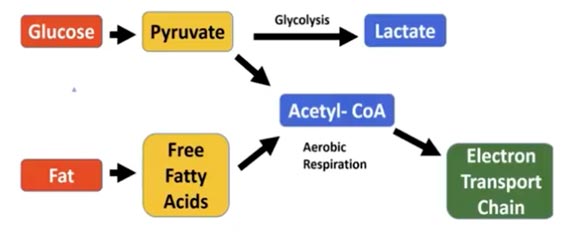
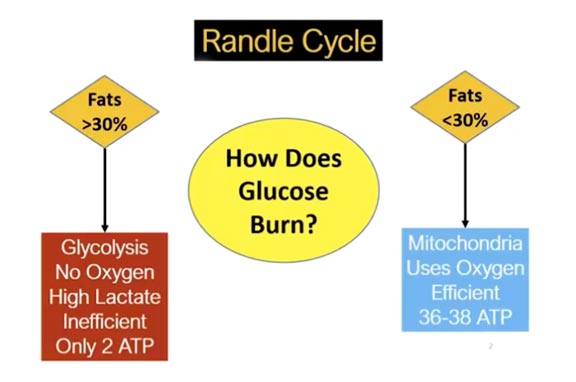
Provided your fat intake is below 30% or so (this is merely a best-guess at this point, as no one knows exactly what the threshold is), the glucose you consume will be shuttled into acetyl-CoA. When it goes to acetyl-CoA, it goes into the electron transport chain in the mitochondria.
Free fatty acids can also be metabolized into acetyl-CoA through beta-oxidation in the mitochondria, and there’s a competition that occurs there with glucose, which is why your fat intake needs to be low enough for glucose to enter this pathway.
Aerobic respiration uses oxygen in the mitochondria, whereas glycolysis, which occurs in the cytosol, does not use oxygen and is very inefficient. Glycolysis only generates two ATP molecules for each molecule of glucose, whereas aerobic respiration, which occurs in the mitochondria, generates 36 to 38 ATPs per molecule of glucose.
Ultimately, you want to burn glucose in your mitochondria. That’s the most efficient, allowing you to generate the most energy, while simultaneously producing the least amount of harmful “exhaust” in the form of reactive oxygen species (ROS).
And, again, the only way to ensure that is to keep your dietary fat content below 30% of your total calories. If you’re insulin resistant, which means you’re metabolically inflexible, that threshold may be closer to 20% or even 10%. So, if you’re insulin resistant, you’ll want to significantly lower your fat intake until your insulin resistance is resolved. Then you can increase it to 30%.
Endotoxin and PUFAs Decimate Mitochondrial Energy Production
Next, Feldman discusses a key strategy to optimize your mitochondrial energy production, which is to remove blocks in the electron transport chain so that electrons can move smoothly forward, without accumulating and backing up.
“We don’t need to focus on doing extra things to stimulate [mitochondrial energy production],” Feldman says. “Our mitochondria will work perfectly well if they have the right fuel and nutrients, and they aren’t being inhibited or blocked.”
According to Feldman, endotoxin (lipopolysaccharide or LPS) and other bacterial toxins are among the biggest culprits when it comes to things that hinder mitochondrial energy production. These toxins can directly impair electron transport through the complexes of the electron transport chain. They can also impair certain enzymes in the Krebs cycle.
The primary solution for obesity and most other conditions is to raise your metabolic rate, and a key strategy for that is to remove blocks in the electron transport chain. Endotoxin and polyunsaturated fats (PUFAs) are two key culprits that need to be eliminated.
Poor digestion is frequently associated with negative gram bacteria in your gut that produce endotoxin, and this will inhibit your ability to convert food to energy, resulting in increased body fat. So, it’s important to reduce your endotoxin load. Aside from poor digestion, excess endotoxin is also a common culprit in degenerative conditions, metabolic syndrome, diabetes and fatty liver. To reduce your endotoxin load:
- Rebalance your gut microbiome by reintroducing beneficial bacteria (probiotics and prebiotics). One of the best and least expensive ways to do this is to eat a serving of fermented vegetables each day.
- Temporarily go on a low-fiber diet and avoid fiber supplements as it can feed undesirable bacteria. Cook your vegetables thoroughly rather than eating them raw, and if your condition is serious, limit fruits for a time too.
- Eat a low-carb ketogenic diet and/or fast until the problem is resolved. As noted by Feldman, “This is one of the main places where low-carb diets, ketogenic diets, fasting, carnivore [diets] are really helpful, as they provide relief from the feeding of bacteria that are producing a lot of endotoxin.” Foods to avoid include most grains, legumes, nuts, and seeds.
- Avoid resistant starches, as they feed LPS-producing bacteria.
Once your microbiome is balanced and symptoms of poor gut function have resolved, you can slowly reintroduce whole fruits, vegetables, roots and tubers, and other foods. Another effective blocker of mitochondrial energy production is polyunsaturated fat (PUFA).
These are your processed seed oils, canola oil being among the worst of the worst. Seed oils are loaded with linoleic acid, an omega-6 PUFA, which appears to be one of the primary drivers of chronic diseases, in part due to its detrimental impact on your mitochondrial function and energy production.
The Expensive Tissue Hypothesis
After a short discussion about ancestral diets and the likelihood that such diets were generally high in carbs, Feldman and Gryn review the “expensive tissue hypothesis,” which is the idea that the less energy you waste on hard to digest, fibrous foods, the more energy is available for your brain.
“… that’s also a reason to be consuming a lot of carbohydrates and not excess protein, because the conversion from protein to glucose and then to energy is very inefficient,” Feldman says.
“It’s about 30% less efficient than just using glucose. So, if we consider the … expensive tissue hypothesis, we shouldn’t be consuming excess protein beyond our needs and trying to use that for energy, because … that leaves less energy for our immune function, our brain function, for reproductive function and and on …
Coming back to weight loss, there’s the constrained model of energy expenditure, which is very related here, which basically says that you can’t just expend more and more calories from, let’s say, exercise, without it coming at a cost.
So, if you exercise 1,000 calories’ worth and before you were burning 2,000 calories, that doesn’t mean that you just burned 3,000. What actually happens is, you start to cut into your own basal metabolic rate, and you start to cut into your bodily function.
So, your reproduction is turned down, your immune function is turned down … Extrapolated, it really also gets at the problem with the ‘eat less exercise more’ advice for weight loss.”
Endotoxin, Not Fructose, Causes Fatty Liver Disease
Feldman also debunks the argument that fructose, unlike what is being promoted by Drs, Robert Lustig, Richard Johnson and David Perlmutter, causes nonalcoholic fatty liver disease (NAFLD). He reminds listeners that both dietary fat and fructose can be converted into fat, and fructose isn’t automatically destined to end up as liver fat.
“In fact, very little fructose gets converted to fat,” he says, because “there are all sorts of of routes for it to go before it’s getting converted to fat … Fructose does go to the liver and it gets picked up by the liver immediately, whereas glucose will go out into the bloodstream and can be picked up by the muscles.
But our livers have developed to handle massive amounts of fructose. Most of the research that is looking at what happens to fructose … is going on in rats. And there are a few differences, there are a few problems there. One is that rat livers are very different from human livers in their capacity for fructose handling.
Our livers have an incredible capacity for handling fructose. Hundreds and hundreds of grams can be stored as glycogen, can be converted to glucose or lactate and sent out to be stored elsewhere, or used elsewhere, and then can also be oxidized.
So, when we consume excess fructose in a normal context, in a healthy liver, very little is going to be going to fat. It takes huge amounts of carbohydrates before you’re … producing much fat in the liver through de novo lipogenesis. And that’s because our livers have this incredible capacity for handling it …”
Feldman also remarks that many fructose studies are flawed in that they’re looking at fructose-only sources, which rarely ever exists in our food supply as it is virtually always accompanied with glucose. Results from such studies therefore do not tell you much about how natural, whole food-based fructose, say from fruit or honey, acts in the body.
“Whether you’re consuming fruit or honey or anything else, the fructose to glucose ratio is always near 1-to-1,” he says. “Sometimes there’s a slight bit more fructose [than] glucose, but even in high fructose corn syrup … it’s about 55% fructose and 45% glucose. We’re really not talking about major differences here.
And that’s important because our intestines don’t absorb pure fructose. If there’s glucose present, we absorb it very well. But if there’s no glucose present … you can’t really absorb it very well.
So, what happens is a lot of it doesn’t get absorbed in our small intestine. [It] continues down to the large intestine where it feeds bacteria. Those bacteria produce endotoxin, and that is what leads to things like fatty liver production [and] fatty liver disease.”
How to Gauge Your Metabolic Rate
According to the rate-of-living theory, the higher your metabolic rate — which means the quicker the electrons move from food toward oxygen, which is the final acceptor of electrons — the faster you’ll age because there’ll be higher oxidative stress.
However, deeper analysis reveals the exact opposite. The truth is, the higher your metabolic rate, the slower you age, because a high metabolism creates fewer ROS that can damage your tissues.
Your metabolism is high when electrons move rapidly and easily through the mitochondrial electron transport chain, which results in optimal energy production. When electrons are impeded from moving forward, they can back up, leak through the mitochondrial membrane and start moving backward, where they combine with oxygen to create excessive ROS.
So, for optimal health, you want high energy production and that means a high metabolic rate. As explained by Feldman, you can gauge your metabolic rate using your pulse and body temperature.
“If you’re not hitting 98.6 [degrees Fahrenheit] later in the day, if you’re not hitting 97.8 or 98.0°F when you’re waking up, that can be a sign of a hypometabolic state,” he says.
“If your [resting] pulse [first thing in the morning] is particularly low, if you’re not getting into the mid-70s or potentially low-80s, depending on your fitness state, that can also be a sign of a low metabolic rate.
The caveat is that the more cardiovascularly fit you are, the lower your pulse rate will be, independent of metabolic state. That’s because your stroke volume increases. The stroke volume is the amount of blood your heart pumps with each beat. So you can have fewer beats and still pump the same amount of blood … You can also look at temperature and pulse before and after a meal.
If … somebody wakes up at temperature 98.4°F. and then they have their breakfast and it drops to 97.5°F., that is a situation of a drop in stress hormones, where someone was waking up in a stress state, their sleep’s probably not optimal, they’re probably not optimal metabolically, then they’re consuming some carbohydrates and their stress hormones drop.
If you’re seeing that happen after a meal, it’s a pretty good sign that that’s what’s happening.
Another good way to do it is just seeing how many calories you can consume while maintaining your weight … If, with your activity and everything else, you should be burning 3,000 calories a day, but you’re maintaining your weight on 2,200 calories a day, that’s a sign that you’re pretty hypometabolic.”
Conversely, if you can maintain your weight when you add more calories, your metabolic rate is likely high, and the extra food will oftentimes improve your sleep, relaxation, energy and recovery.
Methylene Blue — A Useful Rescue Remedy
While there are no magic pills to fix slow metabolism or low energy production, there are some that can help. I’ve previously written about the usefulness of niacinamide, for example. Another helpful one is methylene blue. As explained by Feldman:
“As a supplement, it’s got a number of interesting effects. For one, it’s antimicrobial … but it also has some pretty interesting mitochondrial or energetic effects, where it is able to work as an electron acceptor and donor.
So, if things are not working well in the electron transport chain, the main site where we produce ATP, [if] something’s blocked, let’s say by endotoxin or polyunsaturated fats, whatever it is, methyl blue can help us bypass those issues and allow us to continue to produce energy despite those things.
It also lowers nitric oxide, which is another inhibitor of mitochondrial respiration. So, it’s got a number of benefits. I will say, like any other supplement, there’s a place for it and there’s also a place where it can be problematic, and it’s never the first thing I would go to.
We always want to work at those foundations first — get diet on point, eat consistently, get enough carbs and fats in, make sure we’re getting the nutrients we need, trying to work on our sleep hygiene, our movement …
But I do think there’s a place for methylene blue to help with either those microbial issues or for getting the metabolism going in certain instances. It also, in particular, has some benefits neurologically, because of these stimulating effects on respiration … So, yeah, I like it. Again, it’s not magic in that it is going to fix the problems, but it can be helpful along the way.”
Constructing the Ideal Diet to Maximize Energy
While it’s nearly impossible to come up with a diet that is ideal for everyone, general guidelines can be provided. After that, it’s up to you to experiment and note what works and what doesn’t. For example, some are outfitted with genes that can handle dietary fats better than others, while some may have had their gallbladder removed and can’t handle much fat at all. Following are some general principles for devising your ideal diet:
• Protein — Most adults need about 0.6 to 0.8 grams of protein per pound of lean body mass. As an example, if your body fat mass is 20%, your lean mass is 80% of your total body weight. Ideally, stick to animal-based protein such as clean seafood and low-LA animals like beef, bison, lamb and other ruminant game animals, raw grass fed dairy and organic pastured eggs.
Avoid chicken and pork as, even if pasture-raised and organically fed, they are given grains and other foods that are high in LA so they will increase your LA levels. Many plant-based proteins, including nuts and seeds (with the exception of macadamia nuts), are also high in PUFAs.
• Carbs — Avoid hard-to-digest carbs like most grains, including brown rice, and legumes, unless they’re soaked, properly cooked, sprouted or fermented. Good options include raw authentic honey, maple syrup, white rice, ripe and dried fruit, and well-cooked (preferentially pressure cooked) tubers like red potatoes, sweet potatoes and parsnip.
• Fats — Avoid seed oils, which are loaded with PUFAs like LA. Good options include butter, tallow, ghee, coconut oil and avocados.
If you’ve been on a low-carb, high-fat diet, slowly add in more carbs while simultaneously lowering your fat intake. As mentioned earlier, your fat intake probably needs to be somewhere around 30% or lower to allow for efficient glucose metabolism.
Feldman typically recommends a range of 20% to 40%, with the upper limit being for more physically active people with greater muscle mass. With fats at 30%, carbs would then be in the range of 55% to 60%, with protein making up the remaining 10% to 15%.
Increase Your Metabolism to Slow Your Aging
As mentioned earlier, high metabolism is the key to slowing down aging. And the slower you age, the more youthful and resilient you’ll be. As noted by Feldman:
“When we’re in our 20s, let’s say, or late teens, we can kind of eat whatever, our metabolic rate’s really, [we have] high libido’s, sleep is never an issue … digestion is really good; things don’t bother you. That’s the state … we want to be getting to. And I would say the key difference there is, where is our metabolic rate at?
Over time, metabolic rate slows, mitochondrial respiration slows. If you take aged mitochondria from someone who’s above the age of let’s say 60 or 70, there’s a dramatic reduction in energy production … So, the solution is to get back to that young metabolism. And I think it’s totally doable.
It’s just a matter of eating the things that are designed for optimal function, that allow for maximal energy production, [and] avoiding the things that interfere with that — avoiding the polyunsaturated fats, lowering endotoxin, having good, consistent sleep, consistent movement.
It’s a complex, right? It’s never as simple as ‘Just eat this one thing,’ or ‘just take this one pill.’ [It’s] having that perspective of trying to think of speeding things up, as opposed to slowing things down.”
Ancient Source of Fiber Grows Popular for Shedding Pounds
Reproduced from original article:
https://articles.mercola.com/sites/articles/archive/2023/09/18/psyllium-husk.aspx
The original Mercola article may not remain on the original site, but I will endeavor to keep it on this site as long as I deem it to be appropriate.
Analysis by Dr. Joseph Mercola Fact Checked September 18, 2023

STORY AT-A-GLANCE
- Psyllium husk, which comes from Plantago ovata, a plant native to Asia, has been used in traditional Indian and Chinese medicine for centuries
- This ancient digestive aid has begun trending among a new generation — one that grew up watching their parents down psyllium-husk powder and water to stay regular
- Psyllium husk is a far safer alternative to weight loss drugs like semaglutide, more popularly known as Ozempic
- A comprehensive review and meta-analysis published in the Journal of the American Association of Nurse Practitioners found psyllium decreased body weight, body mass index and waist circumference in overweight and obese individuals
- Known for its appetite-reducing effects, psyllium husk also relieves constipation and may be useful for supporting heart and cardiometabolic health
Organic, whole husk psyllium is an excellent fiber supplement, especially when taken two hours after a meal with a full glass of water. This ancient digestive aid has also started trending among a new generation — one that grew up watching their parents down psyllium-husk powder and water to stay regular.1
But there’s something to be said for psyllium husks — not in commercially available orange-flavored products but in their minimally processed, whole-husk form.
The seeds, which come from Plantago ovata, a plant native to Asia, have been used in traditional Indian and Chinese medicine2 for centuries and now its many benefits are being realized by those using for weight loss, gluten-free baking and a host of uses in between.
Psyllium Husk Embraced by the Ozempic Crowd
With both soluble and insoluble fiber, psyllium husk is often used as an appetite suppressant among those looking to lose weight. The New York Times reported:3
“Mr. [Max] Wittek, 33, a software engineer in Greenpoint, Brooklyn, who recently went on a ketogenic diet, has used psyllium husks to make his cauliflower-based pizza crust more filling.” Psyllium, he said, “shushes my belly from saying, ‘Please put something in me.’”
It’s a far safer alternative to weight loss drugs like semaglutide, more popularly known as Ozempic. The demand for medications promising easy weight loss has skyrocketed, with prescriptions rising 2,082% from 2019 to 2022.4 Sales of psyllium-husk products are also on the rise, with 249 such products released in the U.S. from 2018 to 2022.5
When you add water to psyllium, it forms a viscous gel that’s not digested or fermented in the body. In the small intestine, psyllium increases the viscosity of chyme — a semi-fluid mix of partially digested food, fluid and stomach acid — which slows absorption and degradation of nutrients.6
A comprehensive review and meta-analysis published in the Journal of the American Association of Nurse Practitioners found psyllium decreased body weight, body mass index and waist circumference in overweight and obese individuals. “Gel-forming nonfermented psyllium fiber, dosed just before meals, is effective in facilitating weight loss in overweight and obese participants,” the team concluded.7
Known for its appetite-reducing effects, a separate study comparing psyllium husk to the weight loss drug orlistat in mice found both treatments had a similar effect on controlling body fat rate, but psyllium worked better to reduce triglyceride levels.8
Among obese or overweight children and adults, as well as those with metabolic syndrome, daily consumption of psyllium was also found to improve blood lipid profiles and glycemic response, while increasing satiety and improving metabolic syndrome and cardiovascular disease risk factors.9
Why You Should Try Natural Strategies, Not Ozempic
Weight loss drugs like Ozempic are all the rage, but their growing list of significant side effects — not to mention their high costs — has people seeking out safer, more natural options like psyllium. This is good news, since semaglutide, sold under the name Ozempic as a diabetes drug and, in a higher dose, under the name Wegovy as a weight loss drug, can also lead to debilitating side effects, including stomach paralysis.
Gastroparesis, or delayed gastric emptying,10 slows or stops the movement of food from your stomach to your small intestine. This results in feeling full longer, which is one mechanism semaglutide uses to cause weight loss. However, gastroparesis also leads to nausea, vomiting and, in severe cases, dehydration and malnutrition. Diabetes is the most commonly known cause of gastroparesis, due to nerve damage in the stomach.11
However, semaglutide and similar drugs are designed to delay gastric emptying, and severe nausea and vomiting — common symptoms of gastroparesis — are reported in many who take them. Even WeightWatchers, also known as WW, is moving into the obesity drug market via its acquisition of telehealth platform Sequence, where it intends to provide its clients with easy access to weight loss drugs like Wegovy.12
Psyllium suppresses appetite in a similar manner, but is much safer overall. As noted in Alimentary Pharmacology & Therapeutics, “Although psyllium is useful, it may cause loss of appetite and delay gastric emptying if used before meals …”13
Download this Article Before it Disappears
Berberine — Another ‘Natural Ozempic’
On the topic of natural alternatives to Ozempic, berberine is another option with similar benefits to psyllium, although it’s an entirely different compound. Berberine is a chemical found in plants such as goldenseal and European barberry.14 Research shows it helps to regulate blood sugar and may help with weight loss.
A 2022 systematic review of the literature demonstrated that supplementing with berberine had a positive effect on lipid profile, fasting blood glucose, obesity parameters and systolic blood pressure.15
In a 2022 paper in Frontiers in Cellular and Infection Microbiology, the researchers wrote, “Studies have shown that BBR [berberine] can alleviate the pathological conditions of metabolic disorders, and the mechanism is related to the regulation of gut microbiota … meanwhile, the structure and function of gut microbiota also changed after intervention by berberine.”16
Like psyllium, berberine may also delay the amount of time it takes for food to pass through your small intestine,17 and preferentially nourish microbes that produce beneficial short-chain fatty acids known to have many health benefits.18
Psyllium Husk Offers More Than Weight Loss
The beauty of natural compounds like psyllium is they typically have multiple beneficial effects. Psyllium husk is no different, acting as a health-promoting prebiotic in your gut.
“Psyllium husk … consists of highly branched and gel-forming arabinoxylan, a polymer rich in arabinose and xylose which has limited digestibility in humans. However, several members of the intestinal microbiota can utilize these oligosaccharides and their constituent sugars as an energy source and, therefore, psyllium can be considered to have prebiotic potential,” researchers explained in the International Journal of Molecular Sciences.19
Prebiotics help increase the growth of beneficial bacteria while boosting production of short-chain fatty acids like butyrate and propionate, which play a role in building the gut barrier,20 making it less permeable to disease-causing microorganisms.21 Further, butyrate has been shown to induce programmed cell death of colon cancer cells.22
Psyllium also helps retain water in the small intestine, increasing water flow to the colon.23 This makes it a powerful natural option for constipation relief. “It traps water in the intestine increasing stool water, easing defecation and altering the colonic environment,” researchers with the University of Helsinki, Finland, and colleagues explained.
This is associated with significant changes in gut microbiota, particularly in those who are constipated.24 Psyllium works as well as kiwifruit and prunes for relieving constipation and has the added benefit of significantly improving straining.25 Psyllium has also been found to work better than wheat bran for constipation relief and is also useful for diarrhea and other bowel issues:26
“The water-holding capacity of the psyllium gel acts as a stool normalizer, softening hard stool in constipation, firming loose/liquid stools in diarrhea, and normalizing stool form/reducing symptoms in irritable bowel syndrome (IBS). Psyllium is the only isolated fiber recommended for treatment of IBS by the American College of Gastroenterology and chronic idiopathic constipation by the American Gastroenterological Association.”
Psyllium Benefits Your Heart and Metabolic Health
Psyllium offers many additional health benefits, which are clinically proven, including:27
- Improved glycemic control among people with metabolic syndrome and Type 2 diabetes
- Cholesterol optimization
- Lower blood pressure
A report funded by the Council for Responsible Nutrition (CRN) Foundation found that were U.S. adults over the age of 55 with heart disease to take psyllium dietary fiber on a daily basis, it could cut health costs by nearly $4.4 billion a year by reducing coronary heart disease-related medical events by 11.5%.28
A review published in Food & Function also hailed the potential for psyllium to prevent and treat cardiometabolic diseases and their complications, noting, “Numerous pharmacological studies have investigated the active ingredients and therapeutic effects of psyllium and its extracts, including antioxidant, anti-tumor, antidiabetic, hypotensive, anti-inflammation, neuroprotection, antidiarrheal, and antiviral activities.”29
Psyllium husk may also reduce the risk of gallstone formation by decreasing the body’s biliary cholesterol saturation index.30
Organic Psyllium Is Best
Psyllium is a heavily sprayed crop, which means many sources are contaminated with pesticides, herbicides and fertilizers. For this reason, only use organic unsweetened psyllium husk. Taking organic psyllium three times a day could add as much as 18 grams of fiber (soluble and insoluble) to your diet.
Ideally, you’ll want to get around 25 to 50 grams of fiber per 1,000 calories consumed, so you’ll want to use psyllium in addition to a fruit- and veggie-rich diet. As mentioned, consume psyllium along with a full glass of water. It can also be useful in cooking and baking, and many gluten-free recipes rely on psyllium husks.
Serious adverse reactions to psyllium are rare, but if you have swallowing difficulties, narrowing of the esophagus or other gastrointestinal tract obstructions, you should consult your physician before using psyllium.
In addition to psyllium, healthy foods with high amounts of fiber include green peas, artichoke, baked sweet potato with the peel intact, spinach, broccoli, Brussels sprouts, cauliflower and many other vegetables.
Additional options that are also excellent fiber sources include pears, raspberries, stewed prunes, dried figs or dates (eaten in moderation due to high sugar content), pumpkin, apples with the skin intact and oranges.
- 1, 3, 5 The New York Times August 17, 2023
- 2 Crit Rev Food Sci Nutr. 2022;62(2):527-538. doi: 10.1080/10408398.2020.1822276. Epub 2020 Sep 21
- 4 Komodo Health February 17, 2023
- 6, 7, 26, 27 J Am Assoc Nurse Pract. 2023 Aug; 35(8): 468–476
- 8 Food Funct. 2022 Aug 30;13(17):8829-8849. doi: 10.1039/d2fo01161a
- 9 Nutrition. 2019 Jan;57:84-91. doi: 10.1016/j.nut.2018.05.036. Epub 2018 Jul 12
- 10 CNN Health July 25, 2023
- 11 National Institute of Diabetes and Digestive and Kidney Diseases, Gastroparesis, Symptoms & Causes
- 12 Globe Newswire March 6, 2023
- 13 Aliment Pharmacol Ther. 2016 Jul; 44(1): 35–44., Intro
- 14 MedlinePlus, Berberine
- 15 Frontiers in Nutrition, 2022; 9
- 16 Frontiers in Cellular and Infection Microbiology, 2022;12(854885)
- 17 Zhongguo Zhong Xi Yi Jie He Za Zhi. 1994;14(12)
- 18 Scientific Reports 2015;5
- 19, 20, 23, 24 Int J Mol Sci. 2019 Jan; 20(2): 433
- 21 Inverse, The Science Behind Probiotics
- 22 Factors Determining the Apoptotic Response of Colorectal Carcinoma Cells to Butyrate, a Fermentation Product Derived from Dietary Fiber (2009)
- 25 Am J Gastroenterol. 2021 Jun 1;116(6):1304-1312. doi: 10.14309/ajg.0000000000001149
- 28 CRN Foundation Report
- 29 Food Funct. 2022 Jul 18;13(14):7473-7486. doi: 10.1039/d2fo00560c
- 30 Am J Surg. 1999 Apr;177(4):307-10. doi: 10.1016/s0002-9610(99)00047-1
Can Fenugreek Boost Testosterone?
Reproduced from original article:
https://articles.mercola.com/sites/articles/archive/2023/09/04/fenugreek-testosterone.aspx
The original Mercola article may not remain on the original site, but I will endeavor to keep it on this site as long as I deem it to be appropriate.
Analysis by Dr. Joseph Mercola Fact Checked September 04, 2023
STORY AT-A-GLANCE
- Several studies support the theory that fenugreek promotes an increase in testosterone levels, which supports a reduction in body fat, improvement in upper and lower extremity strength and an improvement in men’s sexual function
- Testosterone is a sex hormone important to hormonal balance in men and women. Small amounts of circulating testosterone are converted to estradiol and, in turn, improve women’s sexual function and desire
- Testosterone is converted to dihydrotestosterone (DHT), another sex hormone. High levels of DHT contribute to prostate cancer, polycystic ovarian syndrome and male pattern hair loss
- Fenugreek increases testosterone levels but lowers DHT levels, which helps reduce hair loss. Fenugreek also helps modulate blood glucose levels and improves glucose tolerance in those with Type 2 diabetes
In this eight-minute video, Dorian Wilson reviews some of the effects fenugreek can have on hormonal balance. Fenugreek has a long history in traditional medicine and is a common ingredient in foods found in the Mediterranean region, Western Asia and Southern Europe, which is its native habitat.
Fenugreek seeds smell and taste like maple syrup and the extract is used in many soaps and cosmetics. According to the National Center for Complementary and Integrative Health,1 it’s believed to be safe in amounts commonly found in food but should not be used during pregnancy in larger amounts as it’s been linked to birth defects.
In areas where the herb grows natively, it was traditionally used to increase milk supply in breastfeeding women and to treat diabetes. Another benefit of fenugreek supplements is a boost in testosterone. Testosterone is a sex hormone that’s known to regulate fat distribution, muscle mass and strength, cognitive health, sex drive and bone mass in men.
As men age, they can produce less testosterone, which contributes to testosterone deficiency and an accompanying decline in estradiol. Small amounts of circulating testosterone are converted into estradiol,2 which is a form of estrogen important to men’s and women’s health.
While testosterone is the most significant sex hormone for men and estrogen the most significant sex hormone for women, men and women require a balance of estrogen and testosterone, just in different ratios.
Fenugreek Boosts Testosterone Levels and More
In this short four-minute video, Dr. Michael Greger reviews research evidence demonstrating the effect fenugreek has on testosterone levels and subsequent health benefits. In the first study titled, “The Effects of a Commercially Available Botanical Supplement on Strength, Body Composition, Power Output, and Hormonal Profiles in Resistance-Trained Males,” Gregor notes several benefits.3
The researchers engaged 49 participants in an eight-week intervention in which they participated in resistance training and took either 500 mg of a placebo or fenugreek. The results demonstrated a reduction in body fat and an improvement in lower and upper extremity strength. Greger noted that the only side effect the men appeared to have was that the fenugreek made their sweat and urine smell like maple syrup.
Past research studies on castrated rats have demonstrated that fenugreek could raise testosterone levels enough to improve muscle bulking in the animal study. But it wasn’t until recently that a review of four trials demonstrated that fenugreek could significantly increase total serum testosterone,4 with subsequent health benefits.
A study5 published in The Aging Male showed fenugreek improved men’s sexual function and another study demonstrated it facilitated an increase in testosterone and estradiol in women, which in turn improved sexual desire and function.
The results were so significant that researchers measured double the sexual activity as compared to the women taking a placebo. The next logical question was that if fenugreek could improve estrogen levels in women could it influence menopausal symptoms?
Greger discusses a 2017 study6 published in Phytotherapy Research, in which the researchers found a significant reduction across every domain measured, including in weekly hot flashes and night sweats, cutting those nearly in half over three months.
Since fenugreek appeared to improve symptoms of hormonal imbalance, another study measured whether it could improve painful periods, also called dysmenorrhea. They found that taking just a third of a teaspoon of fenugreek in the first three days of the woman’s menstrual period reduced pain and improved other menstrual symptoms as well.
Finally, Greger reviewed research from a randomized double-blind placebo-controlled trial that demonstrated that fenugreek is a galactagogue which increases breast milk production by 50% within two weeks and 100% within four weeks.
Relationship Between Testosterone and DHT
As the video from Wilson describes,7 an enzyme in the body converts circulating testosterone to dihydrotestosterone, also known as DHT. This is the hormone responsible for the expression of male features. When DHT rises too high or too low, it can create health issues, depending on your age and stage of sexual development.
While DHT helps the expression of male physiology during puberty, it is testosterone that maintains that expression throughout adulthood.8 In an adult, high levels of DHT are associated with prostate cancer, polycystic ovarian syndrome, benign prostatic hyperplasia and androgenic alopecia or male pattern hair loss.
Wilson describes two studies9 in which fenugreek demonstrated a small increase in circulating testosterone with a subsequent decrease in circulating DHT. The theory is that a compound in fenugreek inhibits the 5 alpha-reductase enzymes that are responsible for converting testosterone to DHT. This decrease in DHT may offer some benefit to men and women suffering from male pattern hair loss, as demonstrated by several studies.10,11
As Wilson points out, the increase in testosterone and subsequent reduction in DHT is not enough to explain the increase in men’s libido while taking fenugreek. Additionally, the androgen receptors in the brain respond to DHT and not testosterone, which means that as DHT levels drop taking fenugreek, you might expect libido to also drop.
However, as it turns out with many other mechanisms within the body, it’s much more complex than the effect of one hormone on one receptor.12 Wilson consulted with Beth Steels, Ph.D., from the University of Sydney, who explained that libido is a complex relationship between hormones, in which testosterone plays just one part.
She explained that fenugreek also interacts with gut bacteria, which may help balance other hormones within the body. Wilson proposes that fenugreek affects anabolic signaling pathways in the brain and doesn’t just simply raise hormone levels, which may be one explanation for how fenugreek affects libido without significantly raising testosterone levels.
Download this Article Before it Disappears
Fenugreek and Blood Sugar Benefits
Wilson goes on to describe the benefits in one study13 that participants experienced when consuming between 2 and 5 grams of fenugreek seeds. On average, the participants experienced a 13.4% decrease in blood glucose and an improved glucose tolerance. Reduction in blood sugar and improvement in glucose tolerance may help those with Type 2 diabetes.
The number of people with diabetes continues to rise each year, which has a significant financial impact on health care and affects life expectancy as it’s a modifiable leading or contributing factor to at least five of the 10 leading causes of death in the U.S.14
Researchers in one study15 evaluated the addition of soaked fenugreek seeds to the diet and found it had a synergistic effect with diet and exercise on fasting blood glucose and hemoglobin A1c. The study enrolled 60 patients with Type 2 diabetes who had been diagnosed for at least six months and were on blood glucose-lowering medication.
The group was randomized to receive 10 grams of soaked fenugreek seeds and the control group that did not. Additionally, both groups adhered to strict diet and exercise guidelines from the American Diabetic Association. Each month both groups were tested for fasting blood sugar levels and hemoglobin A1c. Statistical analysis of the data showed a significant reduction in fasting blood glucose in the intervention group that occurred in the fifth month of the study.
A second study published in Food and Nutrition Research,16 enrolled 154 people with Type 2 diabetes. The participants took a daily dosage of 500 mg twice a day of Fenfuro, an enriched fenugreek seed extract. There were 108 men and 46 women between the ages of 25 and 60 years.
The researchers measured body weight, pulse rate, blood pressure, fasting and postprandial plasma blood sugar, hemoglobin A1c and C peptide levels. The data revealed a significant reduction in fasting plasma and postprandial blood sugar levels with roughly 83% of the participants exhibiting a decrease in fasting plasma sugar levels and 89% experiencing a reduction in post parental plasma sugar levels.
The researchers did not record any significant adverse effects from blood chemistry analysis and 48.8% of those taking Fenfuro reported reducing their anti-diabetic therapy.17
The mechanism by which fenugreek helps lower blood glucose levels is not well understood. It could be that the hormonal balancing effect has a positive effect on several bodily systems. However, while fenugreek has demonstrated the potential to raise testosterone levels and lower blood sugar, it is important to use this as an adjunct to other lifestyle changes.
As I have written before, intermittent fasting helps balance testosterone in men and women and you can naturally raise testosterone levels by maintaining a normal weight, getting exercise and seven to eight hours of quality sleep.18 Additionally, you should avoid tobacco, stress and excessive alcohol.
- 1 National Center for Complementary and Integrative Medicine, Fenugreek
- 2 Reviews in Urology, 2017;19(1)
- 3 Nutrition Facts, August 1, 2022, Click “View Transcript” in gray bar below the video – may have to scroll to see the bar, para 1
- 4 Nutrition Facts, August 1, 2022
- 5 Nutrition Facts, August 1, 2022, Video min 1:02 & 1:07
- 6 Nutrition Facts, August 1, 2022, Video Min 2:00 Dysmenorrhea min 2:17
- 7 YouTube, April 17, 2018; min 3:28
- 8 Cleveland Clinic, DHT (dihydrotestosterone), section 2
- 9 YouTube, April 17, 2018; min 4:20
- 10 International Journal of Current Research, 2013;5(11)
- 11 Kosmetische Medizin, 2006;27(4)
- 12 YouTube, April 17, 2018; min 5:40
- 13 YouTube, April 17, 2018; min 6:40
- 14 Centers for Disease Control and Prevention, Leading Causes of Death
- 15 AYU, 2017; 38(1-2) Abstract/Materials/Results
- 16, 17 Food and Nutrition Research, 2016;60
- 18 VA Office of Patient Centered Care and Cultural Transformation, Improving Low Testosterone Naturally
Crucial Facts About Your Metabolism
Reproduced from original article:
https://articles.mercola.com/sites/articles/archive/2023/08/20/mitochondria-glucose-metabolism.aspx
The original Mercola article may not remain on the original site, but I will endeavor to keep it on this site as long as I deem it to be appropriate.
Analysis by Dr. Joseph Mercola Fact Checked August 20, 2023
STORY AT-A-GLANCE
- Cortisol is primarily a rescue hormone. It’s a glucocorticoid, so it increases your glucose level by shredding your muscle protein to produce glucose. Cortisol also accelerates the aging process and is implicated in most chronic diseases. It also uses your brain tissue to use amino acids to make glucose which contributes to brain atrophy and subsequent depression
- Your mitochondria can only burn one fuel at a time — either fat or glucose — and there’s a stealth switch that controls which of these fuels your mitochondria will burn. This switch is known as the Randle cycle
- Ideally, you want to metabolize (burn) glucose in your mitochondria, as this only generates 0.1% reactive oxygen species (ROS). This route also generates energy most efficiently, creating 36 to 38 adenosine triphosphates (ATP) for every molecule of glucose that is metabolized. For this to occur, you need to consume less than 30% of your calories as fat
- When you consume significantly more than 30% fat, the switch changes to burn fat in your mitochondria. As a result, glucose then backs up into your bloodstream, raising your blood sugar. This is a major contributor to diabetes
- When you lose muscle, your basal metabolic rate goes down, so it’s important to maintain muscle mass, because your muscle will burn fat even when you’re resting
In this interview, repeat guest Georgi Dinkov and I will again take a deep dive into the biochemistry of human metabolism. Dinkov is a student of the late Ray Peat, a biologist, thyroid expert and pioneer in prometabolic therapy and human metabolism.
Despite having a degree in computer science and having no formal academic training in health, Dinkov essentially has acquired a Ph.D. in molecular biology. After graduating from Georgetown University in 2002, Dinkov got a job as a programmer at the National Biomedical Research Foundation (NBRF).
There, he helped develop uniprot.org, a database of all known protein sequences. Surrounded by dozens of the brightest doctors and biochemists in the world, he developed an interest in biochemistry.
Clearing Up Confusion
I have long promoted a low-carb, high-fat diet for many years and have realized many are confused on the evolution of my recommendations. As I say in the interview, 95 to 97% of the population in the U.S. is metabolically inflexible and would likely benefit from a low-carb, high-fat keto approach with intermittent fasting.
However, once you have resolved your insulin resistance, which typically takes a few months but can take longer, and can optimally burn fat for fuel, it is very clear to me that you need to cycle carbs back into your diet. There are loads of questions about how this transition occurs, the timing of the transition, and the details of the cycling that need to be answered.
No one knows the answers, as the studies have not been done, but I am fairly convinced that many people will appear to do well in the long term on a low-carb, high-fat keto program like I did. However, I also believe they would do even better if they started to include more healthy carbs in their diet like I did. That does not mean processed foods or processed sugars, or virtually all grains and legumes. The ideal carbs are ripe fruits.
You should introduce carbs slowly and only after you have shifted your fat level down to 30%. This is easily calculated by using a free online program called Cronometer. If you still struggle with diabetes or obesity, then you can get your fat level down to 15 to 20% of your total calories.
Protein level should always remain the same and does not change from 0.7 to 1 gram protein/kg of lean body weight. So, if you are 20% body fat then you would multiply your body weight by 0.8 to get your lean body mass.
In my case, it took me about three to six months to go from 100 grams of carbs to 500 grams. The results for me were quite spectacular. I was already healthy, but it clearly improved my health even further as my body fat dropped from 15% to 12%, my inflammation decreased to radically low levels as my HS-CRP went from 0.8 to 0.18 which is almost below detection levels. Finally, even though I was not prediabetic as my blood sugar was in the low 90s, it dropped by 10 points to the low 80s.
The reason I made this shift is I was overwhelmed by the amount of strong scientific support for demonstrating that the ideal fuel in your mitochondria is indeed glucose, not fat. It has to do with decreasing reductive stress in your mitochondria which is a relatively unknown concept in molecular biology.
When implementing the transition to healthy carbs you need to be careful not to eat too many carbs as excess carbs will be shunted to glycolysis and into glucose into your blood and lead to an increased blood sugar. The more muscle mass you have and the more exercise you do, the more carbs you can eat.
I suspect most people could easily transition to 200 grams of carbs. I seem to do well with about 500 grams, mostly all fruit but do have white rice and red potatoes as well. You should see my shopping cart as every week it is loaded with about 60 pounds of fruit.
The Cortisol-Glucose Link
For example, Dinkov helped me understand the crucial role cortisol plays in glucose regulation. Cortisol is primarily a rescue hormone. It’s a glucocorticoid, and as the name implies, it increases your glucose level, because if your glucose level drops too low, you will go into a hypoglycemic coma and can die.
As such, cortisol is a lifesaver. The downside is that it uses up vital protein to make glucose, so high cortisol takes a toll on your muscles. The reason anabolic steroids build muscle mass is because they’re anti-cortisol. You would’ve thought anabolic steroids would have some direct action on the muscles, but no, they primarily inhibit cortisol’s catabolic impact.
Cortisol uses muscle protein to produce glucose in your liver, so when your glucose level drops, cortisol rises and shreds muscle to produce glucose. This is one of the puzzle pieces that explains why you don’t want your glucose levels to be low over prolonged periods.
Cortisol also accelerates the aging process and is implicated in most chronic diseases. In the case of Addison’s disease (adrenal failure), the opposite is present: low cortisol. These patients are typically required to take cortisol injections on a regular basis. On the upside, this chronic cortisol deficiency tends to impart a youthfulness. In most other chronic conditions, high cortisol is part of the problem.
Download this Article Before it Disappears
High Cortisol Speeds Aging
Dinkov comments:
“Studies as far back as the 1950s and 60s demonstrated that you can produce every single phenotype of aging if you inject cortisol, or at least create a state of relative glucocorticoid excess in the animal.
You can do that either by injecting synthetic or natural glucocorticoids, or by increasing the levels of natural anti-cortisol steroids in the body. Those are progesterone and DHEA, and in males testosterone and dihydrotestosterone.
It has been shown that cortisol levels do not decline with age unless you really have adrenal failure, while the levels of all these anti-cortisol, youth-promoting hormones decline with age. By the time you’re 80, their levels are at about 20% of what they used to be when you were in your 20s.
So, really, what happens is that cortisol stays the same, but your relative state of cortisol increases because there’s nothing to oppose the cortisol that is already there. Multiple intervention studies have demonstrated that if you administer agents that oppose cortisol, block it at the receptor level, or reduce its synthesis, you can achieve really good health results and also improve the way you look.
Anabolic steroids are probably the best known example. It’s really a misnomer because they’re not anabolic. They’re actually anticatabolic. Muscle has one of the highest expressions of the glucocorticoid receptor, through which cortisol shreds the muscle. It binds the receptor and increases a number of different proteolytic fibers.”
High Cortisol Linked to Depression
Your gastrointestinal tract and brain also have high numbers of glucocorticoid receptors, so cortisol shreds brain tissue as well, causing brain atrophy and subsequent depression. Research has shown that people with depression have smaller brain volumes than people who don’t have depression.
“Within 48 hours of the glucocorticoid blocker RU-486 being administered to people with clinical treatment-resistant depression, they experienced remission. So I think it’s a very good argument that cortisol is catabolic to the brain, and clearly, if it’s catabolic to the brain, it’s probably not going to improve your mood. If anything, it’s going to worsen it.”
Again, when your blood sugar level drops, that triggers your body to increase cortisol, which is the last thing you want if you struggle with depression or other chronic disease. Really, one of your primary goals in achieving optimal health is to limit the elevation of your cortisol. It’s far more destructive than having elevated blood sugar, which most focus on.
High Cortisol Is Far Worse Than High Blood Sugar
Many wear continuous glucose monitors that check your glucose level every five to 10 minutes. But high glucose is not the real danger here. Cortisol is, and it rises when glucose drops too low. As noted by Dinkov:
“All the drugs on the market, especially the more recent ones that lower HB A1C, the glycated hemoglobin, all of them increase mortality. So, clearly, messing directly with the levels of blood glucose, it’s not something you want to do.
You may temporarily decrease the biomarker, the glycated hemoglobin, but it does not mean you’re getting healthier. [These drugs] may lower your blood glucose, but they may kill you in the long run faster than the elevated glucose would’ve done by itself.”
Metformin is one classic example. Many are using this drug to lower their blood sugar. While it’s a natural product, and considered safe, it’s basically a mitochondrial toxin that will make your health decline in the long term.
All of that said, we’re NOT saying you should ignore elevated blood glucose. Absolutely not. But elevated glucose is a symptom that is best addressed indirectly. Once you address the foundational cause, it will normalize by itself. As a personal anecdote, when I first interviewed Dinkov, 70% to 80% of my diet was fat. Now, I’m down to 27% fat and 57% carbohydrates, and I’ve lost 5 pounds and my fasting blood sugar is down by 10 points.
So, it’s not the carbohydrate ingestion that’s causing high blood sugar. It’s what’s happening at the mitochondrial level. To help you understand that, I created a graphic (below) because this science can get somewhat complex.
The Randle Cycle
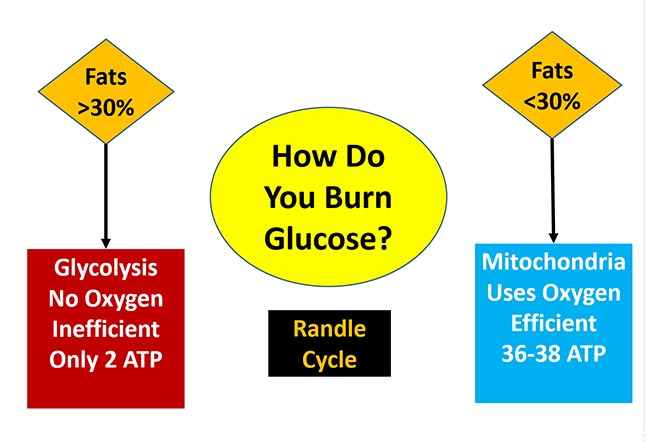
Your mitochondria can only burn one fuel at a time — either fat or glucose. Fats are broken down in a process called beta oxidation into acetyl-CoA, which gets fed into the Krebs cycle. Carbs are broken down to pyruvate, which cannot enter the electron transport chain until it is converted to acetyl-CoA by pyruvate dehydrogenase.
The key here is that there’s a stealth switch that controls which of these fuels your mitochondria will burn. The switch has been given the name the Randle Cycle, but it is more helpful to visualize it as a railroad switch that changes the tracks of the train. The train can only travel down one track: not both. This is because only one type of fuel can be burned at a time.
In a best-case scenario, you will metabolize, or burn, glucose in your mitochondria without any reductive stress. When you do this, you will only generate 0.1% reactive oxygen species (ROS).
Not only does this route generate less ROS, but it also is incredibly efficient at energy production by creating 36 to 38 adenosine triphosphates (ATP) for every molecule of glucose that is metabolized. It will also generate metabolic water and carbon dioxide, which are also important for your health.
For this to occur, as indicated in the figure above, you will need to consume less than 30% of your calories as fat. When you consume significantly more than that amount, the switch changes to burn fat in your mitochondria and you will not be able to burn glucose until your fat decreases to less than 30% of calories.
When your fat intake is higher than 30%, pyruvate is inhibited and unable to readily convert the glucose metabolite, pyruvate, into acetyl-CoA to be shuttled into the mitochondria to burn as fuel.
Consequently, glucose can back up into your bloodstream, raising your blood sugar. What little glucose is burned for fuel is done through glycolysis, which is a primitive pathway that bacteria and cancer cells use, and it generates the powerful metabolic reductant lactate.
This can be a major contributor to diabetes. If you’re exercising, healthy and doing strict keto, overt diabetes is unlikely to develop, but more than likely you will have fasting glucose in the 90s, rather than the more optimal 80s.
Additionally, chronically oxidizing fats as your primary fuel will tend to increase your cortisol level, resulting in chronic inflammation, both of which accelerate the aging process due to excess ROS generated in the mitochondria that occurs from increased reductive stress as a result of oxidizing fat instead of sugar.
It is great that we have this glycolysis pathway, as you absolutely need it for quick fuel when you are activating your Type 2 muscle fibers. But if this is the primary way you burn glucose, you are in a catastrophic metabolic state because you’re creating loads of lactate as a waste product instead of healthy CO2 and metabolic water.
What’s more, you’re only generating two ATP for every molecule of glucose, which is 95% less energy. Lactate increases reductive stress, which causes reverse electron flow in the mitochondria and increases the ROS to 3% to 4%, which is 30 to 40 times more than when glucose is burned efficiently in the mitochondria at 0/1% ROS.
When Adding Carbs, Reduce Your Fat Intake
Ideally, it is best to lower your fat intake and replace those calories with healthy carbs like ripe fruit. You likely won’t optimize your mitochondrial function, though, until your fat level decreases to 30% of your total calories. So, hold off on making a final decision about whether this change is helping you or not until you get your fat level to 30% or lower.
This is easily calculated by using a free online program called Cronometer. If you still struggle with diabetes or obesity, then you may need to get your fat level down to 15% to 20% of your total calories.
Protein Versus Fat and Carb Requirements
Determining the ideal balance between carbs and fats is the primary challenge for most people. The level of protein is a bit simpler. It tends to be about 15% of daily calories and remains stable. A basic guideline for protein intake is somewhere between 0.7 grams and 1 gram per kilogram of lean body mass (not total weight).
The level of dietary fat you need will depend on your endocrine balance. If you’re diabetic, for example, you may need to go below 20% to avoid shutting down your glucose metabolism. Dinkov comments:
“If you look at older people, and sick people as well, they have metabolic inflexibility. So, if you give them a meal that’s comprised of equal number of calories of carbs and fats, they’re going to oxidize mostly the fats and the carbohydrates will go unmetabolized.
So, they’ll raise their blood glucose and lactate. So, you need to play with the ratio, but I’ve noticed that between 15% and 20% is probably where most people in their current health state can metabolize the fat without causing problems through the Randle Cycle.
Most diabetics are overweight … which means they have plenty of supply of fat. In fact, they have two sources of fat: one through the diet, and the second one from their fatty tissue, because there’s always some lipolysis going on, which means shredding the fatty tissue and supplying the rest of the body with the fatty acids from a fatty tissue …
In the rested state, your muscles actually prefer to oxidize mostly fat. So, if you have a decent amount of muscle mass, you can actually burn most of this fat through the baseline lipolysis by simply resting and preferably raising the amount of lean muscle mass you have. The ratio of lean muscle mass to total body weight is the primary determinant of your basal metabolic rate. So it’s very important to not lose lean muscle mass …
So, for diabetic people, it’s probably a good idea to lower the intake of fat from the diet because they already have a lot coming from their own bodies. In fact, there are many clinics around the world that treat and even cure Type 2 diabetes by putting diabetics on this really restrictive diet until they lose most of their fat and then suddenly the metabolism of glucose gets restarted.
I think this directly shows you that it wasn’t the glucose that was fattening them up and causing the problems, rather they had too much fat in their bodies. Once you get rid of that fat, no matter how you do it … the problems with metabolizing glucose disappear.”
Signs of Excessive Fat/Insufficient Carb Intake
As explained by Dinkov, one of the reasons why obese people who lose a lot of weight end up gaining it all back, even when they continue to diet and exercise, is because most of the weight lost is actually muscle mass. When you lose muscle, your basal metabolic rate decreases, meaning you need fewer calories to maintain your weight.
As a result, you must stay on an extremely low-calorie diet to maintain your weight. So, again, it’s crucial to maintain muscle mass, because your muscles will burn fat even when you’re resting. During activity, especially strenuous activity, your muscles will burn mostly glucose.
“I think the best way to gauge if you are eating too much fat is cognitive function,” Dinkov says. “If you’re eating too much fat, to the point where you’re interfering with glucose metabolism, you’ll start getting brain fog. Your thinking process will slow. You’ll start searching for words. Your reaction time and coordination time will decrease.
Sleep quality is another. Also, exercise capacity. If you’re always catching your breath and you’re feeling fatigued all the time, that is actually a great sign/symptom of elevated lactate. In fact, many different interventions that lower lactate are used as performance improving substances, such as vitamin B1 and niacinamide …
I would say eat the more fat-heavy meals earlier in the day, for breakfast and maybe lunch, and then eat the more carb-heavy meals at night, because your brain and many of the other organs will really need that.
It’s very common that if you don’t consume sufficient amount of carbs before going to bed, you will have trouble sleeping … I think one of the reasons for this is that, if you don’t consume sufficient amount of glucose, you will raise cortisol at night, and cortisol is already higher at night than it should be.
The cortisol is lowest at around 3 or 4 p.m. and starts rising with the coming darkness. Cortisol is highest at around 6 to 8 a.m. in the morning. But if you don’t consume a sufficient amount of carbs, that cortisol will be up to 40% higher.”
Clean Carbs
Of course, when we say “eat more carbs,” we don’t mean pizza and doughnuts or even ostensibly healthy grains like whole wheat. Healthy or “clean” carbs include foods like ripe fruit, raw honey and maple syrup. Tropical fruits such as papaya, watermelon, oranges and tangerines are preferable, as in addition to higher levels of fructose, they also contain flavonoids that help to digest the sugars. Ripe melon, apples, peaches, plums, pears and grapes are also good.
Now, you’ve probably heard me say that you shouldn’t eat anything at least three or four hours before bedtime to optimize autophagy. Dinkov’s research, however, dispels some of the concerns about eating (clean) carbs before bed.
“You do not want to mess with autophagy too much,” Dinkov says. “It has a lot of beneficial effects in terms of getting rid of dead or metabolically deranged tissue. However, if you do have an already present tumor, autophagy and AMPK can actually drastically increase its aggressiveness and promote metastasis.
But let’s say you do want to increase autophagy. I think it’s a bit of a myth that eating will somehow suppress autophagy and put it at a suboptimal level. Several studies demonstrate that several of the carbohydrates — including fructose and sucrose — are autophagy enhancers.
I would say, [eat healthy carbs] an hour before bed, because if you eat a meal that’s too high in carbohydrates, there’s the infamous fructose malabsorption. There’s only a certain amount of carbohydrates that your gastrointestinal tract can absorb per unit of time.
So, you need about an hour or two before the meal, if it’s composed of simple carbohydrates, to get these things into your bloodstream. At that point, you’ll probably be very relaxed and naturally inclined to fall asleep.”
That fructose and sucrose enhance autophagy is probably news to most of you. It was to me. I personally eat a teaspoon of honey before I go to bed, which seems to be enough carbs to thwart an increase in cortisol and helps me get more deep sleep. So, to summarize, Dinkov suggests eating a small amount of healthy carbs, such as fruit, about an hour or two before bed to optimize sleep and, potentially, autophagy as well.
Serotonin Is Not Your Friend
Fruits to be consumed in small amounts include pineapple and bananas, as both contain serotonin. Bananas also contain tryptophan, which is used in the synthesis of serotonin.
While most people think of serotonin as a mood-booster, it’s actually one of your worst enemies. You do not want high levels of serotonin, because it’s an antimetabolite. This means it suppresses your body’s ability to create energy in your mitochondria in the electron transport chain, so you become tired and fatigued, your metabolic rate slows and you gain weight.
“The amount of serotonin we need is really, really low,” Dinkov says. “The biggest role of serotonin is gastrointestinal motility. Any increase, even minor increase of serotonin, has been known since the 1920s to rapidly lead to fibrosis. The most successful antifibrotic drugs on the market currently are serotonin blockers.”
More Information
For more details on the topics summarized here, be sure to listen to the entire interview, and keep your eyes peeled for Part 2, which will follow shortly. Also check out Georgi’s blog at www.haidut.me or follow him on Twitter. He also has hundreds of videos on YouTube on a plethora of topics. A major sampling of Ray Peat’s work is also available for free on these two sites: wiki.chadnet.org/Ray-Peat and RayPeat.com.
What Are Polyphenols and Why Do We Need Them?
Reproduced from original article:
https://articles.mercola.com/sites/articles/archive/2023/07/31/what-are-polyphenols.aspx
The original Mercola article may not remain on the original site, but I will endeavor to keep it on this site as long as I deem it to be appropriate.
Analysis by Dr. Joseph Mercola Fact Checked July 31, 2023
STORY AT-A-GLANCE
- Polyphenols are powerful organic compounds found in plants, which help protect plants from ultraviolet light, pathogens, oxidative damage and harsh climates
- Consuming foods rich in the more than 8,000 known polyphenols may help ward off chronic diseases, including cardiovascular and neurodegenerative diseases, cancer, Type 2 diabetes and obesity
- There are four major types of polyphenols — flavonoids, phenolic acids, stilbenes and lignans
- Polyphenols positively influence gut microbiota, and it’s likely that gut-modulatory effects may partially explain the benefits of many polyphenol-rich foods
- If you eat a diet based on whole foods, you’ll naturally consume plenty, as polyphenols are abundant in fruits, vegetables, tea, cocoa and more
Polyphenols are powerful organic compounds found in plants, which offer protection from ultraviolet light, pathogens,1 oxidative damage and harsh climates. With more than 8,000 identified to date, consuming foods rich in polyphenols may help ward off both acute and chronic diseases, including cardiovascular and neurodegenerative diseases, cancer,2 Type 2 diabetes and obesity.3
While polyphenols are best known for their anti-inflammatory and antioxidant effects, they affect multiple physiological processes related to enzyme activity, cell proliferation, signaling pathways and more.4
As such, these compounds may be integral to achieving optimal health. Fortunately, if you eat a diet based on whole foods, you’ll naturally consume plenty, as polyphenols are abundant in fruits, vegetables, tea, cocoa and more.
Four Major Types of Polyphenols
All polyphenols have phenolic structural features, but there are a variety of sub-groups within this group of phytochemicals, each with its own distinct features.
1.Flavonoids — Among the 8,000-plus known polyphenols, more than 4,000 are flavonoids.5 These compounds are responsible for the vibrant color in many flowers and fruits, and contribute to the bitterness, astringency, flavor, aroma and oxidative stability of many fruits, berries and vegetables. They can be broken down into six subclasses:6
| Flavonols | Flavones | Flavanones |
| Flavanols | Anthocyanins | Isoflavones |
Several well-known flavonoids include:
• Quercetin, a natural antiviral agent7 found in foods such as onions, apples, plums and green tea, which also combats inflammation and works as a natural antihistamine.
Quercetin shows promise for helping to protect vision as well, with researchers describing their potential effects on degenerative retinal diseases, and noting, “Some polyphenols, especially flavonoids (e.g., quercetin and tannic acid), could attenuate light-induced receptor damage and promote visual health benefits.”8
• Myricetin, found in cranberry, Swiss chard, rutabagas, garlic, blueberries and other foods,9 is being studied for a range of potential therapeutic actions, including anticancer, antidiabetic, antiobesity, anti-inflammatory and hepatoprotective effects, along with protection against cardiovascular disease and osteoporosis.10
• Catechins, which are abundant in green tea, include epicatechin, epigallocatechin, epicatechin gallate and epigallocatechin gallate (EGCG). These compounds have anticancer effects that may help prevent lung, breast, esophageal, stomach, liver and prostate cancers,11 along with anti-inflammatory and antioxidant properties.
Researchers at the University of Leeds and Lancaster University found he EGCG in green tea can help prevent heart disease by dissolving arterial plaque.12 Other research suggests this compound also has the ability to inhibit amyloid beta plaque formation in the brain, which is associated with Alzheimer’s disease.13
2. Phenolic acids — Phenolic acids make up about one-third of the polyphenols in an average diet. Common examples include caffeic acid, gallic acid and ferulic acid. While you can find phenolic acids in all plants, researchers explained in Oxidative Medicine and Cellular Longevity that these compounds “are particularly abundant in acidic-tasting fruits.”14
Edible plant sprouts, such as alfalfa, sunflower and broccoli, also contain phenolic acids,15 as does hibiscus. In hibiscus extract, caffeic acid may be responsible for some of its antiobesity effects, as it’s known to decrease body weight, regulate lipid metabolism and promote the breakdown of fats in the liver.16
3. Stilbenes — In plants, most stilbenes are synthesized in response to infection or injury. There are more than 400 known stilbenes,17 but the longevity compound resveratrol is one of the most popular.18 Resveratrol is found in abundance in muscadine grapes,19 with most of the antioxidants concentrated in the grape skins and seeds.20
Other food sources include berries, such as raspberries, blueberries, cranberries and mulberries, pomegranate, apples, Indian jackfruit and raw cacao. Another potent, yet lesser-known, source of resveratrol is itadori tea, made from Japanese knotweed.21
Stilbenes also have “extraordinary potential for the prevention and treatment of different diseases, including cancer, due to their antioxidant, cell death activation, and anti-inflammatory properties,” noted researchers with the University of Valencia in Spain.22
4. Lignans — Lignans, found in seeds such as flax and sesame and fruits like jackfruit, are metabolized by bacteria in your gut, converting into compounds such as enterodiol and enterolactone, which have weak estrogenic activity. They may help prevent cardiovascular disease and Type 2 diabetes and may help reduce the risk of hormone-associated cancers such as breast, uterine, ovarian and prostate.23
Health Benefits of Polyphenols
Polyphenols act as functional foods with antioxidant properties, helping to eliminate reactive oxygen species that contribute to disease. They also offer anti-inflammatory, antihypertensive and anti-diabetic actions, making them ideal for warding off some of the most common diseases worldwide. Writing in the Journal of Food Biochemistry, researchers with the University of Manitoba in Canada and colleagues explained:24
“The non-communicable diseases (NCDs) burden has been increasing worldwide due to the sedentary lifestyle and several other factors such as smoking, junk food, etc. Scientific literature evidence supports the use of plant-based food polyphenols as therapeutic agents that could help to alleviate NCD’s burden. Thus, consuming polyphenolic compounds from natural sources could be an effective solution to mitigate NCDs concerns.”
In fact, consuming polyphenol-rich foods may have a number of health benefits, including:25,26,27
| Reducing blood pressure | Improving lipid metabolism |
| Lowering blood glucose | Reducing body weight |
| Preventing and improving metabolic syndrome | Protecting heart health |
| Skin protective effects | Antibacterial properties |
| Reducing cancer risk. Researchers believe the antioxidant effects of polyphenols help protect DNA from free radical damage,28 which can trigger cancer development. Polyphenols also reverse epigenetic markers in the DNA believed to reduce tumor growth |
Boost your immune function |
| Protection against osteoporosis, due to a positive effect on bone metabolism29 | Reduced risk of neurodegenerative diseases |
Download this Article Before it Disappears
Polyphenols Are Good for Your Gut
In the video above, you can hear professor Yves Desjardins, with the Institute of Nutrition and Functional Food at the Université Laval, Québec, explain the impressive effects of polyphenols on the gut microbiota, and the resulting beneficial influence on metabolic diseases.30
“We surmise that (poly)phenols’ broad antimicrobial action free ecological niches occupied by competing bacteria, thereby allowing the bloom of beneficial gut bacteria … The beneficial direct impact of (poly)phenols on the gut microbiota relies on two principal modes of action: a direct bacterial stimulatory effect and a direct antimicrobial effect,” Desjardins and colleagues wrote in Frontiers in Nutrition.31
They’ve proposed the term duplibiotics to describe polyphenols’ two modes of action in the gut that benefit humans. Polyphenols also appear to have a prebiotic effect, improving the beneficial bacteria living in your gut. Much of the research has been done on green tea, which plays an important role in balancing your gut flora by increasing good bacteria and reducing the number of potentially harmful bacteria.32
However, it’s likely that gut-modulatory effects may partially explain the benefits of many polyphenol-rich foods. For instance, researchers wrote in The Journal of Nutritional Biochemistry, “The weight-lowering property of fruits, green tea and vinegar wine in obese people may be partly related to their polyphenol content, which changes the gut microbiota.”33 They added:34
“It is clear that dietary polyphenols and their metabolites contribute to the maintenance of gut health by the modulation of the gut microbial balance through the stimulation of the growth of beneficial bacteria and the inhibition of pathogen bacteria, exerting prebiotic-like effects.”
What Are the Best Food Sources of Polyphenols?
If you’d like to add more polyphenol-rich superfoods to your diet, the European Journal of Clinical Nutrition published a list of the 100 richest dietary sources of polyphenols based on milligrams (mg) per 100 grams.
“The richest sources were various spices and dried herbs, cocoa products, some darkly colored berries, some seeds (flaxseed) and nuts (chestnut, hazelnut) and some vegetables, including olive and globe artichoke heads,” the team found.35 Additional foods topping that list include:36
| Cloves | Peppermint | Star anise |
| Cocoa powder | Mexican oregano | Celery seed |
| Dark chocolate | Flaxseed meal | Black elderberry |
| Chestnut seeds | Dried sage | Rosemary |
| Spearmint | Thyme | Blueberries |
| Blackcurrant | Capers | Black olives |
| Hazel nuts | Pecans |
You can further optimize the health benefits of these foods by eating them with a little bit of healthy fat, as polyphenols are fat soluble.37 How the plant is grown can also influence its healing potential. As noted in The American Journal of Clinical Nutrition, agricultural practices and industrial processes can reduce the health effects of polyphenols in food.
“It is important to realize that the polyphenols that are the most common in the human diet are not necessarily the most active within the body, either because they have a lower intrinsic activity or because they are poorly absorbed from the intestine, highly metabolized, or rapidly eliminated,” the researchers explained.38
However, organically grown foods contain statistically higher levels of polyphenols compared to conventionally grown varieties. Also, freeze-drying preserves higher phenol content than air-drying does.39 So, to optimize the polyphenols in your diet, focus on eating a wide variety of fresh, homegrown, organic or biodynamically grown fruits, vegetables, herbs and spices, along with cocoa and tea.
- 1 Oxid Med Cell Longev. 2009 Nov-Dec; 2(5): 270–278. doi: 10.4161/oxim.2.5.9498, Abstract
- 2 Nutrients. 2010 Dec; 2(12): 1231–1246., Intro
- 3 Front. Nutr., 21 September 2018, Abstract, Intro
- 4 Crit Rev Food Sci Nutr. 2020;60(4):626-659. doi: 10.1080/10408398.2018.1546669. Epub 2019 Jan 7
- 5 Nutrients. 2010 Dec; 2(12): 1231–1246., 2. Classification of Polyphenols
- 6 Oxid Med Cell Longev. 2009 Nov-Dec; 2(5): 270–278. doi: 10.4161/oxim.2.5.9498, Flavonoids
- 7 Journal of Infectious Diseases and Preventive Medicine May 24, 2014; 2: 111
- 8 Molecules. 2021 Jun 4;26(11):3407. doi: 10.3390/molecules26113407., Abstract
- 9 BMC Complement Med Ther. 2020; 20: 241., Table 1
- 10 Food Science & Nutrition August 11, 2021, Abstract
- 11 Int J Mol Sci. 2020 Mar; 21(5): 1744
- 12 Journal of Biological Chemistry May 31, 2018, doi: 10.1074/jbc.RA118.002038
- 13 Infectious Agents and Cancer 2017; 12: 36
- 14, 18 Oxid Med Cell Longev. 2009 Nov-Dec; 2(5): 270–278., Figure 2
- 15 Nutrients. 2021 Aug; 13(8): 2882., Section 3
- 16 Food & Function, 2014, 5, 734, Table 4
- 17 Oxidative Medicine and Cellular Longevity vol. 2016, Article ID 3128951, 15 pages, 2016
- 19 Ann N Y Acad Sci. 2015 Aug; 1348(1): 150–160
- 20 Journal of Food Processing and Preservation November 2014
- 21 J Agric Food Chem. 2002 May 22;50(11):3337-40. doi: 10.1021/jf0112973., Intro
- 22 Oxidative Medicine and Cellular Longevity vol. 2016, Article ID 3128951, 15 pages, 2016
- 23 Oregon State University, Linus Pauling Institute, Lignans
- 24 J Food Biochem. 2022 Oct;46(10):e14264. doi: 10.1111/jfbc.14264. Epub 2022 Jun 13
- 25 Food Funct. 2022 Oct 3;13(19):9734-9753. doi: 10.1039/d2fo01552h
- 26 Molecules. 2023 Feb 15;28(4):1845. doi: 10.3390/molecules28041845
- 27 Oxid Med Cell Longev. 2009 Nov-Dec; 2(5): 270–278
- 28 Oxidative Medicine and Cellular Longevity, 2015, 1-14
- 29 Polyphenol Antioxidants and Bone Health: A Review, by Dr Venketeshwer Rao (Ed.), ISBN: 978-953-51- 0296-0
- 30 YouTube, Texas A&M Nutrition and Food Science, Effect of polyphenols on the gut microbiota and their effect on metabolic diseases
- 31 Front. Nutr., 28 June 2021
- 32 Microbiology And Immunology August 25, 2012; 56(11): 729-739
- 33 The Journal of Nutritional Biochemistry August 2013, Volume 24, Issue 8, Pages 1415-1422
- 34 The Journal of Nutritional Biochemistry August 2013, Volume 24, Issue 8, Pages 1415-1422, Conclusion
- 35 European Journal of Clinical Nutrition November 3, 2010; 64: s112-s120, Results
- 36 European Journal of Clinical Nutrition November 3, 2010; 64: s112-s120
- 37 The American Journal Of Clinical Nutrition, 79(5), 727-747
- 38 The American Journal Of Clinical Nutrition, 79(5), 727-747, Bioavailability of Polyphenols
- 39 Journal of Agricultural and Food Chemistry 2003; 51: 1237-1241