Omega-3
now browsing by category
How to Help Prevent and Treat Alzheimer’s Disease
Reproduced from original article:
https://articles.mercola.com/sites/articles/archive/2023/08/27/dale-bredesen-alzheimers.aspx
The original Mercola article may not remain on the original site, but I will endeavor to keep it on this site as long as I deem it to be appropriate.
Analysis by Dr. Joseph Mercola Fact Checked August 27, 2023
STORY AT-A-GLANCE
- In 2014, Dr. Dale Bredesen published a paper demonstrating healthy lifestyle choices could reverse Alzheimer’s in 9 out of 10 patients. His team is now launching a new randomized, controlled trial at six sites. Biological aging, brain aging and epigenetics will be included in this trial, using newer blood tests that weren’t available even a few years ago
- The glial fibrillary acidic protein (GFAP) test can be a valuable tool. This test basically looks at brain changes associated with astrocytosis. Astrocytes respond when there’s a problem in the brain, so it can give you a heads-up that something is afoot up to 10 years before symptoms set in
- Supporting energy production and reducing inflammation in the brain are the two most important factors to prevent and treat Alzheimer’s
- The entire family of herpes viruses is associated with changes in the brain and neurons. Left untreated, chronic infections put your innate immune system into overdrive. Alzheimer’s is an innate immune system mismatch with the adaptive system. You’re not clearing the pathogen, so you’ve got a continued onslaught of cytokines causing damage in your brain
- Valuable adjuncts that can help improve mitochondrial energy production include methylene blue, niacinamide and glycine
In this video, I interview repeat guest Dr. Dale Bredesen, a neurologist specializing in the treatment of Alzheimer’s. In 2014, he published a paper1 demonstrating the power of lifestyle choices for the prevention and treatment of this tragic condition. By leveraging 36 healthy lifestyle parameters, he was able to reverse Alzheimer’s in 9 out of 10 patients.
This included the use of exercise, ketogenic diet, optimizing vitamin D and other hormones, increasing sleep, meditation, detoxification and eliminating gluten and processed foods. It’s been several years since we spoke last, so he’s got quite a few updates to share.
Randomized Trial Launch
For starters, his team has published another proof-of-concept paper and are now launching a randomized, controlled trial at six sites: Hollywood, Florida; Nashville, Tennessee; Cleveland, Ohio; and Sacramento, Oakland and San Francisco in California.
Biological aging, brain aging and epigenetics will be assessed in this trial, using newer blood tests that weren’t available even a few years ago, including phospho-tau 181, phospho-tau 217, A-beta 42 to 40 ratio, glial fibrillary acidic protein (GFAP) and neurofilament light polypeptide (NF-L).
“A couple of these are not commercially available yet, so we’re doing these as research, but they will all become commercially available,” Bredesen says. “Currently, phospho-tau 181 is commercially available and so is the A-beta 42 to 40 ratio. So now, for the first time, you can get an idea, without necessarily having a PET scan, where you stand.
More importantly, you can follow it as you improve. Prevention is key, but also reversing cognitive decline, which we were the first to do … We’ve seen it again and again, when you’re doing the right things, when you’re attacking the important drivers of the process, you see [reversal].”
Valuable Tests
The GFAP test, while nonspecific, can be a valuable tool. This test basically looks at brain changes associated with astrocytosis. Astrocytes respond when there’s a problem in the brain, so it can give you a heads-up that something is afoot up to 10 years before symptoms become apparent. “The good news is if it’s normal, you’re in pretty good shape. So you want to know that going forward,” he says.
The phospho-tau 181 and phospho-tau 217 are specific tests for Alzheimer’s changes related to the death of neurons. Genetic testing is also important to ascertain how many copies of the APOE ε4 gene you might have. “That’s a critical piece,” Bredesen says. “Everybody should know their APOE status.” Hormone testing and testing for toxins, including mycotoxins and heavy metals, are also important.

Download this Article Before it Disappears
Where There’s Smoke There’s Fire
According to conventional thought, elevated tau and beta-amyloid are causative factors in Alzheimer’s, but Bredesen’s research suggests otherwise. He explains:
“This is a little bit like saying, ‘There’s some smoke there. If we just blow away the smoke, then the house is not going to burn down.’ It makes no sense. The key thing to know is that [tau and beta-amyloid] are responses and mediators. You’ve talked a lot about mitochondrial function, which is absolutely critical in this disease, but we know of many upstream contributors, and that’s another update.
People have not known what’s causing this disease, and it’s often said there’s nothing that prevents, reverses or delays it. Nothing could be further from the truth. We know there are many contributors, [including] anything that damages mitochondria [and] different infections.
What we now see from the research is that Alzheimer’s disease fundamentally is a network insufficiency. You have this beautiful network of about 500 trillion synapses and as you get exposed to inflammation, infections in your mouth, insulin resistance, leaky gut, not enough blood flow, reduced oxygenation, reduced mitochondrial function, any of these things, that network is no longer sufficiently supported.
And, no surprise, it pulls back and that’s why you see the tau. They are part of the mediators of making this effect enhanced. They amplify the problem. Dr. Lee Hood and Dr. Nathan Price have just published a wonderful book called ‘The Age of Scientific Wellness,’ and as they point out, amyloid is an excellent biomarker but a terrible therapeutic target, and that’s exactly what’s coming out of the data.
Unfortunately, Lecanemab was just recommended by the panel for FDA approval. It slowed the decline. But here’s the thing they didn’t say, which they should have said, what are the things that performed better? Lecanemab doesn’t make you better, it doesn’t keep you the same, it slows the decline by 27%. That’s it.
So what worked better in their trials? No. 1, ketones alone worked better than this drug. No. 2, extra virgin olive oil alone in a trial worked better than this drug. No. 3, combined metabolic activators — carnitine, nicotinamide, riboside, things like that. Again, supporting energetics. This is about energetics and inflammation. Those are the two big players.
And then of course, the protocol we developed worked the best of anything. We’ve got people now who have sustained their improvement for more than 10 years. So, it’s sad that this drug has been recommended for approval.”
Two Key Causative Factors That Must Be Addressed
According to Bredesen, supporting energy and reducing inflammation in the brain are the two most important factors to prevent and treat Alzheimer’s. Basics that all of Bredesen’s patients implement include:
| Dietary intervention — Bredesen recommends a plant-rich, mildly ketogenic diet, with a good omega-3 to omega-6 ratio, no dairy, no grains and no simple carbs. “That’s the approach that has worked the best,” he says. “We call that KetoFLEX 12/3.” Nutrition for Longevity now offers meal kits for the KetoFLEX 12/3 diet at KetoFlex123.com, to make it easier to follow.
In the interview, I counter some of Bredesen’s dietary recommendations, as he still recommends polyunsaturated fats (PUFAs). I’m convinced all omega-6 PUFAs need to be kept low, below 2% or even 1% of daily calories, for optimal health, and I strongly suspect people with dementia need to be even more cautious, as the PUFA linoleic acid (LA) appears to be the biggest dietary source of all the drivers of Alzheimer’s, including inflammation, oxidative stress, mitochondrial dysfunction and dysfunction in electron transport chain such that you cannot efficiently produce ATP. I’ve written extensively on the ins and outs of this, so for more information, listen to the interview and/or review “Linoleic Acid — The Most Destructive Ingredient in Your Diet.” I’m also not convinced that the omega-3 to omega-6 ratio is as helpful as commonly suggested since you cannot counter the damage caused by omega-6 fats simply by taking more omega-3. On top of that, most omega-3 supplements, primarily fish oil, are worthless because they’re synthetic and rancid to boot, so making sure you’re getting high-quality omega-3 is an essential factor. |
| Exercise — Bredesen is seeing particularly good results with KAATSU (blood flow restriction training) and exercise with oxygen therapy (EWOT). |
| Sleep optimization — Sleep apnea is a common problem that unquestionably contributes to cognitive decline, as it reduces oxygen to your brain and raises adrenaline while you’re sleeping.
“Sleep is a huge area in and of itself,” Bredesen says. “Patient zero, the first person we treated back in 2012 who reversed her cognitive decline beautifully, she’s now over a decade in on this, doing great continually. She’s now in her late 70s. One of her issues was poor sleep and, of course, one of the things that was addressed. Getting at least an hour of deep sleep and at least an hour and a half of REM sleep is very helpful … Poor sleep gives you more amyloid. It’s just a marker, but it’s a marker of things that aren’t so good, and unfortunately, amyloid then gives you poorer sleep.” |
| Stress reduction |
| Brain training |
| Detox |
| Targeted supplements |
The other part of Bredesen’s program is customized to each patient. Many have undiagnosed chronic infections, for example, that need to be addressed. Common ones include P. gingivalis and T. denticola, which work their way into your brain from your oral microbiome, herpes simplex and human betaherpesvirus 6A (HHV-6A).
The entire family of herpes viruses is associated with changes in the brain and neurons. HHV-6A in particular is associated with the brain degeneration seen in Alzheimer’s. Chlamydia pneumoniae is also highly troublesome, as are all tick-borne infections, including Borrelia, Bartonella, Babesia and Anaplasma.
All these infections put your innate immune system into overdrive and need to be quenched. As noted by Bredesen, COVID-19 and Alzheimer’s are “both innate immune system mismatches with the adaptive system.” You’re not clearing the pathogen, so you’ve got this continued onslaught of cytokines. In the case of COVID, you die from the acute cytokine storm, whereas in Alzheimer’s, you die from cytokine drizzle. “It’s a long-term cytokine problem,” Bredesen says.
High-Fructose Corn Syrup Down-Regulates ATP Production
Bredesen also highlights the importance of avoiding fructose. In March 2023, Dr. Richard Johnson, Bredesen, Dr. David Perlmutter and several other coauthors published a paper2 on Alzheimer’s disease as “a maladaptation of an evolutionary survival pathway mediated by intracerebral fructose and uric acid metabolism.”
“It’s really the long-term research of Rick Johnson. You talk about mitochondrial function, about damage to mitochondria. He’s talking about a change in signal. They’re both important. As he points out, when you get that fructose, your body is literally responding to it saying, ‘Winter is coming. We are going to store fat and we’re going to turn down your ATP by about 15%.’
Well, when you’re right on the ragged edge of not getting enough energetics, then turning down your ATP by 15% is the last thing you want and is associated with cognitive decline.
Rick put together a whole table looking at all the relationships, changes in PET scans, changes in blood biomarkers. In each of these cases, what happens with fructose is the same thing that happens in Alzheimer’s disease.
So again, it comes back to the critical nature of the energetics, whether you’re turning them down by taking too much fructose and high fructose corn syrup, which is not to say you can’t eat some fruit, it just means you don’t want to have massive amounts of fructose.”
Fruit Versus High-Fructose Corn Syrup
Here too, my current views veer a bit. It’s important to understand there is a world of difference between fructose from fruit and high-fructose corn syrup. I used to recommend limiting both sources, but I’ve recently changed my thinking on this, as fructose from fruit activates pyruvate dehydrogenase, which you need to metabolize glucose from pyruvate to acetal-CoA in your mitochondria. If that enzyme is not activated, the glucose cannot be used for fuel.
The key to this riddle for me was the Randle Cycle, which basically acts as a metabolic switch. Your primary fuels are fats and carbs, and the Randle cycle determines how your cells decide which one to burn. When your diet is more than 30% to 35% fat, this switch shifts to fat metabolism, so that you’re burning fat in your mitochondria rather than glucose. The glucose instead gets shuttled into glycolysis and any excess goes out into your blood.
So, eating a lot of fruit and a lot of fat at the same time is not a good idea. In essence, fructose by itself is not what’s causing the problem. Rather it’s eating too much fructose in combination with too much fat. If you increase your fresh fruit intake, you also need to lower your fat intake, or else the sugar can’t be used for fuel.
Additionally, there are individual variations in metabolic flexibility, toxicity and microbiome that likely contribute to a person’s ability to tolerate increased carbohydrates.
The other point of contention I have is that PUFAs also appear to induce torpor (decreased physiological activity marked by a reduced metabolic rate), much like high-fructose corn syrup does. So, I suspect ripe fruit is not going to be a major contributor to dementia. In a previous interview with Johnson, he also admitted being surprised that fructose from fruit did not have the same effects as high-fructose corn syrup. Bredesen replies:
“Yes. And it makes perfect sense. The interesting thing to me is we are frugivore (animals that thrive on raw fruits), we are descended from frugivores. The problem we have today, of course, is that our fruit has been bred to have a much higher sugar content. That’s the issue. But the good news is, it retains the wonderful fiber and, as you pointed out, it doesn’t give you that effect that high fructose corn syrup and processed foods give you.”
Methylene Blue, Niacinamide and Glycine
One treatment adjunct Bredesen favors is methylene blue, which is something I recommend for just about anyone who wants to improve their health and reverse degenerative disease, primarily because it’s so effective at reducing reductive stress. It facilitates electron transfer forward in the mitochondria, thereby allowing ATP production to occur, even if the complexes are damaged.
Raising NAD+ is also important for energy production. NAD+ is oxidized, not reduced, so it facilitates the transfer of electrons forward in the electron transport chain. While there are expensive precursors out there, my favorite is plain old niacinamide, which is incredibly inexpensive yet raises NAD+ effectively.
Recent research has also confirmed that niacinamide helps slow brain aging. For general health, I recommend taking 50 milligrams of niacinamide three times a day. Niacinamide also works synergistically with methylene blue.
Many dementia patients also have low glutathione levels, especially if they’ve been exposed to mycotoxins or other toxins. I’m not a fan of taking glutathione, because glutathione is reduced, and you need the oxidized form to really make it work.
Two other ways to get more glycine into your diet are to eat “nose to tail,” not including muscle meat, or taking a collagen supplement or gelatin powder. “Nose to tail” refers to organ meats and connective tissues, which are rich in collagen. Collagen, in turn, makes up about one-third of the protein in your body, so it’s incredibly important. About 30% of the collagen and gelatin is glycine, so it’s an excellent source.
Precision Medicine Program to Launch
Bredesen is also part of a team launching a Precision Medicine Program at the Pacific Neuroscience Institute in Santa Monica, California. The program will work to prevent and treat chronic conditions at all stages, but will focus on getting people in for prevention and early treatment.
“When you get Alzheimer’s, you go through four stages,” Bredesen says. “You go through a presymptomatic phase, and you go through subjective cognitive impairment (SCI) that lasts on average 10 years. For these areas, prevention and treatment are pretty much 100% effective. We can prevent, and we can reverse virtually every time people are in SCI.
MCI is the next. It’s too bad it’s called mild cognitive impairment. It’s like telling someone they have mildly metastatic cancer. It’s a relatively late stage of Alzheimer’s disease. Still, in our trial, we had 84% of those people improve.
The final stage is dementia. And we still see some people with proof of dementia improve. But the farther you go, the harder it is to get them all the way back. So, we encourage everyone, please come in early.
We’ve had people go from MoCA [Montreal cognitive assessment] scores of 18 to 30, which is fantastic, from demented to normal. We’ve had people go from zero to 9. But we’ve never seen anyone yet be able to go from zero MoCA, which is end-stage Alzheimer’s, to perfect 30 …
A guy wrote me a nasty note a couple years ago, saying ‘How dare you tell people that if they’re too far along, they shouldn’t get on this protocol? My wife had a MoCA score of zero. She’s in a nursing home. We used the protocol that you developed, she only went up a little bit, but her symptoms were so much better.’ She could dress herself, she could speak again, she could engage.
So I don’t say there’s a limit, but it is much harder below 16. You can get some dramatic subjective improvements. And again, we’ve seen people go from 15 to 27. So, it does happen, it’s just that it’s harder the longer you wait, which is why we encourage everyone to come early. If everybody would come in in those first two phases — prevention or SCI — dementia would be a rare problem.”
Omega-3 Fat EPA Significantly Lowers Heart Disease Risk
Reproduced from original article:
https://articles.mercola.com/sites/articles/archive/2023/08/12/epa-lowers-heart-disease-risk.aspx
The original Mercola article may not remain on the original site, but I will endeavor to keep it on this site as long as I deem it to be appropriate.
Analysis by Dr. Joseph Mercola Fact Checked August 12, 2023

STORY AT-A-GLANCE
- Omega-3 fats are essential fats your body needs for proper cell division and function of cell receptors, digestion, muscle activity, blood clotting, visual acuity, cognition, heart health and much more
- A proprietary prescription formulation of fish oil called Vascepa — a highly-processed form of the omega-3 fat EPA — lowered cardiovascular health risks by 25% compared to placebo
- Participants in the Vascepa trial received 4 grams of EPA per day — which is two to four times more EPA than typically given — for five years
- A pair of parallel studies published in 2008 — both lasting four years — found fish oil supplements worked better than placebo and the cholesterol-lowering drug Crestor in patients with chronic heart failure
- While a general recommendation is to take 3 to 4 grams of marine-based omega-3 per day, the only way to identify your ideal dose is to measure your omega-3 index with a blood test. For optimal health, aim for an omega-3 index of 8% or higher
Editor’s Note: This article is a reprint. It was originally published October 8, 2018.
Omega-3 fats are essential polyunsaturated fats (PUFAs) your body needs for proper cell division and function of cell receptors, digestion, muscle activity, blood clotting, visual acuity, cognition, heart health and much more.
Most omega-3s are considered “essential fats” as your body cannot make them. You have to get them from your diet. Omega-3 fats are found in both marine animals and plants, but each of these sources provides different types of omega-3, and they are not interchangeable.
It’s really important to be aware of these differences, especially if you’re taking omega-3 to protect or improve your heart or neurological health. For these benefits, you need marine-based omega-3. So, before I get into the evidence behind omega-3 fats for heart health, which is the primary focus of this article, let’s quickly review the basics.
Omega-3 Basics
Both plant- and animal-based omega-3 have their first double-bond in the third position — hence the name “omega-3.” However, the length of the carbon chain of each omega-3 fat makes a significant difference when it comes to bioavailability and biological effect.1,2,3
• Marine animal-based omega-3 — Found in fatty fish, fish oil and krill oil, marine animal-based omega-3s primarily contain docosahexaenoic acid (DHA), a long-chained PUFA consisting of 22 carbons, and eicosapentaenoic acid (EPA), which has 20 carbons.
• Plant-based omega-3 — Found in flaxseed, flaxseed oil, chia seeds, walnuts and leafy greens, for example, plant-based omega-3s contain alpha-linolenic acid (ALA), a shorter-chained PUFA consisting of 18 carbons. Plant-based omega-3s are completely devoid of DHA and EPA, which is why they cannot be used to obtain EPA and DHA-related health benefits.
While ALA is a precursor to EPA and DHA, the enzyme required for this conversion does not work very well in most people, hence the conversion rate is exceptionally small. Typically, less than 0.5 to 1% of the ALA is converted to EPA.4
DHA is especially important for optimal health, as it is a component of every cell in your body. This is particularly true for your brain, about 90% of which is made up of DHA. All other omega-3 fats are found only in trace amounts in your brain, including ALA, regardless of how much ALA you consume.5
There are actually specific transporters for long-chained omega-3s in your blood-brain barrier, the placenta (in pregnant women), and likely also in your liver, which transport these molecules in a very precise way into the cell membranes where they belong. No such transporters exist for the short-chained omega-3s.
EPA Lowers Heart Disease Risk
Aside from protecting and benefiting your brain, marine-based omega-3 is also really important for heart health. More recently, a study6,7,8 involving a proprietary prescription formulation of fish oil called Vascepa — a highly-processed form of EPA — found the drug lowered cardiovascular health risks by 25% compared to placebo containing mineral oil.
This included heart attacks, strokes, bypass surgery and chest pain requiring hospitalization. The drug trial was called REDUCE-IT and was done for five years. Perhaps the most unusual aspect of this trial is that they used a far higher dosage than is typically used in these types of studies.
Here, participants received 4 grams of EPA per day, which is two to four times more EPA than typically given. Also notable: A 25% reduction in cardiovascular risk is typically what you see with the use of statins, and this significant reduction is believed to be a byproduct of EPA’s ability to lower triglycerides.
While the full study will not be available for review until it is presented at the American Heart Association’s annual meeting November 10, 2018, the preliminary information looks promising, and supports what James DiNicolantonio and I predicted in our book “Superfuel,” which is being published November 13.
While this study is very strong support for the use of marine-based omega-3 fats, please understand that Vascepa is a highly processed and very expensive form of omega-3 that costs around $2,500 a year. You can purchase loads of krill, which I believe is superior because of its absorption and astaxanthin, for that price. As reported by Forbes:9
“Vascepa is already approved by the Food and Drug Administration to cut triglycerides in patients in whom levels have risen above 500 milligrams per deciliter [mg/dL], triple normal.
But there had been skepticism regarding whether it would provide a benefit in heart disease, because other fish oil pills had used much lower doses and because it has proved difficult for any drug significantly to reduce the risk of heart attacks and strokes when given on top of cholesterol-lowering medicines, which are already very effective.
But the results from the 8,179-patient study … seem to leave little doubt that the effect of the drug was substantial in people who had high triglycerides (median triglyceride levels in the study were 219 mg/dL, 50 percent more than normal) and had either had previous cardiovascular problems, such as a heart attack or stroke, or had diabetes and another risk factor for heart disease.”
Download this Article Before it Disappears
Higher Doses of Omega-3 Required for Optimal Health
For all its potential benefits, it’s worth noting that Vascepa costs over $200 per month. Natural EPA sources such as krill oil and clean fish such as anchovies and sardines are far less expensive. The key to achieving these results, though, is to approach the 4 grams per day dose.
As discussed in “Superfuel,” 3 to 4 grams of EPA and DHA appears to be ideal. (Meanwhile, you only need 1 to 2 grams of whole food-based omega-6 linoleic acid per day, ideally from plant seeds and tree nuts, not vegetable oils.)
Taking 3 to 4 grams of omega-3 (EPA and DHA in the form of fatty fish, triglyceride fish oil or krill oil) per day will saturate your cells and cell membranes with DHA, making them very fluid. As a result of improved cell function, your basal metabolic rate increases by as much as 15%, and your fat burning capacity during rest and exercise increases by 20 and 30% respectively.
As an example, research shows replacing 6 grams of visible fat in your diet (such as steak) with 6 grams of high-quality fish oil can help you lose 2 pounds of fat and gain half a pound of muscle in just three weeks.
Again, the reason for this is because omega-3 fat, particularly DHA, makes the cell membrane really fluid, allowing amino acids, glucose, sodium and potassium to easily flow in and out of the cell. Omega-3s also help synthesize protein, so muscle protein synthesis dramatically increases when you consume 3 to 4 grams of animal-based omega-3 per day.
Fish Oil Is Better Than Drugs for Preventing Heart Failure
The Varicepa trial is not the first to find omega-3 benefits your heart. For example, a pair of parallel studies10,11 published in 2008 — both lasting four years — found fish oil supplements worked better than placebo and the cholesterol-lowering drug Crestor in patients with chronic heart failure.
Chronic heart failure is a condition that occurs when the heart becomes enlarged and cannot pump blood efficiently around the body. Omega-3 fats have long been proven to protect and boost heart health in a number of ways. Here is just a sampling of omega-3’s heart benefits:12,13
| Antiarrhythmic — Counteracts and prevents cardiac arrhythmia |
| Antithrombotic — Prevent thrombosis (a blood clot within a blood vessel) |
| Antiatherosclerotic — Prevents fatty deposits and fibrosis of the inner layer of your arteries from forming |
| Anti-inflammatory — Counteracts inflammation |
| Improves endothelial function — A major factor in promoting the growth of new blood vessels |
| Has beneficial effects on the heart’s electrical system, preventing potentially life-threatening heart rhythm disorders |
| Lowers blood pressure |
| Lowers triglyceride concentrations |
DHA and EPA Lower Risk of Heart-Related Death
Other research published in 2016 found eating fatty fish and other omega-3 rich foods (including certain plant-based sources) may lower your risk of a fatal heart attack by about 10%.14
This effect held true even after accounting for confounding factors like age, sex, ethnicity, diabetes and use of aspirin or cholesterol-lowering drugs. While there are benefits from the fish fats you just need to be ultracareful to have clean fish that aren’t loaded with fat soluble toxins that will outweigh the fats’ benefits.
Other studies have found even more significant effects. In one, heart attack survivors who took 1 gram of marine-based omega-3 per day for three years had a 50% reduced chance of sudden cardiac death.15 That’s quite significant considering this is about one-quarter of the ideal dose.
Another placebo controlled study16 published in 2016 found that when taken after a heart attack, high doses of omega-3 can also significantly improve your odds of survival.17,18,19 Here, 360 heart attack patients were divided into two groups. The treatment group took 4 grams of the prescription omega-3 fish oil called Lovaza. The placebo group received corn oil.
After six months, the treatment group showed a 5.6% reduction in scarring of undamaged heart muscle. Their hearts were also better able to pump blood compared to the controls. Despite a positive result, it’s worth noting that corn oil is a terrible placebo. Placebos are supposed to be completely inert, like water.
Corn oil is actually a harmful industrially processed GMO-contaminated omega-6 fat that clearly adversely affects your heart. So, using a corn oil placebo could make the drug appear more potent than it really is.
Other Health Benefits of Marine-Based Omega-3
Aside from the benefits already discussed, omega-3s are also important for:
| Healthy, strong bones | Mood regulation |
| Reducing your risk of Parkinson’s disease | Reducing your risk of death from ALL causes |
| Protecting your tissues and organs from inflammation | Brain and eye development in babies, and preventing premature delivery |
| Reducing your risk of Alzheimer’s disease | Delaying progression to psychosis among patients at high risk for schizophrenia |
| Protecting against osteoarthritis and rheumatoid arthritis (RA)20,21,22 | Protecting against metabolic syndrome,23 including obesity, fatty liver,24 and type 2 diabetes (by reducing inflammation and blood sugar) |
| Improving in premenstrual syndrome (PMS) and dysmenorrhea25 | Lowering your risk for neurological/cognitive dysfunction, including: memory loss, brain aging, learning disorders and ADHD,26 autism and dyslexia27 |
| Reducing your risk of Crohn’s disease | Reducing your risk of colon cancer.28 Colon cancer patients who consumed a minimum of 0.3 grams of omega-3 from fish each day also reduced their risk of dying over the next decade by 41%29 |
| Reducing your risk of kidney disease30 | Reducing your risk of autoimmune disorders, such as lupus and nephropathy |
Your Blood Level, Not the Dosage, Is Key for Optimization
Despite many studies showing the importance of marine-based omega-3 for heart health, some have come to conflicting conclusions. For example, a Cochrane Collaboration review31 concluded omega-3 supplementation has little to no discernible benefit for heart health or longevity.
There are a number of reasons for these perplexing results. Perhaps most importantly, many nutritional studies fail to assess the correct parameters. The importance of looking at achieved blood levels of a nutrient rather than dosage has been made abundantly clear by GrassrootsHealth vitamin D researchers.
When studies look at dosage, no apparent benefits of vitamin D supplementation are found. However, when you look at people’s blood level — the concentration of the nutrient in the body — truly dramatic effects are detected.
The problem is that people metabolize the nutrient at different rates, and while one may need a very small dose to achieve a certain blood level, another may need several times that dose. As a result, assessing health effects based on supplement dosage can be unreliable.
For this reason, I recommend getting your omega-3 level tested on an annual basis. As with vitamin D, blood testing is the best way to customize your dosage to ensure sufficiency, because requirements for omega-3 will vary depending on your lifestyle; your intake of fatty fish, for example, and your level of physical activity.
So, while a general recommendation is to take 3 to 4 grams of omega-3 per day, the only way to really know whether this is too much or too little is via a blood test. For optimal health, you’ll want an omega-3 index of 8% or higher.
Buyer Beware: Most Commercial Fish Oils Are Synthetic
Another reason some fish oil studies reach negative results may be related to the use of inferior products. As noted by Naomi Whittel, former CEO of Twinlab, the processing of fish oil is deeply problematic, rendering the final product into something far from the natural oils you get from the whole fish.
Whittel estimates about 98% of the omega-3 products on the market are inferior (and perhaps even toxic) due to the way the fish are caught and processed — a summary of which is provided in the graphic below.

Several factors come into play that affect the efficacy of fish oil. One is the form of the long-chained omega-3 fats. In fish, about 98% of the DHA and EPA are in the form of triglycerides, which are the most bioavailable. In most commercial fish oil supplements, however, the DHA and EPA are delivered in the form of ethyl esters.32
Triglycerides Versus Ethyl Esters
A triglyceride consists of a three-carbon molecule that forms a “backbone” for the fatty acids to latch onto. Each carbon molecule is linked to a fatty acid so, in total, a triglyceride is composed of three carbons bonded to three fatty acids.
Ethyl ester fish oil is most prevalent simply because it’s far less expensive to produce than the triglyceride form. Ethyl esters are also easier to work with during processing, as they have a higher boiling point. This becomes important during the molecular distillation phase (see above), during which the oils are heated and purified of harmful environmental pollutants.
The molecular distillation phase also concentrates the EPA and DHA. You can tell the concentration of these two fats in any given supplement by looking at the label. In fish, the oil consists of about 20 to 30% EPA and DHA, whereas purified fish oil concentrate typically contains between 60 and 85% EPA and DHA.
Ethyl esters are essentially a synthetic substrate, created through the micro distillation process of crude fish oil, in which ethanol and/or industrial alcohol is added. This mix is heat distilled in a vacuum chamber, resulting in a concentrated omega-3 ethyl ester condensate.
It is also important to note that this purifying molecular distillation process removes vital resolvins and protectins present in the raw material that are important in reducing inflammation, and inflammation is a hallmark of both neurological and cardiovascular diseases and dysfunction.
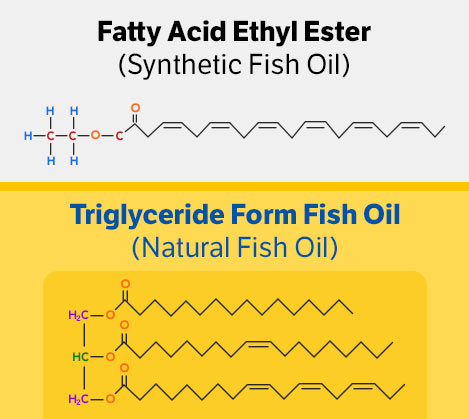
Ethyl Esters Are Poorly Absorbed, May Do More Harm Than Good
Ethyl esters — found in most fish oils — are the least bioavailable form of omega-3. Studies33 suggest a mere 20% of the EPA and DHA in ethyl ester form are absorbed by your body. When taken with other dietary fat, absorption increased threefold to 60%.
Meanwhile, EPA and DHA in their natural triglyceride form were found to have a 69% absorption rate from the start, and when taken with additional dietary fat, absorption increased to 90%. As a result, taking a triglyceride fish oil results in a 50% greater rise in omega-3 blood plasma levels than ethyl ester fish oil.
Another major drawback of ethyl ester fish oils is their rapid oxidation rate. Ethyl ester DHA is far more reactive than triglyceride DHA, oxidizing 33% more rapidly, and consuming rancid omega-3 is not going to do your health any good.
While manufacturers could convert them back into triglyceride form (by detaching the ethyl alcohol molecule and reattaching a glycerol molecule in a process known as re-esterification), this process is a costly one. So, in summary, it’s important to realize that the vast majority of clinical evidence showing health benefits of omega-3 relates to actual fish consumption, and virtually all of the omega-3s in fish are in triglyceride form.
Hence, to achieve reliable results, you really need to either eat omega-3-rich fish, or make sure the supplement you’re taking contains DHA and EPA in their triglyceride form. For a more in-depth understanding of these differences, see the paper, “A Comparison of Synthetic Ethyl Ester Form Fish Oil vs. Natural Triglyceride Form,”34 by Dr. Douglas MacKay.
- 1, 5 Omega-3 Institute, Differentiation of ALA (plant sources) from DHA + EPA (marine sources) as Dietary Omega-3 Fatty Acids for Human Health
- 2 Alwaysomega3s.com, Fact: Not all omega-3s are created equal
- 3 Harvard Nutrition Science, Omega-3s
- 4 Int J Vitam Nutr Res. 1998;68(3):159-73
- 6 STAT News September 24, 2018
- 7 CBS New York September 25, 2018
- 8 European Heart Journal Supplements Volume 22, Issue Supplement J, October 2020, Pages J34-J48
- 9 Forbes September 24, 2018
- 10 The Lancet August 31, 2008; 372(9545): 1223-1230
- 11 The Lancet August 31, 2008; 372(9545): 1231-1239
- 12 University of Rochester Medical Center 2018
- 13 Cleveland Clinic June 2017
- 14 Medical News Today June 27, 2016
- 15 Lancet 1999; 354:447-55
- 16 Circulation. 2016;134:378–391
- 17 Reuters August 1, 2016
- 18 Medical News Today August 2, 2016
- 19 Science Daily August 1, 2016
- 20, 22 Am J Gastroenterol. 2005 Dec;100(12):2674-80
- 21 BMC Musculoskelet Disord. 2010;11:136
- 23 J Anim Physiol Anim Nutr (Berl). 2012 Apr;96(2):295-306
- 24 J Agric Food Chem. 2009 Oct 14;57(19):9339-45
- 25, 26 Alternative Medicine Review 2003 May;8(2):171-9
- 27 Alternative Medicine Review 2007 Sep;12(3):207-27
- 28 Lipids Health Dis. 2008 Aug 29;7(1):30
- 29 Science Daily July 19, 2016
- 30 Urol Res. 2011 Feb;39(1):59-67
- 31 Cochrane Library July 18, 2018
- 32, 33 J Nutr. 2021 May; 151(5): 1111-1118
- 34 A Comparison of Synthetic Ethyl Ester Form Fish Oil vs. Natural Triglyceride Form (PDF)
Which Exercises Are Best for Lowering Blood Pressure?
Reproduced from original article:
https://articles.mercola.com/sites/articles/archive/2023/08/11/exercises-for-lowering-blood-pressure.aspx
The original Mercola article may not remain on the original site, but I will endeavor to keep it on this site as long as I deem it to be appropriate.
Analysis by Dr. Joseph Mercola Fact Checked August 11, 2023

STORY AT-A-GLANCE
- Exercise is well-known for its ability to normalize blood pressure, but all forms of exercise are not the same in this regard
- A recent meta-analysis of 2,070 studies found that isometric exercise was the most effective for lowering blood pressure
- Effectiveness based on the “surface under the cumulative ranking curve” (SUCRA) values for systolic blood pressure — which refers to the mean probability of being the best — placed isometric exercise in the No. 1 slot with an effectiveness rating of 98.3%, followed by combined training (75.7%), dynamic resistance training (46.1%), aerobic exercise training (40.5%) and high-intensity interval training (39.4%)
- In secondary meta-analyses of submodes, the wall squat was the most effective for reducing systolic blood pressure while running was most effective for reducing diastolic blood pressure
- Dietary-wise potassium and magnesium are important for healthy blood pressure regulation. More often than not, it’s not too much sodium that is the problem, but a lack of potassium
Exercise is well-known for its ability to normalize blood pressure, but are all forms of exercise the same in this regard? A recent meta-analysis1 published July 25, 2023, in the British Journal of Sports Medicine, sought to determine the answer to this question.
Two-hundred and seventy randomized controlled trials published between 1990 and February 2023 that reported reductions in systolic blood pressure (SBP) and/or diastolic blood pressure (DBP) following an exercise intervention of two weeks or more were included, with a pooled sample size of 15, 827 people.
The top number of your blood pressure measurement, the systolic, is a measurement of the maximum pressure inside your arteries as your heart contracts. The bottom number, the diastolic, is a measurement of the pressure in your blood vessels when your heart is not contracting. Both numbers are important in determining how much damage may occur over time to your blood vessels and other organ systems.
The Best Exercises for High Blood Pressure
In rank order, analyses demonstrated significant reductions in resting SBP and DBP following:
- Isometric exercise (–8.24/–4.00 mmHg)
- Combined training (–6.04/–2.54 mmHg)
- Dynamic resistance training (–4.55/–3.04 mmHg)
- Aerobic exercise (−4.49/–2.53 mmHg)
- High-intensity interval training (–4.08/–2.50 mmHg)
Effectiveness based on the “surface under the cumulative ranking curve” (SUCRA) values for systolic — which refers to the mean probability of being the best for lowering your systolic blood pressure — placed isometric exercise in the No. 1 slot with an effectiveness rating of 98.3%, followed by combined training (75.7%), dynamic resistance training (46.1%), aerobic exercise training (40.5%) and high-intensity interval training (39.4%).
Various exercise training modes improve resting blood pressure, particularly isometric exercise. The results of this analysis should inform future exercise guideline recommendations for the prevention and treatment of arterial hypertension. ~ British Journal of Sports Medicine
In secondary meta-analyses of submodes, the wall squat was the most effective for reducing SBP while running was most effective for reducing DBP. In conclusion, the authors noted:2
“Various exercise training modes improve resting blood pressure, particularly isometric exercise. The results of this analysis should inform future exercise guideline recommendations for the prevention and treatment of arterial hypertension.”
What Is Isometric Exercise?
A key take-home from this meta-analysis is that static contraction of muscle as you hold your body in one position, i.e., isometric exercise, is the most effective type of exercise if you want to lower your blood pressure. Static contraction is what defines isometric exercise. Examples of isometric exercises include:3,4,5
| Wall squat | Isometric calf raise | Planking |
| Hollow-body hold | Low isometric squat | Static slide lunge |
| Overhead hold | Iso hang | Glute bridge |
| Incline pushup hold | V-sit | Single-leg stand |
Existing exercise guidelines for blood pressure management emphasize cardio, such as running and cycling, but following that advice will not give you the best results. In fact, aerobic exercise ended up being next to last in terms of effectiveness.
Download this Article Before it Disappears
Imbalanced Potassium-to-Sodium Ratio and Your Blood Pressure
Of course, your diet and other lifestyle factors may also need to be addressed if you have high blood pressure. One really important factor that is often overlooked is your potassium-to-sodium ratio.
Most conventional doctors still focus on the sodium part of this equation, but a low-sodium diet is rarely the answer. Most of the time, it’s not too much sodium that is the problem, but a lack of potassium.
Potassium is one of the most abundant positively charged ions inside your cell and is essential for normal cell function. The potassium and sodium relationship is strong, and is the main regulator of extracellular fluid volume, including your plasma (blood). Your body works most efficiently when there is a balance in your potassium and sodium.
You can lose potassium through diarrhea, vomiting, excessive sweating or the use of some drugs, including excessive alcohol. However, the most common reason potassium levels are not within normal limits is related to your dietary intake.
According to the U.S. Department of Agriculture,6 the average intake of potassium in the U.S. population is 2,640 milligrams (mg) per day. Other surveys have found similar intakes.7 Meanwhile, the Institute of Medicine recommends 4,700 mg per day for people over the age of 14.
Potassium helps lower your blood pressure by relaxing the walls of your arteries, and according to Harvard Health,8 many people with high systolic blood pressure can successfully lower it simply by increasing their potassium intake.
In my view the absolute best way to increase your potassium is by beating ripe fruit. I typically get around 3,000 mg from watermelon, orange juice and tangerines, and another 2,000 mg from other sources. For a more complete list, see DietaryGuidelines.gov’s “Food Sources of Potassium” page.9
For more precise and accurate results, you can input your foods into Cronometer.com and easily find out precisely how much potassium you are getting. Taking potassium supplements is not a good strategy and will simply not provide you with the benefits you are seeking.
Magnesium Is Important for Blood Pressure Regulation
Magnesium is also important for healthy blood pressure and few people get enough from their diet these days. Hundreds of studies and scientific papers show there’s a clear correlation between magnesium and high blood pressure.
According to a 2011 paper10 in The Journal of Clinical Hypertension, magnesium intake of 500 mg to 1,000 mg per day may reduce blood pressure by as much as 5.6/2.8 mmHg. Its blood pressure lowering effects are most pronounced when potassium intake is also high, and sodium intake low.
Magnesium also boosts the effectiveness of “all antihypertensive drug classes,” according to this paper. The mechanisms behind magnesium’s BP-lowering effects were described as follows:11
“One of the mechanisms by which magnesium lowers BP is by acting like a natural calcium channel blocker.
Magnesium competes with sodium for binding sites on vascular smooth muscle cells, increases prostaglandin E, binds to potassium in a cooperative manner, induces endothelial-dependent vasodilation, improves endothelial dysfunction in hypertensive and diabetic patients, decreases intracellular calcium and sodium, and reduces BP.
Magnesium is more effective in reducing BP when administered as multiple minerals in a natural form and as a combination with magnesium, potassium, and calcium than when given alone.
Magnesium is also an essential cofactor for the delta-6-desaturase enzyme, which is the rate-limiting step for the conversion of linoleic acid (LA) to gamma-LA (GLA).
GLA, in turn, elongates to form DGLA … the precursor for prostaglandin E1 (PGE1), [which] is both a vasodilator and platelet inhibitor. Low magnesium states lead to insufficient amounts of PGE1, causing vasoconstriction and increased BP.
In addition … magnesium regulates intracellular calcium, sodium, potassium, and pH as well … arterial compliance. Magnesium also suppresses circulating Na+K+ATPase inhibitory activity that reduces vascular tone.”
Dietary Do’s and Don’ts
For those with current kidney problems, it’s important to seek your physician’s advice before using potassium supplements as it may lead to irregular heart rhythms.12 Of course, excessive salt consumption can also contribute to an imbalance, but unless your intake is a) extreme, and b) you’re using processed table salt and not unprocessed salt like Himalayan salt, I rarely worry about salt intake.
Magnesium-rich foods13 include baked potato and white rice, just to name a few. That said, the magnesium content of most foods is dwindling due to the destruction of soils, so it’s one nutrient, unlike potassium, that I recommend taking as a supplement.
However, as with potassium, before taking any magnesium supplement, be sure to consult with your health care practitioner, especially if you have kidney disease. An alternative way of supplementing with magnesium is to soak in magnesium sulfate, commonly known as Epsom salts.
In addition to making sure you’re getting enough potassium, also avoid the following foods, which are notorious for causing blood pressure levels to rise:14
- Processed foods
- Most grains
- Partially hydrogenated oils (synthetic trans fats), found in many processed foods, including packaged cookies, crackers, chips and other snacks
- Seed oils (aka vegetable oils) such as corn, canola, soy and safflower oils
Isometric Exercise Instructions
Getting back to isometric exercises, here are instructions for how to perform several of the most popular ones. Also remember that an amazing resource is YouTube. Although you absolutely can’t trust it for truth about politics or health, it has not censored exercise content.
Just type in the exercise you want to perform, and you will typically find dozens if not hundreds of incredibly useful videos. It is always best to watch at least several of them so you can get a consensus and different types of exercises from instructors.
| Wall squat and low squat — For the wall squat, stand with your back flat against a wall, then walk your feet about 1.5 feet (0.5 meter) out from the wall. With your feet shoulder-width apart, back flat against the wall and your abs tight, squat until your knees are bent at a 90-degree angle, or as low as you can comfortably go. Remain squatting for as long as you can, then stand back up by pushing up from your heels.
The low squat is similar, but here you’re not using a wall. Start by standing with your feet slightly more than hip-width apart. Keep your hands on your hips, or straight out in front of you. Push your hips back into a sitting position while bending your knees. Keep your spine long (don’t round forward). Hold for 10 to 30 seconds, then return to the starting position. |
| High plank and side plank — For the high plank, start in a kneeling pushup with your hands shoulder-distance apart. Straighten your knees, pushing down into the balls of your feet to raise your body into a high plank position, which looks exactly like the upward position of a pushup.
With your hands aligned with your shoulders and legs straight, engage your core and hold for 20 to 60 seconds, or as long as you can maintain proper form. For the side plank, start out lying on your left side with legs straight (your hips, knees and feet stacked). Bend your left elbow and place your forearm on the ground under your shoulder. Push your left forearm into the ground to lift your torso and hips off the ground. Engage your core to maintain your body in a straight line from head to heel. You can keep your right arm by your side or stretched up in the air. Hold for at least 10 seconds. Lower your torso down and switch sides. |
| Overhead hold — Using a suitable weight (based on your level of fitness) with both hands, engage your core and extend your arms above your head. Keep your arms fully extended and in line with your shoulders. Hold the weight steady over your head for 20 to 30 seconds. |
| Glute bridge — Lie on your back. Bend your knees so that your heels are about 12 to 16 inches from your behind. Keep your arms by your sides. Press into your heels, brace your core, and push your pelvis upwards by squeezing your glutes. Maintain the bridge position for 30 seconds without letting your hips sink. |
| Hollow-body hold — Lie on your back with your legs extended toward the ceiling, perpendicular to the floor. Squeeze your core to press your low back into the floor, then raise your head and shoulders a few inches off the floor while simultaneously lowering your legs as close to the floor as possible. Hold until you can’t hold any longer, then lower your head and shoulders to the floor. |
| Incline pushup hold — Place your hands on a sturdy surface, such as a bench or low table. Position your hands slightly wider than your shoulders. Walk backward until you’re in a pushup position, with your body weight supported on your hands and the balls of your feet. Engage your core and make sure your shoulders are not pushing up toward your ears.
Bend your elbows as in the downward motion of a pushup until your chest nearly touches the bench or table. Your arms should flare outward, forming 45-degree angles with your torso. Pause here and hold as long as you can, then step forward to stand up. |
- 1 British Journal of Sports Medicine July 25, 2023 DOI: 10.1136/bjsports-2022-106503
- 2 British Journal of Sports Medicine July 25, 2023 DOI: 10.1136/bjsports-2022-106503, Conclusion
- 3 Vertimax
- 4 US News June 15, 2020
- 5 Vertimax 20 Isometric Exercises
- 6 U.S. Department of Agriculture Food Research Group, Potassium Intake of the U.S. Population
- 7 Nutrition Today September-October 2018; 53(5): 184-195
- 8, 12 Harvard Health Publishing, January 23, 2017
- 9 DietaryGuidelines.gov Food Sources of Potassium
- 10 The Journal of Clinical Hypertension November 2011; 13(11): 843–847
- 11 The Journal of Clinical Hypertension November 2011; 13(11): 843–847, Mechanisms of BP Reduction With Magnesium
- 13 Cleveland Clinic Magnesium-Rich Foods
- 14 Dr. Sinatra, What is the Best Heart Healthy Diet Plan?
Fibromyalgia Linked to Extensive Brain Inflammation
Reproduced from original article:
https://articles.mercola.com/sites/articles/archive/2023/08/05/fibromyalgia-brain-inflammation-link.aspx
The original Mercola article may not remain on the original site, but I will endeavor to keep it on this site as long as I deem it to be appropriate.
Analysis by Dr. Joseph Mercola Fact Checked August 05, 2023

STORY AT-A-GLANCE
- Brain scans of fibromyalgia patients have offered hard evidence that the pain they experience is real; their threshold for tolerating pain impulses is substantially lower than that of most individuals
- Recent research shows fibromyalgia patients tend to have severe inflammation in their body, including their nervous system and brain
- The cannabinoid receptor that produces the “high” in response to THC in marijuana also helps regulate inflammatory reactions in your brain
- The signal that instructs glial cells to stop their inflammatory activity is endocannabinoids, which work by binding to cannabinoid receptors on certain neurons
- With age, your natural production of endocannabinoids decreases, which then leads to impaired immune response regulation and chronic inflammation
Editor’s Note: This article is a reprint. It was originally published October 18, 2018.
Fibromyalgia, characterized by chronic, widespread pain is an often-debilitating condition that primarily affects women. While as many as 10 million Americans have fibromyalgia, its cause remains a mystery.
Brain scans of fibromyalgia patients have offered hard evidence that the pain they experience is indeed real — mainly because their threshold for tolerating pain impulses is substantially lower than that of most individuals. But the mechanism causing this lowered pain threshold is still unknown.
Some experts, such as Dr. Frederick Wolfe, the director of the National Databank for Rheumatic Diseases and the lead author of the 1990 paper that first defined fibromyalgia’s diagnostic guidelines, believe fibromyalgia is mainly a physical response to mental and emotional stress.
But while stress and emotions may indeed play an important role, more recent research shows fibromyalgia patients tend to have severe inflammation in their body, including their nervous system and brain.
Signs and Symptoms of Fibromyalgia
Diagnosis can be a challenge, but the updated case definitions of fibromyalgia, issued in 2010 and later simplified in 2012, claim to correctly diagnose about 83% of cases.1 Originally, the condition was thought to be a peripheral musculoskeletal disease. Today, fibromyalgia has become increasingly recognized as a neurobiological problem causing central pain sensitization.
Unfortunately, there are currently no laboratory tests available for diagnosing fibromyalgia, so physicians primarily depend on patient histories, reported symptoms and physical exam findings. Classic symptoms of this condition include:
• Pain — The key marker of fibromyalgia is pain, which is profound, widespread and chronic. Pain inside of your elbows and knees, collarbones and hips is indicative of fibromyalgia when it’s present on both sides.
People also frequently report pain all over their bodies — including in their muscles, ligaments and tendons — and the pain tends to vary in intensity. It has been described as deep muscular aching, stabbing, shooting, throbbing and twitching.
Neurological complaints add to the discomfort, such as numbness, tingling and burning. The severity of the pain and stiffness is often worse in the morning. Aggravating factors include cold/humid weather, nonrestorative sleep, fatigue, excessive physical activity, physical inactivity, anxiety and stress.
• Cognitive impairment — So-called “fibro-fog” or foggy-headedness is a common complaint.
• Fatigue — The fatigue of fibromyalgia is different from the fatigue that many people complain of in today’s busy world. It is more than being tired; it’s an all-encompassing exhaustion that interferes with even the simplest daily activities, often leaving the patient with a limited ability to function both mentally and physically for an extended period of time.
• Sleep disruption — Another major part of the diagnostic criteria for this condition is some type of significant sleep disturbance. In fact, part of an effective treatment program is to make sure you’re sleeping better.
Medical researchers have documented specific and distinctive abnormalities in the Stage 4 deep sleep of fibromyalgia patients. During sleep, they are constantly interrupted by bursts of awake-like brain activity, limiting the amount of time they spend in deep sleep.
• Other symptoms — Other common symptoms include irritable bowel and bladder, headaches and migraines, restless leg syndrome and periodic limb movements, impaired memory and concentration, skin sensitivities and rashes, dry eyes and mouth, anxiety, depression, ringing in the ears, dizziness, Raynaud’s Syndrome and impaired coordination.
Conventional treatment typically involves some form of pain medication, and perhaps psychotropic drugs like antidepressants. I don’t recommend either as they fail to address the cause of your problem. Many fibromyalgia sufferers also do not respond to conventional painkillers, which can set in motion a vicious circle of overmedicating on these dangerous drugs.
Brain Inflammation — Another Hallmark of Fibromyalgia
Using PET imaging, an investigation2 by researchers at Massachusetts General Hospital and Karolinska Institutet in Sweden revealed the presence of widespread brain inflammation in patients diagnosed with fibromyalgia.3,4
Earlier research5 conducted at Karolinska Institutet also discovered high concentrations of cytokines (inflammatory proteins) in the cerebrospinal fluid, suggesting fibromyalgia patients have inflammation in their nervous system as well.6
The team at Massachusetts General Hospital, meanwhile, has previously shown that neural inflammation, and glial cell (immune cells) activation specifically, plays a role in chronic back pain. Animal studies have also offered evidence for the hypothesis that glial cell activation can be a cause of chronic pain in general.7
Here, they found that when glial cells in the cerebral cortex were activated, the more aggressive the activation, the greater the fatigue experienced by the patient. As reported by Medical Life Sciences:8
“The current study first assessed fibromyalgia symptoms in patients using a questionnaire. A PET tracer was then used, that is, a radioactive marker which binds a specific protein called translocator protein (TSPO) that is expressed at levels much above the normal in activated glial cells, namely, astrocytes and microglia …
[G]lial activation was found to be present at significantly higher levels in multiple brain areas in patients who had fibromyalgia than in controls. Glial cell activation causes inflammatory chemicals to be released, which cause the pain pathways to be more sensitive to pain, and promote fatigue …
One area showing higher TSPO binding in direct proportion to the self-reported level of fatigue was the cingulate gyrus, an area of the brain linked to emotional processing. Previous research has reported that this area is inflamed in chronic fatigue syndrome.”
Download this Article Before it Disappears
Brain Inflammation Linked to Loss of Brain Cells
In related news, German researchers investigating inflammation mechanisms in the brain have found that as mice get older and regulation of inflammatory responses become increasingly impaired, they start losing brain cells.9
Interestingly, the cannabinoid receptor type 1 (CB1), which produces the “high” in response to tetrahydrocannabinol (THC) in marijuana, also helps regulate inflammatory reactions in your brain. In short, chronic brain inflammation is in part driven by the CB1 receptors’ failure to respond. To understand how this works, you need to know a little bit about how microglial cells work.
Microglial cells are specialized immune cells found in your central nervous system, including your spinal cord and brain. These immune cells respond to bacteria and are responsible for clearing out malfunctioning nerve cells. They also signal and recruit other immune cells when needed and trigger the inflammatory response when necessary.
Problems arise when the inflammatory response becomes dysregulated and overactive. In the brain, the inflammation can easily damage healthy brain tissue. The “brake signal” that instructs glial cells to stop their inflammatory activity is endocannabinoids, and the endocannabinoids work by binding to certain receptors, including CB1 and cannabinoid receptor type 2 (CB2).
Immune Cells Communicate, Influence Inflammatory Response
Curiously, microglial cells have virtually no CB1 and very few CB2 receptors, yet they still react to endocannabinoids. The present study was designed to investigate this puzzling riddle. As it turns out, there’s a type of neuron that does contain a large number of CB1 receptors, and it appears that it is the CB1 receptors on these specific neurons that control microglial cell activity.
In other words, it appears microglial cells do not communicate with nerve cells directly; rather, they release endocannabinoids, which then bind to CB1 receptors found in nearby neurons. These neurons in turn communicate directly with other nerve cells. So, the brain’s immune response is regulated in an indirect manner rather than a direct one.
Now, what happens with age is that your natural production of endocannabinoids decreases, which then leads to impaired immune response regulation and chronic inflammation. As noted by coauthor Dr. Andras Bilkei-Gorzo:10
“Since the neuronal CB1 receptors are no longer sufficiently activated, the glial cells are almost constantly in inflammatory mode. More regulatory neurons die as a result, so the immune response is less regulated and may become free-running.”
Earlier research11 by this same team found that THC can help restore cognitive function in older brains, and the current study also hints at THC-containing cannabis may have valuable neuroprotective benefits in older people by quelling brain inflammation and preventing loss of brain cells. As the study was done on mice, further research is needed to confirm that the same mechanisms apply to humans, but it’s compelling nonetheless.
Are You Living an Inflammatory Lifestyle?
Your diet can either promote or decrease inflammation. For example, foods that increase the inflammatory response in your body include:
- Sugar, especially processed corn syrup
- Synthetically produced trans fats
- Processed vegetable and seed oils, high in oxidized omega-6 fat
- Processed meats
- Refined carbohydrates
Meanwhile, marine-based omega-3 fats have powerful anti-inflammatory effects, and are crucial for healthy brain function in general. Antioxidant-rich fruits and vegetables are also important for controlling inflammation, as is optimizing your vitamin D to a level of 60 to 80 ng/mL, ideally through sensible sun exposure.
In addition to anti-inflammatory and immune-boosting properties, vitamin D receptors appear in a wide variety of brain tissue, and researchers believe optimal vitamin D levels may enhance important chemicals in your brain and protect brain cells by increasing the effectiveness of glial cells that help nurse damaged neurons back to health.
A number of ubiquitous chemicals have also been implicated in inflammation, so if you struggle with fibromyalgia you’d be wise to take a close look at your choice of foods, household and personal care products. As mentioned earlier, getting enough high-quality sleep is another key treatment component for fibromyalgia.
Suppressing Inflammation Improves Pain
Senior study author Dr. Raymond Swanson, a professor of neurology at UCSF and chief of the neurology service at the San Francisco Veterans Affairs Medical Center, commented on the results, saying:
“I was most surprised by the magnitude of this effect, because I thought ketogenic diets might help just a little bit. But when we got these big effects with 2DG, I thought wow, there’s really something here.
The team further found that reduced glucose metabolism lowered a key barometer of energy metabolism — the NADH/NAD+ ratio — which in turn activated a protein called CtBP that acts to suppress activity of inflammatory genes.”
The study also pointed out that a ketogenic diet may relieve pain via several mechanisms, similar to the ways it’s known to help epilepsy.
“Like seizures, chronic pain is thought to involve increased excitability of neurons; for pain, this can involve peripheral and/or central neurons. Thus, there is some similarity of the underlying biology,” the authors stated, adding:
“A major research focus should be on how metabolic interventions such as a ketogenic diet can ameliorate common, comorbid and difficult-to-treat conditions such as pain and inflammation.”15
Address Emotional Contributors
Since fibromyalgia is a chronic condition, it becomes emotionally challenging in addition to the physical challenges it imposes on your life. Having a game plan to deal with your emotional well-being is especially important if you suffer from any chronic disease.
If you have fibromyalgia, you might be able to trace it back to a triggering event, or you might not. Any traumatic experience has the potential to linger in your mind for a lifetime. You can have the perfect diet, the perfect exercise routine, and an ideal life; but if you have lingering unresolved emotional issues, you can still become very sick.
A tool that can help release this emotional sludge is the Emotional Freedom Techniques (EFT). If you are a regular reader of my newsletter, this won’t be an unfamiliar term to you. EFT is a form of bioenergetic normalization. If you have fibromyalgia, this is something that is going to be extremely helpful. You can do this yourself, at home, and it takes just a few minutes to learn. For a demonstration, see the video above.
- 1 Rheumatology Network, February 9, 2012; 29
- 2 Brain, Behavior and Immunity, September 14, 2018 [Epub ahead of print]
- 3, 8 Medical Life Sciences September 28, 2018
- 4 Medical Xpress September 26, 2018
- 5 Journal of Pain Research 2017; 10: 515–525
- 6 Journal of Neuroimmunology 2015 Mar 15; 280: 49–5
- 7 Nat Rev Neurosci. 2009 Jan;10(1):23-36
- 9 Frontiers in Molecular Neuroscience August 28, 2018
- 10 Medical News Today September 6, 2018
- 11 Nature Medicine May 8, 2017; 23: 782-787
- 12, 14 Nature Communications 2017; 8, Article number: 624
- 13 Medical Xpress 2011-2017
- 15 J Child Neurol. 2013 August; 28(8):993-1001
A Critical Look at ‘The China Study’ and Other Food Plans
Reproduced from original article:
https://articles.mercola.com/sites/articles/archive/2023/07/22/the-china-study-and-other-nutrition-plans.aspx
The original Mercola article may not remain on the original site, but I will endeavor to keep it on this site as long as I deem it to be appropriate.
Analysis by Dr. Joseph Mercola Fact Checked July 22, 2023
STORY AT-A-GLANCE
- Although veganism has some health benefits, it is also loaded with many disadvantages and is unsuitable for many, especially if you have certain genetic polymorphisms predisposing you to poor beta-carotene conversion
- People with polymorphisms causing poor conversion of beta-carotene are at high risk for reproductive problems, skin and eye problems and poor dental health
- The blood type diet, detailed in “Eat Right 4 Your Type,” often works well for those with blood type O, as those recommendations are consistent with a healthy diet. It typically does not work well for the other blood types
- Nutrient cycling (cycling between higher and lower amounts of fat, net carbs and protein) and cycling between high and low calorie intakes (fasting and feasting) appear to be foundational criteria for optimal biological functioning
- If you’re on a ketogenic diet, it’s important to cycle high and low amounts of net carbs once your body is able to efficiently burn fat for fuel in order to optimize your metabolism. Cyclical fasting is also recommended
Editor’s Note: This article is a reprint. It was originally published July 8, 2018.
Denise Minger is perhaps most noted for her comprehensive rebuttal of “The China Study” some eight years ago. She’s heavily vested in the vegan versus omnivore battle, having cycled through vegetarianism and raw veganism, finally coming full circle to being an omnivore.
Minger took to vegetarianism when she was just 7 years old. “I was eating steak one night at dinner and almost choked on it. I developed some kind of phobia surrounding things with meat textures and went vegetarian overnight,” she explains.
Raw Veganism Took a Toll on Health
However, during the 10 years she remained a vegetarian, she began developing food allergies, including wheat and dairy allergies. “By the time I was a teenager, I was really health-conscious,” she says. “I had to get into that whole scene just to stay healthy.”
At age 15, she discovered the raw vegan movement and got on the 80/10/10 diet, promoted by Dr. Douglas Graham. The diet is based on the hypothesis that we should eat what other primates eat, particularly frugivorous chimpanzees and bonobos.
“I was reading about it online at the age of 15 without having any background in human biology, physiology or anthropology … I fell into this trap of logic, that humans are the only animals that cook our food. We’re the only animals that eat this species-inappropriate diet, [so] I went raw vegan overnight,” she says. “For one year straight, [I ate] nothing but fruits, vegetables and some nuts — all uncooked.
I did great for the first month, as most people do when they stop eating crappy foods. After that, I started losing weight and muscle. My hair was falling out. My energy levels were fluctuating like crazy.
I was in high school at the time, taking the Scholastic Assessment Test (SAT). My brain fog got so bad at one point that when I was taking the SAT, I would read the question and by the time I got to the end I couldn’t remember what the first part said …
The kicker for me, because I’ve always taken great care of my teeth, was at the end of this period of raw veganism I had 16 cavities in my mouth, after a lifetime of what had previously been perfect dental health … It was actually the dental health issue that really turned my mind around … At that point, I had to let go of the vegan philosophy. I had to start questioning things …
That’s when I came across things like the Weston A. Price Foundation, which [details] what humans have been eating that has supported health in the past. I learned about the paleo movement — different forms of health-conscious omnivory. That’s where I ended up. It was a process.”
Debunking ‘The China Study’
As mentioned, Minger produced a very comprehensive critique of “The China Study” which is the scientific justification for many vegan positions. Her analysis — which some suspected to be funded by the meat industry — was actually undertaken while recovering from an accident. At the age of 22, she was hit by a car while riding her bicycle and shattered her elbow. Her convalescence afforded her the time to work on this project.
“I got a huge book of the raw ‘China Study’ data. I love numbers. I have fun with correlations. I have fun looking at patterns. My brain gets happy. I spent about two or three months poring over the data. I needed a project, because I had nothing else to do.
I was poring over the data and that’s when I realized I needed to write a critique of the book. So much of what [author T. Colin] Campbell said was not supported by his own data. I just felt like if there’s anything I needed to do in life, it was going to be this.
I didn’t expect anyone to read it. I had a little blog. I like to say I had six readers, five of which were my mother on different computers. I didn’t realize at the time how much interest the critique would gather; how much interest there was in that book itself. I hadn’t really seen the rivalry upfront between the vegan and the paleo worlds. When I released this critique, I didn’t know it was going to be that influential,” she says.
Minger developed quite a bit of notoriety as a result of that critique, especially in the vegan community. She’s been vilified by many, including Campbell, who wrote personal rebuttals to her commentary on his work. Some have gone so far as to characterize her as someone who’s promoting processed food.
Download this Article Before it Disappears
The Case for Lowering Protein Intake
For all its drawbacks, there are benefits to veganism. The biggest one, from my perspective, is that vegans have — compared to those who eat the standard American diet — a significantly lower protein intake. I think there are valuable insights that can be drawn from that, which can be integrated into a low-carb paleo approach. Minger agrees, saying:
“For the protein issue, what I find interesting is that whenever we look at the actual China Study, for example, when you look at their food intake, it’s much different in terms of the types of animal parts they consume than what we see in America.
The protein issue is complicated, but I will say that high methionine intake — for example from muscle meat — [needs to be balanced with] glycine. You get that by eating the entire animal, the skin, tendons, connective tissue — all the stuff that Americans typically discard …
In the China Study, you don’t see them eating steaks and chicken breasts at every meal. Even the lower animal product-consuming societies, a lot of them eat insects. A lot of them eat the weird parts of the animal. I think that’s imperative for staying healthy on an omnivorous diet. Because the way we eat meat in America is pathogenic. It’s not healthy. But it’s not necessarily because animal products are bad for you …
What was amusing to me, because it was completely left out of ‘The China Study’ book, was that the healthiest populations were the seafood eaters … They had the best health outcomes. The only disease that they had more of was liver cancer. That was because they were living in humid areas where aflatoxin was more prevalent … But it wasn’t because of the animal protein. It wasn’t because of the fish.”
This makes sense considering the importance of long-chained omega-3 fats: eicosapentaenoic acid (EPA) and docosahexaenoic acid (DHA). Those who restrict themselves to a plant-based diet are only getting alpha-linolenic acid (ALA) which, while being a precursor for EPA and DHA cannot be converted at significant, therapeutic levels.
Protein Cycling
Clearly, the composition of the animal protein is a significant issue. We don’t want processed foods. We don’t want meat from factory farms that is contaminated with glyphosate (due to contaminated grain feed). But there’s also the issue of the amount. Many are simply eating far too much protein, which (when consumed in excess) activates mTOR, a pathway involved in both aging and cancer. Pulsing higher and lower amounts of protein also seems a wise strategy.
“When we look at historical groups of humans, the animal food intake was generally on the lean side. We don’t have year-round access to these big fatty animals … It’s going to be seasonal when it occurs at all,” Minger says. “I’m reminded of a study on Australian aborigines. They put people out in the wild to try to acquire foods from their environment and survive on that …
Their fat intake ended up being something like 8% to 12%, because the animals were so lean and the lean protein intake was consequently much higher. I have trouble believing that animal protein itself is going to be a problem. I think what might be a problem is this consistency thing — the idea that eating the same foods year-round, without any fluctuation in the composition of the diet, is healthy. I don’t think that’s the case …
I think things like protein cycling might be therapeutic for humans. I think that even carb cycling and going through different periods of different macronutrient intakes instead of always being low-fat or always being low-carb [is a good idea]. That’s probably what the human body is best adapted to.”
Macronutrient Cycling — An Overlooked Component
In deconstructing and assessing the low-carb, high-fat approach, Minger concluded the lack of high and low nutrient cycling was one of the main problems, especially long-term, and particularly for women. “I do one-on-one consulting with people,” she says.
“A large group that I have come in contact with are women who’ve done low-carb. Their thyroid function is tanking. They’re gaining weight. They feel terrible. Their hair is falling out. It happens with men too sometimes, but I think women, hormonally, are more sensitive to the lack of carbohydrates.”
She’s also found evidence suggesting chronic lack of carbohydrates may be having an adverse effect on your gut microbiome. In his commentary, “Sorry Low Carbers, Your Microbiome Is Just Not That Into You,”1 Jeff Leach with the Human Food Project details the likely shifts found in the gut microbiome composition of people who consume low-carbohydrate diets. Whether or not those shifts are wholly detrimental or not is still unknown, but it’s worth keeping an eye on.
Minger is equally ambivalent about long-term, chronic high-fat consumption, as some of the evidence suggests it may increase gut permeability and the transport of endotoxin from gram-negative bacteria into the bloodstream, which increases chronic inflammation and related health problems.
“On one hand, we see people switching away from the standard American diet to low-carb. Yeah, they’re going to feel great. Yeah, they’re going to lose weight. There’s going to be this initial honeymoon period, just like I had with raw veganism. My question is what happens over the course of many years on a large scale … I’m wondering what the bulk of the evidence is going to show. I don’t know if we really know that yet.”
From my perspective, I think there are compelling reasons to suspect one might run into problems, for many of the reasons Minger cites. It appears nutrient cycling (i.e., cycling between higher and lower amounts of fat, net carbs and protein), and also cycling between high and low calorie intakes (fasting and feasting), are foundational criteria for optimal biological functioning.
The challenge is to find that happy balance. When writing “Fat for Fuel: A Revolutionary Diet to Combat Cancer, Boost Brain Power, and Increase Your Energy,” I dove deep into the scientific literature looking at this aspect of health.
Cyclical Ketogenic Diet Combined With Cyclical Fasting
First of all, the late Dr. Joseph Kraft showed that using sensitive oral glucose loading and testing insulin levels that insulin resistance is pervasive. Based on a more refined definition of insulin resistance, at least 80% of the population have diabetes in situ,2,3 which means they’re insulin resistant even though their fasting glucose is normal.
This is where low-carb can be really useful, yet it alone will still not be enough for many. A lot of people need to get even more aggressive and do fasting. Once you’ve done that for a while and resolve the insulin resistance, you need to cycle net carbs (total carbs minus fiber) back in.
“Low-carbohydrate eating … is a great tool to lose weight, and lose fat around the organs. You start improving insulin sensitivity because of that weight loss, and because of the reduction in the energy surplus that many people are constantly surrounded with. But I use the analogy of a [broken] refrigerator.
Your refrigerator breaks. You can do one of two things. You can say, ‘OK, I’m never going to buy any perishable food again. Everything I’m going to buy is going to be dry goods as long as the freezer or the refrigerator is broken.’ Or, you can fix the refrigerator.
Low-carbohydrate diets are like saying, ‘Let’s not use our refrigerator anymore.’ Let’s not use our carbohydrate metabolism pathways anymore. Let’s just avoid those. It’s not actually fixing the issue. As anyone who knows who’s been low-carb, you go low-carb for a while, and then you reintroduce carbohydrates and, whoa, it’s terrible.
Your blood sugar goes crazy. You feel awful. It’s like, ‘Wow. The carbohydrates are terrible.’ No. It’s because your body is no longer working to metabolize them efficiently.”
The converse can also occur. If you suppress insulin for too long, your blood sugar will tend to rise from hepatic gluconeogenesis. If you reintroduce carbohydrates at that point, it will raise insulin and lower your blood sugar. You can also eat too much fat; since fat is high in calories, the excess calories alone can lead to weight gain. As mentioned above, protein intake also needs to be regulated to avoid mTOR activation.
Traditional paleo is frequently high-protein, high-fat, similar to the Atkins approach. But you’re not going to get all the benefits unless you restrict protein. As a general rule, I recommend limiting protein to half a gram per pound of lean body weight, to ensure you’re getting the protein you need for muscle maintenance and repair. The answer is not to cut protein out altogether. You do need some, just not the enormous amounts most Americans are used to eating.
Focus on Nutrient Density
When asked what the best animal food composition might be, Minger stresses the importance of nutrient density over any specific dosage recommendations, as the ideal amount will depend on the type of meat you’re eating. “For my own diet, I focus on organ meats and shellfish,” she says. “Those are the primary foods I eat that are of animal origin. Oysters are my favorite. Nutritionally, if you look at liver and oysters, oysters are kind of like the liver of the ocean.”
People who shun animal foods due to ethical concerns about eating something that is highly sentient can also take heart in the fact that oysters lack the central nervous system “that would make them equivalent to a cow.” “There’s a bivalve vegan movement, where people are vegan with the inclusion of certain shellfish. I think that can go a long way for people to balance out a vegan diet,” she says.
As for cooking, Minger recommends using gentle methods to avoid the creation of carcinogens associated with high-temperature cooking. These byproducts “seem to be driving the correlation between meat consumption and different cancers that we see in observational studies,” she says.
“Whenever you look at a study that actually controls for the cooking method, typically once you take away the high-heat kind of strategies for cooking your meat, the correlations with various diseases start to diminish, if not disappear completely.” Byproducts created during grilling and frying include heterocyclic amines and polyaromatic hydrocarbons that form carcinogens. So, don’t overcook your meat, and balance muscle meat (steaks) with organ meat and other animal parts.
How Minger’s Diet Has Changed Over the Years
When asked how her diet has changed over the past seven years, and what insights changed her approach to eating the most, Minger replies:
“I started out really fruit-based from my raw vegan history. I would eat a ton of fruit in the morning; smoothies … In learning more about the gut microbiome, learning about digestive-resistant starch; different forms of fiber and their effect on the body, I’ve been incorporating more legumes, lentils and potatoes that have been heated and cooled [to increase] the resistant starch content. I think that has helped a lot.
I’ve also flipped my diet in terms of staggering macronutrients throughout the day. I used to start with a lot of carbohydrate and not much else (in the form of fruit). Now, I usually start with a lot of protein and vegetables, and have my high-carb meals at the end of the day. I find that helps with sleep, energy levels [and] focus.”
It’s worth noting that legumes may not be ideal for everyone, especially if you have autoimmune issues. Minger, who does a lot of work with autoimmunity, agrees lectins can be problematic if you are susceptible to autoimmune problems, whether caused by genetics, lifestyle, antibiotic use or gut microbiome issues. “At that point, the lectin problem can be real,” she says.
“There can be a legitimate reason to avoid foods that are high in certain lectins, especially the ones that are individually triggering autoimmune responses. But for people with a healthy gut microbiome, I don’t see that being necessarily bad, because if you look at human history … the lectin content of wild foods is generally pretty high.
There’s going to be a long adaptation period for us to learn how to coexist with those lectins in our diet. I think [the larger issue] is that the modern environment is creating a really unhealthy microbiome that’s making it so some people cannot handle what should be a natural lectin load. That’s my takeaway right now, subject to revision.”
Critiquing the Blood Type Diet
In preparing for this interview, I watched some of Minger’s latest material on YouTube. One of her more recent videos was a Weston A. Price Foundation presentation in which she critiqued Dr. Peter D’Adamo’s blood type diet, detailed in his book, “Eat Right 4 Your Type.”
I tried this diet back in the ’90s and had to quit because it made me diabetic. My personal take on it is that while his recommendations for blood type O, which is about half the population, is consistent with what I believe is a healthy diet, it doesn’t seem to work well for the other blood types. According to Minger:
“The fundamental issue with everything he’s saying is that it’s all wrong. The premise of his diet — that foods have different lectins [that] interact with what’s expressed on our blood cells to cause issues within the blood, which then causes inflammation and disease — there’s absolutely no mechanistic evidence showing that we can obtain high enough levels of lectins from certain foods, and that those foods will specifically interact with our specific blood type to create these problems.
That evidence just isn’t there … [He may have had] a lab, but there are problems with the research actually being published. It certainly hasn’t been replicated by other researchers. It’s more of a, ‘This is what I found. You have to take my word for it, because I wrote a book and I have a [medical] degree.’ There’s a certain, ‘Just trust me. I’m a scientist,’ behind that. If there’s anything I don’t like, it’s that …
What fascinated me … [was that] our ABO blood group can actually influence the composition of our gut microbiome for people who are secretors — people who secrete their blood type antigens on the surface of mucous cells throughout the body, the saliva and the gut, the gut in particular.
Let’s say you’re a blood type A and you’re secreting the A antigen on different cells within the gut. There are going to be certain bacteria that use that antigen as a food source and as an attachment site.
Those specific bacteria are going to be more attracted to your microbiome. They’re going to set up camp there, in a way that they might not be doing to somebody who’s a blood type O. You’re actually going to start shifting the proportion of different bacteria because of your blood type.
Tied into this is the idea of being a secretor versus a non-secretor. Most people are secretors. They will express their blood type antigens on the surface of different cells throughout the body. About 20% of the population are non-secretors.
For this group, regardless of what their actual blood type is, they have a much higher risk of a lot of digestive diseases, a lot of different health conditions in general, related to the fact that their microbiome is fundamentally different. It’s providing a lack of attachment sites for different bacteria. So, there is an influence of blood type on different things going on in the body. It’s just not through D’Adamo’s theory.”
Awesome Omnivore
After taking a professional hiatus, Minger is now working on a few new projects, including an e-book called “Awesome Omnivore.”
The book is a how-to guide for eating animal products in a way that minimizes potential risks and maximizes nutrition, including guidance on balancing methionine and glycine, differences in A1 versus A2 dairy, how to prepare meat to reduce carcinogen exposure, how to modify your animal food consumption based on genetics, and how to combine meat with other foods to reduce the absorption of heme iron to lower your risk of intestinal cancer and other health problems related to excessive iron.
High iron increases oxidative stress and can cause serious mitochondrial dysfunction. I have a genetic condition called thalassemia, which predisposes me to high iron levels. I have to be really vigilant about keeping my iron level low for these reasons.
As explained by Minger, because the molecular structure of heme is so similar to chlorophyll, if you eat lots of green leafy vegetables with your steak, the chlorophyll will inhibit absorption of some of the iron. “That alone is going to make that meal probably, on the whole, healthier for you,” she says.
“There’s this kind of dichotomy — you have the vegetable eaters and the meat eaters. The meat eaters are not usually eating enough vegetables to offset the heme issue. But if you look at studies that actually adjust for that one variable, the link with meat’s problems tends to disappear.
It’s, again, veggies to the rescue. But it doesn’t mean that you can’t eat meat too. Anyway, the book is going to be a collection of things people can do to ensure that the meat they’re consuming, the eggs and the dairy products (if they’re doing that), are as healthy as possible.”
Plant-Based Paleo
Minger is also working on a book about plant-based paleo, designed for people who are committed to avoiding animal products, for whatever reason. The aim of this book is to provide strategies to help you stay as healthy as possible for as long as possible within the limitations of a plant-based diet.
“There are vegans who have survived a long time on their diet. It’s not impossible. The human body is incredibly adaptable. But we need to understand what’s working for those people.
We need to understand that there are a lot of genetic components that go into being able to convert plant-based nutrients into their active forms. Take beta-carotene, for example. People who have really good conversion of beta-carotene into retinol, they’re probably not going to run into reproductive issues, teeth issues, skin issues or eye issues, like I did.
But for about 45% of the population, there are mutations with the BCMO1 gene that prevent that conversion from being efficient. If you have two very common polymorphisms, your conversion rate is going to drop by almost 70%.
Another less common mutation will tank your conversion by 90%. If you’re a vegan, you’re not eating any preformed vitamin A, and if you have some of those mutations, you’re going to have problems pretty quickly. How do we work with people’s genetics? How do we work with their dietary limitations?
Supplements would be good. I’d love for people to take cod liver oil if they can get over that one issue. But you need to be really aware of your specific conditions … I have those BCMO1 mutations. My vitamin A conversion is terrible. That’s part of the reason that eating liver was a huge boon for my diet. It’s my first concentrated source of vitamin A that I had in a decade, more than a decade.”
Lifelong Learning Is Key to Staying Ahead
As nutritional science keeps moving forward, we’re bound to learn new things about what we currently think of as factual. For example, Minger touches on evidence suggesting really low-fat intake may actually improve carbohydrate metabolism.
“We have the Randle Cycle. There’s competition between free fatty acids and glucose in the bloodstream for use as fuel. I think we have enough evidence to say pretty clearly that when you combine fat and carbohydrate within the same meal, if you’re a healthy person — you’re going to see a reduced blood-glucose response, but you’re going to see the same amount of insulin secretion.
Fat doesn’t decrease the insulin needs of your body when you’re eating carbohydrate. It kind of amplifies it. There have been studies where they’ll take a potato, feed it to a diabetic, then repeat the study with butter added … The more butter added to the potato, the more insulin the diabetic needs to use to deal with that meal. There’s an interactive effect, even within the span of one meal, between fat and carbohydrate …
I don’t believe in staying at one [end of the spectrum, i.e., high-carb or high-fat] forever. Obviously, you need fat-soluble nutrients. You’re going to need some fatty foods that are highly nutritious too. At the same time, you’re going to need to cycle in more carbohydrate to deal with the long-term consequences of ketogenic diets …
I believe there’s a way to integrate everything. What it comes back to is all the warring diet communities need to let go of the ego and communicate with each other. Stop saying, ‘We own the truth.’ Start listening to the other side and be curious about why things are working for them.
For me, that’s the way I’ve learned best — by challenging what I believe. Because if what I believe can be dismantled, then it’s not a good belief to hold. You need to constantly revise your theory about the world, about nutrition, about everything. It needs to be in a state of flux.”
Linoleic Acid — The Most Destructive Ingredient in Your Diet
Reproduced from original article:
https://articles.mercola.com/sites/articles/archive/2023/07/17/linoleic-acid.aspx
The original Mercola article may not remain on the original site, but I will endeavor to keep it on this site as long as I deem it to be appropriate.
Analysis by Dr. Joseph Mercola Fact Checked July 17, 2023
STORY AT-A-GLANCE
- Fats are the primary building block of your cell membranes. This is one of the reasons why eating the right types of fat is so important for your health and longevity
- While most nutritional experts blame the epidemic of chronic disease on the increase in sugar consumption, the role of sugar is relatively minor when compared to the impact of seed oils
- There are two basic types of fatty acids, based on how many of their carbon bonds are paired with hydrogen: saturated fats and unsaturated fats. Unsaturated fats are further subdivided into monounsaturated fats and polyunsaturated fats (PUFAs), depending on how many pairs of hydrogen atoms they are missing
- Because your tissues are made up mostly of saturated and monounsaturated fats, your body requires more of them than PUFAs
- The main dietary PUFAs are omega-3 and omega-6 fats, and while your body does need these, it needs them in relatively small quantities. The most pernicious toxin in the modern diet, and the fat you need to minimize consumption of, is the omega-6 fat linoleic acid (LA). LA makes up 60% to 80% of omega-6 fats and is the primary contributor to chronic disease
Fats — which are water-insoluble biological molecules also known as lipids1 — are the primary building block of your cell membranes. This is one of the reasons why eating the right types of fat is so important for your health and longevity.
Well, after three grueling rounds of peer review over the last three months, my paper on the hazards of linoleic acid (LA), an omega-6 polyunsaturated fat (PUFA), is now published in the high impact Nutrition journal Nutrients and available for free download, here.2
Please download the article and save it on your hard drive as you never know what will happen with a future crisis. You can send it to doctors who don’t yet believe how dangerous seed oils are, but truthfully, the video above is likely better for your friends.
I couldn’t have done it without my co-author Dr. Chris D’Adamo who skillfully and diplomatically helped to navigate the minefield of peer review. Our next paper will likely be on reductive stress which is one of the most important foundational and unknown concepts in health. It helps explains why LA is so devastating to your health at a molecular biological level.
Lowering your LA is the single most important strategy you can take to not only lower reductive stress in your mitochondria, but improve your overall health. It took me over six months to create the video above and I would strongly encourage each of you to watch is several times so you embed in your brain how important avoiding LA is for your long-term health so you can develop unconscious reflex behaviors to avoid this pernicious fat.
Fatty Acid Basics
What distinguishes one fat from another is the specific combination of fatty acids it’s composed of, and the properties of fats and fatty acids depend on their hydrogen saturation and the length of their molecules, also referred to as “chain length.”
There are two basic types of fatty acids, based on how many of their carbon bonds are paired with hydrogen:3
• Saturated fats are fully loaded with hydrogen atoms forming straight chains, and are typically solid at room temperature (examples include butter and coconut oil)
• Unsaturated fats have lost at least one of the pairs of hydrogen atoms from their carbon chain and come in two varieties:
◦ Monounsaturated fats, which are missing one pair of hydrogen atoms
◦ Polyunsaturated Fats (PUFAs), which are missing more than one pair of hydrogen atoms, hence the name “poly”
The loss of hydrogen results in molecules that kink or bend at each double bond. The more hydrogen pairs that are missing, the more bent the molecules, which causes the molecules to occupy more space. This is what makes the fat a liquid oil at room temperature.
In addition to varying levels of hydrogen saturation, fats also vary in the length of their carbon chains, leading to another classification scheme based on their number of carbon atoms:4
- Short-chain fatty acids (SCFAs) — Two to four carbon atoms
- Medium-chain fatty acids (MCFAs) — Six to 10 carbon atoms
- Long-chain fatty acids (LCFAs) — 12 to 26 carbon atoms
- Very-long-chain fatty acids5 (VLCFAs) — 26 to 30 carbon atoms
The chain length and hydrogen saturation level control a fat’s melting point. As chain length increases, melting point increases. Likewise, fats that are solid at room temperature (butter, coconut oil) have longer chain lengths than fats that are liquid at room temperature (fish oil, olive oil). With chain lengths being equal, the polyunsaturated fats found in seeds oils have lower melting points than saturated fats.
Omega-3 and Omega-6 Basics
PUFAs can also be subdivided into omega-3 and omega-6 fats. The end of the fatty acid chain that is opposite the acid end is the “omega end.” The location of the first double bond from the omega end dictates whether a fatty acid is an omega-3, omega-6, omega-9 (oleic acid) or another member of the omega family.
The most pernicious toxin in the modern diet, and the fat you need to minimize consumption of, is the omega-6 fat linoleic acid (LA). LA makes up 60% to 80% of omega-6 fats and is the primary contributor to chronic disease.
To be clear, it’s only toxic when consumed in excessive quantities, but the vast majority of people nowadays consuming far more than the ideal amounts. The history of how seed oils ended up replacing far healthier animal fats is detailed in the video above.
Many still believe that if you have a distorted omega-3 to omega-6 ratio, the solution is simply to consume more omega-3, but that’s a serious mistake. While you certainly need a certain amount of omega-3s for good health, adding excessive omega-3s is a prescription for disaster, as omega-3 is also a PUFA.
So, when consumed in excessive quantities, omega-3 will cause metabolic damage similar to that of LA, as it breaks down into dangerous metabolites known as ALEs (advanced lipoxidation end products).
Download this Article Before it Disappears
Commonly Confused Fats
It is also important to highlight a primarily plant-based omega-3 fat called alpha linolenic acid (ALA). ALA should not be confused with LA, as they are quite different from a biological standpoint. LA is an omega-6 fat and ALA is an omega-3 fat.
Also, do not confuse LA with CLA (conjugated linoleic acid). Although CLA is an omega-6 fat and most think CLA and LA are interchangeable, they’re not. CLA has many potent health benefits and will not cause the problems that LA does.
The Problem With PUFAs
As a general rule, vegetable and seed oils are high in PUFAs and low in saturated fats while animal fats are the converse. Saturated and monounsaturated fats are more easily used by your body than PUFAs, hence animal fats are generally healthier than seed oils.
One significant problem with PUFAs is that they are chemically unstable, which makes them highly susceptible to being damaged by oxygen species generated from the energy production in your cells.
Because your tissues are made up mostly of saturated and monounsaturated fats, your body also requires more of them than PUFAs. The main dietary PUFAs are omega-3 and omega-6 fats, and while your body does need these, it needs them in relatively small quantities.
One significant problem with PUFAs is that they are chemically unstable, which makes them highly susceptible to being damaged by oxygen species generated from the energy production in your cells. This damage causes them to form ALEs, which in turn generate dangerous free radicals that damage your cell membranes, mitochondria, proteins and DNA.
What’s worse, PUFAs are integrated into your cell membranes and can remain so for five to seven years. The missing hydrogen atoms also make PUFAs highly susceptible to oxidation, which causes the fat to break down into harmful metabolites such as OXLAMs (oxidized LA metabolites), which have a profoundly negative impact on your health.
LA Is Not an ‘Essential’ Fat
“Essential fatty acids” (EFAs) is a term referring to the PUFAs that scientists believe are crucial for health and that your body cannot produce. Hence, you have to get them from your diet. Currently only two types of fats are considered “essential”:
- Omega-3 (EPA, DHA, and ALA)
- Omega-6 fat (LA)
The inclusion of LA is unfortunate, as excessive amounts of LA actually wreck your cellular and mitochondrial function. The reality is you need very small amounts of LA, and because it’s found in most foods, it’s virtually impossible to become deficient. Moreover, modern research has shown that up to 10 generations of animals can be raised without any LA in their diet whatsoever and remain perfectly healthy.
Research has also shown that when you have a large amount of LA in your diet, an enzyme called delta-desaturase — which converts the plant-based omega-3 fat, ALA, to the long-chain fats DHA and EPA — is inhibited. So, consuming high amounts of LA increases your dependence on sea food as a source of preformed EPA and DHA.
This is important, as DHA and EPA are indeed essential and provide a wide range of health benefits. One of the most important benefits of DHA is lowering inflammation, which is a factor in most chronic and degenerative diseases. EPA, meanwhile, is important for heart and cardiovascular health.6,7
Seed Oils Are the Root of All Chronic Diseases
The video above reviews the health risks associated with vegetable oils and seed oils, which are found in most processed foods. It shows how chronic diseases such as heart disease began to skyrocket after the introduction of these oils to the market.
Before 1866, the Western world for the most part only consumed animal fats. Tallow, suet, lard and butter are examples of these fats. Eastern societies used cold-pressed fats like coconut and palm oil. Vegetable oils like we know them today simply did not exist.
The single-greatest change to the human diet in all of history was the introduction of industrially processed seed oils around 1866.8 At that time Procter & Gamble used a newly invented hydrogenation process to convert surplus unusable cotton seeds into a synthetic seed oil, sold to this day under the name Crisco.
Shortly after that, margarine, which is made from seed oils, was introduced. In recent years the company has largely converted to using palm, soy and canola oil for its Crisco, but cottonseed oil is still very much in use for cooking, especially in restaurants for their fryers.9
Historically, we can see that seed oil use increased from approximately 2 grams per day in 1865, to 5 grams per day in 1909, to 18 grams a day in 1999. As of 2008, the average consumption was 29 grams a day. In terms of percentages, seed oils accounted for approximately 1/100th of total calories in 1865 and increased to more than 1/4th of total calories by 2010 — a 25-fold increase!
Seed Oils Are Far Worse Than Sugar
While most nutritional experts blame the epidemic of chronic disease on the increase in sugar consumption, the role of sugar is relatively minor when compared to the impact of seed oils.
In 1822 the average U.S. sugar consumption was 6 pounds per person per year. This rose to a high of 108 pounds per person per year by 1999.10 This is a 17-fold increase, but seed oils went up 25-fold during that same time period.
In the 1960s and ‘70s,11 cardiologist Dr. Robert Atkins was largely responsible for creating the interest in low-carb (low-sugar) diets that seemed to work for many. However, eliminating foods like french fries, potato chips, breads, pasta, pizza and donuts not only eliminates sugar-based carbs, but also seed oils. It is not intuitively obvious, but the carb-loaded foods his diet eliminated are also loaded with dangerous refined seed oils.
Processed foods typically contain about 21% sugar. However, up to 50% or more of the overall calories contained in most processed foods come from seed oils.12,13 The connection is further confirmed by looking at the U.S. carb consumption. It’s been declining since 1997, yet obesity and Type 2 diabetes have steadily increased. Interestingly, this continued rise coincides with the surge of seed oil consumption.


Another major reason why seed oils are exponentially more pernicious to your health than sugar is that they last much longer in your body. The half-life of LA is around 600 to 680 days, or approximately two years. This means it will take you about six years to replace 95% of the LA in your body with healthy fats. This is the primary reason for keeping your LA intake low as possible.
Meanwhile, your glycogen stores will be exhausted in about one to two days. So if you go on a sugar binge, that sugar doesn’t stick around for years destroying your health like the LA in seed oils does.
How Excess LA Consumption Can Wreck Your Health
The main reason why excess LA causes disease is that it prevents your mitochondria from working well. Mitochondria are subcellular organelles responsible for producing most of your cellular energy in the form of ATP, and without ATP, your cells cannot function and repair themselves normally.
As mentioned earlier, PUFAs such as LA are easily damaged by oxygen in a process called oxidation,14 which triggers the creation damaging free radicals.15 These, in turn, give rise to ALEs16 and in the case of omega-6 fats, OXLAMs.17,18
These ALEs and OXLAMs then go on to cause mitochondrial dysfunction, which is a hallmark of most all chronic disease. In addition to oxidation, inflammation and mitochondrial dysfunction, processed seed oils can also:
| Damage the cells lining your blood vessels |
| Cause memory impairment and increase your risk of Alzheimer’s disease (canola oil, in particular, has been linked to Alzheimer’s) |
| Strip your liver of glutathione thereby lowering your antioxidant defenses |
| Inhibit delta-6 desaturase (delta-6), an enzyme involved in the conversion of short-chained omega-3s to longer chained omega-3s in your liver |
| Impair your immune function and increase mortality |
| Make your fat cells more insulin sensitive, thereby causing insulin resistance |
| Inhibit cardiolipin, an important fat in the inner membrane of your mitochondria |
The Importance of Cardiolipin
The inhibition of cardiolipin in the inner membrane of your mitochondria explains much of the damage caused by LA. You have about 40 quadrillion to 100 quadrillion mitochondria throughout the cells of your body. The cristae of the inner membrane of the mitochondria contains a fat called cardiolipin,19 and its function is dependent on the type of fat you get from your diet.
Cardiolipin is important because it influences the structure of the cristae inside your mitochondria, which is the area where energy production occurs. If cardiolipin is damaged, then the complexes will not be close enough together to form supercomplexes and thus the mitochondrial energy production will be impaired.
Cardiolipin also works like a cellular alarm system that triggers apoptosis (cell death) by signaling caspase-3 when something goes wrong with the cell. If the cardiolipin is damaged from oxidative stress due to having too much LA, it cannot signal caspase-3, and hence apoptosis does not occur.
As a result, dysfunctional cells are allowed to continue to grow, which can turn into a cancerous cell. The type of dietary fat that promotes healthy cardiolipin is omega-3 fat, and the type that destroys it is omega-6, especially LA.
The image below illustrates a typical mitochondria on the left. Figure C shows how the folds cause cardiolipin to provide the curve in the mitochondrial cristae. The folding causes the super complexes in the electron transport chain to get closer together and more efficiently transfer electrons to produce ATP

The good news is that dietary changes can improve the composition of fats in your cardiolipin in a matter of weeks, or even days. So, even though it will take years to lower your total body burden of LA, you will likely notice improvements well before then.
LA Contributes to Heart Disease and Cancer
Heart disease and cancer are two of the primary killers in the Western world, and LA is a significant contributor to both of these lethal conditions. One of the first things that happens in atherosclerosis, which is the precursor to heart disease, is that your macrophages (a type of white blood cell) turn into foam cells — essentially a macrophage stuffed with fat and cholesterol.
Atherosclerotic plaque is basically dead macrophages and other types of cells loaded with cholesterol and fat. This is why heart disease is blamed on saturated fat and cholesterol. However, researchers have found that for foam cells to form, the LDL (low density lipoprotein cholesterol) must be oxidized, and that is precisely what seed oils do.
Seed oils cause the LDL to oxidize, thereby forming foam cells. So, LDL in and of itself does not initiate atherosclerosis. LDL’s susceptibility to this oxidative process is controlled by the LA content of your diet. Excess PUFAs also make cell membranes more fragile, allowing them to be easily damaged by oxidation.20,21
Seed oils are also a major contributor to cancer. In fact, a surefire way to induce cancer in many animal models is to feed them seed oils. Animals typically develop cancer once the LA in their diet reaches 4% to 10% of their energy intake.
And, as mentioned, most Americans get approximately 25% of their total daily calories from seed oils, so we’re far over the safety threshold for these fats — at least based on the laboratory work in animals. Remember our ancestors typically got less than 2% of their calories in the form of omega-6.
There’s even evidence showing that eliminating seed oils from your diet will dramatically reduce your risk of sunburn and lower your risk of skin cancer,22,23,24 as susceptibility to UV radiation damage is controlled by how much LA is in your diet.25,26
What Foods to Avoid, and How
Primary sources of LA include seed oils used in cooking, processed foods and restaurant foods made with seed oils, condiments, seeds and nuts, most olive oils and avocado oils (due to the high prevalence of adulteration with cheaper seed oils), and animal foods raised on grains such as conventional chicken and pork.
Ideally, consider cutting LA down to below 7 grams per day, which is close to what our ancestors used to get. If you’re not sure how much you’re eating, enter your food intake into Cronometer — a free online nutrition tracker — and it will provide you with your total LA intake.
Cronometer will tell you how much omega-6 you’re getting from your food down to the 10th of a gram, and you can assume 90% of that is LA. Anything over 10 grams of LA is likely to cause problems. Healthy fat replacements include tallow, butter or ghee, all of which are excellent for cooking.
The table below provides a fairly comprehensive list of the most commonly consumed oils and their approximate LA content.27,28,29 In general, the lowest LA-containing fats — butter and beef tallow — would be the fats of choice. These excellent cooking fats would not only be the lowest in LA, but will also provide the fat-soluble vitamins, A, D, and K2. Coconut oil is also very low in LA but doesn’t provide the important fat-soluble vitamins that tallow and butter contain.
Vast Majority of Olive Oil and Avocado Oil Are Adulterated
Most people introduced to the topic of omega-6 toxicity have questions about olive oil and avocado oil. Consumption of olive oil has increased more than 10-fold in the U.S. over the past 35 years.30 Olives and olive oil are well-known for their many health benefits, especially for your heart, but using adulterated olive oil will not do your health any favors.
Tests have revealed that anywhere from 60% to 90% of the olive oils sold in American grocery stores and restaurants are adulterated with cheap, oxidized, omega-6 vegetable oils, such as sunflower oil or peanut oil, or nonhuman-grade olive oils, which are harmful to health in a number of ways.31
This is even true for “extra virgin” olive oil Cheap seed oils are added and will not be listed on the label, nor will most people be able to discern that their olive oil is not 100% pure. Chances are, you’ve been eating poor-quality olive oil so long — or you’ve never tasted a pure, high-quality olive oil to begin with — you don’t even realize there’s something wrong with it.
The same applies to avocado oil. Many believe avocado oil is as healthy as olive oil, but this is simply not the case. A 2020 study showed that 82% of avocado oil is adulterated, mislabeled or of poor quality.32
In general, people believe the U.S. Food and Drug Administration is policing and regulating food fraud, but that’s not the case. Its primary focuses are making sure the ingredient label is accurate and tracking food-related disease outbreaks.
The FDA does little in terms of preventing illegally adulterated foods from being sold. This makes discerning quality a difficult task, and unless you can somehow ensure you’re getting 100% pure, unadulterated olive oil and/or avocado oil, you’re better off avoiding them altogether.
Go Easy on the Nuts and Seeds
Most people who are interested in health believe that nuts and seeds are “heart healthy” staples.33 However, as you can see in the table below, most nuts and seeds are exceedingly high in LA. For example, 50% of the fat in pecans is LA.34 The only exception is macadamia nuts.
So, while nuts and seeds are often unprocessed and are the best type of omega-6 fats to eat, they will still contribute to the LA content of your diet, and once you hit 5 grams of LA per day, the perishable double bonds will begin to oxidize and generate dangerous free radicals that lead to health problems.
So, nuts and seeds need to be significantly minimized or even eliminated if you want to lower your LA. As mentioned, the exception to this rule is macadamia. Since only 2% of their fat is LA, you can have 10 to 30 a day without significantly raising your LA level.
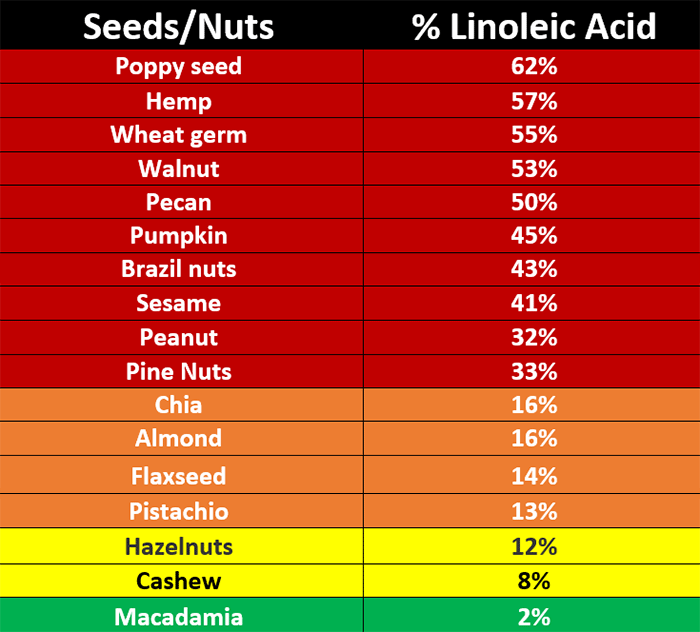
LA in Animal Foods
While seed oils are a primary source of LA, a number of animal foods you might not suspect are also loaded with this harmful fat. Ruminant animals such as cows, buffalo, sheep, lamb, goats, deer, elk and many other game animals have low LA content in their milk and meat, no matter what they eat, thanks to the fact that they have multiple stomachs with bacteria that can convert the high LA fat they eat into saturated and monounsaturated fats.
Animals with a single stomach, however, like chickens and pigs, cannot make this conversion. So, when they’re fed corn and soy, which are high in LA, their meat and eggs will also be high in LA.35 Most chicken and pork have over 25% LA. Chicken eggs are acceptable, though, as each egg has less than 1 gram of LA, and that is assuming they are fed commercial feeds that are loaded with high LA.
Interestingly, the difference in LA in ruminants that are 100% grass-fed and those that are fed corn and soy is only about 0.5%, which is why, from an LA perspective, there isn’t much difference between conventional beef and grass fed-only beef. That said, grass fed beef is still preferred as it typically has less glyphosate and hormones.
So, in summary, your best option is to get most of your animal protein from ruminants and avoid or limit all chicken and pork. My favorite meats are bison and lamb, but any of the ones listed above will work. Ideally it should be organic and the animals should not be fed any food that is contaminated with glyphosate or other pesticides.
LA in Seafood
Ideally, you’d get your omega-3s from healthy seafood. However, not all seafoods contain omega-3s. Only fatty, cold-water fish do. Examples include wild-caught Alaskan salmon, sardines, anchovies, mackerel and herring.
Farmed fish, especially farmed salmon, is best avoided altogether due to the exaggerated potential for contamination. At first glance, farmed fish may seem like a good idea to help protect wild seafood populations from overfishing, but in reality, the industry is plagued with many of the same problems surrounding land-based concentrated animal feeding operations (CAFOs), including pollution, disease, toxicity and inferior nutritional quality.
Most farmed fish are fed genetically engineered (GE) corn and soy, which are a completely unnatural diet for marine life and are loaded with hazardous omega-6 fats. Others are fed fishmeal, which is known to accumulate industrial chemicals like PCBs and dioxins.
From a nutritional perspective, farmed salmon also have the drawbacks of containing only half the omega-3 of wild salmon,36,37,38 and one-fourth the vitamin D,39 while having more than 5.5 times the amount of omega-6.40,41 Farmed salmon are also routinely exposed to antibiotics and pesticides.
Carnosine Can Help Reduce LA-Induced Oxidative Damage
While your body will slowly eliminate stored LA over time, provided you reduce your intake, a peptide supplement called carnosine can help reduce the oxidative damage caused by LA while your body is cleaning itself out.
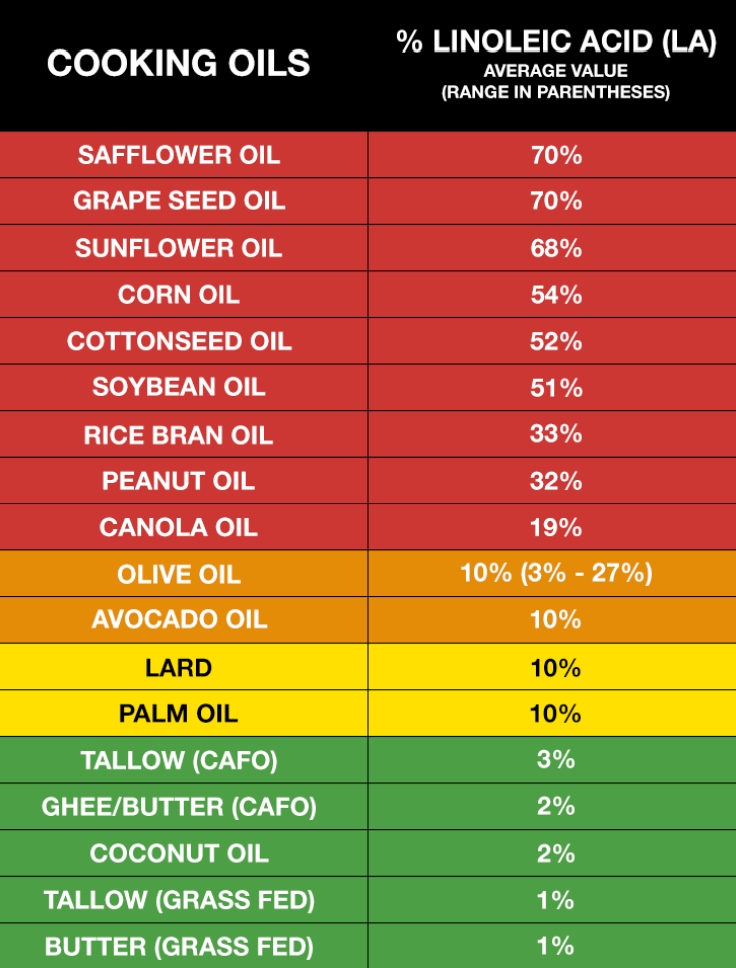
Carnosine is a dipeptide your body makes and it consists of two amino acids, beta-alanine and histidine. It serves as a sacrificial sink for reactive oxygen species (ROS) and ALEs, meaning it lets these very damaging molecules destroy it rather than your mitochondria, DNA or proteins, as depicted in the image below.
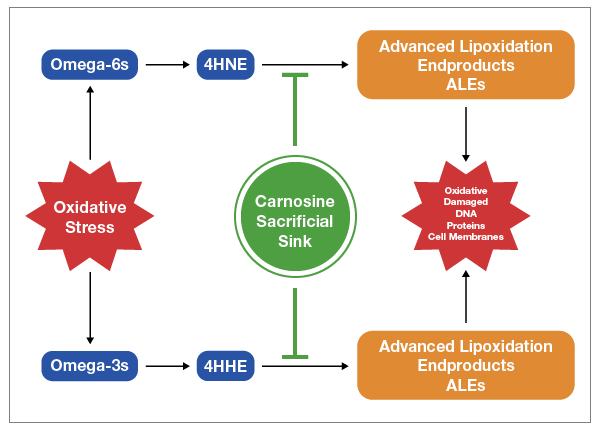
Carnosine is found in meats, and eating animal protein is known to efficiently raise carnosine levels.42 It’s not found in any plant foods. Alternatively, you could use a supplement. In this case, beta-alanine is a superior choice, as it’s the rate limiting amino acid in the formation of carnosine and raises carnosine levels more efficiently. It’s also far less expensive than carnosine.
Summary
Do yourself and your family a favor and embark on a journey of eliminating all seed oils from your diet today to ward off virtually all chronic degenerative diseases. This means avoiding all seed oils, and even fruit oils like olive oil and avocado oils as they are frequently adulterated with cheap seed oils.
Cook with ghee, butter or beef tallow, and avoid all processed foods, as they are typically loaded with seed oils. Also avoid eating in restaurants, as nearly all use massive amounts of seed oils to cook with and put it in their sauces and dressings. Lastly, avoid chicken and pork, and stick to bison and lamb as your primary meat sources.
- 1 Britannica. Lipids
- 2 Nutrients 2023, 15(14), 3129; doi: 10.3390/nu15143129
- 3 Open Oregon. Fatty Acid Types and Food Sources
- 4, 12 Science Direct. Fatty Acids
- 5, 13 Cells. 2021 Jun; 10(6): 1284
- 6 Mount Sinai. EPA
- 7 Heart & Stroke February 6, 2021
- 8 J Political Econ. 1930;38(1):73-85
- 9 Smithsonian Magazine November 23, 2019
- 10 “Profiling Food Consumption in America.” USDA Economic Research Service, Factbook, Chapter 2. ND
- 11 Atkins History
- 14 Oxid Med Cell Longev. 2014;2014: 360438. doi: 10.1155/2014/360438
- 15 Pharmacognosy Review. 2010;4(8):118-126
- 16 Biochemical Journal. 1982;208(1):129-140
- 17 Nephrol Dialysis Transplant. 2001;16(8):1598-1606
- 18 Free Radical Biol Med. 1992;13:341-390
- 19 YouTube, Omega-6 Apocalypse 2, Chris Knobbe August 25, 2021
- 20 Steinberg D, et al. Beyond Cholesterol N Engl J Med 1989; 320:915-924 April 6
- 21 European Heart Journal, June 21, 2020; 41(24): 2313–2330
- 22 Oncology Nurse Advisor July 6, 2018
- 23 Cancer Epidemiology, Biomarkers & Prevention. July 4, 2018
- 24 Free Radic Res. 2015;49(7):827-34
- 25 Photochem Photobiol. 2002 Dec;76(6):657-63
- 26 Exp Dermatol. 2003;12 Suppl 2:18-21
- 27 Renewable Energy. 2018; 126: 403-419
- 28 Int J Mol Sci. 2015;16(6):12871-12890
- 29 The Plan Journal. 2008;54:640-655
- 30 North American Olive Oil Association. The Future of Olive Oil in the United States. March 2019
- 31 Food Safety News April 12, 2022
- 32 Green HS, et al. First report on quality and purity evaluations of avocado oil sold in the US Food Control Volume 116, October 2020, 107328
- 33 Int J Curr Pharm Rev Res. 2011;2(3):145-160
- 34 Applied Sciences. 2019;1 Article no: 1531
- 35 Livestock Production Science. 1998;56:145-156
- 36 Scientific Reports 2016; 6 Article number 21892
- 37 Ecowatch October 8, 2016
- 38 CivilEats December 8, 2014
- 39 BU Today
- 40 Nutrition Data Wild Atlantic Salmon
- 41 Nutrition Data Farmed Atlantic Salmon
- 42 Science Direct, Carnosine; Nutritional Supplements and Metabolic Syndrome
How to Boost Brain Health and Reverse Neurological Disease
Reproduced from original article:
https://articles.mercola.com/sites/articles/archive/2023/07/15/boost-brain-health-reverse-neurological-disease.aspx
The original Mercola article may not remain on the original site, but I will endeavor to keep it on this site as long as I deem it to be appropriate.
Analysis by Dr. Joseph Mercola Fact Checked July 15, 2023
STORY AT-A-GLANCE
- The less inflammatory your diet is, the faster you’re going to get well, because inflammation is nearly always a contributor to neurological dysfunction. Sugar, damaged omega-6 oils, trans fats and processed vegetable oils need to be avoided
- A simple stress reduction technique done before meals can improve your digestion and absorption of nutrients, boost your immune function, and relax your body
- Melatonin provides the best protection for your neurons against free radical damage, and you need a healthy release of melatonin through the night to calm and heal your brain
- As you get older, the enzymatic activity required to produce melatonin becomes impaired. To boost your body’s production, take 5-HTP before bedtime. 5-HTP is converted to serotonin, which is further converted to melatonin
- Natural alternatives to diuretics, commonly prescribed for hypertension, are discussed, as are the many health benefits of proteolytic enzymes
Editor’s Note: This article is a reprint. It was originally published June 10, 2018.
Your brain is a really important part of your body. I’m sure no one would disagree with that. In this interview, Dr. Lee Cowden, co-founder of the Academy of Comprehensive Integrative Medicine (ACIM), discusses some really simple and inexpensive strategies that boost brain health and support neuroregeneration. This is also the topic of this year’s ACIM conference, which will be held in Orlando, Florida, in November.
The Academy of Comprehensive Integrative Medicine was founded in 2008 with the vision of educating integrative practitioners around the globe, for the most part online. “Many practitioners are so busy that they can never take the time to go to all of the meetings they need to go to, to learn what they need to learn,” Cowden says, “so we decided to start putting educational courses online.”
ACIM Offers Training Programs
In 2014, ACIM began offering a 300-hour online integrative medicine fellowship training program. Workshops are held in Dallas every few months to allow practitioners to get hands-on training. In 2018, there were hands-on conferences in July and September 20. Those were all preludes to the main conference in Orlando in November.
“Everything we’re doing this year is focused on the brain [and] neuroregeneration,” Cowden says. “With integrative medicine, we look at the causation, and see if we can resolve the causation of the illness. Once the cause goes away, usually the illness goes away.”
You don’t have to be a health care professional to benefit from ACIM. Even laypeople can study with ACIM.
The academy offers a core wellness coach program that includes 70 hours of training. “I think every integrative practitioner needs to have half a dozen or more wellness coaches working with them to hold the hands of the patients until they get well,” Cowden says.
ACIM Conference 2018: Neuroregeneration
The November conference focused on strategies that can help regenerate all types of neurological conditions, including Alzheimer’s, autism, multiple sclerosis, amyotrophic lateral sclerosis, Parkinson’s disease and other less severe conditions such as the neurological effects of fibromyalgia, and less common conditions such as reflex sympathetic dystrophy and peripheral neuropathy.
“The tendency of the American public is to look for a magic bullet. But, really, for neurological diseases, I haven’t found a magic bullet. There’s a lot of very important pieces.
I call those the foundational pieces: Diet, removing electromagnetic fields (EMFs) from the patient’s surroundings, physical activity, as well as brain games. There are a lot of other emotional issues that impact chronic neurological conditions that we need to address as well.”
Download this Article Before it Disappears
Quenching Inflammation Is a Key Foundational Step
In regard to diet, the less inflammatory it is, the faster you’re going to get well, because inflammation is nearly always a contributor to neurological dysfunction. The most inflammatory of all foods is probably sugar, followed by damaged, oxidized omega-6 oils, trans fats and processed vegetable oils. These all need to be strictly avoided. In addition to an anti-inflammatory diet, nutritional and herbal supplements can offer targeted support.
“Eating a ketogenic diet with clean fats and oils, doing some [intermittent] fasting throughout the week and getting rid of the inflammation-creating things — sugars, omega-6 oils, peanut products that have high arachidonic acid and so on … can make a great start in getting a patient’s neurological condition improved,” Cowden says.
“In 1988, I had a colleague who had a father in a nursing home in Louisiana who had advanced Alzheimer’s. He was a full-care case. In the morning, the nurses would have to get him out of bed, dress him and feed him. He was always pooping and peeing in his pants. He couldn’t remember the names of the nurses, the family members or anybody. My colleague said, ‘Can you give me some ideas of things that will help my father?’
I said, the problem is that it’s going to take a lot of intervention, and getting that at a nursing home is not likely to happen. He said, ‘I’m pretty sure it will happen, because the head nurse of the nursing home has a mother, just like my dad, with severe dementia. She wants to see if what I try on my dad works, so that she can try it on her mom.’
I recommended a regimen: Dietary changes, supplemental nutrients and proteolytic enzymes 30 minutes before food, magnesium, vitamin D3, tocotrienols, tocopherols, bacopa monieri, other herbs, homeopathics and some things to get the metals out … chlorella … dimercaptosuccinic acid (DMSA) and so on.
I said, ‘You need to get your dad out of bed and walk him every day. Get the nurses to do this. Get them to play brain games with him.’
He called me back about four months later. He said, ‘I’ve got to give you an update on this … My dad now gets out of bed, dresses himself, feeds himself, does not poop or pee in his pants anymore. He walks around with the nurses and helps them take care of the other patients in the nursing home.
Then he sits down and plays cards with the nurses, and sometimes wins.’ That’s a big shift in just four months’ time, [and] we’ve had lots of other cases like that with dementia.”
Can You Reverse Autism?
Cowden has also seen near-magical improvements in children with autism. A remarkable case is that of a young man named Bryan. Cowden first met Bryan’s dad when Bryan was just 7 years old. He had neither speech nor socialization skills.
His dad was a restaurant owner who went back to school to become a naturopathic doctor in a desperate attempt to help his son after all of his allopathic doctors told him there was no hope for Bryan — he’d never graduate high school, go to college, hold a job, get married or have children of his own.
Cowden worked with Bryan’s father, and not only did Bryan start speaking within a year or two, he graduated high school at 18, played football in college on a scholarship and got B’s in school. After college, he became a massage therapist; fell in love, married and had two children.
He is now helping autistic children and adult patients with neurological disease to recover. I’ve met Bryan, and this story is all the more remarkable by the fact that he’s one of the healthiest people I have ever met.
There is a very objective heart rate variability test that measures the fitness of your autonomic nervous system and a variety of other variables called HeartQuest. Bryan scored virtually a perfect score on this test. From being an autistic child at age 7 to someone who’s one of the healthiest people around is a rather dramatic example showing that if you apply these principles, they really can work.
“After his dad helped him get to the point where he was able to do a lot of things for himself, Bryan became highly motivated to eat a clean diet, to do a physical activity, to drink enough water, to get enough sleep and so on,” Cowden notes. “He lives right.”
A Simple Stress Reduction Technique That Pays Dividends
The beauty of integrative medicine is that there are literally hundreds if not thousands of tools available, and sometimes the simplest, least expensive ones are among the most effective. One foundational aspect of good health is stress reduction. A stress reduction technique I learned from Cowden that has helped me decrease my sleep latency, allowing me to fall asleep really quickly when done before bed, is performed as follows:
- Place your left index finger and thumb together, then grasp a hold of these two fingers with your right hand (see video demonstration starting around 29:55). It’s important to use your left fingers, as the left side of your body entrains the right side of your body rather quickly, whereas the right side entrains the left very slowly.
- Place your hands on your lap and breathe deeply in through your nose. Hold your breath for one second before breathing out through your mouth. Keep breathing in through your nose and out through your mouth while visualizing yourself in the most relaxing place you have ever been. Be sure to include sound, taste, touch and smell in your visualization and not just the visual component. Really remember that place with all of your senses.
Doing this for four to five minutes before each meal will help improve your digestion and absorption of nutrients, boost your immune function, and relax your body. Done before bedtime, it’ll improve how fast you fall asleep, how deeply you fall asleep and the amount of healing your body can get while asleep as it boosts your immune function. For very little time, energy and effort, at no cost, you can get a lot of improvement. Cowden explains the rationale for these specific finger holds:
“On the index finger, on the middle-finger finger side, the dorsal surface, is the energy pathway for your nervous system. On the palm-side surface of the index finger is the energy pathway for your neurotransmitter system. On the thumb, on the outer aspect, is the pathway for your lymphatic system. Everybody who is chronically stressed has a stressed-out nervous system, stressed-out neurotransmitters and a clogged lymphatic system.
When you hold [your left index finger and thumb] with your right hand, you’re taking the excess energy that’s usually in these other pathways and dissipating that into the pathways that run on the palm surface of your right hand. If there are areas or pathways that are deficient in energy, then energy comes out of the pathways in your right hand and goes into the pathways in your left hand.
The principle is balancing the energy pathways. The Chinese have said for 3,000 years that disease develops whenever energy stagnates. If you stagnate energy, then you’re going to have all kinds of problems, including maldigestion and insomnia … This helps, probably more than anything I’ve found, to balance the sympathetic and parasympathetic nervous system.
The sympathetic is what causes the fight-or-flight. The parasympathetic, which is to balance out the sympathetic, is responsible for digestion, relaxation, sleep and the calming parts of our nervous system. So many people have almost exclusively, sympathetic and almost no parasympathetic function.”
5-HTP Boosts Melatonin and Helps Optimize Sleep
Another gem I learned from Cowden during a visit to my home was the use of 5-hydroxytryptophan (5-HTP). My deep sleep measured at zero minutes, despite spending time at the beach daily to expose myself to bright sunshine and using blackout drapes to sleep in the dark. I also turned off the electricity to my bedroom. I thought that’s all you needed to optimize melatonin. It turns out that’s not the case when you get older. Cowden explains:
“Tryptophan, which you find in turkey and pumpkin seeds, gets converted to 5-HTP. 5-HTP is converted to 5-hydroxytryptamine, also called serotonin. 5-hydroxytryptamine finally gets converted into melatonin. However, as we age, toxins pile up in the enzymes [responsible for these conversions] and prevent those enzymes from performing the work they need to do.
You have, over time, lower and lower levels of 5-HTP, serotonin and melatonin, even though you’re doing everything else right. So, yes, we have to continually detoxify, and also, sometimes, support those enzyme systems by what we call excessive precursor supply. You boost the building blocks to make the final product.
Melatonin is not very well absorbed out the gut. Some people take melatonin, but some people have kind of a paradoxical response from that. But if they take 5-HTP, they can actually make as much 5-hydroxytryptamine as they need to fairly easily, and then they have the serotonin and melatonin.”
Low Serotonin Will Impede Melatonin Production
Once I began taking 100 milligrams of 5-HTP about 20 minutes before bed, my deep sleep rapidly increased to about 30 minutes a night. Since then I’ve also painted my bedroom with grounded shielding paint that provides an ultra-low EMF environment. Turning off the electricity wasn’t enough, as assessed by measuring the electric field’s influence on my body voltage. Hopefully that’ll improve my deep sleep further.
Many are aware that serotonin is important for mood, but if you don’t have enough of it, you can’t make melatonin either, and melatonin is the most important antioxidant nutrient in the brain. As noted by Cowden, melatonin is far more important than the oral antioxidants you may take. It’s even more important than glutathione and superoxide dismutase, because it’s fat-soluble.
Melatonin provides the best protection for your neurons against free radical damage, and you need a healthy release of melatonin through the night to calm and heal your brain.
The enzyme that converts 5-HTP to serotonin requires vitamin B6 as a cofactor, so if you’re taking 5-HTP and not seeing results, that means you probably need to take some coenzymated B6 (pyridoxal 5′-phosphate) sublingually to get enough of the active form of B6 to enable the conversion of 5-HTP to serotonin.
The Many Benefits of Magnesium
Another supplement that is helpful for sleep is magnesium. Cowden prefers magnesium malate, but you can also use magnesium threonate. There are literally dozens of different types of magnesium supplements.
Magnesium threonate has the added benefit of providing some antiretroviral activity, and retroviruses tend to be a challenge inherent with many neurodegenerative diseases. Threonate is also a neurotransmitter, in addition to being an amino acid.
To avoid creating an imbalance, it’s wise to alternate between different forms of magnesium. Cowden prefers magnesium malate because malic acid is a Krebs citric acid cycle intermediate and actually helps generate more ATP energy. If you’re deficient in malic acid inside the cell and you take a magnesium malate, the malic acid is drawn into the interior of the mitochondria and will drag the magnesium in with it.
Without a doubt, magnesium is essential for mitochondrial ATP production. About 50% of the metabolic enzymes in your body require magnesium as a cofactor, so it’s a really important nutrient. It’s also required for conduction of nerve impulses and the contraction-relaxation cycle of muscles, including your heart muscle.
There’s also compelling evidence suggesting magnesium may reduce the impacts and side effects of EMF exposure. Importantly, if you don’t have enough magnesium, your body also cannot absorb potassium. Cowden explains:
“If a person is deficient in magnesium and potassium both, you can give them potassium in large amounts on an ongoing basis, and their potassium levels never come up. But if you give them magnesium and get it repleted, and then give them potassium, then their potassium levels come up.
That’s because the kidney tubules selectively hold on to magnesium and waste potassium into the toilet in order to retain the magnesium. Because, apparently, the body sees the magnesium as being a more vital nutrient than potassium.
One more thing. A lot of people in the United States are on some form of diuretic medication, either for blood pressure, swelling of their legs or for some other reason. When you take a diuretic, it has a magnesium- and potassium-wasting effect on the kidneys. They’re wasting both magnesium and potassium into the toilet. But most doctors only give potassium. They don’t give the magnesium.”
Alternatives to Diuretics
Diuretics are frequently prescribed for high blood pressure and/or swelling in the extremities. As in most cases, drugs are not necessary for treating these conditions. Swelling of the legs is often due to congestion in your lymphatic system, or kidney toxicity preventing your kidneys from properly processing water. Hence the water is retained in your tissues. Sometimes, it’s just severe toxicity in the tissues.
“One of the ways the body protects itself from toxic overload is to allow water to go out into the tissues where the toxins are, to dilute the toxins. If you have enough toxicity in your legs, then you’re going to have fluid accumulation there to try to dilute those toxins,” Cowden explains. “The lymphatic system can get clogged up for lots of different reasons.
The lymphatic system is commonly clogged up in people in the United States, because they have a love affair with dairy products and wheat products, both of which produce thick sticky mucoid material in the lymphatic system, which clogs it up. If they’ll get rid of the dairy and wheat products, then the lymphatic system becomes more fluid and able to clear toxins from the tissues through the lymphatic system.”
If you have an extremely weak heart, you may not be able to pump blood properly. This is also known as right-sided congestive heart failure. A very common cause of that is coenzyme Q10 (CoQ10) deficiency. According to Cowden, taking CoQ10, addressing any emotional issues and eliminating heavy metals will help the swelling to go away even in these more serious cases.
Why Diuretics Are Not Ideal for Treatment of Hypertension
Hypertension is a more complex issue. The first line of treatment and the No. 1 recommended drug for treating hypertension are thiazide diuretics. However, thiazide diuretics cause chromium wasting, which then creates insulin resistance, which in turn raises your blood pressure. As noted by Cowden:
“That seems to be a pretty oxymoronic way to do that. We really need to try to find a better solution. Most people who have hypertension emotionally feel under pressure to do something or not do something. If they can recognize what that is and resolve that emotional conflict, their blood pressure usually goes down quite a bit …
If you get the plaque reversed in the arteries, then the [arteries] are no longer stiff, so then you don’t have a systolic hypertension. You don’t need the drug, because your blood pressure comes down just by getting rid of the plaque in the arteries.
How do you do that? In the early ’90s, I was giving patients with advanced atherosclerotic disease proteolytic enzymes 30 minutes before food, a clean diet, supplements, nutrients, magnesium, vitamin C, vitamin E, etc., and reversing 80% to 90% plaque in the arteries down to 20% and 30% plaque in just three or four months.
We proved that with the ultrasound Doppler duplex imaging. If we can do that, then why are we doing open heart surgeries, carotid endarterectomies and all that other stuff? It’s because people are not educated about what’s possible.
If they haven’t been told that this could be done by their medical doctor, then they don’t believe that it’s possible. Unfortunately, there are a lot of things the medical doctor doesn’t know, because they weren’t taught it in medical school.”
The Benefits of Proteolytic Enzymes
Proteolytic enzymes are an effective strategy not only for decreasing atherosclerotic plaque but also for thinning your blood, lowering your risk of a blood clot. Cowden’s father was placed on Coumadin by his doctor, which caused him to bleed profusely whenever he hurt himself working outside. Cowden suggested proteolytic enzymes instead, which his father was eager to try.
“He started that when he was about 60. He lived to be 80. He was on proteolytic enzymes 30 minutes before food twice a day for 20 years, without any more clots, without any more of the symptoms for which he was being treated with the sodium warfarin or the Coumadin.
Since then, I’ve treated several dozen other patients with the same strategy. As far as I know, there’s no peer-reviewed literature proving that this is so, but we have lots of anecdotal evidence … As far as I know, everybody has remained plaque-free.”
The enzymes Cowden uses for this purpose, in order of effectiveness are:
- Lumbrokinase, made from bacteria that live in the gut of the earthworm
- Nattokinase, a fermented soy product
- Serrapeptase, made from bacteria that grow in the gut of the silkworm
- Bromelain, obtained from pineapple stems
- Papaya leaf enzyme
“A person can be energetically tested for several of these enzymes to see which pair is the best pair and just rotate back and forth. Monday, Wednesday and Friday, one; Tuesday, Thursday, Saturday and Sunday the other.
If they do enough of those, then usually they’ll have no clot formation,” he says. Proteolytic enzymes also combat tiny clots, frequently caused by chronic infections. The infection, wherever it is located, causes your body to produce excessive amounts of fibrin, a clot-producing agent.
This fibrin can plaster itself up against the capillary walls, restricting the delivery of oxygen from red blood cells through the capillary wall into the tissues.
The above-mentioned enzymes will strip away fibrin, allowing oxygen delivery through the capillary walls into tissues. Once the tissues are no longer starved of oxygen, they can go into aerobic metabolism instead of anaerobic metabolism, and when you’re in anaerobic metabolism, you don’t stimulate cancer growth and microbial growth. So, there are many related health benefits.
What Causes Eye Floaters and Are They Dangerous?
Reproduced from original article:
https://articles.mercola.com/sites/articles/archive/2023/07/12/eye-floaters.aspx
The original Mercola article may not remain on the original site, but I will endeavor to keep it on this site as long as I deem it to be appropriate.
Analysis by Dr. Joseph Mercola Fact Checked July 12, 2023

STORY AT-A-GLANCE
- Floaters are small black dots, squiggly lines or cobwebs inside your eyes that float across your vision. They are a nuisance, but when they appear quickly in combination with flashes — light flashes like lightning or a camera flash — it requires immediate medical attention
- The tiny specks move as your eye moves, so as you look at them, they seem to float away. They are more obvious when looking at a light background and develop when the vitreous fluid in the back of the eye loosens from the retina, causing collagen strands to stick together and casting a shadow over the retina
- Nearsighted people have a higher risk of developing floaters, and excessive screen time can increase the risk of nearsightedness. Eye fatigue can be alleviated following the 20-20-20 rule — after 20 minutes of screen time, look away for 20 seconds at something 20 feet away
- Lutein can help prevent nearsightedness and melatonin helps protect eye health, including playing a role in preventing glaucoma and cataracts. Other nutrients important to eye health include water, vitamins A, C, E, lutein, zeaxanthin and omega-3
From time to time, most people notice small black dots or squiggly lines in their eyes that float across their vision. In a study1 of 603 people, 76% reported that they see floaters and 33% said it caused a noticeable impairment in their vision.
For some people, floaters can also appear like little cobwebs that come and go across their visual field. While most of the time floaters are only a nuisance, sometimes they can be a sign of a more serious eye condition.
These little specks in your visual field move as your eye moves. This means when you attempt to look directly at them, they seem to float away. As your eyes stop moving, they may float back into vision again. Nearly everyone will see floaters as they age, but some people have a higher risk of floaters.2 This includes people who are typically over the age of 50, nearsighted, have diabetes or have had surgery to correct cataracts.
Floaters are most obvious to a person when they are looking at a bright white object. This might include light-colored walls, the snow or a computer screen. The floaters appear as black flecks that may initially look like flies or spiders moving at the very edge of their peripheral vision.
How Do Eye Floaters Form?
The eye has two chambers that are commonly referred to as the front and the back of the eye. At the front of the eye is the cornea, which is the dome-shaped portion. Behind the cornea is a chamber filled with fluid called aqueous humor. The definition of “humor” is “bodily fluid.” The body continually produces aqueous humor that maintains pressure in the eye. This happens when the same amount of fluid is leaving the eye as is being produced.
The back of the eye is located between the lens and the retina. This is called the vitreous cavity and it is filled with vitreous humor. Vitreous humor is a gel-like substance that is more viscous than aqueous humor but continues to allow light penetration. With age, vitreous humor thins and may loosen from the retina. Floaters form when tiny collagen strands of vitreous stick together and cast a shadow over the retina. It is the shadow you see as a floater.
The vitreous humor may detach from the retina, called posterior vitreous detachment. In this case, a person experiences acute flashes and floaters, which require immediate medical attention. Flashes may look like a camera flashing or lightning.
On their own, floaters are common and do not typically need to be treated. However, when floaters and flashes appear together, it is a serious condition. Vitreous humor makes up approximately 80% of the volume of the eye and helps maintain the shape of the eye. Dr. Sarah Brewer told Mirror:3
“Healthy vitreous humor is a uniformly transparent gel, but aging, lifestyle factors and environmental stressors such as UV light can trigger oxidative stress and protein glycation, which cause collagen to clump together and the vitreous humor to degenerate. Although not necessarily harmful, eye floaters can cause discomfort, distraction and frustration on a daily basis.”
Screen Time Alters the Structure of the Eyeball
Myopia (nearsightedness) affects 41.6% of Americans4 and by 2050, experts estimate it will affect half the global population. Nearsightedness describes a vision problem in which close objects are clear but distant objects are blurry. The condition is thought to be triggered by refractive errors in the eye.
This means as the light is bent when it passes through the cornea and lens to the retina, there is an error in the bending. Refraction errors can occur when there’s a change in the shape of the eye, such as the length of the eyeball or the shape of the cornea. CBC News5 reports researchers have linked hours of use on the computer or smartphone to progressive, irreversible eye conditions, such as myopia and dry eye disease.
Staring at screens can change the structure of the eyeball, and while there is a genetic component to nearsightedness, studies have shown those with excessive screen time had a faster progression of vision errors. Although the data are mixed,6 others believe the link in children and young adults is consistent.7 Rupert Bourne, professor of ophthalmology in the Vision and Eye Research Institute at Anglia Ruskin University (ARU), said:
“Our study is the most comprehensive yet on this issue and shows a potential link between screen time and myopia in young people. This research comes at a time when our children have been spending more time than ever looking at screens for long periods, due to school closures, and it is clear that urgent research is needed to further understand how exposure to digital devices can affect our eyes and vision.”
Nearsightedness places you at an increased risk for developing floaters and screen time increases your risk for nearsightedness. Long hours in front of a computer screen can also increase your risk of eye fatigue. Some ophthalmologists also believe that eye fatigue can contribute to developing floaters.8
Unfortunately, the evidence doesn’t pinpoint exactly how many hours are too many when it comes to screen time. Dr. Vivian Hill,9 pediatric ophthalmologist and surgeon in Calgary, Canada, suggests that rather than fixating on a specific number of hours, be aware of how your eyes feel while you’re watching TV, working on your computer or browsing the net on your phone.
If your eyes feel dry, tense or tired, take more frequent breaks and be conscious of your need to blink more often. “Whenever we’re staring at a screen, our blink rate goes down to about 10% of normal. So that means we’re blinking once instead of 10 times,” she said.
Download this Article Before it Disappears
Lutein Protects Against Nearsightedness and More
Lutein is a nutrient important to eye health and it helps protect against the development of nearsightedness. A 2020 study10 found participants with the highest lutein concentrations had a 40% reduced risk of developing nearsightedness. An earlier study11 also found people with the highest plasma lutein concentrations had a significantly lower risk of myopia.
Lutein is important to help prevent age-related macular degeneration, cataracts and other eye diseases.12 Lutein is efficient at filtering blue light, which is the type emitted from computers, tablets, cell phones and led lights. Blue light induces oxidative stress in the eyes, which increases your risk of macular degeneration. Your body cannot make lutein, so you must consume it in your diet. The following foods are rich sources of lutein.13,14,15
| Dark leafy greens | Summer squash | Pumpkin |
| Carrots | Broccoli | Egg yolks |
| Avocados | Brussels sprouts | Pistachios |
Lutein is a carotenoid and of all the known carotenoids, only lutein and zeaxanthin can cross the blood-retina barrier. Lutein may help prevent age-related macular degeneration (AMD), which is now the leading cause of blindness in Americans aged 65 and older.16
Studies have shown those with the highest levels of lutein and zeaxanthin had a lower incidence of neovascular AMD,17 a lower risk of development or progression of diabetic retinopathy and lower risk of cataracts and glaucoma.18
Lutein also plays a role in brain health. In one trial,19 supplementation with lutein and zeaxanthin boosted cognitive function and in older adults,20 it improved cognitive function and provided a boost in complex attention and cognitive flexibility domains when compared to those taking a placebo.
In another example,21 among 60 adults between the ages of 25 and 45, those with higher levels of lutein in middle age had more youthful neural responses than those with lower levels. The researchers suggested eating more lutein-rich foods could therefore benefit your brain in middle age.22
Melatonin Plays a Role in Eye Health and Vision Protection
Melatonin is another nutrient that scientists recently discovered is useful for far more than a good night’s sleep. A team of scientists23 analyzed the effects that melatonin supplements had on patients with glaucoma.
Glaucoma is one of the leading causes of blindness. It affects more than 3 million Americans and roughly 90 million people throughout the world.24 It has been suggested that glaucoma is a neurodegenerative disease25 and that damage to retinal ganglion cells affects not only vision but also the circadian rhythm and sleep.
People with glaucoma may have a disrupted circadian rhythm compared to their peers and neuroprotective strategies that prevent damage to retinal ganglion cells could help with both disrupted sleep and glaucoma. The participants in the study took a melatonin supplement daily at 10:30 p.m. for 90 days. The researchers recorded several benefits, including:26
- Increased stability of systemic circadian rhythm
- Decreased intraocular pressure
- Improve the function of retinal ganglion cells in participants with advanced glaucoma
- Improvements in sleep and mood, particularly in participants who had advanced glaucoma
Although melatonin is often described as a pineal hormone, much of it is produced inside your mitochondria when you get proper sun exposure, which is involved in melatonin production.27 Melatonin receptors also exist in several areas of the eyes, including the cornea, retina, and lens, suggesting that melatonin also acts on these tissues.
Melatonin appears to affect vision health. For example, cataracts are associated with oxidative stress and researchers have suggested that melatonin counteracts oxidative damage in the lens and may be a “potential therapeutic agent for cataract prevention/management.”28
Alongside lutein, melatonin may also prevent neurovascular AMD by inhibiting endothelial progenitor cell angiogenesis in neovascular AMD.29 Melatonin may also play a role in the mitochondrial component of AMD. Researchers explain:30
“The effect of melatonin on mitochondrial function results in the reduction of oxidative stress, inflammation and apoptosis in the retina; these findings demonstrate that melatonin has the potential to prevent and treat AMD.”
You can optimize your melatonin production by getting enough bright sunlight during the day as this helps to set your circadian clock. Aim for at least 15 minutes in the morning to help regulate production. This helps drop melatonin to daytime levels, so you feel awake during the day and sleep better at night.
Ideally, sunlight on your bare skin will help the near-infrared light from the sun activate your mitochondria to produce melatonin. As evening approaches and the sun sets, try to avoid artificial lighting. Blue light from electronic screens and LED lights inhibits the production of melatonin. Try using incandescent light bulbs, candles or salt lamps.
More Steps That May Help Prevent Floaters
In addition to optimizing your melatonin production and eating foods high in lutein, there are several more steps you can take that may help prevent floaters from developing:31,32,33
• Hydration — Chronic dehydration can cause the vitreous humor to lose volume and the vitreous cavity to lose shape. This contributes to the formation of floaters. Hydration also helps the body to flush out toxins and debris, which is another factor in the development of floaters.
• Rest and sleep — Getting from seven to eight hours of sleep each night helps your body to get rid of toxins and debris and promotes melatonin use as it is released at night to help you sleep. Also, take care to rest your eyes while working on a computer or your smartphone.
You can reduce eye fatigue by incorporating the 20-20-20 rule. This means for every 20 minutes you are looking at a screen, you spend 20 seconds looking at something else that’s 20 feet away.
• Reduce stress — By managing your stress level you can help promote good eye health. Find stress-reducing activities you can incorporate into your day. For example, consider exercise, stretching, yoga, walking, meditation or deep breathing. Emotional Freedom Techniques (EFT) is another activity that helps reduce stress by addressing emotional barriers.
• Balanced diet — Consuming a balanced diet can help ensure you aren’t deficient in vitamins and micronutrients essential for good eye health. These include vitamin C, lutein and omega-3 fatty acids. It’s best to get your nutrients from your diet, but when you don’t eat enough fruit or vegetables, you may want to consider supplementation.
◦ Vitamin C — Adequate amounts of vitamins C and E help prevent cataracts.34 When you have optimal amounts of both, they protect the other from being oxidized. While citrus fruits are classic choices, they are also high in fructose. Other fruits and vegetables lower in sugar and rich in vitamin C are broccoli, kiwi, kale, tomatoes and bell pepper.35
◦ Vitamin E — Vitamin E is an antioxidant that helps protect the body against free radical damage and deficiency can lead to retinopathy.36 Food sources high in vitamin E include avocado, beets, collard greens, spinach, peanuts, red bell pepper, mangoes and asparagus.
◦ Lutein and zeaxanthin — These are the carotenoid pigments responsible for the yellow and orange color in cantaloupe, corn, carrots, wild-caught Alaskan salmon and pasture raised organic eggs.
◦ Vitamin A — Vitamin A helps promote eye health and the main nutrient — beta-carotene — is a precursor to vitamin A.37 Foods that are high in vitamin A include tomatoes, red bell pepper, mango, cantaloupe, beef liver and pasture raised organic milk and eggs.
◦ Omega-3 — Two of the main long-chain fatty acids in omega-3 fatty acids that are found abundantly in fatty fish are EPA (eicosapentaenoic acid) and DHA (docosahexaenoic acid). DHA may help preserve your vision and promote eye health. The type of fish you choose matters since not all fish have omega-3 fats.
Farmed fish, especially farmed salmon, is best avoided altogether due to the exaggerated potential for contamination. Alaska does not permit aquaculture, so all Alaskan fish are wild-caught. They also have some of the cleanest water and some of the best maintained and most sustainable fisheries.
To verify authenticity, look for the state of Alaska’s “Wild Alaska Pure” logo. This is one of the more reliable ones, and it’s a particularly good sign to look for if you’re buying canned Alaskan salmon, which is less expensive than salmon steaks. Other fish high in omega-3 fats include herring, mackerel and anchovies.
If you don’t eat fish, consider an omega-3 supplement. Krill oil is a better option than fish oil since it is sustainable, and the omega-3 is more bioavailable than in fish oil. Importantly, your brain cannot readily absorb DHA unless it’s bound to phosphatidylcholine, and while krill oil contains phosphatidylcholine naturally, fish oil does not.
- 1 International Journal of Ophthalmology, 2013;6(3)
- 2 Cleveland Clinic, Eye Floaters and Flashes
- 3 The Mirror, May 7, 2023
- 4 National Eye Institute, October 3, 2017
- 5, 9 CBC News, April 23, 2023
- 6 Ophthalmic and Physiological Optics, 2020;40(2)
- 7 Science Daily, October 7, 2021
- 8, 32 Binetter Eye Center, September 18, 2019
- 10 Nutrients, 2020;12(6) Sub 6.3 Lutein and Myopia
- 11 JAMA Ophthalmology, 2017;135(1)
- 12 Nutrients, 2013;5(5)
- 13 Nutrients, 2017;9(9)
- 14 My Food Data, May 8, 2023
- 15 Nutrients, 2013;5(4) Subhead
- 16 Centers for Disease Control and Prevention, Learn About Age-Related Macular Degeneration
- 17 Nutrients, 2020;12(6) Lutein and AMD
- 18 Nutrients, 2021;13(6)
- 19 Nutrients, 2021;9(11)
- 20 Frontiers in Aging Neuroscience, 2017;9:254
- 21, 22 Frontiers in Aging Neuroscience, 2017;9
- 23 Journal of Pineal Research, 2021;71(4) Abstract
- 24 Bright Focus, October 27, 2022
- 25 Eye Brain, 2021;13
- 26 Journal of Pineal Research, 2021;71(4)
- 27 Translational Psychiatry, 2021; 11(339)
- 28 Experimental Eye Research, 2022;215
- 29 Cells, 2023;12(5) Title
- 30 Expert Opinions on Therapeutic Targets, 2020;24(4)
- 31 Mirror, May 7, 2023, Toward bottom
- 33 All About Vision, How to Reduce Eye Floaters Naturally
- 34 BMC Ophthalmology, 2013;13
- 35 Harvard School of Public Health, Vitamin C, Food Sources
- 36 Harvard School of Public Health, Vitamin E, Signs of Deficiency and Food Sources
- 37 Harvard School of Public Health, Vitamin A, para 1 and food source
Chia seeds boost your immune system and protect your heart
Reproduced from original article:
https://www.naturalhealth365.com/chia-seeds-boost-your-immune-system-and-protect-your-heart.html
by: July 6, 2023
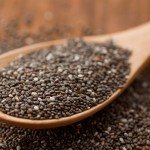 (NaturalHealth365) Chia seeds may be small, but they are bigger than life when it comes to nutrition. These potent powerhouses pack plenty of omega-3 fatty acids, antioxidants, magnesium, fiber, iron, zinc, and calcium.
While known scientifically as the dried seeds of the Salvia hispanica plant, the seeds are much better known by their common name of chia seeds, thanks in no small part to the popular “chia pet” gift line of terra cotta figures. Historically, these seeds have been used to help with a wide range of conditions, and more recent scientific research is providing evidence that backs up what generations have known about this tiny seed’s health benefits.
7 ways chia seeds can help you build a healthy body
Compared to the more commonly known flaxseed, chia seeds offer up more omega-3 fatty acids, fiber, calcium, and phosphorus. Many of the seed’s most significant health benefits stem from its high fiber content.
Here is a look at just seven of the health benefits you can expect to reap from adding these tiny seeds to your regular diet:
1. Reduced risk of heart disease
As the largest producer of chia seeds worldwide, Australia is also home to a majority of the research conducted on the health benefits of chia seeds. In one such study, animals fed chia seeds exhibited significantly better heart health than those not receiving chia seeds. This is likely due to the large quantity of alpha-linolenic acid (ALA) they contain, a type of omega-3 fatty acid that must be obtained through diet. Chia seeds are considered by far the best natural, plant-based source of ALA.
2. Protection against cervical and breast cancer
French researchers also linked high ALA content to lowered risk of breast cancer, according to a study published in the European Journal of Cancer in 2000. In a 2013 study further analyzing these results, scientists found that ALA, the primary fatty acid found in chia seeds, had the ability to induce “cell suicide” in breast and cervical cancer cells without affecting nearby healthy cells.
3. Better insulin sensitivity
Along with improving cardiovascular health, the same Australian study showed that chia seed consumption is linked to improved glucose tolerance and insulin sensitivity.
Lowered insulin sensitivity is associated with insulin resistance and eventual pre-diabetes and type 2 diabetes. It is known that the risk of developing this disease is greatly diminished when adopting healthier eating habits.
4. Immune-boosting capabilities
The ancient Aztecs and Mayans prized chia seeds for their medicinal properties, using them to treat colds and the flu. Modern-day research out of the University of the Valley of Guatemala determined chia seeds have an antioxidant rating much higher than other good dietary sources of antioxidants, including blackberries, mango, pineapples, or grapes.
Chia seeds contain significant amounts of nutrients – including vitamin C, certain flavonols, vitamin E, lignin, and phenolic acids – known to boost the immune system with powerful antioxidants.
5. Improved joint health
The Aztecs also believed that the chia seed was essential for good joint health. Even today, you will find a wealth of anecdotal evidence backing the belief that these tiny seeds are good for the joints. Research shows many of the prominent nutrients found in these seeds possess strong anti-inflammatory and anti-rheumatic properties, making the case that these little seeds are indeed good for healthy joints.
6. Enhanced athletic performance
Athletes are frequently told to load up on carbs to pump up endurance and stamina, but research shows that these seeds offer a healthier alternative to sugary drinks and white flour foods. In one such study, highly trained male athletes were divided into groups provided with a chia drink loaded with omega-3s or given Gatorade.
The researchers found no significant difference when measuring performance after the treatments, suggesting that there would be no “good” reason to consume Gatorade, especially when the chia drink offers a healthier alternative to sugary beverages with unwanted (toxic) ingredients.
7. Healthy hair and skin
The antioxidants found in these seeds are known to slow skin aging by eliminating free radicals. In addition, you will get a number of nutrients, including protein and several minerals and vitamins known to promote healthy hair growth.
How adding these seeds can maximize your health benefits
If you are ready to harvest the benefits of chia seeds, follow a few recommendations to avoid any unwanted side effects common with high-fiber foods, such as bloating and gastrointestinal distress. Avoid consuming more than the recommended two tablespoons of whole seeds daily.
There are many ways to add these seeds to your diet. Consider adding toasted chia to salads for a bit of crunch, blend soaked seeds with fresh fruit to make jam, replace a small amount of the flour with chia seeds in your favorite bread recipe, or throw some soaked seeds into a healthy smoothie.
Also, be sure to drink plenty of clean (purified) water when consuming chia seeds. Research has shown little nutritional difference between whole versus ground seeds, so choose whichever you prefer.
Sources for this article include:
Get dry eye relief with THIS promising natural intervention
Reproduced from original article:
https://www.naturalhealth365.com/get-dry-eye-relief-with-this-promising-natural-intervention.html
by: July 7, 2023
 (NaturalHealth365) Did you know that dry eye disease (DED) is more prevalent than most people realize? With over 16 million people in the United States alone impacted by this condition, DED is a silent epidemic. It predominantly affects women, with a staggering two times higher occurrence than men. Astonishingly, reports indicate that up to 50% of all adults battle some form of dry eye.
But here’s the glimmer of hope: there’s a potential game-changer on the horizon. An oral probiotic holds promise in offering relief for this widespread ailment.
Here’s a quick look at this promising new intervention for DED.
Friendly bacteria protect the surface of the eye, new study suggests
A recent study by the Baylor College of Medicine focused on the oral use of a probiotic bacterial strain revealed the intervention reduced dry eye symptoms. The study’s findings show the new treatment modality’s use of bacteria within the patient’s intestinal tract might preclude the need for the use of eye drops, ointments, gels, and other treatment options.
This isn’t the first time these researchers have delved into the realm of gut bacteria and dry eye. Their previous investigations unveiled a startling revelation: mice provided with gut bacteria derived from Sjogren syndrome patients experienced exacerbated symptoms compared to their counterparts who received different bacteria. Intriguingly, the latter group was supplied with gut bacteria sourced from healthy individuals.
The implications of these findings are profound, underscoring the far-reaching effects of a healthy gut microbiome. By harnessing probiotic bacteria, we can unlock greater protective benefits in supporting eye health.
Bolster your gut health to achieve optimum health and wellness
The remarkable benefits of probiotics extend far beyond eye health, highlighting their profound impact on our overall well-being. These beneficial bacteria have emerged as a potent tool, enhancing various aspects of our physical and mental health.
Digestive health: Probiotics play a vital role in maintaining a healthy digestive system. By promoting a balanced gut microbiome, probiotics support optimal digestion, nutrient absorption, and a robust immune response within the gastrointestinal tract.
Immune system support: The gut is intricately linked to the immune system, and probiotics play a crucial role in strengthening immune function. These beneficial bacteria help regulate immune responses, defend against harmful pathogens, and reduce the risk of certain infections.
Mental well-being: The gut-brain connection is a fascinating area of study, and emerging research suggests that probiotics may positively influence mental health and well-being. Probiotics can help modulate neurotransmitter activity, reduce inflammation, and support a healthy stress response. This may result in improved mood, reduced anxiety, and enhanced overall mental wellness.
Healthy skin: Our skin is the largest organ of the body, and the internal balance of our microbiome influences its health. Probiotics can help promote a healthy skin microbiome, reducing inflammation, supporting barrier function, and potentially alleviating conditions such as acne, eczema, and rosacea.
Support your eye health with these natural solutions
In addition to prescriptions and artificial tears, there are actionable steps you can take to get dry eye relief. Consider incorporating the following strategies into your daily routine:
Embrace probiotic-rich foods: Probiotics play a crucial role in overall health, including eye health. Increase your intake of probiotic-rich foods such as yogurt, kefir, sauerkraut, kimchi, and kombucha. These foods are packed with beneficial bacteria that can support a healthy gut microbiome, potentially enhancing the health of your eyes.
Stay hydrated: Proper hydration is essential for maintaining optimal tear production. Drink an adequate amount of water throughout the day to keep your body well-hydrated and support tear production.
Consume omega-3 fatty acids: Omega-3 fatty acids have been shown to have anti-inflammatory properties. Include foods rich in omega-3 fatty acids in your diet, such as fatty fish (wild-caught salmon, mackerel, sardines), flaxseeds, chia seeds, and walnuts.
Blink regularly and take visual breaks: When engaged in activities like reading or staring at a screen for extended periods, we tend to blink less frequently, leading to dry eyes. Make a conscious effort to blink regularly and take regular breaks to rest your eyes and reduce strain.
Maintain a moist environment: Consider using a humidifier in your living or workspace, especially in dry climates or during the winter months. Increasing the humidity levels can help prevent excessive evaporation of tears.
Protect your eyes: Shield your eyes from environmental factors that can exacerbate dryness. Wear wraparound sunglasses outdoors to reduce exposure to wind and sunlight, and use protective eyewear when engaging in activities that may cause eye irritation.
Remember, these tips can complement traditional treatments and lifestyle modifications recommended by your eye care specialist. By incorporating these practical strategies into your daily routine, you can take proactive steps towards finding relief and promoting better eye health overall.
Sources for this article include: