Omega-3
now browsing by category
Can Taking CoQ10 Prevent Heart Disease?
Reproduced from original article:
https://articles.mercola.com/sites/articles/archive/2024/01/15/coq10-heart-disease.aspx
The original Mercola article may not remain on the original site, but I will endeavor to keep it on this site as long as I deem it to be appropriate.
Analysis by Dr. Joseph Mercola January 15, 2024

STORY AT-A-GLANCE
- A number of studies support the use of CoQ10 for heart health; much of CoQ10’s cardioprotective effects involve its antioxidant effects and ability to produce ATP
- People who took CoQ10 were also less likely to experience a nonfatal or fatal heart attack over 12 months compared to those who did not
- Low levels of CoQ10 are associated with an increased risk of heart failure, with the severity of heart failure correlated with the severity of CoQ10 deficiency
- Supplementing with CoQ10 for eight to 12 weeks can significantly reduce CRP, tumor necrosis factor alpha (TNF-α) and IL-6, measures of widespread inflammation
- By the age of 65, your body typically produces only about half the amount it did at 25, so supplementation with CoQ10 or its reduced form ubiquinol is helpful in some cases
Coenzyme Q10 (CoQ10) is a fat-soluble antioxidant your body uses for energy production. While it’s found in nearly every cell in your body, the highest levels are in your heart, liver and kidneys.1 CoQ10 plays a role in the production of adenosine triphosphate (ATP),2 a compound involved in cells’ energy storage and the synthesis of nucleic acids.
CoQ10 must be present in the inner mitochondrial membrane in order for energy from carbohydrates and fats to be converted into ATP, which is the form of energy cells use.3 As a member of the ubiquinone family, humans can synthesize CoQ10 as well as consume it via their diet, in foods like grass fed beef, sardines and herring. It’s estimated that dietary CoQ10 accounts for about 25% of plasma CoQ10 levels.4
Genetic alterations in metabolism, poor diet, oxidative stress, chronic conditions, certain medications and aging can all interfere with CoQ10 production, however, leading to CoQ10 deficiency. If you don’t get enough of this important compound, your heart health could suffer, as CoQ10 is a key player in heart health. In fact, 75% of ischemic heart disease patients have low levels of CoQ10.5
CoQ10’s Role in Heart Health
Preventing heart disease requires a comprehensive approach involving healthy diet, daily movement and stress management. So, taking any supplement alone, including CoQ10, shouldn’t be considered a panacea to preventing heart disease. That said, heart health is CoQ10’s claim to fame.
Many conditions, including heart disease, appear to be rooted in mitochondrial dysfunction.6 Cardiac muscle cells have about 5,000 mitochondria per cell,7 where CoQ10 concentrates.
For further comparison, mitochondria make up about 35% of the volume of cardiac tissue and only 3% to 8% of the volume of skeletal muscle tissue.8 Brown University researchers conducted a study to determine which micronutrients are best for your heart.9 They unveiled an evidence-based map that quantifies the impact of micronutrients on cardiovascular outcomes.
Out of 27 micronutrients, three — omega-3 fats, folic acid and CoQ10 — came out on top. CoQ10 decreased all-cause mortality events, according to the Journal of the American College of Cardiology study.10 Much of CoQ10’s cardioprotective effects involve its antioxidant effects and ability to produce ATP.11 A number of studies support the use of CoQ10 for heart health, including the following conditions:
1. Heart attack — Taking CoQ10 daily within three days of a heart attack reduces the risk of a subsequent heart attack and chest pain, while lowering the likelihood of dying from heart disease.12 People who took CoQ10 were also less likely to experience a nonfatal or fatal heart attack over 12 months compared to those who did not.13
The number needed to treat, or NNT, which describes how many people have to take a particular drug to avoid one incidence of a medical issue, was 34 to prevent one nonfatal heart attack and 60 to prevent one fatal heart attack.
“Clinicians should consider adding coenzyme Q10 to the treatment regimen of high-risk patients of myocardial infarction,” the researchers wrote in Cureus. “… Using coenzyme Q10 as a supplement will improve the quality of life of such patients.”14
2. Heart failure — Supplementing with CoQ10 may improve heart failure, in which the heart cannot pump enough blood for your body. Low levels of CoQ10 are associated with an increased risk of heart failure, with the severity of heart failure correlated with the severity of CoQ10 deficiency.
“Emerging data suggest that the harmful effects of reactive oxygen species are increased in people with heart failure, and coenzyme Q10 may help to reduce these toxic effects because of its antioxidant activity,” according to a study published in the Cochrane Database of Systematic Reviews.15 Further, the Cureus study scientists also highlighted CoQ10’s potential for improving heart failure:16
“Coenzyme Q10 reduces admission in heart failure and reduces the episodes of pulmonary edema in heart failure … coenzyme Q10 improves 6 minute walk time in patients with heart failure … supplement of coenzyme Q10 reduces the risk of all cause-death, worsening of heart failure, and cardiovascular death.”
3. Atrial fibrillation (Afib) — Scavenging of reactive oxygen species (ROS) and a reduction in oxidative stress are an essential part of keeping the heart functioning normally,17 including helping to ward off Afib,18 an abnormal, often rapid, heart rhythm that occurs when the atria, your heart’s upper chambers, beat out of sync with the ventricles, the heart’s lower chambers. It’s a common symptom in those with heart failure or heart disease.
In one study, 102 patients with Afib were divided into two groups. One group was given a CoQ10 supplement while the other group was given a placebo. After 12 months of supplementation, 12 people in the placebo group had Afib episodes compared to only three people in the CoQ10 group.19 Levels of malondialdehyde, a known biomarker of oxidative stress, also went down significantly in the CoQ10 group.
4. Blood pressure — CoQ10 acts directly on your endothelium, dilating your blood vessels and lowering blood pressure.20,21 CoQ10 also decreases aldosterone, a hormone that makes you retain salt and water.22,23 When aldosterone goes down, excess salt and water are excreted through your kidneys, often causing your blood pressure to go down.
In a systematic review and meta-analysis of 17 trials, CoQ10 supplementation significantly decreased systolic blood pressure as well as diastolic blood pressure, though the diastolic was not statistically significant.24
5. Stroke — Systemic inflammation, oxidative stress and nerve cell damage play a role in stroke development. Research suggests supplementing with CoQ10 can reduce ischemic lesions and improve outcomes in patients who have been treated with a statin drug after having a stroke (statins reduce CoQ10 levels in your body).25
6. Lower inflammation — C-reactive protein (CRP) is a marker for inflammation, and when your CRP is elevated, it suggests you have a heightened risk for heart disease.26 CoQ10 supplementation was found to significantly reduce levels of circulating CRP, with researchers explaining:27
“This meta-analysis provides evidence for CoQ10 supplementation to reduce the level of inflammatory mediators in the general population and proposes that daily supplementation of 300-400 mg CoQ10 show superior inhibition of inflammatory factors.”
Two other markers for inflammation are gamma-glutamyl transferase (GGT),28 which is an early marker of heart failure, and N-terminal pro b-type natriuretic peptide (NT-proBNP).29
There’s an association between the levels of these two markers and ubiquinol, the reduced version of CoQ10 (aka ubiquinone). When ubiquinol is supplemented, both these markers go down and genes associated with them are downregulated.30,31
Supplementing with 60 milligrams (mg) to 500 mg of CoQ10 for eight to 12 weeks can also significantly reduce not only CRP but also tumor necrosis factor alpha (TNF-α) and IL-6;32,33 additional measures of widespread inflammation. Ubiquinol has also been found to improve vascular function in older adults, such that researchers suggested it “may hold promise for treating age-related vascular dysfunction.”34
Aging, Statins Are Two Drivers of CoQ10 Deficiency
Your production of CoQ10 peaks around the age of 25, then begins to decline. By the age of 65, your body typically produces only about half the amount it did at 25.35 In addition to aging, statin cholesterol-lowering drugs are also well known to deplete CoQ10.
Statins block HMG coenzyme A reductase in your liver, which is how they reduce cholesterol. But this is also the same enzyme that makes CoQ10, making depletion likely. Statin-induced CoQ10 deficiency may be responsible for the myopathic — or relating to muscle control — side effects often attributed to these drugs.
Interestingly, LDL cholesterol is the major carrier of CoQ10 in your circulation, so it’s also been suggested that the decrease in CoQ10 among statin users is related to the decrease in LDL.36
In addition to statins, beta-blockers for high blood pressure and tricyclic antidepressant medications may also lower levels of CoQ10, as can fibric acid derivatives for cholesterol, such as gemfibrozil (Lopid).37
Depending on your age and health status, supplementation may be necessary to keep your CoQ10 levels high enough for optimal health. Young people are able to use CoQ10 supplements quite well, but older people do better with ubiquinol, as it’s more readily absorbed.
If you take a statin drug, you need at least 100 mg to 200 mg of ubiquinol or CoQ10 per day, or more. Ideally, you’ll want to work with your physician to determine your ideal dose. However, generally the sicker you are, the more you need.
The suggested dose is usually 30 mg to 100 mg per day if you’re healthy, or 60 to 1,200 mg daily if you’re sick or have underlying health conditions.38 If you have an active lifestyle, exercise a lot or are under a lot of stress, you may want to increase your dose to 200 to 300 mg per day.

Download this Article Before it Disappears
CoQ10 May Boost Your Overall Health
It’s not only your heart health that benefits from CoQ10. The nutrient is also useful for age-related diseases, with some studies suggesting it can increase lifespan in animal models.39 Benefits have also been found for improving fertility in older women and reducing fertility decline in men.40 It may also stop the progression of nonalcoholic fatty liver disease (NAFLD)41 and help relieve migraine headaches.42
CoQ10 is also protective of the kidneys and may be useful in cases of acute kidney injury due to sepsis, drugs like nonsteroidal anti-inflammatories and other causes.43 In short, “CoQ10 is essential for the health of virtually all human tissues and organs,” as a review in the Journal of Pharmacy & BioAllied Sciences puts it,44 so if you’re older and don’t think you’re getting enough from diet alone, this is one supplement you may want to consider.
- 1 StudyFinds, Can Taking CoQ10 Prevent Heart Disease? December 5, 2023
- 2, 3, 4 Linus Pauling Institute, Coenzyme Q10
- 5, 11, 13, 14, 16 Cureus. 2021 Feb; 13(2): e13137
- 6 Integr Med (Encinitas). 2014;13(4):35-43
- 7 PeerJ. 2018;6:e4790
- 8 Am J Physiol Heart Circ Physiol. 2014;307(3):H346-52
- 9, 10 Journal of the American College of Cardiology December 13, 2022, Volume 80, Issue 24, Pages 2269-2285
- 12, 37 Mount Sinai, Coenzyme Q10
- 15 Cochrane Database Syst Rev. 2021; 2021(2): CD008684
- 17 Antioxidants (Basel). 2020;9(4)
- 18, 19 J Investig Med. 2015;63(5):735-9
- 20 Molecular Aspects of Medicine. 1994;15(1):s257-s263
- 21 Circ Res. 1989;65(1):1-21
- 22 Am J Physiol. 1965;208:1275-80
- 23 Molecular Aspects of Medicine. 1994;15(1):s265-s272
- 24 High Blood Press Cardiovasc Prev. 2018 Mar;25(1):41-50. doi: 10.1007/s40292-018-0247-2. Epub 2018 Jan 12
- 25 Nutr Neurosci. 2019;22(4):264-272
- 26 Clinics. 2016;71(4):235-42
- 27 Molecular Nutrition & Food Research April 28, 2023
- 28 Nutr Metab. 2016;13:37
- 29 Clin Res Cardiol. 2010;99(7):445-52
- 30 BMC Res Notes. 2014; 7: 427
- 31 Biofactors. 2015 Jan-Feb;41(1):35-43. doi: 10.1002/biof.1198
- 32 Pharmacol Res. 2017;119:128-136
- 33 Pharmacol Res. 2019;148:104290
- 34 Hypertension. 2018;71:1056–1063
- 35 Int J Mol Sci. 2020 Sep; 21(18): 6695
- 36 Int J Mol Sci. 2020 Sep; 21(18): 6695., 3. Clinical Consequences of CoQ10 Deficiency
- 38 Comprehensive Reviews in Food Science and Safety. 2020;19(2):574-594
- 39, 40 Nutrients. 2019 Sep; 11(9): 2221
- 41 Arch Med Res. 2014;45(7):589-95
- 42 Acta Neurol Scand. 2019 Mar;139(3):284-293. doi: 10.1111/ane.13051. Epub 2018 Dec 3
- 43 Cell Mol Biol Lett. 2022; 27: 57
- 44 J Pharm Bioallied Sci. 2011 Jul-Sep; 3(3): 466–467
Vitamins A, B, C, D, E — What About Vitamin F?
Reproduced from original article:
https://articles.mercola.com/sites/articles/archive/2024/01/01/vitamin-f.aspx
The original Mercola article may not remain on the original site, but I will endeavor to keep it on this site as long as I deem it to be appropriate.
Analysis by Dr. Joseph Mercola January 01, 2024

STORY AT-A-GLANCE
- In the early 20th century, Casimir Funk, a Polish chemist, came up with the term “vitamine” — a compound that contains “amine,” which is Latin for nitrogen
- After Funk discovered vitamines, nutrition scientist Elmer McCollum revealed an “accessory” substance in certain fats that was needed for rats to grow; this substance was called vitamin A, for accessory
- McCollum and others named a nutrient vitamin B, for beriberi, while the different B vitamins were eventually numbered in the order they were discovered
- Vitamins were then named alphabetically until vitamin E; next came vitamin K, which is necessary for blood coagulation — or koagulation, as it was written in a German journal; rather than naming it vitamin F, the K abbreviation stuck
- Vitamin F did end up making a comeback, as it was used to name the essential fatty acids (EFAs) alpha-linolenic acid (ALA) and linoleic acid (LA)
Have you ever wondered what happened to vitamin F? We have vitamins A through E, and vitamin K, but vitamin F seems long forgotten. Getting to the bottom of the mystery requires digging into the history of vitamins, including how they came to be and the strategies used in naming them.
While it’s easy to take the knowledge of water- and fat-soluble vitamins for granted, it wasn’t until 1912 that the idea of vitamins came to be, setting the stage for more in-depth studies into these important nutritional compounds.
Nutrition Discoveries Came Before Vitamins
Humans have long had intrinsic knowledge that the foods they eat are tied to their health. In 1772, the discovery of nitrogen led to experiments on the element in food, followed by the discovery of an “animal substance” called protein in 1839. National Geographic reported:1
“For decades, historian Kenneth Carpenter writes, protein was considered the sole nutrient for human health despite emerging knowledge that fruits, vegetables, and milk eased conditions like scurvy and rickets. While these afflictions were common among those with limited diets, researchers still blamed other factors, like infections, tainted food, or even sea air.”
Around this time, it was recognized that beriberi, a disease now known to be caused by a vitamin B1 (thiamine) deficiency, may have a dietary link. Not only were poor people more likely to suffer from it than wealthier people, but those in prison who were fed white rice often developed the condition.
In the early 20th century, Casimir Funk, a Polish chemist, soon began to conduct experiments on pigeons, which revealed that those fed white rice grew ill. Their condition was reversed, however, when they ate rice bran and yeast. He suggested a “vitamine” — a compound that contains “amine,” which is Latin for nitrogen — was missing in the white rice diet, causing the pigeons to become sick. National Geographic continued:2
“The discovery of vitamins sent a shockwave through the scientific community, suggesting that diseases might be caused by nutritional deficiencies — and cured by adequate amounts of the newly discovered compounds. ‘A monotonous diet ought to be avoided,’ Funk declared. Researchers rushed to isolate other micronutrients associated with diseases like rickets, scurvy, goiters, and more.”
Vitamins Were Named Alphabetically — Until This
After Funk discovered vitamines, nutrition scientist Elmer McCollum revealed an “accessory” substance in certain fats that was needed for rats to grow. This substance was called vitamin A, for accessory. From there, McCollum and others named Funk’s rice bran nutrient vitamin B, for beriberi, while the different B vitamins were eventually numbered in the order they were discovered. As National Geographic noted:3
“The ‘e’ used in Funk’s new term was eventually dropped after scientists recognized that not all the compounds were nitrogen-containing amines. But the custom of naming vitamins alphabetically in order of discovery continued.
Today, four fat-soluble vitamins (A, D, E, and K) and nine water-soluble vitamins (Vitamin C and the eight B vitamins—B1 [thiamin], B2 [riboflavin], B3 [niacin], B5 [pantothenic acid], B6 [pyridoxine], B7 [biotin], B9 [folate], and B12 [cobalamin] — are considered essential to human growth and health.”
After vitamin E was discovered, Carl Peter Henrik Dam, a Danish biochemist, bucked the system with vitamin K, which is necessary for blood coagulation — or koagulation, as it was written in a German journal in which his research was published. Rather than naming it vitamin F, the K abbreviation stuck.
Download this Article Before it Disappears
Essential Fatty Acids Are Sometimes Called Vitamin F
Vitamin F did end up making a comeback, as it was used to name the essential fatty acids (EFAs) alpha-linolenic acid (ALA) and linoleic acid (LA).4 However, EFAs are need in substantial amounts, not trace amounts, which meant they didn’t meet the criteria to be called vitamins. For the record, Britannica defines vitamins as “any of several organic substances that are necessary in small quantities for normal health and growth in higher forms of animal life.”5
“Scientists discovered ALA and LA in the 1920s and mistook them for a vitamin they called vitamin F. The label stuck even though they were later found to be fats,” Cleveland Clinic reported.6 As explained by Nils Hoem, Ph.D., — a research scientist with Aker Biomarine, the largest krill oil company in the world — the plant-based omega-3 fats ALA and LA are both polyunsaturated fats (PUFAs) that are considered essential in conventional medicine.7
However, the amount of LA that many people consume in ultraprocessed foods has increased dramatically since its discovery. History shows that our lopsided consumption of ALAs began in the early 1900s, when people were discouraged from eating natural animal fats such as butter and lard.8 This led to a significant increase — more than two-fold — in the intake of LA, largely from vegetable oils.9
LA is an 18-carbon molecule. ALA also has 18 carbons. Since your body cannot make these fats, you must get them from your diet. That said, since LA is found in nearly every food, it’s virtually impossible to become deficient in LA. In fact, most people consume far too much LA, as it’s abundant in most ultraprocessed foods.
Others, such as the omega-3s EPA and DHA, which have 20 and 22 carbons respectively, can be synthesized in your body, provided you have enough available delta-6-desaturase, an enzyme responsible for their conversion.
The problem is that there’s competitive inhibition for that enzyme, so when you have 10-fold (1,000%) more omega-6 in your system, as many people do, then the delta-6-desaturase will be used to convert the omega-6 into arachidonic acid, instead of converting the ALA into EPA.
Since processed foods are loaded with omega-6 fats, it radically skews the omega-3 to omega-6 ratio and inhibits your body’s innate ability to synthesize beneficial EPA and DHA. Again, when you have large quantities of LA in your diet, it inhibits the enzyme, delta-6 desaturase, that converts ALA into EPA and then DHA.
So, it’s important to lower your LA intake as much as possible so your body can more easily convert any plant-based omega-3, found in flax, hemp and chia seeds, into the animal-based omega-3 fats EPA and DHA.
This competition for delta-6 becomes a moot point if you reduce your LA intake to only 1% to 2% of daily calories. But most people consume 20% to 25% of their calories in the form of LA, which means they have stored up this fat in their cells.
Restricting LA intake will balance out your omega-3s naturally, but increasing your intake of animal-based omega-3s is also important, as it can essentially push the omega-6 out of your membranes.
What About Vitamins G, H, I and J?
Other compounds once held the titles of the now-defunct vitamins G, H and J, although it seems I didn’t make the cut. According to The Globe and Mail:10
“Vitamin G is an obsolete name for riboflavin (now B2). H was the original name for biotin (now B7). There is no record of a historical vitamin I. Vitamin J has been associated with either riboflavin or the non-essential substance catechol, and M is an obsolete name for folic acid (B9).
Substances formerly referred to as vitamins L (anthranilic acid), N (thioctic or alpha-lipoic acid), O (carnitine), and P (flavonoids) are other examples of nutrients that do not meet the modern definition of a vitamin.”
More recently, vitamin G has been used to stand for “green space,” which is closely linked to physical and mental health and longevity.11
Vitamin Deficiencies Are Common
Despite widespread knowledge about the importance of vitamins for human health, many people are lacking in a variety of these compounds. Even at a subclinical level, being deficient in vitamins and minerals can cause a range of symptoms, ranging from fatigue and irritability to heart palpitations and pain.12 Common vitamin deficiencies include:
1. Vitamin D — Despite its name, vitamin D is not a regular vitamin. It’s a steroid hormone that your body is designed to obtain primarily through sun exposure, not via your diet. Worldwide, about 1 billion people are deficient in vitamin D, while an estimated 50% have vitamin D insufficiency.13
Older Americans tend to have the highest levels of vitamin D deficiency. In the U.S., 61% of older adults are deficient, rising to 90% in Turkey and 96% in India.14 In 2014, however, older Americans were already so deficient in vitamin D that it was estimated that as many as 100% of them were deficient, in large part due to less time spent outdoors.15
Vitamin D is necessary not only for healthy bones but for health throughout the body. As a powerful epigenetic regulator, vitamin D influences that activity of more than 2,500 genes, and vitamin D receptors are present all over the body, including in the intestine, pancreas, prostate and immune system cells.16 As noted in a systematic review published in Frontiers in Nutrition:17
“Previous association studies reported that vitamin D deficiency is also an important risk factor for SARS-CoV-2, weak muscle strength, cardiovascular disease, multiple sclerosis, upper respiratory tract infection, certain cancers, and other disease. In turn, these complications may increase the burden of global disease. Therefore, preventing vitamin D deficiency is a very important and urgent public health issue.”
I’ve long recommended a vitamin D level of 60 to 80 ng/ml (150-200 nmol/L) for optimal health and disease prevention. A level upward of 100 ng/mL also appears safe and beneficial for certain conditions, especially cancer.
However, the only way to gauge whether you might need to supplement, and how much to take, is to get your level tested, ideally twice a year, in the early spring, after the winter, and early fall when your level is at its peak and low point. Vitamin D is best obtained via sensible sun exposure, but supplementation may be necessary for some people.
2. Vitamin K2 — Known for its role in bone and heart health, vitamin K2 is found in grass fed animal products such as meat, eggs, liver and dairy,18 as well as in fermented foods, including sauerkraut, certain cheeses and the fermented soy food natto — items that many Americans do not consume enough of.
Vitamin K2, menaquinone, which is synthesized by intestinal bacteria, works synergistically with calcium, magnesium and vitamin D to build strong, healthy bone. Vitamin K2 directs calcium to your bones and prevents it from being deposited in your soft tissues, organs and joint spaces. Vitamin K2 also activates the protein hormone osteocalcin, produced by osteoblasts, which is needed to bind calcium into the matrix of your bone.
3. Vitamin B12 — A water-soluble vitamin also known as cobalamin, vitamin B12 plays a role in numerous biochemical reactions and neurological functions in your body, including DNA synthesis.19 Your body can’t make vitamin B12 on its own, so it must be obtained via your diet or supplementation.
It’s been suggested that nearly two-fifths of Americans may have lower than ideal B12 levels, with 9% deficient and 16% below 185 pmol/L, which is considered marginally deficient.20 While vegetarians and vegans are susceptible since B12 is derived from animal products, even meat eaters may be deficient, as problems with absorption are common.
4. Vitamin A — An estimated 51% of adults are not consuming enough vitamin A,21 increasing their risk of degenerative diseases like macular degeneration, a leading cause of blindness in the U.S.22
Vitamin A is a group of nutrients that falls into two different categories: retinoids found in animal foods and carotenoids found in plant foods. The two are chemically different and provide different health benefits, but both are necessary for optimal health. Plant foods high in beta-carotene include sweet potatoes, carrots, cantaloupe and mangoes.23 Animal foods rich in vitamin A include liver, egg yolks and grass fed butter.
If you think you may be missing out on important vitamins in your diet, the best way to boost your intake is via organic, whole foods. If you’re not eating right, a high-quality multivitamin may help fill in any gaps, with research suggesting they may improve biomarkers of nutrition compared to placebo.24,25
When choosing a multivitamin, be sure to look for a manufacturer that has checks and balances in place to ensure the quality of the product. And remember, since multivitamins contain both water- and fat-soluble vitamins, it’s generally recommended to take half your daily dose in the morning, with breakfast, and the other half with your main meal.
- 1, 2, 3 National Geographic November 9, 2023 (Archived)
- 4, 6 Cleveland Clinic, Vitamin F
- 5 Britannica, vitamin
- 7 Bitchute, Interview With Nils Hoem June 21, 2023
- 8, 9 BMJ Open Heart August 22, 2018
- 10 The Globe and Mail December 5, 2011
- 11 BMC Public Health. 2006; 6: 149
- 12 Nutrients. 2017 Jul; 9(7): 655
- 13, 14 National Library of Medicine, StatPearls, Vitamin D Deficiency, Epidemiology
- 15 J Aging Gerontol. 2014 Dec; 2(2): 60–71
- 16 Nutrients. 2021 Oct; 13(10): 3596. Intro
- 17 Frontiers in Nutrition March 17, 2023, Discussion
- 18 NIH. Vitamin K
- 19 Journal of Clinical Nephrology & Kidney Diseases August 31, 2018
- 20 USDA August 2000
- 21 Oregon State University, Micronutrient Inadequacies, Vitamin A
- 22 U.S. CDC, Macular Degeneration
- 23 National Institutes of Health, Vitamin A, Sources Of Vitamin A, Table 2
- 24 Oregon State University June 14, 2023
- 25 Nutrients 2023, 15(12), 2691; doi: 10.3390/nu15122691
‘The Fish on My Plate’ — A Global Fish Tale
Reproduced from original article:
https://articles.mercola.com/sites/articles/archive/2023/12/13/the-fish-on-my-plate-documentary.aspx
The original Mercola article may not remain on the original site, but I will endeavor to keep it on this site as long as I deem it to be appropriate.
Analysis by Dr. Joseph Mercola December 13, 2023
STORY AT-A-GLANCE
- A PBS Frontline documentary, “The Fish on My Plate,” tracks a best-selling author’s global pursuit of an answer to the question, “What fish should I eat that’s good for me and good for the planet?”
- For a whole year, Greenberg gave up meat and ate only fish — some 700 portions — while investigating open-sea fishing and fish-farming practices in places like Alaska, Norway and Peru
- Greenberg’s radical change in diet had virtually no effect on helping him address his cholesterol issues and high blood pressure, but it did enable him to lose weight and raise his omega-3 levels
After having blood drawn on September 21, 2015, as a baseline measure of his health, best-selling author and lifelong fisherman Paul Greenberg undertook what one media source characterized as “‘Super Size Me’ for healthy eaters.”1 For a whole year, as a strict pescatarian, Greenberg ate fish and other seafood daily. All told, he consumed some 700 portions, often eating fish for breakfast, lunch and dinner on the same day.
Greenberg’s story is featured in a PBS Frontline documentary, “The Fish on My Plate,”2 which tracks his yearlong journey to identify which fish are the healthiest for human consumption and best for the planet. Along the way, Greenberg successfully draws our attention to a few new options for increasing the sustainability of the global seafood industry. The documentary also features insights and ideas from some of the industry’s top business and thought leaders.
As he travels the world, Greenberg crosses paths with the many “ordinary people” who are involved in putting fish on your plate. With farmed fish and genetically-engineered fish capturing attention in this film, Greenberg’s reporting gives you a keen sense of how far mankind has moved away from individual people casting a line into the water in hopes of catching one or two fish.
While his investigation makes for entertaining viewing, the results of Greenberg’s efforts to better his personal health by giving up meat in favor of fish were, at best, mixed.
The Premise of ‘The Fish on My Plate’
As the nearly 90-minute documentary unfolds, the premise for Greenberg’s mission seems to have two primary foci:
- Conduct a personal health experiment by eating daily portions of fish and other seafood with the expectation that very high amounts of omega-3 fats may help resolve his cholesterol levels, depression, high blood pressure and sleep issues
- Evaluate open-sea fishing and fish-farming practices around the globe to gain a better understanding of what’s working and what’s not
Among the thought-provoking insights gleaned from his global exploration of the fishing industry, Greenberg learned:
- If you live in the U.S., the average piece of fish travels more than 5,000 miles before it arrives to your plate
- Around 90% of the fish consumed in the U.S. is imported, yet the U.S. exports around one-third of what is caught nationally
- It’s not unusual for a fish caught in America to be frozen whole; shipped to a country like China where it is defrosted, deboned and packaged using cheaper labor; then refrozen and shipped back to the U.S., where it is recorded as an import
- As much as 25% of all fish caught globally is sent to processing plants to be ground up and boiled down, then turned into fish oil or dried into fish meal that is used for animal/fish feed, fertilizer and pet food
- At the time of filming, Peru provided nearly 30% of the anchovies used worldwide to produce fish oil and fish meal; however, due to El Niño effects during the 2016 to 2017 catch year, output dropped to around 16%3
The Importance of Sustainability
One of the sustainable ideas raised in the film is attributed to Connecticut-based GreenWave ocean farms. They have found a way to grow clams, mussels and oysters on ropes suspended beneath ocean buoys, where these shellfish clean the surrounding ocean by soaking up carbon, nitrogen and phosphorous.
GreenWave founder Bren Smith calls his sustainably grown kelp “the new kale” and a “gateway drug to an entirely new cuisine,” suggesting it could replace corn as animal feed at some point in the future. Smith says:
“There are 10,000 edible plants in the ocean … We can scale [kelp] because it’s vertical. We can grow incredible amounts of food in small areas, 10 to 30 tons of seaweed or a couple hundred thousand shellfish per acre, if we grow this way.
The reason it’s replicable and scalable, and so cheap, is because it’s a simple rope-scaffolding system. We’re able to start these farms up extremely quickly, and we don’t need feed, fertilizer or fresh water, things that are expensive and are going to be increasingly in short supply.”
Due to their status as “zero-input,” foods, Smith suggests his seafood is among “the most sustainable food production on the planet.” He also claims at some point in the future it’s going to be “the most affordable food on the planet.”
Download this Article Before it Disappears
Was Greenberg Healthier After Eating All That Fish?
After a year of eating fish, Greenberg was overwhelmingly successful in his quest to improve his omega-3 index, which was recorded at 10.5%. Greenberg used a company called OmegaQuant to complete an omega-3 fatty acid blood test.
This is a great test and I would encourage everyone to get it done, as DHA is vital element for cellular and metabolic health. The last time I had my test done it was 9.9% and it confirmed my intake of DHA from sardines, anchovies and fish roe was just fine. About Greenberg’s results, Bill Harris, Ph.D., president and CEO of OmegaQuant, said to Greenberg:
“At 10.5 [percent] you’re in pretty rarefied territory … The average American is around maybe 5%. The average Japanese, at least a few decades ago, was around 9% or 10%.”
To learn how that high level of omega-3 correlates to his overall health, Greenberg consulted his general practitioner, Dr. Richard Shepard, clinical instructor in NYU Langone Medical Center’s department of medicine. The results revealed Greenberg’s:
- Blood pressure went “up a tiny bit”
- Ratio of good cholesterol (HDL) to bad cholesterol (LDL) remained unchanged
- Triglycerides were “virtually the same”
About the results, Greenberg said to Shepard:
“Looking at these numbers, I have to say I’m a little disappointed. I’ve been eating a lot of fish — a lot of oily fish — like sometimes three times a day. I thought I would see some movement in these numbers. Do you think these numbers are an accurate picture of health?”
Said Shepard: “These numbers are an accurate picture of your blood lipids, but they don’t necessarily reflect your health. They’re just one factor.” In response to Greenberg’s desire to know if Shepard saw any noticeable changes in him as a result of eating the fish-heavy diet, Shepard stated: “I’d say you are virtually the same. Unchanged.”
Mercury Is a Concern for Anyone Who Consumes Fish Daily
While omega-3 gains are a benefit of regular fish consumption, not all fish are high in omega-3, and most are contaminated with mercury, so indiscriminate fish eating can be risky. Selecting fish high in omega-3 and low in mercury is a crucial consideration whenever you eat fish.
Research published in 2010, which quantified the contributions to total mercury in the U.S. seafood supply by 51 different varieties of fish and shellfish, found tuna was responsible for more than one-third of Americans’ total exposure to methylmercury.4 Mercury is a known neurotoxin that wreaks havoc on your body and brain. Greenberg tested hair to obtain his mercury level, which turned out to be 5 parts per million (ppm). Greenberg told NPR:5
“So, people will see in the film that I get some disturbing results regarding my mercury levels at the end of a year. I’m not a child or a woman of childbearing age, so I can be a little cavalier with my mercury levels. But I’ve backed away from eating fish every day. I’ve probably backed down to three or four times per week, which is still double what the average American eats.”
Fish You Should Not Eat Because It Will Damage Your Health
I’ve never been a fan of farmed fish. I was at a New Jersey restaurant earlier this year and asked the waiter how the salmon could be organic, and after talking to his supervisor, he said that it was farmed! One of the worst farmed fish is farmed salmon, which is best avoided because it:
- Is one of the most toxic foods in the world;6 tests reveal farmed salmon is five times more toxic than any other food product tested
- Contains about half the omega-3 levels of wild salmon
- Is often fed a genetically-modified diet of corn and soy products
- May contain antibiotics, pesticides and other chemical toxins due to the unsanitary and overcrowding conditions that often accompany fish-farming operations
- May be genetically engineered
In addition, avoid large carnivorous fish such as marlin, sea bass and tuna, including canned tuna, as these tend to contain some of the highest concentrations of mercury. Both the U.S. Environmental Protection Agency and U.S. Food and Drug Administration have placed canned tuna on its “choices to avoid” list7 for pregnant women and small children due to its high mercury levels.
For more information about mercury in fish, see the Mercury Policy Project’s website, Mercury and Fish: The Facts.8 They have a helpful guide you can print out for reference.9 A 2015 article in Investigate West also addressed this issue, and includes a guide to how many meals per week you can safely eat based on any given seafood’s contamination level.10
Why Farmed Fish Is a Poor Choice
Because Greenberg wanted to learn more about the benefits and impact of farmed salmon versus wild salmon he traveled to11
- Norway, the birthplace and enduring epicenter of salmon farming, which is a multimillion-dollar industry responsible for 70% of the salmon consumed worldwide
- Alaska, where as many as one in three salmon are born in hatcheries and later released and caught in the wild
According to the Food and Agriculture Organization of the United Nations,12 industrial fish farming, also known as aquaculture, is the fastest growing form of food production in the world. Fifty percent of the world’s seafood comes from fish farms and about 580 aquatic species are currently farmed worldwide.13
At first glance, farmed fish may seem like a good idea to help protect wild seafood populations from overfishing. In reality, however, the industry is plagued with many of the same problems surrounding land-based concentrated animal feeding operations (CAFOs), including disease, inferior nutrition and pollution.
Due to the horrible conditions, some have described fish farms as “CAFOs of the sea.” Many farmed fish are fed genetically engineered corn and soy, which is a completely unnatural diet for marine life. Others are fed fishmeal, which is known to accumulate industrial chemicals like PCBs and dioxins.
Fish waste and uneaten feed litter the sea floor beneath these farms, generating bacteria that consume oxygen vital to shellfish and other bottom-dwelling sea creatures. Farmed fish waste promotes algal growth that harms the water’s oxygen content, posing risks to coral reefs and other aquatic life.
Due to the close quarters in which farmed fish are raised, combined with their unnatural diets, disease can spread quickly. Because some farmed fish are raised in pens in the ocean, pathogens can spread widely and do harm to other marine life.
Concentrated antibiotics, pesticides and other chemicals are often used to fight diseases and parasites common to fish farms. One study found a drug used to kill sea lice also kills other marine invertebrates, can travel up to half a mile and persists in the water for hours.14
In the documentary, Smith noted his dislike for salmon farms due to their use of antibiotics and fertilizers, as well as their need for a constant supply of smaller wild fish for food. He asserted: “I used to work on the salmon farms. I saw things first hand. We were really running Iowa pig farms in the ocean.”
Fish You Might Consider Eating More Often
While Greenberg’s story is attention-grabbing and interesting, it’s evident he took fish consumption to an extreme. In health, as with most of life, it seems best to avoid such extremes. Greenberg also sampled some of the fish on my “do not eat” list shown above. In my opinion, he would have been better served by limiting his selections to only the fish best known to promote positive health benefits.
Below is a list of the healthiest fish I suggest you consider eating more often. As is the case with these, your best choices are small, cold-water, fatty fish, which are an ideal source of omega-3s with a low risk of contamination. Wild-caught salmon is another excellent source that is low in mercury and other environmental toxins.
- Anchovies
- Sardines
- Mackerel
- Herring
- Wild-caught Alaskan salmon (certified)
About Alaska salmon, Richard Nelson, an Alaska-based cultural anthropologist, radio host and writer, stated: “The most responsible thing you can do is eat wild-Alaskan salmon. Every time you buy a can of Alaska salmon or you buy a filet, you’re saying, ‘Yes, I like what you’re doing in Alaska, keep doing it.’ You’re getting something fantastic to eat, and you’re voting ‘yes’ for something that really matters in our world.”
With few exceptions, outside of the varieties mentioned above, much of the rest of the world’s fish supply is heavily tainted with industrial toxins and pollutants. Given the dismal state of pollution worldwide, it’s quite common for fish to be tainted with heavy metals such as arsenic, cadmium, lead, mercury, PCBs and radioactive poisons.
For this reason, it is important to be selective in the types of fish you consume, focusing on those high in healthy fats and low in contaminants. A general guideline is the closer to the bottom of the food chain the fish is, the less contamination it will accumulate. To encourage you to try these fish, I recommend you experiment by adding anchovies or sardines to your next salad. You may also want to check out my personal lunch recipe and healthy baked salmon recipe.
Why Omega-3 Fats Are Vital to Supporting Your Overall Health
Omega-3 fats are a continuing topic of interest in the news,15,16,17 and I cannot emphasize enough how vital they are to your overall health. Given that most people do not eat fish regularly, fish oil supplements have become an increasingly popular alternative to help ensure you’re getting enough of these important fats. When supplementing, I strongly recommend you choose an animal-based omega-3. My personal favorite is krill oil.
Krill oil contains the indispensable animal-based EPA and DHA omega-3s your body needs. With the help of phospholipids, the nutrients in krill oil are carried directly to your cell membranes where they are more readily absorbed. They can also cross your blood-brain barrier to reach important brain structures.
Animal-Based Omega-3s Have Been Validated as Beneficial to Your Heart and More
Over the years, I have discussed the many benefits of omega-3s related to the vital support they give to your body in terms of supporting brain function, joints, skin and vision, among others, including your heart.18,19
A study published in Mayo Clinic Proceedings20 validated previous studies suggesting an increase in omega-3 intake may benefit your heart. After reviewing 34 studies on eicosapentaenoic acid (EPA) and docosahexaenoic acid (DHA), researchers confirmed those who consume fish and/or omega-3 supplements may help improve their cardiovascular health.
Higher-risk populations, such as those with elevated triglyceride or LDL levels, seemed to benefit even more from omega 3s than their healthier counterparts.
Closing Thoughts on Greenberg’s Year of Fish Consumption
Laughing to himself, Greenberg wraps up the film and his year of zealous fish consumption with these thoughts:
“All that fish I ate! I was surprised by the medical results, but I do feel better after a year of eating fish. Anecdotally, people say I look better. They say my skin is better … But maybe it’s just a giant placebo effect … This is not where I thought this journey would take me. All year, I was feeling smug. You all keep eating your artery-blocking, earth-destroying land meat, but not me. I’m eating fish and getting younger by the day.”
Greenberg shared with NPR an observation he made about how the fish-based diet affected his weight, resulting in a healthy amount of weight loss. He said:21
“The other thing that happened with eating fish all the time is that I lost weight. Now, there’s a confounding factor: When you go to a restaurant, the fish always comes with the healthy stuff. If you order the steak, it comes with fries, but if you order the salmon, you get some nice steamed broccoli. I don’t necessarily contribute the weight loss to the fish, but rather to it leading me to other healthier patterns of eating.”
In the end, Greenberg pledged: “I’ll keep eating fish, but not every fish, and not every day.” That seems like good advice for all of us.
- 1 Salon April 25, 2017
- 2 PBS, The Fish on My Plate
- 3 Feednavigator.com March 7, 2017
- 4 Environmental Research 2010 Apr;110(3):226-36
- 5, 21 NPR April 24, 2017
- 6 Beyond Pesticides June 16, 2022
- 7 U.S. Food and Drug Administration January 18, 2017
- 8 Mercury Policy Project, Mercury and Fish: The Facts
- 9 Mercury Policy Project’s guide to mercury levels in different varieties of fish and shellfish (PDF)
- 10 Investigate West March 10, 2015
- 11 Fast Company April 24, 2017
- 12 Food and Agriculture Organization of the United Nations, Aquaculture
- 13 US FDA. Aquacultured Seafood. September 19, 2023
- 14 Marine Pollution Bulletin June 2001; 42(6): 433-44
- 15, 18 CNN January 19, 2017
- 16 Time January 3, 2017
- 17 Medical Daily January 3, 2017
- 19 Medical News Today October 6, 2016
- 20 Mayo Clinic Proceedings January 2017; 92(1): 15-29
Cancer Treatment From a Metabolic Perspective
Reproduced from original article:
https://articles.mercola.com/sites/articles/archive/2023/12/10/metabolic-health.aspx
The original Mercola article may not remain on the original site, but I will endeavor to keep it on this site as long as I deem it to be appropriate.
Analysis by Dr. Joseph Mercola December 10, 2023
STORY AT-A-GLANCE
- Most chronic diseases affecting us today, including heart disease, dementia, obesity, diabetes and cancer are rooted in metabolic dysfunction
- October 10 is the International Metabolic Health Day. Celebrate by assessing your metabolic health and cleaning up your diet
- One of the best ways to identify metabolic flexibility and health is a fasting insulin test. Ideally, you want it to be below 3
- If you’re already eating a healthy diet, exercising, and all of your metabolic parameters look good, yet you have an insulin level of 7 or 8, stress may be the culprit, because cortisol raises insulin. Cortisol release is actually a rescue mechanism to ensure you don’t die from low blood sugar
- The Metabolic Terrain Institute of Health will be a truly integrated residential oncology hospital and metabolic research institute. Once funding has been secured, they expect to be up and running within 18 months
In this interview, Dr. Nasha Winters, a naturopathic physician who specializes in supporting patients with cancer, discusses the importance of optimizing your metabolic health because, as she notes:
“All the diseases affecting us today — cardiovascular disease, dementias and Alzheimer’s, obesity, diabetes, cancer — all of these things have a common denominator, which is metabolic [dysfunction].”
In July 2022, a study1 in the Journal of the American College of Cardiology from Tufts showed that 14 out 15 Americans, over 93% of the population, are metabolically inflexible. While this is bad news, for sure, current statistics are likely even worse.
The study used data from 2018, prior to the pandemic, which radically worsened metabolic health, so, in all likelihood, well over 95%, or 19 out of 20 people, are now metabolically unfit.
Needless to say, the health care costs associated with metabolic dysfunction will eventually bankrupt us, both individually and nationally, if we don’t begin to address metabolic health in earnest.
What Is Metabolic Health Really About?
As noted by Winters, conventional medicine pays lip service to metabolic health, but so many of the guidelines are misguided and miss the mark. The five conventional factors of metabolic health are blood sugar, cholesterol, triglycerides, waist circumference and blood pressure,3 but what conventional medicine considers “normal” is often far from optimal.
“The ranges that our standard of care is giving are just too lax. They’re still saying it’s normal to have a blood glucose of 100. But that’s kind of the highway to the next step of things. They’re focused more on the overall cholesterol and overall LDL, but really the issues we want to look at are more the triglycerides and the HDL.”
Most doctors and laymen are also completely unaware of how linoleic acid (LA), an omega-6 fat found in seed oils and most processed foods, decimate mitochondrial function and metabolic health.
I suspect less than 0.5% of Americans have optimally healthy LA levels, and simply getting people to dramatically reduce their LA intake could go a long way toward improving metabolic health and lowering our chronic disease burden. So, we have a way to go when it comes to educating people on how to become metabolically healthy.
Key Metabolic Health Tests
One of the best ways to identify metabolic flexibility and health is a fasting insulin test. Ideally, you want it to be below 3. My last fasting insulin test was 1.4. I’ve been educating people on how to resolve their insulin resistance with diet and exercise for several decades now, but what do you do if you’re already eating a healthy diet, exercising, and all of your metabolic parameters look good, yet you have an insulin level of 7 or 8?
In this case, the core culprit may be stress, because when cortisol goes up, insulin rises with it. Cortisol release is actually a rescue mechanism to ensure you don’t die from low blood sugar.
To identify tease out if stress is a culprit, Winters typically starts with a complete blood count (CBC) test, because chronically depleted white blood cells is often a sign of chronic stress and high cortisol.
She also recommends getting an AM cortisol test after fasting for 12 to 16 hours. You don’t want to fast longer than that, because after 16 hours of fasting, cortisol will naturally start to rise.
“That morning cortisol and that fasted state is going to tell us a lot,” she says. “[AM cortisol of] 15 to 17 is my happy place range. There is a problem if it’s lower … If somebody has low [cortisol, i.e., below 15, fasting], that could elude they’ve been in a long-term stress response … I often see that.
I see that in folks who’ve really been through the wringer with a lot of conventional oncology therapies, for instance. It really wipes them out over time. In the beginning, cortisol will be elevated. If people are revving above the 17 mark, they’re kind of in a ‘run from the saber-tooth tiger’ [mode] on a pretty regular basis.
[Using] an adrenal stress index (ASI) test, where you’re checking [your cortisol] first thing in the morning, mid-morning, mid-afternoon and right before bed, you can see the pattern of the circadian rhythm, and a lot of people in our world today have what we call a switched circadian rhythm.
Cortisol and their insulin are actually really high at night, which makes it difficult to fall asleep and stay asleep … The other thing that can happen is the diurnal rhythm starts to spike early.
That 3 a.m. wake up call, when you’re waking with a busy brain, that’s going to shoot up your cortisol and insulin levels as well and create this dawn effect with elevations in your blood glucose and insulin levels. So we can get a little bit detective-like with this and really understand the pattern of the individual so we know where to best support them.”
Download this Article Before it Disappears
Carbs Help Normalize Cortisol
Importantly, if you’ve been on a strict low-carb diet long term, you’re much more likely to have elevated cortisol. Low-carb is technically anything under 150 grams of carbs a day, but some people take it below 50 grams or even 20 grams.
Provided you’re generally healthy, you need carbs to minimize your cortisol response. I detailed the reasons for this in “Important Information About Low Carb, Cortisol and Glucose.”
As mentioned, most people are metabolically inflexible and could definitely benefit from a temporary low-carb approach. The key word there is “temporary.” Provided you don’t have cancer, once you’ve regained your metabolic flexibility, I recommend raising your carb intake to about 55% or so, and lowering your fat intake to 30% or less of your daily calories.
“If you have dealt with a cancer diagnosis and you have a different metabolic process than you do in a non-cancer environment, you may need to restrict carbs in that window,” she says.
“People like myself and the folks that I train, we know to watch for when we need to alter the diet to the individual’s needs. I recognize the differences in the metabolism of somebody who’s dealing with cancer and the metabolism of somebody who’s not. And so when you get yourself flexible in the healthy state, you have and should be able to tolerate carbohydrates.”
Should You Stay on Low-Carb, or Transition Out?
That said, certain cancer patients may benefit from staying on a low-carb diet relatively long term to avoid recurrence and/or metastasis. Winters explains:
“There is biochemical individuality, epigenetic individuality. So for instance, some of the phenotypes such as the ADIPOQ gene, the ACSL1 gene, those basically wire you to be diabetic …
In the oncology world, if we see PIK3CA 3-kinase issues, that is 100% pushed by glycolytic [metabolism] and it’s in 70% of cancer types. It also makes for a much more aggressive and progressing cancer and a much higher recurrence rate. So we’re very, very careful with folks [who have] that …
You can also retest, because over time, when you’re treating that body, it may no longer express that in its tissues. So we check that periodically … A lot of people think that it is static and forever, but you can change that with whatever therapies you’re introducing into the system. And if that changes, then you can obviously change the way you’re going to feed it or not feed it …
My husband has a lot of those SNIPS around the diabetes. Everyone in his family dies of diabetes, complications of diabetes and cancer. He loves protein. He is incredibly active. He’s incredibly fit. But if he gets too much red meat, his insulin goes sky high. So he has the genes for that.
We have this belief system that, ‘I’m not taking any carbs in [so my insulin will be low]’ but gluconeogenesis can come from even too much protein in certain phenotypes …
I would love to be a vegetarian, that’s what my palate wants, but my body says no way. And as I’m moving into perimenopause, my body needs different things. I know I need more protein now … my body then uses the gluconeogenesis of the protein to fuel me versus that of the simple carbs.”
So are there any signs to look for that might indicate it’s appropriate to add more carbs back in? Winters suggests checking your heart rate variability (HRV), “because that’s going to show you the interplay between stress and insulin.”
“If it starts to drop below 70, you’ve got some issues. You really want it above 70 to show that you’ve got optimal regulation of your nervous system and of your metabolic system. It’s a very elegant, simple [test] …
One other clue is, if you have a difficult time falling asleep, that’s a metabolic insulin issue more often than not. And if you have a hard time staying asleep, if you wake often after you’ve gone deep into sleep, that often suggests a cortisol problem.
So, that’s where we start to go, OK, your cortisol is spiking, you might need a little more carbohydrate into your evening meal to help you keep that cortisol down throughout the night.”
How to Improve Your HRV
As for how to improve your HRV, Winters offers the following suggestions:
| Eat your last meal at least two hours before bed. | Take a walk after each meal, even if it’s only for 10 minutes, to help your body process the food. |
| Optimize your sleep — Sleep in pitch darkness and eliminate all electronic devices from your bedroom. | Watch the sunrise and sunset. |
| Turn the Wi-Fi off at night. | If you’re exposed to electronic screens before sunrise or after sunset, mitigate the blue light by wearing blue blocking glasses or install blue blocker software like IRIS. |
Linoleic Acid Is a Metabolic Saboteur
In July 2023, I published a peer-reviewed paper on LA. In the process of getting it published, one of the peer-reviewers brought up a really good point. Initially, my coauthor and I suggested the reason why LA is so inflammatory is because it’s converted into arachidonic acid, which is a classic proinflammatory omega-6 fat.
As it turns out, that’s not the case, and the reviewer supplied good data showing that. Now, LA does cause inflammation, but not by way of arachidonic acid. LA has two double bonds, and these double bonds are highly perishable and susceptible to oxidative damage, and when those double bonds are damaged, they produce oxidative metabolites and toxic reactive aldehydes that damage the tissues.
So, that’s one mechanism. But there’s an even more fundamental component, and that is that PUFAs, LA in particular, are antimetabolic. The fat gets integrated into your cellular machinery and decimates your mitochondrial function through reductive stress.
Yet another mechanism is that PUFAs increase intracellular calcium concentrations, which in turn increases superoxide and nitric oxide, which when combined forms into peroxynitrite — one of the most damaging free radicals we know of. So, I believe excessive LA consumption is a primary driver of chronic disease, including cancer.
The main source of LA is processed food, which is probably why sugar got the blame, as processed foods are notoriously high in both sugar and PUFAs. Sugar is not the culprit, however. LA is. So, cutting out LA is, I believe, one of the most effective ways to improve your metabolic health.
Keep in mind that this can take years, as the half-life of LA is in your body is 650 days. That said, you’ll likely start feeling better within a few weeks or months. If you are diligent about limiting your LA intake to 5 grams or less a day (mine is below 2 grams), you could in less than three years get your LA to a healthy level.
Ambitious Goals
Winters has several ambitious goals, one of which is to develop a sophisticated commercial assay to assess mitochondrial function, because we really don’t have a good tool for that as of yet.
“We’ve got some good surrogates, but we think we’re on the right track to get something more tangible … that can really help elucidate what’s happening with the patient, to actually show us if we’re being effective with whatever therapies we’re using, and also give us an early warning sign if we need to change gears,” Winters says.
“I think that’s one of the big things, especially in the oncology world. By the time it’s big enough and loud enough to capture our attention, that can be life-taking for many people. So, we want to be ahead of that.”
Winters suspects mitochondria are nonhomogenous, in that they may be tissue specific, and some of the novel delivery systems they’re investigating can, in fact, target mitochondria in specific tissues.
“I think we’re going to get to a very intricate and specific approach here,” she says. “We’ve got a lot of interest and passion to get some answers to know how to individuate the therapies in a way that’s meaningful, and stop that confusion of ‘Why does it work in this person, not in this person, and why does this diet work here and not here?’ I think we’re going to get much closer to those answers.”
Winters is also building a research institute in Arizona, which will be funded entirely by private donations and research grants. It’ll be housed in an Arizona State University complex. They’ve also acquired a 1,200-acre piece of land an hour and a half further south, which will be the home of a regenerative farming project and the Metabolic Terrain Institute of Health, which will be both a hospital and a research center.
“It’ll be the first of its kind — a truly residential, truly integrative oncology hospital and research institute,” Winters says. “There are places where you can go and stay and get ‘alternative therapy,’ but most of them are separated out.
You cannot also get your metronomic chemo, your biopsy, your tissue assays, along with your hyperbarics, hyperthermia, mistletoe, along with dietary interventions that are specific to your [case].
You have to go to multiple places to get all of that taken care of today, and maybe even multiple countries, because we’re limited in some of the things we can access here in the United States. So, we want to have a place where people can come, do a deep dive assessment and actually start their treatment, and then be able to go back home.
We are envisioning folks staying with us two to three weeks to get the full workup, initiate the program, and then getting them sent back home to the growing number of clinicians we are training worldwide in how to support patients with this metabolic approach.
So it’s more than just a hospital or a clinic. It’s more than just a lab. It’s a movement. It’s about changing health care as we know it, and it’s about impacting oncology outcomes in a way that we’ve never been able to do before.”
Once the funding is secured, they expect to be up and running in as little as 18 months. The institute will not accept any kind of insurance. Instead, they are fundraising for patient grants so that patients who don’t have the financial means can still get the care they need.
As noted by Winters, “Right now, truly integrative oncology care is only available to those with resources, and that shouldn’t be the case.” If you feel so inclined, consider making a donation to the Metabolic Terrain Institute of Health instead of throwing your money away at Pink Ribbon fundraisers.
More Information
You can learn more about Winters’ approaches in her 2017 book, “The Metabolic Approach to Cancer: Integrating Deep Nutrition, the Ketogenic Diet and Nontoxic Bio-Individualized Therapies.”
If you would like to engage her services, or more specifically, have your clinician consult with her, visit website, drnasha.com. At the bottom of the homepage, you’ll find a patient resource section with free tools. Go ahead and download the free guide describing the five steps to take when diagnosed with cancer.
Your clinician will need to go to the doctor section to sign up for a consultation. Should your doctor refuse to consider a consultation to learn about some of the options, Winters may be able to help you find a local physician that is receptive to collaboration.
Two Common Mistakes Athletes Make
STORY AT-A-GLANCE
- Runners can jeopardize their life by drinking too much water during a long-distance event. An estimated 10% to 20% of people have inappropriate secretion of antidiuretic hormone and retain fluid even though they’re overhydrated. As a result, they can lose consciousness and may die unless treated with concentrated salt solutions
- The treatment for overhydration is to give a high-saline IV (3% to 5% sodium). The sodium will absorb and help expel the excess water through urination, typically resulting in rapid recovery
- For non-athletes who are metabolically inflexible and have insulin resistance, a low-carb diet can help you regain your metabolic flexibility
- Dr. Mercola believes that once you’ve regained your metabolic flexibility, scientific evidence suggests a diet higher in carbs (primarily from ripe fruit) and restricting fat to about 30% of calories can optimize energy production and minimize harmful reactive oxygen species (ROS) production
In this interview, Timothy Noakes, Ph.D., a physician and sports medicine researcher in South Africa, clarifies common confusions about sports hydration and high-carb diets.
Noakes graduated from medical school in Cape Town, South Africa, in 1974, and received his research degree a few years later. Since then, he’s published more than 750 papers and a number of books, including the groundbreaking, “Waterlogged: The Serious Problem of Overhydration in Endurance Sports.”
“Waterlogged” countered the conventional view that you should drink as much as you can, even before you feel thirsty, to optimize your hydration. As it turns out, that can be dangerous advice for endurance athletes.
Overhydration Can Be Deadly
In early 1981, Noakes wrote an article arguing that runners must drink as much as they possibly can tolerate when running. “I’d been pushing that story for about 10 years,” he says.
A few months later, he received a letter from a woman who’d competed in the Comrades Marathon, a 56-mile South African ultramarathon. Some 40 miles into the race, she started losing her cognitive faculties and her husband took her to a medical facility.
Doctors declared that she was dehydrated and gave her 2 liters of intravenous normal saline (0.9% NaCl), at which point she lost consciousness and had an epileptic seizure. Her blood sodium was 112 units, well below the normal 140. Had she been given more dilute saline at this point, she may have died. Fortunately, the attending doctor restricted fluids and just waited. It took four days for her to regain consciousness.
“She’d been told she’d lost a lot of salt … and that this was the problem. I said to her, ‘Well, I have no idea, because this is the first case ever reported.’ But obviously, I was interested to find out [more]. So, I started phoning around and studying it.
Turned out there was another athlete who’d suffered a similar problem in the same race. And then I found another two cases. So, by 1985, I had four cases and it was clear to me that all had drunk too much fluid during the race …
The reason is because as the blood sodium concentration drops, the fluid expands the brain, and so the brain volume starts to increase. Ultimately, the pressure rises, stopping the blood flowing in or flowing out. As a consequence, the part of the brain that controls breathing herniates through the base of skull, and then you stop breathing. So that’s the cause of death. You stop breathing.”
According to Noakes, the treatment for overhydration is to give a high-saline IV (3% to 5% NaCl). Your kidneys cannot hold that much sodium, so it’s released into your urine where it helps expel the excess water through urination. Basically, the sodium acts as a diuretic. People usually make a rapid recovery within minutes to hours with this treatment.
Why Some Are Prone to Dangerous Overhydration
Because of all this, Noakes reversed his position on hydration during marathons, and published a paper on the dangers of fluid overload in 1985. Alas, the sports drinks industry in the U.S. was taking off at that time, and American runners were told to drink as much as possible, so his advice was not well-received.
“I predicted that the first person who would die from this condition would be a female runner in an American race,” Noakes says, “and that’s exactly what happened. In 1993, a runner in a California marathon died after the race. And again, she finished the race, she was semi-conscious, and then she was treated and the treatment was wrong.
Ultimately, we were able to prove that the condition doesn’t occur in everyone who overdrinks. Most people who overdrink simply pass more urine … What happens in this condition is that they’ve got inappropriate hormone secretion, antidiuretic hormone, and they retain fluid even though they’re overhydrated …
I think it’s genetic, in the sense that you either have it or you don’t. I think about 10% to 20% of people have that condition, so that when they overdrink, the body doesn’t recognize it as being overhydrated. It still thinks it’s dehydrated …
They’re running along and not passing urine, so they think, ‘My gosh, I’m dehydrated, so I must drink more.’ And that fluid is retained because this hormone is so powerful at retaining water. Ultimately, the brain swells and they lose consciousness.
Provided you leave them alone or give them a solid high-sodium infusion, they’re fine, but if you give them a low-sodium infusion, you’re going to kill them. I was demonized for saying all this. Eventually I wrote ‘Waterlogged,’ which … describes the whole history of what happened and [why] you should just drink to thirst.”
Download this Article Before it Disappears
Prosecuted for Breaking With Dietary Convention
Noakes also broke with conventional nutritional advice when he started recommending a high-fat diet. One day, he read a book called “The New Atkins for the New You,” and realized his dietary advice was likely completely wrong.
He decided to try the Atkins diet, which is a high-fat, high-protein, low-carb diet, and “had spectacular results,” including reversing his Type 2 diabetes. He recounts what happened next.
“I joined Twitter and did this very famous tweet [about the benefits of a low-carb diet] which caused me to be charged by the medical profession in South Africa for unprofessional behavior.
I had to go to court for over four years. Eventually I won the case and proved that the low carbohydrate diet has plenty of evidence behind it. It’s not unscientific. It’s in fact the most scientifically studied diet in the world.
So I won that case … At the same time, I was asked to start helping some other people with research and we started delving deeper, doing studies that I hadn’t done before on low carbohydrate diets.
Essentially, we are on the cusp of proving that humans don’t need carbohydrates … but when you come from an athletic background, you can’t believe that. Well, we’ve taken it to the extreme and we’ve shown that athletes who eat a high-fat diet, their performance is perfect, it’s completely normal.
So, my opinion is that the dietary macronutrient composition — the amount of carbohydrate and amount of fat you’re eating — has no effect on your athletic performance with one exception.
But the reason you burn carbohydrate is very clear to me. You burn carbohydrates to regulate your blood glucose concentration. That’s the key element of metabolism — to regulate your blood glucose.”
It is interesting that as a long-distance runner, Noakes developed diabetes. I used to believe that cardio was the cure for diabetes. It is well-known now that this is simply not the case. Food choices are responsible for causing diabetes.
However, excess carbs and not enough fat are not the reason someone develops diabetes. It is interesting to note that in 1890, about 2.8 people per 100,000 had diabetes. Today that number is likely north of 30,000 if you include those with prediabetes. That is a more than 100,000 times increase in a little over 130 years.
Increases in sugar intake or carbs did not cause this. It was the introduction of seed oils that caused severe mitochondrial dysfunction, causing the body to burn fatty acids rather than glucose. While limiting carbs can help when one develops diabetes, the solution is to radically reduce seed oils and every milligram of processed foods.
Athletes Don’t Need Carbs, Research Shows
Noakes believes humans didn’t have the need to regulate blood glucose until more recently, because we evolved eating mostly high-fat, high-protein diets. “We didn’t have a need to regulate blood glucose concentration because we weren’t eating stuff that was raising it,” he says.
I have great respect for Noakes and he is a kind and wonderful human being, but I believe that he is seriously mistaken on this point. He is just as confused as I was a few years ago on this issue. While fats can clearly fuel endurance cardio participants, that is entirely different from understanding what the best and most optimal fuel is for the mitochondria.
Noakes believes that over the last 50 years or so, we started eating very large quantities of carbs, but because our biology isn’t designed to cope with all those carbs, the coping mechanism is to burn it as soon as it’s consumed to lower the blood glucose level.
Sadly, the data simply don’t support Noakes’ assertion. From 1935 to 2016, the percentage of calories from sugar in the American diet rose only marginally from 22.5% to 24%. That’s an increase of just 1.5 percentage points.
Meanwhile, the consumption of seed oil skyrocketed from around 7% of total calories, which is still three times the recommended daily allowance (RDA), to a staggering 29% — nearly one-third of the modern American diet. So, while sugar edged up slightly, seed oils experienced exponential growth over the same time. Noakes continues:
“That’s why, when we study athletes who are eating a high carbohydrate diet … you see they’re burning so much carbohydrate, but they’re burning it to get rid of it, not because they need to use it,” Noakes says.
“We are the first people in 100 years to show that fat-adapted athletes can burn fat at very high rates in high intensity exercise, to the point where you could run a two-hour marathon burning fat alone. That’s what the data suggests.
We haven’t had a person run a two-hour marathon on a high fat diet, but the amount of energy required by Elliot Kipchoge when he runs a sub-two-hour marathon, is about 80 kilojoules per minute. Fat can provide 76 kilojoules per minute at least.
So he could run that race just burning fat, which of course conflicts with everything we’re taught. So that’s where we’re at, at the moment, and I’m working vigorously on finalizing the documents which prove that humans don’t need carbohydrates for exercise.
They can do very well with a minimum amount of carbohydrate … all you need is just to maintain your blood glucose concentration. Your blood glucose concentration is under stress during exercise, because even if you’re fully fat adapted, you can’t quite generate enough glucose to maintain your blood glucose for more than about three or four hours.
So, ultimately, if you don’t have carbs and if you’re a low-carb athlete, after about four hours you run into trouble. We are testing that hypothesis. We want to determine the minimum amount of carbohydrates you need, much as we determine the minimum amount of fluids you need during exercise.”
Processed Food Is a Primary Driver of Ill Health
I also embraced low-carb early on, and wrote a best-selling book called “Fat for Fuel.” So, I really understand the concept. I’ve endorsed it and recommended it. And, while my current recommendations have changed somewhat, I still think there’s great value in low-carb, primarily because most Americans are metabolically inflexible and insulin resistant. If that applies to you, a low-carb diet can help you regain your metabolic flexibility.
That said, since I wrote “Fat for Fuel,” I’ve come across additional information that has forced me to reconsider the value of staying on a low-carb, high-fat diet long-term. The late Ray Peat, a pioneer of bioenergetic medicine, advocated a relatively high glucose diet, but with specific types or carbs.
It is important to have carbs that have fructose in them, as fructose is an important fuel with many beneficial effects if it is consumed in the form of whole foods. The best foods with fructose are fruits and honey. Conversely, starches are long polymers of glucose with virtually no fructose.
Starches like white rice and white or red potatoes can be safely consumed if well-cooked, but most other starches are not digested in your small intestine, but travel to your large intestine where they are digested and form endotoxin, which is highly problematic for your health.
Curiously, evidence suggests both low-fat, high-carb, and high-fat, low-carb diets work equally well for Type 2 diabetes, but this would be extraordinary extremes, as health blogger Denise Minger points out in a lecture I plan to post soon.
I suspect the reason for that is because both diets tend to be whole food-based, so it’s really the avoidance of processed food that makes the biggest difference, and the single most destructive ingredient in processed food, based on my current understanding, is the omega-6 fat linoleic acid (LA).
So, to be clear, what Noakes is finding is that you don’t need carbohydrates to compete effectively in endurance events. I think that’s probably true, but the reason I went into medicine was because I have a passion to be healthy and to live as long as I can and teach others how to do that. And for a healthy life span, I now believe that optimizing glucose metabolism in your mitochondria is the key.
Glucose Appears To Be an Optimal Fuel for Health
Up until recently, I was convinced that fat was the ideal fuel to burn as a substrate in your mitochondria, but Peat’s work suggests that’s not true. What’s more, while you could technically survive without carbohydrates, because your body can make glucose from other substrates, that comes at a significant price.
The supposition is that to optimize longevity, you must optimize mitochondrial efficiency, and to do that, you want to burn the fuel that creates the most ATP and the least amount of ROS. If you have forward electron flow in the mitochondria, you can get to 99.9% efficiency.
Reductive stress facilitates reversal electron flow in the mitochondria, which raises ROS generation 30 to 40 times, and one of the things that contributes to reductive stress is beta oxidation of fat.
When beta oxidation occurs, the electrons don’t jump to Complex 1 in the electron transport chain; they jump to Complex 2, which contributes to reductive stress. And, while LA is the worst culprit, causing the greatest amount of reductive stress, even healthy saturated fats will have this effect.
In addition to creating far less ROS, burning glucose in your mitochondria will also generate far more carbon dioxide and metabolic water, as opposed to creating lactate when it is burned in glycolysis.
What’s more, when your glucose level gets too low, you’re going to secrete cortisol. Cortisol creates glucose by stripping amino acids from your bones, brain and muscles. So, the danger of going low-carb long-term is that you can end up with chronically elevated cortisol, which leads to a lot of complications, including sarcopenia (muscle loss).
I believe Noakes’ observation may be related to the fact he was working with cardiac cells, which are an exception to most tissues in your body, as at rest, heart cells are designed to burn fat, not sugar. Noakes comments:
“The focus for my Ph.D. was, what was the fuel that made the heart perform the best? And I came to the conclusion that glucose and insulin were actually the optimum, but the very first experiment I did was to add ketones to glucose and the heart functioned a lot better.
I left it at that and didn’t deal with it any further, unfortunately, because Richard Veech did exactly the same experiments 10 years or so later, and came to the conclusion that ketone metabolism was crucial for whole body metabolism.
If I read the introduction to his article, therapeutic potentials of mild ketosis flow directly from a thorough understanding of their metabolic effects, particularly upon mitochondrial redox states, energetics and substrate availability …
There’s a lovely book, ‘Ketones, the Fourth Fuel,’ written by Travis Christofferson, in which he talks about [Otto] Warburg … Hans Krebs [and] Veech … They were the three people who really promoted ketone metabolism and its understanding.
So I’m not the authority, but it seems to me that ketones do have a special role in mitochondrial metabolism, and do exactly what you’re suggesting the carbohydrates do …
Veech came up to the conclusion that ketones had a special role in minimizing mitochondrial electron overflow, as you suggested, and oxidative stress. But I haven’t really studied closely enough all his research …”
How Much Fat Is Too Much?
An expert in the Randle cycle, Noakes agrees that high amounts of fat inhibit glucose metabolism, which is why you cannot simply add more carbs if you’re eating high amounts of fat. Your body simply won’t be able to burn those extra carbs for fuel.
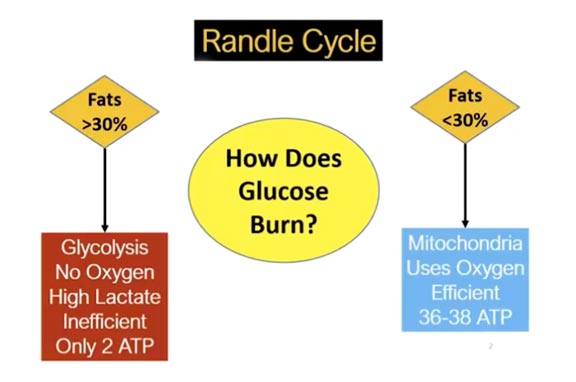
The Randle cycle is going to inhibit the oxidation of glucose in the mitochondria, resulting in weight gain, reduced energy production and other problems. If you’re metabolically impaired, as most people are, your fat intake may need to be as low as 10% to 15% initially, to prevent glycolysis from occurring.
Over time, you can then raise your fat intake to about 30% and still maintain healthy glucose metabolism. Unless you minimize your LA intake and get your total fat content below 30%, you really can’t go high-carb, because the end result is predictable. It’ll lead to diabetes, especially you have high tissue levels of LA, because the glucose cannot be metabolized in your mitochondria and will go to glycolysis instead.
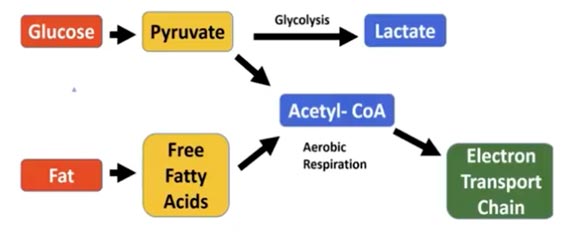
You also cannot load in just any type of carbohydrates. Most grains are loaded with LA and are therefore best avoided. Resistant starches also need to be limited, as they fuel the production of endotoxins in your gut.
The best carbs are ripe fruits. In addition to being a source of carbohydrates, ripe fruits also contain high levels of potassium, which will balance your sodium. Other healthy carbs include white rice and well-cooked potatoes.
Noakes’ Model: Muscle Glycogen Determines Fat Metabolism
Interestingly, in 1999, Noakes did a study showing that it’s not the Randle cycle that determines fat metabolism but, rather, the muscle glycogen content. In other words, the amount of glycogen in your muscles determines how much fat you burn. He explains:
“We made people glycogen depleted, and then we infused glucose. The glucose infusion made no difference. They refused to burn the extra glucose because they were burning so much fat when the glycogen was low.
In fact, I found an old paper [showing] that the best way to normalize your glucose tolerance is to get your muscle glycogen to zero, or as low as possible, and that fits my model.
My model is that when you take carbohydrate, the first thing you do is you try to burn it, so you inhibit fat oxidation, and then you dump it into muscle … and then you’ve got to exercise, get rid of it, and you cannot stop muscle glycogen burning. You cannot.
You can do what you like, it doesn’t stop muscle glycogen use. So, you can infuse glucose at high rates, the muscles will still burn the glycogen. If there’s glycogen in the muscle, it will be burned. And you have to ask why, when there’s so much fat to be oxidized?
So that’s the model that I see. I see the human as being loving to burn fat, and we’ve destroyed that by feeding them linoleic acid and carbs for too long. That’s how I see it.”
Why Strength Training Is so Important
Importantly, muscle glycogen is only used in the muscle. The glycogen cannot be excreted or secreted into your bloodstream. Only glycogen in the liver can do that. This makes a strong case for resistance training and building significant muscle mass. Like me, Noakes switched from running to doing resistance training when he got older:
“I’ve also shifted to weights and resistance training and it’s astonishing. When I look back, the benefits I get as a 74-year-old from resistance training are equal to the benefits I used to get at running as a 20 year old or a 30 year old. Today I can’t get those benefits from running anymore.
You have to change. And I’ve met a lot of endurance athletes who’ve told me that once they crossed 60, they reduced the running or the cycling and moved into resistance training, with huge benefits.”
Life Requires Constant Adaptation
In conclusion, Noakes correctly (and humbly) admits that when it comes to diet and exercise, we cannot make absolute statements that will be correct and always apply to everyone. We have an obligation to experiment and discover what works best for us, in the moment, and realize that what was best a few years ago may no longer be ideal.
To give you a personal example, when I shifted over from high-fat, low-carb to relatively high-carb, low-fat (upping my carbs from 150 grams a day to 400 or 500 grams) I lost 10 pounds, my body fat decreased 3% and my fasting blood sugar went down 10 points.
So, my body was telling me, “This is something I want to do.” It was clear that, from a blood work perspective and biological parameters, I was moving in the right direction. That intrigued me, because I like to test these theories out on myself before I start espousing them to others.
Before that, I was convinced that long-term high fat, low carb dieting was the way to go. My experience told me I hadn’t completely nailed it and needed to refine my recommendations further, which is why I’m now presenting more information about the benefits of higher-carb, lower-fat diets.
The caveat is that you need to be mindful of the types of carbs you add in, and to avoid seed oils. Unless you lower the LA, high-carb is not going to be a good strategy. Also, if you’re not exercising enough, eating 500 grams of carbs is going to be a disaster.
To learn more about Noakes’ work, please visit thenoakesfoundation.org. Also consider sponsoring his research efforts by making a donation, or become a research participant by filling out an anecdotal data collection form.
Omega-3 — A Simple Way to Lower Your Risk of Disease
Reproduced from original article:
https://articles.mercola.com/sites/articles/archive/2023/11/12/omega-3-to-lower-your-risk-of-disease.aspx
The original Mercola article may not remain on the original site, but I will endeavor to keep it on this site as long as I deem it to be appropriate.
Analysis by Dr. Joseph Mercola November 12, 2023
STORY AT-A-GLANCE
- The Omega-3 Index test measures the amount of EPA and DHA, the two long-chain omega-3s found in marine sources, in red blood cell membranes, expressed as a percentage of the total fatty acids in the membrane
- Most Americans have an index of 4% to 5% of EPA/DHA in their red blood cell membranes, and the target is between 8% to 12%. To raise your index from 5% to 8%, you need roughly 1,000 mg to 1,200 mg of EPA/DHA per day
- Higher omega-3 index has been linked to better health across the board, and appears to lower the risk of most, if not all, chronic diseases
- Another ratio commonly referred to is the omega-6 to omega-3 ratio, but this ratio is not nearly as useful or important as the omega-3 index
- EPA and DHA help thin the blood, lower the risk of stroke and heart attack, lower serum triglyceride levels, blood pressure and inflammation, add structural stability to the mitochondrial membrane and aid mitochondrial energy processes
In this video, I interview William (Bill) Harris, Ph.D., an internationally recognized expert on omega-3 fatty acids. He’s been studying omega-3s since 1980 and has published more than 300 scientific papers on fatty acids and health.
Three years ago, he founded the Fatty Acid Research Institute (FARI)1 in South Dakota, which specializes in epidemiological research, where they look at the relationship between blood omega-3 levels and risk for disease. He’s also a faculty member of the University of South Dakota School of Medicine.
“We’re trying to build a case that omega-3 levels in the blood are as, if not more, important than knowing your cholesterol level when it comes to your health and being able to control it,” he says.
The Omega-3 Index
What he’s referring to is the level of omega-3 in your red blood cell membranes. Two decades ago, his team developed a red blood cell membrane-based omega-3 test called the Omega-3 Index. You can take the Omega-3 Index test at their website for only $49.95.
The Index measures the amount of EPA and DHA, the two long-chain omega-3s found in marine sources, in red blood cell membranes, expressed as a percent of the total fatty acids in the membrane.
“We thought that was absolutely the best way to assess your body’s omega-3 status, and so we’ve been using that ever since,” he says. Harris has conducted correlation studies showing the Omega-3 Index test reflects the status of the heart in heart transplant patients, for example. Commenting on the usefulness of the index, Harris says:
“It responds very well to increased intake of EPA and DHA, like a good biomarker should, and higher levels have been linked to better health across the board of a variety of disease conditions, so I think it really is meaningful.”
Higher Omega-3 Consistently Linked to Better Health
Harris goes on to discuss the relevance of epidemiological, population-based studies, which is where you look at large datasets of people. The Framingham Study is one classic example, where they sought to determine why so many men were dying of heart attacks in a Boston suburb in the 1940s.
Healthy men and women were recruited and data were collected on their lifestyles, diet and bloodwork. Participants were then followed for decades, to see who died of heart attack. The Framingham studies developed the concept of risk factors, which for heart attack include high blood pressure and smoking.
In the mid-1970s, offspring of participants in the original Framingham study were recruited for additional research. This is known as the Framingham Offspring Study, and it included Omega-3 Index testing of stored blood samples.
“The people, on average, were about 65 at the time that blood was drawn in the early 2000s. We then asked the question, ‘If you have a high (or low) omega-3 index at that age, does that predict any disease outcomes?’ Yes, it does. It predicts risk for Alzheimer’s disease. It predicts risk for heart disease. It predicts risk for death from any cause.
With higher levels of omega-3, people live longer. That’s a microcosm of the kinds of studies we work on at the Fatty Acid Research Institute because there have been 50 or 60 Framingham-type studies all around the world. [A]lmost all have measured omega-3 levels and disease outcomes. This is our sandbox!”
Download this Article Before it Disappears
What About the Omega-6 to Omega-3 Ratio?
Another ratio commonly referred to is the omega-6 to omega-3 ratio, but Harris doesn’t think this ratio is nearly as useful or important as the omega-3 index. For starters, it’s not very precise because there are other omega-3 fats besides EPA and DHA, such as DPA and ALA.
There are also seven different types of omega-6 fatty acids, and we don’t know a whole lot about them. One exception is linoleic acid (LA), which I’ve written about on many occasions. I also cowrote a paper on LA2 with Christopher D’Adamo, which was published in the peer-reviewed journal Nutrients in July 2023.
“So, when you say omega-6 or omega-3, you don’t really know what the denominator is and what the numerator is, and it presumes that all the omega-3s behave the same and have the same health benefits, and all the omega-6s have the same health benefits or detriments, which is really not true,” Harris explains.
“That’s not very nuanced in my view, because we’ve seen some studies where some omega-6 fatty acids are apparently good. They’re associated with better outcomes, whereas, others are not. So, to pool them into one metric where you don’t know how it’s made up is another reason I don’t like this particular ratio.
I guess the third one is, you can have a high level of omega-6 and a high omega-3, or a low omega-3 and a low omega-6 and have exactly the same ratio. It’s really the amount that’s there that’s the most important. What we’re lacking in America, or in the West in general, is the long-chain omega-3s. That’s the biggest problem.
I hate to distract from that problem by digging into the omega-6 side of it because some people could say, ‘Well, I can fix my ratio just by eating less omega-6 and not increasing my omega-3,’ and I don’t think that’s going to help.”
The counterargument to that would be that there are enzymes, desaturases and elongases, that take the baseline essential fats — ALA and LA — and convert these precursors into the long chains products, EPA/DHA and ARA, and if you overwhelm the system with LA, you essentially monopolize those enzyme systems and the omega-3 products are harder to make.
If you consume preformed long-chain omega-3s, then that is not an issue, but if you don’t, then excessive omega-6s will prevent the conversion of omega-3. Limiting omega-6 can, in this way, be somewhat helpful, as it allows for the shorter chain omega-3 (ALA) to be converted to the longer chain EPA and DHA. Harris responds:
“That’s true, but there are certain metabolites of even arachidonic acid that are beneficial. For example, lipoxgenase A1 is anti-inflammatory, and prostacyclin prevents platelet aggregation.
There are metabolites of linoleic acid itself that don’t go through arachidonic that have at least beneficial relationships with blood pressure and inflammation. It’s a much more complicated system, I think, than just omega-6 is bad, omega-3 is good. It’s just much more nuanced than that.”
OmegaQuant does offer an omega-6 to omega-3 ratio test called Omega-3 Index plus Omega-6/Omega-3 Ratio. But when it comes to addressing a bad ratio, Harris still believes the best way to do that is to increase your EPA and DHA intake, as opposed to merely lowering your omega-6 intake.
Why Omega-3s Are so Beneficial to Health
So, what is it about omega-3 EPA and DHA that makes them so important for health? In summary, these fatty acids:
| Help thin the blood, which discourages inappropriate clotting that can lead to a stroke or heart attack |
| Lower serum triglyceride levels |
| Help lower blood pressure, in part by improving the health of the lining of your blood vessels so that they can relax better |
| Have several anti-inflammatory effects — For example, provided you have enough EPA and DHA in your membranes, when an inflammatory insult occurs, metabolites of the EPA and DHA — resolvins and protectins — will be synthesized. As their names imply, these metabolites help protect against and resolve inflammation. If you do not have sufficient omega-3, the inflammatory response persists longer and can become chronic |
| Help the mitochondrial membrane process energy — Improving the fluidity and flexibility of the mitochondrial membrane allows enzymes and the other proteins embedded in the membrane to operate more smoothly |
| Add structural stability to cell membranes throughout the body — Importantly, if the membrane is loaded with monounsaturated or saturated fats, the omega-3 cannot get in there. The membrane will then be stiffer in that area, which impedes the activity of essential receptors, enzymes, transporters and other proteins that control the flow of nutrients into and waste products out of the cell.
With the proper amount of omega-3, the membranes allow these agents to move freely, making everything work as it should |
Why Fish Oil Is Not an Ideal Omega-3 Source
While most reach for fish oil to increase their omega-3 level, this isn’t the best choice. In fact, most “fish oils” on the market today are actually synthetic ethyl esters, which are different from the triglyceride and phospholipid forms omega-3 found in sea foods, which are roughly 50/50 triglycerides and phospholipids. Krill oil also delivers omega-3 primarily in the phospholipid form. Harris explains:
Yesterday I spoke to a few hundred people at the Documenting Hope Conference in Orlando and was able to share my latest insights on how to optimize your health and prepare for the next crisis. I was surprised that people fly in from around the world to see me.
“Yes, there are two natural forms. The omega-3s are found in triglycerides, which we classically think of as oils. A triglyceride has three fatty acids on each molecule. Typically, in most fish that are rich in omega-3, one of those three will be EPA or DHA, so about 30% of the fish oil will be omega-3. That’s the triglyceride.
The other natural form that marine omega-3s are found in is phospholipids. Phospholipids are the primary constituents of cell membranes, and it’s in the cell membrane where the omega-3s do their primary work.
There are two spots for fatty acids on a phospholipid, and it depends on the fish, but typically about maybe 20% to 30% of the phospholipids have EPA and DHA. Those two forms are natural. You get both triglycerides and phospholipids when you eat a salmon steak or any other “oily” fish; these are the highest in omega-3.
The ethyl ester is a completely synthetic product. It starts out as a raw fish oil. That’s where that EPA and DHA molecules comes from in the first place, but at the refinery, all the fatty acids get chopped off of the triglyceride backbone. Then they throw away the monounsaturates, the saturates and the small amount of omega-6s, and that leaves the omega-3s by themselves.
The omega-3s have to be hooked to something before encapsulation, and so the favorite thing is to hook them up to ethanol (alcohol) to make “ethyl esters.” When all they have in the vat is now omega-3 ethyl esters, then they can pack more EPA and DHA into each capsule, so the concentration is higher.
Virtually all of the pharmacologic products that are omega-3-based are ethyl esters, and they have been used since the mid-1990s. But there is nothing “natural” about an ethyl ester.
I guess there’s debate on how effective they are. We do know that if you take the ethyl ester on an empty stomach, you’re not really going to absorb it. They’re very poorly absorbed.
Their absorption can be improved if you take the ethyl ester with a fatty meal, because that will stimulate the digestive juices and allow some of it to be absorbed, but it’s not the best form for absorption. Triglycerides and phospholipids are much better forms for absorption.”
Are Ethyl Esters Beneficial?
In the Italian GISSI-Prevenzione Trial,3 published in 1999, heart attack survivors were given one capsule of Omacor (an ethyl ester form with 840 mg of EPA+DHA per 1 g capsule) a day. After two to three years of follow-up, they reported a tremendous drop in cardiovascular death and all-cause mortality.
However, there was no placebo group. They merely compared it to standard of care. It was also an open-label trial, with no objective assessment of compliance.4 Moreover, the study was funded by companies that sell the product, so there’s a conflict of interest there that may have influenced the results.
Indeed, since then, several studies have used Omacor (or Lovaza, the US version) and have produced mixed results. Some showed no benefit at all, others were positive. An example of the latter is the REDUCE-IT Study, which used an EPA-only ethyl ester called Vascepa, made by Amarin. Patients at high risk for heart disease were given 4 grams a day.
Compared to placebo, at the five-year mark, the treatment group had a 25% lower risk of cardiovascular disease, nonfatal heart attacks and all-cause mortality. That was a very positive outcome. However, the placebo was an indigestible mineral oil, which may have confounded results. Did Vascepa really improve health, or did the “placebo” increase the risk of cardiac events?
“That’s been hotly debated,” Harris says. “Of course, if your placebo really is harmful, even if your drug does nothing, it will look like the latter is doing great because it’s doing better than the placebo, which is supposed to be neutral.
Well, there is considerable evidence now that at least some of the apparent benefit of the EPA ethyl ester was derived from a worsening of outcomes in the placebo group. Taking 4 grams, almost a teaspoon of mineral oil a day for five years, well, that’s just not natural at all.”
See Me Speak Live in Miami Next Sunday
Next Sunday I will be speaking at the Everything Matters Event in Miami. It will be a very small event of only a few hundred people at the Sacred Space in Miami and we will be diving deep into the world of quantum healing and spiritual connection. For the first time ever I will be sharing my spritiual journey and my latest insights on how to optimize your health through bioidentcal progesterone therapy that I just learned last week and am using myself to balance my hormones.
It is a rare opportunity to hear me speak as the next time I am scheduled to speak will be at Biohacking in June next year. You will also have an opportunity to have dinner with me on Sunday evening. And one of the biggest surprises is that the tickets for this event are 95% less expensive than Biohacking. The dinner and admission is only $200 next week and is $5000 at Biohacking. My guess is that tickets for the event will sell out today.
So come and see me speak live and have dinner with me next Sunday at the Everything Matters Event in Miami. You can enjoy the warm weather and sunshine with temperatures projected to be 82 for a high and 72 for a low in lovely south Florida. It will likely be the last opportunity to hear me speak before the next crisis hits. Hope to see you there.
How Much Omega-3 Do You Need?
So, in summary, the best sources of omega-3 DHA and EPA are cold-water fatty fish like wild-caught Alaskan salmon (farm-raised salmon has omega-3 but in lower amounts than it used to since farmers have been adding vegetable oils to the salmon feed), mackerel, herring, sardines and krill oil.
The next question is, how much do you need for optimal health and disease prevention? This brings us back to the Omega-3 Index. Most Americans have an index of 4% to 5% of EPA/DHA in their red blood cell membranes, and the target is thought to be between 8% and 12%.
From Harris’ studies, raising your index from 5% to 8%, you need roughly 1,000 mg to 1,200 mg of EPA/DHA per day. As for the ratio of EPA to DHA, Harris says the general recommendation is either a 60-to-40 or 40-to-60 mix. “Just don’t do a 10-to-90 mix.” The ratio is a nonissue if you’re getting your omega-3s from fatty fish, which provide these fatty acids in a fairly balanced amount.
“Personally, I try to eat fish a couple of times a week,” Harris says. “But I don’t always succeed, so I do what a lot of people do. I take a supplement. I take about 1,400 mg a day, EPA and DHA.”
The best way to determine the dose you need is to do an Omega-3 Index test, available from OmegaQuant. It’s a dried blood spot test and the kit is sent to your home. The basic test is about $50, and you get your results about five days after it’s received in the lab. After a few months of supplementing, retest to see where you’re at, and adjust your dose accordingly. In closing, Harris notes:
“Again, my mantra is the Omega-3 index. EPA and DHA [levels] are what need to be improved, need to be increased. It’s not a silver bullet, but it’s one thing you CAN do something about cheaply, safely, easily, quickly. There’s not a disease yet that we’ve seen that has not benefited from having a higher omega-3.”
Best Anti-Inflammatory Nutrients
Reproduced from original article:
https://articles.mercola.com/sites/articles/archive/2023/10/16/best-anti-inflammatory-nutrients.aspx
The original Mercola article may not remain on the original site, but I will endeavor to keep it on this site as long as I deem it to be appropriate.
Analysis by Dr. Joseph Mercola Fact Checked October 16, 2023

STORY AT-A-GLANCE
- Inflammation is your body’s built-in emergency response to assaults resulting in injury or infection. If the inflammation is not resolved, it becomes chronic, which can result in serious disease states such as rheumatoid arthritis, liver disease and heart disease
- There are many anti-inflammatory nutrients, and if you make a habit of including enough of them in your diet, you can keep inflammation in check relatively easily
- Nutrients known for their potent anti-inflammatory properties include omega-3 fats EPA and DHA, which are also crucial for the functionality of your cell membranes and the membranes of your mitochondria, and ginger, which has been shown to bolster immune system function and ameliorate autoimmune diseases such as lupus and rheumatoid arthritis
- Curcumin, a compound found in turmeric, has antibacterial, anticancer, anti-inflammatory, antimalarial, antioxidant, antiparasitic, antiproliferative, pro-apoptotic and wound healing properties. Conditions responsive to curcumin include certain types of cancer, high blood pressure, heart disease and blood clots, intestinal and bowel issues, neurodegenerative conditions and glaucoma
- Other potent anti-inflammatory nutrients include chondroitin, glucosamine, MSM, vitamin E, glycine, bromelain, boswellic acid and green tea extract
Inflammation is your body’s built-in emergency response to assaults resulting in injury or infection. In the acute state, inflammation is an important and vitally necessary part of your body’s healing mechanism.
However, if the inflammation is not resolved, it becomes chronic, which is profoundly destructive and plays a role in nearly every chronic degenerative disease.
While anti-inflammatory drugs may be helpful in some situations, they can have undesirable side effects and are rarely an ideal solution in the long run. To prevent and treat chronic inflammation, dietary nutrients, either from whole food or a nutritional supplement, are typically your best option.
The good news is there are many anti-inflammatory nutrients out there, and if you make a habit of including enough of them in your diet, you can keep inflammation in check relatively easily. Below, in no particular order, I’ll review some of the nutrients known for their anti-inflammatory powers.
Vitamin E
Vitamin E prevents LA stored in your tissues from being oxidized into dangerous toxic byproducts. Since most people are walking around with LA stores that are 10 times higher than normal, and since excess LA is likely one of the primary contributors to chronic disease, it can be a good idea to take vitamin E regularly until you get your LA down to healthy levels, which may take up to six years for most people.
Vitamin E also prevents LA stored in your tissues from being oxidized into dangerous toxic byproducts.
Vitamin E can almost miraculously prevent most of the damage done by LA, and it can also reverse or prevent many of the issues associated with excess estrogen. This is important because LA has remarkable parallels to excess estrogen in terms of its metabolic and anti-health effects. You see, when you eat excess PUFA or LA, you increase your body’s production of estrogen.
So, when you increase LA, estrogen levels go up — and that’s not a good thing. Both LA and estrogen interestingly increase the flow of calcium from outside the cell to inside because the concentration of calcium outside as well is 50 times higher than inside. So, the excess as LA will cause the influx of calcium inside the cell, which causes nitric oxide and superoxide to increase inside the cell.
When you do this, with this magical combination, you increase a very pernicious reactive nitrogen species called peroxynitrite, and that causes pervasive damage to tissues in your body.
Both LA and estrogen also increase a potentially dangerous process in your body called lipolysis, which is simply the liberation of fatty acids from your fat cells into your bloodstream where they are mobilized. This then increases the oxidation or, simply, the burning of fats in your mitochondria, which is precisely what you want to avoid as ideally you want to be burning glucose in your mitochondria, not fatty acids.
Fortunately, vitamin E can help neutralize this damaging effect of LA. Vitamin E also directly inhibits the activity of an enzyme called aromatase. This is an enzyme that converts the male hormones like testosterone and DHEA into estrogens.
Even better, it serves as an estrogen antagonist, meaning it binds to the estrogen receptor to block it from binding to estrogen. This dramatically lowers the damage from excess estrogen.
Vitamin E works very similarly to the drug tamoxifen, which is used to treat estrogen receptor-positive breast cancers. For these reasons, I firmly believe nearly everyone needs to be getting vitamin E in their diet. However, due to the high LA burden, very few people are able to get enough vitamin E from their diet to suppress this oxidative destruction from excess LA in their tissues.
The good news is that since the supplementation is short term, you’re not going to need it the rest of your life.
If you can keep your LA intake to below 5 grams a day for three years, it’s likely you may not even need it at all, or at most, only a few times a month. However, if for whatever reason, during this time, or when the LA in your tissues are low or normal, and you go out and binge on a meal that’s very high in LA, I would strongly recommend taking a vitamin E capsule to protect yourself from this exposure.
Vitamin E also protects against free radical damage and the normal effects of aging. It’s particularly important for brain health, and studies have found it can help delay the loss of cognitive function in people with Alzheimer’s disease by preventing cell membrane damage and neuronal death.1
How to Pick a Good Vitamin E Supplement
Most vitamin E supplements are synthetic. This is a major clue that it is different from the vitamin E you’re getting from real food. How can you tell a vitamin E supplement is synthetic? Well, all you must do is read the label. Fortunately, they make it pretty simple.
Synthetic vitamin E is called alpha tocopherol acetate. The acetate is the key. If the label says tocopherol acetate, it’s screaming that it is synthetic. Next, you need to pay attention to the orientation of the optical isomer. Most vitamin supplements are racemic, or they have left- and right-hand isomers. This is a problem as most biological molecules have optical isomers that are right-handed. They’re usually called D and L isomers for right and left.
When you have both left and right isomers present, it’s called racemic. Biologically, there’s usually only one optical isomer that works well, and with vitamin E it is the D isomer that works in your body, while the L isomer is useless. Yet in synthetic supplements, 50% of the vitamin E in the supplement is the useless L isomer.
To make matters even worse, many synthetic versions use an ester of vitamin E, which only has about 50% of the activity of the natural product. So, the total activity of many vitamin E supplements is reduced by 75%.
So, the first step in identifying healthy good vitamin E supplements is to make sure you’re not getting real vitamin E and not synthetic. What you’re looking for is “d alpha tocopherol,” as on the label below. As you can see on this label, it says that this is d alpha tocopherol. It is not DL or racemic; this is the pure D isomer, which is what your body can use.

You might also have noticed that this is vitamin E from sunflower oil, which has a very high percentage of LA. Not to worry, though, as the LA in the capsule is an insignificant amount, probably less than 50 or 100 milligrams.
Your goal is to keep LA intake under 5,000 milligrams, so it really won’t negatively impact your LA intake at all. You’ll also notice that the dose is 134 milligrams or units. You really wouldn’t want to use much more than this, as it is unnecessary. More is not better; you don’t want to take 400 units, you don’t want 1,000 units, you want the sweet spot Goldilocks dose, which is about 100 units, or 100 mg.
You also see at the bottom of this label that there are other vitamin E isomers, the complete spectrum of tocotrienols, specifically the beta, gamma and delta types of vitamin E, which are also only the effective D isomer.
So, you can use this label as a template to select a healthy vitamin E supplement. It’s important to get this right, and nearly everyone watching this would benefit from taking the appropriate vitamin E supplement, which is why I’m spending so much time on it.
Download this Article Before it Disappears
Omega-3 Fats
Omega-3 fats play a crucial role in the health and functionality of your cell membranes and the membranes of your mitochondria. June 25, 2023, I posted an interview with Nils Hoem, Ph.D., in which we took a deep dive into this.
Membranes are lipid structures made of phospholipids and other constituents. The foods you eat provide the raw material substrate that is then assembled into the mitochondrial and cellular membranes, which is why the type of fats you consume is so important.
If you’re eating any processed foods, you’re likely getting far too much omega-6 linoleic acid (LA), which damages your mitochondrial machinery and reduces your body’s ability to convert the 18-carbon omega 3 fat ALA into the 20-carbon fat EPA and 22-carbon fat DHA.
If you reduce your LA intake to historical norms — about 2% of your daily calories — and get enough omega-3 ALA (found in chia seeds, walnuts, beans and seaweed), then you can make substantial amounts of DHA and EPA and may not need supplementation. You can probably also forgo supplements if you eat fatty fish like wild-caught salmon, mackerel, sardines and anchovies on a regular basis.
That said, most people who are not strict enough about reducing their LA intake and don’t eat these kinds of fish might benefit from a DHA/EPA supplement. If you decide to take an omega-3 supplement, I believe krill oil is superior to most fish oil supplements, which are synthetically produced ethyl esters. The omega-3 in krill, on the other hand, is just the way it is in nature, and is attached to phospholipids that increase its absorption, which means you need less of it.
Krill oil also contains almost 50 times more astaxanthin, a potent antioxidant, than fish oil, which prevents the highly perishable omega-3 fats from oxidizing before they’re integrated into your cellular membranes.
While LA is highly inflammatory, the omega-3s are anti-inflammatory and help protect your bones, muscles, joints and connective tissues from damage, and repair any damage that has already occurred.
A 2019 animal study2 that compared the analgesic and anti-inflammatory activity of Neptune krill oil and fish oil concluded that while both reduced severe inflammation and pain, the Neptune krill oil was the most effective.
Ginger Root
Ginger, which is easy to grow at home, has been shown to bolster immune system function and ameliorate autoimmune diseases such as lupus and rheumatoid arthritis by making neutrophils (a type of white blood cell) more resistant to neutrophil extracellular trap (NET) formation, which is known to propel inflammation and contribute to autoimmune diseases. As reported by CU Anschutz Medical Campus in September 2023:3
“In a clinical trial, the researchers found that daily intake of a ginger supplement for seven days (20 mg of gingerols/day) by healthy volunteers boosted a chemical inside the neutrophil called cAMP. These high levels of cAMP then inhibited NETosis (neutrophil extracellular trap formation) in response to various disease-relevant stimuli.
‘Our research, for the first time, provides evidence for the biological mechanism that underlies ginger’s apparent anti-inflammatory properties in people,’ said senior co-author Jason Knight, MD, PhD, associate professor in the Division of Rheumatology at the University of Michigan.”
Ginger also has antibacterial, antiviral, antioxidant and anticancer properties that protect against disease, both acute and chronic. The National Library of Medicine has the following to say about ginger:4
“The exact mechanism is not understood entirely, but several active compounds of ginger have been shown to have biological activity.
- Gingerol and gingerol-related compounds: Antioxidant activity, anti-tumor activity via induction of apoptosis and modulation of genetic activity, anti-inflammatory and anti-analgesic activity, antimicrobial activity, and hepatoprotective activity
- Paradol: Antioxidant, anti-cancerous, and antimicrobial properties
- Shogaol: Antioxidant, anti-inflammatory, anti-cancerous activity via inhibition of cell invasion, reduction of matrix metalloproteinase-9 expression, and anti-proliferation activity
- Zingerone: Antioxidant activity, anti-inflammatory, and anti-bacterial properties
- 1-Dehydro-10-gingerdione: Regulation of inflammatory genes
- Terpenoids: Induction of apoptosis via activation of p53
- Ginger flavonoids: Antioxidant activity
… Ginger has been shown to play a vital role as an antimicrobial agent. Several active components have been shown to be active against E coli, Salmonella typhi, Bacillus subtilis, Candida albicans, M. avium, and M. tuberculosis …
Antioxidants help free the body of free radicals and reduce oxidative stress. The imbalance between reactive oxygen species (ROS) production and antioxidative defense mechanisms can induce oxidative stress …
Ginger is a source of numerous antioxidants and plays a role in reducing lipid oxidation and ROS formation. Studies have shown ginger root’s active compounds’ ability to scavenge superoxide anion and hydroxyl radicals and inhibit lipid peroxidation in vivo.
Inflammation is an important immune response mechanism to damage and can be mediated via interleukin-1 (IL-1), tumor necrosis factor (TNF), and anti-inflammatory cytokines … In vivo studies have shown ginger’s ability to suppress pro-inflammatory cytokines and down-regulate induction of inflammatory genes.”
Turmeric Extract
Besides giving Indian curries their rich golden color, turmeric contains a polyphenol called curcumin, which exhibits more than 150 potentially therapeutic actions.
With thousands of studies performed,5 researchers have shown curcumin has antibacterial, anticancer, anti-inflammatory, antimalarial, antioxidant, antiparasitic, antiproliferative, pro-apoptotic and wound healing properties. Scientists investigating curcumin’s biological activities had this to say about the extent to which it plays a vital role in supporting your health:6
“Modern science has shown that curcumin modulates various signaling molecules, including inflammatory molecules, transcription factors, enzymes, protein kinases, protein reductases, carrier proteins, cell survival proteins, drug resistance proteins, adhesion molecules, growth factors, receptors, cell-cycle regulatory proteins, chemokines, DNA, RNA and metal ions.”
Given its antioxidant and anti-inflammatory properties, conditions shown to be responsive to curcumin include7 certain types of cancer8,9 (by blocking blood supply to tumors and modulating signaling pathways involved in cancer), high blood pressure, heart disease and blood clots, intestinal and bowel issues10 (by stimulating bile production), neurodegenerative conditions,11 and glaucoma12 (by limiting oxidative damage in the eye and lowering intraocular pressure).
While turmeric is widely available in powdered form, it contains a very small amount of curcumin, which is also known to be poorly absorbed through your gastrointestinal tract. For these reasons, you’ll receive more health benefits from a curcumin extract. Because it’s a lipophilic (fat-loving) molecule, many curcumin preparations include some sort of oil or fat to improve its absorbability and bioavailability.
Glucosamine, Chondroitin and MSM
Glucosamine and chondroitin are compounds found in human cartilage, while MSM13 (methylsulfonylmethane) is a sulphur-rich compound found in certain plants, fruits and vegetables.
Research suggests glucosamine and chondroitin work synergistically when paired, and MSM can further boost their effects by enhancing cell penetration. All three have anti-inflammatory properties and are commonly used in the treatment of arthritis symptoms.
Alone or together, glucosamine and chondroitin help relieve arthritis-related pain by slowing the degradation of collagen and cartilage and improving the function of your joints. As explained by Center TRT:14
“Glucosamine and chondroitin are two essential components of cartilage that play a crucial role in maintaining joint health. Glucosamine is a vital building block for glycosaminoglycans, which are essential for the formation and repair of cartilage.
Chondroitin, on the other hand, is a structural component of cartilage that helps it retain water, thereby providing the necessary lubrication and shock absorption for joints to function smoothly.
Together, glucosamine and chondroitin work synergistically to support healthy joints. While glucosamine promotes the growth and repair of cartilage, chondroitin helps maintain its integrity and flexibility. This is why glucosamine and chondroitin supplements are often recommended for individuals experiencing joint pain or stiffness resulting from age-related wear and tear, injury, or arthritis.
Moreover, research has shown that the combination of glucosamine and chondroitin can help slow down the progression of joint damage in individuals with osteoarthritis,15 which is a common degenerative joint disease characterized by the breakdown of cartilage.”
Other Anti-Inflammatory Nutrients
Other anti-inflammatory nutrients you may want to consider include:
• Glycine — Glycine exerts potent anti-inflammatory effects by inhibiting activation of immune cells and suppressing the production of pro-inflammatory cytokines. It acts on inflammatory cells like macrophages to block the signaling of the NLRP3 inflammasome.
Glycine also reduces TNFα, IL-6, and other cytokine levels in macrophages, and counteracts LPS-induced inflammatory responses. Furthermore, glycine acts on neutrophils to inhibit CXCR2 signaling and recruitment, as well as blocking ICAM-1 expression and limiting endothelial adhesion.
• Bromelain — Bromelain is an enzyme found in pineapples. It can reduce inflammation, joint pain and joint degradation, improve gut function and digestive health, and aid in the metabolism of amino acids. There’s also evidence suggesting it can help to prevent respiratory issues and heart disease, and bolster immune function.16
• Boswellic acid — Boswellic acid, extracted from the boswellia serrata tree, has a long history of use in traditional medicine. It can reduce pain and inflammation throughout the body, including arthritis pain.17
• Green tea extract — Green tea extract contains a potent antioxidant catechin called EGCG, which combats inflammation, relieves joint and muscle soreness, and prevents future oxidative stress and damage. It can also improve the function of your brain, heart and blood vessels, and help your immune system fight off various diseases.18
- 1 Medical News Today April 14, 2015
- 2 Biotechnology Reports June 2019; 22: e00341
- 3 CU Anschutz Medical Campus September 22, 2023
- 4 National Library of Medicine Ginger Root
- 5 PubMed.gov, Curcumin
- 6, 9 Clinical and Experimental Pharmacology and Physiology March 2012; 39(3): 283–299
- 7 LIVESTRONG October 3, 2017
- 8 Cancer Prevention Research (Philadelphia) April 2014; 7(4): 466-474
- 10 Cochrane Database of Systematic Reviews October 17, 2012; 10: CD008424
- 11 Biofactors January 2013; 39(1): 122-132
- 12 J Ocul Pharmacol Ther October 2014; 30(8): 657-664
- 13 Nutrients March 2017; 9(3): 290
- 14 Center TRT June 13, 2023
- 15 Molecular and Cellular Proteomics June 2012; 11(6): M111.012417
- 16 Biotechnol Res Int 2012; 2012: 976203
- 17 Indian Journal of Pharmaceutical Sciences May-June 2011; 73(3): 255-261
- 18 Chinese Medicine 2010; 5: 13
Cooking Oil: A Household Ingredient That You Should Not Take for Granted
Reproduced from original article:
https://www.mercola.com/infographics/healthiest-cooking-oil.htm
The original Mercola article may not remain on the original site, but I will endeavor to keep it on this site as long as I deem it to be appropriate.

Cooking oil is one of the most common culinary ingredients you’ll find in American homes. It’s used in countless dishes, but what exactly does it do?
The main purpose of using cooking oil is to quickly transfer heat to the food that’s being cooked. This is why frying is usually quicker than other cooking methods, such as boiling or roasting. Cooking oil has good tolerance against high temperatures, which means it doesn’t boil or break down right away.
In addition, cooking oil can provide additional flavor, depending on what it’s made of, and bring out the fat-soluble nutrients in the other ingredients. When used in baking, it can help with moisture retention, as well as tenderizing and leavening the ingredients.
Despite these advantages, the main issue with cooking oil (especially vegetable oil) is that when it is heated, it releases trans fat, free radicals and toxins that can leach into your food and wreak havoc on your health.
Why You Should Avoid Vegetable Oils Like the Plague
Vegetable oils are one of the unhealthiest oils you can consume. They are rich in trans fat, which is a synthetic fatty acid that inhibits your body’s production of prostacyclin, a factor that keeps your blood flowing smoothly. If your body cannot produce enough prostacyclin, blood clots can form in your arteries, increasing your risk of heart disease.
Aside from endangering your cardiovascular health, trans fat may even impair your memory. According to a study published in Time, participants who consumed high levels of trans fat remembered 11 fewer words compared to those who consumed lower levels.
Much of the reason why vegetable oils contain trans fat is because they are hydrogenated, a process wherein hydrogen gas is forced into the oil at a high pressure during manufacturing. Companies use this method to extend the shelf life of their products, but at the cost of people’s health.
Furthermore, vegetable oils produce oxidized cholesterol when heated, increasing thromboxane formation, a factor that clots your blood, as well as two toxins: cyclic aldehydes and acrylamide.
In light of all this information, which vegetable oils should you avoid? I’ve put together a list of vegetable oils that can endanger your health:
- Soybean oil: This contains plenty of highly processed omega-6 fats. When you use it to cook food, the increased levels of omega-6 can lead to chronic inflammation.
- Corn oil: Similar to soybean oil, corn oil has extremely high amounts of omega-6 compared to omega-3. In fact, the ratio is estimated to be around 49:1. Ideally, the ratio should be 1:1 only.
- Cottonseed oil: It’s estimated that 93 percent of cotton in the U.S. is genetically engineered. Consuming oil made from these cotton plants can have an adverse effect on your health in the long run.
- Canola oil: You may have seen plenty of advertisements that present canola oil as a safe and healthy cooking ingredient. Unfortunately, this is not true, as canola oil can introduce oxidized cholesterol into your body when consumed.
Instead of Vegetable Oils, These Are the Healthiest Cooking Oils You Can Use
With the prevalence of hydrogenated cooking oils in the market, what options are you left with? Fortunately, there are many healthy alternatives available, and they are easy to acquire:
- Olive oil: This oil contains healthy fatty acids that can help lower your risk of heart disease. In addition, it may help lower the risk of breast cancer in women.
- Grass-fed butter: Raw, organic butter made from healthy grass-fed cows’ milk contains many nutrients, such as vitamins A, D, E and K2. Furthermore, it contains various minerals and antioxidants that can help support your health.
- Peanut oil: This oil contains high levels of omega-6 similar to other vegetable oils, but it can be beneficial to your health (it is high in antioxidants) as long as you consume it unheated and in moderation.
- Sesame oil: Similar to peanut oil, sesame oil is high in omega-6. However, if consumed unheated and in small amounts, it may benefit your health, especially if you are diabetic.
- Coconut oil: This is what I believe is the best cooking oil you can use for your dietary needs. It has various health benefits, which I will discuss below.
Cooking With Coconut Oil: One of the Best Oils You Can Use
Coconut oil has been getting plenty of attention lately, and rightfully so. I believe it’s one of the best things you can add to your diet because it can help optimize your health in ways you may have never experienced before. In fact, I use it exclusively whenever I cook, and I wholeheartedly believe that you should as well. Take a look at the amazing benefits it can provide:
- Cardiovascular Health
Coconut oil may have a positive effect on your heart health. Researchers discovered that consuming it can help improve your good cholesterol levels, while simultaneously lowering bad cholesterol levels. As a result, your risk of heart disease decreases. - Energy Boost
Coconut oil can be a great source of healthy energy, thanks to its medium-chain fatty acids (MCFAs). When consumed, the MCFAs are immediately digested and converted by your liver into energy that you can immediately use. - Weight Management
Aside from giving you an energy boost, coconut oil simultaneously stimulates your metabolism to encourage shedding body fat, thus helping you maintain a healthy weight profile. - Antimicrobial Properties
The compounds of coconut oil can help keep your internal organs free from microbes. According to a mice study, subjects who were fed coconut oil had a significant reduction in candida albicans, a yeast strain that causes candidiasis, or more commonly known as yeast infection. - Oral Health
Coconut oil can be used for oil pulling, a hygienic practice that uses oil to rinse your mouth. Its antimicrobial properties help “pull” out and eliminate bacteria and viruses that live in your mouth, along with food debris stuck between your teeth.
Try These Healthy and Delicious Recipes That Use Coconut Oil
The great thing about coconut oil is that it can be used in a variety of cooking methods. It has a mild flavor that helps bring out the natural flavors of other ingredients. I encourage you to try the following recipes so you can taste the difference.
|
Mom’s Best Fried Chicken Recipe |
Salmon Supreme Recipe |
Healthy Quinoa Pie Recipe |
Ingredients:
|
Ingredients:
|
Ingredients:
|
Procedure:
Note: Do not burn or char your meats and avoid eating the black portions. |
Procedure:
*Note: If Old Bay Seasoning is not available, another seafood seasoning would be fine, or a combination of celery salt, dried mustard, black pepper and a small amount of the following: ground bay leaves, ground cloves, allspice, ginger, mace, cardamom, cinnamon and paprika. |
Procedure:
|
Top 13 Reasons to Replace Dangerous Oils With Healthy Fats
Reproduced from original article:
https://articles.mercola.com/sites/articles/archive/2023/10/13/replace-dangerous-oils-with-healthy-fats.aspx
The original Mercola article may not remain on the original site, but I will endeavor to keep it on this site as long as I deem it to be appropriate.
Analysis by Dr. Joseph Mercola – Expert Review by James DiNicolantonio, Pharm.D Fact Checked October 13, 2023

STORY AT-A-GLANCE
- Replacing dangerous oils with healthy fats is one simple way to boost your health and reduce your risk of chronic disease
- While partially hydrogenated vegetable oils are now recognized as harmful due to their trans fat content, and are being largely eliminated, trans fat-free vegetable oils still have the worrisome problem of degrading into toxic oxidation products when heated
- Vegetable oils are also a concentrated source of omega-6 linoleic acid, which has led to a severe imbalance between the omega-6 to omega-3 ratio in most people’s diets, and many commonly used vegetable oils are genetically engineered
- Maintaining a healthy ratio of omega-6 to omega-3 is important for optimal health. Ideally, you want to maintain a 4-to-1 ratio of omega-6 and omega-3 fats or less
- Black seed oil has at least 20 different pharmacological actions, and has been shown to be useful for a wide variety of ailments, including Type 2 diabetes, asthma, cognitive decline, stress and rheumatoid arthritis
Editor’s Note: This article is a reprint. It was originally published January 7, 2019.
Dietary fats are a crucial component of a healthy diet, but the devil’s in the details, and the type of fats you choose can make a world of difference. While the notion that saturated fats cause heart disease is a fallacy, some fats do cause cardiovascular problems and need to be avoided.
Replacing dangerous oils with healthy fats is one simple way to boost your health and reduce your risk of chronic disease. Here, I’ll review some of the key points to remember when adding more fat into your diet.
Trans Fat — A Hidden Culprit in Heart Disease for Decades
Before 1900, American housewives used lard and butter for cooking. It wasn’t until 1911 that our diets experienced a dramatic change with the introduction of trans fat in the form of Crisco, the first hydrogenated vegetable oil product to hit the market.
Hydrogenated vegetable oils and margarine quickly became the backbone of the food industry. In my book “Superfuel: Ketogenic Keys to Unlock the Secrets of Good Fats, Bad Fats, and Great Health,” cowritten with James DiNicolantonio, Pharm.D, we take a deep dive into this topic. In fact, our book reveals how the consumption of soybean oil has increased over a thousand percent from 1909 to 1999.
Trans fats became a staple dietary fat with the introduction of processed foods, and could be found in everything from cookies and crackers to french fries and frozen food. Unfortunately, it would take more than a century for the truth about trans fat to be fully recognized.
The U.S. Food and Drug Administration (FDA) didn’t remove partially hydrogenated oils from the generally recognized as safe (GRAS) list until 2015,1 based on evidence suggesting their removal could prevent thousands of heart attacks and deaths each year.
In reality, research by trans fat scientist Fred Kummerow, dating back to 1957, showed that trans fat interferes with the basic functioning of cellular membranes. Even small amounts of manufactured trans fat have been shown to have adverse effects on your heart, insulin sensitivity and neurological system.
Processed Vegetable Oils Do More Harm Than Good
In response to research and public opinion, many restaurants have since turned from partially hydrogenated oils to 100% vegetable oil. However, while these oils do not have trans fats, they’re just as bad, if not worse. There are three significant reasons for this:
1. When heated, vegetable oils degrade to extremely toxic oxidation products, including cyclic aldehydes,2 which have been linked to neurodegenerative diseases and certain types of cancer. In her book, Teicholz cites research showing that aldehydes cause toxic shock in animals through gastric damage.
2. Vegetable oils are a concentrated source of omega-6 linoleic acid, which has led to a severe imbalance between the omega-6 to omega-3 ratio in most people’s diets.
3. Many of the vegetable oils produced today — especially corn and soy — are products of genetic engineering (GE) and a significant source of glyphosate exposure, and glyphosate has also been linked to gut damage and other health problems.
In addition, processed vegetable oils (polyunsaturated fat) harm health by:
4. Creating high amounts of oxidation products when used in cooking (as they are very susceptible to heat), including aldehydes, which are what cause oxidized low-density lipoprotein (LDL) associated with heart disease. Aldehydes also crosslink tau protein and create neurofibrillary tangles, thereby contributing to the development of neurodegenerative diseases.
5. Damaging the endothelium (the cells lining your blood vessels) and causing an increase in penetration of LDL and very low-density lipoprotein (VLDL) particles into the subendothelium. In other words, these oils get integrated in your cell and mitochondrial membranes, and once these membranes are impaired, it sets the stage for all sorts of health problems.
6. Damaging your mitochondria and DNA by making your cell membranes more permeable, allowing things to enter that shouldn’t.
7. Making the cell membrane less fluid, which impacts hormone transporters in the cell membrane and slows your metabolic rate.
8. Inhibiting cardiolipin, an important component of the inner membrane of your mitochondria that needs to be saturated in DHA in order for it to function properly.
Cardiolipin can be likened to a cellular alarm system that triggers apoptosis (cell death) by signaling caspase-3 when something goes wrong with the cell. If the cardiolipin is not saturated with DHA, it cannot signal caspase-3, and hence apoptosis does not occur. As a result, dysfunctional cells are allowed to continue to grow, which can turn into a cancerous cell.
9. Inhibiting the removal of senescent cells, i.e., aged, damaged or crippled cells that have lost the ability to reproduce and produce inflammatory cytokines that rapidly accelerate disease and aging.
10. Stripping your liver of glutathione (which produces antioxidant enzymes), thereby lowering your antioxidant defenses.3
11. Inhibiting delta-6 desaturase (delta-6), an enzyme involved in the conversion of short-chained omega-3s to longer chained omega-3s in your liver.4
12. Exposing you to toxic 4-hydroxynonenal (4HNE), which forms during the processing of most vegetable oils, even if the oil is obtained from organic crops. 4HNE is highly toxic, especially to your gut bacteria, and consumption of 4HNE has been correlated with having an obesogenic balance of gut flora. It also causes DNA damage and instigates free radical cascades that damage your mitochondrial membranes.5
13. Exposing you to glyphosate residues, as most vegetable oils are made with genetically engineered crops. Glyphosate has been shown to disrupt the tight junctions in your gut and increase penetration of foreign invaders, especially heated proteins, which can cause allergies.
Download this Article Before it Disappears
Address Your Omega-6 to Omega-3 Ratio to Protect Your Health
Marine-based omega-3 is one of the most important fats in the human diet, as docosahexaenoic acid (DHA) and eicosapentaenoic acid (EPA) are actually key structural elements of cells, including your brain cells, and not just simple fuel. If you don’t have enough DHA and EPA, your body’s ability to repair and maintain healthy cell structures is seriously impaired.
Unfortunately, in the past 100 years, our omega-6 intake has nearly tripled while our intake of omega-3 has decreased 10fold, and this imbalance has also likely played a significant role in our skyrocketing disease rates.
Eating too much damaged omega-6 fat — found in abundance in processed vegetable oils — and too little animal-based omega-3 sets the stage for diabetes, cardiovascular disease, rheumatoid arthritis, cancer, depression and Alzheimer’s, just to name a few.
Now, omega-6 fat in and of itself is not the problem. The problem is that most people get far too much of it, and insufficient amounts of omega-3, and that most of the omega-6 people eat has been damaged and oxidized through processing. Evidence implicating excessive consumption of omega-6-rich vegetable oils as a direct cause of heart disease include but is not limited to:6
| The amount of linoleic acid in adipose tissue and platelets is positively associated with coronary artery disease, and studies7 measuring changes in linoleic acid concentrations in adipose tissue in Americans show concentrations increased from 9.1% in 1959 to 21.5% in 2008. This increase also paralleled increases in the prevalence of obesity, diabetes and asthma.
Conversely, the long-chained omega-3s docosahexaenoic acid (DHA) and eicosapentaenoic acid (EPA) have been shown to protect against coronary artery disease, which is why maintaining a healthy balance between omega-3 and omega-6 is so important. |
| Patients with atherosclerosis have higher amounts of linoleic acid oxidation products in their plasma, low-density lipoprotein (LDL) and atherosclerotic plaques. |
| Oxidation of linoleic acid begins before any clinical signs of atherosclerosis become apparent. |
| When the endothelium (the interior lining of your blood vessels) is exposed to linoleic acid, LDL transfer across the endothelium is increased and this is an essential step in the atherosclerotic process. |
| Low linoleic acid diets reduce LDL oxidation. |
| A meta-analysis of randomized controlled trials in humans showed that when saturated fat and trans fat are replaced with omega-6 PUFAs, all-cause mortality, ischemic heart disease mortality and cardiovascular mortality increase. |
| Oxidation products of linoleic acid are found in infarcted tissue. |
| The linoleic acid metabolite 9-HODE is a strong promoter of inflammation, and may be both a marker for and inducer of atherosclerosis. |
Healthiest Fats for Cooking
Getting back to cooking oils, if vegetable oils are “out,” what should you use to cook with? Healthy alternatives include:
• Coconut oil — This is what I believe is the best cooking oil. It has a number of valuable health benefits, including a positive effect on your heart and antimicrobial properties. It’s also a great source of energy, thanks to its medium-chain fatty acids (MCFAs). When consumed, the MCFAs are digested and converted by your liver into energy that you can immediately use. Coconut oil also helps stimulate your metabolism to encourage a healthy weight profile.
• Grass fed butter — Raw, organic butter made from healthy grass fed cows’ milk contains many valuable nutrients, including vitamins A, D, E and K2. Furthermore, it contains various minerals and antioxidants that support good health.
• Organic ghee, which has been used for cooking for thousands of years, is another good choice.
• Olive oil — This oil contains healthy fatty acids that can help lower your risk of heart disease. While the standard recommendation has been to avoid using olive oil for cooking and to only use it cold, research8 in which 10 popular cooking oils were compared, contradicts this advice, showing extra-virgin olive oil actually scored best for both oxidative stability and lack of harmful compounds produced when heated.
A word of caution is warranted, however. Fake olive oil abounds, so it’s important to take the time to investigate your sources. Tests reveal anywhere from 60 to 90% of the olive oils sold in American grocery stores and restaurants are adulterated with cheap vegetable oils or nonhuman-grade olive oils, which are harmful to health in a number of ways.9
For tips on how to assess the quality of your olive oil, see the short video below. For more information, see “Is Your Olive Oil Fake?” where I cover this topic in-depth.
Peanut oil and sesame oil are two other healthy options. While both are high in omega-6, peanut oil is high in antioxidants, and sesame oil has been shown to benefit diabetics. The caveat with these two oils is that you need to consume them unheated and in moderation, so as not to throw off your omega-6 to omega-3 ratio.
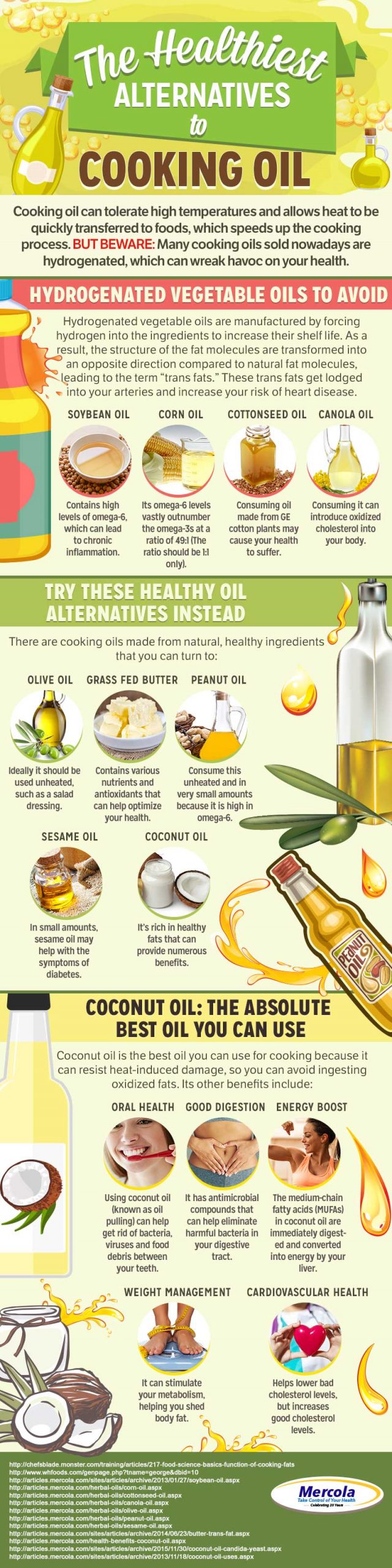
Black Seed Oil — The Forgotten Gem
Black seed (Nigella Sativa) oil is another exceptional fat with a long history of use in traditional systems of medicine, including Ayurveda and Siddha. The most abundant active plant chemical in black seed is thymoquinone; other bioactive compounds include α-hederin, alkaloids, flavonoids, antioxidants and fatty acids.
As for its antioxidant activity, black cumin seed has been found to be far more potent than vitamin C.10 In modern times, researchers have confirmed Nigella Sativa may be helpful for:
| Type 2 diabetes — In one study, Nigella sativa improved glucose tolerance as efficiently as metformin.11 It’s also been shown to improve the performance of antidiabetic medication12 |
| Reducing asthma symptoms — In one study,13 thymoquinone was found to be instrumental, by reducing two inflammatory mediators of asthma and other inflammatory processes.
Another study14 found black cumin seed also acts as a relaxant, and displays both anticholinergic (reducing spasms in smooth muscle) and antihistaminic (blocking allergic reactions) effects. Here, thymoquinone was found to be superiorto the asthma drug fluticasone (a synthetic glucocorticoid) |
| Enhancing memory and reducing stress — The results showed black cumin seed inhibited stress-induced biochemical changes in a dose-dependent manner. Memory and cognition was also dose-dependent15 |
| Reducing damage caused by cadmium poisoning16 — May also serve as prophylactic against chemical warfare agents |
| Protecting against and attenuating aflatoxicosis17 |
| Alleviating symptoms of allergic rhinitis18 |
| Candidiasis19 |
| Rheumatoid arthritis20 |
| Cancer21,22,23 |
Black seed oil has at least 20 different pharmacological actions, which helps explain how it can be useful for so many different and varying ailments, including:24
| Antidiabetic | Anti-cancer |
| Immunomodulatory | Analgesic (pain relief) |
| Antimicrobial | Anti-inflammatory |
| Spasmolytic | Bronchodilator25 |
| Hepatoprotective | Renal protective |
| Gastroprotective | Antioxidant |
How to Use Black Seed Oil
Black seed oil is a highly undervalued and oft-forgotten kitchen staple. When used in cooking, it imparts a warm, slightly bitter flavor that tastes something like a blend of thyme, oregano and nutmeg.
A mixture of black seed oil, honey and garlic also makes for a powerful tonic that can help soothe coughs and boost immunity, especially during cold and flu season or if you feel like you’re coming down with an infection.26
Like all seeds, black seed oil is high in polyunsaturated fats. So, when taken in excess, it could make your mitochondrial membranes more susceptible to oxidation.
For this reason, I suggest limiting your daily intake to 1 to 2 tablespoons or less. A simple way to get a small amount of black seed oil into your diet on a regular basis is to use it in your homemade dressing. Here are a few suggestions:
- Mix apple cider vinegar, black seed oil, fresh lemon juice, cilantro and tahini. Experiment with the ratios to enhance the flavor you enjoy the most
- A simple and yummy dressing that goes particularly well with broccoli, asparagus or salad greens includes: 1 tablespoon apple cider vinegar, 1 tablespoon lemon juice, one-half teaspoon minced garlic, a dash of ground black pepper and a few fresh basil leaves, chopped
- Alternatively, you can use apple cider vinegar and/or black seed oil as substitutes for other oils and vinegars in whatever dressing recipe you’re already using. Keep in mind that the black seed oil does have a spicy kick to it, so substituting the full amount may make it too spicy. Start by adding just a small amount, and experiment to find the ratio of vinegar, olive oil and black seed oil you enjoy
Optimize Your Health by Selecting the Right Fats
The list below, obtained from Dr. Cate Shanahan, author of “Deep Nutrition: Why Your Genes Need Traditional Food,” summarizes some of the best and worst fats found in our modern diet. Replacing the bad fats in your diet with ones from the “good” list is a simple way to safeguard your health without making any radical changes.
To learn more about the ins and outs of dietary fats, pick up a copy of my book, “Superfuel: Ketogenic Keys to Unlock the Secrets of Good Fats, Bad Fats, and Great Health,” cowritten with James DiNicolantonio, Pharm.D, which gives more in-depth specifics on how to discriminate between healthy and harmful dietary fats.
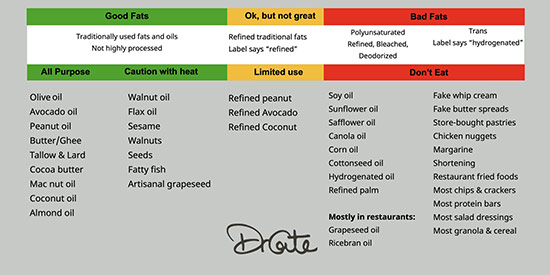
- 1 FDA.gov, Final Determination Regarding Partially Hydrogenated Oils
- 2 Science Daily February 22, 2012
- 3, 4, 5 Deep Nutrition: Why Your Genes Need Traditional Food by Dr. Cate Shanahan
- 6 Open Heart 2018;5:e000898
- 7 Open Heart. 2018; 5(2): e000898; doi: 10.1136/openhrt-2018-000898
- 8 Acta Scientific Nutritional Health June 2018; 2(6)
- 9 FoodFraud.org
- 10 J Herb Pharmacother. 2004;4(2):1-10
- 11 Journal of Endocrinology and Metabolism April 2011; 1(1): 1-8
- 12 Indian J Physiol Pharmacol. 2010 Oct-Dec;54(4):344-54
- 13 J Enzyme Inhib Med Chem. 2004 Oct;19(5):431-6
- 14 Planta Med. 2010 Feb;76(3):218-22
- 15 Pharm Biol. 2011 Jul;49(7):702-8
- 16 Biological Trace Element Research December 2005
- 17 Journal of Applied Toxicology April 26, 2005
- 18 American Journal of Otolaryngology September-October 2011
- 19 Archives of Clinical Infectious Diseases: Vol.10, issue 1; e22991. January 24, 2015
- 20 Phytotheray Research December 12, 2011
- 21 Natural Society, Black Cumin
- 22 The American Journal of Chinese Medicine 2011
- 23 African Journal of Traditional, Complementary and Alternative Medicines 2011
- 24 Asian Pacific Journal of Tropical Biomedicine May 2013; 3(5): 337-352
- 25 Phytomedicine. 2010 Aug;17(10):707
- 26 Kitchen Doctor, Black Cumin
The Importance of Omega-3 for Cell Membrane Functionality
Reproduced from original article:
https://articles.mercola.com/sites/articles/archive/2023/09/03/nils-hoem-omega-3-cell-membrane.aspx
The original Mercola article may not remain on the original site, but I will endeavor to keep it on this site as long as I deem it to be appropriate.
Analysis by Dr. Joseph Mercola Fact Checked September 03, 2023
STORY AT-A-GLANCE
- The cellular membrane is the universal surface onto which, and into which, the cellular machinery is assembled. The integrity of the inner and outer membranes is vital for the function of the cell
- The cell membrane also hosts response elements and almost all signaling, except for hormones. Almost all short path signaling begins in the membrane
- Membranes are lipid structures made of phospholipids and other constituents. The food you eat provides the raw material substrate that is then assembled into the mitochondrial and cellular membranes, which is why the type of fats you consume is so important
- Most people aren’t willing to forgo processed foods and end up with far too much LA, which then necessitates taking extra omega-3. By increasing your omega-3 intake, the EPA and DHA can push the omega-6 out of your membranes
- Lysophosphatidylcholine (LPC) shuttles EPA and DHA into your eyes, liver and, in pregnant women, the placenta. LPC is endogenously produced, but your capacity to produce it is dependent on choline
In this interview, Nils Hoem, Ph.D., — a research scientist with Aker Biomarine, the largest krill oil company in the world — takes a deep dive into omega-3s and the crucial role they play in the health and functionality of your cell membranes.
“In my academic life, I spent the first 20 years as a researcher at the University of Oslo. I got my master’s and doctorate from the University of Oslo in pharmacology, and was an associate professor there … Fifteen years ago, I came … to work for Aker Biomarine … as the chief scientist, but I’m, by heart and mind, really, a pharmacologist,” Hoem says.
The Importance of Membranes
As explained by Hoem, the cellular membrane is the universal surface onto which, and into which, the cellular machinery is assembled. “Very little in the cell just floats around. It’s a very complex structure and the integrity of membranes is absolutely vital for the function of the cell,” he says.
The cell membrane also hosts response elements and almost all signaling, except for hormones. Almost all short path signaling begins in the membrane. Your mitochondria also have an inner and outer membrane, and the function of these are also crucial for health.
Membranes are lipid structures made of phospholipids and other constituents. Inside we find phosphatidylcholine and phosphatidylethanolamine, two ampholytic phospholipids, meaning they have a polar end and nonpolar end.
The food you eat provides the raw material substrate that is then assembled into the mitochondrial and cellular membranes, which is why the type of fats you consume is so important.
Omega-6 Competes Against Omega-3
As explained by Hoem, there are two polyunsaturated fats (PUFAs) that are considered to be essential in conventional medicine. One of them is the omega-6 linoleic acid (LA), which is an 18-carbon molecule. Although the level of LA needed is likely significantly lower than suggested, it is a moot point as virtually consuming 10 times the suggestion. The other is omega-3 alpha-linolenic acid (ALA), which also has 18 carbons.
Your body cannot make these fats, so you must get them from your diet. That said, since LA is found in nearly every food, and you need very small amounts, it’s virtually impossible to become deficient in LA.
Others, such as the omega-3 EPA and DHA, which have 20 and 22 carbons respectively, can be synthesized in your body, provided you have enough available delta-6-desaturase, an enzyme responsible for their conversion.
The problem is that there’s competitive inhibition for that enzyme, so when you have 10-fold (1,000%) more omega-6 in your system, then the delta-6-desaturase will be used to convert the omega-6 into arachidonic acid, instead of converting the ALA into EPA.
Processed foods are loaded with omega-6 fats, which radically skews the omega-3 to omega-6 ratio and inhibits your body’s innate ability to synthesize EPA and DHA.
“A Japanese professor showed me data from inner Mongolia, where they eat no seafood at all, but eat a lot of meat and dairy products from grass fed cattle. They get a lot of ALA and very little omega-6, and they actually had pretty high levels of EPA and DHA despite not eating any seafood at all. So that tells the story, I think,” Hoem says.
Download this Article Before it Disappears
Most People Consume Far Too Much LA
Historically, LA used to account for only 1% to 2% of daily calories. Today, it’s between 20% and 25%, which means most people have enormous stores of LA in their cells.
If you reduce your LA intake to historical norms, then there’s not this competition for delta-6. And if you have a baseline level of the omega-3 ALA, then you can make substantial amounts of DHA and EPA and probably don’t need supplements.
The problem is that most people aren’t willing to forgo processed foods and end up with far too much LA, which then necessitates taking extra omega-3. Basically, if you’re eating higher than historical amounts of LA, you have to either add more omega-3s or reduce your intake of omega-6. Ideally, you’d do both.
“The amount of omega-6 is so huge compared with the omega-3s that the only feasible way of increasing your omega-3s in the membranes is through taking omega-3s,” Hoem says. “Then there is a 1-to-1 exchange of EPA and DHA for omega-6s in the membrane.
So, if you increase one molar amount of EPA and DHA in the membrane, then you kick out exactly the same amount of omega-6. And it’s important to realize that the membrane will be a reflection of your intake of omega-6s versus omega-3s. You can’t really do much with the omega-6s because they’re everywhere, but you can fix it by increasing your intake of long chain omega-3s.”
That said, it is possible to dramatically reduce your intake of omega-6. I keep my intake below 1%, so it can be done. I’ve been doing it for about three or four years now. It takes about six or seven years to fully eliminate the stores of LA from your adipose tissue due to their long two-year half-life.
Upping Omega-3 Intake Is Necessary for Most People
Based on what Hoem is saying, you could facilitate the removal of LA by upping your omega-3 intake. The question is, how much omega-3 is needed to make a difference? And what happens to the omega-6 once it’s displaced? Is it burned as fuel, or put back into the adipose cells? Unfortunately, Hoem doesn’t have firm answers to those questions. His guess is that some of it gets burned as fuel and some gets stored.
“If you have a meal of salmon today, the EPA and DHA from that meal is going to wash around in your circulation and be exchanged within all different organs in your body for 14 days afterwards. We see that it undulates, so it goes in and out of plasma.
So, it increases in plasma, then it decreases in plasma, and increases again from six hours, then you have a 24-hour peak, and then you have another one usually, around 30 hours. When we look at how it’s being incorporated into different tissues, that might give you some ideas. You see how, for example, the liver really, really wants EPA and DHA, as does the brain.
We’ve done experiments with lysophosphatidylcholine (LPC), which is the form that is being transported into the brain and into neuronal tissue … The fatty acid is bound to lysophosphatidylcholine and that molecule is way more water soluble, 10 to the minus 4th actually.
Instead of being on its own, it’s like EPA and DHA and a number of other fats sit on a ferry boat, and that ferry boat is lysophosphatidylcholine, that transports them into the brain …
If you inject EPA and DHA LPC — lysophosphatidylcholine with EPA and DHA on it — it shoots into the brain and across the blood-retina barrier. So you see some organs that are very keen on grabbing these molecules. We call it infinite sink.
So, for example, what goes to the brain seems to stay in the brain until it’s broken down. With half-life, that is probably hundreds of hours, while in the circulation, the half-life is pretty much like a hundred-ish hours longer for DHA than for EPA.
What this means is that when you change your intake, it takes about 600 hours, at least, until you are back at steady state. So, you can’t fix anything fast with those fatty acid. You really need to be patient.”
The Importance of Choline
The same transporter, LPC, also shuttles EPA and DHA into your eyes, liver and, in pregnant women, the placenta. Since LPC is so crucial, you also need to have a regular supply of phosphatidylcholine, and this is a common nutritional deficiency.
LPC is endogenously produced, but your capacity to produce it is dependent on choline. You also need the raw materials to make it, which means you need EPA and DHA. Seafood is a great source of phosphatidylcholine. Many seafood sources also contain some EPA and DHA. For choline, the richest source is eggs.
“Research shows that if you increase your intake of choline, increase your intake of omega-3s, or basically increase your intake of phosphatidylcholine, you could actually reverse from nonalcoholic fatty liver back to a more normal liver, instead of sliding further down into steatosis and metabolic syndrome,” Hoem notes.
What’s the Best Omega-3 Supplement?
While many understand the importance of omega-3s, few realize that fish oil supplements aren’t necessarily the best source. In most fish oil supplements, the omega-3 is in the form of ethyl ester, a synthetic form of omega-3. Natural omega-3 comes in three forms: triglyceride form, phospholipid form and free fatty acids. Contrary to these natural forms, ethyl esters are difficult to digest, so they must be taken with a fatty meal.
“Your body doesn’t recognize it as fat, so if you take pure ethyl esters on its own, it will just slide through your body. It actually ends up in your stool. But if you take it with a fatty meal, then your body recognizes fat and starts the digestion process. But I’ve seen ethyl esters glide through the gut almost unabsorbed,” Hoem says.
“Most seafood would have both triglyceride and phospholipids, and of course, the interchange form is the free fatty acids. Free fatty acids is really minor. You won’t find much of free fatty acid. You find some, but it’s really the two major classes of glycerolipids — triglycerides and phospholipids.
That’s nature’s way of doing it, so whenever you eat whole foods, that’s what you get. Even though I work with phospholipids and krill oil, I won’t talk down fish oils because that’s how most people get their EPA and DHA, and it is way better than not getting it.
But there is one thing that I really do not appreciate, and this is a particular for the United States. You’re allowed to call ethyl esters fish oils, and frankly, I don’t like that at all. It needs to be clearly labeled, so that is something that needs to be done.
One advantage of the ethyl esters is that you can take out environmental toxins. Now, the price you pay for that is that there is a high thermic load on the molecule. You know the history of partially hydrogenated fats and trans fats … 50 years down the road, we found that it had killed a million Americans … and now they’re banned both in the U.S. and in Europe.
Trans fats are dangerous because they have the wrong geometry. They have the wrong structure. They bend in the wrong direction, and enzymes with certain response elements that read fat read them wrong. The way they are inserted into membranes, for example, is not normal, so you get a bent fat.”
Another downside of ethyl ester omega-3 is that it’s highly unstable, even more unstable than omega-6 fats, which means it’s perishable and highly susceptible to oxidative stressors. That leaves it predisposed to oxidation, which can spin off advanced lipoxidation end products (ALEs) that cause significant damage.
The key point here is that it’s predisposed to doing this spontaneously. When you have a whole food version, you typically don’t get this. Krill oil, for example, contains natural astaxanthin, which prevents this peroxidation. Phospholipids also do not oxidize as easily.
Krill Harvesting Is Carefully Regulated
In the interview, Hoem reviews how Aker Biomarine produces its krill oil, and what distinguishes it in terms of quality and sustainability. Aker is the world’s largest harvester of krill, mostly from the Antarctic, where Hoem spends much of his time doing research.
“Krill is probably the largest single species marine biomass,” he says. “Around the Antarctic region, you find more than 500 million tons. In the region where we harvest it, in west Antarctica, the estimated biomass is 60 million tons. I’ve been on surveys to find out how much there is, and at least for now, the amount has not gone down.
So, for the last at least decade, or even longer, the amount seems to be stable around 60 million tons. At the same time, the number of whales has increased. Occasionally, you now see thousands of whales. So the whale population is back at where it was pretty much pre-whaling.
There is an international body called CAMLR that regulates all the fisheries in the Antarctic region. You find types of krill all over the globe, but the Antarctic krill is very particular. It is larger than other krill, and krill oil by definition only comes from Antarctic krill because in other parts of the world, the lipid structure will be different.
We are allowed to catch less than 1% or 1% of the total biomass, so 620,000 tons, and we’ve been around half a percent up until now. That’s extremely conservative. And there isn’t anything to suggest that what we do will harm the whale population.”
Antarctic krill harvesting is also certified by an international body called the Marine Stewardship Council. It’s a third-party, independent body, not a paid-off front group, that oversees the harvesting. And, again, the amount of krill allowed to be harvested is very conservative, to ensure there are no adverse environmental impacts.
“Whales will eat way more krill than we harvest,” Hoem says. “I’ve seen a calculation that suggests whales, at a full population, will take out something in the neighborhood of up to 200 million tons a year.
Krill live for about six years and seems to have a tremendous ability, given enough algae, to increase its biomass. It increases its biomass up until levels regulated by other factors really. So, it’s really the algae bloom in Antarctica that governs the amount of krill available.”
Processing Dictates Quality
When it comes to the quality of an omega-3 supplement, the way it’s processed makes all the difference, and this is true whether we’re dealing with fish oil or krill oil. Hoem describes how Aker Biomarine assures the highest quality possible:
“We harvest krill in a continuous process. We have a trawl, which is a huge net, and then there is a suction pump at the end. The krill comes live onboard. We then immediately dry it at relatively low temperatures.
Then, we bring that on land and extract it, not by any type of heat treatment, but by ethanol extraction, which is very unusual for marine fats. Usually, you need a lot of heat. And this is because it’s a phospholipid triglyceride mixture.
Triglycerides are not soluble in ethanol, but phospholipids are, and the phospholipids drag the triglycerides out together with them. So, the way we fish and process it is different for krill oil than for the other marine fats.
It’s all about the processing. It’s all about being fresh. People may not know this, but most of the cheaper fish oil products are made from fish oil that is stored in huge tanks for years. Then you would have to process that raw fish oil into something that has the quality that you want.
We don’t do it that way. We take care of the raw material from second one. We don’t store it away in large storage tanks and then refine it to the quality we need. We try to take care of the quality from the very beginning to the very end. And, by the way, we own the whole value chain … We also have the infrastructure necessary. Quality is something that you get when you put quality into every step in your chain.”
Antarctic Krill Is Very Clean
Aside from its high omega-3 content, Antarctic krill also contains a fair amount of copper — approximately five micrograms per gram — while being very low in environmental contaminants such as phosphates, PCBs and heavy metals like mercury.
“There is no phosphate pollution in Antarctica. You do see some PCBs, a very, very small amount. We analyze for heavy metals, and others have analyzed for it, and you find very low amounts of, for example, mercury and lead. They’re not there. There are volcanoes in the area, for example, in what is called Deception Island, and there you can find it, but it’s not spread around.”
Is Krill a Good Food Source for Humans?
One argument that many people have about consuming krill is that krill is not a natural food source for humans. Ancestral humans didn’t consume krill. Hoem responds to this critique:
“Krill is a crustacean as good as any other crustacean, and certainly humans have been eating crustaceans. We haven’t harvested Antarctic krill because it’s where it is, but we certainly eat other types of krill. Shrimp are actually krill.
Nine out of 10 whales eat krill, so why shouldn’t we do it? The first paper on the suggestion on eating krill was published in 1958, and a guy called Peloquin suggested in Scientific American that we should stop whaling and rather fish for krill.
Of course, we should harvest as far down in the food chain as we could. Now, ideally, we should have harvested algae, but don’t ask me to harvest the microalgae that is five micrometers across. You won’t be able to do that. And to me krill is just the sweet spot of it.
Krill does the algae harvesting for us, and then we harvest krill instead … The Japanese also actually have eaten krill, what is called Pacific krill. If you go to Japan, in every bar, they will serve you dried Pacific krill as a snack.”
Krill Oil Has Better Absorption Than Synthetic Fish Oil
Interestingly, the EPA and DHA found in krill is relatively low compared to your typical fish oil supplement — up to 90% lower — but the radically improved absorption and distribution within your body makes up for it.
“It doesn’t really help you that much if your EPA and DHA reside in your white fat. So, it’s really about the utility of it,” Hoem says. “Ethyl esters are special. They do have an absorption problem.
I would say neither phospholipids nor triglycerides really have an absorption problem. They’re fairly well digested. Where you see the differences between them is in how they’re distributed. And that’s exactly why I think you need both.
So, I would never talk down fish oils. Now krill oil is more similar to what was called 18/12 oils. Krill is typically 8% to 9% DHA and 12% to 15% EPA, so they’re not that different from what you find in other natural sources. You do not find any natural source with super-high concentrations of EPA and DHA. Then it is a concentrate of some kind.
I’m actually writing up a paper on some of this. To be able to analyze this, you have to use radiolabel substances. So, we’ve made them synthetic and then we’ve put in a radioligand, C14, because otherwise your experiment is going to be way too diluted.
By doing this, in animals, you can actually see exactly where the different labeled fatty acids go, and there is a clear difference between the different forms. Again, phospholipids have certain specifics when it comes to the brain, the eye, the liver.
Triglycerides seems to have some specifics when it comes to the heart muscle for example, but our heart is able to extract EPA and DHA from the circulation quite well. There is a very high lipase activity there. But what I can say is that it is a really diverse pattern, and what it tells me so far is that we need both forms.
Let me also point out that krill oil also contains EPA and DHA in triglyceride form. Krill oil really isn’t an oil, it is lecithin. It’s a mixture of triglycerides and phospholipids. So, nature provides both, and I think we need both.”
EPA and DHA Are Required for Intercellular Communication
While certain tissues such as the brain, heart, liver, eyes and placenta need more EPA and DHA, they serve important functions in all tissues. As explained by Hoem, EPA and DHA serve as substrates for lipid-derived signaling between cells. This intercellular communication is part of how cells self-regulate to maintain health.
“The substrate for that signaling is usually fats or a fatty acid, and that’s not strange at all, because those membranes are everywhere in the cell. Everything in the cell is connected to a membrane. And then, prostaglandins or prostacyclins or thromboxanes, they are made from fats excised from the membrane.
You could excise either omega-6s or omega-3s from the membranes, and that’s dependent on the amount of these in the membrane. From this, you get two classes of signaling molecules. When you make the signaling molecules from EPA, for example, you get PGE-3 and not PGE-2. And the same goes for a number of these super important signaling molecules.
Further down the road, there is a type of molecule called resolving. Inflammation is there to fix a problem, but then it needs to be stopped, to be resolved, [which is what resolving does]. Resolvins are absolutely necessary to stop inflammation from overdoing its job. That’s the key to healthy inflammation.”
Resolvins are produced in situ, but to have a good specialized pro-resolving mediator (SPM) response, you need to load your membranes with EPA and DHA.
EPA and DHA Roles in Membranes
EPA and DHA are also incorporated into the inner membranes of the cell, and likely the mitochondrial membranes as well.
“Mitochondria need to communicate, so there will also be lipid-derived signals there. But now I’m easily ending into something that scientists shouldn’t do; we end up in speculation. But I think we have to realize that these are white spots on the map. We have been viewing lipids as energy for decades, and not as structure, despite the fact that we’re made of lipids.
The phospholipid membrane defines life. It defines the border between me and the environment outside. Without the membrane, there’s no life. So we are at the very, very core of our own definition.
The unsaturated fatty acid in general, and in particular EPA and DHA, are bulky fatty acids. And they’re bulky simply because they have these double bonds fixed. DHA is more of a linear bulky structure, while EPA is more of a circular bulky structure, and it can’t rotate around its carbon, so it’s really fixed. I think of them more as architectural building blocks.
And then you have to start asking yourself, ‘What’s going on in the membrane?’ Well, the membrane has response elements in it — transporters, iron channels, the electron transport chain, you name it. All of this is connected to the membrane, and a lot of response elements needs to flow transversely in the membrane.
So, when I say fluidity of the membrane, don’t necessarily think of it as it’s flexible on its outside, but more of how response elements can flow transversely in the membrane, how element A can reach to element B, because, quite often, you have two or three such elements that need to coalesce into one element to be activated.
Now, if we go to signaling substance, the best way to describe this is to be specific. And if we take prostaglandin, which is a universal inflammatory signal, it is being made from arachidonic acid, an omega-6. The enzyme that is doing this sits on the inside of the membrane, in the cytosolic part of the membrane.
And it sits there, closely to the membrane, because the substrate is a fat. The fat isn’t soluble in water. So, phospholipase A-2, for example, is excising out a fatty acid and feeds it directly into the hydrophobic pocket of that molecule. So, it doesn’t have to traverse water to get in there. And it’s not really one enzyme, it’s two enzymes in one. So it’s an epoxidase and an oxidase. And instead of arachidonic acid, it spits out PGE-2.
If instead phospholipase A-2 takes out an EPA, it spits out PGE-3. And PGE-3 has been shown to be less inflammatory, usually, than PGE-2. So that’s one. So the omega-3s are not anti-inflammatory. They are modulators of inflammation, and they’re part of a measured inflammatory response.
And then, downstream, PGE-3 is formed into moracins, the resolvins, and actually actively stops the inflammation and starts restoration instead. The omega-6s do not do that to the same extent. So you need EPA, DHA and DPA to have this resolving function going as it should.”
Closing Remarks
So, in closing, the summary take-home from all this is that most people probably need omega-3 supplementation, especially if you’ve been eating a lot of processed foods and therefore have high LA stores. Again, as your omega-3 intake increases, the EPA and DHA start replacing the omega-6s in your membranes at a ratio of 1 to 1.
Hoem recommends getting an omega-3 index test once a year. Ideally, you’d want to have an index of 7 or higher.
“Just remember, the kinetics is very slow,” he says. “So if you double your dose, it will take the best part of three to six months until you are at a steady state again. The same goes for if you reduce your dose to half; it also takes three to six months. It’s exactly the reverse. This is something that makes this tricky, because you won’t recognize from day one to day two your change, but you will recognize it in six months. So it’s long-term.
This is not pharmacology, it is nutrition. And it’s a question about being prepared when you need your lipid-based systems to function correctly. If you do not take care of your membranes with regards to the right fatty acids, when you need them to respond correctly or in a measured way, it’s too late to take them.”
Once your LA stores are depleted (which can take up to seven years, provided you’re not loading more in), and provided you’re consuming enough ALA, then your body will likely have the ability to endogenously produce the EPA and DHA it needs.