Eyes
now browsing by category
Another Good Reason to Eat Leafy Greens, Avocados and Eggs
Reproduced from original article:
https://articles.mercola.com/sites/articles/archive/2022/11/11/lutein-eye-health.aspx
The original Mercola article may not remain on the original site, but I will endeavor to keep it on this site as long as I deem it to be appropriate.
Analysis by Dr. Joseph Mercola Fact Checked November 11, 2022
STORY AT-A-GLANCE
- Lutein is well-known for its vision-enhancing properties. Research also suggests it has neuroprotective qualities, improving memory and boosting intelligence
- There’s an inverse association between lutein levels in the eyes and age-related macular degeneration (AMD), the primary cause of blindness in the elderly, as well as cataracts
- Lutein has also been shown to prevent cell death caused by retinal detachment when administered in a timely manner, and can help improve night vision
- Lutein may help prevent neurodegenerative diseases by preventing DNA damage, the depletion of BDNF and the degradation of a synaptic vesicle protein involved in Alzheimer’s and Parkinson’s. It’s also been shown to help maintain the integrity of your brain’s white matter
- Your body cannot manufacture lutein, so you need to get it from your diet. Lutein is a carotenoid found in egg yolks, avocados, cruciferous vegetables and dark, leafy greens, especially kale and spinach
Lutein — a carotenoid found in egg yolks, avocados, cruciferous vegetables and dark, leafy greens — is well-known for its vision-enhancing properties.1 Research also suggests it has neuroprotective qualities,2 improving memory3 and boosting intelligence.4 As reported in the Senior Resource Guide:5
“Lutein belongs in the subclass of xanthophylls, which have polar molecular structures that possess unique membrane properties, such as fluidity, communication between brain cells, ion exchange, diffusion of oxygen, membrane stability, and the prevention of oxidation and inflammation.
Like other xanthophylls, lutein accumulates in neural tissue. In fact, lutein accounts for most of the carotenoid accumulation in the human brain, and this high concentration of lutein in the brain may indicate its neuroprotective value.
Lutein accumulates in the brain and embeds in cell membranes. There, lutein protects the neuronal structure and function of brain cells. While lutein is distributed in the gray matter of the brain, researchers have detected its presence in the temporal cortex, the prefrontal cortex, and the hippocampus. Lutein accumulates in the brain over a person’s lifespan and may therefore provide lifelong benefits to brain health.”
Your body cannot manufacture lutein, so you need to get it from your diet. Unfortunately, many do not get enough lutein simply because they don’t eat enough vegetables and/or eggs.
How Lutein Protects Your Vision
As its name implies, lutein is found in high concentrations in your macula lutea,6 the small central part of your retina responsible for detailed central vision. It’s also found in your macular pigment (it’s responsible for the yellow hue of the macula7) and the lens of your eye.
Epidemiological research has found an inverse association between lutein and zeaxanthin levels in the eyes and age-related macular degeneration (AMD), the primary cause of blindness in the elderly, and cataracts.8,9
As explained in the 2013 paper,10 “The Role of Lutein in Eye-Related Disease,” lutein and zeaxanthin (another carotenoid present in high concentration in the eyes) help prevent age-related eye degeneration by ameliorating the damage caused by blue light and oxygen free radicals. Blue light is responsible for a majority of the damage to the eye, and lutein selectively absorbs blue light.
According to this paper, “Dietary concentrations between 6 and 20 mg per day of lutein have been associated with a reduced risk of ocular disorders such as cataracts and age-related macular degeneration.”
A more recent scientific review,11 published in 2019 in PLOS ONE, found people who took 10 mg or 20 mg of lutein per day had greater macular pigment optical density (MPOD), and better visual acuity and contrast sensitivity than those who did not supplement.
Macular pigment, the yellow pigmented area found in the center of your retina, acts as “internal sunglasses,” protecting your macula from harmful blue light. The denser your macular pigment, the lower your risk of developing AMD. Greater MPOD is also associated with better visual performance overall.12
According to the authors of the 2019 PLOS ONE review, “The available evidence suggests that dietary lutein may be beneficial to AMD patients and the higher dose could make MPOD increase in a shorter time.” Lutein has also been shown to prevent cell death caused by retinal detachment, when administered in a timely manner,13 and can help improve night vision.14
Lutein’s Role in Brain Health and Cognition
More recent research has also found lutein plays an important role in brain health, and may even help prevent neurodegenerative diseases.15 As noted in the 2012 paper,16 “Neuroprotective Effects of Lutein in the Retina,” lutein benefits your brain and cognition by preventing:
- DNA damage
- Depletion of brain-derived neurotrophic factor (BDNF), which is important for brain health
- Degradation of synaptophysin, a synaptic vesicle protein involved in neurodegenerative diseases such as Alzheimer’s and Parkinson’s disease
Lutein and zeaxanthin have also been shown to help maintain the integrity of your brain’s white matter,17 and this too can lower your risk of age-related decline.
Lutein Benefits Both the Old and the Young
In one 2017 study,18,19,20 which involved 60 adults between the ages of 25 and 45, those with higher levels of lutein in middle-age had more youthful neural responses than those with lower levels.
Carotenoid status was assessed by measuring MPOD, which is also highly correlated with the lutein status in your brain. Most studies have focused on the effects of diet after cognitive decline has already set in.
Here, they wanted to evaluate whether lutein might have a preventive effect, as the process of cognitive decline has been shown to begin far earlier than typically expected. According to the researchers, you can start seeing cognitive deterioration as early as your 30s.
Indeed, the results suggest your diet, and in this case lutein-rich foods, does help keep your brain young. As noted by co-author Naiman Khan, professor of kinesiology and community health at the University of Illinois:21
“Now there’s an additional reason to eat nutrient-rich foods such as green leafy vegetables, eggs and avocados. We know these foods are related to other health benefits, but these data indicate that there may be cognitive benefits as well.”
Lutein has also been shown to benefit younger people. In one such study,22 healthy 18- to 30-year-olds exhibited better brain function after taking lutein and zeaxanthin supplements for a year. Significant improvements were seen spatial memory, reasoning ability and complex attention.
Cognitive Benefits Associated With Higher Lutein Levels
Several other studies support these findings. For example, in one University of Georgia study,23 older adults (mean age 72) taking 10 mg of lutein and 2 mg of zeaxanthin daily for one year were able to maintain their brain function, whereas the placebo group’s verbal learning ability and word recall deteriorated over the course of the study.
The mechanism thought to be responsible for this protective effect was enhanced blood flow through the brain. A number of other studies looking at lutein’s influence on cognition have shown that higher lutein and zeaxanthin levels in the macula are associated with improved:24,25,26
- Verbal learning and fluency
- Word recall
- Executive function such as sorting and prioritizing information and the ability to take action
- “Crystallized intelligence”27 — the ability to use learned knowledge and experience (opposed to the ability to logically reason your way through a new situation or problem, which is known as “fluid intelligence”28)
- Relational memory performance29,30 — the ability to remember a person’s name when seeing their face, or to retell a story
Other Health Benefits of Lutein
Lutein has also been found to promote health in other ways, beside optimizing vision and cognition. For example, studies have found:
| Diets rich in the carotenoids beta-carotene, lutein and lycopene resulted in greater resistance against oxidation of low-density lipoprotein (LDL) cholesterol. Higher plasma concentration of carotenoids was also associated with lower DNA damage.31 |
| Lutein and zeaxanthin in combination with vitamin E appears to improve lung function and respiratory health.32 |
| Plasma levels of antioxidants such as lutein, zeaxanthin, vitamin E, beta-cryptoxanthin, lycopene, alpha-carotene and beta-carotene are inversely correlated with congestive heart failure severity.33 |
| Plasma carotenoid levels are also inversely correlated with prostate cancer.34 |
| Lutein and lycopene enhance eye health by reducing your risk for oxidative stress-induced loss of retinal pigment epithelial (RPE) cells, and inhibiting the cell growth in undifferentiated RPE cells.35 |
| Lutein has been shown to induce autophagy and may help shield your body against certain stresses.36 |
| Lutein and zeaxanthin have also been shown to increase bone density in young, healthy adults.37 Lutein appears to stimulate bone mineralization and formation by suppressing bone resorption. |
Lutein-Rich Foods
Lutein is primarily found in green leafy vegetables, with kale and spinach topping the list of lutein-rich foods. You’ll also find it in orange- and yellow-colored fruits and vegetables. The word lutein actually comes from the Latin word “luteus,” which means “yellow.”
As a general rule, anywhere from 15% 47% of the total carotenoid content in dark green leafy vegetables is lutein.38 Following is a list of foods that are particularly rich in lutein.39,40,41 Most of these also contain zeaxanthin, albeit in lesser quantities than lutein.
Ideally, you’ll want to buy the whole food and consume these foods as close to raw as possible, as the lutein (and other carotenoids such as zeaxanthin) are easily damaged by heat. Accessory micronutrients in the foods that enhance their action also tend to get easily damaged.
While there’s no recommended daily intake for lutein or zeaxanthin, studies have found health benefits for lutein at a dose of 10 milligrams (mg) per day and at 2 mg/day for zeaxanthin.
How to Optimize Lutein Absorption
Lutein and other carotenoids are fat-soluble, so to optimize absorption, be sure to add a little bit of healthy fat to your meal. For example, research42,43 shows that adding a couple of eggs — which contain both lutein and healthy fats — to your salad can increase the carotenoid absorption from the whole meal as much as ninefold.
Ideally, opt for organically-raised, free-range pastured eggs. Not only do they tend to have a better nutritional profile, by opting for pastured eggs you’ll also avoid pesticide exposure and genetically modified organisms. I raise six chickens and typically eat five eggs a day — the yolks raw in my smoothie and the whites cooked with my meat.
The vast majority of commercially available eggs come from concentrated animal feeding operations (CAFOs), where the hens are not permitted to forage on pasture. Instead, they’re typically fed a diet of corn and soy, the vast majority of which are genetically engineered. CAFO eggs are also far more prone to cause foodborne illness caused by salmonella contamination.
If you live in an urban area, visiting a local health food store is typically the quickest route to finding high-quality local egg sources. Your local farmers market is another source for fresh free-range eggs. Cornucopia.org also offers a helpful organic egg scorecard44 that rates egg manufacturers based on 22 criteria that are important for organic consumers.
You can often tell the eggs are free-range by the color of the egg yolk. Foraged hens produce eggs with bright orange yolks, indicative of higher amounts of lutein and zeaxanthin. Another way to boost absorption of lutein from your vegetables is to add some raw organic butter or healthy oil such as olive or coconut oil to your salad.
Eat Right to Avoid AMD
To protect your vision over the long haul, aside from making sure you’re eating plenty of lutein-rich foods, you’ll also want to avoid a high-glycemic diet. As reported by Tufts University in 2017:45
“Sheldon Rowan, a scientist in the Laboratory for Nutrition and Vision Research at the Human Nutrition Research Center on Aging at Tufts, said there are plenty of indications that the types of carbohydrates we eat play a role in the development of AMD.
People who eat lots of simple carbohydrates, like those in white bread and sweetened beverages, are more likely to get the disease. This could be because simple carbs break down rapidly during digestion, creating a spike in blood sugar that can lead to widespread inflammation, a condition linked to AMD … If … blood glucose stays low over a long period of time, Rowan said, it can lower incidence of AMD.
To understand why, Rowan tested the two diets on laboratory mice. Over the course of a year, he fed one group of mice ‘high-glycemic’ foods — ones with lots of simple starches. A second group got a ‘low-glycemic’ diet, rich in complex carbs, but otherwise identical in calories and nutrients. In a third group, Rowan switched the mice’s diet from high- to low-glycemic foods halfway through the study.
Sure enough, mice with the low-glycemic diet did not develop AMD, while mice fed the high-glycemic diet almost all came down with the disease … In the mice that switched diets, though, Rowan saw something completely unexpected. Not only did they avoid AMD, but the existing damage to their retinas was reversed.
‘No one had ever seen that before,’ Rowan said of the findings, which were reported in Proceedings of the National Academy of Sciences.46 ‘The most common form of AMD doesn’t really have a treatment right now — but this suggests that just changing to a healthier eating pattern could have a huge impact.’”
Further exploration revealed that high-glycemic diets led to higher levels of advanced glycation end products (AGEs), which Rowan points out are “toxic end products of sugars” that “can damage the proteins and lipids that a cell needs to function.”
In the retina, the damaged proteins accumulate forming drusen, yellow deposits that damage your retinal cells.47 Elevated insulin levels also affect the development of your eyeball, making it abnormally long, thereby causing near-sightedness.48
Following my nutrition plan will help normalize your insulin level by reducing, or eliminating, excess sugar and processed grains from your diet.
- 1, 45, 47 Tufts Now October 4, 2017
- 2 Current Pharmaceutical Design January 2012; 18(1): 51-56
- 3, 30 Nutrition Insight August 5, 2019
- 4, 5 Senior Resource Guide, Study Links Lutein and Brain Health, Intelligence in Older Adults
- 6 American Optometric Association, Lutein and Zeaxanthin
- 7 Nutrients May 2013; 5(5): 1823-1839, Introduction
- 8, 10 Nutrients May 2013; 5(5): 1823-1839
- 9 Healio June 15, 2000
- 11 PLOS ONE December 30, 2019 DOI: 10.1371/journal.pone.0227048
- 12 Enhancedvision.com, Macular Pigment Density Testing
- 13 Nutrients May 2013; 5(5): 1823-1839, Lutein in Retinal Detachment, Experimental Studies
- 14 Nutrition July-August 2013; 29(7-8): 958-964
- 15 Life Extension Magazine August 2019
- 16 Curr. Pharm. Des. January 2012; 18(1): 51-56
- 17 Arch Clin Neuropsychol. 2018 Nov 1;33(7):861-874
- 18 Frontiers in Aging Neuroscience June 9, 2017
- 19 Illinois News Bureau July 24, 2017
- 20 Neuroscience News July 25, 2017
- 21 Science Daily July 25, 2017
- 22 Nutrients. 2017 Nov; 9(11): 1246
- 23 J Int Neuropsychol Soc. 2018 Jan;24(1):77-90
- 24 Age Ageing. 2014 Mar;43(2):271-5
- 25 J Gerontol A Biol Sci Med Sci. 2017 Oct 1;72(10):1431-1436
- 26 Invest Ophthalmol Vis Sci. 2018 Apr 1;59(5):1828-1835
- 27 Front. Aging Neurosci., December 6, 2016 DOI: 10.3389/fnagi.2016.00297
- 28 Study.com, Two Types of Intelligence
- 29 Nutrients April 2019; 11(4):768
- 31 Nutr Metab Cardiovasc Dis. 2001 Aug;11(4 Suppl):78-81
- 32 American Journal of Epidemiology 2002 Mar 1;155(5):463-71
- 33 Free Radic Biol Med. 2002 Jan 15;32(2):148-5
- 34 Cancer Epidemiol Biomarkers Prev. 2001 Jul;10(7):749-56
- 35 Antioxidants 2017 Dec 4;6(4). pii: E100
- 36 Am J Chin Med. 2017;45(6):1273-1291
- 37 Foods. 2017 Sep; 6(9): 78
- 38 British Journal of Ophthalmology Aug 1998; 82(8): 907–910
- 39 Self Nutrition Data Lutein + Zeaxanthin
- 40 Nutrients 2013 Apr; 5(4): 1169–1185
- 41 USDA, Healthy Colors of Your Diet
- 42 Science Daily March 9, 2015
- 43 Time Magazine March 30, 2015
- 44 Cornucopia.org Organic Egg Scorecard
- 46 Proceedings of the National Academy of Sciences May 30, 2017 114 (22) E4472-E4481
- 48 Acta Ophthalmol Scand April 2002;80(2):125-35
Incredible Explosion of Gold From 1,400-Year-Old Ginkgo Tree
Reproduced from original article:
https://articles.mercola.com/sites/articles/archive/2022/11/07/ginkgo-biloba-brain-benefits.aspx
The original Mercola article may not remain on the original site, but I will endeavor to keep it on this site as long as I deem it to be appropriate.
Analysis by Dr. Joseph Mercola Fact Checked November 07, 2022

STORY AT-A-GLANCE
- Scientists have demonstrated the plant extract ginkgo biloba can protect your brain from the toxicity associated with aluminum chloride, which has been linked to Alzheimer’s disease and other cognitive impairments
- Previous studies suggest the antioxidant properties found in ginkgo biloba help protect your cells from free-radical damage within your circulatory and nervous systems
- Because dementia and Alzheimer’s are not caused by a lack of ginkgo biloba or the absence of any single supplement, I recommend you act now to optimize your health, which is your best strategy for preventing degenerative brain disease
Years ago, a public service announcement in the U.S. concluded with this powerful statement: “A mind is a terrible thing to waste.” While that tagline promoted an education fund for minority college students, it could just as easily be used to underscore the importance of taking care of your brain health. I say that because of the prevalence of degenerative brain diseases, such as age-related dementia and Alzheimer’s disease.
Like me, you may have coworkers, neighbors, friends and family members who are affected by one of these progressive “mind-robbing” diseases. The numbers of those affected continue to grow at alarming rates, with more than 6 million Americans currently living with Alzheimer’s.1
While it’s terrible to watch a loved one slip away and literally “lose their mind,” it’s also important to remember that dementia and Alzheimer’s are not a normal part of aging. Rather than try to counteract the effects of these diseases once they develop, it’s better to adopt a healthy lifestyle now that will help you successfully avoid them.
Over the years, many studies have considered the effectiveness of ginkgo biloba for the treatment of Alzheimer’s and dementia. The latest research demonstrates ginkgo’s protective effects on the brain when exposed to aluminum chloride, a neurotoxin previously linked to Alzheimer’s and other cognitive impairments.
What Is Ginkgo Biloba and How Does It Help?
Given that the ginkgo tree is among the oldest trees in the world, ginkgo seeds have been used in traditional Chinese medicine and other types of treatment for thousands of years. The sole survivor of trees from 270 million years ago, it releases all its leaves in a golden explosion in just one day.2
Over the years, ginkgo has been transformed into capsules, cosmetics, extracts, tablets and teas. Today, ginkgo biloba is a top-selling extract and dietary supplement. Beyond what was mentioned above related to its potential cognitive- and memory-boosting properties, some of ginkgo’s benefits are thought to be as follows:3
- Decreases leg pain caused by narrowing of your arteries (intermittent claudication)
- Treats eye problems, such as age-related macular degeneration, diabetic eye issues and glaucoma
- Supports the treatment of multiple sclerosis, sexual dysfunction and tinnitus, among other health conditions
Ginkgo is believed to positively affect your body by increasing blood supply, reducing blood viscosity, boosting neurotransmitters and reducing harmful free radicals.4
According to Cleveland Clinic,5 an adult dose of 120 to 600 milligrams (mg) of ginkgo biloba per day seems to be effective for addressing memory problems. Some have suggested even better results may be achieved by taking ginkgo in combination with panax ginseng or codonopsis. In the video below, Tom O’Brien, master herbalist, presents 10 health benefits of ginkgo biloba.
Ginkgo Shown to Protect Your Brain Against Aluminum Chloride
In recent years, it has become increasingly clear that aluminum toxicity plays a role in neurodegenerative diseases. Because aluminum targets the same areas of your brain and nervous system, people with aluminum toxicity display many of the symptoms shared by those with attention deficit hyperactivity disorder (ADHD), autism, dementia, Parkinson’s and other neurological diseases.
Inhaling aluminum dust or vapors sends aluminum particles directly into your lungs in a highly absorbable form. From there, they pass into your bloodstream and are distributed throughout your body, including your bones and brain.
Exposure to aluminum is an occupational hazard for workers in agriculture, factories, mining and welding. Furthermore, you ingest aluminum vapors every time your nose catches a whiff of cigarette smoke. Studies of the health effects of aluminum vapors are grim, pointing to high levels of neurotoxicity.6
In a 2016 study published in Nutrition,7 ginkgo biloba was shown to protect the brain from toxicity associated with aluminum chloride. Exposure to aluminum chloride has been linked to Alzheimer’s and other cognitive impairments. The study, which lasted three months, was composed of four groups of lab rats as follows:
- Group 1 (control group) — daily normal diet and water
- Group 2 — daily oral dose of ginkgo biloba — 200 mg/kilogram (kg) body weight
- Group 3 — daily oral dose of aluminum chloride — 10 mg/kg body weight
- Group 4 — daily dose of both ginkgo biloba and aluminum chloride through a stomach tube — 200 and 10 mg/kg body weight, respectively
The rats given aluminum chloride showed:
| A significant increase in thiobarbituric acid reactive substance (TBARS), which signals damage produced by oxidative stress (similar to rust on your car, oxidative stress is a sign of aging in your body) |
| A decrease in antioxidants catalase, glutathione and superoxide dismutase in brain and testis tissues |
| A significant decrease in dopamine, noradrenaline and serotonin levels in brain tissue |
| A significant decrease in serum copper and zinc levels |
| A significant increase in serum iron |
| A significant decrease in testosterone |
In contrast, rats administered both ginkgo biloba and aluminum chloride had:
- Lower TBARS
- More of the antioxidants catalase, glutathione and superoxide dismutase in brain and testis tissues
Overall, the research demonstrates that ginkgo biloba plays a positive role in protecting the brain neurons of rats from oxidative stress caused by the intake of aluminum chloride. The study authors stated:8
“The histologic examination showed some degenerative changes in both brain and testis tissues [of the rats receiving aluminum chloride], while significant improvement in biochemical and histologic changes were observed in the ‘aluminum chloride plus ginkgo biloba’ group. It could be concluded that the protective effect of ginkgo biloba may be attributed to its antioxidant properties.”
These findings are in line with previous studies involving the extracts of ginkgo biloba, which are known to contain antioxidant compounds that protect your cells from free-radical damage within your circulatory and nervous systems.9
Ginkgo Also May Help Slow Aging Process in Your Mitochondria
A 2012 study published in International Psychogeriatrics10 suggests ginkgo biloba may slow the aging process within mitochondria of your cells, which can affect the progression of Alzheimer’s. The authors of the study said:
“A growing volume of data confirms that ginkgo biloba extract reduces oxidative stress and improves mitochondrial respiration, and thus may be useful in preventing or slowing down the progression of [Alzheimer’s disease].”
Other research has suggested the mitochondrial antiaging effect of ginkgo biloba is not limited to just neurons, but also extends to blood platelets, endothelial cells, fibroblasts, heart cells and liver cells.11 Later in this article I will present some diet and lifestyle tips to boost your brain health.
By far, one of the best strategies to support your brain and your mitochondria is to convert your body to burning fat instead of glucose as its primary fuel. You can learn more about metabolic mitochondrial therapy by reading my book, “Fat for Fuel.”
Risks and Cautions Related to Ginkgo Intake
According to the U.S. National Center for Complementary and Integrative Health,12 intake of ginkgo biloba is thought to be safe for healthy adults when taken by mouth in moderate amounts. Potential side effects of ginkgo may include allergic skin reactions, dizziness, headache and stomach upset.
An increased risk of bleeding is possible with ginkgo if you are older, pregnant or have a known bleeding risk. Ginkgo has been shown to interact with blood thinners (anticoagulants), so do not take it if you are currently on a blood-thinner medication. For similar reasons, you should not take ginkgo before undergoing surgery or dental procedures. Also, do not eat raw or roasted ginkgo seeds, because they can cause serious side effects and may be poisonous.
A 2013 study13 investigating the potential toxicology of ginkgo suggested consumption of it may raise your risk of developing liver cancer and thyroid cancer. However, that research has come under considerable criticism for the large doses of ginkgo extract that were administered to rodents daily during the two-year study.14
You Need B Vitamins if You Take Ginkgo Biloba
A word of caution related to ginkgo biloba: Its seeds contain ginkgotoxin (4′-O-methylpyridoxine), an “antivitamin” that may lead to neurological problems in certain people, particularly those who are deficient in certain B vitamins.15
B vitamins are important not only when you consume ginkgo, but they are also useful in helping to reduce brain shrinkage and prevent degenerative brain diseases. In particular, folic acid and vitamins B6 and B12 have been shown to play a powerful role in preventing Alzheimer’s.
High levels of the amino acid homocysteine have been linked to brain shrinkage and an increased risk of Alzheimer’s. B vitamins are known to suppress homocysteine. In a 2010 study,16 participants received relatively high doses of the three B vitamins mentioned above. Two years later, those who had received the vitamin-B regimen suffered significantly less brain shrinkage compared to those who had received a placebo.
Participants with the highest levels of homocysteine at the onset of the trial experienced brain shrinkage at half the rate of those taking a placebo. The study authors concluded: “The accelerated rate of brain atrophy in elderly with mild cognitive impairment can be slowed by treatment with homocysteine-lowering B vitamins.”
A 2014 study by some of the same scientists again underscored the importance of folic acid and vitamins B6 and B12 to slow brain shrinkage. Additionally, they noted B vitamins helped slow shrinkage specifically in brain gray-matter regions known to be most vulnerable to Alzheimer’s.17 One of the targeted areas was the medial temporal lobe. Researchers said:18
“Our results show that B-vitamin supplementation can slow the atrophy of specific brain regions that are a key component of the [Alzheimer’s disease] process and are associated with cognitive decline.”
Prevention Is Still Your Best Option
As with any chronic illness or disease, your best strategy for beating Alzheimer’s is prevention. The following four dietary recommendations are vital for maintaining brain health and staving off Alzheimer’s:
• Eat real food, ideally organic — Be sure to choose organic grass fed meats and animal products, as animals raised in concentrated animal feeding operations (CAFOs) are routinely fed genetically engineered (GE) grains contaminated with pesticides. Also, they are given a variety of drugs.
Research has shown vegetables to be particularly beneficial for slowing age-related cognitive decline, mainly due to the antioxidants they contain. Avoid processed foods of all kinds because they contain items that are harmful to your brain, such as refined sugar, artificial sweeteners, glutinous grains, GE ingredients and pesticides.
Ideally, you’ll want to keep your total fructose below 25 grams per day if you are in good health, or below 15 grams per day if you are insulin/leptin resistant or are battling a chronic disease.
• Replace refined carbohydrates with healthy fats — Contrary to what most people think, your brain does not need carbs and sugars. What it does need is healthy fats, such as saturated animal fats and animal-based omega-3s, which are far more important for optimal brain function. Healthy fats also support your mitochondria, a topic addressed more thoroughly in my book “Fat for Fuel.” Healthy fats to add to your diet include:
| Animal-based omega-3s, such as those found in krill oil and small fatty fish like anchovies and sardines | Avocados | Butter made from raw, grass fed, organic milk |
| Coconuts and coconut oil | Ghee (clarified butter) | Grass fed meats or pasture-raised poultry |
| Olives and olive oil (Avoid cooking with olive oil. Use it cold) | Organic pastured egg yolks | Raw cacao butter |
| Raw dairy | Raw nuts, such as macadamias and pecans | Seeds like black sesame, cumin, hemp and pumpkin seeds |
Avoid all trans fats and hydrogenated fats that have been modified to extend their longevity on the grocery store shelf. This includes margarine and various butter-like spreads. Vegetable oils such as soybean and canola should also be avoided.
• Avoid gluten and casein — The main items to forego in this category are wheat and pasteurized dairy, but not dairy fat, such as butter. Research shows that your blood-brain barrier is negatively affected by gluten.
Gluten also makes your gut more permeable, which allows proteins to get into your bloodstream where they sensitize your immune system. Once there, they promote autoimmunity and inflammation, both of which play a role in the development of Alzheimer’s.
• Optimize your gut flora — By avoiding the processed foods noted above, which discourage healthy bacteria in your gut, you can strengthen your gut microbiome. Other gut-harming items to avoid include antibacterial products, antibiotics and fluoridated water.
You can easily fortify your gut by regularly eating cultured and fermented foods, or intaking a high-quality probiotic. In my 2015 interview with Dr. David Perlmutter, he explores the compelling connection between your gut microbes and brain health, relating it to a number of neurological diseases, including Alzheimer’s.
Additional Alzheimer’s Prevention Strategies
In addition to the dietary recommendations mentioned above, the following additional prevention strategies will help you avoid Alzheimer’s.
| Get sufficient sleep — To be healthy, it’s vital you get enough sleep according to the sleep needs of people your age, targeting around seven to nine hours per night for adults, and even more for teenagers and children. |
| Exercise regularly — Strive to sit less than three hours a day, move as much as you can during your nonexercise hours and exercise regularly. Try some of my personal favorites, such as daily walking, high-intensity exercises, stretching and strength training.
Scientists have suggested exercise can trigger a change in the way the amyloid precursor protein is metabolized, thereby slowing down the onset and progression of Alzheimer’s.19 Exercise also increases your levels of the protein PGC-1alpha. Research has shown people with Alzheimer’s have less PGC-1alpha in their brains. |
| Intermittently fast — Intermittent fasting is a powerful tool to kickstart your body into remembering how to burn fat and repair the insulin/leptin resistance that is a contributing factor for Alzheimer’s. |
| Optimize your vitamin D levels with sensible sun exposure — Sufficient vitamin D helps your immune system combat inflammation associated with Alzheimer’s. The optimal vitamin D level for general health ranges between 40 to 60 nanograms per milliliter. The ideal way to raise your level is by regularly exposing large amounts of your skin to sunshine.
If you cannot get sufficient UV-sun exposure, taking an oral vitamin D3 supplement along with vitamin K2 and magnesium is highly advisable. |
| Remove dental amalgam fillings — Dental amalgam fillings, which are 50% mercury by weight, are one of the major sources of heavy metal toxicity. If you have amalgams and are in reasonably good health, review my mercury detox protocol and then find a biological dentist who can help you with the removal. |
| Avoid and eliminate aluminum from your body — Sources of aluminum include antiperspirants, non-stick cookware and vaccine adjuvants. Learn more about how to detox aluminum. |
| Avoid flu vaccinations — Many flu vaccines contain both mercury and aluminum. |
| Avoid statins and anticholinergic drugs — Drugs that block acetylcholine, a nervous system neurotransmitter, have been shown to increase your risk of dementia. These drugs include certain nighttime pain relievers, antihistamines, sleep aids, certain antidepressants, medications to control incontinence and certain narcotic pain relievers.
Statin drugs are particularly problematic because they suppress the synthesis of cholesterol, deplete your brain of coenzyme Q10, vitamin K2 and neurotransmitter precursors. |
| Challenge your mind daily — Researchers suspect that mental challenge helps to build your brain, making it less susceptible to the lesions associated with Alzheimer’s. |
Age-Related Declines Are Not Caused by Lack of Ginkgo Biloba
No matter how good the research related to ginkgo biloba is today, or becomes in the future, I strongly caution you from looking to a single supplement as a “quick fix.” Aged-related cognitive decline and signs of accelerated aging are most certainly not caused by a lack of ginkgo biloba or any other supplement!
Therefore, it is essential you carefully and thoroughly evaluate your diet and lifestyle choices and habits to ensure you are doing all you can now to prevent and/or address dementia and Alzheimer’s. Choose one or two areas for positive change, and start today taking steps toward optimizing your health.
- 1 Alz.org Alzheimer’s Association, 2017 Alzheimer’s Disease Facts and Figures
- 2 Twitter. Khai, photo by Han Fei
- 3, 12 National Center for Complementary and Integrative Health (NCCIH) March 10, 2017
- 4 Cochrane Database of Systematic Reviews January 21, 2009; (1): CD003120
- 5 Cleveland Clinic Pharmacotherapy Update. Ginkgo Biloba and Memory
- 6 Global Healing Center July 17, 2013
- 7, 8 Nutrition March 2017; 35: 93-99
- 9 Arch Phys Med Rehabil 2000 May;81(5):668-78
- 10 International Psychogeriatrics August 2012; 24(S1); S18-20
- 11 Platelets. 2010;21(5):373-9
- 13 National Toxicology Program Technical Report Series March 2013; (578): 1-183
- 14 Cancer Prevention Research January 2015; 8(1): 1–8
- 15 J Epilepsy Res. 2015 Dec; 5(2): 104–106
- 16 PLoS ONE September 2010; 5(9): e12244
- 17, 18 Proceedings of the National Academy of Sciences of the United States of America June 4, 2013; 110(23): 9523-8
- 19 The Journal of Neuroscience, April 27, 2005; 25(17): 4217-4221
One in Three People Has This Eye Parasite
Reproduced from original article:
https://articles.mercola.com/sites/articles/archive/2022/06/18/ocular-toxoplasmosis.aspx
The original Mercola article may not remain on the original site, but I will endeavor to keep it on this site as long as I deem it to be appropriate, and will not be bullied into removing it.
Analysis by Dr. Joseph Mercola Fact Checked June 18, 2022
STORY AT-A-GLANCE
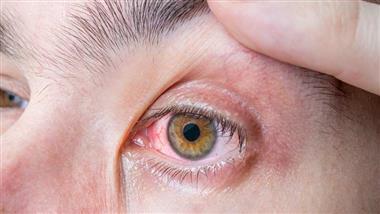
- Toxoplasma gondii is the parasite responsible for the infection toxoplasmosis. If the parasite reaches the retina, it causes ocular toxoplasmosis, with symptoms including lesions on the retina, blurry vision and possible vision loss
- The Busselton Health Aging Study showed that 66% of Australians are likely infected and 0.67% have symptoms of ocular toxoplasmosis, which is the leading cause of uveitis worldwide and a common reason for vision loss after an intraocular infection
- All cats are the definitive host for the parasite, passing it in their feces after eating an infected small animal. One cat can shed millions of oocysts, exposing other livestock, animals and humans to the parasite
- An infection in the six months before pregnancy, or during pregnancy, can have serious consequences, including preterm birth, stillbirth and miscarriage. Congenital infection can also lead to brain, liver and eye damage
- Most adults do not have symptoms directly after infection, but vision loss can happen up to 20 to 40 years later. Prevent infection by wearing gloves outside, avoid eating raw or partially cooked meat, raw goat’s milk, raw eggs or cured meat, and wash your hands carefully after working in the garden, handling fresh produce or raw meat
Toxoplasma gondii is a parasite and responsible for the infection toxoplasmosis. A study1 published in May 2022 found that the prevalence of eye infections caused by the parasite is common in Australian adults. The parasite is known to cause infection globally in a wide variety of birds, mammals and humans.
A parasite is a living organism that requires a host from which it gets its food and nutrients.2 There are three classes of parasites that can affect humans, including protozoa, helminths and ectoparasites. Protozoans are one-celled organisms that multiply in humans and can develop into serious infections.
Helminths are multicelled organisms that can be seen by the naked eye in the adult stage. These include flatworms, thorny-headed worms and roundworms. Ectoparasites are blood-sucking arthropods such as ticks, lice, mites and fleas. According to the CDC,3 malaria is globally responsible for more deaths than any other parasitic disease.
Most deaths from malaria occur in children living in sub-Saharan Africa. Yet, other parasitic infections are also found across the world. Doctors use several different types of testing to identify parasitic diseases, including a fecal sample, endoscopy or colonoscopy, blood tests and imaging studies to look for lesions.4
Parasitic diseases can be transmitted from animal to human or from human to human, or can be acquired from the environment.5 Animal transmission may also happen when meat is infected and used for food, for example, cryptosporidium or trichinella found in cows or pigs. The featured study analyzed the prevalence of Toxoplasma gondii, a common parasite across the world.6
Clinical Evidence of Parasitic Infection Common in Australia
Toxoplasma gondii is a microscopic parasite that has been characterized as the “most successful parasite in the world today.”7 This is the result of the parasite’s ability to infect nearly any mammal, bird or person across the world. And, because no known treatment will eradicate the parasite, the host will carry Toxoplasma for life.
Currently, there is no vaccine approved for use in animals8 or humans9 that can prevent infection. Experts have estimated10 that the prevalence of Toxoplasma in humans can range from 10% of the world’s population to as high as 80%, depending on what country is being studied. Low seroprevalence has been demonstrated in northern Europe, North America, Southeast Asia and Africa between the Sahara Desert and Sudan.
Areas of the world with higher prevalence include central and southern Europe, Latin America and tropical African countries. The objective of the featured study11 was to determine an estimate of the prevalence of Toxoplasma retinochoroiditis in Australia. Toxoplasma retinochoroiditis is a common clinical manifestation for which the epidemiology has not been widely reported.
The infection causes inflammation and permanent scarring of the retina, also called ocular toxoplasmosis.12 The disease can cause recurrent uveitis characterized by necrotizing retinitis and pigmented scarring, with vasculitis and vitritis.13
Typically, the diagnosis is easily made by an ophthalmologist or optometrist. The featured study used blood testing for antibodies to confirm the diagnosis,14 despite the high seroprevalence in the general population, which may make the test generally unproductive for diagnosis.15
The researchers used data from the cross-sectional, community-based Busselton Health Aging Study.16 In the parent study, researchers wrote that Toxoplasma gondii had been identified as the “top neglected parasitic infection.”17
The objective was to determine the prevalence of the infection and determine the risk factors for the population. The results of the parent study found that 66% of the subjects were seropositive for IgG and IgM antibodies. The researchers also found that the older the participant the higher the likelihood they were infected. Prevalence increased from 44.4% in 18- to 34-year-olds to 81% in 75- to-84-year-olds.
The researchers in the featured study gathered data from retinal photographs taken after pupil dilation to assess the presence or absence of lesions known to be common with toxoplasmic retinochoroiditis. The researchers found an estimated 1 in 149 people, or 0.67%, showed the characteristic appearance of the lesions and had detectable serum levels that were consistent with the diagnosis.
Based on the prevalence found in the sample size, researchers concluded that efforts “to quantify and address risk factors for human infection with T. gondii are justified.”18
Ocular Toxoplasmosis Symptoms
Ocular toxoplasmosis is the leading cause of uveitis worldwide and a common reason for vision loss after an intraocular infection.19 Symptoms of the condition usually present by the time a person is 20 to 40 years old.
Typically, an ophthalmologist will see an area of necrotizing retinitis close to a pigmented chorioretinal scar. There also may be satellite lesions, inflammatory ocular high blood pressure or widespread vasculitis. Some people are asymptomatic, while others will complain of blurry vision, red eyes, floaters or pain.20 Up to 24% of patients arrive at the eye doctor with 20/200 vision or worse.
The infection may remain inactive for periods of time and then reactivate on the border of old scars. Unfortunately, the recurrence rate could be as high as 79%, but while no known treatment eradicates the parasite, those who have undergone treatment for ocular toxoplasmosis have a significant reduction in recurrence.21
In many cases, the infection is self-limiting and may not require treatment. However, if vision is threatened, doctors may prescribe corticosteroids, sulfadiazine and pyrimethamine.22 However, there is “substantial toxicity” with this treatment protocol.23 One review of the literature24 suggests that treatment with trimethoprim-sulfamethoxazole is just as effective with an improved safety profile and may help prevent a recurrence.
How Is Toxoplasma Gondii Passed?
Toxoplasmosis can infect nearly all warm-blooded animals. Yet, the American Veterinary Medical Association25 points out that all cat species are the definitive host for the parasite. “This means that they are the only animals that pass oocysts, the environmentally resistant stage of the parasite, in their stool to infect other animal species (including people).”26
When cats prey on infected small animals, they become infected themselves. Indoor-only cats may get infected from eating uncooked meat scraps or raw meat. The cat develops cysts inside the tissue that become infected with Toxoplasma gondii. Initially, one cat can shed millions of oocysts in the stool exposing other animals and people to the parasite. This is a thick-walled stage in the lifecycle of the parasite.
After the initial period, most cats stop passing oocysts and can appear perfectly healthy. Other cats may develop symptoms of liver damage, pneumonia or other health conditions.
These oocysts can exist in the environment for long periods of time. When the feces of the cat are consumed by livestock, the parasites can migrate to the muscle and survive after the animal is slaughtered.27 Humans can become infected by drinking contaminated water, eating infected meat, or eating fresh produce that contains oocysts.
Infection Concerns During Pregnancy
While most people do not have symptoms after being infected with Toxoplasma gondii, an infection in the months before getting pregnant or early in pregnancy is especially concerning. According to the March of Dimes, toxoplasmosis can be passed to your unborn infant if you were infected within six months of getting pregnant.28 This can cause preterm birth, stillbirth or a miscarriage.
The risk of being passed to the baby depends on when the mother was infected. The later in pregnancy that a woman is infected, the higher the likelihood the baby will also carry toxoplasmosis. Yet, earlier infections can lead to more serious problems, including brain, liver and eye damage.
According to the March of Dimes, “Up to 1 in 2 babies (50%) who are infected with toxoplasmosis during the pregnancy are born early (preterm).”29 Up to 10% of babies who were infected during pregnancy can have symptoms that include a swollen liver and spleen, swollen lymph nodes, feeding problems, low birth weight or seizures.
Babies may also have neurological conditions such as hydrocephalus, microcephaly or macrocephaly. Hydrocephalus, also called fluid on the brain, occurs when there is too much cerebrospinal fluid placing pressure on the brain.
Macrocephaly is a large-sized head and microcephaly is smaller than normal head size. Newborns who are known to carry toxoplasmosis may also develop symptoms later in life, including intellectual or developmental disabilities, eye infections, vision problems, seizures or hearing loss.
Studies have also investigated some of the more common congenital infections that are known to cause neurodevelopmental disabilities, such as cerebral palsy. These infections go by the acronym TORCH — toxoplasmosis, rubella, cytomegalovirus and herpes simplex virus.30
Steps to Help Prevent Toxoplasmosis
After infection with toxoplasmosis, most adults do not have any symptoms. However, some people can have flu-like symptoms, such as a sore throat, swollen glands, aching muscles and a high temperature.31 People with the condition will normally get better within 6 weeks on their own. You should see your physician if you begin to have changes to your eyesight, are pregnant, plan on getting pregnant, or have a weakened immune system.
Routine screening is not necessary but contact your doctor if you have symptoms. They can do a blood test to measure immunoglobulin G (IgG). If it is necessary to determine when you were infected, the doctor can order an immunoglobulin M (IgM) test. There are several steps that you can take to prevent toxoplasmosis.32,33
| Cover any outdoor sandboxes when they are not in use. Stray cats often use these as litter boxes. |
| Wear gloves when you work outside. |
| Wash your hands after working in the garden or after being outside, especially before preparing food. |
| Wash your hands carefully anytime you have touched the cat, soil or raw meat. |
| Avoid touching your face when working with raw meat or produce. |
| Clean anything that has been in contact with raw meat with hot soapy water. Clean all work surfaces and utensils with hot soapy water after they were used with raw meat, fruits or vegetables. |
| Cook meat and poultry until it is cooked all the way through, and the juices run clear. |
| Avoid eating cured meat like Parma ham or salami. |
| Avoid drinking contaminated or untreated water. |
| Wash or remove the skin on all fruits and vegetables. |
| Control the fly population and cockroaches in your home as much as possible. These insects can spread the parasite onto food. |
| Do not eat raw or contaminated shellfish. |
If you are at risk, you should take extra precautions to avoid an infection. These can include:
- Keep your cat indoors so it does not get infected
- Feed your cat dry or canned foods and avoid a raw meat diet since, like humans, cats can acquire the infection from raw meat
- Avoid stray cats
- While pregnant, have someone else clean the litter box
- If you must clean the litter box, wear gloves to clean the box daily, disinfect it with boiling water for five minutes and wash your hands carefully with warm soapy water afterward
- 1, 6, 11, 14, 16, 18 Ophthalmology Retina, 2022 doi.org/10.1016/j.oret.2022.04.022
- 2, 3 Centers for Disease Control and Prevention, About Parasites
- 4 Centers for Disease Control and Prevention, Diagnosis of Parasitic Diseases
- 5 Centers for Disease Control and Prevention, Transmission of Parasitic Diseases
- 7, 9, 12 The Conversation, May 11, 2022
- 8, 25, 26 American Veterinary Medical Association, Toxoplasmosis
- 10 Clinical Microbiology Reviews, 2012;25(2) Prevalence of Infection in Humans
- 13, 15, 23 Clinical & Experimental Ophthalmology, 2013;41(1)
- 17 Clinical Epidemiology and Global Health, 2020;8(3)
- 19 The American Academy of Ophthalmology, April 2020, paragraph 1
- 20 Review of Optometry, August 15, 2012, Discussion/Ocular Toxoplasmosis
- 21 The American Academy of Ophthalmology, April 2020
- 22 American Association for Pediatric Ophthalmology and Strabismus
- 24 Journal of Clinical Medicine, 2021; 10(5) 5.0
- 27 The Conversation, May 11, 2022, We don’t just get it from cats subhead1
- 28, 29, 33 March of Dimes, Toxoplasmosis
- 30 McMaster Pathophysiology Review, Cerebral Palsy, Infections
- 31, 32 NHS, Toxoplasmosis
Biodistribution Study of Pfizer Covid-19 Injection suggests use of mRNA Vaccines should be suspended immediately
A biodistribution study of the Pfizer Covid-19 injection suggests a suspension of the use of mRNA ‘Vaccines’ is urgently required and blood donor organisations need to take a long hard look at their policies surrounding the acceptance of donations of blood from people who have received an mRNA based Covid-19 injection.
The Exposé is now censored by Facebook & Twitter. Let’s not lose touch, subscribe today to receive the latest news from The Exposé in your inbox…
Do you remember when public health and government officials assured everyone that the mRNA ‘vaccines’ function like traditional vaccine technologies? …meaning that they largely remain in the shoulder muscle where they are injected, with some portion going to the draining lymph nodes where an immune response is initiated.
Well, back in May 2021, I, along with some international colleagues, looked at a document that Pfizer had submitted to the Japanese health regulatory agency. It was a pre-clinical biodistribution study. This means it was an experiment done with an animal model to predict where the vaccine formulation might go when injected into people.
What I saw was startling.
Most of Pfizer’s vaccine spread throughout the body instead of staying at the injection site. This also meant there was the potential for toxicities that would never occur with traditional vaccines that largely remain at or close to the injection site. To ensure people could make a fully informed decision about whether to take the jab I went public with this information in a radio interview.
I wasn’t surprised by the systemic distribution of the vaccine per se. Being a vaccinologist, I knew that lipid nanoparticle delivery systems were originally designed to spread far and wide throughout the body with the hopes they could be a vehicle for gene therapy and/or drug delivery.
Instead, my surprise came from the fact that the data confirmed my historical understanding and contradicted public health messaging that the mRNA jabs behaved like traditional vaccines. Public statements by health officials made me assume the lipid nanoparticles had somehow been modified to stay at the injection site, which was news to me. This highlights one of the first rules of thumb when practicing science.
Transparently presented raw and/or peer-reviewed data are the cornerstones of objective science; not personal proclamations or data disseminated via media releases. In May 2021 I realized two things: 1. There was a lack of transparency about data supporting COVID-19 inoculations. 2. Incorrect messaging was being relayed to the public. As an academic public servant with relevant expertise, I spoke up when enquiries came from the public. I spoke the truth then and continue to do so.
As a result of this, a public campaign to impersonate and discredit me was mounted; it has not stopped and has likely caused irreparable harm to my career. Nobody involved in these personal attacks has ever been willing to talk to me about the scientific basis for my concerns. It is unfair to discredit a scientist based on a short interview for a lay audience in which only a tiny fraction of the messaging could be relayed.
My challenge to detractors then remains the same now: if you want to prove that I don’t know what I am talking about, then debate me in a moderated public forum. I contend that a real-time back-and-forth discussion of the science will show that I know exactly what I am talking about; I’m not sure the same would hold true for most of those participating in the smear campaign against me.
In that interview back in May 2021 I was asked if there might be a link between mRNA vaccines and cases of myocarditis that were being observed at increased frequency, especially among young males. My answer was yes and I started to present some potential mechanistic explanations for this, including Pfizer’s Japanese version of their biodistribution study.
Now, myocarditis is a publicly acknowledged side-effect of mRNA vaccines. Sadly, I have not received an apology from anyone who attacked me. Forgiving people is much easier when apologizing and seeking forgiveness is part of the resolution process. But this is no longer popular in our society, so I continue to struggle with forgiving those who relentlessly harass me. I need to do this to effectively move on.
In the meantime, the US Food and Drug Administration has been ordered by a court to release the data that they reviewed when authorizing Pfizer’s vaccine for emergency. Health Canada almost certainly would have reviewed the same information. It is unfortunate that the scientific community is only now starting to see reasonably transparent core data that were used to justify the rushed rollout of SARS-CoV-2 inoculations; an only due to a court order.
On March 1, 2022 an English version of the biodistribution study was released. It contains much more information than the Japanese version I had looked at. Also, this accurate English language translation has revealed inappropriate biases in the conclusions drawn by the study director. You can obtain the document from the website of Public Health and Medical Professionals for Transparency. Once at the website, enter the search term “185350”, which is the study number. What follows is a step-by-step breakdown of this study to help you understand its implications (page #s refer to this hyperlinked report).
Taking a Close Look at Pfizer’s Full Report of the Biodistribution Study
The study looked at the distribution of lipid nanoparticles (LNPs) manufactured by Acuitas Therapeutics, British Columbia, Canada. LNPs are essentially very tiny bubbles of fat that are used to deliver genetic material into our cells. In the case of Pfizer’s ‘vaccine’, the payload is a messenger RNA molecule that encodes the spike protein from SARS-CoV-2, which is the causative agent of COVID-19. When the mRNA gets into a cell, it uses the existing manufacturing capacity of the cell to make copies of the spike protein.
Of concern, Pfizer was never required to run a biodistribution study with the same ‘vaccine’ formulation that is being used in people. Instead, the study focused on the LNPs, which carried a mRNA encoding a protein that can be used in imaging studies; not the spike protein. Unfortunately, the expression of this protein was not evaluated, so we can not assess where the protein ended up in the body; only where the LNPs went.
Page 6: The title of the study is “A Tissue Distribution Study of a [3H]-Labelled Lipid Nanoparticle-mRNA Formulation Containing ALC-0315 and ALC-0159 Following Intramuscular Administration in Wistar Han Rats.” Rats are a commonly used animal model for pre-clinical research. In this case, three males and three females were euthanized at each of multiple timepoints to harvest a variety of tissues to quantify the amount of LNPs in them.
The mRNA in this study encoded ‘luciferase’; a protein that can be used to visualize where the mRNA is being converted into proteins. However, this analysis was not done in this particular experiment. “[3H]-labelled” means the LNPs were tritiated, or tagged with tritium. Tritium is a radioactive form of hydrogen.
This allowed the LNPs to be quantified in tissues by measuring radioactivity. “ALC-0315” is a fat-based molecule that helps to compact mRNA into a nanoparticle and also promotes the introduction of the mRNA into a cell. “ALC-0159“ is a molecule that contains polyethylene glycol (PEG). You might have heard a lot about PEG in the context of COVID-19 ‘vaccines’ since it is the component that has been most associated with causing anaphylactic shock (a severe hyperacute allergic reaction) in some recipients. It serves a couple of functions:
1. This is the commonly mentioned purpose: It helps to stabilize the mRNA molecules; if mRNA degrades before it gets into a cell, the protein that the immune system is supposed to target will never be produced.
2. This is the other function of PEG that you may never have heard about (but those who have followed mRNA vaccine technologies have known about for many years): It helps the LNPs avoid the immune system to promote wide-spread dissemination throughout the body. Yes, you read that correctly. But, don’t take my word for it. Check out this published peer-reviewed science as a few examples:
Watters, R.J., Kester, M., Tran, M.A., Loughran, T.P. & Liu, X. Chapter five – Development and Use of Ceramide Nanoliposomes in Cancer. In: Düzgüneş, N. (ed). Methods in Enzymology, vol. 508. Academic Press, 2012, pp 89-108
Suk, J.S., Xu, Q., Kim, N., Hanes, J. & Ensign, L.M. PEGylation as a strategy for improving nanoparticle-based drug and gene delivery. Advanced drug delivery reviews 99, 28-51 (2016)
Gabizon, A. & Martin, F. Polyethylene glycol-coated (pegylated) liposomal doxorubicin. Rationale for use in solid tumours. Drugs54 Suppl 4,15-21 (1997)
Papahadjopoulos, D. et al. Sterically stabilized liposomes: improvements in pharmacokinetics and antitumor therapeutic efficacy. Proc Natl Acad Sci U S A 88,11460-11464 (1991) Check out this quote: “This effect is substantially greater than that observed previously with conventional liposomes and is associated with a more than 5-fold prolongation of liposome circulation time in blood.”
Systemic distribution of LNPs was needed to try to replace genes in cells throughout the body, including the brain in order to treat things like Alzheimer’s disease and Parkinson’s disease. It was also necessary to deliver chemotherapeutic drugs to cancers that could have metastasized anywhere in the body, including the brain. However, this is not anywhere close to how a traditional vaccine technology behaves. Also, this wide distribution is accomplished by helping the LNPs avoid uptake by phagocytic cells, which are the cells of the immune system that promote induction of immune responses! I postulate that the mRNA inoculations would function better as vaccines if mRNAs could be stabilized without PEG.
Page 11 (section 5; Introduction): I have two serious concerns about this part.
- The aim of the study was to evaluate a single dose of the surrogate ‘vaccine’. This is very odd and suggests this experiment was run as an afterthought and was overly rushed. The proper way to do this type of study is to test a range of doses. The ideal situation is to reach a dose that is too high (i.e., it causes undesirable results) while simultaneously capturing ‘safe’ doses. This helps to inform proper dosing for subsequent studies, including those conducted with humans.
- Something is revealed here that was never revealed in the Japanese version of the document; namely that the first attempt to run the study was a failure due to overt toxicity. Rats were supposed to receive 100 μg of mRNA, but the study had to be truncated because the selected dose was causing obvious harm to the rats (see section 7.1 on page 19 of the report). The results were not formally discussed but some raw data were provided in the appendices.The study director noted that “a subsequent review of the data showed concentrations [of LNPs] were well detected in tissues”. The treatment caused an acute body weight loss of ~7% . Of the three males that were due to be euthanized at 48-hours post-inoculation, the treatment proved lethal for one, which was euthanized at 30 hours. Of the remaining two rats, they were showing clear signs of distress at 48 hours.As stated, “Additionally, animals 019M and 020M were hunched and piloerect from approximately 30 h post-dose onwards”. “Onwards” means up to 48 hours when they were euthanized to harvest tissues. In other words 3/3 (100%) of the rats were clearly sick by 30-hours post-jab and we have no idea whether this would have got worse or resolved beyond 48 hours.Only males were tested at the 100 μg dose, so we don’t know what it would have done to females.I have a real problem with this experiment. I conduct these kinds of studies all the time.If only a single dose of a treasured new medical intervention is going to be tested, one would always try to predict a dose that is going to place it in the ‘best light’. As such, Acuitas and Pfizer must have been confident in the safety of the 100 μg dose. The fact that they were wrong on this gamble is disconcerting and does not speak well of their knowledge of the safety margin of their own product.The study director contacted Acuitas to tell them the study was failing and the decision rendered was to repeat it at half the dose; multiple doses were still not considered, nor was expansion of the scope of the study done, despite obvious safety concerns, and signals that the experiment was too short. On the basis of this failed first attempt and an unwillingness to adjust course, regulatory agencies never should have let Pfizer proceed with their vaccine until a large array of safety questions were addressed experimentally.
Page 14 (section 6.3): Urine and fecal samples were collected but never analyzed (also see section 6.9.4). This is a shame considering the world-wide debate about potential shedding of mRNA ‘vaccine’ components and/or the spike protein they encode.
Page 15 (section 6.7): Blood cells were discarded from the blood samples. Therefore, the amount of LNPs in blood cells was presumably estimated by taking the total in whole blood and subtracting the amount in the plasma. This is unfortunate because an inappropriate conclusion was drawn about the irrelevance of blood cells as a destination for the LNPs. This is discussed below.
Pag 16 (section 6.8): It appears that some samples were analyzed while fresh; others were frozen, stored at -20oC for an unknown period of time, thawed and then analyzed. This would not be ideal for the stability of mRNAs, which might be one reason they and their protein products were not assessed in this study. These may also be less than ideal conditions for LNPs, but, presumably, they were OK for the radioactive tritium, which is what was measured. However, none of these issues were discussed nor were data provided to alleviate the concerns.
Page 18 (section 6.11): The wrong bones were taken from some rats so the correct ones were harvested from frozen and thawed carcasses. Again, it would be helpful to see analyses of LNP concentrations in tissues with and without a freeze-thaw to assure that they are equivalent. This should be standard practice when analyzing samples that have been handled differently.
Page 19 (section 7.1): Another aspect unique to the FDA’s version of the Pfizer biodistribution study is that it provides separate data for males and females. The data were pooled in the Japanese version, which hid important sex differences. Because the 100 μg dose of RNA was overly toxic, the study was truncated and re-started with a dose of 50 μg of RNA. However, the clinical observations reveal something disturbing.
Even at this lower dose, the mRNA ‘vaccine’ proved to be acutely toxic to one of the three females that was monitored beyond 24-hours post-injection. No obvious signs of illness were observed with the three males that were allowed to live past 24 hours (the endpoint was 48 hours).
Some may say it was only one female rat, but it is 1/3 (33.3%) of the female rats. Further, it is unknown whether others would have become visibly sick had the observation period been extended beyond 48 hours; especially when one understands that concentrations of LNPs were still rising in many female tissues (discussed below). Remember, in Canada, AstraZeneca’s COVID-19 ‘vaccine’ was deemed to be too unsafe for adults when public statements suggested it was causing dangerous blood clots in 1:55,000 people. So, writing off a 1:3 incidence of obvious toxicity in the pre-clinical study was unwise.
Also, although the numbers of rats used were far too small to draw any firm conclusions, these results suggest the mRNA ‘vaccine’ may have been more toxic in females, which could be due to a sex- or size difference. This is yet another reason why the study should have been repeated several times to build up the statistical power for proper analyses.
Biodistribution
Now for the biodistribution data. Table 1 spanning pages 23-24 is the same as the one in the Japanese document that I highlighted in May 2021. More telling, however, is table 2, spanning pages 25-26, because this separates the data for males and females. In assessing these data I will highlight some conclusions that were drawn by the study director.
Page 20: “The overall injection site concentrations and % dose values were higher in males than in females. Since concentrations in other tissues were broadly similar between the sexes, it is likely that the higher injection site values in males were a result of its more consistent identification and collection in males.” This fails to account for the fact that concentrations in tissues tended to peak or plateau at relatively early time points in males and were still climbing at the last time point in females. It also doesn’t consider the possibility that the LNPs might have been accumulating at higher concentrations than males in tissues that were not evaluated in the study.
Page 20: “the greatest mean tissue concentration and, in most instances, % of injected dose was found remaining in the injection site at each time point in both sexes.” Although technically true, the percentage of the injected dose was higher in the livers of males and females at 8- and 48-hours, respectively.
Further, this statement is highly misleading in that it draws attention away from the obvious. We were told that most of the dose would stay at the injection site. However, there was only one out of seven time points in males (i.e., 1-hour post-injection) where most of the dose was at the injection site (69%).
For the other seven time points and at all times in females, only a minority of the dose was detected at the injection site. In females, as little as 7% of the injected dose remained at the site of inoculation. This means the vast majority of the dose went somewhere else. Where did it go? The short answer is everywhere.
When I publicized these data from the Japanese study, many people tried to get the public to focus on the low percentages of the overall dose in most tissues. They were missing the point. These low percentages were because the ‘vaccine’ had spread so far and wide throughout the body; a little bit sprinkled everywhere.
Indeed, near the top of page 21, the study director concluded “Over 48 hours, [3H]-08-A01-C01 [this is the surrogate vaccine] distributed from the injection site to most tissues”. It is cherry-picking to try to compare the percentage of the total dose in something like the tiny adrenal glands to the large muscle in which the ‘vaccine’ bolus was injected. When the public were told that most of the dose remains at the injection site but only 7% of it could be detected there at a mere 15 minutes post-injection, then the messaging was wrong.
The proper way to assess distribution of a drug when telling people that most of the bolus is supposed to remain at the injection site would be to assess the percentage at the injection site versus ‘not at the injection site’. Here is this assessment for males (everything above the grey line represents the fraction of the dose that went somewhere else)…

Here is how much of the dose remained at the injection site in females…

The average proportion of the dose at the injection site across all time points for both sexes was only 29.7%. On this basis, I would not conclude that most of the dose stayed at the injection site.
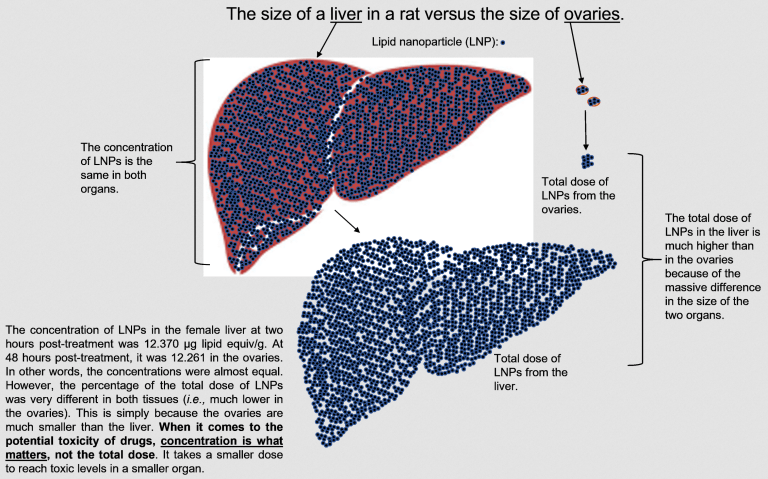
Also, focusing on the percentage of the dose that went to individual tissues loses sight of the fact that it is the concentration that matters. And the concentrations of LNPs in many tissues cannot be defined as insubstantial, especially when a safe concentration has never been established. Here is an illustration that I put together to highlight why the percentage of the total dose should not be used as a distraction from the concentration of the drug…

Here is an analogy to provide additional help…
Think about the risk of an accidental drug overdose in two people. One is a 250-pound man, the other is a 50-pound boy. They each accidentally consume the same high dose of a drug. In other words, 100% of the dose was found in the body of the man and 100% of the dose was found in the body of the boy. The percentage of the dose is equal but are they at equal risk of experiencing toxicity from an overdose? Obviously not. The tiny boy is at enhanced risk because the same high dose in a smaller body equals a higher concentration of the drug. The percentage of the drug given to the boy would have be scaled back a lot to avoid toxicity.
Looked at another way, let’s say the boy has consumed the minimum dose of a drug that causes toxicity. Would the same dose cause toxicity in the man? No, it would require a higher dose to be toxic.
In the same fashion, that is why dosage recommendations are lower for younger/smaller people. To prove this, go to your medicine cabinet and pull out a bottle of Aspirin or Tylenol or something similar. Look at the recommended dose for a child versus an adult. Children need lower total doses to achieve the same concentration of the drug once it is distributed in their body. Adult doses can potentially be toxic in children.
This same principle applies to the biodistribution of the lipid nanoparticles used to make mRNA vaccines. If a toxic dose were to be reached in the liver, the dose needed to cause toxicity in the vastly smaller ovaries would be much lower. Because the concentration of a drug is what matters.
Interestingly, the study director ignored that fact that the two-times higher dose of the mRNA ‘vaccine’ (100 μg) resulted in approximately two-times higher concentrations (that were toxic) in the various tissues as compared to the 50 μg dose; a classic dose-response effect. The percentage of the total doses reaching the tissues was almost equivalent between the 50 μg and 100 μg doses, but the latter proved more toxic because the concentrations were higher.
Page 20: “Mean plasma concentrations peaked by 4 hours post-dose in males and by 1 hour post-dose in females”. This is evidence of rapid systemic distribution with the kinetics accelerated in females.
Pages 20-21: “Concentrations were higher in plasma than in blood, with mean blood:plasma ratios generally ca. 0.5-0.6, indicating that the majority of the total radioactivity is associated with the plasma fraction.” Page 22: “and [3H]-08-A01-C01 did not associate with red blood cells.” But approximately one-third of the LNPs circulating in the blood were found in the cell fraction! Plus, the study director’s conclusion is based on the assumption that the ratio of cells to plasma in whole blood is ~50:50, but it is not; plasma represents a higher percentage. Here is a nice illustration from the University of Washington, Dept. of Laboratory Medicine, Specimen Procurement Section:

This means the amount of the LNPs in the cellular fraction was more likely ~40% of the total dose in the blood. How can one write this off as irrelevant? Further, the conclusion was that red blood cells weren’t a significant destination of the LNPs. Not only do the data contradict this assertion, it also fails to recognize that white blood cells and platelets make up <1% of whole blood. What if all the LNPs in the cellular fraction were in the white blood cells and/or platelets? This would represent a very high concentration of LNPs. Why wasn’t this studied? Instead, the cellular fraction was discarded. This is a very important question because white blood cells constitute a major component of the immune system. If they were to be negatively impacted, this would impede the vaccination effect. And if they aren’t killed but take up the mRNA, they would express the spike protein, which would then make them a target for spike-specific antibodies and/or T cells. Also, there have been reports of bleeding, blood clots, and thrombocytopenia (low platelet counts) post-‘vaccination’. The common factor with all of these is that they involve platelets, another component of the cellular fraction that was ignored. The question regarding the impact of LNPs on cells in the blood should have been addressed before there was any consideration of proceeding into human trials.
Page 22: The study director drew this overall biased conclusion: “The concentrations of [3H]-08-A01-C01 were greatest in the injection site at all time points”. Pardon me?!? Am I supposed to forget the statement on page 20 of the report, “the greatest mean tissue concentration and, in most instances, % of injected dose was found remaining in the injection site at each time point in both sexes”. This statement could only be applied to the data where results for males and females were pooled (i.e., the only data shown in the Japanese document), thereby hiding the fact that the % of the injected dose was higher in the liver than at the injection site at different times in males versus females.
Page 22: “The concentrations of [3H]-08-A01-C01 were greatest in the injection site at all time points, with levels peaking in the plasma by 1-4 hours post-dose and distribution mainly into liver, adrenal glands, spleen and ovaries over 48 hours.” I was lambasted by colleagues when I expressed concerns about biodistribution of LNPs to ovaries after seeing the Japanese document. But in the version of the document that was released by court-order, the study director concludes that the ovary is a main target organ for distribution of the LNPs! This concern is only enhanced when one looks at the kinetics of this biodistribution to the ovaries…

…the concentration of LNPs were rising almost exponentially at the conclusion of the study. How high would it have gone?
Page 21: “Maximum concentrations (Cmax) in liver and spleen were observed at 8 hours post-dose in males and 48 hours post dose in females, but were broadly similar and appeared to plateau at 8 hours post-dose when considering variability.” This conclusion needs to be corrected. The highest concentrations in female livers and spleens were observed at 48-hours post-treatment. But there is no way of knowing that these were maximal concentrations. In fact, the data suggest that maximum concentrations could be reached some time after 48 hours…


This idea of capturing a concentration plateau is based on averaging the values from males and females. In many of the male tissues, apparent peaks or plateaus appear to have been captured within 48 hours post-injection. However, the kinetics were different in females, with concentrations still rising in many cases. If one averages the post-peak values of males with rising values from females, it gives the false impression that a plateau has been captured.
This is very important because one of the key purposes of a biodistribution study is to determine when peak concentrations occur. Concerns related to potential toxicities can obviously not be allayed if only pre-peak concentrations have been captured; and this appears to be what happened with the females. Look at the following LNP concentrations over time in various tissues, with an emphasis on females (I already showed several other tissues above) and ask if you feel confident that a peak or plateau was captured. In other words, how confident are you that the concentrations would go no higher beyond 48 hours?


I question whether a peak was reached in male muscles…

All the Data are Indicative of Systemic Distribution
If a drug gets into the blood, one of the first places you should look for uptake is the spleen. This is because the spleen filters the blood. Indeed, with Pfizer’s ‘vaccine’ we see a rapid influx of LNPs into the blood and subsequent seeding of the spleen. Also, lymph nodes are designed to drain fluids from local tissues. So, if a drug seeds a tissue, one would expect to find it in the regional lymph nodes. In this study, the LNPs were found in two lymph nodes that were studied.
These lymph nodes drain distinct tissues (one drains the jaw region and the other drains fluids around the intestines). Although it was not stated, I assume the surrogate ‘vaccine’ was likely injected into one of the large muscles of the hind legs as this is what is commonly done. If true, the most relevant draining lymph node would be the popliteal node. Surprisingly, it looks like lymph nodes draining the injection site were not evaluated.
The fact that two ‘irrelevant’ lymph nodes had LNPs accumulating in them is suggestive of widespread dissemination into various tissues. I hypothesize that LNPs would have been found in most, if not all the lymph nodes in the rats. These results confirm a distribution pattern that is very different from traditional vaccine technologies where the dose would be concentrated at acute time points at the injection site, with some taken to the local draining lymph nodes.
6% of the Dose was in the Blood at Two Hours Post-Injection
No attempt was made by those conducting the biodistribution study to estimate the total amount of the dose of LNPs that were circulating in the blood, so I did this. We know the concentration per milliliter in the blood of males and females at each timepoint. So I took the average concentration across both sexes and picked the peak, which was at two hours after treatment. I estimated the total blood volumes (BV) in males and females using the formula BV (mL) = 0.06 x body weight + 0.77, which was derived from this study using the same strain of rats.
After plugging in the relevant numbers, I came up with a total average dose of blood-borne lipids of 1,290 μg; or ~6% of the total dose. This is substantial considering it represents a single time point in a dynamic tissue in which the LNPs are entering and exiting the blood throughout the duration of the study.
How the Study Should Have Been Conducted
As an expert in pre-clinical experimentation, I can assure you that Pfizer’s biodistribution study was of poor quality. It appears to have been rushed, with many corners cut, possibly in an effort to meet a deadline at ‘warp speed’. If one of my graduate students presented the data in Pfizer’s biodistribution study to their advisory committee and proposed to include it in their thesis, they would immediately be advised that it represented no more than a preliminary experiment; the type that is used to design much more informative and conclusive experiments. They would be required to expand its scope and repeat it multiple times. Here are some things I would recommend:
- The experiment should have been conducted independently at least three times to ensure the findings could be replicated and to provide sufficient statistical power to facilitate objective analyses.
- The experiment should have been run longer; specifically, until peak concentrations were clearly captured in all tissues.
- More doses should have been evaluated to determine when unwanted effects began and whether they could be mitigated.
- More tissues should have been assessed since there was evidence of extremely broad distribution. This should have included the lymph nodes draining the injection site, white blood cells, red blood cells, platelets, etc.
- Tissues should have been assessed for the presence of LNPs, plus the mRNA, plus the protein product; not just the LNPs. It would be helpful to know how long the mRNA remains intact versus how long the protein product and LNPs can be detected.
- Samples should have been analyzed to detect potential shedding. These samples should have included saliva, urine, feces and skin swabs.
- The study should have been run with the same formulation that is being used in people.
- A small-scale biodistribution study should have been incorporated into a phase I human clinical trial. If nothing else, it would have been very easy to monitor distribution in serial blood samples, as well as shedding samples, since these are all easy to obtain.
Repeated Dosing With Lipid Nanoparticles is Dangerous
Here is some information that is of concern considering that many people have already received three or four doses of an mRNA ‘vaccine’ in less than one year, with the potential for more on the horizon…
This might be news to many members of the public, but it is a long-accepted scientific fact that lipid nanoparticles used to deliver the mRNA in ‘vaccines’ can be toxic. In fact, that is the very reason why some big pharmaceutical companies strategically focused on using them as vaccine technologies instead of for gene therapies and to deliver drugs. A good quality vaccine, such as those used in the mandated childhood series, only require one or two doses for a person’s lifetime. It was assumed the same would hold true for mRNA vaccines. Repeated administration of lipid nanoparticles, especially over a limited period of time, is known to be toxic.
This was openly discussed with the media prior to the declared COVID-19 pandemic, but many people are either unaware of this or have forgotten. This included an interview with the Chief Executive Officer of Moderna and others in the biotechnology industry. Here are quotes from the hyperlinked article:
“In nature, mRNA molecules function like recipe books, directing cellular machinery to make specific proteins. Moderna believes it can play that system to its advantage by using synthetic mRNA to compel cells to produce whichever proteins it chooses. In effect, the mRNA would turn cells into tiny drug factories. It’s highly risky. Big pharma companies had tried similar work and abandoned it because it’s exceedingly hard to get RNA into cells without triggering nasty side effects.”; “Delivery — actually getting RNA into cells — has long bedeviled the whole field. On their own, RNA molecules have a hard time reaching their targets. They work better if they’re wrapped up in a delivery mechanism, such as nanoparticles made of lipids. But those nanoparticles can lead to dangerous side effects, especially if a patient has to take repeated doses over months or years. Novartis abandoned the related realm of RNA interference over concerns about toxicity, as did Merck and Roche”.
Indeed, there are many peer-reviewed scientific publications that have highlighted serious safety issues related to the administration of lipid nanoparticles used to deliver mRNAs. Some examples of toxicities that can be caused by lipid nanoparticles can be found here, here, and here. Remarkably, lipid nanoparticles used to deliver mRNAs have even been shown to be toxic to cells of the immune system that play a critical role in promoting vaccine-mediated immune responses. This would counteract the very immunization effect that is being sought. It could even, in theory, potentially cause counterproductive acute immunosuppression. A key question is to what degree are these toxicities additive? Unless lipid nanoparticles are definitively proven safe in humans, their repeated administration to people should be avoided.
Implications for Blood Donations
Blood donor organizations conduct fabulous, life-saving work. However, they need to take a long look at their policies surrounding mRNA-based vaccines. For example, Canadian Blood Services has the following policy: “Consistent with our eligibility criteria for other non-live vaccines, Canadian Blood Services accepts donations from otherwise eligible donors who have received a Health Canada-authorized COVID-19 vaccine, with no required deferral period following vaccination”. The problem is that mRNA ‘vaccines’ don’t function like traditional non-live vaccines. Pfizer’s own data suggest that their mRNA ‘vaccine’ circulates in the blood (in both the plasma and the cellular fraction) for at least 48 hours post-inoculation. Should blood containing variable quantities of a mRNA ‘vaccine’ that is still in its initial phase 3 human clinical trial be used in patients?
I strongly recommend that a simple time-course study evaluating the duration of circulation of lipid nanoparticles, mRNA, and the spike protein be conducted. This would allow a safe waiting period to be determined prior to accepting donations from individuals who have received a mRNA ‘vaccine’.
Practical Applications
What should be done with all this information? Well, I would suggest that you investigate the myriad of questions raised by Pfizer’s biodistribution study. Ask yourself if you have been presented with sufficient scientific evidence to address your queries. Do not settle for personal opinions, no matter how much of an ‘expert’ the person or organization appears to be. If you are not confident that systemic biodistribution of mRNA vaccines in people is a non-issue, then consider encouraging the promotion of research to provide definitive answers. Expecting public health officials to practice the precautionary principle is reasonable.
Further, encourage uncensored public discussions of the science between experts on both sides of the debate. After all, the full spectrum of scientific information should not be hidden from the public.
Finally, encourage health regulatory agencies to recruit unbiased scientists with pre-clinical research skills to carefully evaluate these early types of studies. It is challenging for a large company that is responsible for vast amounts of investor dollars to change course in the human clinical trial stages of research where massive amounts of money are one the line; much like trying to turn an oil tanker around. In contrast, there is much less invested at the earlier pre-clinical and translational stages due to the much lower cost of that type of research.
Changing course at this point is more akin to turning a speedboat around. Pre-clinical studies can be very informative and, if carefully critiqued, can be used to formulate important questions that can be answered with new, relatively inexpensive, easy and rapid experiments.
Unfortunately, most regulatory agencies and advisory committees that have been evaluating COVID-19 ‘vaccines’ have focused on the recruitment of clinically focused researchers. The many problems with Pfizer’s biodistribution study should have been obvious to a pre-clinical scientist.
Ideally, places like Health Canada should offer their regulatory scientists the equivalent of tenure in academia to ensure that they can maintain job security no matter how unpopular their reviews of submitted data may be.
In my continued effort to correct mis/dis-information, present information with greater transparency, and promote informed decision-making,
You can subscribe to Dr Bridle’s Substack here.
High number of Strokes caused by the Covid-19 Vaccines may explain why so many of the Vaccinated are also going Blind
Reproduced from original The Exposé article:
https://dailyexpose.uk/2022/04/26/why-people-going-blind-following-covid-vaccination
By: THE EXPOSÉ on April 26, 2022
Since the first Covid-19 vaccine was authorised for use in the United Kingdom, and administered on the 8th December 2020, there have been hundreds of thousands of adverse reactions reported to the MHRA Yellow Card scheme. But there is one particular adverse reaction which is both concerning and strange, and the number of people suffering from it is increasing by the week – Blindness.
The MHRA Yellow Card scheme analysis print for the Pfizer / BioNTech mRNA jab shows that since the first jab was administered on the 9th December 2020, and up to 6th April 2022, 163 people have reported suffering total blindness due to the injection. Another 6 people have also reported central vision loss, whilst a further 4 people have reported sudden visual loss.
Twenty-one people have also reported an adverse reaction known as ‘blindness transient’ due to the Pfizer vaccine. This is where a person suffers visual disturbance or loss of sight in one eye for seconds or minutes at a time. And a further twenty people have reported an adverse reaction known as ‘unilateral blindness’. This is where a person is blind or has extremely poor vision in one eye.
In total there have been 8,016 eye disorders reported as adverse reactions to the Pfizer jab as of 6th April 2022.

The AstraZeneca viral vector injection has also caused hundreds of people to go blind. As of 6th April 22 the MHRA has received 324 reports of blindness, 3 reports of central vision loss, 5 reports of sudden visual loss, and 29 reports of blindness transient among 14,895 eye disorders reported as adverse reactions to the jab.

The Moderna mRNA injection, which was first administered in June and has the lowest number of injections administered in the UK, has also caused several people to suffer blindness.
As of 6th April 22, the MHRA have received 34 reports of blindness, 56 reports of visual impairment, and 6 reports of as adverse reactions to the Moderna injection. blindness transient among 1,519 eye disorders reported as adverse reactions to the Moderna jab.

In all, when including adverse reactions reported where the brand of vaccine was not specified, there have been 24,516 eye disorders reported as adverse reactions to the Covid-19 injections, with 525 of these reactions being complete blindness.
“Fact-checkers” alongside authorities have been on the case to sweep this data under the carpet and have labelled it as unreliable. Their reasoning is that “just because someone reports the event after having the vaccine, it doesn’t necessarily mean it is due to the vaccine”.
But what they’re not telling you is that it also doesn’t necessarily mean it is not due to the vaccine, and we imagine every single person who has reported an adverse reaction would disagree with the fact checkers and authorities attempts to play down these reports.
For instance one person, who goes by the name of Louis, documented the story of his wife on Twitter in the days, weeks and months following her getting the AstraZeneca Covid vaccine.
Unfortunately, his wife went completely blind in her left eye and 30-60% blind in her right eye after having the AstraZeneca jab and the neurologist treating her, categorically told her not have the second dose.

As you can see the misery which the fact checkers are disregarding as “not necessarily the fault of the vaccine” is very real for the people who are reporting them.
But why are the Covid vaccines causing people to go blind?
Well there is another extremely concerning adverse reaction that has been reported to the MHRA Yellow Card scheme, one which has occurred an astronimical amount of times, and that adverse event is a stroke.
As of 6th Feb 22, the MHRA has received 786 reports of stroke due to the Pfizer mRNA injection, which is now the primary booster jab being administered to Brits, and the only jab being administered to children.
These reports include 19 reports of subarachnoid haemorrhage, which is an extremely rare type of stroke, 64 reports of cerebral haemorrhage, 61 reports of ischaemic stroke, and 487 reports of cerebrovascular accidents.
Sadly these 786 reported strokes have resulted in 65 deaths.

Unfortunately the AstraZeneca vaccine has also caused hundred of strokes. Up to 6th April 22, the MHRA has received 2,355 reports of stroke as adverse reactions to the jab resulting in 170 deaths.
The 2,355 strokes include 202 cerebral haemorrhages, 119 subarachnoid haemorrhages (supposed to be rare), 166 ischaemic strokes, and a shocking 1,369 cerebrovascular accidents.


But what does this have to do with people going blind? Well this helpful fact sheet provided by the Stroke Foundation in Australia provides the answer as to why.
According to the fact sheet around one-third of stroke survivors suffer visual loss, and most sadly never fully recover their vision.

The reason strokes cause blindness is that vision depends on a healthy eye to receive information and a healthy brain to process that information. The nerves in the eye travel from the eye through the brain to the occipital cortex at the back of the brain, allowing you to see.
Most strokes affect one side of the brain. Nerves from each eye travel together in the brain, so both eyes are affected. If the right side of your brain is damaged, the left side vision in each eye may be affected. It is rare for both sides of the brain to be affected by stroke. When it does happen, it can result in blindness.
So if you’ve been wondering how on earth the experimental Covid-19 injections could cause a person to go blind, you now know why.
It’s the vast amount of strokes the Covid injections are causing that is contributing to this devastating and life-changing adverse event. Strokes will not be the only contributing factor of course, but the numbers suggest they are most likely the main adverse reaction at fault.
Sources/References
The Healthy Sugar Substitute You’ve Likely Never Heard About
Reproduced from original article:
https://articles.mercola.com/sites/articles/archive/2022/03/28/what-is-nadph-and-nox.aspx
The original Mercola article may not remain on the original site, but I will endeavor to keep it on this site as long as I deem it to be appropriate, and will not be bullied into removing it.
Analysis by Dr. Joseph Mercola – Expert Review by James DiNicolantonio, Pharm.D Fact Checked

STORY AT-A-GLANCE
- Glycine is mildly sweet and can be used as a sugar substitute in tea or coffee
- Glycine and collagen (an outstanding source of glycine) inhibit the consumption of NADPH, thereby lowering inflammation and oxidative damage
- NADPH oxidase is typically abbreviated as NOX. Inhibiting NOX is an effective way to increase NADPH and your cells’ ability to reduce oxidative stress
- NADPH is used as a reductive reservoir of electrons to recharge antioxidants once they become oxidized. NADPH is also necessary to make your steroid hormones and fats
- Preventing many chronic diseases requires finding a means of inhibiting or modulating NOX. Such strategies include avoiding fructose, practicing nutritional ketosis and supplementing with spirulina, niacin, glycine and collagen
- Glycine supplementation may be beneficial for the prevention and/or treatment of metabolic syndrome, complications from diabetes, cardiac hypertrophy and alcoholic and nonalcoholic liver disorders
This article was previously published February 4, 2019, and has been updated with new information.
As you probably know, inflammation and oxidative damage are primary drivers of most chronic diseases. What you may not be aware of is the importance of nicotinamide adenine dinucleotide phosphate hydrogen (NADPH) and NADPH oxidase, typically abbreviated as NOX, in these processes.
In a recent paper,1James DiNicolantonio, who co-wrote my book, “Superfuel,” details the importance of collagen and glycine for the inhibition of NADPH breakdown. DiNicolantonio, also co-wrote a book with Jason Fung, called “The Longevity Solution,” which takes a deep dive into how collagen and glycine may help promote longevity.
Without sufficient amounts of NADPH, your body cannot recharge glutathione once it becomes oxidized. As you know, glutathione is crucial for detoxification, and both collagen and glycine effectively raises your NADPH level by inhibiting the enzyme that breaks down NADPH.
Considering the importance of NADPH for optimal health and chronic disease prevention, this is really important information that could make a big difference for many, as collagen and glycine are both easily obtainable and relatively inexpensive. But before we delve into the specifics of how glycine affects NOX and NADPH, let’s review some of the basics.
What Is NADPH and NOX?
NADPH is the reduced form of NADP+. It’s a reducing agent necessary for anabolic reactions, including lipid and nucleic acid synthesis. NOX is an enzyme complex that is bound to the cellular membrane, facing the extracellular space. Inhibiting NOX is a useful strategy to increase NADPH and your cells’ ability to counter oxidative stress.
NOX is activated in a large number of pathological conditions that generate a great deal of oxidative stress. In fact, according to DiNicolantonio, NOX overactivity appears to play a significant role in a wide range of health conditions, including but not limited to:
| Vascular diseases and vascular complications of other diseases (diabetes, kidney failure, blindness and heart disease for example) |
| Insulin resistance |
| Neurodegenerative disorders such as Alzheimer’s and Parkinson’s |
| Cancer |
| Glaucoma |
| Pulmonary fibrosis |
| Erectile dysfunction |
As explained by DiNicolantonio in a paper2 detailing bilirubin’s ability to inhibit NOX complexes and downregulate NOX activity, and the benefits of spirulina for this purpose:
“Activation of NADPH oxidase [NOX] is a key mediator of proinflammatory microglial activation … Oxidative stress in adipocytes, stemming largely from NADPH oxidase activity, appears to play a key role in the induction of insulin resistance and the skewing of adipokine and cytokine production in hypertrophied adipocytes.”
Six Ways to Inhibit NOX and Increase NADPH
NADPH is used as a reductive reservoir of electrons for antioxidants that become oxidized and nonfunctional. NADPH is also necessary to make your steroid hormones and fats. When you have low levels, you are in deep trouble.
That said, NADPH appears to be a biological molecule that can be helpful or harmful depending on how much of it is circulating at the time, so it needs to be carefully regulated by your body. For example, although NOX lowers NADPH, it also plays an important role in helping your immune system fight bacteria, and helps your T-cells to function properly.
It follows then, that preventing many chronic diseases would require finding a means of inhibiting or modulating NOX. The good news is there are several ways of doing this that are neither costly nor cumbersome, including the following:
• Niacinamide — Taking nicotinamide can also help increase your NADPH level.3
• Lowering your glucose level and avoiding fructose — Excess glucose is converted to fructose and lowers your NAD+,4 so keeping your glucose low and avoiding fructose is part of the equation.
• Nutritional ketosis — Ketone metabolism increases the negative redox potential of your family of NAD coenzyme redox molecules, which helps control oxidative damage by increasing NADPH and promoting transcription of enzymes of the antioxidant pathways though activation of FOXO3a.5
• Glycine and collagen — As detailed in the featured paper, glycine and collagen (which also contains glycine) also have NOX-inhibiting effects, thereby raising your NADPH level.
The way glycine inhibits NOX superoxide production is by bringing chloride into the cell, which reduces the cell’s ability to push out chloride ions (since it’s pushing against a higher chloride gradient). Chloride ions are required to bring in electrons to generate superoxide, so by minimizing chloride ions, glycine helps minimize oxidative stress.
Glycine Upregulates NADPH and Has Anticancer Activity
According to the featured paper,6 supplemental glycine may be useful for the “prevention and control of atherosclerosis, heart failure, angiogenesis associated with cancer or retinal disorders and a range of inflammation-driven syndromes, including metabolic syndrome.” Glycine may also be an excellent complement to spirulina, as both suppress NOX.
The featured paper also details the anti-angiogenic activity of glycine, which refers to its ability to inhibit the growth of blood vessels that feed tumors. Animal studies, for example, have shown mice with cancer that are fed glycine exhibit suppressed angiogenesis and tumor growth, even though glycine does not affect the proliferation of cancer cells directly.
DiNicolantonio and his team hypothesize that one of the reasons for this antitumor effect has to do with the fact that glycine increases the chloride level in endothelial cells, thereby limiting the export of chloride from the endosome. This in turn inhibits activation of NOX, which has pro-angiogenic activity (meaning it promotes the growth of blood vessels to tumors). According to this paper:7
“This might explain the well-documented anti-angiogenic effects of boosting plasma glycine to the high physiological range. The possibility that supplemental glycine may have clinical utility as an anti-angiogenic agent for cancer control merits evaluation — albeit the concurrent effects of glycine on anticancer immune surveillance should be considered.
The anti-angiogenic effects of glycine might also find application in prevention or treatment of the choroidal neovascularization associated with diabetic retinopathy and age-related macular degeneration. It will be of interest to determine whether retinal pigment epithelium expresses glycine receptors.”
Glycine Also Supports Vascular Health
NOX activation also plays an important role in heart disease, and by inhibiting NOX (which raises NADPH), glycine may also offer protection against cardiovascular problems. DiNicolantonio and his team explain:
“The role of [NOX] complex activation in promoting pro-inflammatory behavior of vascular endothelium is well documented; in particular, endothelial [NOX] plays a mediating role in atherogenesis. It is reasonable to postulate that a high proportion of this [NOX] activation occurs in endosomes, and is susceptible to modulation by cytosolic chloride level.
If so, then we could expect elevated plasma glycine, via stimulation of glycine-activated chloride channels, to suppress endothelial inflammation by opposing endosomal [NOX] activity. Moreover, the hyperpolarizing impact of glycine on endothelium might also promote vascular health by boosting calcium influx into endothelial cells, thereby enhancing the protective activity of the endothelial nitric oxide synthase.
It also seems not unlikely, given the documented impact of glycine on macrophages, that supplemental glycine could oppose atherogenesis and plaque instability via anti-inflammatory effects on intimal macrophages and foam cells … Glycine may also provide antioxidant protection to heart muscle … Moreover, in mice subjected to cardiac pressure overload or angiotensin II administration, glycine supplementation lessens the ensuing cardiac hypertrophy.”
Glycine Supplementation May Improve Your Health
Considering how important it is to minimize inflammation and oxidative stress, and the role NOX and NADPH play in these processes, glycine supplementation holds great promise as a simple and inexpensive aid. I personally take one-quarter teaspoon (about 1 gram) twice a day.
Since glycine is mildly sweet, you could even use it as a healthy sugar substitute in tea or coffee. As noted by DiNicolantonio, “Intakes as high as 31 grams daily have proved safe. It is therefore ideal for incorporation into functional foods and beverages.” The paper also cites a number of studies showing glycine supplementation may be beneficial for the prevention and/or treatment of:8
- Metabolic syndrome — As noted in DiNicolantonio’s paper, “In humans with metabolic syndrome supplemented with 15 grams glycine per day (5 grams thrice daily), plasma markers of oxidative stress declined by 25 percent relative to placebo”
- Complications from diabetes
- Alcoholic and nonalcoholic liver disorders
- Cardiac hypertrophy
Glycine supplementation may also:9
| Help improve sleep |
| Maintain cartilage integrity |
| Moderate the adverse metabolic effects of high-fructose diet |
| Boost glutathione synthesis, especially when used in combination with a N-acetylcysteine (NAC) supplement |
| Improve oxidant-scavenging activity by converting to pyruvate, which is a direct scavenger of hydrogen peroxide and inhibits formation of age-advanced glycation end-products |
| Have antioxidant effects by increasing synthesis of heme and bilirubin, although evidence of this is still lacking, and the effect is likely to be modest |
| Help detoxify glyphosate — Glyphosate is an analog of the amino acid glycine.10 It attaches in places where you need glycine. Importantly, glycine is used up in the detoxification process, hence many of us do not have enough glycine for efficient detoxification.
To eliminate glyphosate, you need to saturate your body with glycine. Dr. Dietrich Klinghardt, who is a specialist in metal toxicity and its connection to chronic infections, recommends taking 1 teaspoon (4 grams) of glycine powder twice a day for a few weeks and then lowering the dose to one-fourth teaspoon (1 gram) twice a day. This forces the glyphosate out of your system, allowing it to be eliminated through your urine |
While glycine powder is an inexpensive option, collagen is another alternative that is extremely rich in glycine. If going this route, I recommend looking for organic grass fed collagen.
- 1, 6, 7, 8, 9 Medical Hypotheses January 15, 2019 [Epub ahead of print]
- 2 BMJ Open Heart 2018;5:e000914 (PDF)
- 3 Antioxid Redox Signal 2019 Feb 20;30(6):890-905
- 4 Pyridine Dinucleotides from Molecules to Man 2018; 28(3)
- 5 IUMB Life 2017; 69.5 DOI: 10.1002/iub.1627
- 10 Journal of Biological Physics and Chemistry
5 Top Foods for Eye Health
© GreenMedInfo LLC. This work is reproduced and distributed with the permission of GreenMedInfo LLC.
Want to learn more from GreenMedInfo? Sign up for the newsletter here:
www.greenmedinfo.com/greenmed/newsletter
Reproduced from original article:
https://www.greenmedinfo.com/blog/5-top-foods-eye-health
Posted on: Wednesday, August 5th 2020 at 1:45 pm
Written By: GreenMedInfo Research Group
This article is copyrighted by GreenMedInfo LLC, 2020

Do you find yourself squinting and straining to read the daily news and wondering why the writing on menus has become so small? Are you interested in keeping your vision sharp no matter what your age? If so, these five best foods for eye health are a natural way to give your vision a boost from the inside out!
Maintaining eye health becomes increasingly important as you age. Followers of natural health know that nutrition is your best defense against degeneration associated with aging and eye health is no exception.
We have compiled five of the best foods for eye health so that you can include these power-packed nutrients in your diet. Eating these vital foods and maintaining good overall health practices can help your eyes stay strong and your vision remain clear well into your golden years.
1. Ginkgo Biloba
Extracted from one of the oldest species of tree in the world, ginkgo is a nutritional supplement that has been used as traditional herbal medicine in China for hundreds of years. Derived from the leaves of the Ginkgo biloba tree, some of which are believed to be more than 2,500 years old, ginkgo is available as a tea, capsule, tablet or tincture and has gained acclaim for a wide array of health benefits.
Ginkgo leaves contain natural flavonoids imbued with antioxidants that are believed to improve eye health by boosting circulation and protecting against damaging free radicals.[i] Studies have shown ginkgo may help reduce age-related macular degeneration and may be useful in the treatment of peripheral vascular disease.[ii]
Ginkgo has been shown to increase ocular blood, making it potentially effective in treating glaucoma[iii] and other eye diseases. Adding this potent supplement to your regimen may provide an added layer of protection against age-related memory loss and heart disease.[iv]
Ginkgo is generally well-tolerated but does have some contraindications and should not be combined with other drugs. The maximum recommended dose for ginkgo extract is 240 milligrams (mg) a day.[v]
2. Goji Berry
Another traditional Chinese medicine that has relevance to modern lifestyles is goji berries. This nutrient-dense superfood contains all eight essential amino acids and a healthy dose of protein, which is unusual for a fruit. Goji berries are also unusually good for eye health.
A study from 2017 found that a low dose of goji berry extract (between 250 and 350 mg per kilogram (kg) of body weight) helped ameliorate the symptoms of dry eye disease.[vi] Researchers attributed these actions to increased antioxidant and plasma zeaxanthin levels, a common carotenoid that has been associated with a significantly reduced risk of age-related maculopathy and cataract.[vii]
Maculopathy is any disease of the macula, the part of the eye associated with accurate vision. Cataract is the clouding of the eye associated with aging that blurs vision and affects sensitivity to light,[viii] which may be positively impacted by proper nutrition.
Zeaxanthin is one of 600 carotenoids found in nature, but one of only two that are deposited in high quantities in the retina (macula) of the eye.[ix] Antioxidant nutrients like zeaxanthin neutralize unstable free radical molecules that are associated with the oxidative stress that causes retinal damage.
Goji berries’ high antioxidant profile may further help protect against macular degeneration. A study published in the journal Optometry and Vision Science found that the boost in antioxidant and plasma zeaxanthin levels provided by daily dietary supplementation with goji berry for a period of 90 days protected elderly subjects’ eyes from hypopigmentation and soft drusen accumulation in the macula,[x] tiny deposits of protein and fat that get deposited under the retina.
The study also found that goji berries helped filter harmful high-energy blue wavelengths of light to protect and maintain healthy cells in the eyes.[xi] Gojis, also called wolfberries, are available fresh in some locations, dried and as a juice or extract. Goji berry is generally well-tolerated and associated with more than 20 beneficial pharmacological actions.
3. Carrots
Carrots are widely known to be beneficial for eye health. Loaded with beneficial vitamins and micronutrients, it’s no wonder that eating carrots is associated with strong eyesight.
Nutrient deficiency is a serious problem in developing countries where malnutrition is more common and can be a precursor to disease. While malnutrition is less frequent in first-world nations, bariatric surgeries, which are performed to achieve weight loss, or surgeries to remove diseased sections of the bowel can create malabsorption syndrome, the body’s failure to absorb nutrients from food.
A 2013 study published in the Journal of Optometry examined the case of a 55-year-old woman who presented to doctors with a two-year period of progressive night blindness. Initial treatment with oral vitamin A supplementation was ineffective, suggesting that the deficiency was related to malabsorption rather than dietary insufficiency.
The patient had a medical history of Crohn’s disease and had undergone three previous bowel resections, which subsequently led to the malabsorptive state associated with short bowel syndrome. Injections of vitamin A once per month over an 18-month period led to significant improvements in the patient’s night vision, including remission of symptoms and vision tests that returned to normal ranges.[xii]
Carrots are also a good source of the carotenoids beta carotene, lutein and zeaxanthin, a class of antioxidant micronutrients that are believed to protect against macular degeneration and cataracts.[xiii]
A 2008 study examined the relationship between dietary intake of carotenoids and the risk of cataract in women and found that higher dietary intakes of lutein and zeaxanthin are associated with significantly decreased risk of cataract.[xiv] Green leafy vegetables and egg yolks are also good sources of lutein and zeaxanthin.
The Age-Related Eye Disease Study, sponsored by the U.S. government’s National Eye Institute, found that vitamin supplementation that included beta carotene at levels well above the Recommended Dietary Allowance (RDA) reduced the risk of developing advanced macular degeneration by a whopping 25%.[xv]
4. Coconut Oil
The GreenMedInfo.com research database has 80 scientific abstracts on coconut oil’s many healthiful properties. Despite all the favorable press in recent years, you may not know that one of coconut oil’s benefits to health is retina protection.
Macular degeneration is the leading cause of vision loss in the U.S., affecting more than 10 million Americans, which is more than cataracts and glaucoma combined.[xvi] Age-related macular degeneration, or AMD, is diagnosed when an eye doctor detects drusen, yellow plaque-like deposits, under the surface of the retina. Over time, these deposits can blur the central field of vision and, if left untreated, vision loss can become severe and debilitating.[xvii]
One of the prime risk factors for developing AMD is exposure to ultraviolet light. A 1966 study found that rats who were fed a diet of coconut oil and exposed to bright light had significantly better retinal morphologies than rats in control groups, something researchers attributed to reduced caspase-3 activity.[xviii]
Caspase-3 is a family of protease enzymes that plays an essential role in inflammation and apoptosis, or programmed cellular death. Benefits to the retina increased when the dosage of coconut oil was doubled, suggesting that coconut oil was the significant factor behind these potent eye health benefits.[xix]
5. Oily Fish
Many fish are rich sources of omega-3 fatty acids. Oily fish are fish that have oil in their gut and body tissue, so eating them offers higher levels of omega-3-rich fish oil. The fish that contain the most beneficial levels of omega-3s include:
- Tuna
- Salmon
- Trout
- Mackerel
- Sardines
- Anchovies
- Herring
Some studies have found that fish oil can reverse dry eye, including dry eye caused by spending too much time on a computer.
Your retinas need two types of omega-3 fatty acids to work right: DHA and EPA. You can find both in fatty fish, such as salmon, tuna and trout, as well as other seafood. Omega-3s also seem to protect your eyes from AMD and glaucoma. Low levels of these fatty acids have been linked to dry eyes. Be sure to choose fish sourced from non-polluted waters.
References [i] Tian J, Liu Y, Chen K. Ginkgo biloba Extract in Vascular Protection: Molecular Mechanisms and Clinical Applications. Curr Vasc Pharmacol. 2017;15(6):532‐548. doi: 10.2174/1570161115666170713095545 [ii] Evans JR. Ginkgo biloba extract for age-related macular degeneration. Cochrane Database Syst Rev. 2013;2013(1):CD001775. Published 2013 Jan 31. doi: 10.1002/14651858.CD001775.pub2 [iii] Kang JM, Lin S. Ginkgo biloba and its potential role in glaucoma. Curr Opin Ophthalmol. 2018;29(2):116‐120. doi: 10.1097/ICU.0000000000000459 [iv] Nguyen T, Alzahrani T. Ginkgo Biloba. [Updated 2020 Feb 27]. In: StatPearls [Internet]. Treasure Island (FL): StatPearls Publishing; 2020 Jan-. Available from: https://www.ncbi.nlm.nih.gov/books/NBK541024/ [v] Nguyen T, Alzahrani T. Ginkgo Biloba. [Updated 2020 Feb 27]. In: StatPearls [Internet]. Treasure Island (FL): StatPearls Publishing; 2020 Jan-. Available from: https://www.ncbi.nlm.nih.gov/books/NBK541024/ [vi] Chien KJ, Horng CT, Huang YS, et al. Effects of Lycium barbarum (goji berry) on dry eye disease in rats. Mol Med Rep. 2018;17(1):809‐818. doi:10.3892/mmr.2017.7947 [vii] Delcourt C, Carrière I, Delage M, Barberger-Gateau P, Schalch W; POLA Study Group. Plasma lutein and zeaxanthin and other carotenoids as modifiable risk factors for age-related maculopathy and cataract: the POLA Study. Invest Ophthalmol Vis Sci. 2006;47(6):2329‐2335. doi: 10.1167/iovs.05-1235 [viii] American Academy of Opthamology, Eye Health, https://www.aao.org/eye-health/diseases/what-are-cataracts [ix] American Optometric Association, Patients & Public, Caring for Your Vision, Diet & Nutrition, Lutein & Zeaxanthin. https://www.aoa.org/patients-and-public/caring-for-your-vision/diet-and-nutrition/lutein [x] APA Bucheli, Peter*; Vidal, Karine*; Shen, Lisong†; Gu, Zhencheng*; Zhang, Charlie‡; Miller, Larry E.*; Wang, Junkuan* Goji Berry Effects on Macular Characteristics and Plasma Antioxidant Levels, Optometry and Vision Science: February 2011 – Volume 88 – Issue 2 – p 257-262. doi: 10.1097/OPX.0b013e318205a18f [xi] APA Bucheli, Peter*; Vidal, Karine*; Shen, Lisong†; Gu, Zhencheng*; Zhang, Charlie‡; Miller, Larry E.*; Wang, Junkuan* Goji Berry Effects on Macular Characteristics and Plasma Antioxidant Levels, Optometry and Vision Science: February 2011 – Volume 88 – Issue 2 – p 257-262. doi: 10.1097/OPX.0b013e318205a18f [xii] Clifford LJ, Turnbull AMJ, Denning AM. Reversible night blindness – A reminder of the increasing importance of vitamin A deficiency in the developed world [Ceguera nocturna reversible – recordatorio de la importancia creciente de la deficiencia de vitamina A en el mundo desarrollado]. J Optom. 2013;6(3):173‐174. doi: 10.1016/j.optom.2013.01.002 [xiii] Rasmussen HM, Johnson EJ. Nutrients for the aging eye. Clin Interv Aging. 2013;8:741‐748. doi: 10.2147/CIA.S45399 [xiv] Christen, Liu, Glynn, Gaziano, Buring. Dietary carotenoids, vitamins C and E, and risk of cataract in women: a prospective study. Arch Ophthalmol. 2008 Jan;126(1):102-9. PMID: 18195226 [xv] Rasmussen HM, Johnson EJ. Nutrients for the aging eye. Clin Interv Aging. 2013;8:741‐748. doi: 10.2147/CIA.S45399 [xvi] American Macular Degeneration Foundation, What is Macular Degeneration? https://www.macular.org/what-macular-degeneration [xvii] American Macular Degeneration Foundation, What is Macular Degeneration? https://www.macular.org/what-macular-degeneration [xviii] Noell WK, Walker VS, Kang BS, Berman S. Retinal damage by light in rats. Invest Ophthalmol. 1966;5(5):450‐473. [xix] Noell WK, Walker VS, Kang BS, Berman S. Retinal damage by light in rats. Invest Ophthalmol. 1966;5(5):450‐473.

Top Tips for a Healthier 2022
Reproduced from original article:
https://articles.mercola.com/sites/articles/archive/2022/01/04/top-tips-for-a-healthier-2022.aspx
The original Mercola article may not remain on the original site, but I will endeavor to keep it on this site as long as I deem it to be appropriate, and will not be bullied into removing it.
Analysis by Dr. Joseph Mercola Fact Checked January 04, 2022
STORY AT-A-GLANCE
- The start of a new year is often a good time to take stock and plan out beneficial lifestyle changes. Included are 22 tips for making 2022 your healthiest year yet
- Top tips include optimizing your vitamin D, targeting your immune system with immune-boosting nutraceuticals, treating COVID symptoms early, improving your liver health, protecting your vision and combating inflammation and autoimmune diseases
- Items to eliminate include processed foods high in seed oils and processed sugar, as well as electromagnetic field exposures, freedom of speech robbers such as Google and Facebook, and toxic clothing
- Items to add include magnesium, collagen, filtered water, vision-enhancing nutrients, osteoporosis-busting exercise and healthy sleep
The start of a new year is often a good time to take stock and plan out beneficial lifestyle changes. Here are 22 tips for making 2022 your healthiest year yet. How many have you incorporated so far, and which ones can you add to your toolbox for the coming year?
Tip 1: Optimize Your Vitamin D
Vitamin D optimization is an absolute foundational strategy for fighting infections as it bolsters the first line of defense of your immune system. Ideally, test your vitamin D level twice a year, in the winter and summer, to make sure you’re in a healthy range of 60 ng/mL to 80 ng/mL year-round. (A compelling body of research suggests 40 ng/mL is the cutoff for sufficiency.)
Vitamin D can reduce your risk of COVID-19 and other respiratory infections by reducing the survival and replication of viruses, reducing inflammatory cytokine production, maintaining endothelial integrity and increasing ACE2 concentrations, which helps lower COVID-19 severity.
If your vitamin D levels are not optimal and you come down with COVID, it is best to take 0.5 mcg of calcitriol on the first day and then 0.25 mcg for a week, as this is the active form of vitamin D. Merely swallowing regular vitamin D capsules will not help with COVID for one to two weeks, which is why you must add calcitriol.
You can learn more about the mechanisms behind vitamin D in my June 2020 scientific report, available on StopCovidCold.com. October 31, 2020, I also published a scientific review1 in the peer-reviewed journal Nutrients — “Evidence Regarding Vitamin D and Risk of COVID-19 and Its Severity” — co-written with William Grant, Ph.D., and Dr. Carol Wagner, both of whom are part of the GrassrootsHealth expert vitamin D panel. You can read the paper for free here.
Tip 2: Up Your Intake of Key Immune-Boosting Nutrients
Many nutrients are known for their immune-boosting properties and ability to ward against encapsulated RNA viruses such as influenza and coronaviruses. A number of them were identified and listed in a February 2020 article in the journal Progress in Cardiovascular Diseases.2,3,4
A number of nutrients have also shown promise against the atypical symptoms associated with severe COVID-19, such as excessive, out of control inflammation and blood clots.
While these symptoms have become increasingly rare as the virus has mutated into milder strains (Omicron being a prime example), some early COVID-19 patients are still struggling with long-term symptoms, colloquially known as “long COVID.” For them, such nutraceuticals may be particularly helpful.
Here’s a summary of the nutritional supplements identified. (For suggested dosages, see the Progress in Cardiovascular Diseases paper.5)
| N-acetylcysteine (NAC) — Encourages glutathione production, thins mucus, lowers your chances of influenza infection and reduces your risk of developing severe bronchitis. |
| Elderberry extract — Known to shorten influenza duration by two to four days and reduce the severity of the flu. |
| Spirulina — Reduces severity of influenza infection severity and lowers influenza mortality in animal studies. In a human trial, spirulina significantly lowered the viral load in patients with HIV infection. |
| Beta-glucan — Reduces severity of influenza infection severity and lowers influenza mortality in animal studies. |
| Glucosamine — Upregulates mitochondrial antiviral-signaling protein (MAVS), reduces severity of influenza infection severity and lowers influenza mortality in animal studies. |
| Selenium — Selenium deficiency increases the rate at which viruses can mutate, promoting the evolution of more pathogenic strains. |
| Zinc — Supports “effective function and proliferation of various immune cells,” lowering mortality in the elderly by 27%. If treating acute COVID, it’s best taken with quercetin (500 mg) to drive the zinc into the cell to limit viral replication. |
| Lipoic acid — Helps boost type 1 interferon response, which activate intracellular antimicrobial programs, thereby limiting viral spread between cells, and modulate your innate immune responses, restraining pro-inflammatory pathways and inhibiting cytokine production. They also activate your adaptive immune system.6 |
| Sulforaphane — Helps boost type 1 interferon response. |
| Resveratrol — A 2005 study7 in The Journal of Infectious Diseases found resveratrol has the power to inhibit the replication of influenza A virus, significantly improving survival in influenza-infected mice. According to the authors, resveratrol “acts by inhibiting a cellular, rather than a viral, function,” which suggests it “could be a particularly valuable anti-influenza drug.” |
Tip 3: Treat COVID as FIRST Sign of Infection
Should you develop COVID symptoms, you simply MUST start treatment immediately. We now know early treatment is key for successful resolution of the infection. It could literally be the difference between life and death and I can’t stress that enough. It is far better to overtreat a cold like COVID than ignoring the symptoms and dismissing them.
There are several early treatment protocols available, most of which focus on similar remedies. I believe the Frontline COVID-19 Critical Care Alliance’s (FLCCCs) protocol is among the most comprehensive. You can find a listing of doctors who can prescribe necessary medicines on the FLCCC website.
There, you can also find downloadable PDFs in several languages for prevention and early at-home treatment, the in-hospital protocol and long-term management guidance for long-haul COVID-19 syndrome.
A slightly revised version of the FLCCC protocol is below. I’ve altered some of the dosages, and added a few more therapies that they have yet to include, such as nebulized hydrogen peroxide and intravenous ozone.
Tip 4: Optimize Your Health With Systemic Enzymes
Enzymes are proteins composed of individual amino acids necessary to speed up cellular functions and biological processes. Some of the bodily processes that require enzymes include energy production, oxygen absorption, toxic waste removal, breaking down fats in your blood, dissolving blood clots and fighting infections.
Proteolytic enzymes such as lumbrokinase and serrapeptase act as blood cleansers that combat inflammation and rebalance your immune system.
In the era of COVID, an enzyme called lumbrokinase may be of particular benefit, as it helps break down blood clots. If you’ve had COVID-19 in the past, and/or received one or more COVID injections, lumbrokinase may be helpful to prevent blood clotting issues.
Proteolytic enzymes such as lumbrokinase and serrapeptase serve to digest unwanted proteins in your blood, like blood clots. They also help combat inflammation and rebalance your immune system, facilitating the removal of inflammatory proteins, removing fibrin (a clotting material that restricts blood flow and prolongs inflammation), reducing edema in inflamed regions, and boosting the potency of macrophages and killer cells.
If you want these enzymes to work on the potentially damaging proteins in your blood and not the food in your stomach, you will need to take them on an empty stomach, either one hour before or two hours after a meal. Otherwise the enzymes will be used to digest your food and not work in your bloodstream.
Tip 5: Boost Your Liver Health With Choline
Nonalcoholic fatty liver disease (NAFLD) is a common condition caused by an unhealthy processed food diet. Aside from cutting out processed foods high in sugars and seed oils, adding in more choline can be helpful, as it appears to be a key controlling factor in arresting the development of fatty liver.
It does this by enhancing secretion of very low density lipoprotein (VLDL) particles in your liver, which are required to safely transport fat out of your liver. Choline deficiency may result in excess fat and cholesterol buildup. Choline also aids in DNA synthesis and is important for healthy mitochondrial function.
Choline-rich foods to consider loading up on include wild-caught Alaskan salmon, krill oil, organic pastured chicken, vegetables such as broccoli, cauliflower and asparagus, shiitake mushrooms, grass fed beef liver and pastured egg yolks.
A single hard-boiled egg can contain anywhere from 113 to 147 milligrams of choline, or about 25% of your daily requirement, making it one of the best choline sources in the American diet. Only grass fed beef liver beats it, with 430 milligrams of choline per 100-gram serving.
Tip 6: Eliminate ALL Seed (Vegetable) Oils
A compelling report in the journal Gastroenterology offers a radically novel yet logically sound explanation as to why some COVID-19 patients develop life-threatening organ failure, namely their high unsaturated fat intake. Since diet-related comorbidities are responsible for 94% of COVID-19-related deaths,8 taking control of your diet is a simple, common-sense strategy to lower the risks associated with this infection.
Simply put, high intake of polyunsaturated fats (PUFAs) — a primary source of which is industrial seed oils — is associated with increased mortality from COVID-19, while healthy saturated fats actually lower your risk of death.
Omega-6 linoleic acid (LA) makes up the bulk of the omega-6 consumed and is the primary contributor to nearly all chronic diseases, because when consumed in excessive amounts, LA acts as a metabolic poison radically limiting mitochondrial function and your ability to produce cellular energy.
The reason for this is because polyunsaturated fats such as LA are highly susceptible to oxidation. As the fat oxidizes, it breaks down into harmful sub-components such as advanced lipid oxidation end products (ALES) and oxidized LA metabolites (OXLAMs). These ALES and OXLAMs are actually what cause the damage.
While excess sugar is certainly bad for your health and should typically be limited to 25 grams per day or less, it doesn’t cause a fraction of the oxidative damage that LA does. Processed vegetable oils are a primary source of LA, but even food sources hailed for their health benefits contain it, and can be a problem if consumed in excess. Cases in point: olive oil and conventionally raised chicken, which are fed LA-rich grains.
Tip 7: Boost Your Magnesium Intake
Magnesium is required for the healthy function of most cells in your body. Deficiency will impede your cellular metabolic function and deteriorate mitochondrial function, which can result in more serious health problems. Deficiency is widespread, thanks to inadequate consumption of leafy greens, so if you rarely eat your veggies, you could probably benefit from supplementation.
Having low amounts of magnesium has also been shown to significantly increase your supplemental vitamin D requirement. Research by GrassrootsHealth9 shows you need 146% more vitamin D to achieve a blood level of 40 ng/ml (100 nmol/L) if you do not take supplemental magnesium, compared to taking your vitamin D with at least 400 mg of magnesium per day.
Your vitamin K2 intake can also affect your required vitamin D dosage. Data10 from nearly 3,000 individuals revealed 244% more oral vitamin D was required to get 50% of the population to achieve a vitamin D level of 40 ng/ml (100 nmol/L) if they weren’t concurrently also taking magnesium and vitamin K2. So, a simple way to optimize your vitamin D absorption is to take it in conjunction with magnesium and K2.
Foods with the highest magnesium levels include spinach, Swiss chard, turnip greens, beet greens, collard greens, broccoli, Brussels sprouts, kale, bok choy and romaine lettuce.
If you’re using a supplement, you may want to use magnesium threonate to provide at least some of your magnesium, as it appears to be most efficient at penetrating cell membranes, including your mitochondria and blood-brain barrier. Another effective way to boost your magnesium level is to take Epsom salt (magnesium sulfate) baths, as the magnesium will effectively absorb through your skin.
Tip 8: Improve Your Bowel Evacuation
Healthy evacuation of your bowels is a factor that many tend to ignore. The good news is that improving your bowel function can be as simple as changing how you sit on the toilet. Your puborectalis muscle helps control elimination during a bowel movement and prevent incontinence when you’re standing.
However, when you sit on a typical toilet, this muscle cannot fully relax, which is why you may need to push or even strain in order to have a bowel movement. While squatting, however, the muscle relaxes fully, making elimination easier.
Squatting on the toilet bowl can help you eliminate waste better if you are constipated. But this requires strength, flexibility and balance, especially if you’re not used to this method. Other options include using a simple footstool to help you get into a more “squatty” position or leaning forward as you sit on the toilet, with your hands on or near the floor.
Tip 9: Combat Chronic Inflammation
Chronic inflammation is a hallmark of virtually all disease, including cancer, obesity and heart disease. While inflammation is a perfectly normal and beneficial process that occurs when your body’s white blood cells and chemicals protect you from foreign invaders like bacteria and viruses, it leads to trouble when the inflammatory response gets out of hand and continues indefinitely.
Your diet plays a significant, if not primary, role in this chain of events and is the perfect place to start to address it. Certain nutritional supplements can also be helpful as add-ons. Here’s a summary of key principles:
• Limit or eliminate vegetable oils (seed oils) — A key part of an anti-inflammatory diet involves excluding refined vegetable oils, as they are clearly one of the most pernicious and pervasive poisons in the food supply. Simply avoiding all processed foods and most restaurant foods will go a long way toward helping you avoid them.
• Eat more veggies — Vegetables are a key anti-inflammatory staple. Ideally, opt for organic locally grown veggies that are in season, and consider eating a fair amount of them raw. If you struggle with autoimmune disease or have significant inflammation in your body, though, consider limiting vegetables with high lectin content. Some high- lectin foods can be made safer to eat through proper soaking and cooking, as well as fermenting and sprouting.
• Add in fermented foods — Traditionally fermented and cultured foods are other anti-inflammatory staples that work their “magic” by optimizing your gut flora. A majority of inflammatory diseases start in your gut as the result of an imbalanced microbiome.
Fermented foods such as kefir, natto, kimchi, miso, tempeh, pickles, sauerkraut, olives and other fermented vegetables will help reseed your gut with beneficial bacteria. Ideally, you’ll want to eat a wide variety of them as each contains a different set of beneficial bacteria (probiotics).
If you don’t like fermented vegetables, consider yogurt made from raw, organic milk from grass fed cows. Yogurt has been shown to reduce inflammation by improving the integrity of your intestinal lining, thereby preventing toxins in your gut from crossing into your bloodstream.
• Boost your omega-3 fat intake — Marine-based omega-3 fats found in fatty cold-water fish that are low in environmental toxins — such as wild Alaskan salmon, sardines and anchovies — are also important anti-inflammatories, particularly for brain and heart health. In fact, your omega-3 level is a powerful predictor of mortality. If you don’t enjoy these types of fish, consider using krill oil instead.
• Cook with herbs and spices — Ounce for ounce, herbs and spices are among the most potent anti-inflammatory ingredients available and making sure you’re eating a wide variety of them on a regular basis can go a long way toward preventing chronic illness. Among the most potent anti-inflammatory herbs and spices are cloves, cinnamon, Jamaican allspice, apple pie and pumpkin pie spice mixtures, oregano, marjoram, sage, thyme and Italian spice.
Tip 10: Filter Your Water
While the U.S. has many water quality concerns, it doesn’t really matter where you live anymore, as many dangerous chemicals find their way into the ecosystem, spreading from one continent to another. This is why filtering your household water is more a necessity than an option these days.
Filtering your drinking water is good practice, but equally important is filtering the water you use for bathing. This is because immersing yourself in contaminated water may be even more hazardous to your health than drinking it.
Chemicals absorbed through your skin go directly into your bloodstream, bypassing your digestive and internal filtration systems. Unfiltered water can also expose you to dangerous chlorine vapors and chloroform gas, which can cause dizziness, fatigue, asthma, airway inflammation and respiratory allergies.
Unless you can verify the purity of your water, you should seriously consider installing a high-quality, whole-house water filtration system. Ideally, filter the water both at the point of entry and at the point of use. This means filtering all the water that comes into the house, and then filtering again at the kitchen sink and shower. As for the type of filtration system to get, there are various options, most of which have both benefits and drawbacks.
Common options include reverse osmosis (RO), ion exchange, and granular carbon or carbon block filters. Ideally, you want a filtration system that uses a combination of methods to remove contaminants, as this will ensure the removal of the widest variety of contaminants.
Tip 11: Reduce Your EMF Exposure
One of the most dangerous kinds of pollution affecting your health is the invisible sea of electromagnetic fields (EMFs) your body swims in daily, both outdoors and in your home. Common sources include cell phones, cell towers, computers, smart meters and Wi-Fi, to name just a few. Strategies to reduce your EMF exposure include:
| Connect your computer to the internet via a wired connection and put it in airplane mode. Also opt for wired keyboards, trackballs, mice, printers and house phones. |
| If you must use Wi-Fi, be sure to shut it off whenever it’s not in use, especially at night. |
| Shut off the electricity to your bedroom at night to reduce electrical fields from the wires in your walls. |
| Use a battery-powered alarm clock, ideally one without any light. |
| Replace your microwave oven with a steam convection oven, which will heat your food quickly and far more safely. |
| Avoid “smart” appliances and thermostats that depend on wireless signaling, including smart TVs. Consider using a large computer monitor as your TV instead, as it doesn’t emit Wi-Fi. |
| Opt out of smart meters if you can or add a shield to an existing smart meter. |
| Avoid using a wireless baby monitor. Instead, move the baby’s bed into your bedroom, or use a hard-wired monitor. |
| Remove all fluorescent lights from your home and switch to incandescent bulbs. |
| Avoid carrying your cell phone on your body unless it’s in airplane mode, and never sleep with it in your bedroom. |
| Use the speakerphone on your cell phone, and hold it at least 3 feet away from you. Ideally, use your cell phone as little as possible. |
Even if you implement these strategies, you’re unlikely to eliminate all exposure, as EMFs saturate public places and can invade your home from your neighbors. To minimize the harmful effects, the following strategies can be helpful:
• Increase your magnesium intake — As a natural calcium channel blocker, magnesium can help reduce the effects of EMF on your voltage-gated calcium channels. Since many are deficient in magnesium, I believe you could benefit from as much as 1 to 2 grams of magnesium per day.
• Molecular hydrogen — Molecular hydrogen has been shown to target free radicals produced in response to radiation, such as peroxynitrites. Studies have shown molecular hydrogen can mitigate about 80% of this damage.
Molecular hydrogen will also activate Nrf2, a biological hormetic that upregulates superoxide dismutase, catalase and all the other beneficial intercellular antioxidants. This in turn lowers inflammation, improves your mitochondrial function and stimulates mitochondrial biogenesis.
• Protective spices — Cinnamon, cloves, ginger root, rosemary and turmeric have exhibited protective effects against EMF-induced damage.
Tip 12: Boost Your Collagen Production Naturally
Collagen is the most common and abundant of your body’s proteins. One of its primary purposes is to provide structural scaffolding for your various tissues to allow them to stretch while still maintaining tissue integrity.
As a compound of essential amino acids, there’s only one way to get collagen: Your body can’t produce it, so you must obtain it through your diet. Historically, traditional diets provided ample collagen in the form of broth made from boiled chicken feet or beef bones. These are by far your best alternatives.
If you decide to use a collagen supplement, it’s important to know what to look for. Laboratory testing has revealed many popular collagen and bone broth products contain potentially hazardous contaminants typically associated with concentrated animal feeding operations (CAFOs), so to avoid contaminants, make sure your collagen supplement is certified “100% Organic” by the U.S. Department of Agriculture (USDA).
Moreover, collagen supplements can be either unhydrolyzed (undenatured) or hydrolyzed (denatured). The processing that most collagen supplements undergo to become hydrolyzed can also result in questionable byproducts that are best avoided. My personal preference is to use a less denatured (unhydrolyzed) organic collagen supplement, as it has a more balanced amino acid profile.
That said, I still believe the natural approach is best. Making homemade bone broth using bones and connective tissue from grass fed, organically raised animals isn’t very complicated and will produce the best results.
Tip 13: Optimize Your Sleep
One of the most radical and recent discoveries revealing the importance of sleep for health is that each and every organ has its own biological clock. In your brain is a “master clock” that synchronizes these clocks and your bodily functions to match the 24-hour light and dark cycle.
When you upset your circadian rhythm by not getting enough sleep, the results can have far-reaching consequences, affecting everything from mood, creativity and brain detoxification to DNA expression, chronic disease risk — including dementia — and longevity. Helpful tips to optimize your sleep include:
| Sleep in complete darkness, or as close to it as possible, to avoid lowering melatonin production, which can interfere with your sleep. |
| Keep the temperature in your bedroom no higher than 70 degrees Fahrenheit. |
| Eliminate EMFs in your bedroom. |
| Keep all electronic devices at least 3 feet from your bed. |
| Adopt a neutral sleeping position by propping your pillow under your neck, not your head, to maintain a proper spinal curve. |
| Reserve your bed for sleeping and don’t keep a TV in your bedroom. |
| Consider separate bedrooms if sharing your bed with a partner impairs your sleep. Pets may also need to be kept in another room if they disturb your sleep. |
Tip 14: Ditch Google and Facebook Once and for All
Over the years, the government and business monopolies, including the likes of Big Tech, have formed a global alliance hell-bent on protecting and concentrating member profits. The price for keeping business going as usual is personal liberty and freedom of speech that may impact these fascist government-industrial complexes.
In recent times, we’ve seen unprecedented efforts to censor natural health topics in various online platforms, especially Google and Facebook, under the guise of protecting you against “misinformation.”
By censoring the voices that challenge mainstream information on crucial health topics like pharmaceutical drugs, vaccines, GMOs, pesticides, junk foods, artificial sweeteners and fake meat, Google and Facebook are able to protect the profits of its advertisers and stakeholders.
Across the board, Google only gives you the results they want you to see, while relevant articles and news they deem “harmful” are buried. Facebook, meanwhile, relies on so-called “fact checkers” to dissuade and redirect users away from anything that contradicts the mainstream narrative. We now have proof that Facebook’s “fact checks” are nothing more than opinion pieces, thanks to a lawsuit by journalist John Stossel,11,12,13 but they’re still presented as assertions of facts.
If you’re fed up with Google’s and Facebook’s exploitation and manipulation, the best way to break free is by being informed. If we work together to boycott them, Google and Facebook will crumble.
We have added a built-in sharing tool on top of each newsletter article to make it easier for you to share it to your friends and family via email or text. And, while the articles on my website are only viewable for 48 hours, we are in the process of transferring our entire archive over to the Censored Library on Substack. This will allow us to bring back my previously deleted articles in a liability-protected format.
For just $5 a month, or the discounted annual rate of $50 per year, you will have access to all of my articles, all the time, even after they’ve been deleted from Mercola.com.


Tip 15: Protect Your Eye Health
Your ocular health affects your overall well-being, so routine eye exams are an important health basic. Additionally, keep your eyes healthy and your vision sharp by:
• Removing trans fats from your diet — As with linoleic acid, processed foods and baked goods are primary sources of harmful trans fats.
• Removing high fructose corn syrup from your diet — High blood pressure can damage the small blood vessels in your retina, obstructing blood flow, and a key strategy to normalize your blood pressure is to dramatically reduce your fructose intake.
High sugar intake is also a primary culprit of elevated blood sugar readings. High blood sugar not only obstructs blood flow by damaging blood vessels in your retina but also pulls fluid from the lens of your eye, which can affect your ability to focus. As a general guide, I recommend keeping your total daily fructose consumption below 25 grams a day, including fructose from fruit.
• Eating your veggies — Consuming high amounts of carotenoid-rich vegetables, especially ones rich in lutein and zeaxanthin, can encourage healthy vision.
• Boosting your omega-3 fat intake — Omega-3 fats protect healthy vision. Good sources include wild-caught Alaskan salmon, sardines and anchovies. If you use a supplement, I recommend krill oil, which also contains astaxanthin, a potent antioxidant.
• Quitting smoking — Smoking increases free radical production throughout your body, putting you at risk for any number of health problems, including vision problems.
Aside from lutein and zeaxanthin, astaxanthin is one of the best antioxidants for eye health. It’s been shown to protect against a number of eye-related problems, including age-related macular degeneration, which is the No. 1 cause of blindness in the elderly, glaucoma, cataracts, inflammatory eye diseases, cystoid macular edema, retinal arterial occlusion, diabetic retinopathy and venous occlusion.
Astaxanthin also helps maintain appropriate eye pressure, energy levels and visual acuity. Because the above list includes several of the leading causes of blindness in the U.S., this powerful antioxidant becomes increasingly important.
Tip 16: Grow Your Own Food
Growing your own food has many rewards, from providing you with fresher, uncontaminated produce and cutting your grocery bill, to increasing your sense of well-being and slashing your risk of depression. Research14 also shows elderly individuals who garden on a regular basis have a 36% lower risk of dementia than non-gardeners.
There are many different ways to grow your own food, even if you live in an apartment. You can use virtually every square foot of your space, including vertical space, for growing food. Hanging baskets are ideal for a wide variety of foods, such as strawberries, leafy greens, runner beans, pea shoots, tomatoes and a variety of herbs. And, instead of flowers, window boxes can hold herbs, greens, radishes, scallions, bush beans, strawberries, chard and chilies, to name just a few.
Rule No. 1 for growing nutrient-dense food is building healthy soil. There are five basic principles to growing topsoil and building a healthy soil ecosystem, and these rules apply whether you’re working a farm or tending a small vegetable garden in your backyard:
- Avoid disturbing the soil microbiome — The less mechanical disturbance the better, which means no tillage, herbicides, pesticides or fungicides
2. Protect the soil’s surface — Use cover crops, untreated lawn clippings, mulch and wood chips to maintain soil biology, prevent water evaporation and lower soil temperature, which is particularly important on hot days
3. Diversify your crops — Having a diverse array of plant life is essential to healthy soil, and cover crops help fulfill this requirement
4. Maintain living roots in the ground as long as possible — Growing something at all times is key to soil vitality, so be sure to plant a cover crop after you harvest your vegetables
5. Integrate livestock and other animals, including insects — To mimic the impact of wild herds, regenerative farmers will pasture chickens, cows, lambs, pigs and other animals to benefit the soil and ensure a highly nutrient-dense finished product. While many homeowners cannot keep farm animals on their property, you can easily attract pollinators and predator insects to ward off garden pests by including lots of flowering plants
One of the simplest and most inexpensive gardening alternatives is to grow your own sprouts. They’re a particularly excellent choice during winter months, when outdoor gardening is limited or ruled out. They also grow quickly, allowing you to harvest in about a week, and you don’t have to cook them. Sprouts are also a perfect complement to fermented vegetables, which are also easy and inexpensive to make at home, from scratch.
Sprouts are actually among the most nutrient-dense foods out there. Topping the list are sunflower seed and pea sprouts, which are typically about 30 times more nutritious than organic vegetables. Sunflower and pea sprouts are among my own favorites. Broccoli sprouts, known for their anticancer activity, are another excellent choice.
Tip 17: Try Blood Flow Restriction (BFR) Training
Blood flow restriction (BFR) training, also known as vascular occlusion training, involves “partially restricting arterial inflow and fully restricting venous outflow” while working the occluded muscle. BFR training works on a very simple principle: It tricks your body into believing that it’s moving far heavier weights than you’re actually using, generating compensatory metabolic responses.
With BFR training, you’re able to significantly enhance your strength and muscle mass using a fraction of the weight typically used, in about half the time it would normally take.
Its ability to achieve such remarkable physiological benefits has to do with the fact that when you restrict the venous blood flow from the muscle group being engaged, you create a relatively hypoxic environment in the exercising muscle which then boosts beneficial metabolic responses, such as increasing muscle lactate and growth hormone, and inhibiting myostatin.
Venous flow restriction is achieved by wrapping the extremity being worked with an inflatable cuff or band. The band needs to be tight enough to shut down the venous return to the heart, allowing the venous blood to “pool” in the region of the limb that is being exercised, while loose enough to allow arterial flow-through.
With very light exercise, and in about 15 to 20 minutes, you get an exhaustive workout that sends a signal to your brain to help you “recover and adapt to it.” Your brain then sends out a wide variety of powerful hormonal responses that cause your muscles and blood vessels to grow.
BFR is particularly beneficial for the elderly, as it dramatically reduces the risk of injury while optimizing muscle growth beyond what strength training with heavy weights can actually do! To learn the ins and outs of BRF, be sure to download and read through my free BFR report.
Tip 18: Lower Your Risk for Autoimmune Disease
Autoimmune diseases are on the rise, so the earlier you take steps to prevent them, the better. The good news is that some of the strategies that can lower your risk of autoimmune problems are incredibly simple and inexpensive.
For example, drinking a solution of baking soda on a daily basis can help reduce inflammation associated with and caused by autoimmune conditions. Baking soda provides a signal to mesothelial cells — which line your internal organs — that your body is doing fine; it’s not under attack, so developing an aggressive immune system and/or a harmful autoimmune response is unnecessary.15
To try this strategy, simply add one-half teaspoon of baking soda to half a glass of water (about 4 ounces), stir until it’s completely dissolved, and repeat no more than three times per day, and no more than seven one-half teaspoons in any given 24-hour period.
Another strategy that costs nothing is to allow fevers to run their course, as long as they’re not above 103 degrees F. While most tend to rush to administer fever-reducing medicine at the first sign of a low-grade fever, this can actually backfire. Fever facilitates your detoxification process, with the aim of producing a cleaner system. Reducing the fever can effectively prevent or interrupt your body’s natural healing process.
A far better alternative would be to administer liposomal vitamin C, which will aid and speed the process, not stop it. Certain homeopathic medicines can also be beneficial. If you’ve suppressed fevers all your life, you may benefit from regular saunas, ideally one with low or no electromagnetic fields, as this will help detoxify your system. If you’ve been vaccinated, you probably need to take saunas on a regular basis as well.
Tip 19: Combat Osteoporosis
With osteoporosis — brittle bone — comes the risk of bone fractures due to a fall, and hip fractures in particular are notorious for raising an older individual’s risk of death. Low bone density, known as osteopenia, also raises your risk of fractures and may progress into osteoporosis. But before you turn to conventional drugs, you should know that there are far safer ways to address this problem, such as by loading up on nutrients that help promote bone growth. These include:
| Vitamin D | Vitamins K1 and K2 |
| Calcium | Magnesium |
| Collagen | Boron |
| Strontium |
Sufficiently load-bearing exercise is also important. Research suggests the load needed to trigger bone growth in the hip is 4.2 times your bodyweight. Unfortunately, conventional strength training comes nowhere near that — but BFR does! So, preventing osteoporosis is yet another reason to add BFR to your lifestyle tool kit.
Tip 20: ‘Green’ Up Your Wardrobe
Fast fashion is a major contributor to the global waste problem, as clothing is now the fastest growing category of waste. Across the board, throughout the distribution chain, whatever cannot be sold always ends up in a landfill. The textile industry is also a major environmental polluter.
The primary solution should be obvious: Buy less. Buying only what you actually need will allow you to spend more on high-quality items that last. If an item is still in good condition but for whatever reason doesn’t fit your body or lifestyle anymore, ask around to see if anyone wants or needs it first.
As a last-ditch resort, donate clothing that is still in good condition to a reputable charity that serves the needs of your local community. Local women’s shelters and crisis centers may accept your donations.
If you need to purchase new clothes, make sure to choose organic, GOTS-certified clothing made from sustainably grown fabrics. The SITO brand is an example of a GOTS-certified organic clothing brand, established by the biodynamic certification agency Demeter. SITO supports our global mission for improving fabric production and putting an end to fast fashion.
Tip 21: Take Control of Your Blood Pressure
In 2017, the American Heart Association (AHA) and the American College of Cardiology, along with nine other health organizations, changed the cutoff used to diagnose high blood pressure from 140/90 to 130/80.
This slight shift increased the number of people diagnosed with high blood pressure to include many who had previously been considered within the normal range. According to the AHA, an estimated 103 million U.S. adults today have high blood pressure (hypertension), and about 1 in 3 people has prehypertension.
According to medical physiology textbooks, as much as 95% of hypertension is called essential hypertension, meaning the underlying cause is unknown. However, a number of factors have been identified as contributing to high blood pressure, including but not limited to insulin and leptin resistance, potassium deficiency and elevated uric acid levels. The good news is that there are many techniques and lifestyle changes, including the following:
| Exercise — A comprehensive fitness program can go a long way toward regaining your insulin sensitivity and normalizing your blood pressure. In fact, exercise is considered a first line of treatment by several health authorities, including the World Health Organization, the International Society of Hypertension and the U.S. Joint National Committee on Detection, Evaluation and Treatment of High Blood Pressure.
If you are insulin resistant, you’ll also want to include weight training. When you work individual muscle groups, you increase blood flow to those muscles, and good blood flow will increase your insulin sensitivity. |
| Vitamin D optimization — Vitamin D deficiency is associated with both arterial stiffness and hypertension. For optimal health, maintain a vitamin D level between 60 ng/mL and 80 ng/mL year-round. |
| Time-restricted eating — Eating all your meals within a six- to eight-hour window each day is one of the most effective ways I’ve found to normalize your insulin/leptin sensitivity, which is a root cause of high blood pressure. |
| Stress management — It has been shown that people with heart disease can lower their risk of subsequent cardiac events by over 70% simply by learning to manage their stress. Suppressed negative emotions such as fear, anger and sadness can severely limit your ability to cope with the unavoidable every day stresses of life. It’s not the stressful events themselves that are harmful, but your lack of ability to cope. |
| Essential oils — A number of essential oils can be helpful, including lavender, ylang- ylang, marjoram, bergamot, rose, frankincense, rosemary, lemon balm and clary sage. |
| Beets — In one small placebo-controlled trial,16 one glass (250 milliliters or 8.5 ounces) of beetroot juice per day for one month reduced blood pressure in those diagnosed with hypertension by an average of 8 mmHg systolic and 4 mmHg diastolic pressure.
This 8/4 mmHg reduction is very close to that provided by blood pressure medications, which typically can reduce blood pressure by about 9/5 mmHg, and for many it was enough to bring their blood pressure down to normal levels. The treatment group also saw a 20% improvement in blood vessel dilation capacity and a 10% reduction in arterial stiffness. |
Tip 22: KetoFast
KetoFast is the term I coined to describe a protocol that combines three key strategies: a cyclical ketogenic diet, intermittent fasting and cyclical partial fasting. The first step to KetoFast is to make sure you stop eating at least three hours before bedtime to avoid creating unnecessary free radicals.
Next, compress your eating to a six- to eight-hour timeframe, meaning you eat all of your calories for the day during those six to eight hours. For the remaining 16 to 18 hours, you’re fasting. For example, delay your first meal of the day until 11 am or noon and stop eating by 7 pm.
Once you’ve followed this intermittent fasting schedule for a month, you can move into the second phase, which involves having a single reduced-calorie meal, ideally breakfast, followed by a 24-hour water-only fast, once or twice a week. This meal will typically be somewhere between 300 and 500 calories. This meal should consist of:
- Carbs — Less than 10 grams of net carbohydrates (total carbs minus fiber), primarily from nonstarchy vegetables, seeds or nuts.
- Protein — Half of your personalized daily protein requirement. If you’re younger than 60, a general recommendation for your daily protein requirement would be 0.8 grams of protein per kilogram of lean body mass, or 0.5 grams of protein per pound of lean body mass. The key here is not just lowering your overall protein intake but, rather restricting your intake of branched-chain amino acids such as leucine, found primarily in meat and dairy products.
- Fat — The remainder of your calories come from healthy fats such as coconut oil, avocado, MCT oil, butter, olive oil and raw nuts.
The day after your water-only fast, go ahead and feast. Now’s the perfect time to do hardcore strength training, and to load up on protein. Immediately after your workout is when you’ll want to eat that grass fed organic steak and/or whey protein, as now you’re in rebuilding mode.
The intermittent and partial fasting regimen described in KetoFast essentially mimics ancestral eating patterns, allowing your body to work optimally by allowing for periods of breakdown and cleanout, and periods of rebuilding and rejuvenation.
One way that your body promotes this is through autophagy, which is the body’s innate cleanout process, in which damaged mitochondria, proteins and cellular components are digested and then recycled during the regeneration phase, which occurs during refeeding. By upregulating autophagy, you may significantly lower your risk of most diseases, including cancer and neurodegeneration.
A common misconception is that because nutritional ketosis is so beneficial, it stands to reason that remaining in ketosis for the rest of your life would be the way to go. I disagree with this approach, having experienced the drawbacks of it firsthand.
Continuous keto can start wreaking havoc with your hormonal system, specifically your thyroid. It’s important to realize that nutritional ketosis is a catabolic process, meaning you’re breaking things down. This is a good and necessary process, but you also need to build your body back up! After some months on a continuous ketogenic diet, you start losing muscle mass, which is the complete opposite of what you’re looking for.
I strongly recommend cycling in and out of ketosis once you’ve regained your metabolic flexibility and are able to effectively burn fat for fuel. In other words, you stay in ketosis only long enough to make sure you’re burning fat, and then you move into a more balanced approach where you’re adding in higher amounts of healthy carbs once or twice a week.
- 1 Nutrients October 31, 2020;12, 3361; doi:10.3390/nu12113361
- 2 Prog Cardiovasc Dis. 2020 Feb 12. pii: S0033-0620(20)30037-2
- 3 EurekAlert! January 24, 2020
- 4 Elsevier.com January 24, 2020
- 5 Prog Cardiovasc Dis. 2020 Feb 12. pii: S0033-0620(20)30037-2, Table 1
- 6 Nat Rev Immunol. 2014 Jan; 14(1): 36–49
- 7 The Journal of Infectious Diseases May 15, 2005; 191(10): 1719-1729
- 8 CDC.gov August 26, 2020
- 9 GrassrootsHealth Is Supplemental Magnesium Important for Vitamin D Levels?
- 10 GrassrootsHealth Magnesium and Vitamin K2 Combined Important for Vitamin D Levels
- 11 wattsupwiththat.com John Stossel Lawsuit against Meta Platforms (PDF)
- 12 WND December 10, 2021
- 13 wattsupwiththat.com December 9, 2021
- 14 Medical Journal of Australia 2006 Jan 16;184(2):68-70
- 15 Science Daily April 25, 2018
- 16 Medical News Today February 22, 2018
Parsley: Five Top Benefits of This Easy-to-Grow Herb
© GreenMedInfo LLC. This work is reproduced and distributed with the permission of GreenMedInfo LLC.
Want to learn more from GreenMedInfo? Sign up for the newsletter here:
www.greenmedinfo.com/greenmed/newsletter
Reproduced from original article:
www.greenmedinfo.com/blog/parsley-five-top-benefits-easy-grow-herb
Posted on: Thursday, August 19th 2021 at 4:15 pm

Discover the many health benefits of parsley in its fresh and dried forms, from a rich antioxidant profile to natural properties against diabetes and eye disorders
Parsley is often used as a flavoring among the chopped greens in your salad and makes a rich addition to sauces for juicy steaks, or a trusty garnish on your favorite dishes.
However, it’s also a veritable medicine sitting in your pantry, perhaps as juice to relieve edema or a powerful antioxidant source. The possibilities are endless with Petroselinum crispum, an important culinary herb originating from the Mediterranean region.
Parsley contains a formidable lineup of constituents such as coumarins, carotenoids, ascorbic acids and flavonoids for a wide range of health uses. These constituents give parsley plenty of wellness benefits, from being antimicrobial and diuretic to antihypertensive and anticoagulant.[i]
In fact, it’s used in Morocco mostly as an elixir to treat arterial hypertension, diabetes, and cardiac and renal disorders. Here are some of the top benefits of parsley for better health.
1. Rich Nutrient Source
Parsley is a nutrient-dense food. A one-cup serving (60 grams) of fresh parsley provides 22 calories, 3.8 grams (g) of carbohydrates, 1.8 g of protein, 2 g of dietary fiber, 3.72 milligrams (mg) of iron or 22% of the reference daily intake, 332 mg of potassium or 7% of RDI, 79.8 mg of vitamin C and 82.8 mg of calcium.[ii]
Parsley can be used in many flexible forms as part of a healthy diet. You may add fresh parsley to your dressings, sauces and marinades, or simply chop a few sprigs to garnish meals or add the herb to the dish by the end of its cooking time.
You may dry your fresh parsley, too. Tie a bunch together, then hang it upside down in a cool and dry place.[iii] Once completely dry, remove the stems and store the leaves in an airtight container. You may also use a dehydrator or a slightly warm oven. Why not also use the herb as a natural breath freshener? It’s a proven folk remedy against halitosis in a number of places including Italy.[iv]
Parsley can be part of your own home garden; seeds can be planted outdoors in March or April, depending on your growing season, or in late summer for early growth the next spring.
2. Full of Antioxidants
Parsley is chock full of potent antioxidants, which are compounds that prevent cellular damage from free radicals and are required by the body to maintain optimal health.[v] Parsley and celery juices successfully restored antioxidant activity in animal models treated with the chemotherapy drug doxorubicin.[vi]
Further studies show that diets rich in antioxidants such as flavonoids may slash the risk of diseases, including colon cancer.[vii] And as oxidative stress plays a principal role in stress-induced gastric injury, parsley offers antioxidants such as flavonoids, carotenoids and ascorbic acid to combat it.[viii] It might interest you to know that dried parsley appeared in a study to be more antioxidant-rich than its fresh counterpart.[ix]
3. Antidiabetic Action
Many medicinal herbs and spices have been traditionally celebrated for helping to control glucose levels with minimal to no side effects.
Along with Egyptian balsam, parsley extract was found to exhibit antidiabetic and antioxidant properties in Type 1 diabetes mellitus cases.[x] The herbal preparations were found to significantly reduce mean blood glucose levels and significantly increase insulin and total antioxidant capacity in the treated diabetic groups versus the control group.
In a Turkish study, researchers found that parsley had a significant hepatoprotective effect in diabetic animal models, where those treated with the herb demonstrated substantially lower levels of blood glucose, among other markers.[xi]
In similar findings, a separate study concluded that due to its antioxidant properties, parsley extract had a protective effect comparable to diabetes drug glibornuride against hepatotoxicity from the disease.[xii]
4. Promotes Healthy Vision and Bones
Carotenoids such as lutein, beta carotene and zeaxanthin, all found in parsley, help protect the eyes and promote fully functioning vision. Consuming food rich in these carotenoids has been associated with a reduced likelihood of age-related macular degeneration and cataracts.[xiii]
In a study involving 77,466 female nurses ages 45 to 71, lutein and zeaxanthin, on top of foods rich in those carotenoids, were shown to reduce the risk of cataracts severe enough to require extraction.[xiv] Research also vouches for parsley’s bone health benefits. The plant is rich in vitamin K, which is essential for bone health, and in fact packs an impressive 820% of the RDI (984 micrograms) in a one-cup serving.[xv]
In a study, aqueous extracts of parsley as well as basil and chicory, showed bone protection against glucocorticoid-induced osteoporosis in animal subjects.[xvi]
5. Natural Cancer Fighter
Flavonoids possess antioxidant, anti-inflammatory and anticancer activities through multiple mechanisms, including inducing cancer cell death in breast, colorectal and prostate cancers as well as inhibiting malignant cell proliferation in various types of cancer.[xvii]
In a 2020 study, parsley showed anticancer action in human glioblastoma cells alongside an outstanding antioxidant profile. The methanol extract of the herb was also seen as a potential anti-proliferative.[xviii]
Research also showed that parsley may stop breast cancer tumor growth linked to synthetic hormone replacement therapy. In a study, animal subjects exposed to apigenin, a common flavonoid found in parsley, developed fewer tumors and had significant delays in tumor formation compared to subjects not exposed to the flavonoid.[xix]
Find more scientific research on parsley benefits on the GreenMedInfo.com database.

References
[i] Mahmood S et al “Critique of medicinal conspicuousness of Parsley(Petroselinum crispum): a culinary herb of Mediterranean region” Pak J Pharm Sci. 2014 Jan;27(1):193-202.
[ii] NutritionValue.org https://www.nutritionvalue.org/Parsley%2C_fresh_nutritional_value.html
[iii] CookingChannelTV.com https://www.cookingchanneltv.com/devour/2013/06/25-ways-to-use-parsley
[iv] Madhushankari G et al “Halitosis – An overview: Part-I – Classification, etiology, and pathophysiology of halitosis” J Pharm Bioallied Sci. 2015 Aug; 7(Suppl 2): S339-S343.
[v] Lobo V et al “Free radicals, antioxidants and functional foods: Impact on human health” Pharmacogn Rev. 2010 Jul-Dec; 4(8): 118-126.
[vi] Kolarovic J et al “Antioxidant activities of celery and parsley juices in rats treated with doxorubicin” Molecules. 2010 Sep 3 ;15(9):6193-204. Epub 2010 Sep 3.
[vii] Chang H et al “Dietary Flavonoids and the Risk of Colorectal Cancer: An Updated Meta-Analysis of Epidemiological Studies” Nutrients. 2018 Jul 23;10(7):950.
[viii] Akinci A et al “Petroselinum Crispum is Effective in Reducing Stress-Induced Gastric Oxidative Damage” Balkan Med J. 2017 Jan ;34(1):53-59. Epub 2017 Jan 5.
[ix] Opara E et al “Culinary Herbs and Spices: Their Bioactive Properties, the Contribution of Polyphenols and the Challenges in Deducing Their True Health Benefits” Int J Mol Sci. 2014, 15(10), 19183-19202
[x] Khalil N et al “Antidiabetic and Antioxidant Impacts of Desert Date (Balanites aegyptiaca) and Parsley (Petroselinum sativum) Aqueous Extracts: Lessons from Experimental Rats” J Diabetes Res. 2016 ;2016:8408326. Epub 2016 Feb 25.
[xi] Bolkent S et al “Effects of parsley (Petroselinum crispum) on the liver of diabetic rats: a morphological and biochemical study” Phytother Res. 2004 Dec;18(12):996-9.
[xii] Ozsoy-Sacan O et al “Effects of parsley (Petroselinum crispum) extract versus glibornuride on the liver of streptozotocin-induced diabetic rats” J Ethnopharmacol. 2006 Mar 8;104(1-2):175-81. Epub 2005 Oct 11.
[xiii] Abdel-Aal E et al “Dietary sources of lutein and zeaxanthin carotenoids and their role in eye health” Nutrients. 2013 Apr 9;5(4):1169-85.
[xiv] Chasan-Taber L et al “A prospective study of carotenoid and vitamin A intakes and risk of cataract extraction in US women” Am J Clin Nutr. 1999 Oct;70(4):509-16.
[xv] NutritionValue.org https://www.nutritionvalue.org/Parsley%2C_fresh_nutritional_value.html
[xvi] Hozayen W et al “Antiosteoporotic effect of Petroselinum crispum, Ocimum basilicum and Cichorium intybus L. in glucocorticoid-induced osteoporosis in rats” BMC Complement Altern Med. 2016 ;16(1):165. Epub 2016 Jun 2.
[xvii] Hazafa A et al “The Role of Polyphenol (Flavonoids) Compounds in the Treatment of Cancer Cells” Nutr Cancer. 2019 Jul 9:1-12. Epub 2019 Jul 9.
[xviii] Aissani N et al “Anticancer Effect in Human Glioblastoma and Antioxidant Activity ofL. Methanol Extract” Nutr Cancer. 2020 Oct 29:1-9. Epub 2020 Oct 29.
[xix] Mafuvadze B et al “Apigenin prevents development of medroxyprogesterone acetate-accelerated 7,12-dimethylbenz(a)anthracene-induced mammary tumors in Sprague-Dawley rats” Cancer Prev Res (Phila). 2011 Aug;4(8):1316-24. Epub 2011 Apr 19.
Landmark Study Shows Sardines Help Keep Diabetes Away

Reproduced from original article:
https://articles.mercola.com/sites/articles/archive/2021/05/17/sardines-and-diabetes.aspx
Analysis by Dr. Joseph Mercola Fact Checked May 17, 2021

STORY AT-A-GLANCE
- Researchers found people with prediabetes who ate two cans of sardines a week significantly lowered their risk of developing Type 2 diabetes; they lowered their insulin resistance and blood pressure and increased adiponectin
- Sardines are a fatty cold-water fish that are high in omega-3 fatty acids. Seek out cold water fatty fish low in toxins and contaminants such as herring, sardines, anchovies and wild-caught Alaskan salmon
- Omega-3 fats have a protective effect on your lungs and mitochondria, and may reduce inflammation, optimize muscle growth and improve metabolic syndrome
- The best way to know your level of omega-3 is through an omega-3 index test. Maintaining an optimal level of 8% or more can reduce your risk of heart disease and all-cause mortality
Type 2 diabetes is a metabolic condition that is affected by several factors, including the foods you eat and the amount of exercise you get. There are several significant consequences of Type 2 diabetes, including neuropathy, loss of sight, kidney disease and heart disease.1 Recent data2 show people who eat sardines may lower their risk of Type 2 diabetes.
Risk factors for Type 2 diabetes3 include being overweight, having a family member with Type 2 diabetes, being physically inactive and having been diagnosed with gestational diabetes (diabetes during pregnancy).
People with metabolic syndrome also have a higher risk of being diagnosed with diabetes. You may be diagnosed with metabolic syndrome if you have three of the five health conditions associated with the syndrome.4 These include high blood sugar, high blood pressure, high triglycerides, low levels of high-density lipoproteins (HDL) or a large waist circumference.
Prediabetes is a condition in which your blood sugar level is too high, but not high enough for Type 2 diabetes.5 Nearly 88 million adults in the U.S. have prediabetes, and a vast majority of those do not know they have it. Prediabetes also increases your risk of heart disease and stroke.
According to the National Institute of Diabetes and Digestive and Kidney Diseases,6 there are an estimated 34.2 million people in the U.S. with diabetes. This is 10.5% of the population. Nearly 7.3 million of those do not know they have diabetes. You may help reduce your potential risk of developing this condition by making dietary and exercise changes.
Two Sardines a Day May Keep Diabetes at Bay
One simple dietary change that may have a positive impact on your risk for diabetes may be adding sardines to your daily regimen. According to a 2021 study published in Clinical Nutrition,7 eating sardines consistently may have a protective effect against developing Type 2 diabetes.
The researchers enrolled 152 people who had a diagnosis of prediabetes and were at least 65 years old.8 In this study, they defined pre-diabetes as glucose levels between 100 and 124 milligrams per deciliter (mg/dL). The whole group was placed on a nutritional program to help reduce the risk of developing Type 2 diabetes.
They were then randomized into a control group and an intervention group, members of which consumed approximately two cans of sardines in olive oil each week. The participants were given instructions to eat the entire sardine without removing the bones and were given a list of recipes.
At the end of the year-long intervention, the researchers compared the risk of developing diabetes from the beginning of the study and the end of the study. In the control group, 27% were at high risk of developing Type 2 diabetes at the start of the study, which dropped to 22% at the end of one year with nutritional changes.9
However, in the sardine group, 37% were at high risk of developing Type 2 diabetes before the intervention began. At the end of one year, this dropped to 8%. The researchers also found there were other measurable parameters that improved in the group that consumed sardines each week.
These included a reduction in insulin resistance, a rise in HDL cholesterol and an increase in adiponectin, a hormone that accelerates the breakdown of glucose. They also measured a decrease in blood pressure and triglycerides.10
The study’s lead researcher believes sardines should be recommended as a food as opposed to separating the nutritional benefits from the fatty fish, which are rich in omega-3 fatty acids, calcium, vitamin D and taurine. She said:11
“Not only are sardines reasonably priced and easy to find, but they are safe and help to prevent the onset of Type 2 diabetes. It is easy to recommend this food during medical check-ups, and it is widely accepted by the population.
As we get older, restrictive diets (in terms of calories for food groups) can help to prevent the onset of diabetes … the results lead us to believe that we could obtain an equally significant preventive effect in the younger population.”

Sardines Are High in Omega-3 Fat
Sardines are a fatty fish, high in omega-3 fatty acids. After the data analysis, researchers stated they plan to study how sardines may affect the gut microbiome.12 Eating a diet high in omega-3 fats has demonstrated a protective effect on other health markers as well.
The rise in chronic inflammatory diseases in the past decades is likely associated with the introduction and current ubiquitous use of vegetable oils and processed foods high in omega-6 fatty acids.13 Although omega-3 and omega-6 fatty acids are essential for good health, a correct balance is required to be your healthiest.14
Many people consume far too many omega-6 fatty acids found in everything from french fries to frozen meals and salad dressings. Ideally, you want to maintain a ratio of 4-to-1 of omega-6 and omega-3 fats or less.15 Yet, this can be nearly impossible if you are regularly eating processed foods or restaurant fare.
In my view, one of the most hazardous fats in the human diet is omega-6 linoleic acid (LA). Processed vegetable oils are a primary source of LA, but animal foods such as chicken from concentrated animal feeding operations and farmed salmon also have a high amount thanks to the food they are fed, which is high in LA-rich grains.
As I discuss in “Why You Need More Omega-3,” there is evidence to suggest that an excessive amount of LA plays a role in many chronic diseases. Omega-3 fats are found in both plants and marine animals. However, they are different types of omega-3 and they are not interchangeable.16
Plant-based omega-3 fats are found in walnuts, leafy green vegetables, flaxseed and chia seeds.17 They contain short-chain alpha linoleic acid (ALA) and do not have the long chain docosahexaenoic acid (DHA) and eicosapentaenoic acid (EPA) found in marine animal-based omega-3.
Although ALA is a precursor to EPA and DHA, it requires an enzyme to convert. In most people, the conversion rate is exceptionally small, typically less than 1%.18 While the small amount of ALA you may eat is converted into the long-chain omega-3 fats your body requires, the process is highly inefficient and cannot supply nearly as much as consuming marine-based omega-3 fats high in DHA and EPA.
It is also important to carefully select your fish since only cold-water fatty fish have high levels of omega-3. Some examples include wild-caught Alaskan salmon, sardines, anchovies, mackerel and herring. It’s best to avoid farmed fish altogether for three reasons: first, because there’s an exaggerated potential for contamination;19 second, most farms feed the fish genetically engineered corn and soy;20 and third, the omega-6 fats fed to these fish are about 90% dangerous LA fat.
In other words, consuming these fish does not correct a high omega-6 to omega-3 ratio. In fact it contributes to it, since farmed salmon have only half the omega-3 of wild salmon21,22 and more than 5.5 times the amount of omega-6.23,24
Omega-3 Protects Your Lungs and Mitochondria
In addition to a protective effect against diabetes, omega-3 fatty acids help to protect your lungs and mitochondria. Researchers followed first responders after the September 11, 2001, attack on the Twin Towers in New York25 during which firefighters and paramedics were exposed to 10 million tons of caustic material released as the towers were reduced to rubble.26
Researchers from New York University School of Medicine undertook an analysis to determine if there were indications that some first responders may have had a greater risk than others of respiratory problems that occurred after exposure.
They measured metabolites,27 which are a natural byproduct of the breakdown of fat, protein and carbohydrates, and found there were 30 specific metabolites in first responders who had a lower incidence of obstructive airway disease. They also found those with lower levels of the metabolites had a higher risk of developing pulmonary disease.
One group of metabolites associated with a lower risk of lung injury were lipids.28 The researchers found that EPA in particular acts as a precursor for reducing inflammatory response and immune response to any injury and may have helped reduce the damage in first responders triggered by exposure to toxins.29
Another study in children living in Baltimore City30 also found evidence those who ate more foods with omega-3 had a lower asthmatic response to particulate matter pollution than children with lower levels of omega-3s. Conversely, children with higher levels of omega-6 had a higher percentage of neutrophils in response to pollution, which is a white blood cell marker of inflammation.
Your omega-3 levels may also affect mitochondrial function.31 Some of the more profound effects of mitochondrial disease are evident in the brain and muscle, including the heart. Your mitochondria are important in energy production and calcium signaling, as well as apoptosis and autophagy.
One animal study demonstrated there was a positive effect on mitochondrial function and neuroprotection with the administration of omega-3 fats.32 Another lab study showed omega-3 fat exposure to cells induced metabolic rate, thus increasing mitochondrial content in comparison to control cells.33
One of the signs of advancing age is remodeling of the cell membranes in the heart.34 An impact from this remodeling is mitochondrial function, which plays a role in sustaining energy production. Changes in the mitochondrial membrane are exacerbated by the presence of omega-6, but increasing omega-3 fat can help affect aging and facilitate mitochondrial energy production.
Your Omega-3 Index May Predict Mortality
A deficiency in EPA and DHA can leave you vulnerable to chronic disease. Optimizing your omega-3 levels is a foundational component to good health. However, there is no good way to know your omega-3 level without getting an Omega-3 Index test.
Your target Omega-3 Index is 8%.35 This is the typical level of people living in Japan where you’ll find the lowest rate of sudden heart death in the world. The highest risk is in people whose Index is 4% or lower. At this point there is no evidence to suggest the measurement is different for men, women or for different ages.
One study,36 published in January 2021, evaluated 100 individuals’ Omega-3 Index and compared them against their COVID-19 outcomes. The primary outcome measurement was death. When the overall data were analyzed, the researchers found only one death in the group with the highest quartile of Omega-3 Index.
The research data also confirmed past results that demonstrated the average person in the U.S. has an Omega-3 Index near 5%,37 which is well below the measurement that has demonstrated protective effects on overall mortality.38 The data from this group showed an average index of 5.09% and a median of 4.75%.39
One study40 published in 2018 confirmed omega-3 fat can reduce your risk of cardiovascular disease, coronary heart disease and all-cause mortality. The researchers measured Omega-3 Index in 2,500 participants and found those in the highest quintile had a total mortality 34% lower than those in the lowest quintile.
The Many Benefits of Omega-3 Fats
In addition to protecting your heart, lungs and mitochondria, omega-3 fats have more health benefits, including:
| Reducing inflammation — This can be helpful for those with rheumatoid arthritis by reducing stiffness and pain.41 Women who suffer from menstrual pain may also experience milder pain.42,43 |
| Optimizing muscle growth and bone strength — Omega-3 fats help your body build healthy muscle mass, including in people suffering from cancer who may experience cachexia.44 They can also help improve your bone strength by improving the utilization of calcium in your body. This may lead to a reduction in the development of osteoporosis.45 |
| Improving metabolic syndrome46 and insulin resistance.47 |
| Improving mental health and behavior — Evidence shows benefits for children with attention deficit hyperactivity disorder (ADHD), including reduced aggression, hyperactivity,48 impulsivity,49 oppositional behavior50 and restlessness.51
Omega-3 is associated with lowered risk for other neurological/cognitive dysfunction as well, including memory loss, brain aging, learning disorders and ADHD,52 autism and dyslexia.53 |
| Protecting your vision — DHA is a major structural element in your eyes and brain.54 Low levels of DHA may increase your risk for age-related macular degeneration.55 |
| Reducing your risk of kidney disease56 and colon cancer.57 |
- 1 American Diabetes Association, Complications
- 2, 7 Clinical Nutrition, 2021; doi.org/10.1016/j.clnu.2021.03.014
- 3 Centers for Disease Control and Prevention, Diabetes Risk Factors
- 4 American Heart Association, What Is Metabolic Syndrome?
- 5 Centers for Disease Control and Prevention, Prediabetes
- 6 National Institute of Diabetes and Digestive and Kidney Diseases, Diabetes Statistics
- 8, 12 NutraIngredients, May 7, 2021
- 9 Study Finds, May 8, 2021
- 10 Open Access Government May 7, 2021
- 11 Food Navigator, May 7, 2021
- 13 Advances in Nutrition, 2020;11(6)
- 14 BMJ, 2018;5:e000946
- 15 Biomedicine and Pharmacotherapy, 2002;56(8)
- 16 Forbes, September 11, 2017
- 17 Today’s Dietitian, 2010;12(2)
- 18 Progress in Lipid Research, 2015;59:54
- 19 Environmental Health News, February 4, 2021
- 20 Living Non GMO, Hidden GMOs in the Seafood Aisle, Farm raised fish
- 21 Scientific Reports, 2016;6(21892)
- 22 EcoWatch, October 8, 2016
- 23 Nutrition Data, Fish Salmon Atlantic Wild
- 24 Nutrition Data, Fish, Salmon Farmed
- 25 NBC News, September 11, 2018
- 26 NYU Langone Health, Predicting Lung Injury and Gastroesophageal Reflux in 9/11 Firefighters
- 27, 29 EurekAlert!, September 3, 2019
- 28 Scientific Reports, 2019; 9(11939), Table 1
- 30 Johns Hopkins Medicine, March 29, 2019
- 31 Journal of Physiology, 2014; 592(6)
- 32 Prostaglandins Leukotrienes and Essential Fatty Acids, 2015; 92:23
- 33 Lipids in Health and Disease, 2012;11(142)
- 34 Experimental Gerontology, 2005;40(5):369
- 35 OmegaQuant, June 15, 2020
- 36 Prostaglandins, Leukotrienes and Essential Fatty Acids, 2021; doi.org/10.1016/j.plefa.2021.102250
- 37 OmegaQuant, March 25, 2020
- 38 GrassrootsHealth Nutrient Research Institute, Higher Omega-3 Index Associated with Lower Mortality, Cardiovascular events and mortality
- 39 Prostaglandins, Leukotrienes and Essential Fatty Acids, 2021; doi.org/10.1016/j.plefa.2021.102250 3
- 40 Journal of Clinical Lipidology, 2018; doi.org/10.1016/j.jacl.2018.02.010
- 41 Arthritis Foundation, Fish Oil
- 42 European Journal of Clinical Nutrition 1995; 49(7):508-516
- 43 American Journal of Obstetrics and Gynecology 1996;17(4):1335-1338
- 44 Cancer 2004; 101(2): 370-378
- 45 Progress in Lipid Research, 1997;36(2-3):131
- 46 Journal of Pediatrics, 2010;157(3):395
- 47 Acta Cardiologica 2009;64(3):321
- 48 Lipids, 2003; 38(10):1007-1021
- 49 Journal of Child Neurology 2012; 27(6):747-753
- 50 Acta Paediatrics 2010; 99(10):1540-1549
- 51 Nutrition 2012; 28(6):670-677
- 52 Nordic Journal of Psychiatry 2014; doi.org/10.3109/08039488.2014.921933
- 53 Alternative Medicine Review 2007 Sep;12(3):207-27
- 54 Pediatric Research, 1990; 27(1):89-97
- 55 Survey of Ophthalmology, 2014; 59(5): 532-539
- 56 Urological Research 2011 Feb;39(1):59-67
- 57 Lipids in Health and Disease 2008 Aug 29;7(1):30