Lymph
now browsing by category
Why ignoring your lymphatic system is a fatal mistake
Reproduced from original article:
https://www.naturalhealth365.com/the-silent-system-most-people-ignore-and-the-damage-that-quietly-follows.html
by: July 6, 2026
 (NaturalHealth365) There is a network of vessels running through your entire body that most doctors never check. The lymphatic system moves fluid, clears waste, and keeps the immune system running properly. When that system stalls, the consequences reach far beyond a little swelling in your legs.
New research published in 2025 and 2026 is bringing the lymphatic system into a conversation that Western medicine has largely avoided. Researchers are finding direct links between poor lymphatic drainage and some of the world’s most common chronic diseases. Heart disease, chronic inflammation, and weakened immune function are all showing up in the data.
Your lymph system does more than most people realize
Think of the lymphatic system as the body’s slow but essential cleanup crew. Every day, lymph vessels collect excess fluid, cellular waste, and immune debris from your tissues and move them out. Without that clearance, the buildup creates exactly the conditions that disease needs to take hold.
A 2026 review from the University of Nevada Las Vegas confirmed that lymphatic vessels inside artery walls actively remove the cholesterol and inflammatory compounds that fuel plaque buildup. When those vessels stop draining properly, that material gets left behind.
The result is more inflammation, more plaque, and higher cardiovascular risk.
What happens when lymph fluid stops moving
Stagnant lymph does not just sit there quietly. Research published in Frontiers in Medicine in 2025 found that pooling lymph triggers inflammation, tissue scarring, and oxygen deprivation in the surrounding area.
What surprised researchers most was how far the damage spreads. People with lymphatic dysfunction showed immune and tissue changes in parts of the body far from the problem area. This is not a localized condition. When the lymphatic system struggles, the whole body feels the consequences.
Why sitting may be quietly stalling your lymph flow
Unlike the heart, the lymphatic system has no pump. Lymph moves only when muscles squeeze the surrounding vessels during physical movement. Prolonged sitting effectively shuts that movement down.
Research consistently links sedentary behavior to sluggish lymph flow and higher levels of systemic inflammation. This may partly explain why sitting too long raises disease risk across so many different organ systems. The lymphatic connection has been missing from that conversation for too long.
What you can do right now
Keep your body moving throughout the day, not just during a scheduled workout. Short walks, stretching, or even standing regularly throughout the day all contract the muscles that drive lymph flow.
Research suggests that frequent, brief movement is more effective for lymphatic drainage than a single long session. A mini-trampoline, or rebounder, is particularly effective because the up-and-down motion creates a pumping effect throughout the lymphatic network.
Feed your lymphatic system through your diet by reducing the inflammatory load the system has to carry. Organic leafy greens and fiber-rich whole foods reduce systemic inflammation and support the gut’s own lymphatic vessels, called lacteals. Processed seed oils, refined sugar, and heavily packaged foods increase the toxic burden flowing through lymph and make clearance harder.
What you eat directly determines how much work your lymph system has to do each day.
Support the body’s drainage pathways with targeted daily habits outside of eating and exercise. Dry brushing toward the heart before a shower stimulates the superficial lymph vessels just under the skin. Alternating warm and cold water during a shower causes the lymph vessels to contract and relax, which drives fluid movement.
In addition, staying well hydrated is essential, since lymph fluid is largely water, and dehydration slows the entire system.
The system your doctor is not checking
Cardiologists test cholesterol and blood pressure. Immunologists look at white blood cell counts. Almost nobody evaluates whether your lymphatic system is functioning properly.
Sources for this article include:
Frontiersin.org
Frontiersin.org
Massaging Yourself Helps Boost Lymphatic Function
Reproduced from original article:
https://articles.mercola.com/sites/articles/archive/2026/04/29/lymphatic-system-massage.aspx
Analysis by Dr. Joseph Mercola April 29, 2026
Story at-a-glance
- Research shows rhythmic neck pulses increase cerebrospinal fluid (CSF) clearance by 100% within an hour, reducing intracranial pressure and clearing harmful proteins
- Quality sleep, especially deep sleep phases, dramatically boosts glymphatic system activity, washing away Alzheimer’s and Parkinson’s-related proteins from brain tissues
- Key drainage points include collarbone area, jaw angle, armpits, abdomen, groin, and behind knees, all of which require regular movement for optimal function
- Start by stimulating neck, armpit, and groin lymph nodes with gentle circular motions before performing full-body lymphatic massage sequences
- Perform lymphatic drainage two to three times weekly for 10 to 30 minutes, stay well-hydrated, and incorporate regular walking to maximize lymphatic system drainage
Your immune system has many methods of keeping your body safe. One prominent part of it is the lymphatic system, which contains specialized tissues called lymph nodes positioned throughout your body. Lymphatic fluid passes through these nodes, filtering out foreign invaders such as viruses and bacteria.1
What’s interesting about the lymphatic system is that it has a subnetwork — the glymphatic system — to keep the brain healthy. Cerebrospinal fluid (CSF) travels throughout this system, flushing out waste products produced by your brain, such as proteins linked to Alzheimer’s disease and Parkinson’s disease. Now, research shows that you can optimize this function further by massaging your lymph nodes.2
Gentle Neck Pulses Dramatically Boost Brain Drainage
Research published in Nature investigated whether gentle, rhythmic pulses applied to the skin of the neck could increase the drainage of CSF. The study was conducted by a team from Yale University, which used animal models.3
Healthy samples were chosen specifically because their lymphatic drainage systems closely mimic human anatomy. Using advanced imaging techniques, researchers were able to precisely measure the rate at which a fluorescent tracer dye, infused directly into CSF, exited the brain and entered cervical lymph nodes.
• The benefits were immediate — Within just one hour of gentle neck stimulation, the rate of fluid drainage doubled compared to control groups. While fluid drainage continued to remain elevated after this period, the greatest improvements in lowering pressure and enhancing clearance of harmful substances happened rapidly after stimulation began.
This substantial improvement in drainage speed translated directly into decreased intracranial pressure, which is the pressure inside your skull. When intracranial pressure is too high, it can result in headaches, dizziness, confusion, or more serious neurological issues.
• The improvement was most pronounced in lymphatic drainage efficiency — Before the treatment, the clearance rate of CSF was relatively slow, allowing harmful substances to accumulate. After neck pulses, researchers reported fluid clearance rates increased by more than 100%, effectively doubling the brain’s waste-removal capabilities.
In essence, gentle pulses on the neck enhanced the frequency and strength of these contractions, creating a more efficient “pump” action. This powerful yet gentle motion quickly cleared excess fluid, reduced pressure buildup, and removed harmful waste proteins from brain tissues.
• The biological mechanisms explained — Tests show that the benefits primarily lie in the structure and responsiveness of lymphatic vessels in the neck. According to the researchers, gently pulling and stretching the skin activated specific lymph channels, essentially widening them.
At a microscopic level, mechanical stretching caused endothelial cells — the thin lining inside lymph vessels — to realign and expand, directly increasing the diameter of these vessels. A wider channel means CSF flows more easily and rapidly, significantly speeding up drainage from the brain.
Sleep Is a Powerful Adjunct for Optimal Glymphatic Function
In a study published in Biomedicines, researchers examined the relationship between sleep quality, aging, memory function, and the efficiency of your glymphatic system. The researchers selected adults across various age groups, examining healthy older adults, adults experiencing cognitive decline, and those diagnosed with Alzheimer’s disease.4
The team found a link between the quality and depth of sleep and the brain’s ability to efficiently clear away toxic proteins, specifically beta-amyloid and tau proteins, which are associated with memory loss and Alzheimer’s. Adults with impaired sleep or fragmented rest had significantly reduced glymphatic activity, which directly correlated with declining memory and cognitive function.
• Deep sleep boosted the clearance of harmful brain proteins — During deep sleep, which is characterized by slow, rhythmic brain waves, the glymphatic system shifted into high gear, actively flushing beta-amyloid and tau proteins out of brain tissues. According to the researchers, just one hour of deep sleep markedly increased glymphatic clearance, making sleep quality one of the most important factors in maintaining a healthy, resilient brain as you age.
• Memory and cognitive sharpness improved — The research showed that participants who regularly experienced uninterrupted deep sleep had significantly lower levels of harmful proteins building up in their brains. As a result, these individuals showed less age-related memory loss and stronger cognitive performance compared to those who suffered from poor sleep. Simply put, good sleep protects your memory by literally washing your brain clean of toxic waste.
• Nighttime sleep provided the most robust improvements in glymphatic activity — Tests showed that irregular sleep schedules or staying awake late into the night could severely limit the effectiveness of the glymphatic system’s cleansing process. In contrast, establishing consistent sleep patterns was strongly linked to improved cognitive health and memory preservation.
Interestingly, the greatest benefits appeared among adults who already had noticeable symptoms of mild cognitive impairment. For this group, enhancing sleep quality significantly slowed cognitive decline and even reversed some early memory problems.
• Quality sleep is the most important factor — The researchers carefully compared different variables influencing glymphatic function, including aging, sleep disruption, and levels of toxic proteins in the brain.
They found that disrupted sleep had a more immediate and severe negative impact on glymphatic function compared to aging alone. While aging gradually slowed this waste-clearing system, poor sleep rapidly accelerated its decline, underscoring how important good sleep habits are for protecting your brain against memory loss and cognitive impairment.
• A closer look at the glymphatic system — The researchers identified astrocytes — star-shaped brain cells — as critical players in glymphatic function. Astrocytes surround blood vessels in your brain and have special channels known as aquaporin-4, acting as tiny gates that regulate fluid flow.
During deep sleep, these channels become aligned, dramatically increasing fluid movement through brain tissue and efficiently clearing harmful proteins. When sleep is disrupted, these channels lose alignment, drastically slowing fluid clearance and allowing waste products to accumulate.
• How aging disrupts these astrocyte channels — Older brains typically have less organized aquaporin-4 channels, making fluid clearance less efficient. However, regular deep sleep strongly counteracts these age-related changes, helping realign aquaporin-4 channels and boosting glymphatic flow. Essentially, quality sleep is a powerful way to keep your brain young by maintaining these critical fluid pathways and protecting your memory as you age.
• Disrupted circadian rhythms severely compromised glymphatic function — Restoring a natural circadian pattern, through regular sleep routines and exposure to morning sunlight, dramatically improved the brain’s ability to cleanse itself.
Based on the research, it’s clear that optimizing your sleep quality will have a protective effect on brain function. That said, I believe that getting restful sleep is a cornerstone of optimal health.
If you’re having trouble falling asleep faster or staying asleep longer, there are many ways to address them. For in-depth recommendations, read “Sleepmaxxing — Will This Viral TikTok Trend Help or Hinder Your Sleep?” There, I provide several strategies that can help you boost your sleep quality.
Your Body Has 6 Lymphatic Points

The lymph nodes are found in strategic locations around your body’s primary joints, which are meant to move frequently. They’re found at the shoulder joints, hip joints, knee joints, the center of your torso. The last nodes are found at the top of your neck, specifically the first three vertebrae and behind your jaw’s angle.
• Lymph nodes require movement — The reason behind this is to facilitate optimal lymph flow. According to my interview with chiropractor and lymphatic expert Dr. Perry Nickelston, lack of movement in these areas, alongside poor diaphragmatic breathing, will stagnate your lymphatic system. That’s why he recommends massaging these six lymphatic points before moving your body.
• You’re effectively “priming” your lymphatic system for better fluid flow — While Nickelston suggests that order is important, my review suggests that this isn’t the case — what’s important is to move lymph fluid from areas of high pressure to low pressure, which is toward your collarbone. This is the ultimate destination for lymph drainage:
1. Collarbone area (both sides)
2. Behind the angle of your jaw
3. Shoulder joint/armpit region
4. Abdomen (from sternum to navel)
5. Inguinal lymph nodes (groin area)
6. Behind your knee
How to Prime Your Lymph Nodes
Now that you know where your lymph nodes are located, how do you go about stimulating them? To begin your own manual lymphatic drainage (MLD) routine, start by making sure you’re hydrated. That’s because the increase in water will help keep your lymphatic fluid moving better throughout your body. Once you’ve drank water, you’ll need to relax yourself.
MLD is done on the lymph nodes, as these serve as filtering points for lymphatic fluid. To get them working to their fullest, they need to be “primed” through simple massages. This ensures that your lymph nodes are ready to receive fluid from the rest of the body. Start with these first:
• Neck (cervical) lymph nodes
◦ Location — Both sides of your neck, under your jawline.
◦ How to stimulate:
-
- Place your fingers on either side of your neck, just below your ears.
- Using light pressure, gently stroke downward toward your collarbones.
- Perform five to 10 strokes on each side.
• Armpits (axillary) lymph nodes
◦ Location — In the armpit region.
◦ How to stimulate:
-
- Place your hand flat under your armpit.
- Gently press upward toward your shoulder with light circular motions.
- Perform five to 10 circles in each armpit.
• Groin (inguinal) lymph nodes
◦ Location — In the crease where your thighs meet your lower abdomen.
◦ How to stimulate:
-
- Place your fingers on either side of your groin area.
- Gently press inward and upward with circular or sweeping motions.
- Perform five to 10 circles on each side.
Once you’ve finished these areas, you can now move on to doing MLD. Performing the following MLD techniques will optimize your lymphatic system.
• Target your face and neck — Start by placing your fingers in the center of your forehead, then gently sweep outward toward your temples. Continue moving downward, sweeping along the sides of your face and jawline, guiding the fluid toward your neck. Perform five to 10 strokes on each section of your face.
Then, place your hands flat on either side of your neck. Gently stroke downward from your jawline to your collarbones. Perform 10 to 15 strokes.
• Arms — Begin at your upper arm, near your shoulder. Use your hand to gently stroke down toward the armpit, where the axillary lymph nodes are located. Repeat these steps 10 to 15 times on each arm. Then, move to your lower arm, starting at your wrist and stroking upward toward your elbow. This process encourages fluid to drain from your arms toward the axillary lymph nodes.
• Legs — Start at the upper thighs, just below your hip, and gently stroke upward toward your groin, where the inguinal lymph nodes are located. Repeat 10 to 15 times on each leg.
Move down to your lower legs and repeat the same process, starting at your ankles and stroking upward toward your knees. This will help reduce any swelling in your legs and promote the movement of lymph fluid back toward your heart.
Additional Tips to Maximize Manual Lymphatic Drainage
To ensure that you’re getting the most out of your MLD sessions, remember these tips:
1. Frequency — For best results, perform MLD two to three times per week or as recommended by a health care professional.
2. Duration — Ideally, each session takes anywhere between 10 and 30 minutes depending on the areas treated.
3. Stay hydrated — Drinking water before and after MLD flushes toxins and waste products from the lymphatic system.
4. Consistency — Regular practice of MLD helps maintain healthy lymphatic function.
While MLD has its therapeutic benefits, there are contraindications for it. If you have any of the following conditions, do not perform MLD:
- Infections, such as cellulitis
- Congestive heart failure or other heart-related problems
- Deep vein thrombosis or a history of blood clots
In addition to what’s mentioned above, I recommend you incorporate exercise into your routine, particularly walking. Your body thrives on movement, and doing it regularly stimulates the flow of your lymphatic system better. As noted by Nickelston:
“You should be walking, hopefully brisk enough and without a phone in your hand, so you get some twisting and rotation and torsion in the center of the abdomen, and that moves fluids too. I always tell people envision wringing out a towel; twisting gets fluids to move.”
Frequently Asked Questions (FAQs) About Your Glymphatic System
Q: What is the glymphatic system and why is it important?
A: The glymphatic system is a specialized part of the lymphatic system responsible for clearing waste products like beta-amyloid and tau proteins from the brain. Efficient glymphatic drainage helps prevent neurological diseases, such as Alzheimer’s and Parkinson’s, and reduces intracranial pressure, improving cognitive health.
Q: How can gentle neck massage improve brain health?
A: Gentle, rhythmic pulses applied to lymph nodes in the neck have been shown to dramatically enhance CSF, doubling the rate of toxin removal from the brain. This method quickly lowers intracranial pressure, reducing headaches, dizziness, and neurological problems.
Q: What role does sleep play in glymphatic system efficiency?
A: High-quality deep sleep significantly boosts the brain’s glymphatic clearance, effectively flushing harmful proteins and protecting against cognitive decline. Poor sleep or disrupted sleep schedules drastically reduce glymphatic activity, accelerating memory loss and cognitive impairment. To maximize lymphatic drainage, combine lymph node massages with high-quality sleep.
Q: How can I optimize my lymphatic system through manual lymphatic drainage (MLD)?
A: To optimize your lymphatic system, regularly massage key lymphatic points such as the neck, armpits, and groin. Gentle, rhythmic strokes toward the collarbone region help stimulate lymph flow, improving drainage and overall lymphatic health. It’s most effective when combined with hydration and consistent practice (two to three times per week).
Q: Are there conditions when MLD should be avoided?
A: Yes. Avoid performing MLD if you have infections (such as cellulitis), congestive heart failure, heart-related conditions, or a history of deep vein thrombosis (blood clots). Always consult a health care provider if unsure about starting a lymphatic massage routine.
Massaging Yourself Helps Boost Lymphatic Function
Reproduced from original article:
https://articles.mercola.com/sites/articles/archive/2025/08/26/lymphatic-system-massage.aspx
Analysis by Dr. Joseph Mercola August 26, 2025
Story at-a-glance
- Research shows rhythmic neck pulses increase cerebrospinal fluid (CSF) clearance by 100% within an hour, reducing intracranial pressure and clearing harmful proteins
- Quality sleep, especially deep sleep phases, dramatically boosts glymphatic system activity, washing away Alzheimer’s and Parkinson’s-related proteins from brain tissues
- Key drainage points include collarbone area, jaw angle, armpits, abdomen, groin, and behind knees, all of which require regular movement for optimal function
- Start by stimulating neck, armpit, and groin lymph nodes with gentle circular motions before performing full-body lymphatic massage sequences
- Perform lymphatic drainage two to three times weekly for 10 to 30 minutes, stay well-hydrated, and incorporate regular walking to maximize lymphatic system drainage
Your immune system has many methods of keeping your body safe. One prominent part of it is the lymphatic system, which contains specialized tissues called lymph nodes positioned throughout your body. Lymphatic fluid passes through these nodes, filtering out foreign invaders such as viruses and bacteria.1
What’s interesting about the lymphatic system is that it has a subnetwork — the glymphatic system — to keep the brain healthy. Cerebrospinal fluid (CSF) travels throughout this system, flushing out waste products produced by your brain, such as proteins linked to Alzheimer’s disease and Parkinson’s disease. Now, research shows that you can optimize this function further by massaging your lymph nodes.2
Gentle Neck Pulses Dramatically Boost Brain Drainage
Research published in Nature investigated whether gentle, rhythmic pulses applied to the skin of the neck could increase the drainage of CSF. The study was conducted by a team from Yale University, which used animal models.3
Healthy samples were chosen specifically because their lymphatic drainage systems closely mimic human anatomy. Using advanced imaging techniques, researchers were able to precisely measure the rate at which a fluorescent tracer dye, infused directly into CSF, exited the brain and entered cervical lymph nodes.
• The benefits were immediate — Within just one hour of gentle neck stimulation, the rate of fluid drainage doubled compared to control groups. While fluid drainage continued to remain elevated after this period, the greatest improvements in lowering pressure and enhancing clearance of harmful substances happened rapidly after stimulation began.
This substantial improvement in drainage speed translated directly into decreased intracranial pressure, which is the pressure inside your skull. When intracranial pressure is too high, it can result in headaches, dizziness, confusion, or more serious neurological issues.
• The improvement was most pronounced in lymphatic drainage efficiency — Before the treatment, the clearance rate of CSF was relatively slow, allowing harmful substances to accumulate. After neck pulses, researchers reported fluid clearance rates increased by more than 100%, effectively doubling the brain’s waste-removal capabilities.
In essence, gentle pulses on the neck enhanced the frequency and strength of these contractions, creating a more efficient “pump” action. This powerful yet gentle motion quickly cleared excess fluid, reduced pressure buildup, and removed harmful waste proteins from brain tissues.
• The biological mechanisms explained — Tests show that the benefits primarily lie in the structure and responsiveness of lymphatic vessels in the neck. According to the researchers, gently pulling and stretching the skin activated specific lymph channels, essentially widening them.
At a microscopic level, mechanical stretching caused endothelial cells — the thin lining inside lymph vessels — to realign and expand, directly increasing the diameter of these vessels. A wider channel means CSF flows more easily and rapidly, significantly speeding up drainage from the brain.
Sleep Is a Powerful Adjunct for Optimal Glymphatic Function
In a study published in Biomedicines, researchers examined the relationship between sleep quality, aging, memory function, and the efficiency of your glymphatic system. The researchers selected adults across various age groups, examining healthy older adults, adults experiencing cognitive decline, and those diagnosed with Alzheimer’s disease.4
The team found a link between the quality and depth of sleep and the brain’s ability to efficiently clear away toxic proteins, specifically beta-amyloid and tau proteins, which are associated with memory loss and Alzheimer’s. Adults with impaired sleep or fragmented rest had significantly reduced glymphatic activity, which directly correlated with declining memory and cognitive function.
• Deep sleep boosted the clearance of harmful brain proteins — During deep sleep, which is characterized by slow, rhythmic brain waves, the glymphatic system shifted into high gear, actively flushing beta-amyloid and tau proteins out of brain tissues. According to the researchers, just one hour of deep sleep markedly increased glymphatic clearance, making sleep quality one of the most important factors in maintaining a healthy, resilient brain as you age.
• Memory and cognitive sharpness improved — The research showed that participants who regularly experienced uninterrupted deep sleep had significantly lower levels of harmful proteins building up in their brains. As a result, these individuals showed less age-related memory loss and stronger cognitive performance compared to those who suffered from poor sleep. Simply put, good sleep protects your memory by literally washing your brain clean of toxic waste.
• Nighttime sleep provided the most robust improvements in glymphatic activity — Tests showed that irregular sleep schedules or staying awake late into the night could severely limit the effectiveness of the glymphatic system’s cleansing process. In contrast, establishing consistent sleep patterns was strongly linked to improved cognitive health and memory preservation.
Interestingly, the greatest benefits appeared among adults who already had noticeable symptoms of mild cognitive impairment. For this group, enhancing sleep quality significantly slowed cognitive decline and even reversed some early memory problems.
• Quality sleep is the most important factor — The researchers carefully compared different variables influencing glymphatic function, including aging, sleep disruption, and levels of toxic proteins in the brain.
They found that disrupted sleep had a more immediate and severe negative impact on glymphatic function compared to aging alone. While aging gradually slowed this waste-clearing system, poor sleep rapidly accelerated its decline, underscoring how important good sleep habits are for protecting your brain against memory loss and cognitive impairment.
•A closer look at the glymphatic system — The researchers identified astrocytes — star-shaped brain cells — as critical players in glymphatic function. Astrocytes surround blood vessels in your brain and have special channels known as aquaporin-4, acting as tiny gates that regulate fluid flow.
During deep sleep, these channels become aligned, dramatically increasing fluid movement through brain tissue and efficiently clearing harmful proteins. When sleep is disrupted, these channels lose alignment, drastically slowing fluid clearance and allowing waste products to accumulate.
• How aging disrupts these astrocyte channels — Older brains typically have less organized aquaporin-4 channels, making fluid clearance less efficient. However, regular deep sleep strongly counteracts these age-related changes, helping realign aquaporin-4 channels and boosting glymphatic flow. Essentially, quality sleep is a powerful way to keep your brain young by maintaining these critical fluid pathways and protecting your memory as you age.
• Disrupted circadian rhythms severely compromised glymphatic function — Restoring a natural circadian pattern, through regular sleep routines and exposure to morning sunlight, dramatically improved the brain’s ability to cleanse itself.
Based on the research, it’s clear that optimizing your sleep quality will have a protective effect on brain function. That said, I believe that getting restful sleep is a cornerstone of optimal health.
If you’re having trouble falling asleep faster or staying asleep longer, there are many ways to address them. For in-depth recommendations, read “Sleepmaxxing — Will This Viral TikTok Trend Help or Hinder Your Sleep?” There, I provide several strategies that can help you boost your sleep quality.

Save This Article for Later – Get the PDF Now
Your Body Has 6 Lymphatic Points
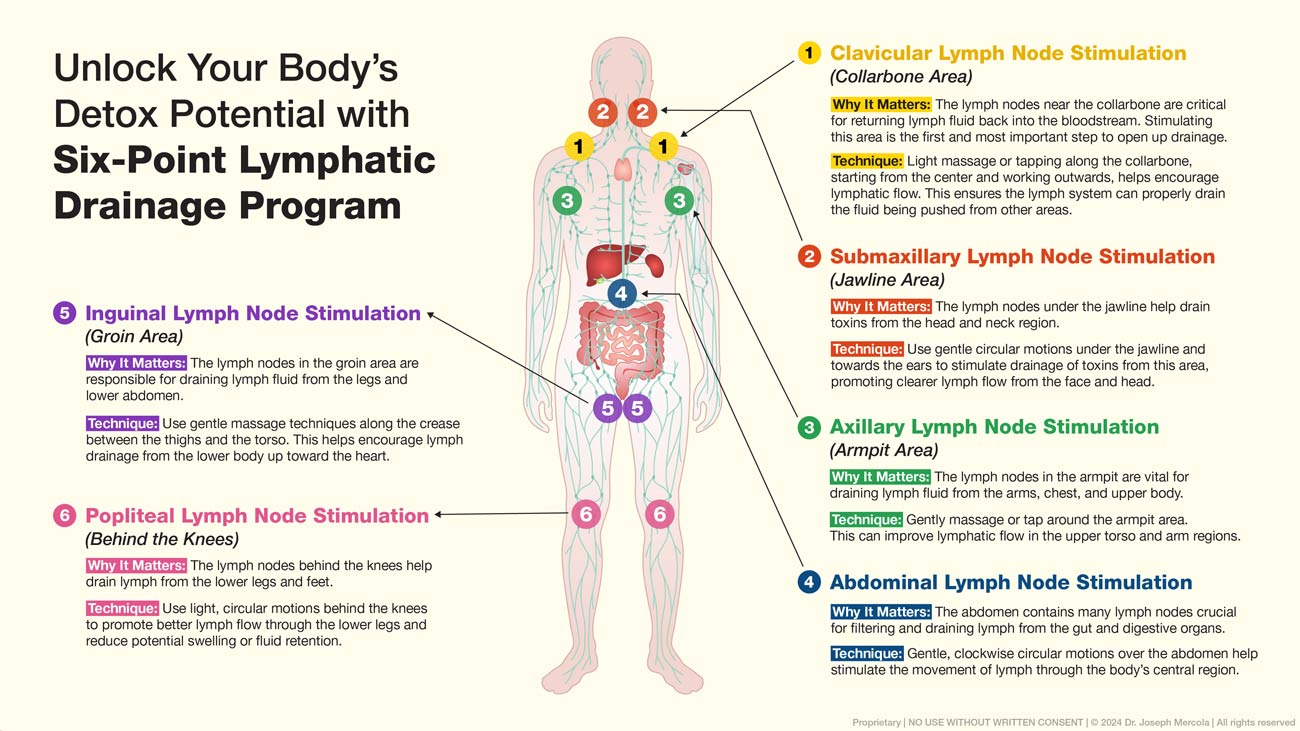
The lymph nodes are found in strategic locations around your body’s primary joints, which are meant to move frequently. They’re found at the shoulder joints, hip joints, knee joints, the center of your torso. The last nodes are found at the top of your neck, specifically the first three vertebrae and behind your jaw’s angle.
• Lymph nodes require movement — The reason behind this is to facilitate optimal lymph flow. According to my interview with chiropractor and lymphatic expert Dr. Perry Nickelston, lack of movement in these areas, alongside poor diaphragmatic breathing, will stagnate your lymphatic system. That’s why he recommends massaging these six lymphatic points before moving your body.
• You’re effectively “priming” your lymphatic system for better fluid flow — While Nickelston suggests that order is important, my review suggests that this isn’t the case — what’s important is to move lymph fluid from areas of high pressure to low pressure, which is toward your collarbone. This is the ultimate destination for lymph drainage:
1. Collarbone area (both sides)
2.Behind the angle of your jaw
3.Shoulder joint/armpit region
4.Abdomen (from sternum to navel)
5.Inguinal lymph nodes (groin area)
6.Behind your knee
How to Prime Your Lymph Nodes
Now that you know where your lymph nodes are located, how do you go about stimulating them? To begin your own manual lymphatic drainage (MLD) routine, start by making sure you’re hydrated. That’s because the increase in water will help keep your lymphatic fluid moving better throughout your body. Once you’ve drank water, you’ll need to relax yourself.
MLD is done on the lymph nodes, as these serve as filtering points for lymphatic fluid. To get them working to their fullest, they need to be “primed” through simple massages. This ensures that your lymph nodes are ready to receive fluid from the rest of the body. Start with these first:
• Neck (cervical) lymph nodes
◦ Location — Both sides of your neck, under your jawline.
◦ How to stimulate:
-
- Place your fingers on either side of your neck, just below your ears.
- Using light pressure, gently stroke downward toward your collarbones.
- Perform five to 10 strokes on each side.
• Armpits (axillary) lymph nodes
◦ Location — In the armpit region.
◦ How to stimulate:
-
- Place your hand flat under your armpit.
- Gently press upward toward your shoulder with light circular motions.
- Perform five to 10 circles in each armpit.
• Groin (inguinal) lymph nodes
◦ Location — In the crease where your thighs meet your lower abdomen.
◦ How to stimulate:
-
- Place your fingers on either side of your groin area.
- Gently press inward and upward with circular or sweeping motions.
- Perform five to 10 circles on each side.
Once you’ve finished these areas, you can now move on to doing MLD. Performing the following MLD techniques will optimize your lymphatic system.
• Target your face and neck — Start by placing your fingers in the center of your forehead, then gently sweep outward toward your temples. Continue moving downward, sweeping along the sides of your face and jawline, guiding the fluid toward your neck. Perform five to 10 strokes on each section of your face.
Then, place your hands flat on either side of your neck. Gently stroke downward from your jawline to your collarbones. Perform 10 to 15 strokes.
• Arms — Begin at your upper arm, near your shoulder. Use your hand to gently stroke down toward the armpit, where the axillary lymph nodes are located. Repeat these steps 10 to 15 times on each arm. Then, move to your lower arm, starting at your wrist and stroking upward toward your elbow. This process encourages fluid to drain from your arms toward the axillary lymph nodes.
• Legs — Start at the upper thighs, just below your hip, and gently stroke upward toward your groin, where the inguinal lymph nodes are located. Repeat 10 to 15 times on each leg.
Move down to your lower legs and repeat the same process, starting at your ankles and stroking upward toward your knees. This will help reduce any swelling in your legs and promote the movement of lymph fluid back toward your heart.
Additional Tips to Maximize Manual Lymphatic Drainage
To ensure that you’re getting the most out of your MLD sessions, remember these tips:
1. Frequency — For best results, perform MLD two to three times per week or as recommended by a health care professional.
2. Duration — Ideally, each session takes anywhere between 10 and 30 minutes depending on the areas treated.
3. Stay hydrated — Drinking water before and after MLD flushes toxins and waste products from the lymphatic system.
4. Consistency — Regular practice of MLD helps maintain healthy lymphatic function.
While MLD has its therapeutic benefits, there are contraindications for it. If you have any of the following conditions, do not perform MLD:
- Infections, such as cellulitis
- Congestive heart failure or other heart-related problems
- Deep vein thrombosis or a history of blood clots
In addition to what’s mentioned above, I recommend you incorporate exercise into your routine, particularly walking. Your body thrives on movement, and doing it regularly stimulates the flow of your lymphatic system better. As noted by Nickelston:
“You should be walking, hopefully brisk enough and without a phone in your hand, so you get some twisting and rotation and torsion in the center of the abdomen, and that moves fluids too. I always tell people envision wringing out a towel; twisting gets fluids to move.”
Frequently Asked Questions (FAQs) About Your Glymphatic System
Q: What is the glymphatic system and why is it important?
A: The glymphatic system is a specialized part of the lymphatic system responsible for clearing waste products like beta-amyloid and tau proteins from the brain. Efficient glymphatic drainage helps prevent neurological diseases, such as Alzheimer’s and Parkinson’s, and reduces intracranial pressure, improving cognitive health.
Q: How can gentle neck massage improve brain health?
A: Gentle, rhythmic pulses applied to lymph nodes in the neck have been shown to dramatically enhance CSF, doubling the rate of toxin removal from the brain. This method quickly lowers intracranial pressure, reducing headaches, dizziness, and neurological problems.
Q: What role does sleep play in glymphatic system efficiency?
A: High-quality deep sleep significantly boosts the brain’s glymphatic clearance, effectively flushing harmful proteins and protecting against cognitive decline. Poor sleep or disrupted sleep schedules drastically reduce glymphatic activity, accelerating memory loss and cognitive impairment. To maximize lymphatic drainage, combine lymph node massages with high-quality sleep.
Q: How can I optimize my lymphatic system through manual lymphatic drainage (MLD)?
A: To optimize your lymphatic system, regularly massage key lymphatic points such as the neck, armpits, and groin. Gentle, rhythmic strokes toward the collarbone region help stimulate lymph flow, improving drainage and overall lymphatic health. It’s most effective when combined with hydration and consistent practice (two to three times per week).
Q: Are there conditions when MLD should be avoided?
A: Yes. Avoid performing MLD if you have infections (such as cellulitis), congestive heart failure, heart-related conditions, or a history of deep vein thrombosis (blood clots). Always consult a health care provider if unsure about starting a lymphatic massage routine.
Unlocking Your Body’s Detox Potential: The Crucial Role of Lymphatics
Reproduced from original article:
https://articles.mercola.com/sites/articles/archive/2024/09/08/lymphatic-system.aspx
Analysis by Dr. Joseph Mercola September 08, 2024
STORY AT-A-GLANCE
- Your lymphatic system is crucial for immune function, fluid balance and detoxification. It removes cellular waste, fights infections and aids in nutrient absorption. Proper lymphatic function is essential for overall health
- In our interview, Dr. Perry Nickelston recommends a “Big Six” lymphatic drainage technique, focusing on six primary areas in a specific order: collarbone, jaw, shoulder/armpit, abdomen, groin and behind your knee
- Lymph nodes cluster around major joints to facilitate movement-based drainage. Lack of movement and poor breathing lead to lymphatic stagnation, causing various health issues like inflammation and recurring infections
- Regular movement, including walking, rebounding and hanging exercises, is vital for lymphatic health. Combining lymphatic massage with other detox strategies like sauna use enhances overall effectiveness
- Lymphatic health is closely tied to cardiovascular and brain function. Addressing lymphatic stagnation helps with heart health, neurodegenerative diseases and chronic pain management by reducing inflammation and improving fluid dynamics
Recently, I had the pleasure of interviewing Dr. Perry Nickelston, a chiropractor and expert in lymphatics. Your lymphatic system is a vital component of your body, playing a critical role in maintaining overall health and function. As an integral part of your immune system, it produces and transports white blood cells, particularly lymphocytes, which are essential for fighting infections and diseases.
Beyond its immune functions, your lymphatic system is crucial for maintaining fluid balance in your body by collecting excess fluid from tissues and returning it to your bloodstream. It also plays a key role in your digestive process, absorbing fats and fat-soluble vitamins from your small intestine and transporting them to your bloodstream.
Additionally, your lymphatic system acts as your body’s cleaning system, removing cellular waste, debris and toxins from tissues. It aids in defending against cancer by trapping cancer cells in lymph nodes, slowing the spread of some types of cancer. The system is also responsible for the circulation of interstitial fluid, which is important for delivering nutrients to cells and removing waste products.
Some hormones also utilize your lymphatic system as a transport channel. Given its diverse and essential functions, your lymphatic system’s importance to overall health and bodily function cannot be overstated. Nickelston shares key tips on how to unlock your body’s detox potential using a six-point lymphatic drainage program.
Your Lymphatic System: Your Body’s Unsung Hero
Nickelston began by explaining your lymphatic system’s role, noting:1
“The lymphatic system, it’s primarily part of two systems. Your immune system — it’s the biggest component of your immune system. And it just so turns out that the largest part of your immune system is in your gut … and that’s also where you find the largest presence of lymphatics.
And it’s a major part, which many people forget, of your vascular system, which is your blood flow system. So, if you have an issue with either one of those, blood flow and lymphatics, they’re going to go together.”
He likened the lymphatic system to a fish tank filter, constantly cleaning out cellular waste and harmful substances like bacteria, viruses and toxins. When this system becomes stagnant or blocked, it leads to a host of health problems. Nickelston recovered from several of his own health challenges by addressing his lymphatic system:2
“Many years ago, I was very sick and I was having a lot of infections and different types of autoimmune conditions that I never really got an official name for. Honestly, it felt like I had every one that you could possibly list off. It was just inflammation run amok.”
After years of struggling with conventional medical approaches, he discovered the power of working with your lymphatic system:3
“Within several days, I made the largest shift in how I felt and my symptoms that I’ve had probably five years up to that point. And I’m like, ‘OK, this is it. This is what I’ve been looking for. And now I’m just devoting the rest of my life to teaching others that.”
An Interconnected Web of Fluids and Signs of Lymphatic Stagnation
Most clinicians consider your kidneys to be the filtration system of your body, not the lymphatics. But as Nickelston explains, your lymphatics facilitate the excretion of toxins to your kidneys to ultimately remove them from the blood. The process involves an interconnected web of fluids. Nickelston explained:4
“All these fluids interconnect with each other. So, when you have stuff that comes out through the arterial system, the vascular system, that’s the supply side. So, that’s going to deliver the nutrients in the oxygen and the things to the cells, but in order to get to the cells, they have to cross through what’s called the interstitial fluid. And the lymphatic’s job is to keep that fluid clean.
So once the cells use the nutrients, they’re going to create energy and they create waste, metabolic waste. If anything, that comes through the capillary, and that waste has to get out. The veins are going to take some of it, but the particles that are too large won’t go into the vein. So, then it has to go into the garbage can of the lymphatic system.
Then the lymphatic system takes it to the lymph nodes, which are these mini toilets throughout the body, and you have about 600 or 700 of them.
And each node kills more things along the pathway. Your immune system bags and tags things that the lymphatics capture and that tells your immune system what something is and what it needs to do about it. And then eventually it’s going to dump its way back into the veins, and then it’s called plasma.
So, it goes from the veins and then it’s going to go from the veins back into the blood flow again, and that’s how it’s going to make its way to the kidneys. All of these areas intermix with each other. And if you have a backflow in one area, an obstruction or a stagnation, you’re going to have backflow in all the other areas because the pressure has to dissipate somewhere.”
This interconnection means that problems with lymphatic flow impact everything from your cardiovascular system to your brain health. How can you tell if your lymphatic system is struggling? Nickelston pointed out several key indicators:
| Puffiness and swelling, especially above your collarbones | Recurring infections |
| Chronic inflammation | Brain fog |
| Unexplained weight gain | Chronic pain |
Save This Article for Later – Get the PDF Now
The ‘Big Six’ Lymphatic Points
Lymph nodes are strategically clustered around your body’s primary joints that are meant to move frequently. These clusters are found at your shoulder joint, hip joint, knee joint, center of your abdomen and the top of your neck — specifically at the first three vertebrae and behind the angle of your jaw.
The purpose of this arrangement is to facilitate lymph movement through joint motion, such as when walking. Nickelston emphasizes that lack of movement in these joints, coupled with poor diaphragmatic breathing, lead to stagnation in your lymphatic system. This is why he recommends focusing on these six primary areas, dubbed the “Big Six,” before engaging in movement.
By addressing these key points, you effectively prime your lymphatic system for better function. Nickelston suggested the order is important, but my review suggests the order is not important. The key principle is to move lymph from areas of high pressure to low pressure, always toward your collarbone, which is the ultimate destination for lymph drainage:
- Collarbone area (both sides)
- Behind the angle of your jaw
- Shoulder joint/armpit region
- Abdomen (from sternum to navel)
- Inguinal lymph nodes (groin area)
- Behind your knee
“I usually have people do some rubbing. It can be different pressures, it can be light, it can be a little bit deeper, it can be slow, it can be fast,” Nickelston says, “just don’t cause pain when you do it. If you cause pain when you do it that too means you’re pressing too hard and you’re likely going to tighten up, which is going to defeat the purpose of you doing the reset.”5
This routine can be performed before exercise as a “pre-movement workout” and after exercise to facilitate waste removal. The duration can be as quick as one minute for all areas or longer if desired, with each area typically worked on for about 20 seconds.
According to Nickelston, this technique not only primes lymph flow but also improves vein and artery flow and enhances proprioceptive awareness before movement, presenting a simple yet effective way to support your lymphatic system’s function in your body.
The Power of Movement
While targeted massage is important, Nickelston also emphasized the role of movement in maintaining lymphatic health, noting, “Humans, were made to move. We’re designed to walk. So, you’re using your muscles and you’re pumping fluids all over the place.”6 We discussed the benefits of various types of movement, including:
- Walking, including brisk walking with arm swinging
- Rebounding on a mini trampoline
- Dancing and flowing movements
- Hanging exercises
I believe walking is the primary exercise that humans were designed to do. If you’re doing other forms of exercise and not walking, I encourage you to consider giving yourself more time to walk and do other exercises on top of walking. But with respect to lymphatics, adding in rebounding, dancing, hanging and walking backward allows you to move up and down, twist and rotate your body to further improve lymphatic circulation. Nickelston said:7
“You should be walking, hopefully brisk enough and without a phone in your hand, so you get some twisting and rotation and torsion in the center of the abdomen, and that moves fluids too. I always tell people envision wringing out a towel; twisting gets fluids to move.
So how about you walk and then you stop for a little bit, then you kind of jump up and down on the balls of your feet because you have built-in rebounders called calves, and you can go up and down like that as well as monitoring your breathing at the same time. Usually, I tell people to keep their mouth closed, breath in and out through their nose, and they’ll have more optimal movement of their diaphragm at the same time, and you do your lymphatics.
What I usually teach people is to do those, but then you’ll even have a better result when you do some lymphatic work before you walk and before you rebound … Twisting and turning when you’re walking and hanging works really great too. If you can hang from something for a period of time that really begins to open up those ribs along the spine and along the back that get stuck and locked.”
Further, lymphatic work complements other detoxification approaches. Combining lymphatic massage with strategies like sauna use, cold plunges and targeted supplementation is highly effective to facilitate detoxification. If this is your focus, an ideal sequence is to massage the Big Six, then use a rebounder and then progress into a far infrared sauna.
Your Lymphatic System’s Role in Heart and Brain Health
Your lymphatic health is tied to your overall health, including cardiovascular and brain function. Nickelston explained:8
“When your lymphatics are stagnated, you get backflow around the heart too. But that pressure … from the lymphatics also can revert back into the veins. So, the veins themselves can become stagnant and slow flowing and then that’s going to make a difference on the arterial side.”
This means addressing lymphatic stagnation is a powerful tool in supporting heart health, especially for those dealing with conditions like mild heart failure. In terms of brain health, Nickelston said:9
“What they’re finding in relationship to the brain — neuroinflammation, neurodegeneration with Alzheimer’s, Parkinson’s, MS [multiple sclerosis] and the fluid waste management system of the body, they’re tying it more to lymphatics in general, which is great.”
This emerging understanding of your lymphatic system’s role in brain health could open up new avenues for addressing neurodegenerative diseases. There’s also a relationship between lymphatic health and chronic pain. Nickelston explained:10
“Whenever you’re going to have a decrease in the lymphatics being able to get out, you’re going to have trapped inflammation around the interstitial fluid because it’s stasis. There’s an actual term for it called interstitial inflammatory stasis.”
This stagnation leads to increased pressure and inflammation, triggering pain responses. Moreover, lymphatic issues impair your body’s ability to inhibit pain signals:11
“What you’ll also find is that when you have so much inflammation in your body, and even maybe inflammation in your brain and poor blood flow into your brain because of lymphatic stagnation, you lose the ability to efficiently activate the pain inhibition pathway.”
This insight offers a new perspective on addressing chronic pain, suggesting that improving lymphatic flow is a key component of pain management.
How to Implement Lymphatic Health Strategies
Be sure to review the article I posted in the last week that supplements this interview. In terms of practical advice to begin incorporating these insights into your daily life, here are some key takeaways:
- Start with the Big Six lymphatic massage routine daily, especially before exercise.
- Prioritize regular movement, including walking, rebounding, hanging and varied motions.
- Practice deep, diaphragmatic breathing to support lymph flow.
- Consider integrating lymphatic work with other detox strategies like sauna use.
- Be patient and persistent, as it may take time to clear long-standing blockages.
While often overlooked, this crucial system plays a vital role in detoxification, immune function and even brain and heart health. What excites me most about this approach is its simplicity and accessibility. With just a few minutes of targeted massage and some mindful movement practices, you unlock significant improvements in your well-being.
A greater focus on lymphatic health is especially useful for those struggling with chronic conditions, inflammation and unexplained health issues. I encourage you to explore these concepts further and consider incorporating these strategies into your own health routine. As always, listen to your body and consult with your health care provider before making significant changes to your health regimen.
By paying attention to this often-neglected system, you’ll unlock a powerful key to enhanced vitality, reduced pain and improved overall health. It’s a reminder that often, the most profound health solutions are also the simplest.
- 1, 2, 3, 4, 5, 6, 7, 8, 9, 10, 11 Youtube, Dr. Mercola, Unlocking Your Body’s Detox Potential: The Role of Lymphatics — Interview With Dr. Perry Nickelston
Mastering Manual Lymphatic Drainage: A Comprehensive Guide to Self-Care and Wellness
Reproduced from original article:
https://articles.mercola.com/sites/articles/archive/2024/09/05/manual-lymphatic-drainage.aspx
Analysis by Dr. Joseph Mercola September 05, 2024
STORY AT-A-GLANCE
- Manual lymphatic drainage (MLD) is a gentle technique that stimulates lymph flow, reducing swelling, enhancing detoxification and supporting immune function. It’s beneficial for post-surgery recovery, pain relief and skin health
- MLD principles include using extremely light pressure, slow rhythmic strokes, directing movements toward your heart, focusing on breathing and creating a calm environment for optimal results
- Key areas for MLD include cervical (neck), axillary (armpit) and inguinal (groin) lymph nodes, as well as the cisterna chyli in the abdomen. Each area requires specific techniques
- The abdominal MLD routine involves stimulating your diaphragm, performing sweeping motions, massaging your lower abdomen and combining movements with deep breathing to enhance lymph flow
- For best results, perform MLD two to three times weekly for 10 to 30 minutes per session. Stay hydrated, maintain consistency and avoid MLD if you have infections, heart problems or blood clots
Manual lymphatic drainage (MLD) is a gentle and effective technique used to stimulate the movement of lymphatic fluid throughout your body. Your lymphatic system is a critical component of your immune system, playing several essential roles in your health, including maintaining fluid levels, supporting your immune response and aiding in fat absorption.
The lymphatic system plays a key role in removing waste, toxins and excess fluid, but unlike the circulatory system, it lacks a central pump like the heart to move lymph fluid through your body. Instead, the movement of lymph — the fluid that circulates through your lymphatic system — relies on the contraction of surrounding muscles, respiratory movements and the gentle contractions of lymphatic vessels themselves.
This makes your lymphatic system more susceptible to becoming sluggish or blocked, leading to issues such as lymphedema and more. MLD helps by manually stimulating the flow of lymph, encouraging it to move through the lymphatic vessels and toward your lymph nodes, where it can be filtered and eventually returned to your bloodstream.
This manual assistance is crucial, especially in individuals who have impaired lymphatic function due to surgery, trauma or congenital conditions, as it helps to prevent the buildup of lymph fluid and maintains proper lymphatic circulation. This practice significantly reduces swelling, enhance detoxification, support immune function and promote relaxation. Here’s a detailed guide on how to perform MLD for self-care and wellness.
Benefits of Manual Lymphatic Drainage (MLD)
One of the primary benefits of MLD is its ability to reduce fluid retention and swelling, also known as edema. When lymphatic fluid accumulates in the tissues, MLD helps drain it, preventing fluid build-up and easing the swelling. People recovering from surgery, injury or even those dealing with chronic conditions like lymphedema1,2 see noticeable improvements in swelling reduction through regular MLD.
In fact, MLD is commonly used to treat lymphedema,3 a condition characterized by the accumulation of lymph fluid, usually in the arms or legs, which causes swelling, pain and discomfort. By promoting lymph flow, MLD helps reduce the swelling and associated symptoms.4
MLD also supports your immune system. The lymphatic system is integral to immune function, carrying white blood cells that fight infection. By promoting lymphatic flow, MLD improves the circulation of these immune cells, enhancing the body’s natural defense mechanisms.
This makes your body more efficient at warding off infections and recovering from illnesses. Some key lymph node areas to focus on include:
• Cervical lymph nodes — Located in your neck
• Axillary lymph nodes — Located under your armpits
• Inguinal lymph nodes — Located in your groin
• Cisterna chyli — Located deep in your abdomen
By stimulating the flow of lymph fluid through your lymphatic system, MLD is important for:
• Post-surgery recovery — MLD is often recommended after surgery,5 particularly in cases involving the removal of lymph nodes, to prevent or reduce lymphedema6 and promote healing by improving lymphatic drainage.
After an injury or surgery, the body produces inflammatory substances, and your lymphatic system works to remove these along with excess fluid. MLD aids in this process by speeding up the removal of cellular debris and reducing inflammation, helping tissues heal faster.
• Relieving pain and discomfort — The gentle massage techniques used in MLD help alleviate pain and discomfort associated with conditions like chronic venous insufficiency, fibromyalgia7 and rheumatoid arthritis by reducing swelling and improving circulation.
• Enhancing skin health — MLD improves the appearance and health of your skin by reducing fluid retention, promoting detoxification and enhancing the delivery of nutrients to the skin cells.
• Promoting relaxation —The gentle, rhythmic nature of MLD has a relaxing effect on your body, triggering the parasympathetic nervous system, which is responsible for your body’s “rest and digest” functions. As a result, MLD helps alleviate stress, tension and anxiety, and improves sleep,8 making it a soothing therapy for your mind and body.
• Encouraging detoxification — Your lymphatic system filters and removes toxins from your body, but this process slows down if you have a sedentary lifestyle or health issues. By stimulating lymphatic flow, MLD helps your body get rid of these toxins more effectively. This reduces bloating, increase energy levels and improve overall wellness.
General Principles of Manual Lymphatic Drainage
For MLD to be effective, it’s essential to understand a few key principles:
1. Apply extremely light pressure — The pressure applied during MLD should be extremely light. Your lymphatic vessels are located just beneath your skin, so deep pressure will compress the vessels and hinder the flow of lymph fluid. Gentle, light pressure — just enough to feel your skin move under your fingers — is all that is needed to move lymph through the vessels.9
2. Use slow, rhythmic strokes — Slow, rhythmic strokes are another crucial aspect of MLD. Lymphatic fluid moves at a slow pace, so the strokes should mimic this natural rhythm. Quick or erratic movements won’t help the lymph fluid move effectively, but slow, steady strokes will gently guide the fluid toward the lymph nodes. Use light, rhythmic strokes to stimulate lymph flow.
3. Direct movements toward your heart — Direction is also important. Your lymphatic system moves lymph fluid in a one-way direction toward the thoracic duct and eventually into the subclavian veins near your heart, where it reenters your bloodstream. Lymph fluid always flows toward specific areas of the body where lymph nodes are located, such as your neck, armpits and groin.
When performing MLD, you should always stroke in the direction of these nodes to ensure the fluid drains properly. Ultimately, all lymph fluid is directed toward your heart, so keep this in mind when performing strokes.
Generally, this means working from your extremities, such as your hands or feet, toward the center of your body and then upward toward your heart. Starting from your lower abdomen and working upward toward your upper abdomen or chest is also effective.
4. Pay attention to your breathing — Deep abdominal breathing helps with lymphatic movement. Breathe deeply and rhythmically as you massage, as the movement of the diaphragm naturally helps move lymph fluid. Start by taking a few deep breaths using diaphragmatic breathing, or belly breathing. This helps engage the diaphragm, which naturally promotes lymphatic flow.
Place one hand on your belly, and as you inhale, allow your belly to rise; as you exhale, let your belly fall. This rhythmic motion helps move lymph toward the cisterna chyli, a sac-like lymphatic reservoir located in your upper abdomen.
5. Create a calm environment — It’s important to be in a relaxed position when performing MLD. Whether sitting or lying down, make sure you’re in a calm and peaceful environment. Being relaxed helps facilitate lymphatic flow, as stress and tension slow down the process. Ideally, find a comfortable, quiet space where you can lie down or sit in a semi-reclined position.
Save This Article for Later – Get the PDF Now
Practical Instructions for Implementing Manual Lymphatic Drainage
To begin a self-care MLD routine, start by ensuring you’re properly hydrated. Drinking a glass of water before MLD helps keep your lymphatic fluid moving smoothly. Once hydrated, take a few moments to relax, which will prepare your body for the gentle stimulation required during MLD.
Start by focusing on the lymph nodes, which serve as filtering points for the lymphatic fluid. Before you begin, it’s essential to “prime” the main lymph nodes to facilitate drainage during the massage. This step ensures that your lymph nodes are ready to receive fluid from the rest of the body.
• Neck (cervical) lymph nodes
◦Location — Both sides of your neck, under your jawline.
◦How to stimulate
▪Place your fingers on either side of your neck, just below your ears.
▪Using light pressure, gently stroke downward toward your collarbones.
▪Perform five to 10 strokes on each side.
• Armpits (axillary) lymph nodes
◦Location — In the armpit region.
◦How to stimulate
▪Place your hand flat under your armpit.
▪Gently press upward toward your shoulder with light circular motions.
▪Perform five to 10 circles in each armpit.
• Groin (inguinal) lymph nodes
◦Location — In the crease where your thighs meet your lower abdomen.
◦How to stimulate
▪Place your fingers on either side of your groin area.
▪Gently press inward and upward with circular or sweeping motions.
▪Perform five to 10 circles on each side.
Next, focus on your face and neck. Lymphatic drainage in this area helps reduce puffiness and improve circulation. Start by placing your fingers in the center of your forehead, then gently sweep outward toward your temples. Continue moving downward, sweeping along the sides of your face and jawline, guiding the fluid toward your neck. Perform five to 10 strokes on each section of your face.
Then, place your hands flat on either side of your neck. Gently stroke downward from your jawline to your collarbones. Perform 10 to 15 strokes.
When working on your arms, begin at your upper arm, near your shoulder. Use your hand to gently stroke down toward the armpit, where the axillary lymph nodes are located. Repeat this 10 to 15 times on each arm. Then move to your lower arm, starting at your wrist and stroking upward toward your elbow. This process encourages fluid to drain from your arms toward the axillary lymph nodes.
To address your legs, start at the upper thighs, just below your hip, and gently stroke upward toward your groin, where the inguinal lymph nodes are located. Repeat 10 to 15 times on each leg. Move down to your lower legs and repeat the same process, starting at your ankles and stroking upward toward your knees. This will help reduce any swelling in your legs and promote the movement of lymph fluid back toward your heart.
Once you’ve completed the MLD session, drink another glass of water to help flush toxins and waste from your body. Light activity, such as walking or gentle stretching, further promotes lymphatic flow and enhance the benefits of the drainage.
How to Perform Manual Lymphatic Drainage on Your Abdomen and Pelvic Region
For your abdomen, focus on the area around the cisterna chyli, which collects lymph from your lower limbs, intestines and pelvis before draining into the thoracic duct. While you cannot directly feel or access it due to its deep anatomical position, you can stimulate lymphatic flow toward this structure using MLD techniques. Here’s how to locate its approximate position and perform a lymphatic drainage massage effectively:
• MLD for the cisterna chyli
◦Position — The cisterna chyli lies deep in your abdomen, located just in front of the first and second lumbar vertebrae (L1 and L2). It is positioned near the lower end of the thoracic duct, close to the abdominal aorta.
◦How to find the area — To locate it conceptually, place your hand at the center of your abdomen, just below your ribcage and above your belly button. The cisterna chyli is located deep inside your body behind the stomach and in front of your spine, near this region.
Place your hands just below your ribcage and use soft, circular motions to massage the area. This will help stimulate lymphatic drainage from the lower body into the cisterna chyli, where it can be processed and moved upward.
◦Massage technique — Although you can’t directly access the cisterna chyli, gentle massage of the abdominal area stimulates lymphatic flow toward this structure, helping to drain lymph from the lower body and improve circulation. Perform 10 to 15 circular motions.
You can also use MLD to enhance lymphatic drainage in other parts of your abdomen, as follows:
• MLD for your celiac lymph nodes (upper abdomen)
◦Position — Located near your celiac trunk, just below your diaphragm.
◦How to find the area — Place your hands just below your ribcage in the center of your upper abdomen. This is where your stomach and liver are located.
◦Massage technique — Use light, circular motions, gently pressing inward and upward toward the diaphragm. Think of moving fluid toward your heart as you massage this area. Start with one hand just below your ribcage, slowly sweeping outward toward the sides.
• MLD for your superior mesenteric lymph nodes (central abdomen)
◦Position — These nodes are found in the middle of your abdomen, around your belly button (navel), and are associated with the small intestines.
◦How to find the area — Place your hands around your belly button area, extending outward slightly.
◦Massage technique — Using gentle pressure, make slow, circular strokes around your navel. Massage in a clockwise direction (following the path of digestion) to encourage movement of lymph fluid. Start with small circles close to your belly button and gradually work outward toward your flanks.
• MLD for your inferior mesenteric lymph nodes (lower abdomen)
◦Position — These lymph nodes are located in your lower abdomen, typically on the left side, near your lower colon.
◦How to find the area — Place your hands on the lower left side of your abdomen, between your belly button and the top of your pelvis, slightly inward.
◦Massage technique — Use soft, circular or sweeping motions across this area, moving upward toward your belly button. Imagine directing the lymph flow toward the central part of your abdomen and then upward.
• MLD for your iliac lymph nodes (pelvic region)
◦Position — Found along the iliac arteries in your lower abdomen and pelvic area, close to your hips.
◦How to find the area — Place your hands on both sides of your lower abdomen, just above your groin and inside your pelvic bones.
◦Massage technique — Apply gentle pressure in circular motions in this area, working from the outer edges near your pelvis inward toward your belly button. Again, focus on encouraging the lymph to move upward and inward. Use light, upward strokes toward your navel, imagining pulling fluid up from your legs and pelvis.
5 Steps for Performing Manual Lymphatic Drainage
The steps that follow will help you get started with MLD at home. Even though you can’t feel the lymph nodes directly, it can help to visualize the lymph fluid being pushed through the lymphatic system. Imagine any stagnant fluid or waste being cleared out of the abdominal tissues and flowing up toward the chest, where the lymph eventually drains into the bloodstream.
This combination of light touch, gentle pressure and mindful breathing stimulates lymphatic circulation and improves overall detoxification, even though the abdominal lymph nodes are located deep inside your body.
Next, use the five steps below to begin. You can perform this massage once or twice a day for general lymphatic health, especially if you feel bloated or have issues with fluid retention. Remember, staying hydrated supports lymphatic flow, so drink water before and after performing lymphatic drainage massage to aid the process.
• Step 1: Stimulate your diaphragm — Place your hands on your upper abdomen, just below your ribcage. Using gentle, circular motions with your fingertips, massage this area with light pressure. Focus on stimulating your diaphragm’s movement. This motion helps stimulate lymph flow from the abdomen and lower body into the cisterna chyli. Perform this for one to two minutes using slow, circular strokes.
• Step 2: Abdominal sweep massage — Place your hands on your abdomen, directly over your belly button. Using both hands, sweep your palms upward toward the center of your ribcage in a gentle motion. Start near your belly button and move upward in a slow, sweeping motion, imagining you’re guiding lymph fluid toward the cisterna chyli.
The pressure should be light and rhythmic, not deep or forceful. This encourages lymph to move from the lower abdomen and pelvis toward the central lymphatic system. Repeat this movement for two to three minutes, continuing to use gentle pressure.
• Step 3: Lower abdominal massage — Place your hands on your lower abdomen, below your belly button. Use your fingertips to perform soft, circular massage motions in this area, moving in a clockwise direction (the direction of your intestines). Gently guide lymph from your lower abdomen upward toward the belly button.
This area covers lymph flow from your legs and pelvis, and massaging here helps move lymph toward the cisterna chyli. Massage in this area for one to two minutes using light, circular strokes.
• Step 4: Side-to-side sweeping motion — Place one hand on the left side of your abdomen and one hand on the right side, just above your hip bones. Sweep both hands gently toward the center of your abdomen, meeting near the belly button, then move your hands back out to the sides. This motion helps guide lymph from the flanks toward the center where your cisterna chyli is located. Perform this motion for two to three minutes using a gentle, sweeping motion.
• Step 5: Combine with deep breathing — After performing the massage, spend a few minutes combining the abdominal massage with diaphragmatic breathing. Take deep breaths, expanding your belly with each inhale and allowing it to fall with each exhale. This natural movement of your diaphragm further assists in moving lymph toward the cisterna chyli.
More Tips for Effective Manual Lymphatic Drainage
To maximize the benefits of manual lymphatic drainage, it’s important to keep a few key points in mind. The following tips will ensure you’re performing MLD correctly and getting the most out of each session.
1. Frequency — For best results, perform MLD two to three times per week or as recommended by a health care professional.
2. Duration — Each session should last between 10 and 30 minutes, depending on the areas treated.
3. Stay hydrated — Drinking water before and after MLD flushes toxins and waste products from the lymphatic system.
4. Consistency — Regular practice of MLD helps maintain healthy lymphatic function.
There are some cases when you should avoid MLD, however. Do not perform MLD if you have:
- Infections, such as cellulitis
- Congestive heart failure or other heart-related problems
- Deep vein thrombosis or a history of blood clots
Incorporating gentle exercise into your routine, such as walking or yoga, will further improve lymphatic flow and enhance the benefits of MLD. By taking care of your lymphatic system with MLD and other healthy habits, you’ll improve your body’s detoxification processes, reduce swelling and support your immune function, all while promoting relaxation and well-being.
– Sources and References
- 1 Vasa October 16, 2023
- 2 Support Care Cancer. 2024 Jul 19;32(8):527. doi: 10.1007/s00520-024-08743-5
- 3 J Clin Med. 2024 Mar; 13(5): 1277
- 4 Support Care Cancer. 2023 Dec 5;32(1):5. doi: 10.1007/s00520-023-08210-7
- 5 World J Clin Cases. 2024 Jul 6;12(19):3971-3977
- 6 Breast Care (Basel). 2024 Jun;19(3):155-164. doi: 10.1159/000538940. Epub 2024 Apr 22
- 7, 8 J Bodyw Mov Ther. 2024 Apr:38:483-488. doi: 10.1016/j.jbmt.2024.03.040. Epub 2024 Mar 22
- 9 Front Med Technol. 2024; 6: 1397561
Can Dry Brushing Help Your Lymphatic System?
Reproduced from original article:
https://articles.mercola.com/sites/articles/archive/2024/04/23/dry-brushing-skin.aspx
Analysis by Dr. Joseph Mercola April 23, 2024

STORY AT-A-GLANCE
- Energizing, invigorating and stress relieving, dry body brushing gently cleanses and exfoliates dead skin cells to reveal soft, glowing skin, but other good habits and supplementation can also help your skin be its best
- One of the most basic reasons to begin dry brushing your skin is to stimulate your lymphatic system, which is essentially a network of tissues and organs that help transport metabolic waste out of your body
- Using the correct body brushes (one with a long handle comes in handy) as well as the right methods, body brushing can impact your body in ways that promote healing, skin vibrance and improved circulation
Your skin is the largest organ of your body, so treating it with TLC and maintaining its health will go a long way toward making you look and feel your best. Besides consisting of blood vessels, sweat glands and nerve endings, your skin helps remove waste, aids in digestion and has a lot to do with good circulation.
Nicole Eckert, a certified holistic nutritionist based in Newmarket, Ontario, believes that delving into a balanced, nutritionally optimal lifestyle should include a practice some have never heard of — skin brushing, something ancient Greeks, Native Americans and Ayurvedic medicine have known about for centuries. Gentle daily detoxing involves several practices that can be done several ways and for several reasons. It’s extremely inexpensive and it takes just a few minutes every day.
Discovering (and taking advantage by actually practicing) healthy removal of toxic waste is one of the most crucial habits you can get into. It’s also a way to increase your energy while decreasing stress, lifting brain fog and supporting your digestive health, which are practical considerations that help you not only feel good but look good! Eckert states:
“Your lovely liver, kidneys, lungs, skin and colon, are your superstar detoxification organs and their overall function is just critical for your optimal health and well-being. With your skin being your largest organ — and your largest detoxification organ for that matter. The simple detox habit of dry brushing is a super enjoyable practice that’s going to make your skin glow, and get you detoxing fo-sho (rhyming intentional).”1
Many people who started with a softer, gentler brush have graduated to one that’s a little firmer, using a firmer pressure gradually as well.
How Does Dry Brushing Your Skin Impact Your Lymphatic System?
One of the most basic reasons to begin dry brushing your skin is to stimulate your lymphatic system, which is essentially a network of tissues and organs that help transport metabolic waste out of your body. Parts of your overall lymphatic system include your thymus gland, lymph nodes, spleen, liver and tonsils.
Something you may not realize is that for most people, especially as they get older, when your system begins getting sluggish, moving slower and slower, it compromises your immune system.
When your immune system isn’t working as it should, your body becomes more susceptible to problems like sinus infections. Further, one of the reasons you keep hearing how crucial exercise is involves your lymphatic system, because movement is essential for it to function as it was designed to do.
It doesn’t have a pump, so it relies on muscle contractions — aka exercise — to “shake things loose,” so to speak, which helps your body in its detoxification process. Further, many of your lymph vessels run just below your skin’s surface, which is how brushing your skin can impact how well your lymph glands perform. Brushing your skin is an innovative way to gently cleanse and protect your skin and improve circulation.
There are brushes for your hands, feet and nails, face (which have softer bristles), hair and body. Besides the type for dry brushing, there are brushes you can use as you bathe.
Why Do People Brush Their Skin?
Exfoliation rids your body of dead skin cells. When you consider that you lose more than a million skin cells every day, it’s no wonder we all experience a slightly irritating dry, itchy sensation from time to time. You’re still wearing last week’s dead skin cells! The problem often causes such skin conditions as acne, eczema, psoriasis and various rashes.
In fact, dry brushing your skin is said to be, for your skin, something similar to what milk thistle does for your liver. You release up to a pound of toxins through your skin, your largest eliminative organ, every single day, which is about a quarter of the total waste you excrete on a daily basis. You may not know exactly what’s going on inside your body, but your skin is often the first to tell the tale. According to Bare Natural Health:2
“(These) are signs that you’re in dire need of some toxic dumping, but when our skin is clogged full of dead cells, our toxins get stuck in a traffic jam and have nowhere to go. Instead, they get reabsorbed into the body, taxing our kidneys and liver, or stored in fat cells, which can contribute to cellulite.”
Body brushing may also help prevent and reduce cellulite. Although it’s not a tested science conducted in a clinical setting, there’s plenty of anecdotal evidence that dry brushing helps ease the clumpy signs of cellulite. It may help distribute fatty deposits to tone muscles and tissues below your skin’s surface, Mother Earth Living maintains, and circular motions may also reduce the appearance of cellulite.3
Energizing, invigorating and stress relieving, it also reveals soft, glowing skin. Dry brushing not only clears clogged pores of dirt, oil and other residue, it stimulates your hormone and oil-producing glands and your circulation, which helps leave your skin feeling fresh and more prone to healing, and allows your skin to “breathe” properly.
Save This Article for Later – Get the PDF Now
What Type of Brush Is Best?
There’s actually a brush designed to dry brush your skin. Quality brush bristles are made from natural fibers rather than synthetic materials, and they’re available online and in some health food stores. You want the bristles to be dense, stiff and strong so that the experience is, as Eckert quips, “comfortably uncomfortable” — not too soft, but not so stiff that they scratch your skin, either. Eckert notes:
“I started out with [a] classic Bath Brush. I love this one because of the long handle (it’s the ultimate back scratcher). I recently upgraded to [an] Energy Brush, which is handle-free but has these super-cool bronze bristles made from a copper-tin alloy, which creates this super soothing effect and a pleasant tingling sensation — this is like the big-cheese of dry brushing. I’ve also got this cute little Facial Brush, which is a savior on dry-face days.”4
Eckert recommends a body brush designed expressly for this purpose. A long brush for hard-to-reach places like your back, the bottoms of your feet and the back of your legs made from bristles of the konjac plant is another recommendation.
Depending on where you live, environmental toxins are wreaking more havoc on your body today than ever before. Sometimes the air you breathe isn’t necessarily negotiable, but what you eat, drink and put on your skin certainly is — dry brushing may help to rid your body of those variables you can’t control.
How to Use Your Body Brush
No matter what time of day you shower, it’s right beforehand that you want to take advantage of everything body brushing can do for you. Pick up your brush and get to work, starting with the lower part of your body first with swift, gentle upward strokes. “It’s important to work in this direction as it supports the natural ‘highway’ of your lymphatic system,” Eckert says.5
- Start working on your feet, using gentle, circular, upward motions toward your heart from the tips of your toes, including the tops of your feet, your soles and moving upward, first one side and then the other.
- Brush slowly and gently; even if you’re ticklish, making it difficult to cover your stomach, sides and chest, it will become less so as your body gets used to the sensation.
- Do your arms, neck and as much of your back as you can get to. Remember to avoid areas where you might have scratches or anything that would make contact with the brush painful.
- Don’t use the regular brush on your face, as your skin is far too delicate. Use a specially designed facial brush, which has softer bristles.
- Once you’re finished, you can shower, which washes away all the dead skin cells you’ve loosened. Water set at warm or hot further increases your circulation.
This routine can be done before every shower or just three or four times a week, but perhaps hard-to-reach areas can be done once a week — whatever your schedule allows and your needs call for. You may also want to try an alkalizing bath, which adds a new dimension. One more thing: Since skin brushing is stimulating, doing it in the morning seems to be preferable to “waking up” your skin at night.
Caring for Your Body Brushes
Body brushes may be constructed of solid waxed beech for dry brushing or beech plywood for wet brushing, with wild boar, horsehair or even a combination of horsehair and bronze bristles, among other options.6 The plywood brush is best for wet brushing, as it can take sitting in water for long periods, as well as with alkaline baths.
- It’s best not to expose your wooden brushes to long periods in water, so when you’re not brushing, place the brush with bristles downward on the edge of the tub.
- If you do alkaline wet brushing, the bristles of the brush should be rinsed well using clear water. Excess water can be “tapped” off using a towel and the brush should be placed bristles downward on a dry towel.
- Wooden brushes should be air-dried, not with a hairdryer or placed on warm heating appliances as it can crack and damage the wood.
- The bristles of your body brush can be washed with lukewarm soapy water, but without excessively wetting the wooden parts. In time, the color of the wood will probably darken somewhat.
Experts also recommend replacing your brush every six to 12 months because the bristles do begin to break down.
More Strategies for Optimizing Your Skin Health (and Other Areas)
Drinking water with lemon added to it and/or placing a few teaspoons of apple cider vinegar into water to drink on a daily basis, as well as drinking the right amount of water for your body, are easy strategies for optimizing your health.
Eating plenty of vegetables will also go a long way toward optimizing your skin, because the antioxidants in them fight free radicals and support your immune and mitochondrial systems. Key supplements also kick in nutrients you can’t always get through your diet, including:
- Collagen peptides, which help repair your skin as well as your hair and nails, plus it treats leaky gut.7
- Vitamin C helps your body synthesize new collagen and protects your skin from excess sun rays, inflammation and oxidative stress.8
- Glutathione makes its own antioxidants, but also helps your body rid itself of toxins, which discourages acne.9
- Resveratrol contains polyphenols that are worth their weight in gold for protecting you from signs of aging. That also goes for your skin, as they also help protect against excessive sun damage.10
- Caffeine reduces inflammation and calms redness, increases your circulation and repairs sun damage, as well as your DNA.11 While I don’t recommend taking a caffeine supplement, organic black, shade-grown coffee is one potential source.
It may sound too easy, but simple steps like these can balance your pH and help move food through your colon to maintain regular bowel movements, which also positively affects how you feel and how you look, including your skin.
- 1, 4, 5 The Hearty Soul 2017 (Archived)
- 2 Bare Natural Health 2017 (Archived)
- 3 Mother Earth Living October 31, 2016
- 6 P. Jentschura, Products
- 7 Skin Pharmacol Physiol 2014;27:113-119
- 8 Dermatol Surg. 2005 Jul;31(7 Pt 2):814-7; discussion 818
- 9 Journal Innoventions September 5, 2011
- 10 Journal of Cosmetic Dermatology January 31, 2008
- 11 Skin Pharmacol Physiol. 2013;26(1):8-14
Improve Your Physical and Psychological Health With This Simple Lymphatic Drainage Routine
Reproduced from original article:
https://articles.mercola.com/sites/articles/archive/2024/04/20/lymph-flow.aspx
Analysis by Dr. Joseph Mercola April 20, 2024
STORY AT-A-GLANCE
- Your lymphatic system, integral to immune function and waste removal, significantly influences overall health, including physical, mental and emotional aspects
- The “Big 6” routine developed by chiropractor Perry Nickelston involves stimulating six key lymphatic points to enhance blood flow, nerve response and the clearance of toxins. The “Big 6” lymphatic drainage points are: above and below the collarbone, jawline, chest, abdomen, hip area and back of the knees
- A lymphatic drainage routine helps reduce swelling, facilitates detoxification, helps prevent disease by boosting immune function, and improves digestion and nutrient absorption
- Understanding the lymphatic system’s unique pressure system is essential; drainage should start at low-pressure areas (above and below the collarbone) and move towards higher-pressure areas to prevent swelling, especially in extremities
- Enhanced proprioception, resulting from a well-functioning lymphatic system, translates into a feeling of safety by allowing the brain to accurately sense joint positions and movements, thus reducing injury risk and boosting confidence and psychological well-being
The lymphatic system is a crucial part of your body’s immune and waste removal systems, and as such play a significant role in your overall health and well-being. Its proper functioning affects physical, mental, and emotional health through its network of vessels and nodes that transport lymph, a fluid containing white blood cells and waste products.
As explained by Perry Nickelston, a practicing chiropractor, in the video above, maintaining a healthy lymphatic system is important for preventing health issues like infections, joint pain, fatigue, and more serious conditions such as lymphedema and cancer.
Your lymphatic system helps remove toxins and waste, supports the immune system, and aids in the absorption and transport of fats and vitamins. The lymphatic system of your brain is called the glymphatic system, and it’s essential for removing waste products from your brain.
When either of these systems gets congested, sluggish or blocked, it can have severe effects on your physical and mental/neurological health.
Regular exercise, a healthy diet, adequate hydration and stress management are essential for supporting lymphatic function. Eastern practices such as Ayurveda and Traditional Chinese Medicine (TCM) have long recognized the lymphatic system’s importance, using methods like lymphatic massage, yoga and herbal remedies to support the free flow of lymph.
To support the health of your lymphatic system, Nickelston has developed a six-step routine called the Big 6, which he describes in the featured video. The routine involves stimulating key lymphatic points in your body by rubbing, tapping and massaging them.
Common Detox Symptoms That May Arise
While the routine may appear deceptively simple, it can have a profound effect, as stimulating these lymphatic spots will boost blood flow to and from various tissues, change how your nerves respond to tightness in the tissues, and encourage the clearance of toxins from your body through your sweat, urine and feces.
As a result of this detoxifying process, you may experience a period of increased fatigue, lethargy, pain, headache, general malaise or illness-like symptoms. This is a sign that toxins are being expelled. As noted by Nickelston, “that is normal.” To aid the detox process, make sure you drink some water before and/or after doing the routine.
Understanding the Lymphatic Pressure System
The lymphatic system operates on a unique pressure system that is pivotal for its efficient functioning. This system’s design ensures the effective drainage of lymph back into the bloodstream.
Understanding the pressure gradients within the lymphatic system is crucial for promoting optimal lymph flow and preventing the accumulation of fluids, which can lead to swelling, especially in the extremities like the hands and feet.
The areas around and above the collarbone represent the points of lowest lymphatic pressure. It is here that the lymphatic fluid drains back into the venous blood system, completing its circuit around the body. Because these points are the final destination for lymph being cleared from the body, they are crucial in the lymphatic drainage process.
Conversely, your hands and feet are the farthest from these low-pressure points, making them more prone to swelling due to the accumulation of lymph fluid, as gravity and distance impede the fluid’s return flow.
By starting at the collarbone — where the pressure is lowest — and working outward and upward, ensures that these low-pressure pathways remain open and able to receive lymph from other parts of the body.
To effectively encourage the movement of lymph through its vessels and nodes, it is essential to clear the lymphatic system from areas of low pressure toward those of high pressure.
This means that any lymphatic drainage technique or routine should never start with the extremities, where pressure is higher and fluid accumulation is more common. Instead, starting at the collarbone — where the pressure is lowest — and working outward and upward, ensures that these low-pressure pathways remain open and able to receive lymph from other parts of the body.
Save This Article for Later – Get the PDF Now
Nickelston’s Big 6 Routine
The six key points for effective lymphatic drainage are as follows. In the video above, Tim Boettner of Think Flow Grow does a full demonstration of Nickelston’s routine so you can follow along. Again, make sure to do them in the correct order, as listed. Use whatever pressure and speed that feels good. You’re not seeking to cause pain.
The whole routine can be completed in just a few minutes and can be done any time of the day. Getting into the habit of doing it once a day, perhaps during your morning shower, is the best way to reap maximum benefits.
1. Above and below your collarbone — Initiating drainage here facilitates the clearance of lymph back into the circulatory system. Begin by lightly rubbing above, over and below your collarbone on one side for several seconds. Next, lightly tap the area with open hand, and then rub the area in a circular motion clockwise and counterclockwise. Repeat on the other side.
2. Jawline — Rubbing and massaging your jawline helps drain lymph from your head and neck. The spot you’re working is located at the top of your neck, directly behind the angle of your jawbone just below your earlobe. Using two or three fingers, rub that area in an up and down motion on one side. Then, lightly tap and do some circular rubbing. Repeat on the other side.
3. Chest — Clearing the chest area supports the drainage of lymph from the upper torso and arms. The spot you’re looking for is where your shoulder attaches to your pectoral muscle. Perform the same rubbing, tapping massaging motions as before on each side.
4. Abdomen — The abdomen is a central hub for lymphatic activity, influencing digestion and lower body lymph flow. To locate the correct spot, place one hand over your belly button and the other hand directly above that. Using both hands, rub your belly up and down. Then, tap your belly with both hands, then stack your hands one atop the other, press your hands into your abdomen and rub in circles.
5. Front of the hip — Stimulating this area encourages the movement of lymph from the lower extremities toward your core. Place your hands over the crease of your groin and rub up and down, then tap and rub in circles.
6. Back of the knees — Finally, the area behind the knees is critical for draining lymph from the lower legs, reducing the risk of swelling in the feet and ankles. Simply place your hands behind your knees and rub above and below the crease of your knees in an up and down motion. Then tap the crease and rub in a circular motion.
When done with all six areas, stand up, lift your heels off the floor and lightly bounce up and down on the balls of your feet for 20 to 30 seconds and shake out your hands and arms.
Adhering to this order is paramount for maintaining an efficient lymphatic system. By starting at the points of lowest pressure and methodically working toward areas of higher pressure, it’s possible to enhance lymph flow throughout the body, bolstering immune function, reducing swelling and promoting overall health.
The Psychological Benefits of Lymphatic Drainage
As explained by Nickelston, this lymphatic drainage routine can also have significant benefits for your emotional and mental health. The reason for this is because when your brain can accurately sense where your body’s joints are in space — a faculty known as proprioception — it significantly contributes to a feeling of safety and security.
Proprioception is part of your body’s sensory system, providing continuous feedback about the position of limbs, the tension in muscles, and the state of joint movement. This sensory information is crucial for maintaining balance, coordinating movements, and performing daily activities confidently and efficiently.
The link between proprioception and feelings of safety lies in your brain’s ability to predict and control bodily movements. When proprioceptive feedback is clear and accurate, your brain can effectively anticipate the outcome of movements, reducing the risk of injury and enhancing physical autonomy. This predictability and control are foundational to a sense of safety, as they enable you to navigate your environment with assurance.
Additionally, clearing the lymphatic system reduces swelling and inflammation around joints, which can otherwise impede the flow of sensory information. Swelling can distort the signals sent by proprioceptors (sensory receptors that detect motion and position) located in muscles, tendons, and joint capsules, leading to decreased proprioceptive accuracy.
As the lymphatic system is optimized and fluid balance is restored, proprioceptors can function more effectively, sending clearer, more precise signals to your brain. As you become more attuned to your body’s positions and movements, you develop a heightened sense of spatial awareness and body control.
This improvement not only aids in physical performance but also reinforces the neural pathways responsible for proprioceptive processing, making your brain more adept at interpreting and utilizing this information.
The culmination of these effects — a well-functioning lymphatic system and enhanced proprioception — contributes to a greater sense of bodily integrity and safety.
When your brain can reliably know where your body is in space, it reduces the perceived risk of falling or suffering an injury, which in turn diminishes anxiety and enhances confidence in your physical capabilities. This assurance extends beyond mere physical safety, influencing psychological well-being by fostering a sense of control and competence in interacting with the world.
Average Person Asleep by 10 but Still Wakes Up Tired
Reproduced from original article:
https://articles.mercola.com/sites/articles/archive/2024/04/04/average-bedtime-irregular-sleep.aspx
Analysis by Dr. Joseph Mercola April 04, 2024

Story at-a-glance
- According to a poll of 2,000 adults, the average time most people go to bed is before 10 p.m. — 9:54 p.m. to be exact
- Despite this reasonable bedtime, many still wake up feeling tired; this may be because your night’s rest is only restorative if you’re able to fall asleep and stay asleep
- Among adults, 4 in 10 say they’re bad sleepers, while another 60% say their nighttime routine needs work
- People with the most irregular sleep had the highest dementia risk and were 53% more likely to develop the condition than those with more regular sleep patterns
- The glymphatic system, which your brain uses for detoxification, is particularly active during sleep, which may actually serve to kickstart the system
Getting to bed too late is often blamed for feeling groggy the next morning. But according to a poll of 2,000 adults, the average time most people go to bed is before 10 p.m. — 9:54 p.m. to be exact.1
Despite this reasonable bedtime, many still wake up feeling tired. This may be because your night’s rest is only restorative if you’re able to fall asleep and stay asleep. It turns out, however, that regardless of bedtime, 4 in 10 say they’re bad sleepers, while another 60% say their nighttime routine needs work.
Further, only 24% said they sleep better when they go to bed earlier. A spokesperson for furniture retailer DFS, which commissioned the poll, explained, “Our study has shown how the actual time we go to bed can have a real impact on our sleeping routine as a whole. The hours of sleep we get is of course important, but the way we prepare ourselves and get ‘into the zone’ of sleep is also vital.”2
This isn’t just a matter of waking up feeling energized, either. Proper sleep is essential to your physical and mental health, and if you skimp on it enough, a number of diseases can result.
Irregular Sleep Increases Dementia Risk by 53%
Going to bed and waking up around the same times each day is a key part of healthy sleep hygiene. It may also be important for protecting your health, according to research published in Neurology.3
“Sleep health recommendations often focus on getting the recommended amount of sleep, which is seven to nine hours a night, but there is less emphasis on maintaining regular sleep schedules,” study author Matthew Paul Pase of Monash University in Melbourne, Australia said in a news release. “Our findings suggest the regularity of a person’s sleep is an important factor when considering a person’s risk of dementia.”4
The study involved 88,094 participants with an average age of 62 years and looked into how sleeping patterns, specifically how regular they are, might be connected to the risk of developing dementia. Researchers tracked sleep patterns using a special method that measures if they were asleep or awake at the same times across several days.
Over about 7.2 years, 480 people developed dementia. It turned out that both very irregular sleep patterns and overly consistent sleep patterns (sleeping and waking up at exactly the same times every day) were linked to a higher risk of dementia compared to those with moderately regular sleep patterns. This relationship was U-shaped, meaning both extremes were associated with increased dementia risk.
Further, in a smaller group who had brain scans, those at the extremes of sleep regularity tended to have smaller amounts of brain gray matter and hippocampal (a part of the brain important for memory) volume. That said, people with the most irregular sleep had the highest dementia risk and were 53% more likely to develop the condition than those in the middle.5
Those with the most regular sleep, meanwhile, did not have a reduced dementia risk compared to the middle group, suggesting even moderate improvements in sleep regularity may benefit brain health.
“Effective sleep health education combined with behavioral therapies can improve irregular sleep patterns,” Pase said. “Based on our findings, people with irregular sleep may only need to improve their sleep regularity to average levels, compared to very high levels, to prevent dementia. Future research is needed to confirm our findings.”6
Sleep Jump-Starts Nightly Brain Detoxification
It’s worth nothing that your brain uses sleep as its time to flush out toxins and metabolic waste — compounds that could otherwise accumulate and contribute to neurodegenerative disease. Most of your body uses the lymphatic system for this purpose. As Forbes explains:7
“In short, a specialized ‘sewerage’ infrastructure called the lymphatic system. This is made up of various vessels and channels that, like our circulatory system, spread across the entire body. These vessels are filled with a fluid called lymph, which flows through tissues and organs, washing up and collecting debris as it goes.
Dirty lymph is eventually drained into the blood vessels, where it is carried to the kidneys and liver for final filtration and removal.”
In your brain, however, it’s the glymphatic system that removes waste products, acting as a “brain-wide metabolite clearance system.”8 By pumping cerebrospinal fluid through your brain’s tissues, your glymphatic system flushes waste from your brain back into your circulatory system and liver for elimination.
It operates similarly to the lymphatic system in the rest of your body but is specialized for the unique environment of your brain and central nervous system. The term “glymphatic” combines “glial cells,” which are cells in your brain that bring nutrients to neurons, and “lymphatic,” reflecting its similarity to the body’s lymphatic system.
The glymphatic system facilitates the removal of metabolic waste products from the central nervous system via a network that involves the perivascular space — the space surrounding blood vessels — cerebrospinal fluid and glial cells.
The glymphatic system is particularly active during sleep, which may actually serve to “kickstart” the system,9 highlighting the importance of a good night’s sleep for brain health. Scientists with Washington University School of Medicine in St. Louis10 also revealed that during sleep, neurons generate electrical signals that trigger rhythmic brain waves, propelling cerebrospinal fluid through the brain
These electrical waves may boost the function of the glymphatic system, helping cerebrospinal fluid penetrate deeper into the brain and pick up waste, enhancing the cleaning process.
Save This Article for Later – Get the PDF Now
Your Heart Also Needs Proper Sleep
Your heart, like your brain and overall health, needs at least seven, if not eight, hours of sleep to function optimally. In fact, getting enough sleep each night, and quality sleep at that, is associated with cardiovascular risk and research also found that sleep is connected with subclinical atherosclerosis,11 the early stages of hardening and narrowing of the arteries.
Researchers with the National Center for Cardiovascular Research in Madrid, Spain used coronary ultrasound and CT scans to measure the artery health of close to 4,000 middle-aged adults and analyzed it according to their sleep duration and quality.
Those who slept for less than six hours a night (very short sleep duration) were 27% more likely to have subclinical atherosclerosis than those who slept for seven or eight hours a night.
While atherosclerosis is often associated with heart disease, it can occur in any of your body’s arteries, with symptoms depending on which arteries are affected. Atherosclerosis in your brain can lead to stroke, for instance, while the condition in your kidneys can lead to high blood pressure or kidney failure, and atherosclerosis in the arteries in your arms and legs may lead to peripheral artery disease.
This implies, then, that proper sleep could play a major role in disease prevention via its role in preventing atherosclerosis alone. The effect is so significant that an accompanying editorial noted that, with additional trials to confirm, sleep could be placed “alongside diet and exercise as a key pillar of a healthy lifestyle.”12
A Simple Way to Fall Asleep Faster
Anxiety and racing thoughts can make it difficult to fall asleep, even if you’re already in bed. When you become stressed, your breathing pattern and rate change naturally, but it’s important to be conscious of how triggers like this change your breathing habits — and what to do to resolve them.
The 4-7-8 breathing method, known for relaxation and promoting restful sleep,13 may help. Also known as “relaxing breath,” the 4-7-8 breathing method involves a specific pattern of breath control developed by Dr. Andrew Weil, based on ancient yogic techniques, including pranayama.14
Using this breathing method before sleep may trigger a relaxation response in your body, shifting you from a state of heightened stress — sympathetic nervous system activation — to a state of calm, or parasympathetic nervous system activation. This transition helps reduce stress and anxiety, which are common culprits behind sleep disturbances.
Focusing on the breathing pattern also encourages mindfulness, which involves being present in the moment and can help quiet your mind. This focus can distract you from the day’s stresses and worries that might interfere with sleep.
This specific pattern of breath control may also improve the balance of oxygen and carbon dioxide in your blood. Further, slowing down your breath can lead to deeper, more restful sleep by promoting physiological changes conducive to sleep, such as reduced heart rate and muscle relaxation.
It’s important to understand, however, that most breathing exercises, or techniques, aren’t a long-term solution because they don’t address the habits contributing to dysfunctional breathing in the first place. To get to the root of the problem and learn proper breathing, breathing behavior analysis learning techniques are typically necessary. If you’d like to try the 4-7-8 breathing method, however, it’s straightforward, as follows:
1. Prepare — Sit or lie down in a comfortable position. Close your eyes and take a moment to relax your body. Place the tip of your tongue against the tissue behind your upper front teeth and keep it there throughout the practice.
2. Inhale — Breathe in quietly through your nose for a count of 4 seconds.
3. Hold — Hold your breath for a count of 7 seconds.
4. Exhale — Exhale completely through your mouth, making a whoosh sound, for a count of 8 seconds.
This breathing cycle is repeated for four full breaths, but you can work your way up to eight repetitions over time.
How to Get a Good Night’s Rest
As mentioned, maintaining a regular bedtime and wake time is useful for brain health and overall sleep hygiene. But it’s just one piece of the puzzle to getting a good night’s sleep. I’ve compiled 50 top sleep tips you can use to fall asleep faster and stay asleep longer, which include sleeping in complete darkness.
Light (even that from a night light or alarm clock) can disrupt your internal clock and your production of melatonin, thereby interfering with your sleep. Also, keep the temperature in your bedroom cool, between 60 to 68 degrees F, and eliminate electromagnetic fields. Ideally, shut down the electricity to your bedroom by pulling your circuit breaker before bed and turning off your Wi-Fi at night.
Establishing a relaxing bedtime routine is also useful. This may include meditation, aromatherapy, essential oils, journaling or a massage from your partner. The key is to find something that makes you feel relaxed, then repeat it each night to help you release the tensions of the day and prepare for restful slumber.
- 1, 2 StudyFinds July 8, 2022
- 3 Neurology. 2024 Jan 23;102(2):e208029. doi: 10.1212/WNL.0000000000208029. Epub 2023 Dec 13
- 4, 5, 6 EurekAlert! December 13, 2023
- 7, 9 Forbes March 8, 2024
- 8 Scientific Reports February 2, 2018
- 10 Nature February 28, 2024
- 11 J Am Coll Cardiol. 2019 Jan 22;73(2):134-144
- 12 Journal of the American College of Cardiology January 2019, Volume 73, Issue 2
- 13 CNN September 16, 2022
- 14 Pocket January 3, 2022
Turbo cancers: A shocking new phenomenon linked to mRNA COVID shots
Reproduced from original article:
https://www.naturalhealth365.com/shocking-phenomenon-turbo-cancers-after-mrna-covid-shots/
by: April 10, 2023
 (NaturalHealth365) The American Cancer Society reports nearly two million new cancer cases will be diagnosed throughout the United States this year alone.
It is common knowledge that poor diet, a sedentary lifestyle, and the use of nicotine cause cancer and other negative health outcomes. What is less known is the fact that Big Pharma’s mRNA COVID shots have the potential to catalyze the formation of turbo cancer.
Big Pharma’s new problem of turbo cancer is an indictment of the pharmaceutical industry and mRNA technology
Though the mainstream media certainly won’t shed light on the problem of turbo cancer caused by Big Pharma shots, the truth is COVID jabs are accelerating the formation and severity of cancer in all demographics. The first case of mRNA-induced turbo cancer brought to light was that of a 66-year-old man. The man received sequential jabs of Pfizer’s mRNA shot. The patient subsequently developed T-cell lymphoma.
The interesting twist to this story is that the patient’s physician gave the go-ahead for multiple Pfizer injections before the patient underwent chemotherapy. The patient’s lymph nodes quickly swelled after receiving the jab. Lymphoma then spread throughout his body, developing into a deadly turbo cancer.
The cases of post-jab turbo cancer continue to mount
Evan Fishel, a 21-year-old, is another example of how turbo cancer forms after COVID injections. The college-age Fishel passed away from leukemia only a few days after receiving the diagnosis. The youngster’s rapid cancer progression has shocked oncologists around the world as it is quite rare for a cancer diagnosis to lead to sudden death in merely four days.
Fishel, a Cal Maritime Academy graduate, was preparing to enroll in Berkeley Law School at the time of his death. As of the date of this publication, the GoFundMe account set up by the aspiring attorney’s family had amassed over $30,000, but is no longer accepting donations at this time.
Perhaps the saddest part about Fishel’s story is that his postsecondary institution required that all students receive Big Pharma’s jab to continue their academic studies. The COVID shot mandate is undoubtedly to blame for the onset of Fishel’s turbo cancer.
The term “turbo cancer” will be in the news in the years to come
Though few readers have heard of turbo cancer, it is quickly entering the public lexicon in the post-jab era. The term’s roots are in a November 2021 paper titled “Rapid Progression of Angioimmunoblastic T Cell Lymphoma” that detailed how the mRNA jabs doled out by Pfizer hastened the onset of cancer. Those who perform their due diligence in regard to jab research will find references of turbo cancer popping up on alternative news sites in the near future and also across posterity.
We are on the cusp of a major public health crisis ironically caused by the supposed “solution” to the initial public health crisis that was COVID. The next time you read an obituary noting a “brief and valiant battle” with cancer, put on your thinking cap. Connect the dots between Big Pharma’s shot and turbo cancer and continue to pursue the truth.
Sources for this article include:
Autopsies Confirm COVID Jab Hazards in Youth
Reproduced from original article:
https://articles.mercola.com/sites/articles/archive/2023/02/23/autopsies-confirm-covid-jab-hazards-in-youth.aspx
The original Mercola article may not remain on the original site, but I will endeavor to keep it on this site as long as I deem it to be appropriate.
Analysis by Dr. Joseph Mercola Fact Checked February 23, 2023

STORY AT-A-GLANCE
- When the COVID shots were first introduced, the U.S. Centers for Disease Control and Prevention made several claims about them that have since been proven completely false, including the claim that the mRNA would remain in the injection site, and that both the mRNA and resulting spike protein would rapidly be eliminated from your body
- The mRNA goes everywhere and can remain intact for a month of more. Ditto for the spike protein your cells produce
- Spike protein has been found in the brains of people with encephalitis (brain inflammation) and in jab-induced shingles lesions. Both mRNA and spike protein have been found in lymph nodes more than 60 days post-jab. Full-length mRNA has also been shown to circulate in people’s blood for up to 28 days post-injection, and it’s been detected in breastmilk
- Research shows the primary difference between those who developed symptoms of myocarditis and those who didn’t was that symptomatic patients had markedly elevated levels of full-length spike protein unbound by antibodies in their plasma. Those who remained asymptomatic had no free spike protein in their blood. This would suggest that free-floating spike protein is a problem
- Autopsies of two teenage boys found dead in their beds three and four days after their second dose of Pfizer concluded jab-induced heart damage was to blame. The myocarditis described in these instances did not have the typical histopathology of myocarditis. Instead, both cases resemble catecholamine-induced injury, similar to the cytokine storm experienced in severe SARS-CoV-2 infection
When the COVID shots were first introduced, the U.S. Centers for Disease Control and Prevention made several claims about them that have since been proven completely false.
They claimed the mRNA in the shot would remain in and only affect the cells around the injection site. They also claimed the mRNA and resulting spike protein wouldn’t last long in your body. The mRNA, they said, would vanish within “a few days,” and the spike protein produced by your cells would be eliminated within “a few weeks.”
As it turns out, virtually every cell in your body is exposed to the mRNA and can remain intact for a month or more. Ditto for the spike protein your cells produce. Spike protein has been found in the brains of people with encephalitis (brain inflammation)1 and in jab-induced shingles lesions.2 It can bioaccumulate in several organs,3,4 including reproductive organs.
Both mRNA and spike protein have been found in lymph nodes more than 60 days post-jab.5 Full-length mRNA has also been shown to circulate in people’s blood6 for up to 28 days post-injection,7 and it’s been detected in breastmilk.8
In early August 2022, the CDC suddenly deleted those statements from its website — probably because they realized their lies were catching up to them. The cleanup effort was caught, however. Disclose TV exposed the deletion on its Twitter account,9 with an archived link showing the CDC’s original webpage.

Free Spike Protein Linked to Jab-Induced Myocarditis
From the get-go, physicians and scientists warned that the SARS-CoV-2 spike protein was the most toxic part of the virus, and hence making your cells produce it for an undetermined amount of time could be an unmitigated disaster. Their warnings were “debunked” and censored, but mounting evidence now proves their concerns were valid — and should have been shared to prevent the loss of life.
We now have case reports, studies and autopsy findings showing that people suffering from post-jab myocarditis have mRNA-induced spike proteins in their hearts and blood.
Interestingly, a January 2023 study10 in the journal Circulation found “extensive antibody profiling and T-cell responses” both in those who developed post-jab myocarditis and asymptomatic jabbed controls.
The primary difference between those who developed symptoms of myocarditis and those who didn’t was that symptomatic patients had “markedly elevated levels of full-length spike protein unbound by antibodies” in their plasma. Those who remained asymptomatic had no free spike protein in their blood. This would suggest that free-floating spike protein is a profoundly serious problem. As concluded by the authors:
“Immunoprofiling of vaccinated adolescents and young adults revealed that the mRNA vaccine-induced immune responses did not differ between individuals who developed myocarditis and individuals who did not.
However, free spike antigen was detected in the blood of adolescents and young adults who developed post-mRNA vaccine myocarditis, advancing insight into its potential underlying cause.”
Autopsy Reports Confirm Jab-Related Myocarditis
mRNA programming the heart cells to produce spike protein is also profoundly bad news. A case report11 published in September 2022 describes the case of a 55-year-old man who died from acute myocardial infarction and lymphocytic myocarditis four months after a dose of Pfizer. As his first dose, he’d received the AstraZeneca shot. According to the author:
“SARS-CoV-2 Spike protein, but not nucleocapsid protein was sporadically detected in vessel walls by immunohistochemical assay … These findings indicate that myocarditis, as well as thrombo-embolic events following injection of spike-inducing gene-based vaccines, are causally associated with a injurious immunological response to the encoded agent.
Because of the fact that the immune response to a first gene-based vaccination is very low in comparison with the immune response to the second vaccination, the found adverse events has rather to be attributed to the mRNA-based second vaccination as to the initial vector-based one.”
A Korean report12 published in July 2021 describes the case of a 22-year-old healthy male military recruit who developed chest pain five days after his first Pfizer dose and died just seven hours later. The primary cause of death was determined to be “myocarditis, causally associated with the BNT162b2 vaccine.” Here, the primary autopsy findings were:
- Myocarditis predominantly involving the atrial wall, with neutrophil and histiocyte predominance
- Noninflammatory single-cell necrosis
- Diffuse contraction band necrosis (CBN) throughout the myocardium, predominantly in the left ventricle. CBN is a type of uncontrolled cell death that can occur during reperfusion (reoxygenation). Basically, the tissue is damaged when the blood returns into the tissue after a period of ischemia or lack of oxygen
- Enlargement of the heart
The myocarditis was determined to be “histologically different from viral or immune-mediated myocarditis in that the inflammatory infiltrates were predominantly neutrophils and histiocytes, rather than lymphocytes.”
Neutrophils are a type of white blood cells that act as your immune system’s first line of defense. Histocytes are immune cells normally found in many areas of your body, but when they move into tissues where they don’t belong, such as your heart, they damage those tissues, which is what appears to have happened here.
A November 2022 paper describing the autopsy findings from five people who “died suddenly” within seven days of their COVID jabs concluded that most of the deaths were caused by acute arrhythmogenic cardiac failure. “Thus, myocarditis can be a potentially lethal complication following mRNA-based anti-SARS-CoV-2 vaccination,” the authors concluded.
Download this Article Before it Disappears
Teenage Boys Killed by COVID Jab
A report13 detailing the autopsies of two teenage boys found dead in their beds three and four days after their second dose of Pfizer also concluded jab-induced heart damage was to blame.
The autopsies primarily sought to determine whether the myocarditis described in these instances had the typical histopathology of myocarditis. It did not. Instead, both cases more closely resembled a catecholamine-induced injury. As described by the authors:
“The myocardial injury seen in these postvaccine hearts is different from typical myocarditis and has an appearance most closely resembling a catecholamine-mediated stress (toxic) cardiomyopathy …
The microscopic findings are not the alterations seen with typical myocarditis. This suggest a role for cytokine storm, which may occur with an excessive inflammatory response, as there also is a feedback loop between catecholamines and cytokines.”
As in the case of the Korean military man, both boys had evidence of CBN which, as explained earlier, is cell death that typically occurs during reperfusion, when blood flow temporarily ceases and then returns. The actual damage occurs when blood reenters the tissue. As described in this report:14
“Both teenage boys had similar clinical presentations with no obvious cardiac symptoms. Their histopathology did not demonstrate a typical myocarditis. In those instances, one sees lymphocytic (or giant cell) infiltrates with adjacent myocyte necrosis; changes such as hypereosinophilic myocytes and contraction bands are absent.
In these two postvaccination instances, there are areas of contraction bands and hypereosinophilic myocytes distinct from the inflammation.
This injury pattern is instead similar to what is seen in the myocardium of patients who are clinically diagnosed with Takotsubo, toxic, or stress cardiomyopathy, which is a temporary myocardial injury that can develop in patients with extreme physical, chemical, or sometimes emotional stressors.
Stress cardiomyopathy is a catecholamine-mediated ischemic process seen in high catecholamine states in the absence of coronary artery disease or spasm. It has also been called ‘neurogenic myocardial injury’ and ‘broken heart syndrome.’
Surges in catecholamines may have several triggers (fight/flight response, adrenal pathology, etc). Proposed mechanisms for catecholamine-mediated stunning in stress cardiomyopathy include epicardial spasm, microvascular dysfunction, hyperdynamic contractility with midventricular or outflow tract obstruction, and direct effects of catecholamines on cardiomyocytes.
Catecholamine-mediated myocardial stunning may be due to direct myocyte injury, as elevated catecholamines decrease the viability of myocytes through cyclic adenosine monophosphate–mediated calcium overload.
Catecholamines also are a potential source of oxygen-derived free radicals, which can interfere with sodium and calcium transporters, possibly resulting in myocyte dysfunction through increased transsarcolemmal calcium influx and cellular calcium overload …
We suspect that the acute cardiac changes seen in these two boys are the result of epinephrine-mediated effects on cardiomyocytes … This postvaccine reaction may represent an overly exuberant immune response, with the myocardial injury mediated by similar immune mechanisms to those described with SARS-CoV-2 and multisystem inflammatory syndrome cytokine storms …
These two clinical histories support the etiology of the acute myocardial injury as a primary factor, not a secondary agonal or postresuscitative artifact … Cytokine storm has been described with an excessive and uncontrolled inflammatory response, and there is a feedback loop between catecholamines and cytokines.
Clinical complications may include cardiac compromise, respiratory distress, and hypercoagulation. The myocardial injury seen in these postvaccine hearts has a similar histologic appearance to catecholamine-mediated stress cardiomyopathy and severe SARS-CoV-2 infection, including myocarditis, which is associated with cytokine release syndrome.
Recognition that these instances are different from typical myocarditis and that cytokine storm has a known feedback loop with catecholamines may help guide screening, diagnosis, and therapy.”
Myocarditis — New Top Cause of Death Among COVID-Jabbed
Have our federal health agencies destroyed the hearts of tens of thousands of young Americans by pushing and mandating these shots? The preponderance of evidence suggests this is most likely. A recent survey15 by Steve Kirsch suggests myocarditis and sudden death are now two of the top causes of death in the U.S., but only among those who got the COVID jab.
In early October 2022, Florida Surgeon General Dr. Joseph Ladapo issued updated COVID jab guidance,16,17 recommending men between the ages of 18 and 39 abstain from getting any more shots, as data show an 84% increase in heart-related death within 28 days of injection. Men over the age of 60 have a 10% increased risk of cardiac-related death within 28 days.
The mass injection campaign has already shaved more than three years off the U.S. life expectancy, and in the future, I predict we’ll see even further drops as jab-related heart problems continue to take their toll.
As reported by Edward Dowd in his book “Cause Unknown: The Epidemic of Sudden Deaths in 2021 and 2022,” excess death rates began to skyrocket in the 26- to 41-year-old group shortly after the COVID jabs were rolled out.18 Between February 2021 and March 2022 alone, millennials experienced the equivalent of a Vietnam war with more than 60,000 excess deaths. Mass injection is the only thing that can account for this sudden rise in mortality in this age group.
When young people are killed off en masse like this, the overall life expectancy will drop rather massively, and if the systemic damage caused by these shots continue for years on end, we could be facing a rather noticeable depopulation event.
Sudden deaths among high-performance athletes have also skyrocketed by nearly 1,700%,19 and COVID jab mandates is the only novel factor that’s come into play. Approximately 1,148 professional and amateur athletes suffered a lethal cardiac event in 2021 and 2022, giving us an annual average death rate of 574 for those years.20,21,22,23,24,25 Meanwhile, the historical annual average has been between 2826 and 29.27
When young people are killed off en masse like this, the overall life expectancy will drop rather massively, and if the systemic damage caused by these shots continues for years on end, we could be facing a rather noticeable depopulation event.
Resources for Those Injured by the COVID Jab
If you got one or more jabs and suffered an injury, first and foremost, never ever take another COVID booster, another mRNA gene therapy shot or regular vaccine. You need to end the assault on your body.
The same goes for anyone who has taken one or more COVID jabs and had the good fortune of not experiencing debilitating side effects. Your health may still be impacted long-term, so don’t take any more shots.
When it comes to treatment, there are still more questions than answers, and most doctors are beyond clueless about what to do — in part because they never agreed or bothered to provide early treatment for COVID and therefore don’t understand how different medicines and supplements impact the spike protein.
So far, it seems like many of the treatments that worked against severe COVID-19 infection also help ameliorate adverse effects from the jab. This makes sense, as the toxic, most damaging part of the virus is the spike protein, and that’s what your whole body is producing if you got the jab.
So, eliminating the spike protein your body is continuously producing is a primary task to prevent and/or address post-jab injuries. The two preferred remedies for this are hydroxychloroquine and ivermectin. Both of these drugs bind and thereby facilitate the removal of spike protein.
The Front Line COVID-19 Critical Care Alliance (FLCCC) has developed a post-vaccine treatment protocol called I-RECOVER. Since the protocol is continuously updated as more data become available, your best bet is to download the latest version straight from the FLCCC website at covid19criticalcare.com28 (hyperlink to the correct page provided above).
The World Health Council has also published lists of remedies that can help inhibit, neutralize and eliminate spike protein. Natural substances that prevent spike protein from binding to your cells include Prunella vulgaris, pine needle tea, emodin, neem and dandelion extract.
Spike protein neutralizers, which prevent the spike from damaging cells, include N-acetylcysteine (NAC), glutathione, fennel tea, star anise tea, pine needle tea, St. John’s wort, comfrey tea and vitamin C. A March 2022 review paper29 suggests combating the neurotoxic effects of the spike protein using luteolin and quercetin.
Time-restricted eating (TRE) and/or sauna therapy can also help eliminate toxic proteins by stimulating autophagy. Several additional detox remedies can be found in “World Council for Health Reveals Spike Protein Detox.”
Other Helpful Treatments and Remedies
Other treatments and remedies that may be helpful for COVID jab injuries include:
• Hyperbaric oxygen therapy, especially in cases involving stroke, heart attack, autoimmune diseases and/or neurodegenerative disorders. To learn more, see “Hyperbaric Therapy — A Vastly Underused Treatment Modality.”
• Lower your omega-6 intake. Linoleic acid is consumed in amounts ten times of ideal in well over 95% of the population and contributes to massive oxidative stress that impairs your immune response. Seed oils and processed foods need to be diligently avoided. You can review my previous post for more information.
• Pharmaceutical grade methylene blue, which improves mitochondrial respiration and aid in mitochondrial repair. It’s actually the parent molecule for hydroxychloroquine. A dose of 15 to 80 milligrams a day could go a long way toward resolving some of the fatigue many suffer post-jab.
It may also be helpful in acute strokes. The primary contraindication is if you have a G6PD deficiency (a hereditary genetic condition), in which case you should not use methylene blue at all. To learn more, see “The Surprising Health Benefits of Methylene Blue.”
• Near-infrared light, as it triggers production of melatonin in your mitochondria30 where you need it most. By mopping up reactive oxygen species, it too helps improve mitochondrial function and repair. Natural sunlight is 54.3% infrared radiation,31 so this treatment is available for free. For more information, see “What You Need to Know About Melatonin.”
• Lumbrokinase and serrapeptidase are both fibrinolytic enzymes taken on an empty stomach one hour before or two hours after to help reduce the risk of blood clots.
- 1 Vaccines 2022; 10(10): 1651
- 2 Journal of Cutaneious Immunology and Allergy August 25, 2022; 6(1): 18-23
- 3 SARS-CoV-2 mRNA Vaccine BNT162 Biodistribution Study
- 4 Trialsitenews May 28, 2021
- 5 Cell 2022; 185: 1025-1040
- 6 Clinical Infectious Diseases February 15, 2022; 74(4): 715-718
- 7 Rheumatology & Autoimmunity January 17, 2023; 131(3): 128-132
- 8 JAMA Pediatrics 2022; 176(12): 1268-1270
- 9 Twitter Disclose.tv August 13, 2022
- 10 Circulation January 4, 2023; 0
- 11 Preprints.org September 5, 2022
- 12 Journal of Korean Medical Science 2021; 36(40): e286
- 13, 14 Archives of Pathology & Laboratory Medicine February 14, 2022; 146(8): 925-929
- 15 Steve Kirsch Substack December 27, 2022
- 16 Florida Health October 7, 2022
- 17 WFLA.com October 10, 2022, Updated October 11, 2022
- 18 Conservative Woman January 3, 2023
- 19, 26 The Expose November 23, 2022
- 20 Journal of Scandinavian Immunology Letter to the Editor December 17, 2022
- 21 Twitter Liz Wheeler January 3, 2023
- 22 Twitter Liz Wheeler January 3, 2023, Archived
- 23 The Expose List of Athlete Deaths, April 2022
- 24 Epoch Times January 4, 2023 (Archived)
- 25 Good Sciencing Athlete Deaths List
- 27 Rumble Peter McCullough Interview January 4, 2023
- 28 Covid19criticalcare.com
- 29 Molecular Neurobiology March 2022; 59(3): 1850-1861
- 30 Physiology February 5, 2020 DOI: 10.1152/physiol.00034.2019
- 31 Journal of Photochemistry and Photobiology February 2016; 155: 78-85