Oils
now browsing by category
Lavender Oil Vs. Hair Growth Pharmaceutical: Which One Won?
Reproduced from original article:
https://articles.mercola.com/sites/articles/archive/2023/09/25/lavender-oil-vs-hair-growth-pharmaceutical.aspx
The original Mercola article may not remain on the original site, but I will endeavor to keep it on this site as long as I deem it to be appropriate.
Analysis by Dr. Joseph Mercola Fact Checked September 25, 2023

STORY AT-A-GLANCE
- Researchers from Korea compared lavender oil’s effects as a hair growth stimulant to the drug minoxidil (Rogaine)
- Lavender oil worked as well as minoxidil to significantly increase the number of hair follicles, deepen hair follicle depth and thicken the dermal layer
- In another study, massaging a mixture of essential oils, including lavender, into the scalp daily led to improvements in 44% of alopecia areata patients, compared to 15% of those in the control group
- Traditionally, lavender oil is used for stress relief and fatigue, and evidence suggests it may be effective for cellular growth, skin reproduction and alopecia areata, an autoimmune disease that causes hair loss
- Peppermint oil also works “remarkably” well to promote hair growth compared to saline and jojoba oil, and regrows hair “even faster than” minoxidil
A healthy head of hair is widely regarded as a sign of beauty and vitality. So, for the significant number of men and women who experience hair loss and hair thinning, negative psychological consequences, including low self-esteem, anger and depression,1 are common.
Hair also serves some important biological purposes, including cushioning your head against blows, keeping your scalp warm and providing a natural cover from excess sun. Heavy metals, including arsenic, mercury and zinc, are also excreted in your hair, serving as a detoxification aid.
With hair loss having effects that are more than skin deep, researchers have been on the hunt for products to stimulate hair growth. Here nature once again provides, with lavender oil coming out on top against the hair loss drug minoxidil (Rogaine).
Researchers Pit Lavender Oil Against FDA-Approved Hair Drug
In a study on mice, researchers from Korea set out to determine lavender oil’s effects as a hair growth stimulant compared to minoxidil, a drug approved by the U.S. Food and Drug Administration that’s the most common treatment for androgenetic alopecia, a common form of hair loss.
There are three cycles of hair growth.2 The anagen phase is the growth phase in which the matrix cells of the hair follicle are fully pigmented and undergoing vigorous growth activities. Catagen is the resting phase, when activity decreases.
In the third phase, telogen, the hair detaches from the follicle and falls out. During normal hair cycles, about 90% of hair follicles are in the anagen phase, 1% are in the catagen phase and 9% are in the telogen phase.
In the case of pattern hair loss, “There appears to be a dysfunction and imbalance in hair cycling, resulting in a reduced length of anagen phase, increased proportion of hair in catagen/telogen phase and a shift toward the production of fine, short hairs,” researchers explained in Clinical, Cosmetic and Investigational Dermatology.3
Topical minoxidil works by inducing resting hair follicles into the anagen phase, shortening the telogen phase and prolonging the anagen phase. This leads to an increase in hair follicle volume.4
Lavender oil, meanwhile, also has a number of active effects, due to compounds including linalyl acetate — which relaxes nerves — linalool, an antifungal, and geraniol. Traditionally, lavender oil is used for stress relief and fatigue, and evidence suggests it may be effective for cellular growth, skin reproduction and alopecia areata, an autoimmune disease that causes hair loss.5
Lavender Oil Works Better Than Rogaine for Hair Growth
For the Korean study, researchers applied lavender oil at concentrations of 3% or 5%, with minoxidil or jojoba oil as a control to the fur of mice five times a week for four weeks. Both lavender oil groups as well as the minoxidil group had a significantly increased number of hair follicles, deepened hair follicle depth and thickened dermal layer.6
“These results indicated that LO [lavender oil] has a marked hair growth-promoting effect, as observed morphologically and histologically … Thus, LO could be practically applied as a hair growth-promoting agent,” the researchers noted.7
Past research has found aromatherapy using lavender oil increased hair growth rates in people with alopecia areata.8 Massaging a mixture of essential oils, including lavender, into the scalp daily led to improvements in 44% of alopecia areata patients, compared to 15% of those in the control group.
“Treatment with these essential oils was significantly more effective than treatment with the carrier oil alone,” researchers wrote in Archives of Dermatology.9

Download this Article Before it Disappears
Peppermint Oil Also Promotes Hair Growth
Treatments for hair loss are limited and those that are available are saddled with risks. Minoxidil, which was originally created as a drug for high blood pressure, may cause increased heart rate, difficulty breathing, weight gain, edema and dermatitis, itching and scaling of the scalp.10
Nontoxic support for hair loss is therefore urgently needed, and, along with lavender oil, peppermint oil is one such option. In a similar study on mice, researchers applied minoxidil, jojoba oil, saline or 3% peppermint oil to mice for four weeks.
Out of all the treatments, peppermint oil worked best, leading to the “most prominent hair growth effects.” This included a significant increase in dermal thickness, follicle number and follicle depth. Two biomarkers for enhanced hair growth — alkaline phosphatase and gene expression of insulin-like growth factor-1 — also significantly increased.
Not only did peppermint oil “remarkably” promote hair growth compared to saline and jojoba oil, but it did so “even faster than” minoxidil.11 “These results suggest that PEO [peppermint oil] induces a rapid anagen stage and could be used for a practical agent for hair growth,” the team explained.12 One way it works to promote hair growth is by relaxing vascular muscle, promoting blood circulation.13
Onion Juice Reverses Thinning Hair
Hair loss has complex underlying causes. It can occur with age and genetic factors, but stress and nutritional imbalances also play a role.14 In the case of alopecia areata, however, the immune system attacks healthy hair follicles, leading to varying degrees of hair loss.
Both genetics and environmental factors play a role in this autoimmune condition, but in the early stage, alopecia areata is associated with inflammation in the upper dermis skin layer.15 As such, topical garlic16 and onion juice may help. In one study, 23 people with alopecia areata applied onion juice twice daily for two months.
A control group of 15 people applied tap water over the same period. Significant differences were found, with onion juice leading to regrowth of terminal coarse hairs — the type that grows on your scalp and forms your eyelashes and eyebrows — after just two weeks.
By four weeks, 73.9% of those applying onion juice had hair re-growth, which increased to 86.9% by week six. Significantly more men (93.7%) experienced hair regrowth than women (71.4%). For comparison, only 13% of those in the tap water group had hair regrowth.17
“The present study showed that the use of crude onion juice gave significantly higher results with regard to hair regrowth than did tap water (P<0.0001), and that it can be an effective topical therapy for patchy alopecia areata,” the researchers concluded.18
Onion juice’s effectiveness of 86.9% is better than that of commonly used topical and systemic therapies for alopecia areata, including BCG immunotherapy, which has an effectiveness rate of 69%, and topical immunotherapy, which is 58% effective.19
Onions are rich in anti-inflammatory quercetin, which also enhances the expression of the antioxidant enzyme catalase20 in your scalp. This helps break down hydrogen peroxide that contributes to cell damage and thinning hair.21 Antigenic competition — the inhibition of the immune system’s response to one antigen when another antigen is administered — may also help explain onion’s hair growth-stimulating effects. According to the team:22
“Previous reports have stated that onion can induce allergic contact dermatitis in some individuals; however, more recent studies showed that onion extract can inhibit skin allergic reactions, suggesting that onion juice may induce an immunological reaction, possibly as a mild form of dermatitis that can stimulate hair re-growth through antigenic competition.
… If there were a relative lack of T-suppressor cells in the lymphocytic infiltrate of alopecia areata, the generation of non-specific T-suppressor cells might inhibit the ongoing autoimmune reaction. Another possible mechanism, is that onions belong to the genus Allium, which is rich in sulphur and phenolic compounds, both of which are known skin irritants. Onion may cause an irritant contact dermatitis.”
Three More Natural Options for Hair Loss
Applying potentially toxic topical drugs to your scalp is not the only option to stimulate hair growth. Other nontoxic options include:
- Ginseng — This herb and its active compounds ginsenosides are known to promote hair growth.23 They help regulate the expression and activity of proteins involved in hair-cycling phases, including the induction of anagen and delaying of catagen phases.24
- Pine bark extract — This natural compound is heralded for its ability to improve hair density. A double blind, randomized, placebo‐controlled study revealed pine park extract increased hair density by 30% among postmenopausal women after two months of treatment, and 23% after six months, with researchers suggesting it “might have the potential to reduce hair loss in postmenopausal women.”25
- Scalp massage — The relaxing stretching of skin on your scalp is a form of mechanical stress that may lead to increased hair thickness.26 Adding diluted rosemary oil to your scalp massage may improve results even more, with research showing it also works as well as minoxidil to increase hair count in people with hair loss.27 If you prefer, lavender oil or peppermint oil can also be used.
Nutritional factors should also be considered. When researchers assessed patients from the Center for Dermatology and Hair Diseases who arrived with complaints of hair loss, they found that 38% of the women had a biotin deficiency.28 Biotin is a cofactor for an enzyme that is crucial in the metabolism of glucose, fatty acids and amino acids. It’s also used in the production of hormones and cholesterol.29
You can find biotin in spinach, broccoli and sweet potatoes, as well as egg yolks, organ meats and dairy products. Malnutrition, iron deficiency anemia and thyroid disease are also linked to hair loss, as is telogen effluvium, which is when hair falls out after a major body stress. Side effects from some drugs, medical illness and a fungal infection of the scalp can also cause hair loss.
So, while applying lavender and peppermint oils, and onion juice, topically may help to support hair regrowth, it’s important to assess the underlying reasons why your hair is falling out, and seek a comprehensive lifestyle strategy to resolve it.
- 1, 4, 5, 6, 7 Toxicol Res. 2016 Apr; 32(2): 103–108
- 2, 3 Clinical, Cosmetic and Investigational Dermatology, 2017
- 8 Gülhane Tıp Derg 2015;57: 233–23
- 9 Arch Dermatol. 1998 Nov;134(11):1349-52. doi: 10.1001/archderm.134.11.1349
- 10 Toxicol Res. 2014 Dec; 30(4): 297–304
- 11, 13 Toxicol Res. 2014 Dec; 30(4): 297–304., Discussion
- 12 Toxicol Res. 2014 Dec; 30(4): 297–304., Abstract
- 14 Toxicol Res. 2016 Apr; 32(2): 103–108., Intro
- 15 Australas J Dermatol. 2013 Aug;54(3):184-91. doi: 10.1111/ajd.12065. Epub 2013 Jun 28
- 16 J Clin Aesthet Dermatol. 2020 Aug; 13(8): 23–27
- 17 J Dermatol. 2002 Jun;29(6):343-6. doi: 10.1111/j.1346-8138.2002.tb00277.x
- 18 J Dermatol. 2002 Jun;29(6):343-6. doi: 10.1111/j.1346-8138.2002.tb00277.x, Abstract
- 19, 22 J Dermatol. 2002 Jun;29(6):343-6. doi: 10.1111/j.1346-8138.2002.tb00277.x, Discussion
- 20 Molecules. 2019 Mar; 24(6): 1123., Section 2.2
- 21 Woman’s World July 23, 2023
- 23 Int J Mol Sci. 2018 Sep; 19(9): 2703
- 24 Int J Mol Sci. 2018 Sep; 19(9): 2703., Conclusions
- 25 Health Sci Rep. 2023 Jan; 6(1): e1045
- 26 Eplasty. 2016; 16: e8
- 27 Skinmed. 2015 Jan-Feb;13(1):15-21
- 28 International Journal of Trichology, 2016;8(2)
- 29 National Institutes of Health, Biotin
Is Ghee Better Than Butter?
Reproduced from original article:
https://articles.mercola.com/sites/articles/archive/2023/09/08/is-ghee-better-than-butter.aspx
The original Mercola article may not remain on the original site, but I will endeavor to keep it on this site as long as I deem it to be appropriate.
Analysis by Dr. Joseph Mercola Fact Checked September 08, 2023

STORY AT-A-GLANCE
- Ghee has been used in traditional cooking for eons, as an oil and as an ingredient, but it’s also an Ayurvedic go-to for massages and herbal ointments, and as a medicinal to remedy rashes and burns
- Making ghee starts with butter made from cow’s milk and involves separating liquid fats from the milk solids and removing the milk solids, a method many believe is healthier than butter
- Ghee, which is heated longer than most other types of clarified butter, is darker and has a richer, nuttier flavor, as well as a higher smoke point, making it easier and healthier for sautéing — and you can make your own
- Due to compounds such as conjugated linoleic acid (CLA) and a fatty acid known as butyrate acid in ghee, your inflammation and coronary heart disease risk may be reduced and your digestion improved
- In ghee, the milk is separated from the fat, so the lactose as well as casein is reduced, making it better than butter if you have allergies or sensitivities to dairy products
Editor’s Note: This article is a reprint. It was originally published May 14, 2018.
For anyone unfamiliar with the term ghee, another name for it is clarified butter. One difference between ghee and regular butter is that the former doesn’t have as many dairy proteins, and there are a host of health advocates who maintain that ghee is the healthier option.
Starting with pure butter made from cow’s milk, the ghee-making process involves heating and separating liquid fats from the milk solids, which become caramelized, and removing the milk solids (which also removes most of the lactose).
Ghee has been used in traditional cooking in India, Pakistan and Southeast Asia for eons, as an oil and as an ingredient, but it’s also an Ayurvedic go-to for herbal ointments, massage and as a medicinal to remedy rashes and burns. While butter isn’t bad for you (especially in comparison with vegetable oil, margarine and the multitude of erroneous, mass-marketed options introduced in the 1960s), ghee, which started as butter, may be the better choice.
For one thing, ghee, heated longer than most clarified butter, is darker and has a nuttier flavor, as well as a higher smoke point, making it easier and healthier for sautéing. In fact, including ghee in your diet may bring benefits for several areas, including your heart. Ghee is made up of about 50% saturated fat, which was considered a bad thing until the medical community and nutritionists began realizing that fat — including saturated fat — is good for you.
Interestingly, breast milk contains 54% saturated fat. Good fat like this is vital to proper development and your body can’t function without it. Even the American Heart Association recommends that people get 5 or 6% of their daily food intake from saturated fat, which is still far too low (you actually need upward of 50 to 70% healthy fat in your diet for optimal health), but butter deliciously helps to fulfill that requirement.1
So the “clarified” part is at least part of what makes ghee better than butter, but still, there are caveats. It’s also helpful to understand that “milk,” produced as it typically is in the U.S. today, contains elements that weren’t (or shouldn’t be) meant for human consumption. To explore all the facets of what ghee is, you must first start with milk.
You Must Start With Milk, but Not Just Any Old Milk
You probably already know that most of the milk produced on American farms is highly processed to homogenize and pasteurize it, superficially to remove potential pathogens. However, zapping it with high temperatures, called ultra-high temperature processing (UHT), is also to give the milk a longer shelf life, and the process destroys many of the natural immune-boosting enzymes and vitamins such as B6, B12 and C.
Beneficial digestive bacteria are eradicated as well, which often leads to constipation along with a host of other problems. In one of the most ironic twists, pathogenic bacteria might be killed off, but they’re not removed from the final product, so those fragments remain, further explaining the alarming abundance of milk allergies. The Organic Consumers Association (OCA) notes:
“When you drink milk that has gone through these processes, you’re basically getting a ‘dead’ beverage … pasteurization and homogenization destroy nutrients and proteins, make healthy fats rancid and cause free radicals to form in the body. They denature milk by altering its chemical structure …
Enzymes like lactase, galactase and phosphate, essential for the assimilation of nutrients … are destroyed. Without these, milk becomes very difficult to digest. In fact, the lack of lactase in pasteurized milk is the cause of lactose intolerance. Unfortunately, the pancreas cannot produce these enzymes, so it becomes overstressed — a risk factor for diabetes and other diseases.”2
Sustainable Table notes that modern processes are so far removed from traditional farming methods they can’t even be called farming anymore. It began with the industrialized “animal feeding operations, where animals are kept and raised in confined situations.”3 When they get large enough — 700 cows in a dairy operation — the word “concentrated” is added, as in CAFOs.4 In a nutshell:
“During the early 20th century, the increase in livestock in industrial dairy farms led to unsanitary and poor hygiene practices. This resulted in the rampant spread of disease-causing bacteria to become rampant, which contaminated the milk and infected people. That was the main reason why pasteurization became widespread.
Today, most commercial milk that comes from confined [concentrated] animal feeding operations (CAFOs) still needs to be pasteurized because the conditions in these overcrowded farms have worsened exponentially, leading CAFOs to becoming hotbeds for pathogenic bacteria contamination.”5
‘Sensitivities’ Can Involve Casein, Lactose and Gluten
Ghee, because it’s had quantities of the dairy proteins removed, has in the process had much of the casein and lactose eliminated. Lactose, according to the Cambridge Dictionary,6 is a type of sugar found in milk, and casein is the main protein in raw milk. Casein and gluten have a similar molecular structure. Healthy Eating notes:
“Gluten and casein are both proteins, but gluten is found in wheat, barley and rye, while casein is in milk and dairy products. Some people are allergic to one or both; others have an inherited condition called celiac disease.”7
Cow’s milk is noted as one of the first foods given to babies and subsequently is one of the first types of allergies to appear in children. Respiratory problems are one of the first symptoms. Initially conducted in Austria in 2014, one study8 notes several symptoms that casein sensitivity can bring about, including:
- Rashes or redness
- Itching
- Abdominal pain and bloating
- Nausea, vomiting and diarrhea
- Coughing, wheezing and asthma symptoms
Unfortunately, those are the milder cow’s milk allergy (CMA) symptoms. As far back as Hippocrates, gastrointestinal and skin problems were reported, but in the early 20th century, symptomology from milk consumption became more frequent. Besides diarrhea, there were incidences of slowed physical growth in children, as well as anaphylactic shock.
A page in an article covered by JAMA Network in 19949 noted that cow’s milk allergens in infants range from 0.5 to 7.5% but may be as high as 25% in some patient groups, and it’s often missed due to unspecified symptoms and different areas of the world. Another study noted that cow’s milk more frequently being given to infants in lieu of breast milk may explain part of the increase being seen.
Download this Article Before it Disappears
Ghee Made From Organic, Grass Fed Butter Is Better
Why start with organic, grass fed butter for making ghee? Consider that the overuse of antibiotics leads to antibiotic resistance, which results in even stronger pathogenic bacteria and new strains of diseases. According to a report from the U.S. Food and Drug Administration’s (FDA’s) Department of Health and Human Services,10 80% of the antibiotics used in the U.S. are routinely fed to livestock animals to “fight disease.”
In addition, the ghee you eat is only as good as the milk used to make the original butter. Your very best bet is organic, grass fed butter, which is made from the milk of cows that ate grass rather than grains, such as genetically engineered (GE) corn.
And if possible, use the raw form of the milk, especially if you’re making your own ghee. Some of the best nutrients in ghee, and in butter as well, are vitamins A, E, K, folate and choline, according to USDA’s National Nutrient Database.11 Nutritionally, differences between butter and ghee include:
- Butter can smoke and burn at 350 degrees Fahrenheit (F), while ghee can handle heat up to 485 degrees F.
- Compared to other oils, ghee contains less acrylamide, a chemical compound that becomes toxic under heat and has even been linked to cancer in animal studies.12
- According to Medical News Today,13 ghee is rich in conjugated linoleic acid (CLA), which has been linked to a lower coronary heart disease risk.14
- Ghee contains a fatty acid known as butyrate acid, found to aid in digestive health and, like butter, possibly fighting inflammation15 as well as irritable bowel syndrome (IBS) and leaky gut.16
- Butyric acid may also help prevent colon cancer and insulin sensitivity, and as a result may help protect against Type 2 diabetes.17
The Better Question May Be ‘When Is Ghee Better?’
Butter is good, not just because it’s not margarine, but as a healthy food, again, provided it’s organic and grass fed. For some people, though, ghee is better. It depends on your needs. The bottom line is, if you’re lactose sensitive or intolerant, ghee is a double blessing, and the higher smoke point translates to healthier forms of the food you cook with it.
Ghee is widely available at supermarkets and organic specialty stores, or you can make your own from pure organic, grass fed butter. Kettle and Fire explains its simple seven-step process:18
| Cut organic, grass fed butter into one-half inch pieces. |
| Melt the butter over medium heat. |
| Simmer it until the butter starts to foam and bubble. |
| Cook another 10 to 15 minutes until it begins to foam a second time. |
| Turn off the heat once the milk solids have turned red-brown and settled in the bottom of your pan. |
| Allow it to cool for a few minutes. |
| Then strain the mixture through a cheesecloth into a container with a tight-fitting lid. That’s it. |
As for cooking, you can use ghee in any food just as you would butter: on your eggs, meats, veggies — you name it. The smoke point argument comparing ghee with butter is a valid one, but ghee in this regard is also better than coconut oil, MCT oil and olive oil, according to Bulletproof, which adds:
“Ghee has a nutty flavor and tastes more buttery than butter itself. It holds up to strong spices well, which is one reason it’s a staple of Indian and Thai cooking. Ghee also pulls fat-soluble flavors and nutrients out of spices when you cook the two together.
It’s ideal for curries, sauces, and other slow-cooked or simmered dishes. It’s also great drizzled over veggies with a bit of sea salt. Oh, and you don’t have to refrigerate it. It’s shelf-stable and won’t go bad for years.”19
- 1 AHA October 12, 2016
- 2, 5 Organic Consumers March 8, 2016
- 3 Sustainable Table 2018
- 4 EPA
- 6 Cambridge Dictionary Lactose 2018
- 7 Healthy Eating
- 8 Methods. 2014 Mar 1; 66(1): 22–33
- 9 Arch Pediatr Adolesc Med. 1994;148(11):1224-1228
- 10 FDA September, 2014
- 11 USDA National Nutrient Database
- 12 NIH National Cancer Institute December 5, 2017
- 13 Medical News Today May 2, 2018
- 14 Circulation August 26, 2014
- 15 USDA May 13, 2013
- 16 Prz Gastroenterol. 2013; 8(6): 350–353
- 17 Diabetes. 2009 Jul; 58(7): 1509–1517
- 18 Kettle and Fire 2018
- 19 Bulletproof 2018
Can Inhaling Menthol Help Your Brain?
Reproduced from original article:
https://articles.mercola.com/sites/articles/archive/2023/09/07/inhaling-menthol-cognitive-function.aspx
The original Mercola article may not remain on the original site, but I will endeavor to keep it on this site as long as I deem it to be appropriate.
Analysis by Dr. Joseph Mercola Fact Checked September 07, 2023
STORY AT-A-GLANCE
- Researchers seeking a connection between smell and the central nervous system discovered that smelling menthol can improve cognition in healthy animals and those with neurodegenerative disease
- This data highlights the potential therapeutic benefit that menthol may have in modulating immune health and central nervous system disease
- Menthol is a popular aromatherapy essential oil, as well as peppermint and frankincense
- Peppermint oil is often associated with relieving nausea, pain, stomach and respiratory symptoms, and managing stress and mental fatigue
- Frankincense essential oil has anti-inflammatory properties, can help reduce symptoms of ulcerative colitis and irritable bowel
Researchers1 from Cima University of Navarra published a paper in Frontiers of Immunology in which they demonstrated that smelling menthol could improve cognition in animal models suffering from neurodegenerative disease. The study lends another layer of evidence that aromatherapy, or the practice of inhaling a scent or absorbing components of essential oils through the olfactory system or skin,2 can have beneficial effects on your body and brain.
According to Consumer Reports,3 U.S. consumers spent $1 billion on essential oils in 2015. This grew to $4.6 billion in 20224 and experts estimate the market will reach $9.85 billion by 2030.
The term aromatherapy wasn’t used until the late 1920s, but the history of benefiting from aromatic plants dates back thousands of years. Ancient Egyptians, Greeks, Chinese and Romans used essential oils in their cosmetics and drugs.5 Today aromatherapy practitioners work with patients who have a variety of health conditions and help them use aromatherapy at home.
Data from the featured study suggests that this simple practice may help improve cognitive function in those with Alzheimer’s disease.6
Menthol Enhances Cognitive Performance
The researchers sought to investigate the connection that exists between the olfactory, immune and central nervous systems. Past research7 has identified the complex interactions between the olfactory system and the brain, including studies that showed a correlation between the appearance of the first symptoms of Alzheimer’s disease and loss of smell.
Dr. Juan José Lasarte, director of the Immunology and Immunotherapy Program at Cima and principal author of the investigation, commented in a press release:8
“We have focused on the olfactory system’s role in the immune and central nervous systems, and we have confirmed that menthol is an immunostimulatory odor in animal models. But surprisingly, we observed that short exposures to this substance for six months prevented cognitive decline in the mice with Alzheimer’s and, what is most interesting, also improved the cognitive ability of healthy young mice.”
The researchers chose to use menthol, a naturally occurring compound found in peppermint and other mint leaves, to analyze the impact on cognitive capacity and immune system.9 After brief and frequent exposure to menthol, the researchers evaluated the immune response and typical cognitive decline in an animal model of Alzheimer’s disease.
When the animal detected the scent, the body showed a decrease in interleukin-1-beta levels, which is a key protein in the inflammatory response.10 When the mice were exposed to menthol for one week every month for 6 months, the cognitive impairment normally observed in the mouse model was prevented.
The researchers also used a medication approved for managing autoimmune conditions to suppress the same protein and found an improvement in cognitive capacity in healthy mice and those with Alzheimer’s disease. They concluded:11
“These data suggest an association between the immunomodulatory capacity of smells and their impact on the cognitive functions of the animals, highlighting the potential of odors and immune modulators as therapeutic agents for CNS-related diseases.”
Another researcher from the study noted that data demonstrating a connection between the olfactory, central nervous and immune systems, suggest that immune modulators and odors may play an important role in preventing and relieving central nervous system diseases,12 and may open the door to creating new therapies.
Not All Odors Are Therapeutic Agents
The data from this research highlights the potential that odors, specifically scents from essential oils, may have therapeutic benefits in modulating physiology and impacting disease. Data analyzing the therapeutic effect of essential oils is not new. A 2017 study13 found evidence that compounds in essential oils have an analgesic-like action and may hold some promise in the development of pain relief products.
Aromatherapy has also been used to reduce anxiety,14 alleviate depression,15 and it has shown a beneficial effect on obesity.16 Results of using fennel essential oil in an animal model revealed an improvement in lipid metabolism and a decrease in insulin levels indicating that inhaling fennel essential oil could affect cardiovascular health and other indicators of obesity-related dysfunction.17
Download this Article Before it Disappears
The Power of Aromatherapy
Scent can have a powerful influence on your well-being and is known to trigger memory, also known as odor-linked memories. Odors are better at triggering memory than pictures.18 For example, smelling your mother’s perfume on another woman can trigger strong memories and emotions about your mother.
Aromatherapy uses concentrated essential oils from a variety of botanicals to harness olfactory power for healing. Essential oils carry biologically active volatile compounds in a highly concentrated form.
Two powerful essential oils are peppermint and frankincense. In the featured study, researchers demonstrated how menthol improved cognition in an animal model. The main active ingredient of peppermint oil is menthol.19
Peppermint oil is popular in the aromatherapy world and is derived from the leaves of the peppermint plant. It’s widely used as a home remedy for stomach problems and is effective in helping to relieve nausea. Peppermint oil has exhibited antiviral, antimicrobial, antifungal, antioxidant, analgesic and anti-edema properties20 and may be useful for:
• Relieving stomach problems — Peppermint oil may help ease functional dyspepsia,21 relieve indigestion, stomach cramps and bloating22 and is effective in improving symptoms of irritable bowel syndrome.23
• Easing respiratory problems — Peppermint oil has expectorant and decongestant properties24 that can help clear up phlegm in the respiratory tract.
• Relieving pain — Peppermint oil can help relieve sore muscles25 when it’s added to massage oil. Some may find relief from headaches26 by dabbing a few drops mixed with a carrier oil on the wrist, or inhaling the essential oil.
• Managing stress and mental fatigue — Studies suggest that the essential oil has an effect similar to psychostimulants,27 helping to manage stress and mental fatigue, as demonstrated in an animal study.
A second essential oil that stands out from the crowd is frankincense, commonly referred to as the King of Oils. Anecdotally, many swear by the healing powers found in the essential oil and research demonstrates several benefits including reducing inflammatory conditions, anti-inflammatory effects in ulcerative colitis and irritable bowel syndrome, reducing the risk of asthma and an antiproliferative effect on tumors.28
You can choose to use frankincense oil with a few drops of your favorite carrier oil, add it to your bath, or in a warm compress. When using a diffuser or vaporizer, ensure the device is made specifically for essential oils.
- 1, 7, 8, 12 EurekAlert! May 10, 2023
- 2 John Hopkins Medicine, Aromatherapy: Do Essential Oils Really Work?
- 3 Consumer Reports, April 9, 2016
- 4 Verified Market Research, U.S. Essential Oil Market Size and Forecast, Top graph
- 5 Mount Sinai, Aromatherapy
- 6 Frontiers in Immunology, 2023; 14
- 9, 11 Frontiers in Immunology, 2023; 14 abstract
- 10 SciTechDaily, July 17, 2023
- 13 International Journal of Molecular Sciences, 2017;18(12)
- 14 Asian Pacific Journal of Cancer Prevention, 2020; 21(3)
- 15 Mini Reviews in Medicinal Chemistry, 2021;21(16)
- 16 International Journal of Molecular Sciences, 2021;22(21)
- 17 Nutrients, 2022; 14 (4)
- 18 Frontiers for Young Minds, March 31, 2022 Abstract
- 19 Alimentary Pharmacology and Therapeutics, 2018;47(6) Results/Pharmacokinetics 10% down the page (DTP) para 1
- 20 International Scholarly Research Notices, 2012;718645 Introduction, para 1 middle
- 21 Alimentary Pharmacology and Therapeutics, 2000;14(12)
- 22 NHS, Peppermint Oil
- 23 Journal of Gastroenterology, 2007;42(7)
- 24, 26 Mount Sinai, Peppermint Colds and flu section
- 25 National Center for Complementary and Integrative Health, Peppermint Oil, last bullet at the top
- 27 Asian Journal of Pharmaceutical and Clinical Research, 2009;2(2) page 30, rt column, section 3 search “psychostimulants”
- 28 Advances in Hygiene and Experimental Medicine, 2016;70
Which Exercises Are Best for Lowering Blood Pressure?
Reproduced from original article:
https://articles.mercola.com/sites/articles/archive/2023/08/11/exercises-for-lowering-blood-pressure.aspx
The original Mercola article may not remain on the original site, but I will endeavor to keep it on this site as long as I deem it to be appropriate.
Analysis by Dr. Joseph Mercola Fact Checked August 11, 2023

STORY AT-A-GLANCE
- Exercise is well-known for its ability to normalize blood pressure, but all forms of exercise are not the same in this regard
- A recent meta-analysis of 2,070 studies found that isometric exercise was the most effective for lowering blood pressure
- Effectiveness based on the “surface under the cumulative ranking curve” (SUCRA) values for systolic blood pressure — which refers to the mean probability of being the best — placed isometric exercise in the No. 1 slot with an effectiveness rating of 98.3%, followed by combined training (75.7%), dynamic resistance training (46.1%), aerobic exercise training (40.5%) and high-intensity interval training (39.4%)
- In secondary meta-analyses of submodes, the wall squat was the most effective for reducing systolic blood pressure while running was most effective for reducing diastolic blood pressure
- Dietary-wise potassium and magnesium are important for healthy blood pressure regulation. More often than not, it’s not too much sodium that is the problem, but a lack of potassium
Exercise is well-known for its ability to normalize blood pressure, but are all forms of exercise the same in this regard? A recent meta-analysis1 published July 25, 2023, in the British Journal of Sports Medicine, sought to determine the answer to this question.
Two-hundred and seventy randomized controlled trials published between 1990 and February 2023 that reported reductions in systolic blood pressure (SBP) and/or diastolic blood pressure (DBP) following an exercise intervention of two weeks or more were included, with a pooled sample size of 15, 827 people.
The top number of your blood pressure measurement, the systolic, is a measurement of the maximum pressure inside your arteries as your heart contracts. The bottom number, the diastolic, is a measurement of the pressure in your blood vessels when your heart is not contracting. Both numbers are important in determining how much damage may occur over time to your blood vessels and other organ systems.
The Best Exercises for High Blood Pressure
In rank order, analyses demonstrated significant reductions in resting SBP and DBP following:
- Isometric exercise (–8.24/–4.00 mmHg)
- Combined training (–6.04/–2.54 mmHg)
- Dynamic resistance training (–4.55/–3.04 mmHg)
- Aerobic exercise (−4.49/–2.53 mmHg)
- High-intensity interval training (–4.08/–2.50 mmHg)
Effectiveness based on the “surface under the cumulative ranking curve” (SUCRA) values for systolic — which refers to the mean probability of being the best for lowering your systolic blood pressure — placed isometric exercise in the No. 1 slot with an effectiveness rating of 98.3%, followed by combined training (75.7%), dynamic resistance training (46.1%), aerobic exercise training (40.5%) and high-intensity interval training (39.4%).
Various exercise training modes improve resting blood pressure, particularly isometric exercise. The results of this analysis should inform future exercise guideline recommendations for the prevention and treatment of arterial hypertension. ~ British Journal of Sports Medicine
In secondary meta-analyses of submodes, the wall squat was the most effective for reducing SBP while running was most effective for reducing DBP. In conclusion, the authors noted:2
“Various exercise training modes improve resting blood pressure, particularly isometric exercise. The results of this analysis should inform future exercise guideline recommendations for the prevention and treatment of arterial hypertension.”
What Is Isometric Exercise?
A key take-home from this meta-analysis is that static contraction of muscle as you hold your body in one position, i.e., isometric exercise, is the most effective type of exercise if you want to lower your blood pressure. Static contraction is what defines isometric exercise. Examples of isometric exercises include:3,4,5
| Wall squat | Isometric calf raise | Planking |
| Hollow-body hold | Low isometric squat | Static slide lunge |
| Overhead hold | Iso hang | Glute bridge |
| Incline pushup hold | V-sit | Single-leg stand |
Existing exercise guidelines for blood pressure management emphasize cardio, such as running and cycling, but following that advice will not give you the best results. In fact, aerobic exercise ended up being next to last in terms of effectiveness.
Download this Article Before it Disappears
Imbalanced Potassium-to-Sodium Ratio and Your Blood Pressure
Of course, your diet and other lifestyle factors may also need to be addressed if you have high blood pressure. One really important factor that is often overlooked is your potassium-to-sodium ratio.
Most conventional doctors still focus on the sodium part of this equation, but a low-sodium diet is rarely the answer. Most of the time, it’s not too much sodium that is the problem, but a lack of potassium.
Potassium is one of the most abundant positively charged ions inside your cell and is essential for normal cell function. The potassium and sodium relationship is strong, and is the main regulator of extracellular fluid volume, including your plasma (blood). Your body works most efficiently when there is a balance in your potassium and sodium.
You can lose potassium through diarrhea, vomiting, excessive sweating or the use of some drugs, including excessive alcohol. However, the most common reason potassium levels are not within normal limits is related to your dietary intake.
According to the U.S. Department of Agriculture,6 the average intake of potassium in the U.S. population is 2,640 milligrams (mg) per day. Other surveys have found similar intakes.7 Meanwhile, the Institute of Medicine recommends 4,700 mg per day for people over the age of 14.
Potassium helps lower your blood pressure by relaxing the walls of your arteries, and according to Harvard Health,8 many people with high systolic blood pressure can successfully lower it simply by increasing their potassium intake.
In my view the absolute best way to increase your potassium is by beating ripe fruit. I typically get around 3,000 mg from watermelon, orange juice and tangerines, and another 2,000 mg from other sources. For a more complete list, see DietaryGuidelines.gov’s “Food Sources of Potassium” page.9
For more precise and accurate results, you can input your foods into Cronometer.com and easily find out precisely how much potassium you are getting. Taking potassium supplements is not a good strategy and will simply not provide you with the benefits you are seeking.
Magnesium Is Important for Blood Pressure Regulation
Magnesium is also important for healthy blood pressure and few people get enough from their diet these days. Hundreds of studies and scientific papers show there’s a clear correlation between magnesium and high blood pressure.
According to a 2011 paper10 in The Journal of Clinical Hypertension, magnesium intake of 500 mg to 1,000 mg per day may reduce blood pressure by as much as 5.6/2.8 mmHg. Its blood pressure lowering effects are most pronounced when potassium intake is also high, and sodium intake low.
Magnesium also boosts the effectiveness of “all antihypertensive drug classes,” according to this paper. The mechanisms behind magnesium’s BP-lowering effects were described as follows:11
“One of the mechanisms by which magnesium lowers BP is by acting like a natural calcium channel blocker.
Magnesium competes with sodium for binding sites on vascular smooth muscle cells, increases prostaglandin E, binds to potassium in a cooperative manner, induces endothelial-dependent vasodilation, improves endothelial dysfunction in hypertensive and diabetic patients, decreases intracellular calcium and sodium, and reduces BP.
Magnesium is more effective in reducing BP when administered as multiple minerals in a natural form and as a combination with magnesium, potassium, and calcium than when given alone.
Magnesium is also an essential cofactor for the delta-6-desaturase enzyme, which is the rate-limiting step for the conversion of linoleic acid (LA) to gamma-LA (GLA).
GLA, in turn, elongates to form DGLA … the precursor for prostaglandin E1 (PGE1), [which] is both a vasodilator and platelet inhibitor. Low magnesium states lead to insufficient amounts of PGE1, causing vasoconstriction and increased BP.
In addition … magnesium regulates intracellular calcium, sodium, potassium, and pH as well … arterial compliance. Magnesium also suppresses circulating Na+K+ATPase inhibitory activity that reduces vascular tone.”
Dietary Do’s and Don’ts
For those with current kidney problems, it’s important to seek your physician’s advice before using potassium supplements as it may lead to irregular heart rhythms.12 Of course, excessive salt consumption can also contribute to an imbalance, but unless your intake is a) extreme, and b) you’re using processed table salt and not unprocessed salt like Himalayan salt, I rarely worry about salt intake.
Magnesium-rich foods13 include baked potato and white rice, just to name a few. That said, the magnesium content of most foods is dwindling due to the destruction of soils, so it’s one nutrient, unlike potassium, that I recommend taking as a supplement.
However, as with potassium, before taking any magnesium supplement, be sure to consult with your health care practitioner, especially if you have kidney disease. An alternative way of supplementing with magnesium is to soak in magnesium sulfate, commonly known as Epsom salts.
In addition to making sure you’re getting enough potassium, also avoid the following foods, which are notorious for causing blood pressure levels to rise:14
- Processed foods
- Most grains
- Partially hydrogenated oils (synthetic trans fats), found in many processed foods, including packaged cookies, crackers, chips and other snacks
- Seed oils (aka vegetable oils) such as corn, canola, soy and safflower oils
Isometric Exercise Instructions
Getting back to isometric exercises, here are instructions for how to perform several of the most popular ones. Also remember that an amazing resource is YouTube. Although you absolutely can’t trust it for truth about politics or health, it has not censored exercise content.
Just type in the exercise you want to perform, and you will typically find dozens if not hundreds of incredibly useful videos. It is always best to watch at least several of them so you can get a consensus and different types of exercises from instructors.
| Wall squat and low squat — For the wall squat, stand with your back flat against a wall, then walk your feet about 1.5 feet (0.5 meter) out from the wall. With your feet shoulder-width apart, back flat against the wall and your abs tight, squat until your knees are bent at a 90-degree angle, or as low as you can comfortably go. Remain squatting for as long as you can, then stand back up by pushing up from your heels.
The low squat is similar, but here you’re not using a wall. Start by standing with your feet slightly more than hip-width apart. Keep your hands on your hips, or straight out in front of you. Push your hips back into a sitting position while bending your knees. Keep your spine long (don’t round forward). Hold for 10 to 30 seconds, then return to the starting position. |
| High plank and side plank — For the high plank, start in a kneeling pushup with your hands shoulder-distance apart. Straighten your knees, pushing down into the balls of your feet to raise your body into a high plank position, which looks exactly like the upward position of a pushup.
With your hands aligned with your shoulders and legs straight, engage your core and hold for 20 to 60 seconds, or as long as you can maintain proper form. For the side plank, start out lying on your left side with legs straight (your hips, knees and feet stacked). Bend your left elbow and place your forearm on the ground under your shoulder. Push your left forearm into the ground to lift your torso and hips off the ground. Engage your core to maintain your body in a straight line from head to heel. You can keep your right arm by your side or stretched up in the air. Hold for at least 10 seconds. Lower your torso down and switch sides. |
| Overhead hold — Using a suitable weight (based on your level of fitness) with both hands, engage your core and extend your arms above your head. Keep your arms fully extended and in line with your shoulders. Hold the weight steady over your head for 20 to 30 seconds. |
| Glute bridge — Lie on your back. Bend your knees so that your heels are about 12 to 16 inches from your behind. Keep your arms by your sides. Press into your heels, brace your core, and push your pelvis upwards by squeezing your glutes. Maintain the bridge position for 30 seconds without letting your hips sink. |
| Hollow-body hold — Lie on your back with your legs extended toward the ceiling, perpendicular to the floor. Squeeze your core to press your low back into the floor, then raise your head and shoulders a few inches off the floor while simultaneously lowering your legs as close to the floor as possible. Hold until you can’t hold any longer, then lower your head and shoulders to the floor. |
| Incline pushup hold — Place your hands on a sturdy surface, such as a bench or low table. Position your hands slightly wider than your shoulders. Walk backward until you’re in a pushup position, with your body weight supported on your hands and the balls of your feet. Engage your core and make sure your shoulders are not pushing up toward your ears.
Bend your elbows as in the downward motion of a pushup until your chest nearly touches the bench or table. Your arms should flare outward, forming 45-degree angles with your torso. Pause here and hold as long as you can, then step forward to stand up. |
- 1 British Journal of Sports Medicine July 25, 2023 DOI: 10.1136/bjsports-2022-106503
- 2 British Journal of Sports Medicine July 25, 2023 DOI: 10.1136/bjsports-2022-106503, Conclusion
- 3 Vertimax
- 4 US News June 15, 2020
- 5 Vertimax 20 Isometric Exercises
- 6 U.S. Department of Agriculture Food Research Group, Potassium Intake of the U.S. Population
- 7 Nutrition Today September-October 2018; 53(5): 184-195
- 8, 12 Harvard Health Publishing, January 23, 2017
- 9 DietaryGuidelines.gov Food Sources of Potassium
- 10 The Journal of Clinical Hypertension November 2011; 13(11): 843–847
- 11 The Journal of Clinical Hypertension November 2011; 13(11): 843–847, Mechanisms of BP Reduction With Magnesium
- 13 Cleveland Clinic Magnesium-Rich Foods
- 14 Dr. Sinatra, What is the Best Heart Healthy Diet Plan?
Fibromyalgia Linked to Extensive Brain Inflammation
Reproduced from original article:
https://articles.mercola.com/sites/articles/archive/2023/08/05/fibromyalgia-brain-inflammation-link.aspx
The original Mercola article may not remain on the original site, but I will endeavor to keep it on this site as long as I deem it to be appropriate.
Analysis by Dr. Joseph Mercola Fact Checked August 05, 2023

STORY AT-A-GLANCE
- Brain scans of fibromyalgia patients have offered hard evidence that the pain they experience is real; their threshold for tolerating pain impulses is substantially lower than that of most individuals
- Recent research shows fibromyalgia patients tend to have severe inflammation in their body, including their nervous system and brain
- The cannabinoid receptor that produces the “high” in response to THC in marijuana also helps regulate inflammatory reactions in your brain
- The signal that instructs glial cells to stop their inflammatory activity is endocannabinoids, which work by binding to cannabinoid receptors on certain neurons
- With age, your natural production of endocannabinoids decreases, which then leads to impaired immune response regulation and chronic inflammation
Editor’s Note: This article is a reprint. It was originally published October 18, 2018.
Fibromyalgia, characterized by chronic, widespread pain is an often-debilitating condition that primarily affects women. While as many as 10 million Americans have fibromyalgia, its cause remains a mystery.
Brain scans of fibromyalgia patients have offered hard evidence that the pain they experience is indeed real — mainly because their threshold for tolerating pain impulses is substantially lower than that of most individuals. But the mechanism causing this lowered pain threshold is still unknown.
Some experts, such as Dr. Frederick Wolfe, the director of the National Databank for Rheumatic Diseases and the lead author of the 1990 paper that first defined fibromyalgia’s diagnostic guidelines, believe fibromyalgia is mainly a physical response to mental and emotional stress.
But while stress and emotions may indeed play an important role, more recent research shows fibromyalgia patients tend to have severe inflammation in their body, including their nervous system and brain.
Signs and Symptoms of Fibromyalgia
Diagnosis can be a challenge, but the updated case definitions of fibromyalgia, issued in 2010 and later simplified in 2012, claim to correctly diagnose about 83% of cases.1 Originally, the condition was thought to be a peripheral musculoskeletal disease. Today, fibromyalgia has become increasingly recognized as a neurobiological problem causing central pain sensitization.
Unfortunately, there are currently no laboratory tests available for diagnosing fibromyalgia, so physicians primarily depend on patient histories, reported symptoms and physical exam findings. Classic symptoms of this condition include:
• Pain — The key marker of fibromyalgia is pain, which is profound, widespread and chronic. Pain inside of your elbows and knees, collarbones and hips is indicative of fibromyalgia when it’s present on both sides.
People also frequently report pain all over their bodies — including in their muscles, ligaments and tendons — and the pain tends to vary in intensity. It has been described as deep muscular aching, stabbing, shooting, throbbing and twitching.
Neurological complaints add to the discomfort, such as numbness, tingling and burning. The severity of the pain and stiffness is often worse in the morning. Aggravating factors include cold/humid weather, nonrestorative sleep, fatigue, excessive physical activity, physical inactivity, anxiety and stress.
• Cognitive impairment — So-called “fibro-fog” or foggy-headedness is a common complaint.
• Fatigue — The fatigue of fibromyalgia is different from the fatigue that many people complain of in today’s busy world. It is more than being tired; it’s an all-encompassing exhaustion that interferes with even the simplest daily activities, often leaving the patient with a limited ability to function both mentally and physically for an extended period of time.
• Sleep disruption — Another major part of the diagnostic criteria for this condition is some type of significant sleep disturbance. In fact, part of an effective treatment program is to make sure you’re sleeping better.
Medical researchers have documented specific and distinctive abnormalities in the Stage 4 deep sleep of fibromyalgia patients. During sleep, they are constantly interrupted by bursts of awake-like brain activity, limiting the amount of time they spend in deep sleep.
• Other symptoms — Other common symptoms include irritable bowel and bladder, headaches and migraines, restless leg syndrome and periodic limb movements, impaired memory and concentration, skin sensitivities and rashes, dry eyes and mouth, anxiety, depression, ringing in the ears, dizziness, Raynaud’s Syndrome and impaired coordination.
Conventional treatment typically involves some form of pain medication, and perhaps psychotropic drugs like antidepressants. I don’t recommend either as they fail to address the cause of your problem. Many fibromyalgia sufferers also do not respond to conventional painkillers, which can set in motion a vicious circle of overmedicating on these dangerous drugs.
Brain Inflammation — Another Hallmark of Fibromyalgia
Using PET imaging, an investigation2 by researchers at Massachusetts General Hospital and Karolinska Institutet in Sweden revealed the presence of widespread brain inflammation in patients diagnosed with fibromyalgia.3,4
Earlier research5 conducted at Karolinska Institutet also discovered high concentrations of cytokines (inflammatory proteins) in the cerebrospinal fluid, suggesting fibromyalgia patients have inflammation in their nervous system as well.6
The team at Massachusetts General Hospital, meanwhile, has previously shown that neural inflammation, and glial cell (immune cells) activation specifically, plays a role in chronic back pain. Animal studies have also offered evidence for the hypothesis that glial cell activation can be a cause of chronic pain in general.7
Here, they found that when glial cells in the cerebral cortex were activated, the more aggressive the activation, the greater the fatigue experienced by the patient. As reported by Medical Life Sciences:8
“The current study first assessed fibromyalgia symptoms in patients using a questionnaire. A PET tracer was then used, that is, a radioactive marker which binds a specific protein called translocator protein (TSPO) that is expressed at levels much above the normal in activated glial cells, namely, astrocytes and microglia …
[G]lial activation was found to be present at significantly higher levels in multiple brain areas in patients who had fibromyalgia than in controls. Glial cell activation causes inflammatory chemicals to be released, which cause the pain pathways to be more sensitive to pain, and promote fatigue …
One area showing higher TSPO binding in direct proportion to the self-reported level of fatigue was the cingulate gyrus, an area of the brain linked to emotional processing. Previous research has reported that this area is inflamed in chronic fatigue syndrome.”
Download this Article Before it Disappears
Brain Inflammation Linked to Loss of Brain Cells
In related news, German researchers investigating inflammation mechanisms in the brain have found that as mice get older and regulation of inflammatory responses become increasingly impaired, they start losing brain cells.9
Interestingly, the cannabinoid receptor type 1 (CB1), which produces the “high” in response to tetrahydrocannabinol (THC) in marijuana, also helps regulate inflammatory reactions in your brain. In short, chronic brain inflammation is in part driven by the CB1 receptors’ failure to respond. To understand how this works, you need to know a little bit about how microglial cells work.
Microglial cells are specialized immune cells found in your central nervous system, including your spinal cord and brain. These immune cells respond to bacteria and are responsible for clearing out malfunctioning nerve cells. They also signal and recruit other immune cells when needed and trigger the inflammatory response when necessary.
Problems arise when the inflammatory response becomes dysregulated and overactive. In the brain, the inflammation can easily damage healthy brain tissue. The “brake signal” that instructs glial cells to stop their inflammatory activity is endocannabinoids, and the endocannabinoids work by binding to certain receptors, including CB1 and cannabinoid receptor type 2 (CB2).
Immune Cells Communicate, Influence Inflammatory Response
Curiously, microglial cells have virtually no CB1 and very few CB2 receptors, yet they still react to endocannabinoids. The present study was designed to investigate this puzzling riddle. As it turns out, there’s a type of neuron that does contain a large number of CB1 receptors, and it appears that it is the CB1 receptors on these specific neurons that control microglial cell activity.
In other words, it appears microglial cells do not communicate with nerve cells directly; rather, they release endocannabinoids, which then bind to CB1 receptors found in nearby neurons. These neurons in turn communicate directly with other nerve cells. So, the brain’s immune response is regulated in an indirect manner rather than a direct one.
Now, what happens with age is that your natural production of endocannabinoids decreases, which then leads to impaired immune response regulation and chronic inflammation. As noted by coauthor Dr. Andras Bilkei-Gorzo:10
“Since the neuronal CB1 receptors are no longer sufficiently activated, the glial cells are almost constantly in inflammatory mode. More regulatory neurons die as a result, so the immune response is less regulated and may become free-running.”
Earlier research11 by this same team found that THC can help restore cognitive function in older brains, and the current study also hints at THC-containing cannabis may have valuable neuroprotective benefits in older people by quelling brain inflammation and preventing loss of brain cells. As the study was done on mice, further research is needed to confirm that the same mechanisms apply to humans, but it’s compelling nonetheless.
Are You Living an Inflammatory Lifestyle?
Your diet can either promote or decrease inflammation. For example, foods that increase the inflammatory response in your body include:
- Sugar, especially processed corn syrup
- Synthetically produced trans fats
- Processed vegetable and seed oils, high in oxidized omega-6 fat
- Processed meats
- Refined carbohydrates
Meanwhile, marine-based omega-3 fats have powerful anti-inflammatory effects, and are crucial for healthy brain function in general. Antioxidant-rich fruits and vegetables are also important for controlling inflammation, as is optimizing your vitamin D to a level of 60 to 80 ng/mL, ideally through sensible sun exposure.
In addition to anti-inflammatory and immune-boosting properties, vitamin D receptors appear in a wide variety of brain tissue, and researchers believe optimal vitamin D levels may enhance important chemicals in your brain and protect brain cells by increasing the effectiveness of glial cells that help nurse damaged neurons back to health.
A number of ubiquitous chemicals have also been implicated in inflammation, so if you struggle with fibromyalgia you’d be wise to take a close look at your choice of foods, household and personal care products. As mentioned earlier, getting enough high-quality sleep is another key treatment component for fibromyalgia.
Suppressing Inflammation Improves Pain
Senior study author Dr. Raymond Swanson, a professor of neurology at UCSF and chief of the neurology service at the San Francisco Veterans Affairs Medical Center, commented on the results, saying:
“I was most surprised by the magnitude of this effect, because I thought ketogenic diets might help just a little bit. But when we got these big effects with 2DG, I thought wow, there’s really something here.
The team further found that reduced glucose metabolism lowered a key barometer of energy metabolism — the NADH/NAD+ ratio — which in turn activated a protein called CtBP that acts to suppress activity of inflammatory genes.”
The study also pointed out that a ketogenic diet may relieve pain via several mechanisms, similar to the ways it’s known to help epilepsy.
“Like seizures, chronic pain is thought to involve increased excitability of neurons; for pain, this can involve peripheral and/or central neurons. Thus, there is some similarity of the underlying biology,” the authors stated, adding:
“A major research focus should be on how metabolic interventions such as a ketogenic diet can ameliorate common, comorbid and difficult-to-treat conditions such as pain and inflammation.”15
Address Emotional Contributors
Since fibromyalgia is a chronic condition, it becomes emotionally challenging in addition to the physical challenges it imposes on your life. Having a game plan to deal with your emotional well-being is especially important if you suffer from any chronic disease.
If you have fibromyalgia, you might be able to trace it back to a triggering event, or you might not. Any traumatic experience has the potential to linger in your mind for a lifetime. You can have the perfect diet, the perfect exercise routine, and an ideal life; but if you have lingering unresolved emotional issues, you can still become very sick.
A tool that can help release this emotional sludge is the Emotional Freedom Techniques (EFT). If you are a regular reader of my newsletter, this won’t be an unfamiliar term to you. EFT is a form of bioenergetic normalization. If you have fibromyalgia, this is something that is going to be extremely helpful. You can do this yourself, at home, and it takes just a few minutes to learn. For a demonstration, see the video above.
- 1 Rheumatology Network, February 9, 2012; 29
- 2 Brain, Behavior and Immunity, September 14, 2018 [Epub ahead of print]
- 3, 8 Medical Life Sciences September 28, 2018
- 4 Medical Xpress September 26, 2018
- 5 Journal of Pain Research 2017; 10: 515–525
- 6 Journal of Neuroimmunology 2015 Mar 15; 280: 49–5
- 7 Nat Rev Neurosci. 2009 Jan;10(1):23-36
- 9 Frontiers in Molecular Neuroscience August 28, 2018
- 10 Medical News Today September 6, 2018
- 11 Nature Medicine May 8, 2017; 23: 782-787
- 12, 14 Nature Communications 2017; 8, Article number: 624
- 13 Medical Xpress 2011-2017
- 15 J Child Neurol. 2013 August; 28(8):993-1001
Linoleic Acid — The Most Destructive Ingredient in Your Diet
Reproduced from original article:
https://articles.mercola.com/sites/articles/archive/2023/07/17/linoleic-acid.aspx
The original Mercola article may not remain on the original site, but I will endeavor to keep it on this site as long as I deem it to be appropriate.
Analysis by Dr. Joseph Mercola Fact Checked July 17, 2023
STORY AT-A-GLANCE
- Fats are the primary building block of your cell membranes. This is one of the reasons why eating the right types of fat is so important for your health and longevity
- While most nutritional experts blame the epidemic of chronic disease on the increase in sugar consumption, the role of sugar is relatively minor when compared to the impact of seed oils
- There are two basic types of fatty acids, based on how many of their carbon bonds are paired with hydrogen: saturated fats and unsaturated fats. Unsaturated fats are further subdivided into monounsaturated fats and polyunsaturated fats (PUFAs), depending on how many pairs of hydrogen atoms they are missing
- Because your tissues are made up mostly of saturated and monounsaturated fats, your body requires more of them than PUFAs
- The main dietary PUFAs are omega-3 and omega-6 fats, and while your body does need these, it needs them in relatively small quantities. The most pernicious toxin in the modern diet, and the fat you need to minimize consumption of, is the omega-6 fat linoleic acid (LA). LA makes up 60% to 80% of omega-6 fats and is the primary contributor to chronic disease
Fats — which are water-insoluble biological molecules also known as lipids1 — are the primary building block of your cell membranes. This is one of the reasons why eating the right types of fat is so important for your health and longevity.
Well, after three grueling rounds of peer review over the last three months, my paper on the hazards of linoleic acid (LA), an omega-6 polyunsaturated fat (PUFA), is now published in the high impact Nutrition journal Nutrients and available for free download, here.2
Please download the article and save it on your hard drive as you never know what will happen with a future crisis. You can send it to doctors who don’t yet believe how dangerous seed oils are, but truthfully, the video above is likely better for your friends.
I couldn’t have done it without my co-author Dr. Chris D’Adamo who skillfully and diplomatically helped to navigate the minefield of peer review. Our next paper will likely be on reductive stress which is one of the most important foundational and unknown concepts in health. It helps explains why LA is so devastating to your health at a molecular biological level.
Lowering your LA is the single most important strategy you can take to not only lower reductive stress in your mitochondria, but improve your overall health. It took me over six months to create the video above and I would strongly encourage each of you to watch is several times so you embed in your brain how important avoiding LA is for your long-term health so you can develop unconscious reflex behaviors to avoid this pernicious fat.
Fatty Acid Basics
What distinguishes one fat from another is the specific combination of fatty acids it’s composed of, and the properties of fats and fatty acids depend on their hydrogen saturation and the length of their molecules, also referred to as “chain length.”
There are two basic types of fatty acids, based on how many of their carbon bonds are paired with hydrogen:3
• Saturated fats are fully loaded with hydrogen atoms forming straight chains, and are typically solid at room temperature (examples include butter and coconut oil)
• Unsaturated fats have lost at least one of the pairs of hydrogen atoms from their carbon chain and come in two varieties:
◦ Monounsaturated fats, which are missing one pair of hydrogen atoms
◦ Polyunsaturated Fats (PUFAs), which are missing more than one pair of hydrogen atoms, hence the name “poly”
The loss of hydrogen results in molecules that kink or bend at each double bond. The more hydrogen pairs that are missing, the more bent the molecules, which causes the molecules to occupy more space. This is what makes the fat a liquid oil at room temperature.
In addition to varying levels of hydrogen saturation, fats also vary in the length of their carbon chains, leading to another classification scheme based on their number of carbon atoms:4
- Short-chain fatty acids (SCFAs) — Two to four carbon atoms
- Medium-chain fatty acids (MCFAs) — Six to 10 carbon atoms
- Long-chain fatty acids (LCFAs) — 12 to 26 carbon atoms
- Very-long-chain fatty acids5 (VLCFAs) — 26 to 30 carbon atoms
The chain length and hydrogen saturation level control a fat’s melting point. As chain length increases, melting point increases. Likewise, fats that are solid at room temperature (butter, coconut oil) have longer chain lengths than fats that are liquid at room temperature (fish oil, olive oil). With chain lengths being equal, the polyunsaturated fats found in seeds oils have lower melting points than saturated fats.
Omega-3 and Omega-6 Basics
PUFAs can also be subdivided into omega-3 and omega-6 fats. The end of the fatty acid chain that is opposite the acid end is the “omega end.” The location of the first double bond from the omega end dictates whether a fatty acid is an omega-3, omega-6, omega-9 (oleic acid) or another member of the omega family.
The most pernicious toxin in the modern diet, and the fat you need to minimize consumption of, is the omega-6 fat linoleic acid (LA). LA makes up 60% to 80% of omega-6 fats and is the primary contributor to chronic disease.
To be clear, it’s only toxic when consumed in excessive quantities, but the vast majority of people nowadays consuming far more than the ideal amounts. The history of how seed oils ended up replacing far healthier animal fats is detailed in the video above.
Many still believe that if you have a distorted omega-3 to omega-6 ratio, the solution is simply to consume more omega-3, but that’s a serious mistake. While you certainly need a certain amount of omega-3s for good health, adding excessive omega-3s is a prescription for disaster, as omega-3 is also a PUFA.
So, when consumed in excessive quantities, omega-3 will cause metabolic damage similar to that of LA, as it breaks down into dangerous metabolites known as ALEs (advanced lipoxidation end products).
Download this Article Before it Disappears
Commonly Confused Fats
It is also important to highlight a primarily plant-based omega-3 fat called alpha linolenic acid (ALA). ALA should not be confused with LA, as they are quite different from a biological standpoint. LA is an omega-6 fat and ALA is an omega-3 fat.
Also, do not confuse LA with CLA (conjugated linoleic acid). Although CLA is an omega-6 fat and most think CLA and LA are interchangeable, they’re not. CLA has many potent health benefits and will not cause the problems that LA does.
The Problem With PUFAs
As a general rule, vegetable and seed oils are high in PUFAs and low in saturated fats while animal fats are the converse. Saturated and monounsaturated fats are more easily used by your body than PUFAs, hence animal fats are generally healthier than seed oils.
One significant problem with PUFAs is that they are chemically unstable, which makes them highly susceptible to being damaged by oxygen species generated from the energy production in your cells.
Because your tissues are made up mostly of saturated and monounsaturated fats, your body also requires more of them than PUFAs. The main dietary PUFAs are omega-3 and omega-6 fats, and while your body does need these, it needs them in relatively small quantities.
One significant problem with PUFAs is that they are chemically unstable, which makes them highly susceptible to being damaged by oxygen species generated from the energy production in your cells. This damage causes them to form ALEs, which in turn generate dangerous free radicals that damage your cell membranes, mitochondria, proteins and DNA.
What’s worse, PUFAs are integrated into your cell membranes and can remain so for five to seven years. The missing hydrogen atoms also make PUFAs highly susceptible to oxidation, which causes the fat to break down into harmful metabolites such as OXLAMs (oxidized LA metabolites), which have a profoundly negative impact on your health.
LA Is Not an ‘Essential’ Fat
“Essential fatty acids” (EFAs) is a term referring to the PUFAs that scientists believe are crucial for health and that your body cannot produce. Hence, you have to get them from your diet. Currently only two types of fats are considered “essential”:
- Omega-3 (EPA, DHA, and ALA)
- Omega-6 fat (LA)
The inclusion of LA is unfortunate, as excessive amounts of LA actually wreck your cellular and mitochondrial function. The reality is you need very small amounts of LA, and because it’s found in most foods, it’s virtually impossible to become deficient. Moreover, modern research has shown that up to 10 generations of animals can be raised without any LA in their diet whatsoever and remain perfectly healthy.
Research has also shown that when you have a large amount of LA in your diet, an enzyme called delta-desaturase — which converts the plant-based omega-3 fat, ALA, to the long-chain fats DHA and EPA — is inhibited. So, consuming high amounts of LA increases your dependence on sea food as a source of preformed EPA and DHA.
This is important, as DHA and EPA are indeed essential and provide a wide range of health benefits. One of the most important benefits of DHA is lowering inflammation, which is a factor in most chronic and degenerative diseases. EPA, meanwhile, is important for heart and cardiovascular health.6,7
Seed Oils Are the Root of All Chronic Diseases
The video above reviews the health risks associated with vegetable oils and seed oils, which are found in most processed foods. It shows how chronic diseases such as heart disease began to skyrocket after the introduction of these oils to the market.
Before 1866, the Western world for the most part only consumed animal fats. Tallow, suet, lard and butter are examples of these fats. Eastern societies used cold-pressed fats like coconut and palm oil. Vegetable oils like we know them today simply did not exist.
The single-greatest change to the human diet in all of history was the introduction of industrially processed seed oils around 1866.8 At that time Procter & Gamble used a newly invented hydrogenation process to convert surplus unusable cotton seeds into a synthetic seed oil, sold to this day under the name Crisco.
Shortly after that, margarine, which is made from seed oils, was introduced. In recent years the company has largely converted to using palm, soy and canola oil for its Crisco, but cottonseed oil is still very much in use for cooking, especially in restaurants for their fryers.9
Historically, we can see that seed oil use increased from approximately 2 grams per day in 1865, to 5 grams per day in 1909, to 18 grams a day in 1999. As of 2008, the average consumption was 29 grams a day. In terms of percentages, seed oils accounted for approximately 1/100th of total calories in 1865 and increased to more than 1/4th of total calories by 2010 — a 25-fold increase!
Seed Oils Are Far Worse Than Sugar
While most nutritional experts blame the epidemic of chronic disease on the increase in sugar consumption, the role of sugar is relatively minor when compared to the impact of seed oils.
In 1822 the average U.S. sugar consumption was 6 pounds per person per year. This rose to a high of 108 pounds per person per year by 1999.10 This is a 17-fold increase, but seed oils went up 25-fold during that same time period.
In the 1960s and ‘70s,11 cardiologist Dr. Robert Atkins was largely responsible for creating the interest in low-carb (low-sugar) diets that seemed to work for many. However, eliminating foods like french fries, potato chips, breads, pasta, pizza and donuts not only eliminates sugar-based carbs, but also seed oils. It is not intuitively obvious, but the carb-loaded foods his diet eliminated are also loaded with dangerous refined seed oils.
Processed foods typically contain about 21% sugar. However, up to 50% or more of the overall calories contained in most processed foods come from seed oils.12,13 The connection is further confirmed by looking at the U.S. carb consumption. It’s been declining since 1997, yet obesity and Type 2 diabetes have steadily increased. Interestingly, this continued rise coincides with the surge of seed oil consumption.


Another major reason why seed oils are exponentially more pernicious to your health than sugar is that they last much longer in your body. The half-life of LA is around 600 to 680 days, or approximately two years. This means it will take you about six years to replace 95% of the LA in your body with healthy fats. This is the primary reason for keeping your LA intake low as possible.
Meanwhile, your glycogen stores will be exhausted in about one to two days. So if you go on a sugar binge, that sugar doesn’t stick around for years destroying your health like the LA in seed oils does.
How Excess LA Consumption Can Wreck Your Health
The main reason why excess LA causes disease is that it prevents your mitochondria from working well. Mitochondria are subcellular organelles responsible for producing most of your cellular energy in the form of ATP, and without ATP, your cells cannot function and repair themselves normally.
As mentioned earlier, PUFAs such as LA are easily damaged by oxygen in a process called oxidation,14 which triggers the creation damaging free radicals.15 These, in turn, give rise to ALEs16 and in the case of omega-6 fats, OXLAMs.17,18
These ALEs and OXLAMs then go on to cause mitochondrial dysfunction, which is a hallmark of most all chronic disease. In addition to oxidation, inflammation and mitochondrial dysfunction, processed seed oils can also:
| Damage the cells lining your blood vessels |
| Cause memory impairment and increase your risk of Alzheimer’s disease (canola oil, in particular, has been linked to Alzheimer’s) |
| Strip your liver of glutathione thereby lowering your antioxidant defenses |
| Inhibit delta-6 desaturase (delta-6), an enzyme involved in the conversion of short-chained omega-3s to longer chained omega-3s in your liver |
| Impair your immune function and increase mortality |
| Make your fat cells more insulin sensitive, thereby causing insulin resistance |
| Inhibit cardiolipin, an important fat in the inner membrane of your mitochondria |
The Importance of Cardiolipin
The inhibition of cardiolipin in the inner membrane of your mitochondria explains much of the damage caused by LA. You have about 40 quadrillion to 100 quadrillion mitochondria throughout the cells of your body. The cristae of the inner membrane of the mitochondria contains a fat called cardiolipin,19 and its function is dependent on the type of fat you get from your diet.
Cardiolipin is important because it influences the structure of the cristae inside your mitochondria, which is the area where energy production occurs. If cardiolipin is damaged, then the complexes will not be close enough together to form supercomplexes and thus the mitochondrial energy production will be impaired.
Cardiolipin also works like a cellular alarm system that triggers apoptosis (cell death) by signaling caspase-3 when something goes wrong with the cell. If the cardiolipin is damaged from oxidative stress due to having too much LA, it cannot signal caspase-3, and hence apoptosis does not occur.
As a result, dysfunctional cells are allowed to continue to grow, which can turn into a cancerous cell. The type of dietary fat that promotes healthy cardiolipin is omega-3 fat, and the type that destroys it is omega-6, especially LA.
The image below illustrates a typical mitochondria on the left. Figure C shows how the folds cause cardiolipin to provide the curve in the mitochondrial cristae. The folding causes the super complexes in the electron transport chain to get closer together and more efficiently transfer electrons to produce ATP

The good news is that dietary changes can improve the composition of fats in your cardiolipin in a matter of weeks, or even days. So, even though it will take years to lower your total body burden of LA, you will likely notice improvements well before then.
LA Contributes to Heart Disease and Cancer
Heart disease and cancer are two of the primary killers in the Western world, and LA is a significant contributor to both of these lethal conditions. One of the first things that happens in atherosclerosis, which is the precursor to heart disease, is that your macrophages (a type of white blood cell) turn into foam cells — essentially a macrophage stuffed with fat and cholesterol.
Atherosclerotic plaque is basically dead macrophages and other types of cells loaded with cholesterol and fat. This is why heart disease is blamed on saturated fat and cholesterol. However, researchers have found that for foam cells to form, the LDL (low density lipoprotein cholesterol) must be oxidized, and that is precisely what seed oils do.
Seed oils cause the LDL to oxidize, thereby forming foam cells. So, LDL in and of itself does not initiate atherosclerosis. LDL’s susceptibility to this oxidative process is controlled by the LA content of your diet. Excess PUFAs also make cell membranes more fragile, allowing them to be easily damaged by oxidation.20,21
Seed oils are also a major contributor to cancer. In fact, a surefire way to induce cancer in many animal models is to feed them seed oils. Animals typically develop cancer once the LA in their diet reaches 4% to 10% of their energy intake.
And, as mentioned, most Americans get approximately 25% of their total daily calories from seed oils, so we’re far over the safety threshold for these fats — at least based on the laboratory work in animals. Remember our ancestors typically got less than 2% of their calories in the form of omega-6.
There’s even evidence showing that eliminating seed oils from your diet will dramatically reduce your risk of sunburn and lower your risk of skin cancer,22,23,24 as susceptibility to UV radiation damage is controlled by how much LA is in your diet.25,26
What Foods to Avoid, and How
Primary sources of LA include seed oils used in cooking, processed foods and restaurant foods made with seed oils, condiments, seeds and nuts, most olive oils and avocado oils (due to the high prevalence of adulteration with cheaper seed oils), and animal foods raised on grains such as conventional chicken and pork.
Ideally, consider cutting LA down to below 7 grams per day, which is close to what our ancestors used to get. If you’re not sure how much you’re eating, enter your food intake into Cronometer — a free online nutrition tracker — and it will provide you with your total LA intake.
Cronometer will tell you how much omega-6 you’re getting from your food down to the 10th of a gram, and you can assume 90% of that is LA. Anything over 10 grams of LA is likely to cause problems. Healthy fat replacements include tallow, butter or ghee, all of which are excellent for cooking.
The table below provides a fairly comprehensive list of the most commonly consumed oils and their approximate LA content.27,28,29 In general, the lowest LA-containing fats — butter and beef tallow — would be the fats of choice. These excellent cooking fats would not only be the lowest in LA, but will also provide the fat-soluble vitamins, A, D, and K2. Coconut oil is also very low in LA but doesn’t provide the important fat-soluble vitamins that tallow and butter contain.
Vast Majority of Olive Oil and Avocado Oil Are Adulterated
Most people introduced to the topic of omega-6 toxicity have questions about olive oil and avocado oil. Consumption of olive oil has increased more than 10-fold in the U.S. over the past 35 years.30 Olives and olive oil are well-known for their many health benefits, especially for your heart, but using adulterated olive oil will not do your health any favors.
Tests have revealed that anywhere from 60% to 90% of the olive oils sold in American grocery stores and restaurants are adulterated with cheap, oxidized, omega-6 vegetable oils, such as sunflower oil or peanut oil, or nonhuman-grade olive oils, which are harmful to health in a number of ways.31
This is even true for “extra virgin” olive oil Cheap seed oils are added and will not be listed on the label, nor will most people be able to discern that their olive oil is not 100% pure. Chances are, you’ve been eating poor-quality olive oil so long — or you’ve never tasted a pure, high-quality olive oil to begin with — you don’t even realize there’s something wrong with it.
The same applies to avocado oil. Many believe avocado oil is as healthy as olive oil, but this is simply not the case. A 2020 study showed that 82% of avocado oil is adulterated, mislabeled or of poor quality.32
In general, people believe the U.S. Food and Drug Administration is policing and regulating food fraud, but that’s not the case. Its primary focuses are making sure the ingredient label is accurate and tracking food-related disease outbreaks.
The FDA does little in terms of preventing illegally adulterated foods from being sold. This makes discerning quality a difficult task, and unless you can somehow ensure you’re getting 100% pure, unadulterated olive oil and/or avocado oil, you’re better off avoiding them altogether.
Go Easy on the Nuts and Seeds
Most people who are interested in health believe that nuts and seeds are “heart healthy” staples.33 However, as you can see in the table below, most nuts and seeds are exceedingly high in LA. For example, 50% of the fat in pecans is LA.34 The only exception is macadamia nuts.
So, while nuts and seeds are often unprocessed and are the best type of omega-6 fats to eat, they will still contribute to the LA content of your diet, and once you hit 5 grams of LA per day, the perishable double bonds will begin to oxidize and generate dangerous free radicals that lead to health problems.
So, nuts and seeds need to be significantly minimized or even eliminated if you want to lower your LA. As mentioned, the exception to this rule is macadamia. Since only 2% of their fat is LA, you can have 10 to 30 a day without significantly raising your LA level.
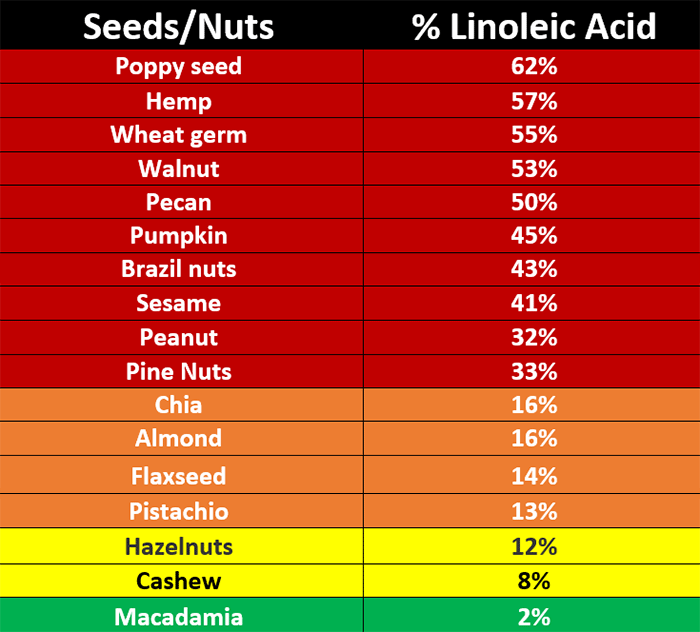
LA in Animal Foods
While seed oils are a primary source of LA, a number of animal foods you might not suspect are also loaded with this harmful fat. Ruminant animals such as cows, buffalo, sheep, lamb, goats, deer, elk and many other game animals have low LA content in their milk and meat, no matter what they eat, thanks to the fact that they have multiple stomachs with bacteria that can convert the high LA fat they eat into saturated and monounsaturated fats.
Animals with a single stomach, however, like chickens and pigs, cannot make this conversion. So, when they’re fed corn and soy, which are high in LA, their meat and eggs will also be high in LA.35 Most chicken and pork have over 25% LA. Chicken eggs are acceptable, though, as each egg has less than 1 gram of LA, and that is assuming they are fed commercial feeds that are loaded with high LA.
Interestingly, the difference in LA in ruminants that are 100% grass-fed and those that are fed corn and soy is only about 0.5%, which is why, from an LA perspective, there isn’t much difference between conventional beef and grass fed-only beef. That said, grass fed beef is still preferred as it typically has less glyphosate and hormones.
So, in summary, your best option is to get most of your animal protein from ruminants and avoid or limit all chicken and pork. My favorite meats are bison and lamb, but any of the ones listed above will work. Ideally it should be organic and the animals should not be fed any food that is contaminated with glyphosate or other pesticides.
LA in Seafood
Ideally, you’d get your omega-3s from healthy seafood. However, not all seafoods contain omega-3s. Only fatty, cold-water fish do. Examples include wild-caught Alaskan salmon, sardines, anchovies, mackerel and herring.
Farmed fish, especially farmed salmon, is best avoided altogether due to the exaggerated potential for contamination. At first glance, farmed fish may seem like a good idea to help protect wild seafood populations from overfishing, but in reality, the industry is plagued with many of the same problems surrounding land-based concentrated animal feeding operations (CAFOs), including pollution, disease, toxicity and inferior nutritional quality.
Most farmed fish are fed genetically engineered (GE) corn and soy, which are a completely unnatural diet for marine life and are loaded with hazardous omega-6 fats. Others are fed fishmeal, which is known to accumulate industrial chemicals like PCBs and dioxins.
From a nutritional perspective, farmed salmon also have the drawbacks of containing only half the omega-3 of wild salmon,36,37,38 and one-fourth the vitamin D,39 while having more than 5.5 times the amount of omega-6.40,41 Farmed salmon are also routinely exposed to antibiotics and pesticides.
Carnosine Can Help Reduce LA-Induced Oxidative Damage
While your body will slowly eliminate stored LA over time, provided you reduce your intake, a peptide supplement called carnosine can help reduce the oxidative damage caused by LA while your body is cleaning itself out.
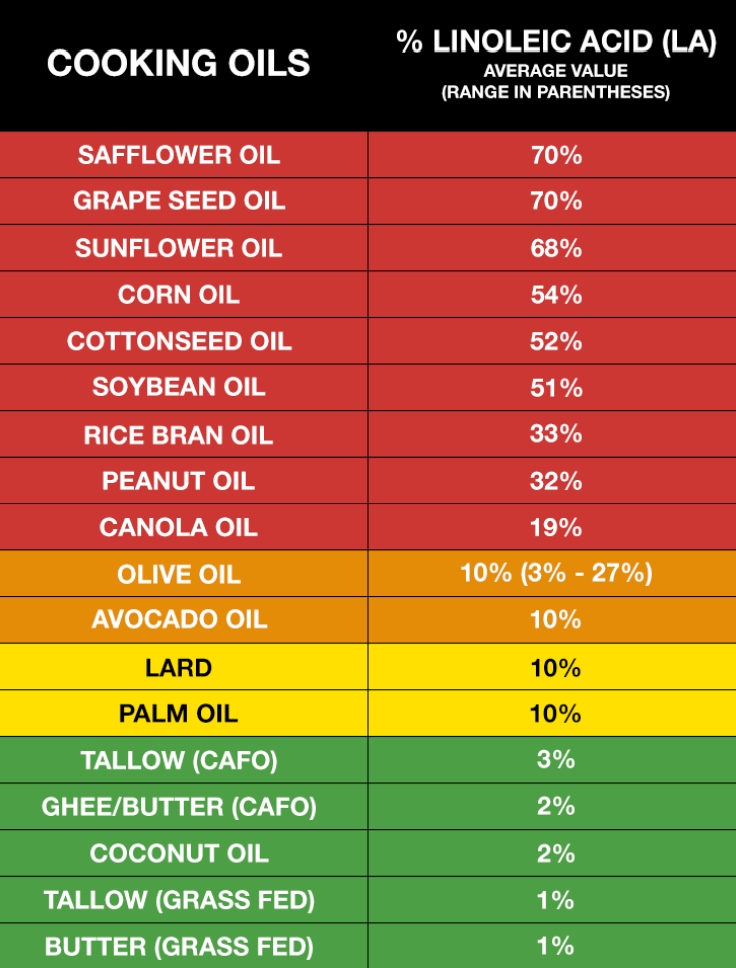
Carnosine is a dipeptide your body makes and it consists of two amino acids, beta-alanine and histidine. It serves as a sacrificial sink for reactive oxygen species (ROS) and ALEs, meaning it lets these very damaging molecules destroy it rather than your mitochondria, DNA or proteins, as depicted in the image below.
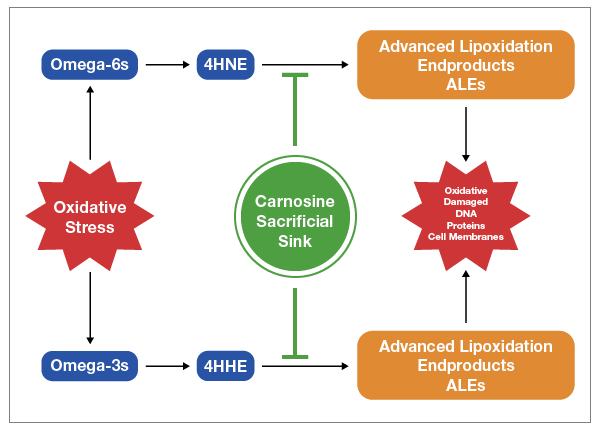
Carnosine is found in meats, and eating animal protein is known to efficiently raise carnosine levels.42 It’s not found in any plant foods. Alternatively, you could use a supplement. In this case, beta-alanine is a superior choice, as it’s the rate limiting amino acid in the formation of carnosine and raises carnosine levels more efficiently. It’s also far less expensive than carnosine.
Summary
Do yourself and your family a favor and embark on a journey of eliminating all seed oils from your diet today to ward off virtually all chronic degenerative diseases. This means avoiding all seed oils, and even fruit oils like olive oil and avocado oils as they are frequently adulterated with cheap seed oils.
Cook with ghee, butter or beef tallow, and avoid all processed foods, as they are typically loaded with seed oils. Also avoid eating in restaurants, as nearly all use massive amounts of seed oils to cook with and put it in their sauces and dressings. Lastly, avoid chicken and pork, and stick to bison and lamb as your primary meat sources.
- 1 Britannica. Lipids
- 2 Nutrients 2023, 15(14), 3129; doi: 10.3390/nu15143129
- 3 Open Oregon. Fatty Acid Types and Food Sources
- 4, 12 Science Direct. Fatty Acids
- 5, 13 Cells. 2021 Jun; 10(6): 1284
- 6 Mount Sinai. EPA
- 7 Heart & Stroke February 6, 2021
- 8 J Political Econ. 1930;38(1):73-85
- 9 Smithsonian Magazine November 23, 2019
- 10 “Profiling Food Consumption in America.” USDA Economic Research Service, Factbook, Chapter 2. ND
- 11 Atkins History
- 14 Oxid Med Cell Longev. 2014;2014: 360438. doi: 10.1155/2014/360438
- 15 Pharmacognosy Review. 2010;4(8):118-126
- 16 Biochemical Journal. 1982;208(1):129-140
- 17 Nephrol Dialysis Transplant. 2001;16(8):1598-1606
- 18 Free Radical Biol Med. 1992;13:341-390
- 19 YouTube, Omega-6 Apocalypse 2, Chris Knobbe August 25, 2021
- 20 Steinberg D, et al. Beyond Cholesterol N Engl J Med 1989; 320:915-924 April 6
- 21 European Heart Journal, June 21, 2020; 41(24): 2313–2330
- 22 Oncology Nurse Advisor July 6, 2018
- 23 Cancer Epidemiology, Biomarkers & Prevention. July 4, 2018
- 24 Free Radic Res. 2015;49(7):827-34
- 25 Photochem Photobiol. 2002 Dec;76(6):657-63
- 26 Exp Dermatol. 2003;12 Suppl 2:18-21
- 27 Renewable Energy. 2018; 126: 403-419
- 28 Int J Mol Sci. 2015;16(6):12871-12890
- 29 The Plan Journal. 2008;54:640-655
- 30 North American Olive Oil Association. The Future of Olive Oil in the United States. March 2019
- 31 Food Safety News April 12, 2022
- 32 Green HS, et al. First report on quality and purity evaluations of avocado oil sold in the US Food Control Volume 116, October 2020, 107328
- 33 Int J Curr Pharm Rev Res. 2011;2(3):145-160
- 34 Applied Sciences. 2019;1 Article no: 1531
- 35 Livestock Production Science. 1998;56:145-156
- 36 Scientific Reports 2016; 6 Article number 21892
- 37 Ecowatch October 8, 2016
- 38 CivilEats December 8, 2014
- 39 BU Today
- 40 Nutrition Data Wild Atlantic Salmon
- 41 Nutrition Data Farmed Atlantic Salmon
- 42 Science Direct, Carnosine; Nutritional Supplements and Metabolic Syndrome
How to Boost Brain Health and Reverse Neurological Disease
Reproduced from original article:
https://articles.mercola.com/sites/articles/archive/2023/07/15/boost-brain-health-reverse-neurological-disease.aspx
The original Mercola article may not remain on the original site, but I will endeavor to keep it on this site as long as I deem it to be appropriate.
Analysis by Dr. Joseph Mercola Fact Checked July 15, 2023
STORY AT-A-GLANCE
- The less inflammatory your diet is, the faster you’re going to get well, because inflammation is nearly always a contributor to neurological dysfunction. Sugar, damaged omega-6 oils, trans fats and processed vegetable oils need to be avoided
- A simple stress reduction technique done before meals can improve your digestion and absorption of nutrients, boost your immune function, and relax your body
- Melatonin provides the best protection for your neurons against free radical damage, and you need a healthy release of melatonin through the night to calm and heal your brain
- As you get older, the enzymatic activity required to produce melatonin becomes impaired. To boost your body’s production, take 5-HTP before bedtime. 5-HTP is converted to serotonin, which is further converted to melatonin
- Natural alternatives to diuretics, commonly prescribed for hypertension, are discussed, as are the many health benefits of proteolytic enzymes
Editor’s Note: This article is a reprint. It was originally published June 10, 2018.
Your brain is a really important part of your body. I’m sure no one would disagree with that. In this interview, Dr. Lee Cowden, co-founder of the Academy of Comprehensive Integrative Medicine (ACIM), discusses some really simple and inexpensive strategies that boost brain health and support neuroregeneration. This is also the topic of this year’s ACIM conference, which will be held in Orlando, Florida, in November.
The Academy of Comprehensive Integrative Medicine was founded in 2008 with the vision of educating integrative practitioners around the globe, for the most part online. “Many practitioners are so busy that they can never take the time to go to all of the meetings they need to go to, to learn what they need to learn,” Cowden says, “so we decided to start putting educational courses online.”
ACIM Offers Training Programs
In 2014, ACIM began offering a 300-hour online integrative medicine fellowship training program. Workshops are held in Dallas every few months to allow practitioners to get hands-on training. In 2018, there were hands-on conferences in July and September 20. Those were all preludes to the main conference in Orlando in November.
“Everything we’re doing this year is focused on the brain [and] neuroregeneration,” Cowden says. “With integrative medicine, we look at the causation, and see if we can resolve the causation of the illness. Once the cause goes away, usually the illness goes away.”
You don’t have to be a health care professional to benefit from ACIM. Even laypeople can study with ACIM.
The academy offers a core wellness coach program that includes 70 hours of training. “I think every integrative practitioner needs to have half a dozen or more wellness coaches working with them to hold the hands of the patients until they get well,” Cowden says.
ACIM Conference 2018: Neuroregeneration
The November conference focused on strategies that can help regenerate all types of neurological conditions, including Alzheimer’s, autism, multiple sclerosis, amyotrophic lateral sclerosis, Parkinson’s disease and other less severe conditions such as the neurological effects of fibromyalgia, and less common conditions such as reflex sympathetic dystrophy and peripheral neuropathy.
“The tendency of the American public is to look for a magic bullet. But, really, for neurological diseases, I haven’t found a magic bullet. There’s a lot of very important pieces.
I call those the foundational pieces: Diet, removing electromagnetic fields (EMFs) from the patient’s surroundings, physical activity, as well as brain games. There are a lot of other emotional issues that impact chronic neurological conditions that we need to address as well.”
Download this Article Before it Disappears
Quenching Inflammation Is a Key Foundational Step
In regard to diet, the less inflammatory it is, the faster you’re going to get well, because inflammation is nearly always a contributor to neurological dysfunction. The most inflammatory of all foods is probably sugar, followed by damaged, oxidized omega-6 oils, trans fats and processed vegetable oils. These all need to be strictly avoided. In addition to an anti-inflammatory diet, nutritional and herbal supplements can offer targeted support.
“Eating a ketogenic diet with clean fats and oils, doing some [intermittent] fasting throughout the week and getting rid of the inflammation-creating things — sugars, omega-6 oils, peanut products that have high arachidonic acid and so on … can make a great start in getting a patient’s neurological condition improved,” Cowden says.
“In 1988, I had a colleague who had a father in a nursing home in Louisiana who had advanced Alzheimer’s. He was a full-care case. In the morning, the nurses would have to get him out of bed, dress him and feed him. He was always pooping and peeing in his pants. He couldn’t remember the names of the nurses, the family members or anybody. My colleague said, ‘Can you give me some ideas of things that will help my father?’
I said, the problem is that it’s going to take a lot of intervention, and getting that at a nursing home is not likely to happen. He said, ‘I’m pretty sure it will happen, because the head nurse of the nursing home has a mother, just like my dad, with severe dementia. She wants to see if what I try on my dad works, so that she can try it on her mom.’
I recommended a regimen: Dietary changes, supplemental nutrients and proteolytic enzymes 30 minutes before food, magnesium, vitamin D3, tocotrienols, tocopherols, bacopa monieri, other herbs, homeopathics and some things to get the metals out … chlorella … dimercaptosuccinic acid (DMSA) and so on.
I said, ‘You need to get your dad out of bed and walk him every day. Get the nurses to do this. Get them to play brain games with him.’
He called me back about four months later. He said, ‘I’ve got to give you an update on this … My dad now gets out of bed, dresses himself, feeds himself, does not poop or pee in his pants anymore. He walks around with the nurses and helps them take care of the other patients in the nursing home.
Then he sits down and plays cards with the nurses, and sometimes wins.’ That’s a big shift in just four months’ time, [and] we’ve had lots of other cases like that with dementia.”
Can You Reverse Autism?
Cowden has also seen near-magical improvements in children with autism. A remarkable case is that of a young man named Bryan. Cowden first met Bryan’s dad when Bryan was just 7 years old. He had neither speech nor socialization skills.
His dad was a restaurant owner who went back to school to become a naturopathic doctor in a desperate attempt to help his son after all of his allopathic doctors told him there was no hope for Bryan — he’d never graduate high school, go to college, hold a job, get married or have children of his own.
Cowden worked with Bryan’s father, and not only did Bryan start speaking within a year or two, he graduated high school at 18, played football in college on a scholarship and got B’s in school. After college, he became a massage therapist; fell in love, married and had two children.
He is now helping autistic children and adult patients with neurological disease to recover. I’ve met Bryan, and this story is all the more remarkable by the fact that he’s one of the healthiest people I have ever met.
There is a very objective heart rate variability test that measures the fitness of your autonomic nervous system and a variety of other variables called HeartQuest. Bryan scored virtually a perfect score on this test. From being an autistic child at age 7 to someone who’s one of the healthiest people around is a rather dramatic example showing that if you apply these principles, they really can work.
“After his dad helped him get to the point where he was able to do a lot of things for himself, Bryan became highly motivated to eat a clean diet, to do a physical activity, to drink enough water, to get enough sleep and so on,” Cowden notes. “He lives right.”
A Simple Stress Reduction Technique That Pays Dividends
The beauty of integrative medicine is that there are literally hundreds if not thousands of tools available, and sometimes the simplest, least expensive ones are among the most effective. One foundational aspect of good health is stress reduction. A stress reduction technique I learned from Cowden that has helped me decrease my sleep latency, allowing me to fall asleep really quickly when done before bed, is performed as follows:
- Place your left index finger and thumb together, then grasp a hold of these two fingers with your right hand (see video demonstration starting around 29:55). It’s important to use your left fingers, as the left side of your body entrains the right side of your body rather quickly, whereas the right side entrains the left very slowly.
- Place your hands on your lap and breathe deeply in through your nose. Hold your breath for one second before breathing out through your mouth. Keep breathing in through your nose and out through your mouth while visualizing yourself in the most relaxing place you have ever been. Be sure to include sound, taste, touch and smell in your visualization and not just the visual component. Really remember that place with all of your senses.
Doing this for four to five minutes before each meal will help improve your digestion and absorption of nutrients, boost your immune function, and relax your body. Done before bedtime, it’ll improve how fast you fall asleep, how deeply you fall asleep and the amount of healing your body can get while asleep as it boosts your immune function. For very little time, energy and effort, at no cost, you can get a lot of improvement. Cowden explains the rationale for these specific finger holds:
“On the index finger, on the middle-finger finger side, the dorsal surface, is the energy pathway for your nervous system. On the palm-side surface of the index finger is the energy pathway for your neurotransmitter system. On the thumb, on the outer aspect, is the pathway for your lymphatic system. Everybody who is chronically stressed has a stressed-out nervous system, stressed-out neurotransmitters and a clogged lymphatic system.
When you hold [your left index finger and thumb] with your right hand, you’re taking the excess energy that’s usually in these other pathways and dissipating that into the pathways that run on the palm surface of your right hand. If there are areas or pathways that are deficient in energy, then energy comes out of the pathways in your right hand and goes into the pathways in your left hand.
The principle is balancing the energy pathways. The Chinese have said for 3,000 years that disease develops whenever energy stagnates. If you stagnate energy, then you’re going to have all kinds of problems, including maldigestion and insomnia … This helps, probably more than anything I’ve found, to balance the sympathetic and parasympathetic nervous system.
The sympathetic is what causes the fight-or-flight. The parasympathetic, which is to balance out the sympathetic, is responsible for digestion, relaxation, sleep and the calming parts of our nervous system. So many people have almost exclusively, sympathetic and almost no parasympathetic function.”
5-HTP Boosts Melatonin and Helps Optimize Sleep
Another gem I learned from Cowden during a visit to my home was the use of 5-hydroxytryptophan (5-HTP). My deep sleep measured at zero minutes, despite spending time at the beach daily to expose myself to bright sunshine and using blackout drapes to sleep in the dark. I also turned off the electricity to my bedroom. I thought that’s all you needed to optimize melatonin. It turns out that’s not the case when you get older. Cowden explains:
“Tryptophan, which you find in turkey and pumpkin seeds, gets converted to 5-HTP. 5-HTP is converted to 5-hydroxytryptamine, also called serotonin. 5-hydroxytryptamine finally gets converted into melatonin. However, as we age, toxins pile up in the enzymes [responsible for these conversions] and prevent those enzymes from performing the work they need to do.
You have, over time, lower and lower levels of 5-HTP, serotonin and melatonin, even though you’re doing everything else right. So, yes, we have to continually detoxify, and also, sometimes, support those enzyme systems by what we call excessive precursor supply. You boost the building blocks to make the final product.
Melatonin is not very well absorbed out the gut. Some people take melatonin, but some people have kind of a paradoxical response from that. But if they take 5-HTP, they can actually make as much 5-hydroxytryptamine as they need to fairly easily, and then they have the serotonin and melatonin.”
Low Serotonin Will Impede Melatonin Production
Once I began taking 100 milligrams of 5-HTP about 20 minutes before bed, my deep sleep rapidly increased to about 30 minutes a night. Since then I’ve also painted my bedroom with grounded shielding paint that provides an ultra-low EMF environment. Turning off the electricity wasn’t enough, as assessed by measuring the electric field’s influence on my body voltage. Hopefully that’ll improve my deep sleep further.
Many are aware that serotonin is important for mood, but if you don’t have enough of it, you can’t make melatonin either, and melatonin is the most important antioxidant nutrient in the brain. As noted by Cowden, melatonin is far more important than the oral antioxidants you may take. It’s even more important than glutathione and superoxide dismutase, because it’s fat-soluble.
Melatonin provides the best protection for your neurons against free radical damage, and you need a healthy release of melatonin through the night to calm and heal your brain.
The enzyme that converts 5-HTP to serotonin requires vitamin B6 as a cofactor, so if you’re taking 5-HTP and not seeing results, that means you probably need to take some coenzymated B6 (pyridoxal 5′-phosphate) sublingually to get enough of the active form of B6 to enable the conversion of 5-HTP to serotonin.
The Many Benefits of Magnesium
Another supplement that is helpful for sleep is magnesium. Cowden prefers magnesium malate, but you can also use magnesium threonate. There are literally dozens of different types of magnesium supplements.
Magnesium threonate has the added benefit of providing some antiretroviral activity, and retroviruses tend to be a challenge inherent with many neurodegenerative diseases. Threonate is also a neurotransmitter, in addition to being an amino acid.
To avoid creating an imbalance, it’s wise to alternate between different forms of magnesium. Cowden prefers magnesium malate because malic acid is a Krebs citric acid cycle intermediate and actually helps generate more ATP energy. If you’re deficient in malic acid inside the cell and you take a magnesium malate, the malic acid is drawn into the interior of the mitochondria and will drag the magnesium in with it.
Without a doubt, magnesium is essential for mitochondrial ATP production. About 50% of the metabolic enzymes in your body require magnesium as a cofactor, so it’s a really important nutrient. It’s also required for conduction of nerve impulses and the contraction-relaxation cycle of muscles, including your heart muscle.
There’s also compelling evidence suggesting magnesium may reduce the impacts and side effects of EMF exposure. Importantly, if you don’t have enough magnesium, your body also cannot absorb potassium. Cowden explains:
“If a person is deficient in magnesium and potassium both, you can give them potassium in large amounts on an ongoing basis, and their potassium levels never come up. But if you give them magnesium and get it repleted, and then give them potassium, then their potassium levels come up.
That’s because the kidney tubules selectively hold on to magnesium and waste potassium into the toilet in order to retain the magnesium. Because, apparently, the body sees the magnesium as being a more vital nutrient than potassium.
One more thing. A lot of people in the United States are on some form of diuretic medication, either for blood pressure, swelling of their legs or for some other reason. When you take a diuretic, it has a magnesium- and potassium-wasting effect on the kidneys. They’re wasting both magnesium and potassium into the toilet. But most doctors only give potassium. They don’t give the magnesium.”
Alternatives to Diuretics
Diuretics are frequently prescribed for high blood pressure and/or swelling in the extremities. As in most cases, drugs are not necessary for treating these conditions. Swelling of the legs is often due to congestion in your lymphatic system, or kidney toxicity preventing your kidneys from properly processing water. Hence the water is retained in your tissues. Sometimes, it’s just severe toxicity in the tissues.
“One of the ways the body protects itself from toxic overload is to allow water to go out into the tissues where the toxins are, to dilute the toxins. If you have enough toxicity in your legs, then you’re going to have fluid accumulation there to try to dilute those toxins,” Cowden explains. “The lymphatic system can get clogged up for lots of different reasons.
The lymphatic system is commonly clogged up in people in the United States, because they have a love affair with dairy products and wheat products, both of which produce thick sticky mucoid material in the lymphatic system, which clogs it up. If they’ll get rid of the dairy and wheat products, then the lymphatic system becomes more fluid and able to clear toxins from the tissues through the lymphatic system.”
If you have an extremely weak heart, you may not be able to pump blood properly. This is also known as right-sided congestive heart failure. A very common cause of that is coenzyme Q10 (CoQ10) deficiency. According to Cowden, taking CoQ10, addressing any emotional issues and eliminating heavy metals will help the swelling to go away even in these more serious cases.
Why Diuretics Are Not Ideal for Treatment of Hypertension
Hypertension is a more complex issue. The first line of treatment and the No. 1 recommended drug for treating hypertension are thiazide diuretics. However, thiazide diuretics cause chromium wasting, which then creates insulin resistance, which in turn raises your blood pressure. As noted by Cowden:
“That seems to be a pretty oxymoronic way to do that. We really need to try to find a better solution. Most people who have hypertension emotionally feel under pressure to do something or not do something. If they can recognize what that is and resolve that emotional conflict, their blood pressure usually goes down quite a bit …
If you get the plaque reversed in the arteries, then the [arteries] are no longer stiff, so then you don’t have a systolic hypertension. You don’t need the drug, because your blood pressure comes down just by getting rid of the plaque in the arteries.
How do you do that? In the early ’90s, I was giving patients with advanced atherosclerotic disease proteolytic enzymes 30 minutes before food, a clean diet, supplements, nutrients, magnesium, vitamin C, vitamin E, etc., and reversing 80% to 90% plaque in the arteries down to 20% and 30% plaque in just three or four months.
We proved that with the ultrasound Doppler duplex imaging. If we can do that, then why are we doing open heart surgeries, carotid endarterectomies and all that other stuff? It’s because people are not educated about what’s possible.
If they haven’t been told that this could be done by their medical doctor, then they don’t believe that it’s possible. Unfortunately, there are a lot of things the medical doctor doesn’t know, because they weren’t taught it in medical school.”
The Benefits of Proteolytic Enzymes
Proteolytic enzymes are an effective strategy not only for decreasing atherosclerotic plaque but also for thinning your blood, lowering your risk of a blood clot. Cowden’s father was placed on Coumadin by his doctor, which caused him to bleed profusely whenever he hurt himself working outside. Cowden suggested proteolytic enzymes instead, which his father was eager to try.
“He started that when he was about 60. He lived to be 80. He was on proteolytic enzymes 30 minutes before food twice a day for 20 years, without any more clots, without any more of the symptoms for which he was being treated with the sodium warfarin or the Coumadin.
Since then, I’ve treated several dozen other patients with the same strategy. As far as I know, there’s no peer-reviewed literature proving that this is so, but we have lots of anecdotal evidence … As far as I know, everybody has remained plaque-free.”
The enzymes Cowden uses for this purpose, in order of effectiveness are:
- Lumbrokinase, made from bacteria that live in the gut of the earthworm
- Nattokinase, a fermented soy product
- Serrapeptase, made from bacteria that grow in the gut of the silkworm
- Bromelain, obtained from pineapple stems
- Papaya leaf enzyme
“A person can be energetically tested for several of these enzymes to see which pair is the best pair and just rotate back and forth. Monday, Wednesday and Friday, one; Tuesday, Thursday, Saturday and Sunday the other.
If they do enough of those, then usually they’ll have no clot formation,” he says. Proteolytic enzymes also combat tiny clots, frequently caused by chronic infections. The infection, wherever it is located, causes your body to produce excessive amounts of fibrin, a clot-producing agent.
This fibrin can plaster itself up against the capillary walls, restricting the delivery of oxygen from red blood cells through the capillary wall into the tissues.
The above-mentioned enzymes will strip away fibrin, allowing oxygen delivery through the capillary walls into tissues. Once the tissues are no longer starved of oxygen, they can go into aerobic metabolism instead of anaerobic metabolism, and when you’re in anaerobic metabolism, you don’t stimulate cancer growth and microbial growth. So, there are many related health benefits.
Did Lou Gehrig Die Because of Low Omega-3s?
Reproduced from original article:
https://articles.mercola.com/sites/articles/archive/2023/07/05/omega-3-and-als-risk.aspx
The original Mercola article may not remain on the original site, but I will endeavor to keep it on this site as long as I deem it to be appropriate.
Analysis by Dr. Joseph Mercola Fact Checked July 05, 2023
STORY AT-A-GLANCE
- A lack of omega-3 fats may have been involved in Lou Gehrig’s death from the disease, as research shows these healthy fats offer protection for ALS patients
- Higher levels of omega-3 fats, particularly the plant-based omega-3 fat alpha-linolenic acid (ALA), were linked to slowed decline and reduced risk of death in ALA patients
- The balance of omega-3s you consume is key; since processed foods are loaded with omega-6 fats, it radically skews the omega-3 to omega-6 ratio and inhibits your body’s innate ability to synthesize beneficial EPA and DHA
- It was 1939 when Gehrig bid farewell to baseball, as his ALS symptoms left his body unable to perform; history shows that our lopsided consumption of ALAs began in the early 1900s, when people were discouraged from eating natural animal fats, leading to increased intake of vegetable oils
- There are likely a number of contributing factors to ALS, but it’s quite possible that low omega-3 fats were among those that contributed to Gehrig’s case
Amyotrophic lateral sclerosis (ALS) is better known as Lou Gehrig’s disease, named for the beloved New York Yankees baseball player who died of the condition. A number of factors may have played a role in Gehrig’s health decline, including repeated head trauma,1 which is associated with ALS.
A lack of omega-3 fats may have also been involved, however, as research shows these healthy fats offer protection for ALS patients.2 The study, by Harvard researchers, found higher levels of omega-3s led to longer survival and slower functional decline in those with ALS.
However, what this study fails to point out, and that I discuss in my interview with Nils Hoem above, is the fact that reducing seed oil omega-6 in the form of linoleic acid is likely equally important. This is because when your body is loaded with omega-6, the enzymes that convert the omega-3 fat, ALA, are largely used up by the omega-6 fat, LA, and used to make arachidonic acid rather that the important EPA and DHA fats.
Eating Foods High in Omega-3s May Benefit ALS
Omega-3 fats are well-known for their neuroprotective effects, and research published in Neurology3 supports their favorable role in ALS. The study involved 449 people with ALS, whose symptom severity and disease progression were scored and tracked for 18 months. Blood levels of omega-3 fats were also measured, with participants divided into four groups, from lowest to highest.4
Higher levels of omega-3 fats, particularly the plant-based omega-3 fat alpha-linolenic acid (ALA), were linked to slowed decline and reduced risk of death.5 Among those who died during the study, 33% belonged to the group with the lowest levels of ALA, compared to 19% in the highest ALA group.
Even after adjusting for family history, age and other factors, people with the highest ALA levels had a 50% lower risk of death than those with the lowest.6 Eicosapentaenoic acid (EPA), another omega-3 fat that’s found in fatty fish and krill oil, was also associated with lower death risk in the study.7
Lead study author Kjetil Bjornevik, assistant professor of epidemiology and nutrition with Harvard T.H. Chan School of Public Health, explained:8
“Prior findings from our research group have shown that a diet high in ALA and increased blood levels of this fatty acid may decrease the risk of developing ALS. In this study, we found that among people living with ALS, higher blood levels of ALA were also associated with a slower disease progression and a lower risk of death within the study period.
These findings, along with our previous research, suggest that this fatty acid may have neuroprotective effects that could benefit people with ALS.”
The Correct Balance of Omega-3s Is Essential
It’s interesting that this study highlighted ALA, and even stated linoleic acid (LA), a type of omega-6 found in industrially processed seed oils, had a protective effect.9 As explained by Hoem — a research scientist with Aker BioMarine, the largest krill oil company in the world — in the video above, there are two polyunsaturated fats (PUFAs) that are considered essential in conventional medicine.
One of them is LA, which is an 18-carbon molecule. The other is ALA, which also has 18 carbons. Since your body cannot make these fats, you must get them from your diet. That said, since LA is found in nearly every food, and you only need very small amounts, it’s virtually impossible to become deficient in LA. In fact, most people consume far too much LA, as it’s abundantly present in most ultraprocessed foods.
Others, such as the omega-3s EPA and DHA, which have 20 and 22 carbons respectively, can be synthesized in your body, provided you have enough available delta-6-desaturase, an enzyme responsible for their production from ALA.
The problem is that there’s competitive inhibition for that enzyme, so when you have 10-fold (1,000%) more omega-6 in your system, as many people do, then the delta-6-desaturase will be used to convert the omega-6 into arachidonic acid, instead of converting the ALA into EPA.
Since processed foods are loaded with omega-6 fats, it radically skews the omega-3 to omega-6 ratio and inhibits your body’s innate ability to synthesize beneficial EPA and DHA.
Download this Article Before it Disappears
Increasing Omega-3 Is Necessary for Most People
Again, when you have large quantities of LA in your diet, it inhibits the enzyme, delta-6 desaturase, that converts ALA into EPA and then DHA. So, it’s important to lower your LA intake as much as possible so your body can more easily convert any plant-based omega-3, found in flax, hemp and chia seeds, into the animal-based omega-3 fats EPA and DHA.
This competition for delta-6 becomes a moot point if you reduce your LA intake to only 1% to 2% of daily calories. But most people consume 20% to 25% of their calories in the form of LA, which means they have stored up this fat in their cells and it will take up to seven years to get it out.
Restricting LA intake will automatically balance out your omega-3s naturally. But the other alternative is to increase your intake of animal-based omega-3s, which can essentially push the omega-6 out of your membranes. Ideally, you’d do both. According to Hoem:
“The amount of omega-6 is so huge compared with the omega-3s that the only feasible way of increasing your omega-3s in the membranes is through taking omega-3s. Then there is a 1-to-1 exchange of EPA and DHA for omega-6s in the membrane.
So, if you increase one molar amount of EPA and DHA in the membrane, then you kick out exactly the same amount of omega-6. And it’s important to realize that the membrane will be a reflection of your intake of omega-6s versus omega-3s. You can’t really do much with the omega-6s because they’re everywhere, but you can fix it by increasing your intake of long chain omega-3s.”
It was 1939 when Gehrig bid a fond farewell to baseball, as his ALS symptoms left his body unable to perform.10 History shows that our lopsided consumption of ALAs began in the early 1900s, when people were discouraged from eating natural animal fats such as butter and lard.11
This led to a significant increase — more than twofold — in the intake of LA, largely from vegetable oils.12 So, while there are likely a number of contributing factors to ALS,13 it’s quite possible that low omega-3 fats were among those that contributed to Gehrig’s case.
Sports-Related Head Injuries Also Have an Omega-3, ALS Link
Another interesting connection is the many head injuries that Gehrig suffered — and this, too, has an omega-3 connection. Repetitive head injuries can lead to chronic traumatic encephalopathy (CTE),14 which may be associated with development of motor neuron disease.
CTE doesn’t typically occur after one or two concussions. Most individuals affected have had hundreds or thousands of blows to the head, including not only concussions but also many lesser sub-concussive impacts, the latter often being the biggest factor.15 This seems to describe Gehrig. As reported by PBS:16
“Lou Gehrig was called the Iron Horse not only for his incredible strength and speed, but also because he was always in the line-up, no matter what injury he incurred the day before.
On numerous occasions, he was ‘beaned’ by an errant pitch or hit in the face by ground balls, suffered repeated concussions, episodes of loss of consciousness, and other forms of head trauma, without the slightest protection, beyond wearing a woolen baseball cap.
Gehrig collided with rapidly moving objects unrelated to the batter’s box or first base, as well. In 1924, for example, during a post-game fight with the Detroit Tigers, Gehrig took a swing at Ty Cobb, missed, fell, and hit his head on concrete pavement, only to lose consciousness for a brief period of time.”
The omega-3 fat DHA may help for brain trauma, specifically helping the brain resist oxidative stress while preserving membrane homeostasis and function after injury. University of California at Los Angeles researchers suggested that dietary DHA may “counteract broad and fundamental aspects of TBI [traumatic brain injury] pathology that may translate into preserved cognitive capacity.”17
Brain Benefits of Omega-3s Are Well-Established
Omega-3 fats are vital to your brain. A study in the journal Neurology found “older women with the highest levels of omega-3 fats … had better preservation of their brain as they aged than those with the lowest levels, which might mean they would maintain better brain function for an extra year or two.”18
In addition, older adults with memory complaints who consumed DHA, alone or in combination with EPA, had improved memory.19 Low DHA levels have been linked to memory loss and Alzheimer’s disease, and some studies suggest degenerative brain diseases may potentially be reversible with sufficient DHA.20,21
This makes sense, since DHA is an essential structural component of your brain, found in high levels in your neurons, the cells of your central nervous system. When your omega-3 intake is inadequate, your nerve cells become stiff and more prone to inflammation as the missing omega-3 fats are substituted with omega-6 instead.
Once your nerve cells become rigid and inflamed, proper neurotransmission from cell to cell and within cells becomes compromised. You can read more about this in my book, “Superfuel,” cowritten with James DiNicolantonio, Pharm.D. DHA also stimulates the Nrf2 pathway, one of the most important transcription factors that regulates cellular oxidation and reduction, and aids in detoxification.22
Additionally, DHA increases heme oxygenase 1,23 a protein produced in response to oxidative stress, and upregulates antioxidant enzymes — all of which are important for brain health.
Best Sources of Omega-3s
While fish oil is often what comes to mind when considering omega-3 supplementation, it’s not the best option. This is because, in most commercial fish oil supplements, the DHA and EPA are delivered in the form of ethyl esters.
Ethyl esters are essentially a synthetic substrate, created through the micro distillation process of crude fish oil. Most corporations produce ethyl ester fish oil because it’s far less expensive to produce than the triglyceride form. Ethyl esters are also easier to work with during processing, as they have a higher boiling point, which becomes important when the oils are heated and purified of environmental pollutants.
The problem with ethyl esters is they’re the least bioavailable form of omega-3. Free acids of fish oil have an absorption rate of at least 95%. EPA in its natural triglyceride form had a 69% absorption rate in one study, while ethyl ester forms absorbed only about 20% as well as the free acids.24
Importantly, unstable molecules are also more prone to oxidative damage and thus rancidity, which means consuming synthetic fish oil could potentially cause more harm than good.25 Ideally, consume omega-3 fats in whole-food form by eating fatty, cold-water fish.
This includes wild-caught Alaskan salmon, sardines, anchovies, mackerel and herring. If you choose to use a supplement, krill oil provides a superior alternative to fish oil. To ensure you’re getting enough beneficial omega-3 fats, whether you’re getting them from cold-water fish or krill oil, measure your omega-3 index, a measure of the amount of EPA and DHA in the membranes of your red blood cells.
And remember, for optimal health and brain benefits, in addition to increasing EPA and DHA, you’ll absolutely want to radically reduce your intake of LA as low as possible to ensure your omega-3 intake is properly balanced.
You can use Cronometer.com to carefully measure and enter your foods and it will tell you just how much LA you are eating. The goals is under 5 grams, but the lower the better. Mine is about 2.5 grams or about 0.8% of total daily calories. The goal is to get below 2% of daily calories.
- 1, 14 J Neuropathol Exp Neurol. 2010 Sep;69(9):918-29. doi: 10.1097/NEN.0b013e3181ee7d85
- 2, 3 Neurology June 21, 2023
- 4, 5, 6, 7, 8, 9 The Harvard Gazette June 21, 2023
- 10, 16 PBS June 17, 2016
- 11, 12 BMJ Open Heart August 22, 2018
- 13 Version 1. F1000Res. 2017; 6: 371
- 15 Concussion Legacy Foundation, What Is CTE?
- 17 J Neurotrauma. 2011 Oct;28(10):2113-22. doi: 10.1089/neu.2011.1872. Epub 2011 Oct 4
- 18 Neurology, doi: 10.1212/WNL.0b013e3182a9584c
- 19 PLoS One. 2015; 10(3): e0120391
- 20 Alzheimer’s and Dementia 2010 Nov;6(6):456-64
- 21 Nutritional Neuroscience 2008 Apr;11(2):75-83
- 22 Journal of Diabetes Investigation September 14, 2018 [Epub ahead of print]
- 23 BMC Cancer. 2018; 18: 1042
- 24 Biochem Biophys Res Commun. 1988 Apr 15;152(1):328-35
- 25 Pharmacogn Rev. 2010 Jul-Dec; 4(8): 118-126
The Uncommon Heart Attack That Kills Healthy, Young Women
Reproduced from original article:
https://articles.mercola.com/sites/articles/archive/2023/05/30/spontaneous-coronary-artery-dissection.aspx
The original Mercola article may not remain on the original site, but I will endeavor to keep it on this site as long as I deem it to be appropriate.
Analysis by Dr. Joseph Mercola Fact Checked May 30, 2023
STORY AT-A-GLANCE
- Symptoms of an uncommon type of heart attack known as spontaneous coronary artery dissection (SCAD) are easily overlooked, as few SCAD patients have any history of or risk factors for heart disease
- SCAD is a leading cause of heart attacks in healthy women under 55; the average age of SCAD patients is 42. Eighty percent of SCAD patients are women; 20% have recently given birth
- SCAD occurs when the layers of your blood vessel wall tear apart from each other, trapping blood between the layers. As the blood collects between the layers, your blood vessel gets choked off, triggering a heart attack
- Most SCAD patients are healthy. Risk factors for the condition include underlying blood vessel conditions such as fibromuscular dysplasia, extreme exercise and severe emotional stress
- Common signs and symptoms of a SCAD-induced heart attack, and current treatment recommendations are included
Editor’s Note: This article is a reprint. It was originally published March 8, 2018.
The symptoms of an uncommon type of heart attack known as spontaneous coronary artery dissection (SCAD)1 are dangerously easy to overlook, as few SCAD patients have any history of or risk factors for heart disease. SCAD is a leading cause of heart attacks in healthy women under 55; the average age of SCAD patients is 42.
ABC News recounts the stories of two women whose sudden heart attacks were triggered by SCAD.2 Five weeks after giving birth to a healthy baby girl, Maryn Cox suddenly developed troubling symptoms. “It felt like pressure, possibly gas; acid reflux, I wasn’t sure what it was. One of my arms went numb, I started getting nauseous; cold sweats,” she says. The symptoms, while common, turned out to be SCAD, a condition few have ever heard of.
While SCAD is a cause of heart attack, it’s different from a heart attack caused by coronary artery disease. Essentially, SCAD occurs when the layers of your blood vessel wall tear apart from each other, trapping blood between the layers. As the blood pools and collects between the layers, your blood vessel gets choked off, killing heart muscle tissue downstream from the blockage, thereby triggering a heart attack.
Signs and Symptoms of SCAD
Commonly reported signs and symptoms of SCAD include the following. If you experience these symptoms, call for immediate emergency medical assistance (in the U.S., call 911). It’s important to realize that many who develop SCAD are otherwise quite healthy and most do not have risk factors for heart disease. For this reason, it’s important to seek medical attention if you experience symptoms of SCAD, in order to avoid a lethal heart attack.
Indeed, the No. 1 symptom of a heart attack is sudden death, and the same applies to SCAD. In essence, by the time recognizable symptoms of a heart attack occur, you’re well on your way toward death, so early intervention is crucial.
| Lightheadedness | Sweating |
| Radiating pain in your neck, back or jaw | Shortness of breath |
| Pain, tightness, pressure or discomfort in your chest (some women report feeling like their bra is suddenly too tight, even though they know it’s not) | Stomach pain |
| Fatigue | Pain radiating down one or both arms |
For whatever reason, SCAD tends to be more common in women — especially younger women, and following pregnancy — although it’s a relatively rare condition overall. While the cause for SCAD is unknown, medical experts have theorized the gender difference may have something to do with hormonal variations. Common risk factors for SCAD include:
- Being female (80% of SCAD patients are women)
- Recently giving birth (20% of SCAD patients have recently given birth)
- Underlying blood vessel conditions such as fibromuscular dysplasia (a condition that causes abnormal cell growth in the arteries)
- Extreme physical exercise
- Severe emotional stress
Best Treatment for SCAD Is Allowing Body to Heal Naturally
Because the underlying cause of SCAD is still unknown, the best course of treatment has been equally uncertain. However, according to a recent scientific statement by Mayo Clinic researchers, SCAD sufferers tend to benefit the most from “conservative treatment, letting the body heal on its own.”3
Dr. Sharonne Hayes, the Mayo Clinic cardiologist who since 2010 has dedicated herself to the study of SCAD (see videos above), says, “It may seem counterintuitive, but we discovered that treating SCAD the same way we treat heart attacks due to atherosclerosis can cause further tearing and damage to the vessel. [T]he initial proper diagnosis is critical in guiding the care.”
The Mayo Clinic consensus statement is a significant step forward, providing health care providers with information about how to diagnose and treat SCAD. Importantly, their findings reveal that, in most patients who were not treated with a stent, the dissection in the blood vessel healed on its own within weeks or months.
In some patients, healing began within mere days. The statement also recommends a tailored cardiac rehabilitation program for patients, and stresses the importance of addressing mental health, as anxiety and depression tend to be quite common in SCAD patients.
Download this Article Before it Disappears
Many Women Mistake Heart Attack Symptoms With Anxiety, Stress
In related research,4 researchers found women are less likely to report chest pain when having a heart attack. According to the authors, compared to men, “women were more likely to perceive symptoms as stress/anxiety (20.9% versus 11.8%) but less likely to attribute symptoms to muscle pain (15.4% versus 21.2%).” They were also more likely to use terms such as “pressure,” “tightness” or “discomfort” in the chest rather than referring to it as chest pain.
They also found that a significantly greater number of women reported their doctor did not think their symptoms were heart-related. Overall, 53% of female heart attack patients reported this, compared to just 37% of men.
Nearly 30% of women had actually sought medical help prior to being hospitalized with a heart attack, compared to just 22% of men. What these findings suggest is that both women and their doctors tend to misdiagnose or dismiss symptoms of heart attack, placing them at increased risk of death than men. As noted by the authors:
“The presentation of [acute myocardial infarction] symptoms was similar for young women and men, with chest pain as the predominant symptom for both sexes. Women presented with a greater number of additional non-chest pain symptoms regardless of the presence of chest pain, and both women and their health care providers were less likely to attribute their prodromal symptoms to heart disease in comparison with men.”
Top 6 Factors That Predict Your Heart Attack Risk
If you want to reduce your risk of a heart attack, you should absolutely pay attention to your diet and exercise habits. These, along with four other habits, are said to make young women more or less “heart attack-proof,” according to research published in the Journal of the American College of Cardiology.5
Women who adhered to all six guidelines lowered their heart disease risk by 92%. Based on these findings, the researchers estimated that more than 70% of heart attacks could be prevented by implementing the following:
- A healthy diet discussed in my two most recent books “Effortless Healing” and “Fat for Fuel“
- Normalizing your body weight (your waist-to-hip ratio being a more reliable risk predictor than body mass index, as it reflects your visceral fat deposits)
- Getting at least 2.5 hours of exercise each week and moving regularly throughout the day
- Restricting your TV watching to seven or fewer hours per week
- Not smoking
- Limiting alcohol intake to one drink or less per day
These results echo those of a 2014 study,6 which concluded that the following five healthy lifestyle strategies could prevent nearly 80% of first-time heart attacks in men. As noted by the authors, “It is not surprising that healthy lifestyle choices would lead to a reduction in heart attacks … What is surprising is how drastically the risk dropped due to these factors.”
- A healthy diet
- Being physically active (walking/bicycling ≥ 40 minutes/day and exercising ≥ one hour/week)
- Maintaining a healthy waist circumference (waist circumference < 37.4 inches or 95 centimeters)
- Moderate alcohol consumption (10 to 30 grams/day)
- No smoking
Tests to Evaluate Your Heart Disease Risk
While SCAD is an exception, most heart attacks are caused by heart disease. Unfortunately, many are still evaluating risk based on the flawed cholesterol hypothesis. In reality, high cholesterol is not a significant risk factor for heart disease or heart attacks at all.
As you evaluate your risk of cardiovascular disease, there are specific ratios and blood level values that will tell you much more than your total cholesterol numbers. The following tests will also give you a better assessment of your potential risk for heart attack or coronary artery disease:
• Cholesterol ratios — Your HDL to cholesterol ratio and triglyceride to HDL ratio are strong indicators of your risk. To calculate your HDL/cholesterol ratio, divide your HDL by your total cholesterol and multiply by 100. That percentage should ideally be above 24%. For your triglyceride/HDL ratio, divide your triglyceride total by your HDL and multiply by 100. The ideal percentage is below 2%.
• NMR LipoProfile — The size of your low-density lipoprotein (LDL) cholesterol is more important than your overall total LDL level. Large particle LDLs are not harmful to your health while the smaller, denser LDL particles may create problems as they squeeze through the lining of your arteries, oxidize and trigger inflammation.
An NMR LipoProfile that measures the size of your LDL particles is a better assessment of your risk of heart disease than total cholesterol or total LDL.
• Fasting insulin level — Sugar and carbohydrates increase inflammation. Once eaten, they trigger a release of insulin, promoting the accumulation of fat and creation of triglycerides, making it more difficult for you to lose weight or maintain your normal weight. Excess fat around your midsection is one of the major contributors to heart disease.7
Your fasting insulin level can be determined by a simple, inexpensive blood test. A normal fasting blood insulin level is below 5 microunits per milliliter (mcU/ml) but, ideally, you’ll want it below 3 mcU/ml. If your insulin level is higher than 3 to 5, the most effective way to optimize it is to reduce net carbs, replacing them with higher amounts of healthy fats, including saturated fats.
• Fasting blood sugar level — Studies have demonstrated people with higher fasting blood sugar levels have a higher risk of coronary heart disease.8 In fact, when your fasting blood sugar is between 100 and 125 mg/dl, your risk of coronary artery disease is 300% higher than having a level below 79 mg/dl.
• Iron level — Iron creates an environment for oxidative stress, so excess iron may increase your inflammation and increase your risk of heart disease. An ideal iron level for adult men and non-menstruating women is between 40 and 60 nanograms per milliliter (ng/ml). You do not want to be below 20 ng/ml or above 80 ng/ml.
Learn to Implement Heart Healthy Lifestyle Strategies
Any time you experience any kind of chest pain or discomfort, it’s important to take it seriously and contact your doctor. Keep in mind that not everyone experiences chest pain or discomfort during a heart attack. Other signs and symptoms include:
- Upper body pain or discomfort in your arms, back, neck, jaw or upper stomach
- Shortness of breath
- Nausea
- Lightheadedness
- Cold sweats
You’re far better off getting a diagnosis of heartburn than dying, which is the most common “symptom” of a heart attack. Your chances of survival are greater if you get emergency treatment quickly. Especially if you’re a woman, be extra mindful of troublesome symptoms that might be heart-related, as women are misdiagnosed far more often than men. You may even have to insist on a more in-depth evaluation by your doctor if he or she seems immediately dismissive.
Last but not least, remember that heart attack prevention is primarily lifestyle related, as indicated by the studies above. In addition to the strategies mentioned earlier, consider:
| Reducing, with the plan of eliminating, grains and sugars in your diet. It is vitally important to eliminate gluten-containing grains and sugars, especially fructose. Also consume a good portion of your food raw. |
| Replacing harmful vegetable oils and synthetic trans fats with healthy fats, such as olive oil, butter, avocado, organic pastured eggs and coconut oil (remember olive oil should be used cold only; use coconut oil for cooking and baking). |
| Also make sure you’re getting plenty of high-quality, animal-based omega-3 fats. |
| Eating more fermented foods. In addition to optimizing your intestinal microflora, which will boost your overall immunity, it will also introduce beneficial bacteria into your mouth. Poor oral health is another powerful indicator of increased heart disease risk. |
| Optimizing your vitamin D levels, ideally through appropriate sun exposure as this will allow your body to also create vitamin D sulfate — another factor that may play a crucial role in preventing the formation of arterial plaque. |
| Ideally, incorporate high-intensity interval exercises into your fitness routine, as this will also optimize your human growth hormone production. |
| Getting plenty of high-quality, restorative sleep. |
| Practicing regular stress-management techniques. |
Will These ‘Foods’ Be Banned for Toxic Chemicals?
Reproduced from original article:
https://articles.mercola.com/sites/articles/archive/2023/04/05/bill-to-ban-five-toxic-chemicals.aspx
The original Mercola article may not remain on the original site, but I will endeavor to keep it on this site as long as I deem it to be appropriate.
Analysis by Dr. Joseph Mercola Fact Checked April 05, 2023

STORY AT-A-GLANCE
- California lawmakers are hoping to ban five toxic chemicals used in the manufacture of many processed foods, including titanium dioxide, potassium bromate, brominated vegetable oil, red dye No. 3 and propylparaben
- Combined, these chemicals are estrogen disrupters, lower sperm count, are known to cause cancer in animals and humans, disrupt the gut microbiome, damage the central nervous system, cause loss of memory and muscle coordination, and are linked to hyperactivity in children
- If enacted, the bill would prohibit the manufacture, sale and distribution of products containing these chemicals, such as Skittles, Sour Patch Kids, jellybeans, Pez candy, Campbell’s Soup and Trident sugar-free gum to name a few
- Foods that most people overlook are condiments that are far from benign and can have a cumulative biological effect. Making mayonnaise, sour cream, salad dressing and ketchup at home takes just a few minutes, helps reduce excess sugar in your diet and eliminates artificial preservatives, dyes and flavor enhancers
California lawmakers are hoping to ban the addition of five toxic food additives in foodstuffs sold in California that the FDA approves for use but are associated with cancer and organ and DNA damage.1 According to the FDA,2 “Today, food and color additives are more strictly studied, regulated and monitored than at any other time in history.”
In other words, the FDA allows food additives for U.S. consumption that other countries ban even though additives are more strictly studied and regulated “than at any other time in history.” Two groups of food ingredients are exempt from regulation. The first are substances that were approved before 1958 and the second are those that are generally recognized as safe (GRAS) based on use before 1958 or published data. The FDA also states that their regulations:3
“… [R]equire evidence that each substance is safe at its intended level of use before it may be added to foods. Furthermore, all additives are subject to ongoing safety review as scientific understanding and methods of testing continue to improve. Consumers should feel safe about the foods they eat.”
And yet, despite these statements, the evidence does exist that the five food additives California lawmakers would like to ban, and which are currently approved by the FDA for use in food products, are dangerous for consumers and may place your health at risk.
California Takes the Lead on Eliminating Five Food Toxins
In February 2023,4 California assemblymember Jesse Gabriel, D-Woodland Hills, proposed Bill AB418 that would prohibit food containing red dye No. 3, potassium bromate, propylparaben, brominated vegetable oil and titanium dioxide from the sale, manufacture and distribution in the state. In a press release from the assemblymember’s office, Susan Little, governmental affairs senior advocate for the Environmental Working Group (EWG) asked:5
“Why are these toxic chemicals in our food? We know they are harmful and that children are likely eating more of these chemicals than adults. It makes no sense that the same products food manufacturers sell in California are sold in the EU but without these toxic chemicals. We thank Assemblymember Gabriel’s efforts to remove these toxic additives from California’s food supply.”
Some of the foodstuffs containing these toxic chemicals include Skittles, Sour Patch Kids, jellybeans, Pez candy, Campbell’s Soup and Trident sugar-free gum. Other consumables on the chopping block include Old El Paso sauce, Hot Tamales candy, Sun Drop soda and some breads.6
If the bill passes and becomes law, it will also prevent companies from manufacturing products with these chemicals inside the state, even if they’re not sold in California. Although the bill is aimed at protecting California, Gabriel hopes that it could have a national impact.
He explained to a reporter from the Daily Mail7 that he hopes companies will change their recipes as they’re unlikely to pull their products and abandon the large California market. However, Mars Inc. already makes a different version of Skittles sold in the EU, yet continues to sell the more toxic form in the U.S.
If the bill is enacted, California would be the first state to ban the use of dangerous chemicals in processed foods. In a press release, Gabriel, who is chair of the Assembly Committee on Privacy and Consumer Protection, commented on his state webpage:8
“Californians shouldn’t have to worry that the food they buy in their neighborhood grocery store might be full of dangerous additives or toxic chemicals. This bill will correct for a concerning lack of federal oversight and help protect our kids, public health, and the safety of our food supply.”
Europe Bans Toxins and the US Embraces Them
In an era in which the FDA claims food additives are more regulated than at any other time in history, Mars Inc. announced in 20169 that they were committed to removing “harmful and potentially poisonous nanoparticles of titanium dioxide from its food products, including many popular candies.” Yet, over six years later, the company has made no move to remove these harmful chemicals and the FDA has made no move to protect the public.
The Skittles website continues to list titanium dioxide as one of the ingredients in the candy. In 2022, California filed a lawsuit against Mars Inc. claiming it deceived its customers and put health at risk by continuing to use titanium dioxide. According to a report in Insider,10 the company sold an estimated $185 million in Skittles in 2017, which ranked it as the top non-chocolate chewy candy.
The FDA continues to list titanium dioxide as safe under Title 21,11 yet as the agency must surely know, published studies have raised safety questions. Although food companies began phasing out titanium dioxide in products shipped to the EU, it continues to be added to food sold in the U.S., Britain and Canada.
When The New York Times requested a comment from the FDA on why the EU banned titanium dioxide, but the U.S. had not, the official comment was that available studies “do not demonstrate safety concerns connected to the use of titanium dioxide as a color additive.”12
One researcher on a 2014 study on titanium dioxide told The Times there was cause for concern since many of the candies with the highest levels of the toxin are consumed by children at a higher relative dose. Scott Faber, senior vice president at the EWG added that steering clear of the toxin is difficult since companies are not required to publish it on their ingredient list and it could be included simply as “color added.” Faber went on to say:13
“Titanium dioxide is really the poster child for many chemicals that were reviewed, in some cases, more than 50 years ago for safety by the F.D.A. and haven’t been reviewed since. So, titanium dioxide is part of a bigger story about regulatory failure.”
Tatiana Santos, chemicals manager with the European Environmental Bureau, spoke with a reporter from The Guardian, characterizing the FDA’s lack of consumer protection in a statement,14 “The U.S. often waits until the harm is done, and the EU tries to prevent it to a certain extent. It often seems the U.S. favors the market over protection.”
Download this Article Before it Disappears
Dangers of the Five Listed Food Additives
Each of the five food additives listed in California’s proposed Bill AB418 may trigger health concerns, so it’s a good idea to watch for these on food labels. When you cook and bake using whole products, you can avoid toxic chemical additives the FDA insists are not dangerous to your health, but which data show cause damage.
• Titanium dioxide — Nanoparticles of titanium dioxide are used in many foods as an artificial cake additive, anti-caking agent and whitener. It can be found in chewing gum, salad dressings, baked goods and coffee creamer. When the dust is inhaled, titanium dioxide is classified by the International Agency for Research on Cancer as possibly carcinogenic to humans — yet, it’s an ingredient in the breast cancer drug tamoxifen.15
A 2017 paper16 demonstrated titanium dioxide nanoparticles could be found in tissue after only one week of exposure in an animal model at levels relevant to human consumption. The researchers concluded that the data indicated a risk for susceptibility to autoimmune diseases and colorectal cancer when exposed to dietary sources.
A 2021 EFSA Panel on Food Additives and Flavorings17 found that based on the evidence and many uncertainties as well as a concern for genotoxicity, titanium dioxide “can no longer be considered safe when used as a food additive.” Scientists theorized in a 2022 paper18 that after exposure to titanium dioxide stopped, the toxic effects would continue to be detected.
Using colon cells, they found that exposure caused alterations that were not reversed even after 48 hours. A 2021 review of the literature19 looked at how titanium dioxide affected the gut microbiota. They evaluated 18 animal studies and acknowledged that while extrapolation from animals to humans is challenging, the review did highlight titanium dioxide plays a key role in gut nanotoxicity.
• Brominated vegetable oil (BVO) — While the EU has banned BVO, the FDA allows manufacturers to use it as an emulsifier in citrus-flavored soda to keep the flavor from floating to the top.20 BVO contains bromine, which the Daily Mail21 notes can damage the central nervous system with long-term exposure and has been linked to memory loss, chronic headaches and poor balance.
Mountain Dew removed BVO in 2020, but Sun Drop and other budget and store-brand versions of Mountain Dew still use it. India, Japan and the EU have banned its use as an additive as there are concerns that the bromine could accumulate in fatty tissue.
The EWG22 warns that drinking large amounts of BVO-containing soda increases your risk of irritation to the skin and mucous membranes, fatigue, loss of muscle coordination and memory, and headaches. The risks have been known since the early 1980s and even earlier studies showed animals eating diets contaminated with brominate developed changes to their heart and liver. Yet, since 1958, the FDA has classified it as GRAS.
• Potassium bromate — According to the Advisory Board,23 potassium bromate is another additive that is banned in Europe because it may cause cancer but still allowed to be added to flour and baked goods in the U.S. A request to ban potassium bromate was denied by the FDA, even though the International Agency for Research on Cancer (IARC) classifies it as a possible human carcinogen.
According to the EWG,24 the EU believes it may cause cancer, the California Office of Environmental Health Hazard Assessment believes it’s known to cause cancer and the IARC believes it is possibly carcinogenic to humans. In 2015,25 the EWG’s online tool found 86 baked goods and other food products where manufacturers use potassium bromate as an ingredient. In 2023, that number has risen to 180.26
• Red dye No. 3 — As the Daily Mail notes,27 this food dye is used in many sweet candies. Yet, since the early 1980s, researchers have demonstrated that it is linked to cancer and laboratory animals and behavioral issues in children.
January 30, 1990, The New York Times28 reported that the FDA had banned red dye No. 3 in cosmetics, yet it continues to allow the toxic chemical to be ingested in food and drugs.29 Consumer advocacy groups continue to petition the FDA to remove red dye No. 3 based on its link to cancer in animal studies and hyperactivity in children.30
• Propylparaben — Propylparaben belongs to a group of chemicals widely used as artificial preservatives called parabens. The Daily Mail31 notes that propylparaben is often used in baking products, yet the additive has been associated with infertility in animal studies, reduced sperm count in males and as an estrogen disruptor in females.
Propylparaben is covered under the GRAS classification by the FDA. In 2019, the EWG32 reported that human studies from Harvard linked reduced fertility with higher levels of propylparaben in the urine. A 2021 paper33 reviewed the use of propylparaben, known for wide use in personal care products, drugs and food.
The researchers reviewed the available evidence from animal and human studies, during which they addressed the circular logic proponents use to suggest that because the chemical has been used for several decades it must be safe. After evaluating the data, they concluded “… that inadequate evidence has been provided for the safe use of PP [propylparaben] in food, cosmetics and consumer products.”34
Don’t Forget the Condiments
One food category that most Americans often overlook when they’re evaluating dietary choices is condiments. Since they are eaten in small quantities, you may brush them off as harmless. But, far from being benign, they can have a cumulative biological effect35 demonstrated at low doses rather than high doses, especially for hormone-disrupting chemicals. Examples of unhealthy commercially prepared condiments include:
• Mayonnaise — Most commercially prepared mayonnaise primarily uses GMO soybean oil, which is one of the most harmful oils you can eat. Whether it is partially hydrogenated, organic or even made from newer varieties, it causes chaos at the cellular level.
However, mayonnaise is easy to make in a blender with organic eggs and healthy oils. It doesn’t last as long, but it tastes much better and can be made with just a few basic ingredients. You’ll find a good recipe at The Hungry Mouse website.36
• Sour cream — Commercially prepared sour cream doesn’t offer much in the way of real food. Not only that, but the nonorganic organic dairy products used often contain genetically engineered bovine growth hormone (rBGH) also known as recombinant bovine somatotropin (rBST). It increases milk supply in cows and is linked to breast cancer in women.37
Despite decades of evidence, the FDA still maintains it’s safe. Culturing your own sour cream at home has the added benefit of including natural probiotics that are killed off during commercial processing. For more information on making your own cultured sour cream visit Cultures for Health.38
• Salad dressings — The ever-popular ranch and bleu cheese salad dressings are often filled with soybean oil, monosodium glutamate and food dyes. You can make your own at home with homemade yogurt as a base and add your own fresh herbs from the garden. Once you’ve mastered making homemade mayonnaise and sour cream, your choice of dressings, sauces and dips is only limited by your imagination.
• Ketchup — Commercially prepared ketchup is like an intravenous infusion of high fructose corn syrup. In addition, the large bolus of sugar may come from genetically engineered corn syrup. The ingredients in homemade ketchup are simply tomatoes, vinegar, sugar, spices and seasonings. You can cut the sugar by substituting healthful sweeteners, such as honey.
You do not have to give up condiments. Instead of grabbing a commercially prepared bottle, take a few minutes to make your own using real food packed with nutrition. You’ll reduce excess sugar in your diet, and eliminate preservatives, dyes and flavor enhancers.
- 1, 6 Daily Mail, March 16, 2023
- 2 FDA, February 6, 2018 subhead 5
- 3 FDA, February 6, 2018
- 4 Yahoo! News, March 19, 2023
- 5, 8 Assemblymember Jesse Gabriel, February 22, 2023
- 7 Daily Mail, March 16, 2023 Para 6,7 & 20 under image of food on cali’s chopping block
- 9 Center for Food Safety, October 27, 2016
- 10 Insider, July 15, 2022
- 11 FDA, January 17, 2023
- 12, 13 The New York Times, July 26, 2022
- 14 The Guardian, June 23, 2022
- 15 RxPharma Choice
- 16 Scientific reports, 2017; 7(40373)
- 17 EFSA Journal, 2021; 19(5)
- 18 Toxicology, 2022; 478(153280)
- 19 International Journal of Environmental Research and Public Health, 2021; 18(4)
- 20 FDA, May 17, 2022
- 21 Daily Mail, March 16, 2023 Search “Brominated vegetable oil”
- 22 Environmental Working Group, January 13, 2021
- 23 Advisory Board, September 19, 2022 #1
- 24 Environmental Working Group, Potassium Bromate
- 25 EWG, October 14, 2015
- 26 EWG, Food Scores – Potassium Bromate
- 27 Daily Mail, March 16, 2023 Search “Red 3”
- 28 The New York Times, January 30, 1990
- 29 FDA, November 8, 2021
- 30 Food Safety News, January 17, 2023
- 31 Daily Mail, March 16, 2023 Search
- 32 EWG, April 9, 2019
- 33, 34 Current Environmental Health Reports, 2021;8(1)
- 35 E360 March 19, 2012
- 36 The Hungry Mouse, May 27, 2013
- 37 Breast Cancer Prevention Partners, Bovine Growth Hormone (rBGH) or Recombinant Bovine Somatotropin (rBST)
- 38 Cultures for Health, June 23, 2022