Muscle
now browsing by category
Higher Cholesterol Is Associated With Longer Life
Reproduced from original article:
https://articles.mercola.com/sites/articles/archive/2022/05/21/higher-cholesterol-is-associated-with-longer-life.aspx
Analysis by Dr. Joseph Mercola Fact Checked May 21, 2022
STORY AT-A-GLANCE
- Cholesterol, the soft, waxy substance found in every cell in your body, is used to produce several of your body’s vital functions, including hormones and vitamin D. High cholesterol is now recognized for its link to longer life
- Faulty science says your total cholesterol is not a gauge of your heart disease risk, because when your levels are measured, elevated levels called triglycerides are also taken into account
- Found in every cell of your body, cholesterol is used to produce several of your body’s vital functions, including those that involve hormones and vitamin D
- Studies show a contrary or inverse link between all-cause mortality and total cholesterol levels; in other words, mortality is highest when your cholesterol is low, without exception
- Considering the false information on cholesterol, continued prescriptions for statins, and the potentially devastating side effects they cause, it’s clear why researchers are calling for a paradigm shift in the way cholesterol is treated
For those who aren’t sure the conventional health community is wholly in support of individual health when it comes to cholesterol levels — which in some cases still adheres to the story line that too much cholesterol increases the risk of heart disease — you’re right to be concerned.
Taking a global view of what cholesterol is and how it affects your body is a smarter way to approach it than the simple “cholesterol kills” narrative that’s been the drum beat for so many years.
Cholesterol, the soft, waxy substance found in every cell in your body, is used to produce several of your body’s vital functions, including those that involve hormones and vitamin D. About 75% of it is made by your liver and the remainder is derived from the foods you eat; 25% is in your brain.
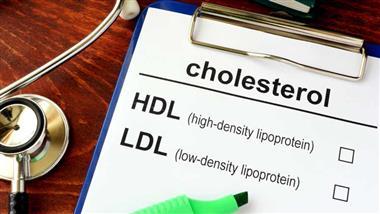
There are two types: High-density is the first. It is also known as HDL, or the “good” kind that keeps cholesterol away from your arteries and removes it from your arteries. The second type is low density lipoprotein, or LDL. LDL is the “bad” kind that can build up in your arteries, form plaque that narrows your arteries and form a clot. This can then make its way to your heart or brain and cause either a heart attack or stroke.
The American Heart Association (AHA)1 now recommends that you balance your levels at about 150 (milligrams per deciliter) (mg/dL). According to old, unfounded science, your total cholesterol — the sum of all the cholesterol in your body — is not a gauge of your heart disease risk. When your levels are measured, elevated levels of triglycerides are also taken into account. According to Børge Nordestgaard, from the University of Copenhagen and Copenhagen University Hospital:
“So far, both cardiologists and [physicians] have focused mostly on reducing LDL cholesterol, but in the future, the focus will also be on reducing triglycerides and remnant cholesterol.”2
Does It Matter What Kills You?
In a commentary posted on Mission.org, a rhetorical question is presented: With all the ways you can die, does it really matter what kills you? On one hand, “If you’re dead, you’re dead, no matter from what,” so it seems silly to “focus on changing something that lowers the risk of death from one cause only to raise that risk from another.”3
It’s an astute observation when you read studies showing conclusively that cholesterol has very little to do with heart disease. Even more importantly, cholesterol is crucial for your health. If it’s too low, then eventually, your hormones, disease risk, cell signaling pathways, and yes, your heart, will suffer. In fact, new research shows that a too-low LDL level could put you at higher risk for a stroke.4
The Dietary Guidelines Advisory Committee (DGAC), which reviews the Dietary Guidelines for Americans every five years, investigated the issue. On page 91 of the 572-page report, the 2015-2020 guidelines noted:5
“Previously, the Dietary Guidelines for Americans recommended that cholesterol intake be limited to no more than 300 mg/day.
The 2015 DGAC will not bring forward this recommendation because available evidence shows no appreciable relationship between consumption of dietary cholesterol and serum (blood) cholesterol, consistent with the AHA/ACC (American Heart Association / American College of Cardiology) report. Cholesterol is not a nutrient of concern for overconsumption.”
Yet, even though the government’s ChooseMyPlate doesn’t mention cholesterol, it’s obvious the cholesterol-is-evil myth is being pushed by physicians and medical agencies such as Harvard Health, which has proposed its own dietary guidelines called “The Healthy Eating Plate.”6
Chastising the USDA for remaining “silent on fat,” Harvard Health says this “could steer consumers toward the type of low-fat, high-carbohydrate diet that makes it harder to control weight and worsens blood cholesterol profiles.”
It’s no wonder people are confused about where cholesterol fits in your diet, when major health agencies send one message to the public and the government sends a completely different one in their dietary guidelines.
Interestingly, the 2015-2020 guidelines were created nearly seven years ago, but information on the importance of cholesterol is nearly two decades old.7 As the Honolulu Heart Program study published in The Lancet in 2001 states:
“Our data accord with previous findings of increased mortality in elderly people with low serum cholesterol, and show that long-term persistence of low cholesterol concentration actually increases risk of death.”
The narrative challenges those who insist that eating foods that contain fat of any kind — saturated fats and trans fats alike — are harmful. Many who make this claim also maintain that “Saturated fat is a bad fat because it raises your LDL level more than anything else in your diet.”8 However, as explained in the Mission.org article:
“While total cholesterol is a poor if not utterly worthless risk marker for heart disease, doctors have focused on it to the exclusion of how it might affect other causes of death. It does you little good to save yourself from heart disease if it means that you increase your risk of death from cancer. All-cause mortality — death from anything — is the most appropriate measure to use when looking at risk factors.”9
The Best Measure for Risk Factors
“Death from anything” may be a clearer term for the one so often used in clinical settings: All-cause mortality. Either way, as quoted by the following study, that’s what the latest research says is the best measure for the factors that increase the risk of what eventually and most likely will take someone’s life.
When it comes to your risk of death from heart disease, there’s much more evidence that inflammation is at the bottom of heart disease rather than high cholesterol, just as it is for a number of other serious diseases. If you want to find what might help you live longer, that’s the premise of a lengthy Japanese study published in the Annals of Nutrition & Metabolism. As the featured study, it notes that regardless of someone’s age, people with higher cholesterol live longer:
“Overall, an inverse trend is found between all-cause mortality and total (or low density lipoprotein [LDL]) cholesterol levels: mortality is highest in the lowest cholesterol group without exception. If limited to elderly people, this trend is universal. As discussed in Section 2, elderly people with the highest cholesterol levels have the highest survival rates irrespective of where they live in the world …
Based on data from Japan, we propose a new direction in the use of cholesterol medications for global health promotion; namely, recognizing that cholesterol is a negative risk factor for all-cause mortality and re-examining our use of cholesterol medications accordingly.”10
After showing that people of all ages with higher cholesterol levels live longer in Japan, in support of these conclusions, similar conclusions were made by a study based in the Netherlands and published in BMJ in 2016.11
The study adjusted for several heart risk factors like smoking, high blood pressure and a history of diabetes melllitus. Participants were placed in groups depending on whether their cholesterol levels were low, medium or high, and those with the highest cholesterol levels were found to have the lowest death rates.
The title of the BMJ review reveals the outcome — there was a “lack of an association or an inverse association between low-density-lipoprotein cholesterol and mortality in the elderly.”12
In short, older people with high LDL cholesterol generally live just as long as — and may even outlive — people with low LDL, which begs the question of how the current cholesterol theory was arrived at in the first place. At the very least, the study authors imply the cholesterol question should at least be re-evaluated. It concluded:
“Our review provides the basis for more research about the cause of atherosclerosis and (cardiovascular disease) and also for a re-evaluation of the guidelines for cardiovascular prevention, in particular because the benefits from statin treatment have been exaggerated.”13
One of the first studies published with information suggesting that high cholesterol is not as heart-damaging as once thought was the Honolulu Heart Program,14 offering further evidence that higher cholesterol levels may be heart protective. The authors concluded by questioning whether there is “scientific justification for attempts to lower cholesterol to concentrations below 4-65 mmol/L in elderly people,” adding that “prudence dictates a more conservative approach in this age group.”15
Can High Cholesterol Really Be Heart Protective?
Perhaps the question that would get to the point quicker is to ask why the Japanese study infers that people with low versus high cholesterol die sooner? The Mission offers referenced studies that show a few factors that could be weighing in:
• Cholesterol may protect against infections and atherosclerosis, as “the many observations that conflict with the LDL receptor hypothesis, may be explained by the idea that high serum cholesterol and/or high LDL is protective against infection and atherosclerosis.”16
• Cholesterol may protect against cancer, although in previous cases where low cholesterol was linked to cancer, exclusions were made to tip the scales, such as excluding possible prior drug treatment, namely clofibrate, a popular cholesterol-lowering drug before statins, by subjects — leaving the question open as to whether it was the low cholesterol that caused the cancer, or the drug treatments that contributed to it.17
• Low cholesterol (180 mg/dL and lower) and violence in psychiatric patients have been linked. When patients in a long-term psychiatric hospital with a history of seclusion or restraints were compared with other patients, there was a “highly significant and strong association between lower cholesterol levels and violent behavior.” The authors did caution, however, that cholesterol levels should not be used to predict violence.18
• There’s also an association between low cholesterol and suicide dating back more than a decade, as researchers found that people in the lowest quartile of cholesterol concentration had more than six times the suicide rates than those in the highest quartile.19
It should be noted that at least one study in Japan20 determined that high cholesterol and suicide were connected.
But, in fact, numerous recent studies have corroborated the earlier ones connecting low cholesterol to suicide,21 with various findings: For example, one found that low triglycerides, reduced BMI and waist circumference, specifically, but not total cholesterol, were connected to a higher risk of suicide;22 while a 2019 study23 found that “low cholesterol is associated with aggression in suicide attempters.”
So What About Statins?
Significantly, the authors of an Annals of Nutrition & Metabolism study didn’t hold back when drawing conclusions regarding why the cholesterol conundrum has gone on so long when the evidence is so clear: “For the side defending this so-called cholesterol theory, the amount of money at stake is too much to lose the fight.”24
The Annals of Nutrition & Metabolism study’s introduction mentions a medical practitioner who advocated statins to his patients to drive down cholesterol until he read the Scandinavian Simvastatin Survival Study,25 in which 4,444 patients with different types of heart disease were given simvastatin — which is touted to be a safe, long-term treatment to improve survival in cardiovascular heart disease patients.
As it turns out, the claim that high cholesterol causes heart disease and death is incorrect; it is, in fact, the opposite. Three reviews26,27,28 supporting the cholesterol hypothesis were found to contain altered data to support their conclusions, according to Expert Review of Clinical Pharmacology, in which it is noted that:
“Our search for falsifications of the cholesterol hypothesis confirms that … the conclusions of the authors of the three reviews are based on misleading statistics, exclusion of unsuccessful trials and by ignoring numerous contradictory observations.”29
Drugs.com30 contributors state that the 35 million people on statins often experience myriad side effects. Liver damage, for instance, is said to be “rare,” implying that ongoing liver tests while taking statins likely aren’t necessary. Some doctors, however, say you’ll need a baseline liver function test beforehand. The most common side effects of statins are:
- Headaches, muscle pain, lower back or side pain
- Nasal congestion or stuffiness, or a runny nose
- Difficulty sleeping
- Constipation
- Hoarseness
And, just in case you needed another source to implicate statins’ role in psychiatric problems, an April 2018 study found that lowering cholesterol levels in men could bring about changes in nerve cell membranes and behavior in men:
“Men seem to be more sensitive to low cholesterol levels as the association between low cholesterol levels and aggression is found mostly in men,” the authors said. “… Lowering cholesterol levels with statins brings about several changes in the serotonergic system, nerve cell membrane microviscosity and behaviour, and needs to be done with precaution in susceptible individuals.
Cholesterol levels could serve as a biological risk marker for violence and suicidal tendencies in psychiatric patients with depression and schizophrenia.”
More Studies and Reviews on Statin Use
Rather than pointing patients in the direction of finding dietary solutions, including eating both the whites and the yolks when having eggs, and ditching processed vegetable oils in favor of healthy cooking oils like coconut oil, olive oil and avocado oil, Harvard Health Medical School updated an article on how to “manage” muscle pain from taking statins, perpetuating the cholesterol myth. They stated:
“If you’re not taking a statin now, you may well be soon. These medications are commonly prescribed to lower ‘bad’ LDL cholesterol and have been shown to reduce the risk of heart attack, stroke, and death.
They are routinely recommended for people who have cardiovascular disease and for many people ages 40 to 75 who don’t have cardiovascular disease but have at least one risk factor (high blood pressure, high cholesterol, diabetes, or smoking) and a 7.5% or greater risk of a stroke or heart attack in the next decade.
Moreover, recent research indicates that they may benefit high risk individuals over age 75 as well … Taking a statin may give you some assurance that you’re doing all you can to avoid heart attack and stroke …”31
Exercising, losing weight, adopting healthy eating habits and including vitamin D and coenzyme Q10 (CoQ10) supplements in your diet are all good strategies for maintaining your cholesterol levels. Unfortunately, the common suggestion for alleviating muscle pain due to statin use is more of the same — just try taking a lower dose or switching to another statin prescription.32
As if that weren’t enough, experts say statins may impair your memory and cause amnesia, a possibility real enough to call for a warning on the labels of prescriptions.33 Statin use may precipitate a higher risk of developing cataracts34 and it “significantly” increases the likelihood of raising the fasting glucose levels of non-diabetics, as well as inducing high blood sugar.35
In another review of the adverse effects of statins, it was noted that “an array of additional risk factors for statin AEs [adverse events] are those that amplify (or reflect) mitochondrial or metabolic vulnerability, such as metabolic syndrome factors, thyroid disease, and genetic mutations linked to mitochondrial dysfunction.”36
Given the false information saying cholesterol is at fault for causing heart-related disease, the continued prescriptions being handed out to patients for statins, and the side effects they cause, it’s clear why, in their introduction, the authors of the Annals of Nutrition & Metabolism study stressed:37
“This, we believe, marks the starting point of a paradigm shift in not only how we understand the role cholesterol plays in health, but also how we provide cholesterol treatment …
Our purpose in writing this supplementary issue is to help everyone understand the issue of cholesterol better than before, and we hope that we lay out the case for why a paradigm shift in cholesterol treatment is needed, and sooner rather than later.”
- 1 AHA November 28, 2019
- 2 Medical News Today August 12, 2019
- 3, 9 Mission.org September 26, 2016
- 4 Neurology July 30, 2019
- 5 CNN. Cholesterol in Food Not a Concern, New Report Says. February 19, 2015
- 6 Harvard Health. Healthy Eating Plate vs. USDA’s MyPlate
- 7, 19 Epidemiology March 2001, Volume 12, Issue 2, pgs. 168-172
- 8 Medline Plus February 27, 2019
- 10, 24, 37 Annals of Nutrition & Metabolism April 30, 2015
- 11, 12, 13 BMJ June 12, 2016 Volume 6, Issue 6
- 14, 15 The Lancet August 4, 2001;358(9279):351-5
- 16 QJM: An International Journal of Medicine December 1, 2003
- 17 Q J Med 2012;105:383–388
- 18 Psychiatric Services February 1998;49(2):221-4
- 20 Acta Psychiatrica Scandanvica May 26, 2017 Volume 136 Issue 3
- 21 Annals of General Psychiatry April 17, 2017 Article number: 20 (2017)
- 22 Journal of Affective Disorders Volume 172, 1 February 2015, Pages 403-409
- 23 Psychiatry Research Volume 273 March 2019, Pages 430-434
- 25 The Lancet November 19, 1994; Volume 344, pgs. 1383-1389
- 26 The Lancet September 8, 2016; 388: 2532–61
- 27 JAMA September 27, 2016
- 28 European Heart Journal April 24, 2017; Volume 38, Issue 32, pgs. 2459–2472
- 29 Expert Review of Clinical Pharmacology October 11, 2018; Volume 11, Issue 10, pgs. 959-970
- 30 Drugs.com September 10, 2018
- 31 Harvard Health August 9, 2019
- 32 Medscape October 16, 2015
- 33 PLoS One September 10, 2013
- 34 JAMA November 2013
- 35 Cardiovascular Diabetology December 5, 2018
- 36 Am J Cardiovasc Drugs. April 6, 2008; 8(6):373-418
Biodistribution Study of Pfizer Covid-19 Injection suggests use of mRNA Vaccines should be suspended immediately
A biodistribution study of the Pfizer Covid-19 injection suggests a suspension of the use of mRNA ‘Vaccines’ is urgently required and blood donor organisations need to take a long hard look at their policies surrounding the acceptance of donations of blood from people who have received an mRNA based Covid-19 injection.
The Exposé is now censored by Facebook & Twitter. Let’s not lose touch, subscribe today to receive the latest news from The Exposé in your inbox…
Do you remember when public health and government officials assured everyone that the mRNA ‘vaccines’ function like traditional vaccine technologies? …meaning that they largely remain in the shoulder muscle where they are injected, with some portion going to the draining lymph nodes where an immune response is initiated.
Well, back in May 2021, I, along with some international colleagues, looked at a document that Pfizer had submitted to the Japanese health regulatory agency. It was a pre-clinical biodistribution study. This means it was an experiment done with an animal model to predict where the vaccine formulation might go when injected into people.
What I saw was startling.
Most of Pfizer’s vaccine spread throughout the body instead of staying at the injection site. This also meant there was the potential for toxicities that would never occur with traditional vaccines that largely remain at or close to the injection site. To ensure people could make a fully informed decision about whether to take the jab I went public with this information in a radio interview.
I wasn’t surprised by the systemic distribution of the vaccine per se. Being a vaccinologist, I knew that lipid nanoparticle delivery systems were originally designed to spread far and wide throughout the body with the hopes they could be a vehicle for gene therapy and/or drug delivery.
Instead, my surprise came from the fact that the data confirmed my historical understanding and contradicted public health messaging that the mRNA jabs behaved like traditional vaccines. Public statements by health officials made me assume the lipid nanoparticles had somehow been modified to stay at the injection site, which was news to me. This highlights one of the first rules of thumb when practicing science.
Transparently presented raw and/or peer-reviewed data are the cornerstones of objective science; not personal proclamations or data disseminated via media releases. In May 2021 I realized two things: 1. There was a lack of transparency about data supporting COVID-19 inoculations. 2. Incorrect messaging was being relayed to the public. As an academic public servant with relevant expertise, I spoke up when enquiries came from the public. I spoke the truth then and continue to do so.
As a result of this, a public campaign to impersonate and discredit me was mounted; it has not stopped and has likely caused irreparable harm to my career. Nobody involved in these personal attacks has ever been willing to talk to me about the scientific basis for my concerns. It is unfair to discredit a scientist based on a short interview for a lay audience in which only a tiny fraction of the messaging could be relayed.
My challenge to detractors then remains the same now: if you want to prove that I don’t know what I am talking about, then debate me in a moderated public forum. I contend that a real-time back-and-forth discussion of the science will show that I know exactly what I am talking about; I’m not sure the same would hold true for most of those participating in the smear campaign against me.
In that interview back in May 2021 I was asked if there might be a link between mRNA vaccines and cases of myocarditis that were being observed at increased frequency, especially among young males. My answer was yes and I started to present some potential mechanistic explanations for this, including Pfizer’s Japanese version of their biodistribution study.
Now, myocarditis is a publicly acknowledged side-effect of mRNA vaccines. Sadly, I have not received an apology from anyone who attacked me. Forgiving people is much easier when apologizing and seeking forgiveness is part of the resolution process. But this is no longer popular in our society, so I continue to struggle with forgiving those who relentlessly harass me. I need to do this to effectively move on.
In the meantime, the US Food and Drug Administration has been ordered by a court to release the data that they reviewed when authorizing Pfizer’s vaccine for emergency. Health Canada almost certainly would have reviewed the same information. It is unfortunate that the scientific community is only now starting to see reasonably transparent core data that were used to justify the rushed rollout of SARS-CoV-2 inoculations; an only due to a court order.
On March 1, 2022 an English version of the biodistribution study was released. It contains much more information than the Japanese version I had looked at. Also, this accurate English language translation has revealed inappropriate biases in the conclusions drawn by the study director. You can obtain the document from the website of Public Health and Medical Professionals for Transparency. Once at the website, enter the search term “185350”, which is the study number. What follows is a step-by-step breakdown of this study to help you understand its implications (page #s refer to this hyperlinked report).
Taking a Close Look at Pfizer’s Full Report of the Biodistribution Study
The study looked at the distribution of lipid nanoparticles (LNPs) manufactured by Acuitas Therapeutics, British Columbia, Canada. LNPs are essentially very tiny bubbles of fat that are used to deliver genetic material into our cells. In the case of Pfizer’s ‘vaccine’, the payload is a messenger RNA molecule that encodes the spike protein from SARS-CoV-2, which is the causative agent of COVID-19. When the mRNA gets into a cell, it uses the existing manufacturing capacity of the cell to make copies of the spike protein.
Of concern, Pfizer was never required to run a biodistribution study with the same ‘vaccine’ formulation that is being used in people. Instead, the study focused on the LNPs, which carried a mRNA encoding a protein that can be used in imaging studies; not the spike protein. Unfortunately, the expression of this protein was not evaluated, so we can not assess where the protein ended up in the body; only where the LNPs went.
Page 6: The title of the study is “A Tissue Distribution Study of a [3H]-Labelled Lipid Nanoparticle-mRNA Formulation Containing ALC-0315 and ALC-0159 Following Intramuscular Administration in Wistar Han Rats.” Rats are a commonly used animal model for pre-clinical research. In this case, three males and three females were euthanized at each of multiple timepoints to harvest a variety of tissues to quantify the amount of LNPs in them.
The mRNA in this study encoded ‘luciferase’; a protein that can be used to visualize where the mRNA is being converted into proteins. However, this analysis was not done in this particular experiment. “[3H]-labelled” means the LNPs were tritiated, or tagged with tritium. Tritium is a radioactive form of hydrogen.
This allowed the LNPs to be quantified in tissues by measuring radioactivity. “ALC-0315” is a fat-based molecule that helps to compact mRNA into a nanoparticle and also promotes the introduction of the mRNA into a cell. “ALC-0159“ is a molecule that contains polyethylene glycol (PEG). You might have heard a lot about PEG in the context of COVID-19 ‘vaccines’ since it is the component that has been most associated with causing anaphylactic shock (a severe hyperacute allergic reaction) in some recipients. It serves a couple of functions:
1. This is the commonly mentioned purpose: It helps to stabilize the mRNA molecules; if mRNA degrades before it gets into a cell, the protein that the immune system is supposed to target will never be produced.
2. This is the other function of PEG that you may never have heard about (but those who have followed mRNA vaccine technologies have known about for many years): It helps the LNPs avoid the immune system to promote wide-spread dissemination throughout the body. Yes, you read that correctly. But, don’t take my word for it. Check out this published peer-reviewed science as a few examples:
Watters, R.J., Kester, M., Tran, M.A., Loughran, T.P. & Liu, X. Chapter five – Development and Use of Ceramide Nanoliposomes in Cancer. In: Düzgüneş, N. (ed). Methods in Enzymology, vol. 508. Academic Press, 2012, pp 89-108
Suk, J.S., Xu, Q., Kim, N., Hanes, J. & Ensign, L.M. PEGylation as a strategy for improving nanoparticle-based drug and gene delivery. Advanced drug delivery reviews 99, 28-51 (2016)
Gabizon, A. & Martin, F. Polyethylene glycol-coated (pegylated) liposomal doxorubicin. Rationale for use in solid tumours. Drugs54 Suppl 4,15-21 (1997)
Papahadjopoulos, D. et al. Sterically stabilized liposomes: improvements in pharmacokinetics and antitumor therapeutic efficacy. Proc Natl Acad Sci U S A 88,11460-11464 (1991) Check out this quote: “This effect is substantially greater than that observed previously with conventional liposomes and is associated with a more than 5-fold prolongation of liposome circulation time in blood.”
Systemic distribution of LNPs was needed to try to replace genes in cells throughout the body, including the brain in order to treat things like Alzheimer’s disease and Parkinson’s disease. It was also necessary to deliver chemotherapeutic drugs to cancers that could have metastasized anywhere in the body, including the brain. However, this is not anywhere close to how a traditional vaccine technology behaves. Also, this wide distribution is accomplished by helping the LNPs avoid uptake by phagocytic cells, which are the cells of the immune system that promote induction of immune responses! I postulate that the mRNA inoculations would function better as vaccines if mRNAs could be stabilized without PEG.
Page 11 (section 5; Introduction): I have two serious concerns about this part.
- The aim of the study was to evaluate a single dose of the surrogate ‘vaccine’. This is very odd and suggests this experiment was run as an afterthought and was overly rushed. The proper way to do this type of study is to test a range of doses. The ideal situation is to reach a dose that is too high (i.e., it causes undesirable results) while simultaneously capturing ‘safe’ doses. This helps to inform proper dosing for subsequent studies, including those conducted with humans.
- Something is revealed here that was never revealed in the Japanese version of the document; namely that the first attempt to run the study was a failure due to overt toxicity. Rats were supposed to receive 100 μg of mRNA, but the study had to be truncated because the selected dose was causing obvious harm to the rats (see section 7.1 on page 19 of the report). The results were not formally discussed but some raw data were provided in the appendices.The study director noted that “a subsequent review of the data showed concentrations [of LNPs] were well detected in tissues”. The treatment caused an acute body weight loss of ~7% . Of the three males that were due to be euthanized at 48-hours post-inoculation, the treatment proved lethal for one, which was euthanized at 30 hours. Of the remaining two rats, they were showing clear signs of distress at 48 hours.As stated, “Additionally, animals 019M and 020M were hunched and piloerect from approximately 30 h post-dose onwards”. “Onwards” means up to 48 hours when they were euthanized to harvest tissues. In other words 3/3 (100%) of the rats were clearly sick by 30-hours post-jab and we have no idea whether this would have got worse or resolved beyond 48 hours.Only males were tested at the 100 μg dose, so we don’t know what it would have done to females.I have a real problem with this experiment. I conduct these kinds of studies all the time.If only a single dose of a treasured new medical intervention is going to be tested, one would always try to predict a dose that is going to place it in the ‘best light’. As such, Acuitas and Pfizer must have been confident in the safety of the 100 μg dose. The fact that they were wrong on this gamble is disconcerting and does not speak well of their knowledge of the safety margin of their own product.The study director contacted Acuitas to tell them the study was failing and the decision rendered was to repeat it at half the dose; multiple doses were still not considered, nor was expansion of the scope of the study done, despite obvious safety concerns, and signals that the experiment was too short. On the basis of this failed first attempt and an unwillingness to adjust course, regulatory agencies never should have let Pfizer proceed with their vaccine until a large array of safety questions were addressed experimentally.
Page 14 (section 6.3): Urine and fecal samples were collected but never analyzed (also see section 6.9.4). This is a shame considering the world-wide debate about potential shedding of mRNA ‘vaccine’ components and/or the spike protein they encode.
Page 15 (section 6.7): Blood cells were discarded from the blood samples. Therefore, the amount of LNPs in blood cells was presumably estimated by taking the total in whole blood and subtracting the amount in the plasma. This is unfortunate because an inappropriate conclusion was drawn about the irrelevance of blood cells as a destination for the LNPs. This is discussed below.
Pag 16 (section 6.8): It appears that some samples were analyzed while fresh; others were frozen, stored at -20oC for an unknown period of time, thawed and then analyzed. This would not be ideal for the stability of mRNAs, which might be one reason they and their protein products were not assessed in this study. These may also be less than ideal conditions for LNPs, but, presumably, they were OK for the radioactive tritium, which is what was measured. However, none of these issues were discussed nor were data provided to alleviate the concerns.
Page 18 (section 6.11): The wrong bones were taken from some rats so the correct ones were harvested from frozen and thawed carcasses. Again, it would be helpful to see analyses of LNP concentrations in tissues with and without a freeze-thaw to assure that they are equivalent. This should be standard practice when analyzing samples that have been handled differently.
Page 19 (section 7.1): Another aspect unique to the FDA’s version of the Pfizer biodistribution study is that it provides separate data for males and females. The data were pooled in the Japanese version, which hid important sex differences. Because the 100 μg dose of RNA was overly toxic, the study was truncated and re-started with a dose of 50 μg of RNA. However, the clinical observations reveal something disturbing.
Even at this lower dose, the mRNA ‘vaccine’ proved to be acutely toxic to one of the three females that was monitored beyond 24-hours post-injection. No obvious signs of illness were observed with the three males that were allowed to live past 24 hours (the endpoint was 48 hours).
Some may say it was only one female rat, but it is 1/3 (33.3%) of the female rats. Further, it is unknown whether others would have become visibly sick had the observation period been extended beyond 48 hours; especially when one understands that concentrations of LNPs were still rising in many female tissues (discussed below). Remember, in Canada, AstraZeneca’s COVID-19 ‘vaccine’ was deemed to be too unsafe for adults when public statements suggested it was causing dangerous blood clots in 1:55,000 people. So, writing off a 1:3 incidence of obvious toxicity in the pre-clinical study was unwise.
Also, although the numbers of rats used were far too small to draw any firm conclusions, these results suggest the mRNA ‘vaccine’ may have been more toxic in females, which could be due to a sex- or size difference. This is yet another reason why the study should have been repeated several times to build up the statistical power for proper analyses.
Biodistribution
Now for the biodistribution data. Table 1 spanning pages 23-24 is the same as the one in the Japanese document that I highlighted in May 2021. More telling, however, is table 2, spanning pages 25-26, because this separates the data for males and females. In assessing these data I will highlight some conclusions that were drawn by the study director.
Page 20: “The overall injection site concentrations and % dose values were higher in males than in females. Since concentrations in other tissues were broadly similar between the sexes, it is likely that the higher injection site values in males were a result of its more consistent identification and collection in males.” This fails to account for the fact that concentrations in tissues tended to peak or plateau at relatively early time points in males and were still climbing at the last time point in females. It also doesn’t consider the possibility that the LNPs might have been accumulating at higher concentrations than males in tissues that were not evaluated in the study.
Page 20: “the greatest mean tissue concentration and, in most instances, % of injected dose was found remaining in the injection site at each time point in both sexes.” Although technically true, the percentage of the injected dose was higher in the livers of males and females at 8- and 48-hours, respectively.
Further, this statement is highly misleading in that it draws attention away from the obvious. We were told that most of the dose would stay at the injection site. However, there was only one out of seven time points in males (i.e., 1-hour post-injection) where most of the dose was at the injection site (69%).
For the other seven time points and at all times in females, only a minority of the dose was detected at the injection site. In females, as little as 7% of the injected dose remained at the site of inoculation. This means the vast majority of the dose went somewhere else. Where did it go? The short answer is everywhere.
When I publicized these data from the Japanese study, many people tried to get the public to focus on the low percentages of the overall dose in most tissues. They were missing the point. These low percentages were because the ‘vaccine’ had spread so far and wide throughout the body; a little bit sprinkled everywhere.
Indeed, near the top of page 21, the study director concluded “Over 48 hours, [3H]-08-A01-C01 [this is the surrogate vaccine] distributed from the injection site to most tissues”. It is cherry-picking to try to compare the percentage of the total dose in something like the tiny adrenal glands to the large muscle in which the ‘vaccine’ bolus was injected. When the public were told that most of the dose remains at the injection site but only 7% of it could be detected there at a mere 15 minutes post-injection, then the messaging was wrong.
The proper way to assess distribution of a drug when telling people that most of the bolus is supposed to remain at the injection site would be to assess the percentage at the injection site versus ‘not at the injection site’. Here is this assessment for males (everything above the grey line represents the fraction of the dose that went somewhere else)…

Here is how much of the dose remained at the injection site in females…

The average proportion of the dose at the injection site across all time points for both sexes was only 29.7%. On this basis, I would not conclude that most of the dose stayed at the injection site.
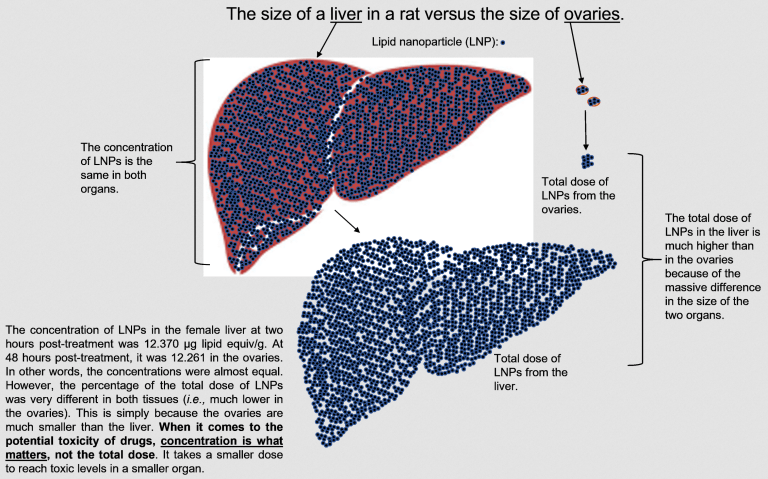
Also, focusing on the percentage of the dose that went to individual tissues loses sight of the fact that it is the concentration that matters. And the concentrations of LNPs in many tissues cannot be defined as insubstantial, especially when a safe concentration has never been established. Here is an illustration that I put together to highlight why the percentage of the total dose should not be used as a distraction from the concentration of the drug…

Here is an analogy to provide additional help…
Think about the risk of an accidental drug overdose in two people. One is a 250-pound man, the other is a 50-pound boy. They each accidentally consume the same high dose of a drug. In other words, 100% of the dose was found in the body of the man and 100% of the dose was found in the body of the boy. The percentage of the dose is equal but are they at equal risk of experiencing toxicity from an overdose? Obviously not. The tiny boy is at enhanced risk because the same high dose in a smaller body equals a higher concentration of the drug. The percentage of the drug given to the boy would have be scaled back a lot to avoid toxicity.
Looked at another way, let’s say the boy has consumed the minimum dose of a drug that causes toxicity. Would the same dose cause toxicity in the man? No, it would require a higher dose to be toxic.
In the same fashion, that is why dosage recommendations are lower for younger/smaller people. To prove this, go to your medicine cabinet and pull out a bottle of Aspirin or Tylenol or something similar. Look at the recommended dose for a child versus an adult. Children need lower total doses to achieve the same concentration of the drug once it is distributed in their body. Adult doses can potentially be toxic in children.
This same principle applies to the biodistribution of the lipid nanoparticles used to make mRNA vaccines. If a toxic dose were to be reached in the liver, the dose needed to cause toxicity in the vastly smaller ovaries would be much lower. Because the concentration of a drug is what matters.
Interestingly, the study director ignored that fact that the two-times higher dose of the mRNA ‘vaccine’ (100 μg) resulted in approximately two-times higher concentrations (that were toxic) in the various tissues as compared to the 50 μg dose; a classic dose-response effect. The percentage of the total doses reaching the tissues was almost equivalent between the 50 μg and 100 μg doses, but the latter proved more toxic because the concentrations were higher.
Page 20: “Mean plasma concentrations peaked by 4 hours post-dose in males and by 1 hour post-dose in females”. This is evidence of rapid systemic distribution with the kinetics accelerated in females.
Pages 20-21: “Concentrations were higher in plasma than in blood, with mean blood:plasma ratios generally ca. 0.5-0.6, indicating that the majority of the total radioactivity is associated with the plasma fraction.” Page 22: “and [3H]-08-A01-C01 did not associate with red blood cells.” But approximately one-third of the LNPs circulating in the blood were found in the cell fraction! Plus, the study director’s conclusion is based on the assumption that the ratio of cells to plasma in whole blood is ~50:50, but it is not; plasma represents a higher percentage. Here is a nice illustration from the University of Washington, Dept. of Laboratory Medicine, Specimen Procurement Section:

This means the amount of the LNPs in the cellular fraction was more likely ~40% of the total dose in the blood. How can one write this off as irrelevant? Further, the conclusion was that red blood cells weren’t a significant destination of the LNPs. Not only do the data contradict this assertion, it also fails to recognize that white blood cells and platelets make up <1% of whole blood. What if all the LNPs in the cellular fraction were in the white blood cells and/or platelets? This would represent a very high concentration of LNPs. Why wasn’t this studied? Instead, the cellular fraction was discarded. This is a very important question because white blood cells constitute a major component of the immune system. If they were to be negatively impacted, this would impede the vaccination effect. And if they aren’t killed but take up the mRNA, they would express the spike protein, which would then make them a target for spike-specific antibodies and/or T cells. Also, there have been reports of bleeding, blood clots, and thrombocytopenia (low platelet counts) post-‘vaccination’. The common factor with all of these is that they involve platelets, another component of the cellular fraction that was ignored. The question regarding the impact of LNPs on cells in the blood should have been addressed before there was any consideration of proceeding into human trials.
Page 22: The study director drew this overall biased conclusion: “The concentrations of [3H]-08-A01-C01 were greatest in the injection site at all time points”. Pardon me?!? Am I supposed to forget the statement on page 20 of the report, “the greatest mean tissue concentration and, in most instances, % of injected dose was found remaining in the injection site at each time point in both sexes”. This statement could only be applied to the data where results for males and females were pooled (i.e., the only data shown in the Japanese document), thereby hiding the fact that the % of the injected dose was higher in the liver than at the injection site at different times in males versus females.
Page 22: “The concentrations of [3H]-08-A01-C01 were greatest in the injection site at all time points, with levels peaking in the plasma by 1-4 hours post-dose and distribution mainly into liver, adrenal glands, spleen and ovaries over 48 hours.” I was lambasted by colleagues when I expressed concerns about biodistribution of LNPs to ovaries after seeing the Japanese document. But in the version of the document that was released by court-order, the study director concludes that the ovary is a main target organ for distribution of the LNPs! This concern is only enhanced when one looks at the kinetics of this biodistribution to the ovaries…

…the concentration of LNPs were rising almost exponentially at the conclusion of the study. How high would it have gone?
Page 21: “Maximum concentrations (Cmax) in liver and spleen were observed at 8 hours post-dose in males and 48 hours post dose in females, but were broadly similar and appeared to plateau at 8 hours post-dose when considering variability.” This conclusion needs to be corrected. The highest concentrations in female livers and spleens were observed at 48-hours post-treatment. But there is no way of knowing that these were maximal concentrations. In fact, the data suggest that maximum concentrations could be reached some time after 48 hours…


This idea of capturing a concentration plateau is based on averaging the values from males and females. In many of the male tissues, apparent peaks or plateaus appear to have been captured within 48 hours post-injection. However, the kinetics were different in females, with concentrations still rising in many cases. If one averages the post-peak values of males with rising values from females, it gives the false impression that a plateau has been captured.
This is very important because one of the key purposes of a biodistribution study is to determine when peak concentrations occur. Concerns related to potential toxicities can obviously not be allayed if only pre-peak concentrations have been captured; and this appears to be what happened with the females. Look at the following LNP concentrations over time in various tissues, with an emphasis on females (I already showed several other tissues above) and ask if you feel confident that a peak or plateau was captured. In other words, how confident are you that the concentrations would go no higher beyond 48 hours?


I question whether a peak was reached in male muscles…

All the Data are Indicative of Systemic Distribution
If a drug gets into the blood, one of the first places you should look for uptake is the spleen. This is because the spleen filters the blood. Indeed, with Pfizer’s ‘vaccine’ we see a rapid influx of LNPs into the blood and subsequent seeding of the spleen. Also, lymph nodes are designed to drain fluids from local tissues. So, if a drug seeds a tissue, one would expect to find it in the regional lymph nodes. In this study, the LNPs were found in two lymph nodes that were studied.
These lymph nodes drain distinct tissues (one drains the jaw region and the other drains fluids around the intestines). Although it was not stated, I assume the surrogate ‘vaccine’ was likely injected into one of the large muscles of the hind legs as this is what is commonly done. If true, the most relevant draining lymph node would be the popliteal node. Surprisingly, it looks like lymph nodes draining the injection site were not evaluated.
The fact that two ‘irrelevant’ lymph nodes had LNPs accumulating in them is suggestive of widespread dissemination into various tissues. I hypothesize that LNPs would have been found in most, if not all the lymph nodes in the rats. These results confirm a distribution pattern that is very different from traditional vaccine technologies where the dose would be concentrated at acute time points at the injection site, with some taken to the local draining lymph nodes.
6% of the Dose was in the Blood at Two Hours Post-Injection
No attempt was made by those conducting the biodistribution study to estimate the total amount of the dose of LNPs that were circulating in the blood, so I did this. We know the concentration per milliliter in the blood of males and females at each timepoint. So I took the average concentration across both sexes and picked the peak, which was at two hours after treatment. I estimated the total blood volumes (BV) in males and females using the formula BV (mL) = 0.06 x body weight + 0.77, which was derived from this study using the same strain of rats.
After plugging in the relevant numbers, I came up with a total average dose of blood-borne lipids of 1,290 μg; or ~6% of the total dose. This is substantial considering it represents a single time point in a dynamic tissue in which the LNPs are entering and exiting the blood throughout the duration of the study.
How the Study Should Have Been Conducted
As an expert in pre-clinical experimentation, I can assure you that Pfizer’s biodistribution study was of poor quality. It appears to have been rushed, with many corners cut, possibly in an effort to meet a deadline at ‘warp speed’. If one of my graduate students presented the data in Pfizer’s biodistribution study to their advisory committee and proposed to include it in their thesis, they would immediately be advised that it represented no more than a preliminary experiment; the type that is used to design much more informative and conclusive experiments. They would be required to expand its scope and repeat it multiple times. Here are some things I would recommend:
- The experiment should have been conducted independently at least three times to ensure the findings could be replicated and to provide sufficient statistical power to facilitate objective analyses.
- The experiment should have been run longer; specifically, until peak concentrations were clearly captured in all tissues.
- More doses should have been evaluated to determine when unwanted effects began and whether they could be mitigated.
- More tissues should have been assessed since there was evidence of extremely broad distribution. This should have included the lymph nodes draining the injection site, white blood cells, red blood cells, platelets, etc.
- Tissues should have been assessed for the presence of LNPs, plus the mRNA, plus the protein product; not just the LNPs. It would be helpful to know how long the mRNA remains intact versus how long the protein product and LNPs can be detected.
- Samples should have been analyzed to detect potential shedding. These samples should have included saliva, urine, feces and skin swabs.
- The study should have been run with the same formulation that is being used in people.
- A small-scale biodistribution study should have been incorporated into a phase I human clinical trial. If nothing else, it would have been very easy to monitor distribution in serial blood samples, as well as shedding samples, since these are all easy to obtain.
Repeated Dosing With Lipid Nanoparticles is Dangerous
Here is some information that is of concern considering that many people have already received three or four doses of an mRNA ‘vaccine’ in less than one year, with the potential for more on the horizon…
This might be news to many members of the public, but it is a long-accepted scientific fact that lipid nanoparticles used to deliver the mRNA in ‘vaccines’ can be toxic. In fact, that is the very reason why some big pharmaceutical companies strategically focused on using them as vaccine technologies instead of for gene therapies and to deliver drugs. A good quality vaccine, such as those used in the mandated childhood series, only require one or two doses for a person’s lifetime. It was assumed the same would hold true for mRNA vaccines. Repeated administration of lipid nanoparticles, especially over a limited period of time, is known to be toxic.
This was openly discussed with the media prior to the declared COVID-19 pandemic, but many people are either unaware of this or have forgotten. This included an interview with the Chief Executive Officer of Moderna and others in the biotechnology industry. Here are quotes from the hyperlinked article:
“In nature, mRNA molecules function like recipe books, directing cellular machinery to make specific proteins. Moderna believes it can play that system to its advantage by using synthetic mRNA to compel cells to produce whichever proteins it chooses. In effect, the mRNA would turn cells into tiny drug factories. It’s highly risky. Big pharma companies had tried similar work and abandoned it because it’s exceedingly hard to get RNA into cells without triggering nasty side effects.”; “Delivery — actually getting RNA into cells — has long bedeviled the whole field. On their own, RNA molecules have a hard time reaching their targets. They work better if they’re wrapped up in a delivery mechanism, such as nanoparticles made of lipids. But those nanoparticles can lead to dangerous side effects, especially if a patient has to take repeated doses over months or years. Novartis abandoned the related realm of RNA interference over concerns about toxicity, as did Merck and Roche”.
Indeed, there are many peer-reviewed scientific publications that have highlighted serious safety issues related to the administration of lipid nanoparticles used to deliver mRNAs. Some examples of toxicities that can be caused by lipid nanoparticles can be found here, here, and here. Remarkably, lipid nanoparticles used to deliver mRNAs have even been shown to be toxic to cells of the immune system that play a critical role in promoting vaccine-mediated immune responses. This would counteract the very immunization effect that is being sought. It could even, in theory, potentially cause counterproductive acute immunosuppression. A key question is to what degree are these toxicities additive? Unless lipid nanoparticles are definitively proven safe in humans, their repeated administration to people should be avoided.
Implications for Blood Donations
Blood donor organizations conduct fabulous, life-saving work. However, they need to take a long look at their policies surrounding mRNA-based vaccines. For example, Canadian Blood Services has the following policy: “Consistent with our eligibility criteria for other non-live vaccines, Canadian Blood Services accepts donations from otherwise eligible donors who have received a Health Canada-authorized COVID-19 vaccine, with no required deferral period following vaccination”. The problem is that mRNA ‘vaccines’ don’t function like traditional non-live vaccines. Pfizer’s own data suggest that their mRNA ‘vaccine’ circulates in the blood (in both the plasma and the cellular fraction) for at least 48 hours post-inoculation. Should blood containing variable quantities of a mRNA ‘vaccine’ that is still in its initial phase 3 human clinical trial be used in patients?
I strongly recommend that a simple time-course study evaluating the duration of circulation of lipid nanoparticles, mRNA, and the spike protein be conducted. This would allow a safe waiting period to be determined prior to accepting donations from individuals who have received a mRNA ‘vaccine’.
Practical Applications
What should be done with all this information? Well, I would suggest that you investigate the myriad of questions raised by Pfizer’s biodistribution study. Ask yourself if you have been presented with sufficient scientific evidence to address your queries. Do not settle for personal opinions, no matter how much of an ‘expert’ the person or organization appears to be. If you are not confident that systemic biodistribution of mRNA vaccines in people is a non-issue, then consider encouraging the promotion of research to provide definitive answers. Expecting public health officials to practice the precautionary principle is reasonable.
Further, encourage uncensored public discussions of the science between experts on both sides of the debate. After all, the full spectrum of scientific information should not be hidden from the public.
Finally, encourage health regulatory agencies to recruit unbiased scientists with pre-clinical research skills to carefully evaluate these early types of studies. It is challenging for a large company that is responsible for vast amounts of investor dollars to change course in the human clinical trial stages of research where massive amounts of money are one the line; much like trying to turn an oil tanker around. In contrast, there is much less invested at the earlier pre-clinical and translational stages due to the much lower cost of that type of research.
Changing course at this point is more akin to turning a speedboat around. Pre-clinical studies can be very informative and, if carefully critiqued, can be used to formulate important questions that can be answered with new, relatively inexpensive, easy and rapid experiments.
Unfortunately, most regulatory agencies and advisory committees that have been evaluating COVID-19 ‘vaccines’ have focused on the recruitment of clinically focused researchers. The many problems with Pfizer’s biodistribution study should have been obvious to a pre-clinical scientist.
Ideally, places like Health Canada should offer their regulatory scientists the equivalent of tenure in academia to ensure that they can maintain job security no matter how unpopular their reviews of submitted data may be.
In my continued effort to correct mis/dis-information, present information with greater transparency, and promote informed decision-making,
You can subscribe to Dr Bridle’s Substack here.
Muscle Mass — The Key to Longevity
Reproduced from original article:
https://articles.mercola.com/sites/articles/archive/2022/04/10/muscle-mass-key-to-longevity.aspx
The original Mercola article may not remain on the original site, but I will endeavor to keep it on this site as long as I deem it to be appropriate, and will not be bullied into removing it.
Analysis by Dr. Joseph Mercola Fact Checked April 10, 2022
STORY AT-A-GLANCE
- Muscle-centric medicine is part of the solution for many chronic health problems, as most are rooted in skeletal muscle insulin resistance
- Resistance training is superior to cardio exercise because muscle mass optimizes you for longevity. The greater your muscle mass, the higher your survivability against all diseases
- You need protein reserves to survive serious disease, and most of your protein reserve is stored in muscle. If you have very little muscle, you’re going to pass away prematurely because you have no amino acid reserves. Your muscle also interfaces with your immune system
- It’s never too late to start building muscle, even if you’re in your 70s or even 80s, using diet and exercise
- High-quality animal protein is essential for muscle growth. Most people need 1 gram of protein per pound of ideal body weight (the weight you would ideally be). Divide that by the number of meals you eat to get your per-meal quota which, for older adults should be around 30 to 50 grams per meal
In this interview, Dr. Gabrielle Lyon, an osteopathic physician, reviews what I believe is one of the best health optimizing strategies there is, namely strength training. She’s a graduate of Midwestern University and has spent a good part of her professional career focusing on how to increase strength and muscle mass, which is an often-overlooked foundation for health and longevity.
Muscle Mass Is a Key to Longevity
Lyon and I both strongly believe muscle-centric medicine is part of the solution for many chronic health problems, including obesity, yet very little attention is given to it.
“Obesity, Alzheimer’s diabetes and cardiovascular disease actually begin in skeletal muscle, years before they become apparent,” she says. “Obesity, diabetes, these are diseases of skeletal muscle insulin resistance.
But what’s so shocking is that everyone is focused, especially in the medical community, on attacking obesity, as opposed to fixing the underlying problem, which is really augmenting skeletal muscle and optimizing muscle with nutrition, which is primary, and training, secondary.”
As explained by Lyon, while there’s certainly benefit to cardiovascular exercise — mitochondrial biogenesis, for example — resistance training is far more foundational to your long-term health, because skeletal muscle is the organ of longevity. Muscle mass optimizes you for longevity.
The greater your muscle mass, the higher your survivability against all diseases, including cancer. According to Lyon, cachexia, for example — the loss of muscle mass — kills 1 in 5 cancer patients.
You need protein reserves to survive serious disease, and most of your protein is stored in muscle. If you have very little muscle, you’re going to pass away prematurely because you have no amino acid reserves. Your muscle also interfaces with your immune system.
“Listen, aging can be highly catabolic. There’s this immunosenescence that happens. The body doesn’t regulate the way that it used to. But moving and contracting skeletal muscle is the best defense that we have,” Lyon says.
Muscle Is Your Metabolic Regulator
As explained by Lyon, muscle is the regulator of your metabolism, and here’s why:
“Skeletal muscle is your primary site for glucose disposal — 80-some percent. Individuals who are struggling with elevated blood sugar, elevated glucose, elevated triglycerides, skeletal muscle is your primary site for disposal and utilization of these nutrients, these substrates. Having healthy skeletal muscle will manage that metabolic currency.
It’s really interesting because, as we age, the health of muscle decreases [unless] we become extremely focused on stimulating muscle through diet — I think the diet is most important because it is accessible to everybody — [and] resistance training and cross training … [resulting] in states like diabetes, hypertension, cardiovascular disease. Insulin resistance actually begins in skeletal muscle.”
The good news it’s never too late to start building muscle, even if you’re in your 70s or even 80s, using diet and exercise. It becomes more difficult to add muscle with advancing age, yes, but it’s far from impossible. To prove it is possible, I’m 67, and over the past year, I’ve put on 25 pounds of muscle mass and now weigh over 200 pounds.
The Case for Animal Protein
In terms of diet, skeletal muscle requires high-quality dietary protein, ideally animal protein, to stimulate muscle protein synthesis. There’s 20 amino acids and nine of them are essential, which means you have to get them from your diet, as your body cannot make them from other substrates. In particular, skeletal muscle requires branched-chain amino acids — leucine, isoleucine and valine.
Must you eat animal protein? No, but one of the problems with avoiding animal protein is that it is quite difficult to obtain enough complete essential amino acids, especially branched chained amino acids to stimulate mTOR.
While there are plants that are high in protein, they’re not identical or even equivalent to animal protein in most cases. Certain micronutrients found in animal foods you simply cannot get from plants. This includes vitamin B 12, vitamin A (retinol not beta-carotene), creatine, bioavailable iron, carnitine and carnosine, all of which are important for muscle growth and health in general. Lyon comments:
“I consider high-quality protein to be animal-based proteins. That’s not to say, if you are an individual who is vegan or vegetarian, that you cannot get the same amount of protein. You can, but that would require additional supplementation …
But one has to understand that 30 grams of protein from hemp is different from 30 grams of protein from, say, a chicken breast. (NOTE: I don’t advise anyone to eat chicken because of the high linoleic acid content).
In fact, as you age, it becomes really important to realize that, if you are going to try to get your protein from, say, quinoa — people say quinoa is high in protein — it would take 6 cups of quinoa to get the equivalent of one 3-ounce chicken breast.
So, if you are listening to this, I really want you to take to heart that you need to focus on high quality proteins, and if you are vegan or a vegetarian, that you need to then supplement with something — some branched-chain or essential amino acids — in addition to your meal.”
On a side note, glutamine, a nonessential amino acid (meaning your body can generate it) is an important nutrient source for your immune cells, and the way your body generates glutamine is through muscle contraction. So, when you’re contracting skeletal muscle, you’re quite literally nourishing your immune system!
Finding Your Ideal Protein Intake
To determine your personal protein requirement, Lyon recommends 1 gram of protein per pound of ideal body weight (the weight you would ideally be, not necessarily the weight you are now). Once you have that number, you can divide it by the number of meals you eat to get your per-meal quota which, for older adults should be around 30 to 50 grams per meal.
For reference, there’s approximately 7 grams of protein in each ounce of steak, so a 5-ounce steak would give you 35 grams of high-quality protein. For children, the average amount per meal is around 5 to 10 grams, while young adults typically can get away with 20 grams per meal.
For most normal-weight adults, 30 grams per meal is really the minimum you need to stimulate muscle protein synthesis. If you have a robust strength training program, you may need to go even higher. To make sure you’re getting enough protein in your meals, consider using a free nutritional tracker like Cronometer. That way, you’re not guessing.
Will a High-Protein Diet Harm Your Kidneys?
Some avoid protein for fear it might damage their kidneys. People with chronic renal failure do need to limit their protein intake so as not to tax their kidneys, but if your kidneys are healthy, you don’t need to worry about this. Lyon explains:
“I think the majority of individuals have healthy kidney function. Actually, protein intake has been shown to improve glomerular filtration rate, not have a negative impact. The body should be capable to manage high-quality protein without an issue, and there’s been multiple meta analysis with individuals with healthy kidneys in terms of protein consumption. It’s another falsehood.
The same thing with osteoporosis. People will say, ‘You don’t want to each too much protein because it’s bad for your bones.’ Well, what do people think bones are made of? Bones are made of proteins. Yes. They are made of calcium, but the requirement is through protein. [Editor’s note: Protein is the matrix that holds the calcium]. So, that’s another falsehood.
When I went through my geriatric training, it became so apparent that what we were seeing in clinic, and what we were doing to protect aging individuals was so vastly different than what was out in the public sphere.
It’s interesting. Individuals can ride the wave of youth for only so long, and then what ultimately happens is, as you age, you have to get good information, because the wiggle room for mistakes and the wiggle room for actually executing important and correct information becomes less …
[Protein] is the one nutrient that will really be able to save people’s lives. It is the pinnacle, because it protects skeletal muscle. Yes, carbohydrates have a protein sparing effect. Yes, you can do a ketogenic diet, and there may be protein sparing effects. But the question I would ask is why?
We know we need to prioritize protein because we have to optimize skeletal muscle. It is important for neurotransmitters. It is important for the immune system. It is important for regulation for mucin from gut lining. It is important for all things in the body, hands down, and it’s essential.
Skeletal muscle goes through this process of anabolic resistance, and as we age, the efficiency [decreases]. Muscle is also a nutrient sensing organ. Its efficiency to utilize and sense protein decreases as we age.”
Should You Work Out Fasted?
I believe time restricted eating (TRE) is best done 16 to 20 hours a day, every day. Sixteen to 18 hours is probably the sweet spot. This schedule will give you virtually all the same benefits as calorie restriction with respect to longevity benefits, but without any of the downsides, the primary one being compliance.
I prefer to do my workout in a fasted state, followed by an infrared sauna and swim, and then break my fast afterward. This will reduce the carbohydrate load in the muscles as they’re using up glucose during the workout. This, in turn, gives you the additional benefits of autophagy.
Lyon also points out that when muscle contracts, it releases myokines, which play a role in both lipolysis (the breakdown of fat) and glucose utilization. When you train in a low-glycogen fasted state, myokine release is increased.
While we’re on the topic of time-restricted eating, this will also help prevent excessive activation of the mechanistic target of rapamycin (mTOR). As explained by Lyon, mTOR is found in every tissue and responds to different nutrients and stimuli, including dietary protein, insulin, carbohydrates and exercise.
About five years ago, largely due to Dr. Ron Rosedale, co-founder of the Colorado Center for Metabolic Medicine, I was concerned about too much protein stimulating mTOR so I restricted my protein intake. However, mTOR is activated not only by protein but also by carbohydrates. A key misunderstanding about mTOR is that it’s not protein that’s the problem, or even carbs. You stimulate mTOR on a vegetarian diet as well.
The other more serious issue is that most people eat more or less continuously throughout each day, which will keep mTOR continuously activated. When you’re eating all your meals within a window of, say, six to eight hours, and fasting for the remaining 16 to 18 hours, mTOR gets stimulated only once or twice a day, which is not a problem.
mTOR is best activated twice a day in a pulsatile fashion. When you activate it continuously as most people do, it can lead to an increase in risk in diseases like cancer.
Timing of Your Post-Workout Meal
As for the timing of your post-workout meal, Lyon disagrees with the common notion that protein feeding can occur any time after your workout as long as it’s within 24 hours.
The current recommendation is very low for exercise. It’s 150 minutes per week … I would say that’s probably the bare minimum that anybody should do, not the optimal; 30 minutes of moderate intensity exercise, five days a week, is likely not going to be enough. ~ Dr. Gabrielle Lyon
She believes it’s far better to eat that meal shortly after exercise. “In a geriatric population, we know that blood flow is optimized post-training, and we know that adding in a protein meal right after training … is extremely beneficial,” Lyon says. This goes for carbs too.
“To gain muscle mass, you do need calories,” she says. “Protein and carbohydrates play a different role post-training, whether one is for glycogen repletion versus muscle protein synthesis or muscle repair, both are very valuable.”
Are You Getting Enough Exercise?
When it comes to executing an exercise program to optimize muscle, Lyon recommends working with an experienced coach to create a suitable program.
“Volume is very important, and volume is exactly what it sounds like, it’s the amount of repetitions. It’s all cumulative in terms of weight and repetition. That is what we have seen in the literature. When you are new [to exercise], it is much easier to stimulate muscle tissue. So, if you are an untrained individual, you could get away with 10 sets per week.
I preface this by saying I don’t actually develop training programs for individuals. I think doing this in-person with a professional trainer is really where you’re going to get your benefit, because they can watch you. They can determine what moves you need to do.
You don’t want to get injured, because injury really sets individuals back. There are certain groups of people that may have a predisposition to get injured, for example, an individual with hypothyroidism. I see that they have poor tissue turnover. They get joint pain. The recovery tends to be a bit of an issue, so getting with someone who knows what they’re doing is really important.
That said, the current recommendation is very low for exercise. When I say very low, it’s 150 minutes per week. That could be 30 minutes, five days a week of exercise … I would say that’s probably the bare minimum that anybody should do, not the optimal, but the bare minimum; 30 minutes of moderate intensity exercise, five days a week, is likely not going to be enough.”
Exertion Is Important
A key part of resistance training is actually exerting yourself. “It’s called resistance exercise for a reason,” Lyon says. “There needs to be a component of effort that I don’t see people putting in.” If you’re on your phone or watching TV, chances are you’re not putting in sufficient effort.
“It’s not just about putting in the time. I expect you to execute in a way that requires focus and a way that requires exertion that is intense enough that you are fatigued … I would consider going to failure. Perceived exertion is really important.
There’s a mind-muscle connection. You can do a lot of movements, but it doesn’t mean you’re actually targeting the muscle group that you are intending to target. If you do a certain exercise, maybe you’re going to do a squat, and perhaps you compensate in a different way. You use your quads more than you use your hamstring or your glute.
Really focusing on the muscle that you are training is of extraordinary importance. You do need to create muscle damage. You do need to change the metabolic homeostasis in your body. You do need to have enough recovery, enough nutrients for recovery, but you do have to tax that muscle, and one way in which you tax the muscle is through effort.
One way that you also tax and understand the effort is through perceived exhaustion. I’m not saying you have to train to maximum exhaustion, but, if we are thinking about how to really step up and protect ourselves as we age, people are always looking for this external fountain of youth. It’s not.
It’s not something you’re going to take in. The fountain youth truly is within this muscle system as the organ of longevity. That’s how people are going to really excel and change the trajectory of the way in which they age.”
Blood Flow Restriction (BFR) Training
An excellent strategy that can allow even the elderly to get a very intense workout while minimizing the risk of injury is blood flow restriction (BFR) training. KAATSU is the original BFR device, developed in Japan. With BFR, you can get the same results with just 30% of the weight you’d have to use otherwise. As explained by Lyon:
“[With BFR], your body will recognize the same stimulus, growth factors, cell turnover, as you would if you were lifting heavier weights. It can be very valuable, especially when you are just starting out. Again, do it with a professional … Something else that’s interesting is electro stim suits, [but they’re] a lot more expensive.”
While we didn’t have enough time to really cover BFR in our interview, you can go to Bitchute and type in KAATSU and you will find my previous interviews on this topic. I know it is a bit pricey, which is why I was able to work out a deal with the manufacturer if you use the discount code. You’ll find the discount code in the video description by clicking “MORE+” on any of the videos there.
I have been doing KAATSU for a few years now along with increasing my protein intake to 1.6 grams/kg of my body weight, which is about 150 grams of protein for me. To illustrate that you can have quite a dramatic change in your body by these techniques, the picture below is from my medical school days about 40 years ago. My arm size was 11 inches.
Interestingly I just talked to the guy with the glasses who was a classmate in school, Jay Bishop. He’s a urologist in Arizona and his adorable wife Sue is on the left. She has had Type 1 diabetes for over 50 years and still doing well with virtually no complications.

The video below shows my arms that are now 15 inches, while I’m deadlifting 370 pounds.
More Information
To learn more about protein and Lyon’s muscle-centric approach to health, check out her YouTube channel and/or sign up for her newsletter. If you’re ready to make some serious changes and take your health to the next level, you can contact the Institute for Muscle Centric Medicine, which Lyon founded. Lyon is also active on Instagram.
Muscle Strengthening Linked to Lower Risk of Dying
Reproduced from original article:
https://articles.mercola.com/sites/articles/archive/2022/03/18/muscular-strength-and-mortality.aspx
The original Mercola article may not remain on the original site, but I will endeavor to keep it on this site as long as I deem it to be appropriate, and will not be bullied into removing it.
Analysis by Dr. Joseph Mercola Fact Checked March 18, 2022
STORY AT-A-GLANCE
- Engaging in muscle-strengthening exercises for just 30 to 60 minutes per week is enough to lower your risk of death
- Muscle-strengthening activities were associated with a 10% to 17% lower risk of all-cause mortality, cardiovascular disease, total cancer, diabetes and lung cancer
- A systematic review and meta-analysis involving 38 studies and more than 1.9 million participants similarly found that higher levels of upper and lower body muscular strength are associated with a lower risk of mortality
- Exercise, especially strength training with blood flow restriction (BFR), is one of the best ways to increase nicotinamide adenine dinucleotide (NAD), a vital signaling molecule that’s believed to play an important role in longevity
Engaging in weight training and other forms of muscle-strengthening activities is a simple way to protect your health and lower your risk of premature death. A systematic review and meta-analysis revealed that resistance training was associated with 21% lower all-cause mortality, and this rose to 40% when combined with aerobic exercise.1
A second systematic review and meta-analysis similarly found that muscle-strengthening activities were associated with reduced incidence of kidney cancer and total cancer mortality.2 While it’s become increasingly clear that weight training benefits overall health, most existing guidelines for physical activity focus mostly on its role in musculoskeletal health.
In order to help determine the optimal amount of weight training that should be recommended for overall health, including the reduction of chronic diseases and premature death, Japanese researchers set out to determine the optimal dose of muscle-strengthening activities — and it turned out to be easily attainable.
Just 30 to 60 Minutes per Week Reduces Risk of Death
Engaging in muscle-strengthening exercises for just 30 to 60 minutes per week is enough to lower your risk of death, according to the meta-analysis.3 It involved 16 studies, which revealed that muscle-strengthening activities were associated with a 10% to 17% lower risk of all-cause mortality, cardiovascular disease (CVD), total cancer, diabetes and lung cancer.
A j-shaped association was found for all-cause mortality, with the maximum risk reduction occurring at about 30 to 60 minutes per week of muscle-strengthening activities, which means there may be no additional benefit once you reach the 60-minute mark.
“The influence of a higher volume of muscle-strengthening activities on all-cause mortality, CVD and total cancer is unclear when considering the observed J-shaped associations,” the researchers noted.4 However, for diabetes, an l-shaped association, with a large risk reduction before 60 minutes of muscle-strengthening activities per week, was found.
“[T]he risk of diabetes sharply decreased until 60 min/week of muscle-strengthening activities, followed by a gradual decrease,” according to the study.5 Muscle-strengthening activities combined with aerobic activities were also associated with a lower risk of all-cause, CVD and total cancer mortality, with the researchers explaining:
“Joint analysis between muscle-strengthening and aerobic activities showed that a greater benefit for all-cause, CVD and total cancer mortality was obtained when these two types of activities were combined. These results confirm the findings of previous meta-analyses. Therefore, beyond aerobic activities, muscle-strengthening activities may provide additional benefits for preventing mortality.”
Greater Muscular Strength Predicts Lower Mortality Risk
By building your muscular strength, you can ward off cardiometabolic risks. Previous research has found that a higher level of muscular strength has a protective effect on premature death from any cause and high blood pressure in men. It’s also linked to a lower risk of cancer mortality, metabolic syndrome and age-related weight and fat gain.6
A systematic review and meta-analysis involving 38 studies and more than 1.9 million participants similarly found that higher levels of upper and lower body muscular strength are associated with a lower risk of mortality.7
Specifically, higher levels of handgrip strength were linked to lower all-cause mortality, while adults with greater muscular strength, as tested by a knee extension strength test, had a 14% lower risk of death compared to adults with lower muscular strength. Even among those aged 65 years and over, death and hospitalization were significantly lower among stronger men and women.8
Why Is Strength Training so Good for Longevity?
Exercise, especially strength training with blood flow restriction (BFR), is one of the best ways to increase nicotinamide adenine dinucleotide (NAD) levels and energy,9 because it activates NAMPT, an enzyme that’s responsible for NAD biosynthesis.
NAD is a vital signaling molecule10 that’s believed to play an important role in longevity. This is partly due to its role as an essential substrate for sirtuins,11 which are enzymes related to longevity, as well as its role in DNA repair.
Already, more specialized techniques like BFR training are being adopted by the NFL and other major professional sports organizations for recovery and rehabilitation. BFR training improves strength and builds muscle using very light weights, while, metabolically, it decreases your risk for sarcopenia and most other age-related diseases, making it particularly useful for the elderly. Researchers explained in Frontiers in Physiology:12
“Performing exercise with reduced blood flow achieved by restriction of the vasculature proximal to the muscle dates back to Dr. Yoshiaki Sato in Japan, where it was known as “kaatsu training,” meaning “training with added pressure.” Kaatsu training is now performed all over the world and is more commonly referred to as “BFR training” and achieved using a pneumatic tourniquet system.”
Boosting Your Strength With BFR
The World Health Organization recommends engaging in muscle-strengthening activities at least twice a week, which is based primarily on the benefits it can provide to musculoskeletal health. However, the featured meta-analysis suggests that this may also be enough to lower your risk of chronic diseases and premature death:13
“Given this result, the current recommendation of at least 2 days/week could be reasonable, although a higher volume may require caution. However, our findings should be interpreted with caution because the number of included studies was small and we could not directly examine the frequency of muscle-strengthening activities …
Moreover, attention should also be paid to evidence that most programs providing benefits for musculoskeletal health in elderly people are performed ≥2 days/week.”
One way to maximize your weight training is by using BFR, which involves partially restricting arterial inflow and modifying venous outflow while you work your limb muscles. In short, BFR replaces the mechanical stress of weight lifting with metabolic stress, leading to benefits that are comparable to high-intensity exercises, making it especially useful for those unable to lift heavy loads, including the elderly and injured, or people who are just starting out.
With BFR, you can use zero to 30% of your single-rep max weight and still significantly enhance strength and muscle mass, because you’re essentially tricking your body into believing you’re lifting a heavier weight than you actually are.
During BFR training, the slow twitch Type I muscle fibers become highly fatigued, necessitating the recruitment of fast twitch Type II muscle fibers as the exercise progresses, leading to both short and long-term benefits, including increased strength, muscle thickness and cardiovascular endurance, along with improved physiology of the cardiovascular system.14
Super Slow Weight Training Is Another Option
Virtually everyone can benefit from muscle-strengthening activities, even if you’re older, frail or unable to lift much weight. In the latter case, super-slow weight training can be ideal. By slowing your movements down, it turns your weight-training session into high-intensity exercise.
People of all ages can benefit from super-slow weight training, but this is definitely a method to consider if you’re middle-aged or older. I recommend using four or five basic compound movements for your super-slow (high intensity) exercise set. Compound movements are movements that require the coordination of several muscle groups — for example, squats, chest presses and compound rows. Here is my version of the technique.
- Begin by lifting the weight as slowly and gradually as you can, such as a four-second positive and a four-second negative, meaning it takes four seconds, or a slow count to four, to bring the weight up, and another four seconds to lower it. (When pushing, stop about 10 to 15 degrees before your limb is fully straightened; smoothly reverse direction)
- Slowly lower the weight back down to the slow count of four
- Repeat until exhaustion, which should be around four to eight reps. Once you reach exhaustion, don’t try to heave or jerk the weight to get one last repetition in. Instead, just keep trying to produce the movement, even if it’s not “going” anywhere, for another five seconds or so. If you’re using the appropriate amount of weight or resistance, you’ll be able to perform eight to 10 reps
- Immediately switch to the next exercise for the next target muscle group and repeat the first three steps
Support Optimal Muscle Synthesis With Whey
Optimal nutrition is important to reap all of the benefits that muscle-strengthening activities have to offer. Amino acids from protein are particularly important in this process, acting as the raw material or “building blocks” of your muscle while also playing a role in new muscle growth. Leucine, in particular, has been established as an amino acid with greater anabolic properties.15
The richest source of leucine, which helps regulate the turnover of protein in your muscle, is whey protein. Older people not only have accelerated muscle loss but also require greater protein intake to stimulate maximum muscle protein synthesis compared to younger people.16
For instance, while the muscle protein synthesis rate of healthy young adults increases by about 75% following intake of 20 grams of protein, older adults require about 40 grams of protein to experience a similar increase.17
Without whey, it can be difficult to achieve enough leucine to maintain body protein from diet alone. Fortunately, whey, in combination with exercise, represents a simple option for older adults looking to maintain and increase their muscle mass.
- 1 European Journal of Preventive Cardiology, Volume 26, Issue 15, 1 October 2019, Pages 1647–1665
- 2 International Journal of Behavioral Nutrition and Physical Activity volume 18, Article number: 69 (2021)
- 3, 4, 5, 13 British Journal of Sports Medicine February 28, 2022
- 6 J Cardiopulm Rehabil Prev. 2012 Nov-Dec;32(6):351-8
- 7 Arch Phys Med Rehabil. 2018 Oct;99(10):2100-2113.e5. doi: 10.1016/j.apmr.2018.01.008. Epub 2018 Feb 7
- 8 Age Ageing. 2015 Sep;44(5):790-5. doi: 10.1093/ageing/afv080. Epub 2015 Jul 11
- 9 Mark Moss, Interview, 35:25
- 10, 11 Nat Commun. 2018; 9: 1286
- 12 Front. Physiol., 15 May 2019
- 14 Int J Environ Res Public Health. 2022 Feb; 19(3): 1160
- 15 American Journal of Physiology, Endocrinology and Metabolism September 2019, Volume 317, Issue 3, Pages E473-E482
- 16 J Gerontol A Biol Sci Med Sci. 2015 Jan;70(1):57-62. doi: 10.1093/gerona/glu103. Epub 2014 Jul 23
- 17 Front. Nutr., 06 March 2019 Pre Sleep protein and overnight recovery
Simple but Powerful Ways to Boost Athletic Performance
Reproduced from original article:
https://fitness.mercola.com/sites/fitness/archive/2022/03/13/win-exercise.aspx
The original Mercola article may not remain on the original site, but I will endeavor to keep it on this site as long as I deem it to be appropriate, and will not be bullied into removing it.
Analysis by Dr. Joseph Mercola Fact Checked March 13, 2022
STORY AT-A-GLANCE
- When and what you eat, and how you hydrate, can make a big difference in your athletic performance, and can affect your payoff in terms of the amount of muscle you can build
- Athletes need about 30 grams of protein four times a day. If you do a whole-body workout, you’ll need about 40 grams of protein to maximize muscle protein synthesis
- The choice of exercising in a fasted state or not depends on your goal. For a professional athlete, it makes sense to have some carbs and food in your system to optimize performance. For the average person, however, especially older people, optimizing autophagy is likely a far more important goal, so for them exercising while fasting may be a better choice
- Dehydration acclimation will trigger beneficial adaptations such as expansion of baseline blood volume, which will improve your athletic performance over time
- Athletic performance can also be improved by boosting your blood volume with acute salt and fluid loading, increasing your bicarbonate level to hit peak alkalosis, and by cooling your body before or during your workout
James DiNicolantonio, PharmD, (my coauthor for “Superfuel”) and Siim Land have written three books together, “The Immunity Fix,” “The Mineral Fix” and, now, “WIN: Achieve Peak Athletic Performance, Optimize Recovery and Become a Champion,” which is the topic of today’s discussion. “WIN” is a great reference, loaded with simple but powerful exercise strategies. It’s also one of the best books ever written on hydration.
I’ve often warned that unless you’re engaging in regular exercise, especially after you hit 40 or 50, you’re headed for an eventual metabolic and structural catastrophe. The only sure thing about your future is that you’ll become frail, which is a miserable way to die. There’s no magic pill for frailty.
To avoid frailty you simply must engage in regular movement and exercise. When and what you eat, and how you hydrate, can make a big difference in your performance though, and can affect your payoff in terms of the amount of muscle you can build.
Should You Eat Before Exercising?
Many fitness experts believe that you should have carbs and protein before you work out, because you’ll be able to work out stronger. However, I believe far greater benefits can be had by exercising in a fasted state, as this will allow you to maximize autophagy. Land addresses this in his brilliant book, “Metabolic Autophagy.” DiNicolantonio says:
“I think it’s important to train both in a fasted state, as well as loading with complex carbs about an hour before vigorous exercise. The reason is because you want metabolic adaptations for both systems — utilizing fat for fuel in a fasted state, and also the ability to utilize glucose.
Essentially, if you’re exercising in a fasted state, your body’s going to be better at utilizing fat for fuel, and it’s going to help spare glycogen, which is important for anaerobic performance. So, training in a fasted state … will help more vigorous exercise performance [by] sparing of glycogen, because you’re able to utilize the fat for fuel better, and you’re probably going to burn fat better in a fasted state as well.
But the data is very clear that if you are performing at a vigorous pace, essentially 70% VO2 max or higher, preloading with about 50 grams of complex carbs is absolutely going to help preserve muscle glycogen levels and improve performance, both from an endurance and a peak power output standpoint.”
Land agrees, stating that the choice of exercising in a fasted state or not depends on your goal. If you’re a professional athlete, he believes it makes more sense to have some carbs and food in your system, because it will optimize performance. And, if you’re competing, you’ll need to train at near-peak performance most if not all the time, so training in a fasted state may be counterproductive.
“Of course, there is some merit to training periodically in a fasting state or a low-glycogen state, to build up this metabolic flexibility and adaptation. But from a progressive overload perspective, which means that you actually get better over time, you get stronger or faster, whatever the sport is, then you will need to have some calories to help you to push yourself further,” Land says.
For the average person, however, especially older people, optimizing autophagy is likely a far more important health goal. Nothing depletes glycogen from your muscles more effectively than exercising in a fasting state, which will maximally upregulate autophagy. So, for many, it’s a really powerful strategy. That said, it’s not black-and-white. As noted by Land:
“Always exercising in a fasting state can also lead to a muscle catabolism, and that can also be harmful for the elderly. So even for the elderly, it can be good to, periodically at least, have some calories in their system, especially amino acids, during the exercise to help to prevent this muscle catabolism.”
Should You Take HMB?
One of the things you want to achieve with your exercise is the activation of mTOR, and one way to do that is to make sure your body has plenty of branched-chain amino acids, especially leucine, isoleucine and valine. One of the metabolic byproducts of leucine is hydroxymethylbutyrate (HMB). Some fitness experts recommend taking HMB either before or after your workout.
According to DiNicolantonio, there’s evidence that HMB is beneficial, particularly in catabolic states, but the jury’s still out. Some studies show dramatic improvements in muscle gains when using HMB, but it’s still fairly controversial. “Personally, I can’t necessary recommend it outside of really low-caloric intake states to help preserve muscle mass,” he says.
Land agrees, saying he believes HMB would be most appropriate for people with sarcopenia, or people who are on low-calorie or low-protein diets. “If you’re getting enough protein in your diet, then you probably don’t need it,” he says.
How Proper Hydration Can Optimize Your Workout
My favorite part of “WIN” is the section on hydration. There’s far more to proper hydration and hydrating for fitness performance than meets the eye. Most will simply drink water or, worse, sports drinks chockfull of sugar in addition to the electrolytes, and call it done. But as explained by DiNicolantonio:
“If you’re a highly competitive athlete, training three months out before competition … then you want to practice something called dehydration acclimation. Multiple sessions of mild dehydration will lead to adaptations where you will get expansion of baseline blood volume and all these other adaptations, where you’re actually performing better later on.
Your training may suffer a little bit performing dehydration acclimation [but] you get those metabolic adaptations. Then, before competition, you do salt loading with high doses of salt and fluids about 90 minutes prior. That’s going to dramatically boost blood volume and increase performance. But you don’t always want to use high doses of salt, because you want adaptations to being in a dehydrated state.
So, there’s really three ways to hydrate. If you don’t feel like you have a lot of energy before a training camp, you want to take 1,000 to 2,000 milligrams of sodium [one-half to 1 full teaspoon of salt] and 10 to 20 ounces of fluid, respectively, to get a blood volume expansion of about 3% to 4%, so that you can train fairly well.
The goal then is to actually lose about 1.5 to 2.5% of your body weight through sweat, which will induce mild dehydration. When you do that multiple times, you get dehydration acclimation …
The top benefits are when you start hitting 3,000 to 4,300 milligrams of sodium, which is essentially 1.5 to 2 teaspoons of salt per liter of fluid. When you hit those higher amounts (consumed with 26 to 33.8 oz. of fluid, respectively), you can get 8% to 10% increases in blood volume and dramatic improvements in performance …
If you want to acutely boost performance dramatically, you want an 8% to 10% increase in blood volume, because the blood volume drops within five minutes of vigorous exercise by 8% to 10% as blood flows away from the heart towards working skeletal muscle.
This relative drop of blood volume feeding the heart … is really the main linchpin for decreasing athletic performance. So, if you … take appropriate salt solutions prior to performance, you can prevent the drop in blood volume and dramatically improve performance.
When I say dramatically improve performance, there’s nothing better. Nothing even comes close to preloading with salt and fluids. I’ll give you an example. Beta-alanine can increase the time you can perform vigorous exercise by about one minute. However, taking salt solutions can increase exercise time by anywhere from typically 10 to over 20 minutes, so it’s 10 to 20 times more effective than the best preworkout [supplement] on the market.”
The Importance of Carnosine
That said, beta-alanine is also very important. It’s the rate-limiting amino acid for the formation of carnosine, which slows the aging of cells and protects against mitochondrial dysfunction.1 It’s especially important if you’re prediabetic, which a majority of Americans are. Another way to boost your carnosine level is with magnesium orotate. Orotate (orotic acid, a mineral) converts into beta-alanine, and then into carnosine in your liver.
So, it basically acts like a delayed-release beta-alanine. There are also carnosine supplements available, but they’re not as cost-effective. As noted by DiNicolantonio, taking a precursor is typically better than taking the actual substance that you’re trying to increase.
Hydration Is More Than Merely Drinking Water
A common misconception is that hydration is all about water intake. DiNicolantonio and Land turn that myth on its head in their book. Merely hydrating with plain water can actually have negative effects on performance, both vigorous exercise performance and endurance exercise. DiNicolantonio explains:
“To give you an example, if you consume just 5 ounces of water in 15 minutes, that exceeds gastric emptying. And, when you’re vigorous exercising, gastric emptying dramatically goes down. So, if you drink too much water, you’re going to bloat the system.
Water is just going to sit in the stomach, and you can actually decrease vigorous exercise performance by 2.5% just drinking water, which is what most people think is going to help them.
So, that’s the problem in vigorous exercise. In endurance exercise, drinking too much plain water dramatically increases hyponatremia or low sodium levels in the blood, which can kill you … Drinking plain water has also been shown to increase the susceptibility of skeletal muscle to electrically-induced muscle cramps. So again, salt and electrolytes play key roles here at reducing muscle cramps, especially in performance in the heat …
If you get the salt solution dosing correct, it can decrease your heart rate by nine to 10 beats per minute. It can increase exercise duration by 20 to 21 minutes, which is essentially anywhere from 25% to 50% increase in how long you can exercise vigorously, which is crazy when you think about it.
And, it can decrease core body temperature by three-quarters of a degree Fahrenheit, because we lose water from our blood volume to dissipate heat through sweat. And so, if you have more fluid, you can cool off better. You’ll have better sweat rates, and that can evaporate and cool you down quicker. So, you can keep your core body temperature lower simply by drinking salt solutions before exercise.”
Hydration and Other Benefits of Glycine
To do the hydration protocol reviewed above, you’d start drinking the salt solutions around 90 minutes before your exercise, finishing it off over the course of about 30 minutes. It’s important to not include any kind of glucose in the solution, as glucose will increase diuresis and cause dehydration.
To your salt solution you could, however, add glycine, an amino acid with a mildly sweet taste. Glycine helps increase the absorption of sodium in the intestine and decrease core body temperature. Glycine is also an inhibitory neurotransmitter and may help reduce muscle cramps. Glycine is thought to be the reason for why pickle juice is so effective at rapidly aborting muscle cramps.
“There’s been two studies showing that pickle juice, at about 2.5 ounces, can abort a muscle cramp within 30 to 90 seconds,” DiNicolantonio says. “It can’t be due to volume expansion and interstitial fluid expansion. It would never happen that quick. It’s the acetic acid in the pickle juice, we think, that releases glycine, and that basically aborts a muscle cramp.”
My favorite hydration strategy is to drink a quart of water about one hour before my workout and sauna, in which I have added two packets of our new electrolyte powder and one-half teaspoon of glycine powder (about 3 grams).
Summary of the Dehydration Acclimation Protocol
So, to summarize the dehydration acclimation protocol discussed above:
- 90 minutes before exercise, start drinking a solution of 0.5 to 1 teaspoon salt with 10 to 20 ounces of fluid to get a blood volume expansion of 3% to 4%, or 1.5 to 2 teaspoons of salt with 26 ounces to a full liter of fluid, respectively, for an 8% to 10% increase in blood volume for maximum improvement in performance.
- Optional: Add 4 o 6 grams of glycine to improve sodium absorption and decrease core body temperature.
- Next, your goal is to lose 1.5% to 2.5% of your body weight through sweat, which will induce mild dehydration.
- Rehydrate using a formula of one-half teaspoon of sodium per liter of fluid lost during your training.
- As you do that multiple times, you become acclimated to dehydration and get all the benefits of that — better baseline blood volume, better sweat rates, improved ability to cool off.
Raising Your Alkalinity Can Boost Performance
There’s a common misconception that delayed-onset muscle soreness is due to lactate or lactic acid. As explained by DiNicolantonio, lactate is actually the beneficial molecule that pulls the acid — hydrogen ions — out of your cells. Your body actually uses lactate as fuel during exercise.
However, lactate correlates with high acid in your cells, so there’s this myth that lactate is bad for you, even though it’s not. When you vigorously exercise, you produce loads of hydrogen ions because ATP demand exceeds supply. When that happens, you automatically retain acid.
You can get ahead of the problem by boosting your bicarbonate level to hit peak alkalosis. This will increase your pH, reducing the acidity in your blood, and this too can dramatically improve performance. The reason for this is because many mitochondrial enzymes are pH-sensitive. As the cell becomes more acidic, it shuts down those enzymes and reduces ATP production. Eventually, the muscle ceases to work.
“A lot of people don’t believe that you can make the body more alkaline,” DiNicolantonio says. “Well, it’s clear you can, because you can boost bicarbonate levels using things like sodium bicarbonate or sodium citrate.
A lot of people also don’t believe that diet has anything to do with the acid/base balance in the body, but it does. Because, from a physiological perspective, the kidneys can only get rid of 40 to 70 milliequivalents of acid before it starts retaining 1 milliequivalent of acid for every 2.5 milliequivalents above that threshold. To get rid of that retained acid, you have to breathe it out, but to breathe out acid, you have to deplete one molecule of bicarbonate.
So yes, you can breathe out acid, but it’s not a free lunch. You will deplete your bicarbonate levels. This is why you do need a balance if you’re on an animal-based diet or a carnivore diet. You need to be consuming some type of bicarbonate-forming substance, whether it be sodium citrate or sodium bicarbonate, to offset the acid load of the diet.”
I agree that this is likely a crucial point. If you’re on a high-meat or carnivore diet, you need to address this because you can get far too acidic and it best to neutralize this excessive acidity with bicarbonate and/or citrate. I personally use both, as citrate has the added advantage of binding to oxalates in your foods.
Testing for and Correcting High Acidity
The good news is you can easily measure the pH of your body fluids with a litmus test. According to DiNicolantonio, the best time to test is four hours after a meal. If your urine pH is less than 6.8, you’re likely retaining acid. Ideally, you want to be around 7.4.
If you’re too acidic, you can take either sodium citrate or sodium bicarbonate to lower it. DiNicolantonio’s preference is sodium citrate, as it does not increase the pH of your stomach the way sodium bicarbonate does. He explains:
“Essentially, when you are consuming bicarbonate, it’s making the stomach pH increase and you’re diluting the acid of your stomach. You need acid in order to digest food and absorb nutrients. It’s super important. So, if you start messing with the pH of your stomach, that’s not good because you might not be able to digest food well.
That’s how we kill pathogens, too, so the risk of food-borne illness will go up as well. And chloride is important to form hydrochloric acid in the stomach acid. The reason why I like sodium citrate is because you’re not dumping bicarbonate into the gut, and you’re not decreasing the acidity of the stomach.
The key here though is that most studies have inappropriately dosed sodium citrate much too close to exercise to show benefits. It takes longer to form bicarbonate in the body when you take citrate versus taking bicarbonate. So, you actually should be dosing sodium citrate about four hours before performance to get to a peak alkalosis state.
What’s great about citrate too is, if it doesn’t get converted to bicarbonate, citrate is actually better than bicarbonate in regards to improving alkalinity. Because one molecule of citrate can bind three hydrogen ions, whereas it’s a one-to-one binding of bicarbonate to hydrogen. So, citrate really is just an amazing way to alkalinize your body …
But here’s what’s really important. You don’t want to drink it in solution, because it’s tough on the gut. It’s really something you want to take with food, at least 20 to 25 grams of carbs. You take it four hours before performance, which is really when you should be having your protein meal. So, it’s nice that you can dose the citrate with food, so you can tolerate it better …
Five grams of sodium citrate inhibits 60 milliequivalents of acid. An average carnivore is going to produce 150 to 200 milliequivalents of acid. So, in order to neutralize that, you would need anywhere from 5 grams of sodium citrate, about three times a day.
You really want to be at a net acid excretion of zero, because even if your body is able to excrete acid, it’s still damaging on the kidneys to do that, so you want to try to get it to a neutral acid excretion.”
The Importance of Getting Your Protein Dosage Right
“WIN” also delves into the issue of protein, which is really important. In the past, I got overzealous about not activating mTOR and went on a low-protein diet (0.6 to 0.8 grams of protein per kilogram). It was a terrible mistake.
Once I realized it and doubled my protein intake to 1.5 grams per kg (140 to 150 grams) per day. This helped me put on over 25 pounds of muscle mass and I now weigh 200 pounds for the first time in my life and my body fat is around 10%. Land expounds on this important topic:
“In animal studies, mTOR activation can be linked to accelerated aging and some cancers. But there’s no human studies, and at least when it comes to exercise performance, mTOR is still quite central to things like muscle protein synthesis and muscle growth.
We also know that muscle use is very important for longevity and anti-aging, so I think the worries about [mTOR] can be a bit overblown. I mean, protein isn’t the only thing that activates mTOR. It’s also carbs and insulin, so you’re screwed either way if you’re wanting to restrict mTOR.
But there’s a limit to how much mTOR you’re going to activate in one sitting. Because the amount of protein synthesis is also limited, and that threshold is around 20 to 40 grams of protein in one sitting, you’re not going to activate more muscle protein synthesis by consuming more protein. So, it doesn’t matter if you eat 100 grams of protein or 20 grams of protein in one sitting. You’re still going to activate the same amount of mTOR …
If you eat six times a day, then you’re still going to turn on mTOR even if you eat very few calories. Even if you eat like 100 calories or 10 grams of protein. You’re on a low-protein diet, you’re eating 10 grams of protein, but you’re eating six times a day then it’s still spiking your mTOR several times, compared to eating two times a day or once a day.
But even if you are eating 200 grams of protein, for example, in one sitting, you’re not going to activate more mTOR because it’s going to be capped off. That’s why athletes and bodybuilders are eating six times a day, to basically have their protein synthesis elevated frequently so that they will build more muscle and recover faster.
So, that’s why the athlete would be eating more frequently whereas the average person [shouldn’t]. And it doesn’t matter how much protein they’re eating. If you’re eating in a confined eating window, then the eating frequency basically matters in terms of how much mTOR you’re going to activate over the course of 24 hours, not the actual amount of protein in grams.”
How Much Protein Do You Need for Muscle Building?
So, just how much protein do you need? The recommended daily allowance (RDA) for protein is quite low, only 0.4 grams per pound of body weight.
But the research shows that, at least for elderly people, higher protein intake is better for maintaining muscle mass and bone density and reducing frailty. For the elderly, Land recommends 0.7 to 1.0 grams of protein per pound of body weight (double that amount for grams per kg). So, the RDA is considered inadequate even for regular people.
For athletes, the evidence is pretty clear that you want about 30 grams of protein four times a day as a minimum. If you do a whole-body workout, you actually want to increase that to about 40 grams of protein to maximize muscle protein synthesis. ~ James DiNicolantonio
When it comes to sports and fitness, protein demands increase exponentially as well. According to Land, the optimal peak seems to be around 1.6 grams per kilogram of body weight, or 0.8 to 1 grams per pound of body weight. You’re not going to be building more muscle if you eat more protein than that. Higher amounts will help burn more fat though, or will result in less weight gain if you’re in a calorie surplus. DiNicolantonio chimes in:
“For athletes, the evidence is pretty clear that you want about 30 grams of protein four times a day as a minimum. If you do a whole-body workout, you actually want to increase that to about 40 grams of protein to maximize muscle protein synthesis. The data is pretty clear too, that taking 30 to 40 grams of casein, which is a long-acting protein, about 30 minutes before bedtime, will help maximize muscle protein synthesis.”
How to Cool Down More Effectively
Another important topic covered really well in “WIN” is how to lower your core body temperature. Most people make the mistake of simply cooling the back of their neck or their chest when they get hot.
But to rapidly and effectively lower your body temperature, you need to focus on your glabrous skin, which is enervated with special blood vessels that can dilate and bring in cold directly from the venous supply right into the arterial supply, bypassing the capillaries. Your glabrous skin is found on:
- The palms of your hands
- Your ears
- Your face, particularly the forehead and cheeks
- The bottoms of your feet
How Cooling Your Body Can Improve Performance
DiNicolantonio explains:
“Studies show that cooling the glabrous skin is twice as effective as cooling the chest or the back. In really hot situations, the glabrous skin can dump five times as much heat as compared to non-glabrous skin. The best way to cool those skin surfaces down is using water, because water conducts heat/cold two to four times better.
So simply putting your palms and the bottoms of your feet in cold water, you do that for 30 minutes and you’re going to drop your body temperature. The goal for precooling the body is to drop core body temperature by 0.5 degrees Fahrenheit, which is about 0.3 degrees Celsius.
You see the dramatic improvements in performance because you have a larger tank to soak up all the heat before you hit a critical core body temperature [where you start to sweat and lose electrolytes] …
If you’re precooling the body, you want to avoid water temperatures of 59 Fahrenheit or less, because that can actually inhibit performance. Ideally, you want to be between that 64 and 84 degrees Fahrenheit, which is considered cool water.
You can start at 84 and slowly notch your way down. What the studies show is that if you’re using 84 Fahrenheit water, it’s probably going to take you an hour to drop half a degree Fahrenheit. But if you’re using 64, it’ll probably only take you 20 to 30 minutes, depending on how much surface area you’re cooling.
You don’t even have to do precooling. You can do this during training. It’s been shown if you cool glabrous skin, like cooling both of the palms during the rest periods, you can increase bench reps and pull-ups by 40-140%. So, you get really good benefits from cooling the body.”
To learn more, be sure to pick up a copy of “WIN: Achieve Peak Athletic Performance, Optimize Recovery and Become a Champion.”
NAD+ Helps Restore Age-Related Muscle Deterioration
Reproduced from original article:
https://articles.mercola.com/sites/articles/archive/2021/10/15/nicotinamide-adenine-dinucleotide-benefits.aspx
Analysis by Dr. Joseph Mercola Fact Checked October 15, 2021

STORY AT-A-GLANCE
- Several studies have proposed that mitochondrial dysfunction in your motor neurons drive the development of sarcopenia (age-related muscle loss)
- Scientists recently discovered that Alzheimer’s-like protein aggregates (amyloid beta) underlie the muscle deterioration commonly seen in aging, and that nicotinamide adenine dinucleotide (NAD+) is essential for combating this condition
- When the NAD+ salvage pathways in muscle are impaired, mitochondrial dysfunction and decreased muscle mass ensue
- NAD+ boosting molecules such as nicotinamide riboside (NR), nicotinamide mononucleotide (NMN), nicotinamide (a form of vitamin B3 or niacin) and nicotinic acid (niacin) have been shown to protect against age-related muscle disease
- NMN appears to be the best, as it activates the NAD+ salvage pathway and is a direct precursor to NAD+. Lifestyle strategies such as exercise, sauna bathing, fasting, recalibrating your circadian rhythm and avoiding excessive EMFs and alcohol will also address low NAD+
This article was previously published February 15, 2021, and has been updated with new information.
The tendency is to lose muscle as you age, a condition known as sarcopenia. If you don’t do anything to stop it you can expect to lose about 15% of your muscle mass between your 30s and your 80s.1 An estimated 10% to 25% of seniors under the age of 70 have sarcopenia and as many as half those over the age of 80 are impaired with it.2
Enforced bedrest, due to hospitalization, for example, can also have a dramatic impact on your muscle mass, even if you’re younger. According to a 2015 review3 in Extreme Physiology & Medicine, you can lose 5.2% of your muscle mass in the first two weeks of bedrest. By Day 23, you can have lost up to 10% of your quadriceps muscle mass.
Not only are strong muscles a requirement for mobility, balance and the ability to live independently, but having reserve muscle mass will also increase your chances of survival4 when sick or hospitalized. Since muscle is lost far more easily and quicker than it’s built, finding ways to continuously promote and maintain your muscle mass is of utmost importance.
The Crucial Role of NAD+
As reported by Science Daily,5 scientists recently discovered that Alzheimer’s-like protein aggregates underlie the muscle deterioration commonly seen in aging, and that nicotinamide adenine dinucleotide (NAD+) is essential for combating this condition.
Their study,6 published in the journal Cell Reports, showed that protein aggregates (amyloid) could be blocked by boosting the levels of NAD+, a biomolecule that is also essential for maintaining mitochondrial function.
Higher levels of NAD+ were found to turn on the defense systems of the mitochondria and restore muscle function. Aggregated proteins have long been thought to be a contributor to brain aging, and this study proves aggregated proteins also contribute to muscle aging.
“The most prominent component of these protein aggregates is beta-amyloid, just like in the amyloid plaques in the brains of patients with Alzheimer’s disease,” said Johan Auwerx at EPFL’s School of Life Sciences. “These abnormal proteotoxic aggregates could serve as novel biomarkers for the aging process, beyond the brain and muscle.”
The study points out that NAD+ homeostasis is required to maintain proteostasis, i.e., the regulation of protein creation, folding, trafficking and degradation. It turns out that boosting NAD+ in later life will reduce amyloidosis (the buildup of amyloid) and mitochondrial dysfunction.
The importance of NAD+ for healthy muscle function is also reviewed in “Sarcopenia and Muscle Aging: A Brief Overview,”7 published in the journal Endocrinology and Metabolism. The paper highlights:
“… recent findings that describe key pathophysiological phenotypes of this condition, including alterations in muscle fiber types, mitochondrial function, nicotinamide adenine dinucleotide (NAD+) metabolism, myokines, and gut microbiota, in aged muscle compared to young muscle or healthy aged muscle.”
As indicated by the Cell Report study, this Endocrinology and Metabolism paper highlights the connection between sarcopenia and mitochondrial dysfunction in both skeletal muscle and motor neurons.
People with sarcopenia have been found to have both reduced mitochondrial oxidative capacity and inhibited NAD+ biosynthesis, and several studies have proposed that mitochondrial dysfunction in your neurons actually drive the development of sarcopenia.8
What Is NAD+?
NAD+ is a substrate for a number of important enzymes, including poly(ADP-ribose) polymerase (PARP) and sirtuin 1 (SIRT1), which is known as a classic longevity protein. NAD+ is also essential in metabolic processes such as creating ATP in your mitochondria. It accepts and donates electrons and is used in oxidation-reduction reactions in the mitochondrial electron transport chain.
Interestingly, what scientists have observed is that NAD+ levels decline in most tissues over time, and is associated with aging in general and is therefore thought to play an important role in many age-related diseases.
According to the Endocrinology and Metabolism paper,9 researchers have shown that when the NAD+ salvage pathways in muscle are impaired, mitochondrial dysfunction and decreased muscle mass ensues.
NAD+ boosting molecules such as nicotinamide riboside (NR), nicotinamide mononucleotide (NMN), nicotinamide (a form of vitamin B3 or niacin) and nicotinic acid (niacin) have all been shown to protect against age-related muscle disease.
How to Boost NAD+
Of those four, NMN is my personal favorite as it activates the NAD+ salvage pathway. As explained by Siim Land in an interview I did with him, which also reviews the importance of NAD+ in COVID-19:
“A lot of the NAD that your body produces is recycled through the salvage pathway. Very little (less than 1%) of it is going to come from food, especially tryptophan or niacin. The easiest way to prevent losing your NAD as you get older or as you get immunocompromised is to promote the salvage pathway.”
I’ve previously recommended the use of NR over NMN but have since changed my stance. NR used to be considered superior because no NMN transporter — required to get it into cells — had been detected. We now know there is such a transporter, which gives NMN the advantage as it’s also a more direct NAD+ precursor.
Most of the NAD+ precursor research is done with NR and that used to be my primary choice. However, as you can see from the image above, NMN converts to NAD+ whereas NR must first be converted into NMN before it can be converted into NAD+,10 so it makes more sense to use NMN for NAD+ augmentation.
The image above also shows how niacin (NA) also finds its way to become NAD+. Niacin is also a useful supplement to use in increasing NAD+ levels. You just need to limit the dose to about 25 mg, which most is a dose low enough not to cause any flushing. Higher doses are not likely as effective as NMN and exercise in producing NAD+.
The NMN transporter was discovered11,12 shortly before my interview with David Sinclair, Ph.D., a professor of genetics and co-director of the Paul F. Glenn Center for the Biology of Aging at Harvard Medical School. Interestingly, NMN is also Sinclair’s favorite NAD+ precursor.
Sinclair is generally acknowledged for bringing the importance of NAD+ to the world with his experiments at MIT in the late ’90s which connected NAD+ to sirtuin activation.
I believe one of the most effective ways of boosting your NAD+ level is to use NMN in suppository form, as this allows you to avoid most of the methylation of the supplement. Other alternatives include subcutaneous or intranasal administration, all of which are more effective than oral supplements.
Unfortunately, NMN is not sold in suppository form, so you would need to get silicone candy molds and use coconut oil to serve as binder for the NMN. The suppositories would need to be refrigerated as coconut oil tends to melt at 75 degrees Fahrenheit. Additionally, NMN is quite perishable, which is another reason to refrigerate it.
As for the other NAD+ boosters, I do not recommend using high-dose niacinamide because in high doses it inhibits Sirt1, an important longevity protein. As mentioned above, low-dose niacin (vitamin B3) of 25 mg can be used.
Low doses of niacin, along with NMN in suppository form — both of which are precursors to NAD+ — are typically sufficient. As an added boon, raising your NAD+ also appears protective against severe COVID-19. There are also NAD+ supplements available, but their price tags can be prohibitive.
Lifestyle Strategies Can Address Underlying Cause of Low NAD+
While supplements such as NMN can certainly be helpful, if your NAD is low, your best bet is really to address the underlying cause. The good news is that this can be done through simple lifestyle strategies such as exercise, sauna bathing, fasting, realigning your circadian rhythm and minimizing electromagnetic field (EMF) exposure.
One of the reasons exercise, heat exposure and fasting work to address low NAD+ levels is because they are catabolic stressors that activate AMP protein kinase (AMPK). AMPK, in turn, activates an enzyme called NAMPT, which governs the NAD+ salvage pathway.
Blood flow restriction (BFR) training can be particularly beneficial in terms of exercise. It has been shown to naturally increase your NAD level and is very safe for the elderly.
Your circadian rhythm, meanwhile, plays a role because it is controlled by longevity genes called sirtuins, SIRT1 in particular. If your circadian rhythm is misaligned, then sirtuins are not expressed, which in turn inhibits NAMPT, thereby shutting down your NAD+ salvage pathway.
Oxidative stress and inflammation also use up and deplete NAD+, and exercise, sauna and fasting all help to reduce these. As a result, less NAD+ is depleted. So, these strategies not only improve your NAD+ production, but also reduce your body’s NAD+ consumption. The end result is a higher NAD+ baseline.
EMF exposure, which is the topic of my book “EMF*D,” is one common source of oxidative stress, so it too increases your NAD+ consumption. It does this by activating PARP, a DNA repairing enzyme. Each time PARP is activated, it uses up 150 molecules of NAD+. Hence, reducing your EMF exposure can also be an important strategy to preserve and protect your NAD+ level.
Your body also uses up NAD+ to detoxify alcohol, so if nightly drinking is part of your routine, consider giving it up. To learn more about how healthy lifestyle strategies such as the ones mentioned here can improve your NAD+ level, consider reading through the paper “Healthy Lifestyle Recommendations: Do the Beneficial Effects Originate from NAD+ Amount at the Cellular Level?”13
NAD+ Is a Crucial Antiaging Component
So, to summarize, raising your NAD+ level and keeping it high has many important health benefits, from supporting mitochondrial function, which is crucial for general health and longevity, to protecting against severe COVID-19 and age-related muscle loss.
The great news is that this can easily be done by implementing the healthy lifestyle strategies reviewed above — exercise, sauna, fasting and recalibrating your circadian rhythm — while simultaneously avoiding things that deplete your body of NAD+, such as EMF exposure and excessive alcohol consumption. On top of that, supplements such as NMN together with normal doses of niacin can help boost your NAD+ in the short term.
- 1 J Gerontol A Biol Sci Med Sci. 1995 Nov;50 Spec No:5-8
- 2 Journal of Gerontology: Series A October 2003; 58(10): M911-M916
- 3 Extreme Physiology & Medicine 2015; 4: 16
- 4 Curr Opin Clin Nutr Metab Care. 2012 Jan; 15(1): 7–11
- 5 Science Daily January 20, 2021
- 6 Cell Reports 2021; 34 (3): 108660
- 7 Endocrinology & Metabolism 2020; 35: 716-732 (PDF)
- 8, 9 Endocrinology & Metabolism 2020; 35: 716-732, page 718 (PDF)
- 10 NMN.com What Is NAD?
- 11 Hecmedia.org NMN Transporter Discovered
- 12 Nature Metabolism January 2019 DOI: 10.1038/s42255-018-0015-6
- 13 Oxidative Medicine and Cellular Longevity 2020 Article ID 8819627 (PDF)
Preserve your muscle mass by consuming THIS vitamin
Reproduced from original article:
www.naturalhealth365.com/muscle-mass-3401.html
by: Lori Alton, staff writer | October 10, 2021
 (NaturalHealth365) Vitamin C, also known as ascorbic acid, is so essential for protecting and enhancing immune function that it is often referred to as “the muscle of the immune system.” However, new research published in The Journal of Nutrition shows that it may also help people over 50 retain muscle mass.
For the graying population of the United States, this could be welcome news indeed. Experts say that people over age 50 lose up to one percent of their skeletal muscle each year, potentially leading to age-related loss of muscle mass and muscle wasting. While natural healers have long lauded vitamin C for its antioxidant, anti-inflammatory, and immune system-boosting properties, the study is among the first to investigate the importance of dietary vitamin C intake for older people. So let’s take a look.
Large study highlights the ability of vitamin C to protect muscle mass
The study, which involved more than 13,000 middle- and older-aged participants between the age of 42 and 82, examined whether people eating more vitamin C had more muscle mass than other people. Maintaining muscle mass is increasingly important as we grow older – as age-related muscle wasting (known as sarcopenia) is associated with physical disability, frailty, increased likelihood of falling, type 2 diabetes, and increased mortality.
Researchers at the University of East Anglia analyzed data from the EPIC (European Prospective Investigation into Cancer and Nutrition) study, using information from a seven-day food diary to analyze dietary intake, along with bioelectrical impedance analysis to analyze muscle mass. Incidentally, the team classified blood levels under 50 umol/L (micromoles per liter) of vitamin C as “insufficient,” with levels of 50 or above categorized as “sufficient.”
The scientists found that people with the highest amount of vitamin C in their diets or blood had the greatest estimated skeletal muscle mass (compared to those with the lowest amounts), leading the team to conclude that vitamin C may be “useful for reducing age-related muscle loss.”
Researchers credit vitamin C’s antioxidant effects
Scientists know that harmful free radicals can contribute to the destruction of muscle and speed age-related decline. But this is where vitamin C can come to the rescue. Study leader Professor Alisa Welch, a researcher at UAE’s Norwich Medical School, noted, “As people age, they lose skeletal muscle mass and strength. Vitamin C helps defend the cells and tissues …. from potentially harmful free radical substances.”
Because the body does not produce vitamin C, it must be obtained through diet. (Hence, its designation as an essential vitamin.) While severe deficiencies are rare in developed nations, it’s not uncommon for people to have low or “insufficient” levels of vitamin C. For example, the researchers found that nearly 60 percent of the men and 50 percent of the women in the study fell short in consuming the Recommended Daily Allowance for vitamin C, which is advised by medical authorities as 75 to 90 mg a day for adults. (Smokers are advised to consume an extra 35 mg a day).
The team pointed out that vitamin C is easily available in fruits and vegetables – as well as in supplementary form – and called improving intake “relatively straightforward.”
Vitamin C accomplishes a major “to-do” list of life-sustaining functions
When it comes to preserving health, vitamin C juggles many tasks. For example, this important micronutrient is needed for the production of collagen, which promotes healthy skin and keeps arteries flexible and supple, thereby helping to prevent narrowing of the arteries and the development of atherosclerosis. And, vitamin C is not only a powerful antioxidant in its own right but helps to regenerate other essential antioxidants in the body, including vitamin E and the “master antioxidant” glutathione.
In addition, vitamin C also improves iron absorption and boosts immune function while promoting the production of beneficial nitric oxide.
Research shows that vitamin C helps to limits the formation of carcinogens – such as nitrosamines – in the body. And, as the study shows, it helps prevent oxidative damage that may trigger the development of cancer and heart disease.
Increasing vitamin C intake can pay a wealth of health dividends
It pays to stay “topped up” on vitamin C. Epidemiological studies have suggested that high intakes of vitamin C-rich fruits and vegetables are associated with a reduced risk of many well-known (unwanted) health conditions. And a review published in Annals of Nutrition and Metabolism showed that having healthy levels of vitamin C can reduce symptoms and shorten the duration of respiratory tract issues.
You can increase dietary intake of vitamin C by eating healthy amounts of citrus fruits, kiwifruits, strawberries, and broccoli. (Sweet red peppers – at 120 mg of vitamin C per cup – are the official “high-ringers”). Other good sources are raspberries, cantaloupe, Brussels sprouts, and even baked potatoes. For maximum benefit, seek out organic fare whenever possible.
Many natural health experts reject the recommendation of the National Institutes of Health (75 to 90 mg a day for adults) as far too low. Natural healers and integrative doctors typically recommend vitamin C supplementation at levels of up to 1,000 to 3,000 mg a day. And, in some cases, it may even be more – depending on your health status.
However, check first with your trusted health practitioner before adding vitamin C to your health routine.
Experts often advise a liposomal vitamin C formulation – which is better for cellular absorption and can help to avoid the uncomfortable digestive side effects associated with higher amounts in powder or tablet form. Another important point: always look for a high-quality formulation free of fillers, additives, added sugars, and gluten.
As the saying goes, “Getting old ain’t for wimps.” But, it’s good to know that vitamin C appears to be an effective, convenient, and safe substance for preserving all-important muscle mass, as we age.
Sources for this article include:
Statins Double Risk of Dementia, Are Linked to COVID Deaths
Reproduced from original article:
https://articles.mercola.com/sites/articles/archive/2021/07/28/statins-double-risk-of-dementia.aspx
Analysis by Dr. Joseph Mercola Fact Checked July 28, 2021
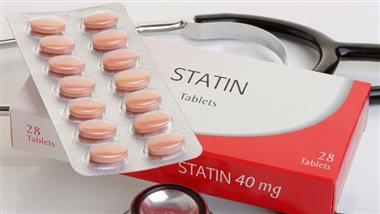
STORY AT-A-GLANCE
- Statins do not protect against cardiovascular disease and more than double the risk of dementia in some cases
- People with early mild cognitive impairment and low to moderate cholesterol levels who used lipophilic statins had more than double the risk of dementia compared to those who did not use statins
- Statin users also had significant decline in metabolism of the brain’s posterior cingulate cortex, which is the brain region that declines most significantly in early Alzheimer’s disease
- Among patients with Type 2 diabetes admitted to a hospital for COVID-19, those taking statins had significantly higher mortality rates from COVID-19 compared to those not taking the drugs
- People who take statins are more than twice as likely to be diagnosed with diabetes and those who take the drugs for longer than two years have more than triple the risk
The use of statin cholesterol-lowering medications has been on the rise for decades1 and they are among the most widely used drugs in the world. In the U.S., close to 50% of U.S. adults over 75 years old take a statin2 to lower their cholesterol in the misguided hope of preventing heart disease, heart attacks and stroke.
Not only is there strong evidence suggesting that statins are a colossal waste of money, but their use may also harm your brain health — more than doubling your risk of dementia in some cases.3
The benefit must clearly outweigh the risk when it comes to any drug treatment, but this is rarely the case with statins, which do not protect against cardiovascular disease and are linked to a number of health conditions4,5 including dementia, diabetes6 and even increased risk of death from COVID-19.7
Statins Doubled Risk of Developing Dementia
Statins’ effects on cognitive performance have previously been called into question, since lower levels of low-density lipoprotein (LDL) cholesterol are linked to a higher risk of dementia.8 The featured study, published in The Journal of Nuclear Medicine,9 involved people with mild cognitive impairment and looked into the effects of two types of statins: hydrophilic and lipophilic.
Hydrophilic statins, which include pravastatin (Pravachol) and rosuvastatin (Crestor), dissolve more readily in water, while lipophilic statins, such as atorvastatin (Lipitor), simvastatin (Zocor), Fluvastatin (Lescol), and lovastatin (Altoprev), dissolve more readily in fats.10 Lipophilic statins can easily enter cells11 and be distributed throughout your body, whereas hydrophilic statins focus on the liver.12
According to study author Prasanna Padmanabham of the University of California, Los Angeles, “There have been many conflicting studies on the effects of statin drugs on cognition. While some claim that statins protect users against dementia, others assert that they accelerate the development of dementia. Our study aimed to clarify the relationship between statin use and subject’s long-term cognitive trajectory.”13
Subjects were divided into groups based on cognitive status, cholesterol levels and type of statin used, and followed for eight years. Those with early mild cognitive impairment and low to moderate cholesterol levels at the start of the study who used lipophilic statins had more than double the risk of dementia compared to those who did not use statins.14
Further, this group also had significant decline in metabolism of the brain’s posterior cingulate cortex, which is the brain region that declines most significantly in early Alzheimer’s disease.15
Your Brain Needs Cholesterol
About 25% to 30% of your body’s total cholesterol is found in your brain, where it is an essential part of neurons. In your brain, cholesterol helps develop and maintain the plasticity and function of your neurons,16 and data from the Shanghai Aging Study revealed that high levels of LDL cholesterol are inversely associated with dementia in those aged 50 years and over.
“High level of LDL-C may be considered as a potential protective factor against cognition decline,” the researchers noted.17 They compiled a number of mechanisms on why lower cholesterol may be damaging for brain health, including the fact that lower cholesterol is linked with higher mortality in the elderly and may occur alongside malnutrition and chronic diseases, including cancer. As it specifically relates to brain health, however, they suggested:18
- Decreasing cholesterol levels in the elderly may be associated with cerebral atrophy, which occurs with dementia
- High LDL cholesterol may be beneficial by reducing neurons’ impairments or helping repair injured neurons
- Acceleration of neurodegeneration has occurred when neurons were short on cellular cholesterol or cholesterol supply
- Cholesterol plays an important role in the synthesis, transportation and metabolism of steroid hormones and lipid-soluble vitamins, and both of these are important to synaptic integrity and neurotransmission
Lower cholesterol levels were also associated with worse cognitive function among South Korean study participants aged 65 and over, and were considered to be a “state marker for AD [Alzheimer’s disease].”19
A U.S. study of more than 4,300 Medicare recipients aged 65 and over also revealed that higher levels of total cholesterol were associated with a decreased risk of Alzheimer’s disease, even after adjusting for cardiovascular risk factors and other related variables.20
Statins Increase Death Risk From COVID-19
The risks to brain health are only one red flag tied to statins. A concerning link was also uncovered among statins, diabetes and an increased risk of severe disease from COVID-19.21 Among patients with Type 2 diabetes admitted to a hospital for COVID-19, those taking statins had significantly higher mortality rates from COVID-19 within seven days and 28 days compared to those not taking the drugs.
The researchers acknowledged those taking statins were older, more frequently male and often had more comorbidities, including high blood pressure, heart failure and complications of diabetes. However, despite the limitations, the researchers found enough evidence in the over 2,400 participants to conclude:22
“… our present results do not support the hypothesis of a protective role of routine statin use against COVID-19, at least not in hospitalized patients with T2DM (Type 2 diabetes mellitus).
Indeed, the potentially deleterious effects of routine statin treatment on COVID-19-related mortality demands further investigation and, as recently highlighted, only appropriately designed and powered randomized controlled trials will be able to properly address this important issue.”
Statins Double — or Triple — Diabetes Risk
A connection already exists between statins and diabetes, to the extent that people who take statins are more than twice as likely to be diagnosed with diabetes than those who do not, and those who take the drugs for longer than two years have more than triple the risk.23,24
“The fact that increased duration of statin use was associated with an increased risk of diabetes — something we call a dose-dependent relationship — makes us think that this is likely a causal relationship,” study author Victoria Zigmont, a graduate researcher in public health at The Ohio State University in Columbus, said in a news release.25
The data also indicated that individuals taking statin medications had a 6.5% increased risk of high blood sugar as measured by hemoglobin A1c value,26 which is an average level of blood sugar measuring the past 60 to 90 days.
Researchers with the Erasmus Medical Center in The Netherlands also analyzed data from more than 9,500 patients, finding those who had ever used statins had a 38% higher risk of Type 2 diabetes, with the risk being higher in those with impaired glucose homeostasis and those who were overweight or obese.27
The researchers concluded, “Individuals using statins may be at higher risk for hyperglycemia, insulin resistance and eventually Type 2 diabetes. Rigorous preventive strategies such as glucose control and weight reduction in patients when initiating statin therapy might help minimize the risk of diabetes.”
But a far better strategy may be preventing insulin resistance in the first place, by avoiding statin drugs and eating a healthy diet. According to Dr. Aseem Malhotra, an interventional cardiologist consultant in London, U.K. — who has been attacked for being a “statin denier” after calling out the drugs’ side effects28 — and a colleague:29
“In young adults, preventing insulin resistance could prevent 42% of myocardial infarctions, a larger reduction than correcting hypertension (36 %), low high-density lipoprotein cholesterol (HDL-C) (31 %), body mass index (BMI) (21 %) or LDL-C (16 %).30
It is plausible that the small benefits of statins in the prevention of CVD come from pleiotropic effects which are independent of LDL-lowering. The focus in primary prevention should therefore be on foods and food groups that have a proven benefit in reducing hard endpoints and mortality.”
The Statin Scam
Even as saturated fats and cholesterol have been vilified, and statin drugs have become among the most widely prescribed medications worldwide, heart disease remains a top killer.31 Today, statin drugs to reduce cholesterol levels are recommended for four broad patient populations:32
- Those who have already had a cardiovascular event
- Adults with diabetes
- Individuals with LDL cholesterol levels ≥190 mg/dL
- Individuals with an estimated 10-year cardiovascular risk ≥7.5% (based on an algorithm that uses your age, gender, blood pressure, total cholesterol, high density lipoproteins (HDL), race and history of diabetes to predict the likelihood you’ll experience a heart attack in the coming 10 years)
Despite statins being prescribed for these sizable groups, and “target” cholesterol levels being achieved, a systematic review of 35 randomized, controlled trials found that no additional benefits were gained. According to an analysis in BMJ Evidence-Based Medicine:33
“Recommending cholesterol lowering treatment based on estimated cardiovascular risk fails to identify many high-risk patients and may lead to unnecessary treatment of low-risk individuals. The negative results of numerous cholesterol lowering randomized controlled trials call into question the validity of using low density lipoprotein cholesterol as a surrogate target for the prevention of cardiovascular disease.”
Even in the case of recurrent cardiovascular events, despite the increase in statin use from 1999 to 2013, researchers writing in BMC Cardiovascular Disorders noted, “there was only a small decrease in the incidence of recurrent CVD, and this occurred mainly in older patients without statins prescribed.”34
Statins Won’t Protect Your Heart Health
Statins are effective at lowering cholesterol, but whether this is the panacea for helping you avoid heart disease and extend your lifespan is a topic of heated debate. Again in 2018, a scientific review presented substantial evidence that high LDL and total cholesterol are not an indication of heart disease risk, and that statin treatment is of doubtful benefit as a form of primary prevention for this reason.35
In short, these drugs have done nothing to derail the rising trend of heart disease, while putting users at increased risk of health conditions like diabetes, dementia and others, such as:
- Cancer36
- Cataracts37
- Triple risk of coronary artery and aortic artery calcification38
- Musculoskeletal disorders, including myalgia, muscle weakness, muscle cramps, rhabdomyolysis and autoimmune muscle disease39
- Depression40
In the event you’re taking statins, be aware that they deplete your body of coenzyme Q10 (CoQ10) and inhibit the synthesis of vitamin K2. The risks of CoQ10 depletion can be somewhat offset by taking a Coenzyme Q10 supplement or, if you’re over 40, its reduced form ubiquinol. But ultimately, if you’re looking to protect both your brain and heart health, avoiding statin drugs and instead optimizing your diet may be the answer.
- 1, 34 BMC Cardiovasc Disord. 2018; 18: 209
- 2, 3, 12, 13 SciTechDaily June 28, 2021
- 4 Journal of Clinical Lipidology February 2017
- 5 The Lancet November 24, 2007
- 6 Current Diabetes Reports February 2, 2017
- 7, 21, 22 Diabetes and Metabolism, 2020; doi.org/10.1016/j.diabet.2020.10.001
- 8 Frontiers in Neurology November 12, 2018
- 9, 14, 15 Journal of Nuclear Medicine May 2021, 62 (supplement 1) 102
- 10 Harvard Health Publishing January 27, 2020
- 11 Front Cardiovasc Med. 2021; 8: 687585
- 16, 17, 18 Front Neurol. 2018; 9: 952
- 19 J Nutr Health Aging. 2002;6(5):320-3
- 20 Arch Neurol. 2004 May;61(5):705-14
- 23, 25, 26 Medical News Today June 26, 2019
- 24 Diabetes Metabolism Research and Reviews May 24, 2019
- 27 British Journal of Clinical Pharmacology March 5, 2019
- 28 Daily Mail March 2, 2019
- 29 BMC Med. 2016; 14: 4
- 30 Diabetes Care. 2009 Feb;32(2):361-6
- 31 JAMA. 2019;322(8):780-782. doi:10.1001/jama.2019.9161
- 32, 33 BMJ Evidence-Based Medicine August 4, 2020 DOI: 10.1136/bmjebm-2020-111413
- 35 Expert Review of Clinical Pharmacology, September 10, 2018
- 36 Cancer Epidemiol Biomarkers Prev. 2013 Sep;22(9):1529-37
- 37, 38 Open Journal of Endocrine and Metabolic Diseases 2013, Vol. 3, No. 3
- 39 JAMA Intern Med. 2013;173(14):1318-1326
- 40 Annals of General Psychiatry, 2017;16:20
NAD+ Helps Restore Age-Related Muscle Deterioration
Reproduced from original article:
https://articles.mercola.com/sites/articles/archive/2021/02/15/nicotinamide-adenine-dinucleotide-benefits.aspx
Analysis by Dr. Joseph Mercola Fact Checked February 15, 2021

STORY AT-A-GLANCE
- Several studies have proposed that mitochondrial dysfunction in your motor neurons drive the development of sarcopenia (age-related muscle loss)
- Scientists recently discovered that Alzheimer’s-like protein aggregates (amyloid beta) underlie the muscle deterioration commonly seen in aging, and that nicotinamide adenine dinucleotide (NAD+) is essential for combating this condition
- When the NAD+ salvage pathways in muscle are impaired, mitochondrial dysfunction and decreased muscle mass ensue
- NAD+ boosting molecules such as nicotinamide riboside (NR), nicotinamide mononucleotide (NMN), nicotinamide (a form of vitamin B3 or niacin) and nicotinic acid (niacin) have been shown to protect against age-related muscle disease
- NMN appears to be the best, as it activates the NAD+ salvage pathway and is a direct precursor to NAD+. Lifestyle strategies such as exercise, sauna bathing, fasting, recalibrating your circadian rhythm and avoiding excessive EMFs and alcohol will also address low NAD+
The tendency is to lose muscle as you age, a condition known as sarcopenia. If you don’t do anything to stop it you can expect to lose about 15% of your muscle mass between your 30s and your 80s.1 An estimated 10% to 25% of seniors under the age of 70 have sarcopenia and as many as half those over the age of 80 are impaired with it.2
Enforced bedrest, due to hospitalization, for example, can also have a dramatic impact on your muscle mass, even if you’re younger. According to a 2015 review3 in Extreme Physiology & Medicine, you can lose 5.2% of your muscle mass in the first two weeks of bedrest. By Day 23, you can have lost up to 10% of your quadriceps muscle mass.
Not only are strong muscles a requirement for mobility, balance and the ability to live independently, but having reserve muscle mass will also increase your chances of survival4 when sick or hospitalized. Since muscle is lost far more easily and quicker than it’s built, finding ways to continuously promote and maintain your muscle mass is of utmost importance.
The Crucial Role of NAD+
As reported by Science Daily,5 scientists recently discovered that Alzheimer’s-like protein aggregates underlie the muscle deterioration commonly seen in aging, and that nicotinamide adenine dinucleotide (NAD+) is essential for combating this condition.
Their study,6 published in the journal Cell Reports, showed that protein aggregates (amyloid) could be blocked by boosting the levels of NAD+, a biomolecule that is also essential for maintaining mitochondrial function.
Higher levels of NAD+ were found to turn on the defense systems of the mitochondria and restore muscle function. Aggregated proteins have long been thought to be a contributor to brain aging, and this study proves aggregated proteins also contribute to muscle aging.
“The most prominent component of these protein aggregates is beta-amyloid, just like in the amyloid plaques in the brains of patients with Alzheimer’s disease,” said Johan Auwerx at EPFL’s School of Life Sciences. “These abnormal proteotoxic aggregates could serve as novel biomarkers for the aging process, beyond the brain and muscle.”
The study points out that NAD+ homeostasis is required to maintain proteostasis, i.e., the regulation of protein creation, folding, trafficking and degradation. It turns out that boosting NAD+ in later life will reduce amyloidosis (the buildup of amyloid) and mitochondrial dysfunction.
The importance of NAD+ for healthy muscle function is also reviewed in “Sarcopenia and Muscle Aging: A Brief Overview,”7 published in the journal Endocrinology and Metabolism. The paper highlights:
“… recent findings that describe key pathophysiological phenotypes of this condition, including alterations in muscle fiber types, mitochondrial function, nicotinamide adenine dinucleotide (NAD+) metabolism, myokines, and gut microbiota, in aged muscle compared to young muscle or healthy aged muscle.”
As indicated by the Cell Report study, this Endocrinology and Metabolism paper highlights the connection between sarcopenia and mitochondrial dysfunction in both skeletal muscle and motor neurons.
People with sarcopenia have been found to have both reduced mitochondrial oxidative capacity and inhibited NAD+ biosynthesis, and several studies have proposed that mitochondrial dysfunction in your neurons actually drive the development of sarcopenia.8

What Is NAD+?
NAD+ is a substrate for a number of important enzymes, including poly(ADP-ribose) polymerase (PARP) and sirtuin 1 (SIRT1), which is known as a classic longevity protein. NAD+ is also essential in metabolic processes such as creating ATP in your mitochondria. It accepts and donates electrons and is used in oxidation-reduction reactions in the mitochondrial electron transport chain.
Interestingly, what scientists have observed is that NAD+ levels decline in most tissues over time, and is associated with aging in general and is therefore thought to play an important role in many age-related diseases.
According to the Endocrinology and Metabolism paper,9 researchers have shown that when the NAD+ salvage pathways in muscle are impaired, mitochondrial dysfunction and decreased muscle mass ensues.
NAD+ boosting molecules such as nicotinamide riboside (NR), nicotinamide mononucleotide (NMN), nicotinamide (a form of vitamin B3 or niacin) and nicotinic acid (niacin) have all been shown to protect against age-related muscle disease.
How to Boost NAD+
Of those four, NMN is my personal favorite as it activates the NAD+ salvage pathway. As explained by Siim Land in a recent interview, featured in “Simple Strategies That Will Improve Your Immunity,” which also reviews the importance of NAD+ in COVID-19:
“A lot of the NAD that your body produces is recycled through the salvage pathway. Very little (less than 1%) of it is going to come from food, especially tryptophan or niacin. The easiest way to prevent losing your NAD as you get older or as you get immunocompromised is to promote the salvage pathway.”
I’ve previously recommended the use of NR over NMN but have since changed my stance. NR used to be considered superior because no NMN transporter — required to get it into cells — had been detected. We now know there is such a transporter, which gives NMN the advantage as it’s also a more direct NAD+ precursor.
Most of the NAD+ precursor research is done with NR and that used to be my primary choice. However, as you can see from the image above, NMN converts to NAD+ whereas NR must first be converted into NMN before it can be converted into NAD+,10 so it makes more sense to use NMN for NAD+ augmentation.
The image above also shows how niacin (NA) also finds its way to become NAD+. Niacin is also a useful supplement to use in increasing NAD+ levels. You just need to limit the dose to about 25 mg, which most is a dose low enough not to cause any flushing. Higher doses are not likely as effective as NMN and exercise in producing NAD+.
The NMN transporter was discovered11,12 shortly before my interview with David Sinclair, Ph.D., a professor of genetics and co-director of the Paul F. Glenn Center for the Biology of Aging at Harvard Medical School. Interestingly, NMN is also Sinclair’s favorite NAD+ precursor.
Sinclair is generally acknowledged for bringing the importance of NAD+ to the world with his experiments at MIT in the late ‘90s which connected NAD+ to sirtuin activation. We discuss these issues in “The Revolutionary Science of Aging and Longevity,” the interview from which is embedded above for your convenience.
I believe one of the most effective ways of boosting your NAD+ level is to use NMN in suppository form, as this allows you to avoid most of the methylation of the supplement. Other alternatives include subcutaneous or intranasal administration, all of which are more effective than oral supplements.
Unfortunately, NMN is not sold in suppository form, so you would need to get silicone candy molds and use coconut oil to serve as binder for the NMN. The suppositories would need to be refrigerated as coconut oil tends to melt at 75 degrees Fahrenheit. Additionally, NMN is quite perishable, which is another reason to refrigerate it.
As for the other NAD+ boosters, I do not recommend using high-dose niacinamide because in high doses it inhibits Sirt1, an important longevity protein. As mentioned above, low-dose niacin (vitamin B3) of 25 mg can be used.
Low doses of niacin, along with NMN in suppository form — both of which are precursors to NAD+ — are typically sufficient. As an added boon, raising your NAD+ also appears protective against severe COVID-19, as detailed in “Is Niacin a Missing Piece of the COVID Puzzle?” There are also NAD+ supplements available, but their price tags can be prohibitive.
Lifestyle Strategies Can Address Underlying Cause of Low NAD+
While supplements such as NMN can certainly be helpful, if your NAD is low, your best bet is really to address the underlying cause. The good news is that this can be done through simple lifestyle strategies such as exercise, sauna bathing, fasting, realigning your circadian rhythm and minimizing electromagnetic field (EMF) exposure.
One of the reasons exercise, heat exposure and fasting work to address low NAD+ levels is because they are catabolic stressors that activate AMP protein kinase (AMPK). AMPK, in turn, activates an enzyme called NAMPT, which governs the NAD+ salvage pathway.
Blood flow restriction (BFR) training can be particularly beneficial in terms of exercise. It has been shown to naturally increase your NAD level and is very safe for the elderly. You can learn more about this in “BFR Training for Muscle Mass Maintenance.”
Your circadian rhythm, meanwhile, plays a role because it is controlled by longevity genes called sirtuins, SIRT1 in particular. If your circadian rhythm is misaligned, then sirtuins are not expressed, which in turn inhibits NAMPT, thereby shutting down your NAD+ salvage pathway.
Oxidative stress and inflammation also use up and deplete NAD+, and exercise, sauna and fasting all help to reduce these. As a result, less NAD+ is depleted. So, these strategies not only improve your NAD+ production, but also reduce your body’s NAD+ consumption. The end result is a higher NAD+ baseline.
EMF exposure, which is the topic of my book “EMF*D,” is one common source of oxidative stress, so it too increases your NAD+ consumption. It does this by activating PARP, a DNA repairing enzyme. Each time PARP is activated, it uses up 150 molecules of NAD+. Hence, reducing your EMF exposure can also be an important strategy to preserve and protect your NAD+ level.
Your body also uses up NAD+ to detoxify alcohol, so if nightly drinking is part of your routine, consider giving it up. To learn more about how healthy lifestyle strategies such as the ones mentioned here can improve your NAD+ level, consider reading through the paper “Healthy Lifestyle Recommendations: Do the Beneficial Effects Originate from NAD+ Amount at the Cellular Level?”13
NAD+ Is a Crucial Antiaging Component
So, to summarize, raising your NAD+ level and keeping it high has many important health benefits, from supporting mitochondrial function, which is crucial for general health and longevity, to protecting against severe COVID-19 and age-related muscle loss.
The great news is that this can easily be done by implementing the healthy lifestyle strategies reviewed above — exercise, sauna, fasting and recalibrating your circadian rhythm — while simultaneously avoiding things that deplete your body of NAD+, such as EMF exposure and excessive alcohol consumption. On top of that, supplements such as NMN together with normal doses of niacin can help boost your NAD+ in the short term.
- 1 J Gerontol A Biol Sci Med Sci. 1995 Nov;50 Spec No:5-8
- 2 Journal of Gerontology: Series A October 2003; 58(10): M911-M916
- 3 Extreme Physiology & Medicine 2015; 4: 16
- 4 Curr Opin Clin Nutr Metab Care. 2012 Jan; 15(1): 7–11
- 5 Science Daily January 20, 2021
- 6 Cell Reports 2021; 34 (3): 108660
- 7 Endocrinology & Metabolism 2020; 35: 716-732 (PDF)
- 8, 9 Endocrinology & Metabolism 2020; 35: 716-732, page 718 (PDF)
- 10 NMN.com What Is NAD?
- 11 Hecmedia.org NMN Transporter Discovered
- 12 Nature Metabolism January 2019 DOI: 10.1038/s42255-018-0015-6
- 13 Oxidative Medicine and Cellular Longevity 2020 Article ID 8819627 (PDF)
Ease aching muscles with ginger
Reproduced from original article:
www.naturalhealth365store.com/ginger-helps-aching-muscles

Posted by Carol Simmons on 12/24/2020
Prized by chefs for its tangy, refreshing flavor and utilized in cuisines around the globe, ginger is a sure way to add a little “zing” to recipes. Even its scientific name – Zingiber officinale – has a zing to it! And, ginger’s usefulness isn’t confined to just the kitchen.
For centuries, ginger root has been used in Chinese and Ayurvedic healing systems as a trusted remedy for a variety of ailments, including digestive problems, colds and fungal infections. Now, an intriguing new study backs up ginger’s pain-relieving properties – and reveals why ginger might be “just the ticket” for relieving post-workout muscle pain.
Looking for a natural alternative to toxic medications?
As it turns out, ginger is packed with active compounds such as gingerols, shogaols, and zingerone. Research has shown that these inhibit the activity of the pro-inflammatory enzymes COX-1 and COX-2, which are major culprits in promoting inflammation and pain.
In fact, scientists credit ginger with pain-relieving and anti-inflammatory effects similar to that of NSAID medications.
In a study conducted by researchers at the University of Georgia and published in The Journal of Pain, volunteers took either 2 grams of ginger a day for 11 days, or a placebo. Towards the end of the study, participants were asked to perform a series of elbow flexor exercises intended to cause moderate muscle injury.
Three days later, the team evaluated the participants’ range of motion and their levels of pain, inflammation and swelling. And, the result was clear. Daily ginger consumption, the researchers concluded, caused “moderate-to-large” reductions in muscle pain.
Separate studies have shown that ginger reduces menstrual pain as well. In some studies, ginger seemed to work as well as ibuprofen, a pharmaceutical pain-reliever!
Ginger has also been found to reduce hip and knee pain in osteoarthritis patients.
Discover a time-honored remedy for nausea
Ginger has traditionally been used to relieve indigestion, nausea, vomiting, bloating and constipation – with sound scientific basis. With strong antioxidant and anti-inflammatory effects, ginger protects the gastrointestinal tract, promotes efficient digestion, and speeds the elimination of waste.
In studies, dosages of one or two grams of ginger were shown to effectively reduce post-operative vomiting and motion sickness-related vomiting. In one trial, ginger helped to ease nausea in children and young adults undergoing chemotherapy.
Researchers have also praised ginger as a safe and effective treatment for morning sickness.
Good to know: With strong antimicrobial properties, ginger is active against the H. pylori bacteria, a common cause of stomach ulcers and digestive problems.
Ginger helps to protect against several life-threatening diseases
Ginger may even act against heart disease and cancer, the Number One and Number Two causes of death in the nation.
In one review, 5 grams of ginger a day had significant antiplatelet activity, meaning it reduced the “stickiness” of platelets that allows blood to form into dangerous clots. Other studies have shown that ginger reduces harmful LDL cholesterol while increasing levels of heart-healthy HDL cholesterol.
While more research is needed, it’s clear that ginger has beneficial effects on the cardiovascular system.
In addition, ginger contains phenolic compounds called gingerols. These have been shown in laboratory studies to inhibit the growth of cancer cells.
Access the zesty benefits of ginger
Ginger is available in the form of fresh ginger root, as well as in dried, powdered form. Ginger may also be candied and even pickled – with the latter commonly served with sushi as a palate cleanser.
There are a variety of delicious ways to use ginger (aside from the time-honored gingerbread).
You can add ginger juice to smoothies, grate fresh ginger over salads or vegetables, or use fresh or powdered ginger to add zip to stews, marinades and dressings. You can also make a stomach-soothing ginger tea by thinly slicing two inches of fresh ginger root and boiling it for 20 minutes, then straining and cooling.
Ginger in amounts found in foods is generally recognized as safe. However, if you intend to supplement with ginger extracts or capsules, check first with your integrative doctor.
Ultimately, whether you use ginger to alleviate pain, soothe digestive problems or promote overall health, this spicy herb has plenty to offer.
Sources for this article include: