Muscle
now browsing by category
Grip Strength Is a Reliable Biomarker of Biological Age
Reproduced from original article:
https://articles.mercola.com/sites/articles/archive/2024/03/15/grip-strength-biological-age-biomarker.aspx
The original Mercola article may not remain on the original site, but I will endeavor to keep it on this site as long as I deem it to be appropriate.
Analysis by Dr. Joseph Mercola March 15, 2024

STORY AT-A-GLANCE
- Grip strength appears to be well correlated with epigenetic clocks used to estimate biological age based on DNA methylation patterns. Researchers concluded that age acceleration in men and women is associated with loss of strength over time
- Chronological age is the number of months or years that you have existed on Earth, while biological age describes the age at which your cells are functioning. As your cells grow older, they’re more susceptible to a variety of age-related diseases, many of which are in the top 10 leading causes of death
- There are similar associations between grip strength and endurance, balance, mobility, immune system function, heart health, cognitive function, an increase in psychiatric conditions and dementia
- Hand grip strength is measured with a dynamometer, which you can purchase or use at your local gym. Take three measurements following the instructions and average the measurements to find your grip strength
- While important, grip strength is an indicator of overall strength, so just improving hand strength doesn’t improve health or longevity. I highly encourage you to consider KAATSU, which is a specialized form of blood flow restriction training
Research1 published in the Journal of Cachexia, Sarcopenia and Muscle demonstrated once again that grip strength is a reliable biomarker of your biological age. In case you were not aware, your biological age can be a different number than your chronological age.
Biological Age, Health Span and Legal Implications
Chronological age is the number of years you have existed on Earth, while biological age describes the age at which your cells are functioning. For some people, these numbers are the same, and for others, they are vastly different. If you throw another measurement into the mix, your health span is the amount of time in life you are free from age-related disease.
Your health span is intimately related to your biological age. This means as your body’s cells decline in function, they’re more susceptible to a variety of age-related diseases, many of which are in the top 10 leading causes of death recorded by the Centers for Disease Control and Prevention.2 These conditions include heart disease, cancer, stroke, Alzheimer’s disease, diabetes and chronic liver disease.
Researchers believe that biological age is a combination of genetics, lifestyle choices, nutrition and comorbidities.3 You have control over two factors — lifestyle and nutrition — which together influence comorbidities. In other words, you have control over a vast majority of the factors that impact your biological age, and therefore your longevity.
When you consider the world around you, a lot has changed in the last five years. Bioethicists at Harvard University4 question if the distinction between biological and chronological age is significant, should that support a legal age change? While this is a question for another time, you can see how taking control of your health today may hold many benefits later in life, no matter what time in life you begin making changes.
The featured study indicates that grip strength is a reliable biomarker of your biological age, which would indicate that measuring your grip strength can help doctors predict your probability of developing chronic disease or all-cause mortality. One writer ponders5 about the growing number of individuals in their 20s and 30s who are no longer biologically young.
He writes that over the last eight years, a variety of studies have shown that the number of people with serious chronic diseases is growing, alongside a rising infertility rate, rising rate of mental illnesses in young women, and a roughly 70% decline in male testosterone since the 1970s.
He concludes that it is “obvious just how much the quality of human life has declined in just 1-2 decades.”6 Yet, information from the featured study and many others demonstrate that simple lifestyle changes can produce significant results.
Grip Strength Is a Reliable Biomarker for Biological Age
The researchers identified a growing body of evidence that has linked muscular weakness to a host of age-related health outcomes.7 Many researchers have looked at low grip strength as a biomarker of aging. This research team sought to identify the pathways that connect grip strength to negative health consequences by looking at DNA methylation (DNAm) age acceleration.
The researchers used data from the 2006 to 2008 data collection in the Health and Retirement Study in which there were eight to 10 years of follow-up. The researchers looked at longitudinal modeling that examined a potential association between the change in grip strength and DNAm age acceleration.
The data estimated age acceleration using DunedinPoAm, PhenoAge and GrimAge clocks, which are three epigenetic clocks used to estimate biological age based on DNAm patterns.8
At the conclusion of the study, the researchers wrote that there was “a robust and independent cross-sectional association between NGS (normalized grip strength) and DNAm age acceleration for men using the DunedinPoAm, PhenoAge and GrimAge clocks and for women using the DunedinPoAm and GrimAge clocks.”9
Based on the data, the researchers concluded that there is “some initial evidence of age acceleration among men and women with lower NGS and loss of strength over time.”10 They suggest that more research is needed to understand the extent to which DNAm age is associated with grip strength and chronic disease.
This data seeks to explain what other researchers have documented, that grip strength provides evidence of your overall strength and upper limb function, as well as information about bone mineral density, nutrition, cognition, sleep and quality of life.11

Save This Article for Later – Get the PDF Now
Relationship Between Strength and Overall Health
Other researchers have also identified a similar relationship with grip strength, overall health and specific health conditions. According to geriatric medicine specialist Ardeshir Hashmi from the Cleveland Clinic, “Grip strength naturally begins to decline around age 50, and maybe even earlier. People who maintain their grip strength age more slowly. They stay healthier longer and are stronger throughout their bodies.”12
The consensus is that the stronger your grip strength, the better your health and the lower your grip strength the poorer your health. However, there is no consensus on the exact low and high measurements, and they are different based on your chronological age, weight and other factors.13
It’s estimated that grip strength is an indication of general muscle strength, which is crucial for endurance, balance and mobility. The association between hand grip strength and the strength of your immune system was the focus of a 2022 study14 that concluded measuring hand strength allows for “preliminary predictions on the current level of immunity and inflammation in the body.”
Data has also found that hand grip strength is correlated with heart health and can help predict cardiovascular problems alongside family history, blood pressure and other indicators.15 Low grip strength increases the risk of osteoporosis in postmenopausal women and a stronger grip is associated with increased functional independence.16 Grip strength can also affect your stability and increase the risk of accidents when you can’t catch yourself from falling.
Several studies have also found an association between a weaker grip, a reduction in cognitive functioning, an increase in the risk of psychiatric conditions and an increase in dementia.17 A large study published in 2022 associated poor hand grip strength in midlife with cognitive decline roughly 10 years later.18
The study19 published in JAMA Neurology used data from the U.K. Biobank Cohort Study. The researchers concluded that hand grip strength is associated with neurocognitive brain health. They believe this adds to a growing body of research indicating that increasing muscle strength in middle-aged adults may help maintain neurocognitive brain health as you age.
Another 2022 study20 published in BMC Medicine analyzed cross-sectional and longitudinal data from over 40,000 participants. The number in the cohort varied depending on the measurement being analyzed.
The researchers looked at the association between grip strength, behavioral outcomes and brain structure, finding an association between grip strength and increased gray matter volume in regional areas of the brain, as well as several measures of cognition and mental health.
How to Measure Hand Grip Strength
I have known of the correlation between grip strength and longevity for some time now, but was surprised that the instrument to measure it is inexpensive, So, I purchased one for $25 on Amazon and was delighted that my grip strength was off the charts at 129 pounds. I sincerely believe it is largely due to hanging for 90 seconds to two minutes twice a day for the last few years, a practice that I encourage nearly anyone to consider to increase their grip strength.
Researchers in the featured study used a Smedley spring-type hand dynamometer to measure grip strength.21 Grip strength measures muscle strength exerted in your hand and forearm muscles. A dynamometer is typically the tool that’s used to measure grip strength but not what’s used to improve your grip strength.
The measurement is typically given in kilograms or pounds. A digital hand dynamometer is the easiest and most reliable way of measuring your hand strength. Owning a hand dynamometer helps you keep track of your grip strength over time. To use a dynamometer be sure to follow the instructions that come with the device. Generally:22
- The grip handle should be positioned to fit your hand
- Bend your elbow at a 90-degree angle
- Apply maximum effort to squeeze the dynamometer
- Repeat a total of three times and average the three results
A 2018 study23 used data from 1,232 participants aged 18 to 85 years to extract normative reference values for hand grip strength in that age range. The researchers established ranges based on gender and dominant or non-dominant hands.
The cohort was broken into five-year age ranges and an overall range was established for each group as well as identifying those in the 10th, 25th, 50th, 75th and 90th percentiles. Examples of the measurement ranges in the dominant hand include:
| Years | Pounds |
|---|---|
| Men | |
| 18-24 | 103.6 +/- 17.9 |
| 35-39 | 103.8 +/- 26.2 |
| 50-54 | 97.0 +/- 22.7 |
| 60-64 | 84.7 +/- 22.7 |
| 70-74 | 76.5 +/- 19.8 |
| Women | |
| 18-24 | 61.9 +/- 15.7 |
| 35-39 | 64.4 +/- 13.7 |
| 50-54 | 62.2 +/- 13.9 |
| 60-64 | 52.0 +/- 14.3 |
| 70-74 | 47.4 +/- 11.2 |
Pay Close Attention to Overall Strength
As the lead researcher of the featured study, Mark D. Peterson said, “Grip strength is a proxy indicator of overall muscle strength, meaning that it is highly correlated to other measures of strength. Thus, simply increasing grip strength would not render any changes to health or longevity.”24
While grip strength is just an indicator of your overall strength, you still may want to spend some time improving your grip strength to make everyday tasks easier. Hashmi recommends25 using a racquetball or squash ball as a squeeze ball.
He notes that the size and the material of the ball are important so that you have the right resistance. A tennis ball is too large and may cause an injury while exercising. Other options can include resistance bands and grip and squeeze handles that come in different sizes and levels of resistance. He recommends using a low resistance and working your way up to higher strengths.
While you might think that traditional weightlifting is the only way to build muscle, there are several other options. If you’ve never done any strength training, it may help to begin with resistance bands that come in a variety of different strengths. These allow you to build muscle while you learn the correct form to reduce your risk of injury.
As you get stronger, I highly encourage you to consider my favorite way of strength training — KAATSU, also known as blood flow restriction training. It can help radically improve muscle growth and strength without risking injury. This makes an ideal for people who have never done strength training and for the elderly.
Strength training is vital to prevent age-related muscle loss that leads to frailty and premature death. KAATSU is not only effective in building muscle, even when you’re older, but it also generates some highly beneficial metabolic byproducts, including insulin growth factor 1, growth hormones and brain-derived neurotrophic factor (BDNF).
You can learn more about the benefits of KAATSU in “How to Optimize Health and Strength — Even if You’re Over 60,” which features my interview with Dr. Marcos de Andrade, a research physician and CEO of BIOHAXS. We met at Dave Asprey’s Biohacking Conference in June 2023, where we ended up arm wrestling. De Andrade was 38 years old and an extreme fitness buff, and I was 69. But I still beat him. So, age doesn’t have to be a determining factor or excuse for poor fitness.
- 1 Journal of Cachexia, Sarcopenia and Muscle, November 9, 2022
- 2 Centers for Disease Control and Prevention, Leading Causes of Death
- 3 Translational Oncology, 2022; 15(1) Bullet 3
- 4 Center for Bioethics, April 1, 2021
- 5, 6 Haidut, February 27, 2024 (Archived)
- 7 Journal of Cachexia, Sarcopenia and Muscle, November 9, 2022, Sentence 1 and background last sentence
- 8 Haidut, February 27, 2024, last para (Archived)
- 9 Journal of Cachexia, Sarcopenia and Muscle, November 9, 2022, Results; Conclusion for next para
- 10 Journal of Cachexia, Sarcopenia and Muscle, November 9, 2022, Conclusion
- 11 Clinical Interventions in Aging, 2019; 14
- 12 Cleveland Clinic, March 13, 2023, para 5
- 13 Cleveland Clinic, March 13, 2023, Subhead 1 para 2; Muscle strength para 1
- 14 International Journal of Environmental Research and Public Health, 2022; 19(20) quote is from last sentence abstract
- 15 British Heart Foundation, March 14, 2018
- 16 Joan Pagano, November 7, 2023
- 17 BMC Medicine, 2022;20(286) 5% down the page, Background para 1
- 18 Harvard Health Publishing, September 1, 2022 top of para 1
- 19 JAMA Neurology, 2022; 5(6) Abstract/Concl and Relevance
- 20 BMC Medicine, 2022;20(286) 45% down the page, Discussion, para 1 GMV=grey matter volume – abbreviations at the end of the article
- 21 Journal of Cachexia, Sarcopenia and Muscle, November 9, 2022, Methods/Exposures/Grip Strength para 1 15-30% Down the page
- 22 Cathe, How Strong Is Your Grip? Para 7
- 23 Journal of Orthopaedic & Sports Physical Therapy, 2018;48(9) Pop up appendix A 80% down the page
- 24 Atlanta Journal Constitution, April 17, 2023
- 25 Cleveland Clinic, March 13, 2023, Hand exercises 60% down the page
What Do L-Carnitine Supplements Really Do?
Reproduced from original article:
https://articles.mercola.com/sites/articles/archive/2024/03/07/what-do-l-carnitine-supplements-really-do.aspx
The original Mercola article may not remain on the original site, but I will endeavor to keep it on this site as long as I deem it to be appropriate.
Analysis by Dr. Joseph Mercola March 07, 2024

STORY AT-A-GLANCE
- Your body needs carnitine for energy production; it helps transport long-chain fatty acids into your mitochondria where they’re oxidized and turned into energy in the form of adenosine triphosphate (ATP)
- Acetyl-L-carnitine has many beneficial effects on brain metabolism, protects against neurotoxic insults and has been shown to benefit certain forms of depression
- Carnitine has been widely studied for autism as a treatment that targets mitochondria; one meta-analysis found low carnitine in 80% of children with autism
- Carnitine may help moderate oxidative stress and decrease inflammation, benefiting heart health; it may also help prevent potentially fatal arrhythmias
- Carnitine supplementation significantly improved ovulation and pregnancy rates, while reducing BMI and insulin resistance, in women with polycystic ovary syndrome (PCOS)
Carnitine is another important nutrient that’s abundant in animal foods. Your body produces L-carnitine from the amino acid lysine, and while healthy people are typically able to synthesize enough, certain conditions — like pregnancy — may cause your body’s need for carnitine to exceed its ability to produce it. For this reason, carnitine is considered a conditionally essential nutrient.1
L-carnitine and acetyl-L-carnitine are forms of carnitine found in dietary supplements. While your body absorbs carnitine from animal foods such as grass fed beef better than carnitine in dietary supplements,2 some research suggests L-carnitine supplements may benefit certain conditions.
Carnitine for Brain Health
Your body needs carnitine for energy production. It helps transport long-chain fatty acids into your mitochondria where they’re oxidized and turned into energy in the form of adenosine triphosphate (ATP),3 which is needed by your cells for life, repair and regeneration. Carnitine may also help remove toxins from the mitochondria.4
Acetyl-L-carnitine (ALCAR) is more easily absorbed in your gut than L-carnitine, and also crosses the blood-brain barrier.5 ALCAR has many beneficial effects on brain metabolism, protects against neurotoxic insults and has been shown to benefit certain forms of depression. In one study,6 healthy mice given ALCAR for 25 days at a dose of about half a gram per kilo were found to have increased levels of the neurotransmitters noradrenaline and serotonin.
According to the authors, this is “consistent with ALCAR’s potential efficacy for depressive symptoms.” In another study, ALCAR was found to improve the clinical condition of patients with degenerative cerebellar ataxia, a condition resulting in the loss of control of bodily movements.7 According to the authors, “statistically significant improvement of some symptoms and a slow progression of the disease in both groups of patients” were observed.
Carnitine for Alzheimer’s Disease and Autism
Carnitine is also being studied for use in Alzheimer’s disease. According to the National Institutes of Health:8
“Cholinergic neurons use the neurotransmitter acetylcholine, and Alzheimer’s disease is often treated by increasing acetylcholine levels or preventing its breakdown. Carnitine might be conditionally essential in individuals with Alzheimer’s disease because it may support acetylcholine synthesis and help remove toxic compounds to alleviate mitochondrial dysfunction associated with extensive degeneration of brain structures.
Therefore, researchers have examined whether acetyl-L-carnitine supplements benefit individuals with Alzheimer’s disease or other forms of dementia, but studies have had mixed results.”
In a meta-analysis of 21 studies, adults with mild cognitive impairment or Alzheimer’s disease took 1.5 grams to 3 grams of acetyl-L-carnitine or placebo daily for three to 12 months. Those taking acetyl-L-carnitine had greater improvements than those taking placebo.9,10
It’s also been widely studied for autism as a treatment that targets mitochondria. One meta-analysis found low carnitine in 80% of children with autism.11 As explained in Seminars in Pediatric Neurology:12
“Two medium sized (n = 30, 30) double-blind placebo-controlled studies using L-carnitine treatment (50 mg/kg/d for 3 months and 100 mg/kg/d for 6 months) found that scores on the Childhood Autism Rating Scale (CARS) improved with L-carnitine as compared to placebo with one study finding that greater symptomatic improvement was correlated with a greater increase in blood carnitine levels.
A small (n = 10) 8-week open-label trial of L-carnitine used particularly high doses (up to 400 mg/kg/d in 3 divided doses, maximum of 6000 mg/d) …
Several parental rated measures showed improvements in behavior and hyperactivity before correction for multiple comparisons and improvements in language correlated with post-treatment blood carnitine levels. Children with ASD and genetic mutations in the carnitine pathway also appear to response to L-carnitine.
… Thus, L-Carnitine is a promising treatment for children with ASD. For child neurologists, it is always important to remember that children with ASD could have an underlying defect in carnitine metabolism.”
Download this Article Before it Disappears
Carnitine for Heart Health
There’s some evidence that carnitine may help moderate oxidative stress and decrease inflammation, benefitting heart health. It may also help prevent potentially fatal arrhythmias, or irregular heart rhythms.13
One meta-analysis involving 3,629 adults found, “Compared with placebo or control, L-carnitine is associated with a 27% reduction in all-cause mortality, a 65% reduction in Vas [ventricular arrhythmias], and a 40% reduction in anginal symptoms in patients experiencing an acute myocardial infarction.”14
There’s some controversy over carnitine for cardiovascular disease, however, because it’s metabolized by gut microbiota into trimethylamine-N-oxide (TMAO), a substance associated with an increased risk of cardiovascular disease,15 although the evidence on that is mixed.
According to James DiNicolantonio, Pharm.D., who is also the coauthor of my book, “Superfuel: Ketogenic Keys to Unlock the Secrets of Good Fats, Bad Fats, and Great Health,” the likely true cause of elevated TMAO levels is hepatic insulin resistance.16 Because carnitine (and choline) raises TMAO, some recommend limiting dietary and supplementary intake of these nutrients.
However, DiNicolantonio and his coauthors point out there’s a significant flaw in this theory, stating, “… supplemental carnitine is known to be highly protective in patients with vascular disease; and fish, the richest dietary source of preformed TMAO, is also protective.”17 There’s little evidence to suggest that dietary intake of TMAO or its precursors actually promote CVD, provided your renal function is normal. DiNicolantonio explains:18
“With respect to carnitine and CV risk, a meta-analysis19 of prospective clinical trials in patients who had recently experienced a myocardial infarction concluded that carnitine supplementation is markedly protective with respect to total mortality, ventricular arrhythmias and new-onset angina …
Clinical trials20,21 have also reported favorable effects of supplemental carnitine or carnitine esters on angina, intermittent claudication and heart failure.
Moreover, rodent atherogenesis studies, in which carnitine has been administered in doses reasonably proportional to the supplementation doses used clinically, have found that carnitine is anti-atherogenic, despite its propensity to raise TMAO …
It is therefore reasonable to suspect that moderately elevated TMAO, rather than being a mediator of the associated CV risk, is a marker for factors which both promote CV events and increase plasma TMAO.”
Carnitine for Weight Loss
Research suggests L-carnitine supplements, which are the least expensive form on the market with an absorption rate of 14% to 18%,22 may be useful for weight loss. In a systematic review and meta-analysis of 37 trials, L-carnitine supplementation significantly decreased body weight, body mass index and fat mass, particularly in adults who are overweight or obese.23
“A nonlinear dose-response association was seen between L-carnitine supplementation and body weight reduction … suggesting that ingestion of 2000 mg L-carnitine per day provides the maximum effect in adults,” the team, from Shahid Sadoughi University of Medical Sciences in Iran, noted.24
Carnitine May Improve Fertility
L-carnitine concentrates in the epididymis, a duct behind the testis where sperm mature. Concentrations of L-carnitine in semen have been linked to the number of sperm, suggesting it may play an important role in fertility in men. Some research also shows that L-carnitine supplementation for two months may improve sperm quality and motility.25 According to the NIH:26
“Carnitine might play a role in sperm maturation, sperm motility, and spermatogenesis. It might also reduce oxidative stress, which could improve oocyte growth and maturation. Therefore, researchers are examining whether supplemental carnitine improves sperm count, concentration, and motility as well as pregnancy rates.”
Women with polycystic ovary syndrome (PCOS), which can affect fertility, may also benefit from carnitine. A systematic review and meta-analysis involving women with PCOS revealed that carnitine supplementation ranging from 250 mg to 3,000 mg daily for 84 to 90 days significantly improved ovulation and pregnancy rates, while reducing BMI and insulin resistance.27
Carnitine to Boost Athletic Performance
There’s interest in the use of carnitine to enhance athletic performance, in part because carnitine preserves muscle glycogen while boosting fat oxidation. “It also spares the use of amino acids as energy sources during exercise, making them potentially available for new protein synthesis, and decreases the accumulation of lactate,” NIH notes,28 but research is mixed on its benefits.
In one study published in the Journal of Physiology, the data showed L-carnitine supplementation for six months raised levels of muscle carnitine by 21%.29 Further, participants taking carnitine supplements raised their athletic performance and work output by 11% in a 30-minute performance trial.
The researchers explained this improvement “by the dual role of carnitine — glycogen sparing at low intensities and reduced muscle lactate accumulation at high intensities.”30
Where carnitine further shines is for those with frailty. It’s been suggested that carnitine deficiency could cause frailty via mitochondrial dysfunction, with research showing pre-frail older adults had decreases in frailty and improvement in hand grip strength when they took 1.5 grams of carnitine daily for 10 weeks.31
Carnitine for Liver Health and More
Additional research is looking into the effects of carnitine supplementation on nonalcoholic fatty liver disease (NAFLD). A systematic review and meta-analysis revealed that L-carnitine supplementation may improve liver function and regulate triglyceride metabolism in those with NAFLD. Writing in Systematic Reviews, researchers explained:32
“The main drivers in NAFLD are inflammation and accumulation of lipids, and L-carnitine has been shown to have anti-inflammatory effects by upregulating the peroxisome proliferator activator receptor-γ (PPAR-γ) in the liver. L-carnitine is also closely related to fat metabolism.”
Beyond the liver, carnitine also shows promise for a range of other health conditions, including:33,34
- Insulin resistance
- Diabetes
- Osteoarthritis
- Muscle cramps
In another example, a systematic review and meta-analysis found men and women experienced improvements in waist circumference and blood pressure, two biomarkers of metabolic syndrome, when taking carnitine supplements.35
The studies used carnitine doses between 0.75 grams (gm) and 3 gm per day for eight to 24 weeks, with researchers suggesting biomarkers of metabolic syndrome could improve with a carnitine dose of 1 gm to 3 gm per day, by reducing fasting blood sugar and triglycerides, while increasing high-density lipoprotein (HDL) cholesterol.
Are You Getting Enough Carnitine?
Most people can effectively synthesize between 11 mg and 34 mg of carnitine per day, which is typically enough to prevent deficiency.36 Animal foods, including meat, seafood and dairy, are the richest sources of L-carnitine, so if you eat animal protein it will virtually assure you receive enough carnitine without having to take supplements.
However, if you eat a primarily plant-based diet or are targeting certain conditions, you may need to consider supplementation. Acetyl-L-carnitine (not regular L-carnitine), for instance, appears to be particularly beneficial for improving memory, but you need about 2,000 mg to 2,500 mg a day. Most notice a difference after a few weeks.
If you do choose to supplement, be sure to choose a reputable source. When NOW Foods tested seven largely unknown brands of acetyl-L-carnitine, none met label claims and most were labeled incorrectly.37
- 1 Linus Pauling Institute, L-Carnitine
- 2 NIH, Carnitine, Consumer
- 3, 4, 8, 9, 13, 15, 33 NIH, Carnitine, Health Professional
- 5, 22 Yahoo June 23, 2023
- 6 Neurochemistry International 2012 Jul;61(1):100-7
- 7 Clinical Neuropharmacology 2000 Mar-Apr;23(2):114-8
- 10 Int Clin Psychopharmacol. 2003 Mar;18(2):61-71. doi: 10.1097/00004850-200303000-00001
- 11 Seminars in Pediatric Neurology October 2020, Volume 35, 100829, ASD Is Associated With Unique Disorders of Mitochondrial Metabolism
- 12 Seminars in Pediatric Neurology October 2020, Volume 35, 100829
- 14, 19 Mayo Clin Proc. 2013 Jun;88(6):544-51. doi: 10.1016/j.mayocp.2013.02.007. Epub 2013 Apr 15
- 16, 17, 18 Open Heart 2019; 6: e000890 (PDF)
- 20 Int J Clin Pharmacol Ther Toxicol. 1985 Oct;23(10):569-72
- 21 Arzneimittelforschung. 1992 Sep;42(9):1101-4
- 23, 24 Clin Nutr ESPEN. 2020 Jun;37:9-23. doi: 10.1016/j.clnesp.2020.03.008. Epub 2020 Apr 18
- 25 Linus Pauling Institute, L-Carnitine, Infertility
- 26 NIH, Carnitine, Health Professional, Infertility
- 27 Clin Endocrinol (Oxf). 2023 May;98(5):682-691. doi: 10.1111/cen.14885. Epub 2023 Feb 17
- 28 NIH, Carnitine, Health Professional, Athletic performance enhancement
- 29 Journal of Physiology, 2011;589(pt.4)
- 30 Journal of Physiology, 2011;589(pt.7)
- 31, 34, 36 Linus Pauling Institute, L-Carnitine, Frailty
- 32 Syst Rev. 2023; 12: 74
- 35 Nutrients, 2020;12(9):2795
- 37 NOW, All Acetyl-l-Carnitine Is Not Created Equal
What’s Your Score on This Sit-to-Stand Longevity Test?
Reproduced from original article:
https://articles.mercola.com/sites/articles/archive/2024/02/09/sitting-rising-longevity-test.aspx
The original Mercola article may not remain on the original site, but I will endeavor to keep it on this site as long as I deem it to be appropriate.
Analysis by Dr. Joseph Mercola February 09, 2024
STORY AT-A-GLANCE
- The sitting-rising test (SRT) measures non-aerobic aspects of physical fitness, namely muscle strength and power, flexibility, balance and body composition
- To receive the highest score of 10, you must be able to not only sit and rise from the floor without any support but also do so without showing instability or loss of balance
- Higher SRT scores are linked to increased longevity and correlated strongly with participants’ risk of death
- A composite score below 8 was associated with a two to five-fold higher death rate over the 6.3-year study period, while scores in the 8 to 10 range indicated a low risk of death
- It’s likely that those who are capable of easily sitting and standing without assistance are also those who engage in regular physical activity and daily movement, which helps keep them agile and healthy
Your ability to sit on the floor and get back up again without using your hands, knees or other support may be a powerful indicator of longevity, especially if you’re 50 or older. Known as the sitting-rising test (SRT), this deceptively simple task was developed in the 1990s as a means to evaluate the non-aerobic aspects of physical fitness, namely muscle strength and power, flexibility, balance and body composition.1
You can watch a demonstration of the SRT in the video above. Your score on this test, which can range from zero to 10, with 10 being a perfect score, is a predictor of all-cause mortality. In fact, each unit increase in SRT score results in a 21% improvement in survival.2
What Is the Sitting-Rising Test?
The sitting-rising test is a straightforward method to assess musculoskeletal fitness. To try it, stand with bare feet on a flat, non-slippery surface. Wear loose clothing so as not to restrict your movement. Next, you’ll sit on the ground and rise from the floor, without using extra support from your hands or knees if possible.
In one study, researchers instructed subjects to perform the SRT this way: “Without worrying about the speed of the movement, try to sit and then to rise from the floor, using the least support that you believe is needed.”3 To receive the highest score of 10, you must be able to not only sit and rise from the floor without any support but also do so without showing instability or loss of balance.
Each action — sitting and then rising — carries a maximum of five points. Points are lost in half-point intervals any time a hand, knee or other support is used. If you’re unsteady on your feet, additional points are subtracted. As explained in a 2020 study published in the European Journal of Preventive Cardiology:
“The ability of sitting and rising from the floor is measured according to the number of supports needed to perform each of the movements and the presence or absence of instability when sitting and rising. The score for each of the actions ranges from a minimum of 0 to a maximum of 5, with half-point intervals.
Starting from 5, one point is subtracted for each support utilized, that is, for each hand, forearm, knee, or side of the leg used, and an additional 0.5 point is subtracted if the evaluator notices an unsteady execution (partial loss of balance) during the actions.
In addition, if the subject places one hand on the knee in order to sit or rise, this is also considered as one support and, therefore, one point is subtracted. Crossing the legs for either sitting or rising from the floor is allowed if the sides of the subject’s feet are not used for support.”
For example, if you put one hand on the floor for support to sit down, then use a knee and a hand to help you get up, you’ll lose three points for a combined score of 7.
What’s a Good SRT Score?
The closer to 10 the better. On average, SRT scores tend to decline with age. People who are 71 years old generally have SRT scores in the zero to 3 range, while those who are 59 may score in the 8- to 10-point range.4 However, Dr. Claudio Gil Araujo, who developed the SRT test, told USA Today it’s relatively rare for those over 50 to score a perfect 10, and those who do “should be proud.”5
During more than 20 years of the routine use of the SRT test their clinic in Brazil, Araujo and colleagues wrote, “A score of 10 is the most frequently seen in men aged 16 to 25 years old and in women aged 16 to 40 years old. However, less than 8% of men and women aged > 55 years old achieved a composite score of 10.”
“Older adults are likely to use hand support to overcome problems such as muscle weakness and poor balance. This is expected, as physical function, muscle strength, and postural stability decline with age. Adopting such compensatory techniques results in lower SRT scores,” researchers explained in the Journal of Physical Therapy Science.6
This certainly isn’t set in stone, however, particularly if you stay active throughout your life. Another study suggested a score of 7.8 may be a cut-off point that distinguishes healthy older adults from those with health conditions like chronic stroke. “A cut-off score of 7.8 can adequately differentiate healthy elderly subjects from those with more severe stroke-related impairments,” the researchers explained.7
Araujo told USA Today he got the idea after observing older patients who passed aerobic tests but were largely sedentary:8
“Many of them are able to bike or to run on a treadmill, but if you asked them could you tie your shoes, it’s pretty difficult to do that. We realized not only aerobic fitness is important. You also need other things for your life: strength, flexibility, balance.”
Araujo and colleagues also collected sex and age reference scores from 6,141 adults, as noted in the graphic below.9 “Ideally, men and women of all ages should aim to have a SRT score in the green or blue band, that is, equal to or above the median (P50) for his/her sex and age range,” they noted.10
 — Click to enlarge —
Download this Article Before it Disappears
Your Ability to Sit and Rise Easily May Predict All-Cause Mortality
Araujo and colleagues conducted a 2012 study involving 2,002 adults aged 51 to 80 years. Higher SRT scores were linked to increased longevity and correlated strongly with participants’ risk of death during the study period of 6.3 years. Specifically:11
- Those who scored 0 to 3 were 6.5 times more likely to die during the study than those who scored 8 to 10
- Those who scored 3.5 to 5.5 were 3.8 times more likely to die
- Those who scored 6 to 7.5 were 1.8 times more likely to die
Further, a composite score below 8 was associated with a two to five-fold higher death rate over the study period, while scores in the 8 to 10 range “indicated a particularly low risk of death.”12
“If a middle-aged or older man or woman can sit and rise from the floor using just one hand — or even better without the help of a hand — they are not only in the higher quartile of musculoskeletal fitness but their survival prognosis is probably better than that of those unable to do so,” Araujo said in a 2012 news release. He continued:13
“It is well known that aerobic fitness is strongly related to survival, but our study also shows that maintaining high levels of body flexibility, muscle strength, power-to-body weight ratio and co-ordination are not only good for performing daily activities but have a favorable influence on life expectancy.”
Too Much Sitting Promotes Disease
Although the study didn’t measure activity levels, it’s likely that those who are capable of easily sitting and standing without assistance are also those who engage in regular physical activity and daily movement, which helps keep them agile and healthy. On the other hand, those who regularly sit for long periods may have a harder time performing the SRT.
Sitting and other forms of prolonged, uninterrupted sedentary time promote cardiometabolic disorders, obesity, depression and all-cause mortality in adults and in children is linked to obesity, anxiety and depressive symptoms.14
Increased musculoskeletal symptoms are also associated with prolonged sitting,15 and being sedentary for long periods of time each day even appears to accelerate aging at the cellular level.
Among close to 1,500 older women included in one study, those who sat the longest were, on average, eight years older, biologically speaking, than women who moved around more often, with researchers concluding, “avoidance of a highly inactive lifestyle may provide health benefits at the cellular level.”16
Another study found that excessive sitting increases lung cancer risk by 54%, uterine cancer risk by 66% and colon cancer risk by 30%.17 Separate research, published in the American Journal of Preventive Medicine, further found that sitting for more than three hours a day causes 3.8% of all-cause deaths in the 54 countries surveyed.18 Likely, those who spend the most time sitting and the least amount of time exercising are also those who may score lower on the sitting-rising test.
Incorporate Daily Movement Into Your Life
To counteract the ill effects of sitting and the declines in function that often occur with age, it’s necessary to create a movement-rich environment. This involves not only exercise, which triggers mitochondrial biogenesis,19 but also standing and moving as much as possible throughout your day.
Foundation exercises, developed by chiropractor Dr. Eric Goodman, can help counteract some of the damage caused by sitting and help build core strength. Foundation Training teaches your core muscles to work together through integrated chains of movement, which is how you’re structurally designed to move, as opposed to compartmentalized movements like crunches.
These exercises are used by many professional and elite athletes but, more importantly, they address the root cause of lower back pain related to weakness and imbalance along your posterior chain of muscles. The video above demonstrates “The Founder,” a key exercise that helps reinforce proper movement while strengthening the entire back of your body by dispersing your weight through the posterior chains.
As a result, your weight shifts back toward your heels and “untucks” your pelvis. By doing so, you lengthen your hip flexors, gaining length at the front of your body. The Founder is an excellent exercise that can help reverse the effects of frequent and prolonged sitting.
In the workplace, standing desks are also a good start. You can even stand on a wobble board to engage in more “active” standing, with added benefits for improving balance and posture while working your core muscles and boosting coordination. An under-desk treadmill is another option. Sitting increases metabolic rate by only 5% compared to lying down, but walking, even at a slow pace, increases energy expenditure 100%.20
If you haven’t already, I recommend trying the sitting-rising test for yourself. If your score is lower than you’d like, take action to move more, gain flexibility and balance, and strengthen your body. The more you try to incorporate standing and movement into your day, gradually you’ll find that you don’t automatically look for a chair the way you used to — and you’ll likely score higher on the SRT in the process.
- 1, 3, 10 European Journal of Preventive Cardiology, Volume 27, Issue 8, 1 May 2020, Pages 888–890
- 2 Eur J Prev Cardiol. 2014 Jul;21(7):892-8. doi: 10.1177/2047487312471759. Epub 2012 Dec 13
- 4, 6, 7 J Phys Ther Sci. 2016 Jun; 28(6): 1701–1708., Discussion
- 5, 8 USA Today February 26, 2015
- 9 European Journal of Preventive Cardiology, Volume 27, Issue 8, 1 May 2020, Pages 888–890, Figure 1
- 11 Eur J Prev Cardiol. 2014 Jul;21(7):892-8. doi: 10.1177/2047487312471759. Epub 2012 Dec 13., Table 1
- 12, 13 European Society of Cardiology December 13, 2012
- 14, 15 Int J Environ Res Public Health. 2019 Oct; 16(19): 3590., Intro
- 16 American Journal of Epidemiology January 18, 2017
- 17 BMJ January 21, 2015
- 18 American Journal of Preventive Medicine March 2016
- 19 American Journal of Physiology. Epub 2012 May 9
- 20 Mayo Clinic Proceedings August 1, 2014
Liposomal Carnosine Is Essential for Detoxing Linoleic Acid
Reproduced from original article:
https://articles.mercola.com/sites/articles/archive/2024/02/05/liposomal-carnosine.aspx
The original Mercola article may not remain on the original site, but I will endeavor to keep it on this site as long as I deem it to be appropriate.
Analysis by Dr. Joseph Mercola February 05, 2024

STORY AT-A-GLANCE
- Carnosine is a dipeptide found in meat. The highest concentrations of carnosine are found in your muscles, brain, central nervous system and gastrointestinal tract
- If you’re a vegetarian or vegan, you will have lower levels of carnosine in your muscles. This is one reason why many strict vegans who do not properly compensate for this tend to have trouble building muscle
- Carnosine binds to advanced lipoxidation endproducts (ALEs) that form from oxidized seed oils in your diet, making it a crucial aid in the detoxification of linoleic acid (LA)
- Thanks to its ability to scavenge 4-hydroxynonenal (4HNE), carnosine is also protective against obesity, diabetes, cardiovascular disease and Alzheimer’s disease, just to name a few
- The best way to optimize your carnosine level is to eat organic grass fed beef. When it comes to carnosine supplements, your best bet is liposomal versions as they have the highest bioavailability
Carnosine is a dipeptide found in meat. It’s not found in any plant foods. Dipeptide means it’s made up of two amino acids, in this case beta-alanine and histidine. The highest concentrations of carnosine are found in your muscles, brain, central nervous system1 and gastrointestinal tract,2 which gives you an indication of its potential importance.
Unfortunately, it’s also one of the top 10 most common nutrient deficiencies, especially among vegans. If you’re a vegetarian or vegan, you will have lower levels of carnosine in your muscles. This is one reason why many strict vegans who do not properly compensate for this tend to have trouble building muscle.
Carnosine also binds to advanced lipoxidation endproducts (ALEs) that form from oxidized seed oils in your diet, making it a crucial aid in the detoxification of linoleic acid (LA).
Carnosine’s Physiological Roles
Carnosine has several physiological roles and benefits. For example, it:3
| Provides athletic benefits — Approximately 99% of carnosine is found in muscle tissue where it facilitates lactic acid detoxification, improves muscle contraction and muscle relaxation and enhances endurance |
| Alleviates diabetic nephropathy by protecting podocyte and mesangial cells4 |
| Modulates energy metabolism in macrophages and microglia by restoring and/or enhancing the basal conditions |
| Has antioxidant properties and scavenges reactive oxygen species (ROS) and aldehydes created by peroxidation of fatty acid cell membranes during oxidative stress5 |
|
Regulates the activity of stem cells |
| Modulates glucose metabolism |
| Enhances the degradation and/or scavenging of nitric oxide (NO) |
| Promotes wound healing |
| Opposes glycation6 |
| Slows down the aging process by prolonging the life of cells and preserving cellular homeostasis7 |
| Regulates osmotic pressure |
| Modulates glutamate production and transport |
| Modulates brain metabolism |
| Chelates heavy metals8 |
| Acts as a pH buffer9 |
| Acts as a neurotransmitter |
| Protects olfactory receptor neurons in the elderly |
Beef, Liposomal Carnosine and Precursors Are the Best Sources
Interestingly, a June 2023 paper10 in the medical journal Pharmaceuticals reviewed the science behind carnosine with the aim of developing new delivery systems for carnosine-based drugs. As noted in this paper:
“Because of its well-demonstrated multimodal pharmacodynamic profile, which includes anti-aggregant, antioxidant, and anti-inflammatory activities, as well as its ability to modulate the energy metabolism status in immune cells, this dipeptide has been investigated in numerous experimental models of diseases, including Alzheimer’s disease, and at a clinical level.
The main limit for the therapeutic use of carnosine is related to its rapid hydrolysis … [This is the] reason why the development of new strategies, including the chemical modification of carnosine or its vehiculation into innovative drug delivery systems (DDS), aiming at increasing its bioavailability and/or at facilitating the site-specific transport to different tissues, is of utmost importance.”
Delivery systems currently in use or in development include intraperitoneal injections, intranasal sprays and oral administration of various nanoformulations. But while the drug industry is keen on figuring out how to profit from carnosine by making it into a drug, you certainly don’t need a drug to get these benefits.
Simply eating organic grass fed beef is one of the most efficient ways to raise your carnosine level.11 This is one of many reasons why cultured beef is not a viable substitute for real beef. Not only does fake beef lack carnosine but also B vitamins, retinol, long-chain omega-3 fatty acids, taurine, creatine and bioavailable forms of iron and zinc.12
Most carnosine supplements aren’t very effective either because the carnosine is rapidly broken down into its constituent amino acids by certain enzymes. Your body then reformulates those amino acids back to carnosine in your muscles.
An exception to this is liposomal carnosine, which appears to work quite well. Another alternative is to supplement with beta-alanine, which is the rate limiting amino acid in the formation of carnosine. According to a 2021 paper,13 daily intake of beta-alanine can raise the carnosine content of skeletal muscle by as much as 80%.
Download this Article Before it Disappears
Carnosine Protects Against LA-Induced Oxidative Stress
One benefit not expounded upon in the Pharmaceuticals paper is carnosine’s ability to reduce LA-induced oxidative stress. While your body will slowly eliminate stored LA over time, provided you reduce your intake, carnosine can help reduce the oxidative damage caused by LA while your body is cleaning itself out. I take liposomal carnosine every day before meals to help detoxify LA.
The omega-6 fat LA is highly susceptible to oxidation, and as the fat oxidizes it breaks down into harmful sub-components such as ALEs and oxidized LA metabolites (OXLAMs). These ALEs and OXLAMs are what cause most of the damage.
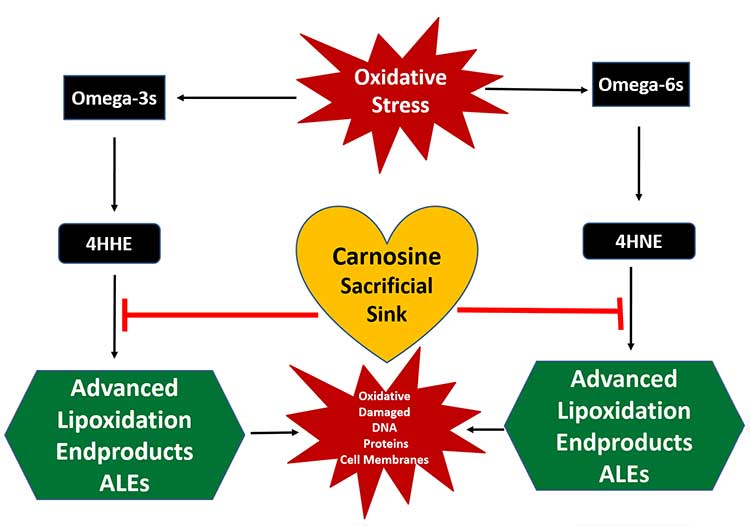
Carnosine binds to ALEs like a magnet and acts as a sacrificial sink. It’s basically a substitute target for these profoundly damaging molecules. In this way, carnosine allows your body to excrete the ALEs from your body before they damage your mitochondria, DNA or proteins. (Another molecule that protects against LA-induced damage is carbon dioxide). The illustration below shows how carnosine works in this regard.
Carnosine May Be Protective Against a Wide Range of Diseases
A more detailed explanation of how carnosine protects against reactive oxygen species (ROS) and how that helps protect against oxidative stress-related pathologies is given in a 2021 paper in the journal Antioxidants:14
“A study that examined the effect of carnosine on oxidative stress in human kidney tubular epithelial (HK-2) cells indicated that carnosine decreased NADPH oxidase (NOX) 4 expression and increased total superoxide dismutase (T-SOD) activity, thus reducing the production of intracellular ROS, relieving the oxidative stress of cells, and ultimately inhibiting the mitochondrial pathway of apoptosis.
Ability of carnosine to protect against pathologies characterized by oxidative stress has been shown in a number of conditions … Carnosine changes the reactivity of superoxide anion by forming a charge-transfer complex with the superoxide radical and also by reducing the efficiency of hydroxyl radicals, creating a compound less reactive than the hydroxyl radical.
One of the mechanisms to protect organisms from oxidative stress is the chelation of transition metals, preventing them from participating in deleterious processes involving ROS … Interestingly, when comparing metals involved in free radical generation, carnosine was found to have a greater antioxidant activity coupled with copper than iron …
At physiological concentrations, carnosine directly reacts with superoxide anion similar to ascorbic acid. In physiological conditions, carnosine was found to reduce oxidative damage and to improve antioxidant activity of different antioxidative enzymes …
Experiments on aged rats showed that therapy with 250 mg/kg/carnosine per day significantly decreased oxidative stress and increased activity of antioxidative enzymes … In similar model of aged rats, carnosine increased liver vitamin E, which further demonstrates its importance in defending the organism from free radicals.
Rising data indicate that carnosine acts as a scavenger of reactive and cytotoxic carbonyl species including 4-hydroxynonenal (HNE). HNE is an aldehyde generated endogenously by lipid peroxidation of unsaturated fatty acids that act as ‘toxic second messengers,’ extending the harmful potential of free radicals.
HNE is considered an important biomarker of oxidative stress and accumulating data indicate that it may modulate signaling pathways of cell proliferation, apoptosis, and inflammation.”
How Carnosine Protects Against Alzheimer’s
As noted in the Pharmaceuticals paper,15 one of the pathologies that carnosine is protective against is Alzheimer’s disease. In my November 2021 interview with Tucker Goodrich, he explained the role of HNE, specifically, in Alzheimer’s, and why it’s so important to get rid of it.
“In heart failure, Alzheimer’s, and AMD [age-related macular degeneration], one of the things they see is an inability of the cell to produce enough energy. The mitochondria are getting damaged. HNE does that damage. It damages 24% of the proteins in the cell, primarily around energy production.
One of the ways your cells produce energy is they basically ferment glucose into pyruvate outside of the mitochondria. This is a perfectly normal part of metabolism and they produce something called pyruvate. A molecule called pyruvate dehydrogenase takes pyruvate into the mitochondria and converts it to acetyl-CoA so the mitochondria can burn it very efficiently for fuel.
Well, one of the things HNE does is it breaks pyruvate dehydrogenase, and they see this in Alzheimer’s where their cells are no longer able to produce enough energy. This is why your cells are dying in Alzheimer’s.
The beta amyloid plaques in Alzheimer’s disease are induced by HNE. There’s a great model that came out of Harvard a couple of years ago showing that.
Even the critical, the most important part of the mitochondria, complex 5, — ADP synthase — which is what takes all the energy coming from your mitochondria and turns it into ATP, which is what fuels the rest of your body — is damaged by HNE. This is a huge issue. There’s no more fundamental problem in aging and health than protein damage.”
Carnosine is the most effective scavenger of HNE, so optimizing your level can go a long way toward protecting against the HNE-induced damage that promotes Alzheimer’s.
Carnosine — A Promising Therapeutic for Obesity-Related Conditions
Elevated HNE has also been found in obese and diabetic patients,16 so there’s reason to suspect carnosine can be important in the treatment of these conditions as well. Another disease where elevated HNE plays a role is atherosclerosis. As noted in the 2021 Antioxidants paper:17
“… emerging studies have indicated that these reactive aldehydes are more than simply markers of oxidative stress.
Rather, it is suggested that these reactive species may play a significant pathogenic role in obesity-associated disorders such as insulin resistance and a carnosine analog alleviates the production or enhances the removal of reactive carbonyl species, providing promising new therapeutic compounds for cardiovascular and metabolic diseases related to obesity.”
Take Control of Your Health by Lowering Your LA Intake
As detailed in several previous articles, the evidence strongly suggests excessive LA is driving most if not all modern diseases, including heart disease and cancer. Fortunately, the solution is simple. Just lower your LA intake.
The easiest way to do this is to use an online nutritional calculator such as Cronometer to calculate your daily intake. Cronometer will tell you how much omega-6 you’re getting from your food down to the 10th of a gram, and you can assume 90% of that is LA. Anything over 10 grams is likely to cause problems. I keep my intake below 5 grams a day.
Since there’s no downside to limiting your LA, you’ll want to keep it as low as possible, which you do by avoiding high-LA foods. Keep in mind you’ll never be able to get to zero, and you wouldn’t want to do that either. You do need some LA, but since it’s found in most foods, and since you need only small amounts, there’s really no way to end up with a deficiency.
- 1, 3, 10, 15 Pharmaceuticals June 2023; 16(6): 778
- 2, 4, 5, 6, 7, 8, 9, 13, 14, 16, 17 Antioxidants July 2021; 10(7): 1037
- 11 Science Direct, Carnosine; Nutritional Supplements and Metabolic Syndrome
- 12 Animal Frontiers April 15, 2023
Resolving Lower Back Pain for Good With NST
Reproduced from original article:
https://articles.mercola.com/sites/articles/archive/2023/11/06/resolving-lower-back-pain-with-nst.aspx
The original Mercola article may not remain on the original site, but I will endeavor to keep it on this site as long as I deem it to be appropriate.
Analysis by Dr. Michael Nixon-Livy November 06, 2023
STORY AT-A-GLANCE
- Neurostructural Integration Technique (NST) is a powerful technique that can ease muscle aches and pain by stimulating the central and peripheral autonomic nervous systems
- The main objective of NST is to remove pain and dysfunctional physiological conditions by restoring the structural integrity of the body; NST helps your body reintegrate on many levels, and thus return to and maintain normal homeostatic limits on a daily basis
- Approximately 80% of the world’s population will suffer from lower back pain (LBP) at some point in their lives, and LBP is the world’s leading cause of disability
- Barring instances when the LBP is caused by direct impact injury, the pain and its location are typically a manifestation resulting from systematic imbalances that have been in place far longer than the LBP
- As an example, patients will often present with debilitating LBP and chronic TMJ or TMD (temporomandibular joint dysfunction) that they, their doctor and/or health care practitioners have overlooked, discounted as insignificant or simply not understood, let alone associate with the LBP condition
Overview
Without doubt lower back pain is one of modern man’s most frequent, challenging and unrelenting problematic health conditions.
In this age of modern medical and scientific research, new discoveries are being made at a rapid rate; yet, nothing is emerging to quell the seemingly worsening state of affairs accompanying the undeniable fact that this global health condition is on the increase. Some salient information:
| Approximately 80% of the world’s population, ranging from adolescents to the elderly will suffer from lower back pain — LBP at some point in their lives. |
| Currently 1 person in 10 is suffering from LBP, making it the world’s leading cause of disability. |
The number of adult individuals affected by LBP in the USA alone is on the rise year on year, and the 65 and older age group appears to be more prone. Members of The Lancet editorial staff, Stephanie Clark and Richard Horton, concluded.
|
| In 20181 in the U.S. around 31.6% of women and 28% of men suffered from LBP. |
| More than half of Americans who experience LBP spend the majority of their time at work sitting. |
| Various surveys performed over the last decade confirm that LBP sufferers report their condition negatively effects their work, daily tasks, exercise regime, sleep, social activities, emotional status and ultimately quality of life. |
|
The direct cost to the U.S. economy in treating back per year is $50 billion, and when another 100 billion is added to this by way of indirect costs such as lost wages and productivity, insurance and legal costs and impact on the family, it is easy to appreciate just how serious this condition is and how urgently we need to find better solutions. |
| Popular treatments utilized in the U.S. that produce relief from LBP but without any long-term guarantee of nonrecurrence, include medication, chiropractic and physical therapy. |
| According to the editors of a series of papers in the prestigious medical journal The Lancet: Lower back pain impacts an estimated 540 million people across the globe, and most are treated in a manner that is not consistent with best practice treatment guidelines. |
| Ultimately, 1 in 10 sufferers of LBP discovers the primary cause of their condition with a staggering 90% left completely in the dark as to its cause and origin. |
Further Observations
Jan Hartvigsen, D.C., Ph.D., of the department of health professions at Macquarie University in Sydney, Australia, was part of the low back pain work group that discussed the prevalence of the condition.
Their findings suggest that very few population groups, if any, are completely immune to lower back pain, writing that it is an “extremely common symptom” that affects all age groups making it the most common disability worldwide. Other observations by Hartvigsen and colleagues include:
| The global burden of lower back pain will likely increase during the next few decades, especially in low and middle-income countries. |
| Work disability and health care costs that were ascribed to lower back pain differed significantly worldwide. |
| Low levels of physical activity, obesity and smoking were linked to lower back pain. |
| Most people with the condition could not correctly pinpoint the exact nociceptive source of their pain. |
| LBP was a “complex condition” that has biophysical factors, comorbidities, pain-processing mechanisms, as well as psychological and social factors to the pain and related disability. |
| Most episodes of lower back pain did not last long and do not leave a lasting impact; however, periodic episodes are common and low back pain is “increasingly understood” as a long-lasting condition with a “variable course” as opposed to isolated events. |
| Disability from low back pain happened most frequently in working age groups. |
| LBP was the reason for 60.1 million disability-adjusted life-years in 2015, an increase of 54% since 1990, with the largest increases occurring in low and middle-income countries. |
Hartvigsen and colleagues concluded:
“Although there are several global initiatives to address the global burden of low back pain as a public health problem, there is a need to identify cost-effective and context-specific strategies for managing low back pain to mitigate the consequences of the current and projected future burden.”
Download this Article Before it Disappears
Resolving Lower Back Pain With NST
If we consider the foregoing it is easy to appreciate that resolving LBP convincingly is potentially a challenging task that has many permutations and, depending on the individual and the degree of their LBP condition, may require a singular intervention or multifactorial approach.
This article has been written not to criticize any other approach or methodology that seeks to resolve LBP, but to simply shine light on the fact that there are other ways, perhaps less known, but arguably more effective than those currently being used in the mainstream.
And, that NST is one of those remarkably effective musculoskeletal methods that has changed the lives of millions of LBP sufferers around the world in the last 25 years, and continues to do so year on year, with great simplicity and equally great dependability.
System Before Symptom
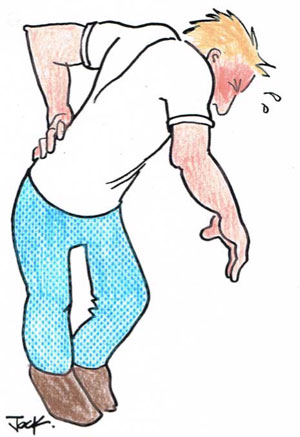
One of the most typical, common and firmly held beliefs that I have heard both patients and various health practitioners express over the last 30 years is that lower back pain — LBP — has its origin and source in the lower back itself.
Consistent with this belief is that therapy should be applied, therefore, to the lower back where the pain is.
When a patient presents to my office with an MRI (magnetic resonance image) of their lumbar spine that shows a bulging disc applying compression to a neighboring nerve, of course we are obliged to agree that this has something to do with their pain.
The expectation of the patient is for me to then treat where the obvious problem is, which is a completely reasonable attitude.
But barring when the LBP has been caused by direct impact injury, I have found in thousands of cases that the condition itself and its location are more of a “final expression” or “manifestation” resulting from systematic imbalances that have been in place for longer than the LBP itself.
The systematic imbalances may range from acute to chronic, up to and including degenerative in nature. They are referred to as “systematic” for two reasons.
•Firstly, because the imbalances are coexistent and function codependently between multiple systems. The neuromuscular, fascial, skeletal, visceral and endocrine systems and even the brain itself may all be involved in the one pattern that is ultimately delivering an LBP condition.
•Secondly, the imbalances are referred to as “systematic” because they interfere with the natural self-regulating capacity that the human organism depends on to function optimally and remain pain free.
At the structural level itself this relationship is characterized by the perpetual synchronous rhythmic relationship between the diaphragm, pelvic girdle, spinal column and cranium. When this is lost, firstly dysfunction, and then pain, set in.
As an example, patients will often present with debilitating LBP and at the same time a chronic TMJ or TMD (temporomandibular joint dysfunction) that they, their doctor and/or health care practitioners have overlooked, discounted as insignificant or simply not understood, let alone associate with the LBP condition.
As a consequence corrections performed on the lumbar spine itself for the LBP condition may produce temporary relief but not long term resolution, simply because the body’s center of gravity, “the sacrum,” depends on the body’s superstructure, “the cranium,” and its host of auxiliary components (including TMJ) to remain dynamically balanced. And the rule applies vice versa.
Only when the TMJs are corrected and stabilized can we expect to have proper cranial-atlas-cervical spine integration, and consequently proper lumbo-sacral-pelvic integration. Only then will appropriate neuro-muscular-skeletal relationships between the diaphragm, pelvic girdle, spinal column and cranium be restored.
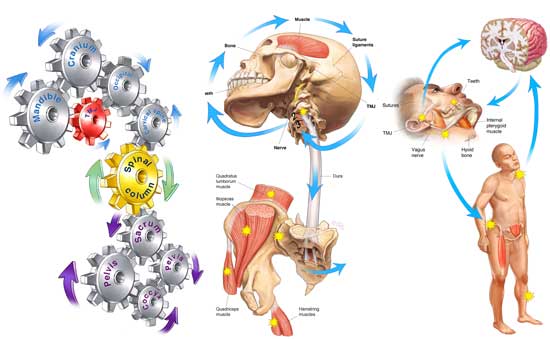
Images showing interconnectivity and systematic relationships between super and substructures of the body
Consequently, chronic tensions and pressure acting around and on the lumbar spine itself will be released.
To resolve this particular scenario described above, an NST session lasting approximately 30 to 45 minutes would include, at the very least, adjustments for the lumbar, thoracic and cervical spines, sacrum, diaphragm, shoulders and TMJ.
This approach ensures that systematic integration is restored with the LBP in focus. But this is just one simple example of observing and correcting LBP in a systematic fashion. Another simple example of the system being impacted from a source outside of the area of LBP is when a hamstring muscle is in a state of chronic tension.
Now, the cause of the tight hamstring may have been structurally induced via too much sitting, but it could also have been introduced via one of the visceral-somatic reflexes that exist between the large intestine and the hamstring muscles.
Lets imagine that our patient who presents with LBP has had poor dietary habits for some time and is chronically constipated. They eat a lot of refined and processed food and a lot of meat. Their bowel movements occur once or twice a week or maybe less.
Put in very simple terms: A chronically restricted large intestine organ (smooth muscle) can have a strong reflexive effect on the hamstring and even quadratus lumborum muscles, both leading to LBP.
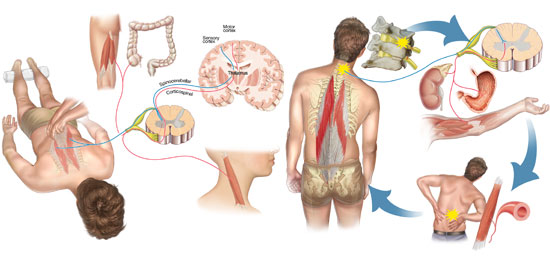
Visceral disturbance can quickly lead to tight muscles and lower back pain
Furthermore, the tight hamstring muscle acts as a tight cable on the ischial tuberosity and sacrum, preventing the pelvic girdle and sacrum itself from enjoying their proper motion of flexion and extension that occurs in response to diaphragmatic respiration.
The resultant effect is that a tensional myofascial train between hamstring, sacrum ligaments, gluteal, piriformis and erector spinae muscles is established, causing pressure on nerves either directly (e.g., sciatic nerve) or via lopsided vertebral bodies in the lumbar spine causing an intervertebral disc to bulge and apply pressure to root nerves exiting the lumbar spine.
Either way the result is LBP courtesy of a systematic imbalance. To resolve this particular scenario described above, an NST session lasting approximately 30 to 45 minutes would include, at the very least, adjustments for the lumbar, thoracic and cervical spines, sacrum, diaphragm, hamstring muscle, pelvis and viscera.
Choosing Procedures
With NST choosing which procedures to include that will resolve each patient’s unique presenting symptom pattern is a simple matter of always including certain ‘core’ procedures such as the lumbar, thoracic, cervical spine, sacrum and diaphragm adjustments and then adding the procedures that correspond to other areas of tension or pain.
Therefore choosing the procedures to tailor an NST session for a patient is a straightforward process partly decided on before the session commences and partly decided on throughout the session as the practitioner discovers areas of tension and pain.
There are countless other examples of how acquired systematic imbalances can result in LBP or indeed myriad other local pain conditions neck pain, shoulder pain, knee pain, visceral pain, conditions of the ANS and much more.
Nor is it any surprise to not only see LBP conditions evaporate after a few sessions of NST, but a host of other comorbidities resolve as well. Of course it’s always valid to discover what the patient has does or has been doing on a daily basis that might have contributed to this set of compromises within their organism.
Do they sit for long hours at a time whilst working on a computer? Clearly this can lead to a situation where poor posture combines with various stressors such as visual and emotional to predispose the patient to clenching and grinding causing the TMJ dysfunction in the first place.
Obviously diet and hydration play significant roles in this context as high levels of stress related sugar dependence for example may produce more irritation to viscera, nerves and emotions causing further predisposition to clenching and grinding and TMD issues.
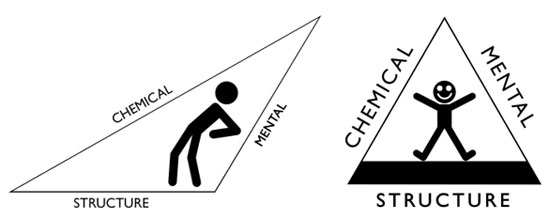 All sides of the ‘triad of health’ are interactive and vitally important to keep balanced in attaining optimal health
And so the story with each individual goes. Regardless of the cause one thing is for sure — relieving chronic systematic imbalances not only rapidly relieves LBP and other symptoms, but it also ensures that patients are sensitized to making the best future choices in their lifestyles that will deliver prolonged daily balance and freedom from pain — should they choose to do so.
NST is undoubtedly a profoundly effective system of spinal and somatic adjustments that dependably deliver outstanding results. But at the same time it is also a process of discovery and education for the patient, whereby they ultimately grasp that the lifestyle decisions they make on a daily basis will ultimately place control of their health and longevity in their own hands.
As Edison put it back in 1903: “The doctor of the future will give no medicine but will interest his patients in the care of the human frame, in diet and in the causes and prevention of disease.”
The only way that our population’s health standards will improve in generations to come is by individuals assuming responsibility for their own health and prioritizing this above all else. Of course, we will always need physicians of all persuasions but there is much that can be achieved by the individual alone taking control of their health.
Restoring Systematic Integration to Remove LBP
NST employs a layered approach at every session that follows a particular model known as the Core-Extremities-Core approach where particular procedures are utilized to not only bring about dynamic integration of the pelvic girdle, spinal column and cranium as a unit, but indeed to provide specific release to particular parts of the body as required.
• Core — Includes corrections for the lumbar, thoracic and cervical spines, sacrum and diaphragm. This set of corrections is known as the “base core” and is the minimum any patient would receive regardless of their presenting symptoms. Base core corrections alone produce outstanding results.
• Extremities — Includes corrections for the upper and lower extremities that are added to the base core corrections as required to detail the session for particular presenting symptoms in the hips, hamstrings, knees, ankles, feet, shoulders, elbows, wrists and hands.
When added to base core corrections, these targeted releases are extremely effective, providing rapid pain reduction in afflicted areas. Extremities corrections also prepare the way for deeper core corrections to work more immediately.
• Super Core — Includes corrections for the coccyx, pelvic girdle, temporomandibular joints, atlas and cranium. This set of corrections forms what is known in NST as “super core,” corrections and not only provide for more thorough unlocking and integration of the pelvic-occipital system and body as a whole, but ultimately deliver sustainability of corrections for patients.
Super core corrections are utilized only as required as determined by simple specific tests performed routinely throughout every session.
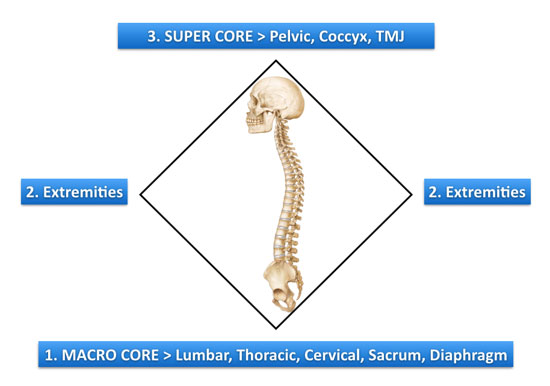
Regulating Muscle Tension Is the Key
If there is one fundamental principle around which NST is designed, and how and why it works so simply yet profoundly, it is the elimination of irregular “macro and micro” muscular and fascial “tensional patterns” throughout the body. Consequently optimizing “tensegrity” is the goal!
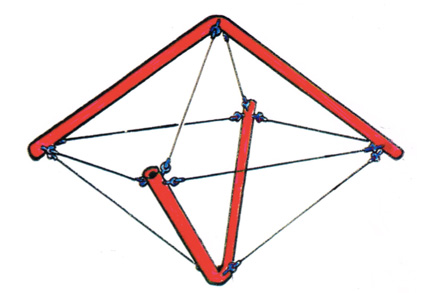 This simple tensegrity model shows that if the cables (muscles) are balanced the orange bars (bones)
will follow and consequently nerve function and physiology are optimized
In a macro sense a typical muscular tensional pattern may involve a unilateral hamstring muscle, unilateral gluteus maximus and medius muscles, erector spinae muscles and diaphragm muscle. In a micro sense a typical muscular tensional pattern may involve a unilateral sternocleidomastoid muscle, hyoid muscles, masseter, lateral pterygoid and temporalis muscles.
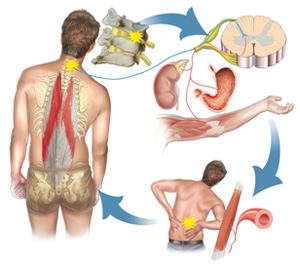 Poor tensegrity = pain and dysfunction |
 Good tensegrity = robust physiology and health |
Although at first glance it may seem complex to consider the unlocking of such a muscle pattern, the job is made extremely easy by following the simple sequences of releases that relate to whatever part of the body has tension.
The sequences are tried and proven, having produced resolution from LBP and a broad variety of other conditions for millions and millions of individuals over the last 25 years in particular. As an example, the bilateral releases for the lumbar spine number nine in total, and although very straightforward, represent perhaps the most complex set of releases.
In other words there is nothing very complex at all about the sequences that are quickly learnable and immediately reproducible. The bilateral thoracic releases number five in total and the cervical, six. Following are a few images of typical NST releases or PRI-moves.
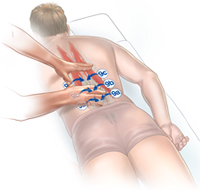 Lumbar spine PRI-moves |
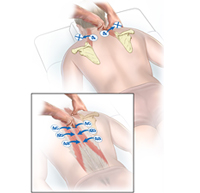 Thoracic spine PRI-moves |
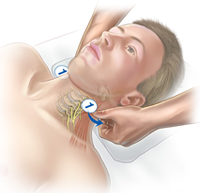 Cervical spine PRI-moves |
The NST PRI-Move
The PRI-move is perhaps the golden key that makes the NST system of releases possible at all. It was firstly developed by a sports medicine specialist in Melbourne, Australia, by the name of Ernie Saunders (1880-1951) and later refined by the celebrated Australian osteopath Thomas Ambrose Bowen (1916-1982), whose work inspired much of the NST system of releases.
The PRI-move refers to every release performed in NST that all share the same common formula of stretching the skin and fascia over a designated underlying structure (muscle, nerve, tendon, ligament) contacting that structure with counter pressure, and then crossing the structure, causing it to bump or shift as a response.
The response causes a “discharge impulse reaction” in the structure that it is applied to and also other remote structures as well, hence giving rise to the PRI-move’s name, which simply means Proprioceptive Rolling Impulse movement.
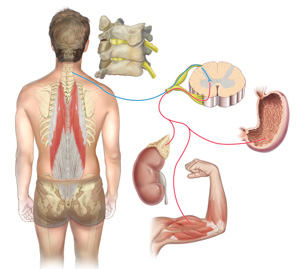
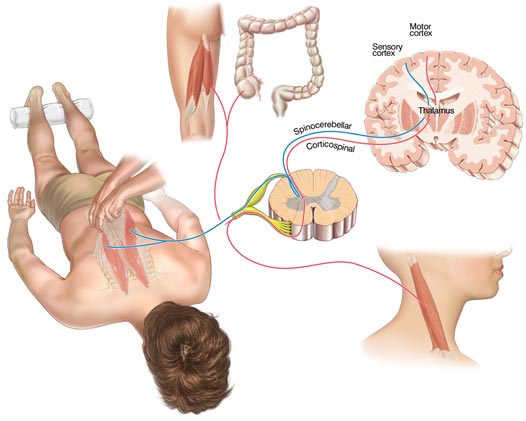 Pri-moves applied in the spinal region cause local tissue sedation and remote muscle and visceral release via reflex pathways
Sequences of PRI-moves appear to cause a “proprioceptive tipping point” of sorts, whereby groups of muscles rapidly recalibrate back to a normal neuromuscular status. The resultant effect is a rapid reduction in muscles tension and pain, accompanied by a sense of relation, clarity and improved energy levels.
Signs of Muscle Tension
Many patients who suffer from LBP will also have other myofascial and musculoskeletal issues that appear to be unrelated, but in fact are telltale signs that all is not well in the body’s tensional system. Below is a list of symptoms sufferers of LBP report with, yet have not connected with their LBP:
| General stiffness and aches and pains | Pain on doing bending or twisting movements |
| Pain or stiffness when walking | Pain when moving between sitting-standing-lying |
| Low energy, fatigue or heaviness | Depression and lethargy |
| Irritability and negativity | Headaches |
| Foggy thoughts and poor memory | Bowels and bladder not working properly |
| Breathing difficulty | Poor sleep |
| Low sexual drive |
After a few sessions of NST it frequently comes as a pleasing surprise to patients when they discover that not only has their LBP gone, but they are noticing that many of those other secondary symptoms have vanished as well.
Results Achieved With NST
Results achieved using NST in general clinical practice for LBP are genuinely outstanding and can be categorized as follows:
- 85% of patients will require one to three sessions to experience resolution
- 10% of patients will require four to six sessions to experience resolution
- 5% of patients will require ongoing sessions at seven to 14 days apart to remain pain free
While these have been my results over 30 years working with tens of thousands of patients in my clinics in Australia, France, Germany and Poland, they are also the same as our NST practitioners achieve.
To the best of my knowledge there are currently approximately 5,500 NST practitioners throughout the world who are actively practicing NST and, to a person, they would all concur that results are predictably pretty much the same the world over.
Surprisingly few sessions (generally one to four) are required to bring about sustainable relief from LBP for their patients by using NST.
I also know this to be the case via thousands of case studies collected from these practitioners at hundreds of NST seminars that I have taught since 1996 and via equally as many personal testimonies throughout the same period of time.
Furthermore, between 2004 and 2006 I teamed up with doctors at a prominent psychosomatic institute in Milan, Italy, (Institute of Integrated Psychosomatics) to run a series of research studies into the effectiveness of NST for patients suffering from chronic LBP.
Two groups of 60 and then 39 patients were given five NST sessions producing an 81% success rate in the most severe sufferers of LBP and around 90% in the less severe sufferers. Previous medical intervention had been unable to resolve the LBP for the most severe sufferers.
Results were measured in pain scale reduction, ROM improvements, elimination of medication, avoidance of surgery and improvement in quality of life. The research was supervised Riccardo Scognamiglio and Michele Fortis at the Bergamo hospital with Alessandro Aloisi and other physiotherapists performing NST sessions.
The research was ultimately regulated by the Northern Italian government in cooperation with the WHO (World Health Organization).
Development of NST
I designed NST in Melbourne, Australia, between the years of 1991 and 1995, and since 1996, along with my band of teachers, have been teaching it exclusively to osteopaths, physiotherapists, chiropractors, doctors and other professional therapists via postgraduate seminars throughout Australia, Canada, the European continent, Russia, the United Kingdom and the USA.
The construction and underpinning philosophy of NST were significantly influenced by the osteopathic work of Ernie Saunders and Thomas Bowen, both Australians, and the chiropractic-osteopathic work of Dr. Major Bertrand DeJarnette, USA.
NST, or “neurostructural integration technique,” refers to the manner in which the technique is applied and points to some of its underpinning philosophy. Said in reverse, NST is a technique for the integration of the structure via stimulation of the neurological and neuromuscular systems. Musculoskeletal and myofascial systems are implicit in this description.
Although NST utilizes absolutely no adjustments whatsoever to the skeletal system itself as in classical chiropractic or osteopathy, its sequences of specialized rolling movements called PRI-moves (proprioceptive rolling impulse movements) applied to the spinal column, pelvic girdle, cranium and extremities produce results that every chiropractor, osteopath and physiotherapist would be delighted with.
Conclusion
NST is a modern day osteospinal system that is easy to learn and reproduce instantly in the clinic for outstanding results in resolving lower back pain — LBP.
It would be a great injustice, however, to consider NST as an intervention only for LBP, as it is equally effective in resolving neck pain, all conditions of the articulations, visceral disorders, menstrual disorders, headaches, RSI, sporting injuries, motor vehicle injuries, autoimmune disorders and much more.
Most practitioners who attend the five-day osteospinal seminar quickly convert many of their patients over to NST, as it is very user friendly, requiring little physical effort by the practitioner; yet, it produces outstanding clinical outcomes for the vast majority of patients on a daily basis.
Seminars
NST is taught exclusively to professional postgraduate practitioners via intensive hands-on seminars. There are four seminars that round out complete NST training, namely, Osteospinal, Advanced, Proto Plus and Deep Cures.
Osteospinal is the only mandatory level, while Advanced, Proto Plus and Deep Cures are all optional electives but highly recommended.
Osteospinal
The first of the NST seminars is the five-day Osteospinal seminar that includes the all-important “NST Operating System” that is fundamental to the functioning of NST. Corrections for the spinal column, pelvic girdle, cranium, diaphragm and extremities are included.
Much can be achieved with the operating system, and many practitioners are completely satisfied to remain with this body of work such is its completeness and effectiveness.
Advanced
The second of the NST seminars is the four-day Advanced Osteospinal system that provides a host of new strategies for the shoulders, elbows, hands, feet, hips, TMJ cranium and more. These strategies seamlessly dovetail into the basic Osteospinal system.
The practitioner will also learn many time saving “clinical tricks” to accelerate the work learned at the Osteospinal seminar.
Proto Plus
The third of the NST seminars, Proto Plus is a three-day seminar showcasing 24 sublimely effective mini-protocols and procedures that again dovetail seamlessly with the work covered in the previous two seminars.
The mini-protocols have the effect of accelerating results and providing practitioners with alternative strategies for particular chronic or challenging cases.
Deep Cures
The final NST seminar is a three-day journey beyond the spine into the realms of chemicals and emotions.
With the aid of a specialized radionic test kit and laser, practitioners will learn a series of ways to test if their patient is being affected by any one of a number of blockages that may act as an impediment to the proper function of autoregulation that typically takes place after receiving an NST session.
Practitioners will also learn how to test for toxicity and biochemical and nutritional deficiencies. The final day of the seminar is dedicated to a trilogy of emotional corrections from the world of Erickson, Kinesiology and EFT that will be a godsend for patients who have an emotional history to their physical condition.
About the Author Dr. Michael Nixon-Livy is the CEO of www.nsthealth.com and a practicing NST-osteopathic physician and psychotherapist specializing in natural integrative medicine for sustainable pain relief and health. He is based in Australia and tours the world yearly teaching and lecturing. Founder and developer of the highly acclaimed NST Osteospinal system, he is also an author and the leading lecturer for NST post-graduate seminars worldwide since 1996. He has personally introduced and taught the NST system in no fewer than 20 countries around the world including the USA and developed various live and digital education systems. Michael is a passionate advocate for the education of individuals, groups and communities about intelligent lifestyle management to achieve optimal health and longevity. |
- The Lancet, Volume 391, Issue 10137, 2356 – 2367
- WebMD, “Back Pain Health Center”
- Centers for Disease Control and Prevention, 2014
- American Family Physician
- Pain Doctor, “What Causes Low Back Pain?”
- American Chiropractic Association, “Back Pain Facts and Statistics
- NST Health Shop, “Research”
- Lancet. 2018 Jun 9;391(10137):2356-2367
- 1 CDC
Crucial Facts About Your Metabolism
Reproduced from original article:
https://articles.mercola.com/sites/articles/archive/2023/08/20/mitochondria-glucose-metabolism.aspx
The original Mercola article may not remain on the original site, but I will endeavor to keep it on this site as long as I deem it to be appropriate.
Analysis by Dr. Joseph Mercola Fact Checked August 20, 2023
STORY AT-A-GLANCE
- Cortisol is primarily a rescue hormone. It’s a glucocorticoid, so it increases your glucose level by shredding your muscle protein to produce glucose. Cortisol also accelerates the aging process and is implicated in most chronic diseases. It also uses your brain tissue to use amino acids to make glucose which contributes to brain atrophy and subsequent depression
- Your mitochondria can only burn one fuel at a time — either fat or glucose — and there’s a stealth switch that controls which of these fuels your mitochondria will burn. This switch is known as the Randle cycle
- Ideally, you want to metabolize (burn) glucose in your mitochondria, as this only generates 0.1% reactive oxygen species (ROS). This route also generates energy most efficiently, creating 36 to 38 adenosine triphosphates (ATP) for every molecule of glucose that is metabolized. For this to occur, you need to consume less than 30% of your calories as fat
- When you consume significantly more than 30% fat, the switch changes to burn fat in your mitochondria. As a result, glucose then backs up into your bloodstream, raising your blood sugar. This is a major contributor to diabetes
- When you lose muscle, your basal metabolic rate goes down, so it’s important to maintain muscle mass, because your muscle will burn fat even when you’re resting
In this interview, repeat guest Georgi Dinkov and I will again take a deep dive into the biochemistry of human metabolism. Dinkov is a student of the late Ray Peat, a biologist, thyroid expert and pioneer in prometabolic therapy and human metabolism.
Despite having a degree in computer science and having no formal academic training in health, Dinkov essentially has acquired a Ph.D. in molecular biology. After graduating from Georgetown University in 2002, Dinkov got a job as a programmer at the National Biomedical Research Foundation (NBRF).
There, he helped develop uniprot.org, a database of all known protein sequences. Surrounded by dozens of the brightest doctors and biochemists in the world, he developed an interest in biochemistry.
Clearing Up Confusion
I have long promoted a low-carb, high-fat diet for many years and have realized many are confused on the evolution of my recommendations. As I say in the interview, 95 to 97% of the population in the U.S. is metabolically inflexible and would likely benefit from a low-carb, high-fat keto approach with intermittent fasting.
However, once you have resolved your insulin resistance, which typically takes a few months but can take longer, and can optimally burn fat for fuel, it is very clear to me that you need to cycle carbs back into your diet. There are loads of questions about how this transition occurs, the timing of the transition, and the details of the cycling that need to be answered.
No one knows the answers, as the studies have not been done, but I am fairly convinced that many people will appear to do well in the long term on a low-carb, high-fat keto program like I did. However, I also believe they would do even better if they started to include more healthy carbs in their diet like I did. That does not mean processed foods or processed sugars, or virtually all grains and legumes. The ideal carbs are ripe fruits.
You should introduce carbs slowly and only after you have shifted your fat level down to 30%. This is easily calculated by using a free online program called Cronometer. If you still struggle with diabetes or obesity, then you can get your fat level down to 15 to 20% of your total calories.
Protein level should always remain the same and does not change from 0.7 to 1 gram protein/kg of lean body weight. So, if you are 20% body fat then you would multiply your body weight by 0.8 to get your lean body mass.
In my case, it took me about three to six months to go from 100 grams of carbs to 500 grams. The results for me were quite spectacular. I was already healthy, but it clearly improved my health even further as my body fat dropped from 15% to 12%, my inflammation decreased to radically low levels as my HS-CRP went from 0.8 to 0.18 which is almost below detection levels. Finally, even though I was not prediabetic as my blood sugar was in the low 90s, it dropped by 10 points to the low 80s.
The reason I made this shift is I was overwhelmed by the amount of strong scientific support for demonstrating that the ideal fuel in your mitochondria is indeed glucose, not fat. It has to do with decreasing reductive stress in your mitochondria which is a relatively unknown concept in molecular biology.
When implementing the transition to healthy carbs you need to be careful not to eat too many carbs as excess carbs will be shunted to glycolysis and into glucose into your blood and lead to an increased blood sugar. The more muscle mass you have and the more exercise you do, the more carbs you can eat.
I suspect most people could easily transition to 200 grams of carbs. I seem to do well with about 500 grams, mostly all fruit but do have white rice and red potatoes as well. You should see my shopping cart as every week it is loaded with about 60 pounds of fruit.
The Cortisol-Glucose Link
For example, Dinkov helped me understand the crucial role cortisol plays in glucose regulation. Cortisol is primarily a rescue hormone. It’s a glucocorticoid, and as the name implies, it increases your glucose level, because if your glucose level drops too low, you will go into a hypoglycemic coma and can die.
As such, cortisol is a lifesaver. The downside is that it uses up vital protein to make glucose, so high cortisol takes a toll on your muscles. The reason anabolic steroids build muscle mass is because they’re anti-cortisol. You would’ve thought anabolic steroids would have some direct action on the muscles, but no, they primarily inhibit cortisol’s catabolic impact.
Cortisol uses muscle protein to produce glucose in your liver, so when your glucose level drops, cortisol rises and shreds muscle to produce glucose. This is one of the puzzle pieces that explains why you don’t want your glucose levels to be low over prolonged periods.
Cortisol also accelerates the aging process and is implicated in most chronic diseases. In the case of Addison’s disease (adrenal failure), the opposite is present: low cortisol. These patients are typically required to take cortisol injections on a regular basis. On the upside, this chronic cortisol deficiency tends to impart a youthfulness. In most other chronic conditions, high cortisol is part of the problem.
Download this Article Before it Disappears
High Cortisol Speeds Aging
Dinkov comments:
“Studies as far back as the 1950s and 60s demonstrated that you can produce every single phenotype of aging if you inject cortisol, or at least create a state of relative glucocorticoid excess in the animal.
You can do that either by injecting synthetic or natural glucocorticoids, or by increasing the levels of natural anti-cortisol steroids in the body. Those are progesterone and DHEA, and in males testosterone and dihydrotestosterone.
It has been shown that cortisol levels do not decline with age unless you really have adrenal failure, while the levels of all these anti-cortisol, youth-promoting hormones decline with age. By the time you’re 80, their levels are at about 20% of what they used to be when you were in your 20s.
So, really, what happens is that cortisol stays the same, but your relative state of cortisol increases because there’s nothing to oppose the cortisol that is already there. Multiple intervention studies have demonstrated that if you administer agents that oppose cortisol, block it at the receptor level, or reduce its synthesis, you can achieve really good health results and also improve the way you look.
Anabolic steroids are probably the best known example. It’s really a misnomer because they’re not anabolic. They’re actually anticatabolic. Muscle has one of the highest expressions of the glucocorticoid receptor, through which cortisol shreds the muscle. It binds the receptor and increases a number of different proteolytic fibers.”
High Cortisol Linked to Depression
Your gastrointestinal tract and brain also have high numbers of glucocorticoid receptors, so cortisol shreds brain tissue as well, causing brain atrophy and subsequent depression. Research has shown that people with depression have smaller brain volumes than people who don’t have depression.
“Within 48 hours of the glucocorticoid blocker RU-486 being administered to people with clinical treatment-resistant depression, they experienced remission. So I think it’s a very good argument that cortisol is catabolic to the brain, and clearly, if it’s catabolic to the brain, it’s probably not going to improve your mood. If anything, it’s going to worsen it.”
Again, when your blood sugar level drops, that triggers your body to increase cortisol, which is the last thing you want if you struggle with depression or other chronic disease. Really, one of your primary goals in achieving optimal health is to limit the elevation of your cortisol. It’s far more destructive than having elevated blood sugar, which most focus on.
High Cortisol Is Far Worse Than High Blood Sugar
Many wear continuous glucose monitors that check your glucose level every five to 10 minutes. But high glucose is not the real danger here. Cortisol is, and it rises when glucose drops too low. As noted by Dinkov:
“All the drugs on the market, especially the more recent ones that lower HB A1C, the glycated hemoglobin, all of them increase mortality. So, clearly, messing directly with the levels of blood glucose, it’s not something you want to do.
You may temporarily decrease the biomarker, the glycated hemoglobin, but it does not mean you’re getting healthier. [These drugs] may lower your blood glucose, but they may kill you in the long run faster than the elevated glucose would’ve done by itself.”
Metformin is one classic example. Many are using this drug to lower their blood sugar. While it’s a natural product, and considered safe, it’s basically a mitochondrial toxin that will make your health decline in the long term.
All of that said, we’re NOT saying you should ignore elevated blood glucose. Absolutely not. But elevated glucose is a symptom that is best addressed indirectly. Once you address the foundational cause, it will normalize by itself. As a personal anecdote, when I first interviewed Dinkov, 70% to 80% of my diet was fat. Now, I’m down to 27% fat and 57% carbohydrates, and I’ve lost 5 pounds and my fasting blood sugar is down by 10 points.
So, it’s not the carbohydrate ingestion that’s causing high blood sugar. It’s what’s happening at the mitochondrial level. To help you understand that, I created a graphic (below) because this science can get somewhat complex.
The Randle Cycle
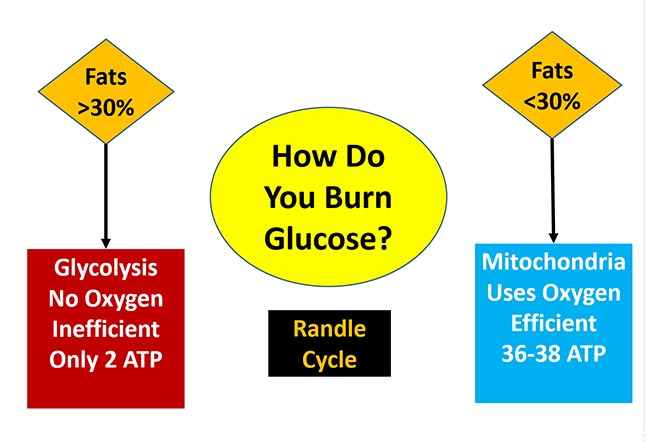
Your mitochondria can only burn one fuel at a time — either fat or glucose. Fats are broken down in a process called beta oxidation into acetyl-CoA, which gets fed into the Krebs cycle. Carbs are broken down to pyruvate, which cannot enter the electron transport chain until it is converted to acetyl-CoA by pyruvate dehydrogenase.
The key here is that there’s a stealth switch that controls which of these fuels your mitochondria will burn. The switch has been given the name the Randle Cycle, but it is more helpful to visualize it as a railroad switch that changes the tracks of the train. The train can only travel down one track: not both. This is because only one type of fuel can be burned at a time.
In a best-case scenario, you will metabolize, or burn, glucose in your mitochondria without any reductive stress. When you do this, you will only generate 0.1% reactive oxygen species (ROS).
Not only does this route generate less ROS, but it also is incredibly efficient at energy production by creating 36 to 38 adenosine triphosphates (ATP) for every molecule of glucose that is metabolized. It will also generate metabolic water and carbon dioxide, which are also important for your health.
For this to occur, as indicated in the figure above, you will need to consume less than 30% of your calories as fat. When you consume significantly more than that amount, the switch changes to burn fat in your mitochondria and you will not be able to burn glucose until your fat decreases to less than 30% of calories.
When your fat intake is higher than 30%, pyruvate is inhibited and unable to readily convert the glucose metabolite, pyruvate, into acetyl-CoA to be shuttled into the mitochondria to burn as fuel.
Consequently, glucose can back up into your bloodstream, raising your blood sugar. What little glucose is burned for fuel is done through glycolysis, which is a primitive pathway that bacteria and cancer cells use, and it generates the powerful metabolic reductant lactate.
This can be a major contributor to diabetes. If you’re exercising, healthy and doing strict keto, overt diabetes is unlikely to develop, but more than likely you will have fasting glucose in the 90s, rather than the more optimal 80s.
Additionally, chronically oxidizing fats as your primary fuel will tend to increase your cortisol level, resulting in chronic inflammation, both of which accelerate the aging process due to excess ROS generated in the mitochondria that occurs from increased reductive stress as a result of oxidizing fat instead of sugar.
It is great that we have this glycolysis pathway, as you absolutely need it for quick fuel when you are activating your Type 2 muscle fibers. But if this is the primary way you burn glucose, you are in a catastrophic metabolic state because you’re creating loads of lactate as a waste product instead of healthy CO2 and metabolic water.
What’s more, you’re only generating two ATP for every molecule of glucose, which is 95% less energy. Lactate increases reductive stress, which causes reverse electron flow in the mitochondria and increases the ROS to 3% to 4%, which is 30 to 40 times more than when glucose is burned efficiently in the mitochondria at 0/1% ROS.
When Adding Carbs, Reduce Your Fat Intake
Ideally, it is best to lower your fat intake and replace those calories with healthy carbs like ripe fruit. You likely won’t optimize your mitochondrial function, though, until your fat level decreases to 30% of your total calories. So, hold off on making a final decision about whether this change is helping you or not until you get your fat level to 30% or lower.
This is easily calculated by using a free online program called Cronometer. If you still struggle with diabetes or obesity, then you may need to get your fat level down to 15% to 20% of your total calories.
Protein Versus Fat and Carb Requirements
Determining the ideal balance between carbs and fats is the primary challenge for most people. The level of protein is a bit simpler. It tends to be about 15% of daily calories and remains stable. A basic guideline for protein intake is somewhere between 0.7 grams and 1 gram per kilogram of lean body mass (not total weight).
The level of dietary fat you need will depend on your endocrine balance. If you’re diabetic, for example, you may need to go below 20% to avoid shutting down your glucose metabolism. Dinkov comments:
“If you look at older people, and sick people as well, they have metabolic inflexibility. So, if you give them a meal that’s comprised of equal number of calories of carbs and fats, they’re going to oxidize mostly the fats and the carbohydrates will go unmetabolized.
So, they’ll raise their blood glucose and lactate. So, you need to play with the ratio, but I’ve noticed that between 15% and 20% is probably where most people in their current health state can metabolize the fat without causing problems through the Randle Cycle.
Most diabetics are overweight … which means they have plenty of supply of fat. In fact, they have two sources of fat: one through the diet, and the second one from their fatty tissue, because there’s always some lipolysis going on, which means shredding the fatty tissue and supplying the rest of the body with the fatty acids from a fatty tissue …
In the rested state, your muscles actually prefer to oxidize mostly fat. So, if you have a decent amount of muscle mass, you can actually burn most of this fat through the baseline lipolysis by simply resting and preferably raising the amount of lean muscle mass you have. The ratio of lean muscle mass to total body weight is the primary determinant of your basal metabolic rate. So it’s very important to not lose lean muscle mass …
So, for diabetic people, it’s probably a good idea to lower the intake of fat from the diet because they already have a lot coming from their own bodies. In fact, there are many clinics around the world that treat and even cure Type 2 diabetes by putting diabetics on this really restrictive diet until they lose most of their fat and then suddenly the metabolism of glucose gets restarted.
I think this directly shows you that it wasn’t the glucose that was fattening them up and causing the problems, rather they had too much fat in their bodies. Once you get rid of that fat, no matter how you do it … the problems with metabolizing glucose disappear.”
Signs of Excessive Fat/Insufficient Carb Intake
As explained by Dinkov, one of the reasons why obese people who lose a lot of weight end up gaining it all back, even when they continue to diet and exercise, is because most of the weight lost is actually muscle mass. When you lose muscle, your basal metabolic rate decreases, meaning you need fewer calories to maintain your weight.
As a result, you must stay on an extremely low-calorie diet to maintain your weight. So, again, it’s crucial to maintain muscle mass, because your muscles will burn fat even when you’re resting. During activity, especially strenuous activity, your muscles will burn mostly glucose.
“I think the best way to gauge if you are eating too much fat is cognitive function,” Dinkov says. “If you’re eating too much fat, to the point where you’re interfering with glucose metabolism, you’ll start getting brain fog. Your thinking process will slow. You’ll start searching for words. Your reaction time and coordination time will decrease.
Sleep quality is another. Also, exercise capacity. If you’re always catching your breath and you’re feeling fatigued all the time, that is actually a great sign/symptom of elevated lactate. In fact, many different interventions that lower lactate are used as performance improving substances, such as vitamin B1 and niacinamide …
I would say eat the more fat-heavy meals earlier in the day, for breakfast and maybe lunch, and then eat the more carb-heavy meals at night, because your brain and many of the other organs will really need that.
It’s very common that if you don’t consume sufficient amount of carbs before going to bed, you will have trouble sleeping … I think one of the reasons for this is that, if you don’t consume sufficient amount of glucose, you will raise cortisol at night, and cortisol is already higher at night than it should be.
The cortisol is lowest at around 3 or 4 p.m. and starts rising with the coming darkness. Cortisol is highest at around 6 to 8 a.m. in the morning. But if you don’t consume a sufficient amount of carbs, that cortisol will be up to 40% higher.”
Clean Carbs
Of course, when we say “eat more carbs,” we don’t mean pizza and doughnuts or even ostensibly healthy grains like whole wheat. Healthy or “clean” carbs include foods like ripe fruit, raw honey and maple syrup. Tropical fruits such as papaya, watermelon, oranges and tangerines are preferable, as in addition to higher levels of fructose, they also contain flavonoids that help to digest the sugars. Ripe melon, apples, peaches, plums, pears and grapes are also good.
Now, you’ve probably heard me say that you shouldn’t eat anything at least three or four hours before bedtime to optimize autophagy. Dinkov’s research, however, dispels some of the concerns about eating (clean) carbs before bed.
“You do not want to mess with autophagy too much,” Dinkov says. “It has a lot of beneficial effects in terms of getting rid of dead or metabolically deranged tissue. However, if you do have an already present tumor, autophagy and AMPK can actually drastically increase its aggressiveness and promote metastasis.
But let’s say you do want to increase autophagy. I think it’s a bit of a myth that eating will somehow suppress autophagy and put it at a suboptimal level. Several studies demonstrate that several of the carbohydrates — including fructose and sucrose — are autophagy enhancers.
I would say, [eat healthy carbs] an hour before bed, because if you eat a meal that’s too high in carbohydrates, there’s the infamous fructose malabsorption. There’s only a certain amount of carbohydrates that your gastrointestinal tract can absorb per unit of time.
So, you need about an hour or two before the meal, if it’s composed of simple carbohydrates, to get these things into your bloodstream. At that point, you’ll probably be very relaxed and naturally inclined to fall asleep.”
That fructose and sucrose enhance autophagy is probably news to most of you. It was to me. I personally eat a teaspoon of honey before I go to bed, which seems to be enough carbs to thwart an increase in cortisol and helps me get more deep sleep. So, to summarize, Dinkov suggests eating a small amount of healthy carbs, such as fruit, about an hour or two before bed to optimize sleep and, potentially, autophagy as well.
Serotonin Is Not Your Friend
Fruits to be consumed in small amounts include pineapple and bananas, as both contain serotonin. Bananas also contain tryptophan, which is used in the synthesis of serotonin.
While most people think of serotonin as a mood-booster, it’s actually one of your worst enemies. You do not want high levels of serotonin, because it’s an antimetabolite. This means it suppresses your body’s ability to create energy in your mitochondria in the electron transport chain, so you become tired and fatigued, your metabolic rate slows and you gain weight.
“The amount of serotonin we need is really, really low,” Dinkov says. “The biggest role of serotonin is gastrointestinal motility. Any increase, even minor increase of serotonin, has been known since the 1920s to rapidly lead to fibrosis. The most successful antifibrotic drugs on the market currently are serotonin blockers.”
More Information
For more details on the topics summarized here, be sure to listen to the entire interview, and keep your eyes peeled for Part 2, which will follow shortly. Also check out Georgi’s blog at www.haidut.me or follow him on Twitter. He also has hundreds of videos on YouTube on a plethora of topics. A major sampling of Ray Peat’s work is also available for free on these two sites: wiki.chadnet.org/Ray-Peat and RayPeat.com.
How to Optimize Health and Strength — Even if You’re Over 60
Reproduced from original article:
https://articles.mercola.com/sites/articles/archive/2023/08/12/how-to-optimize-health-and-strength-over-60.aspx
The original Mercola article may not remain on the original site, but I will endeavor to keep it on this site as long as I deem it to be appropriate.
Analysis by Dr. Joseph Mercola Fact Checked August 12, 2023
STORY AT-A-GLANCE
- KAATSU — generically known as blood flow restriction (BFR) training — radically improves muscle growth and strength, without risk of injury. This makes it ideal for the elderly
- Strength training is necessary to prevent sarcopenia, or age-related muscle loss, which leads to frailty and premature death. KAATSU tricks your body into thinking you’re lifting a much heavier weight, thereby providing faster results. KAATSU also inhibits myostatin, which is a muscle growth inhibitor
- One of the reasons it’s so difficult to maintain muscle mass as you age is because your vascular supply decreases dramatically. When you’re doing KAATSU on a consistent basis you’re activating the Type 2 muscle fibers, which generates a wide variety of highly beneficial metabolic biproducts, including vascular endothelial growth factor (VEGF), which acts like a “fertilizer” for capillaries and blood vessels
- For optimal energy production and minimal reactive oxygen species (ROS) production, you want to burn glucose in the mitochondria, and the only way to do that is by limiting your dietary fat content to 30% or less of your total calories
The video above features an interview I did with Dr. Marcos de Andrade, a research physician and CEO of BIOHAXS. We met at Dave Asprey’s Biohacking Conference in June 2023, where we ended up arm wrestling.
You can see the outcome for yourself in the video below. de Andrade is 38 years old and an extreme fitness buff. I’m 69, but I still beat him. So, age doesn’t have to be a determining factor or excuse for poor fitness. In this interview, we go on to discuss a couple of my key strategies to optimize health, strength and longevity, regardless of where you’re starting from.
“I want to learn all the tips and tricks that I can to get to the stage in life that Dr. Mercola is in — the same or better,” de Andrade says. “I’d love for him to share some of his lifestyle habits and so forth — whatever comes to mind to really explain how this was possible. I’m a really strong guy … And then a 69-year-old man, which I never expected in my wildest dreams, just yank[ed] my arm like that.”
Blood Flow Restriction (BFR) Training
I think there’s two primary reasons for why I won against de Andrade. One is that I do a form of exercise generically called blood flow restriction (BFR) training. The other is eating a diet that minimizes reductive stress in my mitochondria.
Unfortunately, most BFR taught in the U.S. is less than optimal. The original version of BFR was developed in Japan 50 years ago, where it’s known as KAATSU. I first heard about it at a biohacking conference in 2017. So, I’ve been doing it for six years.
Hand grip strength — and by extension arm wrestling — is a barometer of your overall strength and metabolic health, and KAATSU, i.e., BFR done correctly, achieves both. The video above explains in more detail how KAATSU is performed, and how it helps you maintain muscle mass as you age.
The primary difference between generic BFR and KAATSU is the fact that KAATSU is far safer and causes less spastic muscles than all other forms of BFR that don’t use cyclic compression. The other is the equipment. The KAATSU device includes a compressor that inflates and deflates the cuffs that you strap onto your extremities, whereas generic BFR bands provide constant pressure (and hence constant blood flow restriction).
The KAATSU bands inflate for 30 seconds and then deflate for five. They then inflate again at slightly higher pressure for 30 seconds and deflate for five. They do this for a cycle of eight repetitions. The intensity of the pressure can be modified as well.
Part of what makes KAATSU so effective, especially in terms of creating beneficial metabolic byproducts, is the intermittent pressure. The constant BFR pressure does result in muscle growth, but it’s not nearly as beneficial as KAATSU, which is why I now recommend investing in a KAATSU machine if you’re going to get serious about it.
Basically, you simply wear these bands, either on your arms or legs (not both at the same time), while you’re doing some type of resistance training. One of the benefits of this is that you don’t need nearly the same weight to get results, which makes it ideal for the elderly.
Unique Benefits of KAATSU
As mentioned in many previous articles, everyone needs strength training, as it’s necessary to prevent sarcopenia, or age-related muscle loss, which leads to frailty and premature death.
With KAATSU (or BFR), you need only about 70% of your one-rep max weight (the amount of weight you can lift one time), so your risk of injury is massively decreased. As a result, you can also work out far more frequently.
Connective tissue injuries are usually due to lack of collagen in your diet. The amino acid composition of collagen is completely different from that of red meat. And if you’re not getting those amino acids — specifically glycine, proline, hydroxyproline and alanine — you can’t build collagen. So, you end up with weak connective tissue, ligaments and tendons.
But even if you have enough collagen, you can still get injured if you’re lifting too heavy a weight, or your form is incorrect. So, the fact that KAATSU allows you to use such light weights is a major benefit.
Now, the price you pay for that lower weight is an increased number of reps. So instead of doing 10 to 12 reps per set, you’re doing 30 for the first set, followed by a 10-second rest period. For the second set, do 20 reps, rest for another 10 seconds, and for the third set, do 10 reps. Ideally you want to get to the point where you’re close to failure by the end of the third set.
Basically, the blood flow restriction tricks your body into thinking you’re lifting a much heavier weight. I’ve gained about 20 pounds of muscle mass in the last six years, which is crazy. That typically doesn’t happen once you’re in your 60s. But there is a biological explanation for it.
Download this Article Before it Disappears
Muscle Building and Energy Production
Your muscles have two types of muscle fibers: Type 1, which are slow-twitch muscle fibers that get their energy from the mitochondria, and Type 2, fast-twitch muscle fibers that use glucose.
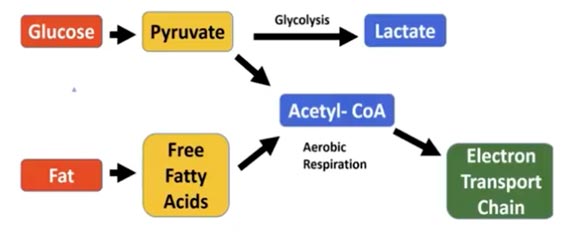
Your body can use two fuels for energy: glucose and fat. If you eat any type of sugar or complex carbohydrate, it’s metabolized to glucose. Glucose is then broken down to pyruvate. At that point in the process, there’s a “switch.”
The pyruvate can either enter the glycolysis pathway and turn into lactate, which is actually very useful when you’re doing high-intensity training such as sprinting — or it can be metabolized into acetyl-CoA through aerobic respiration.
Lactate — frequently incorrectly referred to as lactic acid — causes the exercise burn in your muscles. Lactate gives you quick energy, whereas acetyl-CoA gives you stamina. If we didn’t have the acetyl-CoA pathway, you’d never be able to run more than 100 meters (about 109 yards) or so. You’d just collapse and pass out because you’d be out of ATP.
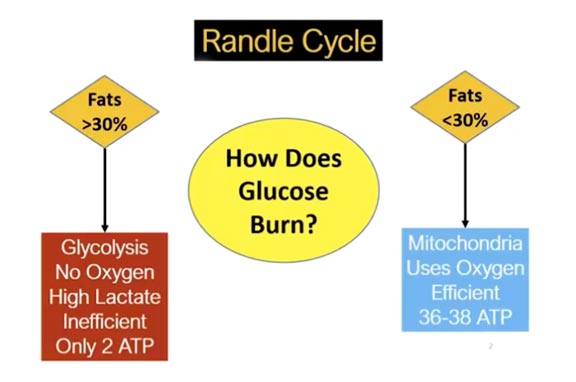
Now, provided your fat intake is below 30% or so (this is a best-guess at this point, as no one knows exactly what the threshold is), the glucose you consume will be shuttled into acetyl-CoA.
When it goes to acetyl-CoA, it goes into the mitochondria and electron transport chain. Free fatty acids can also be metabolized into acetyl-CoA through beta-oxidation, and there’s a competition that occurs there, which is why your fat intake needs to be low enough for glucose to enter this pathway.
Aerobic respiration uses oxygen in the mitochondria, whereas glycolysis, which occurs in the cytosol, does not use oxygen and is very inefficient. Glycolysis only generates two ATP molecules for each molecule of glucose, whereas aerobic respiration, which occurs in the mitochondria, generates 36 to 38 ATPs per molecule of glucose.
Contrary to popular belief, cancer doesn’t love sugar. It simply uses the glycolysis pathway. But it uses it when your oxygen level is normal and not low like it is with intense exercise. This is called the Warburg effect and likely not a result of cancer but one of its primary drivers.
This is another reason why it’s so important to get your macronutrient ratios right, because if the glucose you eat is constantly shuttled into glycolysis, you’re fueling cancer. At the same time, the fat you consume ends up in fat storage rather than being used up for fuel.
Ultimately, you want to burn glucose in your mitochondria — unless you’re doing high-intensity exercise. Then you’re engaging your Type 2 fibers and can safely use the glycolysis pathway, but that’s the exception. When you’re resting, you want to burn glucose in your mitochondria.
And, again, the only way to ensure that is to keep your dietary fat content below 30% of your total calories. If you’re insulin resistant, which means you’re metabolically inflexible, that threshold may be closer to 20% or even 10%. So, if you’re insulin resistant, you’ll want to significantly lower your fat intake until your insulin resistance is resolved. Then you can increase it to 30%.
Beneficial Metabolic Byproducts Triggered by KAATSU
Now, one of the reasons it’s so difficult to maintain muscle mass as you age is because your vascular supply, specifically the microvascular supply (the capillaries), decreases quite dramatically.
This brings us to the second reason why KAATSU is so effective for building muscle, even when you’re older, because when you’re doing KAATSU on a consistent basis you’re activating the Type 2 muscle fibers, which generates a wide variety of highly beneficial metabolic byproducts, including:
- Myokines (cytokines produced by muscle) such as vascular endothelial growth factor (VEGF), which acts like a “fertilizer” for capillaries and blood vessels. In other words, it helps you regrow and multiply capillaries and hence improve blood flow. By increasing blood supply to your Type 2 satellite stem cells, they continue to grow and work the way they were designed to.
- Insulin growth factor 1 (IGF-1) which, when elevated locally in your muscle, will increase muscle strength.
- Brain-derived neurotrophic factor (BDNF), which is important for brain health.
- Growth hormones.
KAATSU also inhibits myostatin, which is a muscle growth inhibitor. In other words, myostatin inhibits muscle growth, so by reducing myostatin, your muscles can grow better.
Eat the Correct Fats
Your mitochondrial membranes (inner and outer) are composed of fatty acids, and embedded in the membrane are five different complexes, as illustrated in the image below. The electrons you eat in the form of fats or sugar are shuttled to and through these complexes.
Ideally, the electrons will move forward through each complex. When they move forward, very low amounts of harmful reactive oxygen species (ROS) are generated in the electron transfer chain — only 0.1%. In other words, the whole system is 99.9% efficient. That’s about as good as it gets.

However, eating the wrong fats can throw a huge wrench in these works. If you eat high amounts of omega-6 linoleic acid (LA), which seed oils and processed foods are loaded with, then the fats in your mitochondrial membranes will be highly susceptible to oxidative damage and cause a reverse electron transfer that generates huge amounts of ROS — 4% instead of 0.1% (see image below).
This reverse electron flow is also called reductive stress. I suspect this reverse electron transfer phenomenon is the primary reason why we’re having this epidemic of chronic degenerative diseases.

Key Points Summary
So, to recap the key take-home points from all this:
| If you’re insulin resistant, consider a low-fat diet (10% to 20% of daily calories) until your insulin resistance resolves, at which point you can move up to 30%. For those who are generally healthy, I would suggest an approximate macronutrient ratio of 30% fat, 55% carbs and 15% protein. |
| Avoid all foods that contain seed oils and foods high in LA, such as conventional chicken and pork (their LA content is due to being fed LA-rich grains). This is probably the single most effective way to minimize reductive stress in your mitochondria. |
| Healthy carbs include honey, maple syrup and ripe fruits. Limit refined sugars and most grains. One of the healthiest grains is white rice. Cooked potatoes are also good. |
| Avoid resistant starches such as cold potato salad. Resistant starches feed negative gram bacteria in your gut that produce endotoxin, which is highly inflammatory. |
| If you’re metabolically healthy, the sugar you eat will be metabolized in the mitochondria, generating a minimal amount of ROS. |
| If you’re metabolically inflexible, the sugar will shuttle into glycolysis and metabolize into body fat. It also leaks out into your blood, raising your blood sugar level. So, high blood sugar is an artifact of dysfunctional mitochondria. It’s not because you’re eating too many carbohydrates. |
Low Glycogen Raises Cortisol
One of the foundational concepts of health that I’ve had to radically revise my thinking on is the idea that eating a low-carb diet long-term is the best way to optimize your metabolic and mitochondrial health.
I now realize that this was less than optimal once you became metabolically flexible. The reason for that has to do with the fact that your body requires glucose. If you aren’t eating it, you will go into a hypoglycemic coma and die. Obviously, your body has safeguards to prevent that, and the major one is the hormone cortisol.
The primary purpose of cortisol is to raise your blood sugar when it is too low and you don’t have enough glycogen reserves in your liver. It does this by breaking down your muscles, bones and brain.
It basically sacrifices your lean muscle mass to release amino acids that your liver converts to glucose in a process called gluconeogenesis. So, you do not want your cortisol to be elevated. To repeat, for a long time, I was a proponent of a low-carb diet, but now I realize that chronic low-carb is not a good idea, as it promotes chronically elevated cortisol.
Cortisol also happens to be the primary aging hormone. If it is chronically elevated, you will die prematurely as it is highly catabolic, meaning it will break down your body tissues. To stay healthy as you age, you need to be anabolic and build healthy tissues like muscle and mitochondria, and elevated cortisol will seriously impair those efforts.
Three Supplements Most People Can Benefit From
While I try not to focus on supplements, there are three that I rely on personally, and believe most people can benefit from:
- Niacinamide — A form of niacin (vitamin B3) that is a precursor to NAD+. NAD+ is crucially important for good health and longevity, and 50 mg of niacinamide, three times a day, can effectively boost your NAD+ level. NAD+ also helps preserve muscle mass.
- Methylene blue — Methylene blue helps mitochondrial respiration and improves brain energy metabolism. It also works synergistically with niacinamide.
- Molecular hydrogen — Molecular hydrogen is a powerful selective antioxidant with potent anti-inflammatory effects.
Don’t Let Age Stop You
From my perspective, the dietary strategies discussed here, in combination with KAATSU, are the most impactful tools I can think of to optimize your health and build muscle, regardless of your age. As noted by de Andrade:
“So get at it. Don’t put age as a block. Don’t put any limiting beliefs as a block. The biggest thing you could do for yourself is get informed. Not having information makes people scared. When you have information, you take back control of your life.”
If you are interested in purchasing KAATSU, don’t go directly to their site, but use the link below to grab a 10% discount. However, it is important to know that there are only two models you should get, the current C-3 or the new C-4. The C-3 is the only model available now and there are only a few hundred left. The normal price with the bands is $999.95 but with your Mercola.com discount it is $897.71.
The new C-4 model, come out in the fall and has a bigger battery and some marginal functional improvements, but it is $100 more and won’t be here until December (just in time for Christmas). The regular prices of the C-4 $1099.95 but with your discount it is $989.95. The C-3 and the C-4 have no EMF, but that is not true for some of their other models and it is my strong recommendation to avoid purchasing any of their Bluetooth models.
Which Exercises Are Best for Lowering Blood Pressure?
Reproduced from original article:
https://articles.mercola.com/sites/articles/archive/2023/08/11/exercises-for-lowering-blood-pressure.aspx
The original Mercola article may not remain on the original site, but I will endeavor to keep it on this site as long as I deem it to be appropriate.
Analysis by Dr. Joseph Mercola Fact Checked August 11, 2023

STORY AT-A-GLANCE
- Exercise is well-known for its ability to normalize blood pressure, but all forms of exercise are not the same in this regard
- A recent meta-analysis of 2,070 studies found that isometric exercise was the most effective for lowering blood pressure
- Effectiveness based on the “surface under the cumulative ranking curve” (SUCRA) values for systolic blood pressure — which refers to the mean probability of being the best — placed isometric exercise in the No. 1 slot with an effectiveness rating of 98.3%, followed by combined training (75.7%), dynamic resistance training (46.1%), aerobic exercise training (40.5%) and high-intensity interval training (39.4%)
- In secondary meta-analyses of submodes, the wall squat was the most effective for reducing systolic blood pressure while running was most effective for reducing diastolic blood pressure
- Dietary-wise potassium and magnesium are important for healthy blood pressure regulation. More often than not, it’s not too much sodium that is the problem, but a lack of potassium
Exercise is well-known for its ability to normalize blood pressure, but are all forms of exercise the same in this regard? A recent meta-analysis1 published July 25, 2023, in the British Journal of Sports Medicine, sought to determine the answer to this question.
Two-hundred and seventy randomized controlled trials published between 1990 and February 2023 that reported reductions in systolic blood pressure (SBP) and/or diastolic blood pressure (DBP) following an exercise intervention of two weeks or more were included, with a pooled sample size of 15, 827 people.
The top number of your blood pressure measurement, the systolic, is a measurement of the maximum pressure inside your arteries as your heart contracts. The bottom number, the diastolic, is a measurement of the pressure in your blood vessels when your heart is not contracting. Both numbers are important in determining how much damage may occur over time to your blood vessels and other organ systems.
The Best Exercises for High Blood Pressure
In rank order, analyses demonstrated significant reductions in resting SBP and DBP following:
- Isometric exercise (–8.24/–4.00 mmHg)
- Combined training (–6.04/–2.54 mmHg)
- Dynamic resistance training (–4.55/–3.04 mmHg)
- Aerobic exercise (−4.49/–2.53 mmHg)
- High-intensity interval training (–4.08/–2.50 mmHg)
Effectiveness based on the “surface under the cumulative ranking curve” (SUCRA) values for systolic — which refers to the mean probability of being the best for lowering your systolic blood pressure — placed isometric exercise in the No. 1 slot with an effectiveness rating of 98.3%, followed by combined training (75.7%), dynamic resistance training (46.1%), aerobic exercise training (40.5%) and high-intensity interval training (39.4%).
Various exercise training modes improve resting blood pressure, particularly isometric exercise. The results of this analysis should inform future exercise guideline recommendations for the prevention and treatment of arterial hypertension. ~ British Journal of Sports Medicine
In secondary meta-analyses of submodes, the wall squat was the most effective for reducing SBP while running was most effective for reducing DBP. In conclusion, the authors noted:2
“Various exercise training modes improve resting blood pressure, particularly isometric exercise. The results of this analysis should inform future exercise guideline recommendations for the prevention and treatment of arterial hypertension.”
What Is Isometric Exercise?
A key take-home from this meta-analysis is that static contraction of muscle as you hold your body in one position, i.e., isometric exercise, is the most effective type of exercise if you want to lower your blood pressure. Static contraction is what defines isometric exercise. Examples of isometric exercises include:3,4,5
| Wall squat | Isometric calf raise | Planking |
| Hollow-body hold | Low isometric squat | Static slide lunge |
| Overhead hold | Iso hang | Glute bridge |
| Incline pushup hold | V-sit | Single-leg stand |
Existing exercise guidelines for blood pressure management emphasize cardio, such as running and cycling, but following that advice will not give you the best results. In fact, aerobic exercise ended up being next to last in terms of effectiveness.
Download this Article Before it Disappears
Imbalanced Potassium-to-Sodium Ratio and Your Blood Pressure
Of course, your diet and other lifestyle factors may also need to be addressed if you have high blood pressure. One really important factor that is often overlooked is your potassium-to-sodium ratio.
Most conventional doctors still focus on the sodium part of this equation, but a low-sodium diet is rarely the answer. Most of the time, it’s not too much sodium that is the problem, but a lack of potassium.
Potassium is one of the most abundant positively charged ions inside your cell and is essential for normal cell function. The potassium and sodium relationship is strong, and is the main regulator of extracellular fluid volume, including your plasma (blood). Your body works most efficiently when there is a balance in your potassium and sodium.
You can lose potassium through diarrhea, vomiting, excessive sweating or the use of some drugs, including excessive alcohol. However, the most common reason potassium levels are not within normal limits is related to your dietary intake.
According to the U.S. Department of Agriculture,6 the average intake of potassium in the U.S. population is 2,640 milligrams (mg) per day. Other surveys have found similar intakes.7 Meanwhile, the Institute of Medicine recommends 4,700 mg per day for people over the age of 14.
Potassium helps lower your blood pressure by relaxing the walls of your arteries, and according to Harvard Health,8 many people with high systolic blood pressure can successfully lower it simply by increasing their potassium intake.
In my view the absolute best way to increase your potassium is by beating ripe fruit. I typically get around 3,000 mg from watermelon, orange juice and tangerines, and another 2,000 mg from other sources. For a more complete list, see DietaryGuidelines.gov’s “Food Sources of Potassium” page.9
For more precise and accurate results, you can input your foods into Cronometer.com and easily find out precisely how much potassium you are getting. Taking potassium supplements is not a good strategy and will simply not provide you with the benefits you are seeking.
Magnesium Is Important for Blood Pressure Regulation
Magnesium is also important for healthy blood pressure and few people get enough from their diet these days. Hundreds of studies and scientific papers show there’s a clear correlation between magnesium and high blood pressure.
According to a 2011 paper10 in The Journal of Clinical Hypertension, magnesium intake of 500 mg to 1,000 mg per day may reduce blood pressure by as much as 5.6/2.8 mmHg. Its blood pressure lowering effects are most pronounced when potassium intake is also high, and sodium intake low.
Magnesium also boosts the effectiveness of “all antihypertensive drug classes,” according to this paper. The mechanisms behind magnesium’s BP-lowering effects were described as follows:11
“One of the mechanisms by which magnesium lowers BP is by acting like a natural calcium channel blocker.
Magnesium competes with sodium for binding sites on vascular smooth muscle cells, increases prostaglandin E, binds to potassium in a cooperative manner, induces endothelial-dependent vasodilation, improves endothelial dysfunction in hypertensive and diabetic patients, decreases intracellular calcium and sodium, and reduces BP.
Magnesium is more effective in reducing BP when administered as multiple minerals in a natural form and as a combination with magnesium, potassium, and calcium than when given alone.
Magnesium is also an essential cofactor for the delta-6-desaturase enzyme, which is the rate-limiting step for the conversion of linoleic acid (LA) to gamma-LA (GLA).
GLA, in turn, elongates to form DGLA … the precursor for prostaglandin E1 (PGE1), [which] is both a vasodilator and platelet inhibitor. Low magnesium states lead to insufficient amounts of PGE1, causing vasoconstriction and increased BP.
In addition … magnesium regulates intracellular calcium, sodium, potassium, and pH as well … arterial compliance. Magnesium also suppresses circulating Na+K+ATPase inhibitory activity that reduces vascular tone.”
Dietary Do’s and Don’ts
For those with current kidney problems, it’s important to seek your physician’s advice before using potassium supplements as it may lead to irregular heart rhythms.12 Of course, excessive salt consumption can also contribute to an imbalance, but unless your intake is a) extreme, and b) you’re using processed table salt and not unprocessed salt like Himalayan salt, I rarely worry about salt intake.
Magnesium-rich foods13 include baked potato and white rice, just to name a few. That said, the magnesium content of most foods is dwindling due to the destruction of soils, so it’s one nutrient, unlike potassium, that I recommend taking as a supplement.
However, as with potassium, before taking any magnesium supplement, be sure to consult with your health care practitioner, especially if you have kidney disease. An alternative way of supplementing with magnesium is to soak in magnesium sulfate, commonly known as Epsom salts.
In addition to making sure you’re getting enough potassium, also avoid the following foods, which are notorious for causing blood pressure levels to rise:14
- Processed foods
- Most grains
- Partially hydrogenated oils (synthetic trans fats), found in many processed foods, including packaged cookies, crackers, chips and other snacks
- Seed oils (aka vegetable oils) such as corn, canola, soy and safflower oils
Isometric Exercise Instructions
Getting back to isometric exercises, here are instructions for how to perform several of the most popular ones. Also remember that an amazing resource is YouTube. Although you absolutely can’t trust it for truth about politics or health, it has not censored exercise content.
Just type in the exercise you want to perform, and you will typically find dozens if not hundreds of incredibly useful videos. It is always best to watch at least several of them so you can get a consensus and different types of exercises from instructors.
| Wall squat and low squat — For the wall squat, stand with your back flat against a wall, then walk your feet about 1.5 feet (0.5 meter) out from the wall. With your feet shoulder-width apart, back flat against the wall and your abs tight, squat until your knees are bent at a 90-degree angle, or as low as you can comfortably go. Remain squatting for as long as you can, then stand back up by pushing up from your heels.
The low squat is similar, but here you’re not using a wall. Start by standing with your feet slightly more than hip-width apart. Keep your hands on your hips, or straight out in front of you. Push your hips back into a sitting position while bending your knees. Keep your spine long (don’t round forward). Hold for 10 to 30 seconds, then return to the starting position. |
| High plank and side plank — For the high plank, start in a kneeling pushup with your hands shoulder-distance apart. Straighten your knees, pushing down into the balls of your feet to raise your body into a high plank position, which looks exactly like the upward position of a pushup.
With your hands aligned with your shoulders and legs straight, engage your core and hold for 20 to 60 seconds, or as long as you can maintain proper form. For the side plank, start out lying on your left side with legs straight (your hips, knees and feet stacked). Bend your left elbow and place your forearm on the ground under your shoulder. Push your left forearm into the ground to lift your torso and hips off the ground. Engage your core to maintain your body in a straight line from head to heel. You can keep your right arm by your side or stretched up in the air. Hold for at least 10 seconds. Lower your torso down and switch sides. |
| Overhead hold — Using a suitable weight (based on your level of fitness) with both hands, engage your core and extend your arms above your head. Keep your arms fully extended and in line with your shoulders. Hold the weight steady over your head for 20 to 30 seconds. |
| Glute bridge — Lie on your back. Bend your knees so that your heels are about 12 to 16 inches from your behind. Keep your arms by your sides. Press into your heels, brace your core, and push your pelvis upwards by squeezing your glutes. Maintain the bridge position for 30 seconds without letting your hips sink. |
| Hollow-body hold — Lie on your back with your legs extended toward the ceiling, perpendicular to the floor. Squeeze your core to press your low back into the floor, then raise your head and shoulders a few inches off the floor while simultaneously lowering your legs as close to the floor as possible. Hold until you can’t hold any longer, then lower your head and shoulders to the floor. |
| Incline pushup hold — Place your hands on a sturdy surface, such as a bench or low table. Position your hands slightly wider than your shoulders. Walk backward until you’re in a pushup position, with your body weight supported on your hands and the balls of your feet. Engage your core and make sure your shoulders are not pushing up toward your ears.
Bend your elbows as in the downward motion of a pushup until your chest nearly touches the bench or table. Your arms should flare outward, forming 45-degree angles with your torso. Pause here and hold as long as you can, then step forward to stand up. |
- 1 British Journal of Sports Medicine July 25, 2023 DOI: 10.1136/bjsports-2022-106503
- 2 British Journal of Sports Medicine July 25, 2023 DOI: 10.1136/bjsports-2022-106503, Conclusion
- 3 Vertimax
- 4 US News June 15, 2020
- 5 Vertimax 20 Isometric Exercises
- 6 U.S. Department of Agriculture Food Research Group, Potassium Intake of the U.S. Population
- 7 Nutrition Today September-October 2018; 53(5): 184-195
- 8, 12 Harvard Health Publishing, January 23, 2017
- 9 DietaryGuidelines.gov Food Sources of Potassium
- 10 The Journal of Clinical Hypertension November 2011; 13(11): 843–847
- 11 The Journal of Clinical Hypertension November 2011; 13(11): 843–847, Mechanisms of BP Reduction With Magnesium
- 13 Cleveland Clinic Magnesium-Rich Foods
- 14 Dr. Sinatra, What is the Best Heart Healthy Diet Plan?
Why KAATSU Is a Fitness Game Changer
Reproduced from original article:
https://articles.mercola.com/sites/articles/archive/2023/07/30/why-kaatsu-fitness-game-changer.aspx
The original Mercola article may not remain on the original site, but I will endeavor to keep it on this site as long as I deem it to be appropriate.
Analysis by Dr. Joseph Mercola Fact Checked July 30, 2023
STORY AT-A-GLANCE
- KAATSU, also known as blood flow restriction (BFR) training, involves partially obstructing blood flow to your extremities while exercising
- The intermittent hypoxia generates an increase in anti-inflammatory myokines, the muscle version of cytokines, which in turn provides a whole host of beneficial hormonal responses
- Aside from dramatically improving muscle tone and preventing sarcopenia (age-related muscle loss), KAATSU is also a wonderful tool for post-surgical rehabilitation, allowing you to regain physical function in a fraction of the time that you would normally anticipate
- It will also improve your metabolic flexibility, as it increases the number of glucose transporters that absorb blood sugar in your cell membranes
- As a result, your insulin level won’t go up and you won’t develop insulin resistance which in turn lowers the risk for virtually every chronic degenerative disease
- KAATSU is a specific type of BFR therapy, as it uses a device that automatically inflates and deflates the cuffs you place around your extremities. “Conventional” BFR uses static pressure from elastic or inflatable bands, and while that can provide benefits when used correctly, KAATSU’s cycling mode is far superior and provides biochemical benefits you cannot get from static pressure
Blood flow restriction (BFR) training, which I perceive to be the greatest innovation in exercise training in the last century, was developed in Japan by Dr. Yoshiaki Sato in 1966. There, it’s known as KAATSU, which means “additional pressure.” KAATSU was brought to the U.S. just over a decade ago by Steven Munatones, after he completed a 13-year mentorship by Sato.
In summary, BFR involves partially obstructing blood flow to your extremities while exercising. This intermittent hypoxia generates an increase in anti-inflammatory myokines, the muscle version of cytokines, which in turn provides a whole host of beneficial hormonal responses.
Aside from dramatically improving muscle tone and preventing sarcopenia (age-related muscle loss), KAATSU is also a wonderful tool for post-surgical rehabilitation, allowing you to regain physical function in a fraction of the time that you would normally anticipate.
Importantly, it will also improve your metabolic flexibility, so that you can seamlessly transition between burning fat and glucose as your primary fuel. It does this by increasing the number of glucose transporters, which absorb and lower your blood sugar in your cell membranes. As a result, your insulin level won’t go up and you won’t develop insulin resistance.
‘Conventional’ BFR uses static pressure from elastic or inflatable bands, and while that can provide benefits when used correctly, KAATSU’s cycling mode is far superior and provides biochemical benefits you cannot get from static pressure.
KAATSU is really a specific type of BFR therapy, as it uses a device that automatically inflates and deflates the cuffs you place around your extremities. “Conventional” BFR uses static pressure from elastic or inflatable bands, and while that can provide benefits when used correctly, KAATSU is far superior for several reasons, which we’ll review here.
How KAATSU Builds Muscle
One of the reasons I’m so excited about KAATSU is it’s ability to help build muscle mass and prevent sarcopenia. Sarcopenia is a progressive decline in muscle mass as you age, primarily due to the decrease in blood flow supply to muscle stem cells which are called satellite cells.
When your satellite cells don’t get the nourishment they require, it becomes very difficult to build muscle. Once you are over 50, this is always working against you, even if you’re doing hardcore resistance training. KAATSU solves this problem. It increases the blood supply to your satellite stem cells, which provides the necessary metabolic support needed to increase muscle protein synthesis and grow your muscles.
KAATSU has the added benefit of allowing older people, like me, to engage in relatively aggressive exercise with almost no risk of injury because you’re using very light weights, or if you’re frail and/or elderly, none at all. As explained by Munatones:
“KAATSU cycle is basically a very clever biohack that will allow the muscles to work and allow the vascular tissue to become more elastic. You don’t perceive the pain of heavy lifting, but your vascular tissue and muscle fibers are being worked out just as effectively, and you can do it for a longer period of time.
Putting the KAATSU bands on your legs and walking down to the beach, walking your dog or just walking around the neighborhood, standing, cleaning your windows of your house, folding your clothes, banging out emails, all of these things can be done with the KAATSU bands on your arms or legs. You’re getting the benefit of exercise.
Beta endorphins are being produced; hormones and metabolites are being produced as you’re doing simple things — and that is the way to get the older population in Japan, in the United States, around the world, to understand that you can stop sarcopenia, but you have to exercise. You don’t have to run a 10K, you don’t have to go down to Gold’s Gym. Just put on the KAATSU bands and live your life.”
What Makes KAATSU so Different From Standard BFR
As explained by Munatones, the KAATSU device inflates and deflates according to preset algorithms, creating pressure and releasing pressure at set intervals. In the standard KAATSU device, it’s 30 seconds of compression followed by five seconds of release, and each subsequent compression provides slightly more pressure.
This incremental increase in pressure is really where the magic lies, and it’s taken Sato more than 30 years of experimentation to find just the right “sweet spots” to trigger the greatest improvements.
“The second difference between standard BFR, as we know it in the physical therapy world, and KAATSU is the shape of the air bladder inside the band,” Munatones says. “With KAATSU, there is a narrow air bladder, and when it inflates, it inflates in an oval shape.
That oval shape means the pressure on the arterial flow is minimal, but the pressure on the Venus flow, from your limbs back to your torso, is much greater. That is the secret that Dr. Sato found. He wanted to engorge the vascular tissue of your limbs in blood. That’s the catalyst for all of these biochemical changes.”
This is why I no longer recommend using inexpensive BFR bands because conventional BFR will not produce benefits anywhere nearly as good. There’s risk of injury there, and you can’t get the same benefits. Unfortunately, many physical therapists still do not understand that BFR and KAATSU are really two different things. Munatones comments:
“The current state of the physical therapy market is more [focused on] muscle growth. Muscle hypertrophy is the goal of BFR. Sato and his team of cardiologists in Tokyo were also focused on muscle, but they were specifically focused on the vascular tissue. The key patent of Dr. Sato is the strengthening of the vascular tissue.
They knew that if they made our vascular tissue more elastic, basically antiaging, enabling our vascular tissue to be as elastic as it was when we were in our teens and our 20s, that would be a catalyst for hormonal production — everything from nitric oxide, vascular endothelial growth factor (VEGF), brain derived neurotropic factor (BDNF) and hundreds of other beneficial myokines.
So, their focus was engorging the limb in blood to the point where your hands or feet get pink, rosy, and in some cases, if you’ve been doing it long enough, a dark red. We want the vascular tissue of our arms and legs to be very, very much engorged in blood …
Engorged in blood, you feel that lactate, you feel that metabolic waste build up very efficiently. That’s the real focus. We focus on the vascular tissue and the resultant hormonal response as opposed to muscular strength.”
Download this Article Before it Disappears
Using KAATSU During Daily Activities Pays Dividends
I was surprised to find that most people don’t use KAATSU with any weight. They’re just wearing the bands while doing chores or activities of daily living, and that’s enough to see improvement.
“The non-athletes who start KAATSU doing average everyday things, once they see their increased strength, once they start looking in the mirror and seeing some definition in their arms, their core, their legs, they get motivationally excited to do more,” Munatones says.
“It’s really great to see this migration from a non-athlete, sedentary lifestyle, to a much more active one, and that drive is coming from inside themselves.
On the other side of the spectrum, you have the athletic population, that former college athlete, that former high school quarterback, or she might be a runner, a rower, a basketball player. Now they’re older and they know how to push themselves.
They typically are the exact opposite. They start lifting with heavy weights and say, ‘God, I can’t do much more than 10 minutes.’ I go, ‘Wait, wait, stop. Don’t be so aggressive. Be gentle, slow down. I’d rather you use the KAATSU cycle for 45 minutes than 10 minutes.’
And they go, ‘Oh, you mean I could still get the benefits of exercise, muscle building, stamina increase, if I slow down? If I don’t use heavy weights? If I’m not as intense?’ And I go, ‘Yes.’
So these former athletes start coming down the intensity scale. So it’s very interesting seeing the non-athletes sort of go up the intensity scale, and the former athletes or athletes come down the intensity scale. They all sort of meet in this happy median in the middle.”
KAATSU Eliminates Need for Recovery Days
An added boon is that you don’t need recovery days. You can use KAATSU every day if you want. I used to do conventional strength training twice a week and KAATSU five days a week. Now, I no longer do conventional strength training at all and I am able to train every day with KAATSU without the need for recovery days. At most, I use 30% of my one rep max, with KAATSU, which allows me to work out longer and more frequently.
“We call it ‘time under tension,'” Munatones says. “How much total time, let’s say, in a one-week period do you have the bands inflated on your arms? To do long-term sustained time under tension, you absolutely have to use the KAATSU cycle and you absolutely have to do it with non-intense, non-all-out vigorous movement.
Walking is great. Some people do Pilates, some people do yoga, some people actually just sit and watch Netflix. We have a lot of people who are older, they’re in retail, or they are in law enforcement. Let’s say they’re on their feet all day long and they come back home and they just want to be off their feet. They sit back on the couch, put the KAATSU bands on their legs and have a great recovery session.”
KAATSU During All Phases of Exercise
Anyone who’s familiar with exercise knows you start with a warmup, then you do the exercise itself, followed by a cool-down session. KAATSU can be beneficial during all of these phases. It is limb-specific, though. If you have the bands on your arms, it’s not going to warm up or help recovery in your legs. So place the bands on the limbs you’re working that day.
Never use arm bands and leg bands simultaneously. It’s either one or the other. Using it on arms and legs at the same time could cause a dangerous drop in blood pressure.
“Quite often, our elite athletes, our competitive athletes … use it before they get to the gym, before they get to the track, before they get to the pool, so when they start their traditional warmup, their vascular tissue is already ready to go.
And so, if we talk to our track athlete, they’ll say ‘I feel light on my feet.’ If we’re talking to a basketball player, volleyball player, they’ll say ‘I’m already jumping near my vertical leap max.’
So they’re using it before, they’re using it during, and very importantly, afterwards — after they’ve taken a shower, they could be hydrating, they could be talking with their friends. Whatever body part they focused on in that workout, they’re throwing the bands on, 30 seconds pressure on, five seconds pressure off.
During that five seconds, metabolic waste is being whooshed out and, therefore, they are ready for the next workout the next day. And that’s why, if you’re using KAATSU seven days a week, there really is no need for a rest day.”
On a side note, if you don’t want to use weights or a cable resistance machine, both of which can get pricey, loop resistance bands are an inexpensive alternative that work great. It’s like a giant rubber band and it comes in a variety of resistances, from 5 pounds of resistance all the way up to 300 pounds.
With KAATSU, all you need are two or three of the smallest bands, and you can do virtually every type of exercise with these bands that you can do on a cable resistance machine, which, in my view, is one of the best pieces of strength training equipment out there.
The Mind-Muscle Connection
KAATSU also helps with the mind-muscle connection. Most bodybuilders will tell you that you have to focus on the muscle you’re working. Just mindlessly moving through a range of motion with weight will not suffice. Sato was well aware of this as well. When you slow down the movement and focus on contracting the muscle, you’ll feel the lactate build up.
The same principle applies when rehabilitating from a stroke or an injury that’s affecting one side of your body. In this case, place the KAATSU band on the injured side, say the right arm, and then perform a movement with that arm. For example, you could hold a toothbrush or hairbrush, and then go through the movement of brushing your teeth or hair while focusing on the muscle involved in the movement.
“Boy, when I saw the effect of that mind-muscle focus on able-bodied people and then people who were injured or disabled, it really opened my eyes to what KAATSU can do for people,” Munatones says.
I’m really excited about KAATSU because, to me, it’s the ideal form of exercise for the elderly and those who have been sedentary for a long time and will die prematurely if they don’t get some type of exercise intervention. And again, while constant-pressure BFR bands can give you some benefits, it’s the regular and consistent releasing of pressure that activates the anti-inflammatory myokines, which I exponentially lower when wearing static bands.
When wearing the KAATSU bands for 45 minutes, you’re cycling the pressure on and off twice per minute, so you’re getting a lot of activations. With that, you’re also getting a lot of hormonal cascades. With constant-pressure BFR, your muscles will grow, but over time they’ll get spastic. I experienced this first-hand. So now, I never use constant tension. I always use cycle mode. As noted by Munatones:
“You use less weight, less resistance for more muscle, you do less intensity for better results. On the face of it, on the macro level, it doesn’t make sense. But if you look at it at a micro level, what is actually happening within the body as you engorge limb in blood, KAATSU makes a whole lot of sense.”
How Professional Athletes Use KAATSU
KAATSU is also a superior choice for athletes. I’ve already mentioned how they use it for warmups and cool downs. Many professional athletes also use KAATSU during practice, but with different protocols. Munatones explains:
“For example, if we’re working with Olympic track athletes, they could be using their bands while working on their starts, or that first hurdle on the hurdles. They typically will do a KAATSU cycle to warm up. If they’re doing a very specific motion in the starting blocks, they’ll use it in constant mode there, and then release the bands.
This is very important for athletes. We found that the human growth hormone, and most of the hormones that are released, are released about 12 to 15 minutes after you take off the bands. So the maximal production of hormones isn’t when you have the bands on. There’s a time delay. So what does that mean?
Now, when we share that information with a professional athlete, let’s say an NBA player who’s in the NBA dunk contest. Well, they’ll KAATSU, ideally, 15 minutes before they get on the court to do their dunk. They want to maximize their physicality when their hormones, their adrenaline, their beta endorphins, et cetera are flowing. You want to perform at that point in time.
So, we basically backdate; we go back and say, OK, let’s say at 12 noon, you know that your race is going to start, so let’s finish the KAATSU session at 11:45. That gives you enough time to put on your jersey, get ready, et cetera. Same thing in between periods, in between halves. We have everybody from high schoolers, to college athletes, to pros, that are using the bands.
This actually came from the Japanese pitchers who are using the bands in between innings. So it’s a nine-inning game. Let’s say they pitched six innings, they were recovering in between the first and second and third and fourth inning.
We did a test with the equivalent of the NCAA baseball players in Japan, and found, for those who use KAATSU exclusively, their pitch count and their number of innings that they pitched increased over the whole season versus the control group that did not use KAATSU during that season …
At the Olympics, especially for 100-, 200- and 400-meter runners, you’ve got three races: the preliminary heats, the semi-final heats and the final heats within one 36-hour period. They’re doing KAATSU in between the pre-lims and semi-finals, and between the semi-finals and finals, simply to get that body back to 100% as quickly as possible.
We also have professional-level arm wrestlers. In a tournament, you might have as many as five, six or seven arm matches within a very short period of time. As soon as they’re finished, we want that metabolic waste whooshed out. So they throw on the KAATSU bands on both arms and do some KAATSU [in between matches.”
KAATSU Is Ideal for People in Sedentary Professions
KAATSU is also being used by submariners, truck drivers and people in other sedentary professions.
“If you’re a submariner, you’re pretty confined for months on end. You’re living in a small space, obviously there’s some stress involved, just dog some simple bicep curls, hand clenches, tricep extensions and squats by your bunk,” Munatones says.
“These are all innovative ways we use KAATSU. For long distance haulers, truck drivers, this is an ideal way, in a confined space, that you can get a workout if you don’t have the luxury of going to the gym.
Or, you might be on a business trip. Maybe you’re at a convention and you’ve been on your feet all day. By the time you get back to your hotel room, you’re just exhausted. Throw it on there.
We’re in 49 countries around the world. It’s really a heartfelt labor of love that we’re doing. We hear so many stories that are really touching, and that drives us every single day. So if people are interested, they’re very welcome to attend our Tuesday and Thursday one-hour sessions.”
Whether you’re elderly, recovering from an injury, a professional athlete or someone in a sedentary profession, KAATSU can be a real game changer. To learn more, check out my previous article, “How to Stay Fit for Life,” in which I review the science behind KAATSU and explain in greater detail how to use it.
How to Best Optimize Your Muscular Health
Reproduced from original article:
https://articles.mercola.com/sites/articles/archive/2023/07/23/concentric-vs-eccentric-exercise.aspx
The original Mercola article may not remain on the original site, but I will endeavor to keep it on this site as long as I deem it to be appropriate.
Analysis by Dr. Joseph Mercola Fact Checked July 23, 2023
STORY AT-A-GLANCE
- Concentric exercise refers to movements where your muscle is shortened, whereas eccentric movement is when the muscles lengthen. Another way to think about it is moving with or against gravity. During the eccentric part of an exercise, you’re resisting the pull of gravity, and during the concentric part you’re moving against gravity
- Concentric exercise is preferred if you’re trying to improve mitochondrial biogenesis
- Eccentric exercise is typically superior to concentric exercise if you’re looking for strength, performance and hypertrophy (muscle enlargement)
- When doing blood flow restriction (BFR) training, concentric exercise tends to be the most effective
- During concentric exercise, the faster you’re able to lift something, the less amount of weight you’re able to lift. The heavier the weight, the slower the velocity. This relationship is inversed for eccentric exercise, so you’re able to lift far heavier weights eccentrically at a faster velocity
This interview features two repeat guests, Georgi Dinkov, a pro-metabolic expert and a student of the late Ray Peat’s work, and Tyler LeBaron, Ph.D., an adjunct professor of chemistry, exercise physiology, nutrition, and sports bioenergetics. LeBaron is also the founder of the Molecular Hydrogen Institute and as an elite athlete is more than qualified for this discussion. Peat was a biologist with a specialization in physiology.
A large part of our discussion revolves around the pros and cons of eccentric versus concentric exercise, but toward the end we also delve into important topics like the metabolism of cancer, if and when baking soda can be used to treat cancer, and how molecular hydrogen helps prevent stroke damage.
Admittedly this is a dense scientific discussion on the fine details of the specifics of resistance training as a form of health. I felt it was important to bring it to the public as it is somewhat controversial, but it clearly will only be useful for a small segment of the population.
So, if you aren’t interested in resistance training then let me reinforce right at the start, as we do mention it in the interview, but it is buried at the end, that the most important exercise you can do is regular movement throughout the day. If you are a wearing an Oura ring or step counter, you should be shooting for five to seven miles (10,000 to 15,000 steps) per day.
There was a compelling study published earlier this year that showed that moderate activity was far more important than vigorous activity at decreasing mortality. Ideally you can do this activity outside during the middle of the day with minimal clothing on so you can also get your daily sun exposure full of UVB, and near IR to optimize your health.
Since this interview has limited practical use for most of us, I am reposting my new summary of why KAATSU is likely the most important resistance training you can do after 40 to 50 years old. I would also encourage you to read the free article on Substack as it has all the specific details you need to know about KAATSU. If you are interested in purchasing the KAATSU please use the 10% off link that is in the Substack article.
I believe using KAATSU for the last few years is why I was recently able to win an arm-wrestling contest in June at the Orlando Biohacking event with Dr. Marcos De Andrade, who is nearly half my age and in great shape. I am actually doing a full interview with him as to why I believe I was able to beat him and will post that in a future article.
What Are Concentric and Eccentric Exercises?
Concentric exercise refers to movements where your muscle is shortened, whereas eccentric movement is when the muscles lengthen. During a bicep curl, for example, pulling the weight toward your chest is concentric contraction, and extending your arm back out to lower the weight is eccentric contraction.
Another way to think about it is moving with or against gravity. During the eccentric part of an exercise, you’re resisting the pull of gravity, and during the concentric part you’re moving against gravity.
Concentric Exercise Improves Mitochondrial Biogenesis
Dinkov is of the opinion that concentric exercise is preferred if you’re trying to improve mitochondrial biogenesis, or an increase in the quantity of your mitochondria. He feels that eccentric exercise could impair mitochondrial reproduction and explains:
“So, I make [three] main claims here. One is that — at least the studies that I’ve seen — concentric exercise increases mitochondrial biogenesis, the density and the size of the mitochondria a lot more than eccentric does.
The second thing is that concentric exercise has been shown to improve glucose uptake into the cell and reduce lactic acid. Third is that concentric exercise, but not so much eccentric … increases [and] allows muscle cells to synthesize a lot of these protective steroids.
In males, specifically testosterone, and in females, things like dehydroepiandrosterone, which is supposed to be predominantly of adrenal origin. Turns out that it’s not, and muscles can produce it as well.
While eccentric seems to be mostly good for hypertrophy and maybe in corroboration to that, during eccentric exercise only … muscles produce predominantly estrogen …
So you can get bulkier on eccentric exercise, but probably not stronger and not as metabolically healthy, if you assume that a good oxidation of glucose and production of these anti-catabolic hormones — such as propranolol, progesterone, DHA, testosterone from males and mostly DHA for women — is what we’re after. That’s really it in a nutshell.”
LeBaron comments:
“You did clarify one point … regarding the concentric versus eccentric in terms of the mitochondrial biogenesis that, yes, I would agree with. There’s a lot of data that would show that eccentric exercises — eccentric running, eccentric cycling — simply don’t have as much oxygen consumption. The O2 cost is a lot lower.
Also, during that eccentric exercise, you’re damaging the contractile proteins, you’re breaking down the architecture of the sarcomeres. So, yes, in those regards it doesn’t seem that there would be any stimulus — at least not near as much compared to concentric exercise — for mitochondria biogenesis, for oxygen uptake, ATP demands and everything. Eccentric exercises don’t require that.
I also agree with your statement regarding the hypertrophy aspect. I was telling Dr. Mercola that eccentric exercise is really key for hypertrophy and strength. Now, I would say then, what are the superiorities … of the eccentric exercise?”
Download this Article Before it Disappears
Benefits of Eccentric Exercise
According to LeBaron, in many studies, including meta-analyses and systemic reviews, eccentric exercise ends up being superior to concentric exercise in terms of strength, performance and hypertrophy (muscle enlargement). He explains:
“First off, if the eccentric exercise damages the muscular architecture, that damage to the muscle cells is one of the potent stimuli for anabolism (increasing muscle growth) and for muscle protein synthesis. It’s not the only one, of course. Metabolic waste and many other stimuli are also important, but eccentric exercise damaging the actual muscle fibers and is a potent stimulus.
In some of these studies, when they did just a concentric exercise without the eccentric portion, there was hardly any benefit in terms of increased strength and or increased hypertrophy, versus a group that did only eccentric and not the concentric portion.
So essentially, they’re doing half the amount of reps because they’re doing [only] the concentric portion. That’s halfway. The other group is only doing the lowering phase, right? So, essentially doing half the amount, they were able to improve just as much, if not often more in different parameters in terms of strength and hypertrophy.
The other part that was interesting is, doing that eccentric portion of the exercise seems to increase muscle hypertrophy longitudinally. Basically, you’re putting sarcomere, the functional unit of the muscle in series, and that could have some benefits. You have maybe more muscle growth at the distal lens of the muscle.
That could explain even some differences between why, say, power lifters who are lifting extremely heavy weight often do eccentric loading, their muscles, and the way they look is different than a bodybuilder where they’re trying to train their muscles to look a certain way versus for absolute strength.
So going back to what we agree with, yes, mitochondrial biogenesis, all the oxygen utilization, that makes much more sense for a concentric exercise. But I would still say in terms of muscle strength and hypertrophy, the eccentric exercise is very important.”
Concentric Movement May Be More Effective With BFR
Another interesting caveat highlighted by LeBaron is a study showing that when doing blood flow restriction (BFR) training, concentric exercise was the most effective.
This makes sense, LeBaron says, “because when you do an eccentric exercise with blood flow restriction, you’re not lifting very much weight.” Since the weight is so light, you’re not breaking down your muscle much, so the primary stimulus in that case is metabolic waste.
With BFR, you get a lot more metabolic waste when doing concentric movements, because during eccentric movement you’re not creating as much metabolic energy since it’s less demanding metabolically. “So, with BFR, concentric is probably more important than the eccentric phase, but not with standard resistance training,” LeBaron says.
Summary of Concentric Versus Eccentric Benefits
Dinkov comments:
“So … we can say that eccentric exercise is like a hormetic response, because you are damaging the muscle periodically and then you have an over-response by the growth, while the concentric exercise is mostly stimulating oxygen consumption and oxidation of glucose.
I have a counter example, because you said that powerlifters do a lot of eccentric. I’m originally from Bulgaria and one of the few sports that we used to be known for … was Olympic power lifting.
They never do eccentric exercise. They’re doing snatches. They’re doing a push and then drop. They never ever do, in the actual training portion, eccentric exercise. They don’t run either. They lift the weight once and they drop it.
And studies on that have shown that is probably the highest muscle contraction force per square inch that has been measured so far. How do you explain that? Or would you agree that concentric is better for strength, while eccentric is better for hypertrophy?”
LeBaron replies:
“I would say that they’re both true, but it’s not totally a paradox. It’s because now we’re talking about elite levels. And this goes into terms of specificity. In general, all in all, eccentric exercise is going to make you stronger and it’s going to grow your muscles more.
But when you start getting to that elite level, now you start talking about sports specificity. And if you’re going to do really, really well at eccentric exercise, you’re going to get really, really good at eccentric exercise — not necessarily maximal concentric, voluntary concentric action.
And so, when you take elite level athletes or people who are extremely well resistance-trained, and you have one group do 100% concentric, partial repetitions and isometric static holds, and another group that does just the eccentric portion, well then, at the end of the study … you’re going to find that the group that did the isometric is going to perform the best in isometric and not as well in the eccentric or concentric.
And the group that does the concentric performs the best in concentric, but not as well in isometric or eccentric. And the group that does eccentric is going to perform the best in eccentric, but not as well in the other two groups. And they’re both going to see these improvements …
I would still say that the eccentric group will probably see the least decrease in the other two, but still not as good as just the concentric. But again, this is the elite level.”
Eccentric Exercise Boosts Results for Nonathletes
LeBaron points out that the No. 1 recommendation he gives people who can’t do a pullup is to simply hold yourself over the bar and lower yourself down slowly. Doing this will allow you to perform a complete pullup much faster than if you were to train by trying to pull yourself up or doing jumping pullups.
The reason this works is because the eccentric exercise reduces neural inhibition while increasing muscle activation of the agonist muscles, which helps to activate those muscle fibers. You’re also engaging more Type 2 muscle fibers. But again, this is primarily true for untrained individuals, not elite-level athletes. Dinkov comments:
“So maybe in summary, we can say that eccentric exercise will allow you to apply lower amount of force for longer [period of time] … while concentric will create ability to apply much higher peak force … but for much shorter times.”
Force Velocity
LeBaron also points out that there is a force velocity relationship with our muscle fibers. If you were to create a graph to illustrate this relationship, on the Y axis you’d have the strength of contraction, and on the X axis you’d have velocity.
During concentric exercise, the faster you’re able to lift something, the less amount of weight you’re able to lift. There’s a curved, linear, inverse relationship where the heavier the weight, the slower the velocity.
“For strength training, it’s often good to work along this entire curve,” LeBaron says. “So sometimes you’re lifting at a lower weight, but you’re keeping that velocity along that curve so you can continue feeding your Type 2 muscle fibers and getting the recruitment of all fiber type distributions.”
This relationship is inversed for eccentric exercise.
“With the eccentric exercise, as the speed of contraction increases, the amount of weight that can be maneuvered also increases. So, you’re able to lift an enormous amount of weight eccentrically at a faster velocity,” LeBaron says.
Remedies for Delayed Onset Muscle Soreness
On a side note, according to LeBaron, delayed onset muscle soreness (DOMS) can largely be prevented by focusing on eccentric exercises. “We get what’s called the repeated bout effect, where doing a heavy day of eccentric exercise and then the very next day doing another set, it doesn’t really break down the muscular architecture even more,” he says.
In other words, there’s a protective effect. It could also help prevent injuries, and increase tendon strength, muscle motor neuron connection and muscle fibers. Of course, pro-metabolic interventions can also be used to address DOMS, including:
- Methylene blue
- Niacinamide
- Vitamin B1 (thiamine) — Taken one hour before exercise, 100 to 150 milligrams of vitamin B1 will inhibit lactic acid buildup
- Red and/or near-infrared light therapy, done as soon as possible after the precipitating event
Benefits of Lactate
That said, lactic acid isn’t necessarily a bad thing. It has certain benefits. LeBaron explains:
“It’s important that we recognize that lactic acid is never actually formed in the body, and almost all textbooks even get that wrong. Generally, they say that the lactic acid molecule is produced and then as soon as it shuttled out of the cell, it converts to lactate and the hydrogen ion.
But that’s actually not even true itself. That lactic acid is never formed, only lactate. That pyruvate is the end of glycolysis. You take pyruvate and you add onto that two hydrogens and two electrons. And so, the formation of lactate actually increases the pH of the body.
I just want to talk a little bit about the benefits of lactate … First off, if you were to take pyruvate and lactate dehydrogenase and put it in water to pH of 7 and make the reaction go forward, you’d actually see the pH of the water rise because, again, you are acquiring a hydrogen ion from the solution, so the pH rises.
That’s critical because it is the production of lactate that retards acidosis. Two reasons, one, because it’s [an] increase in intracellular pH from the production of formation of lactate from pyruvate. And then two, when it does go into the cell — it goes through the cell into the blood — it has to go through a transporter, this model carboxylate transporter, which requires another cation or a hydrogen ion in order to transport out.
So basically, for every lactate molecule that gets excreted into the blood, you are losing two hydrogen ions. And so the pH of the cells is able to maintain that higher pH a lot more effectively. And of course, the blood is full of bicarbonates and hemoglobin, and in many, buffering molecules in protein. So, it can easily handle that for the most part.
But the other big thing is that production of lactate causes regeneration of NAD+, so that the glycolysis can continue. That’s the No. 1 reason why we start producing lactate in the first place … So, you’re always able to regenerate that NAD+. That’s key.
And, this lactate is a neuromodulatory hormone that has so many benefits. It stimulates muscle protein synthesis, for example. It correlates with acid production and metabolic waste … which we know [stimulates] protein synthesis.
Lactate is a preferred energy source of the brain as well. It has very therapeutic effects in the brain … increasing BDNF, brain-derived neurotrophic factor. So, I love lactate. I think it’s great. The mitochondria can also uptake lactate. Mitochondrial lactate transporter can uptake and oxidize lactate as well.”
Myostatin in Eccentric Versus Concentric Exercise
According to Dinkov, several studies have shown that when you’re doing eccentric exercise, the amount of myostatin in the muscles initially decreases. Myostatin is a myokine (a cytokine produced in muscle) that inhibits muscle growth, so if you inhibit myostatin, you gain more muscle growth.
Eventually, however, myostatin levels return to baseline and in some cases even increases, which, according to one study, helps explain why long distance runners are never hypertrophic, meaning they’re typically very lean and don’t have bulky muscles.
“You see that effect even in shorter durations, such as high level high competitive rowing,” Dinkov says. “The heavyweights of the sport, in the first and second year look like bodybuilders, but after that, when they adapt, they start to look lean. One of the studies said that this is basically a result of the adaptive increase in myostatin, if you do chronic eccentric exercise, predominantly.”
LeBaron comments:
“Endurance runners are doing a lot of eccentric running, basically they’re hitting the ground. It’s a lot of muscle damage to their legs, yet they’re not huge. The muscles are very, very small … I agree with you that I think that with the myostatin, that is certainly what is happening initially.
Myostatin levels decrease and then it goes back to baseline and increase even further, which makes sense, because the eccentric exercise is a potent stimulator of hypertrophy. And so, the higher the hypertrophy, the higher the myostatin levels are going to be.
But that’s just one of the reasons. Some of those other reasons is, you’re still not doing your typical Type 2 muscle fiber recruitment. You’re running for hours at a time, and that’s not going to be the same stimulus. In fact, you’re activating AMPK, PGC-1alpha and the peroxisome proliferator-activated receptors, your PPAR gamma areas.”
Basically, you’re emulating fasting, and that’s not going to increase your muscle size. Interestingly, BFR inhibits myostatin, which is part of why it’s so effective for building muscle mass, despite the low weights.
Cancer Misconception Reviewed
Next, we transition to a discussion about cancer and the influence of pH. As noted by both LeBaron and Dinkov, many believe that cancer cells are acidic and can’t survive in an alkaline environment, but that’s incorrect. It’s a misconception that goes back to a false attribution to Dr. Otto Warburg.
Warburg never said that cancer can’t survive in an oxygen-rich or alkaline environment, and, in fact, his research shows the opposite is true. Acidic pH will kill cancer cells, whereas alkalization can induce cancer progression and metastasis.
The core thesis of pro-metabolic therapy for cancer is that mitochondria are dysfunctional because of excessive fatty acid oxidation. For most people consuming more than 30% dietary fat limits your ability to oxidize glucose in the mitochondria and your metabolism shifts to glycolysis which increases lactate.
The shift in the percentage of cells involved in glycolysis can contribute to the development of the cancer, and then eventual spread or metastasis. Dinkov points out that the cancer drug acetazolamide kills cancer by preventing the breakdown of carbon dioxide, which acidifies the cancer cell and induced apoptosis (cell death). This drug has been found to work on many types of cancer and is now in human trials.
Bicarbonate Can Be Helpful in Some Cases
A nondrug therapy that will also acidify your cells would be to take 1 teaspoon of bicarbonate a few times a day. Now, you’re probably thinking, wait a minute, bicarbonate is alkaline and increases pH, and to kill cancer we want to lower the pH. How do we reconcile this? LeBaron explains:
“We want to lower the pH of the cancer cell … to induce apoptosis. But the cancer cells are putting out a lot of acid … first interstitially, but very quickly [also] in the extracellular space. By taking bicarbonate, your body can regulate and buffer that extra acid load a lot more effectively.”
Basically, by retaining the acid within the cell, the pH of the cell is lowered. That said, not all cancers respond well to this.
“There are some studies where bicarbonate actually has the opposite effect because maybe you’re inducing alkalosis,” LeBaron warns. “When you have alkalosis, it’s making that gradient not as favorable because the pH of the cancer cell is already really high, and then the pH of the blood is high.
And so, it’s going to be contraindicated. I’m just saying if somebody has cancer, it’s not the best idea in every case to go get some extra bicarbonate. That may not be what you want to do.”
According to Dinkov, elevated lactate in the blood could be an indication that bicarbonate might be warranted. Many cancer patients have extremely low bicarbonate levels, so testing your bicarbonate level is also a good idea. You can also test your pH. Together, these tests can give you an indication of whether bicarbonate is a good idea for you specifically.
For more in-depth discussion about this and other cancer-related issues — including the risks of a chronic high-fat diet, which causes reductive stress, reverse electron transport and more free radicals — please listen to the interview.
Molecular Hydrogen Helps Prevent Stroke Damage
We also delve into some of the benefits of molecular hydrogen, which is one of LeBaron’s specialty since he is the founder of the Molecular Hydrogen Institute.
“Because I do research on hydrogen gas, I wanted to mention why hydrogen gas is so interesting … specifically in the realm of ischemia and reperfusion. Ischemia [is] … anytime there’s a stop in blood flow … where you don’t have oxygen present, so you have a hypoxic environment. That’s going to cause some free radical damage, because you get a mismatch between oxygen availability and the electron flow …
But most of the damage comes from the reperfusion side, where now the heart starts beating again [in the case of a heart attack] and you clear the blockage, and so the oxygen-rich blood is able to travel through those tissues. Well, now you’re waking up the mitochondria and they’re trying to get active again, and you end up producing a lot of free radicals and oxidative damage.
The first study that really showed us therapeutic effect of hydrogen gas was in Nature Medicine, published in 2007. It was a stroke model, and they found 2% hydrogen gas completely prevented the brain damage …
Hydrogen gas does a couple things, but it’s a pretreatment to improve the oxygen handling capacity of the mitochondria. And, in fact, some data indicates that molecular hydrogen somehow acts as an electron transport chain rectifier. This is extremely fascinating, because we talk about how the electron transport chain is so important.
We want forward electron transport so we can get ATP production, and we can get a little bit of free radicals that we can handle. Sometimes we can get a little bit of reverse electron transport chain, a little bit more free radicals, just for some hormetic effects. We don’t want to go too far out of that homeostatic range, and hydrogen gas is able to modulate this entire process as a rectifier.
It does so because in some cases it’s going to act as an electron sync and sometimes as an electron donor, to get things to go where it needs to be. If you look at the redox potential of the different complexes — complex 1, 2, 3 and 4 — and then you look at the redox potential of hydrogen gas at physiological pH, it’s right in line with where you would want it to be so that it can participate as a rectifier of the electron transport chain.”
More Information
For more details on the topics summarized here, be sure to listen to the entire interview. Also check out Dinkov’s blog at www.haidut.me or follow him on Twitter. He also has hundreds of videos on YouTube on a plethora of topics. A major sampling of Ray Peat’s work is also available for free on these two sites: wiki.chadnet.org/Ray-Peat and RayPeat.com.
If you want to take a deep dive into the science and application of molecular hydrogen, check out LeBaron’s courses, available at molecularhydrogeninstitute.org. The institute offers four levels of certification, plus an apprentice course, but you don’t have to be a health professional to take them.