Linoleic Acid
now browsing by category
Transforming Health — How to Navigate Reductive Stress and the Metabolic Impact of Dietary Fats
Reproduced from original article:
https://articles.mercola.com/sites/articles/archive/2024/05/26/monounsaturated-fats.aspx
Analysis by Dr. Joseph Mercola May 26, 2024
STORY AT-A-GLANCE
- Reductive stress, caused by an excess of electrons in the electron transport chain, decreases metabolism and leads to degenerative diseases
- Dietary fats, particularly the balance of saturated and unsaturated, have a direct influence on your metabolic rate and health
- Desaturase enzymes, which are affected by dietary fats, signal your body to adjust its metabolic rate for energy conservation
- High consumption of polyunsaturated fats (PUFAs) mimics signals for metabolic slowdown, thereby contributing to metabolic syndrome
- Strategies to improve your metabolic health include managing your dietary fat intake and understanding the role of specific nutrients like stearoylethanolamide (SEA) in counteracting the negative effects monounsaturated fats, particularly oleic acid. These fats are implicated in slowing down the metabolic rate and increasing reductive stress, which SEA helps to mitigate by influencing metabolic processes and reducing inflammation
In this interview, repeat guest Brad Marshall, a molecular biologist, explains how different dietary fats influence your metabolism and overall health. You may want to listen to this interview a couple of times. If you still find it hard to understand, copy and paste the corresponding sections of the transcript into ChatGPT and ask it to explain it to you in even simpler terms.
In our previous interview, Marshall explained reductive stress and how it causes damage that leads to virtually every degenerative disease and the most common causes of death. Molecular biology can be hard to understand which is why I created the best 2-D illustration of how your body creates cellular energy. It will be helpful for you to review this illustration during our discussion.

The other strategy that will help you learn this important information is to have a dialog with ChatGPT 4 or your favorite large language model and ask it to help explain any concepts you don’t understand. If the answer is something you still don’t understand ask Chat to simplify its answer. Continue asking questions so you understand everything.
In summary, reductive stress results from an excess of electrons that slow down your metabolism and energy production. It’s like your body’s systems are overwhelmed with energy they can’t properly use, which leads to decreased efficiency and damage over time.
Why is it so important to understand these concepts? Because they’re the central keys to your health. If you understand these foundational concepts, you can make choices that will move you out of disease and towards health — because your body wants to be healthy. It’s designed to be healthy and will achieve that automatically once you give it what it needs.
I’ve admired Brad’s work so much that I’ve hired him to be my research director and we’re developing a test to measure the redox potential of your body. At present, such tests are not commercially available, and those that do exist provide results that are questionable at best.
How Dietary Fats Affect Metabolism
As explained by Marshall, reductive stress and metabolic syndrome might be better understood through the lens of evolution and animal behaviors like torpor — a state of decreased metabolic activity.
Animals adapt by changing the types of fat in their bodies seasonally to prepare for periods of dormancy like hibernation. The thing that triggers this fat composition change is the composition of fats in the animal’s diet.
For instance, the consumption of insects with high saturated fat content indicates to mammals the need for a more active metabolism suitable for warmer climates. Conversely, diets high in monounsaturated fats signal the approach of winter, prompting animals to lower their metabolic rate in preparation for hibernation.
Key components of this process are desaturase enzymes, which are responsible for adjusting the types of fats within your cells. These enzymes — Delta-6-desaturase, Delta-5-desaturase, and Delta-9-desaturase — signal your body to slow down its metabolic rate in anticipation of periods when less energy will be required or available by converting saturated fats into unsaturated fats, including monounsaturated fats.
As animals approach colder months, they naturally increase the production of these desaturase enzymes. This increase leads to a higher concentration of monounsaturated fats in the body, which is more efficiently stored as fat. This accumulation is part of the body’s preparation to conserve energy and maintain survival during periods of scarcity.
Thus, you could say that desaturase enzymes act as a metabolic switch that turns on your body’s torpor mode. By modifying the fat composition within your body, they effectively lower your metabolic rate, thereby allowing your body to conserve energy.
And again, this switch is influenced by the type of fat you consume. Saturated fats are associated with a higher metabolic rate and less reductive stress, while monounsaturated and polyunsaturated fats (PUFAs) lower your metabolic rate and increase reductive stress.
In short, if you consume high amounts of PUFAs, you’re tricking your body into thinking you need to conserve energy for hard times, like a famine or long winter with scarce food supplies. This process of conservation, in turn, downregulates or shuts down various biological processes because your body doesn’t have enough energy for all of them.
Why LA Is So Destructive
While we typically don’t think of torpor applying to humans, most Americans are in this state. The increase in unsaturated fats in the human diet over the last century — particularly PUFAs — mimic the natural signal for animals to enter a torpid state, but since humans do not hibernate, this reduced metabolism is neither necessary nor healthy. The process is further exacerbated when these fats become oxidized, as this increases reductive stress.
“In the last 100 years, we’ve eaten more and more and more of these unsaturated fats,” Marshall says. “And, of course, the polyunsaturated fats contribute to this process as well because the Delta-6-desaturates is the limiting step in the oxidation of the polyunsaturated fats.
You’ve talked a lot about concerns with polyunsaturated fats, and what I see when I look at it is, linoleic acid (LA) … is okay if it stays as linoleic acid, but once it starts getting converted to oxidized fats, that’s when it becomes a real problem.”
Through a series of enzymatic steps, LA is transformed into arachidonic acid. Arachidonic acid, when oxidized, can form various types of hydroxyeicosatetraenoic acids (HETEs), which are signaling molecules involved in numerous physiological processes, including inflammation and the immune response.
Marshall believes that two HETEs in particular, 5-HETE and 12-HETE, control the shifting of metabolism towards torpor metabolism. These HETEs, in turn, appear to be controlled by highly destructive oxidative linoleic acid metabolites (OXLAMs) that are produced when LA is oxidized.

Save This Article for Later – Get the PDF Now
The Link Between High-PUFA Diets, Metabolic Syndrome and Related Issues
When you oxidize a lot of PUFAs you also activate a nuclear receptor called the aryl hydrocarbon receptor (AHR), which controls your circadian rhythm. Marshall comments:
“If you give a mouse a drug that strongly activates the aryl hydrocarbon receptor, it shuts down the circadian rhythm of the mouse. The aryl hydrocarbon receptor controls your circadian rhythm. And people who have metabolic syndrome have issues with sleep.
If you trigger the aryl hydrocarbon receptor, you also get a dysregulated gut microbiome. If you are oxidizing a lot of polyunsaturated fat, you activate the aryl hydrocarbon receptor and all of a sudden you have overgrowth of bad gut bugs and you’ll have a decrease in the good gut bugs.”
The reason why AHR activation catalyzes a transition from beneficial to pathogenic gut bacteria is because the AHR is highly involved in controlling the immune system. If you activate the AHR, you see an increase in myeloid derived suppressor cells — immune cells that suppress your immune response.
Are Starches Good or Bad? It Depends
At this point in the conversation, Marshall brings up a crucial point. Many in the Ray Peat community believe that starches, especially resistant starches, will promote the growth of pathogenic bacteria that produce endotoxin, also known as lipopolysaccharide or LPS. LPS can get into your bloodstream and cause all kinds of problems, so you don’t want a high LPS response.
However, after looking at this issue for the last 18 months, I’ve started to understand the flaws in Peat’s work. One of the primary functions of the gut is to maintain an anaerobic environment (an environment without oxygen). The problem is, you need energy to keep oxygen out of there, and if that energy is not available, oxygen is going to seep in.
Most beneficial bacteria are gram-negative, and they’re called obligate anaerobes. They do not have LPS in their cell wall and hence will not produce endotoxin when they die off. However, when you don’t create enough cellular energy you are unable to create a low oxygen environment in your large intestine.
This kills the beneficial bacteria as oxygen seeps in and they are unable to survive. When they leave, they create a hole that allows endotoxin-producing bacteria — facultative anaerobes — to take over through competitive inhibition. Facultative anaerobes can tolerate oxygen and survive.
The primary obligate anaerobic bacterium in your gut is a species called Akkermansia, which makes mucin, the protective layer in your gut. When your Akkermansia die off due to lack of cellular energy to maintain the proper oxygen gradient in the large intestine, then your mucin barrier starts to break down and you end up with leaky gut.
Now, the reason starch CAN be problematic is because, if you are metabolically inflexible (and most are), then you’re not making enough mitochondrial energy to maintain a healthy gut. So, the idea that starch is problematic is likely true for most people, because most people have a disrupted microbiome. Starch is indiscriminate and will feed any bacteria. So, since most people have a preponderance of pathogenic gut bacteria, starch causes problems.
The flip side of this is that if you have a healthy microbiome, starch can be quite beneficial. So, the primary goal is to get your cellular energy up and improve your microbiome first. Then you can eat starch.
I now eat about 1.5 pounds of white rice a day and have cut down on my fruit consumption. In total, I consume over 500 grams of carbs a day, but I now get less fructose (as starch doesn’t contain fructose like fruit does). Ultimately, I suspect starch may be the ideal fuel once your microbiome is optimized. But again, it’s all dependent on your gut health.
I also added over 50 grams of collagen from homemade bone broth per day and added raw milk cheese with animal rennet. This experiment has resulted in gaining 4 pounds but my percent body fat dropped from 8.5% to 6.5%. So, I gained over 4 pounds of muscle and no fat. That’s a good trade from my perspective.
Other Feedback Loops That Push Us Toward Metabolic Syndrome
While Marshall agrees with my theory of why starches can cause problems, he points out that there are other feedback loops at work as well:
“This is all part of one sort of big complicated positive feedback loop. I 100% agree with you about the gut barrier function. But I also think that there’s a whole bunch of aligned systems that are pushing us towards this outcome [metabolic syndrome].
When you look at the hibernating animals, when they go towards winter and you see all those desaturase enzymes are increased, their gut permeability increases. One of the tricks that the animal does as the hibernating season is approaching is they increase gut permeability, and they let more LPS in.
That may also let more oxygen through. I’m not sure. One of the patterns that you see in obesity and metabolic syndrome is that branched-chain amino acids in your bloodstream increase and glycine goes down. In mice, if you supplement with glycine, it increases gut barrier function.
So, you have this pattern going into winter where AHR is activated, desaturases are activated, gut barrier function is decreasing and LPS is coming in that causes release of CD38, [which] breaks down NAD+. And so, anytime LPS is coming through, it’s decreasing NAD+ availability.
The thing about that is, all three desaturases run off NADH and not NAD+. So, the gut inflammation leads to increased activity of these desaturases, which leads to increased monounsaturated fat production, which continues to push you further in that direction of reductive stress, which lowers glycine, which makes the gut leakier. To me, it looks like it’s all wrapped into the same process.
These processes all work together, and they all work in these feedback loops because if you are an animal in the right situation, you want to have a low metabolic rate, you want to have slow metabolism, and you want to be storing extra fuel.
It’s a very complicated process with a lot of different parts, and they’re all working together to achieve the outcome, which we call metabolic syndrome. Because in our situation, we don’t have to store extra fat for winter and we’re not going to hibernate.”
Tracing the Inflammatory Cascade to Its Root
Marshall also points out research showing mice that lack SCD1, and therefore cannot make monounsaturated fat, have very low inflammatory markers.
In autumn, hibernating animals increase SCD1, which increases production of monounsaturated fats, which in turn increases the inflammatory immune cells like TLR4 and NF kappa beta. At the same time, stearoylethanolamide (SEA) production is reduced. SEA is a bioactive lipid made from stearic acid that is noted for its effects on reducing appetite and inflammation.
However, if you decrease Delta-9 desaturase activity, you eliminate that whole inflammatory cascade. So, Marshall suspects that it’s the inflammatory cascade resulting in elevated C-reactive protein can be traced back to the activation of Delta-9 desaturase. Hence, the remedy needs to include the deactivation of Delta-9 desaturase.
SEA, which is available as a supplement, has the remarkable effect of drastically raising your metabolic rate if the negative feedback loops just described are in play. In animal studies, SEA has been shown to reduce inflammation, suppress production of TNF alpha, SCD1 and Delta-9 desaturase.
“So, it’s doing all of the things that you would predict would help your metabolic rate,” Marshall says. In the interview, he describes the effects his SEA supplement had on his morning body temperature readings, which is a simple way to gauge your metabolic rate, and how he was able to use that to fine-tune his dosage.
What Do Countries With Low Diabetes Rates Eat?
As noted by Marshall, West Africa has one of the world’s lowest diabetes rates, partially attributed to its diet, which is rich in starchy tubers like plantains, cassava, and African yams, as well as collagenous meats like beef skin. These foods are often used in stews, extracting collagen and gelatin.
This dietary pattern, emphasizing starchy tubers and collagen-rich meats, contrasts with diets higher in processed foods and may contribute to the region’s lower diabetes prevalence, which is below 3%.
My idea of a healthy meal would be white rice cooked in bone broth, topped off with a couple of egg yolks and a small amount of beef liver. This meal would be high in starch and collagen, and low in fructose and muscle meat, which has a very different amino acid composition than collagen. For a refresher on the difference between muscle meat and collagen, see “Why Collagen Is a Proven Necessity.” Marshall comments:
“One of the things about starch is, if you eat a bunch of starch, your NAD+ availability increases postprandially. After the meal, you have more NAD+ availability if you’re burning a lot of starch. And so, it all comes down to reductive stress.”
Why Olive Oil Isn’t as Healthy as It’s Made Out To Be
Marshall also recounts research showing the differences between saturated and unsaturated fats in terms of how they affect your metabolism.
“This experiment has been done in humans about four or five times. They feed people bread and butter or bread and olive oil, and measure how much oxygen they’re consuming and how much carbon dioxide they’re breathing out. That’s called respiratory exchange ratio.
If you look at those two numbers, you can determine how much carbohydrate and fat people are burning. And so, if people eat bread with butter, they’ll have a relatively high respiratory exchange ratio, and that means that they’re burning a lot of the carbohydrate in the meal. So, you eat bread and butter, you can burn that carbohydrate cleanly, which is the right way to do it.
If you eat bread and butter, you want to burn those carbs first. Then, as your blood glucose levels drop, then you’ll start to burn more of the fat from the meal. That’s the correct sequence. If you eat olive oil and bread, you burn less of the glucose right away.
I would argue that the olive oil makes you essentially acutely insulin resistant. Because the insulin, you eat that bread, the insulin is signaling, it’s trying to clear the other things out to allow that glucose to burn. But if you eat bread and olive oil, your respiratory exchange ratio will be lower, and that means you’re burning more fat.
And of course, if you read those articles, they say, ‘Oh, eureka. If you eat olive oil, you’ll burn more fat than if you eat butter.’ When I look at that, I say, ‘This is bad. This is not what you want.’”
Olive oil, if pure (and most aren’t) is mostly oleic acid, a monounsaturated fat, but PUFAs have the same effect. Both will inhibit glucose metabolism. What’s more, when you consume oleic acid, it creates oleoylethanolamide (OEA), which has the opposite effect of SEA.
OEA activates a nuclear receptor called PPAR-alpha, which directly turns off glucose metabolism. So, every time you eat monounsaturated fat, PPAR-alpha is activated and turns off your ability to break down glucose.
High Metabolism Is the Goal
Marshall continues:
“If you compare bread and butter to bread and olive oil, the bread and butter looks like that’s what you want … as you want to burn those carbs. Because if you burn those carbs, your NAD+ availability will go up. And I said this in the last show, but there’s this old saying that ‘fat burns in the flame of carbohydrate.’
You get that NAD+ availability up and you get that flywheel spinning, and now you can efficiently burn the fat in the meal and also your stored body fat, because the carbs are really driving that process.”
One way to accomplish that is by taking a SEA supplement, as that will increase your metabolic rate. Remember, the key goal is to increase your body’s ability to create cellular energy, which means improving your mitochondrial function and increasing your metabolic rate. If you can do that, it doesn’t matter what disease you have; most will begin to improve.
Again, to summarize, SEA helps counteract the effects of oleic acid by influencing your body’s metabolism and its response to fats. It does this, in part, by suppressing the enzyme delta-9 desaturase in the liver, which plays a role in converting saturated fats into monounsaturated fats like oleic acid.
By doing so, SEA helps reduce your body’s tendency to store fat, mimicking a condition where energy storage for winter is unnecessary. This, in turn, helps to improve your metabolic rate and reduce inflammation by affecting NF kappa beta, a protein complex involved in inflammatory responses.
Lab Test for Redox Status Is in the Works
As mentioned earlier, Marshall and I are developing a lab test to assess redox status by analyzing three pairs of compounds: lactate and pyruvate, acetoacetate and beta-hydroxybutyrate, and oxidized and reduced glutathione.
We believe this approach will offer more precise insight into cellular health than directly measuring NAD+. We want this test to be affordable and able to provide detailed information about your mitochondrial function to help you monitor your progress as you make various lifestyle changes.
In the interview we discuss, in detail, how and why evaluating these three redox pairs are crucial for understanding how your body processes fuel and manages oxidative stress. We also explain how the balance of these pairs in the mitochondria and cytoplasm can indicate overall metabolic health and the effectiveness of your body’s antioxidant defenses, such as glutathione.
In short, the test aims to provide insight into your mitochondrial function and how it can be overwhelmed by excessive or improper fuel intake, which has significant implications for your health.
Marshall also explains how antioxidants, like vitamin C, interact with free radicals, substances with unpaired electrons that can damage cells. When antioxidants donate an electron to free radicals, like superoxide or lipid peroxides, they neutralize them, preventing damage.
However, this process can be complex, as illustrated by glutathione, a crucial antioxidant that, when in its reduced form, helps eliminate harmful substances but can also indicate reductive stress in cancer cells. Thus, maintaining a balanced level of reduced glutathione is essential for health.
More Information
To learn more, please listen to the interview in its entirety. You may need to listen to it several times, even, to really understand it. Once you do, however, the answers to many of your health problems will become that much clearer. And, if you want to dive deeper into molecular biology, be sure to check out Marshall’s YouTube channel, Fire in a Bottle. Marshall also sells a SEA supplement that is available at his website.
The Best Nutrition Course Is NOW Available for You!
In closing, I have other good news. Shortly, I will be sending out invites to train individuals interested in becoming one of my health coaches. My health coaches will be some of the best trained coaches on the planet because they will understand how biology works and how to correct it to optimize health.
Many will apply but only a few will be accepted. Once they are accepted, they will be allowed to enroll in my nutritional biochemistry course at no charge. This course is based on the concepts of the late Dr. Ray Peat who popularized bioenergetic medicine. That’s a fancy word for optimizing diet choices to maximize cellular energy production.
Poorly functioning mitochondria is pervasive and probably exists in 98% of the population. Diligent application of the principles outlined by Peat will help your mitochondria recover so they can produce the amount of energy they were designed to. This is important because your body needs energy to activate its intrinsic healing capacity.
The foundation for the nutritional biochemistry course that will be taught to our health coaches is from a course that Ashley and Sarah Armstrong put together. In my view, it is the best health course I’ve ever seen.
I only wish I had had this course when I first started practicing medicine. It would have been a game changer. It’s hard to imagine how many additional hundreds of millions of people I could have helped with this knowledge. Not to worry though, as the knowledge is now available for you.
If you are seriously interested in understanding how your body works, and more importantly, what specific actions you can take to guide it to working the way it was designed to, then this is the course you need to take.
You can enroll for the course on their website. I take no commissions from recommending this course. All the funds go directly to the Armstrong sisters. They’re probably the most knowledgeable farmers on the planet when it comes to health. This is why they can produce some of the healthiest food possible. But you may realize that farmers don’t earn very much, so you can support their mission to provide the world with healthy food by purchasing their course.
I would encourage you to seriously consider taking advantage of the wealth of knowledge that has taken them many years to compile and make available to you in an easy to learn format.
97% of Countries Will Soon Be Unable to Sustain Populations as Fertility Rates Drop
Reproduced from original article:
https://articles.mercola.com/sites/articles/archive/2024/05/25/dropping-fertility-rates.aspx
Analysis by Dr. Joseph Mercola May 25, 2024

STORY AT-A-GLANCE
- A report published in The Lancet predicts that by 2100, the global infertility problem will be so severe that 97% of countries will be unable to sustain their populations. According to the World Health Organization, 1 in 6 people globally are now infertile
- Exposure to electromagnetic fields (EMFs) and radiofrequency radiation may be the most significant factor for the observed decrease in male sperm count
- Endocrine-disrupting chemicals like phthalates and bisphenols are also a key culprit to infertility and declining sperm count rates in men
- Several factors can compromise your ability to reproduce, but following some basic common-sense strategies and healthy lifestyle habits can help address the root of infertility
Americans are now having difficulty conceiving, with one-third of adults in the U.S. turning to fertility treatments or are acquainted with someone who has.1 According to the National Institutes of Health, 9% of men and 11% of women in the U.S. are now struggling with fertility problems, and in healthy couples below 30 years old, 40% to 60% fail to conceive in the first three months of having unprotected sex.2
But infertility isn’t just an American dilemma; it’s a worldwide crisis. According to the World Health Organization,3 1 in 6 people globally are now infertile — and it’s going to get much worse, unless we do something about it.
‘Dramatic Decline’ in Fertility Will Cause Populations to Drop in Most Countries
A report published in The Lancet4 predicts that by 2100, the global infertility problem will be so severe that 97% of countries will be unable to sustain their populations. Published in March 2024, the featured report5 estimates that there will be a dramatic decline in fertility globally, with majority of countries experiencing a significant drop in fertility rates. According to an article by Euronews Health:6
“Researchers led by the University of Washington’s Institute for Health Metrics and Evaluation (IHME) in the US found that three-quarters of countries will not have fertility rates high enough to sustain population size by 2050.
By 2100, they project that this will be the case in 97% of countries, estimating that the global total fertility rate will drop from 2.23 births per female in her lifetime in 2021 to 1.68 in 2050 and 1.57 in 2100.”
Taking into the account the margins of error, the projected fertility rates in the featured report are not far off from the United Nations projections, which state “global fertility is projected to fall from 2.3 children per woman in 2021 to 2.1 in 2050.”7 This is based on their World Population Prospects report published in 2022.8
A separate commentary9 about the featured report, also published in The Lancet, notes, “Although projections are by their nature hypothetical, they ought to offer an avenue for scrutiny, objective comparisons with other forecasts, and improvement, and should inform actions that countries could take to influence, or not, the rate of TFR [total fertility rate] declines.”
What’s Causing Fertility Rates to Decline?
Gitau Mburu, one of the authors of the commentary, reached out to Euronews Health, stating that declining fertility rates can be caused by multiple factors, including “education, contraception access, and postponing parenthood.” He also says economic reasons, such as the cost of raising children and changes in the work force, may also be to blame.10
However, I believe environmental factors, such as being exposed to toxic substances that are ubiquitous in our lives today, could play a more significant role. A 2000 study11 explored several environmental factors affecting fertility, including cigarette smoking, alcohol and exposure to chemicals and pesticides in the workplace. The authors state:
“Although infertility can be caused by many different factors, most infertility is caused by abnormal oocyte and/or sperm production, tubal defects, or endometriosis.
It is important to note, however, that a significant proportion of infertility is unexplained. Investigators hypothesize that environmental factors have the potential to alter male and female reproductive tissues and thus affect the ability of couples to conceive healthy offspring.”
Save This Article for Later – Get the PDF Now
Microwaves — The Invisible Factor Damaging Your Reproductive Health
One stealth factor that can make you infertile is your exposure to electromagnetic fields (EMFs) and radiofrequency radiation from wireless technologies, like cellphones and Wi-Fi. In fact, I believe this may be the most significant reason why sperm counts are dwindling today.12
According to a 2023 study published in the journal Fertility and Sterility,13 men who use their cell phones more than 20 times a day have significantly lower sperm concentrations and sperm counts than those who use their phones once a week or less.
Research by Martin Pall, Ph.D., can help explain why this occurs. Nearly a decade ago, he discovered a previously unknown mechanism of biological harm from microwave radiation. Your cell membranes contain voltage-gated calcium channels (VGCCs) which, when activated by microwaves release about 1 million calcium ions per second.
This massive excess of intracellular calcium then stimulates the release of nitric oxide (NO) inside your cell and mitochondria, which combines with superoxide to form peroxynitrite. Peroxynitrites not only cause oxidative damage, but also create hydroxyl free radicals, which are the most destructive free radicals known to man.
Hydroxyl free radicals decimate mitochondrial and nuclear DNA, their membranes and proteins, resulting in mitochondrial dysfunction. In a 2013 children’s health expert panel on cellphone and Wi-Fi exposures,14 it was noted that “The testicular barrier, that protects sperm, is the most sensitive of tissues in the body … Besides sperm count and function, the mitochondrial DNA of sperm are damaged three times more if exposed to cellphone radiation.”
Many in-vivo and in-vitro studies have also demonstrated the potential implications of EMF exposure to reproductive function. In a paper published in Clinical and Experimental Reproductive Medicine,15 researchers noted that EMFs can affect sperm motility, and the degree of damage can vary depending on the frequency, duration of exposure and strength of EMFs.
Endocrine-Disrupting Chemicals Are Also Making You Infertile
Environmental and reproductive epidemiologist Shanna Swan, Ph.D., says that sperm counts in Western men have been declining for decades, as the rates in 2011 were less than half of what they were in 1973.16 She notes another key culprit for this decline — endocrine-disrupting chemicals (EDCs).
Swan, who authored the book “Count Down: How Our Modern World Is Threatening Sperm Counts, Altering Male and Female Reproductive Development, and Imperiling the Future of the Human Race,” says that phthalates and bisphenols are one of the key culprits to infertility and declining sperm count rates in men. If the curve continues to decline, the median sperm count will be zero by 2045.17 Couples who want to have children will then have no choice but to seek fertility treatments.
Endocrine-disrupting chemicals work by adhering to hormone receptors and directly interfere with the functioning of your steroid hormones, which are crucial for pregnancy and fetal development. As a result, these chemicals can change how many receptors are present in cells, as well as affect the creation, movement, levels and breakdown of hormones in your blood.
This is a cause for concern, considering how ubiquitous EDCs are in our everyday lives. Plastics, cosmetics, personal care products, and processed and packaged foods all contain EDCs. In an article published in Salon,18 Swan comments:
“We also see declines in testosterone in several studies around the world. We see increases in erectile dysfunction. We see increases in rates of genital abnormalities … We see increases in testicular cancer rates.”
France’s national public health agency, Santé Publique France (SPF), recently released 21 health effects linked to endocrine-disrupting chemicals that they consider a priority for surveillance.19 The findings were part of the 2021 PEPS’PE study, and unsurprisingly, “infertility,” “decreased fertility” and “alteration of sperm quality” are on the list.20
‘Forever Chemicals’ Are Just as Problematic
Per- and polyfluoroalkyl chemicals (PFAS) are dubbed “forever chemicals” because aside from having the ability not to break down easily in the environment, they can also bioaccumulate in wildlife and people. When these EDCs enter your body, they can have half-lives of two to five years.21
Forever chemicals are used in food packaging, clothing, personal care products and other stain- and grease-resistant products. It can even be found in your clothes — including your children’s school uniform. A 2022 study22 notes that about 3 tons of PFAS are used in U.S. school uniforms annually, exposing children to 1.03 ng/kg bw/day of PFAS, which can be absorbed via their skin.
Over 9,000 PFAS are used today, and exposure is so widespread that 97% of Americans were found to have PFAS in their bodies.23 And just like phthalates and bisphenols, many studies24,25,26 demonstrate their potential to disrupt reproductive hormones and affect fertility.
A study published in the journal Environmental Health Perspectives,27,28 for example, notes that there’s “a statistically significant association between exposure to a mixture of PFAS in early pregnancy and lower sperm concentration and total sperm count and higher proportion of non-progressive and immotile sperm” in male offspring.
PFAS have also been linked to reproductive health issues in women. A study29 conducted by researchers in Singapore highlighted the dangers of these chemicals on women’s fertility, saying that “higher exposure to PFAS, individually and as a mixture, is associated with reduced probability for clinical pregnancy and live birth.”
The researchers also note that forever chemicals not only disrupt reproductive hormones, but they can also delay puberty, and increase the risk of endometriosis and polycystic ovary syndrome (PCOS).30
What’s on Your Dinner Plate Can Also Affect Your Fertility
It’s no secret that we’re exposed to dangerous chemicals every day from our environment. However, your food choices could be adding to your toxic load, too. For example, conventional fruits and vegetables today are sprayed with pesticides, including glyphosate, the active ingredient in Roundup. These chemicals are particularly problematic, as they are known endocrine disruptors.
High pesticide exposure from pesticide-treated fruits and vegetables has been associated with an 18% lower in-vitro fertilization (IVF) success rate in women. They were also 26% less likely to have a live birth if they did become pregnant.31 This clearly illustrates why it’s far better to opt for organic, pesticide-free produce.
And if you’re always fond of eating processed foods like frozen pizzas, pancakes and waffles, be warned – these products contain sodium aluminum phosphate, a known neurotoxin that could impact your reproductive health. Used in food products as an emulsifying agent and stabilizer, this ingredient, albeit classified as “safe to consume,”32 could have long-term damaging effects on your fertility.
According to Dr. Naomi Wolf, exposure to sodium aluminum phosphate may lead to long-term oxidative stress, DNA damage and a negative impact on blood testosterone levels and sperm production.33 For a more detailed report about this additive, you can read my article “Food Additive in Pizza, Pancakes Linked to Lower Sperm Counts.”
Vaccines Cause Low Testosterone and Miscarriage
Wolf adds that exposure to aluminum-containing products can also be a key factor in the increasing rates of depression, weight gain and sexual disinterest among young men — these may all be associated with decreased levels of testosterone.34
I’ve warned about aluminum’s serious risks for many years now, especially its role in the rising rates of autism and Alzheimer’s. You can be exposed to it in many ways, but one of the most significant sources — and potentially one of the worst — is through vaccines. Vaccines contain aluminum adjuvants, which bypass your body’s natural filtering and detoxification systems.
Particularly problematic are the mRNA shots, which are likely both ineffective and dangerous. Wolf claims that mRNA shots contain aluminum,35 and although there is no current proof the mRNA shot for COVID does, the European Medicines Agency has approved the use of other COVID vaccines using complete viruses and a dual adjuvant of aluminum hydroxide-CpG 1018. Shots against COVID-19 that contain aluminum adjuvants are also approved in other countries.
Equally alarming is the fact that vaccines can cause miscarriage in pregnant women. In 2009, women reported losing their babies hours or days after getting the H1N1 swine flu vaccine. Not surprisingly, these instances were passed off as coincidental.36
However, a 2017 paper published in the journal Vaccine37 found that women who had received a pH1N1-containing flu vaccine two years in a row were more likely to suffer miscarriage within the following 28 days.
The CDC has not made any changes to its recommendation for pregnant women to get vaccinated against influenza, and is recommending getting the vaccine “during any trimester of pregnancy.”38,39 This is reprehensible public health policy at its worst, as corporations are profiting while the health of moms and their unborn children are being sacrificed.
Progesterone Can Help Reduce Miscarriage Risk
If you’re pregnant or planning to get pregnant, I advise you to avoid vaccines, including mRNA jabs. Remember, the more mRNA shots you take, the more severe the damage to your immune system could be.
Another way to reduce your risk of a miscarriage is to consider progesterone supplementation. Dubbed the “pregnancy hormone,”40 it plays a crucial role in conception, from implantation of the embryo to delivery of the baby.
According to studies published in 2020,41 progesterone could prevent 8,450 miscarriages each year, especially when given to women with bleeding in early pregnancy. For more information, read my article “Progesterone for Miscarriage Prevention.”
More Strategies to Boost Fertility Naturally
There are indeed various factors that can compromise your ability to reproduce, but I believe following some basic common-sense strategies and healthy lifestyle habits can help address the root of infertility. Here’s a summary of my recommendations:
| Minimize your exposure to toxic chemicals, including heavy metals, endocrine disruptors, pesticides and herbicides, formaldehyde, organic solvents, dry-cleaning chemicals and paint fumes. |
| Avoid all vaccines, particularly mRNA shots — If you’ve already had one or more COVID-19 shots, there are steps you can take to repair from the assault on your system. The Front Line COVID-19 Critical Care Alliance (FLCCC) also has a treatment protocol for post-jab injuries. It’s called I-RECOVER and can be downloaded from covid19criticalcare.com.42 |
| Avoid drinking unfiltered tap water, as our waterways are constantly being polluted by industrial waste and byproducts. |
| Eat an optimal fertility diet — An optimal fertility diet is about what to avoid as much as it is about what to include. Eat REAL food, ideally organic, to avoid pesticide residues, and locally grown.
Avoid factory farmed animal products, processed seed and vegetable oils that are loaded with linoleic acid (LA) that destroys mitochondrial function, as well as unfermented soy, as soybeans contain phytoestrogens that act on hormones. Men would do well to add more sperm-enhancing foods43 to their diet, such as organic pastured eggs, bananas, asparagus, broccoli, pomegranates, garlic and all zinc-rich foods (zinc plays a key role in sperm development). |
| Avoid common allergens — An overactive immune system is more likely to attack its own body cells, and the link between food intolerances and anti-sperm antibodies is well established. The two most widely spread food intolerances are gluten and dairy. Factory-farmed milk can also be a source of estrogen that can harm a man’s fertility. |
| Minimize microwave exposure — Avoid carrying your cellphone on your body while it is on, and avoid using laptops and tablets on your lap. Turn off your Wi-Fi off at night and make your bedroom an EMF-free zone. |
| Get checked for sexually transmitted diseases (STDs) — Some STDs, like chlamydia, can be asymptomatic. In men, chlamydia can lead to sperm abnormalities including sperm antibodies. In women, it can lead to scarring, blocked tubes and miscarriage. |
| Avoid coffee, smoking and alcohol — While organic black coffee has several health benefits, fertility does not appear to be one of them. On the contrary, studies suggest it decreases fertility.44 Alcohol, smoking and recreational drugs can also adversely affect fertility, reducing the size of your testes and lowering your sperm count. |
| Get regular exercise — According to research,45 getting at least 30 minutes of exercise three times a week can help boost men’s sperm count. |
| Normalize your weight — Obesity contributes to infertility in both men and women. Normalizing weight can help improve sperm quality and quantity in men and augment a woman’s chances of getting pregnant,46 in part by normalizing menstrual cycles.47 |
| Limit hot baths and saunas — While hot baths and saunas have a myriad of health benefits, it’s ideal to limit them during the conception phase, as the heat can take a toll on sperm. In one three-year-long study,48 5 of 11 men who quit taking hot baths were able to raise their sperm count by 491%. |
| Combat stress — Make sure to get sufficient amounts of sleep and/or incorporate a tool like the Emotional Freedom Techniques (EFT), yoga or meditation to address stress. |
| Clean up your home environment — Use natural cleaning products or make your own. |
- 1 Pew Research Center July 17, 2018
- 2 NIH Infertility
- 3 WHO Infertility Prevalence Estimates 1990-2021, April 3, 2023
- 4, 5 Lancet, March 2024, 19:S0140-6736(24)00550-6
- 6, 10 Euronews Health, March 21, 2024
- 7 United Nations, Population
- 8 United Nations, World Population Prospects 2022: Summary of Results
- 9 Lancet. March 2024, 19:S0140-6736(24)00490-2
- 11 Clinical Obstetrics and Gynecology, 2000, 43(4): pp 821–829
- 12 SYB, March 13, 2024, Cell Phone Effects on Sperm and The Brain: The Dirty Secret Of Cell Phone Testing
- 13 Fertility and Sterility, 2023;120(6), Results
- 14 ElectromagneticHealth.org August 29, 2013
- 15 Clin Exp Reprod Med. 2012 Mar; 39(1): 1–9
- 16, 18 Salon April 4, 2021
- 17 The Guardian March 28, 2021
- 19 Santé Publique France, PEPS’PE Study September 2021
- 20 Medscape January 31, 2024
- 21 Science of the Total Environment June 25, 2023, Volume 879, 163081
- 22 Environ. Sci. Technol. 2022, 56, 19, 13845–13857
- 23 NIH, National Institute of Environmental Health Sciences, PFAS
- 24 Curr Probl Pediatr Adolesc Health Care. 2020 Feb;50(2):100760
- 25 Chemosphere. 2021 May:270:128608
- 26 Front Toxicol. 2021; 3: 732436
- 27 Environmental Health Perspectives, October 5, 2022, 130(10)
- 28 Salon October 7, 2022
- 29, 30 Science of The Total Environment, May 15 2023, Volume 873, 162267
- 31 JAMA Intern Med. 2018;178(1):17-26
- 32 Michigan State University, September 21, 2020, What does the science say about safety?
- 33, 34 Substack, Outspoken, March 7, 2024
- 35 Substack, Outspoken, March 7, 2024 video minute 14:25
- 36 Organic Health, November 11, 2009
- 37 Vaccine September 25, 2017; 35(40): 5314-5322
- 38 CDC, Influenza, Flu Vaccine Safety and Pregnancy
- 39 Fortune September 13, 2017
- 40 Fertility Center, What Does Progesterone Do in Pregnancy?
- 41 American Journal of Obstetrics and Gynecology, 2020;223(2)
- 42 Covid19criticalcare.com
- 43 Practo December 17, 2016
- 44 Reuters March 30, 2016
- 45 Appl Physiol Nutr Metab. 2017 Dec;42(12):1293-1306
- 46 Medical Journal of Babylon April-June 2022; 19(2): 111-114
- 47 Front. Endocrinol., 10 August 2022; 13
- 48 Int Braz J Urol. 2007 Jan-Feb;33(1):50-6; discussion 56-7
5 Potent Nootropic Herbs to Supercharge Memory and Concentration
Reproduced from original article:
https://articles.mercola.com/sites/articles/archive/2024/05/20/nootropic-herbs-memory-concentration.aspx
Analysis by Dr. Joseph Mercola May 20, 2024

STORY AT-A-GLANCE
- Focus and concentration issues can significantly impact quality of life, affecting everything from daily routines to overall mental health
- Nootropic herbs are known for their ability to enhance cognitive function, including memory and concentration. Five notable nootropic herbs for enhancing cognitive function include Bacopa monnieri, Ginkgo biloba, Rhodiola rosea, Panax ginseng, and ashwagandha
- Elevated levels of serotonin have been linked to an increased risk of dementia in numerous studies. Another hazard is linoleic acid, which when consumed in excess can result in inefficient cellular energy production within the brain
- GABA’s role in the brain as a neurotransmitter helps in calming neural activity and can mitigate the harmful effects of too much linoleic acid and serotonin
- Nootropic herbs, GABA, and tailored lifestyle interventions can be incorporated as a comprehensive strategy to check cognitive decline and address both memory and concentration issues
Nootropics are sometimes called “smart drugs” since they enhance cognitive performance and especially executive functions like memory, focus and creativity. Naturally occurring nootropics support focus and concentration by improving neural mechanisms related to learning and memory.
Nootropic herbs have long been a staple of Ayurveda, Siddha, Unani and other traditional medicine practices. They have gained wide recognition in alternative and complementary medicine for their ability to boost mental processes. Rooted in centuries of traditional use, nootropic herbs form a bridge between ancient wisdom and contemporary natural health.
Among the most widely used and extensively researched nootropic herbs are Bacopa monnieri, Ginkgo biloba, Panax ginseng, and Rhodiola rosea. Each herb has a unique profile of benefits, from improving memory retention and speeding up reaction times to reducing mental fatigue and enhancing overall brain function.
In combination with lion’s mane mushrooms and GABA, which are not nootropic herbs, nootropic herbs can help promote mental clarity without the harsh side effects often associated with pharmaceutical cognitive enhancers. Each possesses unique properties and components worth further examination.
Consider These Five Nootropic Powerhouses
The rich tradition of herbal remedies is an effective solution for individuals seeking natural ways to support their focus and concentration. These powerhouse nootropics can serve as a cornerstone to a natural approach to cognitive enhancement and neuroprotection.
• Bacopa monnieri — Also referred to as brahmi or water hyssop, this perennial and non-aromatic herb is hailed in Ayurvedic medicine for its memory-enhancing properties. Studies suggest it can improve cognitive function and facilitate better communication between brain cells.1
The bioactive phytochemical constituents of Bacopa monnieri are alkaloids, saponins, flavonoids, triterpenes, and cucurbitacin. Bacopa monnieri contains a compound called bacosides, which are the principal active ingredient and play a pivotal role in neuroprotection. They contribute to the herb’s ability to enhance brain function and protect neural structures.2
Enhanced memory acquisition, verbal learning, reduced anxiety and general cognitive improvement were found in clinical trials of Bacopa monnieri.3 Both Bacopa monnieri and its extracts are famous for their antioxidant powers, working along several pathways to shield your brain from oxidative damage and help prevent cognitive decline in older adults.
The brain-boosting benefits of this potent herb likely come from the antioxidant properties found in both extracts and bacosides.4 Based on animal studies, the B. monnieri extract and bacosides were shown to enhance antioxidant status in the brain region of the hippocampus, frontal cortex, and striatum.5
• Ginkgo biloba — Often celebrated as one of the oldest living tree species, Ginkgo biloba is renowned for its powerful antioxidant properties and its ability to enhance cerebral blood flow, improve oxygen delivery and protect against damage from free radicals. Ginkgo biloba is one of the best-known nootropic herbs.
It has been used for thousands of years in Traditional Chinese Medicine (TCM) to treat a variety of ailments. Today, it is best known for its capacity to improve cognitive functions, particularly in the elderly. Compounds found in Ginkgo biloba, such as flavonoids and terpenoids, contribute to its neuroprotective effects, helping to combat cognitive decline and increase attention span and memory processing.6
Flavanol glycosides are primarily responsible for the antioxidant activity of Ginkgo biloba. Oxidative stress contributes to neurodevelopmental disorders, causing changes to the protein structure, lipid denaturation, and DNA damage. Since Ginkgo biloba has such strong antioxidant activity it is being studied and applied as a treatment modality for ADHD.
Ginkgo biloba also significantly improves attention and memory, making it a staple in natural cognitive enhancement.7
In a comprehensive review, Ginkgo biloba extracts were shown to have a positive impact on cognitive function, memory, and the overall quality of life in patients with cognitive impairment, highlighting its significance in supporting brain health and combating age-related cognitive decline. While ideal for improving memory and concentration, we have only scratched the surface of its potential.8
• Rhodiola rosea — This adaptogenic herb has been used for centuries to enhance memory and concentration. Rhodiola rosea also goes by the names golden root and arctic root. By reducing fatigue and improving resilience to stress, it addresses factors that significantly affect cognitive functions.9
Packed with active ingredients like rosavins and salidroside, it’s a powerhouse for boosting your brain’s dopamine levels. Not only does it enhance neurotransmitter function, but it also fights back against stress-induced cognitive fog, helping to promote a clear and focused mind. Rosavins have been specifically tied to reducing oxidative stress.
Depression is a prevalent mental disorder that manifests through a low mood, sluggish thinking, and notably slower speech and movement. Clinical studies reveal that Rhodiola rosea extract shows remarkable potential for its antidepressant properties in individuals experiencing mild to moderate depression.
Studies have demonstrated rhodiola’s capability to increase attention to detail, cognitive processing speed, and overall ability to multitask efficiently.10 This herb’s adaptogenic qualities make it particularly effective for those under stress, ultimately contributing to improved cognitive outcomes and productivity.
• Panax ginseng — This herb is often referred to as Asian or Korean ginseng. It stands out as a potent adaptogenic herb with significant cognitive enhancement potential. Revered for centuries in TCM, this root possesses strong anti-inflammatory and antioxidant properties.
This makes it an excellent nootropic for improving memory, concentration, and mental clarity. Ginsenosides are the active components in Panax ginseng and have been extensively studied for their ability to modulate neurotransmitter activity, while increasing brain-derived neurotrophic factor (BDNF) levels.
The role of BDNF in diseases of the central nervous system provides a window into the mechanism through which Panax ginseng mitigates stress on the brain and thereby enhances cognitive function and mental performance.11
Panax ginseng is a popular choice among students and professionals looking to boost their mental clarity and focus in a natural, sustained manner. Its benefits extend beyond temporary cognitive improvement, suggesting potential long-term effects in brain health and function.12
• Ashwagandha — Known scientifically as Withania somnifera, ashwagandha is another highly regarded herb within traditional medicine, celebrated for its adaptogenic properties. It is often referred to as Indian ginseng and has been used for centuries in Ayurvedic medicine to bolster memory and improve concentration.
Its potent effects on mental acuity are attributed to a reduction in excessive cortisol levels, a stress hormone, which can adversely impact cognitive functions.13
Ashwagandha supports the regeneration of brain cells and stabilizes the chemicals responsible for learning and memory. By mitigating stress and anxiety, it creates an optimal environment for enhancing cognitive functions.
Clinical studies suggest that consistent supplementation with ashwagandha may lead to significant improvements in task performance, attention, and memory, validating its use to naturally enhance cognition.
Its antioxidants also protect against neural oxidative stress, further supporting brain health and cognitive longevity. This makes ashwagandha a pivotal addition to an herbal arsenal for those aiming to support their mental performance and cognitive capacities.14
Lion’s Mane Stimulates Production of Nerve Growth Factor
While not technically an herb, Lion’s mane mushrooms are also associated with improved mental acuity, concentration, and memory. The core of this power packed mushroom are hericenones and erinacines.15
Lion’s mane mushroom stands at the forefront of natural cognitive enhancers due to its unique ability to stimulate the production of nerve growth factor (NGF). NGF is a protein that plays a crucial role in the maintenance, survival, and regeneration of neurons.16
By promoting the production of NGF, lion’s mane directly contributes to the enhancement of neuroplasticity — your brain’s ability to reorganize itself by forming new neural connections. This capacity is fundamental to improving cognitive functions such as memory and concentration.17
Furthermore, animal studies have demonstrated that the bioactive compounds within lion’s mane, hericenones and erinacines, can cross the blood-brain barrier, directly facilitating the growth and development of brain cells. This direct action not only helps in sharpening focus and recall but also in potentially slowing the cognitive decline associated with aging.18
Save This Article for Later – Get the PDF Now
Serotonin — The Unhappy Hormone
Understanding the role of serotonin is another crucial component in a comprehensive strategy to optimize your memory and concentration. Often dubbed the “happy hormone,” the role of serotonin in dementia has been completely misconstrued in media coverage.
Serotonin is an antimetabolite, putting the brakes on your body’s energy production within the mitochondria’s electron transport chain. High levels of serotonin might leave you feeling fatigued, slow your metabolism, and even lead to weight gain.
The pharmaceutical industry, however, has a vested interest in keeping the darker side of serotonin under wraps. After all, the narrative that low serotonin levels in your brain lead to depression fuels the sale of most antidepressants on the market today.
Risk of Elevated Serotonin Levels
In the quest to balance and potentially mitigate elevated serotonin levels, GABA emerges as a natural ally. This neurotransmitter functions as a counterbalance to excitatory neurotransmitters in the brain like serotonin. Elevated levels of serotonin can lead to a range of undesirable effects such as fatigue and slowed metabolism, as previously mentioned.
The calming effect of GABA on the brain supports relaxation, reduces stress, and can help improve sleep quality — all of which are beneficial for cognitive function and overall mental health.
By promoting a more balanced neurological environment, GABA supplementation can indirectly support improved memory, concentration, and mental clarity, making it a critical component in the holistic approach to enhancing cognitive performance and mitigating the adverse effects of excessive serotonin.19
Linoleic Acid Increases Inflammation and Lowers Cognitive Performance
Diet is a crucial aspect of maintaining and improving cognitive function. Slashing or eliminating your intake of linoleic acid (LA), a common polyunsaturated fatty acid (PUFA) found in seed oils such as soybean, corn, and sunflower oils is crucial.
The overconsumption of LA can lead to a cascade of health problems that impact brain health. Excessive intake of LA has been associated with increased inflammation and oxidative stress, conditions that are detrimental to brain cells and can impair cognitive functions such as memory and concentration.
Moderating your intake of LA by reducing the consumption of seed oils rich in PUFAs and instead focusing on a diet that includes healthy fats from sources like avocados and fatty fish, and “clean carbs” like ripe fruit and white rice can support brain health. These healthy fats contribute to the maintenance of cell membrane integrity and fluidity, facilitating optimal neuronal communication and cognitive function, while healthy carbs provide the needed fuel for optimal brain function.
Boost Your Cognitive Function and Brain Health With Nootropics
The pursuit of naturally enhanced memory and concentration encompasses a diverse array of powerful nootropics. The combination of these powerful natural compounds can help you optimize your mental performance and support long-term brain health.
A multi-pronged approach can also utilize GABA to mitigate high-serotonin levels, and include replacing PUFAs with healthy fats and clean carbs to optimize mitochondrial energy production, without which cognition will be compromised.
- 1 Frontiers in Nutrition, 2022; 9: 97237, Paragraph 2
- 2 Frontiers in Nutrition, 2022; 9: 97237, Paragraph 1
- 3 STATPEARLS, 2023; 3, Table 1
- 4 Annals of Neuroscience, 2017 May; 24(2): 111–122, Brahmi on Cerebral Blood Flow
- 5 Phytotherapy Research, 2000, May; 14, 174-9, Abstract
- 6 Neurotherapeutics, 2019, Jul; 16 (3), 666-674, Pharmacological Importance
- 7 Human Psychopharmacology, 2002 Aug;17(6):267-77, Abstract
- 8 Ginkgo Biloba, Mount Sinai Health, Memory and thinking
- 9 Molecules, 2022 Jun 17;27(12):3902, Abstract
- 10 Molecules, 2022 Jun; 27(12): 3902, Neuroprotective Effects
- 11 Neural Plasticity, Vol. 2017, Introduction
- 12 Journal of Ginseng Research, 2013 Apr; 37(2): 144–166, Table 3
- 13 Journal of Ayurvedic Integrated Medicine, 2022 Apr-Jun 13(2), Introduction, Discussion
- 14 Indian Journal of Psychological Medicine, 2012 Jul-Sep; 34(3): 255–262., Discussion
- 15 Journal of Neurochemistry, 2023 January 20, Figure 6, 7
- 16, 17 International Journal of Medicinal Mushrooms, 2013;15(6):539-54, Abstract
- 18 Behavioral Neurology, 2018 May 21, Protection against Alzheimer’s Disease, Table 2, Conclusion
- 19 Frontiers in Neuroscience, 2020 Sept 17, Introduction
Migraines Strongly Associated With High Estrogen and Low Thyroid
Reproduced from original article:
https://articles.mercola.com/sites/articles/archive/2024/05/20/migraines-high-estrogen-low-thyroid.aspx
Analysis by Dr. Joseph Mercola May 20, 2024

STORY AT-A-GLANCE
- Migraines impact 12% of Americans and are the second leading cause of disability worldwide, affecting 1 billion people globally and ranking as the third most prevalent illness
- Excess estrogen and inadequate progesterone, along with high linoleic acid (LA) intake, are key factors in migraines. Lowering LA and estrogen can eliminate most migraines
- Estrogen enhances pain signals by sensitizing cells around the trigeminal nerve and blood vessels in the head. Research has also found that progesterone — a natural estrogen blocker — is protective against migraines
- Balancing your estrogen-progesterone levels involves choosing natural products, limiting pesticide exposure, avoiding plastic, supporting liver health, maintaining a healthy weight, and considering trans mucosal progesterone for its estrogen-blocking effects
- High LA intake and estrogen dominance are also key culprits in hypothyroidism, as PUFAs inhibit T3, and those with a history of migraines are also at increased risk for hypothyroidism. Migraine sufferers who manage their hypothyroidism effectively often report improvements in migraine frequency and severity, which is another indication that thyroid hormone balance plays a role in migraine
Migraines affect an estimated 12% of the American population and is the second leading cause of disability worldwide.1 Worldwide, as many as 1 billion people are affected,2 making migraine the third most prevalent illness in the world.
They can strike both young and old, but most sufferers are women. According to research,3 migraine prevalence begins to rise around puberty and continues to rise until 39 years of age, after which it decreases again. Menopause frequently offers migraine relief for women, which hints at the role of estrogen.
Unfortunately, despite their prevalence, researchers still struggle to understand exactly how and why migraines occur.
Few understand that excess estrogen and inadequate progesterone is a key factor, or that high linoleic acid (LA) intake exacerbates the situation. If you lower LA and estrogen, most migraines vanish without further intervention. Thyroid function also plays an important role, which makes sense considering high LA intake is a primary causative factor of hypothyroidism as well.
Estrogen Is a Major Player in Migraines
Migraines are thought to be a disorder of your central nervous system, most likely originating in your brain stem.4 While most brain regions do not register or transmit pain signals, the trigeminal nerve network does.
Pain is relayed through the trigeminal network to an area in your brain stem called the trigeminal nucleus. From there, it is conveyed to the sensory cortex in your brain that is involved in awareness of pain and other senses. As it turns out, estrogen is a major factor in this chain of events.
The late Ray Peat, a pioneer in bioenergetic medicine, argued that estrogen is a major cause of migraines, and in 2018, research5,6,7 was published that offered fresh support for that view. Researchers found that estrogen sensitizes cells around the trigeminal nerve and connected blood vessels in the head, thereby augmenting pain signals.
Estrogen, of course, is at its highest during women’s reproductive years, which also helps explain not only the gender difference in prevalence but also the age range at which migraines are most common.
Additionally, the study in question not only implicated estrogen as a causative factor in migraines, but also stated that progesterone is protective. This makes sense if estrogen is causative, as progesterone is an estrogen blocker.
How to Improve Your Estrogen-Progesterone Balance
If you struggle with migraines, avoiding estrogen replacement therapy (including bioidentical estrogen), birth control pills and xenoestrogens from plastics will be paramount. As I’ve noted in previous articles, estrogen dominance is nearly as dangerous as excessive LA intake when it comes to destroying your mitochondrial function.
Nearly 1,000 everyday items contain estrogenic compounds, so avoiding xenoestrogens may be easier said than done. However, making a concerted effort can go a long way. Here are some common-sense strategies that can help you limit your exposure and lower your estrogen load:
| Avoid synthetic estrogens — Minimize exposure to synthetic estrogens, such as those found in hormone replacement therapy and oral contraceptives. Consult with a qualified health care professional about alternative treatments and/or contraceptive methods with lower estrogen content. |
| Choose natural products — Opt for natural and organic personal care products, including makeup, skin care, and hair care items, to reduce exposure to synthetic chemicals like parabens and phthalates, which have estrogenic properties. |
| Limit pesticide exposure — Choose organic produce whenever possible to reduce exposure to pesticides, many of which have estrogenic effects. Washing fruits and vegetables thoroughly can also help remove pesticide residues. |
| Rethink your household products — Many household cleaning products, laundry detergents and air fresheners contain chemicals with estrogenic properties. Swap them out for natural, nontoxic alternatives or make your own cleaning solutions using vinegar, baking soda and essential oils instead. |
| Avoid plastic containers and cutting boards — Minimize the use of plastic containers and food packaging, which can leach estrogenic compounds (xenoestrogens) into food and beverages. Instead, opt for glass or stainless-steel containers for food storage and water bottles. Also, never microwave plastics, as heat leaches the chemicals into your food. Use glass or ceramic containers for microwaving. |
| Filter your tap water and avoid water bottled in plastic — If you need to buy bottled water, opt for glass bottles. Also make sure the filter you use to purify your tap water can filter out microplastics, which have estrogenic properties.
If you have hard tap water, consider boiling it before using it for cooking or drinking, as hard water traps more microplastics. Recent research shows boiling hard tap water for five minutes removes up to 90% of the microplastics in the water.8 |
| Maintain a healthy weight — Aim for a healthy weight and body composition through a balanced diet and regular exercise. Excess body fat, particularly around the thighs, hips, and buttocks, can contribute to higher estrogen levels. |
| Support liver health — Support liver function, as the liver plays a crucial role in metabolizing and eliminating excess estrogen from the body. Eat a nutrient-rich diet, limit alcohol consumption, and consider incorporating liver-supporting herbs and supplements, such as milk thistle or dandelion root. |
| Promote hormonal balance — Explore natural approaches to promote hormonal balance, such as consuming foods rich in cruciferous vegetables (such as broccoli, cauliflower and kale) and flaxseeds, which contain compounds that help support estrogen metabolism and detoxification. |
| Reduce stress — Manage stress through relaxation techniques like meditation, deep breathing exercises, yoga or spending time in nature. Chronic stress can disrupt hormone balance, including estrogen levels, so prioritizing stress reduction is essential. |
Save This Article for Later – Get the PDF Now
Progesterone Counteracts Estrogen Dominance
Another effective strategy that can help counteract estrogen excess is to take trans mucosal progesterone (not oral or transdermal), which is a natural estrogen antagonist. Progesterone is one of only four hormones I believe many adults can benefit from. (The other three are thyroid hormone T3, DHEA and pregnenolone.)
As a general recommendation, I recommend taking 25 to 50 mg of bioidentical progesterone per a day, taken in the evening one hour before bed, as it can also promote sleep. For optimal bioavailability, progesterone needs to be mixed into natural vitamin E. The difference in bioavailability between taking progesterone orally without vitamin E and taking it with vitamin E is 45 minutes versus 48 hours.
Simply Progesterone by Health Natura is premixed with vitamin E and MCT oil. You can also make your own by dissolving pure USP progesterone powder into one capsule of a high-quality vitamin E, and then rub the mixture on your gums. Fifty milligrams of powdered progesterone is about 1/32 teaspoon.
Do not use synthetic vitamin E (alpha tocopherol acetate — the acetate indicates that it’s synthetic). Natural vitamin E will be labeled “d alpha tocopherol.” This is the pure D isomer, which is what your body can use. There are also other vitamin E isomers, and you want the complete spectrum of tocopherols and tocotrienols, specifically the beta, gamma, and delta types, in the effective D isomer.
I do not recommend transdermal progesterone, as your skin expresses high levels of 5-alpha reductase enzyme, which causes a significant portion of the progesterone you’re taking to be irreversibly converted primarily into allopregnanolone and cannot be converted back into progesterone.
Migraines Are a Clear Sign of Mitochondrial Dysfunction
An even more foundational cause of migraines is mitochondrial dysfunction. As such, any strategy that helps improve your mitochondrial function is likely to be helpful.
The most important of these strategies is to limit your intake of LA, an omega-6 polyunsaturated fat (PUFA), as it acts as a mitochondrial toxin when consumed in excess. I published a paper together with Christopher D’Adamo on the detrimental health effects of LA in July 2023, which you can read for free.9
In summary, the main reason why excess LA causes so many health problems — including migraines — is that it prevents your mitochondria from working properly. Mitochondria are subcellular organelles responsible for producing most of your cellular energy in the form of ATP, and without ATP, your cells cannot function and repair themselves normally.
PUFAs such as LA are easily damaged by oxygen in a process called oxidation,10 which triggers the creation damaging free radicals.11 These, in turn, give rise to advanced lipoxidation end-products (ALEs)12 and oxidized linoleic acid metabolites (OXLAMs).13,14 These ALEs and OXLAMs are what cause mitochondrial dysfunction, which is a hallmark of most all chronic disease, including migraines.
Migraines and Low Thyroid Function
As detailed in “Your Thyroid Is the Regulator of Your Entire Existence,” high LA intake and estrogen dominance are also key culprits in hypothyroidism (low thyroid function), as PUFAs interfere with your cell’s ability to use active thyroid hormone (T3).
To maintain or increase energy production, your cells must be able to access T3. Studies have demonstrated that PUFAs function as competitive inhibitors of T3 action,15 and LA is the most potent inhibitor of T3.16
Not surprisingly, research has indicated a potential link between migraines and hypothyroidism.17 For example, a 2013 study18 highlighted that 3% of migraine sufferers also had hypothyroidism, with a significant majority finding out about their thyroid condition after the onset of migraines.
More strikingly, a 2016 study19 reported a 41% increased risk of hypothyroidism in individuals with a history of migraines. Further research20 conducted in India in 2021 with 100 participants found that those suffering from migraines were more likely to have a thyroid disorder, especially hypothyroidism.
Migraine sufferers who manage their hypothyroidism effectively often report improvements in migraine frequency and severity, which is another indication that thyroid hormone balance plays a role in migraine.21
Radically Reduce Your LA Intake to Avoid Migraine Attacks
Ideally, you’d want to keep your LA intake below 2% of your daily calories, but even 5% would be a significant improvement since most people consume far more than that.
If you’re not sure how much you’re eating, enter your food intake into Cronometer — a free online nutrition tracker — and it will provide you with your total LA intake. Cronometer will tell you how much omega-6 you’re getting from your food down to the 10th of a gram, and you can assume 90% of that is LA. The primary sources of LA that need to be radically limited are:
| Seed oils for cooking. Healthy fat replacements include tallow, butter or ghee | Most processed foods, including condiments |
| Any restaurant food cooked in seed oil rather than butter | Most nuts and seeds |
| Most olive oil and avocado oil, due to the high prevalence of adulteration with cheaper seed oils | Conventionally raised chicken and pork, due to being fed LA-rich grains |
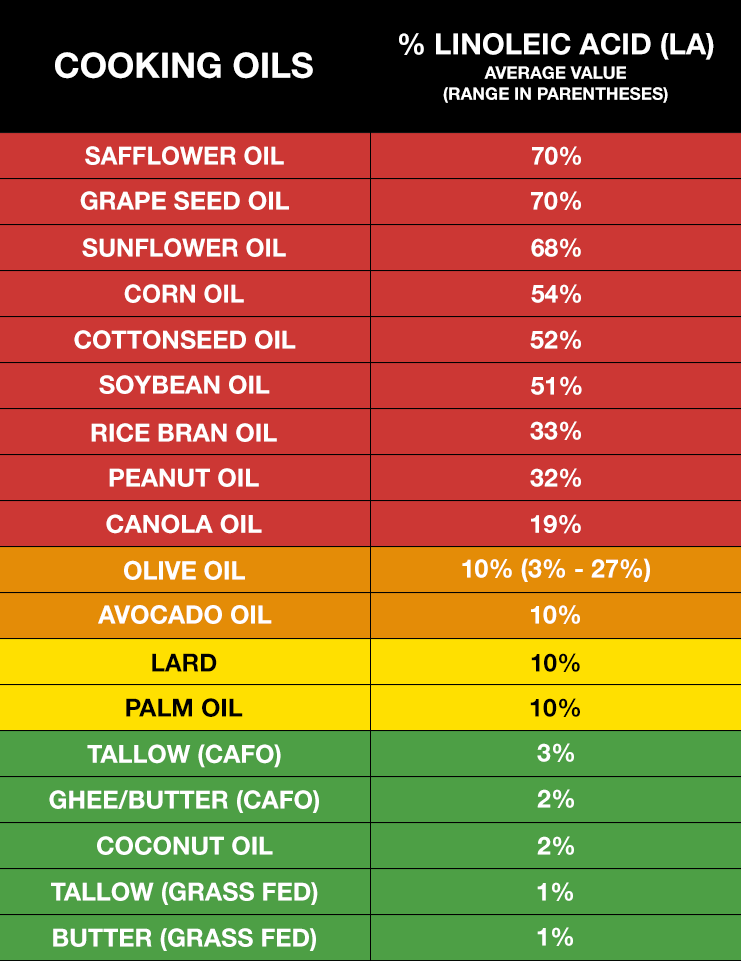
LA Content of Common Cooking Oils
The table below provides a relatively comprehensive list of the most commonly consumed oils and their approximate LA content.22,23,24
In general, the lowest LA-containing fats — butter and beef tallow — would be the fats of choice. These excellent cooking fats also provide the fat-soluble vitamins, A, D, and K2. Coconut oil is also very low in LA but doesn’t provide the important fat-soluble vitamins that tallow and butter contain.
Aspirin for the Prevention and Treatment of Migraines
In addition to lowering your estrogen burden and LA intake, several nutritional supplements, medications and alternative remedies can be employed. Aspirin is one inexpensive and readily available option.
As reported in a 2019 paper in The American Journal of Medicine, properly dosed aspirin can safely and effectively abort a migraine attack when taken early enough, and may also be used preventatively in lower doses:25,26
“The totality of evidence, which includes data from randomized trials, suggests that high-dose aspirin, in doses from 900 to 1300 mg, taken at the onset of symptoms, is an effective and safe treatment option for acute migraine headaches.
In addition, the totality of evidence, including some, but not all, randomized trials, suggests the possibility that daily aspirin, in doses from 81 to 325 mg, may be an effective and safe treatment option for the prevention of recurrent migraine headaches.
The relatively favorable side effect profile of aspirin and extremely low costs compared with other prescription drug therapies may provide additional options for primary healthcare providers in the treatment of both acute and recurrent migraine headaches.”
Helpful Supplements
Other supplements that can help reduce migraine frequency and/or severity include:
| Magnesium — Which can affect both serotonin receptor function and the production and use of neurotransmitters — has also been shown to play an important role in the prevention and treatment of migraines, and migraine sufferers are more likely to suffer from magnesium deficiency than non-migraineurs.27
Since magnesium administration is both easy and safe, researchers have noted that empiric treatment with a magnesium supplement is justified for all migraine sufferers.28 As a prophylactic, be prepared to boost your magnesium intake for at least three months to experience results. In many cases, receiving a high dose of magnesium can also abort an attack in progress. The most effective way to administer magnesium for migraine would be to get an intravenous (IV) infusion. I used to regularly administer magnesium IVs for those with acute migraines and it seemed to work for most patients to abort the headache. Barring that option, magnesium threonate may be your best option for an oral supplement, as its superior ability to cross the blood-brain barrier makes it more likely to have a beneficial effect on your brain. |
| B vitamins — Other vitamin deficiencies linked to migraines include riboflavin (B2), B6, B12 and folic acid. One 2009 study29 evaluated the effect of 2 mg of folic acid, 25 mg vitamin B6 and 400 micrograms (mcg) of vitamin B12 in 52 patients diagnosed with migraine with aura. Compared to the placebo group, those receiving these supplements experienced a 50% reduction in migraine disability over a six-month period.
Previous studies30 have also reported that high doses of riboflavin can help prevent migraine attacks. In one study, patients who took 400 mg of riboflavin per day experienced a 50% reduction in migraine frequency after three months. |
| CoQ10 — Ubiquinol — the reduced form of CoQ10 — plays a vital role in ATP production, which is the basic fuel for your mitochondria. Your body does produce ubiquinol naturally; in fact, it is the predominant form in most healthy cells, tissues and organs. However, with rampant pollution and poor diet, mitochondrial dysfunction has become increasingly common, warranting supplementation with either ubiquinol or CoQ10.
One study published in the journal Neurology31 found that CoQ10 was superior to a placebo in preventing migraines and reducing severity. Of the patients who received 100 mg of CoQ10 three times a day, 50% reported significantly reduced frequency of headaches compared to only 14% of those who took the placebo. |
| GABA — Migraine is one of several common symptoms of GABA deficiency. |
Carbon dioxide — Migraines can also be addressed with CO2. In some cases, migraines can be triggered by overbreathing, causing a lack of CO2 that constricts the blood vessels in your brain. Exogenous CO2 delivery methods include:
|
- 1, 3 Stat Pearls, Migraine Headache
- 2 Migraine Research Foundation, Migraine Facts
- 4 Scientific American July 21, 2013
- 5 Ray Peat Forum August 29, 2018
- 6 Frontiers in Molecular Biosciences August 14, 2018
- 7 EurekAlert! August 14, 2018
- 8 ZeroHedge March 8, 2024
- 9 Nutrients July 2023; 15(14): 3129
- 10 Oxid Med Cell Longev. 2014;2014: 360438. DOI: 10.1155/2014/360438
- 11 Pharmacognosy Review. 2010;4(8):118-126
- 12 Biochemical Journal. 1982;208(1):129-140
- 13 Nephrol Dialysis Transplant. 2001;16(8):1598-1606
- 14 Free Radical Biol Med. 1992;13:341-390
- 15 Journal of Nutrition June 1990; 120(6):625-30
- 16 Metabolism July 1992; 41(7): 788-792
- 17 Healthier U September 25, 2023
- 18 Journal of Headache and Pain 2013; 14, Article number P138
- 19 Headache September 27, 2016
- 20 Mymensingh Med J 2021 Jan;30(1):43-47
- 21 Paloma Health February 17, 2022
- 22 Renewable Energy. 2018; 126: 403-419
- 23 Int J Mol Sci. 2015;16(6):12871-12890
- 24 The Plan Journal. 2008;54:640-655
- 25 The American Journal of Medicine November 8, 2019; 133(4): 412-416
- 26 Haidut.me December 4, 2019 (Archived)
- 27, 28 J Neural Transm (Vienna). 2012 May;119(5):575-9
- 29 Pharmacogenetics and Genomics 2009 Jun;19(6):422-8
- 30 European Journal of Neurology 2004 Jul;11(7):475-7
- 31 Neurology 2005 Feb 22;64(4):713-5
Six Ways to Maintain Optimal Cognitive Function as You Age
Reproduced from original article:
https://articles.mercola.com/sites/articles/archive/2024/05/17/maintain-optimal-cognitive-function.aspx
Analysis by Dr. Joseph Mercola May 17, 2024

STORY AT-A-GLANCE
- Solving puzzles as well as learning a new skill can create new neural connections in your brain, which can help keep your mind sharp
- Getting enough sleep can also support brain health. Research suggests your brain uses this period of rest to remove waste, while also helping you retain newly retained information better
- A healthy diet can help optimize mitochondrial health, which plays an important role in cognitive function. Avoid seed oils and all forms of processed food, as these are high in linoleic acid
- Remember to maintain current relationships and forging new ones. Connecting with people you care about, as well as those who share the same interests as you, can greatly benefit your cognitive health
You may believe that forgetting information here and there is normal as you age. However, that doesn’t have to become a permanent fixture in your life. There are several natural strategies that can help keep your brain in top shape.
In an article for CNET,1 journalist Taylor Leamey, who is also a Certified Sleep Science Coach,2 highlights six insightful ways to help keep your mind sharp as you age. I’ve listed them below, expanding on her ideas by adding my own recommendations.
Learn a New Skill
Have you ever wanted to play an instrument, like the guitar or the piano? It’s never too late to learn! One of the simplest ways to keep your brain in top shape is picking a new skill or hobby that you haven’t tried yet but interests you.
Taking up a musical instrument can, figuratively, have your brain firing on all cylinders. In a 2018 study,3 researchers sought to understand how music can benefit cognitive function in adults. They recruited seven patients diagnosed with mild traumatic brain injury and gave them piano lessons for eight weeks. Throughout the study, the participants’ brains were scanned using functional and structural magnetic resonance imaging (MRI) technology.
Results indicate that the subjects were able to function better in social interactions and had improved concentration. Moreover, six out of seven of them felt confident enough to return to their jobs after their accident.4
If learning a musical instrument doesn’t appeal to you, even the simple act of listening to music can have profound effects on your memory. In a study5 published in Neuropsychologia, patients with Alzheimer’s disease better recognized music when the lyrics were sung to them, aside from having a visual presentation. The study authors concluded that music may enhance memory recall for verbal information.
Another activity you can try is dancing. In a paper6 published in Clinical Interventions in Aging, researchers observed the effects of dancing on the cognitive function of participants affected by mild cognitive impairment, which is the transitional stage between normal aging and dementia.
For three months, the participants were instructed in a moderate-intensity dance routine, aside from their usual health care regimen. The dance routine was carefully selected for its complex movements, allowing the participants to use their memorization skills. Results showed an improvement in their episodic memory and processing speed compared to the control group, which didn’t partake in the dance classes.7
As you can see, acquiring a new skill or hobby can keep your brain “on its toes.” The important thing to remember is that you should be interested in it, so that you can remain inspired to keep practicing and getting better. “Just make sure it’s challenging or complex, and continue to practice for the best brain results,” Leamey says.8
Get Regular Exercise
Exercise is an important component to overall health that most people should implement in one way or another. Leamey says, “Generally, any exercise that’s good for the body will also help the mind. It doesn’t have to be lifting weights; walking, swimming and dancing also achieve the same results.”9
Aside from helping boost fitness, research suggests that exercise may also help with cognition by boosting blood flow to the brain.10 This process helps your brain produce new nerve cells, which is a process called neurogenesis.11
In a related example, a study12 noted that the hippocampus shrinks during late adulthood, which can increase your risk for impaired memory and dementia. The researchers hypothesized that exercise may counteract these cognitive issues.
In their experiment, they tasked participants with completing a computerized spatial memory task at baseline, as well as following an exercise program for a year. By the end of the study, the participants’ hippocampus grew by 2%. While this may seem small, it’s already enough to keep away reverse age-related loss for another one to two years.
In addition, the subjects received higher scores in the spatial memory task a year after their baseline scores were taken. Specific findings in this area of the study include increased response times and improved memory.13
So, what constitutes effective exercise? For most adults, moderate-intensity exercise is the ideal option. In my interview with Dr. James O’Keefe, a cardiologist with the Mid-America Heart Institute at St. Luke’s Hospital in Kansas City, he espouses two strong cases for moderate-intensity exercise:
1. Too much vigorous exercise can backfire — If you’re sedentary and begin to exercise, you get a dose-dependent decrease in mortality, depression, high blood pressure and other conditions. However, he noted that people who had the highest volume of vigorous exercise, which totals four to seven hours per week, won’t get any additional benefit.
2. You cannot overdo moderate exercise — This type of exercise is loosely defined as exercising to the point where you’re slightly winded but can still have a conversation. Activities that fall under this category include gardening, completing housework, walking, a relaxing bike ride around your neighborhood, yoga and swimming. In short, the exercise should not fall under the competitive category. It should be fun and stress-reducing.
Save This Article for Later – Get the PDF Now
Solve Puzzles to Train Your Mind’s Muscles
As exercising can lead to better fitness, the same idea can be likened to solving puzzles for your brain. According to training specialist David Wiener, in an interview for the online magazine Express,14 he explains how puzzles can help keep your mind sharp:
“By challenging your brain with mental exercises, it is believed you could maintain individual brain cells and stimulate communication between them to help them work more effectively.”
To “exercise” your mind, crossword puzzles may be a convenient option. In a study published in the Journal of the International Neuropsychology Society, completing crossword puzzles may help delay memory decline in persons who already developed dementia, “possibly via its effect on improving cognitive reserve.”15
Aside from puzzles, what other activities can you try? Dr. Zaldy Tan, director of the Cedars-Sinai Memory and Healthy Aging Program, provides additional examples that can stimulate your mind:16
- Concentration skills such as online brain games
- Visual-spatial working memory skills such as a jigsaw puzzle
- Tactile skills that use procedural memory, such as knitting or model-building
- An activity combining tactile, visual, motor and auditory skills, such as dancing
Prioritize Getting Enough, High-Quality Sleep
Sleep is one of the most important pillars of health, especially when it comes to brain health. Your brain makes up only 2% of your bodyweight yet uses around 20% of your body’s total energy expenditure.17 It performs numerous energy-intensive processes, such as synaptic transmission and firing neurons.
While you’re awake, metabolic waste is generated in the process of consuming energy.18 This is where sleep comes into play. As your body is in deep slumber, your brain takes advantage of this time to flush waste and clear out debris that could otherwise lead to degenerative disease.19
The system responsible for this process is the glymphatic system, which acts as a “brain-wide metabolite clearance system.”20 By pumping cerebrospinal fluid through your brain’s tissues, your glymphatic system flushes waste from your brain back into your circulatory system and liver for elimination.
If you don’t get enough sleep, cognitive performance becomes affected. According to Matthew Walker, Ph.D., director of the University of California Berkeley’s Center for Human Sleep Science, sleep influences your learning and memory processes both before and after acquiring new information. Therefore, depriving yourself of sleep will impact your brain’s learning process.21,22
If you’re having trouble getting peaceful rest, these strategies may help. For a more comprehensive list, see “Sleep — Why You Need It and 50 Ways to Improve It.”
| Avoid using electrical devices at night — These devices emit blue light, which tricks your brain into thinking it’s still daytime. |
| Get bright sun exposure in early morning and around mid-day — Your pineal gland produces melatonin roughly in approximation to the contrast of bright sun exposure in the day and complete darkness at night. If you’re always indoors and swamped in darkness, your body won’t notice the difference, thus hampering melatonin production. |
| Sleep in complete darkness — Light sources, even from a night light or alarm clock, can disrupt your internal clock and your production of melatonin. |
| Eliminate electromagnetic fields (EMFs) in your room — EMFs may disrupt your sleep. I recommend turning off your Wi-Fi at night, since you don’t need it while you’re asleep. Turning off the electricity in your bedroom by pulling your circuit breaker can also remove dirty electricity, which is a hidden source of EMFs. |
| Find your ideal sleeping temperature — According to sleep psychologist Michelle Drerup, PsyD, the ideal temperature for good sleep is around 60 to 67 degrees Fahrenheit (15 to 19 degrees Celsius).23 You can experiment within this range. |
| Adopt a neutral sleeping position — Posture can greatly affect sleep quality. For deep, restful sleep, I recommend adopting a neutral position. It’s a posture wherein you’re lying flat on your back with a pillow under your neck, and your arms down by your sides.
Note that this may increase your risk of sleep apnea, but you can use a paper tape over your mouth, thus forcing you to breathe through your nose and stop snoring. |
Eat a Healthy Diet
Your metabolic health is crucial for cognition. If it’s not in optimal shape, then brain health may suffer as well. As noted in a study published in Neurology,24 a pro-inflammatory diet can increase your risk of dementia. Notable pro-inflammatory markers include increased intake of omega-6 fatty acids, as well as trans fat.25
These findings lend credence to the dangers of linoleic acid (LA), an omega-6, polyunsaturated fatty acid (PUFA), which I believe is one of the most destructive ingredients in the modern Western diet. Most ultraprocessed and junk foods sold today contain high amounts of this unhealthy fat, and this includes fast food and foods served in restaurants.
If that’s the case, then what is the ideal diet for optimizing your metabolism for better brain health? Some of the options Leamey recommends are leafy greens, salmon, green tea, Greek yogurt, and cruciferous vegetables such as broccoli. While these are ideal suggestions, I advise getting them from clean, sustainable sources to protect your health.
For example, choose Alaskan wild-caught salmon instead of farmed salmon. For green tea, choose loose leaf tea, as teabags can leak toxins when heated. Regarding yogurt, it should be made from raw, grass fed milk, preferably homemade. As for leafy greens, spinach are high in oxalates, so if you’re sensitive to oxalates, stick to low oxalate varieties.
In addition to the mentioned foods, here are additional, crucial strategies that can help guide your dietary options:
| Keep PUFA intake below 5 grams. If you can get it below 2 grams, that would be even better. Generally, avoid all types of seed oils, such as soy, sunflower, safflower, canola, corn, palm and cottonseed oil, and any food made with or cooked in these oils. |
| Avoid high-fructose corn syrup when adding carbs to your diet. |
| Avoid all processed foods, restaurant foods, condiments and animal foods raised on grains, such as chicken and pork, as all of these are high in LA. |
| Stick with the sugars from ripe fruit, raw organic honey and/or pure organic cane sugar. |
| Carbohydrate intake can come in the form of some vegetables, and well-cooked low-oxalate starches. |
| Ideal protein intake is around 15% of your daily calories; restrict fats to 30%. |
The reason why I recommend limiting fat is because your mitochondria can only burn one fuel at a time, either fat or glucose. This energy-switching mechanism, called the Randle cycle, can be likened to a railroad that changes the tracks of a train. The image below can help you visualize this vital concept.

When more than 30% of your calories come from fats, your body will prioritize this energy source rather than glucose. The shift can hinder your body’s ability to burn carbohydrates, which can contribute to higher blood sugar levels and insulin resistance.
Your body does this through a process called gluconeogenesis, wherein cortisol is secreted and synthesized into glucose. Cortisol also happens to be the primary aging hormone, so keeping it low can help ward off premature aging.
Moreover, while I believe ripe fruits and starches like white rice are ideal carbs, it’s important to note that they’re rich in fiber, which will feed endotoxin-producing gut bacteria UNLESS your gut health is optimal.
If you experience problems eating complex carbs that result in bowel issues, then consider temporarily restricting your carb intake to very simple carbohydrates such as fruit juice, which is easier to digest. Once your gut health improves, you’ll be able to incorporate more fiber-rich fruits, vegetables and starches.
I also recommend avoiding sources of monounsaturated fatty acids (MUFAs) high in oleic acid, such as olive oil. These products may be just as damaging as LA when consumed in high quantities (when not balanced by adequate saturated fat). Interestingly, the Neurology study I cited earlier supports this notion — the researchers observed that MUFAs are also a pro-inflammatory dietary marker.26
Foster New and Current Connections
As the saying goes, “No man is an island, no man lives alone.”27 Humans are meant to be social, and neglecting this aspect can have dire consequences to your health. Leamey says:
“Prioritizing social contact is an essential part of aging well. Whether spending time with your family or putting yourself out there at your local community center, staying connected is an integral part of aging gracefully.”
According to a study published in PLOS Medicine, the quality of social relationships can directly affect mortality rate. In fact, the researchers equated the influence of social relationships to the same magnitude as smoking and alcohol consumption.28
Similarly, two meta-analyses29,30 that investigated loneliness and social isolation — which are related but not identical — may be an even greater threat to public health compared to obesity, and even raise your risk for premature death by 50%.
For best results, I recommend creating a social routine with the exercise examples I mentioned earlier, which can provide a synergistic effect. Going back to my interview with O’Keefe, he mentions how exercising while socializing can benefit your health:
“Exercising and making social connections at the same time, that is an absolute goldmine of a longevity activity,” he says. “That means that even walking with your dog or your friend or [playing] pickleball is huge … The whole thing is to move your body in a fun, playful manner and make it social.”
How does one make new friends, especially as an adult? Here are some suggestions that can help expand your social circle:
| Join a club — Proactively approaching an established group can allow you to meet people right away who have the same interests as you. Meetup.com is an online source that can show you clubs and get-togethers in your local area. |
| Create rituals of connection — Having weekly talk sessions or making time to eat a meal with family members can maintain help deepen your connections with loved ones. |
| Reach out — Seeking out and contacting friends who need support can strengthen connections, and this feedback loop can be a powerful way to help each other during times of need. |
| Exercise with others — As mentioned by O’Keefe earlier, you can join a gym and meet new people. This can allow you to create new social relationships while improving your fitness at the same time. |
| Support local businesses — Patronizing local businesses for your daily needs can help you develop a sense of community and encourage the formation of new relationships. |
| Volunteer — Joining a charitable organization can allow you to meet like-minded people who share the same altruistic interests as you. |
| Move and/or change jobs — While this option may be drastic, it may be the solution for other people. To make the change worthwhile, make sure that the environment or culture fits best with your personality. Don’t forget to consider the distance that may widen between your longtime friends and family if you move to a new place. |
- 1, 8, 9 CNET, May 11, 2024
- 2 CNET, Taylor Leamey
- 3 Brain Injury, 2018, Volume 32, Issue 5, Abstract
- 4 Brain Injury, 2018, Volume 32, Issue 5, Semi-Structured Interviews — Patient Group
- 5 Neuropsychologia. 2012 Dec; 50(14): 3295–3303., Discussion
- 6, 7 Clin Interv Aging. 2018; 13: 1691–1700, Abstract
- 10 Scientific American, July 1, 2013
- 11 Harvard Health Publishing, August 1, 2021
- 12 Biological Sciences, January 31, 2011, 108 (7), 3017-3022, Discussion
- 13 Biological Sciences, January 31, 2011, 108 (7), 3017-3022, Hippocampal Volume Is Related to Improvements in Spatial Memory
- 14 Express, March 3, 2024
- 15 J Int Neuropsychol Soc. 2011 Nov; 17(6): 10.1017/S1355617711001111., Abstract
- 16 Forbes Health, 6 Brain Exercises for Seniors to Try
- 17 J Magn Reson. 2018 Jul; 292: 155–170, Introduction
- 18 Washington University School of Medicine in St. Louis, February 28, 2024
- 19 Nature, February 28, 2024
- 20 Scientific Reports, February 2, 2018
- 21 YouTube, Dr. Matthew Walker on Sleep for Enhancing Learning, Creativity, Immunity and Glymphatic System
- 22 Harv Rev Psychiatry. 2008;16(5):287-98, Abstract
- 23 Cleveland Clinic, November 15, 2021
- 24 Neurology. 2021 Dec 14; 97(24): e2381–e2391, Abstract
- 25, 26 Neurology. 2021 Dec 14; 97(24): e2381–e2391, eTable 1
- 27 Boston University, The Howard Thurman Center, Meditation: No Man Is an Island
- 28 PLoS Med 7(7): e1000316, What Do These Findings Mean?
- 29 Business Insider, August 7, 2017
- 30 American Psychological Association, August 5, 2017
Black Seed Oil — A Natural Ally in Maintaining Disease-Free Living
Reproduced from original article:
https://articles.mercola.com/sites/articles/archive/2024/05/15/black-seed-oil-health-benefits.aspx
Analysis by Dr. Joseph Mercola May 15, 2024

STORY AT-A-GLANCE
- Studies have shown black seed oil’s impressive potential to help protect against cancer, as well as other disorders like diabetes, asthma and even respiratory ailments
- Thymoquinone (TQ), black seed oil’s main bioactive component, is the primary compound responsible for its many benefits. This monoterpene molecule helps alter certain molecular and signaling pathways related to cancer and other inflammatory and degenerative diseases
- Thymoquinone helps reduce the risk of cancer by inhibiting cell proliferation, triggering apoptosis (cancer cell death) and preventing cancer cell migration, but without harming healthy cells
- Black seed oil contains 1.7 grams of linoleic acid per teaspoon, so only take it as a supplement
Herbal oils have a long history of use in traditional medicine, and one particular example that has stood the test of time is black seed oil. Not to be confused with black cumin (Bunium bulbocastanum),1 black seed oil comes from the Nigella sativa (N. sativa) plant, which grows in Southern Europe, Southwest Asia and the Middle East.2 The seeds are shaped like tiny Brazil nuts and coal-black (as their name implies).
Black seed oil is regarded for its potential to help protect against diseases and heal ailments — it has antidiabetic, analgesic, anti-inflammatory, antimicrobial and antioxidant properties, to name a few.3 Studies have also shown its impressive potential to help protect against cancer.
Studies Demonstrate Black Seed Oil’s Anticancer Effects
In his COVID Intel4 Substack article, Canadian physician William Makis posted a summary of five papers that focus on the anticancer potential of black seed oil. According to the studies,5,6,7,8,9 N. sativa may help protect against different types of cancer in humans, including:
- Breast cancer — A study in Fitoterapia10 found that the combination of phytochemicals thymoquinone (TQ), carvacrol and trans-anethole in black seed oil, even in small doses, was more efficient in preventing breast cancer cells from spreading, as opposed to using individual but higher concentrations of these chemicals.
- Pancreatic cancer — Published in the Frontiers of Oncology journal, the study11 notes that thymoquinone “regulates the occurrence and development of pancreatic cancer at multiple levels and through multiple targets that communicate with each other.”
- Colorectal cancer — The researchers noted12 that TQ-LNCs (thymoquinone lipid nanocapsules) helped reduce tumor size in mice with colorectal cancer.
- Prostate and colon cancers — According to the study,13 N. sativa oil helped slow down the growth of prostate and colon cancer cells, especially when higher doses of thymoquinone were administered.
- Hepatic cancer, cervical cancer, leukemia and more — Using nanotechnology, the researchers14 observed the anticancer efficacy of TQ on its own or when combined with other cancer treatments.
The five studies highlight black seed oil’s main bioactive component, thymoquinone (TQ), as the primary compound responsible for its anticancer benefits.
Thymoquinone’s Mechanism of Action
Chemically known as 2-methyl-5-isopropyl-1, 4-benzoquinone, thymoquinone is a monoterpene molecule that’s been found to alter certain molecular and signaling pathways related to cancer and other inflammatory and degenerative diseases.15
According to the featured research,16 thymoquinone helps reduce the risk of cancer by inhibiting cell proliferation, triggering apoptosis (cancer cell death) and preventing cancer cell migration, but without harming healthy cells. One study notes:17
“TQ [thymoquinone] is the main bioactive constituent in N. sativa that has been intensively investigated in vitro and in vivo and shown to have several therapeutic properties, including anticancer activity. Its effectiveness on cancers is demonstrated in murine model studies in which TQ enhances higher survival rates, reduced tumor volume, reduced pro-cancerous molecules and elevated anti-tumorigenesis biomarkers.
Meanwhile, in in vitro studies, TQ has shown the ability to inhibit cancer staging such as migration, proliferation, and invasion or apoptosis induction by repressing the activation of vital pathways, such as JAK/STAT and PI3K/AKT/mTOR.”
In the featured article,18 Makis summarizes the mechanisms of action of thymoquinone, explaining that this phytochemical’s unique feature is its ability to activate certain proteins that prevent tumors from forming. It also turns off oncogenes, which are genes that promote cancer growth.
Considering that cancer is now the leading cause of death worldwide — with 10 million people dying in 2020 from this illness, according to the World Health Organization (WHO)19 — the rise of natural interventions like black seed oil is certainly an advantage, especially since conventional cancer treatments today are rife with side effects.
“Cancer continues to threat [sic] mortal alongside scientific community with burgeoning grasp. Most efforts directed to tame Cancer such as radiotherapy or chemotherapy, all came at a cost of severe side effects.
The plant derived bioactive compounds on the other hand carries an inevitable advantage of being safer, bioavailable & less toxic compared to contemporary chemotherapeutics,” one of the studies reports.20
Save This Article for Later – Get the PDF Now
Black Seed Oil May Also Protect Against COVID-19
During the height of the COVID-19 pandemic, N. sativa was found to be one of the natural remedies that may be potentially beneficial against the viral infection. One study21 published in 2021 reviewed the active ingredients in black seed oil, mainly thymoquinone, α-hederin, and nigellidine, and found that they may help combat COVID-19.22
Aside from having significant antihistamine effects, these black seed oil compounds help downregulate interferon regulatory factor-3 activation, which is essential in innate bacterial and viral immune responses.23
Thymoquinone may also help promote autophagy, which is the body’s mechanism of eliminating damaged cells. A 2018 study24 found that thymoquinone can help promote autophagy in the heart muscle. This is crucial, as COVID-19 was found to suppress autophagy; therefore, thymoquinone’s effects on autophagy are indicative of its antiviral potential.
In addition, the researchers noted that thymoquinone may help inhibit enzymes that can produce leukotriene and prostaglandins,25 which are both inflammatory agents.
“Considering the anti-inflammatory actions of N. sativa seed and its different extracts, these might be potentially used for the prevention as well as cure of SARS‐CoV‐2 viral infection,” the researchers report.26
Black seed oil is listed as one of the Front Line COVID-19 Critical Care Alliance’s (FLCCC) recommended first-line treatments for COVID-19,27 along with ivermectin, hydroxychloroquine (HCQ) and zinc.
What Else Can Black Seed Oil Do for You?
In different cultures, N. sativa has been used for centuries to help ease ailments. The Indians consider it an important element in their Unani and Ayurvedic traditional systems of medicine. Meanwhile, the Muslims value it as one of the “greatest forms of healing medicine.” In fact, the Prophetic Hadith — the compilations of the teachings of Muhammad — refer to black seed as “the remedy for all diseases except death.”28
To give you an idea of just how useful black seed oil is, here’s a list of ways it can benefit your health:
• Helps ease asthma and other respiratory problems — Diffusing the oil may help ease asthma attacks. A 2019 study noted its potential for treating allergies as well as obstructive lung disorders.29
• Promotes normal blood pressure levels — A double-blind, randomized experiment published in the Phytotherapy Research30 found that participants who were given black seed oil daily had decreased systolic and diastolic blood pressure levels compared to those who were only given a placebo.
• May help in diabetes management — A Malaysian study31 looked at N. sativa’s ability to repair pancreatic damage related to Type 1 diabetes in animal subjects. They found that those that were given the oil had increased serum insulin levels and reduced blood glucose levels.
• Helps protect against the toxic effects of aflatoxins — These are substances produced by certain types of mold, particularly Aspergillus flavus and Aspergillus parasiticus. Aflatoxin exposure may lead to an increased risk of liver cancer.32
In a study published in the International Journal of Health Sciences, animal subjects that were exposed to aflatoxins and given black seed oil had reduced effects on their kidneys and liver, showing its cytoprotective effects.33
Black Seed Oil May Also Help With Dermatological Conditions
N. sativa oil may also help with skin ailments and promote a healthier complexion. In one review of the literature published in the Journal of Dermatology and Dermatologic Surgery,34 black seed oil was found to help promote wound healing in farm animals as well as reduced the effects of vitiligo in lizards.
“In a randomized double blind clinical study, patients applied N. sativa oil to lesions of vitiligo twice daily for 6 months had a significant decrease in the vitiligo area scoring index with no significant side effects,” the researchers noted.35
Another clinical study,36 this time on humans, found that a 10% black seed oil lotion reduced acne vulgaris after two months of use, mainly due to its anti-inflammatory, immunomodulatory and antimicrobial properties. The study says 67% of patients were “fully satisfied” and 28% were “partially satisfied” with the treatment.
“The 10% Nigella sativa oil lotion showed no side effects, and can be considered very safe when compared with other topical therapies like tretinoin and benzoyl peroxide that are commonly associated with local and systemic side effect such as local irritation, burning sensation, dryness of skin, peeling and teratogenic effects.
The present study recommends the use of 10% Nigella sativa oil lotion as a topical therapy for acne vulgaris, as it is a natural plant extract,” the researchers conclude.37
However, remember that black seed oil may still have certain side effects on sensitive individuals when applied topically. One study notes that the oil caused contact dermatitis in two persons.38 No adverse effects were reported when the oil was used internally, though. To be safe, dilute pure black seed oil with a safe carrier oil and apply a small amount on your skin to check for any adverse reactions.
Black Seed Oil Contains Linoleic Acid, So Be Mindful of Dosage
Since it is a seed oil, N. sativa contains unsaturated fatty acids, with linoleic acid (LA) as the primary constituent, making up 50% to 60%. Other fatty acids include oleic acid (20%), eicosadienoic acid (3%) and dihomolinoleic acid (10%).39
Although it’s advisable to avoid omega-6 fats, particularly LA, you shouldn’t be too worried if you’re only using black seed oil as a supplement (as opposed to consuming ultraprocessed foods or deep-fry foods in seed oils, which exposes you to excessively high amounts of LA).
Each teaspoon of black seed oil contains about 1.7 grams of LA, so avoid taking higher amounts than that. Ideally, you’ll want to limit your LA intake to 5 grams a day or less, which is closer to what our ancestors used to get. Black seed oil also contains oleic acid, which is nearly as damaging as LA.
Use an online tool like Cronometer.com to help you track your food and LA intake. The key is to use a digital scale to carefully weigh your food, so you can enter the exact amount to the nearest gram.
Once you’ve entered your food for the day, go to the “Lipid” section on the lower left side. You just need to look at how many grams of omega-6 are present to find out how much LA is in your diet for that day. Roughly 90% of the omega-6 you eat is LA. To learn more about the dangers of excessive linoleic acid, I advise you to read my article, “Linoleic Acid — The Most Destructive Ingredient in Your Diet.”
- 1 Ethnobotanical review of Bunium bulbocastanum (Black Cumin) for the treatment of diseases: The clinical and mechanistic evidence, April 2022
- 2, 3 Asian Pacific Journal of Tropical Biomedicine, 2013, 3(5)
- 4, 16, 18 COVID Intel, April 29, 2024
- 5, 10 Fitoterapia, September 2023, 169(105601)
- 6, 11 Front. Oncol., January 4, 2023, 12(2022)
- 7, 8 Cancer Cell International, 2023, 23(320)
- 9, 13 Genes 2023, 14(9):1730
- 12 Cancer Cell International, 2023, 23(320), TQ and colorectal cancer
- 14 Pharmaceuticals 2021, 14(4):369
- 15 Front. Pharmacol., September 21, 2017, Volume 8 – 2017
- 17 Pharmaceuticals 2021, 14(4):369, Conclusions
- 19 World Health Organization, February 3, 2022
- 20 Fitoterapia, September 2023, 169(105601), Abstract
- 21, 22 Phytotherapy Research, 2021, 35(3):1329-1344
- 23 Phytotherapy Research, 2021, 35(3), 1329-1344, Immune response
- 24 J Cell Biochem., September 2018, 119(9):7212-7217
- 25 Planta Med., February 1995, 61(1):33-6
- 26 Phytotherapy Research, 2021, 35(3):1329-1344, Inflammation and cytokine storm
- 27 FLCC Alliance, I-CARE Early COVID Treatment Summary, February 1, 2024
- 28 Asian Pac J Trop Biomed. May 2013; 3(5): 337–352, Introduction
- 29 Avicenna J Phytomed. May-June 2019;9(3):195-212
- 30 Phytother Res. December 2013;27(12):1849-53
- 31 Global Journal of Pharmacology, January 2013, 7(1):14-19
- 32 National Cancer Institute, Aflatoxins, December 5, 2022
- 33 Int J Health Sci (Qassim). July 2008; 2(2): 26–44
- 34 Journal of Dermatology & Dermatologic Surgery, July 2015, 19(2): 92-98
- 35 Journal of Dermatology & Dermatologic Surgery, July 2015, 19(2): 92-98, Vitiligo
- 36 The Iraqi Postgraduate Medical Journal, 2010, 9(2)
- 37 The Iraqi Postgraduate Medical Journal, 2010, 9(2), Discussion
- 38 Phytotherapy Research, April 2003, 17(4): 299-305
- 39 Asian Pac J Trop Biomed. May 2013, 3(5): 337–352
Toxins Cause Heart Failure and Cardiomyopathy
Reproduced from original article:
https://articles.mercola.com/sites/articles/archive/2024/05/15/toxins-cause-cardiomyopathy.aspx
Analysis by Dr. Joseph Mercola May 15, 2024

STORY AT-A-GLANCE
- Patients with severe heart failure have 12,000-fold more antimony in their heart muscle cells than healthy controls and 22,000-fold more mercury
- Heavy metals like mercury, cadmium and copper directly impair mitochondrial function, which is crucial for cellular energy production
- Antimony exposure is linked to cardiovascular issues and has estrogenic activity, which may contribute to chronic diseases including cancer
- The heart often serves as a collection site for heavy metals, significantly contributing to heart failure
- Chelation therapy may reverse heart damage caused by heavy metal toxicity. Routine phlebotomy is recommended for managing high iron levels and can also lower your microplastic burden
According to research1 published in 1999, people with severe heart failure have 12,000-fold more antimony in their myocytes (the heart muscle cells responsible for contraction) than healthy controls. They also have 22,000-fold more mercury.
Mercury is a highly toxic metal that causes oxidative stress, weakening of the antioxidant defense system, enzyme inactivation and increased oxidative damage, all of which contribute to the deterioration of heart function.2 Long-term exposure to antimony has also been linked to cardiovascular problems. Antimony also has estrogenic activity, which drives many chronic diseases, including cancer.
The oxidative stress caused by heavy metals is one of the primary ways in which they destroy your mitochondrial function. Some heavy metals, including mercury, cadmium and copper, also interfere directly with the mitochondrial electron transport chain,3 leading to reduced ATP production, which is crucial for cellular energy.
Mercury’s interaction with mitochondrial enzymes and membranes further amplifies oxidative damage, impairs cellular respiration, and can trigger cell death.
High Concentrations of Heavy Metals Are Nearly Always Present in Failing Hearts
In a November 2023 article,4 Dr. Thomas Levy, contributing editor for the Orthomolecular Medicine News Service, pointed out that the heart is “the preferred collection site” for most heavy metals, and as such, heavy metal toxicity is a common contributor to, and sometimes direct cause of, heart failure.
Various toxins, especially heavy metals like lead, copper, iron, mercury, aluminum, cadmium and others, can accumulate in heart tissue, contributing significantly to heart failure by directly damaging heart muscle cells and affecting their function. As reported by Levy:5
“Many different toxins, including many heavy metals, have been either linked to heart failure or clearly shown to be the direct cause. Furthermore, one or more of these toxins is nearly always present in high concentrations in the affected heart muscle. A partial list of such agents includes the following:
- Lead
- Copper
- Iron
- Mercury
- Aluminum
- Cobalt/Chromium
- Cadmium
- Gold/Silver
- Chemotherapy
- COVID spike protein”
Levy cites studies showing how each of these toxic agents damage your heart and deteriorate cardiac function. Lead, for example, is linked to acute heart failure and myocarditis; copper toxicity to hypertrophic cardiomyopathy; iron to congestive heart failure; and mercury to idiopathic dilated cardiomyopathy (IDCM).
Recognizing and treating heavy metal toxicity can dramatically improve heart function, Levy notes, adding that chelation therapy has shown promise in reversing toxicity-related heart damage.
The Safest Way to Lower Your Iron
While Levy reviews the use of an iron chelator (deferoxamine) for severe iron overload, routine phlebotomy (blood donation) is another, likely safer, option. Side effects of deferoxamine include but are not limited to allergic reactions, respiratory issues, vision disturbances, hearing loss, muscle spasms and bone pain.6
For those with elevated iron levels, I recommend donating blood two to four times a year. If losing 10% of your blood in one sitting is too problematic, you can remove blood in smaller amounts once a month on the schedule listed below. If you have congestive heart failure or severe COPD, you should discuss this with your doctor, but otherwise this is a fairly appropriate recommendation for most.
| Men | Postmenopausal Women | Premenopausal Women |
|---|---|---|
| 150 ml | 100 ml | 50 ml |
As reported by Levy:7
“[A] case report described a 27-year-old woman with ‘severe heart failure’ completely normalizing on an iron removal regimen. Patients with severe iron overload cardiomyopathy have an average survival of only one year when therapeutic phlebotomy (blood donation) and iron chelation are not utilized.
This form of cardiomyopathy begins with restricted filling of the heart (diastolic dysfunction), and then evolving into a congestive cardiomyopathy. Iron overload cardiomyopathy occurs most commonly in patients with hereditary hemochromatosis or secondary hemochromatosis (as with β-thalassemia and sickle cell anemia).
However, excess iron short of that seen in full-blown hemochromatosis can still be expected to inflict its own dose-dependent toxicity. Most adults already have excess levels of iron in their bodies, as reflected by elevated ferritin levels that erroneously remain regarded as normal in laboratory reference ranges.
Excess iron in the heart is also a predisposing factor to developing atrial fibrillation, an arrhythmia that contributes its own increased morbidity and mortality.
In animal studies, excess cellular iron in heart cells has been shown to increase oxidative stress and impair the ability of the mitochondrial electron transport chain (ETC) to produce ATP. As ATP is the primary energy-providing molecule in the body, any decrease in its production always results in compromised cellular function and disease.
Of note, resveratrol supplementation has been shown to dramatically improve heart function in animal models of iron overload cardiomyopathy. In another animal study,8 either deferiprone or N-acetylcysteine was effective in decreasing cardiac iron concentration.”
Save This Article for Later – Get the PDF Now
Where Does the Antimony Come From?
In personal correspondence with me, Levy pointed out that one of the primary sources of antimony is PET-containing plastics, with plastic water bottles being the top source.
“By comparison, antimony is more toxic than arsenic,” he told me. “After presenting this info recently, a Veteran in the audience told me that they dropped huge pallets of bottled water to the troops in the Middle East, and he would get sick every time he drank the water, but there was no other source of water. Of course, heat accelerated the antimony release into the water.”
Chapter 3 in Defend Our Health’s 2022 report, “Problem Plastic: How Polyester and PET Plastic Can be Unsafe, Unjust and Unsustainable Materials,” detail how antimony in plastic threaten our health, especially that of our children. Here’s a small excerpt:9
“Antimony (in the form of antimony trioxide) is the preferred catalyst for speeding the final chemical reaction that produces PET plastic. Small amounts of antimony can continually escape from PET during use and disposal of plastic bottles, food packaging, and from polyester clothing, children’s products, and other textiles.
Antimony has been known to adversely affect health for decades based on health studies of exposed people and laboratory animals … Children are exposed to multiple sources of antimony from its use as a plastic additive, including its common use with flame retardant chemicals, including in PET and polyester.
In addition to exposure from food and beverages, antimony may be ingested from house dust and from the mouthing of polyester-based toys and clothing. This aggregate exposure to antimony by children appears to exceed the maximum daily dose established by the State of California to protect against chronic organ toxicity.”
Importantly, antimony also has estrogenic activity and estrogen is not something you want too much of. The “Problem Plastic” report cites research that found estrogenic activity in 7 of 9 PET bottles tested.
Aside from being a known carcinogen and a driver of obesity, estrogen is also a metabolic inhibitor that slows down energy production in the cell. And, as stressed by Levy in the quote above, any decrease in energy production “always results in compromised cellular function and disease.”
Beware of Beverages in Plastic Bottles
In February 2022, Defend Our Health tested 20 popular beverages for the presence of antimony. All of the beverages were bottled in PET plastic, and all had detectable levels of antimony. Eight of the 20 samples (40%) had antimony concentrations that exceeded California’s Public Health Goal for drinking water of 1 part per billion (ppb), and 18 of the samples (90%) exceeded the 0.25 ppb limit recommended by Defend Our Health. According to the “Problem Plastic” report:10
“The highest concentration was found in the Campbell’s V8 vegetable juice sample, which had 3.45 parts per billion (ppb) of antimony, more than three times California’s public health goal for antimony in drinking water.
The soda sample with the highest antimony concentration was Coca Cola (packaged in 100% recycled PET) at 2.2 ppb. Nestle’s Perrier water had the highest concentration of antimony among the sampled bottled waters, at 1.58 ppb.
The plastic from 11 bottles had concentrations of antimony in the range of 216 to 321 parts per million (ppm). These concentrations fall within or slightly above the previously documented range of 172 to 261 ppm in PET bottles known to use an antimony catalyst.
Three bottles tested had undetectable concentrations of antimony. These PET samples were Simply Lemonade, Mountain Dew, and 7up bottles. Titanium concentrations for these PET samples were found to be six to seven times higher than in the other tested bottle samples …
Aluminum levels were also elevated in the plastic from two of these samples (Simply Lemonade and 7-up), suggesting that these bottles may have been produced using a titanium- and/or aluminum-based catalyst.”
Nanoplastics Linked to Heart Attacks and Stroke
In related news, recent research11 has also linked nanoplastics to an increased risk of heart attacks and stroke. The study, published in the New England Journal of Medicine, analyzed tissue from 257 individuals undergoing carotid endarterectomy.
Arterial plaques were found to contain several kinds of nanoplastics, including polyethylene, which was detected in 58.4% of patients, and polyvinyl chloride, found in 12.1%.
Disturbingly, individuals with microplastics or nanoplastics in their carotid artery tissues were found to have fourfold higher risk of suffering a cardiovascular event such as heart attack or stroke over the next three years compared to those without such plastics. They were also more likely to die from any cause.
Increasing Cellular Energy Is an Important Part of Heart Failure Treatment
The heart and the brain between them consume nearly one-third of your body’s energy. The brain is 2% of your body weight and consumes 20% of your body energy, while your heart is only 0.5% of your body weight (or 75% less than your brain) yet still consumes 7% to 8% of your body’s energy. Gram per gram, this is 50% more than your brain consumption.
If you are unable to produce adequate cellular energy, you simply won’t have enough power to allow your heart to pump efficiently. This is why it is so vital to implement the strategies we have discussed previously in other articles to improve cellular energy production.
The following are key concepts that need to be integrated to improve all cellular energy, and certainly energy produced for the heart. They all revolve around improving mitochondrial function:
• Lower LA as much as possible — This is the single most important mitochondrial poison. Watch my comprehensive video on why this is so and how to do it.
• Lower estrogen excess — Estrogen, yes even bioidentical, is nearly as dangerous as LA in destroying mitochondrial function. Aside from avoiding all estrogen supplements and plastics, as they are potent sources of xenoestrogens, you can take trans mucosal progesterone, not oral or transdermal, as it is a potent estrogen blocker. See section below for more details.
• Make sure your thyroid is working well — Thyroid function is absolutely essential to make sure you have a high metabolic rate and produce plenty of ATP. If you are going to do a thyroid test, it is important your TSH be well-suppressed and below 0.5. You can also confirm by taking your temperature first thing in the morning and two hours after meals. Low temperatures indicate low thyroid activity.
• Optimize your microbiome — This is key, as not only are 95% of people metabolically inflexible, but because of mitochondrial poisons their microbiome is out of balance with a preponderance of pathogenic endotoxin-producing bacteria, which is another potent mitochondrial poison. We will be reviewing essential strategies to reverse this pervasive condition in the near future.
Lower Your Toxic Burden With Blood Donation and Sauna
In addition to lowering iron, blood donation can also lower the levels of certain plastic chemicals in your blood. Another effective way to excrete heavy metals and plastic chemicals from your tissues is through sweating. I recommend using a near-infrared sauna with low EMFs for this purpose, as the near-infrared rays can penetrate far deeper into your body than far-infrared.
Other benefits of sauna use include improved cardiovascular fitness and reduced all-cause mortality, lower blood pressure, reduced dementia risk, improved mental health, strengthened immune function, improved athletic endurance, reduced inflammation, stem cell activation, improved insulin sensitivity and a reduction in stress hormones.
As a general recommendation, stay in the sauna for 20 to 30 minutes, or until you reach subjective fatigue, which is a sign that you’ve maxed out the benefits you’re going to get. It’s not about reaching a point of suffering — just that point where you’re feeling mildly anxious and tired and want to get out.
As for the frequency, research has consistently shown that it’s dose-dependent, so the more often you do it, the greater the benefits. The sweet spot seems to be right around four times a week, because you’ll also be losing minerals along with toxins. So, you need to rehydrate and replenish those minerals to avoid mineral deficiencies. For more details, including how to build your own near-infrared sauna, see “Near-Infrared Sauna Therapy — A Key Biohack for Health.”
Progesterone Counteracts Xenoestrogen Exposure From Plastics
To counteract the hazards of estrogenic exposure from plastics you can use progesterone, which is a natural estrogen antagonist. Progesterone is one of only four hormones I believe many adults can benefit from. (The other three are thyroid hormone T3, DHEA and pregnenolone.)
As a general recommendation, I recommend taking 25 to 50 mg of bioidentical progesterone per a day, taken in the evening one hour before bed, as it can also promote sleep. For optimal bioavailability, progesterone needs to be mixed into natural vitamin E. The difference in bioavailability between taking progesterone orally without vitamin E and taking it with vitamin E is 45 minutes versus 48 hours.
Another good reason for taking progesterone with vitamin E is because it binds to red blood cells, which allows the progesterone to be carried throughout your body and be distributed to where it’s needed the most.
Simply Progesterone by Health Natura is premixed with vitamin E and MCT oil. You can also make your own by dissolving pure USP progesterone powder into one capsule of a high-quality vitamin E, and then rub the mixture on your gums. Fifty milligrams of powdered progesterone is about 1/32 teaspoon.
Do not use synthetic vitamin E (alpha tocopherol acetate — the acetate indicates that it’s synthetic). Natural vitamin E will be labeled “d alpha tocopherol.” This is the pure D isomer, which is what your body can use. There are also other vitamin E isomers, and you want the complete spectrum of tocopherols and tocotrienols, specifically the beta, gamma, and delta types, in the effective D isomer.
I do not recommend transdermal progesterone, as your skin expresses high levels of 5-alpha reductase enzyme, which causes a significant portion of the progesterone you’re taking to be irreversibly converted primarily into allopregnanolone and cannot be converted back into progesterone.
Preventing Toxic Exposures Is Key
Of course, prevention — minimizing your exposure to heavy metals and estrogenic compounds such as microplastics — really needs to be your first line of defense.
While that sounds easy enough, it can be tricky business, for the simple reason that these toxins are all around us, in our food, water, household dust, clothing, household and personal care items and even the air we breathe. That said, making a concerted effort to rid your household of plastic can go a long way toward minimizing your and your children’s exposure. Here are a few suggestions to get you started:
| Filter your tap water and avoid water bottled in plastic — If you need to buy bottled water, opt for glass bottles. Also make sure the filter you use to purify your tap water can filter out microplastics. |
| Choose organic foods whenever possible. |
| Opt for low-mercury fish such as anchovy, catfish, wild-caught Alaskan salmon, sardines and tilapia — These fish are categorized as “Best Choices” for consumption due to their lower mercury levels, making them safer options for everyone, including pregnant women and children.12
Steer clear of all farmed fish, however, as farmed fish tend to be heavily contaminated. Also avoid large carnivorous fish such as marlin, sea bass and tuna, including canned tuna, as these tend to contain some of the highest concentrations of mercury. |
| Maintain proper ventilation to reduce indoor pollutants. |
| Boil hard tap water — If you have hard tap water, consider boiling it before using it for cooking or drinking, as hard water traps more microplastics. Recent research shows boiling hard tap water for five minutes removes up to 90% of the microplastics in the water.13 |
| Choose alternatives to plastic packaging — Opt for products packaged in glass, metal, or paper instead of plastic. This can significantly reduce the amount of plastic waste that potentially breaks down into microplastics. At home, use wax paper, parchment paper or paper bags to store foods rather than plastic wrap. |
| Use reusable containers — Replace single-use plastic bottles, cups, and containers with reusable alternatives made from safer materials like stainless steel or glass. |
| Never microwave plastics — Heat can cause plastics to leach chemicals into food. Use glass or ceramic containers for microwaving. |
| Avoid plastic cutting boards — Opt for wood or glass cutting boards instead. |
| Opt for natural fibers — Whenever possible, choose clothing and other textile products made from natural fibers like cotton, wool and linen, as synthetic fabrics such as polyester shed microfibers and leach xenoestrogens. |
| Wash synthetic clothes less frequently — When washing synthetic textiles, use a microfiber filter in your washing machine to trap synthetic fibers and prevent them from entering the water system. |
| Opt for food grade cosmetics and personal care products — Some cosmetics, toothpastes, and personal care products contain microbeads or other plastic particles. Look for products free of these materials. Ideally, opt for all-natural, food grade products. |
| Ensure proper disposal or recycling of electronics and batteries. |
- 1 J Am Coll Cardiol 1999 May;33(6):1578-83
- 2 Front Pharmacol April 12, 2021; 12
- 3 Scientific World Journal April 24, 2012; 136063
- 4, 5, 7 Orthomolecular Medicine News Service November 3, 2023 (Archived)
- 6 Drugs.com Deferoxamine
- 8 Toxicology 427:152289
- 9, 10 Defend Our Health, Problem Plastics July 2022
- 11 New England Journal of Medicine March 6, 2024
- 12 FDA Advice about Eating Fish
- 13 ZeroHedge March 8, 2024
Chronic Pain Due to Mitochondrial Dysfunction, Niacinamide Can Treat It
Reproduced from original article:
https://articles.mercola.com/sites/articles/archive/2024/05/14/chronic-pain-mitochondrial-dysfunction.aspx
Analysis by Dr. Joseph Mercola May 14, 2024

STORY AT-A-GLANCE
- Chronic pain may not be a disorder of its own but a symptom of underlying mitochondrial dysfunction
- Nicotinamide riboside (NR) — a form of vitamin B3 and precursor to nicotinamide adenine dinucleotide (NAD+) — helps relieve chronic pain in mice by improving mitochondrial function
- Niacinamide, another form of vitamin B3 involved in similar cellular processes as NR, may also be useful for relieving chronic pain
- Linoleic acid (LA) in vegetable and seed oils causes mitochondrial dysfunction
- Lowering your intake of LA, which is common in ultraprocessed foods, is one of the most straightforward ways to improve mitochondrial health and, thus, potentially relieve chronic pain
About 21% of U.S. adults suffer from chronic pain, with new cases occurring more often than new cases of other common conditions like diabetes, depression and high blood pressure.1 Pain is considered chronic if it occurs every day or most days over a period of three months or more.
For about 8%, the chronic pain is considered high-impact,2 meaning it limits life or work activities, demonstrating the heavy burden this condition places on those affected. Many reach for dangerous opioid drugs for relief, which suppress mitochondria3 — the last thing you want if you’re struggling with chronic pain.
Chronic Pain Is a Symptom of Mitochondrial Dysfunction
Researchers with Utrecht University in the Netherlands revealed that nicotinamide riboside (NR) — a form of vitamin B3 and precursor to nicotinamide adenine dinucleotide (NAD+), a molecule involved in DNA repair and healthy aging — helps relieve chronic pain in mice4 by improving mitochondrial function.
“Previous research has linked chronic pain to dysfunctional mitochondria, particularly those in specialized nerve cells, called sensory neurons, which detect changes in the environment,” New Scientist reported.5
For the study, an inflammatory substance was injected into the paws of 15 mice, which led to changes in mitochondrial function, even a week later after the inflammation had resolved. The mitochondrial changes were associated with greater pain in the mice, which also had lower levels of NR in the mitochondria of their sensory neurons compared to mice that didn’t experience inflammation.6
NR plays an important role in mitochondrial function, so researchers gave the mice a high dose, which alleviated pain.
“Together these findings indicate two things: first, that inflammation can impair mitochondrial function in sensory neurons and that these impairments increase the risk of chronic pain, even after inflammation has resolved. Second, that taking nicotinamide riboside supplements may help treat this chronic pain by restoring mitochondrial function,” according to New Scientist.7
The study may help shed some light on why some people continue to experience pain even after inflammation has healed, which remains a largely unanswered question. The researchers noticed that even after the initial pain from inflammation goes away, the nerve cells involved in sensing pain still show changes in their mitochondria that disrupt the balance of certain chemicals in the cells.
However, adding the NAD+ precursor NR helped mice recover from pain, even when it was chronic. This suggests that managing mitochondria function in these nerve cells is crucial for overcoming persistent pain after inflammation.
Vitamin B3 for Chronic Pain
As noted in the blog To Extract Knowledge From Matter, which is inspired by the work of the late Ray Peat, niacinamide, another form of vitamin B3 involved in similar cellular processes as NR, may be useful for relieving chronic pain:8
“The study … is one of the first to demonstrate that chronic pain is not an organic disorder of its own, but a symptom of an underlying mitochondrial dysfunction. This not only explain why the intervention with niacinamide worked in alleviating the pain (by improving mitochondrial function), but also why treating chronic pain with opioids is about the worst intervention one could choose.
Why? Because opioids are among the most potent suppressors of mitochondria, which means that as soon as one stops taking them the chronic pain will be much worse, leading to more opioid use and so on — a vicious cycle with usually lethal outcome (overdose).”
In fact, one study found that people who use opioids tend to have fewer mitochondria in their blood. Further, being exposed to the synthetic opioid fentanyl before birth was found to change the number of mitochondria in the blood and the activity of genes related to mitochondria in the nucleus accumbens, a brain area important for feeling pleasure, in young offspring.9
To Extract Knowledge From Matter continued explaining why the featured study’s use of vitamin B3 is superior to opioids for chronic pain:10
“The niacinamide dose used in this study was on the high-side (HED [human equivalent dose] ~35mg/kg daily), but considering it was administrated only once and the pain was completely resolved, it is a low-risk intervention in such doses for humans, especially compared to opioids.
Also, there are prior animal studies showing that lower doses (HED 3mg/kg daily) taken for a few weeks can also relieve chronic pain, which lowers the risk of such intervention even more.”
Save This Article for Later – Get the PDF Now
Your Mitochondria Need Niacinamide
Niacinamide, also known as nicotinamide, is a form of niacin (vitamin B3) that plays a vital role in energy metabolism. It’s essential for the mitochondrial electron transport chain to function. Without it, your mitochondria cannot make energy.
Niacinamide is so important because it is a precursor for NAD+, which is involved in the conversion of food to energy, maintaining DNA integrity and ensuring proper cell function. NAD+ is also a primary fuel for sirtuins, longevity proteins that become depleted with age.
Niacinamide at a dose of 50 milligrams (mg) three times per day will provide the fuel for the rate limiting enzyme for NAD+, NAMPT. Niacinamide also has potent antiobesity effects, can help prevent neurodegeneration and heart failure, and reverse leaky gut.
Niacinamide may also help prevent neurodegeneration by allowing for higher energy levels through energy metabolism in the mitochondria. “There are many studies, going back decades, demonstrating that a drop in NAD+ levels, and thus of NAD/NADH, is a common feature of virtually all neurodegenerative diseases,” writes Peat’s student Georgi Dinkov, a bioenergetic researcher.11
I recommend getting niacinamide in powder form because the lowest available dose in most supplements is 500 mg, and that will decrease NAD+ due to negative feedback on NAMPT, which is the opposite of what you’re looking for. Niacinamide will only cost you about 25 cents a month if you get it as a powder. Typically, 1/64 of a teaspoon of niacinamide powder is about 50 mg.
I also recommend taking one aspirin tablet daily. Aspirin plays a role in mitochondria function12 and also has other health benefits. Importantly, it helps increase the oxidation of glucose as fuel for your body while inhibiting the oxidation of fatty acids, specifically linoleic acid (LA). Dinkov adds:13
“Since aspirin is known to modulate autophagy (raise it when it is abnormally low and lower it when it is abnormally high) and niacinamide is a very effective NAD precursor, it is reasonable to try them in combination that should be synergistic when it comes to protecting the brain (and the entire organism) from diseases and even aging.”
Why Avoiding LA in Ultraprocessed Foods Is Important for Pain Relief
Lowering your LA is the single most important strategy you can take to not only lower reductive stress in your mitochondria but improve your overall health, including relief of chronic pain. LA is an omega-6 fat found in the vegetable oils and seed oils common in most ultraprocessed foods.
The main reason why excess LA causes disease is that it prevents your mitochondria from working well. Mitochondria produce most of your cellular energy in the form of ATP, and without ATP, your cells cannot function and repair themselves normally.
Polyunsaturated fats (PUFAs) such as LA are easily damaged by oxygen in a process called oxidation,14 which triggers the creation of damaging free radicals.15 These, in turn, give rise to advanced lipoxidation end products (ALEs)16 and in the case of omega-6 fats, oxidized LA metabolites (OXLAMs).17,18
These ALEs and OXLAMs then go on to cause mitochondrial dysfunction, which is a hallmark of most chronic disease. In addition to oxidation, inflammation and mitochondrial dysfunction, processed seed oils can also inhibit cardiolipin, an important fat in the inner membrane of your mitochondria.
Cardiolipin is important because it influences the structure of the cristae inside your mitochondria, which is the area where energy production occurs. If cardiolipin is damaged, then the complexes will not be close enough together to form supercomplexes, and thus the mitochondrial energy production will be impaired.
Cardiolipin also works like a cellular alarm system that triggers apoptosis (cell death) by signaling caspase-3 when something goes wrong with the cell. If the cardiolipin is damaged from oxidative stress due to having too much LA, it cannot signal caspase-3, which means apoptosis does not occur.
As a result, dysfunctional cells are allowed to continue to grow, which can turn into a cancerous cell. The type of dietary fat that promotes healthy cardiolipin is omega-3 fat, and the type that destroys it is omega-6, especially LA.
The good news is that dietary changes can improve the composition of fats in your cardiolipin in a matter of weeks, or even days. So, even though it will take years to lower your total body burden of LA, you will likely notice improvements well before then.
How to Optimize Your Mitochondrial Function
To optimize your mitochondrial function, you want to avoid LA as much as possible and increase your intake of omega-3s. Primary sources of LA include seed oils used in cooking, ultraprocessed foods and restaurant foods made with seed oils, condiments, seeds and nuts, most olive oils and avocado oils (due to the high prevalence of adulteration with cheaper seed oils).
Animal foods raised on grains, such as conventional chicken and pork, are also high in LA. Another major culprit that destroys mitochondrial function is excess iron — and almost everyone has too much iron. You can learn more about the health risks of excess iron in my interview with Christy Sutton, D.C. The most effective way to lower your iron is to donate blood two to four times a year.
As mentioned, I also recommend taking 50 mg of niacinamide three times per day. It’s also helpful to make sure you’re getting all the other B vitamins, as they too are crucial for mitochondrial function, especially regular niacin, riboflavin and folate.
Oftentimes, decreased mitochondrial function is due to a deficiency in B vitamins, and that’s easy to fix with a low-dose, high-quality B complex. Usually, when this is the case, improvement can be seen — and felt — within two to three weeks.
- 1, 2 National Institutes of Health May 16, 2023
- 3, 9 Front Psychiatry. 2021 Nov 18:12:737389. doi: 10.3389/fpsyt.2021.737389. eCollection 2021
- 4 Cell Reports Medicine November 8, 2023
- 5, 6, 7 New Scientist November 8, 2023
- 8, 10 Haidut.me February 23, 2024, Chronic pain due to mitochondrial dysfunction, niacinamide can treat it (Archived)
- 11, 13 Haidut.me May 11, 2023, Niacinamide may prevent neurodegeneration (Archived)
- 12 Biochem Biophys Res Commun. 2017 Jan 8; 482(2): 346–351
- 14 Oxid Med Cell Longev. 2014;2014: 360438. doi: 10.1155/2014/360438
- 15 Pharmacognosy Review. 2010;4(8):118-126
- 16 Biochemical Journal. 1982;208(1):129-140
- 17 Nephrol Dialysis Transplant. 2001;16(8):1598-1606
- 18 Free Radical Biol Med. 1992;13:341-390
Symptoms of Diverticulitis and How to Treat It
Reproduced from original article:
https://articles.mercola.com/sites/articles/archive/2024/05/10/diverticulitis-symptoms.aspx
Analysis by Dr. Joseph Mercola May 10, 2024
STORY AT-A-GLANCE
- Diverticulitis is an inflammation or infection of small pouches called diverticula that can develop along the walls of your intestines
- Diverticulitis can cause abdominal pain, constipation, diarrhea, nausea, vomiting, fever and rectal bleeding
- More severe cases can lead to serious complications, including abscesses, fistulas and intestinal blockage
- Restoring your gut microflora and cellular energy production are key to resolving diverticulitis
- Eating foods that support Akkermansia, such as polyphenol-rich fruit, and other beneficial bacteria, and avoiding linoleic acid, are important for diverticulitis; rectal CO2 insufflation may also help
Diverticulitis is an inflammation or infection of small pouches called diverticula that can develop along the walls of your intestines. The formation of these pouches is known as diverticulosis, a common condition that typically causes few or no symptoms. However, when these pouches become inflamed or infected, it leads to diverticulitis, which can be painful and may lead to serious complications.
Diverticulosis is common in the U.S. and other parts of the world where heavily processed diets are the norm. It’s estimated that 30% of Americans over 50 have diverticulosis, which rises to 50% of those over 60% and 75% in people over 80.1
Most often, the condition affects the sigmoid colon, a section of the large intestine near the end of the digestive tract. Among those with diverticulosis, about 4% develop diverticulitis.2
What Are the Symptoms of Diverticulitis?
You can have diverticulosis and not know it, since it often causes no symptoms. But in the case of diverticulitis, it’s typically a different story. Common symptoms include:3
• Abdominal pain — When diverticula become inflamed, they cause the surrounding tissues in the intestinal wall to also become inflamed. This inflammation can lead to pain that’s typically felt in the lower left side of the abdomen and may be severe.
The pain may also spread to your pelvis and back. In people of Asian descent, diverticulosis may occur more often in the first part of the colon, so diverticulitis in that region may cause pain in the upper right abdomen.4
• Bowel changes — The inflammation associated with diverticulitis can affect the movement of the bowel, leading to disruptions in the normal rhythm of digestion. This can result in constipation or diarrhea, along with bloating and gas. Feelings of fullness can also occur.
• Nausea and vomiting — Gastrointestinal irritation may lead to nausea while increased movement of the intestines in an attempt to expel irritants and bacteria may lead to vomiting. In more severe cases, the inflammation can lead to a partial or complete blockage of the intestine, which can trigger vomiting.
• Fever — When diverticula become inflamed, they can also become infected, usually by bacteria. The fever is a sign that your body is actively fighting an infection.
• Rectal bleeding — As diverticulitis progresses, the inflamed diverticula can cause small blood vessels to stretch and rupture, leading to bleeding. This can result in blood appearing in the stool.
Diverticulitis can be classified as acute, which occurs suddenly and often causes intense abdominal pain, fever and nausea, or chronic, with persistent symptoms due to the ongoing inflammation.
More severe cases can lead to serious complications, which are sometimes the first sign of the disease. Each year, about 200,000 people are hospitalized due to diverticulitis, while 71,000 are hospitalized with diverticular bleeding.5 Complications may include:6
- Abscesses
- Perforation, or a hole, in your colon
- Fistulas, an abnormal tunnel between your colon and another area of the body, such as your bladder
- Intestinal blockages
- Peritonitis, an infection of the abdominal cavity
What Causes Diverticulitis?
Certain genes may increase your risk of diverticulitis, but lifestyle factors also play a role, including:7
- Eating ultraprocessed foods
- Inactivity
- Using certain medications, including nonsteroidal anti-inflammatory drugs (NSAIDs) and steroids
- Obesity
- Smoking
While a number of factors contribute to diverticulitis, a disrupted microbiome and eating a highly processed, low-fiber diet are chief among them. Dietary fiber is crucial for maintaining a healthy digestive system. It helps to bulk up your stool and softens it, making it easier to pass through the colon. This reduces the strain and pressure in your colon during bowel movements.
When your diet lacks sufficient fiber, your stools become harder and smaller, requiring your colon to exert more pressure to move them along. This increased pressure can cause your colon’s muscular wall to develop weak spots.
Over time, the continuous pressure may force the inner lining of your colon through these weak spots in the muscle layer, forming diverticula. Further, a diet low in fiber keeps the intra-colonic pressure elevated because of the harder, smaller stools and the greater effort needed to expel them.
This sustained high pressure is believed to not only contribute to the formation of diverticula but also increase the risk of these diverticula becoming inflamed or infected, leading to diverticulitis. As noted in Cureus:8
“Many theories have been suggested for the different etiologies of diverticular disease, and the most common cause is believed to be a low-fiber diet. It is believed that diets low in fibers are associated with increased intra-colonic pressure, which leads to diverticula formation.”
Save This Article for Later – Get the PDF Now
Diverticulitis Linked to Gut Microbiome Composition
Researchers with Massachusetts General Hospital and Harvard Medical School in collected stool samples from 121 women with severe diverticulitis and compared them to stool samples from 121 women without the condition.9 They conducted a detailed analysis of the overall microbial community structures and metabolomic profiles in the collected samples, revealing significant differences between the groups.
Women with diverticulitis had more pro-inflammatory agents such as the microbe Ruminococcus gnavus, 1,7-dimethyluric acid and various histidine-related metabolites. There was also a notable depletion of butyrate-producing bacteria, which are known for their anti-inflammatory properties, as well as a reduction in anti-inflammatory ceramides.
The study highlighted how microbial composition may influence the protective association between a fiber-rich diet and diverticulitis, suggesting that dietary fiber’s protective effects can be significantly altered by a person’s existing gut microbiota composition. A review published in the Journal of Personalized Medicine further described gut microbiota’s potential role in diverticulitis, noting:10
“Changes in microbiota composition have been observed in patients who were developing acute diverticulitis, with a reduction of taxa with anti-inflammatory activity, such as Clostridium cluster IV, Lactobacilli and Bacteroides.
Recent observations supported that a dysbiosis characterized by decreased presence of anti-inflammatory bacterial species might be linked to mucosal inflammation, and a vicious cycle results from a mucosal inflammation driving dysbiosis at the same time.
An alteration in gut microbiota can lead to an altered activation of nerve fibers, and subsequent neuronal and muscular dysfunction, thus favoring abdominal symptoms’ development.”
Restoring Your Gut Microflora and Cellular Energy Production Are Key
Dysbiosis, or an imbalance of microbial communities, in your gut plays a central role in the development of diverticulitis.11 A balanced gut microbiota helps reduce inflammation in the colon. Certain beneficial bacteria produce short-chain fatty acids (SCFAs) like butyrate, which have anti-inflammatory properties. These SCFAs help maintain the health of the colon lining and prevent inflammation that can lead to diverticulitis.
A robust intestinal barrier can also prevent bacterial fragments from entering your bloodstream, whereas a compromised barrier allows these harmful fragments through while blocking SCFAs. However, most people have dysfunctional mitochondria, and if you don’t have enough mitochondria, you can’t create cellular energy efficiently enough to ensure a healthy gastrointestinal tract.
Your gut contains primarily two types of gram-negative bacteria: beneficial and pathogenic. The beneficial ones include obligate anaerobes, which cannot survive in the presence of oxygen and are essential for health. They do not produce harmful endotoxins and contribute positively by producing SCFAs like butyrate, propionate and glucagon-like peptide-1 (GLP-1).
Proper gut function requires energy to maintain an oxygen-free environment in the large intestine, where 99% of gut microbes reside. Insufficient energy leads to oxygen leakage, which harms obligate anaerobes while not impacting the facultative anaerobes, thereby disrupting the balance of the microbiome.
Pathogenic bacteria, or facultative anaerobes, can survive in oxygen and are harmful, as they possess endotoxins in their cell walls. In short, enhancing mitochondrial energy production is crucial for maintaining a healthy gut environment. When you do that, it helps suppress the growth of pathogenic bacteria and support beneficial microbial populations, which in turns reduces your risk of diverticulitis.
Widespread use of antibiotics can also disrupt the microbiome by killing both beneficial and harmful bacteria, leading to a dominance of pathogenic bacteria which produce harmful endotoxins. Optimizing your mitochondrial function is, however, one of the most important strategies you can do to optimize your cellular energy, so it’s at the core of almost everything that you do to improve your health.
How to Restructure Your Microbiome
Akkermansia, highly beneficial bacteria in your large intestine, plays a crucial role in maintaining gut health and should constitute about 10% of the gut microbiome. However, it is absent in many individuals, likely due to inadequate mitochondrial function and resultant oxygen leakage in the gut.
Eating foods that support Akkermansia, such as polyphenol-rich fruit, and other beneficial bacteria, and avoiding foods like linoleic acid — found in vegetable and seed oils in most processed foods — that destroy these bacteria, will help to restructure your microbiome in a positive way. You can also use an Akkermansia probiotic supplement.
One of the reasons Akkermansia is so important is because it produces mucin, a thick, protective gel-like substance that lines various parts of the body, including the gastrointestinal tract. Mucin forms a protective barrier on the gut lining, shielding the epithelial cells of the intestinal wall from mechanical damage, chemical irritation from stomach acids and digestive enzymes, and pathogenic organisms like bacteria and viruses.
Mucin also supports the immune system by trapping potential pathogens and other foreign particles, which are then expelled from the body through the digestive process. It also contains antibodies and antimicrobial peptides that help fight off infections.
Lastly, mucin serves as a food source for other beneficial gut bacteria. This relationship is essential for digestive health, as the bacteria fed by Akkermansia aid in digestion, produce essential nutrients and help maintain an overall balance of gut flora.
Increasing CO2 Likely Beneficial
Carbon dioxide (CO2) is a driver of energy production, as it improves the delivery of oxygen into your cells. While CO2 is typically thought of as nothing more than a harmful waste product of respiration, and a “pollutant” that endangers the planet, the reality is that it’s essential for most life on Earth. In fact, CO2 appears to be a more fundamental component of living matter than oxygen.12
“Really, every condition you can think of, both physiological and mental, can be remediated, and in many cases cured, by increasing endogenous CO2 production and decreasing degradation,” Georgi Dinkov says.
Importantly, CO2 allows for more efficient energy production in your mitochondria, which is why people who live or spend time at higher altitudes tend to be healthier and have fewer chronic health problems such as asthma. The reason for this is because the pressure of CO2 relative to oxygen is greater at higher altitudes.
In order to have sufficient CO2 production, you need healthy mitochondria, because CO2 is produced exclusively in the Krebs cycle in the mitochondria. If you have mitochondrial dysfunction, if you’re hypothyroid or have high levels of inflammation, as is the case in diverticulitis, then you will not be producing enough CO2.
While it’s important to optimize your endogenous (internal) production of CO2, exogenous delivery or supplementation will produce the greatest benefits, as you can deliver far greater amounts than your body can produce. Such strategies include:
- Breathing into a paper bag
- Drinking carbonated water and other carbonated beverages
- CO2 baths
- A special suit into which CO2 is pumped
- Taking small amounts of baking soda in your drinking water
A book written in 1905 by Achilles Rose, M.D. discusses delivery by rectal insufflation. During rectal CO2 insufflation, a small tube or catheter is inserted into the rectum, and a controlled amount of CO2 is gently infused. This is a highly effective way to deliver CO2.
I am currently in the process of setting up an IRB (Institutional Review Board) approved study that will be exploring the therapeutic value of administering CO2 gas rectally to reverse the damage caused by decades of excess LA consumption that caused a radical decrease in mitochondrial function and cellular energy production resulting in a compromised oxygen gradient differential in the large intestine that allows pathogenic bacteria to become squatters and occupy the spaces of the obligate anaerobic species like Akkermansia that provide benefits and do not produce toxic endotoxin.
- 1, 3, 4 Cleveland Clinic, Diverticulosis
- 2 Cleveland Clinic, Diverticulitis
- 5, 6 National Institute of Diabetes and Digestive and Kidney Diseases, Definition & Facts for Diverticular Disease
- 7 National Institute of Diabetes and Digestive and Kidney Diseases, Symptoms & Causes of Diverticular Disease
- 8 Cureus. 2023 Aug; 15(8): e43158
- 9 Nat Commun. 2024 Apr 29;15(1):3612. doi: 10.1038/s41467-024-47859-4
- 10 J Pers Med. 2021 Apr; 11(4): 298
- 11 Neurogastroenterology & Motility May 27, 2023
- 12 Conscious Breathing Carbon Dioxide, Physiology
The Effects of Ozempic and Other Weight Loss Injections
Reproduced from original article:
https://articles.mercola.com/sites/articles/archive/2024/05/08/ozempic-weight-loss-injections-health-effects.aspx
Analysis by Dr. Joseph Mercola May 08, 2024
STORY AT-A-GLANCE
- Semaglutide — the active ingredient in not only Ozempic and Wegovy but also Saxenda and Victoza — is touted as a wonder drug for weight loss but comes with serious side effects
- Research from the University of British Columbia revealed the drugs are associated with an increased risk of stomach paralysis, pancreatitis and bowel obstruction
- The Therapeutic Goods Administration, Australia’s regulatory authority for drugs, is investigating at least three deaths linked to Ozempic and other weight loss injections
- New understandings of how Ozempic works suggest its mechanisms may have more to do with your brain than your gut
- Drugs like Ozempic closely mimic the effects of Akkermansia, a key bacteria strain in your microbiome; naturally increasing Akkermansia may have weight loss effects
They’re described as wonder drugs for weight loss, but semaglutide — sold under the name Ozempic as a diabetes drug and, in a higher dose, under the name Wegovy as a weight loss drug — and other weight loss injections have a dark side.
Semaglutide — the active ingredient in not only Ozempic and Wegovy but also Saxenda and Victoza — touts weight loss rates of 14.9% among adults with obesity,1 and social media is filled with success stories of dramatic weight loss from the drugs.
Dr. Katherine Samaras, professor of medicine and endocrinologist at St. Vincent’s Hospital in Darlinghurst, Australia, told 60 Minutes that Ozempic is game-changing and transformative, going so far as to compare it to the introduction of penicillin.2
But around the world, families are mourning the loss of loved ones who took the drugs and paid the ultimate price. Others are dealing with debilitating side effects, some of them permanent.
Ozempic Slows the Passage of Food Through Your Stomach
Semaglutide is a glucagon-like peptide 1 receptor agonists (GLP-1RAs). As a peptide hormone, GLP-1 is, among other things, part of a group of incretin hormones, which are released when you eat to regulate insulin, along with many other functions.3
Along with affecting insulin, GLP-1 may influence the nervous system, leading to an appetite-reducing response. However, one of their mechanisms is delayed gastric emptying, meaning they radically slow the passage of food through your stomach. This makes you feel fuller longer, but if food moves too slowly, serious consequences result.
Delayed gastric emptying is the hallmark of gastroparesis, or stomach paralysis — a known side effect of the drugs. Nausea and vomiting are common symptoms of gastroparesis that occur so frequently among Ozempic users that social media influencers are now advising people on how to manage these and other side effects.4
Due to the delayed stomach emptying that occurs with semaglutide, the American Society of Anesthesiologists (ASA) released a warning for those taking the drugs before elective surgery.5
They suggest stopping this and other GLP-1 receptor agonists before the procedure, as they could increase the risk of complications associated with anesthesia — namely that you could regurgitate food that’s still sitting in your stomach, even if you’ve fasted appropriately.
Weight Loss Injections Linked to Serious Gastrointestinal Conditions
Research from the University of British Columbia revealed that GLP-1 agonists are associated with an increased risk of several serious health conditions, including stomach paralysis, pancreatitis and bowel obstruction.6 Compared to those using the weight loss drugs bupropion-naltrexone, those taking GLP-1 agonists like Ozempic had a:7
- 9.09 times higher risk of pancreatitis
- 4.22 times higher risk of bowel obstruction
- 3.67 times higher risk of gastroparesis
“These drugs are becoming increasingly accessible, and it is concerning that, in some cases, people can simply go online and order these kinds of medications when they may not have a full understanding of what could potentially happen. This goes directly against the mantra of informed consent,” said study author Mohit Sodhi.8
Save This Article for Later – Get the PDF Now
Ozempic Linked to Fatal Intestinal Blockages
These trendy weight loss medications cause other significant risks as well and may even cause a potentially fatal intestinal obstruction. Diabetic patients who use the drugs have a 4.5 times higher risk of intestinal obstruction than those using other medications. A study of 25,617 people also found use of GLP-1 agonists increases the rate of intestinal obstruction by 3.5-fold.9
The drugs were also found to increase the length and weight of the small intestine in animal studies, while in humans they may increase intestinal length and villus height; villi are the hairlike projections inside the small intestine that help absorb nutrients. Writing in Acta Pharmaceutica Sinica B, researchers explained how this could seriously affect intestinal function, increasing obstruction risk:10
“Because GLP-1RAs [GLP-1 receptor agonists] could cause continuous increases in the intestinal length and villus height, the small intestine may become as inelastic and fibrotic as a loose spring, leading to long-term upper intestinal obstruction …”
60 Minutes covered the story of Trish Webster, a woman from Australia who died from an intestinal blockage after using Ozempic and Saxenda for five months. She experienced diarrhea, constant nausea and vomiting while taking the drugs before eventually collapsing. Her cause of death is listed as “acute gastrointestinal illness.”11
The Therapeutic Goods Administration, Australia’s regulatory authority for therapeutic goods, including drugs and medical devices, is investigating at least three deaths linked to Ozempic and other weight loss injections. Tim Ramsay died just 19 days after using Saxenda, while a 39-year-old woman also died after taking Ozempic injections to lose weight.12
In other cases, those who have taken the injections experience life-changing side effects making them wish they never touched the drugs. Joanne Knight had been taking Ozempic for about two years when she became unable to swallow food. The reason? Her stomach was full of food. Violent vomiting and constant nausea followed, along with a diagnosis of severe gastroparesis.13
“I wish I never touched it. I wish I’d never heard of it in my life,” Knight told CNN. “This medicine made my life hell. So much hell. It has cost me money. It cost me a lot of stress; it cost me days and nights and trips with my family. It’s cost me a lot, and it’s not worth it. The price is too high.”14
Ozempic May Work via Your Brain
New understandings of how Ozempic works suggest its mechanisms may have more to do with your brain than your gut. The Atlantic reported:15
“In recent years, studies have shown that GLP-1 from the gut breaks down quickly and has little effect on our appetites. But the hormone and its receptors are naturally present in many parts of the brain too. These brain receptors are likely the reason the GLP-1 drugs can curb the desire to eat — but also, anecdotally, curb other desires as well. The weight-loss drugs are ultimately drugs for the brain.
Obesity medications differ in a key way from the natural molecule they’re meant to mimic: They last a lot longer. GLP-1 released in the gut has a half-life of just minutes in the bloodstream, whereas semaglutide and tirzepatide [Eli Lilly’s obesity drug] have half-lives measured in days. This is by design. Both drugs were specifically engineered to resist degradation, so that they need to be injected only once a week.
… The medications are also given at levels much higher than natural GLP-1 ever reaches in the bloodstream … By indiscriminately flooding the body with long-lasting molecules, the injections likely allow engineered GLP-1 drugs to penetrate parts of the body that the natural gut hormone cannot — namely, deep in the brain.”
Semaglutide’s brain effects may explain why many people taking the drugs also lose the desire to engage in behaviors like drinking alcohol, shopping and smoking. Research published in The Journal of Clinical Investigation Insight found semaglutide reduces alcohol drinking in rodents and modulates central gamma-aminobutyric acid (GABA) neurotransmission.16
“Growing evidence indicates that the glucagon-like peptide-1 (GLP-1) system is involved in the neurobiology of addictive behaviors,” the researchers explained.17 While the drugs are now being looked at for treatment of alcohol use disorder and other conditions, the consequences of allowing such drugs to tinker with the brain are unknown.
Ozempic Mimics Akkermansia
Akkermansia muciniphila is a bacterium that’s a keystone strain in your microbiome. Having higher levels of Akkermansia is associated with lower weight, while lower levels of Akkermansia are linked to obesity. Interestingly enough, drugs like Ozempic closely mimic the effects of Akkermansia. In my interview with Dr. Colleen Cutcliffe, a microbiome scientist and the CEO and cofounder of Pendulum, a company that creates microbiome products, she explains:
“What happens in your body naturally, if you’ve got all the right microbes, is that you eat a meal, your microbiome metabolizes that food and generates postbiotics [excretions from beneficial bacteria] like butyrate [and] a protein called P9. Some of these postbiotics then signal your body to produce GLP-1.
All that signaling is happening from the microbiome directly to the L cells. And so you eat a meal, your microbiome digests them, these postbiotics get created and tell your L cells, ‘Hey, go produce GLP-1,’ and then you get a spike in GLP-1 in your body.
GLP-1 stimulates your body too. It says, ‘We’ve got to metabolize the sugar in the bloodstream, release insulin.’ It also signals to your brain, ‘We just ate, we’re full, we don’t need to eat again.’ After a period of time, GLP-1 goes down — until the next time you eat a meal. Then it spikes again.
So that’s the natural way of things. There are only two strains that have been published, to date, that have been shown to be able to stimulate L cells to produce GLP-1, and one of them is Akkermansia. It actually secretes three different [postbiotics] that stimulate L cells to produce GLP-1.
So, what’s been found is that if you are low or missing Akkermansia, your body is not naturally producing as much GLP-1 as it’s supposed to be. By giving people back Akkermansia, you can now have these physiological benefits of reducing A1C and lowering blood glucose spikes.
To be clear, the natural GLP-1 you produce is different from the drug. The drug is a mimic. It’s an analog. It looks like GLP-1. It gets injected into the bloodstream directly, which means that rather than the natural spike after you eat [followed by a decline], the [drug] is keeping those levels really high all the time.
So, this signaling of ‘we got to metabolize sugar in the blood and we’re full, we just ate’ is going on constantly. That’s why people experience these incredible, amazing overnight effects because that’s how those drugs are working. But if you actually have the right microbes, you can generate your body’s natural GLP-1 and get back into this natural cycle.”
A Natural Ozempic?
Certain foods will naturally feed beneficial microbes that may help with weight loss naturally. Polyphenol-containing fruits, vegetables and berries, for example, have been shown to increase Akkermansia levels. I suspect a high-quality Akkermansia probiotic supplement may significantly accelerate the process, but the good news is the abundance of Akkermansia in your gut can easily be enhanced through dietary interventions, such as:18
- Supplementing with probiotics and prebiotics that promote Akkermansia growth in the gut — Specific examples include Lactobacillus rhamnosus, Bifidobacterium animalis, Lactococcus lactis (probiotics) and oral fructo-oligosaccharides (oligofructose or FOS, a common prebiotic).
- Eating more fiber — The short-chain fatty acids that form from fiber as it ferments in your intestines feed beneficial bacteria, including Akkermansia.
- Increasing FODMAP’s in your diet — FODMAP refers to “fermentable oligo-, di- and mono-saccharides and polyols,” which include fructose (found in fresh fruit) and lactose (found in milk and other dairy products).
- Boosting intake of dietary polyphenols — Black tea, red wine grape extract, cranberry extract and Concord grape, specifically, have all been shown to significantly promote growth of Akkermansia.
- Avoiding alcohol and high-fat diets — Several studies have shown a correlation between high-fat diets (60% fat or higher) and significantly reduced Akkermansia colonization. Ditto for alcohol consumption.
Berberine is another compound that’s described as “nature’s Ozempic.” It’s a chemical found in plants such as goldenseal and European barberry.19 Research shows it helps regulate blood sugar and may help with weight loss.
A 2022 systematic review of the literature demonstrated that supplementing with berberine had a positive effect on lipid profile, fasting blood glucose, obesity parameters and systolic blood pressure.20
In a 2022 paper in Frontiers in Cellular and Infection Microbiology, the researchers wrote, “Studies have shown that BBR [berberine] can alleviate the pathological conditions of metabolic disorders, and the mechanism is related to the regulation of gut microbiota … meanwhile, the structure and function of gut microbiota also changed after intervention by berberine.”21
Berberine may also delay the amount of time it takes for food to pass through your small intestine,22 and preferentially nourish microbes that produce beneficial short-chain fatty acids known to have many health benefits.23 A comprehensive approach is necessary to lose weight and maintain it naturally, however, and this involves dietary changes.
Collectively, consuming too much linoleic acid (LA) is the primary factor driving the overweight and obesity epidemics. LA is the most common omega-6 fat found in seed oils like soybean, cottonseed, sunflower, rapeseed (canola), corn and safflower. Reducing your intake of seed oils and all processed foods is a powerful way to support a healthy weight. Ideally, consider cutting LA down to below 5 grams per day.
- 1 N Engl J Med 2021; 384:989-1002
- 2 YouTube, 60 Minutes Australia February 11, 2024, 4:22
- 3 SubStack, Modern Discontent March 28, 2023
- 4 TIME March 7, 2024 (Archived)
- 5 American Society of Anesthesiologists June 29, 2023
- 6 JAMA. 2023;330(18):1795-1797. doi: 10.1001/jama.2023.19574
- 7, 8 The University of British Columbia October 5, 2023
- 9, 10 Acta Pharmaceutica Sinica B May 2023, Volume 13, Issue 5, Pages 2291-2293
- 11 Diabetes.co.uk November 18, 2023
- 12 60 Minutes Australia February 2024
- 13, 14 CNN Health July 25, 2023
- 15 The Atlantic March 5, 2024
- 16, 17 The Journal of Clinical Investigation Insight May 16, 2023
- 18 Nature Microbiology April 5, 2021; 6: 563-573
- 19 MedlinePlus, Berberine
- 20 Frontiers in Nutrition, 2022; 9
- 21 Frontiers in Cellular and Infection Microbiology, 2022;12(854885)
- 22 Zhongguo Zhong Xi Yi Jie He Za Zhi. 1994;14(12)
- 23 Scientific Reports 2015;5