Climate
now browsing by category
Why Natural Hollow Fibers Outperform Traditional Materials
Reproduced from original article:
https://articles.mercola.com/sites/articles/archive/2025/01/01/natural-hollow-fibers.aspx
Analysis by Dr. Joseph Mercola January 01, 2025

STORY AT-A-GLANCE
- Natural hollow fibers like silk and wool contain microscopic air channels that create superior temperature regulation and moisture management compared to solid fibers like cotton and linen
- A single wool fiber can contain up to 2,500 air chambers per inch, while silk has a unique triangular cross-section with three hollow chambers that create its characteristic sheen
- Hollow fibers can absorb significant moisture while still feeling dry. Wool can absorb 30% of its weight in moisture without feeling wet, unlike cotton, which becomes heavy and cold when damp
- Eucalyptus-derived hollow fibers (Tencel/Lyocell) represent a modern, sustainable alternative that combines natural benefits with manufacturing precision, using just a fraction of the water required for cotton production
- While hollow fiber materials like silk and wool typically cost more upfront, they often prove more economical over time due to superior longevity — a silk pillowcase can last five years compared to a cotton one lasting only one year
When you slip into a silk shirt or wrap yourself in a wool blanket, you’re experiencing the remarkable benefits of hollow fiber technology that nature perfected millions of years ago. Unlike the solid, cylindrical structures of cotton and linen, hollow fibers contain microscopic air channels that create extraordinary properties for comfort, temperature regulation, and moisture management.
Understanding these differences isn’t just about textile trivia, it’s about making informed choices that significantly impact your daily comfort, sleep quality, and even your health. The distinction between hollow and closed fibers represents one of the most important yet least understood aspects of textile selection.
The Science of Fiber Structure
At a microscopic level, hollow fibers reveal their sophisticated architecture. Take silk, for instance. Each fiber contains tiny air pockets within its protein structure, creating a natural system of insulation and moisture management. These microscopic channels, when viewed under electron microscopes, resemble tiny drinking straws bundled together, each contributing to the fiber’s remarkable properties.
This hollow structure creates an enormous functional surface area compared to solid fibers like cotton. A single hollow fiber can contain thousands of microscopic air pockets, dramatically increasing its ability to regulate temperature and moisture. Think of it like the difference between a solid rubber tube and a high-tech outdoor jacket with thousands of tiny air pockets — the complexity of the structure creates superior performance.
Primary Hollow Fiber Types
Silk leads the category of natural hollow fibers with its unique triangular cross-section containing three hollow chambers. This structure allows silk to reflect light differently from various angles (creating its characteristic sheen) while providing exceptional temperature regulation. The protein composition of silk fibers includes 18 different amino acids, creating a material that’s biologically sophisticated in its interaction with human skin.
The protein structure of silk fibers responds to moisture levels by slightly changing shape, automatically adjusting its insulating properties. This explains why a silk pillowcase feels cool against your face in summer yet comfortably warm in winter.
Wool fibers contain an even more complex structure, with overlapping scales covering a central core filled with millions of tiny air pockets. Each wool fiber can contain up to 2,500 air chambers per inch, creating remarkable insulation properties. The scales themselves contribute to wool’s ability to resist dirt and moisture, while the internal structure provides unmatched temperature regulation capabilities.
The wool’s hollow fibers trap warm air when you need heat yet allow excess heat to escape when you don’t. This dynamic response to body temperature occurs automatically, without any conscious adjustment on your part. Also, when you perspire, wool fibers can absorb up to 30% of their weight in moisture while still feeling dry to the touch. The hollow structure allows moisture to be pulled into the fiber core, keeping the surface relatively dry against your skin.
Cotton, by contrast, holds moisture in its solid structure, creating that cold, clammy feeling we’ve all experienced.
Eucalyptus-derived fibers (often marketed as Tencel or Lyocell) represent a modern innovation in hollow fiber technology. Through an environmentally responsible manufacturing process, eucalyptus wood pulp is transformed into microscopic fibers containing structured void spaces. These engineered hollow fibers combine the benefits of natural materials with modern manufacturing precision, creating consistently high-performing textiles.

Save This Article for Later – Get the PDF Now
Comfort Factors and Durability
The comfort advantage of hollow fibers extends beyond temperature and moisture control. The microscopic air chambers create a natural cushioning effect that makes hollow fiber textiles feel lighter while providing better insulation. A wool sweater weighing the same as a cotton sweater will provide significantly more warmth without the bulk.
Durability presents another compelling advantage. Hollow fibers demonstrate superior resilience due to their structural design. Like a flexible straw versus a solid stick, hollow fibers can bend and flex without breaking. This explains why silk and wool garments often outlast their cotton counterparts when properly cared for.
Traditional Closed Fiber Analysis
Cotton, despite its popularity, reveals significant limitations when examined microscopically. Its solid, ribbon-like structure lacks the sophisticated air chambers found in hollow fibers. This simple structure explains many of cotton’s limitations: it absorbs moisture but doesn’t effectively transport it away from the skin, it provides minimal insulation, and it tends to collapse and compress with use.
While cotton excels at moisture absorption — it’s capable of holding up to 27 times its weight in water — this very quality creates problems. The solid fibers become waterlogged, heavy, and slow to dry. Without internal air chambers, cotton provides minimal insulation when wet and can actually accelerate heat loss from the body.
Linen shares similar structural limitations. Though prized for its durability and crisp feel, linen’s solid fibers lack the environmental adaptability of hollow alternatives. Its dense, closed structure means it will oftentimes keep you either too warm or not warm enough. It simply doesn’t have the sophisticated temperature regulation found in hollow fibers.
This fundamental difference in fiber structure explains why a silk shirt can keep you cool in summer and warm in winter, while a cotton shirt often feels either too hot or too cold. It’s why wool can absorb up to 30% of its weight in moisture without feeling wet, while cotton becomes heavy and cold when damp.
Understanding these structural differences helps explain the performance gap between hollow and closed fibers in real-world use. Whether you’re selecting bedding for optimal sleep or choosing clothing for comfort and performance, the microscopic architecture of hollow fibers provides clear advantages over their solid-fiber counterparts.
Environmental Impact and Sustainability
The environmental benefits of hollow fiber materials are also deserved of attention. Wool and silk production, when properly managed, can be carbon negative, with grazing animals helping to maintain grasslands that sequester carbon. The hollow fiber structure means less material is needed to achieve the same insulating properties, reducing resource consumption.
Eucalyptus fiber production also demonstrates remarkable efficiency in water and land use compared to cotton. While cotton requires approximately 2,700 liters of water to produce one t-shirt, eucalyptus fiber needs just a fraction of that. What’s more, the closed-loop manufacturing process recovers and reuses 99.5% of the solvents used in production.
Understanding the benefits of hollow fibers helps explain their higher initial cost. A silk pillowcase or wool blanket will typically cost more upfront than cotton alternatives, but their superior performance and longevity make them more economical over time. Consider the cost per use: a cotton pillowcase might need replacement after a year, while a silk pillowcase can last five years or more with proper care.
The practical applications extend beyond bedding and clothing. Athletic wear made from hollow fiber materials provides better temperature regulation and moisture management during exercise. Professional attire benefits from the natural wrinkle resistance and temperature adaptation properties of hollow fibers. Even medical textiles are increasingly incorporating hollow fiber materials for their superior comfort and moisture management properties.
Maximizing the Benefits of Hollow Fiber Materials — A Practical Transition Guide
Making the switch to hollow fiber materials represents more than just a change in textiles — it’s an investment in comfort, health, and environmental responsibility. However, the transition doesn’t need to happen all at once. Here’s a strategic approach to incorporating these superior materials into your life while maximizing their benefits and protecting your investment.
Begin your hollow fiber journey where you spend one-third of your life — your bed. Start with pillowcases made from silk or eucalyptus fibers. These items directly contact your face and hair, providing immediate benefits in terms of temperature regulation and moisture management. Many people report improved sleep and better skin and hair condition within weeks of making this single change.
Next, consider upgrading your sheets. While a complete set of silk sheets represents a significant investment, you might start with a hybrid approach, using eucalyptus sheets for summer and transitioning to wool or silk for winter. This seasonal rotation allows you to experience the unique benefits of different hollow fiber materials while building your collection gradually.
When it comes to clothing, start with items that have the most impact on daily comfort. Base layers made from merino wool provide exceptional temperature regulation and odor resistance, making them ideal first purchases. These versatile pieces work well across seasons and various activities.
For business attire, consider silk blouses or wool suits. These investment pieces often outperform their cotton or synthetic counterparts in both comfort and longevity. Look for classic styles that won’t quickly become outdated, justifying the higher initial cost through years of reliable service.
Athletic wear presents another opportunity for strategic integration. Merino wool workout clothes, though initially expensive, often require less frequent washing and maintain their performance characteristics longer than synthetic alternatives. Start with one or two key pieces and expand your collection as you experience the benefits.
Care and Maintenance Success Strategies
To maximize the longevity of your hollow fiber investments, establish a proper care routine from the start. Create a dedicated space for hand-washing delicate items and invest in appropriate cleaning products specifically formulated for natural fibers. Consider installing a drying rack or line away from direct sunlight for optimal drying conditions.
• Silk demands particularly gentle handling during cleaning. Always use lukewarm water, maintaining a temperature around 30 degrees C/86 degrees F, and select a pH-neutral soap specifically formulated for silk fibers. While hand washing provides the safest cleaning method, you can machine wash silk items by placing them in protective mesh bags and selecting the delicate cycle.
After washing, never wring or twist silk items; instead, gently roll them in a clean towel to remove excess water. When drying, either lay items flat or hang them in a shaded area away from direct sunlight, which can weaken the fibers. If ironing becomes necessary, use only the silk setting and iron items while slightly damp for best results.
• Wool requires similarly careful attention but with its own specific protocols. Keep washing temperatures cool, never exceeding 30 degrees C/86 degrees F, and use only detergents specifically formulated for wool that contain no enzymes. Minimal agitation during washing prevents felting, which can permanently damage the wool’s natural structure. After washing, reshape the garment while it’s still damp to maintain proper fit and dimension.
Always dry wool items flat and away from direct heat sources, which can cause shrinkage and fiber damage. For removing wrinkles, steam treatment proves gentler and more effective than traditional ironing.
• Eucalyptus fiber materials, while generally more forgiving, still benefit from proper care routines. These items can be machine washed in cool or lukewarm water using gentle, biodegradable detergents. Avoid fabric softeners, which can coat the fibers and reduce their natural moisture-wicking properties.
While you can tumble dry these items on low heat, line drying provides the gentlest option. Regardless of drying method, remove items promptly when dry to prevent wrinkle formation.
Keep detailed care instructions with each item until the maintenance routines become second nature. Many people find it helpful to schedule regular maintenance sessions — perhaps Sunday evenings — to care for their hollow fiber items properly. This routine attention prevents the accumulation of dirt or damage that could compromise the materials’ performance.
Long-Term Storage Guidance
Proper storage proves equally important for maintaining hollow fiber materials between seasons. Before storing any items, ensure they are thoroughly clean to prevent pest attraction and fiber degradation. Use breathable cotton storage bags or boxes rather than plastic containers, which can trap moisture and encourage mildew growth.
Include natural pest deterrents like cedar blocks or lavender sachets to protect against moths and other insects while avoiding harsh chemical mothballs.
The storage position matters significantly — some items should lie flat to maintain their shape, while others benefit from hanging. Store all items in a cool, dry, dark location to prevent fiber degradation from heat, moisture, or light exposure. Establish a monthly inspection routine to catch any potential issues early, preventing minor problems from becoming major damages.
Through proper care and storage, your hollow fiber investments can maintain their superior performance characteristics for many years, providing ongoing comfort and value while reducing the need for frequent replacements.
Creating a seasonal rotation system helps manage your collection while extending the life of each piece. Document storage locations and conditions to prevent items from being forgotten or misplaced, protecting your investment over time.
Lifestyle and Climate-Specific Recommendations for Hollow Fiber Integration
In tropical or subtropical environments, the moisture-wicking properties of hollow fibers become particularly crucial. For these climates, prioritize:
• Light silk garments that create natural airflow while wicking moisture away from the skin. The hollow structure of silk fibers allows your body’s natural cooling system to work more efficiently than with cotton, which tends to become heavy and sticky in humidity.
• Eucalyptus fiber bedding proves especially valuable in humid environments. Its unique hollow structure actively moves moisture away from your body while maintaining a cool sleeping surface temperature. Many users report significantly improved sleep quality after switching from cotton sheets, particularly during humid nights.
In colder regions, the insulating properties of hollow fibers demonstrate their full potential. Focus on:
• Layered wool garments, starting with a fine merino base layer. The hollow structure of wool fibers creates multiple insulating air pockets while still allowing excess heat and moisture to escape. This prevents the clamminess often experienced with synthetic thermal wear.
• For bedding, consider a hybrid approach using silk sheets with a wool duvet. This combination provides optimal temperature regulation. The silk manages immediate body contact while the wool delivers superior insulation. Many users find they can lower their nighttime heating after making this switch.
• A single merino wool sweater can replace multiple cotton layers, saving valuable packing space while providing better adaptability to changing conditions. The natural odor resistance of wool means fewer items needed for extended trips.
• Silk travel pillowcases not only provide consistent comfort but also protect against unknown detergent sensitivities in hotels. They pack extremely small while delivering significant comfort benefits.
For those with sensitive skin or allergies:
• Pure silk items often prove hypoallergenic and can help manage conditions like eczema or night sweats. The smooth fiber structure and natural temperature regulation help prevent skin irritation.
• Consider eucalyptus fiber bedding, which naturally resists dust mites and other common allergens while providing excellent moisture management for sensitive skin.
The Future of Fabric
The transition to hollow fiber materials represents more than a simple upgrade in textile choice — it’s an investment in personal comfort, environmental sustainability, and long-term value. As we face increasing environmental challenges and seek better solutions for personal wellness, hollow fiber materials offer a compelling answer that bridges ancient wisdom with modern innovation.
The superior performance of hollow fibers in temperature regulation, moisture management, and durability makes them not just a luxury choice, but a practical necessity for those seeking optimal comfort and functionality in their textiles. While the initial investment may be higher, the long-term benefits — both personal and environmental — far outweigh the cost.
As you begin your journey with hollow fiber materials, remember that each piece you add to your collection is an investment in better sleep, improved comfort, and reduced environmental impact.
Looking ahead, continued innovations in hollow fiber technology promise even more exciting developments, but the fundamental benefits of these remarkable materials remain timeless. By choosing hollow fibers, you’re not just selecting better textiles, you’re participating in a movement toward more thoughtful, sustainable living. The future of fabric is hollow, and the benefits are solid.
Carbon Dioxide — The Gas of Life
Reproduced from original article:
https://articles.mercola.com/sites/articles/archive/2024/01/27/carbon-dioxide.aspx
The original Mercola article may not remain on the original site, but I will endeavor to keep it on this site as long as I deem it to be appropriate.
Analysis by Dr. Joseph Mercola January 27, 2024
Story at-a-glance
- Carbon dioxide (CO2) is commonly mischaracterized as a harmful waste product of respiration and is falsely blamed for disrupting the planetary climate
- CO2 is an essential gas necessary for life. Moreover, its impact on Earth’s temperatures is negligible, and will remain negligible even if the current concentration in the atmosphere were to double. A 100% increase of CO2, from 400 ppm to 800 ppm, would decrease radiation into space by just 1.1%, resulting in a 0.7 degree C increase of the average earth temperature
- A 0.7 degree C difference means there’s no climate emergency, and no matter what we do to reduce CO2 emissions, it’s not going to impact global temperatures. To fabricate an emergency where there is none, it is assumed that massive positive feedbacks are involved. However, most natural feedbacks are negative, not positive, so isn’t it likely the 0.7 degree C increase is an overestimation to begin with
- There’s no single temperature of the Earth. It varies by location and altitude. For every kilometer of altitude, you have an average cooling of 6.6 degrees C
- Higher CO2 levels will green the planet, making it more hospitable to plant life. The more CO2 there is, the better plants and trees grow. CO2 also reduces the water needs of plants, reducing the risks associated with droughts
The video above, “CO2, The Gas of Life,” features a lecture given at the Summit Old Guard Meeting in New Jersey, October 3, 2023, by William Happer, Ph.D., Professor Emeritus of physics at Princeton University and former scientific adviser to the Bush and Trump administrations.
The topic: carbon dioxide (CO2), commonly mischaracterized as a harmful waste product of respiration and a pollutant that is disrupting the planetary climate. As explained by Happer in this lecture, CO2 is actually an essential gas necessary for life. Moreover, its impact on Earth’s temperatures is negligible, and will remain negligible even if the current concentration in the atmosphere were to double.
CO2 Is Not a Pollutant
At present, the CO2 concentration in the atmosphere at a few thousand feet of elevation is around 430 parts per million (ppm). Closer to the ground, concentrations vary widely, both by location and time of day. This is because ground-level readings are impacted by photosynthesis and the respiration of insects and the like.
In the room where Happer was giving his lecture, the CO2 reading was 1,800 ppm — the result of having a large group of people breathing in a closed space. Air conditioning systems have CO2 meters that turn on fans to bring outdoor air inside when levels get too high.
The question of what is too high is an important one, considering The Great Resetters are pushing a green agenda that demands the dismantling of energy infrastructure and farming in the name of stopping climate change, which quite obviously threatens our quality of life and food supply. Ultimately, it may threaten human existence altogether.
The fact of the matter is that CO2 is not the “bad guy” it’s made out to be, and the “net zero” agenda is wholly inappropriate if maintaining life on Earth is part of the equation.
“CO2 is a very essential and natural part of life,” Happer says. “It is the gas of life. We’re made of carbon after all, mostly carbon, and we breathe out a lot of CO2 a day just by living. Each of us breathes out about 2 pounds of CO2 a day. Multiply that by 8 billion people and 365 days a year, and just [by] living, people are a non-negligible part of the CO2 budget of the Earth.
Nevertheless, we are living through a crusade against so-called pollutant CO2. People talk about carbon pollution. [But] every one of us is polluting Earth by breathing, [so] if you want to stop polluting … apparently God wants us to commit suicide …
We’re doing all sorts of crazy things because of this alleged pollutant … more and more beautiful meadows are being covered with black solar panels. It doesn’t work very well; it doesn’t work at all at night. It doesn’t work on cloudy days. It doesn’t work terribly well in the middle of the winter because of the angle of the sun.
But nevertheless we’re doing it. We’re being misled into climate hysteria, and if you haven’t read this book, I highly recommend it. It was published first in 1841, called ‘Extraordinary Popular Delusions and the Madness of Crowds.’ It’s as relevant today as it was then …
I’m a physicist. I’m proud to say that no one could call me a climate scientist, but I know a lot about climate and I was a coauthor of one of the first books on the effects of carbon dioxide 41 years ago. This was a study done by the Jason Group which I was a member of. I was chairman for a while and it had really good people there.”
Long-Term Impact of Increasing Atmospheric CO2
The key question when it comes to global warming is, how much do you warm the Earth if you double the atmospheric CO2 concentration? This is called the climate sensitivity question. The GUESS is that doubling CO2 would result in a 3-degree centigrade rise in the global temperature.
“It was not based on any hard calculations,” Happer says. “It was because of group-think. That’s what everybody else thought, and so that’s what we thought. Now, in my defense, one of the reasons I didn’t pay much attention to this [is because] I was working on something at this time that I thought was much more important. So, let me tell you about that, so you get a feeling for why I think I’m qualified to pontificate about this subject.
It was the beginning of the Strategic Defense Initiative, of Star Wars … President Reagan … wanted some way to defend the United States so that we didn’t have to have this mass suicide pact, and among other things we considered using high-powered lasers to burn up incoming missiles …
But here’s the problem. If you take the 1 megawatt laser on the ground and you send it toward the missile, by the time it gets to the missile, the beam — instead of focusing all the power on the missile — breaks up into hundreds of sub beams — speckles — and this was something that was well-known to astronomers. You have the same problem when you’re looking at distant stars and galaxies.
Astronomers knew how to fix this … If you can measure how much this wave is bent, then you can bounce it off a mirror bent in the opposite direction, and when the wave bounces up it’s absolutely flat. That’s called adaptive optics and it works beautifully. Then, when you focus the corrected beam, you get a single spot instead of hundreds of [beams].
The trouble with that is that if you look at the night sky, there are only four or five stars that are bright enough to have enough photons to do the measurement of the distortion of the wave. So, we had a classified meeting in the summer of 1982. There were a number of Air Force officers there who explained the problem. By chance, I knew how to solve it.
You can make an artificial star anywhere in the sky by shining a laser tuned to the sodium frequency onto the layer of sodium above our heads, at 90 to 100 kilometers.”
While the Air Force was initially dubious about there being a sodium layer in the atmosphere, they did eventually build the sodium laser proposed by Happer, and if you go to any ground-based telescope today, you’ll usually see one or two of them. Anyway, that story was simply to impress you with the fact that Happer knows what he’s talking about when it comes to atmospheric constituents and their related phenomena.
Download this Article Before it Disappears
CO2 Has No Discernible Impact on Earth Temperatures
According to the climate alarmists, rising CO2 will result in global warming that will threaten all life on earth. In actuality, however, CO2 “is a very puny tool to do anything to the climate,” Happer says.
Keep in mind that there’s no single temperature on the Earth. It varies by location and altitude. For every kilometer of altitude, you have an average cooling of 6.6 degrees C. This is known as the lapse rate. That cooling continues up to the troposphere, where it stops.
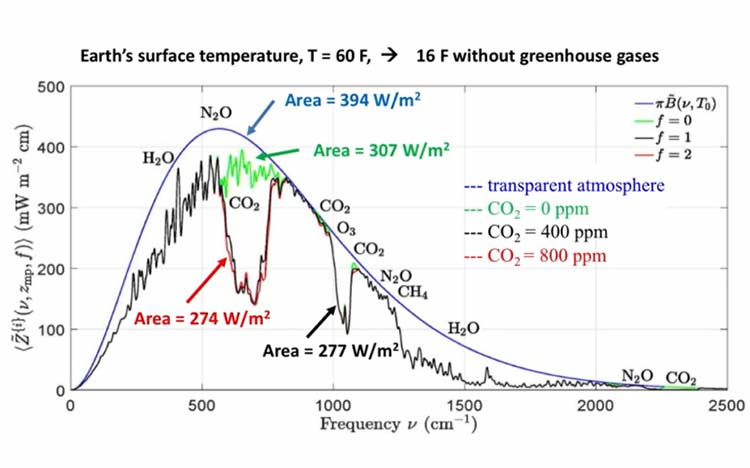
The cooling is due to the fact that warm air rises and cool air descends. “It’s the convection that sets that rapid drop of temperatures — 6-and-a-half degrees per kilometer,” Happer says. He then explains the following graph, which details the thermal radiation to space from the Earth, assuming a surface temperature of 15.5 degrees C. The greenhouse gases is the area beneath the jagged black curve.
According to Happer, this is only 70% of what it would be without greenhouse gases, which is shown as the smooth blue curve, because as the sun heats the earth, greenhouse gases — mostly water vapor — impede cooling.
The most important part of this graph is the red jagged line, shown here with a red arrow pointing to it. That red line shows the effect that a doubling (a 100% increase) of CO2 would have on the surface temperature of Earth. As you can see, it’s negligible. It decreases radiation into space by just 1.1%.
As noted by Happer:
“Let that sink in. We’re far from doubling [CO2] today. It’ll take a long time, [and] it only causes a 1% change. So, CO2 is a very poor greenhouse gas. It’s not an efficient greenhouse gas.”
If you remove ALL CO2, you end up with the green jagged curve. As you can see, the green and black jagged lines run parallel with the exception of one spot. There’s a huge effect if you go from zero CO2 to 400 ppm (green arrow). But it’s again negligible when you go from 400 ppm to 800 ppm (black arrow). As explained by Happer:
“You get all of the effect in the first little bit of added CO2 … So, it’s really true that doubling CO2 only causes a 1% decrease of radiation. The IPCC [Intergovernmental Panel on Climate Change] gets the same answer so this is not really controversial, although they will never show you the curve or tell you that it’s 1%. That would interfere with the narrative …
So, this is radiation to space. How do you change that into a temperature? They’re worried that we’ll get intolerable warming of the surface of the Earth where we live, or other parts of the atmosphere.
Here again it’s important to do the first order calculation … and it says that the warming from doubling CO2 is … less than one degree … 0.7 [degree] C. Very small. You really can’t feel that.”
Why, Then, the Alarm Over Rising CO2?
Needless to say, this is a huge problem for the climate science community, because a 0.7 degree C difference means there’s no climate emergency, and no matter what we do to reduce CO2 emissions, it’s not going to impact the climate.
So, to fabricate an emergency where there really is none, the IPCC “assumes enormous positive feedbacks,” Happer says. Because CO2 is not a potent greenhouse gas, the tiny direct warming caused by it is amplified by factors of anywhere from four to six to make it seem like it has a discernible impact.
“I like to say it’s affirmative action for CO2,” Happer says. “It’s not very good at warming but if you assume lots of feedback, you can keep the money coming in.” The problem with that is that most who have a background in physical chemistry and physics know that most natural feedbacks are negative, not positive.
This is known as the Chatelier Principle, named after the French chemist who first discovered that “when a simple system in thermodynamic equilibrium is subjected to a change in concentration, temperature, volume or pressure … the system changes to a new equilibrium and … the change partly counteracts the applied change.”
So, the 0.7 degree C of warming you get when you double the CO2 is “probably an overestimate,” Happer says, “because there are probably negative feedbacks operating in this very complicated climate system that we live in. The atmosphere, the oceans, everything is nonlinear.”
The key take-home from all this is that whether we’re at 400 ppm of CO2 or 800 ppm doesn’t matter when it comes to impacting the temperature of the earth. In short, the climate hysteria is just that. It’s not based on any real threat. Only if we were able to get to absolute zero CO2 would there be a change, but doing so also means we’d exterminate all living things on the planet. It’s nothing short of a suicide agenda.
More CO2 Will Green the Planet
As explained by Happer, more CO2 will green the planet, making it more hospitable to plant life. The more CO2 there is, the better plants and trees grow, so if we want lush forests and bountiful harvests, cutting CO2 is the last thing we’d want to do.
“All plants grow better with more CO2 [in the air],” he says. “Plants are really starved [of] CO2 today. We know plants need many essential nutrients. They need nitrogen, phosphorus, potassium; most important of all they need water. But they also need CO2, and like many of the other nutrients, CO2 today is in short supply.”
CO2 benefits plants by reducing their water needs, hence less risk from drought. Higher CO2 levels also reduce harmful photorespiration. According to Happer, C3-type plants lose about 25% of their photosynthesis potential due to increased photorespiration. For more in-depth information about the role of CO2 in plant growth and photosynthesis, please view the video. This discussion begins around the 40-minute mark.
Lies, Ignorance, Stupidity or Something Else?
In closing, Happer makes an effort to explain what’s driving the climate hysteria:
“In spite of incontrovertible arguments that there is no climate emergency — CO2 is good for the Earth — the campaign to banish CO2, ‘net zero,’ has been very successful. So, how can that be? I’m really out of my depth here because now I’m talking about human nature. I’m really good with instruments and with solving differential equations but I’m not very good at understanding human beings.
But here are some of the drivers: noble lies, political lies, ignorance, stupidity, greed. Noble lies goes back to Plato who discusses it in ‘The Republic.’ ‘In politics, a noble lie is a myth or untruth, often, but not invariably of a religious nature, knowingly propagated by an elite to maintain social harmony or to advance an agenda.’
And here there’s a clear agenda. If you could somehow unite mankind to fight some external threat, for example CO2 pollution, then we won’t fight each other. There won’t be wars. So, I think many sincere people have latched on to the CO2 narrative partly for that reason. You can actually read about it in the early writings of the Club of Rome.
Then there are political lies. This is one my favorite H.L. Menken quotes: ‘The whole aim of practical politics is to keep the populace alarmed (and hence clamorous to be led to safety) by menacing it with an endless series of hobgoblins, all of them imaginary.’”
Ignorance, of course, is widespread, and largely based on incomplete knowledge or a flawed understanding of the facts. And what of stupidity? Dietrich Bonhoeffer, one of the few German clergymen who opposed Hitler and eventually paid for his public dissent with his life, once wrote about human stupidity:
“Against stupidity we have no defense. Neither protest nor force can touch it. Reasoning is of no use. Facts that contradict personal prejudices can simply be disbelieved — indeed, the fool can counter by criticizing them, and if they are undeniable, they can just be pushed aside as trivial exceptions.
So the fool, as distinct from the scoundrel, is completely self-satisfied. In fact, they can easily become dangerous, as it does not take much to make them aggressive. For that reason, greater caution is called for than with a malicious one.”
Happer himself has experienced the danger of opposing stupidity. “I regularly get phone calls threatening me, my wife and children with death,” he says. “So, what kind of movement is this?” Lastly, greed. A.S. Pushkin once said, “If there should happen to be a trough, there will be pigs.” And climate science is currently where the big bucks are — provided your work furthers the global warming narrative and the need for net zero emissions.
Whatever the drivers are, responsible people everywhere need to push back against the false climate change narrative and the net zero agenda, as it will accomplish nothing in terms of normalizing temperatures, but will rapidly erode quality of life and the sustainability of food production, and shift wealth into the hands of the few.
The Biology of Carbon Dioxide
Reproduced from original article:
https://articles.mercola.com/sites/articles/archive/2023/11/18/carbon-dioxide-biology.aspx
The original Mercola article may not remain on the original site, but I will endeavor to keep it on this site as long as I deem it to be appropriate.
Analysis by Dr. Joseph Mercola November 18, 202
STORY AT-A-GLANCE
- Carbon dioxide (CO2) is a driver of energy production, as it improves the delivery of oxygen into your cells. CO2 also helps protect against the harmful effects of lipid peroxidation
- CO2 and lactate have opposing effects. Lactate is the byproduct of metabolizing glucose without oxygen in the cytoplasm. So, where lactate causes problems, CO2 has beneficial effects
- Elevated lactate production is a common theme in diabetes, Alzheimer’s, heart failure, shock and general aging. It promotes inflammation and degrades mitochondrial function. Conversely, low CO2 concentrations have been linked to epileptic seizures, muscle spasms, inflammation, hypothyroidism, stroke and clotting disorders
- All these issues, whether caused by elevated lactate or low CO2, can be successfully treated with CO2 therapies of various kinds, such as CO2 baths (where CO2 is pumped into the tub, much like bathing in carbonated mineral water) or adding CO2 into standard hyperbaric treatment
- Simpler ways to raise your tissue content of CO2 include breathing into a paper bag, having an adequate supply of calcium, and supplementing with salt, baking soda or carbonated beverages
In this 2010 interview, the late Ray Peat, a biologist and physiologist who specialized in the bioenergetic theory of health,1 reviewed some of the key benefits of CO2 and how it works within the human body. This article is a summary of the key points made in that interview.
I apologize for the video quality. The video was recorded 13 years ago, and appears to have been shot on a cell phone. In 2010 the cameras were not very good. However, the audio is fine, and more importantly, this information is really hard to come by since Peat is no longer with us. Only 2,000 people had viewed it when I first saw it.
I watched it four times as it is so good. I’m convinced optimizing your carbon dioxide (CO2) level is one of the most important strategies you can do to slow down degeneration due to aging.
On that point, I will be interviewing one of the leading breathing experts in the world, Peter Litchfield, Ph.D., who will educate us on why most breathing techniques don’t work, as they don’t address the underlying triggered breathing habits that lower CO2.
CO2 Is Crucial for Optimal Health
CO2 is typically thought of as nothing more than a harmful waste product of respiration, and a “pollutant” that endangers the earth by raising global temperatures.
The reality is that CO2 is a driver of mitochondrial energy production, and it improves the delivery of oxygen into your cells. It’s also essential for most life on Earth, plants in particular. In fact, CO2 appears to be a more fundamental component of living matter than oxygen.2 All of this was well-known in decades past, but somehow knowledge about the beneficial effects of CO2 has been suppressed over time.
Importantly, CO2 allows for more efficient energy production in your mitochondria, which is why people who live or spend time at higher altitudes tend to be healthier and have fewer chronic health problems such as asthma. The reason for this is because the pressure of CO2 relative to oxygen is greater at higher altitudes.
A Simple Biohack to Boost CO2
According to Forbes Health, biohacking is “a term used to describe various tips and tricks for enhancing the body’s ability to function at peak performance — and maybe even extend one’s lifespan.”
A biohack for mimicking being at a higher altitude in order to boost CO2 is to breathe into a paper lunch bag for a minute or two. The bag should not be too small or too large (an ideal size is 6 inches by 15 inches, or 15 centimeters by 38 centimeters). Breathe into the bag with your mouth and nose covered until you feel better.
With each exhale, you expel carbon dioxide. By rebreathing the carbon dioxide inside the paper bag, you effectively raise your carbon dioxide level. According to Peat, breathing into a paper bag a few times a day has been shown to bring blood pressure down by as much as 30 points, and stabilize it there after a few days of repetition.
Download this Article Before it Disappears
CO2 and Lactate Have Opposing Effects
As explained by Peat, CO2 and lactate have opposing effects.3,4,5 So, where lactate causes problems, CO2 has beneficial effects.
For example, elevated lactate production is a common theme in diabetes, Alzheimer’s, heart failure, shock and general aging. It promotes inflammation and degrades mitochondrial function. Conversely, low CO2 concentrations have been linked to epileptic seizures, muscle spasms, inflammation, hypothyroidism, stroke, and clotting disorders.
According to Peat, all these issues, whether caused by elevated lactate or low CO2, can be successfully treated with CO2 therapies of various kinds, such as CO2 baths (where CO2 is pumped into the tub, much like bathing in carbonated mineral water) or adding CO2 into standard hyperbaric treatment.
Simpler ways to raise your tissue content of CO2 include breathing into a small paper lunch bag a few times a day as detailed above, having an adequate supply of calcium, and supplementing with salt, baking soda or carbonated beverages.6
Peat tells the story of how he told an individual suffering from transient ischemic attacks who’d gone to the emergency room with stroke symptoms and paralysis on several occasions to drink a soda or carbonated water when the attacks occurred, as the bubbles in carbonated drinks are CO2 gas. “That worked for him,” he said.
CO2 Promotes Efficient Energy Production
Lactate is the byproduct of glycolysis, or nonaerobic respiration. It occurs when your mitochondria are compromised and are unable to metabolize glucose. Instead of pyruvate going to the mitochondria to be burned, it is oxidized to lactate in the cell’s cytoplasm. When this occurs in the presence of oxygen it is called the Warburg Effect, which is major pathway that cancer cells use.
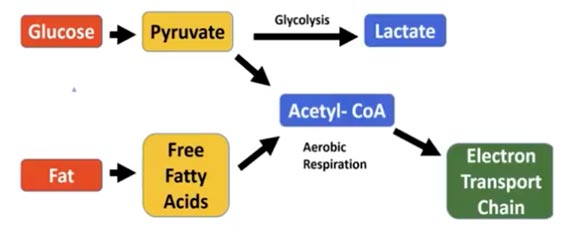
As illustrated in the graph below, glucose can be metabolized in two different ways. When fat intake is too high, glucose is burned though glycolysis, which uses no oxygen and produces lactate. This is a highly inefficient way to produce energy, as it generates only 2 ATP per glucose molecule. And, in the context of this article, no CO2.
When fat intake is in the sweet spot of 15% to 40%, and glucose intake is high enough, it can be burned for fuel in the mitochondria. This generates up to 38 ATP per glucose molecule. In this process, NADH and CO2 are also produced.7
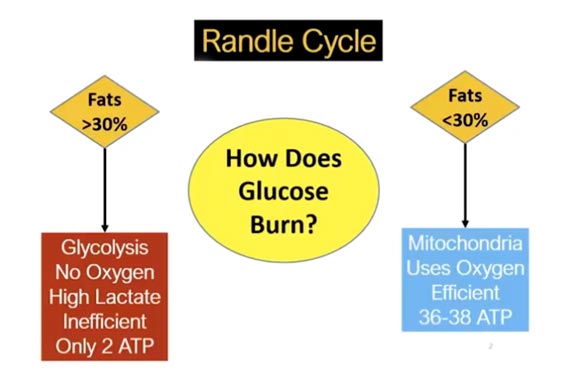
If fat intake is over 40% and the carb intake is below 200 grams per day, the glucose is burned in glycolysis in the cell’s cytoplasm, which produces lactate that suppresses glucose oxidation and shifts metabolism to the burning of fats instead.
Lactate also promotes inflammation and fibrosis. CO2, meanwhile, limits the formation of lactate, increases oxidation of glucose, helps trigger mitochondrial formation (i.e., boosts the number of mitochondria in your cells) and boosts cellular ATP concentrations.8
As explained by Peat, glycolysis products (pyruvate and lactate) compete with CO2 for binding sites inside the mitochondrion. Glycolysis decreases energy production by reducing CO2.
Energy Production Summary
In summary, two key points from all this are:
- 1. The most efficient way to generate cellular energy is to burn glucose in the electron transport chain of your mitochondria (aerobic respiration). In addition to generating up to 38 ATP molecules per glucose molecule (opposed to the two generated through glycolysis), it also generates an estimated 50% more CO2 than fat oxidation.9
In order for glucose to be metabolized in your mitochondria, your dietary fat intake needs to be sufficiently low so as not to inhibit the oxidation of glucose. While there’s no hard evidence on how much fat is too much, I suspect you need to restrict fat to 30% or 40%, depending on your individual needs, to optimize your glucose metabolism. - 2. There are two possible energy states:
- i. A glycolytic stress state in which energy production is reduced by the inhibition of CO2.
- ii. An energy-efficient state in which CO2 is produced and lactate is suppressed.
CO2 Protects Against Lipid Peroxidation
CO2 also helps protect against the harmful effects of lipid peroxidation. Lipid peroxidation10 refers to a process in which free radicals and other harmful oxidants attack lipids (fats) that have carbon-carbon double bonds. Polyunsaturated fats (PUFAs) such as linoleic acid (LA) are particularly prone to this.
The key that many fail to recognize is that lipid peroxidation increases when CO2 levels are low, as CO2 protects the fats from damage. As explained by Peat, when CO2 is low, that’s when PUFAs increase their production of lipid peroxides11 (oxidation products of phospholipids).
Lipid peroxides degrade into reactive aldehydes such as malondialdehyde and 4-hydroxy-2-noneal (4-HNE), which damage DNA and proteins, causing them to malfunction. Lipid peroxidation is known to contribute to conditions such as cancer, atherosclerosis and neurodegenerative conditions, just to name a few.12
Peat cites one experiment in which they showed that when you raise the CO2 in human tissues to three times normal, the amount of lipid peroxides went to zero. So, CO2 has a potent anti-inflammatory effect and effectively protects against lipid peroxidation.
This is an important piece of information, as most people nowadays consume enormously excessive amounts of seed oils that are loaded with PUFAs, and thus have very elevated levels of stored LA in their cells.
As explained in “Linoleic Acid — The Most Destructive Ingredient in Your Diet,” LA is a primary contributor to chronic disease, as it causes mitochondrial dysfunction and promotes inflammation.
Augmenting CO2 in your tissues may be an effective way to limit LA-induced damage while you work to eliminate the excess LA from your tissues and replace it with healthy fats (which can take six or seven years).
How Lactate and CO2 Influence Stress
Peat also goes into an extended discussion involving many separate pieces to explain how lactate and CO2 influence the stress response and other parts of human biology that impact disease, including cancer.
For starters, the cytochrome oxidase enzyme — also known as Complex IV in the mitochondrial electron transport chain, which is what uses oxygen — governs your rate of oxygen consumption.
So, the more cytochrome oxidase you have, and the more active it is, the greater your oxygen consumption. Cytochrome oxidase is also responsible for increasing the total number of mitochondria within the cell as needed to accommodate for increased oxygen consumption.
When you saturate a cell with a very large amount of CO2, you rapidly increase the amount of cytochrome oxidase in the cell, and you boost its activity almost instantly. This shifts the oxidative balance of the cell towards the oxidized state, as electrons are being pulled out of the system. This lowers reductive stress in the cell, which is what you want to do.
In healthy cells, there’s a balance between NAD+ and NADH that is critical for energy production. Conditions like cancer or diabetes disrupt this balance, leading to excess lactate and reduced NAD+. Carbon dioxide is crucial because it prevents excessive lactate production, maintaining a healthy NAD+ to NADH ratio.
CO2 also influences the water balance in cells, supporting an oxidized cellular condition with lowered reductive stress that results in proper oxygen utilization. Hyperventilation, or over-breathing, which reduces CO2, typically leads to overproduction of lactate, contributing to stress and disrupting cellular balance.
CO2 in Emergency Care
Peat also discusses the role of CO2 in emergency care that has the potential to save your life or the life of someone you love. Stroke patients are typically ventilated with pure oxygen to prevent hypoxia-induced brain damage,13 but this isn’t the best way to help these patients.
A ventilation strategy called permissive hypercapnia appears to be far better. Permissive hypercapnia refers to a ventilation strategy employing partial pressures of CO2 that are higher than physiological norms. I have been encouraging those in the hyperbaric oxygen community to explore and adopt this strategy in their hyperbaric chambers. As explained by Peat:
“Quite a few people are now, just in the last few years, starting to talk about permissive hypercapnia … instead of ventilating someone to death [by] giving them pure oxygen. When people aren’t getting enough oxygen to the brain, they’ll give them pure oxygen and then hyperventilate them.
The idea is to shrink their brain by hyperventilating them, because it shuts down the blood circulation of the brain. But if they’re dying of a lack of oxygen to the brain, [that’s] not what you want to do …
I had mentioned [using carbonated beverages during ischemic stroke] in a nutrition class. I had said soda water, meaning carbonated water, but the next week, one of the students said that she had interpreted it as baking soda in water.
Basically, it’s the same idea, but she said she gave a spoonful of baking soda to her mother who had been half-paralyzed for six months, and 15 minutes after drinking just a glass of baking soda water the paralysis lifted and stayed away.”
The reason baking soda worked in this case is probably because CO2 is carried through your bloodstream by sodium bicarbonate (baking soda).14 Peat goes on to discuss how, in the past, firemen used to carry CO2 for the treatment of shock and respiratory arrest.
In the 1920s, Yandell Henderson, director of the Yale Laboratory of Applied Physiology, devised a system using oxygen with 5%, 7% or 10% CO2 added in. Fire departments all over the United States, and many hospitals, were using 5% CO2 to resuscitate babies that had stopped breathing and treat shock cases. It was also used post-operatively to aid in the recovery process.
The Green Agenda’s Flawed View of CO2
In closing, Peat also overturned key arguments of the green agenda by pointing out that during the Carboniferous period of Earth’s history, when plant and animal life was extraordinarily abundant, carbon dioxide levels were some 20 times higher than they are now, and temperatures were relatively stable.
“The expansion of vegetation will reflect infrared rays back into space,” he said, “so it’s sort of like the Earth has a thermostat that will regulate for huge changes in in CO2,” he said.
Even more importantly, nothing thrives in low CO2 environments — not plants, not animals or insects and, as evidenced by everything discussed above, not humans. If anything, the world may actually need a bit more CO2, seeing how CO2-deficiency states are rampant, forests are dying and plants aren’t growing very well. As noted by Peat:
“All animals and even plants suffer from a lack of carbon dioxide. If you lower it, even plants won’t do well … In the 1940s, people experimented with poisoning to death rats or mice with 50% carbon dioxide, keeping them dead for an hour and then reviving them, and they had no brain damage. If they gave them extra CO2, they weren’t damaged by the absence of oxygen. So, for primitive organisms, it’s more essential than oxygen.”
The increasingly erratic weather systems we’re now experiencing likely have little to do with the CO2 content of our atmosphere, and far more to do with a combination of decades-long weather manipulation15 and natural solar cycles.16,17
- 1 Umzu. Who Is Ray Peat?
- 2 Conscious Breathing Carbon Dioxide, Physiology
- 3, 8 Ray Peat, Mitochondria and Mortality
- 4 Skool.com Ray Peat Simplified
- 5 Functional Performance Systems CO2 v. Lactic Acid
- 6 Ray Peat, Protective CO2 and Aging
- 7 StatPearls Biochemistry, Electron Transport Chain
- 9 Ray Peat Forum May 29, 2017
- 10, 12 Toxicological Research March 2011; 27(1): 1-6
- 11 Science Direct Lipid Peroxide
- 13 Stroke October 1, 1999; 30: 2033-2037
- 14 Conscious Breathing Carbon Dioxide
- 15 Geoengineering Watch
- 16 Patreon Adapt2030
- 17 YouTube Adapt2030
The Effects of Biodynamic Farming on Environment and Food
Reproduced from original article:
https://articles.mercola.com/sites/articles/archive/2023/09/24/biodynamic-farming-effects.aspx
The original Mercola article may not remain on the original site, but I will endeavor to keep it on this site as long as I deem it to be appropriate.
Analysis by Dr. Joseph Mercola Fact Checked September 24, 2023
STORY AT-A-GLANCE
- Food quality is determined by how it was grown. Certified organic food helps you avoid pesticides. But even organic foods may be lacking in important nutrients if grown in nutrient-poor soils
- Biodynamic farming is a spiritual-ethical-ecological approach to agriculture initially developed by Rudolf Steiner in the 1920s. It’s an approach that can provide far superior harvests while simultaneously healing the Earth
- The Biodynamic view is that a farm is a living organism — self-contained, self-sustaining, following the cycles of nature, and able to create its own health and vitality out of the living dynamics of the farm
- The organic standard is the base of the Demeter standard, which then goes much further, taking into account the core idea of the farm as a closed system; solutions to disease, pest and weed control comes out of the farm system itself
- Demeter is a global Biodynamic certification agency. Formed in 1928 in Germany, it’s the oldest ecological certification organization in the world. In Germany, 10% of the organic farmland is Biodynamic
Editor’s Note: This article is a reprint. It was originally published October 15, 2017.
Eating real, nonprocessed food is the key to sustaining good health, but even when it comes to whole food, its quality is largely determined by how it was grown. Certified organic food is recommended to avoid toxic contaminants such as pesticides. But even organic foods may be lacking in important nutrients if grown in nutrient-poor soils.
To truly build good topsoil, you have to implement regenerative farming methods, many of which are not automatically required by organic standards.
Biodynamic certification, which is a step above organic, is the topic of today’s discussion with Elizabeth Candelario, managing director for Demeter,1 a global Biodynamic certification agency. Candelario spent most of her career in the wine industry. While she was working as a marketing director for a winery in Sonoma County, the winery decided to transition from conventional to Biodynamic farming, which is how her interest in Biodynamics began.
“Here in the United States, the wine industry was the early adopter in Biodynamic,” Candelario says. “The reason for that was really twofold. One is winemakers couldn’t help but notice that the best wines in the world were coming from Biodynamic vineyards, wineries like Domaine de la Romanée-Conti and Zind-Humbrecht. Another reason is that a lot of wineries, at least back in the day, were family-owned …
You had winery families that were interested in passing that winery down from one generation to the next. The best example of that is the Frey Vineyards up in Mendocino County, where they literally have four generations of family living [there] … They were really thinking about the ecological aspect of what they were doing and how they were farming. So, it wasn’t unique that the winery I worked at chose [Biodynamic] …
That experience — I not only witnessed the transformation of the estate, but I also witnessed a transformation in the people we were working with — was, for me, emerging between my career [in] the wine industry and my interest in social mission … I joined Demeter about almost 10 years ago.”
The History of Biodynamic Farming
Organic is well-known in the U.S. market. Biodynamic is a fairly unknown concept, although its history spans back nearly nine decades. Biodynamic farming is a spiritual-ethical-ecological approach to agriculture initially developed by Austrian scholar Rudolf Steiner,2 Ph.D. (1861-1925).
It’s an approach that can provide far superior harvests compared to conventional chemical-based agriculture, while simultaneously healing the Earth. As organic farming, the concept of biodynamic emerged in response to the industrialization of agriculture. Candelario explains:
“Steiner was a polyglot. He was a very smart man. He was interested in economics and social systems. He’s most known here in the U.S. as the founder of Waldorf education. Toward the end of his life, he was approached by a group of farmers that were very concerned about what they were seeing on their farms. This was back in the 1920s …
After World War I, chemical companies got very crafty repurposing nitrogen that had been used to make bombs as fertilizer, and nerve gas as synthetic pesticides. They had stockpiles of these chemicals and realized they had application on farms. This was around the time of the industrialization of the manufacturing model. The idea was that you wanted to produce the highest output at the lowest cost.
It’s not surprising that that kind of industrial view also influenced the way people started thinking about their farms. This idea of importing things from the outside, these natural resources, to increase production really mirrored that industrial model. But what was happening was that farmers were really beginning to notice that their seeds weren’t germinating.
Their animals weren’t as healthy. The food wasn’t as good. Because of that, they approached Steiner and asked him for his perspective on what was happening on their farms. He answered them in what is now referred to as ‘The Agriculture Course or The Foundations for a Renewal of Agriculture’ — a series of lectures he delivered.”
The Farm as a Living Organism
Steiner’s view was as simple as it was revolutionary. He said, “You need to stop thinking of your farms as factories and envision them as living organisms — self-contained, self-sustaining, following the cycles of nature, and able to create their own health and vitality out of the living dynamics of the farm.” Seventeen years later, Lord Northbourne coined the term “organic” based on Steiner’s view of the farm as an organism. So, Biodynamic is really the origin of organic farming.
Both focus on bringing life back to the soil and avoiding the decimation of the topsoil with synthetic fertilizers, which are toxic to microbial life. Demeter was started by a small number of farmers who attended Steiner’s agriculture course. “They decided that what he had talked about was so important that they wanted to codify it in an agricultural standard,” Candelario says.
To ensure the standard would maintain its integrity in the marketplace, they decided to develop a strict certification program. Demeter was formed in 1928 in Germany and remains the oldest ecological certification organization in the world.
Even back then, they had a formal certification process and a certification label, Candelario explains. While largely unknown in the U.S., Demeter is well-recognized within Central Europe. In Germany, 10% of the organic farmland is Biodynamic. There are even Demeter stores.
I’ve fully embraced the Biodynamic concept and am converting the Mercola line of products from organic to Biodynamic certified and locating sources of raw materials to do that. Many are still not available within the U.S., but we’re in the slow process of conversion. One of the Biodynamic products we’ll release this fall comes from an Egyptian farm called SEKEM.
“SEKEM just celebrated their 40th anniversary and their commitment to social mission is incredible,” Candelario notes. “Because of the values implicit in Biodynamic agriculture, you see lots of examples of projects that have a huge social mission component.”
Download this Article Before it Disappears
Organic Versus Biodynamic
One of the easiest ways to grasp the concept of biodynamic is to think of it in the context of organic standards. While similar, there are distinct differences between the two standards. Organic standards are set by the National Organic Program (NOP); Demeter sets the standards for Biodynamic. Candelario explains:
“Organic is really about what you don’t do. In organic, you don’t use synthetic fertilizers or pesticides. You don’t use genetically modified organism (GMO) seed. You do everything you can to avoid GMO contamination; no sewer sludge on the farm and no irradiation of products.
What’s happening with the burgeoning interest in organic, which is a really good thing, is there’s a lot of pressure on that standard, so you have products coming into the market that do the minimum of what is required, sitting right next to another product that’s also labeled organic that does much more.
Biodynamics fundamentally maintains the core principle that the farm is a living organism. We start by saying that the organic standard is the base to the Demeter standard. If a farm is Demeter certified, it means that it’s met the organic standard, even if it’s not certified organic.
But then, the standard is much broader, maintaining that idea of the farm as a closed system. You look for solutions to disease, pest and weed control to come out of the farm system itself.”
Biodynamic Standards Require Entire Farm to Qualify
In organic, a 10,000-acre conventional farm that does not use prohibited materials on 1,000 of its acres can get organic certification for those 1,000 acres. To qualify for Biodynamic certification, the entire farm must meet the standard, as the whole farm is viewed as an integrated living organism.
Ten percent of that farmland must also be set aside for cultivation of biodiversity. This can be accomplished by leaving natural oak groves or waterways, or it could be created through insectaries and hedgerows.
“If a farmer is having a fertility issue, in conventional farming, a conventional farmer might say, ‘Let’s just bring in those synthetic fertilizers.’ An organic farmer might say, ‘Let me look and see what organic fertilizers I can bring into the farm.’
That’s a step better, but you’re still mining a natural resource and importing it to the farm. A biodynamic farmer’s going to say, ‘What is it about my farm system that isn’t capable of delivering the fertility that my crops need?’
They answer that from a biodynamic toolbox, which may be green manures, composting, cover cropping and incorporating animals. The mindset is quite different. There are eight Biodynamic preparations. They’re made from materials a farmer can find on the farm. They’re used as compost amendments, foliar sprays and soil amendments.
In organic, there’s just one processing standard for all products. In Biodynamic, there are 16 processing standards. The intention is to allow the integrity of the agricultural ingredients to define the finished product, so you have high content of Biodynamic ingredients with minimal processing. It’s a real foodie standard.”
Having animals integrated on the farm is a core principle of Biodynamic farming, but it doesn’t end there. Great focus is also placed on animal welfare. While it’s possible to gain Biodynamic certification for a farm that does not raise livestock, it’s actually quite difficult to achieve optimal soil health without the integration of herbivores. They’re really an integral part of a self-sustaining system.
The Certification Process
The certification process itself is very similar to organic. There is a base standard that needs to be met, regardless of size (and there is no size limitation). A farm or brand that wants to get a product certified submits an application. There is an inspection of the farm or the processing facility to ensure that the standard is met, and each farm or facility is re-inspected on an annual basis.
The certification cost is also very similar to organic, ranging from $250 to $750. Annual inspection costs are minimized to the extent that it’s possible by pooling inspections in one geographic area, allowing members to share the cost of an inspector.
Moving Forward
A catch-22 preventing Biodynamic from spreading faster is the shortage of certified products in the national marketplace. Most Demeter members are small family farms that only sell locally or regionally.
“We realized we really needed to focus on getting some national brands to get products in the market so that we could use those products to educate consumers,” Candelario says. Five years ago, Demeter started working with Whole Foods to select companies and brands whose values aligned with Biodynamic.

“[We’d] approach them to say, ‘Would you consider bringing these Biodynamic products into the market before consumers even know what it is?’
It’s a wonderful story because we now have 25, some of the leading national brands — soon to be joined by you as well — like Lundberg Family Farms, Lakewood Juice, The Republic of Tea, that have worked really hard and invested a lot to bring these products into the market.
I would say the supply chain understands Biodynamic — the brands we’ve talked to, the retailers and other important players. But we’re just on the verge of really doing the consumer education that we need to do.”
The key, and the intention of this interview, is to help you understand and recognize the importance of the Demeter certification label. That’s really going to be the new platinum standard for high-quality, nutrient-dense food. While many Biodynamic ingredients must currently be sourced overseas, from communities like SEKEM in Egypt, the goal is to grow most of these ingredients right here in the U.S. for American-based brands.
Healing the Planet Through Agriculture
As noted by Candelario, the vision of Demeter is to heal the planet through agriculture, and we can do that by transitioning farming from conventional to organic and, ultimately, to Biodynamic. At present, the marketplace is being used to drive the adoption of Biodynamics on the farm, which is why it’s so important for consumers to understand its principles, its benefits and to start asking for certified products. Demand is ultimately what drives change the fastest.
In the case of Biodynamic, there are many reasons to support it. Foodists and those seeking optimal health will want it because it’s a mark of superior quality and nutrition. Animal rights activists would be wise to support it as it places strong emphasis on animal welfare. Environmentalists will want it because of its healing impact on the Earth and normalizing effect on weather.
“Paul Hawkin just wrote a book called ‘Drawdown: The Most Comprehensive Plan Ever Proposed to Reverse Global Warming.’ I really recommend it. In that book, he talks about how, in order to address climate change, we need to do two things. We need to address emissions.
That is the burning of fossil fuels, the agricultural activities that actually release carbon into the air. The other half of the equation is we have to sequester carbon. We have to pull that excess carbon that’s in the air back down and into the soil.
Guess what happens when we pull carbon out of the air? It happens every day when the sun is shining. That’s what photosynthesis does. It takes that carbon from the air and pushes it down into the soil. Not only are we sequestering carbon, we’re making more healthy and nutritious food.
In conventional [farming], sequestering carbon doesn’t happen because conventional fertilizers stop that process where the plant is basically rewarded by the microbiota in the soil to pull that carbon out of the air.
Synthetic fertilizers kill the microbiota in the soil. You don’t have that carbon drawdown that you’re looking for in conventional agriculture. By definition, the more carbon you put in the soil, the more you’re building a resilient soil. You’re building a water conservative soil. You’re building the potential to have incredibly healthy food.”
Soil Is an Incredibly Efficient Carbon Sink
Measuring the organic content of soil is an easy way to assess soil health. Most conventional farms have an organic content below 2%. Virgin Midwestern prairie used to be 7 to 8%. Good soil has a deep black color, because carbon is black; it’s rich and actually smells good.
As noted by Candelario, a French initiative called the 4 Per 1,000 Initiative3 found that if we were to increase the carbon (the organic matter) in all agricultural land around the world by a mere 0.4% per year, the annual increase of CO2 in the atmosphere would be halted, because so much carbon would be drawn from the atmosphere.
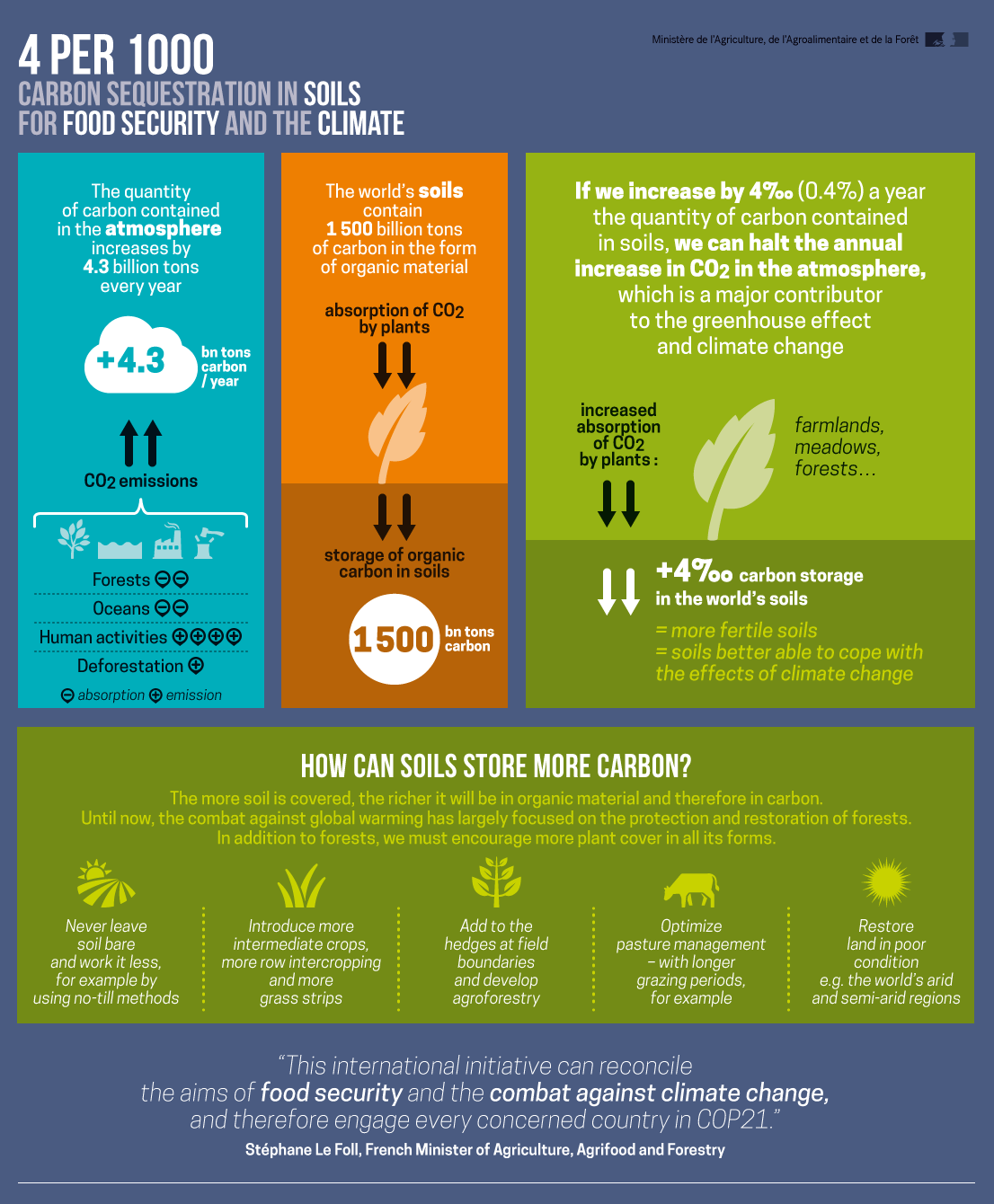
Source: 4p1000.org
Steiner’s Soil Amendments
One facet of Biodynamic farming that might raise a few eyebrows is Steiner’s soil amendments, some of which may sound fairly mystical at first. For example, one involves packing dung into a cow’s horn that is then buried during a specific moon phase.
The use of these kinds of Biodynamic preparations is a requirement of the Demeter standard, and while they may sound strange, there’s solid support for their use. (Farmers who for whatever reason cannot make these preparations can purchase them from Josephine Porter Institute4 or Biodynamic Source.5)
“You can understand the preparations on a very practical level,” Candelario says. “There is preparation 500, which is taking cow manure, putting it in a cow horn and burying it over the winter. There is preparation 501, which is taking silica, putting that in a cow horn and burying it over the summer. And then preparation 502 through 508, which are basically herbs — chamomile and valerian — those are used as compost amendment.
[The] analogy I like to use is to think about a sourdough starter … It’s a catalyst. And when you think about the idea of the farmer not being dependent on chemicals … and saying, ‘How can I affect the fertility of my farm, the health of my compost pile, just from the materials I can find on my farm?’ These materials were things that farmers already had on their farms.
[Let’s] talk about the 500 — First of all, putting it under the ground in the winter creates a constant temperature. It’s the refrigerator where that cow manure can age. When you pull it up and you pull that out on the counter, it smells like chocolate. It’s this beautiful material.
It’s put in water. It’s dynamitized by creating a vortex; really stirring it, and then it’s spread on the soil. It’s sprayed as a tea. [You use] one cow horn’s worth of manure per acre. We have research on our website that shows increased microbial life in the soil based on that. That’s really not surprising when you think about it. The silica is used as a foliar spray.”
More Information
As organic standards are becoming increasingly watered down, there’s an intensifying need for a more robust standard that cannot easily be bastardized. The USDA Organic label simply does not represent regenerative agriculture, and it’s important to realize this. Many organic farms are not even using cover crops, let alone integrating holistic herd management. Biodynamic certification fills this need, and really surpasses even the most stringent organic standards ever devised.
Again, key features of Biodynamic are the facts that the entire farm must qualify; it must operate as a self-sustaining whole; a portion of the land must be set aside for biodiversity; and animal welfare is addressed. I am actually in the process of converting the vacant lot next to my home to become certified Biodynamic.
For more details, please see Demeter-USA.org. You’ll find the standards listed in the “For Farmers” section. The website also provides a directory of certified farms and brands. This directory can also be found on BiodynamicFood.org.
Demeter’s U.S.-based sister organization, the Biodynamic Association, provides a lot of educational material as well, including an interactive Biodynamic webinar series, video and audio lectures and a quarterly Biodynamics Journal. There’s also an international Biodynamic Association.
I really think there’s a clarion call right now, especially for the natural food industry, to focus on regenerative and Biodynamic agriculture. Because at the end of the day, Biodynamic farms are uniquely suited to address carbon sequestration in a way that other industries are not.
The good news is that consumers have tremendous power when it comes to driving this change. Every time you shop for food, you’re voting for one agricultural system or another, so make deliberate, intentional choices.
How Biden Plans to Block the Sun to Save the Planet
Reproduced from original article:
https://articles.mercola.com/sites/articles/archive/2023/07/24/how-biden-plans-to-block-sun-to-save-planet.aspx
The original Mercola article may not remain on the original site, but I will endeavor to keep it on this site as long as I deem it to be appropriate.
Analysis by Dr. Joseph Mercola Fact Checked July 24, 2023

STORY AT-A-GLANCE
- Solar radiation modification (SRM) is a form of geoengineering that aims to cool off the Earth by reflecting sunlight back into space
- The controversial strategy comes with significant risks, but that didn’t stop The White House from moving forward with a research plan for “solar and other rapid climate interventions”
- The congressionally mandated research plan is focused on atmospheric-based approaches, such as stratospheric aerosol injection (SAI) and marine cloud brightening (MCB)
- SRM can have unintended consequences, including lower average precipitation, loss of biodiversity and impacts to food production, along with heightening geopolitical tensions
- There’s also a risk that climate modification technologies could be weaponized against the global population by controlling rainfall and drought
Solar radiation modification (SRM) is a form of geoengineering that aims to cool off the Earth by reflecting sunlight back into space.1 The controversial strategy comes with significant risks, but that didn’t stop the White House from moving forward with a research plan for “solar and other rapid climate interventions.”2
The congressionally mandated research plan is focused on atmospheric-based approaches, such as stratospheric aerosol injection (SAI) and marine cloud brightening (MCB), as opposed to space-based approaches, which include mirrors in space, or white roofs and other local-scale measures to increase surface reflectance.3
The research “would help to prepare the United States for possible deployment of SRM by other public and private actors,” the report notes,4 suggesting the government is seriously considering use of this extremely risky technology — if it hasn’t already decided to move forward.
What Is Stratospheric Aerosol Injection?
SAI involves injecting reflective aerosol particles into the stratosphere, where they reflect sunlight away from the Earth.5 Volcanic eruptions are natural versions of SAI, but technological constraints surround man-made SAI, as “dispersing aerosols in sufficiently high altitudes is challenging,” according to a Climate Analytics report.6 The Union of Concerned Scientists (UCS) explained:7
“In effect, SAI simulates what happens during large volcanic eruptions, when volcanoes emit small particles into the upper atmosphere (called the stratosphere). These particles reflect sunlight and lead to cooling for as long as they remain in the stratosphere, which may be up to a few years after injection.
By injecting sulfate or other aerosol particles into the stratosphere, SAI would mimic the cooling effect of a large volcanic eruption’s effect of lower global temperatures. If ever deployed, SAI would have global impacts, reducing temperatures and altering precipitation patterns across the planet.”
By reflecting more solar radiation back into space, the aerosols lower global temperatures but also have a serious “side effect” — they lower average precipitation. As a result, additional geoengineering techniques — such as thinning out cirrus clouds in the upper atmosphere — would be necessary to counteract the decrease in precipitation.8 The White House report also highlighted potential issues with SAI, noting:9
“SAI approaches could worsen soil acidity, with impacts to food production, compared to warming at Representative Concentration Pathway 8.5 (RCP8.5) levels without SAI in some regions due to acidic deposition (e.g., the Pacific Northwest, southern Greenland, the Himalayas, and polar regions).
The impacts of sunlight scattering could have negative effects on crop growth that harm nutrition and negate the benefits of limiting temperature increases using SAI. SRM would not address ocean acidification or its implications for ocean ecosystems.”
Other problems include the potential that SAI could result in increased exposure to particulate matter from the injected aerosols and “changes in radiative forcing,” which could offset any potential health benefits from SAI, such as reduced ozone formation. There’s also concern that SAI could increase wildfires and smoke exposures in some areas, as well as increase health impacts due to waterborne disease in others.10
What Is Marine Cloud Brightening?
MCB involves spraying salt or other chemicals into marine clouds in order to increase their reflectiveness.11 “Ship tracks over the ocean demonstrate the mechanism underpinning MCB,” according to the White House report.12 UCS explained, “MCB would involve spraying sea salt into low-lying marine clouds to enhance their brightness and reflectivity in order to increase regional-scale cooling.”13
Little research into MCB has been conducted, but field trials have already begun in Australia’s Great Barrier Reef. Using a seawater sprayer attached to a barge, seawater is sprayed into the air, creating sea salt crystals. “These crystals float into the sky to form a fog and bolster the existing clouds’ reflectivity,” according to the Great Barrier Reef Foundation.14
The “brightened” clouds may also stay above the reef longer than ordinary clouds, reflecting even more sunlight.15 The problem, however, is that this untested strategy could have unintended consequences.
“Potential negative effects could include influencing local weather patterns, potentially mildly suppressing rainfall over the reef and adjacent land,” the Reef Restoration and Adaptation Program explained.16 David Keith, Gordon McKay Professor of Applied Physics with Harvard University, added that several “key risks” exist for marine cloud brightening, which is why his research team does not focus on it:17
“Even if marine cloud brightening could work, it could affect large scale climate and weather patterns if it were used on a large enough scale, say to achieve a level of “radiative forcing” that would be big enough to offset some of the greatest impacts of climate change.
(This is because marine cloud brightening could only be implemented in limited areas, where the right kinds of clouds exist, which is perhaps only 10 percent of the planet’s surface.) There are several key risks that need to be better understood.”
Download this Article Before it Disappears
Increasing Geopolitical Tensions
Adding to the controversy, the use of SRM carries “significant geopolitical risks,” the White House report noted.18 An example of this occurred in 2023, when a startup team — Make Sunsets — said it had launched weather balloons containing helium and sulfur dioxide (SO2) into Mexican skies in order to alter the stratosphere.19
The company was selling “cooling credits” via its website for $10, in exchange for releasing 1 gram of SO2. The Mexican government fought back, however, announcing plans to “prohibit and, where appropriate, stop experimentation practices with solar geoengineering,” causing the team to suspend its operations.20 However, Make Sunsets is still reportedly planning to conduct further weather modification experiments in the U.S.
But the fact remains, if and when SRM becomes widely used, it will have global effects that transcend borders. Supercomputers have run models to predict how solar radiation management may affect different parts of the Earth, not only in terms of temperature but also rainfall and snowfall. Govindasamy Bala, from the Indian Institute of Science and author of a U.N. climate report, said “the science is there,”21 but it’s far from an exact one.
“I think the next big question is,” Bala told Reuters, “do you want to do it? … That involves uncertainty, moral issues, ethical issues and governance.” As Reuters reported, “That’s because every region would be affected differently. While some regions could gain in an artificially cooler world, others could suffer by, for example, no longer having conditions to grow crops.”22 Paulo Artaxo, environmental physicist at University of Sao Paulo and another report author, added:23
“Basically the message is more or less the same as (the previous report): The science is not mature enough. The side effects of any of the known geoengineering techniques can be very significant … Society has to consider if these side effects are too big to try any strategy.”
Will Biodiversity Suffer?
Among the risks outlined by the White House were those related to biodiversity. Again, it’s impossible to know what ramifications alterations to the stratosphere, clouds and sunlight reaching the Earth could have.
“SRM would likely also affect ecosystem functioning like net primary productivity and more integrative aspects of ecosystems like biodiversity, for example, because SRM may increase the proportion of diffuse rather than direct incoming solar radiation,” the White House noted,24 adding:25
“Implementing SRM is expected to limit the risks to biodiversity associated with higher temperatures but is also expected to affect the characteristics of solar radiation and potentially cloud cover (associated with changing precipitation patterns) without impacting higher CO2 levels.
These changes could have significant effects on vegetation and ecosystem health broadly, leading to unknown impacts to biodiversity, particularly when combined with other anthropogenic stressors (deforestation, urbanization, chemical use, etc.).”
What’s more, if geoengineering were started and then abruptly stopped, it would “significantly increase the threats to biodiversity from climate change,” according to researchers in Nature Ecology & Evolution.26
This means geoengineering could cause significant damage. In a news release from Springer Nature, it’s explained that, once started geoengineering is too dangerous to stop — but given the politicized nature of the technology, such rapid starts and stops are likely:27
“Abrupt termination causes changes in local climates that are 2-4 times more rapid than those caused by climate change itself … in many cases, rapid geoengineering threatens ecosystems by forcing species to move in one direction to maintain similar temperature conditions and a different direction for similar precipitation conditions.
Biodiversity-rich areas, such as tropical oceans and the Amazon basin, are particularly likely to be affected negatively. These results indicate that geoengineering, and, in particular, its rapid termination, could cause irreversible loss of biodiversity.”
Could Geoengineering Backfire, Lead to Agricultural Control?
There are other concerns about geoengineering’s nefarious side, particularly since Bill Gates remains heavily invested in climate modification technologies that not only will destabilize the Earth’s climate systems more, but also can be weaponized against the global population by controlling rainfall and drought. In a previous interview I conducted with Vandana Shiva, Ph.D., she explained:28
“The company that collects patents on gene-edited organisms, both in health and agriculture, is Editas, founded by a main financial investor for the Gates Foundation. Gates is also a big investor in Editas.
So, here’s a company called Editas to edit the world as if it is a Word program. The two scientists who got the Nobel Prize this year have both been funded in their research by Gates. My mind went back to how Rockefeller financed the research, got the Nobel Prize, and then made the money.
So, you finance the research. Then you finance the public institutions, whether they be national or international. You invest and force them down the path where they can only use what is your patented intellectual property. And, as he has said in an interview, his smartest investment was vaccines, because it is a 1-to-20 return. Put $1 in and make $20. How many billions of dollars have been put in? You can imagine how many trillions will be made.
At the end of it, where does food come from? It comes from seed. He wants to control it. It comes from land. He’s controlling that. He’s became the biggest farmland owner [in the U.S.]. But you need weather [control]. You need a stable climate.
So, what could be a weapon of control of agriculture? Weather modification. He calls it geoengineering. This is engineering of the climate. Again, making it look like he’s going to solve global warming by creating global cooling.”
You can follow the rapid expansion of geoengineering research and experimentation via an interactive online geoengineering map created by ETC Group and the Heinrich Boell Foundation. More than 1,700 such projects have already been identified.29
- 1, 7, 13 Union of Concerned Scientists October 29, 2020
- 2, 3 The White House, Congressionally Mandated Research Plan and an Initial Research Governance Framework Related to […], June 2023, About This Report
- 4 The White House, Congressionally Mandated Research Plan and an Initial Research Governance Framework Related to […], June 2023, Executive Summary
- 5, 11 ODI October 21, 2022
- 6 Climate Analytics March 2023
- 8, 21, 22, 23 Reuters August 10, 2021
- 9 The White House, Congressionally Mandated Research Plan and an Initial Research Governance Framework Related to […], June 2023, Page 32
- 10 The White House, Congressionally Mandated Research Plan and an Initial Research Governance Framework Related to […], June 2023, Page 30
- 12 The White House, Congressionally Mandated Research Plan and an Initial Research Governance Framework Related to […], June 2023, Page 13
- 14 Great Barrier Reef Foundation February 21, 2023
- 15, 16 Reef Restoration and Adaptation Program
- 17 Harvard University, David Keith’s Research Group, Marine Cloud Brightening
- 18 The White House, Congressionally Mandated Research Plan and an Initial Research Governance Framework Related to […], June 2023, Page 7
- 19, 20 Time January 19, 2023
- 24 The White House, Congressionally Mandated Research Plan and an Initial Research Governance Framework Related to […], June 2023, Page 11
- 25 The White House, Congressionally Mandated Research Plan and an Initial Research Governance Framework Related to […], June 2023, Page 33
- 26 Nature Ecology & Evolution volume 2, pages 475–482 (2018)
- 27 Internet Archive, Wayback Machine, Scimex January 23, 2018
- 28 Mercola Transcript Vandana Shiva
- 29 Geoengineering Map
Is Climate Engineering Real?
Reproduced from original article:
https://articles.mercola.com/sites/articles/archive/2023/07/19/climate-engineering.aspx
The original Mercola article may not remain on the original site, but I will endeavor to keep it on this site as long as I deem it to be appropriate.
Analysis by Dr. Joseph Mercola Fact Checked July 19, 2023
STORY AT-A-GLANCE
- U.S. presidential candidate Robert F. Kennedy Jr. recently interviewed Dane Wigington, founder of GeoengineeringWatch.org, about climate engineering and its hidden role in climate change
- The White House is considering a plan to block sunlight from hitting the surface of the earth in a bid to halt global warming, a process known as solar radiation modification (SRM)
- A supercomputer called Derecho is analyzing the effects of solar geoengineering to help climate scientists decide whether SRM will be a good idea
- According to Dane Wigington, founder of GeoengineeringWatch.org, geoengineering projects of various kinds are already having severe impacts on weather patterns, our ability to grow food, biodiversity and human health
- Intentional geoengineering — including solar dimming — has been going on for more than 70 years
In the video above, U.S. presidential candidate Robert F. Kennedy Jr. interviews Dane Wigington, founder of GeoengineeringWatch.org, about climate engineering and its hidden role in climate change. Wigington also produced the documentary “The Dimming.”
While Wigington has tried to raise awareness about the reality of climate engineering for the last two decades, his work is now gaining traction after the White House announced it’s backing a plan to block sunlight in a climate engineering effort.
White House Considers Measure to Block Sunlight
As reported by the Daily Mail, July 1, 2023:1
“The White House has opened the door to an audacious plan to block sunlight from hitting the surface of the Earth in a bid to halt global warming.
Despite some scientists warning the effort could have untold side effects from altering the chemical makeup of the atmosphere, President Joe Biden’s administration has admitted they’re open to the idea, which has never been attempted before.
In a report2 released Friday by the White House, officials suggested limiting sunlight to rapidly cool the planet, a process known as solar radiation modification (SRM) …
The report noted several ways authorities could look to achieve SRM, all of which come with potentially devastating consequences if they backfire … undertaking the mammoth task could have severe ramifications weather patterns and food supplies, which would in turn impact biodiversity, geopolitics, and health.”
Policymakers in the European Union recently called for an international assessment of geoengineering risks, noting that:3
“These technologies introduce new risks to people and ecosystems, while they could also increase power imbalances between nations, spark conflicts and raises a myriad of ethical, legal, governance and political issues.”
Supercomputer to Determine Effects
According to Scientific American, a supercomputer called Derecho will help climate scientists decide whether to block the sun:4
“A new supercomputer for climate research will help scientists study the effects of solar geoengineering, a controversial idea for cooling the planet by redirecting the sun’s rays.
The machine, named Derecho, began operating this month at the National Center for Atmospheric Research and will allow scientists to run more detailed weather models for research on solar geoengineering, said Kristen Rasmussen, a climate scientist at Colorado State University who is studying how human-made aerosols, which can be used to deflect sunlight, could affect rainfall patterns.
Because Derecho is three and a half times faster than the previous NCAR supercomputer, her team can run more detailed models to show how regional changes to rainfall can be caused by the release of aerosols, adding to scientists’ understanding of the risks from solar geoengineering … The machine will also be used to study other issues related to climate change.”
Download this Article Before it Disappears
Geoengineering Is the Biggest Contributor to Climate Change
According to Wigington, there’s plenty of evidence showing that geoengineering projects of various kinds are already having severe impacts on weather patterns, our ability to grow food, biodiversity and human health.
Geoengineering projects have expanded from some 300 in 2012, to more than 1,700 in 2023.
Intentional geoengineering — including solar dimming — has been going on for more than 70 years and has exponentially expanded in more recent years. A geoengineering map,5 created by the ETC Group and the Heinrich Boell Foundation, shows how geoengineering projects have expanded from some 300 in 2012, to more than 1,700 in 2023.
This includes carbon capture/removal, solar radiation reduction and a variety of weather modification projects worldwide. Not surprisingly, Bill Gates has been funding geoengineering for a long time. Broadly, geoengineering programs were initially implemented after World War II, starting in the polar regions.
For years, anyone who said that geoengineering and weather modification was being used was labeled a tinfoil hat-wearing conspiracy theorist. As it turns out, it was true all along, and with the White House report just released, mainstream naysayers are suddenly admitting it as well.
What they’re not readily admitting, however, is that a) geoengineering is as dangerous as climate change itself, and b) that geoengineering is responsible for the most catastrophic changes in our climate.
As noted by Wigington, the globalist power structures that now claim we need to use geoengineering to solve climate change were the ones responsible for creating that climate change in the first place with their geoengineering. According to Wigington, the state of our global climate is “even worse than we’re being told,” and climate engineering is “fueling that process.”
In other words, the globalist cabal is trying to convince us that the cause of the problem is the solution, all while pinning the blame for climate change on regular people who drive cars to work and eat meat.
Are Chemtrails Real?
One geoengineering technique used across the world involves the dispersion of chemicals and metals into the atmosphere, a practice colloquially referred to as chemtrailing.
A key difference between regular condensation trails from aircraft and particulate trails (chemtrails) is that condensation trails evaporate rather quickly. They will not block 80% to 90% of solar uptake and create global dimming like chemtrails do.
The persistent lines you see in the sky that very slowly disperse, creating a muddy, hazy “film” across the entire sky are NOT condensation trails. They are particulate trails, or “chemtrails.” The particles dispersed in the air column are further manipulated via radio frequency transmissions.
The Alaskan installation known as HAARP6 is but one facility involved. There are dozens of other large, ground-based facilities just like it around the globe. Smaller networks and NEXRAD radar stations located in urban areas around the world are also employed. All these networks are used to manipulate the particles dispersed via “chemtrails” in the atmosphere.
What Are They Spraying Into the Atmosphere?
One of the key ingredients in these particulate trails is nanosized aluminum, which is neurotoxic to animals and humans. Aluminum also kills the root systems of plants and trees, as well as the soil microbiome. It also alters soil pH, which makes it harder for some crops to grow. One of the reasons aluminum is used is because it has high reflectivity, so sunlight bounces off it.
According to Wigington, climate engineers have stated they’re depositing tens of millions of tons of aluminum nanoparticles into the atmosphere annually as part of ongoing solar radiation management programs — “with no consideration for the consequences whatsoever.”
Lab tests conducted by GeoengineeringWatch also shows the presence of barium, strontium, titanium, manganese, polymer fibers, surfactant chemicals, and graphene in these particulate trails, as well as in rain.
While all these ingredients are studied for their effectiveness in geoengineering, no research is being done to ascertain what the health effects might be on populations, vegetation and wildlife below.
Wigington also warns that these aerosol sprays can be used to disperse bioweapons and may have been used for this purpose already. He cites a Washington Post article that noted the U.S. Army conducted 239 open-air germ warfare tests on the U.S. population between 1949 and 1969 alone.7
Where Are the Whistleblowers?
According to Wigington, we have evidence that commercial airlines began to be used for particulate release operations in 2002, when restrictions on passenger luggage were implemented. That’s not to say that pilots or airline employees know what’s going on, but some airliners are equipped with nozzles and tanks for this purpose.
Kennedy points out that thousands of people must have been read into programs of this magnitude, so how come there are so few whistleblowers? According to Wigington, those in the know are all under gag order.8 This includes weathermen. Secrecy is also upheld through massive compartmentalization.
Still, we know weather modification and geoengineering is real. Not only can we see it in the sky and measure the toxic particles in the aerosol and on the ground, but we also have patents describing these processes.
According to Wigington, the U.S. government owns many of the primary ones. Others are held by defense contractors like Raytheon and Lockheed Martin, which also do all the weather modeling for the U.S. national weather service.9
He suggests the reason weathermen can predict an area will have partial sun seven days in advance is because we don’t have natural weather anymore. We have programmed weather. And the reason Raytheon and Lockheed oversee weather modeling is because they’re also neck-deep in weather modification and need to maintain control of the narrative.
We Face Abrupt Climate Collapse
According to Wigington, what we face is far worse than climate change. Due to the geoengineering already conducted, what we’re facing is an abrupt climate collapse,10,11 due to the many feedback mechanisms triggered. The particulates dispersed during these geoengineering events “shred” the ozone layer. As a result, UV-C rays are now hitting the surface of the planet.
Other ramifications of geoengineering that are currently observable also include global dimming (chemtrails reduce solar radiation by 80% to 90%), global stilling (reduced wind flow), a reduction in precipitation and protracted droughts, a 90% reduction in plankton, and toxic geoengineering elements being found on the ground and in rainwater.
Moreover, while global cooling is the stated aim of most of these geoengineering programs, as the planet warms, the laws of physics state you need more precipitation to cool it, not less, because the atmosphere carries more moisture as the temperature rises.
To cool the planet, you need to create more rain, but these programs have resulted in less rain, and the reason for the reduction in rainfall is due to the particulates in the atmosphere. In addition to deflecting heat from the outside, these particles also trap heat down below, making the overall heating of the planet massively worse.
Is combating global warming really the endgame, or is that just a convenient cover story for a far more reckless goal? And if so, what might that goal be?
One might be that they’re trying to hide the severity of the damage that their geoengineering has already done. Another might be to control populations and governments, using weather as a weapon. It might also be for communication enhancement purposes, as the atmosphere is being made more electrically conductive by these particles.
Signs and Symptoms of Geoengineering
At the end of the interview, Kennedy asks Wigington what kinds of things in everyday life that people should look for if they’re looking for evidence of geoengineering. One major one is the destruction of forests, as root systems die off due to aluminum loading.
Home gardeners, especially if you’ve been doing it for a decade or longer, may notice that fruits and vegetables don’t grow nearly as well as they used to. Not only are soil microbiomes being decimated and soil pH altered, but the air is also being altered.
The particles in the atmosphere create vapor pressure deficit (VPD), they lower the rH of the air, which is like the pH of soil. If there’s not enough humidity, trees and plants shut down their respiratory system (stomata).
Stomata are involved in the exchange of carbon dioxide and water between plants and the atmosphere. So, when VPD happens, the plants and trees stop taking up carbon dioxide and they no longer release oxygen.
As a result, forests cease being carbon sinks and become carbon sources. Eventually, without respiration, the plants and trees die off. Increased UV radiation also damages plants, causing leaf scorch.
Geoengineering Won’t Fix the Climate Crisis
At the end of March 2023, a new study came out debunking the idea that short-term solar dimming might be a viable way to for world governments to meet their climate targets. Scientific American reported on the study, noting:12
“A controversial idea for cooling the earth’s climate through artificial means would likely require a much longer global commitment than policymakers and the public understand, according to a recent study13 that raises new questions about the potential for using solar geoengineering.
If world leaders decide to use solar geoengineering to meet international climate goals, they could be locked into it for a century or more …
Geoengineering is ‘often communicated as temporary, a stopgap measure — so it implies being relatively short, and short in the sense of a couple of decades,’ said lead study author Susanne Baur, a doctoral candidate at the European Centre for Research and Advanced Training in Scientific Computation in France.
‘And so when we started looking at these pathways, and we extrapolated them a bit longer, we saw that in many cases, it’s actually not that short.’
The public may not realize the scope of a commitment solar geoengineering — or its risks, including the need for long-term international cooperation. ‘If we have to keep up a system like this for such a long time, that just increases the possibility of something bad happening,’ Baur said.”
In a nutshell, the study argues that once you begin solar geoengineering, you can’t stop until or unless enough carbon has been eliminated from the atmosphere to lower the earth’s temperature below a certain threshold.
If there’s too much carbon left, then a sudden halt to the geoengineering could skyrocket, resulting in “termination shock,” a concept that describes a sudden, drastic elevation in global temperatures that life on earth doesn’t have time to adapt to. In other words, it could result in a global extinction event.
Resources
To learn more about weather modification and geoengineering, check out GeoengineeringWatch.org. It has a wealth of information, shareable resources, patents and documents relating to geoengineering programs. Also check out Wigington’s full-length documentary, “The Dimming,” embedded above for your convenience.
- 1 Daily Mail July 1, 2023
- 2 Congressionally Mandated Research Plan and an Initial Research Governance Framework Related to Solar Radiation Modification June 2023
- 3, 4 Scientific American July 7, 2023
- 5 Map. Geoengineeringmonitor.org
- 6 Global Research January 18, 2015
- 7 YouTube Dane Wigington Interview 11:25
- 8 YouTube Dane Wigington Interview 10:41
- 9 YouTube Dane Wigington Interview 41:10
- 10 YouTube Dane Wigington Interview 11: 53
- 11 USA Watchdog March 6, 2019
- 12 Scientific American April 3, 2023
- 13 Earth Systems Dynamics March 28, 2023
David Siegel: “It’s clear that CO2 has almost nothing to do with climate”
Reproduced from original The Exposé article:
https://dailyexpose.uk/2022/05/03/co2-has-nothing-to-do-with-climate/
By: on May 3, 2022
Last week Climate Intelligence, “CLINTEL,” announced the thousandth signatory of their World Climate Declaration. The thousandth signatory was David Siegel who has been following the climate debate for a long time. He recently uploaded an interesting 40-minute video presenting his current view on climate change. For this presentation, he used a lot of input from the international CLINTEL network.
CLINTEL, a global network of critical scientists and engineers, has a simple message: “There is no climate emergency.”
Yes, climate change exists and cannot be ignored, but CLINTEL emphasises that there is NO cause for panic and NO cause for alarm. The CLINTEL scientists strongly oppose the misleading, unrealistic, and destructive global net-zero CO2 policy (“NetZero”).
“CO2 budgets are not based on science, but they are based on fear. They destroy the energy system, limit human rights, feed extremism and push mankind into a deep physical, mental, and financial crisis,” CLINTEL wrote.
To sign the World Climate Declaration, follow this LINK. Go HERE for instructions.
The Exposé is now censored by Facebook & Twitter. Let’s not lose touch, subscribe today to receive the latest news from The Exposé in your inbox…
Seigel is an entrepreneur and author. He wrote his first book about climate change in 1991. In recent years he’s made videos on several topics from macroeconomics to woodworking to investing to climate change.
“I believed Paul Ehrlich about the Population Bomb and I believed Al Gore that CO2 was causing warming. Then, in 2016, someone told me that “the science is settled.” Knowing that if it’s science, it isn’t settled, I decided to look a bit deeper and see what I could discover. So, I spent most of a year investigating and wrote a big Medium.com post that over 300,000 people read. Since then, I continue to study, learn, and communicate what I have learned about climate and other misunderstandings,” Siegel told CLINTEL in an interview.
“We still don’t know what really drives our climate. There’s no way we can predict the next 100 years of climate with any accuracy. To me, it’s clear that CO2 has almost nothing to do with climate, and the big drivers are orbital mechanics and plate tectonics. But there’s still a lot to learn.
“I’d love to follow the money. I’d love to see a big report showing how money flows to NGOs, how much the UN spends on public relations, how universities rely on the Climate Industrial Complex, and how motivated most groups are by money, not by helping the environment. If they are going to use polar bears, forest fires, storms, and lies, it’s clear their goal is fundraising. And there is a lot of money at stake now.”
The earth’s climate is changing, it has always been changing
The earth’s temperature has been rising for over 200 years, since the end of the Little Ice Age. It has nothing or very little to do with humans emitting carbon dioxide (“CO2”). Despite hysterical headlines, no scientist has ever measured the effect on the climate of CO2 added by humans. CO2 is not a poisonous gas; it is coming out of your nose right now, Siegel notes on his webpage.
In his latest video on climate change, below, he began: “We know temperatures are going up but they might not be going up as much as you think and the cause may surprise you. This video gives a new perspective on climate science by looking at the evidence for the greenhouse effect and for other possible causes let’s start with a definition of climate.”
“Climate is whatever happens to temperatures over at least 30 years everything else is ‘weather’.
“Greenhouse gases cannot trap heat. They don’t act like a blanket. They can’t store heat. All they can do is absorb and re-radiate the heat in random directions. Greenhouse gases don’t exactly reflect heat they absorb it and re-radiate it very quickly … The special conditions in Antarctica cause greenhouse gases to radiate heat directly to space cooling the earth – it’s like there is no troposphere in Antarctica.”
Using a graphic illustration, he demonstrated how doubling CO2 to 800 parts per million would increase temperatures by 1 degree. “To double [CO2], to get to 800 parts per million, we’d have to burn about three times more fossil fuel than we have ever burned and maybe it would add one degree,” Siegel explained. “Did you know that commercial greenhouses usually run at about 1 000 parts per million to help plants grow?”
Methane is a very potent greenhouse gas, molecule for molecule. “Contrary to what you’ve heard methane isn’t raising the equilibrium temperature by very much at the moment. At our current rate of producing methane, it would take almost 300 years to double the amount of methane,” Siegel said. And, again, he illustrated what would happen if methane was doubled.
“Methane, CH4, which is measured in parts per billion is so rare that doubling the amount we have now would raise the equilibrium temperature by about 0.012 degrees Celsius … adding a lot more methane would have virtually no effect on climate. All climate scientists know this but many would lose their jobs if they said it.”
Having destroyed the myth about greenhouse gases being the cause of global warming, Siegel then went on to describe the impact of orbital mechanics, the mechanics of the Earth orbiting the Sun. “The Sun’s influence changes as the Earth’s axis tilts and wobbles,” he explained.
Siegel then demonstrates how, by comparing their data to unadulterated data, climate change alarmists “lie, manipulate and torture data” to serve their agenda.
“I’m also [going] to show you how the earth’s climate really works. We’ve seen that the greenhouse effect is minuscule and that orbital mechanics is the driver. But our climate is far more complex than ‘energy in, energy out’. The earth’s energy balance is strongly modified by its geography. The second type of equilibrium is what I call ‘thermal equilibrium’. And it happens on scales of tens and hundreds of years and this is where our climate lies.”
The Intertropical Convergence Zone (“ITCZ”) is what “defines the tropics and determines the weather patterns in each hemisphere. And it changes according to the Sun pattern and the layout of the continents,” Siegel explained.
