Blood
now browsing by category
Healthy blood means healthy body.
Eggs Are Good for Your Cholesterol
Reproduced from original article:
https://articles.mercola.com/sites/articles/archive/2023/09/25/eggs-are-good-for-your-cholesterol.aspx
Analysis by Dr. Joseph Mercola Fact Checked September 25, 2023

STORY AT-A-GLANCE
- Eggs are considered one of the world’s most perfect foods, but became a target based on the faulty premise of the medical establishment that eating too many yolks would drive up cholesterol
- Chickens weren’t regarded as much beyond egg production until a new concept featuring chicken as a main course took flight in the late ’40s, based on the food industry’s initiative to find more uses for chickens
- Dense, small-particle LDL cholesterol in your body is a risk factor for heart disease risk, while large, fluffy LDL particles constitute a lower risk, but here’s the kicker: Eggs convert small LDL particles to large particles
- In the study, people with Type 2 diabetes or prediabetes ate 12, eight or two eggs per week for a year, after which a series of tests showed no negative health consequences whatsoever
- The 113 milligrams of choline (nearly 25% of your Daily Reference Intake or DRI) is crucial for pregnant women, as it helps to prevent certain birth defects, including spina bifida, and support the brain development of unborn babies
Chicken as the foundation of a delicious home-cooked meal has been an American mainstay for decades. Not centuries, you might ask? As a matter of fact, up until the 1920s, homesteaders filled chicken coops with chickens to fulfill one main purpose: to produce eggs.
Chickens weren’t regarded as much beyond egg production until a new concept featuring chicken as a main course took flight in the late ’40s. It was based, not surprisingly, on the food industry’s initiative to find more uses for said chickens. Today we have a plethora of chicken recipes, from broth to casseroles to fried, not to mention nuggets. But what happened to eggs?
Eggs became a target based on the faulty premise of the medical establishment that eating too many yolks would drive up cholesterol and pack your carotid arteries with plaque. As recently as 2012, eggs were still being maligned and even deemed as health-damaging as smoking cigarettes, according to a Canadian journal.1 Many still believe this, and it’s the misinformation that’s damaging health, not egg consumption.
According to a study2 led by Nick Fuller at the University of Sydney, Australia, and published in the American Journal of Clinical Nutrition, eggs, “despite conflicting evidence continuing around the world,” are not responsible for heart disease or high cholesterol.
In fact, they’re one of the most nutritious foods in your kitchen. When he led the first portion of the study, Fuller wrote that eggs can support several aspects of health, including eye, blood vessel and heart health, healthy pregnancies and fat regulation, noting:
“Despite being vilified for decades, dietary cholesterol is understood to be far less detrimental to health than scientists originally thought. The effect of cholesterol in our food on the level of cholesterol in our blood is actually quite small.”3
No Matter How Many, Egg Intake Shows No Negative Results
The latest study notes that people with Type 2 diabetes or prediabetes ate a dozen eggs a week for a year, at which point a series of tests showed no negative results whatsoever. Study participants consumed high (12), medium and low (two) eggs per week for the first three months. Times Now News explains:
“This was aimed at maintaining optimal weight for the three months. In a bid to lose weight, the same members were asked to embark on a weight loss plan while consuming the same amount of eggs they were consuming earlier. For six months, the participants continued on their consumption of eggs while they were monitored by the researchers.”4
Prior to the study, Australian Men’s Health observes, cardiovascular risk factors such as blood sugar and blood pressure levels were taken into account when the researchers gathered the results, as those are considered risk factors associated with egg consumption.
Interestingly, the study concluded that the 128 individuals in the study lost weight even on a high-egg diet and continued to lose when the study came to a close.
Backing up the study results, the Australian Heart Foundation notes that “Eggs can be included as part of a heart healthy eating pattern, and can be chosen as one of a variety of protein foods including fish and seafood, legumes, nuts and seeds, and poultry, in preference to unprocessed red meat.”5 As for the cholesterol content:
“Eggs don’t altercate the LDL levels in blood. An egg contains only 212 mg of cholesterol which is lesser than even the half recommended dietary allowance of cholesterol for a day. Since the liver already produces a large amount of cholesterol every day, consumption of eggs balances the ratio with the liver’s production. In fact, eggs increase the HDL or good cholesterol levels in your body.”6
Cholesterol in your blood known as LDL is narrowed down to two subtypes: dense, small particles and large, fluffy particles. The dense small-particle LDL type is what can be identified as a risk factor for increasing your heart disease risk, while people with large LDL particles have a lower risk, but here’s the kicker: Eggs convert small LDL particles to large particles.7
Perception Is the Problem
One of the biggest problems in the discussion regarding saturated fats and cholesterol is that the medical community hasn’t explained it to the public very well, probably because there’s a lot of confusion on the part of this collective majority.
The fact is, even though it may raise cholesterol, your lipid profile may actually improve when you eat more saturated fat, especially when you cut the amount of carbohydrates you consume, according to Dr. Aseem Malhotra, an interventional cardiologist consultant at Croydon University Hospital in London.
Saturated fat not only increases your HDL, it also increases large, fluffy LDLs, which is what you want. On top of that, LDL has been grossly exaggerated as a risk factor for heart disease, with the exception of people who have a genetic abnormality. Malhotra notes:
“The mantra that saturated fat must be removed to reduce the risk of cardiovascular disease has dominated dietary advice and guidelines for almost four decades. Yet scientific evidence shows that this advice has, paradoxically, increased our cardiovascular risks.
Furthermore, the government’s obsession with levels of total cholesterol, which has led to the overmedication of millions of people with statins, has diverted our attention from the more egregious risk factor of atherogenic dyslipidaemia [elevated levels of triglycerides and small-dense LDL and low levels of HDL cholesterol].”8
Interestingly, many of the scientists who are noting the increase in egg consumption and its role in causing “high cholesterol” talk about saturated fat as if it’s still an enemy. Body and Soul explains:
“The truth is that cholesterol is a very important part of the body — and an essential element to good health. It is a structural molecule that is an essential part of every single cell membrane.
It is used to make steroid hormones such as testosterone, (estrogen) and cortisol; helps your metabolism work efficiently; and produces bile acids, which helps the body digest fat and absorb important nutrients. The truth is, without cholesterol we wouldn’t even exist.”9

Download this Article Before it Disappears
Reasons to Start (or Continue) Eating Eggs
Instead of focusing on the faulty science that made you worry unnecessarily about consuming too much cholesterol, there are numerous reasons to go ahead and enjoy them. They’re loaded with vitamins and minerals; in fact, just one boiled egg imparts these very good-for-you nutrients, in terms of the Reference Daily Intake (RDI):
| 6% of the RDI in vitamin A | 5% of the RDI in folate |
| 7% of the RDI in vitamin B5 (pantothenic acid) | 9% of the RDI in vitamin B12 |
| 15% of the RDI in protein | 15% of the RDI in vitamin B2 |
| 9% of the RDI in phosphorus | 22% of the RDI in selenium |
In addition, eggs contain a healthy amount of calcium, zinc and vitamins D, K, E and B6, as well as healthy fats. Lutein and zeaxanthin are important antioxidants that build up in the retinas of your eyes. This effectively protects your vision by inhibiting the development of cataracts and macular degradation, two of the world’s most common and serious eye ailments.
Along with the high amounts of vitamin A, your vision is further defended with every egg you eat. Fuller reiterated that other nutritional advantages come through “micronutrients like carotenoids (for eye health), arginine (for healthy blood vessels) and folate (for healthy pregnancies and heart health),” according to the University’s news release.10
Choline: Eggs Are a Main Source
One very important aspect of eggs is the rich source of choline — about 113 milligrams (mg) in a single egg, nearly 25% of your DRI — which is necessary for building cell wall membranes, producing the molecules crucial for brain signaling and to make the brain chemical acetylcholine, involved in storing memories.
It also helps prevent the buildup of homocysteine in your blood (linked to heart disease) and reduces chronic inflammation. Choline plays a crucial role in pregnant women, as it helps to prevent certain birth defects, including spina bifida and, again, is very important for the brain development of unborn babies.
According to a study published in the journal Nutrients, only 8% of U.S. adults are getting enough choline and only 8.5% of pregnant women are consuming adequate amounts.
Researchers added, “This research illustrates that it is extremely difficult to achieve the adequate intake for choline without consuming eggs or taking a dietary supplement.”11 Conversely, symptoms associated with low choline levels include memory problems, lethargy and brain fog. Because your body can only synthesize small amounts at a time, you need to get it from your diet on a regular basis.
Eggs: Not Just for Breakfast
Perhaps just as important as what eggs do for your health may be what eggs do for your food. Not just for breakfast, eggs are used to make everything from healthy pancakes to egg salad. Incredible Egg12 notes five of the egg’s top cooking functions; eggs:
- Bind ingredients in prepared foods like meatloaf and salmon patties
- Leaven baked “high-rises” such as soufflés and sponge cakes
- Emulsify mayonnaise, salad dressings and hollandaise sauce
- Clarify soups and thicken custards
- Add color, flavor, moisture and nutrients to baked goods
The good news is, some of the egg dishes you may have been avoiding, not to mention eggs by themselves, yolk and all, are back on the table. That said, it’s important to understand that not any old egg is “good” for eating. Organic, pastured eggs are the best by far, as they’re not produced in a CAFO, or concentrated animal feeding operation, which yields eggs far more likely to be contaminated with disease-causing bacteria such as Salmonella.
Everything you need to know about every aspect of egg production and what constitutes farm-fresh eggs can be found right here. You’ll note that the best way to eat your organic, pastured eggs is raw or very lightly cooked, such as poached, soft-boiled or over easy with very runny yolks. However, if you’re looking for something a little different, here’s a healthy, delicious recipe, inspired by Food.com:13
Sweet Potato and Spinach Frittata
Ingredients
- 6 eggs, lightly beaten
- 1 1/4 cups asiago cheese, shredded, divided
- 3/4 cup medium cheddar, shredded
- 1/4 cup milk
- 1 tablespoon butter
- 3 cups sweet potatoes, peeled, diced
- 4 cups spinach, coarsely chopped
Procedure
- Position oven rack 6-inches from broiler. Preheat broiler.
- In a medium bowl, whisk together eggs, 3/4 cup of the Asiago cheese, cheddar cheese, and milk.
- In a 12-inch non-stick oven-proof skillet over medium heat, melt butter; add sweet potatoes. Cover and cook for 5-6 minutes, stirring occasionally, or until sweet potatoes are almost tender.
- Add spinach and cook, uncovered for 1-2 minutes or until slightly wilted.
- Reduce heat to medium-low; pour egg mixture over vegetables; cover and cook for 5-6 minutes or until bubbles are coming through mixture and bottom is golden brown (eggs won’t be fully set).
- Remove cover; sprinkle with remaining 1/2 cup Asiago cheese.
- Broil for 1 1/2 minutes or until egg is set and cheese is bubbling and slightly browned.
- Let stand for 5 minutes; run spatula around outside edge of skillet to release frittata. Slice and serve immediately.
- 1 Atherosclerosis October 2012
- 2 Science Daily May 7, 2018
- 3 The University of Sydney August 4, 2015
- 4, 6, 7 Times Now News May 9, 2018
- 5 Heart Foundation Eggs & Heart Healthy Eating
- 8 BMJ October 22, 2013
- 9 Body and Soul December 19, 2016
- 10 The University of Sydney August 4, 2015
- 11 Nutrients July 3, 2017
- 12 Incredible Egg 2018
- 13 Food.com
Vitamin K2 Is Important for Vascular Health
Reproduced from original article:
https://articles.mercola.com/sites/articles/archive/2023/09/18/vitamin-k2-vascular-health.aspx
The original Mercola article may not remain on the original site, but I will endeavor to keep it on this site as long as I deem it to be appropriate.
Analysis by Dr. Joseph Mercola Fact Checked September 18, 2023
STORY AT-A-GLANCE
- Vitamin K1 (phylloquinone) is found in green leafy plants and is best known for the role it plays in blood clotting. Vitamin K2 (menaquinones) comes in several forms, the most common of which are MK-4, found in animal foods, and MK-7, found in fermented foods. Vitamin K2 plays important roles in bone and cardiovascular health
- Research has found that people with the highest intakes of both types of vitamin K have significantly lower risks of atherosclerosis-related heart disease. Those with the highest intakes of vitamin K1 had a 21% lower risk of being hospitalized with atherosclerosis-related heart disease and those with the highest intakes of vitamin K2 had a 14% lower risk. Those with high vitamin K2 intake also had a 34% lower risk of peripheral artery disease
- One of the primary ways in which vitamin K2 protects your cardiovascular health is by activating matrix Gla protein (MGP), which is a potent inhibitor of arterial calcification. Vitamin K2 can have a direct blood pressure lowering effect in some individuals
- Low vitamin K status also raises the risk of frailty, impaired mobility and disability in elderly individuals
- Statin drugs can deplete your body of vitamin K2 by inhibiting MK-4 synthesis. As a consequence, statins may contribute not only to age-related frailty but also insulin resistance, because MK-4 synthesis requires the same enzymes that synthesize cholesterol
Vitamin K is a fat-soluble vitamin that has a significant influence on your bone, heart and cardiovascular health. Vitamin K1 (phylloquinone) is found in green leafy plants and is best known for the role that it plays in blood clotting.
Vitamin K2 (menaquinones) comes in several forms, the most common of which are menaquinone-4 (MK-4) and MK-7, which play important roles in bone and cardiovascular health. While vitamin K1 has been found to moderately reduce the risk of bone fractures,1 MK-7 is more effective than vitamin K1 at reaching and protecting your bones.2,3
MK-4 is a short-chain form of vitamin K2 found in animal products such as meat, eggs, liver and dairy.4,5 The source matters, however. For example, animal products from factory-farmed animals are not high in MK-4 and should be avoided. Only grass-fed animals (not grain-fed) will develop naturally high levels.
MK-4 has a short biological half-life, making it a poor candidate as a dietary supplement. However, MK-4 from food is important for good health as it plays a role in gene expression. For example, research6 has found it may lower your risk of liver cancer.
MK-7 is a longer-chained vitamin K2 found in fermented foods such as sauerkraut, certain cheeses and natto (a fermented soy product).7 It’s produced by specific bacteria during the fermentation process. However, not all strains of bacteria make it,8 so not all fermented foods will provide it.
Most commercial yogurts, for example, provide little to no vitamin K2, and while certain types of cheeses, such as Gouda, Brie and Edam, are high in K2, others are not. MK-7 is what you’ll want to look for in supplements, as this form is extracted from real food and has a longer half-life.9
Vitamin K-Rich Diets Lower Atherosclerosis Risk
A 2022 study by Edith Cowan University, in which patients were followed for 23 years, found that people with the highest intakes of both types of vitamin K had significantly lower risks of atherosclerosis-related heart disease.10
We believe that vitamin K works by protecting against the calcium build-up in the major arteries of the body leading to vascular calcification. ~ Dr. Nicola Bondonno
Those with the highest intake of vitamin K1 had a 21% lower risk of being hospitalized with atherosclerosis-related heart disease and those with the highest intake of vitamin K2 had a 14% lower risk. Those with high vitamin K2 intake also had a 34% lower risk of peripheral artery disease. As noted by senior author Nicola Bondonno:11
“Current dietary guidelines for the consumption of vitamin K are generally only based on the amount of vitamin K1 a person should consume to ensure that their blood can coagulate.
However, there is growing evidence that intakes of vitamin K above the current guidelines can afford further protection against the development of other diseases, such as atherosclerosis.
Although more research is needed to fully understand the process, we believe that vitamin K works by protecting against the calcium build-up in the major arteries of the body leading to vascular calcification.”
How Vitamin K Protects Your Cardiovascular System
One of the primary ways in which vitamin K2 protects your cardiovascular health is by activating matrix Gla protein (MGP), which is a potent inhibitor of arterial calcification.
As explained in a 2019 study,12,13 “Stiffening and calcification of the large arteries are forerunners of cardiovascular complications,” and by improving your vitamin K2 status, you can significantly reduce arterial stiffness14 and improve blood pressure. Other investigations have also found that vitamin K2 can have a direct blood pressure lowering effect in some individuals.15
Download this Article Before it Disappears
Vitamin K Status Also Plays a Role in Frailty
Vitamin K has also been shown to play an important role in frailty. As reported by Science News:16
“Reduced levels of circulating vitamin K are linked to an increased risk of mobility limitation and disability in older adults, according to a study published in the Journals of Gerontology: Series A17 …
‘Low vitamin K status has been associated with the onset of chronic diseases that lead to disability …’ said Dr. Kyla Shea, a nutrition scientist in the Vitamin K Laboratory at the Jean Mayer USDA Human Nutrition Research Center on Aging (HNRCA) at Tufts University.
‘Here, we’re building on previous studies that found that low levels of circulating vitamin K are associated with slower gait speed and a higher risk of osteoarthritis.’ Dr. Shea and colleagues examined two biomarkers: circulating levels of vitamin K and a functional measure of vitamin K (plasma ucMGP).
They used data from 635 men and 688 women ages 70-79 years old, who participated in the Health, Aging, and Body Composition Study (Health ABC). Mobility was assessed every six months for 6 to 10 years through annual clinic visits and phone interviews in the intervening time.
For the analysis, the researchers defined mobility limitation as two consecutive semi-annual reports of having any amount of difficulty either with walking a quarter of a mile or climbing 10 steps without resting, and mobility disability as two consecutive semi-annual reports of having a lot of difficulty or inability to walk or climb the same amount.
They found that older adults with low levels of circulating vitamin K were more likely to develop mobility limitation and disability. The other biomarker, plasma ucMGP, did not show clear associations with mobility limitation and disability.
Specifically, older adults with low circulating vitamin K levels were nearly 1.5 times more likely to develop mobility limitation and nearly twice as likely to develop mobility disability compared to those with sufficient levels. This was true for both men and women.”
Statin Drugs Deplete Vitamin K2
A factor that many overlook is the impact of statins (cholesterol-lowering drugs). In addition to depleting your body of Coenzyme Q10, which can adversely impact your heart health as it’s crucial for mitochondrial ATP production and healthy contraction of the heart muscle, statin drugs can also deplete your body of vitamin K2 by inhibiting MK-4 synthesis.18
Consequently, statins may contribute not only to age-related frailty but also insulin resistance, because MK-4 synthesis requires the same enzymes that synthesize cholesterol. As noted in a 2020 study:19,20
“There is emerging data to suggest that by inhibiting the production of intermediates of cholesterol synthesis, statins also inhibit the mevalonate pathway and impede the production of vitamin K2 in peripheral tissues.
There is growing evidence to suggest that vitamin K2 plays a key role in glucose homeostasis as well as vascular calcification. On this background, we hypothesized that statin use would be associated with both insulin resistance and vascular calcification in community-dwelling participants of a large longitudinal study of osteoporosis.”
As predicted, statin users did have higher indices of insulin resistance, which the authors stressed “could be relevant in healthy aging.” In conclusion, they recommended that individuals who have risk factors for diabetes should avoid lipophilic statins21 such as atorvastatin, simvastatin, lovastatin, fluvastatin, cerivastatin and pitavastatin.
Safer alternatives, according to this study, would be nonlipophilic statins (i.e., hydrophilic statins, which are only distributed to the liver), with the exception of rosuvasatin, a high-potency hydrophilic statin. Doing this “may provide the intended cardiovascular protection without the increased incidence of insulin resistance,” the authors said.
General Dosing Suggestions
To optimize your vitamin K status, the ideal solution is to eat plenty of vitamin K-rich foods. K1-rich sources include green leafy veggies like collard and turnip greens, kale, spinach, broccoli, Brussels sprouts, cabbage and lettuces.22
K2 MK-4 is found in organic, grass fed and pastured animal foods like eggs, liver, meat, and dairy,23,24 while MK-7 is found in fermented foods such as natto, sauerkraut, and cheeses such as Gouda, Brie and Edam.25
If you opt for an oral K2 supplement, it’s best taken with your evening meal, along with any vitamin D and/or calcium and magnesium you may be taking. As explained in previous articles, anytime you take a vitamin D supplement, you also need to be mindful of taking extra vitamin K2 and magnesium.
The K2 is needed to prevent arterial calcification while magnesium is required for vitamin D conversion. If you take large doses of vitamin D, you may inadvertently deplete magnesium, as it’s required in the conversion of vitamin D into its active form.
Research26 has shown you need 146% more vitamin D to achieve a blood level of 40 ng/ml (100 nmol/L) if you do not take supplemental magnesium, compared to taking your vitamin D with at least 400 mg of magnesium per day.
Combined intake of magnesium and vitamin K2 has an even greater effect. You need 244% more oral vitamin D if you’re not concomitantly taking magnesium and vitamin K2. What this means in practical terms is that if you take all three supplements in combination, you need far less oral vitamin D to achieve a healthy vitamin D level.
Unfortunately, the ideal ratio of vitamin K2 to D is still undetermined, so there are no hard and fast rules here. Some experts suggest 200 micrograms of vitamin K2 per day will meet the needs of the “average” healthy person,27 but if you’re taking high-dose vitamin D, you may need a bit more.
Also, if you’re going to use a vitamin K2 supplement, it is best to use MK-7, since MK-4 has a short biological half-life. One caveat: While nontoxic, people who are taking vitamin K antagonists, i.e., drugs that reduce blood clotting by reducing the action of vitamin K, are advised to avoid vitamin K2 (MK-7) supplements.
- 1 Medicine 2017;96(17): e6725
- 2, 9 Nutraceutical Business Review, February 23, 2016
- 3 Osteoporosis International 2013, DOI: 10.1007/s00198-013-2325-4
- 4, 23 Journal of Agricultural and Food Chemistry 2006; 54: 483-468 (PDF)
- 5, 7, 24, 25 Haemostasis, 2000; 30: 298
- 6 Journal of Hepatology, 2007; 47(1): 83
- 8 Journal of Food Science and Technology 2015 Aug; 52(8): 5212
- 10, 11 SciTechDaily, January 4, 2022
- 12 Journal of the American Heart Association March 22, 2019; DOI: 10.1161/JAHA.119.011960
- 13 VitaminK2.org
- 14 Open Heart 2021;8:e001715
- 15 American Journal of Health-System Pharmacy August 2012; 69(15): 1307-1309
- 16 Science News June 14, 2019
- 17 Journals of Gerontology: Series A April 2020; 75(4): 792-797
- 18 Haidut.me June 6, 2020
- 19 Journal of the Endocrine Society August 2020; 4(8): bvaa057
- 20 Healio June 5, 2020
- 21 Cardiology 2020; 145(6): 384-386
- 22 Harvard Vitamin K
- 26 GrassrootsHealth Magnesium and Vitamin K2 Combined Important for Vitamin D Levels
- 27 YouTube, December 11, 2021 Min 11:13
Why Checking Your Iron Level Is so Crucial for Optimal Health
Reproduced from original article:
https://articles.mercola.com/sites/articles/archive/2023/09/17/iron-overload-disorder.aspx
The original Mercola article may not remain on the original site, but I will endeavor to keep it on this site as long as I deem it to be appropriate.
Analysis by Dr. Joseph Mercola Fact Checked September 17, 2023
STORY AT-A-GLANCE
- Iron overload is incredibly common and likely as dangerous to your health as vitamin D deficiency, as it creates excessive free radicals that damage your mitochondrial DNA, cell membranes and electron transport proteins
- Iron overload is easily diagnosed by measuring your serum ferritin. Lab normal levels are correct and should be between 20 and 80 ng/ml; between 40 and 60 ng/ml is the sweet spot
- Iron overload is easy and inexpensive to treat. Most adult men and non-menstruating women would benefit by donating blood two to three times per year to keep their mitochondria healthy
Editor’s Note: This article is a reprint. It was originally published June 12, 2016.
One in 3 reading this likely has a serious overload of a mineral that may be more dangerous to your health than lack of vitamin D. That mineral is iron.
Making matters worse, few physicians fully appreciate the danger of excess iron, which Gerry Koenig, former chairman of the Iron Disorders Institute and the Hemochromatosis Foundation,1 discusses in this interview. Koenig’s personal story is a powerful illustration of what can happen to someone with excess iron.
Approaching his 50th birthday, he’d lost a lot of weight, worked out, and felt healthy. By age 55, he was in good shape, but he did drink more than recommended. Eventually, during a physical exam, he found out his liver enzymes were high.
“The doctor recommended I stop drinking,” Koenig says. “I stopped drinking. But I got sick again … Turned out I had hemolytic anemia. My red blood cells were breaking down.
I didn’t know what that meant, nor, apparently, did my doctor. They never tested my iron … Finally I had an episode where I went to the hospital. I had encephalopathy, a pretty serious condition … They said I would need a new liver.
I didn’t get an iron test until the eve of my liver transplant in 2005 … By chance I ran across a Scientific American article. It described something called hemochromatosis, which I didn’t know anything about. I decided I would have the test.
As it turns out, I have a single gene for one of the variants for hemochromatosis — C282Y. Because of that, I decided to look into it more and started researching it … I’ve been doing that for the last 11 years.”
Are You at High Risk for Iron Overload?
Most all adult men and non-menstruating women have damaging levels of iron. However, there is a genetic disorder called hemochromatosis which causes your body to accumulate excessive and dangerously damaging levels of iron.
If left untreated, it can damage your organs and contribute to cancer, heart disease, diabetes, neurodegenerative diseases and many other disorders.
The good news is iron overload is easy and inexpensive to treat. By monitoring your serum ferritin and/or gamma-glutamyl transpeptidase (GGT) levels, avoiding iron supplements and donating blood on a regular basis, you can avoid serious health problems.
Sadly, many doctors are severely underinformed about iron overload. Hence the problem tends to go undetected.
How High Is Too High?
The serum ferritin test measures your stored iron. I strongly recommend all adults to get your iron tested (serum ferritin test) on an annual basis. I believe iron overload is every bit as dangerous to your health as vitamin D deficiency.
Just don’t make the mistake of going by what’s considered “normal.”2 In some labs, a level of 395 nanograms per milliliter (ng/ml) falls within the normal range, which is FAR too high for optimal health. In reality, you’re virtually guaranteed to develop disease at that level.
Ideally, your serum ferritin should be somewhere between 20 and 80 ng/ml, certainly no higher than that. As a general rule, somewhere between 40 and 60 ng/ml is the sweet spot for adult men and non-menstruating women.
Unfortunately, few besides children, premenopausal women who lose blood through monthly menstruation, and those with acute blood loss like a bleeding ulcer, have these ideal levels.
“Even some premenopausal women (if they’re not under control) will go up to 60 or 70, which is dangerous if they get pregnant. There’s a greater chance of poor outcomes in the pregnancy.
The U.S. is 35th in the world in infant survival. It’s a terrible situation when you look at the numbers. There’s no reason for this. There’s no reason for us to have a population that’s so unhealthy given the access to medical care that we have,” Koenig says.
Again, if your iron level is high, the solution is to simply donate your blood. If you’re an adult male, you’ll want to donate blood two to three times a year once your levels are normal. If ferritin levels are over 200 ng/ml, a more aggressive phlebotomy schedule is recommended.
Although your local blood bank may not realize this, U.S. legislation allows all blood banks to perform therapeutic phlebotomy for hemochromatosis or iron overload. All you need is a doctor’s order.
Download this Article Before it Disappears
Recommended Lab Tests
While a full iron panel that checks serum iron, iron-binding capacity and ferritin can be helpful, you really only need the serum ferritin test. It’s fairly inexpensive — typically less than $40. Your doctor can write you a prescription for the ferritin test, as well as a gamma-glutamyl transferase (GGT) test.
GGT measures liver enzymes, which can tell you if you have liver damage. It can also be used as a screening marker for excess iron. The free iron measured by GGT is also great indicator of sudden cardiac death.
“If you only took that marker (GGT), you have an indication of iron that’s not well-bound. When you have iron in the serum, it’s generally bound by transferrin, which carries two iron atoms through the serum.
Ferritin can hold 4,000 to 4,500 iron molecules and put those inside the cells. If those measures are high, they’re risky, because you don’t know how well your body is going to hold on to that iron when the cells fall apart over time hemolysis or catabolism.
Our diet is the biggest factor today that’s really causing this problem. It’s not so much that we’re eating too much iron; it’s that the iron we have in our body effectively can harm us. That’s where the GGT comes in. It’s a surrogate measure of free iron.”
For women, a healthy GGT level is around 9 U/L, whereas the high end of “normal” GGT lab ranges are generally 40 to 45 U/L for women. For men, Koenig recommends a level of 16 U/L (normal lab ranges for men is 65 to 70 U/L).3
“Women with GGT above 30 U/L have higher risk of cancers — breast cancer, all kinds of cancers — and they will have high risk of autoimmune disease,” Koenig warns.
What Causes Excess Iron Buildup?
Besides having one or both genes for hemochromatosis, you may also end up with high iron levels for the simple fact that most people don’t excrete iron very well. So what’s the biology behind iron loading?
Ninety percent of the energy your body creates is by burning carbs or fat with oxygen in your mitochondria to produce adenosine triphosphate (ATP). You need oxygen to burn the fuel because it goes through the Krebs cycle. Ninety-five percent of the time, oxygen is converted to water.
But anywhere from 0.5 to 5% of the time, you’re going to develop what’s called a reactive oxygen species (ROS). The first one is superoxide, which then transforms to the next ROS, which is hydrogen peroxide.
Here’s the key: when you have excess iron in your blood, the chemical reaction (Fenton’s reaction) doesn’t produce water. Instead, the excessive iron catalyzes the formation of hydroxyl free radicals, which are the most potent and destructive free radicals known to man. They will decimate your mitochondrial DNA, mitochondrial electron transport proteins and cellular membranes.
This is how iron overload accelerates every major disease we know of. That’s how it causes the pathologies, especially in liver and cardiovascular disease. Believe me, very few health care professionals understand the molecular biology of this reaction, which is why virtually no one is sounding the alarm about excessive iron levels. This is why you need to share this article with your friends and family as you can literally save many of their lives.
It is absolutely vital to confirm that you have safe iron levels, and once they are in a safe range, continue to monitor them so they don’t rise. Remember, you don’t have to have hemochromatosis to be affected. According to Koenig, iron levels have literally DOUBLED in the general population over the past four decades.
“Serum ferritin was not measured for the first National Health and Nutrition Examination Survey (NHANES I,4 1971 to 1974) was done. But during NHANES II5 (1976 to 1980), they measured ferritin. The male serum ferritin was under 100 nanograms per milliliter (ng/ml). Now the median is close to 200 ng/ml. In some minorities, it’s a lot higher …
If you look at the scales of premature death and infant mortality in African-Americans versus whites, that big difference can be accounted for by this one element. Hispanic-Americans live longer than white Americans. They also handle the iron a little bit better,” Koenig says.
Beware of High Iron, High-Carb Diet Combination
If you eat a lot of net carbs (total carbs minus fiber), the situation is exacerbated. Unfortunately, most reading this are burning carbs as their primary fuel, which adds another 30 to 40% more ROS on top of the hydroxyl free radicals generated by the presence of high iron.
“What people generally have when they eat better, in terms of slowing those little fires down before they become a raging fire, are antioxidants,” Koenig says. “The most important one is glutathione. If you don’t have good cellular health, including glutathione, those fires (inflammation) will just self-ignite and you’ll have a chain reaction of effects that go on until you’re really sick.
That happened to me. I got peripheral neuropathy. They try to say it’s a diabetic problem, and I never had diabetes. Both of my legs were on fire. The pain was unbelievable. You wind up going to a specialist for that, a neurologist. But when the membranes on your neurological system essentially flare up and melt, the pain is unbearable. But nobody connected that to the iron.”
Hemochromatosis, Another Iron-Damaging Disease
About 1 in 3.5 or an estimated 100 million people in the U.S. have the single gene for hemochromatosis. But not all of them get sick with an iron overload disorder. If you have both genes for hemochromatosis, then your risk of developing iron overload and associated health problems rises significantly.
Approximately 1 million people have the double gene variant (C282Y/C282Y), which is considered the genotype most predictive of liver disease complications. However, this only becomes a serious problem if significant iron overload occurs before a diagnosis is achieved and proper treatment can be administered.
Each year there are roughly 56,585 deaths from liver diseases;6 and in 2021 there were 9,234 liver transplants in the U.S.7 Most all of these cases are affected by excess iron, whether or not they have a hemochromatosis genotype.
The primary cause for liver transplantation and liver death is nonalcoholic fatty liver disease (NAFLD), a condition that can advance to nonalcoholic steatohepatitis (NASH) and cirrhosis. Excess dietary fructose is likely a primary contributor or initiator to NAFLD these days (especially in children and young adults), but high iron is another major culprit that triggers insulin resistance and disease progression.
Certainly, if you combine a high-sugar diet with excess iron, you’re asking for trouble. That will create a powerfully poisonous, deadly synergy that will accelerate just about any pathology. If you’ve read this far, you probably know more about this problem than your physician. High iron simply isn’t brought to their attention in the medical literature. The reason I know about it is because I’ve been personally affected.
My dad had beta-thalassemia and he gave me the gene, which is a form of hemolytic anemia (similar to sickle cell anemia). As a result of that, my red blood cells die faster than normal, and I’m prone to excess iron. My dad had a ferritin level of 800 when I diagnosed him 20 years ago.
He would have died if we hadn’t taken measures to correct it. When he was 90 he was hospitalized with pneumonia. His doctor did an iron test, which came back “low,” despite being well over 200 ng/ml! They were about to give him an iron injection when my sister intervened and stopped them. Had she not been there, he might have ended up another medical error statistic.
Key Treatment Points
To reiterate, the three keys to control this situation are:
- Lower your net carb intake and increase your consumption of healthy fats, including animal-based omega-3, to switch over to fat-burning mode and protect your mitochondria. This will help to radically reduce reactive oxygen species (ROS) and secondary free radical production.
- Regularly screen for iron overload with a serum ferritin or GGT level to confirm that you don’t have excess iron, and if you do, donate blood to lower your levels.
- If you are an adult male or non-menstruating woman, make sure that you donate your blood at least twice a year.
Relying on antioxidants to indiscriminately suppress ROS can backfire, as ROS also act as important signaling molecules. They’re not all bad. They cause harm only when produced in excess. You’re better off lowering the production of them rather than squelching them after they’re produced.
So optimize your ROS levels biologically rather than relying on vitamins and supplements. Eating healthy fats can make a bigger difference than you might think, especially if you have high iron. Koenig explains:
“There was a very interesting group of studies on captive U.S. Navy dolphins. The dolphins had metabolic syndrome. Very, very high ferritin (serum iron). They were unhealthy. Metabolic syndrome in any population is a sign of potential risk of going from diabetes to heart disease. They cured it by providing them good fish to have plenty of fats, where they had been getting fish with poor fats …
If anybody remembers the film ‘Lorenzo’s Oil,’ that’s where children have brain damage as a result of having this metabolism that doesn’t create a good mixture of fatty acids in the cell linings. If the cell linings are damaged, particularly if it happens in the brain … you’re going to get hurt …
… If you have leakage of iron from subcells, lysosomes, and/or red blood cells (hemolysis) … it will shoot the ferritin level up high as an indication of risk. That’s when action should be taken. But it’s hard to find specialists. We need a couple of thousand general practitioners who know about this.”
Be Mindful of Food Combos That Promote Iron Retention
Here are a few other tips and suggestions regarding diet. Eating vitamin C-rich food with a meal that has iron will increase iron absorption. If you’re anemic, this might be a good thing, but if you struggle with high iron, avoid combining foods high in vitamin C and iron. On the other hand, calcium will bind to iron, limiting absorption.
It impairs iron, so to speak, so if your iron is high, consider eating iron-rich foods with foods high in calcium. Interestingly, curcumin (derived from turmeric) acts as a potent chelator of iron and can be a useful supplement if your iron is elevated.
“For most people that works well. Your body is designed to not over-absorb non-heme iron, which is elemental iron. That’s the iron inside vegetables and fruits. If you do something to enhance that absorption, the body will take it in.
The iron from meats you can’t control very well. We’re the only country in the developed world, together with Canada, to put 44 parts per million of elemental iron in our grains and flours. The other one is the U.K. They put 16.5 parts per million. That’s a lot of iron, and [many] don’t need it,” Koenig says.
More Information
After testing, if either serum ferritin or GGT is elevated, you need to take action. The treatment couldn’t be simpler. Unless you’re a menstruating woman, simply donate blood two to three times a year. If you cannot donate blood due to restrictions for hemochromatosis, get your doctor to write you a prescription for therapeutic phlebotomy.
Every blood bank can do that for you and many will do it free of charge, so shop around. Otherwise, a typical charge ranges from $30 to $90, which is still fairly inexpensive considering the health benefits. Most people with moderate iron overload will require no more than two or three such treatments a year to keep this risk under control.
There’s also a really informative book called “Dumping Iron: How to Ditch This Secret Killer and Reclaim Your Health,” which is a well written and easy to understand resource. Remember, high iron may not only be as common, or more, than low iron. It’s also more dangerous, and may actually be a factor in a significant number of diabetes, heart disease and cancer cases.
Unfortunately, nearly every physician is still clueless about this, and so you need to be your own advocate if you suspect (or know) your iron is too high.
I believe correcting elevated iron levels may be just as important, if not more so, than optimizing your vitamin D. If you have high iron, you definitely have the pedal to the metal when it comes to speeding up disease and aging. Koenig is a perfect example. He ended up needing a liver transplant as a result of iron overload. In conclusion, Koenig notes:
“If your doctor tells you that you have fatty liver disease, you probably have high iron, high ferritin. He probably will not test you for that. Get the test. You can see some benefit by donating blood, or changing your diet. On my website, I have about 700 publications. If you want to dig into it, it’s a section. Find out how to reduce [your iron] by diet alone. It’s been done and done successfully.”
How the Heart Controls Where Blood Travels in the Body
Reproduced from original article:
https://articles.mercola.com/sites/articles/archive/2023/09/02/heart-controls-where-blood-travels-in-the-body.aspx
The original Mercola article may not remain on the original site, but I will endeavor to keep it on this site as long as I deem it to be appropriate.
Analysis by A Midwestern Doctor September 02, 2023

STORY AT-A-GLANCE
- Innovative ideas which challenge longstanding orthodoxies and commercial interests are always attacked by the medical profession. Because of this, as we all saw throughout COVID-19, many critically important concepts simply never see the light of day
- The conventional model of the heart views it as a mindless pump — a belief that is incompatible with much of what the heart is observed to do
- Forgotten Russian researchers demonstrated that the heart is constantly observing the body, sorting the blood it receives, and then sending the correct type of blood to where it is needed by the body. This immensely complex task makes life possible and mirrors what many different traditions believed about the heart
One of my foundational beliefs is that many things exist around us that hide in plain sight and once you spot them, your entire perspective of reality and the way you live life can be profoundly transformed. A large part of my passion for medicine in turn arises from the fact I always discover things in the bodies, minds and spirits of my patients that I had completely missed each previous time it had been staring me right in the face.
This process has given me a deep appreciation for how many facets of life simply cannot be explained within our reductive scientific models and how often the body’s design incorporates many exquisite functions modern science has only the faintest inkling of.
With The Forgotten Side of Medicine, I’ve tried to focus on showing how this applies to the heart, as while our culture (understandably) places a huge emphasis on its importance, the heart simultaneously remains one of the most misunderstood organs in the body (e.g., cardiovascular disease predominantly originates from damage to the vascular system and the blood clots used to repair that damage — yet most cardiologists erroneously believe cholesterol, something essential for life, is the root cause of heart disease).
Traditionally, the heart is viewed as just being a pump that propels blood through your body (despite many things clearly contradicting that assumption).
Likewise, in a recent article, I discussed how organ transplants profoundly undermine our current conceptions of reality as they have demonstrated that much of what we consider to comprise our “consciousness” in fact originates from the heart and not the brain, as memories, talents and preferences from a donor are observed to transfer to the organ recipient.
This suggests that the heart is innately intelligent and in this article we will explore how its intelligence makes life possible.
The Politics of Science
Something not appreciated about science is how incredibly political the entire institution is; scientists typically only want to study topics that do not threaten the existing narrative as it is well known anyone who dissents from the narrative will be both relentlessly attacked by their peers and cut off from their economic livelihood.
To share a contemporary example, when the SARS-CoV-2 genome was made public, I looked at it, saw a few preliminary analyses of it and was relatively sure it came from the Wuhan lab (it was really obvious the virus was not natural). Before long rumors began swirling that this was the case and a team from India published a paper showing SARS had parts of the HIV genome (the part Fauci and his colleagues had spent decades trying to make a vaccine for).
The paper was immediately was harshly condemned by scientists around the world, causing it to be withdrawn from the pre-print server two days after it was posted.
Later, a very smart virologist (who knew a lot about SARS) showed that by the established criteria used to determine if a virus’s genome was natural or lab made, it was statistically impossible that SARS-CoV-2 came from nature. When I asked them why they never published this (my friend loves publishing papers), they told me if they did they would have been permanently blacklisted from any type of employment (and possibly had worse consequences as well).
Public knowledge SARS-CoV-2 could have been a lab leak (due to how obvious it was) created a lot of potential problems for everyone involved in making it. Before long, a paper, co-written by a team of expert virologists was published in a prestigious journal which stated SARS-CoV-2 was 100% natural.
This paper set the public narrative — it was widely promoted by our authorities and the media, and any discussion of the Wuhan lab became “misinformation” Big Tech did everything it could to censor.
This new narrative allowed those responsible for creating COVID-19 (e.g., Fauci) to assume control over the pandemic, create the most devastating public health policies in history (both in terms of deaths, general economic costs to the country, and the number of people that were thrust into poverty).
Because of how ridiculous and harmful the policies pushed were, had the public known the pandemic pushers had also created COVID-19, it would have never been possible from them to have them to have had so much power over America. Similarly, because of the power of the narrative created by that study narrative, we all received an immense amount of pushback from our peers for advancing the “conspiracy theory” SARS-CoV-2 came from a lab.
Note: Much more could be said about this process, but my favorite part was that Peter Hotez (one of those who most vociferously denounced the lab leak hypotheses) had a grant from the NIH to create a vaccine for SARS and justified it as a countermeasure for the scenario where SARS leaked from a lab. That grant was then used to fund the gain of function experiments that created SARS-CoV-2, and Hotez ultimately was able to get a widely utilized SARS vaccine to the market.
The type of gaslighting we saw with the origins of SARS-CoV-2 happens all the time (particularly from the national media), so I didn’t take it personally. However, what’s amazing is what happened afterwards. Independent investigators (and FOIA requests discovered that):
• After SARS-CoV-2 emerged, Fauci per his emails appears to panic and switches to discussing things off email.
• Prominent virologists are asked by Fauci to produce a paper which he reviews multiple times.
• After the paper was published, Fauci repeatedly uses it to debunk the lab leak hypothesis and the lead author receives a 9.8 million grant from the NIH. Notably, the paper’s lead author lied to Congress by saying they were not being paid off after Republicans asked if he was.
Note: Fauci controls who gets these grants and has previously cut off political opponents from the grant system, thereby destroying their careers.
• Subsequent leaks showed the authors of the paper did not believe at all believe what they published. This brief video makes the point quite clearly.
This episode is noteworthy in my eyes for two reasons:
- It is one of the most clearly documented examples of a conspiracy occurring I have ever come across (e.g., intent was directly proven).
- It helps to illustrate how hard it is for politically unpopular ideas to be published in the scientific literature. SARS-CoV-2 being a lab leak was really obvious and a lot of people knew it from the start.
Likewise, consider how clear it was that our COVID-19 treatment protocols (Tylenol at home and then remdesivir plus a ventilator) did not work while other non-profitable ones did, or how clearly unsafe and ineffective the experimental COVID-19 vaccines were — and how resistant everyone was to any of that being published in the scientific literature due to the politics at play.
I share the second point to help explain why the politics of science have prevented many other “controversial” ideas from ever seeing the light of day.
Note: as bad as the above video is, it only touches the surface of just how far reckless virologists led by Anthony Fauci have colluded to betray the American people for their own financial benefit. This recent five minute clip paints a much darker picture of exactly what those scientists were complicit in:
Russian Science
Although Russians in general have suffered from a significant lack of personal freedoms ever since the days of the Soviet Union, with science it has been quite the opposite and they have been able to perform and publish a wide variety of experiments we could never do here without facing significant political repercussions. I suspect this scientific freedom is due to a combination of:
- Russia having significantly less money, so overpriced monopolies (e.g., the medical industrial complex) simply aren’t viable in Russia, and thus there is no incentive to invest in suppressing competing scientific models. Rather, their culture is incentivized to find the most economical solutions to the problems it faces.
- Russia having a daring culture which is willing to be upfront about challenging entrenched dogmas and exploring unorthodox ideas scientists there found compelling.
Because of this, I find many of the promising but suppressed alternative medical technologies (e.g., ultraviolet blood irradiation — which is incredible for many vexing hospital conditions) now are primarily researched and utilized in the communist (or former communist nations) such as Russia, Cuba, and some of the former Soviet states in Eastern Europe.
The great shame with Russian research is that it’s very hard for English speakers to get access to it and as a result few are even aware that much of it even exists.
Download this Article Before it Disappears
Conjugated Heart Ties
Years ago, I came across an intriguing paper by a team of Russian physiologists lead by Dr. Goncharenko. It took me years, but I was eventually able to find a colleague who knew the researchers and received a copy of their research. What follows is an abridged summary of a longer article I wrote detailing all of it.
Dr. Goncharenko’s research originated from a study in the 1970s where a baboon experienced a heart attack and was then autopsied. There, it was observed that a fatal heart attack had occurred in a very specific site in the heart that was accompanied by the typical thrombus [clot] seen at the site of a heart attack. However, a curious observation was also made.
A large hematoma was found in the left iliac artery (suggesting damage had occurred to the artery during the experiment), and at that arterial hematoma, six thrombi were found matching the thrombi in the heart. Since no other thrombi were found in the arterial system, this suggested the heart was inexplicably directing thrombi from itself to the site of the injury in order to repair it.
Note: I am conflicted about sharing these animal studies as I have strong objections to the abuses animals regularly suffer during experimental research.
While investigating this, the researchers recalled another curious observation repeatedly made throughout the history of medicine; that blood in different blood vessels differed in its composition.
For example, blood to the brain is warmer and contains younger red blood cells (which are better able to nourish and meet the needs of the brain), something also seen when an actively exercising arm (which needs the healthiest blood) is compared to a resting arm (this has also been found when comparing an exercising hand to a broken one).
Conversely, blood to the spleen (which breaks down blood cells that have aged and lost their viability) typically receives older and weaker blood cells. Other examples occur as well, for instance, the blood that goes to a pregnant woman’s uterus has more nutrients than the blood the rest of her organs receive.
With their preliminary data, the researchers decided to repeat the initial experiment and discovered that for monkeys, dogs, rats and rabbits the same phenomenon was observed. If a specific artery was injured, multiple spiral-shaped thrombi containing heart tissue would appear at site of injury and nowhere else.
Reciprocally, a specific part of the heart would be experience a myocardial infarction (heart attack) when this occurred and the correlation between the specific artery and part of the heart, were similar in all the animals and identical for animals of the same species.
Conversely, they also found that injuring a part of the heart would gradually weaken the blood flow to its conjugated part of the body (e.g., a rat’s tail became necrotic or a dog’s leg muscles atrophied).
Suspecting the heart was somehow able to sort blood into different types (e.g., the fresh blood for the brain), they tried placing radioactive tracers in different parts of the left ventricle (the chamber that sends blood into the body) and found that each section of the left ventricle ended up in different parts of the body.
Goncharenko’s team eventually discovered the responsible structures were the tiny structures lining the inside of the ventricle (the Thebesian veins and the trabeculae carneae muscles), as blood conjugation stopped once these structures were destroyed.
While it was not ethically possible to repeat Goncharenko’s experiments on humans, there were a variety of observations that suggested the same thing was occurring in our species. For example, many surgeries require injuring an artery (e.g., by clamping it off) and there are numerous reports of individuals having heart attacks during those surgeries.
Goncharenko’s team was able to do autopsies on some of those cases and discovered the same thrombi clustering at the site of the arterial injury he’d seen in the animals he studied.
Likewise, there are thousands of reports in the medical literature of an arterial injury causing a heart attack. Conversely, Goncharenko also noted that operations on the cardiac base (which conjugates blood flow to the brain) were known to create disorders suggestive of impaired blood flow to the brain and heart attacks in specific areas of the heart have been observed to cause necrosis of the nose, ears, arms and impotence.
Note: similar brain damage also occurs when a patient is put on a heart lung machine (e.g., during a heart surgery) which suggests something besides just pumping blood to the brain is needed for its health.
From these reports, his own numerous observations (e.g., measurements of pulses throughout the body when heart attacks occurred), and the animal data, Goncharenko created a proposed map of the conjugations (discussed further in the longer article).

However, while it was possible to prove this conjugation was occurring, it also posed a much greater question … how was it happening?
Note: I’ve asked manual therapists who treat the vascular system and the heart and the most talented ones have told me they can consistently feel a connection between regions of the heart and specific parts of the arterial system. Based on all of that, I am inclined to believe this is a real phenomena, but I am at a loss to explain how the heart is able to know where it needs to send blood and then get it there.
Goncharenko’s team tried to assess the most obvious mechanism (signals from the nervous system) and found that anesthetizing the nerves for the injured artery had no effect on the heart’s ability to detect and clot the injury. Later they tried fully disabling the central nervous system and that did not prevent the heart from doing this either.
Spiraling Currents
Previously, I touched upon Viktor Schauberger’s forgotten research which discovered that the ideal way for water to travel (both so it was energized and so it had the minimal amount of resistance) was in a spiraling vortex where everything carried within the water (e.g., abrasive elements like rocks) was concentrated in its center.
Schauberger’s conclusion was heavily influenced by his observation that streams and rivers would consistently adopt curved patterns (both horizontally and on the bottom of the riverbed). This suggested this was the most energetically favorable way for water to flow and that water was molding each waterway to match its motion (e.g., Schauberger was able to prevent rivers from further eroding riverbanks by restoring the natural curved motion of water).
If this is true, then natural selection should favor a similar architecture in the circulatory system — the benefits of reducing the energy needed to move blood through the body, and more importantly to reduce the damage blood flow causes to the lining of the blood vessels. If blood indeed travels as a spiraling vortex two things would be necessary:
- Something to initiate the spiraling motion.
- Blood vessels with a curved shape that create the vortex (a manner not all that different from what Schauberger observed with rivers).
As it so happens, there is such a curved shape to the arteries throughout the body, something I have seen best demonstrated by plasticized cadavers (e.g., see this video, or this high resolution image of a heart, a structure which is also curved to facilitate the spiraling motion of blood).
Blood Vortexes
From studying the tiny Thebesian vessels, they discovered the work of another anatomist who had filmed the Thebesian vessels spouting vortex shaped microjets during diastole (when the heart fills with blood).
This suggested sorted blood was being packed into individual vortexes that had the ability to travel to their chosen location in the body, and when it was subsequently tested in an artificial heart model, the researchers found they could direct exactly where the vortexes they created arrived.
Note: vortexes are known to a very stable liquid structure, and thus likely to be maintained while the blood travels throughout the arterial system.
To study exactly how this happens, dye was injected into hearts, which (along with arteries) were then flash frozen and sliced into slides looked at under a microscope. It was observed that in the openings to the Thebesian vessels, blood cells were packed into donut shaped rings (surrounded by microbubbles and containing other blood components in the center) which transformed into vortexes once these packets began to move.
Lastly, they saw that each of the individual micro-vortex would merge together to create a combined vortex that exited the heart before separating into each individual vortex that traveled to their conjugated parts of the body.
This mirrors what experienced vascular workers have repeatedly told me over the years — where blood ends up in the body is often predetermined long before its arrival (e.g., blood near the start of the left versus right sides of the descending aorta consistently goes to different arteries in the body).
When I thought this over, I also realized another major benefit of vortexing motion — its dispersive force plays a pivotal role in keeping blood separated. Conversely, once blood leaves the blood stream and loses that motion, it rapidly clumps together (which frequently prevents us from bleeding to death).
Note: Blood components will periodically stop being evenly mixed together and instead separate by density, which causes the red blood cells to clump together and stop moving. Normally all the negative charges of the blood prevent this from happening.
However, in many acute and chronic disease states (e.g., spike protein injuries), due to increasing positive charges or a loss of negative charges, the total electric repulsion (zeta potential) reverses and the blood cells clump together, which frequently leads to microstrokes (which for example are one of the most common types of vaccine injuries).
Electromagnetic Communication
Goncharenko’s team also found some (speculative) evidence to suggest a faint electromagnetic signal was emitted by stressed arteries which the conjugated areas of the heart may have detected and responded to.
Additionally, they argued that there may be an electromagnetic resonance at work that helped to guide blood to its preselected locations (as in some cases the vortexes appeared to move in the opposite direction to the flow of blood.) One of the most interesting proofs they found for this resonance coupling was:
“In the phase fluorometer, histochemists observed the same plausible glow of DNA and RNA preparations from heart tissues and organs, conjugated with each other, that confirmed their relationship … In addition, in portions of linking emboli [conjugated thrombi] the blood had an identical glow.”
Note: many holistic healers believe embryologic connections are maintained through your life and often are very important to consider when treating a patient. The above is one such example.
Goncharenko’s team eventually settled upon the hypothesis that electromagnetic radiation was being transmitted from the heart trabeculae to the conjugated vessel through fibers in the smooth muscles.
To test their theory, they exposed one carotid artery to a bioelectric current with a spool of wire wrapped around the vessel under the theory this external field would interfere with the electromagnetic flow through the vessel. It did and the heart’s thrombi no longer arrived at that carotid once it was injured.
Lastly, Goncharenko advanced the hypothesis that since the blood vortexes are packaged in specific shapes with specific vectors, information is transmitted to the target tissue and conversely that the heart is continually processing information it receives from the blood it then sorts. When you consider all the data bits involved, this in total represents an immense amount of information processing potential.
In a recent article, I discussed the inexplicable observation that memories, personality, preferences, and skills appear to transfer when someone receives a new heart. The hearts ability to monitor and communicate with the entire body would potentially explain both those observations and the belief in many traditions that the heart is where consciousness resides and is the structure that governs connection to everything in the body.
It also provides an entirely different mechanism to explain why organs stop functioning once they no longer receive their blood flow; rather than just losing their energy source, they also lose their instructions on how to functions. Conversely, it is well-known that (excluding a need for a ventilator) the entire body can continue to function for a prolonged period when someone is brain dead, which implies there may be another system (such as the heart) which regulates the body.
The Mystery of Blood Distribution
An axiom I’ve learned from one of my favorite authors, Dr. Malcom Kendrick, is that if you repeatedly encounter inexplicable “paradoxes” in your model (e.g., the COVID vaccines are completely safe and effective), then your model is probably wrong. Presently, our existing circulatory model includes the following foundational premises:
| Any liquid system in the body is evenly mixed and the same throughout. |
| Movement of fluid requires a pressure (e.g., one created by a pump) to drive it. |
| The pressure generated by the heart’s beat creates an elevated pressure gradient that pushes blood through to the arteries, then the capillaries, and then back to the veins where it then reenters the heart. This movement occurs due to the established fact that high pressure fluids will flow into low pressure areas. |
| Increasing or decreasing the blood flow to areas is controlled by increasing the heartbeat (which allows a faster turnover of fresh oxygenated blood) and constricting arteries or arterioles (small arteries), which reduce or increase blood flow in a specific area. |
| 5-6 liters of blood fill the entire circulatory system and continually cycles through the circulation as it is propelled by the heart’s pressure waves. |
| Circulation follows the laws of hydrodynamics and hydraulics. By those laws, blood should be evenly distributed throughout the entire fluid circuit of the body. |
This model is based off of what is observed in engineered systems where a central mechanical pump is used to push fluid through the system and the resulting fluid motion is then studied. The problem with that model is that what is observed within the body frequently contradicts what is expected according to the model. For example:
• The pressure, temperature, oxygen saturation and composition of blood, when measured at the same time differs within different portions of same chamber (ventricle) of the heart. Under the existing models (e.g., simple diffusion or fluid hydraulics), this should not be possible.
• Blood flows are often observed going from low pressure areas to high pressure areas (e.g., a capillary bed to veins).
• The rate of blood flow in the smallest blood vessels (capillaries) within a tissue such as a muscle can rapidly change in a few seconds while no change occurs in the tiny arteries that feed those vessels.
Likewise, there can be a huge increase in the blood flow to one organ but not the adjacent organ (Goncharenko cited the example of one kidney at times being measured to have 14 times the blood flow of the adjacent one despite the arteries to both remaining at the same diameter).
• Blood has been observed to flow spontaneously in the absence of a heartbeat (e.g., after death).
Note: many of the above points (e.g., that liquid crystalline water may be the driving force that makes these inexplicable motions possible) were discussed in further detail here.
Another major mystery Goncharenko explored was blood sometimes appearing to change in size. For example, 7-8L of blood taken out of the body can shrink to being 6.5L over time, much more fluid is required to fill the blood vessels than the total amount of blood that embalmers first withdraw from a cadaver and when a heart-lung machine is used to keep someone alive while their heart is being operated on, significantly more blood than the patient initially has is needed for it.
Likewise, blood’s density can also change, as when blood moves further away from the heart (especially once it enters the veins), the red blood cell concentration increases, suggesting the fluid surrounding those cells somehow shrunk.
Goncharenko eventually realized that cavitation bubbles (bubbles created by abrupt localized reductions of water pressure) frequently formed within the blood and thereby allowed blood to expand or shrink as needed.
Some of the evidence he collected included microbubbles existing throughout flash-frozen blood, the electrical impulses and sounds detected from each heartbeat matching those created by artificial cavitations timed to the heartbeat and artificial models of the heart creating cavitation bubbles.
Cavitation bubbles appeared to serve two crucial roles: they significantly reduced the total amount of blood needed by the body (by allowing blood to expand as needed) and release significant amounts of energy (thereby allowing them to serve as an energy source to propel blood). In turn, both the heart and blood itself appeared to have a variety of unique adaptations that greatly enhanced their ability to form cavitation bubbles for the body.
One of the things I find the most intriguing about this entire theory is that within Chinese Medicine, there is a belief that the lungs are responsible for moving the blood through the body, and a variety of breathing exercises exist that seem to do just that when you try them out. Why this works never made sense to me and Goncharenko’s model provides a very elegant explanation for it.
Conclusion
One of the things that continually amazes me is how much people with relatively primitive instrumentation were able to figure out about the body. In the case of the research put forward here, much of it was done over fifty years ago (something that was likewise the case for many other areas I’ve previously covered like blood sludging and zeta potential).
This to me speaks of the issue with modern research I discussed in a recent article — that science is no longer producing paradigm changing discoveries, and when independent scientists nonetheless make them, the orthodox scientific community typically bands together to denounce those discoveries.
In short, because there is so much money in science, science in the wealthier nations has become a career where the goal is the protecting one’s career, not advancing science. If things like this could be discovered with instrumentation from half a century ago, imagine what our modern scientific apparatus could do if scientists were free to pursue unconventional ideas.
Presently, I believe Goncharenko’s thesis of conjugated heart ties is valid, but I am less sure about the other things (e.g., the cavitation bubbles), since they will require an independent and unbiased corroboration — something unlikely to be found in the current era. That said, if we simply assume the heart-arterial conjugations are true, this completely changes countless beliefs that underlie the practice medicine. Likewise, it helps to explain:
• Why it has not been possible to make a mechanical pump that effectively replaces the heart — making an artificial heart that can replicate blood sorting, conjugation and vortexing borders on impossible.
• What causes heart attacks and circulatory diseases. Likewise, my colleagues who have the most success in treating immensely complex medical issues frequently utilize the heart-arterial conjugations.
• How the heart has a consciousness and is connected to the entire body (something many different traditions believe).
• How the body solved the problem of not having enough space for all of its necessary blood vessels. Space is a key limiting factors in biology, and as a result the human body is very tightly packed with everything needed to support life. So by allowing the heart to direct both the volume and distribution of blood, it radically increases the available space for other essential tissues.
• Why arteries (but not veins) are vulnerable to the endothelial damage which causes heart disease — as the shockwave from each cavitation the heart creates can be quite powerful and might damage the endothelium if it was sent out on a vector that causes it to collide with the arteries rather than smoothly transit through them.
As we conclude, I would like to share one of my core beliefs: If something is true, different systems will inevitably rediscover it. Consider for example in Chinese Medicine that the heart is viewed as the emperor that coordinates the functioning of the entire body, something that initially seems implausible.
Yet this begins to make much more sense if the heart in fact is responsible for monitoring everything in the body, sorting what blood is needed for each tissue, protecting the entire arterial system from damage, and emits a repeating electrical signal that entrains the tissues of the body.
Furthermore, in Chinese Medicine, the heart is viewed as the “fire element” organ of the body, and a fundamental characteristic of “fire energy” is that it travels in a spiraling pattern. This seems abstract, until you realize that that is exactly how the heart moves blood through the body.
This was a lot of ground to cover and I thank you for having an open mind and sticking through all of it. If you would like to learn more please consider reviewing the longer article and this compilation of all Goncharenko’s research.
A Note From Dr. Mercola About the Author
A Midwestern Doctor (AMD) is a board-certified physician in the Midwest and a longtime reader of Mercola.com. I appreciate his exceptional insight on a wide range of topics and I’m grateful to share them. I also respect his desire to remain anonymous as he is still on the front lines treating patients. To find more of AMD’s work, be sure to check out The Forgotten Side of Medicine on Substack.
How to Help Prevent and Treat Alzheimer’s Disease
Reproduced from original article:
https://articles.mercola.com/sites/articles/archive/2023/08/27/dale-bredesen-alzheimers.aspx
The original Mercola article may not remain on the original site, but I will endeavor to keep it on this site as long as I deem it to be appropriate.
Analysis by Dr. Joseph Mercola Fact Checked August 27, 2023
STORY AT-A-GLANCE
- In 2014, Dr. Dale Bredesen published a paper demonstrating healthy lifestyle choices could reverse Alzheimer’s in 9 out of 10 patients. His team is now launching a new randomized, controlled trial at six sites. Biological aging, brain aging and epigenetics will be included in this trial, using newer blood tests that weren’t available even a few years ago
- The glial fibrillary acidic protein (GFAP) test can be a valuable tool. This test basically looks at brain changes associated with astrocytosis. Astrocytes respond when there’s a problem in the brain, so it can give you a heads-up that something is afoot up to 10 years before symptoms set in
- Supporting energy production and reducing inflammation in the brain are the two most important factors to prevent and treat Alzheimer’s
- The entire family of herpes viruses is associated with changes in the brain and neurons. Left untreated, chronic infections put your innate immune system into overdrive. Alzheimer’s is an innate immune system mismatch with the adaptive system. You’re not clearing the pathogen, so you’ve got a continued onslaught of cytokines causing damage in your brain
- Valuable adjuncts that can help improve mitochondrial energy production include methylene blue, niacinamide and glycine
In this video, I interview repeat guest Dr. Dale Bredesen, a neurologist specializing in the treatment of Alzheimer’s. In 2014, he published a paper1 demonstrating the power of lifestyle choices for the prevention and treatment of this tragic condition. By leveraging 36 healthy lifestyle parameters, he was able to reverse Alzheimer’s in 9 out of 10 patients.
This included the use of exercise, ketogenic diet, optimizing vitamin D and other hormones, increasing sleep, meditation, detoxification and eliminating gluten and processed foods. It’s been several years since we spoke last, so he’s got quite a few updates to share.
Randomized Trial Launch
For starters, his team has published another proof-of-concept paper and are now launching a randomized, controlled trial at six sites: Hollywood, Florida; Nashville, Tennessee; Cleveland, Ohio; and Sacramento, Oakland and San Francisco in California.
Biological aging, brain aging and epigenetics will be assessed in this trial, using newer blood tests that weren’t available even a few years ago, including phospho-tau 181, phospho-tau 217, A-beta 42 to 40 ratio, glial fibrillary acidic protein (GFAP) and neurofilament light polypeptide (NF-L).
“A couple of these are not commercially available yet, so we’re doing these as research, but they will all become commercially available,” Bredesen says. “Currently, phospho-tau 181 is commercially available and so is the A-beta 42 to 40 ratio. So now, for the first time, you can get an idea, without necessarily having a PET scan, where you stand.
More importantly, you can follow it as you improve. Prevention is key, but also reversing cognitive decline, which we were the first to do … We’ve seen it again and again, when you’re doing the right things, when you’re attacking the important drivers of the process, you see [reversal].”
Valuable Tests
The GFAP test, while nonspecific, can be a valuable tool. This test basically looks at brain changes associated with astrocytosis. Astrocytes respond when there’s a problem in the brain, so it can give you a heads-up that something is afoot up to 10 years before symptoms become apparent. “The good news is if it’s normal, you’re in pretty good shape. So you want to know that going forward,” he says.
The phospho-tau 181 and phospho-tau 217 are specific tests for Alzheimer’s changes related to the death of neurons. Genetic testing is also important to ascertain how many copies of the APOE ε4 gene you might have. “That’s a critical piece,” Bredesen says. “Everybody should know their APOE status.” Hormone testing and testing for toxins, including mycotoxins and heavy metals, are also important.
Download this Article Before it Disappears
Where There’s Smoke There’s Fire
According to conventional thought, elevated tau and beta-amyloid are causative factors in Alzheimer’s, but Bredesen’s research suggests otherwise. He explains:
“This is a little bit like saying, ‘There’s some smoke there. If we just blow away the smoke, then the house is not going to burn down.’ It makes no sense. The key thing to know is that [tau and beta-amyloid] are responses and mediators. You’ve talked a lot about mitochondrial function, which is absolutely critical in this disease, but we know of many upstream contributors, and that’s another update.
People have not known what’s causing this disease, and it’s often said there’s nothing that prevents, reverses or delays it. Nothing could be further from the truth. We know there are many contributors, [including] anything that damages mitochondria [and] different infections.
What we now see from the research is that Alzheimer’s disease fundamentally is a network insufficiency. You have this beautiful network of about 500 trillion synapses and as you get exposed to inflammation, infections in your mouth, insulin resistance, leaky gut, not enough blood flow, reduced oxygenation, reduced mitochondrial function, any of these things, that network is no longer sufficiently supported.
And, no surprise, it pulls back and that’s why you see the tau. They are part of the mediators of making this effect enhanced. They amplify the problem. Dr. Lee Hood and Dr. Nathan Price have just published a wonderful book called ‘The Age of Scientific Wellness,’ and as they point out, amyloid is an excellent biomarker but a terrible therapeutic target, and that’s exactly what’s coming out of the data.
Unfortunately, Lecanemab was just recommended by the panel for FDA approval. It slowed the decline. But here’s the thing they didn’t say, which they should have said, what are the things that performed better? Lecanemab doesn’t make you better, it doesn’t keep you the same, it slows the decline by 27%. That’s it.
So what worked better in their trials? No. 1, ketones alone worked better than this drug. No. 2, extra virgin olive oil alone in a trial worked better than this drug. No. 3, combined metabolic activators — carnitine, nicotinamide, riboside, things like that. Again, supporting energetics. This is about energetics and inflammation. Those are the two big players.
And then of course, the protocol we developed worked the best of anything. We’ve got people now who have sustained their improvement for more than 10 years. So, it’s sad that this drug has been recommended for approval.”
Two Key Causative Factors That Must Be Addressed
According to Bredesen, supporting energy and reducing inflammation in the brain are the two most important factors to prevent and treat Alzheimer’s. Basics that all of Bredesen’s patients implement include:
| Dietary intervention — Bredesen recommends a plant-rich, mildly ketogenic diet, with a good omega-3 to omega-6 ratio, no dairy, no grains and no simple carbs. “That’s the approach that has worked the best,” he says. “We call that KetoFLEX 12/3.” Nutrition for Longevity now offers meal kits for the KetoFLEX 12/3 diet at KetoFlex123.com, to make it easier to follow.
In the interview, I counter some of Bredesen’s dietary recommendations, as he still recommends polyunsaturated fats (PUFAs). I’m convinced all omega-6 PUFAs need to be kept low, below 2% or even 1% of daily calories, for optimal health, and I strongly suspect people with dementia need to be even more cautious, as the PUFA linoleic acid (LA) appears to be the biggest dietary source of all the drivers of Alzheimer’s, including inflammation, oxidative stress, mitochondrial dysfunction and dysfunction in electron transport chain such that you cannot efficiently produce ATP. I’ve written extensively on the ins and outs of this, so for more information, listen to the interview and/or review “Linoleic Acid — The Most Destructive Ingredient in Your Diet.” I’m also not convinced that the omega-3 to omega-6 ratio is as helpful as commonly suggested since you cannot counter the damage caused by omega-6 fats simply by taking more omega-3. On top of that, most omega-3 supplements, primarily fish oil, are worthless because they’re synthetic and rancid to boot, so making sure you’re getting high-quality omega-3 is an essential factor. |
| Exercise — Bredesen is seeing particularly good results with KAATSU (blood flow restriction training) and exercise with oxygen therapy (EWOT). |
| Sleep optimization — Sleep apnea is a common problem that unquestionably contributes to cognitive decline, as it reduces oxygen to your brain and raises adrenaline while you’re sleeping.
“Sleep is a huge area in and of itself,” Bredesen says. “Patient zero, the first person we treated back in 2012 who reversed her cognitive decline beautifully, she’s now over a decade in on this, doing great continually. She’s now in her late 70s. One of her issues was poor sleep and, of course, one of the things that was addressed. Getting at least an hour of deep sleep and at least an hour and a half of REM sleep is very helpful … Poor sleep gives you more amyloid. It’s just a marker, but it’s a marker of things that aren’t so good, and unfortunately, amyloid then gives you poorer sleep.” |
| Stress reduction |
| Brain training |
| Detox |
| Targeted supplements |
The other part of Bredesen’s program is customized to each patient. Many have undiagnosed chronic infections, for example, that need to be addressed. Common ones include P. gingivalis and T. denticola, which work their way into your brain from your oral microbiome, herpes simplex and human betaherpesvirus 6A (HHV-6A).
The entire family of herpes viruses is associated with changes in the brain and neurons. HHV-6A in particular is associated with the brain degeneration seen in Alzheimer’s. Chlamydia pneumoniae is also highly troublesome, as are all tick-borne infections, including Borrelia, Bartonella, Babesia and Anaplasma.
All these infections put your innate immune system into overdrive and need to be quenched. As noted by Bredesen, COVID-19 and Alzheimer’s are “both innate immune system mismatches with the adaptive system.” You’re not clearing the pathogen, so you’ve got this continued onslaught of cytokines. In the case of COVID, you die from the acute cytokine storm, whereas in Alzheimer’s, you die from cytokine drizzle. “It’s a long-term cytokine problem,” Bredesen says.
High-Fructose Corn Syrup Down-Regulates ATP Production
Bredesen also highlights the importance of avoiding fructose. In March 2023, Dr. Richard Johnson, Bredesen, Dr. David Perlmutter and several other coauthors published a paper2 on Alzheimer’s disease as “a maladaptation of an evolutionary survival pathway mediated by intracerebral fructose and uric acid metabolism.”
“It’s really the long-term research of Rick Johnson. You talk about mitochondrial function, about damage to mitochondria. He’s talking about a change in signal. They’re both important. As he points out, when you get that fructose, your body is literally responding to it saying, ‘Winter is coming. We are going to store fat and we’re going to turn down your ATP by about 15%.’
Well, when you’re right on the ragged edge of not getting enough energetics, then turning down your ATP by 15% is the last thing you want and is associated with cognitive decline.
Rick put together a whole table looking at all the relationships, changes in PET scans, changes in blood biomarkers. In each of these cases, what happens with fructose is the same thing that happens in Alzheimer’s disease.
So again, it comes back to the critical nature of the energetics, whether you’re turning them down by taking too much fructose and high fructose corn syrup, which is not to say you can’t eat some fruit, it just means you don’t want to have massive amounts of fructose.”
Fruit Versus High-Fructose Corn Syrup
Here too, my current views veer a bit. It’s important to understand there is a world of difference between fructose from fruit and high-fructose corn syrup. I used to recommend limiting both sources, but I’ve recently changed my thinking on this, as fructose from fruit activates pyruvate dehydrogenase, which you need to metabolize glucose from pyruvate to acetal-CoA in your mitochondria. If that enzyme is not activated, the glucose cannot be used for fuel.
The key to this riddle for me was the Randle Cycle, which basically acts as a metabolic switch. Your primary fuels are fats and carbs, and the Randle cycle determines how your cells decide which one to burn. When your diet is more than 30% to 35% fat, this switch shifts to fat metabolism, so that you’re burning fat in your mitochondria rather than glucose. The glucose instead gets shuttled into glycolysis and any excess goes out into your blood.
So, eating a lot of fruit and a lot of fat at the same time is not a good idea. In essence, fructose by itself is not what’s causing the problem. Rather it’s eating too much fructose in combination with too much fat. If you increase your fresh fruit intake, you also need to lower your fat intake, or else the sugar can’t be used for fuel.
Additionally, there are individual variations in metabolic flexibility, toxicity and microbiome that likely contribute to a person’s ability to tolerate increased carbohydrates.
The other point of contention I have is that PUFAs also appear to induce torpor (decreased physiological activity marked by a reduced metabolic rate), much like high-fructose corn syrup does. So, I suspect ripe fruit is not going to be a major contributor to dementia. In a previous interview with Johnson, he also admitted being surprised that fructose from fruit did not have the same effects as high-fructose corn syrup. Bredesen replies:
“Yes. And it makes perfect sense. The interesting thing to me is we are frugivore (animals that thrive on raw fruits), we are descended from frugivores. The problem we have today, of course, is that our fruit has been bred to have a much higher sugar content. That’s the issue. But the good news is, it retains the wonderful fiber and, as you pointed out, it doesn’t give you that effect that high fructose corn syrup and processed foods give you.”
Methylene Blue, Niacinamide and Glycine
One treatment adjunct Bredesen favors is methylene blue, which is something I recommend for just about anyone who wants to improve their health and reverse degenerative disease, primarily because it’s so effective at reducing reductive stress. It facilitates electron transfer forward in the mitochondria, thereby allowing ATP production to occur, even if the complexes are damaged.
Raising NAD+ is also important for energy production. NAD+ is oxidized, not reduced, so it facilitates the transfer of electrons forward in the electron transport chain. While there are expensive precursors out there, my favorite is plain old niacinamide, which is incredibly inexpensive yet raises NAD+ effectively.
Recent research has also confirmed that niacinamide helps slow brain aging. For general health, I recommend taking 50 milligrams of niacinamide three times a day. Niacinamide also works synergistically with methylene blue.
Many dementia patients also have low glutathione levels, especially if they’ve been exposed to mycotoxins or other toxins. I’m not a fan of taking glutathione, because glutathione is reduced, and you need the oxidized form to really make it work.
Two other ways to get more glycine into your diet are to eat “nose to tail,” not including muscle meat, or taking a collagen supplement or gelatin powder. “Nose to tail” refers to organ meats and connective tissues, which are rich in collagen. Collagen, in turn, makes up about one-third of the protein in your body, so it’s incredibly important. About 30% of the collagen and gelatin is glycine, so it’s an excellent source.
Precision Medicine Program to Launch
Bredesen is also part of a team launching a Precision Medicine Program at the Pacific Neuroscience Institute in Santa Monica, California. The program will work to prevent and treat chronic conditions at all stages, but will focus on getting people in for prevention and early treatment.
“When you get Alzheimer’s, you go through four stages,” Bredesen says. “You go through a presymptomatic phase, and you go through subjective cognitive impairment (SCI) that lasts on average 10 years. For these areas, prevention and treatment are pretty much 100% effective. We can prevent, and we can reverse virtually every time people are in SCI.
MCI is the next. It’s too bad it’s called mild cognitive impairment. It’s like telling someone they have mildly metastatic cancer. It’s a relatively late stage of Alzheimer’s disease. Still, in our trial, we had 84% of those people improve.
The final stage is dementia. And we still see some people with proof of dementia improve. But the farther you go, the harder it is to get them all the way back. So, we encourage everyone, please come in early.
We’ve had people go from MoCA [Montreal cognitive assessment] scores of 18 to 30, which is fantastic, from demented to normal. We’ve had people go from zero to 9. But we’ve never seen anyone yet be able to go from zero MoCA, which is end-stage Alzheimer’s, to perfect 30 …
A guy wrote me a nasty note a couple years ago, saying ‘How dare you tell people that if they’re too far along, they shouldn’t get on this protocol? My wife had a MoCA score of zero. She’s in a nursing home. We used the protocol that you developed, she only went up a little bit, but her symptoms were so much better.’ She could dress herself, she could speak again, she could engage.
So I don’t say there’s a limit, but it is much harder below 16. You can get some dramatic subjective improvements. And again, we’ve seen people go from 15 to 27. So, it does happen, it’s just that it’s harder the longer you wait, which is why we encourage everyone to come early. If everybody would come in in those first two phases — prevention or SCI — dementia would be a rare problem.”
Top Tips to Lower Your Blood Pressure
Reproduced from original article:
https://articles.mercola.com/sites/articles/archive/2023/08/24/tips-to-lower-your-blood-pressure.aspx
The original Mercola article may not remain on the original site, but I will endeavor to keep it on this site as long as I deem it to be appropriate.
Analysis by Dr. Joseph Mercola Fact Checked August 24, 2023

STORY AT-A-GLANCE
- Nearly half of American adults have high blood pressure (hypertension), which increases your risk for stroke, heart failure, sexual dysfunction, vision loss, heart attack, kidney disease and kidney failure
- Elevated insulin and leptin levels are typically the cause of hypertension, so implementing strategies to normalize these levels are the first steps to resolving hypertension. In addition to checking your blood pressure, check your fasting insulin level. A healthy level to strive for is about 2 μU/mL or 3 μU/mL
- To address high blood pressure, be sure to swap out processed foods for whole foods. Also consider going organic. Foods notorious for causing blood pressure to rise that should be avoided include processed foods, most grains, partially hydrogenated oils (synthetic trans fats) and seed oils (aka vegetable oils) such as corn, canola, soy and safflower oils
- Keep an eye on your sodium-to-potassium and omega-3-to-omega-6 ratios. Also optimize your vitamin D level, ideally through regular sun exposure
- Exercise regularly, making sure you include isometric (static contraction) exercises such as wall squats and planking, and learn how to effectively address day-to-day stress. One effective stress management tool is the Emotional Freedom Techniques (EFT)
According to the U.S. Department of Health and Human Services, nearly half of American adults have high blood pressure, currently defined as blood pressure consistently at or above 130/80 mm Hg.1
High blood pressure increases your risk for a number of serious health problems, including stroke, heart failure, sexual dysfunction, vision loss, heart attack, kidney disease and kidney failure.2
Four out of 5 adults with high blood pressure are outrageously recommended to take prescription medication as the first step to lowering it, and all are advised to implement lifestyle changes. The fact that 3 out of 4 hypertensive patients still do not have their blood pressure under control really emphasizes the need for basic lifestyle changes to resolve this problem.3
While medical textbooks claim most cases of high blood pressure are idiopathic, meaning the underlying cause is unknown, this is simply not true. High blood pressure is typically a symptom of insulin and leptin resistance, and most people can normalize their blood pressure without resorting to drugs.
What Causes High Blood Pressure?
One of the primary underlying causes of high blood pressure is related to your body being metabolically inflexible and producing too much insulin and leptin in response to a high-carbohydrate and processed food diet. As your insulin and leptin levels rise, it causes your blood pressure to increase. As noted in one study:4
“Insulin resistance and hypertension are the components of metabolic syndrome and often coexist. Clinical studies have shown that about 50% of hypertensive individuals have hyperinsulinemia or glucose intolerance, whereas up to 80% of patients with Type 2 diabetes have hypertension.”
Elevated uric acid levels are also significantly associated with high blood pressure, so any program adopted to address high blood pressure needs to help normalize both your insulin sensitivity and uric acid level.
As it turns out, by radically lowering your sugar and processed food intake, you can address all three issues in one fell swoop. I’ll also review several other treatment strategies in upcoming sections. But first, let’s review some of the basics of what high blood pressure is, how to assess obesity-related hypertension risk, and why drugs aren’t an ideal solution.
How’s Your Blood Pressure?
There are two numbers given in a blood pressure reading. The upper or first number is your systolic blood pressure. The lower or second number is your diastolic pressure. For example, a reading of 120/80 mm Hg means you have a systolic pressure of 120 and a diastolic pressure of 80.
Systolic arterial pressure is the highest pressure in your arteries. It occurs when your ventricles contract at the beginning of your cardiac cycle. Diastolic pressure refers to the lowest pressure and occurs during the resting phase of your cardiac cycle. Ideally, your blood pressure should be about 120/80 without medication.
If you’re older than 60, your systolic pressure is the most important cardiovascular risk factor. If you’re younger than 60 and have no other major risk factors for cardiovascular disease, then your diastolic pressure is believed to be a more important risk factor.5
According to the latest guidelines,6 issued in 2017 by the American Heart Association, the American College of Cardiology, and nine other health organizations, the following blood pressure classifications are used to determine whether you might suffer from hypertension:
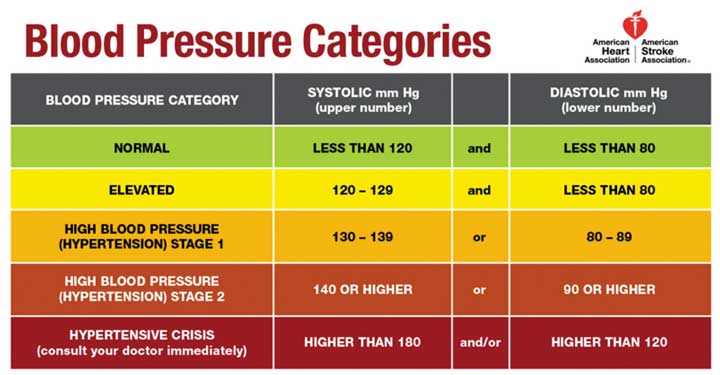
Hypertension is also categorized as either primary or secondary. Primary hypertension applies to most people with high blood pressure, and while the conventional view is that the cause is idiopathic or unknown, it’s typically linked to insulin/leptin resistance. Secondary hypertension refers to high blood pressure that is caused by another medical condition, such as chronic liver disease.
Download this Article Before it Disappears
What’s Your Fasting Insulin Level?
I believe most all Stage 1 and even a high percentage of Stage 2 hypertension can be successfully treated to where drugs become unnecessary, provided you’re aggressive enough in your diet and lifestyle modifications. However, if you have seriously elevated blood pressure, it would be wise to be on medication to prevent a stroke while you’re revising your lifestyle.
In addition to checking your blood pressure on a regular basis, I highly recommend getting a fasting insulin level test done. Remember, high blood pressure and insulin resistance tend to go together, and if your hypertension is the result of elevated insulin levels, you’ll know how to nip it in the bud by the end of this article.
The fasting insulin level you want to strive for is about 2 or 3 microU per mL (μU/mL). If it’s 5 or above, you clearly need to lower your insulin level to reduce your risk of high blood pressure and other cardiovascular health hazards. Keep in mind that the so-called “normal” fasting insulin level is anywhere from 5 to 25 μU/mL. Please do not make the mistake of thinking that this “normal” insulin range equates to optimal.
How to Find a Blood Pressure Measuring Device
According to a 2019 study,7 nearly 46% of American adults could benefit from self-monitoring to avoid “white coat” hypertension. Whether you suspect (or know) you have high blood pressure, an automatic blood pressure meter is a good investment for every household.
Top rated blood pressure meters for home use include the following. Consumer Reports tested these devices for accuracy, comfort, clarity of display and ease of use, and all are commercially available on Amazon and other large retailers and pharmacies:8
- Omron Platinum BP5450
- Omron Silver BP5250
- Omron 10 Series BP7450
- A&D Medical UA767
- Rite Aid Deluxe Automatic BP3AR1-4DRITE
To measure your blood pressure, follow these guidelines:9
- Don’t exercise, smoke or drink coffee or caffeinated beverages within 30 minutes of measuring your blood pressure. Also empty your bladder and relax for at least five minutes beforehand.
- Sit with your back straight on a firm chair. Avoid sitting on the couch as that encourages slouching. Keep your feet flat on the floor and do not cross your ankles or legs.
- Make sure your arm is supported on a flat surface, such as an armrest or table, with your upper arm at heart level.
- Place the blood pressure cuff directly above the bend of your elbow on bare skin. Do not measure on top of clothes. The cuff should be snug but not too tight nor too loose. Press the Start button and remain still while the pressure is being taken.
- Measure your blood pressure at the same time every day, and take multiple readings each time. Ideally, take two readings one minute apart and record the results.
How to Avoid a False Hypertension Diagnosis
To avoid a false hypertension diagnosis, keep in mind that your blood pressure reading can vary significantly from day to day, and even from one hour to the next, so don’t overreact if you get one high reading here or there. It’s when your blood pressure remains consistently or chronically elevated that significant health problems can occur. Several factors can affect the validity of your blood pressure reading, including:
•Incorrect blood pressure cuff size — If you’re overweight, taking your reading with a size “average” blood pressure cuff can lead to a falsely elevated blood pressure reading, so make sure your doctor or health care professional is using the correct cuff size for your arm.
•Incorrect arm position — If your blood pressure is taken while your arm is parallel to your body, your reading can be up to 10% higher than it really is. Blood pressure readings should always be taken with your arm at a right angle to your body.
•Nervousness — “White coat hypertension” is a term used for when a high blood pressure reading is caused by the stress or fear associated with a doctor or hospital visit. This can be a transient yet serious concern. If this applies to you, stress reduction is key.
To decrease your risk of being falsely diagnosed with hypertension in this situation, take a moment to calm down (be sure to arrive for your appointment ahead of time so you can unwind), then breathe deeply and relax when you’re getting your blood pressure taken.
Use Waist-to-Hip Ratio to Assess Your Hypertension Risk
Research suggests your waist size may be an effective measure for assessing obesity-related hypertension risk.10 If you have a high waist-to-hip ratio, i.e., you carry more fat around your waist than on your hips, you may be at an increased risk for obesity-related hypertension. Your waist size is also a powerful indicator of insulin sensitivity, and studies indicate that waist size is one of the most powerful ways to predict your risk for diabetes.
To calculate your waist-to-hip ratio, measure the circumference of your hips at the widest part, across your buttocks, and your waist at the smallest circumference of your natural waist, just above your belly button. Then divide your waist measurement by your hip measurement to get the ratio.
The University of Maryland offers an online waist-to-hip ratio calculator11 you can use. The Mayo Clinic uses the following waist-to-hip ratio designations to evaluate your health risk:
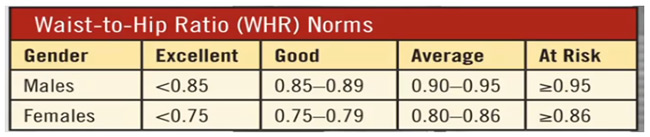
Drugs Can Increase Risk of Fall-Related Injuries
Before I review lifestyle modifications that can help you normalize your blood pressure, I want to address the issue of medications. It’s important to realize that while blood pressure medications can be very effective at lowering blood pressure, they do not in any way, shape or form address the underlying cause.
According to the most recent statistics from the American Heart Association, about 20% of people with hypertension have resistant hypertension, meaning they cannot control it with three or more medications,12 so these drugs clearly don’t work as advertised for a lot of people.
There are also side effects to contend with; some of them quite harmful and/or debilitating. For example, one JAMA study13 found that hypertensive patients over the age of 70 who were taking blood pressure medication increased their risk of serious falls requiring hospitalization due to fractures, brain injuries, or dislocation of the hip, knee, shoulder or jaw.
The risk of falling can increase if your blood pressure drops too low, too suddenly, upon standing. According to the authors:14
“Antihypertensive medications were associated with an increased risk of serious fall injuries, particularly among those with previous fall injuries. The potential harms vs benefits of antihypertensive medications should be weighed in deciding to continue treatment with antihypertensive medications in older adults with multiple chronic conditions.”
Some Blood Pressure Drugs Raise Risk of Blindness
Another major population study discovered that hypertension drugs called vasodilators increase your risk of early onset age-related macular degeneration (AMD), which is the most common cause of blindness among American seniors. As noted in a press release:15
“… [R]esearchers … conducted a long-term population-based cohort study from 1988 to 2013 of nearly 5,000 residents of Beaver Dam, Wis., aged 43 to 86 years …
The researchers found that, after adjusting for age, sex and other factors, using any vasodilator such as Apresoline and Loniten, which open (dilate) the blood vessels — was associated with a 72% greater risk of developing early-stage AMD.
Among people who were not taking vasodilators, an estimated 8.2% developed signs of early AMD. In comparison, among those taking a vasodilator medication, 19.1% developed the disease.
The researchers also found that taking oral beta blockers such as Tenormin and Lopressor was associated with a 71% increase in the risk of neovascular AMD, a more advanced and vision-threatening form of the disease.
Among those who were not taking oral beta blockers an estimated 0.5% developed signs of neovascular AMD. In comparison among those taking oral beta blockers, 1.2% developed neovascular AMD.”
Key Lifestyle Strategies for Lowering Your Blood Pressure
Alright, time to get down to the nitty gritty of normalizing your blood pressure. As mentioned earlier, high blood pressure is typically associated with insulin resistance, which results from eating a diet too high in the omega-6 fat linoleic acid (LA). As your insulin level elevates, so does your blood pressure.
Excessive omega-6/LA consumption is another dietary factor that contributes to high blood pressure by hardening your arteries (atherosclerosis), which researchers now have pinpointed as yet another treatment focus for hypertension.
So, make sure you avoid all trans fats or hydrogenated fats that have been modified in such a way to extend their shelf life. This includes margarine, seed oils and “butter-like” spreads. Of course, this also includes all foods made or cooked with these fats.
The late Dr. Fred Kummerow was the first scientist to document the dangers of trans fats. Trans fats prevent the formation of prostacyclin, which acts as a natural blood-thinning agent. By diligently avoiding trans fats, your body will make prostacyclin that keeps your blood thin, which will reduce your risk of heart attack and stroke.
Now, if you think about these two factors alone — insulin resistance and atherosclerosis — what kind of diet is bound to produce high blood pressure? The answer, of course, is a processed food diet, loaded with high fructose corn syrup, grains and damaged omega-6 fats, a majority of which are LA.
Knowing that, the answer to correcting high blood pressure becomes rather self-evident. If your blood pressure is running high, you need to restore your insulin and leptin sensitivity, and the following strategies are among the most effective for doing so:
1. Replacing processed foods with whole, unprocessed organic foods.
2. Avoiding all seed oils — It would be helpful to also eliminate seeds and nuts unless you have been on a low LA diet for at least three years.
3. Optimizing your vitamin D (which I discuss in greater detail below).
4. Only use healthy fats — Sources of healthy fats to add to your diet include: grass fed butter, raw organic dairy, organic pastured egg yolks, coconuts, coconut oil and macadamia nuts, grass fed meats and pasture-raised poultry.
The best carbs to add would be ripe fruit that you tolerate well. But, the key is to make sure your fat intake is below 30%, which you can determine with Cronometer. If you fail to do this the carbs can convert to fat and change your cholesterol profile unfavorably.
5. Exercising regularly — In an upcoming section, I’ll review the most effective type of exercise if you have high blood pressure.
Vitamin D Can Relax Arteries and Improve Blood Pressure
Vitamin D deficiency and high consumption of harmful omega-6 fats like linoleic acid (LA) can lead to stiff arteries. Vitamin D deficiency appears to be associated with both arterial stiffness and hypertension.16
Each cell in your body has a DNA library that contains information needed to address virtually every kind of stimulus it may encounter, and the master key to enter this library is activated vitamin D. This is why vitamin D functions in so many different tissues and affects such a large number of different diseases and health conditions, one of which is heart disease.
Research17 has shown that the farther you live from the equator, the higher your risk of developing high blood pressure. Blood pressure also tends to be higher in winter months than during the summer. Exposing your bare skin to sunlight affects your blood pressure through a variety of different mechanisms, including the following:
- Sun exposure causes your body to produce vitamin D. Lack of sunlight reduces your vitamin D stores and increases parathyroid hormone production, which increases blood pressure.
- Vitamin D deficiency has also been linked to insulin resistance and metabolic syndrome, a group of health problems that can include insulin resistance, elevated cholesterol and triglyceride levels, obesity, and high blood pressure.
- Vitamin D is also a negative inhibitor of your body’s renin-angiotensin system (RAS), which regulates blood pressure.18 If you’re vitamin D deficient, it can cause inappropriate activation of your RAS, which may lead to hypertension.
- Additionally, exposure to UV rays is thought to cause the release of endorphins, chemicals in your brain that produce feelings of euphoria and relief from pain. Endorphins naturally relieve stress, and stress management is an important factor in resolving hypertension.
Guidelines for Optimizing Your Vitamin D Level
Ideally, you’ll want to get your vitamin D through sun exposure on your bare skin. If you opt for an oral vitamin D supplement, make sure you use vitamin D3, not D2, which is typically prescribed by doctors but has been linked to poorer health outcomes.
Also, make sure to measure your vitamin D level before you start supplementing. The reason for this is because you cannot rely on blanket dosing recommendations. The crucial factor here is your blood level, not the dose, as the dose you need is dependent on several individual factors, including your baseline blood level.
Data from GrassrootsHealth’s D*Action studies suggest the optimal level for health and disease prevention is between 60 ng/mL and 80 ng/mL, while the cutoff for sufficiency appears to be around 40 ng/mL.
In Europe, the measurements you’re looking for are 150 to 200 nmol/L and 100 nmol/L respectively. That said, as a general guideline, research by GrassrootsHealth suggests that adults need about 8,000 IUs per day to achieve a serum level of 40 ng/mL.
I’ve published a comprehensive vitamin D report in which I detail vitamin D’s mechanisms of action and how to ensure optimal levels. I recommend downloading and sharing that report with everyone you know. A quick summary of the key steps is as follows:
1. First measure your vitamin D level — Your doctor can order this test for you.
2. Assess your individualized vitamin D dosage — To do that, you can either use the chart below, or use GrassrootsHealth’s Vitamin D*calculator. To convert ng/mL into the European measurement (nmol/L), simply multiply the ng/mL measurement by 2.5. To calculate how much vitamin D you may be getting from regular sun exposure in addition to your supplemental intake, use the DMinder app.19
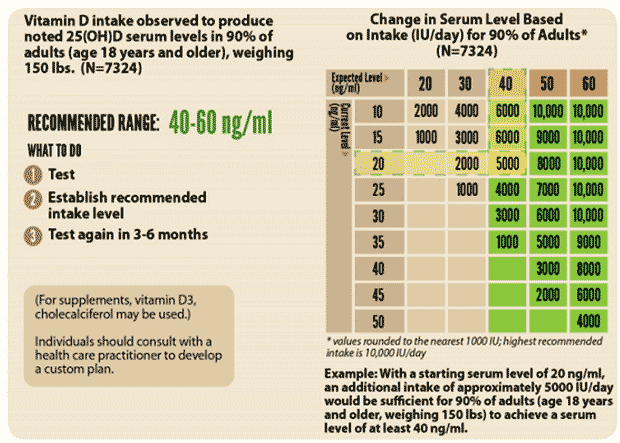
3. Retest in three to six months — Lastly, you’ll need to remeasure your vitamin D level in three to six months, to evaluate how your sun exposure and/or supplement dose is working for you.
Take Your Vitamin D With Magnesium and K2
Keep in mind that if you decide to supplement with oral vitamin D3, you also need to boost your vitamin K2 intake, as these two nutrients work in tandem. Together, vitamin D and vitamin K2 produce and activate Matrix GLA Protein (MGP), which congregates around the elastic fibers of your arterial lining, guarding them against calcium crystal formation.
Vitamin K2 also activates a protein hormone called osteocalcin, produced by osteoblasts, which is needed to bind calcium into the matrix of your bone. Osteocalcin also appears to help prevent calcium from depositing into your arteries.
In other words, without the help of vitamin K2, the calcium that vitamin D so effectively lets in can work against you by building up inside your arteries rather than your bones.
It’s also strongly recommended to take magnesium concomitant with oral vitamin D and K2. Data from nearly 3,000 individuals reveal you need 244% more oral vitamin D if you’re not also taking magnesium and vitamin K2.20 What this means in practical terms is that if you take all three supplements in combination, you need far less oral vitamin D in order to achieve a healthy vitamin D level.
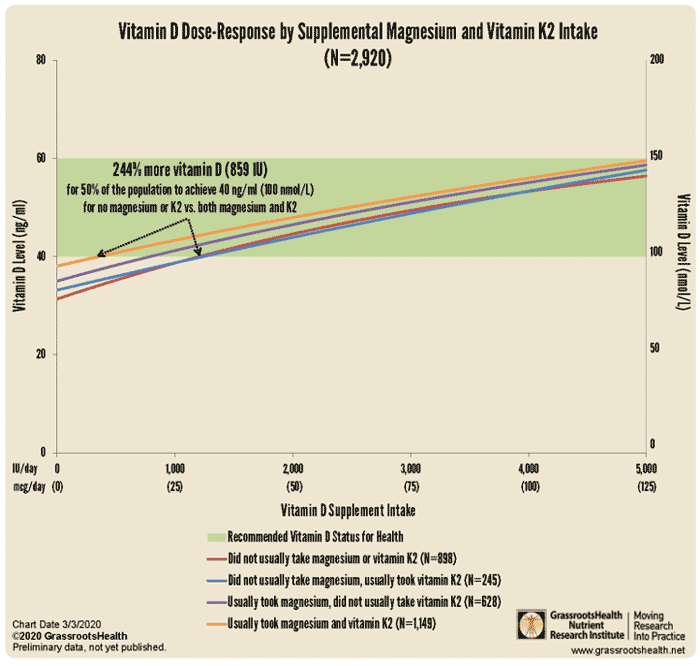
Two Key Factors to Consider When Buying Meat
While some studies suggest a vegetarian diet can help resolve high blood pressure, I do not believe this makes for an ideal diet in the long run, as avoiding all meats can lead to nutritional deficiencies.
From what I’ve learned, I believe the quality and quantity of the meat may be a major part of the equation. First, in terms of quantity, if you eat more protein than your body needs, it will convert most of those calories to sugar. Additionally, it will need to remove the nitrogen waste products from your blood, which will stress your kidneys and deteriorate kidney function if you already have compromised kidneys.
As a general guideline, most adults need about 0.6 to 0.8 grams of protein per pound of lean body mass. (As an example, if your body fat mass is 20%, your lean mass is 80% of your total body weight.)
In terms of quality, meat from organically raised, grass fed and finished animals is far superior to that from animals raised in concentrated animal feeding operations (CAFOs).
CAFO beef and poultry have many disadvantages, including fewer of the most valuable nutrients found in organically raised meats, while being contaminated with hormones, antibiotics, drugs, pesticides and herbicides like glyphosate. Furthermore, since most CAFOs feed animals genetically engineered (GE) grains (primarily corn and soy), there’s also the issue of whether such feed might alter the meat in ways we still have not recognized.
Also, it is best to restrict your meat choices to beef, bison, lamb and other ruminant game animals. It is best to avoid chicken and pigs as, even if pasture-raised and organically fed, they are given grains and other foods that are high in LA so they will increase your LA levels.
Should You Cut Sodium to Lower Your Blood Pressure?
Insulin also affects your blood pressure by causing your body to retain sodium. Sodium retention causes fluid retention. Fluid retention in turn can cause high blood pressure, which may ultimately lead to congestive heart failure.
A standard recommendation if you have high blood pressure is to reduce the amount of sodium in your diet. While it’s certainly beneficial to cut out processed foods and salt, limiting sodium is not the hypertension cure that many think it is.
If you’re simply opting for low-sodium processed foods, you’re hardly doing your health any favors, as such fare is likely compensating for the lack of flavor with harmful fats and/or sugar. You’ve probably heard of the DASH diet,21 which is claimed to be among the most effective for controlling hypertension. It consists largely of fresh vegetables, fruits, lean protein, whole grains, low-fat dairy and very low sodium content.
Processed foods and LA promote hypertension to a far greater degree than excess salt. Salt is essential for maintaining and regulating blood pressure, but the crux lies in the type of salt you consume.
Natural unprocessed salt, such as Himalayan salt, contains 84% sodium chloride and 16% naturally occurring trace minerals. Processed (table) salt, on the other hand, contains 97.5% sodium chloride and the rest are manmade chemicals. The natural, unprocessed form is essential for good health; table salt is best avoided altogether.
But there’s yet another factor that comes into play when we’re talking about sodium and blood pressure, and that’s the issue of maintaining a healthy sodium-to-potassium ratio. Your body needs potassium to maintain proper pH levels in your body fluids, and it also plays an integral role in regulating your blood pressure. In fact, potassium deficiency may be a greater contributor to high blood pressure than excess sodium.
The Importance of Proper Sodium-to-Potassium Ratio
People who eat processed foods frequently and very few fresh fruits and vegetables likely have an imbalance in their sodium-potassium ratio. The key to relaxing your arterial walls and reducing blood pressure is the ratio between sodium and potassium.
If you’re unsure of your sodium and potassium intake, use chronometer.com/mercola, which is a nutrient tracker that allows you to enter foods and then calculates the ratios automatically. Generally, it’s recommended that you eat five times more potassium than sodium.
According to the U.S. Department of Agriculture,22 the average intake of potassium in the U.S. population is 2,640 milligrams (mg) per day. Other surveys have found similar intakes.23 Meanwhile, the National Academies Sciences Engineering Medicine (formerly Institute of Medicine) recommends 4,700 mg per day for people over the age of 14.24
Potassium helps lower your blood pressure by relaxing the walls of your arteries, and according to Harvard Health,25 many people with high systolic blood pressure can successfully lower it simply by increasing their potassium intake.
In my view the absolute best way to increase your potassium is by beating ripe fruit. I typically get around 3,000 mg from watermelon, orange juice and tangerines, and another 2,000 mg from other sources.
For a more complete list of potassium-rich foods, see DietaryGuidelines.gov’s “Food Sources of Potassium” page.26 Taking potassium supplements is not a good strategy and simply will not provide you with the benefits you seek.
The Best Exercises for High Blood Pressure
Exercise is well-known for its ability to normalize blood pressure, but all forms of exercise are not the same in this regard. Existing exercise guidelines for blood pressure management emphasize cardio, such as running and cycling.
But, a recent investigation revealed that isometric exercise, where your muscles are in static contraction, is the most effective for lowering blood pressure, while aerobic exercise is next to last in terms of effectiveness.
A July 2023 meta-analysis27 reviewed 270 randomized controlled trials published between 1990 and February 2023 that reported reductions in systolic blood pressure (SBP) and/or diastolic blood pressure (DBP) following an exercise intervention of two weeks or more, with a pooled sample size of 15, 827 people. In rank order, the analysis found significant reductions in resting SBP and DBP following:
- Isometric exercise (–8.24/–4.00 mmHg)
- Combined training (–6.04/–2.54 mmHg)
- Dynamic resistance training (–4.55/–3.04 mmHg)
- Aerobic exercise (−4.49/–2.53 mmHg)
- High-intensity interval training (–4.08/–2.50 mmHg)
Effectiveness based on the “surface under the cumulative ranking curve” (SUCRA) values for systolic — which refers to the mean probability of being the best for lowering your systolic blood pressure — placed isometric exercise in the No. 1 slot with an effectiveness rating of 98.3%, followed by combined training (75.7%), dynamic resistance training (46.1%), aerobic exercise training (40.5%) and high-intensity interval training (39.4%).
In secondary meta-analyses of submodes, the wall squat was the most effective for reducing SBP, while running was most effective for reducing DBP. In conclusion, the authors noted:28
“Various exercise training modes improve resting blood pressure, particularly isometric exercise. The results of this analysis should inform future exercise guideline recommendations for the prevention and treatment of arterial hypertension.”
The key take-home is that static contraction of muscle as you hold your body in one position, i.e., isometric exercise, is the most effective type of exercise if you want to lower your blood pressure. Examples of isometric exercises include the following.29,30,31 For more details, including exercise instructions, see “Which Exercises Are Best for Lowering Blood Pressure?”
| Wall squat | Isometric calf raise | Planking |
| Hollow-body hold | Low isometric squat | Static slide lunge |
| Overhead hold | Iso hang | Glute bridge |
| Incline pushup hold | V-sit | Single-leg stand |
Addressing Stress-Related Hypertension
Although many people believe that the “tension” part of hypertension refers to stress as the cause, the primary cause is, as previously mentioned, insulin and leptin resistance. That said, the link between stress and hypertension is well-documented.
In fact, it has been shown that people with heart disease can significantly lower their risk of a cardiac event by learning to manage their stress. Suppressed negative emotions such as fear, anger and sadness can radically increase your cortisol levels and severely limit your ability to cope with the unavoidable everyday stresses of life.
It’s not the stressful events themselves that are harmful, but your lack of ability to cope. The good news is, strategies exist to rapidly and effectively transform your suppressed, negative emotions, and relieve stress.
One of the most well-studied of these is an energy psychology method called the Emotional Freedom Techniques (EFT). By teaching your body to slow down and relax when stress hits — essentially short-circuiting your physical stress reaction — you can protect your health. EFT is easy to learn and can be done just about anytime, anywhere. For a demonstration, see the video below.
Other Helpful Strategies
In addition to everything already mentioned, there are still more dietary and lifestyle strategies that can be of help if you struggle with high blood pressure. Here are several additional alternatives for your consideration:
| Avoid caffeine — The connection between coffee consumption and high blood pressure is not well understood, but there is ample evidence to indicate that if you have high blood pressure, coffee and other caffeinated drinks and foods can exacerbate your condition. |
| Supplement with vitamins C and E — Studies indicate that vitamins C32 and E33 may be helpful in lowering blood pressure. If you’re eating a whole food diet, you should be getting enough of these nutrients through your diet alone.
Unless you have radically lowered your LA tissue levels, it is vital to take the correct vitamin E supplement until you do, as it will limit the damage that LA can cause. I consider it to be one of the three most important supplements you can take. It is also helpful in lowering dangerous estrogen levels in your body that can increase your risk of cancer. If you decide you need a supplement, make sure to take a natural (not synthetic) form of vitamin E. You can tell what you’re buying by carefully reading the label. Natural vitamin E is always listed as the ‘d-‘ isomer (d-alpha-tocopherol, d-beta-tocopherol, etc.) Synthetic vitamin E is listed as ‘dl-‘ isomers. |
| Eat more fruit and berries — In what researchers called the first-of-its-kind study in the U.K., scientists used objective measures for dietary intake across thousands of residents, using data for 25,618 people in Norfolk, U.K., and compared the data against their blood pressure measurements.34
The difference in blood pressure between those with the lowest 10% of flavanol intake and those with the highest 10% of intake was between 2 and 4 mmHg. According to the authors, this was comparable to the difference measured when a person switched to a Mediterranean diet or the Dietary Approaches to Stop Hypertension (DASH) diet. Because fruit contains fructose, it can increase your risk of insulin resistance if you eat large amounts; examples of lower fructose fruits that are beneficial for most people include avocados, berries, kiwi and citrus fruits. |
| Quercetin — Quercetin has also been shown to lower blood pressure. Quercetin is a flavonol found in red grapes, onions, red leaf lettuce, elderflower and green tea, to name a few.35
According to a Japanese study,36 quercetin helps lower blood pressure by modifying vascular compliance and resistance, total blood volume and the autonomic nervous system. It also appears to have a unique ability to regulate gene expression that is mediated by controlling negative chloride actions in the cell’s cytosol. Negative chloride ions help control the intracellular activity of many other ions in the cytosol, which is the water-based fluid that surrounds intracellular structures. The gene expression that controls the chloride ions triggers sodium reabsorption, which then reduces body fluid volume and therefore influences volume-mediated high blood pressure. The researchers noted several past studies that demonstrated taking between 150 mg per day and 730 mg per day could lower high blood pressure, decreasing both systolic and diastolic pressures. |
| Supplement with magnesium — Magnesium is also important for healthy blood pressure and few people get enough from their diet these days. Hundreds of studies and scientific papers show there’s a clear correlation between magnesium and high blood pressure.
Magnesium stored in your cells relaxes muscles. If your magnesium level is too low, your blood vessels will constrict rather than relax, and this constriction raises your blood pressure. According to a 2011 paper37 in The Journal of Clinical Hypertension, magnesium intake of 500 mg to 1,000 mg per day may reduce blood pressure by as much as 5.6/2.8 mmHg. Its blood pressure lowering effects are most pronounced when potassium intake is also high, and sodium intake low. Magnesium also boosts the effectiveness of “all antihypertensive drug classes,” according to this paper. Magnesium-rich foods38 include baked potato and white rice, just to name a few. That said, the magnesium content of most foods is dwindling due to the destruction of soils, so it’s one nutrient that I recommend taking as a supplement. |
| Engage in inspiratory muscle strength training (IMST) — Strengthening your breathing muscles with IMST can also be helpful. IMST was originally developed for critically ill patients with respiratory diseases. It helped to improve the strength of their inspiratory muscles by using a handheld device that provides resistance while inhaling.
A 2021 study39 evaluated the effect that IMST could have on reducing blood pressure and thus reducing the risk of cardiovascular disease. Thirty-six adults aged 50 to 79 who had above normal systolic blood pressure were enrolled. Half the participants used high resistance IMST and the other half used low resistance IMST for six weeks. At the end of the intervention, the group using high resistance had a nine-point reduction in their systolic blood pressure. The daily training consists of 30 breaths a day. The breathing exercise takes just five to 10 minutes a day, with benefits noticeable within two weeks. You can learn more about this in “Breathing Exercise Could Reduce Blood Pressure.” |
Take Control of Your Blood Pressure
The best treatment strategy for high blood pressure is to evaluate your lifestyle and make the necessary adjustments, with particular emphasis on normalizing your insulin and leptin levels. We’ve covered a lot of ground in this report, so here’s a summary of key points to remember:
| In addition to checking your blood pressure, check your fasting insulin level. A healthy level to strive for is about 2 μU/mL or 3 μU/mL. |
| Swap out processed foods for whole foods and implement TRE. Also consider going organic. Meats should ideally be grass fed and pasture finished. Foods notorious for causing blood pressure to rise and that should be avoided include processed foods, most grains, partially hydrogenated oils (synthetic trans fats), and seed oils (aka vegetable oils) such as corn, canola, soy and safflower oils.40 |
| Keep an eye on your sodium-to-potassium and omega-3-to-omega-6 ratios. This is automatically done if you swap processed foods for whole foods and make sure you are eating plenty of ripe fruit that you enjoy and is adjusted to your activity rate and fat intake. |
| Optimize your vitamin D level, ideally through regular sun exposure. |
| Exercise regularly, and make sure you include isometric (static contraction) exercises such as wall squats and planking. |
| Learn how to effectively address day-to-day stress. One effective stress management tool is the Emotional Freedom Techniques (EFT). |
- 1, 3 HHS.gov Estimated Hypertension Prevalence, Key Findings Bullet One
- 2 Heart.org Health Threats from High Blood Pressure
- 4 Diabetology & Metabolic Syndrome 2014; 6: 12
- 5 AJMC.com, JNC 8 Hypertension Guidelines: An In-Depth Guide
- 6 Harvard Health November 16, 2021
- 7 Hypertension June 24, 2019; 74: 399-406
- 8 Consumer Reports Best Blood Pressure Meters February 3, 2023
- 9 Heart.org How to Use a Blood Pressure Monitor
- 10 Canadian Journal of Cardiology September 2012: 28(5); S122
- 11 University of Maryland, Waist to Hip Ratio Calculator
- 12 Harvard Health August 1, 2023
- 13, 14 JAMA Internal Medicine 2014;174(4):588-595
- 15 EurekAlert! May 28, 2014
- 16 Vitamin D Council, Hypertension
- 17 Hypertension. 1997; 30: 150-156
- 18 J Steroid Biochem Mol Biol. 2004 May;89-90(1-5):387-92
- 19 DMinder app
- 20 GrassrootsHealth Magnesium and Vitamin K2 Combined Important for Vitamin D Levels
- 21 N Engl J Med 1997; 336:1117-1124
- 22 U.S. Department of Agriculture Food Research Group, Potassium Intake of the U.S. Population
- 23 Nutrition Today September-October 2018; 53(5): 184-195
- 24 National Academies Sciences Engineering Medicine Table S-3
- 25 Harvard Health Publishing, January 23, 2017
- 26 DietaryGuidelines.gov Food Sources of Potassium
- 27 British Journal of Sports Medicine July 25, 2023 DOI: 10.1136/bjsports-2022-106503
- 28 British Journal of Sports Medicine July 25, 2023 DOI: 10.1136/bjsports-2022-106503, Conclusion
- 29 Vertimax
- 30 US News June 15, 2020
- 31 Vertimax 20 Isometric Exercises
- 32 American Journal of Clinical Nutrition 2012 May; 95(5): 1079–1088
- 33 Journal of Human Hypertension 2019; 33: 499-507
- 34 Scientific Reports, 2020;10(1)
- 35 Superfoodly, 100 Quercetin Foods
- 36 Molecules, 2017;22(2)
- 37 The Journal of Clinical Hypertension November 2011; 13(11): 843–847
- 38 Cleveland Clinic Magnesium-Rich Foods
- 39 Journal of the American Heart Association, 2021;10:e020980
- 40 Dr. Sinatra, What is the Best Heart Healthy Diet Plan?
Omega-3 Fat EPA Significantly Lowers Heart Disease Risk
Reproduced from original article:
https://articles.mercola.com/sites/articles/archive/2023/08/12/epa-lowers-heart-disease-risk.aspx
The original Mercola article may not remain on the original site, but I will endeavor to keep it on this site as long as I deem it to be appropriate.
Analysis by Dr. Joseph Mercola Fact Checked August 12, 2023
STORY AT-A-GLANCE
- Omega-3 fats are essential fats your body needs for proper cell division and function of cell receptors, digestion, muscle activity, blood clotting, visual acuity, cognition, heart health and much more
- A proprietary prescription formulation of fish oil called Vascepa — a highly-processed form of the omega-3 fat EPA — lowered cardiovascular health risks by 25% compared to placebo
- Participants in the Vascepa trial received 4 grams of EPA per day — which is two to four times more EPA than typically given — for five years
- A pair of parallel studies published in 2008 — both lasting four years — found fish oil supplements worked better than placebo and the cholesterol-lowering drug Crestor in patients with chronic heart failure
- While a general recommendation is to take 3 to 4 grams of marine-based omega-3 per day, the only way to identify your ideal dose is to measure your omega-3 index with a blood test. For optimal health, aim for an omega-3 index of 8% or higher
Editor’s Note: This article is a reprint. It was originally published October 8, 2018.
Omega-3 fats are essential polyunsaturated fats (PUFAs) your body needs for proper cell division and function of cell receptors, digestion, muscle activity, blood clotting, visual acuity, cognition, heart health and much more.
Most omega-3s are considered “essential fats” as your body cannot make them. You have to get them from your diet. Omega-3 fats are found in both marine animals and plants, but each of these sources provides different types of omega-3, and they are not interchangeable.
It’s really important to be aware of these differences, especially if you’re taking omega-3 to protect or improve your heart or neurological health. For these benefits, you need marine-based omega-3. So, before I get into the evidence behind omega-3 fats for heart health, which is the primary focus of this article, let’s quickly review the basics.
Omega-3 Basics
Both plant- and animal-based omega-3 have their first double-bond in the third position — hence the name “omega-3.” However, the length of the carbon chain of each omega-3 fat makes a significant difference when it comes to bioavailability and biological effect.1,2,3
• Marine animal-based omega-3 — Found in fatty fish, fish oil and krill oil, marine animal-based omega-3s primarily contain docosahexaenoic acid (DHA), a long-chained PUFA consisting of 22 carbons, and eicosapentaenoic acid (EPA), which has 20 carbons.
• Plant-based omega-3 — Found in flaxseed, flaxseed oil, chia seeds, walnuts and leafy greens, for example, plant-based omega-3s contain alpha-linolenic acid (ALA), a shorter-chained PUFA consisting of 18 carbons. Plant-based omega-3s are completely devoid of DHA and EPA, which is why they cannot be used to obtain EPA and DHA-related health benefits.
While ALA is a precursor to EPA and DHA, the enzyme required for this conversion does not work very well in most people, hence the conversion rate is exceptionally small. Typically, less than 0.5 to 1% of the ALA is converted to EPA.4
DHA is especially important for optimal health, as it is a component of every cell in your body. This is particularly true for your brain, about 90% of which is made up of DHA. All other omega-3 fats are found only in trace amounts in your brain, including ALA, regardless of how much ALA you consume.5
There are actually specific transporters for long-chained omega-3s in your blood-brain barrier, the placenta (in pregnant women), and likely also in your liver, which transport these molecules in a very precise way into the cell membranes where they belong. No such transporters exist for the short-chained omega-3s.
EPA Lowers Heart Disease Risk
Aside from protecting and benefiting your brain, marine-based omega-3 is also really important for heart health. More recently, a study6,7,8 involving a proprietary prescription formulation of fish oil called Vascepa — a highly-processed form of EPA — found the drug lowered cardiovascular health risks by 25% compared to placebo containing mineral oil.
This included heart attacks, strokes, bypass surgery and chest pain requiring hospitalization. The drug trial was called REDUCE-IT and was done for five years. Perhaps the most unusual aspect of this trial is that they used a far higher dosage than is typically used in these types of studies.
Here, participants received 4 grams of EPA per day, which is two to four times more EPA than typically given. Also notable: A 25% reduction in cardiovascular risk is typically what you see with the use of statins, and this significant reduction is believed to be a byproduct of EPA’s ability to lower triglycerides.
While the full study will not be available for review until it is presented at the American Heart Association’s annual meeting November 10, 2018, the preliminary information looks promising, and supports what James DiNicolantonio and I predicted in our book “Superfuel,” which is being published November 13.
While this study is very strong support for the use of marine-based omega-3 fats, please understand that Vascepa is a highly processed and very expensive form of omega-3 that costs around $2,500 a year. You can purchase loads of krill, which I believe is superior because of its absorption and astaxanthin, for that price. As reported by Forbes:9
“Vascepa is already approved by the Food and Drug Administration to cut triglycerides in patients in whom levels have risen above 500 milligrams per deciliter [mg/dL], triple normal.
But there had been skepticism regarding whether it would provide a benefit in heart disease, because other fish oil pills had used much lower doses and because it has proved difficult for any drug significantly to reduce the risk of heart attacks and strokes when given on top of cholesterol-lowering medicines, which are already very effective.
But the results from the 8,179-patient study … seem to leave little doubt that the effect of the drug was substantial in people who had high triglycerides (median triglyceride levels in the study were 219 mg/dL, 50 percent more than normal) and had either had previous cardiovascular problems, such as a heart attack or stroke, or had diabetes and another risk factor for heart disease.”
Download this Article Before it Disappears
Higher Doses of Omega-3 Required for Optimal Health
For all its potential benefits, it’s worth noting that Vascepa costs over $200 per month. Natural EPA sources such as krill oil and clean fish such as anchovies and sardines are far less expensive. The key to achieving these results, though, is to approach the 4 grams per day dose.
As discussed in “Superfuel,” 3 to 4 grams of EPA and DHA appears to be ideal. (Meanwhile, you only need 1 to 2 grams of whole food-based omega-6 linoleic acid per day, ideally from plant seeds and tree nuts, not vegetable oils.)
Taking 3 to 4 grams of omega-3 (EPA and DHA in the form of fatty fish, triglyceride fish oil or krill oil) per day will saturate your cells and cell membranes with DHA, making them very fluid. As a result of improved cell function, your basal metabolic rate increases by as much as 15%, and your fat burning capacity during rest and exercise increases by 20 and 30% respectively.
As an example, research shows replacing 6 grams of visible fat in your diet (such as steak) with 6 grams of high-quality fish oil can help you lose 2 pounds of fat and gain half a pound of muscle in just three weeks.
Again, the reason for this is because omega-3 fat, particularly DHA, makes the cell membrane really fluid, allowing amino acids, glucose, sodium and potassium to easily flow in and out of the cell. Omega-3s also help synthesize protein, so muscle protein synthesis dramatically increases when you consume 3 to 4 grams of animal-based omega-3 per day.
Fish Oil Is Better Than Drugs for Preventing Heart Failure
The Varicepa trial is not the first to find omega-3 benefits your heart. For example, a pair of parallel studies10,11 published in 2008 — both lasting four years — found fish oil supplements worked better than placebo and the cholesterol-lowering drug Crestor in patients with chronic heart failure.
Chronic heart failure is a condition that occurs when the heart becomes enlarged and cannot pump blood efficiently around the body. Omega-3 fats have long been proven to protect and boost heart health in a number of ways. Here is just a sampling of omega-3’s heart benefits:12,13
| Antiarrhythmic — Counteracts and prevents cardiac arrhythmia |
| Antithrombotic — Prevent thrombosis (a blood clot within a blood vessel) |
| Antiatherosclerotic — Prevents fatty deposits and fibrosis of the inner layer of your arteries from forming |
| Anti-inflammatory — Counteracts inflammation |
| Improves endothelial function — A major factor in promoting the growth of new blood vessels |
| Has beneficial effects on the heart’s electrical system, preventing potentially life-threatening heart rhythm disorders |
| Lowers blood pressure |
| Lowers triglyceride concentrations |
DHA and EPA Lower Risk of Heart-Related Death
Other research published in 2016 found eating fatty fish and other omega-3 rich foods (including certain plant-based sources) may lower your risk of a fatal heart attack by about 10%.14
This effect held true even after accounting for confounding factors like age, sex, ethnicity, diabetes and use of aspirin or cholesterol-lowering drugs. While there are benefits from the fish fats you just need to be ultracareful to have clean fish that aren’t loaded with fat soluble toxins that will outweigh the fats’ benefits.
Other studies have found even more significant effects. In one, heart attack survivors who took 1 gram of marine-based omega-3 per day for three years had a 50% reduced chance of sudden cardiac death.15 That’s quite significant considering this is about one-quarter of the ideal dose.
Another placebo controlled study16 published in 2016 found that when taken after a heart attack, high doses of omega-3 can also significantly improve your odds of survival.17,18,19 Here, 360 heart attack patients were divided into two groups. The treatment group took 4 grams of the prescription omega-3 fish oil called Lovaza. The placebo group received corn oil.
After six months, the treatment group showed a 5.6% reduction in scarring of undamaged heart muscle. Their hearts were also better able to pump blood compared to the controls. Despite a positive result, it’s worth noting that corn oil is a terrible placebo. Placebos are supposed to be completely inert, like water.
Corn oil is actually a harmful industrially processed GMO-contaminated omega-6 fat that clearly adversely affects your heart. So, using a corn oil placebo could make the drug appear more potent than it really is.
Other Health Benefits of Marine-Based Omega-3
Aside from the benefits already discussed, omega-3s are also important for:
| Healthy, strong bones | Mood regulation |
| Reducing your risk of Parkinson’s disease | Reducing your risk of death from ALL causes |
| Protecting your tissues and organs from inflammation | Brain and eye development in babies, and preventing premature delivery |
| Reducing your risk of Alzheimer’s disease | Delaying progression to psychosis among patients at high risk for schizophrenia |
| Protecting against osteoarthritis and rheumatoid arthritis (RA)20,21,22 | Protecting against metabolic syndrome,23 including obesity, fatty liver,24 and type 2 diabetes (by reducing inflammation and blood sugar) |
| Improving in premenstrual syndrome (PMS) and dysmenorrhea25 | Lowering your risk for neurological/cognitive dysfunction, including: memory loss, brain aging, learning disorders and ADHD,26 autism and dyslexia27 |
| Reducing your risk of Crohn’s disease | Reducing your risk of colon cancer.28 Colon cancer patients who consumed a minimum of 0.3 grams of omega-3 from fish each day also reduced their risk of dying over the next decade by 41%29 |
| Reducing your risk of kidney disease30 | Reducing your risk of autoimmune disorders, such as lupus and nephropathy |
Your Blood Level, Not the Dosage, Is Key for Optimization
Despite many studies showing the importance of marine-based omega-3 for heart health, some have come to conflicting conclusions. For example, a Cochrane Collaboration review31 concluded omega-3 supplementation has little to no discernible benefit for heart health or longevity.
There are a number of reasons for these perplexing results. Perhaps most importantly, many nutritional studies fail to assess the correct parameters. The importance of looking at achieved blood levels of a nutrient rather than dosage has been made abundantly clear by GrassrootsHealth vitamin D researchers.
When studies look at dosage, no apparent benefits of vitamin D supplementation are found. However, when you look at people’s blood level — the concentration of the nutrient in the body — truly dramatic effects are detected.
The problem is that people metabolize the nutrient at different rates, and while one may need a very small dose to achieve a certain blood level, another may need several times that dose. As a result, assessing health effects based on supplement dosage can be unreliable.
For this reason, I recommend getting your omega-3 level tested on an annual basis. As with vitamin D, blood testing is the best way to customize your dosage to ensure sufficiency, because requirements for omega-3 will vary depending on your lifestyle; your intake of fatty fish, for example, and your level of physical activity.
So, while a general recommendation is to take 3 to 4 grams of omega-3 per day, the only way to really know whether this is too much or too little is via a blood test. For optimal health, you’ll want an omega-3 index of 8% or higher.
Buyer Beware: Most Commercial Fish Oils Are Synthetic
Another reason some fish oil studies reach negative results may be related to the use of inferior products. As noted by Naomi Whittel, former CEO of Twinlab, the processing of fish oil is deeply problematic, rendering the final product into something far from the natural oils you get from the whole fish.
Whittel estimates about 98% of the omega-3 products on the market are inferior (and perhaps even toxic) due to the way the fish are caught and processed — a summary of which is provided in the graphic below.

Several factors come into play that affect the efficacy of fish oil. One is the form of the long-chained omega-3 fats. In fish, about 98% of the DHA and EPA are in the form of triglycerides, which are the most bioavailable. In most commercial fish oil supplements, however, the DHA and EPA are delivered in the form of ethyl esters.32
Triglycerides Versus Ethyl Esters
A triglyceride consists of a three-carbon molecule that forms a “backbone” for the fatty acids to latch onto. Each carbon molecule is linked to a fatty acid so, in total, a triglyceride is composed of three carbons bonded to three fatty acids.
Ethyl ester fish oil is most prevalent simply because it’s far less expensive to produce than the triglyceride form. Ethyl esters are also easier to work with during processing, as they have a higher boiling point. This becomes important during the molecular distillation phase (see above), during which the oils are heated and purified of harmful environmental pollutants.
The molecular distillation phase also concentrates the EPA and DHA. You can tell the concentration of these two fats in any given supplement by looking at the label. In fish, the oil consists of about 20 to 30% EPA and DHA, whereas purified fish oil concentrate typically contains between 60 and 85% EPA and DHA.
Ethyl esters are essentially a synthetic substrate, created through the micro distillation process of crude fish oil, in which ethanol and/or industrial alcohol is added. This mix is heat distilled in a vacuum chamber, resulting in a concentrated omega-3 ethyl ester condensate.
It is also important to note that this purifying molecular distillation process removes vital resolvins and protectins present in the raw material that are important in reducing inflammation, and inflammation is a hallmark of both neurological and cardiovascular diseases and dysfunction.
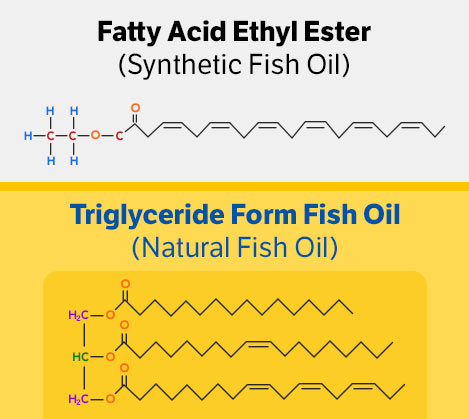
Ethyl Esters Are Poorly Absorbed, May Do More Harm Than Good
Ethyl esters — found in most fish oils — are the least bioavailable form of omega-3. Studies33 suggest a mere 20% of the EPA and DHA in ethyl ester form are absorbed by your body. When taken with other dietary fat, absorption increased threefold to 60%.
Meanwhile, EPA and DHA in their natural triglyceride form were found to have a 69% absorption rate from the start, and when taken with additional dietary fat, absorption increased to 90%. As a result, taking a triglyceride fish oil results in a 50% greater rise in omega-3 blood plasma levels than ethyl ester fish oil.
Another major drawback of ethyl ester fish oils is their rapid oxidation rate. Ethyl ester DHA is far more reactive than triglyceride DHA, oxidizing 33% more rapidly, and consuming rancid omega-3 is not going to do your health any good.
While manufacturers could convert them back into triglyceride form (by detaching the ethyl alcohol molecule and reattaching a glycerol molecule in a process known as re-esterification), this process is a costly one. So, in summary, it’s important to realize that the vast majority of clinical evidence showing health benefits of omega-3 relates to actual fish consumption, and virtually all of the omega-3s in fish are in triglyceride form.
Hence, to achieve reliable results, you really need to either eat omega-3-rich fish, or make sure the supplement you’re taking contains DHA and EPA in their triglyceride form. For a more in-depth understanding of these differences, see the paper, “A Comparison of Synthetic Ethyl Ester Form Fish Oil vs. Natural Triglyceride Form,”34 by Dr. Douglas MacKay.
- 1, 5 Omega-3 Institute, Differentiation of ALA (plant sources) from DHA + EPA (marine sources) as Dietary Omega-3 Fatty Acids for Human Health
- 2 Alwaysomega3s.com, Fact: Not all omega-3s are created equal
- 3 Harvard Nutrition Science, Omega-3s
- 4 Int J Vitam Nutr Res. 1998;68(3):159-73
- 6 STAT News September 24, 2018
- 7 CBS New York September 25, 2018
- 8 European Heart Journal Supplements Volume 22, Issue Supplement J, October 2020, Pages J34-J48
- 9 Forbes September 24, 2018
- 10 The Lancet August 31, 2008; 372(9545): 1223-1230
- 11 The Lancet August 31, 2008; 372(9545): 1231-1239
- 12 University of Rochester Medical Center 2018
- 13 Cleveland Clinic June 2017
- 14 Medical News Today June 27, 2016
- 15 Lancet 1999; 354:447-55
- 16 Circulation. 2016;134:378–391
- 17 Reuters August 1, 2016
- 18 Medical News Today August 2, 2016
- 19 Science Daily August 1, 2016
- 20, 22 Am J Gastroenterol. 2005 Dec;100(12):2674-80
- 21 BMC Musculoskelet Disord. 2010;11:136
- 23 J Anim Physiol Anim Nutr (Berl). 2012 Apr;96(2):295-306
- 24 J Agric Food Chem. 2009 Oct 14;57(19):9339-45
- 25, 26 Alternative Medicine Review 2003 May;8(2):171-9
- 27 Alternative Medicine Review 2007 Sep;12(3):207-27
- 28 Lipids Health Dis. 2008 Aug 29;7(1):30
- 29 Science Daily July 19, 2016
- 30 Urol Res. 2011 Feb;39(1):59-67
- 31 Cochrane Library July 18, 2018
- 32, 33 J Nutr. 2021 May; 151(5): 1111-1118
- 34 A Comparison of Synthetic Ethyl Ester Form Fish Oil vs. Natural Triglyceride Form (PDF)
Are You Throwing Out This Nutrient-Filled Food?
Reproduced from original article:
https://articles.mercola.com/sites/articles/archive/2023/07/31/parsley-nutrient-filled-food.aspx
The original Mercola article may not remain on the original site, but I will endeavor to keep it on this site as long as I deem it to be appropriate.
Analysis by Dr. Joseph Mercola Fact Checked July 31, 2023

STORY AT-A-GLANCE
- There are two common varieties of parsley — flat leaf Italian parsley and curly leaf French parsley. Both pack a powerful nutritional punch and both are often discarded at the end of a meal as just a colorful garnish
- While not commonly used in foods in Western cultures, it is a frequent ingredient in European and Middle Eastern foods. The herb is rich in vitamins A, C and K, magnesium, potassium and folate
- Parsley has powerful antioxidant activity and is rich in luteolin that helps support mental health and has anti-inflammatory and neuroprotective properties. Apigenin is another flavonoid that helps slow cancer growth and improves memory consolidation and flavones have demonstrated antioxidant, antimicrobial, anti-inflammatory and antitumor properties
- Parsley can be grown indoors and outdoors in pots or the ground. The herb can be paired in pots with other sun-loving plants like petunias or other herbs; keep the soil moist and ensure pots have good drainage. Harvest the plant by snipping close to the ground to continue to get new growth
Parsley is a popular garnish in Western cultures and a frequent ingredient in European and Middle Eastern foods. Although you may have tossed it aside as a garnish, this tasty herb packs a powerful nutritional punch. There are two main varieties of parsley.
The curly leaf parsley (Petroselinum crispum) is sometimes called French parsley and the flat leaf (Petroselinum crispum neapolitanum) is also known as Italian parsley.1
Both varieties are nutrient-rich and flavorful. The one you choose for your cooking or salad depends on the flavor you’re after. However, it’s important to taste the plant since the flavor depends on the growing conditions and the age when it was harvested.
You can substitute one for the other but should consider how the texture works best in what you’re cooking. Parsley belongs to the carrot or celery family, which includes herbs like dill and fennel.2
The name comes from a Greek word that translates into “rock celery,” which refers to the habit curly leaf parsley has of thriving on rocks and walls. The herb has a long history in cooking and traditional and herbal medicine. Parsley can help alleviate menstrual pain and should be avoided by women who are pregnant as it can hurt the pregnancy.3
Parsley Is Far More Than a Colorful Garnish
In an article in The Washington Post, freelance food writer Emily Horton described the culinary uses of parsley, writing:4
“Used as a primary seasoning, parsley can carry a dish; its piney, faintly bitter flavor assumes brighter, rounder tones. Paired with more assertive ingredients, it makes a great unifier, assuring balance and nudging harmony forward.
Parsley works more conspicuously to allow the whole to make a greater impression. You can’t say any of that about sage, thyme, marjoram, tarragon, certainly not rosemary, and not even meek, lovely chervil.”
But the health benefits associated with the nutrient-rich herb don’t play inconspicuously. Rich in vitamins A, C and K and magnesium,5 this unassuming little green herb carries some impressive health-boosting clout.
• Beta-carotene — One tablespoon of parsley contains 16 micrograms (µg) of beta-carotene. This fat-soluble vitamin is crucial to supporting your immune system, normal vision and reproduction.6 Adult men and women require 900 mg and 700 micrograms respectively.
Other foods that are rich in vitamin A include cantaloupes, mangoes, beef liver and grass-fed dairy products, such as milk, cheese and eggs. Because the vitamin is fat soluble, your body stores excess amounts, which can increase the risk of hypervitaminosis from supplementation.7
• Vitamin K — One tablespoon of chopped parsley provides 62.3 µg of vitamin K, which nearly meets the adequate intake (AI) of 75 µg. The AI is the level that is assumed to ensure intake adequacy.8 Vitamin K is crucial in the biochemical cascade that controls blood clotting and it contributes to strong healthy bones.
The body breaks vitamin K down quickly and excretes it in the urine and stool. Unlike other fat-soluble vitamins, there are only rare instances of the vitamin reaching toxic levels.9
• Folate — This is the natural form of vitamin B9 that is better absorbed from whole foods than from vitamin-enriched processed foods.10 Folate is involved in the formation of RNA and DNA and protein metabolism. Your body uses it to manufacture healthy red blood cells and it is critical during pregnancy.
• Potassium — Parsley has a healthy potassium-sodium balance with 21.1 mg of potassium to 2.13 mg of sodium. This essential mineral is used by nearly all bodily tissue to help maintain normal fluid levels. Working together, potassium functions inside the cells and sodium supports normal levels outside the cells.11 The body also uses potassium to promote normal blood pressure and muscle contraction.
• Calcium — This mineral plays an important role in several bodily functions, including regulating heart rhythm, nerve function, blood clotting and helping muscles to contract.12 Nearly 99% of the body’s calcium can be found in healthy bones and teeth. If you don’t eat enough foods with calcium and blood levels drop too low, the body signals the bones to release calcium.
Parsley Has Powerful Antioxidant Activity
Antioxidants help fight free radicals and reactive oxygen species (ROS) that can harm your body when levels get too high. Antioxidants are essential for all living things to survive, including plants and animals. Adequate intake is vital to preserve health. Parsley is rich in the following antioxidants:
• Luteolin — Luteolin has demonstrated the capacity to support mental health and reduce brain fog.13 Plants rich in this antioxidant were popular in Chinese traditional medicine for treating cancer, inflammation and high blood pressure.14
Data have demonstrated that luteolin has anti-inflammatory properties and acts as a neuroprotective agent, which researchers believe may play a role in the management of age-related neurodegenerative disorders.15
It is also associated with promoting apoptosis and inhibiting cell proliferation and angiogenesis, both of which contribute to luteolin’s anticancer properties. Researchers have also found that it sensitizes cancer cells to cytotoxicity making it a potential option as an anticancer agent.16
• Apigenin — This flavonoid has also demonstrated the ability to slow cancer growth17 and treatment also inhibits CD3818 and promotes an increase in intracellular NAD+ levels. CD38 is the primary enzyme that lowers NAD+ levels, so by inhibiting it, NAD+ levels increase.
Apigenin also helps improve memory consolidation, learning and overall brain function.19 In a news release, the researchers wrote:20 “Researchers believe apigenin can be used as an alternative approach on future treatments for neurodegenerative diseases as well as in neuronal differentiation strategies in the laboratory.”
• Carotene — There are 192 µg of beta carotene in 1 tablespoon of parsley, which the body can use to convert into Vitamin A. Beta carotene is fat-soluble and so is stored in the body. It is also an antioxidant and there is evidence that foods rich in antioxidants can help support your immune system, skin, mucous membranes and lower your risk of heart disease and cancer.21
However, it is possible to get too much beta carotene using an antioxidant supplement. The richest food sources are orange and yellow fruits and vegetables. Supplementation with beta carotene has been known to increase your sensitivity to the sun, interact with statin medications, cholestyramine, orlistat, mineral oil and excessive use of alcohol, which may increase the risk of liver damage.
• Flavones — Parsley is a rich source of this subclass of flavonoids. There are 1350 mg of flavones in 100 grams of dried parsley leaf.22 Flavones have also demonstrated antioxidant, antimicrobial, anti-inflammatory and antitumor properties.23
Download this Article Before it Disappears
Importance of Vitamin C and Magnesium to Your Health
One tablespoon of parsley24 is packed with 1.9 mg of magnesium and 5.05 mg of vitamin C. One cup of parsley contains 30 mg of magnesium and 79.8 mg of vitamin C. Both nutrients are crucial to optimal health.
Even in small quantities, vitamin C helps protect proteins, lipids and DNA and RNA from ROS generated during normal metabolism. Vitamin C is an antioxidant and helps protect immune cells from damage and can help defend against viruses.25 The antioxidant properties may help lower the risk of neurodegenerative conditions.
Parsley also helps boost your magnesium intake, which plays an important role in the activation of vitamin D.26 Magnesium deficiencies can increase your risk for anxiety, depression, heart disease, migraines, osteoporosis and more. Yet, statistics show that at least 50% of Americans are deficient in magnesium27 and some estimations are far higher.28
Magnesium is integral to cardiovascular, kidney, bone and muscle health. One of the biggest reasons for deficiencies is processed foods, which have unfortunately become a staple in the American diet. Magnesium-rich foods include pasture-raised dairy products, avocado, blackberries and spinach.29
When it comes to oral supplementation, my personal preference is magnesium threonate,30 as it appears to be the most efficient at penetrating cell membranes, including your mitochondria and blood-brain barrier. Other effective ways to boost your magnesium level include:
• Epsom salt (magnesium sulfate) baths — The magnesium will effectively absorb through your skin.
• Using a topical solution — Prepare a supersaturated solution of Epsom salt by dissolving 7 tablespoons of the salt into 6 ounces of water and heating it until all the salt has dissolved. Pour it into a dropper bottle and then apply it to your skin and rub fresh aloe leaves over it to dissolve it.
This is an easy and inexpensive way to increase your magnesium and will allow you to get higher dosages into your body without having to deal with its laxative effects.
You Don’t Need a Garden to Grow Your Own Parsley
Parsley is a biennial plant, which means it grows over two seasons. However, in the second year of growth, the leaves tend to be bitter and tough. In the northern hemisphere, parsley is usually grown as an annual plant since it doesn’t tolerate harsh winters. Parsley grows up to 1 foot high and makes a good companion to other annuals, perennials and herbs.
According to the University of Minnesota Extension program,31 you can grow parsley outdoors as a border or in containers in the garden or indoors. The dark color makes a striking contrast to pansies and petunias, so you might consider the combination with your outdoor flowers. Like petunias and most herbs, parsley does best in a sunny area with roughly six hours of direct sunlight daily.
If you’re starting from seeds, consider soaking them in warm water for 24 hours before planting to speed up germination. The seeds can be sown directly in the ground after the danger of spring frost has passed, or anytime all year round when you’re planting indoors in a bright location.
Ensure pots have holes at the bottom for good drainage and don’t let the plants dry out between watering to ensure the roots have enough water while growing. You’ll continue to get new growth if you harvest parsley by snipping it close to the ground. When you cut off just the tops, the plant doesn’t produce as much second growth.
Fresh parsley has the strongest flavor and the best quality. The herb can be dried or frozen, but you’ll need to use more to achieve the same flavor. Whether it’s dried or frozen, it should be stored in an airtight container and used within one years’ time.32
- 1 The Kitchn, August 13, 2012
- 2 Specialty Produce, Parsley, Current Facts
- 3 Britannica, Parsley, Herbal Medicine
- 4 Washington Post, April 2, 2013
- 5, 24 USDA Food Central, Parsley, Fresh
- 6 NIH, Vitamin A and Carotenoids
- 7 NIH, Vitamin and Carotenoids, Health Professionals, Health Risks from Excessive Vitamin A
- 8 NIH, Vitamin K, Health Professional, Recommended Intakes
- 9 Harvard TH Chan, Vitamin K
- 10 Harvard TH Chan, Folate
- 11 Harvard TH Chan, Potassium
- 12 Harvard TH Chan, Calcium
- 13 ABC Action News, May 26, 2023
- 14, 16 Current Cancer Drug Targets, 2008; 8(7)
- 15 Brain Research Bulletin, 2015; 119(Pt. A)
- 17 Hormones and Cancer, 2012;3(4)
- 18 Diabetes, 2013;62(4)
- 19 Science Daily, December 10, 2015
- 20 EurekAlert! December 10, 2015
- 21 Mount Sinai, Beta Carotene
- 22 Advances in Nutrition, 2017; 8(3)
- 23 European Journal of Medicinal Chemistry, 2014;84 Top para 1
- 25 Nutrients, 2017;9(4)
- 26 Journal of the American Osteopathic Association, 2018;118(3)
- 27 Nutrition Today, 2016;51(3)
- 28 Open Heart, 2018;5(1) Magnesium Deficiency
- 29 Cleveland Clinic, May 17, 2023
- 30 Nutrients, 2022, 14(24)
- 31, 32 University of Minnesota Extension, Growing Parsley in Home Gardens
Study: 74% of Post-Jab Deaths Caused by the Shot
Reproduced from original article:
https://articles.mercola.com/sites/articles/archive/2023/07/18/post-covid-vaccination-deaths.aspx
The original Mercola article may not remain on the original site, but I will endeavor to keep it on this site as long as I deem it to be appropriate.
Analysis by Dr. Joseph Mercola Fact Checked July 18, 2023
STORY AT-A-GLANCE
- July 5, 2023, Dr. Peter McCullough, Dr. Harvey Risch, Dr. Roger Hodkinson, an expert clinical pathologist, and colleagues published a systematic review of autopsy findings in people who died after receiving a COVID shot on The Lancet journal’s preprint server
- The autopsy review found that 62.5% to 73.9% of post-jab deaths were likely caused by the injection
- Preprints with The Lancet pulled the study in less than 24 hours
- The New England Journal of Medicine (NEJM) also rejected the paper, as did the Journal of the American Medical Association (JAMA). The preprint server medRxiv and others also refused to post it
- Belgian researchers report that two doses of the Pfizer mRNA COVID jab induced lethal “turbo cancers” in a mouse. Two days after receiving its second dose, one of the 14 injected mice (7%) died suddenly. No clinical signs of illness were present before its abrupt death. Upon post-mortem examination, the mouse was found to have lymphoma in several organs, including the heart, liver, kidneys, spleen and lungs
July 5, 2023, Dr. Peter McCullough, Dr. Harvey Risch, Dr. Roger Hodkinson, an expert clinical pathologist, and several other colleagues published a systematic review of autopsy findings in people who died after receiving a COVID shot on The Lancet journal’s preprint server.1
Disturbingly, but not surprisingly, they concluded that 62.5% to 73.9% of post-jab deaths were likely caused by the injection. Previous autopsy reviews have also concluded that the mRNA COVID jabs are a causative factor in sudden cardiac deaths.2
Nearly Three-Quarters of Post-Jab Deaths Caused by the Shot
As explained by the authors:3
“The aim of this systematic review is to investigate possible causal links between COVID-19 vaccine administration and death using autopsies and post-mortem analysis … We searched for all published autopsy and necropsy reports relating to COVID-19 vaccination up until May 18th, 2023.
We initially identified 678 studies and, after screening for our inclusion criteria, included 44 papers that contained 325 autopsy cases and one necropsy case. Three physicians independently reviewed all deaths and determined whether COVID-19 vaccination was the direct cause or contributed significantly to death.
The most implicated organ system in COVID-19 vaccine-associated death was the cardiovascular system (53%), followed by the hematological system (17%), the respiratory system (8%), and multiple organ systems (7%). Three or more organ systems were affected in 21 cases.
The mean time from vaccination to death was 14.3 days. Most deaths occurred within a week from last vaccine administration. A total of 240 deaths (73.9%) were independently adjudicated as directly due to or significantly contributed to by COVID-19 vaccination …
Among adjudicators, there was complete independent agreement (all three physicians) of vaccination causing or contributing to death in 203 cases (62.5%). The one necropsy case was judged to be linked to vaccination with complete agreement …
The consistency seen among cases in this review with known COVID-19 vaccine adverse events, their mechanisms, and related excess death, coupled with autopsy confirmation and physician-led death adjudication, suggests there is a high likelihood of a causal link between COVID-19 vaccines and death in most cases.”
The Lancet Censors Paper
As has so often been the case over these past three years, the journal didn’t waste time censoring the paper. Preprints with The Lancet pulled it within 24 hours,4 stating “the study’s conclusions are not supported by the study methodology.”5 In what way? They don’t say. As noted by McCullough, the methodology is as standard as it gets. Will Jones at the Daily Sceptic adds:6
“A number of the authors of the paper are at the top of their fields so it is hard to imagine that the methodology of their review was really so poor that it warranted removal at initial screening rather than being subject to full critical appraisal. It smacks instead of raw censorship of a paper that failed to toe the official line …
Dr. Clare Craig, a pathologist and co-Chair of the HART pandemic advisory group, says that in her view the approach taken in the study is sound. She told the Daily Sceptic:
‘The VAERS system … is designed to alert to potential harms without necessarily being the best way of measuring the extent of those harms. Quantifying the impact of deaths can be done by looking at overall mortality rates in a country.
However, this is imperfect as a deficit of deaths would be expected after a period of excess deaths, making the accuracy of any baseline dubious. An alternative approach of auditing such deaths through autopsy is sound.
There may be a bias [in the study] towards reporting the autopsies of deaths where there was evidence of causation and the likelihood of causation might be exaggerated by that bias. For example, 19 of the 325 deaths were due to vaccine-induced immune thrombocytopenia and thrombosis (VITT) but these reports may be overrepresented because of the regulators’ willingness to acknowledge such deaths.
Nevertheless, it is important that attempts are made to quantify the risk of harm and censorship of these attempts, rather than open scientific critique, does nothing to help reassure people.”
Prior to this, The New England Journal of Medicine (NEJM) had also rejected the paper, as had the Journal of the American Medical Association (JAMA). NEJM rejected it within a few days, and JAMA within about an hour of submission. The preprint server medRxiv and others also refused to post it.
In the video above, Naomi Wolf with Daily Clout interviewed McCullough about the censoring of his paper. According to McCullough, overnight, while the paper was still on the Preprint server, downloads of the paper were in the hundreds per minute, demonstrating there’s a clear demand for this information.
This act of medical censorship occurred after the paper met all the criteria for listing on the Lancet PrePrint Server and appears to be triggered by very heavy worldwide interest and rapid downloading of the paper.
This speaks to the importance of our findings as the largest summary of autopsies after COVID-19 vaccination. Elsevier and Lancet are trying to suppress critical scientific observations on COVID-19 vaccine safety. Their actions are reprehensible. ~ Dr. Peter McCullough
The paper is currently only available for download on the preprint server Zenodo.7 Ironically, by pulling the paper off the server, The Lancet magnified its existence, as news of the censorship went viral on social media.
Download this Article Before it Disappears
Mechanisms of Action
In the featured Daily Clout interview, McCullough explains the jab’s mechanisms of action that appear to be responsible for a majority of post-jab heart-related deaths. The first is myocarditis (heart inflammation). The other is progression of atherosclerotic cardiovascular disease.
In myocarditis, the electrical current can no longer conduct smoothly through the heart muscle, causing an abnormal heart rhythm. This abnormal heart rhythm can then lead to sudden cardiac death. This is one of the primary reasons behind many athletic deaths, where players have died on the field.
In a letter to the editor of the Scandinavian Journal of Immunology published in late 2022,8,9 McCullough compared the pre- and post-COVID jab cardiac death rates among athletes, finding that before the jab, there were an average of 29 cardiac-related deaths among pro athletes per year.
After the rollout of the jab, which was mandated on players, it shot up to 283 per year — a 10-fold increase. And, in many cases, players have no prior symptoms. Wolf points out that lipid nanoparticles have been found to damage electrical conduction in the myelin sheath, so why would it not also damage electrical conduction in the heart? It makes sense that it would.
McCullough adds that when lipid nanoparticles are taken up by human somatic cells — nonreproductive cells, found in the heart and other internal organs — it causes syncytia formation where cell membranes fuse together.
And, because the heart prefers lipids over glucose for fuel, it may preferentially take up lipid nanoparticles, more so than other tissues. On top of that, exercise increases blood flow, which draws more lipid nanoparticles to the heart.
He also cites research showing there are two primary periods of sudden cardiac death: during exercise and between 3 AM and 6 AM. The common factor between these two is adrenaline. Adrenaline surges during exercise and in the natural waking process. If you have myocarditis, this adrenaline surge can be enough to trigger sudden cardiac death.
Shining a Light on Possible Treatments
As noted by Wolf, by clearly identifying how the COVID jab is killing people, McCullough’s paper also helps shed light on potential treatments. The spike protein produced by your body in response to the mRNA shot is the primary culprit that needs to be degraded and eliminated.
The enzymes in your body that would normally do this job are unable to degrade the synthetic spike protein, but there are products that can get the job done. McCullough refers to Japanese research that found nattokinase can be very helpful in this regard. However, lumbrokinase is a much stronger fibrinolytic enzyme and would likely work better.
Bromelain, an enzyme derived from pineapple stems, also works, McCullough says, as does curcumin, the active ingredient in turmeric. We also know that both hydroxychloroquine and ivermectin aid in the elimination of spike protein.
As noted by McCullough, it’s interesting that while the SARS-CoV-2 virus and the spike protein produced by the mRNA jab are synthetic and wholly unnatural, most of the best remedies are turning out to be all-natural compounds.
Reprehensible Medical Censorship
At the end of the interview, McCullough says that if the current censorship trend continues, medical history may well state that the COVID shots are perfectly safe, even though there’s plenty of evidence to the contrary — evidence that was never allowed to be seen.
In a three-part series for TrialSite News, published in 2021, investigative journalist Sonia Elijah reviewed how scientific journals were censoring the science on COVID. July 7, 2023, she published a follow-up based on the most recent censoring of McCullough’s paper:10
“This is just another example of a paper with findings, not fitting in with the ‘very good safety profile of the COVID-19 vaccines,’ being expelled from a prominent journal,” she writes. “Dr. McCullough commented exclusively for TrialSite about this highly concerning issue. This is what he said:
‘This act of medical censorship occurred after the paper met all the criteria for listing on the Lancet PrePrint Server and appears to be triggered by very heavy worldwide interest and rapid downloading of the paper.
This speaks to the importance of our findings as the largest summary of autopsies after COVID-19 vaccination. Elsevier and Lancet are trying to suppress critical scientific observations on COVID-19 vaccine safety. Their actions are reprehensible.’
My own research11 in analyzing the Periodic Safety Update Reports compiled by Pfizer for the European Medicines Agency revealed damning data. As of June 2022, 161 children have died shortly after taking the Pfizer-BioNTech COVID-19 vaccine.
What is even more shocking is that an overwhelming majority of autopsies were not performed or followed up by the pharmaceutical behemoth … This is why McCullough et al.’s study is so key because there is an incredible lack of laboratory data and post-mortem information on these post-vaccine deaths …
This begs the all-important question — has this scarcity been carefully orchestrated to prevent sufficient evidence of a causal association of COVID-19 vaccines with the reported deaths?”
Case Report of mRNA Jab-Induced Turbo Cancers
In related news, Belgian researchers report that two doses of the Pfizer mRNA COVID jab induced lethal “turbo cancers” in a mouse. Two days after receiving its second dose, one of the 14 injected mice (7%) died suddenly. No clinical signs of illness were present before its abrupt death.
Upon post-mortem examination, the mouse was found to have lymphoma in several organs, including the heart, liver, kidneys, spleen and lungs. The case report, published in Frontiers in Oncology May 1, 2023, noted:12
“Two days following booster vaccination (i.e., 16 days after prime), at only 14 weeks of age, our animal suffered spontaneous death with marked organomegaly and diffuse malignant infiltration of multiple extranodal organs (heart, lung, liver, kidney, spleen) by lymphoid neoplasm.
Immunohistochemical examination revealed organ sections positive for CD19, terminal deoxynucleotidyl transferase, and c-MYC, compatible with a B-cell lymphoblastic lymphoma immunophenotyped …
Given the paucity of data on the long-term safety of the SARS-CoV-2 mRNA vaccines, it is vital that clinicians and scientists report any adverse event to establish potential correlations.
Our case adds to previous clinical reports on malignant lymphoma development following novel SARS-CoV-2 mRNA vaccination. Interestingly, we are the first to report a B-LBL subtype …
Although strong evidence proving or refuting a causal relationship between SARS-CoV-2 mRNA vaccination and lymphoma development or progression is lacking, vigilance is required, with conscientious reporting of similar cases and a further investigation of the mechanisms of action that could explain the aforementioned association.”
Resources for Those Injured by the COVID Jab
Aside from autopsy assessments, case reports of harms and various other studies, things like job statistics, disability claims, life insurance claims and all-cause mortality statistics also tell us that the COVID jabs are having a devastating effect.13 All have skyrocketed since the introduction of these COVID jabs.
If you got one or more jabs and suffered an injury, first and foremost, never ever take another COVID booster, another mRNA gene therapy shot or regular vaccine. You need to end the assault on your body.
The same goes for anyone who has taken one or more COVID jabs and had the good fortune of not experiencing debilitating side effects. Your health may still be impacted long-term, so don’t take any more shots.
When it comes to treatment, it seems like many of the treatments that worked against severe COVID-19 infection also help ameliorate adverse effects from the jab. This makes sense, as the toxic, most damaging part of the virus is the spike protein, and that’s what your whole body is producing if you got the jab.
As mentioned earlier, eliminating the spike protein is a primary task to prevent and/or address post-jab injuries. Ivermectin and hydroxychloroquine bind to and facilitate the removal of spike protein. According to McCullough, nattokinase, bromelain and curcumin also help degrade the spike protein.
For a comprehensive treatment plan, see the Front Line COVID-19 Critical Care Alliance (FLCCC) I-RECOVER protocol. It’s continuously updated as more data become available, so be sure to download the latest version straight from the FLCCC website at covid19criticalcare.com.14 Additional detox remedies can be found in “World Council for Health Reveals Spike Protein Detox.”
- 1, 5 Lancet Preprints July 5, 2023
- 2 The Health Site January 10, 2023
- 3, 7 Zenodo July 6, 2023
- 4, 6 Daily Sceptic July 6, 2023
- 8 Scandinavian Journal of Immunology December 28, 2022: e13242
- 9 Twitter Peter McCullough
- 10 Trial Site News July 7, 2023
- 11 Sonia Elijah Substack June 24, 2023
- 12 Frontiers in Oncology May 1, 2023; 13: 1158124
- 13 Vaxxter.com June 12, 2023
- 14 Covid19criticalcare.com
From spice rack to superhero: How ginger puts infection-fighting white blood cells on “high alert”
Reproduced from original article:
https://www.naturalhealth365.com/from-spice-rack-to-superhero-how-ginger-puts-infection-fighting-white-blood-cells-on-high-alert.html
by: July 11, 2023
 (NaturalHealth365) Experts warn that antibiotic resistance, in which disease-causing bacteria become immune to the drugs meant to defeat them, is reaching dangerous levels worldwide. In fact, even the Centers for Disease Control reports that this emerging public health crisis caused over 5 million deaths around the globe in 2019 alone. As scientists scramble to identify natural products that can serve as alternatives to antibiotics, a common kitchen spice – ginger – is giving rise to new hope.
Ginger root, prized in the Ayurvedic and traditional Chinese medicine healing systems, has long been believed to support immune system health. Now, a new scientific study shows that a compound found in ginger can boost the readiness of white blood cells to fight infection. Let’s look at the intriguing mechanisms that allow ginger to put the body’s defense system on high alert.
Compound in ginger gives the “all hands on deck” signal to infection-fighting immune cells
The study, conducted at the Technical University of Munich and published in Molecular Nutrition and Food Research, examined the effect of gingerol – a pungent compound found in ginger – on immune cells known as neutrophil granulocytes. Often referred to as the “first line of defense” against infection, neutrophils destroy disease-causing bacteria and other pathogens by engulfing them, a process known as phagocytosis. (For good measure, neutrophils release anti-microbial enzymes as well).
The researchers found that gingerol seemed to enhance the inclination of neutrophils to attack pathogens. In other words, gingerol helped to “prime” the neutrophils, moving them from a resting state to a “ready to go” state. When researchers exposed cells to a peptide that mimics bacterial infection, they found that cells stimulated by the gingerol reacted about 30 percent more strongly than untreated cells.
Even modest amount of gingerol triggers beneficial response
The scientists found that the gingerol worked through a specific receptor, TRPV1, located on the neutrophils. (TRPV1 is also the receptor for capsaicin, the active component of chili peppers). And the team found that even very low concentrations of gingerol were enough to modulate cell activity. This supports the assumption that even modest amounts of gingerol – such as the amount found in a liter of ginger tea – could help “tweak” the immune system for the better. In addition, the ginger compounds appeared to enter the blood rapidly (roughly 30 to 60 minutes after consuming a liter of ginger tea).
While more research is needed to further unlock the infection-fighting capabilities of ginger and its compounds, the study provides a fascinating peek into the process. Additionally, it supports what forward-thinking doctors and herbal healers have always maintained: ginger enhances the ability of the immune system to target and destroy invading bacteria.
Ginger combats the microbial culprits responsible for common illnesses
In addition to promoting immune system defense against pathogens, gingerol has antibacterial, antifungal, and antiviral properties of its own. In a 2017 review published in the International Journal of Molecular Science, the authors cited laboratory studies showing that gingerol significantly inhibited the growth of multiple pathogens – including salmonella (a common food-borne microbe that causes diarrhea, fever, and stomach pains), E. coli, P. gingivalis (implicated in gum disease) and P. aeruginosa.
Most impressive of all, gingerol has been shown to work against methicillin-resistant staphylococcus aureus – the bacteria commonly known as MRSA. While ginger is not a silver bullet against pathogens, it appears to be able to discourage their growth – and to do so without contributing to the scourge of antibiotic resistance.
Elevate recipes with ginger while supporting immune health
You can access the benefits of ginger – and its lemony, spicy flavor – in a variety of ways. Employ it fresh or powdered in poultry, beef, and seafood recipes, or add the sliced or minced root to salads, salsa, and marinades. You can also partake in a zingy ginger shot, nibble on pickled ginger, or ginger in a fresh juice. (Ginger partners particularly well with apple, carrot and lemon juices).
To make a spicy, energizing ginger tea, wash and thinly slice a two-inch piece of fresh ginger root, then add to hot water and boil for ten to 30 minutes. Strain, allow the mixture to cool, and then sip away. If desired, you can sweeten it with raw honey and add a splash of lemon juice. (By the way, scientists report that ginger stimulates an enzyme in saliva that breaks down sulfur compounds, resulting in fresher breath. Is there no end to the benefits of this versatile spice?)
Many holistic doctors advise ginger to reduce pain and inflammation. Multiple studies have supported its use in treating osteoarthritis and menstrual cramps, and a 2020 review published in Cytokine credited it with lowering inflammatory markers such as C-reactive protein. Ginger is also advised to regulate blood sugar, promote healthy digestion, ease nausea, and protect against cognitive decline and Alzheimer’s disease.
Supplementary ginger is available in the form of capsules, tablets, tinctures, and extracts. Holistic healthcare providers typically advise amounts of 500 mg two or three times a day but check with your own doctor before supplementing.
No doubt, this new study suggests that natural herbs offer a safe way to eliminate the threat of antibiotic resistance, especially when used with other healthy lifestyle choices. So, go ahead and add this hard-working herb to your diet and enjoy the health benefits today.
Sources for this article include:
Onlinelibrary.wiley.com
Sciencedaily.com
Sciencedaily.com
Clevelandclinic.org
NIH.gov
WHO.int
CDC.gov
NIH.gov