Prescription Medication
now browsing by category
Protect Yourself From Disease and Outrageous Medical Costs
Reproduced from original article:
https://articles.mercola.com/sites/articles/archive/2023/08/26/medical-costs-debt-trap.aspx
The original Mercola article may not remain on the original site, but I will endeavor to keep it on this site as long as I deem it to be appropriate.
Analysis by Dr. Joseph Mercola Fact Checked August 26, 2023
STORY AT-A-GLANCE
- In the U.S., 66.5% of bankruptcies are due to medical bills, which amounts to 530,000 medical bankruptcies each year
- Staying healthy by taking control of your health is key to avoiding this medical bill debt trap
- Seek to get one hour of sun exposure daily with minimal clothing; ideally, combine your sun exposure with one hour of daily walking
- Eliminate seed oils from your diet; they’re high in linoleic acid (LA), which is toxic at high levels and when consumed out of balance with omega-3; eliminating processed foods is key to reducing LA
- Improve mitochondrial function using niacinamide at a dose of 50 milligrams three times per day, and take a daily aspirin tablet
In the U.S., 66.5% of bankruptcies are due to medical bills, which amounts to 530,000 medical bankruptcies each year.1 Among those who file bankruptcy due to medical expenses, 72% have health insurance,2,3 highlighting the outrageous state of health care in America.
If you end up in the hospital, you know you’re going to receive a bill — but you don’t typically know how much that bill will be. It’s no wonder that two-thirds of adults worry about being able to afford surprise medical bills like these.4,5
In fact, in a survey of public financial worries, being able to afford unexpected medical bills topped the list, followed by concerns about paying for health insurance deductibles and prescription drugs.6 Staying healthy by taking control of your health is key to avoiding this medical bill debt trap.
Big Pharma Manipulates Patents to Drive Up Drug Costs
If U.S. medical costs seem sky-high, it’s not in your imagination. Big Pharma keeps drug costs elevated due to patents, which last 20 years, and sometimes up to 40, preventing competitors from introducing less expensive generics to the market.7 A report from I-Mak analyzed the 12 best-selling drugs in the U.S., finding that their makers file hundreds of patent applications, most of which are granted.8
While U.S. patent law intends patents to provide 10 years of protection, the mass patents allow drug makers to monopolize the market and drive up costs. “These patents are used by drugmakers for the purpose of forestalling generic competition while continuing to increase the price of these drugs,” I-Mak reported.9
On average, among the top 12 drugs studied, there were 125 applications filed and 71 patents granted per drug. Prices also increased 68% since 2012. According to I-Mak, “There are 38 years of attempted patent protection blocking generic competition sought by drugmakers for each of these top grossing drugs — or nearly double the 20-year monopoly intended under U.S. patent law.”10
Hospitals Charge You Up to 18 Times Over Their Cost
It’s not only drug costs that are bankrupting Americans. Hospital stays can also lead to financial ruin — and it’s easy to see why when you realize the price-gouging going on. In “Fleecing Patients,”11 National Nurses United highlighted that the 100 most expensive U.S. hospitals charge patients from $1,129 to $1,808 for every $100 of their costs.12
That is 11.3 to 18 times what their actual costs are. Many companies, like grocery stores, typically operate on margins of 1 to 3% profits,13 or 0.1 to 0.3 times their costs.
“There is no excuse for these scandalous prices. These are not markups for luxury condo views, they are for the most basic necessity of your life: your health,” Jean Ross, RN, president of National Nurses United, said in a news release, adding:14
“Unpayable charges are a calamity for our patients, too many of whom avoid — at great risk to their health — the medical care they need due to the high cost, or they become burdened by devastating debt, hounded by bill collectors or driven into bankruptcy.”
It’s gotten so bad that 30% of adults in one survey said they had to choose between paying for medical bills or necessities like food and housing.15 Hospitals then go after patients who can’t pay. In Maryland alone, one of the only states to publish such data, hospitals have filed more than 145,000 medical debt lawsuits in the last decade, trying to recover $268.7 million.16

Download this Article Before it Disappears
5 Keys to Take Control of Your Health
I’ve long recommended staying out of hospitals as much as possible to protect your health. But doing so will also protect your pocketbook. While you should always seek medical care when you need it — especially in cases of emergency — I am going to list the most powerful lifestyle strategies I know that you can take to radically reduce your likelihood of getting sick and ending up saddled with oppressive medical debt that can lead to bankruptcy.
Assiduously following these recommendations will go a long way to immunizing you against all chronic diseases that are the primary reason most people wind up in the hospital.
1. Get one hour of daily sunshine — Head outdoors for a daily dose of sunshine as often as possible. Ideally, seek to get one hour of sun exposure daily with minimal clothing. If you spend more time in the sun, the rates of many types of cancers would radically decrease and there would be fewer cardiovascular disease deaths.17
One of the primary benefits is that your skin produces vitamin D in response to sun exposure. Vitamin D upregulates your ability to fight infections, as well as chronic inflammation, and produces over 200 antimicrobial peptides (AMPs), one of which is cathelicidin, a naturally occurring broad-spectrum antibiotic.
The cathelicidin antimicrobial peptide, or CAMP, is made by immune cells and skin and gut cells, which act as a barrier to infection.18,19 Beyond vitamin D, which may serve as more of a marker for proper sun exposure, getting out in the sun is involved in melatonin production.
Near-infrared rays from the sun penetrate deep into your body and activate cytochrome c oxidase, and also stimulate the production of melatonin inside your mitochondria. Your mitochondria produce ATP, the energy currency of your body. A byproduct of this ATP production is reactive oxidative species (ROS), which are responsible for oxidative stress.
Excessive amounts of ROS will damage the mitochondria, contributing to suboptimal health, inflammation and chronic health conditions such as diabetes, obesity and thrombosis (blood clots). But melatonin essentially mops up ROS that damage your mitochondria. So, by getting plenty of sun exposure during the day, your mitochondria will be bathed in melatonin, thereby reducing oxidative stress.20,21
2. Eliminate seed oils from your diet
You might be concerned about getting skin cancer from all the sun exposure in the first recommendation, but it turns out that the primary reason for getting skin cancer is related to the amount of linoleic acid (LA) that is in your skin. It is really hard to get any cancer, including skin cancer, if you have low LA levels.
I would strongly recommend that you view the video above even if you have previously seen it, as it will remind you of the vital importance of this strategy and, more importantly, how to properly implement a low LA diet.
Linoleic acid is the primary fat found in polyunsaturated fatty acids (PUFAs), including vegetable/seed oils. It accounts for about 80% of the fat composition of these oils. Examples of seed oils high in omega-6 include soybean, cottonseed, sunflower, rapeseed (canola), corn and safflower.22
The single best comprehensive rule to follow is to avoid virtually all processed foods. If you simply do that you will be in the ball park and will only need some fine tweaks that are reviewed in the video above.
3. Avoid all processed foods — LA is found in virtually every processed food, including restaurant foods, sauces and salad dressings, so to eliminate it you’ll need to eliminate most processed foods and restaurant foods from your diet — unless you can confirm that the chef only cooks with butter.
Processed convenience foods are linked to an increased risk of developing and dying from cancer,23 and they contribute to premature death.24 Yet, 61% of Americans’ food intake comes in the form of highly processed foods and drinks. The amount is similar in Canada (62%) and the U.K. (63%).25
When you cut processed foods from your diet, not only will you drastically reduce LA but also other toxic additives, such as emulsifiers and artificial sweeteners, which can lead to pathophysiological changes such as impaired glucose tolerance, neuroinflammation and oxidative stress.26 Eating processed junk foods is also linked to metabolic syndrome and all-cause mortality,27 along with cognitive decline28 and depression.29
One caveat, because animals are fed grains that are high in linoleic acid,30 it’s also hidden in “healthy” foods like chicken and pork, which makes these meats a major source as well. Olive oil is another health food that can be a hidden source of linoleic acid, as it’s often cut with cheaper seed oils.
4. Walk one hour a day — Daily movement is another critical element of health and longevity. Ideally, walk outdoors, so you can combine No. 1 — sun exposure — with your exercise. Walking is a powerful form of activity for a number of reasons. It’s free and accessible — you can do it virtually anywhere. And it’s gentle enough that most people can engage in it, even if you’re out of shape and haven’t exercised in a while.
Walking even 8,000 steps once or twice a week is associated with significantly lower all-cause and cardiovascular mortality risk.31 People who participate in outdoor walking groups also enjoy significant reductions in systolic and diastolic blood pressure, resting heart rate, body fat, depression scores and body mass index, along with increases in VO2max, a marker of fitness level.32
Any type of walking appears beneficial, but if you want to increase intensity, Nordic walking, which involves walking with fixed-length ski poles, leads to even greater increases in functional capacity — or the ability to carry out activities related to daily living — compared to other forms of exercise, including high-intensity interval training (HIIT) and moderate-to-vigorous intensity continuous training (MICT).33
5. Improve mitochondrial function — Your mitochondrial health plays a vital role in longevity and disease prevention. To put it simply, if your mitochondria are not functioning well, nothing else will either. Mitochondria are the powerhouses of your cells, producing about 85% of the energy generated in your body.
There are a number of ways to optimize your mitochondrial function, but one element is niacinamide (aka nicotinamide), a form of niacin (vitamin B3) that plays a vital role in energy metabolism. It’s essential for the mitochondrial electron transport chain to function. Without it, your mitochondria cannot make energy.
Niacinamide is so important because it is a precursor for NAD+, which is involved in the conversion of food to energy, maintaining DNA integrity and ensuring proper cell function. NAD+ is also a primary fuel for PARP, which is an important DNA repair enzyme. NAD+ also fuels the conversion of cortisol to its inactive form, cortisone.
Niacinamide at a dose of 50 milligrams three times per day will provide the fuel for the rate limiting enzyme for NAD+, NAMPT. Niacinamide also has potent antiobesity effects, can help prevent neurodegeneration and heart failure, and reverse leaky gut.
I recommend getting niacinamide in powder form because the lowest available dose in most supplements is 500 mg, and that will decrease NAD+ due to negative feedback on NAMPT, which is the opposite of what you’re looking for.
Niacinamide will only cost you about 25 cents a month if you get it as a powder. Typically, one-sixty-fourth of a teaspoon of niacinamide powder is about 50 mg. There is a company, though, that has just created an inexpensive 50 mg tablet for convenience.
I also recommend taking one aspirin tablet daily. Aspirin plays a role in mitochondria function34 and also has other health benefits. Importantly, it helps increase the oxidation of glucose as fuel for your body while inhibiting the oxidation of fatty acids, specifically linoleic acid.
I know this one seems silly, but it really does work to prevent so many diseases and it is dirt cheap. Aspirin has been (and still is) the target of a massive discrediting campaign by Pharma as it competes with newer, far more expensive blood thinners and pain relievers.
If you are taking it for blood thinning the dose is a baby aspirin (85 mg) per day. If you are using it for disease prevention it would be one regular aspirin. Ideally get a clean version of aspirin. You can find a bottle of 1000 on Amazon that only has corn starch. There is a company though (healthnatura.com) that sells pure USP grade aspirin powder that is about as good as you can get.
If you are sensitive to aspirin, it would be best to use a salicylic acid or willow bark supplement, as this is the active ingredient. Look for a clean, high-quality willow bark supplement.
By taking the five steps above, you can significantly improve your health — inexpensively — and reduce your risk of chronic disease. In turn, you’re less likely to require expensive medical treatments that put both your physical and financial health at risk.
– Sources and References
- 1 Am J Public Health. 2019 March; 109(3): 431–433
- 2 HuffPost March 24, 2015
- 3 YouTube, Valuetainment July 31, 2023, 0:17
- 4 YouTube, Valuetainment July 31, 2023, 1:54
- 5, 6 KFF February 28, 2020
- 7 YouTube, Valuetainment, June 2, 2023, 1:20
- 8, 9, 10 I-Mak, Overpatented, Overpriced, Executive Summary
- 11 National Nurses United, Fleecing Patients November 2020
- 12, 14, 15, 16 National Nurses United November 16, 2020
- 13 Marketing Food Online November 30, 2022
- 17 YouTube, CarnivoreMD, The Sun Episode May 10, 2022, 19:11
- 18 Medical Xpress December 31, 2019
- 19 The Journal of Steroid Biochemistry and Molecular Biology April 2020
- 20 Physiology February 5, 2020 DOI: 10.1152/physiol.00034.2019
- 21 YouTube, MedCram, Sunlight: Optimize Health and Immunity January 21, 2022
- 22 Int J Mol Sci. 2020 Feb; 21(3): 741
- 23 Imperial College London February 1, 2023
- 24 American Journal of Preventive Medicine November 7, 2022
- 25 Front Nutr. 2019; 6: 70
- 26 Public Health Nutr. 2022 Nov; 25(11): 3225–3234., Discussion
- 27 Front Nutr. 2019; 6: 70., Intro
- 28 CNN, August 1, 2022
- 29 Public Health Nutr. 2022 Nov; 25(11): 3225–3234
- 30 Journal of Dairy Science January 2018; 101(1): 222-232
- 31 JAMA Netw Open. 2023 Mar; 6(3): e235174
- 32 Br J Sports Med. 2015 Jun;49(11):710-5. doi: 10.1136/bjsports-2014-094157. Epub 2015 Jan 19
- 33 SciTechDaily July 17, 2022
- 34 Biochem Biophys Res Commun. 2017 Jan 8; 482(2): 346–351
Blockbuster Skinny Pills Can Paralyze Your Stomach
Reproduced from original article:
https://articles.mercola.com/sites/articles/archive/2023/08/25/semaglutide-gastroparesis.aspx
The original Mercola article may not remain on the original site, but I will endeavor to keep it on this site as long as I deem it to be appropriate.
Analysis by Dr. Joseph Mercola Fact Checked August 25, 2023

STORY AT-A-GLANCE
- Semaglutide, sold under brand names Ozempic and Wegovy, can lead to debilitating side effects, including delayed gastric emptying, also known as gastroparesis or stomach paralysis
- Gastroparesis slows or stops the movement of food from your stomach to your small intestine; this results in feeling full longer, which is one mechanism by which semaglutide results in weight loss
- Gastroparesis can also lead to debilitating nausea, vomiting and, in severe cases, dehydration and malnutrition
- Due to the delayed stomach emptying that occurs with semaglutide, the American Society of Anesthesiologists (ASA) released a warning that it could increase the risk of regurgitation and aspiration of food during general anesthesia
- Other risks of these trendy weight loss drugs include intestinal obstruction, pancreatic cancer, thyroid tumors, gallbladder disease and suicidal behavior
The demand for medications promising easy weight loss has skyrocketed, with prescriptions rising 2,082% from 2019 to 2022.1 Semaglutide, more popularly known as Ozempic, is leading the pack, with the hashtag #Ozempic having received 1.2 billion views on TikTok2 as of July 2023 — to give just some indication of its popularity.
Semaglutide is sold under the name Ozempic as a diabetes drug and, in a higher dose, under the name Wegovy as a weight loss drug. It touts weight loss of 14.9% among adults with obesity,3 but it comes at a steep price. Not only does Wegovy cost more than $1,000 a month,4 it can also lead to debilitating side effects, including stomach paralysis.
‘I Wish I Never Touched It’
Joanie Knight took Ozempic for about two years, when she became unable to swallow food. The reason? Her stomach was full of food. Violent vomiting and constant nausea followed, along with a diagnosis of severe gastroparesis, or delayed gastric emptying.5
“I wish I never touched it. I wish I’d never heard of it in my life,” Knight told CNN. “This medicine made my life hell. So much hell. It has cost me money. It cost me a lot of stress; it cost me days and nights and trips with my family. It’s cost me a lot, and it’s not worth it. The price is too high.”6
Gastroparesis slows or stops the movement of food from your stomach to your small intestine. This results in feeling full longer, which is one mechanism by which semaglutide results in weight loss. However, gastroparesis also leads to nausea, vomiting and, in severe cases, dehydration and malnutrition. Diabetes is the most commonly known cause of gastroparesis, due to nerve damage in the stomach.7
However, semaglutide and similar drugs are designed to delay gastric emptying, and nausea and vomiting — common symptoms of gastroparesis — are reported in many who take them. Even Novo Nordisk, which manufactures Ozempic and Wegovy, told CNN these side effects are listed on the label:8
“Gastrointestinal (GI) events are well-known side effects of the GLP-1 [glucagon-like peptide 1] class. For semaglutide, the majority of GI side effects are mild to moderate in severity and of short duration. GLP-1’s are known to cause a delay in gastric emptying, as noted in the label of each of our GLP-1 RA medications. Symptoms of delayed gastric emptying, nausea and vomiting are listed as side effects.”
GLP-1s Dramatically Slow Digestion
Semaglutide is a glucagon-like peptide 1 receptor agonists (GLP-1RAs). As a peptide hormone, GLP-1 is, among other things, part of a group of incretin hormones, which are released when you eat to regulate insulin, along with many other functions.9
Along with affecting insulin, GLP-1 may influence the nervous system, leading to an appetite-reducing response. However, one of their mechanisms is, in fact, delayed gastric emptying — an effect many who take it aren’t aware of. In 2021, Mayo Clinic researchers wrote that “their [GLP-1 agonists and analogs] effects are mediated, at least in part, by retardation of gastric emptying”10 — the hallmark of gastroparesis.
Meanwhile, in Wegovy clinical trials, 44% of those taking the drug experienced nausea while 24% had vomiting and 20% had abdominal pain,11 all common symptoms of gastroparesis. Mayo Clinic researchers also looked at the effects of another GLP-1 receptor agonist, called liraglutide, in adults with obesity.
They found the drug’s weight loss effects were associated with “delay in gastric emptying of solids,”12 and the longer food sat in the stomach, the greater the weight loss effects became. The delay in digestion was dramatic.
While food typically left the stomach in just four minutes among those in the placebo group, it took an average of 70 minutes in those who took liraglutide. For some, the delay was even more — up to 151 minutes. While this decreased somewhat by 16 weeks, with food leaving their stomachs in about 30 minutes, this was still much longer than the seven minutes in the placebo group.13
Download this Article Before it Disappears
WeightWatchers Plans to Promote Obesity Drugs
WeightWatchers is moving into the obesity drug market via its acquisition of telehealth platform Sequence. In a press release, WeightWatchers stated, “Sequence seamlessly integrates the patient and clinician experience for ongoing, clinical care and medication management while providing high-touch support in navigating the insurance approval process.”14
In other words, WeightWatchers members will be able to book a virtual consultation with a clinician and get a prescription for Wegovy or another GLP-1. In fact, Sequence’s program is entirely based around weight loss medications. One of their FAQs is “What if my clinician determines a prescription is not right for me?”15
The answer is you’ll take an intake quiz and have an initial consultation, but, “Your program only begins if your clinician determines that you’re a good fit.” In other words, you’re virtually guaranteed to get a prescription if you sign up.
Skepticism is wise in this case, as the number of significant side effects tied to the drugs continues to increase. On social media, many members were taken aback by the move, saying it “rubbed them the wrong way.”16 As Rolling Stone reported:17
“The move seems to be at odds with the longstanding tenets of the program. WeightWatchers, which was first started in 1963 and instituted in strip malls across America, has long been touted by its supporters (including Oprah Winfrey herself, who owns stake in the company) as an easier way to lose weight, while avoiding the stigma and temptation of crash diets and weight loss pills.
… Some Weight Watchers users feeling stuck or plateaued in their weight loss have welcomed the change, while a majority in online chat rooms on sites like Facebook and Reddit seem to have more questions than decisions.”
Case Reports Highlight Semaglutide-Induced Stomach Paralysis
Gastroparesis among those taking semaglutide isn’t unheard of. Case studies of two women who suffered from medication-induced gastroparesis were published in the Journal of Investigative Medicine in 2021.18
The first involved a 52-year-old woman who took semaglutide for one month before symptoms, including abdominal pain, bloating and nausea, began. Testing revealed delayed gastric emptying, which resolved after she stopped taking the drug. The second case involved a 57-year-old woman suffering from abdominal bloating, nausea and vomiting for a year.
She had started taking dulaglutide, brand name Trulicity, another GLP-1 receptor agonist, 15 months prior. Testing revealed she had severe delayed gastric emptying, which gradually resolved when the drug was stopped.
However, this isn’t always the case. In Knight’s case and another described by CNN, symptoms did not get better even after they stopped taking the drug. Knight ended up having stomach bypass surgery due to the severe gastroparesis, which left her able to “eat enough that I’m not malnourished.”19
Anesthesiologists Warn Not to Take Ozempic Before Surgery
Due to the delayed stomach emptying that occurs with semaglutide, the American Society of Anesthesiologists (ASA) released a warning for those taking the drugs before elective surgery.20
They suggest stopping this and other GLP-1 receptor agonists before the procedure, as they could increase the risk of complications associated with anesthesia — namely that you could regurgitate food that’s still sitting in your stomach, even if you’ve fasted appropriately.
As a result, they recommend not taking the medications for a day or a week prior to surgery, and possibly delaying the procedure if symptoms such as nausea, vomiting, abdominal pain or bloating are present. In a news release, Dr. Michael W. Champeau, ASA president, explained:21
“While there is currently a lack of scientific data on how GLP-1 receptor agonists affect patients having surgery and interact with anesthesia, we’ve received anecdotal reports that the delay in stomach emptying could be associated with an increased risk of regurgitation and aspiration of food into the airways and lungs during general anesthesia and deep sedation.
These complications can be serious, so we are providing guidance on when GLP-1 agonists should be stopped in advance of an elective procedure.”
The likelihood of those using semaglutide having a full stomach is so high that the ASA suggests using ultrasound to evaluate the stomach contents prior to surgery if a patient hasn’t withheld the drug, stating:22
“If the stomach is empty, proceed as usual. If the stomach is full or if the gastric ultrasound is inconclusive or not possible, consider delaying the procedure or proceed using full stomach precautions. Discuss the potential risk of regurgitation and aspiration of gastric contents with the proceduralist or surgeon and the patient.”
Intestinal Obstruction Risk Rises 3.5-Fold on Semaglutide
These trendy weight loss medications cause other significant risks as well and may even cause a potentially fatal intestinal obstruction. Diabetic patients who use the drugs have a 4.5 times higher risk of intestinal obstruction than those using other medications. A study of 25,617 people also found use of GLP-1Ras increases the rate of intestinal obstruction by 3.5-fold.23
The drugs were also found to increase the length and weight of the small intestine in animal studies, while in humans they may increase intestinal length and villus height; villi are the hairlike projections inside the small intestine that help absorb nutrients. Writing in Acta Pharmaceutica Sinica B, researchers explained how this could seriously affect intestinal function, increasing obstruction risk:24
“Because GLP-1RAs could cause continuous increases in the intestinal length and villus height, the small intestine may become as inelastic and fibrotic as a loose spring, leading to long-term upper intestinal obstruction …”
To date, clinical trials haven’t revealed such changes in the human gut, likely because it’s difficult to measure small intestine length. Further, the most common symptom of these changes is constipation, which can be attributed to many causes — not to mention, the team noted, studies typically aren’t long enough to reveal intestinal obstruction risks:25
“The risk of chronic intestinal obstruction in humans cumulates over time, with the highest occurrence appearing 1.6 years following GLP-1RA treatment. However, clinical trials on GLP-1RAs usually do not last for more than a year …”
Kidney, Cancer Risks Are Also Concerning
The long-term risks of semaglutide are unknown, but already the drug carries a black box warning because rodent studies found semaglutide causes thyroid C-cell tumors “at clinically relevant exposures.”26 Pancreatic cancer is another concern. One patient in the Sustain 5 trial developed metastatic pancreatic carcinoma about 65 days post-treatment.27
A pharmacovigilance study using the FDA Adverse Events Reporting System also looked into “increasing data on the potential risk of pancreatic carcinoma associated” with GLP-1Ras, including semaglutide, finding a clear association.28
“Based on this pharmacovigilance study, GLP-1RAs, except albiglutide, are associated with pancreatic carcinoma,” researchers noted, adding, “Based on the bibliometric investigation, cAMP/protein-kinase, Ca2+ channel, endoplasmic-reticulum stress, and oxidative stress are potential pathogenesis of pancreatic carcinoma resulting from GLP-1RAs.”29
The kidneys also seem to be negatively affected, with two case studies showing acute kidney injury in people taking semaglutide. Both patients had chronic kidney disease as a result of diabetes and “experienced rapid worsening of kidney function and increased proteinuria after being prescribed the GLP-1 receptor agonist semaglutide.”30 Wegovy’s prescribing information also has a sizeable list of warnings and precautions, including for:31
| Acute pancreatitis | Acute gallbladder disease |
| Hypoglycemia | Acute kidney injury |
| Hypersensitivity reactions, including anaphylactic reactions and angioedema | Diabetic retinopathy complications |
| Heart rate increase | Suicidal behavior and ideation |
Better Options for Weight Loss
It is my strong belief that we will never see the “miracle cure” drugs for weight loss in our lifetime. Using drugs to lose weight could lead to permanent, debilitating health problems — and if we do, it’s likely you’ll regain the weight if you ever stop taking them.
Fortunately, there are solutions that we know today that address the fundamental reason why most people gain weight, which is insulin resistance secondary to mitochondrial dysfunction from excess reductive stress. Excess linoleic acid (LA) from seed oils is the primary cause of mitochondrial reductive stress.
Participants in one study regained two-thirds of their prior weight loss, and most of the changes in cardiometabolic variables also reverted back to pretreatment levels one year after stopping semaglutide.32 Fortunately, there are better ways to lose weight that don’t put your health at risk. Top strategies include:
• Reducing your intake of seed oils while increasing your intake of healthy fats — Consuming too much linoleic acid is the primary factor driving the overweight and obesity epidemics. LA is a type of omega-6 fat found in seed oils like soybean, cottonseed, sunflower, rapeseed (canola), corn and safflower.33
Consider cutting LA down to below 5 grams per day, which is close to what our ancestors used to consume before chronic health conditions, including obesity, became widespread.
Ideally the actual amount though is better defined as a percentage of daily calories. LA should be less than 2% of your daily calories. I was able to get my percentage down to 0.8%. You don’t need expensive lab tests, as all you need to do is carefully enter your food data into Cronometer and it will tell you your percent.
• Avoiding nearly all ultraprocessed foods, fast foods and restaurant foods — Virtually all of them contain seed oils. The easiest way to do this is to prepare the majority of your food at home so you know what you are eating.
• Using time restricted eating (TRE) — Our ancient ancestors did not have access to food 24/7, so our genetics are optimized to having food at variable intervals, not every few hours. When you eat every few hours for months, years or decades, never missing a meal, your body forgets how to burn fat as a fuel.
Most people who practice TRE limit the time they consume food to eight to 10 hours or less on most days of each week. In one study, adults with obesity who used an eight-hour eating window lost more weight, and had better improvements in diastolic blood pressure and mood, than those who used a 12-hour or more eating window.34
Although TRE is an amazing tool initially for most people, once you regain insulin sensitivity you want to increase your food window to 10 to 12 hours.
- 1 Komodo Health February 17, 2023
- 2 TikTok, #ozempic
- 3 N Engl J Med 2021; 384:989-1002
- 4 Reuters July 11, 2023
- 5, 6, 8, 13, 19 CNN Health July 25, 2023
- 7 National Institute of Diabetes and Digestive and Kidney Diseases, Gastroparesis, Symptoms & Causes
- 9 Substack, Modern Discontent March 28, 2023
- 10 Adv Exp Med Biol. 2021;1307:171-192. doi: 10.1007/5584_2020_496
- 11 Wegovy Prescribing Information, Page 10
- 12 Lancet Gastroenterol Hepatol. 2017 Dec;2(12):890-899. doi: 10.1016/S2468-1253(17)30285-6. Epub 2017 Sep 27
- 14 Globe Newswire March 6, 2023
- 15 Sequence, FAQs
- 16, 17 Rolling Stone July 30, 2023
- 18 J Investig Med High Impact Case Rep. 2021 Jan-Dec; 9: 23247096211051919
- 20, 21, 22 American Society of Anesthesiologists June 29, 2023
- 23, 24, 25 Acta Pharmaceutica Sinica B May 2023, Volume 13, Issue 5, Pages 2291-2293
- 26 NovoMedLink.com Wegovy, Important Safety Information
- 27 J Investig Med. 2022 Jan; 70(1): 5–13., Precautions
- 28, 29 Int J Clin Pharm. 2023 Mar 28. doi: 10.1007/s11096-023-01556-2
- 30 Kidney Medicine March-April 2021, Volume 3, Issue 2, Pages 282-285
- 31 Wegovy Prescribing Information, Page 1
- 32 Diabetes, Obesity and Metabolism April 19, 2022
- 33 Int J Mol Sci. 2020 Feb; 21(3): 741
- 34 JAMA Internal Medicine August 8, 2022
Top Tips to Lower Your Blood Pressure
Reproduced from original article:
https://articles.mercola.com/sites/articles/archive/2023/08/24/tips-to-lower-your-blood-pressure.aspx
The original Mercola article may not remain on the original site, but I will endeavor to keep it on this site as long as I deem it to be appropriate.
Analysis by Dr. Joseph Mercola Fact Checked August 24, 2023
STORY AT-A-GLANCE
- Nearly half of American adults have high blood pressure (hypertension), which increases your risk for stroke, heart failure, sexual dysfunction, vision loss, heart attack, kidney disease and kidney failure
- Elevated insulin and leptin levels are typically the cause of hypertension, so implementing strategies to normalize these levels are the first steps to resolving hypertension. In addition to checking your blood pressure, check your fasting insulin level. A healthy level to strive for is about 2 μU/mL or 3 μU/mL
- To address high blood pressure, be sure to swap out processed foods for whole foods. Also consider going organic. Foods notorious for causing blood pressure to rise that should be avoided include processed foods, most grains, partially hydrogenated oils (synthetic trans fats) and seed oils (aka vegetable oils) such as corn, canola, soy and safflower oils
- Keep an eye on your sodium-to-potassium and omega-3-to-omega-6 ratios. Also optimize your vitamin D level, ideally through regular sun exposure
- Exercise regularly, making sure you include isometric (static contraction) exercises such as wall squats and planking, and learn how to effectively address day-to-day stress. One effective stress management tool is the Emotional Freedom Techniques (EFT)
According to the U.S. Department of Health and Human Services, nearly half of American adults have high blood pressure, currently defined as blood pressure consistently at or above 130/80 mm Hg.1
High blood pressure increases your risk for a number of serious health problems, including stroke, heart failure, sexual dysfunction, vision loss, heart attack, kidney disease and kidney failure.2
Four out of 5 adults with high blood pressure are outrageously recommended to take prescription medication as the first step to lowering it, and all are advised to implement lifestyle changes. The fact that 3 out of 4 hypertensive patients still do not have their blood pressure under control really emphasizes the need for basic lifestyle changes to resolve this problem.3
While medical textbooks claim most cases of high blood pressure are idiopathic, meaning the underlying cause is unknown, this is simply not true. High blood pressure is typically a symptom of insulin and leptin resistance, and most people can normalize their blood pressure without resorting to drugs.
What Causes High Blood Pressure?
One of the primary underlying causes of high blood pressure is related to your body being metabolically inflexible and producing too much insulin and leptin in response to a high-carbohydrate and processed food diet. As your insulin and leptin levels rise, it causes your blood pressure to increase. As noted in one study:4
“Insulin resistance and hypertension are the components of metabolic syndrome and often coexist. Clinical studies have shown that about 50% of hypertensive individuals have hyperinsulinemia or glucose intolerance, whereas up to 80% of patients with Type 2 diabetes have hypertension.”
Elevated uric acid levels are also significantly associated with high blood pressure, so any program adopted to address high blood pressure needs to help normalize both your insulin sensitivity and uric acid level.
As it turns out, by radically lowering your sugar and processed food intake, you can address all three issues in one fell swoop. I’ll also review several other treatment strategies in upcoming sections. But first, let’s review some of the basics of what high blood pressure is, how to assess obesity-related hypertension risk, and why drugs aren’t an ideal solution.
How’s Your Blood Pressure?
There are two numbers given in a blood pressure reading. The upper or first number is your systolic blood pressure. The lower or second number is your diastolic pressure. For example, a reading of 120/80 mm Hg means you have a systolic pressure of 120 and a diastolic pressure of 80.
Systolic arterial pressure is the highest pressure in your arteries. It occurs when your ventricles contract at the beginning of your cardiac cycle. Diastolic pressure refers to the lowest pressure and occurs during the resting phase of your cardiac cycle. Ideally, your blood pressure should be about 120/80 without medication.
If you’re older than 60, your systolic pressure is the most important cardiovascular risk factor. If you’re younger than 60 and have no other major risk factors for cardiovascular disease, then your diastolic pressure is believed to be a more important risk factor.5
According to the latest guidelines,6 issued in 2017 by the American Heart Association, the American College of Cardiology, and nine other health organizations, the following blood pressure classifications are used to determine whether you might suffer from hypertension:
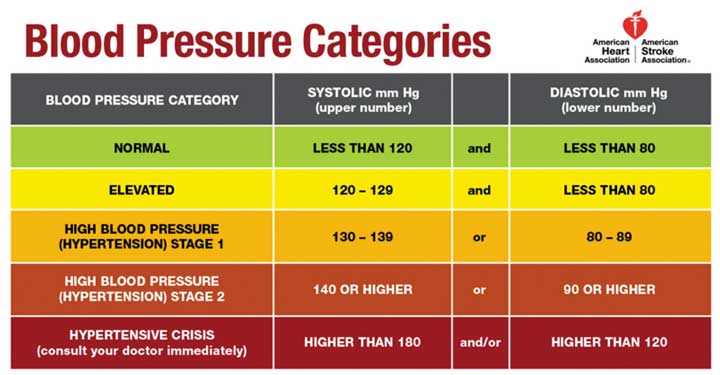
Hypertension is also categorized as either primary or secondary. Primary hypertension applies to most people with high blood pressure, and while the conventional view is that the cause is idiopathic or unknown, it’s typically linked to insulin/leptin resistance. Secondary hypertension refers to high blood pressure that is caused by another medical condition, such as chronic liver disease.
Download this Article Before it Disappears
What’s Your Fasting Insulin Level?
I believe most all Stage 1 and even a high percentage of Stage 2 hypertension can be successfully treated to where drugs become unnecessary, provided you’re aggressive enough in your diet and lifestyle modifications. However, if you have seriously elevated blood pressure, it would be wise to be on medication to prevent a stroke while you’re revising your lifestyle.
In addition to checking your blood pressure on a regular basis, I highly recommend getting a fasting insulin level test done. Remember, high blood pressure and insulin resistance tend to go together, and if your hypertension is the result of elevated insulin levels, you’ll know how to nip it in the bud by the end of this article.
The fasting insulin level you want to strive for is about 2 or 3 microU per mL (μU/mL). If it’s 5 or above, you clearly need to lower your insulin level to reduce your risk of high blood pressure and other cardiovascular health hazards. Keep in mind that the so-called “normal” fasting insulin level is anywhere from 5 to 25 μU/mL. Please do not make the mistake of thinking that this “normal” insulin range equates to optimal.
How to Find a Blood Pressure Measuring Device
According to a 2019 study,7 nearly 46% of American adults could benefit from self-monitoring to avoid “white coat” hypertension. Whether you suspect (or know) you have high blood pressure, an automatic blood pressure meter is a good investment for every household.
Top rated blood pressure meters for home use include the following. Consumer Reports tested these devices for accuracy, comfort, clarity of display and ease of use, and all are commercially available on Amazon and other large retailers and pharmacies:8
- Omron Platinum BP5450
- Omron Silver BP5250
- Omron 10 Series BP7450
- A&D Medical UA767
- Rite Aid Deluxe Automatic BP3AR1-4DRITE
To measure your blood pressure, follow these guidelines:9
- Don’t exercise, smoke or drink coffee or caffeinated beverages within 30 minutes of measuring your blood pressure. Also empty your bladder and relax for at least five minutes beforehand.
- Sit with your back straight on a firm chair. Avoid sitting on the couch as that encourages slouching. Keep your feet flat on the floor and do not cross your ankles or legs.
- Make sure your arm is supported on a flat surface, such as an armrest or table, with your upper arm at heart level.
- Place the blood pressure cuff directly above the bend of your elbow on bare skin. Do not measure on top of clothes. The cuff should be snug but not too tight nor too loose. Press the Start button and remain still while the pressure is being taken.
- Measure your blood pressure at the same time every day, and take multiple readings each time. Ideally, take two readings one minute apart and record the results.
How to Avoid a False Hypertension Diagnosis
To avoid a false hypertension diagnosis, keep in mind that your blood pressure reading can vary significantly from day to day, and even from one hour to the next, so don’t overreact if you get one high reading here or there. It’s when your blood pressure remains consistently or chronically elevated that significant health problems can occur. Several factors can affect the validity of your blood pressure reading, including:
•Incorrect blood pressure cuff size — If you’re overweight, taking your reading with a size “average” blood pressure cuff can lead to a falsely elevated blood pressure reading, so make sure your doctor or health care professional is using the correct cuff size for your arm.
•Incorrect arm position — If your blood pressure is taken while your arm is parallel to your body, your reading can be up to 10% higher than it really is. Blood pressure readings should always be taken with your arm at a right angle to your body.
•Nervousness — “White coat hypertension” is a term used for when a high blood pressure reading is caused by the stress or fear associated with a doctor or hospital visit. This can be a transient yet serious concern. If this applies to you, stress reduction is key.
To decrease your risk of being falsely diagnosed with hypertension in this situation, take a moment to calm down (be sure to arrive for your appointment ahead of time so you can unwind), then breathe deeply and relax when you’re getting your blood pressure taken.
Use Waist-to-Hip Ratio to Assess Your Hypertension Risk
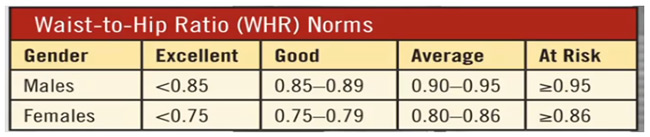
Research suggests your waist size may be an effective measure for assessing obesity-related hypertension risk.10 If you have a high waist-to-hip ratio, i.e., you carry more fat around your waist than on your hips, you may be at an increased risk for obesity-related hypertension. Your waist size is also a powerful indicator of insulin sensitivity, and studies indicate that waist size is one of the most powerful ways to predict your risk for diabetes.
To calculate your waist-to-hip ratio, measure the circumference of your hips at the widest part, across your buttocks, and your waist at the smallest circumference of your natural waist, just above your belly button. Then divide your waist measurement by your hip measurement to get the ratio.
The University of Maryland offers an online waist-to-hip ratio calculator11 you can use. The Mayo Clinic uses the following waist-to-hip ratio designations to evaluate your health risk:
Drugs Can Increase Risk of Fall-Related Injuries
Before I review lifestyle modifications that can help you normalize your blood pressure, I want to address the issue of medications. It’s important to realize that while blood pressure medications can be very effective at lowering blood pressure, they do not in any way, shape or form address the underlying cause.
According to the most recent statistics from the American Heart Association, about 20% of people with hypertension have resistant hypertension, meaning they cannot control it with three or more medications,12 so these drugs clearly don’t work as advertised for a lot of people.
There are also side effects to contend with; some of them quite harmful and/or debilitating. For example, one JAMA study13 found that hypertensive patients over the age of 70 who were taking blood pressure medication increased their risk of serious falls requiring hospitalization due to fractures, brain injuries, or dislocation of the hip, knee, shoulder or jaw.
The risk of falling can increase if your blood pressure drops too low, too suddenly, upon standing. According to the authors:14
“Antihypertensive medications were associated with an increased risk of serious fall injuries, particularly among those with previous fall injuries. The potential harms vs benefits of antihypertensive medications should be weighed in deciding to continue treatment with antihypertensive medications in older adults with multiple chronic conditions.”
Some Blood Pressure Drugs Raise Risk of Blindness
Another major population study discovered that hypertension drugs called vasodilators increase your risk of early onset age-related macular degeneration (AMD), which is the most common cause of blindness among American seniors. As noted in a press release:15
“… [R]esearchers … conducted a long-term population-based cohort study from 1988 to 2013 of nearly 5,000 residents of Beaver Dam, Wis., aged 43 to 86 years …
The researchers found that, after adjusting for age, sex and other factors, using any vasodilator such as Apresoline and Loniten, which open (dilate) the blood vessels — was associated with a 72% greater risk of developing early-stage AMD.
Among people who were not taking vasodilators, an estimated 8.2% developed signs of early AMD. In comparison, among those taking a vasodilator medication, 19.1% developed the disease.
The researchers also found that taking oral beta blockers such as Tenormin and Lopressor was associated with a 71% increase in the risk of neovascular AMD, a more advanced and vision-threatening form of the disease.
Among those who were not taking oral beta blockers an estimated 0.5% developed signs of neovascular AMD. In comparison among those taking oral beta blockers, 1.2% developed neovascular AMD.”
Key Lifestyle Strategies for Lowering Your Blood Pressure
Alright, time to get down to the nitty gritty of normalizing your blood pressure. As mentioned earlier, high blood pressure is typically associated with insulin resistance, which results from eating a diet too high in the omega-6 fat linoleic acid (LA). As your insulin level elevates, so does your blood pressure.
Excessive omega-6/LA consumption is another dietary factor that contributes to high blood pressure by hardening your arteries (atherosclerosis), which researchers now have pinpointed as yet another treatment focus for hypertension.
So, make sure you avoid all trans fats or hydrogenated fats that have been modified in such a way to extend their shelf life. This includes margarine, seed oils and “butter-like” spreads. Of course, this also includes all foods made or cooked with these fats.
The late Dr. Fred Kummerow was the first scientist to document the dangers of trans fats. Trans fats prevent the formation of prostacyclin, which acts as a natural blood-thinning agent. By diligently avoiding trans fats, your body will make prostacyclin that keeps your blood thin, which will reduce your risk of heart attack and stroke.
Now, if you think about these two factors alone — insulin resistance and atherosclerosis — what kind of diet is bound to produce high blood pressure? The answer, of course, is a processed food diet, loaded with high fructose corn syrup, grains and damaged omega-6 fats, a majority of which are LA.
Knowing that, the answer to correcting high blood pressure becomes rather self-evident. If your blood pressure is running high, you need to restore your insulin and leptin sensitivity, and the following strategies are among the most effective for doing so:
1. Replacing processed foods with whole, unprocessed organic foods.
2. Avoiding all seed oils — It would be helpful to also eliminate seeds and nuts unless you have been on a low LA diet for at least three years.
3. Optimizing your vitamin D (which I discuss in greater detail below).
4. Only use healthy fats — Sources of healthy fats to add to your diet include: grass fed butter, raw organic dairy, organic pastured egg yolks, coconuts, coconut oil and macadamia nuts, grass fed meats and pasture-raised poultry.
The best carbs to add would be ripe fruit that you tolerate well. But, the key is to make sure your fat intake is below 30%, which you can determine with Cronometer. If you fail to do this the carbs can convert to fat and change your cholesterol profile unfavorably.
5. Exercising regularly — In an upcoming section, I’ll review the most effective type of exercise if you have high blood pressure.
Vitamin D Can Relax Arteries and Improve Blood Pressure
Vitamin D deficiency and high consumption of harmful omega-6 fats like linoleic acid (LA) can lead to stiff arteries. Vitamin D deficiency appears to be associated with both arterial stiffness and hypertension.16
Each cell in your body has a DNA library that contains information needed to address virtually every kind of stimulus it may encounter, and the master key to enter this library is activated vitamin D. This is why vitamin D functions in so many different tissues and affects such a large number of different diseases and health conditions, one of which is heart disease.
Research17 has shown that the farther you live from the equator, the higher your risk of developing high blood pressure. Blood pressure also tends to be higher in winter months than during the summer. Exposing your bare skin to sunlight affects your blood pressure through a variety of different mechanisms, including the following:
- Sun exposure causes your body to produce vitamin D. Lack of sunlight reduces your vitamin D stores and increases parathyroid hormone production, which increases blood pressure.
- Vitamin D deficiency has also been linked to insulin resistance and metabolic syndrome, a group of health problems that can include insulin resistance, elevated cholesterol and triglyceride levels, obesity, and high blood pressure.
- Vitamin D is also a negative inhibitor of your body’s renin-angiotensin system (RAS), which regulates blood pressure.18 If you’re vitamin D deficient, it can cause inappropriate activation of your RAS, which may lead to hypertension.
- Additionally, exposure to UV rays is thought to cause the release of endorphins, chemicals in your brain that produce feelings of euphoria and relief from pain. Endorphins naturally relieve stress, and stress management is an important factor in resolving hypertension.
Guidelines for Optimizing Your Vitamin D Level
Ideally, you’ll want to get your vitamin D through sun exposure on your bare skin. If you opt for an oral vitamin D supplement, make sure you use vitamin D3, not D2, which is typically prescribed by doctors but has been linked to poorer health outcomes.
Also, make sure to measure your vitamin D level before you start supplementing. The reason for this is because you cannot rely on blanket dosing recommendations. The crucial factor here is your blood level, not the dose, as the dose you need is dependent on several individual factors, including your baseline blood level.
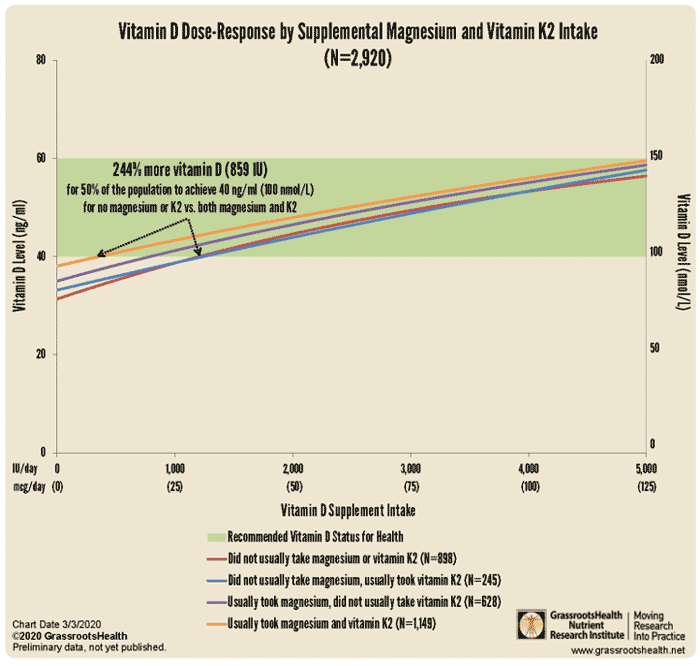
Data from GrassrootsHealth’s D*Action studies suggest the optimal level for health and disease prevention is between 60 ng/mL and 80 ng/mL, while the cutoff for sufficiency appears to be around 40 ng/mL.
In Europe, the measurements you’re looking for are 150 to 200 nmol/L and 100 nmol/L respectively. That said, as a general guideline, research by GrassrootsHealth suggests that adults need about 8,000 IUs per day to achieve a serum level of 40 ng/mL.
I’ve published a comprehensive vitamin D report in which I detail vitamin D’s mechanisms of action and how to ensure optimal levels. I recommend downloading and sharing that report with everyone you know. A quick summary of the key steps is as follows:
1. First measure your vitamin D level — Your doctor can order this test for you.
2. Assess your individualized vitamin D dosage — To do that, you can either use the chart below, or use GrassrootsHealth’s Vitamin D*calculator. To convert ng/mL into the European measurement (nmol/L), simply multiply the ng/mL measurement by 2.5. To calculate how much vitamin D you may be getting from regular sun exposure in addition to your supplemental intake, use the DMinder app.19
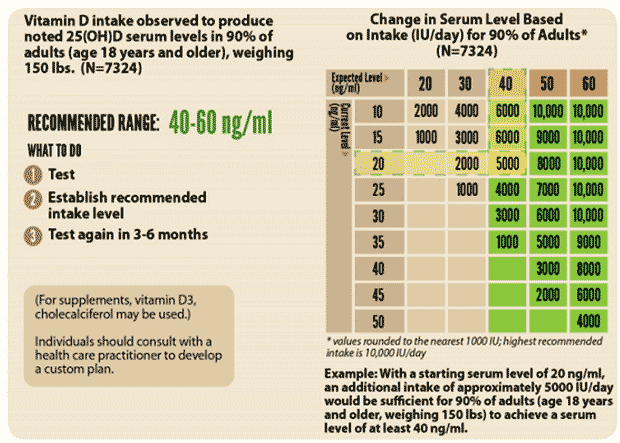
3. Retest in three to six months — Lastly, you’ll need to remeasure your vitamin D level in three to six months, to evaluate how your sun exposure and/or supplement dose is working for you.
Take Your Vitamin D With Magnesium and K2
Keep in mind that if you decide to supplement with oral vitamin D3, you also need to boost your vitamin K2 intake, as these two nutrients work in tandem. Together, vitamin D and vitamin K2 produce and activate Matrix GLA Protein (MGP), which congregates around the elastic fibers of your arterial lining, guarding them against calcium crystal formation.
Vitamin K2 also activates a protein hormone called osteocalcin, produced by osteoblasts, which is needed to bind calcium into the matrix of your bone. Osteocalcin also appears to help prevent calcium from depositing into your arteries.
In other words, without the help of vitamin K2, the calcium that vitamin D so effectively lets in can work against you by building up inside your arteries rather than your bones.
It’s also strongly recommended to take magnesium concomitant with oral vitamin D and K2. Data from nearly 3,000 individuals reveal you need 244% more oral vitamin D if you’re not also taking magnesium and vitamin K2.20 What this means in practical terms is that if you take all three supplements in combination, you need far less oral vitamin D in order to achieve a healthy vitamin D level.
Two Key Factors to Consider When Buying Meat
While some studies suggest a vegetarian diet can help resolve high blood pressure, I do not believe this makes for an ideal diet in the long run, as avoiding all meats can lead to nutritional deficiencies.
From what I’ve learned, I believe the quality and quantity of the meat may be a major part of the equation. First, in terms of quantity, if you eat more protein than your body needs, it will convert most of those calories to sugar. Additionally, it will need to remove the nitrogen waste products from your blood, which will stress your kidneys and deteriorate kidney function if you already have compromised kidneys.
As a general guideline, most adults need about 0.6 to 0.8 grams of protein per pound of lean body mass. (As an example, if your body fat mass is 20%, your lean mass is 80% of your total body weight.)
In terms of quality, meat from organically raised, grass fed and finished animals is far superior to that from animals raised in concentrated animal feeding operations (CAFOs).
CAFO beef and poultry have many disadvantages, including fewer of the most valuable nutrients found in organically raised meats, while being contaminated with hormones, antibiotics, drugs, pesticides and herbicides like glyphosate. Furthermore, since most CAFOs feed animals genetically engineered (GE) grains (primarily corn and soy), there’s also the issue of whether such feed might alter the meat in ways we still have not recognized.
Also, it is best to restrict your meat choices to beef, bison, lamb and other ruminant game animals. It is best to avoid chicken and pigs as, even if pasture-raised and organically fed, they are given grains and other foods that are high in LA so they will increase your LA levels.
Should You Cut Sodium to Lower Your Blood Pressure?
Insulin also affects your blood pressure by causing your body to retain sodium. Sodium retention causes fluid retention. Fluid retention in turn can cause high blood pressure, which may ultimately lead to congestive heart failure.
A standard recommendation if you have high blood pressure is to reduce the amount of sodium in your diet. While it’s certainly beneficial to cut out processed foods and salt, limiting sodium is not the hypertension cure that many think it is.
If you’re simply opting for low-sodium processed foods, you’re hardly doing your health any favors, as such fare is likely compensating for the lack of flavor with harmful fats and/or sugar. You’ve probably heard of the DASH diet,21 which is claimed to be among the most effective for controlling hypertension. It consists largely of fresh vegetables, fruits, lean protein, whole grains, low-fat dairy and very low sodium content.
Processed foods and LA promote hypertension to a far greater degree than excess salt. Salt is essential for maintaining and regulating blood pressure, but the crux lies in the type of salt you consume.
Natural unprocessed salt, such as Himalayan salt, contains 84% sodium chloride and 16% naturally occurring trace minerals. Processed (table) salt, on the other hand, contains 97.5% sodium chloride and the rest are manmade chemicals. The natural, unprocessed form is essential for good health; table salt is best avoided altogether.
But there’s yet another factor that comes into play when we’re talking about sodium and blood pressure, and that’s the issue of maintaining a healthy sodium-to-potassium ratio. Your body needs potassium to maintain proper pH levels in your body fluids, and it also plays an integral role in regulating your blood pressure. In fact, potassium deficiency may be a greater contributor to high blood pressure than excess sodium.
The Importance of Proper Sodium-to-Potassium Ratio
People who eat processed foods frequently and very few fresh fruits and vegetables likely have an imbalance in their sodium-potassium ratio. The key to relaxing your arterial walls and reducing blood pressure is the ratio between sodium and potassium.
If you’re unsure of your sodium and potassium intake, use chronometer.com/mercola, which is a nutrient tracker that allows you to enter foods and then calculates the ratios automatically. Generally, it’s recommended that you eat five times more potassium than sodium.
According to the U.S. Department of Agriculture,22 the average intake of potassium in the U.S. population is 2,640 milligrams (mg) per day. Other surveys have found similar intakes.23 Meanwhile, the National Academies Sciences Engineering Medicine (formerly Institute of Medicine) recommends 4,700 mg per day for people over the age of 14.24
Potassium helps lower your blood pressure by relaxing the walls of your arteries, and according to Harvard Health,25 many people with high systolic blood pressure can successfully lower it simply by increasing their potassium intake.
In my view the absolute best way to increase your potassium is by beating ripe fruit. I typically get around 3,000 mg from watermelon, orange juice and tangerines, and another 2,000 mg from other sources.
For a more complete list of potassium-rich foods, see DietaryGuidelines.gov’s “Food Sources of Potassium” page.26 Taking potassium supplements is not a good strategy and simply will not provide you with the benefits you seek.
The Best Exercises for High Blood Pressure
Exercise is well-known for its ability to normalize blood pressure, but all forms of exercise are not the same in this regard. Existing exercise guidelines for blood pressure management emphasize cardio, such as running and cycling.
But, a recent investigation revealed that isometric exercise, where your muscles are in static contraction, is the most effective for lowering blood pressure, while aerobic exercise is next to last in terms of effectiveness.
A July 2023 meta-analysis27 reviewed 270 randomized controlled trials published between 1990 and February 2023 that reported reductions in systolic blood pressure (SBP) and/or diastolic blood pressure (DBP) following an exercise intervention of two weeks or more, with a pooled sample size of 15, 827 people. In rank order, the analysis found significant reductions in resting SBP and DBP following:
- Isometric exercise (–8.24/–4.00 mmHg)
- Combined training (–6.04/–2.54 mmHg)
- Dynamic resistance training (–4.55/–3.04 mmHg)
- Aerobic exercise (−4.49/–2.53 mmHg)
- High-intensity interval training (–4.08/–2.50 mmHg)
Effectiveness based on the “surface under the cumulative ranking curve” (SUCRA) values for systolic — which refers to the mean probability of being the best for lowering your systolic blood pressure — placed isometric exercise in the No. 1 slot with an effectiveness rating of 98.3%, followed by combined training (75.7%), dynamic resistance training (46.1%), aerobic exercise training (40.5%) and high-intensity interval training (39.4%).
In secondary meta-analyses of submodes, the wall squat was the most effective for reducing SBP, while running was most effective for reducing DBP. In conclusion, the authors noted:28
“Various exercise training modes improve resting blood pressure, particularly isometric exercise. The results of this analysis should inform future exercise guideline recommendations for the prevention and treatment of arterial hypertension.”
The key take-home is that static contraction of muscle as you hold your body in one position, i.e., isometric exercise, is the most effective type of exercise if you want to lower your blood pressure. Examples of isometric exercises include the following.29,30,31 For more details, including exercise instructions, see “Which Exercises Are Best for Lowering Blood Pressure?”
| Wall squat | Isometric calf raise | Planking |
| Hollow-body hold | Low isometric squat | Static slide lunge |
| Overhead hold | Iso hang | Glute bridge |
| Incline pushup hold | V-sit | Single-leg stand |
Addressing Stress-Related Hypertension
Although many people believe that the “tension” part of hypertension refers to stress as the cause, the primary cause is, as previously mentioned, insulin and leptin resistance. That said, the link between stress and hypertension is well-documented.
In fact, it has been shown that people with heart disease can significantly lower their risk of a cardiac event by learning to manage their stress. Suppressed negative emotions such as fear, anger and sadness can radically increase your cortisol levels and severely limit your ability to cope with the unavoidable everyday stresses of life.
It’s not the stressful events themselves that are harmful, but your lack of ability to cope. The good news is, strategies exist to rapidly and effectively transform your suppressed, negative emotions, and relieve stress.
One of the most well-studied of these is an energy psychology method called the Emotional Freedom Techniques (EFT). By teaching your body to slow down and relax when stress hits — essentially short-circuiting your physical stress reaction — you can protect your health. EFT is easy to learn and can be done just about anytime, anywhere. For a demonstration, see the video below.
Other Helpful Strategies
In addition to everything already mentioned, there are still more dietary and lifestyle strategies that can be of help if you struggle with high blood pressure. Here are several additional alternatives for your consideration:
| Avoid caffeine — The connection between coffee consumption and high blood pressure is not well understood, but there is ample evidence to indicate that if you have high blood pressure, coffee and other caffeinated drinks and foods can exacerbate your condition. |
| Supplement with vitamins C and E — Studies indicate that vitamins C32 and E33 may be helpful in lowering blood pressure. If you’re eating a whole food diet, you should be getting enough of these nutrients through your diet alone.
Unless you have radically lowered your LA tissue levels, it is vital to take the correct vitamin E supplement until you do, as it will limit the damage that LA can cause. I consider it to be one of the three most important supplements you can take. It is also helpful in lowering dangerous estrogen levels in your body that can increase your risk of cancer. If you decide you need a supplement, make sure to take a natural (not synthetic) form of vitamin E. You can tell what you’re buying by carefully reading the label. Natural vitamin E is always listed as the ‘d-‘ isomer (d-alpha-tocopherol, d-beta-tocopherol, etc.) Synthetic vitamin E is listed as ‘dl-‘ isomers. |
| Eat more fruit and berries — In what researchers called the first-of-its-kind study in the U.K., scientists used objective measures for dietary intake across thousands of residents, using data for 25,618 people in Norfolk, U.K., and compared the data against their blood pressure measurements.34
The difference in blood pressure between those with the lowest 10% of flavanol intake and those with the highest 10% of intake was between 2 and 4 mmHg. According to the authors, this was comparable to the difference measured when a person switched to a Mediterranean diet or the Dietary Approaches to Stop Hypertension (DASH) diet. Because fruit contains fructose, it can increase your risk of insulin resistance if you eat large amounts; examples of lower fructose fruits that are beneficial for most people include avocados, berries, kiwi and citrus fruits. |
| Quercetin — Quercetin has also been shown to lower blood pressure. Quercetin is a flavonol found in red grapes, onions, red leaf lettuce, elderflower and green tea, to name a few.35
According to a Japanese study,36 quercetin helps lower blood pressure by modifying vascular compliance and resistance, total blood volume and the autonomic nervous system. It also appears to have a unique ability to regulate gene expression that is mediated by controlling negative chloride actions in the cell’s cytosol. Negative chloride ions help control the intracellular activity of many other ions in the cytosol, which is the water-based fluid that surrounds intracellular structures. The gene expression that controls the chloride ions triggers sodium reabsorption, which then reduces body fluid volume and therefore influences volume-mediated high blood pressure. The researchers noted several past studies that demonstrated taking between 150 mg per day and 730 mg per day could lower high blood pressure, decreasing both systolic and diastolic pressures. |
| Supplement with magnesium — Magnesium is also important for healthy blood pressure and few people get enough from their diet these days. Hundreds of studies and scientific papers show there’s a clear correlation between magnesium and high blood pressure.
Magnesium stored in your cells relaxes muscles. If your magnesium level is too low, your blood vessels will constrict rather than relax, and this constriction raises your blood pressure. According to a 2011 paper37 in The Journal of Clinical Hypertension, magnesium intake of 500 mg to 1,000 mg per day may reduce blood pressure by as much as 5.6/2.8 mmHg. Its blood pressure lowering effects are most pronounced when potassium intake is also high, and sodium intake low. Magnesium also boosts the effectiveness of “all antihypertensive drug classes,” according to this paper. Magnesium-rich foods38 include baked potato and white rice, just to name a few. That said, the magnesium content of most foods is dwindling due to the destruction of soils, so it’s one nutrient that I recommend taking as a supplement. |
| Engage in inspiratory muscle strength training (IMST) — Strengthening your breathing muscles with IMST can also be helpful. IMST was originally developed for critically ill patients with respiratory diseases. It helped to improve the strength of their inspiratory muscles by using a handheld device that provides resistance while inhaling.
A 2021 study39 evaluated the effect that IMST could have on reducing blood pressure and thus reducing the risk of cardiovascular disease. Thirty-six adults aged 50 to 79 who had above normal systolic blood pressure were enrolled. Half the participants used high resistance IMST and the other half used low resistance IMST for six weeks. At the end of the intervention, the group using high resistance had a nine-point reduction in their systolic blood pressure. The daily training consists of 30 breaths a day. The breathing exercise takes just five to 10 minutes a day, with benefits noticeable within two weeks. You can learn more about this in “Breathing Exercise Could Reduce Blood Pressure.” |
Take Control of Your Blood Pressure
The best treatment strategy for high blood pressure is to evaluate your lifestyle and make the necessary adjustments, with particular emphasis on normalizing your insulin and leptin levels. We’ve covered a lot of ground in this report, so here’s a summary of key points to remember:
| In addition to checking your blood pressure, check your fasting insulin level. A healthy level to strive for is about 2 μU/mL or 3 μU/mL. |
| Swap out processed foods for whole foods and implement TRE. Also consider going organic. Meats should ideally be grass fed and pasture finished. Foods notorious for causing blood pressure to rise and that should be avoided include processed foods, most grains, partially hydrogenated oils (synthetic trans fats), and seed oils (aka vegetable oils) such as corn, canola, soy and safflower oils.40 |
| Keep an eye on your sodium-to-potassium and omega-3-to-omega-6 ratios. This is automatically done if you swap processed foods for whole foods and make sure you are eating plenty of ripe fruit that you enjoy and is adjusted to your activity rate and fat intake. |
| Optimize your vitamin D level, ideally through regular sun exposure. |
| Exercise regularly, and make sure you include isometric (static contraction) exercises such as wall squats and planking. |
| Learn how to effectively address day-to-day stress. One effective stress management tool is the Emotional Freedom Techniques (EFT). |
- 1, 3 HHS.gov Estimated Hypertension Prevalence, Key Findings Bullet One
- 2 Heart.org Health Threats from High Blood Pressure
- 4 Diabetology & Metabolic Syndrome 2014; 6: 12
- 5 AJMC.com, JNC 8 Hypertension Guidelines: An In-Depth Guide
- 6 Harvard Health November 16, 2021
- 7 Hypertension June 24, 2019; 74: 399-406
- 8 Consumer Reports Best Blood Pressure Meters February 3, 2023
- 9 Heart.org How to Use a Blood Pressure Monitor
- 10 Canadian Journal of Cardiology September 2012: 28(5); S122
- 11 University of Maryland, Waist to Hip Ratio Calculator
- 12 Harvard Health August 1, 2023
- 13, 14 JAMA Internal Medicine 2014;174(4):588-595
- 15 EurekAlert! May 28, 2014
- 16 Vitamin D Council, Hypertension
- 17 Hypertension. 1997; 30: 150-156
- 18 J Steroid Biochem Mol Biol. 2004 May;89-90(1-5):387-92
- 19 DMinder app
- 20 GrassrootsHealth Magnesium and Vitamin K2 Combined Important for Vitamin D Levels
- 21 N Engl J Med 1997; 336:1117-1124
- 22 U.S. Department of Agriculture Food Research Group, Potassium Intake of the U.S. Population
- 23 Nutrition Today September-October 2018; 53(5): 184-195
- 24 National Academies Sciences Engineering Medicine Table S-3
- 25 Harvard Health Publishing, January 23, 2017
- 26 DietaryGuidelines.gov Food Sources of Potassium
- 27 British Journal of Sports Medicine July 25, 2023 DOI: 10.1136/bjsports-2022-106503
- 28 British Journal of Sports Medicine July 25, 2023 DOI: 10.1136/bjsports-2022-106503, Conclusion
- 29 Vertimax
- 30 US News June 15, 2020
- 31 Vertimax 20 Isometric Exercises
- 32 American Journal of Clinical Nutrition 2012 May; 95(5): 1079–1088
- 33 Journal of Human Hypertension 2019; 33: 499-507
- 34 Scientific Reports, 2020;10(1)
- 35 Superfoodly, 100 Quercetin Foods
- 36 Molecules, 2017;22(2)
- 37 The Journal of Clinical Hypertension November 2011; 13(11): 843–847
- 38 Cleveland Clinic Magnesium-Rich Foods
- 39 Journal of the American Heart Association, 2021;10:e020980
- 40 Dr. Sinatra, What is the Best Heart Healthy Diet Plan?
Evidence-Based Homeopathic Family Medicine
Reproduced from original article:
https://articles.mercola.com/sites/articles/archive/2023/07/23/evidence-based-homeopathic-family-medicine.aspx
The original Mercola article may not remain on the original site, but I will endeavor to keep it on this site as long as I deem it to be appropriate.
Analysis by Dr. Joseph Mercola Fact Checked July 23, 2023
STORY AT-A-GLANCE
- The principles of homeopathy were originally developed by Dr. Samuel Hahnemann (1755-1843), a German physician to the Royal family, and are based in the law of similars, also known as “like cures like”
- In 1900, homeopathy was a leading therapy in the U.S., with 22 homeopathic medical schools. This began changing when, in 1901, the Rockefeller Institute for Medical Research was established, and in 1910 when the Carnegie Foundation in secret collaboration with the AMA published the “Flexner Report”, with the aim of replacing homeopathy and herbs with chemical drugs
- The more a medicine undergoes a specific pharmacological process of “potentization,” that is, serial dilution with vigorous shaking, the more effective and long-lasting it is, as nanodoses are able to penetrate the blood-brain barrier and cellular membranes with greater ease
- There are more than 300 double-blind and placebo-controlled trials published in peer-reviewed medical journals, including The Lancet, The British Medical Journal, Pediatrics, Rheumatology, the journal Cancer and many others
- According to the U.S. Food and Drug Administration, some homeopathic remedies contain no active ingredient, yet it still claims homeopathic remedies can be dangerous
Editor’s Note: This article is a reprint. It was originally published December 2, 2018.
Homeopathy has been a form of medicine for hundreds of years. Dana Ullman, whose father was a medical doctor, a pediatrician and allergist, has dedicated a significant portion of his professional life to the practice of homeopathy. Ullman was introduced to this medical art as a junior at University of California (UC) Berkeley, in 1973.
“A Stanford-trained doctor and a male midwife created a group of people to study homeopathy together: three doctors, two nurses, two yoga teachers, a dentist and several laypeople. We met weekly for five years. Towards the end of that, I was honored to be arrested for practicing medicine without a license. That was in 1976.
We won an important court case settlement by differentiating medical care from health care. We made it clear that I wasn’t treating a disease. I was treating a person with a disease.
The courts agreed that was a reasonable interpretation, and that as long as I have written contracts with my patients that differentiate medical care from health care, as long as I refer patients for medical care, which is not what I am providing, then it can work out. I’ve been doing that ever since,” Ullman says.
Definition of Homeopathy
The principles of homeopathy were originally developed by Dr. Samuel Hahnemann (1755-1843), a German physician to the Royal family, and are based in the law of similars, also known as “like cures like.”
“Homeopathy is a type of natural medicine that uses nano-doses, really small doses of plants, minerals, animals and chemicals,” Ullman explains. “We look to find whatever toxicological symptoms that substance causes. Once you know what syndrome or symptom a substance causes in the toxic dose, you can use specially prepared nano-sized doses of that substance to treat the syndrome that it causes.
The logic of that … [is that] your body does whatever it can to survive. Your symptoms are not the result of breakdown. Your symptoms are the result of that doctor inside of you that is trying to defend you and is trying to heal you. Your symptoms are part of your defenses.
And the very word, ‘symptom’ means sign or signal, and symptoms are just that. They’re signaling us that something’s wrong. Instead of turning off that signal, in homeopathy, you turn into the skid.
One of the things that your driver’s education teacher probably taught you is that when you skid, you turn into the skid — that’s the best way to get control of the vehicle and come to a stop more easily …
In about 20 percent of our patients with chronic illness, [there’s] a healing crisis at first, where their symptoms get worse … in the first 48 hours. Sometimes they re-experience old symptoms they haven’t had in many months, years or even decades … Especially, it brings out skin problems, or women might have an early menstruation that will be clotted, because it’s almost like they’re going through detox.
When they begin talking about old symptoms coming back, those symptoms were typically treated in an allopathic way, and thus suppressed. One of the things people have to understand is that when we say conventional medicines work, all too often, that’s the bad news.
That means they were effective in suppressing a symptom and a disease, and from a homeopathic point of view, the reason there’s more mental illness, more cancer and heart disease, chronic fatigue and immune dysfunction is because we treat illness in a suppressive way.
Our body-mind is so brilliant that it does whatever it can to defend itself and heal. Whatever symptoms we’re having are the best effort of our body at that time to defend ourselves. If we cut off that defense, then it’s like the body surrenders, and our body gets suppressed and then develops a new serious syndrome.”
Homeopathy Was a Leading Medical Treatment Until 1901
In 1900, homeopathy was the leading alternative therapy in the U.S., with 22 homeopathic medical schools, including Boston University, University of Michigan, Ohio State, University of Minnesota, University of Iowa and New York Medical College, which at the time was called New York Homeopathic Medical College.
All of this changed when, in 1901, the Rockefeller Institute for Medical Research was established, and in 1910 when the Carnegie Foundation (in secret collaboration with the A.M.A.) published the “Flexner Report,” with the aim of replacing homeopathy and other natural medicines, such as herbs, with chemical drugs.
Ullman also delves into some of this backstory in this interview so, for more, listen to the audio or read through the transcript. Here’s just one sordid tidbit:
“In 1860, homeopathy was beginning to gain a lot of traction. Homeopathy was already appreciated by the smartest people in America, most of the literary greats — the transcendentalists, from Mark Twain to William James, Emily Dickinson, Louisa May Alcott and Harriet Beecher Stowe — they were all big advocates for homeopathy.
The American Medical Association was so threatened that they wrote into their ethics code that if any conventional doctor simply consulted with a homeopath on a patient, they would lose their membership in the AMA. In the 1860s, that meant you lost your medical license until, finally, the homeopaths organized and created a separate medical board. So, at least if you got your license revoked from the AMA, you could go to the homeopaths.”
Download this Article Before it Disappears
Homeopathy Basics
Homeopathic remedies are essentially nanomedicines. A 2012 study published in the journal Langmuir, published by the American Chemical Society (ACS), tested six homeopathic medicines — gold, silver, copper, tin, zinc and platinum — at three different dilutions:
- 1 to 100, six times
- 1 to 100, 30 times
- 1 to 100, 200 times
There’s a principle in chemistry that says if you dilute something 1 to 100, 12 times, none of the original molecules will remain. This is a mathematical estimation, which turns out to be untrue. Ullman explains:
“What actually goes on is this — and it’s quite amazing. In homeopathy, we use test tubes made out of glass … because we thought glass was inert. But guess what, it isn’t.
Modern spectroscopy [shows] that if you take double-distilled water, which is the highest pharmaceutical-grade water presently known … [and] shake it vigorously in a glass container, the nanobubbles [hit] the side walls, and six parts per million of silica fragments fall off into the water.
The vigorous shaking, the 40 shakings, create turbulence and increase the water pressure to what the head of Stanford’s Department of Material Science estimated to be at 10,000 atmospheres … What that means is that whatever you’re making into a medicine will be pushed into these silica fragments.
Then, when you dump out 99 percent of the water to make a dilution, a lot of the fragments cling to the glass walls. This ACS study found that no matter how many times you did these dilutions [fragments remain]. Three different types of spectroscopy measured the original gold, silver, copper, tin, zinc or platinum in the water.
And guess what? Our body’s hormones and a lot of our neurotransmitters operate at nano-dose levels. They actually found nano-doses of each of these substances, no matter how many times they did these dilutions …
Whenever you see a homeopathic medicine that says 6 X — X is a Roman numeral for 10 — that means it was diluted 1 to 10, six times, 12 times or 30 times. When it has a C after it, that’s a Roman numeral for centesimal. That means it was diluted 1 to 100. Two C’s would be 1 to 1,000. M stands for 1,000. That means it was diluted 1 to 100, 1,000 times. Now we even have 50,000, 100,000 [times] and even more.
Over 200 years of clinical experience by tens of millions of patients, we have consistently found that the more these medicines go through this potentization process, the longer they act, the deeper they act, and the less doses are needed.”
Less Is More
In other words, the more diluted the medicine is, the more effective it becomes. While this may sound incredibly paradoxical to the modern mind, there’s a good explanation for it. One is the simple fact that these nano-doses are able to penetrate the blood-brain barrier, entering into deeper recesses of the brain.
These nanoparticles can also enter cellular membranes with greater ease without triggering a defense mechanism. A more concentrated dose can set off a proverbial alarm in the cell, causing the membrane to lock itself down to prevent the foreign substance or toxin from entering.
“Once it’s inside the brain, the body realizes ‘We’ve just been infiltrated by lead, silver or gold,’ and says, ‘How do I get rid of it?’ When a patient has the symptoms of gold or of the substance that they’re having, the body then has a powerful immunological reaction that begins to heal it,” Ullman explains.
Another major benefit is the fact that there are no side effects. Were you to select the wrong remedy, nothing happens. There’s no reaction — no benefit, but also no adverse effect.
Is There Scientific Evidence That Homeopathy Works?
The media will typically tell you there’s no evidence that homeopathy works. In reality, there are more than 300 double-blind and placebo-controlled trials published in peer-reviewed medical journals, including The Lancet, The British Medical Journal (BMJ), the journal of Pediatrics; the Chest (the journal of the American College of Chest Physicians); Cancer (the journal of the American Cancer Society); Rheumatology (the journal of the British Society for Rheumatology); Pediatric Infectious Diseases Journal, and many more.
“Many of the best journals in the world have published positive studies on homeopathy,” Ullman says. “So, whenever you hear people say there’s no evidence that homeopathy works, they are either misinforming you or directly lying.
You have to realize that it’s a lie, and then you also have to remember that Big Pharma advertises on TV news so that they can own the news … That’s one reason why we’re not getting accurate information about natural therapies and about the importance of vaccine safety. It’s because Big Pharma really runs and owns the news …
And if you think conventional medicine is scientific, please know statistics show that, last year, enough drugs were prescribed to give every man, woman and child in America 13 prescription drugs. Yet there’s no evidence of safety or efficacy of multiple drugs together. They don’t do science that way. Conventional medicine is standing on Jell-O. The evidence base is really limited.”
The AMA has also gone to great lengths to keep homeopathy suppressed, and if it weren’t for the AMA, there’d be a whole lot more scientific research backing homeopathy. Here’s just one of the stories Ullman recounts in this interview:
“We’re all familiar with the Sloan Kettering Foundation. What people don’t know was that Charles Kettering was a big advocate for homeopathy. Kettering was vice president of General Motors (GM). Alfred Sloan was president of GM, but Kettering was the inventor. He was the one that developed the electric battery. Delco battery was his company.
In 1920, he gave $1 million to Ohio State University for their homeopathic medical schools’ research department.
Wouldn’t you know it, a month later, one of the key members of the AMA went to meet with the president of Ohio State and gave him an ultimatum, saying that unless you return that million dollars back to Kettering, the AMA would reduce the grade of Ohio State’s allopathic conventional medical school (Ohio State had a homeopathic medical school and an allopathic one).
As it turns out, the president of Ohio State returned the million dollars to Kettering. That was supposed to go to homeopathic research. Once again, a million dollars in 1920 money is like a billion dollars today.”
The Irrational Stance of FDA
When it comes to the U.S. Food and Drug Administration (FDA), its stance on homeopathy is irrational to say the least, because on the one hand, it claims there’s no active ingredient in some homeopathic medicines, in other words, it’s essentially a placebo, yet on the other hand it claims homeopathic remedies are dangerous.
As explained by Ullman, the FDA was created in the early 1900s, but the agency really wasn’t empowered until 1938, during Franklin D. Roosevelt’s reign, when New York senator Dr. Royal Copeland wrote the Federal Food, Drugs and Cosmetics (FD&C) Act of 1938, which charged the FDA with the regulation of drugs. Ullman offers the following bit of historical background:
“Royal Copeland was not just a senator. He was a medical doctor — a homeopathic physician. He was the dean of the New York Homeopathic Medical College. Before that, he was the mayor of Ann Arbor, where he grew up. He was a professor at the University of Michigan, which had a homeopathic department.
A part of this legislation gave recognition to homeopathy on par with the United States Pharmacopoeia. The United States Pharmacopoeia and the Homeopathic Pharmacopoeia were on equal footing. Then, in the late ‘70s, the FDA deemed that homeopathic medicines are primarily over-the-counter drugs, because they’re so basically safe, you don’t need a doctor’s prescription to use them.
Up until that time, the FDA and the homeopaths had a good working relationship. In fact, up until literally a year or two ago, we had a good working relationship in that our medicines were allowed. There were certain [homeopathic] medicines that only medical doctors and naturopathic physicians were allowed to prescribe due to dose issues. We’re fine with that too. But the vast majority were over-the-counter drugs.
However, in the last year or two, as a result of pressure brought by Big Pharma and skeptics of homeopathy, they began to change the regulations. We don’t know with specificity what they are planning to do. They’re saying now that they’re changing it from the present model to what’s called risk-benefit model.
Because their position is that homeopathy provides no benefits, we are concerned they’re going to find little risks in different things, like they did with Standard or Hyland’s Homeopathic teething tablets … We’re now waiting for them to come out with the specifics of their [new] guidelines.
We’ve written to them, many of us, in detail, making our recommendations. We’re now ready for them to respond … They say they’re going to maintain most of the homeopathic remedies, but I am worried they may reduce access to what are called homeopathic nosodes.
Nosodes are homeopathic medicines, super diluted, made from different bacteria and viruses. Right now, only medical doctors, naturopathic doctors and professional homeopaths have access to these nosodes. I’m fine with that. But it would be a real problem [if they were taken away].”
Homeopathy Versus Drugs
Again, it’s worth remembering that the FDA must approve all pharmaceutical drugs, and the average American is often taking of several simultaneously — many of which have flimsy justification for their use at best. Drugs, as a general rule, never treat underlying causes. They treat symptoms by suppressing them.
The insanity of this model is evidenced by the fact that drugs, when properly taken as perscribed, kill an estimated 106,000 Americans each year. Yet, in the name of “protecting public health,” the FDA claims homeopathic remedies may need to be reined in because they might be dangerous, but also claim that some have no active ingredients. Some preparations do contain active ingredients in concentrations sufficient to have physiological effects. As noted by Ullman:
“Here’s where your bullshit detectors need to go up, because it’s so obvious that homeopathic medicines are safer. To reduce access … to the safe medicines, and yet have complete access to so many conventional drugs, which are so dangerous, would be the epitome of a ‘doctatorship.’ That’s a word I developed.
There is also what I call ‘medical chauvinism.’ There’s the assumption that there’s only one way to heal people. You and I, and I bet every other person listening to this, knows there are other methods. We need to stand up for ourselves.”
Merck downplayed risk of suicide and depression caused by its popular asthma drug, lawsuit alleges
Reproduced from original article:
https://www.naturalhealth365.com/merck-downplayed-risk-of-suicide-depression-caused-by-its-popular-asthma-drug-lawsuit-alleges.html
by: July 3, 2023
 (NaturalHealth365) Depression is indeed a significant and widespread mental health issue, affecting millions of people around the world. It can be challenging for individuals to openly discuss their struggles with depression due to various reasons, including societal stigma and fear of judgment. While some individuals may attempt to mask their pain using substances like alcohol or marijuana, these are not effective or healthy long-term solutions for managing depression.
To make matters worse, not enough people understand that many medications actually contribute to the growing depression problem. As an example, a lawsuit alleges an asthma drug made by Merck has the potential to cause depression or even suicide, yet the pharmaceutical company allegedly downplayed those risks.
Details of the lawsuit filed against Merck
The lawsuit alleges that Merck’s executives knew that its asthma drug, Singulair, might cause youngsters to become depressed and commit suicide yet concealed those risks for corporate financial gain.
Though Merck’s corporate attorneys sheepishly hid behind the legal liability cover of the doctrine of federal preemption that states federal regulations and federal law supersede the laws of the states, the parents of the affected children are relentless in their quest for justice. Those parents have patiently waited decades for the lawsuit to reach its current stage.
Merck allegedly failed to provide asthma patients and their parents with due care
Merck executives are alleged to be negligent, meaning they did not uphold their duty of care to patients using Singulair. The lawsuit alleges several dozen individuals, including some kids, were diagnosed with severe brain problems or committed suicide after using Singulair to treat asthma and/or allergies.
If the plaintiffs’ attorneys are successful, they will overcome Merck’s corporate defense team’s delays and doctrine of federal preemption legal defense, proving the allegation that the pharmaceutical company knew the drug compromised brain health yet still brought it to market. The text of the lawsuit alleges that the medication blocks the leukotrienes chemicals within the body that precipitate asthma and spur additional respiratory issues, including airway inflammation.
The harmful side effects were formally submitted to the United States Food and Drug Administration (FDA) in 2019. However, those side effects might have been known by Merck’s brass years or even decades before concerned parents reported them. If the plaintiffs win the lawsuit, they will likely be awarded damages for negligence and wrongful death.
Tips to support lung health without resorting to Big Pharma pills
You can cleanse your lungs without the assistance of a pharmaceutical corporation. Clear out your passageways and lungs with steam therapy or a nebulizer at least once per week. Controlled coughing, in which you intentionally cough deeply, eliminates toxins that have accumulated in mucous.
If you know or suspect your lung health is poor due to excess mucous, deep coughing might not be enough. Consider postural drainage with the guidance of a doctor to enhance breathing and prevent infections. Don’t forget to exercise! Consistent exercise forces muscles to work, heightening the breathing rate and moving oxygen throughout the body.
Green tea also helps decrease lung inflammation. Green tea’s antioxidants reduce inflammation, possibly even helping to protect lung tissue from the harm caused by smoke inhalation. And, finally, excess mucus can be created by eating too many conventional dairy products (i.e. cheese and milk) plus processed sugars. Try eliminating certain foods that create mucus build up and inflammation to see if that helps you to breath better.
Sources for this article include:
Black cumin plus vitamin D equals a top antiviral combination
Reproduced from original OMNS article (OrthoMolecular News Service):
http://orthomolecular.org/
Subscribe to the free Orthomolecular Newsletter: http://orthomolecular.org/subscribe.html
Go to the OMNS Archive: http://orthomolecular.org/resources/omns/index.shtml
Orthomolecular Medicine News Service, June 1, 2023
The remarkable clinical versitility of Nigella sativa
by Max Langen
OMNS (June 1, 2023) Nigella sativa, also called black cumin, is one of the most important medicinal plants. Its seeds (sometimes called “black seeds”) have been used for thousands of years as a spice and condiment, and in several traditional medicine systems to treat a wide range of diseases. This plant is described and acknowledged in ancient medical and religious literature. The Bible mentions Nigella sativa as “Curative black seed,” and it is also known as prophetic medicine, since Prophet Muhammad, the founder of Islam, referred to it as “cure for every disease except death.” It was mentioned in Chinese and Indian traditional medicine and was also described in traditional Arab and Islamic medicine. [1-3]
The biochemical content of nigella sativa seeds includes oils (30-40%), essential oils including thymoquinone, nigellidine, and PUFAs, and many other proteins (~25%), minerals, fatty acids, alkaloids, sterols (alpha-hederine), phenolics, flavonoids, and saponins. Recent clinical studies have shown that seeds of nigella sativa and their major compounds including thymoquinone have strong immunomodulatory, anti-inflammatory, anti-oxidant, antiviral, antibacterial, antimalarial, antifungal, antihistaminic, anticancer, antidiabetic, anti-epileptic, anti-asthmatic, anti-allergic, antitussive, anticoagulant, analgesic, cardioprotective, hepatoprotective, gastroprotective and neuroprotective effects, among others. [1-3]
Nigella sativa has shown in several studies to be highly effective for the prevention and treatment of Covid-19, massively reducing severe outcomes and mortality. Many could still be alive had this therapy not been widely ignored. Also, the combination of nigella sativa and vitamin D has shown to be remarkably effective in the clearance of a viral infection.
Before looking more closely at those impressive results from studies on Covid-19, here are short summaries of what recent clinical studies have shown about the healing effects of nigella sativa for other conditions, including other infectious diseases. As of April 2023, there are more than 1900 scientific publications on nigella sativa. More than 90 randomized controlled trials (RCTs) and meta-analyses of RCTs have been published to date that tested the effectiveness of nigella sativa for various diseases and health outcomes, with a large majority of them showing clear benefits. This evidence suggests that nigella sativa could be used as an effective (adjuvant) treatment to improve many conditions. RCTs, often placebo-controlled, or meta-analyses of RCTs have shown that nigella sativa, often administered as capsules with 1000 or 2000 mg of nigella sativa seed oil, or pharmaceutical powder of the seeds (and sometimes given in other forms, for example as pure, non-powdered nigella sativa seeds or as topical ointment/gel application) can effectively:
- reduce hypertension by lowering both systolic and diastolic blood pressure. [4]
- support achieving and maintaining a healthy weight in overweight individuals by helping to moderately reduce weight and body mass index. [5]
- treat metabolic syndrome, by reducing body mass index, waist circumference and body fat percentage, fasting glucose and lipid levels. The combination of nigella sativa + turmeric was even more effective. [6]
- improve glucose status in patients with type 2 diabetes, by decreasing fasting plasma glucose, postprandial glucose and long term glucose (HbA1c) levels. [7] In patients with prediabetes, it reduces glycemic and anthropometric parameters just as effectively as the drug metformin. [8]
- decrease blood lipid levels, including total cholesterol, very low density cholesterol, LDL cholesterol and triglycerides for individuals with excessive levels. [9]
- treat nonalcoholic fatty liver disease by improving the grades of liver steatosis, injury and fatty liver. Various liver and cholesterol parameters improved. [10,11]
- increase total antioxidant capacity and reduce oxidative stress. [12]
- reduce inflammatory processes (especially hs-CRP and TNF-alpha), suggesting that it decreases chronic inflammation. [12] Of note, chronic low-grade inflammatory processes are important causes of most diseases and conditions including cancer.
- improve cardiovascular health and therefore reduce the risk of cardiovascular diseases via many different mechanisms (incl. reduction of hypertension, cholesterol and body weight, glucose regulation, reduction of silent inflammation and oxidative stress etc.) In patients at increased risk of cardiovascular disease, it also improved flow-mediated dilation, the level of nitric oxide, and lowered mean arterial pressure and heart rate, [13,14] suggesting that it can greatly stabilize the health of the cardiovascular system.
- improve kidney parameters, suggesting that it may help maintain or increase health of the kidneys. [9] In patients with (advanced) chronic kidney disease (stage 3 or 4) due to diabetic nephropathy, it reduced blood glucose and improved kidney parameters incl. serum creatinine and glomerular filtration rate etc. suggesting that it may stop the progression of kidney disease or even help reverse it. [15] An additional study confirmed that patients with advanced kidney disease greatly improve by nigella sativa. The addition of nigella sativa to the treatment protocol caused a “marked improvement” in clinical features and kidney parameters. [16]
- dissolve kidney stones. In the nigella sativa group, 44% of patients excreted their kidney stones completely, and in a further 52% the size of the stones was reduced. In the placebo group, only 15% excreted their stones, 12% had a reduction of stone size, and 15% even had an increase of stone size. [17] This suggests nigella sativa may also prevent kidney stone formation.
- improve Hashimoto thyroiditis, which is one of the most common autoimmune diseases. TSH, antibodies against the thyroid and vascular endothelial growth factor decreased, while the thyroid hormone T3 level increased, suggesting that it helps reverse the disease, strengthens the health of the thyroid and may also be an effective treatment for autoimmune diseases in general. [18] As will be shown below, nigella sativa has already shown to be effective for several autoimmune conditions: rheumatoid arthritis, ulcerative colitis, psoriasis, vitiligo and asthma.
- decrease the severity of rheumatoid arthritis. Swollen joints and morning stiffness were also reduced. [19]
- reduce stool frequency in patients with ulcerative colitis. [20]
- improve psoriasis. Both oral and gel administration of nigella sativa were effective in most patients and led to improvements after several weeks of treatment. However, the combination of both oral and gel administration led to the best outcomes. 55% of psoriasis patients who received this combination achieved a good response. Further, 30% even had an excellent response or achieved a complete cure. Of note, if the treatment was stopped, the condition returned in some patients, indicating that it may be helpful for these patients to continue the treatment. [21]
- treat vitiligo (patchy skin pigmentation). Nigella sativa (as a gel application) was more effective than fish oil in reducing the vitiligo area scoring index. [22]
- treat hand eczema. Nigella sativa (as gel application) was just as effective as the drug betamethasone, reducing the severity of hand eczema and increasing quality of life in the affected patients. [23]
- treat dermatitis. Nigella sativa reduced the symptoms and signs of occupational contact dermatitis like eczematous lesions. In many patients, dermatitis improved or disappeared completely. Of note, oral capsules were more effective than topical administration. [24]
- treat acne vulgaris (as gel application). After 2 months, the acne disability index had declined by 64% in the Nigella sativa group, compared with 5% in the placebo group. [25]
- reduce symptoms of asthma (shortness of breath, night time waking, interference with activity), reduce rescue treatment and inhaler use, rating of asthma control, and improve lung function measured as forced expiratory volume at 1 second (FEV1). [26]
- treat impaired lung function in chemical war victims. Nigella sativa (as boiled extract) improved pulmonary function, chest wheezing and all other respiratory symptoms. The need to use inhalers and drugs decreased, suggesting that it may at least partially substitute for drugs. [27]
- treat allergic conditions, including allergic rhinitis, by reducing runny nose, nasal congestion, sneezing attacks, nasal itching, turbinate hypertrophy etc. in affected patients. [28,29]
- reduce knee osteoarthritis symptoms and pain. [30] Nigella sativa (as gel/oil application) was more effective in relieving pain (51% reduction) than the common pharmaceutical pain reliever diclofenac (14% reduction). [31]
- improve symptoms of menopausal women (in combination with another herbal medication: Vitex agnus-castus). Psychosocial, physical and vasomotor (hot flashes) symptoms decreased. [33]
- treat polycystic ovary syndrome. It was effective in the treatment of menstrual irregularities in women with PCOS. [34]
- stabilize/increase mood, calmness and cognition, and decrease anxiety. [35]
- treat major depressive disorder. In the intervention group that received the antidepressant sertraline + Nigella sativa capsules, the depression scores declined more than in the control group that only received sertraline + placebo. [36]
- increase attention and memory, suggesting that it may help prevent cognitive decline and dementia. [37]
- treat epilepsy in patients resistant to conventional anti-epileptic drugs. Administration of the aqueous extract of Nigella sativa or high dose thymoquinone (one of its main active ingredients) reduced the frequency of epileptic seizures. [38,39]
- improve nasal dryness, obstruction and crusting (as intranasal application) in older people suffering from nasal mucosa symptoms. [40]
- improve oral submucous fibrosis. Burning sensation decreased by 80% after continuous application of nigella sativa. Mouth opening was also reduced. [41]
- treat alveolar osteitis/dry socket (painful inflammation following tooth extraction). Nigella sativa (as oil and powder) was a more effective dressing material than a commonly used commercial dressing. Those who received this treatment had immediate and complete pain relief and required less repeated visits. [42]
- improve recovery of oral cavity ulcers or traumatic ulcers. [43]
- treat gingivitis. Nigella sativa oil reduced the gingival index score, inflammation, and pathogenic (streptococcus) bacteria. By decreasing biofilm formation and disrupting the colonization of such bacteria, it may help reduce the progression of periodontal diseases. It was as effective as chlorhexidine, suggesting that nigella sativa could be an alternative to chemical mouthwashes. [44]
- treat insomnia. Nigella sativa restored restful sleep in patients with sleep issues. [45]
- improve irritable bowel syndrome after some weeks of continuous intake. Severity of the disease symptoms, abdominal distention and the impact of the condition on daily life decreased, and defecation improved. [46]
- reduce urinary incontinence (in older women). [47]
- improve semen quality (sperm count, motility, morphology, volume etc.) in infertile men, suggesting that it may help reverse infertility and increase pregnancy rates. [48]
- treat female infertility by improving reproductive parameters including the number of ovarian follicles and reducing oxidative stress and may therefore help reverse female infertility and increase pregnancy rates. [49]
- increase volume of breastmilk in breastfeeding mothers. [50]
- treat (chronic) rhinosinusitis. Nigella sativa (as nasal drops) reduced the congestion, pain, numbness, pressure, fullness and bad breath in patients with chronic rhinosinusitis. [51]
- treat arsenic poisoning in patients with palmar arsenical keratosis. Nigella sativa reduced the body arsenic load, which led to an improvement of arsenical keratosis. Therefore, it might also support detoxification of other toxic metals. [52]
- improve immune health. Nigella sativa (1 g of seed oil per day) has an immunopotentiating effect, increasing total lymphocyte count, CD3+ and CD4+ cells, suggesting that it reduces the risk of infectious diseases. [53]
- prevent side effects of toxic cancer therapies: Nigella sativa (as a gel application) reduced the incidence and severity of phlebitis (inflammation of veins), a common complication of intravenous chemotherapy. [54] As a mouth rinse it decreased the severity of chemotherapy-induced oral mucositis. Erythema, ulceration and pain were reduced. Therefore, it enabled those patients to consume normal food. [55] Nigella sativa (as a gel application) reduced the risk of developing acute radiation dermatitis in breast cancer patients treated with radiotherapy. [56] Nigella sativa also reduced the risk of developing febrile neutropenia (FN), a dangerous complication of chemotherapy. Chemotherapy harms the immune system and often leads to a reduction of immune cells (neutrophil granulocytes). 5 grams of nigella sativa seeds per day greatly reduced the risk of developing a chemotherapy-induced FN, inhibiting the harm done to the immune system and reducing by almost 90% severe or deadly (viral, bacterial, fungal) infections. [57]
- treat hepatitis C infections by attenuating viral load. 50% of hepatitis C patients treated with (a relatively low dose of) nigella sativa had a decrease in the quantitative viral load and 17% even became seronegative. [58] A higher dose might have been even more effective. Of note, another study also showed that hepatitis can be treated more effectively by adding nigella sativa and vitamin C to conventional therapy. [59]
- treat vaginitis caused by a candida albicans infection. Standard therapy + nigella sativa was more effective in reducing several symptoms and signs of candida-induced vaginitis compared with standard therapy + placebo. [60]
- eradicate helicobacter pylori infections (bacteria), which are among the leading causes of gastric cancer. Resistance of helicobacter towards pharmaceutical drugs has recently increased alarmingly. Eradication of helicobacter occurred in almost 60% of patients who were treated with high dose nigella sativa + honey. [61] Double-blind RCTs confirmed that patients who received standard therapy + nigella sativa achieved a greater eradication. [62,63]
- treat staphylococcal skin infections. In neonates with staphylococcal skin infections, it was similarly effective as the antibacterial drug mupirocin. [64]
- inhibit bacterial wound infections caused by staphylococcus aureus. A lab study with samples obtained from cases of wound infections in a hospital showed that high dose thymoquinone may inhibit s. aureus and therefore prevent/treat such wound infections. [65]
- inhibit MRSA (methicillin resistant staphylococcus aureus), which is one of the deadliest bacterial infections often acquired in a hospital. Nigella sativa (in high concentrations in a preclinical study) was shown to have inhibitory effects against MRSA. [66] It also had inhibitory effects against vancomycin resistant staphylococcus aureus (VRSA). [67]
- accelerate the recovery of acute respiratory infections overall (flu/cold etc.). Patients with an acute respiratory infection who received nigella sativa had a greater chance of becoming symptom-free after only 4 days. [68] A combination of nigella sativa oil + echinacea extract + garlic powder + panax ginseng extract + vitamin C + zinc cut the duration of a common cold in half (4 vs. 8 days of median recovery time). [69]
Treating Covid-19
Nigella sativa not only prevented Covid-19 in many people, but also accelerated the recovery and greatly reduced the development of severe symptoms or death in patients with Covid-19. [3] Several compounds of nigella sativa, including thymoquinone, nigellidine and alpha-hederin have proven antiviral and anti-inflammatory effects. Thymoquinone can inhibit the main protease in SARS-CoV-2, causing a “strong anti-SARS-CoV-2 activity.” [70]
A prospective prophylaxis study with 376 participants has shown that daily consumption of 40 mg/kg of nigella sativa seeds (= 3000 mg per day for a 75 kg person) reduced the risk of developing a symptomatic case of Covid-19 by more than 60%. Of note, the results of this study were available in Jan 2021. [71] A widespread recommendation to use nigella sativa would therefore have been an effective way to limit the pandemic and reduce the incidence of symptomatic infections in the population.
In a recent RCT with hospitalized Covid-19 patients, the treated group received standard therapy and 80 mg/kg/day of encapsulated nigella sativa seeds plus 1 g/kg/day of honey. [72] The results showed that the treated group had significantly faster viral clearance and recovery. In fact, those who received NS + honey recovered almost twice as fast. Overall, the patients in the treated group had a 82% lower risk of death compared with the control group. Importantly, these striking results of this high quality study were available in Nov. 2020, during the first year of the pandemic. [73]
Therefore, by 2020 it was clear that this treatment could reduce the fatality rate of hospitalized Covid-19 patients by 80%. Since then, millions of Covid-19 patients have died, but many of these deaths could have been easily prevented, not only with nigella sativa and honey, but also with other natural and orthomolecular treatment protocols that have shown to be similarly effective in reducing mortality of Covid-patients. [74,75]
Importantly, earlier treatment with nigella sativa can even prevent the progression and development of severe stages of Covid-19. A recent RCT showed that, if treatment with nigella sativa is started early in the disease course, shortly after symptoms begin, serious complications (and therefore hospitalization etc.) can be strongly reduced. Among those patients who only received the standard treatment, 17% developed a severe case. However, among those who received nigella sativa seeds for a duration of 2 weeks, only 1% developed severe symptoms, a 93% reduction. The results of this RCT were published in Jan 2021. [76]
A recent RCT confirmed that daily treatment with 1000 mg of nigella sativa seed oil (in capsules) improves recovery from Covid-19. The patients in the intervention group (standard therapy + nigella sativa) recovered significantly faster from Covid-symptoms than those in the control group (who only received standard therapy). The intervention group had a 75% lower risk of requiring hospitalization. [77]
In another RCT, Covid-19 outpatients were divided into four groups:
Group 1 received standard therapy + nigella sativa capsules, group 2 received standard therapy + vitamin D, group 3 received standard therapy + a combination of both nigella sativa and vitamin D and group 4 received only standard therapy (control group). The results showed that while viral clearance and symptom recovery occurred faster in groups 1 and 2 compared with the control group, the combination group that received both nigella sativa + vitamin D had the most impressive results with regard to recovery of the disease. The authors noted the remarkably fast viral clearance and reduction of many symptoms in this combination group and recommended this treatment for Covid-patients. [78] It is therefore highly likely that nigella sativa + vitamin D may also be a very effective treatment combination for other (infectious) diseases. They may have synergistic effects.
The evidence clearly shows: Had nigella sativa been used widely to treat Covid-19, many lives could have been saved. Unfortunately, however, governments around the world chose to recommend (or enforce) an experimental prophylactic drug, which caused massive numbers of serious adverse events and injuries [79] and led to significant excess mortality. [80] Analyses from various countries clearly showed that the higher the uptake of this experimental drug in 2021, the stronger the increase in excess deaths in 2022. Extensive mortality analyses by many scientists indicate that these drugs caused the deaths of 6.5 to 13 million people worldwide. [81]
Even before the roll-out of those experimental drugs, many people died from side effects of typical conventional medicine. Prescription drugs are one of the leading causes of death in Europe and in the United States of America. [82] Orthomolecular or natural medicine has been shown to be highly effective for many conditions and diseases, suggesting that most of these deaths from conventional drugs could easily be prevented by more widespread use of natural treatment approaches. Of course, each individual’s situation is different and may require different treatment approaches. Health issues should always be discussed with an orthomolecular or natural health care provider who can offer medical advice and help finding the best natural (or natural + conventional) treatment for an individual.
Many nigella sativa products are available and not all of them are high quality. When choosing nigella sativa capsules (rather than consuming the raw seeds in sufficient amounts), one should make sure that the seed oil is cold-pressed, to ensure that the capsules contain the seeds’ effective compounds. The color of the oil needs to be golden and a bitter smell/taste should prevail. A lighter yellow color would be a negative sign, which indicates that too many of the compounds have been removed during the processing.
References:
1. Ahmad MF, Ahmad FA, Ashraf SA, et al. (2021) An updated knowledge of Black seed (Nigella sativa Linn.): Review of phytochemical constituents and pharmacological properties. J Herb Med. 25:100404. https://pubmed.ncbi.nlm.nih.gov/32983848
2. Ijaz H, Tulain UR, Qureshi J, et al. (2017) Review: Nigella sativa (Prophetic Medicine): A Review. Pak J Pharm Sci. 30:229-234. https://pubmed.ncbi.nlm.nih.gov/28603137
3. Maideen NMP (2020) Prophetic Medicine-Nigella Sativa (Black cumin seeds) – Potential herb for COVID-19? J Pharmacopuncture. 23:62-70. https://pubmed.ncbi.nlm.nih.gov/32685234
4. Sahebkar A, Soranna D, Liu X, et al. (2016) A systematic review and meta-analysis of randomized controlled trials investigating the effects of supplementation with Nigella sativa (black seed) on blood pressure. J Hypertens. 34:2127-2135. https://pubmed.ncbi.nlm.nih.gov/27512971
5. Mousavi SM, Sheikhi A, Varkaneh HK, et al. (2018) Effect of Nigella sativa supplementation on obesity indices: A systematic review and meta-analysis of randomized controlled trials. Complement Ther Med. 38:48-57. https://pubmed.ncbi.nlm.nih.gov/29857879
6. Amin F, Islam N, Anila N, Gilani AH. (2015) Clinical efficacy of the co-administration of Turmeric and Black seeds (Kalongi) in metabolic syndrome – a double blind randomized controlled trial – TAK-MetS trial. Complement Ther Med. 23:165-174. https://pubmed.ncbi.nlm.nih.gov/25847554
7. Askari G, Rouhani MH, Ghaedi E, et al. (2019) Effect of Nigella sativa (black seed) supplementation on glycemic control: A systematic review and meta-analysis of clinical trials. Phytother Res. 33:1341-1352. https://pubmed.ncbi.nlm.nih.gov/30873688
8. Mostafa TM, Hegazy SK, Elnaidany SS, et al. (2021) Nigella sativa as a promising intervention for metabolic and inflammatory disorders in obese prediabetic subjects: A comparative study of Nigella sativa versus both lifestyle modification and metformin. J Diabetes Complications 35:107947. https://pubmed.ncbi.nlm.nih.gov/34006388
9. Razmpoosh E, Safi S, Abdollahi N, et al. (2020) The effect of Nigella sativa on the measures of liver and kidney parameters: A systematic review and meta-analysis of randomized-controlled trials. Pharmacol Res. 156:104767. https://pubmed.ncbi.nlm.nih.gov/32201245
10. Tang G, Zhang L, Tao J, Wei Z. (2021) Effect of Nigella sativa in the treatment of nonalcoholic fatty liver disease: A systematic review and meta-analysis of randomized controlled trials. Phytother Res. 35:4183-4193. https://pubmed.ncbi.nlm.nih.gov/33728708
11. Khonche A, Huseini HF, Gholamian M, et al. (2019) Standardized Nigella sativa seed oil ameliorates hepatic steatosis, aminotransferase and lipid levels in non-alcoholic fatty liver disease: A randomized, double-blind and placebo-controlled clinical trial. J Ethnopharmacol. 234:106-111. https://pubmed.ncbi.nlm.nih.gov/30639231
12. Montazeri RS, Fatahi S, Sohouli MH, et al. (2021) The effect of nigella sativa on biomarkers of inflammation and oxidative stress: A systematic review and meta-analysis of randomized controlled trials. J Food Biochem. 45:e13625. https://pubmed.ncbi.nlm.nih.gov/33559935
13. Emamat H, Mousavi SH, Kargar Shouraki J, et al. (2022) The effect of Nigella sativa oil on vascular dysfunction assessed by flow-mediated dilation and vascular-related biomarkers in subject with cardiovascular disease risk factors: A randomized controlled trial. Phytother Res. 36:2236-2245. https://pubmed.ncbi.nlm.nih.gov/35412685
14. Badar A, Kaatabi H, Bamosa A, (2017) Al-Elq A, Abou-Hozaifa B, Lebda F, Alkhadra A, Al-Almaie S. Effect of Nigella sativa supplementation over a one-year period on lipid levels, blood pressure and heart rate in type-2 diabetic patients receiving oral hypoglycemic agents: nonrandomized clinical trial. Ann Saudi Med. 37:56-63. https://pubmed.ncbi.nlm.nih.gov/28151458
15. Ansari ZM, Nasiruddin M, Khan RA, Haque SF (2017) Protective role of Nigella sativa in diabetic nephropathy: A randomized clinical trial. Saudi J Kidney Dis Transpl. 28:9-14. https://pubmed.ncbi.nlm.nih.gov/28098097
16. Alam MA, Nasiruddin M, Haque SF, Khan RA. (2020) Evaluation of safety and efficacy profile of Nigella sativa oil as an add-on therapy, in addition to alpha-keto analogue of essential amino acids in patients with chronic kidney disease. Saudi J Kidney Dis Transpl. 31:21-31. https://pubmed.ncbi.nlm.nih.gov/32129194
17. Ardakani Movaghati MR, Yousefi M, Saghebi SA, et al. (2019) Efficacy of black seed (Nigella sativa L.) on kidney stone dissolution: A randomized, double-blind, placebo-controlled, clinical trial. Phytother Res. 33:1404-1412. https://pubmed.ncbi.nlm.nih.gov/30873671
18. Farhangi MA, Dehghan P, Tajmiri S, Abbasi MM. (20106) The effects of Nigella sativa on thyroid function, serum Vascular Endothelial Growth Factor (VEGF) – 1, Nesfatin-1 and anthropometric features in patients with Hashimoto’s thyroiditis: a randomized controlled trial. BMC Complement Altern Med. 16:471. https://pubmed.ncbi.nlm.nih.gov/27852303
19. Gheita TA, Kenawy SA. (2012) Effectiveness of Nigella sativa oil in the management of rheumatoid arthritis patients: a placebo controlled study. Phytother Res. 26:1246-8. https://pubmed.ncbi.nlm.nih.gov/22162258
20. Nikkhah-Bodaghi M, Darabi Z, Agah S, Hekmatdoost A. (2019) The effects of Nigella sativa on quality of life, disease activity index, and some of inflammatory and oxidative stress factors in patients with ulcerative colitis. Phytother Res. 33:1027-1032. https://pubmed.ncbi.nlm.nih.gov/30666747
21. Ahmed Jawad H, Ibraheem Azhar Y, Al-Hamdi Khalil I (2014) Evaluation of efficacy, safety and antioxidant effect of Nigella sativa in patients with psoriasis: A randomized clinical trial. Journal of Clinical and Experimental Investigations. 5:186-193. https://un.uobasrah.edu.iq/papers/4104.pdf
22. Ghorbanibirgani A, Khalili A, Rokhafrooz D. (2014) Comparing Nigella sativa Oil and Fish Oil in Treatment of Vitiligo. Iran Red Crescent Med J. 16:e4515. https://pubmed.ncbi.nlm.nih.gov/25068060
23. Yousefi M, Barikbin B, Kamalinejad M, et al. (2013) Comparison of therapeutic effect of topical Nigella with Betamethasone and Eucerin in hand eczema. J Eur Acad Dermatol Venereol. 27:1498-1504. https://pubmed.ncbi.nlm.nih.gov/23198836
24. Saad A, Besher S, Ammar N, Emam, H (2001) Therapeutic effects of Nigella Sativa on occupational contact dermatitis. Central European J Occ and Env Med. 7:26-38. https://www.researchgate.net/profile/Amal-Saad-Hussein/publication/230838076_THERAPEUTIC_EFFECTS_OF_NIGELLA_SATIVA_ON_OCCUPATIONAL_CONTACT_DERMATITIS/links/0912f5051cf358aed8000000/THERAPEUTIC-EFFECTS-OF-NIGELLA-SATIVA-ON-OCCUPATIONAL-CONTACT-DERMATITIS.p
25. Soleymani S, Zargaran A, Farzaei MH, et al. (2020) The effect of a hydrogel made by Nigella sativa L. on acne vulgaris: A randomized double-blind clinical trial. Phytother Res. 34:3052-3062. https://pubmed.ncbi.nlm.nih.gov/32548864
26. Han A, Shi D. (2021) The efficacy of Nigella sativa supplementation for asthma control: a meta-analysis of randomized controlled studies. Postepy Dermatol Alergol. 38:561-565. https://pubmed.ncbi.nlm.nih.gov/34658694
27. Boskabady MH, Farhadi J. (2008) The possible prophylactic effect of Nigella sativa seed aqueous extract on respiratory symptoms and pulmonary function tests on chemical war victims: a randomized, double-blind, placebo-controlled trial. J Altern Complement Med. 14:1137-1144. https://pubmed.ncbi.nlm.nih.gov/18991514
28. Nikakhlagh S, Rahim F, Aryani FH, et al. (2011) Herbal treatment of allergic rhinitis: the use of Nigella sativa. Am J Otolaryngol. 32:402-407. https://pubmed.ncbi.nlm.nih.gov/20947211
29. Kalus U, Pruss A, Bystron J, et al. (2003) Effect of Nigella sativa (black seed) on subjective feeling in patients with allergic diseases. Phytother Res. 17:1209-1214. https://pubmed.ncbi.nlm.nih.gov/14669258
30. Huseini HF, Mohtashami R, Sadeghzadeh E, et al. (2022) Efficacy and safety of oral Nigella sativa oil for symptomatic treatment of knee osteoarthritis: A double-blind, randomized, placebo-controlled clinical trial. Complement Ther Clin Pract. 49:101666. https://pubmed.ncbi.nlm.nih.gov/36150238
31. Azizi F, Ghorat F, Rakhshani MH, Rad M (2019) Comparison of the effect of topical use of Nigella Sativa oil and diclofenac gel on osteoarthritis pain in older people: A randomized, double-blind, clinical trial. J Herb Med. 16:100529. https://www.sciencedirect.com/science/article/abs/pii/S2210803319300053
32. Huseini HF, Kianbakht S, Mirshamsi MH, Zarch AB. (2016) Effectiveness of Topical Nigella sativa Seed Oil in the Treatment of Cyclic Mastalgia: A Randomized, Triple-Blind, Active, and Placebo-Controlled Clinical Trial. Planta Med. 82:285-288. https://pubmed.ncbi.nlm.nih.gov/26584456
33. Molaie M, Darvishi B, Jafari Azar Z, et al. (2019) Effects of a combination of Nigella sativa and Vitex agnus-castus with citalopram on healthy menopausal women with hot flashes: results from a subpopulation analysis. Gynecol Endocrinol. 35:58-61. https://pubmed.ncbi.nlm.nih.gov/30129806
34. Naeimi SA, Tansaz M, Hajimehdipoor H, Saber S (2020) Comparing the Effect of Nigella sativa oil Soft Gel and Placebo on Oligomenorrhea, Amenorrhea and Laboratory Characteristics in Patients with Polycystic Ovarian Syndrome, a Randomized Clinical Trial. Res J Pharmacogn. (RJP) 7:49-58. https://www.rjpharmacognosy.ir/article_99289_f5613bb45b6fb6dd8a7a2a9b5f7857a1.pdf
35. Bin Sayeed MS, Shams T, Fahim Hossain S, et al. (2014) Nigella sativa L. seeds modulate mood, anxiety and cognition in healthy adolescent males. J Ethnopharmacol. 152:156-162. https://pubmed.ncbi.nlm.nih.gov/24412554
36. Zadeh AR, Eghbal AF, Mirghazanfari SM, et al. (2022) Nigella sativa extract in the treatment of depression and serum Brain-Derived Neurotrophic Factor (BDNF) levels. J Res Med Sci. 27:28. https://pubmed.ncbi.nlm.nih.gov/35548175
37. Bin Sayeed MS, Asaduzzaman M, Morshed H, et al. (2013) The effect of Nigella sativa Linn. seed on memory, attention and cognition in healthy human volunteers. J Ethnopharmacol. 148:780-786. https://pubmed.ncbi.nlm.nih.gov/23707331
38. Akhondian J, Parsa A, Rakhshande H. (2007) The effect of Nigella sativa L. (black cumin seed) on intractable pediatric seizures. Med Sci Monit. 13:CR555-9. 4 https://pubmed.ncbi.nlm.nih.gov/18049435
39. Akhondian J, Kianifar H, Raoofziaee M, et al. (2011) The effect of thymoquinone on intractable pediatric seizures (pilot study). Epilepsy Res. 93:39-43. https://pubmed.ncbi.nlm.nih.gov/21112742
40. Oysu C, Tosun A, Yilmaz HB, et al. (2014) Topical Nigella Sativa for nasal symptoms in elderly. Auris Nasus Larynx. 41:269-272. https://pubmed.ncbi.nlm.nih.gov/24398317
41. Pipalia PR, Annigeri RG, Mehta R. (2016) Clinicobiochemical evaluation of turmeric with black pepper and nigella sativa in management of oral submucous fibrosis-a double-blind, randomized preliminary study. Oral Surg Oral Med Oral Pathol Oral Radiol. 122:705-712. https://pubmed.ncbi.nlm.nih.gov/27720650
42. Khan ZA, Prabhu N, Ahmed N, et al. (2022) A Comparative Study on Alvogyl and a Mixture of Black Seed Oil and Powder for Alveolar Osteitis: A Randomized Double-Blind Controlled Clinical Trial. Int J Clin Pract. 2022:7756226. https://pubmed.ncbi.nlm.nih.gov/35685605
43. Sadat Afraz E, Kazemi S, Ghaneei F, et al. (2022) The Healing Effects of Nigella sativa Gel on Oral Traumatic Ulcer. Int J BioLife Sci. 1:118. https://www.jobiost.com/article_162053.html
44. Rahman I, Mohammed A, AlSheddi MA, et al. (2023) Nigella sativa oil as a treatment for gingivitis: A randomized active-control trial. Asian Pac J Trop Med. 16:129-1138. https://www.apjtm.org/text.asp?2023/16/3/129/372290
45. Mohan ME, Thomas JV, Mohan MC, et al. (2023) A proprietary black cumin oil extract (Nigella sativa) (BlaQmax(r)) modulates stress-sleep-immunity axis safely: Randomized double-blind placebo-controlled study. Front Nutr. 10:1152680. https://pubmed.ncbi.nlm.nih.gov/37139438
46. Alavinejad P, Aghadhani M, Bakhtiari N, et al. (2023) Evaluation of total black seed (Nigella sativa) extract efficacy in patients with irritable bowel syndrome – pilot study. Eur. Chem. Bull. 12:997-1006. https://www.eurchembull.com/uploads/paper/85fcfba8ff6ae017bd08ff7823739390.pdf
47. Alizadeh A, Mohammah-Alizadeh-Charandabi S, Khodaie L, Mirghafourvand M. (2023) Effect of Nigella sativa L. seed oil on urinary incontinence and quality of life in menopausal women: A triple-blind randomized controlled trial. Phytother Res. 37:2012-2023. https://pubmed.ncbi.nlm.nih.gov/36640148
48. Kolahdooz M, Nasri S, Modarres SZ, et al. (2014) Effects of Nigella sativa L. seed oil on abnormal semen quality in infertile men: a randomized, double-blind, placebo-controlled clinical trial. Phytomedicine. 21:901-905. https://pubmed.ncbi.nlm.nih.gov/24680621
49. Amalia A, Hendarto H, Mustika A, Susanti I (2022) Effects of Nigella Sativa on Female Infertility: A Systematic Review. Proc 6th Int Conf Med Health Inform. May 2022, 234-237. https://dl.acm.org/doi/abs/10.1145/3545729.3545776
50. Zakaria R, Astuti SCD (2022) The Effect of Black Cumin (Nigella Sativa) on Breastfeeding Mothers. J Info Kesehatan 20:29-40. https://jurnal.poltekeskupang.ac.id/index.php/infokes/article/view/627/437
51. Nemati S, Masroorchehr M, Elahi H, et al. (2021) Effects of Nigella sativa Extract on Chronic Rhinosinusitis: A Randomized Double Blind Study. Indian J Otolaryngol Head Neck Surg. 73:455-460. https://pubmed.ncbi.nlm.nih.gov/34722227
52. Bashar T, Misbahuddin M, Hossain MA. (2014) A double-blind, randomize, placebo-control trial to evaluate the effect of Nigella sativa on palmar arsenical keratosis patients. Bangladesh J Pharmacol. 9:15-21. http://www.bdpsjournal.org/index.php/bjp/article/view/188/611
53. Salem A, Bamosa A, Alam M, et al. (2021) Effect of Nigella sativa on general health and immune system in young healthy volunteers; a randomized, placebo-controlled, double-blinded clinical trial. F1000Research 10:1199 https://f1000research.com/articles/10-1199
54. Behnamfar N, Parsa Yekta Z, Mojab F, Kazem Naeini SM. (2019) The effect of nigella sativa oil on the prevention of phlebitis induced by chemotherapy: a clinical trial. Biomedicine (Taipei). 9:20. https://pubmed.ncbi.nlm.nih.gov/31453801
55. Hussain SA, Mohammed Ameen HA, Mohammed MO, et al. (2019) Nigella sativa Oil Mouth Rinse Improves Chemotherapy-Induced Oral Mucositis in Patients with Acute Myeloid Leukemia. Biomed Res Int. 2019:3619357. https://pubmed.ncbi.nlm.nih.gov/31781612
56. Rafati M, Ghasemi A, Saeedi M, et al. (2019) Nigella sativa L. for prevention of acute radiation dermatitis in breast cancer: A randomized, double-blind, placebo-controlled, clinical trial. Complement Ther Med. 47:102205. https://pubmed.ncbi.nlm.nih.gov/31780017
57. Mousa HFM, Abd-El-Fatah NK, Darwish OA, et al. (2017) Effect of Nigella sativa seed administration on prevention of febrile neutropenia during chemotherapy among children with brain tumors. Childs Nerv Syst. 33:793-800. https://pubmed.ncbi.nlm.nih.gov/28349493
58. Barakat EM, El Wakeel LM, Hagag RS. (2013) Effects of Nigella sativa on outcome of hepatitis C in Egypt. World J Gastroenterol. 19:2529-2536. https://pubmed.ncbi.nlm.nih.gov/23674855
59. Ahmed S, Zahoor A, Ibrahim M, et al. (2020) Enhanced Efficacy of Direct-Acting Antivirals in Hepatitis C Patients by Coadministration of Black Cumin and Ascorbate as Antioxidant Adjuvants. Oxid Med Cell Longev. 2020:7087921. https://pubmed.ncbi.nlm.nih.gov/32566096
60. Adiban Fard F, Tork Zahrani S, Akbarzadeh Bagheban A, Mojab F. (2015) Therapeutic Effects of Nigella Sativa Linn (Black Cumin) on Candida albicans Vaginitis. Arch Clin Infect Dis. 10:e22991. https://brieflands.com/articles/archcid-20960.pdf
61. Hashem-Dabaghian F, Agah S, Taghavi-Shirazi M, Ghobadi A. (2016) Combination of Nigella sativa and Honey in Eradication of Gastric Helicobacter pylori Infection. Iran Red Crescent Med J. 18:e23771. https://pubmed.ncbi.nlm.nih.gov/28191328
62. Alizadeh-Naini M, Yousefnejad H, Hejazi N. (2020) The beneficial health effects of Nigella sativa on Helicobacter pylori eradication, dyspepsia symptoms, and quality of life in infected patients: A pilot study. Phytother Res. 34:1367-1376. https://pubmed.ncbi.nlm.nih.gov/31916648
63. Mohtashami R, Huseini HF, Heydari M, et al. (2015) Efficacy and safety of honey based formulation of Nigella sativa seed oil in functional dyspepsia: A double blind randomized controlled clinical trial. J Ethnopharmacol. 175:147-52. https://pubmed.ncbi.nlm.nih.gov/26386381
64. Babu B, Rao P, Suman E, Udayalaxmi J (2023) A Study of Antibacterial Effect of Nigella Sativa Seed Extracts on Bacterial Isolates from Cases of Wound Infection. Infect Disord Drug Targets. 2023 Apr 3. Online ahead of print. https://pubmed.ncbi.nlm.nih.gov/37016531
65. Rafati S, Niakan M, Naseri M. (2014) Anti-microbial effect of Nigella sativa seed extract against staphylococcal skin Infection. Med J Islam Repub Iran. 28:42. https://pubmed.ncbi.nlm.nih.gov/25405108
66. Hannan A, Saleem S, Chaudhary S, et al. (2008) Anti bacterial activity of Nigella sativa against clinical isolates of methicillin resistant Staphylococcus aureus. J Ayub Med Coll Abbottabad. 20:72-74. https://pubmed.ncbi.nlm.nih.gov/19610522
67. Liaqat F, Sheikh AA, Nazir J, et al. (2015) Report-Isolation identification and control of vancomycin resistant Staphylococcus aureus. Pak J Pharm Sci. 28:997-1004. https://pubmed.ncbi.nlm.nih.gov/26004734
68. Elango A, Rao LN, Sugumar P, Radhakrishnan A. (2022) Evaluation of Clinical Efficacy and Safety of Nigella Sativa Seed Oil added to Standard Treatment in Uncomplicated Respiratory Infection – A Randomised, Open Labelled, and Parallel Arm Study. Special Issue – COVID-19 & Other Communicable Diseases 91-97. https://medical.advancedresearchpublications.com/index.php/Journal-CommunicableDiseases/article/view/815/702
69. Yakoot M, Salem A. (2011) Efficacy and safety of a multiherbal formula with vitamin C and zinc (Immumax) in the management of the common cold. Int J Gen Med. 4:45-51. https://pubmed.ncbi.nlm.nih.gov/21403792
70. Abdallah HM, El-Halawany AM, Darwish KM, et al. (2022) Bio-Guided Isolation of SARS-CoV-2 Main Protease Inhibitors from Medicinal Plants: In Vitro Assay and Molecular Dynamics. Plants (Basel) 11:1914. https://pubmed.ncbi.nlm.nih.gov/35893619
71. Al-Haidari KAA, Faiq TAN, Ghareeb OA (2021) Preventive value of black seed in people at risk of infection with COVID-19. Pak J Med Health Sci. 15:384-387. https://pjmhsonline.com/2021/jan/384.pdf
72. Ashraf S, Ashraf S, Ashraf M, et al. (2023) DOCTORS LOUNGE consortium.(2023) Honey and Nigella sativa against COVID-19 in Pakistan (HNS-COVID-PK): A multicenter placebo-controlled randomized clinical trial. Phytother Res. 37:627-644. https://pubmed.ncbi.nlm.nih.gov/36420866
73. Ashraf S, Ashraf S, Ashraf M, et al. (2020) Honey and Nigella sativa against COVID-19 in Pakistan (HNS-COVID-PK): A multi-center placebo-controlled randomized clinical trial. medRxiv preprint, Nov 2020. https://www.medrxiv.org/content/10.1101/2020.10.30.20217364v4.full.pdf
74. Leal-Martínez F, Abarca-Bernal L, García-Pérez A, et al. (2022) Effect of a Nutritional Support System to Increase Survival and Reduce Mortality in Patients with COVID-19 in Stage III and Comorbidities: A Blinded Randomized Controlled Clinical Trial. Int J Environ Res Public Health. 19:1172. https://pubmed.ncbi.nlm.nih.gov/35162195
75. Langen M (2023) Millions of avoidable deaths from COVID-19. Orthomolecular Medicine News Service. http://orthomolecular.org/resources/omns/v19n16.shtml
76. Al-Haidari KAA, Faiq TN, Ghareeb OA (2021) Clinical trial of black seeds against covid – 19 in Kirkuk city/Iraq. Indian J Foren Med Toxicol 15:3393-3399. https://www.revistaamplamente.com/index.php/ijfmt/article/view/15825
77. Koshak AE, Koshak EA, Mobeireek AF, et al. (2021) Nigella sativa for the treatment of COVID-19: An open-label randomized controlled clinical trial. Complement Ther Med. 61:102769. https://pubmed.ncbi.nlm.nih.gov/34407441
78. Said SA, Abdulbaset A, El-Kholy AA, et al. (2022) The effect of Nigella sativa and vitamin D3 supplementation on the clinical outcome in COVID-19 patients: A randomized controlled clinical trial. Front Pharmacol. 13:1011522. https://pubmed.ncbi.nlm.nih.gov/36425571
79. Fraiman J, Erviti J, Jones M, et al. (2022) Serious adverse events of special interest following mRNA COVID-19 vaccination in randomized trials in adults. Vaccine. 40:5798-5805. https://pubmed.ncbi.nlm.nih.gov/36055877
80. Aarstad, J.; Kvitastein, O.A. Is there a Link between the 2021 COVID-19 Vaccination Uptake in Europe and 2022 Excess All-Cause Mortality?. Asian Pac J Health Sci. 10:25-30. https://hvlopen.brage.unit.no/hvlopen-xmlui/bitstream/handle/11250/3062560/Aarstad.pdf
81. Rancourt DG, Baudin M, Hickey J, Mercier J (2023) Age-stratified COVID-19 vaccine-dose fatality rate for Israel and Australia. Correlation Research in the Public Interest. https://correlation-canada.org/report-age-stratified-covid-19-vaccine-dose-fatality-rate-for-israel-and-australia
82. Gøtzsche PC. (2014) Our prescription drugs kill us in large numbers. Pol Arch Med Wewn. 124:628-634. https://pubmed.ncbi.nlm.nih.gov/25355584
Nutritional Medicine is Orthomolecular Medicine
Orthomolecular medicine uses safe, effective nutritional therapy to fight illness. For more information: http://www.orthomolecular.org
Find a Doctor
To locate an orthomolecular physician near you: http://orthomolecular.org/resources/omns/v06n09.shtml
The peer-reviewed Orthomolecular Medicine News Service is a non-profit and non-commercial informational resource.
Editorial Review Board:
Albert G. B. Amoa, MB.Ch.B, Ph.D. (Ghana)
Seth Ayettey, M.B., Ch.B., Ph.D. (Ghana)
Ilyès Baghli, M.D. (Algeria)
Barry Breger, M.D. (Canada)
Ian Brighthope, MBBS, FACNEM (Australia)
Gilbert Henri Crussol, D.M.D. (Spain)
Carolyn Dean, M.D., N.D. (USA)
Ian Dettman, Ph.D. (Australia)
Susan R. Downs, M.D., M.P.H. (USA)
Ron Ehrlich, B.D.S. (Australia)
Hugo Galindo, M.D. (Colombia)
Gary S. Goldman, Ph.D. (USA)
Michael J. Gonzalez, N.M.D., Ph.D. (Puerto Rico)
William B. Grant, Ph.D. (USA)
Claus Hancke, MD, FACAM (Denmark)
Patrick Holford, BSc (United Kingdom)
Ron Hunninghake, M.D. (USA)
Bo H. Jonsson, M.D., Ph.D. (Sweden)
Dwight Kalita, Ph.D. (USA)
Felix I. D. Konotey-Ahulu, M.D., FRCP (Ghana)
Peter H. Lauda, M.D. (Austria)
Alan Lien, Ph.D. (Taiwan)
Homer Lim, M.D. (Philippines)
Stuart Lindsey, Pharm.D. (USA)
Pedro Gonzalez Lombana, M.D., Ph.D. (Colombia)
Victor A. Marcial-Vega, M.D. (Puerto Rico)
Juan Manuel Martinez, M.D. (Colombia)
Mignonne Mary, M.D. (USA)
Joseph Mercola, D.O. (USA)
Jorge R. Miranda-Massari, Pharm.D. (Puerto Rico)
Karin Munsterhjelm-Ahumada, M.D. (Finland)
Sarah Myhill, MB, BS (United Kingdom)
Tahar Naili, M.D. (Algeria)
Zhiyong Peng, M.D. (China)
Isabella Akyinbah Quakyi, Ph.D. (Ghana)
Selvam Rengasamy, MBBS, FRCOG (Malaysia)
Jeffrey A. Ruterbusch, D.O. (USA)
Gert E. Schuitemaker, Ph.D. (Netherlands)
Thomas N. Seyfried, Ph.D. (USA)
Han Ping Shi, M.D., Ph.D. (China)
T.E. Gabriel Stewart, M.B.B.CH. (Ireland)
Jagan Nathan Vamanan, M.D. (India)
Andrew W. Saul, Ph.D. (USA), Editor-In-Chief
Associate Editor: Robert G. Smith, Ph.D. (USA)
Editor, Japanese Edition: Atsuo Yanagisawa, M.D., Ph.D. (Japan)
Editor, Chinese Edition: Richard Cheng, M.D., Ph.D. (USA)
Editor, Norwegian Edition: Dag Viljen Poleszynski, Ph.D. (Norway)
Editor, Arabic Edition: Moustafa Kamel, R.Ph, P.G.C.M (Egypt)
Editor, Korean Edition: Hyoungjoo Shin, M.D. (South Korea)
Editor, Spanish Edition: Sonia Rita Rial, PhD (Argentina)
Editor, German Edition: Bernhard Welker, M.D. (Germany)
Associate Editor, German Edition: Gerhard Dachtler, M.Eng. (Germany)
Assistant Editor: Michael Passwater (USA)
Contributing Editor: Thomas E. Levy, M.D., J.D. (USA)
Contributing Editor: Damien Downing, M.B.B.S., M.R.S.B. (United Kingdom)
Contributing Editor: W. Todd Penberthy, Ph.D. (USA)
Contributing Editor: Ken Walker, M.D. (Canada)
Technology Editor: Michael S. Stewart, B.Sc.C.S. (USA)
Associate Technology Editor: Robert C. Kennedy, M.S. (USA)
Legal Consultant: Jason M. Saul, JD (USA)
Comments and media contact: drsaul@doctoryourself.com OMNS welcomes but is unable to respond to individual reader emails. Reader comments become the property of OMNS and may or may not be used for publication.
This article may be reprinted free of charge provided 1) that there is clear attribution to the Orthomolecular Medicine News Service, and 2) that both the OMNS free subscription link http://orthomolecular.org/subscribe.html and also the OMNS archive link http://orthomolecular.org/resources/omns/index.shtml are included.
Riordan Clinic | Orthomolecular.org
3100 N Hillside Ave
Wichita, Kansas 67219
United States
Stunning statin drug results linked to your risk of death revealed by cardiologist will SHOCK most cardiovascular patients
Reproduced from original article:
https://www.naturalhealth365.com/stunning-statin-drug-results-linked-to-your-risk-of-death-revealed-by-cardiologist-will-shock-most-cardiovascular-patients.html
by: May 11, 2023
 (NaturalHealth365) Statins (aka HMG-CoA reductase inhibitors) are a group of drugs used to lower cholesterol, and boy, are they popular in the Western healthcare model! Consistently ranked among the top ten most-prescribed drugs in the United States – along with other highly profitable drugs used to control lifestyle-related conditions like high blood pressure, diabetes, and heartburn – the global statins market reached a whopping $14.9 billion last year and is expected to exceed $18.1 billion by 2028.
As you may know, statins come with plenty of controversy. Over the past several decades, many opinion articles and peer-reviewed papers have been published regarding concerns such as overprescribing, harsh side effects, and the fact that the benefits vs. risks of statin drugs “[vary] considerably by age, sex, and statin type,” according to one January 2019 study published in Annals of Internal Medicine. (Frustrating then, isn’t it – that despite how much individual factors influence the necessity of a drug, Big Pharma and mainstream media outlets push the narrative of drugs being “safe and effective” for everyone.)
And in a recent interview on the popular podcast The Joe Rogan Experience, one cardiologist shares some shocking insights into the true dangers of this medication.
“Public health scandal:” Renowned British cardiologist sounds off on overprescribing of cholesterol-lowering drug, underreporting of side effects
Branded “controversial” by the most used search engines, Dr. Aseem Malhotra is a British cardiologist who is well-known for championing the fight against excess sugar consumption and overprescribing of medications – not the least of which is the overprescription of statins.
Sharing a clip of his recent interview with Joe Rogan, where he discussed his professional insights in detail, Dr. Malhotra recently wrote on Twitter: “The lack of transparency in the prescription of [cholesterol-lowering] statin drugs in relation to side effects is a public health scandal.” This rings especially true when we consider that research shared by the cardiologist during the interview reveals that statins do NOT appear to have a meaningful protective effect against heart disease death rates … in part because the drug makes people feel so lousy that as many as 50 percent of patients prescribed them stop taking them!
Dr. Malhotra also explains why statin side effects have been historically underreported in the literature. Referring to a process called a “pre-randomization running period,” Dr. Malhotra notes that participants were often enrolled before the trials officially started – and any participants who had side effects were excluded from the remainder of the trial. “The end result of those trials,” Dr. Malhotra says to a shocked Joe Rogan, “is therefore biased toward people who didn’t get side effects.”
For more information, watch a clip from the interview below:
These are the side effects of statin drugs that conventional healthcare providers don’t like to talk about
Informed medical consent requires that prescribing physicians ensure their patients understand the potential benefits and risks of the drugs or treatments they agree to take – otherwise, how could someone consent to an intervention if they don’t fully understand it?
With that in mind, here are some of the most well-known harsh side effects of statin drugs that everybody should be aware of:
- Muscle pain, spasms, and aches
- Severe muscle damage known as rhabdomyolysis
- Liver damage
- Diarrhea
- Nausea
- Fatigue
- Insomnia
- Increased blood sugar – which for many people results in the onset of type 2 diabetes
- Memory loss and confusion
Ask yourself: would you take a drug if you knew that the risks likely outweighed the benefits? Have millions of people around the world currently taken statins been offered the same opportunity to make that informed decision for themselves? Clearly, the answer to both questions would be “no.”
To discover the best heart health strategies, own the Cardiovascular Docu-Class, presented by Jonathan Landsman and featuring many of the top integrative healthcare providers in the world.
Sources for this article include:
Medlineplus.gov
Drugs.com
NIH.gov
Medicalnewstoday.com
Researchandmarkets.com
ACPjournals.org
Mayoclinic.org
BREAKING: Commonly prescribed stroke medication recalled due to presence of cancer-causing chemical
Reproduced from original article
by: April 3, 2023
 (NaturalHealth365) The U.S. Food and Drug Administration (FDA) just announced that a drug manufacturer was issuing a voluntary recall of a drug used to treat and prevent stroke, one of the most common chronic health conditions in the nation.
The reason? Contamination with a substance known to increase the risk of cancer in some individuals.
RECALL ALERT: FDA warns pharmacies, warehouses with contaminated batches of popular stroke drug to “stop use and distribution and quarantine the product immediately”
According to the FDA’s March 22, 2023 news release, the company Ascend Laboratories LLC has initiated a recall of a drug known as Dabigatran Etcxilate Capsules (USP 75 mg and 150 mg).
Specific batches of this drug – which is “used as an oral anticoagulant to lower the risk of stroke and blood clots,” according to the FDA – were found to be contaminated with concerning levels of a compound called N-nitroso-dabigatran, which is a type of nitrosamine.
Sadly, this is not the first drug recall of its kind.
On a webpage called “Information about Nitrosamine Impurities in Medications,” the FDA explains that nitrosamines “are common in water and foods, including cured and grilled meats, dairy products and vegetables” and that “everyone is exposed to some level of nitrosamines.” The concern over this specific drug from Ascend Laboratories LLC, however, is because the presence of the impurity was found to be above the established Acceptable Daily Intake (ADI) level.
There are a number of possible ways that nitrosamine impurities can get into drugs, notes the FDA, including manufacturing and storage processes. The agency adds that Ascend Laboratories LLC has, to date, “not received any reports of adverse events related to this recall.”
Recalls and market withdrawals are common – these resources can help you stay informed
You might be surprised to learn just how common drug recalls are (let alone recalls, safety alerts, and market withdrawals for other products – from organic foods to motorized vehicles). One recent 2021 paper published in Innovations in Pharmacy cited data suggesting that, worldwide, 462 medications were withdrawn from the market between 1953 and 2013 – on average, that’s about 7 to 8 drug withdrawals per year for sixty years! The majority of these medications, the article continues, “were found to be withdrawn due to severe drug reactions and [liver damage].”
It’s important to note that plenty of these drugs were withdrawn after years or even decades of use in the market, which underscores a worrisome but perhaps unavoidable risk of Big Pharma in general. “In some cases,” writes the U.S. Government Accountability Office (GAO), “[the] FDA or drug manufacturers have removed from the market drugs that have been shown to have unacceptable health risks once they were in widespread use” (emphasis ours).
No wonder people feel concerned when new drugs are pushed out onto the market at warp speed and given to as many millions of people as possible!
And while there’s no need to become overly vigilant, “It is important that consumers be aware of recalls because recalled foods may cause injury or illness,” explains FoodSafety.gov, “especially for people who are pregnant or have weakened immune systems because of age, chronic illness, or medical treatment.”
If you’re curious about whether products and items you use are subject to recalls or safety alerts, be sure to check out these websites for up-to-date information:
- Recalls, Market Withdrawals, & Safety Alerts from the U.S. Food and Drug Administration (FDA)
- Recalls & Public Health Alerts from the U.S. Department of Agriculture (USDA)
And as always, stay tuned with our team here at NaturalHealth365 for even more updates that can help you and your family stay well.
Sources for this article include:
Laughing Gas: Permanent Harm for Instant Euphoria?
Reproduced from original article:
The original Mercola article may not remain on the original site, but I will endeavor to keep it on this site as long as I deem it to be appropriate.
Analysis by Dr. Joseph Mercola Fact Checked April 01, 2023
STORY AT-A-GLANCE
- Nitrous oxide is a colorless gas used in several industries, and now gaining popularity as a recreational drug that offers one to two minutes of euphoria
- The gas inactivates vitamin B12 and exposes nerves to permanent damage that may lead to incontinence, inability to get an erection and/or difficulty or inability walking
- Although there is no consensus on the definition of heavy use, neurologist Alastair Noyce believes using roughly 10 to 15 canisters more than once a week could meet the criteria and could be enough to cause permanent damage
- Vitamin B12 is associated with neurological, cardiovascular and mental health; signs of deficiency include numbness and tingling in the hands, legs or feet, mouth sores or ulcers, blurry vision, and fatigue
- A minor deficiency can be adjusted with an increased intake of vitamin B12-rich foods, but for a more serious deficiency you may need vitamin B12 shots or daily high doses of vitamin B12 supplements using methylcobalamin, which is the naturally occurring form and more absorbable than cyanocobalamin, the form found in most supplements
Nitrous oxide is a colorless gas commonly used by dentists for sedation and pain relief. Recreational use is growing in popularity and, as it is, so are the number of people suffering from significant adverse effects.1 It is also used to make whipped cream and, in the car industry, to enhance engine performance.
Users describe the feeling of inhaling nitrous oxide as a feeling of floating or euphoria that dissipates within one to two minutes. On the street, nitrous oxide is also called balloons, hippie crack, nos, noz, chargers, laughing gas, buzz bomb, nangs and whippets.2,3
The effect is immediate. It can also cause dizziness and severe headache, and can stop you from thinking straight. Some people describe short-lived but intense feelings of paranoia that can be accompanied by auditory distortion and hallucination, which is when you hear and see things that are not there.
Nitrous oxide was first discovered in 1772 by Joseph Priestley and popularized by chemist Humphry Davy as an anesthetic and intoxicant. While some believe nitrous oxide is relatively innocuous as a recreational drug,4 others have experienced significant nerve damage related to the inactivation of vitamin B12 that it causes in your body.5
Nitrous Oxide Abuse a Growing Problem
The U.S., Australia and Europe report nitrous oxide has grown in popularity as a recreational drug.6 The gas can be purchased in lipstick-size capsules containing 0.2 ounces that are used to fill a balloon from which users inhale the gas. These are called “little crackers” and can have a bad taste. Nitrous oxide can also be purchased in large cylinders producing gas that is tasteless and has a stronger effect.
While The Guardian7 characterizes the gas used as “widespread … with relative safety,” Dr. David Nicholl from Sandwell and West Birmingham NHS Trust told Sky News:8
“Maybe once every five or six years, I’ll see a patient who’s had a stroke from taking cocaine. Yet, every week, I’m seeing this in my ward. So, from my point of view, this is actually a bigger problem.”
The U.K. is seeing a spike in use, which has triggered talks of stricter regulations around the sale and use of nitrous oxide gas. Sky News9 describes the experience of one 20-year-old young man who now faces life-changing consequences from a nitrous oxide habit that involved consuming multiple large canisters on nearly a daily basis. MRI scans show spinal cord abnormalities that may be irreversible.
Sky News sent a reporter undercover and found they could easily purchase canisters at shops where residents had seen school-age children inhaling the gas. With each purchase, the undercover investigator received a packet of party balloons (used to inhale the gas) and was not asked what they intended to do with the gas.
Nicholl reports a rising number of outpatient visits and admissions since the large canisters began flooding the market. Emergency calls in London tripled from 2021 to 2022 for incidents relating to nitrous oxide. Harry Sumnall, professor in substance abuse at Liverpool John Moores University, told Sky News10 there were currently more than 600,000 nitrous oxide users in the U.K.
Nitrous Oxide Laughing Gas Linked to Nerve Damage
Yahoo! News11 covered the story of Vito Oliveri, who first tried nitrous oxide in his twenties. He used it at parties for about a year and then stopped until 2020 when he moved to Portland. There he was exposed to supersize cylinders that contain 20 pounds of nitrous oxide, which is equal to approximately 1,600 individual canisters.
Oliveri consumed up to 500 0.2-ounce canisters a day for nearly a year. In April 2022, he noticed he couldn’t control his legs and struggled to stand still. One month later he needed an electric chair to get around. By June, Oliveri couldn’t walk and needed to be hospitalized and treated. He and his fiancé have tried multiple times to quit.
Alastair Noyce, a neurologist at a London Hospital, commented that he has seen patients disabled from using high quantities of nitric oxide, including needing to use a walker or wheelchair, experiencing incontinence or being unable to get an erection. According to Noyce, the severity of symptoms depends on how extensive the nerve damage is, which is caused by nitrous oxide inactivating vitamin B12.
Although it’s rare for people who use the drug infrequently to experience nerve damage, Noyce has also seen patients who had nerve damage after only one use. According to Noyce, there is no consensus on the definition of “heavy use” but using roughly 10 to 15 canisters more than once a week likely qualifies.
Users who develop neurological symptoms require prompt treatment with vitamin B injections. While it is the only known treatment for nitrous oxide nerve damage, it is not always successful. Noyce notes that some try to preventively use vitamin B12 tablets but this doesn’t appear to offset the neurological damage.12
Nitrous oxide inactivates vitamin B12 in the body. This B vitamin is essential to maintain the myelin sheath,13 which is a layer around nerves that protects them from damage and affects how quickly signals travel through the nerve cells. Multiple sclerosis is a well-known disease that also damages or destroys myelin.
Download this Article Before it Disappears
Lockdowns Precipitated Increased Substance Abuse
Researchers had identified a problem with nitrous oxide abuse well before the COVID-19 pandemic.14 Identifying toxicity from nitrous oxide abuse is a challenge since the symptoms are often general and may mimic other conditions.
Researchers caution physicians to have a high index of suspicion when patients present with subacute degeneration of the spinal cord.15
A 2019 paper16 discussed the presentation of nine patients, who presented with symptoms of myeloneuropathy and/or low levels of vitamin B12. The patients in this paper all recovered muscle strength within two months after being treated with vitamin B12, but five continued to have persistent sensory deficits.
News headlines worldwide acknowledged the COVID pandemic had fueled a major rise in drug use.17,18,19 One of the drugs that gained popularity during the COVID lockdowns was nitrous oxide. In one study20 published in the Journal of Neurology, spinal cord degeneration was present in four out of five the subjects, yet no patient had low vitamin B12 titers.
All five had elevated blood levels of homocysteine and methylmalonic acid, which reflects a functional deficit of vitamin B12. The scientists wrote: “We report an elevated incidence of neurological complications of nitrous oxide abuse occurring during the recent COVID-19 lockdown.”
Vitamin B12 Is Vital for Neurological and Heart Health
Besides being integral to your neurological health, vitamin B12 is also important for your cardiovascular health. A 2021 study21 assessed the effect of vitamins B6, B9 and B12 on homocysteine levels as it is also related to the risk of stroke, cardiovascular disorders and vascular death.
The intervention demonstrated a risk reduction of 11% among stroke patients for the three risks, a 13% reduction for stroke and a 17% reduction for vascular death. Vitamins B6 and B12 have also demonstrated properties that protect against peripheral neuropathy. A 2021 study22 sought to evaluate if B6 and B12 could prevent vincristine-induced peripheral neuropathy which occurs in 40% to 45% of patients receiving this chemotherapeutic agent.
Of the 102 patients enrolled, 81 completed the study during which the researchers found a significant difference in the incidence of peripheral neuropathy between the intervention and placebo groups. Data showed an absolute risk reduction of 30% and a relative risk reduction of 54% in the intervention group.
A 2021 paper23 published in BioMed Research International proposed that vitamins B1, B6 and B12 are key players in the protection of the neurological system against environmental influences. They suggest these vitamins may help nerve regeneration by supporting the development of cell structures.
Vitamin B12 Helps Combat Mental Illness
It stands to reason that since vitamin B12 helps protect the neurological system, it may also influence mental health. Depression affects 264 million people worldwide24 and in 2017, roughly 17.3 million U.S. adults experienced at least one major depressive episode.
A 2021 study25 using data from the Irish Longitudinal Study on Aging found those who had a vitamin B12 deficiency had an increased risk of symptoms of depression. The results showed a link between vitamin B12 deficiency, but not with folate deficiency. The researchers found that even after controlling for factors such as chronic disease, cardiovascular disease, antidepressant use, physical activity and vitamin D status, the results remained significant.26
Vitamin B12 is a common deficiency in the elderly population27 because of the high prevalence of malabsorption. The deficiency is often unrecognized because the symptoms are subtle and nonspecific. Yet, left untreated, the consequences can be serious. There is also a high prevalence rate of depression in the elderly. One 2021 meta-analysis28 of 42 relevant studies found the average prevalence worldwide was 31.74%, and found a higher prevalence in developing countries.
B12 has also been linked to reduced brain shrinkage. A 2013 study29 showed that not only do B vitamins slow brain shrinkage, but they specifically slow shrinkage in regions known to be most severely impacted by Alzheimer’s disease. Moreover, in those specific areas, the shrinkage is decreased by as much as seven times.
Signs You May Be Deficient in Vitamin B12
Symptoms of vitamin B12 deficiency often begin gradually and worsen over time, culminating in a variety of physical and mental symptoms, including:
| A numb, tingly, “pins and needles” sensation in your hands, legs or feet, which may indicate possible nerve damage |
| A red, swollen, “beefy” tongue with fewer papillae “bumps” containing taste buds |
| Mouth sores/ulcers |
| Blurry or double vision, or shadows in your field of vision, caused by optic nerve damage from a B12 deficiency |
| Yellow skin (jaundice), an indication that your red blood cells are degrading, which releases a yellow pigment in the process |
| Unstable, wobbly and dizzy feelings, which are signs there may not be enough oxygen in your blood, related to low B12 |
| Memory loss may be a red flag when it has no other potential cause |
| Anemia |
| Fatigue and weakness |
In adults, B12 deficiency can take six years to develop, which is how long it takes to deplete normal stores of B12.30 It’s important to be aware of your intake and catch a B12 deficiency early, as impaired brain and nerve development can be very difficult to correct once the damage is done.
The recommended dietary allowance (RDA) of vitamin B12 for adults is 2.4 micrograms (mcg) a day, but there is some controversy over whether this is enough, especially for the elderly.31 You don’t need to worry about overdosing on B12 because it’s water-soluble, so your body will simply flush out any excess.
If you have a minor deficiency, increasing B12-rich foods in your diet can help. Vitamin B12 is found almost exclusively in animal tissues, including foods like beef and beef liver, lamb, snapper, venison, salmon, shrimp, scallops, poultry, eggs and dairy products.32
Nutritional yeast is high in B12, and is highly recommended for vegetarians and vegans. One one-fourth cup serving contains from 8.3 mcg to 24 mcg of vitamin B12, depending on the brand.33
For more serious deficiency you may need weekly shots of vitamin B12 or daily high-dose B12 supplements. The type of B12 supplement that is best is methylcobalamin, which is the naturally occurring form found in food. It is more absorbable, and your body retains it in greater amounts than cyanocobalamin, the form of B12 found in most supplements.34
- 1, 5, 6, 11 Yahoo! News, March 18, 2023
- 2 Frank, Nitrous Oxide
- 3 Alcohol and Drug Foundation, November 10, 2021
- 4 The Guardian, November 27, 2021
- 7 The Guardian, November 27, 2021, last section first paragraph
- 8, 9, 10 Sky News, March 1, 2023
- 12 Clinical Toxicology, 2022;60(7)
- 13 Journal of Neurological Sciences, 2005;233(1-2)
- 14 American Journal on Addictions, 2016;25(5)
- 15 Journal of Neurology, 2018;265(5)
- 16 Brain Development, 2019;41(5)
- 17 United Nations, June 24, 2021
- 18 Senate RPC, March 15, 2022
- 19 American Psychological Association, March 1, 2021
- 20 Journal of Neurology, 2022;269(2)
- 21 Cureus, 2021;13(5)
- 22 Pharmaceutics and Pharmacology Research, 2021; doi: 10.31579/2693-7247/080
- 23 BioMed Research International, 2021; doi: 10.1155/2021/9968228
- 24 Anxiety and Depression Association of America
- 25 British Journal of Nutrition, 2021; doi: 10.1017/S0007114521004748
- 26 Trinity College Dublin, December 14, 2021
- 27 Hong Kong Medical Journal 2015;21(2)
- 28 Annals of General Psychiatry, 2021;20(55)
- 29 PNAS 2013 Jun 4;110(23):9523-8
- 30 Dietary Reference Intakes for Thiamin, Riboflavin, Niacin, Vitamin B6, Folate, Vitamin B12, Pantothenic Acid, Biotin, and Choline, Table N-1
- 31 Harvard Medical School April 2015
- 32 NIH, Vitamin B12
- 33 NIH, Vitamin B12 Table 2
- 34 Integrative Medicine, 2017;16(1)
FDA Approves Absurd Pill to Delay Diabetes
Reproduced from original article:
https://articles.mercola.com/sites/articles/archive/2022/12/14/tzield-for-type-1-diabetes.aspx
The original Mercola article may not remain on the original site, but I will endeavor to keep it on this site as long as I deem it to be appropriate.
Analysis by Dr. Joseph Mercola Fact Checked December 14, 2022

STORY AT-A-GLANCE
- The U.S. Food and Drug Administration approved Tzield (teplizumab-mzwv), made by drugmakers Sanofi and Provention Bio, for use in adults and children 8 years and older who have stage 2, Type 1 diabetes
- Tzield is a monoclonal antibody injection that neither treats nor prevents Type 1 diabetes
- The treatment is intended to delay the onset of stage 3, Type 1 diabetes by only about 25 months
- The drug’s wholesale cost is $193,900 for a 14-day supply, and it comes with a risk of unknown side effects
- Tzield may cause cytokine release syndrome (CRS), an acute systemic inflammatory syndrome that includes fever and multiple organ dysfunction
- Lymphopenia, a reduced level of white blood cells, occurred in 78% of patients treated with Tzield
The U.S. Food and Drug Administration approved the first drug that delays onset of Type 1 diabetes.1 The American Diabetes Association called the approval a “historic moment”2 for those living with the condition. I call it absurdity on steroids, as this drug does not treat or prevent Type 1 diabetes. It only delays its onset for about two years.
Meanwhile, the drug’s wholesale cost is $193,900 for a 14-day supply,3 and it comes with a risk of unknown side effects. Type 1 diabetes is a serious condition, but marketing this drug as a savior of sorts is at best misleading and at worst downright dangerous.
What Is Type 1 Diabetes?
Type 1 diabetes affects close to 2 million people in the U.S.4 It’s far less common than Type 2 diabetes, and affects only about 5% to 10% of people with diabetes.5 It’s believed to be caused by an autoimmune reaction, during which the body mistakenly attacks and destroys cells in the pancreas known as beta cells. Beta cells make insulin, so in Type 1 diabetes, your pancreas doesn’t make insulin or doesn’t make enough insulin to keep you healthy.
Without insulin, which is necessary for blood sugar to enter cells to be used as energy, blood sugar builds up in the bloodstream, causing damage.6 While it’s thought that genetics play a role in Type 1 diabetes, most people diagnosed do not have a family history of the disease.7 Further, environmental factors, including viruses, may trigger the condition. It can occur at any age but is most commonly diagnosed in children and young adults.8
There are three stages of Type 1 diabetes that are formally diagnosed. Stage 1 occurs when at least one diabetes-related autoantibody has been detected via screening tests, even though blood sugar levels are still normal and no symptoms are present.9
Stage 2 is diagnosed when two or more diabetes-related autoantibodies are present and blood sugar levels have become abnormal due to loss of beta cells. No symptoms are present during stage 2. In stage 3, clinical diagnosis is typically made. Symptoms are typically present, along with significant loss of beta cells.
Type 1 diabetes develops over the course of months or years and, as mentioned, symptoms may not develop until the later stages of the disease. By this time, the symptoms, which are caused by high levels of sugar in the blood, can be severe — even life threatening. These include:10
| Extreme weakness or fatigue | Extreme thirst |
| Increased urination | Abdominal pain |
| Nausea and/or vomiting | Blurred vision |
| Irritability | Quick mood changes |
New Drug to Delay Onset of Type 1 Diabetes
The FDA approved Tzield (teplizumab-mzwv), made by drugmakers Sanofi and Provention Bio,11 for use in adults and children 8 years and older who have stage 2, Type 1 diabetes. Tzield is a monoclonal antibody injection that neither treats nor prevents Type 1 diabetes. Instead, it’s intended to delay the onset of stage 3, Type 1 diabetes. According to the FDA:12
“Tzield binds to certain immune system cells and delays progression to stage 3 type 1 diabetes. Tzield may deactivate the immune cells that attack insulin-producing cells, while increasing the proportion of cells that help moderate the immune response. Tzield is administered by intravenous infusion once daily for 14 consecutive days.”
The drug’s safety and efficacy were evaluated via a trial involving just 76 patients with stage 2, Type 1 diabetes. Participants received either Tzield or a placebo once daily via an intravenous infusion for 14 days. After a median follow-up period of 51 months, 45% of the 44 patients who received the drug went on to be diagnosed with stage 3, Type 1 diabetes, compared to 72% of the 32 patients who received a placebo.
The mid-range time that elapsed before a diagnosis of stage 3, Type 1 diabetes was 50 months for those who received Tzield, compared to 25 months for the placebo group. “This represents a statistically significant delay in the development of stage 3, type 1 diabetes,” the FDA noted.13
Tzield Associated With Serious Side Effects
Serious side effects were reported with Tzield use, however, including decreased levels of white blood cells, along with rash and headache. Warnings and precautions are warranted with use of Tzield, according to the FDA, including monitoring for symptoms of the following:
- Cytokine release syndrome
- Risk of serious infections
- Decreased levels of white blood cells called lymphocytes
- Risk of hypersensitivity reactions
Cytokine release syndrome (CRS) is an acute systemic inflammatory syndrome that includes fever and multiple organ dysfunction.14 Cytokines are a group of proteins that your body uses to control inflammation. If you have an infection or are given immunotherapy drugs, your body will release cytokines to help combat inflammation, but sometimes it releases more than it should.
If the cytokine release spirals out of control, the resulting “cytokine storm” becomes dangerous and is closely tied to sepsis.15 According to Provention Bio, “CRS occurred in TZIELD-treated patients during the treatment period and through 28 days after the last drug administration.”16
Because of this, patients are instructed to premedicate with antipyretics, antihistamines and/or antiemetics before using Tzield — and use these drugs to treat any related symptoms that develop during treatment. Provention Bio continued:17
“If severe CRS develops, consider pausing dosing for 1 day to 2 days and administering the remaining doses to complete the full 14-day course on consecutive days; or discontinue treatment. Monitor liver enzymes during treatment. Discontinue TZIELD treatment in patients who develop elevated alanine aminotransferase or aspartate aminotransferase more than 5 times the upper limit of normal (ULN) or bilirubin more than 3 times ULN.”
Regarding serious infections, Provention Bio stated that people with active serious or chronic infections should not use Tzield, and those who do should be monitored for signs and symptoms of infection during and after use. Lymphopenia, a reduced level of white blood cells often seen alongside infections like HIV, COVID-19 and tuberculosis, also occurred in 78% of patients treated with Tzield.18
The drug may also interfere with immune response to vaccination. As such, the FDA noted that “all age-appropriate vaccinations” must be administered “prior to starting Tzield.” Concurrent use of the drug and live, inactivated and mRNA vaccines must also be avoided.
Fasting May Promote Growth of Pancreatic Beta Cells
Conventional medicine currently falls short in helping those with Type 1 diabetes, but Tzield only delays its onset by about two years — at a significant monetary cost and risk of serious side effects. Other options deserve further scrutiny — options that have only positive related effects, such as intermittent fasting or time-restricted eating (TRE).
An editorial written in the BMJ19 by noted research scientist James DiNicolantonio, PharmD.,20 discusses the results of several studies that have found repeated episodes of fasting may induce cell growth of pancreatic beta cells in mouse models. The growth is associated with an increased expression of Ngn3,21 a protein involved in converting DNA into RNA critical for endocrine cells in the pancreatic islets of langerhans, the cells responsible for producing insulin.
The increase in islet beta cells induced through intermittent fasting was accompanied by a marked improvement in blood sugar control in the animal studies. These observations were of greatest interest to individuals suffering from Type 1 diabetes, as they often experience near complete inflammatory destruction of the islet beta cells.
“With respect to Type 1 diabetes,” DiNicolantonio wrote, “production of new beta cells might enable its resolution if the autoimmune attacks that destroyed the original complement of beta cells can somehow be quelled.”22
Consuming Carbs Last Benefits Type 1 Diabetes
Another option that’s free, safe and available to everyone is simply changing the order in which you eat certain foods. Among children with Type 1 diabetes, consuming carbohydrates at the end of the meal has been found to be beneficial. Twenty patients with Type 1 diabetes aged 7 to 17 years were included in a related study.23 They consumed two meals in random order. For the first meal, the protein and fat components were consumed first, followed 15 minutes later by the carbohydrates.
In the other meal, protein, fat and carbohydrates were consumed together, the way they would be in a typical meal. Mean glucose levels were 1 mmol/L lower when carbs were consumed last compared to the typical meal.
Dr. Jason Fung, a nephrologist (kidney specialist) and author of several books, explains you can get a more beneficial response, including reducing insulin and glucose, simply by frontloading protein and fats in your meal and leaving the carbs for later.24 He continued:25
“This might mean a lot of things, including you need less insulin, which might lead to less weight gain overall because we know that those high glucose levels, those high insulin levels, are going to drive weight gain.
This actually has massive implications for the way we need to structure our meals … We might be able to take less medications. We may be able to lose weight, because again that lower level of insulin is going to cause less weight gain. And what it means is that you really have to frontload your meals so that you’re taking your protein, and your fat and your vegetables right upfront and leaving the carbohydrates to the end.”
For best results, he says, wait about 10 minutes after consuming the protein and fats before you eat the carbs, similar to the way you might eat an appetizer before your next course.
More Research Is Needed for Real Type 1 Diabetes Support
It’s unfortunate that a close-to-$200,000 drug is being heralded as a breakthrough for Type 1 diabetes, especially since it only delays its onset and is so risky for overall health. What’s needed to truly help those suffering from this devastating condition is research into safe and effective modalities for prevention and treatment.
Research has demonstrated, for instance, that pregnant women with optimal vitamin D levels significantly reduce their child’s risk of developing Type 1 diabetes. As noted by Carole Baggerly, director and founder of GrassrootsHealth Nutrient Research Institute, a nonprofit public health research organization dedicated to moving public health messages regarding vitamin D from research into practice:26
“We’re working with the Diabetes Research Center to see whether, even after the child is born, as long as they don’t have full-blown type 1 diabetes, what can we do to help stop it? And it turns out that the combination of vitamin D and omega-3 really matters.”
Black cumin (nigella sativa) also deserves special mention, as studies have shown it can help prevent both Type 1 and Type 2 diabetes.27 Instead of pouring research into toxic drug treatments, studies delving into vitamin D, TRE and environmental triggers of Type 1 diabetes, among other strategies, could offer real hope for those with or at risk of Type 1 diabetes.
– Sources and References
- 1, 7, 12, 13 U.S. FDA November 17, 2022
- 2, 3, 4, 11 NBC News November 18, 2022
- 5, 6 U.S. CDC, What Is Type 1 Diabetes
- 8, 10 Emory University School of Medicine, FAQs
- 9 Emory University School of Medicine, Stages of Type 1
- 14 UpToDate, Cytokine release syndrome
- 15 Lancet. 2020 May 9;395(10235):1517-1520. doi: 10.1016/S0140-6736(20)30920-X. Epub 2020 Apr 17
- 16, 17, 18 Provention Bio November 17, 2022
- 19, 22 Open Heart, 2019; 6: e001028
- 20 Research Gate, Dr. James DiNicolantonio
- 21 Developmental Dynamics, 2008;237(11):3270
- 23 Pediatr Diabetes. 2018 Jun;19(4):809-815. doi: 10.1111/pedi.12640. Epub 2018 Mar 12
- 24 YouTube, Jason Fung, Why Food Order Matters May 22, 2022
- 25 YouTube, Jason Fung, Why Food Order Matters May 22, 2022, 7:15
- 26 Grassroots Health, D*action Project to Prevent Type 1 Diabetes
- 27 Journal of Endocrinology and Metabolism April 2011; 1(1): 1-8