Omega-3
now browsing by category
Key Food and Lifestyle Strategies for a Healthier Life
Reproduced from original article:
https://articles.mercola.com/sites/articles/archive/2023/01/08/lifestyle-strategies-healthier-life.aspx
The original Mercola article may not remain on the original site, but I will endeavor to keep it on this site as long as I deem it to be appropriate.
Analysis by Dr. Joseph Mercola Fact Checked January 08, 2023
STORY AT-A-GLANCE
- Avoiding industrial seed oils, due to their high linoleic acid (LA) content, can go a long way toward safeguarding your health. Examples of cooking oils to avoid include canola, corn, rapeseed, cottonseed and soybean oil. As a general rule, anything over 10 grams of LA a day is likely to cause problems
- For cooking, excellent substitutions include butter, tallow, ghee and organic coconut oil. Olive oil and avocado oil are problematic, as most are adulterated with cheap seed oils
- If you’re older, or eat a vegan or vegetarian diet, you’re at high-risk for vitamin B12 deficiency, which can have serious ramifications for your neurological function. Low B12 can also lead to elevated homocysteine, which raises your risk for dementia and cardiovascular problems
- Carnosine, found in meat, helps reduce oxidative stress, especially as it relates to LA. Carnosine binds to harmful LA byproducts and helps your body excrete them. It’s also important for building muscle, and acetyl carnitine is very beneficial for your memory
- Oxalates, found in a wide variety of fruits, vegetables and nuts, can cause problems when they overaccumulate. Harmful effects include fibromyalgia, chronic inflammation and kidney stones
In the “Inspired” interview above, I discuss what I believe are some of the most important dietary and lifestyle strategies to safeguard your health, starting with avoiding seed oils (also commonly referred to as vegetable oils). Examples of cooking oils to avoid include canola, corn, rapeseed, cottonseed and soybean oil.
The reason for this recommendation is these kinds of industrial seed oils contain high amounts of a harmful omega-6 fat called linoleic acid (LA). LA is not dangerous in and of itself. The danger is really in the dosing. Most people consume up to 10 times more LA than they need, and the excessive amount is what causes the problem.
LA is referred to as an essential fat, which is true. You do need some. But it’s present in nearly all foods — including whole foods but processed foods and condiments in particular — so there’s virtually no way for you to become deficient.
In all likelihood, you’re getting far more than your body needs, and in excess, LA creates free radicals that cause oxidative stress and damage your DNA, cell membranes and mitochondria. In this way, they contribute to chronic degenerative diseases of all kinds and premature aging.
How to Calculate Your LA Intake
The best way to ensure your LA intake is within the safe range is to use a nutritional calculator such as Cronometer. Ideally, it is best to enter your food for the day before you actually eat it. The reason for this is quite simple: It’s impossible to delete the food once you have already eaten it, but you can easily delete it from your menu if you find something pushes you over the ideal limit.
Once you’ve entered the food for the day, go to the “Lipid” section on the lower left side of the Cronometer app. To find out how much LA is in your diet for that day, just note how many grams of omega-6 is present. About 90% of the omega-6 you eat is LA. You can also move your cursor over the omega-6 field and the program will rank the order your largest contributors of LA, and tell you how much is in each food.
How to Reduce LA in Your Diet
As a general rule, anything over 10 grams of LA a day is likely to cause problems. The lower the better, but a reasonable goal for most people is to get your level below 5 grams per day. So, how do you cut seed oils out of your diet? Top culprits to minimize or eliminate include:
| Vegetable oils or seed oils used in cooking | Processed foods, especially sauces, dressings and other condiments |
| All restaurant foods (not just fast food), as most will cook the food in seed oil, not butter or lard | Conventionally raised chicken and pork (both are high in LA due to being fed omega-6 grains1) |
| Most seeds and nuts (most, with the exception of macadamia nuts are loaded with LA) | Bread and other grain products |
Safer Alternatives
The next question then becomes, what do you replace these oils with? While I’m not a fan of avocado oil, fresh avocados are a great source of healthy fat as long as you limit them to one per day or less. Both olive oil and avocado oil, however, are problematic in that most of these oils are adulterated with cheap seed oils and/or have gone rancid.
It’s very difficult to find really high-quality, fresh, unadulterated olive and avocado oil. For example, a 2020 Food Control report2 found a vast majority of commercially available avocado oils labeled as “extra virgin” and “refined” were in fact adulterated and of poor quality; 82% were found to have gone rancid before their expiration date.3 The same goes for olive oil.
For cooking, excellent substitutions include butter, tallow, ghee and organic coconut oil. Lard used to be fine, but virtually all commercial hogs for the past 50 years have been fed grains, which makes lard relatively high in LA.
Still, even if you do find a good brand, I would limit the amount of olive oil or avocado oil to 1 tablespoon a day, as they can be high in LA. The total amount varies from brand to brand. In the case of olive oil, it could be as low as 3% or as high as 25%, depending on the type of olives used. Your best bet is to simply assume there’s LA in there and limit the amount you use each day.
For cooking, excellent substitutions include butter, tallow, ghee and organic coconut oil. Lard used to be fine, but virtually all commercial hogs for the past 50 years have been fed grains, which makes lard relatively high in LA.
Butter contains retinol (the active form of vitamin A), vitamin D, E and K2, antioxidants, minerals and iodine, all of which are important for health.4 About 20% of butterfat also consists of short- and medium-chain fatty acids, which are used right away for quick energy and therefore don’t contribute to fat levels in your blood. Therefore, a significant portion of the butter you consume is used immediately for energy — similar to a carbohydrate.
Chicken fat is lower on my list of cooking oils primarily because of the unhealthy diet chickens are fed. Conventional chickens are routinely fed genetically engineered grains loaded with glyphosate, so their fat will be negatively affected. The grains and corn are also loaded with LA, which will make the fat higher in LA. The same is true for pork, so when buying lard, make sure it’s from organically raised animals.
The Importance of B12
Chemical-dependent farming has depleted soils of many important minerals. While many are frantically concerned about the looming fertilizer shortage, there are very effective and efficient ways to grow food without synthetic fertilizers. The switch-over, however, does take time, so it’s not an immediate solution. But, in the long-term, if farmers do the right thing, we could actually improve our food production.
Soil depletion is the reason why many of us need to take nutritional supplements. This is particularly true if you’re eating a primarily plant-based diet. If you’re a vegan or vegetarian, you’re at high-risk for vitamin B12 deficiency, which can have serious ramifications for your health, especially your neurological function. Low B12 can also lead to elevated homocysteine, which raises your risk for dementia and cardiovascular problems.
B12 is best taken either by injection or sublingually (under the tongue). You also want to make sure you’re taking methylcobalamin, not cyanocobalamin (which is the most commonly found B12). When taken sublingually (either by tablet or spray), it goes straight into your bloodstream.
If you take it as an oral supplement, you have to rely on a glycoprotein produced in your stomach called intrinsic factor, which binds to the B12 and shuttles it into the intestine to the end of the small intestine where it’s absorbed. As you get older, you lose the ability to produce intrinsic factor, making you more likely to suffer from B12 deficiency.
Carnosine, Carnitine, Magnesium and Copper
Another important nutrient is carnosine, a dipeptide (meaning it has two amino acids — beta alanine and histidine — and carnosine is found in meat. It’s really important for reducing oxidative stress, especially as it relates to LA.
LA is highly susceptible to oxidation, and as the fat oxidizes, it breaks down into harmful subcomponents such as advanced lipid oxidation end products (ALEs) and oxidized LA metabolites (OXLAMs). These ALEs and OXLAMs are what cause the damage.
Carnosine binds to ALEs like a magnet and acts as a sort of sacrificial sink. It’s a substitute target for this really profoundly damaging molecule. In this way, carnosine allows your body to excrete the ALEs from your body before they damage you.
However, taking a carnosine supplement is not a good idea. Not only is it expensive, but your body doesn’t break it down well. If you do opt for a supplement, I recommend taking beta alanine, as this precursor will help raise your carnosine level. The best way is to eat animal products. You typically won’t need a supplement if you eat sufficient amounts of animal proteins.
Carnitine is another important nutrient found in animal foods. It is especially useful for building muscle and facilitating fats into your mitochondria for energy production. A special type of carnitine called acetyl carnitine, taken in large amounts (1 to 2 grams a day), is very beneficial for your memory, and when used topically in your eyes, as an eye drop formulation, can help prevent cataracts.
Magnesium and copper deficiencies are also very common. Copper deficiency is particularly problematic as it contributes to high iron levels in your tissues, which is extremely potent oxidative stressor.
One of the best way to raise your copper level is to eat whole foods high in copper, acerola cherries being the classic example. The acerola cherry is high in tyrosinase, which is high in copper. Magnesium is also something that most people need these days.
The Danger of Oxalates
Vegans and vegetarians can also run into problems through oxalates. Oxalate, also known as oxalic acid, is found in a wide variety of fruits and vegetables. While not harmful in and of itself — your liver actually produces oxalate naturally5 — oxalates can cause problems when they overaccumulate.
Overaccumulation can occur either from overconsumption, or because your body either absorbs exceptionally high amounts of soluble oxalates or overproduces oxalate (primary hyperoxaluria6), or if you excrete excessive amounts of urinary calcium (hypercalciuria7).8
An overaccumulation of oxalate in your kidneys can lead to the development of calcium oxalate kidney stones, the most common type of kidney stones.9 If you are predisposed to kidney stones or have calcium oxalate stones already, your doctor may recommend avoiding foods rich in oxalates, such as dark green vegetables (especially spinach and Swiss chard), bran, rhubarb, beets and beet greens, chocolate, nuts (especially almonds, cashews and peanuts), nut milks and nut butters.10,11
It can also be helpful to increase your calcium intake. While this may seem counterintuitive, seeing how calcium is the largest component of these stones, the answer to this paradox is that high dietary calcium actually blocks a chemical action that causes the formation of the stones in the first place.12,13
Oxalates can affect other organs and conditions as well. Examples include fibromyalgia, vulvodynia (vulvar pain)14 and chronic inflammation.15 Oxalate also impairs the absorption of nonheme iron and can lower your iron stores,16 needed for red blood cell formation.
What’s more, oxalates have the ability to chelate a number of toxic metals, including mercury and lead. Unfortunately, they do this by trapping the heavy metals in your tissues, which makes it difficult to eliminate them.17
The Importance of Strength Training
Exercise is, of course, a foundational aspect of good health, but the type of exercise you do can make a big difference. I’ve been an avid exerciser since 1968, and for the first 40 years of my life I focused almost exclusively on cardiovascular exercise such as running.
I completely ignored resistance training. Now, as I’ve gotten older, reality has driven home the importance of building and maintaining muscle. An estimated 9 out of 10 Americans are metabolically inflexible, insulin resistant or both, which contributes to obesity, diabetes, heart disease, cancer, inflammation and arthritis, just to name a few.
One of the ways you can improve your metabolic flexibility is to have more muscle mass, because muscle is the biggest sink in your body for glucose (sugar). So, when you eat a meal, the receptors in the cells of your muscles, called GLUT4 receptors, absorb blood sugar, thereby lowering the level of sugar in your blood. Once inside your muscle, the blood sugar is converted to glycogen and stored for when your muscle needs it.
So, if you have enough muscle mass, you have built-in protection against high blood sugar and insulin spikes that cause insulin resistance and diabetes. You also need to be mindful of your LA intake, because high levels of LA are more damaging to metabolic flexibility than high levels of carbs.
What’s more, glutamine, a nonessential amino acid (meaning your body can generate it) is an important nutrient source for your immune cells, and the way your body generates glutamine is through muscle contraction. So, when you’re contracting skeletal muscle, you’re quite literally nourishing your immune system.
Are You Getting Enough Protein?
To build muscle, it’s really important to get enough protein in your diet, ideally animal protein. There are 20 amino acids and nine of them are essential, which means you have to get them from your diet, as your body cannot make them from other substrates. In particular, skeletal muscle requires branched-chain amino acids — leucine, isoleucine and valine.
Must you eat animal protein? No, but one of the problems with avoiding animal protein is that it is quite difficult to obtain enough complete essential amino acids, especially branched chained amino acids to stimulate the mammalian target of rapamycin (mTOR), an important anabolic switch that is activated by about 3 grams of branched chain amino acids.
While there are plants that are high in protein, they’re not identical or even equivalent to animal protein in most cases. Certain micronutrients found in animal foods you simply cannot get from plants. This includes vitamin B12, vitamin A (retinol not beta-carotene), creatine, bioavailable iron, carnitine and carnosine, all of which are important for muscle growth and health in general.
To determine your personal protein requirement, Lyon recommends 1 gram of protein per pound of ideal body weight (the weight you would ideally be, not necessarily the weight you are now). Once you have that number, you can divide it by the number of meals you eat to get your per-meal quota which, for older adults should be around 30 to 50 grams per meal.
For reference, there’s approximately 7 grams of protein in each ounce of steak, so a 5-ounce steak would give you 35 grams of high-quality protein. For children, the average amount per meal is around 5 to 10 grams, while young adults typically can get away with 20 grams per meal.
For most normal-weight adults, 30 grams per meal is really the minimum you need to stimulate muscle protein synthesis. If you have a robust strength training program, you may need to go even higher. To make sure you’re getting enough protein in your meals, consider using Cronometer. That way, you’re not guessing.
Time-Restricted Eating Helps Optimize Your Health
Another core lifestyle strategy that will help optimize your health by making you metabolically flexible is time-restricted eating (TRE), a form of intermittent fasting. I believe TRE is best done 16 to 18 hours a day, every day, which is probably the sweet spot to optimize metabolic health if you are insulin resistant or metabolically inflexible.
This schedule will give you virtually all the same benefits as calorie restriction with respect to longevity benefits, but without any of the downsides, the primary one being compliance. However, if you are one of the one in 20 that is not insulin resistant than you don’t want to decrease your eating time to less than 8 hours per day.
Most people eat more or less continuously throughout each day, which will keep mTOR continuously activated. When you’re doing TRE, mTOR gets stimulated only once or twice a day, which is not a problem. mTOR is best activated twice a day in a pulsatile fashion. When you activate it continuously as most people do, it can lead to an increase in risk in diseases like cancer.
I prefer to do my workout in a fasted state, followed by an infrared sauna and swim, and then break my fast afterward. This will reduce the carbohydrate load in the muscles as they’re using up glucose during the workout. This, in turn, gives you the additional benefits of autophagy.
In addition, when muscle contracts, it releases myokines, which play a role in both lipolysis (the breakdown of fat) and glucose utilization, and when you train in a low-glycogen fasted state, myokine release is increased.
- 1 YouTube, Omega-6 Apocalypse 2, Chris Knobbe August 25, 2021, 15:01
- 2 Food Control October 2020; 116: 107328
- 3 The Counter June 17, 2020
- 4 Weston A. Price Foundation January 1, 2000
- 5, 8, 11, 13 Asia-Pacific Journal of Clinical Nutrition. 1999
- 6 NIH.gov Primary Hyperoxaluria
- 7 Medscape, Hypercalciuria
- 9 Kidney Fund, Four Main Types of Kidney Stones
- 10, 12 The Cleveland Clinic, Oxalate-Controlled Diet
- 14 Restormedicine.com Oxalates and Their Role in Fibromyalgia Syndrome
- 15 BJUI International, Oxalate at physiological urine concentrations induces oxidative injury in renal epithelial cells: effect of α-tocopherol and […]
- 16 Iron Disorders Institute, Iron Balance With Diet
- 17 Great Plains Laboratory November 16, 2015
How to Stay Fit for Life
Reproduced from original article:
https://articles.mercola.com/sites/articles/archive/2023/01/08/how-to-be-healthy-and-strong-in-old-age.aspx
The original Mercola article may not remain on the original site, but I will endeavor to keep it on this site as long as I deem it to be appropriate.
Analysis by Dr. Joseph Mercola Fact Checked January 08, 2023
STORY AT-A-GLANCE
- It is rarely too late to start resistance training; you can build muscle mass well after age 60. In 2022, I set a new personal record in the leg press for 600 pounds, far better than the 400-pound deadlift I did the year before
- Sarcopenia — age-related muscle loss — threatens a healthy lifespan. Skeletal muscle not only manages physical activity, but also plays a major role in metabolism, circulation and cognition
- Skeletal muscle acts as endocrine organ secreting myokines and transcription factors into the bloodstream, thereby regulating the function of other organs. It also has immune regulatory properties
- The loss of muscle mass is thought to be a primary driver of insulin resistance in older adults. Declining muscle strength and reduced physical activity also contribute to metabolic dysfunction
- In order to gain muscle mass though one needs a critical to eat enough protein. A minimum is about 1.2 grams per kilogram of body weight (0.54 grams/pound) per day. Athletes and the elderly could probably benefit from going up from that level to about 1.6 grams/kilogram (0.71 grams/pound)
This may be one of the most important articles I’ve ever written with respect to helping you understand how important resistance exercise is to not only slowing down the aging process but improving your overall metabolic health. We know this is important because studies have shown that over 75% of those over 65 do not exercise enough to stay healthy.
But, the key is to understand the type of exercise that will give you the greatest benefit for the time invested. If we had to engage in hard physical labor for our work we wouldn’t need to exercise. Formal exercise is only needed because most of us have long ago stopped engaging in manual labor. Modern society has allowed us to obtain food and shelter with relatively little effort. So, we need exercise to compensate for this if we hope to optimize our physical health.
I want to share my experience with you so you don’t make the same mistakes I did 50 year ago. To me the evidence is crystal clear: As you age you need to engage in some type of resistance training to compensate for the degeneration that typically accompanies aging and decreased physical activity. You can do cardio if you have the time, but not at the expense of building lean muscle mass. This is largely because aging accelerates muscle loss.
Understanding the Hazards of Sarcopenia
The medical term for age-related muscle loss is sarcopenia.1 Sarcopenia is derived from two Greek words: sarx (flesh) and penia (poverty).2 So, as you get older you will invariably start losing muscle mass, and if you don’t engage in resistance exercises, you will likely suffer metabolic diseases as well.
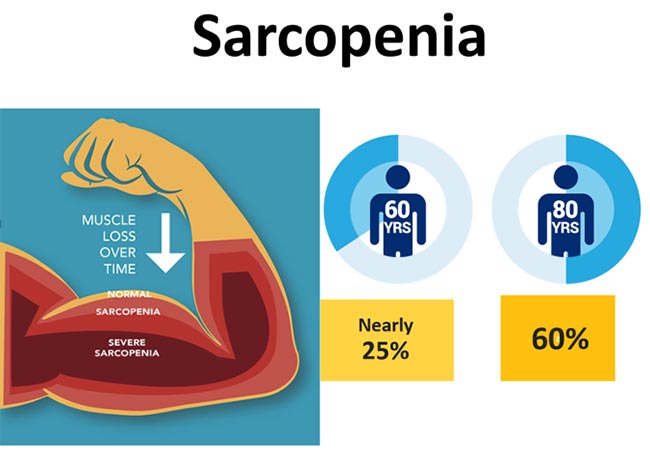
An estimated 25% of 60-year-olds have sarcopenia, and nearly two-thirds of those 80 years and older have lost serious amounts of muscle mass, which threatens a healthy lifespan and cuts down on your independence and quality of life.3,4 Sarcopenia leads to many functional limitations, including difficulties in walking, climbing stairs and carrying objects.5 The penalties of this functional decline include falls, disability, institutionalization6 and even death.7
One of the reasons I’m committed to lifelong exercise is because both of my parents died from frailty, and I’m determined to avoid sarcopenia, which took them prematurely. This was a powerful motivation for me to deeply study frailty so I could avoid their fate.
With society aging worldwide, the prevalence of sarcopenia increases the urgent need to establish prevention and intervention strategies. The U.S. Centers for Disease Control and Prevention now recognizes sarcopenia as an independently reportable medical condition.8
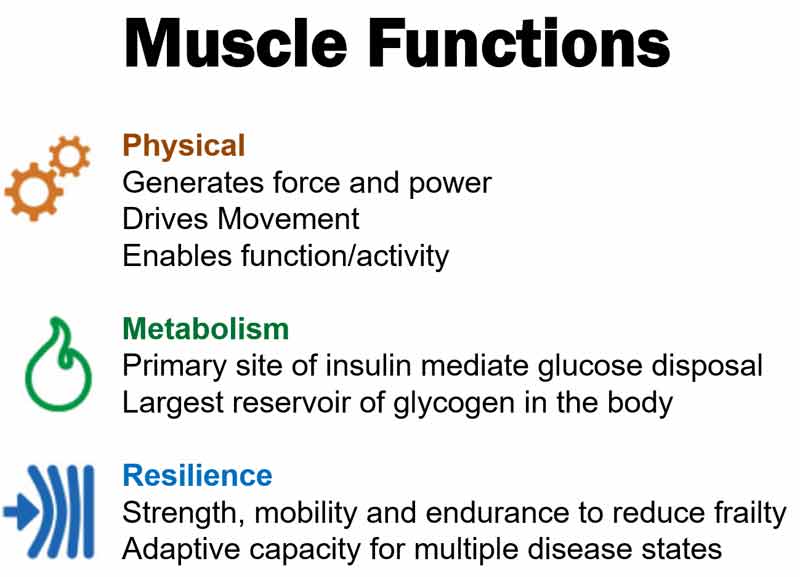
Skeletal muscles not only function to generate force and movement, but also play a major role in your metabolism, circulation and cognition, as seen in the following figure. Skeletal muscles also serve an important endocrine function. They secrete special cytokines (i.e., myokines) and transcription factors into the bloodstream, thereby regulating the function of other organs. It’s a metabolically active tissue with an important role in the maintenance of metabolic homeostasis.
Sarcopenia Is a Major Driver of Insulin Resistance and Disease
Skeletal muscle is the most abundant tissue in your body, comprising 40%9 to 55%10 of your body mass, and is the primary sink of insulin-mediated glucose disposal. Muscle is also the major site for insulin-stimulated glucose uptake, as well as the main energy consumer of fat.11 After meals, about 80% of glucose is deposited in your skeletal muscle.12,13
The loss of muscle mass with advancing age is thought to be a primary driver of insulin resistance in older adults.14 Again, this is because muscle is the major tissue where insulin causes glucose to be absorbed.
But it doesn’t end there. Remember, muscle makes up nearly half of your body’s tissues, so once your body runs out of sugar in the form of glycogen, it uses fat, especially if you are metabolically flexible. So, muscle is also the main energy user of fat in your body.15 The declining muscle strength and progressive mobility impairment with age also tends to reduce daily physical activity, which also contributes to metabolic dysfunction.16,17
The loss of resilience as a result of sarcopenia is underappreciated as a major factor in the ability to recover from life’s inevitable challenges. It is clear that elderly with low muscle mass experience delayed recovery,18,19 and have higher rates of complications and infections following surgery,20 greater drug toxicity21 and higher disease-specific and all-cause mortality.22
Sarcopenia also predicts both the risk for community-acquired pneumonia in the elderly,23 as well as 90-day mortality in patients suffering from aspiration pneumonia.24
Muscle Play a Role in Your Immune Function Too
Muscle is increasingly recognized as an organ with immune regulatory properties. As such, skeletal muscle cells modulate immune function by signaling through different soluble factors, cell surface molecules or cell-to-cell interactions.25 It is also speculated that sarcopenia contributes to immunosenescence — the gradual deterioration of your immune system — which is a leading cause of death in the elderly.26
Additionally, recent reviews found strong evidence that frailty due to sarcopenia27 is a risk factor for adverse outcomes, such as longer hospital stay, functional decline at discharge and both in-hospital and medium, lower quality of life,28 and long-term mortality.29
My Strategy and Recommendation to Combat Sarcopenia
So, what can we do about this progressive decline in muscle loss that sets you up for frailty and metabolic catastrophe? Why, exercise, of course. But here’s a little-known fact: Despite the well-known benefits of resistance training, less than 10% of those under the age of 75 in the United States participate in muscle-strengthening activities.
I believe one of the main reasons for this low rate of participation is that over half of those who do exercise engage in conventional resistance training end up getting injured. Another reason is that conventional strength training is considerably less effective in healthy older adults than in young adults.
This blunted anabolic response to exercise training in older individuals30 is likely a result of the age‐related decline in muscle fiber perfusion.31
This has been known for a long time. Seventeenth century physician Dr. Thomas Sydenham, who is known as the “English Hippocrates,” recognized nearly 400 years ago that vascular health and aging are interdependent and inversely related.32 His famous quote is: “A man is as old as his arteries.”
Microcirculation is the term used to describe blood flow through the capillaries. The main function of the microcirculation is the delivery of oxygen and nutrients to tissues while removing CO2, metabolic debris and toxins. Researchers believe this is related to a decrease in muscle fiber microcirculation of Type II muscle fibers and their associated stem cells.
Studies have shown that Type II muscle fiber-associated stem cells are located at a greater distance to their nearest capillary in older compared with younger men.33 There are a large number of circulating growth factors that are regulators of stem cell function34 and the delivery of these signals to activate your muscle stem cells and promote muscle growth relies on how close they are to the capillaries.
Once your microcirculation becomes compromised with age, Type II muscle fibers and their associated stem cells will be unable to receive enough nutrients and oxygen. Thankfully, there is a solution to this dilemma, and it is called blood flow restriction (BFR) or KAATSU in Japan, which is where it originated.
How I Radically Changed My Exercise and Lean Muscle
Now, I am no stranger to exercise. I have been exercising since 1968, which is 54 years. The problem is that the first 43 years were exclusively cardio, and in my case long distance running. I like to compete, so I got relatively decent and was eventually able to run a 2:50 marathon, which was good enough back then to get me on the post-graduate University of Chicago Track Club.
Unfortunately, I didn’t realize that while cardiovascular exercise can lower your risk of heart disease, it is a highly catabolic activity and will actually lower your ability to build muscle. Below is a picture of me taken during my peak running condition. As you can see by the arrow, I had a “gigantic,” 10.5-inch arm circumference.

Contrast that to the picture below, taken December 8, 2020, where my arm circumference is 15 inches. I had just finished doing a PR video for the deadlift at 370 pounds. The video (below) was posted to Instagram on the same date.
The blue plates are 45 pounds each; the black ones are the same width as the blue ones, but are plastic and are 25 pounds; and the bar is 50 pounds. My team wanted me to do a story on how I did this to, hopefully, inspire you to similar, if not better, levels of strength.
I’m very proud to say that I’ve come even further since then and, now, even approaching 70, I’ve been able to regularly set personal records with some of the lifts that I’m doing, and have deadlifted four plates, which is 405 pounds.

Watch Me Leg Press 600 Pounds
Without doubt, building muscle is one of the most important strategies to improve and safeguard your health, especially as you age. You need protein reserves to survive serious disease, and most of your protein is stored in muscle. If you have very little muscle, you’re going to pass away prematurely because you have no amino acid reserves.
As mentioned, your muscle is also a primary regulator of your metabolism. It’s a primary site for glucose disposal because of the GLUT4 insulin receptors embedded in the muscle cell membranes. These receptors lower your glucose levels after a meal and decrease your risk for diabetes. It also interfaces with your immune system and helps optimize it.
If you take away one tip from this article, let it be this — it is rarely too late to start resistance training. You can build muscle mass after 60, which is about when I started and, earlier in 2022, as you can see in the video above, I set a new personal record in the leg press for 600 pounds, a significant improvement over the 400-pound deadlift I did in 2021.
How did I do it? That’s the focus of this article, and the great news is that virtually anyone can use this strategy, even if you’re older, like me, or already a bit frail, or have previously experienced exercise injuries.
The BEST Strategy I Know of to Increase Muscle Size
There are loads of ways to increase your muscle mass but they mostly involve moving, pushing or pulling heavy weights or resistance bands. The problem with this strategy is that if you are not in good shape, and especially if you are elderly, there is a very high likelihood that you will get injured. In most cases, it is not if you will get injured but when.
The answer to this problem is an exercise strategy known as BFR or KAATSU. As the name implies, BFR involves modifying the arterial inflow and venous outflow while you’re working the muscle by placing an inflatable band around the extremity.35 It is not like a tourniquet that stops all your blood flow, which is dangerous.
BFR was developed by Dr. Yoshiaki Sato of Japan about 50 years ago. In Japan, where it’s widely popular, it’s known as KAATSU, meaning “training with added pressure.”36 However since Sato does not speak or write English, the first article published about it in the U.S. was about 25 years ago.37
Conventional resistance training typically uses resistance at 70% to 85% of your one-rep max, i.e., the maximum amount of weight you can lift only one time. Since this weight is relatively heavy and close to your limit, injuries are almost guaranteed.
BFR is different, as it is a low-intensity resistance training, using weights that are just 20% to 35% of your one-rep max. With weights this light, your risk of injury is largely eliminated. In many elderly and frail individuals, weights of just 1 or 2 pounds, or no weight other than your body, are all that is needed to achieve the benefits.
How BFR Works
BFR’s ability to achieve such remarkable physiological benefits is directly related to slowing venous blood flow from the muscle group being engaged and creating a relatively hypoxic environment or low oxygen pressures in the exercising muscle.
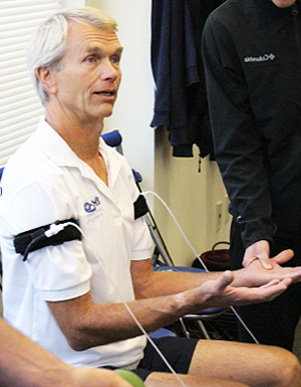
Venous flow moderation is optimally achieved by wrapping the extremity being exercised with an inflatable cuff or band.
The band needs to be tight enough to slow venous return to the heart, allowing venous blood to “pool” in the region of the limb that is being exercised, while loose enough to allow arterial blood to flow through.
With very light exercise, and in about 15 to 20 minutes, you get an exhaustive workout that sends a signal to your brain that says, “Hey, I’ve done something really hard here — you better help me recover and adapt to it.”
Your brain then sends out hormonal responses that cause your muscles and blood vessels to grow. Most would think that such light weights would be insufficient to provide any muscle strength improvements, but studies show a 36% to 40% increase in muscle strength after only 12 weeks, depending on your load and health.38
BFR Mimics Heavy Weight Training Without Any of the Risks
BFR training is frequently misunderstood as simply a conventional resistance training program with the addition of resistance bands. Nothing could be further from the truth.
Because the exercise is done with such low weights, there’s far less muscle fiber trauma and damage, especially relative to conventional strength training. This means you are able to recover much quicker, so you don’t have to dig yourself out of a hole the next few days. In most cases, you can exercise different body parts nearly every day and rapidly attain the metabolic and physical benefits.
To understand the mechanism of BFR you need to know that you have two basic types of muscle fibers. First you have slow-twitch oxidative (Type I) fibers designed for low-intensity long-lasting contractions. Secondly, you have fast-twitch glycolytic (Type II) fibers designed for high-intensity short-duration contractions. When you lose muscle, it typically occurs as a reduction in Type II muscle fibers.
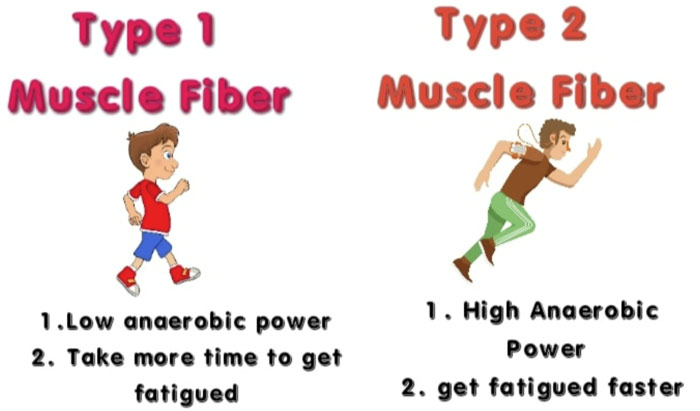
If you are going to increase muscle mass and strength in anyone, but especially the elderly, it is important to activate Type II muscle fibers during training, since these fibers have been shown to be far more responsive to growing muscle than Type I fibers39 and are generally much larger.
Weight training done at low weights will not activate Type II fibers — unless it’s done with BFR. Type I fibers are relatively more sensitive than type II fibers to hypoxia (low blood oxygen), as they have a greater oxygen consumption at rest compared to Type II fibers.40 BFR training takes advantage of this difference. Producing a relatively hypoxic environment in your muscles41 causes premature fatigue of the Type l fibers, thus forcing your body to rely on Type II fibers to continue the exercise.
At the same time, you’re also activating their associated muscle stem cells. This is likely one of the main mechanisms by which BFR can trigger muscle growth and prevent or prevent or treat sarcopenia. Simply moving light weights with high repetition without BFR will not engage Type II fibers because there is plenty of oxygen for the Type I fibers to work. Hence, the fast-twitch Type II fibers just aren’t called into action.
How BFR Affects Your Muscles and Overall Health
When you exercise and activate your Type 2 fibers with BFR, your muscles will generate a waste product called lactic acid or lactate, which is responsible for much of the metabolic magic. Activating Type 2 fibers also lowers the pH of the muscles. This is not because of lactic acid, but more related to the release of extra protons released in generating energy.42
Both lactate and proton accumulation are potent stimulators of growth hormone and insulin-like growth factor (IGF-1), which in turn leads to muscle growth.43 IGF-1 is a hormone that helps manage growth hormone (GH) in the body. It’s typically made by your liver, which is the largest contributor to IGF-1 circulating in your blood. However, when your liver secretes IGF-1, it will not act on those tissues that have capabilities of producing the hormone themselves, such as skeletal muscle.44
Interestingly, it is not the circulating levels of IGF-1 in your blood that cause your muscles to grow but, rather, the IGF-1 produced by your muscles when engaged in exercises like BFR, as that’s the key determinant for switching on the anabolic muscle building pathways.
While high levels of IGF-1 in your blood will inhibit autophagy and decrease your longevity,45 this does not appear to be the case when you increase IGF-1 in your muscle using anaerobic exercises like BFR. This IGF-1 does not leak out into your blood to suppress autophagy.46
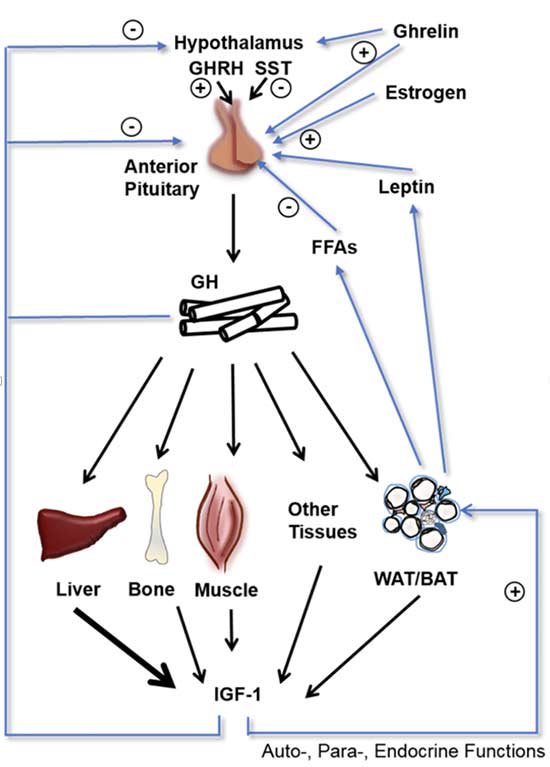
BFR will not only will add solid muscle mass, but also significantly increase your strength and endurance while reducing your body fat. For most people who are not competitive athletes, it’s really the only form of resistance training they need.
Competitive athletes also seem to benefit from BFR, but they would need to combine it with conventional strength training.47 In short, BFR works on a very simple principle: It tricks your body into believing that it’s moving far heavier weights than you’re actually using, and as a result generates compensatory metabolic responses, further detailed below.
Local and Systemic Effects of BFR
If you are elderly, what is really amazing is that your muscle growth with BFR is beyond what strength training with heavy weights can do. This is because you need good blood flow to your Type II muscle fiber stem cells, and as mentioned earlier, virtually everyone’s microcirculation decreases with age.
So, even if you send the signal to grow by doing conventional strength training, it won’t work as well if there isn’t enough capillary supply to your Type II fiber stem cells. BFR increases your microcirculation, your capillaries and venules and arterioles that are associated with them (see image below), largely because your muscles are working in a hypoxic (low oxygen) environment.
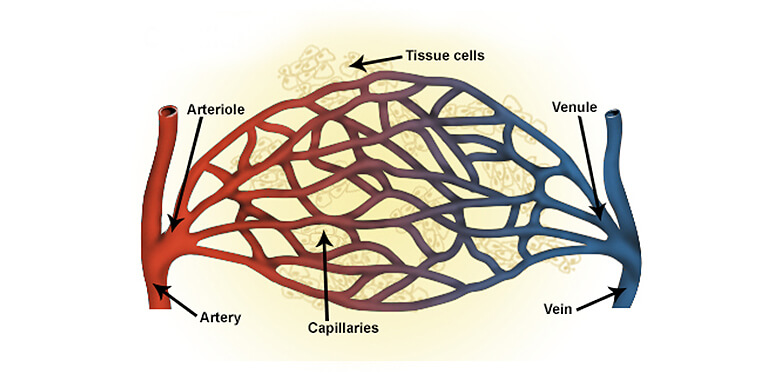 Microcirculation
How BFR Increases Your Microcirculation
This low oxygen tension causes the release of hypoxia-inducible factor-1 alpha (HIF-1 alpha),48 which in turn increases the hormone vascular endothelial growth factor (VEGF), which is one of the most powerful angiogenic signals in your body. It’s an extremely potent pro-blood vessel building cytokine or myokine. VEGF will help repair damage that has occurred to your blood vessels, improve elasticity and make them far more resilient to damage and accidents.
BFR has been shown to raise VEGF levels by 410% in young adults.49 Essentially it acts as “fertilizer” for growing new blood vessels and capillaries to your muscle stem cells. BFR training has been shown to increase muscle stem cells by 300% after eight days of training.50
Here is the KEY point: The VEGF released by BFR is systemic and carried in your blood to your entire body. It just doesn’t work on the limbs you are exercising. It increases blood vessel growth throughout your entire body, which seems to be the perfect antidote for Dr. Syndenham’s theory that a man is old as his arteries.
In short, BFR will help aging men have the arteries of boys. VEGF also increases microcirculation in your brain and heart. In Japan, BFR is frequently used for stroke and cardiac rehab precisely for this purpose.
BFR also increases the production of the important regulatory free radical, nitric oxide (NO), which further contributes to an increase in VEGF.51 NO is an important signaling molecule produced at high levels in muscle by neuronal nitric oxide synthase (nNOS). BFR, by way of increasing NO, has been found to stimulate muscle satellite stem cells and proliferation.52
There is a load of interest in NAD+, as it’s a primary fuel for longevity proteins, and it becomes depleted as you age. A combination of BFR along with 50 milligrams of niacinamide per day will radically increase NAMPT, which is the rate limiting enzyme for NAD+. Honoring your circadian rhythm is also an important part of the equation.
The Benefits of Osmotic Pressure

Metabolic stress, or the accumulation of metabolites during exercise, has been documented to be important for muscle growth.53,54,55 One of the most important metabolic stressors produced in BFR training is lactate, which I touched on earlier. The lactate released by the muscles is largely a result of Type II muscle fiber burning glucose into pyruvate and then converting pyruvate to lactate.
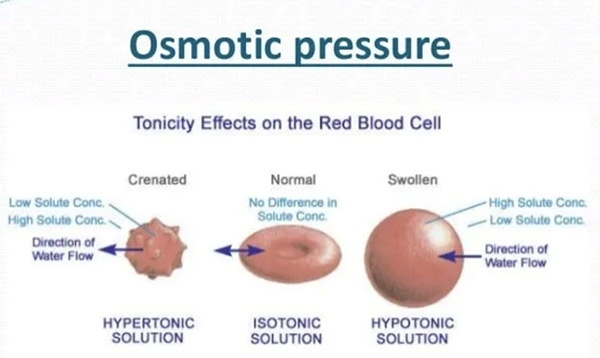
When you occlude the veins in BFR, you limit the venous blood flow return back to your heart, which allows the lactate to accumulate to high concentrations in your muscle,56 where it creates an osmotic pressure differential that requires the influx of water to normalize.
As you can see by the figure below, osmotic pressure is the pressure that must be applied to a solution to halt the flow of solvent molecules through a semipermeable membrane (osmosis). It is determined by how many molecules are in the solution. The more molecules, the higher the osmotic pressure.
This flow of water into the muscle57 contributes to intracellular swelling,58 which creates an acute and measurable increase in the size of the muscle that is typically quite visually obvious.
The mechanical pressures created by this cell swelling also trigger the activation of Type II muscle fiber stem cells, which causes muscle growth and further increases muscle protein synthesis and decreases protein breakdown in your muscles.59 So, the higher the lactate levels and swelling created with BFR training, the better the muscle-building results will be.
Interestingly, some of the lactate produced locally in your muscles actually diffuses into the bloodstream and crosses the blood brain barrier through monocarboxylate transporters (MCTs), and is utilized as fuel for the brain.60,61
Similar to ketones, lactate can be an important brain fuel, as at high lactate concentrations, up to 60% of the brain’s energy can come from lactate. Once the lactate reaches your brain — which occurs when you release the bands from your extremities — it increases brain derived neurotropic factor (BDNF),62 a member of brain growth factors that contributes to neuroplasticity and enhanced cognitive performance.63,64
I first learned about BFR in 2017 at a Beverly Hills biohacking event. I’ve been using it nearly every day for at least an hour a day since then and have compiled a number of insights in that time. The main difference between KAATSU and BFR is the tool you’re using. BFR can be done with restriction bands, but KAATSU uses a device that also provides intermittent and not just constant pressure.
From the start, I was really intrigued with the concept of BFR, so I purchased a KAATSU unit developed by Sato. In cycle mode, the KAATSU device produces 30 seconds of pressure followed by five seconds of no pressure, and does this for eight progressively increasing pressure steps per cycle. What this does is provide intermittent hypoxia, which catalyzes the steps I described above.
Since the intermittent hypoxia does not last more than 30 seconds, it does not damage your body, which can happen when you use the cheaper KAATSU bands or BRF bands that provide constant pressure. When I first started using BFR, I felt it was important enough to encourage people to get inexpensive bands that don’t provide intermittent compression. The BFR bands were only $15 and allowed far more people to access this powerful fitness strategy.
But after using the unit for five years, I have learned that when you use the cheap bands, or even KAATSU in the constant mode, you can get spastic large muscles. Using constant pressure increases the hypoxia time, and hence the lactic acid can build up to excessive levels. The only way to get the benefits without the downside is to avoid the constant mode and cheap bands.
This is why I only use the cycling KAATSU mode, not the constant mode or cheap bands, and why I now only recommend using the KAATSU intermittent hypoxia system, which is far safer and provides greater health benefits. Sato himself admits that the constant mode requires a lot of experience and know-how before it can be used safely. The cycling mode, however, is safe to use for anyone. “Even someone in their 80s can do the KAATSU cycle mode without risks,” he says.
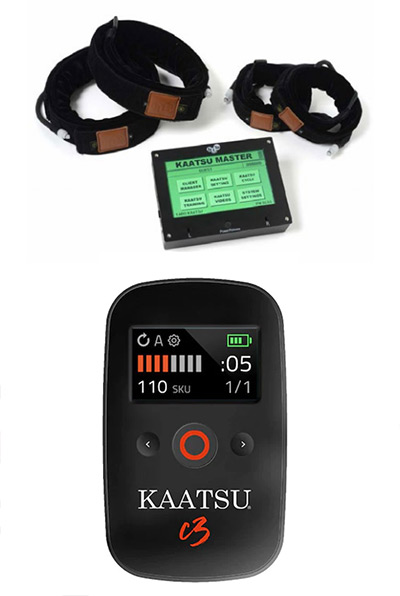 For a limited time, you can get 10% off the KAATSU band by using this link: www.kaatsu.com/go/NVIC
Since I first started using KAATSU, I have gained about 25 pounds of muscle mass after the age of 65, which is extraordinarily hard to do. I am convinced that this is largely a result of using KAATSU and getting enough protein, as I do not take any drugs at all, let alone performance-enhancing drugs.
If I had only done strength training without KAATSU, I would likely not have gained anywhere near as much muscle mass. Again, this is largely due to older people having decreased microcirculation to feed the Type 2 muscle stem cells. You need the VEGF to increase blood supply to these cells, and conventional strength training does not do that very well.
Why I Only Recommend KAATSU Cycle Mode
The KAATSU set is ideal as it is far easier to dial in to the correct pressures. You also get the benefit of intermittent pressure automatically, without having to adjust the bands yourself. With the KAATSU system you can control the tightness in two ways.
The initial tightness is after you manually tighten the bands. This is the base pressure and typically around 10 to 25 mm/Hg for the arms and 15 to 35 mm/Hg for the legs, depending on your age, vascular elasticity and physical condition.
The inflation pressure is what you set the compressor to pump the cuff up to. This ranges from 80 to 400 mm/Hg for both the arms and legs. KAATSU is the only unit that will cycle the inflation of the bands on and off, which, again, is far healthier for your muscles. Sato notes (see video above):
“I gradually increase the pressure on each set, personally, doing up to eight sets. The first set has no effect, but my muscles pump up significantly from the sixth to eighth sets. If you do that for two or three circuits, the KAATSU cycle mode will have the same effect as the KAATSU constant mode. Therefore, I recommend the KAATSU cycle mode to the general public.”
How to Determine Your Ideal Level of Resistance
Instead of using heavy weights that can increase your risk of injury during conventional strength training, BFR requires just 20% to 33% of the resistance used in conventional resistance training, which makes it much safer for everyone. This light weight is then combined with a high volume of repetitions while externally applied compression mildly restricts blood flow to the active skeletal muscles in the legs or arms.65

As for weight, your goal is to find the “sweet” spot. If you are elderly or have not been exercising regularly, this may mean no weights at all.
Ideally, you would have access to a variety of progressively increasing resistance movements to choose from, including body weight exercises. You typically won’t need to go higher than 25 pounds, though.
Once you have access to the weights, you can find the heaviest weight you can do for just one repetition of your planned exercise. This is your one-rep max (1RM).
Then you divide that weight by five (20%), four (25%) or three (33%). For example, if your max weight for a bicep curl is 25 pounds, you would select a 5-pound dumbbell to start.
If you don’t know your one-rep maximum, then it is always better to start too low, especially if this is your first time, as your tissues will need time to adapt to these pressures and movements. Eventually you will want to increase your weight so you notice the following signs during your KAATSU session.
|
Signs That You Are Using the Correct Weight
These two signs are an indication that you have activated your sympathetic nervous system by firing your Type II muscle fibers. This is because properly performed BFR is a high intensity exercise that will exhaust your Type I muscle fibers and activate your Type II fibers. You can also measure the circumference of your limb before and after the exercise. You should notice an increase of at least one-half inch and possibly 1 inch or more — or, alternatively, the muscle will most certainly feel tighter and appear more toned. Another great indication is that you will be able to do 30 reps the first set and then 15 to 20 reps the next and, most likely, are unable to do five to 10 reps in the last set because you are in muscle failure. It is important, though, not to fool yourself and stop just because it is hard. Muscle failure means that you are unable to do another rep if your life depended on it. |
Unless you are just starting (see warning box below), it is best to start by limiting your weight to only 20% of your 1RM and build up from there. By starting at a lighter weight, it will give your body a chance to adjust to BFR and avoid potential injuries.
An additional benefit is that if you stick with lighter weights you can train more frequently because you won’t cause as much muscle damage. For those interested in greater strength or muscle gains, you can increase to one-quarter and then to one-third the weight of your 1RM. If you are doing the exercises correctly, it will likely take you about three months to progress up to 33% of your 1RM. There is no need to go any higher than this.
If you don’t know your 1RM, then all you have to do is pick a weight you believe you can easily do 30 reps with and start there. If you can easily do all three sets at that weight, then it’s clearly too low a weight and you would benefit from increasing the resistance, especially if you don’t notice an increase of at least one-half inch in the circumference of your biceps after the exercise.
Conversely, if you are unable to complete 20 repetitions on your first set, the resistance is likely too high and needs to be decreased.
!WARNING FOR FIRST-TIME USERS
The only exception to these weight recommendations and initial pressure of the bands is when you are first starting out. It is important to realize that your tissues need time to adjust to BFR training. For the first session, you want to start with a light pressure, likely under 40%, and use only 10% of your 1RM. Then over the next two sessions increase to the minimum recommendations.
Important: You Need to Push Hard to Get the Benefits

It is important to recognize that the level of intensity you use is key. Muscle growth is highly dependent on metabolic factors, and training sets are ideally done to close to failure to achieve this.66,67
The number of repetitions completed during a training session is less important to cause long term changes in hypertrophy and strength than doing repetitions close to failure, which likely causes greater metabolic stress.
Perceived exertion is a major element here. You really need to push hard to muscle failure. This is a very subjective determination, but I hope the featured videos will give you an idea of the amount of intensity and effort one needs to put into this short exercise.
You can also notice if you are sweating and you are out of breath. Since BFR is a high intensity exercise and stimulates your sympathetic nervous system if done properly, this is precisely what you should be experiencing when you do BFR training.
A recent study in the elderly showed that physical weakness in aging may be due, at least in part, to impairments in brain and nerve function, rather than changes in the muscles themselves.68
The researchers did the study by asking participants to push to failure and once they said they had, they stimulated the muscle electrically and were still able to get the muscle to contract, which indicated that the muscle was not at full failure. In fact, in most cases the muscle was still able to contract about 25% more.
If you are unable to push close to failure, you will not receive the maximum benefits possible from BFR. Also, shorter recovery periods between exercises and sets will heighten the metabolic stimulus to enhance your body’s ability to build muscle and strength.69
Remember, you can start slowly and work your way up over time. Building muscle is a marathon, not a sprint. This is especially important if you are elderly or if you have been mostly sedentary; you likely will not need to use any weights.
You can start with just the weight of your body and gradually progress to 1- and 2-pound weights. But if you really are interested in triggering the benefits of reversing sarcopenia, then it is key to push hard — otherwise you will not achieve all the wonderful metabolic benefits that BFR has to offer you.
General KAATSU Workout Guidance
Although you can adapt KAATSU training to many types of resistance training, including machines, it seems the ideal way to implement it is by using simple dumbbells. Here’s some general workout guidance when using KAATSU.
Number of repetitions in each set:
|
Typically, upon starting KAATSU, you’ll notice a high perceived degree of difficulty. However, over a few weeks this perception of difficulty dampens as adaptation to training occurs.70 At that point, it becomes important to continue to push with the same level of intensity.
One of the major advantages of KAATSU versus high-load resistance training is that you cause far less muscle damage, which allows you to train more frequently. The frequency of training needs to be individualized as it varies widely. It can range from as little as twice a week up to three times a day, depending on your fitness and training goals.
Typically, the lower the percentage of 1RM used, the more frequently BFR can be done.71 Heart rate variability and the Oura ring can also be used to determine your ideal recovery periods. The Oura ring measures your heart rate all night and will tell you not only your lowest heart rate but also at what time it occurs. The higher your heart rate and the closer your lowest heart rate time is to awakening, the more recovery you need.
How to Perform BFR

Begin by applying the bands to your upper arm, very close to your armpit, just where your bicep muscle begins and deltoid muscle ends.
On your legs, you can apply them right below your hips at the top of your quads, close to your groin. There are misconceptions that you need to put the bands close to the muscle you are seeking to focus on, but this is unnecessary.
There is a crossover training effect and your muscles that aren’t blood flow-restricted will also receive benefit once the bands deflate. In other words, you will gain benefits in your chest muscles even though you are only restricting your arm muscles.
Do not put the bands over your knees or elbows, as this could cause nerve damage. Only put the bands on your body as described above, because the goal is to increase your vascular elasticity and elicit a metabolic and hormonal response that ultimately leads to aesthetic and muscular improvement.
When you engage in the exercise properly, lactic acid will accumulate in the muscle, which will be associated with a burning-like pain due to the excess hydrogen ions being produced. It will clearly be uncomfortable, especially as you push to muscle fatigue. It is important to understand that this subjective sensation of discomfort will improve with time.
It will likely take four to six weeks to develop the strength and hypertrophy gains. Once achieved, a study72 in elderly participants showed that doing BFR training twice a week was sufficient to maintain the gains. When training decreased to once a week, the gains failed to be maintained.
If you are able to, there is benefit to doing BFR every day. You can just vary the number of exercises you do per day. It could be as simple as applying the bands to your legs and walking for 30 minutes, or putting them on your arms and swimming. It doesn’t have to involve weights. You can also use them in your favorite sport.
Get Stronger and Healthier With Age
In summary, the four key lifestyle strategies that have allowed me to get healthier with age are TRE in combination with a cyclical ketogenic diet (which I’ll review below); exercising while fasting; and using KAATSU in my strength training routine.
While doing any one of these in isolation would likely improve your health, when done in combination, they really catalyze synergistic changes that optimize your entire system. The best news of all is that it’s never too late to start. My transformation began in my 50s, and I feel better now at 69 than I did back then. You can transform your health and physique too. You just have to get started, and keep going!
Your Food Choices Are Crucial for Muscle Building
My understanding of optimizing nutrition for health has been a greater than five-decade journey. At the beginning, I fell into the low-fat diet myth and thought I was eating healthy with my grains and margarine alternatives, but I was fooled. The key here is that I was motivated to make the right choices: I simply lacked proper mentoring and information.
That was one of the primary reasons I started this website over 25 years ago. I believed that people didn’t need to make the same silly mistakes I made, and by sharing my insight I could save them needless pain and grief.
Another major mistake I made was never taking time off from eating. It seemed to make sense that you need to eat around the clock, and that going without food for days could wreck your health by losing muscle mass from inadequate protein intake. After researching this, I realized it was seriously wrong and counterproductive. Your body actually requires regular intervals when you aren’t eating, and failing to do so is a prescription for metabolic disaster.
Research by Satchidananda Panda, Ph.D., suggests 90% of people eat across more than 12 hours per day, and perhaps 50% of the population eat across 16 hours a day. There are even many who wake up in the middle of the night to eat.
This constant hunger occurs because when you’re using carbs rather than fat as your primary fuel, you need constant refueling as carbs burn so much quicker than fat. I wrote extensively about this in my best-selling book, “Fat for Fuel,” Since your body has a minute supply of stored carbs relative to fats, you need to eat far more frequently to avoid feeling ravenously hungry and tired as your body runs out of fuel.
The remedy for this is twofold: Eat a cyclical ketogenic diet (high in healthy fats and low in carbs, with higher amounts of carbs cycled in), and restrict the window of time in which you consume all your meals each day. Both of these strategies will help retrain your body to burn fat for fuel, which is a sign of metabolic flexibility that is crucial for optimal health, and once you can burn fat, hunger is significantly decreased and you can go without food far longer.
Time-Restricted Eating Is a Key Health Principle
Time-restricted eating (TRE) is one of the most important health principles of our time. Contrary to modern belief, your body isn’t designed to be fed throughout the day, and the near-continuous grazing that most engage in can have serious health consequences.
When you eat throughout the day and never skip a meal, your body adapts to burning sugar as its primary fuel, resulting in the downregulation of enzymes that utilize and burn stored fat.73,74 As a result, you become progressively more insulin resistant and start gaining weight. Many biological repair and rejuvenation processes also take place while you’re fasting, and this is another reason why all-day grazing triggers diseases while fasting prevents them.75
Even though TRE was a major breakthrough for me, I have recently come to realize that it is not for everyone. However, it is for most people as 95% of the people in the U.S. are metabolically inflexible. If you are insulin resistant than TRE is vital to implement but only until you become insulin sensitive.
If you continue TRE for too long, you will create inflammatory stressors by having your body generate cortisol to have your liver create glucose because your body is low in it. So once you become metabolically flexible it is important to increase your eating window to eight to10 hours or even 12 hours in the summer.
There are a number of different intermittent fasting regimes, some of which are more extreme than others, but all are based on the premise that you need to fast for periods of time. TRE is one of the easiest to follow as you simply abstain from food for 16 to 18 hours a day and eat all your meals within a window of six to eight hours. A six- to eight-hour window seems to be close to the metabolic ideal for most.
You Must Eat Adequate Protein to Increase Muscle Mass
Your muscle is made of protein and if you don’t supply enough of the raw material your body will not be able to generate new muscle tissue. Fortunately, there is an easy formula to follow that will supply the crucial amino acids your body needs to stimulate muscle protein synthesis.
The most important amino acids will be the branched chain amino acids, leucine being the key. You will need about three grams of leucine within one to two hours of your workout to activate mTOR, the anabolic signal and trigger to build tissue.
If you eat enough high-quality protein according to the following formula you will invariably have enough leucine. The minimum is about 1.2 grams of protein per kilogram of body weight (0.54 grams/pound) per day. Athletes and the elderly could benefit from even higher levels at 1.6 grams/kilogram (0.71 grams/pound).
Just be sure to avoid seeds and all nuts (except macadamia) as they are high in omega-6 fat linoleic acid (LA), which will cause other metabolic complications. Chicken and pork should also be avoided as they are monogastric animals that are fed commercial grains that are high in LA. They also have high LA levels in their tissues.
- 1 von Haehling S, Morley JE, Anker SD. From muscle wasting to sarcopenia and myopenia: update 2012. J Cachexia Sarcopenia Muscle 2012;3:213–217
- 2 I.H. Rosenberg Sarcopenia: origins and clinical relevance J. Nutr., 127 (5 Suppl) (1997), pp. 990S-991S
- 3 Aversa Z, et al The clinical impact and biological mechanisms of skeletal muscle aging. Bone. 2019 May 22;127:26-36. doi: 10.1016/j.bone.2019.05.021
- 4 Calcif Tissue Int. 2018; 103(1): 35–43. doi: 10.1007/s00223-018-0388-2
- 5 J. Gerontol. A Biol. Sci. Med. Sci., 64 (12) (2009), pp. 1333-1336. doi: 10.1093/gerona/glp130
- 6 J. Am. Geriatr. Soc., 51 (3) (2003), pp. 314-322
- 7 J. Gerontol. A Biol. Sci. Med. Sci., 71 (1) (2016), pp. 63-71
- 8 Fed Pract 2017 Jul 9;34(7):24-32
- 9 Cell Metab 2009 Dec;10(6):507-515
- 10 Cell Metab10:507–515
- 11 Cell Biol. 2005 Oct;37(10):2047-63
- 12 Diabetes 1982 Nov; 31(11): 957-963
- 13 N Engl J Med 1990; 322:223-228
- 14 Diabetes Care 2009 Nov; 32(suppl 2): S157-S163
- 15 Int. J. Biochem. Cell Biol. 2005, 37, 2047–2063
- 16 J. Gerontol. A Biol. Sci. Med. Sci. August 2018; 73(8): 1070-1077
- 17, 27 Redox Biol. August 2020; 35:101513
- 18 Surg Today. 2018; 48: 151–157
- 19 Ageing Research Reviews 2018 Nov;47:123-132
- 20 Liver Transpl. 2013 Dec; 19(12): 10.1002/lt.23752
- 21 Clin. Cancer Res. 2009 Apr 15;15(8):2920-2926
- 22 Cancer 2014 Sep 15;120(18):2910-2918
- 23 Arch Gerontol Geriatr. May-Jun 2019;82:100-105
- 24 J Am Geriatr Soc. 2017; 65: e18–e22
- 25 Autoimmun Rev. 2018; 17: 518–529
- 26 EBioMedicine. 2019 Nov;49:381-388
- 28 Age Ageing. 2019; 48: 16–31
- 29 Ageing Research Reviews 2019 Dec;56:100960
- 30 J Physiol 2015;593:2721–2734, doi:10.1113/JP270343
- 31 Toda N. Age‐related changes in endothelial function and blood flow regulation. Pharmacol Ther 2012;133:159–176, doi:10.1016/j.pharmthera.2011.10.004
- 32 Life Sciences Volume 118, Issue 2, 24 November 2014, Pages 97-109 doi: 10.1016/j.lfs.2014.09.009
- 33 J Cachexia Sarcopenia Muscle 2016; doi:10.1002/jcsm12105
- 34 Am J Physiol Cell Physiol 2013;304:C717–28
- 35, 65 Frontiers in Physiology 2019; 10: 533
- 36 Sports Med. 45, 313–325. doi: 10.1007/s40279-014-0288-1
- 37 Eur J Appl Physiol Occup Physiol. 1998;77:189–191
- 38 Front Physiol. 2019; 10: 446, Discussion: Muscle Strength
- 39 J Appl Physiol. 1996;81(5):2004–12
- 40 Microvasc Res. 1968;1:1‐14
- 41 J. Strength Cond. Res. 26 611–617. 10.1519/JSC.0b013e3182281c69
- 42 Robergs, RA, et al. Biochemistry of exercise-induced metabolic acidosis. Am J Physiol Regul Integr Comp Physiol 287: R502–R516, 2004
- 43 Clin Physiol Funct Imaging. 2015 May;35(3):197-202. doi: 10.1111/cpf.1214
- 44 FASEB J. (2012) 26:3691–702. 10.1096/fj.11-203026
- 45 Ekmekcioglu C Nutrition and longevity – From mechanisms to uncertainties. Crit Rev Food Sci Nutr. 2019 Oct 21:1-20. doi: 10.1080/10408398.2019.1676698
- 46 Musaro, A, et al Counteracting sarcopenia: the role of IGF-1 isoforms Aging (Albany NY). 2019 Jun 15; 11(11): 3410–3411. doi: 10.18632/aging.102027
- 47 J Hum Kinet. 2018 Dec; 65: 249–26
- 48 Cell 2019 Mar 7;176(6):1248-1264
- 49 Med Sci Sports Exerc. 2012 Nov; 44(11): 2077–2083
- 50 J Physiol 2012; 590(17): 4351–4361, Myogenic stem cell content Page 4355 (PDF)
- 51 Journal of Applied Physiology May 1, 1999; 86(5): 1513–1518
- 52 Mol BiolCell. 2000;11(5):1859–97
- 53 J Appl Physiol.2012;113(2):199–205
- 54 Schoenfeld BJ. Potential mechanisms for a role of metabolic stress in hypertrophic adaptations to resistance training. SportsMed. 2013;43(3):179–94
- 55 J Appl Physiol. 2010;108(6):1563–7
- 56 Med Hypotheses. 2012;78(1):151–4
- 57 J. Appl. Physiol. 2015;118:742–749. doi: 10.1152/japplphysiol.00054.2014
- 58 Nutrients. 2019 Apr; 11(4): 869. doi: 10.3390/nu11040869
- 59 Lang F, Busch GL, Ritter M, et al. Functional significance of cell volume regulatory mechanisms. Physiol Rev. 1998;78(1):247–306
- 60 Ther. Adv. Psychopharmacol. 2017;7:85–89. doi: 10.1177/2045125316675579
- 61 Brooks G.A. The Science and Translation of Lactate Shuttle Theory. Cell Metab. 2018;27:757–785. doi: 10.1016/j.cmet.2018.03.008
- 62 Neurosci. Lett. 2011;488:234–237
- 63 Med. Hypotheses. 2017;106:1–5
- 64 Neurosci. Lett. 2016 Sep 6;630:247-253
- 66 Sports Medicine 2013;43:179–194
- 67 Frontiers in Physiology June 2019 (PDF)
- 68 JAMA Network Open September 25, 2019
- 69 Medical Hypotheses February 2015;84:145–149
- 70 J Sports Sci. 2019 Aug;37(16):1857-1864
- 71 Frontiers in Physiology 2019; 10: 533, BFR-RE
- 72 Proceedings of the International Conference on Sports and Exercise Science 2009. Bangkok, Thailand Pages 336-341 (PDF)
- 73 Cell February 8, 2018; 172(4): 731-743.E12
- 74 Medical News Today February 8, 2018
- 75 Science November 16, 2018; 362(6416): 770-775, Page 1
How the Wrong Dietary Component Can Wreck Your Health
Reproduced from original article:
https://articles.mercola.com/sites/articles/archive/2023/01/01/omega-6-linoleic-acid.aspx
The original Mercola article may not remain on the original site, but I will endeavor to keep it on this site as long as I deem it to be appropriate.
Analysis by Dr. Joseph Mercola Fact Checked January 01, 2023
STORY AT-A-GLANCE
- Omega-6 linoleic acid (LA) is the most common fat in the American diet. Most people get 25 times more LA than they need. At most, you need about 2 grams a day, but the average American gets about 50 grams a day, thanks to the fact that most processed foods and condiments are loaded with omega-6 seed oils
- LA gets incorporated into your cell membranes where it causes inflammation. Its half-life is nearly two years, so ridding your body of stored LA completely can take up to seven years
- Eliminating LA is a marathon, not a sprint. Ineffective and potentially harmful ways of eliminating LA include extended fasting and overtaxing your body with strenuous endurance exercise
- To stop the accumulation of LA in your cells, eliminate seed oils from your diet. Cook with beef tallow, butter, ghee or coconut oil, and avoid all processed foods, restaurant foods, condiments, and animals raised on grains, such as chicken and pork
- Vitamin E, in a dose of about 2 IU – 3 IU for every gram of PUFA (not just linoleate) consumed daily may also be able to provide some protection against the inflammatory and endocrine (estrogenic, pro-cortisol) effects of linoleate and PUFA in general
- To safely encourage the elimination of LA from your body, focus on building muscle and maximizing lean muscle mass with concentric exercise, and eat a balanced diet with a ratio of 2-to-1 healthy carbs to protein
In this interview, Georgi Dinkov, an expert on linoleic acid (LA), details some of the health hazards of this exceedingly common fat in the modern diet, and how to safely rid your body of it.
Both Georgi and I are convinced excessive LA intake is one of the most important variables that can make or break your health, especially in the long term. It’s a far greater contributor to chronic and degenerative disease and mortality than sugar, and it’s the primary culprit that makes processed foods so harmful.
The historical (last 50 to 75 years) incidence curves of cancer, cardiovascular disease (CVD), diabetes and neurological disease in the general population overlap remarkably well the ever-increasing PUFA consumption rates in developed countries, suggesting PUFA is a major factor in those diseases.1,2
How Georgi Became a Biohacker
Despite having a degree in computer science, Georgi has made a name for himself as an expert biohacker. After graduating from college in 2002, he got a job as a programmer at the National Biomedical Research Foundation (NBRF).
There, he helped develop uniprot.org, a database of all known protein sequences — Protein Information Resource (PIR — pir.georgetown.edu) and UniProt (www.uniprot.org).
Surrounded by up to 60 of the brightest doctors and biochemists in the world, Georgi developed an interest in biochemistry, and started studying on the side so he could more effectively collaborate with his coworkers. He provides an amazing example of what one can learn without any formal training if they merely apply themselves.
“Between 2002 and 2005, I was part of this group as a programmer, but I basically started attending all of their lectures and classes,” he says. “Some of them were teaching at nearby universities, so I kept going.
I was a young, single person, didn’t have anything better to do, and I tried to utilize my time the best I could. Over a period of about three years, it started to click, so I started to understand what these people were talking about.
In 2005, I left, got myself a full-time job in the IT sector, and then kept reading. The reason I got into this bioenergetic area, which linoleic acid is a big part of, is because around 2009, I … became a low-carber.
Being an athlete in college, I basically happened to combine very low carb diet with very exhaustive exercise, and I got myself into a really big predicament. I started getting these very weird neurological symptoms, tingling of the extremities, headaches, sensitivity to light.”
Low-Carb Considerations
In the interview, we clear up some of the pervasive confusion surrounding low-carb diets, and why long-term chronic low-carb is not ideal. It’s a great short-term intervention for most people, especially those with insulin resistance.
This is because lowering carbs can help reset your metabolism and recover your metabolic flexibility. However, in the long term you can run into trouble — especially if you’re also doing a lot of endurance training. The main reasons for the issues caused by chronic low-carb diets (and/or stress, which mimics the effects of low-carb diets) are:
- The elevated lipolysis in a low carb-state, which results in chronically elevated circulating levels of PUFA, with the resulting inflammatory and endocrine effects (e.g. PUFA is pro-cortisol, estrogenic and also synergizes with endogenous/exogenous estrogens, and promotes their effects even in low doses).
- The downregulation of the resting metabolic rate (RMR) by lowered synthesis of T3 when eating a low-carb diet and/or fasting and/or strenuous exercise.
For more details on this, be sure to listen to the interview at normal speed. Believe me, this is an interview that nearly everyone should listen to a few times to capture the incredible clinical pearls that Georgi shared. I personally learned more during this discussion than I have from most interviews.
If you listen to the interview, you will learn that once your sugar stores are expended, you start tapping into your fat stores through a process called lipolysis. This liberated fat is then circulated around your body and supplied to the cells as fuel to compensate for the low glucose availability.
However, certain types of fat block the effects of insulin in your body, so a long-distance endurance athlete can actually end up with a blood profile similar to that of a person with Type 2 diabetes. In Georgi’s case, as an endurance athlete, his blood sugar climbed higher the less sugar he ate. This competition/antagonism between glucose and fats (mostly PUFA) as fuel for the cells was first discovered in the 1970s and named the Randle Cycle.
Why does it occur? The process in your liver that controls blood sugar is gluconeogenesis. If you stop supplying carbs to your body, the organs that need them will activate glucose creation in your body by elevating the stress hormone cortisol, which ends up being very destructive to your tissues, including skeletal muscle, liver, brain and kidneys.
In Type 2 diabetes, a state with hyperglycemia, only about 10% of the circulating glucose is of dietary origin. The rest is due to chronically elevated gluconeogenesis — which suggests that cortisol is the driver of hyperglycemia in Type 2 diabetes — and elevating cortisol chronically by doing low-carb or exhaustive exercise is likely detrimental to insulin sensitivity.
People with elevated cortisol (Cushing phenotype) have the same central obesity and loss of muscle mass (sarcopenia) as the ones seen in diabetes 2. Conversely, blocking cortisol’s effects with the drug RU486 has been demonstrated to lead to sustained fat loss WITHOUT dieting, and improved insulin sensitivity.3,4,5
Cortisol goes up during exercise, and if there’s no glucose around, cortisol rises even higher. Shakes, problem sleeping, jitteriness and neurological abnormalities are some of the symptoms of high cortisol and low glycogen stores. In Georgi’s case, his symptoms slowly vanished once he started eating a more balanced diet, with a macronutrient ratio of about one-third carbs, one-third fat and one-third protein.
Dietary Fats and Fatty Liver Disease
In his search for answers to the symptoms he experienced on a low-carb diet, he came across Dr. Peat’s website,6 aka, Dr. T.A. Peterson, an American biologist who’s been studying the role of energy in the cell, and the effects of LA. Georgi started reading Peat’s work in 2009, and eventually started doing his own experiments.
As noted by Georgi, published research has long demonstrated that LA is far from a benign macronutrient. It’s actually a highly proinflammatory mediator and has endocrine effects that mimic estrogen. Contrary to popular belief, LA is also a major culprit in nonalcoholic fatty liver disease (NAFLD), more so than fructose and other sugars.7,8
Georgi cites research9,10,11 showing people with alcoholic cirrhosis (liver disease) who ate their normal diet, which was high in omega-6 fats, experienced classic progression of cirrhosis resulting in liver failure. The group whose diet was altered to eliminate all forms of fat aside from coconut oil, a saturated fat, was able to reverse their cirrhosis, even in the presence of continued alcohol abuse. Additional animal experiments12 confirmed these results. As explained by Georgi:
“The livers of people who are eating predominantly omega-6 fatty acids very quickly get fattened up. Also, there’s cell damage of the Kupffer cells due to the many oxidation byproducts (OxLAMs) of these omega-6 fatty acids … [Meanwhile], the livers of the animals that were still alcoholic but were given the saturated fatty acids had very little oxidative damage to the cells, and they weren’t fat.
What could explain this? Well, it turns out that when you’re consuming a meal with fat, it’s composed of many different fatty acids, but we can separate them into saturated fatty acids, monounsaturated and polyunsaturated [PUFAs].
It turns out that the liver and most of the organs preferentially oxidize (burn) the saturated fatty acids, and then the monounsaturated fatty acids, while the polyunsaturated acids are predominantly stored.
The polyunsaturated fatty acids, aside from being very susceptible to spontaneous auto oxidation … combustion … are precursors to inflammatory mediators such as prostaglandins and leukotrienes. Those inflammatory mediators are basically derived from … linoleic acid. So, if you eat a lot of polyunsaturated fats, and specifically linoleic acid, you’ll have more … systemic inflammation.
Now NAFLD is already known to be an inflammatory state. You cannot get an inflammatory state from saturated fat. It does not produce those same mediators. Saturated fat will either get stored or will get oxidized properly through the process of beta oxidation to carbon dioxide, ATP and water.
But the polyunsaturated fats, they’re unstable. They can get combusted and create a lot of toxic byproducts, and the liver being the site of the primary organ of detoxification of whatever you are eating through the diet — guess what? They’re going to go mostly there.
Also, because they’re precursors to a number of different mediators, enzymes in the body will take these fatty acids, specifically linoleic acid, and then through a chain of reactions convert it to prostaglandins, leukotrienes and thromboxane.”
PUFAs Are Stored, Not Digested
An important take-home here is that PUFAs such as LA are not digested. Instead they’re stored.13 Most of the body fat in obese individuals is composed of PUFAs, not saturated fat. Saturated dietary fat is mostly burned (oxidized) and used up.
So, obese individuals are typically not eating very much saturated fat; rather, they’re exponentially overdosing on LA. Animal studies in the early 20th century demonstrated conclusively that pigs fed saturated fats (mostly coconut oil) could not get fat but became lean and muscular, while the ones fed PUFA gained mostly fat.
This led to the adoption/promotion of PUFA as animal feed since the goal there is to maximize “caloric efficiency” — i.e., get the animals as heavy as possible with a little food as possible. In other words, the pro-obesity effects of PUFA and anti-obesity effects of saturated fats are well-known in the livestock industry and are not disputed.
Considering the similarity of our metabolism/structure/tissues/organs with those of pigs, it should not be at all surprising that we keep getting fatter while consuming ever-larger amounts of PUFA.
The half-life of PUFAs such as LA, which get embedded and integrated into your cell membranes, is about 680 days. This means that to rid your body of LA will take approximately seven years, provided you don’t load more in. And you really do want to get rid of this fat, as it’s highly inflammatory and prevents your mitochondria and cellular machinery from operating properly.
Research has shown that given enough PUFAs, your cells will go into apoptosis, they basically commit suicide. “It can actually work like a radiation or chemotherapy. It is a type of chemotherapy,” Georgi says. The implications14,15 of this insight are quite profound and I look forward to exploring that with Georgi on his next interview.
PUFAs Coming Out of Storage Can Cause Trouble
A key way to eventually lower your body burden of LA is to keep your total LA intake below 2%, maybe even close to 1%. You need to stop putting more in. Exercise and fasting will help drive the LA out, but you need to be really careful if you have a lot of LA storage.
“A recent study16 found that even lean people who are running marathons, a good portion (82%!) of them are actually in acute kidney failure by the time they reach the finish line,” Georgi says. “The question is, how is this possible? It looks like these circulating fatty acids, which are mostly PUFAs coming out of storage, circulate and cause energetic problems.
Also, because of the quick peroxidation and conversion into inflammatory mediators, they’re damaging many of the organs, predominantly the kidneys.17 Why the kidneys? Anything that is not oxidized for fuel basically gets sent to the liver through the blood stream, the Phase 2 detoxification mechanism. The liver attaches glucuronic acids to these fatty acids to make them more water soluble.
It can also sulfate them. When they’re more water soluble, you pee them out. But they have to go through the kidneys, and it looks like if a sufficiently big supply of these glucoronidated sulfated PUFAs, or let’s say linoleic acid just for the sake of the argument, is flooding the kidneys, it is causing local damage there.
So, what should we do? Well, it looks like we should be taking measures to not get into excessive lipolysis. What is excessive lipolysis? It’s any situation where you’ve run out of glycogen and now the body says, ‘I don’t have the fuel,’ because you’re not eating and you’ve run out of glycogen.
Then fat is your only other fuel, plus the amino acids that are coming from cortisol. So basically, you should not be getting to a state where you’re chronically starving. Acute, let’s say like eight to 12 hours of fasting, calorie restriction, has been shown to have benefits, but anything longer than that, then you’re starting to increase baseline lipolysis.”
My Recommendations for TRE Have Changed
Georgi pointed out the dangers of an excessive time-restricted eating (TRE) window.18,19,20,21,22,23,24,25 An extreme example of TRE is the one meal a day (OMAD) protocol, where you’re fasting 20 hours or more each day. Georgi believes this is too extreme for most people, as most have large stores of LA that need to be purged safely.
I have been personally practicing and advocating a six– to eight-hour time restricted eating window. What I learned from our conversation is that this, or even longer eating restrictions and fasts, are perfectly appropriate for 95% of the population as they are insulin resistant and metabolically inflexible.
The major problem comes once you lose your insulin resistance and become metabolically flexible. At that point, this strategy becomes counterproductive as you will increase your cortisol levels, which causes chronic inflammation that can lead to tissue damage. Usually, it takes about three to six months for you to recover your metabolic flexibility.
Prior to my interview with Georgi I would have a six- to eight-hour eating window and I did this for a few years. Now I am going to shift to one day a week of 12 hours, three days of 10 hours and three days of eight hours. If you are metabolically healthy, I would encourage you to avoid very short eating windows under eight hours.
This is because chronic fasting also elevates your cortisol, just like chronic endurance exercise does. Cortisol, in turn, is involved in insulin resistance and the synthesis of fat, and promotes the storage of fat. Also, as just mentioned above, high amounts of LA can kill your cells.
“So, you don’t want to be doing this to your normal tissues, and you’re doing it to your tissues every single time you over-exert yourself to the point of either glycogen running low or you’re so stressed that your adrenaline has gotten to the point where it’s increasing lipolysis and you’re starting to shed fat.”
This is a massive piece of the puzzle that I never fully appreciated. Molecular biology and pH physiology are based on a pre-1860s scenario where you didn’t have these high levels of LA, which totally distorts the strategies. If they weren’t there, you could fast to activate autophagy and get all these benefits.
You could have a much longer TRE window. But LA is a game changer. It radically modifies the concept of what you need to do to optimize your health. Essentially, if you’ve filled up your fat stores with LA — and in most people, over 20% of their fats are LA stored in their cell membranes and the optimum is 1% to 2% — then you need to integrate that knowledge into your strategy.
How to Safely Purge LA
How can you safely reduce these stores of LA without self-sabotaging? As explained by Georgi, extensive fasting will, in this instance, backfire, as will overtaxing yourself with heavy exercise. You’ll need to accept that this is a marathon, not a sprint, and that it’s going to take years to purge your LA stores. The best strategy, Georgi says, is to build muscle and maximize lean muscle mass.
“What does that mean? Concentric exercise, stimulating the muscles to grow. We already mentioned that cortisol is a very catabolic steroid for the muscles, so [you don’t want that] chronically. Acute spikes of cortisol are unavoidable. But things such as chronic fasting or eating inflammatory foods should be avoided as much as possible, which means cutting out vegetable oils.
If you’re cooking your own food, you have the tools at your disposal to eliminate almost completely the consumption of polyunsaturated fats. If you have to fry things or cook on high temperature, use butter, ghee or beef tallow. Even coconut oil [is good], but it has a lower smoke point. All of these are very good substitutes.”
Also avoid all processed foods, restaurant foods, condiments and animal foods raised on grains, such as chicken and pork. Aside from switching the types of dietary fats you eat, Georgi recommends a diet with a 2-to-1 ratio of carbs to protein, the carbs being in the form of fruits and vegetables, not processed sugary snacks.
“Protein is thermogenic. It’s going to raise your metabolic rate. It’s important to consume it with enough carbs because one of the quickest ways to damage your kidneys is consuming a very high protein diet without sufficient amount of carbs.
Even a competitive bodybuilder can only fully utilize about 120 grams of protein a day. Everything else that a person consumes is going to get oxidized as fuel and in the process gets deaminated, which means it produces ammonia, which is very toxic. It destroys the kidneys, liver and brain.
So, eat your protein, don’t cut down on the protein, but don’t overdo it. Make sure the ratio of carbs to protein is at least two to one, and completely cut out PUFAs as much as possible, especially if you’re cooking your own food.”
Hopefully you didn’t skim this and miss the pearl at the end, to take twice as many carbs as protein. What Georgi didn’t state here, though, is that is for people who are metabolically flexible and not insulin resistant.
So, the key is not to be afraid of healthy carbs: They are your friend. If you are eating enough protein to build muscle, please make sure you also have enough carbs because, if you fail to do this, you can hurt your kidneys, liver and brain.
He also shared another pearl about resistance exercises that I wasn’t aware of. Eccentric exercise, in which you are resisting gravity on the way down, builds muscles, BUT it also damages your muscles and destroys the mitochondria. It is far better to focus on the concentric phase of exercise, as it builds more and stronger mitochondria. Concentric exercise increase mitochondrial biogenesis, and steroidogenesis in muscle.26
How PUFAs Cause Heart Disease
Saturated fats improve the structure of cells, specifically the lipid bilayer, while PUFAs like LA impair it. The reason your cholesterol and LDL levels may go up when switching to saturated fats is because you’re giving the cells the structural material needed, from which the cells can synthesize their own cholesterol as needed. Hence, extra cholesterol gets dumped into the bloodstream because it isn’t needed.
Cholesterol is carried around by LDL. So, when you’re eating saturated fat, your LDL rises, but it’s rising because the cholesterol already in the cell is not as needed anymore. It’s actually a good sign.
Conversely, when you’re eating PUFAs, your cells need more cholesterol to strengthen their structure, so your body dumps cholesterol into the cells to protect them from the onslaught of the PUFAs. Hence, it appears your cholesterol level is going down, but it’s actually having a strongly negative effect.
Additionally, the LA becomes oxidized and the LDL carrying it is now oxidized LDL, which is strongly associated with plaque. Plaque, associated with heart attacks also contains white blood cells, calcium, 7-ketocholesterol and PUFA peroxidation byproducts. Saturated fat does not contribute to plaque.
“The plaque is basically a reaction to an inflammation caused by these toxic PUFA byproducts, and PUFA itself is inflammatory. When it gets lodged into the blood vessel walls, it causes a localized inflammatory reaction. The first response of the body is to send white blood cells to protect the blood vessel wall from damage and rupture. That’s really the purpose of the plaque.
So, the body’s not trying to kill you. It’s simply trying to repair in the best possible manner, to isolate the issue. And the issue that it’s trying to isolate is the PUFA peroxidation byproducts27 and 7-ketocholesterol.28 How can you get around this? Don’t eat PUFA, or at least drastically reduce it. Go back to whatever your grandmother was eating.”
Concluding Thoughts
Like me, Georgi is convinced LA is a primary culprit in chronic diseases. And, since LA is found in most whole foods, there’s really never any need to take an omega-6 supplement. It’s virtually impossible to get too little from your diet.
I believe omega-6 supplements really ought to be removed from the market altogether, as people are getting 25 times more omega-6 than they could possibly need from their diet. At most, you need about 2 grams a day, but the average American gets about 50 grams a day, thanks to the fact that most processed foods and condiments are loaded with omega-6 seed oils.
If our diet were to be shifted away from seed oils to saturated fats, the way it was 150 years ago, we’d likely see a massive decline in chronic diseases, including cancer and heart disease.
To learn more, be sure to listen to the entire interview, as we dive into far greater detail than what I’ve summarized here. Georgi is an absolute fire hydrant when it comes to biochemical details. Also check out Georgi’s blog at www.haidut.me. You can also obtain a major sampling of Ray Peat’s work for free by going to these two sites: wiki.chadnet.org/Ray-Peat and RayPeat.com.
- 1 Ray Peat Forum April 13, 2016
- 2 Open Heart August 22, 2018
- 3 Obesity September 6, 2012; 18(12): 2295-2300
- 4 Front Pharmacol April 24, 2020
- 5 BMC Endocr Disord 2015; 15: 63
- 6 Ray Peat
- 7 Ray Peat Forum January 23, 2018
- 8 Haidut.me October 20, 2021
- 9, 17 Gastroenterology August 1995; 109(2): 547-554
- 10 J Pharmacol Exp Ther November 2001; 299(2): 638-644
- 11 Haidut.me September 12, 2019
- 12 Alcoholism: Clinical and Experimental Research 1989; 13(1): 15-19
- 13 Haidut.me October 22, 2019
- 14 Ray Peat Forum March 23, 2021
- 15 Ray Peat Forum December 4, 2019
- 16 Ray Peat Forum March 28, 2017
- 18 Haidut.me February 16, 2021
- 19 Haidut.me September 27, 2022
- 20 Haidut.me March 4, 2021
- 21 Haidut.me December 10, 2021
- 22 Haidut.me June 21, 2022
- 23 Haidut.me November 17, 2020
- 24 Haidut.me December 21, 2021
- 25 Haidut.me September 30, 2020
- 26 Muscle & Nerve 2014; 50(5): 803-811
- 27 Int J Vitam Nutr Res 2013; 83(6): 367-376
- 28 Int J Biochem Cell Biol March-April 1999; 31(3-4): 369-375
3 Top Micronutrients for Cardiovascular Health
Reproduced from original article:
https://articles.mercola.com/sites/articles/archive/2022/12/28/top-micronutrients-for-heart-health.aspx
The original Mercola article may not remain on the original site, but I will endeavor to keep it on this site as long as I deem it to be appropriate.
Analysis by Dr. Joseph Mercola Fact Checked December 28, 2022
STORY AT-A-GLANCE
- Brown University researchers conducted a study to determine which micronutrients are best for your heart
- They unveiled an up-to-date evidence-based map that quantifies the impact of micronutrients on cardiovascular outcomes
- Out of 27 micronutrients, three — omega-3 fats, folate and coenzyme Q10 (CoQ10) — came out on top
- Omega-3 fats decreased mortality from cardiovascular disease, while also reducing heart attacks and coronary heart disease events
- Folic acid, the synthetic version of folate, or vitamin B9, reduced stroke risk, while CoQ10 decreased all-cause mortality events
- Most, but not all, of the micronutrients studied showed “moderate- to high-quality evidence” of reducing risk factors for cardiovascular disease
Heart disease is the No. 1 cause of death in the U.S., killing one person every 34 seconds.1 Your diet plays a prominent role in your heart health, but the role of individual micronutrients continues to be debated. Brown University researchers conducted a study to determine which micronutrients are best for your heart.2
They unveiled an up-to-date evidence-based map that quantifies the impact of micronutrients on cardiovascular outcomes. Out of 27 micronutrients, three — omega-3 fats, folate and coenzyme Q10 (CoQ10) — came out on top.
Micronutrients Benefit Cardiometabolic Health
Micronutrients are vitamins and minerals that your body needs to function optimally. Deficiencies in micronutrients can lead to a range of acute and chronic conditions. In terms of heart health, Brown University researchers conducted a systematic review and meta-analysis involving 884 trials. The study, published in the Journal of the American College of Cardiology, evaluated 27 types of micronutrients used by 883,627 participants.3
“For the first time, we developed a comprehensive, evidence-based integrative map to characterize and quantify micronutrient supplements’ potential effects on cardiometabolic outcomes,” study author Dr. Simin Liu, professor of epidemiology and medicine at Brown University, said in a news release. “Our study highlights the importance of micronutrient diversity and the balance of health benefits and risks.”4
Most, but not all, of the micronutrients showed “moderate- to high-quality evidence” of reducing risk factors for cardiovascular disease. Those that were beneficial included:5
| Folic acid (folate) | Vitamin D | Magnesium | Zinc |
| Alpha-lipoic acid | Coenzyme Q10 | Melatonin | Catechin |
| Curcumin | Flavanol | Genistein | Quercetin |
The study was unique in that it took a comprehensive look at micronutrient supplementation, including phytochemicals and antioxidants. Liu explained:6
“Research on micronutrient supplementation has mainly focused on the health effects of a single or a few vitamins and minerals. We decided to take a comprehensive and systematic approach to evaluate all the publicly available and accessible studies reporting all micronutrients, including phytochemicals and antioxidant supplements and their effects on cardiovascular risk factors as well as multiple cardiovascular diseases.”
3 Micronutrients to Support Heart Health
While beta carotene supplementation increased all-cause mortality, omega-3 fats, folate and CoQ10 were highly protective. Here are more details about how these important micronutrients affect your heart health.
- Omega-3s — The study found omega-3 fats decreased mortality from cardiovascular disease, while also reducing heart attacks and coronary heart disease events.7 This mirrors previous studies, which have also found beneficial effects of omega-3s on heart health. Omega-3 fats derived from krill oil, for instance, have been found to reduce triglyceride levels and help reduce cardiovascular risk.8
Further, people with Type 2 diabetes who used omega-3 supplements had a lower incidence of hospitalization with heart failure — a form of heart disease in which the heart experiences ventricular dysfunction — in another study.9
An omega-3 index test is one of the most important annual health screens that everyone needs, and it’s a more important predictor of your heart disease risk than your cholesterol levels. Even research supported by the National Institutes of Health suggests an omega-3 test is a good predictor of overall health and all-cause mortality.10,11
That study measured the omega-3 index in 2,500 participants and found those with the highest omega-3 index had lower risks of heart problems and lower total mortality. The omega-3 index measures of the amount of eicosapentaenoic acid (EPA) and docosahexaenoic acid (DHA) in the membranes of your red blood cells (RBC). Your index is expressed as a percent of your total RBC fatty acids.
The omega-3 index has been validated as a stable, long-term marker of your omega-3 status, and it reflects your tissue levels of EPA and DHA. An omega-3 index over 8% is associated with the lowest risk of death from heart disease, while an index below 4% places you at the highest risk of heart disease-related mortality.
The ideal sources for EPA and DHA include cold-water fatty fish, like wild-caught Alaskan salmon, sardines, herring and anchovies. If you do not eat these fish on a regular basis, consider taking a krill oil supplement.
In addition, be aware that your omega-6 to omega-3 ratio should be about 1-to-1 or possibly up to 4-to-1, but most Americans consume far too many omega-6 fats and not enough omega-3. For optimal heart health, in addition to increasing your omega-3, it’s important to cut down on industrially processed seeds oils, often referred to as “vegetable oils,” found in most processed foods.
2. Folate — The Journal of the American College of Cardiology study revealed that folic acid reduced stroke risk.12 Folic acid is the synthetic version of folate, or vitamin B9, and it’s the most important dietary determinant of homocysteine. Elevated levels of homocysteine (Hcy) are a risk factor for coronary artery disease and are found in most patients with vascular disease.13 According to a literature review published in Advances in Therapy:14
“Several mechanisms have been proposed for Hcy’s pathogenesis related to vascular disease. Hcy can cause endothelial injury, dysfunction of DNA, proliferation of smooth muscle cells, oxidative stress, decreased function of glutathione peroxidase, impaired nitric oxide synthase, and inflammation.”
Evidence suggests that daily folic acid supplementation lowers homocysteine levels. “In fact, it has been shown that folic acid supplementation of 0.5 to 5.0 mg can lower Hcy levels by 25% and, thus, may decrease the risk of cardiovascular disease … Given that folic acid is cheap and effective, this should be a viable option for patients with high-risk for cardiovascular adverse events,” the researchers explained.15
In an animal study, folic acid was also found to prevent age-related structure changes and dysfunction of the heart that may lead to heart failure.16 It reduced cellular senescence, a hallmark of aging. The best way to increase your levels of this important micronutrient is to eat foods rich in natural folate, such as asparagus, avocados, Brussels sprouts, broccoli and spinach.
3. CoQ10 — CoQ10 decreased all-cause mortality events, according to the Journal of the American College of Cardiology study.17 Ubiquinol — the reduced, electron-rich form of CoQ10 that your body produces naturally — plays an important role in the electron transport chain of your mitochondria, where it facilitates the conversion of energy substrates and oxygen into the biological energy (adenosine triphosphate, or ATP) needed by your cells for life, repair and regeneration.
It’s a fat-soluble antioxidant, meaning it works in the fat portions of your body, such as your cell membranes, where it mops up potentially harmful byproducts of metabolism known as reactive oxygen species (ROS). As such, ubiquinol and CoQ10 supplements help protect your mitochondrial membranes from oxidative damage.
Many conditions, including heart disease, appear to be rooted in mitochondrial dysfunction.18 CoQ10 is used by every cell in your body, but especially your heart cells. Cardiac muscle cells have about 5,000 mitochondria per cell.19 For further comparison, mitochondria make up about 35% of the volume of cardiac tissue and only 3% to 8% of the volume of skeletal muscle tissue.20
In other research, CoQ10 has been found to help improve atrial fibrillation (AFib).21 AFib is an abnormal, often rapid, heart rhythm that occurs when the atria, your heart’s upper chambers, beat out of sync with the ventricles, the heart’s lower chambers. It’s a common symptom in those with heart failure or heart disease. In addition, CoQ10 influences several other aspects of heart health, including:
- High blood pressure — CoQ10 acts directly on your endothelium, dilating your blood vessels and lowering blood pressure.22,23 CoQ10 also decreases aldosterone, a hormone that makes you retain salt and water.24,25 When aldosterone goes down, excess salt and water are excreted through your kidneys, often causing your blood pressure to go down.
- Systemic inflammation — Supplementing with 60 milligrams (mg) to 500 mg of CoQ10 for eight to 12 weeks can significantly reduce tumor necrosis factor alpha (TNF-α), IL-6 and C-reactive protein (CRP);26,27 three measures of widespread inflammation.
- Stroke — Systemic inflammation, oxidative stress and nerve cell damage play a role in the development of stroke. Research suggests supplementing with CoQ10 can reduce ischemic lesions and improve outcomes in patients who have been treated with a statin drug after having a stroke (statins reduce CoQ10 levels in your body).28
Your body can naturally make CoQ10, but genetic alterations in metabolism, poor diet, oxidative stress, chronic conditions and aging can all interfere with CoQ10 production and lead to CoQ10 deficiency. Statin drugs can also deplete CoQ10.
Ubiquinol production ramps up from early childhood until your mid- to late 20s. By the time you hit 30, it begins to decline.29 Young people are able to use CoQ10 supplements quite well, but older people do better with ubiquinol, as it’s more readily absorbed.
A Personalized Approach Is Best
There’s no one-size-fits-all approach when it comes to supporting your heart health. Indeed, the featured study researchers noted that “an optimal nutritional strategy to promote cardiometabolic health will likely involve personalized combinations of these nutrients.”30
However, healthy diet, exercise, stress reduction and heart-based connections — i.e., strong and positive relationships — are key to heart and overall health. As mentioned, I also believe an omega-3 index test is one of the most important annual health screenings you can receive.
GrassrootsHealth makes testing easy through its D*Action+Omega-3 consumer-sponsored research project.31 You can find the GrassrootsHealth omega-3 index test kit on the GrassrootsHealth website.32
- 1 U.S. CDC, Heart Disease Facts
- 2, 3, 5, 12, 17 Journal of the American College of Cardiology December 13, 2022, Volume 80, Issue 24, Pages 2269-2285
- 4, 6 Science Daily December 5, 2022
- 7 Journal of the American College of Cardiology December 13, 2022, Volume 80, Issue 24, Pages 2269-2285, Results
- 8 Journal of the American Medical Association, 2022; 5(1)
- 9 JACC: Heart Failure, 2022;10(4)
- 10 Journal of Clinical Lipidology, 2018;12(3):718
- 11 EurekAlert! March 15, 2018
- 13 Adv Ther. 2020; 37(10): 4149–4164., Intro
- 14, 15 Adv Ther. 2020; 37(10): 4149–4164
- 16 Life Sci. 2021 Jan 1;264:118718. doi: 10.1016/j.lfs.2020.118718. Epub 2020 Nov 5
- 18 Integr Med (Encinitas). 2014;13(4):35-43
- 19 PeerJ. 2018;6:e4790
- 20 Am J Physiol Heart Circ Physiol. 2014;307(3):H346-52
- 21 J Investig Med. 2015;63(5):735-9
- 22 Molecular Aspects of Medicine. 1994;15(1):s257-s263
- 23 Circ Res. 1989;65(1):1-21
- 24 Am J Physiol. 1965;208:1275-80
- 25 Molecular Aspects of Medicine. 1994;15(1):s265-s272
- 26 Pharmacol Res. 2017;119:128-136
- 27 Pharmacol Res. 2019;148:104290
- 28 Nutr Neurosci. 2019;22(4):264-272
- 29 Biofactors 1999, 371-378, page 372
- 30 Journal of the American College of Cardiology December 13, 2022, Volume 80, Issue 24, Pages 2269-2285, Discussion
- 31 GrassrootsHealth D*Action+Omega-3 Project
- 32 GrassrootsHealth Tests
Krill Oil Offers Protection for Several Hallmarks of Aging
Reproduced from original article:
https://articles.mercola.com/sites/articles/archive/2022/12/26/krill-oil-aging.aspx
The original Mercola article may not remain on the original site, but I will endeavor to keep it on this site as long as I deem it to be appropriate.
Analysis by Dr. Joseph Mercola Fact Checked December 26, 2022

STORY AT-A-GLANCE
- Omega-3 fats help lower inflammation, which is the hallmark of nearly all diseases; new data using krill oil show it works through several mechanisms to mitigate the physical and biological hallmarks of aging
- Marine-based omega-3 fats effectively reduce triglyceride levels, which are associated with heart disease. Levels of omega-3 are a good predictor of all-cause mortality and omega-3 helps ameliorate a variety of psychiatric illnesses and degenerative brain disorders
- If you notice that your skin is rough and dry, you likely need more omega-3 fatty acids, which help regulate oil production in the skin, reduce inflammation, balance hydration and minimize the effect of sun damage and aging
- Avoid the temptation to assume your omega-3 index is sufficient because you’re eating fish or taking a supplement. Instead, take a simple omega-3 index blood test at home and use the information to determine the dose needed to raise your level to your target
Chronic inflammation is a hallmark of virtually all diseases, including cancer, obesity and heart disease. Your diet plays a significant if not primary role in a chain of events that lead to chronic inflammation. Your body requires certain nutrients to help balance the inflammatory response and maintain optimal health.
Inflammation also plays a role in aging. A research paper1 published in November 2022 evaluated evidence that lipids from Antarctic krill could intervene in the basic aging mechanism and therefore enhance healthy longevity. Krill oil contains omega-3 fatty acids, which your body needs to balance your intake of omega-6 fats.
Antarctic krill is rich in long-chain omega-3 fatty acids, choline and astaxanthin. The human diet once had an omega-3 to omega-6 ratio of 1-to-1. Today that ratio is closer to 20-to-1 or even higher.2 Data show this imbalance parallels the increase in overweight and obesity and suggests it is a major contributor to systemic inflammation.
Both omega-3 and omega-6 fatty acids are essential for good health. However, unlike omega-6 fatty acids that are found in high amounts throughout the Western diet, most people do not eat enough omega-3 fats. It is important to note that an omega-3 supplement may help, but it can never overcome a diet high in vegetable oils and processed foods, which contain significant amounts of omega-6 fats.
To attain optimal health, you must reduce your intake of foods high in omega-6 while increasing your intake of omega-3 fats. While aging is a biological process, the featured study3 found that krill oil can promote healthy aging through several mechanisms that mitigate the physical and biological hallmarks of aging.
Krill Oil Rewires Genetic Expression to Attenuate Aging
The researchers analyzed how krill oil could affect aging by targeting the evaluation of several hallmarks affected by krill oil rather than just one. Although many researchers have studied marine-based omega-3 fats, the underlying molecular mechanisms have not been fully understood.
In this study4 the researchers used human cells and C. elegans, a 1-millimeter-long nematode that lives in the soil. Using a model of Parkinson’s disease in the nematode, they showed that krill oil protects dopaminergic neurons from degeneration, improves dopamine-dependent behavior and decreases alpha-synuclein aggregation, which is a process found in neurodegenerative diseases such as Parkinson’s disease and dementia.5
These neuroprotective qualities have the effect of slowing down the visible hallmarks of aging. Loss of viability and increasing fragility associated with aging also may affect the onset of many major diseases. Evidence from the study suggests that interfering with this process could prolong a healthy life.
However, the researchers also acknowledge that many cellular processes are involved in aging and while this study showed krill oil as an antiaging supplement could attenuate many of the hallmarks, it is not the only nutrient you need to maintain your health as you age. The way you get your omega-3 fatty acids is also important.
Krill oil is high in long chain omega-3 acids eicosapentaenoic acid (EPA) and docosahexaenoic acid (DHA). One difference between fish oil and marine-based krill oil is that fish oil is only bound to triglycerides and krill oil is mainly bound to more bioavailable phospholipids.
DHA and EPA are water-insoluble, which means they cannot be transported in their free form in the blood and must be packaged into a lipoprotein such as phospholipids. This is the primary reason why the bioavailability of krill oil is higher than fish oil.
Marine Omega-3 for Cardiovascular and Neurological Health
The featured study sought to evaluate the effect krill oil had on aging hallmarks, but studies have also found that supplementation can affect the skin, tumor growth, cytokine storm and the neurological and cardiovascular systems. Heart disease is the primary cause of death for men and women in the U.S.6
Research published in January 2022,7 analyzed data from two randomized clinical trials and found omega-3 fatty acids derived from krill oil could reduce triglyceride levels effectively and were safe and well tolerated by the participants. While triglyceride levels are a necessary fat, in excess they can increase your risk for heart disease.8
Another study9 supported by the National Institutes of Health10 suggested that the omega-3 index may be a good predictor of overall health and all-cause mortality.11 This index is a measure of the amount of EPA and DHA in the membranes of your red blood cells and is expressed as a percent of your total RBC fatty acids.12
The index has been validated as a stable, long-term marker and reflects your tissue levels of EPA and DHA. An index greater than 8% is associated with the lowest risk of death from heart disease while an index below 4% places you at the highest risk of heart disease-related mortality.
Two papers analyzed the use of omega-3 after an ischemic stroke in an animal model and found neurological benefits with the administration of omega-3 fatty acids that helped improve brain cell survival and brain remodeling,13 which benefited the restoration of white matter and microglial responses,14 all of which improved long-term functioning.
Evidence also shows that marine-based omega-3 fats help ameliorate a variety of psychiatric illnesses and degenerative brain disorders, including Alzheimer’s disease.15 Low levels of DHA are linked to age-related cognitive decline, which some studies16 suggest may potentially be reversible with sufficient administration of DHA.
EPA may be beneficial in the treatment of depression.17 A stumbling block has been getting enough into the brain. One 2019 paper18 discovered that by using a lysophospholipid form of EPA they could significantly raise the EPA level in the brain of mice and increase levels of DHA in the brain, which researchers suggested may help in the treatment of neuroinflammatory diseases such as Alzheimer’s disease.
Omega-3 Fats Promote Skin Health
If you notice that your skin is rough and dry, you likely need more omega-3 fatty acids, which helps to regulate oil production in the skin, reduce inflammation, balance hydration and minimize the effect of sun damage and aging. As I’ve discussed in the past, many American diets have an overabundance of omega-6 linoleic acid (LA) which, like omega-3, is integrated into your cell membranes.
However, unlike omega-3, LA impairs your cell function and increases your risk of sunburn. To protect your skin and your overall health, you will want to eliminate as much LA from the diet as possible, while increasing your omega-3 intake.
You can accomplish this by avoiding all seed oils. These are found in most processed foods, restaurant foods, condiments and pastries. Conventionally raised chicken and pork are also high in LA since the animals are fed grain which is incorporated into the meat. Instead, cook at home with butter, ghee, beef tallow or coconut oil.
You can raise your levels of omega-3 fats by eating wild-caught Alaskan salmon, verified wild-caught sockeye salmon, sardines, mackerel, anchovies and herring. Canned Alaskan salmon is a less expensive alternative than salmon steaks. As a general recommendation, try to get two servings of fatty fish each week. Be sure to avoid farm-raised salmon since it is highly contaminated and has 5.5 times the amount of LA as wild-caught salmon.19,20
Combination Therapy Could Reduce Tumor Growth by 67%
Research21 presented in April 2022 at the annual Experimental Biology meeting in Philadelphia demonstrated that omega-3 fatty acids could help to promote cancer-fighting activities of immunotherapy and anti-inflammatory therapy in an animal model. Immunotherapy is a biological treatment that prompts the immune system to attack cancer cells.22
The research sought to determine the impact of nutrition on tumor activity after treatment with immunotherapy and anti-inflammatory therapy.23 At the time of the study, immunotherapy was approved for use in the treatment of cancer, but anti-inflammatory therapy was still under clinical investigation.
The evidence showed that mice consuming a diet high in omega-3 fats and receiving both cancer treatments had a 67% reduction in tumor growth when compared to the group of mice eating a normal diet and receiving no treatment. By comparison, cancer cell growth increased in the mice who ate the high omega-6 diet and were given immunotherapy.
The researchers believe the results indicated there could be synergistic activity between omega-3 fatty acids and immunotherapy and anti-inflammatory therapy for cancer. Abigail Kelly from Harvard Medical School Beth Israel Deaconess Medical Center presented the research and commented on the results in a press release:24
“We demonstrated, for the first time, that the combination of immunotherapy and anti-inflammatory treatment (sEHi) was more effective when mice were fed diets enriched with omega-3 fatty acids. This is very promising because dietary supplementation is easy to implement for cancer patients and can be added for patients already on immunotherapy.”
Omega-3 Could Directly Influence Cytokine Storm
One of the lethal effects of the SARS-CoV-2 virus that causes COVID-19 is the ability to trigger a cytokine storm. One of the ways to suppress this event is with omega-3 fats DHA and EPA. An opinion paper published in June 2020,25 in the journal Frontiers in Physiology, expounded on the known effects these fats have on biological pathways that “may have direct influence in the outcome of COVID-19.”26
Although not mentioned in this paper, DHA has also been known to prevent thrombosis (a blood clot within a blood vessel) by decreasing platelet aggregation.27 Evidence also shows that hypercoagulation is another complication of severe COVID-19 infection that can have lethal consequences.28 Omega-3 is also known to:
- Lower your risk of lung dysfunction
- Protect against lung damage
- Protect against secondary bacterial infection
- Improve mitochondrial function
How to Test and Know Your Level
Avoid the temptation to assume your omega-3 index is sufficient because you’re eating fish or taking a supplement. Only cold-water fatty fish have high omega-3 levels, and many fish oil supplements are synthetic with questionable efficacy.
GrassrootsHealth, a nonprofit public health research organization, has several cost-effective testing options available as part of its consumer-sponsored nutrient research projects,29 the aims of which are to establish population-based nutrition recommendations based on science-backed data. There are four test options to measure omega-3:
- Omega-3 index test kit
- Vitamin D and Omega-3 test kit
- Vitamin D, Magnesium and Omega 3 test kit
- Vitamin D, Magnesium and Omega 3 PLUS Elements test kit — This kit includes measurements of essential minerals (magnesium, selenium, zinc and copper) as well as harmful heavy metals (cadmium, lead and mercury)
Your blood sample is mailed to GrassrootsHealth and you fill out a quick online health questionnaire. Your test results will be emailed to you roughly 10 to 20 days after your samples are received.
Based on your index result, use GrassrootsHealth’s omega-3 index calculator30 to determine the dosage you may require to raise your current level to your chosen target level.
- 1, 3 Aging, 2022;14(21)
- 2 Nutrients, 2016;8(3)
- 4 Neuroscience News, November 23, 2022
- 5 Communications Biology, 2019 2;2(374)
- 6 Centers for Disease Control and Prevention, Heart Disease Facts
- 7 Journal of the American Medical Association, 2022;5(1)
- 8 Live Science, March 24, 2016
- 9 Journal of Clinical Lipidology, 2018;12(3):718
- 10 EurekAlert! March 15, 2018
- 11 Nature Communications, 21;12(2329)
- 12 Omega Quant, July 9, 2018
- 13 Neurobiology of Disease, 2019;126
- 14 Translational Stroke Research, 2016;7(6)
- 15 Current Clinical Pharmacology, 2018;13(4)
- 16 Alzheimer’s and Dementia 2010 Nov;6(6)
- 17 British Journal of Psychiatry 2016;2009
- 18 Journal of Lipid Research, 2019;60(3)
- 19 Nutrition Data Wild Atlantic Salmon
- 20 Nutrition Data Farmed Atlantic Salmon
- 21, 23, 24 NewsWise, March 25, 2022
- 22 National Cancer Institute, Immunotherapy to Treat Cancer
- 25, 26 Frontiers in Physiology, June 19, 2020 DOI: 10.3389/fphys.2020.00752
- 27 American Journal of Physiology Cell Physiology, 2013;304(3)
- 28 Thrombosis Research, 2020;194
- 29 GrassrootsHealth Research Projects
- 30 Omega-3 index calculator
How the Wrong Dietary Fat Can Wreck Your Health
Reproduced from original article:
https://articles.mercola.com/sites/articles/archive/2022/12/18/omega-6-linoleic-acid.aspx
The original Mercola article may not remain on the original site, but I will endeavor to keep it on this site as long as I deem it to be appropriate.
Analysis by Dr. Joseph Mercola Fact Checked December 18, 2022
STORY AT-A-GLANCE
- Omega-6 linoleic acid (LA) is the most common fat in the American diet. Most people get 25 times more LA than they need. At most, you need about 2 grams a day, but the average American gets about 50 grams a day, thanks to the fact that most processed foods and condiments are loaded with omega-6 seed oils
- LA gets incorporated into your cell membranes where it causes inflammation. Its half-life is nearly two years, so ridding your body of stored LA completely can take up to seven years
- Eliminating LA is a marathon, not a sprint. Ineffective and potentially harmful ways of eliminating LA include extended fasting and overtaxing your body with strenuous endurance exercise
- To stop the accumulation of LA in your cells, eliminate seed oils from your diet. Cook with beef tallow, butter, ghee or coconut oil, and avoid all processed foods, restaurant foods, condiments, and animals raised on grains, such as chicken and pork
- Vitamin E, in a dose of about 2 IU – 3 IU for every gram of PUFA (not just linoleate) consumed daily may also be able to provide some protection against the inflammatory and endocrine (estrogenic, pro-cortisol) effects of linoleate and PUFA in general
- To safely encourage the elimination of LA from your body, focus on building muscle and maximizing lean muscle mass with concentric exercise, and eat a balanced diet with a ratio of 2-to-1 healthy carbs to protein
In this interview, Georgi Dinkov, an expert on linoleic acid (LA), details some of the health hazards of this exceedingly common fat in the modern diet, and how to safely rid your body of it.
Both Georgi and I are convinced excessive LA intake is one of the most important variables that can make or break your health, especially in the long term. It’s a far greater contributor to chronic and degenerative disease and mortality than sugar, and it’s the primary culprit that makes processed foods so harmful.
The historical (last 50 to 75 years) incidence curves of cancer, cardiovascular disease (CVD), diabetes and neurological disease in the general population overlap remarkably well the ever-increasing PUFA consumption rates in developed countries, suggesting PUFA is a major factor in those diseases.1,2
How Georgi Became a Biohacker
Despite having a degree in computer science, Georgi has made a name for himself as an expert biohacker. After graduating from college in 2002, he got a job as a programmer at the National Biomedical Research Foundation (NBRF).
There, he helped develop uniprot.org, a database of all known protein sequences — Protein Information Resource (PIR — pir.georgetown.edu) and UniProt (www.uniprot.org).
Surrounded by up to 60 of the brightest doctors and biochemists in the world, Georgi developed an interest in biochemistry, and started studying on the side so he could more effectively collaborate with his coworkers. He provides an amazing example of what one can learn without any formal training if they merely apply themselves.
“Between 2002 and 2005, I was part of this group as a programmer, but I basically started attending all of their lectures and classes,” he says. “Some of them were teaching at nearby universities, so I kept going.
I was a young, single person, didn’t have anything better to do, and I tried to utilize my time the best I could. Over a period of about three years, it started to click, so I started to understand what these people were talking about.
In 2005, I left, got myself a full-time job in the IT sector, and then kept reading. The reason I got into this bioenergetic area, which linoleic acid is a big part of, is because around 2009, I … became a low-carber.
Being an athlete in college, I basically happened to combine very low carb diet with very exhaustive exercise, and I got myself into a really big predicament. I started getting these very weird neurological symptoms, tingling of the extremities, headaches, sensitivity to light.”
Low-Carb Considerations
In the interview, we clear up some of the pervasive confusion surrounding low-carb diets, and why long-term chronic low-carb is not ideal. It’s a great short-term intervention for most people, especially those with insulin resistance.
This is because lowering carbs can help reset your metabolism and recover your metabolic flexibility. However, in the long term you can run into trouble — especially if you’re also doing a lot of endurance training. The main reasons for the issues caused by chronic low-carb diets (and/or stress, which mimics the effects of low-carb diets) are:
- The elevated lipolysis in a low carb-state, which results in chronically elevated circulating levels of PUFA, with the resulting inflammatory and endocrine effects (e.g. PUFA is pro-cortisol, estrogenic and also synergizes with endogenous/exogenous estrogens, and promotes their effects even in low doses).
- The downregulation of the resting metabolic rate (RMR) by lowered synthesis of T3 when eating a low-carb diet and/or fasting and/or strenuous exercise.
For more details on this, be sure to listen to the interview at normal speed. Believe me, this is an interview that nearly everyone should listen to a few times to capture the incredible clinical pearls that Georgi shared. I personally learned more during this discussion than I have from most interviews.
If you listen to the interview, you will learn that once your sugar stores are expended, you start tapping into your fat stores through a process called lipolysis. This liberated fat is then circulated around your body and supplied to the cells as fuel to compensate for the low glucose availability.
However, certain types of fat block the effects of insulin in your body, so a long-distance endurance athlete can actually end up with a blood profile similar to that of a person with Type 2 diabetes. In Georgi’s case, as an endurance athlete, his blood sugar climbed higher the less sugar he ate. This competition/antagonism between glucose and fats (mostly PUFA) as fuel for the cells was first discovered in the 1970s and named the Randle Cycle.
Why does it occur? The process in your liver that controls blood sugar is gluconeogenesis. If you stop supplying carbs to your body, the organs that need them will activate glucose creation in your body by elevating the stress hormone cortisol, which ends up being very destructive to your tissues, including skeletal muscle, liver, brain and kidneys.
In Type 2 diabetes, a state with hyperglycemia, only about 10% of the circulating glucose is of dietary origin. The rest is due to chronically elevated gluconeogenesis — which suggests that cortisol is the driver of hyperglycemia in Type 2 diabetes — and elevating cortisol chronically by doing low-carb or exhaustive exercise is likely detrimental to insulin sensitivity.
People with elevated cortisol (Cushing phenotype) have the same central obesity and loss of muscle mass (sarcopenia) as the ones seen in diabetes 2. Conversely, blocking cortisol’s effects with the drug RU486 has been demonstrated to lead to sustained fat loss WITHOUT dieting, and improved insulin sensitivity.3,4,5
Cortisol goes up during exercise, and if there’s no glucose around, cortisol rises even higher. Shakes, problem sleeping, jitteriness and neurological abnormalities are some of the symptoms of high cortisol and low glycogen stores. In Georgi’s case, his symptoms slowly vanished once he started eating a more balanced diet, with a macronutrient ratio of about one-third carbs, one-third fat and one-third protein.
Dietary Fats and Fatty Liver Disease
In his search for answers to the symptoms he experienced on a low-carb diet, he came across Dr. Peat’s website,6 aka, Dr. T.A. Peterson, an American biologist who’s been studying the role of energy in the cell, and the effects of LA. Georgi started reading Peat’s work in 2009, and eventually started doing his own experiments.
As noted by Georgi, published research has long demonstrated that LA is far from a benign macronutrient. It’s actually a highly proinflammatory mediator and has endocrine effects that mimic estrogen. Contrary to popular belief, LA is also a major culprit in nonalcoholic fatty liver disease (NAFLD), more so than fructose and other sugars.7,8
Georgi cites research9,10,11 showing people with alcoholic cirrhosis (liver disease) who ate their normal diet, which was high in omega-6 fats, experienced classic progression of cirrhosis resulting in liver failure. The group whose diet was altered to eliminate all forms of fat aside from coconut oil, a saturated fat, was able to reverse their cirrhosis, even in the presence of continued alcohol abuse. Additional animal experiments12 confirmed these results. As explained by Georgi:
“The livers of people who are eating predominantly omega-6 fatty acids very quickly get fattened up. Also, there’s cell damage of the Kupffer cells due to the many oxidation byproducts (OxLAMs) of these omega-6 fatty acids … [Meanwhile], the livers of the animals that were still alcoholic but were given the saturated fatty acids had very little oxidative damage to the cells, and they weren’t fat.
What could explain this? Well, it turns out that when you’re consuming a meal with fat, it’s composed of many different fatty acids, but we can separate them into saturated fatty acids, monounsaturated and polyunsaturated [PUFAs].
It turns out that the liver and most of the organs preferentially oxidize (burn) the saturated fatty acids, and then the monounsaturated fatty acids, while the polyunsaturated acids are predominantly stored.
The polyunsaturated fatty acids, aside from being very susceptible to spontaneous auto oxidation … combustion … are precursors to inflammatory mediators such as prostaglandins and leukotrienes. Those inflammatory mediators are basically derived from … linoleic acid. So, if you eat a lot of polyunsaturated fats, and specifically linoleic acid, you’ll have more … systemic inflammation.
Now NAFLD is already known to be an inflammatory state. You cannot get an inflammatory state from saturated fat. It does not produce those same mediators. Saturated fat will either get stored or will get oxidized properly through the process of beta oxidation to carbon dioxide, ATP and water.
But the polyunsaturated fats, they’re unstable. They can get combusted and create a lot of toxic byproducts, and the liver being the site of the primary organ of detoxification of whatever you are eating through the diet — guess what? They’re going to go mostly there.
Also, because they’re precursors to a number of different mediators, enzymes in the body will take these fatty acids, specifically linoleic acid, and then through a chain of reactions convert it to prostaglandins, leukotrienes and thromboxane.”
PUFAs Are Stored, Not Digested
An important take-home here is that PUFAs such as LA are not digested. Instead they’re stored.13 Most of the body fat in obese individuals is composed of PUFAs, not saturated fat. Saturated dietary fat is mostly burned (oxidized) and used up.
So, obese individuals are typically not eating very much saturated fat; rather, they’re exponentially overdosing on LA. Animal studies in the early 20th century demonstrated conclusively that pigs fed saturated fats (mostly coconut oil) could not get fat but became lean and muscular, while the ones fed PUFA gained mostly fat.
This led to the adoption/promotion of PUFA as animal feed since the goal there is to maximize “caloric efficiency” — i.e., get the animals as heavy as possible with a little food as possible. In other words, the pro-obesity effects of PUFA and anti-obesity effects of saturated fats are well-known in the livestock industry and are not disputed.
Considering the similarity of our metabolism/structure/tissues/organs with those of pigs, it should not be at all surprising that we keep getting fatter while consuming ever-larger amounts of PUFA.
The half-life of PUFAs such as LA, which get embedded and integrated into your cell membranes, is about 680 days. This means that to rid your body of LA will take approximately seven years, provided you don’t load more in. And you really do want to get rid of this fat, as it’s highly inflammatory and prevents your mitochondria and cellular machinery from operating properly.
Research has shown that given enough PUFAs, your cells will go into apoptosis, they basically commit suicide. “It can actually work like a radiation or chemotherapy. It is a type of chemotherapy,” Georgi says. The implications14,15 of this insight are quite profound and I look forward to exploring that with Georgi on his next interview.
PUFAs Coming Out of Storage Can Cause Trouble
A key way to eventually lower your body burden of LA is to keep your total LA intake below 2%, maybe even close to 1%. You need to stop putting more in. Exercise and fasting will help drive the LA out, but you need to be really careful if you have a lot of LA storage.
“A recent study16 found that even lean people who are running marathons, a good portion (82%!) of them are actually in acute kidney failure by the time they reach the finish line,” Georgi says. “The question is, how is this possible? It looks like these circulating fatty acids, which are mostly PUFAs coming out of storage, circulate and cause energetic problems.
Also, because of the quick peroxidation and conversion into inflammatory mediators, they’re damaging many of the organs, predominantly the kidneys.17 Why the kidneys? Anything that is not oxidized for fuel basically gets sent to the liver through the blood stream, the Phase 2 detoxification mechanism. The liver attaches glucuronic acids to these fatty acids to make them more water soluble.
It can also sulfate them. When they’re more water soluble, you pee them out. But they have to go through the kidneys, and it looks like if a sufficiently big supply of these glucoronidated sulfated PUFAs, or let’s say linoleic acid just for the sake of the argument, is flooding the kidneys, it is causing local damage there.
So, what should we do? Well, it looks like we should be taking measures to not get into excessive lipolysis. What is excessive lipolysis? It’s any situation where you’ve run out of glycogen and now the body says, ‘I don’t have the fuel,’ because you’re not eating and you’ve run out of glycogen.
Then fat is your only other fuel, plus the amino acids that are coming from cortisol. So basically, you should not be getting to a state where you’re chronically starving. Acute, let’s say like eight to 12 hours of fasting, calorie restriction, has been shown to have benefits, but anything longer than that, then you’re starting to increase baseline lipolysis.”
My Recommendations for TRE Have Changed
Georgi pointed out the dangers of an excessive time-restricted eating (TRE) window.18,19,20,21,22,23,24,25 An extreme example of TRE is the one meal a day (OMAD) protocol, where you’re fasting 20 hours or more each day. Georgi believes this is too extreme for most people, as most have large stores of LA that need to be purged safely.
I have been personally practicing and advocating a six– to eight-hour time restricted eating window. What I learned from our conversation is that this, or even longer eating restrictions and fasts, are perfectly appropriate for 95% of the population as they are insulin resistant and metabolically inflexible.
The major problem comes once you lose your insulin resistance and become metabolically flexible. At that point, this strategy becomes counterproductive as you will increase your cortisol levels, which causes chronic inflammation that can lead to tissue damage. Usually, it takes about three to six months for you to recover your metabolic flexibility.
Prior to my interview with Georgi I would have a six- to eight-hour eating window and I did this for a few years. Now I am going to shift to one day a week of 12 hours, three days of 10 hours and three days of eight hours. If you are metabolically healthy, I would encourage you to avoid very short eating windows under eight hours.
This is because chronic fasting also elevates your cortisol, just like chronic endurance exercise does. Cortisol, in turn, is involved in insulin resistance and the synthesis of fat, and promotes the storage of fat. Also, as just mentioned above, high amounts of LA can kill your cells.
“So, you don’t want to be doing this to your normal tissues, and you’re doing it to your tissues every single time you over-exert yourself to the point of either glycogen running low or you’re so stressed that your adrenaline has gotten to the point where it’s increasing lipolysis and you’re starting to shed fat.”
This is a massive piece of the puzzle that I never fully appreciated. Molecular biology and pH physiology are based on a pre-1860s scenario where you didn’t have these high levels of LA, which totally distorts the strategies. If they weren’t there, you could fast to activate autophagy and get all these benefits.
You could have a much longer TRE window. But LA is a game changer. It radically modifies the concept of what you need to do to optimize your health. Essentially, if you’ve filled up your fat stores with LA — and in most people, over 20% of their fats are LA stored in their cell membranes and the optimum is 1% to 2% — then you need to integrate that knowledge into your strategy.
How to Safely Purge LA
How can you safely reduce these stores of LA without self-sabotaging? As explained by Georgi, extensive fasting will, in this instance, backfire, as will overtaxing yourself with heavy exercise. You’ll need to accept that this is a marathon, not a sprint, and that it’s going to take years to purge your LA stores. The best strategy, Georgi says, is to build muscle and maximize lean muscle mass.
“What does that mean? Concentric exercise, stimulating the muscles to grow. We already mentioned that cortisol is a very catabolic steroid for the muscles, so [you don’t want that] chronically. Acute spikes of cortisol are unavoidable. But things such as chronic fasting or eating inflammatory foods should be avoided as much as possible, which means cutting out vegetable oils.
If you’re cooking your own food, you have the tools at your disposal to eliminate almost completely the consumption of polyunsaturated fats. If you have to fry things or cook on high temperature, use butter, ghee or beef tallow. Even coconut oil [is good], but it has a lower smoke point. All of these are very good substitutes.”
Also avoid all processed foods, restaurant foods, condiments and animal foods raised on grains, such as chicken and pork. Aside from switching the types of dietary fats you eat, Georgi recommends a diet with a 2-to-1 ratio of carbs to protein, the carbs being in the form of fruits and vegetables, not processed sugary snacks.
“Protein is thermogenic. It’s going to raise your metabolic rate. It’s important to consume it with enough carbs because one of the quickest ways to damage your kidneys is consuming a very high protein diet without sufficient amount of carbs.
Even a competitive bodybuilder can only fully utilize about 120 grams of protein a day. Everything else that a person consumes is going to get oxidized as fuel and in the process gets deaminated, which means it produces ammonia, which is very toxic. It destroys the kidneys, liver and brain.
So, eat your protein, don’t cut down on the protein, but don’t overdo it. Make sure the ratio of carbs to protein is at least two to one, and completely cut out PUFAs as much as possible, especially if you’re cooking your own food.”
Hopefully you didn’t skim this and miss the pearl at the end, to take twice as many carbs as protein. What Georgi didn’t state here, though, is that is for people who are metabolically flexible and not insulin resistant.
So, the key is not to be afraid of healthy carbs: They are your friend. If you are eating enough protein to build muscle, please make sure you also have enough carbs because, if you fail to do this, you can hurt your kidneys, liver and brain.
He also shared another pearl about resistance exercises that I wasn’t aware of. Eccentric exercise, in which you are resisting gravity on the way down, builds muscles, BUT it also damages your muscles and destroys the mitochondria. It is far better to focus on the concentric phase of exercise, as it builds more and stronger mitochondria. Concentric exercise increase mitochondrial biogenesis, and steroidogenesis in muscle.26
How PUFAs Cause Heart Disease
Saturated fats improve the structure of cells, specifically the lipid bilayer, while PUFAs like LA impair it. The reason your cholesterol and LDL levels may go up when switching to saturated fats is because you’re giving the cells the structural material needed, from which the cells can synthesize their own cholesterol as needed. Hence, extra cholesterol gets dumped into the bloodstream because it isn’t needed.
Cholesterol is carried around by LDL. So, when you’re eating saturated fat, your LDL rises, but it’s rising because the cholesterol already in the cell is not as needed anymore. It’s actually a good sign.
Conversely, when you’re eating PUFAs, your cells need more cholesterol to strengthen their structure, so your body dumps cholesterol into the cells to protect them from the onslaught of the PUFAs. Hence, it appears your cholesterol level is going down, but it’s actually having a strongly negative effect.
Additionally, the LA becomes oxidized and the LDL carrying it is now oxidized LDL, which is strongly associated with plaque. Plaque, associated with heart attacks also contains white blood cells, calcium, 7-ketocholesterol and PUFA peroxidation byproducts. Saturated fat does not contribute to plaque.
“The plaque is basically a reaction to an inflammation caused by these toxic PUFA byproducts, and PUFA itself is inflammatory. When it gets lodged into the blood vessel walls, it causes a localized inflammatory reaction. The first response of the body is to send white blood cells to protect the blood vessel wall from damage and rupture. That’s really the purpose of the plaque.
So, the body’s not trying to kill you. It’s simply trying to repair in the best possible manner, to isolate the issue. And the issue that it’s trying to isolate is the PUFA peroxidation byproducts27 and 7-ketocholesterol.28 How can you get around this? Don’t eat PUFA, or at least drastically reduce it. Go back to whatever your grandmother was eating.”
Concluding Thoughts
Like me, Georgi is convinced LA is a primary culprit in chronic diseases. And, since LA is found in most whole foods, there’s really never any need to take an omega-6 supplement. It’s virtually impossible to get too little from your diet.
I believe omega-6 supplements really ought to be removed from the market altogether, as people are getting 25 times more omega-6 than they could possibly need from their diet. At most, you need about 2 grams a day, but the average American gets about 50 grams a day, thanks to the fact that most processed foods and condiments are loaded with omega-6 seed oils.
If our diet were to be shifted away from seed oils to saturated fats, the way it was 150 years ago, we’d likely see a massive decline in chronic diseases, including cancer and heart disease.
To learn more, be sure to listen to the entire interview, as we dive into far greater detail than what I’ve summarized here. Georgi is an absolute fire hydrant when it comes to biochemical details. Also check out Georgi’s blog at www.haidut.me. You can also obtain a major sampling of Ray Peat’s work for free by going to these two sites: wiki.chadnet.org/Ray-Peat and RayPeat.com.
- 1 Ray Peat Forum April 13, 2016
- 2 Open Heart August 22, 2018
- 3 Obesity September 6, 2012; 18(12): 2295-2300
- 4 Front Pharmacol April 24, 2020
- 5 BMC Endocr Disord 2015; 15: 63
- 6 Ray Peat
- 7 Ray Peat Forum January 23, 2018
- 8 Haidut.me October 20, 2021
- 9, 17 Gastroenterology August 1995; 109(2): 547-554
- 10 J Pharmacol Exp Ther November 2001; 299(2): 638-644
- 11 Haidut.me September 12, 2019
- 12 Alcoholism: Clinical and Experimental Research 1989; 13(1): 15-19
- 13 Haidut.me October 22, 2019
- 14 Ray Peat Forum March 23, 2021
- 15 Ray Peat Forum December 4, 2019
- 16 Ray Peat Forum March 28, 2017
- 18 Haidut.me February 16, 2021
- 19 Haidut.me September 27, 2022
- 20 Haidut.me March 4, 2021
- 21 Haidut.me December 10, 2021
- 22 Haidut.me June 21, 2022
- 23 Haidut.me November 17, 2020
- 24 Haidut.me December 21, 2021
- 25 Haidut.me September 30, 2020
- 26 Muscle & Nerve 2014; 50(5): 803-811
- 27 Int J Vitam Nutr Res 2013; 83(6): 367-376
- 28 Int J Biochem Cell Biol March-April 1999; 31(3-4): 369-375
The Best Foods for Your Skin
Reproduced from original article:
https://articles.mercola.com/sites/articles/archive/2022/12/12/best-foods-for-your-skin.aspx
The original Mercola article may not remain on the original site, but I will endeavor to keep it on this site as long as I deem it to be appropriate.
Analysis by Dr. Joseph Mercola Fact Checked December 12, 2022

STORY AT-A-GLANCE
- According to recent research, eating 2.25 cups of grape powder per day for two weeks, equal to 60 grapes a day, can help protect your skin against sunburn. After two weeks, one-third of study participants showed increased resistance to UV-induced skin erythema (reddening of the skin)
- Grape skins are rich in polyphenols, which are one of the primary components responsible for improving the resilience of your skin against UV damage
- Other polyphenol-rich foods include herbs like cloves, Mexican oregano, rosemary, spearmint and peppermint, elderberry, black olives, dark chocolate and cocoa powder
- Another powerful skin protector is astaxanthin, a carotenoid antioxidant derived from Haematococcus microalgae. Research has shown 16 weeks of astaxanthin supplementation can improve wrinkles, skin moisture and elasticity. Astaxanthin-rich foods include wild-caught Alaskan salmon, trout, krill (or krill oil), shrimp and crayfish
- Omega-3 fat is also important for skin health, while high omega-6 linoleic acid (LA) intake is a significant contributor to sunburn. To improve your skin and reduce your sunburn risk, strictly limit seed oils in your diet and eat more omega-3-rich fatty fish such as wild-caught Alaskan salmon, verified wild-caught sockeye salmon, sardines, anchovies, mackerel and herring. A krill oil supplement will provide you with both astaxanthin and omega-3
According to recent research,1,2 eating what amounts to a little over 60 grapes a day for two weeks can help protect your skin against sunburn. In the study, 29 volunteers were fed 70 grams of grape powder a day for two weeks, or the equivalent of three,126-gram servings of fresh grapes a day, with a three-fourth cup, or about 24 grapes, considered as one serving.3
After the two-week study period, one-third of study subjects (9 of 29) showed increased resistance to ultraviolet (UV)-induced skin erythema (reddening of the skin).
One in 10 retained this benefit for four weeks after they stopped eating the grape powder. Grape skins are rich in polyphenols, which are one of the primary components in grapes responsible for improving the resilience of your skin against UV damage.4 Polyphenols are also anti-inflammatory with antioxidant effects, and play a role in DNA repair mechanisms.5 As noted in a 2010 paper:6
“Chemoprevention refers to the use of agents that can inhibit, reverse, or retard the process of these harmful events in the UV-exposed skin. A wide variety of polyphenols or phytochemicals … have been reported to possess substantial skin photoprotective effects.
This review article summarizes the photoprotective effects of some selected polyphenols, such as green tea polyphenols, grape seed proanthocyanidins, resveratrol, silymarin and genistein, on UV-induced skin inflammation, oxidative stress, and DNA damage …
It is suggested that polyphenols may favorably supplement sunscreens protection, and may be useful for skin diseases associated with solar UV radiation-induced inflammation, oxidative stress and DNA damage.”
Polyphenols 101
Polyphenols are phytochemicals found in natural plant foods. More than 8,000 polyphenols have been identified in foods such as tea, wine, chocolate, fruits and vegetables. Antioxidants such as polyphenols help protect the cells in your body from free radical damage, thereby controlling the rate at which you age, and that includes your skin, where aging becomes quite visible.
If your body does not get adequate protection, free radicals can become rampant, causing impaired cell function that not only can lead to tissue degradation, but also put you at risk of chronic diseases.
Polyphenols are what give fruits, berries and vegetables their vibrant colors, and contribute to the bitterness, astringency, flavor, aroma and oxidative stability of the food. In the plant, they protect against ultraviolet radiation, pathogens, oxidative damage and harsh climatic conditions. In the human body, polyphenols have been shown to have a diverse array of biological properties,7,8 including the following:
| Protecting your skin against ultraviolet radiation, as demonstrated in the featured study9,10 |
| Fighting cancer cells and inhibiting angiogenesis11 (the growth of blood vessels that feed a tumor) — Several studies have demonstrated the usefulness of polyphenols in the prevention of cancer.12,13,14,15 Researchers believe the antioxidant effects of polyphenols help protect DNA from free radical damage, which can trigger cancer development. Polyphenols also reverse epigenetic markers in the DNA believed to reduce tumor growth |
| Promoting brain health and protecting against dementia16,17,18 |
| Fighting free radicals and reducing the appearance of aging |
| Reducing inflammation |
| Protecting your cardiovascular system,19 in part by inhibiting vascular endothelial growth factor (VEGF), which can cause complications with atherosclerotic plaques20 |
| Supporting normal blood sugar levels21 |
| Promoting normal blood pressure |
| Reducing your risk of osteoporosis, thanks to its positive effect on bone metabolism22,23 |
| Improving your gut health — Polyphenols appear to have a prebiotic effect, improving the beneficial bacteria living in your gut. Much of the research has been done on green tea, which plays an important role on balancing your gut flora by increasing good bacteria and reducing the number of bad bacteria.24,25,26,27 Researchers have also found improvements in gut flora with moderate consumption of red wine and chocolate28,29 |
How to Optimize the Polyphenol Content of Your Diet
Aside from grapes — where the polyphenols are found in the skin — many other foods also contain high amounts. In 2010, the European Journal of Clinical Nutrition published a list30 of the 100 richest dietary sources of polyphenols based on milligrams (mg) per 100 grams. Foods topping that list include:
| Cloves | Peppermint | Star anise |
| Cocoa powder | Mexican oregano | Celery seed |
| Dark chocolate | Flaxseed meal | Black elderberry |
| Chestnut seeds | Dried sage | Rosemary |
| Spearmint | Thyme | Blueberries |
| Blackcurrant | Capers | Black olives |
| Hazel nuts | Pecans |
You can further optimize the health benefits of these foods by eating them with a little bit of fat, as polyphenols are fat soluble.31 How the plant is grown can also influence its healing potential. As noted in 2004 paper,32 agricultural practices and industrial processes can reduce the health effects of the polyphenols in the food.
Research33 has shown organically grown foods contain statistically higher levels of polyphenols compared to conventionally grown varieties. Also, freeze-drying preserves higher phenol content than air-drying does.
Astaxanthin Also Protects Your Skin From UV Damage
Another powerful skin protector is astaxanthin, a carotenoid antioxidant derived from Haematococcus microalgae. The alga produces astaxanthin as a protective mechanism to shield itself from harsh UVs and other environmental stressors, and research has shown astaxanthin provides similar benefits in humans when consumed.34,35,36
As reported by Liver Doctor,37 research38 published in the Journal of Clinical Biochemistry and Nutrition in 2017 showed 16 weeks of astaxanthin supplementation protected against wrinkles and loss of skin moisture, and improved skin elasticity. It also helps lighten age spots by preventing the accumulation of too much melanin.39
“Additional studies have shown that astaxanthin inhibits the production of inflammatory chemicals by skin cells when they are exposed to UV radiation,” LiverDoctor.com writes.40
“The inflammatory chemicals break down collagen and elastin fibers, and increase the risk of pigmentation changes to the skin. The lead author of the study has stated that ‘Long term astaxanthin supplementation may prophylactically inhibit skin deterioration induced over time by environmental damage and consequently retard the skin aging process via its anti-inflammatory effect.'”
When it comes to UV radiation protection, astaxanthin specifically helps protect against UV-induced cell death. Unlike topical sun block, astaxanthin does not actually block UV rays, so it doesn’t prevent UVB from converting into vitamin D in your skin; it simply protects your skin against damage.
This protective effect is so potent studies even show it helps protect against total body irradiation,41 primarily by scavenging intracellular reactive oxygen species (ROS) and reducing cell apoptosis (programmed cell death), and burn-wound progression, by reducing oxidative stress-induced inflammation and mitochondrial-related apoptosis.42 You can learn more about astaxanthin’s skin benefits in “7 Nutrients to Boost Your Skin’s Natural SPF.”
Astaxanthin-Rich Foods
Foods that contain generous amounts of astaxanthin are restricted to seafoods that consume the microalgae, such as:
- Wild-caught Alaskan salmon
- Trout
- Krill (or krill oil)
- Shrimp
- Crayfish
If you rarely eat these foods, an astaxanthin supplement can be used. Just make sure it’s made from the Haematococcus pluvialis microalgae and not petrochemicals. While taking too many antioxidant supplements can be problematic, astaxanthin is far safer in this regard — in fact, it’s safe even in extremely high dosages — thanks to several unique features.
Unique Features of Astaxanthin
Astaxanthin is related to beta-carotene and lutein, but its unique molecular structure makes it both more potent and more widely usable than other carotenoids.
Importantly, while it donates electrons to neutralize free radicals, astaxanthin is not depleted by this electron donation. It has a massive surplus that allows it to remain active far longer — at least one order of magnitude longer than most other antioxidants.
The astaxanthin also remains intact, meaning there are no chemical reactions to break it down, which is what occurs in most other antioxidants. Another major difference is in the number of free radicals it can handle. Most antioxidants, such as vitamins C, E can typically handle only one free radical at a time.
Astaxanthin can address multiple free radicals simultaneously by forming an electron cloud around the molecule. This is known as the electron dislocation resonance. When free radicals try to steal electrons from the astaxanthin molecule, they’re simply absorbed into and neutralized by this electron cloud, all at once.
Astaxanthin also has the unique ability to protect both water- and fat-soluble parts of the cell. Carotenoids are typically divided into water-soluble or fat-soluble, but astaxanthin belongs to an in-between group that can interface between both water and fat.
This means the astaxanthin molecule can affect and expand the biolipid membrane of all cells. It’s not simply floating around in your bloodstream; it actually integrates into the cellular membrane. It also has the ability to cross the blood-brain barrier, which is part of its neuroprotective effects.
Another key feature is that it cannot function as a pro-oxidant. Many antioxidants will act as pro-oxidants (meaning they cause rather than combat oxidation) when present in sufficient concentrations. Astaxanthin, on the other hand, does not function as a pro-oxidant, even when present in high amounts, which makes it both safer and more beneficial. Lastly, it acts on at least five different inflammation pathways, making it a very potent anti-inflammatory.
Other Uses for Astaxanthin
In addition to its skin benefits, astaxanthin can also benefit your eye, brain, lung43 and heart health, and help prevent conditions such as cancer, metabolic syndrome, Type 2 diabetes, diabetic nephropathy, gastrointestinal disease, liver diseases, male infertility and HgCl₂-induced acute renal failure.44
Its potent anti-inflammatory effects also make it useful for inflammatory conditions and joint problems such as rheumatoid arthritis, carpal tunnel syndrome and tennis elbow. It’s also been shown to improve athletic performance, in part by ameliorating exercise-induced fatigue.
Omega-3 Versus Omega-6 for Skin Health
The third dietary factor for optimal skin health that I’ll cover in this article involves fat. Omega-3 fat is important for healthy skin. If your skin is rough, dry and wrinkly, you probably need more omega-3, as it helps regulate oil production in your skin, balance hydration, reduce inflammation and minimize the effects of sun damage and aging in general.45
High omega-3 intake will help protect your skin against UV damage, whereas high LA intake will INCREASE your risk of sunburn, as LA is highly perishable and readily oxidizes.
On the other side of this coin is omega-6 linoleic acid (LA). Like omega-3, LA gets integrated into your cell membranes, but unlike omega-3, LA impairs rather than optimizes cellular function. With regard to sun exposure, high omega-3 intake will help protect your skin against UV damage, whereas high LA intake will INCREASE your risk of sunburn, as LA is highly perishable and readily oxidizes.
So, to protect and improve your skin, you’ll want to eliminate as much LA from your diet as possible, and increase your omega-3 intake. This means you’ll need to:
• Avoid all seed oils, found in most processed foods, restaurant foods, condiments, pastries, conventional chicken and pork. Do not cook your food with seed oils; use butter, ghee, beef tallow or coconut oil instead.
• Eat more omega-3-rich fatty fish such as wild-caught Alaskan salmon, verified wild-caught sockeye salmon, sardines, anchovies, mackerel and herring. All of these are high in omega-3 while being low in contaminants. Canned Alaskan salmon is a less expensive than salmon steaks. As a general recommendation, try to get two servings of fatty fish per week.46
Avoid farm-raised salmon. Not only is farmed salmon one of the most contaminated foods on the market, but most are also loaded with harmful LA thanks to being fed genetically engineered (GE) corn and soy. Others are fed fishmeal, which is known to accumulate industrial chemicals like PCBs and dioxins.
Farmed salmon contain only half the omega-3 of wild salmon47,48,49 and one-fourth the vitamin D,50 while having more than 5.5 times the amount of omega-6.51,52 Farmed salmon are also routinely exposed to antibiotics and pesticides.
Alaska does not permit aquaculture, so all Alaskan fish are wild-caught. They also have some of the cleanest water and some of the best maintained and most sustainable fisheries. To verify authenticity, look for the state of Alaska’s “Wild Alaska Pure” logo. Sockeye salmon is now being farmed in certain areas of North America,53 so if you opt for sockeye, make sure it’s wild-caught.
Other Health Benefits of Omega-3 Fats
Beyond taking care of your skin, other health benefits of omega-3s include but are not limited to:
• Reducing inflammation, which can be helpful for those suffering with rheumatoid arthritis by reducing stiffness and pain.54 Women who suffer from menstrual pain may also experience milder pain55,56
• Optimizing muscle building and bone strength — Omega-3 fats help your body build healthy muscle mass, including people suffering from cancer who may experience cachexia.57 Omega-3 fats can also help improve your bone strength by improving the utilization of calcium in your body. This may lead to a reduction in the development of osteoporosis58
• Improving metabolic syndrome59 and insulin resistance60
• Improving mental health and behavior — Demonstrated benefits have been shown for children with attention deficit hyperactivity disorder (ADHD), including reduced aggression, hyperactivity,61 impulsivity,62 oppositional behavior63 and restlessness.64
Omega-3 is associated with lowered risk for other neurological/cognitive dysfunction as well, including: memory loss, brain aging, learning disorders and ADHD,65 autism and dyslexia66
• Protecting your vision — DHA is a major structural element in your eye and brain.67 Low levels of DHA may increase your risk for age related macular degeneration68
Summary
So, to summarize what we’ve reviewed here, foods that will nourish your skin and provide natural protection against sunburn include polyphenol-rich foods such as grapes, dark chocolate, cocoa, olives, green tea and certain herbs; astaxanthin from wild-caught Alaskan salmon, trout, shrimp and crayfish; and omega-3 fat from fatty fish.
A krill oil supplement will give you both astaxanthin and omega-3. At the same time, you also want to limit omega-6 LA as much as possible, which is done by avoiding the foodstuffs listed above.
- 1, 9 Antioxidants 2022; 11(12): 2372
- 2, 10 The Telegraph
- 3 Livestrong. Grapes Serving Size. December 26, 2019
- 4, 5, 6 Dermatology Research March 2010; 302(2): 71
- 7 Oxid Med Cell Longev. 2009 Nov-Dec; 2(5): 270–278
- 8 Global Healing Center, Polyphenols
- 11 Molecular Nutrition and Food Research March 2015: 59(3); 401-412
- 12 Pharmacological Research. 2012 Jun;65(6):565-76
- 13 Oxidative Medicine and Cellular Longevity, 2015, 1-14
- 14 National Cancer Institute, Tea and Cancer Prevention
- 15 Rev Physiol Biochem Pharmacol. 2007;159:79-113
- 16 Oxidative Medicine and Cellular Longevity July 6, 2009; 2(5): 270-278, Article ID: 897484
- 17 Curr Pharm Biotechnol. 2014;15(4):330-342
- 18 Oxidative Medicine and Cellular Longevity March 10, 2013; 2013: 1-18, Article ID 891748
- 19 The American Journal of Clinical Nutrition January 2005; 81(1): 292S-297S
- 20 Molecular Nutrition & Food Research December 25, 2014; 59(3), 401-412
- 21 Pacific College of Oriental Medicine August 1, 2014
- 22 Polyphenol Antioxidants and Bone Health: A Review, by Dr Venketeshwer Rao (Ed.), ISBN: 978-953-51- 0296-0
- 23 Nutrition Research July 2009; 29(7), 437-456
- 24 Microbiology And Immunology August 25, 2012; 56(11): 729-739
- 25 Research in Microbiology November 2006: 157(9); 876-884
- 26 Microbial Ecology in Health And Disease July 11, 2009; 3(6): 1990
- 27 Crit Rev Food Sci Nutr. 2012;52(10):936-48
- 28 American Journal of Clinical Nutrition June 2012; 95(6):1323-1334
- 29 American Journal of Clinical Nutrition January 2011; 93(1):62-72
- 30 European Journal of Clinical Nutrition November 3, 2010; 64: s112-s120
- 31, 32 The American Journal of Clinical Nutrition May 2004: 79(5); 727-747
- 33 Journal of Agricultural and Food Chemistry 2003; 51: 1237-1241 (PDF)
- 34 Food and Function 2014 Sep;5(9):1994-2003
- 35 Experimental Dermatology 2014 Mar;23(3):178-83
- 36 Photodermatol Photoimmunol Photomed. June 2008;24(3):134-41
- 37, 40 Liver Doctor Astaxanthin Protects Your Skin from the Sun
- 38 Clinical Biochemistry and Nutrition July 2017; 61(1): 33-39
- 39 CNN January 18, 2019
- 41 Stem Cell Res Ther. 2017; 8: 7
- 42 Scientific Reports January 27, 2017; 7 Article number: 41440
- 43 Food and Chemical Toxicology June 2013;56:450-458
- 44 Molecular Nutrition and Food Research 2011 Jan: 55(1):150-65
- 45, 46 Aveeno.com Omega-3 Skin Benefits
- 47 Scientific Reports 2016; 6 Article number 21892
- 48 Ecowatch October 8, 2016
- 49 CivilEats December 8, 2014
- 50 J Steroid Biochem Molecular Biol March 2007
- 51 Nutrition Data Wild Atlantic Salmon
- 52 Nutrition Data Farmed Atlantic Salmon
- 53 Fraser Farmed Sockeye
- 54 Arthritis Foundation, Fish Oil
- 55 European Journal of Clinical Nutrition 1995; 49(7):508-516
- 56 American Journal of Obstetrics and Gynecology 1996;17(4):1335-1338
- 57 Cancer 2004; 101(2): 370-378
- 58 Progress in Lipid Research, 1997; 36(2-3):131-151
- 59 Journal of Pediatrics, 2010; 157(3):395-400
- 60 Acta Cardiologica 2009; 64(3):321-327
- 61 Lipids, 2003; 38(10):1007-1021
- 62 Journal of Child Neurology 2012; 27(6):747-753
- 63 Acta Paediatrics 2010; 99(10):1540-1549
- 64 Nutrition 2012; 28(6):670-677
- 65 Nordic Journal of Psychiatry May 2, 2014
- 66 Alternative Medicine Review 2007 Sep;12(3):207-27
- 67 Pediatric Research, 1990; 27(1):89-97
- 68 Survey of Ophthalmology, 2014; 59(5): 532-539
How to Raise or Lower Your Dementia Risk Through Diet
Reproduced from original article:
https://articles.mercola.com/sites/articles/archive/2022/11/12/alzheimers-meal-plan.aspx
The original Mercola article may not remain on the original site, but I will endeavor to keep it on this site as long as I deem it to be appropriate.
Analysis by Dr. Joseph Mercola Fact Checked November 12, 2022

STORY AT-A-GLANCE
- A high-fat, moderate-protein, low net-carb ketogenic diet is crucial for preventing degeneration that can lead to Alzheimer’s. High-carb diets have been shown to increase your risk of dementia by 89% while high-fat diets lower it by 44%
- Other research highlights the importance of eating a diet rich in flavonols — antioxidants found in fruits, vegetables and tea. Those who got the highest amounts of flavonols had a 48% lower risk of developing Alzheimer’s than those getting the lowest amounts
- Drinking tea three times or more per week also lowers your risk of cardiovascular disease and all-cause mortality. A 50-year-old habitual tea drinker would develop heart disease and/or have a stroke 1.41 years later than someone who drinks it less frequently, and live 1.26 years longer
- Diets high in trans fats, refined sugar, grains and processed vegetable oils, as well as insufficient cholesterol, raise your risk of dementia
- Diets high in trans fats can raise your risk of dementia by 52% to 74%. The biggest dietary culprits include pastries, margarine, candy, caramels, croissants, nondairy creamers, ice cream and rice cakes
According to statistics released in 2022, Alzheimer’s disease — the most common form of dementia for which there is no effective conventional treatment or cure — affects an estimated 6 million Americans,1 up from 5.4 million in 2016.
Progression of Alzheimer’s disease varies, but often begins with short-term memory lapses that later progress to speech problems and trouble with executive functions.
Your Diet Plays a Significant Role in Dementia
While it’s never too early to start, if your memory slips frequently enough to raise even an inkling of concern, it’s time to take action. A high-fat, moderate-protein, low net-carb ketogenic diet is crucial for protecting your brain health and preventing degeneration that can lead to Alzheimer’s.
One of the most striking studies2 showing the effects of a high-fat/low-carb versus high-carb diets on brain health revealed that high-carb diets increase your risk of dementia by 89%, while high-fat diets lower it by 44%.
According to the authors, “A dietary pattern with relatively high caloric intake from carbohydrates and low caloric intake from fat and proteins may increase the risk of mild cognitive impairment or dementia in elderly persons.” Other research3,4 highlights the importance of eating a diet rich in flavonols — antioxidants found in fruits, vegetables and tea. As reported by Reuters:5
“Researchers followed 921 people without dementia for about six years, starting when they 81 years old, on average. During the study, 220 people were diagnosed with probable Alzheimer’s disease.
People who had the most flavonols in their diet were about half as likely to develop Alzheimer’s than those who consumed the least … While 15% of people who ate the most flavonol developed Alzheimer’s disease, this rose to 54% among those who consumed the least.
This difference remained even after researchers accounted for other risk factors for Alzheimer’s like diabetes, a prior heart attack or stroke, or high blood pressure …”
Overall, people in the lowest quintile got about 5.3 milligrams of flavonols per day on average, while the highest intake group got about 15.3 mg per day. Those who got the highest amounts of flavonols had a 48% lower risk of developing Alzheimer’s than those getting the lowest amounts.
Some Flavonols Are More Potent Than Others
The researchers were particularly interested in whether specific flavonols might offer better protection than others. To determine this, they tallied participants’ intake of:
- Kaempferol
- Quercetin
- Myricetin
- Isorhamnetin
Kaempferol came out a clear winner in this regard. Those with the highest consumption of kaempferol had a 51% lower risk of dementia, while the highest intakes of isorhamnetin and myricetin were linked to a 38% lower risk. Quercetin, a powerful antiviral and immune booster, did not appear to have any impact on Alzheimer’s risk.
Tea Drinkers Live Longer
In related news, a January 2020 study6 in the European Journal of Preventive Cardiology found habitual tea consumption (three times or more per week) helps lower your risk of cardiovascular disease and all-cause mortality.
Overall, the findings suggest a 50-year-old who drinks tea at least three times a week would develop heart disease and/or have a stroke 1.41 years later than someone who drinks it less frequently. Overall, they’d also live 1.26 years longer than someone who didn’t regularly drink tea. As reported by Science Daily:7
“Compared with never or non-habitual tea drinkers, habitual tea consumers had a 20% lower risk of incident heart disease and stroke, 22% lower risk of fatal heart disease and stroke, and 15% decreased risk of all-cause death.”
How a Ketogenic Diet Protects Your Brain Function
Getting back to the ketogenic diet, it has the ability to lower your dementia risk in a number of ways. For starters, a cyclical ketogenic diet will improve your insulin sensitivity, which is an important factor in Alzheimer’s.8 The link between insulin sensitivity and Alzheimer’s is so strong, the disease is sometimes referred to as Type 3 diabetes.
Even mild elevation of blood sugar is associated with an elevated risk for dementia.9 Diabetes and heart disease10 are also known to elevate your risk, and both are rooted in insulin resistance. For optimal health, you’ll want to keep your insulin level below 3 mcU/ml (fasting).
The connection between high-sugar diets and Alzheimer’s was highlighted in a decadelong study published in the journal Diabetologia in January 2018,11 which showed that the higher your blood sugar, the faster your rate of cognitive decline.
Studies have also confirmed that the greater an individual’s insulin resistance, the less sugar they have in key parts of their brain, and these areas typically correspond to the areas affected by Alzheimer’s.12,13
A cyclical ketogenic diet will also trigger your body to produce ketones, an important source of energy (fuel) for your brain14 that have been shown to help prevent brain atrophy and alleviate symptoms of Alzheimer’s.15 Ketones may even restore and renew neuron and nerve function in your brain after damage has set in.
Last but not least, a cyclical ketogenic diet helps reduce free radical damage and lower inflammation in your brain. This too is largely the result of ketones, as they generate fewer reactive oxygen species and less free radical damage than carbohydrates.
A ketone called beta hydroxybutyrate is also a major epigenetic player, stimulating radical decreases in oxidative stress by decreasing NF-kB, thus reducing inflammation and NADPH levels along with beneficial changes in DNA expression that improve your detoxification and antioxidant production.
I explain the ins and outs of implementing this kind of diet, and its many health benefits, in my “KetoFast” book. In it, I also explain why cycling through stages of feast and famine, opposed to continuously remaining in nutritional ketosis, is so important.
(For clarity, a ketogenic diet tends to be very high in both healthy fats and vegetables. There is in fact no limit to the vegetable carbs you can eat. There’s also no restriction on tea.
The only area where prudence might be needed is when it comes to fruits, as some are very high in fructose. Fructose, even from fruit, needs to be restricted in the earlier stages until you’ve successfully transitioned into burning fat as your primary fuel. For guidance on what fats to eat more of, see the Fats section of my free nutrition plan.)
Trans Fats Raise Your Risk of Alzheimer’s
While diets high in healthy fats and antioxidants can go a long way toward warding off dementia, diets high in trans fats, refined sugar and grains do the opposite. Research16 published in the October 2019 issue of Neurology found a strong link between trans fat consumption and incidence of dementia and its various subtypes, including Alzheimer’s.
The study included 1,628 Japanese seniors aged 60 and older. None had dementia at the outset of the study, which went on for 10 years. Levels of elaidic acid — a biomarker for industrial trans fat — in the participants’ blood were measured using gas chromatography/mass spectrometry.
Based on those levels, the hazard ratios for all-cause dementia, Alzheimer’s and vascular dementia were calculated using Cox proportional hazards model. As reported by the authors:17
“Higher serum elaidic acid levels were significantly associated with greater risk of developing all-cause dementia and AD [Alzheimer’s disease] after adjustment for traditional risk factors.
These associations remained significant after adjustment for dietary factors, including total energy intake and intakes of saturated and polyunsaturated fatty acids.”
This increase in risk was not slight. As reported by CNN,18 people in the highest quartile of elaidic acid levels were 74% more likely to develop dementia. Those in the second-highest quartile had a 52% higher risk.
Of the various processed foods found to contribute to elevated elaidic acid levels, pastries were the biggest contributors, followed by margarine, candy, caramels, croissants, nondairy creamers, ice cream and rice crackers.19
Oxidized Omega-6 — Another Harmful Fat to Stay Clear Of
While it’s clearly important to avoid trans fat, processed oils are the primary culprit in most Western diseases.
This is largely related to the oxidized omega-6 fat found in them, which may actually be even worse than trans fat. Now, omega-6 fat (linolenic acid) in and of itself is not the problem. Linoleic acid is also found in foods such as nuts, seeds and eggs, and is important for health. The problem is oxidized omega-6 fat, and the fact that most people eat far too much of it.
For years, I’ve stressed the importance of balancing your omega-3 to omega-6 intake to protect your health. Ideally, get an omega-3 index test done once a year to make sure you’re in a healthy range. Your omega-3 index should be above 8% and your omega 6-to-3 ratio between 0.5 and 3.0. To correct a lopsided omega-3 to omega-6 ratio, you typically need to:
1.Significantly decrease intake of damaged omega-6 by avoiding processed foods and foods cooked in vegetable oil at high temperatures. Common sources of harmful omega-6 include corn oil, canola oil, soy oil, hydrogenated or partially hydrogenated fats, margarine and shortening.
2.Increase your intake of animal-based omega-3 fats from sardines, anchovies, herring and wild-caught Alaskan salmon, or take a supplement such as krill oil, all of which provide you with DHA bound to phospholipids.
Research20,21 suggests DHA bound to phospholipids (not triglycerides, which is what you find in most fish oil supplements) may be particularly important for those with the APOE4 gene, which predisposes them to Alzheimer’s.
Low Cholesterol Can Impact Your Dementia Risk
Another dietary factor that has been shown to influence your risk for Alzheimer’s is low cholesterol. While there are many warnings about high total cholesterol, low levels can have equally serious repercussions. In fact, a number of studies have demonstrated the importance of higher cholesterol for the prevention of Alzheimer’s specifically.
According to senior research scientist Stephanie Seneff, Ph.D., insufficient fat and cholesterol in your brain play a crucial role in the Alzheimer’s disease process, detailed in her 2009 paper22 “APOE-4: The Clue to Why Low Fat Diet and Statins May Cause Alzheimer’s.” A 2014 study23 in JAMA Neurology came to a similar conclusion, stating that:
“Cholesterol, vital to neuronal structure and function, has important roles in the synthesis, deposition, and clearance of β-amyloid (Aβ) and may have a pathogenic role in Alzheimer disease (AD) … There are also important connections among apolipoprotein E (APOE), Aβ, and cholesterol.
A strong genetic risk factor for AD, the APOE ε4 allele is associated with earlier and higher deposition of Aβ. APOE is the primary transporter of cholesterol in the brain, and its isoforms differentially modulate brain cholesterol levels.”
Here, the researchers found that higher levels of HDL and lower levels of LDL were associated with a reduced risk for amyloid plaque deposits in the brain, and these findings were independent of age and presence of the APOE4 gene. Study co-author Dr. Charles DeCarli, a professor of neurology at UC Davis and director of the UC Davis Alzheimer’s Disease Center, offered the following advice, based on the results:24
“If you have an LDL above 100 or an HDL that is less than 40 … you want to make sure that you’re getting those numbers into alignment. You have to get the HDL up and the LDL down.”
That said, research25 published in 2008 found that elderly individuals who were not genetically predisposed to Alzheimer’s disease who had the highest levels of cholesterol — including the highest levels of LDL — had the best memory, so the verdict is still out on whether high LDL is a significant risk factor.
Healthy Eating Habits Protect Your Brain Function
To summarize the key dietary factors reviewed here, diets high in healthy fats, omega-3 DHA bound to phospholipids, and flavonols from fruits, vegetables and tea, will help protect against Alzheimer’s.
Dietary factors that deteriorate brain health and raise your dementia risk include diets high in refined sugar, grains, trans fats, industrially processed vegetable oils (high in damaged omega-6) and insufficient cholesterol.
- 1 Alz.org 2019 Disease Facts and Figures
- 2 J Alzheimers Dis. 2012; 32(2):329-339
- 3 Neurology January 29, 2020 DOI: 10.1212/WNL.000000000008981
- 4 UPI January 30, 2020
- 5 Reuters January 30, 2020
- 6 European Journal of Preventive Cardiology January 8, 2020 DOI: 10.1177/2047487319894685
- 7 Science Daily January 9, 2020
- 8 JAMA Neurology July 27, 2015. doi:10.1001/jamaneurol.2015.0613v
- 9 NEJM August 8, 2013; 369:540-548
- 10 Medicinenet.com March 31, 2014
- 11 Diabetologia January 25, 2018; 61: 839-848
- 12 JAMA Neurology 2015;72(9):1013-1020
- 13 Huffington Post July 29, 2015
- 14 British Journal of Nutrition 2015 Jul 14;114(1):1-14
- 15 Blogs.PLOS.org, July 16, 2016
- 16, 17 Neurology October 23, 2019, DOI: 10.1212/WNL.0000000000008464
- 18, 19 CNN October 24, 2019
- 20 FASEB Journal October 5, 2018
- 21 PR Newswire October 25, 2018
- 22 MIT.edu APOE-4: The Clue to Why Low Fat Diet and Statins May Cause Alzheimer’s by Stephanie Seneff
- 23 JAMA Neurology 2014;71(2):195-200
- 24 Medical News Today December 31, 2014
- 25 American Journal of Geriatric Psychiatry 2008 Sep;16(9):781-5
Randomized Double-Blind Study Shows Saffron Can Help ADHD
Reproduced from original article:
https://articles.mercola.com/sites/articles/archive/2022/10/24/saffron-can-help-adhd.aspx
The original Mercola article may not remain on the original site, but I will endeavor to keep it on this site as long as I deem it to be appropriate.
Analysis by Dr. Joseph Mercola Fact Checked October 24, 2022

STORY AT-A-GLANCE
- The herb saffron may be a safe and effective treatment for attention deficit hyperactivity disorder (ADHD), rivaling Ritalin in effectiveness
- Children with ADHD were randomly assigned to receive either 20 to 30 milligrams a day (mg/d) of methylphenidate (Ritalin) or 20 to 30 mg/d of saffron capsules
- The treatments worked equally well, with changes in Teacher and Parent ADHD Rating Scale scores statistically the same, which suggests both methylphenidate and saffron had the same effect on ADHD symptoms
- Therapeutically, saffron has been shown to enhance memory while also possessing antidepressant, antianxiety and neuroprotective effects that may be valuable in the treatment of ADHD
The herb saffron may be a safe and effective treatment for attention deficit hyperactivity disorder (ADHD).1 This common neuropsychiatric disorder affects up to 7% of school-age children, causing a mix of symptoms including difficulty concentrating and hyperactivity to mood swings and short attention span.
In up to 60% of cases, symptoms persist into adulthood,2 where the disorder is linked to social problems, low self-esteem and low quality of life. It’s also known to affect academic achievement.
The standard, first-line approach to treating ADHD is medication, typically central nervous system stimulants such as methylphenidate (Ritalin). However, such drugs may cause side effects such as difficulty sleeping, loss of appetite and nausea. In some cases, the side effects, such as sleep loss, may be so severe that they undermine any benefits of the drug.3
What’s more, an estimated 30% of children do not respond to Ritalin,4 and others give up the medication due to its side effects. Oftentimes, the drug treatment does not even lead to meaningful improvements.
In a study that analyzed the effects of drug versus behavioral treatment on homework performance in children with ADHD, the drug treatment led to no significant improvements in homework completion or accuracy compared to placebo.5
“So far, the outcome with these approved medications for ADHD are often unsatisfactory and there is an empty place to be filled by alternative medications, in particular herbal medicines,” researchers wrote in the Journal of Child and Adolescent Psychopharmacology.6
They noted that herbal medicine is still used for health care for upward of 80% of the world’s population, making saffron a reasonable choice for ADHD treatment.
Saffron Works as Well as Ritalin for Treating ADHD
In a six-week, randomized double-blind study, 54 children between the ages of 6 and 17 years were randomly assigned to receive either 20 to 30 milligrams a day (mg/d) of methylphenidate or 20 to 30 mg/d of saffron capsules.7
The treatments worked equally well, with changes in Teacher and Parent ADHD Rating Scale scores statistically the same, which suggests both methylphenidate and saffron had the same effect on ADHD symptoms.
“Short-term therapy with saffron capsule showed the same efficacy compared with methylphenidate,” the researchers noted, adding that the frequency of adverse effects was also similar between the two groups.
Saffron, known as the world’s most expensive spice by weight, has traditionally been valued for its antispasmodic, antiseptic, antidepressant, anticancer and anticonvulsant effects, and the researchers noted that saffron’s active compounds are known to “increase the reuptake inhibition of dopamine and norepinephrine and are N-methyl D-aspartic acid (NMDA) receptor antagonists and GABA-α agonists.”
Therapeutically, they add, saffron has been shown to enhance memory while also possessing antidepressant, antianxiety and neuroprotective effects that may be valuable in the treatment of ADHD.
“Taken together, since saffron is a ‘putative’ antidepressant and antidepressant agents are acceptable for treatment of ADHD, we hypothesized that saffron intake would be of benefit in these patients,” the researchers wrote. “In addition, having the ability to affect both monoaminergic and glutamatergic systems also qualify saffron as a possible candidate for the treatment of ADHD due to malfunction of these circuits in this disorder.”8
What Else Is Saffron Good For?
Saffron (Crocus sativus), a spice that resembles orange threads, is perhaps most widely known for adding a unique, pungent flavor to everything from risotto to meat and vegetable dishes and desserts. However, it’s been valued for its medicinal properties since ancient times, which we now know are due to at least four active ingredients, which include crocin, crocetin, picrocrocin and safranal.9
Crocetin, in particular, is known to penetrate the blood-brain barrier and reach the central nervous system, suggesting it can be effective in neurodegenerative disorders.10 Further, as mentioned, saffron has antidepressant properties, which are similar to those of antidepressant drugs, but with fewer reported side effects.11
Saffron also benefits cognitive function, with a 2010 study involving patients with mild-to-moderate Alzheimer’s disease founding those taking 15 mg of saffron twice a day for 16 weeks demonstrated “significantly better outcomes on cognitive function” than those receiving a placebo.12
Saffron also shows benefits in preventing high blood pressure,13 reducing the symptoms of premenstrual syndrome14 and treating metabolic syndrome.15 According to a study published in the Journal of the Science of Food and Agriculture:16
“Saffron is an extensively used food additive for its colour and taste and has been widely used in traditional as well as modern medicine to treat several illnesses including cardiovascular diseases …
It has been proved that saffron has an important role in the management of metabolic syndrome because of its marvelous activities including antidiabetic, antiobesity, hypotensive and hypolipidemic properties.”
Environmental Factors Known to Influence ADHD
Saffron is just one natural treatment that shows promise for treating ADHD — there are many others as well. It’s important to understand that ADHD does appear to lead to changes in the brain, with children with the disorder having smaller overall brains, as well as reduced volume in five specific brain regions: the nucleus, putamen, nucleus accumbens, amygdala and hippocampus.17
The differences in volume were slight and seemed to become less magnified by adulthood, which suggests ADHD may be characterized by delayed development in certain brain regions. The biggest size difference occurred in the amygdala, which is associated with emotions and hasn’t previously been widely linked to ADHD.18
That being said, there are many factors involved, including nutrition and exposure to toxins in the environment. Environmental and lifestyle factors likely influence both the diagnosis of this disease (as well as trigger ADHD-like symptoms) and its progression or healing. For instance:
| Children with higher levels of the endocrine-disrupting chemical bisphenol-A (BPA) are more likely to be diagnosed with ADHD19 |
| Children exposed to higher levels of organophosphate pesticides may have a twofold to threefold increased risk of being diagnosed with ADHD20 |
| Exposure to tobacco smoke in utero is associated with ADHD21 |
| Eating an unhealthy diet during pregnancy may increase ADHD symptoms in youth22 |
| Drinking sugar-sweetened beverages like soda is associated with ADHD23 |
| Gluten sensitivity may be common in children with ADHD, and a gluten-free diet has been shown to significantly improve behavior in kids24 |
| Artificial food coloring and other food additives, such as preservatives, are associated with increased hyperactivity in children25 |
Vetiver Oil and Other Natural Treatments for ADHD
Beyond saffron, what else may work to reduce the symptoms of ADHD? Chamomile, another medicinal plant, has been shown to improve both hyperactivity and inattention in youth with ADHD.26 In addition, essential oils have repeatedly been shown to do so, particularly vetiver oil (vetiver is a type of Indian grass).
In one study, when children inhaled the oil three times a day for 30 days they had improved brain wave patterns and behavior and did better in school.27 Eighty percent of the children also improved when using cedarwood essential oil similarly.
Improvements in brain activity were revealed via electro-encephalograph (EEG), which measures electrical impulses moving through the brain. This allowed researchers to determine whether the children’s brains were functioning primarily in a beta (i.e., alert) state or a theta state (i.e., lack of focus).
Improvements in beta-theta ratios were noted following the use of vetiver essential oil, while parents also noted improvements in symptoms. Another study, published in the Journal of Intercultural Ethnopharmacology, also showed vetiver essential oil to have particular promise for ADHD.
The animal study revealed changes in brain activity suggestive of increased alertness,28 while research on human subjects revealed faster reaction times and stimulation of sympathetic nerve activity following inhalation.29 Inhalation via a diffuser or applying the diluted oils topically to the skin are two effective ways to use essential oils for ADHD.
Exercise and Diet Must Be Addressed in ADHD
If your child is struggling with ADHD or ADHD-like symptoms, I recommend consulting with a holistic physician who is experienced in treating ADHD using natural methods. Toward this end, addressing both exercise and diet will be essential.
Exercise enhances cognitive performance and brain function, especially during tasks requiring greater executive control.30 Executive control is the ability to maintain focus, working memory and cognitive flexibility (or switching between tasks), and is often impaired in children with ADHD.31
Exercise appears to benefit cognitive, behavioral and socio-emotional functions in children and adults with ADHD.32 As for diet, I recommend addressing the following factors:
• Too much sugar — High-sugar foods and starchy carbohydrates lead to excessive insulin release, which can cause falling blood sugar levels, or hypoglycemia. Hypoglycemia, in turn, causes your brain to secrete glutamate in levels that can cause agitation, depression, anger, anxiety and panic attacks.
Besides that, sugar promotes chronic inflammation in your body, and many studies have demonstrated the connection between a high-sugar diet and worsened mental health.
• Gluten sensitivity — The evidence suggesting that gluten sensitivity may be at the root of a number of neurological and psychiatric conditions, including ADHD, is quite compelling. One study went so far as to suggest celiac disease should be added to the ADHD symptom checklist.33
• An unhealthy gut — As explained by Dr. Natasha Campbell-McBride, a medical doctor with a postgraduate degree in neurology, toxicity in your gut can flow throughout your body and into your brain, where it can cause symptoms of autism, ADHD, dyslexia, dyspraxia, depression, schizophrenia and other mental disorders.34
Reducing gut inflammation is imperative when addressing mental health issues, so optimizing your child’s gut flora is a critical step. This includes not only avoiding processed, refined foods but also eating traditionally fermented foods, such as fermented vegetables.
If you cannot get your child to eat fermented foods on a regular basis, a high-quality probiotic supplement may be highly beneficial in correcting abnormal gut flora that may contribute to brain dysfunction.
• Animal-based omega-3 fat deficiency — Kids low in omega-3 fats may be significantly more likely to be hyperactive, struggle with learning disorders and display behavioral problems. A clinical study published in 2007 also examined the effects of krill oil on adults diagnosed with ADHD.35
In that study, patients improved their ability to concentrate by an average of over 60% after taking a daily 500-milligram (mg) dose of krill oil for six months. They also reported a 50% improvement in planning skills and a close to 49% improvement in social skills.
• Food additives and GE ingredients — A number of food additives are thought to worsen ADHD, and many have subsequently been banned in Europe. Potential culprits to avoid include Blue #1 and #2 food coloring; Green #3; Orange B; Red #3 and #40; Yellow #5 and #6; and sodium benzoate, a preservative.
Research also shows that glyphosate, the active ingredient in Monsanto’s Roundup herbicide, limits your body’s ability to detoxify foreign chemical compounds. As a result, the damaging effects of those chemicals and environmental toxins are magnified, and may result in a wide variety of diseases, including brain disorders that can affect behavior.
Getting back to saffron, more research is needed to confirm its effects on ADHD, but so far the results look promising. If you have a child with ADHD who has not responded to other treatments and lifestyle changes, talk to your holistic practitioner about whether this herbal remedy could be helpful for your child.
- 1, 2, 6, 7, 8 Journal of Child and Adolescent Psychopharmacology February 11, 2019
- 3 Pediatrics November 23, 2015
- 4 J Am Acad Child Adolesc Psychiatry. 1996 Apr;35(4):409-32
- 5 Journal of Consulting and Clinical Psychology September 12, 2016
- 9, 10 Eur J Drug Metab Pharmacokinet. 2018 Aug;43(4):383-390
- 11 J Affect Disord. 2018 Feb;227:330-337
- 12 Journal of Clinical Pharmacy and Therapeutics October 2010; 35(5); 581-588
- 13 Iranian Journal of Basic Medical Sciences November 2015; 18(11): 1143-1146
- 14 Drug Res (Stuttg). 2015 Jun;65(6):287-95
- 15, 16 J Sci Food Agric. 2017 Apr;97(6):1679-1685
- 17 The Lancet Psychiatry February 15, 2017
- 18 CNN February 15, 2017
- 19 Environ Res. 2016 Oct;150:112-8
- 20 Andrology. 2016 Jul;4(4):695-705
- 21 Am J Psychiatry. 2003 Jun;160(6):1028-40
- 22 J Child Psychol Psychiatry. 2016 Aug 18
- 23 Int J Environ Res Public Health. 2016 Jul; 13(7): 678.
- 24, 33 Prim Care Companion CNS Disord. 2011; 13(3): PCC.10br01104
- 25 Lancet. 2007 Nov 3;370(9598):1560-7
- 26 Phytomedicine. 2009 Apr;16(4):284-6
- 27 Holistic Nursing Practice. January 2020
- 28 Journal of Intercultural Ethnopharmacology January-February 2016
- 29 Biomed Res. 2012;33(5):299-308
- 30, 31 Pediatrics. 2014 Oct;134(4):e1063-71
- 32 J Neural Transm (Vienna). 2017 Feb;124(Suppl 1):3-26
- 34 FxMedicine. Natasha Campbell-McBride
- 35 Nutraingredients.usa.com January 5, 2007
Three Supplements That Can Lower Your Risk for CVD
Reproduced from original article:
https://articles.mercola.com/sites/articles/archive/2022/09/02/what-causes-elevated-tmao-levels.aspx
The original Mercola article may not remain on the original site, but I will endeavor to keep it on this site as long as I deem it to be appropriate, and will not be bullied into removing it.
Analysis by Dr. Joseph Mercola Fact Checked September 02, 2022

STORY AT-A-GLANCE
- Krill oil, astaxanthin and berberine may be among the best treatments for those with high trimethylamine-N-oxide (TMAO) levels, which can be a reflection of insulin resistance in the liver
- You’d also want to normalize your weight. Two strategies that are most helpful in this regard are a cyclical ketogenic diet and intermittent fasting
- TMAO is a metabolite of dietary choline and carnitine from animal-based foods such as eggs and meat; some research suggests elevated TMAO may be a risk factor for cardiovascular disease
- There’s virtually no evidence to suggest dietary intake of TMAO or its precursors — fish being one of the richest sources — actually promotes CVD, provided your renal function is normal
- The likely true cause of elevated TMAO levels is hepatic insulin resistance; poor liver function has been shown to significantly elevate TMAO by increasing FMO3
In recent years, research has suggested trimethylamine-N-oxide (TMAO) might be a therapeutic target for insulin resistance and gastrointestinal (GI) cancers. As noted in one 2017 scientific review:1
“Through the digestion of animal protein and other constituents of animal products, the commensal bacteria in the gut (the gut microbiota) forms metabolites that can contribute to the development of both insulin resistance and cancer.
Trimethylamine-N-oxide (TMAO) is such a molecule and has recently drawn a lot of attention as it may be a risk factor for — and a link between — the gut microbiota and cardiovascular and renal disease.
Further, TMAO is anticipated to have significance as a biomarker of — or even an independent risk factor for — other undesirable conditions, including insulin resistance … TMAO originates from a precursor, trimethylamine (TMA) that is a metabolite of various precursors; mainly choline and carnitine from ingested foods.”
In a paper2 led by James DiNicolantonio, Pharm.D., who is also the coauthor of my book, “Superfuel: Ketogenic Keys to Unlock the Secrets of Good Fats, Bad Fats, and Great Health,” we show how the likely true cause of elevated TMAO levels — which is associated with an increased risk of cardiovascular disease (CVD) — is hepatic insulin resistance.
Moreover, the paper shows that krill oil, astaxanthin, fish oil and berberine may be among some of the best supplemental strategies for those with high TMAO levels after diet optimization, as it is simply a reflection of insulin resistance in the liver.
DiNicolantonio has a book called “The Longevity Solution,” with Dr. Jason Fung, which takes a deep dive into the benefits of omega-3s, including fish and krill oil.
What Causes Elevated TMAO Levels?
As noted earlier, TMAO is created when gastrointestinal bacteria metabolize dietary choline and carnitine found in eggs, liver, meat and fish, just to name a few. The bacteria turn choline and carnitine into trimethylamine, which is subsequently absorbed and oxidized to TMAO with the aid of flavin monooxygenases in your liver, primarily FMO3.
Flavin monooxygenases are a family of enzymes that oxidize xenosubstrates, thereby allowing the compounds to be excreted. Because choline and carnitine raises TMAO, which is thought to be a risk factor for CVD and Type 2 diabetes, some recommend limiting dietary and supplementary intake of these nutrients. However, DiNicolantonio and his coauthors point out there’s a significant flaw in this theory, stating:3
“[N]utritional epidemiology fails to incriminate dietary choline as a CV risk factor; supplemental carnitine is known to be highly protective in patients with vascular disease; and fish, the richest dietary source of preformed TMAO, is also protective.
Hence, TMAO, at least in the moderate concentrations seen in those without severe renal dysfunction, is not a mediating risk factor for vascular disease, but rather serves as a marker for factors that promote vascular disease and diabetes.
Impaired renal function is one of these factors, but not the sole one. The possibility that certain GI bacteria that are adept at generating trimethylamine are also harmful to vascular and metabolic health, remains undocumented. Factors that increase hepatic FMO3 therefore fall under suspicion.
Indeed, subnormal hepatic insulin activity associated with hepatic insulin resistance boosts hepatic FMO3 expression. Hepatic insulin resistance can result from metabolic syndrome and visceral obesity, and may reflect suboptimal activity of adiponectin or glucagon-like peptide-1 — all of which can play mediating roles in CV disease and diabetes.
Diets, nutraceuticals and medications which combat hepatic insulin resistance may therefore be useful for alleviating the health risks associated with elevated TMAO.”
Elevated TMAO — A Risk Factor for CVD and Metabolic Disease?
As noted in the featured paper, the evidence linking elevated TMAO with CVD risk is mixed. Several studies4,5,6,7 have concluded that elevated blood levels of TMAO is predictive of major adverse cardiovascular events in people preexisting heart disease, while others have failed to find support for this connection.8,9
Still, a meta-analysis10 of 11 studies published in 2018 found higher TMAO levels were associated with a 23% increased risk for cardiovascular events and a 55% increase in all-cause mortality. Animal studies cited in DiNicolantonio’s paper also suggest that very high oral doses of TMAO or its precursors, phosphatidylcholine and carnitine, can have a pro-atherogenic effect.
Case-controlled epidemiological studies have also linked high TMAO to a significantly increased risk for Type 2 diabetes and metabolic syndrome. “Indeed, the correlations between TMAO and diabetes risk appear to be stronger than those for cardiovascular risk,” DiNicolantonio writes.
That said, there’s little evidence to suggest that dietary intake of TMAO or its precursors actually promotes CVD, provided your renal function is normal. On the contrary, choline is crucial not only for your brain, nervous system and cardiovascular function but also for healthy liver function and detoxification.
In fact, it appears to be essential for the prevention of fatty liver disease and is found in high amounts in foods such as fish, which are known for their beneficial influence on CVD — in part due to the benefits of long-chain omega-3 fats. DiNicolantonio writes:11
“With respect to carnitine and CV risk, a meta-analysis12 of prospective clinical trials in patients who had recently experienced a myocardial infarction concluded that carnitine supplementation is markedly protective with respect to total mortality, ventricular arrhythmias and new-onset angina …
Clinical trials13,14 have also reported favorable effects of supplemental carnitine or carnitine esters on angina, intermittent claudication and heart failure.
Moreover, rodent atherogenesis studies, in which carnitine has been administered in doses reasonably proportional to the supplementation doses used clinically, have found that carnitine is anti-atherogenic, despite its propensity to raise TMAO …
It is therefore reasonable to suspect that moderately elevated TMAO, rather than being a mediator of the associated CV risk, is a marker for factors which both promote CV events and increase plasma TMAO.”
Poor Liver Function Significantly Raises TMAO
According to DiNicolantonio, a key factor appears to be insulin resistance in the liver, which has been shown to significantly elevate TMAO. He writes:15
“TMAO arises when dietary choline and carnitine is metabolized by gastrointestinal bacteria to yield trimethylamine, which is then absorbed and oxidized to TMAO by hepatic flavin monooxygenases (FMO), primarily FMO3 … subnormal hepatic insulin activity, as found in those with hepatic [liver] insulin resistance, boosts hepatic FMO3 expression and hence TMAO levels.”
DiNicolantonio goes on to propose that elevated FMO3 activity in the liver can be a reflection of insulin resistance in the organ, which in turn influences cardiovascular health risk. This, he believes, “can rationalize the epidemiology of TMAO.” He explains:16
“Hepatic insulin resistance, and its common concomitant hepatic steatosis, are associated with increased cardiovascular risk, as well as elevated risk for Type 2 diabetes — risks likewise associated with elevated TMAO.
It is therefore straightforward to postulate that TMAO can serve as a marker for hepatic insulin resistance, and that this explains at least a portion of the risk for cardiovascular events and diabetes linked to TMAO.”
How to Reverse Insulin Resistance in Your Liver
If elevated TMAO is indeed a reflection of hepatic insulin resistance that raises your CVD risk, what can you do to correct it and lower your risk? For starters, you’d want to normalize your weight.
Two strategies that are most helpful in this regard are a cyclical ketogenic diet and intermittent fasting. For best results, they should be done together. You can learn more about these strategies in the hyperlinked articles provided. Certain supplements can also be very beneficial in the treatment of hepatic insulin resistance, including:17
•Berberine, which functions much like metformin, a commonly used medication for the treatment of diabetes. Both work, at least in part, by activating adenosine monophosphate-activated protein kinase (AMPK). Known as the “metabolic master switch,” AMPK is an enzyme that controls how energy is produced in your body and how it’s used by the cells.
By activating this enzyme, berberine and metformin helps regulate the biological activities that normalize lipid, glucose and energy imbalances. Berberine, used in Chinese medicine to treat diabetes, has also been shown to counteract hepatic insulin resistance in diabetic rodents.18,19
•Astaxanthin, a powerful carotenoid antioxidant, is a PPARalpha agonist with activity similar to that of the cholesterol-lowering drug fenofibrate. PPARalpha agonists indirectly stimulate AMPK in your liver and have been shown to alleviate hepatic insulin resistance in animals fed diets high in fat or fructose, and lower the risk of cardiovascular events in patients with metabolic syndrome.
•Krill oil is another alternative, as it contains the esterified form of astaxanthin, which increases its bioavailability, along with long-chain omega-3 fats essential for good health, including heart health. As noted in DiNicolantonio’s paper:
“Krill oil, even when compared to fish oil, suppresses hepatic steatosis in rodents. This may be due to its astaxanthin content, which is not found in fish oil.
Moreover, krill oil, but not fish oil, reduces diacylglycerol and ceramide content in the liver. The phospholipid fraction of krill oil has also been noted to reduce hepatic glucose production, unlike fish oil.
Thus, krill oil, being a source of highly bioavailable form of astaxanthin, appears to have additional advantages for reducing hepatic steatosis and hepatic insulin resistance compared to fish oil.”
Summary Overview of Findings
In summary, while there’s some evidence to suggest elevated TMAO levels may be a risk factor for Type 2 diabetes, atherosclerosis and an increased risk for cardiovascular events, nutritional epidemiology studies have not been able to demonstrate a detrimental impact of dietary choline and carnitine, from which TMAO is synthesized.
Nor do studies support the notion that dietary sources of TMAO, such as fish, have a detrimental impact on cardiovascular health. Quite the contrary. DiNicolantonio’s paper proposes that the only time elevated TMAO may in fact be a risk factor for CVD is when it’s accompanied by poor liver function, and elevated TMAO may itself be a sign of poor liver function.
The good news is you can improve liver function and lower your TMAO level with the help of nutritional supplements; berberine, astaxanthin and krill oil being three of the primary ones. DiNicolantonio writes:
“In conclusion, there is reason to suspect that the elevated risk for vascular events and Type 2 diabetes associated with elevated TMAO, after correction for recognized risk factors, is mediated largely by hepatic insulin resistance and the metabolic factors which induce it …
[I]f this analysis is accurate, various measures which alleviate hepatic insulin resistance — correction of visceral obesity, activation of AMPK with metformin or berberine, activation of PPARalpha with fenofibrate or astaxanthin, amplification of adiponectin production with pioglitazone or plant-based diets, and clinical strategies which boost the production or bioactivity of GLP-1 — could be expected to decrease elevated TMAO while also decreasing the risk for vascular events and diabetes associated with this risk factor. Figure 1 summarizes these relationships …
Importantly, this analysis does not exclude the possibility that TMAO might be directly pathogenic at the very elevated levels typically seen in severe kidney dysfunction. Indeed, cell culture studies suggest that TMAO can be pro-inflammatory in the plasma concentrations achieved during kidney failure. It generally is wise to minimize the consumption of nitrogenous compounds in this context.”
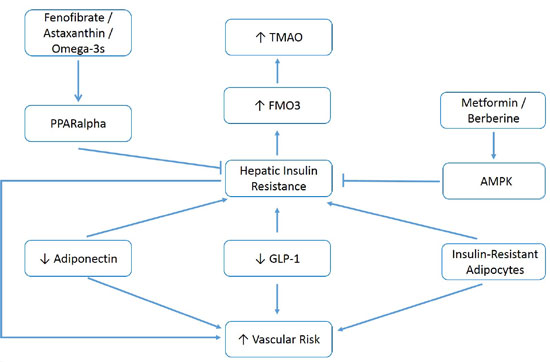 Figure 1: Measures that increase adiponectin and GLP-1 activity, control metabolic syndrome, and activate hepatic AMPK or PPARalpha, may decrease elevated TMAO and associated vascular/metabolic risk.
- 1 Curr Pharm Des. 2017;23(25):3699-3712
- 2, 3, 11, 15, 16, 17 Open Heart 2019; 6: e000890 (PDF)
- 4 N Engl J Med 2013 April 25;368(17):1575-84
- 5 J Am Heart Assoc. 2016 Jun 10;5(6)
- 6 PLOS ONE 2014;9(12):e114969
- 7 Clin Chem. 2017 Jan;63(1):420-428
- 8 J Am Heart Assoc. 2016 Oct 21;5(10)
- 9 J Am Heart Assoc. 2015 Nov 23;4(11)
- 10 J Cell Mol Med. 2018 Jan;22(1):185-194
- 12 Mayo Clin Proc. 2013 Jun;88(6):544-51
- 13 Int J Clin Pharmacol Ther Toxicol. 1985 Oct;23(10):569-72
- 14 Arzneimittelforschung. 1992 Sep;42(9):1101-4
- 18 J Ethnopharmacol. 2015 Feb 23;161:69-81
- 19 Evidence-Based Complementary and Alternative Medicine 2012, article ID 591654