Nerves
now browsing by category
Who Knew Humans Have a Third Set of Teeth?
Reproduced from original article:
https://articles.mercola.com/sites/articles/archive/2024/03/16/third-set-of-teeth.aspx
The original Mercola article may not remain on the original site, but I will endeavor to keep it on this site as long as I deem it to be appropriate.
Analysis by Dr. Joseph Mercola March 16, 2024

STORY AT-A-GLANCE
- Dental experts are exploring a medication to regenerate teeth, initially targeting anodontia, which could revolutionize dental care
- Wisdom teeth, often called “third molars,” aren’t a separate set, but the final teeth to emerge in adulthood, evolving from ancestral needs
- Gingivitis, if left untreated, can progress to periodontitis, highlighting the importance of proactive oral hygiene to prevent tooth loss
- Gum disease not only affects oral health, but it also correlates with brain health, indicating a broader impact on overall wellness
- Simple practices like oil pulling with coconut oil and maintaining a diet rich in whole foods complement oral hygiene routines, promoting healthier teeth and gums
Most people are born with 20 baby teeth and 32 permanent teeth. But around 1% of people have a condition called hyperdontia, which means they have extra teeth, known as supernumerary teeth.1
These extra teeth can be either baby or permanent, and there might be one or several of them. However, according to Katsu Takahashi, who heads the dentistry and oral surgery department at the Medical Research Institute Kitano Hospital in Osaka, Japan, about 1 in 3 cases of hyperdontia lead to the growth of a third set of teeth.
What’s interesting is that Takahashi and his colleagues believe that all humans might have once had the ability to grow a third set of teeth, but over time, this ability was lost.2 There’s even evidence suggesting that the “buds” for a third set of teeth may still exist.
Pioneering a Tooth Regenerative Drug
Sharks and certain reptiles have a unique ability: Their teeth continuously regenerate throughout their lives, sometimes as frequently as every two weeks.3 Could humans also tap into this regenerative power to grow new teeth once they’re lost? Takahashi and his team firmly believe so, and they’re actively developing a medication to try to make this a reality.
Their groundbreaking work, published in 2021, unveiled a protein produced by the uterine sensitization-associated gene-1 (USAG-1 gene)4 that hampers tooth growth in mice. By using a neutralizing antibody medicine to block USAG-1,5 the mice successfully grew new teeth.6 Now, the team is focused on translating these findings into a medication for humans, aimed at addressing anodontia — the complete absence of teeth — in children aged 2 to 6.
The clinical trials are slated to commence in July 2024, with the potential for the product to reach dentists’ offices by 2030.7 Takahashi told The Mainichi:8
“The idea of growing new teeth is every dentist’s dream. I’ve been working on this since I was a graduate student. I was confident I’d be able to make it happen … In any case, we’re hoping to see a time when tooth-regrowth medicine is a third choice alongside dentures and implants.”
Does a Third Set of Teeth Naturally Exist in Humans?
In a 2023 review published in Regenerative Therapy, Takahashi and colleagues detailed the progress made in tooth regeneration. They wrote, “Anti-USAG-1 antibody treatment in mice is effective in tooth regeneration and can be a breakthrough in treating tooth anomalies in humans.”9 They continued:
“With approximately 0.1% of the population suffering from congenital tooth agenesis and 10% of children worldwide suffering from partial tooth loss, early diagnosis will improve outcomes and the quality of life of patients. Understanding the role of pathogenic USAG-1 variants, their interacting gene partners, and their protein functions will help develop critical biomarkers.
Advances in next-generation sequencing, mass spectrometry, and imaging technologies will assist in developing companion and predictive biomarkers to help identify patients who will benefit from tooth regeneration.”
In humans, the potential for tooth regeneration hinges on what experts like Takahashi refer to as a “third dentition,” an additional set of teeth believed to naturally occur in humans.
“In addition to the permanent dentition in humans, a ‘third dentition’ with one or more teeth can occur. In some cases, this third dentition is thought to develop as a partial dentition following permanent dentition,” they explain. “In humans, a rudimentary epithelial form of the third dentition has been identified … Detection of the third dentition during early childhood facilitates the visualization and characterization of hyperdontia in the mouth of infant and some fetuses.”10
Apart from studies on mice, researchers also experimented on ferrets and found that using antibodies targeting USAG-1 resulted in tooth regeneration, akin to the concept of a third dentition. “This result is encouraging given that ferrets share dental patterns similar to those of humans,” they noted in Regenerative Therapy.11
While further testing for safety and effectiveness is crucial, the team remains optimistic about the potential of this treatment to stimulate tooth growth in humans.12
“Compared to dental implants and dentures, antibody-based treatment is more cost-effective and uses a naturally existing third dentition in humans at certain ages. Anti-USAG-1 antibody treatment in mice is effective for tooth regeneration and can be a breakthrough in treating tooth anomalies in humans.”

Save This Article for Later – Get the PDF Now
Understanding Wisdom Teeth: Decoding the Role of ‘Third Molars’
Wisdom teeth, often known as “third molars,” are not a separate set of teeth; rather, they are the final set of teeth to emerge in adulthood.13 It’s believed that these molars, which typically appear between the ages of 18 to 24, might have served a purpose for our ancestors, who had larger jaws and more teeth.14
However, as human jaws have evolved to be smaller, wisdom teeth sometimes fail to erupt fully through the gums. When they do, they can pose issues if there isn’t adequate space. Oral health specialists commonly advise removing wisdom teeth if they’re growing in at odd angles, causing discomfort, experiencing tooth decay or impacting adjacent teeth, leading to inflammation.
Despite these recommendations, many parents choose to have their teenagers’ wisdom teeth extracted preventatively, even in the absence of apparent issues. Statistics suggest that around 5 million individuals undergo wisdom teeth removal annually, with many of these procedures potentially being unnecessary.15 A 2005 Cochrane Review also indicated that a significant number of wisdom teeth extractions could be avoided.16
The review highlighted the importance of judicious decision-making based on specific indicators for extraction, which could potentially reduce the need for surgical procedures by 60% or more. Furthermore, the authors suggested that closely monitoring asymptomatic wisdom teeth might be a reasonable approach. A subsequent 2020 Cochrane Review reiterated the ongoing debate surrounding the removal of asymptomatic and disease-free wisdom teeth:17
“Impacted wisdom teeth can cause swelling and ulceration of the gums around the wisdom teeth, damage to the roots of second molars, decay in second molars, gum and bone disease around second molars and development of cysts or tumors.
It is generally agreed that removing wisdom teeth is appropriate if signs or symptoms of disease related to the wisdom teeth are present, but there is less agreement about how asymptomatic disease-free impacted wisdom teeth should be managed.”
The Link Between Oral Health and Your Body’s Health
The medication researchers are testing will initially be designed to promote tooth regrowth in those with anodontia, but its success could pave the way for broader applications, including addressing tooth loss. However, it’s crucial to recognize that declining oral health not only affects your teeth but also impacts your overall well-being.
Without preventive oral hygiene, you can develop gingivitis, an inflammatory condition triggered by the buildup of plaque or bacteria on teeth. One of the symptoms of gingivitis is red, bleeding gums. Left untreated, gingivitis can progress to periodontitis, a severe infection that may lead to tooth loss.
Furthermore, dental health significantly influences brain health, as evidenced by studies linking gum disease to hippocampal atrophy, the shrinking of a brain region associated with Alzheimer’s disease. In one study18 involving 172 individuals aged 55 and older,19 both gum disease and tooth count were associated with changes in brain structure. Participants with mild gum disease and fewer teeth exhibited accelerated shrinkage in the left hippocampus.
In this cohort, the researchers found that people with one less tooth experienced more brain shrinkage at a rate that was equivalent to nearly one year of brain aging.
A systematic review and meta-analysis of 13 studies revealed a marked increase in the risk of Alzheimer’s disease and mild cognitive impairment among individuals with periodontal disease compared to those without.20 This risk was particularly pronounced in individuals with severe periodontal disease. Moreover, beyond cognitive decline, periodontitis has been linked to various systemic diseases, including:21
| Diabetes | Heart disease | Respiratory disease |
| Adverse pregnancy outcomes | Cancer | Nervous system diseases |
Recognizing Warning Signs of Oral Health Issues
Nearly half of adults aged 30 or older — about 46% — exhibit signs of gum disease, while approximately 9% have severe gum disease.22 However, the tricky part is that many individuals are unaware of their condition because gum disease often remains “silent,” showing no signs or symptoms until it reaches more advanced stages.23
In the early phase of gingivitis, you might notice that your gums bleed during brushing, flossing or when eating hard foods. Additionally, your gums may appear red or swollen. As the disease progresses, your gums might recede, making your teeth look longer. You may also experience loose teeth, mouth sores, bad breath and pus between your gums and teeth.24
Unlike anodontia, a rare genetic disorder resulting in tooth loss, the loss of teeth later in life can often be prevented by taking proactive oral health measures. Consistent oral hygiene practices, such as regular brushing, flossing and tongue scraping, coupled with routine cleanings by a mercury-free biological dentist, play a crucial role in maintaining healthy teeth and gums.
Adopting a lifestyle that prioritizes a diet rich in fresh, whole foods is also vital for promoting a naturally clean mouth and good oral health. Another beneficial practice is oil pulling, which involves swishing a small amount of oil, like coconut oil, around your mouth for approximately 20 minutes before spitting it out into the garbage.
Oil pulling, when combined with regular brushing and flossing, can help reduce gingivitis and plaque, as well as bacterial colony counts in saliva.25 Only a small amount of oil is needed to achieve good results — 1 tablespoon for adults and 1 teaspoon for a child.
Coconut oil, known for its antibacterial and antiviral properties, is particularly suitable for oil pulling. Research has shown that coconut oil pulling is as effective as chemical mouthwash (chlorhexidine) in reducing plaque, gingival index score, bleeding-on-probing and gingivitis,26 highlighting its potential benefits for oral health.
While the concept of growing a third set of teeth holds promise, the potential side effects of using medication to achieve this result are uncertain. For now, staying vigilant about your oral health can help ensure that your teeth remain firmly in place — where they belong — at any stage of life.
- 1, 2, 8 The Mainichi June 12, 2023 (Archived)
- 3 Florida Museum February 17, 2020
- 4 Nature, 2021;11(13674)
- 5, 7 Euro News August 5, 2023
- 6 Popular Mechanics September 4, 2023 (Archived)
- 9, 10, 11, 12 Regenerative Therapy March 2023; 22:160
- 13 Cleveland Clinic, Wisdom Teeth
- 14 National Library of Medicine, Wisdom teeth: Overview May 7, 2020
- 15 Vox February 4, 2015
- 16 Cochrane Database Systematic Review April 18, 2005; (2): CD003879
- 17 Cochrane Review May 4, 2020
- 18 Neurology January 24, 2006; 66 (2)
- 19 Science Daily July 5, 2023
- 20 Psychogeriatrics. 2021;21(5)
- 21 Frontiers in Aging and Neuroscience, 2022; 14
- 22 U.S. CDC, Gum Disease, Overview, last bullet
- 23, 24 American Academy of Periodontology, Gum Disease Information
- 25, 26 Heliyon 2020;6(8)
Liposomal Carnosine Is Essential for Detoxing Linoleic Acid
Reproduced from original article:
https://articles.mercola.com/sites/articles/archive/2024/02/05/liposomal-carnosine.aspx
The original Mercola article may not remain on the original site, but I will endeavor to keep it on this site as long as I deem it to be appropriate.
Analysis by Dr. Joseph Mercola February 05, 2024
STORY AT-A-GLANCE
- Carnosine is a dipeptide found in meat. The highest concentrations of carnosine are found in your muscles, brain, central nervous system and gastrointestinal tract
- If you’re a vegetarian or vegan, you will have lower levels of carnosine in your muscles. This is one reason why many strict vegans who do not properly compensate for this tend to have trouble building muscle
- Carnosine binds to advanced lipoxidation endproducts (ALEs) that form from oxidized seed oils in your diet, making it a crucial aid in the detoxification of linoleic acid (LA)
- Thanks to its ability to scavenge 4-hydroxynonenal (4HNE), carnosine is also protective against obesity, diabetes, cardiovascular disease and Alzheimer’s disease, just to name a few
- The best way to optimize your carnosine level is to eat organic grass fed beef. When it comes to carnosine supplements, your best bet is liposomal versions as they have the highest bioavailability
Carnosine is a dipeptide found in meat. It’s not found in any plant foods. Dipeptide means it’s made up of two amino acids, in this case beta-alanine and histidine. The highest concentrations of carnosine are found in your muscles, brain, central nervous system1 and gastrointestinal tract,2 which gives you an indication of its potential importance.
Unfortunately, it’s also one of the top 10 most common nutrient deficiencies, especially among vegans. If you’re a vegetarian or vegan, you will have lower levels of carnosine in your muscles. This is one reason why many strict vegans who do not properly compensate for this tend to have trouble building muscle.
Carnosine also binds to advanced lipoxidation endproducts (ALEs) that form from oxidized seed oils in your diet, making it a crucial aid in the detoxification of linoleic acid (LA).
Carnosine’s Physiological Roles
Carnosine has several physiological roles and benefits. For example, it:3
| Provides athletic benefits — Approximately 99% of carnosine is found in muscle tissue where it facilitates lactic acid detoxification, improves muscle contraction and muscle relaxation and enhances endurance |
| Alleviates diabetic nephropathy by protecting podocyte and mesangial cells4 |
| Modulates energy metabolism in macrophages and microglia by restoring and/or enhancing the basal conditions |
| Has antioxidant properties and scavenges reactive oxygen species (ROS) and aldehydes created by peroxidation of fatty acid cell membranes during oxidative stress5 |
|
Regulates the activity of stem cells |
| Modulates glucose metabolism |
| Enhances the degradation and/or scavenging of nitric oxide (NO) |
| Promotes wound healing |
| Opposes glycation6 |
| Slows down the aging process by prolonging the life of cells and preserving cellular homeostasis7 |
| Regulates osmotic pressure |
| Modulates glutamate production and transport |
| Modulates brain metabolism |
| Chelates heavy metals8 |
| Acts as a pH buffer9 |
| Acts as a neurotransmitter |
| Protects olfactory receptor neurons in the elderly |
Beef, Liposomal Carnosine and Precursors Are the Best Sources
Interestingly, a June 2023 paper10 in the medical journal Pharmaceuticals reviewed the science behind carnosine with the aim of developing new delivery systems for carnosine-based drugs. As noted in this paper:
“Because of its well-demonstrated multimodal pharmacodynamic profile, which includes anti-aggregant, antioxidant, and anti-inflammatory activities, as well as its ability to modulate the energy metabolism status in immune cells, this dipeptide has been investigated in numerous experimental models of diseases, including Alzheimer’s disease, and at a clinical level.
The main limit for the therapeutic use of carnosine is related to its rapid hydrolysis … [This is the] reason why the development of new strategies, including the chemical modification of carnosine or its vehiculation into innovative drug delivery systems (DDS), aiming at increasing its bioavailability and/or at facilitating the site-specific transport to different tissues, is of utmost importance.”
Delivery systems currently in use or in development include intraperitoneal injections, intranasal sprays and oral administration of various nanoformulations. But while the drug industry is keen on figuring out how to profit from carnosine by making it into a drug, you certainly don’t need a drug to get these benefits.
Simply eating organic grass fed beef is one of the most efficient ways to raise your carnosine level.11 This is one of many reasons why cultured beef is not a viable substitute for real beef. Not only does fake beef lack carnosine but also B vitamins, retinol, long-chain omega-3 fatty acids, taurine, creatine and bioavailable forms of iron and zinc.12
Most carnosine supplements aren’t very effective either because the carnosine is rapidly broken down into its constituent amino acids by certain enzymes. Your body then reformulates those amino acids back to carnosine in your muscles.
An exception to this is liposomal carnosine, which appears to work quite well. Another alternative is to supplement with beta-alanine, which is the rate limiting amino acid in the formation of carnosine. According to a 2021 paper,13 daily intake of beta-alanine can raise the carnosine content of skeletal muscle by as much as 80%.
Download this Article Before it Disappears
Carnosine Protects Against LA-Induced Oxidative Stress
One benefit not expounded upon in the Pharmaceuticals paper is carnosine’s ability to reduce LA-induced oxidative stress. While your body will slowly eliminate stored LA over time, provided you reduce your intake, carnosine can help reduce the oxidative damage caused by LA while your body is cleaning itself out. I take liposomal carnosine every day before meals to help detoxify LA.
The omega-6 fat LA is highly susceptible to oxidation, and as the fat oxidizes it breaks down into harmful sub-components such as ALEs and oxidized LA metabolites (OXLAMs). These ALEs and OXLAMs are what cause most of the damage.
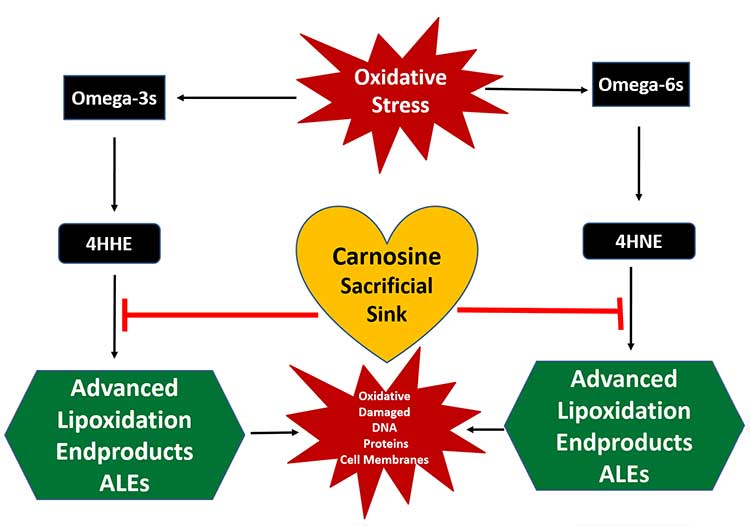
Carnosine binds to ALEs like a magnet and acts as a sacrificial sink. It’s basically a substitute target for these profoundly damaging molecules. In this way, carnosine allows your body to excrete the ALEs from your body before they damage your mitochondria, DNA or proteins. (Another molecule that protects against LA-induced damage is carbon dioxide). The illustration below shows how carnosine works in this regard.
Carnosine May Be Protective Against a Wide Range of Diseases
A more detailed explanation of how carnosine protects against reactive oxygen species (ROS) and how that helps protect against oxidative stress-related pathologies is given in a 2021 paper in the journal Antioxidants:14
“A study that examined the effect of carnosine on oxidative stress in human kidney tubular epithelial (HK-2) cells indicated that carnosine decreased NADPH oxidase (NOX) 4 expression and increased total superoxide dismutase (T-SOD) activity, thus reducing the production of intracellular ROS, relieving the oxidative stress of cells, and ultimately inhibiting the mitochondrial pathway of apoptosis.
Ability of carnosine to protect against pathologies characterized by oxidative stress has been shown in a number of conditions … Carnosine changes the reactivity of superoxide anion by forming a charge-transfer complex with the superoxide radical and also by reducing the efficiency of hydroxyl radicals, creating a compound less reactive than the hydroxyl radical.
One of the mechanisms to protect organisms from oxidative stress is the chelation of transition metals, preventing them from participating in deleterious processes involving ROS … Interestingly, when comparing metals involved in free radical generation, carnosine was found to have a greater antioxidant activity coupled with copper than iron …
At physiological concentrations, carnosine directly reacts with superoxide anion similar to ascorbic acid. In physiological conditions, carnosine was found to reduce oxidative damage and to improve antioxidant activity of different antioxidative enzymes …
Experiments on aged rats showed that therapy with 250 mg/kg/carnosine per day significantly decreased oxidative stress and increased activity of antioxidative enzymes … In similar model of aged rats, carnosine increased liver vitamin E, which further demonstrates its importance in defending the organism from free radicals.
Rising data indicate that carnosine acts as a scavenger of reactive and cytotoxic carbonyl species including 4-hydroxynonenal (HNE). HNE is an aldehyde generated endogenously by lipid peroxidation of unsaturated fatty acids that act as ‘toxic second messengers,’ extending the harmful potential of free radicals.
HNE is considered an important biomarker of oxidative stress and accumulating data indicate that it may modulate signaling pathways of cell proliferation, apoptosis, and inflammation.”
How Carnosine Protects Against Alzheimer’s
As noted in the Pharmaceuticals paper,15 one of the pathologies that carnosine is protective against is Alzheimer’s disease. In my November 2021 interview with Tucker Goodrich, he explained the role of HNE, specifically, in Alzheimer’s, and why it’s so important to get rid of it.
“In heart failure, Alzheimer’s, and AMD [age-related macular degeneration], one of the things they see is an inability of the cell to produce enough energy. The mitochondria are getting damaged. HNE does that damage. It damages 24% of the proteins in the cell, primarily around energy production.
One of the ways your cells produce energy is they basically ferment glucose into pyruvate outside of the mitochondria. This is a perfectly normal part of metabolism and they produce something called pyruvate. A molecule called pyruvate dehydrogenase takes pyruvate into the mitochondria and converts it to acetyl-CoA so the mitochondria can burn it very efficiently for fuel.
Well, one of the things HNE does is it breaks pyruvate dehydrogenase, and they see this in Alzheimer’s where their cells are no longer able to produce enough energy. This is why your cells are dying in Alzheimer’s.
The beta amyloid plaques in Alzheimer’s disease are induced by HNE. There’s a great model that came out of Harvard a couple of years ago showing that.
Even the critical, the most important part of the mitochondria, complex 5, — ADP synthase — which is what takes all the energy coming from your mitochondria and turns it into ATP, which is what fuels the rest of your body — is damaged by HNE. This is a huge issue. There’s no more fundamental problem in aging and health than protein damage.”
Carnosine is the most effective scavenger of HNE, so optimizing your level can go a long way toward protecting against the HNE-induced damage that promotes Alzheimer’s.
Carnosine — A Promising Therapeutic for Obesity-Related Conditions
Elevated HNE has also been found in obese and diabetic patients,16 so there’s reason to suspect carnosine can be important in the treatment of these conditions as well. Another disease where elevated HNE plays a role is atherosclerosis. As noted in the 2021 Antioxidants paper:17
“… emerging studies have indicated that these reactive aldehydes are more than simply markers of oxidative stress.
Rather, it is suggested that these reactive species may play a significant pathogenic role in obesity-associated disorders such as insulin resistance and a carnosine analog alleviates the production or enhances the removal of reactive carbonyl species, providing promising new therapeutic compounds for cardiovascular and metabolic diseases related to obesity.”
Take Control of Your Health by Lowering Your LA Intake
As detailed in several previous articles, the evidence strongly suggests excessive LA is driving most if not all modern diseases, including heart disease and cancer. Fortunately, the solution is simple. Just lower your LA intake.
The easiest way to do this is to use an online nutritional calculator such as Cronometer to calculate your daily intake. Cronometer will tell you how much omega-6 you’re getting from your food down to the 10th of a gram, and you can assume 90% of that is LA. Anything over 10 grams is likely to cause problems. I keep my intake below 5 grams a day.
Since there’s no downside to limiting your LA, you’ll want to keep it as low as possible, which you do by avoiding high-LA foods. Keep in mind you’ll never be able to get to zero, and you wouldn’t want to do that either. You do need some LA, but since it’s found in most foods, and since you need only small amounts, there’s really no way to end up with a deficiency.
- 1, 3, 10, 15 Pharmaceuticals June 2023; 16(6): 778
- 2, 4, 5, 6, 7, 8, 9, 13, 14, 16, 17 Antioxidants July 2021; 10(7): 1037
- 11 Science Direct, Carnosine; Nutritional Supplements and Metabolic Syndrome
- 12 Animal Frontiers April 15, 2023
Quantum Orthomolecular Medicine: The Bio- Orthophotonic Concept of Healing Energy
Reproduced from original OMNS article (OrthoMolecular News Service):
http://orthomolecular.org/
Subscribe to the free Orthomolecular Newsletter: http://orthomolecular.org/subscribe.html
Go to the OMNS Archive: http://orthomolecular.org/resources/omns/index.shtml
Orthomolecular Medicine News Service, November 27, 2023
by Michael J Gonzalez, Jorge R Miranda- Massari, Christine Shaffner, Sayer Ji, Michael Joseph Gonzalez, Jose Olalde, Andreas L Kalcker, Alejandro Jose, Miguel J Berdiel
Editor’s note: Readers are invited to expand their consideration of all aspects of health and healing. This new paper presents interesting dimensions and ideas that merit further discussion. – Andrew W. Saul
OMNS (November 27, 2023) Life manifests in humans in which in a way reflect the ability of our minds, emotions, and bodies to function, process, and regulate energy. Energy at various levels generates a certain level of order and organization to establish the needed communication for attaining homeostasis (health). Many cultures support the notion that by developing a deeper sensibility, perception, and consciousness of the flow of energy in our bodies, humans can acquire wisdom and promote wellness and healing. Some of the cultural concepts related to energy include chi, ki, prana, chakras, nadis and meridians. Other relevant concepts include infoceuticals, biofield and structured water. We present a new energetic concept we named orthophotonics which is defined as the correct utilization of energy to direct homeostasis (balance and health). The development of the theory of relativity and quantum physics paved the way to integrate ancient cultural concepts of energy to biology. Along with other advances in the field of biophysics, epigenetics, neuroscience, are allowing us to understand the connection between electromagnetic energy, sound vibrations, gene expression and biological signaling as a tool for wellness and healing. Here we discussed how our increasing understanding of energy and information can be harnessed and used for health and wellness attainment.
Introduction: Energy as Information
Health and disease states have been proposed to be related to the flow or stagnation of our energetic systems (Srinivasan, 2014). The movement of energy relies on information. The current basic premise of biology states that health depends on communication equally inside the organism and between the organism and its environment. Since there is significant research on the signaling in living systems from the physical/molecular to the chemical/atomic level of communication, the next frontier is harnessing the power of energy and its capacity to transmit the right signals (ortho information) to promote health (Rosch, 2009).
The biological consequence of Einstein’s statement that “the energy field governs the particle” means that by correcting the flow of energy in the body we may provide the means to correct insufficiencies in energy. This corrected or supplied energy that provides the information that incites the necessary order of the particles (matter-molecules and tissues) and therefore capable to attenuate or reverse the disordered, pathological or disease state. When energy flows correctly, everything works well. Traditional Chinese medicine (TCM) has worked with the flow of energy in the body for thousands of years (Zheng, 2005). With the development of quantum mechanics by Einstein, Planck, Heisenberg, Bohr and others; Western science entered the age of paradox in physics.
Quantum physics includes a wide variety of phenomena that fits very well the biological complexity. Most of them are regarded as unusual because they violate our everyday expectations of how nature should behave, in addition to challenging Newtonian physics. The conceptual framework created by Descartes was completed by Newton who developed a mathematical formulation of the mechanistic view of nature in a three-dimensional space. This concept is challenged by the propositions of Planck, Schrödinger, Heisenberg, Feynman, Einstein and others related to energy at the quantum level. However, much earlier, several ancient cultures had proposed a variety of concepts of life energy called chi, ki, prana, odic force and others that provide a vitalistic explanation of biological energy (Rosch, 2009). Interestingly, ancient medical traditions accomplished healing by moving energy usually invisible to the naked eye. The first theory that achieved full agreement between quantum mechanics and special relativity is Quantum electrodynamics (QED). QED describes in mathematical terms the phenomena concerning electrically charged particles interacting with photons (force particles). This concept unifies energies as perceived by ancient healing practices.
Euenergy (true, total energy concept)
Energy (Qi, Prana, Neuma, Life Force)
Energy is defined as the capacity for doing work, but energy is a lot more complex than this short, concise and limited definition. Terms such as force, power and strength are all associated with energy and tied to the ability to exert effort, or cause a change in an object of a certain magnitude and direction. Energy fuels and regulates the body’s natural internal functions. It is necessary to support all cellular functions, metabolism, reproduction, cell repair and to support all biological functions necessary to maintain homeostasis.
Respiration is a multistage process that takes place within each cell of the body to produce the energy needed by the cell. There are three main stages of respiration: glycolysis, the Krebs cycle, and oxidative phosphorylation. These processes, although biochemical, have quantum components, especially in the electron transport system (Bennett, 2019).
There are some general principles of bioenergetics. The first principle of bioenergetics states that life exchanges energy. The second principle states that fields govern energy (the field is the space where a force can exert influence, storing potential energy). The third principle states that fields communicate information. By sending information through fields, parts of the body can communicate with one another instantly (entanglement and non-locality concepts of quantum physics). An electron may travel at the speed of light through a magnetic field. This particular form of electromagnetic communication (perineural) complemented by electrochemical neural communication permits the body to work so well as a single unit, in spite of its inherent complexity. Biochemical mechanisms alone simply would not be fast enough to accomplish this feat (Rosch, 2009).
The 3 primary energy systems: Mitochondria, Nervous System and Energetic Channels
The body has 3 primary energy systems:
1- Mitochondria– Organelles that make cellular energy in the form of ATP, heat and light. The key to biological energy enhancement is optimizing the mitochondria. One of the most potent ways to improve energy levels is to repair the physical membranes of your mitochondria (Gonzalez et al. 2018). Cofactors Involved in mitochondria energy production are needed. These are substances that facilitate the process of mitochondria producing cellular energy. This system in turn has 3 subsystems: Phosphagen (immediate source) Anaerobic (glycolytic, generally slow, limited and primitive, uses carbohydrates) Aerobic (oxidative, slow, more complex, uses either carbohydrate or fat).
2- Nervous system-The autonomic nervous system plays a crucial role in the control of energy balance. The Sympathetic Nervous System (SNS) prepares the body to react and expend energy in times of stress. The Parasympathetic Nervous System (PNS) supports body functions that conserve and restore energy during periods of rest and recovery.
3- Subtle Energetic Channels– The subtle energy system has three components: the meridians, chakras, and aura. Meridians or nadis in the Eastern traditions of Chinese Medicine and Ayurveda are pathways in which energy travels within our tissues that run throughout both sides of the body. There are 12 major meridians, and one side mirrors the other. Each meridian is correlated to an internal organ. Chakras are spinning energy centers that receive and express subtle energy and emotions. In the Hindu system, there are seven main chakras. The chakras are anchored in the core of the body and lie along a straight central energy line, otherwise known as the Hara line. While the nervous system can be considered electrical since it produces electric currents, the chakras can be considered as magnetic since it can produce a magnetic field. Chakras project into the corresponding layer of the aura via front and back emanations. The aura is a multilayered light that surrounds all beings, an individual vibrational field.
Energy can flow through the electromagnetic field. The electromagnetic field, along with water, forms the matrix of life. Water can form structures that transmit energy (O’Rourke, 2011). The structures are hexagonal layers of water formed as H3O2 and intimately associated with the surfaces of proteins, DNA and other molecules in the living matrix. This interfacial or structured water is essential for the conformational stability and functioning of proteins and DNA. Each fiber of the living matrix, both outside and inside cells and nuclei, and the genetic material, is surrounded by an organized layer of water that can serve as a channel of communication and energy flow. Vibrational information is transferred through a tissue tensegrity-matrix which acts as a coupled harmonic oscillator operating as a signal-transducing system (Oschman, 2003).
All the tissues of the body produce magnetic fields (Hammerschlag, 2015). The highest magnetic fields are registered in the brain and the heart. The heart is the most potent source of electromagnetic energy in the human body. The electrical field of the heart is around 60 times larger in amplitude than the electrical activity generated by the brain (McCraty, 2016). This field is measured with the use of an electrocardiogram (ECG) (Dirlich, 1997) and can also be detected up to 3 feet away from the body, in all directions by using a superconducting quantum interference device (SQUID) magnetometer (McCraty, 2016). All electromagnetic energy has its own amplitude and frequency. Frequency and amplitude are related in an inversely proportional way. Our bodies are made of energy arranged into matter. The physiological control system is able to communicate information instantly through resonance. The control system or body field uses the resonance of energy signals to provide the necessary communication throughout the body. The role Energy levels will be paradigm-changing in biochemistry and physiology taking these sciences into the realm of quantum mechanics.
Conscious energy defined as innate intelligence (Biological Intelligence) was presented by DD Palmer, the founder of chiropractic. The inseparable relationship between energy, information and communication in physiology is the basis of this health practice. Chiropractors help improve the flow of this healing energy through the removal of subluxations. Acupuncturists stimulate points on the body to achieve the same results. These are not the only ways to improve energy flow throughout the body, things such as exercise, proper diet, rest and a positive mental outlook can also help. The subject of subtle energy effects on the body has been a matter of controversy and confusion because they are difficult to detect through conventional diagnostic and experimental technologies. Of great importance is that prevailing opinions and discussions on the subject have been influenced by economic and religious biases, in addition to political influences that should not be a part of biological and medical explanations.
Light is a quantum particle of energy called a photon. The photon is defined as the primary angular momentum of the electron times the speed of light. Different frequencies (colors) mean that each photon packet has a different energy from every other photon packet. The photon is a discrete parcel of energy. The quantum of electromagnetic energy is regarded as a discrete particle having zero mass, no electric charge and an indefinitely long lifetime. The photon is pure energy. The three electrical forces are electrostatic force, the proportion of electric force (weak interaction), and electromagnetic (strong) force, respectively.
The Biofield
A field is a region of space containing objects. The Biofield is an energy blueprint that corresponds to an entire living organism. It allows for rapid communication throughout the body. It is the matrix that connects our physical, emotional, and mental dimensions. Biofield physiology is proposed as an overarching descriptor for the electromagnetic, biophotonic and other types of spatially distributed fields that living systems generate and respond to as integral aspects of cellular, tissue and whole organism self-regulation and organization. As such, biofields can be viewed as affecting physiological regulatory systems in a manner that complements the more familiar molecular-based mechanisms. Life rhythm is a symphony of oscillatory vibrating patterns.
The function of the biofield in the body’s innate self-healing mechanisms is hypothesized, based on the concept of bio-information which, mediated by consciousness, functions at the quantum level to supply coherence and pattern information to modulate and normalize all physiologic processes (Rein, 2004). The properties of the biofield are proposed to be based on electromagnetic fields, coherent states, biophotons and quantum and quantum-like processes that eventually determine the level of health and consciousness (Kafatos, 2015).
The perception of the environment or a person’s thought process induces distinctive electrical impulses in the brain. These signals travel throughout the body and emit out in the form of electromagnetic radiation which is termed the aura or Biofield Energy (Chhabra Gunjan 2013, Srivastava 2017). The human aura, the energy field that surrounds the body is an example of our quantum energetic state. There are seven energetic layers to the aura, extending within and beyond the physical body, each with its vibration patterns. This biofield is different in every person and it can be viewed in different layers of colors, sounds, shapes and structures. (Chhabra Gunjan, 2013). These seven layers correspond to the chakras (Sanskrit word for wheels) vortices of energy and light, first described in the Sanskrit Yoga Upanishads some 3000 years ago (Eden, 1998; Schneider, 2019). The chakras are not physical or anatomical structures but subtle energy centers in the human body (Govinda, 2002).
Vibrations
A vibration is a rapid motion that goes back and forth. We are made of vibrating energy. Vibration refers to the oscillating and vibrating movement of atoms and particles caused by energy. Frequency refers to the rate at which the vibrations and oscillations occur.
All life exists within an ocean of vibration and rhythm is fundamental to all of life. Rhythms are all over the universe; from the rotation of galaxies every billion years, the earth’s orbit of one year, heart rate of 80 times per minute. Living organisms have a molecular clock that controls mitochondrial rhythmicity (de Goede 2018). Music has been demonstrated to regulate several cardiac and neurological functions and to trigger measurable stress-reducing effects (Cervellin 2011).Music has also shown effects in modulation of blood pressure, heart rate, respiration, EEG measurements, body temperature, immune parameters, endocrine function and amelioration of pain, anxiety, nausea, fatigue and depression [Myskja 2000]. Discoveries in the fields of biophysics, biology, epigenetics, neuroscience, psychology, and psychosomatics are allowing us to understand the connection between electromagnetic energy and sound vibrations in gene expression and biological signaling as a tool for wellness and healing. These findings support the notion of a subtle biofield information managing system that is closely implicated in the regulation of basic biological processes, from the molecular level to the whole organism (Muehsam 2014).
According to The Universal Law, everything in the Universe is in constant movement (Newton’s Universal Laws of Gravitation, Newton, 1687) and vibrating (Einstein, 1955; Green, 1984). Ultimately, all matter is just vibrations of various underlying fields. We are a living energy field, composed of energy-producing particles and these are all in constant motion. Vibrations generate electromagnetic energy that can cause changes in the cells. Cell voltage is essential for cells to communicate properly. Basically, all of the cell processes are absolutely dependent on the cell voltage. By varying the vibration of one kind of matter it could be transformed into another (Low-energy nuclear transformation bio transmutation). Everything in a state of vibration also emits sounds and frequencies.
Movement equals life… We must move to eat, breathe, digest, assimilate, eliminate and procreate. Without movement, we would cease to exist. We are energetic beings. This life force is the same energy that gives life to plants, it flows throughout the universe. The absence of this energy is death, if it is still present but merely decreased, then disease and dysfunction occur. If you want to live a long, healthy life, it’s vital to incorporate exercise into your everyday routine.
Tai chi is a system of exercise and movement developed as a martial or training art that is used for health and wellness. Often known as moving meditation, tai chi is a series of slow, gentle motions that are patterned after movements in nature.
Qi gong is an internal process that has external movements. Qi means life force, the energy that powers our body and spirit. Gong is the term meaning work. Qi Gong together means a form of movement and mind using intention and mindfulness to guide qi to make qi work. Qi gong is often referred to as the internal part of tai chi. Qi gong practice typically involves moving meditation, coordinating slow-flowing movement, deep rhythmic breathing, and a calm meditative state of mind. Qi gong involves the mind (presence), movement (action), breath (flow) and vision (focus). Both are related to the flow of energy through the body.
“Consciousness is only possible through change; change is only possible through movement.” – Aldous Huxley
Frequencies and Wavelengths
Frequency refers to the rate at which something occurs or is repeated over a particular period of time. The rate at which a vibration occurs that constitutes a wave, either in a material (as in sound waves), or in an electromagnetic field (as in radio waves and light), is usually measured per second. It is measured in Hertz (Hz) = One hertz is equal to one cycle per second. Frequency and wavelength are inversely proportional to each other. The wave with the greatest frequency has the shortest wavelength.
Colors reflect different frequencies. In order from lowest frequency to highest, they are red, orange, yellow, green, blue, indigo, and violet. Because of the inverse relationship, they are reversed in order by wavelength. The color with the highest frequency is violet. The color of a photon is determined by the frequency at which the photon resonates, which, in turn, is a factor in its wavelength. The wavelength of light is defined as the distance between the crests or troughs of a wave motion. Frequency is the number of occurrences of a repeating event per unit of time. In the case of light, frequency refers to the number of times a wavelength is repeated per second.
Quantum Chromodynamics (QCD) is the quantum field theory that describes the properties of the strong interactions between quarks (mass particles) which are mediated by gluons (force particles). Quarks are elementary particles that make up composite hadrons (i.e., protons and neutrons) and possess a distinctive property called color that governs their binding together to form other elementary particles. Analogous to electric charge in charged particles, color is of three varieties, arbitrarily designated as red, blue, and yellow. All are capable of influencing the Biofield. Physical bodies are expressions of frequencies. Frequency and information may be imprinted into the water by succussion (homeopathy principle; Rey, 2003; Smith, 2004). A typical human eye will respond to wavelengths from about 380 to about 750 nanometers. In terms of frequency, this corresponds to a band in the vicinity of 400-790 terahertz.
Resonance
The phenomenon of resonance signaling refers to the effect on the amplitude that occurs when the frequency of an applied periodic force is similar to the natural frequency of the system. Resonance is involved in how specific frequencies modulate cellular function to restore or maintain health. Resonance allows for an energetic dialogue. Resonance was initially conceived in acoustics in relation to sound and was later applied to electromagnetism. Resonance is a phenomenon that amplifies a vibration. In electromagnetism, resonance concerns how vibrating energy fields interact with and influence each other. In particular, pulse rates, or frequencies, of microcurrents and wavelengths (colors) of light each resonate with various body systems and tissues. Resonance is the way in which memories are transferred through space and time (Hunt and Schooler, 2019). When energy moves freely throughout the body without interference, it is allowed to resonate at a higher frequency. Those who learn to cultivate the flow of this energy through healthy choices and habits experience an abundance of energy, are rarely sick and are less prone or more resistant to disease.
Albert Szent- Györgyi (1893-1986), the First Quantum Biologist
Albert Szent- Györgyi was certain that the random bumping of molecules proposed as a mechanism in basic solution biochemistry was too slow to explain the speed and movements of life. He focused on electrons, protons, and energy fields. Szent- Györgyi proposed that proteins are semiconductors and are thereby capable of rapidly transferring free electrons from place to place within an organism (Szent- Györgyi, 1941a, b). Szent- Györgyi continued to explore electronic conduction and charge transfer effects from the quantum perspective.
Semiconduction and piezoelectricity are two electrical qualities of the crystalline substances that occur prolifically in the human body. Semiconduction is the only known mode of conduction outside of metal wires capable of transmitting very small currents over long distances, but this transmission is possible only in substances with very orderly molecular structures, such as crystals. Many crystals are semiconductors, able to both conduct and resist electrical flow, so are somewhere between insulators and conductors. Semiconduction allows for many activities vital to life processes.
Szent-Györgyi was the first to point out that the molecular structures of the human body are sufficiently well organized to support semiconduction through passing information along chains of protein molecules. Many energy healing therapeutic techniques may be understood as reversals of state of polarization in a three-dimensional, crystalline network. The crystal lattice is able to amplify, transmute, transform, transfer, transmit, and transduce electromagnetic energy. Crystalline structures are mathematically precise, highly ordered, geometrically arranged lattice structures representing the lowest possible entropic state.
Szent- Györgyi stated that molecules do not have to touch each other to interact. Energy can flow through the electromagnetic field. The electromagnetic field, along with water, forms the matrix of life. Water can form structures that transmit energy. These structures are the layers of water intimately associated with the surfaces of proteins, DNA, and other molecules in the living matrix. This interfacial or structured water is essential for the conformational stability and functioning of proteins and DNA.
Energy and Water (Structured Water)
Water has the ability to structure itself. Water can behave like a liquid crystal. This in part helps explain some unusual properties of water. Instead of the familiar H2O of liquid water, the water molecules combine into a new, more structured, more viscous, and less fluid form H3O2. Hydrophilic surfaces such as within the cell generate structural changes denominated as interfacial water. This interfacial structured water that has generally only a few layers of molecules creates an exclusion of colloidal and molecular solutes (Exclusion Zone, or “EZ layer) and becomes more gel-like rather than a liquid (Pollack, 2013; Sharma 2018). The EZ structure or interfacial water layers takes on a particular charge (usually a negative charge), and the bulk water takes on an opposite charge, literally creating a battery with voltage. This voltage is necessary for nerve transmission and cellular communication. EZ layer and its battery effect increase in the presence of light, especially infrared light (heat). This is called the fourth phase of water, where water forms structures around hydrophilic surfaces, such as the inner and outer membranes of every cell in the body (Pollack, 2013). Light and heat can build up these structured layers and form a battery throughout the body. This property is extremely important to explain the ability of the body to use certain frequencies to improve mitochondrial energy. Red and near-infrared (NIR) photons (675 nm) interact with interfacial water layers (IWL) in the mitochondria and therefore, the primary acceptor for near-infrared light is mitochondrial-bound water (Somer, 2019).
As mentioned before this structured water becomes less like a liquid and more like a gel. This more solid phase permits structured water to retain information about molecules and electronic signatures. The idea that structured water can store and share information is gaining acceptance as evidence continues to mount.
This can explain the mechanism involved in homeopathy. Like all new ideas that involve a change from the current way of thinking, it faces resistance such as the orthomolecular medicine concept based on using correct (ortho) naturally occurring molecules instead of patented, xenobiotic chemicals or synthetic biologicals, to prevent and treat disease. In this sense, a biologically active substance may cause changes in the body by its ability to communicate with the body field (Physiological Modulation; Gonzalez, et al. 2019). The substance has an energy signature, or frequency, that interacts with the body field and causes it to react. Even when the physical substrate of that frequency is removed the energy signature persists and still has an effect. In this case, water has been imprinted with (remembers) the information or signature of the Biological Active Substance (BAS). The small-dose approach even forms the basis upon which vaccinations have an effect. In contrast, homeopathic work by electronically producing a frequency pattern in water which in turn produces a biological effect (Massey and McCardell, 2022). Restoring integrity to the body field provides a more friendly and less toxic alternative to the pharmacological approach. Water is able to receive, retain and return information because it fluctuates between coherent and non-coherent states. This enables water to be an excellent medium for communication, because it is capable of rearranging its structure of molecular arrangement in order to encode, transmit and integrate new information. In general, water has vortexing, superconducting, energy-generating, and transmitting potential.
Photobiomodulation and Energy
Photobiomodulation (PBM) using low energy, especially red or near-infrared spectrum has been demonstrated to decrease acute side effects of radiation in rigorously conducted phase III randomized studies (Tam, 2020). PBM can reduce swelling, increase antioxidants, decrease inflammation, protect against apoptosis, and modulate the microglial activation state. All these mechanisms of action strongly suggest that PBM delivered to the head should be beneficial in cases of both acute and chronic Traumatic brain injury and possible stroke. There is evidence that PBM can help the brain repair processes by stimulating neurogenesis, upregulating BDNF synthesis, and encouraging synaptogenesis. In healthy human volunteers, PBM has shown to increase regional cerebral blood flow, tissue oxygenation, and improve memory, mood, and cognitive function (Hamblin, 2018).
NIR light is associated with potent neuroprotective effects. The proposed underlying mechanisms of red/NIR light include improvement of neuronal mitochondrial function, increased blood flow to neural tissue, upregulation of cell survival mediators and restoration of normal microglial function (Beirne, 2017). A study evaluated a comprehensive cellular, molecular, and functional characterization of neuroprotective effects of 670 nm RL and 810 nm near-infrared light (NIRL) on blue light-damaged murine primary photoreceptors and showed that respiratory chain complexes are photobiomodulation targets leading to enhanced mitochondrial energy metabolism. Further analysis of gene expression identified upregulation α-crystallins that indicate enhanced production of proteins with protective functions (Heinig, 2020). Another study in an animal model evaluated NIR (670 nm) emission on cellular protection against hypoxia and reoxygenation-induced cardiomyocyte injury. Mitochondrial metabolism, measured by ATP synthase activity, was increased by NIR, and NIR increased NO in cardiomyocytes, and the protective effect of NIR was completely reversed by the NO scavengers (Zhang, 2009).
NIR light-assisted phototherapy plays an important role in bone-related disease treatment and bone tissue regeneration, with significant promise for further biomedical and clinical applications (Wan, 2020).
Extracellular Matrix
The living matrix is defined as the continuous molecular fabric of the organism, consisting of fascia, the other connective tissues, extracellular matrices, integrins, cytoskeletons, nuclear matrices and DNA. It is a body-wide communication system that is essential to all living functions. The living matrix must produce coherent or laser-like oscillations (Frohlich, 1968).
The role of the extracellular matrix in mediating a variety of important physiological functions was a major topic of the research of Alfred Pischinger in 1975. Pischinger recognized that the body-wide ground regulation system is responsible for all vital functions (Pischinger, 2007). The common denominator of life in the vertebrate organism is not the cell but is a triad: capillary -matrix-cell. The extracellular matrix is a dynamic and vibrant and alive component of the organism with vital roles in the moment-by-moment operations of virtually all physiological processes.
In considering the role of fascia, it is important to recognize that the connective tissue is a composite material; it consists of a strong fibrous protein core, collagen, embedded in a soft polymer gel known as the ground substance. Collagen is the conductor of electrons (it is actually a semiconductor) and the ground substance stores the negative electrons. Each collagen molecule has a helical shell of water molecules intimately associated with it. Taken together the various layers of fascia form the largest organ system in the body, and the only system that touches all of the other systems. The highly regular and nearly crystalline arrays of collagen molecules organize equally regular arrays of water molecules, which tend to have a particular orientation with respect to the collagen because of interactions between the repeating charges on the collagen and the electrically polar water molecules (Oschman, 2003). Collagen is a helical structured protein in this living matrix. Also, in combination with those particular proteins is structured water in the matrix allowing it to transmit electrons.
An exciting property of the living matrix is the ability of the entire network to generate and conduct vibrations. Modern biophysical research is revealing a wide range of properties that enable the body to use sound, light, electricity, magnetic fields, heat, and other forms of vibrations as signals for integrating and coordinating diverse physiological activities.
The Cell membrane as an Information Facilitator
The cell membrane may be considered the brain of the cell since it actually drives the activity of the cell and provides the instructions to the DNA via the energy produced by the mitochondria. The cell membrane makes its survival decisions based on its current environment which is lined up with different proteins that act as antennas to detect the changing environment. Each protein receives different signals based on its three-dimensional shape and charge distribution. When a protein receives a signal, it changes its shape, which then cascades into other cellular activity. The movement of proteins drives life, all under the guidance of mitochondrial energy. These proteins would be surrounded by the structured water which gives the final shape of a protein. The protein surface fluctuations are controlled by water fluctuations. Water molecules work like a network to drive the movement of proteins. Moreover, protein receptors respond to vibrational frequencies. Consequently, membrane receptors respond to both physical and energetic environmental information. The cell membrane is surrounded by structured water and the extracellular matrix. This can be interpreted as a complementary synergistic physiological relationship.
Infomedicine: Energy as an Infoceutical
Infoceuticals are encoded with therapeutic informational components that activate the body’s self-repairing and self-regenerating systems. Infoceuticals provide quantum-level information to the body field. Energy has a discontinuous structure consisting of discrete packets of quanta and light consists of photons and particles that can move as waves in the immersed ocean of the Ether. Creating and maintaining order requires energy; then the structured energy that is capable of facilitating the order that sustains healthy biochemistry, healthy physiology to maintain and repair physiology and tissues are infoceuticals. If the infoceutical energy is delivered in the form of photons, then it is orthophotonics. In a biological system it will be Bio-Orthophotonics.
Medicine in general focuses on the body’s chemistry to suppress symptoms rather than supporting the body’s healing processes. Nutrition focuses on the body’s chemistry too, although the goal of nutrition is to support the body’s healing. Chemistry is controlled by physics, through the control and movement of energy. Cell signaling is regarded as fundamental nevertheless it is usually thought of in a molecular manner, it is rarely if ever, framed in energy terms. Electromagnetism may provide an alternate route to molecular biology. All are dependent on energy and communication.
Light is part of an energy-based communication system in the body that’s much faster than chemical communication. Photons, or particles of light, are a means of communication between electrons, and the movement of electrons in the body is key to all our biochemical processes. We are light beings who need coherent light to coordinate the trillions of biochemical processes happening in the body. Besides the coherence of light, we can also consider the frequency of light, which we perceive as colors. Every frequency carries its own information to support the body’s communication system. Semirigid crystalline cellular structures, called the liquid crystal matrix, create significant electrical fields.
Ether and Subquantum kinetics
Ether could be considered a form of energy that circulates through the Universe as defined by Tesla.
- Luminiferous ether – Medium for the propagation of light was supported by Augustin-Jean Fresnel in the 19th century (Wright 2017). Maxwell demonstrated in the 1860s that light is electromagnetic waves and assumed that all electromagnetic waves, as visible light, are vibrations of the ether (Wright 2017).
- Mechanical gravitational ether – It is a mechanical explanation for Newton’s gravitational force in terms of flows of tiny unseen particles modeled utilizing ether (Berger 2005).
- Ether in General relativity – For Einstein, ether (aether) was a unit time-like vector gravitational field in a covariant modification of general relativity (Gasperini, 1987).
- Quantum vacuum – Non-empty spacetime at extremely small scales that fluctuates and generates particle pairs that appear and disappear almost instantaneously (Dirac, 1951).
The modern concept of the vacuum of space, confirmed every day by experiments, is a relativistic ether. Ether, in physics, is a universal substance believed to act as the medium for the transmission of electromagnetic waves (e.g., light and X-rays). It is the cosmic energy that permeates all things. Within the human body, the chi (life energy) is seen as the vital force or living ether of the body.
In relation to quantum physics, the Heisenberg Uncertainty Principle states that subatomic particles only exist as probability functions. Wave-particle duality theory (the complementarity principle states that subatomic particles can behave like both particles and waves). Einstein’s has been interpreted as stating the dimension of mass and the unit of energy are equivalent. These concepts provide the basis for the notion of ether. The concept of the ether has taken many different forms.
Acknowledgment of the ether solves many problems in physics. A dynamic ether would explain some of the most complex difficulties in the Standard Model. Vacuum Energy is being explored for its potential as a source of endless energy. The ether could explain the missing mass in the universe.
The ether is the energy source accounting for the creation of our universe, but Einstein’s theory caused scientists to replace the ether by abstract mathematical notions. The ether (or Akasha) of subquantum kinetics is a medium, also termed the transmuting ether that forms the substrate from which all physical form in our universe emerges. It can be described as an omnipresent, biophysically active energetic ether. The transmuting ether of subquantum kinetics bears some resemblance to the ether concept of Nikola Tesla. He proposed a gas-like ether that is acted on by a life-giving creative force. Ether-space is the universal physical space. All space, according to Bernoulli, is permeated by a fluid ether, containing an immense number of excessively small whirlpools. The elasticity which the ether appears to possess, and in virtue of which it is able to transmit vibration.
Ether could also be defined as a dynamic fabric of space-resonance composed of independent quantum units. The ether unit itself may exist within a greater and yet more primary “space-time” continuum. Greater space-time is not necessarily limited to the space-time dimensions that we perceive in the physical world.
Subquantum kinetics presents a substantially different paradigm from that of standard physics. Subquantum kinetics, which describes quantum phenomena by postulating activity on the subquantum level, appears to offer a promising framework for understanding nonlocal connectivity (Laviolette,1985). Many physicists consider that the theories which assume the existence of an ether frame and Einstein’s relativity are equivalent. The ether concept is the Theory of Everything that unifies all four forces (including gravity).
Nicola Tesla (1856 -1943), The Quantum Leaper
Nikola Tesla observed that electrons transmitted through a near perfect vacuum in his vacuum tubes appeared as corona several feet through the air surrounding the tube. Tesla then deduced that there must be a gas much finer than air molecules through which electrons could travel. Tesla also suggested that longitudinal waves in the ether might travel faster than the speed of light.
Nikola Tesla is the father of scalar energy. Tesla referred to scalar energy as radiant energy and felt that this was the primal force in the universe. Electromagnetic waves which exist only in the vacuum of empty space constitute an ocean of infinite energy called scalar energy. Scalar waves are a form of radio waves that creates what is known as Longitudinal Wave Interference; this is where two Scalar Waves meet, and an energy bottle is created which disintegrates all matter within that bottle, producing what is in effect a miniature atomic explosion but without any resulting radiation.
Tesla stated that ether was everywhere moving and dynamic. The use of the ether would be the salvation of humankind, with the power derived from it, with every form of energy obtained without effort, from stores forever inexhaustible, humanity will advance with giant strides. Tesla maintained his belief in the ether as the source of all substances. This, he thought, was the fundamental, unifying theory of physical things. He was quite unable to accept Einstein’s theory of relativity and curved space.
Waves and particles
A wave is defined as a propagating dynamic disturbance. A particle is defined as a small quantity of matter. Experimentally, light shows both wave and particle behavior, the wave-particle duality. A wave is not itself a material object. It is an event, a time-dependent disturbance propagating through a physical medium at a characteristic speed determined by the properties of that medium. In general, a wave is a disturbance propagating through a medium. When one throws a pebble (particle) into a pond, the disturbance spreads out as ripples (waves) propagating over its surface at a characteristic speed determined by the properties of the water medium. The same holds for sea waves, the disturbance here is caused by the wind (Fiennes, 2021). A wave is a disturbance, and for there to be a disturbance, something (some physical thing) has to be disturbed. Whenever energy is transmitted from one body to another, there must be a medium or substance. One of the most important aspects of waves is that they are encoders and carriers of information.
Georges Lakhovsky (1870-1942), Good Vibrations
Russian scientist and inventor Georges Lakhovsky stated that all cells of living beings emit and receive radiation and that altering their natural vibration causes them to lose vitality and malfunction. He also said that all cells are in resonance with two types of radiation: those coming from the interior of the Earth (telluric) and those coming from space (cosmic), including solar radiation. So as long as they vibrate harmonically, resonating with them you will be healthy. Lakhovsky has been criticized by physicists ignorant of biology and by biologists ignorant of physics. Lakhovsky was the first experimenter to make use of high-frequency electromagnetic waves in the domain of biology. According to Lakhovsky the nucleus of a living cell may be compared to an electrical oscillating circuit. Health in this view is equivalent to the oscillatory equilibrium of living cells whereas disease is characterized by oscillatory disequilibrium. These concepts go hand in hand with Popp’s biophotons (Popp, 2003). Biophotons are bits of light energy, that are generated spontaneously by most living cells. Popp believes that biophotons are created in the DNA that resides in the mitochondria in your cells. They are created in the part of the DNA molecule that is not used for genetic coding (introns).
Fritz-Albert Popp (1938 -2018)
German researcher in biophysics, particularly in the study of biophotons. He studied the biophotonic nature of our underlying physiology and how our bodies truly function. Popp found that the spectrum of colorful electromagnetic light energies (in the form of biophotons) forms an intricate, highly organized system of communication between our body’s cells and ultimately, is responsible for the regulation of all of our body’s physiological processes. In other words, he found that every human body is essentially a being of light. He explained that a quanta of light can initiate, or arrest, cascade reactions in the cells, and that genetic cellular damage can be virtually repaired by beams of light and that the function of our entire metabolism is dependent on light (Popp, 2008 ).
Quantum Weirdness
Quantum weirdness encompasses the aspects of quantum mechanics that challenge and defy human physical intuition based on the Newtonian mechanics of classical physics. These aspects include: quantum entanglement, quantum nonlocality, quantum superposition (Schrödinger’s cat), the uncertainty principle, wave-particle duality, the probabilistic nature of wave function collapse.
Quantum entanglement is the phenomenon that occurs when a group of particles are generated, interact, or share spatial proximity in a way such that the quantum state of each particle of the group cannot be described independently of the state of the others, including when the particles are separated by a large distance. The topic of quantum entanglement is at the heart of the disparity between classical and quantum physics: entanglement is a primary feature of quantum mechanics not present in classical mechanics.
Quantum nonlocality refers to the phenomenon when observers can produce instantaneous effects over distant systems. Non-local theories rely on two fundamental effects: local uncertainty relations and steering of physical states at a distance. Quantum nonlocality has been experimentally verified under different physical assumptions. Quantum nonlocality is a property of the universe that is independent of our description of nature.
Quantum superposition is a fundamental principle of quantum mechanics. It states that any two (or more) quantum states can be added together (superposed) and the result will be another valid quantum state; and conversely, that every quantum state can be represented as a sum of two or more other distinct states.
The uncertainty principle (Heisenberg’s uncertainty principle) is any of a variety of mathematical inequalities asserting a fundamental limit to the accuracy with which the values for certain pairs of physical quantities of a particle, such as position, x, and momentum, p, can be predicted from initial conditions.
Wave-particle duality is the concept in quantum mechanics that every particle or quantum entity may be measured and described as either a particle or a wave. It expresses the inability of the classical concepts particle or wave to fully describe the behavior of quantum-scale objects. This concept was challenged by Tesla describing photons as particles creating waves in a sea of energy, the ether.
Wave function collapse occurs when a wave function initially in a superposition of several states reduces to a single state due to interaction with the external world. This interaction is called an observation and is the essence of measurements in quantum mechanics, which connects the wave function with classical observables such as position and momentum. Collapse is one of the two processes by which quantum systems evolve in time; the other is the continuous evolution governed by the Schrödinger equation.
Schrödinger equation is a linear partial differential equation that governs the wave function of a quantum-mechanical system. It is a key result in quantum mechanics. Conceptually, the Schrödinger equation is the quantum counterpart of Newton’s second law in classical mechanics. Given a set of known initial conditions, Newton’s second law makes a mathematical prediction as to what path a given physical system will take over time. The Schrödinger equation gives the evolution over time of a wave function, the quantum-mechanical characterization of an isolated physical system. Paul Dirac incorporated matrix mechanics and the Schrödinger equation into a single formulation. When these approaches are compared, the use of the Schrödinger equation is called wave mechanics.
Calculations of quantum decoherence show that when a quantum system interacts with the environment, the superpositions apparently reduce to mixtures of classical alternatives. An example of a physically observable manifestation of the wave nature of quantum systems is the interference peaks from an electron beam in a double-slit experiment. The pattern is very similar to the one obtained by diffraction of classical waves.
According to Heisenberg’s uncertainty principle, you cannot measure the position of an object without disturbing its momentum in an unpredictable way. Classical physics fails to account for this phenomenon which serves as a prime example of quantum weirdness in action.
The EPR paradox, named for Albert Einstein, Boris Podolsky and Nathan Rosen, supplies an even stranger example of quantum weirdness, in which two subatomic particles thousands of light-years apart can instantaneously respond to each other’s motions. This phenomenon is called entanglement, at the particle level. We are looking at what seems faster than light signaling which challenges Einstein’s relativity. Bohm proposed that quantum weirdness is the result of underlying subquantum forces and particles. We should be cognizant that our understanding of this minute level of reality is incomplete. An interpretation of quantum mechanics is provided by the Copenhagen interpretation (William, 2017).
Quantum Realm: Dimensions
A dimension is a measurable extent of some kind, such as length, breadth, depth, or height. Dimension is the most elementary characteristic of both physical matter existence and non-material ether existence. We are accustomed to thinking that reality is the physical world we perceive. Dimension is the fundamental attribute of measurement but is not itself measurable. There are four commonly known, fundamental dimensions of measurement: mass, charge, length, and frequency. In our macro frame of reference, we prefer to speak of frequency in terms of its reciprocal of time. Also at the quantum level there is a fifth type of dimension. We are 3D creatures, living in a 3D world but our eyes can show us only two dimensions.
In our reality mass cannot be converted to energy because mass is a dimension at one level of reality, and energy is a unit made up of dimensions at a different level of reality. According to the Heisenberg uncertainty principle, we are not capable of grasping reality in its entirety; we can only witness one of its possibilities at a time. This particular aspect is due in part to our senses that have three-dimensional limitations. The senses enable us to perceive only impressions. We deal with a world of representations suggested by the senses and the imagination, not a sound foundation on which to base dogmas and doctrines. So we ignore what we cannot perceive. A vortex is like a door between dimensions. It facilitates information exchange. The world as we know it has three dimensions of space: length, width, and depth and one dimension of time. However, in physics, the current leading theory that explains all of the atomic particles and all four fundamental forces in nature is called supersymmetric string theory proposes the existence of more dimensions. According to the superstring theory brings the possibility that many more dimensions exist. According to string theory, the universe operates with 10 dimensions. An 11th dimension may exist and is a characteristic of space-time that has been proposed as a possible answer to questions that arise in superstring theory. Basically, a change in dimension is a change in vibration and frequency.
Quantum Realm: Space
Space is defined as the unlimited or incalculably great three-dimensional realm or expanse in which all material objects are located, and all events occur. In modern physics, space is a boundless four-dimensional continuum known as spacetime.
Space is not a container; Space is contained by the very energy that propagates through it. We give space-time a name to differentiate it from the concept of a void of nothingness. Maxwell’s physics suggested that space is occupied by a light-conducting medium, which he called the “ether.” This concept is so relevant that it may give rise to the Grand Unification Theory of Forces by unifying the four known interactions, or forces: the strong, electromagnetic, weak, and gravitational forces. Using the principle of reductionism, the forces are unified by a simple set of general laws explainable by the fabric of space-time itself. Space exists in time, so maybe it should be time-space. Time should be a dimension before space.
Quantum Realm: Time
Time is defined as the indefinite continued progress of existence and events in the past, present, and future regarded as a whole. Time is the frequency of longitudinal energy waves. We perceive time as normal and frequency as reciprocal because we move only in the forward dimension of time. Since all subatomic matter pulses to the same rhythm in forwarding time, time appears linear to our perception. In general, we can see only three dimensions of space and one dimension of pulsed, linear time. The perception of time is bound to our senses.
Two of the anomalous aspects of energy medicine, independence of time and of distance, are also observed in quantum effects. There is a hierarchical series of networks and domains in which quantum effects are transmitted to molecules through their electrons, with molecules transferring this information to cells, and so on until the intact organism is involved and influenced by quantum effects.
The direction of time is from the lower to the higher entropy. In quantum terms, space-time is a single entity which seems to be a projection of a higher dimensional reality. Time is the fourth dimension. Time is an illusion since our perception of its flow does not correspond to physical reality. Time emerges in the thermodynamic context, but it is an illusion born of our incomplete knowledge and the limitations of human perception; it is not something that exists objectively. Time is a derived concept, related to a directional progression or movement we perceive in our physical limited dimension.
Humans as photoheterotrophs
Our perceptive abilities have limitations, these limitations often pervade western science. Reality is limited by our ability to conceive its possibilities. Life develops through information networks capable of self-regulation and self-organization all dependent on organized energy.
Sunlight is the most abundant energy source on this planet. However, the ability to convert sunlight into biological energy in the form of adenosine-59-triphosphate (ATP) is thought to be limited to chlorophyll-containing chloroplasts in photosynthetic organisms. Here we state that mammalian mitochondria can also capture light and synthesize ATP when mixed with a light-capturing metabolite of chlorophyll.
We may be capable of taking up chlorophyll metabolites into the mitochondria, enabling them to use sunlight energy to increase the rate (up to 35% faster) and quantity (up to 16-fold increases) of ATP produced within the mitochondria. Light-harvesting chlorophyll pigments enable mammalian mitochondria to capture photonic energy and produce ATP. Animals in general are not just glucose-burning biomachines but are light-harvesting hybrids. Chlorophyll type molecules may modulate mitochondrial ATP by catalyzing the reduction of coenzyme Q, a slow step in mitochondrial ATP synthesis. Subsequent photo-energization of the electron transport chain will naturally reduce (donate electrons) ubiquinone converting it into ubiquinol, which will result in increased ATP production and efficiency (Xu , 2014).
Green vegetables and their juices should no longer be viewed simply as sources of antioxidants, vitamins, nutrients, minerals, etc., but carriers of essential mitochondrial cofactors that can optimally and efficiently produce ATP, and without which our body can not realize its biological potential for maximal health and longevity. Moreover, they are also indispensable regulators of gene expression. All ruled, guided, directed by the energy and informational molecules (miRNAs) found within them.
Quantum Philosophy: Scientism vs Vitalism
Scientism is the reductionist position that affirms the universal applicability of the scientific method and approach and the idea that empirical science constitutes the most authoritative worldview or the most valuable part of human knowledge and excludes any of other points of view. It has been defined as the position that the methods characteristic of the natural sciences are the only source of genuine and factual knowledge. The term scientism often implies a dogmatic support for the scientific method and the reduction of all knowledge to all that is measurable. Scientism can refer to applied science taken in excess, unbalanced, reductionist manner. The term can indicate the inappropriate use of science or scientific claims, including that “science is settled” and should be trusted instead of re-tested and interrogated periodically in light of new knowledge and experience. Historians, philosophers, and cultural critics have used it to highlight the potential dangers of falling into excessive reductionism in all fields of human knowledge. Roughly, scientism is the view that the hard sciences like chemistry, physics provide the only genuine knowledge of reality. At the very least, this scientific knowledge is vastly superior to what we can know from any other discipline. Scientism states that life obeys the laws of chemistry and physics and that it is totally explained by those laws. According to scientism, science is the only way of knowing what’s true or real. If something has not been verified by science, we cannot say it is true or real. Scientism underestimates or better yet does not recognize and tries to invalidate Vitalism.
Vitalism is a belief that starts from the premise that living organisms are fundamentally different from non-living entities because they contain some non-physical, multi dimensional element or are governed by different principles than are inanimate things. Where vitalism explicitly invokes a vital principle, that element is often referred to as the vital spark, energy, odic force, biological intelligence or life force which some equate with the soul or spirit. Vitalists argued that the processes of life could not be reduced to a mechanistic process. Vitalism has a long history in medical philosophies: many traditional healing practices posited that disease results from some imbalance in vital forces.
Vitalism (energy force) states that life cannot be explained by classic chemistry and physics and that there is a life force from the laws of nature that distinguish living from non-living. The idea that everything is connected energetically is the foundation of the principle of holism. Vitalists believe in the body’s innate ability to heal itself. Vitalists see the bioenergetic field as a holistic living force that goes beyond reductionist physics and chemistry, more so into the quantum realm.
Energy and Healing: Back to the Future
There are at least three theories as to the underlying mechanisms giving rise to the effects of energy medicine: (1) the biofield hypothesis, (2) placebo effects and (3) quantum entanglement.
The biofield or vital force as mentioned before is a useful construct consistent with bioelectromagnetics and the physics of nonlinear, dynamical, nonequilibrium living systems.
In relation to the placebo, if patients actually experience healing and/or feeling better, then something really is happening consciously, physically, and metabolically.
It is possible that the most fundamental aspects of energy medicine have their explanation and source in quantum physics. Linus Pauling himself used quantum mechanics to deal with many issues related to molecules and in understanding the chemical bond, as well as Szent- Györgyi in his research interest in cancer that developed ideas on applying the theories of quantum mechanics to the biochemistry of cancer (quantum biology).
“In every culture and in every medical tradition before ours, healing is accomplished by moving energy.” – Albert Szent-Györgyi
Szent-Gyorgyi’s research interest in cancer led him to develop ideas on applying the theories of quantum mechanics to the biochemistry (quantum biology) of cancer.
Quantum theory, Entanglement, and Consciousness
Quantum theory is the theoretical basis of modern physics that explains the nature and behavior of matter and energy on the atomic and subatomic levels. The quantum theory and generalized entanglement, demonstrate that, mathematically at least, transfer of information between consciousnesses in a nonphysical way is possible.
Entanglement is a bizarre, counterintuitive phenomenon that explains how two subatomic particles can be intimately linked to each other even if separated by billions of light-years of space. Despite their vast separation, a change induced in one will affect the other. One possible explanation for entanglement is there exists a hitherto unidentified, faster-than-light mechanism of exchange between one particle to the other. Entanglement may not operate inside normal time and space boundaries. This theory of quantum structure unifies all physical existence as well as certain aspects of consciousness.
The term consciousness is used in several ways. In general, consciousness refers to being in a state of total awareness or perception. Consciousness is one form of energy. In this article, we define consciousness as the highest level of energy (which we call the Gamma state, Nirvana, Heaven, or Moksha). Consciousness as a physical process is caused by the organization of energy in the Brain. Consciousness increases the likelihood that an organism will direct its attention to whatever is most important for its survival. Consciousness is in an entangled state with the physical universe. In that sense, quantum information can exist outside the body.
Conclusion
In science, it is a risk to propose novel ideas that challenge conventional positions and accepted “dogma”. Conventional Western medicine is the only healthcare system in the world that does not recognize the bioenergetic system. Quantum physics entertains the possibility of unifying all these concepts that we have addressed herein.
Correcting the energetic system is about making sure communication takes place properly throughout the body so there is a coordinated, organized and ordered effort in running such a diversified and complex system. A wide variety of electrolytic charge transfer, donor-acceptor, semiconductive and redox reactions are taking place within an organism at any given time. Some of these processes involve ionic conduction; others involve charge transfer in and along the molecular fabric of the body, the living matrix, via semiconduction, quantum mechanical tunneling, resonant transfer, solitons, and related processes.
The second law of thermodynamics tells us that entropy must always increase. In terms of quantum physics, as the universe expands and entropy or chaos increases, so does information; and with information comes structure, purpose and organized or structured energy, and these combine to produce the beauty and complexity of life. The fourth principle of bioenergetics states that information opposes entropy. Information takes the chaos of random flows of energy and organizes it. Information is the reason all the energy in the body is held together. Information provides coherence, communication, and efficiency. When information is compromised, coherence, communication, and efficiency decrease. Chaos and incoherence increases leading to what we know as disease.
There are other patterns of energy and information outside of our perceivable senses. Those that we are able to perceive represent only a very small percentage. Music and sound therapies may affect and regulate the body similarly, through phonons, the equivalent particles of acoustic energy that transmit though the living crystalline matrix of the body. .
This manuscript’s goal is to help fulfill an important gap in biology and medicine with the concept of energy. This use of energetics must be approached with open mind consideration and an understanding of the quantum realm. We truly believe that it has the potential to improve the treatment of diseases that are not responding to current conventional clinical methods. The healing process involves many kinds of cell-mediated forms of communication, and we are addressing a very important but obviated one in energy. Einstein said: “The field is the sole governing agency of the particle” (Einstein 1955). The field is the only reality, and this is transient and illusory. Quantum physics provides the scientific framework for understanding the interconnectedness of life-giving birth to Quantum Biology and this in turn gives rise to the Bio- Orthophotonic Concept, the quantum version of Orthomolecular Medicine. Health is a state of perfect subatomic communication, and disease is a state where communication breaks down when our waves are out of synch and particles are dispersed (non-coherent). Quantum weirdness equals biological logic.
“If you want to find the secrets of the Universe, think in terms of energy, frequency, and vibration.” – Nikola Tesla
“What we observe as material bodies and forces are nothing but shapes and variations in the structure of space. … Quantum wave structures are real and material particles are not.” – Erwin Schrödinger
Dedication
To the memory of a great teacher, physician, and human being and especially an out of the box thinker, Dr. Angel Roman Franco
Corresponding Authors:
Michael J Gonzalez Guzman ( michael.gonzalez5@upr.edu) and Jorge R Miranda-Massari ( jorge.miranda2@upr.edu)
References:
Beirne K, Rozanowska M, Votruba M. Photostimulation of mitochondria as a treatment for retinal neurodegeneration. Mitochondrion 2017 Sep;36:85-95. doi: 10.1016/j.mito.2017.05.002. Epub 2017 May 9. PMID: 28499983.
Bennett JP. Medical hypothesis: neurodegenerative diseases arise from oxidative damage to electron tunneling proteins in mitochondria. Med Hypotheses 2019, 127, 1-4. https://doi.org/10.1016/j.mehy.2019.03.034.
Berger J. Zur geschichte des Athers im 18.Jahrhundert. George-Louis Lesages system der corpuscules ultramondains [History of ether in the 18th century: George-Louis Lesage’s system of corpuscules ultramondains]. Gesnerus. 2005;62(3-4):186-217. German. PMID: 16689079.
Brennan BA. (1988) Hands of light: A guide to healing through the human energy field. New York, Bantam.
Brennan BA. (1993) Light Emerging: The Journey of personal healing. New York: Bantam.
Cervellin G, Lippi G. From music-beat to heart-beat: a journey in the complex interactions between music, brain and heart. Eur J Intern Med. 2011 August;22(4):371-4
Chhabra G, Narayanan A, Samantha S, Samanta S. Human aura: A new vedic approach. Conference Paper. International Conference on Mechanical and Industrial Engineering, 26th May 2013, New Delhi, ISBN: 978-93-82208-95-2.
de Goede P, Wefers J, Brombacher EC, Schrauwen P & Kalsbeek A. Circadian rhythms in mitochondrial respiration. Journal of molecular endocrinology 2018, 60(3), R115-R130. https://doi.org/10.1530/JME-17-0196.
de Sousa MC, Caldas IL, Rizzato FB, Pakter R, Steffens FM. (2012). Controlling chaos in wave-particle interactions. Physical review. E, Statistical, nonlinear, and soft matter physics, 86(1 Pt 2), 016217. https://doi.org/10.1103/PhysRevE.86.016217.
Dirac P. Is there an Aether?”, Nature 1951,168: 906.
Dirlich G, Vogl L, Plaschke M, Strian F.Cardiac field effects on the EEG. Electroencephalography and clinical neurophysiology 1997, 102(4), 307-315. https://doi.org/10.1016/s0013-4694(96)96506-2.
Eden D. (1998) Energy Medicine. New York: Penguin Putnam.
Einstein A. (1955) The Meaning of Relativity. Fifth edition. Princeton: Princeton University Press, 1955.
Fiennes J. The Aether. (2021a) ( https://ufba.academia.edu/JeremyFiennes).
Gasperini M. Singularity Prevention and Broken Lorentz Symmetry. Classical and Quantum Gravity 1987,4 (2): 485-494.
Gonzalez MJ, Seyfried T, Nicolson GL, Barclay BJ, Matta J, Vasquez A, D’Agostino D, Olalde J, Duconge J, Hunninghake R, Berdiel MJ, Cintrón A. Mitochondrial Correction: A New Therapeutic Paradigm for Cancer and Degenerative Diseases. J Orthomolec Med 2018, 33(4).
Gonzalez MJ, Olalde J, Ward TD, Miranda-Massari JR. Physiological Modulation: The Orthomolecular Explanation of Phytotherapy Based on the Systemic Medicine Approach. J Orthomolec Med 2019, 34 (1).
Govinda K. (2002) A handbook of chakra healing: Spiritual practice for health, harmony and inner peace. Old Saybrook, CT: Konecky and Konecky.
Green MB, Schwarz JH. Anomaly cancellations in supersymmetric D = 10-gauge theory and superstring theory, Physics Letters B 1984, 149, (1-3), 117-122. ISSN 0370-2693, https://doi.org/10.1016/0370-2693(84)91565-X.
Hamblin MR. Photobiomodulation for traumatic brain injury and stroke. J Neurosci Res. 2018 Apr;96(4):731-743. doi: 10.1002/jnr.24190. Epub 2017 Nov 13. Erratum in: J Neurosci Res. 2019 Mar;97(3):373. PMID: 29131369; PMCID: PMC5803455.
Hammerschlag R, Levin M, McCraty R, Bat N, Ives JA, Lutgendorf SK, Oschman JL. Biofield Physiology: A Framework for an Emerging Discipline. Glob Adv Health Med 2015, Nov;4(Suppl):35-41. doi: 10.7453/gahmj.2015.015.suppl. Epub 2015 Nov 1. PMID: 26665040; PMCID: PMC4654783.
Heinig N, Schumann U, Calzia D, Panfoli I, Ader M, Schmidt MHH, Funk RHW, Roehlecke C. Photobiomodulation Mediates Neuroprotection against Blue Light Induced Retinal Photoreceptor Degeneration. Int J Mol Sci. 2020 Mar 30;21(7):2370. doi: 10.3390/ijms21072370. PMID: 32235464; PMCID: PMC7177783.
Hunt T, Schooler JW. The Easy Part of the Hard Problem: A Resonance Theory of Consciousness. Front Hum Neurosci. Oct 31;13:378. doi: 10.3389/fnhum.2019.00378. Erratum in: Front Hum Neurosci. 2020 Sep 04;14:596409. PMID: 31736728; PMCID: PMC6834646.
Kafatos MC, Chevalier G, Chopra D, Hubacher J, Kak S, Theise, ND. Biofield Science: Current Physics Perspectives. Global advances in health and medicine 2015, 4(Suppl), 25-34. https://doi.org/10.7453/gahmj.2015.011.suppl.
Klco N, Roggero A, Savage MJ. Standard model physics and the digital quantum revolution: thoughts about the interface. Reports on progress in physics. Physical Society (Great Britain) 2022, 85(6), 10.1088/1361-6633/ac58a4. https://doi.org/10.1088/1361-6633/ac58a4.
Laviolette PA. An introduction to subquantum kinetics. I. An overview of the methodology. Intern J General Systems 1985, 11: 281 – 293.
Massey H, McCardell S. (2022) Restore Your Energy with Bioenergetics: www.NEShealth.com
McCraty R. (2016) Science of the Heart, Volume 2 Exploring the Role of the Heart in Human Performance An Overview of Research Conducted by the HeartMath Institute. Boulder Creek, CA.
Muehsam D, & Ventura C. Life rhythm as a symphony of oscillatory patterns: electromagnetic energy and sound vibration modulates gene expression for biological signaling and healing. Global advances in health and medicine 2014, 3(2), 40-55. https://doi.org/10.7453/gahmj.2014.008
Myskja A, Lindbaek M. How does music affect the human body? Tidsskr Nor Laegeforen. 200, 120(10):1182-5
Newton I. (1687) Philosophiae Naturalis Principia Mathematica. London: Streater J.
Oschman JL. (2003) Energy Medicine in Therapeutics and Human Performance., Oxford: Butterworth Heinemann.
O’Rourke C, Klyuzhin I, Park JS, Pollack GH. Unexpected water flow through Nafion-tube punctures. Phys Rev E Stat Nonlin Soft Matter Phys. 2011 May;83(5 Pt 2):056305. doi: 10.1103/PhysRevE.83.056305. Epub 2011 May 4. PMID: 21728645; PMCID: PMC3192024.
Pischinger A. (2007) Extracellular Matrix and Ground Regulation: Basis for a Holistic Biological Medicine. North Atlantic Books, Berkeley, CA (Revised and updated English translation of Das System der Grundregulation: Grundlagen fu¨r eine ganzheitsbiologische Theorie der Medizin. Originally published by K.F. Haug, Heidelberg, 1975).
Pollack G. (2013) The Fourth Phase of Water: Beyond Solid, Liquid, and Vapor. Ebner and Sons Publishers. Seattle, WA.
Popp FA. Properties of biophotons and their theoretical implications. Indian J Exp Biol. 2003 May;41(5):391-402.
Popp FA. Principles of complementary medicine in terms of a suggested scientific basis. Indian J Exp Biol. 2008 May;46(5):378-83.
Rein G. (2004) Bioinformation within the biofield: beyond bioelectromagnetics. Journal of alternative and complementary medicine (New York, N.Y.), 10(1), 59-68. https://doi.org/10.1089/107555304322848968.
Rey L. Thermoluminescence of ultra-high dilutions of lithium chloride and sodium chloride. Physica A 2003, 323:67-74.
Rosch PJ. Bioelectromagnetic and subtle energy medicine: the interface between mind and matter. Annals of the New York Academy of Sciences 2009, 1172, 297-311. https://doi.org/10.1111/j.1749-6632.2009.04535.x.
Sayer j. (2020) Regenerate: Unlocking Your Body’s Radical Resilience through the New Biology. Hay House, Carlsbad, Ca. isbn: 1401956386
Schneider A. A Brief History of the Chakras in the Human Body. Psychology Review 2019, 15(16):21-27.
Sharma A, Adams C, Cashdollar BD, Li Z, Nguyen NV, Sai H, Shi J, Velchuru G, Zhu KZ, Pollack GH. Effect of Health-Promoting Agents on Exclusion-Zone Size. Dose Response. 2018 Sep 3;16(3):1559325818796937. doi: 10.1177/1559325818796937. PMID: 30202249; PMCID: PMC6122250.
Smith CW. Quanta and coherence effects in water and living systems. Journal of alternative and complementary medicine 2004, 10(1), 69-78. https://doi.org/10.1089/107555304322848977.
Sommer AP. Mitochondrial cytochrome c oxidase is not the primary acceptor for near infrared light-it is mitochondrial bound water: the principles of low-level light therapy. Ann Transl Med. 2019 Mar;7(Suppl 1):S13. doi: 10.21037/atm.2019.01.43. PMID: 31032294; PMCID: PMC6462613.
Srivastava AK, Singhvi S, Singh V. Approaching an outlook towards Human Aura-variation of BioField having a dependence on person’s karma/An exploration of scientific evidence of human aura. IOSR J Humanities Social Sci 2017, 22(6), 87-89.
Srinivasan T. Prana and electrons in health and beyond. Int J Yoga 2014, Jan;7(1):1-3. doi: 10.4103/0973-6131.123469. PMID: 25035600; PMCID: PMC4097910.
Szent-Gyorgyi A.Towards new biochemistry. Science 1941a, 93 (2426): 609-611.
Szent-Gyorgyi A.The study of energy levels in biochemistry. Nature 1941b, 148 (3745): 157-159.
Tam M, Arany PR, Robijns J, Vasconcelos R, Corby P, Hu K. Photobiomodulation Therapy to Mitigate Radiation Fibrosis Syndrome. Photobiomodul Photomed Laser Surg. 2020 Jun;38(6):355-363. doi: 10.1089/photob.2019.4766. Epub 2020 May 27. PMID: 32460618.
Wan Z, Zhang P, Lu L, Zhou Y. NIR light-assisted phototherapies for bone-related diseases and bone tissue regeneration: A systematic review. Theranostics. 2020 Sep 26;10(25):11837-11861. doi: 10.7150/thno.49784. PMID: 33052249; PMCID: PMC7546009.
Mullin WJ. (2017) Quantum Weirdness. Oxford University Press.
Wright AS. Fresnel’s laws, ceteris paribus. Stud Hist Philos Sci. 2017 Aug;64:38-52. doi: 10.1016/j.shpsa.2017.07.008. Epub 2017 Sep 13. PMID: 29042021.
Zhang R, Mio Y, Pratt PF, Lohr N, Warltier DC, Whelan HT, Zhu D, Jacobs ER, Medhora M, Bienengraeber M. Near infrared light protects cardiomyocytes from hypoxia and reoxygenation injury by a nitric oxide dependent mechanism. J Mol Cell Cardiol. 2009 Jan;46(1):4-14. doi: 10.1016/j.yjmcc.2008.09.707. Epub 2008 Sep 30. PMID: 18930064; PMCID: PMC2640422.
Zheng L, Faber K. Review of the Chinese medical approach to the management of fibromyalgia. Current pain and headache reports 2005, 9(5), 307-312. https://doi.org/10.1007/s11916-005-0004-9.
Nutritional Medicine is Orthomolecular Medicine
Orthomolecular medicine uses safe, effective nutritional therapy to fight illness. For more information: http://www.orthomolecular.org
Find a Doctor
To locate an orthomolecular physician near you: http://orthomolecular.org/resources/omns/v06n09.shtml
The peer-reviewed Orthomolecular Medicine News Service is a non-profit and non-commercial informational resource.
Editorial Review Board:
Albert G. B. Amoa, MB.Ch.B, Ph.D. (Ghana)
Seth Ayettey, M.B., Ch.B., Ph.D. (Ghana)
Ilyès Baghli, M.D. (Algeria)
Barry Breger, M.D. (Canada)
Ian Brighthope, MBBS, FACNEM (Australia)
Gilbert Henri Crussol, D.M.D. (Spain)
Carolyn Dean, M.D., N.D. (USA)
Ian Dettman, Ph.D. (Australia)
Susan R. Downs, M.D., M.P.H. (USA)
Ron Ehrlich, B.D.S. (Australia)
Hugo Galindo, M.D. (Colombia)
Gary S. Goldman, Ph.D. (USA)
William B. Grant, Ph.D. (USA)
Claus Hancke, MD, FACAM (Denmark)
Patrick Holford, BSc (United Kingdom)
Ron Hunninghake, M.D. (USA)
Bo H. Jonsson, M.D., Ph.D. (Sweden)
Dwight Kalita, Ph.D. (USA)
Felix I. D. Konotey-Ahulu, M.D., FRCP (Ghana)
Peter H. Lauda, M.D. (Austria)
Fabrice Leu, N.D., (Switzerland)
Alan Lien, Ph.D. (Taiwan)
Homer Lim, M.D. (Philippines)
Stuart Lindsey, Pharm.D. (USA)
Pedro Gonzalez Lombana, M.D., Ph.D. (Colombia)
Victor A. Marcial-Vega, M.D. (Puerto Rico)
Juan Manuel Martinez, M.D. (Colombia)
Mignonne Mary, M.D. (USA)
Joseph Mercola, D.O. (USA)
Jorge R. Miranda-Massari, Pharm.D. (Puerto Rico)
Karin Munsterhjelm-Ahumada, M.D. (Finland)
Sarah Myhill, MB, BS (United Kingdom)
Tahar Naili, M.D. (Algeria)
Zhiyong Peng, M.D. (China)
Isabella Akyinbah Quakyi, Ph.D. (Ghana)
Selvam Rengasamy, MBBS, FRCOG (Malaysia)
Jeffrey A. Ruterbusch, D.O. (USA)
Gert E. Schuitemaker, Ph.D. (Netherlands)
Thomas N. Seyfried, Ph.D. (USA)
Han Ping Shi, M.D., Ph.D. (China)
T.E. Gabriel Stewart, M.B.B.CH. (Ireland)
Jagan Nathan Vamanan, M.D. (India)
Andrew W. Saul, Ph.D. (USA), Editor-In-Chief
Associate Editor: Robert G. Smith, Ph.D. (USA)
Editor, Japanese Edition: Atsuo Yanagisawa, M.D., Ph.D. (Japan)
Editor, Chinese Edition: Richard Cheng, M.D., Ph.D. (USA)
Editor, Norwegian Edition: Dag Viljen Poleszynski, Ph.D. (Norway)
Editor, Arabic Edition: Moustafa Kamel, R.Ph, P.G.C.M (Egypt)
Editor, Korean Edition: Hyoungjoo Shin, M.D. (South Korea)
Editor, Spanish Edition: Sonia Rita Rial, PhD (Argentina)
Editor, German Edition: Bernhard Welker, M.D. (Germany)
Associate Editor, German Edition: Gerhard Dachtler, M.Eng. (Germany)
Assistant Editor: Michael Passwater (USA)
Contributing Editor: Thomas E. Levy, M.D., J.D. (USA)
Contributing Editor: Damien Downing, M.B.B.S., M.R.S.B. (United Kingdom)
Contributing Editor: W. Todd Penberthy, Ph.D. (USA)
Contributing Editor: Ken Walker, M.D. (Canada)
Contributing Editor: Michael J. Gonzalez, N.M.D., Ph.D. (Puerto Rico)
Technology Editor: Michael S. Stewart, B.Sc.C.S. (USA)
Associate Technology Editor: Robert C. Kennedy, M.S. (USA)
Legal Consultant: Jason M. Saul, JD (USA)
Comments and media contact: drsaul@doctoryourself.com OMNS welcomes but is unable to respond to individual reader emails. Reader comments become the property of OMNS and may or may not be used for publication.
Riordan Clinic | Orthomolecular.org
3100 N Hillside Ave
Wichita, Kansas 67219
United States
A Powerful Adaptogen That Boosts Vitality and Performance
Reproduced from original article:
https://articles.mercola.com/sites/articles/archive/2023/05/29/rhodiola-benefits.aspx
The original Mercola article may not remain on the original site, but I will endeavor to keep it on this site as long as I deem it to be appropriate.
Analysis by Dr. Joseph Mercola Fact Checked May 29, 2023
STORY AT-A-GLANCE
- Rhodiola rosea, sometimes called “golden root,” “roseroot” or “arctic root,” is a powerful adaptogen known to enhance vitality by helping your body adapt to physical, chemical and environmental stress
- Rhodiola rosea extract has been shown to have antidepressant and antianxiety effects, and helps improve symptoms associated with burnout
- The bioactive compounds rosavin and salidroside in rhodiola rosea have been shown to improve passage of serotonin precursors through the blood-brain barrier, and help preserve serotonin, thereby boosting mood
- Extract of rhodiola rosea not only may also enhance cognitive functions, modulate immune function, enhance cardiovascular, nervous system and reproductive health, but also has antiviral effects and enhances physical performance
Editor’s Note: This article is a reprint. It was originally published February 12, 2018.
The perennial plant rhodiola rosea, sometimes called “golden root,” “roseroot” or “arctic root,” is a powerful adaptogen known to enhance vitality by helping your body adapt to physical, chemical and environmental stress. In other words, it helps your body maintain homeostasis. The plant has a long history of use in traditional folk medicine in Russia and Scandinavian countries,1 and modern science has shown rhodiola:2,3,4,5,6
| Has antidepressant and antianxiety benefits7 and helps improve symptoms of burnout | Enhances cognitive function, improving mental clarity, thought formation and focus |
| Helps modulate immune function (raising low immune function and reducing overactive function) | Enhances nervous system health |
| Enhances cardiovascular health | Improves male and female sexual functioning, reproductive health and fertility |
| Improves blood sugar control in diabetics when combined with cinnamon | Has anticancer benefits |
| Helps protect against viral infections8 | Enhances athletic performance and shortens recovery time between workouts |
Exercise Benefits of Rhodiola
A 2004 study9 found extract of rhodiola rosea radix had an anti-inflammatory effect on healthy untrained volunteers, before and after bouts of exhausting exercise. It also protected muscle tissue during exercise. According to the abstract:
“Professional athletes effectively use rhodiola rosea (‘golden radix’) extract as a safe nonsteroid food additive improving endurance and rapid recovery of muscles during several decades. Rhodiola rosea extract improves muscle work due to mobilization and more economic expenditure of energy resources of muscles.
The use of adaptogens including R. rosea improved physical endurance of male athletes, reducing blood lactate level and accelerating recovery after exhausting exercise.”
Other studies have similarly found that rhodiola can significantly increase time to exhaustion during exercise,10 reduce C reactive protein levels and improve neuromotoric fitness. For example, a 2003 animal study11 found that rats given 50 milligrams per kilo (mg/kg) of rhodiola rosea extract along with the same amount of rhodiola crenulata root, prolonged the duration of exhaustive swimming the rats were capable of by nearly 25%.
This improvement was found to be due to the extracts’ ability to activate the synthesis or resynthesis of ATP in mitochondria. The extracts also stimulated reparative energy processes that take place post-exercise. Rhodiola rosea was determined to be the most effective of the two extracts for improving physical working capacity.
Antiviral Effects of Rhodiola
Rhodiola extract has also been shown to protect athletes from viral infections. In one study,12 48 marathon runners randomly received either 600 mg of rhodiola rosea or a placebo for four weeks prior to a race.
Blood samples were collected at three intervals: before the start of the race, and 15 minutes and 1.5 hours after the race ended. Follow-up studies using in vitro assays concluded that rhodiola was able to protect cells against the vesicular stomatitis virus for 12 hours after physical exertion.
David Nieman, director of the Appalachian State University Human Performance Laboratory, discovered that marathon runners are particularly prone to viral illnesses, especially upper respiratory tract illnesses, after competing. Rhodiola, he found, could help with this — in addition to providing athletes with enhanced performance and recovery benefits.
Download this Article Before it Disappears
Antidepressant Benefits
It’s not yet entirely clear how rhodiola rosea actually works, but some studies have shown it helps slow enzymatic breakdown of neurotransmitters such as serotonin by inhibiting monoamine oxidase.13,14 As such, it’s classified as an herbal monoamine oxidase inhibitor (MAOI). The bioactive phytochemical risiridin in rhodiola rosea has been shown to inhibit MAO-B by more than 80%. This helps explain some of its antidepressive and cognitive effects.
By boosting the concentration of important neurotransmitters in your brain, your neurons can communicate better. The bioactive compounds rosavin and salidroside in rhodiola rosea have also been shown to improve passage of serotonin precursors through the blood-brain barrier, and help preserve serotonin by dampening the activity of catechol-o-methyltransferase. Evidence suggests rhodiola also can raise serotonin levels significantly.15
Research published in 2015 compared rhodiola to the antidepressant sertraline, concluding it’s a safer choice. While the drug was overall more effective, rhodiola did improve depressive symptoms and had far fewer side effects. According to psychiatrists who use rhodiola in their clinical practice, the plant extract is a “viable choice in many cases for the treatment of mild to moderate depression.”16
According to a study published in the Journal of Alternative and Complementary Medicine, patients diagnosed with generalized anxiety disorder who received 340 mg of rhodiola rosea extract for 10 weeks also reported significant improvements in symptoms, based on the Hamilton anxiety rating scale, the four-dimensional anxiety and depression scale, and the clinical global impressions of severity/improvement scale.17
A number of other studies have also confirmed rhodiola’s mood boosting effects. According to health reporter and “medicine hunter” Chris Kilham, who specializes in discovering natural remedies:18
“Over 300 human studies19 on rhodiola rosea show that the plant has anti-stress, anti-anxiety, and anti-depressant properties, and that taking the extract of the root produces no significant negative effects. This is in sharp contrast to drugs for the same purposes, which typically cause sleep disorders, digestive upset, sexual dysfunction and a variety of mood disorders.
Unlike many other herbs, rhodiola rosea produces a palpable experience. When you take a preparation of this plant, you feel it. Typically, users report enhanced energy, improved mood, greatly reduced stress, better sleep and improved sexual vitality.”
Rhodiola Safely Combats Chronic Fatigue
Rhodiola’s energy- and vitality-boosting effects can have clear benefits for those struggling with chronic fatigue. A multicenter trial published last year found patients struggling with prolonged fatigue or chronic fatigue syndrome who received 400 mg of dry ethanol rhodiola extract per day for eight weeks experienced significant improvements within the first week.20
Overall, the most significant improvement occurred for the complaint of “general fatigue,” but scores for “impairment at work,” “impairment in social life,” and “impairment in family life” also significantly improved by the end of two months. In all, patients experienced a 42% reduction in total stress and a 39% reduction in fatigue. Eighty-three percent of them reported feeling “very much” or “much” improved by week eight. As reported by the American Botanical Council:21
“Nearly all outcome measures significantly improved over time and continued to decline to week eight, and the treatment was safe and well tolerated. Taken together, the authors conclude that the significant improvement in measures not only of core fatigue symptoms but a broad variety of symptoms and consequences of fatigue suggests a good potential for rhodiola to improve quality of life in chronic fatigue.”
The mechanism behind these effects is thought to be related to rhodiola’s ability to modulate catecholamine release and cAMP levels in your myocardium during stress.22 It also helps reduce the stress hormone cortisol. As noted by Mental Health Daily, “Other proposed mechanisms include interactions with protein kinases p-JNK, nitric oxide, defense mechanism proteins (e.g., heat shock proteins), and regulation of beta-endorphins and opioid peptides.”23,24
Rhodiola Safely Lowers Impact of Daily Stress
Importantly, rhodiola has been shown to be particularly beneficial for your nervous system. Work stress can trigger burnout, and research published in 2000 and 2017 suggest rhodiola can offer significant protection against this kind of stress. As noted in Life Extension Magazine:25
“A number of studies have shown that rhodiola can dramatically reduce mental and physical fatigue under stressful conditions, by increasing the body’s energy levels. In one study,26 a low dose (170 mg/day) of a R. rosea extract was given to 56 young physicians on night call, when there is notable decrease in physical and mental performance.
Using measures of cognitive and memory function, such as associative thinking, short-term memory, calculation, and speed of audiovisual perception, the researchers found a statistically significant reduction of stress-induced fatigue after just two weeks of supplementation with rhodiola. No side effects of rhodiola were reported.”
In a follow-up study27,28 published last year, 118 men and women with symptoms of burnout were given 400 mg of rhodiola rosea extract for 12 weeks. Over the course of the study, levels of emotional exhaustion, fatigue, exhaustion, lack of joy, loss of zest of life and depersonalization symptoms significantly improved.
Improved sexual functioning was also noted. According to the authors, the findings suggest rhodiola rosea extract “might be an important first step toward a continuous alleviation of burnout symptoms, thus inhibiting the exacerbation of the syndrome and preventing the development of subsequent disorders such as depression or physical illness.”
Rhodiola for Diabetic Control
While limited to animal research, evidence also suggests rhodiola may be helpful for diabetics when combined with cinnamomi cassia (cinnamon).29 Both of these remedies have been extensively used in folk medicine for the treatment of diabetes.
Here, diabetic rats fed a mix of rhodiola and cinnamon extracts for 12 weeks experienced significant reductions in blood glucose, while reduced glutathione, glutathione reductase, glutathione S-transferase, glutathione peroxidase, catalase and superoxide dismutase were increased.
Based on these effects, the researchers concluded that rhodiola extract may be helpful for “correcting hyperglycemia and preventing diabetic complications.”30 As noted by Life Extension Magazine,31 “These … results reaffirm earlier studies and anecdotal evidence demonstrating rhodiola as a comprehensive adaptogen that helps the body withstand the accumulating effects of stress and advancing age.”
- 1 American Botanical Council, Rhodiola Rosea: Phytomedicinal Overview
- 2, 16 Fox News April 15, 2015
- 3, 14, 19, 23 Mental Health Daily, Rhodiola Rosea Benefits
- 4, 25, 31 Life Extension December 2007
- 5 Medical News Today, Rhodiola Rosea
- 6 Superfoodly.com Rhodiola Rosea
- 7, 18 Fox News September 12, 2012
- 8 Natural Grocers
- 9 Bulletin of Experimental Biology and Medicine 2004 Jul;138(1):63-4
- 10 Phytomedicine 2011 Feb 15;18(4):235-44
- 11 Bulletin of Experimental Biology and Medicine 2003 Dec;136(6):585-7
- 12 Phytotherapy Research 2014 Dec;28(12):1829-36
- 13 Journal of Ethnopharmacology 2009 Mar 18;122(2):397-401
- 15 Molecules. 2022 Jun; 27(12): 3902
- 17 Journal of Alternative and Complementary Medicine 2008 Mar;14(2):175-80
- 20, 21 American Botanical Council, Complementary Medical Research February 2017; 24(1): 46-52
- 22 Eksp Klin Farmakol. 1994 Nov-Dec;57(6):61-3
- 24 Phytomedicine 2010 Jun;17(7):481-93
- 26 Phytomedicine 2000 Oct;7(5):365-71
- 27 Neuropsychiatric Disease and Treatment 2017; 13: 889–898
- 28 Nutra Ingredients USA August 18, 2017
- 29, 30 Biofactors 2006;26(3):209-19
Vitamin D Can Prevent and Treat Diabetes
Reproduced from original OMNS article (OrthoMolecular News Service):
http://orthomolecular.org/
Subscribe to the free Orthomolecular Newsletter: http://orthomolecular.org/subscribe.html
Go to the OMNS Archive: http://orthomolecular.org/resources/omns/index.shtml
Orthomolecular Medicine News Service, May 2, 2023
by Max Langen
OMNS (May 2, 2023) More than 460 million people, almost 6% of the world’s population, are suffering from type 2 diabetes, the most common form. Over 1 million deaths per year can be attributed to this condition, which makes it a leading cause of death. And the number of new cases is constantly increasing worldwide. By 2030, more than 7% will be suffering from type 2 diabetes. [1]
Besides the high number of fatalities caused by diabetes in “normal”, non-pandemic years, it is also one of the most important risk factors for severe or fatal courses of Covid-19. A new meta-analysis shows that diabetes is responsible for 17% of deaths from Covid-19. Diabetes is a strong risk factor for fatal courses of infectious diseases. To date, there are more than 7.5 million official Covid-deaths. Based on the results of the new meta-analysis, approx. 1.3 million of these deaths could have been avoided if no one in the world suffered from diabetes. [2]
Diabetes has various causes and risk factors, including an unhealthy pro-inflammatory diet, lack of physical activity, overweight/obesity, several micronutrient deficiencies, and mitochondrial dysfunction. [3] Diabetes can be greatly reduced and even reversed using a low-carbohydrate diet, a ketogenic diet, or intermittent fasting. [4-6] However, this article will focus on the role of vitamin D.
Type 2 diabetes
Recent evidence shows that a sufficient supply of vitamin D can protect from the most common forms of diabetes: type 2, type 1 and gestational diabetes. Meta-analyses of observational studies have shown that a low vitamin D level is an independent risk factor for the development of type 2 diabetes. [7] Individuals with a vitamin D level >25 ng/ml had a 43% lower risk of developing type 2 diabetes than those with a severely deficient level below 14 ng/ml. [8] Similarly, another study with people who had normal glucose levels or prediabetes showed that those with a level above 28 ng/ml had a 42% lower odds of developing or progressing to type 2 diabetes compared to those with a level below 18 ng/ml. [9]
However, the optimal range is well above 30 ng/ml. In a trial with women who were suffering from insulin resistance (which is the preliminary stage of type 2 diabetes) and had a deficiency of vitamin D, daily supplementation of 4000 IU for several months improved insulin resistance and insulin sensitivity more than a placebo. Importantly, insulin resistance was most strongly improved at or above 32 ng/ml. They found that the optimal level for the reduction of insulin resistance and thus for the prevention of type 2 diabetes was between 32 and 48 ng/ml. [10] In line with this finding, a study conducted by the health organization Grassrootshealth showed that a level of 41 ng/ml is associated with a 60% lower risk of developing type 2 diabetes compared with a level of 22 ng/ml. [11]
Several recent meta-analyses of RCTs (randomized controlled trials) showed that the association between a higher vitamin D level and a lower risk of type 2 diabetes is causal and dose-dependent. In patients with prediabetes, supplementation of vitamin D significantly reduced the risk of progressing to type 2 diabetes. [12,13] Supplementation to a higher vitamin D level (≥ 50 ng/ml vs. ≤ 30 ng/ml) reduced the risk for diabetes by a larger amount (76%). [14] The higher the level achieved, the more beneficial effect, up to ~60 ng/ml. This effect was more strongly pronounced in non-obese patients.
Since people with more weight or body fat need more vitamin D to reach a healthy level, it is likely that obese people did not receive the amount of vitamin D they required and therefore did not experience the same strong risk reduction as the non-obese people. Patients with prediabetes who received vitamin D also had a ~50% greater chance of reversing to a normal pre-diabetic state. The optimal vitamin D dose depends on many factors including the body weight and magnesium status. Vitamin D levels higher than 150 ng/ml can contribute to toxicity but are rare.
Direct mid-day summer sunlight on the skin can make adequate vitamin D with enough skin exposure. However sunlight does not cause vitamin D toxicity because at high vitamin D levels the body stops making it. Exposure to sunlight when the sun is less than 45 degrees above the horizon, or to sunlight through a glass window, though it can cause tanning, does not produce vitamin D (UVB light is required). Most of us don’t get enough vitamin D from our limited exposure to sunlight, especially in the winter. And although dermatologists warn that sun exposure can cause skin cancer, recent evidence suggests that moderate sun exposure (that produces vitamin D) may be protective against cancer.
Since 75% of the global adult population has an insufficient vitamin D level ( < 30 ng/ml ), [15] most are at increased risk of developing diabetes. Therefore it is not surprising that diabetes is on the rise worldwide. The vitamin D insufficiency situation is severely disease-promoting.
On the other hand, if all people had a very sunny level of vitamin D (40-60 ng/ml) probably most cases of type 2 diabetes could be prevented, which would also help to prevent many of the yearly 1 million deaths from diabetes. Further, as described above, more than a million deaths from Covid-19 are attributable to diabetes. Thus, a widespread correction of the worldwide vitamin D deficiency would have resulted in fewer deaths from infectious diseases like Covid-19.
Many doctors and researchers tried years ago to inform the public and governments about the “vitamin D deficiency pandemic”. [16-18] Unfortunately, there was hardly any interest in solving this tragedy. The reason is clearly described in an article by William Grant. [19] If your doctor tells you that a vitamin D level between 20 and 30 ng/ml is a “sufficient level”, refer to that article and explain that such levels are severely insufficient and strongly increase the risk of developing disease conditions such as infections and diabetes.
Besides lowering the risk of developing type 2 diabetes, vitamin D also helps to reverse the disease. In patients with type 2 diabetes and low vitamin D levels, supplementation with vitamin D significantly lowered blood glucose levels (fasting glucose level and long-term blood glucose value HbA1c) and improved insulin resistance. [20]
Type 2 diabetes is reversible with anti-diabetes drugs along with a protocol consisting of a temporal, slight caloric restriction, change to a healthy plant based diet, exercise and weight loss. After 12 months on such a protocol, approx. 50% of patients with type 2 diabetes achieved remission to a non-diabetic state and no longer required antidiabetic drugs. [21] Had the diabetic patients received ideal amounts of vitamin D as an addition to this program, the remission rate after 1 year would likely have been much higher.
Vitamin D also helps prevent and treat several of the complications that may arise from diabetes. For example, diabetics have twice the risk of developing depression compared with non-diabetics [22], and recent RCTs have shown that vitamin D effectively reduces depressive symptoms and may help prevent the development of major depressive disorder in patients with type 2 diabetes. [23,24] Diabetics also have increased cancer risks [25] and vitamin D has anti-cancer effects, with meta-analyses of RCTs showing that supplementation of vitamin D significantly reduces cancer mortality. [26]
About half of diabetics develop peripheral neuropathy, which is a form of nerve damage (due to increased glucose and decreased circulation) that affects limbs like legs, feet and arms and causes very uncomfortable and painful symptoms. [27] A deficiency of vitamin D seems to increase the risk of peripheral neuropathy. Supplementation with vitamin D in patients with diabetic peripheral neuropathy resulted in significantly reduced pain scores (up to 50% lower pain score after several months of continuous intake). [28]
Diabetic foot ulcers (a combination of neuropathy and ischemia) are one of the most devastating consequences of diabetes. Every year, millions of diabetics develop foot ulcers and up to 33% of all diabetics worldwide will suffer from a foot ulcer during their lifetime. Such ulcers often require amputation of lower limbs. Also, diabetics who develop foot ulcers have a 5-year mortality rate 2.5 times higher than those who did not develop such ulcers. [29]
A low vitamin D level is associated with a strongly increased risk of developing diabetic foot ulcers, suggesting that a sufficient level would reduce the incidence of this complication. [30] Also, vitamin D supplementation significantly hastened the healing process of diabetic foot ulcers. [31] Recent studies have confirmed that along with vitamin D, a sufficient supply of both magnesium and zinc is equally important to cure such ulcers. [32,33]
Cofactors of vitamin D also have an important role in the prevention of type 2 diabetes. Deficiencies of magnesium and vitamin K2 are very common among the public with almost half of the US population having an inadequate intake of magnesium [34] and up to 97% of older people suffering from an insufficiency of vitamin K2. [35] Type 2 diabetes is associated with low magnesium levels, [36] and a high dietary intake of magnesium was associated with a lower risk of developing type 2 diabetes. [37] Also, magnesium supplementation helps treat prediabetes and type 2 diabetes, and significantly reduced glucose parameters and improved insulin sensitivity in such patients. [37] Type 2 diabetics have significantly lower vitamin K2 levels than healthy controls, [38] and supplementation of K2 significantly reduced glucose levels (fasting glucose and HbA1c) in patients with diabetes. [39]
The incidence of type 2 diabetes would likely be drastically reduced if all people could get adequate amounts vitamin D and its most important cofactors like magnesium and vitamin K2.
Type 1 diabetes
Type 1 diabetes is an autoimmune disease, and recent evidence from the VITAL study shows that long term supplementation with vitamin D significantly reduces the risk of developing autoimmune diseases. [40,41] Regarding the specific diagnosis of type 1 diabetes, a sufficient level of vitamin D compared to the lowest levels reduces the risk of type 1 diabetes by approximately 60%. A level of ~45 ng/ml was associated with the lowest risk (72% lower) of type 1 diabetes. [42] A sunny level above 40 ng/ml seems to optimize protection against autoimmune conditions. Note again that world-wide, most adults have an insufficient level below 30 ng/ml — and it appears that most are unaware of this important information.
Other meta-analyses showed that supplementation of vitamin D during infancy is associated with ~30% lower risk of developing type 1 diabetes later in life, [43,44] suggesting that vitamin D helps the immune system to develop better.
The risk of developing type 1 diabetes can be reduced with a sufficient level of vitamin D. But even if the disease is already established, vitamin D should be considered as a treatment. RCTs show that vitamin D supplementation may attenuate the “natural history of the disease”, by improving fasting and stimulated C-peptide levels, allowing a lower required insulin dose. This indicates that the performance of the pancreas has improved due to vitamin D. [45]
Importantly, since type 1 diabetes is an autoimmune disease, it may be strongly improved or (depending on the stage) even brought into remission by the coimbra-protocol. The coimbra-protocol has shown to be a remarkably effective treatment for many forms of autoimmune conditions. Its central component is very high dose vitamin D. People who are interested in the coimbra-protocol should work together with a therapist or doctor who is trained in the protocol. Search for coimbra-doctors. The daily doses are much higher than what is typically recommended by vitamin D researchers and may lead to negative effects if they are not constantly adjusted based on several lab parameters. In order to make the treatment work and to prevent harm from high levels of vitamin D, the dose needs to be adjusted based on individual needs and testing results, the diet needs to be adapted (low calcium, etc.), and frequent blood examinations are required to make sure that no safety issues occur. However, contrary to some of the typical negative anti-vitamin D articles in the mainstream press, the experience of many coimbra-therapists around the world with thousands of strongly improved patients and published data of many individuals shows that the coimbra protocol is reliably safe if the patients are adequately supervised by trained coimbra-therapists/ physicians. [46] Those who use this protocol for the treatment of an autoimmune disease are likely to experience strong clinical improvements or even remission.
Gestational diabetes mellitus
In line with other forms of diabetes, the incidence of gestational diabetes mellitus (GDM) is increasing and affects millions of pregnant women worldwide. In the USA, up to 10% of pregnant women develop the condition. [47] It is one of the most common complications during pregnancy, and increases the risk of adverse pregnancy and neonatal outcomes like preterm delivery, cesarean delivery, or respiratory distress syndrome in the infant or requiring admission to the neonatal ICU. [48] Also, women who develop gestational diabetes (GDM) have a high risk of developing type 2 diabetes in the following years.
A deficiency of vitamin D seems to be an important cause. Women with a low level of 25(OH)D had a significantly higher risk of GDM than those with a sufficient level. [49] A meta-analysis of RCTs proved that supplementation of vitamin D during pregnancy improves blood glucose levels and reduces the risk of developing gestational diabetes by 58%. [50] Of note, a daily dose of > 2000 IU is required for the prevention of diabetes during pregnancy. [51] Many cases of GDM may be preventable with a sufficient supply of vitamin D.
In addition, vitamin D supplementation in pregnant women with GDM can massively reduce the risk of adverse neonatal outcomes. In fact, in women with GDM, supplementation of vitamin D decreased the risk of premature delivery by 63%. Similarly, the risk of the neonates requiring hospitalization after birth was reduced by 62% due to vitamin D supplementation during pregnancy. [52] This means vitamin D not only prevents GDM, but in women who have developed the condition it can also protect the unborn from harm caused by the disease and decrease the risk of negative fetal and neonatal health outcomes.
And importantly – independent from gestational diabetes- supplementation of sufficient amounts of vitamin D during pregnancy can also save many lives. A new meta-analysis of RCTs has shown that vitamin D supplementation in adequate doses during pregnancy reduced the risk of intrauterine or neonatal death by more than 30%, [53] which may allow thousands of unborn or neonates to survive if pregnant women achieved and maintained sufficient tissue levels of vitamin D.
Conclusion
The level of vitamin D and its cofactors magnesium and vitamin K2 are widely deficient in individuals throughout the world. These deficiencies attenuate the function of the body’s immune system and contribute to widespread disease and death that could be prevented with adequate supplements. In many cases, type 2 diabetes can be prevented and reversed with a protocol of essential nutrients that includes vitamin D, magnesium, vitamin K2, and mild dietary restriction in a low-sugar diet with colorful raw and cooked vegetables. Many people including medical professionals are unaware of the problem and its solution. Please spread the word!
References:
1. Khan MAB, Hashim MJ, King JK, et al. (2020) Epidemiology of Type 2 Diabetes – Global Burden of Disease and Forecasted Trends. J Epidemiol Glob Health. 10:107-111. https://pubmed.ncbi.nlm.nih.gov/32175717
2. Li R, Shen M, Yang Q, et al. (2023) Global Diabetes Prevalence in COVID-19 Patients and Contribution to COVID-19- Related Severity and Mortality: A Systematic Review and Meta-analysis. Diabetes Care. 46:890-897. https://pubmed.ncbi.nlm.nih.gov/36826982
3. Rovira-Llopis S, Bañuls C, Diaz-Morales N, et al. (2017) Mitochondrial dynamics in type 2 diabetes: Pathophysiological implications. Redox Biol. 11:637-645. https://pubmed.ncbi.nlm.nih.gov/28131082
4. Volek JS, Phinney SD, Krauss RM, et al. (2021) Alternative Dietary Patterns for Americans: Low-Carbohydrate Diets. Nutrients. 13:3299. https://pubmed.ncbi.nlm.nih.gov/34684300
5. Khalfallah M, Elnagar B, Soliman SS, et al. (2023) The Value of Intermittent Fasting and Low Carbohydrate Diet in Prediabetic Patients for the Prevention of Cardiovascular Diseases. Arq Bras Cardiol. 120(4):e20220606. https://pubmed.ncbi.nlm.nih.gov/37042857
6. Sethi S, Ford JM. (2022) The Role of Ketogenic Metabolic Therapy on the Brain in Serious Mental Illness: A Review. J Psychiatr Brain Sci. 7(5):e220009. https://pubmed.ncbi.nlm.nih.gov/36483840
7. Lucato P, Solmi M, Maggi S, et al. (2017) Low vitamin D levels increase the risk of type 2 diabetes in older adults: A systematic review and meta-analysis. Maturitas 100:8-15. https://pubmed.ncbi.nlm.nih.gov/28539181
8. Mitri J, Muraru MD, Pittas AG. (2011) Vitamin D and type 2 diabetes: a systematic review. Eur J Clin Nutr. 65:1005-1015. https://pubmed.ncbi.nlm.nih.gov/21731035
9. Deleskog, A., Hilding, A., Brismar, K. et al. (2012) Low serum 25-hydroxyvitamin D level predicts progression to type 2 diabetes in individuals with prediabetes but not with normal glucose tolerance. Diabetologia 55:1668-1678. https://pubmed.ncbi.nlm.nih.gov/22426800
10. von Hurst PR, Stonehouse W, Coad J. (2010) Vitamin D supplementation reduces insulin resistance in South Asian women living in New Zealand who are insulin resistant and vitamin D deficient – a randomised, placebo-controlled trial. Br J Nutr. 103:549-555. https://pubmed.ncbi.nlm.nih.gov/19781131
11. McDonnell SL, Baggerly LL, French CB, et al. (2016) Incidence rate of type 2 diabetes is >50% lower in GrassrootsHealth cohort with median serum 25-hydroxyvitamin D of 41 ng/ml than in NHANES cohort with median of 22 ng/ml. J Steroid Biochem Mol Biol. 155(Pt B):239-244. https://pubmed.ncbi.nlm.nih.gov/26151742
12. Zhang Y, Tan H, Tang J, et al. (2020) Effects of Vitamin D Supplementation on Prevention of Type 2 Diabetes in Patients With Prediabetes: A Systematic Review and Meta-analysis. Diabetes Care 43:1650-1658. https://pubmed.ncbi.nlm.nih.gov/33534730
13. Barbarawi M, Zayed Y, Barbarawi O, et al. (2020) Effect of Vitamin D Supplementation on the Incidence of Diabetes Mellitus. J Clin Endocrinol Metab. 105:dgaa335. https://pubmed.ncbi.nlm.nih.gov/32491181
14. Pittas AG, Kawahara T, Jorde R, et al. (2023) Vitamin D and Risk for Type 2 Diabetes in People With Prediabetes : A Systematic Review and Meta-analysis of Individual Participant Data From 3 Randomized Clinical Trials. Ann Intern Med. 176:355-363. https://pubmed.ncbi.nlm.nih.gov/36745886
15. Reddy P, Edwards LR. (2019) Magnesium Supplementation in Vitamin D Deficiency. Am J Ther. 26:e124-e132. https://pubmed.ncbi.nlm.nih.gov/28471760
16. grassrootshealth.net (2015) Scientists’ Call to D*action – The Vitamin D Deficiency Epidemic. https://www.grassrootshealth.net/project/our-scientists
https://www.grassrootshealth.net/wp-content/uploads/2017/12/scientists_call-to-daction_121817.pdf
17. Holick MF, Chen TC. (2008) Vitamin D deficiency: a worldwide problem with health consequences. Am J Clin Nutr. 87:1080S-1086S. https://pubmed.ncbi.nlm.nih.gov/18400738
18. Holick MF. (2017) The vitamin D deficiency pandemic: Approaches for diagnosis, treatment and prevention. Rev Endocr Metab Disord. 18:153-165. https://pubmed.ncbi.nlm.nih.gov/28516265
19. Grant WB (2018) Vitamin D acceptance delayed by Big Pharma following the Disinformation Playbook. Orthomolecular Medicine News Service. http://orthomolecular.org/resources/omns/v14n22.shtml
20. Farahmand MA, Daneshzad E, Fung TT, et al. (2023) What is the impact of vitamin D supplementation on glycemic control in people with type-2 diabetes: a systematic review and meta-analysis of randomized controlled trails. BMC Endocr Disord. 23:15. https://pubmed.ncbi.nlm.nih.gov/36647067
21. Lean ME, Leslie WS, Barnes AC, et al. (2018) Primary care-led weight management for remission of type 2 diabetes (DiRECT): an open-label, cluster-randomised trial. Lancet. 391:541-551. https://pubmed.ncbi.nlm.nih.gov/29221645
22. Anderson RJ, Freedland KE, Clouse RE, Lustman PJ. (2001) The prevalence of comorbid depression in adults with diabetes: a meta-analysis. Diabetes Care. 24:1069-1078. https://pubmed.ncbi.nlm.nih.gov/11375373
23. Putranto R, Harimurti K, Setiati S, et al. (2022) The Effect of Vitamin D Supplementation on Symptoms of Depression in Patients with Type 2 Diabetes Mellitus: A Systematic Review and Meta-Analysis of Randomized Controlled Trials. Acta Med Indones. 54:574-584. https://pubmed.ncbi.nlm.nih.gov/36624711
24. Omidian M, Mahmoudi M, Abshirini M, et al. (2019) Effects of vitamin D supplementation on depressive symptoms in type 2 diabetes mellitus patients: Randomized placebo-controlled double-blind clinical trial. Diabetes Metab Syndr. 13:2375-2380. https://pubmed.ncbi.nlm.nih.gov/31405646
25. Wojciechowska J, Krajewski W, Bolanowski M, et al. (2016) Diabetes and Cancer: a Review of Current Knowledge. Exp Clin Endocrinol Diabetes 124:263-275. https://pubmed.ncbi.nlm.nih.gov/27219686
26. Keum N, Lee DH, Greenwood DC, et al. (2019) Vitamin D supplementation and total cancer incidence and mortality: a meta-analysis of randomized controlled trials. Ann Oncol. 30:733-743. https://pubmed.ncbi.nlm.nih.gov/30796437
27. NIDDK, Peripheral Neuropathy. https://niddk.nih.gov/health-information/diabetes/overview/preventing-problems/nerve-damage-diabetic-neuropathies/peripheral-neuropathy
28. Putz Z, Tordai D, Hajdú N, et al. (2022) Vitamin D in the Prevention and Treatment of Diabetic Neuropathy. Clin Ther. 44:813-823. https://pubmed.ncbi.nlm.nih.gov/35428527
29. Edmonds M, Manu C, Vas P. (2021) The current burden of diabetic foot disease. J Clin Orthop Trauma. 17:88-93. https://pubmed.ncbi.nlm.nih.gov/33680841
30. Dai J, Jiang C, Chen H, Chai Y. (2019) Vitamin D and diabetic foot ulcer: a systematic review and meta-analysis. Nutr Diabetes. 9:8. https://pubmed.ncbi.nlm.nih.gov/30858355
31. Kinesya E, Santoso D, Gde Arya N, et al. (2023) Vitamin D as adjuvant therapy for diabetic foot ulcers: Systematic review and meta-analysis approach. Clin Nutr ESPEN. 54:137-143. https://pubmed.ncbi.nlm.nih.gov/36963855
32. Razzaghi R, Pidar F, Momen-Heravi M, et al. (2018) Magnesium Supplementation and the Effects on Wound Healing and Metabolic Status in Patients with Diabetic Foot Ulcer: a Randomized, Double-Blind, Placebo-Controlled Trial. Biol Trace Elem Res. 181:207-215. https://pubmed.ncbi.nlm.nih.gov/28540570
33. Momen-Heravi M, Barahimi E, Razzaghi R, et al. (2017) The effects of zinc supplementation on wound healing and metabolic status in patients with diabetic foot ulcer: A randomized, double-blind, placebo-controlled trial. Wound Repair Regen. 25:512-520. https://pubmed.ncbi.nlm.nih.gov/28395131
34. Gröber U, Schmidt J, Kisters K. (2015) Magnesium in Prevention and Therapy. Nutrients. 7:8199-8226. https://pubmed.ncbi.nlm.nih.gov/26404370
35. Langen, M (2023) Nutritional Risk Factors in Suicide: How Vitamin D Can Help. Orthomolecular Medicine News Service. http://orthomolecular.org/resources/omns/v19n18.shtml
36. Fang X, Han H, Li M, et al. (2016) Dose-Response Relationship between Dietary Magnesium Intake and Risk of Type 2 Diabetes Mellitus: A Systematic Review and Meta-Regression Analysis of Prospective Cohort Studies. Nutrients. 8:739. https://pubmed.ncbi.nlm.nih.gov/27869762
37. Veronese N, Dominguez LJ, Pizzol D, et al. (2021) Oral Magnesium Supplementation for Treating Glucose Metabolism Parameters in People with or at Risk of Diabetes: A Systematic Review and Meta-Analysis of Double-Blind Randomized Controlled Trials. Nutrients. 13:4074. https://pubmed.ncbi.nlm.nih.gov/34836329
38. Helmy MY, Elsaid NH, Gwad MMA. (2022) The Association of Vitamin K2 Level with the Glycaemic Status in Type 2 Diabetic Patients: A Case-Control Study. Indian J Endocrinol Metab. 26:87-92. https://pubmed.ncbi.nlm.nih.gov/35662764
39. Rahimi Sakak F, Moslehi N, Niroomand M, Mirmiran P. (2021) Glycemic control improvement in individuals with type 2 diabetes with vitamin K2 supplementation: a randomized controlled trial. Eur J Nutr. 60:2495-2506. https://pubmed.ncbi.nlm.nih.gov/33159574
40. Hahn J, Cook NR, Alexander EK, et al. (2022) Vitamin D and marine omega 3 fatty acid supplementation and incident autoimmune disease: VITAL randomized controlled trial. BMJ. 376:e066452. https://pubmed.ncbi.nlm.nih.gov/35082139
41. McCullough PJ, McCullough WP, Lehrer D, et al (2021) Oral and Topical Vitamin D, Sunshine, and UVB Phototherapy Safely Control Psoriasis in Patients with Normal Pretreatment Serum 25-Hydroxyvitamin D Concentrations: A Literature Review and Discussion of Health Implications. Nutrients 13:1511. https://pubmed.ncbi.nlm.nih.gov/33947070
42. Hou Y, Song A, Jin Y, et al. (2021) A dose-response meta-analysis between serum concentration of 25-hydroxy vitamin D and risk of type 1 diabetes mellitus. Eur J Clin Nutr. 75:1010-1023. https://pubmed.ncbi.nlm.nih.gov/33235321
43. Zipitis CS, Akobeng AK. (2008) Vitamin D supplementation in early childhood and risk of type 1 diabetes: a systematic review and meta-analysis. Arch Dis Child. 93:512-517. https://pubmed.ncbi.nlm.nih.gov/18339654
44. Dong JY, Zhang WG, Chen JJ, et al. (2013) Vitamin D intake and risk of type 1 diabetes: a meta-analysis of observational studies. Nutrients. 5:3551-3562. https://pubmed.ncbi.nlm.nih.gov/24036529
45. Gregoriou E, Mamais I, Tzanetakou I, Lavranos G, et al. (2017) The Effects of Vitamin D Supplementation in Newly Diagnosed Type 1 Diabetes Patients: Systematic Review of Randomized Controlled Trials. Rev Diabet Stud. 14:260-268. https://pubmed.ncbi.nlm.nih.gov/29145536
46. Amon U, Yaguboglu R, Ennis M, Holick MF, Amon J. (2022) Safety Data in Patients with Autoimmune Diseases during Treatment with High Doses of Vitamin D3 According to the “Coimbra Protocol”. Nutrients. 14:1575. https://pubmed.ncbi.nlm.nih.gov/35458137
47. Lende M, Rijhsinghani A. (2020) Gestational Diabetes: Overview with Emphasis on Medical Management. Int J Environ Res Public Health. 17:9573. https://pubmed.ncbi.nlm.nih.gov/33371325
48. Ye W, Luo C, Huang J, et al. (2022) Gestational diabetes mellitus and adverse pregnancy outcomes: systematic review and meta-analysis. BMJ. 377:e067946. https://pubmed.ncbi.nlm.nih.gov/35613728
49. Zhao R, Zhou L, Wang S, Xiong G, Hao L. (2022) Association between maternal vitamin D levels and risk of adverse pregnancy outcomes: a systematic review and dose-response meta-analysis. Food Funct. 13:14-37. https://pubmed.ncbi.nlm.nih.gov/34859252
50. Yin W, Jin D, Yao M, Yu W, Zhu P. (2019) [Effect of vitamin D supplementation on gestational diabetes mellitus:a Meta-analysis]. Wei Sheng Yan Jiu. 48:811-821. Chinese. https://pubmed.ncbi.nlm.nih.gov/31601326
51. Irwinda R, Hiksas R, Lokeswara AW, Wibowo N. (2022) Vitamin D supplementation higher than 2000 IU/day compared to lower dose on maternal-fetal outcome: Systematic review and meta-analysis. Womens Health (Lond). 18:17455057221111066. https://pubmed.ncbi.nlm.nih.gov/35796578
52. Wu C, Song Y, Wang X. (2023) Vitamin D Supplementation for the Outcomes of Patients with Gestational Diabetes Mellitus and Neonates: A Meta-Analysis and Systematic Review. Int J Clin Pract. 2023:1907222. https://pubmed.ncbi.nlm.nih.gov/36713951
53. Liu Y, Ding C, Xu R, et al. (2022) Effects of vitamin D supplementation during pregnancy on offspring health at birth: A meta-analysis of randomized controlled trails. Clin Nutr. 41:1532-1540. https://pubmed.ncbi.nlm.nih.gov/35667269
Nutritional Medicine is Orthomolecular Medicine
Orthomolecular medicine uses safe, effective nutritional therapy to fight illness. For more information: http://www.orthomolecular.org
Find a Doctor
To locate an orthomolecular physician near you: http://orthomolecular.org/resources/omns/v06n09.shtml
The peer-reviewed Orthomolecular Medicine News Service is a non-profit and non-commercial informational resource.
Editorial Review Board:
Albert G. B. Amoa, MB.Ch.B, Ph.D. (Ghana)
Seth Ayettey, M.B., Ch.B., Ph.D. (Ghana)
Ilyès Baghli, M.D. (Algeria)
Barry Breger, M.D. (Canada)
Ian Brighthope, MBBS, FACNEM (Australia)
Gilbert Henri Crussol, D.M.D. (Spain)
Carolyn Dean, M.D., N.D. (USA)
Ian Dettman, Ph.D. (Australia)
Susan R. Downs, M.D., M.P.H. (USA)
Ron Ehrlich, B.D.S. (Australia)
Hugo Galindo, M.D. (Colombia)
Gary S. Goldman, Ph.D. (USA)
Michael J. Gonzalez, N.M.D., Ph.D. (Puerto Rico)
William B. Grant, Ph.D. (USA)
Claus Hancke, MD, FACAM (Denmark)
Patrick Holford, BSc (United Kingdom)
Ron Hunninghake, M.D. (USA)
Bo H. Jonsson, M.D., Ph.D. (Sweden)
Dwight Kalita, Ph.D. (USA)
Felix I. D. Konotey-Ahulu, M.D., FRCP (Ghana)
Peter H. Lauda, M.D. (Austria)
Alan Lien, Ph.D. (Taiwan)
Homer Lim, M.D. (Philippines)
Stuart Lindsey, Pharm.D. (USA)
Pedro Gonzalez Lombana, M.D., Ph.D. (Colombia)
Victor A. Marcial-Vega, M.D. (Puerto Rico)
Juan Manuel Martinez, M.D. (Colombia)
Mignonne Mary, M.D. (USA)
Joseph Mercola, D.O. (USA)
Jorge R. Miranda-Massari, Pharm.D. (Puerto Rico)
Karin Munsterhjelm-Ahumada, M.D. (Finland)
Sarah Myhill, MB, BS (United Kingdom)
Tahar Naili, M.D. (Algeria)
Zhiyong Peng, M.D. (China)
Isabella Akyinbah Quakyi, Ph.D. (Ghana)
Selvam Rengasamy, MBBS, FRCOG (Malaysia)
Jeffrey A. Ruterbusch, D.O. (USA)
Gert E. Schuitemaker, Ph.D. (Netherlands)
Thomas N. Seyfried, Ph.D. (USA)
Han Ping Shi, M.D., Ph.D. (China)
T.E. Gabriel Stewart, M.B.B.CH. (Ireland)
Jagan Nathan Vamanan, M.D. (India)
Andrew W. Saul, Ph.D. (USA), Editor-In-Chief
Associate Editor: Robert G. Smith, Ph.D. (USA)
Editor, Japanese Edition: Atsuo Yanagisawa, M.D., Ph.D. (Japan)
Editor, Chinese Edition: Richard Cheng, M.D., Ph.D. (USA)
Editor, Norwegian Edition: Dag Viljen Poleszynski, Ph.D. (Norway)
Editor, Arabic Edition: Moustafa Kamel, R.Ph, P.G.C.M (Egypt)
Editor, Korean Edition: Hyoungjoo Shin, M.D. (South Korea)
Editor, Spanish Edition: Sonia Rita Rial, PhD (Argentina)
Editor, German Edition: Bernhard Welker, M.D. (Germany)
Associate Editor, German Edition: Gerhard Dachtler, M.Eng. (Germany)
Assistant Editor: Michael Passwater (USA)
Contributing Editor: Thomas E. Levy, M.D., J.D. (USA)
Contributing Editor: Damien Downing, M.B.B.S., M.R.S.B. (United Kingdom)
Contributing Editor: W. Todd Penberthy, Ph.D. (USA)
Contributing Editor: Ken Walker, M.D. (Canada)
Technology Editor: Michael S. Stewart, B.Sc.C.S. (USA)
Associate Technology Editor: Robert C. Kennedy, M.S. (USA)
Legal Consultant: Jason M. Saul, JD (USA)
Comments and media contact: drsaul@doctoryourself.com OMNS welcomes but is unable to respond to individual reader emails. Reader comments become the property of OMNS and may or may not be used for publication.
This article may be reprinted free of charge provided 1) that there is clear attribution to the Orthomolecular Medicine News Service, and 2) that both the OMNS free subscription link http://orthomolecular.org/subscribe.html and also the OMNS archive link http://orthomolecular.org/resources/omns/index.shtml are included.
Riordan Clinic | Orthomolecular.org
3100 N Hillside Ave
Wichita, Kansas 67219
United States
Laughing Gas: Permanent Harm for Instant Euphoria?
Reproduced from original article:
The original Mercola article may not remain on the original site, but I will endeavor to keep it on this site as long as I deem it to be appropriate.
Analysis by Dr. Joseph Mercola Fact Checked April 01, 2023
STORY AT-A-GLANCE
- Nitrous oxide is a colorless gas used in several industries, and now gaining popularity as a recreational drug that offers one to two minutes of euphoria
- The gas inactivates vitamin B12 and exposes nerves to permanent damage that may lead to incontinence, inability to get an erection and/or difficulty or inability walking
- Although there is no consensus on the definition of heavy use, neurologist Alastair Noyce believes using roughly 10 to 15 canisters more than once a week could meet the criteria and could be enough to cause permanent damage
- Vitamin B12 is associated with neurological, cardiovascular and mental health; signs of deficiency include numbness and tingling in the hands, legs or feet, mouth sores or ulcers, blurry vision, and fatigue
- A minor deficiency can be adjusted with an increased intake of vitamin B12-rich foods, but for a more serious deficiency you may need vitamin B12 shots or daily high doses of vitamin B12 supplements using methylcobalamin, which is the naturally occurring form and more absorbable than cyanocobalamin, the form found in most supplements
Nitrous oxide is a colorless gas commonly used by dentists for sedation and pain relief. Recreational use is growing in popularity and, as it is, so are the number of people suffering from significant adverse effects.1 It is also used to make whipped cream and, in the car industry, to enhance engine performance.
Users describe the feeling of inhaling nitrous oxide as a feeling of floating or euphoria that dissipates within one to two minutes. On the street, nitrous oxide is also called balloons, hippie crack, nos, noz, chargers, laughing gas, buzz bomb, nangs and whippets.2,3
The effect is immediate. It can also cause dizziness and severe headache, and can stop you from thinking straight. Some people describe short-lived but intense feelings of paranoia that can be accompanied by auditory distortion and hallucination, which is when you hear and see things that are not there.
Nitrous oxide was first discovered in 1772 by Joseph Priestley and popularized by chemist Humphry Davy as an anesthetic and intoxicant. While some believe nitrous oxide is relatively innocuous as a recreational drug,4 others have experienced significant nerve damage related to the inactivation of vitamin B12 that it causes in your body.5
Nitrous Oxide Abuse a Growing Problem
The U.S., Australia and Europe report nitrous oxide has grown in popularity as a recreational drug.6 The gas can be purchased in lipstick-size capsules containing 0.2 ounces that are used to fill a balloon from which users inhale the gas. These are called “little crackers” and can have a bad taste. Nitrous oxide can also be purchased in large cylinders producing gas that is tasteless and has a stronger effect.
While The Guardian7 characterizes the gas used as “widespread … with relative safety,” Dr. David Nicholl from Sandwell and West Birmingham NHS Trust told Sky News:8
“Maybe once every five or six years, I’ll see a patient who’s had a stroke from taking cocaine. Yet, every week, I’m seeing this in my ward. So, from my point of view, this is actually a bigger problem.”
The U.K. is seeing a spike in use, which has triggered talks of stricter regulations around the sale and use of nitrous oxide gas. Sky News9 describes the experience of one 20-year-old young man who now faces life-changing consequences from a nitrous oxide habit that involved consuming multiple large canisters on nearly a daily basis. MRI scans show spinal cord abnormalities that may be irreversible.
Sky News sent a reporter undercover and found they could easily purchase canisters at shops where residents had seen school-age children inhaling the gas. With each purchase, the undercover investigator received a packet of party balloons (used to inhale the gas) and was not asked what they intended to do with the gas.
Nicholl reports a rising number of outpatient visits and admissions since the large canisters began flooding the market. Emergency calls in London tripled from 2021 to 2022 for incidents relating to nitrous oxide. Harry Sumnall, professor in substance abuse at Liverpool John Moores University, told Sky News10 there were currently more than 600,000 nitrous oxide users in the U.K.
Nitrous Oxide Laughing Gas Linked to Nerve Damage
Yahoo! News11 covered the story of Vito Oliveri, who first tried nitrous oxide in his twenties. He used it at parties for about a year and then stopped until 2020 when he moved to Portland. There he was exposed to supersize cylinders that contain 20 pounds of nitrous oxide, which is equal to approximately 1,600 individual canisters.
Oliveri consumed up to 500 0.2-ounce canisters a day for nearly a year. In April 2022, he noticed he couldn’t control his legs and struggled to stand still. One month later he needed an electric chair to get around. By June, Oliveri couldn’t walk and needed to be hospitalized and treated. He and his fiancé have tried multiple times to quit.
Alastair Noyce, a neurologist at a London Hospital, commented that he has seen patients disabled from using high quantities of nitric oxide, including needing to use a walker or wheelchair, experiencing incontinence or being unable to get an erection. According to Noyce, the severity of symptoms depends on how extensive the nerve damage is, which is caused by nitrous oxide inactivating vitamin B12.
Although it’s rare for people who use the drug infrequently to experience nerve damage, Noyce has also seen patients who had nerve damage after only one use. According to Noyce, there is no consensus on the definition of “heavy use” but using roughly 10 to 15 canisters more than once a week likely qualifies.
Users who develop neurological symptoms require prompt treatment with vitamin B injections. While it is the only known treatment for nitrous oxide nerve damage, it is not always successful. Noyce notes that some try to preventively use vitamin B12 tablets but this doesn’t appear to offset the neurological damage.12
Nitrous oxide inactivates vitamin B12 in the body. This B vitamin is essential to maintain the myelin sheath,13 which is a layer around nerves that protects them from damage and affects how quickly signals travel through the nerve cells. Multiple sclerosis is a well-known disease that also damages or destroys myelin.
Download this Article Before it Disappears
Lockdowns Precipitated Increased Substance Abuse
Researchers had identified a problem with nitrous oxide abuse well before the COVID-19 pandemic.14 Identifying toxicity from nitrous oxide abuse is a challenge since the symptoms are often general and may mimic other conditions.
Researchers caution physicians to have a high index of suspicion when patients present with subacute degeneration of the spinal cord.15
A 2019 paper16 discussed the presentation of nine patients, who presented with symptoms of myeloneuropathy and/or low levels of vitamin B12. The patients in this paper all recovered muscle strength within two months after being treated with vitamin B12, but five continued to have persistent sensory deficits.
News headlines worldwide acknowledged the COVID pandemic had fueled a major rise in drug use.17,18,19 One of the drugs that gained popularity during the COVID lockdowns was nitrous oxide. In one study20 published in the Journal of Neurology, spinal cord degeneration was present in four out of five the subjects, yet no patient had low vitamin B12 titers.
All five had elevated blood levels of homocysteine and methylmalonic acid, which reflects a functional deficit of vitamin B12. The scientists wrote: “We report an elevated incidence of neurological complications of nitrous oxide abuse occurring during the recent COVID-19 lockdown.”
Vitamin B12 Is Vital for Neurological and Heart Health
Besides being integral to your neurological health, vitamin B12 is also important for your cardiovascular health. A 2021 study21 assessed the effect of vitamins B6, B9 and B12 on homocysteine levels as it is also related to the risk of stroke, cardiovascular disorders and vascular death.
The intervention demonstrated a risk reduction of 11% among stroke patients for the three risks, a 13% reduction for stroke and a 17% reduction for vascular death. Vitamins B6 and B12 have also demonstrated properties that protect against peripheral neuropathy. A 2021 study22 sought to evaluate if B6 and B12 could prevent vincristine-induced peripheral neuropathy which occurs in 40% to 45% of patients receiving this chemotherapeutic agent.
Of the 102 patients enrolled, 81 completed the study during which the researchers found a significant difference in the incidence of peripheral neuropathy between the intervention and placebo groups. Data showed an absolute risk reduction of 30% and a relative risk reduction of 54% in the intervention group.
A 2021 paper23 published in BioMed Research International proposed that vitamins B1, B6 and B12 are key players in the protection of the neurological system against environmental influences. They suggest these vitamins may help nerve regeneration by supporting the development of cell structures.
Vitamin B12 Helps Combat Mental Illness
It stands to reason that since vitamin B12 helps protect the neurological system, it may also influence mental health. Depression affects 264 million people worldwide24 and in 2017, roughly 17.3 million U.S. adults experienced at least one major depressive episode.
A 2021 study25 using data from the Irish Longitudinal Study on Aging found those who had a vitamin B12 deficiency had an increased risk of symptoms of depression. The results showed a link between vitamin B12 deficiency, but not with folate deficiency. The researchers found that even after controlling for factors such as chronic disease, cardiovascular disease, antidepressant use, physical activity and vitamin D status, the results remained significant.26
Vitamin B12 is a common deficiency in the elderly population27 because of the high prevalence of malabsorption. The deficiency is often unrecognized because the symptoms are subtle and nonspecific. Yet, left untreated, the consequences can be serious. There is also a high prevalence rate of depression in the elderly. One 2021 meta-analysis28 of 42 relevant studies found the average prevalence worldwide was 31.74%, and found a higher prevalence in developing countries.
B12 has also been linked to reduced brain shrinkage. A 2013 study29 showed that not only do B vitamins slow brain shrinkage, but they specifically slow shrinkage in regions known to be most severely impacted by Alzheimer’s disease. Moreover, in those specific areas, the shrinkage is decreased by as much as seven times.
Signs You May Be Deficient in Vitamin B12
Symptoms of vitamin B12 deficiency often begin gradually and worsen over time, culminating in a variety of physical and mental symptoms, including:
| A numb, tingly, “pins and needles” sensation in your hands, legs or feet, which may indicate possible nerve damage |
| A red, swollen, “beefy” tongue with fewer papillae “bumps” containing taste buds |
| Mouth sores/ulcers |
| Blurry or double vision, or shadows in your field of vision, caused by optic nerve damage from a B12 deficiency |
| Yellow skin (jaundice), an indication that your red blood cells are degrading, which releases a yellow pigment in the process |
| Unstable, wobbly and dizzy feelings, which are signs there may not be enough oxygen in your blood, related to low B12 |
| Memory loss may be a red flag when it has no other potential cause |
| Anemia |
| Fatigue and weakness |
In adults, B12 deficiency can take six years to develop, which is how long it takes to deplete normal stores of B12.30 It’s important to be aware of your intake and catch a B12 deficiency early, as impaired brain and nerve development can be very difficult to correct once the damage is done.
The recommended dietary allowance (RDA) of vitamin B12 for adults is 2.4 micrograms (mcg) a day, but there is some controversy over whether this is enough, especially for the elderly.31 You don’t need to worry about overdosing on B12 because it’s water-soluble, so your body will simply flush out any excess.
If you have a minor deficiency, increasing B12-rich foods in your diet can help. Vitamin B12 is found almost exclusively in animal tissues, including foods like beef and beef liver, lamb, snapper, venison, salmon, shrimp, scallops, poultry, eggs and dairy products.32
Nutritional yeast is high in B12, and is highly recommended for vegetarians and vegans. One one-fourth cup serving contains from 8.3 mcg to 24 mcg of vitamin B12, depending on the brand.33
For more serious deficiency you may need weekly shots of vitamin B12 or daily high-dose B12 supplements. The type of B12 supplement that is best is methylcobalamin, which is the naturally occurring form found in food. It is more absorbable, and your body retains it in greater amounts than cyanocobalamin, the form of B12 found in most supplements.34
- 1, 5, 6, 11 Yahoo! News, March 18, 2023
- 2 Frank, Nitrous Oxide
- 3 Alcohol and Drug Foundation, November 10, 2021
- 4 The Guardian, November 27, 2021
- 7 The Guardian, November 27, 2021, last section first paragraph
- 8, 9, 10 Sky News, March 1, 2023
- 12 Clinical Toxicology, 2022;60(7)
- 13 Journal of Neurological Sciences, 2005;233(1-2)
- 14 American Journal on Addictions, 2016;25(5)
- 15 Journal of Neurology, 2018;265(5)
- 16 Brain Development, 2019;41(5)
- 17 United Nations, June 24, 2021
- 18 Senate RPC, March 15, 2022
- 19 American Psychological Association, March 1, 2021
- 20 Journal of Neurology, 2022;269(2)
- 21 Cureus, 2021;13(5)
- 22 Pharmaceutics and Pharmacology Research, 2021; doi: 10.31579/2693-7247/080
- 23 BioMed Research International, 2021; doi: 10.1155/2021/9968228
- 24 Anxiety and Depression Association of America
- 25 British Journal of Nutrition, 2021; doi: 10.1017/S0007114521004748
- 26 Trinity College Dublin, December 14, 2021
- 27 Hong Kong Medical Journal 2015;21(2)
- 28 Annals of General Psychiatry, 2021;20(55)
- 29 PNAS 2013 Jun 4;110(23):9523-8
- 30 Dietary Reference Intakes for Thiamin, Riboflavin, Niacin, Vitamin B6, Folate, Vitamin B12, Pantothenic Acid, Biotin, and Choline, Table N-1
- 31 Harvard Medical School April 2015
- 32 NIH, Vitamin B12
- 33 NIH, Vitamin B12 Table 2
- 34 Integrative Medicine, 2017;16(1)
You Are Likely Deficient in Choline
Reproduced from original article:
https://articles.mercola.com/sites/articles/archive/2022/12/29/choline-deficiency.aspx
The original Mercola article may not remain on the original site, but I will endeavor to keep it on this site as long as I deem it to be appropriate.
Analysis by Dr. Joseph Mercola Fact Checked December 29, 2022

STORY AT-A-GLANCE
- In their 2020 review, the Dietary Guidelines Advisory Committee found that most Americans are deficient in choline
- Choline is important for development through all stages of life and plays a role in cognition, memory, focus, energy and metabolism
- Choline deficiency is connected to the development of nonalcoholic fatty liver disease and muscle damage
- Pregnant and lactating women are at an increased risk of choline deficiency due to increased needs of the developing fetus
- Beef liver and egg yolks are the richest dietary sources of choline
July 15, 2020, the Dietary Guidelines Advisory Committee (DGAC) published its 2020 report, an independent scientific review on the nutrition and health status of Americans, and there was a concerning finding: Most Americans don’t get enough choline, an essential nutrient that’s vitally important, but rarely discussed.
Marie Caudill, Ph.D., a registered dietitian who is internationally recognized for her research on choline and folate, says the most alarming find from the report is that the populations who would benefit the most from extra choline — pregnant and lactating women, infants and children — are falling especially short.
In pregnant women, choline deficiency is associated with an increased risk of neural tube defects. In the general population, getting too little choline can lead to the development of nonalcoholic fatty liver disease and muscle damage.
What Does Choline Do?
Choline is often lumped in with the B vitamins, but it’s not technically a vitamin. It’s more of a vitamin-like nutrient.1 Choline helps support optimal health at all stages of life. It plays a role in healthy fetal development, helps maintain cognition and memory, boosts energy, improves fitness and keeps your liver healthy.
Your brain and nervous system need adequate amounts of choline to help regulate muscle control, mood and memory.2 Choline is also involved in metabolism. Other roles of choline include:
| Promoting healthy fetal development3 — Choline is required for proper neural tube closure,4 brain development and healthy vision.5 Research shows mothers who get sufficient choline impart lifelong memory enhancement to their child due to changes in the development of the hippocampus (memory center) of the child’s brain.6 Choline deficiency also raises your risk of premature birth, low birth weight and preeclampsia. |
|
Helping reduce the risk for cardiovascular disease — According to a study in the journal ARYA Atherosclerosis, choline may help prevent cardiovascular disease by converting homocysteine to methionine.7 Homocysteine is an amino acid that may increase your risk for heart disease and stroke if it accumulates in the blood.8 |
| Aiding the synthesis of phospholipids, the most common of which is phosphatidylcholine, better known as lecithin, which constitutes between 40% and 50% of your cellular membranes and 70% to 95% of the phospholipids in lipoproteins and bile.9 |
| Boosting your nervous system health — Choline is necessary for making acetylcholine, a neurotransmitter involved in healthy muscle, heart and memory performance.10 |
| Strengthening cell messaging, by producing cell-messaging compounds.11 |
| Facilitate fat transport and metabolism — Choline is needed to carry cholesterol from your liver, and a choline deficiency could result in excess fat and cholesterol buildup.12 |
| Modulates DNA synthesis,13 aiding in the process along with other vitamins, such as folate and B12. |
| Improves cognitive performance — Researchers found a relationship between high dietary choline and better cognitive performance in a study involving men and women from the Framingham Offspring population.14 In a group of 1,391 men and women, performance factors were better in those who consumed more choline, adding to evidence your nutrition makes a difference in how your brain ages. |
| Helps manage certain mental disorders — Research shows that low choline intake is associated with increased anxiety levels.15 This nutrient has been used in treating rapid-cycling bipolar disorder, too. A study published in the journal Biological Psychiatry shows that choline supplementation helped reduce the manic and mood symptoms of people with bipolar disorder.16 |
| Influences methylation reactions17 |
| Aids in healthy mitochondrial function18 |
The Problems With Choline Deficiency
If you don’t get enough choline through your diet, it can result in a choline deficiency, which has widespread negative health effects. Because choline is involved in fat metabolism, low levels of the nutrient can result in an overaccumulation of deposits of fat in your liver.19
Eventually, this can lead to nonalcoholic fatty liver disease and nonalcoholic steatohepatitis, which currently affect between 25.5% – 31.5% of the U.S. population.20 Choline deficiency can also lead to liver damage and muscle damage.21
Choline deficiency can be even more worrisome for pregnant women and lactating mothers. Choline is essential for proper brain development of a growing fetus. It also helps maintain proper homocysteine concentrations during pregnancy.22
According to a study published in the American Journal of Epidemiology, there is an increased risk of neural tube birth defects in babies of women who consume less than 300 mg of choline per day when compared to pregnant women who get at least 500 mg daily.23
Because choline will be pulled from the mother’s blood to supply adequate amounts to the fetus, pregnant and lactating women have higher choline needs, yet only 5% get enough, according to one study.24 In addition to pregnant and lactating women, groups at especially high-risk for choline deficiency include:
- Endurance athletes — Endurance exercises, like marathons and triathlons, can deplete choline levels. Studies show that supplementing with choline before these types of stressful exercises can help keep the levels of choline in the blood from getting too low.25,26
- People who drink a lot of alcohol — Excess alcohol consumption can increase your need for more choline while simultaneously increasing your risk of deficiency.27
- Postmenopausal women — Postmenopausal women have lower estrogen concentrations, which can increase the risk of organ dysfunction in response to a low-choline diet.28
- Vegetarians and vegans — Animal foods like beef liver, eggs and krill oil are the highest sources of dietary choline. Because vegetarians and vegans have dietary restrictions that eliminate some or all of these choline-rich foods, it can be more difficult to get an adequate amount of the nutrient through diet alone.29
How Much Choline Do You Need?
Your liver makes some choline, but the amount isn’t enough to keep you healthy and prevent the adverse effects of choline deficiency. That’s why you need to get adequate amounts through your diet.
The amount of choline you need depends on your age, sex and whether or not you’re pregnant or nursing. Here’s a general breakdown from the National Institutes of Health:30
| Age | Male | Female | Pregnant Women | Nursing Women |
|---|---|---|---|---|
| 0 to 6 months | 125 mg/day | 125 mg/day | ||
| 7 to 12 months | 150 mg/day | 150 mg/day | ||
| 1 to 3 years | 200 mg/day | 200 mg/day | ||
| 4 to 8 years | 250 mg/day | 250 mg/day | ||
| 9 to 13 years | 375 mg/day | 375 mg/day | ||
| 14 to 18 years | 550 mg/day | 400 mg/day | 450 mg/day | 550 mg/day |
| 19 years and older | 550 mg/day | 425 mg/day | 450 mg/day | 550 mg/day |
Keep in mind, however, that some people have genetic polymorphisms that increase the need for choline and certain ethnic and racial groups are more likely to be affected.31 According to Chris Masterjohn, who has a Ph.D. in nutritional science, eating a diet that’s high in (otherwise healthy) saturated fats can also increase your need for choline.32
How to Get More Choline
Grass fed beef liver is the richest dietary source of choline, with 430 mg of choline per 100-gram cooked serving.33 But liver isn’t as much a staple on American plates as the second highest source of choline — eggs. One single egg, which weighs around 50 grams, contains 169 mg of choline.34
Here’s the catch, though: Most of that choline, or 139 mg, is found in the yolk.35 Egg yolks are also rich in lecithin, a fatty acid that’s a precursor for choline. That means if you’re still following the outdated and totally misguided advice to eat only the egg whites, you’re missing out on a lot of the egg’s nutrition.
Krill oil, which comes from krill, a crustacean mainly eaten by whales, penguins and other aquatic creatures, is also a rich source of choline. A 2011 study published in the journal Lipids found 69 choline-containing phospholipids in krill oil.36
Of those phospholipids, 60 were phosphatidylcholine substances, which protect against liver disease (including hepatitis and cirrhosis in alcoholics), reduce digestive tract inflammation and lessen symptoms associated with inflammatory conditions such as ulcerative colitis and irritable bowel syndrome.37 Other dietary sources of choline include:38
| Grass fed beef liver | Organic pasture raised chicken |
| Atlantic cod | Alaskan salmon |
| Kidney beans | Quinoa |
| Brussels sprouts | Broccoli |
| Shitake mushroom | Cauliflower |
According to the DGAC, most multi-vitamin supplements don’t contain sufficient amounts of choline. You can find supplements that contain only choline, but it’s always best to try to get what you need through a healthy diet.
- 1, 19 Oregon State University Linus Pauling Institute
- 2 National Institutes of Health Office of Dietary Supplements. December 6, 2019
- 3 Nutr Today. 2007; 42(4): 181–186
- 4, 23 Am J Epidemiol. 2004;160(2):102-9
- 5 Am J Epidemiol. 2013;177(12):1338-47
- 6 J Am Coll Nutr. 2004;23(6 Suppl):621S-626S
- 7 ARYA Atheroscler. 2011;7(2):78-86
- 8 JAMA. 2002;288(16):2015-22
- 9, 10, 17, 18 Curr Opin Clin Nutr Metab Care. 2013;16(3):339-45
- 11 Cell Reports January 8, 2019
- 12 J Biol Chem. 2002;277(44):42358-65
- 13 Cent Nerv Syst Agents Med Chem. 2012;12(2):82-94
- 14 Am J Clin Nutr. 2011;94(6):1584-91
- 15 Am J Clin Nutr. 2009;90(4):1056-60
- 16 Biol Psychiatry. 1996;40(5):382-8
- 20 National Institute of Diabetes and Digestive and Kidney Diseases
- 21, 38 National Institutes of Health Office of Dietary Supplements
- 22 Annu Rev Nutr. 2006;26:229-50
- 24 Public Health Nutr. 2014;17(9):1960-70
- 25 Eur J Appl Physiol Occup Physiol. 1993;67(1):87-91
- 26 J Am Coll Nutr. 2000;19(6):768-70
- 27 J Exp Med. 1954;100(6):615-27
- 28 Am J Clin Nutr. 2010;92(5):1113-9
- 29 BMJ NPH. 2019;0:1-4
- 30 National Institutes of Health Office of Dietary Supplements. Choline
- 31 FASEB J. 2014;28(7):2970-8
- 32 Chris Masterjohn PhD. November 23, 2010
- 33 USDA. January 2008
- 34 USDA FoodData Central. December 16, 2019
- 35 USDA FoodData Central. April 1, 2019
- 36 Lipids. 2011;46(1):25-36
- 37 Science Direct 2008
The Type of Fat You Eat Affects Your COVID Risk
Reproduced from original article:
https://articles.mercola.com/sites/articles/archive/2021/01/11/unsaturated-fat-intake.aspx
Analysis by Dr. Joseph Mercola Fact Checked January 11, 2021

STORY AT-A-GLANCE
- A compelling report in the journal Gastroenterology offers a radically novel yet logically sound explanation as to why some COVID-19 patients develop life-threatening organ failure, namely their high unsaturated fat intake
- Data indicate that COVID-19 mortality rates are heavily influenced by the amount of unsaturated fats you eat. Simply put, unsaturated fat intake is associated with increased mortality from COVID-19, while saturated fat intake lowers your risk of death
- The researchers believe early treatment with calcium and egg albumin will reduce rates of organ failure and ICU admissions, as they bind unsaturated fats and reduce organ injury
- Omega-6 linoleic acid (LA) makes up the bulk of the omega-6 consumed and is the primary contributor to nearly all chronic diseases, because when consumed in excessive amounts, LA acts as a metabolic poison
- Detailed instructions for how to calculate and track your LA intake are included
A compelling report1 in the journal Gastroenterology offers a radically novel yet logically sound explanation as to why some COVID-19 patients develop life-threatening organ failure. According to the authors, data indicate that COVID-19 mortality rates are heavily influenced by the amount of unsaturated fats you eat.
Simply put, unsaturated fat intake is associated with increased mortality from the infection. On the bright side, they believe early treatment with inexpensive calcium and egg albumin will reduce rates of organ failure and ICU admissions.
While no clinical studies have been done yet on this type of therapy, the authors believe it’s time to do one, as it appears early albumin and calcium supplementation can bind unsaturated fats and reduce injury to vital organs. They also point out that saturated fats are protective.
The Most Dangerous Fat of All
I’m currently writing a book on what I believe might be the primary disease-maker in the Western diet, namely omega-6 linoleic acid (LA). And, since diet-related comorbidities are responsible for 94% of all COVID-19-related deaths,2 taking control of your diet is a simple, common-sense strategy to lower the risks associated with this infection.
LA makes up the bulk — about 90% — of the omega-6 consumed and is the primary contributor to nearly all chronic diseases. While an essential fat, when consumed in excessive amounts, LA acts as a metabolic poison.
The reason for this is because polyunsaturated fats such as LA are highly susceptible to oxidation. As the fat oxidizes, it breaks down into harmful sub-components such as advanced lipid oxidation end products (ALES) and OXLAMS (oxidized LA metabolites). These ALES and OXLAMS are actually what cause the damage.
One type of advanced lipid oxidation end product (ALE) is 4HNE, a mutagen known to cause DNA damage. Studies have shown there’s a definite correlation between elevated levels of 4HNE and heart failure.
LA breaks down into 4HNE even faster when the oil is heated, which is why cardiologists recommend avoiding fried foods. LA intake and the subsequent ALES and OXLAMS produced also play a significant role in cancer. HNE and other ALES are extraordinarily harmful even in exceedingly small quantities.
While excess sugar is certainly bad for your health and should typically be limited to 25 grams per day or less, it doesn’t cause a fraction of the oxidative damage that LA does.
Processed vegetable oils are a primary source of LA, but even food sources hailed for their health benefits contain it, and can be a problem if consumed in excess. Cases in point: olive oil and conventionally raised chicken, which are fed LA-rich grains. To learn more about this hidden source of LA, see “Why Chicken Is Killing You and Saturated Fat Is Your Friend.”
Many now understand that your omega-6 to omega-3 ratio is very important, and should be about 1-to-1 or possibly up to 4-to-1, but simply increasing your omega-3 intake won’t counteract the damage done by excessive LA. You really need to minimize the omega-6 to prevent damage from taking place.

LA Damages Your Mitochondria
In order to understand how excess LA consumption damages your metabolism and impedes your body’s ability to generate energy in your mitochondria we need to explore some molecular biology. There’s a particular fat only located in your mitochondria — most of it is found in the inner mitochondrial membrane — called cardiolipin.
Cardiolipin is made up of four fatty acids, unlike triglycerides that have three, but the individual fats can vary. Examples include LA, palmitic acid and the fatty acids found in fish oil, DHA and EPA. Each of these have a different effect on mitochondrial function, and depending on the organ, the mitochondria work better with particular kinds of fatty acids.
For example, your heart preferentially builds cardiolipin with LA, while your brain dislikes LA and preferentially builds cardiolipin in the mitochondria with fats like DHA. As mentioned, LA is highly susceptible to oxidation.
The LA within the mitochondria cardiolipin is exposed to cytochromes in the electron transport chain that contain iron, which in turn can catalyze oxidation of the cardiolipin. This is bad news because oxidation of cardiolipin is one of the things that controls autophagy.
In other words, oxidation of cardiolipin is one of the signals your body uses when there’s something wrong with a cell, so it triggers the destruction of that cell, a process called apoptosis. Your cells know that they’re broken when they have too many damaged mitochondria, and the process that controls this is largely the oxidation of omega-6 fats contained within cardiolipin.
So, by altering the composition of cell membranes and stored fatty acids in cells to one that’s richer in omega-6 fats, you make your cardiolipin far more susceptible to oxidative damage. The good news is that by making a few well-chosen tweaks to your diet, you change the composition of fatty acids in both your cell membranes and your cardiolipin to a favorable composition.
Fat Intake Linked to COVID-19 Outcomes
Getting back to the issue of how your fat intake can affect your COVID-19 outcome, the Gastroenterology paper3 points out that unsaturated fats “cause injury [and] organ failure resembling COVID-19.” More specifically, unsaturated fats are known to trigger lipotoxic acute pancreatitis, and the sepsis and multisystem organ failure seen in severe cases of COVID-19 greatly resembles this condition.
The solution they propose, namely early supplementation with egg albumin and calcium, is thought to be helpful because they are known to bind unsaturated fats, thereby reducing injury to organs. The two conditions also share other risk factors. As explained in the paper:4
“Unsaturated fatty acids (UFAs) generated by adipose lipolysis cause multisystem organ failure, including acute lung injury. Severe acute pancreatitis and severe COVID-19 share obesity as a risk factor, along with lipase elevation, hypoalbuminemia, and hypocalcemia.”
The authors further explain that the ACE2 receptor that the SARS-CoV-2 virus uses to gain entry into your cells resides on fat cells, and oleic acid — a monounsaturated omega-9 fat found in olive oil — has been shown to cause multisystem organ failure, including acute lung injury.
PUFAs in general also depolarize mitochondria and increase inflammatory mediators. All of this is what caused the researchers to explore the potential connection between lipotoxicity (toxicity caused by harmful fats such as LA) and severe COVID-19 resulting in organ failure.
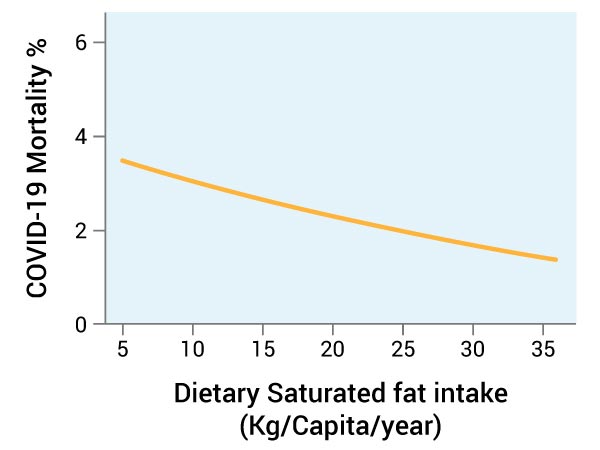
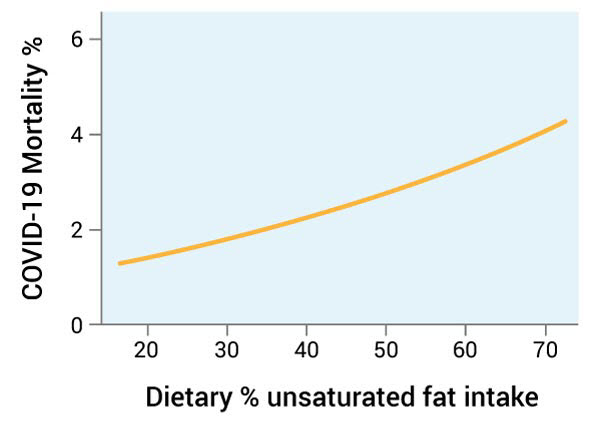
The paper contains an interesting diagram that summarizes the investigative approach they took to reach the conclusion that unsaturated fat intake correlates to COVID-19 outcomes, which I unfortunately cannot include here. In summary, though, it shows that higher intakes of polyunsaturated fats (PUFAs), primarily LA, resulted in a greater risk of severe COVID-19, while higher intake of saturated fat lowered the risk.
PUFAs Raise COVID-19 Mortality While Saturated Fat Lowers It
The researchers discovered that hypocalcemia (lower-than-average levels of calcium in your blood or plasma) and hypoalbuminemia (low albumin in your blood) are observable early on in patients with severe COVID-19.
When looking at data from COVID-19 patients, the also found that low arterial partial pressure of oxygen and percentage of oxygen ratios were associated with higher levels of unbound fatty acid levels in their blood. They also speculate that UFAs may cause vascular leakage, inflammatory injury and arrhythmia during severe COVID-19.
In tests on mice, animals given LA developed a range of conditions resembling lethal COVID-19, including hypoalbuminemia, leucopenia (low white blood cell count), lymphopenia (low lymphocyte count), lymphocytic injury, thrombocytopenia (low platelet count), hypercytokinemia (cytokine storm), shock and kidney failure.
How to Calculate Your LA Intake With Cronometer
Considering the damage LA imparts, it’s not surprising that it could play a significant role in the outcome of COVID-19. As mentioned, virtually all of the comorbidities associated with COVID-19 are diet related, share many of the same risk factors, and can be triggered or worsened by high LA intake.
Fortunately, you won’t have to spend hundreds of dollars to have your food analyzed for LA. All you need to do is accurately enter your food intake into Cronometer — a free online nutrition tracker — and it will provide you with your total LA intake. The key to accurate entry is to carefully weigh your food with a digital kitchen scale so you can enter the weight of your food to the nearest gram.
cronometer.com is free to use when you use the desktop version. If you feel the need to use your cellphone (which is not recommended) to enter your data, then you will need to purchase a subscription. Personally, I have used the desktop version exclusively for the last five years as it has greater functionality and allows me to avoid electromagnetic fields from my phone.
Ideally, it is best to enter your food for the day before you actually eat it. The reason for this is quite simple: It’s impossible to delete the food once you have already eaten it, but you can easily delete it from your menu if you find something pushes you over the ideal limit.
Once you’ve entered the food for the day, go to the “Lipid” section on the lower left side of the app. The image below is taken from one of my recent data entries and shows you what the section looks like. To find out how much LA is in your diet for that day, you merely need to see how many grams of omega-6 is present. About 90% of the omega-6 you eat is LA.
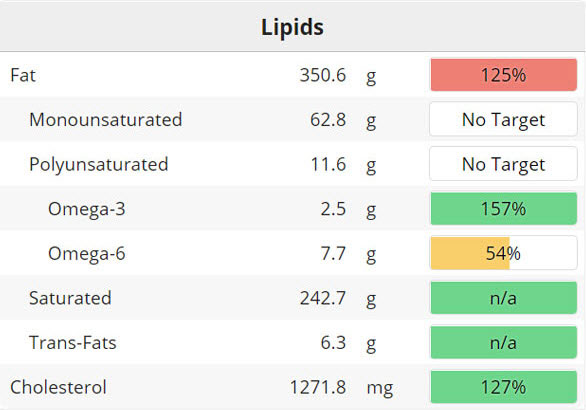
To find out the percentage of calories the omega-6/LA represents in your diet, go to the “Calories Summary” section shown in the image below. In my case, I consumed 3,887 calories. Since there are nine calories per gram of fat, you will need to multiply the number of omega-6 grams times nine to obtain the total amount of omega-6 calories. In my case, that is 69.3 calories.
Next, divide the LA calories by your total calories. In this example, that would be 69.3/3887 = .0178. If you multiply that number by 100, or move the decimal point two spaces to the left, you will have the percentage as a whole number. In my example, it is 1.8% of LA. This falls within the ideal LA percentage range, which is between 1% and 2% of your total calorie intake.
Cronometer is in the process of automatically displaying the “Percent of Omega-6” in your diet, but that will not be deployed until early 2021, so use the formula above to calculate it for yourself until then.
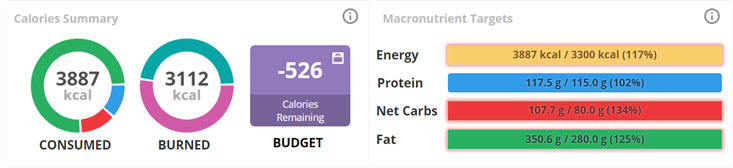
Helpful Feature You Might Not Be Aware Of
Most people aren’t aware of an incredibly helpful feature in Cronometer that allows you to easily identify where all your LA is coming from. If you mouse over the percent field next to the omega-6 value, you will see a popup displayed that will rank order the foods based on the quantity of LA they contain.
In my case, below, you can see that the four eggs I ate are my largest source of LA. Eggs are a very healthy food but, unfortunately, nearly all chickens, including pasture raised, are fed grains that are loaded with LA. Even if the grains are organic, they still contain LA.
I raise my own chickens and am in the middle of an experiment to change this by feeding my chickens a very low-LA, no-grain diet. I will have the eggs analyzed in a research lab and hope to get the LA levels 90% lower, which should hopefully get my LA intake below 5 grams.
It is interesting to note from my analysis that my primary protein, bison, only contributes 0.5 grams of LA even though I had 8 ounces that day. For the most part, fruit is also LA-free, which makes it a better source of healthy carbs than grains.
I also use rice on my high-carb diet days, in this case about 100 grams of carbs for the day, and the rice has no LA in it. Both rice and millet are two of the best grains to use as they have no gluten. The rice has the additional advantage, though, of being LA-free. It is best to use white rice, as the fiber in brown rice provides little nutritional benefit and may actually cause some problems.
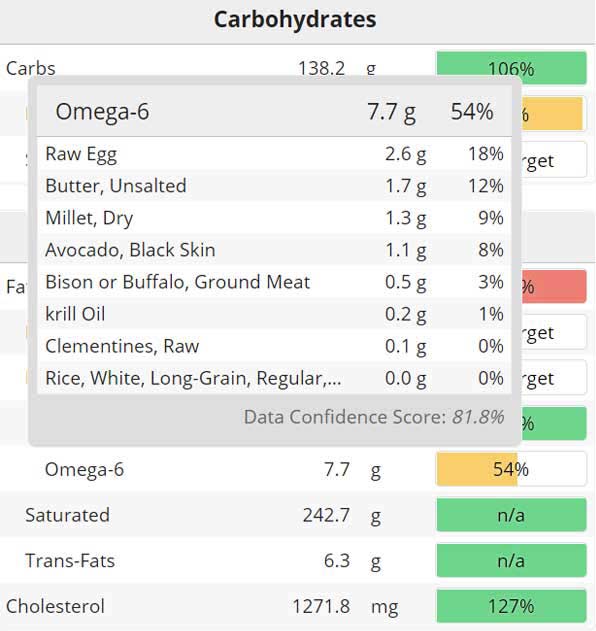
Carbohydrates — Choose Wisely
I must admit that I have a prejudice in this area as my first book in 2004 (which was a New York Times best seller) was “The No Grain Diet.” The concern about avoiding grains was largely based on consuming excessive carbohydrates that could lead to insulin resistance. At the time, I wasn’t aware that increased LA consumption was likely a far more significant issue than excessive carbs, or that most grains are typically loaded with LA.
However, when you have increased carbs in the form of sugar and processed wheat, and then add seed oils, you have the Devil’s Triad, which collectively contribute to most metabolic diseases.
So even though I wrote the book 17 years ago, I still believe most grains should be avoided, or at the least minimized, because they are typically high in carbs and LA. Many are also loaded with other problems like gluten, oxalates and phytates.
In my more recent book, “Fat for Fuel,” I advocated the cyclical use of balanced and healthy carbs in the form of fruits and healthier grains. For most of us, fruit is a far healthier option than grains as there is virtually no LA in fruit, with exceptions like avocado, which is technically a fruit.
Metabolic Flexibility Is Key for Optimal Health
About 90% of the population is insulin resistant. Ideally, you will first want to become metabolically flexible and improve your ability to burn fat as your primary fuel. I discuss this strategy extensively in “Fat for Fuel.” It typically takes a few weeks to a few months for someone to transition to a metabolically flexible state.
When you are metabolically flexible, you will typically have normal blood pressure, not be overweight, and have a fasting blood glucose below 90, which you can easily measure at home.
While limiting carbs to less than 50 grams per day when you are metabolically inflexible is a powerful strategy, once you regain your ability to burn fat for fuel, most will find that they need to include a healthy source of carbs back into their diet. A simple strategy would be to shoot for around 50 grams on your low-carb days and double or triple that on your high-carb days.
You can start by simply alternating low and high carb days and monitor your fasting blood glucose. If it starts to rise over time, you will know that it is probably better to decrease the frequency of your high-carb days. Again, the best carbs to use would be fruit or white rice, as they are virtually LA-free. After you have been on a low-LA diet for a year or two, you can integrate other carbs that are higher in LA.
Fats — Be Careful of Cooking Oils
Ideally, it would be best to limit the amount of oil you use for cooking. Typically, it is better to cook using no oils and substitute grass-fed butter, instead. This is because seed oils are the single greatest source of omega-6 LA and the higher you heat food, the more toxic byproducts you create.
You might wonder how you can limit your cooking oils. Let me give you an example. If you were cooking ground beef or bison, you could cook in a frying pan or in a covered pot over low heat using the water in the meat to convert to steam and cook the food at a low 212 degrees Fahrenheit.
If you choose to use oil for cooking, then you can use the table5 below to help you select the best oils. It is color coded to guide you. The preferred oils are shaded green. Notice that concentrated animal feeding operation (CAFO) beef tallow or butter has three times as much LA as the grass-fed version.6 They still are very low and within an acceptable range, but it is clearly better to choose the higher quality grass fed version when you can.
Lard and palm oil are less preferred options because of their higher LA content. There is a load of confusion around olive oil, though, that needs to be cleared up. And, while avocado oil isn’t widely appreciated, it too has the same concerns as olive oil.
Both olive oil and avocado oil LA content varies widely. Typically, it will average around 10%, although some oils could be twice as high. The reason one needs to be ultra-careful using these oils is because the vast majority (over 80%) are adulterated with cheaper and high LA oils like safflower.
So, if you plan on using either of these oils, you need to have independent objective confirmation that the oil has not been tampered with. These brands are typically more expensive as authentic olive and avocado oils have much higher production costs.
Oils that should be completely avoided at all times are the primary culprits of destroying health in the 20th century: the toxic seed oils that are shaded in red. That said, the dose makes the poison. So, you can theoretically use any of the oils in the table below so long as your total intake of LA for that day is less than 2% of your total calories. The higher up on the table the oil is, the more likely you will exceed your safe limit for the day.

What About Seeds and Nuts?
Seeds and nuts can be used in moderation. The table below indicates approximately how much LA is common seeds7 and nuts.8,9, 10 You can see that most are nearly half LA. For that reason, it is very easy to reach really high levels of LA if you eat lots of seeds and nuts, with the exception of macadamia nuts.
| Seeds/Nuts | % Linoleic Acid |
|---|---|
| Poppy seed | 62% |
| Hemp | 57% |
| Wheat germ | 55% |
| Walnut | 53% |
| Pecan | 50% |
| Pumpkin | 45% |
| Brazil nuts | 43% |
| Sesame | 41% |
| Peanut | 32% |
| Pine Nuts | 33% |
| Chia | 16% |
| Almond | 16% |
| Flaxseed | 14% |
| Pistachio | 13% |
| Hazelnuts | 12% |
| Cashew | 8% |
| Macadamia | 2% |
Also keep in mind that even if the nut has a relatively low quantity of LA, like almonds, it could be loaded with other potential problems like oxalates. Oxalates are razor sharp crystals contained in many nuts and seeds. They are water soluble and only found in the unprocessed seed or nut. If you are consuming an oil version of the seed or nut, it will contain virtually no oxalates.
So, the key here is that seeds and nuts are clearly allowed, but large quantities should be avoided. Be sure to enter them into Cronometer so you can see precisely how much LA they contain and how they are influencing your total daily intake.
Please note that the percent of LA indicated for the foods above is the typical average. It is important to understand that the percent of LA in any specific food can be highly variable based on many factors, but the values listed are what are typically found in the literature.
Ideal Sources of Protein
In general, animal foods are typically much lower in LA than vegetable sources. This is especially true for seeds and most all nuts, except macadamia, as you can see in the table above. Additionally, many vegetable sources have oxalates, phytates and gluten, which have been previously well-documented to have adverse health effects.
There are two important exceptions, though. Ideally, you will want to limit your intake of chicken and pork as these animals are universally fed grains that are loaded with LA. It is common for them to have LA levels from 10% to 20%. They will contain lower amounts of LA if they are not raised in a factory farm (CAFO), but most likely will exceed levels in lamb, beef, bison and other game animals like elk, by 10-fold.
For most of us, the ideal source of protein would be from bison, followed by beef and lamb. An 8-ounce serving of these foods typically has less than 1 gram of LA. In addition to eating muscle meat, it would be wise to regularly include sources of organ meats, as they are loaded with important micronutrients not found in muscle meat.
Eggs are another source of LA concern as the yolks are about 16% LA. This is because nearly all chickens, including those that are pasture raised, are given grain as their primary feed. As long as you aren’t allergic to eggs, they are an incredibly healthy nutrient-dense food and one of the finest sources of bioavailable choline available.
I believe it would be wise to limit eggs to four or less per day, as that would provide about 2.5 grams of LA. As mentioned earlier, I am currently in the middle of an experiment.
I’m feeding my 20 chickens a low-LA carnivore-type diet consisting of 1 gallon of 4-day-old sprouted mung beans with 4 ounces of melted butter mixed in, along with a regular supply of beef liver and mealworms. I will be analyzing the eggs for LA in the next few months as it takes some time for LA to be liberated after it’s consumed.
- 1, 3, 4 Gastroenterology 2020 Sep; 159(3): 1015–1018.e4
- 2 CDC.gov August 26, 2020
- 5 Chempro Fatty Acid Composition of Oils and Fats
- 6 Weston A Price Fatty Acid Analysis of Grass-fed and Grain-fed Beef Tallow
- 7 Journal of the American Oil Chemists’ Society. 72 (9): 1079–1081
- 8 Li, D., & Hu, X. (2011). Fatty Acid Content of Commonly Available Nuts and Seeds. Nuts and Seeds in Health and Disease Prevention, 35–42.
- 9 British Journal of Nutrition 96 Suppl 2(S2): S29-35
- 10 The Paleo Diet Seed Fatty Acid Composition
Alzheimer’s Prevention
Written by Brenton Wight, Health Researcher
Copyright [c] 1999-[y] Brenton Wight. All Rights Reserved.
Updated 22nd June 2022
Doctors say there is no cure for Alzheimer’s Disease, in spite of over 80 billion dollars in research over the last few decades.
This is partly true, as there is no drug, no “magic bullet” to slow or stop this dreadful condition.
Hundreds of studies with new drugs have shown most of the time that those on a placebo did BETTER than those on the drug!
In rare cases, those on the drug did very slightly better, but any improvement was not enough to justify bringing the drug to market.
However, we CAN identify risk factors, and we CAN in most cases prevent the onset of Alzheimer’s, and we CAN in most cases reverse the disease, or at least ease the symptoms to give the patient (and the carers) a better quality of life.
If the intervention is soon enough, it CAN be CURED in some, but not all cases.
There is no miracle one-shot treatment, but a combination of many factors.
The time to start treatment is not when we are 60 and forget where the keys are, but from birth!
The lifetime changes we need to prevent Alzheimer’s will also prevent heart disease, diabetes, cancer and many other diseases, and give our lives vitality.
How many people are at risk?
In the USA, over 5 million Americans have Alzheimer’s disease, and around 14% of the population will eventually get Alzheimer’s, or around 45 million people.
Results in Australia are similar. Over 10% of the population over 65 have Alzheimer’s, and 30% of those over 85 have Alzheimer’s. In the decade from 2010 to 2020, deaths from Alzheimer’s has risen 20% and looks set to replace Cardiovascular disease as the Number 1 cause of death.
Many people now suffer from Early Onset Alzheimer’s, showing signs as young as 30 years of age.
In the USA, it is now the third leading cause of death, but these figures are understated. People do not actually die from Alzheimer’s – they die because the parts of the brain that control bodily functions shut down, so they die when their organs shut down.
The patient may die from pneumonia because the lungs now cannot function or some other organ fails to work and the Doctor or Coroner has to determine which organ failed.
This is a problem in every country, but some countries have very much reduced rates of Alzheimer’s, mainly due to better diets and reduced toxins.
Diagnosis
Originally, there was no firm diagnosis without examining the brains of patients after death.
Researchers found that most patients had Amyloid Plaques in the brain, and also high levels of aluminium.
PET scans (Positron Emission Tomography) are used with a radioactive tracer (which binds to amyloid plaques) to determine the amount and location of amyloid plaques in the brain.
However, this diagnosis is still not conclusive, as many people have amyloid plaques, but no sign of any dementia even into old age, although these people have a higher risk. Often symptoms do not appear for decades after the start of amyloid plaque deposits. Other patients have no sign of Amyloid plaques but still have Alzheimer’s, so drugs developed to reduce Amyloid plaques have proven unsuccessful in prevention and treatment.
Standard blood tests for glucose level, triglycerides, kidney and liver function can help determine the risk. However, those with less than optimum blood results may die of Cardiovascular, Cancer or some other disease before Alzheimer’s sets in.
So the PET scan is used with other tests for cognitive performance to arrive at a diagnosis.
Who is at risk?
Genetics plays an important part, and so does diet, exercise, lifestyle and supplements.
Here are some risk factors, in no particular order:
- Age is the greatest risk factor. Dementia can affect about 10% of those over the age of 65, but 33% of those over 80
- Gender – Women represent over 60% of Alzheimer’s patients, but part of this may be due to their longer lifespans
- Gluten – Celiacs often have “Wheat Brain” causing disturbances, anxiety, depression and Alzheimer’s. Many dementia patients recover fully on a gluten free diet
- Prescription medications such as many sedatives, hypnotics, blood pressure, hay fever, insomnia, depression and arthritis medications are linked to higher risk of Alzheimer’s
- Anaesthetics are linked to Alzheimer’s. The more operations people have, the higher the risk
- High Blood Pressure (systolic over 140 in mid-life) doubles the risk of Alzheimer’s and increases vascular dementia by 600%, but blood pressure medications can be just as bad, so reduce it naturally without medication
- Sleep Apnea starves the brain of vital oxygen and increases risk of Alzheimer’s
- B-12 deficiency increases Alzheimer’s risk. Gastric Bypass Surgery, Celiac disease, vegan/vegetarian diets, antacids (like Nexium) and many medications all reduce availability and/or absorption of B-12
- Diabetes doubles the risk of Alzheimer’s (often called “Diabetes of the Brain” or “Type 3 Diabetes”)
- Vision problems increase Alzheimer’s risk. Opthalmologists can detect abnormal widths of blood vessels in the retina which can indicate early Alzheimer’s
- Tobacco – Smokers have double the risk for Alzheimer’s. Family and others breathing second-hand smoke also have higher risk
- Living alone after a partner’s death means we have six times the risk of Alzheimer’s, and those who divorce and live alone have three times the risk.
- Isolation is a significant risk factor for depression and dementia. Find a friend!
- Obesity is a risk. The lower the BMI (Body Mass Index) the lower the risk. Obesity raises risk by around 75%
- Family history increases the risk. See the Genetics section below, but environmental factors, diet and lifestyle choices can be passed on to children
- Education improves outcome, and lack of education increases Alzheimer’s risk. Studies suggest higher education increases “cognitive reserve” which may offset dementia symptoms
- Concussion or head trauma increases Alzheimer’s risk exponentially with the number and severity of head injuries
- Quality sleep is essential for the ability of the body to repair itself by flushing toxins from the brain
- Excessive alcohol consumption can lead to alcoholic dementia and higher risk of Alzheimer’s as well as many other health risks
- Mental activities improves the brain, physically and psychologically. Learn new things strengthens and develops new nerve cells
- Sedentary lifestyles are a large risk for the brain as well as the body. Exercise is a must for the brain and the body
- Chronic bladder disease increases risk
- Chronic Candida infections increase risk
Overcoming risk factors:
- Change the diet – see below
- Get regular, uninterrupted sleep
- Socialising, visiting friends, joining a group
- Crosswords, puzzles, new experiences, learning a musical instrument or another language
- Exercise helps control blood glucose levels, keeps excess weight down, increases oxygen and circulation, and joining a gym can also help with socialisation
- Use the many supplements available
Genetics
There is a strong genetic predisposition to Alzheimer’s, but also there is a strong contribution of environment, diet and lifestyle.
Rates of Alzheimer’s disease have increased much faster than any genetic changes could have occurred.
This means that much is under our control, because even with a genetic predisposition, we can reduce risk with epigenetic (non-genetic influences on gene expression) changes.
Example: The most important genetic risk factor is the ApoE epsilon 4 allele (ApoE4), and 14% to 20% of the population has this gene.
Everyone carries two copies of the APOE gene, which makes the protein ApoE (apolipoprotein E).
There are three different types (alleles) of the APOE gene: E2, E3 and E4, and because we all have two copies of the gene, the combination determines our APOE “genotype” which can be any combination of the 2 copies: E2/E2, E2/E3, E2/E4, E3/E3, E3/E4, or E4/E4.
The majority of people have two E3 alleles (E3/E3) so this is defined as the “average risk”.
The E2 allele is the least common form, and if we have two E2 alleles (E2/E2) or one E2 and one E3 (E2/E3) we have about 40% REDUCED risk of Alzheimer’s.
The E4 allele, present in 14% to 20% of the population, increases the risk for Alzheimer’s, especially late-onset Alzheimer’s, but this does NOT mean that we will get Alzheimer’s disease if we have one or two copies of E4, as about one third of Alzheimer’s patients do not have even a single E4.
All it means is that our risk is increased, also increased is the risk of potential Alzheimer’s at a younger age.
To quantify the risk:
If we have no copies of E4, we still have around 9% risk of Alzheimer’s.
If we have a single copy of E4, our risk increases to around 30%.
If we have two copies of E4, risk is between 50% to 90% but in all cases, we CAN REDUCE the risk.
Many people are horrified to learn that they have up to a 90% risk of Alzheimer’s, but they need not be.
With some dietary, lifestyle and supplement changes, those at greatest risk can easily fall into the 10% who do NOT get Alzheimer’s.
SAD (Standard American Diet)
Genetic statistics above apply only to average people, typically Caucasians living in the Western World and consuming a typical Western diet of processed food, sugar, MSG, hydrogenated oils, chemicals, heavy metals, pesticides, insecticides and other toxic substances.
These statistics do NOT apply to those with a healthy diet of natural, organic food living in a low-toxin environment.
In fact, many people already down the cognitive decline have recovered on a healthy diet and sustained the improvement for several years, according to Dr Dale Bredesen who has been running a program for years now.
Dr Bredesen does not know how many more years it will be, but does know that patients on the program have removed the biochemical drivers which can be measured in blood tests, so so is very optimistic about their future health for many years to come.
Should we get genetic testing?
This is up to the individual. Some people would prefer not to know. Others want to know.
My father died from Alzheimer’s at about age 72 after many years in a Nursing Home, existing but without knowing who his family members were. So did my Grandmother on my Mother’s side, so I assume I may well have inherited a high genetic risk. I am now 75 as I revise this article. For me, testing is irrelevant, because I changed to a Paleo-style diet at age 63, which turned my life around.
From obese to lean, from grey hair to brown, from allergies to everything to allergies to nothing, from high blood pressure and triglycerides to normal, from poor physical strength to strong, fit and full of energy, from frequent headaches to none, from always getting sick to never getting sick.
If I had the genetic test and it was the worst result, I would only continue to do what I am doing now, using dietary and lifestyle modifications.
Have I halted Alzheimers? I hope so, but I often cannot remember some of the thousands of medical terms I have come across in my 12 years of research. Come back here in 25 years as I approach 100 and I will let you know how I have done.
Amyloid Plaques vs Tangles
Amyloid is a protein, normally found throughout the body. In Alzheimer’s, this protein divides improperly, creating beta amyloid which is toxic to brain neurons.
Amyloid is actually antimicrobial and has benefits for the body, but some people, especially those with the E4/E4 alleles cannot naturally break down these plaques, but there are dietary methods which can.
Not all Alzheimer’s patients have beta Amyloid plaques. About 10% of patients have neurofibrillary tangles which cause similar symptoms, but are also inclined to have more aggressive behavior.
Three Kinds of Alzheimer’s
Humans liberate amyloid as a protective response in the body to three different fundamental metabolic and toxic perturbations:
- Type 1: Characterized by systemic inflammation. Blood tests typically reveal high hs-CRP (high-sensitivity C-reactive protein), low albumin:globulin ratio, and high cytokine levels such as interleukin-1 and interleukin-6.
Imaging reveals temporoparietal reductions in glucose utilization.
Those at risk include people with chronic infections or inflammation from other causes, and the normal antimicrobial protective response liberates amyloids. - Type 2: Characterized by normal inflammation, but an atrophic (wasting away) profile, with reduced support from estradiol, progesterone, testosterone, insulin, and vitamin D, often with high homocysteine and insulin resistance. Imaging reveals temporoparietal reductions in glucose utilization. As NGF (Nerve Growth Factor) diminishes, amyloid production increases.
Type 2 in particular can be CAUSED by LOW CHOLESTEROL, resulting in atrophy (brain shrinkage), reduced hormone production, poor health and eventually Alzheimer’s.
All because we are taking statins that lower cholesterol, or we are not eating enough healthy fats, but too many unhealthy fats (Canola oil, Soybean Oil, Margarine, etc)
We prevent our cells from doing what they are supposed to do, so we end up with a shrunken brain without the lipid (fat) content we need. A fat-free diet means atrophy of the brain.
See the Cholesterol Fraud and the Big Fat Lie sections below. - Type 3: Different from types 1 and 2. Still β-amyloid positive and phospho-tau positive, but a younger onset (late 40s to early 60s).
Genotype ApoE is usually E3/E3 instead of E4/E4 or E3/E4 with little or no family history.
Onset usually follows a period of stress, depression, sleep loss, anesthesia, or menopause/andropause.
Memory loss is not a main symptom, instead there are cortical issues: dyscalculia (trouble with arithmetic), aphasia (trouble speaking or understanding speech – damage to the left side of the brain), executive dysfunction (emotional or behavioural problems from frontal lobe issues).
Imaging studies often reveal extra-hippocampal disease, greater general cerebral atrophy and frontal-temporal-parietal abnormalities.
Lab results often reveal hypozincemia (low zinc) and/or a high copper:zinc ratio, and can indicate adrenal fatigue (low pregnenolone, DHEA-S (dehydroepiandrosterone sulfate), and/or AM cortisol.
Chronic infections like mycotoxins, Lyme, viral infections, HSV-1 (a herpes simplex virus) are all risk factors.
Some patients have “Alzheimer’s type 1.5” where a combination of symptoms of both type 1 and 2 Alzheimer’s occurs.
Glycotoxicity (too much sugar in the brain) causes an insulin resistant brain. Combine this with AGEs (Advanced Glycation End products), and we have both inflammation from AGEs, plus atrophic withdrawal response because we are now resistant to insulin.
So we have a double condition of type 1 and type 2.
Type 3 patients often have MARCoNS (Multiple Antibiotic-Resistant Coagulase-Negative Staph), a colonisation of antibiotic-resistant staphylococcus in the nasal cavity.
Also high blood levels of TGF-beta-1 (Transforming Growth Factor beta-1), high C4A (a protein that in humans is encoded by the C4A gene), and low MSH (Melanocyte-Stimulating Hormone) is very common, typically with HLA-DR/DQ haplotypes shown by Dr Ritchie Shoemaker to be associated with CIRS.
Alzheimer’s from nose infections?
We have known for years that our healthy gut bacteria is essential to prevent almost every disease, and now research is looking at the rhinosinal microbiome, the healthy bacteria in our nose.
This is now becoming known as Inhalational Alzheimer’s.
The nose is the most direct route to the brain, and bad bacteria in the mucous lining of the airways can damage the brain.
Pathologists now believe there are unknown pathogens in the rhinencephalon, the “nose-smell” (olfacation) system.
Many Alzheimer’s patients start losing their sense of smell as one of the early signs of the disease, and this is probably why.
I am confident that my nasal bacteria is back to normal after having very bad allergies and taking antihistamines from when I was about 16 to when I was 63.
Allergies stopped when the bad diet stopped.
Dr. Susan Lynch at UCSF has found that the nose problem is not so much an unknown pathogen, but a lack of microbial diversity.
Beneficial microorganisms in the nose protect against many pathogens, and one of the best seems to be Lactobacillus sakei, used to make sake and kimchi.
This could explain why Japanese people have comparatively low rates of Alzheimer’s, although rates are rising in Japan because of the Western influence, with meat and dairy replacing rice as a staple food.
When Japanese people migrate to Western countries and adopt a Western diet, they have the same risk as anyone else.
So for the Japanese, it is not a genetic problem, but a diet problem, and this applies to everyone.
AGEs – Advanced Glycation End products
AGEs are formed when food cooked at high temperatures (over 120 degrees C) combines with sugar. AGEs are very damaging to the body, accelerating the ageing process and chronic disease.
AGEs worsen diabetes, kidney disease, Alzheimer’s, inflammation, atherosclerosis (stiffening of the arteries), cardiovascular disease and stroke.
AGEs cause glycation of LDL cholesterol, promoting oxidation, and oxidized LDL is a major factor in atherosclerosis.
AGEs form photosensitizers in the eye lens, leading to cataract development.
To reduce AGEs, never cook at high temperatures (steaming is best, always at 100 degrees C), eat plenty of raw food (salads, and small amounts of fruit), and eliminate all sugar and processed foods.
Conventional Drugs
Drug companies have been trying for years to get rid of Amyloid plaques, thinking they are the cause of Alzheimer’s.
However, the body needs amyloid to protect the brain, so we need to look at what is causing the plaques instead of trying to get rid of them. Latest research shows that Amyloid plaques are antimicrobial, so can be both damaging and protecting!
Alzheimer’s – “Diabetes Type 3”
Some researchers are now labeling Alzheimer’s as “Diabetes Type 3” because sugar causes Alzheimer’s.
Sugar also causes diabetes, cardiovascular disease, obesity and many more diseases, mainly due to processed foods.
As with diabetes, where sugar causes insulin resistance, we have insulin resistance in the brain, causing degeneration.
When the brain becomes insulin resistant, it means that glucose cannot enter the brain cells, so those cells die.
However, all is not lost. If we switch to a Ketonegic diet, we can feed our brain with fat instead of sugar. More on this diet below.
Diagnosing the type of Alzheimer’s
Unlike cancer, where we can biopsy a tumour, we must look at historical, biochemical, genetic, imaging, and function information to determine the type of Alzheimer’s.
Of course this rarely happens except in research applications. The doctor simply says the patient has Alzheimer’s and may give a drug which in the long term will not make much difference.
This is a shame, because about half of all cases can be halted, and in some cases substantially improved, by reverting to the correct diet.
Even better would be to eat a correct diet from birth, reducing the risk of Alzheimer’s to near zero, as well as preventing cancer, heart disease, diabetes and other modern diseases.
Exercise
Physical exercise is extremely important to keep the brain and body healthy.
Researchers are not sure why, but LeanMachine says it is obvious:
Exercise burns off the high glucose levels that cause “Diabetes of the Brain” and exercise boosts oxygen levels and circulation in the brain.
Any type of exercise is beneficial, such as:
- Walking, jogging or running
- Calisthenics
- Squats
- Push-ups, chin-ups
- Skipping
- Gardening
Exercises have the added benefit of socialisation in a group, such as:
- Join a gym
- Tai-Chi or Yoga classes
- Athletics clubs
- Dancing classes
Exercising the Brain
The body has a disturbing property: Anything not used for a while gets broken down to be used somewhere else.
If we do not use a muscle for a week, the body starts breaking it down.
But if we exercise regularly, we stop muscles wasting, and we actually build up our muscles.
If we do not use parts of the brain, the body starts breaking it down.
But if we exercise our brain, we can hang on to the parts we use, and develop new pathways to replace parts we have lost. Exercises such as:
- Learning a new language
- Playing a musical instrument
- Crossword or other puzzles
- Socialising in groups or clubs
Meditation
Meditation is not normally seen as exercise for the brain, but sitting in a quiet, dark room away from all daily distractions not only promotes a calming effect, but increases various brain-saving hormones.
Meditation, like dreaming, helps the brain sort out the junk memories and recent problems by concentrating on things that have made us feel good in the past.
We may have pleasant memories like sitting on a sandy beach listening to the waves rolling in on a beautiful sunny day. By concentrating on peaceful and pleasant memories, we forget problems with out hectic daily life.
Supplements
The modern diet is lacking in vitamins, minerals, amino acids and other nutrients, mainly because of:
- Over-farming – growing the same food in the same ground year after year, depleting these vital elements
- Over-processing – hydrogenation, adding sugar, adding chemicals, overheating
- Toxins from farming chemicals contaminates the environment
- Water is contaminated by fluoride and chlorine
The supplements everyone over 50 should take are:
Organic Coconut Oil, taken several times a day, a tablespoon at a time.
LeanMachine considers this one of the best prevention and treatment methods available for Alzheimer’s.
This encourages the body to burn healthy fats instead of sugar, called the Ketogenic Diet which burns ketones, which is what our ancestors did in their natural low-carb diets. See the Ketogenic Diet below.
Coconut oil appears to break down the amyloid plaque buildup in the brain. Perhaps the plaques are no longer required when the brain is fed by healthy fats instead of glucose.
Coconut oil is also the absolute best for cooking, replacing any other fat, because coconut oil remains stable at high temperatures, and is full of MCT (Medium Chain Triglycerides) which go straight to the liver to be burned as fuel, and cannot be stored as fat in the body.
Coconut oil also contains Lauric Acid, which keeps our skin wrinkle-free and healthy.
– PS (Phosphatidylserene) is a component of the cerebral cortex’s neuronal membrane, and can improve memory and mood, reduce stress, improve learning and more.
It does this by controlling input and production of choline, acetylcholine, norepinephrine, dopamine and glucose.
– NAC (N-Acetyl Cysteine) which helps the body make Glutathione, the body’s natural “Master Antioxidant” that fights cancer, Alzheimer’s and many other conditions.
– Curcumin is the active ingredient in Turmeric which has been used for thousands of years for dementia, cancer and many other conditions.
– Vitamin B-12 because as we age, our stomach acid levels drop, preventing the high-acid conditions required for B-12 absorption from food. Even more essential for vegans and vegetarians as B-12 mainly comes from animal products.
– B-group vitamins because these are vitally important for nerves and brain health. Make sure they include Choline, and also the methyl version of B-12 and Folate (not Folic Acid).
– ALA (Alpha Lipoic Acid) as an antioxidant to help remove heavy metals from the brain, reduce inflammation, and improve the effectiveness of votamins C and E.
– Vitamin D3 because over half the ageing population are taking statin medication (which they should NOT) and statins halt production of 7-dehydrocholesterol, the first step in the manufacture of vitamin D3. Worse, many of these seniors are in Aged Care facilities and never see the light of day, so cannot make vitamin D3 from sunlight. If they are ever taken outside, it is only early morning or late afternoon when they cannot get vitamin D3 anyway. More info in my Vitamin D3 article.
– Ginkgo Biloba is highly recommended to improve blood flow in the brain. Should not be used in conjunction with dangerous prescription blood thinners.
– TMG (Trimethylglycine) is an effective methyl donor for the facilitation of methylation processes. Supports a healthy homocysteine level, which in turn supports healthy cardiovascular function and helps prevent Alzheimer’s. Homocysteine, a damaging amino acid, with the aid of TMG, is turned into methionine, a safe and beneficial amino acid. Methylation is essential for DNA repair and production of SAMe, which helps joints, lifts mood, fights depression and protects brain cells from amyloid plaques. Read more in my TMG article.
– SAMe (S-Adenosyl Methionine) can help protect the brain and also help treat depression, anger, anxiety which are common symptoms in some Alzheimer’s patients.
– Vinpocetine has shown mixed results but mostly beneficial in limited human trials using 10mg 3 times daily.
– Vitamin E is recommended to improve the healthy fats in the brain and increase antioxidants.
– Benfotiamine with Leucine can help remove glucose and improve insulin resistance.
Many other supplements can help, including:
In addition, many supplements primarily used to treat diabetes will also help prevent Alzheimer’s.
The Cholesterol Fraud
Previous research indicated that high cholesterol was a risk factor for Alzheimer’s.
Again, this was wrong. Doctors started prescribing statin drugs for those people with high cholesterol, or those with signs of dementia with normal cholesterol.
What happened? They got Alzheimer’s WORSE and got it FASTER than patients who did NOT take statins.
Researchers only looked at total cholesterol which is a complete waste of time.
25% of the cholesterol in the body is in the brain, mainly in the myelin sheath.
Around 60% of our brain is fat, mainly in the form of cholesterol.
The myelin sheath (oligodendroglia) that surrounds and protects our neurons are 70% cholesterol, 30% protein.
Starve the brain of healthy fat, and we get Alzheimer’s. Almost guaranteed.
Reduce cholesterol and what happens? The protective myelin sheaths break down as they are starved of cholesterol, allowing the brain cells to be damaged. Damage them enough, and they die. Then we have dementia. Damage enough cells, and the brain can no longer support our basic functions, like breathing. Then we die.
This is why statin drugs are BAD.
Sure, in some cases, they can slightly reduce risk of heart attacks, but they INCREASE death from all other causes, including Alzheimer’s.
The net result is that on average, we will not live a day longer on statin medication.
Statins will give us lousy final years with muscle breakdown, osteoporosis, more sickness and dementia.
We need plenty of healthy fats like coconut oil, walnuts, avocados, fish, eggs, butter from grass-fed cows, unheated olive oil.
We must NOT consume bad fats: Canola oil, margarine, anything hydrogenated, anything heated over 120 degrees C.
Cholesterol is NOT the enemy.
We NEED cholesterol, especially HDL (High Density Lipoprotein) cholesterol which reduces inflammation, and helps clean up the body (like a garbage collector). Without HDL Cholesterol, we die within 24 hours.
We also need LDL (Low Density Lipoprotein), still incorrectly called “bad” cholesterol, as we die without it.
LDL has antimicrobial effects, so the idea that we should drive it down to zero is ludicrous. LDL is essential to transport nutrients around the body (and into the brain) as well as helping the body manufacture hormones and other important products. LDL was essential for our evolutionary ancestors millions of years ago, and we still need it.
The brain is mostly fat, and 40% of the brain is CHOLESTEROL.
Many things that were protective in our native environment are problems in our modern environment, but if we go back to our ancestral diet, problems are resolved.
Studies show time after time that people with low cholesterol die young, while people with normal to high cholesterol live longest.
These studies are ignored by the big drug companies. Because statin sales make them billions of dollars, of course they continue the Big Cholesterol Lie, one of the biggest frauds in medical history. Their own study showed increased deaths and terrible side effects so they stopped the study short at that time, supposedly to “save patient’s lives” when the opposite was true.
The dangerous cholesterol is VLDL (Very Low Density Lipoprotein) which cannot easily be tested.
Because triglycerides contain some VLDL, labs estimate VLDL value by simply taking a percentage of triglycerides.
High triglycerides are much more of a danger signal than high cholesterol, and are almost always related to obesity, poor diet of processed foods, especially dangerous fats.
The Big Fat Lie
We have been told for decades that fat is bad for us.
Forget about “low fat” or “fat free” diets.
Another big fat lie, coming from a scientist who plucked figures out of a study to suit an argument he was proposing.
When the data was analysed completely, many decades later, it showed the complete opposite.
The largest and longest study in the world was the Framingham study which showed that those who ate the most fat lived longer than those who ate the least.
Fat is not unhealthy in general, in fact it is essential for health.
The UNHEALTHY fats are man-made artificial fats (margarine, Canola oil) and other processed fats that are hydrogenated to improve shelf life and heated to extremes during manufacture, often going rancid in the process, causing oxidised VLDL (Very Low Density Lipoprotein), the REAL dangerous “food”.
What is REALLY bad is carbohydrates, and when manufacturers remove fats from food, they replace them with carbohydrates, causing most “modern” diseases including Alzheimer’s and Diabetes.
The Ketogenic Diet
For the first two million years of human life on Earth, carbohydrate consumption was very low.
Carbohydrates were uncommon, with the majority of food being nuts, seeds, eggs, fish, fruit and vegetables. Meat was eaten very rarely when an animal was killed.
These people did not burn carbohydrates for energy, they burned FAT. In particular, ketones, the basis of the ketogenic diet.
A ketogenic diet means maintaining a fasting state of ketosis. Ketones are produced when the body is in a state of ketosis.
Ketones fuel cells using a different pathway from glucose.
Glucose has to have insulin to allow glucose into cells, but as we all should know, our typical modern diet is loaded with carbohydrates, forcing the pancreas into overdrive making enough insulin.
Eventually our cells become insulin resistant, so the pancreas produces even more insulin to force glucose into the cells, creating even more insulin resistance.
We are now a full-blown diabetic, and when the pancreas starts shutting down, we need insulin injections for the rest of our life.
However, when we feed the cells with ketones, they simply enter the cell naturally, and do NOT require insulin or anything else to do so.
This is critically important for five of our modern diseases: Obesity, Cancer, Diabetes, Cardiovascular and Alzheimer’s, all caused or aggravated by high blood glucose, bad fats and inflammation.
Ketones are also signaling molecules as well.
Benefits of the ketogenic diet include:
- Helps the body express new restorative and healing genes
- Reduces inflammation (underlying cause of nearly every disease)
- Stimulates the immune system
- Aids weight loss
- Stops or slows degenerative disease
- Reduces risk of Alzheimer’s, Cancer, Cardiovascular, Diabetes and Obesity
The Anti-Alzheimer’s diet
Spices
Add these spices to every meal possible.
Of course they will spice up any meal, but also help clear the brain of problems and reduce risk of cardiovascular disease, cancer, diabetes and many more modern illnesses.
- Sage – one of the best brain-saving spices
- Cloves – one of the most potent antioxidants
- Curry – a blend of other great spices
- Ginger – reduces inflammation and improves immunity
- Turmeric – for Curcumin, colour, flavour
- Ceylon Cinnamon – Better and safer than regular cinnamon
Ketogenic Diet – Healthy fats, intermittent fasting.
Read How Cyclical Ketosis can help combat Chronic Fatigue
Avoid Trans Fats
Read Trans Fats Linked to Increased Risk for Alzheimers
Avoid Processed Foods
Only shop in the greengrocer department at the Supermarket, preferably the organic section.
Buy or grow your own real food. Nothing in a bag, box, tin because toxic ingredients are sure to be added.
Avoid AGEs
Forget fried foods. Steaming is the best way to cook. Never Microwave. Eat raw salads daily.
This section often updated. Please come back soon (if you remember!)
Copyright [c] 1999-[y] Brenton Wight and BJ&HJ Wight trading as Lean Machine.
All Rights Reserved.
Night Terrors and Nightmares in Children
Written by Brenton Wight, Health Researcher
Copyright [c] 1999-[y] Brenton Wight. All Rights Reserved.
Updated 18th September 2020
Night Terrors can be a very emotional event for parents, especially if they become more common.
The good news is that there are things that will help, and most children “grow out of it” eventually. The average age for Night Terrors is from 3 to 12 years, although some start sooner and finish later.
Nightmares can happen at any age, often recurring in children at a particular age.
Difference between night terrors and nightmares
Children can have both, which makes things confusing, however, dealing with nightmares may be similar to the guidelines below for night terrors.
Night Terrors
Night terrors frighten the parents, and the children have little or no recollection in the morning. During the event, they are still in a very deep stage of sleep. Children appear to be awake, but are in fact still in deep sleep as they scream or run around violently. They may not recognise their parents and usually refuse any offer of help.
Because the child is so active and seems awake but distressed, parents attempt to calm the child, but as the child does not hear the parents because of the deep sleep, they usually do not respond.
Any calming attempts fail, and trying to awaken the child may cause even more stress.
Night Terrors may last from a minute to an hour, and if they wake up during the event, they are often confused, and have no memory of the Terror.
The best approach seems to be to carefully restrain them, ensure their safety where they sleep, allowing an eventual return to natural sleep.
Nightmares
Nightmares (scary dreams) can and do frighten children.
Often they remember their nightmares, which happen during REM (Rapid Eye Movement) sleep rather than Deep Sleep. During REM sleep, the child may more readily awaken during a nightmare.
This is the time for reassurance, and the child will respond to a hug and soft words.
What causes Night Terrors?
Night terrors can be caused by many things, including:
- Junk food
- Processed food
- Dairy or Grain-based foods
- Vitamin B group and or Niacin deficiency
- Bad sleep quality
- Sleep patterns out of routine
- Sleep deprivation – bed time too late
- Too hot or cold in bed
- Noisy sleep environment
- Stressful events – perhaps starting a new school, new teacher, new baby-sitter, bullying, etc
- Listening to parents arguing
- Watching violent TV (even the News)
- Playing violent video games
- Medication, especially antihistamines, decongestants, over-the-counter and prescription medication
- Vaccinations
- Genetics – children of Night-Terror parents are more likely to suffer
- Fever
- Central nervous system problems or immaturity
What causes Nightmares?
Somewhat similar to night terrors.
Remedies for both conditions
Calm the child before bed. Read a story (not Ghostbusters or Friday 13th!)
A heavy blanket has a “hugging” effect which improves the sense of security. In warm weather, a light blanket with weights sewn into the corners may be helpful.
Discourage TV for an hour before bed.
Try to maintain a consistent routine and bed time each night.
Make bed time early, as children and adults tend to wake up when the sun comes up, so late bed time means less sleep.
Avoid junk food, improve nutrition
Avoid all processed food, especially those with a chemical number in the ingredients list.
Avoid all grain foods, especially wheat or wheat flour, as gluten sensitivity may be a problem. Even if the doctor says the child does not have coeliac disease, they may still have gluten sensitivity and/or Leaky Gut Syndrome.
Avoid dairy products as lactose or casein intolerance may be a problem.
Get the child to place all worries into an imaginary (or real) garbage bag, tie it up and place it in the bin (real or imagined).
Place a “Dream Catcher” over the bed – generally a wire loop decorated with string, beads, etc with “magic dream-catching” properties. The child may feel better if something in the room is their friend.
Lavender or other calming oils – a few drops on or under the pillow, or a sprig of real lavender.
Snack before bed – this may help children who have unstable blood sugar during the night (usually caused by a bad diet with too much sugar).
St.John’s Wort is a natural antidepressant (children’s dose only). Not to be used with any prescription medication as many meds use the same pathway in the body.
B Complex vitamins may help, also Niacin (Prolonged Release) if there is a deficiency.
GABA supplements have a calming effect and may help, especially if combined with 5-HTP.
Vitamin D3 supplements may help, especially if the child does not get adequate direct sunshine in the middle of the day. This is a high dose, so once or twice a week is normally enough as this is a fat-soluble vitamin, not easily flushed away like the water-soluble vitamins.
White noise – such as recording of ocean waves gently rolling onto the beach can have a calming effect. Even subtle noise from running a fan or ioniser may help.
Classical music softly played during the night may help.
Copyright © 1999-[y] Brenton Wight and BJ & HJ Wight trading as Lean Machine abn 55293601285