Fever
now browsing by category
What Can the Smallpox Vaccine Disaster Teach Us About Spike Protein Injuries?
Reproduced from original article:
https://articles.mercola.com/sites/articles/archive/2023/11/25/smallpox-vaccine-injuries.aspx
The original Mercola article may not remain on the original site, but I will endeavor to keep it on this site as long as I deem it to be appropriate.
Analysis by A Midwestern Doctor November 25, 2023

STORY AT-A-GLANCE
- The smallpox vaccine was an unproven therapy promoted by a conman the medical community was initially skeptical of. However, once doctors were paid to administer it and supported by the state for doing so, they reversed their position
- The smallpox vaccine caused a wide range of severe injuries, and rather than prevent smallpox, frequently caused outbreaks. Rather than reconsider the vaccine, governments and doctors covered it up and doubled down on the vaccine — something almost identical to what we saw throughout COVID-19
- Increasingly draconian vaccine mandates led to greater and greater public protest, which culminated a century after the vaccine’s invention with the vaccination mandates being overturned — which not long after was followed by the disappearance of smallpox
- Physicians who were able to observe the introduction of the vaccine cataloged a remarkable number of health complications develop in their patients. Many of these illnesses have since come to be seen as “normal” and the more severe ones parallel injuries observed with the COVID-19 vaccines
When you study history, it is always striking how frequently dysfunctional cycles tend to repeat themselves — which is why many of us were able to foresee much of what came to pass with the disastrous COVID-19 vaccines.
Medicine has its fair share of erroneous beliefs (which frequently have little to no evidence supporting them). Sadly, my profession has held tightly onto them for centuries regardless of the problems those beliefs create and I believe the vaccination meme is one of the most harmful ones.
I originally was compelled to start a Substack at the start of 2022 when I realized the mass protests against the COVID-19 vaccine mandates (i.e., those in Australia and then later Canada’s trucker convoy) were a mirror of what had happened approximately 150 years ago with the smallpox vaccines.
I felt this was critical for everyone to know, both so we could learn the lessons of our forefathers who fought against similar unjustified vaccination mandates and in the hope that the current circumstances could at last allow us to break free of this cycle.
Not being sure where else to go, I reached out to Steve Kirsch and despite not knowing me, he kindly used his platform to promote both the article and unexpectedly, my own Substack. It in turn took off thanks to the kindness of many others I followed like Dr. Mercola.
At the time I wrote the Smallpox article, I had no experience or expectations of blogging, so the article had a lot of room for improvement. Since much of the madness we are seeing today began over a century ago with the smallpox vaccine, I believe that to set things straight now, it is critically important to consider what happened then and the profound damage it inflicted on the health of the human species.
The Vaccine Positive Feedback Cycle
When the smallpox vaccine created in 1796, it was met with widespread skepticism by the medical profession initially because it had almost no supporting data and then because it simply didn’t work.
Nonetheless, governments around the world rapidly adopted it because it provided a simple top down solution (something government always prefers) for smallpox and the medical profession gradually got behind it because of both the political power and money they received from the vaccinations.
Many doctors still spoke out against the vaccine, with many providing robust data to support their objections (e.g., large cohorts showed the vaccine did not prevent smallpox and erysipelas, an agonizing and sometimes fatal skin infection, was commonly observed in vaccinated individuals).
Sadly, these dissident doctors became a smaller and smaller minority and reports exist from the time of doctors in the early hospitals falsifying medical records in order to conceal the vaccine’s dangers and its ineffectiveness in preventing smallpox.
However, the largest problems with the smallpox vaccine was that vaccination tended to increase rather than decrease the occurrence of smallpox.
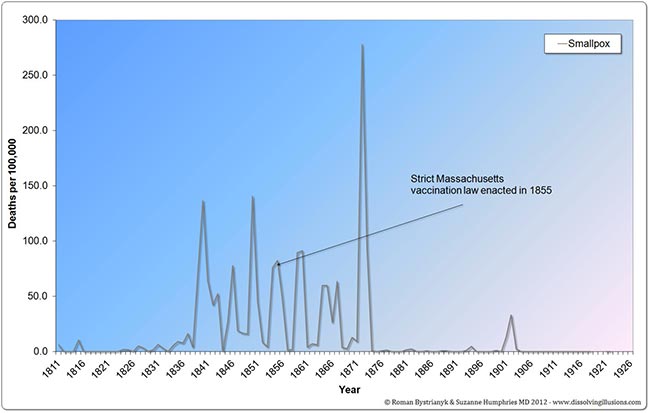
Note: Many other examples of increasing vaccination increasing smallpox outbreaks can be found here in the original article.
When this happened, governments tended to respond to that emergency by viewing it as a result of not enough people being vaccinated and doing what they could to increase vaccination rates. Since the working class was well aware of both the dangers of the smallpox vaccine and its ineffectiveness, harsher and harsher mandates needed to be implemented to continue meeting the vaccination quotas.
As things continued to escalate, assaults on officers enforcing vaccination occurred, and riots periodically broke out. This 1874 quote from Emeritus Professor F. W. Newman encapsulates the mood of the time:
“Decorous and admissible language fails me, in alluding to that which might have seemed incredible thirty years ago — the commanding of vaccination on a second child of a family, when vaccination has killed the first; and then sending the father to prison for refusal.”
Note: To address the widespread failures of their vaccine, the medical profession moved their goal-posts from the vaccine providing a lifelong “perfect” immunity to simply ensuring a “milder disease,” a playbook that persists to this day and (e.g., it was used for the COVID-19 vaccines).
At the same time increasingly draconian mandates were being enacted, many early activists argued that smallpox and many other infectious diseases were primarily due to the common people living in absolute squalor (it’s hard to even begin to describe just how bad their living conditions were).
After decades of work, activists were able to improve the basic living conditions of the working class (e.g., through public sanitation so people no longer slept next to infectious microbes) and a massive benefit was seen in the reduction of deaths from all infectious diseases:
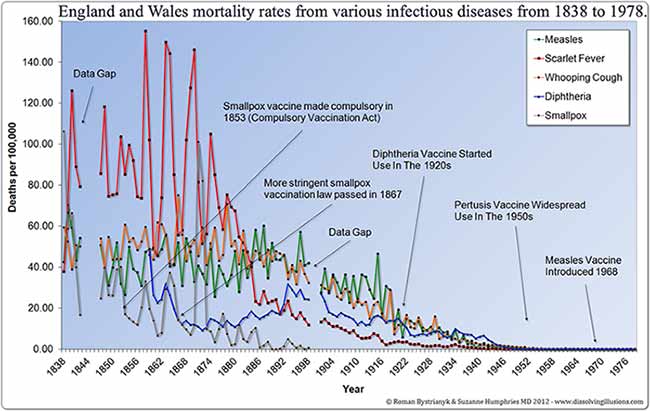
Note: This chart and many others like can be viewed at dissolvingillusions.com. The authors of that book did a remarkable job unearthing the forgotten history of vaccination.
The medical profession however coopted the activist’s work and claimed the reduction in deaths was due to the introduction of vaccination, something not at all supported by the data (e.g., scarlet fever, the biggest killer of the era and now an almost entirely forgotten condition never had a vaccination developed for it).
Since this time, the belief that medicine rescued us from the dark ages of infectious illness and that all infections can be prevented with a vaccination has become one of the central mythologies the practice modern medicine is founded upon.
Note: I call all of this a positive feedback cycle because normally when something doesn’t work (e.g., in the body) a signal activates to stop it (known as negative feedback). Positive feedback systems are much rarer (as they are inherently unstable), but due to our society’s faith in vaccination, one exists here.
In response to the increasingly draconian vaccination mandates, a massive protest (attended by citizens across Europe) broke out in Leicester (England) in 1885 which resulted in Leicester’s mandatory vaccination laws being repealed and replaced with measures to both improve public sanitation and quarantine both individuals with smallpox (along with their sick contacts).
When this approach was proposed by Leicester, the medical profession attacked the citizens of Leicester, loudly proclaimed their policy would result in mass deaths and stated Leicester would serve as a lesson to the world to never to abandon vaccination. The opposite instead happen, Leicester conquered smallpox, and their methods (often done it tandem with vaccination) were then copied, allowing us to at last eliminate smallpox.
As you might have noticed, there are many, many parallels between those events from over a century ago and what we all witnessed over the last few years.
Note: A detailed summary of Jenner’s fraudulent behavior written by another author, along with additional documented failures of the smallpox vaccine can be found here.
Early Schools of American Medicine
In the early 1900s, there were four main schools of medicine in the United States — Allopathy (conventional medicine), Homeopathy, Naturopathy (call the eclectic school at the time) and Osteopathy. Allopathy was losing favor because its treatments often didn’t work and were highly toxic.
At the same time, two of the richest individuals in history (Andrew Carnegie and John D. Rockefeller) realized they would need to diversify beyond their respective industries (steel and oil) after Theodore Roosevelt decided to break up their monopolies.
Allopathic medicine was identified as a promising way to make a lot of money and a variety of investments were made to cause Allopathy to go from falling out of favor to it becoming the leading form of medicine within the United States (e.g., the Flexner report, published in 1910 was used to close most of America’s competing non-allopathic medical schools).
Note: The Robber Barons, which details exactly how Rockefeller went about monopolizing the oil industry, provides an insightful perspective on what he appears to have also done with the medical industry.
Since the monopolization of American medicine, Allopathy has had the remarkable accomplishment of always costing the country more each year than it did the year before while simultaneously abjectly failing to address many of the major health issues facing our country — we spend more than the rest of the world on healthcare but our national healthcare outcomes are worse than almost all of the developed world.

Most of the non-allopathic schools of medicine at the time were strongly opposed to vaccination because of the harms they saw it create. Sadly, in order to gain acceptance within the lucrative medical industry, one by one, they wholeheartedly adopted the vaccination narrative.
For example, Bastyr, the premier Naturopathic medical school in the United States mandated the COVID-19 vaccine for its students, a move which was met with disgust by many of the more traditional Naturopathic Physicians in practice as that mandate went against everything Naturopathy had stood for.
In researching this series, I thus explored what each of those early schools of medicine had reported at the time, as their early literature was much more willing to criticize the sacred cow of vaccination. It’s worth reading through these reports twice as all of them were describing similar events that differed primarily due to the unique lens their model of medicine saw the body through.
Note: With what follows, I would have also liked to have included the Chiropractic perspective, the Ayurvedic perspective and what was seen in Japan (Japanese suffered immensely from the smallpox vaccinations). Unfortunately, I could not locate a good reference for any of these.

Download this Article Before it Disappears
Homeopathy
Within Homeopathy, an idea exists known as Hering’s Law of Cure. It posits that diseases enter the body superficially, and then can either be expelled at the surface (e.g., through the skin), or travel deep into the body. When the disease stays at the surface, acute reactions such as skin eruptions and fevers occur, while when allowed to instead travel into the patient, a variety of chronic debilitating diseases are likely to occur.
Note: Many opponents of the smallpox vaccines believed it was not a good idea to introduce the vaccine directly into the bloodstream since that allowed the cowpox virus to establish itself deep within the body.
Hering’s Law hence argues that the goal of treatment should be to facilitate the outward expulsion of disease, which contrasts to the (now) prevailing school of thought which strives to suppress those symptomatic expulsions. For example, treating an unpleasant fever accompanying an illness often worsens the long term prognosis of the condition (e.g., debilitating childhood vaccine injuries are often preceded by fevers that were “treated” with Tylenol).
Unfortunately, fevers are reflexively medicated by doctors — something that was immensely problematic throughout COVID-19 because of how frequently suppressing a fever worsened the COVID-19’s prognosis.
One Homeopathic physician of the time, J. Compton Burnett, M.D., in 1884 authored “Vaccination and Its Cure by Thuja, with Remarks on Homeoprophylaxis,” which provides one of the best illustrations of Hering’s Law I have come across.
In his book, Burnet advanced the argument that the medical field had mistaken correlation with causation in the smallpox vaccination programs. The vaccine was only considered to be effective if it “took” after vaccination, meaning that a large skin eruption emerged at the site of vaccination. In turn, if the vaccinations did not “take” this argued that the vaccine needed to be re-administered, or the individual was not “vaccinated.”
Burnett and others argued that the vaccine “taking” was a sign of the individual having a strong immune system, and that if the immune system was strong enough to “take” the vaccine, it was also already strong enough to repel a smallpox infection and had no need to be vaccinated in the first place.
As he discussed the conflicting perspectives of the pro-vaccinational literature and anti-vaccinational literature (the terminology of being “anti-vaccine” is over a century old), he argued that the pre-existing immunocompetency of the vaccinated individual could explain the divergent observations in mortality by each side of the debate.
Conversely, he found that almost all cases of severe chronic illness following vaccination (termed vaccinosis) occurred in individuals who had had a smallpox vaccine that did not take, and instead moved deeper into the body creating chronic pathology. One of his strongest arguments for this was his observation that homeopathic Thuja preparations would frequently treat the conditions that he temporally correlated with vaccination.
Note: The issue Burnett and others found appears to be shared by the COVID-19 vaccines. In one recent study (discussed here), teenagers and young adults who developed post-vaccination myocarditis were compared to those who did not. It was discovered that those with myocarditis had free spike protein in the bloodstream their immune systems could not develop neutralizing antibodies to (and likely would not develop from a COVID-19 infection either).
When I learned of this, I recalled that one of the only therapies I had ever seen reported in support groups to work for COVID-19 vaccine injuries were the early monoclonal antibodies developed for combatting the original COVID-19 variants (which used the same spike protein still found in the vaccine). Unfortunately, the Biden administration pulled the monoclonal antibodies from the market so they are now almost impossible to get ahold of.
Burnett’s book begins with a description of vaccinosis, and is primary composed of noteworthy vaccinosis cases, some of which I will share.
“The diseased state, then, engendered by this vaccinial pus, by vaccination, is vaccinosis; and in it are not included any other diseases whose causes may be accidentally or incidentally contained in the vaccine pus, — such as scrofulosis, syphilis, or tuberculosis.”
Note: Many others also complained about the consequences of contaminated or improperly produced vaccines.
In my assessment, many of the chronic symptoms Burnett and other physicians reported (particularly the various “neuralgias” repeatedly mentioned) were a consequence of “blood stasis,” a Chinese medicine diagnosis I correlate with impaired zeta potential.
“Vaccinosis shews itself as formidable acute disease that may terminate fatally, or it may manifest itself as a chronic affection. The ordinary forms of vaccinia must be included under acute vaccinosis. (p. 6-7).
Chronic vaccinosis more particularly lies completely beyond the ken of ordinary medicine, and although it will sometimes turn up in literature as “Ill effects of vaccination,” it is, nevertheless, but an unrecognised waif, much to the disadvantage of suffering mankind and of medical science.
It has not [barring a few exceptions] yet been sufficiently studied to be readily defined; except causally, indeed, its very existence is not generally admitted. But a study of the following cases will afford ample evidence that its symptoms are very like the pathogenetic symptoms of Thuja Occidentalis.
Some may, perhaps, say that vaccinosis is the same as vaccinia; this is, however, not so; vaccinosis is vaccinia and something more, for if a person is vaccinated unsuccessfully he has not had vaccinia, whereas some of the worst cases of (my) vaccinosis which I have met with were just those in whom the vaccination did not ” take,” as the saying goes.
Hence, I must call attention to what I believe is a fact, that it often does take deep hold of the constitution without calling forth any local phenomena, and, not only so, but such cases may be even very severe in their internal developments manifested by the supervention of various morbid symptoms after vaccination.
Let us dwell a little on this novel assertion, I was going to say fact, yet probably very few will admit that it is a fact at all, but only a fad of mine, since every body holds that if the vaccination does not “take” the individual has remained uninfluenced by the process of putting vaccine under the cuticle.
In other words, when a person is vaccinated and does not take; is, in fact, unsuccessfully vaccinated, it is held that said person is proof against vaccination, and we certify accordingly. Everyone believes that the unsuccessfully vaccinated individual has not in any way been affected or altered by the vaccination.
Close and minute observation, however, teaches me that such is by no means necessarily the case, for not a few persons date their ill health from a so-called unsuccessful, vaccination.
My own conception of the thing is just this: — the vaccinated person is poisoned by the vaccine virus; what is called the “taking” is, in point of fact, the constitutional re-action whereby the organism frees itself more or less from the inserted virus. If the person do not “ take,” and the virus has been absorbed, the “ taking ” becomes a chronic process-paresis, neuralgia, cephalalgia, pimples and acne.
The less a person “takes,” therefore, in such a case, the more is he likely to suffer from chronic vaccinosis, i.e., from the genuine vaccination disease in its chronic form, very frequently a neuralgia or paresis.
Most practitioners will agree that neuralgia is more prevalent now than ever before within the present age, and experience has forced me to ascribe many such cases to vaccinosis.”
Burnet cited a case of 10 week old baby who had been healthy, and then suddenly became at risk of dying with cause of the baby’s illness being impossible for anyone to identify.
After investigating further, he discovered the wet-nurse (surrogate breast milk supplier) for the infant (who was in good health) had received a smallpox booster the day before the infant became ill and she reported the site was “a little painful.” Burnett also cited another case of a breast-feeding child becoming ill from the smallpox vaccine and another developing eczema and a chronic rash:
“Therefore I gave Thuja 6, in pilules, both to babe and nurse, but whether every half-hour or every hour I do not now remember. Calling later in the evening I noticed baby was asleep and looking a little less ghastly.
Next morning it was indeed still pale, but practically well; and the vaccinial vesicles on the nurse’s arm had withered, and they forth with dried up completely, in lieu of becoming pustular. That baby never looked back, and is now a bonny child. (p. 17-18)”
Note: There have been also been issue with the COVID-19 vaccines shedding into breast milk.
Burnett’s next case illustrates another key aspect of vaccinosis:
“Its subject, a lady of very high rank, over fifty years of age, had been in turns, and for many years, under almost all the leading oculists of London for this neuralgia of the eyes, i.e., terrible pain at the back of the eyes, coming on in paroxysms and confining her to her room for many days together; some attacks would last for six weeks. Some of the neuralgic pain, however, remained at all times.
Her eyes had been examined by almost every notable oculist in London, and no one could find anything wrong with them structurally, so it was unanimously agreed and declared to be neuralgia of the fifth nerve.
Latterly, and for years, she had tried nothing; whenever an attack came on, she would remain in her darkened bedroom, with her head tied up, bewailing her fate. To me she exclaimed “My existence is one life-long crucifixion!” I should have stated that the neuralgia was preceded, and accompanied by influenza.
In the aggregate these attacks of influenza and post-orbital neuralgia confined her to her room nearly half the year. In appearance she was healthy, well-nourished, rather too much embonpóint, and fairly vigorous. A friend of hers had been benefited by homeopathy in my hands, and she therefore came to me “in utter despair …”
I reasoned thus: This lady tells me she has been vaccinated five or six times, and being thus very much vaccinated, she may be just suffering from chronic vaccinosis, one chief symptom of which is a cephalalgia like hers, so I forthwith prescribed Thuja (30). It cured, and the cure has lasted till now. The neuralgia disappeared slowly; in about six weeks (February, 14,1882) I wrote in my case book “The eyes are well!””
Note: Impairments of physiologic zeta potential can be cumulative, and sometimes an influenza infection (which also decreases zeta potential) can be sufficient to tip someone with an impaired zeta potential over their critical threshold.
Upon further follow-up with this patient, she reported her chronic illness of 20 years remained fully resolved 3 years later at the time Burnett’s book went to press. Next, Burnett details the case of a 12-year old who began losing hair after a vaccination that did not take, and the hair loss reverting following administration of Thuja:
“It might have been so, as the hair is very powerfully influenced by the vaccine poisoning.”
Note: Hair loss is also common with COVID-19 and sometimes occurs after COVID vaccination — which I suspect is due to the cell danger response (CDR) being triggered since hair loss responds to CDR treatments.
Next, Burnett details the case of a gentleman suffering from recurrent colds, boils, pimples, warts, severe frontal headaches, chest pain and chronic fatigue preventing him from working at the office:
“The habitual influenza, the chronic frontal headache, the pimply skin, the feeling of general malaise point, according to my experience, to vaccinosis. But had patient been vaccinated? Yes. Four times, and did not “take” the last three times …
This case made a considerable sensation in the gentleman’s large office-circle, partly because the change in his condition was so sudden and complete, and partly because he came to homeopathy demonstratively unwillingly, and in consequence of the earnest solicitations of his chef de bureau.”
Next Burnett details the case of a woman who had been vaccinated three times:
“On December 22nd, 1882, a young lady of 26 came under my care for an ugly state of the nails of her fingers. Naturally a lady of her age would not be indifferent to the state of her nails.
These nails are indented rather deeply, and in addition to these indentations there are black patches on the under surfaces of the nails, reaching into the quick … Has continued the Thuja 30 for just about three months, with the result that within a fortnight from commencing with it the black patches under the nails began to disappear, and there is now no trace of them.”
Next, Burnett details the case of a young lady with a variety of issues including a drooping eyelid who had seen two skilled homeopaths prior to him, and like both of them, Burnett could only achieve partial symptomatic improvement until he utilized Thuja:
“She still complained of ptosis of the left side, sleepiness, reeling to the right when walking out of doors, tendency to fall to the right … her tongue was cracked …
These more or less well-chosen remedies wrought a great change in the patient, but on the 29th July, 1882, she still complained that the left eye was wrong. It made her feel sea-sick when she read; pains in left eye worse in the early morn; some ptosis of left upper lid; eye-ball stiff, and an aching across it and right across the forehead, and she was giddy in walking about.
The case having thus come to a standstill, I cast about for some aetiologico-therapeutic approaches, and in so doing learned that she had been vaccinated four times in all; the last time, three years ago, took but faintly. Thuja 30 soon cured the ptosis and the other described symptoms.”
The next case can be summarized by Burnets concluding statement:
“Loss of virile power is frequently a result of vaccination, and when the local debility is due to this cause it is really wonderful how the case is altered by a few doses of Thuja.
He had had slight hemiplegia of the right side, and still shewed some symptoms of paralysis, e.g., weakness of right arm, occasional dragging of the legs, loss of memory, impaired vision, and loss of power generally. His effective virility was extinct and had been so for two or three years, and naturally this did not tend to raise his spirits.
I treated him for a few months with but slight benefit, when one day he complained of a frontal headache that at once reminded me of the Thuja headache. I gave him Thuja occidentalis 30 (4 in 24) and within a few days he remarked a very notable improvement, feeling better than he had for three years.
Getting this report at his next visit, I fell to questioning him about vaccination, which I had previously not done … “How many times have you been vaccinated?” “I have been vaccinated six or seven times.” “Did it take every time?” “No, never.”
Following the four doses of Thuja, he also experienced a “hypopubic resurrection of great importance” and after additional Thuja, “he became, in his wife’s words” quite a different man; all paralytic symptoms having disappeared, and the old headache had not returned at the end of 1883, when I last saw him.”
Note: Erectile dysfunction is another side effect I periodically hear about from vaccine injured patients.
Next, a case is detailed of a partially disabled woman who had been vaccinated five times with one not taking. She had achieved minimal benefit from medical care up to that point, minor benefit from other homeopathics, and experienced a complete resolution from Thuja:
“Her symptoms were legion; she was bent forward, could scarcely walk, her spine very tender and painful; twitchings; pain all down the back; and chilliness, worse at night. Her liver was decidedly enlarged and there was pain in the right side … “I have not been so well for three or four years; I feel strong, and can do anything.””
Another complex case discusses a patient who was vaccinated three times, with the last vaccination not taking. The patient experienced partial improvement from homeopathics targeted to her symptoms and complete resolution following Thuja:
“… complaining of much epigastric beating, pain in left side, great chilliness, and writer’s cramp of the right side. An examination showed enlargement of the spleen, and a swelling of the left ovary of about the size of a hen’s egg. Her breath is heavy, and she gets giddiness.
She has frontal headache of a severe kind almost every day for a long time … Questioned on November 16th as to which medicine cured the headache and the cramps, she instantly said it was the powders (i.e.,the Thuja).”
Another case discusses a 16 year old girl with arrested development and partial paralysis present for most of her life, who was born to parents of good health and high intellect (precluding a hereditary cause for her disability). She received a smallpox vaccination at 3 months which did not take, but did take at 6 months when both arms were subsequently vaccinated:
“This was her state: roof of mouth very much arched; left side of face drawn to the left so that her mouth is awry.
She speaks very badly; cannot articulate properly; and is very deaf. Has always been so. Has a polypus in left nostril; the tonsils are enormously hypertrophied; breathes very loudly. Left mamma smaller than the right; left side of thorax generally smaller than the right. Tongue is cracked; pain in left side for years; frontal headache for a twelve month.”
Following Thuja, her headaches, articulation, hearing and facial palsies greatly improved. A second homeopathic, Ceanothus Americanus was also administered following Thuja which restored the decreased growth of her left side.
Naturopathy
Benedict Lust, a degree holder in each of the medical systems of the time, is considered by many to be a founder of Naturopathic Medicine. He served as the editor from the Universal Naturopathic Encyclopedia Directory and Buyer’s Guide Yearbook of Drugless Therapy for 1918-1919.
In this book, numerous references can be found to the harm of vaccinations and their weakening of human vitality, although unlike other authors in this article Lust does not provide as much detail on the specific effects of vaccination. A few quotations are as follows:
“Medical science has always believed in the superstition that the use of chemical substances which are harmful and destructive to human life will prove an efficient substitute for the violation of laws, and in this way encourages the belief that a man may go the limit in self indulgence that weaken and destroy his physical system, and then hope to be absolved from his physical ailments by swallowing a few pills, or submitting to an injection of a serum or vaccine, that are supposed to act as vicarious redeemers of the physical organism and counteract life-long practices that are poisonous and wholly destructive to the patient’s well-being.
Following this pseudo-scientific diagnosis and method of cure, came the drugging phase in which symptoms of disease were unmercifully attacked by all kinds of drugs, alkalis, acids and poisons which were supposed, that by suffocating the symptoms of disease, by smothering their destructive energy to thus enhance the vitality of the individual.
All these cures have had their inception, their period of extensive application, and their certain desuetude. The contemporary fashion of healing disease is that of serums, inoculations and vaccines, which, instead of being an improvement on the fake medicines of former ages are of no value in the cure of disease, but on the contrary introduce lesions into the human body of the most distressing and deadly import.
A citizen has an inalienable right to liberty in the pursuit of happiness. Yet the real saviors of mankind are persecuted by the medical oligarchy which is responsible for compulsory vaccination, compulsory medical inspection of public school children, and the demands for State and Federal departments of health, all for the ostensible good of the people, but in reality for the gain of the Medical Trust. (p. 23)
Only those are in danger of infection from an acute disease, whose systems are already sufficiently encumbered with foreign matter: or, as commonly expressed, who are predisposed to such disease. Up till now it has not been known wherein this predisposition consists.
The difference in operation between this natural inoculation of morbid matter, and the unnatural process of inoculating it by vaccination with the lancet, lies in the difference in the inoculated matter and in its dilution.
Homeopathy teaches that all substances are most effective in a state of dilution, for which reason the fermenting morbid matter is so highly efficacious in its natural dilution, when it finds a suitable soil.
In allopathic doses the vaccine virus, like all allopathic remedies, has a paralyzing effect on vital power; that is, it deprives the body of the vigor which it needs to throw off the foreign matter in it by acute disease (curative crisis, fever). It increases, also, the quantity of the morbid matter and thus produces a far more chronic state, as clearly proved by the steady increase of all chronic diseases since the introduction of vaccination.
All the other remedies against fever, such as quinine, antipyrin, antifibrin, morphia, etc., have the same effect. They simply paralyze the efforts of the system to regain health, and reduce, or even stop, the fermentation of the foreign matter, but never eject it. Hence arise the diseases which were formerly rare, as cancer, intense nervousness, insanity, paralysis, syphilis, consumption, scrofula, etc.
The system becomes more and more encumbered with foreign matter, but is without ability to summon up strength to throw it off by some acute curative crisis.
The encumbrance reaches its highest limit in the above diseases, and full relief is then usually no longer possible. Precisely those medicaments which possess the property of most speedily suppressing fever, as quinine, antifebrin, antipyrin, plienacetin, etc., have become the favorite remedies of the physicians against fever. It is our firm conviction that such are precisely the most dangerous means of injuring the health.
The patient was a lady, 41 years of age, and had been perfectly healthy until vaccinated in her second year; from that time dated her misery. After the vaccination, obstinate eruption of the skin broke out, which in her tenth year developed into lupus of the face.
For over thirty years this lady had suffered from this painfully disfiguring disease, without finding assistance anywhere, notwithstanding that she consulted many famous physicians. Her face was horrible to look at; in fact she could go nowhere without people turning their gaze from her with aversion. In this helpless condition she came to me, all the doctors having pronounced her disease incurable.
My diagnosis showed an extremely favorable position of the encumbrance, so that I could assure her of good prospects of a rapid cure. This opinion was confirmed. After only a fortnight the disfiguring lupoid places on the face had undergone considerable change and were no longer quite so repulsive.
Her digestion, in particular, which had till now never received any attention, had also improved quite remarkably. The result was abnormal evacuations, whereby the morbid humors were expelled. In seven weeks the patient’s skin assumed the normal color.
Vaccination has the effect of greatly weakening the vitality; hence it is, that the morbid matter which has gradually accumulated in the body, no longer makes itself known through small-pox epidemics, but through much more horrible, lingering, often incurable diseases, such as tuberculosis, cancer, syphilis, epilepsy and insanity. Unfortunately, the orthodox school has not sufficiently grasped the nature of vitality.
Were it otherwise, the injurious influences of the poisons contained in the medicaments which are introduced into the patients, whether by inoculation or inunction, would not remain hidden to its disciples — even though such influences may often only appear after many years.
The practice of vaccination and inoculation is a fatal error, such as history has seldom to chronicle.”
Note: While, for length considerations I have avoided discussing the Chiropractic literature on the smallpox vaccinations, it is briefly mentioned within Lust’s text. On pages 851-853, it discusses F.W. Collins (M. D., D. O., D. C, Ph. C), a well regarded Chiropractor, who had also been trained on other medical systems of the time and shared Lust’s philosophy of medicine that opposed vaccination. On page 861, it discusses E.W. Ferguson D.C., a chiropractor who also shared this philosophy.
Osteopathy
AT Still saw the profound shortcomings of Allopathy and developed Osteopathy to take its place. For this article, I decided to review his final text, Research and Practice and I suspect more was written on the subject in his other writings. First Still’s preamble makes it very clear how he felt about vaccination.
“It should be known where osteopathy stands and what it stands for. A political party has a platform that all may know its position in regard to matters of public importance, what it stands for and what principles it advocates. The osteopath should make his position just as clear to the public. He should let the public known, in his platform what he advocates in his campaign against disease. Our position can be tersely stated in the following planks:
“Third: We are opposed to vaccinations.”
[Note: I omitted the other planks]
I do not wish in the least to antagonize the efforts of Jenner. His efforts were good, but more effective and less dangerous substances can be used than the putrid compounds of variola.
Notwithstanding that the so-called preventative has in thousands upon thousands of cases proven worse than the disease smallpox itself, the doctors have been content to follow Jenner’s teachings. There is no evidence on record that any effort has ever been made to effect a departure from the long taught and faithfully practiced lesson of injecting the cowpox virus with its hidden impurities into the arm of man to immune him from smallpox.
I feel certain that the time is close at hand when compulsory vaccination will not be necessary, for a better method, one that will do the work and leave no bad effects as is the case in vaccination with the cow, horse or other animal poisons, has been found. The dread of disease and death that follow vaccination causes people to hesitate before having vaccine matter put into their own arms or into the arms of their children by military force.
When they learn that a fly-blister as large as a fifty-cent piece or a dollar will keep off smallpox in all cases, then there will be no fear or trouble about smallpox or vaccination. I would not antagonize the popular belief in the efficacy of vaccination but do most emphatically combat the insertion into the human body of putrid flesh of any animal.
With this belief in reference to vaccination as a preventative of smallpox and with the chances to contract other diseases to which the cow and horse are subject so very possible and well proven by the great number of persons who have been vaccinated and crippled for life, I concluded that it was about time for the sons and daughters of America to take up the subject of prevention and see how their skill would compare with that of Jenner of England.
I have often been asked, what are my ideas of vaccination. I have no use for it at all nor any faith in it since witnessing its slaughterous work. It slew our armies in the sixties [in reference to the Civil War] and is still torturing our old soldiers, not to say anything of its more recent victims whose number will run up into tens upon tens of thousands.
I believe that instead of passing laws for compulsory vaccination, a law prohibiting the practice and providing heavy penalties for violations would prove a wholesome experiment.”
Note: As far as I know, the Osteopathic medical schools, like the naturopathic ones mandated the COVID vaccines for their students.
“Take the fifty cents out of the “dirty” practice and it will die out spontaneously with all doctors of average knowledge of the harm done by it.”
Note: I believe this is a reference to doctors putting profits before patients.
“I believe that the discovery of Jenner gave nothing to the world excepting the history of an accidental cure or supposed preventative to smallpox. He gave no reason why one poison would immune the person from another poison.
The doctors simply accepted, tried and adopted the supposed remedial power of cowpox, sore or cankered heels of the horse. They gave us no caution or hint that the grease heels of the horse might be a venereal disease peculiar to the horse only. They told us nothing of the cowpox, whether or not it was venereal in its nature. Like the adoption of most “remedies” the doctor uses or has used, it came to notice by accident.”
Still also observed a wide range of chronic illness resulting from immunization.
“When I have a case of glandular enlargement, I ask my patients to roll up their sleeves, and as I expect, they show me vaccine scars which are generally large and deep and the report is that there was much suffering during their development [this also discussed above by Burnett].
From my observations, I reason that the vaccine virus or poison which is still retained in the system is in these cases showing its effects in connection with the glandular enlargement and has done its part in weakening the powers of renovation in the whole glandular system.
[In reference to Hydrosis] Etiology: I have always looked for the cause of such effects as are seen in either deficient or profuse sweating of the hands, the feet, the axilla, of any one part, or of the entire body and I consider them to be the result of temporary or continued paralysis of the nerves which control the sweat glands of the entire body, or some portion of it.
In many cases I think this condition follows vaccination, whooping-cough, measles, tonsillitis pneumonia and all such diseases as temporarily or permanently derange the nerve and blood supply of the lymphatics of the superficial fascia.
In conclusion I will say that many of my patients report that they have never been physically strong since they were vaccinated with impure vaccine matter. Thus we have the effects to combat, and our only hope is to adjust and keep the bony framework all in line so that all impurities will have a chance to pass off and out.”
As an alternative to the vaccine, Still proposed using Fever Blister [cantharidin], a fairly safe blistering agent which Still had inadvertently discovered prevented one from catching smallpox.
Fever blister appeared to work by causing agents to be expelled through the skin (thereby facilitating Hering’s Law of cure) and restored the capacity for expulsion in individuals who had lost it. Still reported using it prophylactically on thousands of patients and it never failing to prevent smallpox, even when smallpox outbreaks were occurring. Sadly no one knows of this approach and I only learned of it from reading Still’s book.
Chinese Medicine
A medical condition exists in Chinese Medicine known as blood stasis. Blood stasis creates a variety of circulatory conditions as the heart cannot effectively pump more viscous blood and the more viscous blood occurring in blood stasis is unable to pass through the smaller blood vessels.
This leads to tissue atrophy, strokes or microstrokes, pain at the site of obstruction and a variety of autoimmune conditions (which I believe is due to congestion also occurring concurrently within the lymphatic circulation).
Note: Blood stasis was independently discovered by American and European scientists approximately 50 years ago, who after direct observing it within blood vessels termed it blood sludging. In blood sludging, red blood cells are observed to clump together, rather than being separate and free flowing. Later investigators concluded these changes arose from the blood cells no longer having a sufficient (repelling) electrical charge to remain separated from each other.
In 1830, Wang Qingren wrote a famous medicinal textbook, the Yi Lin Gai Cuo, which attempted to reform Chinese Medicine by correcting what he believed to be false beliefs within the profession. While confrontational, Wang Qingren’s work was eventually well received and has heavily influenced the direction of Chinese medicine. Smallpox was also discussed within it.
Prior to Wang Qingren, there were a variety of competing schools of thought on what the primary causes of illness was (the main ones included cold invasion, heat invasion, kidney yin deficiency and spleen qi deficiency).
While blood stasis was recognized in Chinese medicine, for its first 1800 years, it had never been viewed as a key cause of illness by any school of thought within Chinese medicine. Wang Qingren argued that blood stasis was frequently the root cause of illness and the most important thing to treat for resolving illness.
His ideas were gradually adopted within the Chinese medical field, and blood stasis began to be viewed as an underlying cause of disease, leading to classical herbal formulas being adjusted to include herbs that mobilized stagnant blood. My colleagues estimate that since the late 1980s-1990s, the top Chinese medical doctors have shifted their focus to blood stasis, and as time moves forward they find it is more and more important to prioritize treating blood stasis.
Blood stasis has also become a national research priority of the Chinese Communist Party, and significant data on linking the phenomena to a variety of health conditions has accumulated within both traditional Chinese Medicine models and more modern scientific frameworks.
While it is possible that blood stasis had been entirely overlooked by everyone for 1800 years prior to Wang Qingren, my colleagues within the Chinese medical field believe something fundamentally changed at the time he was putting his theories together. For example, the Chinese medicine doctor who as far as I know has the most success treating heart disease within the United States (and has a large practice devoted to it) treats heart disease almost entirely through a blood stasis model.
Similarly, the American and European scientists who studied this phenomena in the 60s and 70s found heart disease was highly influenced by the degree of blood sludging present and frequently found that restoring the zeta potential of the blood could treat circulatory disorders. For context, heart disease is a relatively new disease as in past centuries, it was much rarer to have heart attacks.
As discussed in the original article, the original management for smallpox was variolation, or inoculation with the smallpox virus rather than the cowpox approach popularized by Jenner. While much was written there on the disastrous Japanese smallpox immunization campaigns, the earliest reference I could find of the cowpox vaccination entering China stated:
“Vaccination was first introduced into Canton and Macao [provinces in China] in 1805 by the famous Balmis Salvany Expedition organized by King Carlos IV of Spain. However, the practice was not readily adopted and only spread at all widely in China during the latter half of the 19th century. Indeed, vaccination in China was totally inadequate until the campaign mounted in 1950.”
This in my eyes argues that a temporal correlation exists between the adoption of smallpox vaccinations and the influx of blood stasis within the Chinese population. A correlation may also exist with the practice of variolation (discussed in the previous article), but I was unable to find sufficient evidence to support that claim.
I will now share some pertinent observations from Gunter R. Neeb’s Blood Stasis: China’s classical concept in modern medicine, many of which dovetail to the previous observations within the other early schools of medicine. Each of the following passages were sourced Wang Qingren’s observations 192 years ago written within the Yi Lin Gai Cuo.
When you read these, notice how they resemble Dr. Burnett’s observations of the smallpox vaccine illnesses and are again reflective of Hering’s Law of Cure (something Chinese Medicine essentially believes in to as well):
“Infections like Shang Han, febrile diseases, pox and abdominal neoplasms all contribute to ‘heating’ the Blood (today we would say that they contribute to releasing inflammatory factors and increasing viscosity).
Blood stasis of this kind gives the gum a blue-purple shading. When the Blood is dead (necrosis) the gum turns black and the teeth fall out. How can anyone continue to live in this state? Even if the patient takes cooling medicinals, the Blood will clot and death will set in even more quickly.
Can children also become affected with one-sided paralysis? I can report the following. There are a considerable number of children ranging from the age of 1 year to later childhood who will suddenly become affected with this disease. In most cases this is the consequence of Shang Han, Wen Bing, pox-like infectious diseases, dysentery-like diseases and so on.
After the disease the Yuan-Qi is damaged, the complexion is cyanotic-pale, the hands and feet are gradually less able to move, and in severe cases there are cramps in the limbs. The limbs themselves are as stiff as clay. All this is the consequence of Qi not reaching the limbs.
Necrotic blood clogs the vessels, so the toxins of the febrile infection cannot be expelled outwards via the skin, and therefore they attack the organs in the interior. When the organs are irritated by the Heat-toxin, a corresponding and unfavourable pathology will develop in each organ.
If the secretion inside the pustules fails to regress, then this is due to the fact that Blood is not flowing back into the vessels; and the Blood isn’t flowing back into the vessels because the infectious toxin continues to generate febrile Heat in the vessels, so the Blood coagulates and the passages are clogged up. Once the Blood stasis in the vessels is removed, one need not fear a delayed regression of the secretions in the pustules.
In summary, if there is a mild infection with a febrile infectious disease (Wen Yi), this will then come out in the skin eruptions (exanthema). After the exanthema the prognosis is good. If the infection with the febrile infectious disease is severe, it will remain in the interior and is not expelled with the pox exanthema. This indicates danger.
If the infection with the febrile infectious disease is extremely severe, it will generate internal Heat pathogens in the Blood and make the blood coagulate. Coagulated blood is purple, and necrotic blood is black. How the pathology is identified depends on whether there is purple or black blood with the pox.”
Note: Cowpox shares many properties with smallpox, and hence similar incidents of blood stasis were observed as it became able to penetrate deeper into the body. While modern TCM has had to take a more accommodating stance towards vaccinations to be accepted within the medical field, they still hold the perspective that vaccinations create latent heat within the body (which can then transform into blood stasis).
Modern Research on Blood Stasis
The standard medical diagnosis most related to blood stasis is hypercoagulability and the concept of “microclotting” (which has existed since the COVID-19 vaccine rollout). There are a few agents I have come across which frequently cause blood stasis and hypercoagulability: Malaria, aluminum, the SARS-CoV-2 spike protein, and cancers.
As a result, many shared disease processes can occur between these agents (each of which often creates significant health issues for patients), and as stated above, I often find my patients require treatment of their blood stasis (through restoring the zeta potential of the body — something each of these agents through).
Viral Infections (e.g., from a smallpox vaccine), like the SARS-CoV-2 spike protein in turn are recognized by the scientific community to create a hypercoagulable state by damaging the endothelium:
“Direct interaction between microorganisms and endothelial cells can also occur, especially in the case of viral infections. Endothelial cell perturbation [disturbance] is a common feature of viral infection and can alter hemostasis in both a direct and indirect manner.
Endothelial cells can be directly infected by a number of viruses (e.g., herpes simplex virus, adenovirus, parainfluenzavirus, poliovirus, echovirus, measles virus, mumps virus, cytomegalovirus, human T-cell lymphoma virus type I, and HIV). In particular, viral infection of endothelial cells has been demonstrated in hemorrhagic fevers (e.g., Dengue virus, Marburg virus, Ebola virus, Hantaan virus, and Lassa virus).
Note: J&J, AstraZeneca and the Russian Sputnik V COVID vaccine are adenoviruses that were genetically modified to contain the spike protein.”
After 9/11, the military conducted a smallpox vaccination campaign which was linked to numerous cases of myocarditis and sometimes fatal heart attacks. Mainstream news sources at the time stated the inflammation produced by the vaccination made the link between the vaccination and heart disease “biologically plausible” and numerous authoritative parties such as the American Heart Association urged caution with the vaccination program.
At least one research grant was approved to study the link between endothelial damage and the smallpox vaccinations, but as far as I could tell their results were never published (a major challenge in evidence based medicine is the lack of publication of studies that threaten the narrative).
Once again, I am sure you can see the parallels between then and now. Sadly, science was much less bought out then, so dissenting voices did emerge in the mainstream.
Zeta Potential
Three common factors appear to underlie most vaccine injuries — immune dysfunction (e.g., vaccine induced autoimmunity is discussed here), the cell danger response (discussed here) and micro-clotting (blood statis) throughout the body.
Note: These factors also underlie many other chronic illnesses.
The best mechanism I have seen to explain the micro-clotting consistently seen with vaccines is that they change the electrical charges within the blood so that its components are no longer repelled from each other and instead stick together. This process is governed through a physical property known as zeta potential (which also governs the separation of the other fluids in the body such as the lymph).

Note: This concept and its relationship to vaccine injuries is discussed further here.
Unfortunately, vaccines frequently contain substances (e.g., aluminum) that are highly disruptive to the physiologic zeta potential. For this reason, microstrokes commonly result after vaccines and can frequently be observed through facial asymmetries (e.g., a crooked smile, the eyes being out of position, or the eyes not being able to smoothly track horizontally).

Once you learn how to look for these, it’s astounding how common they are, and how much they have been normalized (as they were very rare prior to the era of vaccination). Similarly, many of my colleagues developed an abnormal tracking of the eyes following the COVID vaccination.
My interest in zeta potential was rekindled after I realized many of the strange things I observed COVID-19 do perfectly matched what I would expect to follow from a severe loss of the physiologic zeta potential — and before long I realized that the virus’s spike protein had all of the characteristics of something I would expect to significantly affect the physiologic zeta potential (which was my initial reason for being extremely worried about spike protein inducing vaccines).
When I took a step back, I realized all of the vaccines that have been notorious for being the most harmful to those of who received them (smallpox, the anthrax vaccine, the HPV vaccine, and the COVID-19 spike protein vaccines) all also had significant adverse effects on the physiologic zeta potential.
Regrettably, this has never been recognized by the medical community (which is particularly unfortunate since impaired zeta potential plays a pivotal role into so many chronic conditions like aging), but fortunately, the frequency with which it occurs after COVID vaccination has made the general public remarkably receptive to the zeta potential concept.
Note: I and colleagues have observed that methods of restoring the physiologic zeta potential are often essential when treating COVID-19 vaccine injuries.
Conclusion
A belief exists within Chinese Medicine that different eras are characterized by different diseases. Many disease patterns described in ancient medical texts are almost never seen now, while other disease patterns have emerged that were never mentioned in the past.
As our species has technologically advanced, we seem to have replaced a high rate of often deadly infectious disease for an ever-growing epidemic of chronic neurological and autoimmune conditions alongside a continual increase in all forms of cancer. As best as I can tell, this trend began 150-200 years ago at the same time the variolation and then smallpox vaccination were introduced (the widespread use of mercury in medicine may have also played a key role too).
In addition to many written accounts supporting this theory, I’ve spoken with numerous doctors who observed a gradual but continual worsening of health in the population over the course of their careers. In many cases, those doctors told me they asked their mentors if they too had observed the same thing, and indeed, they had (and in a few cases found their mentors had heard same thing when they asked their own mentors).
Ultimately, I’ve been able to trace this trend back to approximately 150 years ago, and observed that while the increase is typically gradual, it periodically has large spikes. One classic example occurred when Fauci brokered a 1986 deal to give vaccine manufactures immunity from vaccine injuries, and thus incentivized a large number of unsafe vaccines being added to the childhood immunization schedule.
“Under Dr. Fauci’s leadership, the allergic, autoimmune, and chronic illnesses which Congress specifically charged NIAID to investigate and prevent, have mushroomed to afflict 54 percent of children, up from 12.8 percent when he took over NIAID in 1984 … Graves’ disease, and Crohn’s disease, which were practically unknown prior to 1984, suddenly became epidemic under his watch.
Autism, which many scientists now consider an autoimmune disease, exploded from between 2/10,000 and 4/10,000 Americans when Tony Fauci joined NIAID, to one in thirty-four today. Neurological diseases like ADD/ADHD, speech and sleep disorders, narcolepsy, facial tics, and Tourette’s syndrome have become commonplace in American children.”
I believe that the COVID-19 vaccines are another such example. This is both because colleagues who work with vaccine injured patients say they have never seen young people as ill as the spike protein vaccine injured patients throughout their entire careers, and because a variety of different databases (e.g., those compiled by Ed Dowd’s team) are showing a completely unprecedented increase in both total deaths in the population and disabling conditions throughout the work force.
My sincere hope is that if we can learn from the past, we can be empowered to fix the mistakes we are still making in the present, and I sincerely thank each of you for considering the ideas laid out in the article. Many before me have tried to share them without success but we appear to be in a unique point in history where the world is at last open to hearing them.
A Note From Dr. Mercola About the Author
A Midwestern Doctor (AMD) is a board-certified physician in the Midwest and a longtime reader of Mercola.com. I appreciate his exceptional insight on a wide range of topics and I’m grateful to share them. I also respect his desire to remain anonymous as he is still on the front lines treating patients. To find more of AMD’s work, be sure to check out The Forgotten Side of Medicine on Substack.
The Benefits of Fever
Reproduced from original article:
https://articles.mercola.com/sites/articles/archive/2023/11/09/benefits-of-fever.aspx
The original Mercola article may not remain on the original site, but I will endeavor to keep it on this site as long as I deem it to be appropriate.
Analysis by Dr. Joseph Mercola November 09, 2023
STORY AT-A-GLANCE
- In most cases, there’s no reason to fear a fever; using fever-reducing medications may prolong the illness
- Increasing research supports the “let it ride” philosophy, which states that fever is protective and should be allowed to run its course
- When critically ill patients were aggressively treated to reduce fever, the study had to be stopped early because so many people in the aggressive treatment group died compared to the group whose fevers weren’t treated
- Several hours of mild fever is beneficial for COVID-19 patients, as it raises cellular levels of beneficial heat shock protein 70 (HSP70), which is protective in cases of sepsis-induced ARDS
- In people with influenza, using fever-reducing drugs is linked to a 5% increase in mortality; in most cases, rest and plenty of fluids are all that’s needed when a fever strikes
I originally wrote this article 12 years ago. But the topic is so important that I wanted to publish an update spreading the word that, in most cases, there’s no reason to fear a fever. Reaching for fever-reducing medications right away is also typically counterproductive and may make it take longer for you to get better.1,2
Fever is a sign that your, or your child’s, immune system is working at its best. Virtually all animals — and even fish3 — naturally develop a fever when they’re fighting a bacterial or viral illness. This response occurs because it improves your body’s ability to get rid of infection.
Fever Benefits Your Body
When an organism invades your body, it triggers the release of pyrogen, a substance that signals your brain’s hypothalamus to raise your body’s temperature. This is done through a number of different mechanisms, including:
- Shivering
- Release of the hormone TRH
- Increasing your metabolic rate
- Restricting blood flow to the skin to minimize heat loss
- Piloerection (raising the small hairs), which suppresses sweating, a cooling mechanism
The fever, in turn, launches a number of beneficial body processes, including immune-protective mechanisms, that either directly or indirectly help ward off the invading bacteria or virus. For instance, temperatures from 104 to 105.8 degrees F (40 to 41 degrees C) reduce the replication rate of poliovirus in cells by 200-fold, while increasing the susceptibility of Gram-negative bacteria to antibody destruction.4
“Given the complexity of these immune mechanisms, it is remarkable that fever-range temperatures stimulate almost every step involved in this process, promoting both innate and adaptive immunity,” researchers wrote in Nature Reviews Immunology.5
“Febrile temperatures serve as a systemic alert system that broadly promotes immune surveillance during challenge by invading pathogens.”6 Some of these wide-reaching benefits include:
| Increase in antibodies — cells trained to attack the exact type of invader that your body is suffering from | More white blood cells are produced to help fight off the invading bugs |
| More interferon, a natural antiviral and anticancer substance, is produced, which helps block the spread of viruses to healthy cells | Walling off of iron, which bacteria feed on |
| Increased temperature, which directly kills microbes (most bacteria and viruses grow better at temperatures lower than the human body) | Improved ability of certain white blood cells to destroy bacteria and infected cells |
| Fever also impairs the replication of many bacteria and viruses |
Fever? Let It Ride
“The fever response is a hallmark of infection and inflammatory disease and has been shaped through hundreds of millions of years of natural selection,”7 yet many health care providers still consider it dangerous and worthy of treating because it causes discomfort.
Scientists also continue to debate fevers’ merits. One side favors the idea that fever should be suppressed because of its high metabolic costs. Every 1.8 degree F rise in body temperature requires a 10% to 12.5% increase in metabolic rate,8 which is significant.
This is one of the reasons why you frequently lose weight when you have a fever. However, increasing research supports the “let it ride” philosophy, which contends that fever is protective.9 Writing in the Journal of Thoracic Disease, researchers with the University of Miami Miller School of Medicine described a classic 1975 study10 on fever and survival in iguanas infected with bacteria:11
“He gave them the opportunity to seek heat via sunlamps and all but one sought the warmth to raise their temperature. The one who did not was the only one who died. Next, he injected the iguanas with bacteria and gave them antipyretics [fever-reducing drugs]. The iguanas that were able to mount a fever despite the antipyretic were the only ones that survived.”
A 1987 study on rabbits also found that administering fever-reducing drugs caused more harm than good. The team found fever suppression in the animals “had a markedly deleterious effect on the course of infection, resulting in an increased content of infectious virus in the mesenteric lymph nodes, increased mortality, and retarded recovery in animals that survived the infection.”12
Similarly striking findings have been found in people, specifically critically ill patients in the intensive care unit. One group of patients was treated aggressively for fever, receiving acetaminophen every six hours if their temperature rose above 101.3 degrees F (38.5 degrees C).
The other group only received treatment if their fever reached 104 degrees F (40 degrees C), which consisted of acetaminophen and cooling blankets until their temperature went below 104 degrees F.
The study had to be stopped early because so many people in the aggressive treatment group died compared to the other group — seven deaths versus one, respectively. “Aggressively treating fever in critically ill patients may lead to a higher mortality rate,” the team concluded.13
Another study, this time on fish, showed allowing fever to run its course cleared infection in about half the time it took for animals without a fever to heal.14,15 In addition to rapidly clearing infection, fever helped control inflammation and repair tissue damage.
“We let nature do what nature does, and in this case, it was very much a positive thing,” study author and immunologist Daniel Barreda, with the University of Alberta, said in a news release.16 “Every animal examined has this biological response to infection,” she says, suggesting that fever provides a strong evolutionary survival advantage.
Download this Article Before it Disappears
Moderate Fever Is Protective Against COVID-19
Acute respiratory distress syndrome (ARDS), which involves programed cell death in the lungs’ alveolar cells, is a primary cause of death in COVID-19 patients. The natural rise in body temperature that occurs during mild or moderate fever, however, may raise cellular levels of beneficial heat shock protein 70 (HSP70), which is protective in cases of sepsis-induced ARDS.
Writing in Frontiers in Medicine, researchers suggested that several hours of mild fever, defined as less than 101.8 degrees F (38.8 degrees C), is advantageous for COVID-19 patients, “allowing lung cells to accumulate protective HSP70 against damages from the inflammatory response to the virus SARS-CoV-2.”17 Again, simply allowing a mild or moderate fever to take its course helps increase HSP70, offering you a survival advantage:18
“HSP70s can use the energy from ATP hydrolysis to forcefully unfold and dismantle different types of aggregated and functional protein oligomers in the cell. Hence, it can drive conformational changes in various large cytotoxic protein aggregates and convert them into soluble, harmless, functional proteins.
… Conversely, degenerative neuronal and muscular tissues in aging nematodes and humans that systematically express lower cellular levels of HSP70s than young individuals are particularly fragile and stress-sensitive. Cells with low HSP70 levels tend to spontaneously undergo apoptosis, and consequent tissue losses in aging humans lead to progressive degenerative diseases.”
Because the ability to develop fever and accumulate HSP70 decreases with age, the team even suggested using thermotherapies or physical training to raise body temperature in these cases. Scientists writing in Evolution, Medicine, and Public Health also suggested letting fever do its job, particularly in the pandemic era:19
“For COVID-19, many public health organizations have advised treating fever with medicines such as acetaminophen or ibuprofen. Even though this is a common practice, lowering body temperature has not improved survival in laboratory animals or in patients with infections.
Blocking fever can be harmful because fever, along with other sickness symptoms, evolved as a defense against infection. Fever works by causing more damage to pathogens and infected cells than it does to healthy cells in the body. During pandemic COVID-19, the benefits of allowing fever to occur probably outweigh its harms, for individuals and for the public at large.”
Fever-Reducing Drugs May Backfire
In most cases, fever-reducing medications should be avoided, as they typically only suppress the natural healing mechanisms of the fever and prolong the illness. For example, in people with influenza, using fever-reducing drugs is linked to a 5% increase in mortality.20 Even the American Academy of Pediatrics (AAP) warned against “fever phobia” and overuse of fever-reducing drugs:21
“Appropriate counseling on the management of fever begins by helping parents understand that fever, in and of itself, is not known to endanger a generally healthy child. In contrast, fever may actually be of benefit …
When counseling a family on the management of fever in a child, pediatricians and other health care providers should minimize fever phobia and emphasize that antipyretic use does not prevent febrile seizures.”
Further, in their advice for parents wondering if they should treat their child’s fever, AAP states, “The key is to watch your child’s behavior. If they are drinking, eating, sleeping normally, and are able to play, you do not need to treat the fever. Instead, you should wait to see if the fever improves by itself.”22
Remember, the point of the fever is to stimulate the immune system and create an inhospitable environment for invading organisms, essentially turning up the heat high enough that the invading microbes cannot live. So, anytime you lower a fever artificially you’re making your body more hospitable to the invading pathogens.
Lowering a fever with medications also masks your symptoms, which may lead you to return to your normal activities too soon, when your body could still benefit from extra rest. The drugs may also prolong illness. In a study of acetaminophen for children with chickenpox, the drug led to prolonged itching and time to scabbing compared to placebo treatment.23
Further, a study of adults with colds found that aspirin and acetaminophen suppressed production of antibodies and increased cold symptoms, with a trend toward longer infectiousness.24
These medications also carry risks of side effects, including liver damage with acetaminophen, stomach upset with Ibuprofen and Reye’s syndrome with aspirin. It’s recommended that children under 19 not be given aspirin when they have a fever, due to the link to Reye’s syndrome.
When Is a Fever Dangerous?
It’s rare for a fever to rise higher than 104 or 105 degrees F, and as long as your child isn’t distressed, there is no harm in letting a fever run its course. Keep in mind also that fevers tend to spike in the late afternoon and evening, so a slight increase in fever during this time is not necessarily cause for alarm.
In most cases, rest and plenty of fluids is all that’s needed when a fever strikes. Fever does increase fluid loss, so it’s important to give your child plenty of fluids, even if they don’t feel thirsty, to prevent dehydration. There are some instances, however, when a fever does require medical attention. This includes:
- Fever in an infant younger than 3 months (at any temperature)
- Fever above 102.2 degrees F (39 degrees C) in children between 3 months and 36 months, if they appear ill
- Anytime a fever rises over 104.5 degrees F (40 degrees C)
- In some cases of sepsis or neurological injuries, uncontrolled fever may lead to worse outcomes25
In children 5 years and under, fever can also lead to a seizure, known as a febrile seizure. Though this can be frightening, it typically will cause no lasting effects. During a febrile seizure, lay your child on his side or stomach on the ground, loosen any tight clothing and support the child to prevent injury.
When the seizure stops, you should seek medical attention right away to be sure the seizure was not caused by something other than the fever, such as meningitis or bacteria in the blood.
However, remember that letting a fever run its course is typically the best choice to fight off a viral or bacterial infection. You can further bolster your immune system’s ability to ward off pathogens, and reduce the likelihood of developing a fever in the first place, by eating right, getting plenty of daily movement, using sound methods for stress relief and sleeping well.
- 1, 14, 16 Science Daily March 15, 2023
- 2, 3, 15 Immunology and Inflammation March 14, 2023
- 4, 5, 6, 7, 8, 20, 25 Nat Rev Immunol. 2015 Jun; 15(6): 335–349
- 9, 11 J Thorac Dis. 2015 Dec; 7(12): E633–E636
- 10 Science. 1975 Apr 11;188(4184):166-8
- 12 J Infect Dis. 1987 May;155(5):991-7. doi: 10.1093/infdis/155.5.991
- 13 Surg Infect (Larchmt). 2005 Winter;6(4):369-75. doi: 10.1089/sur.2005.6.369
- 17, 18 Front Med (Lausanne). 2020; 7: 564170
- 19 Evol Med Public Health. 2021; 9(1): 26–35
- 21 American Academy of Pediatrics March 2011, Volume 127, Issue 3
- 22 AAP, Healthychildren.org, Treating Your Child’s Fever
- 23 J Pediatr. 1989 Jun;114(6):1045-8. doi: 10.1016/s0022-3476(89)80461-5
- 24 The Journal of Infectious Diseases December 1, 1990
Why 98.6 Degrees Is Not the Normal Body Temperature
Reproduced from original article:
https://articles.mercola.com/sites/articles/archive/2023/11/06/normal-body-temperature.aspx
The original Mercola article may not remain on the original site, but I will endeavor to keep it on this site as long as I deem it to be appropriate.
Analysis by Dr. Joseph Mercol November 06, 2023
STORY AT-A-GLANCE
- Your body temperature is vital to maintaining homeostasis, and as it turns out, 98.6 Fahrenheit (37 Celsius) may not be an average body temperature
- Originally, body temperature was determined in 1868 by a German physician, but by 1935 researchers were calling that number into question. A systematic review of the literature in 2002 demonstrated a greater range of normal and studies in 2020 and 2023 showed an “average” temperature was closer to 98.0 Fahrenheit
- Adults should seek medical care if their temperature is over 103 Fahrenheit (39.44 Celsius), but infants and children require medical care sooner. The best measure is the severity of accompanying symptoms of weakness, irritability, muscle aches and loss of appetite
- Your choice of foods can make a difference in how sick you get, which became clear during the COVID-19 pandemic when data showed those who ate a diet high in ultraprocessed foods had a higher vulnerability to infection
Your body temperature is important to maintaining homeostasis and researchers have found that an average temperature is lower than you thought.1 For more than 100 years, a normal internal body temperature was defined as 98.6 Fahrenheit (37 Celsius).
However, we also know that your normal temperature is affected by several variables, including the time of day, your environment, your hydration status and whether you’ve been exercising.
Your body temperature can be elevated by an infection, reaction to a shot or medication, allergies, and other environmental factors. When rises in body temperature are caused by a virus or bacterial infection, they’re often accompanied by body aches or headaches and called a fever.
Your body regulates temperature in a process called thermoregulation through the hypothalamus that communicates with your sweat glands, bodily fluids, salt concentrations, blood vessels and your skin.2 Thermoregulation maintains your body temperature within a very small range throughout the day. It turns out that the small range is lower than you may have learned.
Who Says Body Temperature Is 98.6 Fahrenheit?
The most recent study3 demonstrating body temperature has declined in the last century was published in the Journal of the American Medical Association by researchers from Stanford University. Many of the same researchers participated in a 2020 study,4 in which the team determined the average temperature had declined since the 1800s.
The original temperature was determined by German physician Carl Reinhold Wunderlich, who published his research in 1868.5 He was the first to describe fever as a symptom after having taken more than 1 million individual body temperatures from 25,000 patients to determine the average or “normal” body temperature.
He noted that women had temperatures that were slightly higher than men and older individuals had temperatures that were slightly lower than younger people. Researchers began calling those numbers into question as early as 1935.
A 2002 systematic review6 of the data looked at studies from 1935 to 1999 and summarized the evidence, finding a greater range in normal body temperature. The data also revealed the need to place importance on where on the body the temperature measurement is taken and the patient’s gender.
Average Body Temperature Is Slightly Lower Than You Think
The Stanford team published a study7 in eLife in 2020 in which they explored the trends in body temperature using data sets that covered three distinct historical periods. The data8 were compiled from military service records, the U.S. National Health and Nutrition Examination Survey 1 and from the Stanford Translational Research Integrated Database Environment.
Researchers included 677,423 measurements and developed a linear model that confirmed trends researchers had found in previous studies. In the newest study,9 the team questioned if norms could be personalized to improve the clinical application of oral temperature measurements.
They used temperature measurements from 618,306 patient encounters from April 2008 through June 2017. The data were then filtered through the Laboratory Information Mining for Individualized Thresholds (LIMIT) algorithm to remove diagnoses that were over-represented in the high and low ends of the temperature distribution.
Once those diagnoses were identified, they were removed from all encounters. The only diagnosis that was overrepresented in the lower tail was Type 2 diabetes. Outliers in the high-temperature range included diagnosis of cough, acute sinusitis, acute bronchitis and diseases of the urinary tract.10
The researchers discovered that the normal body temperature from this data set was 98.0 Fahrenheit or 36.64 Celsius. Temperature varied depending on the time of the day and in this data set, researchers also found a higher temperature in women than men and a lower temperature in older people than younger people.
From the data, they published an online calculator11 where you or your practitioner can enter parameters including your gender, height, weight and time of day to calculate your expected normal temperature.
Download this Article Before it Disappears
Why The Average Temperature Has Likely Dropped
Most are unaware that your body temperature is controlled by your thyroid gland. If you have an impaired thyroid gland your temperature will be lower than normal. In fact, this was such a reliable indicator prior to thyroid hormone testing that it, along with cholesterol levels, were routinely used to assay thyroid function.
Hypothyroidism will also increase your cholesterol levels. High cholesterol levels are rarely harmful but they do indicate an underlying metabolic anomaly so one would need to do some serious assessment for thyroid function if one has “high” cholesterol levels.
Does a Change in ‘Normal’ Affect When You Have a Fever?
In the 2020 research,12 the scientists postulated that the decrease in body temperature may be explained by lower energy use or reduction in metabolic rate. Another explanation offered then and in the 2023 study13 is that there may be a population-wide decline in inflammation related to improvements in public health in the last 200 years, including improved standards of living and advances in medical treatments.
While the reason that temperatures are declining remains unclear, one question remains — Does this change in “normal” temperature affect when you may have a fever? It turns out that in adults, the temperature that triggers a need for medical attention continues to be 103 Fahrenheit (39.44 Celsius). That number is lower in infants and children as even small rises can indicate a serious infection.14
The best measure of illness is the severity of the accompanying symptoms, including weakness, irritability, muscle aches, headache and loss of appetite. As the data from the featured study15 suggest, health care practitioners may need to pay closer attention to low-grade temperatures in certain segments of the population, such as the elderly and people with Type 2 diabetes.
A different research team undertook an observational study16 to determine if variations in body temperature could be correlated with measurements of health. The researchers engaged 35,488 patients from an outpatient clinic between 2009 and 2014 who were not seen for an infection and were not prescribed antibiotics.
During the visit, the patient’s baseline temperature was measured, and data were controlled for ambient conditions, the body site where the temperature was taken and the time of day.
In this diverse cohort, the researchers found that older people had the coolest temperature and African American women had the highest. Other comorbidities linked to lower temperature included hypothyroidism; higher temperature was associated with the diagnosis of cancer.
The researchers found that unexplained variations in temperature were significantly associated with mortality and after controlling for all measured factors, the data showed an increase of one standard deviation of individual temperature measurement was associated with an 8.4% increased risk of one-year mortality. The researchers concluded that “Unexplained variation in baseline temperature, however, strongly predicted mortality.”17
Should You Feed a Fever and Starve a Cold or Vice Versa?
This question of whether to feed a fever and starve a cold or starve a fever and feed a cold has been the subject of much debate. You can tell the difference between a cold and flu by the severity of the symptoms and how high the fever gets. The rule of thumb is that if you feel hungry, then eat, regardless of how high your temperature.
The caveat is if you’re vomiting. In this case, it is crucial to remain hydrated and include electrolyte fluids if needed while giving your stomach and gastrointestinal tract a rest.
It turns out your choice of foods can make a difference in how sick you get. This became clear during the COVID-19 pandemic when data showed that those who ate a diet high in ultraprocessed foods had a higher vulnerability to a COVID-19 infection that was caused by metabolic dysfunction and harm to the immune system.
Fermented foods and probiotics are the best route to creating an optimal microbiome when they are traditionally made and unpasteurized. Healthy fermented choices include lassi, fermented grass-fed organic milk (kefir), fermented soy or natto and different types of pickled fermentations of vegetables such as cabbage, turnips, cucumbers, onions, squash and carrots.
Using data from the European Food Safety Authority (EFSA) Comprehensive European Food Consumption Database, researchers18 compared levels of consumption of specific foods against COVID-19 mortality statistics for countries in the database.
The data included the consumption of fermented vegetables, pickled or marinated vegetables, fermented milk, yogurt and fermented sour milk. The researchers also looked at potential confounders, such as gross domestic product, percentage of the population over age 64, unemployment, obesity rates and population density. According to the authors:19
“Of all the variables considered, including confounders, only fermented vegetables reached statistical significance with the COVID-19 death rate per country.
For each g/day increase in the average national consumption of fermented vegetables, the mortality risk for COVID-19 decreased by 35.4%. Adjustment did not change the point estimate and results were still significant.”
- 1, 3, 9 JAMA 2023; doi: 10.1001/jamainternmed.2023.4291
- 2 Rush, How the Body Regulates Heat, para 5
- 4, 8 Stanford Medicine, January 7, 2020
- 5 Discover, February 15, 2022 para 2
- 6 Scandinavian Journal of Caring Sciences, 2002; 16(2)
- 7 eLife, 2020; doi: 10.7554/eLife.49555
- 10 Medscape, September 6, 2023, image 3
- 11 Stanford, Personalized Temperature Ranges
- 12 Stanford Medicine, January 7, 2020, para 5 from bottom
- 13 Medscape, September 6, 2023, para 4 from bottom
- 14 Mayo Clinic, Fever, top paras and symptoms
- 15 Medscape, September 6, 2023, para 2 from bottom
- 16, 17 TheBMJ, 2017;359
- 18 medRxiv July 7, 2020; DOI: 10.1101/2020.07.06.20147025
- 19 medRxiv July 7, 2020; doi: 10.1101/2020.07.06.20147025 Abstract/results
Rigged: Pfizer Trial Hid Injuries, Maddie’s Story
Reproduced from original article:
https://articles.mercola.com/sites/articles/archive/2022/09/10/maddie-de-garay-pfizer-vaccine.aspx
The original Mercola article may not remain on the original site, but I will endeavor to keep it on this site as long as I deem it to be appropriate, and will not be bullied into removing it.
Analysis by Dr. Joseph Mercola Fact Checked September 10, 2022
STORY AT-A-GLANCE
- Maddie de Garay signed up for Pfizer’s COVID-19 shot trial when she was 12; previously a healthy preteen, her life has been forever changed due to health problems caused by the shots
- Maddie suffered a severe systemic adverse reaction to her second dose of the shot and struggled through 11 ER visits and four hospital admissions in the year and a half that followed
- Injuries from the shot have left her unable to walk or eat — she receives her nutrition via a feeding tube — and suffering from constant pain, vision problems, tinnitus, allergic reactions and lack of neck control
- Maddie and her family were continually dismissed by the medical professionals put in place to help, ignored by the U.S. Food and Drug Administration and denied the care needed to help Maddie
- The medical professionals went so far as to label Maddie’s health problems as psychological in nature, and they still haven’t been contacted by anyone from Pfizer or the FDA — even after her true diagnosis was revealed and found to be related to the shots
When Stephanie de Garay allowed her three children to sign up for Pfizer’s COVID-19 shot trial, she assumed the worst that could happen was anaphylactic shock — and in that case, they’d be treated with an EpiPen and be fine. From her daughter’s perspective, the trial was a way to keep up with a close friend who had already signed up for the trial.
It also didn’t hurt that the trial offered monetary compensation of $119 per visit.1 This is what prompted all three of de Garay’s children to ultimately sign up for the COVID-19 shot trial, which changed the life of de Garay’s daughter Maddie. A healthy 12-year-old girl prior to the trial, Maddie loved to dance, play soccer and spend time with her friends.
She suffered a severe systemic adverse reaction to her second dose of the shot, however, and struggled through 11 ER visits and four hospital admissions in the year and a half that followed. Injuries from the shot have left her unable to walk or eat — she receives her nutrition via a feeding tube — and suffering from constant pain, vision problems, tinnitus, allergic reactions and lack of neck control.2
As though the physical trauma weren’t enough, Maddie and her family were continually dismissed by the medical professionals put in place to help, ignored by the U.S. Food and Drug Administration and denied the care needed to help Maddie.
The medical professionals went so far as to label Maddie’s health problems as psychological in nature, and they still haven’t been contacted by anyone from Pfizer or the FDA — even after her true diagnosis was revealed and found to be related to the shots.
In the video above, Del Bigtree with “The Highwire” details Maddie’s ordeal and the family’s continued fight to not only get help for their daughter but get the word out so others aren’t similarly harmed by COVID-19 injections.3
Adverse Reaction Started Within Hours of the Second Dose
After Maddie joined Pfizer’s COVID-19 trial for 12- to 15-year-olds, she received her first dose of the experimental shot December 30, 2020. They were told it was just like a flu shot, “no big deal,” de Garay said. The second dose was given three weeks later, blood drawn two weeks after that and immune responses compared.
Participants were given access to the TrialMax app to record side effects, like a swollen arm, but de Garay was surprised at the format it used. There wasn’t space for open-ended comments, only direct questions with “yes” or “no” options for answers, or check boxes to signify a set of predetermined potential effects.
With the first shot, Maddie had a fever and her arm swelled. She received the second dose January 20, 2021, which the children said hurt more than the first shot. At that point, de Garay started writing notes to make sure she was documenting what happened to the children; she thought it would be valuable for the trial.
The next day, January 21, 12 hours after Maddie’s second COVID-19 shot, de Garay wrote, “Maddie came into our room around 4 a.m. and said she didn’t feel right and asked if she could sleep with us. Not typical of her.”4
The next day, she barely made it through the day at school, and when she walked in the door from the bus, she wasn’t in good shape. De Garay’s husband sent her a text at work saying Maddie was having a reaction to the shot. In the background, de Garay could hear her daughter screaming that her heart felt like it was going to be ripped out through her neck; she was in that much pain.
A trip to the ER was useless — they checked her out for appendicitis, ruled it out and sent her home, saying it was most likely an adverse reaction to the COVID-19 shot and would get better in time.
They recommended seeing a family doctor if there were any more issues — even though Maddie was part of a clinical trial, arguably the most high-profile clinical trial ongoing at the time, the whole purpose of which is to find out if the shots cause adverse reactions. Yet, Pfizer did not contact the family and Maddie’s heart pain wasn’t addressed.
Shot Reaction Labeled a Psychological Problem
January 23, 2021, de Garay recorded Maddie’s continued symptoms, which included severe body pain, nausea, diarrhea and extreme fatigue. They visited an ER three times that week and Maddie was finally admitted on the third visit.
But instead of sending in medical specialists and doing extensive testing, they sent in psychologists and social workers, as they were focused on her mental health. They labeled Maddie with anxiety and suggested that her anxiety about the shot was causing all of the symptoms.5 On Life Funder, a website where a fundraising effort has been started for Maddie, it’s explained:6
“After reporting everything to the Pfizer clinical trial Principal Investigator [Dr. Robert Frenck] and being brushed aside, we started documenting every detail of Maddie’s injury. Cincinnati Children’s first tried to treat Maddie as “a mental patient,” telling us it was anxiety and it was all in Maddie’s head.
Pfizer listed her traumatic systemic adverse reaction as “functional abdominal pain” when reporting to the FDA. A day before Pfizer submitted their request for emergency approval for the covid vaccine for 12-15-year-olds and before necessary testing was done, they put Functional Neurological Disorder (FND) as a diagnosis in her chart.”
Maddie’s symptoms continued into February, with old symptoms getting worse and new symptoms, including extreme bloating after eating, starting. Maddie was dizzy, nauseous and in pain. She felt like her heart was on fire and soon began throwing up when she ate, until she couldn’t eat at all. Her ability to shower on her own became a thing of the past.7
It was Dr. Amal Assa’ad at Cincinnati Children’s Hospital who, after spending just 15 minutes with Maddie, determined that her physical symptoms weren’t the result of the shots but were due to a functional neurological disorder.
She put in her notes that she had discussed with another doctor, Robert Frenck, measuring an antibody titer to determine whether Maddie had received the shot or a placebo in the trial, but ultimately she said she thought it will be “irrelevant to the management of Madeline’s functional disorder.”8 Assa’ad’s notes went so far as to advise against any further investigation, even though Maddie was a participant in a clinical trial:9
“My assessment is that Madeline has a functional impairment that is not organic in nature … I also discourage further work up since this is usually detrimental in functional disorders because it drives the patient to thinking that there must be something wrong that is indicating all this work up. It also delays the necessary psychologic intervention that is needed to help resolve the functional disorder.”
‘It’s Like We’re Stuck in a Nightmare’
Frenck, director of the Vaccine Research Center at Cincinnati Children’s Hospital, was principal investigator of the Pfizer COVID-19 trial, put there to act as an advocate for the people in the trial and making sure that they were safe, as well as determine if any reactions they experienced were due to the vaccine. He offered little help to the de Garays, even as Maddie’s symptoms persisted and worsened.
February 19, 2021, de Garay wrote that Maddie fainted and, when she came to, couldn’t remember her birthday or her friend’s names. In response, the hospital gave her a different tape for her IV and said she may have a rubber allergy.
During her second hospital stay, Maddie woke up from an MRI of her brain and upper GI, fell to the ground and hasn’t been able to walk since. Her father said, “It’s like we’re stuck in a nightmare,” and they feel they’ve been abandoned.
When they signed Maddie up for the clinical trial, the de Garays assumed they’d have medical staff on hand and scientists there to support them. Any medical bills due to adverse events were also supposed to be covered, but Pfizer and the hospital were refusing to pay for Maddie’s treatments, claiming they weren’t research-related. De Garay’s notes continued into March 2021:10
- March 24, blackout that lasted 20 minutes, pulse went up to 150
- March 28, 10 convulsions and seizures, can’t walk, gets around by scooting on her butt
Previously, doctor’s notes said Maddie had no anxiety, but then they changed their tune, writing that she “seems to have some anxiety which may be augmenting her pain.” Even after 1.5 months in the hospital, the health care providers were treating Maddie’s shot reaction as a psychological issue instead of a physical one.
After she didn’t make any physical progress, the hospital transferred Maddie to a mental institution — but after seeing the harsh conditions used at the facility, the de Garays took Maddie home instead, with no support offered for her care.
“They’ve just basically pretended this didn’t happen … I thought in a clinical trial that if anything happened, they were going to do everything they could to figure it out,” de Garay said. “I thought that was the whole point. So that’s why I wasn’t worried. But they didn’t do that. They just tried to make her look like she was crazy.”11
Pfizer Reported Maddie’s Severe Reaction as Abdominal Pain
If you’re wondering how Pfizer got away with this, in Pfizer’s April 2021 disclosure of Maddie’s case to the FDA, it’s stated:12
“One participant experienced an SAE [serious adverse event] reported as generalized neuralgia, and also reported 3 concurrent non-serious AEs (abdominal pain, abscess, gastritis) and 1 concurrent SAE (constipation) within the same week. The participant was eventually diagnosed with functional abdominal pain. The event was reported as ongoing at the time of the cutoff date.”
Bigtree stated, “That looks like fraud to me.” Even as the de Garays tried to transfer Maddie’s care to a different local hospital, they were met with bias and red tape; the health care providers who received all the digital records had already made their minds up about the diagnosis before Maddie was seen.
The de Garays feel they’re blacklisted at major hospitals, and any doctor who’s going to do the right thing is going to risk their career in doing so. And, as noted on Life Funder, “Pfizer has zero financial obligation for Maddie’s injury and they have not offered any assistance.”13
After a year and a half, with the help of the Informed Consent Action Network (ICAN) and React19, a nonprofit that offers support for those suffering from long-term COVID-19 shot adverse events, they found doctors willing to conduct the proper tests, who diagnosed Maddie’s vaccine reaction as follows:14
“The findings were consistent with severe distal chronic acquired demyelinating polyradiculoneuropathy, small fiber sensory neuropathy and orthostatic intolerance in the setting of COVID vaccination.”
Pfizer Classifies Severe Reactions as ‘Not Related’ to Shots
The FDA and Pfizer attempted to hide the COVID-19 shot clinical trial data for 75 years, but the FDA was ordered by the U.S. District Court for the Northern District of Texas to release redacted versions of trial documents on a much faster schedule. As part of the court order, 80,000 pages of documents related to the FDA’s approval of Pfizer’s COVID-19 shots were released June 1, 2022.15
Among those documents were case report forms (CRFs) revealing that deaths and severe adverse events took place during Phase 3 trials, but, as reported by Children’s Health Defense, Pfizer had “a trend of classifying almost all adverse events — and in particular severe adverse events (SAEs) — as being ‘not related’ to the vaccine.”16
Examples include a woman in her early 50s who died from a heart attack November 4, 2020, five days after she’d received the second dose of Pfizer’s experimental COVID-19 shot. Her death was listed as “not related” to the shots. Two other heart attack deaths — one in a woman in her late 50s and the other in a man in his mid-60s — also occurred within two to three months of the shots, but were also listed as “not related.”17
In other instances, a teenage girl suffered from deep vein thrombosis two months after the second dose of the shot, but it, too, was deemed “not related,” as was the acute exacerbation of asthma experienced by a woman in her late 50s about two months after the shots.18 According to independent journalist Michael Nevradakis, for Children’s Health Defense:19
“The many serious adverse events — and several deaths — recorded during the Phase 3 trials are also apparent in a separate, massive document exceeding 2,500 pages, cataloging such adverse events. This document lists a wide range of adverse events suffered by trial participants classified as toxicity level 4 — the highest and most serious such level.
However, not one of the level 4 (most severe) adverse events listed in this particular document is classified as being related to the vaccination … Similarly, only a small number of toxicity level 3 adverse events were indicated as having been “related” to vaccination.”
Even the instances that were attributed to the shots were downplayed, such as the report of “one younger participant with no past medical history [who] had a life-threatening SAE of myocardial infarction 71 days after Dose 2 that was assessed by the investigator as related to study intervention.” The report then goes on to state that the SAE “lasted one day and resolved the same day.”20
The FDA Ignored Maddie’s Case
Just as it ignored the many red flags in Pfizer’s clinical trial data, the FDA also ignored Maddie’s case, even when attorneys got involved. In August 2021, the de Garays reached out to ICAN’s legal team; ICAN’s Aaron Siri is now representing them. According to Siri:21
“What happened to Maddie is not only the story of an injury to a child, which is heartbreaking in and of itself. But Maddie was in a clinical trial that only had 1,000 children in the age bracket of 12 to 15 years old that got the COVID-19 vaccine.
When she suffered that reaction, there should have been every medical expert at Cincinnati and at the FDA that should have descended to study what happened to Maddie, because if that could happen to one in 1,000 children, the repercussions could be really devastating, especially for an infection that doesn’t harm children anywhere near that rate.”
After ICAN’s team got Maddie’s medical records and reviewed them, they believe the causal connection to Pfizer’s COVID-19 shot is extraordinarily strong. In October 2021, they sent a letter to the FDA, including all of Maddie’s medical records and highlighting how Pfizer downplayed the condition in their disclosure, describing Pfizer’s move as “at best dishonest. To regulators, it should be criminal.”22
In February 2022, the FDA finally responded, incredulously by saying to file a VAERS report or send a letter to CISA — Clinical Immunization Safety Assessment Project — which is run by Dr. Kathryn Edwards, who sits on the data safety monitoring board for Pfizer’s COVID-19 shot trials. In other words, they did nothing.23
Maddie’s story is ongoing but, sadly, is only one of many cases of people being seriously injured or killed by COVID-19 shots and not being taken seriously — or outright discredited — by health care providers and health officials. However, there is hope — and it comes in the form of protecting your right to informed consent and the freedom to make your own medical choices. As Siri put it:24
“The hope is that we make sure that we always have the choice to say no. As long as we can say no, that is the safeguard. That is the stopgap to all of this bad conduct. It’s not going to protect those who don’t know better to say no in certain situations, but it will protect those who do … There should be a lot of hope out there because COVID vaccine mandates have receded all across this country …
Freedom of speech, the ability to have individual liberties. That is what will save us … The ability to become educated, to have access to information and to make informed decisions … the ability to say no about something, or a medical procedure, that we don’t want to have on our bodies or our children’s bodies.”
- 1 The Highwire, Rigged: Maddie’s Story August 13, 2022, 5:56
- 2, 6, 13 Life Funder, Help Maddie de Garay get essential medical care
- 3 The Highwire, Rigged: Maddie’s Story August 13, 2022
- 4 The Highwire, Rigged: Maddie’s Story August 13, 2022, 7:13
- 5 The Highwire, Rigged: Maddie’s Story August 13, 2022, 10:40
- 7 The Highwire, Rigged: Maddie’s Story August 13, 2022, 12:23
- 8 The Highwire, Rigged: Maddie’s Story August 13, 2022, 14:00
- 9 The Highwire, Rigged: Maddie’s Story August 13, 2022, 21:03
- 10 The Highwire, Rigged: Maddie’s Story August 13, 2022, 26:07
- 11 The Highwire, Rigged: Maddie’s Story August 13, 2022, 59:00
- 12 The Highwire, Rigged: Maddie’s Story August 13, 2022, 1:04
- 14 The Highwire, Rigged: Maddie’s Story August 13, 2022, 1:08
- 15 Children’s Health Defense, The Defender, February 7, 2022
- 16, 17, 18, 19, 20 Children’s Health Defense, The Defender, June 21, 2022
- 21 The Highwire, Rigged: Maddie’s Story August 13, 2022, 1:18
- 22 The Highwire, Rigged: Maddie’s Story August 13, 2022, 1:22
- 23 The Highwire, Rigged: Maddie’s Story August 13, 2022, 1:31
- 24 The Highwire, Rigged: Maddie’s Story August 13, 2022, 1:34
How I’m treating my COVID
I’m double vaxxed. It didn’t help of course. I finally got COVID for the first time. Here’s how I’m treating it.
Reproduced from original article: https://stevekirsch.substack.com/p/how-im-treating-my-covid

Steve Kirsch
June 27 2022
Status update 2:52 pm Jun 27
I stopped the drugs other than fluoxetine and the vitamins. I’m back to normal. I was “sick” for a total of 3 days with COVID. Never lost taste or smell. No long haul symptoms.
I’ve always said that the only thing we really needed to do to respond to COVID was tell people:
- If you are sick, stay home
- As soon as you realize you have COVID, start on an early treatment protocol like the one listed below.
Nothing else was needed. In fact, I’d argue that everything we did including vaccination, masking, lockdowns, mandates, remdesivir, standardized hospital protocols, and more was counter-productive; it just made things worse.
Introduction
My wife had COVID (she got it from a golfing partner) and I didn’t wait long enough before interacting with her.
I am double vaccinated because in March 2021, I believed that the FDA and CDC were honest organizations. It wasn’t until 2 months later that I figured out I was badly mistaken. While many others realized this before I did, pretty much all our friends are still on the blue pill. I switched to the red pill as soon as I saw two black swans (a friend with 3 dead relatives 1 week after vaccination and a vendor and his wife both vaccine injured).
I suspected I had COVID because I woke up with muscle aches on Friday morning.
Since I was symptomatic, I verified it was COVID with a test from iHealth. These are the cheapest tests around, less than $5 per test ($9.79 per two pack) if you order from code1supply for example. The iHealth test showed positive for me 30 seconds after I applied the liquid to the well (it is normally supposed to take 15 minutes so I guess I had a high viral load).
Everyone has their own favorite COVID protocol
This is not the only way to treat COVID. This is just what I’m doing.
Your treatment may vary depending on what drugs you are already on so check with your doctor before duplicating what I did.
Also, different doctors will have their own preferences. For example some people will have you take 40,000 units of vitamin D just once. Others say 10,000 IU per day. Which one is better? Hard to know. So all of these treatment protocols are approximate guesses as to the optimum protocol. Which means your doctor may recommend something different and it may be just as good. I’m not making the claim the protocol listed below is optimal.
One thing everyone agrees on is that you always want to start treating COVID instantly as soon as you get diagnosed which is why I always carry the meds with me when I travel.
I already had all the meds on hand because I pre-ordered everything using myfreedoctor.com. If you want to get the cheapest meds, it takes about a week, otherwise you have to use local pharmacies and that can be a lot more expensive.
Here’s the list of things I’m taking. For me, there are no side effects at all for any of these drugs making the combination very easy to take:
- Vitamin C: 3,000 mg/day (3 chewable tablets since I like chewables)
- Vitamin D3: 10K IU/day. Two small little pills in my case.
- Zinc: 50 mg/day (I have this covered since I take Biome Boosters from Progenabiome which supports Sabine Hazan’s research). Don’t overdo the zinc.
- Aspirin: 81 mg (some advise more): I went with the chewable Bayer aspirin. There is some debate about whether full aspirin is better but I’ve read that it is better to take the lower dose, but I can’t recall where I read that; it turned out that different things are activated on the lower dose vs. the higher dose.
- Pepcid: one10 mg tablet 2x per day (20mg /day). Malone’s paper recommends a much higher dose 60mg TID which is 180mg/day. He also recommends using this with Celecoxib which requires a prescription. Also the higher dose was used when this drug was used as the sole therapy. I went with the lower option so this may not do much
- Allegra: once a day. This is complementary to the Pepcid and blocks a different set of receptors.
- NAC: 600 mg/day
- Nigella sativa seeds: 80 mg /kg per day x 10 days (split it up) which is 6gm /day; So I take 1.5 tsp 3X/day.
- Ivermectin (15mg pills compounded): 2 pills/day for 10 days. Take with a fatty meal for best absorption. This is based on my weight which is 77 kg. Your dosage will be proportional to your weight.
- Hydroxychloroquine (200 mg tablets): 2 tablets twice a day on day 1, then 1 tablet twice a day for 10 days total. Ideally take on an empty stomach.
- Activia yogurt: twice a day. This contains bifidobacteria which is helpful for eliminating COVID from your gut.
- Azithromycin (250 mg tablet): 2 tablets day 1, then 1 per day thereafter for 5 days total. Doesn’t do wonders for your gut bacteria though. However, even Sabine Hazan who is a gut bacteria expert recommends this for up to 5 days.
- Melatonin: 3mg extended release at bedtime
- Fluvoxamine: 50mg taken twice a day (total 100 mg per day) for 14 days. AVOID caffeine while on fluvoxamine. You’ll regret it if you ignore my advice.
- Povidone-iodine nasal rinse: 4x day. First I microwave 60ml of distilled water in a NeilMed sinus rinse squeeze bottle. Then I add half an eyedropper of Povidone iodine 10% and 1/4 tsp of salt and use it just like a regular sinus rinse. It should look like a dark iced tea.
- Crest Scope Classic gargle: 4x day because it has CPC (Colgate Total can be used as well). You can also swab your nostrils with this, but the saline rinse is more comfortable.
- Plenty of rest
- Walk around regularly to keep the blood moving. You want to minimize your risk of a DVT or pulmonary embolism.
- If you sit, elevate your feet.
- Take regular pulse ox readings while walking around
- Glutamine: 10 g l-Glutamine available in powder forms taken 3 times a day with meals. In the control group, 38 out of 230 covid patients died. In the glutamine group, 0 out of 222 patients died. The effect of glutamine supplementation on serum levels of some inflammatory factors, oxidative stress, and appetite in COVID-19 patients: a case-control study – PubMed (nih.gov) Again, no mortality and no ICU admission in the glutamine group… Effect of oral l-Glutamine supplementation on Covid-19 treatment – PubMed (nih.gov). This is not to be confused with glutathione which you’d take if you were vaccine injured. On the other hand, there is this paper: Endogenous Deficiency of Glutathione as the Most Likely Cause of Serious Manifestations and Death in COVID-19 Patients.
- Lactoferrin: 750mg per day for 14 days.
- Prednisone 20mg tablets. Take 3 tablets/day for 5 days starting on DAY 8 as last resort and ONLY if needed. I have it handy but you should never need to use it. The mistake a lot of people make is not to read the instructions to only use it LATE in the disease. I know people who start taking it on day 1 and they regret the error. If you started treatment early, you aren’t going to need this drug.
For more ideas and options, see this article on How to treat COVID.
For more on the science behind any of these drugs/supplements, see c19early.com.
How am I doing?
Sat, Jun 25: Productive cough (yellow stuff), diarrhea. Oura says body temp 1.9 degrees over normal.
Sunday, Jun 26: Just feeling a little off/tired. No cough. My nighttime pulse is back down to 68 bpm during sleep. Oura ring indicated Body temp 1.2 degrees over baseline.
Monday, Jun 27: Back to normal. No runny nose, no cough, etc. Never lost smell. My nightime body temp last night is nearly back to normal per my Oura ring.
Night Terrors and Nightmares in Children
Written by Brenton Wight, Health Researcher
Copyright [c] 1999-[y] Brenton Wight. All Rights Reserved.
Updated 18th September 2020
Night Terrors can be a very emotional event for parents, especially if they become more common.
The good news is that there are things that will help, and most children “grow out of it” eventually. The average age for Night Terrors is from 3 to 12 years, although some start sooner and finish later.
Nightmares can happen at any age, often recurring in children at a particular age.
Difference between night terrors and nightmares
Children can have both, which makes things confusing, however, dealing with nightmares may be similar to the guidelines below for night terrors.
Night Terrors
Night terrors frighten the parents, and the children have little or no recollection in the morning. During the event, they are still in a very deep stage of sleep. Children appear to be awake, but are in fact still in deep sleep as they scream or run around violently. They may not recognise their parents and usually refuse any offer of help.
Because the child is so active and seems awake but distressed, parents attempt to calm the child, but as the child does not hear the parents because of the deep sleep, they usually do not respond.
Any calming attempts fail, and trying to awaken the child may cause even more stress.
Night Terrors may last from a minute to an hour, and if they wake up during the event, they are often confused, and have no memory of the Terror.
The best approach seems to be to carefully restrain them, ensure their safety where they sleep, allowing an eventual return to natural sleep.
Nightmares
Nightmares (scary dreams) can and do frighten children.
Often they remember their nightmares, which happen during REM (Rapid Eye Movement) sleep rather than Deep Sleep. During REM sleep, the child may more readily awaken during a nightmare.
This is the time for reassurance, and the child will respond to a hug and soft words.
What causes Night Terrors?
Night terrors can be caused by many things, including:
- Junk food
- Processed food
- Dairy or Grain-based foods
- Vitamin B group and or Niacin deficiency
- Bad sleep quality
- Sleep patterns out of routine
- Sleep deprivation – bed time too late
- Too hot or cold in bed
- Noisy sleep environment
- Stressful events – perhaps starting a new school, new teacher, new baby-sitter, bullying, etc
- Listening to parents arguing
- Watching violent TV (even the News)
- Playing violent video games
- Medication, especially antihistamines, decongestants, over-the-counter and prescription medication
- Vaccinations
- Genetics – children of Night-Terror parents are more likely to suffer
- Fever
- Central nervous system problems or immaturity
What causes Nightmares?
Somewhat similar to night terrors.
Remedies for both conditions
Calm the child before bed. Read a story (not Ghostbusters or Friday 13th!)
A heavy blanket has a “hugging” effect which improves the sense of security. In warm weather, a light blanket with weights sewn into the corners may be helpful.
Discourage TV for an hour before bed.
Try to maintain a consistent routine and bed time each night.
Make bed time early, as children and adults tend to wake up when the sun comes up, so late bed time means less sleep.
Avoid junk food, improve nutrition
Avoid all processed food, especially those with a chemical number in the ingredients list.
Avoid all grain foods, especially wheat or wheat flour, as gluten sensitivity may be a problem. Even if the doctor says the child does not have coeliac disease, they may still have gluten sensitivity and/or Leaky Gut Syndrome.
Avoid dairy products as lactose or casein intolerance may be a problem.
Get the child to place all worries into an imaginary (or real) garbage bag, tie it up and place it in the bin (real or imagined).
Place a “Dream Catcher” over the bed – generally a wire loop decorated with string, beads, etc with “magic dream-catching” properties. The child may feel better if something in the room is their friend.
Lavender or other calming oils – a few drops on or under the pillow, or a sprig of real lavender.
Snack before bed – this may help children who have unstable blood sugar during the night (usually caused by a bad diet with too much sugar).
St.John’s Wort is a natural antidepressant (children’s dose only). Not to be used with any prescription medication as many meds use the same pathway in the body.
B Complex vitamins may help, also Niacin (Prolonged Release) if there is a deficiency.
GABA supplements have a calming effect and may help, especially if combined with 5-HTP.
Vitamin D3 supplements may help, especially if the child does not get adequate direct sunshine in the middle of the day. This is a high dose, so once or twice a week is normally enough as this is a fat-soluble vitamin, not easily flushed away like the water-soluble vitamins.
White noise – such as recording of ocean waves gently rolling onto the beach can have a calming effect. Even subtle noise from running a fan or ioniser may help.
Classical music softly played during the night may help.
Copyright © 1999-[y] Brenton Wight and BJ & HJ Wight trading as Lean Machine abn 55293601285