Vitamins
now browsing by category
Omega-3 and Vitamin D May Reduce Heart Failure Complications
Reproduced from original article:
https://articles.mercola.com/sites/articles/archive/2022/04/25/omega-3-and-vitamin-d-heart-failure.aspx
The original Mercola article may not remain on the original site, but I will endeavor to keep it on this site as long as I deem it to be appropriate, and will not be bullied into removing it.
Analysis by Dr. Joseph Mercola Fact Checked April 25, 2022

STORY AT-A-GLANCE
- People with Type 2 diabetes who use omega-3 supplements have a lower incidence of hospitalization for heart failure. Despite advances in drug therapy, the prognosis for heart failure continues to remain poor with a mortality of 60% over one year in people with severe disease
- Factors that can lead to heart failure include high blood pressure, coronary artery disease and atherosclerosis, all of which place additional stress on the heart leading to dysfunction and enlargement
- Multiple studies have demonstrated that vitamin D also plays a significant role in heart health as it has an impact on mineral metabolism, myocardial function and inflammation. Deficiency is highly prevalent in people with heart failure and is a prognostic indicator of poor outcomes
- Two other nutrients essential to heart health are sulfur and magnesium. Sulfur is a key component of glutathione, a powerful antioxidant that is crucial to heart health. Magnesium plays a vital role in controlling blood pressure, which is a significant factor in heart failure
- Although low sodium diets have been a cornerstone in heart failure management, data demonstrate that they are associated with an increased risk of failure and death
Data from a study1 published in April 2022 in JACC: Heart Failure reveals that people with Type 2 diabetes who used omega-3 supplements had a lower incidence of hospitalization with heart failure. Heart failure is a form of heart disease in which the heart experiences ventricular dysfunction.
The heart is separated into four chambers. The bottom two chambers called the ventricles, pump blood to the lungs or the body.2 When there is left ventricular failure, a person experiences fatigue and shortness of breath. With right ventricular failure a person may experience abdominal and peripheral fluid buildup.
Heart failure can affect one or both sides of the heart. Experts believe there are more than 15 million new diagnoses of heart failure globally each year.3 In the U.S., more than 600,000 new cases are diagnosed each year. Additionally, it’s estimated that 10 times that number of Americans currently have heart failure.
Despite advances in drug therapy, the prognosis continues to remain poor. Individuals with severe heart failure have a mortality rate of up to 60% over one year and up to 30% mortality rate in mild to moderate failure.4 Heart failure develops as the ventricles become inefficient. This can happen from a variety of different factors that place excessive demand on the heart.
One factor that can lead to heart failure is long-term, uncontrolled high blood pressure or hormonal disorders such as hyperthyroidism. But, the primary cause of heart failure is coronary artery disease, which reduces the delivery of oxygen and nutrients to the heart muscle. Over time, this leads to impaired function.
There’s also a relationship between chronic high blood pressure and coronary artery disease,5 which means that high blood pressure may have an effect on the development of heart failure through at least two pathways. The primary focus of the featured study was to evaluate whether an omega-3 supplement could reduce the risk of hospitalization for heart failure in participants with or without Type 2 diabetes.
Omega-3 Supplements Lower Risk of Heart Failure Admission
The data were gathered from the vitamin D and omega-3 trial (VITAL)6 that started in 2010. VITAL, the parent trial for this study, engaged 25,871 men and women to evaluate their dietary supplementation of vitamin D3 or omega-3 fatty acids and the impact it had on developing heart disease, stroke or cancer in people who did not have a history of these health conditions.
Participants took the supplements for a five-year intervention phase and researchers have continued with ongoing follow-up. The ancillary study began in 2014, in which the researchers assessed the role that race and Type 2 diabetes had on supplementation with omega-3 fatty acids.
There were four arms to the study.7 The first group received 2,000 international units (IU) per day of vitamin D3 and 1 gram per day of fish oil. The researchers compared results against three other groups who received either two placebos, or a placebo for vitamin D or fish oil. The primary outcome measure was new heart failure with hospitalization and the secondary outcome measure was recurrent hospitalization.
When the researchers evaluated the results8 they found that omega-3 supplements could reduce hospitalization rate for the first heart failure by 0.69 in participants who had Type 2 diabetes when compared to taking a placebo. They also found that omega-3 effectively reduced recurrent hospitalization in black participants. The results did not show a benefit for individuals who did not have Type 2 diabetes.
However, the researchers did not measure the omega-3 index for these individuals, thus it is difficult to determine if omega-3 levels were low in those who experienced the greatest benefit. There is evidence to suggest from past studies that individuals with Type 2 diabetes have significantly lower omega-3 indices than those who do not have Type 2 diabetes,9 suggesting increasing dietary intake may help prevent the condition.
Data10 also suggests that omega-3 supplementation may help lower inflammatory levels in people with diabetes, which also contributes to better heart health.11
Vitamin D Significant Factor in Heart Failure Outcomes
One arm of the study included participants who took only vitamin D and a placebo to replace omega-3 fatty acids. In this cohort, the researchers did not find that only vitamin D could help reduce hospitalization rates in people with heart failure. However, there is evidence from multiple past studies that vitamin D has a significant effect on protecting heart health.
Data from one study showed an anti-inflammatory effect from vitamin D in patients with congestive heart failure (CHF) suggesting it may serve as “a new anti-inflammatory agent for the future treatment of the disease. Our data provide evidence for the involvement of an impaired vitamin D–parathyroid hormone axis in the progression of CHF.”12
Evidence also suggests that vitamin D has an impact on mineral metabolism and myocardial dysfunction in patients with CHF. Researchers wrote in the American Journal of Cardiology that deficiency may be “a contributing factor in the pathogenesis of CHF.”13
Epidemiological studies have also provided strong support that vitamin D has cardioprotective effects14 and data also show that most patients with CHF have insufficient vitamin D levels, lower than 20 ng/mL.15 Researchers hypothesize that this may be related to the sedentary lifestyle of people with CHF and that insufficient levels contribute to the etiology of the disease.
More data indicated that low concentrations of vitamin D3 contribute to a poor prognosis in patients with heart failure, which may be related to inflammation.16 Furthermore, deficiency is highly prevalent, including in patients with heart failure and is “a significant predictor of reduced survival.”17
Researchers found that supplementing with vitamin D was independently associated with a reduction in mortality and that lower vitamin D levels were associated with high body mass index, diabetes, decreased calcium and hemoglobin levels and female gender.18
Sulfur and Magnesium: Two Crucial Nutrients for Heart Health
Sulfur has been a “forgotten” nutrient and you don’t hear it mentioned very often. Yet it’s very important for optimal body function and health. You get most of your sulfur from certain proteins in your diet, specifically, those that contain the amino acids methionine, cysteine, cystine, homocysteine, homocystine and taurine.19 Of these, the two most important are methionine and cysteine.
Neither of these is stored in the body, although glutathione is a key storage form of sulfur.20 Glutathione keeps many other antioxidants performing at peak levels and cysteine availability is thought to be a rate-limiting factor for glutathione synthesis.21 According to Stephanie Seneff, Ph.D., who has written several papers on sulfur,22,23,24 deficiency appears to play a role in a wide range of health problems and diseases, including heart disease.
In 2011, during an interview with Seneff,25 we discussed the influence that sulfur has on health and disease. She talked about the crucial connections between sulfur, cholesterol and vitamin D, suggesting that sensible sun exposure plays an important role in heart and cardiovascular health as it regulates not only vitamin D3 but also cholesterol sulfate in circulation.
Magnesium also plays a crucial role in high blood pressure and cardiovascular disease. Because serum magnesium is not a reflection of the total amount your body has available, experts believe that most cases of deficiency go undiagnosed.26 Additionally, because of a decrease of magnesium in the soil, medications and the number of processed foods eaten by the majority of people, many are at risk for deficiency.
Low levels of magnesium have been associated with Type 2 diabetes, high blood pressure, atherosclerotic vascular disease and sudden cardiac death.27 Some estimates are that nearly half the U.S. population eats less than the required amount of magnesium-rich food and that the prevalence and incidence of Type 2 diabetes rose while consumption of magnesium declined.
Magnesium is a natural calcium channel blocker that also increases nitric oxide production to relax the arteries and improve endothelial dysfunction.28 These functions reduce the risk of high blood pressure.29
Researchers have been studying the effect of magnesium on blood pressure for many years, but not always with the same results. One literature review of 44 human trials proposes that the dissimilar results are a function of study designs that are not uniformly matched between studies.30 When a uniform subset of the 44 studies was combined, the scientists found a strong effect of magnesium against high blood pressure.
Low Sodium Diet Increases Risk of Heart Failure
In this video, James DiNicolantonio, Pharm.D, discusses the parallel between the rise of high blood pressure, diabetes and obesity with the reduction in salt consumption that began in the early 1900s. He goes on to explain that one of the body’s ways of retaining salt is to increase insulin. With a low salt intake, your body becomes insulin resistant, which helps explain the rise in triglyceride levels in people who eat a low salt diet.
Guy Johnson, Ph.D., principal at Johnson Nutrition Solutions LLC, filed a petition with the FDA to request a qualified health claim for conventional foods and dietary supplements that contain 20% of the daily value of magnesium.31 He proposed, based on hundreds of studies and papers,32 that magnesium could reduce the risk of high blood pressure.
Six years later, in January 2022,33 the FDA responded with a 42-page letter,34 in which they concluded there wasn’t enough evidence35 after reviewing just 38 intervention studies. After documenting their reasons for discounting the results, the letter identified a secondary factor that must be met for the qualified health claim to be used — the conventional foods must also meet the “low sodium” criteria, writing:36
“Sodium attracts water, and a high-sodium diet draws water into the bloodstream, which can increase the volume of blood and subsequently your blood pressure. High blood pressure or hypertension is a condition that makes the heart work too hard, and the high force of the blood flow can harm arteries and organs (such as the heart, kidneys, brain, and eyes).”
However, this is a rather simplistic view of how the body works. Sodium balance is impacted by several nutrients and kidney health. Your body uses magnesium, calcium37 and potassium38 to balance sodium, which in turn affects other aspects of your health, such as bone destiny, blood pressure, and heart and kidney health. When one level changes, it affects the others.
Sodium restriction has been a cornerstone of heart failure management. To move the focus to the other more damaging white crystal — sugar39 — one paper40 from Rush University Medical Center found salt restriction was associated with an increased risk of heart failure and death.
A second study41 demonstrated the risk of cardiovascular events decreased as the potassium level increased. There have been hundreds of studies across nearly every bodily system that shows maintaining overall health is not a singular function but, rather, a complex interaction between nutrients, enzymes and bodily systems.
Sleep Is Another Factor That May Raise Risk of Heart Disease
Your heart health depends on multiple factors, including how many hours of sleep you get each night. Researchers with the National Center for Cardiovascular Research42,43 in Madrid, Spain found people who slept less than six hours each night were 27% more likely to have subclinical atherosclerosis than those who slept for seven or eight hours each night.
Subclinical atherosclerosis can trigger congestive heart failure as it increases the exercise load on the heart muscle. People who have fragmented sleep, which means they wake up often or have trouble falling asleep, also had a 34% increased risk of subclinical atherosclerosis compared to longer sleepers.44 In the study, the researchers found there was a sweet spot since sleeping either too little or too much increased risk.
Women who slept for more than eight hours a night doubled the risk of subclinical atherosclerosis compared to those who slept seven or eight hours each night. The participants who were an average age of 46 years had a 5.9% risk of having a heart attack or stroke in the next 10 years or 17.7% in the next 30 years.45 Yet, when the women slept for less than six hours a night, that risk increased to 6.9% for 10 years and 20.9% for 30 years.
“[T]his study emphasizes we have to include sleep as one of the weapons we use to fight heart disease — a factor we are compromising every day,” senior study author José M. Ordovás, Ph.D., said.46 What’s more, he added, “This is the first study to show that objectively measured sleep is independently associated with atherosclerosis throughout the body, not just in the heart.”
The link between sleep and heart health is not new, and it could be that even seven hours is just barely enough. People who sleep less than seven hours a night have an increased risk of heart disease,47 and this is true regardless of other factors that influence heart health, like age, weight, smoking and exercise habits.
People who struggle with sleep apnea, which causes frequent nighttime awakenings, often have heart trouble as well. Women with sleep apnea tend to have higher levels of the protein troponin T, which is a marker for heart damage and are more likely to have an enlarged heart,48 which is a risk factor for heart failure. Too little sleep may also increase the inflammation in your body.
“Sleep-deprived people have higher blood levels of stress hormones and substances that indicate inflammation, a key player in cardiovascular disease. Even a single night of insufficient sleep can perturb your system,” according to Dr. Susan Redline, of the Division of Sleep Medicine at Harvard Medical School.49
Lack of sleep also increases your risk of several health problems that take a toll on heart health, including high blood pressure, Type 2 diabetes and obesity, which are all risk factors for heart failure.
– Sources and References
- 1 JACC: Heart Failure, 2022;10(4)
- 2 Merck Manual, Heart Failure
- 3, 4 Cardiology Physiology Concepts
- 5 Wien Klin Wochenschr. 2016;128(13-14)
- 6 Clinicaltrials.gov, NCT01169259
- 7 ClinicalTrials.gov, NCT02271230
- 8 Medical Dialogues, April 11, 2022
- 9 Prostaglandins, Leukotrienes, Essential Fatty Acids, 2021; 174(102361)
- 10 Primary Care Diabetes, 2014;8(4)
- 11 Johns Hopkins, Fight Inflammation to Help Prevent Heart Disease
- 12 The American Journal of Clinical Nutrition, 2006;83(4)
- 13 American Journal of Cardiology, 2003;41(1)
- 14 Current Drug Targets, 2011;12(1)
- 15 Heart Failure Reviews, 2006;11(25)
- 16 European Journal of Heart Failure, 2014;13(6)
- 17, 18 European Journal of Heart Failure, 2014;14(4)
- 19 Alternative Medicine Review 2002 Feb;7(1):22-44
- 20, 21 Nutrition & Metabolism, 2007;4(24)
- 22 Entropy 2012; 14(10): 1953-1977
- 23 Medical Hypotheses February 2012; 78(2): 213-217
- 24 Theoretical Biology and Medical Modeling May 27, 2015, Article Number 9 (2015)
- 25 Special Interview with Stephanie Seneff, 2011
- 26 Open Heart, 2018; 5(1)
- 27 Nutrition Reviews, 2012; 70(3)
- 28 Journal of Clinical Hypertension, 2011;13(11)
- 29 The American Journal of Clinical Nutrition, 2017;106(3)
- 30 Magnesium Research, 2013;26(3)
- 31, 34 Food and Drug Administration, Petition for Qualified Health Claim for Magnesium
- 32 PubMed “Magnesium Hypertension”
- 33 FDA Constituent Update Qualified Health Claim Magnesium January 10, 2022
- 35 Food and Drug Administration, Petition for Qualified Health Claim for Magnesium, page 27 section concl
- 36 Food and Drug Administration, Petition for Qualified Health Claim for Magnesium, page 24 section C
- 37 Journal of Nutritional Science and Vitaminology, 2003;49(3)
- 38, 41 The Lancet, 2018; 392(10146)
- 39 Circulation, 2002;106
- 40 JACC: Heart Failure, 2016;4(1)
- 42, 44 JACC, 2019;73(2)
- 43, 45 Reuters, January 17, 2019
- 46 UPI, January 14, 2019
- 47 Market Watch, May 30, 2019
- 48 Circulation, 2015;132(14)
- 49 Eat This Not That, May 23, 2021
Do You Know the Wide-Ranging Health Benefits of Selenium?
Reproduced from original article:
https://articles.mercola.com/sites/articles/archive/2022/04/21/selenium-health-benefits.aspx
The original Mercola article may not remain on the original site, but I will endeavor to keep it on this site as long as I deem it to be appropriate, and will not be bullied into removing it.
Analysis by Dr. Joseph Mercola Fact Checked
STORY AT-A-GLANCE
- Selenium is a powerful antioxidant that helps reduce the signs of aging you see and feel in your body, which is the result of molecular and immune system changes, increased susceptibility to environmental stressors, metabolic imbalances and disease
- Supplementing with selenium when levels are within normal limits does not prevent heart disease. However, data show people with low serum levels are at higher risk for cardiovascular disease, indicating optimal levels are necessary but more is not better
- An animal model shows selenium may help protect against obesity, which is a significant trigger for many chronic diseases. Low selenium levels may also be linked to age-related cognitive decline and are associated with worse COVID outcomes
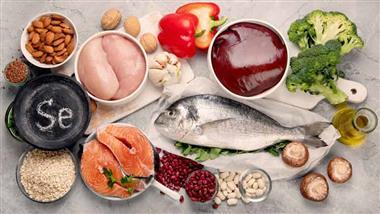
- Signs of deficiency include hair loss, fatigue, frequent sickness, cognitive decline and muscle weakness. Brazil nuts are the best food source for selenium as just six to eight nuts provide 989% of your daily allowance
Selenium is an essential trace mineral that plays a unique and important role in a variety of biological functions. Your body cannot make selenium, so it’s important to get it from your food. It’s a major component in more than two dozen proteins that play crucial roles in a variety of functions, including thyroid hormone metabolism, DNA synthesis and reproduction.1
Selenium is also an antioxidant, which means it helps protect the body against free radicals and reactive oxygen species (ROS). It exists in two forms: inorganic and organic, both of which are found in dietary sources — including the organic form in animal tissue.
Like most compounds, your body requires an optimal amount of selenium, which means that more is not better. There is some evidence to suggest that high serum concentrations can adversely affect glycemic control.2 This means that individuals who have Type 2 diabetes or are at risk for Type 2 diabetes should measure serum concentrations before considering using a selenium supplement.
When your body has optimal levels of selenium, it can help improve biological functioning, which in turn has a positive effect on antiaging, heart disease, cognitive decline and viral load progression.
Antioxidant Has Antiaging Benefits
The signs of aging you can visibly see in your skin and experience in your body are the result of molecular and immune system changes, increased susceptibility to environmental stressors, metabolic imbalance and disease that may happen as you age.3 These effects are the result of an imbalance between oxidative defense and ROS damage. Stem cell exhaustion, epigenetic alterations and changes in mitochondrial renewal also affect aging.
While signs of aging are common, there are steps you can take to help mitigate these effects. Maintaining optimal levels of nutrients and micronutrients is one of those steps. A review4 in 2019 showed the effect selenium has on the aging process occurs in part through the role it plays in selenoproteins, which are necessary for the expression of several important antioxidants.5
Selenium is used in the expression of five separate glutathione peroxidases,6 which are responsible for reducing damage from ROS. These and other selenoprotein compounds play powerful roles as antioxidants, reducing the inflammation triggered by ROS and prolonging telomere length, which is the protective cap on the end of DNA strands.7
When telomeres shorten to a critical length after division, the cells either die or stop dividing. These actions play a vital role in aging and some researchers suggest that supplementing with selenium, especially in the elderly, may be of “great significance” as a strategy for the prevention of age-related diseases.8
Low Selenium Raises Risk of Heart and Thyroid Disease
Obesity is a significant risk factor for heart disease. One study published in March 20219,10 found that adding selenium to the diet in an animal model helped protect against obesity and increased the healthy lifespan of the animals. The researchers were also interested in whether selenium could have the same beneficial effect on metabolism as restricting the amino acid, methionine.
Selenium supplementation in this animal model provided the same protection against weight gain as restricting methionine, and dramatically reduced levels of the energy regulating hormones IGF-1 and leptin. The results suggested that supplementing with selenium had nearly the same effect as a diet restricted in methionine.11 But selenium may also have a direct impact on your cardiovascular system.
Scientists have been studying the effect of selenium on the cardiovascular system for decades, after finding that the disease was more prevalent in areas of the world where there were low serum selenium concentrations, such as in eastern Finland.12
One meta-analysis13 in 2006 looked at observational studies that evaluated selenium serum concentrations and found they were inversely associated with the risk for coronary heart disease. The important aspect of this study is the researchers measured serum concentration of selenium and did not rely on an evaluation of supplementation alone.
In 2013, a Cochrane Database Systematic Review14 concluded that there was limited evidence to support selenium supplementation to prevent heart disease. However, data from the studies showed most participants had a baseline or mean selenium serum concentration between 70 and 150 nanograms per milliliter (ng/mL), which is the normal concentration found in human blood serum.15
In other words, it appeared supplementing with selenium was not effective when blood serum concentrations were already within the normal value. Another study16 published in 2020 also evaluated serum selenium levels and found those in the high range of the reference value had a decreased risk for cardiovascular disease and mortality.
Optimal levels of selenium may also help individuals experiencing heart failure. One study17 found serum levels of selenium were independently associated with exercise tolerance in patients with heart failure and deficiency was linked to a 50% higher mortality rate.
Thyroid hormones also influence the cardiovascular system, and may induce or worsen heart disease, including heart failure and atherosclerotic vascular disease.18 Several studies have demonstrated that supplementation with selenium in hyper- and hypothyroidism is associated with improvement.19,20,21
Age-Related Cognitive Decline May Be Linked to Low Selenium
Preventing cognitive impairment in the elderly is a significant public health challenge. One meta-analysis22 that gathered data from Europe, Australia and the Americas found that the incidence of mild cognitive impairment per 1,000 person-years was 40.94 in ages 80 to 84 and 60.1 in ages 85 and older.
According to the Alzheimer’s Association, more than 6 million Americans are currently living with Alzheimer’s and 1 in 3 seniors dies with at least one form of dementia.23 One link may be selenium as it is well understood that serum concentrations of selenium commonly decline with age.
One longitudinal study24 found that decreases in plasma selenium were associated with declines in neuropsychological function in aging people. Another study25 found lower serum levels of selenium were associated with decreased performance and neurological testing in older adults.
As serum deficiencies occur, the brain retains selenium the longest, which has suggested that it plays a vital role in brain function. A review of nine years of data26 has suggested that maintaining optimal selenium status was important to the neuropsychological function in the elderly.
Low Selenium and Zinc Associated With Worse COVID Outcomes
Selenium and zinc both play a role in supporting your immune system. One of the selenoprotein enzymes, glutathione peroxidase, is an important catalyst in the conversion of glutathione. This in turn reduces damage from reactive oxygen species.27 When glutathione peroxidase is compromised, the downstream effect is the overproduction of cytokines that can induce a cytokine storm as seen in severe COVID-19 infections.
Selenium influences other pathways that affect viral diseases as well. Authors of a paper in Environmental Research28 note that HIV-1 infections are higher in areas of Africa where the soil is deficient in selenium and testing shows Ebola infections are closely associated with people who are severely deficient in selenium.
Coxsackievirus is an RNA virus that typically causes a mild illness, yet severe infections are found in areas of China where selenium is deficient.29 The authors have suggested that these pathways influence a person’s reaction to a COVID-19 infection and theorize that supplementing with selenium during an active infection may help reduce damage to the endothelial cells.
Other studies in China30 and Germany31 have demonstrated there’s a positive relationship between the survival rate for people with active COVID-19 infections and selenium levels.
One study32 published in 2021 sought to identify predictive markers doctors could use to better stratify COVID-19 patients on admission to the hospital. In this study, researchers measured serum levels of zinc, iron, copper and selenium. Selenoprotein P levels were also measured, which requires selenium for full expression.
The researchers found that patients admitted with cancer have significant deficits in selenium and zinc. Three of the five patients with the lowest levels of iron, who also had profound selenium and zinc deficits, died during the study. Analysis of the biomarkers found most hospitalized patients had particularly low levels of selenium and zinc.
When patients with comorbidities were analyzed, they found a pronounced deficit in iron, zinc and selenium and a higher chance of survival in cancer patients with higher levels of selenium. The researchers concluded that the data confirmed:33
“… an insufficient Se (total Se and SELENOP) and Zn status at admission to the hospital is associated with an exceptionally high mortality risk and severe disease course with COVID-19.
In view of the predictive accuracy of Se and Zn deficiency as mortality risk factor at hospital admission, supplemental Se and Zn supply should be considered to support the immune system, in particular for patients with inflammation-related comorbidities like cancer or diabetes mellitus.”
Signs of Deficiency and Food Choices Rich in Selenium
Selenium is found in the soil and should concentrate in plant foods. However, experts estimate that up to 1 billion people globally may be deficient from inadequate intake.34
One paper published in Environmental Research35 cited a World Health Organization report that found over 40 countries where the soil is deficient in selenium. Some of the lowest levels are found in New Zealand, Slovakia, Finland and sub-Saharan Africa.
People who have a deficiency in selenium are at higher risk of conditions that affect the endocrine system, cardiovascular system, immune system and reproductive system and that may affect mood and behavior.
Although it’s necessary to be tested to determine if you are deficient, several symptoms may indicate you aren’t getting enough selenium in your diet. These can include:36,37,38
| Hair loss | Fatigue | Weight gain |
| Sick more often | Greater oxidative stress | Shortness of breath |
| Cognitive decline | Muscle weakness |
I recommend getting as many of your essential vitamins, minerals and elements from your diet as possible. The recommended daily allowance for zinc ranges from 2 mg for infants to 11 mg to 8 mg for men and women over the age of 19.39 Food sources include oysters, pasture-raised beef, dark meat chicken, pumpkin seeds and dry roasted cashews.
The recommended daily allowance for selenium ranges from 15 micrograms (mcg) for infants to 55 mcg for men and women over 19 years.40 The best food sources of selenium are Brazil nuts. Just six to eight nuts deliver 544 mcg, or 989% of your daily allowance. Other sources include sardines, pasture-raised beef, turkey, chicken and pasture-raised eggs.
- 1 National Institutes of Health, Selenium
- 2 Oregon State University, selenium, summary
- 3 Biomolecules, 2021;11(10)
- 4, 8 Aging Clinical and Experimental Research, 2019; 31(8)
- 5, 36 Selenium Deficiency, 2021
- 6 Oregon State University, Selenium, Glutathione Peroxidases
- 7 Stanford Medicine, January 22, 2015
- 9 eLifeSciences, March 30, 2021
- 10, 11 Science Daily, March 30, 2021
- 12 Biological Trace Element Research, 1990; 24(2)
- 13 American Journal of Clinical Nutrition, 2006; 84(4)
- 14 Cochrane Database Systematic Review, 2013;2013(1) Characteristics of Included Studies
- 15 Mayo Clinic Laboratories, Selenium, Reference Values
- 16 Critical Reviews in Food Science and Nutrition, 2020; doi.org/10.1080/10408398.2020.1803200
- 17 European Journal of Heart Failure, 2019;22(8)
- 18 Circulation, 2019;139(25)
- 19 Current Opinion in Endocrinology, Diabetes and Obesity, 2013;20(5)
- 20 Nature Reviews Endocrinology, 2020;16
- 21 Endocrine Web, September 15, 2015
- 22 Alzheimer’s and Dementia, 2019;11
- 23 Alzheimer’s Association, Facts and Figures
- 24 Epidemiology, 2007; 18(1)
- 25 Movement Disorders, 2010; 25(12)
- 26 Biofactors, 2012; 38(2)
- 27 Environmental Research, 2021, 196(110984)
- 28 Environmental Research, 2021, 196(110984) Section 3.1 & 3.2
- 29 Environmental Research, 2021, 196(110984) Section 3.3
- 30 American Journal of Clinical Nutrition, 2020; doi.org/10.1093/ajcn/nqaa095
- 31 Nutrients, 2020;12(7) Germany in study design section 2.0
- 32 Nutrients, 2021;13(10) Section 5. Conclusions
- 33 Nutrients, 2021;13(10) Section 5
- 34 Selenium Deficiency, 2021 Section Epidemiology
- 35 Environmental Research, 2021, 196(110984) Section 2.1
- 37 Yahoo!News, February 2, 2018
- 38 Oregon State University, Selenium, Deficiency
- 39 National Institutes of Health, Zinc, Recommended Intakes
- 40 National Institutes of Health, Selenium, Recommended Intakes
This Nutrient Could Cut Tumor Growth Up to 67%
Reproduced from original article:
https://articles.mercola.com/sites/articles/archive/2022/04/18/omega-3-fatty-acids-could-cut-tumor-growth.aspx
The original Mercola article may not remain on the original site, but I will endeavor to keep it on this site as long as I deem it to be appropriate, and will not be bullied into removing it.
Analysis by Dr. Joseph Mercola Fact Checked April 18, 2022

STORY AT-A-GLANCE
- Data presented at the 2022 Experimental Biology meeting showed omega-3 fatty acids could cut tumor growth by 67% when combined with immunotherapy or anti-inflammatory therapy, but omega-6 fats could accelerate tumor growth
- Past research has demonstrated an unbalanced intake of omega-6 fats, commonly found in vegetable oils and processed foods, could promote the growth of cancer cells
- Data revealed an omega-3 index greater than 5.7% lowers the risk of death in COVID-19. Past research shows adequate levels of omega-3 have a positive impact on viral infections and a combination of vitamin D and omega-3 can help prevent autoimmune disease
- The only way to know if you need a supplement is to test using an omega-3 index. The best type of supplement is sustainable krill oil since fish oil has a higher risk of oxidative damage and krill oil also contains astaxanthin, which helps reduce oxidative damage
Dietary fats are essential to your good health. However, like everything else, you can eat too much of some or not enough of others. When this happens, your body does not work effectively. Research from Harvard Medical School’s Beth Israel Deaconess Medical Center in Boston demonstrated omega-3 fat could reduce tumor growth by 67%.1
Your body uses fat to keep your skin and hair healthy, absorb certain vitamins,2 temperature control,3 and for an essential role in neurological health.4 The most dangerous type of fat is trans-fat, which is commonly found in baked goods and processed foods.5
During processing, certain healthy oils can be turned into solids using a process called hydrogenation. This extends the shelf life and creates trans fats in the process. There are no health benefits, and it is not safe to eat any of them. On the other hand, polyunsaturated fats are essential, which means your body needs this type of fat but cannot manufacture it, so you must get it in food.
The two main types are omega-3 and omega-6 fatty acids. The number identifies where the first carbon-carbon double bond appears.6 Both fats may be essential, but it’s vital to get them in the right ratio to reduce the risk of a chronic inflammatory response.
Omega-6 fats are found in high concentrations in processed foods, corn oil, sunflower oil and safflower oil.7,8 The optimal ratio of omega-3 to omega-6 fats is 1-to-4 or lower.9 Unfortunately, the typical Western diet has a ratio of 1-to-16.10
Many people are becoming more aware of the importance of omega-3 fats to their overall health. Yet, they may still be unsure of how much is needed to achieve or maintain optimal levels. Adjusting your ratio may help reduce your risk of many chronic diseases that are so prevalent in Western Society.
Excessive intake of omega-6 fats nearly tripled in the last 100 years with the introduction of vegetable oil.11 Researchers have now found that integrating omega-3 fat into the diet and reducing omega-6 could have a significant impact on the prevention and treatment of cancer.12
Omega-3 Fatty Acids Help Fight Cancer
The research13 was presented April 4, 2022 at the annual Experimental Biology meeting in Philadelphia.14 The animal model showed that omega-3 fatty acids helped promote the cancer-fighting activities of immunotherapy and anti-inflammatory therapy.
Immunotherapy is a type of biological treatment that prompts the immune system to attack cancer cells.15 Biological therapies use compounds from living organisms. Several types of immunotherapies help promote the immune system’s response, including monoclonal antibodies which are used in the treatment of COVID-19.16
The scientists sought to determine the impact of what a cancer patient eats on antitumor activity after treatment with immunotherapy or an anti-inflammatory therapy designed to inhibit the enzyme soluble epoxide hydroxylase.17 As of the time of the study, immunotherapy was approved for use in the treatment of cancer, but anti-inflammatory therapy was still under clinical investigation.
The researchers used an animal model to produce primary and metastatic malignancies. The animals were first fed one of three diets for 10 days before tumor injection and the remainder of the study period. One group received a standard diet, one a diet high in omega-3 and the third group a diet high in omega-6. One week after tumors were injected, each group was split into four different intervention groups.
The groups were either given no treatment, immunotherapy, anti-inflammatory therapy or both therapies simultaneously. The researchers evaluated the response of the tumors to diet supplementation in addition to the cancer treatment. What they found was that omega-3 fatty acids helped block tumor growth in the three treatment groups of mice.
The mice receiving the high omega-3 diet and both cancer treatments showed a reduction of 67% growth when compared to the group of mice eating a normal diet and receiving no treatment.18 By comparison, cancer cell growth increased in the mice who ate the high omega-6 diet and were given immunotherapy.
The researchers believe the results indicated there could be synergistic activity between omega-3 fatty acids and immunotherapy and anti-inflammatory therapy for cancer. The research is being presented by Abigail Kelly from Harvard Medical School Beth Israel Deaconess Medical Center. She commented on the results in a press release, saying:19
“We demonstrated, for the first time, that the combination of immunotherapy and anti-inflammatory treatment (sEHi) was more effective when mice were fed diets enriched with omega-3 fatty acids. This is very promising because dietary supplementation is easy to implement for cancer patients and can be added for patients already on immunotherapy.”
Abundance of Omega-6 Fatty Acids Promotes Cancer
The data on omega-6 and omega-3 in the scientific literature is not new. In fact, research showing omega-6 fats promote malignant growth dates to the 1990s.20 And yet, many people are unaware that the imbalance of omega-3 and omega-6 fats in their diet may be increasing their risk of developing cancer.
Data in 2008 revealed that omega-6 fatty acids in combination with heterocyclic amines (HA), produced when meat and fish are cooked, increased the likelihood of breast cancer in post-menopausal women.21 The amount of HA was not associated with the potential risk in this cohort. Rather, it was the combination of HA and omega-6 that increased the potential risk of a diagnosis of breast cancer.
Another paper published in 2012 discussed the results of studies that also found a link between omega-6 and breast cancer.22 Data also show higher intake of omega-6 can increase the risk of prostate cancer and a low ratio of omega-6 to omega-3 can improve the effectiveness of treatment.23
Omega-6 fatty acid metabolites also promote angiogenesis in malignant tumors by increasing growth factor expression.24 Data have demonstrated there is a relationship between omega-6 consumption and the progression of certain types of cancer growths, such as breast, prostate, lung, colorectal and neuroblastoma.25
Combination of D and Omega-3 Helps Prevent Autoimmune Disease
Vitamin D and omega-3 have several things in common,26 not the least of which is that they play important roles in cardiovascular health and most who are deficient in one are also deficient in the other. This sparked the VITAL study,27 which is an ongoing study in which researchers are studying the effect of these dietary supplements on the risk of cardiovascular disease or cancer in 25,871 men and women.
The combination deficiency also has a negative effect on your immune health. One study28 published in the BMJ has suggested that supplementing with vitamin D and omega-3 could lower your risk of developing an autoimmune disease, such as psoriasis, thyroid diseases and rheumatoid arthritis as you get older. The researchers from Brigham and Women’s Hospital and Harvard Medical School used data from the VITAL trial.
They followed the participants for more than five years and compared supplementation against self-reported autoimmune diseases diagnosed during the study period. They wrote:29
“Vitamin D supplementation for five years, with or without omega-3 fatty acids, reduced autoimmune disease by 22%, while omega-3 fatty acid supplementation with or without vitamin D reduced the autoimmune disease rate by 15% (not statistically significant).”
However, participants who took both an omega-3 supplement, and vitamin D decreased their risk of autoimmune disease by 30%. Further, when participants took the supplements for at least two years, the risk decreased even more to 39%.
Study author Dr. Karen Costenbader, lupus program director at Brigham and Women’s Hospital, explained that the findings are so powerful, she can now answer one of her patients’ most common questions — “Which vitamins or supplements do you recommend?” She said:30
“Now, when my patients, colleagues, or friends ask me, I can point to our research findings, which suggest that for women age 55 years and older, and men 50 years and older, marine omega-3 fatty acids (fish oil) 1000 mg a day, and vitamin D 2000 IU a day — the doses used in VITAL — lead to a 22% reduction in all autoimmune diseases with vitamin D, and a 15% reduction in the same with fish oil supplementation over 5.3 years of randomized follow-up.
In the trial, these supplements were prescription grade and underwent rigorous quality testing. They were safe and well tolerated and no increase in adverse events was found.”
Omega-3 Level Effects Infection Rate
The name of the infection on everyone’s lips for the last two years has been COVID-19. Yet, colds, flu and gastrointestinal viral infections have not disappeared. Research also indicates that optimal levels of omega-3 fatty acids may have a protective effect on viral illness. Since it may still be top of mind, let’s start with how omega-3 fatty acid levels have helped improve COVID-19 outcomes.
A study31 published in January 2021, analyzed the omega-3 index in 100 individuals and compared that against their COVID-19 outcomes. The patients were admitted to Cedar Sinai Medical Center starting March 1, 2020, with a confirmed case of COVID-19. Blood samples were drawn and stored within 10 days of diagnosis.
The primary outcome measurement was death, and the risk was analyzed as a measure of quartiles. When they analyzed the overall data, the researchers found that older individuals and those admitted with a “do not resuscitate” order had a higher likelihood of dying. Blood samples were then separated from the highest to the lowest quartile.
Researchers found there was only one death in the group with an omega-3 index that measured 5.7% or greater. He was a 66-year-old man admitted with a do not resuscitate order. In the other 3 quartiles, a total of 17% of the patient’s died. The blood samples also confirmed past results that had demonstrated the average person in the U.S. has an omega-3 index near 5%.32
Several other studies also confirmed these results, showing individuals with adequate levels of omega-3 had better outcomes from COVID-19.33,34 Research before 2020 also showed that omega-3 has an impact on viral infections, including influenza35 and bacterial infections associated with COPD.36
Omega-3 Also Helps Heart Health
Several epidemiological and clinical trials have demonstrated that omega-3 fatty acids play a role in the risk of cardiovascular disease. Those with risk factors associated with coronary heart disease benefit from omega-3 fats.37 Supplementation may also reduce heart and all-cause mortality.
In one study38 of 84,688 nurses who were followed over 16 years, researchers analyzed their omega-3 intake and compared the health outcomes of those who rarely ate fish (less than once per month) to those who ate the greatest amount (five or more times each week). They found that those with the highest intake had the lowest risk of coronary heart disease.
Another group of scientists39 used a medication described as a “highly purified eicosapentaenoic acid ethyl ester” that is “a synthetic derivative of omega-3 fatty acid.”40 They found that those taking the medication experienced a significantly lower number of ischemic events than those taking a placebo, including those taking statin medications. The researchers concluded:41
“Among patients with elevated triglyceride levels despite the use of statins, the risk of ischemic events, including cardiovascular death, was significantly lower among those who received 2 g of icosapent ethyl twice daily than among those who received placebo.”
Choose Krill Oil Over Fish Oil for Omega-3
The best way to know if you need to supplement with omega-3 is to test your level. The omega-3 index measures the amount of omega-3 on your red blood cells as a reflection of the amount found in the rest of your body. Before the test was developed in 2004, an assay was not available.
Since the lifespan of a red blood cell is about 120 days,42 the test measures an average of your omega-3 intake and isn’t influenced by a recent meal that was high in omega 3. The test has been used to evaluate data from several studies, including the Framingham Study43 and the Women’s Health Initiative.44
The index is expressed as a percent of all fatty acids in the red blood cell membrane.45 Data from studies Harris performed showed the healthy range of omega-3 is from 8% to 12%.46 One study showed that a low index is just as powerful a predictor of early death as smoking.47
The best omega-3 supplement is from an animal-based source. Krill oil and fish oil provide both eicosapentaenoic acid (EPA), and docosahexaenoic acid (DHA). Krill is sustainable and resistant to oxidative damage since it also contains astaxanthin. Fish oil has a greater potential for contamination and has a higher risk of oxidative damage that can occur during processing and after you open the bottle.48
In an analysis of fish oil available over the counter in Canada, researchers analyzed 171 supplements from 49 brands.49 They found 50% of the samples exceeded one measurement of oxidation and 39% exceeded what is considered safe by international standards.
In addition to a lower rate of contamination, krill oil is far more potent than fish oil. In one study,50 participants who took krill oil required only 62.8% of the amount of those taking fish oil to achieve the same results.
– Sources and References
- 1, 12, 13, 17, 18, 19 NewsWise, March 25, 2022
- 2 National Institute of General Medicine Sciences, December 15, 2010
- 3 National Institutes of Health, July 28, 2014
- 4 Current Neuropharmacology, 2018;16(7)
- 5 Harvard Health Publishing, August 13, 2018
- 6 Food Insight, July 30, 2020
- 7 American Society for Nutrition, September 24, 2020
- 8 Advances in Nutrition, 2020;11(6)
- 9 BMJ Open Heart, 18;5:e000946 Last para above Conclusion animal study
- 10 Biomedicine and Pharmacotherapy, 2002;56(8)
- 11 Today’s Dietitian, 2013;15(4):38
- 14 Experimental Biology 2022
- 15 National Cancer Institute, Immunotherapy to Treat Cancer
- 16 NIH, February 1, 2022
- 20 International Journal of Oncology, 1995;7(3)
- 21 Reuters, September 26, 2008
- 22 BMC Medicine, 2012;10(50)
- 23 Nutrition and Cancer, 2013;65(4)
- 24 Cancer and Metastasis Reviews, 2013;32
- 25 Boletin Medico del Hospital Infantil de Mexico, 2016;73(6)
- 26 Omegaquant, August 13, 2018
- 27 VITAL study
- 28, 29 The BMJ, 2022; 376
- 30 BMJ 2022;376:o243
- 31 Prostaglandins, Leukotrienes and Essential Fatty Acids, 2021; doi.org/10.1016/j.plefa.2021.102250
- 32 OmegaQuant, March 25, 2020, para 5
- 33 Frontiers in Physiology, 2021; doi.org/10.3389/fphys.2020.624657
- 34 Infection and Chemotherapy, 2020;52(4)
- 35 Biochimica et Biophysica Acta, 2015;1851(4)
- 36 University of Rochester Medical Center, March 14, 2016
- 37 American Heart Association
- 38 JAMA, 2002;287(14):1815
- 39, 41 New England Journal of Medicine, 2019;380:11
- 40 PubChem
- 42 Stanford Blood Center, December 13, 2010
- 43, 47 EurekAlert! June 24, 2021
- 44 Prostaglandins, Leukotrienes and Essential Fatty Acids, 2017;121
- 45 The American Journal of Clinical Nutrition, 2008;87(6)
- 46 OmegaQuant, July 9, 2018
- 48 Journal of Nutritional Science, 2015;4:e36
- 49 Journal of Nutritional Science, 2015;4:e30
- 50 Lipids, 2011;46(1):37
This Deficiency Can Lead to Psychosis and Alzheimer’s
Reproduced from original article:
https://articles.mercola.com/sites/articles/archive/2022/04/19/b-vitamins-cognitive-function.aspx
The original Mercola article may not remain on the original site, but I will endeavor to keep it on this site as long as I deem it to be appropriate, and will not be bullied into removing it.
Analysis by Dr. Joseph Mercola Fact Checked April 19, 2022
STORY AT-A-GLANCE
- B vitamin deficiencies are known to produce symptoms of psychiatric disorders, including depression and schizophrenia, and they play an important role in cognitive decline and the development of dementia
- Vitamins B6, B9 (folate) and B12 may help prevent cognitive decline and protect against more serious dementia such as Alzheimer’s disease
- A primary mechanism of action is the suppression of homocysteine, which tends to be elevated when you have brain degeneration. Having a homocysteine level above 14 micromoles per liter is associated with a doubled risk of Alzheimer’s
- Research has shown taking high doses of folic acid, B6 and B12 lowers blood levels of homocysteine, decreasing brain shrinkage by as much as 90%
- B vitamins also have a direct impact on the methylation cycle, and are required for the production and function of neurotransmitters, and for the maintenance of myelin, all of which are important for cognitive health
This article was previously published February 7, 2019, and has been updated with new information.
It should come as no surprise that nutrition is a foundational consideration to optimize and maintain cognitive function. It’s well-established that healthy fats such as animal-based omega-3s — especially DHA — are vitally important for brain health, but certain vitamins are also important, and a number of vitamin deficiencies have been linked to impaired cognition, neurological diseases and mental disorders.
Among the most important vitamins for brain health are vitamins B3 (niacin), B6 and B12. For example, two clinical manifestations of pellagra1 — a condition caused by niacin deficiency — are delirium and dementia. Schizophrenia also shares some of the features of pellagra.
The disease originates in your gut and is associated with malnourishment and the “poor man’s diet” consisting primarily of corn products. Other B vitamin deficiencies, including B1, B2, B6, B8 and B12,2,3 can also produce neuropsychiatric symptoms. As noted in a 2016 review of B vitamins and the brain:4
“The B-vitamins … perform essential, closely interrelated roles in cellular functioning, acting as co-enzymes in a vast array of catabolic and anabolic enzymatic reactions. Their collective effects are particularly prevalent to numerous aspects of brain function, including energy production, DNA/RNA synthesis/repair, genomic and nongenomic methylation, and the synthesis of numerous neurochemicals and signaling molecules …
[E]vidence from human research clearly shows both that a significant proportion of the populations of developed countries suffer from deficiencies or insufficiencies in one or more of this group of vitamins, and that, in the absence of an optimal diet, administration of the entire B-vitamin group, rather than a small sub-set, at doses greatly in excess of the current governmental recommendations, would be a rational approach for preserving brain health.”
B Vitamins Support Cognitive Function
Vitamins B6, B9 (folate) and B12 may be particularly important for supporting cognitive function as you age, and have been shown to play a major role in the development of dementia, including Alzheimer’s disease, which is the most serious (and lethal).
A primary mechanism of action here is the suppression of homocysteine,5 which tends to be elevated when you have brain degeneration. As noted by Dr. Michael Greger in the featured video, research has confirmed that elevated homocysteine “is a strong, independent risk factor for the development of dementia and Alzheimer’s disease.”
Having a serum (blood) level of homocysteine greater than 14 micromoles per liter is associated with a doubled risk of Alzheimer’s. As noted in a 2010 paper:6
“Deficiencies of the vitamins folate, B12 and B6 are associated with neurological and psychological dysfunction … In the elderly, cognitive impairment and incident dementia may be related to the high prevalence of inadequate B vitamin status and to elevations of plasma homocysteine.
Plausible mechanisms include homocysteine neurotoxicity, vasotoxicity and impaired S-adenosylmethionine-dependent methylation reactions vital to central nervous system function. In light of this, it is imperative to find safe ways of improving vitamin B status in the elderly …”
The good news is your body can eliminate homocysteine naturally, provided you’re getting enough B9 (folate), B6 and B12. One study confirming this was published in 2010.7 Participants received either a placebo or 800 micrograms (mcg) of folic acid (the synthetic form of B9), 500 mcg of B12 and 20 mg of B6.
The study was based on the presumption that by controlling homocysteine levels you might be able to reduce brain atrophy, thereby slowing the onset of Alzheimer’s. Indeed, after two years those who received the vitamin-B regimen had significantly less brain shrinkage compared to the placebo group. Those who had the highest levels of homocysteine at the start of the trial experienced brain shrinkage at half the rate of those taking a placebo.
A 2013 study8 took this research a step further, showing that not only do B vitamins slow brain shrinkage, but they specifically slow shrinkage in brain regions known to be most severely impacted by Alzheimer’s disease. Moreover, in those specific areas the shrinkage is decreased by as much as 700% which is rather remarkable.
As in the previous study, participants taking high doses of folic acid and vitamins B6 and B12 lowered their blood levels of homocysteine, decreasing brain shrinkage by as much as 90%. Earlier research9 has also pointed out that even subclinical deficiencies in B vitamins may have “a subtle influence on aspects of cognitive performance.”
The Link Between Dietary Fiber and Folate Status
Importantly, though, findings such as these also suggest that since elevated homocysteine appears to significantly drive the atrophy process, and those with high homocysteine benefit the most from B-vitamin supplementation, (indicating they were deficient in these vitamins), it seems reasonable to conclude that by avoiding B-vitamin deficiency in the first place, you can minimize age-related brain atrophy.
This is such a simple and inexpensive preventive strategy, it would seem foolish to ignore it. Related to this, research10 also shows that your dietary fiber intake has an impact on your folate status. For each gram of fiber consumed, folate levels increased by nearly 2%. The researchers hypothesize that this boost in folate level is due to the fact that fiber nourishes bacteria that synthesize folate in your large intestine.
Yet another way to lower homocysteine is to lower methionine, found in animal protein. While I firmly believe animal protein is an important part of a healthy diet, most Americans eat far more protein than required for optimal health. The answer, however, is not necessarily a vegan diet.
Research11 shows vegans actually have the worst homocysteine levels of all, when compared to omnivores and lactovegetarians. The reason for this is because they’re not getting enough B12, which is primarily found in animal foods.
So, while eating lots of vegetables is important for folate and fiber, you also need healthy amounts of B12 — either from animal foods such as meat, fish, milk, cheese and eggs, or a supplement — in order to maintain healthy homocysteine levels and optimal brain function.
Also, keep in mind that advancing age can diminish your body’s ability to absorb B12 from food,12 so the need for supplementation may increase as you get older. Your body’s ability to absorb B12 depends on three factors:
- Adequate stomach acid — With age, stomach acid often diminishes. You may also have insufficient amounts of acid if you take acid blockers for heartburn
- Gastric intrinsic factor — Many also lack gastric intrinsic factor
- The enzyme pepsin
Conditions that inhibit absorption of B12 include pernicious anemia and atrophic gastritis type B, the latter of which is thought to affect as much as half of all people over the age of 60.13 Poor B12 absorption has also been implicated in depression, which is indeed common among the elderly.
B Vitamins Are Also Important for Psychiatric Conditions
Studies also show the importance of B vitamins for the prevention and treatment of psychiatric conditions. For example, in one meta-analysis,14 high doses of vitamins B6, B8 (inositol) and B12 significantly reduced symptoms of schizophrenia — more so than standard drug treatments alone. As reported by Science Daily:15
“Lead author Joseph Firth, based at the University’s Division of Psychology and Mental Health, said, ‘Looking at all of the data from clinical trials of vitamin and mineral supplements for schizophrenia to date, we can see that B vitamins effectively improve outcomes for patients.'”
Vitamin B3 (niacin) has also been successfully used to treat psychiatric disorders such as attention deficit disorder, anxiety, depression, general psychosis, obsessive-compulsive disorder and schizophrenia.
Why B Vitamins Have Such a Powerful Effect on Brain Health
Aside from regulating homocysteine (which takes a toll on your brain structure and function), another reason why B vitamins have such a powerful effect on a wide range of brain disorders and psychiatric conditions has to do with the fact that they:
- Have a direct impact on the methylation cycle
- Are required for the production and function of neurotransmitters
- Are required for the maintenance of myelin, the fatty sheath surrounding your nerve cells. Without this protective coating, nerve signals become slow and sporadic, which can lead to motor function problems, cognitive losses and changes in mood
What’s more, B8 or inositol, specifically, aids cell communication, allowing your cells to properly interpret chemical messages and respond accordingly,16 while B6, folate and B12 (in combination with SAMe) regulate the synthesis and breakdown of brain chemicals involved in mood control, including serotonin, melatonin and dopamine. This is why a deficiency in one or more of these B vitamins can trigger symptoms of depression.
How to Improve Your Vitamin B Status
Mood disorders, cognitive decline and psychiatric problems can have many underlying factors, but addressing your diet is often a good place to start. Not only can nutritional deficiencies wreak havoc with your brain function, your gut health also plays an important role, and toxic exposures from your diet or environment can also contribute.
Ideally, you’d want to address all of these issues. I’ve written extensively about all of them. As for nutritional deficiencies, B vitamins appear to be very important, as are animal-based omega-3, vitamin C and vitamin D.
As a general rule, I recommend getting most if not all of your nutrition from real food, ideally organic to avoid toxic pesticides, and locally grown. Depending on your situation and condition, however, you may need one or more supplements.
To start, review the following listing of foods that contain the B vitamins discussed in this article. If you find that you rarely or never eat foods rich in one or more of these nutrients, you may want to consider taking a high quality, ideally food-based supplement.
Also consider limiting sugar and eating fermented foods. The entire B group vitamin series is produced within your gut, assuming you have healthy gut flora. Eating real food, including plenty of leafy greens and fermented foods, will provide your microbiome with important fiber and beneficial bacteria to help optimize your internal vitamin B production.
| Nutrient | Dietary Sources | Supplement Recommendations |
|---|---|---|
| Niacin (B3) | Liver, chicken, veal, peanuts, chili powder, bacon and sun-dried tomatoes have some of the highest amounts of niacin per gram.17
Other niacin-rich foods include baker’s yeast, paprika, espresso coffee, anchovies, spirulina, duck, shiitake mushrooms and soy sauce.18 |
The dietary reference intake established by the Food and Nutrition Board ranges from 14 to 18 mg per day for adults.
Higher amounts are recommended depending on your condition. For a list of recommended dosages, see the Mayo Clinic’s website.19 For pellagra, discussed above, doses range from 50 to 1,000 mg daily. |
| Vitamin B6 | Turkey, beef, chicken, wild-caught salmon, sweet potatoes, potatoes, sunflower seeds, pistachios, avocado, spinach and banana.20,21 | Nutritional yeast is an excellent source of B vitamins, especially B6.22
One serving (2 tablespoons) contains nearly 10 mg of vitamin B6. Not to be confused with Brewer’s yeast or other active yeasts, nutritional yeast is made from an organism grown on molasses, which is then harvested and dried to deactivate the yeast. It has a pleasant cheesy flavor and can be added to a number of different dishes. |
| B8 (inositol/biotin) | Meat, egg yolks, fish, liver, poultry, wild-caught Alaskan salmon, avocado, nuts and legumes.23,24 | B8 is not recognized as an essential nutrient and no recommended daily intake has been set.
That said, it’s believed you need about 300 mcg per day. Vitamin B8 is sometimes listed as biotin on supplements. Brewer’s yeast is a natural supplemental source.25 |
| Folate (B9) | Fresh, raw, organic leafy green vegetables, especially broccoli, asparagus, spinach and turnip greens, and a wide variety of beans, especially lentils, but also pinto beans, garbanzo beans, kidney beans, navy and black beans.26 | Folic acid is a synthetic type of B vitamin used in supplements; folate is the natural form found in foods.
(Think: Folate comes from foliage, edible leafy plants.) For folic acid to be of use, it must first be activated into its biologically active form (L-5-MTHF). This is the form able to cross the blood-brain barrier to give you the brain benefits noted. Nearly half the population has difficulty converting folic acid into the bioactive form due to a genetic reduction in enzyme activity. For this reason, if you take a B-vitamin supplement, make sure it contains natural folate rather than synthetic folic acid. Nutritional yeast is an excellent source.27 |
| Vitamin B12 | Vitamin B12 is found almost exclusively in animal tissues, including foods like beef and beef liver, lamb, snapper, venison, salmon, shrimp, scallops, poultry, eggs and dairy products.
The few plant foods that are sources of B12 are actually B12 analogs that block the uptake of true B12. |
Nutritional yeast is also high in B12, and is highly recommended for vegetarians and vegans.
One serving (2 tablespoons) provides nearly 8 mcg of natural vitamin B12.28 Sublingual (under-the-tongue) fine mist spray or vitamin B12 injections are also effective, as they allow the large B12 molecule to be absorbed directly into your bloodstream. |
- 1 Medscape, Dermatologic Manifestations of Pellagra
- 2 British Medical Journal 956 Dec 15; 2(5006): 1394–1398
- 3 British Medical Journal 956 Dec 15; 2(5006): 1394–1398 (Full article, PDF)
- 4 Nutrients 2016 Feb; 8(2): 68
- 5 Nutritionfacts.org January 18, 2019
- 6 Nutrition Reviews 2010 Dec;68 Suppl 2:S112-8
- 7 PLoS ONE 5(9): e12244
- 8 PNAS 2013 Jun 4;110(23):9523-8
- 9 J Gerontol B Psychol Sci Soc Sci. 2001 Nov;56(6):P327-39
- 10 American Journal of Clinical Nutrition 1997 Dec;66(6):1414-21
- 11 British Journal of Nutrition 2013 Mar 14;109(5):785-94
- 12 New York Times September 6, 2016
- 13 Prim Care Companion J Clin Psychiatry 2009; 11(5): 269–270
- 14 Psychological Medicine February 16, 2017, DOI
- 15 Science Daily February 16, 2017
- 16 Healthy Eating, Vitamin B8
- 17, 18 Healthaliciousness.com, Top 10 High Niacin Foods
- 19 Mayo Clinic Niacin Dosing
- 20 Worlds Healthiest Foods, Vitamin B6
- 21 Healthalisciousness.com, Top 10 Foods High in Vitamin B6
- 22, 28 Self Nutrition Data, Nutritional Yeast
- 23 Explain-Health.com Food Sources High in Vitamin B8
- 24 Oregonstate.edu, Biotin Food Sources
- 25 Medical News Today December 4, 2017
- 26 Worlds Healthiest Foods, Folate
- 27 Chalkboard, Nutritional Yeast
The Surprising Health Benefits of Methylene Blue
Reproduced from original article:
https://articles.mercola.com/sites/articles/archive/2022/04/17/methylene-blue-health-benefits.aspx
The original Mercola article may not remain on the original site, but I will endeavor to keep it on this site as long as I deem it to be appropriate, and will not be bullied into removing it.
Analysis by Dr. Joseph Mercola Fact Checked April 17, 2022
Sorry, this video no longer available…
STORY AT-A-GLANCE
- Methylene blue helps mitochondrial respiration and improves brain energy metabolism. By doing that, it can improve cognitive performance and prevent neurodegeneration
- Methylene blue is the parent molecule for hydroxychloroquine and chloroquine, off-patent drugs commonly used to treat not only malaria but also COVID-19
- Emergency rooms around the world use it, as it’s the only known antidote for metabolic poisons causing methemoglobinemia, which is when a metabolic poison interferes with the transport of oxygen in hemoglobin
- Methylene blue is a hormetic drug, so low doses have the opposite effect of high doses
- Low doses, 0.5 mg to 1 mg per kilo of bodyweight, are recommended for nonacute, longer-term treatments. Uses include the prevention and treatment of dementia, post-stroke and other brain injuries, cognitive enhancement, and the general optimization of health if you’re already healthy
In this interview, Francisco Gonzalez-Lima, Ph.D., discusses a really powerful strategy to improve your mitochondria, which generate the vast majority of the energy your cells produce from food.
Gonzalez-Lima is an expert on methylene blue, which helps mitochondrial respiration and improves brain energy metabolism. By doing that, it can improve cognitive performance and prevent neurodegeneration.
“With methylene blue, we have been able to show all of those [benefits],” Gonzalez-Lima says. “Our group was the first to map the effects of methylene blue in the brain of humans and show its effects on improving brain metabolism, blood flow and memory function.”
What Is Methylene Blue?
Methylene blue is the parent molecule for hydroxychloroquine and chloroquine, off-patent drugs commonly used to treat not only malaria but also COVID-19. Best known as a fish tank antiseptic and textile dye for blue jeans, it was actually the first synthetic drug in modern history, developed in 1876. Since then, we’ve discovered it has many really important medicinal benefits.
The first medical application of methylene blue was for malaria. In 1890, Paul Ehrlich, a scientist at the famous Charité Hospital in Berlin, Germany, discovered methylene blue inhibits an enzyme that weakens the malaria parasite.
One of the first antipsychotic medications was also made from methylene blue. Other drugs developed from or with it include antibiotics and antiseptics. In the past, it was commonly used to treat urinary tract infections. It’s also been used as an antiviral agent in blood used for transfusions.
To this day, methylene blue is found in every hospital in the world, as it’s the only known antidote for metabolic poisons (any poison that interferes with oxygen transport or displaces oxygen, either from the blood or from the mitochondria).
For example, if you’re admitted for carbon monoxide poisoning, they’ll give you methylene blue intravenously. Cyanide is another example. The only known antidote for cyanide poisoning is methylene blue. It’s also been speculated that methylene blue might be useful in the treatment of acute lung infections such as SARS-CoV-2.
Importantly, methylene blue is a hormetic drug, which means that low doses have the opposite effect as high doses. For example, it’s primarily used in emergency rooms at the upper dosage limit (3 milligrams to 4 mg per kilo of bodyweight) for methemoglobinemia, which is when a metabolic poison interferes with the transport of oxygen in hemoglobin, by the iron in hemoglobin being oxidized to +3 rather than its normal reduced +2 state.
However, if you take too high a dose, you produce methemoglobinemia. At dosages in between, there’s no effect. Likewise, while low dosages have an antioxidant effect, high doses are pro-oxidative and can kill bacteria and tumor cells.
Methylene Blue, an Antioxidant and Energy Producer
Gonzalez-Lima’s research has primarily focused on low-dose benefits for nonacute purposes over the longer term — such as neuroprotective benefits and cognitive enhancement. While it has several mechanisms of action, a unique feature is that it acts on the level of electrons. He explains:
“Our body uses electrons as part of the electron transport chain that happens inside mitochondria, and these electrons, moved along through the mitochondria, are generated from electron donors that we produce by the foods that we eat.
All the foods that we eat, the only way they contribute to energy is by producing electron donors. They donate these electrons to the electron transport inside the mitochondria. The ultimate electron acceptor in nature is oxygen. That’s why the process of removing electrons from a compound is referred to as oxidation.
In mitochondria, this process is called oxidative phosphorylation. The electron transport is coupled with the phosphorylation of adenosine to eventually produce the adenosine triphosphate molecule (ATP). Methylene blue is an electron cycler. It’s an autooxidizing compound.
So, methylene blue donates its electrons directly to the electron transport chain, it obtains electrons from surrounding compounds, and maintains oxygen consumption and energy production. By doing this, it helps oxygen to be fully reduced into water.
So, it becomes two things that are often not found together. It acts as an antioxidant, because oxygen is neutralized into water by donating electrons to the electron transport, and it produces energy, because when the electron transport pumps are moving along oxidative phosphorylation, you have an increase in ATP formation.
Oftentimes, we have things that improve energy metabolism, but then they lead to oxidative stress. In the case of methylene blue, that’s not the case.
You can increase oxygen consumption rates, increase ATP production for energy metabolism, and at the same time reduce oxidative stress which, of course, will lead to reduction in oxidative damage at the level of mitochondria, then at the level of the other parts of the cells, and eventually membranes of the cells, and reactions that are cascades of this oxidative damage.”
Basically, as an electron cycler, methylene blue acts like a battery, but unlike other compounds that do the same thing, it doesn’t cause damaging oxidation in the process. If anything interferes with oxygenation or cellular respiration, such as cyanide, methylene blue is able to bypass that point of interference through electron cycling, thus allowing mitochondrial respiration, oxygen consumption and energy production to function as it normally would.
Improved Mitochondrial Respiration Improves Health, Cognition
Methylene blue can also be helpful in instances where you have impaired blood flow that prevents the delivery of oxygenated hemoglobin to the tissues. In this case, methylene blue helps counteract the reduced blood flow by optimizing the efficiency of mitochondrial respiration.
Healthy blood flow is particularly important for brain function, and many older people have chronic hypoperfusion that contributes to neurodegeneration and memory problems. These issues, Gonzalez-Lima says, can be prevented by methylene blue.
In summary, inside the electron transport chain in your mitochondria are five complexes, the primary purpose of which is to conduct the electrons generated from food, primarily carbohydrates and fat, in the form of acetyl CoA. Sometimes the electron transport chain gets blocked or impaired, and methylene blue is able to bypass such blockages.
When you’re perfectly healthy, low doses of methylene blue will enhance oxygen consumption, mitochondrial respiration and ATP production above baseline, basically optimizing the whole system. So, it acts as a metabolic enhancer and not just an antidote for metabolic poisons and other inhibitory processes.
The most important complex, Cytochrome c Oxidase, which catalyzes the reaction of oxygen becoming water, is blocked by cyanide. But methylene blue can insert electrons wherever there is a blockage.
What’s more, when you’re perfectly healthy, low doses of methylene blue will enhance oxygen consumption, mitochondrial respiration and ATP production above baseline, basically optimizing the whole system. So, it acts as a metabolic enhancer and not just an antidote for metabolic poisons and other inhibitory processes.
Methylene blue’s action on mitochondrial respiration is also coupled with biochemical upregulation of your oxygen consumption machinery in general, and hemodynamic processes that increase local blood supply to tissues.
And, as detailed by Gonzalez-Lima in the interview, this upregulation remains even after the methylene blue is expelled from your system (primarily through urination unchanged as your body minimally metabolizes it), and over time, it can actually increase the number of mitochondria. In your brain, this will benefit cognition, as your brain is the most energy-dependent organ in your body.
Methylene blue also activates the Nrf2 pathway. Nrf2 is a transcription factor that, when activated, goes into the cell’s nucleus and binds to the antioxidant response element (AREs) in the DNA. It then induces the transcription of further cytoprotective enzymes such as glutathione, superoxide dismutase catalase, glutathione peroxidase, phase II enzymes, heme-1 oxygenase and many others.
Methylene Blue for Brain Health
Perhaps one of the most revolutionary benefits of methylene blue is for the prevention and treatment of dementia, neurodegenerative diseases such as Alzheimer’s and Parkinson’s, and neural injuries caused by stroke and traumatic brain injuries (TBIs). This is particularly important as the COVID jabs have radically increased strokes. As explained by Gonzalez-Lima:
“Any process where increasing oxygen-based energy production plays a major role, methylene blue will have a role to play. One of the first studies we did that was very impressive [was on] a model in the eye. The reason we used the eye was because the retina in animals is readily accessible so that we can inject into the retina.
Rotenone [a broad-spectrum pesticide and Complex 1 inhibitor] inhibits mitochondrial respiration, subsequently there is atrophy and degeneration of the retinal layer, which is very dramatic. If methylene blue is on board, we can prevent this process because the mitochondrial respiration can continue, so the tissue is not affected.
This was a model called an optic neuropathy due to mitochondrial defects. It’s the most common form of blindness in younger people, so we did this to verify in vivo that [methylene blue] could have this neuroprotective effect. Then we did it in other things like brains. We found a similar phenomenon …
Methylene blue can be protective in ischemic and hemorrhagic strokes. We’ve also published a study with a hypoxia. In other words, we reduced the amount of oxygen delivered to the animals, and we could use an fMRI, noninvasively, in the animals to see that we were able to increase the amount of cerebral metabolic rate for oxygen consumption in the presence of methylene blue under hypoxic conditions.
With respect to dementia, by the time you see the tau protein inside neurons, those neurons are metabolically, essentially, dead, so it is too late. By acting on that, you cannot recover the metabolic machinery and the health of the neurons.
So, those neurons are not rescued in any way that is functionally meaningful. Generally speaking, biomarkers are not good therapeutic targets because they may or may not have any causal relationship with the disease.”
In biohacker circles, low-dose methylene blue is used as a nootropic, meaning a compound that helps improve cognitive function. However, while some promote sublingual or buccal application (under your tongue or on the inside of your cheek), the best way is to swallow it, as the acid in your stomach makes it more bioavailable.
Urinary Tract Infections in the Elderly
In my mind, this is one of the most important uses: It is a highly effective agent against urinary tract infections (UTIs). Many elderly are put on antibiotics, which disrupts their microbiome. Methylene blue was used for many decades at a dose of 65 mg per day and was even sold in pharmacies as Urolene Blue.
Since your body doesn’t really metabolize it, it is excreted by your kidneys into your bladder where it reaches very high concentrations over time and becomes a potent oxidant stress that kills virtually any pathogen in the bladder. Plus, it has the additional “side effect” of improving brain health and reducing dementia. In my mind, it is reprehensible medical malpractice not to use methylene blue in UTIs in the elderly. It clearly is the safest and most effective drug of choice.
Contraindications
While methylene blue is very safe, there are some contraindications. One is G6PD deficiency, which is also a contraindication for high-dose ascorbic acid treatments, which could be deadly. Methylene blue is also a mild monoamine oxidase (MAO) inhibitor, so taking high doses with a selective serotonin reuptake inhibitor (SSRI) antidepressant could potentially lead to serotonin syndrome, which is not good. The risk of this, however, is very small. Gonzalez-Lima explains:
“With respect to the warning about the SSRIs, the problem is not methylene blue but the amount of SSRI. The problem was in a specific application of methylene blue where they use it for parathyroid surgery as a stain …
To my knowledge, there’s never been more than five cases, where the patients were anesthetized, and they still had SSRIs [in their system], and they did repeated flushing in the open neck with methylene blue, which exceeded these doses that we have been talking about.
The U.S. FDA reacted with this warning. But this has been reviewed by both surgeons and pharmacologists at the Mayo Clinic, and they wrote a rebuttal paper where they indicate that there is no evidence to suggest oral methylene blue has any interaction with the therapeutic dosing of serotonergic compounds, especially SSRIs, and that this was something that happened under these specific [surgical] conditions.
Canada limits the warning to that particular application, but our FDA went beyond that to any kind of serotonergic drug. I think there is absolutely no evidence for oral methylene blue having interactions in this low-dose range with any SSRIs.
And when they talk about the MAO inhibitor function, it really only works as an MAO inhibitor in the higher concentration of the higher dose range, not the low-dose range. So, the effects of methylene blue as an antidepressant — only to a very limited extent, if you repeat it cumulative treatments — can be due to any kind of a MAO inhibitor role.
In addition, it is due to its metabolic enhancing function, so it antagonizes some of the depression symptoms like the low energy that is experienced with depression. So yes, it is effective to reduce symptoms of depression. Unfortunately, this warning is going to make some physicians scared of using it in combination with SSRIs.”
Dosing Suggestions
As mentioned, methylene blue is a hormetic, so low dosages have the opposite effect of high dosages. While every possible dose response has not been tested, as a general guideline, the benefits Gonzalez-Lima discusses in this interview are based on dosages between 0.5 milligram per kilogram of bodyweight to 4 mg per kg. He admits lower doses may work but he hasn’t tested them.
For an acute treatment, the upper limit is between 3 mg to 4 mg per kg, which is typically the range given as an IV antidote for methemoglobinemia. For nonacute, more long-term treatment, 0.5 mg to 1 mg per kg per day works better. It has a half-life of 12 to 13 hours, so once-a-day dosing is fine. He gives the following example of how methylene blue has been used in the treatment of fears and phobias:
“One of the processes in which a memory formation can be used therapeutically is when you form a memory to extinguish fear. Individuals who have a phobia, you can expose them to the specific situation that is involved in the phobia, and there is a learning called extinction learning that happens that you extinguish your response.
In that situation, we only give methylene blue once after this extinction learning to facilitate the process of memory consolidation. What happens after you go through the learning is the process of consolidation, which requires energy.
So, by facilitating the energy availability during the consolidation phase, which happens over a number of hours, then the next time [you’re exposed to fear-evoking stimuli, you’ve] consolidated that extinction memory more effectively.
We’ve done this also with post-traumatic stress disorder (PTSD), where you use prolonged exposure therapy. In that situation, you can give the methylene blue after different sessions where you see that there is a good extinction learning.
In other words, where people are learning through exposure to reduce their fear levels, that’s when you want to reinforce that therapeutic learning by giving them the methylene blue right after the session.”
For brain health, nootropic effects and the prevention or treatment of dementia, 0.5 mg to 1 mg per kg per day (or when needed) is the dose Gonzalez-Lima recommends and uses.
How to Select a High-Quality Product
Last but not least, selecting the correct product is of crucial importance, in addition to getting the dosing right. There are three basic types of methylene blue: industrial, chemical and pharmaceutical-grade.
The only version you’ll want to use medicinally is pharmaceutical-grade. Do not ingest methylene blue from the pet store that is meant for fish tanks. Industrial-grade methylene blue has lots of impurities, and typically contain only 10% to 25% methylene blue.
Chemical or laboratory grade, which is used for staining purposes on laboratories, has a much higher purity, but it’s still not suitable for medicinal purposes as it typically has heavy metal contaminants like lead, cadmium and arsenic. Over time, the impurities can accumulate in your body, resulting in toxicity.
Pharmaceutical grade is 99%+ pure. This is the kind used when injected intravenously for antidote purposes, or used orally. These products will be marked USP, which stands for United States Pharmacopeia.
According to Gonzalez-Lima, USP is better in terms of purity than the European pharmaceutical grade, which has fewer requirements. Taking the methylene blue with some ascorbic acid (vitamin C) facilitates absorption. You won’t find methylene blue at your local pharmacy but many compounding pharmacies can obtain the pharmaceutical grade.
“Ascorbic acid is a way to facilitate the cycling of methylene blue by promoting its reduction,” he explains. Considering the importance of mitochondrial health, methylene blue appears to be a simple and remarkably effective way to improve your overall health and cognitive function.
Five Reasons to Eat More Sweet Potatoes
© GreenMedInfo LLC. This work is reproduced and distributed with the permission of GreenMedInfo LLC.
Want to learn more from GreenMedInfo? Sign up for the newsletter here:
www.greenmedinfo.com/greenmed/newsletter
Reproduced from original article:
https://greenmedinfo.com/blog/five-reasons-eat-more-sweet-potatoes
Posted on: Thursday, March 31st 2022 at 9:45 am
Written By: GreenMedInfo Research Group
This article is copyrighted by GreenMedInfo LLC, 2022

From cognitive protection to immune support here are five compelling reasons to incorporate sweet potatoes into your everyday diet
Sweet potatoes are more than just a popular staple food serving as a sweet appetizer, side dish or filling snack on their own. This starchy root vegetable has plenty to offer when it comes to achieving optimal health. Sweet potato is a common food source for many indigenous populations in Africa, Central and South Americas, the Caribbean and Hawaii.[i]
It’s an excellent source of natural compounds, including beta-carotene and anthocyanins. The high concentration of these compounds in the root crop, paired with its stable colors, make sweet potato a healthful alternative to synthetic coloring agents in food. Let’s take a closer look at five ways that sweet potatoes benefit overall wellness.
1. Rich Nutrition Profile
One cup of cubed sweet potatoes provides the following:[ii]
|
Water — 103 grams (g) |
Energy — 114 kilocalories (kcal) |
Protein — 2.09 g |
|
Carbohydrate — 26.9 g |
Fiber — 3.99 g |
Sugar — 5.56 g |
|
Calcium — 39.9 milligrams (mg) |
Iron — 0.811 mg |
Potassium — 448 mg |
|
Phosphorus — 62.5 mg |
Sodium — 73.2 mg |
Vitamin C — 3.19 mg |
The orange and purple varieties are rich in antioxidants such as beta-carotene, chlorogenic acid and vitamin C.[iii],[iv] There’s an abundance of colors of sweet potatoes worldwide, including white, yellow, orange and purple. In the American market, however, sweet potato typically has a deep-orange flesh color, a skin color of light to medium rose, copper or red, a sweet flavor and moist texture.[v]
2. Enhanced Memory and Cognitive Health
A 2013 study found that a purple sweet potato extract rich in caffeoylquinic acids led to a neuroprotective effect on the brain of animal models, potentially helping improve spatial learning and memory.[vi]
Purple sweet potato color comes from a class of naturally occurring anthocyanins that have strong antioxidant and neuroprotective activity.[vii] In animal subjects, it showed great promise in improving cognitive function. In further animal studies, purple sweet potatoes were shown to protect the brain by reducing inflammation.[viii]
3. Immune Support
Sweet potatoes with orange flesh are among the best natural sources of beta-carotene, which is converted to vitamin A in the body.[ix]
Vitamin A is critical to a healthy immune system. “It is not surprising that vitamin A deficiency is associated with impaired intestinal immune responses and increased mortality associated with gastrointestinal and respiratory infections,” researchers wrote in Nature Reviews Immunology.[x]
Purple sweet potatoes are also of particular interest in immune support, with polysaccharides including water-soluble polysaccharide, dilute alkali-soluble polysaccharide and concentrated alkali-soluble polysaccharide (CASP) evaluated for immune-enhancing effects.[xi]
All three polysaccharides evaluated were found to stimulate immune responses of macrophages as well as positively regulate the subjects’ adaptive immunity by enhancing immunoglobulin production. Separate research also indicates that purple sweet potato extract may address immune dysfunction by mobilizing antioxidant defenses.[xii]
4. Anticancer Potential
Anthocyanins, a group of antioxidants found in sweet potatoes, have been widely evaluated for their anticancer properties, particularly against colorectal, colon, bladder, breast and gastric cancers.[xiii],[xiv],[xv],[xvi]
Against colorectal cancer, sweet potatoes may induce cell-cycle arrest, antiproliferative and apoptotic, or cell death, mechanisms. In bladder cancer, sweet potato anthocyanins had an antitumor effect. Taiwanese purple-fleshed sweet potatoes, too, were found to have anticancer activities through their ability to inhibit the growth of cancer cell lines such as breast cancer, gastric cancer and colon adenocarcinoma.
Even sweet potato peel, usually discarded as waste, contains constituents that may help prevent various types of cancer from developing.[xvii]
5. Diabetes Control and Prevention
Anthocyanins can also serve as a functional food for diabetes. Antioxidants in general have been found to reduce oxidative stress due to hyperglycemia, and anthocyanins from purple sweet potatoes positively affected liver and renal activity as well as blood pressure in diabetic animal models.[xviii]
This class of antioxidants, found in purple sweet potato, also had beneficial effects on diabetes-induced endothelial dysfunction in animal subjects.[xix] You can learn more about sweet potatoes and their health benefits through studies on the GreenMedInfo.com database.
References [i] Bovell-Benjamin A “Sweet potato: a review of its past, present, and future role in human nutrition” Adv Food Nutr Res. 2007;52:1-59. [ii] USDA FoodData Central, Sweet Potato https://fdc.nal.usda.gov/fdc-app.html#/food-details/168482/nutrients [iii] Rautenbach F et al “Antioxidant capacity and antioxidant content in roots of 4 sweetpotato varieties” J Food Sci. 2010 Jun;75(5):C400-5. [iv] Philpott M et al “In situ and in vitro antioxidant activity of sweetpotato anthocyanins” J Agric Food Chem. 2004 Mar 24;52(6):1511-3. [v] USDA July 30, 2021 https://www.usda.gov/media/blog/2018/11/06/makings-good-sweet-potato [vi] Sasaki K et al “Caffeoylquinic acid-rich purple sweet potato extract, with or without anthocyanin, imparts neuroprotection and contributes to the improvement of spatial learning and memory of SAMP8 mouse” J Agric Food Chem. 2013 May 29 ;61(21):5037-45. Epub 2013 May 16. [vii] Juan Z et al “Purple sweet potato color protects against high-fat diet-induced cognitive deficits through AMPK-mediated autophagy in mouse hippocampus” J Nutr Biochem. 2018 Nov 12 ;65:35-45. Epub 2018 Nov 12. [viii] Wang Y et al “Purple sweet potato color suppresses lipopolysaccharide-induced acute inflammatory response in mouse brain” Neurochem Int. 2010 Feb;56(3):424-30. Epub 2009 Nov 24. [ix] Islam S et al “Carotenoids and β-carotene in orange fleshed sweet potato: A possible solution to vitamin A deficiency” Food Chem. 2016 May 15;199:628-31. doi: 10.1016/j.foodchem.2015.12.057. Epub 2015 Dec 12. [x] Mora J et al “Vitamin effects on the immune system: vitamins A and D take centre stage” Nat Rev Immunol. 2008 Sep; 8(9): 685-698. [xi] Tang C et al “Immune-enhancing effects of polysaccharides from purple sweet potato” Int J Biol Macromol. 2019 Feb 15 ;123:923-930. Epub 2018 Nov 19. [xii] Kim O et al “Immunomodulatory and Antioxidant Effects of Purple Sweet Potato Extract in LP-BM5 Murine Leukemia Virus-Induced Murine Acquired Immune Deficiency Syndrome” J Med Food. 2015 Jun 15. Epub 2015 Jun 15. [xiii] Lim S et al “Role of anthocyanin-enriched purple-fleshed sweet potato p40 in colorectal cancer prevention” Mol Nutr Food Res. 2013 Nov ;57(11):1908-17. Epub 2013 Jun 19. [xiv] Mazewski C et al “Comparison of the effect of chemical composition of anthocyanin-rich plant extracts on colon cancer cell proliferation and their potential mechanism of action using in vitro, in silico, and biochemical assays” Food Chem. 2018 Mar 1 ;242:378-388. Epub 2017 Sep 18. [xv] Li W et al “Purple sweet potato anthocyanin exerts antitumor effect in bladder cancer” Oncol Rep. 2018 May 8. Epub 2018 May 8. [xvi] Sugata M et al “Anti-Inflammatory and Anticancer Activities of Taiwanese Purple-Fleshed Sweet Potatoes (Ipomoea batatas L. Lam) Extracts” Biomed Res Int. 2015; 2015: 768093. Epub 2015 Oct 5. [xvii] Oluyori A et al “Sweet Potato Peels and Cancer Prevention” Nutr Cancer. Nov-Dec 2016;68(8):1330-1337. Epub 2016 Sep 27. [xviii] Herawati E et al “Protective Effects of Anthocyanin Extract from Purple Sweet Potato (L.) on Blood MDA Levels, Liver and Renal Activity, and Blood Pressure of Hyperglycemic Rats” Prev Nutr Food Sci. 2020 Dec 31 ;25(4):375-379. [xix] Sun C et al “Purple sweet potato color inhibits endothelial premature senescence by blocking the NLRP3 inflammasome” J Nutr Biochem. 2015 Oct ;26(10):1029-40. Epub 2015 May 15.

COVID Vaccines and Neurodegenerative Disease
Reproduced from original article:
https://articles.mercola.com/sites/articles/archive/2022/03/17/covid-vaccines-and-neurodegenerative-disease.aspx
The original Mercola article may not remain on the original site, but I will endeavor to keep it on this site as long as I deem it to be appropriate, and will not be bullied into removing it.
Analysis by Dr. Joseph Mercola Fact Checked March 17, 2022
STORY AT-A-GLANCE
- Stephanie Seneff, a senior research scientist at the Massachusetts Institute of Technology (MIT), is speaking out about the risks of COVID-19 shots, including their link to neurodegenerative diseases and vaccine acquired immunodeficiency syndrome (VAIDS)
- Seneff believes that we can learn lessons from Parkinson’s disease about how the spike protein from COVID-19 shots could be leading to a prion-like disease, in part due to similarities between α-synuclein — the main protein found in Lewy body deposits in the brains of people with Parkinson’s disease — and spike protein
- Genetic modifications introduced by COVID-19 shots may induce immune cells to release large quantities of exosomes into circulation; exosomes are extracellular vesicles that may contain mRNA along with spike protein
- Seneff discusses the possibility that people who have received COVID-19 shots could shed vaccine particles to those around them, potentially leading to shot-induced disease or symptoms
- Eating a nutrient-dense, organic, sulfur-rich diet and getting regular sun exposure may help your body detox from COVID-19 shots
Stephanie Seneff, a senior research scientist at the Massachusetts Institute of Technology (MIT), is speaking out about the risks of COVID-19 shots, including their link to neurodegenerative diseases and vaccine acquired immunodeficiency syndrome (VAIDS).
Seneff is perhaps most well known for her studies on the chemical glyphosate. She determined that the increase in glyphosate usage in the U.S., as well as in Canada, is extremely well-correlated with the concurrent increase in the incidence of multiple diseases, including breast cancer, pancreatic cancer, kidney cancer, thyroid cancer, liver cancer, bladder cancer and myeloid leukemia.1
She also believes that glyphosate exposure may have worsened COVID-19 outcomes for many people, and could also lead to more severe reactions following COVID-19 shots, but as the pandemic progressed, she got involved in researching messenger RNA (mRNA) shots.
“It’s a technology that was extremely novel, that had never been used before, and I felt really worried about that,” Seneff told Zeee Media.2 “That degree of sophistication in the technology would normally take 12 years to get to market, and normally only 2% of products that were tried would actually make it to the market.”
This led Seneff, who holds a B.S. degree in biophysics, M.S. and E.E. degrees in electrical engineering and a Ph.D. in electrical engineering and computer science, to do a deep dive into mRNA shots.
Problems With mRNA Technology
mRNA COVID-19 shots teach your cells to produce a protein, or piece of protein, that triggers an immune response, including the production of antibodies.3 However, because natural mRNA is easily broken down, this means the experimental gene therapy needs a special delivery system to make it to the body’s cells.
The shots use lipid nanoparticles that contain polyethylene glycol (PEG)4 for this purpose. The mRNA is wrapped in lipid nanoparticles (LNPs) that carry it to your cells, and the LNPs are “PEGylated” — that is, chemically attached to PEG molecules to increase stability.5
Usually, if you were to inject RNA into your body, enzymes would immediately break it apart, but the COVID-19 shots are specifically designed so that doesn’t happen. Instead, the RNA doesn’t break down and quickly and efficiently begins producing protein. Seneff says:6
“They also basically redesigned the RNA itself, first of all to make it look like a human RNA rather than a viral one, so the cell does not realize it’s been invaded, because it looks like a human molecule … So they’ve done all of these things — everything they can think of — to make sure that it’s sturdy, that it sticks around, that it doesn’t degrade, and it keeps on making protein.”
In fact, Seneff states that recent studies show mRNA and the spike protein persists in the lymph nodes of people who’ve received COVID-19 shots at least 60 days later — something Seneff says is not only really shocking but also completely abnormal.7
Another important point is that, by injecting the mRNA, it bypasses barriers that a virus would face after natural exposure. The virus would be inhaled and pass through your nose into your lungs.
“If you have a strong immune system,” Seneff says, “it will stay in your lungs, it won’t go beyond that.” However, once it enters your tissues and bloodstream, it can cause systemic problems, which can occur in serious cases of natural infection as well as after receiving a COVID-19 injection.
Spike Protein Is Neurotoxic, Even Without the Virus
Spike protein is naturally found in SARS-CoV-2 and is also produced in your body when you receive a COVID-19 shot. In its native form in SARS-CoV-2, the spike protein is responsible for the pathologies of the viral infection.
It’s also been revealed that the spike protein on its own is enough to cause inflammation and damage to the vascular system, even independent of a virus.8 It’s also neurotoxic, according to Seneff, and spike proteins can circulate in your body after infection or injection, causing damage to cells, tissues and organs.
For instance, Pfizer’s biodistribution study, which was used to determine where the injected substances end up in the body, showed the COVID spike protein from the shots accumulated in “quite high concentrations” in the ovaries.9
Further, a Japanese biodistribution study for Pfizer’s jab found that vaccine particles move from the injection site to the blood, after which circulating spike proteins are free to travel throughout the body, including to the ovaries, liver, neurological tissues and other organs.10
Evidence the Shots May Affect the Brain
Seneff believes that we can learn lessons from Parkinson’s disease about how the spike protein from COVID-19 shots could be leading to a prion-like disease, in part due to similarities between α-synuclein — the main protein found in Lewy body deposits in the brains of people with Parkinson’s disease — and spike protein.
Writing in the International Journal of Vaccine Theory, Practice and Research, Seneff and Greg Nigh, who is involved in naturopathic oncology at Immersion Health in Oregon, explained the relevance of prion-protein-related amino acid sequences within the spike protein:11
“There are many parallels between α-synuclein and the spike protein, suggesting the possibility of prion-like disease following vaccination. We have already shown that the mRNA in the vaccine ends up in high concentrations in the liver and spleen, two organs that are well connected to the vagus nerve.
The cationic lipids in the vaccine create an acidic pH conducive to misfolding, and they also induce a strong inflammatory response, another predisposing condition. Germinal centers are structures within the spleen and other secondary lymphoid organs where follicular dendritic cells present antigens to B cells, which in turn perfect their antibody response.
Researchers have shown that mRNA vaccines, in contrast with recombinant protein vaccines, elicit a robust development of neutralizing antibodies at these germinal centers in the spleen. However, this also means that mRNA vaccines induce an ideal situation for prion formation from the spike protein, and its transport via exosomes along the vagus nerve to the brain.”
Genetic modifications introduced by COVID-19 shots may induce immune cells to release large quantities of exosomes into circulation. Exosomes are extracellular vesicles that contain protein, DNA, RNA and other constituents, and may contain mRNA along with spike protein. According to Seneff and colleagues:12
“[W]e present the evidence that vaccination, unlike natural infection, induces a profound impairment in type I interferon signaling, which has diverse adverse consequences to human health.
We explain the mechanism by which immune cells release into the circulation large quantities of exosomes containing spike protein along with critical microRNAs that induce a signaling response in recipient cells at distant sites.
We also identify potential profound disturbances in regulatory control of protein synthesis and cancer surveillance. These disturbances are shown to have a potentially direct causal link to neurodegenerative disease, myocarditis, immune thrombocytopenia, Bell’s palsy, liver disease, impaired adaptive immunity, increased tumorigenesis, and DNA damage.”
Shedding May Also Occur Via Exosomes
Seneff also discusses the possibility that people who have received COVID-19 shots could shed vaccine particles to those around them, potentially leading to shot-induced disease or symptoms.
Studies by Pfizer suggested, in fact, that secondary exposure to the vaccine could occur, using the examples of exposure by inhalation or skin contact, as well as “environmental exposure during pregnancy.”
One example given included: “A male family member or health care provider who has been exposed to the study intervention by inhalation or skin contact then exposes his female partner prior to or around the time of conception.”13 While this may seem hard to believe, Seneff said there is a plausible explanation of how COVID-19 shots could lead to shedding:14
“[T]here is a plausible process by which it could occur through the release of exosomes from dendritic cells in the spleen containing misfolded spike proteins, in complex with other prion reconformed proteins.
These exosomes can travel to distant places. It is not impossible to imagine that they are being released from the lungs and inhaled by a nearby person. Extracellular vesicles, including exosomes, have been detected in sputum, mucus, epithelial lining fluid, and bronchoalveolar lavage fluid in association with respiratory diseases.”
Further, experimental and observational evidence show that the human immune response to COVID-19 shots is very different from the response induced by exposure to SARS-CoV-2, and people who’ve received COVID-19 shots may have damage to their innate immune system that’s leading to a form of VAIDS, due to the impairment in interferon signaling.15
“Without the type I interferon response, the T cells don’t build up the way they should following infection or in response to cancer, so they become unable to control the infection because they’re not being produced. Their production is triggered by that type I interferon response that is not happening,” Seneff said.16
Simple Methods to Detox From the Shots
Seneff and colleagues are calling for comprehensive research and surveillance practices to monitor adverse events associated with mRNA shots as well as track biological effects via tests such as D-dimer, fibrinogen and C-reactive protein.
“Studies comparing populations who were vaccinated with the mRNA vaccines and those who were not to confirm the expected decreased infection rate and milder symptoms of the vaccinated group, while at the same time comparing the rates of various autoimmune diseases and prion diseases in the same two populations,” are also needed, she wrote, along with, “Studies to assess whether it is possible for an unvaccinated person to acquire vaccine-specific forms of the spike proteins from a vaccinated person in close proximity.”17
Fortunately, there are ways to help detoxify your body from COVID-19 shots. Most importantly, Seneff recommends eating a certified organic whole foods diet, to avoid glyphosate and other chemicals in food. In addition, focus on eating a nutrient-dense diet that concentrates on sulfur-rich foods like onions, garlic and cruciferous vegetables, as well as organic eggs, grass fed beef and seafood, with plenty of colorful fruits and vegetables.
In addition, Seneff recommends regular sunlight exposure to your skin and eyes, which helps you produce vitamin D as well as sulfate. A group of international doctors and holistic practitioners who have experience helping people recover from COVID-19 and post-injection illness compiled natural options for helping to reduce your body’s spike protein load. The following are spike protein inhibitors, which means they inhibit the binding of the spike protein to human cells:18
| Prunella vulgaris | Pine needles |
| Emodin | Neem |
| Dandelion leaf extract | Ivermectin |
They also compiled a list of spike protein neutralizers, which render it unable to cause further damage to cells. This includes:
| N-acetylcysteine (NAC) | Glutathione |
| Fennel tea | Star anise tea |
| Pine needle tea | St. John’s wort |
| Comfrey leaf | Vitamin C |
Many natural IL-6 inhibitors, or anti-inflammatories, exist and may also be useful for those seeking to detox from COVID-19 or COVID-19 injections:19
| Boswellia serrata (frankincense) | Dandelion leaf extract | Black cumin (Nigella sativa) |
| Curcumin | Krill oil and other fatty acids | Cinnamon |
| Fisetin | Apigenin | Quercetin |
| Resveratrol | Luteolin | Vitamin D3 (with vitamin K) |
| Zinc | Magnesium | Jasmine tea |
| Spices | Bay leaves | Black pepper |
| Nutmeg | Sage |
– Sources and References
- 1 Journal of Biological Physics and Chemistry January 2015, 15(3):121-159
- 2 Rumble, Zeee Media, March 4, 2022, 2:36
- 3 U.S. CDC December 18, 2020
- 4 Anthrax Vaccine January 11, 2021
- 5 Science December 21, 2020
- 6 Rumble, Zeee Media, March 4, 2022, 5:00
- 7 Rumble, Zeee Media, March 4, 2022, 8:00
- 8 Circulation Research March 31, 2021
- 9 Children’s Health Defense June 3, 2021
- 10 Rights and Freedoms, Confidential Pfizer Research Document
- 11 International Journal of Vaccine Theory, Practice and Research May 10, 2021, page 61
- 12 Research Gate January 2022
- 13, 14 International Journal of Vaccine Theory, Practice and Research May 10, 2021, page 62
- 15 The Exposé January 30, 2022
- 16 Rumble, Zeee Media, March 4, 2022, 47:15
- 17 International Journal of Vaccine Theory, Practice and Research May 10, 2021, page 67
- 18, 19 World Council for Health, Spike Protein Detox Guide
Eight Important Health Screens Commonly Overlooked
Reproduced from original article:
https://articles.mercola.com/sites/articles/archive/2022/03/12/overlooked-lab-tests.aspx
The original Mercola article may not remain on the original site, but I will endeavor to keep it on this site as long as I deem it to be appropriate, and will not be bullied into removing it.
Analysis by Dr. Joseph Mercola Fact Checked March 12, 2022
STORY AT-A-GLANCE
- While studies suggest the health of Americans suffers due to excessive, unnecessary and/or ineffective medical tests and treatments, certain lab tests can offer truly important clues about your health
- Some of the most valuable tests are rarely ordered by conventional physicians. These include the omega-3 index, ferritin, RBC magnesium, homocysteine and LDL particle number
- Other important lab tests include vitamin D, fasting insulin and C-reactive protein
- You may also consider doing a GGT test. Not only will it tell you if you have liver damage, it’s also an excellent marker for excess free iron and is a great indicator of your sudden cardiac death risk
- As of 2014, individuals (or a person designated by the patient) have the right to gain direct access to their laboratory test reports without having to have them sent to a physician first
This article was previously published September 24, 2018, and has been updated with new information.
While studies suggest the health of Americans suffers due to excessive, unnecessary and/or ineffective medical tests and treatments, certain lab tests can offer truly important clues about your health. Unfortunately, some of the most valuable tests are rarely ordered by conventional physicians.
What’s more, the reference ranges provided on lab test reports are often misleading, as what’s considered “normal” is not necessarily ideal for optimal health. So, which lab tests are really worth getting on an annual basis, and what are the ideal reference ranges you’re looking for?
I wrote this chapter for my new book on partial fasting that is coming out in the spring, but it was so important that I wanted to give it to you now for free. So, below is a list of eight of the most important lab tests that are frequently overlooked.
No. 1 — Vitamin D
Optimizing your vitamin D is one of the easiest and least expensive things you can do for your health. My recommendation is to get your vitamin D level tested twice a year, when your level is likely to be at its lowest (midwinter) and highest (midsummer).
This is particularly important if you’re pregnant or planning a pregnancy, or if you have cancer. Based on the research done and data collected by GrassrootsHealth, 40 ng/mL (100 nm/L) is the cutoff point for sufficiency to prevent a wide range of diseases.
For example, most cancers occur in people with a vitamin D blood level between 10 and 40 ng/mL,1,2 and published data suggests a whopping 80% of breast cancer recurrences — 4 out of 5 — could be prevented simply by optimizing vitamin D and nothing else.3
For optimal health and disease prevention, a level between 60 and 80 ng/mL (150 to 200 nm/L) appears to be ideal.4 While the American Medical Association claims 20 ng/mL is sufficient, research suggests 20 ng/mL is barely adequate for the prevention of osteomalacia, and clearly far too low for other disease prevention or improvement.
When it comes to dosage, you need to take whatever dose required to get you into the optimal range, with 40 ng/mL being the low-end cutoff for sufficiency. Research5 suggests it would require 9,600 IUs of vitamin D per day to get 97.5% of the population to reach 40 ng/mL, but there’s a wide variance in individual requirements.
If you’ve been getting regular sun exposure, have eaten vitamin D-rich foods such as beef liver, mushrooms and organic free-range egg yolks6 and/or taken a certain amount of vitamin D3 for a number of months and retesting reveals you’re still not within the recommended range, then you know you need to increase your dosage.
Over time, with continued testing, you’ll find your individual sweet spot and have a good idea of how much you need to take to maintain a year-round level of 40 to 60 ng/mL. GrassrootsHealth offers vitamin D testing at a great value through its D*Action study, and has an online vitamin D calculator you can use to estimate your vitamin D3 dosage once you know your current serum level.
No. 2 — Omega-3 Index
Like vitamin D, your omega-3 level is also a powerful predictor of your all-cause mortality risk and plays a vital role in overall health, especially your heart and brain health.
Recent research7 funded by the National Institutes of Health found having a higher omega-3 index was associated with a lower risk for cardiovascular events, coronary heart disease events and strokes. Omega-3 also helps improve pain, especially when combined with vitamin D.
(Omega-3 fats are precursors to mediators of inflammation called prostaglandins, which is, in part, how they help reduce pain. Anti-inflammatory painkillers also work by manipulating prostaglandins.)
The omega-3 index is a blood test that measures the amount of EPA and DHA omega-3 fatty acids in your red blood cell (RBC) membranes. Your index is expressed as a percent of your total RBC fatty acids.
The omega-3 index reflects your tissue levels of EPA and DHA and has been validated as a stable, long-term marker of your omega-3 status. An omega-3 index over 8% is associated with the lowest risk of death from heart disease. An index below 4% puts you at the highest risk of heart disease-related mortality. If you’re below 8%, increase your omega-3 intake and retest in three to six months.
You can save money by getting the combined vitamin D and omega-3 index testing kit, offered by GrassrootsHealth as part of its consumer-sponsored research.
Your best sources of animal-based omega-3 are small, cold-water fatty fish such as anchovies, herring and sardines. Wild Alaskan salmon is another good source that is low in mercury and other environmental toxins. These fish are also a decent source of vitamin D, making them doubly beneficial.
If you’re not eating these foods on a regular basis, your alternatives include fish oil and krill oil. Krill is my preferred choice, as it contains DHA and EPA in a form that’s less prone to oxidation. The fatty acids in krill oil are also bound to phospholipids, which allow the DHA and EPA to travel efficiently into your hepatic system; hence they’re more bioavailable. Studies8 have shown that krill oil may be 48 times more potent than fish oil.
No. 3 — Fasting Insulin
Insulin resistance is a driving factor for virtually all chronic disease, making fasting insulin testing a really important health screen. Any meal high in grain and sugar carbs typically generates a rapid rise in your blood glucose. To compensate, your pancreas secretes insulin into your bloodstream, which lowers your blood sugar.
If you did not have insulin to do this, you would go into a hyperglycemic coma and die. Insulin, however, will also catalyze the conversion of excess sugar into fat cells.
Typically, the more insulin you make, the fatter you become. If you consistently consume a high-sugar, high-grain diet, your blood glucose level will be correspondingly high and over time your body becomes desensitized to insulin, requiring more and more insulin to get the job done.
Eventually, you become insulin resistant and prone to weight gain, then prediabetic, and then you enter full-blown diabetes. Prediabetes9 is defined as an elevation in blood glucose over 100 mg/dL but lower than 125 mg/dl, at which point it formally becomes Type 2 diabetes.
However, any fasting blood sugar regularly over 90 mg/dL is really suggestive of insulin resistance, and the seminal work of the late Dr. Joseph Kraft — considered the father of the insulin assay10 — suggests 80% — 8 out of 10 — Americans are in fact insulin resistant.11 Although he recommended an oral glucose tolerance test, which also measures insulin, this is a far more challenging test, and for most a fasting insulin test will suffice.
The fasting blood insulin test is far better than a fasting glucose test as it reflects how healthy your blood glucose levels are over time. It’s important to realize it’s possible to have low fasting glucose but still have a significantly elevated insulin level. And yes, it must be fasting for at least eight hours, otherwise the results are nearly meaningless.
A normal fasting blood insulin level is below 5, but ideally, you’ll want it below 3. If your insulin level is higher than 3 to 5, the most effective way to optimize it is to reduce or eliminate all forms of dietary sugar. Intermittent fasting, partial fasting and/or water fasting are also effective, and intermittent fasting combined with a ketogenic diet appears to be the most aggressively effective of all.
No. 4 — Serum Ferritin
A ferritin test is a laboratory blood test that measures the amount of ferritin in your blood. Ferritin is the major iron storage protein in your body, so the ferritin test is ordered as an indirect way to measure the iron stores in your body.
For adults, I strongly recommend getting a serum ferritin test on an annual basis, as iron overload can be every bit as dangerous as vitamin D deficiency. While iron is necessary for biological function, when you get too much, it can do tremendous harm by increasing oxidative stress.
When iron reacts with hydrogen peroxide, typically in your mitochondria, dangerous hydroxyl free radicals are formed. These are among the most damaging free radicals known and are highly reactive and can damage DNA, cell membranes and proteins. They contribute to mitochondrial dysfunction, which in turn is at the heart of most chronic degenerative diseases.
Unfortunately, the first thing people think about when they hear “iron” is anemia, or iron deficiency, not realizing that iron overload is actually a more common problem, and far more dangerous.
Virtually all adult men and postmenopausal women are at risk for iron overload since they do not lose blood on a regular basis and since humans are not at all designed to excrete excess iron, it is simply stored for a rainy day when you might need extra iron from some type of trauma resulting in blood loss.
There’s also an inherited disease, hemochromatosis, which causes your body to accumulate excessive and dangerously damaging levels of iron. If left untreated, high iron can contribute to cancer, heart disease, diabetes, neurodegenerative diseases and many other health problems, including gouty arthritis.12
As with many other lab tests, the “normal” range for serum ferritin is far from ideal. A level of 200 to 300 ng/mL falls within the normal range for women and men respectively, but if you’re in this range, know you’re virtually guaranteed to develop some sort of health problem.
An ideal level for adult men and nonmenstruating women is actually somewhere between 30 and 40 ng/mL. (You do not want to be below 20 ng/mL or much above 40 ng/mL.) The most commonly used threshold for iron deficiency in clinical studies is less than 10 ng/mL.13
You may also consider doing a gamma-glutamyl transpeptidase (sometimes called gamma-glutamyltransferase or GGT) test. GGT is a liver enzyme correlated with iron toxicity and all-cause mortality. Not only will the GGT test tell you if you have liver damage, it’s also an excellent marker for excess free iron and is a great indicator of your sudden cardiac death risk.
In recent years, scientists have discovered GGT is highly interactive with iron, and when serum ferritin and GGT are both high, you are at significantly increased risk of chronic health problems, because then you have a combination of free iron, which is highly toxic, and iron storage to keep that toxicity going.14
No. 5 — High-Sensitivity C-Reactive Protein (hs-CRP)
The hs-CRP is a highly sensitive test15 that measures a liver protein produced in response to inflammation in your body, and chronic inflammation is a hallmark of most chronic diseases. The lower your level the better. Goal would be to be below 0.7 mg/dl. I like to keep mine under 0.2 mg/dl.
Conventional medicine will typically treat underlying inflammation with nonsteroidal anti-inflammatory drugs or corticosteroids. Patients with normal cholesterol but elevated CRP are also frequently prescribed a statin drug. None of these drug treatments address the underlying cause of the inflammation, and can do more harm than good in the long run.
Eating a healthy diet low in added sugars and higher in healthy fats, optimizing your vitamin D and omega-3, lowering your insulin level and exercising on a regular basis will all help to address chronic inflammation. Certain herbs and supplements can also be useful, including astaxanthin, boswellia, bromelain, ginger, resveratrol, evening primrose and curcumin.16
One drug option that is both safe and effective is low-dose naltrexone. Naltrexone is an opiate antagonist, originally developed for the treatment of opioid addiction. However, when takin at very low doses, it triggers endorphin production, which helps boost immune function, and has anti-inflammatory effects on the central nervous system.17
No. 6 — RBC Magnesium
Magnesium deficiency is extremely common, and recent research18 shows even subclinical deficiency can jeopardize your heart health. Magnesium is also important for brain health, detoxification, cellular health and function, energy production,19,20 regulation of insulin sensitivity,21 normal cell division,22 the optimization of your mitochondria23 and much more.
Magnesium resides at the center of the chlorophyll molecule, so if you rarely eat fresh leafy greens, you’re probably not getting much magnesium from your diet. Furthermore, while eating organic whole foods24 will help optimize your magnesium intake, it’s still not a surefire way to ward off magnesium deficiency, as most soils have become severely depleted of nutrients, including magnesium.
Magnesium absorption is also dependent on having sufficient amounts of selenium, parathyroid hormone and vitamins B6 and D, and is hindered by excess ethanol, salt, coffee and phosphoric acid in soda. Sweating, stress, lack of sleep, excessive menstruation, certain drugs (especially diuretics and proton-pump inhibitors) also deplete your body of magnesium.25
For these reasons, many experts recommend taking supplemental magnesium. The recommended dietary allowance for magnesium is 310 to 420 mg per day depending on your age and sex,26 but many experts believe you may need 600 to 900 mg per day, which is more in line with the magnesium uptake during the Paleolithic period.27
Personally, I believe many may benefit from amounts as high as 1 to 2 grams (1,000 to 2,000 mg) of elemental magnesium per day in divided doses, as most have electromagnetic field exposures that simply cannot be mitigated, and the extra magnesium may help lower the damage from that exposure.
The key to effectively using higher doses, however, is to make sure you avoid loose bowels as that will disrupt your gut microbiome, which would be highly counterproductive.
One of the best forms is magnesium threonate, as it appears to be the most efficient at penetrating cell membranes, including your mitochondria and blood-brain barrier. Another effective way to boost your magnesium level is to take Epsom salt (magnesium sulfate) baths, as the magnesium effectively absorbs through your skin.
I prepare a supersaturated solution of Epsom salts by dissolving 7 tablespoons of the salt into 6 ounces of water and heating it until all the salt has dissolved. I pour it into a dropper bottle and then apply it to my skin and rub fresh aloe leaves over it to dissolve it. This is an easy and inexpensive way to increase your magnesium and will allow you to get higher dosages into your body without having to deal with its laxative effects.
Optimizing your magnesium level is particularly important when taking supplemental vitamin D, as your body cannot properly utilize the vitamin if you’re your magnesium is insufficient.28 The reason for this is because magnesium is required for the actual activation of vitamin D.
If your magnesium level is too low, the vitamin D will simply get stored in its inactive form. As an added boon, when your magnesium level is sufficiently high, it will be far easier to optimize your vitamin D level, as you’ll require a far lower dose.29 In fact, research30 shows higher magnesium intake helps reduce your risk of vitamin D deficiency — likely by activating more of it.
No. 7 — Homocysteine
Homocysteine is an amino acid in your body and blood obtained primarily from meat consumption. Checking your homocysteine level is a great way to identify a vitamin B6, B9 (folate) and B12 deficiency.
Vitamins B6, B9 and B12 help convert homocysteine into methionine — a building block for proteins. If you don’t get enough of these B vitamins, this conversion process is impaired and results in higher homocysteine. Conversely, when you increase intake of B6, B9 and B12, your homocysteine level decreases.
Elevated homocysteine is a risk factor for heart disease, and when combined with a low omega-3 index, it’s associated with an increased risk of brain atrophy and dementia.
Vitamins B6, B9 and B12 are also really important for cognition and mental health in general, so identifying and addressing a deficiency in these vitamins can go a long way toward warding off depression and other, even more serious, mental health conditions. If you do take folate and/or B12 it would be best to take the methyl forms of these vitamins.
No. 8 — NMR Lipoprofile
One of the most important tests you can get to determine your heart disease risk is the NMR LipoProfile, which measures your low-density lipoprotein (LDL) particle number. This test also has other markers that can help determine if you have insulin resistance, which is a primary cause of elevated LDL particle number and increased heart disease risk.
Conventional doctors will typically only check your total cholesterol, LDL cholesterol, high-density lipoprotein (HDL) cholesterol and triglycerides. However, these are not very accurate predictors for cardiovascular disease risk, as it’s quite possible to have normal total cholesterol and/or normal LDL cholesterol yet have a high LDL particle number.
In a nutshell, it’s not the amount of cholesterol that is the main risk factor for heart disease but rather it’s the number of cholesterol-carrying LDL particles. The greater the number of LDL particles you have, the more likely it is that you also have oxidized LDL, which tend to be far more atherogenic.
Oxidized LDL is more harmful than normal nonoxidized LDL because it’s smaller and denser. This allows it to penetrate the lining of your arteries, where it stimulates plaque formation.
Some groups, such as the National Lipid Association, have started to shift the focus toward LDL particle number instead of total and LDL cholesterol, but it still has not hit mainstream. Fortunately, if you know about it, you can take control of your health and either ask your doctor for this test, or order it yourself.
There are several ways to test for your LDL particle number. The NMR LipoProfile is offered by a lab called Liposcience, and is the test used in most scientific studies on LDL particles. If your LDL particle number is high, chances are you have insulin and leptin resistance, as these are driving causes of high LDL particle numbers.
Endotoxins in your gut will also increase your LDL particle number, and thyroid dysfunction may be at play as well. In the video above, Chris Kresser, an acupuncturist and a licensed integrative medicine clinician, explains how LDL particle number is influenced via these and other mechanisms.
2014 Rule Gave Patients Direct Access to Lab Results
While there are hundreds of blood tests and other health screens available, the eight reviewed in this article are, I believe, among the most valuable, arming you with vital information you can then use to take proactive steps to protect and improve your health.
In case you’ve ever wondered if you can get your lab test results directly from the lab that conducted the testing, know that you do have that right. In 2014, the U.S. Department of Health and Human Services issued a final rule that grants individuals (or a person designated by the patient) direct access to their laboratory test reports without having to have them sent to a physician first.31
Clearly, doctors should not have exclusive rights to information about your body, but prior to this rule, this wasn’t a guarantee. The final rule updated the Clinical Laboratory Improvement Amendments of 1988, allowing laboratories to give patients direct access to their lab results.
Even so, it’s not always as simple as it should be to get your results without going through your doctor. Laboratories may require patients to make requests for lab results in writing, and they may charge you extra to mail or electronically deliver them.
Further, the rule states that most results must be made available to patients within 30 days of the completion of testing, so depending on the contentiousness of the lab, you may have to wait weeks to find out crucial health information. Most tend to be fairly quick, though.
- 1 PLOS ONE 2016; 11 (4): e0152441
- 2 Oncology Nurse Advisor April 22, 2016
- 3 Science Daily June 15, 2018
- 4 Grassrootshealth.net, General Health
- 5 Anticancer Research 2011 Feb;31(2):607-11
- 6 Nutritiondata.self.com, Foods Highest in Vitamin D
- 7 Journal of Clinical Lipidology May/June 2018; 12(3): 718-727.e6
- 8 Lipids 2011 Jan;46(1):37-46
- 9 Mayo Clinic, Prediabetes Overview
- 10 YouTube Kraft – Father of the Insulin Assay
- 11 The Fat Emperor May 10, 2015
- 12 Rheumatology 2003 Dec;42(12):1550-5
- 13 NIH. Iron-Deficiency Anemia
- 14 Disease Markers 2015; 2015: 818570
- 15 Medbroadcast.com, hs-CRP Test
- 16 Arthritis & Rheumatism November 2006; 54(11): 3452–3464
- 17 Clinical Rheumatology 2014; 33(4): 451–459
- 18, 27 Open Heart 2018:e000668 (PDF)
- 19 Journal of Biological Chemistry 1999 Oct 8;274(41):28853-6
- 20 Magnesium 1987;6(1):28-33
- 21 Nutrients September 27, 2013
- 22 Current Biology January 18, 2018 [Epub ahead of print]
- 23 Biomedicine 2016 Dec; 6(4): 20
- 24 USDA National Nutrient Database for Standard Reference Release 28, November 10, 2015
- 25 Medical Hypotheses 2001 Feb;56(2):163-70
- 26 National Institutes of Health, Magnesium
- 28, 29 Eurekalert February 27, 2018
- 30 BMC Medicine 2013; 11: 187
- 31 HHS.gov, Rights Under HIPAA
Simple but Powerful Ways to Boost Athletic Performance
Reproduced from original article:
https://fitness.mercola.com/sites/fitness/archive/2022/03/13/win-exercise.aspx
The original Mercola article may not remain on the original site, but I will endeavor to keep it on this site as long as I deem it to be appropriate, and will not be bullied into removing it.
Analysis by Dr. Joseph Mercola Fact Checked March 13, 2022
STORY AT-A-GLANCE
- When and what you eat, and how you hydrate, can make a big difference in your athletic performance, and can affect your payoff in terms of the amount of muscle you can build
- Athletes need about 30 grams of protein four times a day. If you do a whole-body workout, you’ll need about 40 grams of protein to maximize muscle protein synthesis
- The choice of exercising in a fasted state or not depends on your goal. For a professional athlete, it makes sense to have some carbs and food in your system to optimize performance. For the average person, however, especially older people, optimizing autophagy is likely a far more important goal, so for them exercising while fasting may be a better choice
- Dehydration acclimation will trigger beneficial adaptations such as expansion of baseline blood volume, which will improve your athletic performance over time
- Athletic performance can also be improved by boosting your blood volume with acute salt and fluid loading, increasing your bicarbonate level to hit peak alkalosis, and by cooling your body before or during your workout
James DiNicolantonio, PharmD, (my coauthor for “Superfuel”) and Siim Land have written three books together, “The Immunity Fix,” “The Mineral Fix” and, now, “WIN: Achieve Peak Athletic Performance, Optimize Recovery and Become a Champion,” which is the topic of today’s discussion. “WIN” is a great reference, loaded with simple but powerful exercise strategies. It’s also one of the best books ever written on hydration.
I’ve often warned that unless you’re engaging in regular exercise, especially after you hit 40 or 50, you’re headed for an eventual metabolic and structural catastrophe. The only sure thing about your future is that you’ll become frail, which is a miserable way to die. There’s no magic pill for frailty.
To avoid frailty you simply must engage in regular movement and exercise. When and what you eat, and how you hydrate, can make a big difference in your performance though, and can affect your payoff in terms of the amount of muscle you can build.
Should You Eat Before Exercising?
Many fitness experts believe that you should have carbs and protein before you work out, because you’ll be able to work out stronger. However, I believe far greater benefits can be had by exercising in a fasted state, as this will allow you to maximize autophagy. Land addresses this in his brilliant book, “Metabolic Autophagy.” DiNicolantonio says:
“I think it’s important to train both in a fasted state, as well as loading with complex carbs about an hour before vigorous exercise. The reason is because you want metabolic adaptations for both systems — utilizing fat for fuel in a fasted state, and also the ability to utilize glucose.
Essentially, if you’re exercising in a fasted state, your body’s going to be better at utilizing fat for fuel, and it’s going to help spare glycogen, which is important for anaerobic performance. So, training in a fasted state … will help more vigorous exercise performance [by] sparing of glycogen, because you’re able to utilize the fat for fuel better, and you’re probably going to burn fat better in a fasted state as well.
But the data is very clear that if you are performing at a vigorous pace, essentially 70% VO2 max or higher, preloading with about 50 grams of complex carbs is absolutely going to help preserve muscle glycogen levels and improve performance, both from an endurance and a peak power output standpoint.”
Land agrees, stating that the choice of exercising in a fasted state or not depends on your goal. If you’re a professional athlete, he believes it makes more sense to have some carbs and food in your system, because it will optimize performance. And, if you’re competing, you’ll need to train at near-peak performance most if not all the time, so training in a fasted state may be counterproductive.
“Of course, there is some merit to training periodically in a fasting state or a low-glycogen state, to build up this metabolic flexibility and adaptation. But from a progressive overload perspective, which means that you actually get better over time, you get stronger or faster, whatever the sport is, then you will need to have some calories to help you to push yourself further,” Land says.
For the average person, however, especially older people, optimizing autophagy is likely a far more important health goal. Nothing depletes glycogen from your muscles more effectively than exercising in a fasting state, which will maximally upregulate autophagy. So, for many, it’s a really powerful strategy. That said, it’s not black-and-white. As noted by Land:
“Always exercising in a fasting state can also lead to a muscle catabolism, and that can also be harmful for the elderly. So even for the elderly, it can be good to, periodically at least, have some calories in their system, especially amino acids, during the exercise to help to prevent this muscle catabolism.”
Should You Take HMB?
One of the things you want to achieve with your exercise is the activation of mTOR, and one way to do that is to make sure your body has plenty of branched-chain amino acids, especially leucine, isoleucine and valine. One of the metabolic byproducts of leucine is hydroxymethylbutyrate (HMB). Some fitness experts recommend taking HMB either before or after your workout.
According to DiNicolantonio, there’s evidence that HMB is beneficial, particularly in catabolic states, but the jury’s still out. Some studies show dramatic improvements in muscle gains when using HMB, but it’s still fairly controversial. “Personally, I can’t necessary recommend it outside of really low-caloric intake states to help preserve muscle mass,” he says.
Land agrees, saying he believes HMB would be most appropriate for people with sarcopenia, or people who are on low-calorie or low-protein diets. “If you’re getting enough protein in your diet, then you probably don’t need it,” he says.
How Proper Hydration Can Optimize Your Workout
My favorite part of “WIN” is the section on hydration. There’s far more to proper hydration and hydrating for fitness performance than meets the eye. Most will simply drink water or, worse, sports drinks chockfull of sugar in addition to the electrolytes, and call it done. But as explained by DiNicolantonio:
“If you’re a highly competitive athlete, training three months out before competition … then you want to practice something called dehydration acclimation. Multiple sessions of mild dehydration will lead to adaptations where you will get expansion of baseline blood volume and all these other adaptations, where you’re actually performing better later on.
Your training may suffer a little bit performing dehydration acclimation [but] you get those metabolic adaptations. Then, before competition, you do salt loading with high doses of salt and fluids about 90 minutes prior. That’s going to dramatically boost blood volume and increase performance. But you don’t always want to use high doses of salt, because you want adaptations to being in a dehydrated state.
So, there’s really three ways to hydrate. If you don’t feel like you have a lot of energy before a training camp, you want to take 1,000 to 2,000 milligrams of sodium [one-half to 1 full teaspoon of salt] and 10 to 20 ounces of fluid, respectively, to get a blood volume expansion of about 3% to 4%, so that you can train fairly well.
The goal then is to actually lose about 1.5 to 2.5% of your body weight through sweat, which will induce mild dehydration. When you do that multiple times, you get dehydration acclimation …
The top benefits are when you start hitting 3,000 to 4,300 milligrams of sodium, which is essentially 1.5 to 2 teaspoons of salt per liter of fluid. When you hit those higher amounts (consumed with 26 to 33.8 oz. of fluid, respectively), you can get 8% to 10% increases in blood volume and dramatic improvements in performance …
If you want to acutely boost performance dramatically, you want an 8% to 10% increase in blood volume, because the blood volume drops within five minutes of vigorous exercise by 8% to 10% as blood flows away from the heart towards working skeletal muscle.
This relative drop of blood volume feeding the heart … is really the main linchpin for decreasing athletic performance. So, if you … take appropriate salt solutions prior to performance, you can prevent the drop in blood volume and dramatically improve performance.
When I say dramatically improve performance, there’s nothing better. Nothing even comes close to preloading with salt and fluids. I’ll give you an example. Beta-alanine can increase the time you can perform vigorous exercise by about one minute. However, taking salt solutions can increase exercise time by anywhere from typically 10 to over 20 minutes, so it’s 10 to 20 times more effective than the best preworkout [supplement] on the market.”
The Importance of Carnosine
That said, beta-alanine is also very important. It’s the rate-limiting amino acid for the formation of carnosine, which slows the aging of cells and protects against mitochondrial dysfunction.1 It’s especially important if you’re prediabetic, which a majority of Americans are. Another way to boost your carnosine level is with magnesium orotate. Orotate (orotic acid, a mineral) converts into beta-alanine, and then into carnosine in your liver.
So, it basically acts like a delayed-release beta-alanine. There are also carnosine supplements available, but they’re not as cost-effective. As noted by DiNicolantonio, taking a precursor is typically better than taking the actual substance that you’re trying to increase.
Hydration Is More Than Merely Drinking Water
A common misconception is that hydration is all about water intake. DiNicolantonio and Land turn that myth on its head in their book. Merely hydrating with plain water can actually have negative effects on performance, both vigorous exercise performance and endurance exercise. DiNicolantonio explains:
“To give you an example, if you consume just 5 ounces of water in 15 minutes, that exceeds gastric emptying. And, when you’re vigorous exercising, gastric emptying dramatically goes down. So, if you drink too much water, you’re going to bloat the system.
Water is just going to sit in the stomach, and you can actually decrease vigorous exercise performance by 2.5% just drinking water, which is what most people think is going to help them.
So, that’s the problem in vigorous exercise. In endurance exercise, drinking too much plain water dramatically increases hyponatremia or low sodium levels in the blood, which can kill you … Drinking plain water has also been shown to increase the susceptibility of skeletal muscle to electrically-induced muscle cramps. So again, salt and electrolytes play key roles here at reducing muscle cramps, especially in performance in the heat …
If you get the salt solution dosing correct, it can decrease your heart rate by nine to 10 beats per minute. It can increase exercise duration by 20 to 21 minutes, which is essentially anywhere from 25% to 50% increase in how long you can exercise vigorously, which is crazy when you think about it.
And, it can decrease core body temperature by three-quarters of a degree Fahrenheit, because we lose water from our blood volume to dissipate heat through sweat. And so, if you have more fluid, you can cool off better. You’ll have better sweat rates, and that can evaporate and cool you down quicker. So, you can keep your core body temperature lower simply by drinking salt solutions before exercise.”
Hydration and Other Benefits of Glycine
To do the hydration protocol reviewed above, you’d start drinking the salt solutions around 90 minutes before your exercise, finishing it off over the course of about 30 minutes. It’s important to not include any kind of glucose in the solution, as glucose will increase diuresis and cause dehydration.
To your salt solution you could, however, add glycine, an amino acid with a mildly sweet taste. Glycine helps increase the absorption of sodium in the intestine and decrease core body temperature. Glycine is also an inhibitory neurotransmitter and may help reduce muscle cramps. Glycine is thought to be the reason for why pickle juice is so effective at rapidly aborting muscle cramps.
“There’s been two studies showing that pickle juice, at about 2.5 ounces, can abort a muscle cramp within 30 to 90 seconds,” DiNicolantonio says. “It can’t be due to volume expansion and interstitial fluid expansion. It would never happen that quick. It’s the acetic acid in the pickle juice, we think, that releases glycine, and that basically aborts a muscle cramp.”
My favorite hydration strategy is to drink a quart of water about one hour before my workout and sauna, in which I have added two packets of our new electrolyte powder and one-half teaspoon of glycine powder (about 3 grams).
Summary of the Dehydration Acclimation Protocol
So, to summarize the dehydration acclimation protocol discussed above:
- 90 minutes before exercise, start drinking a solution of 0.5 to 1 teaspoon salt with 10 to 20 ounces of fluid to get a blood volume expansion of 3% to 4%, or 1.5 to 2 teaspoons of salt with 26 ounces to a full liter of fluid, respectively, for an 8% to 10% increase in blood volume for maximum improvement in performance.
- Optional: Add 4 o 6 grams of glycine to improve sodium absorption and decrease core body temperature.
- Next, your goal is to lose 1.5% to 2.5% of your body weight through sweat, which will induce mild dehydration.
- Rehydrate using a formula of one-half teaspoon of sodium per liter of fluid lost during your training.
- As you do that multiple times, you become acclimated to dehydration and get all the benefits of that — better baseline blood volume, better sweat rates, improved ability to cool off.
Raising Your Alkalinity Can Boost Performance
There’s a common misconception that delayed-onset muscle soreness is due to lactate or lactic acid. As explained by DiNicolantonio, lactate is actually the beneficial molecule that pulls the acid — hydrogen ions — out of your cells. Your body actually uses lactate as fuel during exercise.
However, lactate correlates with high acid in your cells, so there’s this myth that lactate is bad for you, even though it’s not. When you vigorously exercise, you produce loads of hydrogen ions because ATP demand exceeds supply. When that happens, you automatically retain acid.
You can get ahead of the problem by boosting your bicarbonate level to hit peak alkalosis. This will increase your pH, reducing the acidity in your blood, and this too can dramatically improve performance. The reason for this is because many mitochondrial enzymes are pH-sensitive. As the cell becomes more acidic, it shuts down those enzymes and reduces ATP production. Eventually, the muscle ceases to work.
“A lot of people don’t believe that you can make the body more alkaline,” DiNicolantonio says. “Well, it’s clear you can, because you can boost bicarbonate levels using things like sodium bicarbonate or sodium citrate.
A lot of people also don’t believe that diet has anything to do with the acid/base balance in the body, but it does. Because, from a physiological perspective, the kidneys can only get rid of 40 to 70 milliequivalents of acid before it starts retaining 1 milliequivalent of acid for every 2.5 milliequivalents above that threshold. To get rid of that retained acid, you have to breathe it out, but to breathe out acid, you have to deplete one molecule of bicarbonate.
So yes, you can breathe out acid, but it’s not a free lunch. You will deplete your bicarbonate levels. This is why you do need a balance if you’re on an animal-based diet or a carnivore diet. You need to be consuming some type of bicarbonate-forming substance, whether it be sodium citrate or sodium bicarbonate, to offset the acid load of the diet.”
I agree that this is likely a crucial point. If you’re on a high-meat or carnivore diet, you need to address this because you can get far too acidic and it best to neutralize this excessive acidity with bicarbonate and/or citrate. I personally use both, as citrate has the added advantage of binding to oxalates in your foods.
Testing for and Correcting High Acidity
The good news is you can easily measure the pH of your body fluids with a litmus test. According to DiNicolantonio, the best time to test is four hours after a meal. If your urine pH is less than 6.8, you’re likely retaining acid. Ideally, you want to be around 7.4.
If you’re too acidic, you can take either sodium citrate or sodium bicarbonate to lower it. DiNicolantonio’s preference is sodium citrate, as it does not increase the pH of your stomach the way sodium bicarbonate does. He explains:
“Essentially, when you are consuming bicarbonate, it’s making the stomach pH increase and you’re diluting the acid of your stomach. You need acid in order to digest food and absorb nutrients. It’s super important. So, if you start messing with the pH of your stomach, that’s not good because you might not be able to digest food well.
That’s how we kill pathogens, too, so the risk of food-borne illness will go up as well. And chloride is important to form hydrochloric acid in the stomach acid. The reason why I like sodium citrate is because you’re not dumping bicarbonate into the gut, and you’re not decreasing the acidity of the stomach.
The key here though is that most studies have inappropriately dosed sodium citrate much too close to exercise to show benefits. It takes longer to form bicarbonate in the body when you take citrate versus taking bicarbonate. So, you actually should be dosing sodium citrate about four hours before performance to get to a peak alkalosis state.
What’s great about citrate too is, if it doesn’t get converted to bicarbonate, citrate is actually better than bicarbonate in regards to improving alkalinity. Because one molecule of citrate can bind three hydrogen ions, whereas it’s a one-to-one binding of bicarbonate to hydrogen. So, citrate really is just an amazing way to alkalinize your body …
But here’s what’s really important. You don’t want to drink it in solution, because it’s tough on the gut. It’s really something you want to take with food, at least 20 to 25 grams of carbs. You take it four hours before performance, which is really when you should be having your protein meal. So, it’s nice that you can dose the citrate with food, so you can tolerate it better …
Five grams of sodium citrate inhibits 60 milliequivalents of acid. An average carnivore is going to produce 150 to 200 milliequivalents of acid. So, in order to neutralize that, you would need anywhere from 5 grams of sodium citrate, about three times a day.
You really want to be at a net acid excretion of zero, because even if your body is able to excrete acid, it’s still damaging on the kidneys to do that, so you want to try to get it to a neutral acid excretion.”
The Importance of Getting Your Protein Dosage Right
“WIN” also delves into the issue of protein, which is really important. In the past, I got overzealous about not activating mTOR and went on a low-protein diet (0.6 to 0.8 grams of protein per kilogram). It was a terrible mistake.
Once I realized it and doubled my protein intake to 1.5 grams per kg (140 to 150 grams) per day. This helped me put on over 25 pounds of muscle mass and I now weigh 200 pounds for the first time in my life and my body fat is around 10%. Land expounds on this important topic:
“In animal studies, mTOR activation can be linked to accelerated aging and some cancers. But there’s no human studies, and at least when it comes to exercise performance, mTOR is still quite central to things like muscle protein synthesis and muscle growth.
We also know that muscle use is very important for longevity and anti-aging, so I think the worries about [mTOR] can be a bit overblown. I mean, protein isn’t the only thing that activates mTOR. It’s also carbs and insulin, so you’re screwed either way if you’re wanting to restrict mTOR.
But there’s a limit to how much mTOR you’re going to activate in one sitting. Because the amount of protein synthesis is also limited, and that threshold is around 20 to 40 grams of protein in one sitting, you’re not going to activate more muscle protein synthesis by consuming more protein. So, it doesn’t matter if you eat 100 grams of protein or 20 grams of protein in one sitting. You’re still going to activate the same amount of mTOR …
If you eat six times a day, then you’re still going to turn on mTOR even if you eat very few calories. Even if you eat like 100 calories or 10 grams of protein. You’re on a low-protein diet, you’re eating 10 grams of protein, but you’re eating six times a day then it’s still spiking your mTOR several times, compared to eating two times a day or once a day.
But even if you are eating 200 grams of protein, for example, in one sitting, you’re not going to activate more mTOR because it’s going to be capped off. That’s why athletes and bodybuilders are eating six times a day, to basically have their protein synthesis elevated frequently so that they will build more muscle and recover faster.
So, that’s why the athlete would be eating more frequently whereas the average person [shouldn’t]. And it doesn’t matter how much protein they’re eating. If you’re eating in a confined eating window, then the eating frequency basically matters in terms of how much mTOR you’re going to activate over the course of 24 hours, not the actual amount of protein in grams.”
How Much Protein Do You Need for Muscle Building?
So, just how much protein do you need? The recommended daily allowance (RDA) for protein is quite low, only 0.4 grams per pound of body weight.
But the research shows that, at least for elderly people, higher protein intake is better for maintaining muscle mass and bone density and reducing frailty. For the elderly, Land recommends 0.7 to 1.0 grams of protein per pound of body weight (double that amount for grams per kg). So, the RDA is considered inadequate even for regular people.
For athletes, the evidence is pretty clear that you want about 30 grams of protein four times a day as a minimum. If you do a whole-body workout, you actually want to increase that to about 40 grams of protein to maximize muscle protein synthesis. ~ James DiNicolantonio
When it comes to sports and fitness, protein demands increase exponentially as well. According to Land, the optimal peak seems to be around 1.6 grams per kilogram of body weight, or 0.8 to 1 grams per pound of body weight. You’re not going to be building more muscle if you eat more protein than that. Higher amounts will help burn more fat though, or will result in less weight gain if you’re in a calorie surplus. DiNicolantonio chimes in:
“For athletes, the evidence is pretty clear that you want about 30 grams of protein four times a day as a minimum. If you do a whole-body workout, you actually want to increase that to about 40 grams of protein to maximize muscle protein synthesis. The data is pretty clear too, that taking 30 to 40 grams of casein, which is a long-acting protein, about 30 minutes before bedtime, will help maximize muscle protein synthesis.”
How to Cool Down More Effectively
Another important topic covered really well in “WIN” is how to lower your core body temperature. Most people make the mistake of simply cooling the back of their neck or their chest when they get hot.
But to rapidly and effectively lower your body temperature, you need to focus on your glabrous skin, which is enervated with special blood vessels that can dilate and bring in cold directly from the venous supply right into the arterial supply, bypassing the capillaries. Your glabrous skin is found on:
- The palms of your hands
- Your ears
- Your face, particularly the forehead and cheeks
- The bottoms of your feet
How Cooling Your Body Can Improve Performance
DiNicolantonio explains:
“Studies show that cooling the glabrous skin is twice as effective as cooling the chest or the back. In really hot situations, the glabrous skin can dump five times as much heat as compared to non-glabrous skin. The best way to cool those skin surfaces down is using water, because water conducts heat/cold two to four times better.
So simply putting your palms and the bottoms of your feet in cold water, you do that for 30 minutes and you’re going to drop your body temperature. The goal for precooling the body is to drop core body temperature by 0.5 degrees Fahrenheit, which is about 0.3 degrees Celsius.
You see the dramatic improvements in performance because you have a larger tank to soak up all the heat before you hit a critical core body temperature [where you start to sweat and lose electrolytes] …
If you’re precooling the body, you want to avoid water temperatures of 59 Fahrenheit or less, because that can actually inhibit performance. Ideally, you want to be between that 64 and 84 degrees Fahrenheit, which is considered cool water.
You can start at 84 and slowly notch your way down. What the studies show is that if you’re using 84 Fahrenheit water, it’s probably going to take you an hour to drop half a degree Fahrenheit. But if you’re using 64, it’ll probably only take you 20 to 30 minutes, depending on how much surface area you’re cooling.
You don’t even have to do precooling. You can do this during training. It’s been shown if you cool glabrous skin, like cooling both of the palms during the rest periods, you can increase bench reps and pull-ups by 40-140%. So, you get really good benefits from cooling the body.”
To learn more, be sure to pick up a copy of “WIN: Achieve Peak Athletic Performance, Optimize Recovery and Become a Champion.”
Is Sunbathing More Important Than Vitamin D?
Reproduced from original article:
https://articles.mercola.com/sites/articles/archive/2022/02/26/melatonin-in-mitochondria.aspx
The original Mercola article may not remain on the original site, but I will endeavor to keep it on this site as long as I deem it to be appropriate, and will not be bullied into removing it.
Analysis by Dr. Joseph Mercola Fact Checked February 26, 2022
STORY AT-A-GLANCE
- The vast majority, 95%, of the melatonin your body produces is made inside your mitochondria in response to near-infrared radiation from the sun. Only 5% of melatonin is produced in your pineal gland at night
- During the day, near-infrared rays from the sun penetrate deep into your body and activate cytochrome c oxidase, which in turn stimulates the production of melatonin inside your mitochondria
- Your mitochondria produce ATP, the energy currency of your body. A byproduct of this ATP production is reactive oxidative species (ROS), which are responsible for oxidative stress
- Excessive amounts of ROS will damage the mitochondria, contributing to suboptimal health, inflammation and chronic health conditions such as diabetes, obesity and thrombosis (blood clots)
- Melatonin mops up ROS that damage your mitochondria. Provided you get good sleep and plenty of sun exposure during the day, your mitochondria will be bathed in melatonin, thereby reducing oxidative stress
I have been absolutely fascinated with the association of sun exposure to health for nearly three decades. It was obvious to me that nearly all dermatologists are seriously confused about avoiding the sun, as sun exposure is essential to stay healthy.
I always knew there was some important fact we were missing, and I sincerely believe that in the MedCram video above, we learn what that is. Dr. Roger Seheult explains the ins and outs of how sunlight impacts your health — not only through increasing your vitamin D levels but through melatonin! It’s nearly two hours long, but well worth it if you have the time and are a fraction as fascinated by new science insights that could radically change your health as I am.
A condensed 25-minute version is included below. Seheult’s review is primarily based on the February 2020 paper,1 “Melatonin in Mitochondria: Mitigating Clear and Present Dangers,” published in the Physiology journal. It’s written by the best researcher in melatonin, Russel Reiter, Ph.D., whom I first heard lecture on melatonin over 25 years ago. This paper is one of the best papers I’ve read in a long while and you can access the full paper for free.
Melatonin Is Produced in Response to Sun Exposure
To summarize the key finding before we dive into the nitty-gritty, the vast majority of the melatonin your body produces — 95% — is actually made inside your mitochondria in response to near-infrared radiation from the sun. Only 5% of melatonin is produced in your pineal gland.
It is important to note that melatonin supplements, contrary to what you might expect, do not wind up in your mitochondria where they are needed most to quench the damage from oxidative stress produced in the electron transport chain.
Melatonin, of course, is a master hormone,2 a potent antioxidant3 and antioxidant recycler,4 and a master regulator of inflammation and cell death.5 These functions are part of what makes melatonin such an important anticancer molecule.6
Melatonin has also been shown to be an important part of COVID treatment, reducing incidence of thrombosis and sepsis7 and lowering mortality.8,9 As noted by Seheult, evidence suggests sun exposure may help combat any number of respiratory infections, including COVID, and the production of melatonin in your mitochondria appears to be a key part of why that works.
Seheult reviews a number of evidences showing that COVID rates across the world correlate to the solar index or the amount of sun striking the area. Positive case rates also correlate with vitamin D levels in the blood. Higher blood levels correlate with lower incidence of COVID and higher rates of survival for inpatients.
In short, vitamin D is more than likely a MARKER or surrogate for sun exposure. But all the benefits are likely due to other factors than vitamin D itself. As noted by Seheult, some studies looking at the effect of giving vitamin D to patients treated for severe COVID found no benefit, even at very high doses.
What’s more, research10 looking at UVA levels and COVID mortality rates found areas of the U.S., the U.K. and Italy with higher UVA also had lower COVID mortality rates. Vitamin D does not rise in response to UVA (only UVB), so, something in the sunlight, other than vitamin D, must have a beneficial impact. As noted by the authors:
“In conclusion, this study is observational and therefore any causal interpretation needs to be taken with caution. However, if the relationship identified proves to be causal, it suggests that optimizing sun exposure may be a possible public health intervention.
Given that the effect appears independent of a vitamin D pathway, it suggests possible new COVID-19 therapies and the importance of exploring the role of circulating NO [nitric oxide].”
Here, they speculated that nitric oxide, which is produced in response to UVA, could be the key, as nitric oxide has been shown to limit SARS-CoV-2 replication in vitro in addition to normalizing your blood pressure.
But while it’s true that nitric oxide rises in response to sunlight (specifically UVA and near-infrared), Seheult believes the primary mechanism at work here is melatonin, because it’s produced in response to the infrared spectrum, which makes up a much greater portion of the solar spectrum than ultraviolet, and works regardless of the angle at which it hits the earth.
Hence the southern part of England can have lower COVID deaths than the northern part, even though the entire country is too far north for vitamin D production.
Understanding Solar Energy
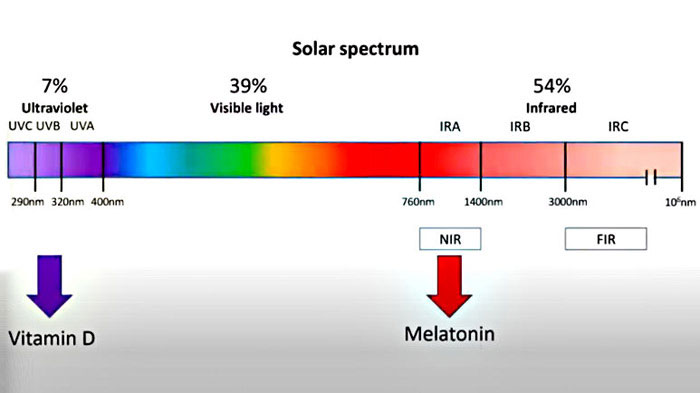
As you can see from the illustration above, 39% of the solar spectrum is what we see as visible light. The majority of the solar spectrum, 54%, is infrared,11 which is not visible but rather felt as heat. Ultraviolet light accounts for only 7% of the solar spectrum, and vitamin D is specifically produced in response to UVB radiation, which is only a small part of the ultraviolet spectrum.
Melatonin is produced inside your mitochondria in response to near-infrared radiation, which is part of the infrared spectrum. Because near-infrared has a much longer wavelength than ultraviolet, it can penetrate much deeper into your body, reaching cells in your subcutaneous tissue and not just on your skin. Near-infrared is not seen but rather felt as warmth. Its penetrative power (heat) also means it can penetrate lightweight clothing.
Melatonin Combats Oxidative Stress, Day and Night
Your mitochondria produce ATP, the energy currency of your cells. A byproduct of this ATP production are reactive oxidative species (ROS), which are responsible for oxidative stress. Excessive amounts of ROS will damage your mitochondria, contributing to suboptimal health, inflammation and chronic health conditions such as diabetes, obesity and thrombosis (blood clots).
The good news is your body has a built-in way to counteract these ROS. Inside your mitochondria, you also have an antioxidant system, and the main antioxidant is melatonin. (Melatonin also upregulates your glutathione pathway.)
Melatonin is perhaps best known as a sleep regulating hormone. At night, the level produced by your pineal gland rises, which help make you sleepy and ready for bed. As the sun rises and morning dawns, the level automatically recedes, allowing you to wake up.
But that’s not all melatonin does. As melatonin is released at night, it travels through your circulatory system and is taken up by cells. Once inside, the melatonin mops up excessive ROS.
Melatonin also helps counteract damaging ROS during the day, but through a different pathway. During the day, near-infrared rays from the sun penetrate deep into your body and activate cytochrome c oxidase, which in turn stimulates the production of melatonin inside your mitochondria.
Melatonin and Sunlight Are Intimately Connected
Melatonin and sunlight are intimately linked and their relationship is unique in the fact that there are two forms of melatonin, circulatory and subcellular, or that produced by the pineal gland and secreted into the blood, and that produced by your mitochondria and used there locally.
Both appear to be controlled by either the absence of sunlight or the presence of sunlight. While circulatory melatonin may be the “hormone of darkness,” subcellular melatonin is the “hormone of daylight.”
Since the beginning of human history, people have lived and worked outdoors during the light of day, absorbing light energy from the sky. An average of 10 hours outdoors each day, 70 hours weekly, was common. Today, we spend an average of fewer than 30 minutes a day or a mere three hours per week in daylight, according to a study by Dr. Daniel Kripke, professor of psychiatry at UC San Diego.12
It is likely that near-infrared (IR) photons stimulate subcellular melatonin synthesis in your mitochondria through cyclic adenosine monophosphate (cAMP) or NF-kB activation, or alternatively by stimulating bone marrow stem cells.13 However, if you fail to expose your skin to sufficient near-IR light from the sun than your mitochondria will have seriously depleted melatonin levels that can’t be corrected through supplementation.
Melatonin’s Role in COVID
Alright, so what does all of this have to do with treating COVID? For this, we need to snake our way through some biology. Angiotensin 2 is a pro-oxidant that is converted into angiotensin 1,7, an antioxidant, by the ACE2 enzyme. ACE2 is the same enzyme the SARS-CoV-2 spike protein attaches to and uses to enter the cell.
Angiotensin 2 increases blood pressure while angiotensin 1,7 lowers it by relaxing your vasculature. If you have high angiotensin 2, you’ll have higher ROS in the cell, which, as mentioned is detrimental, as it damages the machinery of the cell. Angiotensin 1,7, on the other hand, will decrease ROS in the cell.
The problem you encounter with COVID is that when the virus attaches to the cell, it knocks out the ACE2 enzyme (because the spike protein is now bound to it). So, angiotensin 2 increases, angiotensin 1,7 decreases, and the conversion from angiotensin 2 to angiotensin 1,7 cannot occur.
As a result, ROS increases unchecked inside the cell. SARS-CoV-2 infection also increases white blood cell production, and that increases ROS as well. The end result of this elevated oxidative stress is blood clots, which in turn leads to hypoxemia.
Melatonin can break this destructive cycle by mopping up ROS and protecting your mitochondria from destruction.14 As noted by Seheult, if you’re not getting enough sleep at night, and not getting enough sun exposure during the day, your mitochondria are basically “running hot” with inflammation. Melatonin is the coolant that dampens the ROS in your mitochondria.
If your mitochondria are already taxed and you come down with COVID, the added stress can tip you over the edge. If your melatonin system is working well, because you’re getting good sleep and plenty of sun exposure, you’re more likely to fight off the infection and not have it turn serious.
Seed Oils Increase Your Risk for Both COVID and Sunburn
This may seem like a tangent, but it’s an important one. Linoleic acid (LA) makes up the bulk — about 60% to 80% — of the omega-6 fat you consume, and it’s a primary contributor to nearly all chronic diseases. While formerly thought an essential fat, when consumed in excessive amounts, LA actually acts as a metabolic poison.
At a molecular level, excess LA consumption damages your metabolism and impedes your body’s ability to generate energy in the mitochondria. Polyunsaturated fats such as LA are highly susceptible to oxidation, which means the fat breaks down into harmful subcomponents. Oxidized LA metabolites (OXLAMs) are what cause the damage.
Over the last 150 years, the LA in the human diet has increased from 2 to 3 grams a day to 30 or 40 grams. It used to make up just 1% to 2% of the energy in our diet and now it makes up 15% to 20%. This massive increase in LA consumption is what likely contributes to the increased oxidative stress in your body contributing to an increased risk for virtually every chronic degenerative disease.
Primary sources are seed oils and processed foods (which contain seed oils). Conventionally-raised chicken and pork are other common sources, thanks to the LA-rich grains they’re fed. As indicated in the subhead, high LA intake can raise both your risk for sunburn (which you don’t want as that’s what’s contributes to skin cancer) and your risk for COVID.
Eliminating seed oils from your diet will dramatically reduce your risk of sunburn and skin cancer, as susceptibility to UV radiation damage is controlled by the level of PUFAs in your diet. It’s almost like a dial. The PUFAs control how rapidly your skin burns, and how rapidly you develop skin cancer.
As for LA’s impact on COVID, consider this: The key toxin that produces the symptoms of acute respiratory distress syndrome (ARDS) is called leukotoxin, which is made from LA by white blood cells to kill pathogens. Basically, the white blood cells convert the LA into leukotoxin, which contributes to the inflammatory domino effect Seheult describes.
Leukocytes incubated with LA convert all of the LA into this toxin until there’s none left, so, a major part of the disease process in ARDS is the conversion of LA into leukotoxin. That appears to be what’s killing many COVID patients. So, in summary, simply eliminating (or radically reducing) seed oils and conventional chicken and pork from your diet can go a long way toward:
a) Reducing your risk of sunburn, thus allowing you to get plenty of worry-free sun exposure to raise your vitamin D level, increase nitric oxide and boost melatonin production in your mitochondria
b) Lowering your risk of COVID complications by limiting the conversion of LA into leukotoxin
How Melatonin Is Created in Your Mitochondria
While Seheult focuses on the role of melatonin in COVID-19, the paper, “Melatonin in Mitochondria: Mitigating Clear and Present Dangers,”15 goes into much broader applications.
Again, melatonin is important for fighting cancer, and mitochondrial dysfunction plays a central role in most all chronic disease, including cancer, Parkinson’s, Alzheimer’s disease, heart disease and Type 2 diabetes, just to name a few. The paper also describes in far greater detail the mechanism for how melatonin is created within the mitochondria:16
“In normal cells, mitochondria account for energy (ATP) production, which results from glucose metabolism (glycolysis) and cellular respiration (oxidative phosphorylation or OXPHOS) in the inner mitochondrial membrane.
Glycolysis, which occurs in the cytosol, generates pyruvate, which is actively transported into the mitochondrial matrix. Here, pyruvate is converted to acetyl-CoA, the latter linking glycolysis with the citric acid cycle in the mitochondrial matrix and thus coupling it to ATP production.
Acetyl-CoA is also an essential co-factor for N-acetyltransferase (AANAT), which converts serotonin to N-acetylserotonin, the precursor of melatonin; AANAT activity rate limits melatonin synthesis.
In contrast to normal cells, many solid tumor cells allow the metabolism of glucose to pyruvate in the cytosol but restricts the transfer of pyruvate into the mitochondria; this is known as the Warburg effect … The Warburg effect allows cancer cells to rapidly proliferate, avoid apoptosis, and enhance the invasiveness and metastatic processes characteristic of tumors.”
The Warburg Effect in COVID
Interestingly, the Warburg effect is also at play in COVID. As explained in a June 2020 study17 that found melatonin inhibited COVID-19-induced cytokine storm, when your immune cells are in a hyper-inflammatory state, their metabolism changes in a way similar to that of cancer cells:
“Similar to cancer cells … immune cells such as macrophages/monocytes under inflammatory conditions abandon mitochondrial oxidative phosphorylation for ATP production in favor of cytosolic aerobic glycolysis (also known as the Warburg effect) …
The change to aerobic glycolysis allows immune cells to become highly phagocytic, accelerate ATP production, intensify their oxidative burst and to provide the abundant metabolic precursors required for enhanced cellular proliferation and increased synthesis and release of cytokines …
Because of melatonin’s potent antioxidant and anti-inflammatory activities, it would normally reduce the highly proinflammatory cytokine storm and neutralize the generated free radicals thereby preserving cellular integrity and preventing lung damage.”
Optimize Your Health With Sensible Sun Exposure
Basically, what “Melatonin in Mitochondria” found is that melatonin is an ideal target when trying to combat mitochondria-related diseases and cancer, because it has ready access to, and is synthesized in, your mitochondria, right where the oxidative stress occurs. By reprogramming the faulty glucose metabolism, melatonin can optimize mitochondrial function and curtail cancer growth.
Remember, taking melatonin supplements will not transfer to increasing mitochondrial melatonin production. It needs to be produced near your mitochondria and not float down from your pineal gland. So, oral supplementation is not a substitute for going outside during the day.
If you take it during the day, you’re tricking your body into thinking it’s nighttime, which could cause problems. As far as we know, the best way to increase mitochondrial melatonin is to optimize your near-IR exposure through regular sunlight exposure.
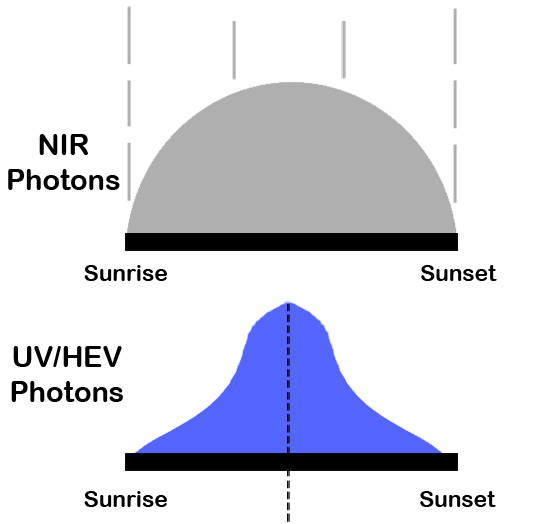
As you can see in the graph above, unlike increasing vitamin D, you have a much broader window where you can get near-IR exposure. Interestingly, spending time in nature is another way to increase your IR levels as most green plants and trees reflect IR. This is likely why forest bathing is so healthy.
The good news is you don’t have to be close to naked to benefit, as you do when optimizing your vitamin D production. The near-infrared radiation will penetrate lightweight clothing. So, you can cover yourself to prevent sunburn if you’re outside for a longer period of time, while still getting the near-infrared that you need. (Also, remember what I just told you about eliminating LA from your diet to cut your sunburn risk.) That said, you will absorb more IR on your bare skin.
The other side of the equation is avoiding bright light late at night. To optimize melatonin release in your pineal gland at night, avoid blue light-emitting gadgets at least a couple of hours before bed and keep the lighting in your room dim. Blue-blocking glasses can also be used. Once in bed, makes sure your room is pitch black, as even a small amount of light can interfere with melatonin production.
Together, sun exposure during the day and keeping it dark at night, will ensure your mitochondria are being bathed — day and night — in melatonin that reduces harmful ROS. So, as suggested by Seheult, try to spend more time outdoors, especially if you’re sick (whether it be COVID or some other respiratory infection) or battle chronic disease.
- 1, 15, 16 Physiology February 5, 2020 DOI: 10.1152/physiol.00034.2019
- 2 Indian J. Exp Biol. May 1996; 34(5): 391-402
- 3 Frontiers in Pharmacology August 21, 2020 DOI: 10.3389/fphar.2020.01220
- 4 Allergy Research Group, Melatonin, the Antioxidant Recycler
- 5 Cell Death & Disease 2019; 10 article number 317
- 6 Oncotarget June 13, 2017; 8(24): 39896–39921
- 7, 8 Diseases, 2021; doi.org/10.1016/j.ijid.2021.10.012
- 9 Frontiers in Medicine, 2020; doi.org/10.3389/fmed.2020.00226
- 10 British Journal of Dermatology May 31, 2021 10.1111/bjd.20093
- 11 Journal of Photobiochemistry and Photobiology February 2016; 155: 78-85
- 12 Sleep Med Rev. 2016 Aug; 28: 69–85
- 13 Melatonin Research February 2019; 2(1): 138-160
- 14 Life Sciences April 1, 2022; 294: 120368
- 17 Medical Drug Discoveries June 2020; 6:100044