Vitamins
now browsing by category
Branch Chain Amino Acid Deficiency Linked to Autism?
Reproduced from original article:
https://articles.mercola.com/sites/articles/archive/2023/03/24/bcaa-deficiency-linked-to-autism.aspx
The original Mercola article may not remain on the original site, but I will endeavor to keep it on this site as long as I deem it to be appropriate.
Analysis by Dr. Joseph Mercola Fact Checked March 24, 2023

STORY AT-A-GLANCE
- Some cases of autism are caused by mutations in the branched chain ketoacid dehydrogenase kinase (BCKDK) gene; in those with BCKDK deficiency, BCAAs are broken down too quickly, leading to depletion
- BCAA deficiency is linked to a neurodevelopmental disorder that includes autism, intellectual disability and microcephaly
- In children with BCKDK deficiency, a high-protein diet and BCAA supplements led to significantly increased BCAA levels along with improvements or stabilizations in motor functions and head circumference in nearly all of the patients
- None of the children who started treatment before the age of 2 developed autism; the youngest child was 8 months old when treatment began, and they had normal development at age 3
- The researchers have called for adding BCKDK deficiency to newborn screening tests so BCAA supplementation could be started right away, potentially preventing autism development
Some cases of autism are caused by mutations in the branched chain ketoacid dehydrogenase kinase (BCKDK) gene.1 The BCKDK gene is involved in the metabolism of branched-chain amino acids (BCAAs). In those with BCKDK deficiency, BCAAs are broken down too quickly, leading to depletion.2
This, in turn, is linked to a neurodevelopmental disorder that includes autism, intellectual disability and microcephaly. Dietary changes, including supplementing with BCAAs, appears to be an effective treatment for some and, if started early, may even prevent autism from developing.
BCAA Supplements May Benefit Autism
In 2012, researchers found that supplementing with BCAAs reversed some of the associated neurological characteristics in mice, and explained:3
“By supplementing the diet of human cases with BCAAs, we have been able to normalize their plasma BCAA levels, which suggests that it may be possible to treat patients with mutations in BCKDK with BCAA supplementation.”
Joseph Gleeson, a professor with the University of California, San Diego, who was involved with the study, noted:4
“In a 2012 study, we determined that mice with a mutation in BCKDK that are on a diet low in branched-chain amino acids have traits similar to those of autistic children; feeding the animals high levels of the amino acids eliminates the traits.
Supplementing the diets of autistic children who have a BCKDK mutation improved their behavior remarkably. One young woman became calmer and spoke in full sentences; another was more energetic and attentive.
Although mutations in BCKDK appear to be rare, metabolic problems in autism may not be. One clinical trial found that nearly 17 percent of autistic participants showed signs of unusual amino-acid metabolism.5 And in 2012, researchers tied mutations in a gene involved in the synthesis of carnitine (a compound derived from an amino acid) to autism.6
The genetic risk factor is present in 1 in 350 boys, only 2 to 4 percent of whom have autism. However, if a boy with autism carries this mutation, a readily available supplement might treat the underlying cause.”
Could Early BCAA Supplementation Prevent Autism?
A 2023 study provides even more framework for using BCAAs to improve traits, such as head circumference and motor skills, in those with BCKDK deficiency.7 It used data from 21 children with BCKDK mutations, who were diagnosed with BCKDK deficiency when they were between 8 months and 16 years of age.
At the time of diagnosis, all the children had BCAA levels — including leucine, valine and isoleucine — below reference values in plasma and cerebrospinal fluid. All the children also had neurodevelopmental delays, including gross motor function impairment, intellectual disability, language impairment, autism spectrum disorder (ASD), epilepsy, clumsiness, hearing loss and/or feeding difficulties.
While none of the children had microcephaly at birth, 17 individuals developed it during the follow-up period.8 The children were treated with a high-protein diet (all protein-containing foods contain BCAAs) and BCAA supplements, which led to significantly increased BCAA levels along with improvements or stabilizations in motor functions and head circumference in nearly all of the patients.
Further, none of the three children who started treatment before the age of 2 developed autism. The youngest child was 8 months old when treatment began, and they had normal development at age 3. “This work highlights the potential benefits of dietetic treatment, in particular early introduction of BCAA,” according to the study.9
One of the best food sources of BCAAs is whey, which is rich in leucine. Grass fed beef and bison, organic, pastured eggs and grass fed dairy products are also good sources of BCAAs. The researchers have called for adding BCKDK deficiency to newborn screening tests. In the study, six of seven children with available newborn screening results had low amino acid levels.10
“Those children starting treatment younger, when they were younger than 2 years of age, evolve much better than the others,” lead study author Ángeles García-Cazorla told Spectrum News. “There is really a window of treatment where you can reverse or improve the disease a lot.”11
García-Cazorla informed Catalonia, Spain health officials in charge of newborn screenings about the study findings, and they added BCKDK deficiency to the screenings.
In the U.S., Spectrum News reported, “adding diseases to newborn screening can be a cumbersome and slow process. But many newborns already have their amino acid levels checked for another rare disease, maple syrup urine disease, [Gaia] Novarino [researcher on the 2012 study] notes. ‘So it should be a no-brainer to go ahead.’”12

Download this Article Before it Disappears
The Vitamin B12 Connection
It’s interesting to note that vitamin B12 is also sometimes used as a treatment for autism, with studies showing it typically has positive effects on symptoms13 such as expressive communication, daily living and coping social skills, sleep, gastrointestinal symptoms, hyperactivity, tantrums, vision, eye contact and more.
Vitamin B12 deficiency, meanwhile, may reduce the ability to metabolize BCAAs. In fact, a study on worms called Caenorhabditis elegans (C. elegans) found a B12-deficient diet harms the worms’ health at a cellular level by altering BCAA metabolism: “The research showed that the reduced ability to break down BCAAs led to a toxic buildup of partially metabolized BCAA byproducts that damaged mitochondrial health.”14
In a study of 57 children with autism, treatment with methyl B12 improved symptoms,15 while vitamin B12 deficiency in children can mimic signs and symptoms of autism, sometimes leading to a misdiagnosis. For instance, vitamin B12 deficiency can lead to obsessive-compulsive behaviors, aloofness, withdrawal and problems with speech, language and comprehension in children.16 Good food sources for vitamin B12 include:
| Grass fed organic beef and beef liver | Lamb |
| Venison | Scallops |
| Organic, pastured chicken and eggs | Raw organic, grass fed milk |
| Nutritional yeast |
The Mitochondrial Dysfunction Connection
Rates of autism continue to increase in the U.S., with the latest estimates showing 1 in 30, or 3.49%, of children ages 3 to 17 were diagnosed with ASD in 2020.17 One factor underlying this surge could be mitochondrial health. In October 2020, a scientific review published in Seminars in Pediatric Neurology outlined evidence that mitochondrial function may be related to autism.
It was estimated in 2017 that about 4% of children with autism could be diagnosed with a definite mitochondrial disease, while other research suggested abnormalities of mitochondrial function could affect up to 80% of children with autism.18
“Novel abnormalities” in mitochondrial function have been found in children with autism and treatments targeting mitochondrial dysfunction, such as L-carnitine supplementation and a ketogenic diet, have been found to be beneficial. Children whose autism is rooted in mitochondrial dysfunction will typically have a key set of symptoms that include:19
- Fatigability
- Gastrointestinal disorders
- Seizures and/or epilepsy
- Motor delay and/or ataxia and/or muscle weakness
- Unusual neurodevelopmental regression, including multiple regressions or regression later than commonly associated with ASD
The review’s author, Dr. Richard Frye with Barrow Neurological Institute at Phoenix Children’s Hospital in Arizona, pointed out that mitochondria are “very vulnerable to environmental factors” and a novel type of dysfunction of mitochondria “in which the activity of the electron transport chain is significantly increased … may be associated with environmental exposures.”20
In 2010, the federal vaccine court conceded that Hannah Poling’s autism was the result of vaccinations, which “significantly aggravated an underlying mitochondrial disorder, which predisposed her to deficits in cellular energy metabolism, and manifested as a regressive encephalopathy with features of autism spectrum disorder.”21
Do Antidepressants During Pregnancy Trigger Autism?
Environmental exposures, including to certain medications, are also likely involved. research, published in Brain, Behavior, and Immunity, suggests antidepressant drugs during pregnancy may play a role. The finding could have major implications for public health, considering that among pregnant women using antidepressants, 80% are prescribed antidepressant drugs known as selective serotonin reuptake inhibitors (SSRIs).22
The animal study revealed SSRIs may interact with inflammation in the mother’s body, producing a reaction that affects the maternal-fetal interface (MFI), which includes the decidua (a mucous membrane lining the uterus) and placenta, and ultimately the fetus’ developing brain.
Later in life, adult offspring whose mothers were exposed to inflammation during pregnancy had sex-based behavioral changes, including lessened communication and low interest in social interactions, mimicking those seen in people with autism.23
“Moreover,” the researchers explained, “the combination of maternal inflammation in the presence of pharmacologic inhibition of serotonin reuptake further transformed MFI physiology and offspring neurobiology, impacting immune and serotonin signaling pathways alike.”24
Even acetaminophen, brand name Tylenol, which many consider to be completely innocuous, is linked to autism when used during pregnancy. Compared to children of mothers with the lowest acetaminophen burden during pregnancy, children of those with the greatest acetaminophen burden had a 262% higher risk for ASD.
As noted by the authors, their findings “support previous studies regarding the association between prenatal and perinatal acetaminophen exposure and childhood neurodevelopmental risk.”25 Exposure to glyphosate,26 mercury, lead,27 aluminum28 and other chemicals, including phthalates29 and air pollution,30 has also been implicated in autism.
The Gut-Brain Connection in Autism
Another avenue being explored is that the gut plays an important role in the development of ASD. Gut dysfunction in autism may be due to mutations in genes found in both the gut and brain that affect neuronal communication and cause gut dysfunction.31
Russian neurologist Dr. Natasha Campbell-McBride believes brain toxicity stemming from gut toxicity, otherwise known as Gut and Psychology Syndrome (GAPS), is a key factor that sets the stage for autism, especially when vaccines are added into the mix. Having an imbalanced gut microbiome may also render children more susceptible to the adverse effects of environmental toxins.
Interestingly, BCAAs are also involved in regulating intestinal health and maintaining intestinal barrier function, while dietary supplementation with BCAAs promoted intestinal development and increased intestinal absorption of amino acids in animal studies,32 pointing to another avenue of potential benefit of BCAAs to this complex condition.
- 1 Science. 2012 Oct 19; 338(6105): 394–397
- 2, 4 Spectrum News December 17, 2019
- 3 Science. 2012 Oct 19; 338(6105): 394–397, paragraph before Supplementary Material
- 5 Biol Psychiatry. 2019 Feb 15;85(4):345-354. doi: 10.1016/j.biopsych.2018.08.016. Epub 2018 Sep 6
- 6 Proc Natl Acad Sci U S A. 2012 May 22;109(21):7974-81. doi: 10.1073/pnas.1120210109. Epub 2012 May 7
- 7, 8, 9 Brain February 2, 2023
- 10, 11, 12 Spectrum News February 21, 2023
- 13 J Pers Med. 2021 Aug; 11(8): 784
- 14 MedIndia March 14, 2019
- 15 J Child Adolesc Psychopharmacol. 2016 Nov;26(9):774-783. doi: 10.1089/cap.2015.0159. Epub 2016 Feb 18
- 16 Pharmacy Times February 18, 2014
- 17, 21 Children’s Health Defense July 14, 2022
- 18, 19, 20 Seminars in Pediatric Neurology October 2020, Volume 35, 100829
- 22, 23 UVA Health Newsroom December 19, 2022
- 24 Brain, Behavior, and Immunity February 2023, Volume 108, Page 80-97
- 25 JAMA Psychiatry October 30, 2019 doi: 10.1001/jamapsychiatry.2019.3259, Conclusions and Relevance
- 26 Substack, ‘Toxic Legacy’ — How Glyphosate Destroys Your Health June 27, 2021
- 27 Pediatric Health, Medicine and Therapeutics September 21, 2020, Volume 11, Pages 369-378
- 28 Journal of Trace Elements in Medicine and Biology March 2018; 46: 76-82
- 29 Neurotoxicology. 2009 Sep; 30(5): 822–831
- 30 Environ Health Perspect. 2013 Mar;121(3):380-6. doi: 10.1289/ehp.1205827. Epub 2012 Dec 18
- 31 Autism Research May 22, 2019 [Epub ahead of print]
- 32 Anim Sci J. 2018 Jan;89(1):3-11. doi: 10.1111/asj.12937. Epub 2017 Nov 22
Are These the 19 Most Important Supplements to Take?
Reproduced from original article:
https://articles.mercola.com/sites/articles/archive/2023/03/24/most-important-supplements-to-take.aspx
The original Mercola article may not remain on the original site, but I will endeavor to keep it on this site as long as I deem it to be appropriate.
Analysis by Dr. Joseph Mercola Fact Checked March 24, 2023
STORY AT-A-GLANCE
- Molecular hydrogen is a selective antioxidant, meaning it doesn’t indiscriminately suppress free radicals but, rather, helps your body make the antioxidants it needs
- Glycine and NAC are glutathione precursors; your body uses glutathione to increase the effectiveness of antioxidants such as vitamin C, which is why it’s known as the “master antioxidant”
- Magnesium is involved in the functioning of more than 300 enzymes, and many people are deficient
- The best supplements for you depend on your age, health status, diet and health goals
- I mention a bonus supplement at the end of the article
While dietary supplements cannot take the place of a healthy lifestyle, they can be used strategically to boost your health, especially in cases of deficiency. In the U.S., 57.6% of adults aged 20 and over use supplements, with multivitamins, vitamin D and omega-3 fats representing the top three.1 Another survey put the percentage of Americans using supplements at 86%.2
So, it’s safe to say that many people are interested in taking control of their health with the support of supplemental vitamins, minerals and other compounds. But, when it comes to supplements, more isn’t always better.
To ensure you’re using only supplements you need — avoiding wasting your money while maintaining your body’s balance — I recommend using dietary interventions first. Next, work with a holistic health care practitioner who can guide you on which supplements your body truly needs.
19 Supplements I Consider Essential
The best supplements for you depend on your age, health status and health goals. If having a practitioner guide you isn’t possible, essential supplements may be next on your list — and I’ve compiled the list in rank order of what I believe to be the most important ones.
Some of the most important individual variables you need to consider would be if you are plant-based or choose to eat animal products. While many plant-based diets are fundamentally healthy, they do lack some vital nutrients, like vitamin B12, retinol, vitamin K2, carnosine, carnitine, collagen and choline. If you are plant-based, you will certainly want to consider adding these to your regimen.
1. Molecular Hydrogen (H2)
Molecular hydrogen acts as a selective antioxidant, meaning it doesn’t indiscriminately suppress free radicals. Rather, it’s unique in that it helps your body make its own endogenous antioxidants. This is important because excessive use of antioxidants can be counterproductive, while molecular hydrogen serves as a redox regulator.
The H2 molecule is the smallest in the universe, which allows it to diffuse through all cell membranes, including the blood-brain barrier and subcellular compartments, and into the mitochondria. According to Tyler LeBaron, Ph.D., it’s been shown to have therapeutic benefits in more than 170 different animal disease models.3 While there’s no risk of overdosing on molecular hydrogen, intermittent exposure produces the best results.
Download this Article Before it Disappears
2. Vitamin D
Vitamin D has multiple actions on the immune system, including enhancing the production of antimicrobial peptides by immune cells, reducing damaging pro-inflammatory cytokines, and promoting the expression of anti-inflammatory cytokines.4
A recent study found giving vitamin D to people with COVID-19 cut risk of death from SARS-CoV-2 by 51% and reduced risk of admission to the intensive care unit (ICU) by 72%.5,6 Vitamin D also plays a role in heart disease, as it improves circulation and may be beneficial for high blood pressure. In addition, due to its effects on endothelial function, vitamin D may also help improve or prevent heart failure, heart attack, vasculopathy, stroke and diabetes.7
Ideally, optimize your vitamin D levels via sensible sun exposure, as there are many benefits to sun exposure even aside from vitamin D, such as increasing mitochondrial melatonin by near infrared (IR) exposure.
My vitamin D level is typically between 80 and 100 and I haven’t taken any vitamin D supplements so you can get your levels high if you are disciplined about your sun exposure. Just be sure to make sure you are eating a very low linoleic acid (LA) diet as it is excessive omega-6 fats that virtually everyone consumes, that cause sun-induced skin cancers.
However, if getting healthy sun exposure simply isn’t an option for you due to your location or lifestyle, daily vitamin D3 supplementation of 8,000 to 10,000 units is likely needed to reach a vitamin D level of 60 to 80 ng/mL.
Data from GrassrootsHealth’s D*Action studies suggest the optimal level for health and disease prevention is between 60 ng/mL and 80 ng/mL, while the cutoff for sufficiency appears to be around 40 ng/mL. In Europe, the measurements you’re looking for are 150 to 200 nmol/L and 100 nmol/L respectively.
The only way to gauge whether you might need to supplement, and how much to take, however, is to get your level tested, ideally twice a year — in the early spring and early fall — when your level is at its low point and peak, respectively. Make sure that your supplemental vitamin D intake is balanced with other nutrients, including vitamin K2 (to avoid complications associated with excessive calcification in your arteries) and magnesium.
3. Niacinamide
NAD+ (nicotinamide adenine dinucleotide) is one of the most important biomolecules in your body. It’s involved in the conversion of food to energy, maintaining DNA integrity and ensuring proper cell function. Together, these functions help protect against or delay aging and virtually all chronic disease.
NAD+ also acts as fuel for longevity proteins called sirtuins. Sadly, NAD levels dramatically decline with age, contributing to aging and chronic disease states. NAD is also used up by DNA repair enzymes and enzymes involved in inflammation and immunity, such that chronic inflammation, or acute illness in old age, can rapidly result in depletion.
To restore NAD_, you need to fix the root cause for NAD+ depletion, which primarily involves addressing the decline in the NAD salvage pathway. By increasing enzymes in that pathway, which decline with age, your body can recycle NAD_ like it did naturally when it was younger. For more information, please review my fantastic interview with molecular biologist Nichola Conlon, Ph.D.
In addition to optimizing NAD+ levels, it also blocks lipolysis which is important if you are the more than 99% of the population that have elevated linoleic acid (LA) levels. Reducing the release of LA from your tissues will lower the amount of oxidative stress in in your body.
Niacinamide, like progesterone, inhibits the production of nitric oxide, and also like progesterone, it improves recovery from brain injury and also:
| Helps lowers stress | Lowers harmful free fatty acids | Protects against scar formation |
| Helps brain injuries | Supports immune function | Improves mitochondrial function |
| Reduces serotonin formation and/or accelerates it’s elimination | Reduces lipolysis | Protects against pathogenic prostaglandins |
| Supports glucose oxidation | Inhibits excess nitric oxide formation |
Niacinamide can also lower your triglycerides, which are a potent cardiovascular disease risk factor. It also has a direct anti-adrenaline effect and increases the oxidation of glucose which is your primary metabolic fuel.
The best way to supplement niacinamide is by taking a very low dose of 50 mg three times a day. This is an order of magnitude less expensive than taking NAD precursors like nicotinamide riboside or nicotinamide mononucleotide to increase NAD+ levels.
Please do NOT take high doses like 500 mg or even 1,000 mg, because taking more is not better and will be highly counterproductive as higher doses will impair your sirtuin longevity proteins.
You can purchase a niacinamide powder and take one-sixty-fourth of a teaspoon three times a day or take a 50 mg niacinamide tablet three times a day. Because a 50 mg niacinamide tablet currently is not being made commercially, we will be launching one very soon.
4. B Complex
Vitamin B complex is important for your health because it’s involved in a wide range of bodily functions and processes including cell health and the growth of red blood cells, energy levels, eyesight, brain function, digestion and appetite, proper nerve function, hormones and cholesterol production, and cardiovascular health.
B vitamins have a direct impact on your energy levels, brain function and cell metabolism. Vitamin B complex help support or promote cell health, growth of red blood cells, energy levels, eyesight, brain function, digestion, appetite, proper nerve function, and cardiovascular health and may help prevent infections.
Vitamin B complex is also important for pregnant women as it helps to form the neural tube, which is the precursor to the baby’s brain and spinal cord. It also helps to prevent birth defects of the baby’s brain and spine. It is important to note that vitamin B complex is water-soluble, which means it is not stored in the body and needs to be taken more than once a day.
5. Magnesium
Magnesium is necessary for the healthy functioning of most cells, especially your heart, kidneys and muscles. It’s involved in the functioning of more than 300 enzymes,8 and low levels of magnesium impede cellular metabolic function and deteriorate mitochondrial function.
Magnesium is also required for the activation of vitamin D, and deficiency may hamper your ability to convert vitamin D from sun exposure and/or oral supplementation. Unfortunately, deficiency is common and rarely diagnosed.9
When it comes to oral supplementation, my personal preference is magnesium threonate, as it appears to be the most efficient at penetrating cell membranes, including your mitochondria and blood-brain barrier. Magnesium is also absorbed through your skin, so you can use a topical solution or take Epsom salt (magnesium sulfate) baths to increase your levels.
6. Vitamin E
Vitamin E is a fat-soluble antioxidant that I believe is important for nearly everyone to take. Why? Because it limits the production of very dangerous free radicals from the metabolism of the omega-6 fat, linoleic acid (LA), which virtually everyone reading this has too much of. It does this by inhibiting lipolysis, or the release of the stored LA in your tissues.
While exercise and fasting are wonderful tools to improve your health, the downside is that virtually everyone has too much LA in their tissues and both of these strategies will increase lipolysis of LA stored in your tissue and produce loads of free radicals and oxidative stress.
Vitamin E not only can prevent oxidative stress from too much LA, but it may also help your body convert this dangerous fat to a non-dangerous saturated fat. Bacteria in your intestine can use vitamin E to saturate the LA. So, vitamin E can actually transform the polyunsaturated fat rather than just protect against it after effects.
Vitamin E is an aromatase inhibitor, which means it blocks the enzyme that converts androgens like testosterone to estrogen, which is useful in reducing the risk for many cancers, especially breast and prostate cancers. Not only does it prevent the production of estrogen, but it also detoxifies xenoestrogens from synthetic chemicals.
Vitamin E is an iron chelator and can also remove age spots or liver spots and scars on your skin if applied topically. It does this because it is an iron chelator. Another term for liver spots is lipofuscin, which is an accumulation of oxidized fats like LA and iron.
While cosmetically unattractive, removing lipofuscin spots is key because what you see on your skin is the tip of the iceberg. They are also in your tissues and organs and will contribute to premature aging. Thankfully, taking vitamin E orally seems to help lower lipofuscin levels. Vitamin E also lowers prolactin, which helps counteract high estrogen levels which tends to increase fertility. Finally, it also blocks adrenaline and reduces cortisol and inflammation.
All of these are major reasons why I am huge fan of vitamin E and believe most people would benefit by taking it. However, you just need to be very careful in selecting your vitamin E supplements as most on the market are counterproductive. Natural vitamin E is a family of eight different compounds: four tocopherols and four tocotrienols. If you eat certain wholesome foods, all eight of the different vitamin E compounds are naturally available.
So, please be careful and make sure to avoid all synthetic vitamin E supplements. You also want to make sure that it has no soy oil in it as soy is typically a GMO, loaded with glyphosate and high in LA.
Your vitamin supplement should have all tocopherols (alpha, beta, gamma and delta) with the majority of tocopherol as alpha. Similarly, it should have balance tocotrienols (alpha, beta, gamma and delta). The most common vitamin E supplement on the market is made from GMO soy, is synthetic and only has alpha tocopherol with no other isomers and has no tocotrienols. You definitely don’t want to use supplements like that.
7. Vitamin C (Not Ascorbic Acid)
Vitamin C is a powerful antioxidant that can strengthen your body’s natural defenses. It may reduce your risk of chronic disease, including protection against immune system deficiencies, cardiovascular disease, prenatal health problems, eye disease and even skin wrinkling.
Vitamin C plays an essential role in your body, particularly for skin and immune health. It also boosts collagen production and helps protect your skin from UV damage. Some research has found that supplementing with vitamin C can shorten the duration of a cold and may help prevent and treat other infections, such as tetanus and pneumonia.
There are basically two types of vitamin C: that derived from whole foods with all the vital and important micronutrients and synthetic ascorbic acid. They both are important and serve crucial biological roles.
The best of the synthetic ascorbic acid would by liposomal forms as they can more easily penetrate cell membranes, especially when needed in large doses as when treating an acute infection, sepsis or cancer. However, it is best to avoid taking synthetic ascorbic acid daily as this can impair copper utilization by your mitochondria.
It is better to take whole food vitamin C daily as this will support the integration of copper into the electron transport chain in your mitochondria and allow you to generate cellular energy more efficiently. Ideally this can be in the form of fruits that are high in vitamin C, like oranges, tangerines, amla (also known as gooseberry) and, my favorite, acerola cherries. It is best to take it a few times a day as vitamin C is water soluble.
8. Probiotics
If you don’t eat fermented foods on a regular basis, a probiotic supplement can be useful for maintaining your gut health and microbial diversity. Your gut microbiome affects nearly all your physiological systems, but gut microbial diversity decreases with age.10
For each gram-per-day increase in the average national consumption of fermented vegetables, the mortality risk for COVID-19 decreased by 35.4% in one study.11 Beneficial bacteria found in fermented foods may even be effective for suppressing colon cancer,12 while your mental health is also affected.
One randomized controlled trial demonstrated that high-dose probiotic supplementation is beneficial for people with depression,13 while Lactobacillus has been found to produce gamma aminobutyric acid (GABA), a neurotransmitter that inhibits excessive neuronal firing, helping to induce a natural state of calm,14 in animal studies.15
9. Omega-3 Fat as DHA and EPA
Omega-3 fats are important for brain health, warding off autoimmune disease16 and decreasing mortality from cardiovascular disease, while also reducing heart attacks and coronary heart disease events.17 An omega-3 index test is one of the most important annual health screens that everyone needs, and it’s a more important predictor of your heart disease risk than your cholesterol levels.
Even research supported by the National Institutes of Health suggests an omega-3 test is a good predictor of overall health and all-cause mortality.18,19 The ideal sources for EPA and DHA omega-3s include cold-water fatty fish, like wild-caught Alaskan salmon, sardines, herring and anchovies. If you do not eat these fish on a regular basis, consider taking a krill oil supplement.
Fish oil is among the most popular supplements in the U.S. Globally, the fish oil market was valued at $1.9 million in 2019, with estimates suggesting this will rise to $2.8 million by 2027.20 Many of these dollars may be wasted, however, due to a chemical process that leaves many fish oil supplements lacking in actual EPA and DHA.
The issue with most fish oil supplements is the chemical process used — trans-esterification — which transforms the oil into a synthetic product that’s far removed from the oil you’d get when eating fish or a high-quality cod liver oil.
When you eat fish or a high-quality cod liver oil, the omega-3 is in a triglyceride form. However, the omega-3s in most all fish oil supplements are in an ethyl ester which is essentially a synthetic substrate, created through the micro distillation process of crude fish oil, in which ethanol and/or industrial alcohol is added. This mix is heat distilled in a vacuum chamber, resulting in a concentrated omega-3 ethyl ester condensate.
The problem with ethyl esters is they’re the least bioavailable form of omega-3. Manufacturers could convert them back into the triglyceride form by detaching the ethyl alcohol molecule and reattaching a glycerol molecule in a process known as re-esterification,21 but most don’t because it’s so costly.
Additionally, not only does this molecular distillation process remove vital resolvins and protectins that are important in reducing inflammation, but it also concentrates the EPA and DHA. You can tell the concentration of these two fats in any given supplement by looking at the label. In fish, the oil consists of 20% to 30% EPA and DHA, whereas purified fish oil concentrate typically contains between 60% and 85% EPA and DHA.22
In my view it is best to avoid most omega-3 supplements as there are many dangers with them. Krill or a high-quality cod liver oil are some of the best choices I know of, but you must be careful here also, as most are very low quality and add synthetic vitamin A and D into the oil.
Krill oil stands out in this regard, however. It’s more bioavailable because the EPA and DHA are bound in a phospholipid form, allowing you to take lower doses while still reaping similar results. Research also suggests krill oil alleviates oxidative stress and iron accumulation, such that it could be used as a treatment for toxicity caused by iron overload.23
10. L-Glycine
I personally take teaspoon (about 5 grams) of glycine twice a day, in the morning and before bed. Glycine is an amino acid and is an important methyl-group donor. Methyl groups are found in DNA, where they play a role in cellular reactions. Glycine helps protect against intracellular calcium overload and hypoxia and has anti-inflammatory effects.
In addition to supporting brain function,24 supplemental glycine may be useful for the “prevention and control of atherosclerosis, heart failure, angiogenesis associated with cancer or retinal disorders and a range of inflammation-driven syndromes, including metabolic syndrome.”25 Importantly, glycine is also a glutathione precursor, discussed below. Ray Peat has shown that glycine is:
| Anti-excitatory | Anti-stress | Anti-inflammatory |
| Anti-Serotonin | Anti-estrogenic | Improves learning & memory |
| Promotes recovery from strokes & seizures | Cell protective | Promotes wound healing |
| Inhibits tumor formation | Inhibits lipolysis |
11. N-acetylcysteine (NAC)
NAC, a form of the amino acid cysteine. It’s most well-known to help increase glutathione and reduce the acetaldehyde toxicity26 that causes many hangover symptoms. Anyone who overdoses on acetaminophen (Tylenol) also receives large doses of NAC in the emergency room, as it helps prevent liver damage by increasing glutathione.
NAC can be combined with glycine (known as GlyNAC) for even more benefits. In a pilot trial of older adults, GlyNAC supplementation for 24 weeks corrected glutathione deficiency and improved multiple measures of health, including:27
| Mitochondrial dysfunction | Oxidative stress | Inflammation |
| Endothelial dysfunction | Insulin resistance | Genomic damage |
| Cognition | Strength | Gait speed |
| Exercise capacity | Body fat levels | Waist circumference |
12. Quercetin
Quercetin, an antioxidant flavonol found in foods such as onions, apples, plums and green tea, is a natural antiviral28 which helps drive zinc into the cells to stop viral replications. It also combats inflammation and works as a natural antihistamine. A number of studies have also shown quercetin, when used early, also lowers your risk of hospitalization and death from COVID-19,29 and improves clinical outcomes.
Quercetin is one of the supplements I recommend keeping in your medicine chest for times when you feel you’re “coming down” with something, be it the common cold or influenza. This is because it helps drive zinc ions into your cells, which then serves to halt replication of the virus that you are infected with.
Like vitamin E, quercetin also chelates iron. Like niacinamide, it also increases NAD+ levels but through a different mechanism. Rather than serving as a substrate to make NAD+, it helps to activate the rate limiting enzyme in the NAD+ salvage pathway, NAMPT, thus increasing NAD+ levels. Finally, it can also help with nonalcoholic fatty liver disease (NAFLD).
Plant-Based Diets Essential Supplements
If you are eating a plant-based diet or you do eat animal foods but are avoiding any organ meats, which are some of the most nutrient dense foods that we know of, then please seriously consider adding these supplements to your regimen.
13. Vitamin B12
Vitamin B12 is likely the most important nutrient that is missing from a plant-based diet and it is absolutely essential that you take it if you choose not to eat animal foods. Left undetected and unaddressed, a vitamin B12 deficiency can lead to fatigue, muscle weakness, intestinal issues, limited nerve development, mood disturbances and much more.
But it is not only vegetarians that can be deficient in this important B vitamin. There are three factors are involved in the widespread B12 deficiency we’re seeing today:
- Many people don’t have enough stomach acidity due to lower levels of pepsin secretion to release the vitamin B12 from dietary proteins.
- Factory-farmed meat and poultry (the most common types consumed today) contain lower levels of vitamin B12.
- Insufficient production of intrinsic factor, a special protein, required for B12 to be absorbed in your small intestine may be the result of aging or an autoimmune condition.
Your body needs vitamin B12 to make red blood cells, maintain nerves, produce DNA and to carry out essential functions for your heart, arteries and veins, nervous system, brain and cognitive function. There’s no way you can enjoy optimal health without adequate B12 levels.
When you supplement with vitamin B12 be sure to choose the more biologically active, methylcobalamin, or “methyl B12,” is the most bioavailable and most absorbable form of vitamin B12. Avoid using the most common form of B12, cyanocobalamin.
14. Retinol (Vitamin A)
Retinol, also known as Vitamin A, is a fat-soluble vitamin that is essential for many bodily functions, including vision, growth, cell division, reproduction and immunity. It is not to be confused with beta-carotene. Even though many nutritional labels conflate the two, they are completely different. Since many are unable to easily convert beta-carotene to vitamin A, it is important to make sure you are getting retinol not beta-carotene.
Vitamin A is necessary for producing hemoglobin, the protein in your red blood cells that transports oxygen. It is necessary to properly recycle and make copper available in your mitochondrial electron transport chain for energy production. It is also necessary for your body to produce two vitally important hormones, progesterone and pregnenolone and has ant-estrogenic properties. It is also helpful for male fertility.
One of the most important benefits of retinol would be to help your body’s immune system and natural defense against illness and infection to work optimally. It also works synergistically with vitamin D with many similar benefits. Also, like vitamin E, retinol has anti-estrogenic properties.
Retinol is responsible for making the pigments in your eye’s retina, improves your vision and promotes good night vision. It also can help protect against cancer. It likely also improves skin health and helps keep your skin moist, and may help reduce the risk of skin and other cancers. Doses are typically from 5,000 to 10,000 I.U.s.
15. Copper
Copper is an essential mineral that plays a vital role in many bodily functions, including the production of red blood cells, the absorption of iron and the maintenance of nerve cells. Most importantly, it is vital to the proper functioning of your mitochondria so you can generate enough ATP.
Copper and its master protein, ceruloplasmin, are instrumental for mitochondrial function. Ceruloplasmin is what drives the copper into the mitochondria, and each mitochondrion needs about 50,000 atoms of copper to do its work.
There are five cytochrome complexes embedded in your inner mitochondrial membranes. Their purpose is to shuttle electrons created from the food you eat that is ultimately converted to acetyl-CoA to produce ATP. If these complexes are deficient in copper, you will not be able to generate enough cellular energy.
Despite its bad rap, most people are deficient in copper. To raise your copper level, you could use a copper bisglycinate supplement (about 4 to 8 mg), or foods like grass fed beef liver, and whole food vitamin C that has the enzyme tyrosinase which is loaded with copper. For additional information please review my podcast with Morley Robbins.
16. Zinc
Zinc plays many roles in your body. It is required for the healthy functioning of all your cells, tissues, organs and bones. Zinc is the second most abundant trace mineral in your body, coming in just after iron. It’s found in foods like beef, poultry, shellfish and mushrooms.
Zinc deficiency is not just an issue with vegetarians, but for those with GI and digestive disorders who can experience decreased zinc absorption. Those who eat seeds, grains, nuts and legumes that are loaded with phytates which can bind zinc and also prevent absorption, may also be deficient. Pregnant and nursing women require higher levels of zinc and those with excessive alcohol consumption also need extra zinc to metabolize the alcohol.
Researchers have discovered hundreds of ways zinc supports health in your body, and every year, they continue to discover more. In the last decade alone, there have been tens of thousands of studies investigating the roles zinc plays in promoting good health.
Zinc provides support for immune function, healthy cell growth, respiratory health and healthy metabolism. It also helps support brain health and healthy function of your taste, smell and vision.
One of the biggest challenges with zinc for people of any age is that zinc isn’t stored in your body, so you must consume the amount your body needs each and every day which is about 15 mg. If you are eating sufficient animal protein or organs, you should not need to supplement unless you are sick, as supplemental zinc can be quite useful to limit viral replication especially if taken with quercetin.
17. Vitamin K2
Vitamin K2 is needed to activate the protein osteocalcin, which is found in your bones. Without vitamin K2, this and other vitamin K2-dependent proteins remain inactivated, and cannot perform their biological functions.30 Vitamin K2 also facilitates the transfer process of calcium from your arteries to your bone. Without it, your risk of arterial calcification increases. It does this by increasing the production of an important hormone for bone health, osteocalcin.
In one study, those who consumed foods with the highest amount of vitamin K2 were less likely to experience severe calcification in their arteries or less likely to die from heart disease over a seven- to 10-year period.31 Vitamin K2 also works in tandem with vitamin D and magnesium. As a rule, if you have osteoporosis, heart disease or diabetes, you’re likely deficient in vitamin K2.
If you are eating fermented foods such as natto, or vegetables fermented using a starter culture of vitamin K2-producing bacteria, then you may not need to take a supplement. Certain cheeses such as Brie, Munster and gouda, are also particularly high in K2, as are grass fed organic animal products such as egg yolks, liver, butter and dairy.
18. Collagen
Collagen, in addition to being rich in glycine, is well-known for its role in skin health, including helping mitigate age-related wrinkles.32 It may also reduce joint pain and stiffness33 while improving glucose tolerance34 and high blood pressure.35
My personal preference is to use a less denatured (unhydrolyzed) organic collagen supplement, as it has a more balanced amino acid profile or, better yet, simply boost your collagen intake by making homemade bone broth using bones and connective tissue from grass fed, organically raised animals.
19. L-Carnosine
Carnosine is a dipeptide composed of two amino acids: beta-alanine and histidine. It’s a potent antioxidant as it binds to advanced lipoxidation endproducts (ALEs) that are the result of oxidized seed oils in your diet. The highest concentrations of carnosine are found in your muscles and brain.
If you’re a vegetarian or vegan, you will have lower levels of carnosine in your muscles. This is one reason why many strict vegans who do not properly compensate for this and other nutritional deficiencies tend to have trouble building muscle. Eating beef is known to efficiently raise carnosine levels in your muscle,36 which is why if you’re a vegetarian or vegan this supplement may be particularly important.
Bonus Methylene Blue
While methylene blue is clearly not a vitamin or mineral and is, in fact, the oldest known modern drug, I consider it an important and, in many cases, essential supplement for most because it is the best product out there to increase mitochondrial electron transport efficiency and your production of cellular energy currency or ATP. In simpler terms, most anyone who is fatigued or tired will benefit from using methylene blue.
Additionally, it is very inexpensive if you avoid buying it in foolish ways. If you purchase 1 ounce (25 grams) of the bulk powder it will last you over three years if you take 20 mg/day, which is a solid maintenance dose, but if you are tired you can easily double or triple that.
Twenty mg is a very small amount and is about half of one-sixty-fourth teaspoon. That would be a one-one hundred twenty-eighth teaspoon, but those are not available. Just be really careful, though, as methylene blue is a dye and will stain your countertop. It’s best to measure over a stainless-steel sink. A dose of 50 mg is best taken by putting one-sixty-fourth teaspoon into an empty gel cap, as it can irritate your mouth at higher concentrations.
The best time to take it is prior to near infrared (IR) exposure from a near IR sauna, a photobiomodulation panel or sun exposure. For more details about methylene blue be sure to view my interview with the leading researcher in the field, Francisco Lima-Gonzalez, Ph.D.
The Timing of Your Supplements Matters
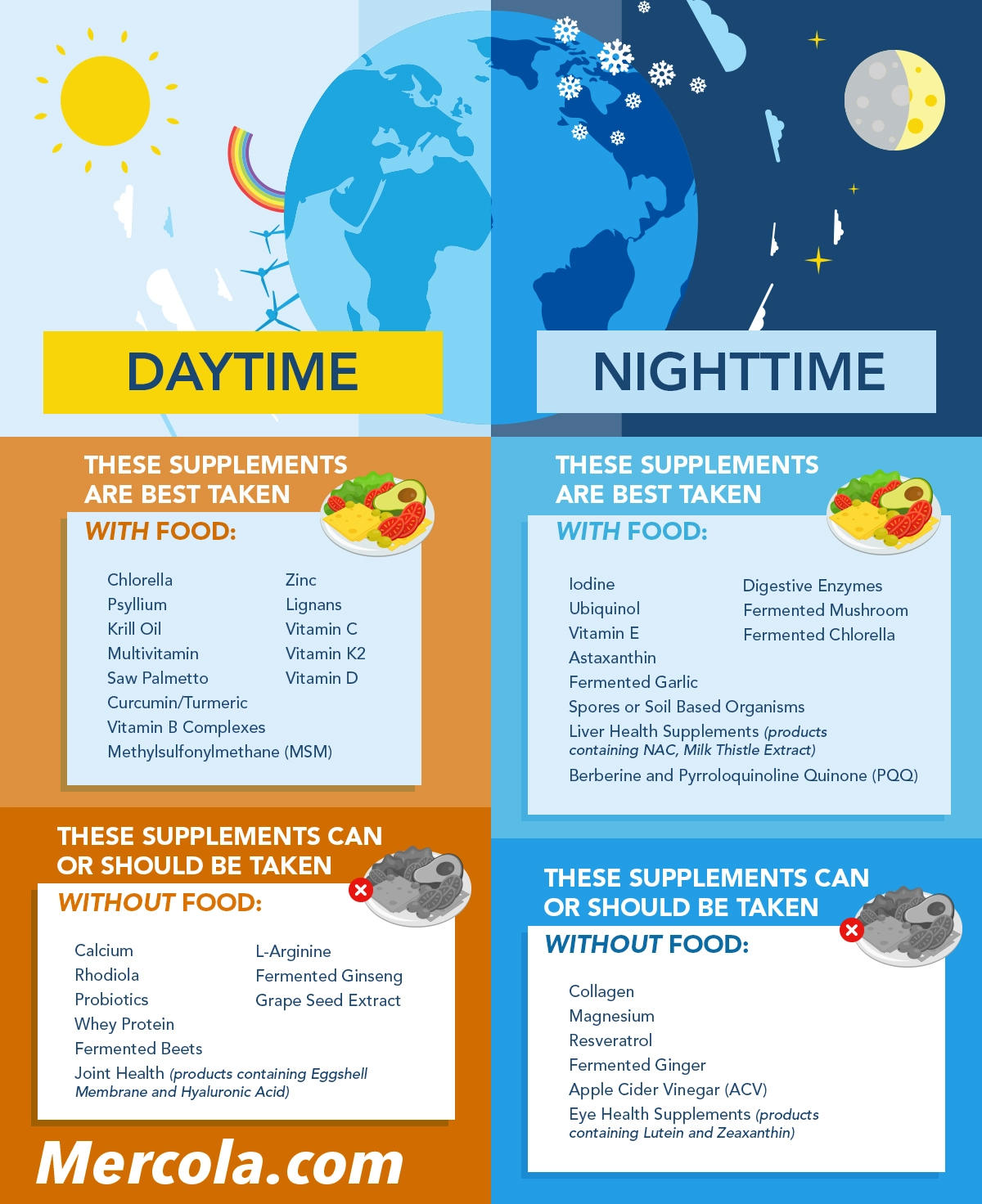
When and how you take supplements — such as with or without food and in the morning or evening — can make a difference in their safety and effectiveness. For instance, fat-soluble vitamin K2 is best taken with your largest meal that contains fat, while magnesium, which helps your body relax, is best taken in the evening. In the infographic above, you can see a simple breakdown of some of the most common supplements and when it’s best to take them.
- 1 U.S. CDC, NCHS Data Brief No. 399, February 2021
- 2 American Osteopathic Association January 16, 2019
- 3 Bitchute, Interview With Tyler Lebaron March 1, 2023
- 4 Scientific Reports volume 11, Article number: 10641 (2021)
- 5 YouTube, Dr. John Campbell February 1, 2023, 14:07
- 6 Pharmaceuticals (Basel). 2023 Jan; 16(1): 130., Abstract
- 7 International Journal of Nanomedicine January 19. 2018; 2018(13): 455-466
- 8, 9 BMJ Open Heart 2018
- 10 Aging (Albany NY). 2019 Jan 31; 11(2): 289–290
- 11 medRxiv July 7, 2020; DOI: 10.1101/2020.07.06.20147025
- 12 Factors Determining the Apoptotic Response of Colorectal Carcinoma Cells to Butyrate, a Fermentation Product Derived from Dietary Fiber (2009)
- 13 Translational Psychiatry June 3, 2022
- 14 The Journal of Neuroscience May 1, 2013; 33(18):7770-7
- 15 Translational Psychiatry June 3, 2022, Discussion
- 16 BMJ 2022;376:e066452
- 17 Journal of the American College of Cardiology December 13, 2022, Volume 80, Issue 24, Pages 2269-2285, Results
- 18 Journal of Clinical Lipidology, 2018;12(3):718
- 19 EurekAlert! March 15, 2018
- 20 Business Wire September 9, 2020
- 21, 22 A Comparison of Synthetic Ethyl Ester Form Fish Oil vs. Natural Triglyceride Form (PDF), What Are Triglycerides and Ethyl Esters?
- 23 Environ Sci Pollut Res Int. 2020 Feb;27(4):3950-3961. doi: 10.1007/s11356-019-06983-1. Epub 2019 Dec 10
- 24 Clinical and Translational Medicine March 27, 2021, Section 4.13
- 25 Medical Hypotheses January 15, 2019
- 26 Indian Journal of Clinical Biochemistry 1994, 9 (2)
- 27 Clinical and Translational Medicine March 27, 2021, Abstract, Results
- 28 Journal of Infectious Diseases and Preventive Medicine May 24, 2014; 2: 111
- 29 International Journal of General Medicine June 8, 2021; 14: 2359-2366
- 30 Integrative Medicine (Encinitas) February 2015
- 31 The Journal of Nutrition November 1, 2004: 134(11); 3100-3105 (The Rotterdam Study)
- 32 Journal of Medical Nutrition & Nutraceuticals 2015; 4(1): 47-53
- 33 Curr Med Res Opin. 2008 May;24(5):1485-96
- 34 J Med Food. 2016 Sep;19(9):836-43
- 35 J Med Food. 2010 Apr;13(2):399-405
- 36 Science Direct, Carnosine
Could This Vitamin Slow Brain Aging and Ward Off Alzheimer’s?
Reproduced from original article:
https://articles.mercola.com/sites/articles/archive/2023/03/23/nicotinamide-riboside-brain-health.aspx
The original Mercola article may not remain on the original site, but I will endeavor to keep it on this site as long as I deem it to be appropriate.
Analysis by Dr. Joseph Mercola Fact Checked March 23, 2023
STORY AT-A-GLANCE
- The trace nutrient nicotinamide riboside (NR), a precursor of nicotinamide adenine dinucleotide (NAD+) and a form of vitamin B3, may help slow brain aging
- NR may help to boost levels of NAD+, which typically declines in the brain with age, leading to metabolic and cellular dysfunction
- The NAD+ precursor niacinamide is also beneficial, but it’s not widely promoted because it costs much less than other NAD+ precursors, including NR
- Since NAD+ declines with age, boosting it has been described as a fountain of youth for extended lifespan and increased resilience to disease
- Vitamins B6, B9 (folate) and B12 are also important for supporting cognitive function as you age and have been shown to play a major role in the development of dementia
When you eat a varied diet based on whole foods, your body enjoys access to the myriad nutrients contained therein. The trace nutrient nicotinamide riboside (NR), a precursor of nicotinamide adenine dinucleotide (NAD+) and a form of vitamin B3, is among them.
Found in milk as well as in supplement form, NR may help to boost levels of NAD+, which typically declines in the brain with age, leading to metabolic and cellular dysfunction.1 By raising NAD+ levels, NR may modify neurodegenerative disease in humans, helping to slow brain aging.
NR Restores NAD+ in the Brain
NAD+ modulates energy production and many enzymes and in so doing controls hundreds of processes in your body including the survival of cells and energy metabolism.
NAD+ is influenced on a daily basis by what you eat, exercise levels and more, and also declines with age, leading to changes in metabolism and an increased risk of disease.2 Dr. Christopher Martens, director of the Delaware Center for Cognitive Aging Research, told Medical News Today:3
“NAD+ is essential for cells to create energy and there is strong evidence from animal studies that aging and metabolic dysfunction results in a depletion of NAD+ within cells. Therefore, there is strong rationale that replenishing the NAD+ within the brain could have a positive effect on brain function.”
In a study published in the journal Aging Cell, Martens and colleagues found that NR supplementation increases NAD+ levels and lowers biomarkers of neurodegeneration in plasma extracellular vesicles enriched for neuronal origin (NEVs).4
Among the 22 older adults who took NR at a dosage of 500 milligrams twice a day for six weeks, NAD+ levels in NEVs increased while kinases involved in insulin resistance and neuroinflammatory pathways decreased.5 The results suggest NR, by increasing NAD+, could help ward off Alzheimer’s disease. Martens explained in Medical News Today:6
“We don’t have definitive proof that the supplement itself crosses the blood-brain barrier, especially not from our data. What we do know is that taking the supplement results in an increase in NAD+ within tiny vesicles that likely originated in the brain and other neural tissue.
This is one of the big challenges in the field — [d]etermining whether the compound can reach its intended target. [A]lthough we do not have direct evidence, the results of our study suggest that it is having an effect on the brain and also changing the metabolism of molecular pathways known to be involved in Alzheimer’s disease.
… What’s really interesting is that we also found changes in more established markers of Alzheimer’s disease (e.g., amyloid beta) after taking the supplement.”
NR Is a Popular NAD+ Precursor
While there are multiple precursors to NAD+, including NR, niacin (NA) and niacinamide (NAM), NR offers a variety of significant health benefits, including:7
| Life extension — In yeast, NR elevates NAD+ and increases sirtuin 2 (SIRT2) function.8 It’s through these increases in NAD+ and sirtuin 2 that calorie restriction is believed to help extend lifespan in mice as well.9 |
| Protects against weight gain — NR supplementation in mice increased NAD+ levels and activated SIRT1 and SIRT3, leading to enhanced oxidative metabolism and protecting against metabolic abnormalities, including obesity. The researchers concluded, “Our results indicate that the natural vitamin NR could be used as a nutritional supplement to ameliorate metabolic and age-related disorders characterized by defective mitochondrial function.”10 |
| Heart failure — In a mouse study, NR preserved cardiac function in mice with heart failure.11 |
| Brain injury — NAD+ depletion is common in cases of neurodegeneration. In a mouse study, intracortical administration of NR helped protect against central brain injury.12 |
| Noise-induced hearing loss — Administration of NR, even after exposure to loud noise, prevents noise-induced hearing loss by reducing neurite degeneration.13 |
| Liver protection and antidiabetes effects — In prediabetic mice, NR improved glucose tolerance and reduced weight gain and liver damage. It also prevented fatty liver and helped prevent sensory neuropathy. The researchers concluded the results justified testing NR in humans with obesity and Type 2 diabetes.14 |
| Stem cell regeneration — Among mice exposed to radiation, oral NR improved survival and hematopoietic stem cell regeneration — a benefit that wasn’t seen with in mice given NA or NAM.15 |
| Reversal of chemotherapy-induced neuropathy — In rats, oral NR not only promoted resistance to chemotherapeutic neuropathy but also prompted its reversal.16 |
| Reproductive benefits — Female mice and rats given NR had increased lactation and offspring with a number of health advantages, including increased strength, better memory, less anxiety and enhanced body composition and hippocampal neurogenesis as adults.17 |
Download this Article Before it Disappears
Is Boosting NAD+ a Fountain of Youth?
Since NAD+ declines with age, boosting it has been described as a fountain of youth for extended lifespan and increased resilience to disease. James Clement, author of “The Switch: Ignite Your Metabolism With Intermittent Fasting, Protein Cycling, and Keto,” conducted a clinical trial testing intravenous NAD+ in elderly people, in collaboration with Dr. John Sturges.
The infusion involved 1,000 mg of NAD+ per day for six days. Clement underwent the treatment and tremors he’d had since he was 20 went away. If you aren’t depleted in NAD+, 1,000 mg may be too much — and it’s also very expensive, at about $1,000 per IV — but many people are low in NAD+.
During our 2020 interview, Clement said NAD+ may be depleted by 50% by the time you’re 60 (compared to in your 20s or 30s), and when you’re 70 you may only have 10% of the amount you did when you were younger.
“And then at 80, there’s almost none,” he said, adding that this will seriously impair your body’s ability to repair broken DNA. “You can see how this huge build-up of damaged DNA in every cell of your body is potentially one of the driving forces of these morbidities that you see with aging, heart disease, cancer [and] Alzheimer’s …”
Have You Heard of Niacinamide?
The NAD+ precursor niacinamide is also beneficial, but it’s not widely promoted because it costs much less than other NAD+ precursors, including NR. At a cost of less than one cent a day, there is simply no money to be made in promoting it. However, you can buy niacinamide powder and use 1 to one-half of one-64th of a teaspoon three times a day (25 to 50 mg).
You will need special measuring spoons to measure this small a dose. This is important, as more is most definitely not better. If you use too much you will inhibit sirtuins, which are important longevity proteins. You can view my interview with Dr. Nichola Conlon for more fascinating details on this topic.
Spending $11 on 250 grams of niacinamide powder will give you a nearly four-year supply. That pencils out to 23 cents a month — or less than one penny a day. It is basically free. NMN in therapeutic doses of 1 to 2 grams per day can be $100 to $200 a month, or 400 to 800 times more expensive than niacinamide powder.
Natural Methods to Boost NAD+
While NAD+ precursors like NR and niacinamide are useful, there are also natural methods to protect and boost your levels, such as:
- Physical exercise — Naturally increases NAMPT by activating AMPK, which in turn increases NAD+. Conlon cites research showing about three weeks of resistance training will boost NAMPT by about 127%, which again is far greater than what you can get from an NR supplement alone.
- Fasting or time-restricted eating — Naturally increases NAMPT by activating AMPK, which in turn increases NAD+.
- Circadian rhythm optimization, by going to bed at sunset and getting up at sunrise and avoiding blue light after sunset, will have profound impacts on increasing NAMPT.
- Avoid radiation exposure — To protect your NAD+ by preventing its consumption by PARPs (poly ADP ribose polymerases), consider avoiding EMFs in the form of your cellphone, Wi-Fi and other forms of DNA damaging radiation, such as unnecessary medical x-rays and CAT scans.
- Sauna bathing — Heat stress helps boost NAD+.
Other B Vitamins Involved in Alzheimer’s, Brain Health
It’s not only vitamin B3 that may protect your brain. Vitamins B6, B9 (folate) and B12 are also important for supporting cognitive function as you age and have been shown to play a major role in the development of dementia. As noted in a 2010 paper:18
“Deficiencies of the vitamins folate, B12 and B6 are associated with neurological and psychological dysfunction … In the elderly, cognitive impairment and incident dementia may be related to the high prevalence of inadequate B vitamin status and to elevations of plasma homocysteine.
Plausible mechanisms include homocysteine neurotoxicity, vasotoxicity and impaired S-adenosylmethionine-dependent methylation reactions vital to central nervous system function. In light of this, it is imperative to find safe ways of improving vitamin B status in the elderly …”
The good news is your body can eliminate homocysteine, which is associated with brain atrophy, cognitive impairment and dementia,19 naturally, provided you’re getting enough B9, B6 and B12. In fact, research published in PLOS One compared brain atrophy in participants taking folic acid (0.8 mg per day), vitamin B12 (0.5 mg per day) and vitamin B6 (20 mg per day) for 24 months with that in patients taking a placebo.20
Those taking B vitamins had a lower rate of brain atrophy per year — 0.76% — than those not taking them, who had an atrophy rate of 1.08%. According to the researchers, “The accelerated rate of brain atrophy in elderly with mild cognitive impairment can be slowed by treatment with homocysteine-lowering B vitamins.”21
A 2013 study also showed that B vitamins slow brain shrinkage in brain regions known to be most severely impacted by Alzheimer’s disease and associated with cognitive decline.22
Be aware that the U.S. Food and Drug Administration granted fast track designation to UB-311, a vaccine for Alzheimer’s disease made by biotechnology company Vaxxinity.23 The shot is an anti-amyloid beta immunotherapeutic vaccine that reportedly treats Alzheimer’s disease by targeting aggregated amyloid beta in the brain.
Aside from the potential problems that can arise when a vaccine is rushed to market, the vaccine may be problematic because amyloid beta may be a symptom of Alzheimer’s — not the cause — and could even have a protective role in the disease process.24
Food Sources of B Vitamins
A better protective strategy for brain health may be to increase your intake of B vitamins, which can be done via supplements or foods. Vitamin B3 is found in grass fed beef, mushrooms and avocados,25 while vitamin B6 is plentiful in grass fed beef, potatoes, bananas and avocados.26 You can find folate, or vitamin B9, spinach, broccoli, avocado and asparagus.27
Vitamin B12-rich foods include grass fed beef liver, wild rainbow trout and wild sockeye salmon. For more serious deficiency you may need weekly shots of vitamin B12 or daily high-dose B12 supplements. If you choose a supplement, methylcobalamin, which is the naturally occurring form found in food, is more absorbable and your body retains it in greater amounts than cyanocobalamin, the form of B12 found in most supplements.28
Beyond B vitamins, nourishing your brain health is best done with a comprehensively healthy lifestyle, including the use of exercise, ketogenic diet, time-restricted eating, optimizing vitamin D and other hormones, increasing sleep, meditation and detoxification and eliminating processed food.
- 1, 4, 5 Aging Cell December 14, 2022
- 2 Cell Metabolism, 28 Feb 2018, 27(3):529-547
- 3, 6 Medical News Today March 5, 2023
- 7 Scientific Reports July 5, 2019
- 8 Cell May 4, 2007
- 9 Cell May 4, 2007 Summary
- 10 Cell Metabolism June 6, 2012
- 11 Circulation. 2018 May 22; 137(21): 2256–2273
- 12 The FASEB Journal August 21, 2017
- 13 Cell Metabolism December 2, 2014
- 14 Sci Rep. 2016 May 27;6:26933. doi: 10.1038/srep26933
- 15 Cell Stem Cell March 7, 2019
- 16 PAIN May 2017 – Volume 158 – Issue 5 – p 962-972
- 17 Cell Reports January 22, 2019
- 18 Nutrition Reviews 2010 Dec;68 Suppl 2:S112-8
- 19, 20, 21 PLOS One September 8, 2010
- 22 PNAS 2013 Jun 4;110(23):9523-8
- 23 GlobalNewswire May 2, 2022
- 24 J Alzheimers Dis. 2009 Oct; 18(2): 447–452
- 25 My Food Data, Vitamin B3 September 26, 2022
- 26 My Food Data, Vitamin B6 September 26, 2022
- 27 My Food Data, Vitamin B9 September 26, 2022
- 28 Integr Med (Encinitas). 2017 Feb; 16(1): 42–49
Further Insights into Covid-19 Etiology and Susceptibility
Reproduced from original OMNS article (OrthoMolecular News Service):
http://orthomolecular.org/
Subscribe to the free Orthomolecular Newsletter: http://orthomolecular.org/subscribe.html
Go to the OMNS Archive: http://orthomolecular.org/resources/omns/index.shtml
Orthomolecular Medicine News Service, March 22, 2023
by Michael Passwater
OMNS (March 22, 2023) As we pass the three-year anniversary of the World Health Organization’s declaration of Covid-19 as a global pandemic, more than 6.8 million deaths have been attributed to the SARS-CoV-2 virus with 1.1 million (16%) of those deaths occurring in the United States. Over 6 million Covid-19 patients have been hospitalized in the United States. Over five billion people have been vaccinated including 230 million people in the United States. [1] Yet there is still no consensus on the most effective treatment. From 2020 onward, informed by past experiences with infectious diseases, genomic analysis of coronaviruses, and early treatment efforts, some natural medicine advocates have suggested that adequate doses of glutathione, vitamin C, selenium, zinc, and vitamin D may be helpful. [2-10]
Two recent studies deepen our understanding of how SARS-CoV-2 attacks our cells and tissues, and which individuals are at risk of becoming seriously ill from the infection. A study of 106 people in North Carolina with Covid-19 in late 2020 (all unvaccinated) showed selenium intake to be inversely related to Covid severity index among those with below average selenium and zinc intake (higher selenium intake = lower disease severity). [11] This is consistent with population studies in 2020 and 2021 in China associating more severe disease and mortality with lower regional selenium levels, and retrospective studies of hospitalized patients with Covid-19 in Germany identifying low total serum selenium and selenoprotein P status, along with advanced age and low zinc levels, as predictors of mortality. [12-15]
A recent mechanistic study also confirmed the previously predicted destruction of host selenoproteins thioredoxin reductase 1 (TXNRD1), selenoprotein P (SelenoP), and selenoprotein F (SelenoF) by the SARS-CoV-2 Mpro protein. Additionally, this viral protease was shown to destroy glutamate-cysteine ligase catalytic subunit (GCLC) which is a rate limiting enzyme in the production of glutathione. Destruction of TXNRD1, SelenoP, SelenoF, and GCLC weakens host immune and antioxidant defenses, genetic replication “proof-reading”, and hemostasis while also supporting a shift from DNA to RNA production within the cell – effectively hijacking the cell to become an RNA virus factory instead of a host DNA factory. [16]
Together, these new publications add support to the central roles of selenoproteins (proteins containing one or more selenocysteine amino acids) and the sulfur containing antioxidant glutathione in preventing Covid-19 and similar infections. This is also consistent with successful studies that have suggested the use of IV glutathione and IV vitamin C to reduce the risk of viral infection and aid recovery. [17-20] A drop in glutathione levels impairs vitamin C recycling which dramatically increases the demand for vitamin C intake. Thus, a selenium deficiency may increase the risk of a severe viral infection, because it can cause deficiencies of glutathione and vitamin C, which can impair the body’s ability to combat increased cellular oxidation and acidosis, and to support a robust response by immune cells. (See also “Vitamin C Levels in Critically Ill Covid-19 Patients” http://orthomolecular.org/resources/omns/v17n17.shtml )
Does this mean we should take massive amounts of selenium supplements upon testing positive? No, It means we should consume a well-balanced diet, supplementing as necessary to maintain a full supply of nutrients, including selenium (as selenium yeast or methyl-selenocysteine) to optimize our health and resistance to infectious disease. Steady moderation is a good approach with selenium (100 mcg/d) and other essential trace elements. It also means medical doctors should continue to explore the usefulness of selenite injections and similar interventions as part of the treatment of acute viral infectious disease outbreaks, and further study the usefulness of selenium and other micronutrient testing to evaluate disease susceptibility and prognosis as well as to target personalized interventions.
Does this mean vitamin D isn’t important for Covid-19 prevention or treatment? No. Vitamin D, selenocysteine, and cysteine have epigenetic and functional interdependencies. [21-25] Nutrients work best as a team. With approximately a billion chemical reactions occurring each second within each of the 37 trillion cells in the human body, a broad balanced array of nutrients is continually needed to build and sustain the sophisticated functions of human life. Most of us need to take vitamin D supplements (2,000 – 10,000 IU/d) throughout the winter months to maintain a healthy vitamin D status.
To learn more:
NIACIN for COVID: How niacin, niacinamide, and NAD can help with Long COVID-19
http://orthomolecular.org/resources/omns/v18n25.shtml
Nutrition to Treat and Prevent COVID-19
http://orthomolecular.org/resources/omns/v17n03.shtml
Fueling the Immune System for the 21st Century
http://orthomolecular.org/resources/omns/v18n23.shtml
Selenium not only benefits the host constitution and defenses, but it also has positive impacts on the mutagenesis and pathogenicity of viruses. [26-27] Virus replication is unstable and allows frequent mutations. However, the viral environment influences the rate and character of these mutations. Several varieties of viruses, including influenza, enteroviruses, and coxsackie viruses, have been shown to rapidly take on more harmful characteristics when allowed to replicate in a selenium deficient environment. [28-31] Oxidative environments also increase the rate of viral mutations. [32-34] See also Viral Mutations and the Risk of Second-hand Malnutrition'” http://orthomolecular.org/resources/omns/v17n19.shtml
Whether the invader is tuberculosis, poliovirus, influenza, SARS, Zika, SARS-CoV-2, mpox, invasive streptococcus, avian influenza, Ebola, venom, or the Andromeda Strain, the wisdom of Dr. Fred Klenner applies: “The answer to these emergencies is simple. Large amounts of ascorbic acid 350 mg to 700 mg per kilogram (2.2 lb) g body weight given intravenously. . . Ascorbic acid is also given, by mouth, as followup treatment. Every emergency room should be stocked with vitamin C ampoules of sufficient strength so that time will never be counted-as a factor in saving a life. The 4 gram, 20 cc ampoule and 10 gram 50 cc ampoule must be made available to the physician.” [35]
“In my department and other hospitals we highly recommend the patients use 12,000 mg to 24,000 mg a day of vitamin C. That works for significant reduction of COVID becoming a severe case.”
(ZhiYong Peng, MD, Chief of Critical Care
Zhongnan Hospital, Wuhan University)
Vitamin C goes to work fast – it doesn’t need to be incorporated into proteins before it begins to help fight the invasion and support the host. It also offers benefit to every cell in the body, helping to support the intense metabolic bursts of activated immune cells, as well as helping maintain the integrity of blood vessels. In critical illness, large doses help counteract cellular acidosis and restore enzymes to constructive rather than destructive activity. It is not blocked by the blood-brain barrier. Aside from rare instances of G6PD deficiency, vitamin C has a tremendous safety profile over a very wide therapeutic range. Glutathione, selenocysteine, vitamin D, niacin, magnesium also are key nutrients to optimizing immune responses and recovery. [36-43]
Conclusion
The threat of infectious diseases is ubiquitous. SARS-CoV-2 and many other RNA viruses have a destructive impact on selenoproteins and glutathione. Viral replication within selenium deficient, oxidative environments promotes more rapid and more pathogenic mutations. Selenium and glutathione are critical, but they are not silver bullets. Nutrients do their best work as a team. A strong base of selenium containing selenocysteine, sulfur containing cysteine, and zinc helps to optimize vitamin D, vitamin C, B vitamins, and essential lipids for overall wellness and infectious disease prevention. Four pillars of overall wellness and infectious disease protection are to: Sleep well; Exercise the body and mind well; eat well, supplementing as necessary and flexing up nutrient intake – particularly vitamin C – in proportion to the scope of infection; and cultivate a positive, grateful mindset and social support network.
(Michael Passwater, Assistant Editor of the Orthomolecular Medicine News Service, is also the author of “Protecting Against Viruses and other Threats to Wellness” http://orthomolecular.org/resources/omns/v18n30.shtml and coauthor of “Save Lives and Improve Public Health” http://orthomolecular.org/resources/omns/v19n12.shtml and “Nutrient Benefit Statements and the 2010 Legal Victory Prohibiting FDA Censorship” http://orthomolecular.org/resources/omns/v19n03.shtml . )
References and Further Reading
1. Hollowell A, Carbajal E (2023) COVID-19’s toll 3 years in: 6 notes. Becker’s Healthcare 3/10/2023. https://www.beckershospitalreview.com/public-health/covid-19s-toll-3-years-in-6-notes.html
2. Polonikov A. (2020) Endogenous Deficiency of Glutathione as the Most Likely Cause of Serious Manifestations and Death in COVID-19 Patients. ACS Infect. Dis. 6:1558-1562. https://pubmed.ncbi.nlm.nih.gov/32463221
3. Passwater RA (2020) Can Selenium Significantly Increase the Cure Rate in COVID-19? An Interview with Professor Ethan Will Taylor. Whole Foods Magazine, June 18, 2020. https://wholefoodsmagazine.com/columns/vitamin-connection/can-selenium-signifcantly-increase-the-cure-rate-in-covid-19
4. Hiffler L, Rakotoambinina B (2020) Selenium and RNA Virus Interactions: Potential Implications for SARS-CoV-2. Infection (COVID-19). Front. Nutr. 7:164. https://pubmed.ncbi.nlm.nih.gov/33015130
5. Vavougios GD, Ntoskas KT, Doskas TK. (2020) Impairment in selenocysteine synthesis as a candidate mechanism of inducible coagulopathy in COVID-19 patients. Med Hypotheses 147:110475. https://pubmed.ncbi.nlm.nih.gov/33421689
6. Taylor EW. (2020) RNA viruses vs. DNA synthesis: a general viral strategy that may contribute to the protective antiviral effects of selenium. Preprints 2020, 10.20944/preprints202006.0069.v1, http://doi.org/10.20944/preprints202006.0069.v1
7. Taylor EW, Radding W. (2020) Understanding Selenium and Glutathione as Antiviral Factors in COVID-19: Does the Viral Mpro Protease Target Host Selenoproteins and Glutathione Synthesis? Front Nutr. 7:143. https://pubmed.ncbi.nlm.nih.gov/32984400
8. Holford P (2020) Vitamin C for the Prevention and Treatment of Coronavirus. Orthomolecular Medicine News Service. http://orthomolecular.org/resources/omns/v16n36.shtml
9. Gonzalez MJ (2020) Personalize Your COVID-19 Prevention: An Orthomolecular Protocol. Orthomolecular Medicine News Service. http://orthomolecular.org/resources/omns/v16n31.shtml
10. Rasmussen MPF (2020) Vitamin C Evidence for Treating Complications of COVID-19 and other Viral Infections. Orthomolecular Medicine News Service. http://orthomolecular.org/resources/omns/v16n25.shtml
11. Larvie DY, Perrin MT, Donati GL, Armah SM (2023) COVID-19 Severity Is Associated with Selenium Intake among Young Adults with Low Selenium and Zinc Intake in North Carolina. Curr Dev Nutr. 7:100044. https://pubmed.ncbi.nlm.nih.gov/36785737
12. Zhang J, Taylor EW, Bennett K, Saad R, Rayman MP. (2020) Association between regional selenium status and reported outcome of COVID-19 cases in China. Am J Clin Nutr. 111:1297-1299. https://pubmed.ncbi.nlm.nih.gov/32342979
13. Zhang et al. (2021) Association between fatality rate of COVID-19 and selenium deficiency in China BMC Infect Dis. 21:452. https://pubmed.ncbi.nlm.nih.gov/34011281
14. Moghaddam A, Heller RA, Sun Q, et al. (2020) Selenium deficiency is associated with mortality risk from COVID-19. Nutrients 12:2098. https://pubmed.ncbi.nlm.nih.gov/32708526
15. Heller RA, Sun Q, Hackler J, et al. (2021) Prediction of survival odds in COVID-19 by zinc, age, and selenoprotein P as composite biomarker. Redox Biol. 38:101764. https://pubmed.ncbi.nlm.nih.gov/33126054
16. Gallardo IA, Todd DA, Lima ST, Taylor EW, et al. (2023) SARS-CoV-2 Main Protease Targets Host Selenoproteins and Glutathione Biosynthesis for Knockdown via Proteolysis, Potentially Disrupting the Thioredoxin and Glutaredoxin Redox Cycles. Antioxidants 12:559. https://doi.org/10.3390/antiox12030559
17. Horowitz RI, Freeman PR, Bruzzese J. (2020) Efficacy of glutathione therapy in relieving dyspnea associated with COVID-19 pneumonia: A report of 2 cases. Respir Med Case Rep. 30:101063. https://pubmed.ncbi.nlm.nih.gov/32322478
18. Colunga Biancatelli RM, Berrill M, Catravas JD, Marik PE. (2020) Quercetin and Vitamin C: An experimental, synergistic therapy for the prevention and treatment of SARS-CoV-2 related disease (COVID-19). Front Immunol, 11:1451. https://pubmed.ncbi.nlm.nih.gov/32636851
19. Khan HMW, Parikh N, Megah SM, Predeteanu GS. (2020) Unusual Early Recovery of a Critical COVID-19 After Administration of Intravenous Vitamin C. Am J Case Rep, 21:e925521 https://pubmed.ncbi.nlm.nih.gov/32709838
20. Wang Y, Zhao N, Xiong Y, et al. (2020) Downregulated Recycling Process but Not De Novo Synthesis of Glutathione Limits Antioxidant Capacity of Erythrocytes in Hypoxia. Oxidative Medicine and Cellular Longevity. 2020:7834252. https://pubmed.ncbi.nlm.nih.gov/32963701
21. Jain SK, Micinski D. (2013) Vitamin D upregulates glutamate cysteine ligase and glutathione reductase, and GSH formation, and decreases ROS and MCP-1 and IL-8 secretion in high-glucose exposed U937 monocytes. Biochem Biophys Res Commun 437:7-11, https://pubmed.ncbi.nlm.nih.gov/23770363
22. Alvarez JA, Chowdhury R, Jones DP, et al. (2014) Vitamin D status is independently associated with plasma glutathione and cysteine thiol/disulphide redox status in adults. Clin Endocrinol (Oxf) 81:458-466. https://pubmed.ncbi.nlm.nih.gov/24628365
23. Parsanathan R, Jain SK. (2019) Glutathione deficiency induces epigenetic alterations of vitamin D metabolism genes in the livers of high-fat diet-fed obese mice. Sci Rep. 9:14784. https://pubmed.ncbi.nlm.nih.gov/31616013
24. Fan YG, Pang ZQ, Wu TY, et al. (2020) Vitamin D deficiency exacerbates Alzheimer-like pathologies by reducing antioxidant capacity. Free Radic Biol Med. 161:139-149. https://pubmed.ncbi.nlm.nih.gov/33068737
25. Jain SK, Parsanathan R, Achari AE, et al. (2017) Glutathione Stimulates Vitamin D Regulatory and Glucose Metabolism Genes, Lowers Oxidative Stress and Inflammation, and Increases 25-Hydroxy-Vitamin D Levels in Blood: A Novel Approach to Treat 25-Hydroxyvitamin D Deficiency. Antioxid Redox Signal. 29:1792-1807. https://pubmed.ncbi.nlm.nih.gov/30160165
26. Beck MA, Handy J, Levander OA (2004) Host nutritional status: the neglected virulence factor. Trends Microbiol 12:417-423. https://pubmed.ncbi.nlm.nih.gov/15337163
27. Beck MA (1999) Trace Minerals, Immune Function, and Viral Evolution. Chapter 16 in: Military Strategies for Sustainment of Nutrition and Immune Function in the Field. Institute of Medicine (US), Committee on Military Nutrition Research. US National Academies Press. ISBN-13: 978-0309063456 https://www.ncbi.nlm.nih.gov/books/NBK230971
28. Harthill M. (2011) Review: micronutrient selenium deficiency influences evolution of some viral infectious diseases. Biol Trace Elem Res. 143:1325-1336. https://pubmed.ncbi.nlm.nih.gov/21318622
29. Beck MA. Kolbeck PC, Rohr LH, et al. (1994a) Benign human enterovirus becomes virulent in selenium-deficient mice. J. Med. Virol. 43:166-170. https://pubmed.ncbi.nlm.nih.gov/8083665
30. Nelson HK, Shi Q, Van Dael P. et al. (2001) Host nutritional selenium status as a driving force for influenza virus mutations. FASEB J. 15:1721-1738. https://pubmed.ncbi.nlm.nih.gov/11481250
31. Beck MA, Nelson HK, Shi Q, et al. (2001) Selenium deficiency increases the pathology of an influenza virus infection. FASEB J. 15:1481-1483. https://pubmed.ncbi.nlm.nih.gov/11387264
32. Beck MA, Levander OA. (1998) Dietary oxidative stress and the potentiation of viral infection. Annu. Rev. Nutr. 18:93-116. https://pubmed.ncbi.nlm.nih.gov/9706220
33. Akaike T, Fujii S, Kato A, et al. (2000) Viral mutation accelerated by nitric oxide production during infection in vivo. FASEB J. 14:1447-1454. https://pubmed.ncbi.nlm.nih.gov/10877838
34. Akaike TY, Noguchi, S Ijiri, et al. (1996) Pathogenesis of influenza virus-induced pneumonia: involvement of both nitric oxide and oxygen radicals. Proc. Natl. Acad. Sci. USA. 93:2448-2453. https://pubmed.ncbi.nlm.nih.gov/8637894
35. Klenner FR. (1971) Observations On the Dose and Administration of Ascorbic Acid When Employed Beyond the Range of a Vitamin In Human Pathology. J Applied Nutrit. 23:61-87. https://www.injectablevitaminc.com/images/Ch22.pdf
36. Sakr Y, Reinhart K, Bloos F, et al. (2007) Time course and relationship between plasma selenium concentrations, systemic inflammatory response, sepsis, and multiorgan failure. Br J Anaesth. 98:775-784. https://pubmed.ncbi.nlm.nih.gov/17478454
37. de Melo AF, Homem-de-Mello M. (2020) High-dose intravenous vitamin C may help in cytokine storm in severe SARS-CoV-2 infection. Crit Care 24:500. https://pubmed.ncbi.nlm.nih.gov/32792018
38. Wang Y, Huang J, Sun Y, et al. (2021) SARS-CoV-2 suppresses mRNA expression of selenoproteins associated with ferroptosis, endoplasmic reticulum stress and DNA synthesis. Food Chem Toxicol. 153:112286. https://pubmed.ncbi.nlm.nih.gov/34023458
39. Guillin OM, Vindry C, Ohlmann T, Chavatte L (2019) Selenium, Selenoproteins and Viral Infection.Nutrients 11:2101. https://pubmed.ncbi.nlm.nih.gov/31487871
40. Broome CS, McArdle F, Kyle JAM, et al. (2004) An increase in selenium intake improves immune function and poliovirus handling in adults with marginal selenium status. Am. J. Clin Nutr. 80:154-162. https://pubmed.ncbi.nlm.nih.gov/15213043
41. Guillin OM, Vindry C, Ohlmann T, Chavatte L. (2019) Selenium, Selenoproteins, and Viral Infection. Nutrients 11:2101. https://pubmed.ncbi.nlm.nih.gov/31487871
42. Taylor EW, Ruzicka JA, Premadasa L, Zhao L (2016) Cellular Selenoprotein mRNA Tethering via Antisense Interactions with Ebola and HIV-1 mRNAs May Impact Host Selenium Biochemistry. Cur Top Med Chem. 16:1530-1535. https://pubmed.ncbi.nlm.nih.gov/26369818
43. Beck MA, Esworthy RS, Ho YS, Chu FF (1998) Glutathione peroxidase protects mice from viral-induced myocarditis. FASEB J. 12:1143-1149. https://pubmed.ncbi.nlm.nih.gov/9737717 https://www.researchgate.net/publication/13547567_Glutathione_peroxidase_protects_mice_from_viral-induced_myocarditis
Nutritional Medicine is Orthomolecular Medicine
Orthomolecular medicine uses safe, effective nutritional therapy to fight illness. For more information: http://www.orthomolecular.org
Find a Doctor
To locate an orthomolecular physician near you: http://orthomolecular.org/resources/omns/v06n09.shtml
The peer-reviewed Orthomolecular Medicine News Service is a non-profit and non-commercial informational resource.
Editorial Review Board:
Albert G. B. Amoa, MB.Ch.B, Ph.D. (Ghana)
Seth Ayettey, M.B., Ch.B., Ph.D. (Ghana)
Ilyès Baghli, M.D. (Algeria)
Barry Breger, M.D. (Canada)
Ian Brighthope, MBBS, FACNEM (Australia)
Gilbert Henri Crussol, D.M.D. (Spain)
Carolyn Dean, M.D., N.D. (USA)
Ian Dettman, Ph.D. (Australia)
Susan R. Downs, M.D., M.P.H. (USA)
Ron Ehrlich, B.D.S. (Australia)
Hugo Galindo, M.D. (Colombia)
Gary S. Goldman, Ph.D. (USA)
Michael J. Gonzalez, N.M.D., D.Sc., Ph.D. (Puerto Rico)
William B. Grant, Ph.D. (USA)
Claus Hancke, MD, FACAM (Denmark)
Patrick Holford, BSc (United Kingdom)
Ron Hunninghake, M.D. (USA)
Bo H. Jonsson, M.D., Ph.D. (Sweden)
Dwight Kalita, Ph.D. (USA)
Felix I. D. Konotey-Ahulu, MD, FRCP, DTMH (Ghana)
Alan Lien, Ph.D. (Taiwan)
Homer Lim, M.D. (Philippines)
Stuart Lindsey, Pharm.D. (USA)
Pedro Gonzalez Lombana, MD, MsC, PhD (Colombia)
Victor A. Marcial-Vega, M.D. (Puerto Rico)
Juan Manuel Martinez, M.D. (Colombia)
Mignonne Mary, M.D. (USA)
Joseph Mercola, D.O. (USA)
Jorge R. Miranda-Massari, Pharm.D. (Puerto Rico)
Karin Munsterhjelm-Ahumada, M.D. (Finland)
Tahar Naili, M.D. (Algeria)
Zhiyong Peng, M.D. (China)
Isabella Akyinbah Quakyi, Ph.D. (Ghana)
Selvam Rengasamy, MBBS, FRCOG (Malaysia)
Jeffrey A. Ruterbusch, D.O. (USA)
Gert E. Schuitemaker, Ph.D. (Netherlands)
Thomas N. Seyfried, Ph.D. (USA)
Han Ping Shi, M.D., Ph.D. (China)
T.E. Gabriel Stewart, M.B.B.CH. (Ireland)
Jagan Nathan Vamanan, M.D. (India)
Andrew W. Saul, Ph.D. (USA), Editor-In-Chief
Associate Editor: Robert G. Smith, Ph.D. (USA)
Editor, Japanese Edition: Atsuo Yanagisawa, M.D., Ph.D. (Japan)
Editor, Chinese Edition: Richard Cheng, M.D., Ph.D. (USA)
Editor, Norwegian Edition: Dag Viljen Poleszynski, Ph.D. (Norway)
Editor, Arabic Edition: Moustafa Kamel, R.Ph, P.G.C.M (Egypt)
Editor, Korean Edition: Hyoungjoo Shin, M.D. (South Korea)
Editor, Spanish Edition: Sonia Rita Rial, PhD (Argentina)
Editor, German Edition: Bernhard Welker, M.D. (Germany)
Associate Editor, German Edition: Gerhard Dachtler, M.Eng. (Germany)
Assistant Editor: Michael Passwater (USA)
Contributing Editor: Thomas E. Levy, M.D., J.D. (USA)
Contributing Editor: Damien Downing, M.B.B.S., M.R.S.B. (United Kingdom)
Contributing Editor: W. Todd Penberthy, Ph.D. (USA)
Contributing Editor: Ken Walker, M.D. (Canada)
Technology Editor: Michael S. Stewart, B.Sc.C.S. (USA)
Associate Technology Editor: Robert C. Kennedy, M.S. (USA)
Legal Consultant: Jason M. Saul, JD (USA)
Comments and media contact: drsaul@doctoryourself.com OMNS welcomes but is unable to respond to individual reader emails. Reader comments become the property of OMNS and may or may not be used for publication.
This article may be reprinted free of charge provided 1) that there is clear attribution to the Orthomolecular Medicine News Service, and 2) that both the OMNS free subscription link http://orthomolecular.org/subscribe.html and also the OMNS archive link http://orthomolecular.org/resources/omns/index.shtml are included.
Riordan Clinic | Orthomolecular.org
3100 N Hillside Ave
Wichita, Kansas 67219
United States
Quercetin — A Far Better Flu Remedy Than Tamiflu
Reproduced from original article:
https://articles.mercola.com/sites/articles/archive/2023/03/16/quercetin-for-flu.aspx
The original Mercola article may not remain on the original site, but I will endeavor to keep it on this site as long as I deem it to be appropriate.
Analysis by Dr. Joseph Mercola Fact Checked March 16, 2023

STORY AT-A-GLANCE
- Your immune system is your first-line defense against all types of infections, be they bacterial or viral, so the most effective way to prevent infectious illness — including influenza — is a robust immune system
- Quercetin, a plant flavonol found naturally in apples, plums, red grapes, green tea, elder flower and onions, packs a powerful antiviral punch, inhibiting several strains of influenza, hepatitis B and C and other viruses
- Quercetin also combats inflammation and acts as a natural antihistamine
- Quercetin reduces viral illness and boosts mental performance following extreme physical stress, which might otherwise undermine your immune function and render you more susceptible to infections
- Its antiviral effects can be attributed to three main mechanisms of action: Inhibiting the virus’ ability to infect cells, inhibiting replication of already infected cells and reducing infected cells’ resistance to treatment with antiviral medication
Editor’s Note: This article is a reprint. It was originally published February 26, 2018.
Your immune system is your first-line defense against all types of infections, be they bacterial or viral, so the most effective way to prevent infectious illness — including influenza — is a robust immune system. Your diet and other lifestyle factors are foundational for good immune function, but certain supplements can also be quite helpful.
One such supplement is quercetin,1 an antioxidant flavonol found naturally in apples, plums, red grapes, green tea, elder flower and onions, just to name a few. For a more exhaustive list, see Superfoodly’s ranking of the top 100 quercetin-packed foods.2
Quercetin has been shown to combat inflammation and acts as a natural antihistamine. Elder flower extract, which is rich in quercetin, has been traditionally used as a tonic to boost immunity. It is also widely known to promote lung and bronchial tract health.
Quercetin is also available in supplement form and has been used to ameliorate obesity,3 Type 2 diabetes,4 circulatory dysfunction, chronic inflammation, hay fever and mood disorders.5 A number of studies have also highlighted quercetin’s ability to prevent and treat both the common cold6 and influenza.7
Quercetin Significantly Lowers Your Risk for Viral Illness
Research8 from Appalachian State University in North Carolina published in 2007 found quercetin reduces viral illness and boosts mental performance following extreme physical stress, which might otherwise undermine your immune function and render you more susceptible to infections. The research in question was funded by the U.S. Department of Defense.
To investigate the effects of quercetin on viral illness, 40 cyclists were divided into two groups; half of them received a daily dose of 1,000 mg of quercetin in combination with vitamin C (which enhances plasma quercetin levels9,10) and niacin (to improve absorption) for five weeks while the other half received a placebo.
Three weeks into the trial, the athletes rode a bicycle for three hours a day, three days in a row. Blood and tissue samples were collected before and after exertion. Analysis revealed 45% of the placebo group contracted viral illness after the physical stress, compared to just 5% of the treatment group. According to lead investigator David Nieman:
“That’s a highly significant difference. When you have a double-blind, placebo-controlled study and you have those kinds of differences, it can’t be due to chance … These are ground-breaking results because this is the first clinical, double-blind, randomized, placebo-controlled study that has found a natural plant compound to prevent viral illness …
It appears that it takes significant stress to bring out quercetin’s infection-fighting properties. This all happened when athletes were under high oxidative stress, when stress hormones were high, and they were also undergoing muscle damage.
The athletes taking the quercetin supplement maintained their ability to react to an alertness test when exhausted, whereas those who took the placebo became measurably slower. The infection data and vigilance data are our two biggest findings in this study.”
Quercetin Protects Against Flu and Other Viral Infections
In another study funded by the U.S. Defense Advanced Research Projects Agency (DARPA), published in 2008, animals treated with quercetin were challenged with a highly pathogenic H1N1 influenza virus. Again, the treatment group had significantly lower morbidity and mortality than the placebo group.
These and similar studies led to the development of a quercetin supplement for military personnel. In 2008, DARPA director Tony Tether provided testimony to the Subcommittee on Terrorism, Unconventional Threats and Capabilities, saying quercetin “will help keep our warfighters healthy during training and deployment.”
The supplement, Q-Force, is also commercially available to the general public. A number of other studies have confirmed quercetin’s effectiveness against influenza, as well as a variety of other viruses, including the following:
| A 1985 study found quercetin inhibits infectivity and replication of herpes simplex virus type 1, polio-virus type 1, parainfluenza virus type 3 and respiratory syncytial virus.11 |
| A 2010 animal study found that quercetin inhibits both influenza A and B viruses. Two other important discoveries were made. Firstly, the viruses were unable to develop resistance to quercetin, and secondly, when used concomitant with antiviral drugs (amantadine or oseltamivir), the effect was significantly amplified — and it prevented drug-resistance from developing.12 |
A 2004 animal study investigating quercetin’s effect on influenza used a strain of the H3N2 virus. According to the authors:13
|
| In 2014, researchers noted that quercetin appears to be “a promising treatment for the common cold,” caused by the rhinovirus, adding that “Quercetin has been shown to reduce viral internalization and replication in vitro, and viral load, lung inflammation and airways hyper-responsiveness in vivo.”14
By attenuating oxidative damage, it also lowers your risk of secondary bacterial infections, which is actually the primary cause of influenza-related deaths. Importantly, quercetin increases mitochondrial biogenesis in skeletal muscle, which suggests part of its antiviral effects are due to enhanced mitochondrial antiviral signaling. According to the authors:
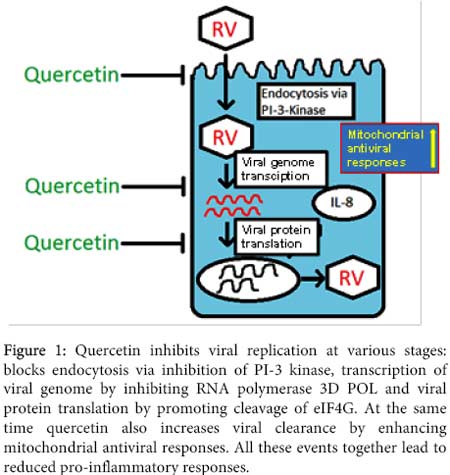 Source: Journal of Infectious Diseases and Preventive Medicine May 24, 2014; 2: 111 |
| A 2016 animal study found quercetin inhibited mouse hepatitis virus and the dengue virus.15 |
| Another 2016 study found quercetin offered protection against influenza A virus H1N1 by modulating protein expression. More specifically, the regulation of heat shock proteins, fibronectin 1 and prohibitin was instrumental in reducing viral replication.16 |
| A third study published in 2016 found quercetin inhibited a wide spectrum of influenza strains, including H1N1, H3N2 and H5N1. According to the authors, “This study indicates that quercetin showing inhibitory activity in the early stage of influenza infection provides a future therapeutic option to develop effective, safe and affordable natural products for the treatment and prophylaxis of [influenza A viruses] infections.”17 |
Download this Article Before it Disappears
Quercetin Inhibits Hepatitis B and C
In summary, quercetin’s powerful antiviral effects can be attributed to three main mechanisms of action:
- Inhibiting the virus’ ability to infect cells
- Inhibiting replication of already infected cells
- Reducing infected cells’ resistance to treatment with antiviral medication
As you can see from the list of studies above, quercetin’s ability to prevent illness is not restricted to influenza. Research shows it’s incredibly effective for boosting general immune health, and studies have shown it can inhibit both hepatitis B18 and C19 infection. It may even be useful in the treatment of HIV. As noted in a Superfoods Scientific Research article on quercetin:20
“Hepatitis C is an important cause of liver failure and liver cancers. In August 2009, [a] cell study21 demonstrated that quercetin interfered with the gene signals that enable hepatitis C virus production. The researchers showed … quercetin inhibits hepatitis C viral production in tissue culture, at least partially through its inhibition of heat shock protein expression.
Therapy with quercetin reduced the infectious particle production to nontoxic concentrations of [hepatitis C virus].”
Similarly, research published in 2015 found quercetin inhibited hepatitis B virus replication in human liver cells, protecting cells from infection and limiting the spread of infection in already infected samples.22 As in previous studies, when combined with antiviral drugs, in this case lamivudine, entecavir or adefovir, the antiviral effect was greatly enhanced.
According to the authors, “The results indicate that quercetin inhibited HBV [hepatitis B virus] antigen secretion and genome replication in human hepatoma cell lines, which suggests that quercetin may be a potentially effective anti-HBV agent.”
Quercetin a Far Safer Alternative to Tamiflu
Should you or your child come down with the flu and your doctor or pediatrician recommends Tamiflu, you should know this antiviral drug has been shown to shorten the duration of flu symptoms by less than 17 hours.23,24 It also does not reduce viral transmission and does not lower your risk of complications from the flu, such as pneumonia.25,26 Scientists have also warned that the risks far outweigh the benefits.27
These risks include convulsions, brain infections, psychosis and other neuropsychiatric problems. Tamiflu made recent headlines after a 6-year-old girl started hallucinating and attempted to jump out a second story window.28 Indeed, a number of studies have observed that Tamiflu may cause psychiatric symptoms, including mood swings, suicidal feelings, auditory hallucinations, memory deterioration and insomnia.29
The drug is particularly risky for children, and more than half of all children taking Tamiflu suffer side effects from the drug.30,31 Considering its risks, and its limited effectiveness, quercetin appears to be a far safer and more effective alternative. Studies have repeatedly found it to be nontoxic, with no adverse side effects.
Vitamin D — Another Potent Immune Booster and Antiviral
Optimizing your vitamin D is another important prevention strategy that will boost your immune function and help prevent infectious diseases of all kinds.
The latest research suggests a vitamin D serum level of 60 to 80 ng/mL is ideal. While conventional health authorities claim getting an annual flu shot is the best way to ward off influenza, the medical literature actually suggests vitamin D optimization may be a far more effective strategy, and the evidence for this goes back at least a decade.
Dr. John Cannell, founder of the Vitamin D Council, was one of the first to introduce the idea that vitamin D deficiency may actually be a causative factor in influenza. His hypothesis32 was initially published in the journal Epidemiology and Infection in 2006.33 It was subsequently followed up with another study published in the Virology Journal in 2008.34
The following year, a large, nationally representative study35 confirmed that people with the lowest vitamin D levels indeed reported having significantly more colds or cases of the flu. Since then, a number of studies have come to similar conclusions.
Most recently, a scientific review36,37 published last year concluded that vitamin D supplementation boosts immunity and cuts rates of cold and flu. In all, 25 randomized controlled trials were included in the review, involving nearly 11,000 individuals from more than a dozen countries.
People with significant vitamin D deficiency (blood levels below 10 ng/mL), taking a vitamin D supplement reduced their risk of respiratory infections such as influenza by 50%. People with higher vitamin D levels also benefited, although not as greatly.
Overall, they reduced their risk by about 10%, which the researchers stated was about equal to the effect of flu vaccines. Coincidentally, 10% is the effectiveness rate of this year’s flu vaccine.38 The take-home message here is that vitamin D supplementation far exceeds the flu vaccine in terms of effectiveness, and the more deficient you are, the greater its protective effects.
Aside from vitamin D and quercetin, loading up on vitamins B1 and C may go a long way toward keeping you healthy through the flu season and beyond. Influenza has also been successfully treated with high-dose vitamin C,39 and vitamin C also boosts the effectiveness of quercetin. Taking zinc lozenges at the first sign of a cold or flu can also be helpful.
- 1, 5 Fitoterapia 2015 Oct;106:256-71
- 2 Superfoodly, 100 Quercetin Foods
- 3 Food Chemistry Volume 179. Pages 305-310. July 15, 2015
- 4 Biomedicine & Pharmacotherapy Volume 146. February 2022
- 6 Semantic Scholar. 2014
- 7 Biomolecules. December 24, 2020
- 8 Newswise. Appalachian State University February 8, 2007
- 9 Journal of the American Dietetic Association 2011 Apr;111(4):542-9
- 10, 14 Journal of Infectious Diseases and Preventive Medicine May 24, 2014; 2: 111
- 11 Journal of Medical Virology January 1985 DOI: 10.1002/jmv.1890150110
- 12 Antiviral Research 2010 Nov;88(2):227-35
- 13 Experimental Lung Research 2005; 31(5)
- 15 Asian Pacific Journal of Tropical Medicine January 2016; 9(1): 1-7
- 16 Journal of Agricultural and Food Chemistry 2016; 64(21): 4416-4425
- 17 Viruses 2016 Jan; 8(1): 6
- 18, 22 Virologica Sinica August 2015; 30(4): 261-268
- 19, 21 Hepatology 2009 Dec;50(6):1756-64
- 20 Superfoods Scientific Research, Quercetin
- 23, 25 BMJ 2014;348:g2545
- 24 Forbes April 10, 2014
- 26 The Guardian April 10, 2014
- 27 Cochrane Database of Systematic Reviews 2014, Issue 4. Art. No.: CD008965
- 28 Newsweek January 15, 2018
- 29 Clin Psychopharmacol Neurosci. 2015 Aug; 13(2): 209–211
- 30 The Guardian July 31, 2009
- 31 Eurosurveillance July 2009; 14(30)
- 32 Epidemic Influenza and Vitamin September 15, 2006
- 33 Epidemiology and Infection 2006 Dec;134(6):1129-40
- 34 Virology Journal 2008; 5:29
- 35 Archives of Internal Medicine 2009;169(4):384-390
- 36 BMJ 2017; 356:i6583
- 37 NPR February 16, 2017
- 38 New England Journal of Medicine January 4, 2018; 378:7-9
- 39 Journal of Manipulative and Physiological Therapeutics 1999 Oct;22(8):530-3
Eating apple peels can help to kill cancer cells, research reveals
Reproduced from original article:
https://www.naturalhealth365.com/research-shows-apple-peels-target-cancer-cells.html
by: March 4, 2023
 (NaturalHealth365) The old adage, “An apple a day keeps the doctor away,” rings truer than ever when examining the scientific evidence showing that eating apples can help kill cancer cells. While apples themselves are known to have many disease-fighting benefits, mounting evidence shows you shouldn’t remove the peel from the apple before consuming it, or you could be discarding a part of the apple containing the greatest concentration of cancer-fighting antioxidants.
Studies have long shown an inverse relationship between the consumption of apple peels and cancer. Research analyzing the positive effects of apple peels on prostate and breast cancer cells suggests that the cancer cells are able to turn off one of the body’s natural defense mechanisms.
Apple peels have the ability to turn back on the cancer-suppressing protein, known as maspin, is explained in the video below by Michael Greger, MD.
Wow! Apples are truly a superfood!
The humble apple’s growing reputation as a nutritional powerhouse is well-deserved. Consuming just one apple – out of the nearly 7,500 varieties available – provides an estimated 10 percent or more of the recommended daily amount of vitamin C and fiber.
Plus, as we all know, dietary fiber (and vitamin C) has long been valued for its cancer-prevention properties and its role in healthy living. Fiber contributes to a feeling of fullness, decreasing the tendency to overeat and avoiding excessive weight gain associated with several types of cancer. And, of course, vitamin C is a critically important antioxidant to prevent free radical damage.
Apples are plump full of phytochemicals, powerful vitamins and nutrients, colon-pleasing fiber, and a wealth of antioxidants. But the ability of apples to prevent cancer and contribute to overall health is closely related to the part of the apple that is consumed. Most consumers think of the tasty, fleshy part of the fruit when choosing to purchase apples as part of a healthy diet.
But enjoying apple juice or cider in place of the actual fruit, or even removing apple peels and tossing it aside, means you could be missing out on many of the more critical benefits of apples. The fleshy part of the apple and apple peels are thought to work together to ward off many of the most-often seen debilitating diseases and health conditions, such as heart disease, lung cancer, asthma, obesity, dementia, and Alzheimer’s disease, among others.
Are you eating apple peels to inhibit the growth of cancer cells?
By itself, the apple peel is known to contain triterpenoids. These compounds have significant anti-cancer capabilities, particularly when it comes to preventing liver, colon, and breast cancer. Gut bacteria are also known to utilize pectin, a major component of the dietary fiber found in apples, to produce compounds that protect colon cells.
A growing number of studies over the years have shown that eating apples is linked to the body’s ability to lower the risk of particular types of cancers. Most recently, research has pointed to the abilities of apples to reduce the risk of lung cancer.
Here’s some good news: In the Nurses Health Study and the Health Professionals Follow-up Study, the regular consumption of fruit and vegetable was linked to a noteworthy 21 percent reduction in lung cancer risk in women. Upon further examination, it was found that apples alone stood out as having a significant effect when consumed individually.
A recent Finnish study reveals similar results. A sample population of 10,000 men and women clearly showed a strong relationship between a higher intake of flavonoids and lower growth of lung cancer. And, coming as no surprise, the primary source of flavonoids among research participants was apples.
It was concluded, therefore, that flavonoids from apples were most likely responsible for the lowered cancer risk.
Cornell University food scientists saw similar effects in a study on the reduction of breast cancer. In this study, the researchers treated a group of lab animals with a known mammary cancer-causing agent. However, it was observed that after feeding the animals apple extracts equivalent to human consumption of just one apple per day, the incidence of tumors decreased by 25 percent.
When fed the equivalent of three apples a day, researchers observed a reduction of 61 percent. Isn’t that amazing?!
Adding apples to a healthy diet is worth the effort
Although you may find it impractical to eat three organic apples a day on a regular basis, it is possible to achieve some of the benefits of doing so through the use of nutritional supplements, such as quercetin and apple pectin. When you are able to incorporate more apples into your diet, keep in mind that, as with most foods, the less processing done to the apple, the greater the health advantages.
To learn more about how to stop cancer naturally … own the Stop Cancer Docu-Class, created by yours truly, Jonathan Landsman.
Sources for this article include:
NIH.gov
NIH.gov
Lifeextension.com
AICR.org
Would Vitamin D Have Saved Half of COVID Deaths?
Reproduced from original article:
https://articles.mercola.com/sites/articles/archive/2023/02/28/vitamin-d-covid-deaths.aspx
The original Mercola article may not remain on the original site, but I will endeavor to keep it on this site as long as I deem it to be appropriate.
Analysis by Dr. Joseph Mercola Fact Checked February 28, 2023
STORY AT-A-GLANCE
- Vitamin D supplementation cut risk of death from COVID-19 by 51% and reduced risk of admission to the intensive care unit (ICU) by 72%
- The results were deemed “conclusive” and suggest “a definitive association between the protective role of vitamin D and ICU hospitalization” from COVID-19
- Vitamin D may protect against COVID-19 by maintaining pulmonary barrier function, boosting the innate immune response and reducing the production of proinflammatory cytokines
- In another study, none of the patients with severe COVID-19 who received high-dose vitamin D died; instead, 100% of the group improved
- Regulatory agencies around the world are largely industry-funded, which is likely why they aren’t recommending vitamin D — a “dirt cheap” intervention — for COVID-19
I launched an information campaign to raise awareness about the use of vitamin D for COVID-19 back in June 2020. My own vitamin D review was published October 31, 2020, in the high-impact, peer-reviewed journal Nutrients.1
At the time, 14 observational studies suggested vitamin D levels are inversely linked with the incidence or severity of COVID-19, and my paper concluded, “The evidence seems strong enough that people and physicians can use or recommend vitamin D supplements to prevent or treat COVID-19.”2
I was widely vilified and discredited in the media for bringing attention to vitamin D’s potential for COVID-19. The New York Times, in their July 2021 front-page hit piece,3 even dubbed me, “The most Influential spreader of coronavirus misinformation online,” in an attempt to minimize my efforts. The reporter claimed she could not verify my published study on vitamin D, even though I sent her a link to it, and it’s easy to find online.
Now, however, as is usually the case, the truth is being set free. An increasing number of studies are confirming what I said in 2020 — that vitamin D is a potent and highly effective intervention for COVID-19.
New Studies on Vitamin D and COVID-19
Giving vitamin D to people with COVID-19 cut risk of death from SARS-CoV-2 by 51% and reduced risk of admission to the intensive care unit (ICU) by 72%.4 This was the finding of a meta-analysis and trial sequential analysis (TSA), which weighs errors in order to assess if further studies are needed5 — or the results are so solid they’re unlikely to be affected by other studies.
The TSA revealed “the protective role of vitamin D and ICU admission showed that, since the pooling of the studies reached a definite sample size, the positive association is conclusive.”6 To put it another way, the results suggest “a definitive association between the protective role of vitamin D and ICU hospitalization.”7
Words like “conclusive” and “definitive” aren’t typically used lightly in scientific research. So, this finding is indeed impressive — although not altogether surprising, since a wealth of other data also shows vitamin D’s protective effect against COVID-19.
What does raise eyebrows, however, is why the study, which has major implications for public health, isn’t being talked about — and vitamin D isn’t being widely recommended for COVID-19.
Vitamin D Offers Serious Protection Against COVID-19
In the video above, John Campbell, a retired nurse and teacher based in England, details the study, which was published in the journal Pharmaceuticals.8 He believes regulatory authorities are acting unethically by not recommending vitamin D for COVID-19. Not only did COVID-19 patients supplemented with vitamin D have lower rates of ICU admission and fewer mortality events, but they also had lower rates of COVID-19 infection, by 54%.9
In other words, vitamin D provided significant protection against SARS-CoV-2 infection. Meanwhile, throughout the pandemic, “high-risk interventions were carried out. Very, very safe interventions, like vitamin D, zinc — basically ignored. It really is a scandal. A total scandal. Absolute disgrace,” Campbell says.10 The study laid out a number of reasons why it makes perfect sense that vitamin D fights COVID-19, stating:11
“COVID-19 is characterized by high levels of inflammatory markers, including C-reactive protein (CRP), and increased levels of inflammatory cytokines and chemokines. In this sense, various data have demonstrated the anti-inflammatory, antioxidant, and immunomodulatory properties of vitamin D, in addition to the importance of vitamin D for bone health, as well as its role in extra-skeletal function.”
Specific examples of how vitamin D may be beneficial in the case of COVID-19 show that it:12
| Maintains pulmonary barrier function | Determines the production of antimicrobial peptides |
| Enhances neutrophil activity, which boosts the innate immune response | Shifts that adaptive immune response to a more T helper cell-2 type |
| Reduces the production of proinflammatory cytokines | Increases the anti-inflammatory response |
Taken together, the researchers again stated that an “indisputable association between vitamin D supplementation and the protective effect on ICU admission can be considered definitive evidence.”13
Download this Article Before it Disappears
High-Dose Vitamin D Saves Many COVID Patients
Another study investigated the effect of the drug tocilizumab and other factors, including high-dose vitamin D, in people with severe COVID-19.14 Perhaps most revealing was Table 3,15 which showed the effects of co-management agents including vitamin D, anticoagulants, steroids and antivirals. Among the seven patients who received high-dose vitamin D, none died. Instead, 100% of the group improved. According to the study:16
“100% of the patients with a low vitamin D status (less than 20 ng/mL) receiving high doses of vitamin D (50,000 IU every other day for two weeks or one intramuscular shot of 300,000 IU) showed clinical improvement compared to those receiving the usual treatment doses (10,000 IU daily or less) or those who did not receive it.”
In response, science journalist Simon Goddek, Ph.D., tweeted, “What happens if you administer high doses of Vitamin D to severe COVID-19 patients? They simply won’t die, as this study shows.”17
Vitamin D Lowers COVID-19 Infection and Death
Yet another study — this one published in Scientific Reports18 — shows the association between vitamin D, a “safe, widely available and affordable treatment,”19 and COVID-19 protection cannot be ignored.
Researchers from Johns Hopkins University, the University of Chicago and the Department of Veterans Health Affairs conducted a large-scale pharmacoepidemiologic study of the association between vitamin D3 and D2 supplementation and the probability of COVID-19 infection and mortality.20
“Vitamin D deficiency has long been associated with reduced immune function that can lead to viral infection. Several studies have shown that vitamin D deficiency … increases the risk of infection with COVID-19,” they wrote.21
The study involved a large population of veterans, including 220,265 patients supplemented with vitamin D3 before and during the pandemic, and 407,860 untreated patients.22 Those taking vitamin D3 had a 20% lower risk. Death from COVID-19 was also lower among those taking vitamin D — 33% lower among those taking vitamin D3.23
“These associated reductions in risk are substantial and justify more significant exploration and confirmation using RCTs [randomized controlled trials],” the researchers explained. “This is particularly important given the high rates of vitamin D deficiency in the U.S. population and COVID-19.”24
About half the U.S. population has insufficient or deficient levels of vitamin D, and rates of vitamin D deficiency are even higher in people with darker skin, those living in higher latitudes in the winter, nursing home residents and people with reduced sun exposure. Among groups with low levels of vitamin D, rates of COVID-19 are higher.25
“In response to these findings, physicians might consider regularly prescribing vitamin D3 to patients with deficient levels to protect them against COVID-19 infection and related mortality. The 50,000 IU dosage may be especially beneficial,” according to the study.26
Why Isn’t Vitamin D Recommended for COVID?
The fact that vitamin D helps combat COVID-19 was widely censored and deemed “misinformation” during the pandemic. And despite the “conclusive” evidence, the U.K.’s National Institute for Health and Care Excellence (NICE) states, “Do not offer a vitamin D supplement to people solely to prevent COVID‑19, except as part of a clinical trial.” It added:27
“Based on direct evidence from the NICE evidence review and indirect evidence from the SACN [Scientific Advisory Committee on Nutrition] rapid review of vitamin D in acute respiratory tract infection (which did not include COVID‑19 as an outcome), the panel agreed that there was not enough evidence to recommend vitamin D supplements solely for preventing COVID‑19.”
Yet, vitamin D is typically nontoxic, representing a low-risk option that could have significant positive public health outcomes. When the researchers of the Scientific Reports study extrapolated their vitamin D findings to the entire U.S. population in 2020, they found supplementation with vitamin D3 would have prevented 4 million COVID-19 cases and 116,000 deaths.28 Campbell asks:29
“Now, why is this not being used despite the definitive evidence … why is it not being advised? Why is it not being shouted from the hilltops? … Medicines & Healthcare products Regulatory Authority in the United Kingdom is 86% industry-funded. Of course, they have no vested interest.
This is the national body that represents medicine … throughout all of the United Kingdom, and it’s 86% industry-funded. Coincidentally, vitamin D, which is basically free — it’s dirt cheap — and is essentially completely safe is not recommended. Other interventions, which are associated with high levels of risk are recommended … When is this going to be addressed? This is outrageous.”
This conflict of interest isn’t unique to the U.K., however. Significant portions of regulatory agencies’ budgets around the world come from the pharmaceutical industry that these agencies are supposed to regulate. For instance:30
| Australia’s Therapeutic Goods Administration — 96% of budget derived from industry | Europe’s EMA — 89% |
| U.K.’s MHRA —6% | Japan’s Pharmaceuticals and Medical Devices Agency — 85% |
| U.S. FDA — 65% | Health Canada — 50.5% |
Vitamin D Even Improves Pancreatic Cancer
Another little-talked-about benefit of vitamin D relates to pancreatic cancer, one of the deadliest forms of cancer with a five-year survival rate of just 7.2%.31 Researchers published the case of an 83-year-old woman with pancreatic cancer “who errantly took supratherapeutic doses of vitamin D 50,000 U daily, achieving a serum 25(OH)D level of more than 150 ng/mL, with no appreciable side effects.”
Eight months after diagnosis — and consistent daily intake of high-dose vitamin D — scans revealed “no evidence of disease progression.” Further, the researchers noted, “Currently she describes as feeling quite well with no difficulty accomplishing her activities of daily living.” They called for further research to investigate:32
“One cannot conclude that her vitamin D dose was in any way related to this outcome. There is only one CT scan before the initiation of vitamin D, and there is no way to know what her pace of disease would have been in the absence of vitamin D supplementation. In addition, she was taking several other supplements such as shitake mushrooms, although inconsistently and for a shorter duration, which were also intended to treat her malignancy.
Nonetheless, given the poor prognosis of pancreatic cancer and the limited treatment options for patients, this case should stimulate further investigation. The daily dose of 50,000 U of vitamin D3 was well tolerated in our patient for over 10 months at the time of writing. Consideration should be given to a clinical trial that evaluates a similar dose.”
I’ve long recommended a vitamin D level of 40 to 60 ng/ml for optimal health and disease prevention. However, higher levels of 60 to 80 ng/ml may be even better, while a level upward of 100 ng/mL appears safe and beneficial for certain conditions, especially cancer.33
Ideally, Get Your Vitamin D From the Sun
Optimizing your vitamin D levels isn’t only about preventing COVID-19; it supports health in multiple ways. It’s been shown that people genetically predisposed to vitamin D deficiency were 25% more likely to die from any cause compared to those with different genetics conducive to healthy vitamin D levels.34
To optimize your levels, regular sun exposure is the best option, as not only will it naturally raise your vitamin D levels to healthy levels, but it will provide numerous other benefits, such as enhanced production of melatonin — a potent anticancer agent.35 However, if you’re unable to get adequate sun exposure each day, supplementation may be necessary.
The only way to determine how much sun exposure is enough and/or how much vitamin D3 you need to take is to measure your vitamin D level, ideally twice a year. When supplementing, also remember vitamins D and K2, calcium and magnesium all work together and must be properly balanced for optimal health.
Once you’ve confirmed your vitamin D levels via testing, adjust your sun exposure and/or vitamin D3 supplementation accordingly. Then, remember to retest in three to four months to make sure you’ve reached your target level.
- 1, 2 Nutrients 2020, 12(11), 3361
- 3 NYT July 21, 2021
- 4, 8 Pharmaceuticals (Basel). 2023 Jan; 16(1): 130
- 5 BMC Medical Research Methodology volume 20, Article number: 284 (2020)
- 6, 7 Pharmaceuticals (Basel). 2023 Jan; 16(1): 130., Abstract
- 9 YouTube, Dr. John Campbell February 1, 2023, 7:50
- 10 YouTube, Dr. John Campbell February 1, 2023, 6:30
- 11, 12 Pharmaceuticals (Basel). 2023 Jan; 16(1): 130., Intro
- 13 Pharmaceuticals (Basel). 2023 Jan; 16(1): 130., Conclusion
- 14, 16 Antibiotics 2022, 11(8), 1078; doi: 10.3390/antibiotics11081078
- 15 Antibiotics 2022, 11(8), 1078; doi: 10.3390/antibiotics11081078, Table 3
- 17 Twitter, Dr. Simon Goddek February 3, 2023
- 18, 19, 20, 21, 22, 23, 24 Scientific Reports November 12, 2022
- 25 Scientific Reports November 12, 2022, Intro
- 26, 28 Scientific Reports November 12, 2022, Discussion
- 27 NICE July 14, 2022
- 29 YouTube, Dr. John Campbell February 1, 2023, 11:33
- 30 YouTube, Dr. John Campbell, WHO, YouTube and funding November 7, 2022, 10:34
- 31 Case Reports in Pancreatic Cancer May 1, 2016
- 32 Case Reports in Pancreatic Cancer May 1, 2016, Discussion
- 33 Dr. Mercola’s Censored Library February 22, 2022
- 34 Drugs.com October 25, 2022
- 35 Bitchute, The Joe Cohen Show, Episode 1, October 25, 2022, 4:00
Unique Health Benefits of Vitamin E
Reproduced from original article:
https://articles.mercola.com/sites/articles/archive/2023/02/24/unique-health-benefits-of-vitamin-e.aspx
The original Mercola article may not remain on the original site, but I will endeavor to keep it on this site as long as I deem it to be appropriate.
Analysis by Dr. Joseph Mercola Fact Checked February 24, 2023
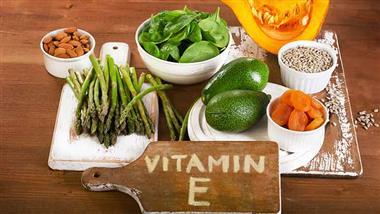
STORY AT-A-GLANCE
- Vitamin E is fat-soluble and comes in eight chemical forms; alpha-tocopherol is the most studied of them and according to the NIH, the only one that meets human requirements
- Vitamin E is a strong antioxidant that has photoprotective properties and helps prevent some cancers. A 2022 paper concludes vitamin E may help enhance cancer immunotherapy by reinvigorating dendritic cells critical to an immune response
- Maintaining optimal levels may help lower systolic blood pressure and diastolic pressure to a lesser degree. Vitamin E insufficiency is associated with an increased risk of cardiovascular events
- Vitamin E may help fertility, demonstrates neuroprotective properties and in combination with vitamin D, vitamin E helps lower symptoms of premenstrual syndrome (PMS)
- While you won’t overdose on vitamin E-rich foods because it’s a fat-soluble vitamin and is stored in fat cells, you can overdose with supplements. This can trigger adverse side effects, including inhibition of platelet aggregation and bleeding
Researchers have discovered that vitamin E comes in eight different forms but only one appears to meet human requirements, according to the National Institutes of Health.1 Some foods are a natural source of vitamin E, which is the name for this group of fat-soluble compounds. Each of the eight forms has some level of biological activity, but it’s alpha-tocopherol that scientists have found prevents the propagation of free radicals and which the body prefers to use.
Additionally, only alpha-tocopherol supplementation has been shown to reverse symptoms of a vitamin E deficiency.2 There are four tocopherol isoforms and four tocotrienol isoforms. Alpha-tocopherol is incorporated into lipoproteins in the liver that are then transported throughout the body.
While this has been the primary chemical form studied, researchers have also found that some forms of tocotrienols have biological activity, although they have lower systemic bioavailability.3
According to the NIH,4 three national surveys showed most Americans may consume less than the recommended dietary allowance (RDA) of vitamin E developed by the Food and Nutrition Board (FNB). The RDA for alpha-tocopherol, which is the only recommendation made by the FNB, is from 11 mg to 15 mg beginning at age 9 through senior years. The RDA for lactating women is 19 mg per day.
The FNB believes alpha-tocopherol intake in healthy adults is likely higher than the national surveys indicate, since frank deficiency is rare and overt symptoms are not usually found in healthy people. However, as you are likely aware, there is a significant difference between overt deficiency and insufficiency that increases your risk of health conditions. Research data has now linked vitamin E with several unique health benefits.
Vitamin E Is a Strong Antioxidant Fighting Aging and Cancer
Understanding the importance of antioxidants began as scientists learned how free radical damage was involved in the early stages of atherosclerosis and that free radical damage may be involved in a host of other chronic health conditions.5 Vitamin E plays a significant role as an antioxidant as it scavenges loose electrons and reduces cellular damage.
One of the benefits of lowering free radical damage is reducing skin damage after UV exposure. Vitamin E has been used in dermatology for more than 50 years and is added to cosmetic products.6 Additionally, the presence of vitamin C can slow lipid oxidation by regenerating alpha-tocopherol from radicals found in cell membranes.7
Vitamin E is a major lipid-soluble antioxidant, protecting against oxidative stress in the epidermis and dermal layers of the skin. Data show that it has strong photoprotective and antiaging properties that help to improve elasticity and structure of the epidermis and dermis. Topical application has been widely used, after which vitamin E accumulates in the cell membranes and extracellular lipid matrix, where it contributes to antioxidant defenses.8
In April 2022, researchers from MD Anderson Cancer Center9 published a paper in Cancer Discovery,10 in which they discuss data that show vitamin E may enhance cancer immunotherapy through a pathway that reinvigorates dendritic cells.
Dendritic cells have been a focus in cancer immunotherapy as they are critical in the immune response. Several strategies have been developed to target these cells in the hope that a better understanding of their function may help improve cancer therapies.11 The researchers found that an analysis of electronic health records showed patients who took vitamin E had significantly improved survival rates.12
Recognizing that the impact of nutritional supplements in addition to immunotherapy is a relatively unexplored area, the researchers undertook an analysis of vitamin E and found that it blocks the activity of the SHP1 checkpoint, which in turn improves T cell ability to mount an antitumor immune response.13 Another 2020 study,14 looked at the benefits of using alpha-tocopherol in cancer prevention.
Researchers began with the understanding that those with a lower nutritional status had an increased risk of cancer and in some populations, supplementation had beneficial effects in lowering the risk. Other studies have focused on tocotrienol and the gamma and delta forms of tocopherols. While these three vitamin E compounds have a lower bioavailability, they appeared to have stronger cancer-preventive properties in animal models and cell lines.
Optimal Levels May Normalize High Blood Pressure
High blood pressure is a risk factor for cardiovascular disease. One 2002 triple-blind, placebo-controlled clinical trial15 evaluated the effects of vitamin E on blood pressure and heart rate in 70 individuals diagnosed with mild high blood pressure. At this time, the new blood pressure guidelines from the American College of Cardiology and American Heart Association had not yet been released.16
While the 2002 study categorized the participants with mild high blood pressure, the new guidelines would categorize those same participants with Stage 2 hypertension. At the end of the study, the researchers found a 24% decrease in systolic blood pressure in patients receiving vitamin E and a 12.5% reduction in diastolic blood pressure.
The participants received 200 IU of vitamin E each day which the researchers concluded could be an effective long-term strategy to reduce blood pressure.17
Another study in 2002 evaluated blood pressure in 15,317 men and women over age 20 and found that antioxidant vitamins could be important in the prevention of high blood pressure.18 Interestingly, researchers in 2000 evaluated vitamin E supplementation in patients whose high blood pressure was controlled using medication. In this case, supplementation appeared to have no relevant effect.19 This study was funded in part by the drug company Bayer Italia.
More recently, a 2019 meta-analysis20 published in the Journal of Human Hypertension analyzed systolic blood pressure, diastolic blood pressure and mean arterial pressure in individuals who received vitamin E supplementation. A review of the qualifying studies showed no significant effect on mean arterial pressure or diastolic blood pressure but a reduction in systolic blood pressure.
Another 2020 paper21 began with the premise that although randomized human trials have resulted in conflicting results with vitamin E supplementation, data show vitamin E deficiency is associated with an increased risk of cardiovascular events. These researchers suggest that the outcome of the human trials was significantly affected by the participants’ comorbidities, genetic variations, gender and age.
In a review of the literature, they found that patients diagnosed with a myocardial infarction frequently had lower plasma levels of vitamin E. They suggest that short-term treatment shows promising results and, thus, using acute rather than chronic supplementation may provide positive clinical outcomes.
More Health Benefits From Vitamin E Antioxidant Capacity
Vitamin E contributes to even more health benefits. Millions of women are impacted by premenstrual syndrome (PMS), which was first described in 1931. In 2009,22 researchers estimated 80% to 90% of women in their reproductive years suffer from symptoms, and up to 8% of those experience severe symptoms.
A 2016 study showed that supplementing with vitamin D and E had a significant effect on PMS symptoms and was “an effective and affordable treatment” for the condition.23 This supports a 1983 double-blind, randomized dose-response study24 of 75 women that suggested supplementation may be valuable for women with symptoms of severe PMS.
Vitamin E is essential for reproductive health in the rodent population,25 most notably in the development of the placenta. A 2018 paper26 acknowledges that while researchers know it is necessary for fertility, studies are lacking on how it affects female reproductive health.
Vitamin E has also demonstrated neuroprotective properties, notably in a study27 of 30 patients with glaucoma whose progression slowed while taking oral alpha-tocopherol acetate and a 2014 paper28 that clarified the use of vitamin E in Alzheimer’s disease, finding it delayed the onset and progression of Alzheimer’s disease. A 2005 animal model29 demonstrated that alpha-tocotrienol acted on molecular checkpoints to protect against stroke-induced neurodegeneration.
More Vitamin E Is Not Better
Vitamin E is a fat-soluble vitamin. The differences between water-soluble and fat-soluble vitamins affect how the vitamins are absorbed and stored. Your body can excrete water-soluble vitamins when there is an excess of the vitamin. But fat-soluble vitamins are dissolved and stored in fat, which is how they travel through the small intestine and are distributed in the bloodstream. Because the vitamin is fat-soluble, it is best absorbed when you’re eating a fat-rich meal.
And, because it’s fat-soluble, your body stores any excess of the vitamin, which increases your risk of adverse side effects. According to the National Institutes of Health,30 it’s highly unlikely that you will experience adverse effects from consuming vitamin E-rich foods. However, high doses of alpha-tocopherol supplements can trigger side effects. Some common side effects include:31
| Diarrhea | Weakness | Blurred vision |
| Nausea | Fatigue | Stomach cramps |
| Headache | Rash | Inhibition of platelet aggregation and bleeding |
Another challenge associated with taking vitamin E supplements is the lack of data indicating synthetic supplements are beneficial. A 2012 study32,33 concluded that synthetic alpha-tocopherols found in vitamin E supplements had no discernible cancer protection but gamma- and delta-tocopherols found in food helped prevent colon, breast and prostate cancer.
Bear in mind that a supplement will not tell you it’s synthetic, so you have to know what to look for on the label.
- Synthetic alpha-tocopherol is typically listed with a “dl” (i.e., dl-alpha-tocopherol)
- Nonsynthetic or naturally derived is typically listed with a “d” (d-alpha-tocopherol). Note that when vitamin E is stabilized by adding either succinic acid or acetic acid, the chemical name changes from tocopherol to tocopheryl (as in d-alpha-tocopheryl succinate, for example)
Vitamin supplements are chemical additions to your body. As with other supplements, there is the potential that vitamin E supplements can interact with different types of medication.34
Because vitamin E inhibits platelet aggregation, using it when you’re taking an anticoagulant or antiplatelet medication can increase the risk of bleeding. People taking antioxidant supplements, such as vitamin E, may find the supplement interferes with statin medications, specifically simvastatin (Zocor) or niacin.
You Can’t Go Wrong With Vitamin E-Rich Foods
Vitamin E is found in green leafy vegetables, nuts and some seeds. CNET lists foods that can help boost your vitamin E intake, including:35
| Sunflower seeds | Almonds | Spinach |
| Avocado | Asparagus | Mango |
| Pumpkin | Red bell pepper | Tomato |
| Hazelnuts | Kiwi |
Grass-fed butter is also a rich source of vitamin E in a highly absorbable form. Butter doesn’t have to be a guilty pleasure. When butter is consumed as a whole food from a grass-fed source it contains many of the nutrients that your body needs. Some of these include:36
- Vitamins A, K2 and E
- Lecithin for cholesterol metabolism and nerve health
- Antioxidants
- Iodine in a highly absorbable form
- 1, 4 National Institutes of Health, Vitamin E
- 2 Oregon State University, vitamin E
- 3, 14 Molecular Carcinogenesis, 2020;59(4)
- 5 Harvard School of Public Health, vitamin E
- 6 Indian Dermatology Online Journal, 2016;7(4)
- 7 Nutrients, 2021;13(1)
- 8 Oregon State University, Vitamin E and Skin Health
- 9, 13 MD Anderson Cancer Center, April 14, 2022
- 10, 12 Cancer Discovery, 2022;12(7)
- 11 Nature Reviews Immunology, 2020;20
- 15, 17 International Journal for Vitamin and Nutrition Research, 2002;72(5)
- 16 American College of Cardiology, November 13, 2017
- 18 Hypertension, 2002;40
- 19 American Journal of Hypertension, 2000;13(5)
- 20 Journal of Human Hypertension, 2019;33
- 21 Antioxidants, 2020;9(10)
- 22, 23 Iranian Journal of Nursing and Midwifery, 2016;21(2)
- 24 Journal of the American College of Nutrition, 1983;2(2)
- 25 Advances in Nutrition, 2012;3(3)
- 26 Antioxidants, 2018;7(2) Abstract
- 27 European Journal of Ophthalmology, 2007;17(4)
- 28 Nutrients, 2014;6(12)
- 29 Stroke, 2005;36(10)
- 30 National Institutes of Health, Vitamin E Health Risks 65% DTP
- 31 CNET, January 30, 2023, Subhead: You May experience side effects
- 32 Cancer Prevention Research, 2012;5(5)
- 33 Science Daily, April 23, 2012
- 34 National Institutes of Health
- 35 CNET, January 30, 2023
- 36 Weston A. Price Foundation, January 1, 2000
Keep These B Vitamins on Your A-List
Reproduced from original article:
https://articles.mercola.com/sites/articles/archive/2023/02/20/b-vitamins-benefits.aspx
The original Mercola article may not remain on the original site, but I will endeavor to keep it on this site as long as I deem it to be appropriate.
Analysis by Dr. Joseph Mercola Fact Checked February 20, 2023
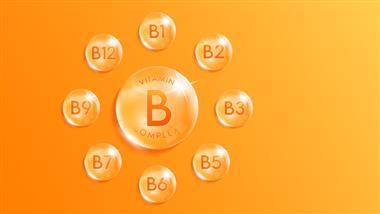
STORY AT-A-GLANCE
- B vitamins are a group of eight micronutrients that are not related to each other and play a significant role in maintaining optimal health. They are found in a variety of foods, but certain health factors may increase your body’s requirement
- B vitamins are pivotal to regulating the immune system and helping to prevent a dangerous cytokine storm during a COVID-19 infection. Nicotinamide adenine dinucleotide (NAD+) plays an important role in this process and niacin is a building block of NAD
- They are also neuroprotective, playing a role in lowering depression and anxiety, lowering the potential risk of vincristine-induced peripheral neuropathy associated with chemotherapy agents and potentially playing a role in nerve regeneration by supporting cell structures
- Review this list of foods containing the B vitamins and consider limiting sugar and eating fermented foods to increase your production and absorption of the B vitamins in a healthy gut
One group of eight micronutrients is commonly called B vitamins or B-complex vitamins. These are water-soluble vitamins your body requires for normal functioning. Because they are water-soluble, the body does not store them. Any excess vitamin B you consume during the day is excreted in the urine.
This also means that you must consume these vitamins each day to meet your body’s requirements. They are micronutrients because you only need them in small quantities, yet they play a significant role in optimal health. Despite belonging to the same complex of vitamins, they are not related.
While they are found in a variety of foods, certain factors may increase your need for B vitamins. These factors include your age, dietary choices, genetics, medications, liver disease and alcohol use.1 The eight B vitamins and their function include:2
| B1 (thiamin) — Glucose metabolism and nerve function |
| B2 (riboflavin) — Metabolism, vision and skin health |
| B3 (niacin) — Skin health, carbohydrate and fat metabolism, nervous system and digestion |
| B5 (pantothenic acid) — Metabolism and red blood cell and steroid hormone production |
| B6 (pyridoxine) — Protein and carbohydrate metabolism, red blood cell production, creation of neurotransmitters and steroid hormone activity |
| B7 (biotin) — Carbohydrate and fat metabolism |
| B9 (folate) — Fetal nervous system, DNA synthesis, cell growth and forming red blood cells |
|
B12 (cobalamin) — Neurological function, mental ability and red blood cell production |
Irregulated Immune System Raises Risks Linked to COVID
Since 2020, the health condition that’s been at the top of many people’s minds has been COVID-19. I’ve written many articles reviewing how nutrients like vitamins C and D can help prevent and play a role in the treatment of this illness. Another nutrient known to influence your immune system and immune competence is the group of B vitamins.
One factor that makes COVID-19 dangerous for people with underlying medical conditions is it overactivates your immune system and triggers a cytokine or bradykinin storm. B vitamins play a role in modulating immune function, which means the immune system functions more effectively and minimizes this risk. Dr. Uma Naidoo, a nutrition expert from Harvard Medical school, explains it this way to Yahoo! Life:3
“You can think of the immune system as an army. Its job is to protect the body. But if the immune system army isn’t well-regulated, it can overreact and actually cause more damage — this overreaction is what often happens in COVID-19 and is referred to as the cytokine storm. Cytokines are inflammatory molecules released by immune cells. They are like the weapons of the immune system army.
So, if immune cells are soldiers, cytokines are guns and grenades. And in a poorly regulated immune system, the body’s cytokine storm induced by COVID causes lots of inflammation in the body, just as if little grenades were being tossed around. This is what causes the worst outcomes and death in COVID.”
A 2021 paper4 stresses the need to highlight the importance of B vitamins as they play a pivotal role in proper immune function. They assist in the activation of both the innate and adaptive responses, as well as reducing proinflammatory cytokines and preventing hypercoagulability. B vitamins not only contribute to a healthy immune system but potentially could prevent or reduce severe symptoms of COVID-19.
The paper detailed the various functions B vitamins have that may be useful in managing COVID-19 symptoms. This includes vitamin B1 deficiency that creates an inadequate antibody response, vitamin B5 and B6 deficiencies that may affect inflammation and vitamin B9 deficiency that adversely affects your adaptive immune response as B9 helps prevent the virus from binding to and gaining entry into your cells.
Niacin may be another missing piece to the COVID-19 puzzle. A 2021 paper5 awaiting peer review by Dmitry Kats, Ph.D., focuses specifically on niacin and raises the question of whether this vitamin may be a crucial player in the disease process.
Kats notes that a hallmark of COVID-19 is the cytokine storm, which can lead to multiple organ failure and death. By decreasing and controlling these damaging cytokines, you stand a good chance of thwarting the cytokine storm and the downstream damage that it causes. Nicotinamide adenine dinucleotide (NAD+) plays an important role in this process and niacin is a building block of NAD. As researchers in the 2021 paper explain:6
“NAD+ is released during the early stages of inflammation and has immunomodulatory properties, known to decrease the pro-inflammatory cytokines, IL-1β, IL-6 and TNF-α. Recent evidence indicates that targeting IL-6 could help control the inflammatory storm in patients with COVID-19.”
In addition to markedly decreasing proinflammatory cytokines, niacin has also been shown to:7
- Reduce the replication of several viruses, including vaccinia virus, human immunodeficiency virus, enteroviruses and hepatitis B virus
- Reduce neutrophil infiltration
- Have anti-inflammatory effect in patients with ventilator-induced lung injury
Lower Symptoms of Depression and Anxiety With B Vitamins
The need for strategies to lower anxiety and depression rose dramatically during the COVID-19 pandemic. Since it’s likely not the last pandemic in the coming months and years, this need will presumably not dissipate. Developing strategies to improve resilience is an important step to protecting your health and the health of your family.
A double-blind 2022 study8 engaged 478 college students over a five-year period during which the participants received one of three options: a lactose placebo pill, 1,000 microgram vitamin B12 tablet or 100 milligrams (mg) vitamin B6 tablet for one month. The researchers used questionnaires and specific visual tests that gave evidence of GABAergic inhibitory interactions to evaluate the symptoms of anxiety and depression.
Gamma-aminobutyric acid (GABA) is a chemical known to inhibit nerve impulses in the brain and thus lower excitability. Vitamin B6 is a coenzyme in the production of GABA and in other pathways that help reduce neural excitability. The participants consumed vitamin B6 or B12 at 50 times higher than the recommended daily dose.
However, as the researchers pointed out, recent evidence demonstrates that while the optimum level of vitamin B has not been established, it “certainly exceeds the Recommended Daily Allowance (RDA) and many individuals are borderline deficient.”9
The researchers found that B6 supplementation lowered anxiety and produced a trend toward lower levels of depression, and B12 supplementation also helped lower anxiety. While there were some limitations to the study, such as not doing a baseline or post-test serum analysis to determine if the participants were deficient or if the supplements raised the serum level, the researchers found that:10
“… nutrition-based interventions produce far fewer unpleasant side effects than drugs, and so in the future people might prefer them as an intervention. To make this a realistic choice, further research is needed to identify other nutrition-based interventions that benefit mental wellbeing, allowing different dietary interventions to be combined in future to provide greater results.”
Magnesium is another nutrient that has a powerful effect on depression and anxiety; so much so that Psychology Today calls it the “original chill pill.”11 Researchers have demonstrated that magnesium has a beneficial effect on an individual’s subjective perception of anxiety,12 and that magnesium was effective in the treatment of mild to moderate depression in adults without the need for monitoring for toxicity.13
Magnesium and vitamin B6 work even better in combination. A 2018 study14 highlighted the importance of these two nutrients on mental health. When taken together, animal studies have demonstrated they have a complementary effect on stress reduction.
The research was a Phase IV investigator-blinded trial in healthy adults who received either magnesium alone or a combination of magnesium and vitamin B6. They found those taking the combination had a 24% improvement in stress scores.
Download this Article Before it Disappears
Improves Cardiovascular and Neurological Systems
B vitamins are powerhouse nutrients also known to protect your brain and heart. Two that are frequently studied are vitamins B6 and B12. According to Drugs.com,15 one function of vitamin B6 is to help the body maintain normal levels of homocysteine. This is an amino acid that has been associated with dementia, stroke, osteoporosis and heart disease when it is above normal levels.16
A preliminary study17 in 2007 demonstrated that high levels of vitamin B6 helped lower levels of homocysteine in men with schizophrenia and schizoaffective disorder but not women. The data have not consistently shown that reducing homocysteine levels using vitamins B6 and B12 could reduce cardiovascular events.
However, a 2021 study18 assessed the effect of vitamins B6, B9 and B12 on homocysteine levels as it is also related to the risk of stroke, cardiovascular disorders and vascular death. The intervention demonstrated a risk reduction of 11% among stroke patients for the three risks, a 13% reduction for stroke and a 17% reduction for vascular death.
In addition to the effect on mental health, vitamins B6 and B12 have demonstrated properties that protect against peripheral neuropathy. A 2021 study19 sought to evaluate if B6 and B12 could prevent vincristine-induced peripheral neuropathy which occurs in 40% to 45% of patients receiving this chemotherapeutic agent.
Of the 102 patients enrolled, 81 completed the study during which the researchers found a significant difference in the incidence of peripheral neuropathy between the intervention and placebo groups. Data showed an absolute risk reduction of 30% and a relative risk reduction of 54% in the intervention group.
A 2021 paper20 published in BioMed Research International proposed that vitamins B1, B6 and B12 are key players in the protection of the neurological system against environmental influences. They suggest these vitamins may help nerve regeneration by supporting the development of cell structures.
How to Improve Your Vitamin B Status
I generally recommend getting most if not all your nutrition from locally and organically sourced real food. Depending on your situation and condition, however, you may need to consider supplements. Start by reviewing the following list of foods that contain B vitamins. If you find that you rarely or never eat foods rich in one or more of these nutrients, you may want to consider taking a high-quality, ideally food-based supplement.
Also, consider limiting sugar and eating fermented foods. B vitamins are produced within a healthy gut environment. Eating real food, including plenty of leafy greens and fermented foods, will provide your microbiome with important fiber and beneficial bacteria to help optimize your internal vitamin B production.
| Vitamin B1 — Pork, fish, nuts and seeds, beans, green peas and brown rice.21 The RDA is 1.1 mg for adult women and 1.2 mg for adult men. |
| Vitamin B2 — Eggs, organ meats, lean meats, green vegetables such as asparagus, broccoli and spinach.22 The RDA is 1.1 mg for adult women and 1.3 mg for men. Your body cannot absorb more than about 27 mg at a time, and some multivitamins or B-complex supplements may contain unnecessarily high amounts. |
| Vitamin B3 — Chicken, pork, brown rice, peanuts, avocados, sunflower seeds and pumpkin seeds.23 The dietary reference intake established by the Food and Nutrition Board ranges from 14 to 16 mg per day for adults. |
| Vitamin B5 — Beef, poultry, seafood, organ meats, eggs, milk, mushrooms, avocados, potatoes, broccoli, peanuts, sunflower seeds, chickpeas and brown rice.24 The RDA is 5 mg for adults over the age of 19. |
| Vitamin B6 — Turkey, beef, chicken, wild-caught salmon, sweet potatoes, potatoes, sunflower seeds, pistachios, avocados, spinach and bananas.25 Nutritional yeast is an excellent source of B vitamins, especially B6.26 One serving (2 tablespoons) contains nearly 10 mg of vitamin B6.
Not to be confused with Brewer’s yeast or other active yeasts, nutritional yeast is made from an organism grown on molasses, which is then harvested and dried to deactivate the yeast. It has a pleasant cheesy flavor and can be added to several different dishes. |
| Vitamin B9 — Fresh, raw, organic leafy green vegetables, especially broccoli, asparagus, spinach and turnip greens, and a wide variety of beans, liver, black-eyed peas and avocados.27 Folic acid is a synthetic type of B vitamin used in supplements; folate is the natural form found in foods.
For folic acid to be of use, it must first be activated into its biologically active form (L-5-MTHF). Nearly half the population has difficulty converting folic acid into the bioactive form due to a genetic reduction in enzyme activity. For this reason, if you take a B-vitamin supplement, make sure it contains natural folate rather than synthetic folic acid. Nutritional yeast is an excellent source.28 |
| Vitamin B12 — Vitamin B12 is found almost exclusively in animal tissues, including foods like beef and beef liver, lamb, snapper, venison, salmon, shrimp, scallops, poultry, eggs and dairy products.29 Nutritional yeast is high in B12,30 and is highly recommended for vegetarians and vegans. One serving (2 tablespoons) provides nearly 8 mcg of natural vitamin B12. |
- 1 Nutrients, 2016;8(11) Table 1
- 2 Better Health Channel, Vitamin B
- 3 Yahoo! Life, August 27, 2020
- 4 Maturitas, 2021; 144 para 3
- 5 OSF Preprints, Sufficient Niacin Supply: The Missing Puzzle Piece to COVID-19
- 6, 7 Maturitas, 2021; 144 Section 1.3, para 1, 45% DTP
- 8, 9 Human Psychopharmacology, 2022; doi: 10.1002/hup.2852
- 10 EurekAlert! July 19, 2022
- 11 Psychology Today, June 12, 2011
- 12 Nutrients, 2017;9(5)
- 13 PLOS ONE June 27, 2017
- 14 PLOS ONE, 2018;13(12)
- 15 Drugs.com, January 19, 2023, subhead 1 top 2 paras
- 16 Harvard Health, March 9, 2014 Para 1
- 17 Clinical Neuropharmacology, 2007 30(1) Results and Concl
- 18 Cureus, 2021;13(5)
- 19 Pharmaceutics and Pharmacology Research, 2021; doi: 10.31579/2693-7247/080
- 20 BioMed Research International, 2021; doi: 10.1155/2021/9968228
- 21 NIH, Thiamin
- 22 NIH.gov Riboflavin
- 23 NIH, Niacin
- 24 NIH, Pantothenic Acid
- 25 NIH, Vitamin B6
- 26, 28, 30 Nutrition Data, Nutritional Yeast
- 27 NIH, Folate
- 29 NIH, Vitamin B12
Do You Want to Die Old, or Sick?
Reproduced from original OMNS article (OrthoMolecular News Service):
http://orthomolecular.org/
Subscribe to the free Orthomolecular Newsletter: http://orthomolecular.org/subscribe.html
Go to the OMNS Archive: http://orthomolecular.org/resources/omns/index.shtml
Orthomolecular Medicine News Service, Feb 13, 2023
Commentary by Tom Taylor
OMNS (Feb 13, 2023) We are somewhat indoctrinated by prior generations to eventually expect to spend a few years in the old folks’ home being sick, but how avoidable is that? The associated question I carry around is, “Why save for retirement if all you are going to do is spend it on doctors and hospitals?” Isn’t health the first wealth?
In my age group, one spends a noticeable amount of time attending funerals, being a pallbearer, or taking folks to the architecturally gorgeous hospitals for one treatment or another. Have I so failed in spreading the word about vitamin C that this will cause me to be forever making these trips — or as in Greek mythology, continually push a rock up the hill like Sisyphus ? [1]
I have visited enough hospitals to conclude that, although we used to build beautiful churches, now it seems we are building beautiful hospitals. The shift seems to be somewhat timed with the arrival of the Flexner Report and Ancel Keys on the world stage. Flexner facilitated a more or less medical monopoly [2] and Keys is credited with setting us off on the dietary fat avoidance path. [3]
One current observable trend among doctors who seem to live well off internet videos is longevity versus belly fat. [4, 5] Note the two different points of view. Having attended my share of funerals, my personal database states that longevity and health are clearly related to avoiding excess weight. The anchor point in this mental graph of mine is singer Israel Kamakawiwoʻole of “Somewhere over the Rainbow” fame. [6] Sadly, when he died at 38, he weighed 750 pounds. On my mental graph, one advantage is being a pallbearer for those that made it to age 80 — because lifting them isn’t that much of a struggle. The heavy ones are mostly gone by then.
I am 69, and in my age group and with my advocacy for vitamin C, I get the regular question, “Well, Tom, how long do you expect to live?” My answer is always 93. That seems to be the common life span of the vitamin C crowd, e.g., Linus Pauling, [7] so I go with that number and plan accordingly. Meanwhile I imagine that several people annoyed by my vitamin C advocacy are waiting for their schadenfreude moment [8] for me.
So back to the question of do you want to die old or die sick? The answer if one favors dying old, is to read some of the pointers at the end of this article. But my example is Uncle Eddie. Eddie died raking leaves one fall at age 88. He kept his weight down, ate lots of fresh vegetables and did plenty of gardening. That is sufficiently close to dying with your boots on for me. My detractors will point out that Eddie’s solution to many of life’s minor problems was to have a Coca-Cola. Would laying off the Cokes have gotten him to 93? This clearly needs more research, but I imagine that the Coca-Cola Company would like you to have a Coke while you think about this one.
So, did big pharma learn from Coca-Cola advertising? Well according to sugar-is-the-greatest-health-
And one last thought I will attribute to Dr. Diana Schwarzbein is, “If you only want to live to 50, eat anything you want, do anything you want to do, your body will put up with abuse until then.” [10] Ok, so then by extension, exactly how did Methuselah make it to 969 years? [11] We can only be certain he was not eating our modern fast-food diet.
In the video of reference [4], titled “There’s No Such Thing as An Overweight Healthy Person”, Dr. Joel Fuhrman, M.D. states that if we are honest with ourselves and used his recommended BMI of 23 instead of the more common 25 as a maximum healthy weight, then 89% of Americans are overweight. Quite possibly many of the rest are heavy smokers and alcoholics. That would leave maybe 2.4% who he feels are healthy and a “normal” weight. That is a tough one to swallow as it throws nearly all of us, including me, into the overweight or non-healthy category.
The point of this article is not to berate anyone about weight, but to merely bring to light that there is a lot of data that correlates well lived longevity and weight. Additionally, that weight underlies many of the diseases of our citizenry, especially as we age. We all have many challenges we are willing to work on, and being overweight is just one of them. Between now and my age 93, should I make it those 25 years, I will keep this factoid in mind.
In closing, writing for Orthomolecular Medicine News Service helps me assimilate this material, and I hope it helps you a bit too. In the meantime, I feel confident I will continue to serve as a pallbearer for some folks who essentially said to me at some point, “But Tom, I like my sugar!”
Pointers:
- 78-Year-Old Mega dosing 30 grams of Vitamin C per day for 40 years. This wipes out his allergies and he has hardly ever been sick. “My Personal Story of Mega-dosing Vitamin C” http://orthomolecular.org/
resources/omns/v16n41.shtml - If you feel 30 grams (30,000 mg) a day is a bit wild, it is not. Look at this dosage table developed by Dr. Klenner, an early vitamin C advocate. http://www.doctoryourself.com/
klenner_table.html
- If you feel 30 grams (30,000 mg) a day is a bit wild, it is not. Look at this dosage table developed by Dr. Klenner, an early vitamin C advocate. http://www.doctoryourself.com/
- For one of the best sources of pragmatic and extensive health research but written for the general population, I direct you to the several books authored by Dr. Thomas Levy. His website is: https://www.peakenergy.com/
- For a very broad health education, without having to turn up to class or learn to draw blood, the videos from The Silicon Valley Health Institute will get you well down that road. https://www.youtube.com/c/
SiliconValleyHealthInstitute/ videos - If you are trying to search for natural solutions to a specific health issue, try http://www.doctoryourself.com/ Organization is a bit eclectic, but the search bar works well.
- What supplements should I take? There are many confusing answers and no perfect one. The conclusion to this recent OMNS article has a good list from a credible source. http://orthomolecular.org/
resources/omns/v18n30.shtml - Cancer? Try “Summary of Recent Research with Three Nutrients in the War Against Cancer”
http://www.orthomolecular.org/resources/omns/v17n26.shtml
Also see Riordan Clinic paper listed below. - Blood Pressure? Try “Vitamin C Reduces Blood Pressure”
https://youtu.be/CHapiUjCeU8 - Is all of this worth the effort? Try my paper from 2021, “Why I am Healthier at 68 than at 12?” http://www.orthomolecular.org/
resources/omns/v17n12.shtml - Vitamin C is good for nearly everything, but it takes most of us, including me, a long while to believe that one. Dr. Levy, referenced above, likes to say there are not 12,000 unique diseases as is commonly believed but the number is closer to one! That one being a lack of antioxidants and vitamin C is a cheap and easy source of antioxidants.
Speed and massive retaliation! The moment you feel that drippy nose, or excessive fatigue, take action. That action is mega dosing vitamin C. Waiting for a day allows the disease to become established and fighting will be a whole lot harder.- My favorite vitamin C lecture is by Dr. Robert Cathcart. It is rapid pace, but great insight. You may need to listen a few times. “(2006-09) Robert Cathcart – Mega C for Viral & Other Diseases” Skip down and start at the 4:58 time mark. https://youtu.be/PKD3BXL8ESA
- Dr. Cathcart developed the concept of titration to bowel tolerance. This means the ideal dose of vitamin C when sick is when you suddenly start feeling better, but your bowels feel a little squeamish. This link explains the concept. It works well. http://www.doctoryourself.com/
titration.html - Here is Dr. Cathcart explaining how to prepare and give vitamin C as an IV. This will essentially mainline vitamin C, skip all the pills, and I think it avoids the squeamish bowel problem. http://www.doctoryourself.com/
vitciv.html
- Dr. Cathcart developed the concept of titration to bowel tolerance. This means the ideal dose of vitamin C when sick is when you suddenly start feeling better, but your bowels feel a little squeamish. This link explains the concept. It works well. http://www.doctoryourself.com/
- I say to any who will listen, if I get in a bad way take me to the Riordan Clinic in Wichita, KS, USA. https://riordanclinic.org It is not tied to either big pharma or big government, and have made their own way and greatly advanced vitamin C therapy.
- Here is an interesting, practical, and detailed Riordan paper “The Riordan IVC Protocol for Adjunctive Cancer Care” http://www.doctoryourself.com/
RiordanIVC.pdf or https://riordanclinic.org/ research-study/vitamin-c- research-ivc-protocol/
- Here is an interesting, practical, and detailed Riordan paper “The Riordan IVC Protocol for Adjunctive Cancer Care” http://www.doctoryourself.com/
- If you like to just watch the videos, my old article “Vitamin C Material: Where to Start, What to Watch” is still current. Knowledge on vitamin C has been well established for decades. Acceptance by pharma-dominated medicine is still underway. http://orthomolecular.org/
resources/omns/v13n20.shtml
- My favorite vitamin C lecture is by Dr. Robert Cathcart. It is rapid pace, but great insight. You may need to listen a few times. “(2006-09) Robert Cathcart – Mega C for Viral & Other Diseases” Skip down and start at the 4:58 time mark. https://youtu.be/PKD3BXL8ESA
References:
1. Sisyphus. https://en.wikipedia.org/wiki/
2. The Flexner Report. https://en.wikipedia.org/wiki/
3. How Ancel Keys Brainwashed the Masses Into Fearing Meat (He’s Wrong). https://carnivoreaurelius.com/
4. There’s No Such Thing as An Overweight Healthy Person. YouTube, https://youtu.be/n6D131HZFKU
5. Lyon G. How To BUILD MUSCLE & Lose Belly Fat For LONGEVITY. Youtube, https://youtu.be/vAD4X4tiPq8
6. Kamakawiwoʻol I. Somewhere over the Rainbow. Youtube, https://youtu.be/V1bFr2SWP1I1
7. Linus Pauling. https://en.wikipedia.org/wiki/
8. Schadenfreude. https://en.wikipedia.org/wiki/
9. Ifland J. (2019) Food Sensitivities and Health. YouTube, https://youtu.be/_-s8z4u-Uo4
10. Schwartzbein D. Survival of the Smartest. YouTube, https://youtu.be/6qUSvzUj6jo
11. Methuselah. https://en.wikipedia.org/wiki/
(Tom Taylor tom@maskinell.com took an interest in vitamin C two decades ago, resulting in him eliminating his allergies, his headaches, his high blood pressure, and his glasses. He writes occasional OMNS papers to help himself and others assimilate the information. His career has spanned petroleum engineering and geophysics to software development.)
Nutritional Medicine is Orthomolecular Medicine
Orthomolecular medicine uses safe, effective nutritional therapy to fight illness. For more information: http://www.orthomolecular.org
Find a Doctor
To locate an orthomolecular physician near you: http://orthomolecular.org/
The peer-reviewed Orthomolecular Medicine News Service is a non-profit and non-commercial informational resource.
Editorial Review Board:
Albert G. B. Amoa, MB.Ch.B, Ph.D. (Ghana)
Seth Ayettey, M.B., Ch.B., Ph.D. (Ghana)
Ilyès Baghli, M.D. (Algeria)
Ian Brighthope, MBBS, FACNEM (Australia)
Gilbert Henri Crussol, D.M.D. (Spain)
Carolyn Dean, M.D., N.D. (USA)
Ian Dettman, Ph.D. (Australia)
Susan R. Downs, M.D., M.P.H. (USA)
Ron Ehrlich, B.D.S. (Australia)
Hugo Galindo, M.D. (Colombia)
Martin P. Gallagher, M.D., D.C. (USA)
Michael J. Gonzalez, N.M.D., D.Sc., Ph.D. (Puerto Rico)
William B. Grant, Ph.D. (USA)
Claus Hancke, MD, FACAM (Denmark)
Tonya S. Heyman, M.D. (USA)
Patrick Holford, BSc (United Kingdom)
Suzanne Humphries, M.D. (USA)
Ron Hunninghake, M.D. (USA)
Bo H. Jonsson, M.D., Ph.D. (Sweden)
Dwight Kalita, Ph.D. (USA)
Felix I. D. Konotey-Ahulu, MD, FRCP, DTMH (Ghana)
Jeffrey J. Kotulski, D.O. (USA)
Peter H. Lauda, M.D. (Austria)
Alan Lien, Ph.D. (Taiwan)
Homer Lim, M.D. (Philippines)
Stuart Lindsey, Pharm.D. (USA)
Pedro Gonzalez Lombana, MD, MsC, PhD (Colombia)
Victor A. Marcial-Vega, M.D. (Puerto Rico)
Juan Manuel Martinez, M.D. (Colombia)
Mignonne Mary, M.D. (USA)
Joseph Mercola, D.O. (USA)
Jorge R. Miranda-Massari, Pharm.D. (Puerto Rico)
Karin Munsterhjelm-Ahumada, M.D. (Finland)
Tahar Naili, M.D. (Algeria)
Zhiyong Peng, M.D. (China)
Isabella Akyinbah Quakyi, Ph.D. (Ghana)
Selvam Rengasamy, MBBS, FRCOG (Malaysia)
Jeffrey A. Ruterbusch, D.O. (USA)
Gert E. Schuitemaker, Ph.D. (Netherlands)
Han Ping Shi, M.D., Ph.D. (China)
T.E. Gabriel Stewart, M.B.B.CH. (Ireland)
Thomas L. Taxman, M.D. (USA)
Jagan Nathan Vamanan, M.D. (India)
Garry Vickar, M.D. (USA)
Anne Zauderer, D.C. (USA)
Andrew W. Saul, Ph.D. (USA), Editor-In-Chief
Associate Editor: Robert G. Smith, Ph.D. (USA)
Editor, Japanese Edition: Atsuo Yanagisawa, M.D., Ph.D. (Japan)
Editor, Chinese Edition: Richard Cheng, M.D., Ph.D. (USA)
Editor, Norwegian Edition: Dag Viljen Poleszynski, Ph.D. (Norway)
Editor, Arabic Edition: Moustafa Kamel, R.Ph, P.G.C.M (Egypt)
Editor, Korean Edition: Hyoungjoo Shin, M.D. (South Korea)
Editor, Spanish Edition: Sonia Rita Rial, PhD (Argentina)
Editor, German Edition: Bernhard Welker, M.D. (Germany)
Contributing Editor: Thomas E. Levy, M.D., J.D. (USA)
Contributing Editor: Damien Downing, M.B.B.S., M.R.S.B. (United Kingdom)
Contributing Editor: W. Todd Penberthy, Ph.D. (USA)
Contributing Editor: Ken Walker, M.D. (Canada)
Contributing Editor: Michael Passwater (USA)
Technology Editor: Michael S. Stewart, B.Sc.C.S. (USA)
Associate Technology Editor: Robert C. Kennedy, M.S. (USA)
Legal Consultant: Jason M. Saul, JD (USA)
Comments and media contact: drsaul@doctoryourself.com OMNS welcomes but is unable to respond to individual reader emails. Reader comments become the property of OMNS and may or may not be used for publication.
Click here to see a web copy of this news release: https://orthomolecular.
This article may be reprinted free of charge provided 1) that there is clear attribution to the Orthomolecular Medicine News Service, and 2) that both the OMNS free subscription link http://orthomolecular.org/
Riordan Clinic | Orthomolecular.org
3100 N Hillside Ave
Wichita, Kansas 67219
United States