Toxins
now browsing by category
Improve Your Physical and Psychological Health With This Simple Lymphatic Drainage Routine
Reproduced from original article:
https://articles.mercola.com/sites/articles/archive/2024/04/20/lymph-flow.aspx
Analysis by Dr. Joseph Mercola April 20, 2024
STORY AT-A-GLANCE
- Your lymphatic system, integral to immune function and waste removal, significantly influences overall health, including physical, mental and emotional aspects
- The “Big 6” routine developed by chiropractor Perry Nickelston involves stimulating six key lymphatic points to enhance blood flow, nerve response and the clearance of toxins. The “Big 6” lymphatic drainage points are: above and below the collarbone, jawline, chest, abdomen, hip area and back of the knees
- A lymphatic drainage routine helps reduce swelling, facilitates detoxification, helps prevent disease by boosting immune function, and improves digestion and nutrient absorption
- Understanding the lymphatic system’s unique pressure system is essential; drainage should start at low-pressure areas (above and below the collarbone) and move towards higher-pressure areas to prevent swelling, especially in extremities
- Enhanced proprioception, resulting from a well-functioning lymphatic system, translates into a feeling of safety by allowing the brain to accurately sense joint positions and movements, thus reducing injury risk and boosting confidence and psychological well-being
The lymphatic system is a crucial part of your body’s immune and waste removal systems, and as such play a significant role in your overall health and well-being. Its proper functioning affects physical, mental, and emotional health through its network of vessels and nodes that transport lymph, a fluid containing white blood cells and waste products.
As explained by Perry Nickelston, a practicing chiropractor, in the video above, maintaining a healthy lymphatic system is important for preventing health issues like infections, joint pain, fatigue, and more serious conditions such as lymphedema and cancer.
Your lymphatic system helps remove toxins and waste, supports the immune system, and aids in the absorption and transport of fats and vitamins. The lymphatic system of your brain is called the glymphatic system, and it’s essential for removing waste products from your brain.
When either of these systems gets congested, sluggish or blocked, it can have severe effects on your physical and mental/neurological health.
Regular exercise, a healthy diet, adequate hydration and stress management are essential for supporting lymphatic function. Eastern practices such as Ayurveda and Traditional Chinese Medicine (TCM) have long recognized the lymphatic system’s importance, using methods like lymphatic massage, yoga and herbal remedies to support the free flow of lymph.
To support the health of your lymphatic system, Nickelston has developed a six-step routine called the Big 6, which he describes in the featured video. The routine involves stimulating key lymphatic points in your body by rubbing, tapping and massaging them.
Common Detox Symptoms That May Arise
While the routine may appear deceptively simple, it can have a profound effect, as stimulating these lymphatic spots will boost blood flow to and from various tissues, change how your nerves respond to tightness in the tissues, and encourage the clearance of toxins from your body through your sweat, urine and feces.
As a result of this detoxifying process, you may experience a period of increased fatigue, lethargy, pain, headache, general malaise or illness-like symptoms. This is a sign that toxins are being expelled. As noted by Nickelston, “that is normal.” To aid the detox process, make sure you drink some water before and/or after doing the routine.
Understanding the Lymphatic Pressure System
The lymphatic system operates on a unique pressure system that is pivotal for its efficient functioning. This system’s design ensures the effective drainage of lymph back into the bloodstream.
Understanding the pressure gradients within the lymphatic system is crucial for promoting optimal lymph flow and preventing the accumulation of fluids, which can lead to swelling, especially in the extremities like the hands and feet.
The areas around and above the collarbone represent the points of lowest lymphatic pressure. It is here that the lymphatic fluid drains back into the venous blood system, completing its circuit around the body. Because these points are the final destination for lymph being cleared from the body, they are crucial in the lymphatic drainage process.
Conversely, your hands and feet are the farthest from these low-pressure points, making them more prone to swelling due to the accumulation of lymph fluid, as gravity and distance impede the fluid’s return flow.
By starting at the collarbone — where the pressure is lowest — and working outward and upward, ensures that these low-pressure pathways remain open and able to receive lymph from other parts of the body.
To effectively encourage the movement of lymph through its vessels and nodes, it is essential to clear the lymphatic system from areas of low pressure toward those of high pressure.
This means that any lymphatic drainage technique or routine should never start with the extremities, where pressure is higher and fluid accumulation is more common. Instead, starting at the collarbone — where the pressure is lowest — and working outward and upward, ensures that these low-pressure pathways remain open and able to receive lymph from other parts of the body.

Save This Article for Later – Get the PDF Now
Nickelston’s Big 6 Routine
The six key points for effective lymphatic drainage are as follows. In the video above, Tim Boettner of Think Flow Grow does a full demonstration of Nickelston’s routine so you can follow along. Again, make sure to do them in the correct order, as listed. Use whatever pressure and speed that feels good. You’re not seeking to cause pain.
The whole routine can be completed in just a few minutes and can be done any time of the day. Getting into the habit of doing it once a day, perhaps during your morning shower, is the best way to reap maximum benefits.
1. Above and below your collarbone — Initiating drainage here facilitates the clearance of lymph back into the circulatory system. Begin by lightly rubbing above, over and below your collarbone on one side for several seconds. Next, lightly tap the area with open hand, and then rub the area in a circular motion clockwise and counterclockwise. Repeat on the other side.
2. Jawline — Rubbing and massaging your jawline helps drain lymph from your head and neck. The spot you’re working is located at the top of your neck, directly behind the angle of your jawbone just below your earlobe. Using two or three fingers, rub that area in an up and down motion on one side. Then, lightly tap and do some circular rubbing. Repeat on the other side.
3. Chest — Clearing the chest area supports the drainage of lymph from the upper torso and arms. The spot you’re looking for is where your shoulder attaches to your pectoral muscle. Perform the same rubbing, tapping massaging motions as before on each side.
4. Abdomen — The abdomen is a central hub for lymphatic activity, influencing digestion and lower body lymph flow. To locate the correct spot, place one hand over your belly button and the other hand directly above that. Using both hands, rub your belly up and down. Then, tap your belly with both hands, then stack your hands one atop the other, press your hands into your abdomen and rub in circles.
5. Front of the hip — Stimulating this area encourages the movement of lymph from the lower extremities toward your core. Place your hands over the crease of your groin and rub up and down, then tap and rub in circles.
6. Back of the knees — Finally, the area behind the knees is critical for draining lymph from the lower legs, reducing the risk of swelling in the feet and ankles. Simply place your hands behind your knees and rub above and below the crease of your knees in an up and down motion. Then tap the crease and rub in a circular motion.
When done with all six areas, stand up, lift your heels off the floor and lightly bounce up and down on the balls of your feet for 20 to 30 seconds and shake out your hands and arms.
Adhering to this order is paramount for maintaining an efficient lymphatic system. By starting at the points of lowest pressure and methodically working toward areas of higher pressure, it’s possible to enhance lymph flow throughout the body, bolstering immune function, reducing swelling and promoting overall health.
The Psychological Benefits of Lymphatic Drainage
As explained by Nickelston, this lymphatic drainage routine can also have significant benefits for your emotional and mental health. The reason for this is because when your brain can accurately sense where your body’s joints are in space — a faculty known as proprioception — it significantly contributes to a feeling of safety and security.
Proprioception is part of your body’s sensory system, providing continuous feedback about the position of limbs, the tension in muscles, and the state of joint movement. This sensory information is crucial for maintaining balance, coordinating movements, and performing daily activities confidently and efficiently.
The link between proprioception and feelings of safety lies in your brain’s ability to predict and control bodily movements. When proprioceptive feedback is clear and accurate, your brain can effectively anticipate the outcome of movements, reducing the risk of injury and enhancing physical autonomy. This predictability and control are foundational to a sense of safety, as they enable you to navigate your environment with assurance.
Additionally, clearing the lymphatic system reduces swelling and inflammation around joints, which can otherwise impede the flow of sensory information. Swelling can distort the signals sent by proprioceptors (sensory receptors that detect motion and position) located in muscles, tendons, and joint capsules, leading to decreased proprioceptive accuracy.
As the lymphatic system is optimized and fluid balance is restored, proprioceptors can function more effectively, sending clearer, more precise signals to your brain. As you become more attuned to your body’s positions and movements, you develop a heightened sense of spatial awareness and body control.
This improvement not only aids in physical performance but also reinforces the neural pathways responsible for proprioceptive processing, making your brain more adept at interpreting and utilizing this information.
The culmination of these effects — a well-functioning lymphatic system and enhanced proprioception — contributes to a greater sense of bodily integrity and safety.
When your brain can reliably know where your body is in space, it reduces the perceived risk of falling or suffering an injury, which in turn diminishes anxiety and enhances confidence in your physical capabilities. This assurance extends beyond mere physical safety, influencing psychological well-being by fostering a sense of control and competence in interacting with the world.
Hidden Hazards: Nearly 1,000 Everyday Items Identified as Estrogenic Carcinogens
Reproduced from original article:
https://articles.mercola.com/sites/articles/archive/2024/03/25/estrogen.aspx
Analysis by Dr. Joseph Mercola March 25, 2024
STORY AT-A-GLANCE
- Estrogens are linked to serious health risks, including cancer. The National Institutes of Health added steroidal estrogens used in estrogen replacement therapy and oral contraceptives to its list of known human carcinogens in December 2002
- Synthetic estrogen exposure has surged due to environmental contamination and the widespread use of estrogenic chemicals in consumer products
- A January 2024 study identified 279 estrogenic compounds commonly found in consumer products that induce mammary tumors in animals; another 642 chemicals that could potentially increase the risk of breast cancer by stimulating estrogen or progesterone signaling
- Estrogen dominance, characterized by high estrogen levels, is associated with obesity, particularly around the thighs, hips and buttocks
- Strategies to reduce estrogen exposure include avoiding synthetic products, choosing natural alternatives and supporting liver health. Lifestyle modifications, such as maintaining a healthy weight, minimizing plastic use and managing stress can also help lower your estrogen level and reduce associated health risks
While estrogen replacement is generally regarded as beneficial, if not crucial, for women entering into menopause, a closer look reveals it can cause severe problems and you do not, in fact, want high levels of estrogen.
Originally called adipin, estrogen got its name from its association with weight gain, as in adipose (fat) tissue. In the mid-‘50s, when the drug industry started pushing synthetic estrogens, this knowledge faded from memory.
One of the most infamous early synthetic estrogens prescribed was diethylstilbestrol (DES), which caused fetal malformations and deaths, and cancers in the mothers who took it. DES was eventually withdrawn and banned for use in humans.
DES is not estrogen itself but rather a chemical that mimics estrogen’s actions by activating estrogen receptors. In fact, DES can potentially activate these receptors even more strongly than natural estrogen. This alone is a strong indication that estrogen excess is of serious concern. Studies looking at the effects of estrogen and estrogenic chemicals only add to the certainty.
Estrogen Is Carcinogenic
The National Institutes of Health added steroidal estrogens used in estrogen replacement therapy and oral contraceptives to its list of KNOWN human carcinogens all the way back in December 2002.1 In my mind, estrogen and excess linoleic acid are the two primary reasons for most cancers.
Likewise, the Women’s Health Initiative (WHI) studies, which began in 1991,2 showed estrogen replacement therapy in menopausal women significantly increased the risk of heart attacks, strokes, dementia, Parkinson’s disease and cancer, not just in the breast but all female reproductive organs.
In October 2023, I interviewed bioenergetic researcher Georgi Dinkov about the hazards of estrogen. I’ve included that interview above for your convenience.
As noted by Dinkov in a recent blog post,3 that interview apparently “struck a nerve” with a doctor who “went through the trouble of writing an extensive blog post trying to debunk the already established fact that estrogen is a carcinogen, by claiming that most of that data stems from the WHI studies, and that those are now considered flawed, ergo estrogen cannot be considered a carcinogen.”
In response, Dinkov sent the doctor a long, yet not exhaustive, list of academic articles and studies demonstrating that estrogen is indeed a mutagenic carcinogen — and that any chemical with estrogenic properties poses a serious threat to health.
Hundreds of Everyday Chemicals Linked to Increased Breast Cancer Risk
As just one example, a January 2024 paper4 in Environmental Health Perspectives identified 279 estrogenic compounds commonly found in consumer products that induce mammary tumors in animals, and another 642 chemicals that could potentially increase the risk of breast cancer by stimulating estrogen or progesterone signaling. As reported by Environmental Health News:5
“… More than 900 chemicals commonly found in consumer products and the environment have been linked to breast cancer risk in a new study. The study … identified 921 chemicals that could potentially increase the risk of breast cancer and found that 90% are ubiquitous in consumer products, food and drinks, pesticides, medications and workplaces.
The list includes chemicals like parabens and phthalates, which are commonly found in makeup, skin and hair care products; and numerous pesticide ingredients, including malathion, atrazine and triclopyr, which are used on food and in household pest control products in the U.S.
Breast cancer among young women has increased in recent years.6 Between 2010 and 2019, diagnoses among people 30 to 39 years old increased 19.4%, and among those ages 20 to 29, rates increased 5.3%. This change is too fast to be explained by genetics, so researchers have begun looking more closely at potential environmental causes for the disease.
A 2020 study7 found that women who used chemical hair straighteners more than six times a year had about a 30% higher risk of breast cancer than those who didn’t use chemical straighteners. Those products typically contain one or more of the chemicals identified in the new study as increasing the chances of getting breast cancer.”
Save This Article for Later – Get the PDF Now
Everyday Items May Expose You to Hazardous Levels of Estrogen
In modern times, many synthetic compounds, especially plasticizing compounds, have been developed that have estrogenic properties. Other terms for such compounds are endocrine disruptors and xenoestrogens.
DES is strikingly similar in composition to bisphenol-A (BPA), which the U.S. Food and Drug Administration banned for use in baby bottles and sippy cups in 2012.8 Many pesticides, preservatives, organic pollutants, drugs and even textiles also have estrogenic activity. Polyester and spandex, for example, contain high levels of estrogen-mimicking BPA.9 As noted by Dinkov:10
“… it looks like we are bathing 24×7 in a toxic sea of almost 1,000 chemicals with such properties (aka xenoestrogens), and given their ubiquity in food, drugs, industry, household, hospitals, and even nature it is little surprise the population of Western countries is sicker than ever.
Considering the sheer number of chemicals involved and the near impossibility of avoiding them, keeping the metabolic rate high (helps with excretion of xenoestrogens) and usage of anti-estrogenic chemicals (eg. vitamin E, progesterone, pregnenolone, aspirin, DHT, antihistamines, etc) becomes that much more important.”
The Physiological Role of Estrogen
Estrogen’s carcinogenic properties can in part be explained by its ability to increase cells’ ability to hold water. This is why women with estrogen dominance are prone to edema (water retention). Cellular swelling is both a characteristic of the cellular stress response and a signal for cellular proliferation.
During the follicular phase of the menstrual cycle, estrogen stimulates the uterine lining and follicles to swell and multiply in preparation for the fertilization of an egg. Similarly, during and after pregnancy, breast tissue swells and grows larger to facilitate milk production.
But cellular swelling and proliferation is also a hallmark of cancer. Indeed, the word oncology comes from the Greek word “oncos,” which simply means swelling.
In his 1997 book, “From PMS to Menopause: Female Hormones in Context,”11 biologist Ray Peat12 stated that estrogen had been shown to replicate the shock phase of the stress reaction in animals. According to Peat, the physiological purpose of estrogens is to stimulate cell division by triggering water uptake by the cell.
This is one of the greatest books in health I have ever read. Currently it is out of print and being sold by resellers for $350. I hope to connect with Ray’s widow later this year and get permission to republish his book with a new publishing company I am starting called Joy House and hope we can republish it later this year.
Peat believed that estrogen is a metabolic inhibitor that slows down energy production in the cell. Otto Warburg, after whom the Warburg Effect was named, stated that “the prime cause of cancer is the replacement of the respiration of oxygen in normal body cells by a fermentation of sugar.”
In simpler terms, this is when your body has more than enough oxygen to burn (oxidize) glucose in your mitochondria but instead shuttles glucose outside the mitochondria into the cytoplasm to oxidize or burn in glycolysis and produce lactate. This is the classic form of energy production in cancer cells.
It is not that cancer burns sugar for fuel; it is that cancer cells are sick and unable to effectively burns glucose in their mitochondria so they must shift to inefficiently burn glucose in glycolysis in the cytoplasm, despite having enough oxygen present. This is typically due to mitochondrial metabolic dysfunction.
Essentially, this means anything that limits or prevents your cells’ ability to efficiently burn glucose in your mitochondria is capable of causing cancer, and according to Peat, this is precisely what estrogen is doing.
Obesity, Especially in Women, Is Estrogen-Driven
Estrogen can also promote the accumulation of fat around the thighs, hips and buttocks through several mechanisms. For starters, it influences where fat is stored in the body. Women tend to store fat in these areas due to having higher estrogen levels than men. This pattern is often referred to as the “pear-shaped” body type.
Estrogen also promotes the differentiation and proliferation of fat cells (adipocytes) in the subcutaneous fat layer, which is particularly prevalent in the thighs, hips and buttocks and therefore leads to increased fat storage in these areas.
As mentioned, estrogen also plays a role in regulating metabolism, including glucose and lipid metabolism. Higher estrogen levels can promote the uptake and storage of fatty acids in adipose tissue, contributing to fat accumulation in the lower body.
Hormonal interactions and cellular signaling also play a role. Estrogen interacts with other hormones involved in fat metabolism, such as insulin and cortisol, and these interactions can influence fat deposition and distribution in the body, favoring storage in the lower body regions.
Bioidentical estrogens are every bit as dangerous as synthetic ones and are dangerous, in any amounts, unless they are balanced by an abundance of the natural forms of thyroid, progesterone, and DHEA. Estrogen is a cumulative toxin, because it causes changes in every system of your body, even when present in normal amounts. These cumulative changes appear to accelerate aging in all tissues.
Estrogens are one of the primary factors contributing to increasing your cancer risk, along with the plastic burden contributing their xenoestrogens, as both decrease mitochondrial function. Progesterone is the antidote because it is not only anti-estrogen but is a potent cortisol blocker and will improve mitochondria production of cellular energy by blocking estrogen and cortisol.
Progesterone is the main female hormone, and is a protective hormone during pregnancy, but it is also important in men since it is a general brain-regulating and protective hormone. Lastly, adipose tissue contains estrogen receptors, and estrogen signaling can directly affect the function and activity of fat cells. It promotes the expression of genes involved in fat storage and inhibits genes associated with fat breakdown.
Fasting Isn’t the Answer
Contrary to popular belief, extended fasting isn’t the answer if you’re trying to reshape a pear-shaped body type.13 The reason for this is because chronic fasting often ends up burning more muscle than fat. As reported in the Times of India seven years ago:14
“Dr. Purwa Duggal says stubborn fat in areas such as abdomen, thighs, hips, butt, etc are linked to high estrogen. Prolonged starvation does not necessarily mean burning fat. It may initially cause muscle wasting or utilization of glycogen stores.
Catecholamines, which are fight or flight hormones produced in the body in response to stress, are required to burn fat. ‘Blood flow to stubborn fat areas is usually very poor, as a result, the catecholamines are unable to reach the area to mobilize the fat. Even if the fat is mobilized, while it continues to be in the blood stream, it may get re-deposited in the original areas,’ she adds.”
How to Lower Your Estrogen Load
One of the most important strategies aside from avoiding estrogen and xenoestrogens is to take natural progesterone. Most formulations are not effective as they are oral or transdermal. Ideally it should be dissolved in a high-quality vitamin E with MCT oil and rubbed on mucous membranes like your cheeks or gums. Typical doses are 25 to 50 mg once or twice a day.
Considering the health risks associated with estrogen excess, here are some commonsense strategies that can help you limit your exposure and lower your estrogen load:
| Avoid synthetic estrogens — Minimize exposure to synthetic estrogens, such as those found in hormone replacement therapy and oral contraceptives. Consult with a qualified health care professional about alternative treatments and/or contraceptive methods with lower estrogen content. |
| Choose natural products — Opt for natural and organic personal care products, including makeup, skin care, and hair care items, to reduce exposure to synthetic chemicals like parabens and phthalates, which have estrogenic properties. |
| Limit pesticide exposure — Choose organic produce whenever possible to reduce exposure to pesticides, many of which have estrogenic effects. Washing fruits and vegetables thoroughly can also help remove pesticide residues. |
| Rethink your household products — Many household cleaning products, laundry detergents and air fresheners contain chemicals with estrogenic properties. Swap them out for natural, nontoxic alternatives or make your own cleaning solutions using vinegar, baking soda and essential oils instead. |
| Avoid plastic containers — Minimize the use of plastic containers and food packaging, which can leach estrogenic compounds into food and beverages. Instead, opt for glass or stainless steel containers for food storage and water bottles. |
| Maintain a healthy weight — Aim for a healthy weight and body composition through a balanced diet and regular exercise. Excess body fat, particularly around the thighs, hips, and buttocks, can contribute to higher estrogen levels. |
| Support liver health — Support liver function, as the liver plays a crucial role in metabolizing and eliminating excess estrogen from the body. Eat a nutrient-rich diet, limit alcohol consumption, and consider incorporating liver-supporting herbs and supplements, such as milk thistle or dandelion root. |
| Promote hormonal balance — Explore natural approaches to promote hormonal balance, such as consuming foods rich in cruciferous vegetables (such as broccoli, cauliflower and kale) and flaxseeds, which contain compounds that help support estrogen metabolism and detoxification. |
| Reduce stress — Manage stress through relaxation techniques like meditation, deep breathing exercises, yoga or spending time in nature. Chronic stress can disrupt hormone balance, including estrogen levels, so prioritizing stress reduction is essential. |
- 1 Science Daily December 13, 2002
- 2 Women’s Health Initiative
- 3, 10 Haidut.me February 20, 2024 (Archived)
- 4 Environmental Health Perspectives January 10, 2024; 132(1)
- 5 Environmental Health News January 10, 2024
- 6 JAMA Network Open 2023; 6(8):e2328171
- 7 Cancer Epidemiology December 3, 2019
- 8 Legislative Bans of BPA
- 9 CEH.org September 1, 2021
- 11 From PMS to Menopause: Female Hormones in Context (PDF)
- 12 Ray Peat Articles
- 13 Haidut.me December 17, 2023 (Archived)
- 14 Times of India April 25, 2017
Skyrocketing Male Infertility May Threaten Mankind’s Survival
Reproduced from original article:
https://articles.mercola.com/sites/articles/archive/2024/03/21/skyrocketing-male-infertility.aspx
The original Mercola article may not remain on the original site, but I will endeavor to keep it on this site as long as I deem it to be appropriate.
Analysis by Dr. Joseph Mercola March 21, 2024

STORY AT-A-GLANCE
- According to the largest meta-analysis of its kind, sperm counts around the world declined by more than 50%, to 47 million sperm per mL, between 1973 and 2013, and continue to dwindle
- The most significant declines were found in samples from men in North America, Europe, Australia and New Zealand, where many had sperm concentrations below 40 million/mL — a level at which a man will have trouble fertilizing an egg
- Endocrine-disrupting chemicals have undoubtedly contributed to the dramatic decline in reproductive health among men. Excessive microwave radiation from wireless technologies, obesity and inactivity also play a significant role
Human fertility is in a downward spiral, scientists warn and modern life — with its technological and chemical “progress” — is likely to blame. Female infertility tends to get the most attention, but in this case, it’s male infertility that has made headlines, as research shows sperm concentration and quality has dramatically declined in decades.1,2,3,4,5
According to the first of two published papers,6 a meta-analysis of 185 studies and the largest of its kind, sperm counts around the world declined by more than 50%, to 47 million sperm per milliliter (mL), between 1973 and 2013, and continue to dwindle.
The most significant declines were found in samples from men in North America, Europe, Australia and New Zealand, where many had sperm concentrations below 40 million/mL. (Men suspected of infertility, such as those attending IVF clinics, were excluded from the study.) Overall, men in these countries had a 52.4% decline in sperm concentration and a 59.3% decline in total sperm count (sperm concentration multiplied by the total volume of an ejaculate).
Male Infertility Rates Warn of Impending Human Extinction
According to the World Health Organization (WHO), 40 million sperm per mL is considered the cutoff point at which a man will have trouble fertilizing an egg, which means half of the men in most developed nations are near or at the point of being infertile. South American, Asian and African men had no noticeable decline, although this discrepancy could be due to the smaller sample sizes obtained from those countries.
As noted by Frederick vom Saal, professor emeritus of biological sciences at the University of Missouri, who was not involved in the study, these findings are a wake-up call and a warning that “we are in a death spiral of infertility in men.” Indeed, lead author Dr. Hagai Levine, who called the results “profound” and “shocking,”7 worries that human extinction is a very real possibility, should the trend continue unabated.8
Danish researcher and pediatrician Dr. Niels Skakkebæk, who in 1992 published a paper9 showing male fertility declined between 1940 and 1990, also commented on the findings, saying:
“These two new papers add significantly to existing literature on adverse trends in male reproductive health problems … Here in Denmark, there is an epidemic of infertility. More than 20 percent of Danish men do not father children.
Most worryingly [in Denmark] is that semen quality is in general so poor that an average young Danish man has much fewer sperm than men had a couple of generations ago, and more than 90 percent of their sperm are abnormal.”
Endocrine-Disrupting Chemicals Wreak Havoc on Men’s Reproductive Ability
The second paper,10 published in PLOS Genetics, suggests endocrine-disrupting chemicals are to blame for the dramatic decline in reproductive health among men.11 It found that exposing male mice to ethinyl estradiol, a synthetic sex hormone found in birth control pills, causes developmental problems in the reproductive tract, thereby lowering sperm counts.
While men do not use birth control pills, they’re exposed to them nonetheless through contaminated water and other sources. Men are also exposed to a number of other endocrine-disrupting chemicals in their day-to-day lives,12 thanks to the pernicious use of endocrine-disrupting chemicals in plastics, personal care products, herbicides such as glyphosate13 (which is a very common contaminant in nonorganic foods) and more.
The study also confirmed that the effects of environmental estrogens have generational effects. Males are successively becoming increasingly more sterile with each passing generation. As reported by Environmental Health News:14
“They observed adverse effects starting in the first generation of mouse lineages where each generation was exposed for a brief period shortly after birth. The impacts worsened in the second generation compared to the first, and by the third generation the scientists were finding animals that could not produce sperm at all.
This latter condition was not seen in the first two generations exposed. Details of the experimental results actually suggested that multiple generations of exposure may have increased male sensitivity to the chemical.”
Testicular cancer is also on the rise, as are congenital malformations of the penis, and these problems have also been linked to endocrine-disrupting chemicals. Experiments on fathead minnows show endocrine disruptors turn the fish into a sterile intersex species, meaning they have both male and female reproductive systems yet are incapable of reproducing.15
While women are also adversely affected by these kinds of chemicals, men are disproportionally affected due to the way the male reproductive system develops in utero. At the outset, male and female fetuses are fairly identical. Sex hormones are what drive the differentiation between the sexes. Alas, when synthetic chemicals that mimic these all-important hormones enter into the mix, it confuses the process and interferes with the biological process of turning the fetus into a male.
Save This Article for Later – Get the PDF Now
Corruption and Lies Threaten Human Health and Survival
The United States permits more than 84,000 chemicals to be used in household products, cosmetics, food and food packaging, and a majority of these have never been tested for safety. According to the U.S. Government Accountability Office, 85% of new chemical applications include no testing whatsoever.
What’s worse, the chemical industry has a long history of lying about the safety of their wares, and its powerful lobby has allowed the industry to saturate the world in extremely dangerous chemicals with little or no oversight.
As revealed by Grant David Gillham,16 a political consultant who ran Citizens for Fire Safety, the American Chemistry Council17 (the chemical industry’s trade group) flat out lied when it said it had no involvement with Citizens for Fire Safety. The group was in fact created with the specific aim of defending the use of flame retardants in furniture — despite the fact that they don’t work and are profoundly toxic — to protect the industry’s interests.
Everything an expectant mother takes into her body can potentially get passed along to her developing child, and scientific evidence strongly suggests exposure to chemicals is contributing to cancer, reproductive abnormalities, early puberty18,19,20 and a host of other endocrine, neurological and metabolic problems.
In a 2005 study,21 the Environmental Working Group (EWG) found an average of 200 industrial chemicals and pollutants in the umbilical cord blood of infants born in the U.S. Tests detected a total of 287 chemicals from pesticides, consumer products, food packaging and environmental waste, including BPA, flame retardants, PCBs and even DDT. As noted in a 2009 scientific statement from the Endocrine Society:22
“The evidence for adverse reproductive outcomes (infertility, cancers, malformations) from exposure to endocrine disrupting chemicals is strong, and there is mounting evidence for effects on other endocrine systems, including thyroid, neuroendocrine, obesity and metabolism, and insulin and glucose homeostasis …
Effects of endocrine disrupting chemicals may be transmitted to further generations through germline epigenetic modifications or from continued exposure of offspring to the environmental insult.”
Hormone-Disrupting Chemicals — The Dirty Dozen
As mentioned, endocrine-disrupting chemicals specifically alter the normal function of your hormones.23 A hormone’s job is to interact with the cells in your body, sending signals that instruct them to perform certain tasks, and endocrine-disrupting chemicals interfere with this communication process. In 2013, the EWG24 identified 12 of the most troublesome hormone wreckers.
Surprisingly, along with some very well-known endocrine disruptors,25,26 the review also identified several you might not normally associate with hormone disruption, such as lead, mercury and arsenic. The EWG’s “dirty dozen” list for the 12 worst endocrine disruptors are outlined in the following table.
| Bisphenol-A (BPA) | Dioxin | Atrazine |
| Phthalates | Perchlorate | Fire retardants27 |
| Lead | Mercury | Arsenic |
| Perfluorinated chemicals (PFCs) | Organophosphate pesticides28 | Glycol ethers |
Other Root Causes of Infertility
While endocrine-disrupting chemicals are high on the list of contributing factors, they’re not the only ones. Other variables that can affect a man’s reproductive ability include:
- Electromagnetic field (EMF) exposures
- Nutritional deficiencies and/or food intolerances
- Stress
- Immune deficiencies
- Obesity and/or inactivity
These subtle but critical factors synergistically interact to impact the quality of a woman’s eggs and a man’s sperm, affecting a couple’s ability to conceive and the health of the embryo. For example, while a gluten intolerance alone cannot cause infertility, the resulting gut inflammation can affect your nutrient absorption and lead to deficiencies in nutrients you need for optimal sperm, egg and hormone production and a healthy pregnancy.
In terms of diet, certain nutrients are also more important than others when it comes to fertility. Animal-based omega-3 fats and vitamin D are two vital components that can have a significant impact. Both are also crucial during pregnancy to protect the health of both mother and child.
Optimizing your vitamin D could be one of the most important things a woman could possibly do in pregnancy, as research clearly shows that achieving a vitamin D serum level of at least 40 ng/mL (100 nmol/L) reduces the risk of premature birth by 60%. It also helps protect against a number of pregnancy complications, as well as autism spectrum disorder and Type 1 diabetes in the child.
Microwave Exposure Is Decimating Male Reproductive Health
I personally believe this may be the most significant factor for the observed decrease in male sperm count. You may not recall this, but it was well known in World War II that radar operators could easily create sterility by exposing the groin to radar waves. Radar is microwave radiation and was the precursor to cellphones that use similar frequencies.
In May 2011, the cancer research arm of the WHO, the International Agency for Research on Cancer, classified radiofrequency EMF — such as the radiation from cellphones — a class 2B carcinogen, meaning it is possibly carcinogenic to humans.29 Research also suggests microwave radiation may play a significant role in male reproductive health.
While evaluating studies showing you can radically reduce biological microwave damage using calcium channel blockers, Dr. Martin Pall discovered a previously unknown mechanism of biological harm from microwaves emitted by cellphones and other wireless technologies.30
Embedded in your cell membranes are voltage-gated calcium channels (VGCCs). It turns out these VGCCs are activated by microwaves, and when that happens, about 1 million calcium ions per second are released.
This massive excess of intracellular calcium then stimulates the release of nitric oxide (NO) inside your cell and mitochondria, which combines with superoxide to form peroxynitrite. Not only do peroxynitrites cause oxidative damage, but they also create hydroxyl free radicals — the most destructive free radicals known to man.
Hydroxyl free radicals decimate mitochondrial and nuclear DNA, their membranes and proteins. The end result is mitochondrial dysfunction, which we now know is at the heart of most chronic diseases.
The tissues with the highest density of VGCCs are your brain, the pacemaker in your heart and male testes. (A man’s testicles are also more vulnerable to EMFs for the fact that they’re on the outside of the body. Women’s eggs, on the other hand, are somewhat protected and shielded from EMFs due to them being further inside the body.31)
What this research tells us is that excessive microwave exposure can be a direct contributor to conditions such as Alzheimer’s, anxiety, depression, autism, cardiac arrhythmias and infertility.32 Indeed, other studies have linked low-level electromagnetic radiation (EMR) exposure from cellphones to an 8% reduction in sperm motility and a 9% reduction in sperm viability.33,34
Wi-Fi equipped laptop computers have also been linked to decreased sperm motility and an increase in sperm DNA fragmentation after just four hours of use!35 So, if you care about your reproductive health, avoid carrying your cellphone in your pockets or on your hip, and avoid using portable computers and tablets on your lap.
Strategies to Treat Infertility and Boost Fertility Naturally
Considering there are many factors contributing to male infertility, any comprehensive list of recommendations is bound to be a long one. That said, following are a number of common-sense suggestions that will address the root causes of infertility.
For more detailed information on treating infertility naturally, including specific information on all fertility nutrients, fertility diet, what to avoid and the influence of stress and sleep on fertility, check out Iva Keene’s home study fertility program, “The Natural Fertility Prescription.”36
| Minimize your exposure to toxic chemicals — Exposure to environmental toxins, both in utero and neonatally, may dramatically affect adult fertility.
Compounds that can alter hormone function and result in adverse reproductive health effects include but are not limited to heavy metals; endocrine disruptors; phthalates (associated with testicular toxicity and hormonal disruption even at low levels); VCH chemicals used in rubber tires, plastics and pesticides; PAHs released from cigarettes, car fumes and road tar; pesticides and herbicides; formaldehyde; bisphenols found in plastic products; organic solvents; dry-cleaning chemicals and paint fumes. 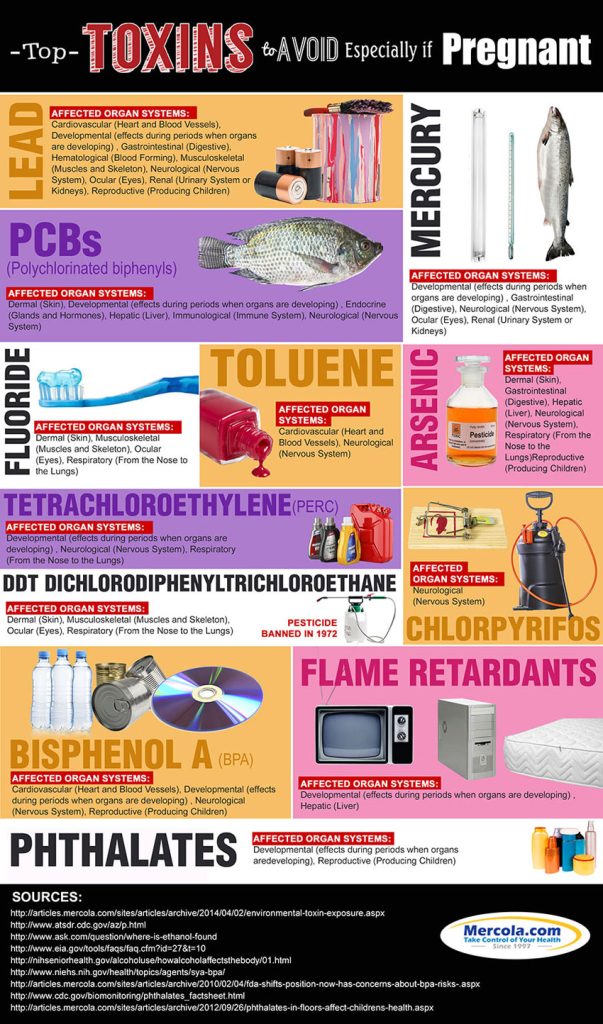 Toxins to Avoid if Pregnant Infographic – click image to expand |
Avoid drinking unfiltered tap water — Our waterways are constantly being polluted by industrial waste and byproducts, pharmaceutical drugs (such as birth control pills and other hormone therapies), pesticides and commercial cleaning products. Heavy metals are the most common of the reproductive toxins reaching our water supply through industrial waste, jet fuel exhaust residue and a variety of other sources.
Eat an optimal fertility diet — An optimal fertility diet is about what to avoid as much as it is about what to include. Eat REAL food, ideally organic, to avoid pesticide residues, and locally grown. Processed and packaged foods are a common source not only of pesticides but also chemicals such as bisphenol-A and phthalates.
Key elements are good-quality protein sources (organic and grass fed when it comes to animal products) and healthy fats.
Avoid factory farmed animal products, harmful trans fats and processed vegetable oils. Also avoid unfermented soy products, as soybeans contain phytoestrogens that act on hormones. For an added boost, consider adding more of the following “sperm-enhancing” foods:37 organic pastured eggs, spinach, bananas, dark chocolate, asparagus, broccoli, pomegranates, walnuts, garlic and all zinc-rich foods (as zinc plays a key role in sperm development).
Avoid common allergens — An overactive immune system is more likely to attack its own body cells, and the link between food intolerances and anti-sperm antibodies is well established. The two most widely spread food intolerances are gluten and dairy. Factory farmed milk can also be a source of estrogen that can harm a man’s fertility. Hormones found in factory farmed cows’ milk include:
- Prolactin
- Somatostatin
- Melatonin
- Oxytocin
- Growth hormone
- Luteinizing hormone-releasing hormone
- Thyroid-stimulating hormone
- Estrogens
- Progesterone
- Insulin
- Corticosteroids and many more
Minimize microwave exposure — Avoid carrying your cellphone on your body while it is on, and avoid using laptops and tablets on your lap. More generally, it would also be wise to limit your total exposure by turning your Wi-Fi off at night, and make your bedroom an EMF-free zone.
Get checked for sexually transmitted diseases (STDs) — Some STDs can be asymptomatic, meaning you may not be aware you have them as there are no obvious symptoms. One such STD is a chlamydia infection. In men, chlamydia can lead to sperm abnormalities including sperm antibodies.
In women, it can lead to scarring, blocked tubes and miscarriage. Most STDs are easy to treat, so it pays for both partners to have an STD check. There is no point in only one partner going for a test as the other partner can reinfect them again.
Avoid coffee, smoking and alcohol — While organic black coffee has a number of health benefits, fertility does not appear to be one of them. On the contrary, studies suggest it decreases fertility. In one study, men who drank three or more caffeinated beverages per day during the conception phase raised their partner’s risk of miscarriage by more than 70%.38
Alcohol is also harmful to both eggs and sperm, and increases the risk of miscarriage. Needless to say, smoking and recreational drugs also have an adverse effect on fertility, reducing the size of your testes and lowering your sperm count.
Get regular exercise — According to research, getting at least 30 minutes of exercise three times a week can help boost men’s sperm count. And, to maintain healthy swimmers, you need to stay active — within a month of quitting exercise, sperm count starts to wane again.39 That said, be aware that bicycling may have an adverse effect on your sperm. In one study, men who routinely cycled 300 kilometers per week ended up having fertility problems.40Normalize your weight — Obesity contributes to infertility, so normalizing your weight can help improve your sperm quality and quantity. For guidance, please review my free nutrition plan.Limit hot baths and saunas — While hot baths and saunas have a myriad of health benefits, the heat can take a toll on sperm. In one three-year-long study, 5 of 11 men who quit taking hot baths were able to raise their sperm count by nearly 500%. So, limiting hot baths and saunas for a few months may be helpful during the conception phase. I do a far-infrared sauna nearly every day, but I put a small freezer block of ice next to my groin to keep the temperature low.Combat stress — From making sure you’re getting sufficient amounts of sleep and exercising regularly to incorporating a tool like the Emotional Freedom Techniques (EFT) or taking up yoga or meditation, there are many ways to address stress. Try a few different things and stick to whatever works.
Clean up your home environment — Use natural cleaning products or make your own. Avoid those containing 2-butoxyethanol (EGBE) and methoxydiglycol (DEGME) — two toxic glycol ethers that can compromise your fertility and cause fetal harm. Look for products made by companies that are Earth-friendly, animal-friendly, sustainable, certified organic and GMO-free.
This applies to everything from food and personal care products to building materials, carpeting, paint, furniture, mattresses and others.
When buying new products such as furniture, mattresses or carpet padding, consider buying flame retardant-free varieties, containing naturally less flammable materials, such as leather, wool, cotton, silk and Kevlar.
Avoid stain- and water-resistant clothing, furniture and carpets to avoid perfluorinated chemicals. Use a vacuum cleaner with a HEPA filter to remove contaminated house dust. This is one of the major routes of exposure to flame retardant chemicals.
Also switch over to organic toiletries, including shampoo, toothpaste, antiperspirants and cosmetics. EWG’s Skin Deep database41 can help you find personal care products that are free of phthalates and other potentially dangerous chemicals.
– Sources and References
- 1 Washington Post July 25, 2017
- 2 Scientific American July 26, 2017
- 3 Medical News Today July 26, 2017
- 4 Science Daily, July 26, 2017
- 5 CNN July 25, 2017
- 6 Human Reproduction Update July 25, 2017 [Epub ahead of print]
- 7 Time July 25, 2017
- 8 BBC News July 25, 2017
- 9 BMJ 1992 Sep 12;305(6854):609-13
- 10 PLOS Genetics July 20, 2017 [Epub ahead of print]
- 11, 15 New York Times March 11, 2017
- 12 Consumer Affairs May 18, 2017
- 13 Toxicology 2009 Aug 21;262(3):184-91
- 14 Environmental Health News July 26, 2017
- 16 The Daily Beast May 13, 2015
- 17 SourceWatch, American Chemistry Council
- 18 The Guardian November 4, 2013
- 19 JCRPE 2011 Mar; 3(1): 1–6
- 20 The New York Times March 30, 2012
- 21 EWG July 14, 2005
- 22 American Public Health Association, November 9, 2010
- 23 National Institute of Environmental Health Sciences, Endocrine Disruptors
- 24 EWG August 12, 2022
- 25 NIEHS, Endocrine Disruptors
- 26 EWG, July 21, 2022
- 27 The Guardian July 25, 2017
- 28 Natural Fertility Info, Pesticides in Food Affect Male Fertility
- 29 IARC, Press Release May 31, 2011
- 30 Rev Environ Health. 2015;30(2):99-116
- 31 The Journal of Sexual Medicine, Volume 20, Issue Supplement 1, May 2023
- 32 Safe Space Protection, Male Fertility Impacted by EMFs
- 33 Environ Int. 2014 Sep; 70C:106-112
- 34 Central European Journal of Urology 2014; 67(1): 65–71
- 35 Fertility and Sterility January 2012; 97(1): 39-45.e2
- 36 Natural Fertility Prescription
- 37 Practo December 17, 2016
- 38 Reuters March 30, 2016
- 39 BBC News December 6, 2016
- 40 Telegraph July 26, 2017 (Archived)
- 41 EWG Skin Deep Database
You’ve Been Genetically Hijacked to Produce Pfizer’s Pfrankenstein Proteins
Reproduced from original article:
https://articles.mercola.com/sites/articles/archive/2024/02/06/pfizer-pfrankenstein-proteins.aspx
The original Mercola article may not remain on the original site, but I will endeavor to keep it on this site as long as I deem it to be appropriate.
Analysis by Dr. Joseph Mercola February 06, 2024
STORY AT-A-GLANCE
- Pfizer’s mRNA COVID-19 shots instruct cells to produce additional “off-target” proteins that could pose significant health risks
- The finding was revealed by a team of U.K. researchers, who found a “glitch” occurred due to the way the COVID-19 shots were genetically modified
- According to the study, off-target cellular immune responses occur in 25% to 33% of those who have received Pfizer’s COVID-19 shot
- The “Pfrankenstein” proteins could potentially lead to health problems, including autoimmune conditions or endocrine disruption
- Pfizer’s Pfrankenstein proteins should have been detected and reduced or eliminated long before mRNA COVID-19 shots were given to millions of people
The toxic spike protein produced in your body if you receive a COVID-19 shot is not the only health concern to be aware of. Pfizer’s mRNA COVID-19 shots also instruct cells to produce additional “off-target” proteins that could pose significant health risks.
The finding was revealed by a team of U.K. researchers1 who found a “glitch” occurred due to the way the COVID-19 shots were genetically modified. As a result, unwanted proteins are produced, with unknown effects — a phenomenon that should have been detected long before the experimental shots were given to millions of people.
Modified mRNA in COVID-19 Shots Is ‘Prone to Reading Errors’
Ribosomes decode mRNA in cells, but about 8% of the time those in COVID-19 shots may misread the coded instructions, Maryanne Demasi, Ph.D., a former medical scientist with the University of Adelaide and former reporter for ABC News in Australia, explains:2
“The researchers say that ribosomes, which are responsible for decoding the mRNA in cells, can slip and misread the coded instructions about 8% of the time — known as ‘ribosomal frameshifting.’ They say the ‘glitch’ has to do with how the mRNA in the vaccine has been genetically modified.
Unlike naturally-occurring mRNA, the mRNA that exists in the vaccines has had a ‘uridine’ base replaced with a ‘N1-methyl pseudouridine’ (to stabilize it) and unfortunately, has made it prone to reading errors.”
In May 2021, I interviewed Stephanie Seneff, Ph.D., a senior research scientist at MIT for over five decades, about the likely hazards of replacing the uracil in the RNA used in the COVID shots with synthetic methylpseudouridine.3 This process of substituting letters in the genetic code is known as codon optimization, which is known to be problematic.
At the time, Seneff predicted the shots would cause a rise in prion, autoimmune and neurodegenerative diseases and, at younger ages, blood disorders and heart failure. One of the primary reasons for this is because they genetically manipulated the RNA in the shots with synthetic methylpseudouridine, which enhances RNA stability by inhibiting its breakdown.
Now, researchers at Cambridge University and the Universities of Kent, Oxford and Liverpool, have discovered4 that the use of methylpseudouridine results in a high rate of ribosomal “frameshifting,” which causes your cells to produce off-target proteins with unknown effects. In an interview with Demasi, research scientist David Wiseman explained the concerning findings:5
“They found the Pfizer vaccine can cause your cells to make proteins that they are not supposed to make — you end up with what I call ‘Pfrankenstein proteins.’ … Imagine the following three-letter English words ABE DAN TEA TON ERA TWO — the letters are like the code on the mRNA. Now instead of starting to read the sentence at the letter ‘A’ of the first word, you frameshift to the next letter — the letter ‘B.’
That means that all the other letters are shifted to the left and it will give you a new sentence with three-letter words BED ANT EAT ONE RAT etcetera. So, the new words have a completely different meaning from the original words. This is what happened in the body of some people vaccinated with Pfizer’s product. New unwanted ‘off-target’ proteins were produced, that actually led to an ‘off-target’ immune response.”
Your Body Is Being Hijacked to Produce ‘Pfrankenstein’ Proteins
According to the study, off-target cellular immune responses occur in 25% to 33% of those who have received Pfizer’s COVID-19 shot. “It means their lymphocytes had seen the proteins before — their immune system had already been primed from a prior exposure, presumably after that person had received the mRNA vaccine,” Wiseman said.6
The study authors stated there were no adverse outcomes related to the “frameshifted products,” and the media has similarly downplayed any risk of harm. However, molecular virologist David Speicher Ph.D., told Trial Site News reporter Sonia Elijah:7
“Whenever our cells create an abundance of unintended proteins or prevent production of appropriate proteins it could lead to an unintended immune response with a huge potential to cause harm.”
Wiseman was also clear in his explanation that the “Pfrankenstein” proteins could potentially lead to health problems, including autoimmune conditions or endocrine disruption. He told Demasi:8
“What you have to realize is that your body is being hijacked, not just to produce spike protein, but also to produce other, what I call, ‘Pfrankenstein’ proteins that are completely uncharacterized. We don’t know what they are, what they do, for how long they’re made or how long they last in the body, and we have no idea what their toxicity is.
From the Nature paper however, we do know that these unwanted proteins elicit immune reactions in the body.
… These researchers showed that frameshifting could create chimeric proteins. Basically, as the ribosome reads the code for the spike protein, it may slip in the middle of reading the code. So, the first half is spike protein, and the second half is a Pfrankenstein protein.
Now, just imagine one half can still attach to the ACE2 receptor on cells but on the other end, you’ve got this Pfrankenstein protein dangling outside of the cells. Your immune system is going to destroy the cell because it looks foreign, and now you’ve got something that looks like an autoimmune condition.
Or you could have a protein that turns out to be not necessarily identical, but sufficiently similar to another protein in our body like a hormone and it ends up mimicking the hormone’s activity and disturbing your endocrine system.”
Download this Article Before it Disappears
Reading Errors Could Be Reduced — So Why Weren’t They?
While claiming that frameshifted products weren’t harmful, the Nature study authors stated it was important for future mRNA technologies to reduce ribosome frameshifting events. They suggested that they could identify the garbled sites or sequences and alter the mRNA sequence to reduce such effects in the future.9
But as Wiseman pointed out, this should have been done already. “This work should’ve been done by the vaccine manufacturers and by the regulators before the product was authorized and given to billions of people. They’ve asked people to take a vaccine, and put it into children and they have no clue what is happening inside the body.”10
Further, the study authors are basing their assessment that there’s no risk posed by these ‘Pfrankenstein proteins’ on just 21 people. Wiseman continued to Demasi:11
“The authors wrote, ‘… there is no evidence that frameshifted products in humans generated from BNT162b2 vaccination are associated with adverse outcomes.’ But they only looked at 21 people who received Pfizer’s vaccine, so you cannot call that a serious safety study by any stretch of the imagination.
And how did they select these people? The volunteers were part of another government funded study and had not reported undue effects from vaccination. Since they did not study subjects who had reported adverse vaccine effects, the selection of participants was probably biased.
… What they’re trying to say now is that there have been no problems identified in 21 people, but in the future there may be problems, so we should just keep studying it. Are you kidding me? What they’re saying is that ‘we will inject you first and ask safety questions later.’ It’s not good enough.”
It’s worth noting that two of the researchers on the team have a pending patent application for mRNA technology,12 so they certainly have reason to downplay the problem and propose all we need to do is a bit of tweaking and all will be well moving forward.
Is Foreign DNA Integrating Into Human Cells?
Along with Pfizer’s Pfrankenstein proteins, there’s potential that DNA integration from COVID-19 shots could pose a risk to the human genome. Tucker Carlson spoke with Florida Surgeon General Dr. Joseph Ladapo, who has called for an end to the use of COVID-19 mRNA shots, citing concerns about DNA fragments in the products.13
“Could foreign DNA enter your cells through the mRNA COVID vax and change your DNA — and humanity itself — forever? Sounds nutty. It’s not,” Carlson tweeted. “Absolutely that could happen,” says Dr. Joseph Ladapo, the surgeon general of Florida.14 In a December 6, 2023, letter sent to the U.S. FDA and CDC, Ladapo outlined findings showing the presence of lipid nanoparticle complexes and simian virus 40 (SV40) promoter/enhancer DNA.
While there are limits on how much DNA can be in a vaccine due to concern over DNA integration, the guidelines don’t consider lipid nanoparticles and other factors in COVID-19 shots that could enhance how much DNA can enter a cell.
“Lipid nanoparticles are an efficient vehicle for delivery of the mRNA in the COVID-19 vaccines into human cells and may therefore be an equally efficient vehicle for delivering contaminant DNA into human cells. The presence of SV40 promoter/enhancer DNA may also pose a unique and heightened risk of DNA integration into human cells,” according to a news release from the Florida Department of Health (DOH).15
In a 2023 preprint study, microbiologist Kevin McKernan — a former researcher and team leader for the MIT Human Genome project16 — and colleagues assessed the nucleic acid composition of four expired vials of the Moderna and Pfizer mRNA shots. “DNA contamination that exceeds the European Medicines Agency (EMA) 330ng/mg requirement and the FDAs 10ng/dose requirements” was found.17
So, in addition to the spike protein and mRNA in COVID-19 shots, McKernan’s team discovered SV40 promoters that, for decades, have been suspected of causing cancer in humans.18 Further, according to the Florida DOH, the FDA’s own 2007 guidance states:19
- “DNA integration could theoretically impact a human’s oncogenes – the genes which can transform a healthy cell into a cancerous cell.
- DNA integration may result in chromosomal instability.
- The Guidance for Industry discusses biodistribution of DNA vaccines and how such integration could affect unintended parts of the body including blood, heart, brain, liver, kidney, bone marrow, ovaries/testes, lung, draining lymph nodes, spleen, the site of administration and subcutis at injection site.”
The FDA responded to Ladapo’s letter December 14, 2023, but provided no evidence that appropriate DNA integration assessments had been conducted. Ladapo called for a halt in their use as a result.20 “It starts at crazy but it ends at somewhere else that someone could be just so nonchalant and, frankly, willy-nilly, with something as precious and as sacred as our human DNA,” Ladapo told Carlson.21
Help for Those Suffering From COVID-19 Shot Injuries
If you’re suffering from side effects of a COVID-19 shot, your first order of business is to eliminate the spike protein — and/or any aberrant off-target protein — that your body is producing. Two remedies shown to bind to and facilitate the removal of SARS-CoV-2 spike protein are hydroxychloroquine and ivermectin. It’s unknown whether these drugs will work on off-target proteins as well, but it probably wouldn’t hurt to try.
The Front Line COVID-19 Critical Care Alliance (FLCCC) has developed a post-vaccine treatment protocol called I-RECOVER. The protocol is continuously updated as more data become available, so your best bet is to download the latest version straight from the FLCCC website at covid19criticalcare.com.22
The World Council for Health (WCH), a worldwide coalition of health-focused organizations and civil society groups, has also released a spike protein detox guide,23 which provides straightforward steps you can take to potentially lessen the effects of toxic spike protein that may be helpful. Another option is sauna therapy, which can also help eliminate toxic and misfolded proteins by stimulating autophagy.24
- 1, 4 Nature volume 625, pages 189–194 (2024)
- 2, 5, 6, 8, 10, 11 Maryanne Demasi Reports January 16, 2024
- 3 International Journal of Vaccine Theory, Practice and Research May 10, 2021; 2(1): 402-444
- 7, 12 Trial Site News December 7, 2023
- 9 Nature volume 625, pages 189–194 (2024), Main
- 13, 15, 19, 20 Florida Health January 3, 2024
- 14 Tucker Carlson January 15, 2024
- 16 The Healthcare Channel May 19, 2023
- 17 OSF Preprints April 10, 2023
- 18 Expert Rev Respir Med October 2011; 5(5): 683-697
- 21 Tucker Carlson January 15, 2024, 6:30
- 22 Covid19criticalcare.com
- 23 World Council for Health, Spike Protein Detox Guide
- 24 Journal of Applied Physiology January 5, 2021
Unraveling the Mysteries of mRNA Vaccine Shedding
Reproduced from original article:
https://articles.mercola.com/sites/articles/archive/2024/02/03/mysteries-of-mrna-vaccine-shedding.aspx
The original Mercola article may not remain on the original site, but I will endeavor to keep it on this site as long as I deem it to be appropriate.
Analysis by A Midwestern Doctor February 03, 2024

STORY AT-A-GLANCE
- Over the last two years, we have collected a significant amount of data that suggests a sizable number of unvaccinated people will become ill around individuals who were vaccinated in a fairly consistent and repeatable manner
- Since shedding of mRNA vaccines in theory should not be possible, whenever those individuals (who are often suffering immensely) share their stories, they are immediately ridiculed and dismissed
- We have identified a few plausible mechanisms (and the evidence to support them) to explain why this transmission occurs. These include exosome mediated shedding (most likely), asymptomatic COVID-19 shedding and transfected bacterial shedding
- In this article, we will explore some of the major questions surrounding shedding, such as what appears to be causing it and what the mysterious odor associated. Through doing so, a framework can be created to explore some of the most contentious issues surrounding shedding
After the COVID vaccines came out, we began to encounter more and more patients who had a compelling case history that suggested that were being repeatedly injured from being around recently vaccinated individuals.
For example, near the start of the vaccine rollout, a compelling (but hard to believe) story circulated online and as the year went by, we saw more and more patients who provided similar accounts to the one within this video:
This perplexed us as in theory, the mRNA vaccines (as they are not alive and hence do not replicate) should not be able to shed, but as time went forward, we kept on seeing more shedding cases which symptomatically improved once the patient’s shedding exposures were addressed. As a result, we’ve spent the last three years struggling to try to figure out what’s going on.
To help unravel this mystery, we recently put out a call for individuals to share their own shedding injuries and see if those accounts matched what we had observed. These is understandably a lot of interest in this subject (e.g., a Tweet about it received 555k views) and we’ve now collected hundreds of stories (which can be viewed here).
To briefly summarize what we have learned (which is discussed in much more detail in the previous article):
|
Although it is required by the FDA (and has been done for the other gene therapy products on the market), none of the COVID vaccines were ever tested for shedding. |
| It has since been demonstrated that vaccine sheds in the breast milk and semen. There is also evidence suggesting but not proving the vaccine sheds in both the sweat and breath. It’s much less clear if it sheds in the stools. |
| Individuals appear to be affected by being in proximity to a vaccinated person (particularly if they are quite close to them), by touching something a vaccinated person contacted (particularly bed sheets), and for particularly sensitive individuals, being in an area which had previously been densely occupied by shedders (conversely being outdoors, presumably due to airflow, reduces how much a shedder affects someone nearby). |
| In most (but not all) cases, the effects of shedding will resolve once the affected individual simply stops being in contact with shedders. |
| The susceptibility to shedding greatly varies person to person (with the majority not being affected by it).
Those most sensitive to shedding are the “sensitive patients” (who often also have other conditions like fibromyalgia, Lyme or chemical sensitivities), those who have already been “sensitized” to the spike protein (demonstrated by them having either a vaccine injury or long COVID) and those who have a yet unknown susceptibility to the spike protein (which I believe is due to them being unable to effectively produce antibodies which neutralize the spike protein). Note: There were also a few cases of pets being affect by shedding which suggests the effects are not necessarily dependent upon a human receptor. |
| Individuals are the most likely to shed immediately after vaccination or boosting (which leads to many sensitive individuals dreading the next boosting campaign). This tendency to shed appears to match the observed blood levels of spike protein which quickly rise following vaccination then drop, but never hit zero.
In turn, the most sensitive individuals always notice if someone was vaccinated, while less sensitive individuals only get ill from people who had been recently vaccinated. |
| Many individuals affected by shedding are able to identify clear reproducible patterns of when they get ill from shedding (e.g., each time they go to church on Sunday they get the same illness on Monday). |
| Some people shed much more than others (e.g., individuals can frequently identify who at their church always makes them ill). Typically, younger people shed more than older people. Furthermore, sensitive individuals repeatedly notice certain characteristics of shedders (e.g., they have a distinct odor). |
| The most common effect of shedding is abnormal menstrual bleeding (which can sometimes be very severe and frequently affects post menopausal women). Other common symptoms include nosebleeds, spontaneous bruising, tinnitus, rashes, headaches, reactivation of latent viruses (e.g., shingles), briefly coming down with a covid like illness, sinus issues and muscle pain.
Some people experience a cluster of these symptoms while others only experience one or two of them. |
| Individuals tend to notice an increasing duration of exposure to a shedder will make them feel worse. In turn, numerous readers have noticed that if they ignore their lighter symptoms (which often onset within minutes of a shedding exposure) and do not exit the situation, they will become severely ill for a prolonged period. |
| Most of the shedding injuries appear to be a consequence of circulatory impairments (e.g., microclotting). I personally believe this is due their adverse effects on the physiologic zeta potential (which once treated appears to fix spike protein injuries) and to a lesser extent activating the cell danger response. |
| Most of the vaccine shedding symptoms resemble what is seen in other spike protein injuries. However, there are two key differences. First, spontaneous bruising and nosebleeds are unique to shedding (they are not typically seen after long COVID or a vaccine injury).
Secondly, the symptoms which emerge from shedding exposures tend to be less severe than the traditional spike protein injuries (e.g., heart issues or strokes are rarer and less severe) and when the severe effects occur (e.g., death), they are typically proceeded by less severe reactions to shedding (but unfortunately the victim continued to expose themselves to shedders). This suggests that the shedding reactions are being caused by reactions to a lower dose of spike protein — which is congruent with the fact a vaccinated individual will have more spike protein inside them than what is shed into their environment. |
| Shedding effects are typically either immediate (e.g., nosebleeds, headaches and dizziness), onset in 6-24 hours (e.g., menstrual issues) or gradually show up over time.
Note: None of these are absolutes (e.g., sometimes the nosebleeds take a day to manifest, whereas I found one case where someone had severe menstrual bleeding immediately after a shedding exposure). |
| Two studies have validated the shedding effect is real. |
| The majority of people do not appear to be affected by shedding. |
Mysteries of the Shedding Phenomenon
The previous facts understandably raise a lot of uncomfortable questions many want answers to (hence why we received so many replies). I personally believe they necessitate a federal law being passed which will prohibit any gene therapies from entering the market unless their shedding is properly evaluated, that data is made public and it can be proven it is feasible to prevent the general public from being shed on.
Given the gravity of this situation, we believe it critical to provide the most accurate and balanced assessment of the COVID vaccine “shedding” phenomenon. This in turn was why we put out a public call for as much information on it as possible and why we’ve been as transparent as possible in how we reached our conclusions and provided all the data we used that helped us reach this conclusion.
Since mRNA “shedding” is such an inexplicable phenomenon, attempts to explain or predict it inevitably result in a large number of highly speculative hypotheses being raised. In turn, it was my hope that consistent patterns would be seen in the shedding reports which could narrow down which of those hypotheses could fit the observed patterns and hence were more likely to answer many of the questions which have been repeatedly raised on this subject.
For the rest of the article as we attempt to untangle this mystery, I will share our current perspectives on what might be going on and the answers to the most commonly received questions on it.
The Vaccine Smell
One of the most surprising things I learned from exploring the shedding issue is how many people have reported observing a distinct smell from individuals who appear to shed [e.g., 1, 2, 3, 4, 5, 6, 7, 8, 9, 10, 11, 12, 13, 14, 15, 16, 17, 18, 19, 20, 21, 22, 23, 24, 25, 26, 27, 28, 29, 30]. Additionally, many also notice this smell is present in areas where many vaccinated individuals have been (e.g., after a booster rollout, in crowded public spaces, or inside cars they drove).
Overall, it appears that a higher spike protein load appears to be “easier” to smell (e.g., in someone recently vaccinated — as spike protein levels spike in the blood after vaccination, when in close proximity to a shedder particularly if some type of intimate contact occurred, or when around someone who for some reason has a greater degree of shedding).
Similarly, more sensitive people (who are typically more likely to be injured by the vaccines) are more likely to detect this smell (e.g., they can still smell it once the shedders are no longer physically present).
Note: Numerous readers reported being able to consistently tell if someone was recently vaccinated.
Additionally, I’ve found a few cases where:
• Secondary shedding could be smelled.
• A sexual partner lost their distinctive odor.
• At least one individual with a vaccine injury could smell the shedding on themselves. [e.g., 1, 2, 3]. I would like to quote what one of those individuals shared since I believe it may offer some vital clues for unravelling this mystery:
“The smell was one of the first symptoms of my vax injury (albeit a benign one, compared to what it eventually turned into). It was like my entire smell changed. I was living in Florida at the time — needless to say I’d sweat a lot. And every time, post-vax, my underarm sweat would have this strange metallic smell.
I would complain to my girlfriend about it. Always telling her ‘there’s just something off. I can sense it’ … at the time, she wasn’t picking up on it. Or she disagreed as to the nature of the smell, while begrudgingly agreeing there was a slight change (she thought I was overreacting; also, she is unvaccinated) … But then a friend pointed it out at a workout class when I was sweating heavily.
I’ve been on a number of therapies for over a year now. The smell comes and goes. When it comes, I know I’m in for a flare up. It seems the flare ups tend to come from shedding (both viral and synthetic shedding). I haven’t noticed the smell on others. Just myself. It makes me feel like I’m not me anymore, and that I’ve been hijacked.”
The labels I’ve seen used to describe the smell are as follows: “mild sickly sweet,” “rotting [or dying] flesh,” “magnetic onion,” “unpleasant,” “distinctive,” “the smell of death,” “medicines plus latrines,” “musty plus rancid,” “dead animal,” a “decomposing body,” “road kill,” “like ammonia but not as strong,” “sweet,” “sour stomach,” “elderly person as their flesh breaks down with age,” “a chemical flu smell,” “of seaweed,” “putrid,” “sweet meat,” “strange and metallic,” “sharp, pungent and toxic,” “horrible,” “unique odor,” “chemical,” “vinegar,” “subtle like a pheromone.”
Note: Bolded items were reported by multiple people.
From looking at this list of smells, a few things jump out at me:
• While it’s quite difficult to put into words something which has never been described before, the descriptions are fairly consistent with each other.
• One of the most well recognized consequences of the vaccination is accelerated aging, which appears to be reflected in this list.
• There may be two separate things people are smelling (the decomposing flesh vs. the metallic chemical). One theory which was proposed to me to explain the second smell is that it’s a result of micro-organisms in the environment that have been metabolizing all the chemicals that were used to (pointlessly) sterilize every surface through COVID-19 as one reader said it was first noticed in 2020 but dramatically increased in 2021.
• Individuals who can smell this will likely lose their attraction to shedders (as appealing smells are often the most important thing for sexual compatibility).
Note: One sensitive person who can perceive the shedding has shared that they’ve completely lost their attraction to vaccinated women for this reason.
• The one friend I have who can smell this (and a very perceptive colleague) reports that it appears to be being emitted through the pores. This is consistent with what some of the individuals (e.g., the one quote above) observed and the evidence suggesting the shedding occurs through the sweat since it contaminates sheets.
Since individuals often perceive the same environmental quality through different senses (depending on their primary sensory orientation is) I was also curious to see other ways the “quality” shedders had was described.
Since smell is intimately linked to taste, I expected those reports to resemble the smells. The three I received [1, 2, 3] did just that, describing it as: “you can taste the jabs … it’s metallic and unpleasant,” “can taste a metallic sensation,” “a dry acid feeling on my tongue.”
Quite a few people also reported feeling sensations from vaccinated individual [e.g., 1, 2, 3, 4, 5, 6, 7, 8, 9] and described them as follows:
“‘… noxious,’ ‘recently vaccinated people have a slime on their skin,’ ‘it was a feeling of repellent that made me want to get away as quickly as possible,’ ‘the bioelectric field around the person disappears,’ ‘their energy changes to a stainless steel sink sponge feel which is metallic and raggedy (which that reader believed represented neurologic damage),’ ‘illness and excitable energy,’ ‘a heavy air pressure and spatial fog weighing on my brain (which if not exited from will then create vertigo for that reader),’ ‘it makes our noses prickle,’ ‘half of my tongue went numb the next day,’ ‘their energy field has a physical sensation of ‘metallic’ of physical repulsion, or a greyness, black goo, and even a dullness of mind that I could see.'”
Note: The last commenter also noted they verified they could accurately predict who was vaccinated and that they noticed food prepared from vaccinated individuals was different.
As you might notice, these are somewhat congruent with the previously described smells and tastes. One sensitive physician I know who smells the odor (and seems to know more about it than anyone else I know) has shared the following with me:
| They had previously had environmental sensitivities, which with work they were able to eliminate. |
| Until those sensitivities were resolved, they would smell chemical residues on them when they got home which they then needed to clean off. |
| In December 2020 (right after the rollouts began), they began to notice a new smell they’d never smelled before which lingered on them once they got home and they needed to clean off (e.g., with a shower) in order to be able to be comfortable at home (previously, while sensitive, they’d also needed to do this for everyday chemical exposures). |
| Before long, this smell started emerging in public places (e.g., a store), but was by far the strongest in the hospital. Because this smell had not existed throughout the first year of the pandemic, they assumed it was linked to the vaccine. Presently, they believe the smell is the spike protein and something else in the vaccine. |
| The smell gets stronger each time a new series of boosters is rolled out (as most of coworkers at the hospital likely receive it). |
| This smell was much weaker in Southern Europe, suggesting either their vaccines were different, or the health of the average American caused them to shed differently. |
| When the shedding smell is particularly strong, they experience temporary symptoms while around those individuals (e.g., pain in a part of the body). This for instance occurred after the most recent round of boosters. |
| Many people who were vaccinated do not have this smell, which suggests many (as discussed in the previous article) received placebos. Unfortunately for my colleague, it is much higher in hospitalized patients (which suggests those who received the more potent vaccines were also more likely to be injured and hence hospitalized). Likewise, the more “real” doses someone received, the harder it is for my colleague to be around them.
Note: Presently my colleague estimates around 50% of the population is truly jabbed, but in certain cases (e.g., in clinics for the elderly who are more likely to have been repeatedly boosted, this figure rises to 80%). Sadly, those with the most unusual or severe illnesses, they invariably muscle test (or smell) as having been “truly” vaccinated. The subject of “hot lots” has been a longstanding controversy. |
| The mold biotoxin community has also noticed a new toxin (and odor) they need to be wary of which entered the environment during 2020 and worsened in 2021 after the vaccines hit the market.
Likewise, my colleague has had patients who believed they’d had a mold exposure (which is often debilitating for patients with chronic mold issues) but when it was looked into, my colleague assessed it was actually from vaccine shedding that had contaminated their environment. |
| Like the cleaners mentioned earlier, my colleague notices a significant difference in environments that have vs. have not had a significant presence of vaccinated individuals in them. |
| Whatever is creating this smell is gradually seeping into the environment (e.g., a colleague through muscle testing recently found the same toxin in seawater foam from the ocean a patient reacted to). |
| Not every vaccinated person has an overt shedding smell, but with almost all of them, it can be detected once the air next to them is breathed in.
Note: I believe this could be explained by the fact only some people received vaccines with positively charged lipid nanoparticles that hence concentrated in the lungs. |
| My colleague believes that whatever is causing this smell behaves a lot like a pheromone. Likewise, Ryan Cole has shared that he believes the pheromonal process is a likely mechanism to account for much of what is being seen with shedding as female menstruation is highly sensitive to pheromones (this reader and this reader also associate shedding with pheromones).
Note: My colleague (and their mentor) have also found that it is more difficult to treat or evaluated truly vaccinated individuals, as a haze is present around them which makes muscle testing more difficult to perform and their simple presence in the office can interfere with treating other patients who are also there. Initially this forced them to not see vaccinated patients, but in time they found workarounds for this issue. Presently, this colleague and their mentor (who has a good track record in working with complex illness) believes the primary mechanism of toxicity from the shedding is energetic rather than physical in nature (which may for instance explain the experiences of this reader). |
I suspect in the years to come, this smell will become much more clearly worked out. Additionally (assuming it is a physical smell rather than “energetic” smell), I am almost certain it will be possible to train dogs to smell it. For instance, consider (to quote UCLA) what they were able to do with COVID-19:
“When the COVID-19 pandemic struck, the diagnostic abilities of dogs were put to the test. Professional trainers claimed high success rates of dogs sniffing out COVID-19 infections, and a few small studies backed them up. In one, specially trained dogs were 97% accurate in sniffing out COVID-19 from sweat samples taken from 335 people.
This included finding infection in 31 individuals with no symptoms. When testing moved from isolated biological materials in a lab to actual humans in real-world settings, accuracy dropped a bit.
When it comes to the widespread use of specially trained dogs to diagnose COVID-19, more study is needed. However, researchers and clinicians agree it’s a promising avenue. Dogs detected infection up to 48 hours earlier than a PCR test. And while a rapid test requires a swab, chemical reagents and 10 minutes or so to produce results, the dog’s response is immediate.
There is also interest in harnessing the canine sense of smell to learn more about long COVID.”
Download this Article Before it Disappears
Shedding Mechanisms
Note: I recently wrote an article titled “How Do We Navigate Uncertainty In These Perilous Times?” primarily to provide critical context for this section.
As I discussed above (and in more detail in the first half of this series), the major issue I’ve had with this subject is that in theory, mRNA vaccines should not be able to shed, but for some reason they are.
At this point, I’ve come up with a few potentially viable explanation to explain why this is happening. The ones I feel have enough evidence to substantiate them are as follows:
Variable Sensitivity
From all the previously received case reports, it has been established that the sensitivity to either the spike protein (or a yet unknown vaccine component) varies by orders of magnitude (discussed further in the first half of this series).
While this does not explain how the vaccine is able to “shed” it explains why some people can be relatively unaffected by high concentrations of it (e.g., the asymptomatic shedders) whereas others get very ill from the tiny amount of the shedding agent which exits the body and can be absorbed from the environment.
This in turn is consistent with the hypotheses that the spike protein’s toxicity is partly a result of it being an allergen (some people are extraordinarily sensitive to an allergen) and it being an agent which collapses the physiologic zeta potential (as everyone has a differing critical threshold below which impaired zeta potential will trigger microclotting throughout the body).
Exosome Mediated Shedding
While not perfect, exosome shedding is the hypothesis that best fits the existing data on shedding. Briefly, this hypothesis argues that the vaccine is concentrating in the lungs (due its previously described affinity for the pulmonary arteries when the vaccine is incorrectly manufactured), which results in some (but not all vaccinated) individuals exhaling a significant amount of spike protein containing exosomes which then affect those in their surrounding.
This mode of “shedding transmission” essentially allows for a relatively small difference in total spike protein concentration between the shedder and the individual affected by the shedder.
Note: Before I learned why the vaccine manufacturing process can cause the vaccine to accumulate in the lungs, I came to suspect something caused the vaccine to concentrate in the arteries that travel from the heart to the lungs because clinicians kept on reporting to me that it seemed to be a primary site of injury in their vaccine injured patients.
Likewise, I now suspect the “strongest” shedders were those who received lipid nanoparticles that were manufactured in a way which caused them to concentrate in the lungs.
Exosomes for reference are small vesicles (which the lipid nanoparticles sought to mimic) that cells continually release and take in, hence forming a critical communication network the entire body relies upon (e.g., mothers have exosomes in their breastmilk which make it through the digestive tract and deliver [micro]RNA to their developing babies which plays a critical epigenetic role in guiding their healthy development).
In the same way that mRNA is a relatively new and unexplored technology, the science of exosomes is still in its infancy. Nonetheless, many clinicians are actively using “healthy” exosomes in practice (e.g., those derived from stem cells or amniotic fluid) and having remarkable improvements occur for a variety of degenerative conditions.
During COVID, we noticed that the virus appeared to poison the exosome system and in turn that injecting healthy exosomes into the blood stream often produced remarkable results for those patients (as well as for long COVID and to a lesser extent vaccine injuries).
In the case of the vaccine, this makes a lot of sense, as the vaccine works by causing cells to mass produce spike proteins (which get pushed to the cell surface at which point they can bud off into toxic exosomes that traverse the body).
In turn, it has been shown this does indeed occur after vaccination (and I suspect, due to the vaccine design, much more frequently than is seen in COVID — which may account for why “vaccine” shedding differs from COVID-19 shedding).
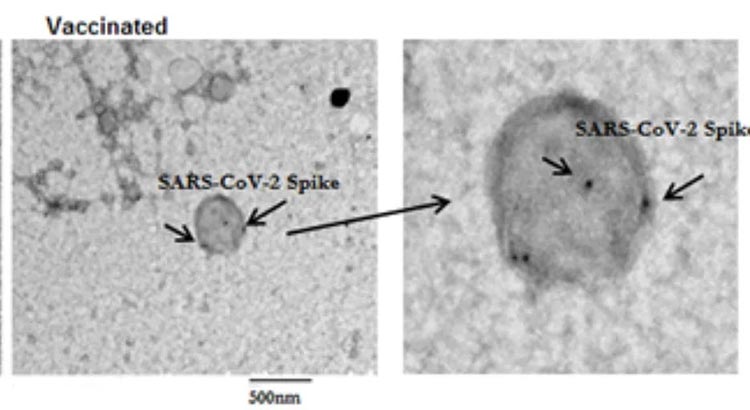
Note: The negative controls in this experiment did have spike protein on their exosomes.
Because of all the signaling effects generated by exosomes (very small doses of healthy exosomes can create profound improvements in patients which are hard to believe unless you see it first hand), it in turns seems plausible that inhaling toxic exosomes could have a profound impact on those sensitive to shedding.
Furthermore, many of the vaccine injury case histories I’ve seen indicate the route of exposure had to be respiratory in nature (e.g., the rapid nose bleeds), further supporting this hypothesis. Conversely, I’ve seen spike protein injured patients have excellent pulmonary and nasal responses to nebulized amniotic exosomes, which again indicates that toxic exosomes could also be active there. Presently, the following has been shown:
| Spike protein containing exosomes (which circulate in the bloodstream) spike after vaccination (and then decline) and appear to be one of the primary things responsible for triggering the immune response that creates antibodies to the vaccine, as once spike protein coated exosomes are transferred to mice, the mice develop antibodies to the spike protein (along with increasing levels of various inflammatory cytokines). |
| A 2023 peer-reviewed study found that unvaccinated children who were around COVID-19 vaccinated parents developed an immune response to the spike protein that was not seen in children with unvaccinated parents. Additionally, they were also able to find spike protein antibodies in surgical masks worn by the physicians. This led the authors to hypothesize that antibodies being directly transferred through the parent’s breath to their children.
I however would argue the results suggest spike coated exosomes (which produce spike antibodies once they arrive in the children) are being transferred. This is because, to the best of my knowledge, it has not otherwise been shown antibodies can be directly transferred to someone else through breath (this would change a lot of the fundamental principles of how herd immunity works in the population) and if the transference were to occur, the concentration in the child would be dramatically lower than the parent (which as best as I can tell was not what the study found). |
| Significant amounts of (RNA containing) exosomes can be found in your breath, and those exosomes (which derive from the lungs) vary depending upon on the disease state someone has (“sicker” people have “worse” exosomes). To illustrate, see this 2013 paper, this 2020 paper and this 2021 paper.
Note: Since this is a relatively new field of research, each paper is more sophisticated than the preceding one. |
| The spike protein has a high (heparin dependent) affinity for binding to the surface of exosomes. So if was not already there when the exosome initially formed it can also attach to exosomes traveling in the blood stream. |
| Long COVID (and more severe acute COVID) is characterized by the presence of more spike protein studded exosomes (see this paper and this paper). Additionally, they also showed exosomes from COVID patients are highly inflammatory (and potentially clot forming) and are taken up by the lung cells.
The most detailed study (and imaging) of spike protein containing exosomes can be found in this paper (which also found that spike protein containing exosomes can circulate a year after COVID infection). Note: This study also found COVID triggers the production of spike protein coated exosomes, and when lung cells was exposed to those exosomes, an immune response to the spike protein was triggered. |
| An inhaled vaccine was made from lung derived exosomes coated with spike proteins (they were lung derived so the lung cells would be more likely to absorb them).
These spike protein exosomes both generated an immune response and were absorbed into the body. Once absorbed, those exosomes then traveled to other tissues and organs in the body which (based on all the reports we’ve received and the patients we’ve seen) are known to be affected by shedding. Note: The key point from the above studies is that many of the above papers showed (abnormal) exosomes (e.g., spike protein coated ones) activated the immune system and appeared to play a key role in developing an immune response to them. |
Lastly, exosomes may also be absorbed through skin contact (after being sweated out by a shedder) but it’s harder to know if this does occur, as the existing data I’ve seen indicates it’s often difficult for (generic) exosomes to penetrate the skin.
As there are many cases suggesting skin to skin shedding transmission occurs, that either means something else is at work or spike coated exosomes indeed can penetrate the skin (e.g., because the skin becomes more porous at certain times or because containing spike protein increases the ability of an exosome to penetrate the skin).
In short, I think the theory behind mRNA vaccines (having cells produce exosomes on their surface which are then recognized by the immune system), was a terrible idea since it not only causes the body to attack those potentially essential cells (e.g., a good case can be made this happens to the heart) but also that it poisons the exosome system.
This again illustrates why it was a terrible decision to abandon the existing regulatory principles and allow a completely brand new technology with a huge number of unknowns to be given to a large number of people. While the regulators might have wanted to hope those unknowns would all be “fine” as time goes forward, we discover reason after reason they are actually a huge problem.
Note: The clinical uses of exosomes and their rationale for being used is discussed in much more detail here.
The SARS-CoV-2 Virus
I believe some of the shedding people attribute to the vaccine is in fact due to the virus itself. In turn, there are a few reasons why could happen and it is likely one or more of the following is occurring:
1. The SARS-CoV-2 virus is pervasive throughout our environment now and since the shedding symptoms resemble other spike protein injuries, it is likely some of the cases that are being labeled as “shedding” are actually just exposure to the SARS-CoV-2 virus. However, I must note I do not believe this can account for many of the stories I’ve come across.
2. The COVID vaccine transforms the immune response of an injected individual from one that eliminates the infection to one that reduces the symptoms of an existing infection. This in turn may lead to vaccinated individuals becoming chronic “silent” carries of COVID-19 and unawarely shed the virus into their environment.
This effect is traditionally observed with vaccines directed at a toxin an infectious agent produces rather than the organism itself (e.g., the pertussis vaccine prevents its toxin from causing whooping cough which can lead to vaccinated individuals becoming chronic carries of pertussis and silently shedding it into their environment — something demonstrated by pertussis outbreaks occurring in vaccinated institutions).
In the case of COVID-19 vaccination, it has been discovered that repeated exposure to the (highly allergenic) spike protein triggers the body to begin switching to producing of IgG4 antibodies, antibodies which are reduce the immune response to an allergen — something which is helpful for say pollens you are always exposed to, but not helpful for a harmful agent reproducing within the body.
Note: I suspect many of the vaccinated individuals predominantly become symptomatic when they are exposed to new variants they do not yet have an IgG4 response to.
In turn, it appears that repeated vaccination reduces the symptoms from a COVID-19 infection as you no longer have the (often dangerous) allergic response to the spike protein, but it also prolongs the duration of the infection and can turn you into a silent carries of the infection.
This again illustrates why it was unwise to deploy a poorly understood technology upon the world and that had a more thorough risk analysis of been performed, people would have realized that it was unwise to perpetually produce the infectious component of SARS-CoV-2 in the body.
Note: As further proof of this point, Novavax was able to demonstrate that their vaccine (which provides three injections of the antigen alongside an adjuvant rather than forcing the body to continually produce the spike protein) does not trigger the IgG4 response seen from the mRNA vaccines.
3.Vaccinating someone currently infected with COVID-19 causes the existing infection to spiral out of control, which in turn leads to the infected individual suddenly transmitting large amounts of the pathogen into the environment. Some of the things that have made me suspect this are:
• I personally know of numerous cases (which I logged) where someone got a COVID-19 vaccine, shortly after came down with a severe case of COVID-19 and then died in the hospital. Likewise, analyses of VAERS reports have found after 1-2 weeks, the most common causes of death reported following vaccination was a COVID-19 infection.
Note: I could see this either being due to the immune suppressive effects of the vaccine (e.g., the immune system becoming hyper-primed to respond to the spike protein rather than the existing viral strain, the vaccine being demonstrated to destroy the bone marrow stem cells which produce the immune system’s cells or the IgG4 class switch) or due to it provoking a severe inflammatory response (as much of the damage of from a COVID-19 infection is a result of the immunological response to it).
• I have seen a few reports (e.g., in a survey Steve Kirsch asked me to review) of someone who had a mild (PCR confirmed) lingering COVID infection then get a COVID vaccine and immediately crash (e.g., they needed to be hospitalized). These examples again suggest that the immunosuppressive effects of the vaccine can destroy the immune system’s ability to properly respond to an existing infection.
Note: This was also something that was seen with the HPV vaccine (if you have the HPV strain known to cause cancer at the time you got the vaccine, the HPV trials showed you actually became more likely to get cervical cancer).
Since the HPV vaccine and the COVID-19 vaccines are the most immunologically agitating vaccines on the market (e.g., they have a very high rate of causing autoimmune disorders), I suspect they are much more likely to worsen the response to a preexisting infection of the disease they “protect” you against.
• I know a hermit who I can verify stayed inside his house for the last two years except to see his parents once a week. Throughout the pandemic he never had an issue with COVID, but after his parents were vaccinated, he immediately developed a significant COVID infection.
Likewise, I have read numerous reports of people who either came down with COVID or a COVID like illness after being around a vaccinated individual. For example, this was one reader’s shedding story:
“In December of 2021 we attended a family wedding in another state. We drove there in our RV, not stopping often in restaurants. My husband and I were one of the few at this wedding unvaccinated, which the rest of the family disapproved of, so I was careful in my exposure. We took a home covid test two days before seeing everyone and again on the day we arrived. Negative.
At the wedding I was dancing with my nephew, a police officer, who had recently been boosted. He wasn’t feeling well — and two days later he tested positive. Three days later, feeling achy and unwell, I tested positive and two days later my husband tested positive. I am sure my nephew was shedding. The only people at the wedding who got sick were relatives or friends of my nephew.”
Likewise, another reader shared this story:
“My husband and I had the same hair stylist. She said she had just gotten boosted in Feb 2023 (after initial 2 shots). That week, we both got our hair done by her. We both are unvaccinated and had never had Covid. We both came down with COVID that week.”
Note: If you consider the first point, the vaccine could also be causing a chronic COVID infection which causes the vaccinated to continually expel spike protein coated exosomes and those are what actually create the problem for those around them.
Bacterial DNA Plasmid Contamination
It has now been demonstrated that the vaccines are contaminated with DNA plasmids that were not removed during the (improper) manufacturing process.
In turn, I believe it is quite possible those plasmids are in turn integrating into the recipient’s genome or their microbiome. Assuming they are in fact integrating into the microbiome, the transfected bacteria will reproduce the spike protein plasmid and can hence transfect other bacteria in the microbiome (which in turn can produce the spike protein).
In turn, since we are always spreading our microbiome (including through the air) to those around us, spike transfected bacteria provide a way that the vaccine could allow a replication competent organism to be transmitted to those around us — something which on the surface appears impossible with the mRNA technology (and is hence frequently used to argue against the possibility of shedding). Presently, the following data points exist to support this hypothesis:
1. It is now known that the most dangerous vaccine lots also had higher amounts of the plasmid contaminants.
2. One system of medicine (based on terrain theory) believes the microbiome transforming into a pathologic state is the root cause of many illnesses.
In turn, this system “treats” a variety of diseases by providing plasmids extracted from healthy states of the common organisms found within the body under the theory that unhealthy ones will take up those plasmids, transform into the healthy ones that live with the body and then produce more of the “healthy” plasmids.
In essence, this approach seeks to restore health is exactly the opposite of what the (spike protein plasmid containing) COVID vaccines are doing. While I do not follow the fairly complex protocols adherents of this school of medicine ask patients to follow, I have found that some of their remedies are extremely helpful for specific diseases that are otherwise quite difficult to treat.
With spike protein injuries, we’ve found one remedy this system believes “treats” the microorganism which causes blood clotting is quite helpful for both vaccine injuries and long-haul COVID. This in turn suggests to us that something about the spike protein pathologically alters the microbiome until it is reversed with a healthy plasmid.
Note: Much more was written about this school of medicine here.
3. A 2022 study was able to prove that the SARS-CoV-2 virus will infect the gut microbiome, reproduce its components within those bacteria and alter the gut microbiome (due to the bacteria it infected dying).
Since bacteriophages typically require specialized proteins to infect bacteria, the fact that SARS-CoV-2 acted as a bacteriophage was a bit of a mystery, which led the study’s authors to propose a few guesses on why it happened, all of which understandably lacked evidence to support them.
4. Sabine Hazan MD, who is a gastroenterologist and a world expert on the microbiome likewise discovered that:
• SARS-CoV-2 could be found in the stools of individuals with a COVID-19 infection.
• That a SARS-CoV-2 infection pathologically altered the gut microbiome.
• That the severity of a COVID-19 infection correlates to the degree of pathologic alteration of the gut microbiome, although it was indeterminate if the alterations in the gut microbiome preceded the infection (and hence predisposed one to a severe infection) or if it was a result of the infection itself.
Note: This study and this case report suggested that restoring the gut microbiome shortened COVID-19 hospitalization time and significantly improved one’s likelihood of survival. Dr. Hazan has also put forth the hypothesis that some of the benefit of ivermectin may be a result of it increasing the beneficial gut bacteria which are harmed by a COVID-19 infection.
• That mRNA vaccination pathologically altered the gut microbiome (and reduced the same beneficial bacteria observed to be lost in COVID-19 infections, particularly bifidobacteria) both one month after vaccination and at 6-9 months post vaccination.
All of this suggests but does not prove that microbiome transfection plays a key role in the shedding phenomenon. One thing that makes me more open to this hypothesis are the numerous cases (e.g., the cleaners discussed in the previous article) I’ve come across of individuals becoming ill from touching surfaces that were touched by shedders (and hence could contain those spike protein transfected bacteria).
Note: While it was widely believed to do so throughout the pandemic, SARS-CoV-2 is not transmitted by contaminated surfaces, which means something else is “shedding” onto them.
While it’s possible it is the spike protein exosomes, it’s unclear to me if they could persist in the environment (we always are instructed to store therapeutic exosomes at very low temperatures but in contrast, one study I found suggests serum exosomes can persist at room temperature for a few days) and as mentioned above, it’s unclear if they can be absorbed through the skin.
Additionally, Dr. Hazan’s work makes me wonder if the pre-existing microbiome of an individual may influence their susceptibility to shedding.
Note: I asked Dr. Hazan if she was ever able to assess if vaccination caused the gut microbiome to produce the spike protein.
She told me she never had the funding to do the research (as given its controversial nature, no one wanted to fund it so she had to use up a lot of her savings to self-fund the COVID-19 vaccination studies [that type of research costs a lot]) and she is thus presently trying to raise the funds for the research to determine if the vaccine integrates into the human genome or microbiome (which can be donated to here).
While talking to her, she emphasized that the mRNA vaccine damaging the gut microbiome could potentially be creating some of the shedding symptoms being observed since a healthy microbiome both produces essential nutrients and reduces inflammation throughout the body.
Pheromones
As mentioned above, some believe the vaccine shedding pathology is largely mediated through pheromones (hence why some can smell their distinct odor). Ryan Cole endorses this hypothesis, partly because it is known that pheromones can have a significant impact on menstruation.
Likewise, a few readers [1, 2] have shared that they believe shedders emit a toxic “pheromone.” While this possibility is intriguing, I do not believe it can explain everything that has been observed with shedding.
Note: As far as I know, there is no research on the connection between exosomes and pheromones.
Lipid Nanoparticle Breakdown Products
The shedding is an allergic reaction to the broken down components of the lipid nanoparticles (e.g., PEG) being excreted from patients. Overall, I feel this explanation is unlikely account for much of what has been observed.
Conclusion
Given how controversial the idea an injection being given to billions of people could actually be actively harming unvaccinated people is, we’ve put a lot of thought into if we wanted to broach this topic. For this reason, we’ve spent a long time researching the topic and tried to stick to claims we could provide the evidence to substantiate.
At this point, I feel we have been able to answer many of the questions numerous people have asked us to explore. Nonetheless, there are a few topics that have not yet been covered I know many of you still want some guidance on (e.g., does shedding silently put you at risk from a deadly disease like cancer).
The dilemma we face is that most of those answers rely more speculative evidence and our fear is that if they are associate with these points, they will be focused on and hence used to dismiss the rest of the critically important points raised throughout this article.
For example, many people want to know how to protect themselves from shedding. In my eyes, the best answer to this question is the same message everyone in this movement has been giving for the last year: “stop boosting people.” However, since we are still not at that point (however we are close as most of the public appears to have realized the boosters are either unsafe or ineffective), I am not sure if that constitutes useful advice.
Note: I am hopeful the shedding issue, provided it’s presented in a reasonable and measured manner, may finally be the thing that tips the scales against continuing the COVID-19 booster campaign as the incentives to keep them on the market is rapidly dwindling (since almost no one is buying them).
Likewise, I think making people conscious of how shedding may be harming them is helpful since it provides guidance on how to significantly reduce that harm by avoiding shedding exposures, but at the same time it’s not really helpful because no one wants to be stuck being isolated from society (which many readers have shared is the situation they’ve now found themselves in — particularly in regards to intimate relationships).
In the longer version of this article, (this article is an abridged version of the fully one which can be viewed here), we will cover everything we currently know about these topics (e.g., sexual shedding or blood transfusions from vaccinated individuals) and what can be done about them.
Lastly, if you were affected by shedding and can share your shedding experience (e.g., in the comment section here or on this Tweet) we would greatly appreciate as we need gather as much data as possible to unravel this mystery and have something be done about it.
A Note From Dr. Mercola About the Author
A Midwestern Doctor (AMD) is a board-certified physician in the Midwest and a longtime reader of Mercola.com. I appreciate his exceptional insight on a wide range of topics and I’m grateful to share them. I also respect his desire to remain anonymous as he is still on the front lines treating patients. To find more of AMD’s work, be sure to check out The Forgotten Side of Medicine on Substack.
Here’s Why You Should Avoid Acetaminophen Use During Pregnancy
Reproduced from original article:
https://articles.mercola.com/sites/articles/archive/2024/01/29/avoid-acetaminophen-use-during-pregnancy.aspx
The original Mercola article may not remain on the original site, but I will endeavor to keep it on this site as long as I deem it to be appropriate.
Analysis by Dr. Joseph Mercola January 29, 20214

STORY AT-A-GLANCE
- Although most consumers believe that over-the-counter medications are safe and effective, recent data offers more evidence that acetaminophen during pregnancy increases your child’s risk of attention deficit hyperactivity disorder (ADHD)
- Using acetaminophen during pregnancy can also increase your child’s risk of autism spectrum disorder (ASD). Acetaminophen is found in over 600 medications that are commonly consumed, making it easy to cross the line between a safe dose and a harmful one
- Data show that children who are exposed to acetaminophen after birth to reduce fever and discomfort after vaccination may also have an increased risk of autistic disorder
- I believe it’s important to stay away from as many potential toxins as possible to protect the health of your child. Besides steering clear of alcohol, street drugs and unnecessary prescription drugs, consider avoiding plastic children’s toys, using glass for food and beverage storage, installing a whole-house water filter, using only natural cleaning products and toiletries, and avoiding any products with “fragrance”
In general, most consumers believe that over-the-counter medications are both helpful and safe. The results of one survey1 showed that as familiarity with the product grew, so did the consumers’ impression of the safety and efficacy of the product. The American College of Obstetricians and Gynecologists (ACOG) warns pregnant women to avoid substances that are not required for medical reasons to support a healthy pregnancy.2
Despite mounting evidence to the contrary, ACOG, obstetricians and gynecologists from across the U.S. have typically identified acetaminophen (Tylenol) as a safe pain reliever for pregnant women.3 Yet, another study4 published in January 2024 found an increased risk of attention deficit hyperactivity disorder (ADHD) in children when mothers used acetaminophen, particularly during the second trimester.5
According to the Centers for Disease Control and Prevention,6 roughly 6 million children aged 3 to 17 years were ever diagnosed with ADHD. This is 9.8% of the population using data extracted from 2016 to 2019. Additionally, that number rose dramatically between 2003 and 2011, from 4.4% to 6.4% of the general population.
ADHD is a neurodevelopmental disorder that affects an individual’s ability to manage their attention, stay organized, and control their behavior. Data also show that 64% of those with ADHD also have at least one other mental, emotional, or behavioral disorder.7 While the featured study focused on the neurological implications in children, other data show how acetaminophen affects behavior in adults.
Acetaminophen is found in over 600 medications and is one of the most consumed drugs in the U.S. Researchers tested the hypothesis that 1,000 mg could influence judgment and decisions. In three double-blind, placebo-controlled studies in healthy adults, they found acetaminophen increased risk-taking behavior.8 The most recent data demonstrate that exposure during pregnancy may increase a child’s risk of symptoms of ADHD.
Acetaminophen During Pregnancy Linked to ADHD in Children
In a 2021 consensus paper9 researchers called for precautionary action in the use of acetaminophen (paracetamol) in light of increasing research data that suggests it may alter fetal development. The review triggered a response from ACOG in which they wrote that there is “no clear evidence that proves a direct relationship between the prudent use of acetaminophen during any trimester and fetal developmental issues.”10
The most recent paper to support data that acetaminophen during pregnancy could affect neurological development in children was part of the Illinois Kids Development Study that involved tracking prenatal chemical exposure. The data showed that in women who had higher acetaminophen usage during the second trimester, there was an increase in attention-related problems and ADHD-type behavior.11
The researchers used the Child Behavior Checklist (CBCL) to identify behaviors associated with attention deficit and found increased scores at ages 2, 3 and 4 years.12 The association appeared to be dose-related, as women with higher exposure during the second trimester had children with higher CBCL scores for attention problems, ADHD and externalizing behavior.
Children whose mothers had a higher cumulative exposure across the entire pregnancy had increased scores for attention problems and ADHD at ages 2 and 3. Megan Woodbury led the research as a graduate student alongside comparative biosciences Professor Emerita Susan Schantz. A recent study by these scientists also found that exposure to acetaminophen during pregnancy led to language delays in children.13
One difference between this study about exposure to acetaminophen during pregnancy and past studies was that researchers in the current study asked pregnant women about acetaminophen use six times during the course of their pregnancy while in other studies they were asked at most once per trimester. Caregivers were also asked dozens of standardized questions about their children’s behavior.
“The kinds of behaviors the caregivers reported included things like the child talking out of turn, not paying attention, not being quiet when they were supposed to be quiet, not sitting down when they were supposed to be sitting down, and being a little aggressive with other children,” Schantz said.14
Acetaminophen During Pregnancy Also Raises Risk of Autism
A study15 published in 2020 in JAMA Psychiatry strengthened the link between acetaminophen use during pregnancy and ADHD and the risk of autism spectrum disorder (ASD). According to the authors:
“Prior studies have raised concern about maternal acetaminophen use during pregnancy and increased risk of attention-deficit/hyperactivity disorder (ADHD) and autism spectrum disorder (ASD) in their children; however, most studies have relied on maternal self-report …
In this cohort study of 996 mother-infant dyads from the Boston Birth Cohort, cord plasma biomarkers of fetal exposure to acetaminophen were associated with significantly increased risk of childhood attention-deficit/hyperactivity disorder and autism spectrum disorder.”
Of the 996 participants, only 32.8% were neurotypical, 25.8% had only ADHD, 6.6% had only autism, 4.2% had both ADHD and autism and 30.5% had other types of developmental delays. The association also appeared to be dose dependent. The researchers measured cord plasma biomarkers for acetaminophen and found those in the first tertile had a far lower risk of diagnosis of ADHD and ASD than those in the second and third tertiles.
The researchers concluded that the biomarkers in cord blood of fetal exposure to acetaminophen were significantly associated with an increased risk of diagnosis of childhood ADHD and autism in a dose-response fashion, writing that their findings “support previous studies regarding the association between prenatal and perinatal acetaminophen exposure and childhood neurodevelopmental risk.”16
As I reported in 2021, more data document disturbing links between acetaminophen use during pregnancy and neurological problems in children, including poor gross motor development, communication issues, increased risk of preeclampsia, and a moderately increased risk of undescended testicles and boys.
Data also shows that acetaminophen used after birth may also be linked to an increased risk of autism. In a small study published in 2008, the researchers concluded that using acetaminophen after vaccination may increase the risk of autism, writing “acetaminophen use after measles-mumps-rubella vaccination was associated with autistic disorder.”17
While parents give babies and infants Tylenol for numerous reasons, one instance in which Tylenol is routinely used is after childhood vaccinations. According to 2009 research18 published in the journal Lancet, acetaminophen might render vaccinations less effective when administered together.
Infants who received acetaminophen right after getting a vaccination experienced lowered immune response and developed significantly fewer antibodies against the disease they were vaccinated against.
Download this Article Before it Disappears
Acetaminophen During Pregnancy Associated With More Risks
In addition to the risks to babies during pregnancy, acetaminophen use can also increase risks to the mother and other adults. Overdose is responsible for nearly half of all acute liver failure cases in the U.S.19 While it is considered safe when taken as recommended, the margin between a safe dose and a lethal one is small.
Additionally, you may not always recognize that the over-the-counter drugs you are taking contain acetaminophen. Harvard Health20 recommends caution when dishing out acetaminophen as it is often contained in many other over-the-counter medications.
Acetaminophen pills are available in 325 mg, 500 mg or 650 mg. If you take two 500 mg pills three times a day, you have quickly reached the low end of the recommended dose range. Acetaminophen is metabolized in the liver, so drinking alcohol can cause the liver to convert acetaminophen into a toxic by-product. It is important to recognize that acetaminophen sickens tens of thousands of people every year, and kills several hundred more.
Tips for a More Toxin-Free Pregnancy
I believe it is essential to abstain from as many potential toxins as possible to protect the health of your child. Our environment is saturated with a wide variety of toxic substances, so you may not be able to defend against each one. However, you have a great deal of control over the medications you take and within your immediate household.
For example, it’s important to understand the chemicals you ingest in your food and drink and what’s absorbed through your skin from the household and personal care products you use. Each of these can have an impact on your child’s development and long-term health. In the past few decades, the prevalence of ADHD and autism have both skyrocketed, which indicates that something is going terribly wrong in the environment.
Unfortunately, our children are paying the price for a chemical-laden lifestyle, including the overuse of over-the-counter drugs like acetaminophen. Consider avoiding any unnecessary drugs or medications, including the COVID jab, which the CDC has officially recommended for pregnant women. This can have long-lasting ramifications for your child and your future reproductive health.
| As much as you’re able, buy and eat organic produce and grass fed, pastured animal foods to reduce your exposure to agricultural chemicals like glyphosate and others. Don’t eat processed, prepackaged foods of any kind, which helps you automatically avoid pesticides, artificial food additives, dangerous artificial sweeteners, food coloring, MSG and unlabeled genetically engineered ingredients. |
| Avoid conventional or farm-raised fish, which are often heavily contaminated with PCBs and mercury. Wild-caught Alaskan salmon is one of the very few fish I still recommend eating, as well as small fatty fish like anchovies, sardines, mackerel and herring. If you don’t eat these on a regular basis, consider taking a krill oil supplement to optimize your omega-3 level. |
| Store your food and beverages in glass rather than plastic, to avoid exposure to plastic chemicals known to disrupt endocrine function, and avoid using plastic wrap and canned foods. |
| Install an appropriate whole-house water filter on all your faucets (even those in your shower or bath). |
| Only use natural cleaning products in your home. |
| Switch over to natural brands of toiletries such as shampoo, toothpaste, antiperspirants and cosmetics. The Environmental Working Group has a great database21 to help you find safer personal care products. |
| Avoid artificial air fresheners, dryer sheets, fabric softeners or other synthetic fragrances. Relinquish the idea that fragrance equals “clean.” It doesn’t. Clean laundry does not smell like anything at all. |
| Replace your nonstick pots and pans with ceramic or glass cookware to avoid toxic PFOA chemicals. |
| When shopping for baby items, look for “green” toxin-free alternatives. Avoid plastic toys, especially teething toys, and make sure items like mattresses, car seats and nursing pillows do not contain toxic flame-retardant chemicals. |
| Replace your vinyl shower curtain with one made of fabric or install a glass shower door. Most flexible plastics, like shower curtains, contain dangerous plasticizers like phthalates. |
- 1 Pharmacy, 2023; 11(2)
- 2 American College of Obstetricians and Gynecologists, Tobacco, Alcohol, Drugs, and Pregnancy FAQ No. 1
- 3, 10 American College of Obstetricians and Gynecologists, September 29, 2021
- 4, 12 Neurotoxicology and Teratology, 2024;101(107319)
- 5, 11, 13, 14 Neuroscience News, January 16, 2024
- 6, 7 Centers for Disease Control and Prevention, Data and Statistics About ADHD
- 8 Social Cognitive and Affective Neuroscience, 2020; 15(7)
- 9 Nature Reviews Endocrinology, 2021;17
- 15, 16 JAMA Psychiatry, 2020;77(2)
- 17 Autism, 2008;12(3)
- 18 Lancet, 2009; 374(9698)
- 19 Hepatology, 2004;40(1)
- 20 Harvard Health, April 15, 2020
- 21 Environmental Working Group, Skin Deep Database
Embrace milk thistle’s anticancer flavonoids
Reproduced from original article:
https://www.naturalhealth365.com/embrace-milk-thistles-anticancer-flavonoids.html
by: January 26, 2024
 (NaturalHealth365) Herbal healers have long treasured milk thistle – and its flavonoid compounds – for its ability to clean out the liver and reduce the risk of illnesses such as hepatitis, cirrhosis, and nonalcoholic fatty liver disease (NAFLD). But milk thistle may possess another valuable feather in its cap – recent studies support the ability of silymarin, a milk thistle constituent, to attack cancer in various ways while leaving normal cells unharmed. In fact, new research published in the International Journal Of Biological Macromolecules explores the potential of polyphenolic compounds, including silymarin, to reduce colorectal cancer tumor size in vivo.
Another study credits silymarin with the ability to attack cancer by interfering with a critical pathway the disease needs to spread. As if that weren’t impressive enough, research shows that silymarin from milk thistle can strengthen the therapeutic action of chemotherapy drugs while simultaneously easing their toxic side effects. Not that we “promote” the use of chemotherapy, but – it illustrates milk thistle’s fantastic ability to protect our health.
Silymarin inhibits the spread of stomach cancer cells
In a study conducted at Kongju National University and published in Oncology Reports, researchers found that silymarin significantly decreased the survival and migration of cancer cells – thereby interfering with the ability of the disease to spread to other locations in the body.
Silymarin also caused apoptosis – or programmed “cell suicide”- in stomach cancer cells. The team discovered that silymarin worked by interfering with the MAP-Kinase pathway, a chain of proteins involved in cancer cell growth.
Clearly, this is good news! The scientists noted silymarin’s potential for development as a cancer treatment and called for more study.
Silymarin fights cancer through multiple methods
Why, exactly, are researchers so impressed with silymarin’s therapeutic potential? For one thing, silymarin has powerful antioxidant and anti-inflammatory capabilities, allowing it to scavenge harmful free radicals and limit disease-causing oxidative damage.
In addition, silymarin protects and preserves glutathione, the “master antioxidant” and keystone of the body’s defense system. Silymarin also prevents toxins from binding to cell membrane receptors – thereby helping to protect against the cancer-causing mutation of cells.
Finally, silymarin decreases the production of matrix metalloproteinases (MMPs), enzymes that promote cancer metastasis. In research published in Carcinogenesis, scientists credited silymarin with suppressing the invasiveness of bone cancer by interfering with the production of MMPs.
In a separate study, researchers noted that silymarin prevented the progression of liver cancer, also by inhibiting MMPs.
Clinical and case studies highlight silymarin’s potential against hormone-sensitive cancers
Silymarin shows particular promise in preventing and treating cancers that depend on hormones to grow, such as cancers of the breast and prostate.
The flavonoid has been shown to block migration in breast cancer cells – even those of triple-negative breast cancer, which is particularly invasive. Silymarin also decreases levels of telomerase, which promotes breast cancer cell survival.
In a promising study published in Cancer Research, 160 mg of silymarin a day reduced the size of prostate cancer tumors by up to 64 percent. Silymarin can also help prevent prostate cancer by boosting levels of proteins that destroy potentially pre-cancerous cells and suppressing the production of inflammatory molecules linked to prostate cancer spread.
In one study, a protocol of silymarin with vitamins C and E, along with the cancer-fighting mineral selenium, significantly reduced markers of cancer in prostate cancer patients.
Milk thistle extracts increase the power of conventional cancer drugs while alleviating toxic effects
In addition to its other gifts, silymarin can help diminish the adverse effects of anticancer drugs. In one randomized, placebo-controlled study involving children with acute lymphoblastic leukemia, 160 to 320 mg a day of silymarin for 28 days reduced liver toxicity from chemotherapy.
The flavonoid also helped to restore liver function in breast cancer patients treated with the chemodrug carboplatin. As if that weren’t impressive enough, silymarin also seems to promote and intensify the cancer-fighting properties of other medications and therapies.
In one study, silibinin (a type of silymarin) made brain cancer cells more susceptible to trial cancer treatments. Other studies have demonstrated silymarin’s ability to increase the effectiveness of photodynamic theory on bladder cancer cells.
Non-toxic milk thistle features an excellent safety profile
Milk thistle is available in tablets, capsules, and powders – and can even be sipped as a tea. Holistic healthcare providers may advise 100 mg to 450 mg a day – with about 150 mg advised for general liver support.
Note: It’s best to consult with a doctor who has experience with herbs before trying milk thistle. Don’t attempt to treat cancer or any other medical condition with milk thistle extract unless under the supervision of a medical professional.
Sources for this article include:
Here’s Why You Should Consider Not Chewing Gum
Reproduced from original article:
https://articles.mercola.com/sites/articles/archive/2024/01/10/chewing-gum-downsides.aspx
The original Mercola article may not remain on the original site, but I will endeavor to keep it on this site as long as I deem it to be appropriate.
Analysis by Dr. Joseph Mercola January 10, 2024

STORY AT-A-GLANCE
- Global chewing gum sales are expected to reach $48.68 billion in 2025, but there are downsides to gum chewing to be aware of
- If you chew gum excessively, it signals to your body that it’s time to digest food when it’s really not, which could have health implications
- When you chew gum, it may increase the amount of air and saliva that you swallow, leading to bloating, pressure on the stomach and possibly worsened acid reflux symptoms
- Gum is essentially made of plastic and often contains titanium dioxide (TiO2) nanoparticles, artificial colors and other harmful additives
- Chewing gum is also linked to headaches and temporomandibular disorders, and poses a significant threat to the environment due to plastic pollution
Chewing gum is a common pastime worldwide, with global sales expected to reach $48.68 billion in 2025. In North America alone, the chewing gum market may reach $3.5 billion by 2024.1 Some people chew gum for the flavor while others use it more as a tool to reduce food cravings or help quit smoking.
Still others chew gum as a form of stress relief, as chewing, also known as mastication, may reduce anxiety.2 But before you get hooked on this seemingly innocent habit, there are several downsides to chewing gum that you should be aware of.
Chewing Triggers Biological Processes in Your Body
Chewing, and especially chewing slowly, helps with the mastication-to-digestion process, starting in your mouth. Chewing helps break down your food faster, and stimulates the production of saliva, which contains an enzyme called lingual lipase to help break down fats, and which helps (quite a bit) when you swallow. The longer you chew, the more time those enzymes have to start breaking down your food.
The process makes digestion easier on your stomach and small intestine, because digestion takes a lot of energy. Chewing food thoroughly makes it easier for your intestines to absorb the nutrients in the foods you eat.
Chewing also increases glucagon-like peptide 1 (GLP-1). As a peptide hormone, GLP-1 is, among other things, part of a group of incretin hormones, which are released when you eat to regulate insulin, along with many other functions.3 Along with affecting insulin, GLP-1 may influence the nervous system, leading to an appetite-reducing response.
A link may also exist between histaminic neurons in the brain and the periodontal ligament and the masseter muscle — one of four muscles involved in chewing — to influence blood sugar levels.4 These processes are beneficial when you’re about to eat, but if you chew gum excessively, it signals to your body that it’s time to digest food, when it’s not.
Chewing Gum May Cause Digestive Issues, Jaw Troubles
When you chew gum, it may increase the amount of air and saliva that you swallow.5 This can lead to bloating, pressure on the stomach and possibly worsened acid reflux symptoms.6 Titanium dioxide (TiO2) nanoparticles are also common in gum. They’re added as a whitening agent to increase brightness and resistance to discoloration.
Research shows, however, that chronic exposure to TiO2 nanoparticles significantly decreases intestinal barrier function while increasing reactive oxygen species generation, proinflammatory signaling and intestinal alkaline phosphatase activity, which plays a role in intestinal health.7
Iron, zinc, and fatty acid transport also significantly decreased following exposure to TiO2 nanoparticles. In a Binghamton University news release, it’s explained:8
“Acute exposures did not have much effect, but chronic exposure [three meal’s worth over five days] diminished the absorptive projections on the surface of intestinal cells called microvilli.
With fewer microvilli, the intestinal barrier was weakened, metabolism slowed and some nutrients — iron, zinc, and fatty acids, specifically — were more difficult to absorb. Enzyme functions were negatively affected, while inflammation signals increased.”
The European Union banned titanium dioxide for food use in 2021 after the European Food Safety Authority Panel on Food Additives and Flavourings found it “can no longer be considered as safe when used as a food additive.” The panel concluded that TiO2 particles “have the potential to induce DNA strand breaks and chromosomal damage” and a “concern for genotoxicity could not be ruled out.”9
Temporomandibular disorders, which include those relating to the temporomandibular joint, or TMJ, are also associated with gum chewing.10 Incidence of TMD symptoms, including clicking and pain, were higher in gum chewers than non-chewers.11 If you chew gum on one side of your mouth more often than the other, it can also cause jaw muscle imbalance.
Anytime you overuse a certain set of muscles, it can lead to contracted muscles and related pain, including headaches, earaches, and toothaches over time.
Download this Article Before it Disappears
Gum Was Once Natural, Now Contains Plastic
Gum is a processed food that contains questionable ingredients. These include “gum base,” which is what makes gum chewy. The exact ingredients that make up gum base are often kept quiet as a trade secret, but they may include:12
- Fillers — These provide texture and bulk to the gum and are usually calcium carbonate or magnesium silicate (talc).
- Elastomers — Long synthetic polymer molecules such as polyvinyl acetate.
- Emulsifiers — These chemicals help keep flavors and colors mixed.
- Softeners — Vegetable oil and lecithin are used to keep the product soft and chewy. Once these have washed away and been swallowed, the gum gets stiff.
It wasn’t always this way. People have been chewing gum for thousands of years. One 5,700-year-old piece of chewed gum from Denmark was found to be made of birch pitch, a substance obtained by heating birch bark.
Interestingly, birch pitch contains betulin, a compound with antiseptic properties, so it’s possible the “gum” was chewed for medicinal purposes.13 Other ancient gum was made from chicle, which comes from the sap of the Sapodilla tree.14
Modern scientists sought to find a recipe that provided the same characteristics of these natural substances using synthetic chemicals that were easier to source. The U.S. Food and Drug Administration’s list of additives15 permitted for direct addition to food for consumption includes Section 172.615 that covers the chemicals allowed in chewing gum.
These are the additives they say “may be safely used in the manufacture of chewing gum”16 and bear the name “chewing gum base,” which:17
“… means the manufactured or partially manufactured nonnutritive masticatory substance comprised of one or more of the ingredients named and so defined in paragraph (a) of this section.”
The list of ingredients the FDA allows in gum base includes the following, which are plastics, rubbers and waxes:18
- Butadiene-styrene rubber
- Isobutylene-isoprene copolymer (butyl rubber)
- Petroleum wax, Petroleum wax synthetic
- Polyethylene, one of the most widely used plastics, included in plastic wrap, grocery bags, drainage pipes and bulletproof vests
- Polyvinyl acetate, one of the ingredients found in PVA glue, which you may know as school glue and wood glue19
As author David Jones wrote in Just One Ocean, “You probably had no idea that you were chewing on what is essentially a lump of malleable plastic and that’s not surprising, because the manufacturers don’t actually tell you as much — they kind of dodge around the detail.”20
Toxic Food Chemicals Are Common in Chewing Gum
In addition to titanium dioxide nanoparticles, synthetic food dyes, including Red No. 40, Yellow No. 5, Yellow No. 6 and Blue No. 1, are often added to chewing gum. Such dyes are linked to hyperactivity and other neurobehavioral problems in children.21 As noted by the Environmental Working Group:22
“The California health agency [Office of Environmental Health Hazard Assessment] also found that current federal safe intake levels of these dyes might not protect children’s brain health. Current legal levels were set by the Food and Drug Administration decades ago and do not take recent research into account.
Human studies have also linked synthetics dyes to learning difficulties and restlessness in sensitive children. In the EU, products containing Red No. 40, Yellow No. 5, and Yellow No. 6 must contain the warning ‘May have an adverse effect on activity and attention in children.’”
Artificial sweeteners are also common in chewing gum. While sugar-sweetened gum isn’t recommended, as it can promote tooth decay,23 artificial sweeteners like aspartame are toxic. A systematic review and meta-analysis conducted by the World Health Organization revealed “potential undesirable effects from long-term use of NSS [non-sugar sweeteners], such as an increased risk of Type 2 diabetes, cardiovascular diseases and mortality in adults.”24
Further, even sugar-free gum can be bad for your teeth if it contains acidic additives. Acid-containing sugar-free gum, which may be fruit-flavored, may increase the risk of demineralizing enamel on your teeth, causing dental erosion.25
Chewing Gum May Trigger Headaches and Release Mercury From Fillings
Excessive gum-chewing may be an underrecognized trigger for headaches, particularly in children and adolescents. One study involved 30 children with a median age of 16 years who suffered from chronic migraine or tension headaches. After quitting gum-chewing for one month, headaches went away completely in 19 of them while another seven had a reduction in headache frequency and severity.26
When the children then started chewing gum again, their headaches returned within days. It’s possible the headaches may be linked to chewing-gum-induced TMJ, which may cause headaches. A separate systematic electronic search of the literature concluded:27
“Despite the limited evidence, it seems reasonable to suggest that headache attacks may be triggered by gum-chewing in migraineurs and in patients with tension-type headache …
Although larger randomized studies will be necessary to definitely establish the relationship between gum-chewing and headache across different populations, it seems cautionary to suggest that subjects with migraine or tension-type headache should avoid or limit gum-chewing in their lifestyle.”
While it’s often stated that chewing gum may reduce appetite, one study found gum chewers’ meals end up being less nutritious than those eaten by non-gum-chewers.28 Chewing gum was also linked to increased meal size and reduced nutrient adequacy. Mint gum chewers were also less likely to eat fruit but their intake of snack foods was not affected, possibly because the minty flavor in the gum makes fruits — but not junk foods — taste bitter.
If you have mercury fillings, you should also know that chewing gum may cause this known neurotoxin to release from the fillings into your body. According to one study:29
“… chewing gum has been shown to increase the release rate of mercury vapor from dental amalgam fillings … The impact of excessive chewing on mercury levels was considerable.”
Every time you chew, mercury vapor is released and quickly finds its way into your bloodstream, where it causes oxidative processes in your tissues. If you chew gum, you’re going to be chewing often, which is why it’s particularly problematic for those with mercury fillings.
Gum Is ‘One of the Biggest Threats to Our Ecology’
Another often overlooked reason to give up gum? It poses a significant risk to the environment because it’s made of “nonbiodegradable hydrophobic polymers.”30 Because many people toss their gum on sidewalks and streets, gum pollution is a major pollution problem.
According to a review in Current World Environment, “Each year, chewing gum generates more than 105 [100,000] tonnes of “plastic” garbage. Thus, the discarded nonbiodegradable residue of the gum produces plastic pollution. Every year, enormous sums of money are spent to clean up the abandoned gum from the streets.”31
So, not only may chewing gum have adverse effects on your own health, collectively it’s contributing to considerable environmental damage as well. If you’re chewing gum for stress relief, consider other options like meditation, yoga and the Emotional Freedom Technique (EFT). If it’s the flavor you’re after, try adding fresh mint leaves or cinnamon to water for a healthy alternative.
- 1 Statista September 28, 2023
- 2 J Healthc Eng. 2023 Sep 20;2023:9834258. doi: 10.1155/2023/9834258. eCollection 2023. PMID: 37772010
- 3 Substack, Modern Discontent March 28, 2023
- 4 PLOS One April 14, 2023
- 5 Arq. Gastroenterol. 52 (3). Jul-Sep 2015
- 6 Medical News Today, Can chewing gum make acid reflux worse?
- 7 NanoImpact. 2017 Jan; 5: 70–82., Abstract
- 8 Binghamton University February 16, 2017
- 9 EFSA Journal May 2021, Volume 19, Issue 5
- 10 Gen Dent. 2014 Nov-Dec;62(6):e33-6
- 11 J Craniofac Surg. 2014 Sep;25(5):1818-21. doi: 10.1097/SCS.0000000000000993
- 12 Science Focus, What Is in Chewing Gum?
- 13 Nature Communications volume 10, Article number: 5520 (2019)
- 14 BBC Science Focus, What Is Chewing Gum Made Of?
- 15, 16 Code of Federal Regulations Title 21, January 6, 2022
- 17 Code of Federal Regulations Title 21, January 6, 2022, para c
- 18 Code of Federal Regulations Title 21, January 6, 2022, Table
- 19 Duluth Labs, September 7, 2017
- 20 Just One Ocean, Chewing Gum
- 21 California Office of Environmental Health Hazard Assessment April 16, 2021
- 22 EWG July 31, 2023
- 23 Acta Med Acad. 2013 Nov;42(2):117-30. doi: 10.5644/ama2006-124.80
- 24 WHO April 12, 2022
- 25 British Dental Journal volume 211, page E15 (2011)
- 26 Pediatr Neurol. 2014 Jan;50(1):69-72. doi: 10.1016/j.pediatrneurol.2013.08.015. Epub 2013 Nov 1
- 27 CNS Neurol Disord Drug Targets. 2015;14(6):786-90. doi: 10.2174/1871527314666150225143105
- 28 Eating Behaviors April 2013, Volume 14, Issue 2, Pages 149-156
- 29 J Dent Res. 1996 Jan;75(1):594-8
- 30, 31 Current World Environment s2021;16(3). DOI: 10.12944/CWE.16.3.22
New Safety Concerns About the COVID Shots Arise
Reproduced from original article:
https://articles.mercola.com/sites/articles/archive/2024/01/02/rna-instability.aspx
The original Mercola article may not remain on the original site, but I will endeavor to keep it on this site as long as I deem it to be appropriate.
Analysis by Dr. Joseph Mercola January 02, 2024

STORY AT-A-GLANCE
- According to research published in December 2023, the mRNA COVID shots suffer high rates of ribosomal “frameshifting,” which causes your cells to produce off-target proteins that can trigger unintended immune reactions
- According to the authors, off-target cellular immune responses occur in 25% to 30% of people who have received the COVID shot
- The U.S. Food and Drug Administration and Australia’s Therapeutic Goods Administration are refusing to release the RNA stability data they supposedly relied on when approving a change to Pfizer’s shot that allowed it to be transported and stored at temperatures of -20 degrees Celsius instead of -70 C
- The FDA also authorized Pfizer to swap the phosphate-buffered saline buffer used in the adult formulations, to a tromethamine (Tris) buffer in the children’s version. FDA did not require any kind of testing to be conducted, and no data have been released in support of its decision to allow the swap
- According to research published in 2023, the nanolipid in Comirnaty, made by Pfizer/BioNTech, is toxic to cells and triggers proinflammatory cytokines and reactive oxygen species that can disrupt the mitochondrial membrane causing it to release its content, cause RNA mistranslation, DNA mutations, destruction of the nuclear membrane and more. Frequent repetitions of COVID boosters and/or using mRNA in other vaccines poses a grave public health risk, the scientist warns
According to research published in the December 6, 2023, issue of Nature, the mRNA COVID shots suffer from high rates of ribosomal “frameshifting,” which causes your cells to produce off-target proteins with unknown effects.1,2,3 As explained in that paper:4
“A key feature of therapeutic IVT [in vitro-transcribed] mRNAs is that they contain modified ribonucleotides, which have been shown to decrease innate immunogenicity and can additionally increase mRNA stability, both of which are favorable characteristics for mRNA therapies …
Pseudouridine (Ψ) is known to increase misreading of mRNA stop codons in eukaryotes, and can affect misreading during prokaryotic mRNA translation. 1-methylΨ does not seem to affect codon misreading, but has been shown to affect protein synthesis rates and ribosome density on mRNAs, suggesting a direct effect on mRNA translation …
Here we demonstrate that incorporation of N1-methylpseudouridine into mRNA results in +1 ribosomal frameshifting in vitro and that cellular immunity in mice and humans to +1 frameshifted products from BNT162b2 vaccine mRNA translation occurs after vaccination.
The +1 ribosome frameshifting observed is probably a consequence of N1-methylpseudouridine-induced ribosome stalling during IVT mRNA translation, with frameshifting occurring at ribosome slippery sequences …
[T]hese data highlight potential off-target effects for future mRNA-based therapeutics and demonstrate the requirement for sequence optimization.”
Synthetic RNA Is Frequently Misread
In layman English, the inclusion of synthetic methylpseudouridine causes the ribosomes (which are responsible for reading the code) to misread the RNA’s instructions. RNA code consists of groups of three bases (codons) that must be read in the correct order for a desired protein to be created.
Because the methylpseudouridine is not a perfect fit, it causes the decoding process to stall and shift (hence the term “+1 ribosomal frameshifting”). There’s basically a stutter in the decoding process, as your cells don’t understand what’s being asked for, and this stuttering causes the decoding to skip a letter, thereby garbling the entire code.
As a result, unintended “nonsensical” proteins are produced instead of the desired SARS-CoV-2 spike. That, in turn, means that your immune system will not produce antibodies against SARS-CoV-2, but rather against these aberrant proteins.
According to the authors, off-target cellular immune responses occur in 25% to 30% of people who have received the COVID shot, and as noted by molecular virologist David Speicher Ph.D.:5
“Whenever our cells create an abundance of unintended proteins or prevent production of appropriate proteins it could lead to an unintended immune response with a huge potential to cause harm.”
Not knowing exactly what proteins are being produced is far from the only problem with these gene-based shots, though.
Why Are Regulators Hiding RNA Stability Data?
As reported by investigative journalist Maryanne Demasi, Ph.D., the U.S. Food and Drug Administration and Australia’s Therapeutic Goods Administration both refuse to release the RNA stability data they supposedly relied on when approving a change to Pfizer’s shot that allowed it to be transported and stored at temperatures of -20 degrees Celsius instead of -70 C.
Pfizer has also refused to disclose those data. Why is that? What do the data reveal that they don’t want us to see? Demasi writes:6
“… when the FDA granted authorization7 in December 2020, it specified the vaccine had to be stored between -80ºC and -60ºC, requiring special ultra-cold freezers, which proved challenging to areas with limited resources.
But by February 2021, Pfizer had apparently solved the problem. It submitted new ‘RNA stability data’ to the FDA demonstrating the vaccine could be stored in conventional freezers (-20ºC) and no longer required ultra-cold freezers.
The FDA approved8 the change swiftly. Two months later, Australia’s Therapeutic Goods Administration (TGA) also approved9 Pfizer’s application, allowing unopened vials to be stored at -20ºC for up to 2 weeks.
Storage temperature wasn’t the only change. Drug regulators also approved extensions to the vaccines’ expiry dates. Various batches of Pfizer’s vaccine, for example, had their expiry dates extended by one year (FDA10) or 6 months (TGA11).
But given the sensitivity of RNA to changes in temperature and storage duration, what stability data did the regulators rely on to green-light these decisions?”
As it stands, we have no idea, and that’s a problem. As Phillip Altman, who has more than four decades of experience in clinical trials and regulatory affairs, told Demasi,12 “It’s critically important to know about the stability of RNA in the vaccines because if the RNA disintegrates, then the efficacy of the vaccine goes down.”
Of course, over the past three years, evidence conclusively shows that the shots are near-useless when it comes to efficacy. What’s worse, efficacy actually becomes negative after a few months, meaning they leave you more prone to infection than your unjabbed peers.
Download this Article Before it Disappears
Does RNA Instability Have Something to Do With ‘Hot Lots’?
Altman is also concerned about safety, because data reveal some shots contain far higher doses of mRNA than others, and such “hot lots” are associated with more adverse events and deaths.13 Mounting research shows the shots do not contain “nothing but intact RNA.”
They also contain fragments of RNA, as well as bits of DNA, both of which can have deleterious health effects. Demasi quotes David Wiseman, Ph.D., a research bioscientist involved in medical product development, who told her:14
“We need to know about the bits of RNA that are not intact. It’s possible that small fragments of mRNA also have biological effects such as inflammation or controlling how other RNA works.”
What Data Did FDA Rely on When Authorizing Buffer Swap?
The FDA also authorized another swap that affected RNA stability, and in this case, they appear to have done so without any testing whatsoever. In October 2021, Pfizer amended the formulation of its COVID jab for children aged 5 to 11 years, swapping out the phosphate-buffered saline used in the adult formulations, to a tromethamine (Tris) buffer.15
The reason for the swap was to improve the stability profile of the shot, allowing the mRNA to resist degradation so it could be stored for up to 10 weeks in a standard freezer. The FDA authorized the swap in mid-December that year,16 but as Wiseman told Demasi:17
“If the new buffer helped stabilize the mRNA, then it would probably impact the amount of spike protein being produced or alter the way the lipid nanoparticles behaved in the body. But where were the data when the FDA made that decision? The FDA never insisted the new formulation be tested, at least in animals, before it was injected into children.”
Considering the shots were intended for healthy children, why did they not insist on additional testing?
“It’s time for regulators to restore public trust and release these sorts of data. Until then, why should we inject anyone, especially children, with a vaccine without disclosing these, and other kinds of data?” Wiseman says.18
Scientist Warns of Intrinsic Cytotoxicity of Nanolipid
The safety of the nanolipid used to encase the mRNA in the shots is also being questioned. In the video above, independent researcher Gabriele Segalla, an Italian biochemist who specializes in the chemistry of microemulsions and colloidal systems, discusses his findings, presented in two peer-reviewed reports published in the International Journal of Vaccine Theory, Practice and Research (IJVTPR).
The first, published in late January 2023, titled “Chemical-Physical Criticality and Toxicological Potential of Lipid Nanomaterials Contained in a COVID-19 mRNA Vaccine,”19 details the toxic potential of the nanolipid in Comirnaty, made by Pfizer/BioNTech. Importantly, this paper highlights the potential for reactive oxygen species (ROS) formation in various organs, including the kidneys, liver, heart and brain. According to this paper:
“Of particular concern is the presence in the formulation of the two functional excipients, ALC-0315 and ALC-0159, never used before in a medicinal product, nor registered in the European Pharmacopoeia, nor in the European C&L inventory.
The current Safety Data Sheets of the manufacturer are omissive and non-compliant, especially with regard to the provisions of current European regulations on the registration, evaluation, authorization and restriction of nanomaterials.
The presence of electrolytes in the preparation and the subsequent dilution phase after thawing and before inoculation raise well-founded concerns about the precarious stability of the resulting suspension and the Polydispersity index of the nanomaterials contained in it, factors that can be hypothesized as the root causes of numerous post-vaccination adverse effects recorded at statistical-epidemiological level.”
mRNA ‘Vaccines’ Pose Grave Public Health Risks
The second paper, “Apparent Cytotoxicity and Intrinsic Cytotoxicity of Lipid Nanomaterials Contained in a COVID-19 mRNA Vaccine,”20 published in mid-October 2023, focuses on the nanolipid ALC-0315.
It describes how ALC-0315 — one of the molecules used to create Comirnaty’s nanoparticle delivery system — forms “proinflammatory cytokines and ROS that can disrupt the mitochondrial membrane and release its content, cause RNA mistranslation, polymerization of proteins and DNA, DNA mutations, destruction of the nuclear membrane and consequent release of its content.”
“Thus, the prospect of frequently repeated COVID ‘booster shots,’ and also that of extending mRNA technology to vaccines against other pathogens or non-infectious diseases, conjures up a very grave public health risk,” he writes.
According to Segalla, the ALC-0315 “is not suitable for intramuscular application” for a number of reasons, including the fact that it does not allow for the “proper transfection of host cells, despite what is stated by EMA (European Medicines Agency) in its Assessment report dated 19 February 2021, in flagrant contradiction with the same bibliographic source therein cited.”
In short, the nanolipid particles are toxic to cells, and can “shed in unpredictable biological locations, even far from the site of inoculation,” due to their “exceptional penetrability, mobility, chemical reactivity and systemic accumulation.” The nanolipid used in the shots “can lead to an unprecedented medical disaster,” Segalla warns. He’s now calling for the immediate suspension of their use.
Resources for Those Injured by the COVID Jab
Based on data from across the world, it’s beyond clear that the COVID shots are the most dangerous drugs ever deployed. If you already got one or more COVID jabs and are now reconsidering, you’d be wise to avoid all vaccines from here on, as you need to end the assault on your body. Even if you haven’t experienced any obvious side effects, your health may still be impacted long-term, so don’t take any more shots.
If you’re suffering from side effects, your first order of business is to eliminate the spike protein — and/or any aberrant off-target protein — that your body is producing. Two remedies shown to bind to and facilitate the removal of SARS-CoV-2 spike protein are hydroxychloroquine and ivermectin. I don’t know if these drugs will work on off-target proteins and nanolipid accumulation as well, but it probably wouldn’t hurt to try.
The Front Line COVID-19 Critical Care Alliance (FLCCC) has developed a post-vaccine treatment protocol called I-RECOVER. Since the protocol is continuously updated as more data become available, your best bet is to download the latest version straight from the FLCCC website at covid19criticalcare.com.21
For additional suggestions, check out the World Health Council’s spike protein detox guide,22 which focuses on natural substances like herbs, supplements and teas. Sauna therapy can also help eliminate toxic and misfolded proteins by stimulating autophagy.
- 1, 4 Nature December 6, 2023
- 2, 5 Trial Site News December 7, 2023
- 3 The Telegraph December 6, 2023
- 6, 12, 14, 17, 18 Blog.maryannedemasi.com December 18, 2023
- 7 Reuters February 25, 2021
- 8 FDA February 25, 2021
- 9 TGA.gov.au April 8, 2021
- 10 FDA December 22, 2022
- 11 Australian Government Dept of Health and Aged Care
- 13 European Journal of Clinical Investigation March 30, 2023; 53(8): e13998
- 15 Blog.maryannedemasi.com July 26, 2022
- 16 FDA December 17, 2021
- 19 International Journal of Vaccine Theory, Practice and Research January 2023; 3(1): 787-817
- 20 International Journal of Vaccine Theory, Practice and Research October 2023; 3(1): 957-972
- 21 Covid19criticalcare.com
- 22 World Council for Health Spike Protein Detox Guide November 30, 2021
Intro to the Bioenergetic Theory of Health
Reproduced from original article:
https://articles.mercola.com/sites/articles/archive/2023/12/31/bioenergetic-theory-of-health.aspx
The original Mercola article may not remain on the original site, but I will endeavor to keep it on this site as long as I deem it to be appropriate.
Analysis by Dr. Joseph Mercola December 31, 2023
STORY AT-A-GLANCE
- While insulin resistance is routinely identified as a root cause of most chronic diseases, it too is only a symptom of a deeper problem. At the root will be impaired cellular energy production in the mitochondria
- Insulin resistance occurs when the cells are unable to properly oxidize or burn glucose
- When your body shifts into fat burning this results in lowering your metabolic rate, which is antithetical to optimal health. For optimal health, you need a high metabolic rate, and this is facilitated when your metabolism speeds up when you’re burning glucose in your mitochondria
- A general baseline for most average-sized people is between 150 grams and 250 grams of healthy carbs per day. If you’re very active, it could be as high as 500 or 600 grams a day. Keep in mind that as you increase carbs, you also need to cut down fat. Fat intakes above 30 to 40% or so of daily calories will tend to inhibit glucose metabolism
- Healthy carb choices include fresh whole fruit, fruit juice, root vegetables such as potatoes, sweet potatoes, parsnips and carrots, white rice, raw honey and maple syrup
In this video, I interview independent health researcher Jay Feldman, who has a podcast called “The Energy Balance Podcast.” I recently came to understand the importance of the late Ray Peat’s work, which I had previously dismissed for over three decades, largely due to confirmational bias.
Peat was a biologist and physiologist, and a cofounder of the prometabolic diet based on the bioenergetic theory of health.1 After re-exploring his work, I’ve come to realize just how ahead of his time he was. Feldman is among the few health researchers out there who has also embraced Peat’s work and understands it at a level that allows him to explain it in layman’s terms.
As some of you may know, I’m in the process of creating a master class in preparation for the next pandemic crisis, which I believe is inevitable, and it became obvious to me that Peat’s work is a really crucial component of being metabolically resilient and prepared for the next crisis.
You don’t have to wait for my master class to learn about Peat’s work, however. You can just dive into Feldman’s podcast. There are more than 100 episodes and I suggest starting at Episode 1 and working your way up. Feldman does a terrific job teaching you how to easily and practically implement these strategies.
What Causes Disease?
Well before I encountered Peat’s work, I was convinced most chronic disease was rooted in insulin resistance. I still think that’s a primary problem, but I’m convinced it’s not caused by excess sugar. High linoleic acid (LA) levels are the primary factor that drives insulin resistance, and LA is clearly far more damaging than sugar, especially in the long term.
As explained by Feldman, insulin resistance occurs when the cells are unable to properly oxidize or burn glucose, resulting in a backlog of glucose metabolites and a buildup of glucose in the cells, along with the production of lactate.
This forces the cells to rely on fatty acid oxidation, and the combination of fatty acid oxidation and glucose buildup prevents the cells from taking up more glucose, causing elevated blood sugar. It’s a symptom of a deeper problem, namely impaired energy production in the mitochondria:
“I always come back to the idea that the amount of cellular energy available is what’s going to drive our health, and the lack of energy is what’s going to lead to disease processes, dysfunction, degeneration.
When it comes to insulin resistance, I think there’s a bit of a misnomer. It’s a helpful term for encapsulating a larger idea, but we get caught up in the idea of insulin.
If we’re going to say that there’s one driver [of disease], it’s typically a lack of energy caused by issues with energy production, or inefficiencies in producing energy, due to mitochondrial dysfunction, and that causes insulin resistance.
Those things go hand in hand. When we’re talking about insulin resistance, we’re talking about a situation where the cells aren’t able to properly use glucose, so the glucose builds up. And regardless of how much insulin we have, it’s really hard to get more glucose into the cells, and we see rising blood sugar and all of the other downstream effects.
So, insulin resistance is there. I think it’s just a matter of what we call it. Do we call insulin resistance the fundamental problem, or energy dysfunction — low metabolism issues with energy production?
From my view, I would say that’s where we start, and insulin resistance is an effect of that. And the only reason why I would make that distinction is because we can get caught up in the idea that insulin is the problem and things that increase insulin will cause the cells to stop responding to insulin.
We need to figure out why the cells aren’t responding to insulin, and if we get down to that deeper layer, it comes back to an issue with producing energy.”
That said, Feldman agrees that fasting insulin is a good marker for health, in that it provides you with a good estimate of the efficiency of your cellular energy production. So, provided you’re consuming a healthy amount of carbohydrates, your fasting insulin is a good marker for how well you’re using that glucose and how well you’re producing energy.
Understanding the Underlying Problem
Just keep in mind that while you can lower your fasting insulin by avoiding carbs, that won’t fix the underlying energy production problem. In fact, if you’re on a low-carb diet, you’re causing insulin resistance. Sometimes you might not realize it because your insulin and glucose levels are so suppressed. Eventually, however, you might notice that your glucose level starts to rise.
As explained by Feldman, the underlying problem is not that you’re eating too many carbs. It’s that you cannot properly burn carbs. That’s what caused your glucose and insulin levels to be elevated in the first place. Cutting carbs will lower glucose and insulin, making it appear that all is well, but can you burn carbs? That’s the question.
If you’ve been on a ketogenic diet for some time and are experiencing deleterious effects like sleep disturbances, anxiety, a drop in testosterone and/or T3, reduced energy and exercise performance, then you may have “stealth insulin resistance.”
In other words, your cellular energy production is fundamentally impaired and the low-carb diet was just a Band-Aid masking the symptoms. The real problem persists, because carbs were never the driver of insulin resistance in the first place. An inability to properly oxidize (burn) the carbs was.
Download this Article Before it Disappears
How to Safely Add Carbs Back In
So, how do you bring carbs back in so that you actually improve your ability to use them and minimize negative effects? First and foremost, avoid omega-6-rich polyunsaturated seed oils, as they effectively interfere with energy production and the utilization of glucose. Instead, use monounsaturated and saturated fats.
Next, add carbs back in very slowly, to allow for the upregulation of enzymes that increase carb utilization and conversion to energy. Start by adding easily digestible carbs that won’t cause intestinal irritation or endotoxin production, such as whole fruits.
If you have microbial overgrowth in your gut, you’re producing a lot of endotoxin. In this case, you need to be careful about introducing fermentable carbohydrates, including fruit fibers, so fruit juice may be a better choice than whole fruit. Just be mindful of the juice you select. Apple juice, for example, has fermentable carbs.
Assuming you don’t have an underlying digestive problem, whole fruit is a great place to start. If you start eating whole fruit and notice an increase in gas or bloating, gurgling or belching, or if you feel sluggish or lethargic afterward, you likely have an intestinal issue such as SIBO (small intestinal bacterial overgrowth). You can also try having whole fruit sometimes and fruit juice at other times and see if you notice a major difference.
“If you feel a lot better with the fruit juice, then that’s a pretty clear sign that you are having some issues with fermentable carbohydrates,” Feldman says. In this case, you need to restore your microbiome before you add in more carbs. In the interview, we also discuss the use of antibiotics, either herbal or pharmaceutical, to treat small intestinal bacterial overgrowth (SIBO), so for more information on that, listen to the interview.
“Typically, we want [gas and bloating] to be minimal. This is central. In the same way we can’t overstate the importance of avoiding PUFA, we cannot overstate how much endotoxin — these bacterial byproducts — destroy your health.
You see it in every chronic health condition. In every degenerative condition you see this mild endotoxemia. You see it in fatty liver disease and diabetes, obesity, atherosclerosis.
This is one of the main reasons why people feel better on a low-carb diet or when they’re fasting. They’re avoiding anything that’s feeding the [bacteria in the] intestines. So, if you are one of those people who felt way better and lost weight and noticed a bunch of improvements [on a low-carb diet], there are two main reasons why that would be the case.
One is reductions in endotoxin … The other possible reason is, if they were extremely insulin resistant going in, they were having a lot of trouble using glucose, and so switching to fat and ketones led to a lot of relief.
That’s likely also a situation where your utilization of the carbohydrates is going to have to be ramped up slowly, and your capacity for that might be a little bit lower. So, we want to work on resolving that issue. It could be caused by endotoxin, polyunsaturated fats, by nutrient deficiencies, a lack of sleep and other forms of stress.
If you didn’t have these major benefits on low-carb, you might be able to bring in the carbs much faster and feel much better quicker. But that’s why it’s all dependent on the individual’s context.”
Quick Summary of How to Start
Feldman recommends starting with one piece of fruit with each meal for a week or two. If your appetite increases and you feel better overall, that’s a good sign that your metabolic rate is increasing. As long as you’re feeling good, increase to two pieces of fruit per meal and go from there. If you’re having negative effects, decrease your intake and go slower.
Feldman suggests the baseline for most average-sized people is between 150 grams and 250 grams of healthy carbs per day. If you’re very active, it could be as high as 500 or 600 grams a day. Keep in mind that as you increase carbs, you also need to cut down fat, as fat intake above 30 to 40% or so of daily calories will inhibit glucose metabolism. Other healthy carb choices include:
- Organic dried fruits without added sugars, additives or preservatives
- Root vegetables: potatoes, sweet potatoes, parsnips, carrots
- White rice (well-cooked) and ideally consumed with saturated fat to prevent the rice from feeding bad bacteria
- Raw honey
- Maple syrup
Carbs that may be tolerated by some but not others include grains that are traditionally processed, fermented, soaked and/or sprouted. Sourdough bread is one example. On the more harmful end are unprocessed whole grains and brown rice, as they’re high in anti-nutrients that impair all aspects of digestion.
They contain anti-nutrients like trypsin and amylase inhibitors, phytic acid and oxlates, which can inhibit the digestion of protein and starch while also reducing vitamin and mineral absorption. Most grains are also high in LA. And, of course, processed foods are also on the list of carbs to avoid.
Troubleshooting
Hopefully, if all goes well, you’ll make this transition and realize that both your glucose and fasting insulin are still at healthy levels, or maybe even lower than before. But what if you’ve made the transition to a higher-carb, lower-fat diet, and still have a fasting insulin level of 7 or 8?
Ideally, it should be below 3. Maybe you’re also gaining weight and still feeling sluggish. What’s going on? In short, these are all signs that you’re still metabolically inflexible. So, now what?
“There are a number of things I would go to,” Feldman says, “but again, the question is, what is causing the issue with [not] converting those carbohydrates to energy?
We talked about endotoxin being a huge one. If someone’s already cut out the polyunsaturated fats, endotoxin is really common, so we want to make sure that we’ve fixed everything up gut-wise. If not, that would be my target.
If that’s doing pretty well, and we’re generally not overstressing, we’re getting some good comfortable movement in, we’re eating carbohydrates from the right sources, and we’re still not seeing the benefits that we were looking for, we’re still not seeing the restoration of insulin sensitivity, then I might look for some other support for glucose metabolism.
That could be B vitamins … I know you’ve talked a lot about niacinamide. Thiamine is another one that is crucial for producing energy from carbohydrates … Supplementing with those would be potentially warranted there.
I would also look at other hormonal indications. I’d look at thyroid status at that point, because if we’ve made some of these shifts but we’re not seeing the conversion from T4 to T3, or we’re not seeing good thyroid hormone production, that could be a higher level issue that’s causing a ton of things farther down the chain, and that can include insulin resistance.
If that’s the case, I would look toward doing everything we can to restore that … I would also look at the steroid sex hormone production for women, maybe there’s too much estrogen, maybe not enough progesterone. That can be another huge factor here that can drive or contribute to insulin resistance.
For men, I’d be looking at low testosterone. There’s certainly a place for things like pregnenolone, progesterone, maybe a bit of DHEA to help support that hormonal state as well.”
Why Glucose Is the Ideal Fuel
As explained in the interview, glucose is the optimal fuel for creating energy in your mitochondria. Two byproducts of that process are metabolic or deuterium depleted water, and carbon dioxide. While commonly thought of as a waste product, Peat has made abundantly clear that carbon dioxide is a massively important molecule, and a far superior vasodilator than nitric oxide.
When you are low on carbon dioxide, you can’t be optimally healthy, and if you’re oxidizing (burning) fat in your mitochondria rather than glucose, you’re not going to generate as much carbon dioxide, which also protects proteins from being glycosylated, and lipids from being oxidized. Carbon dioxide also counteracts ROS and RNS (reactive nitrogen species). That’s not the only reason glucose is a better fuel than fat, though. As explained by Feldman:
“I think it’s always helpful to put this in the larger biological context. In any situation where we are starved, where we’re under major stress, when things are dysfunctional, we shift into fat oxidation, fat burning. And this includes when we’re not eating anything. This is why when we’re fasting, we will shift into ketosis, and we can mimic those states by going on a low-carb, high-fat diet, and low protein.
The biological context there is that our bodies view that as a situation when we’re under stress, when we don’t have a lot of fuel available, when we’re in a famine, when we need to survive for a long period of time. In a situation like that, we want to decrease our metabolic rate.
We don’t want to use a lot of energy on reproduction, cognition, digestion, growth and repair. We want to conserve energy because we don’t know when we’re getting food. So, everything around fat burning involves a slowing of the metabolic rate, and we see this again on that bigger picture level.
We see it when we look at thyroid hormone conversion, which gets impaired when we’re low in carbohydrate intake. We see it in terms of testosterone, and we also see it on the mitochondrial level, because on the mitochondrial level, that’s where this all starts.
That’s how our body senses whether it’s burning the fats or the carbs. When it’s burning fats, it has a number of different places that slow down the actual respiration, that slow down the conversion from the fats to energy. And again, this is all healthy and adaptive in that it allows us to survive if we’re starving.
But it’s not ideal for thriving. It’s not ideal for optimal function. It’s not ideal for reproduction. Our bodies don’t want to reproduce if there’s no food available. It’s not ideal for high-level cognition.
When we zoom into the mitochondria, what we see is that the primary difference between glycolysis, the starting of burning carbs and the bad oxidation of the fats, is a difference in the amount of NADH and FADH2 that gets produced.
And when we finish out through the Krebs cycle, and then go to the electron transport chain, depending on the length of the fatty acid, there will be considerably more, sometimes 250% more FADH2 relative to NADH than if we were to oxidize glucose.
What happens is, because we have this major drop off of electrons at Complex 2 through the FADH2, relative to Complex 1, we end up with reverse electron transport. [This is] reductive stress, and that’s because Complex 1 and Complex 2 both use the CoQ electron acceptor.
If you’re favoring Complex 2, you’re going to reduce the amount of electrons that can be dropped off at Complex 1, and you’re going to reduce the amount of electrons at Complex 1 that can keep going down the chain.
So, you get a buildup there, and you get this reverse electron transport and major production of ROS at Complex 1. The other thing that happens is, because of this buildup at Complex 1, the NADH can’t drop off its electrons, so you get buildup of NADH, relative to NAD.
Our bodies are really smart when they see this, because this then affects everything further up the chain. It affects various steps of the Krebs cycle. There are three different steps that need the NAD, so each of those get reduced. So, we’re slowing the activity through the Krebs cycle. We’re getting buildup of citrate, for example, that increases the synthesis of fat, and that gets built up even further.
We end up with a buildup of acetyl-coA that reduces the conversion of pyruvate to acetyl-coA, which also is dependent on NAD, so we’ve got two ways that that’s being inhibited.
And then when you look back up at glycolysis, there’s a number of steps there that get inhibited as well due to this high NADH to NAD ratio, this highly reduced state of the mitochondria. That is just a part of the natural braking mechanism that happens to make sure that when we’re burning fats, we’re doing it slowly. We also produce a lot of ROS, which slows this down.
As a result of this, you’ll eventually induce things like uncoupling, which will fully stop ATP production. So, we’ve got a number of different mechanisms that basically are signals. It’s telling our body that when we’re burning fats, we need to slow everything down, we need to slow our metabolic rate, and we’re going to produce a lot more ROS. We’re going to be slowing things down in the electron transport chain.
This is not ideal if energy is the currency of our health, if that’s what allows us to function and get us out of this constant stress state … That’s the crux of this difference between the carb and fat burning. And then we have the CO2 as the cherry on top … because it protects against the oxidative stress, or reductive stress, as well as being the main thing that oxygenates the cell, which keeps respiration going faster.
Again, that’s another braking mechanism. The cell will take up less oxygen because it’s producing less CO2, which it needs for that uptake of oxygen itself. I was in the low-carb sphere as well and got hooked on the idea that sugar burning is the one that’s the unhealthy and produces all the oxidative stress and everything, but totally missed what’s actually going on.”
Simple Way to Gauge Your Metabolic Rate
Feldman also takes a deeper dive into how glucose and fat burning affects your thyroid function but, basically, when you burn fat in the mitochondria, you inhibit your thyroid gland, which in turn invites weight gain, as your thyroid is your main metabolic regulator.
So, the answer to many a sluggish thyroid is not thyroid hormone supplementation, but eating the correct fuel so that your body has the energy it needs, and your thyroid doesn’t need to downregulate your metabolic rate. He also notes that many people are simply not eating enough calories. Low-calorie diets will also suppress your metabolism, for all the same reasons as detailed above.
While the ideal amount of calories vary based on your age, metabolic rate, physical activity and more, as a starting place, Feldman suggests using a typical calorie calculator to estimate your daily calorie requirement, and if you’re eating fewer calories than that and are gaining weight or maintaining your weight, your metabolism is low.
After you’ve estimated your daily calorie requirement, calculate how much protein you need. The formula for that is 0.6 to 0.8 grams of protein per pound of lean body mass or ideal body weight. The amount of protein you need should be about 15% of your daily calories. Then divide the rest into 45% to 65% healthy carbs and 20% to 40% healthy fats. In closing, Feldman has the following advice:
“If someone’s insulin resistant, they’re not using the carbs coming in, and if they’re not going to fix it, then sure, we might as well avoid carbs for a period of time. But I would say the better route is to work on fixing it. And in the vast majority of cases, the people who are in that state are not coming from a whole food, fruit, root vegetables, low PUFA fat sources type of diet …
So my suggestion would be, just go to that. We don’t even have to over-complicate it … just shift toward whole food, low PUFA, easily digestible foods, away from the grains. For the vast majority of people that gets them to where they need to go without needing something as restrictive and inherently stressful as keto and carnivore.
If that is the only way for someone to move forward, if it’s that or sticking with what they’re doing, then yeah, do it. Do keto or carnivore. There is an inherent long-term negative to it. There’s inherent stress that comes with it, but if that is the route that someone needs to go to make a change, then I think it’s fine to start there. I would just say let’s not stick with that long-term.
I’d really prefer to shift to including healthy carbohydrates as soon as possible. And that’s because whether the stress is for three months or a year, it’s always going to be a negative. What happens is, we have these major benefits from reducing the endotoxin, and relief from throwing carbs into an insulin resistant state, but once you’ve attained those benefits, the negatives will start to creep in.
I’d rather get all of those benefits without the negatives. I’d rather lower endotoxin by taking out grains and raw vegetables, raw leafy greens, those kinds of things, lowering fiber if we need to, but keeping carbohydrates so we can avoid the stress. I’d way rather get that benefit in that way as opposed to just taking out all carbohydrates.”
More Information
To check out more of Feldman’s work, visit his website, JayFeldmanWellness.com. Again, I recommend starting with Episode 1 and working your way up for a life-changing, immersive-learning experience on implementing bioenergetic medicine. Each episode has show notes and links to studies cited. You can also listen to his podcast on Apple Podcasts, Google Podcasts, Stitcher and Spotify. Just search for “The Energy Balance Podcast.”