Liver
now browsing by category
Chew at your own risk: Discover the SHOCKING truth about cancer-causing chemicals in chewing gums
Reproduced from original article:
https://www.naturalhealth365.com/chew-at-your-own-risk-discover-the-shocking-truth-about-cancer-causing-chemicals-in-chewing-gums.html
by: March 31, 2023
 (NaturalHealth365) Who doesn’t like to have fresh breath? According to the U.S. Census data and Simmons National Consumer Survey (NHCS), 160.03 million Americans used chewing gum in 2020. That’s a whole lot of gum!
Chewing gum manufacturers in the world have made a massive impact on the human population. But is that impact a positive one? We don’t think so. Tragically, the majority of chewing gums on the market contain cancer-causing chemicals that can destroy your health.
How can this go on? Chewing gum poisoning the population
One of the most dangerous and addictive substances in chewing gum is aspartame. This sweet poison is better known as Equal and NutraSweet. Before you buy any gum – read the label.
Aspartame is made up of three harmful ingredients:
1. Aspartic acid – which is an excitotoxin that causes damage and death to cells as it crosses the blood-brain barrier.
2. Phenylalanine – When combined with carbohydrates, aspartame causes excessive amounts of phenylalanine in the brain, which decreases serotonin levels that lead to mental instability, such as depression, anxiety, and schizophrenia.
3. Methanol – It breaks down into formic acid and formaldehyde when it reaches 86 degrees Fahrenheit. Since the body is normally set at 98.6 degrees Fahrenheit, this chemical embalms all living tissues as it reaches 86 degrees.
Unnecessary cancer-causing chewing gum preservative may do more harm than good
Butylated hydroxyanisole (BHA) and butylated hydroxytoluene (BHT) are two common food additives. Butylated hydroxytoluene (BHT) is a preservative that retards the rancidity in certain types of foods – usually fats, oil, and oil-containing foods.
According to a non-profit health advocacy organization called The Center for Science in the Public Interest (CSPI), BHT is an unnecessary additive that can be replaced easily by safer substitutes. Replacing BHT with vitamin E or packing foods (gums) under nitrogen instead of air are alternatives that don’t subject harm. CSPI also states that this synthetic chemical can just be left out.
Liver toxicity caused by bleaching agent used in chewing gum
Used as a food colorant or whitening agent, titanium dioxide has been shown in recent studies to cause a host of physical ailments. The Journal of Toxicological Sciences reports this chemical induces an inflammatory response, hepatocyte apoptosis, and liver dysfunction. The study found changes in the expression of 785 genes related to:
- Immune and inflammatory response
- Apoptosis
- Oxidative stress
- The metabolic process
- Stress response
- Cell cycle
- Ion transport
- Signal transduction
- Cell proliferation
- Cytoskeleton
- Cell differentiation
In fact, long-term exposure to titanium dioxide results in autoimmune and inflammatory diseases. A study published in Neurotoxicology confirms this and also states the dangers to human health are related to cellular uptake and internalization as well as the accumulation within brain cells. Titanium dioxide has the potential to “induce cerebral damage and neurodegenerative disease.”
Conclusion? Don’t waste your money: Chewing gum is truly a “silent” killer.
Aspartame, BHT, and titanium dioxide are only a few of the dangerous ingredients in chewing gum. There are many more harmful chemicals. So, if you must chew gum, make sure it’s organic and non-GMO verified without all the harmful ingredients.
Sources for this article include:
NIH.gov
Statista.com
NIH.gov
FDA.gov
CPINET.org
Academic.oup.com
Sciencedirect.com
Quercetin — A Far Better Flu Remedy Than Tamiflu
Reproduced from original article:
https://articles.mercola.com/sites/articles/archive/2023/03/16/quercetin-for-flu.aspx
The original Mercola article may not remain on the original site, but I will endeavor to keep it on this site as long as I deem it to be appropriate.
Analysis by Dr. Joseph Mercola Fact Checked March 16, 2023

STORY AT-A-GLANCE
- Your immune system is your first-line defense against all types of infections, be they bacterial or viral, so the most effective way to prevent infectious illness — including influenza — is a robust immune system
- Quercetin, a plant flavonol found naturally in apples, plums, red grapes, green tea, elder flower and onions, packs a powerful antiviral punch, inhibiting several strains of influenza, hepatitis B and C and other viruses
- Quercetin also combats inflammation and acts as a natural antihistamine
- Quercetin reduces viral illness and boosts mental performance following extreme physical stress, which might otherwise undermine your immune function and render you more susceptible to infections
- Its antiviral effects can be attributed to three main mechanisms of action: Inhibiting the virus’ ability to infect cells, inhibiting replication of already infected cells and reducing infected cells’ resistance to treatment with antiviral medication
Editor’s Note: This article is a reprint. It was originally published February 26, 2018.
Your immune system is your first-line defense against all types of infections, be they bacterial or viral, so the most effective way to prevent infectious illness — including influenza — is a robust immune system. Your diet and other lifestyle factors are foundational for good immune function, but certain supplements can also be quite helpful.
One such supplement is quercetin,1 an antioxidant flavonol found naturally in apples, plums, red grapes, green tea, elder flower and onions, just to name a few. For a more exhaustive list, see Superfoodly’s ranking of the top 100 quercetin-packed foods.2
Quercetin has been shown to combat inflammation and acts as a natural antihistamine. Elder flower extract, which is rich in quercetin, has been traditionally used as a tonic to boost immunity. It is also widely known to promote lung and bronchial tract health.
Quercetin is also available in supplement form and has been used to ameliorate obesity,3 Type 2 diabetes,4 circulatory dysfunction, chronic inflammation, hay fever and mood disorders.5 A number of studies have also highlighted quercetin’s ability to prevent and treat both the common cold6 and influenza.7
Quercetin Significantly Lowers Your Risk for Viral Illness
Research8 from Appalachian State University in North Carolina published in 2007 found quercetin reduces viral illness and boosts mental performance following extreme physical stress, which might otherwise undermine your immune function and render you more susceptible to infections. The research in question was funded by the U.S. Department of Defense.
To investigate the effects of quercetin on viral illness, 40 cyclists were divided into two groups; half of them received a daily dose of 1,000 mg of quercetin in combination with vitamin C (which enhances plasma quercetin levels9,10) and niacin (to improve absorption) for five weeks while the other half received a placebo.
Three weeks into the trial, the athletes rode a bicycle for three hours a day, three days in a row. Blood and tissue samples were collected before and after exertion. Analysis revealed 45% of the placebo group contracted viral illness after the physical stress, compared to just 5% of the treatment group. According to lead investigator David Nieman:
“That’s a highly significant difference. When you have a double-blind, placebo-controlled study and you have those kinds of differences, it can’t be due to chance … These are ground-breaking results because this is the first clinical, double-blind, randomized, placebo-controlled study that has found a natural plant compound to prevent viral illness …
It appears that it takes significant stress to bring out quercetin’s infection-fighting properties. This all happened when athletes were under high oxidative stress, when stress hormones were high, and they were also undergoing muscle damage.
The athletes taking the quercetin supplement maintained their ability to react to an alertness test when exhausted, whereas those who took the placebo became measurably slower. The infection data and vigilance data are our two biggest findings in this study.”
Quercetin Protects Against Flu and Other Viral Infections
In another study funded by the U.S. Defense Advanced Research Projects Agency (DARPA), published in 2008, animals treated with quercetin were challenged with a highly pathogenic H1N1 influenza virus. Again, the treatment group had significantly lower morbidity and mortality than the placebo group.
These and similar studies led to the development of a quercetin supplement for military personnel. In 2008, DARPA director Tony Tether provided testimony to the Subcommittee on Terrorism, Unconventional Threats and Capabilities, saying quercetin “will help keep our warfighters healthy during training and deployment.”
The supplement, Q-Force, is also commercially available to the general public. A number of other studies have confirmed quercetin’s effectiveness against influenza, as well as a variety of other viruses, including the following:
| A 1985 study found quercetin inhibits infectivity and replication of herpes simplex virus type 1, polio-virus type 1, parainfluenza virus type 3 and respiratory syncytial virus.11 |
| A 2010 animal study found that quercetin inhibits both influenza A and B viruses. Two other important discoveries were made. Firstly, the viruses were unable to develop resistance to quercetin, and secondly, when used concomitant with antiviral drugs (amantadine or oseltamivir), the effect was significantly amplified — and it prevented drug-resistance from developing.12 |
A 2004 animal study investigating quercetin’s effect on influenza used a strain of the H3N2 virus. According to the authors:13
|
| In 2014, researchers noted that quercetin appears to be “a promising treatment for the common cold,” caused by the rhinovirus, adding that “Quercetin has been shown to reduce viral internalization and replication in vitro, and viral load, lung inflammation and airways hyper-responsiveness in vivo.”14
By attenuating oxidative damage, it also lowers your risk of secondary bacterial infections, which is actually the primary cause of influenza-related deaths. Importantly, quercetin increases mitochondrial biogenesis in skeletal muscle, which suggests part of its antiviral effects are due to enhanced mitochondrial antiviral signaling. According to the authors:
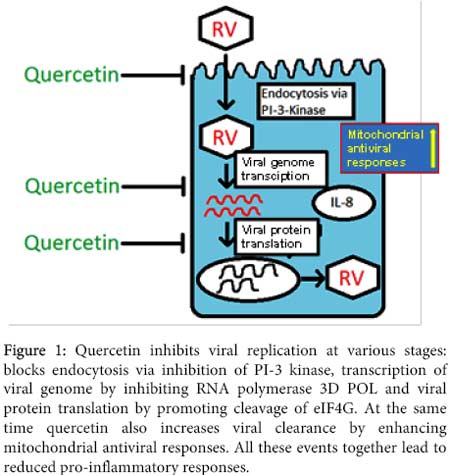 Source: Journal of Infectious Diseases and Preventive Medicine May 24, 2014; 2: 111 |
| A 2016 animal study found quercetin inhibited mouse hepatitis virus and the dengue virus.15 |
| Another 2016 study found quercetin offered protection against influenza A virus H1N1 by modulating protein expression. More specifically, the regulation of heat shock proteins, fibronectin 1 and prohibitin was instrumental in reducing viral replication.16 |
| A third study published in 2016 found quercetin inhibited a wide spectrum of influenza strains, including H1N1, H3N2 and H5N1. According to the authors, “This study indicates that quercetin showing inhibitory activity in the early stage of influenza infection provides a future therapeutic option to develop effective, safe and affordable natural products for the treatment and prophylaxis of [influenza A viruses] infections.”17 |

Download this Article Before it Disappears
Quercetin Inhibits Hepatitis B and C
In summary, quercetin’s powerful antiviral effects can be attributed to three main mechanisms of action:
- Inhibiting the virus’ ability to infect cells
- Inhibiting replication of already infected cells
- Reducing infected cells’ resistance to treatment with antiviral medication
As you can see from the list of studies above, quercetin’s ability to prevent illness is not restricted to influenza. Research shows it’s incredibly effective for boosting general immune health, and studies have shown it can inhibit both hepatitis B18 and C19 infection. It may even be useful in the treatment of HIV. As noted in a Superfoods Scientific Research article on quercetin:20
“Hepatitis C is an important cause of liver failure and liver cancers. In August 2009, [a] cell study21 demonstrated that quercetin interfered with the gene signals that enable hepatitis C virus production. The researchers showed … quercetin inhibits hepatitis C viral production in tissue culture, at least partially through its inhibition of heat shock protein expression.
Therapy with quercetin reduced the infectious particle production to nontoxic concentrations of [hepatitis C virus].”
Similarly, research published in 2015 found quercetin inhibited hepatitis B virus replication in human liver cells, protecting cells from infection and limiting the spread of infection in already infected samples.22 As in previous studies, when combined with antiviral drugs, in this case lamivudine, entecavir or adefovir, the antiviral effect was greatly enhanced.
According to the authors, “The results indicate that quercetin inhibited HBV [hepatitis B virus] antigen secretion and genome replication in human hepatoma cell lines, which suggests that quercetin may be a potentially effective anti-HBV agent.”
Quercetin a Far Safer Alternative to Tamiflu
Should you or your child come down with the flu and your doctor or pediatrician recommends Tamiflu, you should know this antiviral drug has been shown to shorten the duration of flu symptoms by less than 17 hours.23,24 It also does not reduce viral transmission and does not lower your risk of complications from the flu, such as pneumonia.25,26 Scientists have also warned that the risks far outweigh the benefits.27
These risks include convulsions, brain infections, psychosis and other neuropsychiatric problems. Tamiflu made recent headlines after a 6-year-old girl started hallucinating and attempted to jump out a second story window.28 Indeed, a number of studies have observed that Tamiflu may cause psychiatric symptoms, including mood swings, suicidal feelings, auditory hallucinations, memory deterioration and insomnia.29
The drug is particularly risky for children, and more than half of all children taking Tamiflu suffer side effects from the drug.30,31 Considering its risks, and its limited effectiveness, quercetin appears to be a far safer and more effective alternative. Studies have repeatedly found it to be nontoxic, with no adverse side effects.
Vitamin D — Another Potent Immune Booster and Antiviral
Optimizing your vitamin D is another important prevention strategy that will boost your immune function and help prevent infectious diseases of all kinds.
The latest research suggests a vitamin D serum level of 60 to 80 ng/mL is ideal. While conventional health authorities claim getting an annual flu shot is the best way to ward off influenza, the medical literature actually suggests vitamin D optimization may be a far more effective strategy, and the evidence for this goes back at least a decade.
Dr. John Cannell, founder of the Vitamin D Council, was one of the first to introduce the idea that vitamin D deficiency may actually be a causative factor in influenza. His hypothesis32 was initially published in the journal Epidemiology and Infection in 2006.33 It was subsequently followed up with another study published in the Virology Journal in 2008.34
The following year, a large, nationally representative study35 confirmed that people with the lowest vitamin D levels indeed reported having significantly more colds or cases of the flu. Since then, a number of studies have come to similar conclusions.
Most recently, a scientific review36,37 published last year concluded that vitamin D supplementation boosts immunity and cuts rates of cold and flu. In all, 25 randomized controlled trials were included in the review, involving nearly 11,000 individuals from more than a dozen countries.
People with significant vitamin D deficiency (blood levels below 10 ng/mL), taking a vitamin D supplement reduced their risk of respiratory infections such as influenza by 50%. People with higher vitamin D levels also benefited, although not as greatly.
Overall, they reduced their risk by about 10%, which the researchers stated was about equal to the effect of flu vaccines. Coincidentally, 10% is the effectiveness rate of this year’s flu vaccine.38 The take-home message here is that vitamin D supplementation far exceeds the flu vaccine in terms of effectiveness, and the more deficient you are, the greater its protective effects.
Aside from vitamin D and quercetin, loading up on vitamins B1 and C may go a long way toward keeping you healthy through the flu season and beyond. Influenza has also been successfully treated with high-dose vitamin C,39 and vitamin C also boosts the effectiveness of quercetin. Taking zinc lozenges at the first sign of a cold or flu can also be helpful.
- 1, 5 Fitoterapia 2015 Oct;106:256-71
- 2 Superfoodly, 100 Quercetin Foods
- 3 Food Chemistry Volume 179. Pages 305-310. July 15, 2015
- 4 Biomedicine & Pharmacotherapy Volume 146. February 2022
- 6 Semantic Scholar. 2014
- 7 Biomolecules. December 24, 2020
- 8 Newswise. Appalachian State University February 8, 2007
- 9 Journal of the American Dietetic Association 2011 Apr;111(4):542-9
- 10, 14 Journal of Infectious Diseases and Preventive Medicine May 24, 2014; 2: 111
- 11 Journal of Medical Virology January 1985 DOI: 10.1002/jmv.1890150110
- 12 Antiviral Research 2010 Nov;88(2):227-35
- 13 Experimental Lung Research 2005; 31(5)
- 15 Asian Pacific Journal of Tropical Medicine January 2016; 9(1): 1-7
- 16 Journal of Agricultural and Food Chemistry 2016; 64(21): 4416-4425
- 17 Viruses 2016 Jan; 8(1): 6
- 18, 22 Virologica Sinica August 2015; 30(4): 261-268
- 19, 21 Hepatology 2009 Dec;50(6):1756-64
- 20 Superfoods Scientific Research, Quercetin
- 23, 25 BMJ 2014;348:g2545
- 24 Forbes April 10, 2014
- 26 The Guardian April 10, 2014
- 27 Cochrane Database of Systematic Reviews 2014, Issue 4. Art. No.: CD008965
- 28 Newsweek January 15, 2018
- 29 Clin Psychopharmacol Neurosci. 2015 Aug; 13(2): 209–211
- 30 The Guardian July 31, 2009
- 31 Eurosurveillance July 2009; 14(30)
- 32 Epidemic Influenza and Vitamin September 15, 2006
- 33 Epidemiology and Infection 2006 Dec;134(6):1129-40
- 34 Virology Journal 2008; 5:29
- 35 Archives of Internal Medicine 2009;169(4):384-390
- 36 BMJ 2017; 356:i6583
- 37 NPR February 16, 2017
- 38 New England Journal of Medicine January 4, 2018; 378:7-9
- 39 Journal of Manipulative and Physiological Therapeutics 1999 Oct;22(8):530-3
Coca-Cola knew its Simply Orange product contained toxic chemicals, lawsuit alleges
Reproduced from original article:
https://www.naturalhealth365.com/coca-cola-knew-its-simply-orange-product-contained-toxic-chemicals-lawsuit-alleges.html
by: February 2, 2023
 (NaturalHealth365) Avoiding environmental toxins can seem nearly impossible these days. How’s this, for an example: traces of perfluoroalkyl and polyfluoroalkyl substances, better known as PFAS or forever chemicals, are believed to be detectable in the blood and urine of 97% of Americans, according to data from the Centers for Disease Control and Prevention’s well-known National Health and Nutrition Examination Survey (NHANES).
But while PFAS have been linked to a wide variety of health problems, it is possible to reduce your exposure (more on that later). That said, companies that deceive the public about the safety of their products certainly can make this harder for the concerned consumer.
SUED: Coca-Cola’s “natural” orange juice drink contains elevated levels of harmful toxic compounds, lawsuit alleges
PFAS are manmade chemicals used in a you-name-it list of everyday products, from carpets to food packaging to dental floss. Called “forever chemicals” because they do not degrade easily and therefore accumulate in the environment – and the human body – manufacturers like them because they are resistant to oil, water, grease, heat, and stains. Unfortunately, these chemicals are long-lasting, pervasive, widespread, and numerous – according to the National Institute of Environmental Health Sciences, more than 9,000 different types of PFAS exist!
Now, Coca-Cola is facing a class-action lawsuit for falsely advertising that their “Simply Orange” juice products are “natural.” The lawsuit, filed by Joseph Lurenz of the United States District Court Southern District of New York, alleges that these “Simply Orange” drinks contain levels of PFAS that far exceed the maximum recommended limit set by the Environmental Protection Agency (EPA).
For example, third-party testing of these juices found that two types of PFAS, called perfluorooctanoic acid (PFOA) and perfluorooctanesulfonic acid, were present at levels 100 times greater than the amounts recommended by the EPA in drinking water.
“Over the past year,” notes a January 27, 2023 article published by AboutLawsuits.com, “a growing number of consumer class action lawsuits have also been filed over high levels of PFAS in a wide variety of products, including cosmetics, McDonald’s wrappers and other food containers.”
Word is truly getting out.
These are some concerning things about PFAS you should know
When it comes to the health risks of PFAS, the list is truly sobering. There seems to be no aspect of human health that isn’t potentially at risk from chronic, long-term, and repeated exposure to these forever chemicals. Some of the most well-documented PFAS health problems include:
- Liver and kidney disease
- Obesity
- Reduced fertility
- Impaired fetal growth and development
- Impaired metabolism
- Impaired thyroid and immune function and decreased ability to fight infections
- Increased risk of certain types of cancers
Please be aware: these chemicals are truly ubiquitous, so avoiding them completely may be unrealistic. But that’s no reason to fear, either. You can reduce your amount of exposure by following a few simple strategies, such as:
- Never using non-stick cookware
- Avoiding processed foods, especially pre-packaged ones like microwave popcorn
- Using glass food containers
- Avoiding flame-retardant clothing, carpeting, and upholstery
- Looking for PFAS-free on labels
Depending on where you live, your state legislators may already be doing their part to lower your family’s exposure to these chemicals. In California, for example, a proposed bill, AB-1817, would prohibit manufacturing, distributing, selling, or offering for sale any new textile articles (think: clothing) containing PFAS. Additionally, manufacturers hoping to sell and distribute their products in California would have to use the “least toxic alternative” in lieu of the PFAS regulated by the state of California.
The bill, if it passes, will go into effect on January 1, 2025 – and would join an existing California law that became effective as of January 1st of this year prohibiting the distribution or sale of food packaging or “juvenile products” (like infant car seats or mattresses) that contain regulated PFAS. And while the jury is out on whether “alternative” chemicals will end up being any safer than PFAS, it does seem like a step in the right direction.
Inspired? Feel free to reach out to your local and state representatives if you want them to take action to better protect your family, too.
Sources for this article include:
Dailymail.co.uk
Aboutlawsuits.com
Cleanwater.org
NIH.gov
Openstates.org
Soybean Oil Linked to Genetic and Neurological Damage
Reproduced from original article:
https://articles.mercola.com/sites/articles/archive/2023/01/20/soybean-oil-side-effects.aspx
The original Mercola article may not remain on the original site, but I will endeavor to keep it on this site as long as I deem it to be appropriate.
Analysis by Dr. Joseph Mercola Fact Checked January 20, 2023
STORY AT-A-GLANCE
- Whether partially hydrogenated, organic or genetically modified to be low in linoleic acid, soybean oil can cause dysfunction at a cellular level
- Recent research warns soybean oil can cause neurological and metabolic changes associated with autism, Alzheimer’s, anxiety, depression, obesity, insulin resistance, Type 2 diabetes and fatty liver disease
- The animal study compared the health effects of diets high in conventional soybean oil, GE soybean oil low in linoleic acid and coconut oil. Both types of soybean oil had pronounced effects on the brain
- The soybean diets caused dysfunction in about 100 different genes in the hypothalamus, including one that is responsible for producing oxytocin, which has beneficial effects on your heart
- Potential health hazards of soybean oil include the harmful health effects of unfermented soy, the potential hazards of GE soy, the harm associated with glyphosate-contaminated food, and high amounts of processed omega-6 skewing your omega-3 to omega-6 ratio
Far worse than the biologic damage caused by refined sugar is the molecular havoc caused by processed vegetable oils. Soybean oil in particular has a questionable safety profile for several reasons, and processed foods are positively loaded with it.
Whether partially hydrogenated, organic or genetically modified to be low in linoleic acid, soybean oil can cause dysfunction at a cellular level. Unfortunately, many health authorities have insisted omega-6-rich vegetable oils like soybean oil are healthier than saturated animal fats such as butter and lard, and this myth has been a tough one to dismantle, despite the evidence against it.
An estimated 94% of the soybeans grown in the U.S. are genetically engineered (GE) to tolerate herbicides,1 primarily glyphosate (the active ingredient in Monsanto/Bayer’s Roundup), which cannot be washed off. As a result, most soybean-based products are contaminated with glyphosate, which compounds their toxicity.
Soybean Oil Linked to Genetic and Neurological Damage
Most recently, research2,3,4,5 published in the journal Endocrinology warns soybean oil — the most widely consumed cooking oil in America — can cause neurological and metabolic changes associated with:
| Autism | Alzheimer’s disease |
| Anxiety | Depression |
| Obesity | Insulin resistance |
| Type 2 diabetes | Fatty liver disease |
The study, done on mice, compared the health effects of diets high in conventional soybean oil, GE soybean oil low in linoleic acid and coconut oil. As reported by Neuroscience News:6
“The same UCR research team found in 2015 that soybean oil induces obesity, diabetes, insulin resistance, and fatty liver in mice. Then in a 2017 study, the same group learned that if soybean oil is engineered to be low in linoleic acid, it induces less obesity and insulin resistance.
However, in the study released this month, researchers did not find any difference between the modified and unmodified soybean oil’s effects on the brain. Specifically, the scientists found pronounced effects of the oil on the hypothalamus, where a number of critical processes take place.”
Your hypothalamus7 is a key regulator of homeostasis and metabolism in your body, and also plays a role in your stress response and hormone regulation.
According to the authors, the soybean diets (both conventional and GE), caused dysfunction in about 100 different genes in the hypothalamus, including one that is responsible for producing oxytocin, colloquially known as “the love hormone,” which has beneficial effects on your heart.
Other dysregulated genes included ones associated with “inflammation, neuroendocrine, neurochemical and insulin signaling.” The coconut oil diet had “negligible effect.”
The fact that GE soybean oil that is designed to be low in omega-6 linoleic acid had similar effects as conventional high-linolenic acid soybean oil effects suggests linoleic acid isn’t the problem, as previously suspected. The study also ruled out another suspected soybean chemical, stigmasterol, as coconut oil enriched in stigmasterol had no ill effects.
The team will continue their investigation in an effort to identify the real culprit behind these genetic effects. In the meantime, co-author Poonamjot Deol, an assistant project scientist at the University of California Riverside, urges people to “reduce consumption of soybean oil.”
Unfermented Soy Linked to Many Health Problems
The idea that unfermented soy in general and soybean oil in particular, are healthy is refuted by thousands of studies linking unfermented soy to a wide range of health problems. In her book, “The Whole Soy Story,” Dr. Kaayla Daniel details research implicating unfermented soy in the development of:8
| Malnutrition | Digestive distress |
| Immune system breakdown | Thyroid dysfunction |
| Cognitive decline | Reproductive disorders |
| Infertility | Cancer |
| Heart disease | Food allergies |
Fermented organic soy, on the other hand, has a number of important health benefits, and are the only soy products I recommend eating. Healthy options include:
- Tempeh — A fermented soybean cake with a firm texture and nutty, mushroom-like flavor.
- Miso — A fermented soybean paste with a salty, buttery texture (commonly used in miso soup).
- Natto — Fermented soybeans with a sticky texture and strong, cheese-like flavor.
- Soy sauce — Traditionally made by fermenting soybeans, salt and enzymes; beware that many varieties on the market today are made artificially, using a chemical process.
Problematic Components in Soy
While the featured Endocrinology study was unable to identify the exact soy compound responsible for the genetic damage, there are many plant chemicals found in soy that are capable of causing problems, including:
| Phytoestrogens (isoflavones) genistein and daidzein, which mimic and sometimes block the hormone estrogen — Isoflavones resemblance to human estrogen is why some recommend using soy therapeutically to treat symptoms of menopause.
However, most of us tend to be exposed to too many estrogen compounds and have a lower testosterone level than ideal, so I believe it’s important to limit your exposure to feminizing phytoestrogens. Even more importantly, there’s evidence9 isoflavones may disturb endocrine function, contribute to infertility and promote breast cancer, which is definitely a significant concern. As noted in a 2017 scientific review on dietary phytoestrogens:10
|
| Phytates, which block your body’s uptake of minerals — Phytic acid binds to metal ions, preventing the absorption of certain minerals, including calcium, magnesium, iron and zinc11 — all of which are co-factors for optimal biochemistry in your body.
This is particularly problematic for vegetarians, because eating meat reduces the mineral-blocking effects of these phytates. Sometimes phytic acid can be beneficial, especially in postmenopausal women and adult men, both of whom are prone to excessive iron, a potent oxidant capable of causing significant biological stress. However, phytic acid does not selectively inhibit iron absorption; it inhibits all minerals. This is very important to remember, as many already suffer from mineral deficiencies from inadequate diets. The soybean has one of the highest phytate levels of any grain or legume, and the phytates in soy are highly resistant to normal phytate-reducing techniques such as long, slow cooking. Only a long period of fermentation will significantly reduce the phytate content of soybeans. |
| Enzyme inhibitors, which hinder protein digestion. |
| Hemagglutinins,12 which cause red blood cells to clump together and inhibit oxygen takeup and growth.13 |
| Omega-6 fat (linolenic acid), which is pro-inflammatory — The massive overconsumption of highly refined vegetable oils such as soybean oil is largely due to the wrongful demonization of saturated fats. This has had the effect of turning the average American’s omega-3 to omega-6 ratio upside down, which is a major driver of chronic inflammation, which in turn is an underlying factor in virtually all chronic diseases. |
| “Antinutrients” such as saponins, soyatoxin, lectins and oxalates — While a small amount of antinutrients would not likely cause a problem, the amount of soy and soybean oil that many Americans are now eating is very high. |
| Goitrogens — Goitrogens,14 found in all unfermented soy whether it’s organic or not, are substances that block the synthesis of thyroid hormones and interfere with iodine metabolism, thereby interfering with your thyroid function. |
Another Major Hazard of GE Soybeans: Glyphosate
If you need yet another reason to reconsider your consumption of soybean oil, consider this: In addition to having an unhealthier nutritional profile than organic soybeans, Roundup Ready GE soy has been shown to contain high amounts of glyphosate.15
According to a 2014 study16,17 published in Food Chemistry, which looked at the compositional differences between various types of soybeans, glyphosate readily accumulates in Roundup Ready soybeans, and GE soybeans contained a mean glyphosate residue level of 3.3 milligrams per kilo. The most contaminated samples contained as much as 8.8 mg of glyphosate per kilo.
Meanwhile, a 2010 study18 in the journal Chemical Research in Toxicology found malformations in frog and chicken embryos occurred at 2.03 mg of glyphosate per kilo. The malformations primarily affected the face, skull, brain and spinal cord. According to this study:
“Organic soybeans showed the healthiest nutritional profile with more sugars, such as glucose, fructose, sucrose and maltose, significantly more total protein, zinc and less fiber than both conventional and GM-soy.
Organic soybeans also contained less total saturated fat and total omega-6 fatty acids than both conventional and GM-soy. GM-soy contained high residues of glyphosate and AMPA … Conventional and organic soybean batches contained none of these agrochemicals.
Using 35 different nutritional and elemental variables to characterize each soy sample, we were able to discriminate GM, conventional and organic soybeans without exception, demonstrating ”substantial non-equivalence” in compositional characteristics for ‘ready-to-market’ soybeans.”
It’s important to realize that once applied to crops, glyphosate actually becomes integrated into the cells of the plant, so it cannot be washed off. And, while the chemical industry is still defending the safety of glyphosate, mounting research suggests it can harm health in a number of different ways.
Importantly, the chemical has been shown to decimate beneficial gut bacteria. Glyphosate has also been shown to cause DNA damage19 and to act as an endocrine disruptor.20 For an overview of how glyphosate’s impact affects your health, see “Roundup May Be Most Important Factor in Development of Chronic Disease.”
Safeguard Your Health by Ditching Vegetable Oils
To recap, there are several potential health hazards of soybean oil to consider, either alone or in combination:
- The harmful health effects of unfermented soy
- The potential hazards of GE soy
- The harm associated with glyphosate contaminated food
- High amounts of processed omega-6 skewing your omega-3 to omega-6 ratio
If you want to avoid dangerous fats of all kinds, your best bet is to eliminate processed foods from your diet. My comprehensive nutrition plan offers helpful guidance for this process.
When cooking, coconut oil, butter, lard and ghee are healthy options. Also be sure to swap out margarines and vegetable oil spreads for organic butter, preferably made from raw grass fed milk. Butter is a healthy whole food that has received an unwarranted bad rap.
Other healthy fats to include in your diet are avocados, raw dairy products, olive oil, olives, organic pastured eggs and raw nuts. To further balance your omega-3 to omega-6 ratio you may also need a high-quality source of animal-based omega-3 fat, such as krill oil, if you’re not in the habit of eating small, fatty fish such as sardines, anchovies and mackerel, and/or wild caught Alaskan salmon.
- 1 Economic Research Service, Recent Trends in GE Adoption
- 2 Endocrinology January 8, 2020 DOI: 10.1210/endocr/bqz044
- 3 UC Riverside News January 17, 2020
- 4, 6 Neuroscience News January 17, 2020
- 5 manoramaonline.com January 18, 2020
- 7 Endocrineweb.com, Overview of the Hypothalamus
- 8 Amazon
- 9, 10 British Journal of Pharmacology June 2017; 174(11): 1263-1280
- 11 American Journal of Food Technology 2011; 6(3): 235-243
- 12 The Journal of Biological Chemistry 1965; 241(3): 684-689 (PDF)
- 13 Science Direct Hemagglutinins
- 14 Baillieres Clin Endocrinol Metab. 1988 Aug;2(3):683-702
- 15 Food Chemistry June 15, 2014; 153: 207-215
- 16 Food Chemistry 2014: 153; 207-215
- 17 Foodexposed.co.za January 23, 2014
- 18 Chemical Research in Toxicology 2010; 23(10):1586–1595
- 19 Archives of Toxicology 2012; 86: 805-813 (PDF)
- 20 Toxicology 2009; 262: 184-191 (PDF)
How the Wrong Dietary Component Can Wreck Your Health
Reproduced from original article:
https://articles.mercola.com/sites/articles/archive/2023/01/01/omega-6-linoleic-acid.aspx
The original Mercola article may not remain on the original site, but I will endeavor to keep it on this site as long as I deem it to be appropriate.
Analysis by Dr. Joseph Mercola Fact Checked January 01, 2023
STORY AT-A-GLANCE
- Omega-6 linoleic acid (LA) is the most common fat in the American diet. Most people get 25 times more LA than they need. At most, you need about 2 grams a day, but the average American gets about 50 grams a day, thanks to the fact that most processed foods and condiments are loaded with omega-6 seed oils
- LA gets incorporated into your cell membranes where it causes inflammation. Its half-life is nearly two years, so ridding your body of stored LA completely can take up to seven years
- Eliminating LA is a marathon, not a sprint. Ineffective and potentially harmful ways of eliminating LA include extended fasting and overtaxing your body with strenuous endurance exercise
- To stop the accumulation of LA in your cells, eliminate seed oils from your diet. Cook with beef tallow, butter, ghee or coconut oil, and avoid all processed foods, restaurant foods, condiments, and animals raised on grains, such as chicken and pork
- Vitamin E, in a dose of about 2 IU – 3 IU for every gram of PUFA (not just linoleate) consumed daily may also be able to provide some protection against the inflammatory and endocrine (estrogenic, pro-cortisol) effects of linoleate and PUFA in general
- To safely encourage the elimination of LA from your body, focus on building muscle and maximizing lean muscle mass with concentric exercise, and eat a balanced diet with a ratio of 2-to-1 healthy carbs to protein
In this interview, Georgi Dinkov, an expert on linoleic acid (LA), details some of the health hazards of this exceedingly common fat in the modern diet, and how to safely rid your body of it.
Both Georgi and I are convinced excessive LA intake is one of the most important variables that can make or break your health, especially in the long term. It’s a far greater contributor to chronic and degenerative disease and mortality than sugar, and it’s the primary culprit that makes processed foods so harmful.
The historical (last 50 to 75 years) incidence curves of cancer, cardiovascular disease (CVD), diabetes and neurological disease in the general population overlap remarkably well the ever-increasing PUFA consumption rates in developed countries, suggesting PUFA is a major factor in those diseases.1,2
How Georgi Became a Biohacker
Despite having a degree in computer science, Georgi has made a name for himself as an expert biohacker. After graduating from college in 2002, he got a job as a programmer at the National Biomedical Research Foundation (NBRF).
There, he helped develop uniprot.org, a database of all known protein sequences — Protein Information Resource (PIR — pir.georgetown.edu) and UniProt (www.uniprot.org).
Surrounded by up to 60 of the brightest doctors and biochemists in the world, Georgi developed an interest in biochemistry, and started studying on the side so he could more effectively collaborate with his coworkers. He provides an amazing example of what one can learn without any formal training if they merely apply themselves.
“Between 2002 and 2005, I was part of this group as a programmer, but I basically started attending all of their lectures and classes,” he says. “Some of them were teaching at nearby universities, so I kept going.
I was a young, single person, didn’t have anything better to do, and I tried to utilize my time the best I could. Over a period of about three years, it started to click, so I started to understand what these people were talking about.
In 2005, I left, got myself a full-time job in the IT sector, and then kept reading. The reason I got into this bioenergetic area, which linoleic acid is a big part of, is because around 2009, I … became a low-carber.
Being an athlete in college, I basically happened to combine very low carb diet with very exhaustive exercise, and I got myself into a really big predicament. I started getting these very weird neurological symptoms, tingling of the extremities, headaches, sensitivity to light.”
Low-Carb Considerations
In the interview, we clear up some of the pervasive confusion surrounding low-carb diets, and why long-term chronic low-carb is not ideal. It’s a great short-term intervention for most people, especially those with insulin resistance.
This is because lowering carbs can help reset your metabolism and recover your metabolic flexibility. However, in the long term you can run into trouble — especially if you’re also doing a lot of endurance training. The main reasons for the issues caused by chronic low-carb diets (and/or stress, which mimics the effects of low-carb diets) are:
- The elevated lipolysis in a low carb-state, which results in chronically elevated circulating levels of PUFA, with the resulting inflammatory and endocrine effects (e.g. PUFA is pro-cortisol, estrogenic and also synergizes with endogenous/exogenous estrogens, and promotes their effects even in low doses).
- The downregulation of the resting metabolic rate (RMR) by lowered synthesis of T3 when eating a low-carb diet and/or fasting and/or strenuous exercise.
For more details on this, be sure to listen to the interview at normal speed. Believe me, this is an interview that nearly everyone should listen to a few times to capture the incredible clinical pearls that Georgi shared. I personally learned more during this discussion than I have from most interviews.
If you listen to the interview, you will learn that once your sugar stores are expended, you start tapping into your fat stores through a process called lipolysis. This liberated fat is then circulated around your body and supplied to the cells as fuel to compensate for the low glucose availability.
However, certain types of fat block the effects of insulin in your body, so a long-distance endurance athlete can actually end up with a blood profile similar to that of a person with Type 2 diabetes. In Georgi’s case, as an endurance athlete, his blood sugar climbed higher the less sugar he ate. This competition/antagonism between glucose and fats (mostly PUFA) as fuel for the cells was first discovered in the 1970s and named the Randle Cycle.
Why does it occur? The process in your liver that controls blood sugar is gluconeogenesis. If you stop supplying carbs to your body, the organs that need them will activate glucose creation in your body by elevating the stress hormone cortisol, which ends up being very destructive to your tissues, including skeletal muscle, liver, brain and kidneys.
In Type 2 diabetes, a state with hyperglycemia, only about 10% of the circulating glucose is of dietary origin. The rest is due to chronically elevated gluconeogenesis — which suggests that cortisol is the driver of hyperglycemia in Type 2 diabetes — and elevating cortisol chronically by doing low-carb or exhaustive exercise is likely detrimental to insulin sensitivity.
People with elevated cortisol (Cushing phenotype) have the same central obesity and loss of muscle mass (sarcopenia) as the ones seen in diabetes 2. Conversely, blocking cortisol’s effects with the drug RU486 has been demonstrated to lead to sustained fat loss WITHOUT dieting, and improved insulin sensitivity.3,4,5
Cortisol goes up during exercise, and if there’s no glucose around, cortisol rises even higher. Shakes, problem sleeping, jitteriness and neurological abnormalities are some of the symptoms of high cortisol and low glycogen stores. In Georgi’s case, his symptoms slowly vanished once he started eating a more balanced diet, with a macronutrient ratio of about one-third carbs, one-third fat and one-third protein.
Dietary Fats and Fatty Liver Disease
In his search for answers to the symptoms he experienced on a low-carb diet, he came across Dr. Peat’s website,6 aka, Dr. T.A. Peterson, an American biologist who’s been studying the role of energy in the cell, and the effects of LA. Georgi started reading Peat’s work in 2009, and eventually started doing his own experiments.
As noted by Georgi, published research has long demonstrated that LA is far from a benign macronutrient. It’s actually a highly proinflammatory mediator and has endocrine effects that mimic estrogen. Contrary to popular belief, LA is also a major culprit in nonalcoholic fatty liver disease (NAFLD), more so than fructose and other sugars.7,8
Georgi cites research9,10,11 showing people with alcoholic cirrhosis (liver disease) who ate their normal diet, which was high in omega-6 fats, experienced classic progression of cirrhosis resulting in liver failure. The group whose diet was altered to eliminate all forms of fat aside from coconut oil, a saturated fat, was able to reverse their cirrhosis, even in the presence of continued alcohol abuse. Additional animal experiments12 confirmed these results. As explained by Georgi:
“The livers of people who are eating predominantly omega-6 fatty acids very quickly get fattened up. Also, there’s cell damage of the Kupffer cells due to the many oxidation byproducts (OxLAMs) of these omega-6 fatty acids … [Meanwhile], the livers of the animals that were still alcoholic but were given the saturated fatty acids had very little oxidative damage to the cells, and they weren’t fat.
What could explain this? Well, it turns out that when you’re consuming a meal with fat, it’s composed of many different fatty acids, but we can separate them into saturated fatty acids, monounsaturated and polyunsaturated [PUFAs].
It turns out that the liver and most of the organs preferentially oxidize (burn) the saturated fatty acids, and then the monounsaturated fatty acids, while the polyunsaturated acids are predominantly stored.
The polyunsaturated fatty acids, aside from being very susceptible to spontaneous auto oxidation … combustion … are precursors to inflammatory mediators such as prostaglandins and leukotrienes. Those inflammatory mediators are basically derived from … linoleic acid. So, if you eat a lot of polyunsaturated fats, and specifically linoleic acid, you’ll have more … systemic inflammation.
Now NAFLD is already known to be an inflammatory state. You cannot get an inflammatory state from saturated fat. It does not produce those same mediators. Saturated fat will either get stored or will get oxidized properly through the process of beta oxidation to carbon dioxide, ATP and water.
But the polyunsaturated fats, they’re unstable. They can get combusted and create a lot of toxic byproducts, and the liver being the site of the primary organ of detoxification of whatever you are eating through the diet — guess what? They’re going to go mostly there.
Also, because they’re precursors to a number of different mediators, enzymes in the body will take these fatty acids, specifically linoleic acid, and then through a chain of reactions convert it to prostaglandins, leukotrienes and thromboxane.”
PUFAs Are Stored, Not Digested
An important take-home here is that PUFAs such as LA are not digested. Instead they’re stored.13 Most of the body fat in obese individuals is composed of PUFAs, not saturated fat. Saturated dietary fat is mostly burned (oxidized) and used up.
So, obese individuals are typically not eating very much saturated fat; rather, they’re exponentially overdosing on LA. Animal studies in the early 20th century demonstrated conclusively that pigs fed saturated fats (mostly coconut oil) could not get fat but became lean and muscular, while the ones fed PUFA gained mostly fat.
This led to the adoption/promotion of PUFA as animal feed since the goal there is to maximize “caloric efficiency” — i.e., get the animals as heavy as possible with a little food as possible. In other words, the pro-obesity effects of PUFA and anti-obesity effects of saturated fats are well-known in the livestock industry and are not disputed.
Considering the similarity of our metabolism/structure/tissues/organs with those of pigs, it should not be at all surprising that we keep getting fatter while consuming ever-larger amounts of PUFA.
The half-life of PUFAs such as LA, which get embedded and integrated into your cell membranes, is about 680 days. This means that to rid your body of LA will take approximately seven years, provided you don’t load more in. And you really do want to get rid of this fat, as it’s highly inflammatory and prevents your mitochondria and cellular machinery from operating properly.
Research has shown that given enough PUFAs, your cells will go into apoptosis, they basically commit suicide. “It can actually work like a radiation or chemotherapy. It is a type of chemotherapy,” Georgi says. The implications14,15 of this insight are quite profound and I look forward to exploring that with Georgi on his next interview.
PUFAs Coming Out of Storage Can Cause Trouble
A key way to eventually lower your body burden of LA is to keep your total LA intake below 2%, maybe even close to 1%. You need to stop putting more in. Exercise and fasting will help drive the LA out, but you need to be really careful if you have a lot of LA storage.
“A recent study16 found that even lean people who are running marathons, a good portion (82%!) of them are actually in acute kidney failure by the time they reach the finish line,” Georgi says. “The question is, how is this possible? It looks like these circulating fatty acids, which are mostly PUFAs coming out of storage, circulate and cause energetic problems.
Also, because of the quick peroxidation and conversion into inflammatory mediators, they’re damaging many of the organs, predominantly the kidneys.17 Why the kidneys? Anything that is not oxidized for fuel basically gets sent to the liver through the blood stream, the Phase 2 detoxification mechanism. The liver attaches glucuronic acids to these fatty acids to make them more water soluble.
It can also sulfate them. When they’re more water soluble, you pee them out. But they have to go through the kidneys, and it looks like if a sufficiently big supply of these glucoronidated sulfated PUFAs, or let’s say linoleic acid just for the sake of the argument, is flooding the kidneys, it is causing local damage there.
So, what should we do? Well, it looks like we should be taking measures to not get into excessive lipolysis. What is excessive lipolysis? It’s any situation where you’ve run out of glycogen and now the body says, ‘I don’t have the fuel,’ because you’re not eating and you’ve run out of glycogen.
Then fat is your only other fuel, plus the amino acids that are coming from cortisol. So basically, you should not be getting to a state where you’re chronically starving. Acute, let’s say like eight to 12 hours of fasting, calorie restriction, has been shown to have benefits, but anything longer than that, then you’re starting to increase baseline lipolysis.”
My Recommendations for TRE Have Changed
Georgi pointed out the dangers of an excessive time-restricted eating (TRE) window.18,19,20,21,22,23,24,25 An extreme example of TRE is the one meal a day (OMAD) protocol, where you’re fasting 20 hours or more each day. Georgi believes this is too extreme for most people, as most have large stores of LA that need to be purged safely.
I have been personally practicing and advocating a six– to eight-hour time restricted eating window. What I learned from our conversation is that this, or even longer eating restrictions and fasts, are perfectly appropriate for 95% of the population as they are insulin resistant and metabolically inflexible.
The major problem comes once you lose your insulin resistance and become metabolically flexible. At that point, this strategy becomes counterproductive as you will increase your cortisol levels, which causes chronic inflammation that can lead to tissue damage. Usually, it takes about three to six months for you to recover your metabolic flexibility.
Prior to my interview with Georgi I would have a six- to eight-hour eating window and I did this for a few years. Now I am going to shift to one day a week of 12 hours, three days of 10 hours and three days of eight hours. If you are metabolically healthy, I would encourage you to avoid very short eating windows under eight hours.
This is because chronic fasting also elevates your cortisol, just like chronic endurance exercise does. Cortisol, in turn, is involved in insulin resistance and the synthesis of fat, and promotes the storage of fat. Also, as just mentioned above, high amounts of LA can kill your cells.
“So, you don’t want to be doing this to your normal tissues, and you’re doing it to your tissues every single time you over-exert yourself to the point of either glycogen running low or you’re so stressed that your adrenaline has gotten to the point where it’s increasing lipolysis and you’re starting to shed fat.”
This is a massive piece of the puzzle that I never fully appreciated. Molecular biology and pH physiology are based on a pre-1860s scenario where you didn’t have these high levels of LA, which totally distorts the strategies. If they weren’t there, you could fast to activate autophagy and get all these benefits.
You could have a much longer TRE window. But LA is a game changer. It radically modifies the concept of what you need to do to optimize your health. Essentially, if you’ve filled up your fat stores with LA — and in most people, over 20% of their fats are LA stored in their cell membranes and the optimum is 1% to 2% — then you need to integrate that knowledge into your strategy.
How to Safely Purge LA
How can you safely reduce these stores of LA without self-sabotaging? As explained by Georgi, extensive fasting will, in this instance, backfire, as will overtaxing yourself with heavy exercise. You’ll need to accept that this is a marathon, not a sprint, and that it’s going to take years to purge your LA stores. The best strategy, Georgi says, is to build muscle and maximize lean muscle mass.
“What does that mean? Concentric exercise, stimulating the muscles to grow. We already mentioned that cortisol is a very catabolic steroid for the muscles, so [you don’t want that] chronically. Acute spikes of cortisol are unavoidable. But things such as chronic fasting or eating inflammatory foods should be avoided as much as possible, which means cutting out vegetable oils.
If you’re cooking your own food, you have the tools at your disposal to eliminate almost completely the consumption of polyunsaturated fats. If you have to fry things or cook on high temperature, use butter, ghee or beef tallow. Even coconut oil [is good], but it has a lower smoke point. All of these are very good substitutes.”
Also avoid all processed foods, restaurant foods, condiments and animal foods raised on grains, such as chicken and pork. Aside from switching the types of dietary fats you eat, Georgi recommends a diet with a 2-to-1 ratio of carbs to protein, the carbs being in the form of fruits and vegetables, not processed sugary snacks.
“Protein is thermogenic. It’s going to raise your metabolic rate. It’s important to consume it with enough carbs because one of the quickest ways to damage your kidneys is consuming a very high protein diet without sufficient amount of carbs.
Even a competitive bodybuilder can only fully utilize about 120 grams of protein a day. Everything else that a person consumes is going to get oxidized as fuel and in the process gets deaminated, which means it produces ammonia, which is very toxic. It destroys the kidneys, liver and brain.
So, eat your protein, don’t cut down on the protein, but don’t overdo it. Make sure the ratio of carbs to protein is at least two to one, and completely cut out PUFAs as much as possible, especially if you’re cooking your own food.”
Hopefully you didn’t skim this and miss the pearl at the end, to take twice as many carbs as protein. What Georgi didn’t state here, though, is that is for people who are metabolically flexible and not insulin resistant.
So, the key is not to be afraid of healthy carbs: They are your friend. If you are eating enough protein to build muscle, please make sure you also have enough carbs because, if you fail to do this, you can hurt your kidneys, liver and brain.
He also shared another pearl about resistance exercises that I wasn’t aware of. Eccentric exercise, in which you are resisting gravity on the way down, builds muscles, BUT it also damages your muscles and destroys the mitochondria. It is far better to focus on the concentric phase of exercise, as it builds more and stronger mitochondria. Concentric exercise increase mitochondrial biogenesis, and steroidogenesis in muscle.26
How PUFAs Cause Heart Disease
Saturated fats improve the structure of cells, specifically the lipid bilayer, while PUFAs like LA impair it. The reason your cholesterol and LDL levels may go up when switching to saturated fats is because you’re giving the cells the structural material needed, from which the cells can synthesize their own cholesterol as needed. Hence, extra cholesterol gets dumped into the bloodstream because it isn’t needed.
Cholesterol is carried around by LDL. So, when you’re eating saturated fat, your LDL rises, but it’s rising because the cholesterol already in the cell is not as needed anymore. It’s actually a good sign.
Conversely, when you’re eating PUFAs, your cells need more cholesterol to strengthen their structure, so your body dumps cholesterol into the cells to protect them from the onslaught of the PUFAs. Hence, it appears your cholesterol level is going down, but it’s actually having a strongly negative effect.
Additionally, the LA becomes oxidized and the LDL carrying it is now oxidized LDL, which is strongly associated with plaque. Plaque, associated with heart attacks also contains white blood cells, calcium, 7-ketocholesterol and PUFA peroxidation byproducts. Saturated fat does not contribute to plaque.
“The plaque is basically a reaction to an inflammation caused by these toxic PUFA byproducts, and PUFA itself is inflammatory. When it gets lodged into the blood vessel walls, it causes a localized inflammatory reaction. The first response of the body is to send white blood cells to protect the blood vessel wall from damage and rupture. That’s really the purpose of the plaque.
So, the body’s not trying to kill you. It’s simply trying to repair in the best possible manner, to isolate the issue. And the issue that it’s trying to isolate is the PUFA peroxidation byproducts27 and 7-ketocholesterol.28 How can you get around this? Don’t eat PUFA, or at least drastically reduce it. Go back to whatever your grandmother was eating.”
Concluding Thoughts
Like me, Georgi is convinced LA is a primary culprit in chronic diseases. And, since LA is found in most whole foods, there’s really never any need to take an omega-6 supplement. It’s virtually impossible to get too little from your diet.
I believe omega-6 supplements really ought to be removed from the market altogether, as people are getting 25 times more omega-6 than they could possibly need from their diet. At most, you need about 2 grams a day, but the average American gets about 50 grams a day, thanks to the fact that most processed foods and condiments are loaded with omega-6 seed oils.
If our diet were to be shifted away from seed oils to saturated fats, the way it was 150 years ago, we’d likely see a massive decline in chronic diseases, including cancer and heart disease.
To learn more, be sure to listen to the entire interview, as we dive into far greater detail than what I’ve summarized here. Georgi is an absolute fire hydrant when it comes to biochemical details. Also check out Georgi’s blog at www.haidut.me. You can also obtain a major sampling of Ray Peat’s work for free by going to these two sites: wiki.chadnet.org/Ray-Peat and RayPeat.com.
- 1 Ray Peat Forum April 13, 2016
- 2 Open Heart August 22, 2018
- 3 Obesity September 6, 2012; 18(12): 2295-2300
- 4 Front Pharmacol April 24, 2020
- 5 BMC Endocr Disord 2015; 15: 63
- 6 Ray Peat
- 7 Ray Peat Forum January 23, 2018
- 8 Haidut.me October 20, 2021
- 9, 17 Gastroenterology August 1995; 109(2): 547-554
- 10 J Pharmacol Exp Ther November 2001; 299(2): 638-644
- 11 Haidut.me September 12, 2019
- 12 Alcoholism: Clinical and Experimental Research 1989; 13(1): 15-19
- 13 Haidut.me October 22, 2019
- 14 Ray Peat Forum March 23, 2021
- 15 Ray Peat Forum December 4, 2019
- 16 Ray Peat Forum March 28, 2017
- 18 Haidut.me February 16, 2021
- 19 Haidut.me September 27, 2022
- 20 Haidut.me March 4, 2021
- 21 Haidut.me December 10, 2021
- 22 Haidut.me June 21, 2022
- 23 Haidut.me November 17, 2020
- 24 Haidut.me December 21, 2021
- 25 Haidut.me September 30, 2020
- 26 Muscle & Nerve 2014; 50(5): 803-811
- 27 Int J Vitam Nutr Res 2013; 83(6): 367-376
- 28 Int J Biochem Cell Biol March-April 1999; 31(3-4): 369-375
Experts Fear Flame Retardants Are Triggering a Health Crisis
Reproduced from original article:
https://articles.mercola.com/sites/articles/archive/2022/12/30/flame-retardant-health-effects.aspx
The original Mercola article may not remain on the original site, but I will endeavor to keep it on this site as long as I deem it to be appropriate.
Analysis by Dr. Joseph Mercola Fact Checked December 30, 2022
STORY AT-A-GLANCE
- After one class of fire retardants was banned, another equally dangerous class was added to consumer products; both are associated with a reduction in IQ as well as fertility issues and a potential increased risk of diabetes
- One research team refers to it as a “regrettable substitution” and calls for safety evaluation of chemicals based on class
- Fire retardants, which are regulated, are found in car seats, infant mattresses and fabric blinds, yet the EPA phased out one class due to evidence of liver, thyroid and neurodevelopmental toxicity in children
- A team of scientists is concerned that manufacturers are programming children for diabetes, finding that one class of fire retardants permanently alters liver function and increases insulin resistance
- Help reduce your exposure by washing your hands before eating, using a vacuum with a HEPA filter, dusting with a damp cloth and seeking products without flame retardants
As discussed in this short video by Green Science Policy Institute, flame retardants are one of the six classes or families of chemicals that are found in consumer products and negatively affect health. The classes of concern include highly fluorinated products, antimicrobials, bisphenols and phthalates, some solvents, specific metals and flame retardants.
One simple and effective way to reduce your exposure is to practice regular hand-washing. According to the Environmental Protection Agency, you can reduce your child’s exposure to flame retardant chemicals using simple hand-washing techniques. The chemicals are added to several consumer products with the intent to make them less prone to burn and to burn more slowly if and when they do.
Unfortunately, while the intent is good, the chemicals are ineffective. Additionally, they create a health burden as they leach from products and land in household dust. The EPA advises parents to have their children wash their hands frequently to reduce the health risks that are associated with exposure.
Until 2004,1 the primary flame retarded chemicals were from a family of polybrominated diphenyl ethers (PBDEs), consisting of 209 possible brominated substances. By 2013, octaBDEs, used for business equipment made of plastic, were voluntarily withdrawn. Since this class of chemicals has a low water solubility it typically binds to sediment, such as soil and dust.
The replacement flame retardants, namely organophosphorus compounds, appear to have some of the same health risks and behave in much the same way in the environment as the predecessor class of PBDEs.2 This new class of fire retardants was first found in surface sediment from the Pacific to the Arctic oceans in 2010.3
This May Be a Regrettable Substitution
PBDEs were phased out as the EPA4 expressed a growing concern over the ability of the chemicals to bioaccumulate and persist in the environment. As traces were found in human blood and breastmilk, and evidence mounted the chemicals triggered liver, thyroid and neurodevelopmental toxicity, the EPA issued a rule regulating the phase-out of two of the most common PBDEs.
In a meta-analysis study published in Environmental Science and Technology Letters,5 researchers posed the question of whether the use of organophosphate ester flame retardants (OPFRs), the replacement for PBDEs, was a better choice.
They compared OPFRs with PBDEs across a range of properties with regard to the interaction in the environment and evidence of levels measured indoors, among the general population and evidence of adverse health effects. They found the OPFRs are in the environment at higher concentration than PBDEs.6
Compounding the impact of OPFRs is the bioaccumulation and poor degradation of PBDEs in the environment. The researchers wrote:7
“The time has come for manufacturers, with the help of the scientific community, to stop moving from the use of one family of harmful chemicals to the next and to instead find innovative ways to reduce both fire hazard and the use of hazardous chemicals.”
Based on the number of dangerous flame retardants currently in use and those remaining in the environment, both indoors and outside, the researchers are calling for evaluation of chemicals based on classification and not on an individual basis.8 They concluded:
“Here we have shown that, as with PBDEs in the past, OPFRs are now being used in large volumes, are sufficiently persistent to be detected globally, present health hazards, and may cause harm to humans, especially children, at current exposure levels. Given the large number of OPFRs on the market, obtaining the level of evidence a government often requires to regulate each compound would prove to be expensive and lengthy.”
Exposure Described as ‘Ubiquitous’
In a review 100 pure reviewed studies, the scientists found OPFRs are often at levels 10 to 100 times higher in the water, air and dust than were PBDEs. Additionally, they were also found in nearly every person who participated in research studies.
In several studies data showed they were at levels high enough to negatively affect healthy brain development in children and fertility in adults. It was expected OPFRs would be less persistent then PBDEs in the environment. However, predicting their presence is difficult to measure based on the compounds’ physical and chemical properties.
OPFRs do have a higher vapor pressure and shorter half-life, which led experts to believe they would travel shorter distances and have lower concentrations in the environment. However, they are more soluble and can persist in water. Multiple measurements throughout the world have demonstrated concentrations higher than PBDEs from urban areas to remote areas of the North and South poles.
Measurements have also confirmed an abundance of OPFRs in locations not explained by local release. In addition to the burden on the environment, the researchers found evidence of high exposure to OPFRs as compared to PBDEs that appeared to originate from indoor air, food and house dust.
OPFRs are heavily used in the electronic industry and are detected at higher levels in indoor air. They are also used in consumer and construction plastics. Using OPFRs was identified by the researchers as a “regrettable substitution,” or a replacement that lacked sufficient toxicity testing for a chemical being phased out as a known hazardous material.9
“Regrettable substitution occurs because of the difficulty of changing industrial processes and a lack of toxicological information, causing manufacturers to replace a phased-out chemical with a “drop in” substitute chemical that has a similar structure, function, and potential for harm.”
Are We Programming the Next Generation for Diabetes?
Although PBDEs are no longer used in manufactured products, those added to consumer products before 2013 are still in use and continue to affect your health. A recently published study10 at the University of Massachusetts-Amherst found perinatal exposure to common flame retardants in permanently reprogramed liver metabolism in a study involving rats.
The researchers found this led to an increased risk of insulin resistance and nonalcoholic fatty liver disease as the mice matured. The team identified a potential mechanism responsible for the effect. They determined the epigenome, or heritable changes in gene expression, was altered with exposure to PBDEs through the umbilical cord and breast milk.
In the study, the females were fed PBDEs to mimic concentrations similar to those found in humans living in urban areas. While the pups were never directly exposed, the researchers found it altered the function of their liver throughout their lifetime. One researcher wrote:
“Normally when you remove the stressor, the organ will recover. But in this case, it’s not recovering. Epigenetic changes can persist in a row of cellular divisions and can even propagate through generations.”
Based on their findings, the team garnered funding from the National Institute of Environmental Health Sciences to test their hypothesis in humans. They believe this may link exposure from flame retardants present in products used from birth through adulthood to an increased risk of diabetes and heart disease.
Although this particular classification of flame retardants is no longer being used in the industry, researchers have found the bioaccumulation and concentration is increasing in human tissue. It may be another 50 years before this exposure begins to decrease.
In the new study the team will use samples from a prospective cohort designed to investigate toxicity in children. Following the same individuals over time they hope to establish a link between exposure levels and changes in liver metabolism. They hypothesize this exposure leads to higher triglycerides during childhood and express a concern for the future health of children.
Potential Health Risks Rise With Exposure
As Green Science Policy Institute discussed in the video, the chemicals are added to meet flammability regulations, but have made the situation worse as they don’t retard fire and leach from the products into your home and air.
If they were effective, firefighters would be the strongest supporters, but instead are fighting to reduce exposure and impose a ban on all fire retardants.11 The toxic fumes during a fire place the first responders at greater risk of health conditions, including cancer.
The chemicals are known to attach to dust particles. When these particles stick to your hands you can accidently ingest them, they may land in your food or be picked up and consumed by small children and pets. As mentioned in the video, the health cost associated with just one flame retardant, PentaBDE was estimated at $209 billion. Some of the common products flame retardants are found in are:
| Car seats | Paints | Wire and cable coating |
| Carpet padding | Building insulation | Textiles |
| Infant mattresses | Television cases | Fabric blinds |
Risks Increase With Higher Exposure
In other words, they are in nearly every home on the planet. The team of researchers from the featured study looked at epidemiological evidence for both PBDEs and OPFRs. Well-established scientific evidence demonstrates PBDEs are linked to neurodevelopmental issues.
In several in vitro evaluations, OPFRs and PBDEs “appear to have comparable developmental and neurodevelopmental toxicity potential” in processes crucial to neurodevelopment.
Reduce Your Exposure to Flame Retardant Chemicals
Fire retardant chemicals are also found in drinking water and local bodies of water. It is important to seek to reduce your exposure. Consider the options listed below:
- When purchasing items, ask if there is an option without flame retardants.
- Look for upholstered furniture with a TB117-2013 label stating the piece doesn’t contain flame retardants
- To reduce your exposure, clean and dust with a damp cloth to trap the dust, use a vacuum with a hepa filter and wash your hands, especially before eating
- Avoid purchasing rebonded carpet padding unless sure it doesn’t contain flame retardants
- When possible, purchase products without flame retardants
- 1 Agency for Toxic Substances and Disease Registry, March 2017, Page 1 last para; page 2 para 2
- 2 Toxicological Sciences, 2016;154(2):241
- 3 Environmental Science Technology, 2017;51(7):3804
- 4 Environmental Protection Agency, Polybrominated diphenylethers (PBDEs) Significant New Use Rules (SNUR), Why was this important?
- 5 Environmental Science and Technology Letters, 2019;6(11):638
- 6 Gizmodo, October 22, 2019, para 2
- 7 Environmental Science and Technology Letters, 2019;6(11):638 Looking forward last para
- 8 Science Daily, October 22, 2019 last paras
- 9 Environmental Science and Technology Letters, 2019;6(11):638 first para below table 1 in intro
- 10 University of Massachusetts Amherst, December 13, 2019
- 11 MPR News, May 23, 2019
The Dangers of Copper Deficiency and Iron Overload
Reproduced from original article:
https://articles.mercola.com/sites/articles/archive/2022/11/27/dangers-of-iron-overload-copper-deficiency.aspx
The original Mercola article may not remain on the original site, but I will endeavor to keep it on this site as long as I deem it to be appropriate.
Analysis by Dr. Joseph Mercola Fact Checked November 27, 2022
STORY AT-A-GLANCE
- Iron and copper are highly interdependent and need to be considered together. Low ferritin is rarely indicative of low iron. In most cases, it’s a sign that copper insufficiency is preventing proper iron recycling
- Copper deficiency will down-regulate several genes, including aldose reductase-1 (which plays a crucial role in glucose and fructose metabolism), glutathione peroxidase (a master antioxidant enzyme), mitochondrial aconitase (involved in iron metabolism in the mitochondria) and transferrin (which mediates the transport of iron)
- Iron deficiency virtually doesn’t exist outside of acute blood loss that is unrelated to menstruation. Unless you have a history of acute blood loss, you are likely dealing with iron recycling dysfunction due to copper deficiency
- The best way to lower excessive iron is to donate blood. Most adult men and postmenopausal women have high iron and could benefit from regular blood donation, as high iron is extremely toxic and destroys health
- To raise your copper level, you could use a copper bisglycinate supplement, or foods like grass fed beef liver, bee pollen and whole food vitamin C
Here, I interview repeat guest Morley Robbins, MBA, CHC,1 founder of the Magnesium Advocacy Group and author of “Cu-RE Your Fatigue: The Root Cause and How to Fix It on Your Own.”
While we’ve discussed the topic of iron and copper before, the percentage of doctors and natural medical clinicians who understand his work is probably about 1% or less, so it’s well worth revisiting. Besides, it’s near-impossible to learn this information in a single interview without repeated review of these vital principles.
Iron is often viewed as a universal panacea that most need more of, but nothing could be further from the truth. The reality is that almost everyone, with the exception of menstruating women, or those with large blood losses, have too much iron.
Conversely, copper is often considered toxic, yet most people are deficient and actually need more in order for their iron metabolism to function properly. Without copper, your iron will not recycle properly, resulting in what appears to be a low iron level upon testing.
The real problem, however, is not low iron but low copper. Adding iron will only worsen the situation as excess iron is extremely damaging to your cardiovascular system. Iron rusts, and that’s basically what happens in your blood vessels as well.
Effects of Copper Deficiency
Robbins cites animal research2 from 2009 that looked at what happens to genes (which are responsible for encoding proteins) when rats are denied copper. As it turns out, six genes (and subsequent proteins) are down-regulated or turned off, while one gene in particular, transferrin, is upregulated, as follows:
- Beta-enolase (ENO3)
- Carbonic anhydrase, which increases carbon dioxide access, assisting rapid inter-conversion of carbon dioxide and water into carbonic acid, protons and bicarbonate ions. Carbonic anhydrase is billed as a zinc enzyme but it’s actually a copper enzyme
- Aldose reductase-1, which plays a crucial role in glucose and fructose metabolism
- Glutathione peroxidase (GPX), one of your master antioxidant enzymes, which is copper dependent
- Muscle creatine kinase, which your muscles need to function as it plays an important role in energy production
- Mitochondrial aconitase, which is involved in iron metabolism in the mitochondria
- Transferrin, which binds to and mediates the transport of iron through blood plasma, is upregulated, among others, in a state of copper deficiency
If you’re copper deficient, none of these genes will function properly, and beyond these, there are at least 300 other genes that are also copper-dependent. Your mitochondria also need copper for optimal function, and mitochondrial dysfunction is a driver of virtually all chronic disease and ill health.
The Importance of Copper for Mitochondrial Function
Copper and its master protein, ceruloplasmin, are instrumental for mitochondrial function. Ceruloplasmin is what drives the copper into the mitochondria, and each mitochondrion needs about 50,000 atoms of copper to do its work.
There are five cytochrome complexes embedded in your inner mitochondrial membranes. Their purpose is to shuttle electrons created from the food you eat that is ultimately converted to acetyl-CoA to produce ATP. If these complexes are deficient in key minerals you will not be able to generate enough cellular energy.
The enzymes of the mitochondrial respiratory chain are called mitochondrial respiratory complexes. Complexes 1, 3, 4 and 5 are copper-dependent. Complexes 1, 3 and 4 create what is called “the respirasome,” and they work together as a unit to stimulate NADH dehydrogenase activity. (NADH dehydrogenase is an enzyme that converts NAD from its reduced form, NADH, into its oxidized form NAD+, which is important for mitochondrial function and healthy muscle mass.)
Complexes 1, 3, 4 (acting as the respirasome) are hooked up to cardiolipin, a unique fat found only in the mitochondrial membrane that supports copper and enables the dynamics of the electron transport to take place. Retinol (vitamin A) is also crucial for moving electrons from complex 3 to complex 4.
The Type of Fat You Eat Matters
Now, the composition of fatty acids, such as cardiolipin, is completely dependent on what you are eating. If you’re like most Americans and 20% to 30% of the fat you eat is omega-6 linoleic acid, a high percentage of the fatty acids in the cardiolipin is going to consist of linoleic acid. If you eat a lot of saturated fat, or mono-unsaturated fat, then it’s going to be made up of that.
Why is that important? Because unsaturated fats like linoleic acid are predisposed to oxidation. And when you have oxidation in cardiolipin, you are destroying the structure of your mitochondria and decimating the ability of the mitochondria to function well. They can’t transfer electrons as efficiently when cardiolipin is oxidized.
The only place cardiolipin is found in your body is in the cristae of your inner mitochondrial membrane of your mitochondria. This is where most of your cytochrome complexes are embedded. If cardiolipin is damaged then the complexes will not be close together to form supercomplexes and thus they will not be able to generate as much mitochondrial energy. It’s also important to know what the match causing the oxidation is, and that’s iron.
“When people are told they have low iron in the blood, the practitioner doesn’t know that iron is high in the tissue, and then they give them more iron, and what’s the iron going to do? It’s going to find its way to the cell, and then it’s going to find its way to the mitochondria, and then, there’s this collapse in energy production,” Robbins explains.
Understanding Iron Testing
The confusion that pervades the iron issue is how to actually measure it. Seventy percent of the iron in your body is stored in the hemoglobin in your red blood cells, 10% is found in intercellular protein, and only one-tenth of 1% of the iron is serum iron, attached to transferrin.
The key detail here is that your red blood cells are not in your blood but actually float in the watery serum portion of the blood that gets measured when you do a blood test. So, when you’re measuring serum ferritin, you are not actually getting a true measure of your iron stores. Low ferritin is typically interpreted as low iron, but that is a major clinical mistake.
You need to look at all of the containers of iron — hemoglobin, serum iron and ferritin. You also need to look at non-iron markers such as zinc, copper and ceruloplasmin, as well as vitamin A and vitamin D because they influence the bioavailability of copper. This holistic evaluation is the focus of Robbins’ “Root Cause” protocol.
What’s the Problem if You Have Low Ferritin?
According to Robbins, when someone is told they have low iron because their ferritin is low, 99.9% of the time the real problem is iron recycling dysfunction related to copper deficiency. This contradicts almost every medical “expert” in the world, so it’s a major claim, but understanding it can have a significant impact on your health.
Basically, “iron deficiency” virtually doesn’t exist outside of acute blood loss that is unrelated to menstruation. Unless you have a history of acute blood loss, say due to an injury, you are likely dealing with iron recycling dysfunction due to copper deficiency.
“We have the myth of iron deficiency. We have the myth that iron regulates itself. It does not. It is entirely copper dependent. When you get into the real deep research, you’re going to find that copper is the General, iron is the foot soldier. Now try to picture the Battle of the Bulge without Patton. Very different story there.
The third is this idea that, ‘Well I feel so much better when I take iron.’ Dr. Robert E. Hodges in 1978 did a masterful job of explaining the deception of iron supplementation. It offers a six-week hit. Hemoglobin does go up, people are going to feel a little bit better. But it’s only going to last for six weeks.
He was able to document it meticulously in the three-year study that he did with humans. He was able to show exactly why they respond. The key is that any heavy metal, and iron is a heavy metal … is going to force increased red blood cells. There is this dynamic of heavy metals driving more red blood cells, [likely] to deliver more oxygen to deal with the toxicity.
But the increase of iron and the feeling better is short-lived and deceptive. When did all of the blood marker dynamics change in Dr. Hodge’s study? When he introduced retinol, which makes copper bioavailable.”
High Ferritin Is Often a Sign of Liver Dysfunction
On the flip-side we have high ferritin. This is routinely interpreted as having normal (or high) iron stores, but that’s not accurate either. Importantly, when you have high ferritin, it’s oftentimes a sign of liver dysfunction. The ferritin is spilling out of the liver into the bloodstream because the recycling center of the hepatocyte is not working.
The liver’s recycling center is called the lysosome. This is where ferritin is turned over to make iron available for use. When that lysosome isn’t working right, iron will accumulate in the liver, causing ferritin to be secreted into the cell. The key to proper iron recycling in the liver is, again, copper. The loading of iron in ferritin that takes place inside the cell, and the recycling of ferritin inside the cell, is entirely copper-dependent. Robbins explains:
“Copper goes into the ferritin as a result of ferroxidase enzyme function, which is copper driven. And then, copper is needed to recycle that ferritin protein, break it down and let the iron out. It’s a copper-dependent process.
People don’t realize the role that copper chaperones are playing to move that iron where it’s needed in the body. And the principle chaperone for iron in the blood, the serum iron, is transferrin.”
As mentioned earlier, the gene that encodes transferrin is upregulated when copper is deficient. So, transferrin rises counterintuitively, due to copper insufficiency, iron gets sequestered into the RES macrophages, and thus iron is not recycled and distributed properly. Robbins continues:
“There was a different [study in which] they were using rodents, denying [them] copper. They were looking at 13 different genes. The only gene that fired up in the face of copper deficiency was the ferritin light chain (FTL) gene. It’s very different than ferritin heavy chain (FTH), which is copper-dependent, because it, again, relies on the ferroxidase enzyme.
And where is ferritin light chain found? It’s found in the liver, and iron builds up in the liver in a copper-deficient body. We’ve known that since 1928 … (Hart et al., 1928)
I think what’s important, the big macro for everyone in this conversation, is to see the profound interaction that copper and iron have in our metabolism, and that there is no iron metabolism, there’s only copper-iron metabolism, and you can’t make conclusions on iron status, by measuring just serum ferritin status.”
How Much Iron Do You Need?
As mentioned, unless you’re losing a lot of blood, your iron will (most likely) be high. The reason for this is because your body has no way of eliminating iron, other than blood loss.
High iron, due to its corrosive nature, can cause tremendous damage inside your body. You only need 25 milligrams of iron in your body for red blood cell maintenance, and 24 of those 25 mg come from the recycling system (provided you have enough copper to make it work as it should).
So, you need very little iron from your diet — only 1 mg per day. The problem is that the optimal amount of iron needed is about 5,000 mg. Older people can have closer to 25,000 or 30,000 mg, thanks to excessive intake over the course of their lives.
“What’s happening is there’s total silence about iron recycling,” Robbins says. “Because we live in this copper deficient environment, the recycling system is not as efficient. The serum iron is going to show low under those conditions. The doctor is going to react with, ‘You need more iron,’ when in fact what you need is more copper. The recycling system is dependent upon one iron egress doorway.
It’s called ferroportin (iron doorway) and ferroportin entirely depends on a copper enzyme. It’s called hephaestin. It’s a copper protein that expresses the exact same enzyme as ceruloplasmin, called ferroxidase.
What hephaestin does is make sure that the iron gets out of the recycling macrophages as soon as possible — 2.5 times faster than if copper’s not present — and ensures it’s loaded onto transferrin to take that iron to the bone marrow [where red blood cells are created 2.5 million times per second].
That recycling system that’s occurring all day and all night is never factored into the clinician’s interpretation of blood work. They’re just seeing low numbers and they’re not thinking recycling, they’re only thinking replacement.
I think that would be a really important takeaway for people — to question your doctor’s assertion that more iron is needed, ‘Could it be that my iron recycling system isn’t working right, as opposed to my need for new iron?’”
Optimize Your Health by Donating Blood and Boosting Copper
The good news is that lowering your iron, which has many health benefits and can improve your life span, is easy to do. All you need to do is donate blood two to four times a year. As explained by Robbins:
“Blood loss is the only way to bring iron levels down in the human body. We’ve been trained to think we’re anemic and we’ve been trained to think we need to replace the iron, when in fact the missing piece of the puzzle is bioavailable copper — which is copper in the presence of retinol — so that the enzymes get properly loaded and can properly function.”
If losing 10% of your blood in one sitting is problematic for you, then you can remove blood in smaller amounts once a month on the schedule I have listed below. If you have congestive heart failure or severe COPD, you should discuss this with your doctor, but otherwise this is a fairly appropriate recommendation for most.
| Men | 150 ml |
| Postmenopausal Women | 100 ml |
| Premenopausal Women | 50 ml |
Lowering iron is one side of the equation. The other is increasing copper and retinol. For copper augmentation, Robbins recommends taking up to 3 to 4 mg of copper bisglycinate per day, or eating copper-rich foods, such as bee pollen, grass fed beef liver and acerola cherry. (Acerola cherry is very high in vitamin C, which contains copper-rich tyrosinase enzyme.)
Retinol is found in beef liver and beef organs, so if you eat that, you may not need any kind of supplement. Absent that, cod liver oil is a recognized source of real retinol.
More Information
In the interview, we also review a recent case study of a woman with persistent low ferritin, despite doing everything Robbins recommended, and what it took to resolve this case. So, for more details, be sure to listen to the whole interview.
We discuss the negative influence the stress hormone cortisol has on bioavailable copper (which can result in stubbornly low ferritin levels), and how addressing emotional knots using the Emotional Freedom Technique (EFT) can be instrumental in healing cases where stress and emotional turmoil play a part.
Robbins also reviews how dysfunctional iron metabolism and copper insufficiency affects conditions such as schizophrenia, obesity, ulcerative colitis and Crohn’s disease.
To learn more, be sure to visit Robbins’ website, RCP123.org, where you’ll find hundreds of YouTube videos and articles. There you can also access Robbins’ Root Cause Protocol, as well as his online RCP Institute training program, which is a 16-week course. Of course, you can also learn more from his book, “Cu-RE Your Fatigue: The Root Cause and How to Fix It on Your Own.”
More Health Benefits of Quercetin Revealed
Reproduced from original article:
https://articles.mercola.com/sites/articles/archive/2022/11/09/quercetin-benefits.aspx
The original Mercola article may not remain on the original site, but I will endeavor to keep it on this site as long as I deem it to be appropriate.
Analysis by Dr. Joseph Mercola Fact Checked November 09, 2022

STORY AT-A-GLANCE
- Quercetin has been shown to combat inflammation and acts as a natural antihistamine. Several studies have highlighted quercetin’s ability to prevent and treat both the common cold and influenza
- Another, less known benefit and use for quercetin includes the prevention and/or treatment of high blood pressure, cardiovascular disease, metabolic syndrome, certain cancers, gout, arthritis and mood disorders
- A review of quercetin’s effect on metabolic syndrome found it significantly reduced fasting plasma glucose when taken for at least eight weeks at a dosage of 500 milligrams per day or more
- Other recent research found quercetin has a beneficial impact on nonalcoholic fatty liver disease by ameliorating inflammation, oxidative stress and lipid metabolism
- Quercetin also has the ability to trigger tumor regression by interacting with your DNA and activating the mitochondrial pathway of apoptosis (the programmed cell death of damaged cells)
Quercetin1 is an antioxidant flavonol found naturally in foods such as apples, plums, red grapes, green tea, elder flower and onions, just to name a few.2 According to a 2022 LinkedIn report,3 the quercetin market is growing rapidly as its health benefits are becoming more widely known, with a projected global market of $406 million by 2027.
Quercetin has been shown to combat inflammation and acts as a natural antihistamine. In fact, its antiviral capacity appears to be the primary focus of many studies looking at quercetin’s benefits, and a number of studies have highlighted quercetin’s ability to prevent and treat both the common cold and influenza.4,5,6
But there are also other, less known benefits and uses for this supplement, including the prevention and/or treatment of:7
| High blood pressure8 | Cardiovascular disease9 |
| Metabolic syndrome10 | Certain kinds of cancer11 |
| Nonalcoholic fatty liver disease (NAFLD)12 | Gout13 |
| Arthritis14 | Mood disorders15 |
| Longevity, thanks to its senolytic benefits (clearing out damaged and worn-out cells)16,17 |
Additionally, quercetin is also helpful for aluminum-induced neurodegenerative changes, such as those seen in Alzheimer’s, Parkinson’s and amyotrophic lateral sclerosis (ALS). As noted in a 2016 study:18
“Administration of quercetin (10 mg/kg body wt/day) reduced aluminum (10 mg/kg body wt/day)-induced oxidative stress (decreased ROS production, increased mitochondrial superoxide dismutase (MnSOD) activity).
In addition, quercetin also prevents aluminum-induced translocation of cyt-c, and up-regulates Bcl-2, down-regulates Bax, p53, caspase-3 activation and reduces DNA fragmentation …
Further electron microscopic studies revealed that quercetin attenuates aluminum-induced mitochondrial swelling, loss of cristae and chromatin condensation. These results indicate that treatment with quercetin may represent a therapeutic strategy to attenuate the neuronal death against aluminum-induced neurodegeneration.”
Quercetin Improves Metabolic Syndrome Traits
Among the most recent papers on this powerful antioxidant is a review19 published in the March 2019 issue of Phytotherapy Research, which looked at nine randomized controlled trials investigating quercetin’s effect on metabolic syndrome.
Metabolic syndrome refers to a cluster of conditions (including high blood pressure, high blood sugar, high triglyceride levels and fat accumulation around the waist) that raise your risk for Type 2 diabetes, heart disease and stroke.
While pooled findings found no effect on fasting plasma glucose, insulin resistance or hemoglobin A1c levels, further subgroup analyses revealed quercetin supplementation “significantly reduced” fasting plasma glucose in studies lasting at least eight weeks and in which dosages of at least 500 milligrams (mg) per day were used.
In studies that included people over the age of 45, “significant” reductions in insulin were also found when using a dosage of 500 mg per day or more. An earlier study,20 published in 2011, looked at quercetin’s effects on certain traits of metabolic syndrome.
This study focused specifically atherosclerosis and inflammation in men with the APOE genotype 3/3, 3/4 and 4/4, and found quercetin significantly decreased waist circumference, postprandial systolic blood pressure, postprandial triacylglycerol, and increased HDL-cholesterol compared to placebo. Here, participants were given 150 mg of quercetin per day for eight weeks.
Research21 on obese rats published in 2008 also found that quercetin supplementation at doses of 2 mg per kilo or 10 mg/kg of body weight for 10 weeks improved systolic blood pressure, triglyceride, total cholesterol and free fatty acid levels. The 10 mg/kg dose also improved the animals’ inflammation status. As noted by the authors:
“In conclusion, both doses of quercetin improved dyslipidemia, hypertension, and hyperinsulinemia in obese Zucker rats, but only the high dose produced antiinflammatory effects in VAT together with a reduction in body weight gain.”
One of the first studies22 to demonstrate quercetin’s beneficial effects on blood pressure was published in 2007. As reported by the authors:
“Epidemiological studies report that quercetin … is associated with reduced risk of coronary heart disease and stroke … Men and women with prehypertension and stage 1 hypertension were enrolled in a randomized, double-blind, placebo-controlled, crossover study to test the efficacy of 730 mg quercetin/d for 28 d[ays] vs. placebo.
Blood pressure at enrollment was … 148 +/- 2/96 +/- 1 in stage 1 hypertensive subjects … Reductions in systolic (-7 +/- 2 mm Hg), diastolic (-5 +/- 2 mm Hg), and mean arterial pressures (-5 +/- 2 mm Hg) were observed in stage 1 hypertensive patients after quercetin treatment … These data are the first to our knowledge to show that quercetin supplementation reduces blood pressure in hypertensive subjects.”
Similarly, a January 2020 systematic review23 of 17 studies concluded quercetin “significantly decreased” blood pressure in human subjects. Those who took it for eight weeks or more also had “significantly” improved high-density lipoprotein cholesterol and triglycerides.
Quercetin Improves Diabetes-Induced NAFLD
Other recent research24 published in the August 2019 issue of Phytotherapy Research concluded quercetin has a beneficial impact on NAFLD “by ameliorating inflammation, oxidative stress and lipid metabolism.”
Diabetes can play a role in NAFLD as well, showing just how influential insulin resistance is in the development of chronic diseases of all kinds. As explained in the abstract:
“Multiphase pathological processes involve in Type 2 diabetes (T2DM)‐induced nonalcoholic fatty liver disease (NAFLD). However, the therapies are quite limited. In the present study, the hepatoprotective effects and underlying mechanisms of quercetin in T2DM‐induced NAFLD were investigated …
The results revealed that quercetin alleviated serum transaminase levels and markedly reduced T2DM‐induced histological alterations of livers. Additionally, quercetin restored superoxide dismutase, catalase, and glutathione content in livers.
Not only that, quercetin markedly attenuated T2DM‐induced production of interleukin 1 beta, interleukin 6, and TNF‐α. Accompanied by the restoration of the increased serum total bile acid and the decreased liver total bile acid, quercetin could reduce lipid accumulation in the liver … These findings suggested that quercetin might be a potentially effective drug for the treatment of T2DM‐induced NAFLD.”
Quercetin Helps Modulate Gene Expression
According to research25 published in 2016, quercetin even has the ability to trigger tumor regression by interacting with your DNA and activating the mitochondrial pathway of apoptosis (the programmed cell death of damaged cells).
Quercetin was found to induce cytotoxicity in leukemic cells, and the effect was dose-dependent. Limited cytotoxic effects were also found in breast cancer cells. Overall, quercetin increased the life span in cancer-ridden mice fivefold compared to untreated controls.
The authors attributed these effects to quercetin’s direct interaction with DNA and its activation of the mitochondrial pathway of apoptosis, and suggested quercetin’s potential use as a cancer therapy adjunct deserves further exploration.
More recent research26 in the journal Molecules also highlights quercetin’s epigenetic influence and ability to:
- Interact with cell-signaling pathways
- Modulate gene expression
- Influence the activity of transcription factors
- Modulate microRNAs
MicroRNAs used to be considered “junk” DNA. Far from being useless, research has now revealed that “junk” DNA is actually microRNA and plays a crucial role in regulating genes that make the proteins that build your body.
The microRNA function as “on/off” switches for the genes. Depending on the microRNA input, a single gene can code for any of more than 200 protein products. Quercetin’s ability to module microRNA may also help explain its cytotoxic effects, and why it appears to improve cancer survival (at least in mice).
Quercetin Is a Powerful Antiviral
As mentioned, one of the most well-studied attributes of quercetin is its antiviral capacity, which have been attributed to three main mechanisms of action:
- Inhibiting the virus’ ability to infect cells
- Inhibiting replication of already infected cells
- Reducing infected cells’ resistance to treatment with antiviral medication
For example, research27 published in 2007 found it lowered cyclists’ risk of upper respiratory track infections following intensified exercise.
Here, cyclists who received a daily dose of 1,000 mg of quercetin in combination with vitamin C (which enhances plasma quercetin levels28,29) and niacin (to improve absorption) for five weeks were significantly less likely to contract a viral illness after bicycling three hours a day for three consecutive days, compared to untreated controls. While 45% of the placebo group got sick, only 5% of the treatment group did.
In another study30 funded by the U.S. Defense Advanced Research Projects Agency (DARPA), published in 2008, animals treated with quercetin were challenged with a highly pathogenic H1N1 influenza virus. Again, the treatment group had significantly lower morbidity and mortality than the placebo group. A number of other studies have also confirmed quercetin’s effectiveness against a variety of viruses, including the following:
| A 1985 study found quercetin inhibits infectivity and replication of herpes simplex virus type 1, polio-virus type 1, parainfluenza virus type 3 and respiratory syncytial virus.31 |
| A 2010 animal study found that quercetin inhibits both influenza A and B viruses. Two other important discoveries were made. Firstly, the viruses were unable to develop resistance to quercetin, and secondly, when used concomitant with antiviral drugs (amantadine or oseltamivir), the effect was significantly amplified — and it prevented drug-resistance from developing.32 |
A 2004 animal study investigating quercetin’s effect on influenza used a strain of the H3N2 virus. According to the authors:33
|
| Another 2016 study found quercetin offered protection against influenza A virus H1N1 by modulating protein expression. More specifically, the regulation of heat shock proteins, fibronectin 1 and prohibitin was instrumental in reducing viral replication.34 |
| A third study published in 2016 found quercetin inhibited a wide spectrum of influenza strains, including H1N1, H3N2 and H5N1. According to the authors, “This study indicates that quercetin showing inhibitory activity in the early stage of influenza infection provides a future therapeutic option to develop effective, safe and affordable natural products for the treatment and prophylaxis of [influenza A viruses] infections.”35 |
| In 2014, researchers noted that quercetin appears to be “a promising treatment for the common cold,” caused by the rhinovirus, adding that “Quercetin has been shown to reduce viral internalization and replication in vitro, and viral load, lung inflammation and airways hyper-responsiveness in vivo.”36
By attenuating oxidative damage, it also lowers your risk of secondary bacterial infections, which is actually the primary cause of influenza-related deaths. Importantly, quercetin increases mitochondrial biogenesis in skeletal muscle, which suggests part of its antiviral effects are due to enhanced mitochondrial antiviral signaling. |
| A 2016 animal study37 found quercetin inhibited mouse dengue virus and hepatitis virus. Other studies have confirmed quercetin’s power to inhibit both hepatitis B38 and C39 infection. |
Most recently, a March 2020 study40 in the Microbial Pathogenesis journal found quercetin “provides comprehensive protection against Streptococcus pneumoniae infection,” both in vitro and in vivo, primarily by neutralizing pneumolysin (PLY),41 one of the toxins released from pneumococci that encourages S. pneumoniae infection to blossom in the first place. As reported by the authors in Microbial Pathogenesis:
|
Quercetin Combats Inflammation and Boosts Immunity
Aside from its antiviral activity, quercetin is also known for boosting immunity and combating inflammation. As noted in a 2016 study42 in the journal Nutrients, mechanisms of action include (but is not limited to) the inhibition of:43
• Lipopolysaccharide (LPS)-induced tumor necrosis factor α (TNF-α) production in macrophages. TNF-α is a cytokine involved in systemic inflammation, secreted by activated macrophages, a type of immune cell that digests foreign substances, microbes and other harmful or damaged components
• LPS-induced mRNA levels of TNF-α and interleukin (IL)-1α in glial cells, which results in “diminished apoptotic neuronal cell death”
• The production of inflammation-producing enzymes
• Calcium influx into the cell, which in turn inhibits:
◦ Pro-inflammatory cytokine release
◦ Histamine and serotonin release from intestinal mast cells release44
According to this paper, quercetin also stabilizes mast cells, has cytoprotective activity in the gastrointestinal tract, and “a direct regulatory effect on basic functional properties of immune cells,” which allows it to inhibit “a huge panoply of molecular targets in the micromolar concentration range, either by down-regulating or suppressing many inflammatory pathways and functions.”45
Quercetin May Be a Useful Supplement for Many
Considering its wide-ranging benefits, quercetin may be a useful supplement for many, either acutely or more long-term. It’s one of the supplements I recommend keeping in your medicine chest for times when you feel you’re “coming down” with something, be it the common cold or influenza.
If you’re prone to colds and flu, you could consider taking it for a couple of months before cold and flu season hits to boost your immune system. More long-term, it appears useful for those with metabolic syndrome, although it would be foolish to rely on any given supplement without also addressing more fundamental strategies such as diet and exercise.
As explained in my 2015 interview with Dr. Robert Lustig, sugar has been shown to be a causative factor in insulin resistance, which is a hallmark of metabolic syndrome and a risk factor for virtually all chronic disease.
If you have one or more of the conditions that make up metabolic syndrome, you’d be wise to limit your total sugar consumption to 15 grams per day. If you’re healthy, and want to stay that way, your daily sugar limit would be around 25 grams.
- 1, 15 Fitoterapia 2015 Oct;106:256-71
- 2 Superfoodly, 100 Quercetin Foods
- 3 LinkedIn. Quercetin Raw Material Supply in Q4 of 2022 September 6, 2022
- 4 Antiviral Research, Volume 94, Issue 3 June 2012, Pages 258-271
- 5 Viruses 2016 8(1), 6
- 6 European Journal of Pharmaceutical Sciences Volume 37, Issues 3-4 28 June 2009, Pages 329-333
- 7 Genetic Lifehacks December 17, 2019
- 8 J Am Heart Assoc. 2016 Jul 12;5(7). pii: e002713
- 9 Int J Mol Sci. 2019 Dec 3;20(23). pii: E6093
- 10, 19 Phytotherapy Research March 8, 2019; 33(5)
- 11, 25 Scientific Reports April 12, 2016; 6 Article Number: 24049
- 12, 24 Phytotherapy Research August 26, 2019 DOI: 10.1002/ptr.6486
- 13 Br J Nutr. 2016 Mar 14;115(5):800-6
- 14 J Am Coll Nutr. 2017 Jan;36(1):9-15
- 16 EBioMedicine. 2019 Sep;47:446-456
- 17 BMB Rep. 2019;52(1):47–55
- 18 Neuroscience 2016 Jun 2;324:163-76
- 20 Nutrition, Metabolism & Cardiovascular Diseases 2013; 23: 403-409 (PDF)
- 21 Obesity (Silver Spring). 2008 Sep;16(9):2081-7
- 22 Journal of Nutrition 2007 Nov;137(11):2405-11
- 23 Nutrition Reviews January 6, 2020 DOI: 10.1093/nutrit/nuz071
- 26 Molecules 2019 Dec 23;25(1). pii: E63
- 27 Academia. 2007
- 28 Journal of the American Dietetic Association 2011 Apr;111(4):542-9
- 29, 36 Journal of Infectious Diseases and Preventive Medicine May 24, 2014; 2: 111
- 30 American Journal of Physiology August 1, 2008
- 31 Journal of Medical Virology January 1985 DOI: 10.1002/jmv.1890150110
- 32 Antiviral Research 2010 Nov;88(2):227-35
- 33 Experimental Lung Research 2005; 31(5)
- 34 Journal of Agricultural and Food Chemistry 2016; 64(21): 4416-4425
- 35 Viruses 2016 Jan; 8(1): 6
- 37 Asian Pacific Journal of Tropical Medicine January 2016; 9(1): 1-7
- 38 Virologica Sinica August 2015; 30(4): 261-268
- 39 Hepatology 2009 Dec;50(6):1756-64
- 40 Microbial Pathogenesis March 2020; 140: 103934
- 41 Clinical & Experimental Immunology November 2004; 138(2): 195-201
- 42 Nutrients 2016 Mar; 8(3): 167, 5.2.1 Animal Models
- 43, 45 Nutrients 2016 Mar; 8(3): 167, 5.1.2 Mechanism of Action
- 44 Nutrients 2016 Mar; 8(3): 167, Table 1: Mast cell
Liver cancer death is now the fastest growing cancer threat in the United States, special report
Reproduced from original article:
https://www.naturalhealth365.com/liver-cancer-2252.html
by: August 18, 2021
 (NaturalHealth365) Death rates from liver cancer have doubled since the mid-1980s, reports the American Cancer Society. This dramatic three decades-long rise makes liver cancer the fastest-growing cause of deaths from cancer in the United States. In addition, nonalcoholic fatty liver disease, which can lead to liver cancer, is on the verge of becoming an epidemic – with an astonishing 30 percent of the American population affected to some degree.
What’s really behind this deadly rise in liver disease and liver cancer? That’s exactly what we’ll focus on today and, more importantly, address how you can protect yourself from harm.
American Cancer Society report paints a grim picture about liver cancer
Liver cancer, or hepatocellular carcinoma, is a particularly deadly form of cancer, with only 20 percent of patients surviving five years after diagnosis. According to a recent American Cancer Society (ACS) report published in CA: A Cancer Journal for Clinicians, liver cancer is expected to claim over 29,000 lives – making it the fifth leading cause of cancer deaths in men and the eighth leading cause of cancer deaths in women.
But what is responsible for the skyrocketing rate of liver cancer deaths?
Experts say that one major factor is the higher prevalence of hepatitis C virus in baby boomers. In severe cases, hepatitis C can progress to both liver failure and liver cancer later in life.
In addition, soaring rates of obesity and type 2 diabetes in the United States are conspiring to cause increased rates of liver disease, which in turn raises the odds of developing liver cancer.
Surging rates of nonalcoholic fatty liver disease contribute to rising liver cancer toll
90 million Americans are currently affected by nonalcoholic fatty liver disease (NAFLD) – accumulations of fat in the liver that occur in individuals with minimal or no use of alcohol. Like hepatitis C, NAFLD can lead to liver failure and liver cancer in severe cases.
The most common type of liver disease in both adults and adolescents, NAFLD has been called the “next global health epidemic.” Incredibly, up to 30 percent of the U.S. population currently has NAFLD, although very mild cases may go undiagnosed and practically unnoticed.
Risk factors for NAFLD include obesity, diabetes and high levels of triglycerides – or fats – in the blood.
Symptoms include fatigue, nausea, abdominal pain, weight loss and jaundice – manifested by yellowing of the skin and the whites of the eyes. Other signs that may indicate the presence of NAFLD are itching, impaired ability to concentrate, confusion and swelling of the legs and abdomen.
Exposure to environmental toxins can trigger liver disease
Natural health experts insist that exposure to toxic pesticides and herbicides can cause cancer, and a growing body of research supports this assertion.
Last April, researchers presented explosive new data at the annual meeting of the American Association for Cancer Research – a meta-review involving 16 different studies and demonstrating that people who are exposed to pesticides have a shocking 71 percent greater risk of developing liver cancer.
An additional potential risk factor for liver disease – one that Western medicine has not emphasized – is exposure to glyphosate, the herbicide found in Roundup weed killer. Labeled a “probable carcinogen” by the World Health Organization, glyphosate has already been linked to non-Hodgkin’s lymphoma. It is commonly sprayed on GMO crops of soy, corn, and alfalfa – and glyphosate residue has been detected in many common foods and beverages, including breakfast cereals and wine.
In a recent study published in Nature, researchers found that even infinitesimal doses of glyphosate – as small as .1 parts per billion – in drinking water caused non-alcoholic fatty liver disease, liver dysfunction and cellular damage in rats.
The study is particularly significant, as previous studies have focused on the effects of larger doses. In contrast, the dosages used in the new research are many thousands of times lower than levels currently permitted in the United States.
The good news: Liver disease and liver cancer are completely preventable
Experts believe the deadly trend in liver cancer and liver disease can be reversed. Simple lifestyle changes – such as diet modification, weight loss, physical exercise, reducing exposure to environmental toxins and avoiding smoking and excessive drinking – can go a long way towards preventing liver problems. Early screening and treatment of hepatitis C can also play an important role in cutting rates of liver cancer.
In addition, certain supplements and nutrients can been shown to help treat existing liver disease.
For example: milk thistle, which contains the powerful anti-inflammatory compound silymarin, has proven anti-cancer and liver-protective qualities. In one clinical study published in World Journal of Hepatology, silybin – a constituent of silymarin – was found to effectively reduce biochemical and inflammatory indices of fatty liver.
In a study conducted at Penn State University and published in Nutrients, researchers found that the essential mineral selenium helped prevent the growth and spread of cancer by reducing microvessel density and the metastasis of cancer cells.
Dandelion root, a natural diuretic and detoxifier, is a time-honored and effective liver tonic, while black seed oil has also been shown to reduce the progression of fatty liver disease. Many integrative healthcare providers also recommend supplementing with antioxidant vitamin E.
And, finally, raw organic fruits and vegetables can help to cleanse a fatty liver. Particularly effective are natural juices that feature carrot juice as a primary ingredient. Animal studies have shown that beta-carotene, a natural antioxidant pigment found in carrots, inhibits the invasiveness of liver cancer cells.
Of course, if you suspect you have liver disease, you should consult your trusted, healthcare provider – as soon as possible.
Although the rising rates of liver cancer and associated deaths are alarming, you can defuse much of the threat by living a healthy lifestyle. Your liver will thank you for it!
Sources for this article include:
ScienceDaily.com
UOFMHealth.org
LiveScience.com
Earthclinic.com
Remarkable Progress in Regression of Liver Cancer
Reproduced from original OMNS article (OrthoMolecular News Service):
http://orthomolecular.org/
Subscribe to the free Orthomolecular Newsletter: http://orthomolecular.org/subscribe.html
Go to the OMNS Archive: http://orthomolecular.org/resources/omns/index.shtml
Orthomolecular Medicine News Service, September 30, 2022
Less than six months to decrease tumor mass by 85%
by Andrew W. Saul, Robert G. Smith, PhD and Ron Hunninghake, MD
OMNS (Sept. 30, 2022) We report a liver cancer patient’s success with intravenous vitamin C, 70,000 mg twice weekly, coupled with chemotherapy.
Following a 65 year old male’s diagnosis of stage four colon cancer and a partial bowel resection, scans revealed a tumor in the left lobe of the liver (Feb 23, 2022): 6.5 cm x 4.3 cm. The patient received 5FU chemotherapy, which although generally regarded as palliative for bowel cancer, is not considered curative. Indeed, both the patient’s oncologists told him that his condition was not curable and he might expect to live two years with treatment. 5FU is even less effective, if effective at all, against liver carcinoma. This prognosis motivated the patient to begin intravenous vitamin C treatments, starting at 20 grams (20,000 milligrams) and working up to 70g (70,000 mg) twice weekly.
Less than three months later, the liver tumor was reduced to 3.8 x 3.3 cm (May 16, 2022). The patient continued IV vitamin C, 70g twice weekly, and scans revealed a further reduction to 3.1 x 2.4 cm Aug 15, 2022. At this point he had completed a total of 48 IVC treatments, eight to work up from 20g to 60g, then 40 treatments at 70g.
Given an approximately ellipsoidal volume, in which the 3rd dimension was equal to the average of the other 2 dimensions, the measurements show:
Volume = 4/3 * PI * radius A * radius B * radius C
Patient’s initial tumor volume: 4/3 * PI * 3.25 * 2.15 * 2.7 => 79 cm3
Volume at second scan: 4/3 * PI * 1.9 * 1.65 * 1.775 => 23.3 cm3
Tumor volume at third scan: 4/3 * PI * 1.55 * 1.2 * 1.375 => 10.7 cm3
We see this result, from 79 cm3 down to 10.7 cm3, a reduction in volume by more than 85% as important, as it represents a major decrease in less than 6 months.
Additionally, we report this observation: there was an amazing stability of all his blood work, but especially his WBCs, his neutrophil/lymphocyte ratios, platelet counts, and the rapid improvement in the initially elevated alkaline phosphatase.
“There is no evidence that anecdotal information is any less accurate then clinical information. Where are the good old days, when honest physicians honestly reported what they saw in language that any doctor could understand?” (Abram Hoffer, MD, PhD)
For more information about the use of intravenous vitamin C to treat and reverse cancer, we recommend reading additional reports and scientific literature on this topic. [1-6]
References
1. Passwater M (2021) Summary of Recent Research with Three Nutrients in the War Against Cancer. Orthomolecular Medicine News Service. http://orthomolecular.org/resources/omns/v17n26.shtml
2. Yuen RCF (2021) High Dose Vitamin C for Cancer: The Struggle with “Non-Evidence-Based” Medical Practice. Orthomolecular Medicine News Service. http://orthomolecular.org/resources/omns/v17n20.shtml
3. Galindo Salom H, Carrillo C, Galvis G (2020) Impact of intravenous vitamin C megadose on the quality of life of terminal cancer patients. Orthomolecular Medicine News Service. http://orthomolecular.org/resources/omns/v16n45.shtml
4. Saul AW (2019) Why vitamin C fights cancer so well, and why more and more oncologists are now using it. Orthomolecular Medicine News Service. http://orthomolecular.org/resources/omns/v15n11.shtml
5. Cantley L, Yun J (2020) Intravenous High-Dose Vitamin C in Cancer Therapy. National Cancer Institute. https://www.cancer.gov/research/key-initiatives/ras/ras-central/blog/2020/yun-cantley-vitamin-c
6. Ngo B, Van Riper JM, Cantley LC, Yun J (2019) Targeting cancer vulnerabilities with high-dose vitamin C. Nat Rev Cancer. 2019 May; 19: 271-282. https://pubmed.ncbi.nlm.nih.gov/30967651
Nutritional Medicine is Orthomolecular Medicine
Orthomolecular medicine uses safe, effective nutritional therapy to fight illness. For more information: http://www.orthomolecular.org
Find a Doctor
To locate an orthomolecular physician near you: http://orthomolecular.org/resources/omns/v06n09.shtml
The peer-reviewed Orthomolecular Medicine News Service is a non-profit and non-commercial informational resource.
Editorial Review Board:
Albert G. B. Amoa, MB.Ch.B, Ph.D. (Ghana)
Seth Ayettey, M.B., Ch.B., Ph.D. (Ghana)
Ilyès Baghli, M.D. (Algeria)
Ian Brighthope, MBBS, FACNEM (Australia)
Gilbert Henri Crussol, D.M.D. (Spain)
Carolyn Dean, M.D., N.D. (USA)
Ian Dettman, Ph.D. (Australia)
Susan R. Downs, M.D., M.P.H. (USA)
Ron Ehrlich, B.D.S. (Australia)
Hugo Galindo, M.D. (Colombia)
Martin P. Gallagher, M.D., D.C. (USA)
Michael J. Gonzalez, N.M.D., D.Sc., Ph.D. (Puerto Rico)
William B. Grant, Ph.D. (USA)
Claus Hancke, MD, FACAM (Denmark)
Tonya S. Heyman, M.D. (USA)
Patrick Holford, BSc (United Kingdom)
Suzanne Humphries, M.D. (USA)
Ron Hunninghake, M.D. (USA)
Bo H. Jonsson, M.D., Ph.D. (Sweden)
Dwight Kalita, Ph.D. (USA)
Felix I. D. Konotey-Ahulu, MD, FRCP, DTMH (Ghana)
Jeffrey J. Kotulski, D.O. (USA)
Peter H. Lauda, M.D. (Austria)
Alan Lien, Ph.D. (Taiwan)
Homer Lim, M.D. (Philippines)
Stuart Lindsey, Pharm.D. (USA)
Pedro Gonzalez Lombana, MD, MsC, PhD (Colombia)
Victor A. Marcial-Vega, M.D. (Puerto Rico)
Juan Manuel Martinez, M.D. (Colombia)
Mignonne Mary, M.D. (USA)
Jun Matsuyama, M.D., Ph.D. (Japan)
Joseph Mercola, D.O. (USA)
Jorge R. Miranda-Massari, Pharm.D. (Puerto Rico)
Karin Munsterhjelm-Ahumada, M.D. (Finland)
Tahar Naili, M.D. (Algeria)
Zhiyong Peng, M.D. (China)
Isabella Akyinbah Quakyi, Ph.D. (Ghana)
Selvam Rengasamy, MBBS, FRCOG (Malaysia)
Jeffrey A. Ruterbusch, D.O. (USA)
Gert E. Schuitemaker, Ph.D. (Netherlands)
Han Ping Shi, M.D., Ph.D. (China)
T.E. Gabriel Stewart, M.B.B.CH. (Ireland)
Thomas L. Taxman, M.D. (USA)
Jagan Nathan Vamanan, M.D. (India)
Garry Vickar, M.D. (USA)
Anne Zauderer, D.C. (USA)
Andrew W. Saul, Ph.D. (USA), Editor-In-Chief
Associate Editor: Robert G. Smith, Ph.D. (USA)
Editor, Japanese Edition: Atsuo Yanagisawa, M.D., Ph.D. (Japan)
Editor, Chinese Edition: Richard Cheng, M.D., Ph.D. (USA)
Editor, Norwegian Edition: Dag Viljen Poleszynski, Ph.D. (Norway)
Editor, Arabic Edition: Moustafa Kamel, R.Ph, P.G.C.M (Egypt)
Editor, Korean Edition: Hyoungjoo Shin, M.D. (South Korea)
Editor, Spanish Edition: Sonia Rita Rial, PhD (Argentina)
Contributing Editor: Thomas E. Levy, M.D., J.D. (USA)
Contributing Editor: Damien Downing, M.B.B.S., M.R.S.B. (United Kingdom)
Contributing Editor: W. Todd Penberthy, Ph.D. (USA)
Contributing Editor: Ken Walker, M.D. (Canada)
Assistant Editor: Helen Saul Case, M.S. (USA)
Technology Editor: Michael S. Stewart, B.Sc.C.S. (USA)
Associate Technology Editor: Robert C. Kennedy, M.S. (USA)
Legal Consultant: Jason M. Saul, JD (USA)
Comments and media contact: drsaul@doctoryourself.com OMNS welcomes but is unable to respond to individual reader emails. Reader comments become the property of OMNS and may or may not be used for publication.
This article may be reprinted free of charge provided 1) that there is clear attribution to the Orthomolecular Medicine News Service, and 2) that both the OMNS free subscription link http://orthomolecular.org/subscribe.html and also the OMNS archive link http://orthomolecular.org/resources/omns/index.shtml are included.
Riordan Clinic | Orthomolecular.org
3100 N Hillside Ave
Wichita, Kansas 67219
United States