Immunity
now browsing by category
Zinc Cuts COVID Death Risk by 40%
Reproduced from original article:
https://articles.mercola.com/sites/articles/archive/2022/11/28/zinc-cuts-covid-death-risk.aspx
The original Mercola article may not remain on the original site, but I will endeavor to keep it on this site as long as I deem it to be appropriate.
Analysis by Dr. Joseph Mercola Fact Checked November 28, 2022

STORY AT-A-GLANCE
- Patients who tested positive for COVID-19 — including 190 outpatients and 280 hospitalized patients — received either oral zinc or a placebo twice daily for 15 days
- Those taking zinc had a nearly 40% lower rate of death and admission to the intensive care unit (ICU)
- Those in the zinc group had, on average, a 3.5-day shorter hospital stay while their symptoms resolved 1.9 days sooner than those who received a placebo
- Research published in 2020 demonstrated that zinc is crucial to immune system function and deficiency can raise your risk of severe COVID-19 illness
- Zinc has antiviral properties and acts as an immunomodulator; it also inhibits RNA synthesis and viral replication, while deficiency is associated with reduced natural killer cell function
It’s estimated that 1 in 3 Americans is deficient in at least 10 minerals, zinc included.1 Not only does this put them at risk of chronic diseases such as heart disease and diabetes,2 but it may increase risk of death or a hospital stay from COVID-19 if you’re infected.3
Zinc has been acknowledged as an essential mineral for human health since the 1970s.4 It’s the second most abundant trace mineral found in the human body,5 but your body cannot store it very well, so you need to consume foods with zinc every day to meet your body’s needs. More than 300 enzymes in your body require zinc for normal function,6 and it’s well-recognized for its role in immunity and normal immune system development.7
During the pandemic, the late Dr. Vladimir Zelenko treated thousands of COVID-19 patients using a combination of hydroxychloroquine (HCQ), azithromycin and zinc sulfate,8 with great success.
However, the use of zinc for SARS-CoV-2 was a topic routinely flagged by COVID fact checkers as “misinformation,” so word didn’t really get out about its potential as an anti-COVID agent. Now, research once again shows zinc’s promise for keeping people healthy if they get COVID.
Zinc Twice a Day Treats COVID-19
A team of researchers with Fattouma Bourguiba University Hospital in Tunisia set out to determine zinc’s efficacy in treating adults with COVID-19. “Like in many other diseases, regulation of white blood cell production using immuno-nutrition is a novel concept that could be applied to COVID-19,” they noted. “Some molecules and nutrients such as zinc play central roles in keeping the function and integrity of the immune system.”9
They conducted a randomized, double-blind, placebo-controlled trial, during which patients who tested positive for COVID-19 — including 190 outpatients and 280 hospitalized patients10 — received either oral zinc or a placebo twice daily for 15 days. Those taking zinc had a nearly 40% lower rate of death and admission to the intensive care unit (ICU). They also had shorter hospital stays and cut the number of days needed for their symptoms to resolve.11
Specifically, mortality after 30 days was 6.5% in the zinc group compared to 9.2% in the placebo group. ICU admission rate was 5.2% in the zinc group and 11.3% in the placebo group. Further, those in the zinc group had, on average, a 3.5-day shorter hospital stay while their symptoms resolved 1.9 days sooner than those who received a placebo.12
The beneficial effects of zinc were seen even in subgroups of patients, including those under 65, people with comorbidities and those who needed oxygen therapy at the start of the study. No severe adverse effects were seen. In fact, more minor adverse events occurred in the placebo group (7.1%) than in those taking zinc (3.9%).13 The researchers concluded:14
“To our knowledge, this study is the first well powered, placebo-controlled clinical trial to report results of zinc for the treatment of patients with COVID-19.
When administered orally to patients hospitalized with COVID-19 without end-organ failure, zinc demonstrated its efficacy to prevent ICU admission and to reduce hospital length of stay; for outpatients, zinc reduced symptom duration. Zinc should be considered for the treatment of patients with COVID-19.”
Zinc Deficiency Linked to Worse COVID Outcomes
Research published in 2020 demonstrated that zinc is crucial to immune system function and deficiency can raise your risk of severe COVID-19 illness.15 “The study data clearly show that a significant number of COVID-19 patients were zinc deficient,” the researchers noted. “These zinc deficient patients developed more complications, and the deficiency was associated with a prolonged hospital stay and increased mortality.”16
There are a number of reasons why lack of zinc could worsen COVID-19 outcomes, not the least of which is zinc’s antiviral properties and action as an immunomodulator. Zinc inhibits RNA synthesis and viral replication, while deficiency is associated with reduced natural killer cell function.
Zinc supplements have long been used to treat the common cold, which is usually caused by coronaviruses, and are known to shorten the duration of symptoms and severity of respiratory infections.17 Writing in the Journal of Infectious Disease, researchers explained:18
“Interestingly, hydroxychloroquine, a drug used initially in the management of COVID-19, is an ionophore that transports zinc across the hydrophobic cell membrane.
Moreover, evidence specifically suggests that zinc supplements with antiviral drugs containing zinc ionophores precisely target and bind to SARS-CoV-2 preventing its replication within the infected host cells. Intracellularly, zinc binds with RNA-dependent RNA polymerase causing elongation inhibition and decreased template binding of the viral mRNA.”
Chances are you’ve heard of HCQ being used for COVID-19, but the real key in early treatment protocols that used HCQ is the zinc. The primary role of the HCQ is to boost zinc uptake in the cell.
In similar research, COVID-19 disease severity was associated with low levels of selenium and mortality was associated with zinc deficiency, particularly in patients with diabetes. However, the majority of those who died had a combination of selenium and zinc deficits.19
Micronutrients such as zinc, the researchers explained, “may be of high relevance for reducing SARS-CoV-2 infection risk, supporting the immune system in combating the virus, and avoiding long-term adverse health issues from COVID-19.” They added:20
“There are … a number of studies and reviews highlighting a potentially important role of Zn [zinc] supply, Zn status and Zn distribution in COVID-19, suggesting supplemental Zn as a promising therapeutic adjuvant.
Virus replication is enhanced in Zn deficiency, and supplemental Zn can inhibit virus spread and proliferation, as shown in preclinical studies and infected subjects. It is assumed that Zn deficiency predisposes to severe COVID-19, and accordingly high death rates of COVID-19 patients with Zn deficits have been observed in clinics.”
How Zinc Influences Immune Function
Zinc’s complex role in immune function continues to be unraveled. Zinc is required for the development of disease-fighting T cells and for the regeneration of your thymus, which produces T cells.
Further, a molecule inside your cells called GPR39 acts as a sensor that tracks changes in external zinc, and when the level rises, GPR39 triggers the release of a key renewal factor and thymic regeneration. In short, it appears that zinc helps the immune system to regrow immune cells.21
“What we think is going on is, as you give zinc supplementation, that gets accumulated within the developing T cells. It gets stored and stored and stored, then the damage comes along and the zinc is released,” Dr. Jarrod Dudakov, an immunologist at Fred Hutchinson Cancer Research Center, said in a news release.
“Now you have more zinc than you normally would, and it can instigate this regenerative pathway.”22 Zinc also influences immune function in a number of additional ways, including:23
| People who are deficient in zinc have an increased susceptibility to pathogens, as zinc helps prevent viruses from entering24 and replicating25 inside your cells. |
| Zinc mediates nonspecific immunity, including natural killer cells and neutrophils. |
| Zinc deficiency prevents the activation of T-lymphocytes, production of Th1 cytokine, and the ability of B lymphocytes to help. During deficiency, B lymphocyte development is also compromised. |
| Deficiency affects the function of macrophage cells, which can trigger cytokine production26 and dysregulated intracellular death. Thus, with a deficiency in zinc, you not only get more viral infections, but these trigger an increase in the hyper inflammatory response. |
| Zinc is central to DNA replication, RNA transcription and cell activation and division. |
| Zinc supports growth and function of ciliary hairs in your respiratory system. Research published in the American Journal of Rhinology and Allergy27 showed zinc stimulates ciliary beat frequency and may help improve mucociliary clearance, which is essential for clearing the lungs of mucous. Another group of scientists found that supplementing animals deficient in zinc affected the length of the cilia and number of epithelial cells in the bronchus.28 |
| Zinc improves your respiratory epithelial barrier.29,30 |
| Zinc influences interferon-gamma (IFN-γ), which plays a significant role in defending against intracellular pathogens.31 When there is a reduction in this cytokine, your immune function will be impaired. |
How to Improve Zinc’s Effectiveness
One caveat regarding zinc is that it’s not very bioavailable. To improve its uptake in your cells, zinc ionophores are useful. These work by shuttling zinc through the cellular membrane and into the cell, which is crucial for its role in stopping virus replication. In addition to HCQ, mentioned earlier, other zinc ionophores include chloroquine, quercetin and epigallocatechin gallate (EGCG).32
When HCQ was banned from use for COVID, many wisely turned to quercetin, which is available over the counter and also has beneficial properties, such as antiviral activities,33 of its own. A number of studies have shown quercetin, when used early, also lowers your risk of hospitalization and death from COVID,34 and improves clinical outcomes.
Signs of Deficiency and Food Sources of Zinc
Common signs35 your body may need more zinc include lack of appetite, mental lethargy, impaired sense of taste or smell, frequent colds, flu or infections, hair loss36 and poor neurological function.37 Individuals at higher risk for zinc deficiency include those with malnutrition, persistent diarrhea,38 the elderly, people with inflammatory or autoimmune diseases, chronic alcoholics, vegetarians and vegans.
Although it may be necessary to supplement during illness when your body needs more zinc, I recommend trying to get your zinc from foods. Fortunately, many foods are rich in zinc, including the following:39,40,41
| Alaskan King crab | Oysters | Almonds | Cashews |
| Kidney beans | Pastured chicken | Lamb | Chickpeas |
| Oatmeal | Grass fed beef | Cheddar or Swiss cheese | Yogurt |
| Mushrooms | Spinach | Pork chops | Pumpkin seeds |
- 1, 2 Amazon, The Mineral Fix
- 3 Clinical Infectious Diseases November 4, 2022 (PDF)
- 4 NPR, February 10, 2020
- 5 Nutrients 2013; 5(8): 3184–3211
- 6 The Journal of Nutrition, 2000;130(5), Abstract
- 7 NPR, February 10, 2020, para 12
- 8 matzav.com March 24, 2020
- 9 Clinical Infectious Diseases November 4, 2022, Intro (PDF)
- 10, 11, 13 University of Minnesota, CIDRAP November 4, 2022
- 12 Clinical Infectious Diseases November 4, 2022, Findings (PDF)
- 14 Clinical Infectious Diseases November 4, 2022, Discussion (PDF)
- 15 Journal of Infectious Disease, 2020:100
- 16 Journal of Infectious Disease, 2020:100, Conclusions
- 17, 18 Journal of Infectious Disease, 2020:100, Discussion
- 19, 20 Nutrients, 2021;13(10)
- 21, 22 Science Daily March 31, 2022
- 23 The American Journal of Clinical Nutrition, 1998;68(2)
- 24 Youtube, September 11, 2021
- 25 Youtube, September 11, 2021, Minute 9:00
- 26 Nutrients, 2017;9(12)
- 27 American Journal of Rhinology and Allergy, 2010;24(1)
- 28 The Indonesian Biomedical Journal, 2020;12(1)
- 29 International Journal of Molecular Medicine, 2020;46(1) Abstract
- 30 International Journal of Chronic Obstructive Pulmonary Disease, 2017;12
- 31 Journal of Trace Elements in Medicine and Biology, 2020;62(126598)
- 32 Journal of Agricultural Food Chemistry 2014; 62(32):8085
- 33 Journal of Infectious Diseases and Preventive Medicine May 24, 2014; 2: 111
- 34 International Journal of General Medicine June 8, 2021; 14: 2359-2366
- 35 National Institutes of Health, Zinc, zinc deficiency
- 36 Merck Manuals Zinc Deficiency June 2020
- 37 Neurology, 2020;94(15)
- 38 Today’s Geriatric Medicine, Zinc Deficiency in Older Adults, Understanding zinc para 1,2
- 39 National Institutes of Health, Zinc, Table 2
- 40 HealthDirect, Foods High in Zinc
- 41 My Food Data, July 28, 2021
Pomegranates Fuel Tumor-Fighting Cells
Reproduced from original article:
https://articles.mercola.com/sites/articles/archive/2022/11/21/pomegranates-fuel-tumor-fighting-cells.aspx
The original Mercola article may not remain on the original site, but I will endeavor to keep it on this site as long as I deem it to be appropriate.
Analysis by Dr. Joseph Mercola Fact Checked November 21, 2022

STORY AT-A-GLANCE
- Urolithin A (UA) has emerged as a powerhouse player in the fight against cancer, as it may naturally boost tumor-fighting immune cells
- UA is a metabolite of ellagitannins in pomegranates that has anti-inflammatory and anticancer effects
- UA “recycles and renews mitochondria” by inducing a biological pathway known as mitophagy — the process of cleaning out your mitochondria, allowing them to function at their best
- This changes T cells’ genetic program, making them more able to fight tumors
- In an upcoming clinical trial, UA will be used in people with colorectal cancer to determine its effectiveness
Globally, colorectal cancer is the third most-diagnosed cancer, with a high mortality rate in its advanced stages. One reason for its lethal effects is the ability of tissue around the tumor — or the tumor microenvironment — to suppress tumor-fighting immune cells. With the body’s immune T cells restricted, the tumor is able to grow and spread.1
A compound produced from substances in pomegranates, known as urolithin A, has emerged as a powerhouse player in the fight against cancer, however, as it may naturally boost tumor-fighting immune cells to help combat the disease.2
Pomegranate Compound Improves Immune Cells’ Cancer-Fighting
Urolithin A (UA) is a metabolite of ellagitannins in pomegranates.3 Researchers from the Georg-Speyer-Haus in Frankfurt am Main, Germany, revealed that UA “recycles and renews mitochondria” by inducing a certain biological pathway.
Your mitochondria are often called the powerhouse of cells due to their roll in energy production. UA induces a process known as mitophagy, by which old, damaged mitochondria in T cells are replaced with new ones. Mitophagy refers to “a cytoprotective process that limits both the production of ROS and the release of toxic intramitochondrial proteins.”4
In other words, mitophagy is the process of cleaning out your mitochondria, allowing them to function at their best, which is crucial for normal cellular functioning and homeostasis,5 and thus for health and longevity. The process changes the T cells’ genetic program, making them more able to fight the tumor. According to a Georg-Speyer-Haus news release:6
“The researchers demonstrated the therapeutic potential of urolithin A in two ways: On the one hand, urolithin A can be used as a food in the preclinical model, which limits tumor growth and even acts synergistically with existing immunotherapy.
On the other hand, the benefits of urolithin A were also observed on human T cells. In vitro treatment with urolithin A ‘rejuvenates’ human T cells, producing memory T memory stem cells in the laboratory.”
In an upcoming clinical trial, UA will be used in people with colorectal cancer to determine its effectiveness. Study author Dr. Dominic Denk of Frankfurt University Hospital noted, “Our findings are particularly exciting because the focus is not on the tumor cell but on the immune system, the natural defense against cancer … We hope to use this to sustainably improve the therapy of colorectal cancer, but also of other cancers.”7
Is UA Pomegranate’s Antiaging Secret?
UA not only may play a role in cancer but also other age-related diseases, which are often the result of a buildup of dysfunctional mitochondria. “It’s the only known molecule that can relaunch the mitochondrial clean-up process, otherwise known as mitophagy,” Patrick Aebischer, who co-authored a 2016 study on UA’s ability to induce mitophagy,8 explained. “It’s a completely natural substance, and its effect is powerful and measurable.”9
In a study involving nematode C. elegans (roundworms), lifespan increased by more than 45% when the worms were exposed to UA. In rodent studies, older mice also experienced antiaging benefits from UA, including 42% better endurance than control mice of the same age.10
One caveat: Gut microbes are required to metabolize ellagitannins, which are found in pomegranate, into UA. But with age, alterations in the microbiome leads to reduced production of UA. According to the Immunity study, older adults produce less than half the UA as younger people.11
Studies involving concentrated forms of UA have shown that dietary supplementation may also be capable of inducing mitophagy and slowing the progression of aging-related diseases.12 Human clinical trials have also been promising. When healthy but sedentary older adults were given UA over a four-week period, it induced a molecular signature that suggested improved mitochondrial and cellular health.13
Interestingly, in a study of healthy adults, only 12% had detectable levels of UA at the start of the study, but about 40% were able to convert ellagitannins into UA following the intake of pomegranate juice.14 Those who produced UA had significantly higher diversity in their gut microbiome, along with a higher ratio of the bacteria Firmicutes to Bacteroides. However, supplementation with UA led to a more than six-fold exposure to UA compared to drinking pomegranate juice.
Pomegranate, Urolithin A for Cancer Treatment and Prevention
UA has anti-inflammatory and anticancer effects, making it a promising compound for cancer treatment and prevention. The substance has proven beneficial in models of pancreatic cancer, and it’s suggested that it may be useful for preventing immune suppression that’s associated with chronic inflammation in cancer.15 Further, as noted in a study published in OncoTargets and Therapy:16
“Growing studies have found that urolithin A downregulates multiple tumor pathways in colon, prostate, and bladder cancer through downregulating several oncogenes such as mTOR and K-Ras, upregulating tumor suppressor genes such as p53 and EGFR.”
That study referred to UA as a “natural anticancer drug” that “can be used as a first-line chemotherapeutic drug combination candidate to prevent drug resistance.”17 The researchers found UA inhibited the epithelial-to-mesenchymal transition (EMT), which plays a fundamental role in tumor progression.18
Previous research has also shown the antioxidants in pomegranate can inhibit cell proliferation and invasion, and promote apoptosis (programmed cell death) in various cancer cells, including breast19 and prostate cancer cells.20 According to the authors of a 2012 study on prostate cancer:21
“The results of apoptotic analyses implicated that fruit juice might trigger the apoptosis in DU145 cells via death receptor signaling and mitochondrial damage pathway … 11 proteins were deregulated in affected DU145 cells with three upregulated and eight downregulated proteins.
These dys-regulated proteins participated in cytoskeletal functions, antiapoptosis, proteasome activity, NF-κB signaling, cancer cell proliferation, invasion, and angiogenesis …
The analytical results of this study help to provide insight into the molecular mechanism of inducing prostate cancer cell apoptosis by pomegranate fruit juice and to develop a novel mechanism-based chemopreventive strategy for prostate cancer.”
In another study,22 men with prostate cancer who drank 8 ounces of pomegranate juice daily significantly lengthened the time it took for their prostate-specific antigen (PSA) levels to double — from about 15 months to 54 months. Men whose PSA levels double in a short time are at an increased risk of death from prostate cancer, so the results suggest that pomegranate had a powerfully protective effect. Another study, published in PLOS Biology, explained:23
“Among urolithins, UA shows anticancer, anti-inflammation, and antiaging effects and has demonstrated compelling biological activities. The direct effects of UA have been studied in different types of cells in vitro, including human prostate and colorectal cancer cells and B16 melanoma cells. In these experiments, UA consistently prevented cancer cell proliferation and metastasis, arguing for a potential anticancer effect of UA.”
More UA Benefits: Muscle Endurance, Antiobesity
UA has benefits beyond cancer control, including improving skeletal muscle performance and mitochondrial health in older adults. In a trial of 66 people who received either 1,000 milligrams of UA or a placebo daily for four months, the UA group had a significant improvement in muscle endurance, based on the number of muscle contractions to fatigue — in both hand and leg skeletal muscles.24
C-reactive protein, a measure of inflammation, also decreased after UA supplementation. Researchers concluded, “Long-term urolithin A supplementation was beneficial for muscle endurance and plasma biomarkers, suggesting that urolithin A may counteract age-associated muscle decline.”25
UA’s antiobesity effects are also worth noting. The compound prevents diet-induced obesity and metabolic dysfunctions in rodent models, without causing any adverse effects. It also enhances thermogenesis in brown adipose tissue, increasing energy expenditure, and induces browning of white adipose tissue.26
This is a good thing, as brown fat is a beneficial form of fat that may generate heat and burn glucose and fats through a mitochondrial reaction mediated by mitochondrial uncoupling protein 1 (UCP1).27
Taken together, not only did researchers describe UA as “a potent antiobesity agent with potential for human clinical applications,” but they also detailed additional benefits beyond weight loss:28
“Besides the antiobesity effect, UA causes a series of beneficial metabolic effects, including improved insulin sensitivity and reduced systemic inflammation and fatty liver, which are at least partially due to weight loss … UA enhances adipose tissue production of T3, which subsequently activates transcription and translation of the thermogenic genes PGC1a and UCP-1, leading to higher EE [energy expenditure] and lower body weight.”
Beyond UA, the antioxidants in pomegranates also help quench inflammation that contributes to the destruction of cartilage in your joints, a key reason for the pain and stiffness felt by many osteoarthritis sufferers. One study even found that pomegranate juice blocked the production of a cartilage-destroying enzyme.29
How to Eat Pomegranate
Many of pomegranate’s — known as “the jewel of autumn” — beneficial polyphenols are stored in the peel, which is why pomegranate peel powder is one of my favorite supplements.
Research shows pomegranate peel contains more than twice the amounts of antioxidants — specifically phenolics, flavonoids and proanythocyanidins — than the pulp, for instance, and has been shown to protect low-density lipoprotein against oxidation to a far greater degree than pulp.30,31
Pomegranate peel powder, pomegranate peel extract and UA supplements are different ways to get more concentrated effects of this superfood. However, many people enjoy eating pomegranates as a snack.
You can also sprinkle the arils (the juice-filled seed sacs) over salads or cooked dishes. Inside each aril is a crunchy fiber-rich seed. While some people spit the seeds out, you can eat the aril whole, seed and all. To get the arils out, following this simple three-step process described by the POM Council:32
- Cut off the crown, then cut the pomegranate into sections
- Place the section in a bowl of water, then roll out the arils with your fingers (discard everything else)
- Strain out the water and enjoy the arils whole, seeds and all
- 1 Good News Network November 1, 2022
- 2, 6, 7 Georg-Speyer-Haus October 20, 2022
- 3, 11, 12 Immunity October 18, 2022, Intro
- 4 Nat Rev Drug Discov. 2012 Sep; 11(9): 709–730
- 5 Oxidative Medicine and Cellular Longevity 2017; 2017: 9028435
- 8 Nature Medicine July 11, 2016
- 9, 10 Science Daily July 11, 2016
- 13 Nature Metabolism June 14, 2019
- 14 European Journal of Clinical Nutrition volume 76, pages 297–308 (2022), Results
- 15 Curr Cancer Drug Targets. 2022;22(9):717-724. doi: 10.2174/1568009622666220602125343
- 16 Onco Targets Ther. 2021; 14: 3199–3208., Intro
- 17 Onco Targets Ther. 2021; 14: 3199–3208., Conclusion
- 18 Onco Targets Ther. 2021; 14: 3199–3208., Abstract
- 19 J Med Food. 2005 Winter;8(4):469-75
- 20, 21 Proteomics. 2012 Nov;12(21):3251-62
- 22 Clin Cancer Res. 2006 Jul 1;12(13):4018-26
- 23, 26 PLoS Biol. 2020 Mar; 18(3): e3000688
- 24 JAMA Netw Open. 2022 Jan; 5(1): e2144279
- 25 JAMA Netw Open. 2022 Jan; 5(1): e2144279. Conclusions
- 27 Scientific Reports, 2019;9(9104)
- 28 PLoS Biol. 2020 Mar; 18(3): e3000688. Discussion
- 29 Phytother Res. 2010 Feb;24(2):182-5
- 30 Food Chemistry May 2006; 96(2): 254-260
- 31 Foodnavigator.com July 19, 2008
- 32 Pomegranates.org
The COVID Jabs’ Mechanisms of Injury
Reproduced from original article:
https://articles.mercola.com/sites/articles/archive/2022/11/20/microrna-covid-vaccine.aspx
The original Mercola article may not remain on the original site, but I will endeavor to keep it on this site as long as I deem it to be appropriate.
Analysis by Dr. Joseph Mercola Fact Checked November 20, 2022
STORY AT-A-GLANCE
- In “Innate Immune Suppression by SARS-CoV-2 mRNA Vaccinations: The Role of G-quadruplexes, Exosomes and MicroRNAs,” Stephanie Seneff, Ph.D., and Drs. Peter McCullough, Greg Nigh and Anthony Kyriakopoulos explain how the COVID shots suppress your innate immune function, and how they may cause neurological diseases
- Their landmark paper was the source of major controversy in that the prominent journal in which it was published receive much negative feedback and the editor of the journal was forced to resign although the paper has not been retracted at this time
- G4s are genome-wide targets of transcriptional regulation. The “G” stands for guanine. G4 is DNA sequence of four guanines, which plays an important role in diseases such as cancers and neurological disorders. The COVID jab spike protein produces far more G-quadruplexes (G4) than the virus. The G4 causes prion protein to misfold, which can result in prion diseases such as Creutzfeldt-Jakob disease and Alzheimer’s
- Two specific microRNA have been found in people who got the jab, and these microRNA’s interfere with Type 1 interferon response, which is a key part of your immune system. When Type 1 interferon is suppressed, you become more prone to infection and chronic disease
- The COVID jab produces high levels of immunoglobulin (IgG) antibodies, which are associated with autoimmune disease. It does not produce mucosal antibodies
- Antibodies against the spike protein may be responsible for cases in which patients developed highly aggressive prion disease after their second jab
In this interview, return guest Stephanie Seneff, Ph.D., a senior research scientist at MIT for over five decades,1 discusses her paper,2 “Innate Immune Suppression by SARS-CoV-2 mRNA Vaccinations: The Role of G-quadruplexes, Exosomes and MicroRNAs,” published in the June 2022 issue of Food and Chemical Toxicology.
The paper was co-written with Drs. Peter McCullough, Greg Nigh and Anthony Kyriakopoulos. In May 2021, Nigh and Seneff published a paper3 detailing the differences between the spike protein and the COVID jab spike protein.
In the “Innate Immune Suppression” paper, they and their other co-authors delve deep into the mechanisms of the COVID shots, showing how they suppress your innate immune system.
The paper caused quite a stir when it was first posted, prior to publication. A campaign was launched to have it retracted on the premise that it would discourage people from getting these life-saving shots — regardless of whether the mechanisms described were true or not.
Ultimately, the controversy led to the resignation of the editor of the journal. Many have also tried to discredit Seneff, and McCullough has since been stripped of his medical credentials.4
Understanding G-Quadruplexes
G-quadruplexes (G4) are genomewide targets of transcriptional regulation, and as such as a novel target for drug design. The “G” in G4 stands for guanine, so G4 is DNA sequence of four guanines. It’s one of the four nucleotides — the basic code — in DNA, and it’s known to play an important role in diseases such as cancers and neurological disorders.5
As explained by Seneff, prions, when misfolded, build beta sheets and precipitate out of the cytoplasm, causing plaque to form. This plaque is a hallmark of several neurodegenerative diseases in animals and humans, such as Mad Cow disease, Creutzfeldt-Jakob disease, scrapie (which affects sheep) and chronic wasting disease in deer.
“So, there are all these debilitating neurodegenerative diseases that come out of the prion protein, and the prion protein actually binds to its own G4s, which are in its own RNA,” Seneff explains. “In so doing, it promotes [the prion protein] to misfold into the wrong shape … [which] causes prion disease.
The [COVID jabs] produce a version of the messenger RNA (mRNA) that codes for the spike protein. Their version is enriched in guanines — it produces a lot more G4s than the original mRNA that the virus produces — so, it’s a different form.
And there’s lots of mRNA in the [COVID jab]. It’s a big dose of this mRNA that is enriched in G4s … which then … causes the cell to produce the prion protein. So, the cell is producing the prion protein in the context of a situation with lots of G4s lying around from the mRNA from vaccine. That’s a really dangerous situation for causing the prion protein to misfold and causing prion disease.”
How the COVID Jab Can Induce Autoimmune Disease
As explained by Seneff, the mRNA in the jab is taken into your lymph system and spleen, germinal centers where antibodies are produced, and in order to produce the antibodies, these germinal centers release exosomes. This can help explain the phenomenon of “shedding,” but it also helps explain the immune destruction we see occurring. Seneff explains:
“The exosomes are part of the process by which the cells communicate to induce the antibody production, which is the goal of the [COVID jab]. The [jab] does a fantastic job of producing high levels of IgG [immunoglobulin] antibodies, which are the ones that are associated with autoimmune disease.
It doesn’t make the mucosal antibodies. It makes IgG, which is actually much more dangerous if there are too many antibodies. They can cause autoimmune disease through molecular mimicry, and that’s another aspect that I think is going on.
That’s why you’re getting this platelet problem where platelet count goes down to zero, because you get antibodies to the platelets by molecular mimicry, or even because the spike protein is binding to the platelets. They’re getting antibodies to the complex and you’re wiping out the platelets.
Some people are getting thrombocytopenia and VITT [vaccine-induced immune thrombotic thrombocytopenia], conditions that can be life-threatening. And there’s a huge signal for thrombosis. The paper talks about thrombosis. We have … seven tables for different aspects of the symptoms of the vaccine.
There’s a table on the liver, there’s a table on thrombosis, there’s a table on cancer, there’s a table on the vagus nerve, and all of the inflammations of the nerves because those exosomes are traveling up the vagus nerve, making their way to the heart, brain and liver.
They’re causing disease in all of those organs, and you see that very clearly in the various databases — 98%, 99% of the [adverse event] reports in 2021 for these conditions were [from the] COVID shots and 1% was all the other vaccines combined.”
Mechanism of Action
Swiss researchers recently reported finding elevated troponin levels in 100% of COVID jabbed individuals, indicating everyone is suffering some degree of heart damage, even if they’re asymptomatic.6,7 Seneff explains the mechanism by which the COVID shot damages your heart.
“I think the whole issue is the spike protein being released by the immune cells in the germinal centers — the lymph system and the spleen releasing these exosomes that then travel along their fibers and reach all these critical organs.
The spleen has a very good connectivity with the liver, heart, brain and gut via the nerve system, starting with the splanchnic nerve and then hooking up to the vagus nerve … So, these exosomes are migrating along the vagus nerve and they’re arriving at these organs and are getting taken up by cells there. And everywhere they go, they cause inflammation.
The spike protein is very good at causing inflammation. That’s been shown in multiple studies … It causes the immune cells to migrate to the heart, and that’s how you get myocarditis, this inflammation in the heart.
You also get inflammation in the muscles. I was looking at myositis, which is muscle inflammation, and that’s another issue. I’ve been in contact with multiple people who suffered severe muscle damage from the spike protein, even to the point of being debilitated because of [inflammation in the] muscles.
So, not just the heart, but the skeletal muscles are also affected in a really bad way. Inflammation in the brain also causes neurons to be damaged and that’s causing cognitive disorders.
So, I think the long COVID is caused by the spike protein reaching the brain. Many papers have talked about long COVID, and they think it’s the spike protein, not the virus, but the spike protein itself [that is causing it].”
The Role of MicroRNAs
Another piece of the puzzle is related to the role of microRNAs, which are embedded in the exosomes that travel to the tissues. MicroRNAs should not be confused with mRNA. They’re two different things. The microRNAs are short pieces of RNA, about 22 nucleotides long. Unlike mRNA, microRNA do not code for protein.
The mRNA in the jabs are designed to be extremely resilient. Normally, mRNA lasts a few hours, but the mRNA in the jabs stick around producing protein in cells for several months, at minimum primarily because of the substitution of the nucleotide uridine with pseudouridine.
Because the mRNA is so resilient, spleen cells have to try to cope with all the spike protein that they cannot stop making, and one way they do that is by pushing the spike protein out in the form of exosomes. Those exosomes also contain microRNAs. Indian researchers found two specific microRNAs in people who got the jab, and these microRNAs interfere with Type 1 interferon response.
“This is a big topic of our paper,” Seneff says. “We talk about innate immune suppression … due to the effect of these microRNAs that are packaged up with the spike protein.
Everywhere [the exosomes] go, they deliver these microRNAs, which disrupt the immune cell’s ability to respond to Type 1 interferon. These microRNAs actually have a very high-level controlling role in the regulatory process of biology. They control which genes are expressed.”
Hypothesis to Explain Post-Jab Sudden Death
Seneff goes on to cite animal research from 2005, in which mice were exposed to a virus that causes myocarditis. They wanted to see what would happen if the mice were suffering from myocarditis and then got a shot of adrenaline. So, the mice were infected with the myocarditis-inducing virus, and then, 120 days later, they injected them with adrenaline.
The dose given killed 70% of them. Meanwhile, control mice that did not have myocarditis suffered no ill effect when injected with the same dose of adrenaline. The mice that died, died of heart failure. Basically, their hearts were too damaged to withstand the adrenaline rush. Today, we’re seeing a similar effect in athletes, who are dropping dead while exerting themselves.
Digging for other papers, Seneff found one that detailed the Type 1 interferon response in chromaffin cells, the cells that make adrenaline. Type 1 interferon inhibits and reduces their production of adrenaline.
Seneff’s theory is that the COVID jabs interferes with your body’s ability to respond to Type 1 interferon, thereby allowing too much adrenaline to be released. If your heart has been damaged by the spike protein, the outcome could be lethal, as we’ve seen.
“I think that could be what’s going on with the sudden death problem, because we certainly are seeing lots of young people suddenly dying of heart issues,” she says.
At the same time, microthrombi (micro blood clots) are activated by the spike protein, which could have lethal effects, and endothelial cells (the cells lining your blood vessels) are also inflamed. So, there’s not just one mechanism by which the jabs could kill you.
Spike Protein Creates Incredibly Tough Blood Clots
According to Seneff, blood clots are also connected to the prion aspect. Many different proteins are amyloidogenic and can misfold, causing them to precipitate out, including proteins in your blood. Blood clots are tough to break down, and when you add spike protein into them, they become even tougher.
Seneff suspects the spike protein binds to fibrin, causing it then to misfold in a way that makes it very resistant to breaking down. The same thing happens with prion proteins. When they misfold, they create a gel that becomes denser over time, eventually becoming completely inaccessible to the water base.
“It just precipitates out as this thing that just sits there for the rest of your life,” Seneff says. “Nothing can get at it. The immune cells can’t break it down. It just stays there. It can’t be cleared.”
This is why I recommend taking fibrinolytic enzymes like lumbrokinase (which is the most effective), serrapeptase and nattokinase, several times a day one hour before or two hours after a meal, if you’re struggling with long COVID, as they help break down the fibrin. To work, you have to take them between meals, on an empty stomach, or else they’ll just act as a digestive enzyme to break down food.
Another technique is to use a near-infrared sauna, which will help address the misfolding of proteins by encouraging autophagy, your body’s natural clean-out process.
The Role of Antibodies in Prion Disease
Antibodies may also play a role in the devastating side effects from the COVID jab. We know that prion protein is upregulated in cells that produce it under stress, and the COVID jab spike protein has been shown to cause cells to make more prion protein. One possibility is that antibodies to a particular part of the spike protein end up binding to the prion protein through molecular mimicry.
As explained by Seneff, researchers have discovered that if you produce antibodies to the C-terminal end of the prion protein, it can cause disease that looks a lot like prion disease but develops much faster.
As it turns out, the antibodies to the C-terminal end of the prion protein prevent the prion protein from going into the endoplasmic reticulum (ER), where it needs to go in order to do its job. Instead, the antibodies keep the prion in the cytoplasm.
Subsequently, the cell gets sick because of these antibodies. The late Luc Montagnier posted a case study with 26 people who developed symptoms of prion disease within the first month after their second vaccine. All died, many within three months of their diagnosis. All were dead within a year, from what was basically an extremely aggressive form of Creutzfeldt-Jakob disease (the human Mad Cow disease equivalent).
Seneff believes antibodies against the spike protein are to blame, because it didn’t happen until they got their second dose. Antibodies developed after that first dose, which primed the cells. Then, after the second dose the cells started making loads of spike protein again, which the antibodies bound to.
This exosome package then traveled up the vagus nerve to the brain, where neurons took them up. Seneff suspects this explains the disease process on those 26 patients.
“It would be explained completely by this model of spike protein antibodies binding to the C-terminal domain and preventing the prion protein from going into the ER,” she says, “and then, it causes [the prion protein] to break down.
It gets broken down by the proteasome and disappears. So, it’s causing a loss of function problem for the prion protein in the neuron at a very accelerated rate, much faster than what goes on with the normal prion disease …
Montagnier and his team identified a segment of the spike protein that they thought had characteristic prion-like features. Within that segment is a piece that has five amino acids, YQRGS.
The prion protein has [the same] piece … Except for the middle one, the other four [amino acids] are all identical with this piece near the C-terminal end of the prion protein. So, it’s really perfect. It’s a place where, if you get antibodies to that, it’s basically a death sentence.”
COVID Jabs Impair Your Immune Function
To circle back to where we began, it seems the reason so many jabbed individuals are now contracting COVID and other infections, and are dying from them, is because Type 1 interferon is suppressed. That suppresses your immune function, making you more prone to contracting infections.
In the interview, Seneff also reviews how chronic exposure to glyphosate is a predisposing condition for bad COVID-19 outcomes, as glyphosate disrupts the immune system. For more details on that, please listen to the interview in its entirety. We also review how glycine supplementation can help displace glyphosate in your body, thereby limiting its damaging influence.
More Health Benefits of Quercetin Revealed
Reproduced from original article:
https://articles.mercola.com/sites/articles/archive/2022/11/09/quercetin-benefits.aspx
The original Mercola article may not remain on the original site, but I will endeavor to keep it on this site as long as I deem it to be appropriate.
Analysis by Dr. Joseph Mercola Fact Checked November 09, 2022

STORY AT-A-GLANCE
- Quercetin has been shown to combat inflammation and acts as a natural antihistamine. Several studies have highlighted quercetin’s ability to prevent and treat both the common cold and influenza
- Another, less known benefit and use for quercetin includes the prevention and/or treatment of high blood pressure, cardiovascular disease, metabolic syndrome, certain cancers, gout, arthritis and mood disorders
- A review of quercetin’s effect on metabolic syndrome found it significantly reduced fasting plasma glucose when taken for at least eight weeks at a dosage of 500 milligrams per day or more
- Other recent research found quercetin has a beneficial impact on nonalcoholic fatty liver disease by ameliorating inflammation, oxidative stress and lipid metabolism
- Quercetin also has the ability to trigger tumor regression by interacting with your DNA and activating the mitochondrial pathway of apoptosis (the programmed cell death of damaged cells)
Quercetin1 is an antioxidant flavonol found naturally in foods such as apples, plums, red grapes, green tea, elder flower and onions, just to name a few.2 According to a 2022 LinkedIn report,3 the quercetin market is growing rapidly as its health benefits are becoming more widely known, with a projected global market of $406 million by 2027.
Quercetin has been shown to combat inflammation and acts as a natural antihistamine. In fact, its antiviral capacity appears to be the primary focus of many studies looking at quercetin’s benefits, and a number of studies have highlighted quercetin’s ability to prevent and treat both the common cold and influenza.4,5,6
But there are also other, less known benefits and uses for this supplement, including the prevention and/or treatment of:7
| High blood pressure8 | Cardiovascular disease9 |
| Metabolic syndrome10 | Certain kinds of cancer11 |
| Nonalcoholic fatty liver disease (NAFLD)12 | Gout13 |
| Arthritis14 | Mood disorders15 |
| Longevity, thanks to its senolytic benefits (clearing out damaged and worn-out cells)16,17 |
Additionally, quercetin is also helpful for aluminum-induced neurodegenerative changes, such as those seen in Alzheimer’s, Parkinson’s and amyotrophic lateral sclerosis (ALS). As noted in a 2016 study:18
“Administration of quercetin (10 mg/kg body wt/day) reduced aluminum (10 mg/kg body wt/day)-induced oxidative stress (decreased ROS production, increased mitochondrial superoxide dismutase (MnSOD) activity).
In addition, quercetin also prevents aluminum-induced translocation of cyt-c, and up-regulates Bcl-2, down-regulates Bax, p53, caspase-3 activation and reduces DNA fragmentation …
Further electron microscopic studies revealed that quercetin attenuates aluminum-induced mitochondrial swelling, loss of cristae and chromatin condensation. These results indicate that treatment with quercetin may represent a therapeutic strategy to attenuate the neuronal death against aluminum-induced neurodegeneration.”
Quercetin Improves Metabolic Syndrome Traits
Among the most recent papers on this powerful antioxidant is a review19 published in the March 2019 issue of Phytotherapy Research, which looked at nine randomized controlled trials investigating quercetin’s effect on metabolic syndrome.
Metabolic syndrome refers to a cluster of conditions (including high blood pressure, high blood sugar, high triglyceride levels and fat accumulation around the waist) that raise your risk for Type 2 diabetes, heart disease and stroke.
While pooled findings found no effect on fasting plasma glucose, insulin resistance or hemoglobin A1c levels, further subgroup analyses revealed quercetin supplementation “significantly reduced” fasting plasma glucose in studies lasting at least eight weeks and in which dosages of at least 500 milligrams (mg) per day were used.
In studies that included people over the age of 45, “significant” reductions in insulin were also found when using a dosage of 500 mg per day or more. An earlier study,20 published in 2011, looked at quercetin’s effects on certain traits of metabolic syndrome.
This study focused specifically atherosclerosis and inflammation in men with the APOE genotype 3/3, 3/4 and 4/4, and found quercetin significantly decreased waist circumference, postprandial systolic blood pressure, postprandial triacylglycerol, and increased HDL-cholesterol compared to placebo. Here, participants were given 150 mg of quercetin per day for eight weeks.
Research21 on obese rats published in 2008 also found that quercetin supplementation at doses of 2 mg per kilo or 10 mg/kg of body weight for 10 weeks improved systolic blood pressure, triglyceride, total cholesterol and free fatty acid levels. The 10 mg/kg dose also improved the animals’ inflammation status. As noted by the authors:
“In conclusion, both doses of quercetin improved dyslipidemia, hypertension, and hyperinsulinemia in obese Zucker rats, but only the high dose produced antiinflammatory effects in VAT together with a reduction in body weight gain.”
One of the first studies22 to demonstrate quercetin’s beneficial effects on blood pressure was published in 2007. As reported by the authors:
“Epidemiological studies report that quercetin … is associated with reduced risk of coronary heart disease and stroke … Men and women with prehypertension and stage 1 hypertension were enrolled in a randomized, double-blind, placebo-controlled, crossover study to test the efficacy of 730 mg quercetin/d for 28 d[ays] vs. placebo.
Blood pressure at enrollment was … 148 +/- 2/96 +/- 1 in stage 1 hypertensive subjects … Reductions in systolic (-7 +/- 2 mm Hg), diastolic (-5 +/- 2 mm Hg), and mean arterial pressures (-5 +/- 2 mm Hg) were observed in stage 1 hypertensive patients after quercetin treatment … These data are the first to our knowledge to show that quercetin supplementation reduces blood pressure in hypertensive subjects.”
Similarly, a January 2020 systematic review23 of 17 studies concluded quercetin “significantly decreased” blood pressure in human subjects. Those who took it for eight weeks or more also had “significantly” improved high-density lipoprotein cholesterol and triglycerides.
Quercetin Improves Diabetes-Induced NAFLD
Other recent research24 published in the August 2019 issue of Phytotherapy Research concluded quercetin has a beneficial impact on NAFLD “by ameliorating inflammation, oxidative stress and lipid metabolism.”
Diabetes can play a role in NAFLD as well, showing just how influential insulin resistance is in the development of chronic diseases of all kinds. As explained in the abstract:
“Multiphase pathological processes involve in Type 2 diabetes (T2DM)‐induced nonalcoholic fatty liver disease (NAFLD). However, the therapies are quite limited. In the present study, the hepatoprotective effects and underlying mechanisms of quercetin in T2DM‐induced NAFLD were investigated …
The results revealed that quercetin alleviated serum transaminase levels and markedly reduced T2DM‐induced histological alterations of livers. Additionally, quercetin restored superoxide dismutase, catalase, and glutathione content in livers.
Not only that, quercetin markedly attenuated T2DM‐induced production of interleukin 1 beta, interleukin 6, and TNF‐α. Accompanied by the restoration of the increased serum total bile acid and the decreased liver total bile acid, quercetin could reduce lipid accumulation in the liver … These findings suggested that quercetin might be a potentially effective drug for the treatment of T2DM‐induced NAFLD.”
Quercetin Helps Modulate Gene Expression
According to research25 published in 2016, quercetin even has the ability to trigger tumor regression by interacting with your DNA and activating the mitochondrial pathway of apoptosis (the programmed cell death of damaged cells).
Quercetin was found to induce cytotoxicity in leukemic cells, and the effect was dose-dependent. Limited cytotoxic effects were also found in breast cancer cells. Overall, quercetin increased the life span in cancer-ridden mice fivefold compared to untreated controls.
The authors attributed these effects to quercetin’s direct interaction with DNA and its activation of the mitochondrial pathway of apoptosis, and suggested quercetin’s potential use as a cancer therapy adjunct deserves further exploration.
More recent research26 in the journal Molecules also highlights quercetin’s epigenetic influence and ability to:
- Interact with cell-signaling pathways
- Modulate gene expression
- Influence the activity of transcription factors
- Modulate microRNAs
MicroRNAs used to be considered “junk” DNA. Far from being useless, research has now revealed that “junk” DNA is actually microRNA and plays a crucial role in regulating genes that make the proteins that build your body.
The microRNA function as “on/off” switches for the genes. Depending on the microRNA input, a single gene can code for any of more than 200 protein products. Quercetin’s ability to module microRNA may also help explain its cytotoxic effects, and why it appears to improve cancer survival (at least in mice).
Quercetin Is a Powerful Antiviral
As mentioned, one of the most well-studied attributes of quercetin is its antiviral capacity, which have been attributed to three main mechanisms of action:
- Inhibiting the virus’ ability to infect cells
- Inhibiting replication of already infected cells
- Reducing infected cells’ resistance to treatment with antiviral medication
For example, research27 published in 2007 found it lowered cyclists’ risk of upper respiratory track infections following intensified exercise.
Here, cyclists who received a daily dose of 1,000 mg of quercetin in combination with vitamin C (which enhances plasma quercetin levels28,29) and niacin (to improve absorption) for five weeks were significantly less likely to contract a viral illness after bicycling three hours a day for three consecutive days, compared to untreated controls. While 45% of the placebo group got sick, only 5% of the treatment group did.
In another study30 funded by the U.S. Defense Advanced Research Projects Agency (DARPA), published in 2008, animals treated with quercetin were challenged with a highly pathogenic H1N1 influenza virus. Again, the treatment group had significantly lower morbidity and mortality than the placebo group. A number of other studies have also confirmed quercetin’s effectiveness against a variety of viruses, including the following:
| A 1985 study found quercetin inhibits infectivity and replication of herpes simplex virus type 1, polio-virus type 1, parainfluenza virus type 3 and respiratory syncytial virus.31 |
| A 2010 animal study found that quercetin inhibits both influenza A and B viruses. Two other important discoveries were made. Firstly, the viruses were unable to develop resistance to quercetin, and secondly, when used concomitant with antiviral drugs (amantadine or oseltamivir), the effect was significantly amplified — and it prevented drug-resistance from developing.32 |
A 2004 animal study investigating quercetin’s effect on influenza used a strain of the H3N2 virus. According to the authors:33
|
| Another 2016 study found quercetin offered protection against influenza A virus H1N1 by modulating protein expression. More specifically, the regulation of heat shock proteins, fibronectin 1 and prohibitin was instrumental in reducing viral replication.34 |
| A third study published in 2016 found quercetin inhibited a wide spectrum of influenza strains, including H1N1, H3N2 and H5N1. According to the authors, “This study indicates that quercetin showing inhibitory activity in the early stage of influenza infection provides a future therapeutic option to develop effective, safe and affordable natural products for the treatment and prophylaxis of [influenza A viruses] infections.”35 |
| In 2014, researchers noted that quercetin appears to be “a promising treatment for the common cold,” caused by the rhinovirus, adding that “Quercetin has been shown to reduce viral internalization and replication in vitro, and viral load, lung inflammation and airways hyper-responsiveness in vivo.”36
By attenuating oxidative damage, it also lowers your risk of secondary bacterial infections, which is actually the primary cause of influenza-related deaths. Importantly, quercetin increases mitochondrial biogenesis in skeletal muscle, which suggests part of its antiviral effects are due to enhanced mitochondrial antiviral signaling. |
| A 2016 animal study37 found quercetin inhibited mouse dengue virus and hepatitis virus. Other studies have confirmed quercetin’s power to inhibit both hepatitis B38 and C39 infection. |
Most recently, a March 2020 study40 in the Microbial Pathogenesis journal found quercetin “provides comprehensive protection against Streptococcus pneumoniae infection,” both in vitro and in vivo, primarily by neutralizing pneumolysin (PLY),41 one of the toxins released from pneumococci that encourages S. pneumoniae infection to blossom in the first place. As reported by the authors in Microbial Pathogenesis:
|
Quercetin Combats Inflammation and Boosts Immunity
Aside from its antiviral activity, quercetin is also known for boosting immunity and combating inflammation. As noted in a 2016 study42 in the journal Nutrients, mechanisms of action include (but is not limited to) the inhibition of:43
• Lipopolysaccharide (LPS)-induced tumor necrosis factor α (TNF-α) production in macrophages. TNF-α is a cytokine involved in systemic inflammation, secreted by activated macrophages, a type of immune cell that digests foreign substances, microbes and other harmful or damaged components
• LPS-induced mRNA levels of TNF-α and interleukin (IL)-1α in glial cells, which results in “diminished apoptotic neuronal cell death”
• The production of inflammation-producing enzymes
• Calcium influx into the cell, which in turn inhibits:
◦ Pro-inflammatory cytokine release
◦ Histamine and serotonin release from intestinal mast cells release44
According to this paper, quercetin also stabilizes mast cells, has cytoprotective activity in the gastrointestinal tract, and “a direct regulatory effect on basic functional properties of immune cells,” which allows it to inhibit “a huge panoply of molecular targets in the micromolar concentration range, either by down-regulating or suppressing many inflammatory pathways and functions.”45
Quercetin May Be a Useful Supplement for Many
Considering its wide-ranging benefits, quercetin may be a useful supplement for many, either acutely or more long-term. It’s one of the supplements I recommend keeping in your medicine chest for times when you feel you’re “coming down” with something, be it the common cold or influenza.
If you’re prone to colds and flu, you could consider taking it for a couple of months before cold and flu season hits to boost your immune system. More long-term, it appears useful for those with metabolic syndrome, although it would be foolish to rely on any given supplement without also addressing more fundamental strategies such as diet and exercise.
As explained in my 2015 interview with Dr. Robert Lustig, sugar has been shown to be a causative factor in insulin resistance, which is a hallmark of metabolic syndrome and a risk factor for virtually all chronic disease.
If you have one or more of the conditions that make up metabolic syndrome, you’d be wise to limit your total sugar consumption to 15 grams per day. If you’re healthy, and want to stay that way, your daily sugar limit would be around 25 grams.
- 1, 15 Fitoterapia 2015 Oct;106:256-71
- 2 Superfoodly, 100 Quercetin Foods
- 3 LinkedIn. Quercetin Raw Material Supply in Q4 of 2022 September 6, 2022
- 4 Antiviral Research, Volume 94, Issue 3 June 2012, Pages 258-271
- 5 Viruses 2016 8(1), 6
- 6 European Journal of Pharmaceutical Sciences Volume 37, Issues 3-4 28 June 2009, Pages 329-333
- 7 Genetic Lifehacks December 17, 2019
- 8 J Am Heart Assoc. 2016 Jul 12;5(7). pii: e002713
- 9 Int J Mol Sci. 2019 Dec 3;20(23). pii: E6093
- 10, 19 Phytotherapy Research March 8, 2019; 33(5)
- 11, 25 Scientific Reports April 12, 2016; 6 Article Number: 24049
- 12, 24 Phytotherapy Research August 26, 2019 DOI: 10.1002/ptr.6486
- 13 Br J Nutr. 2016 Mar 14;115(5):800-6
- 14 J Am Coll Nutr. 2017 Jan;36(1):9-15
- 16 EBioMedicine. 2019 Sep;47:446-456
- 17 BMB Rep. 2019;52(1):47–55
- 18 Neuroscience 2016 Jun 2;324:163-76
- 20 Nutrition, Metabolism & Cardiovascular Diseases 2013; 23: 403-409 (PDF)
- 21 Obesity (Silver Spring). 2008 Sep;16(9):2081-7
- 22 Journal of Nutrition 2007 Nov;137(11):2405-11
- 23 Nutrition Reviews January 6, 2020 DOI: 10.1093/nutrit/nuz071
- 26 Molecules 2019 Dec 23;25(1). pii: E63
- 27 Academia. 2007
- 28 Journal of the American Dietetic Association 2011 Apr;111(4):542-9
- 29, 36 Journal of Infectious Diseases and Preventive Medicine May 24, 2014; 2: 111
- 30 American Journal of Physiology August 1, 2008
- 31 Journal of Medical Virology January 1985 DOI: 10.1002/jmv.1890150110
- 32 Antiviral Research 2010 Nov;88(2):227-35
- 33 Experimental Lung Research 2005; 31(5)
- 34 Journal of Agricultural and Food Chemistry 2016; 64(21): 4416-4425
- 35 Viruses 2016 Jan; 8(1): 6
- 37 Asian Pacific Journal of Tropical Medicine January 2016; 9(1): 1-7
- 38 Virologica Sinica August 2015; 30(4): 261-268
- 39 Hepatology 2009 Dec;50(6):1756-64
- 40 Microbial Pathogenesis March 2020; 140: 103934
- 41 Clinical & Experimental Immunology November 2004; 138(2): 195-201
- 42 Nutrients 2016 Mar; 8(3): 167, 5.2.1 Animal Models
- 43, 45 Nutrients 2016 Mar; 8(3): 167, 5.1.2 Mechanism of Action
- 44 Nutrients 2016 Mar; 8(3): 167, Table 1: Mast cell
‘Speed of Science’ — A Scandal Beyond Your Wildest Nightmare
Reproduced from original article:
https://articles.mercola.com/sites/articles/archive/2022/10/24/speed-of-science.aspx
The original Mercola article may not remain on the original site, but I will endeavor to keep it on this site as long as I deem it to be appropriate.
Analysis by Dr. Joseph Mercola Fact Checked October 24, 2022
STORY AT-A-GLANCE
- The premise behind COVID shot mandates and vaccine passports was that by taking the shot, you would protect others, as it would prevent infection and spread of COVID-19
- In early October 2022, during a COVID hearing in the European Parliament, Dutch member Rob Roos questioned Pfizer’s president of international developed markets, Janine Small, about whether Pfizer had in fact tested and confirmed that their mRNA jab would prevent transmission prior to its rollout
- Small admitted that Pfizer never tested whether their jab would prevent transmission because they had to “move at the speed of science to understand what is happening in the market … and we had to do everything at risk”
- We’ve known for well over two years that the shots were never tested for transmission interruption. In October 2020, Peter Doshi, associate editor of The BMJ, highlighted that trials were not designed to reveal whether the vaccines would prevent transmission. Yet everyone in government and media insisted they would do just that
- It was never about science or protecting others. It was always about following a predetermined narrative that sought to get experimental mRNA technology into as many people as possible
February 9, 2021, I published an article that clarified the medical and legal definitions of a “vaccine.” In the article, I noted that mRNA COVID-19 jabs did not meet those definitions, in part because they don’t prevent infection or spread. In reality, they’re experimental gene therapies. In July that year, The New York Times published a hit piece on me citing that February 9 article:1
“The article that appeared online on Feb. 9 began with a seemingly innocuous question about the legal definition of vaccines. Then over its next 3,400 words, it declared coronavirus vaccines were ‘a medical fraud’ and said the injections did not prevent infections, provide immunity or stop transmission of the disease.
Instead, the article claimed, the shots ‘alter your genetic coding, turning you into a viral protein factory that has no off-switch.’ Its assertions were easily disprovable …”
Pfizer Moved ‘at the Speed of Science’
Fast-forward to early October 2022, and my claims were officially confirmed during a COVID hearing in the European Parliament. Dutch member Rob Roos questioned Pfizer’s president of international developed markets, Janine Small, about whether Pfizer had in fact tested and confirmed that their mRNA jab would prevent transmission prior to its rollout.
As noted by Roos, the entire premise behind COVID shot mandates and vaccine passports was that by taking the shot, you would protect others, as it would prevent infection and spread of COVID-19. Small replied:
“No. We had to really move at the speed of science to understand what is happening in the market … and we had to do everything at risk.”2
This means the COVID passport was based on a big lie. The only purpose of the COVID passport: forcing people to get vaccinated. I find this shocking — even criminal. ~ Rob Roos, MEP
As noted by Roos, “This means the COVID passport was based on a big lie. The only purpose of the COVID passport: forcing people to get vaccinated.” Roos added that he found this deception “shocking — even criminal.”3
In the video below, biologist and nurse teacher John Campbell, Ph.D., reviews this growing scandal. He points out that U.K. government officials emphatically assured the public that everything that was normally done in clinical trials for a vaccine was done for the COVID shots. Now we’re told that was not the case after all.
The question is why? According to Small, these basic trials were not done because they “had to move at the speed of science.” But just what does that mean? As noted by Campbell, these are “just words without meaning.” It’s complete nonsense.
Moreover, what does it mean to “do everything at risk”? Campbell admits he has no idea what that means. I don’t either, but were I to venture a guess, I’d guess it means they knowingly skipped certain testing even though they knew the risks of doing so.
Government and Media Promulgated a Blatant Lie
Over the past three years, mainstream media have promulgated the lie that the COVID shots will prevent infection and transmission, telling us that anyone who doesn’t get the shot is selfish at best, and at worst, a potential murderer at large. Anyone who refuses poses a serious biomedical threat to society, hence the need for heavy-handedness.
Alas, it was all a lie from the start. The frustrating part is that we’ve KNOWN for well over two years that the shots were never tested for transmission interruption, yet everyone in government and media insisted they would do just that.
In October 2020, Peter Doshi, associate editor of The BMJ, highlighted the fact that the trials were not designed to reveal whether the vaccines would prevent transmission, which is key if you want to end the pandemic. He wrote:4
“None of the trials currently under way are designed to detect a reduction in any serious outcome such as hospital admissions, use of intensive care, or deaths. Nor are the vaccines being studied to determine whether they can interrupt transmission of the virus.”
So, by October 2020, at the latest, it was clear that no studies had been done to determine whether the shots actually prevented transmission, which is a prerequisite for the claim that you’ll save the lives of others if you take it.
By then, Moderna had also admitted they were not testing its jab’s ability to prevent infection. Tal Zaks, chief medical officer at Moderna, stated that this kind of trial would require testing volunteers twice a week for long periods of time — a strategy he called “operationally untenable.”5
So, neither Pfizer nor Moderna had any clue whether their COVID shots would prevent transmission or spread, as that was never tested, yet with the aid of government officials and media, they led the public to believe they would. Below is just one example where Pfizer clearly obfuscated the truth.6 If stopping transmission was their “highest priority,” why didn’t they test and confirm that their shot was accomplishing this priority?
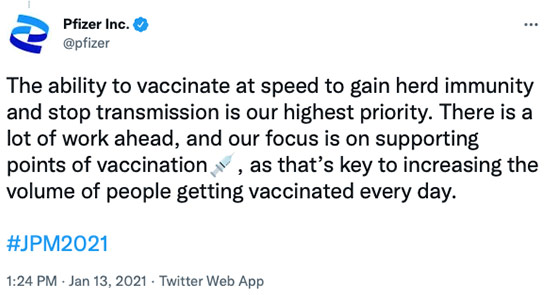
Similarly, in an Israeli interview7 (below), Bourla stated that “The efficacy of our vaccine in children is 80%.” The reporter asked him to clarify, “Are you talking about efficacy to prevent severe disease or to prevent infection?” and Bourla replied, “To prevent infection.” How could he say that when preventing infection has never been tested? Is that not evidence of fraud, caught on camera?
COVID Shots Have Been Fraudulently Marketed
As I stated in February 2021, the shots are a medical fraud. A true vaccine prevents infection; COVID shots don’t. Hence, they’ve also been fraudulently marketed. Governments around the world enabled this marketing fraud and media promulgated it.
As a result of mandating COVID shots and vaccine passports based on a blatant lie, millions have suffered potentially permanent harm and/or have died. Millions have also lost their jobs, forfeited careers and missed out on educational opportunities. This all happened because we DIDN’T follow the science.
Massive Conflicts of Interest Have Been Allowed
Why did government agencies go along with what was, to anyone with a microgram of critical thinking skills, an apparent fraud? Probably, because they’re in on it. As reported by investigative journalist Paul Thacker, the same PR company that serves Moderna and Pfizer also staffs the U.S. Centers for Disease Control and Prevention’s Division of Viral Diseases team:8
“Early last month [September 2022], CDC Director Rochelle P. Walensky endorsed recommendations by the CDC Advisory Committee on Immunization Practices (ACIP) for updated COVID-19 boosters from Pfizer-BioNTech and Moderna.
‘This recommendation followed a comprehensive scientific evaluation and robust scientific discussion,’ Dr. Walensky said in a statement. ‘If you are eligible, there is no bad time to get your COVID-19 booster and I strongly encourage you to receive it’ …
[The] PR firm Weber Shandwick, which has long represented Pfizer and other pharmaceutical companies and began providing public relations support to Moderna sometime in 2020.
In an odd case of synchronicity — and let’s be honest, a whiff of undue influence — Weber Shandwick employees are also embedded at the CDC’s National Center for Immunization and Respiratory Diseases (NCIRD), the CDC group that implements vaccine programs and oversees the work of ACIP [CDC’s Advisory Committee on Immunization Practices] …
The CDC has refused to respond to questions explaining this apparent conflict … ‘[It] is irresponsible of CDC to issue a PR contract to Weber Shandwick, knowing that the firm also works for Moderna and Pfizer,’ emailed Public Citizen’s Craig Holman. ‘It raises legitimate questions of whose interests Weber Shandwick will put first — their private sector clients or the public’s interest at NCIRD.’”
Incidentally, Weber Shandwick was in 2016 found to have ghostwritten a drug study for Forest Pharmaceuticals — another unethical practice that has undermined the foundation of medical science for decades.
One PR Company, One Consistent Message
Weber Shandwick’s responsibilities at the CDC include but are not limited to “generating story ideas, distributing articles and conducting outreach to news, media and entertainment organizations” to boost vaccination rates.9 The company provides similar services to Moderna.
For example, it helped generate 7,000 news articles internationally after Moderna applied for emergency use authorization (EUA) for its jab.
In June 2022, Moderna announced a “cross-discipline team drawing on talent and expertise from Weber Shandwick” would “drive the brand’s narrative globally,” and “support Moderna in activating and engaging key internal and external audiences, including employees, consumers, health care providers, vaccine recipients and policymakers.”10
Considering the primary COVID jab makers have the same PR company as the CDC, is it any wonder that the messaging has been so consistently one-sided? As noted by Doshi in a recent interview on German television,11 mainstream media have consistently ignored COVID jab data and have “not done a good job in providing balanced coverage” about the shots.
“We’re not getting the information we need to make better choices and to have a more informed understanding of risk and benefit,” he told the interviewer, adding:12
“It was very unfortunate that from the beginning, what was presented to us by public health officials was a picture of great certainty … but the reality was that there were extremely important unknowns.
We entered a situation where essentially the stakes became too high to later present that uncertainty to people. I think that’s what set us off on the wrong foot. Public officials should have been a lot more forthright about the gaps in our knowledge.”
Reanalysis of Trial Data Confirms COVID Shot Dangers
In late September 2022, Doshi published a risk-benefit analysis focused on serious adverse events observed in Pfizer’s and Moderna’s COVID trials. Reanalysis of the data showed 1 in 800 who get a COVID shot suffers a serious injury. As detailed in Doshi’s paper:13
“Pfizer and Moderna mRNA COVID-19 vaccines were associated with an excess risk of serious adverse events of special interest of 10.1 and 15.1 per 10,000 vaccinated over placebo baselines of 17.6 and 42.2 respectively.
Combined, the mRNA vaccines were associated with an excess risk of serious adverse events of special interest of 12.5 per 10,000 vaccinated; risk ratio 1.43.
The Pfizer trial exhibited a 36 % higher risk of serious adverse events in the vaccine group … The Moderna trial exhibited a 6 % higher risk of serious adverse events in the vaccine group … Combined, there was a 16 % higher risk of serious adverse events in mRNA vaccine recipients …”
Doshi and his coauthors also concluded that the increase in adverse events from the shots surpassed the reduction in risk of being hospitalized with COVID-19. So, in short, the shots confer more harm than good.
Sen. Rand Paul Promises Investigation
A spokesperson for Sen. Rand Paul, R-Ky., replied to an inquiry by Thacker stating, “[T]hat CDC had a contract with the same PR firm representing the manufacturers of the COVID-19 vaccine raises serious concerns,” adding that “these conflicts of interest will be thoroughly investigated” by the Senate Committee on Health, Education, Labor and Pensions (HELP) — which oversees the CDC — sometime next year.
After the November midterms, Paul will be next in line as the top Republican on this committee. It’s well worth noting that, at bare minimum, this kind of conflict of interest should have been disclosed by both parties. At best, it should have been avoided altogether. The CDC did neither. It didn’t disclose its relationship with the PR firm and it didn’t prevent the conflict of interest from developing in the first place.
What Was the COVID Jab Push All About?
The rational take-home from all this is that the massive push to inject the global population with these experimental jabs was never about following science and protecting others.
It was always about promoting a false, invented narrative designed to allow for the implementation of a top-down directive to inject every person on the planet with a novel mRNA technology. This, in turn, brings up two central questions:
• Who’s at the top? — We don’t yet know. All we can say for sure is that they have a very powerful and global influence — powerful enough that government officials have willingly lied and sacrificed their own populations in an incredibly risky medical experiment.
• Why is injecting everyone with mRNA technology so important to the anonymous decision-makers? — Again, we don’t know, but it’s quite clear that there’s a reason for it, that it’s supposed to accomplish something.
As detailed in previous articles, the only rational reason for why the CDC is allowing COVID jab EUA’s for young children is because they’re assisting drug makers in their effort to obtain liability shielding by getting the shots onto the childhood vaccination schedule.
ACIP is poised to add COVID shots to the childhood vaccination schedule any day now,14 and once on the childhood schedule, vaccine makers will not be liable for injuries and deaths occurring from their shots, whether they occur in children or adults.
Also, remember that even though the U.S. Food and Drug Administration granted full approval to Pfizer’s Comirnaty COVID shot, Comirnaty was never released to the public. The Pfizer shot being given is still under EUA.
Why was Comirnaty never released? Probably because once the shot has full FDA approval, liability kicks in. It appears they’re trying to avoid liability by getting the EUA shot on the childhood schedule before Comirnaty is rolled out and starts injuring and killing people.
Now, if they’re concerned about liability, that means they know the shot is dangerous. And if they know it’s dangerous (which all available data clearly show it is), then why do they want every person on the planet to get it?
Following this line of questioning to its logical conclusion leads us to the shocking conclusion that even though we don’t know the reasons why, the injuries and deaths from these jabs are intentional.
Vaccine Makers Continue to Spread Lies
Despite Small’s unequivocally clear admission that Pfizer has not tested its COVID shot to ascertain whether it prevents transmission, Pfizer’s CEO still does not shy away from insinuating as much. Here’s what he tweeted out October 12, 2022.15 He’s not saying the shot has been confirmed to prevent COVID, but he insinuates that it does by saying the FDA authorized it for the prevention of COVID. This is also known as lying by omission.
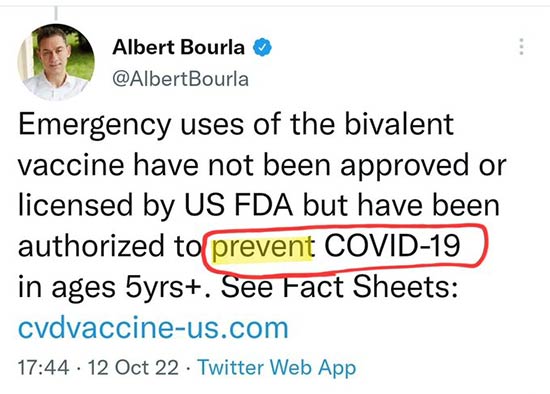
Meanwhile, so-called fact checkers are trying to salvage Pfizer’s reputation by saying the company never actually stated the shot would stop transmission.16 That may be so, but government officials and media DID claim it would prevent both infection and spread, and Pfizer never corrected them, even as people were being fired and ostracized from society for not taking the jab.
If they were truly on the up-and-up, Pfizer officials would have clarified that the shot had not been tested to confirm it would prevent transmission, and until that was known, mandates and passports had no basis. Pfizer didn’t do that. Instead, they went along with it.
The Jabs Were Always To Be Pushed — ‘By Fair Means or Foul’
In conclusion, there’s no reason to trust government ever again, at least not in the U.S., which stands alone in pushing the jab on toddlers. (The reason for that, as mentioned earlier, is probably to get the jabs onto the childhood vaccination schedule, which will shield the vaccine makers from financial liability for harms.)
As noted by GB News host Neil Oliver in the video above, the very basis for COVID mandates or vaccine passports — that everyone had to get jabbed for the greater good, to protect others and help end the pandemic — was a deliberate lie from the start.
Many of us realized this early on, but our voices were drowned out as government, Big Tech and media pulled out all the stops, censoring anyone who told the truth. And all who have participated in this grand deception remain unrepentant to this day.
In a recent Twitter thread, a Twitter user named Daniel Hadas lays out an excellent description of what the last three years were really about:17
“The debate over whether, when, and to what extent lies were told about COVID vaccines preventing transmission misses a central point: No matter what the trial data showed, the vaccines were ALWAYS going to be pushed on entire populations, by fair means or foul.
Very early on, the COVID response was locked into a specific narrative. The world would lock down and stay safe, while brave scientists hammered away at a vaccine … You may recall that, in the first months of COVID, there was a lot of breathless talk about whether there would EVER be a vaccine.
This was all nonsense … Our authorities would not have adopted the strategy of lockdown-till-vaccine unless they were certain a vaccine could and would be made …
The purpose of sowing fear that there might never be a vaccine was to increase gratitude and enthusiasm when one came along. Indeed, every part of the early COVID response can be understood as (in part) pre-release marketing for the vaccine …
That’s why COVID risks for the young were wildly amplified. That’s why there was unending obfuscation of the central role of infection-conferred immunity both in protecting individuals and in ending the pandemic.
The plan was that the vaccine would be met by a perfectly primed population: immunologically naive, desperate to be released from lockdowns, terrified of COVID, eager to do the right thing, i.e. protect others through taking the shots.
Once so much effort had gone into priming, it is UNIMAGINABLE that authorities would have pivoted to telling us … ‘Well, actually, the vaccine’s safety profile is only so-so, efficacy is murky, and most people don’t need to worry about COVID anyway. So best most of you not take this … Sorry about the lockdowns.’
That was not in the script. So it was inevitable that the vaccine be pushed on everyone, and inevitable that the best arguments for universal vaccination would be used. Those arguments were: COVID is super-dangerous for YOU. Distrust in this vaccine is distrust in science. Refusing to get vaccinated is immoral, because you will infect others.
The veracity of these claims didn’t matter: they were in the script, and it was too late to deviate … Accordingly, the stage was also set for vaccine mandates.
None of this is conspiratorial. It is descriptive … Clarifying the details won’t alter the essence of the picture — The COVID response was determined by a script of vaccine salvation, and societies’ investment in that script was too deep for mere realities to divert its execution.”
The primary questions that still remain unanswered are: Why was this script created? What are its intended consequences? And, who created it? As mentioned earlier, the evidence suggests harm is an intended outcome — harm to our economy, our social order, our health, our life span and reproductive capacity.
As for “why,” we can just look at what has been accomplished so far. Assuming the consequences were intentional, the “why” appears to be wealth transfer, depopulation and the creation of a one world government.
- 1 New York Times July 24, 2021 (Archived)
- 2 News.com.au October 12, 2022
- 3 Twitter Rob Roos October 11, 2022
- 4, 5 The BMJ 2020;371:m4037
- 6 Twitter Pfizer January 13, 2021
- 7 Twitter Dr. Eli David October 18, 2022
- 8, 9, 10 Disinformation Chronicle October 11, 2022
- 11, 12 Maryanne Demasi Substack October 17, 2022
- 13 Vaccine September 22, 2022; 40(40): 5798-5805
- 14 Steve Kirsch Substack October 17, 2022
- 15 Twitter Dr. Eli David October 13, 2022
- 16 Twitter Lewis U October 14, 2022
- 17 Twitter Daniel Hadas October 15, 2022
DEVASTATING prognosis: Half of kids with COVID shot-induced myocarditis will be dead in 5 years, doctor claims
Reproduced from original article:
www.naturalhealth365.com/devastating-prognosis-half-of-kids-with-covid-shot-induced-myocarditis-will-be-dead-in-5-years-doctor-claims.html
by: October 21, 2022
 (NaturalHealth365) Once the global COVID shot vax program rolled out, it didn’t take long for healthcare systems and mainstream media outlets to start gaslighting the public about healthy young adults suddenly dropping dead or healthy children suddenly developing heart inflammation. It’s nothing to be concerned about; they seem to be saying. Just look at the disturbing proliferation of concepts like “sudden adult death syndrome” or the disgusting commercial from New York-Presbyterian Hospital, which brazenly attempted to normalize and trivialize myocarditis in children – these will surely be looked back on in years to come with nothing less than incredulousness.
Are we truly meant to ignore the possibility that COVID shots are contributing to these unexpected excess deaths, disease, and harm? Is it still considered “spreading misinformation” to raise questions about the safety of these shots as the months and years wear on? After all, didn’t years have to pass before “FDA-approved” drugs like Vioxx and Zantac were finally pulled from the market because, oops, it turns out they were harming people?
Canadian doctor makes alarming claim about grim prognosis for kids with shot-induced myocarditis
A sequence of events:
First, we were told that COVID shots are overwhelmingly safe and effective for kids.
Then, we were told that the VAERS reports of myocarditis (heart inflammation) in kids who had received the COVID shots were in no way proof that the shots actually caused harm.
Next, we were told that, yes, some kids (especially teen boys) will develop myocarditis after getting the COVID vax, but that myocarditis is “mild” and that the risk of getting myocarditis is actually greater after getting an actual COVID-19 infection. (This isn’t true for all age groups, first of all, and it also doesn’t sit well with many parents, given the fact that COVID shots don’t stop transmission of SARS-CoV-2, anyway – so why bother incurring added risk on your child, especially when COVID-19 poses little to no threat to them?)
And now, fast forward to today: a Canadian doctor by the name of Dr. Chris Alan Shoemaker recently made an alarming claim: the five-year survival rate of shot-induced myocarditis in young adults is just 50%.
Said another way: HALF of all young adults who get myocarditis due to the COVID shot, according to Dr. Shoemaker, will be dead within five years.
Can such an alarming prediction have any truth?
Dr. Chris Alan Shoemaker is a licensed doctor with more than 45 years of experience in emergency medicine, military healthcare, and family medicine. A former member of the Eastern Ontario COVID Response Team and West Ottawa COVID Care Clinic, Dr. Shoemaker recently said in an interview on The Ben Armstrong Show that the “vaccinated have been harmed. Their immune systems are being harmed.” The reason, he says, is because the mRNA jabs negatively affect human T-cells, which are “important [parts] of your immune system to fight viruses and cancer.”
“Stop harming your immune systems,” he adds. “You are only going to perpetuate the pandemic.” (With that in mind, there’s really never been a better time to be proactive about supporting your immune system.)
Dr. Shoemaker claims that 95% of people currently in Canadian ICUs are “fully vaxxed” – whatever that means, now that we’re in the realm of endless booster doses. (We can probably assume that “fully vaxxed” means something to the effect of two primary doses and one or two booster doses.)
He also believes that these mRNA jabs are particularly harmful for children. “Your 10 to 14-year-old is now, by proven statistics out of the United Kingdom, 100 times more likely to die in the following six months than a non-vaccinated child,” he says, citing data from the UK’s Office of National Statistics, which showed that double-vaxxed kids died 5,200% more than vax-free kids. (Such claims are strongly refuted by “fact-checkers” like Reuters).
At a recent public event in London, Ontario, Dr. Shoemaker also urged people to “keep your needles out of the shoulders of our children,” saying that “the medical facts on this are beyond dispute. Children are given zero help by these vaccines. It kills two out of every 1,000 within a year. Do you want your child to be one of those two who will die?”
Sources for this article include:
Health-desk.org
Childrenshealthdefense.org
NPR.org
Reuters.com
Antibiotics Linked to Fatal Heart Condition
Reproduced from original article:
https://articles.mercola.com/sites/articles/archive/2022/10/22/antibiotics-trigger-heart-disease.aspx
The original Mercola article may not remain on the original site, but I will endeavor to keep it on this site as long as I deem it to be appropriate.
Analysis by Dr. Joseph Mercola Fact Checked October 22, 2022

STORY AT-A-GLANCE
- Fluoroquinolones, long associated with Achilles tendonitis and rupture, have been demonstrated to increase your risk of aortic dissection (a tear in the wall of the major artery, allowing blood to flow between the layers) or aortic rupture, which can lead to death
- Even though “black-box” warnings are now attached to them, fluoroquinolones are still often prescribed for upper respiratory infections or urinary tract infections
- Antibiotic use can trigger a permanent change in your gut microbiome, which accounts for nearly 80% of your immune system function, so it is important to use antibiotics only when absolutely necessary
- You may reduce your risk of bacterial and viral infections by supporting your immune system through simple lifestyle measures, such as quality sleep, fermented foods, regular exercise and optimizing your vitamin D level
Research shows your body’s microbiome has nearly 39 trillion bacteria.1 During early years, your family, dietary intake and environmental exposure contribute to the variety in your microbiome, influencing your lifelong health. Everyday activities such as brushing your teeth, eating, kissing someone or handling a family pet also affect your microbiome.
This composition may be as distinct to you as a fingerprint and plays an enormous role in disease prevention, and influences the function of your skin, lungs, breast and liver.2 Harmful bacteria can trigger illness and disease, which is frequently treated with antibiotics. Of the 10 most commonly prescribed, two are from the antibiotic class of fluoroquinolones.3
The Food and Drug Administration (FDA) first added a boxed warning to fluoroquinolones in 2008, due to the increased risk for tendinitis and tendon rupture.4 Boxed warnings, also referred to as black box warnings, appear on prescription drug labels designed to call attention to serious or life-threatening risks.5
An additional warning was added in 2011 for those suffering from myasthenia gravis, and updates were included in 2013 describing irreversible peripheral neuropathy.6 In 2018, the FDA warned fluoroquinolone antibiotics may increase the occurrence of ruptures or tears in the aorta.7 And, in January 2022, the FDA decided:8
“We have determined that fluoroquinolones should be reserved for use in patients with no other treatment options for acute bacterial sinusitis, or ABS, acute bacterial exacerbation of chronic bronchitis (ABECB), and uncomplicated UTI because the risks generally outweighs the benefits.
For some serious bacterial infections the benefits of fluoroquinolones outweigh the risks, and it is appropriate for them to remain available as a therapeutic option.”
Yet, despite these warnings, researchers found in April 2022 that fluoroquinolones are still among the most-prescribed antibiotics around the world.9 They concluded that some health care workers may have an “unsatisfactory knowledge” of the safety profiles and risks of these drugs, and that more education on adverse reactions to fluoroquinolones may be needed.
FDA Warning Links Fluoroquinolones With Aortic Damage
The aorta is the main artery in your body supplying oxygenated blood to your circulatory system. The artery comes from the left side of your heart and runs down the front of your backbone. The review by the FDA found fluoroquinolone antibiotics increase the risk of tears in the aorta, also called aortic dissections, or ruptures of an aortic aneurysm, leading to excessive bleeding and death.
The findings occurred when antibiotics were given by mouth or through an injection. This led the FDA to caution against the use of fluoroquinolone antibiotics in those at risk, unless there are no other treatment options available.
Specifically, the antibiotic should not be used in those who are at risk for, or have a current, aortic aneurysm, such as those suffering peripheral atherosclerotic vascular disease, hypertension and specific genetic conditions such as Ehlers-Danlos syndrome or Marfan syndrome.10
Findings were pulled from four published observational studies, which taken together demonstrated a consistent association between aortic dissection or rupture and fluoroquinolone use. The underlying mechanism could not be determined from those studies.
Some of the commonly used fluoroquinolones include ciprofloxacin (Cipro), levofloxacin (Levaquin), gemifloxacin (Factive) and moxifloxacin (Avelox). These are prescribed to treat upper respiratory and urinary tract infections. In a statement, the FDA warns:11
“Fluoroquinolones should not be used in patients at increased risk unless there are no other treatment options available.
Health care professionals should avoid prescribing fluoroquinolone antibiotics to patients who have an aortic aneurysm or are at risk for an aortic aneurysm, such as patients with peripheral atherosclerotic vascular diseases, hypertension, certain genetic conditions such as Marfan syndrome and Ehlers-Danlos syndrome, and elderly patients.”
Upper Respiratory Infections Are Often Viral
Viruses commonly trigger upper respiratory infections (URIs) with symptoms of runny nose, cough, low grade fever, sore throat and difficulty sleeping. URIs represent the most common acute illness in the outpatient setting, often related to the common cold, which is typically a mild, self-limited inflammation of the mucous membranes in the airways.12
Bacterial illness may follow a viral illness as a secondary infection, and commonly includes symptoms persisting longer than 14 days with a fever higher than one might typically expect from a virus. Oftentimes, the fever gets worse a few days into the illness rather than improving.13
Unfortunately, one of the more common reasons fluoroquinolones are prescribed is for upper respiratory infections, ordinarily triggered by a virus. According to the U.S. Centers for Disease Control and Prevention (CDC),14 the highest number of community antibiotic prescriptions are written in the southeastern states.
Fluoroquinolones ranked No. 4 in the highest number of prescriptions written per 1,000 people in the CDC’s outpatient antibiotic prescription index in 2016. Because providers were still opting for fluoroquinolones more than they should for respiratory infections such as pneumonia, the CDC reported in 2021 that an expert panel had recommended the use of these drugs for this purpose be lowered by 90%.15
Bacterial and viral infections are dissimilar in important respects related to the organism’s structure and the way they respond to medications. Although both are too small to be seen with the naked eye, the largest virus is actually smaller than the smallest bacteria.16 Unlike the more complex bacteria, viruses cannot survive without a host and only reproduce by attaching themselves to other cells. Also, unlike bacteria, most viruses are specific in the cells they attack.
The differences in the structure and complexity of the organism have an impact on the type of medication that may be effective against it. Viral infections are not affected by antibiotics such as fluoroquinolones. In fact, using antibiotics for viral infections only contributes to the rising number of antibiotic-resistant infections.
Fluoroquinolones Linked to Multiple Health Concerns
Fluoroquinolone antibiotics have been associated with Achilles tendon ruptures and damage for over a decade. Other severe adverse events, such as retinal detachments as well as aortic aneurysms, may also be associated with other systems requiring collagen formation.17 This may also explain, at least in part, how the drug increases your risk of aortic rupture or dissection, as collagen18 lines your arteries and veins to allow for stretch as the heart pumps blood.19
Subsequently, in July 2022 the FDA mandated another warning, “alerting physicians to the increased risk of tendonitis and tendon rupture associated with their use.”20 According to Dr. Renata Albrecht, who heads the FDA’s Division of Special Pathogen and Transplant Products, ‘Achilles’ ruptures associated with fluoroquinolones are three to four times more frequent than ruptures among people not taking these drugs.21
So, if you are taking these antibiotics, you should seek immediate medical care if you experience soreness or inflammation in muscles or tendons. You should also not exercise while your joints are affected.
The drugs are also powerful iron chelating agents that may trigger epigenetic changes through the loss of agents requiring iron as a cofactor. As noted in one study, this may also explain the classic renal toxicity associated with the antibiotics:22
“At sub-millimolar concentrations, these antibiotics inhibited jumonji domain histone demethylases, TET DNA demethylases and collagen prolyl 4-hydroxylases, leading to accumulation of methylated histones and DNA and inhibition of proline hydroxylation in collagen, respectively. These effects may explain fluoroquinolone-induced nephrotoxicity and tendinopathy.”
A recent study23 has linked the use of fluoroquinolones to the rising number of children and adults affected by kidney stones. The odds of stones increased 1.5 times with the use of fluoroquinolones and exposure within 3 to 12 months was associated with greater risk. It appeared children and adolescents were particularly susceptible.
Reactions can be bodywide, impacting your central nervous system and musculoskeletal, visual and renal systems, sometimes simultaneously. Among the serious reactions reported are:24
| Memory impairment | Delirium | Agitation |
| Disorientation | Retinal detachment25 | Hearing loss and/or tinnitus26 |
| Disturbance in attention | Kidney stones | Kidney failure27 |
| Hypoglycemia leading to coma | Aortic rupture or dissection | Tendon rupture or dissection |
More Psychiatric Side Effects Than You Might Imagine
Researchers recommend further study to understand the pathogenesis caused by antibiotics in order to treat antibiotic-associated diseases through the mitigation of the intestinal environment — restoring it to its original state.28
Further research has demonstrated an imbalance in gut microbiome caused by antibiotics can negatively affect health in a number of ways and for long periods of time.29 If your physician prescribes one of these dangerous antibiotics, ask to use another one. It would be unusual a fluoroquinolone would be the only antibiotic that could be used to treat your infection.
Remember, these dangerous antibiotics should be used as a last resort only. If it is necessary, be sure to carefully read the package insert and all the warnings, and seek medical attention the moment you notice a side effect.
The late Dr. David Flockhart, who served as professor of medicine and chief of clinical pharmacology at Indiana University School of Medicine, and who before his death was considered one of the leading experts in fluoroquinolone side effects, said in 2012 that “as many as one-third of patients taking a fluoroquinolone will experience some sort of psychiatric side effect.”30
But the thing is, Flockhart had tried to call attention to these drugs over 10 years earlier, in 2001, when he decried Ciprio specifically, as he tried to stress just how dangerous fluoroquinolones are:31
“Cipro is basically a big gun whose benefits outweigh its risks in certain circumstances. But the bigger the gun you use, the more damage you can expect as collateral.”
Antibiotics Trigger Permanent Changes to Your Gut Microbiome
The health of your gut microbiome is a game changer. It has become increasingly apparent in recent years that the composition of your gut microbiome plays an enormous role in your health and disease prevention. Cancer and many other health conditions have been traced back to the influence of gut microbes, including obesity, depression, Parkinson’s and allergies, just to name a few.
Since your gut is the main residence of your immune system,32 disrupting your gut microbiome automatically disrupt your immune function, which can have far-reaching consequences. One way antibiotics can promote disease is by creating an oxygen-rich environment in your intestines, favoring the growth of pathogenic bacteria.
Beneficial microbes grow in an anaerobic (no oxygen) environment, while pathogenic bacteria need oxygen to survive.33 Data suggest even one course of antibiotics can negatively alter your microbiome for up to one year, which is why it’s crucial to use antibiotics only when it is absolutely necessary.34
However, Dr. Martin Blaser with the Langone Medical Center at New York University argues the impact of antibiotics on gut bacteria may be permanent. In an editorial in Nature he writes:35
“Early evidence from my lab and others hint that, sometimes, our friendly flora never fully recover. These long-term changes to the beneficial bacteria within people’s bodies may even increase our susceptibility to infections and disease.
Overuse of antibiotics could be fueling the dramatic increase in conditions such as obesity, Type 1 diabetes, inflammatory bowel disease, allergies and asthma, which have more than doubled in many populations.”
Support Your Health and Your Gut
The stronger your immune system, the less chance any microbe will have of gaining a foothold in your body. Below are some basic strategies for supporting your immune system and preventing illness.
| Optimize your diet — Avoid foods that tax your immune system, such as trans fats, fried foods, processed foods, sugars and grains. Seek to reduce your net carbohydrate (sugar, grains, fructose) and protein intake, replacing them with high-quality healthy fats. |
| Balance your gut flora — One of the best ways to support your gut is by incorporating naturally fermented foods into your diet, working up to 4 to 6 ounces per day. You may take a high-quality probiotic supplement, but fermented foods tend to offer the greatest benefit. |
| Exercise regularly — Exercise improves the circulation of immune cells in your blood, creating a more efficient system at locating and eliminating pathogens in your body. Make sure your fitness plan incorporates weight training, high-intensity exercises, stretching and core work. |
| Get plenty of restorative sleep — Research shows sleep deprivation has the same effect on your immune system as physical stress or disease, which is why you may feel ill after a sleepless night. |
| Reduce stress — High levels of stress hormones can diminish your immunity, so be sure you’re implementing some sort of stress management. Meditation, prayer, yoga and Emotional Freedom Techniques (EFT) are all excellent strategies for managing stress, but you’ll have to find what works best for you. |
| Optimize vitamin D levels — Studies show inadequate vitamin D can increase your risk for MRSA and other infections. Your best source of vitamin D is through sensible sun exposure. Monitor your vitamin D level to confirm they’re in a therapeutic range of 60 to 80 ng/mL. If you can’t get UV exposure, consider taking an oral vitamin D3 supplement, in conjunction with magnesium and vitamin K2 (MK-7). |
In addition to the lifestyle measures listed above, there are natural agents that are naturally antibacterial, including the following:
| Vitamin C — Vitamin C’s role in preventing and treating infectious disease is well established. Intravenous vitamin C is an option, but if you don’t have access to a practitioner who can administer it, liposomal vitamin C is the most potent oral form. For more information on vitamin C, listen to my interview with Dr. Ronald Hunninghake (hyperlinked above), an internationally recognized vitamin C expert. |
| Garlic — Garlic is a powerful antibacterial, antiviral and antifungal. It can stimulate your immune system, help wounds heal and kill antibiotic-resistant bacteria. For highest potency, the garlic should be eaten fresh and raw (chopped or smashed). |
| Olive leaf extract — In vitro studies show olive leaf extract is effective against Klebsiella, a gram-negative bacteria, inhibiting its replication, in addition to being toxic to other pathogenic microbes. |
| Manuka honey — Manuka honey, made from the flowers and pollen of the Manuka bush, has been shown to be more effective than antibiotics in the treatment of serious, hard-to-heal skin infections. Clinical trials have found Manuka honey can effectively eradicate more than 250 clinical strains of bacteria, including resistant varieties such as MRSA. |
| Tea tree oil — Tea tree oil is a natural antiseptic proven to kill many bacterial strains.36 |
| Colloidal silver — Colloidal silver has been regarded as an effective natural antibiotic for centuries, and recent research shows it can even help eradicate antibiotic-resistant pathogens. If you are interested in this treatment, make sure you read the latest guidelines for safe usage of colloidal silver as there are risks with using it improperly. |
- 1 American Microbiome Institute, January 20, 2016
- 2 Institute of Science for Society February 26, 2014
- 3 Drugs.com, Antibiotics Guide
- 4, 6 Food and Drug Administration, July 26, 2016
- 5 Food and Drug Administration, A Guide to Drug Safety Terms at the FDA
- 7, 10 Food and Drug Administration, December 20, 2018
- 8 FDA. FDA Updates Warnings for Oral and Injectable Fluroquinolone Antibiotics Due to Disabling Side Effects. January 19, 2022
- 9 Frontiers in Medicine. April 29, 2022
- 11 NBC News, December 20, 2018
- 12 Medscape, Upper Respiratory Tract Infection
- 13 Duke Health, October 1, 2013
- 14 Centers for Disease Control and Prevention, Outpatient Antibiotic Prescriptions — United States, 2016
- 15 CDC. 2021 Update on Antibiotic Use in the United States. 2021
- 16 Mayo Clinic. Bacterial vs. Viral Infections: How Do They Differ?
- 17 BMJ Open, 2015; 5(11)
- 18 Collagen, G.A. Holzapfel, P 285
- 19 Collagen Complete, Did You Know That the Walls of Your Blood Vessels are Lined With Collagen and Elastin?
- 20, 21 ABC News. FDA Mandates Black Box Warning for Some Antibiotics. July 9, 2022
- 22 Journal of Biological Chemistry, 2015;290(36):22287
- 23 Renal and Urology News, May 15, 2018, Kidney Stones Linked to Oral Antibiotics
- 24 MPR, July 10, 2018
- 25 JAMA, 2012;307(13)
- 26 Ther Adv Drug Saf. 2018 Apr; 9(4): 219–221
- 27 Drug Safety, 2000;22(6):479
- 28 Yonsei Medical Journal, 2018;59(1):4
- 29 Frontiers in Microbiology, 2015;6:1543
- 30 Forbes, Antibiotic Alert: The Drug the Doctor Ordered Could Cause Deadly Side Effects, September 30, 2012
- 31 UCLA Department of Epidemiology, “Drug of Choice Has a Downside,” October 29, 2001
- 32 Hopkinsmedicine.org, November 2015
- 33, 34 Cell Host & Microbe 2016;19(4):443
- 35 Wired, August 26, 2011
- 36 Journal of Hospital Infection, 2004;56(4):283
Quercetin’s Effect on Blood Pressure
Reproduced from original article:
https://articles.mercola.com/sites/articles/archive/2022/10/17/quercetins-effect-on-blood-pressure.aspx
The original Mercola article may not remain on the original site, but I will endeavor to keep it on this site as long as I deem it to be appropriate, and will not be bullied into removing it.
Analysis by Dr. Joseph Mercola Fact Checked October 17, 2022
STORY AT-A-GLANCE
- A Japanese study identified one mechanism behind the blood pressure-lowering actions of quercetin. It is related to the action of negative chloride ions in the cell’s cytosol, influencing volume-dependent high blood pressure
- Quercetin is often combined with vitamin C or bromelain, a proteolytic enzyme found in pineapple stems. The combination increases the absorption and bioavailability of the supplement
- Quercetin is known to combat inflammation and support your immune system. It has strong antiviral properties and likely is a far safer alternative to antiviral drugs like Tamiflu, which shortens flu by only hours and has significant side effects such as convulsions, hallucinations and memory deterioration
- Other lesser-known health benefits of quercetin include the prevention or treatment of metabolic syndrome, nonalcoholic fatty liver disease (NAFLD), gout, mood disorders and against aluminum-induced neurodegenerative changes
Quercetin is a flavonol found in red grapes, onions, red leaf lettuce, elderflower and green tea, to name a few.1 Research has demonstrated the positive effect it has on blood pressure. A Japanese study2 identified one mechanism behind the blood pressure lowering actions, which is related to the action of negative chloride ions in the cell’s cytosol.
Flavonols, like quercetin, are antioxidants,3 which scavenge free radicals, helping to prevent DNA damage and cell death. In the past two years, the antiviral benefits of quercetin have been the focus of many studies.4 However, there are also many other lesser-known benefits, making it useful for a variety of different health conditions.
In many instances, quercetin is sold in combination with bromelain or vitamin C.5 Quercetin is not water-soluble which reduces the absorption rate. However, when administered with vitamin C or bromelain, absorption and bioavailability increase.
Bromelain6 is a proteolytic enzyme found in the stem of the pineapple plant, which has been used independently to reduce swelling after surgery or injury and has been used topically to help treat burns.
Quercetin can reduce the effectiveness of some antibiotics7 and enhance the effect of blood thinners. This can increase the risk of bleeding. It may also interact with corticosteroids, cyclosporine, digoxin and fluoroquinolones.
Quercetin Influences Volume-Dependent Blood Pressure
According to the Department of Health and Human Services,8 nearly 1 out of every 2 adults have high blood pressure in the U.S., and most are recommended prescription medication with lifestyle changes. High blood pressure increases the risk for stroke and heart attack, which are two of the leading causes of death in the U.S.
The featured study9 evaluated the blood pressure-lowering actions of quercetin on the body. According to the researchers, there are many factors that help to regulate blood pressure, including the nervous system, cardiac output, total blood volume and the renin-angiotensin system.
The researchers noted several past studies that demonstrated taking between 150 mg per day and 730 mg per day could lower high blood pressure, decreasing systolic and diastolic pressures.
The scientists wrote quercetin’s antihypertensive actions operated through a modification of a variety of factors, including vascular compliance and resistance, total blood volume and the autonomic nervous system. In addition to these global actions, quercetin appears to have a unique ability to regulate gene expression that is mediated by controlling negative chloride actions in the cell’s cytosol.
Negative chloride ions help control the intracellular activity of many other ions10 in the cytosol, which is the water-based fluid that surrounds intracellular structures. The gene expression that controls the chloride ions triggers sodium reabsorption, which then reduces body fluid volume and therefore influences volume-mediated high blood pressure.
Quercetin Combats Inflammation and Supports Immunity
A 2016 study11 in the journal Nutrients detailed quercetin’s properties for combating inflammation and supporting immunity. The mechanisms of action were many and included, but we’re not limited to, inhibiting:
- Lipopolysaccharide (LPS)-induced tumor necrosis factor α (TNF-α) production in macrophages. TNF-α is a cytokine involved in systemic inflammation, secreted by activated macrophages, a type of immune cell that digests foreign substances, microbes and other harmful or damaged components
- LPS-induced mRNA levels of TNF-α and interleukin (IL)-1α in glial cells, resulting in “diminished apoptotic neuronal cell death”
- The production of inflammation-producing enzymes
- Calcium influx into the cell, which in turn inhibits:
- Proinflammatory cytokine release
- Histamine and serotonin release from intestinal mast cells release
According to the researchers, quercetin stabilizes mast cells, has cytoprotective activity in the gastrointestinal tract and “a direct regulatory effect on basic functional properties of immune cells,” which allows it to inhibit “a huge panoply of molecular targets in the micromolar concentration range, either by down-regulating or suppressing many inflammatory pathways and functions.”12
In a 2016 paper13 published in the journal Molecules, the researchers wrote that the anti-inflammatory and immunomodulating properties can be used in the treatment of restricted peanut-induced anaphylactic reactions, allergic rhinitis and bronchial asthma response. They concluded:
“Plant extract of quercetin is the main ingredient of many potential anti-allergic drugs, supplements and enriched products, which is more competent in inhibiting of IL-8 than cromolyn (anti-allergic drug disodium cromoglycate) and suppresses IL-6 and cytosolic calcium level increase.”
Quercetin Is a Far Safer Alternative to Antiviral Drugs
In the past two years, research into quercetin’s antiviral properties has risen dramatically. In fact, this is one of the most well-studied attributes of quercetin. One study14 funded by the U.S. Defense Advanced Research Projects Agency (DARPA) used an animal model demonstrating subjects treated with quercetin had lower morbidity and mortality after being challenged with the highly pathogenic H1N1 influenza virus.
Multiple other studies have also demonstrated quercetin’s effectiveness against a variety of viruses including influenza A and B,15 and a wide variety of influenza viruses, including H1N1, H3N2 and H5N1.16
Combining quercetin with bromelain or vitamin C has been a component of several successful COVID-19 protocols. Quercetin is a zinc ionophore,17 which helps improve the cell’s ability to absorb zinc where it is effective as an antiviral. Dr. Vladimir Zelenko was among the first doctors to discover and implement a treatment utilizing zinc and an ionophore that has been credited with saving millions of lives around the world.18
The early protocol used hydroxychloroquine,19 which is another zinc ionophore. However, as research showed quercetin was as effective as hydroxychloroquine, early treatment protocols for low-risk patients included quercetin with vitamin C and zinc.20
Considering the powerful antiviral effects of quercetin, it is sensible to use it before resorting to antiviral drugs like Tamiflu. Not only has Tamiflu been shown to shorten the duration of flu symptoms by only hours,21 scientists have also warned that the risks of Tamiflu far outweigh the benefits.22
Lesser-Known Health Benefits From Quercetin Supplements
In addition to lowering blood pressure, there are also other, less known benefits and uses for this supplement, including the prevention and/or treatment of:23,24
| Cardiovascular disease | Asthma | Allergic reactions |
| Metabolic syndrome | Diabetes | Certain kinds of cancer |
| Neurodegenerative disease | Nonalcoholic fatty liver disease (NAFLD) | High Blood Pressure through vasodilation |
| Age-Related disorders | Arthritis | Learning and emotional function |
Additionally, quercetin is also helpful for aluminum-induced neurodegenerative changes, such as those seen in Alzheimer’s, Parkinson’s and amyotrophic lateral sclerosis (ALS). As noted in a 2016 study:25
“Administration of quercetin (10 mg/kg body wt/day) reduced aluminum (10 mg/kg body wt/day)-induced oxidative stress (decreased ROS production, increased mitochondrial superoxide dismutase (MnSOD) activity).
In addition, quercetin also prevents aluminum-induced translocation of cyt-c, and up-regulates Bcl-2, down-regulates Bax, p53, caspase-3 activation and reduces DNA fragmentation …
Further electron microscopic studies revealed that quercetin attenuates aluminum-induced mitochondrial swelling, loss of cristae and chromatin condensation. These results indicate that treatment with quercetin may represent a therapeutic strategy to attenuate the neuronal death against aluminum-induced neurodegeneration.”
More Natural Ways to Lower High Blood Pressure
Quercetin is just one option to help you naturally lower high blood pressure. Other strategies include stress management and exercise along with the following:
• Potassium/Sodium balance — People who eat a lot of processed foods and very few fresh vegetables likely have an imbalance in their sodium-potassium ratio. The key to relaxing your arterial walls and reducing blood pressure is the ratio between sodium and potassium. If you’re unsure of your sodium and potassium intake, use chronometer.com/mercola, which is a nutrient tracker that allows you to enter foods and then calculates the ratios automatically.
Generally, it’s recommended that you eat five times more potassium than sodium, but most Americans eat twice as much sodium as potassium. The American Heart Association26 recommends a low-salt diet, but the ratio between potassium and sodium is far more important than your overall salt intake.27
It’s also a better strategy to promote public health and focus on a high-quality diet rich in potassium, as it is a nutrient that helps offset the hypertensive effects of sodium.
• Aged Black Garlic — According to research data, eating aged black garlic has demonstrated improvement in different cardiovascular disease risk factors, including helping to lower diastolic blood pressure.
The objective of one study28 was to analyze how daily consumption of aged black garlic extract with standardized s-allyl-L-cysteine (SAC) could impact cardiovascular risk in people who had moderate hypercholesterolemia and who also followed dietary recommendations.
At the end of the study, the researchers found that those taking the aged black garlic extract had a reduction in systolic blood pressure of 5.85 mmHg as compared to those who took the placebo. According to Medscape,29 the researchers concluded from the data that lowering diastolic blood pressure by 5 mmHg could lower the risk of death from stroke by 40%, and the risk of ischemic heart disease or other vascular death by 30%.
• Inspiratory Muscle Strength Training — Another study30 evaluated the effect that inspiratory muscle strength training (IMST) could have on reducing blood pressure and thus reducing the risk of cardiovascular disease. While aerobic exercises are a foundational strategy for controlling high blood pressure, fewer than 40% meet the current recommended guidelines.31
IMST was originally developed for critically ill patients with respiratory diseases. It helped to improve the strength of their inspiratory muscles by using a handheld device that provides resistance while inhaling.
The study engaged 36 adults ages 50 to 79 who had above normal systolic blood pressure, half the participants used high resistance IMST and half use low resistance IMST for 6 weeks. At the end of the intervention, the group using high resistance had a nine-point reduction in their systolic blood pressure.
– Sources and References
- 1 Superfoodly, 100 Quercetin Foods
- 2, 9 Molecules, 2017;22(2)
- 3 Mount Sinai, Quercetin
- 4 Research International Journal of Endocrinology and Diabetes, 2020; 1(1)
- 5 Sciencedirect, Quercetin
- 6 National Center for Complementary and Integrative Health, Bromelain
- 7 Mount Sinai, Quercetin, 45% DTP Precautions
- 8 Million Hearts, Estimated Hypertension Prevalence, Treatment, and Control Among U.S. Adults, key findings bullet one
- 10 PNAS, 2015;112(3)
- 11 Nutrients 2016 Mar; 8(3): 167, 5.2.1 Animal Models
- 12 Nutrients 2016 Mar; 8(3): 167, 5.1.2 Mechanism of Action
- 13 Molecules, 2016;21(5)
- 14 American Journal of Physiology August 1, 2008
- 15 Antiviral Research 2010 Nov;88(2):227-35
- 16 Viruses 2016 Jan; 8(1): 6
- 17 Frontiers in Immunology, 2020; doi.org/10.3389/fimmu.2020.01712
- 18 America’s Frontline News, July 1, 2022
- 19 YouTube, May 14, 2020
- 20 Vladamir Zelenko, COVID-19 Treatment Protocol
- 21 Forbes April 10, 2014
- 22 Cochrane Database of Systematic Reviews 2014, Issue 4. Art. No.: CD008965
- 23 Defence Life Science Journal 2017;2(2)
- 24 Molecules, 2022; 27(8)
- 25 Neuroscience 2016;324:163
- 26 American Heart Association
- 27 Healthy Food. The Sodium-Potassium Balancing Act
- 28 Nutrients, 2022; 14(3)
- 29 Medscape, April 15, 2022, page 2 PARA 8
- 30 Journal of the American Heart Association, 2021;10:e020980
- 31 News Wise, June 30, 2021
Chronic Toxoplasmosis: Debilitating, Stealth, Underdiagnosed
Reproduced from original article:
https://articles.mercola.com/sites/articles/archive/2022/09/16/chronic-active-toxoplasmosis.aspx
The original Mercola article may not remain on the original site, but I will endeavor to keep it on this site as long as I deem it to be appropriate, and will not be bullied into removing it.
Analysis by Tessa Lena September 16, 2022

STORY AT-A-GLANCE
- At least one third of all people on Earth are infected with the parasite Toxoplasma gondii, averaging from 11-20% in the United States to 50% and higher in some Western European countries
- The parasite has been implicated in ocular issues, schizophrenia, epilepsy, Alzheimer’s disease and various other neurological disorders, as well as in heart disease, pneumonia, recurrent headaches, even cancer; it is also known for causing psychological changes in its hosts
- While the official word is that most toxoplasma infections are harmless and asymptomatic, the impact of the parasite could be much more devastating than the current mainstream medical convention presumes; it may also be cross-reacting with the spike protein and possibly contributing to the mystery of “long COVID”
- According to recent research and clinical evidence, toxoplasma tissue cysts, previously considered harmless in immunocompetent patients, are capable of causing major health issues without converting to the cell-blasting form
- Commonly used antibody tests can only detect antibodies for the “tachyzoite” (cell-blasting) form of the parasite but not the “bradyzoite” (tissue cyst) form
- Dr Uwe Auf der Straße in Germany has done an important clinical investigation of the parasite, and his findings could shed light on “mystery” symptoms in many patients
Toxoplasma gondii, an intracellular protozoan organism, is a very “successful” parasite with extremely diverse host base and sophisticated, almost diabolical, methods of survival and proliferation.
It is found worldwide and is capable of infecting most warm-blooded animals as intermediate hosts, including people. It has also been found in some cold-blooded animals, such as fish. Its final hosts, inside which the parasites can sexually reproduce, are felines, including domestic cats. In the environment, toxoplasma can be found in soil, water, and other substances that have come in contact with the parasite, such as fertilizers.
At the moment, the predominant medical opinion is that at least one third of all people on Earth are in some way infected with this parasite1,2 averaging from 11-20% in the United States to 50% or higher in a number of Western European countries, for example in Germany.3 In Germany, the frequency of positive Toxoplasma detection increases from about 20% in the group of 18-29 year-olds, up to 77% in the group of 70-79 year-olds and for over 79 year-olds the frequency is 84%.4
The commonly known infection routes for people are eating uncooked meat, drinking contaminated water, or accidentally ingesting the parasite after cleaning a cat litter box.
While the official word is that most infections are harmless and asymptomatic, the impact of the parasite could be much more devastating than the current mainstream medical convention gives it credit for.
A few physicians and researchers who have been looking into Toxoplasma are challenging the conventional view on several counts. And while a number of “bombshell” scientific works on the topic have been published, the new discoveries have not yet made their way into the everyday medical practice.
It is extremely important that more doctors and researchers look into this right now — especially given the fact that an encounter with the spike protein has been shown to amplify latent or slow-developing biological malfunctions in people, and thus it is possible that “spike protein assisted” Toxoplasma may be wreaking havoc in many unsuspecting patients and contributing significantly to the mysterious “long COVID” or its injection-induced manifestation.
Toxoplasma Life Cycle
With a degree of oversimplification, there are three main forms in which this parasite exists during different phases of its life cycle. They are known as oocysts (eggs), tachyzoites (the actively proliferating adult form), and bradyzoites (tissue cysts).
The sexual reproduction of Toxoplasma gondii occurs within feline hosts. The cycle starts when the host ingests oocysts (“eggs”) or eats an animal infected with bradyzoites (tissue cysts).
Upon ingestion of the cysts, their protective wall is dissolved by proteolytic enzymes in the stomach and small intestine to release bradyzoites. The free bradyzoites then penetrate epithelial cells lining the small intestine where they proliferate to form new generations that can undergo sexual and asexual cycles. Following fertilization of the female gametes, a wall starts to form around the oocysts. The oocysts are then released to the environment along with feces.
Depending on the environment, it usually takes several days for the oocysts in feces to become infectious. Infectious oocysts can survive for up to several years in soil etc., until they are ingested by an intermediate host. Once they are ingested, their protective shield is also dissolved by proteolytic enzymes thus releasing the eggs into the intestine of the intermediate host.
They then penetrate epithelial cells lining the small intestine where they undergo a form of asexual reproduction to form tachyzoites. The newly formed tachyzoites then spread and actively penetrate other cells of the intermediate host where they are surrounded by a parasitophorous vacuole protecting them from the hosts’ immune system.5
The interesting thing about the parasitophorous vacuole is that the parasite uses a part of the membrane of the invaded host cell’s to form it, with the purpose of “hiding” from the host’s immune system.6
From there tachyzoites disseminate throughout the body and reach immunologically protected sites including brain, retina and fetus. In vitro studies revealed that tachyzoites can invade astrocytes, microglia and neurons of the mouse brain with subsequent formation of tissue cysts within these cells.7,8,9,10,11
As they continue dividing, tachyzoites ultimately cause the cell to break, releasing as many as 32 tachyzoites that then infect new cells. However, that activity usually attracts the attention of the immune system, which ultimately slows down tachyzoite multiplication. In response, the tachyzoites convert into bradyzoites (tissue cysts).12
In doing so, they change their surface structure nearly completely, which is a “major factor in the parasite’s strategy of survival” since the host’s immune system identifies microorganisms according to their surface structure, and by modifying its surface structure, toxoplasma increases its chance of successfully tricking the host’s immune system.13,14,15
The tissue cysts are common in a number of body tissues and organs including the eyes, cardiac muscle, neural tissue, and various visceral organs where they can last for the hosts’ entire lifetime.16
Houston, We Have a Problem
The general medical consensus (challenged by a small group of doctor and researchers) is that while the most active form of Toxoplasma, known as “tachyzoites” (the one that multiplies very fast and blasts host cells), can cause significant health issues, predominantly in immunocompromised hosts, the tissue cyst form (“bradyzoites”) is mostly innocuous, and, once the parasite succumbs to the attack by the host’s immune system and retreats into its tissue cysts, it just quietly sits inside those intracellular cysts and does very little.
Per mainstream medial convention, the vulnerable demographics are immunocompromised patients who can succumb to acute toxoplasmosis and develop potentially lethal inflammation of the brain (or become victims of a “reactivation,” where tissue cysts convert back to the fast-proliferating form, to the same effect), and newly infected pregnant women.
However, recent research has shown that bradyzoites, the toxoplasma tissue cysts, are not innocuous at all, and that they do reproduce inside the cysts and can cause inflammation and other issues without converting to tachyzoites, including in otherwise immunocompetent patients.
What complicates the issue even further is that nearly all commercially available tests (antibody blood tests and even PCR tests), are specific to the cell-blasting tachyzoite form of toxoplasma and do not detect the presence of tissue cysts.
And if that is the case — we are looking at a potentially large number of people ailing from “chronic active toxoplasma” that cannot be diagnosed by any of the commonly used methods. As a result — especially given that toxoplasma loves living in the brain — their very real and possibly exhausting physical disease may be classified or psychosomatic or straight out psychiatric.
They could be suffering from slow-developing brain inflammation, autism-like symptoms, dementia-like symptoms, or even pulmonary and heart issues — and the doctors might not even be looking in the direction of toxoplasma or ruling it out, based on negative antibodies.
(In its active form, the parasite has been implicated in ocular issues,17 heart disease,18 pneumonia,19 recurrent headaches,20,21 even cancer22 — as well as in addiction, schizophrenia, epilepsy, Alzheimer’s disease, and various neurological disorders.23,24,25 And even in its latent form, it is believed to cause psychological changes in its hosts, ranging from entrepreneurial26 to suicidal tendencies.27
Among the researchers doing groundbreaking research in Toxoplasma are Dr. Jaroslav Flegr in the Czech Republic, Dr. Robert Yolken and Dr. Vernon Carruthers in the U.S., Dr Uwe Auf der Straße in Germany, and others.
The Work of Dr. Uwe Auf der Straße in Germany
Dr Uwe Auf der Straße is a GP in Germany and the author of the book titled, “Shadow Disease Chronic Active Toxoplasmosis.”28 Here is what he has to say about the “limits of our current laboratory medicine”:
“The current medical opinion is still that a negative IgM excludes an active toxoplasmosis and thus the need of a therapy. Due to research having hinted repeatedly of a significant effect of bradyzoite activity, and due to my own observations, I definitely cannot agree with that.
Tests only react to tachyzoite-specific antibodies and the sensitivity of a standard test system in case of an initial infection is only 81.8%.29 Basic research has done further substantial work which questions the accuracy of Toxoplasma antibody assays.
‘The currently available solid phase immunoassays were developed in the 1970’s to detect strains which were circulating at that time and there are strong indications, that … standard assays may substantially underestimate the prevalence of Toxoplasma infection in a population and its effect on health and disease.’30
Further it has been proven that, in cases of a Toxoplasma infection, tachyzoite–specific IgG, IgM and even PCR can render negative results.31,32,33
In a chronic active course of the disease, reliability of our currently used lab methods has not been proven and these are most likely not suitable to detect Bradyzoites or their activity, let alone the cyst burden.
Research still focuses predominantly on acute rather than chronic toxoplasmosis and it is only a general assumption, that cases with chronically active courses of the disease as presented here could be diagnosed by using the usual antibody assays – to my knowledge this has never been proven.
The number of Toxoplasma carriers without detectable tachyzoites antibodies, who can potentially become ill from a chronic active toxoplasmosis based on an increased activity within the cysts is unclear.
From my observations it can be assumed that the number is significant, otherwise there would not appear so many younger patients in my case collection (about 40%), who suffer from a chronic active toxoplasmosis without any detectable tachyzoite antibodies.
If the immune system ceases to produce Tachyzoite antibodies after some years, the disease will no longer be detectable in the blood. This does not mean that the Toxoplasma in the cysts are inactive.
There are numerous indications that an increased activity in the cysts can trigger a symptomatic illness, since, contrary to older assumptions, bradyzoites do not rest, but can be active and can reproduce and cause illness. This refers to the findings of Fergusson et al. (1989), McLeod et al. (2008) and Watts et al (2015).”34,35,36
Dr. Uwe Auf der Straße has observed that there was no significant difference in observed symptoms between his patients with positive antibody tests and his patients with negative antibody tests in whom he suspected chronic active toxoplasmosis, based on the preliminary diagnostic method he developed and ruling out other illnesses that can produce similar symptoms. (He also took into consideration their positive reaction to toxoplasma therapy.)
“I am convinced that a significant activity within the cysts, predominantly of the bradyzoites, is the decisive reason for the illness in both groups of patients who all have inconspicuous IgM values with regards to tachyzoites, and whose IgG values, if indeed there are any, don’t show any direct correlation to the severity of the illness.
The clinical pictures in both groups are identical, and the toxoplasmosis therapy is even more effective in group B [negative antibody tests]. The bradyzoites, the activity of which we cannot measure, are currently underrated strongly, and our established laboratory values produce only a pretended security.
It is difficult to develop reliable bradyzoite-specific tests, since bradyzoites reveal themselves only rarely to the immune system and only lead to a limited antibody production.”37
“Thankfully, basic research has begun to address this problem, and there are new and promising methods being developed, with the aim of getting a grip on this problem and reveal hitherto not detectable toxoplasma presence and even to determine the cyst burden.”38
Toxoplasma and the Mind
According to Kathleen McAuliffe, author of the book “This Is Your Brain on Parasites,”39 researchers have noticed a strong correlation between toxoplasma infection and schizophrenia and other mental disorders in humans. She also notes studies where anti-psychotic drugs inhibited toxoplasma in vitro.
In fact, the mind-controlling ability is Toxoplasma’s “trademark.” I wrote about it earlier in the article titled, “Don’t Underestimate Mind-Controlling Parasites.”
To quote Dr. Uwe Auf der Straße again, whose book I can’t recommend enough, “symptoms comprise an increased risk for the occurrence of schizophrenia40,41,42,43 psychoses44 or aggressive behaviour, also a doubling of the risk for accidents in cases where Toxoplasma antibodies have been detected.45
Explanations for that may point to the mentioned behavioural changes and the decreasing psychomotor resilience46 due to Toxoplasma infections. It is scary that even an increase in the number of attempted suicides has been correlated with antibody detection in toxoplasmosis.”47,48
“It fits this bill that toxoplasmosis infected rats are known to lose all fear of cats. They literally seek them out in broad daylight, to be eaten in the end, a behaviour that is very advantageous for the spreading of Toxoplasma, but not so good for the rat. The consequence is clear.
When the host is ‘ripe’ and contains many bradyzoite – cysts, it is simply more useful for the parasite when dead instead of alive, particularly if the death is caused by a cat. Death by car accident or suicide are thus somehow “inappropriate”, but can be regarded as a somewhat macabre continuation of such behavioural disturbances in the present.”
Many Tricks of Toxoplasma
The tricks of this parasite are endless. For example, it knows how to hijack the host’s macrophages — and instead of being destroyed by a macrophage,49 take over it and use it as a temporary home to transform into the active form and then use it as a cab to travel around the host’s body!
According to the accepted view, the release of actual “eggs” from the ingested oocysts into the host’s system happens due to the processes in the host’s digestive system. However, a study came out showing that the process can happen in the absence of digestive factors, and that the parasite can not only survive but also transform into its most active form inside macrophages, after being “eaten”:
“Our results show that the oocyst internalization kinetics can vary among a given population of macrophages, but similar processes and dynamics could be observed. Most of the cells manipulate oocysts for ~15 min before internalizing them in typically 30 min … Liberated sporozoites within macrophages then differentiate into tachyzoites within 4-6 h following oocyst-macrophage contact.”
Another paper, titled, “Inhibition of nitric oxide production of activated mice peritoneal macrophages is independent of the Toxoplasma gondii strain,” shows that Toxoplasma is capable of inhibiting nitric oxide production. Nitric oxide, that plays an important role in immune response50,51 and is frequently mentioned in the context of COVID.
It’s an “enzyme that is expressed in activated macrophages, generates nitric oxide (NO) from the amino acid L-arginine, and thereby contributes to the control of replication or killing of intracellular microbial pathogens.”52
The overall mechanism that the parasite uses to invade host cells is beyond of the scope of this article but if you are curious, you can check out the paper titled, “How does Toxoplasma gondii invade host cells?” If you want to learn more about how it modulates host cell’s responses, there is another technical paper titled, “Toxoplasma gondii Modulates the Host Cell Responses: An Overview of Apoptosis Pathways.”
And if you want to learn more about Toxoplasma and brain blood barrier, you can read this paper, “Toxoplasma gondii and the blood-brain barrier.”
Toxoplasma and the Spike Protein: A Possible Connection?
According to Dr. Uwe Auf der Straße, a patient could be potentially simultaneously infected with Toxoplasma and with one or more other pathogens, some of the them kicking in as opportunistic infections.
In that case, the clinical picture may be even more confusing, and the condition of the patient may be more severe, even though Toxoplasma is capable of causing enough trouble if it manages to sufficiently proliferate — whether in its active form or inside the tissue cysts — all on its own.
Dr. Uwe Auf der Straße’s book was published in 2019, so there is nothing about COVID in the book — but it is not illogical to presume that when a person with latent or relatively slowly developing Toxoplasma encounters the spike protein, whether it’s from infection or from the COVID injection, it may create a “perfect storm” and kick Toxoplasma in high gear, creating debilitating and/or mysterious symptoms, resulting in vaccine injury or “long COVID.”53
If the percentage of people with chronic active Toxoplasma is as high as Dr. Uwe Auf der Straße suspects, it is also not illogical to assume that due to the deficiencies in the current diagnostic standards and tools, a lot of people suffering from chronic active Toxoplasma may not be properly diagnosed, and their maladies may be attributed to psychosomatic factors or remain a medical mystery.
An additional complication is that “atypical mixed forms of the known Toxoplasma strains, which are significantly more aggressive than the previously known Toxoplasma strains have been detected in Germany, and this might happen worldwide.”54,55,56
Anecdotally, per Dr. Uwe Auf der Straße, patients with chronic active toxoplasma could experience increased irritability where they “blow up” out of nowhere even though they realize that there is no good reason and don’t feel good about being so irritable — as well as anxiety or depression, with men more prone to irritability, and women more prone to anxiety and depression.
At the same time, also anecdotally, increased irritability has been observed in some recipients of the COVID injection. And while there can be lots of factors causing mood changes, it could be something to look into.
Curiously, there is an overlap between the list of natural remedies that have been studied as potentially treatments against toxoplasma and showed improvements — and the list of “alternative” COVID and “long COVID” treatments.57,58,59,60 Due to the tremendous complexity of the issue and the fact that myriads of factors impact our immune response and reactions to treatments, further investigation of the correlation by honest and curious is urgently needed.
Conventional toxoplasma treatments are considered effective in treating tachyzoites but there is no known conventional treatment for the tissue cyst form.61
Better Diagnostics: Some Hope
According to Dr Uwe Auf der Straße, in his practice, he found one particular testing method to be more reliable than the conventional ones:
“The Lymphocyte-Transformation-Test (LTT) has made my work on Toxoplasmosis easier in the last months, but is not (yet) used for the diagnose of toxoplasmosis on a wider scale. By means of this test, we can detect activity of our immune system’s T-lymphocytes, which react specifically towards certain pathogens.
While the immune system is dealing with certain pathogens, T-lymphocytes become specifically reactive to this pathogen, and the intensity of this reactivity can be measured pathogen-specifically.”
“This is measurable for about 4 weeks, and thus the LTT mirrors the current activity of pathogens. A more than threefold elevated stimulating index (SI) indicates, that specific T-cells are present in the blood and thus an active confrontation of the immune system and the tested germ takes place.
A validation concerning chronic active toxoplasmosis has not yet been performed, but according to both Dr. Hopf-Seidel and my own experiences with patients suffering from a chronic active toxoplasmosis, it is most likely more sensitive than the Toxoplasma IgM.”
Dr Uwe Auf der Straße also speaks highly of the work of Dr. Yolken’s team:
“I consider a new approach of the scientific group led by Professor Yolken in Baltimore to be promising. A paper on this approach has been published in June, 2018.62 The scientists used a known detection method (a Western blot test) for the detection of Toxoplasma proteins, which also give proof of the presence of Toxoplasma.
Of 25 patients, who were suffering from severe psychic disorders, 3 patients (8.2%) were diagnosed as positive with Toxoplasma IgG. Four times as many, 12 patients (35.3%) were then diagnosed with Toxoplasma by detection of Toxoplasma protein in their blood.
The detection of these proteins seems to offer a significantly more sensitive method to diagnose toxoplasmosis than the usual available antibody tests. Until this can be used as a routine procedure, the tests will have to be examined in further studies.”
“The same group of scientists is currently developing another highly-sensitive method, which can detect Toxoplasma cysts in every stage of the disease. This concerns the MAG1 antigen, which occurs in great numbers inside the bradyzoite cysts and in their outer membrane. Antibodies which are directed against this MAG1 antigen can be detected in the laboratory.
The scientist could prove in mice that the amount of MAG1 antibodies detectable in the blood showed a significant correlation to the amount of bradyzoite cysts inside the brain. It was also shown that in case of negative MAG1 antibody detection, no bradyzoite cysts were found.
This marker could possibly be used as a scale for a chronic infection and for the burden with bradyzoite cysts in the future. This would be a huge step for laboratory diagnostics and for affected patients even more so.”
“Another approach is that clues for a disturbed metabolism in patients with Chronic Fatigue Syndrome (CFS) are being investigated intensively. In 2016 it was proven that CFS patients share anomalies in 20 metabolic pathways of their mitochondria.63 One might picture mitochondria best as our cells’ power plants.
The intensity of the illness in CFS patients negatively impacts the activity of the metabolic pathways and the quantity of metabolites, which result from the mitochondria’s work. This “shutdown” of the metabolism has been interpreted as a shifting of the mitochondrial metabolism into “survival mode.”
Toxoplasma can also very severely affect the mitochondria,64 and the intensity of affliction is probably related to the strain of Toxoplasma which has infected the patient.65 It would be of utmost interest if the deviations in mitochondria metabolism during a chronic active toxoplasmosis might resemble those detected in ME/CFS patients, as there is strong overlap in the symptoms of both diseases. They might even be identical in some cases.”
Conclusion
It is possible that due to imperfect diagnostics and insufficient understanding of this parasite in the medical community, a lot of people with chronic active toxoplasma remain undiagnosed or diagnosed incorrectly, and suffer profoundly from the lack of proper treatment.
It is also possible that Toxoplasma is a significant factor, contributing to complications from spike protein toxicity. I believe that understanding this issue is important. It requires time and attention of researchers and doctors, and my prayer is for solid knowledge to come, and for the “mystery” suffering to end.
About the Author
To find more of Tessa Lena’s work, be sure to check out her bio, Tessa Fights Robots.
- 1 Lancet. 2004 Jun 12;363(9425):1965-76. doi: 10.1016/S0140-6736(04)16412-X
- 2 Int J Parasitol. 2009 Oct;39(12):1385-94. doi: 10.1016/j.ijpara.2009.04.003
- 3 Sci Rep. 2016 Mar 3;6:22551. doi: 10.1038/srep22551
- 4, 13, 54 Uwe Auf der Straße. “Shadow Disease chronic active Toxoplasmosis”
- 5, 12, 16 Toxoplasma: Definition, Gondii, Life Cycle, Morphology and Treatment
- 6 Wikipedia, Parasitophorous vacuole
- 7 Virulence. 2012 Mar 1; 3(2): 182–192
- 8 J Infect Dis. 1994 Nov;170(5):1057-67. doi: 10.1093/infdis/170.5.1057
- 9 Br J Ophthalmol. 1996 Dec;80(12):1099-107. doi: 10.1136/bjo.80.12.1099
- 10 Clin Infect Dis. 2008 Aug 15;47(4):554-66. doi: 10.1086/590149
- 11 Parasitol Res. 1997;83(7):637-41. doi: 10.1007/s004360050311
- 14 J R Soc Med. 1991 Feb; 84(2): 118–121
- 15, 37 Annual Review of Microbiology. 51: 415–462
- 17 Clin Exp Ophthalmol. 2013 Jan-Feb;41(1):95-108
- 18 Int J Environ Res Public Health. 2021 May 5;18(9):4908. doi: 10.3390/ijerph18094908
- 19 Semin Respir Infect. 1997 Mar;12(1):40-3
- 20 World J Clin Pediatr. 2014 Aug 8;3(3):59-68. doi: 10.5409/wjcp.v3.i3.59
- 21 Int J Neurosci. 2009;119(12):2144-82. doi: 10.3109/00207450903149217
- 22, 25 Sci Rep. 2017 Sep 13;7(1):11496. doi: 10.1038/s41598-017-10675-6
- 23 Acta Psychiatr Scand. 2015 Sep;132(3):161-79. doi: 10.1111/acps.12423
- 24 Schizophr Bull. 2018 Aug; 44(5): 983–992
- 26 Proc Biol Sci. 2018 Jul 25;285(1883):20180822. doi: 10.1098/rspb.2018.0822
- 27 Transbound Emerg Dis. 2020 Mar 21. doi: 10.1111/tbed.13550
- 28 Apple Books Preview: Shadow Disease chronic active Toxoplasmosis
- 29, 65 Plos Biology. 2014 Apr; 12(4):e1001845
- 30, 38, 43, 62 Schizophr Bull. 2018 Aug 20;44(5):983-992. doi: 10.1093/schbul/sby082
- 31 J Parasitol. 2002 Dec;88(6):1234-8. doi: 10.1645/0022-3395(2002)088[1234:HPOVTG]2.0.CO;2
- 32 J Clin Pathol. 1992 Oct;45(10):910-3. doi: 10.1136/jcp.45.10.910
- 33 Parasitol Res. 2017 Nov;116(11):3117-3123. doi: 10.1007/s00436-017-5623-7. Epub 2017 Sep 27
- 34 Parasitol Res. 1989;75(8):599-603. doi: 10.1007/BF00930955
- 35 Journal of Neuroinflammation. 2008, 5:48 doi:10.1186/1742-2094-5-48
- 36 mBio. 2015 Sep 8;6(5):e01155-15. doi: 10.1128/mBio.01155-15
- 39 NewScientist: Strong Stories, Shaky Science
- 40, 47 J Psychiatr Res. 2017 Apr;87:37-43. doi: 10.1016/j.jpsychires.2016.11.011. Epub 2016 Dec 1
- 41, 48 Forensic Sci Int. 2010 Jun 15;199(1-3):15-7. doi: 10.1016/j.forsciint.2010.02.020. Epub 2010 Mar 12
- 42, 44 Clin Infect Dis. 2001 Mar 1;32(5):842-4. doi: 10.1086/319221. Epub 2001 Feb 28
- 45 Schizophr Bull. 2007 May;33(3):757-60. doi: 10.1093/schbul/sbl074. Epub 2007 Jan 11
- 46 Parasitology. 2001 May;122(Pt 5):515-20. doi: 10.1017/s0031182001007624
- 49 Microbial Pathogenesis. Volume 7, Issue 1, July 1989, Pages 37-44
- 50 Nitric oxide and the immune response, 01 October 2001
- 51 Trends Mol Med. 2018 Apr;24(4):412-427. doi: 10.1016/j.molmed.2018.02.002
- 52 Immunol Rev. 2000 Feb;173:17-26. doi: 10.1034/j.1600-065x.2000.917307.x
- 53 Front Microbiology. 2021; 12: 698169
- 55, 56 Int J Parasitol. 2010 Mar 1;40(3):285-92. doi: 10.1016/j.ijpara.2009.08.001. Epub 2009 Aug 18
- 57 Balkan Med J. 2013 Mar;30(1):19-22. doi: 10.5152/balkanmedj.2012.098. Epub 2013 Mar 1
- 58 J Biomed Sci. 2019; 26: 10
- 59 Front Cell Infect Microbiol. 2021 Sep 3;11:730222. doi: 10.3389/fcimb.2021.730222. eCollection 2021
- 60 Exp Parasitol. 2018 Sep;192:6-11. doi: 10.1016/j.exppara.2018.07.010. Epub 2018 Jul 19
- 61 Parasites – Toxoplasmosis (Toxoplasma infection)
- 63 Proc Natl Acad Sci U S A. 2016 Sep 13;113(37):E5472-80. doi: 10.1073/pnas.1607571113. Epub 2016 Aug 29
- 64 Science. 1988 Apr 22;240(4851):516-8. doi: 10.1126/science.3128869
Warning: Biodegradable Bowls Contain Toxic Chemicals
Reproduced from original article:
https://articles.mercola.com/sites/articles/archive/2022/09/10/biodegradable-bowls-with-pfas-health-effects.aspx
The original Mercola article may not remain on the original site, but I will endeavor to keep it on this site as long as I deem it to be appropriate, and will not be bullied into removing it.
Analysis by Dr. Joseph Mercola Fact Checked September 10, 2022
STORY AT-A-GLANCE
- Per- and polyfluoroalkyl substances (PFAS), widely used chemicals that make products water-, oil-, grease- and stain-resistant, are associated with significant health hazards
- PFAS chemicals take thousands of years to degrade, which is why many refer to them as “forever chemicals.” Disturbingly, these toxic chemicals have become ubiquitous in our environment
- One source of environmental contamination is PFAS-treated food wrappers and containers. Testing reveals all so-called “biodegradable” food containers contain PFAS, making them unsuitable for composting
- Using toxic nondegradable chemicals in a biodegradable product is a tremendous oversight that has led to a PR nightmare
- Research confirms that compost in which food packaging was included had a toxic load ranging from 28.7 micrograms per kilo to 75.9 mcg/kg. Compost samples that did not include food packaging had a PFOA contamination level ranging between 2.38 and 7.6 mcg/kg
Per- and polyfluoroalkyl substances1,2 (PFAS) are widely used chemicals that make products water-, oil-, grease- and stain-resistant. Perfluorooctanoic acid (PFOA) and perfluorooctanesulfonic acid (PFOS) are associated with a wide array of health problems — even at very low exposure levels — including:
| Immune dysfunction3 | Low birth weight4 |
| Thyroid dysfunction5 | High cholesterol6 |
| Ulcerative colitis7 | Pregnancy-induced hypertension8 |
| Testicular cancer9 | Kidney cancer10 |
In May 2015, 200 scientists from 38 countries signed the so-called Madrid Statement on PFASs,11,12 which warns about the harms of all PFAS chemicals, both old and new. According to the Madrid Statement, health effects associated with the older, long-chain PFAS’s such as PFOA, include:13
| Liver toxicity | Disruption of lipid metabolism, and the immune- and endocrine systems |
| Adverse neurobehavioral effects | Neonatal toxicity and death |
| Tumors in multiple organ systems | Testicular and kidney cancers |
| Liver malfunction | Hypothyroidism |
| High cholesterol | Ulcerative colitis |
| Reduced birth weight and size | Obesity |
| Decreased immune response to vaccines | Reduced hormone levels and delayed puberty |
PFAS Are ‘Everywhere’
PFAS chemicals take thousands of years to degrade, which is why many refer to them as “forever chemicals.” Disturbingly, these toxic chemicals have become ubiquitous in our environment, including groundwater.14,15
PFAS are also found in the U.S. food supply — and at levels far exceeding the advisory limit for PFOA and PFAS in drinking water (there’s currently no limits in food).
Of the 91 foods tested by the U.S. Food and Drug Administration in 2017 as part of its Total Diet Study16 (presented17 at the 2019 meeting of the Society of Environmental Toxicology and Chemistry), 10 were found to contain PFAS.18,19,20,21 How do they get there?
Food Wrappers — A Significant Source of PFAS
Industrial production is just one route by which PFAS enter our environment and food supply. Another is through everyday waste, such as fast food wrappers and containers that end up in landfills, from where they continue to contaminate soil and water.
Disturbingly, findings reveal that even so-called “biodegradable” food containers contain these “forever chemicals,” which may create an even greater problem.
Thinking the containers are biodegradable and safe, people will place them in their compost, creating a vicious circle where the chemicals contaminate and ruin the compost, which is then mixed into the soil, where they contaminate the food grown in it. Ultimately, the chemicals end up on your plate again, now inside the food.
Research22 by the U.S. Centers for Disease Control and Prevention published in 2007 found PFAS chemicals in the blood of more than 98% of Americans tested. Considering their current prevalence in our food supply, it seems reasonable to assume everyone is exposed to some degree, and that blood levels have likely increased in the years since the CDC’s testing.
Biodegradable Bowls Contain PFAS
Concerns over mounting plastic waste pushed fast food companies to invest in safer wrappers and containers, but recent findings reveal a truly remarkable lack of understanding on behalf of some manufacturers. Writing for New Food Economy, Joe Fassler reports the disappointing news:23
“The biggest culinary star of the past five years isn’t a chef, or a restaurant group, or the author of a cookbook. It’s a bowl, a humble piece of take-out packaging that’s taken the world of commercial foodservice by storm, rising so quickly that few have noted its troubling secret …
If molded fiber bowls have become a kind of status symbol in the restaurant world … it’s probably because they’ve been positioned as an antidote to the industry’s alarming take-out waste problem.
Many varieties are explicitly pitched to food-service buyers as compostable, certified by third-party assessors like the Biodegradable Products Institute (BPI). Unlike styrofoam clamshells or wax-lined soup cups, fiber products feel like they’d turn into mush on a leaf pile …
But these products … are instead contributing to a growing environmental crisis. According to experts consulted for this story, all molded fiber bowls contain PFAS …
This means that the bowls used at restaurants like Chipotle and Sweetgreen aren’t truly compostable, as has been claimed. Instead, they are likely making compost more toxic, adding to the chemical load of the very soil and water they were supposed to help improve.”
All Compostable Bowls Found to Contain PFAS
For its report, New Food Economy tested 18 biodegradable fiber bowls from eight restaurants at 14 locations in New York City, including Chipotle, Sweetgreen and Dig — three restaurants that claim to compost its waste.
All were found to contain high levels of fluorine,24 which is indicative of PFAS being used. The inside (food contact side) of the bowls averaged 1,599 parts per million (ppm) of fluorine, a level far higher than what you’d find in an accidentally contaminated sample.
Now, the test used only measures total fluorine, not individual PFAS chemicals, and the total level of any given PFAS is likely to be higher than the total fluorine level. Fassler explains:25
“… [A] bowl containing 1,670 ppm fluorine will contain more total PFAS, since every molecule of the chemical compound contains multiple atoms — not just of fluorine, but of carbon, and other elements.
Though it’s impossible to say for sure due to the wide variety of PFAS chemicals … according to a rough calculation, a bowl with 1,670 ppm fluorine would likely contain about 2,000 ppm total PFAS.
Put another way: A bowl with 2,000 ppm total PFAS might be mostly made from sugarcane fiber, but 0.2 percent of its total material would be made from fluorinated chemicals …
That might not sound like very much. But due to the unique properties of fluorinated chemicals, it turns out to be a significant number, and an alarming one. The Centers for Disease Control and Prevention (CDC) maintain that drinking water can only contain infinitesimal amounts of fluorinated chemicals before health concerns arise.”
Do Not Compost ‘Biodegradable’ Bowls
Research26,27 published in 2017 found fluorine in 46% of the fast food wrappers and takeout containers tested, and studies28,29,30 have confirmed fluorinated chemicals can migrate from the packaging into the food.
If it’s true that 100% of so-called “biodegradable” fiber bowls contain PFAS, then they would actually be a far more hazardous choice than other “standard” wrappers and containers — at least as far as PFAS exposure is concerned. As noted by Fassler, it is the surface treatment with PFAS that prevents the fiber bowls from falling apart when filled with hot, wet or greasy food.
Using toxic nondegradable chemicals in a biodegradable product is a tremendous oversight. Clearly, restaurants should not advertise these containers as compostable, yet many do just that. It’s not surprising then that the revelation has become a PR nightmare. As noted by Fassler:31
“… [A]ny product that contains PFAS can’t really be compostable, let alone biodegradable, despite restaurants’ claims to the contrary. Though fiber products have benefits from a greenhouse gas emissions standpoint, the bowls we tested are likely making soil and water quality worse.”
Indeed, recent research confirms this warning. Tipped off about the presence of PFAS in compostable containers, the authors of a 2019 paper32,33 decided to assess the presence of these chemicals in municipal compost. In all, samples from nine commercial compost stations and one backyard compost pile were tested for 17 different PFAS.
Confirming suspicions, compost in which food packaging was included had a toxic load ranging from 28.7 micrograms per kilo to 75.9 mcg/kg. Compost samples that did not include food packaging, on the other hand, had a contamination level ranging between just 2.38 and 7.6 mcg/kg.
While it’s disturbing that all compost samples contained PFOA and PFOS — the older, long-chained PFAS that are no longer in use — compost with food packaging was clearly more heavily contaminated with a variety of PFAS. If there’s any good news here, it’s that some states are starting to take action against PFAS.
As noted by Fassler,34 San Francisco is banning bowls manufactured with PFAS as of January 1, 2020, and Washington’s Healthy Food Packaging Act35 — enacted in 2018 — bans all PFAS in paper food packaging, effective 2022.36 A drawback of the Act is that the ban will not take effect until or unless a safer alternative is commercially available.
Sewage Sludge — A Major Source of PFAS on Farms
As reported by The Intercept37 in June 2019, sewage sludge appears to be a major source of PFAS. Documents38 obtained by The Intercept reveal 44 samples of sewage sludge tested by the Maine Department of Environmental Protection all contained at least one PFAS chemical, and “In all but two of the samples, the chemicals exceeded safety thresholds for sludge that Maine set early last year.”
Maine’s tolerance levels for PFAS are set at 2.5 parts per billion (ppb) for PFOA, 5.2 ppb for PFOS, and 1,900 ppb for PFBS. Mike Belliveau, executive director of the Environmental Health Strategy Center in Portland, told The Intercept these levels are “probably about 10 times weaker than they should be,” adding that “Even low parts-per-billion levels of PFAS in sludge can threaten the health of the food supply.”
You can learn more about the hazards of sewage sludge in the featured documentary, “Biosludged,”39 and the scientific fraud perpetrated by the U.S. Environmental Protection Agency that legalizes the pollution of agricultural soils through the usage of contaminated industrial and human waste as fertilizer.
DuPont Shirks Cleanup Duty
In related news, DuPont, a longtime maker of PFAS chemicals stands accused of creating a fraudulent spinoff, Chemours, in an effort to shirk environmental liabilities caused by its chemical manufacturing. (Chemours is the name of the spinoff company created through DuPont’s merger with Dow Chemical Inc. in 2015.40) Chemours lawyers told Bloomberg:41
“The separation agreement was the product of a one-sided process that lacked any of the hallmarks of arm’s-length bargaining. DuPont unilaterally dictated the terms of the separation agreement and imposed them on Chemours.”
One of DuPont’s environmental liabilities is the cleanup of Pompton Lakes in New Jersey. As reported by NorthJersey.com July 15, 2019:42
“The new claims by the state attorney general’s office were quietly added as amendments to a lawsuit filed against DuPont and Chemours seeking financial damages for widespread pollution in Pompton Lakes.
This includes a neighborhood where residents have had to endure cancer-causing solvents that migrated for decades beneath their homes from a now-shuttered DuPont explosives factory.
Like dozens of sites across the U.S., the cleanup in Pompton Lakes had long been DuPont’s responsibility. That changed in July 2015, when DuPont created Chemours as a spinoff company that took over the bulk of the DuPont’s environmental liabilities.
But two separate lawsuits against DuPont — one by New Jersey officials and another by Chemours itself — allege what many in Pompton Lakes feared at the time of the spinoff:
DuPont created Chemours to insulate itself from future cleanup and natural resource damage claims, and left Chemours vulnerable to financial problems that could put cleanup efforts at risk in New Jersey and across the country.”
Indeed, Chemours’ lawsuit against DuPont claims DuPont set up the company to fail from the start, allowing DuPont to simply walk away from all of its cleanup responsibilities.
Chemours is now asking the court to deny DuPont’s request for unlimited indemnity for its environmental liabilities.43 (Chemours, meanwhile, claims it has now stopped making three PFAS products used in the making of grease-resistant packaging.44)
North Jersey reports that, according to Chemours, the company received only 19% of DuPont’s business lines at the company’s inception, while taking on two-thirds of the environmental liabilities and 90% of all pending litigation against DuPont.
In all, Chemours liabilities exceeded earnings by 5.5-to-1 right from the get-go, yet its management team was not fully informed about the company’s financial situation. Chemours also claims DuPont systematically underestimated the legal and environmental cleanup costs.
“For instance, DuPont estimated that three lawsuits against it over contamination from the toxic chemical PFOA would cost no more than $128 million. They were settled by Chemours for $671 million less than two years later,” North Jersey reports.45
Lawmakers Promise to Pursue Corporate Accountability
As attention on PFAS pollution increases, PFAS manufacturers such as DuPont and 3M are ramping up lobbying efforts to prevent tighter regulations. Several recent hearings46,47,48 have been held on PFAS, however, and Democratic lawmakers have promised to “continue pursuing corporate accountability,” Think Progress reports.49 As noted by the Union of Concerned Scientists in a May 15, 2019, press release:50
“Today, the Energy and Commerce Committee of the U.S. House of Representatives held a hearing on perfluoroalkyl and polyfluoroalkyl substances (PFAS), a widely-used family of chemicals that contaminate the drinking water of millions of Americans.
Representatives also introduced a number of bills to manage the threat of PFAS pollution, including legislation that would require the U.S. Environmental Protection Agency to designate PFAS as hazardous chemicals, as well as bills to expand water testing, improve water infrastructure, assist communities facing PFAS contamination issues and limit the use of these chemicals in the future. This effort to tackle a common and dangerous class of pollutant is long overdue …”
Certain states are also taking matters into their own hands. Michigan, for example, where PFAS is a common water contaminant, says it’s planning to start regulating certain PFAS to protect residents rather than waiting for the EPA to take action.51
The New Jersey Department of Environmental Protection also has its sights on corporate accountability. Commissioner Catherine McCabe told Think Progress,52 “New Jersey believes that the manufacturers … should be held responsible to the public for the costs and damages of the drinking water contamination and other harmful consequences of their actions and negligence.”
How to Avoid PFAS Chemicals
The Madrid Statement recommends avoiding any and all products manufactured using PFASs, noting they include products that are stain-resistant, waterproof or nonstick. Helpful tips can also be found in the EWG’s “Guide to Avoiding PFCS.”53 Other suggestions that will help you avoid these dangerous chemicals include avoiding:
| Items that have been pretreated with stain repellants, and opt out of such treatments when buying new furniture and carpets |
| Water- and/or stain-repellant clothing — One tipoff is when an item made with artificial fibers is described as “breathable.” These are typically treated with polytetrafluoroethylene, a synthetic fluoropolymer |
| Items treated with flame retardant chemicals54 — This includes a wide variety of baby items, padded furniture, mattresses and pillows. Instead, opt for naturally less flammable materials such as leather, wool and cotton |
| Fast food and carry out foods — The wrappers are typically treated with PFCs |
| Microwave popcorn — PFCs may not only present in the inner coating of the bag, it also may migrate to the oil from the packaging during heating. Instead, use “old-fashioned” stovetop popcorn |
| Nonstick cookware and other treated kitchen utensils — Healthier options include ceramic and enameled cast iron cookware, both of which are durable, easy to clean and completely inert, which means they won’t release any harmful chemicals into your home.
A newer type of nonstick cookware called Duralon uses a nonfluoridated nylon polymer for its nonstick coating. While this appears to be safe, your safest bet is still ceramic and enameled cast iron. While some recommend using aluminum, stainless steel and copper cookware, I don’t for the following reasons: Aluminum is a strongly suspected causal factor in Alzheimer’s disease, and stainless steel has alloys containing nickel, chromium, molybdenum and carbon. For those with nickel allergies, this may be a particularly important consideration. Copper cookware is also not recommended because most copper pans come lined with other metals, creating the same concerns noted above. (Copper cookware must be lined due to the possibility of copper poisoning) |
| Oral-B Glide floss and any other personal care products containing PTFE or “fluoro” or “perfluoro” ingredients — The EWG has an excellent database called Skin Deep55 you can peruse to find healthier options |
| Unfiltered tap water — Unfortunately, your choices are limited when it comes to avoiding PFASs in drinking water. Either you must filter your water or obtain water from a clean source. Both solutions can be problematic and/or costly.
While many opt for bottled water, it’s important to realize that PFASs are not regulated in bottled water, so there’s absolutely no guarantee that it’ll be free of these or other chemicals. Bottled water also increases your risk of exposure to hazardous plastic chemicals such as bisphenol-A, which has its own set of health risks. Most common water filters available in supermarkets will not remove PFASs. You really need a high-quality carbon filtration system. The New Jersey Drinking Water Quality Institute recommends using granulated activated carbon “or an equally efficient technology” to remove PFC chemicals such as PFOA and PFOS from your drinking water.56 Activated carbon has been shown to remove about 90% of these chemicals |
- 1 EPA.gov PFAS
- 2 The Guardian May 23, 2019
- 3, 4, 5 EPA.gov Health effects from PFAS
- 6, 7, 8, 9, 10 C8 Science Panel Research Studies
- 11, 13 Environmental Health Perspectives 123:A107–A111, Madrid Statement
- 12 Newser May 1, 2015
- 14 EPA.gov, Health Advisory PFOA and PFOS
- 15 The Intercept, The Teflon Toxin Series
- 16 FDA.gov Total diet study
- 17 EWG.org Images of FDA presentation
- 18 CNN Health June 3, 2019
- 19 The Guardian June 3, 2019
- 20 Chicago Tribune June 3, 2019
- 21 Business Insider June 4, 2019
- 22 Environmental Health Perspectives 2007 Nov; 115(11): 1596–1602
- 23, 25, 31, 34 The New Food Economy, The bowls at Chipotle and Sweetgreen … contain cancer-linked “forever chemicals”
- 24 Infogram.com Fluorine Testing Results
- 26 Environmental Science and Technology Letters February 1, 2017
- 27 Environmentalhealthnews.org February 1, 2017
- 28 Food Additives and Contaminants 2008: 25(3); 384
- 29 Food Additives and Contaminants 2005 Oct;22(10):1023-31
- 30 Journal of Agricultural and Food Chemistry 2007; 55(8): 3203-3210
- 32 Environ. Sci. Technol. Lett. 2019; 6(6): 372-377
- 33 Popular Science May 30, 2019
- 35 Toxic-Free Food Packaging ESHB 2658
- 36 Department of Ecology, State of Washington, Alternatives to PFAS in Food Packaging (PDF)
- 37 The Intercept June 7, 2019
- 38 Documentcloud.org, PFAS Summary of Sludge Data 053019 (PDF)
- 39 YouTube. Biosludged. December 10, 2018
- 40, 41, 43 Bloomberg July 1, 2019
- 42, 45 Northjersey.com July 15, 2019
- 44 Politico August 9, 2019
- 46 House Committee on Energy & Commerce, May 15, 2019
- 47 Committee on Oversight and Reform, Subcommittee on Environment March 6, 2019
- 48 Senate Committee on Environment and Public Works May 22, 2019
- 49, 51, 52 Think Progress July 25, 2019
- 50 UCSUSA.org May 15, 2019
- 53 EWG’s Guide to Avoiding PFCS (PDF)
- 54 Green Science Policy, Flame Retardants
- 55 EWG Skin Deep Cosmetics Database
- 56 New Jersey Drinking Water Quality Institute, Recommendation on Perfluorinated Compound Treatment Options for Drinking Water, June 2015 (PDF)