Gut
now browsing by category
Here’s Why You Should Consider Not Chewing Gum
Reproduced from original article:
https://articles.mercola.com/sites/articles/archive/2024/01/10/chewing-gum-downsides.aspx
The original Mercola article may not remain on the original site, but I will endeavor to keep it on this site as long as I deem it to be appropriate.
Analysis by Dr. Joseph Mercola January 10, 2024

STORY AT-A-GLANCE
- Global chewing gum sales are expected to reach $48.68 billion in 2025, but there are downsides to gum chewing to be aware of
- If you chew gum excessively, it signals to your body that it’s time to digest food when it’s really not, which could have health implications
- When you chew gum, it may increase the amount of air and saliva that you swallow, leading to bloating, pressure on the stomach and possibly worsened acid reflux symptoms
- Gum is essentially made of plastic and often contains titanium dioxide (TiO2) nanoparticles, artificial colors and other harmful additives
- Chewing gum is also linked to headaches and temporomandibular disorders, and poses a significant threat to the environment due to plastic pollution
Chewing gum is a common pastime worldwide, with global sales expected to reach $48.68 billion in 2025. In North America alone, the chewing gum market may reach $3.5 billion by 2024.1 Some people chew gum for the flavor while others use it more as a tool to reduce food cravings or help quit smoking.
Still others chew gum as a form of stress relief, as chewing, also known as mastication, may reduce anxiety.2 But before you get hooked on this seemingly innocent habit, there are several downsides to chewing gum that you should be aware of.
Chewing Triggers Biological Processes in Your Body
Chewing, and especially chewing slowly, helps with the mastication-to-digestion process, starting in your mouth. Chewing helps break down your food faster, and stimulates the production of saliva, which contains an enzyme called lingual lipase to help break down fats, and which helps (quite a bit) when you swallow. The longer you chew, the more time those enzymes have to start breaking down your food.
The process makes digestion easier on your stomach and small intestine, because digestion takes a lot of energy. Chewing food thoroughly makes it easier for your intestines to absorb the nutrients in the foods you eat.
Chewing also increases glucagon-like peptide 1 (GLP-1). As a peptide hormone, GLP-1 is, among other things, part of a group of incretin hormones, which are released when you eat to regulate insulin, along with many other functions.3 Along with affecting insulin, GLP-1 may influence the nervous system, leading to an appetite-reducing response.
A link may also exist between histaminic neurons in the brain and the periodontal ligament and the masseter muscle — one of four muscles involved in chewing — to influence blood sugar levels.4 These processes are beneficial when you’re about to eat, but if you chew gum excessively, it signals to your body that it’s time to digest food, when it’s not.
Chewing Gum May Cause Digestive Issues, Jaw Troubles
When you chew gum, it may increase the amount of air and saliva that you swallow.5 This can lead to bloating, pressure on the stomach and possibly worsened acid reflux symptoms.6 Titanium dioxide (TiO2) nanoparticles are also common in gum. They’re added as a whitening agent to increase brightness and resistance to discoloration.
Research shows, however, that chronic exposure to TiO2 nanoparticles significantly decreases intestinal barrier function while increasing reactive oxygen species generation, proinflammatory signaling and intestinal alkaline phosphatase activity, which plays a role in intestinal health.7
Iron, zinc, and fatty acid transport also significantly decreased following exposure to TiO2 nanoparticles. In a Binghamton University news release, it’s explained:8
“Acute exposures did not have much effect, but chronic exposure [three meal’s worth over five days] diminished the absorptive projections on the surface of intestinal cells called microvilli.
With fewer microvilli, the intestinal barrier was weakened, metabolism slowed and some nutrients — iron, zinc, and fatty acids, specifically — were more difficult to absorb. Enzyme functions were negatively affected, while inflammation signals increased.”
The European Union banned titanium dioxide for food use in 2021 after the European Food Safety Authority Panel on Food Additives and Flavourings found it “can no longer be considered as safe when used as a food additive.” The panel concluded that TiO2 particles “have the potential to induce DNA strand breaks and chromosomal damage” and a “concern for genotoxicity could not be ruled out.”9
Temporomandibular disorders, which include those relating to the temporomandibular joint, or TMJ, are also associated with gum chewing.10 Incidence of TMD symptoms, including clicking and pain, were higher in gum chewers than non-chewers.11 If you chew gum on one side of your mouth more often than the other, it can also cause jaw muscle imbalance.
Anytime you overuse a certain set of muscles, it can lead to contracted muscles and related pain, including headaches, earaches, and toothaches over time.

Download this Article Before it Disappears
Gum Was Once Natural, Now Contains Plastic
Gum is a processed food that contains questionable ingredients. These include “gum base,” which is what makes gum chewy. The exact ingredients that make up gum base are often kept quiet as a trade secret, but they may include:12
- Fillers — These provide texture and bulk to the gum and are usually calcium carbonate or magnesium silicate (talc).
- Elastomers — Long synthetic polymer molecules such as polyvinyl acetate.
- Emulsifiers — These chemicals help keep flavors and colors mixed.
- Softeners — Vegetable oil and lecithin are used to keep the product soft and chewy. Once these have washed away and been swallowed, the gum gets stiff.
It wasn’t always this way. People have been chewing gum for thousands of years. One 5,700-year-old piece of chewed gum from Denmark was found to be made of birch pitch, a substance obtained by heating birch bark.
Interestingly, birch pitch contains betulin, a compound with antiseptic properties, so it’s possible the “gum” was chewed for medicinal purposes.13 Other ancient gum was made from chicle, which comes from the sap of the Sapodilla tree.14
Modern scientists sought to find a recipe that provided the same characteristics of these natural substances using synthetic chemicals that were easier to source. The U.S. Food and Drug Administration’s list of additives15 permitted for direct addition to food for consumption includes Section 172.615 that covers the chemicals allowed in chewing gum.
These are the additives they say “may be safely used in the manufacture of chewing gum”16 and bear the name “chewing gum base,” which:17
“… means the manufactured or partially manufactured nonnutritive masticatory substance comprised of one or more of the ingredients named and so defined in paragraph (a) of this section.”
The list of ingredients the FDA allows in gum base includes the following, which are plastics, rubbers and waxes:18
- Butadiene-styrene rubber
- Isobutylene-isoprene copolymer (butyl rubber)
- Petroleum wax, Petroleum wax synthetic
- Polyethylene, one of the most widely used plastics, included in plastic wrap, grocery bags, drainage pipes and bulletproof vests
- Polyvinyl acetate, one of the ingredients found in PVA glue, which you may know as school glue and wood glue19
As author David Jones wrote in Just One Ocean, “You probably had no idea that you were chewing on what is essentially a lump of malleable plastic and that’s not surprising, because the manufacturers don’t actually tell you as much — they kind of dodge around the detail.”20
Toxic Food Chemicals Are Common in Chewing Gum
In addition to titanium dioxide nanoparticles, synthetic food dyes, including Red No. 40, Yellow No. 5, Yellow No. 6 and Blue No. 1, are often added to chewing gum. Such dyes are linked to hyperactivity and other neurobehavioral problems in children.21 As noted by the Environmental Working Group:22
“The California health agency [Office of Environmental Health Hazard Assessment] also found that current federal safe intake levels of these dyes might not protect children’s brain health. Current legal levels were set by the Food and Drug Administration decades ago and do not take recent research into account.
Human studies have also linked synthetics dyes to learning difficulties and restlessness in sensitive children. In the EU, products containing Red No. 40, Yellow No. 5, and Yellow No. 6 must contain the warning ‘May have an adverse effect on activity and attention in children.’”
Artificial sweeteners are also common in chewing gum. While sugar-sweetened gum isn’t recommended, as it can promote tooth decay,23 artificial sweeteners like aspartame are toxic. A systematic review and meta-analysis conducted by the World Health Organization revealed “potential undesirable effects from long-term use of NSS [non-sugar sweeteners], such as an increased risk of Type 2 diabetes, cardiovascular diseases and mortality in adults.”24
Further, even sugar-free gum can be bad for your teeth if it contains acidic additives. Acid-containing sugar-free gum, which may be fruit-flavored, may increase the risk of demineralizing enamel on your teeth, causing dental erosion.25
Chewing Gum May Trigger Headaches and Release Mercury From Fillings
Excessive gum-chewing may be an underrecognized trigger for headaches, particularly in children and adolescents. One study involved 30 children with a median age of 16 years who suffered from chronic migraine or tension headaches. After quitting gum-chewing for one month, headaches went away completely in 19 of them while another seven had a reduction in headache frequency and severity.26
When the children then started chewing gum again, their headaches returned within days. It’s possible the headaches may be linked to chewing-gum-induced TMJ, which may cause headaches. A separate systematic electronic search of the literature concluded:27
“Despite the limited evidence, it seems reasonable to suggest that headache attacks may be triggered by gum-chewing in migraineurs and in patients with tension-type headache …
Although larger randomized studies will be necessary to definitely establish the relationship between gum-chewing and headache across different populations, it seems cautionary to suggest that subjects with migraine or tension-type headache should avoid or limit gum-chewing in their lifestyle.”
While it’s often stated that chewing gum may reduce appetite, one study found gum chewers’ meals end up being less nutritious than those eaten by non-gum-chewers.28 Chewing gum was also linked to increased meal size and reduced nutrient adequacy. Mint gum chewers were also less likely to eat fruit but their intake of snack foods was not affected, possibly because the minty flavor in the gum makes fruits — but not junk foods — taste bitter.
If you have mercury fillings, you should also know that chewing gum may cause this known neurotoxin to release from the fillings into your body. According to one study:29
“… chewing gum has been shown to increase the release rate of mercury vapor from dental amalgam fillings … The impact of excessive chewing on mercury levels was considerable.”
Every time you chew, mercury vapor is released and quickly finds its way into your bloodstream, where it causes oxidative processes in your tissues. If you chew gum, you’re going to be chewing often, which is why it’s particularly problematic for those with mercury fillings.
Gum Is ‘One of the Biggest Threats to Our Ecology’
Another often overlooked reason to give up gum? It poses a significant risk to the environment because it’s made of “nonbiodegradable hydrophobic polymers.”30 Because many people toss their gum on sidewalks and streets, gum pollution is a major pollution problem.
According to a review in Current World Environment, “Each year, chewing gum generates more than 105 [100,000] tonnes of “plastic” garbage. Thus, the discarded nonbiodegradable residue of the gum produces plastic pollution. Every year, enormous sums of money are spent to clean up the abandoned gum from the streets.”31
So, not only may chewing gum have adverse effects on your own health, collectively it’s contributing to considerable environmental damage as well. If you’re chewing gum for stress relief, consider other options like meditation, yoga and the Emotional Freedom Technique (EFT). If it’s the flavor you’re after, try adding fresh mint leaves or cinnamon to water for a healthy alternative.
- 1 Statista September 28, 2023
- 2 J Healthc Eng. 2023 Sep 20;2023:9834258. doi: 10.1155/2023/9834258. eCollection 2023. PMID: 37772010
- 3 Substack, Modern Discontent March 28, 2023
- 4 PLOS One April 14, 2023
- 5 Arq. Gastroenterol. 52 (3). Jul-Sep 2015
- 6 Medical News Today, Can chewing gum make acid reflux worse?
- 7 NanoImpact. 2017 Jan; 5: 70–82., Abstract
- 8 Binghamton University February 16, 2017
- 9 EFSA Journal May 2021, Volume 19, Issue 5
- 10 Gen Dent. 2014 Nov-Dec;62(6):e33-6
- 11 J Craniofac Surg. 2014 Sep;25(5):1818-21. doi: 10.1097/SCS.0000000000000993
- 12 Science Focus, What Is in Chewing Gum?
- 13 Nature Communications volume 10, Article number: 5520 (2019)
- 14 BBC Science Focus, What Is Chewing Gum Made Of?
- 15, 16 Code of Federal Regulations Title 21, January 6, 2022
- 17 Code of Federal Regulations Title 21, January 6, 2022, para c
- 18 Code of Federal Regulations Title 21, January 6, 2022, Table
- 19 Duluth Labs, September 7, 2017
- 20 Just One Ocean, Chewing Gum
- 21 California Office of Environmental Health Hazard Assessment April 16, 2021
- 22 EWG July 31, 2023
- 23 Acta Med Acad. 2013 Nov;42(2):117-30. doi: 10.5644/ama2006-124.80
- 24 WHO April 12, 2022
- 25 British Dental Journal volume 211, page E15 (2011)
- 26 Pediatr Neurol. 2014 Jan;50(1):69-72. doi: 10.1016/j.pediatrneurol.2013.08.015. Epub 2013 Nov 1
- 27 CNS Neurol Disord Drug Targets. 2015;14(6):786-90. doi: 10.2174/1871527314666150225143105
- 28 Eating Behaviors April 2013, Volume 14, Issue 2, Pages 149-156
- 29 J Dent Res. 1996 Jan;75(1):594-8
- 30, 31 Current World Environment s2021;16(3). DOI: 10.12944/CWE.16.3.22
The Microbiome Solution — Healing Your Body From the Inside Out
Reproduced from original article:
https://articles.mercola.com/sites/articles/archive/2023/12/24/microbiome-solution.aspx
The original Mercola article may not remain on the original site, but I will endeavor to keep it on this site as long as I deem it to be appropriate.
Analysis by Dr. Joseph Mercola December 24, 2023
STORY AT-A-GLANCE
- One of the worst things you can do during pregnancy is to take an antibiotic. Young children also need to be shielded from antibiotics, as they devastate the microbiome
- Other medications best avoided, due to their devastating impact on your microbiome include hormone treatments, including birth control pills, antibacterial products containing triclosan and proton pump inhibitors
- Fiber-rich vegetables are massively important. Not only do they provide valuable nutrients your body needs, they also provide nutrition to the microbes in your gut, which feed on fiber
By now, you’re probably aware of how important a balanced gut microbiome is to your overall health, but how do you go about optimizing your gut flora? And what steps can you take to protect and nourish your baby’s microbiome, even before and during birth?
In this interview, Dr. Robynne Chutkan, a gastroenterologist (a doctor who specializes in the gut) and author of the book, “The Microbiome Solution: A Radical New Way to Heal Your Body From the Inside Out,” will guide you through the details.
Chutkan finished medical school in 1991. Like most conventionally trained doctors, she whole-heartedly endorsed pharmaceutical intervention “whenever possible, as frequently as possible.” Over the course of several years, however, she began to investigate alternative routes to health.
“My area of expertise is inflammatory bowel disease,” she says. “I trained in New York, at Columbia for medical school and residency, and then at Mount Sinai Hospital … Never once during my training did the idea that you could treat this set of diseases with food as opposed to pharmaceutical intervention, ever come up …
But when I arrived at Georgetown to join the faculty in 1997 … I started seeing a lot of patients, a lot of them women. Many wanted to know, ‘What can I do? What can I eat? How can I change what I’m doing to feel better?’ Of course, I had no answers at all for these questions.
I just had a lot of fancy drugs that I knew a lot about. Over the course of time, I started to experiment a little bit, mostly on myself, playing around with different ways of eating …”
Approaching Food as Medicine
She also conducted a study, in which she asked patients about their use of alternative and complementary practices to treat their Crohn’s and ulcerative colitis. She was surprised to discover that 70% of them were using some kind of complementary or alternative technique, sometimes in addition to conventional medicine.
“It was a sort of don’t-ask-don’t-tell policy,” she says. “I started to get interested and I wanted to know what people were doing and if it was helping …
This was the time when the specific-carbohydrate diet, which is very similar to the Paleo diet, had been popularized … I clearly remember the first patient I sat down with who … had had severe Crohn’s disease. She came back and was feeling great …
She was eating lean protein, lots of vegetables and some nuts and seeds … I remember doing her colonoscopy and seeing her very severe Crohn’s healed. I could not believe it. I said ‘I’ve got to find out more about this.’
I think it really was the patients who caused me to question what we were doing. I started looking at the drugs we were using and the side effects. Don’t get me wrong, I’m all for judicious use of conventional drugs when you don’t have lots of other options.
But to be strongly recommending drugs that we know can cause cancer and severe infection and other problems, and not having any conversation about this concept of foodist medicine, which is so well-proven, particularly in the gastroenterology world, I think that’s medical negligence.”
How C-Section Can Set a Child on the Path Toward Autoimmune Disease
Another incentive driving Chutkan’s growing interest in alternative treatments was her daughter. She was delivered via C-section, and because Chutkan had contracted influenza right before the delivery, her newborn daughter was given antibiotics as a precaution.
This was the beginning of a long series of illnesses, where she’d get sick, receive another round of antibiotics, only to get sick again and receive more medication. By the age of 2, her daughter had received 16 rounds of antibiotics.
According to Chutkan, this pattern is very common among patients who are subsequently diagnosed with Crohn’s disease and ulcerative colitis. Many are C-section babies who were then bottle-fed and received multiple rounds of antibiotics.
“I saw her heading down that road and I said ‘I really have to do something. If we don’t stop this cycle, this is what’s going to happen.’ I’m proud to be a doctor, but it’s sometimes hard to hold your head up these days because in my office, most of what I spend my time doing is trying to undo medical mischief.
Well-meaning physicians who either are not well-informed or just have tunnel vision; dermatologists putting young people on years of potent antibiotics, when you consider the fact that five days of a broad-spectrum antibiotic … can remove a third of your gut bacteria … We are creating disease.”
Download this Article Before it Disappears
Avoid Antibiotics Unless Your Life Hangs in the Balance
Indeed, one of the worst things you can do during pregnancy is to take an antibiotic. Young children also need to be shielded from antibiotics, as they devastate the microbiome. Perhaps the single most important take-home point is to avoid antibiotics unless your life hangs in the balance.
Don’t take them frivolously, and certainly not as a precautionary measure. Other medications best avoided, due to their devastating impact on your microbiome include:
• Hormone treatments, including birth control pills
• Antibacterial products containing triclosan
• Proton pump inhibitors (PPIs). According to Chutkan, research shows 20% of the bacteria in the microbiome are changed from long-term use of acid suppressing drugs.
In fact, the authors concluded that PPI use was just as dangerous as antibiotic use in the long term. Despite that, gastroenterologists routinely put patients on long-term acid suppression without giving it a second thought
Should you have an infection, there are a number of alternatives to antibiotics you can try. For example, D-mannose is very effective against urinary tract infections. “We use a topical form of probiotics mixed with coconut oil for bacterial vaginosis for women. It works great,” Chutkan says.
Beware of Hidden Antibiotics
Chutkan also addresses the issue of hidden antibiotics. Eighty percent of all the antibiotics sold in the U.S. are actually used in the food industry. Animals raised in concentrated animal feeding operations (CAFOs) are routinely given low-dose antibiotics to prevent disease associated with factory farming. So while you may be really judicious about medical antibiotics, you may still ingest antibiotics through factory-farmed food, especially animal products.
“I think this is an area where it’s really important to buy organic and to know not just what you’re eating, but what the food you’re eating has eaten, tracing it all the way back, because 80%, that’s an astounding number; we already have the highest per capita consumption of antibiotics in the world …
From infancy, the average American child will take somewhere around 18 to 20 courses of antibiotics by their 18th birthday. Then you add to that, how many courses of antibiotics they’re probably ingesting with food. It’s really astounding. It’s almost like the myth of Sisyphus.
We’re on this treadmill. From the minute we’re born — one could argue even before birth with the in-utero exposure — we are in this incredible downward spiral to destroy our microbiome. You have to be so vigilant about all of these things.”
Fecal Microbiota Transplant — A Potentially Life-Saving Procedure
Chutkan’s book, “The Microbiome Solution,” provides an excellent chapter on fecal microbiota transplants (FMTs). It even includes instructions on how to do it yourself, were you to choose that route. While most people are not candidates for a stool transplant, it can be a life-saving measure in extreme cases. That said, it’s important to understand that the stool transplant is only as good as a donor’s stool.
“I love my husband very much, but he grew up playing football and eating Burger King every day after practice. I don’t want his stool, because it’s probably not robust enough, growing up eating a standard American diet and taking the usual arsenal of medications.
I’ve always said, if I ever develop a severe autoimmune disease … and I am failing the typical options, I’m heading to Tanzania to get some stool from the Hadza tribe, or down to the Amazon. I want some high-octane stool,” Chutkan says. “When you contemplate donor stool, it’s not just a matter of excluding serious infectious diseases like HIV, syphilis or hepatitis. It’s really about evaluating how robust the microbiome of your donor is …”
Your Microbiome Is Constantly Changing and, With That, Your Health
While an FMT can be highly beneficial in extreme cases, the vast majority of people simply need to optimize their own microbiome through dietary and lifestyle changes. The good news is our microbiomes are constantly changing, based on diet and environmental exposures, so you have a great deal of personal control.
If you have a long history of antibiotic use, it may be more difficult for you to shift your gut flora and repair the cellular-microbial damage that has already occurred. But you can still improve a great deal.
“For most people who have eaten poorly [and] taken some drugs, there is incredible opportunity for recovery, but it really has to be meaningful change,” Chutkan says.
“The idea that you can continue to eat potato chips and soda and not eat vegetables and just take a fancy probiotic and get better, is really magical thinking. I really try to stress in my practice that it’s not the microbes that you put in your body; it’s what you feed those microbes.”
Fiber-rich vegetables are massively important. Not only do they provide valuable nutrients your body needs, they also provide nutrition to the microbes in your gut, which feed on fiber. Another part of the equation is eating foods grown in healthy soils. Factory-farmed vegetables grown in nutrient-poor soils are not going to give you the same bang for your buck.
As noted by Chutkan and many other health experts, nutrition and human health really starts in the soil. To learn more, check out Dr. Maya Shetreat-Klein’s book “The Dirt Cure: Growing Healthy Kids With Food Straight from Soil.”
How to Optimize Your Baby’s Health if a C-Section Is Unavoidable
Since you’re bypassing the birth canal, children born via C-section are not “inoculated” with their mother’s bacteria. Sometimes a C-section is necessary. It can be lifesaving for the baby or the mother. But evidence suggests C-sections are vastly overused in the U.S., and most are not medically necessary.
In her book, Chutkan includes a complete birthing plan to optimize your and your baby’s microbiome, and it begins with the recommendation to avoid C-section at all cost, unless medically necessary.
“You really have to push because, again, your physician is very well-meaning, but they have been trained and indoctrinated to think that a C-section is fine. You might find yourself in the unusual position of having to educate your physician about the risks of C-section. There’s plenty of good information out there to do that. The first thing is to try and avoid it,” she says.
“If you have to have a C-section, I love the information Maria Gloria Dominguez-Bello [Ph.D.,] provides [on] vaginal seeding … [M]ake sure your doctor and their team know about this. Because if you start doing this and people don’t know what you’re doing, they’re going to call security and take the baby away.
The idea is to take a gauze pad and soak it in the perineal juices … Then when the baby is born via C-section, instead of essentially disinfecting them with antibacterial products like they do in the hospital, take this vaginal pad that’s soaked in all this wonderful flora from the mother and wipe the baby down, especially the head, the eyes, the mouth, all of that. Wipe them down so you’re sort of approximating a vaginal birth.”
According to Chutkan, studies show babies born vaginally are colonized with Bifidobacteria, lactobacillus and many other healthy bacteria from the mother’s microbiome. C-section babies are colonized mostly with hospital-acquired staph, and this microbial difference can follow the child for years to come.
Not surprisingly then, C-section babies tend to have higher rates of allergy, asthma, obesity and autoimmune diseases — all of which have been linked to poor microbial diversity and makeup. Being able to intervene with this vaginal seeding technique is quite brilliant, and could go a long way toward normalizing your baby’s microbiome if you have to have a C-section.
Other Dos and Don’ts for New Parents
Next comes breastfeeding. Not only is breast milk nutritionally superior to formula, it also has a direct impact on your baby’s microbiome. The third most common ingredient in breast milk is human milk oligosaccharides (HMOs), a type of sugar that is completely indigestible.
It provides no nutrition per se, rather it nourishes the beneficial bacteria in your baby’s digestive tract, which in turn helps repel staph and other potentially harmful microbes, including microbes that may linger on your nipples.
“It’s a great example of this synergy between what’s happening on the mother’s side and what’s going on in the baby’s side, and how it’s all supposed to work together. That’s another critical thing for people to know,” Chutkan says, adding:
“It’s amazing how much stuff gets done to you in the hospital that you don’t know about. Most women don’t know they get antibiotics for a C-section … I didn’t know that my daughter got not one but two potent antibiotics intravenously in the neonatal intensive care unit. You sign a general consent for treatment …
You know that doctors are well-meaning. You know they’re vested in a good outcome for the health of your child, but you make the crucial mistake of thinking they know and completely understand the ramifications of what they’re doing. It’s clear that they don’t, and so you have to be very aware of that …
Your doctors, for the most part … are lovely, well-meaning people, but they are not well-informed. They are getting their medical information from sources that compel them to keep practicing [a certain] way.”
Vitamin D and Inflammatory Bowel Disease
As previously noted, Chutkan’s specialty is inflammatory bowel disease (IBD), a serious autoimmune disease that can be lethal. IBD is not to be confused with irritable bowel syndrome (IBS), which is a functional disease — it can be painful and disabling, but it’s not going to kill you. IBD patients are frequently prescribed very toxic drugs and may even require surgery to remove a part of their colon.
If you have IBD, optimizing your vitamin D to a level between 40 and 60 nanograms per milliliter (ng/ml) is an important consideration. Crohn’s patients also need to pay attention to vitamin B12, because when your ileum — the end part of your small intestine — is inflamed or has been surgically removed, you cannot absorb B12 as efficiently. Malabsorption of fat-soluble vitamins A, D, E and K, magnesium, iron and more, can also occur.
“Vitamin D has definitely been shown in many studies to be important for inflammation in general, certainly in patients with IBD,” Chutkan says.
“It’s one of the first things we check and make sure that people are adequately supplemented … We have people we put on high-dose supplementation … if they’re down in the single digits … I recommend getting 20 minutes of sun exposure [on] upper body, arms and shoulders, without sunscreen, each day.”
On Treating IBD
When it comes to treating IBD, Chutkan focuses on using food as medicine, and in 77% of cases, her patients will no longer need immune modifying agents once they’ve properly adjusted their diet. She typically begins by assessing the level of inflammation. The most challenging situation is when you have “fibrostenotic disease,” where Crohn’s disease has caused severe scarring and narrowing of the gastrointestinal (GI) tract. In some cases, it can be severe enough to be irreversible.
People with colitis who have a lot of ulceration in the colon, and people who have Crohn’s who don’t have a lot of scarring but have active ulceration, are generally able to successfully treat their condition through diet. Next, she screens for nutrient deficiencies, such as vitamin D, B12, ferritin and fat-soluble vitamins, and begins assessing the diet. Chutkan uses a combination diet that is part specific-carbohydrate diet, part paleo and part vegan.
Increasing Vegetable Intake Is Crucial
Three years ago, Chutkan and colleagues published a small pilot study consisting of 12 patients, nine with Crohn’s and three with ulcerative colitis.
“We looked retrospectively at the diet. We found some interesting things. We found that the average time for the diet to work was about 90 days. When I say to work, to really kick in to the point where people felt like they were in remission. But some people notice results in as quickly as two to three days. Other people take several months. Ninety days was kind of the sweet spot.
Two-thirds of patients were able to get off their medication or significantly reduce their medication. Again, the majority of people, when we looked endoscopically, had healing of the inflammation.
But this is the most important part of the study: everybody took out the processed carbohydrates. Everybody was off gluten, off refined sugar. Essentially grain-free for the most part. As people get better, we do add in some brown rice, some legumes and so on.
For the most part, it was looking like a modified paleo diet. But there were two distinct groups: the group who got better and the group who didn’t, despite excluding all the not-so-great stuff. What was the difference?
The difference was the amount of vegetables people were consuming. The people who took out the gluten and the processed sugars … without increasing their vegetable intake, did not tend to do a lot better. The people who really ramped up their consumption of green leafy vegetables, and particularly the stringy vegetables like celery, asparagus and artichokes, which are high in inulin that really feed gut bacteria, did significantly better.”
So, a key take-home point here is that it’s not enough to simply remove certain foods, such as sugar and refined grains. You must also replace them with a significant amount of vegetables.
In fact, there appears to be a critical threshold when it comes to vegetables, which you must meet in order to see meaningful changes in your health. Dr. Terry Wahls has noted that multiple sclerosis (MS) patients typically need six to nine servings of leafy greens each day in order to affect positive change.
Chutkan says the same applies to autoimmune patients with Crohn’s and ulcerative colitis. Each morning, she makes herself a green smoothie with spinach, kale, celery, parsley, green apple, a peeled lemon, some fresh ginger and water. Each day, she’ll drink two to four glasses.
On Breaking the Mold
Chutkan is a perfect example of a conventional physician who, by listening to her patients and keeping an open mind, broke through the brainwashing — the carefully orchestrated propaganda created by the drug and medical industries. And she shares a great deal of priceless information in her book, “The Microbiome Solution.”
“[W]hen I saw the results of a meta-analysis out of Mount Sinai hospital … looking at over 7,000 patients with inflammatory bowel disease and identifying frequent antibiotic use, particularly in childhood, as one of the main risk factors for developing IBD, I said, ‘People have to know this.’
… [A]s an author, it is an incredible privilege to be able to put your nickel down and say ‘This is what I think. This is what I believe in. I feel an obligation to share it with you.’ But it’s also scary. People come after you …
I had a lot of conversations with Penguin about what I could or couldn’t say, or should or shouldn’t say. It’s scary because you know there’s an incredible amount of money being made by some of these companies. When you say something that’s critical, their goal is to crush you. They’ve done it very effectively to a lot of people we know.
It’s scary but you get to the point where you feel like you cannot legitimately not share this information with people. As you know, books are not a way to get rich, right? Typically, books are probably, at best, a break-even proposition, or you lose money writing a book when you think about the amount of time it takes.
But it is an incredible way to take this information out of the office … and get it into the hands of millions of people. That’s a wonderful privilege … I do have to say that I am emboldened by practitioners like you who have been doing this for a very long time and play such an important role in this education of the public.
You’ve been criticized by conventional medicine and by pharmaceutical companies. It really emboldens those of us who have our eyes open to say ‘You know what? I’m going to speak the truth. I’m going to educate patients. I’m going to try to bring a few colleagues along. I’m going to be okay.'”
How Patients Can Help Their Doctors
As noted by Chutkan, many doctors still do not realize the wool has been pulled over their eyes. They don’t realize they are being used to market drugs for pharmaceutical companies — some of which are effective, others not so much, and virtually all of which have side effects.
However, all is not lost. Just like Chutkan came to see the light after being repeatedly prompted by her patients to provide answers other than drugs, you too can affect positive change by talking to and informing your doctor about strategies that are important to you.
“I think … it’s so important for patients to not just abandon their doctors,” she says. “If you have a doctor and you have a decent relationship with them, but they’re still hell bent on prescribing an antibiotic you don’t need, I think it’s so important to say to them ‘This is why I don’t want to take the antibiotic. Here is a book you should read.’
Because that’s what people did with me. People trusted me. They felt that I had their best interest at heart. They took the time to educate me and I’m so glad they did. I think we have to bring a colleague along. We have to bring our physicians along and not just abandon them entirely.”
One of the books you can bring your physician if he or she wants to prescribe antibiotics is “The Microbiome Solution.” It should really open their eyes. Chutkan is incredibly articulate, and her book is chockfull of valuable information that can have a tremendously beneficial impact on your health.
Popular Heartburn Meds Linked to Osteoporosis
Reproduced from original article:
https://articles.mercola.com/sites/articles/archive/2023/12/19/ppi-osteoporosis.aspx
The original Mercola article may not remain on the original site, but I will endeavor to keep it on this site as long as I deem it to be appropriate.
Analysis by Dr. Joseph Mercola December 19, 2023
STORY AT-A-GLANCE
- An estimated 12.3 million Americans over 50 are affected by osteoporosis (“porous bone” or low bone density), and an additional 47 million younger Americans are in the early stages. Worldwide, the prevalence is 18.3%
- Rates of hip fractures vary from tenfold to a hundredfold between countries, showing that low bone density is not a consequence of aging per se, but is dependent on lifestyle factors, including the use of certain drugs such as proton pump inhibitors (PPIs), the most popular heartburn medications on the market
- PPIs are only recommended for short-term use, yet 60% of users report staying on the drug for more than one year; 31% are still on them after three years. More than 60% are also taking them to treat conditions for which these drugs are not indicated, such as indigestion
- Dozens of studies show rates of hip fractures are elevated among both long- and short-term users of PPIs, and at all dose levels
- More recent research suggests one of the primary ways by which PPIs damage bone may be by way of collagen, as these drugs have been shown to inhibit collagen production through several mechanisms of action
Americans spend a whopping $13 billion a year on over-the-counter (OTC) antacids (acid neutralizers) and OTC and prescription proton pump inhibitors (PPIs), which are the most popular heartburn medications on the market.1 It’s estimated that more than 15% of the population are on PPIs.2,3
Prescription PPIs like Nexium, Dexilant, Prilosec, Zegerid, Prevacid, Protonix, Aciphex and Vimovo inhibit acid production in your stomach and are routinely used to treat gastroesophageal reflux disease (GERD), a condition affecting about 20% of the U.S. population.4 OTC versions like Prilosec OTC, Zegerid OTC and Prevacid 24HR are also available.
Once prescribed, your doctor may keep you on a PPI drug for years, despite label warnings suggesting they be used only for short periods. One of the potential ramifications of long-term use of heartburn medication is osteoporosis. In the Nutrition Facts video above,5 Dr. Michael Greger reviews the evidence for this.
Your Osteoporosis Risk Is Highly Modifiable
As of 2020, an estimated 12.3 million Americans over 50 were affected by osteoporosis (“porous bone” or low bone density), and an additional 47 million younger Americans were in the early stages.6 Worldwide, the prevalence is 18.3%, according to data cited by Greger.
If your bones are getting compromised in your 40s or even 30s, your life expectancy, not to mention quality of life, will be seriously lowered. As noted by Greger, the good news is, osteoporosis is not an inevitable outcome even in advanced age, as lifestyle has been shown to play the greatest role in its development.
Rates of hip fractures vary from tenfold to a hundredfold between countries,7 showing that low bone density is not a consequence of aging per se, but is dependent on things like diet, exercise, alcohol use — and the use of certain drugs, including:8
- PPIs and H2 blockers
- Antidepressants, anti-anxiety and antipsychotic drugs
- Antiparkinsonian drugs
- Benzodiazepines and other sedatives
- Systemic corticosteroids
PPIs Linked to Bone Fractures
The link between PPIs and brittle bone is strong enough that the U.S. Food and Drug Administration issued a safety alert on it in 2010, warning that the use of these drugs increases the risk of wrist, hip and spine fractures. As noted in that safety announcement:9
“The new safety information is based on FDA’s review of several epidemiological studies that reported an increased risk of fractures of the hip, wrist, and spine with proton pump inhibitor use.
Some studies found that those at greatest risk for these fractures received high doses of proton pump inhibitors or used them for one year or more. The majority of the studies evaluated individuals 50 years of age or older and the increased risk of fracture primarily was observed in this age group.
While the greatest increased risk for fractures in these studies involved people who had been taking prescription proton pump inhibitors for at least one year or who had been taking high doses of the prescription medications (not available over-the-counter), as a precaution, the ‘Drug Facts’ label on the OTC proton pump inhibitors (indicated for 14 days of continuous use) also is being revised to include information about this risk.
Healthcare professionals and users of proton pump inhibitors should be aware of the possible increased risk of fractures of the hip, wrist, and spine with the use of proton pump inhibitors, and weigh the known benefits against the potential risks when deciding to use them.”
Download this Article Before it Disappears
FDA Safety Alert Is Out of Date
However, in March 2011, the FDA removed the warning for PPIs sold over the counter, claiming they had “concluded that fracture risk with short-term low dose PPI use is unlikely.” The caveat, of course, is that users of OTC PPIs must then strictly follow usage recommendations to avoid the risk of bone fractures.
OTC PPIs are not to be used for more than 14 days in a row, up to three times in a single year. Chances are, many users do not stick to these parameters, and since there’s no warning label, they might not think anything of it.
According to one survey, 60% of PPI users stayed on the drug for more than one year, and 31% were still on them after three years. More than 60% were also taking them to treat conditions for which these drugs are not indicated, such as indigestion.10 So, overuse is clearly a problem.
What’s more, as noted by Greger, as of 2023 there are dozens of studies showing rates of hip fractures are elevated among both long- and short-term users, and at all dose levels. So, the FDA’s safety alert is seriously outdated.
PPIs and the Risk of Bone Fractures
Studies showing a clear link between PPI usage and bone fractures include a prospective study11 published in 2009, which found that use of the PPI omeprazole was “a significant and independent predictor of vertebral fractures,” with a 3.50 relative risk compared to nonusers.
Relative risk ratio refers to the probability of an event occurring in the exposed group versus the probability of the same event occurring in a nonexposed group.12 So, in this case, PPI users were 3.5 times, or 350%, more likely to fracture their spines during the six-year follow-up compared to those who did not use the drug.
A meta-analysis13 published in 2016, which looked at 18 studies involving a total of 244,109 fracture cases, concluded PPI use was associated with a “modestly” increased risk of all fractures, including hip and spine fractures.
Here, pooled analysis showed PPI use raised the relative risk of hip fracture by 1.26 times, and this was true both for short-term (less than one year) and long-term (more than one year) use. The relative risk of spine fracture was also 1.58 times higher, and any-site fractures 1.33 times higher among PPI users.
How PPIs Cause Osteoporosis
As for how PPIs cause osteoporosis, studies suggest they can affect bone density by:
| Inducing hypochlorhydria (a state where production of hydrochloric acid production is absent or very low), which inhibits calcium absorption14 |
| Dysregulating bone resorption, which is essential for healthy bone15 |
| Secondary hyperparathyroidism caused by a negative calcium balance16 |
| PPI-induced hypergastrinemia resulting in parathyroid hypertrophy or hyperplasia17 |
| Gut microbiome alterations18 |
| Hypomagnesemia (low magnesium)19 |
Interestingly, more recent research suggests one of the primary ways by which PPIs damage bone may actually be by way of collagen, as these drugs have been shown to:20
- Inhibit Type 1 collagen found in bone by increasing the release of calcium and deoxypyridinoline (the latter of which provides structural stiffness to Type 1 collagen)
- Inhibit the gene expression of several collagen types
- Reduce total collagen levels by inhibiting expression of dimethylarginine dimethylaminohydrolase (DDAH)
- Impair vitamin B12 absorption, which can lead to elevated homocysteine. High homocysteine increases the risk of fractures by altering the quality of collagen21
As noted in a 2020 paper in the Frontiers in Endocrinology:22
“PPIs may actually target the ECM [extracellular matrix] in general and members of the collagen family in particular to influence bone pathophysiology including increasing the risk of osteoporosis and osteoporotic fractures …”
Other Risks Associated With PPIs
Dependency is also a real risk. Research cited by Greger found that just two months of PPI therapy in healthy volunteers induced “acid-related symptoms” when the drug was withdrawn.23 Besides bone fractures, other health risks associated with PPIs include:24
| Kidney disease25 |
| Intestinal infections, including Clostridioides difficile infection — In one study, those taking PPIs had a 1.7 to 3.7 times increased risk of developing C. difficile or Campylobacter infection compared to nonusers26 |
| Stomach cancer |
| Gastrointestinal polyps |
| Pneumonia |
| Heart disease27 and heart attacks, even if you have no prior history of cardiovascular disease28 |
| Erectile dysfunction |
| Premature death |
| Higher risk of knee replacement29 |
| Dementia30 and Alzheimer’s disease31,32 — In one study, PPIs were found to cause statistically and clinically significant impairments in the participants’ executive functions, visual memory and planning function after just one week of use33 |
Natural Remedies for Treating Occasional Reflux Problems
As explained in “Keys to Optimal Digestion” and “Why You Should Never Take Antacids for Digestive Reflux,” stomach acid serves several important functions, such as breaking down proteins, killing ingested pathogens, ensuring optimal nutrient absorption, and regulating the rest of the digestion process.
If you use acid-blockers, you’re compromising your entire digestive system. You may also be compromising your bone health and significantly raising your risk of osteoporosis and serious bone fractures that take a long time to heal.
So, if you suffer from occasional heartburn, indigestion and other minor reflux symptoms, forgo the PPIs and try one or more of the following nondrug alternatives instead:34,35,36,37,38
| Aloe juice — The juice of the aloe plant naturally helps reduce inflammation, which may ease symptoms of acid reflux. Drink about one-half cup of aloe juice before meals. To avoid its laxative effect, look for a brand in which the laxative component has been removed. |
| Apple cider vinegar (raw, unfiltered) — Take 1 tablespoon of raw unfiltered apple cider vinegar in a large glass of water before or directly after meals. |
| Astaxanthin — When compared to a placebo, this potent antioxidant was found to reduce symptoms of acid reflux, especially for individuals with pronounced H. pylori infection.39 The researchers concluded a daily dose of 40 mg of astaxanthin was effective for reflux reduction. |
| Baking soda — One-half to 1 teaspoon of baking soda (sodium bicarbonate) in an 8-ounce glass of water, or orange juice, will help neutralize your stomach acid and ease the burn of acid reflux. While I do not advise this as an ongoing remedy, it is effective on an “emergency” basis when you are in excruciating pain. |
| Ginger root — Ginger has a gastroprotective effect by suppressing H. pylori. It also accelerates gastric emptying which, when impaired, contributes to heartburn. Add two or three slices of fresh ginger root to 2 cups of hot water and let it steep for several minutes. Drink it about 20 minutes prior to your meal. |
| Sauerkraut — Consuming sauerkraut or cabbage juice will stimulate your body to produce stomach acid. |
| Glutamine — The amino acid glutamine has been shown to address gastrointestinal damage caused by H. pylori. Glutamine is found in many foods, including beef, chicken, dairy products, eggs, fish and selected fruits and vegetables. L-glutamine is widely available as a supplement. |
| Ripe papaya or a papain supplement — Papaya contains papain, an enzyme useful for breaking down both protein and carbohydrates. |
| Fresh pineapple or bromelain supplement — Bromelain is a proteolytic enzyme found in pineapple that helps digest proteins. |
| Pepsin supplement — Like bromelain, pepsin is a proteolytic enzyme involved in protein digestion.40 |
| Betaine HCI supplement — Betaine HCl is the hydrochloride salt of betaine, not to be confused with betaine or trimethylglycine (TMG). As noted in a 2020 review paper:41 “… the most common recommendation for the use of betaine HCl supplements is usually implemented using an empirical test for low stomach acid whereby increasing doses of betaine HCl are given during sequential meals until such time as an uncomfortable sensation is noticed by the patient.
Along with improvements in symptoms of dyspepsia (or laboratory analysis of improved protein digestion), the lack of side effects acts is an empirical confirmation that low gastric acid production was contributing to poor digestion and/or dyspeptic symptoms.” |
| Bitters — Bitters have a long history of use in herbal medicinal traditions to promote digestion and/or to relieve digestive complaints.42 |
| Slippery elm — Slippery elm coats and soothes your mouth, throat, stomach and intestines, and contains antioxidants that may help address inflammatory bowel conditions. Because it stimulates nerve endings in your gastrointestinal tract, it is useful for increasing mucus secretion, which has a protective effect against ulcers and excess acidity. |
| Vitamin D — Vitamin D is important for your gut health. Once your vitamin D levels are optimized, you will benefit from your body’s production of about 200 antimicrobial peptides that will help eradicate gut infections. |
| Zinc — Your stomach needs zinc to produce stomach acid, so make sure your body has the necessary raw ingredients. The recommended daily amount for adults is 8 to 11 mg. Zinc-rich foods include oysters, lobster, beef, cashew nuts, beans and raw yogurt. A zinc supplement can be used if you rarely eat these foods.43 |
Talk to Your Doctor About Getting Off PPIs
If you’re currently on a PPI, I strongly recommend working with your doctor to wean off it, as inhibiting stomach acid can raise your risk of other, far more serious health conditions, including:44
| Osteoporosis | Asthma |
| Depression | Gallbladder disease |
| Migraines | Macular degeneration |
| Autoimmune conditions, including but not limited to Celiac disease, Type 1 juvenile diabetes, Grave’s disease (hyperthyroid), lupus, multiple sclerosis (MS), rheumatoid arthritis and ulcerative colitis |
The best and safest way to do that is to work with your doctor to lower the dose you’re taking while simultaneously implementing the following lifestyle modifications:
- Avoid reflux triggers and/or any food that irritates your stomach
- Avoid processed foods and sugar
- Eat a Mediterranean diet, focused on fruits, healthy fats, lean meats, nuts and vegetables. Research published in the Journal of the American Medical Association Otolaryngology — Head & Neck Surgery found a Mediterranean diet was as effective as PPIs in treating acid reflux symptoms45
- Reseed your gut with beneficial bacteria from traditionally fermented foods or a high-quality probiotic supplement
- Thoroughly chew each bite of food
Once you get down to the lowest dose of the PPI, you can start substituting with an over-the-counter H2 blocker like Pepcid (famotidine) which appears to be the safest of all the OTC H2 blocker options out there. Then, gradually wean off the H2 blocker over the next several weeks.
- 1 Time September 7, 2017
- 2, 44 Midwestern Doctor Substack September 16, 2023
- 3 Therapeutic Advances in Gastroenterology 2018; 11: 1756284818777943
- 4 The Surgical Clinic. What Is GERD?
- 5 Nutrition Facts December 11, 2023
- 6 The Washington Post October 17, 2023 (Archived)
- 7 YouTube NutritionFacts December 11, 2023 1:38 minutes
- 8 YouTube NutritionFacts December 11, 2023 5:53 minutes
- 9 FDA Safety Alert May 25, 2010
- 10 YouTube NutritionFacts December 11, 2023 3:37 minutes
- 11 Calcif Tissue Int January 2009; 84(1): 13-19
- 12 StatPearls Relative Risk
- 13 Osteoporosis International January 2016; 27(1): 339-347
- 14 JAMA December 27, 2006; 296(24): 2947-2953
- 15, 20, 22 Front. Endocrinol. July 22, 2020
- 16, 17, 18, 19, 21 International Journal of Molecular Sciences September 2022; 23(18): 10733, Section 3
- 23 YouTube NutritionFacts December 11, 2023 4:21 minutes
- 24 YouTube NutritionFacts December 11, 2023 4:33 through 5:03 minutes
- 25 The Journal of the American Medical Association 2016;176(2):238
- 26 British Journal of Clinical Pharmacology, January 5, 2017, DOI: 10.1111/bcp.13205
- 27 PLOS ONE December 27, 2013, DOI: 10.1371/journal.pone.0084890
- 28 PLOS One June 10, 2015 DOI: 10.1371/journal.pone.0124653
- 29 Osteoarthritis Cartilage April 2022; 30(4): 559-569
- 30 JAMA Neurology February 15, 2016, doi: 10.1001/jamaneurol.2015.4791
- 31 Annals of Translational Medicine 2016;4(12):240
- 32 Journal of the American Medical Association 2016;73(4):410-416
- 33 Alzheimer’s Research & Therapy 2015;7:79
- 34 Health January 25, 2016
- 35 Everyday Roots, 15 Natural Remedies for Heartburn & Severe Acid Reflux
- 36, 40, 43 Medical News Today 6 Ways to Increase Stomach Acid
- 37, 41, 42 Integr Med February 2020; 19(1): 32-36
- 38 Drugwatch PI Alternatives
- 39 Phytomedicine June 2008; 15(6-7): 391-9
- 45 Journal of the American Medical Association Otolaryngology – Head & Neck Surgery September 7, 2017; doi: 10.1001/jamaoto.2017.1454
7 Spices That Can Help Reduce Bloating
Reproduced from original article:
https://articles.mercola.com/sites/articles/archive/2023/12/18/7-spices-reduce-bloating.aspx
The original Mercola article may not remain on the original site, but I will endeavor to keep it on this site as long as I deem it to be appropriate.
Analysis by Dr. Joseph Mercola December 18, 2023

STORY AT-A-GLANCE
- A variety of spices helps to relieve bloating by improving gut motility, stimulating digestion and relieving gas
- Fennel seeds are considered a natural remedy for digestive disorders, including heartburn, bloating, gas and even chronic conditions like inflammatory bowel disease (IBD)
- Ginger also has a long history of use as a natural digestive aid, useful for relieving nausea, indigestion, bloating and more
- Cumin essential oil has even shown promise for relieving the symptoms of irritable bowel syndrome, including stomach pain and bloating
- Pepper is traditionally used as a carminative agent to help relieve gas as well as stimulate gastric secretions
Bloating and a distended abdomen are among the most common gastrointestinal complaints. The symptoms of trapped gas in your stomach along with abdominal pressure and fullness are often accompanied by distension, or an increase in your abdomen’s girth.1 Bloating may occur on its own or alongside other gastrointestinal disorders, such as indigestion, irritable bowel syndrome and constipation.
Its causes are also varied, ranging from food intolerances to problems with intestinal microbiota. Resolving bloating requires addressing its root cause, whether that be dietary changes or constipation relief. However, nature is also full of compounds with anti-bloating properties.2 For the estimated 30% of adults who experience bloating on occasion,3 adding the following spices to your diet may be just what the doctor ordered.
7 Top Spices to Relieve Bloating
Herbs and spices work to relieve bloating via multiple mechanisms. For instance, impaired abdominal emptying is one reason why bloating happens,4 and some spices work by targeting gut motility. Other spices help with digestion and improving gut health. Including a range of spices in your meals may therefore offer both protection against and relief from bloating. Some of the top options to consider follow.
1. Fennel — Chewing fennel seeds after a meal is a common practice in southeast Asia and many other parts of the world, as the licorice-flavored seeds are considered a natural remedy for digestive disorders, including heartburn, bloating, gas and even chronic conditions like inflammatory bowel disease (IBD).5
The Northwest School for Botanical Studies also counts fennel as “one of the most effective digestive aids,” calling out its gas-relieving, antispasmodic and stomachic — or beneficial to the stomach — properties.6 In a monograph on fennel, it’s explained how various parts of the plant come together to form a near-perfect herb for digestive health:
“It [fennel] is highly beneficial to reduce digestive cramping, gas, and bloating. The volatile oils contained in the seed stimulate the mucus membranes in the digestive tract, encouraging motility and peristalsis. The aromatic oils also exert smooth muscle antispasmodic and carminative actions.
The seed tincture or tea is effective for treating intestinal spasms that result from conditions such as irritable bowel syndrome, ulcerative colitis, Crohn’s disease, leaky gut syndrome, Celiac disease, and intestinal candidiasis.
Fennel’s properties pass through breast milk, reducing infant colic. Fennel seed has anti-nauseant properties, aiding recovery from stomach flu, food poisoning, digestive infections, and hangovers.”
You can chew fennel seeds on their own or, for a simple fennel tea, steep 1 to 2 teaspoons of freshly crushed fennel seeds in 1 cup of boiling water for five to 10 minutes. Strain the seeds, then enjoy this natural remedy for digestive support.
2. Ginger — Ginger also has a long history of use as a natural digestive aid, useful for relieving nausea, indigestion, bloating and more. With known anti-inflammatory and antiulcer effects,7 ginger may also help with the impaired gastric emptying that can contribute to feelings of bloating, fullness and belching.
One study involving ginger extract found the supplement improved gastrointestinal motility, while other research showed ginger accelerates gastric emptying and stimulates antral — the lower part of the stomach — contractions.8
Writing in Food Science & Nutrition, researchers explained, “Ginger as an important dietary agent which possesses carminative effect, decreases pressure on lower esophageal sphincter, reduces intestinal cramping, and prevents dyspepsia, flatulence, and bloating.”9 Some of ginger’s benefits for gastrointestinal motility are due to gingerol, a compound that increases the rate that food exits your stomach and continues on with digestion.
According to Johns Hopkins Medicine, “Eating ginger can cut down on fermentation, constipation and other causes of bloating and intestinal gas.”10
3. Cumin — Cumin’s warm, earthy flavor plays a starring role in many spice blends, including chili powder, garam masala, sofrito and baharat, while medicinally it’s long been used to aid digestion, support breastfeeding and treat health problems including fever, diarrhea and vomiting.11
Cumin essential oil has even shown promise for relieving the symptoms of irritable bowel syndrome, including stomach pain and bloating.12 While 54% of patients in one study had severe bloating, 46% had moderate bloating; after four weeks of treatment with cumin extract, no patients had severe bloating and only 8% had moderate bloating.
“Cumin extract can be effective in improving all IBS symptoms,” the team concluded, adding that it’s also low in cost with widespread availability.13 Cumin also stimulates bile production,14 which supports healthy digestion.
4. Black pepper — Pepper is traditionally used as a carminative agent to help relieve gas as well as stimulate gastric secretions.15 This “king of spices” was also historically valued for other gastrointestinal purposes, including to relieve vomiting, abdominal pain and diarrhea.
It’s now known that piperine in pepper stimulates the release of digestive enzymes from the pancreas,16 along with offering antioxidant and anti-inflammatory properties while altering gastrointestinal disorders.17
There’s also some evidence that suggests black pepper plays a role in gut health by altering the makeup of intestinal microbiota and possibly acting as a prebiotic.18 Black pepper has the unique ability to synergistically interact with nutrients, increasing their absorption.19
For best results, choose whole peppercorns and grind them fresh when you need them. Dried peppercorns can stay fresh for three to four years, especially if stored in a cool, dark place away from direct sunlight or heat.20 However, once ground, pepper will gradually lose some of its flavor and potency.
5. Cinnamon — Cinnamon is another warming spice that was traditionally used for indigestion, gas and bloating. In Ayurvedic medicine, cinnamon is considered a digestive remedy,21 and it may support gut health. In one study, consuming capsules of spices — specifically cinnamon, oregano, ginger, black pepper and cayenne pepper — favorably affected gut bacterial composition after two weeks.22
When choosing cinnamon, be aware that there are about 250 species of cinnamon around the world.23 Cinnamomum verum, which is native to Sri Lanka, is known as Ceylon cinnamon, and its name translates to “true cinnamon.” Cassia is darker and has a stronger flavor, while Ceylon is lighter in color with a more delicate flavor.24
While Ceylon is less common than Cassia cinnamon and therefore tends to be more expensive and harder to find, it’s considered to be a “richer spice”25 and, importantly, contains lower levels of a chemical called coumarin, a powerful anticoagulant with potentially carcinogenic and toxic properties.
Cassia cinnamon can contain up to 1% coumarin while Ceylon typically contains only trace amounts (about 0.004%).26 Using cassia as a dietary spice does not pose significant health challenges. However, when considering cinnamon as a dietary supplement in larger doses, it is important to seek out Ceylon cinnamon that has less coumarin than cassia and is therefore less likely to cause liver injury.
To make a simple cinnamon tea to help relieve bloating, place one cinnamon stick in 1.5 cups of hot water in a pot on the stove. Bring the water to a slow boil over medium-low heat, which should take about 15 to 25 minutes. Remove the pot from the heat and let it cool for about 15 minutes. Strain the tea, then sip it at your leisure.
6. Coriander seeds — Coriander seeds are an aromatic spice with a taste similar to caraway that add flavor to dishes while acting as a digestive agent that accelerates the digestion process.27 Coriander may also increase the production of stomach acid, helping to promote healthy digestion while relieving indigestion, constipation and gas.28 For bloating relief, try soaking coriander seeds in a glass of water overnight, then drinking the water in the morning.29
7. Cardamom — Cardamom, a spice with a flavor reminiscent of cinnamon and nutmeg, belongs to the ginger family and is often found in curry dishes. With a range of beneficial properties such as antibacterial, antioxidant and anti-inflammatory, cardamom is regarded as a remedy for indigestion.30
Regarded as the “queen of spices,” cardamom is a natural carminative agent, useful for easing gas and bloating. To use it for this purpose, try drinking a cup of cardamom tea 30 minutes before a meal.31
Papaya Also Offers Natural Digestive Support
The seven spices above aren’t an exhaustive list of natural, anti-bloating agents. There are many others to choose from, including papaya, which contains papain, a powerful proteolytic enzyme. While proteolytic enzymes act as natural anticoagulants by breaking down fibrin that forms blood clots, papain is a natural digestive enzyme that’s historically been used not only for improving digestion but also to relieve pain, inflammation and diarrhea.32
As such, papaya — traditionally known as a “fruit of long life”33 — has long been prized as a remedy for abnormal digestion by those living in tropical and industrialized countries alike.34 A randomized controlled trial published in Neuro Endocrinology Letters looked into the use of a papaya preparation in people with ingestion and dysfunction of the gastrointestinal tract.
“Former clinical observations had revealed positive effects for patients with constipation, heartburn, and symptoms of irritable bowel syndrome (IBS) after eating papaya preparations,” the team noted.35
For the study, subjects consumed 20 milliliters of papaya preparation for 40 days, which led to significant improvements in constipation and bloating. “We conclude from these results, that the papaya preparation … contributes to the maintenance of digestive tract physiology. It ameliorates various functional disturbances, like symptoms of IBS [irritable bowel syndrome],” according to the researchers.36
Papain also has antioxidant and anti-inflammatory properties, which show promise for reducing symptoms of inflammatory bowel diseases. In an animal study of rats with intestinal inflammation, papain, as well as bromelain, led to decreased symptoms and reduced biomarkers of oxidative stress and proinflammatory cytokines.37
Download this Article Before it Disappears
Asafoetida Relieves Bloating, Too
The Indian cooking spice asafoetida, a gum obtained from a type of giant fennel, is also worthy of attention if bloating is a concern for you. With its pungent onion-garlic flavor, you can use it as a substitute for either of those ingredients. Many recommend using it in bean-based dishes, as it helps prevent gassiness.38 Its ability to cut gas is attributed to antibacterial compounds that impede the activity of gut bacteria responsible for flatulence.39
Another study looking at asafoetida’s effects on functional dyspepsia (FD), a chronic disorder of the upper digestive tract, found it to be both safe and effective, including for bloating relief.40 The beauty of using herbs and spices in your meals is that they support health from various angles. They’ll not only support healthy digestion and reduce bloating but will also boost your heart health,41 lower diabetes risk,42 protect your liver43 and more.
- 1 Clin Gastroenterol Hepatol. 2021 Feb;19(2):219-231.e1. doi: 10.1016/j.cgh.2020.03.056. Epub 2020 Apr 1
- 2 Health October 30, 2023
- 3 Adv Ther. 2019; 36(5): 1075–1084
- 4 World J Gastroenterol. 2014 Oct 21;20(39):14407-19. doi: 10.3748/wjg.v20.i39.14407
- 5 PeerJ. 2021; 9: e10308., Intro
- 6 The Northwest School for Botanical Studies, Fennel
- 7 Food Sci Nutr. 2019 Jan; 7(1): 96–108., Intro
- 8, 9 Food Sci Nutr. 2019 Jan; 7(1): 96–108., 2
- 10 Johns Hopkins Medicine, Ginger Benefits
- 11 Gardening Know How, Cumin Plant Care: How Do You Grow Cumin Herbs
- 12, 13 Middle East J Dig Dis. 2013 Oct; 5(4): 217–222
- 14 Food Quality and Safety January 24, 2018
- 15 Britannica, Black pepper
- 16, 17 Beni-Suef University Journal of Basic and Applied Sciences volume 11, Article number: 16 (2022)
- 18 Journal of Food Science July 5, 2017
- 19 Crit Rev Food Sci Nutr. 2013;53(9):875-86. doi: 10.1080/10408398.2011.571799
- 20 American Institute for Cancer Research November 30, 2015
- 21 Journal of Future Foods June 2022, Volume 2, Issue 2, Pages 125-142
- 22 The Journal of Nutrition, Volume 152, Issue 11, November 2022, Pages 2461–2470
- 23 Evid Based Complement Alternat Med. 2014; 2014: 642942
- 24 Business Insider, March 30, 2021
- 25 A Wandering Botanist April 26, 2020
- 26 ScientificWorldJournal. 2012; 2012: 263851
- 27 Asian Pacific Journal of Tropical Biomedicine June 2015, Volume 5, Issue 6, Pages 421-428
- 28 RxList, Coriander
- 29 Indian Express March 18, 2020
- 30 Anaerobe February 2020, Volume 61, 102089
- 31 The Solidago School of Herbalism, Cardamom, The Queen of Spices, December 15, 2020
- 32 Int J Mol Sci. 2021 Sep; 22(18): 9885
- 33 Foods. 2022 Feb; 11(4): 563., Intro
- 34, 35, 36 Neuro Endocrinol Lett. 2013;34(1):38-46
- 37 Int J Health Sci (Qassim). 2023 Sep-Oct;17(5):23-30
- 38 Goodfood.com, Asafoetida
- 39 Chemistry World, Asafoetida
- 40 Evid Based Complement Alternat Med. 2018; 2018: 4813601
- 41 The American Journal of Clinical Nutrition 2021 Dec 1;114(6):1936-1948
- 42 Pharmacological Research September 2002, Volume 46, Issue 3, Pages 251-255
- 43 Research Journal of Science and Technology October-December 2020, Volume 12, Issue 4
How Lactobacillus Protects Your Health
Reproduced from original article:
https://articles.mercola.com/sites/articles/archive/2023/12/14/lactobacillus-benefits.aspx
The original Mercola article may not remain on the original site, but I will endeavor to keep it on this site as long as I deem it to be appropriate.
Analysis by Dr. Joseph Mercola December 14, 2023
STORY AT-A-GLANCE
- Several studies have found that different strains of the Lactobacillacea family are diminished in people with anxiety and depression, and others have confirmed that different species of Lactobacillus can help prevent and/or treat these conditions
- Researchers at the University of Virginia School of Medicine discovered that Lactobacillus bacteria — found in many fermented foods, including yogurt — helps dampen stress responses and prevent depression and anxiety by modulating levels of an immune mediator called interferon gamma (IFNγ). In other words, these beneficial bacteria help “tune” your immune system
- Another recent paper describes how Lactobacillus inhibits the growth of gram-negative endotoxin-producing bacteria through a process known as competitive inhibition, and eliminating endotoxin is crucial for health
- Endotoxin is one of several factors that impairs mitochondrial function, promotes glycolysis and, ultimately, promotes cancer metabolism
- Lactobacilli also benefit your health by breaking down dietary fiber into beneficial short-chain fatty acids, breaking down phytonutrients such as polyphenols, which have anti-inflammatory and antioxidant benefits, promoting the growth of other beneficial gut microbes, and maintaining an appropriate pH level in your gut
I’ve often recommended traditionally fermented foods for their ability to “reseed” your gut with healthy bacteria. A healthy gut microbiome, in turn, can help ameliorate or reverse many chronic health conditions, as so much of your health is dependent on and can be traced back to your gut.
Even many mental health problems have in recent years been linked to gut health. Several studies1 have found that different strains of the Lactobacillacea2 family in particular are diminished in people with anxiety and depression. Others have confirmed that different species of Lactobacillus can help prevent and/or treat these conditions. So much so, Lactobacillus has been dubbed a “psychobiotic.”3
For instance, one 2011 study4 found that the probiotic Lactobacillus rhamnosus has a marked effect on GABA levels in certain brain regions and lowers the stress-induced hormone corticosterone, resulting in reduced anxiety- and depression-related behavior.
How Lactobacillus Regulates Your Mood
Most recently, researchers at the University of Virginia School of Medicine discovered5 that Lactobacillus bacteria — found in many fermented foods, including yogurt — helps dampen stress responses and prevent depression and anxiety by tuning your immune system. As reported by SciTech Daily:6
“The new research from UVA’s Alban Gaultier, Ph.D., and collaborators is notable because it pinpoints the role of Lactobacillus, separating it out from all the other microorganisms that naturally live in and on our bodies …
Our guts are naturally home to countless bacteria, fungi, and viruses … scientists have increasingly realized that these tiny organisms and their endless interactions are critical to our immune systems’ health, our mental health, and many other facets of our well-being.
Disruptions of the microbiota, whether from illness, poor diet, or other causes, are known to contribute to many diseases and even help cancer spread …
Early attempts to manipulate the gut flora with beneficial bacteria, called probiotics, have produced mixed results. A big part of the problem has been the sheer complexity of the microbiome … Gaultier and his team took an innovative approach to hone in on Lactobacilli …
Gaultier and his team decided to continue their depression research using … two strains of Lactobacillus [L. intestinalis and L. murinus] … Gaultier and his colleagues were able to explain exactly how Lactobacilli influence behavior, and how a lack of the bacteria can worsen depression and anxiety.”
According to these findings, one of the primary ways in which Lactobacillus helps prevent depression and regulate your body’s response to stress is by modulating levels of an immune mediator called interferon gamma (IFNγ). As explained by the authors:7
“… we found that the Lactobacillus species themselves, and not the disrupted microbial communities, are protective from environmental stressors. Further, we determine that Lactobacillacea are maintaining homeostatic IFNγ levels which are mediating these behavioral and circuit level responses …
By utilizing mice lacking Lactobacilli from birth, we found that Type 1 adaptive immunity is important as a primary mediating factor in stress resistance.
Building off a body of work showing that Lactobacillus is necessary for the maintenance of systemic IFNγ, we further demonstrate that both Lactobacilli and IFNγ are necessary for resilience to environmental stressors.”
Lactobacillus Prevents Endotoxin Production
Another recent paper,8 published in April 2022, describes how Lactobacillus inhibits the growth of gram-negative endotoxin-producing bacteria through a process known as competitive inhibition, and eliminating endotoxin is crucial for health in several respects.
Endotoxin, also known as lipopolysaccharide (LPS), is produced by gram-negative bacteria in your gut. As explained in several recent articles, endotoxin is one of several factors that destroys mitochondrial function, promotes glycolysis and, ultimately, cancer metabolism.
When complex carbs aren’t digested in your stomach, they travel down to the intestine where they feed these gram-negative bacteria, and as the bacteria grow, multiply and die, they release LPS, which can result in leaky gut, allergic reactions, organ dysfunction and even sepsis.
Endotoxin also catalyzes a series of metabolic reactions that convert tryptophan in your gut to serotonin. Most people think serotonin is good, but mostly, especially higher levels, it is not good for your health. You do not want high levels of serotonin because it’s an antimetabolite.
This means it suppresses your body’s ability to create energy in your mitochondria in the electron transport chain, so you become tired and fatigued, your metabolic rate slows and you gain weight.
To address this vicious cycle, you need to heal and seal your gut. Beneficial bacteria such as Bifidobacteria and Lactobacillus, and beneficial yeast like Saccharomyces boulardii, can all help rein in the endotoxin production through competitive inhibition.
Probiotics such as these also strengthen your intestinal barrier (the “seal” part of “heal and seal your gut”) by increasing mucus production, stimulating release of antimicrobial peptides and increasing tight junction integrity.9
Additionally, they tend to crowd out the gram negative bacteria by occupying space and territory and displacing them in the gut. In microbiology this is termed competitive inhibition and is one the reasons they help decrease endotoxin as there are simply less gram-negative bacteria.
At the same time, you also want to strictly limit your intake of refined sugar and most starches, as these types of carbs tend to feed the bacteria that produce endotoxin, especially if your microbiome is less than optimal. Alcohol is also best avoided, as it too can promote the growth of gram-negative bacteria and the accumulation of endotoxin.
As explained in a 2008 study,10 when gram-negative bacteria metabolize alcohol, they can also produce acetaldehyde, which increases intestinal permeability to endotoxin. In other words, the acetaldehyde facilitates the endotoxins’ entry into your blood circulation.
Download this Article Before it Disappears
Other Benefits of Lactobacilli
Lactobacilli also benefit your health by:
- Breaking down dietary fiber into beneficial short-chain fatty acids.
- Breaking down phytonutrients such as polyphenols, which have anti-inflammatory and antioxidant benefits.
- Promoting the growth of other beneficial gut microbes, including bacteria that produce butyrate, which is a fuel source for the cells in your gut lining and inhibits inflammation.11
- Maintaining an appropriate pH level in your gut by producing lactate and acetate from dietary fiber. And, by balancing the acidity in your gut, they encourage the proliferation of beneficial and harmless (commensal) bacteria while minimizing the harmful ones.
Specific strains have also been shown to be particularly beneficial for specific health conditions. For example:12
| L. acidophilus is recommended in the treatment of ulcerative colitis. |
| L. plantarum may ameliorate irritable bowel disease (IBD), irritable bowel syndrome (IBS), heart disease, cancer and gastrointestinal problems. It’s also been shown to decrease pathological hallmarks of Alzheimer’s, including amyloid plaques and tangles.13 |
| L. reuteri can be useful in the treatment of infant colic and leaky gut, and for the prevention of urogenital disease, dental caries and food sensitivities. |
| L. casei can help prevent antibiotic-associated diarrhea and clostridium difficile infections, and improve your body’s glucose response. |
| Preliminary animal research suggests L. paracasei might be able to prevent Type 2 diabetes by influencing genes involved in glucose metabolism.14 |
| L. rhamnosus has been shown to help women lose weight.15 |
| A probiotic milk product containing L. acidophilus, L. casei, Bifidobacterium bifidum and L. fermentum was shown to lower highly sensitive c-reactive protein levels (a marker of inflammation) by 18% after 12 weeks in elderly patients diagnosed with Alzheimer’s.16
Meanwhile, those who got a placebo saw a 45% increase in hs-CRP. The placebo group also continued to decline cognitively, while those who got the probiotics saw significant improvement in their mini-mental state examination (MMSE) scores. |
When it comes to mental health, three Lactobacillus species — L. casei, L. helveticus and L. rhamnosus — have been shown to reduce anxiety and depressive behavior. L. helveticus may also improve memory.17
How to Feed the Lactobacillus in Your Gut
The take-home here is that diversity matters, even within a single family of bacteria. The greater the diversity of your gut microbiome, the more likely you are to be able to maintain overall good health. There are three primary ways to increase the number of Lactobacilli and other beneficial bacteria in your gut:18
- Take a high-quality probiotic supplement that contains one or more strains.
- Consume fermented foods such as unpasteurized yogurt or kefir made from raw milk, sour cream, and fermented vegetables such as sauerkraut.
- Eat foods that promote proliferation of Lactobacilli, such as dietary fiber, Konjac flour, wheat bran, buckwheat, barley, apples, walnuts, artichoke and chokeberry.
- 1, 3 Brain, Behavior and Immunity January 2024; 115: 458-469, Introduction
- 2, 9, 11, 12, 14, 17, 18 Atlas Biomed Lactobacillus
- 4 Proc Natl Acad Sci U S A. 2011 Sep 20;108(38):16050-5
- 5, 7 Brain, Behavior and Immunity January 2024; 115: 458-469
- 6 SciTech Daily December 3, 2023
- 8 Frontiers in Immunology April 6, 2022; 13 DOI: 10.3389/fimmu.2022.840245, Competitive Resistance section
- 10 Alcohol August 2008; 42(5): 349-361
- 13 Journal of Clinical and Diagnostic Research 2017 Aug; 11(8): KC01–KC05
- 15 Wellnessresources.com January 4, 2014
- 16 Frontiers in Aging Neuroscience November 10, 2016 (PDF)
From vine to wellness: How grapes supercharge your gut
Reproduced from original article:
https://www.naturalhealth365.com/from-vine-to-wellness-how-grapes-supercharge-your-gut.html
by: Stephanie Woods | November 13, 2023
 (NaturalHealth365) Grapes are a universally cherished snack enjoyed by individuals of all ages. Their popularity is due to their convenience, being easily portable, and their delightful combination of sweetness and a subtly crisp texture that makes eating them enjoyable.
For years, scientists have sung praises about grapes’ numerous health benefits. However, a recent study has brought attention to their unique properties that contribute to gut health and foster a healthy gut microbiome, impacting the entire body. This newfound insight holds the potential to enhance health across vital organs such as the heart, brain, colon, skin, and more.
Exploring grape’s health impact: An eight-week dietary study
Led by Professor John Pezzuto of Western New England University, this comprehensive eight-week study delved into the effects of grape consumption on the health of 29 male and female subjects. The participants, aged 24 to 55 years old, underwent different dietary phases, including a period of grape inclusion.
The study involved a controlled diet for the first two weeks, followed by a phase where participants adhered to the same restricted diet but added three servings of grapes daily for the subsequent two weeks. This amounted to 2.25 cups of grapes each day. The subsequent four weeks, returned to the initial restricted diet without grape consumption.
The grapes used were ground, freeze-dried grape powder, encompassing seedless and seeded black, green, and red grapes. This method ensured that the bioactive compounds in the grapes were preserved, providing consistent and precise servings throughout the study.
After each stage of the research, the researchers conducted a thorough analysis of plasma and urinary metabolites and examined the participants’ microbiome composition.
Grapes’ influence on gut microbiome
In a groundbreaking discovery, researchers observed a dynamic impact on the gut microbiome due to grape consumption. This led to notable shifts in interactive networks, bringing about subtle alterations in the gut microbiome and the chemicals it produces. Grapes, it appears, possess the unique capability to instigate changes in the microbiome’s chemical composition, subsequently influencing various organs throughout the body.
These findings hint at the potential for substantial enhancements in overall health, impacting vital organs such as the brain, heart, skin, and colon. The intricate interplay between grapes and the gut microbiome opens doors to a deeper understanding of how dietary choices can significantly contribute to holistic well-being.
Grapes: Small wonders with big health gains
Grapes are not only nutrient-packed, but they are also rich in resveratrol, a polyphenol, as well as flavanols (present in blueberries, red grapes, dark chocolate, tea, and apples) and fisetin (found in strawberries, cucumbers, and mangos). The health benefits are impressive. Studies have shown that grapes (and other foods containing flavanols) may help:
- Maintain a healthy blood pressure
- Prevent cardiovascular disease
- Fight certain cancers
- Boost immunity
- Reduce your risk of dementia
- Protect brain health
- Promote better sleep
- Improve eye health
- Reduces chronic inflammation
So, if you want a healthy snack that tastes great and is fun to eat, add some grapes to your diet and enjoy the benefits. Obviously, if you’re dealing with blood sugar issues, you may want to limit or avoid this food choice. Otherwise, make sure you choose organic grapes only and, finally, eat them in moderation – like any other healthy food choice.
Listen to your gut: Warning signs of an unhealthy gut
A flourishing gut is the cornerstone of overall well-being. While you’re likely aware of the importance of maintaining a healthy gut, it’s equally crucial to recognize the signals that your gut might be in distress. Keep an eye out for these warning signs, as they could indicate an unhealthy gut:
1. Gastrointestinal discomfort: Frequent issues like upset stomach, heartburn, constipation, gas, indigestion, diarrhea, and bloating are red flags.
2. Migraines: Unexplained headaches or migraines may signal an imbalance in your gut health.
3. Sleep troubles: Difficulty sleeping or insomnia can be linked to gut issues affecting overall sleep patterns.
4. Weight fluctuations: Unintentional weight loss or gain, unrelated to changes in diet or exercise, could be a sign of gut distress.
5. Intense food cravings: Constant cravings, especially for high-fructose corn syrup or sugar, might indicate an imbalance in your gut microbiome.
6. Mood swings: Frequent changes in mood or mood-related conditions such as depression and anxiety may be connected to your gut health.
7. Chronic fatigue: Persistent or chronic fatigue could manifest in gut-related issues.
8. Lackluster appearance: Dull, fragile hair, skin, and nails might reflect poor gut health.
9. Skin issues: Conditions or irritations on the skin may be linked to an imbalanced gut.
10. Digestive struggles: Difficulty tolerating certain foods or digesting specific food items could point to gut troubles.
11. Autoimmune problems: Conditions like multiple sclerosis, thyroid issues, type 1 diabetes, and rheumatoid arthritis may be associated with an unhealthy gut.
Understanding these warning signs empowers you to take proactive steps toward nurturing your gut health and, in turn, safeguarding your overall well-being.
Building a resilient microbiome: Tips for optimal gut health
Improving your gut health can dramatically improve your overall health. The good news is it’s surprisingly easy to do.
- Eat more organic legumes
- Add fermented foods to your diet
- Stay properly hydrated
- Exercise regularly, at least three times a week
- Eat more high-fiber foods
- Avoid artificial sweeteners
- Get better sleep
- Maintain a healthy diet of organic, fresh fruits and vegetables, lean meats, and whole grains while avoiding highly processed foods and foods that contain high fructose corn syrup
- Limit your alcohol intake or avoid it entirely
- Learn effective stress management strategies
- Incorporate a good probiotic into your diet
- Know your gut symptom triggers and make a plan for avoiding them or getting back on track
When you take care of your gut, your whole body benefits.
Sources for this article include:
New Study Shows a Specific Gut Bacteria Linked to Alzheimer’s
Reproduced from original article:
https://articles.mercola.com/sites/articles/archive/2023/10/26/gut-bacteria-linked-to-alzheimers.aspx
The original Mercola article may not remain on the original site, but I will endeavor to keep it on this site as long as I deem it to be appropriate.
Analysis by Dr. Joseph Mercola October 26, 2023
STORY AT-A-GLANCE
- Specific gut bacteria are linked to Alzheimer’s disease, potentially triggering neuroinflammatory processes via the microbiota-gut-brain axis
- An analysis revealed 10 microbiota genera with a significant link to Alzheimer’s, four of which were associated with apolipoprotein E (APOE), a gene that may raise Alzheimer’s risk
- Among them was the proinflammatory genus Collinsella, which is not only linked to Alzheimer’s but also Type 2 diabetes, atherosclerosis and rheumatoid arthritis
- Collinsella may increase Alzheimer’s risk by increasing the expression of inflammatory cytokines as well as increasing gut permeability
- Certain members of the Firmicutes phylum were protective against Alzheimer’s, as they metabolized butyrate from carbohydrates; butyrate is anti-inflammatory, reduces gut permeability and activates the secretion of brain-derived neurotrophic factor (BDNF), reduced levels of which have been linked to Alzheimer’s
Despite 6 million U.S. adults living with Alzheimer’s — with numbers expected to reach 13 million by 20501 — its cause remains elusive. The gut, including its unique makeup up microbial inhabitants, may play an important role, however.
An analysis published in Scientific Reports2 even uncovered specific gut bacteria that may be linked to Alzheimer’s disease, potentially triggering neuroinflammatory processes via the microbiota-gut-brain axis.
Certain Gut Bacteria May Promote Alzheimer’s
An imbalance in gut microbiota has previously been linked with neurodegenerative diseases, including Alzheimer’s.3 Certain microbes may secrete toxins and short-chain fatty acids (SCFAs) that make the gut more permeable or alter immune function. It’s also been found that people with Alzheimer’s may have less diversity in their gut bacteria, promoting disease.
As such, researchers wrote in Scientific Reports, “Uncovering the genetic basis of microbial abundance and its effect on AD [Alzheimer’s disease] could suggest lifestyle changes that may reduce an individual’s risk for the disease.”4 The team used data from the largest genome-wide association study of gut microbiota, analyzing records of 119 bacterial genera.
Initially, 20 gut microbiota genera stood out for their potential link to Alzheimer’s. A more refined search then revealed 10 genera with a significant link to Alzheimer’s, four of which were associated with apolipoprotein E (APOE), a gene that may raise Alzheimer’s risk.
Among them was the proinflammatory genus Collinsella, which not only is linked to Alzheimer’s but also Type 2 diabetes, atherosclerosis and rheumatoid arthritis.5 According to the study:6
“Overall, the host genetic factors influencing the abundance of ten genera are significantly associated with AD, suggesting that these genera may serve as biomarkers and targets for AD treatment and intervention. Our results highlight that proinflammatory gut microbiota might promote AD development through interaction with APOE.”
Gut Microbes Interact With Your Nervous System
There are more than 100 trillion microbial cells in your body, 95% of which are in your gut.7 Gut microbes interact with your central nervous system via the microbiota-gut-brain axis, which involves neural, immune, endocrine and metabolic pathways.8
Certain gut bacteria may release lipopolysaccharide (LPS) and amyloids, which contribute to inflammation in the brain that may drive Alzheimer’s. LPSs are dead bacteria or, more specifically, the cell walls of dead bacteria. Your immune system treats them as living bacteria and mounts immune defenses against the perceived invaders.
LPSs have been found in amyloid plaques in the brains of Alzheimer’s patients.9 By promoting proinflammatory cytokines, bacteria may also play a role in damaging the integrity of the microbiota-gut-brain axis and the blood-brain barrier.10
Of the 10 gut microbiota genera uncovered with a significant link to Alzheimer’s, six were negatively associated with Alzheimer’s, meaning that they were less common in people with Alzheimer’s than in those without the disease and may therefore have a protective effect.
The remaining four were positively associated with Alzheimer’s, meaning they were more abundant in those with Alzheimer’s disease, making them a risk factor for the condition. Specifically:11
- Bacteria protective against Alzheimer’s included Firmicutes phylum (Eubacterium nodatum group, Eisenbergiella and Eubacterium fissicatena group) as well as from Actinobacteria (Adlercreutzia, Gordonibacter) and Bacteroidetes (Prevotella9)
- Bacteria associated with Alzheimer’s included Firmicutes (Lachnospira and Veillonella), Actinobacteria (Collinsella) and Bacteroidetes (Bacteroides)
Download this Article Before it Disappears
Gut Bacteria Can Be Protective or Pathogenic
Collinsella appeared as a risk factor for Alzheimer’s in both phases of the study and has previously been found exist in abundance in mice and people with Alzheimer’s disease. It’s likely that Collinsella may increase Alzheimer’s risk by increasing the expression of inflammatory cytokines as well as increasing gut permeability.12
As for the protective bacteria, certain members of the Firmicutes phylum metabolize butyrate from carbohydrates. Butyrate activates the secretion of brain-derived neurotrophic factor (BDNF),13 reduced levels of which have been linked to Alzheimer’s disease. Further, the team explained:14
“Butyrate is a major SCFA metabolite in the colon that might be a critical mediator of the colonic inflammatory response. Alongside its anti-inflammatory properties, butyrate is also essential in maintaining tight junctions that prevent dysbiotic gut permeability.”
Despite their beneficial effects in regard to butyrate, however, Eubacterium nodatum and Eisenbergiella have previously been associated with neurodegenerative diseases, showing the complexity of gut microbiota interactions in the body.
“This suggests that oral and gut populations of the same microbial taxa may have different etiologies with the same disease … we are the first to report a protective association between genetically-predicted Eisenbergiella, Eubacterium nodatum group, and Eubacterium fissicatena group abundance with AD,” the researchers noted.15
Gut Bacteria Linked to Amyloid Deposits in the Brain
Alzheimer’s is characterized by an accumulation of beta-amyloid plaques and neurofibrillary tangles in the brain. There’s debate over whether amyloid beta is a symptom of Alzheimer’s, rather than a cause, and could potentially have a protective role in the disease process.16
However, a team of Swiss and Italian researchers found a connection between imbalanced gut microbiota and the development of amyloid plaques in the brain.17 The researchers used PET imaging to measure amyloid deposition in their brains, then measured markers of inflammation and proteins produced by intestinal bacteria, such as LPSs and SCFAs, in their blood.
High blood levels of LPSs and the SCFAs acetate and valerate were associated with large amyloid deposits in the brain, while butyrate appeared to have a protective effect; high levels of butyrate were associated with less amyloid.
Probiotics and Fasting Protect Brain Health
Given the strong associations between gut health and Alzheimer’s, it’s possible that a “bacterial cocktail” could be given early on to help slow disease progression or prevent it altogether.18 Not only do animal studies suggest that probiotics, along with exercise, may decrease the progression of Alzheimer’s disease by altering the microbiome,19 but a number of studies found probiotics represent a viable therapeutic option:20
“Currently available studies showed that probiotic administration conferred neuroprotective benefits and could attenuate cognitive deficits and modulate gut microbiota dysbiosis, which may be related to oxidative and inflammatory pathways … Thus, probiotics seem to be an attractive approach to combat AD, which deserves to be further studied by well-designed large-scale clinical studies.”
Changes in the gut may also help explain why fasting may be beneficial for neurodegenerative diseases. Fasting activates autophagy, which is your body’s way of taking out the trash, and will also trigger the regeneration of stem cells. In our 2017 interview, Dr. Steven Gundry explained that this also may have a direct connection with LPSs, and giving your gut a rest from these proinflammatory proteins via fasting may be healing:
“We have an amazing repair system that goes to work when you’re fasting. Not the least of which is [letting] your gut rest. It’s probably one of the smartest things that any of us can do — putting the wall of your gut at rest, not having to absorb nutrients, not having to deal with the constant inflow of lectins or toxins.
But I think more importantly, it gives [your body] a chance to finally do some serious cleaning of your brain … Alzheimer’s and Parkinson’s have a unifying cause, and that is the brain is defending itself against perceived threat, a lot of which are LPSs. If you put your gut at rest and don’t have LPSs coming into your system, and the longer you can maintain that, realistically, the better off you are.
As Jason Fung would say, intermittent fasting is great; doing a modified calorie-restricted diet is great, but it technically is so much easier to just stop eating … The second level of my modified food pyramid is ‘Don’t eat anything.’”
Gut’s Link to Parkinson’s Disease Grows Stronger
It’s interesting that Gundry points out the unifying cause between Alzheimer’s and Parkinson’s, as they may both begin in the gut. The “gut first” hypothesis states that Parkinson’s disease is the result of abnormal, misfolded proteins in the gastrointestinal tract.
“According to the hypothesis, the inciting agent — this misfolded protein — starts in the nerves of the gut wall and ascends to the brain, causing those pathological changes that lead to Parkinson’s,” Dr. Pankaj J. Pasricha, chair of internal medicine at the Mayo Clinic, told The Washington Post.21
Pasricha and colleagues found that four gastrointestinal issues — constipation, difficulty swallowing, delayed stomach emptying and irritable bowel syndrome — are associated with Parkinson’s disease and might be predictive of diagnosis.22
Gut-related symptoms often begin years before typical symptoms of Parkinson’s like tremors and stiffness, but 2003 research by German neuroanatomist Heiko Braak first suggested that Parkinson’s disease may originate in the gastrointestinal tract.23
Then, in 2019, researchers injected misfolded alpha-synuclein into the guts of healthy mice, then tracked it to see where it ended up.24 Alpha-synuclein is a type of protein naturally found in the human body. When the proteins are misfolded, they may clump together and cause damage to nerve cells that lead to areas of dead brain matter called Lewy bodies.25
These areas of dead brain cells lead to Parkinson’s disease symptoms such as problems with movement and speech.26 After one month, alpha-synuclein had turned up in the brainstems of the mice, while after three months it had traveled to the brain’s amygdala and midbrain. Within seven and 10 months, it had turned up in even more regions of the brain.
Next, the researchers injected the misfolded proteins into the guts of mice that had a severed vagus nerve. After seven months, no signs of cell death were present in the mice brains, and it appeared that the proteins were not able to advance to the brain. The study also evaluated behavioral changes in the groups of mice, such as their ability to build nests.
After seven months, mice with intact vagus nerves that received the misfolded proteins in their gut built smaller, messier nests, a sign of problems with motor control. Mice that did not receive the injection, and mice that received the injection but had a severed vagus nerve, scored consistently higher on nest-building activities.27
Problems with memory and anxiety also appeared in the intact vagus nerve mice that received the misfolded proteins in their guts, which were not seen in the other groups of mice.28 If Parkinson’s does, indeed, begin in the gut, it paves the way for early treatment and potential prevention, similar to Alzheimer’s.
How to Build a Healthier Gut
While much remains to be discovered about the role of your gut in diseases like Alzheimer’s and Parkinson’s, you can take steps today to nourish your body’s microbiota.
Fiber is “the single most important component of the diet to feed the microbiome,” Gloria Dominguez-Bello, president of The Microbiota Vault, says,29 but it’s largely absent in ultraprocessed foods that make up the majority of Americans’ diets. Chemicals in the food supply, such as the herbicide glyphosate, also disrupt microbes.30
Consumption of whole foods is linked to higher gut microbiota diversity,31 as is consuming herbs and spices like cinnamon, oregano, ginger, black pepper and cayenne pepper.32 In one study, diversity of gut bacteria increased after four weeks of consuming herbs and spices, in three-fourths teaspoon or 1.5 teaspoon daily doses.33
Consuming fermented foods is another solid strategy for optimizing the health of your gut microbiome. A study assigned 36 adults to consume a diet high in fermented foods or high-fiber foods for 10 weeks. Those consuming fermented foods had an increase in microbiome diversity as well as decreases in markers of inflammation.34
The issue is that many Americans do not consume these healthy whole foods on a regular basis, instead consuming processed junk foods devoid of fiber and nutrients and packed with additives.
Artificial sweeteners have also been found to alter gut bacteria in adverse ways.35 You’ll also want to avoid antibiotics unless absolutely necessary and, if you do use them, reseed your gut with beneficial bacteria by eating fermented foods or taking a high-quality probiotic supplement.
- 1 Alzheimer’s Association, Alzheimer’s Disease Facts and Figures
- 2, 3, 4, 6, 7, 8, 10, 11, 12, 14, 15 Scientific Reports March 31, 2023
- 5 Science Alert September 27, 2023
- 9, 18 Science Daily November 13, 2020
- 13 Brain Circulation 2019; 3: 124-129
- 16 J Alzheimers Dis. 2009 Oct; 18(2): 447–452
- 17 J Alzheimers Dis. 2020;78(2):683-697. doi: 10.3233/JAD-200306
- 19 Exp Gerontol. 2019 Jan;115:122-131. doi: 10.1016/j.exger.2018.12.005. Epub 2018 Dec 6
- 20 Appl Microbiol Biotechnol. 2021 Oct;105(20):7721-7730. doi: 10.1007/s00253-021-11607-1. Epub 2021 Oct 1
- 21 The Washington Post September 28, 2023
- 22 Gut August 24, 2023
- 23 J Neural Transm (Vienna). 2003 May;110(5):517-36
- 24 Neuron. 2019 Jun 17
- 25, 27 EurekAlert June 26, 2019
- 26, 28 The Guardian June 26, 2019
- 29 People January 3, 2023
- 30 Substack, ‘Toxic Legacy’ — How Glyphosate Destroys Your Health June 27, 2021
- 31 Int. J. Mol. Sci. 2019, 20(8), 1835
- 32, 33 The Journal of Nutrition, Volume 152, Issue 11, November 2022, Pages 2461–2470
- 34 Cell July 12, 2021
- 35 Gut Microbes. 2015; 6(2): 149–155
What Are the Keys to Optimal Digestion?
Reproduced from original article:
https://articles.mercola.com/sites/articles/archive/2023/10/23/optimal-digestion.aspx
The original Mercola article may not remain on the original site, but I will endeavor to keep it on this site as long as I deem it to be appropriate.
Analysis by Dr. Joseph Mercola October 23, 2023
STORY AT-A-GLANCE
- 60 million to 70 million Americans suffer from gastrointestinal (GI) disease and nearly 40% were prevented from participating in routine activities due to bowel problems in the last year. Chronic constipation affects an estimated 63 million Americans, and gastroesophageal reflux disease (GERD) affects about 20% of the population
- Proper digestion is required to break down food into nutrients your body can use for energy, growth and repair. Poor digestion can have a serious impact on your health as your metabolism and energy production become impaired
- Chewing slowly helps break down your food faster, and saliva, which contains an enzyme called lingual lipase to help break down fats, helps when you swallow. The longer you chew, the more time those enzymes have to start breaking down your food. Eating slowly also lowers your risk for cardiometabolic conditions such as heart disease, diabetes and stroke
- Physical activity, such as walking, helps optimize gut motility and promotes peristalsis, the rhythmic contraction of your digestive muscles that move the food through your small and large intestines. A 2022 meta-analysis found that as little as a two-minute walk within an hour to an hour-and-a-half after each meal can improve your digestion and cardiometabolic health
- Acid reflux is typically caused by a deficiency in stomach acid, not excess. The lower esophageal sphincter is pH sensitive and only closes when there’s a sufficient amount of acid in your stomach
Digestive problems are incredibly common. According to a 2022 survey1 by the American Gastroenterological Association, some 60 million to 70 million Americans suffer from gastrointestinal (GI) disease and nearly 40% stopped routine activities due to bowel problems in the previous year.
Data2 from the National Institute of Diabetes and Digestive and Kidney Diseases confirm these sad statistics. Chronic constipation, for example, affects an estimated 63 million Americans, and gastroesophageal reflux disease (GERD) affects about 20% of the population.
Proper digestion is important because it breaks down food into nutrients your body can use for energy, growth and repair. Poor digestion, therefore, can have a serious impact on your health, especially in the long term, as your metabolism and energy production become impaired. Let me review a few important fundamentals for optimizing your digestion.
Fundamentals: Chew Your Food
Research3 on gut transit times shows food will remain in your stomach anywhere from 0.4 to 15.3 hours before entering your small intestine. It typically takes 3.3 to seven hours for food to pass through the entire small intestine, and whatever is left over that your body could not absorb or use is passed down to your large intestine, where it can remain for 15.9 to 28.9 hours before being expelled into your toilet bowl.
Foods rich in fiber, protein, complex carbs and fats take longer to digest than processed foods, which are deficient in these nutrients. Several lifestyle factors can also affect gut transit time, starting with chewing.
Chewing slowly helps with the mastication-to-digestion process, starting in your mouth. Chewing more slowly helps break down your food faster, and saliva, which contains an enzyme called lingual lipase to help break down fats, helps when you swallow.
The longer you chew, the more time those enzymes have to start breaking down your food. The process makes digestion easier on your stomach and small intestine, because digestion takes a lot of energy. Slowing down makes it easier for your intestines to absorb the nutrients.
One study4 demonstrated this point well: When study participants ate almonds quickly and chewed less (10 times, as opposed to 25 times or 40 times per bite), their bodies failed to take in all the nutrients almonds have to offer; the bits simply passed through largely undigested.
While I am no fan of eating almonds, the study does demonstrate that for those who chewed the most, the particles (hence the nutrition) were absorbed faster.
Chewing slowly and methodically — even thoughtfully — also helps you relax, and this too is important, as stress and anxiety slow motility and reduce blood flow to your gastrointestinal tract. Stress activates the fight-or-flight system, which suppresses digestion in the stomach and small intestine, while stimulating evacuation from the large intestine.
So, if you’re frequently eating on the go, at your desk or in a rush, you may want to reconsider. Making sure you’re relaxed while eating and that you’re chewing your food well are foundational strategies for optimizing your digestion.
Fast Eaters Are at Higher Risk for Metabolic Syndrome
People who wolf down their food in a rush are also at increased risk for cardiometabolic conditions such as heart disease, diabetes and stroke, as evidenced in a Japanese study.5
The study involved 1,083 healthy male and female participants, mean age 51.2 years, who were followed for five years. The participants were divided into three groups, categorized as slow, normal or fast eaters. Over the five years, fast eaters were nearly two times more likely to develop metabolic syndrome compared to their slow-eating cohorts. As reported by the authors:6
“The incidence rates of metabolic syndrome among slow, normal and fast-eating participants were 2.3, 6.5 and 11.6%, respectively. The multivariate-adjusted hazard ratio for incidence of metabolic syndrome in the fast-eating group compared to the normal and slow group was 1.89 …
Eating speed was significantly correlated with weight gain, triglyceride (TG) and high-density lipoprotein cholesterol (HDL-C) components of metabolic risk factors …
Conclusions: Eating speed was associated with obesity and future prevalence of metabolic syndrome. Eating slowly may therefore indicated to be a crucial lifestyle factor for preventing metabolic syndrome …”
Download this Article Before it Disappears
The Impact of Physical Activity
Exercise is another foundational lifestyle aspect that can impact your digestion. Physical activity, such as walking, helps optimize gut motility and promote peristalsis, the rhythmic contraction of your digestive muscles that move the food through your small and large intestines. Frequent inactivity slows everything down and contributes to constipation.
As little as a two-minute walk within an hour to an hour-and-a-half after each meal can improve your digestion and cardiometabolic health.
According to a 2022 meta-analysis and systematic review,7 even as little as a two-minute walk within an hour to an hour-and-a-half after each meal can improve your digestion and cardiometabolic health.
Similarly, a 2015 meta-analysis8 found that low-intensity exercise such as walking after meals was associated with faster gastric emptying. High-intensity exercise, meanwhile, was associated with slower gastric emptying, so more is not better in this case.
2020 research9,10 also found that walking more in general (not necessarily after meals) helped improve IBS symptoms, such as bloating, and reduced their severity.
Digestive Enzymes to the Rescue
For proper digestion, nutrient absorption and elimination, you also need digestive enzymes. When you don’t have enough of these enzymes, or your body doesn’t release them appropriately, you won’t be able to break down certain foods (depending on the enzyme lacking).
When you swallow food, it first enters the upper portion of your stomach. Here, any enzymes inherent in the food itself start to activate, helping to break the food down. As you might expect, the more the food can be broken down here, in the first stage of your gastrointestinal tract, the less labor intensive the digestive process will be later on.
The pH in this upper stomach portion typically ranges from 4 to 6, i.e., slightly acidic. As food enters your stomach, proton pumps lining the lower pyloric part of your stomach starts pumping in hydrochloric acid, and it does this in proportion to the amount of food that you eat. The more food you put in, the more hydrochloric acid is being pumped in to help break down and liquefy that food.
Importantly, hydrochloric acid does not actually help you digest your food. Rather, it activates an enzyme called pepsin, a proteolytic enzyme that helps digest protein. In this lower section of your stomach, the pH ranges from 2 to 4.
As the food is liquefied, it starts dripping into the duodenum, the upper part of your small intestine, triggering your pancreas to secrete alkaline bicarbonates, thereby neutralizing the acidity. The pH of your small intestine typically ranges from 8 to 9.
Pancreatic enzymes are also released, which continue the process of breaking the food down into even smaller constituent parts. In summary, digestion can occur in three areas — your upper stomach, lower stomach and small intestine — and your food choices can significantly influence where and how well digestion occurs in these areas.
Enzyme supplements can influence digestion in each of these areas, and help optimize assimilation and elimination of the foods you eat. There are five primary digestive enzymes, each designed to help break down different types of food:
- Protease, which breaks down protein
- Amylase, which breaks down carbohydrates, sugars and starches
- Lipase, which breaks down fats
- Lactase, which breaks down milk sugar (lactose) in dairy products
- Sucrase, which breaks down sucrose sugars
Often, taking a blend of enzymes is beneficial, as no single enzyme can perform all the necessary functions throughout your digestive tract. That said, if you have irritable bowel syndrome (IBS), cystic fibrosis, celiac disease, no gallbladder or gallbladder dysfunction, and/or obesity, you may benefit from higher levels of lipase in particular. Also, avoid fluoridated water, as fluoride inhibits production of lipase and protease11 — enzymes that break down fats and protein.
Skip the Antacids
If you suffer from digestive reflux, don’t rely on over-the-counter (OTC) antacids (acid neutralizers) or prescription proton pump inhibitors (PPIs). Inhibiting acid production is the last thing you want to do in this situation.12
Acid reflux occurs when contents from your stomach back up into your esophagus, causing stomach acid to irritate the lining of your esophagus. Other common names for this condition include acid indigestion, acid regurgitation, heartburn, and gastroesophageal reflux disease (GERD).
Because stomach acid is involved, and the word “acid” connotes the idea of “burning,” it’s commonly believed that excess stomach acid is the problem. Indeed, the entire antacid industry is built around this idea. Unfortunately, that’s completely backward.
Acid reflux is typically caused by a deficiency in stomach acid, not excess. This makes perfect sense once you realize that the lower esophageal sphincter is pH sensitive and only closes when there’s a sufficient amount of acid in your stomach.13 When low acid is not the cause of heartburn, the culprit can be any of the following:
| A hiatal hernia — The hernia basically forces the LES open, allowing gastric juices to back up into your throat14 |
| Helicobacter pylori infection15 — One 2012 study found 82.5% of GERD patients tested positive for H. pylori infection16 |
| Obesity17 |
| Smoking, by interfering with the LES function18 |
| Certain medications can relax the LES, including bronchodilators, calcium channel blockers (blood pressure meds), valium, nitroglycerine and opioids19 |
| Foods, including fats, chocolate, caffeinated beverages, peppermint and spearmint, sugar, onions, and alcohol can also weaken the LES20 |
| Foods that irritate your stomach can trigger reflux — Common irritants include citrus fruits, tomato, spicy foods, carbonated beverages, coffee, and high-lectin foods21 |
In all these cases, the solution is to address the underlying problem, which would be to fix the hernia, treat the H. pylori infection, lose weight, quit smoking, minimize use of the offending drug (be sure to discuss alternatives with your doctor) and not eating the foods that are causing your LES to relax or that irritate your stomach.
OTC antacids and PPIs are entirely the wrong approach, regardless of the underlying cause, because none of the underlying causes of acid reflux have anything to do with excess stomach acid.
Natural Remedies for Treating Occasional Reflux Problems
Again, stomach acid serves several important functions, such as breaking down proteins, killing ingested pathogens, ensuring optimal nutrient absorption, and regulating the rest of the digestion process. If you use acid-blockers, you’re compromising your entire digestive system.
So, if you suffer from occasional heartburn, indigestion, and other minor reflux symptoms, forgo the PPIs and OTC antacid medications and try one or more of the following nondrug alternatives instead:22,23,24,25,26
| Aloe juice — The juice of the aloe plant naturally helps reduce inflammation, which may ease symptoms of acid reflux. Drink about one-half cup of aloe juice before meals. To avoid its laxative effect, look for a brand in which the laxative component has been removed. |
| Apple cider vinegar (raw, unfiltered) — Take 1 tablespoon of raw unfiltered apple cider vinegar in a large glass of water before or directly after meals. |
| Astaxanthin — When compared to a placebo, this potent antioxidant was found to reduce symptoms of acid reflux, especially for individuals with pronounced H. pylori infection.27 The researchers concluded a daily dose of 40 mg of astaxanthin was effective for reflux reduction. |
| Baking soda — One-half to 1 teaspoon of baking soda (sodium bicarbonate) in an 8-ounce glass of water, or orange juice, will help neutralize your stomach acid and ease the burn of acid reflux. While I do not advise this as an ongoing remedy, it is effective on an “emergency” basis when you are in excruciating pain. |
| Ginger root — Ginger has a gastroprotective effect by suppressing H. pylori. It also accelerates gastric emptying which, when impaired, contributes to heartburn. Add two or three slices of fresh ginger root to 2 cups of hot water and let it steep for several minutes. Drink it about 20 minutes prior to your meal. |
| Sauerkraut — Consuming sauerkraut or cabbage juice will stimulate your body to produce stomach acid. |
| Glutamine — The amino acid glutamine has been shown to address gastrointestinal damage caused by H. pylori. Glutamine is found in many foods, including beef, chicken, dairy products, eggs, fish and selected fruits and vegetables. L-glutamine is widely available as a supplement. |
| Ripe papaya or a papain supplement — Papaya contains papain, an enzyme useful for breaking down both protein and carbohydrates. |
| Fresh pineapple or bromelain supplement — Bromelain is a proteolytic enzyme found in pineapple that helps digest proteins. |
| Pepsin supplement — Like bromelain, pepsin is a proteolytic enzyme involved in protein digestion.28 |
| Betaine HCI supplement — Betaine HCl is the hydrochloride salt of betaine, not to be confused with betaine or trimethylglycine (TMG). As noted in a 2020 review paper:29 “… the most common recommendation for the use of betaine HCl supplements is usually implemented using an empirical test for low stomach acid whereby increasing doses of betaine HCl are given during sequential meals until such time as an uncomfortable sensation is noticed by the patient.
Along with improvements in symptoms of dyspepsia (or laboratory analysis of improved protein digestion), the lack of side-effects acts is an empirical confirmation that low gastric acid production was contributing to poor digestion and/or dyspeptic symptoms.” |
| Bitters — Bitters have a long history of use in herbal medicinal traditions to promote digestion and/or to relieve digestive complaints.30 |
| Slippery elm — Slippery elm coats and soothes your mouth, throat, stomach and intestines, and contains antioxidants that may help address inflammatory bowel conditions. Because it stimulates nerve endings in your gastrointestinal tract, it is useful for increasing mucus secretion, which has a protective effect against ulcers and excess acidity. |
| Vitamin D — Vitamin D is important for your gut health. Once your vitamin D levels are optimized, you will benefit from your body’s production of about 200 antimicrobial peptides that will help eradicate gut infections. |
| Zinc — Your stomach needs zinc to produce stomach acid, so make sure your body has the necessary raw ingredients. The recommended daily amount for adults is 8 to 11 mg. Zinc rich foods include oysters, lobster, beef, cashew nuts, beans and raw yogurt.31 |
Talk to Your Doctor About Getting Off PPIs
If you’re currently on a PPI, I strongly recommend working with your doctor to wean off it, as inhibiting stomach acid can raise your risk of other, far more serious health conditions, including:32
| Asthma | Depression |
| Gallbladder disease | Migraines |
| Macular degeneration | Osteoporosis |
| Autoimmune conditions, including but not limited to Celiac disease, Type 1 juvenile diabetes, Grave’s disease (hyperthyroid), lupus, multiple sclerosis (MS), rheumatoid arthritis and ulcerative colitis |
The best and safest way to do that is to work with your doctor to lower the dose you’re taking while simultaneously implementing the following lifestyle modifications:
- Avoid reflux triggers and/or any food that irritates your stomach
- Avoid processed foods and sugar
- Eat a Mediterranean diet, focused on fruits, healthy fats, lean meats, nuts and vegetables. Research published in the Journal of the American Medical Association Otolaryngology — Head & Neck Surgery found a Mediterranean diet was as effective as PPIs in treating acid reflux symptoms33
- Reseed your gut with beneficial bacteria from traditionally fermented foods or a high-quality probiotic supplement
- Thoroughly chew each bite of food
Once you get down to the lowest dose of the PPI, you can start substituting with an over-the-counter H2 blocker like Pepcid (famotidine) which appears to be the safest of all the options out there. Then, gradually wean off the H2 blocker over the next several weeks.
Other medications are also notorious for slowing down digestion and causing constipation. Opiates and anticholinergic drugs, for example, suppress involuntary muscle movements, thereby inhibiting peristalsis, so if your digestion is impaired and you’re on either of these drugs, you may want to discuss alternatives to these drugs with your doctor as well.
- 1 Gastro.org September 14, 2022
- 2 National Institute of Diabetes and Digestive and Kidney Diseases, Stats for the US
- 3 Journal of Clinical Medicine 2023; 12(16): 5272
- 4 Science Daily July 15, 2013
- 5, 6 Circulation 2017; 136: A20249
- 7 Sports Medicine 2022; 52: 1765-1787
- 8 Sports Medicine 2015; 45: 659-678
- 9 PLOS ONE May 29, 2020 DOI: 10.1371/journal.pone.0234089
- 10 Very Well Fit May 25, 2022
- 11 Fluoride 2005; 38(3): 215-219 (PDF)
- 12, 13, 14, 19, 20, 21, 32 Midwestern Doctor Substack September 16, 2023
- 15 Acta Biomedica 2018; 89(Suppl 8): 40–43, H. pylori and reflux disease
- 16 JSLF April-June 2012; 16(2): 260–263
- 17 Acta Biomedica 2018; 89(Suppl 8): 40–43, Conclusion
- 18 Acta Biomedica 2018; 89(Suppl 8): 40–43, Reflux disease and esophagitis, definition and pathophysiology and Conclusion
- 22 Health January 25, 2016
- 23 Everyday Roots, 15 Natural Remedies for Heartburn & Severe Acid Reflux
- 24, 28, 31 Medical News Today 6 Ways to Increase Stomach Acid
- 25, 29, 30 Integr Med February 2020; 19(1): 32-36
- 26 Drugwatch PI Alternatives
- 27 Phytomedicine June 2008; 15(6-7): 391-9
- 33 Journal of the American Medical Association Otolaryngology – Head & Neck Surgery September 7, 2017; doi: 10.1001/jamaoto.2017.1454
What Are the Key Micronutrients for Your Brain?
Reproduced from original article:
https://articles.mercola.com/sites/articles/archive/2023/10/09/brain-nutrients.aspx
The original Mercola article may not remain on the original site, but I will endeavor to keep it on this site as long as I deem it to be appropriate.
Analysis by Dr. Joseph Mercola Fact Checked October 09, 2023

STORY AT-A-GLANCE
- Micronutrients refer to food-based vitamins and minerals your body requires for optimal functioning. The four primary types are water-soluble vitamins, fat-soluble vitamins, macrominerals and trace minerals
- Micronutrients catalyze enzymatic processes, have antioxidant activity and modulate your immune system
- Long-term micronutrient deficiencies can contribute to the development of neurodegenerative processes and neurological diseases such as Alzheimer’s disease, Parkinson’s disease, Huntington’s disease and amyotrophic lateral sclerosis (ALS)
- Some of the most important micronutrients involved in Alzheimer’s disease are vitamins A, B, C, D and E, selenium, copper, zinc, iron and manganese. In the case of copper, iron and manganese, elevated levels are typically the problem
- In the case of Parkinson’s disease, key micronutrients include vitamins A, D, E, B1, B6, B9 and C
Micronutrients refer to food-based vitamins and minerals your body requires for optimal functioning, and even mild deficiencies can contribute to chronic disease. Micronutrients can be divided into four primary types:
- Water-soluble vitamins such as B vitamins and vitamin C
- Fat-soluble vitamins such as vitamins A, D, E and K
- Macrominerals such as calcium, magnesium, sodium and potassium (minerals your body needs in larger amounts)
- Trace minerals such as iron, zinc, copper and selenium (minerals your body needs in very small amounts)
Micronutrient Deficiencies Can Drive Neurodegeneration
A recent scientific review1,2 published in the peer-reviewed journal Nutrients discusses the role of micronutrients in neurological disorders specifically, noting that long-term deficiencies may be involved in the cause and subsequent development of neurodegenerative processes and neurological diseases such as Alzheimer’s disease, Parkinson’s disease, Huntington’s disease and amyotrophic lateral sclerosis (ALS).
As noted in this paper, the primary function of micronutrients is their “catalytic effect in enzyme systems, either as cofactors or as components of metalloenzymes.” Other essential roles include antioxidant activity and immune modulation.
When you’re deficient in micronutrients, especially long term, peripheral nerve damage and/or damage to the central nervous system can result, which in turn can contribute to a variety of neurological diseases, including Alzheimer’s and Parkinson’s.
Key Nutrients Involved in Alzheimer’s Disease
While any number of nutrients can impact your risk for Alzheimer’s disease, some of the most important players are vitamins A, B, C, D, and E, selenium, copper, zinc, iron and manganese. In the case of copper, iron and manganese, elevated levels are typically the problem. As explained by the authors:3
“Elevated levels of Hcy [homocysteine] are associated with cognitive impairment. Because of the involvement of vitamins B9, B12, and B6 in Hcy metabolism, hypovitaminosis of these vitamins [i.e., lack of these vitamins] lead to hyperhomocysteinemia [elevated homocysteine].
Substitution of these vitamins helps to decrease the levels of Hcy. However, it has been reported that high doses of vitamins B9, B12, and B6 do not influence the cognition of patients with mild AD [Alzheimer’s disease].
Other vitamins are also associated with AD pathogenesis: thiamine (B1) deficiency has been observed in patients with cognitive impairment, and supplementation improved the symptoms. Vitamin B12 has a direct effect on tau proteins — it inhibits their fibrilization. Vitamin B3 (niacin) may have protective properties against AD and other types of cognitive decline.
Prolonged treatment with vitamin E is in consideration as beneficial in the management of AD, but the outcome is still unclear. Vitamin A inhibits amyloid-β plaque formation.
Vitamin D hypovitaminosis is acknowledged as a risk factor for AD. The pathogenic and therapeutic effects of vitamin D are not yet fully known, but its neuroprotective and anti-inflammatory functions are crucial. It was proposed as a potential therapeutic option for individuals with AD.
Detection of copper can be useful when diagnosing and preventing AD. Significantly higher levels of copper have been found in the brain tissue of AD patients. Copper supports oxidative stress, and it induces neurofibrillary tangle formation by tau hyperphosphorylation.
Another element involved in the pathogenesis of AD is zinc. Low plasmatic levels of zinc are repeatedly associated with decreases in learning ability and memory. Zinc status affects the progression of AD.
The neurotoxicity of manganese can also be associated with AD: it influences the function of astrocytes and the synthesis and degradation of glutamate. Monitoring of manganese can be one of the strategies for preventing AD.
The correlation of higher selenium levels with higher cognitive abilities in the elderly was reported. It is also believed that selenium deficiency may be linked to AD causation. Imbalance in iron metabolism and its accumulation also participates in AD development. One of the proposed novel strategies for Alzheimer’s disease prevention is a diet rich in antioxidants.”
Download this Article Before it Disappears
Important Notes on Iron
Unfortunately, this review does not go into detail about iron. The key issue with iron is you don’t want elevated iron levels. Most adults have excessive iron and do not need more.
Instead, they need to lower their iron, which is easily done by donating blood on a regular basis. What’s more, low ferritin is typically a sign that copper insufficiency is preventing proper iron recycling. In this case, increasing copper will allow the stored iron to recycle, thereby correcting the problem. To learn more about the hazards of high iron and simple ways to screen for and lower it, please see “Why Managing Your Iron Level Is Crucial to Your Health.”
Key Nutrients Involved in Parkinson’s and ALS
In the case of Parkinson’s disease, key micronutrients include:4
| Vitamin A |
| Vitamin D — Has anti-inflammatory effects and lowers oxidative stress. Deficiency is associated with dopaminergic neuronal death. according to the authors, it’s been “proven that adequate vitamin D serum levels might avoid Parkinson’s disease onset and possibly improve clinical outcomes.”
Higher serum concentration of vitamin D has also been shown to improve motor symptoms, and getting at least 15 minutes or more of sunlight exposure per week is associated with a lower risk of Parkinson’s |
| Vitamin E — Improves the function of the dopaminergic receptors, and higher levels are associated with lower Parkinson’s incidence. Vitamin E-rich diets have been shown to be protective, reducing the risk of Parkinson’s more than carotenoids or vitamin C |
| Thiamine (B1) — Low thiamine speeds up the degeneration of dopaminergic neurons. Thiamine and folate play important roles in the olfactory system, and many Parkinson’s patients develop impaired taste and smell, which is indicative of a deficiency in one or both of these B vitamins |
| B6 — Low B6 is a known risk factor for Parkinson’s |
| Folate (B9) — Elevated homocysteine is a risk factor for Parkinson’s and induces dopaminergic neuron death in Parkinson’s patients. B6, B9 and B12 help keep homocysteine levels in check |
| Vitamin C — Parkinson’s patients routinely have lower plasma vitamin C levels than healthy controls |
The featured paper also reviews the key micronutrients involved in ALS and other motor neuron diseases, myasthenia gravis (an autoimmune disorder affecting the neuromuscular junction), multiple sclerosis (MS), Huntington’s disease (a neurodegenerative disorder resulting in involuntary movements and cognitive impairment), epilepsy, ischemic stroke, myopathy (a muscle disorder), neuropathy, restless leg syndrome and injuries to the central and peripheral nervous systems.
Signs and Symptoms of Nutrient Deficiency
In most cases, symptoms of micronutrient deficiencies do not become apparent until your body is severely depleted, and even then, they can be difficult to identify if there’s no test available.
Oftentimes, symptoms are nonspecific, and include things like frequent infections and skin problems, and as your health deteriorates, more micronutrients are used up, thereby speeding up their depletion. Some micronutrient deficiencies do have more identifiable symptoms, though, such as:
| Anemia (iron, copper and/or B12 deficiency) | Scurvy (vitamin C) |
| Osteomalacia or softening of the bones (vitamin D) | Pellagra (niacin) |
| Hemorrhagic diseases (vitamin K) | Night blindness (vitamin A) |
Your Brain Needs Glucose for Optimal Function
It’s important to recognize that, of all the organs in your body, your brain has the highest energy requirement, and as you age, the mitochondrial genes that drive energy production become less active, leaving your brain more susceptible to disease.5
The mitochondria tend to be less dense and more fragmented, and generate much lower amounts of energy. That does not mean that neurodegeneration is a given, however. You can effectively prevent this fate by eating correctly and having a healthy lifestyle in general.
Free radicals catalyzed by excessive reactive oxygen species (ROS) formed at the level of the mitochondria are typically extremely harmful, and one of the most effective ways to minimize them is to make sure you’re eating enough healthy carbs, such as fruit, because glucose is the optimal fuel for creating energy in your mitochondria.
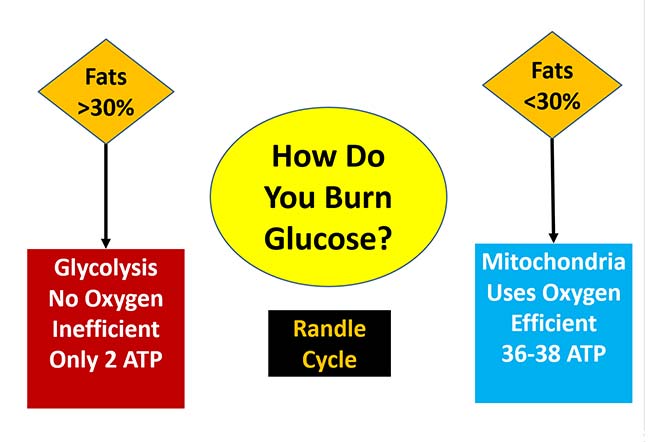
Your mitochondria can only burn one fuel at a time — either fat or glucose. As illustrated above, fats are broken down in a process called beta oxidation into acetyl-co A, which gets fed into the Krebs cycle. Carbs are broken down to pyruvate, which cannot enter the electron transport chain until they are converted to Acetyl-Co-A by pyruvate dehydrogenase.
The key here is that there’s a stealth switch that controls which of these fuels your mitochondria will burn. The switch has been given the name the Randle Cycle, but it is more helpful to visualize it as a railroad switch that changes the tracks of the train. The train can only travel down one track: not both. This is because only one type of fuel can be burned at a time.
Burning glucose in your mitochondria creates more energy and fewer ROS, raises your metabolic rate, and produces carbon dioxide, which protects against oxidative (reductive) stress and oxygenates cells. All of these things will help protect your brain function.
In a best-case scenario, you will metabolize, or burn, glucose in your mitochondria with minimal reductive stress. When you do this, you will only generate 0.1% ROS.
This route is also incredibly efficient at energy production, creating 36 to 38 adenosine triphosphates (ATP) for every molecule of glucose that is metabolized. However, for this to occur, you need to consume less than 30 to 40% of your calories as fat. When you consume significantly more than that amount, the switch changes to burn fat in your mitochondria and your ability to burn glucose will be impaired.
Chronically oxidizing fats as your primary fuel will also tend to increase your cortisol level, resulting in chronic inflammation, both of which accelerate the aging process.
So, in summary, burning glucose in your mitochondria creates more energy and fewer ROS, and raises your metabolic rate. It also produces carbon dioxide as a byproduct, which protects against oxidative (reductive) stress and oxygenates cells. All these things will help protect your brain function.
For more details about the Randle Cycle and how your metabolism works, see “Crucial Facts About Your Metabolism” and “Crucial Facts About Your Metabolism, Part 2.”
Gut Problems Also Likely Cause of Parkinson’s Disease
A new study6 in the October 2023 issue of Molecular Psychiatry showed that the presence of damaged mitochondrial DNA in the bloodstream is sufficient to cause all symptoms of Parkinson’s disease. The mitochondrial debris is then activated by the endotoxin (lipopolysaccharide) receptor TLR4.
Endotoxin is produced in your gut when you eat fermentable carbs that you are unable to digest in your stomach and small intestine. The carbs then travel to the large intestine, where they fuel the growth of gram-negative bacteria that grow and die. When they die, the endotoxin in their cell wall is released, activating the TLR4 receptor.
The Ray Peat approach is to increase the amount of simple carbs in your diet so your mitochondria can be optimally fueled. But there is strict caution to avoid fermentable carbs for the very reason that they can create endotoxin and activate the TLR4 receptor.
When introducing carbs, it is important to do it slowly, and make sure you are not having digestive symptoms like belching, bloating or gas, which are signs that the carbs aren’t being digested in your upper digestive system. If this is the case, you will need to use small amounts of fruit juices without pulp until your gut can digest the carbs without symptoms.
Lion’s Mane Mushroom May Protect Your Cognitive Function
In addition to basic micronutrients, a number of other supplements can also help protect your cognitive function. One interesting one is lion’s mane mushroom (Hericium erinaceus), which has a long history of use in traditional medicine.
Buddhist monks, for example, traditionally used lion’s mane mushroom tea to enhance brain function and heighten focus. In modern times, several studies have confirmed lion’s mane’s neuroprotective and cognition-enhancing effects, including the following:
| A 2023 study7 found that Lion’s mane extract can enhance memory by promoting neuron projections and connections to other neurons. |
| In a 2020 study,8 patients with mild Alzheimer’s disease who were given three 350-milligram capsules of lion’s mane mushroom per day for 49 weeks improved their cognitive test scores. |
| An epidemiological study9 published in 2017, which included 13,230 participants 65 years of age and older, found those who ate mushrooms at least once a week had “a lower risk of incident dementia, even after adjustment for possible confounding factors.” The greatest risk reduction was among those ate mushrooms three times or more per week. |
| A similar but smaller study10 published in 2019 reported that those who ate the most mushrooms had a 43% lower risk of developing mild cognitive impairment, independent of confounding factors such as alcohol consumption, cigarette smoking and high blood pressure. |
| A 2016 study found extracts from lion’s mane mushroom reduced symptoms of memory loss in mice and prevented neuronal damage caused by amyloid beta plaques known to accumulate in the brain with Alzheimer’s disease. |
| A 2010 study11 involving seniors between the ages of 70 and 74 found higher intakes of fruits, vegetables, grain products and mushrooms improved cognitive performance. |
You can consider adding mushrooms like lion’s mane to your diet as they can be an excellent addition to nearly any meal. They complement all kinds of grass-fed meats and wild-caught fish, go well in nearly any salad and can be added to soups, casseroles and other meals.
However, it is crucial to choose organically grown mushrooms as fungi easily absorb air and soil contaminants. Alternatively, you could opt for an organic supplement or extract.
- 1, 4 Nutrients September 25, 2023; 15(9): 4129
- 2 Medical News Today October 2, 2023
- 3 Nutrients September 25, 2023; 15(9): 4129, Section 6.1.1
- 5 Cell Reports May 29, 2018; 23(9): 2550-2558
- 6 Molecular Psychiatry October 2, 2023
- 7 Journal of Neurochemistry, 2023; doi: 10.1111/jnc.15767
- 8 Frontiers in Aging Neuroscience, 2020;12
- 9 Journal of the American Geriatrics Society, 2017;65(7)
- 10 Journal of Alzheimer’s Disease, 2019;68(1)
- 11 British Journal of Nutrition, 2010;104(8)
Why Synthetic Food Is Very Dangerous
Reproduced from original article:
https://articles.mercola.com/sites/articles/archive/2023/10/04/synthetic-food.aspx
The original Mercola article may not remain on the original site, but I will endeavor to keep it on this site as long as I deem it to be appropriate.
Analysis by Dr. Joseph Mercola Fact Checked October 04, 2023
STORY AT-A-GLANCE
- An estimated 99% of the components making up whole food are a complete mystery. The U.S. Department of Agriculture’s National Nutrient Database for Standard Reference details 188 nutritional components of food, including 38 flavonoids, yet scientists estimate there are more than 26,000 different biochemicals in our food
- We know even less about the constituents of processed foods and synthetic foods, which falsely claim to be “equivalents” to whole foods, such as “animal-free meats” or “animal-free milk”
- Scientists cannot create equivalence when they don’t even know what 85% or more of the whole food they’re trying to replicate consists of
- A paper published in the April 2023 issue of Animal Frontiers warns that cultured products are not nutritionally equivalent to the meats they’re intended to replace
- A May 2023 report by the Food and Agriculture Organization concluded there are at least 53 potential health hazards associated with lab-grown meat, including the possibility of contamination with heavy metals, microplastics, nanoplastics and chemicals, allergenic additives, toxic components, antibiotics and prions
Do you know what’s in the food you eat? Remarkable as it may seem, 99% of the components making up whole food are a complete mystery. As reported by New Scientist in July 2020:1
“We know next to nothing about the vast majority of compounds in our diet … ‘Our understanding of how diet affects health is limited to 150 key nutritional components,’2 says Albert-László Barabási at Harvard Medical School, who coined the term nutritional dark matter.
‘But these represent only a small fraction of the biochemicals present in our food’ … The idea that food is a rich and complex mix of biochemicals is hardly news.
Even the well-known macronutrients — proteins, carbohydrates and fats — are hugely diverse. There’s also a vast supporting cast of micronutrients: minerals, vitamins and other biochemicals, many of which are only present in minuscule quantities, but which can still have profound health effects.”
The official source of nutritional information is the U.S. Department of Agriculture’s (USDA) National Nutrient Database for Standard Reference.3 It lists the composition of hundreds of thousands of foods, but it’s not as detailed as you might imagine.
In all, it details only 188 nutritional components, including 38 flavonoids, yet scientists estimate there are more than 26,000 different biochemicals in our food.4,5
As noted by New Scientist,6 “with the USDA as your guide, 99.5% of the components in food are a mystery,” and as noted by Barabási, “It would be foolish to dismiss 99.5% of the compounds we eat as unimportant7 … We will not really understand how we get sick if we don’t solve this puzzle.”8
Searching for Nutritional ‘Dark Matter’
Disturbed by the information gap, an international team of researchers started working on a more comprehensive database a decade ago called FooDB,9 which as of 2020 contained information on some 70,000 nutritional compounds.
Yet even this database still has a long way to go. An estimated 85% of the nutritional components listed remain unquantified, meaning they know a food contains a particular component, but they don’t know how much. The health implications of most compounds also remain largely unknown. New Scientist notes:10
“This is also true of individual micronutrients. ‘Consider beta-carotene,’ says Barabási. ‘It tends to be positively associated with heart disease, according to epidemiological studies, but studies adding beta-carotene to the diet do not show health benefits.
One potential reason is that beta-carotene never comes alone in plants; about 400 molecules are always present with it. So epidemiology may be detecting the health implications of some other molecule.’
Another probable cause is the effect of the microbiome on dark nutrients, says [FooDB founder David] Wishart. ‘Most dark nutrients are chemically transformed by your gut bacteria.
That’s probably why studies on the benefits of different foods give relatively ambiguous results. We don’t properly control for the variation in gut microflora, or our innate metabolism, which means different people get different doses of metabolites from their food.’”
Processed Foods Are an Even Greater Mystery
The reason I started with that background is because we know even less about the constituents of processed foods and synthetic foods that ignorantly claim to be “equivalents” to whole foods, such as “animal-free meats” or “animal-free milk.”
Food processing alone will often alter the composition of bioactive molecules in a food, and hence the food’s impact on health,11 but today, processed foods also contain a wide array of synthetic chemicals that, prior to the modern era, were never part of the human diet. As such, they pose incredible risks to long term health and well-being. Processed foods may also have intergenerational effects.
How can scientists create equivalence when they don’t even know what 85% or more of the whole food they’re trying to replicate consists of?
In recent years, the idea that we can simply replace whole foods with synthetic, genetically modified or lab-grown alternatives that are wholly equivalent to the original food has taken root. In reality, that’s simply impossible.
How can scientists create equivalence when they don’t even know what 85% or more of the whole food they’re trying to replicate consists of? Common sense will tell you they can’t. It might look, smell and even taste similar, but the micronutrient composition will be entirely different, and as a result, the health effects will be incomparable as well.
Download this Article Before it Disappears
Animal-Free Equivalence Is a PR Fraud
Take cultured meat, for example. It’s said to be equivalent to real animal meat because it’s grown from animal cells. The cells are then grown in a nutrient solution inside a bioreactor until it becomes a meat-like slab.
Similarly, Bored Cow12 animal-free milk is a dairy alternative made with whey protein obtained through a fermentation process, plant-based fats (in lieu of milk fats), citrus fiber (for creaminess) and added vitamins and minerals.
Defenders of cultured meat insist that this product is not “fake meat” but “actual meat,”13 the only difference being that no animal had to be slaughtered to create it. Cultured meat and other synthetic foods are also said to be more environmentally friendly. But nothing could be further from the truth.
Their impact is far more akin to that of the pharmaceutical industry than the food industry. According to a recent “cradle-to-gate life cycle” analysis,14,15,16,17 the lab-grown meat industry produces anywhere from four to 25 times more CO2 than traditional animal husbandry.
Based on this assessment, each kilo of cultured meat produces anywhere from 542 pounds (246 kilos) to 3,325 pounds (1,508 kg) of carbon dioxide emissions, making the climate impact of cultured meat four to 25 times greater than that of conventional beef. And this information is only provided to refute those who believe the global warming fallacy.
As noted by the authors, investors have poured billions of dollars into animal cell-based meat (ACBM) sector based on the theory that cultured meat is more environmentally friendly than beef. But according to these researchers, that hype is based on flawed analyses of carbon emissions.
Cultured meat is also the epitome of ultraprocessed food18 and therefore likely to cause health problems like those caused by other ultraprocessed foods, such as obesity,19 cardiovascular diseases, Type-2 diabetes, metabolic syndrome, irritable bowel syndrome, cancer,20 mental health problems21 and increased all-cause mortality.22,23,24,25,26
A paper27 published in the April 2023 issue of Animal Frontiers also warned that there are several implications of cell-based meat that need to be considered, but aren’t, including the fact that cultured products are not nutritionally equivalent to the meats they’re intended to replace.
The claim that no animals are killed in the process is also false. At present, most cultured or cell-based meats are created by growing animal cells in a solution of fetal bovine serum (FBS), which is made from the blood of unborn calves. In short, pregnant cows are slaughtered to drain the unborn fetus of its blood.
Is It Safe to Eat Tumors?
There are also many unanswered questions surrounding safety. For example, to get the cell cultures to grow, some companies are using immortalized cells, which technically speaking are precancerous and/or fully cancerous.28 (Other companies use embryonic stem cells or cells from living animals.29)
The reason for using immortalized cells is because normally behaving cells cannot divide forever. Most cells will only multiply a few dozen times before they become senescent (old) and die.
This won’t work when your intention is to grow thousands of pounds of tissue from a small number of cells, hence they use immortalized cells that have no off switch for their replication and can divide indefinitely.
Meat substitutes cultured in this way could therefore be thought of as tumors, seeing how the flesh is entirely made up of precancerous or cancerous cells. Is it safe to eat tumors? We don’t know.
MIT biologist Robert Weinberg, Ph.D., has proposed that humans can’t get cancer from these cells because they’re not human cells and therefore cannot replicate inside your body.30 However, there’s no long-term research to back this theory.
Dietary Headaches to Come
It’s also important to realize that the nutritional composition and safety of synthetic foods will vary depending on the brand.
When you’re dealing with beef, for example, the meat from one cow will be relatively identical to that of any other cow (one major exception being the way they’re raised and fed). One wild-caught salmon is comparable to any other wild-caught salmon, and each russet potato is more or less identical to every other russet potato.
But since each synthetic food brand uses proprietary ingredients and processes, no two will have the identical composition or safety, so even if one is eventually proven safe and nutritious, those results cannot be applied to any other brand.
This variance has the potential to create major problems in the future when all sorts of foods have been replaced with synthetic non-equivalents. How do you determine which cultured beef, chicken or salmon brand might be best for you? How will you devise a sensible diet plan when every food comes in myriad variations of varying composition and safety?
Synthetic Foods Pose Unique Food-Safety Hazards
Many synthetic food proponents claim lab-created food will bypass a host of food-safety problems, but the converse is far more likely to be true. Sure, beef, for example, can be contaminated during processing, packaging, transport or storage, or during the cooking process.
But in cultured meat, every ingredient and processing step brings with it the potential of contamination, and any of the hundreds of ingredients could have toxic effects, alone or in synergy.
Indeed, an in-depth analysis31,32 of the available evidence by the Food and Agriculture Organization of the United Nations (FAO) and a World Health Organization expert panel, published in May 2023, concluded there are at least 53 potential health hazards associated with lab-grown meat.
Among them are the possibility of contamination with heavy metals, microplastics, nanoplastics and chemicals, allergenic additives, toxic components, antibiotics and prions.
What’s more, some of the ingredients that go into synthetic biology like cultured meat are regulated as “non-detectable manufacturing aids,” and you won’t even know what they are. Israeli startup Profuse Technology, for example, has developed a growth media supplement that massively encourages protein growth.
As reported by Food Navigator Europe in an article titled “Cultivated Meat ‘Breakthrough’: Media Supplement Achieves Full Muscle Maturation on Scaffold Within 48 Hours,”33 the supplement reduces the time to grow filets and steaks by 80% and augments the protein in the final product by a factor of five.
An Unsustainable Model
The cultured meat process also produces toxic biowaste — a problem that doesn’t exist in conventional agriculture and food processing. In the video above, Alan Lewis, vice president of government affairs for Natural Grocers, reviews what goes into the making of synthetic biology.
The starting ingredients are typically cheap sugars and fats derived from genetically engineered corn and soy, grown in environmentally destructive monocultures with loads of herbicides, pesticides, and synthetic fertilizers.
As a result, they’re loaded with chemical residues. Hundreds of other ingredients may then be added to the ferment to produce the desired end product, such as a certain protein, color, flavor or scent. The most-often used microorganism in the fermentation process is E. coli that has been gene-edited to produce the desired compound through its digestive process.
The microorganism must also be antibiotic-resistant, since it needs to survive the antibiotics used to kill off other undesirable organisms in the vat. As a result, antibiotic-resistant organisms also become integrated into the final product, and the types of foodborne illness that might be caused by gene-edited antibiotic-resistant E. coli and its metabolites are anyone’s guess.
In addition to the desired target metabolite, these gene-edited organisms may also spit out non-target metabolites with unknown environmental consequences and health effects. But that’s not all. Once the target organisms are extracted, what’s left over is hazardous biowaste.
While traditional fermentation processes, such as the making of beer, produce waste products that are edible by animals, compostable and pose no biohazard, the biowaste from these synthetic biology ferments must first be deactivated, and then must be securely disposed of. It cannot go into a landfill.
Protect Your Health by Avoiding Frankenfoods
Making food that requires GMO inputs and produces more CO2 than conventional farming and hazardous biowaste to boot is hardly a sustainable model. But then again, synthetic biology and processed foods are not being pushed out of true concern for sustainability.
If that was the goal, everyone would be looking at regenerative agriculture where every part of the system supports and sustains other parts, thereby eliminating the need for chemical inputs, radically reducing water needs while optimizing yields.
No, synthetic biology is pursued because it is a formidable control mechanism. Those who own all the synthetic food production will control the world in a very literal sense. To learn more about this plot for control, see “The Fake ‘Food as Medicine’ Agenda.”
In short, the globalists already own and control most of the carbohydrates grown in the world today. By replacing real animal foods with patented lab-made protein alternatives, they’ll have unprecedented power to control the world’s population.
It’ll also grant them greater control over people’s health. It’s already known that the consumption of ultraprocessed food contributes to disease, and the benefactor of ill health is Big Pharma.
The processed food industry has spent many decades driving chronic illness that is then treated with drugs rather than a better diet. Synthetic foods will likely be an even bigger driver or chronic ill health and early death.
The fact is, fake meat and dairy cannot replace the complex mix of nutrients found in grass fed beef and dairy, and it’s likely that consuming ultraprocessed meat and milk alternatives may lead to many of the same health issues that are caused by a processed food diet. So, if you want to really protect your health and the environment, skip pseudofoods that require patents and stick to those found in nature instead.
- 1, 6, 7, 10 New Scientist July 22, 2020 (Archived)
- 2, 4 Nature Food 2020; 1: 33-37
- 3 National Nutrient Database for Standard Reference (Archived)
- 5 Afekta February 26, 2020
- 8 Inside Science December 9, 2019
- 9 FooDB
- 11 Knowable Magazine September 20, 2023
- 12 Bored Cow Animal-Free Milk
- 13 Food Safety News September 19, 2023
- 14 BioRxiv April 21, 2023
- 15 New Scientist May 9, 2023
- 16 Interesting Engineering May 14, 2023
- 17 Watts Up With That? May 12, 2023
- 18 Friends of the Earth, From Lab to Fork, June 2018 (PDF)
- 19 Cell Metabolism, 2019; doi: 10.1016/j.cmet.2019.05.008
- 20 BMJ 2018; 360:k322
- 21 Advisory UPF Dangerous for Your Brain
- 22 JAMA Internal Medicine February 11, 2019;179(4):490-498
- 23 BMJ February 14, 2018; 360
- 24 JAMA 2017;317(9):912-924
- 25 BMJ, 2019;365:I1451
- 26 BMJ, 2019;365:l1949
- 27 Animal Frontiers April 2023; 13(2): 68-74
- 28, 29, 30 The Fern February 7, 2023
- 31 FAO.org Food Safety Aspects of Cell-Based Food
- 32 ISAAA.org May 10, 2023
- 33 Food Navigator Europe September 26, 2023