Glyphosate
now browsing by category
One of the Most Harmful Ingredients in Processed Foods
Reproduced from original article:
https://articles.mercola.com/sites/articles/archive/2023/01/03/soybean-oil.aspx
The original Mercola article may not remain on the original site, but I will endeavor to keep it on this site as long as I deem it to be appropriate.
Analysis by Dr. Joseph Mercola Fact Checked January 03, 2023
STORY AT-A-GLANCE
- Two of the most harmful ingredients in processed foods are high fructose corn syrup and soybean oil, whether partially hydrogenated, organic, or made from newer soybean varieties modified in such a way as to not require hydrogenation
- Completely unnatural man-made fats created through the partial hydrogenation process cause dysfunction and chaos in your body on a cellular level, and studies have linked trans-fats to health problems ranging from obesity and diabetes to reproductive problems and heart disease
- Besides the health hazards related to the trans fats created by the partial hydrogenation process, soybean oil is, in and of itself, NOT a healthy oil
- Add to that the fact that the majority of soybeans grown in the U.S. are genetically engineered, and as a result saturated with dangerous levels of the herbicide glyphosate, which may have additional health consequences as there are no long term safety studies
- When taken together, partially hydrogenated GE soybean oil becomes one of the absolute worst types of oils you can consume
- The genetically engineered (GE) variety planted on over 90% of U.S. soy acres is Roundup Ready engineered to survive being doused with otherwise lethal amounts of Monsanto’s Roundup herbicide (glyphosate). GE soybeans have been found to contain residue levels as high as 17 mg/kg, and malformations in frog and chicken embryos have occurred at just over 2 mg/kg
Processed food is perhaps the most damaging aspect of most people’s diets, contributing to poor health and chronic disease. One of the primary culprits is high fructose corn syrup (HFCS), the dangers of which I touch on in virtually every article I write on diets. The second culprit is partially hydrogenated soybean oil.
These two ingredients, either alone or in combination, can be found in virtually all processed foods, and one can make a compelling argument that the reliance on these two foods is a primary contributing factor for most of the degenerative diseases attacking Americans today.
Part of the problem with partially hydrogenated soybean oil is the trans fat it contains. The other part relates to the health hazards of soy itself. An added hazard factor is the fact that the majority of both corn and soybeans are genetically engineered.
As the negative health effects from trans fats have been identified and recognized, the agricultural and food industry have scrambled to come up with new alternatives. Partially hydrogenated soybean oil has been identified as the main culprit, and for good reason.
Unfortunately, saturated fats are still mistakenly considered unhealthy by many health “experts,” so, rather than embracing truly healthful tropical fats like coconut oil, which is mostly grown outside the U.S., the food industry has instead turned to domestic U.S. alternatives offered by companies like Monsanto, now Bayer (which bought out Monsanto in 2018), which has developed modified soybeans that don’t require hydrogenation.
Why Hydrogenate?
Americans consume more than 16 million metric tons of edible oils annually, and soybean oil accounts for about 11,339 metric tons of it.1 Until Monsanto genetically engineered its seeds to produce plants lower in linolenic acid, about half of it was hydrogenated, as regular soybean oil is too unstable otherwise to be used in food manufacturing.
One of the primary reasons for hydrogenating oil is to prolong its shelf life. Raw butter, for example, is likely to go rancid far quicker than margarine. The process also makes the oil more stable and raises its melting point, which allows it to be used in various types of food processing that uses high temperatures.
Hydrogenated oil2 is made by forcing hydrogen gas into the oil at high pressure. Virtually any oil can be hydrogenated. Margarine is a good example, in which nearly half of the fat content is trans fat.
The process that creates partially hydrogenated oil alters the chemical composition of essential fatty acids, such as reducing or removing linolenic acid, a highly reactive triunsaturated fatty acid, transforming it into the far less reactive linoleic acid, thereby greatly preventing oxidative rancidity when used in cooking.
In the late 1990s, researchers began realizing this chemical alteration might actually have adverse health effects. Since then, scientists have verified this to the point of no dispute.
Be aware that there’s a difference between “fully hydrogenated” and “partially hydrogenated” oils. Whereas partially hydrogenated oil contains trans fat, fully hydrogenated oil does not, as taking the hydrogenation process “all the way” continues the molecular transformation of the fatty acids from trans fat into saturated fatty acids.
Fully hydrogenated soybean oil is still not a healthy choice, however, for reasons I’ll explain below. The following slide presentation explains the technical aspects relating to the hydrogenation process.
The Health Hazards of Trans Fats
The completely unnatural man-made fats created through the partial hydrogenation process cause dysfunction and chaos in your body on a cellular level, and studies have linked trans-fats to:
| Cancer, by interfering with enzymes your body uses to fight cancer | Chronic health problems such as obesity, asthma, auto-immune disease, cancer and bone degeneration |
| Diabetes, by interfering with the insulin receptors in your cell membranes | Heart disease, by clogging your arteries (Among women with underlying coronary heart disease, eating trans-fats increased the risk of sudden cardiac arrest three-fold!) |
| Decreased immune function, by reducing your immune response | Increased blood levels of low density lipoprotein (LDL), or “bad” cholesterol, while lowering levels of high density lipoprotein (HDL), or “good” cholesterol |
| Reproductive problems by interfering with enzymes needed to produce sex hormones | Interfering with your body’s use of beneficial omega-3 fats |
As usual, it took many years before conventional health recommendations caught up and began warning about the use of trans fats. Not surprisingly, as soon as the FDA notified them that it planned to require food manufacturers to list trans fat content on the label — which ultimately took effect January 1, 2006 — the industry began searching for viable alternatives to appeal to consumers who increasingly began looking for the “no trans fat” designation.
It didn’t take long before Monsanto had tinkered forth a genetically engineered soybean that is low in linolenic acid, which we’ll get to in a moment.
Be aware that some food manufacturers have opted to simply fool buyers — a tactic allowed by the FDA, as any product containing up to half a gram of trans fat per serving can still legally claim to have zero trans fat.3 The trick is to reduce the serving size to bring it below this threshold. At times, this will result in unreasonably tiny serving sizes, so any time you check a label and a serving is something like 10 chips or one cookie, it probably contains trans fats.
The Health Hazards of Soybeans
Besides the health hazards related to the trans fats created by the partial hydrogenation process, soybean oil is, in and of itself, NOT a healthy oil. Add to that the fact that the majority of soy grown in the U.S. is genetically engineered, which may have additional health consequences. When taken together, partially hydrogenated GE soybean oil becomes one of the absolute worst types of oils you can consume.
Years ago, tropical oils, such as palm and coconut oil, were commonly used in American food production. However, these are obviously not grown in the U.S., as with the exception of Hawaii, our climate isn’t tropical enough. Spurred by financial incentives, the industry devised a plan to shift the market from tropical oils to something more “home grown.”
As a result, a movement was created to demonize and vilify tropical oils in order to replace them with domestically grown oils such as corn and soy.
The fat in soybean oil is primarily omega-6 fat. And while we do need some omega-6, it is rare for anyone to be deficient in it, as it is pervasive in our diet. Americans in general consume FAR too much omega-6 in relation to omega-3 fat, primarily due to the excessive amount of omega-6 found in processed foods.
Omega-6 fats are in nearly every animal food and many plants, so deficiencies are very rare. This omega-6 fat is also highly processed and therefore damaged, which compounds the problem of getting so much of it in your diet. The omega-6 found in soybean oil promotes chronic inflammation in your body, which is an underlying issue for virtually all chronic diseases.
What About Organic Soybean Oil?
Even if you were fortunate enough to find organic soybean oil, there are still several significant concerns that make it far from attractive from a health standpoint. Soy in and of itself, organically grown or not, contains a number of problematic components that can wreak havoc with your health, such as:
• Goitrogens — Goitrogens, found in all unfermented soy whether it’s organic or not, are substances that block the synthesis of thyroid hormones and interfere with iodine metabolism, thereby interfering with your thyroid function.
• Isoflavones: genistein and daidzein — Isoflavones are a type of phytoestrogen, which is a plant compound resembling human estrogen, which is why some recommend using soy therapeutically to treat symptoms of menopause. I believe the evidence is highly controversial and doubt it works.
Typically, most of us are exposed to too many estrogen compounds and have a lower testosterone level than ideal, so it really is important to limit exposure to feminizing phytoestrogens. Even more importantly, there’s evidence it may disturb endocrine function, cause infertility and promote breast cancer, which is definitely a significant concern.
• Phytic acid — Phytates (phytic acid) bind to metal ions, preventing the absorption of certain minerals, including calcium, magnesium, iron, and zinc — all of which are co-factors for optimal biochemistry in your body. This is particularly problematic for vegetarians, because eating meat reduces the mineral-blocking effects of these phytates.
Sometimes it can be beneficial, especially in postmenopausal women and in most adult men because we tend to have levels of iron that are too high, which can be a very potent oxidant and cause biological stress. However, phytic acid does not necessarily selectively inhibit just iron absorption; it inhibits all minerals. This is very important to remember, as many already suffer from mineral deficiencies from inadequate diets.
The soybean has one of the highest phytate levels of any grain or legume, and the phytates in soy are highly resistant to normal phytate-reducing techniques such as long, slow cooking. Only a long period of fermentation will significantly reduce the phytate content of soybeans.
• Natural toxins known as “anti-nutrients” — Soy also contains other anti-nutritional factors such as saponins, soyatoxin, protease inhibitors, and oxalates. Some of these factors interfere with the enzymes you need to digest protein. While a small amount of anti-nutrients would not likely cause a problem, the amount of soy that many Americans are now eating is extremely high.
• Hemagglutinin — Hemagglutinin is a clot-promoting substance that causes your red blood cells to clump together. These clumped cells are unable to properly absorb and distribute oxygen to your tissues.
Worst of All — Genetically Engineered Soybean Oil
The genetically engineered (GE) variety planted on over 90% of US soy acres is Roundup Ready — engineered to survive being doused with otherwise lethal amounts of Monsanto’s Roundup herbicide. The logic behind Roundup Ready crops such as soy is that you can decrease the cost of production by killing off everything except the actual soy plant.
However, animal studies reveal there may be significant adverse health effects from these GE soybeans, including progressively increased rates of infertility with each passing generation. By the third generation, virtually all the hamsters in one feeding study were found to be infertile. Second-generation hamsters raised on GE soy also had a fivefold higher infant mortality rate.
Are Low-Linolenic Soybeans the Answer?
We now also have other Monsanto-made soy crops to contend with. Responding to the growing demand for healthier diets, Monsanto launched Vistive low-linolenic soybeans in 2005. Most soybeans contain roughly 7% linolenic acid. The new varieties contain 1% to 3%, which reduces the need for hydrogenation.4 As explained by Monsanto:5
“Farmers are not the only beneficiaries of Monsanto’s efforts … Consumers will also benefit from the healthier crops that could result, such as soybeans that are low in linolenic acid. Linolenic acid, a precursor to trans fats, may contribute to cardiovascular disease … Low-linolenic soybeans reduce the need for hydrogenation in food processing, helping to reduce the amount of trans fats in processed foods.”
Yet another soybean variety created by Monsanto is the high stearate soybean, which also has the properties of margarine and shortening without hydrogenation. But are these soybeans any better or safer than either conventional soybeans or Roundup Ready soybeans, even though they don’t have to go through partial hydrogenation, and therefore do not contain trans fat? No one knows.
Another Hazard of GE Soybeans: Glyphosate
I keep stacking health risks upon health risks, and here’s another one: Research has shown that soybean oil from Roundup Ready soy is loaded with glyphosate, the main ingredient in Roundup — the broad-spectrum herbicide created by Monsanto.
According to a report in the journal Chemical Research in Toxicology, the highest MRL for glyphosate in food and feed products in the EU is 20 mg/kg. GE soybeans have been found to contain residue levels as high as 17 mg/kg, and malformations in frog and chicken embryos occurred at 2.03 mg/kg.6 That’s 10 times lower than the MRL.
This is an alarming finding because glyphosate is easily one of the world’s most overlooked poisons. Research published in 2010 showed that the chemical, which works by inhibiting an enzyme called EPSP synthase that is necessary for plants to grow, causes birth defects in frogs and chicken embryos at far lower levels than used in agricultural and garden applications.7 The malformations primarily affected the:
- Skull
- Face
- Midline and developing brain
- Spinal cord
When applied to crops, glyphosate becomes systemic throughout the plant, so it cannot be washed off. And, once you eat this crop, the glyphosate ends up in your gut where it can decimate your beneficial bacteria. This can wreak havoc with your health, as 80% of your immune system resides in your gut (GALT, or Gut Associated Lymph Tissue) and is dependent on a healthy ratio of good and bad bacteria. Separate research has also uncovered the following effects from glyphosate:
| Endocrine disruption | DNA damage |
| Developmental toxicity | Neurotoxicity |
| Reproductive toxicity | Cancer |
To Avoid Harmful Fats, Ditch Processed Foods
If you want to avoid dangerous fats of all kinds, your best bet is to eliminate processed foods from your diet. From there, use these tips to make sure you’re eating the right fats for your health:
- Use organic butter (preferably made from raw milk) instead of margarines and vegetable oil spreads. Butter is a healthy whole food that has received an unwarranted bad rap.
- Use coconut oil for cooking. It is far superior to any other cooking oil and is loaded with health benefits.
- Be sure to eat raw fats, such as those from avocados, raw dairy products, olive oil, olives, organic pastured eggs and raw nuts, especially macadamia nuts which are relatively low in protein. Also take a high-quality source of animal-based omega-3 fat, such as krill oil.
Following my comprehensive nutrition plan will automatically reduce your trans-fat intake, as it will give you a guide to focus on healthy whole foods instead of processed junk food.
Remember, virtually all processed foods will contain either HFCS (probably made from genetically engineered corn) and/or soybean oil — either in the form of partially hydrogenated soybean oil, which is likely made from GE soybeans, loaded with glyphosate, or from one of the newer soybean varieties that were created such that the y do not need to be hydrogenated. They’re ALL bad news, if you value your health.
How to Assess Your Biochemical Individuality
Reproduced from original article:
https://articles.mercola.com/sites/articles/archive/2022/10/30/urine-organic-acids-test.aspx
The original Mercola article may not remain on the original site, but I will endeavor to keep it on this site as long as I deem it to be appropriate.
Analysis by Dr. Joseph Mercola Fact Checked October 30, 2022
STORY AT-A-GLANCE
- Functional genomics testing looks at the single nucleotide polymorphisms (SNPs, pronounced “snips”) of genes
- The urine organic acid test (OAT) can provide valuable insight into your biochemical individuality, and combined with genomics testing can help chart a course for healing complex, chronic health problems
- G6PD insufficiency, the most common enzyme insufficiency in the world, can result in a significant loss of NADPH, thereby increasing inflammation and decreasing mitochondrial function
- Elevated oxalate is a common cause of chronic pain and fibromyalgia. One way to lower your oxalate level is to take Epsom salt baths, as the sulfate will displace the oxalates
- If you suspect oxalates are part of your health problems, combining high-oxalate food with calcium-rich foods or a calcium supplement will prevent the oxalate from causing a problem by binding to the calcium in your digestive tract
Emily Givler1 is a functional genetic nutrition consultant with the NutriGenetic Research Institute and Tree of Life, founded by Robert Miller, a traditional naturopath and trailblazer in the field of functional genomics, which looks at the single nucleotide polymorphisms (SNPs, pronounced “snips”) of genes.
Here, Givler discusses the benefits of the urine organic acid test (OAT) — a little-known test that can provide you with valuable insight into your biochemical individuality.
“We’re all living in this super toxic world, so everyone is being confronted by insult and injury to their bodies every day. Even those of us who are in this field can tweak things based on our biochemistry to make things work better for us,” she says.
“There’s not one right answer for everybody. We’ve got to find what makes us unique and find those places where we’re a little bit more vulnerable and support those areas appropriately.”
Givler’s Personal Story
Givler’s own health challenges were in part what drove her into the field of functional nutrition. She explains:
“I started with chronic pain and pretty excessive fatigue as a teenager … I had test after test and really got no answers. It took about five years before I got a fibromyalgia diagnosis. At the time, it was reassuring to know that this wasn’t all in my head. Other people felt this way too.
But where I got frustrated was the only recommendations I was given were narcotic painkillers or antidepressants … I was still a teenager. I decided I wanted to have a liver and kidneys by the time that I was 40, so I did not go down that route.
But I really had to carve out my own path to try to regain my health. I definitely had some missteps along the way. I stopped eating meat. I started eating a lot of spinach, beets and Swiss chard. Sounds good, right? I was eating these three meals a day, seven days a week and just felt worse and worse.
My rheumatologist told me to plan on being disabled by the time I was 30. I was about 20 at the time and thinking, ‘Boy, I knew to expect disability, but I didn’t think it would happen this fast.’
It turned out I was really dealing with extremely high levels of oxalates, which cause crystalline precipitates to form in the muscle and connective tissue. This was causing much of my pain and depleting my nicotinamide adenine dinucleotide phosphate (NADPH), which was zapping my energy. I looked like I had fibromyalgia. I really think a lot of people who have that label are probably dealing with something similar.
The healthy foods I was eating, the spinach and the beets, are sky-high in oxalates. I don’t want to suggest that no one should eat them, but I was poisoning myself with these healthy foods … The lowest my pain level ever got was an 8 out of 10.
I can say that now, almost two decades later, it’s completely managed with no painkillers … There are too many people who suffer every day. They think they’re doing the right things. On paper, they’re doing the right things. But what’s right for one person may be totally wrong for them, [and] there are ways you can figure this out rather than just fumbling through the way I did.”
SNP and OAT Testing Are a Powerful Combination
The irrefutable evidence Givler needed was found in her OAT test. She’d also done Miller’s functional genomics test, which further supported her conclusion that her fibromyalgia was related to an excess of dietary oxalates.
Indeed, the combination of functional genomics testing and OAT can be very powerful. When I had the SNP test done, it revealed I have a genetic variant that is essentially equivalent to celiac disease, with the crucial difference that it does not cause any noticeable gastrointestinal issues. Still, this genetic flaw means I must abstain from gluten to optimize my health and avoid autoimmune problems. Turns out I have a problem with oxalate as well.
“As clinicians, we tend to get into the habit of wanting to put people on a protocol. We find something that works and we push it. It may work for a lot of people, but there are always going to be people who slip through the cracks because there are differences in our biochemistry,” Givler says.
“Whether it’s differences because of genetic predispositions that may make us metabolize things, like oxalates, histamine or glutamate, differently than the average person, or because of particular environmental insults that we’re exposed to, either because of our occupation or because of our geography — those things pile up and may make us fall outside of that normal box.
If we can use genetics as kind of the framework around which we build our protocols, and then use functional testing like the urine organic acid testing, we can more precisely target the types of dietary choices or nutritional, supplemental interventions, and in some cases, lifestyle changes, we need to implement to really propel us towards health …
I think histamine foods are a really good example. We can read volumes about how good fermented foods are for your gut … and how we should be eating these things every day. But if you can’t clear histamine, or if you’re dealing with excessive mast cell activation, and you bring these foods into your diet, you may set off a catastrophic cascade of events and make your symptoms exponentially worse.
Too often then, you’re going to be told, ‘You’re just having die-off. Just keep going. You’re just not doing enough of it,’ when actually you may be making yourself sicker. Getting the right guidance with the right functional testing can really make a huge difference in people getting on the right plan for themselves.”
The Most Common Genetic Disorder in the World
Givler’s SNP test also revealed she has glucose-6-phosphate dehydrogenase (G6PD) insufficiency, which is one of the most common enzyme insufficiencies in the world.
“This is where things get complicated,” she says. “Very few of us are dealing with just one thing. We have to see where these patterns of weakness kind of pile up … G6PD insufficiency … can result in a significant loss of NADPH. That can increase inflammation in the body and decrease mitochondrial function.
That, piled on top of my genetic predispositions to over-absorb oxalates, which will also deplete NADPH, really gives me a one-two punch when it comes to energy … [Dr. Mercola] and I have spoken pretty extensively about things I can do to rebuild my nicotinamide adenine dinucleotide (NAD) and NADPH levels. That has really helped me to propel my health to the next level as well.”
NADPH may in fact be as important as adenosine triphosphate (ATP), because while it lowers inflammation, it’s also the primary source of electrons in your body to internally recharge antioxidants such as glutathione, vitamin C and vitamin E. If that’s not working, it’s very difficult to get healthy.
The good news is there are simple and inexpensive ways to improve your NADPH, such as glycine supplementation. The bad news is you won’t know you have a serious NADPH problem unless you do these two tests.
I my view, doing genomic and OAT testing can go a long way toward figuring out what you need to do if you have a chronic complex problem and not getting better, and Givler is quite skilled in interpreting these tests. In my case, she also detected a B2 insufficiency. She explains:
“So few people are thinking about B1, B2 and B6, but they are critical. For you, for true metabolic flexibility, getting adequate B2 to work with the level of fat that you’re eating was a big piece of it. Interestingly, with the gluten, it was not just the SNP test that showed it. That was reflected on the organic acid test as well. It took about four months, being strictly gluten-free, for you to get that metabolite back in line …
It’s amazing how much insight we can get from looking at the right functional testing. These two are just a one-two punch for figuring out, ‘Is it some inborn issue that you need more of a certain nutrient than someone else, or is it just poor dietary choices for you? Is it an environmental toxin?’ When we pair [SNP and OAT] together, so many of those pieces really come to light.”
Is Glyphosate Exposure Affecting Your Health?
There are several different labs where you can order glyphosate screening for yourself and your pets, for example, EnviroScience’s ELISA (enzyme linked immunosorbent assay) method, which utilizes an antibody specific for glyphosate,2 and my preferred lab, Health Research Institute, whose testing kits I include in my online store.
According to Givler, certain patterns in your OAT results can also be indicative of a problem with glyphosate exposure.
“We can see patterns when there is high level of glyphosate exposure,” Givler says. “Glyphosate’s very disruptive for the gut microbiome but it doesn’t kill all species uniformly.
If there are elevations in clostridia species, yeast and depleted beneficial bacteria, that is one pattern you can see with glyphosate exposure, because it’ll kill the lactobacilli and the bifidobacterium and leave some of the more opportunistic organisms, which will make you more vulnerable to lipopolysaccharides.
Glyphosate also breaks down into oxalate. For some people who are not dealing with the genetic predisposition but are dealing with the secondary hyperoxaluria, that may be a result of glyphosate as well. If we see a lot of mineral depletions — since glyphosate is a mineral chelator — that may be an indicator that there are some problems.
High succinate on the OAT test also can be an indicator, because succinate and glycine combine to move into the heme pathway. Without the glycine, if it’s being disrupted by glyphosate, that level may be elevated. If you’re seeing high oxalates, high succinate, high clostridia and low good bacteria, I would start looking for glyphosate exposure.”
A Clinical Example: My Personal OAT Results
To give you an idea of what OAT might tell you, I share my own test results in this interview, which Givler interpreted for me. My first OAT was in August, and the results shocked me. It was not at all what I expected considering how strict I am about living a healthy lifestyle and eating a healthy organic diet.
“There were definitely some things out of line,” Givler says. “One of the first things that I always tell my clients is this is a written explanation for why you’re feeling how you’re feeling. Sometimes when people see things out of line, they get really upset about it …
But if we don’t know what’s wrong, then we don’t know how to bring you back into balance. I’m a data lover. The more data we can collect, the better. This showed us that your gut was not in the best of shape. You were maybe overdoing it on good bacteria. I recommend that you slow down on your probiotics.”
Turns out I had small intestinal bacterial overgrowth, also known as SIBO. Interestingly, I’m a huge fan of molecular hydrogen, as it has a long list of health benefits. Alas, SIBO type C is one of the few, if not the only, clinical conditions where molecular hydrogen may actually do more harm than good, as it feeds the bacterial overgrowth.
SIBO-C is typically caused by an overgrowth of archaea, which feed on hydrogen. Now, I had SIBO type D. But SIBO-D will often progress to SIBO-C, because the overabundant bacteria that cause the diarrhea produce hydrogen, which then feed the archaea, which then produce the methane, which then causes the constipation.
“That’s why many people see evolving gastrointestinal issues that start in one way and end up another way,” Givler says. “If you take hydrogen water and you get gassy, bloated, constipated or brain fogged, there is a really good chance that there’s an overabundance of organisms in your digestive tract.”
In my case, the therapy was cutting down on fiber and eliminating gluten. Elevated hippurate also revealed that my phase II liver detox was not keeping up with phase I. Givler explains:
“Phase I was moving too fast for phase II. Phase I takes those fat-soluble toxins and turns them into intermediary metabolites, which are more toxic than those toxins when they were sequestered in fat cells … They should move right onto phase II to move into one of our six conjugative pathways of detoxification so they turn into a water-soluble form to leave the body.
When hippurate is elevated, it’s often an indicator that you’re getting stuck with those more toxic intermediary metabolites. Phase II needs a little bit of assistance.”
My last test, in February, revealed the bacteria in my gut had rebalanced, but I still need to improve my phase II detox pathway. This test also revealed a mold marker suggestive of black mold exposure, which makes sense, as I had a small leak in my laundry room that had gone unnoticed for perhaps a year or more. Some of the wood behind the wall was rotted through by the time I discovered the problem.
Oxalates May Be a Problem Even if Test Results Are Negative
As mentioned, one thing that’s an issue for both of us are the oxalates. Interestingly, oxalates may be a problem even if your test is normal. Givler explains:
“[In your] first test we saw an overt elevation. There were oxalates physically leaving your body. The oxalic acid was elevated. But if you are storing oxalates, if they’re all aggregated in connective tissue, in the lungs or the pelvic griddle, in your brain or in your eyes … then they don’t necessarily show up in unprovoked urine tests.
Just in the same way that if you are doing an unprovoked heavy metal test, you are only seeing what’s excreted and not what’s being stored. There are times that the oxalic acid can show up in range, or even low, when there is truly a high body burden of oxalates.
This is where [you need to look] at the bigger picture. Is there mold? Is there yeast? Are there other types of dysbiosis? Are there genetic predispositions on genes like the alanine-glyoxylate aminotransferase (AGXT) or the glyoxylate and hydroxypyruvate reductase (GRHPR) or 4-hydroxy-2-oxoglutarate aldolase 1 (HOGA-1)?
If you find variants there and you find patterns of inflammation and pain presentations going along with it, then you may actually be dealing with retained oxalates. This is a risk for osteoporosis. It’s a risk for iron deficiency anemia because the oxalates will chelate your calcium; they’ll chelate your magnesium; they’ll chelate your iron and form these really painful precipitates.
The most common form or the one that people are most familiar with are kidney stones because the oxalates [are] physically leaving your body … But only 0.5% of people who have oxalate issues will actually develop kidney stones. The other 99.5% have issues, like myself, where the pain presentation or those oxalates are actually trapped in the body and creating issues.
They’re linked with some really serious health conditions, as well as a pretty significant amount of chronic pain. Like myself, they may find themselves doing healthy things that are really wrong for them, but there are some really excellent, easy and inexpensive things you can do if you suspect the oxalates are an issue. Or if you have testing like this that tells you beyond a shadow of a doubt that, yes, oxalates are a problem.”
How to Lower Your Oxalate Level
One way to lower your oxalate level is to take Epsom salt baths. Epsom salt is magnesium sulfate. When you eat sulfurous foods such as broccoli, cauliflower, cabbage and eggs, your body must metabolize that sulfur. The sulfur goes through a multistep process, getting converted into sulfite and then into sulfate.
When you take an Epsom salt bath or foot soak, on the other hand, it’s already in the sulfate form, which your body can absorb transdermally, thereby displacing a lot of the oxalates.
“Many of your listeners probably use Epsom salt soaks for aching muscles and they think, ‘Oh, the magnesium is really helping me.’ I don’t want to discount the role of magnesium — it’s really important for that — but that sulfate the magnesium is bonded to, if there are oxalates, that’s the part that’s really making the difference with pain,” Givler says.
“If you suspect oxalates, the Epsom salts are a pretty safe, gentle and effective way of starting to move those out of your system.”
Another little pearl Givler taught me is to combine any high-oxalate food I eat with calcium-rich foods or a calcium supplement. The oxalates will then bind to the calcium in the digestive tract, preventing them from becoming a problem.
“The oxalates get into the system through the sulfate transporters, and then they attach to the sulfate receptor sites, which is part of why they’re able to get into so many tissues.
We tend to think about absorption as being a function of the small intestine, but our sulfate transporters are all over the colon. If you can bind the oxalate and the minerals in the stomach, then they will bypass those transporters in the colon and be excreted in the stool without giving you any difficulty,” she says. “Bringing in any type of calcium source … is a really good idea if you have oxalate issues.”
More Information
You can learn more about Givler and/or become a client by visiting the Tree of Life website.
“For many, food has become the enemy because they can’t figure out what they’ll actually feel good on. They don’t realize they don’t necessarily have to navigate that road on their own through trial and error.
We can take targeted action, eliminate a lot of the guesswork, actually make progress and save a lot of money by testing and seeing what the right answer is for you, rather than shifting through wrong answer after wrong answer,” Givler says.
The NutriGenetic Research Institute also offers a 30-hour, 14-module online certification course to become a nutritional genetic consultant for health practitioners. This course will teach you what you need to know about functional genomic analysis and how to apply it in your own practice. Webinars for health practitioners are held every other Thursday.
Patients interested in more information are directed to the yourgenomicresource.com which includes a listing of doctors who have completed the training and are qualified to provide nutritional guidance based on your SNPs.
Liver cancer death is now the fastest growing cancer threat in the United States, special report
Reproduced from original article:
https://www.naturalhealth365.com/liver-cancer-2252.html
by: August 18, 2021
 (NaturalHealth365) Death rates from liver cancer have doubled since the mid-1980s, reports the American Cancer Society. This dramatic three decades-long rise makes liver cancer the fastest-growing cause of deaths from cancer in the United States. In addition, nonalcoholic fatty liver disease, which can lead to liver cancer, is on the verge of becoming an epidemic – with an astonishing 30 percent of the American population affected to some degree.
What’s really behind this deadly rise in liver disease and liver cancer? That’s exactly what we’ll focus on today and, more importantly, address how you can protect yourself from harm.
American Cancer Society report paints a grim picture about liver cancer
Liver cancer, or hepatocellular carcinoma, is a particularly deadly form of cancer, with only 20 percent of patients surviving five years after diagnosis. According to a recent American Cancer Society (ACS) report published in CA: A Cancer Journal for Clinicians, liver cancer is expected to claim over 29,000 lives – making it the fifth leading cause of cancer deaths in men and the eighth leading cause of cancer deaths in women.
But what is responsible for the skyrocketing rate of liver cancer deaths?
Experts say that one major factor is the higher prevalence of hepatitis C virus in baby boomers. In severe cases, hepatitis C can progress to both liver failure and liver cancer later in life.
In addition, soaring rates of obesity and type 2 diabetes in the United States are conspiring to cause increased rates of liver disease, which in turn raises the odds of developing liver cancer.
Surging rates of nonalcoholic fatty liver disease contribute to rising liver cancer toll
90 million Americans are currently affected by nonalcoholic fatty liver disease (NAFLD) – accumulations of fat in the liver that occur in individuals with minimal or no use of alcohol. Like hepatitis C, NAFLD can lead to liver failure and liver cancer in severe cases.
The most common type of liver disease in both adults and adolescents, NAFLD has been called the “next global health epidemic.” Incredibly, up to 30 percent of the U.S. population currently has NAFLD, although very mild cases may go undiagnosed and practically unnoticed.
Risk factors for NAFLD include obesity, diabetes and high levels of triglycerides – or fats – in the blood.
Symptoms include fatigue, nausea, abdominal pain, weight loss and jaundice – manifested by yellowing of the skin and the whites of the eyes. Other signs that may indicate the presence of NAFLD are itching, impaired ability to concentrate, confusion and swelling of the legs and abdomen.
Exposure to environmental toxins can trigger liver disease
Natural health experts insist that exposure to toxic pesticides and herbicides can cause cancer, and a growing body of research supports this assertion.
Last April, researchers presented explosive new data at the annual meeting of the American Association for Cancer Research – a meta-review involving 16 different studies and demonstrating that people who are exposed to pesticides have a shocking 71 percent greater risk of developing liver cancer.
An additional potential risk factor for liver disease – one that Western medicine has not emphasized – is exposure to glyphosate, the herbicide found in Roundup weed killer. Labeled a “probable carcinogen” by the World Health Organization, glyphosate has already been linked to non-Hodgkin’s lymphoma. It is commonly sprayed on GMO crops of soy, corn, and alfalfa – and glyphosate residue has been detected in many common foods and beverages, including breakfast cereals and wine.
In a recent study published in Nature, researchers found that even infinitesimal doses of glyphosate – as small as .1 parts per billion – in drinking water caused non-alcoholic fatty liver disease, liver dysfunction and cellular damage in rats.
The study is particularly significant, as previous studies have focused on the effects of larger doses. In contrast, the dosages used in the new research are many thousands of times lower than levels currently permitted in the United States.
The good news: Liver disease and liver cancer are completely preventable
Experts believe the deadly trend in liver cancer and liver disease can be reversed. Simple lifestyle changes – such as diet modification, weight loss, physical exercise, reducing exposure to environmental toxins and avoiding smoking and excessive drinking – can go a long way towards preventing liver problems. Early screening and treatment of hepatitis C can also play an important role in cutting rates of liver cancer.
In addition, certain supplements and nutrients can been shown to help treat existing liver disease.
For example: milk thistle, which contains the powerful anti-inflammatory compound silymarin, has proven anti-cancer and liver-protective qualities. In one clinical study published in World Journal of Hepatology, silybin – a constituent of silymarin – was found to effectively reduce biochemical and inflammatory indices of fatty liver.
In a study conducted at Penn State University and published in Nutrients, researchers found that the essential mineral selenium helped prevent the growth and spread of cancer by reducing microvessel density and the metastasis of cancer cells.
Dandelion root, a natural diuretic and detoxifier, is a time-honored and effective liver tonic, while black seed oil has also been shown to reduce the progression of fatty liver disease. Many integrative healthcare providers also recommend supplementing with antioxidant vitamin E.
And, finally, raw organic fruits and vegetables can help to cleanse a fatty liver. Particularly effective are natural juices that feature carrot juice as a primary ingredient. Animal studies have shown that beta-carotene, a natural antioxidant pigment found in carrots, inhibits the invasiveness of liver cancer cells.
Of course, if you suspect you have liver disease, you should consult your trusted, healthcare provider – as soon as possible.
Although the rising rates of liver cancer and associated deaths are alarming, you can defuse much of the threat by living a healthy lifestyle. Your liver will thank you for it!
Sources for this article include:
ScienceDaily.com
UOFMHealth.org
LiveScience.com
Earthclinic.com
Shocking News About Beans, Peas and Potatoes
Reproduced from original article:
https://articles.mercola.com/sites/articles/archive/2022/07/30/glyphosate-used-as-desiccant.aspx
The original Mercola article may not remain on the original site, but I will endeavor to keep it on this site as long as I deem it to be appropriate, and will not be bullied into removing it.
Analysis by Dr. Joseph Mercola Fact Checked July 30, 2022

STORY AT-A-GLANCE
- Genetically engineered foods are not the only source of glyphosate in your diet. Most conventional, non-GE crops are also contaminated, as are some organics, since glyphosate is widely used as a desiccant or drying agent to speed up harvesting
- Food testing by The Detox Project shows glyphosate contamination is rampant in organic plant-based protein supplements. When testing eight of the most popular pea protein brands sold on Amazon.com, one organic brand was found to contain more glyphosate than conventional brands
- Two conventional (nonorganic) brands, Naked Pea and Anthony’s Pea Protein, had 39 ppb and 80 ppb respectively, while two separate batches of a top-selling organic brand, Orgain Organic Plant-Based Protein Powder, contained 83 ppb and 281 ppb
- Research shows the desiccant paraquat can trigger Parkinson’s disease when combined with plant lectins found in peas, beans, potatoes and many other foods, as the lectins can transport the toxin into the brain
- Evidence suggests diquat may have similar risks as paraquat. According to research, diquat causes cell death by producing reactive oxygen species independently of the mitochondria, and appears to be quite hazardous to brain tissue
This article was previously published May 27, 2019, and has been updated with new information.
In recent years, researchers have discovered glyphosate, the active ingredient in Roundup and other common weed killer formulations, may affect your body’s ability to produce fully functioning proteins, inhibit the shikimate pathway (found in gut bacteria) and interfere with the function of cytochrome P450 enzymes (required for activation of vitamin D and the creation of nitric oxide and cholesterol sulfate).
Glyphosate also chelates important minerals; disrupts sulfate synthesis and transport; interferes with the synthesis of aromatic amino acids (shikimate pathway) and methionine, resulting in folate and neurotransmitter shortages; disrupts your microbiome by acting as an antibiotic; impairs methylation pathways; and inhibits pituitary release of thyroid stimulating hormone, which can lead to hypothyroidism.1,2
Roundup has also been linked to certain cancers.3 In March 2015, the International Agency for Research on Cancer (IARC) classified glyphosate as a “probable carcinogen” (Class 2A),4 based on “limited evidence” showing the weed killer can cause Non-Hodgkin lymphoma and lung cancer in humans.
So far, lawsuits against Monsanto (now Bayer) have resulted in high financial awards as Roundup was found to have caused the plaintiffs’ Non-Hodgkin lymphomas. One verdict awarded plaintiffs a $2 billion judgment against Monsanto.5 All of this has led to grave concerns about glyphosate residues in food.
Even so, the Environmental Protection Agency publicly posts on its website that it not only disagrees with the IARC on the carcinogenicity of Roundup’s glyphosate, but has also decided that it doesn’t harm children or human health in general.6
Unfortunately, we’re now also realizing that genetically engineered (GE) foods are not the only source of this contaminant. Most conventional, non-GE crops are also contaminated, as are some organics. The reason for this has to do with the fact that glyphosate is commonly used as a desiccant or drying agent to speed up harvesting.
But that’s not all. Other desiccants may also be causing problems. As a whole, evidence suggests we need to be extremely cautious in our choices of plant-based foods, sticking to organics whenever possible, especially when buying high-lectin foods such as beans, peas and potatoes, as research shows the desiccant paraquat becomes exponentially more hazardous in combination with plant lectins.
Glyphosate Contamination Found in Many Organic Foods
Several rounds of food testing have also revealed just how prevalent glyphosate is in our food. Test results7 published in August 2018 by the Environmental Working Group (EWG) showed 43 out of 45 food products made with conventionally grown oats tested positive for glyphosate, 31 of which had glyphosate levels higher than EWG scientists believe would be safe for children.
A second round of testing8,9 revealed glyphosate is a staple contaminant in Cheerios breakfast cereals and Quaker oats products. All 28 samples contained glyphosate; 26 at levels suspected to be harmful to children’s health.
Five of 16 organic oat foods also contained low amounts of glyphosate, even though they’re supposed to contain none, as glyphosate is prohibited in the U.S. organic standards. Similarly, testing10 done by Friends of the Earth (FOE) found glyphosate in 100% of the 28 oat cereals sampled.
Glyphosate was even detected in PediaSure Enteral Formula nutritional drink, which is given to infants and children via feeding tubes. Thirty percent of the samples tested contained levels of glyphosate over 75 ppb — far higher levels than have been found to destroy gut bacteria in chickens (0.1 ppb).11
It’s also found in air, rain, municipal water supplies, soil samples, breast milk, urine and even vaccines, including the pneumococcal, Tdap, hepatitis B (which is injected on the day of birth), influenza and MMR. The MMR vaccine had the highest amounts, with 25 to 34 times the amount of glyphosate than other vaccines.12
Food testing by The Detox Project also showed glyphosate contamination rampant in organic plant-based protein supplements.13,14 According to The Detox Project,15 zero to 9 parts per billion (ppb) of glyphosate is a nondetectable level of no concern; 10 to 79 ppb is trace amounts of slight concern; anything above 80 ppb is of high concern.
When testing eight of the most popular pea protein brands sold on Amazon.com as of March 2019, one organic brand was found to contain as much or more glyphosate than conventional brands.
Two conventional (nonorganic) brands, Naked Pea and Anthony’s Pea Protein, had 39 ppb and 80 ppb respectively, while two separate batches of a top-selling organic brand, Orgain Organic Plant-Based Protein Powder, contained 83 ppb and 281 ppb.
Desiccation — A Serious Contamination Concern
One of the reasons so many grains and legumes are heavily contaminated with glyphosate is because it’s being used as a desiccant right before harvest. A desiccant is a chemical that speeds up the ripening of the crop and dries it out, which facilitates harvesting and allows it to be harvested sooner than were the crop left to dry naturally.16
Desiccation is also used to improve profits, as farmers are penalized when the grain contains moisture. The greater the moisture content of the grain at sale, the lower the price they get.
According to a 2017 study17 by University of California San Diego School of Medicine researchers, “The herbicide Roundup is sprayed onto genetically modified crops and applied as a desiccant to most small nongenetically modified grains.”
So, whether we’re talking about Roundup Ready GE crops or conventional, non-GE grains, glyphosate, the active ingredient in Roundup, “is found in these crops at harvest.”
As for how it ends up in many organic products is anyone’s guess. Drift from nearby conventional and/or GE crop fields is one possibility. Contamination during processing is another. Outright fraud, where a nonorganic crop is sold as organic is also a possibility.
Glyphosate Is an Often-Used Desiccant
Partly because of the EPA’s stand on glyphosate’s safety, it is commonly used as a desiccant,18,19 even though it’s not actually supposed to be used that way. Desiccants require special registration, as high levels of the chemicals can be left on the crop, and glyphosate is not an approved desiccant.20
Farmers who use glyphosate anyway, and douse their crops at the wrong time, can cause their crop to be so heavily contaminated it could kill the crop. As explained in a 2016 issue of Monsanto’s “Preharvest Staging Guide” for Roundup,21 the grain must not be sprayed with glyphosate until “the crop has 30% or less moisture content,” because spraying too early can reduce the yield.
Also, if applied before the 30% moisture rate, the glyphosate is absorbed through the leaves and stems and translocates throughout the plant. Farm Progress also notes that:22
“Glyphosate should be used only to control weeds that hinder harvest, not for vine desiccation. Not all glyphosate products are labeled for preharvest timings. The translocating properties of glyphosate make it possible for herbicide residues to accumulate in harvested beans if applications occur before the hard dough stage.”
Desiccant Combined With Lectins Is a Highly Toxic Combo
Glyphosate isn’t the only desiccant that might be causing health problems. Research23 published in the journal NPJ Parkinson’s Disease revealed that when the herbicide paraquat24 is combined with the lectins, found in many plant foods, especially legumes, it can trigger the hallmark damage found in those with Parkinson’s disease.
The findings were reported by Medical News Today25 in December 2018. On a side note, Medical News Today26 incorrectly stated that paraquat was banned in the U.S. in 2007. It was actually the European Union that banned it that year,27,28 in large part due to research showing it can trigger Parkinson’s disease,29 which is precisely what they found in this 2018 study.
Paraquat is still legal in the U.S., but is classified as “restricted use,” meaning it must be applied by a licensed applicator. In the U.S., paraquat had a registration review by the Environmental Protection Agency in the third quarter of 2019.30 As a result of that review the EPA implemented stronger safety measures in August 2021 that include:31
- Limiting aerial applications and requiring residential buffers
- Prohibiting pressurized handgun and backpack sprayer applications
- Requiring enclosed cabs or respirators for groundboom applications
- Increasing the Restricted Entry Interval (REI) for several crops
However, just as it did with glyphosate, the EPA specifically went against existing studies, saying there is “no clear link between paraquat exposure from labeled uses and adverse health outcomes such as Parkinson’s and cancer.”
Prior to the 2021 update, at the end of October 2014, the EPA had already updated some of its residue tolerance levels for paraquat, specifically setting the level allowed on tuberous and corn vegetables (which include cassava, ginger, potato, tanier and true yam) at 0.5 ppm.32
According to the EPA’s pesticide reregistration in 1997,33 tolerance levels for paraquat have been set for over 80 raw agricultural commodities, processed foods and animal feed. During the 1997 reregistration, EPA updated tolerances for certain crops as follows:
- Sorghum forage was reassessed from 0.05 to .1 ppm
- Soybeans from 0.05 ppm to 0.25 ppm
- Hops from 0.2 ppm to 0.5 ppm
- Popcorn tolerance established at 0.05 ppm
Getting back to the NPJ Parkinson’s Disease study,34 results suggest that lectins, found in foods such as raw vegetables and grains, are the key link between paraquat and the damage resulting in Parkinson’s disease. As reported by Medical News Today:35
“[P]araquat, once in the stomach, causes alpha-synuclein to be misfolded and then helps it travel to the brain. Scientists believe that alpha-synuclein runs along the vagus nerve, which itself runs between the stomach and the brain.
In fact, recent studies have shown that the vagus nerve has a direct connection with the substantia nigra, making it a prime suspect in Parkinson’s disease. This direct link also helps explain why digestive problems often precede the motor symptoms of Parkinson’s by several years.
To investigate, the researchers fed rats small doses of paraquat for 7 days. They also fed them lectins … As expected, they identified Parkinson’s-related changes … As study co-author Prof. Thyagarajan Subramanian explains:
‘We were able to demonstrate that if you have oral paraquat exposure, even at very low levels, and you also consume lectins […] then it could potentially trigger the formation of this protein — alpha-synuclein — in the gut. Once it’s formed, it can travel up the vagus nerve and to the part of the brain that triggers the onset of Parkinson’s disease.’
This series of experiments demonstrates how the interplay between two ingested compounds can conspire to create and then transport toxic protein structures from the gut to the brain.”
The Problem With Lectins
A few years ago, I interviewed Dr. Steven Gundry, author of “The Plant Paradox,” on the health hazards of lectins. I’ve embedded that interview above for your convenience.
As explained by Gundry, plant lectins can wreak havoc on your health by attaching to your cell membranes, causing inflammation, damage to your nerves and cell death. Some can also interfere with gene expression and disrupt endocrine function.
The cruel irony here is that paraquat is widely used as an herbicide and desiccant on crops rich in lectins, including wheat, soybeans, potatoes, cereal grains and beans.36
In other words, while lectins can cause severe health problems in and of themselves, by spraying paraquat on lectin-rich crops, those crops are made exponentially more hazardous, as the lectins act as transport vehicles for the toxic herbicide.
Could Diquat Pose Similar Risks?
In the U.S., one of the registered desiccants is Reglone.37 The active ingredient in this desiccant herbicide is diquat, which like paraquat is chemically identified as a dipyridyl.38 Stated product benefits include maximized pea and lentil yield, more scuff resistant potato skins and easier potato harvesting.39
According to the National Pesticide Information Center,40 “diquat poisoning is less common than paraquat poisoning … In animal studies, diquat causes mild, reversible injury to type I pneumatocytes but does not injure the type II cells.” Since it’s considered less toxic than paraquat, diquat is not registered as a limited use herbicide.
However, evidence suggests diquat may still have similar risks as paraquat. As noted in a 2015 study41 in the Archives of Toxicology, diquat causes cell death by producing reactive oxygen species independently of the mitochondria, and appears to be quite hazardous to brain tissue. According to the authors:
“Evidence indicates that Parkinson’s disease (PD), in addition to having a genetic aetiology, has an environmental component that contributes to disease onset and progression …
Given its similarity to paraquat, an agrochemical removed from registration in the EU for its suspected potential to cause PD, we have investigated the in vitro capacity of the related herbicide Diquat to cause PD-like cell death.
Diquat showed greater toxicity towards SH-SY5Y neuroblastoma cells and human midbrain neural cells than paraquat and also MPTP, which was independent of dopamine transporter-mediated uptake.
Diquat caused cell death independently of caspase activation … with only a minor contribution from apoptosis, which was accompanied by enhanced reactive oxygen species production in the absence of major inhibition of complex I of the mitochondrial respiratory chain …
Diquat may, therefore, kill neural tissue by programmed necrosis rather than apoptosis, reflecting the pathological changes seen following high-level exposure, although its ability to promote PD is unclear.”
In January 2019, the EU confirmed it is withdrawing the approval of diquat. The final date for order and delivery of diquat products to farms is July 31, 2019, and the final date for use is February 4, 2020.42 Its use continues unabated in the U.S., however. In fact, some are recommending diquat to replace glyphosate for certain kinds of weed control.43
Hummus Lovers, Be Sure to Buy Organic
The paper44 “Use of Paraquat as a Desiccant for Early Maturity of Chickpea and Residue Dynamics,” presented at the 2019 International conference on Global Environmental Challenges Human Health and Sustainable Development conference, highlights the potential hazards of consuming nonorganic hummus and other products made from chickpeas:
“Several herbicides have been used in the agricultural fields to increase the crop productivity and grain yield through weed management. Chickpea (Cicerarietinum L.) is an important food legume crop.
As chickpea is a slow growing crop and may take approximately 5-6 months and this may further delay sowing of next crops which can be taken in the same field in summer season such as moongbean.
Hence in order to reduce days of crop maturity and to study fate of paraquat residues in soil and chickpea grains that may exist as a result of use of this herbicide on chickpea, a broad leaf herbicide, paraquat was chosen to use as a desiccant to facilitate early maturity of chickpea.
Paraquat application at 750 to 1.0 kg/ha as desiccant enhanced the process of maturity of chickpea and 10 to 16 days can be saved by this application. However paraquat application at 750g/ha and 1.0 kg/ha resulted in residues in chickpea grains and straw and restrict its application as a desiccant in chickpea crop.”
As a result of desiccant spraying on chickpeas, concerning levels of glyphosate have been found in popular hummus brands.45
The highest levels of glyphosate were found in Trader Joe’s Hummus Dip (effective level 30.67 ng/g) and Sabra Class Hummus Non-GMO Gluten Free (14.35 ng/g), again proving that GMO-free is not a guarantee that it won’t contain glyphosate. As reported by Moms Across America on August 31, 2018:46
“Moms Across America has been especially concerned about the presence of glyphosate in hummus, as the consumption of hummus, fueled by companies like PepsiCo, has risen dramatically over the past five years …
Hummus is considered a healthy snack for children, a popular protein replacement for meat for vegetarians, and vegans, and is a go-to party food on college campuses.
In addition, Canadian activist Tony Mitra released records of 7,800 glyphosate test result findings from the Canadian Food Inspection Agency in 2017 in his book ‘Poison Foods of North America.’
In those documents, results for glyphosate residues on garbanzo beans from North America had levels as high as 795 ppb.47 In other countries levels were, on average 32 ppb. Even organic garbanzo beans tested positive glyphosate residues, pointing to the problem of widespread contamination.”
Take-Home Messages
There are at least two take-home messages from all this. First, it’s important to realize that glyphosate contamination is not restricted to GMOs. It’s a more or less universal contaminant, affecting conventional and even some organic foods as well, primarily due to its use as a desiccant right before harvest.
Secondly, the hazards of desiccation are not limited to glyphosate. Paraquat has been linked to the development of Parkinson’s disease by attaching to lectins in the foods, and questions remain as to whether diquat may have similar effects. These herbicides are considered the “best” drying option for legumes in particular, which are also particularly high in lectins.
As a result, many foods that vegetarians and vegans rely on may pose significant health hazards in more ways than one. You can reduce lectin concentration by pressure cooking, for example, but if you’re using an unclean source, you’re dealing with extra-toxic kinds of lectins.
To avoid or at least minimize these hazards, it’s important to buy organic beans, peas, potatoes and other high-lectin foods from a reputable source, ideally a local farmer you can trust.
- 1 Entropy 2013; 15(4): 1416-1463
- 2 Glyphosate Pretending to Be Glycine: Devastating Consequences, Stephanie Seneff
- 3, 4 The Lancet Oncology March 20, 2015; 16(5): 490-491
- 5 New York Times May 13, 2019
- 6 US EPA. Glyphosate April 21, 2022
- 7 EWG.org August 15, 2018
- 8, 9 EWG.org October 24, 2018
- 10 Friends of the Earth, Toxic Secret
- 11 Natural Society January 13, 2015
- 12 The 100 Year Lifestyle
- 13, 15 Detox Project, What’s Really in Our Food and Supplements?
- 14 Mamavation, Hidden Ingredient in Organic Pea Protein
- 16 Field Crop News August 25, 2016
- 17 JAMA. 2017;318(16):1610-1611
- 18 Environmental Sciences Europe 2016; 28(1): 3
- 19 Producer.com August 1, 2015
- 20 Roundup.ca, Preharvest Staging Guide
- 21 US Right to Know. Preharvest Staging Guide
- 22 Farm Progress September 5, 2017
- 23, 34 NPJ Parkinson’s Disease 2018; 4: 3
- 24 CDC.gov, Paraquat Fact Sheet
- 25, 26, 35 Medical News Today December 10, 2018
- 27 Beyond Pesticides July 13, 2007
- 28 Paraquat.com, Regulatory Decisions
- 29 Beyond Pesticides April 24, 2007
- 30 EPA.gov, Registration Review Schedules
- 31 US EPA. EPA Finalizes New, Stronger Safety Measures for Pesticide Paraquat. August 2, 2021
- 32 Office of the Federal Register, Rule by the EPA, Paraquat Pesticide Tolerance October 29, 2014
- 33 EPA.gov, Paraquat Reregistration 1997 (PDF) Page 3
- 36, 38 Reglone Desiccant Herbicide
- 37, 39 National Pesticide Information Center, Paraquat and Diquat (PDF)
- 40 Archives of Toxicology 2015; 89(10): 1811–1825
- 41 Syngenta.co.uk January 11, 2019
- 42 NC State Extension Publications, Alternatives to Glyphosate for Weed Control in Landscapes
- 43 International conference on Global Environmental Challenges Human Health and Sustainable Development Conference, 11-13 January, 2019, Conference Paper
- 44 BASF Sharpen Herbicide (PDF)
- 45 HRI Labs Hummus Testing August 14, 2018
- 46 Moms Across America August 31, 2018
- 47 Tonu.org May 2, 2017
Dangerous Pesticides in Your Pee
Reproduced from original article:
https://articles.mercola.com/sites/articles/archive/2022/07/30/herbicide-glyphosate-in-urine.aspx
The original Mercola article may not remain on the original site, but I will endeavor to keep it on this site as long as I deem it to be appropriate, and will not be bullied into removing it.
Analysis by Dr. Joseph Mercola Fact Checked July 30, 2022
STORY AT-A-GLANCE
- More than 80% of U.S. children and adults, ages 6 years and up, have detectable levels of the herbicide glyphosate in their urine
- Out of 2,310 urine samples tested, 1,885 contained glyphosate levels at or above the detection limit
- The International Agency for Research on Cancer identified glyphosate as a probable human carcinogen in 2015
- Significant additional health concerns have been raised, with research linking glyphosate to fatty liver disease and kidney disease
- Glyphosate residues have been found in foods like breakfast cereal and honey, as well as in air, rain, municipal water supplies, soil samples, breast milk, organic plant-based protein supplements and even vaccines
- Other agricultural chemicals, including fumigants like metam, are associated with cancer incidence among adults and children
More than 80% of U.S. children and adults, ages 6 years and up, have detectable levels of the herbicide glyphosate in their urine, according to data from the U.S. Centers for Disease Control and Prevention.1,2 Out of 2,310 urine samples that were collected as part of the National Health and Nutrition Examination Survey (NHANES), 1,885 contained glyphosate levels at or above the detection limit.
Glyphosate, which is the active ingredient in the popular herbicide Roundup, is the most widely used herbicide in the U.S. agricultural sector and the second most used herbicide in the home and garden sector. Its use increased more than 200-fold since 1974, according to the CDC.3
The International Agency for Research on Cancer (IARC) identified glyphosate as a probable human carcinogen in 2015,4 and significant additional health concerns have been raised, with research linking glyphosate to fatty liver disease5 and kidney disease.6
Further, increases in glyphosate usage in the U.S., as well as in Canada, is extremely well-correlated with the concurrent increase in the incidence of multiple diseases, including breast cancer, pancreatic cancer, kidney cancer, thyroid cancer, liver cancer, bladder cancer and myeloid leukemia.7
Glyphosate in Urine ‘Disturbing to Many People’
The realization that the majority of Americans have glyphosate in their urine is likely to be “disturbing to many people,” said Lianne Sheppard, professor at the University of Washington’s department of environmental and occupational health sciences. “Now from this NHANES analysis we know that a large fraction of the population has it in urine. Many people will be thinking about whether that includes them.”8
While the finding is disturbing, it’s not surprising, as glyphosate has been increasingly showing up in humans, food and more, including air, rain, municipal water supplies, soil samples, breast milk, urine, organic plant-based protein supplements and even vaccines, including the pneumococcal, Tdap, hepatitis B (which is injected on the day of birth), influenza and MMR.9
In 2017, researchers from University of California San Diego (UCSD) School of Medicine tested urine levels of glyphosate and its metabolite aminomethylphosphonic acid (AMPA) among 100 people living in Southern California over a period of 23 years — from 1993 to 2016.10
They chose this timeframe because genetically engineered (GE) crops were introduced in the U.S. in 1994, and glyphosate is used in large quantities on GE glyphosate-tolerant crops (i.e., Roundup Ready varieties); its use increased nearly 15-fold since 1996 alone.11
At the start of the study, very few of the participants had detectable levels of glyphosate in their urine, but by 2016, 70% of them did.12 Overall, the prevalence of human exposure to glyphosate increased by 500% during the study period while actual levels of the chemical, in ug/ml, increased by a shocking 1,208%.13
lyphosate Is in Your Food
GE crops like herbicide-resistant corn, soybeans and cotton are a major source of glyphosate residues. Such crops led to a 527 million-pound increase in herbicide use in the U.S. from 1996 to 2011.14 However, even non-GE foods often contain glyphosate because the chemical is used as a pre-harvest drying agent, or desiccant.
About two weeks prior to harvest of grain crops like wheat, oats and barley, glyphosate may be sprayed onto the crop, which accelerates the drying process, allowing for earlier harvest. The use of glyphosate as a desiccant may be particularly problematic because it’s sprayed so near to harvest, which could result in higher residue levels and greater exposures to consumers.15
Oat-based cereal and snack products, including popular breakfast foods often marketed to children, have been found to contain concerning levels of glyphosate16 as a result of the desiccation process. In 2020, food giant Kellogg announced they’re phasing out the use of glyphosate as a desiccant by 2025.17
However, glyphosate has also been detected in PediaSure Enteral Formula nutritional drink, which is given to infants and children via feeding tubes,18 to get an idea of just how widespread it is.
Glyphosate was also detected in a variety of honey samples tested worldwide, including that taken directly from 59 beehives on the Hawaiian island of Kauai. There, glyphosate residues were found in 27% of honey samples, at levels as high as 342 parts per billion (ppb).19 Manuka honey from New Zealand — prized for its medicinal properties and purity — is also contaminated with glyphosate.
Out of 300 samples tested, 22.3% contained glyphosate residues above the laboratory limit of reporting, with clover or pasture floral types testing positive more often than other varieties. About 1.7% of the unblended or unprocessed (raw extracted) honey samples contained glyphosate residues at levels above the regulatory limit.20
Bayer Roundup Cancer Trials Continue
More than 100,000 people have brought court cases against Bayer, which now owns Monsanto, over allegations that exposure to Roundup caused them to develop cancer.21 As noted by U.S. Right to Know, “Bayer AG, which bought Monsanto in 2018, has earmarked more than $14 billion to try to settle all of the U.S. Roundup litigation, but many plaintiffs have refused to settle, and cases continue to go to trial.”22
Research published in Frontiers in Genetics supports glyphosate’s cancer link, finding that exposure in low concentrations (in parts per trillion) may induce cancer in cells when combined with microRNA-182-5p (miR182-5p).23
MicroRNA-182-5p is a gene regulatory molecule found in everyone, and overexpression of the molecule has been linked to cancer. Michael Antoniou of King’s College London, who peer reviewed the study, stated, “These observations highlight for the first time a possible biomarker of glyphosate activity at the level of gene expression that could be linked with breast cancer formation.”24
However, there are more than 1 million crop farmworkers in the U.S., half of whom do not have legal work authorization. These workers have some of the highest agricultural chemical exposures in the U.S., but they’re likely to be left out of legal justice. Environmental Health News (EHN) reported:25
“Legal experts say migrant farmworkers, who are at the forefront of pesticide and herbicide exposures — including Roundup — are expected to be left out. It is hard to know exactly how many migrant farmworkers have filed lawsuits against Bayer.
However, after speaking with law firms that have represented plaintiffs from major Roundup cancer lawsuits and farmworker organizations across the country, Environmental Health News has found little evidence that any migrant farmworkers have done so. Fear of retaliation, and a lack of legal resources and legal immigration status, has diminished migrant farmworkers’ likelihood to seek justice and compensation.”
Agricultural Fumigants Linked to Cancer
Roundup is just “one of a whole toxic soup of pesticides” that farmworkers are exposed to, Jeannie Economos with the Farmworker Association of Florida, told EHN. “On many occasions, they would fumigate right next to me while I was picking fruits,” Ernestina Solorio, a Mexican farmworker in Watsonville, California, told EHN. “I just picked the fruit and nobody told me what they were spraying.”26
One such fumigant is metam, another agricultural pesticide that’s recently been linked with cancer. In a study of 11 contiguous states in the Western U.S., fumigant usage was associated with cancer incidence among adults and children.27 Metam, the most used fumigant, was also associated with cancer incidence in adults.
In a separate study that compared cancer in children with exposure to environmental contaminants, including metals and pesticides, in Idaho, the environmental burden index was significantly associated with pediatric cancer incidence.28 “The study identified that the counties with high Environmental Burden were more closely associated with cancer incidence among children than counties with low Environmental Burden,” the researchers noted.29
Alan Kolok, a University of Idaho professor and director of the Idaho Water Resources Research Institute, who led both studies, told Sustainable Pulse that the findings warrant further research into the correlation between pesticides and cancer:30
“We’re not trying to be alarmist, and we’re not trying to say, ‘Oh, look, there’s a direct relationship between (the data).’ That’s not at all what they’re saying. But at the same time, it would be disingenuous of us to not recognize that in a darkened room, we keep seeing a shiny object. It really is a call to action of let’s do more research and let’s elaborate on what’s going on relative to that shiny object.
… It is absolutely striking how different states are from each other and counties are from each other. Which begs the question of if the pesticide load is different that’s being used in the state, does that cascade to a potential exposure to people? And the answer, from our two papers, is that there is suggested information that argues that it very well may. It’s a first step down that road, but it’s a significant first step.”
Tips for a Glyphosate Detox
One of the best ways to reduce your pesticide exposure is to choose organic or biodynamically grown foods, which are not genetically engineered nor sprayed with glyphosate as a desiccant. Also, stop using glyphosate-based chemicals and other agricultural chemicals in your backyard and garden immediately.
Because glyphosate is so widespread, with the majority of people likely exposed, you may also want to consider a detox geared at this particular chemical. Consuming organic, unpasteurized apple cider vinegar is one strategy, as it contains acetobacter, which can break down glyphosate, according to Stephanie Seneff, a senior research scientist at the Massachusetts Institute of Technology, who has been studying glyphosate for years.
She also suggests eating garlic and cruciferous vegetables, which are good sources of sulfur. Glycine supplementation may also be a good option to help detoxify glyphosate, because to eliminate glyphosate you need to saturate your body with glycine.
Dr. Dietrich Klinghardt, who is a specialist in metal toxicity and its connection to chronic infections, recommends taking 1 teaspoon (4 grams) of glycine powder twice a day for a few weeks and then lower the dose to one-fourth teaspoon (1 gram) twice a day. This forces the glyphosate out of your system, allowing it to be eliminated through your urine.
If you prefer foods instead of supplements, organic, grass fed collagen is naturally rich in glycine, as is organic bone broth, which is an excellent source of glycine-rich collagen, to support your glyphosate detoxification.
- 1, 3 U.S. CDC, National Health and Nutrition Examination Survey, Glyphosate in Urine June 2022
- 2, 8 Substack, Carey Gillam, UnSpun July 9, 2022
- 4 The Lancet Oncology March 20, 2015
- 5 Clin Gastroenterol Hepatol. 2019 Apr 4
- 6 Environmental Pollution January 2020, Volume 256, 113334
- 7 Journal of Biological Physics and Chemistry January 2015, 15(3):121-159
- 9 Moms Across America, Glyphosate in Childhood Vaccines
- 10 JAMA. 2017;318(16):1610-1611
- 11 Environmental Sciences Europe February 2, 2016
- 12 GM Watch October 24, 2017
- 13 Time October 26, 2017
- 14 Environmental Sciences Europe volume 24, Article number: 24 (2012)
- 15 Environmental Health News October 30, 2017
- 16 EWG January 27, 2020
- 17 Kellog’s Open for Breakfast
- 18 Natural Society January 13, 2015
- 19 PLoS One. 2018; 13(7): e0198876
- 20 National Chemical Residues Programme Report January 2020. Summary
- 21, 25, 26 Environmental Health News October 14, 2021
- 22 U.S. Right to Know, Monsanto Roundup & Dicamba Trial Tracker
- 23 Front. Genet., 27 September 2019
- 24 GM Watch October 1, 2019
- 27 GeoHealth May 2022, Volume 6, Issue 5
- 28, 29 GeoHealth March 2022, Volume 6, Issue 3
- 30 Sustainable Pulse July 11, 2022
‘Toxic Legacy’ — How Glyphosate Destroys Your Health
Reproduced from original article:
https://articles.mercola.com/sites/articles/archive/2022/06/07/toxic-legacy-how-glyphosate-destroys-your-health.aspx
The original Mercola article may not remain on the original site, but I will endeavor to keep it on this site as long as I deem it to be appropriate, and will not be bullied into removing it.
Analysis by Dr. Joseph Mercola Fact Checked June 07, 2022
STORY AT-A-GLANCE
- Glyphosate is a very efficient metal chelator. This, in turn, disrupts your gut microbes because it makes minerals unavailable to the microbes. Your gut microbes need those minerals, as their enzymes depend on them for proper functioning
- There’s a strong correlation between the rise in celiac disease over time and the rise in glyphosate usage on wheat, which is the primary culprit in celiac disease
- Glyphosate may worsen the adverse effects of vaccines, in part because it binds very efficiently to aluminum used as an adjuvant in certain vaccines. Live virus vaccines that do not contain aluminum adjuvant have also been found to be contaminated with glyphosate
- Non-GMO crops such as oats, wheat, barley and legumes like chickpeas and lentils tend to be very high in glyphosate because these crops are sprayed with glyphosate right before harvest as a desiccant to speed the drying process
- Glyphosate also disrupts the shikimate pathway, both in plants and microbes, and beneficial microbes are particularly sensitive to glyphosate
This article was previously published July 11, 2021, and has been updated with new information.
Stephanie Seneff, Ph.D., a senior research scientist at MIT, has published a book, “Toxic Legacy: How the Weedkiller Glyphosate Is Destroying Our Health and the Environment” — without doubt the best book ever written about glyphosate, the active ingredient in Roundup and many other toxic herbicides.
In this book, which was a labor of love for a decade, Seneff explains how and why glyphosate poses an existential threat to humanity, and why it’s so important to avoid it if you care about your health and the health of your family.
“It’s been a decade of learning everything I could about glyphosate,” Seneff says. “When I first heard about it I basically dropped everything else I was doing because I was so confident that I had found the answer to the autism epidemic. That was the thing I was looking for. Back in 2012, I heard a two-hour lecture by Don Huber, and it changed my focus entirely.
I already understood the symptoms of autism, a very complex disease — lots of gut problems and mineral issues — and it all came together with his lecture. Overnight I just started poring over all the papers I could find.
Shortly after that I found Séralini’s paper,1 which had not yet been retracted at that time. It was later republished, the paper by Séralini, a French toxicologist who had shown that very low doses of glyphosate over the lifespan of a rat could cause a lot of damage.
He pointed out that after three months, everything looked good, so it’s a slow kill. This is one thing I emphasize in my book. Glyphosate is subtle, and that’s really a huge problem because people don’t [make the connection]. We have diabetes, obesity, autism, Alzheimer’s. It’s a long, long list, all the gut problems.
The microbes are being very much disturbed by the chronic poisoning with glyphosate, and then the gut becomes a central starting point for many diseases, including neurological diseases and arthritis. So, you see that disruption of the gut, and glyphosate can cause exactly the things that we’re seeing.”
Glyphosate Contamination in Common Products
Before delving into glyphosate, Seneff spent five years focusing on the potential toxicities of vaccines. She still believes vaccines can play a role in the chronic diseases we’re seeing, including autism.
However, glyphosate may actually play a more significant role. Seneff believes it contributes to and worsens damage caused by vaccines, in part because it binds very efficiently to aluminum used as an adjuvant in certain vaccines. It likely binds strongly to many other toxic metals as well.
The theory is that, by being wrapped up with glyphosate molecules, the metals can more easily penetrate various barriers in your body. This is because glyphosate causes these barriers, such as your intestinal barrier and your blood-brain-barrier, to become more porous. And, as leaky gut or leaky brain set in, the toxic metals are shuttled across, along with the glyphosate.
Interestingly, Anthony Samsel, a public health research scientist, and Zen Honeycutt, founder and director of Moms Across America, have independently found glyphosate contamination in live virus vaccines that do not contain aluminum adjuvant.
Seneff suspects glyphosate may be a contaminant in many drugs as well, particularly drugs produced by genetically engineering E. coli or yeast. They’ve also found glyphosate in tampons, which may then be absorbed through your uterine lining.
Seneff also hypothesizes that, since glyphosate is found in many vegetable-based fats, such as canola and soybean oil, studies comparing the health effects of fats may be compromised since they never consider the effects of glyphosate. Interestingly, while not fat-soluble, glyphosate can still enter fats (and is found in the vegetable oils just mentioned).
Samsel suspects glyphosate acts as a phosphate analog, because it has a phosphonate unit, and fats have phosphates (phospholipids). This is something he’s investigating right now, so eventually, we may learn more about that mechanism.
Glyphosate and the Rise in Celiac Disease
In her book, Seneff details the dramatic increase in glyphosate use since its introduction in the mid-’70s. Estimates suggest that 1 pound of glyphosate is applied in the U.S. every year for every man, woman and child in America, which is an astounding amount. It’s not even enough to buy non-GMO products, as many non-GMO items have been shown to have some of the highest levels of glyphosate.
There’s a strong correlation between the rise in celiac disease over time and the rise in glyphosate usage on wheat … which makes sense, because wheat is the source of celiac disease. ~ Stephanie Seneff, Ph.D.
Oats, wheat, barley and legumes like chickpeas and lentils tend to be very high in glyphosate because these crops are sprayed with glyphosate right before harvest as a desiccant to speed the drying process.
“I think that’s the reason for the epidemic in celiac disease,” Seneff says. “Samsel and I wrote a paper on that. We showed there’s a strong correlation between the rise in celiac disease over time and the rise in glyphosate usage on wheat, specifically on wheat. It matches much better to wheat than it does to the other crops, which makes sense, because wheat is the source of celiac disease.”
A case study of an American woman who tried to commit suicide by drinking glyphosate reveal some of the chemical’s effects. She developed a paralyzed gut, and this may well be what’s happening to many, on a low-grade scale. In essence, people’s guts are sort of semi-paralyzed by the glyphosate in the diet, which causes small intestinal bacterial overgrowth (SIBO).
Bacteria starts festering in the upper intestine because the peristalsis is not working properly, so food remnants get stuck. Glyphosate has also been shown to accumulate in the brain, and animal studies show it causes neuro excitotoxicity due to excess glutamate in the brain. This, in turn, “is absolutely connected to autism,” Seneff says.
In her book, Seneff also discusses the importance of sulfur for optimal health, how sulfate deficiency is connected to autism, and how glyphosate can cause sulfate deficiency.
How Glyphosate Affects Your Gut and Autoimmunity
Part of what makes glyphosate so toxic has to do with the fact that it’s a very efficient metal chelator. It binds metals and minerals really well. For example, glyphosate is a million times more effective at chelating aluminum than EDTA, a chelating agent used in heavy metal chelation treatment.
This, in turn, disrupts your gut microbes because it makes minerals unavailable to the microbes. Your gut microbes need minerals, as their enzymes depend on them for proper functioning. Glyphosate also disrupts the shikimate pathway, both in plants and microbes, and beneficial microbes are particularly sensitive to glyphosate.
When lactobacillus bacteria are killed off in your gut, your ability to digest gluten and casein (milk protein) is impaired, as this bacterium carries several enzymes your body does not have that specialize in breaking down proline, an amino acid found in gluten and casein. This, in turn, can eventually lead to autoimmune problems. Seneff explains:
“We have all these allergies to gluten and casein these days, all these different food sensitivities, and I think it’s because the lactobacillus are being killed off. They can’t support the digestion of those proteins anymore. Then the protein sticks around, the peptide sequence, and that’s what causes an immune reaction.
Then you can get an autoimmune attack through molecular mimicry — the antibody mis-recognizes a human protein because it looks like the piece of gluten that they become sensitive to, so they attack a human protein instead.”
Glyphosate Makes Harmful Fat Even More Hazardous
Interestingly, glyphosate may also contribute to the harm caused by the omega-6 fat linoleic acid (LA). LA is metabolized into arachidonic acid, which is metabolized into an endogenous cannabinoid that eases pain. The enzyme that accomplishes this conversion is cytochrome P450 enzyme, which is disrupted by glyphosate.
Seneff suspects arachidonic acid is getting redirected through enzymes that convert arachidonic acid into extremely immunogenic products instead, such as leukotrienes, which act as signaling molecules that turn on an inflammatory response. A generic term for these signaling molecules is eicosanoids. She explains:
“Leukotrienes are rightfully blamed for causing all the chronic pain we’re seeing — rheumatoid arthritis, joint and bone pain, and even, probably, problems with the brain, maybe headaches.
All the different kinds of pain we’re experiencing that are connected to inflammation could be a consequence of cytochrome P450 enzymes blocking the ability to convert arachidonic acid into the endogenous cannabinoid. Instead, it gets redirected towards these signaling molecules that cause all this damage.”
On top of that, LA, when oxidized, turns into highly toxic free radicals such as 4HNE, which cause direct oxidative stress damage to cell membranes, mitochondria, stem cells and DNA. In your mitochondria, a feedback loop then occurs that causes the shutdown of your energy metabolism system, resulting in an increase in adipose tissue. Translation: Excessive LA causes accumulation of belly fat.
Glyphosate Is a Biological Toxin
Its effect on the shikimate pathway is a key mechanism by which glyphosate causes biological harm in humans. The human body does not have this pathway — a fact used by Monsanto to argue for glyphosate’s safety. But the microbes in your body do have it. Research has shown over half the microbes, on average, in your gut have the shikimate pathway and can therefore be decimated by glyphosate.
These include lactobacillus and bifidobacteria, which use the shikimate pathway to produce the aromatic amino acids tryptophan, tyrosine and phenylalanine, crucial coding amino acids that go into all the proteins of your body. They’re absolutely essential for protein assembly, and your body must rely on your diet and gut microbes to produce adequate amounts of these amino acids, as your body cannot produce them any other way.
When your gut microbes are harmed, it can result in a deficiency of tryptophan, tyrosine and phenylalanine. These amino acids are also precursors to many other important biologically active molecules. For example, tryptophan is a precursor to melatonin and serotonin. Tyrosine is a precursor to thyroid hormone, dopamine and adrenaline.
“These are all really, really important hormones that control brain behavior and regulate behavior and mood,” Seneff says. “Serotonin deficiency is connected to depression, and we have an epidemic in depression. So, I think there’s a direct path there. Also, some of the B vitamins come out of the shikimate pathway, including thiamine (B1), riboflavin (B2) and niacin (B3) …
You need thiamine for augmenting your immune system. If you don’t have a lot of thiamine, you’re not going to be able to generate a healthy immune response. That’s why it’s a part of septic protocols. If you’re wrecking it with glyphosate exposure that’s disrupting the shikimate pathway in your gut microflora, you’ve got a huge problem.”
Glycine Can Help Counteract Adverse Effects of Glyphosate
One simple remedy that can help lower your glyphosate burden is to take a glycine supplement. As explained by Seneff, the way glyphosate disrupts the shikimate pathway is by affecting an enzyme called EPSP synthase. That enzyme bonds to a molecule called phosphoenolpyruvate (PEP). The “phospho” in that name stands for phosphate.
At the place where EPSB synthase binds to PEP, there’s a glycine molecule. It’s a highly-conserved glycine in the enzyme. If that glycine is swapped out for alanine, a very similar amino acid, the EPSB synthase enzyme becomes completely insensitive to glyphosate.
“So, it’s black and white — either there’s a glycine there, in which case it’s incredibly susceptible to glyphosate, or there’s alanine, in which case it’s completely insensitive,” Seneff says.
Incidentally, this is how agricultural scientists create glyphosate-resistant GMO crops. They turn the glycine molecule into alanine, thereby rendering the plant impervious to glyphosate.
When glyphosate enters your system, it can take the place of the glycine molecule. While similar, (the “gly” in glyphosate stands for glycine) it’s not identical and does not work the same way as glycine. Hence, this replacement causes all sorts of trouble.
By taking a glycine supplement, you can counteract this chain of events by making sure there’s enough glycine present to fill up those glycine slots. As noted by Seneff, “If there’s lots of glycine, you’re going to be much less likely to pick up glyphosate.” She continues:
“I had thought about glyphosate being glycine, and knowing that it’s a glycine analog and that it was affecting places where glycine binds. Glycine acts as a neural transmitter. Glyphosate messes that up. I thought, ‘I wonder if it can get into the protein in place of glycine?’
My book actually centers on this idea that glyphosate substitutes for glycine in certain proteins. There’s a specific algorithm for where it would happen, and you can show that those proteins are suppressed by glyphosate experimentally.”
Importantly, glyphosate suppresses glucose-6-phosphate dehydrogenase (G6PD), a very important enzyme in red blood cells that maintains NADPH in its reduced form. If you have reduced levels of NADPH, you’re at increased risk for chronic disease, as your ability to recharge antioxidants is impaired. This is yet another mechanism by which glyphosate contributes to any number of disease states.
Glyphosate’s Impact on Collagen
Yet another protein that has a high glycine content is collagen, the primary protein for your connective tissue. It constitutes about one-quarter of your body’s proteins. Because of the presence of glycine, glyphosate has the ability to impair collagen as well.
“I feel confident that glyphosate is messing up collagen,” Seneff says. “Collagen has a beautiful triple helix structure, which gives it really special properties of tensile strength and flexibility to hold water. Collagen has long, long sequences called GXY, GXY, GXY, where every third amino acid is a glycine. Those glycines hook together to form that triple helix.
There are people who have mutations in those glycines that cause joint and bone diseases, and I think glyphosate is causing that. Ehlers-Danlos syndrome is associated with glycine mutations in collagen, and there’s an increase in the prevalence of that syndrome recently.
Of course, you have many more people getting hip replacement surgery, and people have back issues, back pain and shoulder surgery, knee and foot problems. All these different problems with the joints, I suspect, are being caused by misfolded collagen because of glyphosate messing it up.”
Glyphosate’s Impact on Your Vascular System
Another mechanism of action involves the suppression of nitric oxide (NO), primarily through the suppression of endothelial nitric oxide (eNOS), which is one of three ways your body makes NO. eNOS is a close relative to cytochrome 450 enzymes which, as mentioned, are decimated by glyphosate.
“The NO works together with sulfur dioxide to control the viscosity of your blood,” Seneff explains. “NO turns into nitrate … And sulfur dioxide turns into sulfate … Nitrate is a chaotrope, and sulfate is a kosmotrope. Kosmotropes are very interesting molecules that control the viscosity of blood. It’s all about water structuring, stuff that Gerald Pollack talks about.
Kosmotropes make the water structure more like gel and the chaotropes make it more like fluid, liquid. Those two work against each other to maintain the correct viscosity of the blood while other things are going on. If you put a bunch of lipid particles into the blood, it’s going to get more viscous, so you’ve got to make it less-viscous by adding NO.
So, there’s a back and forth between NO and sulfur dioxide that’s regulated by eNOS. This is a theory that I have, and it makes a lot of sense. I have continued to gather evidence that supports it.
If glyphosate messes up eNOS, then it messes up the blood’s ability to maintain its proper viscosity, which means your blood could be too fluid. You could end up with hemorrhaging. It could be too thick, it can’t circulate, so you end up with blood clots.”
More Information
One piece of good news is that Mexico is banning glyphosate and will phase it out entirely by 2024. There are fears Mexico may also start banning U.S. imports found to be contaminated with glyphosate, which would actually work in everyone’s favor by shining a bright light on the matter.
While the ultimate answer is to ban the use of glyphosate worldwide, in the meantime, a key strategy to protect your own health is to buy certified organic or biodynamic food. Glyphosate is not permitted in organic agriculture, and even if contamination occurs, the levels are going to be far lower than that of conventionally-grown foods.
Seneff also recommends eating a high-sulfur diet, as sulfur is crucial for the health of your metabolism and immune system. “Sulfur deficiency, I think, is a driver behind some of our health problems,” she says.
Also consider taking a glycine supplement to counteract and push out any glyphosate you might be exposed to. “Glycine is not very expensive and it is very safe, so it’s an easy thing to take as a supplement, which I think could definitely help,” Seneff says.
Other health-promoting habits include eating plenty of fermented foods and getting optimal amounts of vitamin D and K2. As noted by Seneff, your vitamin D conversion is also adversely affected by glyphosate.
As is typically the case when talking to Seneff, as she is phenomenally well-informed, we cover far more details in this interview than I’ve summarized here — including environmental effects and countermeasures to speed the cleanup of soil and water — so I encourage you to listen to the interview in its entirety.
Of course, to learn more about glyphosate, be sure to pick up a copy of “Toxic Legacy.” It’s by far the best book to date on this pernicious toxin that is robbing people everywhere of their health and quality of life.
Yikes: The Brave New World of Genetically Modified People
Reproduced from original article:
https://articles.mercola.com/sites/articles/archive/2022/05/27/new-world-of-genetically-modified-people.aspx
The original Mercola article may not remain on the original site, but I will endeavor to keep it on this site as long as I deem it to be appropriate, and will not be bullied into removing it.
Analysis by Tessa Lena May 27, 2022
STORY AT-A-GLANCE
- The World Economic Forum claims that genetic modification is the way of the future
- In February 2022, Chile passed a law prohibiting employers from discriminating against genetically impaired employees
- There are studies suggesting that in some cases, COVID injections might lead to changes in human DNA; more research is needed
- Disabled rights attorney Todd Callender looked at a Supreme Court case from 2013, which led him to believe that using mRNA to modify genomes may turn people into legal property of the patent holders (unless this interpretation is explicitly ruled out)
- Making us biologically dependent on the “artificial immunity service” is bad for the people but sadly good for business
This story is about the hubris of conquest and genetic modification. Let’s start with the ugly. The richest people of the world, as well as their loyal servants from the World Economic Forum, are on the Genetic Modification team. According to the World Economic Forum, “the evolution of gene testing and gene editing will drive the future of healthcare.”
They really can’t sleep at night knowing that they have not yet stuck their fingers into every nook and cranny of the human body and efficiently monetized them! Here is a technical video from 2016 on “Harnessing Gene Editing for Multiple and Permanent Genetic Changes.”
I don’t know … somehow I am not excited. Besides, all of this sounds suspiciously like Manifest Destiny 2.0.
A Legal Framework for a “Mutant Apocalypse”?
In February 2022, Chile passed a law prohibiting employers to discriminate against genetically impaired employees. The bill was “initiated on a motion by the Honorable Senator Mr. Alejandro Navarro Brain.” In response, a lot of people in the freedom community started asking questions. Does somebody expect a great increase in the number of genetically impaired people? Why? Here is the law (translated):
“Article 1. — No employer may condition the hiring of workers, their permanence or the renewal of their contract, or the promotion or mobility in their employment, to the absence of mutations or alterations in their genome that cause a predisposition or a high risk of a pathology that may manifest itself during the course of the employment relationship, nor require for such purposes any certificate or examination that allows verifying that the worker does not have mutations or alterations of genetic material in his human genome that may lead to the development or manifest in a disease or physical or mental abnormality in the future.”
“Article 2. — The worker may express his free and informed consent to undergo a genetic test, in accordance with the provisions of article 14 of Law No. 20,584, as long as it is aimed at ensuring that he meets the physical or mental conditions necessary and suitable to carry out work or tasks classified as dangerous, with the sole purpose of protecting their life or physical or mental integrity, as well as the life or physical or mental health of other workers.
If these exams are required by the employer, the latter must assume the cost of it. Likewise, if there is a current employment relationship, the time used to carry out said exams will be understood as worked for all legal purposes.”
“Article 3. — Health establishments and laboratories that carry out this type of examination, as well as employers who access this information, must adopt all the security measures prescribed in Law No. 20,584 and in Article 12 of Law No. 20,120, in order to protect the privacy of the worker and guarantee confidential handling of the data. The worker will always have the right to access the information revealed by a genetic test.”
The law was published in the official gazette on February 16, 2022. The jury on why this law had to pass is still out. For background on the GMO industry in Chile, here is a “GMO-positive” analysis from 2016.
What Could Potentially Cause an Excessive Amount of Genetic Impairment?
We, human beings of the 21st century, are bombarded with poisons every step of the way — and we are kind of on our own with this. Our air is polluted. Our water is filled with contaminants (speaking of, as a tangent, the water coming out of my tap in New York City is a little rusty … go figure). Our food, unless we are super vigilant and can afford organic (and even then) contains God knows what. Glyphosate is everywhere, and so are “forever chemicals.”
Plus, on a daily basis, we deal with emotional stress, geoengineering-derived toxicity (about geoengineering, here and here), electromagnetic pollution … seriously, it’s a miracle that we are still around, given that our wealthy are treating us like roaches!
And now, we have a new ambitious player in the area of messing with our bodies! Meet the biological bandit, the novel injections! As we all know, the COVID injections are designed to turn our bodies into factories producing spike proteins (in the words of the CDC, “harmless pieces”).
At no point in known history have our bodies been asked to grow foreign spikes on the surface of our cells — so this is frankly kind of creepy. There is a reason why our instincts naturally go against Frankenstein initiatives and untested products. It’s because they are Frankenstein and untested!
Case in point: were those products maybe tested for important things like genotoxicity? Let’s ask the trustworthy insert for the trustworthy FDA-approved product, Comirnaty. It says the following:
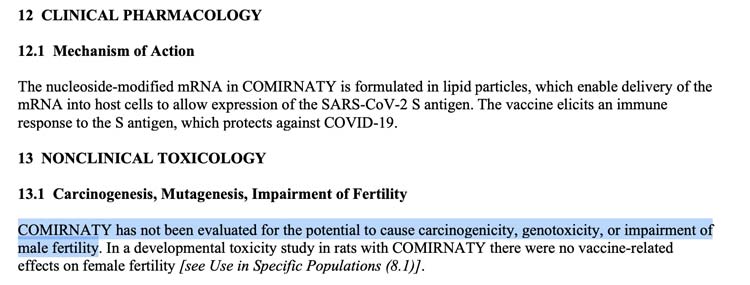
“COMIRNATY has not been evaluated for the potential to cause carcinogenicity, genotoxicity, or impairment of male fertility.” Oh. But at least, it is not really genetic modification because it doesn’t change our actual DNA, right?
Not so Fast?
First of all, let me point out that the scientists are still discovering new connections and even organs in the human body (here, here, and here), so any knowledge they have is conditional, and real scientists are humble and cautious. The arrogant ones may puff their cheeks all day — but it doesn’t mean that they really know how thing work, in a finite manner.
So, in the case of eliminating the possibility of DNA damage, even if the regulators were pure and honest, and if they were truly following the also pure and honest scientists, their statement about the novel product not impacting human DNA is only a “good faith” opinion, as of this second. After all, the product is novel!
Lo and behold, here is dr. Paul Alexander’s analysis of the study called, “Intracellular Reverse Transcription of Pfizer BioNTech COVID-19 mRNA Vaccine BNT162b2 In Vitro in Human Liver Cell Line.”
Quoting the abstract: “Preclinical studies of COVID-19 mRNA vaccine BNT162b2, developed by Pfizer and BioNTech, showed reversible hepatic effects in animals that received the BNT162b2 injection. Furthermore, a recent study showed that SARS-CoV-2 RNA can be reverse-transcribed and integrated into the genome of human cells.”
As Dr. Alexander notes poignantly, “the failure is that the vaccine companies did not study this in clinical trial. We have no idea in the human model as we have no idea in everything as to the safety of these vaccines and the short, medium, and long-term effects. We have no idea if persons who have taken these vaccines will not have autoimmune disease or be severely ill, or have severe side effects, or even die from the vaccines, in the future.”
And here is analysis by Mikolaj Raszek, PhD, in Canada. Dr. Raszek looked at the Australian Pfizer data, i.e. “Nonclinical Evaluation Report for BNT162b2 [mRNA] COVID-19 vaccine (COMIRNATYTM),” submitted in January 2021.
To sum up my answer to the question as to whether COVID injection may alter human DNA, we have no idea. And yet so many people are forced to take them — like cattle (which is not to say that it is right to treat cattle in this manner, it is also wrong).
The Question of Ownership
Many of us remember how Monsanto sued different farmers after Monsanto’s toxic products contaminated the farmers’ crops. The corporate giant claimed that the farmers had illegally used their patented products. (I’d say, this is emotional and intellectual abuse, who even wants their products).
Which brings us to today — and the legal analysis by the disabled rights attorney Todd Callender who has looked at a U.S. Supreme Court case from 2013, and it led him to believe that this case could have far-fetching legal implications for the recipients COVID injections.
The case in question is “ASSOCIATION FOR MOLECULAR PATHOLOGY ET AL. v. MYRIAD GENETICS, INC., ET AL.” Here is the exact syllabus of the case, as per Cornell Law School website:
“Each human gene is encoded as deoxyribonucleic acid (DNA), which takes the shape of a “double helix.” Each “cross-bar” in that helix consists of two chemically joined nucleotides. Sequences of DNA nucleotides contain the information necessary to create strings of amino acids used to build proteins in the body. The nucleotides that code for amino acids are “exons,” and those that do not are “introns.”
Scientists can extract DNA from cells to isolate specific segments for study. They can also synthetically create exons-only strands of nucleotides known as composite DNA (cDNA). cDNA contains only the exons that occur in DNA, omitting the intervening introns.”
“Respondent Myriad Genetics, Inc. (Myriad), obtained several patents after discovering the precise location and sequence of the BRCA1 and BRCA2 genes, mutations of which can dramatically increase the risk of breast and ovarian cancer.
This knowledge allowed Myriad to determine the genes’ typical nucleotide sequence, which, in turn, enabled it to develop medical tests useful for detecting mutations in these genes in a particular patient to assess the patient’s cancer risk. If valid, Myriad’s patents would give it the exclusive right to isolate an individual’s BRCA1 and BRCA2 genes, and would give Myriad the exclusive right to synthetically create BRCA cDNA.
Petitioners filed suit, seeking a declaration that Myriad’s patents are invalid under 35 U. S. C. §101. As relevant here, the District Court granted summary judgment to petitioners, concluding that Myriad’s claims were invalid because they covered products of nature. The Federal Circuit initially reversed, but on remand in light of Mayo Collaborative Services v. Prometheus Laboratories, Inc., 566 U. S. ___, the Circuit found both isolated DNA and cDNA patent eligible.”
“Held: A naturally occurring DNA segment is a product of nature and not patent eligible merely because it has been isolated, but cDNA is patent eligible because it is not naturally occurring.”
According to Todd Callender, who was interviewed by Corona Investigative Committee, the document holds that the use of mRNA for modification of the genome results in a synthetic genome that belongs to the patent holder. Therefore, if we follow that line of legal logic, it is possible to conclude that using mRNA to modify human cells can result in said cells (and living beings) owned by the patent holder.
As of this moment, there is still no clarity and no official legal conclusion as to whether this interpretation will apply — but given how crazy the past two years have been, and how brazenly the bulldozer has been proceeding so far, nothing seems off limits. Also this:
And we are at it, let’s also look at the concept of “DNA storage.”
The War on Everything Natural
All this fits in perfectly with the “blue ocean” business model that creates new markets out of thin air.
I wrote about this in detail in a 2021 article about the war on natural immunity and ability — but the gist is that eroding natural health and natural defenses (whether accidentally or on purpose) turns us into loyal customers who have to subscribe to the “artificial immunity” service for the rest of our lives, however long it lasts. Sucks for us but very good for business!
And where does the money come from, assuming that the citizens are all half-alive and can barely provide for themselves? Well, the money could come, for example, from the virtual digital “press” owned by the central bank, who would fund the “noble” companies providing the artificial immunity services to the people in the name of “public health” … You know the drill.
It’s all for our own good! In this case, the citizens would exist as mere excuses for the companies to make money. Which, to be fair, has been the case for a while, just in a way that was hidden from many of us — until two years ago.
The end result would look very much like the Monsanto arrangement where living forms are modified to depend on purchased products, while remaining in an increasingly toxic environment. I don’t know about you, but I already feel bad for the crippled GMO tomato, and I certainly don’t want to turn into something similar.
The Fear of Missing Out
Let’s look at the existential picture. Where does all this cluelessness, arrogance, greed, and cruelty come from?
Human beings do a lot of unintelligent and self-destructive things out of fear (I’ve done it, I am no exception, definitely no finger pointing here). Fear of missing out (and thus being humbled by rivals) is important motive in our culture.
I think that, philosophically speaking, today’s unhealthy hunger for conquering nature and scanning every nook and cranny for “goodies” — and then squeezing every drop of juice out everything, and then tossing it out — is driven by a spiritual void, by the lack of joyful faith, by the fear of being existentially vulnerable, intellectually unsophisticated, and emotionally unimportant.
After all, even the most egregious greed covers up for a spiritual void since we don’t really need to own everything in the world to be happy. It’s like, “If I leave even a drop of valuable goods on the side of the road for someone else to grab them, I’ll feel so stupid! And they will sure judge me! And I am afraid of that so I’d rather just take it.”
Right now, we are living in times of very ripe and internalized fear and peer pressure but initially, to shake the people off their axis, it had to come with violence, which is something that all of our ancestors experienced at different points.
Here is a non-GMO-related story that really moved me several years ago, and stuck with me. It was told by the Dagara elder Malidoma Some, who, sadly, passed away last year (and I just learned about it, so I am very shocked and sad).
As a young child, Malidoma Some was kidnapped by priests into a mission boarding school, which he fled as a teen, and then had to undergo a lot of things in order to heal. He then moved to America and dedicated his life to help westerners understand the centuries-tested wisdom of his people.
One of his stories stuck in my mind. He wrote about how the missionaries who came to his village tempted the farmers. The missionaries promised to buy the crops from the farmers if the farmers bought the fancy fertilizes from the missionaries. Some of the farmers got tempted and bought the fertilizes.
The missionaries’ fertilizers “made the land angry,” and the crops didn’t grow. And so those farmers found themselves in debt to the Jesuits for the fertilizers, and without the yields. And from being indebted, they were more vulnerable to the demands of the missionaries.
This sounds very similar to the behavior of Monsanto, leading to farmer suicides in countries like India (a fact so egregious that the establishment had to “debunk” it).
Similar things were unfortunately done in the Americas, too, as a part of the intentional policy of building outposts around Indian territory to seduce and corrupt the people on the “reservations” (what a word, if you really think about it). The well-documented strategy was designed to steal more land from the Native people — who were already greatly perturbed by the violence of the “great reset” that had been handed to them by the Europeans.
The plan was to sell them goods “on credit,” and put them in so much debt that they would let go of more their land. The final goal was for the Native people to “own nothing and be happy” (yes, the original American great reset, and we really need to come to terms with how similar it is to the great reset of today, which is still in early stages.
Conclusion
I believe with great passion that in order for us to win this victory and to stop the bulldozer, we need to tackle the underlying spiritual and spiritual malaise, or else the bulldozer will keep coming at us in different ways. Being spiritually honest and brave, and working toward healing after centuries of abuse, are the challenges of our generation, and perhaps of many generations to come.
Bottom line, we are free people. We never belonged to the great resetters, just like the people who came before us never belonged to the great resetters of their time.
And there is no need to scan every nook and cranny of bodies, looking for money. Unmonetized bodies are free bodies. So I pray that we the people start pedaling toward honesty and wisdom so that we can heal.
About the Author
To find more of Tessa Lena’s work, be sure to check out her bio, Tessa Fights Robots.
Kidney Disease Results so Stunning They Quashed the Evidence?
Reproduced from original article:
https://articles.mercola.com/sites/articles/archive/2022/05/05/glyphosate-role-in-chronic-kidney-disease.aspx
The original Mercola article may not remain on the original site, but I will endeavor to keep it on this site as long as I deem it to be appropriate, and will not be bullied into removing it.
Analysis by Dr. Joseph Mercola Fact Checked May 05, 2022

STORY AT-A-GLANCE
- Since 1980, the American Association for the Advancement of Science (AAAS) has presented an annual award for Scientific Freedom and Responsibility to “scientists, engineers or their organizations, whose exemplary actions have demonstrated scientific freedom and responsibility in challenging circumstances”
- The 2019 Scientific Freedom and Responsibility award was slated to be given to two human health researchers who have published papers linking glyphosate exposure to chronic kidney disease of unknown etiology in Sri Lankan farmers
- According to the researchers, consumption of glyphosate-contaminated water may contribute to chronic kidney disease by facilitating the transport of heavy metals such as arsenic and cadmium into the kidneys
- The AAAS award announcement in February 2019 incited a rash of criticisms by defenders of glyphosate, leading to the AAAS to issue a follow-up statement saying the AAAS was reassessing the award “after concerns were voiced by scientists and members”
- Former AAAS president Nina Fedoroff has since become a shill for the biotech industry. In 2015, she joined the OFW Law firm — which lobbies for the agrochemical industry — as senior science adviser for agriculture policy, global food security and government affairs
This article was previously published February 20, 2019, and has been updated with new information.
Since 1980, the American Association for the Advancement of Science (AAAS) — the world’s largest scientific society and publisher of several journals, including Science — has presented an annual award for Scientific Freedom and Responsibility to “scientists, engineers or their organizations, whose exemplary actions have demonstrated scientific freedom and responsibility in challenging circumstances.” As explained on the AAAS website:1
“The types of actions worthy of this award include acting to protect the public’s health, safety or welfare; focusing public attention on important potential impacts of science and technology on society by their responsible participation in public policy debates; or providing an exemplary model in carrying out the social responsibilities of scientists, engineers or in defending the professional freedom of scientists and engineers.
Some awardees have risked their freedom and even physical safety by their actions, while others have been honored for their advocacy and their leadership.”
2019 Award Winners
In 2019, the AAAS was slated to present the Scientific Freedom and Responsibility award to two human health researchers who have published papers linking glyphosate exposure to chronic kidney disease of unknown etiology (CKDu) in Sri Lankan farmers:
- Dr. Sarath Gunatilake,2 former chair of the health science department at the University of California, whose areas of expertise include occupational and environmental health research.
- Channa Jayasumana, Ph.D.,3 a faculty member of Medicine and Allied Sciences at the Rajarata University of Sri Lanka, who conducts research into nephrotoxins (kidney toxins) and the causes and treatments for chronic kidney disease.
Their paper “Glyphosate, Hard Water and Nephrotoxic Metals: Are They the Culprits Behind the Epidemic of Chronic Kidney Disease of Unknown Etiology in Sri Lanka?”4 was published in 2014, followed by “Simultaneous Exposure to Multiple Heavy Metals and Glyphosate May Contribute to Sri Lankan Agricultural Nephropathy,”5 and “Drinking Well Water and Occupational Exposure to Herbicides Is Associated With Chronic Kidney Disease in Padavi-Sri Pura, Sri Lanka,”6 in 2015.
In the third paper listed, the team found people who drank water from wells where glyphosate and heavy metal concentrations are higher had a fivefold increased risk of CKDu.
Award Winners Are Both Outspoken Critics of Glyphosate
Both Gunatilake and Jayasumana have previously taken a strong stance against glyphosate-based herbicides, highlighting the dangers of herbicide adjuvants. In a 2018 Daily Mirror article,7 Gunatilake noted that adjuvants added to glyphosate-based herbicides “are 1,000 times more toxic than glyphosate itself.” He went on to say:
“The point I’m trying to raise is that glyphosate without adjuvants is not very useful. Therefore, manufacturers have added these toxic chemicals into glyphosate and nobody is talking about them! Over the last 25 years, the pesticide industry had us hoodwinked by referring only to glyphosate and not to the adjuvants or additives included in these herbicides.”
Jayasumana, meanwhile, provided testimony8 at the yearlong International Monsanto Tribunal,9 which began December 2015, asserting that glyphosate use has resulted in ecocide.
In its February 4, 2019 press release,10,11 (which has since been removed from its website12), AAAS stated Gunatilake and Jayasumana “faced death threats and claims of research misconduct while working to determine the cause of a kidney disease epidemic that has claimed tens of thousands of lives in their home country of Sri Lanka and around the world. Ultimately, their advocacy led to the culprit, an herbicide called glyphosate, being banned in several affected countries.”
Jessica Wyndham, director of the AAAS Scientific Responsibility, Human Rights and Law Program, said:13
“To right a wrong when significant financial interests are at stake and the power imbalance between industry and individual is at play takes the unique combination of scientific rigor, professional persistence and acceptance of personal risk demonstrated by the two scientists recognized by this year’s award.”
Award Retracted Amid Controversy on Glyphosate’s True Danger
According to Gunatilake and Jayasumana, consumption of glyphosate-contaminated water may contribute to chronic kidney disease by facilitating the transport of heavy metals such as arsenic and cadmium into the kidneys.14
The AAAS award announcement incited a rash of criticisms by defenders of glyphosate, leading the AAAS to issue another statement just two days later, saying the organization is “taking steps to reassess the 2019 Award for Scientific Freedom and Responsibility, after concerns were voiced by scientists and members. This award will not be presented … as originally planned while we further evaluate the award selection.”
(Incidentally, AAAS CEO Rush Holt announced his retirement that same day.15) One outspoken critic was Kevin Folta — a pro-GMO University of Florida professor caught intentionally hiding his funding from Monsanto — who claimed that the pair’s 2014 paper merely “presented a hypothesis. There were no data. There were no experiments. It was a semi-well-crafted hypothesis that could be tested.”16 In a commentary, GMWatch.org rebuts Folta’s claims, saying:
“Folta’s claim that there are ‘no data’ in the paper is false. There are plenty of data in this and the authors’ follow-up papers — from epidemiological and case-control studies, as well as geographical surveys — that support the idea that glyphosate herbicides should be withdrawn from use as a precautionary measure until they can be proven safe.
Are these data conclusive? No. They point to an association. It’s true that the link between glyphosate exposure and chronic kidney disease will always remain a ‘hypothesis’ until it is proven in controlled long-term animal feeding studies …
The truth is that they are unlikely to be done, due to the massive expense and the unwillingness of industry and governments to fund studies that could show that they were responsible for exposing people to poisons over many years.”
Should an Award Be Revoked Based on Controversial Findings?
True, Gunatilake and Jayasumana’s theory is just one of dozens of hypotheses for what might be causing chronic CKDu.17,18,19 (Cadmium toxicity is on that list, though.) Overall, it doesn’t appear as though any one given influence can explain all, or even most, cases of CKDu, so the search for answers continues.
The problem with the AAAS’ revocation is that whether the research findings are absolutely “true” is not entirely relevant for this particular award. As tweeted by Jack Heinemann,20 a professor at the University of Canterbury in New Zealand, whose research topics include horizontal gene transfer, GMO risk assessment, conflicts of interest in research and sustainable agriculture:21
“Whether or not the link between glyphosate (or formulation) and kidney disease is right misses the point. A scientific freedom award is given for persecution. If you only give it for proven science, it would be delayed decades and it would only benefit those who persecute.”
Gunatilake and Jayasumana are relatively cautious in their own conclusions, describing the link between glyphosate and CKDu as follows:22
“A strong association between the consumption of hard water and the occurrence of this special kidney disease has been observed, but the relationship has not been explained consistently. Here, we have hypothesized the association of using glyphosate, the most widely used herbicide in the disease endemic area and its unique metal chelating properties.
The possible role played by glyphosate-metal complexes in this epidemic has not been given any serious consideration by investigators for the last two decades … Although glyphosate alone does not cause an epidemic of chronic kidney disease, it seems to have acquired the ability to destroy the renal tissues … when it forms complexes with a localized geo environmental factor (hardness) and nephrotoxic metals.”
Former AAAS President Is Now Biotech Shill
While it may seem cynical to cry foul at every turn, industry influence and conflicts of interest have become so commonplace these days that it simply cannot be ignored. In a recent tweet, science journalist Paul D. Thacker23 (who also had a hand in writing the Open Payments Act, which mandates the disclosure of compensation from the pharmaceutical and medical industry) noted:24
“If you ever worried that science was being warped by corporate interests, this backpedal by AAAS in giving an award to pesticide researcher [sic] should lay that to rest. Answer seems to be ‘yes.'”
In a series of tweets, Thacker also points out links between former AAAS president Nina Fedoroff and the biotech industry, which has become well-known for pressuring medical journals and other organizations to revoke and discredit undesirable research and/or journalism.25
In 2015, Fedoroff, a plant molecular biologist, joined the OFW Law firm — which lobbies for the agrochemical industry — as senior science adviser for agriculture policy, global food security and government affairs.26
On its website in 2022, OFW plainly states that Fedoroff advises on “issues of agriculture, particularly the use of genetically modified organisms (GMO).”
To see how she now promotes herbicides for these crops, you need look no further than some of the glowing, feel-good articles she’s written about the so-called pluses of GMO crops, such as one she wrote for Genetic Literacy Project in 2020.27 It’s clear she’s fully on-board with GMO crops as well as the poisons they need to grow.
She was also present at the 2017 release of “Little Black Book of Junk Science,”28 a book by the American Council on Science and Health (ACSH), a chemical industry front group that I’ve written about on several occasions, and was a chosen speaker at a GMO Answers symposium cosponsored by Scientific American in 2016.29,30
Curiously, the “Little Black Book” is still available on different book sales sites such as Amazon, but has been removed from the ACSH website, as evidenced by the dead link for reference 27 in my sources list at the end of this article.
GMO Answers was created by the PR firm Ketchum, which works on behalf of the Council for Biotechnology Information31 to improve the public image of GMOs. U.S. Right to Know has previously called attention to a video ad in which the firm talks about how it doubled positive GMO coverage using online social media monitoring.32
AAAS Has ‘Mixed Record on Public Interest Issues’
Considering how strong professional ties can be, even when officially severed, it doesn’t seem farfetched to suspect Fedoroff’s association with AAAS and the agrochemical industry might have an influence. GM Watch also notes:33
“The AAAS has a mixed record when it comes to public interest issues. In 2013 the AAAS’ board of directors issued a statement opposing the labeling of GM foods in the U.S. … The AAAS was at the time chaired by Nina Fedoroff, who has close ties to the GMO industry.
But in an incident that showed that the AAAS is not monolithic but contains scientists who do not toe the GMO lobby’s line, a group of scientists and physicians that included many long-standing AAAS members condemned the AAAS board of directors’ statement as ‘an Orwellian argument that violates the right of consumers to make informed decisions.’
They pointed to evidence showing that Roundup, the herbicide used on most GM crops, could pose risks that consumers might reasonably want to avoid. Sadly, the AAAS board seems more likely than its membership to have the power to decide on the fate of the award that was to be given to the Sri Lankan scientists.”
Latest GMO Monopoly Driven by Fear
While glyphosate-based herbicides still dominate the global market, rapidly mounting weed tolerance has led to the introduction of dicamba-based herbicides and a new crop of genetically engineered (GE) plants designed to withstand it. Dicamba is an incredibly potent toxin, and dicamba drift damaged or destroyed an estimated 3.6 million acres across the U.S.34 between 2016 and 2017 alone.
This included not only fields growing nondicamba-resistant crops but also trees. In response, the U.S. Environmental Protection Agency placed some restrictions on dicamba usage. For instance, special training is required to apply the herbicide, and its application is prohibited when wind speeds are greater than 10 mph. Farmers are also asked to assess the risk that spraying could have on nearby crops, as well.
Despite this, reports of damage from dicamba drift continued through 2018. What’s worse, many farmers reported feeling they have no choice but to buy Monsanto-Bayer’s GE dicamba-tolerant seeds, or else they risk having their crop destroyed by dicamba drift from their neighbors.
Randy Brazel, a soybean grower, told NPR35 he had little choice but to switch to dicamba-tolerant soybeans after one of his neighbors called saying he was making the switch. NPR writes:
“[D]icamba fumes from fields of Xtend soybeans have curled up the leaves of sycamore trees and millions of acres of traditional soybeans across much of the Midwest and South. Brazel wasn’t willing to take the risk of that happening to his crops.
He canceled his entire order and bought the new dicamba-tolerant soybeans instead. ‘Then I have to get on the phone and call every other neighbor and say, ‘Listen, I did not want to do this. But I am going to be forced to go dicamba.’ Well, then that forces all those neighbors to call all their neighbors. And eventually what you have is a monopoly,’ he says.”
In some parts of the U.S., protecting your crop from dicamba damage from neighbors is part of the sales pitch for the dicamba-resistant Xtend soybeans, NPR reports. In response to this mounting pressure to switch or lose your farm, a lawsuit has been filed against Monsanto on behalf of farmers, arguing the dicamba-tolerant seeds violate antitrust law.
As noted by NPR, “The lawsuit claims that the company understood that the risk of drifting dicamba could drive competitors out of the market.”
Bayer (which bought Monsanto in May, 2018) asked for the lawsuit to be dismissed, but in 2020, a jury not only ordered a $265 million judgment against Bayer,36 but a U.S. appeals court also blocked them from selling any more dicamba.37 Subsequently, in May 2021, Bayer set aside $300 million to cover multiple farmers’ claims and their attorneys’ fees.38
That hasn’t ended Bayer’s plans for dicamba, however, as in March 2022, a federal district court judge in Arizona ordered the EPA to file a report on its dicamba investigations by May 15, 2022, in answer to a request by the Center for Food Safety and Center for Biological Diversity to “vacate the registration of three dicamba herbicides: XtendiMax (Bayer), Engenia (BASF) and Tavium (Syngenta).”39
Substantial Amounts of Glyphosate Found in Food
The sad fact of the matter is, if you’re eating nonorganic foods, especially processed food, then you’re eating glyphosate on a regular basis. Farmers apply nearly 5 billion pounds (over 2 billion kilograms) of glyphosate to farm crops each year, worldwide.40 Approximately 300 million pounds are applied on U.S. farmland.
Testing has revealed 70% of Americans had detectable levels of glyphosate in their system in 2016; between 1993 and 2016, the glyphosate levels in people’s bodies increased by 1,208%.41 A recent investigation by journalist Carey Gillam42 revealed Roundup has been found in virtually all foods tested, including granola and crackers.
The Health Research Institute Labs (HRI Labs) has also conducted glyphosate testing, finding the chemical in Ben & Jerry’s ice cream.43 Other foods typically contaminated with glyphosate include grains, legumes, beans, orange juice and wine.
HRI’s testing also revealed people who eat oats on a regular basis have twice as much glyphosate in their system as people who don’t (likely because oats are desiccated with glyphosate before harvest). Meanwhile, people who eat organic food on a regular basis have an 80% lower level of glyphosate than those who rarely eat organic.
Glyphosate May Affect Your Health in Several Ways
Glyphosate actually has a glycine molecule as part of its structure (hence the “gly” in glyphosate). Glycine is a very common amino acid your body uses to make proteins. Laboratory investigations by research scientist Anthony Samsel found that glyphosate becomes part of animal proteins and particular the collagens which form 25% to 35% of our bodies structural proteins.
Samsel and his coauthor senior scientist at MIT, Stephanie Seneff, also believe your body can substitute glyphosate and its metabolite AMPA into peptides and proteins, which results in damaged peptides and proteins being produced.
Glycine also plays a role in quenching inflammation, and is used up in the detoxification process. As a result of glyphosate toxicity, many of us may not have enough glycine for efficient detoxification. According to research published in the journals Entropy in 2013 and in the Journal of Biological Physics and Chemistry in 2017, the main toxic effects of glyphosate are related to these facts that it:44,45,46
| Inhibits human digestive enzymes leading to malabsorption with numerous health consequences. Glyphosate was found by Samsel contained with purified digestive enzymes pepsin, trypsin and lipase. Further analysis by high performance liquid chromatograph of lipase found glyphosate to chemically bond and irreversibly inhibit this enzyme.
Hormone-sensitive lipase in humans is responsible for lipid hydrolysis and cholesterol ester hydrolysis. Impaired function has been linked with atherosclerosis, obesity and type 2 diabetes among others |
| Inhibits the shikimate pathway, found in gut bacteria in both humans and animals |
| Interferes with the function of cytochrome P450 enzymes, required for activation of vitamin D in the liver, and the creation of both nitric oxide and cholesterol sulfate, the latter of which is needed for red blood cell integrity |
| Chelates important minerals, including iron, cobalt and manganese. Manganese deficiency, in turn, impairs mitochondrial function and can lead to glutamate toxicity in the brain |
| Interferes with the synthesis of aromatic amino acids and methionine, which results in shortages in critical neurotransmitters and folate |
| Disrupts sulfate synthesis and sulfate transport |
Glyphosate also disrupts, destroys, impairs or inhibits:47
- The microbiome, thanks to its antibiotic activity
- Sulfur metabolism
- Methylation pathways
- Pituitary release of thyroid stimulating hormone, which can lead to hypothyroidism
How to Test Your Glyphosate Level
The chemical has also been linked to an increased risk of Non-Hodgkin lymphoma and lung cancer.48 Considering the possible dangers of glyphosate, it would make sense to minimize your exposure, and if you have high levels already, to take steps to detoxify it.
HRI Labs has developed home test kits for both water and urine, and if you have elevated levels, you can drive out the glyphosate by taking an inexpensive glycine supplement.
Dr. Dietrich Klinghardt of the Academy for the Healing Arts and Neural Therapy, recommends taking 1 teaspoon (4 grams) of glycine powder twice a day for a few weeks and then lowering the dose to one-fourth teaspoon (1 gram) twice a day. This forces the glyphosate out of your system, allowing it to be eliminated through your urine.
- 1 AAAS, About the Award
- 2 LinkedIn Sarah Gunatilake
- 3 Research Gate, Channa Jayasumana Bio
- 4, 14, 22 Int J Environ Res Public Health. 2014 Feb; 11(2): 2125–2147
- 5 BMC Nephrology 2015; 16: 103
- 6 Environmental Health 2015; 14: 6 (PDF)
- 7 Daily Mirror June 27, 2018
- 8 Monsanto Tribunal, Memo by Channa Jayasumana (PDF)
- 9 Summary of the advisory opinion of the International Monsanto Tribunal, April 18, 2017 (PDF)
- 10, 13 GM Watch, Reprint of AAAS Press Release, February 4, 2019
- 11 Biofortified.org Archived AAAS Press Release, February 4, 2019 (PDF)
- 12 AAAS.org, Removed from the site: Global Fight Against Lethal Herbicides Earns 2019 AAAS Scientific Freedom and Responsibility Award
- 15 AAAS.org February 6, 2019
- 16 Genetic Literacy Project February 5, 2019
- 17 Kidney International Reports 2017 Mar; 2(2): 282–292
- 18 Clinical Kidney Journal 2018 Aug; 11(4): 496–506
- 19 Environmental Health 2017; 16: 49
- 20 Jack Heinemann Bio
- 21 Twitter, Jack Heinemann
- 23 Columbia Journalism Review, Paul D. Thacker Bio
- 24 Twitter, Paul D. Thacker
- 25 Progressive July 21, 2017
- 26 OFW Law January 28, 2015
- 27 The Literacy Project. Low-Hanging Fruit: How the First Generation of GMO Crops Yielded Massive Benefits and Environmental Benefits. April 15, 2020
- 28 ACSH.org June 29, 2017
- 29 Huffington Post March 31, 2016
- 30 USRTK June 18, 2019
- 31 USRTK September 2, 2020
- 32 USRTK February 10, 2015
- 33 GM Watch February 8, 2019
- 34 Midwest Center for Investigative Reporting December 4, 2020
- 35 NPR February 7, 2019
- 36 Reuters February 16, 2020
- 37 Reuters June 4, 2020
- 38 NW Arkansas Democrat Gazette May 23, 2021
- 39 Progressive Farmer DTN March 29, 2022
- 40 Healing Earth, Why Glyphosate Is So Bad — Dr. Zach Bush
- 41 GM Watch October 24, 2017
- 42 The Guardian April 30, 2018
- 43 Smithsonian Magazine July 26, 2017
- 44 Entropy 2013, 15(4), 1416-1463
- 45 JOURNAL OF BIOLOGICAL PHYSICS AND CHEMISTRY, Vol.17, Nr. 1 (2017) TOC
- 46, 47 JOURNAL OF BIOLOGICAL PHYSICS AND CHEMISTRY, Vol.16, Nr. 1 (2016) TOC
- 48 The Lancet Oncology March 20, 2015
10 Reasons Behind Most Chronic Health Issues
Reproduced from original article:
https://articles.mercola.com/sites/articles/archive/2022/04/20/10-reasons-behind-most-chronic-health-issues.aspx
The original Mercola article may not remain on the original site, but I will endeavor to keep it on this site as long as I deem it to be appropriate, and will not be bullied into removing it.
Analysis by Dr. Joseph Mercola Fact Checked April 20, 2022
STORY AT-A-GLANCE
- Obesity is a driving force behind preventable chronic diseases, and diet is a major factor in maintaining a healthy weight. Just 10 food companies control the manufactured food in your grocery store, most of which is ultraprocessed and high in sugar
- Many of those foods are made with genetically modified crops, which make up 70% of crops grown in the U.S. and 70% of the American diet is processed food, leading to many of the current chronic diseases
- Some doctors have become legalized drug dealers, overprescribing pharmaceutical products as a symptom of a larger issue in medicine, in which doctors are more influenced by Big Pharma than by the health care needs of their patients
- Government policies began favoring large corporate farmers in the 1970s, and now Big Pharma also controls agriculture and seed supplies, which means they control the food you eat and when you get sick, supply you with drugs to treat your chronic disease
- Replacing saturated fat with sugar, whole grain and vegetable and seed oils has had a significant effect on the rising number of people with obesity and chronic illness. With each passing year, it becomes more important to be aware of the food choices you make as they impact your health and wellness
The 2015-2016 National Health and Nutrition Examination Survey (NHANES) recorded the highest rate of obesity ever documented by the survey — 39.6% of adults with obesity.1 Those numbers only continue to grow. The Centers for Disease Control and Prevention2 recorded 42.5% of adults 20 and over with obesity in 2017-2018.
When the percentage of people who are overweight is included, that percentage rises dramatically to 73.6% of the population. The adult obesity prevalence map3 shows the highest prevalence of obesity and overweight in the Midwest and southern states with greater than 40% of the population recorded as obese.
The exception is Florida, where the percentage of the population who are obese ranges between 25% and 30%. The greatest challenge to maintaining a healthy weight is your diet. There are other factors that contribute to weight gain, including a lack of physical activity.
But it’s important to recognize that you’ll never out-exercise a poor diet. So, it’s the first factor you should address if you want to maintain a healthy weight, which is important as obesity is one of the major triggers for preventable disease.4
According to the U.S. Centers for Disease Control and Prevention,5 6 of every 10 adults in the U.S. have at least one chronic health condition, such as heart disease, cancer or Type 2 diabetes. These are also the leading causes of death in the U.S.,6 and obesity and overweight are significant risk factors for them.7
One 10-year study8 showed there was a dose-response relationship between being overweight or obese and the development of several chronic health conditions including golf including gallstones, type 2 diabetes, high blood pressure, colon cancer, and heart disease.
There are significant challenges within the food supply that make it more and more difficult each month for people to make healthy choices. @MrSollozzo from the Meat Mafia Podcast created an informative graphic tweet9 in which he lists many of the diet and food-related challenges faced by Americans today, such as:
1. 10 Companies Control Almost All Manufactured Food
Oxfam America is a nonprofit organization that focuses on the inequalities that drive poverty and Injustice. In 201410 they created a powerful graphic image demonstrating how 10 companies control nearly every food product and beverage you find in the grocery store. Between them, revenues add up to more than $1 billion every day.
These companies include CocaCola, Mars, Nestle, Kellogg, General Mills, Wrigley and Wonka. They have a vested interest in ensuring loyal customers and engaging new customers each year using advertising to promote their products as healthy, wise diet choices for foods or as a fun dessert splurge.
It is difficult for many to ignore the hot buttons11 they push in their advertising campaigns, which include featuring catchy packaging,12 funding nutrition studies13 and publishing enticing print and video campaigns.14
Advertising drives people’s preferences and eating habits, which supports a company’s financial return, and in turn, drives the obesity epidemic. If you think your hands are tied, though, you still have a voice in what these companies market as you can vote with your pocketbook by refusing to purchase their products.
2. 70% of All Crops Are Genetically Modified (GM)
When you’re looking through the produce aisle for tonight’s meal, consider the fact that nearly 70% of crops grown in the U.S. are from genetically modified seeds. According to data15 from the International Service for the Acquisition of Agri-biotech Applications (ISAAA) the most popular GM crops are soybeans, maize, cotton and canola.
Soybeans, corn and canola are products used in many processed and ultraprocessed foods on grocery store shelves. There are two types of genetically engineered seed: herbicide-tolerant (HT) and insect-resistant (Bt).16 The USDA finds the adoption rate for both is increasing, and the adoption of stacked seed varieties, which has both traits, has accelerated in recent years.
The implications for your health after exposure to GM plants are significant and tied to the use of the herbicide glyphosate,17 which has increased dramatically in the last 20 years.18 Your gut flora is extremely important to your health and is negatively impacted by glyphosate. Experts have tied exposure to glyphosate and GM plants to an imbalance in gut bacteria19 and a variety of chronic diseases, including obesity.20
3. Meat Packers Underpay Ranchers and Overcharge Consumers
In 2020, the Department of Justice began formally investigating antitrust violations of the four largest beef packers in the U.S.,21 following complaints from several states and agricultural organizations. The “Big 4” companies are Cargill, Tyson Foods, JBS and National Beef, and they are responsible for processing 85% of all beef made into steaks, roasts and other cuts.22
When hamburger is factored into the equation, the Big 4 processes 70% of beef production. The four firms gained greater control of the industry in the early 1990s when USDA data showed the market share of slaughtered animals rose from 25% in 1977 to 71% in 1992. Several incidents brought attention to the consolidation that gave just four companies controlling interest in the market.
Cattle ranchers are frustrated by the price drops they experience when a meatpacking plant closes, while the packing companies benefit from rising meat prices. In the short term, this impacts the rancher’s livelihood and ability to stay in business. In the long-term, rising prices at the grocery store from lower supply levels may move more people to purchase plant-based fake “meat”.
4. 70% of the American Diet Is Processed Food
When you investigate the links between obesity and chronic illness, roughly 70% of the crops grown in the U.S. are genetically modified; 73.6% of the population is overweight or obese;23 roughly 60% of the population has at least one chronic disease and, according to data from two studies,24,25 consumption of ultraprocessed and processed foods is just over 70% in the general population.
There are well over 40,000 on grocery store shelves, with the majority being processed and ultraprocessed foods.26 One study27 found that 57.9% of foods eaten were ultraprocessed and contributed 89.7% of calories from added sugar. Data also show that an excess of sugar in the diet may lead to a decrease in satiety, an increase in calorie intake and impaired energy production in your body.28
One model tracked the link between rising sugar consumption and obesity rates, finding that “past U.S. sugar consumption is at least sufficient to explain adult obesity change in the past 30 years.”29
5. Doctors Have Become Legalized Drug Dealers
@MrSollozzo calls doctors “legalized drug dealers,”30 as many frequently overprescribe medications31 rather than help patients change lifestyle habits to avoid chronic disease. Examples can be found in patients who are overprescribed pain medication, proton pump inhibitors, antidepressants,32 antibiotics33 and medications to manage the side effects of other medications.34
This is a symptom of a larger condition in which a physician’s care appears to be highly influenced by the pharmaceutical industry and not by a focus on the prevention or treatment of physical conditions that include nutritional and lifestyle alterations.
6. Big Pharma Controls Agriculture and the Seed Supply
In the 1990s, laws were introduced to protect bioengineered crops. In 2021, four large corporations owned more than 50% of the world’s seeds, which is a staggering monopoly that dominates the global food chain.35 One of those companies is Bayer, which acquired Monsanto in 2018.36
Monsanto is an agrochemical and agricultural biotechnology company, owned by a pharmaceutical company that controls a significant portion of the world’s seed supply, namely GM seed.37 Essentially, this means that Monsanto controls the GE food you eat, and Bayer supplies you with the drugs you need to treat your chronic disease triggered by that food.
7. Government Policies Favor Corporate Farming
Earl Butz was secretary of the USDA in the 1970s. It was his vision to create a centralized food system which, as Grist writes, “plunged a pitchfork into New Deal agricultural policies that sought to protect farmers from the big agribusiness companies whose interests he openly pushed.”38 At the time he was appointed to the USDA, he had served as a board member for several large firms, including Ralston Purina.
Critics predicted that these ties might compromise his ability to function objectively, and the prophecy was fulfilled when he forced agribusiness and large farming conglomerates on the national interest. His legacy continues to thrive as small farmers are gradually forced out of business and large conglomerates buy up huge tracts of land, expanding the reach of GE produce and concentrated animal feeding operations (CAFOs).
Most people have likely never shaken the hand of their local farmer, who may sell produce and meat at local farmers markets, to small grocers or directly to you, the consumer. One of the best things about these local food suppliers is that they are incentivized to provide you with the best quality food to stay in business.
8. ‘Science’ Replaced Saturated Fat With Refined Sugar
Research known as the Seven Countries Study was conceived by the late Ancel Keys, a mid-20th century physiologist who promoted polyunsaturated fats over natural, saturated dietary fats.39 He launched the study in 1958 with the intent of identifying dietary patterns that impact heart disease.40
The results of the study changed government dietary recommendations for decades, with recommendations to eliminate saturated fats from your diet. Along with the addition of polyunsaturated fats to replace the missing natural fats, the food industry also added sugar and whole grains to the mix of processed foods meant to tempt your palate.
Yet, as science has demonstrated, this move has had a broad impact on health and instead of helping to decrease heart disease, actually increased many people’s risk of coronary heart disease as replacement leads to:41
“… changes in LDL, high-density lipoprotein (HDL), and triglycerides that may increase the risk of CHD.
Additionally, diets high in sugar may induce many other abnormalities associated with elevated CHD risk, including elevated levels of glucose, insulin, and uric acid, impaired glucose tolerance, insulin and leptin resistance, non-alcoholic fatty liver disease, and altered platelet function. A diet high in added sugars has been found to cause a 3-fold increased risk of death due to cardiovascular disease.”
As a result of the new processed foods, average Americans developed a sweet tooth so strong that many experts believe they are consuming as much as 130 pounds of sugar each year.42,43,44 Sugar has become so cheap and ubiquitous, that it’s in nearly every processed and ultra-processed food.
9. Natural Fats Replaced With Factory-Produced Vegetable Oils
According to the USDA, consumption per year of added fat and oil rose by 30 pounds from 1970 to 2010. However, the amount of saturated animal fat declined while the rate of vegetable fat from seed oils increased.45 These are industrial vegetable and seed oils that are likely behind the majority of diseases diagnosed in this past century.
The number of people diagnosed with heart disease, cancer, high blood pressure, diabetes, obesity, metabolic syndrome, Alzheimer’s disease and stroke has all risen dramatically in the last decades and they all are linked to the consumption of seed oil.
In a 45-minute presentation titled, “Diseases of Civilization: Are Seed Oil Excesses the Unifying Mechanism?” Dr. Chris Knobbe reveals startling evidence that seed oils, so prevalent in modern diets, are the reason for most of today’s chronic diseases.46
His research indicts the high consumption of omega-6 seed oil in everyday diets as the major unifying driver of the chronic degenerative diseases of modern civilization. He calls the inundation of Western diets with harmful seeds oils “a global human experiment … without informed consent.”47
10. Fake Meat Plant Foods Sold as Healthier Choice
Although many fake meat products are sold as a healthier choice for you and the environment, it turns out that this is yet another smokescreen to control the food supply. As meat prices rise, more people may consider a choice they may not have before: to eat fake meat.
Total revenues for the plant-based Beyond Meat brand have grown steadily from $16.2 million in 2016 to $87.9 million in 201848 and exceeded expectations in 2020, hitting $406.8 million.49 The rising market share is a testament to how well their branding and advertising has convinced the public that they are healthier than pure animal protein.
Yet, it’s widely known that ultraprocessed foods are the enemies of good health, even increasing the risk of premature death by 62% when eaten in quantities of more than four servings each day, with each added serving increasing the risk by another 18%.50
So what is plant-based “meat,” anyway? “It’s not food; it’s software, intellectual property — 14 patents, in fact, in each bite of Impossible Burger with over 100 additional patents pending for animal proxies from chicken to fish,” says Seth Itzkan, environmental futurist and cofounder and co-director of Soil4Climate.51
He suggests fake meat products are destroying the environment by perpetuating a harmful reliance on genetically engineered (GE) grains while accelerating soil loss and detracting from regenerative agriculture.
Buyer Beware
Controlling the food supply is one more way of controlling your health and your future. With every passing year, it becomes more important to be aware of the food choices you make each day as they impact your health and wellness.
Your nutrition dictates how well your body works, and therefore how well you feel each day. As summer approaches, make a commitment to make smart choices for your health and visit local farmers markets for produce, seek out regeneratively-grown produce, meat and dairy products and consider buying your meat and dairy directly from local farmers.
– Sources and References
- 1 Trust for America’s Health, The State of Obesity 2018
- 2 Centers for Disease Control and Prevention, Obesity and Overweight
- 3 Centers for Disease Control and Prevention, Adult Obesity Prevalence Map
- 4 Polish Journal of Food and Nutrition Science, 2019;69(3)
- 5 Centers for Disease Control and Prevention, March 21, 2022
- 6 Centers for Disease Control and Prevention, Leading Causes of Death
- 7 University of Mississippi Medical Center, Obesity and Chronic Disease
- 8 JAMA, 2001;161(13)
- 9, 30 Twitter, MrSollozzo, April 11, 2022
- 10 Oxfam America, December 10, 2014
- 11 Zen Business, Hot Button Marketing
- 12 Nutrients, 2019;11(5)
- 13 BMJ, 2020;371
- 14 Pan American Health Organization, Marketing of Ultra-processed and Processed Food and Non-alcoholic Drink Products
- 15 International Service for the Acquisition of Agri-biotech Applications, July 23, 2018
- 16 USDA, Recent Trends in GE Adoption
- 17 Environmental Health, 2016;15(19)
- 18 Environmental Sciences Europe, 2016;28(3)
- 19 Neurotoxicology, 2019;75:1
- 20 Impact of Genetically Modified Organisms on Environment and Health, 2021
- 21 Bloomberg, June 4, 2020
- 22 Reuters, June 17, 2021
- 23 CDC Obesity and Overweight September 10, 2021
- 24, 27 BMJ Open, 2016;6:e009892
- 25 American Journal of Clinical Nutrition, 2021;115(1)
- 26 Troy Media, December 26, 2019
- 28 BMJ Open Heart, 2016;3:e000469
- 29 Economics & Human Biology, 2020;36(100818)
- 31 StatNews, April 2, 2019
- 32 Journal of Clinical Medicine Research, 2019;11(9)
- 33 Centers for Disease Control and Prevention, May 3, 2016
- 34 BBC, September 22, 2021
- 35 DW, August 4, 2021
- 36 Fierce Pharma, August 29, 2019
- 37 Leaders in Wildlife Conservation, March 30, 2021
- 38 Grist, February 8, 2008
- 39 Seven Countries Study, Ancel Keys, top paras
- 40 Seven Countries Study, About the Study, para 1
- 41 Progressive Cardiovascular Disease, 2016;58(5) Abstract
- 42 Smithsonian, May 2017
- 43 Daily Health Post, July 25, 2019
- 44 DailyInfographic, March 25, 2015
- 45 USDA, January 2017
- 46 YouTube, June 13, 2020
- 47 YouTube, June 13, 2020, minute 10:36
- 48 Forbes August 28, 2020
- 49 Beyond Meat 2020 Financial Results February 25, 2021
- 50 BMJ 2019;365:l1949
- 51 Medium, May 25, 2020
The Healthy Sugar Substitute You’ve Likely Never Heard About
Reproduced from original article:
https://articles.mercola.com/sites/articles/archive/2022/03/28/what-is-nadph-and-nox.aspx
The original Mercola article may not remain on the original site, but I will endeavor to keep it on this site as long as I deem it to be appropriate, and will not be bullied into removing it.
Analysis by Dr. Joseph Mercola – Expert Review by James DiNicolantonio, Pharm.D Fact Checked

STORY AT-A-GLANCE
- Glycine is mildly sweet and can be used as a sugar substitute in tea or coffee
- Glycine and collagen (an outstanding source of glycine) inhibit the consumption of NADPH, thereby lowering inflammation and oxidative damage
- NADPH oxidase is typically abbreviated as NOX. Inhibiting NOX is an effective way to increase NADPH and your cells’ ability to reduce oxidative stress
- NADPH is used as a reductive reservoir of electrons to recharge antioxidants once they become oxidized. NADPH is also necessary to make your steroid hormones and fats
- Preventing many chronic diseases requires finding a means of inhibiting or modulating NOX. Such strategies include avoiding fructose, practicing nutritional ketosis and supplementing with spirulina, niacin, glycine and collagen
- Glycine supplementation may be beneficial for the prevention and/or treatment of metabolic syndrome, complications from diabetes, cardiac hypertrophy and alcoholic and nonalcoholic liver disorders
This article was previously published February 4, 2019, and has been updated with new information.
As you probably know, inflammation and oxidative damage are primary drivers of most chronic diseases. What you may not be aware of is the importance of nicotinamide adenine dinucleotide phosphate hydrogen (NADPH) and NADPH oxidase, typically abbreviated as NOX, in these processes.
In a recent paper,1James DiNicolantonio, who co-wrote my book, “Superfuel,” details the importance of collagen and glycine for the inhibition of NADPH breakdown. DiNicolantonio, also co-wrote a book with Jason Fung, called “The Longevity Solution,” which takes a deep dive into how collagen and glycine may help promote longevity.
Without sufficient amounts of NADPH, your body cannot recharge glutathione once it becomes oxidized. As you know, glutathione is crucial for detoxification, and both collagen and glycine effectively raises your NADPH level by inhibiting the enzyme that breaks down NADPH.
Considering the importance of NADPH for optimal health and chronic disease prevention, this is really important information that could make a big difference for many, as collagen and glycine are both easily obtainable and relatively inexpensive. But before we delve into the specifics of how glycine affects NOX and NADPH, let’s review some of the basics.
What Is NADPH and NOX?
NADPH is the reduced form of NADP+. It’s a reducing agent necessary for anabolic reactions, including lipid and nucleic acid synthesis. NOX is an enzyme complex that is bound to the cellular membrane, facing the extracellular space. Inhibiting NOX is a useful strategy to increase NADPH and your cells’ ability to counter oxidative stress.
NOX is activated in a large number of pathological conditions that generate a great deal of oxidative stress. In fact, according to DiNicolantonio, NOX overactivity appears to play a significant role in a wide range of health conditions, including but not limited to:
| Vascular diseases and vascular complications of other diseases (diabetes, kidney failure, blindness and heart disease for example) |
| Insulin resistance |
| Neurodegenerative disorders such as Alzheimer’s and Parkinson’s |
| Cancer |
| Glaucoma |
| Pulmonary fibrosis |
| Erectile dysfunction |
As explained by DiNicolantonio in a paper2 detailing bilirubin’s ability to inhibit NOX complexes and downregulate NOX activity, and the benefits of spirulina for this purpose:
“Activation of NADPH oxidase [NOX] is a key mediator of proinflammatory microglial activation … Oxidative stress in adipocytes, stemming largely from NADPH oxidase activity, appears to play a key role in the induction of insulin resistance and the skewing of adipokine and cytokine production in hypertrophied adipocytes.”
Six Ways to Inhibit NOX and Increase NADPH
NADPH is used as a reductive reservoir of electrons for antioxidants that become oxidized and nonfunctional. NADPH is also necessary to make your steroid hormones and fats. When you have low levels, you are in deep trouble.
That said, NADPH appears to be a biological molecule that can be helpful or harmful depending on how much of it is circulating at the time, so it needs to be carefully regulated by your body. For example, although NOX lowers NADPH, it also plays an important role in helping your immune system fight bacteria, and helps your T-cells to function properly.
It follows then, that preventing many chronic diseases would require finding a means of inhibiting or modulating NOX. The good news is there are several ways of doing this that are neither costly nor cumbersome, including the following:
• Niacinamide — Taking nicotinamide can also help increase your NADPH level.3
• Lowering your glucose level and avoiding fructose — Excess glucose is converted to fructose and lowers your NAD+,4 so keeping your glucose low and avoiding fructose is part of the equation.
• Nutritional ketosis — Ketone metabolism increases the negative redox potential of your family of NAD coenzyme redox molecules, which helps control oxidative damage by increasing NADPH and promoting transcription of enzymes of the antioxidant pathways though activation of FOXO3a.5
• Glycine and collagen — As detailed in the featured paper, glycine and collagen (which also contains glycine) also have NOX-inhibiting effects, thereby raising your NADPH level.
The way glycine inhibits NOX superoxide production is by bringing chloride into the cell, which reduces the cell’s ability to push out chloride ions (since it’s pushing against a higher chloride gradient). Chloride ions are required to bring in electrons to generate superoxide, so by minimizing chloride ions, glycine helps minimize oxidative stress.
Glycine Upregulates NADPH and Has Anticancer Activity
According to the featured paper,6 supplemental glycine may be useful for the “prevention and control of atherosclerosis, heart failure, angiogenesis associated with cancer or retinal disorders and a range of inflammation-driven syndromes, including metabolic syndrome.” Glycine may also be an excellent complement to spirulina, as both suppress NOX.
The featured paper also details the anti-angiogenic activity of glycine, which refers to its ability to inhibit the growth of blood vessels that feed tumors. Animal studies, for example, have shown mice with cancer that are fed glycine exhibit suppressed angiogenesis and tumor growth, even though glycine does not affect the proliferation of cancer cells directly.
DiNicolantonio and his team hypothesize that one of the reasons for this antitumor effect has to do with the fact that glycine increases the chloride level in endothelial cells, thereby limiting the export of chloride from the endosome. This in turn inhibits activation of NOX, which has pro-angiogenic activity (meaning it promotes the growth of blood vessels to tumors). According to this paper:7
“This might explain the well-documented anti-angiogenic effects of boosting plasma glycine to the high physiological range. The possibility that supplemental glycine may have clinical utility as an anti-angiogenic agent for cancer control merits evaluation — albeit the concurrent effects of glycine on anticancer immune surveillance should be considered.
The anti-angiogenic effects of glycine might also find application in prevention or treatment of the choroidal neovascularization associated with diabetic retinopathy and age-related macular degeneration. It will be of interest to determine whether retinal pigment epithelium expresses glycine receptors.”
Glycine Also Supports Vascular Health
NOX activation also plays an important role in heart disease, and by inhibiting NOX (which raises NADPH), glycine may also offer protection against cardiovascular problems. DiNicolantonio and his team explain:
“The role of [NOX] complex activation in promoting pro-inflammatory behavior of vascular endothelium is well documented; in particular, endothelial [NOX] plays a mediating role in atherogenesis. It is reasonable to postulate that a high proportion of this [NOX] activation occurs in endosomes, and is susceptible to modulation by cytosolic chloride level.
If so, then we could expect elevated plasma glycine, via stimulation of glycine-activated chloride channels, to suppress endothelial inflammation by opposing endosomal [NOX] activity. Moreover, the hyperpolarizing impact of glycine on endothelium might also promote vascular health by boosting calcium influx into endothelial cells, thereby enhancing the protective activity of the endothelial nitric oxide synthase.
It also seems not unlikely, given the documented impact of glycine on macrophages, that supplemental glycine could oppose atherogenesis and plaque instability via anti-inflammatory effects on intimal macrophages and foam cells … Glycine may also provide antioxidant protection to heart muscle … Moreover, in mice subjected to cardiac pressure overload or angiotensin II administration, glycine supplementation lessens the ensuing cardiac hypertrophy.”
Glycine Supplementation May Improve Your Health
Considering how important it is to minimize inflammation and oxidative stress, and the role NOX and NADPH play in these processes, glycine supplementation holds great promise as a simple and inexpensive aid. I personally take one-quarter teaspoon (about 1 gram) twice a day.
Since glycine is mildly sweet, you could even use it as a healthy sugar substitute in tea or coffee. As noted by DiNicolantonio, “Intakes as high as 31 grams daily have proved safe. It is therefore ideal for incorporation into functional foods and beverages.” The paper also cites a number of studies showing glycine supplementation may be beneficial for the prevention and/or treatment of:8
- Metabolic syndrome — As noted in DiNicolantonio’s paper, “In humans with metabolic syndrome supplemented with 15 grams glycine per day (5 grams thrice daily), plasma markers of oxidative stress declined by 25 percent relative to placebo”
- Complications from diabetes
- Alcoholic and nonalcoholic liver disorders
- Cardiac hypertrophy
Glycine supplementation may also:9
| Help improve sleep |
| Maintain cartilage integrity |
| Moderate the adverse metabolic effects of high-fructose diet |
| Boost glutathione synthesis, especially when used in combination with a N-acetylcysteine (NAC) supplement |
| Improve oxidant-scavenging activity by converting to pyruvate, which is a direct scavenger of hydrogen peroxide and inhibits formation of age-advanced glycation end-products |
| Have antioxidant effects by increasing synthesis of heme and bilirubin, although evidence of this is still lacking, and the effect is likely to be modest |
| Help detoxify glyphosate — Glyphosate is an analog of the amino acid glycine.10 It attaches in places where you need glycine. Importantly, glycine is used up in the detoxification process, hence many of us do not have enough glycine for efficient detoxification.
To eliminate glyphosate, you need to saturate your body with glycine. Dr. Dietrich Klinghardt, who is a specialist in metal toxicity and its connection to chronic infections, recommends taking 1 teaspoon (4 grams) of glycine powder twice a day for a few weeks and then lowering the dose to one-fourth teaspoon (1 gram) twice a day. This forces the glyphosate out of your system, allowing it to be eliminated through your urine |
While glycine powder is an inexpensive option, collagen is another alternative that is extremely rich in glycine. If going this route, I recommend looking for organic grass fed collagen.
- 1, 6, 7, 8, 9 Medical Hypotheses January 15, 2019 [Epub ahead of print]
- 2 BMJ Open Heart 2018;5:e000914 (PDF)
- 3 Antioxid Redox Signal 2019 Feb 20;30(6):890-905
- 4 Pyridine Dinucleotides from Molecules to Man 2018; 28(3)
- 5 IUMB Life 2017; 69.5 DOI: 10.1002/iub.1627
- 10 Journal of Biological Physics and Chemistry