Carbohydrates
now browsing by category
Six Ways to Maintain Optimal Cognitive Function as You Age
Reproduced from original article:
https://articles.mercola.com/sites/articles/archive/2024/05/17/maintain-optimal-cognitive-function.aspx
Analysis by Dr. Joseph Mercola May 17, 2024

STORY AT-A-GLANCE
- Solving puzzles as well as learning a new skill can create new neural connections in your brain, which can help keep your mind sharp
- Getting enough sleep can also support brain health. Research suggests your brain uses this period of rest to remove waste, while also helping you retain newly retained information better
- A healthy diet can help optimize mitochondrial health, which plays an important role in cognitive function. Avoid seed oils and all forms of processed food, as these are high in linoleic acid
- Remember to maintain current relationships and forging new ones. Connecting with people you care about, as well as those who share the same interests as you, can greatly benefit your cognitive health
You may believe that forgetting information here and there is normal as you age. However, that doesn’t have to become a permanent fixture in your life. There are several natural strategies that can help keep your brain in top shape.
In an article for CNET,1 journalist Taylor Leamey, who is also a Certified Sleep Science Coach,2 highlights six insightful ways to help keep your mind sharp as you age. I’ve listed them below, expanding on her ideas by adding my own recommendations.
Learn a New Skill
Have you ever wanted to play an instrument, like the guitar or the piano? It’s never too late to learn! One of the simplest ways to keep your brain in top shape is picking a new skill or hobby that you haven’t tried yet but interests you.
Taking up a musical instrument can, figuratively, have your brain firing on all cylinders. In a 2018 study,3 researchers sought to understand how music can benefit cognitive function in adults. They recruited seven patients diagnosed with mild traumatic brain injury and gave them piano lessons for eight weeks. Throughout the study, the participants’ brains were scanned using functional and structural magnetic resonance imaging (MRI) technology.
Results indicate that the subjects were able to function better in social interactions and had improved concentration. Moreover, six out of seven of them felt confident enough to return to their jobs after their accident.4
If learning a musical instrument doesn’t appeal to you, even the simple act of listening to music can have profound effects on your memory. In a study5 published in Neuropsychologia, patients with Alzheimer’s disease better recognized music when the lyrics were sung to them, aside from having a visual presentation. The study authors concluded that music may enhance memory recall for verbal information.
Another activity you can try is dancing. In a paper6 published in Clinical Interventions in Aging, researchers observed the effects of dancing on the cognitive function of participants affected by mild cognitive impairment, which is the transitional stage between normal aging and dementia.
For three months, the participants were instructed in a moderate-intensity dance routine, aside from their usual health care regimen. The dance routine was carefully selected for its complex movements, allowing the participants to use their memorization skills. Results showed an improvement in their episodic memory and processing speed compared to the control group, which didn’t partake in the dance classes.7
As you can see, acquiring a new skill or hobby can keep your brain “on its toes.” The important thing to remember is that you should be interested in it, so that you can remain inspired to keep practicing and getting better. “Just make sure it’s challenging or complex, and continue to practice for the best brain results,” Leamey says.8
Get Regular Exercise
Exercise is an important component to overall health that most people should implement in one way or another. Leamey says, “Generally, any exercise that’s good for the body will also help the mind. It doesn’t have to be lifting weights; walking, swimming and dancing also achieve the same results.”9
Aside from helping boost fitness, research suggests that exercise may also help with cognition by boosting blood flow to the brain.10 This process helps your brain produce new nerve cells, which is a process called neurogenesis.11
In a related example, a study12 noted that the hippocampus shrinks during late adulthood, which can increase your risk for impaired memory and dementia. The researchers hypothesized that exercise may counteract these cognitive issues.
In their experiment, they tasked participants with completing a computerized spatial memory task at baseline, as well as following an exercise program for a year. By the end of the study, the participants’ hippocampus grew by 2%. While this may seem small, it’s already enough to keep away reverse age-related loss for another one to two years.
In addition, the subjects received higher scores in the spatial memory task a year after their baseline scores were taken. Specific findings in this area of the study include increased response times and improved memory.13
So, what constitutes effective exercise? For most adults, moderate-intensity exercise is the ideal option. In my interview with Dr. James O’Keefe, a cardiologist with the Mid-America Heart Institute at St. Luke’s Hospital in Kansas City, he espouses two strong cases for moderate-intensity exercise:
1. Too much vigorous exercise can backfire — If you’re sedentary and begin to exercise, you get a dose-dependent decrease in mortality, depression, high blood pressure and other conditions. However, he noted that people who had the highest volume of vigorous exercise, which totals four to seven hours per week, won’t get any additional benefit.
2. You cannot overdo moderate exercise — This type of exercise is loosely defined as exercising to the point where you’re slightly winded but can still have a conversation. Activities that fall under this category include gardening, completing housework, walking, a relaxing bike ride around your neighborhood, yoga and swimming. In short, the exercise should not fall under the competitive category. It should be fun and stress-reducing.

Save This Article for Later – Get the PDF Now
Solve Puzzles to Train Your Mind’s Muscles
As exercising can lead to better fitness, the same idea can be likened to solving puzzles for your brain. According to training specialist David Wiener, in an interview for the online magazine Express,14 he explains how puzzles can help keep your mind sharp:
“By challenging your brain with mental exercises, it is believed you could maintain individual brain cells and stimulate communication between them to help them work more effectively.”
To “exercise” your mind, crossword puzzles may be a convenient option. In a study published in the Journal of the International Neuropsychology Society, completing crossword puzzles may help delay memory decline in persons who already developed dementia, “possibly via its effect on improving cognitive reserve.”15
Aside from puzzles, what other activities can you try? Dr. Zaldy Tan, director of the Cedars-Sinai Memory and Healthy Aging Program, provides additional examples that can stimulate your mind:16
- Concentration skills such as online brain games
- Visual-spatial working memory skills such as a jigsaw puzzle
- Tactile skills that use procedural memory, such as knitting or model-building
- An activity combining tactile, visual, motor and auditory skills, such as dancing
Prioritize Getting Enough, High-Quality Sleep
Sleep is one of the most important pillars of health, especially when it comes to brain health. Your brain makes up only 2% of your bodyweight yet uses around 20% of your body’s total energy expenditure.17 It performs numerous energy-intensive processes, such as synaptic transmission and firing neurons.
While you’re awake, metabolic waste is generated in the process of consuming energy.18 This is where sleep comes into play. As your body is in deep slumber, your brain takes advantage of this time to flush waste and clear out debris that could otherwise lead to degenerative disease.19
The system responsible for this process is the glymphatic system, which acts as a “brain-wide metabolite clearance system.”20 By pumping cerebrospinal fluid through your brain’s tissues, your glymphatic system flushes waste from your brain back into your circulatory system and liver for elimination.
If you don’t get enough sleep, cognitive performance becomes affected. According to Matthew Walker, Ph.D., director of the University of California Berkeley’s Center for Human Sleep Science, sleep influences your learning and memory processes both before and after acquiring new information. Therefore, depriving yourself of sleep will impact your brain’s learning process.21,22
If you’re having trouble getting peaceful rest, these strategies may help. For a more comprehensive list, see “Sleep — Why You Need It and 50 Ways to Improve It.”
| Avoid using electrical devices at night — These devices emit blue light, which tricks your brain into thinking it’s still daytime. |
| Get bright sun exposure in early morning and around mid-day — Your pineal gland produces melatonin roughly in approximation to the contrast of bright sun exposure in the day and complete darkness at night. If you’re always indoors and swamped in darkness, your body won’t notice the difference, thus hampering melatonin production. |
| Sleep in complete darkness — Light sources, even from a night light or alarm clock, can disrupt your internal clock and your production of melatonin. |
| Eliminate electromagnetic fields (EMFs) in your room — EMFs may disrupt your sleep. I recommend turning off your Wi-Fi at night, since you don’t need it while you’re asleep. Turning off the electricity in your bedroom by pulling your circuit breaker can also remove dirty electricity, which is a hidden source of EMFs. |
| Find your ideal sleeping temperature — According to sleep psychologist Michelle Drerup, PsyD, the ideal temperature for good sleep is around 60 to 67 degrees Fahrenheit (15 to 19 degrees Celsius).23 You can experiment within this range. |
| Adopt a neutral sleeping position — Posture can greatly affect sleep quality. For deep, restful sleep, I recommend adopting a neutral position. It’s a posture wherein you’re lying flat on your back with a pillow under your neck, and your arms down by your sides.
Note that this may increase your risk of sleep apnea, but you can use a paper tape over your mouth, thus forcing you to breathe through your nose and stop snoring. |
Eat a Healthy Diet
Your metabolic health is crucial for cognition. If it’s not in optimal shape, then brain health may suffer as well. As noted in a study published in Neurology,24 a pro-inflammatory diet can increase your risk of dementia. Notable pro-inflammatory markers include increased intake of omega-6 fatty acids, as well as trans fat.25
These findings lend credence to the dangers of linoleic acid (LA), an omega-6, polyunsaturated fatty acid (PUFA), which I believe is one of the most destructive ingredients in the modern Western diet. Most ultraprocessed and junk foods sold today contain high amounts of this unhealthy fat, and this includes fast food and foods served in restaurants.
If that’s the case, then what is the ideal diet for optimizing your metabolism for better brain health? Some of the options Leamey recommends are leafy greens, salmon, green tea, Greek yogurt, and cruciferous vegetables such as broccoli. While these are ideal suggestions, I advise getting them from clean, sustainable sources to protect your health.
For example, choose Alaskan wild-caught salmon instead of farmed salmon. For green tea, choose loose leaf tea, as teabags can leak toxins when heated. Regarding yogurt, it should be made from raw, grass fed milk, preferably homemade. As for leafy greens, spinach are high in oxalates, so if you’re sensitive to oxalates, stick to low oxalate varieties.
In addition to the mentioned foods, here are additional, crucial strategies that can help guide your dietary options:
| Keep PUFA intake below 5 grams. If you can get it below 2 grams, that would be even better. Generally, avoid all types of seed oils, such as soy, sunflower, safflower, canola, corn, palm and cottonseed oil, and any food made with or cooked in these oils. |
| Avoid high-fructose corn syrup when adding carbs to your diet. |
| Avoid all processed foods, restaurant foods, condiments and animal foods raised on grains, such as chicken and pork, as all of these are high in LA. |
| Stick with the sugars from ripe fruit, raw organic honey and/or pure organic cane sugar. |
| Carbohydrate intake can come in the form of some vegetables, and well-cooked low-oxalate starches. |
| Ideal protein intake is around 15% of your daily calories; restrict fats to 30%. |
The reason why I recommend limiting fat is because your mitochondria can only burn one fuel at a time, either fat or glucose. This energy-switching mechanism, called the Randle cycle, can be likened to a railroad that changes the tracks of a train. The image below can help you visualize this vital concept.

When more than 30% of your calories come from fats, your body will prioritize this energy source rather than glucose. The shift can hinder your body’s ability to burn carbohydrates, which can contribute to higher blood sugar levels and insulin resistance.
Your body does this through a process called gluconeogenesis, wherein cortisol is secreted and synthesized into glucose. Cortisol also happens to be the primary aging hormone, so keeping it low can help ward off premature aging.
Moreover, while I believe ripe fruits and starches like white rice are ideal carbs, it’s important to note that they’re rich in fiber, which will feed endotoxin-producing gut bacteria UNLESS your gut health is optimal.
If you experience problems eating complex carbs that result in bowel issues, then consider temporarily restricting your carb intake to very simple carbohydrates such as fruit juice, which is easier to digest. Once your gut health improves, you’ll be able to incorporate more fiber-rich fruits, vegetables and starches.
I also recommend avoiding sources of monounsaturated fatty acids (MUFAs) high in oleic acid, such as olive oil. These products may be just as damaging as LA when consumed in high quantities (when not balanced by adequate saturated fat). Interestingly, the Neurology study I cited earlier supports this notion — the researchers observed that MUFAs are also a pro-inflammatory dietary marker.26
Foster New and Current Connections
As the saying goes, “No man is an island, no man lives alone.”27 Humans are meant to be social, and neglecting this aspect can have dire consequences to your health. Leamey says:
“Prioritizing social contact is an essential part of aging well. Whether spending time with your family or putting yourself out there at your local community center, staying connected is an integral part of aging gracefully.”
According to a study published in PLOS Medicine, the quality of social relationships can directly affect mortality rate. In fact, the researchers equated the influence of social relationships to the same magnitude as smoking and alcohol consumption.28
Similarly, two meta-analyses29,30 that investigated loneliness and social isolation — which are related but not identical — may be an even greater threat to public health compared to obesity, and even raise your risk for premature death by 50%.
For best results, I recommend creating a social routine with the exercise examples I mentioned earlier, which can provide a synergistic effect. Going back to my interview with O’Keefe, he mentions how exercising while socializing can benefit your health:
“Exercising and making social connections at the same time, that is an absolute goldmine of a longevity activity,” he says. “That means that even walking with your dog or your friend or [playing] pickleball is huge … The whole thing is to move your body in a fun, playful manner and make it social.”
How does one make new friends, especially as an adult? Here are some suggestions that can help expand your social circle:
| Join a club — Proactively approaching an established group can allow you to meet people right away who have the same interests as you. Meetup.com is an online source that can show you clubs and get-togethers in your local area. |
| Create rituals of connection — Having weekly talk sessions or making time to eat a meal with family members can maintain help deepen your connections with loved ones. |
| Reach out — Seeking out and contacting friends who need support can strengthen connections, and this feedback loop can be a powerful way to help each other during times of need. |
| Exercise with others — As mentioned by O’Keefe earlier, you can join a gym and meet new people. This can allow you to create new social relationships while improving your fitness at the same time. |
| Support local businesses — Patronizing local businesses for your daily needs can help you develop a sense of community and encourage the formation of new relationships. |
| Volunteer — Joining a charitable organization can allow you to meet like-minded people who share the same altruistic interests as you. |
| Move and/or change jobs — While this option may be drastic, it may be the solution for other people. To make the change worthwhile, make sure that the environment or culture fits best with your personality. Don’t forget to consider the distance that may widen between your longtime friends and family if you move to a new place. |
- 1, 8, 9 CNET, May 11, 2024
- 2 CNET, Taylor Leamey
- 3 Brain Injury, 2018, Volume 32, Issue 5, Abstract
- 4 Brain Injury, 2018, Volume 32, Issue 5, Semi-Structured Interviews — Patient Group
- 5 Neuropsychologia. 2012 Dec; 50(14): 3295–3303., Discussion
- 6, 7 Clin Interv Aging. 2018; 13: 1691–1700, Abstract
- 10 Scientific American, July 1, 2013
- 11 Harvard Health Publishing, August 1, 2021
- 12 Biological Sciences, January 31, 2011, 108 (7), 3017-3022, Discussion
- 13 Biological Sciences, January 31, 2011, 108 (7), 3017-3022, Hippocampal Volume Is Related to Improvements in Spatial Memory
- 14 Express, March 3, 2024
- 15 J Int Neuropsychol Soc. 2011 Nov; 17(6): 10.1017/S1355617711001111., Abstract
- 16 Forbes Health, 6 Brain Exercises for Seniors to Try
- 17 J Magn Reson. 2018 Jul; 292: 155–170, Introduction
- 18 Washington University School of Medicine in St. Louis, February 28, 2024
- 19 Nature, February 28, 2024
- 20 Scientific Reports, February 2, 2018
- 21 YouTube, Dr. Matthew Walker on Sleep for Enhancing Learning, Creativity, Immunity and Glymphatic System
- 22 Harv Rev Psychiatry. 2008;16(5):287-98, Abstract
- 23 Cleveland Clinic, November 15, 2021
- 24 Neurology. 2021 Dec 14; 97(24): e2381–e2391, Abstract
- 25, 26 Neurology. 2021 Dec 14; 97(24): e2381–e2391, eTable 1
- 27 Boston University, The Howard Thurman Center, Meditation: No Man Is an Island
- 28 PLoS Med 7(7): e1000316, What Do These Findings Mean?
- 29 Business Insider, August 7, 2017
- 30 American Psychological Association, August 5, 2017
Key Strategies to Reduce Your Cortisol Levels
Reproduced from original article:
https://articles.mercola.com/sites/articles/archive/2024/05/09/reduce-cortisol-levels.aspx
Analysis by Dr. Joseph Mercola May 09, 2024

STORY AT-A-GLANCE
- Cortisol’s principal purpose in the body is to increase your blood sugar when levels are low by breaking down lean muscles, bones and brain tissue into amino acids that your liver converts into glucose
- It also uses stored peripheral and subcutaneous fat, but leaves behind the harmful visceral fat surrounding your internal organs, which contributes to inflammation
- You can reduce your cortisol levels by increasing carbohydrate intake. The carbohydrates help maintain your blood sugar level so your body no longer needs to raise cortisol to generate glucose
- More tips on how to add the right carbs into your diet are included, along with other strategies that can further reduce your cortisol levels, such as stress-lowering activities and progesterone
Interest in the adverse effects of elevated cortisol levels has been on the rise — a topic I’ve been dedicated to shedding light on for my readers. As reported in a recent article in the Huffington Post,1 “According to Google Trends, there has been a huge uptick in people searching the words ‘high cortisol’ as we all learn more about cortisol and how different levels of it can impact our health.”
Many people think of cortisol simply as the stress hormone, but that is not its main role in your body. Cortisol is primarily your body’s protective mechanism to keep your glucose levels from dropping dangerously low, preventing you from going into a hypoglycemic coma and dying.2
However, its mechanism of action contributes to its long-term consequences and makes elevated cortisol levels undesirable. It is also one of the factors that made me radically revise my recommendations about low-carb diets.
What Is Cortisol and How Does It Work?
Cortisol belongs to a class of steroid hormones called glucocorticoid.3 The term “gluco” means glucose (sugar),4 while “cortico” indicates its origin in the adrenal cortex.5 While its role in maintaining glucose balance is recognized, cortisol’s primary function was often emphasized to be the regulation of inflammatory responses to stressors.
However, that is not true. Cortisol’s main purpose in your body is to increase your blood sugar when there’s not enough glucose in your bloodstream and your liver does not have enough glycogen reserves. It does this by sacrificing your lean muscles, bones and even brain tissue, breaking them down into amino acids that your liver then converts into glucose through a process known as gluconeogenesis.6
This is what made me realize that being on a chronic low-carb diet is not a good idea. While both low-carb and fasting are helpful short-term interventions for those who are overweight and metabolically inflexible, it’s important to add carbs back into your diet once you’ve regained metabolic flexibility. Otherwise, these strategies will backfire and lead to decreased metabolic health, compromised mitochondrial function and impaired metabolism.
Cortisol also uses up stored fat through a process known as lipolysis.7 While this might seem beneficial, the problem with it is that cortisol primarily targets the beneficial peripheral and subcutaneous fat, leaving behind the harmful visceral fat surrounding your internal organs, which contributes to inflammation.
So, while cortisol may initially exert anti-inflammatory action, having consistently high levels of it also leads to inflammation and compromises your immune system. Ultimately, whether your body is producing high amounts of cortisol due to chronic stress or to compensate for the lack of healthy carbs in your diet, this is not a state you want to be in for a prolonged period if you want to live a long and healthy life.
Elevated Cortisol Levels Is Highly Catabolic
In a previous interview about cortisol and its association with carbohydrates and glucose, Georgi Dinkov, who is an expert on the work of the late Ray Peat, Ph.D.,8 an author and pioneer in nutrition, bioenergetic medicine, environmental factors and regenerative processes, commented:
“I think there’s hardly a chronic condition where you don’t see cortisol implicated, and usually, in the majority of cases, it is elevated cortisol, not low cortisol. In fact, the only situation in which low cortisol becomes problematic is probably Addison’s disease, which is adrenal failure. And that’s very rare.”
The catabolic nature of elevated cortisol is responsible for its negative effects. It not only damages brain tissue, contributing to brain atrophy seen in conditions like dementia and depression,9 but also accelerates aging,10 which is something very few in the longevity community are even aware of.
To stay healthy as you age, you need to build healthy tissues, but chronically high cortisol levels prevent that. Additionally, cortisol stimulates the release of neurotransmitters that trigger food cravings,11 putting you at risk of unhealthy eating habits.
Save This Article for Later – Get the PDF Now
Reduce Your Fat Intake Before Increasing Carbs in Your Diet
Given the health ramifications of cortisol, it’s clearly important to take every proactive step possible to maintain optimal levels of this hormone. One strategy that can help you achieve this is to increase your carb intake so that your body no longer has to generate glucose to raise low blood sugar.
Carbs are also a better fuel than fat because they generate less reactive oxygen species in your mitochondria. However, before increasing your carb intake, it’s crucial to consider two key points — when to increase it and the best type of carbs.
Before you increase carbs, make sure you’re no longer on a high-fat diet. This is because your body can only burn one fuel at a time — either fat or glucose. It has a “switch” called the Randle Cycle that decides which fuel you burn. When you eat a lot of fat, the Randle Cycle switches your body to burn fat for fuel.
But if you’re eating high-carb while still on a high-fat diet, your body will not be able to burn the excess glucose (carbs) for energy. Instead, it stays in your bloodstream, raising your blood sugar levels and putting you at risk of chronic diseases like diabetes.
To make the metabolic switch happen, you need to lower your fat intake below 30% of your calories per day. I created the figure below to help you visualize it, so you can better understand this vital concept.
Choose Your Carbs Wisely
Although consuming more carbs is recommended for lowering cortisol, it’s important to be mindful of the type of carbs you consume. You should avoid processed foods and snacks because these junk carbs contain ingredients like linoleic acid and high-fructose corn syrup (HFCS). These disrupt your gut microbiome and contribute to endotoxin production, which is a major driver of increased cortisol and inflammation.
“Yakult’s Nutritionist and Science Manager UK & Ireland, Dr. Emily Prpa spoke with us to discuss just how these [high cortisol] levels can be tackled …
Dr. Prpa added that nourishing our gut microbiome is essential. This means loading up on fruit, vegetables and whole grains. Dr. Prpa said: ‘[These foods] are packed with anti-inflammatory compounds and prebiotic fibres that support gut health,’” The featured Huffington Post12 article reports.
While I agree with eating more fruits and vegetables, I respectfully disagree with the advice to load up on grains because they contain numerous substances that can disrupt your health and contribute to endotoxin production, including inflammatory lectins,13 gliadin (an immunotoxic protein)14 and glyphosate residues.15
Grains also contain resistant starches, which are a type of complex carbohydrate. If you have an impaired gut microbiome, complex carbs can worsen your health by increasing the concentration of endotoxin in your body. You should avoid legumes, beans, lentils, uncooked potatoes, green bananas and pasta for this same reason.
Moreover, while I believe ripe fruits and starches like white rice are ideal carbs, it’s important to note that they’re rich in fiber, which will feed endotoxin-producing gut bacteria UNLESS your gut health is optimal.
If you experience problems eating complex carbs that result in bowel issues, then consider temporarily restricting your carb intake to very simple carbohydrates such as fruit juice, which is easier to digest. Once your gut health improves, you’ll be able to incorporate more fiber-rich fruits, vegetables and starches.
Carefully Introduce Complex Carbs Into Your Diet
Complex carbs have long been thought to be beneficial for the gut microbiome, whereas simple carbs (sugar) have been linked to aging. So, what is it that makes supposedly beneficial complex carbohydrates problematic for your health?
Indeed, complex carbohydrates nourish your gut microbiome, but they can also feed pathogenic bacteria, which thrive in your gut when you’re exposed to metabolic poisons like linoleic acid16 and xenoestrogens.17 These can impair your mitochondrial energy production and reduce carbon dioxide levels in the intestine, creating an environment conducive to pathogenic bacteria growth.
When these harmful bacteria consume complex carbs, they proliferate. When larger numbers of the bacteria eventually die, they release high levels of lipopolysaccharide, an endotoxin that further compromises cellular energy production. The solution is to improve your mitochondrial function and their ability to produce enough cellular energy.
Once you achieve that, you can benefit from complex carbs again. Until then, it’s best to carefully introduce complex carbs into your diet. Start with fresh fruit juice, and if you can tolerate that, try healthy whole ripe fruits. Some of the ripe fruits I recommend include:
| Oranges | Tangerines | Mango |
| Grapes | Melon | Watermelon |
| Pineapple (keep intake moderate as it contains serotonin) | ||
Once you can tolerate whole fruits, you can add more forms of complex carbs into your diet. Cooked starches such as potatoes and white rice are good options. Potatoes contain water-soluble oxalates, though, which can be problematic, so make sure to boil them to lower their oxalate content. You can also increase the amount of resistant starch,18 which doesn’t spike your blood sugar, by cooking, refrigerating, and reheating before eating.
Incorporate Stress-Lowering Strategies for Optimal Results
Aside from switching to a high-carb diet, you should also address your stress levels to keep your body from producing excessive cortisol. As reported in the featured HuffPost article,19 “Dr. Prpa advised that incorporating relaxation techniques and self-care can reduce cortisol levels, giving our gut a chance to reset and activating our parasympathetic nervous system, which helps us to relax.”
“Stress doesn’t just affect our mental state; it’s got a profound impact on our gut health too. When stress levels soar, our gut bacteria – the unsung heroes of digestion – can take a hit,” Dr. Prpa elaborated.
The Huffington Post lists the following techniques to help you relax, according to the mental health charity, Mind:20
| Do things you enjoy, like reading, taking a bath, watching movies, playing with pets or trying new recipes. |
| Engage in active relaxation activities like going for walks or doing yoga, Pilates or gentle stretching. |
| Take a few minutes each day for deep breathing. Keep your shoulders down and relaxed when doing so. Place a hand on your stomach; it should rise and fall as you breathe in and out. |
| Try painting, drawing, crafting, music or baking for fun. |
| Spend time outdoors, being in the moment as you take note of trees, plants and animals. |
| Imagine yourself in a peaceful place. |
| Listen to your favorite music. |
| Take a break from your phone for an hour to unwind. |
Consider Taking Progesterone
An in vivo study published in the Journal of Applied Physiology21 linked high cortisol levels to the increased expression of the enzyme 1β-HSD1, which is responsible for converting inactive cortisone into active cortisol.
Fortunately, some substances can block the activity of 11β-HSD1, thereby reducing tissue cortisol levels. These include aspirin, emodin and progesterone. These substances also boost the activity of another enzyme called 11β-HSD2, which can help deactivate cortisol.
Of these three, progesterone may be one of the most beneficial, as it has many other health benefits. I generally recommend a daily dose of 30 to 50 milligrams of bioidentical progesterone, ideally taken in the evening before bed, as it can also promote sleep. Combine it with natural vitamin E (look for supplements labeled “d alpha tocopherol”) to increase its bioavailability.
You can also dissolve about 1/32 teaspoon of pure USP progesterone powder into one capsule of high-quality vitamin E, and then rub the mixture on your gums. Aside from blocking cortisol, progesterone also helps deactivate adrenaline, another potent stress hormone. As noted by Dinkov in another interview about hormone replacement:
“There are human studies demonstrating that when you administer progesterone, even in its nonoptimal form — such as just the powder without the long-chain fatty acids and definitely without the tocopherols — even in that form, a single dose [100 to 200 mg] is sufficient to drop cortisol and adrenaline by about 60%.”
- 1, 12, 19 Huffington Post, April 21, 2024
- 2, 3, 7 StatPearls [Internet], Physiology, Cortisol
- 4 Dictionary, gluco-
- 5 Dictionary, cortico-
- 6 StatPearls [Internet]. Physiology, Glucocorticoids, Metabolic Functions
- 8 RayPeat.com
- 9 Neurology, 2018 Nov 20;91(21):e1961-e1970
- 10 Science Daily, November 10, 2011
- 11 Physiol Behav. 2019 Sep 1; 208: 112563
- 13 Foods. 2021 Nov; 10(11): 2796
- 14 Nutrients. 2013 Mar; 5(3): 771–787, Wheat Grain and Gluten
- 15 Foods. 2021 Nov; 10(11): 2785, Table 3
- 16 Gut Microbes. 2023; 15(1): 2229945
- 17 Curr Opin Endocr Metab Res. 2021 Aug; 19: 41–45
- 18 Time May 6, 2016, para 8
- 20 Mind, Relaxation
- 21 Journal of Applied Physiology October 1, 2017; 123(4): 717-727
How Your Microbiome Influences Your Dietary Recommendations
Reproduced from original article:
https://articles.mercola.com/sites/articles/archive/2024/04/21/sugar-microbiome-endotoxin.aspx
Analysis by Dr. Joseph Mercola April 21, 2024
STORY AT-A-GLANCE
- Contrary to popular belief among followers, Ray Peat, Ph.D., did not advocate for high consumption of sugar. While sugar is acceptable in moderation, refined sugar, particularly in large amounts, can be problematic due to its impact on the microbiome. There’s also a debate over the best source of carbohydrates. Fruit is traditionally favored over starch. However, starch is likely superior, provided you have a healthy gut microbiome, which most people lack
- Efficient mitochondrial function is crucial as it provides the energy needed to maintain an optimal gut environment. Poor mitochondrial function can lead to an imbalance in gut microbiota, favoring pathogenic over beneficial bacteria
- Akkermansia, a highly beneficial bacteria in your large intestine, plays a crucial role in maintaining gut health and should constitute about 10% of the gut microbiome. However, it is absent in many individuals, likely due to inadequate mitochondrial function and resultant oxygen leakage in the gut. Widespread use of antibiotics can also disrupt the microbiome by killing both beneficial and harmful bacteria, leading to a dominance of pathogenic bacteria which produce harmful endotoxins
- Collagen supports skin health, joint strength, and gut health due to its amino acid profile. Collagen should ideally comprise about 5% of your daily calorie intake. Avoid going above 10% as it can be problematic
- Investigators using a pro-metabolic (energy-enhancing) approach are currently experimenting with vitamins and an aspirin analog to target cancer metabolism by inducing apoptosis through lowering intracellular pH. Preliminary studies show promising results in stopping tumor growth and even regressing tumors
In the ever-evolving field of bioenergetic medicine, the relationship between our diet, microbiome, and overall health continues to unveil complex and intriguing connections. At the heart of this exploration is the legacy of Ray Peat, Ph.D., whose theories on sugar intake and metabolic function have sparked widespread debate and interest among researchers and health enthusiasts alike.
In this interview, repeat guest Georgi Dinkov, a bioenergetic medicine researcher and I delve into the nuanced understanding of how our microbiome influences dietary choices, particularly the contentious decision between starch and fruit as preferable sources of carbohydrates. Dinkov also reviews groundbreaking research and innovative treatments that aim to manipulate cellular energy pathways to combat cancer.
My Take on the Fruit Versus Starch Controversy
Many of Peat’s followers believe that he advocated large amounts of sugar, but that’s not the case. Sugar, or glucose more specifically, is necessary for cellular health. Refined sugar can be a problem, especially in large amounts.
The issue really boils down to your microbiome, which Peat didn’t really understand as many technical advances have been made since he was actively learning. He certainly warned about the hazards of endotoxin, but I suspect he may not have fully appreciated the power of the microbiome.
The contention within the bioenergetic medicine community is that it’s wise to avoid starch and replace it with ripe fruit. They mostly believe fruit is the ultimate carbohydrate, but I now suspect starch may be the ideal type of carb, but only if your gut microbiome is optimal.
Since most people have poor gut health they don’t do well when eating a significant amount of starch. Most also have dysfunctional mitochondria, and if you don’t have enough mitochondria, you can’t create cellular energy efficiently enough to ensure a healthy gastrointestinal tract.
Your gut contains primarily two types of gram-negative bacteria: beneficial and pathogenic. The beneficial ones include obligate anaerobes, which cannot survive in the presence of oxygen and are essential for health. They do not produce harmful endotoxins and contribute positively by producing short-chain fatty acids, like butyrate, propionate, and glucagon-like peptide-1 (GLP-1).
Proper gut function requires energy to maintain an oxygen-free environment in the large intestine, where 99% of gut microbes reside. Insufficient energy leads to oxygen leakage, which harms obligate anaerobes while not impacting the facultative anaerobes, thereby disrupting the balance of the microbiome.
Pathogenic bacteria, or facultative anaerobes, can survive in oxygen and are harmful, as they possess endotoxins in their cell walls. Feeding these bacteria with starch can exacerbate their growth, leading to health issues.
The only carbohydrate that does not promote these bacteria is fruit juice, which some people may tolerate better than whole fruit. Polyphenols, found in high amounts in fruits but not starches, also has beneficial effects on the gut microbiome.
In short, enhancing mitochondrial energy production is crucial for maintaining a healthy gut environment. When you do that, it helps suppress the growth of pathogenic bacteria and support beneficial microbial populations.
The bacterium Akkermansia is particularly beneficial and should ideally constitute about 10% of your gut microbiome. However, DNA analyses suggest about one-third of people have few to no Akkermansia at all, and I suspect this is due to insufficient energy production (low metabolism) and resulting oxygen leakage in the gut.
Antibiotics Can Worsen an Already Bad Situation
As noted by Dinkov, the high prevalence of antibiotics in our food supply also has a detrimental effect on the microbiome by indiscriminately killing off both good and bad bacteria. Pathogenic bacteria tend to rebound faster, resulting in a predominance of endotoxin-producing bacteria that destroy the intestinal barrier.
A robust intestinal barrier can prevent bacterial fragments from entering the bloodstream, whereas a compromised barrier allows these harmful fragments through while blocking beneficial compounds like short-chain fatty acids (SCFAs).
The overall health impact of the microbiome, therefore, significantly depends on the integrity of the intestinal barrier, and the strength and function of the intestinal barrier, in turn, is determined by the presence or absence of endotoxins.
Considering the adverse effects of antibiotics on gut health, I do not support Peat’s recommendation to use antibiotics to kill off pathogenic bacteria. It’s not an ideal solution. What you need to do is restructure your microbiome, and the most effective way to do that, I believe, is through eating foods that support Akkermansia and other beneficial bacteria, and avoid foods like linoleic acid that destroy these bacteria.
One of the reasons Akkermansia is so important is because it produces mucin, a thick, protective gel-like substance that lines various parts of the body, including the gastrointestinal tract. Mucin forms a protective barrier on the gut lining, shielding the epithelial cells of the intestinal wall from mechanical damage, chemical irritation from stomach acids and digestive enzymes, and pathogenic organisms like bacteria and viruses.
Mucin also supports the immune system by trapping potential pathogens and other foreign particles, which are then expelled from the body through the digestive process. It also contains antibodies and antimicrobial peptides that help fight off infections.
Lastly, mucin serves as a food source for other beneficial gut bacteria. This relationship is essential for digestive health, as the bacteria fed by Akkermansia aid in digestion, produce essential nutrients, and help maintain an overall balance of gut flora.
Save This Article for Later – Get the PDF Now
Intestinal Motility Is Dependent on Your Metabolic Rate
As noted by Dinkov, there’s also a tight relationship between intestinal motility — the frequency and quality of bowel movements — and metabolic rate, particularly in relation to thyroid function. Historically, frequent bowel movements (nearly after every meal) were considered normal and were used as a diagnostic indicator of thyroid health.
Currently, however, the accepted norm for bowel movements has shifted to once a day or even once every two days without concern, unless constipation extends beyond a week. Ideally, you should have at least one or two bowel movements per day.
The composition of your stool can also provide insights into your hydration status and gut fermentation processes, which are indicative of the overall health of the colon and reflect your metabolic rate. Patterns in urination and bowel movements can also serve as indicators of metabolic health, with infrequent bowel movements and excessive urination suggesting a low metabolic rate.
The Importance of Collagen
Another one of Peat’s recommendations that I don’t think he stressed enough is the value of collagen (or gelatin). Collagen and gelatin are related substances, but they differ in structure and uses due to how they are processed and prepared. Gelatin, I think, is an inferior form of collagen.
They contain the same amino acids, and are known to support skin health, strengthen joints and bones, and improve digestive health. However, because collagen peptides are smaller and more bioavailable, they may be more efficiently absorbed by the body than gelatin.
About 30% of your bone is collagen, making it an essential dietary component to prevent osteoporosis (age-related bone loss). Your muscle fibers also contain loads of collagen, not to mention your tendons and ligaments, so you can’t build muscle if you don’t have enough collagen. Collagen intake can also help lower your risk of insulin resistance. As noted by Dinkov:
“Several studies have demonstrated that if you ingest collagen with a very large amount of glucose, it doesn’t trigger nearly the same insulin response because the collagen can fill in for a lot of the insulin. Some of the peptides are very similar in structure. So, it’s like you’re ingesting insulin and you don’t have to trigger your pancreas to produce as much. So, you directly improve your insulin sensitivity with every meal.”
Unfortunately, many who are following a carnivore diet fail to realize that most of the protein should be in the form of collagen, NOT red meat. An all-meat diet will only accelerate your demise, as most of the amino acids in muscle meat — methionine, histidine, tryptophan and cysteine — promote inflammation and suppress thyroid function and metabolism.1

According to Dinkov, tryptophan is also directly carcinogenic. Collagen, meanwhile, contains radically higher levels of glycine, proline, hydroxyproline and alanine, which are essential for health. Dinkov comments:
“Glycine is an actual neurotransmitter. It’s the major inhibitory neurotransmitter in the spinal cord and one of the major neurotransmitters that regulates gastrointestinal motility. So, without sufficient amounts of glycine in the body, you’ll have problems with digestion even if you don’t have an inflamed gastrointestinal tract.”
Bone Broth Is an Ideal Source of Collagen
The best source of collagen is homemade bone broth, which you can whip up in four hours using a pressure cooker, such as the Instant Pot. Simply place the bones in the pressure cooker, fill the pot with pure, filtered water — just enough to cover the bones — add salt and other spices to taste, then set it to cook on high for two hours if the bones are CAFO (from animals raised in a concentrated animal feeding operation), and four hours if organic and grass fed.
Organic grass fed beef bones are the best. Using bones from CAFO beef can be problematic due to potential heavy metal contamination. When cooking these bones in a pressure cooker, it’s best to limit the time to two hours to avoid introducing heavy metals into your broth.
If you’re using beef bones from grass fed organic sources, you can safely cook them for four hours. I recommend chilling the bone broth before you eat it. This will allow the fat to rise to the top so you can skim it off. While some beef fat is good, excess can be problematic.
On a side note, if you have a dog, you can carve off the loose cartilage around the joints after two hours and feed the cartilage to your pet. If you cook the bones for four hours or longer, most of the collagen will be dissolved in the broth, so there won’t be anything left to pick off. More importantly, you never want to give your dog cooked bones as they can splinter during chewing and cause great damage to the esophagus.
Another delicious way to get more collagen into your diet is to make homemade ice cream. My homemade healthy ice cream recipe done in a Ninja Creami includes one scoop of my collagen protein powder, three tablespoons of maple syrup, two egg yolks, and a cup of goat milk. It tastes almost identical to store-bought ice cream but is much healthier.
How Much Protein and Collagen Do You Need?
So, just how much collagen do you need? As noted by Dinkov, in studies conducted on rodents, researchers have discovered that adding 1% to 2% collagen to the diet can effectively mimic the life-extending effects observed from the depletion of certain amino acids such as cysteine, tryptophan and methionine.
This finding is particularly intriguing as it suggests a possible direct translation of these benefits to humans due to the metabolic nature of the intervention. When considering overall dietary protein, the consensus among nutritionists is that it should ideally comprise about 15% of your total daily calories.
Approximately one-third of this protein, or about 5%, should ideally be collagen. This recommendation is based on achieving the optimal balance for health benefits without adverse effects. It’s probably safe to increase the proportion of collagen up to 10% of total calorie intake.
A similar ratio — 5% to 30% — applies to dietary fat as well. That range is probably ideal. The remainder of your daily calories would then come from healthy carbs, mostly fresh fruits (if you can tolerate them) and fruit juice if you’re mitochondrially impaired, or starches like white rice and cooked potatoes if your metabolism is high (which is indicative of healthy mitochondrial energy production).
Amino Acids and Their Role in Fatigue
Interestingly, cheese is also high in tryptophan, significantly more than egg white. However, according to Dinkov, the casein in the cheese basically acts as a tryptophan blocker. Calcium also has tryptophan-buffering effects. He also goes on to explain how different types of amino acids interact in the body, particularly in relation to brain function and fatigue.
A key point to remember though is that most cheeses today are made with genetically modified rennet, so make sure you’re buying cheese made from raw, organic, grass fed milk and natural animal-based rennet only.
Amino acids are building blocks of proteins that have various functions in the body. Among them, branched-chain amino acids (BCAAs) and aromatic amino acids like L-tyrosine and phenylalanine are important. BCAAs include leucine, isoleucine, and valine. The blood-brain barrier is a filter that controls what substances can enter the brain from the bloodstream.
BCAAs and aromatic amino acids such as L-tyrosine and tryptophan compete to cross this barrier, and if you consume large amounts of BCAAs alone, they outcompete L-tyrosine and tryptophan at the blood-brain barrier. This results in lower levels of L-tyrosine and tryptophan in the brain, which in turn can decrease the levels of neurotransmitters like serotonin.
Dinkov cites animal research showing that fatigue during exhaustive exercise isn’t primarily caused by a lack of energy but rather by an increase in serotonin in the brain. Administering BCAAs and L-tyrosine seemed to mitigate this type of fatigue without significantly adding calories, suggesting the importance of amino acid balance over sheer energy intake.
He also reviews some of the natural ways to influence amino acid absorption and serotonin levels, such as consuming foods rich in BCAAs, aspirin, cheese, and fruits containing salicylic acid, such as blackberries and apricots. All of these have an inhibitory effect on the absorption of inflammatory amino acids from food.
Results of a Personal Experiment
Biomolecular biologist Brad Marshall, whom I recently interviewed, argues that starches are a more ideal carb than fruit, but again, the caveat is that you must have a healthy microbiome. If you don’t, starches can pose problems.
Since my gut health is good and my metabolism high, I make 6 cups of white rice cooked in bone broth for my dog and I each day, along with an egg yolk or two. I think these three foods — bone broth, white rice and low-linoleic acid egg yolk — make for a close to optimal meal, both for humans and dogs. I also eat about half a pound of organic, grass fed cheese each day.
After eating this amount of cheese, rice and bone broth for one month, I did a SICA test to assess my bone mass and body fat percentage. I’d grown half an inch in height, gained 4 pounds in total body weight yet my body fat decreased from 8.5% to 5.3%. Basically, I gained 4 pounds of pure muscle.
The increase in height is explained by improved structural integrity of my vertebral discs. They get crushed with time, which is why you tend to shrink with age. The bone broth supplies loads of collagen, which strengthens those vertebra. An increase in connective tissue also increases intracellular water, and at the time that I did this test, my intracellular water had increased by half a liter.
Vitamins and Cancer Metabolism
Dinkov also discusses the findings of experimental studies he’s involved in, in which they’re using vitamins and pharmaceutical agents to target the metabolism of cancer cells. Vitamins studied include B1 (thiamine), B3 (niacinamide), and B7 (biotin). These vitamins were chosen based on historical studies, some nearly a century old, that connect them to cancer metabolism.
As explained by Dinkov, thiamine (B1) acts as a cofactor for pyruvate dehydrogenase, a crucial enzyme in cellular energy production. Thiamine also inhibits pyruvate dehydrogenase kinase (PDK), which itself inhibits pyruvate dehydrogenase (PDH). Thus, B1 indirectly supports energy production by keeping PDH active.
Niacinamide (B3) converts to NAD+ in your body, thereby affecting the NAD+ to NADH ratio, which is vital for metabolic processes like the functioning of another enzyme, alpha-ketoglutarate dehydrogenase. NAD+ also inhibits lipolysis, reducing fat availability to cancer cells which can use fat as fuel.
Biotin (B7), meanwhile, is noted for significant effects in human studies involving neurological disorders like multiple sclerosis and Huntington’s disease.
High doses of biotin (300 mg) have been observed to halt the progression of primary progressive multiple sclerosis, with the proposed mechanism being an improvement in mitochondrial function. It also appears to enhance the Krebs cycle, a key component of cellular respiration, as shown by increased carbon dioxide production in cell cultures.
A combination of all three were found to completely stop tumor growth but didn’t trigger regression. The research used the JEKO-1 cell line, which is a type of human mantle cell lymphoma.
This cell line is described as being highly malignant and fatal when transplanted into immunocompromised animals, showing a 100% mortality rate and 0% chance of tumor regression, whether through treatment or spontaneously. This indicates the aggressive nature of the tumor and the challenge it presents for therapeutic intervention.
Seeking additional treatment options, the researcher then added aspirin at a dose of approximately 1.5 grams per day, which is high but below toxic levels typically associated with treatments for conditions like rheumatoid arthritis. This dosage successfully led to the full regression of tumors in three experimental mice.
After the tumors regressed, the mice were monitored for recurrence. One mouse showed signs of potential tumor recurrence, but this subsided, and after 70 days — a significantly extended period compared to the usual two-week lifespan due to the lethality of the tumors — all mice remained tumor-free.
With the success of aspirin, the focus shifted to a more potent analog, 2,6-dihydroxy benzoic acid, known for its stronger acidic properties and better lipophilicity, which can potentially lower the intracellular pH of cancer cells more effectively. This shift in pH is crucial because cancer cells typically avoid apoptosis (programmed cell death) by maintaining an alkaline internal environment. Lowering the pH is thought to trigger apoptosis.
This compound, 2,6-dihydroxy benzoic acid, which was used in the past to treat rheumatoid arthritis at doses significantly lower than those required for aspirin, showed promising results in further lowering the dose required for treatment compared to aspirin. The initial results from using this compound in conjunction with vitamins showed that tumors not only regressed but the treatment was effective at much lower doses.
So, in summary, a combination of vitamins and an aspirin analog may be a potent cancer treatment, minimizing side effects related to high doses of conventional aspirin. This shows how a combination of dietary supplements and pharmaceutical agents can target the metabolic vulnerabilities of cancer cells, specifically through the manipulation of intracellular pH to induce apoptosis.
Low PUFA Linked to Cancer Prevention
Dinkov also reviews other experimental approaches aimed at understanding and manipulating cancer cell behavior through dietary and pharmacological means. In a fascinating dietary experiment, mice were fed a fat-free diet for two weeks prior to tumor implantation attempts.
Remarkably, these mice exhibited resistance to tumor growth, suggesting that a deficiency in essential fatty acids, particularly polyunsaturated fats (PUFAs), could prevent cancer formation. This finding radically challenges existing theories on the benefits of ketosis and the use of high-fat diets as a way to manage cancer.
Dinkov’s team is now working on the transition from animal models to human cancer protocols. He’s confident this will happen because the pharmacokinetics — how the body absorbs, distributes, metabolizes, and excretes a drug — of the involved chemicals are well-understood.
This includes the acidic analog of aspirin (2,6-dihydroxy benzoic acid), which, although less familiar, has some historical human data supporting its use. The process involves translating dosage from mice to humans based on body surface area and metabolic differences, which are generally well-documented and allow for relatively straightforward adjustments.
He also notes that in the 1950s and 1960s, they used high doses of natural desiccated thyroid for terminal cancer cases, which aligns with Otto Warburg’s theories on cancer metabolism. Warburg hypothesized that cancer growth is caused by the energy generated from glucose fermentation; hence, a pro-metabolic (energy-enhancing) approach such as what Dinkov’s team is working on, rather than an anti-metabolic (energy-reducing) therapy, might be more effective.
More Information
For more details on the topics summarized here, be sure to listen to the interview in its entirety. Also check out Georgi’s blog at haidut.me or follow him on Twitter. He also has hundreds of videos on YouTube on a plethora of topics.
Why You Want More Carbon Dioxide
Reproduced from original article:
https://articles.mercola.com/sites/articles/archive/2024/04/23/benefits-of-co2.aspx
Analysis by Ashley Armstrong April 23, 2024

STORY AT-A-GLANCE
- CO2 plays a critical role in oxygen transport within the body; higher CO2 levels enable hemoglobin to release more oxygen to cells, a process explained by the Bohr and Haldane effects
- CO2 supports vital physiological functions such as improving vasodilation, gut health, and the functionality of Vitamin K, which includes enhancing blood clotting and bone mineralization
- Proper carbohydrate oxidation produces 50% more CO2 compared to fat oxidation, enhancing the delivery of oxygen to cells and boosting energy production
- Increasing your CO2 levels can elevate your metabolic rate, as CO2 helps deliver oxygen more efficiently, allowing cells to produce significantly more energy from glucose
- Proper carbohydrate metabolism and controlled breathing (preferably nasal) will help you maintain optimal CO2 levels
Understanding the importance of CO2 to human physiology was one of the things that made me realize that being a good carb burner is necessary to achieve optimal health. CO2 is health supporting.
And the proper oxidation of carbohydrates produces 50% more carbon dioxide than fat oxidation (in other words, you produce 50% more CO2 when you properly burn carbs).
Many understand how important oxygen is — we have to breathe, right? Oxygen is vital for energy metabolism. It is the final electron acceptor in the electron transport chain. And when O2 isn’t available in the cell, our cells then use the inefficient glycolytic pathway (fermentation) for energy production more than necessary.
What is not commonly understood is HOW oxygen gets to our cells, and that process relies on CO2! CO2 is often labeled a “byproduct” of energy metabolism, but it is not given the credit it deserves. More CO2 means more oxygen is delivered to our cells, improving our energy production. It is a feedforward cycle since we are able to produce more energy and thus more CO2.
This is because the delivery of O2 requires an exchange of gases (CO2 and O2) at the cellular level. Hemoglobin, a protein in our blood responsible for carrying CO2 and oxygen, releases the oxygen bound to it in the presence of higher CO2 concentrations. And releases CO2 in the presence of higher O2 concentrations. The relationship between O2 and CO2 in the body is explained by the Bohr and Haldane effect:1
- Bohr — High concentration of CO2 in the cells causes a low pH (acidic environment), causing hemoglobin to unload more O2 in the cells and take up CO2
- Haldane — High concentration of O2 in the lungs means hemoglobin will unload CO2 and take up oxygen
The higher the concentration of CO2, the more effectively oxygen can be utilized and the better we will make energy. But improving oxygen delivery is just one benefit of CO2. Here are eight more.
Eight Benefits of CO2
1. CO2 increases the metabolic rate — Since CO2 promotes delivery of O to cells, we can produce more energy per molecule of glucose (~36 ATP relative to 2 ATP) using full oxidative phosphorylation (proper carb burning).
“The presence of carbon dioxide is an indicator of proper mitochondrial respiratory functioning.” ~ Ray Peat, Ph.D.
2. CO2 improves function of Vitamin K since CO2 concentrations determine the rate of Vit K dependent carboxylation reactions2 — CO2 activates the Vit K dependent proteins & thus assists fat soluble vitamins in fulfilling their physiological functions.
“The greater the supply of carbon dioxide, the better vitamin K can do its job.” ~ Chris Masterjohn, Ph.D.
“[V]itamin K uses [CO2] to activate proteins that protect our heart valves and blood vessels from calcification.” ~ Chris Masterjohn, Ph.D.
CO2 is thus important for the following Vit K functions: blood clotting, preventing soft tissue calcification, mineralizing bones and teeth, utilizing energy, and hormonal health.
3. CO2 improves vasodilation by relaxing smooth muscles around blood vessels3,4 — A vasodilator is a substance that causes smooth muscle to relax thus dilating the tubular passages it lines.
4. CO2 improves gut health — You want HIGH CO2 levels in your gut, and many people, unfortunately, have LOW CO2 levels and HIGH O2 levels (not what we want!)
The colonic microflora is extremely complex. And while it is near impossible to define what the ideal microbiome should look like (resident microbes are highly diverse, vary between individuals, and change with diet), recent evidence supports that colonic bacteria should be dominated by obligate anaerobic bacteria (meaning they cannot survive in high oxygen environments) that are able to benefit us by breaking down non-usable fibers.5
Balanced gut microbiomes are characterized by the dominance of obligate organisms, while an expansion of facultative organisms (bacteria that can survive in high O2 environments) is a common marker of gut dysbiosis.
Thus, the inside of the colon should be a low oxygen and high CO2 environment to ensure we have dominance of obligate anaerobes that can breakdown complex carbs and provide our cells with short chain fatty acids, and lower levels of facultative organisms since these facultative anaerobic bacteria do not specialize in consuming fiber and might even interfere with host nutrition.
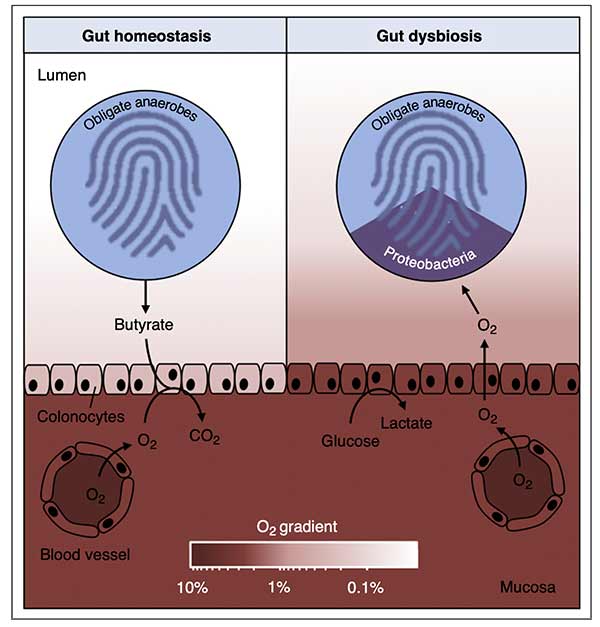 Image from
So, maintaining a low oxygen and high CO2 environment helps keep the microbiome in check. The internal environment of our body impacts how our body functions.
5. CO2 improves calcium utilization6 — When CO2 exits the cell, it brings with it free water and calcium,7 lowering cellular bulk water. It is toxic to have persistent intracellular calcium, and you want as little free water as possible inside cells. In fact, some machines use the intracellular water level when looking for cancer.8
“The carbon dioxide can be changed into carbonic acid, by chemically combining with water. Carbonic acid is hydrophilic, and so it quickly leaves the cell, taking with it some of the oppositely charged ions, such as calcium and sodium.”9
6. CO2 protects the cell and mitochondria structure from damage, acting like an antioxidant and cell stabilizer — Since it improves oxygen delivery, it reduces free radical damage.10,11,12,13,14 It also protects against hypoxia and the negative effects of intracellular calcium and inflammation.15,16,17,18,19,20 Abundant CO2 inside and outside the cell protects lipids and proteins susceptible to oxidation.21,22 In fact, CO2 is part of our antioxidant defense system.23
“The suppression of mitochondrial respiration increases the production of toxic free radicals, and the decreased carbon dioxide makes the proteins more susceptible to attack by free radicals.” ~ Ray Peat, Ph.D.
“The failure to oxidize glucose to CO2 is oxidative stress.” ~ Ray Peat, Ph.D.
7. CO2 prevents accumulation of lactic acid in the cell, which we see in cancer, diabetes, and other chronic conditions24,25,26,27 — Lactic acid is a byproduct of inefficient carb metabolism that suppresses efficient oxidation of glucose and burdens the liver’s energy supply. Elevated lactic acid levels have a hypoxic effect and signals to the cell that it is under stress.
“The presence of lactic acid, which indicates stress or defective respiration, interferes with energy metabolism in ways that tend to be self-promoting. Harry Rubin’s experiments demonstrated that cells become cancerous before genetic changes appear. The mere presence of lactic acid can make cells more susceptible to the transformation into cancer cells. (Mothersill, et al., 1983.)
Diabetics typically have elevated lactate, which shows that glucose doesn’t have a problem getting into their cells, just getting oxidized.” ~ Ray Peat, Ph.D.
More CO2 improves oxidation and thus prevents accumulation of lactic acid since full oxidative phosphorylation (proper carb metabolism) can occur.
“Lactic acid and carbon dioxide have opposing effects.” ~ Ray Peat, Ph.D.
8. CO2 improves longevity — The higher you live in altitude (and thus the higher CO2 levels), the lower the cancer, heart disease and overall better health.28 Moreover, maximum lifespan of mammals is positively correlated with blood CO2.29
“People who live at very high altitudes live significantly longer; they have a lower incidence of cancer (Weinberg, et al., 1987) and heart disease (Mortimer, et al., 1977), and other degenerative conditions, than people who live near sea level.” ~ Ray Peat, Ph.D.
How Do We Achieve Higher CO2 Levels?
How we eat and breathe impacts how much CO2 we have in our body. You can increase the endogenous production (with proper carb burning), or reduce the outflow (with proper breathing).
CO2 is formed intracellularly during energy metabolism inside the mitochondria. Since carbs are richer in oxygen than fat, they consume less water in their metabolism and release 50% more CO230 (if we use them properly). The more carbs we efficiently burn for energy, the more CO2 we make.
“Higher CO2 has benefits, and a higher ratio of carbohydrates to fat being oxidized for fuel yields greater CO2.”31
The body’s primary source of CO2 is cellular metabolism — so properly burning carbs is the primary source of CO2. In fact, the Keto diet significantly reduces carbon dioxide stores.32 Even Dr. Lustig admits that ketosis reduces the amount of CO2 produced by the body in relation to the amount of oxygen it consumes.33
How we breathe also impacts the CO2 levels inside of our body, as we blow off a ton of CO2 with mouth breathing! Mouth breathing is, in a sense, self-suffocation and hyperventilation when taken to the extreme because we’re driving down CO2 levels to the point that we decrease oxygen availability to the cells. Overtime this can lead to degeneration, and a lot of mouth breathing is a sign of a stressed and lowered metabolism.
Nose breathing is a MUST, and utilizing mouth tape can help reduce levels of mouth breathing while sleeping. For extra CO2 work, try nose bag breathing with a brown paper bag to increase CO2 levels. This is very powerful to do before bed!
In summary, there are a number of health advantages of having elevated cellular CO2 levels. Proper breathing is very important for blood CO2 levels, but it does not change cellular CO2 levels — what you eat does! And being a good carb burner is one of the best ways to achieve elevated levels.
Save This Article for Later – Get the PDF Now
Transform Your Health — One Step at a Time


Ashley and her sister Sarah have put together a truly groundbreaking step-by-step course called “Rooted in Resilience.” They have compiled what clearly is the best application of Dr. Ray Peat’s work on Bioenergetic Medicine that I have ever seen.
It is so good that I am using the core of their program to teach the many Health Coaches that I am in the process of training for the new Mercola Health Clinics I am opening this fall. It took these women working nearly full-time on this project for a year to create it.
This has to be one of the absolute best values for health education I have ever seen. If you want to understand why you struggle with health problems and then have a clear program on how to reverse those challenges, then this is the course for you.
It is precisely the type of program I wish I would have had access to when I got out of medical school. I fumbled around for decades before I reached the conclusion they discuss in the course and share with you so you can restore your cellular energy production and recover your health.
| Select and eat the right foods to heal your metabolism and improve glucose utilization |
| Balance your hormones to help reduce anxiety, weight gain and sleep disturbances |
| Use reverse dieting to increase your calories without gaining weight and tanking your metabolism, all while improving your energy levels |
| Heal your gut for proper immune function, mood and weight management |
| Tweak your diet and lifestyle habits to improve your mindset and mental health |
| Crush your fitness goals with ease and get your life back on track |
| Master the most essential habits for health with bonus guides, including over 100 meal plans to take the stress out of meal time planning and shopping, and so much more! |
Learn more about Rooted in Resilience here.
About the Author
Ashley Armstrong is the cofounder of Angel Acres Egg Co., which specializes in low-PUFA (polyunsaturated fat) eggs that are shipped to all 50 states (join waitlist here), and Nourish Cooperative, which ships low-PUFA pork, beef, cheese, A2 dairy and traditional sourdough to all 50 states. Waitlists will reopen shortly.
- 1 Jpn J Physiol 1984;34(2):205-16
- 2 J Biol Chem 2011 Dec 30;286(52):44821-32
- 3 Stroke 1977;8:226–229
- 4 J Thorac Cardiovasc Surg. 2004 Sep;128(3):354-6
- 5 Nat Rev Microbiol 2018 Feb;16(2):103-110
- 6 Aviat Space Environ Med 1998 Mar;69(3):291-8
- 7 Pflugers Arch 2010 Nov;460(6):953-64
- 8 Structural Dynamics 7, 054701 (2020)
- 9 Ray Peat Water: swelling, tension, pain, fatigue, aging
- 10 Physiol Res 2002;51(4):335-9
- 11 Vopr Med Khim 1996 Jul-Sep;42(3):193-202
- 12 Izv Akad Nauk Ser Biol 1997 Mar-Apr:(2):204-17
- 13 Patol Fiziol Eksp Ter 1995 Jul-Sep:(3):34-40
- 14, 22 Vojnosanit Pregl 1996 Jul-Aug;53(4):261-74
- 15 Fiziol Zh SSSR Im I M Sechenova 1978 Oct;64(10):1456-62
- 16, 21, 23 Fiziol Zh Im I M Sechenova 1995 Feb;81(2):47-52
- 17 Stroke 1996;27:1634–1640
- 18 Acta Neurobiol Exp 2007;67(2):197-206
- 19 Biull Eksp Biol Med 1994 Oct;118(10):395-8
- 20 Biull Eksp Biol Med 1995 Jun;119(6):590-3
- 24 Clin Endocrinol 2011 Feb;74(2):191-6
- 25 Int J Epidemiol 2010 Dec;39(6):1647-55
- 26 Diabetes 1988;37(8):1020–1024
- 27 Ray Peat Lactate vs. CO2 in wounds, sickness, and aging; the other approach to cancer
- 28 Aging Dis 2014 Aug; 5(4): 274–280
- 29 Biogerontology 2013; 14: 687-691
- 30 ChrisMasterjohnphd.com
- 31 Journal of Evolution and Health An Ancestral Health Society Publication March 2017; 2(1)
- 32 Lung 2015 Dec;193(6):939-45
- 33 Harvard TH Chan Keto diet considered for Navy SEALS
Can Eating Refined Carbs Make You Appear Less Attractive?
Reproduced from original article:
https://articles.mercola.com/sites/articles/archive/2024/03/28/refined-carbs-attractiveness.aspx
Analysis by Dr. Joseph Mercola March 28, 2024

STORY AT-A-GLANCE
- Eating a meal rich in refined carbohydrates, like high-fructose corn syrup, may make you less attractive
- Eating a high-glycemic breakfast decreased facial attractiveness in both men and women
- Chronic consumption of refined carbs was also linked to reduced attractiveness
- Chronic consumption of refined carbs leads to hyperglycemia and related hyperinsulinemia that influences growth factors and sex hormones, which in turn could affect attractiveness
- Hyperglycemia caused by chronic consumption of refined carbohydrates may also accelerate glycation processes that influence skin aging
Eating a meal rich in refined carbohydrates, like high-fructose corn syrup, may make you less attractive, according to researchers with the University of Montpellier in France.1 The physical repercussions of eating a diet high in refined carbs are well-known and include obesity, insulin resistance, Type 2 diabetes, cardiovascular diseases, Alzheimer’s disease, high blood pressure and myopia.2
Chronic high blood sugar (hyperglycemia) and hyperinsulinemia, along with insulin resistance, are also associated with excess consumption of refined carbs. However, the researchers explored how eating meals high in refined carbs affects non-medical traits, namely facial attractiveness, revealing a significant connection.
Meals High in Refined Carbs May Make You Less Attractive
The study, which involved 104 adults, found eating a high-glycemic breakfast decreased facial attractiveness in both men and women. Chronic consumption of refined carbs was also linked to reduced attractiveness.
As for how refined carbohydrates affect facial attractiveness, two hours after the high-glycemic breakfast, when the facial photos were taken, subjects had hypoglycemia, or low blood sugar. “Hypoglycemia is known to have visible symptoms, as it affects blood flow and skin, which could be detectable on photos and thus affect attractiveness perception,” the researchers explained.3
Chronic consumption, meanwhile, leads to hyperglycemia and related hyperinsulinemia, which influences growth factors and sex hormones. “Chronic hyperinsulinemia influences the synthesis of androgens, which are the precursors of male and female sex hormones. It has been shown that facial femininity/masculinity can be influenced by sex hormones, which in turn could affect attractiveness,” according to the study.4
Hyperglycemia caused by chronic consumption of refined carbohydrates may also accelerate glycation processes that influence skin aging. “As skin aging directly impacts age appearance, hyperglycemia could affect age perception. Moreover, age is known to influence attractiveness,” the researchers noted.5
Diets rich in hyperglycemic carbohydrates are also known to promote acne,6 while the researchers added that diet’s influence of facial attractiveness could be linked to evolution:7
“In general, traditional foods (pre-industrial or non-refined) do not generate hyperglycemia, with the exception of ripe fruits or honey which are energetically rewarding but are traditionally seasonal or scarce. In fact, humans did not evolve with constant access to food provoking a high glycemic response, even after the rise of agriculture in the Neolithic era.
It has been previously proposed that in the current industrial dietary environment, consumption of food that generates hyperglycemia is no longer a signal of quality, because this type of food is now not limited. Its massive consumption generates phenotypic and physiological changes in the body, such as obesity and Type 2 diabetes, which are attracting medical attention due to their life-threatening effects.
It is thus not surprising that other negative effects not directly affecting health are also generated, such as reduced facial attractiveness.”
What Are Refined Carbohydrates?
Refined carbohydrates or sugars, which are also sometimes referred to as free sugars, include those that are added to ultraprocessed foods and drinks. High-fructose corn syrup is an example of a refined sugar. These sugars are linked to health problems such as dental decay and heart disease, as well as cancer.8 Many health organizations and governments, including in the U.K., recommend limiting intake of free sugars, but not intrinsic sugars.9
Intrinsic sugars, also known as naturally occurring sugars, are those found within the cellular structure of foods, including whole fruits and vegetables. These sugars are part of the food’s natural composition, not added during processing, and come with the beneficial nutrients and fiber found in whole foods, which can slow down sugar absorption and mitigate its impact on blood sugar levels.
One of the primary differences between these two types of sugars is that refined sugars, as well as many starches, are a common cause of endotoxin production in your gut, which destroys mitochondrial function and results in cancer metabolism.
The fructose present in whole foods does not typically result in the production of endotoxin. This is one of the primary differences between refined sugar and fructose from ripe fruit and helps explain why refined sugars fuel cancer.
Save This Article for Later – Get the PDF Now
Ultraprocessed Foods Are the No. 1 Source of Refined Sugars in US Diet
In the U.S., 57.9% of energy intake comes from ultraprocessed foods, which not only tend to be high in refined carbohydrates but also linoleic acid from seed oils. Further, ultraprocessed foods contribute 89.7% of the energy intake from added sugars to Americans’ diets.10
Consuming heavily processed junk food takes a toll on your whole body, including your brain. Research published in JAMA Neurology demonstrated that consuming ultraprocessed foods, such as breakfast cereal and soda, could lead to cognitive decline and increase your risk of Alzheimer’s disease.11
However, instead of using 50% or 60% of the daily caloric intake of ultraprocessed food as high consumption, this study defined high consumption as “more than 20%.” The study didn’t identify whether there was a dose-dependent effect. In other words, they only looked at whether eating more than 20% of the daily caloric intake in ultraprocessed foods would affect cognitive decline. If a person ate double or triple that amount, would the rate of cognitive decline be greater?
In a comprehensive assessment of the link between ultraprocessed food consumption and cancers, researchers from Imperial College London’s School of Public Health also found these cheap convenience foods are linked to an increased risk of developing and dying from cancer.12
Overall, consuming more ultraprocessed foods was linked with a greater risk of developing any cancer, as well as ovarian and brain cancers specifically. It was also associated with an increased risk of dying from cancer, including ovarian and breast cancers.13
Why Refined Sugars Fuel Cancer
All dietary carbohydrates are digested into sugars called glucose. Glucose, in turn, can be metabolized (burned) for fuel using two different pathways. First, the glucose is metabolized into pyruvate. The pyruvate can then either enter the glycolysis pathway in the cytoplasm of the cell and produce lactate (this is an inefficient backup pathway), or it can be converted into acetyl-CoA and shuttled to the mitochondrial electron transport chain, which results in optimal energy production.
The glycolysis pathway is great for quick fuel when you are activating your Type 2 muscle fibers, such as during high-intensity exercise. But if this is the primary way you burn glucose, then you are in a catastrophic metabolic state because you’re promoting insulin resistance and diabetes and creating loads of lactate as a waste product instead of healthy CO2 and metabolic water.
Lactate increases reductive stress, which causes reverse electron flow in the mitochondria and increases the ROS to 3% to 4%, which is 30 to 40 times more than when glucose is burned in the mitochondria. What’s more, glycolysis generates only two ATP for every molecule of glucose, which is 95% less energy than would be generated if the glucose were metabolized in your mitochondria.
You’re also promoting cancer, because cancer cells preferentially use glycolysis. But it’s not sugar that is driving the cancer process per se. It’s really rooted in mitochondrial dysfunction, and fatty acid oxidation (metabolism of fats instead of glucose) is part of what causes that dysfunction.
Nearly everyone believes that cancer feeds on sugar, but that is simply inaccurate. The truth is the polar opposite. Cancer cells have such seriously damaged mitochondria they are simply incapable of burning sugar in the mitochondria and must rely on the backup system to survive.
This is why the most effective strategy is to not jump to low-carb keto to avoid feeding the cancer, but rather to use metabolic therapies that fundamentally address why the cells are unable to oxidize sugar in the mitochondria.
Once you fix the mitochondria and allow the cancer cells to metabolize glucose in the mitochondria, the cancer regresses back to normal healthy cells because the mitochondria work again and they don’t require to use the emergency backup system.
Refined sugars and many starches are more likely to cause gut dysbiosis that leads to the production of endotoxin. This endotoxin is one of the factors that destroys mitochondrial function, resulting in cancer metabolism (the Warburg Effect), where glucose is burned through glycolysis.
Your Body Needs Carbohydrates
There’s a common misconception that all sugar, i.e., carbohydrates in general, will act as fuel for cancer, but nothing could be further from reality. I’ve been following the work of the late Ray Peat through his student Georgi Dinkov. Peat was a biologist and thyroid expert; Dinkov is a bioenergetic researcher.
One of the foundational concepts of health that I’ve had to radically revise my thinking on as a result is the idea that eating a low-carb diet long-term is the best way to optimize your metabolic and mitochondrial health.
I now realize that this was misguided, and the reason for that has to do with the fact that your body requires glucose, and if you aren’t eating it you will go into a hypoglycemic coma and die. Your body has safeguards to prevent that, and the major one is the hormone cortisol. Cortisol’s primary purpose is to raise your blood sugar when it is too low and you don’t have enough glycogen reserves in your liver.
Cortisol increase your blood sugar by breaking down your muscles, bones and brain. It sacrifices your lean muscle mass to release amino acids that your liver converts to glucose in a process called gluconeogenesis. So, ultimately, cortisol also is going to increase inflammation and impair your immune function. And it increases food cravings. So, you do not want your cortisol to be elevated.
For the past few months, I’ve increased that to 425 grams of carbs per day, mostly in the form of ripe fruit. I’ve noticed dramatic beneficial changes in my blood work as a result. Increasing my carbs by 400% resulted in a highly counterintuitive 10% decrease in my fasting blood sugar. I also lost 10 pounds despite increasing the number of calories I was consuming — the opposite outcome of what most “experts” would predict.
In short, a low-carb diet is best implemented as a temporary strategy to restore metabolic flexibility. Further, when you’re in a low-carb state, lipolysis is elevated, which releases inflammatory polyunsaturated fatty acids (PUFAs) such as LA from your cells that are then converted into dangerous oxidative linoleic acid metabolites (OXLAMs) that will damage your tissues.
But once metabolic flexibility is regained, adding more carbs back in will help to lower cortisol, which is highly inflammatory. Ultimately, glucose is the ideal fuel for your mitochondria and the one that will create the most energy with the least amount of “exhaust” in the form of free radicals causing oxidative stress that damages your mitochondria, cell membranes and proteins.
It will also create the most carbon dioxide in your body which is highly beneficial for your health. But you don’t want to consume refined sugars to increase your carbohydrates. Instead:14
- Keep PUFA intake below 10 grams; below 5 grams would be even better
- Avoid high-fructose corn syrup when adding carbs to your diet
- Stick with sugars from ripe fruit, raw honey (make sure it’s not adulterated with high-fructose corn syrup, as many are) and/or pure organic cane sugar
- 1, 2 PLoS ONE 19(3): e0298984. doi: 10.1371/journal.pone.0298984
- 3, 4, 5, 7 PLoS ONE 19(3): e0298984. doi: 10.1371/journal.pone.0298984, Discussion
- 6 Clin Cosmet Investig Dermatol. 2015 Jul 15:8:371-88. doi: 10.2147/CCID.S69135. eCollection 2015
- 8 PLOS ONE 2014; 9(6): e99816
- 9 AOL February 4, 2024
- 10 BMJ Open 2016;6:e009892. doi: 10.1136/bmjopen-2015-009892
- 11 JAMA Neurology December 5, 2022
- 12, 13 Imperial College London February 1, 2023
- 14 Bitchute May 17, 2023
You Need Carbs to Build Muscle
Reproduced from original article:
https://articles.mercola.com/sites/articles/archive/2024/03/26/carbs-for-muscle.aspx
Analysis by Ashley Armstrong March 26, 2024

STORY AT-A-GLANCE
- Without smart exercise and strong metabolic rates, the slow loss of muscle mass starts at age 30. At age 50, muscle mass decreases at an annual rate of 1% to 2%. After age 60, this reduction increases to 3%. By age 75, some individuals have lost approximately half of their muscle mass
- Carbs will help you build and maintain more muscle by providing the necessary energy for muscle growth and lowering stress hormones
- A single strength training session will decrease muscle glycogen levels by 24% to 40%. One of the main reasons to consume carbs after your workout is to replenish these stores
- Your muscles rebuild when you are in a rest and digest state, not in a state of fight or flight. Consuming carbs as part of your post-workout meal significantly decreases cortisol and helps you recover faster
- Having more muscle will help you burn more fat at rest, boost your metabolic rate, improve your glucose utilization and insulin sensitivity, and reduce your risk of cardiovascular disease
The health benefits of having more muscle mass are now well established in the literature. But unfortunately, humans are really good at losing muscle as we age. (If you don’t use it, you lose it!)
And here are just three reasons why carbs will help you build and maintain more muscle. (And to those who think the body can make all the carb it needs through gluconeogenesis — I get it, I used to think that as well. But do you REALLY think that is optimal? This point is addressed in the article).
Without smart exercise and strong metabolic rates, the slow loss of muscle mass starts at age 301,2,3 At age 50, muscle mass decreases at an annual rate of 1% – 2%. After age 60, this reduction increases to 3%.4 By age 75, some individuals have lost approximately 50% of their muscle mass!5
Health Consequences of Muscle Loss
Why should we care? Well the health consequences of losing muscle include:
| Higher insulin resistance6 — The less muscle mass you have, the more insulin resistant you will be. For every 10% increase in skeletal muscle mass, there is an 11% decrease in insulin resistance.7 Building muscle is the best way to improve your insulin sensitivity |
| Lower metabolic rates8 |
|
Higher susceptibility to falls and getting injured as individuals with age-related muscle loss have a 58% higher risk of fractures9 |
| Lower bone density10 |
| Less independence and functionality to perform daily activities11 |
| Increased rate of cognitive decline12 |
| Higher mortality rate (adults with age-related muscle loss have a 41% higher mortality rate13) |
| Increased risk of cardiovascular diseases (some studies show age-related muscle loss comes with a 23% increased risk of cardiovascular diseases) |
|
More muscle = |
|
| more fat burned at rest | higher metabolic rates |
| improved body composition | improved glucose utilization and insulin sensitivity |
| improved LDL cholesterol clearing | reduced risk of cardiovascular disease |
| improved mental health | increased bone mineral density |
| enhanced physical function | |
In other words, thriving, not surviving. But here is the good news — there IS something you can do about it. While humans are good at losing muscle, we are also really good at building muscle when we provide our muscles with the right stimulus to elicit a positive change (smart strength training) and support our bodies with the right tools. And here’s my case for why I think carbs are an important part of that “tool kit.”

1. Carbs Provide the Body Energy to Build Bigger Muscles
Increasing muscle mass involves adding more contractile units (sarcomeres) to your muscle — increasing muscle length and cross-sectional area. The act of building that muscle tissue after the workout requires rest and food, as the act of building muscle is an energy-intensive process.14 Building muscle requires energy — our body does not run on thin air.
Eating protein is of course important (almost a no brainer!), as it provides the body the building blocks (amino acids) for the muscle tissue. But just eating protein is like delivering logs to build a log cabin, without any employees to assemble the cabin. Rebuilding something requires TOOLS and ENERGY (carbs).

Save This Article for Later – Get the PDF Now
2. Carbs Replenish Muscle Glycogen Levels
Glycogen is a storage form of carbs that is used for energy throughout the body, especially during your strength training sessions since fat is too slow of a fuel source for high power output. (So you use up a lot of these glycogen stores during your training session.)
A recent meta analysis discussed how a single strength workout will decrease muscle glycogen levels by 24% to 40%.15 And just 3 sets of 12 reps performed to muscular failure was shown to result in a 26.1% decrease in muscle glycogen levels.16 So one of the main reasons to consume carbs after your workout is to replenish these stores.

One study showed that muscle breakdown more than doubled in a glycogen-depleted vs. a glycogen-loaded state.17 This means your body is more likely to spend energy to rebuild that muscle tissue when your stores are full. Muscle is an “expensive” tissue to have — meaning it requires MORE fuel and MORE nutrients for “maintenance and upkeep.”
Why would a body that is already struggling with chronic stress and poor energy production spend valuable (and limited) energy resources on building muscle? That body is just focused on surviving — and building muscle would mean it would need more energy and tools that it is already low in.
Your body is intelligent — it’s not going to “waste” energy on something it knows it can’t support. That’s like buying a new car but not being able to pay for monthly car payments. Full muscle glycogen stores are a signal of safety to your body — that there is enough energy, so it’s okay to spend some of it building that muscle tissue back up and ‘taking care of it’ over the long run.
3. Carbs Lower Stress Hormones
Smart exercise is a good stress that yes, elevates cortisol levels. But we should try to lower that cortisol peak ASAP after the workout. Our muscles rebuild when we are in a rest and digest state, not in a state of fight or flight. Consuming carbs as part of your post workout meal significantly decreases cortisol and helps you recover faster.
One study showed that the inclusion of carbs to a post workout meal decreased cortisol levels by 11% (relative to the cortisol levels measured during the exercise session). The no carb group had a peak cortisol increase of 105%.18
Carbs help suppress the exercise-induced cortisol release, so that you can recover faster, keep your hormones balanced, and maintain strong thyroid health and a robust metabolism.
“But our body can make all the carbs it needs” — this is a very common counter argument we receive, largely from men. That we don’t need to consume carbs since our body can make its own carbohydrates via a process called gluconeogenesis. We get it fellas, we used to be obsessed with this dogma, and ideology, too.
I will counter and say — well, technically our body can make all the fat it needs if we don’t consume dietary fat. But is that optimal? No. Carb restriction and strength training doesn’t make sense when you learn human physiology. Not consuming carbs may “work” — but at what cost? What processes and functions get down regulated to allow for this excessive gluconeogenesis?
Your body uses carbs during strength training, full stop. So either you eat some dietarily, or your body makes it. Relying on this pathway will down regulate metabolism and thyroid health over time — you will be simply surviving, not thriving. And being in a low metabolic state leads to more catabolism (breakdown of muscle tissue) — not what we want!
After 1.5 years of taking this approach, we finally ‘woke up’ that we were driving ourselves into the ground. We were in denial at the time, but our lifting numbers and muscle mass went in the opposite direction.
In Summary
One of the best things you can do for your health is to build, and hold on to, as much muscle as you can. So why wouldn’t you want to give your body the best possible chance to build and maintain muscle? (And thus, include carbohydrates in your diet.)
The best types of carbs are ones that you digest well, increase your body temperature (meaning they raise your metabolic rate), and carbs you enjoy! Often, these include ripe fruits and fruit juices, honey and maple syrup, white rice, well-cooked potatoes, and for some, sourdough bread.
Best types of carbs? How many carbs should I consume? How does dietary fat fit into this puzzle? These are all questions we address in-depth in our courses and free downloads.
My sister Sarah and I (the ’Strong Sistas’) run a health and wellness website — focused on providing you metabolism boosting nutrition and exercise information to help you cut through the noise of all the conflicting health information out there (that’s likely hindering energy production and lowering metabolic rates). We have been through all the diet fads and extremes out there — and all they did was lower our metabolisms in the long run.
We provide you with the educational tools so that you can have FOOD EDUCATION not FOOD FEAR. Because when you understand the three points I discussed above in this article (and understand human physiology and energy metabolism), you understand that carbs are not evil and are not the source of your problems, and instead understand that carbs help support your physiology and improve energy production.
Metabolism Supportive Exercise
Looking for easy-to-follow workouts that help you improve your metabolism and build muscle? (Without spending hours and hours in the gym?)
Our Train2Change membership for both men and women is designed to help you build muscle, improve body composition, lose fat, and boost your metabolism. We have muscle-building workouts ready to go in our custom app where you can seamlessly track your progress, plus educational video modules to help you better understand the why (covering topics like how to build muscle, best exercises, calorie and macro needs, and more). Learn more about Train2Change here.
About Angel Acres Egg Co. and the Nourish Cooperative
The types of fat you eat can impact how you utilize carbs, as PUFAs can hinder proper carb utilization. And when it comes to animal fats, what your food eats, matters. (If their diet is high in PUFAs, the final product will contain more PUFAs). With the current agriculture system, knowing where your food comes from is vital. The article was written by Ashley Armstrong, who is passionate about providing the highest quality food possible.
Armstrong is the cofounder of Angel Acres Egg Co., which specializes in low-PUFA (polyunsaturated fat) eggs. We discussed the importance of low-PUFA eggs in a recent interview, embedded above for your convenience.
Angel Acres Egg Co. ships Low PUFA eggs to all 50 states — but there is currently a waiting list as she slowly increases the number of chickens within the network to fulfill the demand. More egg boxes will be available this spring — join the waitlist for low PUFA egg boxes here.
Armstrong also co-founded Nourish Cooperative which ships the best low PUFA pork, beef, cheese & A2 dairy and traditional sourdough to all 50 states. They are also close to accepting new members to the farm cooperative — join the waitlist here: nourishcooperative.com.
In the video segment above, Ashley reflects on the timeline of her decision to invest her free time into regenerative farming, considering how just a few years ago, her health was far from ideal. She struggled with mitochondrial energy production, and her body was in a low thyroid state. Your body prioritizes energy for essential tasks, and decision-making requires significant energy.
Your brain consumes about 20% of your body’s energy despite being only 2% of its weight. Ashley simply would not have had enough cellular energy to supply her brain to make a decision like she did unless she improved her health. Factors like excess linoleic acid, estrogen and endotoxins were depleting her cellular energy, which is crucial for making energy-intensive decisions.
Her transformation underscores the power of nurturing your health to gain the energy necessary for making significant life changes. Avoiding dietary pitfalls like seed oils played a key role in this journey, enabling her to tap into a newfound capacity for brave decisions — a testament to the profound impact of regaining cellular energy on her ability to navigate life’s choices.
It is my sincere desire and hope that you consider her journey to inspire and empower you to make similar choices in your own life and reclaim the Joy that you deserve. Imagine experiencing the nearly limitless Joy that Ashley has with her 1,000 chickens and four livestock guard dogs below.
- 1 CDC Strength training for older adults
- 2 Shock November 2003; 20(5): 481
- 3 Curr Opin Clin Nutr Metab Care July 2004; 7(4): 405-410
- 4 J Cachexia Sarcopenia Muscle December 2010; 1(2): 129-133
- 5 Merck Manual Geriatrics
- 6 Diabetes Care 1998 Aug;21(8):1353-5
- 7 J Clin Endocrinol Metab 2011 Sep;96(9):2898-903
- 8 J Sports Sci 2020 Jul;38(14):1635-1649
- 9 Journal of Cachexia Sarcopenia and Muscle April 2019; 10(3): 485-500
- 10 Endocrinol Metab 2018 Dec;33(4):435-444
- 11 Eur Rev Aging Phys Act 2020 Aug 7:17:11
- 12 Life Extension, Resistance Exercise Reduces Cognitive Decline
- 13 Osteoporosis and Sarcopenia March 2021; 7(1): S19-S27
- 14 Frontiers in Nutrition 2019; 6: 131
- 15 Sports Medicine 2022; 52: 2691-2712
- 16 J Appl Physiol 1991 Apr;70(4):1700-6
- 17 J Appl Physiol Respir Environ Exerc Physiol 1980 Apr;48(4):624-9
- 18 Metabolism 2006 May;55(5):570-7
Excessive Endurance Exercise Causes Hyper-Cortisol State
Reproduced from original article:
https://articles.mercola.com/sites/articles/archive/2024/03/22/hyper-cortisol-state.aspx
The original Mercola article may not remain on the original site, but I will endeavor to keep it on this site as long as I deem it to be appropriate.
Analysis by Dr. Joseph Mercola March 22, 2024

STORY AT-A-GLANCE
- Cortisol, known as a stress hormone, plays a vital role in our health but can lead to severe health issues like muscle breakdown, inflammation, and impaired immune function when chronically elevated. Understanding cortisol’s dual feedback mechanisms in the brain and body is essential
- Long-duration, high-intensity exercises like long-distance running can inadvertently increase the body’s cortisol levels, pushing the body into a chronic stress state
- An enzyme called 11β-HSD1, present in most body tissues, is central to producing cortisol and becomes the focus for understanding and potentially treating elevated cortisol levels linked to metabolic diseases
- While drug companies explore inhibitors of the 11β-HSD1 enzyme to manage conditions caused by high cortisol, alternatives like aspirin, emodin, and progesterone offer potential natural solutions, as all three inhibit the activity of 11β-HSD1
- To address elevated tissue cortisol, consider reducing the amount of endurance exercise you do, make sure you’re getting enough healthy carbs, and supplement with progesterone
Despite what blood tests show, your body might be experiencing high stress levels internally that can fuel health problems. Research is ongoing to find ways to manage this issue, including possible medical treatments and understanding the effects of lifestyle changes like exercise.
In a recent blog post, bioenergetic researcher Georgi Dinkov highlighted research1 showing that endurance exercises cause a hyper-cortisol state. In other words, exercises like long-distance running may be ruining your health by putting your body in a chronic stress state.
Chronically Elevated Cortisol Takes a Toll on Health
As you probably know, cortisol is a stress hormone, and while it has a crucial role in keeping you alive, it exacts a high price when chronically elevated. One of the functions of cortisol is to raise low blood sugar, but it does this by breaking down your muscles, bones and brain.
It sacrifices your lean muscle mass to release amino acids that your liver converts to glucose in a process called gluconeogenesis. So, ultimately, chronically elevated cortisol will increase inflammation and impair your immune function.
Cortisol is also the primary aging hormone. If it is chronically elevated, you simply will die prematurely as it is highly catabolic, meaning it breaks down tissues. To stay healthy as you age you need to be anabolic and build healthy tissues like muscle and mitochondria, and high cortisol will seriously impair those efforts.
Cortisol Feedback Mechanisms
Importantly, cortisol can behave differently in various parts of the body due to different feedback mechanisms.2 There’s a central mechanism in your brain that usually tells your body to slow down cortisol production when there’s enough (negative feedback).
However, outside the brain, in other parts of the body (peripheral feedback), the mechanism actually works the opposite way (positive feedback). This means that in these areas, elevated cortisol can actually lead to even more cortisol being produced.
There’s also a difference between the cortisol level in your blood versus that in your tissues. Even if blood tests show normal or low levels of cortisol, it’s possible to have high levels of cortisol in your tissues.
This can happen because of an enzyme called 11β-HSD1, which helps make cortisol and is found in most parts of the body. It’s the rate-limiting step in synthesizing cortisol, and as noted by Dinkov, evidence suggests the activity of the 11β-HSD1 enzyme in the tissues (not just the cortisol level in the blood) is a good indicator of whether someone might develop Type 2 diabetes. He writes:3
“This discrepancy between the peripheral and central feedback mechanism of cortisol is probably a major reason why most endocrinologists still do not want to admit the primary causative role cortisol plays in conditions such as diabetes II — i.e. the blood levels of cortisol in such people are often normal, or even low.
However, multiple studies have demonstrated that tissue expressions of 11β-HSD1 are not only predictive of developing obesity/diabetes in the future, but are also predictive of the course of already established diabetes.”
When you’re stressed or change your diet (like fasting or going on a low-carb diet), you can produce more cortisol, which in turn increases this enzyme, leading to even more cortisol. At that point, you’re in a vicious cycle.
Save This Article for Later – Get the PDF Now
Long-Term Keto Can Also Induce Chronically Elevated Cortisol
Download Interview Transcript | Video Link
This is also part of why I no longer recommend chronic keto or extended fasting for most people, especially once you’re metabolically flexible. When you don’t have enough glucose to fuel your mitochondria, when you deplete your glycogen level, then stress hormones — adrenaline and cortisol — are released to trigger endogenous production of glycogen.
Both of these stress hormones are pathologic, and if they’re continuously released at high levels to compensate for insufficient glucose due to a lack of healthy carbs, it will accelerate disease and premature death.
To learn more, listen to my interview with Dinkov above. This interview was previously featured in my June 2023 article, “Important Information About Low Carb, Cortisol and Glucose.”
Exercise and Cortisol
Drug companies are now exploring drugs that can block 11β-HSD1 as potential treatments for health issues linked to high cortisol in the tissues, like obesity and diabetes. However, evidence suggests certain types of exercise can also increase the level of 11β-HSD1 in tissues, subsequently leading to elevated tissue cortisol levels. As reported by Dinkov:
“As a result of this tacit admission that elevated cortisol is pathological for health (especially for metabolic conditions), a number of pharma companies are running clinical trials with 11β-HSD1 inhibitors as treatments for obesity, diabetes, dementia, sarcopenia, and even Cushing syndrome/disease.
One of the criticisms I have heard from endocrinologists in regards to the positive feedback mechanism of cortisol peripherally is that most of the evidence so far is from in-vitro experiments.
The in-vivo study4 [published in the Journal of Applied Physiology in October 2017] may be able to address that criticism by demonstrating that running daily for a few weeks doubled 11β-HSD1 expression in tissues, confirming once again that even ‘beneficial’ stress such as ‘endurance’ exercise is sufficient to cause peripheral state of high cortisol, which probably persists even after the stress/exercise stops since the increased expression of 11β-HSD1 is not known to downregulate on its own.”
While a specific drug called RU486 can help reduce these high tissue cortisol levels, it’s almost impossible to get. The good news is that other substances, such as aspirin, emodin and progesterone, inhibit the activity of 11β-HSD1 as well, hence lowering tissue cortisol. These three also increase the activity of a related enzyme called 11β-HSD2, which deactivates cortisol. So, they lower cortisol in two ways.
Many Can Benefit From Progesterone
Of those three, progesterone may be one of the most beneficial, as it has many other health benefits as well. It’s one of only four hormones I believe many adults can benefit from. (The other three are thyroid hormone T3, DHEA and pregnenolone.) As a general recommendation, I recommend taking 30 to 50 mg of bioidentical progesterone per a day, taken in the evening before bed, as it can also promote sleep.
For optimal bioavailability, progesterone needs to be mixed into natural vitamin E. The difference in bioavailability between taking progesterone orally without vitamin E and taking it with vitamin E is 45 minutes versus 48 hours. Another good reason for taking progesterone with vitamin E is because it binds to red blood cells, which allows the progesterone to be carried throughout your body and be distributed to where it’s needed the most.
Simply Progesterone by Health Natura is premixed with vitamin E and MCT oil. You can also make your own by dissolving pure USP progesterone powder into one capsule of a high-quality vitamin E, and then rub the mixture on your gums. Fifty milligrams of powdered progesterone is about 1/32 teaspoons.
Do not use synthetic vitamin E (alpha tocopherol acetate — the acetate indicates that it’s synthetic). Natural vitamin E will be labeled “d alpha tocopherol.” This is the pure D isomer, which is what your body can use. There are also other vitamin E isomers, and you want the complete spectrum of tocopherols and tocotrienols, specifically the beta, gamma, and delta types, in the effective D isomer.
I do not recommend transdermal progesterone, as your skin expresses high levels of 5-alpha reductase enzyme, which causes a significant portion of the progesterone you’re taking to be irreversibly converted primarily into allopregnanolone and cannot be converted back into progesterone.
If you’re taking it orally with vitamin E as the solvent, a significant portion will be non-metabolized, and the non-metabolized progesterone has potent pro-thyroid effects. It’s also a thermogenic steroid. It induces uncoupling, so you’ll be producing more heat, which is one of the effects of taking T3.
While not as potent as taking T3, it can raise your metabolic rate by about 10%. In addition to blocking cortisol, progesterone also helps deactivate adrenaline, another potent stress hormone. As noted by Dinkov in a previous interview about hormone replacement:
“There are human studies demonstrating that when you administer progesterone, even in its nonoptimal form — such as just the powder without the long-chain fatty acids and definitely without the tocopherols — even in that form, a single dose [100 to 200 mg] is sufficient to drop cortisol and adrenaline by about 60%.”
Key Take-Home
The key take-home from all of this is that endurance-type exercises can seriously backfire, causing chronically elevated cortisol, which will prematurely age you. Other research has also shown that engaging in endurance training, such as full-distance triathlons, when you’re in your 40s and 50s increases your risk of atrial fibrillation by 500% to 800%.
I reviewed this research in “Nailing the Sweet Spots for Exercise Volume.” One of the many findings in that study was that, once you get into your mid-40s and 50s, exercise should be fun and stress-reducing, not competitive.
Another take-home is that your cortisol may be elevated even if it looks normal in blood tests, thanks to the presence of 11β-HSD1, which helps make cortisol, in most of your body’s tissues. To counteract chronically elevated cortisol, you may consider:
- Reducing the amount of endurance exercise you engage in
- Making sure you’re getting enough healthy carbs in your diet, and not getting too much fat (ideally, keep your fat intake below 35% to avoid inhibiting glucose metabolism in the electron transport chain of your mitochondria)
- Supplement with progesterone, mixed with high-quality natural vitamin E
Understanding the Randle Cycle
Reproduced from original article:
https://articles.mercola.com/sites/articles/archive/2024/03/09/randle-cycle.aspx
The original Mercola article may not remain on the original site, but I will endeavor to keep it on this site as long as I deem it to be appropriate.
Analysis by Dr. Joseph Mercola March 09, 2024
STORY AT-A-GLANCE
- Some in the keto and carnivore space argue that eating fats and carbs together will result in weight gain because of the Randle cycle, which serves as a switch that only allows your body to burn either fats or glucose, one at a time, not both together
- The Randle cycle refers to an antagonism between glucose and fats as fuel, which explains why you can become insulin resistant when you avoid carbohydrates
- If you’re in chronic ketosis, your tissues decrease their insulin sensitivity, which can lead to or contribute to insulin resistance
- A low-carb diet is best implemented as a temporary strategy to restore metabolic flexibility. Once metabolic flexibility is regained, adding more carbs back in will help to lower cortisol, which is highly inflammatory
- A narrow time-restricted eating (TRE) window is also counterproductive once you’ve regained metabolic flexibility, as extended fasting also raises cortisol
Many appreciate my openness to integrating new information into my personal health approach and what I teach. I am a perpetual learner and seek to constantly evolve my approach, so it is aligned with biological truth, even if I have to admit I was mistaken.
Along those lines, I only learned most of the information in this article earlier this year, and it has had a dramatic impact on how I view burning food for energy. This approach is dramatically different than I previously understood and recommended, which was focused on high-fat and low-carb consumption.
You might recall for the last few years I have warned that chronic low-carb eating is not a good idea, and that you need to cycle in and out of low carb. This was a great move in the right direction, but what I have recently learned is that it was not enough and that most people would benefit from far higher amounts of carbs.
When I first started keto, I was below 50 grams of carbs a day for about a year and then for the next five years increased to about 100 grams per day. For the past few months, I have increased that to 425 grams of carbs per day, mostly in the form of ripe fruit.
I have noticed dramatic beneficial changes in my blood work that I won’t go into now but will dive deep into in future articles. I will reveal that increasing my carbs by 400% resulted in a highly counterintuitive, 10% decrease in my fasting blood sugar, and that I also lost 10 pounds despite increasing the number of calories I was consuming — precisely the opposite of what most “experts” would predict.
This doesn’t mean you should stop what you are currently doing and switch, but if you have been struggling with keto and are unable to lose weight, it is likely that a high-fat diet is slowing down your metabolic rate, increasing your cortisol levels and contributing to an inability to achieve your ideal body weight.
My strong recommendation would be to not dismiss this concept as well-intentioned but seriously misguided nonsense, but to take the time needed to understand the solid science behind it.
The reason I switched to the higher carb, low-fat diet was due to learning the late Ray Peat’s work through his student Georgi Dinkov. Peat was a biologist and thyroid expert; Dinkov is a biohack expert. Since the beginning of the year I have been watching Georgi’s videos on YouTube for about two to three hours a day.
He has a thick Bulgarian accent and talks fast so you need to listen at 1X, although I typically watch his videos at least two to five times as it seems every time I relisten to them I learn something new or understand what he has to say in a new way.
Here is a chronologically sorted link to most of his past interviews.1 And wouldn’t you know it, he has not been censored by the globalists, so hundreds of hours are available for free on YouTube and it won’t cost you anything but your time to review.
However, please know that everyone is different and has a unique biochemistry, so your dietary program would have to be customized and fine-tuned for you. Many of the principles are universal and can be widely adopted, though, so If properly done I am convinced that most will notice profound improvement in their metabolic rate, mitochondrial function and energy levels, along with a reduction in inflammation.
Why I Changed My Mind About Low-Carb Diets
One of the foundational concepts of health that I’ve had to radically revise my thinking on, based on Peat’s and Dinkov’s work, is the idea that eating a low-carb diet long-term is the best way to optimize your metabolic and mitochondrial health.
I now realize that this was misguided, and the reason for that has to do with the fact that your body requires glucose, and if you aren’t eating it you will go into a hypoglycemic coma and die. Obviously, your body has safeguards to prevent that, and the major one is the hormone cortisol.
In medical school, we learned that cortisol is a glucocorticoid. Gluco means glucose (sugar) and cortico means it comes from the adrenal cortex. It’s also another word for steroid. We were told that cortisol is responsible for maintaining glucose homeostasis, but led to believe its primary purpose was for inflammation.
Well, that is just not true. While cortisol certainly contributes to glucose balance, its primary purpose is to raise your blood sugar when it is too low and you don’t have enough glycogen reserves in your liver.
How Does Cortisol Work?
But just how does cortisol increase your blood sugar? It does it by breaking down your muscles, bones and brain. It sacrifices your lean muscle mass to release amino acids that your liver converts to glucose in a process called gluconeogenesis.
So, ultimately, cortisol also is going to increase inflammation and impair your immune function. And it increases food cravings. So, you do not want your cortisol to be elevated. For a long time, I was a proponent of a low-carb diet, but now I realize that chronic low-carb is not a good idea.
As a fuel, glucose is vastly superior to fat, and this was something I simply got wrong. The same thing goes for fasting. Both low-carb and fasting are great interventions in the short-term for those who are overweight and metabolically inflexible.
However, once you’ve regained your metabolic flexibility, it is important to revise your strategy and add healthy carbs back in, or these strategies will backfire and lead to decreased metabolic health, compromised mitochondrial function and impaired metabolism.
Cortisol happens to be the primary aging hormone. If it is chronically elevated, you simply will die prematurely as it is highly catabolic, meaning it will break down your body tissues. To stay healthy as you age you need to be anabolic and build healthy tissues like muscle and mitochondria.
Elevated cortisol will seriously impair those efforts. So, it is clear that you need to be doing everything you can to keep your cortisol levels and chronic inflammation low.
Download this Article Before it Disappears
The Paradox of Simple Versus Complex Carbs
Since I recorded the video above, it has become clear to me why there is a problem with the seemingly paradoxical conclusion that simple carbs are better than complex carbs for most people. I did not understand this when I recorded the video.
I have since determined that this is a result of most people eating large amounts of metabolic poisons like linoleic acid (LA) their entire life, in addition to regular estrogen exposure in the form of plastics which are xenoestrogens. As a result of these exposures, they have dramatically altered the composition of their microbiomes.
This occurs because these metabolic poisons result in a decrease in cellular energy production in the mitochondria, which then decreases carbon dioxide production in the intestine. The relatively lower concentration of carbon dioxide in the large intestine promotes the growth of pathogenic disease-causing bacteria known as facultative anaerobes.
These specific bacteria have high amounts of lipopolysaccharide (LPS) embedded in their cell membranes. When they are provided with food in the form of complex carbohydrates, they serve as fertilizer to accelerate their growth, so they multiply and eventually die.
When they die, this LPS, otherwise known as endotoxin, is released, and that is another potent metabolic poison that will radically decrease your mitochondria’s ability to create cellular energy, thus contributing to a vicious downhill cycle.
This sets up the seemingly paradoxical scenario where healthy food such as complex carbohydrates can make your health worse, because they are increasing the concentration of endotoxin in your body, which in high concentrations can result in septic shock that kills you.
The solution is to improve your health by improving your mitochondrial function and their ability to create sufficient cellular energy, which will subsequently restore the balance of healthy bacteria in your gut. When this is achieved, then complex carbohydrates transition to becoming very healthy.
But until your mitochondria produce adequate energy, complex carbs frequently contribute to worsening your health through the production of endotoxin. So it’s wise to carefully navigate with the introduction of complex carbs if you have been exposed to metabolic poisons for most of your life.
I believe the most prudent strategy is to listen and trust your body. If you have any problems eating complex carbs that result in bowel symptoms, then it would be wise to consider restricting your carbs to very simple carbohydrates such as fruit juice, which is the easiest carbohydrate to digest.
Once that is tolerated then you can go to healthy whole fruits. Once that is tolerated then you can progress to including other more forms of more complex carbohydrates until you are feeling that you can tolerate those.
Important Cautions Before You Increase Carbs
It would be a major mistake to increase your carb intake if you are still on a high-fat diet. I did this experiment in the mid-‘80s after I read the book by Harvey and Marilyn Diamond called “Fit for Life.”
They suggested having fruit only for breakfast – which I tried. Then I did my lab work and found my fasting triglycerides and lipoprotein profiles had exploded for the worse. I prematurely concluded that a high fruit diet was nonsense and remained relatively low-carb for nearly four decades.
This was until I encountered Ray Peat’s work and reevaluated my initial impression. I now understand that I was missing important parts of the strategy. And now I eat 3 to 4 pounds of watermelon every morning at 5:30 as my first meal, followed by three eggs and 8 ounces of white rice and 2 ounces of maple syrup one to two hours later.
That sounds like a lot of carbs, and it is. I have additional fruits later in the day and now my carb intake is about 425 grams a day. You might wonder what has happened to my weight and blood sugar with all these extra carbs.
Well, I thought my weight was good at 192 as I increased my muscle mass, but it has decreased by 10 pounds to 182 with no change in muscle mass. My fasting blood sugar has dropped 10 points and, so far, it seems to be working for me.
The Vital Metabolic Switch You Need to Understand
This is one of the most important principles in food science that I had never learned or understood until recently. My strong guess is that this is also true for most natural medicine clinicians. That is why I created the figure below to help you visualize it, so you can better understand this vital concept.
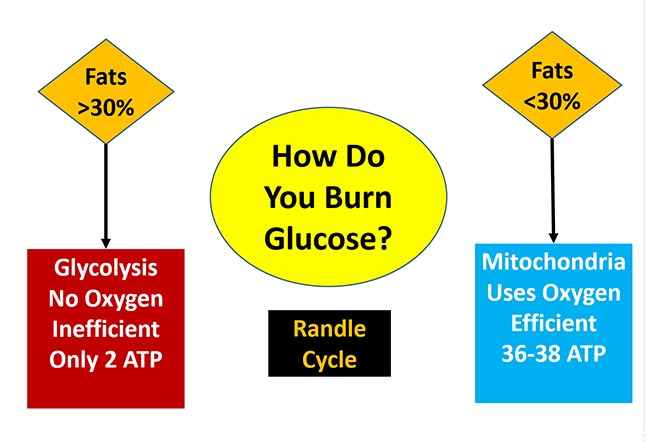
Low-carb diets have helped at least tens of millions of people improve their health for a very good reason, and that is there is a stealth switch that controls what fuel your mitochondria can burn. They can only burn one fuel at a time, either fat or glucose.
The switch has been given the name the Randle cycle, but it is more helpful to visualize it as a railroad switch that changes the tracks of the train. The train can only travel down one track; not both. This is because only one type of fuel can be burned at a time.
The best-case scenario is you metabolize, or burn, glucose in your mitochondria without any reductive stress (a term I will explain in my upcoming interview with Georgi Dinkov). When you do this, you will only generate 0.1% reactive oxygen species (ROS).
Not only does this route generate less ROS, but it also is incredibly efficient at energy production by creating 36 to 38 Adenosine triphosphates (ATP) for every molecule of glucose that is metabolized. It will also generate metabolic water and carbon dioxide, which are also important for your health.
For this to occur, as indicated in the figure above, you will need to consume less than 30% of your calories as fat. When you consume significantly more than that amount, the switch changes to burn fat in your mitochondria and you will not be able to burn glucose until your fat decreases to less than 30% of calories.
Since glucose is unable to be shuttled into the mitochondria to burn, it winds up backing up into your bloodstream, raising your blood sugar. This is a major contributor to diabetes. What little glucose is burned for fuel is done by using glycolysis, which is a primitive pathway that bacteria and cancer cells use.
It is great that we have this pathway, as you absolutely need it for quick fuel when you are activating your type II muscle fibers. But if this is the primary way you burn glucose, you are in a catastrophic metabolic state as you are creating loads of lactic acid as a waste product instead of healthy CO2. And, you are only generating two ATP for every molecule of glucose, which is 95% less energy.
Lactic acid increases reductive stress, which causes reverse electron flow in the mitochondria and causes reductive stress, which increases the ROS to 3% to 4%, which is 30 to 40 times more than when glucose is burned efficiently in the mitochondria. You likely don’t yet understand reductive stress, the opposite of oxidative stress, but I will be doing an interview with Georgi on this and will be posting it later this month.
Why Lactic Acid and CO2 Are so Important
Remember, when you are burning glucose efficiently in your mitochondria, the glucose is converted not only to 36 to 28 ATP, but when the electrons from the glucose are ultimately handed off to oxygen, metabolic water (deuterium free) is made and, very importantly, carbon dioxide.
This is vital to understand as carbon dioxide is a potent stimulator of mitochondrial biogenesis which will increase the number of mitochondria that you have so you can make even more energy.
Conversely, when you are burning glucose far less efficiently in glycolysis you are only generating two ATPs, and rather than creating life-sustaining carbon dioxide, you are generating life-damaging lactic acid, which will degrade your mitochondria and make them die sooner.
Georgi Dinkov’s Review of the Randle Cycle
In this second video, anti-vegan activist Paul Saladino interviews Dinkov about the Randle cycle. Dinkov comments:
“The first accusation against you, that whole milk will somehow make you fat because of the Randle cycle [is] misguided because if you look at the label, whole fat milk has like 5 grams of fat per serving but 12 grams of carbs, so you’re actually [getting] more carbs.
But let’s talk about meat. Most meats … are actually not that high in fat, and a lot of the fat in them is actually short chain fatty acids, which are not subject to the Randle cycle because they get transported into the cells through a known L-carnate-independent mechanism.
They metabolize similarly to sugar, and they don’t seem to be triggering the same sort of Randle cycle effect. Now, what drives the Randle cycle effect? When you’re oxidizing primarily fats … the master conductor redox modulator — which is the NAD to the NADH ratio, specifically the intra-mitochondrial one — drops. (This simply means the more NAD+ the better).
Basically, the NAD to the NADH ratio — which signals how oxidized versus how reduced you are, metabolically — [is] the primary regulator of whether the pyruvate dehydrogenase (PDH) will accept pyruvate and convert it into acetyl-CoA and then continue with the Krebs cycle in the electron transport chain, or not.
(Pyruvate is the three-carbon molecule breakdown product of glucose. PDH is the enzyme that converts it to acetyl-CoA which allows it to enter the mitochondria and be burned efficiently. If PDH is inhibited, it will force your body to use fat).
In other words, a high ratio of NAD to NADH (meaning high NAD+) when you’re very oxidized favors the activity of pyruvate dehydrogenase, so you will not be accumulating pyruvate [and] you will not be generating lactate.
But if you’re eating a lot of fat, the NAD to the NADH ratio drops, and then the buildup starts to happen. Pyruvate accumulates, lactic [acid] accumulates. [This means] the Krebs cycle is working because it’s accepting acetyl-CoA from the beta oxidation. That’s how the fatty acids get oxidized.
So, that’s the gist of the Randle cycle … If you’re providing a lot of glucose, in theory you should be able to out-compete the free fatty acids and oxidize more glucose versus fat, but that all depends on how much glucose can get into the cell.
And, unfortunately, when you’re eating these high-fat diets, when you have higher lipolysis, the actual uptake of glucose into the cell is already largely blocked …
Free fatty acids not only block the metabolism of glucose, they also block the uptake of glucose into the cell. So, they prevent the positive effects that the glucose would have had, in terms of competing with the free fatty acids …
Basically, too much fat blocks your uptake and utilization of glucose, and whatever glucose is taken up, you largely convert to nonbeneficial byproducts such as lactic acid …”
So, to summarize Dinkov’s rather complex exposition on the Randle cycle’s effects: a) fats can make you fat directly; and b) fats limit your ability to metabolize glucose. This is due to the Randle cycle’s preference to fat metabolism when more than 35% of your calories come from fats. And, even if you metabolize small amounts of glucose, your body will favor the conversion of glucose into fat versus ATP, water and carbon dioxide.
This is because the enzyme PDH, which converts the glucose metabolite pyruvate, is inhibited by high fat concentrations, and won’t convert pyruvate to acetyl-CoA to be burned in the mitochondria. Instead, because PDH is inhibited, the pyruvate is metabolized into lactate. This entire process is antimetabolic and slows down your metabolism, increases your ability to gain weight, and lowers your ability to generate cellular energy.
So, when more than 30% to 35% of your calories are coming from fat, you are forcing your cells to burn fat and put glucose on the back burner, instead of being metabolized like it should be.
Simple Strategies You Can Implement to Help Your Metabolism
Clearly, the most important strategy to help your metabolism is to avoid eating linoleic acid at all costs. It is impossible to avoid as it is in nearly every food, but you want to keep your levels below 2% of your daily calories. This means avoiding ALL processed foods and typically most restaurants.
A powerful strategy that nearly everyone should do is to make sure that you are taking a high-quality vitamin E supplement once a day. Why? Because most everyone has 20 to 30 times more LA in their body than optimal. Not only will vitamin E impair the release of it from fat cells, but once released it will help protect the LA from converting into dangerous oxidized linoleic acid metabolites (OXLAMs).
Most vitamin E supplements should be avoided, so how do you identify a high-quality vitamin E supplement? It should have most of the vitamin E isomer as alpha tocopherol, typically about 150 units. It should also have the other tocopherol isomers: alpha, beta and gamma, but at far lower doses.
Additionally, it should have alpha, beta and gamma tocotrienols. Finally, it should only have the “D” isomer. Avoid all vitamin E supplements that are “DL,” which are 50% of the wrong isomer.
It would be very wise to make sure you have enough NAD+ as it will also inhibit the release of LA from your fat cells. If you haven’t read and viewed by interview with molecular biologist Nichola Conlon on this topic, you can read it on my Substack. Sadly, NAD+ decreases dramatically as you age, which leads to nearly a 1-to-1 reduction in ATP, your cellular energy currency.
Fortunately, this can be inexpensively addressed by taking 50 mg of niacinamide three times a day. More is not better, so avoid 500 mg tablets as they will impair your longevity proteins. Typically, one sixty-fourth of a teaspoon of niacinamide powder is about 50 mg.
Finally, aspirin can be a very useful way to inhibit LA lipolysis. Aspirin is a very interesting approach and I go into far more details in my recent article on it.
Why Long-Term Low-Carb Diets Can Backfire
I previously touched on the Randle cycle in “How the Wrong Dietary Fat Can Wreck Your Health,” which also featured an interview with Dinkov. In that interview, Dinkov cleared up several areas of confusion, including the following:
•Low-carb dieting is a great short-term intervention for people who are overweight and insulin resistant. Lowering carbs will help reset your metabolism and recover your metabolic flexibility. However, in the long-term you will likely run into trouble — especially if you’re also doing a lot of endurance training.
One of the reasons for this is because when you’re in a low-carb state, lipolysis is elevated, which releases inflammatory polyunsaturated fatty acids (PUFAs) such as LA from your cells that are then into dangerous OXLAMs (oxidative linoleic acid metabolites) that will damage your tissues.
PUFAs such as LA are not digested. Instead, they’re stored.2 Most of the body fat in obese individuals is composed of PUFAs, not saturated fat. Saturated dietary fat is mostly burned (oxidized) and used up. So, most people have large stores of LA, and these stores need to be lowered to safe levels of 1% to 2% LA.
• Extended fasting and using an excessively narrow time-restricted eating (TRE) window can also backfire once you’re metabolically flexible, as it too helps push LA out of your cells.3,4,5,6,7,8,9,10 An extreme example of TRE is the one meal a day (OMAD) protocol, where you’re fasting 22 hours or more each day. Dinkov believes this is too extreme for most people.
The half-life of PUFAs such as LA, which get embedded and integrated into your cell membranes, is about 680 days. This means that ridding your body of LA will take approximately seven years, provided you don’t load more in. And you really do want to get rid of this fat, as it’s highly inflammatory and prevents your mitochondria and cellular machinery from operating properly. But you need to do it slowly and methodically.
Exercise and fasting will help drive the LA out, but you need to be really careful if you have a lot of LA storage. You want to avoid excessive lipolysis — any situation where you’ve run out of glycogen, which can easily happen when you’re not eating for long periods, when you’re on a chronic low-carb diet, and/or when you’re engaging in intense exercise, especially if you exercise in a fasted state.
• Chronic long-term, low-carb, and chronic extended fasting also result in elevated cortisol, which is highly inflammatory and promotes the storage of fat. Elevated cortisol is also highly catabolic and will cause you to lose lean muscle mass so your liver can make glucose. For these reasons, low-carb diets and fasting are best implemented as temporary strategies to restore metabolic flexibility.
How to Safely Reduce LA Stores Without Self-Sabotaging
With all of that in mind, how can you safely reduce your LA stores without self-sabotaging? Extensive fasting will, in this instance, backfire, as will overtaxing yourself with heavy exercise. You’ll need to accept that achieving optimal health is a marathon, not a sprint, and that it’s going to take years to purge your LA stores. Dinkov suggests the following strategy:
- Build muscle and maximize lean muscle mass
- Avoid fasting for longer than 16 hours
- Avoid all processed foods, restaurant foods, condiments and animal foods raised on grains, such as chicken and pork, as all of these are high in LA
- Eat a diet with about 15% protein, restricting fats to below 35% with the remainder consisting of carbs in the form of ripe fruits and some vegetables and well-cooked low-oxalate starches. Be careful to avoid all processed sugars as they typically are loaded with high fructose corn syrup that will increase endotoxin in your gut
So, to recap, temporarily implementing a six- to eight-hour time restricted eating window, or even longer eating restrictions and fasts, is appropriate for anyone who is insulin resistant and metabolically inflexible — and that’s about 95% of the population.
However, once you lose your insulin resistance and become metabolically flexible — which typically takes a few weeks — you’ll want to increase your eating window to eight to 12 hours to avoid elevating your cortisol, as cortisol promotes chronic inflammation that can lead to tissue damage, and promotes the storage of fat.
If you stop supplying carbs to your body, the organs that need them will activate glucose creation in your body by elevating cortisol. So, once you’re metabolically flexible, you want to avoid extended fasting.
How does TRE and extended fasting raise cortisol, you ask? It is important to understand that cortisol is a powerful hormone whose primary purpose is to shred your lean muscle mass and bones to obtain amino acids for your liver so it can produce glucose. This is cortisol’s primary role. If your blood sugar gets too low, you will go into a hypoglycemic coma and die. Your brain requires sugar and if it doesn’t get it, it is game over.
Usually, it takes a few weeks and occasionally longer, for you to recover your metabolic flexibility. During those first three to six months, stick to a six- to eight-hour eating window. Once you’re metabolically healthy, avoid eating windows under eight hours. I’ve now shifted to a schedule where I always have an eating window of more than eight hours a day and closer to 12, in the summer when there is plenty of daylight.
Interestingly a recent study showed that a lower fat, higher carb approach lowers the risk of death by 30%, while with the converse a high-fat, low-carb diet increases the risk of death by 30%.11,12 So, it’s your choice for sure, but I am convinced that having more healthy carbs than fat is a great choice to improve your metabolic health.
- 1 YouTube Georgi Dinkov
- 2 Haidut.me October 22, 2019 (Archived)
- 3 Haidut.me February 16, 2021 (Archived)
- 4 Haidut.me September 27, 2022 (Archived)
- 5 Haidut.me March 4, 2021 (Archived)
- 6 Haidut.me December 10, 2021 (Archived)
- 7 Haidut.me June 21, 2022 (Archived)
- 8 Haidut.me November 17, 2020 (Archived)
- 9 Haidut.me December 21, 2021 (Archived)
- 10 Haidut.me September 30, 2020 (Archived)
- 11 J Intern Med. 2023 May 3. Low-carbohydrate diets, low-fat diets, and mortality in middle-aged and older people: A prospective cohort study
- 12 Haidut.me May 9, 2023 (Archived)
Intro to the Bioenergetic Theory of Health
Reproduced from original article:
https://articles.mercola.com/sites/articles/archive/2023/12/31/bioenergetic-theory-of-health.aspx
The original Mercola article may not remain on the original site, but I will endeavor to keep it on this site as long as I deem it to be appropriate.
Analysis by Dr. Joseph Mercola December 31, 2023
STORY AT-A-GLANCE
- While insulin resistance is routinely identified as a root cause of most chronic diseases, it too is only a symptom of a deeper problem. At the root will be impaired cellular energy production in the mitochondria
- Insulin resistance occurs when the cells are unable to properly oxidize or burn glucose
- When your body shifts into fat burning this results in lowering your metabolic rate, which is antithetical to optimal health. For optimal health, you need a high metabolic rate, and this is facilitated when your metabolism speeds up when you’re burning glucose in your mitochondria
- A general baseline for most average-sized people is between 150 grams and 250 grams of healthy carbs per day. If you’re very active, it could be as high as 500 or 600 grams a day. Keep in mind that as you increase carbs, you also need to cut down fat. Fat intakes above 30 to 40% or so of daily calories will tend to inhibit glucose metabolism
- Healthy carb choices include fresh whole fruit, fruit juice, root vegetables such as potatoes, sweet potatoes, parsnips and carrots, white rice, raw honey and maple syrup
In this video, I interview independent health researcher Jay Feldman, who has a podcast called “The Energy Balance Podcast.” I recently came to understand the importance of the late Ray Peat’s work, which I had previously dismissed for over three decades, largely due to confirmational bias.
Peat was a biologist and physiologist, and a cofounder of the prometabolic diet based on the bioenergetic theory of health.1 After re-exploring his work, I’ve come to realize just how ahead of his time he was. Feldman is among the few health researchers out there who has also embraced Peat’s work and understands it at a level that allows him to explain it in layman’s terms.
As some of you may know, I’m in the process of creating a master class in preparation for the next pandemic crisis, which I believe is inevitable, and it became obvious to me that Peat’s work is a really crucial component of being metabolically resilient and prepared for the next crisis.
You don’t have to wait for my master class to learn about Peat’s work, however. You can just dive into Feldman’s podcast. There are more than 100 episodes and I suggest starting at Episode 1 and working your way up. Feldman does a terrific job teaching you how to easily and practically implement these strategies.
What Causes Disease?
Well before I encountered Peat’s work, I was convinced most chronic disease was rooted in insulin resistance. I still think that’s a primary problem, but I’m convinced it’s not caused by excess sugar. High linoleic acid (LA) levels are the primary factor that drives insulin resistance, and LA is clearly far more damaging than sugar, especially in the long term.
As explained by Feldman, insulin resistance occurs when the cells are unable to properly oxidize or burn glucose, resulting in a backlog of glucose metabolites and a buildup of glucose in the cells, along with the production of lactate.
This forces the cells to rely on fatty acid oxidation, and the combination of fatty acid oxidation and glucose buildup prevents the cells from taking up more glucose, causing elevated blood sugar. It’s a symptom of a deeper problem, namely impaired energy production in the mitochondria:
“I always come back to the idea that the amount of cellular energy available is what’s going to drive our health, and the lack of energy is what’s going to lead to disease processes, dysfunction, degeneration.
When it comes to insulin resistance, I think there’s a bit of a misnomer. It’s a helpful term for encapsulating a larger idea, but we get caught up in the idea of insulin.
If we’re going to say that there’s one driver [of disease], it’s typically a lack of energy caused by issues with energy production, or inefficiencies in producing energy, due to mitochondrial dysfunction, and that causes insulin resistance.
Those things go hand in hand. When we’re talking about insulin resistance, we’re talking about a situation where the cells aren’t able to properly use glucose, so the glucose builds up. And regardless of how much insulin we have, it’s really hard to get more glucose into the cells, and we see rising blood sugar and all of the other downstream effects.
So, insulin resistance is there. I think it’s just a matter of what we call it. Do we call insulin resistance the fundamental problem, or energy dysfunction — low metabolism issues with energy production?
From my view, I would say that’s where we start, and insulin resistance is an effect of that. And the only reason why I would make that distinction is because we can get caught up in the idea that insulin is the problem and things that increase insulin will cause the cells to stop responding to insulin.
We need to figure out why the cells aren’t responding to insulin, and if we get down to that deeper layer, it comes back to an issue with producing energy.”
That said, Feldman agrees that fasting insulin is a good marker for health, in that it provides you with a good estimate of the efficiency of your cellular energy production. So, provided you’re consuming a healthy amount of carbohydrates, your fasting insulin is a good marker for how well you’re using that glucose and how well you’re producing energy.
Understanding the Underlying Problem
Just keep in mind that while you can lower your fasting insulin by avoiding carbs, that won’t fix the underlying energy production problem. In fact, if you’re on a low-carb diet, you’re causing insulin resistance. Sometimes you might not realize it because your insulin and glucose levels are so suppressed. Eventually, however, you might notice that your glucose level starts to rise.
As explained by Feldman, the underlying problem is not that you’re eating too many carbs. It’s that you cannot properly burn carbs. That’s what caused your glucose and insulin levels to be elevated in the first place. Cutting carbs will lower glucose and insulin, making it appear that all is well, but can you burn carbs? That’s the question.
If you’ve been on a ketogenic diet for some time and are experiencing deleterious effects like sleep disturbances, anxiety, a drop in testosterone and/or T3, reduced energy and exercise performance, then you may have “stealth insulin resistance.”
In other words, your cellular energy production is fundamentally impaired and the low-carb diet was just a Band-Aid masking the symptoms. The real problem persists, because carbs were never the driver of insulin resistance in the first place. An inability to properly oxidize (burn) the carbs was.
Download this Article Before it Disappears
How to Safely Add Carbs Back In
So, how do you bring carbs back in so that you actually improve your ability to use them and minimize negative effects? First and foremost, avoid omega-6-rich polyunsaturated seed oils, as they effectively interfere with energy production and the utilization of glucose. Instead, use monounsaturated and saturated fats.
Next, add carbs back in very slowly, to allow for the upregulation of enzymes that increase carb utilization and conversion to energy. Start by adding easily digestible carbs that won’t cause intestinal irritation or endotoxin production, such as whole fruits.
If you have microbial overgrowth in your gut, you’re producing a lot of endotoxin. In this case, you need to be careful about introducing fermentable carbohydrates, including fruit fibers, so fruit juice may be a better choice than whole fruit. Just be mindful of the juice you select. Apple juice, for example, has fermentable carbs.
Assuming you don’t have an underlying digestive problem, whole fruit is a great place to start. If you start eating whole fruit and notice an increase in gas or bloating, gurgling or belching, or if you feel sluggish or lethargic afterward, you likely have an intestinal issue such as SIBO (small intestinal bacterial overgrowth). You can also try having whole fruit sometimes and fruit juice at other times and see if you notice a major difference.
“If you feel a lot better with the fruit juice, then that’s a pretty clear sign that you are having some issues with fermentable carbohydrates,” Feldman says. In this case, you need to restore your microbiome before you add in more carbs. In the interview, we also discuss the use of antibiotics, either herbal or pharmaceutical, to treat small intestinal bacterial overgrowth (SIBO), so for more information on that, listen to the interview.
“Typically, we want [gas and bloating] to be minimal. This is central. In the same way we can’t overstate the importance of avoiding PUFA, we cannot overstate how much endotoxin — these bacterial byproducts — destroy your health.
You see it in every chronic health condition. In every degenerative condition you see this mild endotoxemia. You see it in fatty liver disease and diabetes, obesity, atherosclerosis.
This is one of the main reasons why people feel better on a low-carb diet or when they’re fasting. They’re avoiding anything that’s feeding the [bacteria in the] intestines. So, if you are one of those people who felt way better and lost weight and noticed a bunch of improvements [on a low-carb diet], there are two main reasons why that would be the case.
One is reductions in endotoxin … The other possible reason is, if they were extremely insulin resistant going in, they were having a lot of trouble using glucose, and so switching to fat and ketones led to a lot of relief.
That’s likely also a situation where your utilization of the carbohydrates is going to have to be ramped up slowly, and your capacity for that might be a little bit lower. So, we want to work on resolving that issue. It could be caused by endotoxin, polyunsaturated fats, by nutrient deficiencies, a lack of sleep and other forms of stress.
If you didn’t have these major benefits on low-carb, you might be able to bring in the carbs much faster and feel much better quicker. But that’s why it’s all dependent on the individual’s context.”
Quick Summary of How to Start
Feldman recommends starting with one piece of fruit with each meal for a week or two. If your appetite increases and you feel better overall, that’s a good sign that your metabolic rate is increasing. As long as you’re feeling good, increase to two pieces of fruit per meal and go from there. If you’re having negative effects, decrease your intake and go slower.
Feldman suggests the baseline for most average-sized people is between 150 grams and 250 grams of healthy carbs per day. If you’re very active, it could be as high as 500 or 600 grams a day. Keep in mind that as you increase carbs, you also need to cut down fat, as fat intake above 30 to 40% or so of daily calories will inhibit glucose metabolism. Other healthy carb choices include:
- Organic dried fruits without added sugars, additives or preservatives
- Root vegetables: potatoes, sweet potatoes, parsnips, carrots
- White rice (well-cooked) and ideally consumed with saturated fat to prevent the rice from feeding bad bacteria
- Raw honey
- Maple syrup
Carbs that may be tolerated by some but not others include grains that are traditionally processed, fermented, soaked and/or sprouted. Sourdough bread is one example. On the more harmful end are unprocessed whole grains and brown rice, as they’re high in anti-nutrients that impair all aspects of digestion.
They contain anti-nutrients like trypsin and amylase inhibitors, phytic acid and oxlates, which can inhibit the digestion of protein and starch while also reducing vitamin and mineral absorption. Most grains are also high in LA. And, of course, processed foods are also on the list of carbs to avoid.
Troubleshooting
Hopefully, if all goes well, you’ll make this transition and realize that both your glucose and fasting insulin are still at healthy levels, or maybe even lower than before. But what if you’ve made the transition to a higher-carb, lower-fat diet, and still have a fasting insulin level of 7 or 8?
Ideally, it should be below 3. Maybe you’re also gaining weight and still feeling sluggish. What’s going on? In short, these are all signs that you’re still metabolically inflexible. So, now what?
“There are a number of things I would go to,” Feldman says, “but again, the question is, what is causing the issue with [not] converting those carbohydrates to energy?
We talked about endotoxin being a huge one. If someone’s already cut out the polyunsaturated fats, endotoxin is really common, so we want to make sure that we’ve fixed everything up gut-wise. If not, that would be my target.
If that’s doing pretty well, and we’re generally not overstressing, we’re getting some good comfortable movement in, we’re eating carbohydrates from the right sources, and we’re still not seeing the benefits that we were looking for, we’re still not seeing the restoration of insulin sensitivity, then I might look for some other support for glucose metabolism.
That could be B vitamins … I know you’ve talked a lot about niacinamide. Thiamine is another one that is crucial for producing energy from carbohydrates … Supplementing with those would be potentially warranted there.
I would also look at other hormonal indications. I’d look at thyroid status at that point, because if we’ve made some of these shifts but we’re not seeing the conversion from T4 to T3, or we’re not seeing good thyroid hormone production, that could be a higher level issue that’s causing a ton of things farther down the chain, and that can include insulin resistance.
If that’s the case, I would look toward doing everything we can to restore that … I would also look at the steroid sex hormone production for women, maybe there’s too much estrogen, maybe not enough progesterone. That can be another huge factor here that can drive or contribute to insulin resistance.
For men, I’d be looking at low testosterone. There’s certainly a place for things like pregnenolone, progesterone, maybe a bit of DHEA to help support that hormonal state as well.”
Why Glucose Is the Ideal Fuel
As explained in the interview, glucose is the optimal fuel for creating energy in your mitochondria. Two byproducts of that process are metabolic or deuterium depleted water, and carbon dioxide. While commonly thought of as a waste product, Peat has made abundantly clear that carbon dioxide is a massively important molecule, and a far superior vasodilator than nitric oxide.
When you are low on carbon dioxide, you can’t be optimally healthy, and if you’re oxidizing (burning) fat in your mitochondria rather than glucose, you’re not going to generate as much carbon dioxide, which also protects proteins from being glycosylated, and lipids from being oxidized. Carbon dioxide also counteracts ROS and RNS (reactive nitrogen species). That’s not the only reason glucose is a better fuel than fat, though. As explained by Feldman:
“I think it’s always helpful to put this in the larger biological context. In any situation where we are starved, where we’re under major stress, when things are dysfunctional, we shift into fat oxidation, fat burning. And this includes when we’re not eating anything. This is why when we’re fasting, we will shift into ketosis, and we can mimic those states by going on a low-carb, high-fat diet, and low protein.
The biological context there is that our bodies view that as a situation when we’re under stress, when we don’t have a lot of fuel available, when we’re in a famine, when we need to survive for a long period of time. In a situation like that, we want to decrease our metabolic rate.
We don’t want to use a lot of energy on reproduction, cognition, digestion, growth and repair. We want to conserve energy because we don’t know when we’re getting food. So, everything around fat burning involves a slowing of the metabolic rate, and we see this again on that bigger picture level.
We see it when we look at thyroid hormone conversion, which gets impaired when we’re low in carbohydrate intake. We see it in terms of testosterone, and we also see it on the mitochondrial level, because on the mitochondrial level, that’s where this all starts.
That’s how our body senses whether it’s burning the fats or the carbs. When it’s burning fats, it has a number of different places that slow down the actual respiration, that slow down the conversion from the fats to energy. And again, this is all healthy and adaptive in that it allows us to survive if we’re starving.
But it’s not ideal for thriving. It’s not ideal for optimal function. It’s not ideal for reproduction. Our bodies don’t want to reproduce if there’s no food available. It’s not ideal for high-level cognition.
When we zoom into the mitochondria, what we see is that the primary difference between glycolysis, the starting of burning carbs and the bad oxidation of the fats, is a difference in the amount of NADH and FADH2 that gets produced.
And when we finish out through the Krebs cycle, and then go to the electron transport chain, depending on the length of the fatty acid, there will be considerably more, sometimes 250% more FADH2 relative to NADH than if we were to oxidize glucose.
What happens is, because we have this major drop off of electrons at Complex 2 through the FADH2, relative to Complex 1, we end up with reverse electron transport. [This is] reductive stress, and that’s because Complex 1 and Complex 2 both use the CoQ electron acceptor.
If you’re favoring Complex 2, you’re going to reduce the amount of electrons that can be dropped off at Complex 1, and you’re going to reduce the amount of electrons at Complex 1 that can keep going down the chain.
So, you get a buildup there, and you get this reverse electron transport and major production of ROS at Complex 1. The other thing that happens is, because of this buildup at Complex 1, the NADH can’t drop off its electrons, so you get buildup of NADH, relative to NAD.
Our bodies are really smart when they see this, because this then affects everything further up the chain. It affects various steps of the Krebs cycle. There are three different steps that need the NAD, so each of those get reduced. So, we’re slowing the activity through the Krebs cycle. We’re getting buildup of citrate, for example, that increases the synthesis of fat, and that gets built up even further.
We end up with a buildup of acetyl-coA that reduces the conversion of pyruvate to acetyl-coA, which also is dependent on NAD, so we’ve got two ways that that’s being inhibited.
And then when you look back up at glycolysis, there’s a number of steps there that get inhibited as well due to this high NADH to NAD ratio, this highly reduced state of the mitochondria. That is just a part of the natural braking mechanism that happens to make sure that when we’re burning fats, we’re doing it slowly. We also produce a lot of ROS, which slows this down.
As a result of this, you’ll eventually induce things like uncoupling, which will fully stop ATP production. So, we’ve got a number of different mechanisms that basically are signals. It’s telling our body that when we’re burning fats, we need to slow everything down, we need to slow our metabolic rate, and we’re going to produce a lot more ROS. We’re going to be slowing things down in the electron transport chain.
This is not ideal if energy is the currency of our health, if that’s what allows us to function and get us out of this constant stress state … That’s the crux of this difference between the carb and fat burning. And then we have the CO2 as the cherry on top … because it protects against the oxidative stress, or reductive stress, as well as being the main thing that oxygenates the cell, which keeps respiration going faster.
Again, that’s another braking mechanism. The cell will take up less oxygen because it’s producing less CO2, which it needs for that uptake of oxygen itself. I was in the low-carb sphere as well and got hooked on the idea that sugar burning is the one that’s the unhealthy and produces all the oxidative stress and everything, but totally missed what’s actually going on.”
Simple Way to Gauge Your Metabolic Rate
Feldman also takes a deeper dive into how glucose and fat burning affects your thyroid function but, basically, when you burn fat in the mitochondria, you inhibit your thyroid gland, which in turn invites weight gain, as your thyroid is your main metabolic regulator.
So, the answer to many a sluggish thyroid is not thyroid hormone supplementation, but eating the correct fuel so that your body has the energy it needs, and your thyroid doesn’t need to downregulate your metabolic rate. He also notes that many people are simply not eating enough calories. Low-calorie diets will also suppress your metabolism, for all the same reasons as detailed above.
While the ideal amount of calories vary based on your age, metabolic rate, physical activity and more, as a starting place, Feldman suggests using a typical calorie calculator to estimate your daily calorie requirement, and if you’re eating fewer calories than that and are gaining weight or maintaining your weight, your metabolism is low.
After you’ve estimated your daily calorie requirement, calculate how much protein you need. The formula for that is 0.6 to 0.8 grams of protein per pound of lean body mass or ideal body weight. The amount of protein you need should be about 15% of your daily calories. Then divide the rest into 45% to 65% healthy carbs and 20% to 40% healthy fats. In closing, Feldman has the following advice:
“If someone’s insulin resistant, they’re not using the carbs coming in, and if they’re not going to fix it, then sure, we might as well avoid carbs for a period of time. But I would say the better route is to work on fixing it. And in the vast majority of cases, the people who are in that state are not coming from a whole food, fruit, root vegetables, low PUFA fat sources type of diet …
So my suggestion would be, just go to that. We don’t even have to over-complicate it … just shift toward whole food, low PUFA, easily digestible foods, away from the grains. For the vast majority of people that gets them to where they need to go without needing something as restrictive and inherently stressful as keto and carnivore.
If that is the only way for someone to move forward, if it’s that or sticking with what they’re doing, then yeah, do it. Do keto or carnivore. There is an inherent long-term negative to it. There’s inherent stress that comes with it, but if that is the route that someone needs to go to make a change, then I think it’s fine to start there. I would just say let’s not stick with that long-term.
I’d really prefer to shift to including healthy carbohydrates as soon as possible. And that’s because whether the stress is for three months or a year, it’s always going to be a negative. What happens is, we have these major benefits from reducing the endotoxin, and relief from throwing carbs into an insulin resistant state, but once you’ve attained those benefits, the negatives will start to creep in.
I’d rather get all of those benefits without the negatives. I’d rather lower endotoxin by taking out grains and raw vegetables, raw leafy greens, those kinds of things, lowering fiber if we need to, but keeping carbohydrates so we can avoid the stress. I’d way rather get that benefit in that way as opposed to just taking out all carbohydrates.”
More Information
To check out more of Feldman’s work, visit his website, JayFeldmanWellness.com. Again, I recommend starting with Episode 1 and working your way up for a life-changing, immersive-learning experience on implementing bioenergetic medicine. Each episode has show notes and links to studies cited. You can also listen to his podcast on Apple Podcasts, Google Podcasts, Stitcher and Spotify. Just search for “The Energy Balance Podcast.”
How to Produce the Healthiest Foods Imaginable
Reproduced from original article:
https://articles.mercola.com/sites/articles/archive/2023/12/31/food-production.aspx
The original Mercola article may not remain on the original site, but I will endeavor to keep it on this site as long as I deem it to be appropriate.
Analysis by Dr. Joseph Mercola December 31, 2023
STORY AT-A-GLANCE
- Low-carb/high-fat diets ultimately backfire because they inhibit glucose metabolism, which is the most efficient form of energy production in the mitochondria; they also impair thyroid function
- One of the reasons why ketogenic and carnivore diets are usually helpful for a time is because, if implemented properly, you’re radically reducing your intake of omega-6 fats, linoleic acid (LA) in particular, which is one of the primary drivers of ill health
- LA is a primary driver of disease, in large part due to its detrimental effect on mitochondrial function and, hence, energy production
- Your body has a certain amount of energy and a number of biological processes that it can turn on or turn off with that energy pool. The more energy you have available, the more functions your body can turn on. When your energy production is lower than required to maintain all functions, your body must downregulate certain functions, which ultimately results in problems
- One of the easiest ways to assess how much energy your body is producing is to take your body temperature. Take your temperature 30 to 40 minutes after breakfast and midday. You want to see a rise in temperature
The interview above features Ashley Armstrong, who’s an expert in two areas. One is producing some of the healthiest food in the United States, and the second is understanding how your body uses it and how to select the right types of food to optimize your biology, based on the late biologist and thyroid expert, Ray Peat’s, principles of bioenergetic medicine. She also is a certified personal trainer with a Ph.D., MS and BS in engineering.
Like many others who are trying to improve their health, Armstrong tried low-carb diets, fasting, keto and even carnivore diets in the past. But while these all led to improvements initially, they didn’t eliminate them, which ultimately led her to investigate Peat’s principles.
“Ray Peat, he honestly saved my life and I owe so much to that man,” she says. “I’m forever grateful for him. The biggest wake-up for me was measuring my body temperature. I was on a carnivore diet and measured my body temperature — it was 96.5 degrees Fahrenheit.
I was like, wow, no wonder my hair is thinning. No wonder my complexion is so pale. No wonder I’m not sleeping through the night. There was just a number of red flags. That body temperature measurement just woke me up. It’s what I needed to [realize] I’m not thriving, I’m just surviving.
I’ve been implementing Dr. Peat’s principles for over three years now. I have more energy in life than I think I’ve ever had, even as a teenager. And it’s just amazing to see how being not restricted with your food, just being strategic with macros, types of food, how powerful that can be for your energy production.”
The Problem With Low-Carb and Keto
As I’ve detailed in previous articles over the past year, low-carb/high-fat diets ultimately backfire because they inhibit glucose metabolism, which is the most efficient form of energy production in your mitochondria; they also impair thyroid function. Your thyroid is crucial for energy production, and if your thyroid doesn’t work, you’re down the creek without a paddle.
One of the reasons for this is because ketogenic diets increase the stress hormones — cortisol, glucagon and adrenaline. On the other hand, one of the reasons why ketogenic and carnivore diets are usually helpful for a time is because, if implemented properly, you’re radically reducing your intake of omega-6 fats, linoleic acid (LA) in particular, which is one of the primary drivers of ill health.
Energy Production Is Key for Overall Health
As explained by Armstrong, the best way to understand the bioenergetic principle is to think of your body as a system. It has a certain amount of energy, and a number of biological processes that it can turn on or turn off with that energy source.
The greater your energy pool, the more functions your body can turn on. When your energy production is lower than required to maintain all functions, your body must downregulate certain functions, which ultimately results in problems. The human body is designed to promote survival, so it’s going to prioritize things like your heart rate.
Functions that aren’t necessarily vital for survival in the immediate moment, like sex hormone production, reproductive function, digestion, sleep and high cognitive thinking, get downregulated first. When you increase energy production, however, your body can then expend energy on those functions and bring them “back online.”
Download this Article Before it Disappears
Using Body and Pulse Measurements as Guides
As explained by Armstrong, one of the easiest ways to assess how much energy your body is producing is to take your body temperature.
“High stress hormones can keep your waking body temperature elevated,” she says, “so you’ve got to do your waking temperature 30 to 40 minutes after breakfast, and then I like to do midday. You want to see that temperature rise.
For many who are on low-carb or who are living on stress hormones, they’re going to have potentially high waking body temperature, but after breakfast, that temperature may drop. That’s because the food you’re consuming is lowering your stress hormones and your actual body temperature is then better exposed.
So we want to see that body temperature rise. And I love how both of us are so passionate about linoleic acid. As human linoleic acid consumption has gone up, human body temperature has gone down. So, the types of fats that we are consuming in our diet is impacting energy production in a negative way.
It’s shown with obesity rates out the roof. It’s shown with the decline in our body temperature. It’s shown with the decline in our healthy life expectancy, which is bizarre as a First-World country. There are just so many profound effects.
But when we just think of it as energy production — the more energy we can give our body to be able to perform functions, the better it’s going to function. I asked this question to someone who is really adamant about fasting. I said, ‘If you’ve got two bodies, one body that’s fasted and the other body that is fed nourishing food, which body is going to thrive and function better?’
It’s obvious. If you add a third person fed more of a standard American diet, of course maybe fasting is going to make you feel better, but you can elevate yourself a step above. You don’t have to rely on fasting to increase energy production. Your body is not going to increase energy when you’re not [putting] energy in.”
Indeed, when it comes to fasting, one of the primary benefits is that it lowers the fuel for gram-negative bacteria that produce endotoxin in your gut. Low-carb does this as well. Endotoxin, estrogen, LA and stress hormones will all decrease your mitochondrial function, mediated in big part by your thyroid function. Those are the big things that need to be reduced to enhance your mitochondrial function and energy production within the mitochondria.
How LA Harms Your Energy Production
As mentioned, LA is a primary driver of disease, in large part due to its detrimental effect on mitochondrial function and, hence, energy production. Your body can use both fat and glucose for energy. Muscle, in particular, will use fat for fuel, as will your heart. So, fat is not bad, but it’s important to realize that different fats affect your body in different ways, so it’s crucial to get the right fats. Armstrong explains:
“The different types of fatty acid molecules have drastically different structures and those impact the internal environment inside of us. They impact how your body is producing energy. The more saturated we can become, the better our internal environment is going to be.
When someone goes low-carb, maybe they reduce the amount of packaged food that they’re eating that contains a ton of vegetable oil and linoleic acid, and so potentially they’re resaturating some of their tissues.
But when you learn about what livestock are being fed these days, then you realize that a high animal fat diet can still contain quite a bit of PUFAs [polyunsaturated fats] and linoleic acid, depending on what those animals ate. So, think it’s important to consider the amount of each macronutrient that you’re intaking because that can have profound impacts on your energy production.
Saturating your tissues is going to take you to the next level, but adding in appropriate levels of carbohydrates is going to allow you to take your consciousness and energy production level to the next level [beyond that].”
The types of carbs you eat matter, however. I’m convinced the ideal carbohydrate is fresh, ripe fruit. Ripe is the key here. Of course, some fruits are better than others. Watermelon, for example, is among the best. Watermelon with feta cheese and a little mint on top makes for a delicious snack.
Aside from containing a lot of water, watermelon also contains a substance called citrulline, which converts into arginine, a precursor for nitric oxide (NO). NO is important to your body, but the caveat is that it needs to come from real food. Drugs like Cialis or Viagra, which act by increasing NO, will accelerate your path toward premature death. Artificial citrulline and other synthetic amino acids that raise NO are also best avoided.
“In Michigan, I rely a lot on frozen fruit,” Armstrong says. “In the summertime I’ll go to strawberry fields and pick strawberries when fresh and then freeze a ton of them. Same thing with blueberries and peaches. And then I rely on a lot of apples in the winter because apples are abundant around here and can be stored.”
Juices also have their place. Cold-pressed, pulp-free orange juice, for example, is a good choice. The reason you want pulp-free is because if you’re like most people, you have gram-negative, endotoxin bacteria in your gut that will thrive on the pulp, hence increasing endotoxin production.
So, if you have an unhealthy microbiome, pulp-free orange juice is a great carb that will gently and safely allow you to enter the higher carb world. As your microbiome improves, then you can transition to whole fruits and berries, which is, I believe, far superior to juices.
How to Produce the Best Eggs
Segueing into the topic of food production, Armstrong’s farm produces some of the highest quality eggs I’ve ever come across, and the feed recipe I use for my own chickens came from her. But I recently discovered something that could make them even better, and that is to allow the chickens to scratch for their own food.
Their ideal food is insects fresh from the ground, and while I previously thought chickens couldn’t get enough food this way, meaning you had to give them something, that may actually not be true.
Unfortunately, in places where the ground freezes, chickens will not be able to sustain themselves on insects, and you definitely do NOT want to feed your chickens dehydrated bugs. Why? Because the bugs are raised on corn and soy, making them very high in LA.
But in places like South Florida, for example, you can easily produce top-notch eggs, quality-wise, by allowing your chickens to peck for insects, without giving them any supplemental feed. Armstrong is also making plans to let her chickens forage for bugs year-round:
“I think that would be the ideal condition, and I have an image in my head of what I want to bring our farm to in the future — a greenhouse where we’ve got fodder growing on the ground and a worm farm … so [the chickens] will get abundant bugs in the winter. That’s what I want to move towards, but that requires a lot of financial investment. So we’ll get there one day.”
The Feed Has Dramatic Impacts on Animal Foods
The feed Armstrong developed, which I’ve been using as well, results in eggs that have about 75% less LA than conventional eggs. When it comes to conventional eggs, the LA is really the only problem. When the chickens are fed an ideal diet, the yolk in the egg is one of the best, most nutritious foods imaginable. The only thing that comes close is organ meat.
Egg yolks are the ultimate food; the problem is 99.99% of the eggs produced in this country are not that good. I don’t care if they say free range, grass fed, organic, it doesn’t matter. They’re terrible because they have four times more LA than they should. As noted by Armstrong:
“It’s important to consider organic soybeans have the same amount of linoleic acid as non-organic soybeans. Whether it’s grown conventionally, organically does not change the fatty acid composition of soybeans. You don’t want to be eating eggs from chickens fed a bunch of soy vegetable oil and other high omega-6 PUFA foods.”
According to Armstrong, the feed of the chickens may even determine the eggs’ allergenicity. In other words, if you’re allergic to eggs, you could potentially be able to eat the eggs from correctly-fed chickens.
“What is soy high in? Phytoestrogens that can be very problematic for some people. If a chicken is eating phytoestrogens that can be problematic for humans, those get passed through into the eggs. We have a number of customers that cannot eat any other eggs, but they’re totally fine with our eggs. And it’s because of the diet of the chicken.
So if you have allergic reactions or problems with eggs, try a different source where they’re not fed soy. Some people can be allergic to corn as well, and that allergenicity can pass through the egg as well. But it seems like soy is the biggest culprit.
But be careful of many corn and soy-free feeds, because those are high-PUFA ingredients like sunflower, flax, fish oil, vegetable oil and safflower oil. And so, just be really careful of your source, and ask what the chickens are eating. But yes, allergenicity of eggs I think really depends on what the chicken eats.”
LA-Rich Animal Feed Is Now Impacting Human Energy Production and Health
All of that said, it’s still crucial to ensure your chickens have enough food, be it fresh insects or a carefully planned feed that is low in LA and high in healthy saturated fats and other nutrients.
“Your chicken is not going to thrive if it’s underfed,” Armstrong says. “Your chicken is not going to thrive if it doesn’t have food. I am trying to boost the metabolic rate of our chickens as high as possible. Just like us, chickens are monogastric single stomach animals, the types of fat that they are fed, the types of fat that we are fed impacts the types of fat inside of us.
This is a little bit different for ruminant animals — cows, goats — but for monogastric chickens, pigs, their diet is very important. And this is why I am so passionate about it, because we have been lied to and convinced that saturated fat is bad for us.
So, you’ve seen a huge push for PUFAs in our diet. This is going beyond just human dietary choices. This is impacting our livestock food. And this is having profound impacts on not only livestock health, but also the food that we’re consuming …
Even in the dairy industry, they’re creating things called rumen-protected fats. They are PUFAs that in a typical rumen digestion system can go through the process called hydrogenation, which turns the PUFA into saturated fat.
They are designing rumen-protected fats so that the PUFA is passed through the rumen. The PUFA content of milk is increasing. That means any dairy fat — butter, cream, whole milk. The PUFA content of beef fat is increasing. And this is by design … Lard and chicken fat from conventional animals has the same amount of PUFA as canola oil.
This is profound. We have changed the types of fat inside of us. I think the linoleic acid content of humans has increased 136%. That is changing how our body is making energy inside of us. The types of fat we consume day-to-day have a long life inside of us — 600 days. So, the types of fat we’re consuming day to day impacts our energy production for years to come.
It’s unfortunate because this is just the reality for a lot of people, and that’s why I’m so passionate about it. Our food system is designed in a way that is not setting us up for success. That’s why I want to try to change it by going back to how our food was produced 100 years ago, where there was appropriate amounts of PUFAs in foods, small amounts, and saturated fat was the predominant fat source for both livestock and humans.”
High PUFA Diets Shut Down Your Metabolism
As explained by Armstrong, in nature, animals increase their PUFA consumption up to a certain amount to initiate torpor, which means their metabolism is so downregulated that they can survive the winter without eating. Think about that. Can you function optimally if your diet is one meant for hibernation? In that state, you have to eat fewer and fewer calories to avoid weight gain, which results in undernourishment and poor energy production.
“I try to keep my PUFA consumption as low as possible,” Armstrong says. “You can easily track that in Cronometer and see what your total PUFA, total linoleic acid content is per day. If you have four conventional eggs, you’re already at about 5 grams of linoleic acid in a day. And I would want people to be lower than that. All foods contain some amount of linoleic acid, so even milk is going to have a little bit.”
There’s no question that LA is NOT an essential fat, even though it’s categorized as such. It’s not essential because nearly all foods contain it. It’s virtually impossible to become deficient in LA if you eat food, regardless of what that food is.
Another fat that likely IS essential, but isn’t widely recognized as such, is the odd-chain saturated fats (OCFAs) found primarily in dairy. You can learn more about this in “The Amazing Benefits of Dairy Fat.” There’s also evidence suggesting that if you don’t get enough OCFAs in your diet, then high saturated fat intake might become problematic.
So, you need these odd-chain saturated fats. That’s why you need butter. You need milk. These are essential. Your optimized biology and health is dependent on these foods, because, again, the OCFAs help increase your body’s energy pool. They boost energy production, which will improve how your entire body functions.
In the interview we also discuss how dairy improves the health benefits of eggs, as the calcium in the dairy reduces the conversion of tryptophan in the egg white into serotonin. Serotonin is another compound you simply do not want too much of.
You also want to make sure you’re having enough carbohydrates with that meal. Carbohydrate oxidation produces 50% more carbon dioxide (CO2), so simply having carbs with your eggs will raise your CO2 level, which is very important for health.
“So, for breakfast, have eggs, milk, some honey or maple syrup and fruit. Boom, there you go. You’re drastically reducing the conversion of tryptophan to serotonin and it’s a simple meal,” Armstrong says.
More Information
We discuss a lot more in this interview than what I’ve covered here, so for more fascinating details, be sure to listen to the whole interview. For example, we discuss the pros and cons of egg whites, and why most cheese sold in the U.S. is less than healthy, as many cheese producers are using a microbial rennet made by Pfizer that is derived from mold that eats genetically modified corn and soy.
We also discuss various ideas for improving the feed of chickens, and how to maintain maximum egg production in the winter with incandescent lights and red light therapy.
If you want to purchase eggs from Armstrong’s farm, Angel Acres Egg Co., visit angel-acresfarm.com. She’s also started a new private member food system that offers milk, cheese, low-PUFA pork and low-PUFA chicken, called Nourish Cooperative. Both will ship farm-fresh food right to your door.