Carbohydrates
now browsing by category
Mitochondrial Dysfunction Sparks Inflammation and Cancer Risk
Reproduced from original article:
https://articles.mercola.com/sites/articles/archive/2025/03/19/mitochondrial-dysfunction.aspx
Analysis by Dr. Joseph Mercola March 19, 2025

STORY AT-A-GLANCE
- Suppression of mitochondrial ATP production prevents apoptosis and activates the NLRP3 inflammasome, a key player in inflammation and disease
- Inhibitors of oxidative phosphorylation (OXPHOS) lead to changes in mitochondrial cristae structure and retention of cytochrome c, which is necessary for NLRP3 activation but not sufficient on its own
- Activation of the NLRP3 inflammasome requires two signals, one of which is mitochondrial, highlighting the complexity of its regulation
- Diverse NLRP3 activators share the ability to suppress apoptosis, allowing damaged cells to survive and contributing to chronic inflammation and cancer
- Mitochondrial dysfunction is closely linked to inflammation and various diseases, emphasizing the importance of understanding these mechanisms for optimal health
Chronic inflammation and cancer are health challenges that affect millions of individuals worldwide. Inflammation is your body’s natural response to injury or infection, characterized by redness, swelling and pain. However, when inflammation becomes persistent, it leads to tissue damage and contributes to the development of various diseases, including cancer.
Cancer itself is marked by the uncontrolled growth and spread of abnormal cells, which invade surrounding tissues and form harmful tumors. If left untreated, these conditions significantly impair quality of life and increase mortality rates. Mitochondria, often referred to as the powerhouses of the cell, play a key role in producing adenosine triphosphate (ATP), the energy currency essential for numerous cellular functions.
When mitochondrial function is compromised, ATP production decreases, leading to cellular energy deficits. This reduction in energy impairs the cell’s ability to regulate normal processes, fostering an environment ripe for chronic inflammation.
According to research published in Immunity,1 impaired mitochondrial function directly activates the NOD-like receptor protein 3 (NLRP3) inflammasome, a key component in the inflammatory response. This activation not only sustains inflammation but also creates conditions that promote cancer development by enabling cancer cells to thrive and evade your immune system.
Mitochondrial Function Is Intricately Involved in Inflammation and Cancer
The impact of mitochondrial dysfunction on inflammation and cancer is significant. Studies show that approximately 20% of all cancers are linked to chronic inflammation, highlighting the strong connection between these conditions.2 Additionally, individuals with mitochondrial disorders are at a higher risk of developing inflammatory diseases compared to the general population.3
• Millions of Americans are affected by mitochondrial dysfunction — In the U.S. alone, chronic inflammatory conditions affect close to 125 million adults,4 while cancer remains the second leading cause of death, accounting for more than 608,000 fatalities each year.5 Moreover, research indicates that mitochondrial dysfunction contributes to the resistance of cancer cells to conventional therapies, making treatment more challenging.6
• A call to action for better treatment for mitochondrial health — The statistics underscore the urgent need to address mitochondrial health as a strategy to combat both inflammation and cancer effectively.
Beyond their direct effects, chronic inflammation and cancer driven by mitochondrial dysfunction leads to a cascade of additional health problems. Persistent inflammation is associated with cardiovascular diseases, diabetes and neurodegenerative disorders, further compounding the burden on affected individuals.
• Cancer stems largely from mitochondrial dysfunction — Cancer progression often results in debilitating symptoms such as pain, fatigue and loss of organ function, which drastically reduces life expectancy and quality of life.
Understanding the role of mitochondrial dysfunction in driving inflammation and cancer not only illuminates therapeutic targets but also emphasizes the importance of maintaining mitochondrial health to prevent a wide array of serious health issues.
• Mitochondrial dysfunction is a key player in the development of NLRP3-related conditions — When mitochondria fail to produce adequate ATP, it sets off a cascade of cellular stress signals.
These signals activate the NLRP3 inflammasome, a protein complex that plays a significant role in the body’s inflammatory response.7 The activation of this inflammasome is linked to various diseases, including chronic inflammation and cancer, as it leads to uncontrolled cell death and tissue damage.
Study Reveals How Mitochondrial Dysfunction Fuels Inflammation and Cancer
A recent study investigated the intricate relationship between mitochondrial function and the activation of the NLRP3 inflammasome. The research focused on understanding how the inhibition of oxidative phosphorylation (OXPHOS), the process by which mitochondria produce ATP, affects cell death and inflammation.
The study employed various cell types, including myeloid cells, primary murine microglia, human monocyte-derived macrophages, HCT116 and HeLa cells, as well as conducted in vivo experiments using Xenopus laevis tadpoles.8
• The NLRP3 inflammasome negatively impacts mitochondrial health — The population studied encompassed a diverse range of cells to mimic different physiological conditions. The findings revealed that activators of NLRP3 significantly hinder mitochondrial ATP production, which in turn suppresses apoptosis, the process of programmed cell death.
This suppression allows damaged cells to survive longer than they should, contributing to inflammation and leading to cancer development. The study demonstrated that when OXPHOS is inhibited, mitochondrial cristae — the inner folds of mitochondria — undergo structural changes that trap cytochrome c, a molecule essential for apoptosis.9
• Other factors that diminish apoptosis — The research also showed that various NLRP3 activators, such as nigericin, imiquimod and extracellular ATP, inhibit apoptosis not by activating the inflammasome directly, but through their disruptive effects on mitochondrial function. These compounds cause the closure of crista junctions, preventing cytochrome c from being released into the cytoplasm, which is a necessary step for apoptosis to proceed.
• The impact of viral infections on mitochondrial function and apoptosis — It was observed that infections like SARS-CoV-2 could strongly suppress apoptosis by inhibiting the cleavage of caspase-3, an enzyme involved in the execution of apoptosis. This suppression not only hinders the removal of infected cells but also facilitates the activation of the NLRP3 inflammasome, thereby promoting an inflammatory response.10

Save This Article for Later – Get the PDF Now
Mitochondrial Dysfunction Is at the Root of Most Chronic Disease
Biologically, the mechanism at play involves the inhibition of mitochondrial ATP production by NLRP3 activators. When OXPHOS is blocked, mitochondria cannot produce sufficient ATP, leading to the rearrangement of cristae and retention of cytochrome c within the mitochondria. This retention prevents apoptosis, allowing damaged cells to survive and multiply unchecked.
• The process of NLRP3 signaling and activation — The suppression of ATP production provides a necessary signal for the activation of NLRP3. However, full activation of NLRP3 requires a second signal, highlighting the complexity of the inflammasome’s regulation.11
The study also compared the effects of different NLRP3 activators and OXPHOS inhibitors, revealing that while all these agents suppress apoptosis, only certain ones could activate NLRP3 without an additional signal.
• A way to control mitochondrial processes to facilitate healing — This comparison highlights the intricate relationship between mitochondrial function and inflammasome activation, suggesting that modulating mitochondrial processes could be an effective strategy for managing inflammation and reducing cancer risk.12
The research provides compelling evidence that mitochondrial dysfunction, specifically through the inhibition of OXPHOS, plays a pivotal role in suppressing apoptosis and activating the NLRP3 inflammasome.
This dual action not only fosters a proinflammatory environment but also allows for the survival of malignant cells, thereby linking reduced mitochondrial function to the progression of inflammation and cancer.13 As noted on Georgi Dinkov’s blog, the study demonstrates that mitochondrial dysfunction is a key player in both cancer and inflammation:14
“Yet another study, which demonstrates the inseparable link between metabolism and ‘structural’ problems such as cellular integrity and lifecycle (e.g. apoptosis), as well as mysterious processes of systemic inflammation, often occurring without any cause that medicine can identify.
Both of these processes are highly visible in cancer — i.e., lack of apoptosis in ‘cancer’ cells despite their wrecked genome and metabolic dysfunction, as well as their highly inflamed nature that ‘recruits’ nearby cells to the ‘cancer’ process through the cytokines the ‘cancer’ cells produce and releases in the blood.
In other words, all that takes for systemic inflammation and even cancer (i.e., lack of apoptosis in damaged cells) to form is reduced mitochondrial function, resulting in a prolonged drop of ATP levels.
Thus, chronic stress, inflammatory diet (PUFA anyone?), endocrine disruptors, and the ‘modern’ life characterized by never-ending soul-crushing routines are all direct causes of all our ailments as the one thing all those pathological processes have in common is their profoundly suppressive effects on mitochondria/OXPHOS.
Conversely, simply restoring/improving mitochondrial function may be enough to ameliorate/cure virtually all chronic diseases known to medicine.”
How to Address Mitochondrial Dysfunction and Reduce Inflammation
Your mitochondria power every cell in your body. When they don’t work properly, inflammation rises and damaged cells multiply instead of dying off naturally. Here’s how to support your mitochondrial function and restore cellular energy:
1. Eliminate processed foods and vegetable oils — The modern diet is rife with processed foods and vegetable oils rich in linoleic acid (LA) that damage your gut microbiome and promote harmful bacteria.
LA is a mitochondrial poison that compromises your cellular energy production. In addition to processed foods, avoid nuts and seeds as well to reduce LA intake. It’s also advisable to avoid dining out, since most restaurants use vegetable oils in their cooking, sauces and dressings.
Additionally, limit your consumption of chicken and pork, which are typically high in LA. Replace processed foods with whole, unprocessed foods and healthy fats such as grass fed butter, tallow and ghee. It’s wise to keep your LA intake below 5 grams from all sources. If you can get it below 2 grams, that’s even better. To help track your LA intake, enter all your daily meals into an online nutrition tracker.
2. Optimize carbohydrate intake — Carbohydrates play an important role in supporting mitochondrial function since glucose is the preferred fuel for energy production at the cellular level. Tailor your carbohydrate consumption to support cellular energy by aiming for at least 250 grams of targeted carbohydrates daily for most adults. Individuals with higher activity levels typically require more.
Introduce carbohydrates gradually to allow your gut to adapt, thereby minimizing digestive issues and endotoxin levels. Begin with white rice and whole fruits to nourish beneficial bacteria before considering vegetables, whole grains and starches. Avoiding high-fiber diets initially is important if your gut microbiome is compromised, as excessive fiber will increase endotoxin levels.
If your gut health is severely compromised, focus on easily digestible carbohydrates like dextrose water for the first week or two. Sip it slowly throughout the day to support gradual gut healing.
3. Reduce exposure to environmental toxins — Exposure to synthetic endocrine-disrupting chemicals (EDCs), estrogen and pervasive electromagnetic fields (EMFs) further impairs your cells’ ability to generate energy efficiently. This energy deficit makes it challenging to sustain the oxygen-free gut environment necessary for beneficial bacteria like Akkermansia to flourish.
Further, a lack of cellular energy creates an environment in your gut that favors endotoxin-producing bacteria, damaging mitochondria and creating a vicious cycle of worsening health. By tackling excess LA, estrogens (xenoestrogens found in everyday items like plastic), EDCs and EMFs, you restore your cellular energy and start down the path toward optimal mitochondrial function and health.
4. Get proper sun exposure and boost NAD+ levels — Take niacinamide (50 milligrams three times daily) to increase NAD+ production, which helps your mitochondria generate more energy. NAD+ enables proper cell death signaling and supports your immune system’s ability to identify and remove damaged cells.
Daily sun exposure is also important as it promotes cellular energy production by stimulating mitochondrial melatonin, offering powerful antioxidant protection. Start with brief morning exposures and gradually increase tolerance. It’s important to avoid direct sunlight during peak hours (from 10 a.m. to 4 p.m. in most U.S. regions) until you’ve eliminated vegetable oils from your diet for at least six months to reduce sunburn risk associated with stored linoleic acid.
Frequently Asked Questions About Mitochondrial Dysfunction and Inflammation
Q: What is the connection between mitochondrial dysfunction and chronic inflammation?
A: When mitochondria underproduce ATP, the body perceives this energy deficit as cellular stress. This stress triggers the NLRP3 inflammasome, a protein complex that amplifies inflammation. Over time, chronic inflammation damages tissues and can set the stage for serious conditions like cancer.
Q: How does mitochondrial dysfunction contribute to cancer development?
A: Damaged mitochondria hinder the cell’s ability to undergo apoptosis (programmed cell death). When apoptosis is suppressed, abnormal cells survive longer than they should, accumulating more mutations and fueling tumor growth. Additionally, chronic inflammation driven by impaired mitochondrial function creates an environment that supports cancer progression.
Q: Why is linoleic acid problematic for mitochondrial health?
A: LA, found in most vegetable oils and many processed foods, is considered a mitochondrial poison because it impairs cellular energy production. Consuming high amounts of LA results in both gut dysbiosis (an imbalance of gut bacteria) and heightened inflammation, further undermining mitochondrial function and overall health.
Q: Can improving carbohydrate intake help restore mitochondrial function?
A: Yes. Glucose is a key fuel for energy production (via oxidative phosphorylation) in the mitochondria. By incorporating adequate, easily digestible carbohydrates — such as white rice or whole fruits — you’ll be able to support cellular energy and encourage healthier gut bacteria. This approach is especially important if your gut microbiome is already compromised.
Q: What lifestyle strategies can support better mitochondrial function?
A: Key strategies include eliminating processed foods (especially those high in vegetable oils), optimizing carbohydrate intake, reducing exposure to toxins like endocrine disruptors and heavy electromagnetic fields, getting regular sun exposure, and boosting NAD+ levels (e.g., via niacinamide supplementation). These measures help reduce inflammation, restore proper cell death signaling, and protect against chronic diseases linked to mitochondrial dysfunction.
- 1, 8, 9, 10, 11, 12, 13 Immunity, November 20, 2024
- 2 Signal Transduction and Targeted Therapy volume 6, Article number: 263 (2021)
- 3 J Clin Med. 2020 Mar 9;9(3):740
- 4 National Institutes of Health, November 3, 2020
- 5 CDC, Cancer Data and Statistics, December 3, 2024
- 6 J Hematol Oncol. 2022 Jul 18;15:97
- 7 Annual Review of Immunology April 2023, 41:301-316
- 14 To Extract Knowledge from Matter, December 7, 2024
E. Coli Toxin Sparks Cancer Concerns Worldwide
Reproduced from original article:
https://articles.mercola.com/sites/articles/archive/2025/01/10/colibactin-colorectal-cancer.aspx
Analysis by Dr. Joseph Mercola January 10, 2025

STORY AT-A-GLANCE
- Colibactin-producing E. coli bacteria are linked to increased risks of colorectal and urinary tract cancers due to their ability to induce DNA damage, leading to tumorigenesis
- Geographical variations in cancer incidence are associated with colibactin exposure, with higher prevalence in high-Human Development Index countries, correlating with increased cancer rates in these regions
- Autophagy, the body’s natural recycling process, plays a role in inhibiting colibactin-induced carcinogenesis by repairing DNA damage and removing harmful substances
- Genetic diversity of colibactin-producing E. coli is observed across different populations, with the B2 phylogroup being more prevalent among cancer-associated strains, indicating higher pathogenicity
- Understanding the role of colibactin-producing E. coli in cancer development opens new avenues for prevention and intervention strategies, such as lifestyle modifications to improve gut health
Colorectal cancer, characterized by the uncontrolled growth of cells in the colon or rectum, presents symptoms such as persistent abdominal discomfort, changes in bowel habits and unexplained weight loss. Urinary tract cancer, including bladder and prostate cancer, manifests through painful urination, blood in urine and frequent urges to urinate. These cancers pose significant health challenges, often leading to severe complications if left untreated.
Research published in The Lancet Microbe1 uncovered a link between certain strains of Escherichia coli bacteria that produce a toxin called colibactin and the increased risk of developing colorectal and urinary tract cancers.
Colibactin induces double-strand breaks in the DNA of human cells, driving tumorigenesis and contributing to the formation of cancerous growths. This discovery sheds light on how bacterial infections play a more substantial role in cancer development than previously understood.
Colibactin-Producing E. Coli Linked to Increased Cancer Risk
The Lancet Microbe study investigated the connection between colibactin-producing E. coli and the incidence of colorectal, bladder and prostate cancers. The research sought to determine how geographical variations in the prevalence of these bacteria correlate with cancer rates, particularly focusing on regions with high Human Development Index (HDI).
The study examined different populations across various countries, assessing the presence of colibactin-producing E. coli and the corresponding rates of colorectal and urinary tract cancers. It revealed that areas with a higher prevalence of these bacteria also experienced increased incidences of these cancers. This strong association suggests that the bacteria play a significant role in cancer development.
One of the key findings is that colibactin causes double-strand breaks in the DNA of epithelial cells. This damage is a key factor in tumorigenesis, the process by which normal cells transform into cancer cells. The study highlighted that colibactin-driven DNA damage is a plausible mechanism linking these bacteria to cancer.
Additionally, the research found that certain phylogroup B2 E. coli strains secrete colibactin during interbacterial competition. This secretion not only helps the bacteria survive but also increases the host’s risk of DNA damage. Such interactions within the gut microbiome create an environment conducive to cancer development.
The prevalence of colibactin-producing E. coli varies significantly across different regions, aligning closely with the variation in colorectal cancer rates. In high-HDI countries, the major lineages of these bacteria are frequently associated with urinary tract infections and are more commonly found within the population.
Moreover, the study noted that the incidence of early-onset colorectal cancer has risen significantly in high-HDI countries since the mid-1980s. This trend correlates with the increased prevalence of colibactin-producing E. coli, suggesting that environmental and lifestyle factors in these regions contribute to the spread and impact of these bacteria.
The research highlighted that other members of the Enterobacteriaceae family, particularly the Klebsiella genus, also possess genes for colibactin production. These bacteria frequently colonize the human gut and are common culprits in urinary tract infections. The presence of these genes in multiple bacterial species suggests a broader impact on public health, as it increases the number of sources of colibactin exposure.
The study concluded that eradication of the major pks+ E. coli lineages could offer considerable public health benefits. Reducing the burden of E. coli infections, decreasing the need for antibiotics and lowering the risk of developing cancers linked to colibactin exposure are significant outcomes of such efforts.2
Autophagy Is the Body’s Defense Against E. Coli-Induced Cancer
Another study found that the body’s natural recycling system, known as autophagy, plays a role in protecting against cancer caused by harmful E. coli bacteria. Autophagy is like the cell’s own cleaning crew, removing damaged parts and keeping everything running smoothly. In this research, scientists explored how autophagy helps prevent the development of cancer in the presence of colibactin-producing E. coli (CoPEC).3
The study focused on mice that were either normal or had a specific genetic modification that impaired their autophagy process in intestinal cells. By introducing CoPEC to these mice and inducing chronic inflammation, the researchers aimed to see how autophagy affects cancer formation.
The findings were striking: mice with impaired autophagy developed more invasive cancers compared to those with functioning autophagy systems. This shows that autophagy is essential in fighting off the cancer-promoting effects of CoPEC.
One of the key discoveries was that CoPEC infection leads to significant DNA damage in the cells lining the colon. DNA damage is like having cracks in the blueprint of a building; it leads to structural failures, or in this case, to cells turning cancerous.
The researchers observed that in mice with deficient autophagy, the extent of DNA damage was much greater. This suggests that autophagy helps to repair or remove damaged DNA, preventing the cells from becoming cancerous.4
Moreover, the study highlighted that autophagy not only repairs DNA but also controls the amount of harmful substances within the cells. When autophagy is functioning properly, it clears out toxins and damaged components that could otherwise contribute to cancer development. In the absence of efficient autophagy, these harmful elements accumulate, creating an environment where cancer thrives.5
The researchers also discovered that chronic inflammation, which is a long-term, persistent irritation of the body’s tissues, exacerbates the cancer-promoting effects of CoPEC. Inflammation is the body’s response to harmful stimuli, but when it becomes chronic, it causes more harm than good. The study showed that in mice with chronic inflammation, the presence of CoPEC led to a higher incidence of invasive tumors.
However, when autophagy was active, it mitigated some of the damage caused by both inflammation and bacterial infection, reducing the overall risk of cancer.6 The findings suggest that enhancing autophagy could be a strategy for reducing cancer risk in environments where harmful bacteria are prevalent.7
When comparing the effects of different variables, the study found that the presence of colibactin was a critical factor in cancer development. Mice infected with CoPEC that produced colibactin showed a much higher rate of cancer than those infected with bacteria that could not produce this toxin. This indicates that colibactin is a potent agent in causing DNA damage and promoting cancer.
Additionally, the interaction between colibactin and the body’s autophagy system illustrates how important cellular processes are in defending against external threats.8 Overall, this study underscores the role of autophagy in preventing cancer.
By understanding how autophagy interacts with harmful bacteria like CoPEC, researchers can develop better strategies to enhance this natural defense mechanism. This could lead to new treatments that boost autophagy in high-risk populations, ultimately reducing the incidence of colorectal cancer linked to bacterial infections and chronic inflammation.
Save This Article for Later – Get the PDF Now
Genetic Diversity of Colibactin-Producing E. Coli
A study published in PLOS One explored the genetic diversity of harmful E. coli bacteria that produce colibactin within different populations in Pakistan.9 The researchers aimed to understand how these bacteria differ genetically and how these differences influence their ability to cause cancer.
By analyzing samples from both colorectal cancer patients and healthy individuals, the study provided valuable insights into the relationship between specific E. coli strains and cancer development.
The study focused on individuals from Pakistan, specifically those visiting the Pakistan Institute of Medical Sciences (PIMS) in Islamabad. By comparing the E. coli strains, the researchers identified significant differences in the types and characteristics of the bacteria.
One of the key findings was that a substantial portion of the E. coli isolates from cancer patients belonged to the B2 phylogroup. Phylogroups are classifications that group bacteria based on their genetic characteristics. The B2 group, in particular, was found to be more pathogenic, meaning it has a greater ability to cause disease, compared to other phylogroups. This higher pathogenicity makes the B2 group a significant concern in the context of cancer development.
The study revealed that 43.47% of the cancer-associated E. coli isolates were from the B2 phylogroup, whereas none of the isolates from healthy controls belonged to this group. This stark difference highlights the role of B2 phylogroup E. coli in promoting cancer. The absence of B2 phylogroup strains in healthy individuals suggests that these bacteria specifically contribute to the progression of colorectal cancer.
In addition to the prevalence of the B2 phylogroup, the researchers found that a remarkable 90% of the cancer-associated E. coli strains tested positive for colibactin and the polyketide synthase (pks) island. The pks island is a cluster of genes responsible for producing colibactin. None of the healthy control isolates tested positive for these colibactin genes, underscoring the strong association between colibactin-producing E. coli and colorectal cancer.
Colibactin Is a Genotoxic Compound
The presence of colibactin in these bacteria is particularly concerning because colibactin is a genotoxic compound. Genotoxic means it damages the genetic information within a cell, leading to mutations and causing the cell to become cancerous. In simpler terms, colibactin acts like a faulty key that disrupts the normal functioning of cells, making them more likely to turn into cancer cells.
Furthermore, the study documented the significant cytotoxic activity of the B2 phylogroup E. coli isolates that produce colibactin. Cytotoxic activity refers to the ability of these bacteria to kill cells or damage them severely. The damage caused by these bacteria disrupts the balance of the gut microbiota, which is essential for maintaining intestinal health.
Interestingly, this research was the first to report the prevalence of different E. coli phylogroups in cancer patients within a Pakistani population from a low socioeconomic background. This finding is important because it highlights how genetic diversity in harmful bacteria varies across different regions and populations.
Understanding this diversity helps in identifying specific bacterial strains that pose the highest risk for cancer, allowing for more targeted prevention and treatment strategies.
Microbial dysbiosis, an imbalance in gut microbiota, is closely linked with various intestinal abnormalities, including inflammatory bowel disease (IBD) and colorectal cancer. The study emphasized that the presence of colibactin-producing E. coli strains disrupts the normal gut environment, leading to dysbiosis.
This imbalance creates conditions that favor the growth of harmful bacteria while inhibiting beneficial ones, thereby increasing the risk of cancer development.
Further, in vitro studies, which are experiments conducted outside of living organisms, have shown that E. coli strains with the pks island promote megalocytosis, a condition where cells and their nuclei become enlarged without undergoing proper cell division.
Additionally, these bacteria induce DNA double-strand breaks and encourage G2 cell cycle arrest, where cells are halted before they divide. These effects collectively contribute to the development and progression of cancer by allowing damaged cells to survive and proliferate uncontrollably.
Overall, the genetic diversity of colibactin-producing E. coli and their strong association with the B2 phylogroup highlight the significant role these bacteria play in colorectal cancer development. This study provides a foundation for further research into the microbial factors involved in cancer and underscores the importance of addressing bacterial diversity in the fight against colorectal cancer.10
Practical Steps to Reduce Colorectal Cancer Risk
With E. coli bacteria linked to cancer development, it’s important to take steps to safeguard your health. Research indicates that specific strains of E. coli, especially those producing colibactin toxins, elevate cancer risk by causing DNA damage. Maintaining a stable microbial balance enhances cellular health for chronic disease prevention. Below are the top approaches to improve your gut health and decrease cancer risk.
1. Eliminate processed foods and seed oils — The contemporary diet is laden with processed foods that contain seed oils rich in linoleic acid (LA), which harms your gut microbiome and encourages the proliferation of harmful bacteria.
LA acts as a mitochondrial toxin, disrupting cellular energy production and hindering your ability to sustain a healthy gut environment. In addition to removing processed foods, avoid nuts and seeds to further lower LA intake. It’s also advisable to minimize eating out, as most restaurants use seed oils in their cooking, sauces and dressings.
Furthermore, reduce your consumption of chicken and pork, which are typically high in LA. Replace processed foods with whole, natural foods and healthy fats such as grass fed butter, tallow and ghee. Aim to keep your total LA intake below 5 grams from all sources, ideally under 2 grams. To monitor your LA consumption, record all your daily meals using an online nutrition tracker.
2. Optimize your carbohydrate consumption — Another key factor is the careful management of your carbohydrate intake. Carbohydrates are essential for supporting mitochondrial function since glucose is the primary fuel for cellular energy production. Adjust your carbohydrate intake to promote a healthy microbiome by consuming 200 to 350 grams of specific carbohydrates each day for most adults.
Individuals with higher activity levels may require more. Introduce carbohydrates gradually to allow your gut time to adapt, thereby minimizing digestive issues and endotoxin levels. Start with white rice and whole fruits to nourish beneficial bacteria before incorporating vegetables, whole grains and starches. Initially avoiding high-fiber diets is important if your gut microbiome is compromised, as excessive fiber elevates endotoxin levels in this case.
If your gut health is significantly impaired, focus on easily digestible carbohydrates like dextrose water for the first week or two. Slowly sip it throughout the day to support gradual healing of your gut.
3. Minimize exposure to environmental toxins — Exposure to synthetic endocrine-disrupting chemicals (EDCs), estrogens and widespread electromagnetic fields (EMFs) further weakens your cells’ ability to produce energy efficiently. This energy shortfall makes it challenging to maintain the oxygen-free gut environment necessary for beneficial bacteria like Akkermansia to thrive.
Additionally, inadequate cellular energy creates a gut environment that favors endotoxin-producing bacteria, which damage mitochondria and perpetuate a cycle of declining health. By reducing excess LA, estrogens (including xenoestrogens found in everyday products like plastics), EDCs and EMFs, you restore cellular energy and move toward optimal health.
4. Limit antibiotic use and consider Akkermansia — Antibiotics severely damage beneficial gut bacteria and significantly increase the risk of colon cancer. Use antibiotics only when absolutely necessary and focus on rebuilding your gut flora with targeted dietary choices, including fermented foods, afterward.
Additionally, avoid conventionally raised meats that often contain antibiotic residues by selecting high-quality, responsibly sourced proteins to support a healthy microbiome.
Akkermansia is vital for a healthy microbiome, but many individuals have little to none. It is important to eliminate all seed oils from your diet for at least six months before starting an Akkermansia supplementation program.
This preparation period allows your body to restore mitochondrial function and create a more supportive environment in your colon for beneficial bacteria. By following these steps, you maximize the benefits of Akkermansia supplementation and support overall gut health.
When selecting Akkermansia supplements, choose those that utilize advanced, timed-release capsules or microencapsulation technology. These methods keep the bacteria dormant and protected until they reach your colon, typically within two to four hours after ingestion, ensuring that a higher number of live bacteria survive the journey through your digestive system.
- 1, 2 The Lancet Microbe December 05, 2024
- 3, 4, 5, 6, 7, 8 Cancers 2021, Volume 13(9), 2060
- 9, 10 PLoS ONE November 11, 2022, Volume 17; 11
Blocking Cortisol Extends Lifespan by Improving Mitochondrial Function
Reproduced from original article:
https://articles.mercola.com/sites/articles/archive/2025/01/09/blocking-cortisol.aspx
Analysis by Dr. Joseph Mercola January 09, 2025
STORY AT-A-GLANCE
- Research shows blocking cortisol with mifepristone extended fruit fly lifespan by over 100%, performing better than rapamycin by improving mitochondrial function through enhanced mitophagy processes
- Chronic elevated cortisol leads to muscle degradation, brain tissue damage and inflammation while weakening immune function, ultimately accelerating aging and compromising overall health
- Low-carb diets may unintentionally raise cortisol as the hormone triggers muscle and tissue breakdown for glucose production when blood sugar drops, suggesting healthy carbohydrates should be reintroduced for optimal health
- Cortisol acts as a defense mechanism to prevent dangerously low blood glucose levels, but its persistent elevation creates a cycle of food cravings and metabolic issues
- Natural progesterone effectively blocks cortisol by reducing blood concentrations and regulating adrenal activity, while also enhancing GABA function for stress reduction and better sleep
Have you ever considered how cortisol, often dubbed the “stress hormone,” impacts your aging process? Recent research using fruit flies — Drosophila melanogaster — sheds light on this intriguing connection.1 Scientists explored how blocking cortisol’s effects could extend lifespan.
By focusing on mated female flies, which naturally experience reduced longevity due to reproductive stresses, researchers investigated the benefits of mifepristone, a well-known anti-cortisol drug. Their findings revealed that mifepristone significantly increased the median lifespan of these flies by over 100%.
This dramatic extension suggests that cortisol plays a pivotal role in the aging process, and its inhibition could be a key strategy in promoting longevity. Understanding cortisol’s impact on lifespan not only offers insights into fundamental biological aging mechanisms but also opens avenues for developing interventions that could enhance healthspan in humans.
Cortisol Accelerates Aging
In the study with fruit flies, mifepristone was utilized for its ability to block cortisol by antagonizing the type II glucocorticoid receptor (GR).2 This action is key because cortisol, through the GR, influences various physiological processes that accelerate aging. As noted on Georgi Dinkov’s blog, which is inspired by the work of the late Ray Peat:3
“Yet another confirmation that cortisol, while being life-saving in acute stress situations, can shorten lifespan if chronically elevated. In fact, according to the study … antagonizing the effects of even normal cortisol levels may extend lifespan.
This corroborates Ray’s statement that all the symptoms of aging (and thus every chronic disease) can be reliably reproduced in even youthful organisms by the administration of sufficiently high doses of cortisol.”
Mifepristone is not easily available but is also known as RU-486 or the abortion pill. It terminates pregnancy by blocking progesterone but it also inhibits cortisol’s effects. Mifepristone helps mitigate the negative consequences of stress hormones on the body. Additionally, mifepristone activates PPARγ, a transcription factor involved in regulating metabolism and immune function, further contributing to its antiaging benefits.
This dual action not only enhances lifespan in fruit flies but also suggests therapeutic applications for humans. By targeting cortisol, mifepristone offers a promising approach to managing age-related decline and improving overall health.
Rapamycin, a prescription immunosuppressant drug with autophagy-stimulating properties, is another drug of considerable interest due to its ability to inhibit the mTOR pathway, a critical regulator of cell growth and metabolism.
In the same fruit fly study, rapamycin was tested alongside mifepristone to assess their combined effects on lifespan. While both drugs individually extended the median lifespan of mated female flies — rapamycin by approximately 81% and mifepristone by 114% — their combination did not yield additive benefits.4
Instead, combining these drugs reduced the lifespan extension achieved by either drug alone. This non-additive interaction suggests that mifepristone and rapamycin may operate through the same biological pathway to promote longevity. Dinkov explained:5
“The study compared the effects of cortisol blocking to the effects of the well-known life-extension drug rapamycin, which works by blocking the mTOR protein. In fact, blocking cortisol extended lifespan by 40%+ more, compared to rapamycin and without the known (and very dangerous) side effects of rapamycin (immunosuppression).”
Enhancing Mitochondrial Health Through Mitophagy
A cornerstone of the study’s findings lies in the improvement of mitochondrial function via mitophagy6 — the process by which damaged mitochondria are selectively degraded and recycled. Mitochondria, the powerhouses of the cell, are essential for energy production and overall cellular health.
As we age, mitochondrial dysfunction becomes more prevalent, contributing to various age-related diseases. The researchers employed a mito-QC mitophagy reporter to monitor this process in live flies. Both mifepristone and rapamycin were found to significantly activate mitophagy in the fat-body and midgut tissues of mated female flies.
This activation leads to the removal of dysfunctional mitochondria, thereby enhancing cellular efficiency and longevity. By promoting mitochondrial quality control, these drugs help maintain cellular health, reduce oxidative stress and delay the onset of age-related decline. This means ensuring optimal mitochondrial function could be a key strategy in promoting a longer, healthier life. Dinkov noted:7
“An interesting finding of the study was that the antiaging effects was due to improved mitochondrial function, so this suggests (again) that any benefit or risk from a specific substance is likely ultimately due to its effects on metabolism/mitochondria. And it just so happens that cortisol does suppress mitochondrial function, while simultaneously enhancing both fatty acid synthesis and fatty acid oxidation, as well as lipolysis.”
In addition, the study found that both mifepristone and rapamycin effectively reduced midgut hypertrophy in mated female flies. Midgut hypertrophy, or gut enlargement, is a physiological response to increased reproductive demands that comes at the cost of reduced lifespan. This hypertrophy is associated with inflammation and metabolic stress, which are detrimental to longevity.
By mitigating this enlargement, mifepristone and rapamycin help maintain gut health and reduce systemic inflammation. The study demonstrated that treating mated female flies with either drug brought midgut size back to levels comparable to virgin females, who naturally have longer lifespans.
This finding highlights the importance of maintaining gut integrity and reducing metabolic stress as important factors in promoting longevity. Supporting gut health through targeted therapies and lifestyle changes could be an effective way to enhance overall well-being and extend lifespan in humans as well.
Save This Article for Later – Get the PDF Now
The Detrimental Impact of Chronic Cortisol Elevation
Persistently high levels of cortisol exert harmful catabolic effects on your body, gradually leading to muscle degradation over time. This hormone not only compromises muscle integrity but also inflicts damage on brain tissue, contributing to the brain atrophy commonly associated with dementia and depression.8
Furthermore, in addition to speeding up the aging process, cortisol promotes the breakdown of stored fat through lipolysis, a process that heightens reductive stress and enhances the body’s capacity to produce cellular energy.
At first glance, the increase in lipolysis might appear advantageous, as it mobilizes stored fat for energy. However, this process fails to eliminate the harmful visceral fat that accumulates around internal organs, a fat depot known to trigger inflammation.
As a result, chronic excess cortisol not only fosters inflammation but also weakens your immune system, all while breaking down essential body tissues. This dual impact undermines overall health and accelerates the decline associated with aging.
The persistent presence of elevated cortisol leads to sustained inflammation, which is also harmful to various bodily functions. Inflammation is a key driver of numerous chronic diseases and significantly impairs immune function, making your body more susceptible to infections and illnesses.
The ongoing inflammatory state caused by excessive cortisol disrupts your body’s ability to repair and regenerate tissues, further exacerbating health issues and contributing to a decline in physical resilience.
In other words, high cortisol impairs your body’s anabolic functions, which are necessary for tissue growth and repair. Without the ability to effectively build and maintain tissues, your body becomes more vulnerable to injuries, degenerative conditions, and a general decline in physical capabilities, all of which are hallmarks of aging. Cortisol face and behavioral problems in children are also linked to elevated cortisol.
Beyond its physical degradation effects, cortisol also triggers the release of neurotransmitters that lead to food cravings.9 This hormonal surge increases the risk of developing unhealthy eating habits, such as overeating or craving high-sugar and high-fat foods. These poor dietary choices contribute to weight gain, further elevating cortisol levels and creating a vicious cycle that exacerbates both metabolic and psychological health issues.
Rethinking Low-Carb Diets Through Cortisol’s Lens
Often labeled merely as a stress hormone, cortisol fulfills many other functions within your body. Its main role is to act as a vital defense mechanism, ensuring that your blood glucose levels do not plummet to hazardous lows. By maintaining these levels, cortisol safeguards you against the severe danger of a hypoglycemic coma.10
Cortisol’s fundamental role has reshaped my perspective on low-carbohydrate diets. Although cortisol’s actions are beneficial in the short term, consistently high levels negatively impact your health. The very name “cortisol” hints at its biological significance and origins, emphasizing its connection to metabolic processes.
Cortisol is classified as a glucocorticoid steroid hormone, intricately linked to the regulation of glucose metabolism and synthesized in your adrenal cortex. When your blood sugar starts to drop and your liver’s glycogen stores are depleted, cortisol steps in. It triggers the breakdown of lean muscle, bone and even brain tissue into amino acids.
These amino acids are then converted into glucose by your liver through a process known as gluconeogenesis, ensuring your body continues to receive the necessary energy.
This biochemical pathway explains why maintaining a low-carb diet indefinitely may not be ideal for everyone. While reducing carbohydrate intake and intermittent fasting are effective short-term strategies for those dealing with weight management and metabolic challenges, it’s important to reintroduce carbohydrates once your metabolic flexibility improves.
Neglecting to do so leads to impaired metabolic health and weakened mitochondrial function, undermining your overall well-being.
Understanding cortisol’s dual role highlights the importance of balance. Short-term elevation of cortisol is protective and necessary for survival, especially during periods of low carbohydrate intake. However, chronic elevation leads to detrimental health effects, including muscle wasting, bone density loss and impaired cognitive function. Therefore, managing cortisol levels through a balanced diet and lifestyle is essential for long-term health and longevity.
Once your body adapts to improved metabolic flexibility, reintroducing carbohydrates becomes essential. This reintegration supports sustained metabolic health and ensures that your mitochondria function efficiently. By doing so, you prevent the adverse effects associated with prolonged low-carb dieting, such as decreased energy levels and compromised cellular function.
Striking the right balance allows cortisol to perform its protective roles without tipping into harmful territory, promoting a healthier, more resilient body.
Progesterone Is a Safe and Inexpensive Cortisol Blocker
One of the most powerful and accessible strategies to lower cortisol levels is through the use of natural progesterone, as opposed to its synthetic counterparts known as progestins. This endogenous hormone is celebrated for its robust anti-cortisol and anti-adrenaline effects, and is a hormone that nearly every adult should be on.
Progesterone operates on multiple fronts to mitigate stress impacts. Primarily, it neutralizes cortisol’s influence by reducing its concentration in your bloodstream. This direct antagonism not only diminishes the physical manifestations of stress but also fosters a sense of enhanced well-being and resilience.
Moreover, progesterone amplifies the function of GABA (gamma-aminobutyric acid), your brain’s chief inhibitory neurotransmitter. By boosting GABA activity, progesterone induces a calming effect, effectively easing anxiety and promoting mental tranquility.
Another critical mechanism by which progesterone combats stress is through the regulation of adrenal gland activity. It meticulously balances the secretion of stress hormones like cortisol and adrenaline, ensuring a more stable and controlled stress response. Additionally, progesterone plays a pivotal role in improving sleep quality, which is essential for maintaining optimal cortisol cycles and effective stress management.
The advantages of incorporating progesterone into your health regimen are extensive. Users often report a noticeable decline in anxiety and irritability, greater mood stability and better sleep patterns. Physical stress symptoms, including muscle tension and headaches, frequently lessen. Furthermore, optimized progesterone levels enhance cognitive performance during stressful periods, contributing to clearer thinking and improved focus.
However, it’s important to approach hormone therapy with caution. Progesterone supplementation should always be supervised by a health care professional to ensure appropriate dosing. Individual needs vary greatly, making personalized medical guidance indispensable for achieving the best outcomes.
Additionally, progesterone should be integrated into a holistic health strategy to reduce cortisol levels for maximum effectiveness. Combining hormone therapy with regular physical activity, a nutritious diet, and stress-reduction practices like meditation significantly enhance progesterone’s ability to regulate cortisol and manage stress comprehensively.
– Sources and References
Proteins Linked to Alzheimer’s Disease Now Observable in Real Time
Reproduced from original article:
https://articles.mercola.com/sites/articles/archive/2024/12/31/proteins-linked-to-alzheimers-disease.aspx
Analysis by Dr. Joseph Mercola December 31, 2024

STORY AT-A-GLANCE
- Nearly 7 million Americans currently have Alzheimer’s disease. Projections show this number will increase to 13 million by 2050, according to the Alzheimer’s Association
- A study used liquid-based atomic force microscopy to visualize beta-amyloid protein development in real-time, identifying “superspreader” fibrils that accelerate disease progression across brain tissue
- Three major toxins that damage mitochondrial function are excessive linoleic acid (LA) intake, endocrine-disrupting chemicals from microplastics and electromagnetic field (EMF) exposure from electronic devices
- Certain pathogenic bacteria strains like Collinsella, Lachnospira, and Veillonella increase Alzheimer’s risk, while probiotic strains like Eubacterium nodatum produce protective benefits through short-chain fatty acids
- Prevention strategies include optimizing vitamin D levels, maintaining low fasting insulin, avoiding gluten and casein, exercising regularly and challenging your mind with new skills
According to the Alzheimer’s Association, nearly 7 million Americans are currently diagnosed with Alzheimer’s disease, the most common type of dementia. Furthermore, the situation is expected to worsen — by 2050, around 13 million Americans are projected to be diagnosed with this neurodegenerative disease.1
Alzheimer’s disease remains challenging for modern medicine to diagnose and treat. However, a recent study2 has made a breakthrough in understanding how the disease progresses, creating a foundation for future clinicians and researchers to build upon to create better treatment plans.
A Breakthrough in Observing Alzheimer’s Disease Progression
In a study3 published in Science Advances, researchers were able to visualize the development of amyloid-beta proteins to see how Alzheimer’s disease spreads. Beta-amyloid proteins have been observed using a variety of methods, several of which were reviewed in the study:
“Methodological advances have been able to resolve the ultrastructure of Aβ and tau protein aggregates formed along the primary nucleation pathway using cryo-electron microscopy (cryo-EM) and solid-state nuclear magnetic resonance spectroscopy.
Likewise, the aggregation kinetics and toxicity of these proteins have been investigated using ultrasensitive fluorescence-based assays, nanopore devices, and circular dichroism.
Details on the morphology, on-surface assembly, and chemical structure of Aβ and tau protein aggregates have also been made accessible using standard atomic force microscopy (AFM), video-rate AFM, and infrared spectroscopy.”
For context, beta-amyloid proteins aggregate in the brain, and they’re suspected of playing a key role in the development of Alzheimer’s. Hence, they’re what researchers usually focus on to find therapeutic solutions.4 Previous staining methods used for observational analysis distort the protein structures.
To find new ways to analyze the mechanisms of Alzheimer’s disease, the team used liquid-based atomic force microscopy (AFM). As explained by the authors:5
“Building on the observations from previous secondary nucleation studies, we postulated that it should be feasible with a high-resolution AFM to record elementary information such as oligomer size, shape, and adsorption site on individual fibrils with sub-10-nm diameter. Operating the AFM in an aqueous solution medium would allow the diffusion of oligomers on the fibril surface.”
Tracking the Progression of Alzheimer’s Disease in Real Time
Once the team settled on the methodology, they moved onto testing. To start, they agitated beta-amyloid samples for 30 minutes at room temperature. Then, they set up different experiments to observe the growth and progression protein aggregates from 30 seconds to 250 hours:6
“Nanoscale imaging supported by atomic-scale molecular simulations tracked the adsorption and proliferation of oligomeric assemblies at nonperiodically spaced catalytic sites on the fibril surface. Upon confirming that fibril edges are preferential binding sites for oligomers during embryonic stages, the secondary fibrillar size changes were quantified during the growth stages.”
From their observations of protein fibril development in real time, they were able to classify some of them as “superspreaders” based on their surface anatomy. Specifically, these superspreaders “feature highly active edges and surfaces where new protein molecules accumulate, eventually forming longer fibrils that may spread across brain tissue.”
As they spread, more protein aggregation occurs, effectively progressing the hallmarks of Alzheimer’s disease. Ultimately, the research team hopes that this breakthrough in fibril analysis will be able to help improve the diagnosis and monitoring of neurodegenerative diseases. “This work brings us another step closer to better understanding how these proteins spread in brain tissue of Alzheimer’s disease,” says Peter Nirmalraj, one of the authors of the study.7
Save This Article for Later – Get the PDF Now
Mitochondrial Dysfunction Is at the Heart of Alzheimer’s Disease
As researchers continue to come up with new tools to help diagnose and treat Alzheimer’s better, following a healthy lifestyle is important to reduce your risk. Prevention is by far your best option. I believe addressing mitochondrial dysfunction is key to protecting cognitive function, which is achieved by improving your cellular health.
The first thing to address is your diet. A study published in Neurology noted that eating an inflammatory diet raises your risk of dementia.8 In addition, I believe that there are three major toxins damaging your mitochondrial function by affecting intracellular calcium, which subsequently impacts cellular health.
Essentially, when calcium within your cells increase, your body produces superoxide and nitric oxide. These two combine to form peroxynitrite, a potent reactive oxygen species that contributes to poor health. Three pervasive toxins that raise intracellular calcium levels and drive peroxynitrite formation include:
1. Excessive linoleic acid (LA) consumption — LA is an omega-6 polyunsaturated fat (PUFA) found most abundantly in seed and vegetable oils and processed foods. I believe it is one of the most pernicious toxins of the Western diet, driving inflammation and chronic diseases among the populace.
Overconsumption negatively impacts your metabolic rate and gut microbiome, which are key factors for optimal health. To protect your health, I recommend keeping your LA intake below 5 grams a day.
Note that it’s virtually impossible to avoid LA, as most foods inherently have them, and your body does need some of it. The key is to avoid excess.
2. Endocrine-disrupting chemicals (EDCs) — Microplastics are so prevalent in our environment that humans ingest approximately a credit card’s worth of plastic every week.9 These microplastics contain endocrine-disrupting chemicals (EDCs), particularly phthalates and bisphenol A (BPA).
When these substances enter the body, they activate and overstimulate estrogen receptors. This increased estrogen activity raises intracellular calcium levels, which in turn leads to peroxynitrite formation.
To reduce your exposure, the first line of defense is minimizing your dependence on plastic products, such as bottled water and single-use food containers. Bringing a glass container and reusable tumbler for your water when going outside will significantly cut down your plastic usage. For additional strategies, read my article “How Microplastics Affect Your Reproductive Health.”
3. Electromagnetic field (EMF) exposure — The devices you use every day emit EMFs that activate voltage-gated calcium channel (VGCC) receptors within your cells. This triggers calcium influx, catalyzing peroxynitrite production.10
Major sources of EMFs include your cellphone, Bluetooth devices, wireless computer accessories and smart appliances that connect to your home’s Wi-Fi. For practical strategies on protecting yourself from EMFs, read my article “Study: Phone Radiation Kills Cheek Cells.”
Keep Your Gut Flora Healthy to Protect Cognitive Function
Your gut microbiome is one of the most crucial aspects for achieving optimal health. Research11 has shown that it plays a role in various functions, such as modulating the immune system, glucose metabolism and reducing insulin resistance. In addition to these findings, a study12 published in Scientific Reports showed that certain bacterial strains in the gut increased the risk of Alzheimer’s disease.
In the study, the researchers singled out strains such as Collinsella, Lachnospira and Veillonella as contributors to the risk of Alzheimer’s disease. According to the study authors:13
“In our analyses, Collinsella from the phylum Actinobacteria was identified as a risk factor for AD (Alzheimer’s disease) in both the discovery and replication samples … Importantly, an increased abundance of this genus has also been observed in AD transgenic mice and AD patients. Our findings provide evidence at the human genome-wide level of a connection between Collinsella and AD that supports previous observational studies …
In addition, we identified two Firmicutes genera as risk factors for AD (Lachnospira and Veillonella), with Veillonella being validated in the replication sample. Recently, it was reported that AD patients have an abundance of Veillonella in their oral microbiome. In the gut, it has been shown that an overabundance of species like V.parvula promotes intestinal inflammation …
The dual association of oral and gut abundance of Veillonella with disease points to this genus as a target for therapeutics and a potential bridge between conditions like gut inflammation and periodontitis with AD.”
The researchers also identified strains that provide protective benefits against Alzheimer’s disease, such as Eubacterium nodatum and Eisenbergiella. These produce short-chain fatty acids (SCFAs), particularly butyrate, from dietary carbohydrates.14
Butyrate nourishes your colonic epithelial cells, reinforcing the intestinal barrier. SCFAs also stimulate mucin production, creating a protective shield against harmful bacteria. Akkermansia also produces SCFAs, and research has shown that Alzheimer’s patients tend to have very low levels of this important keystone species.15
Carbohydrates Help Support Your Gut Health
Nurturing oxygen-intolerant beneficial bacteria, including Akkermansia, will strengthen your intestinal lining to create an environment that promotes overall wellness. On the other hand, low levels of oxygen-intolerant bacteria will lead to increased intestinal permeability, also known as leaky gut.
This causes openings in the intestinal barrier, allowing toxins, undigested food particles and harmful microbes to enter your bloodstream, resulting in systemic inflammation and chronic health issues.
To create an environment that allows your gut microbiome to thrive, increasing your intake of carbohydrates is a priority. Ashley Armstong provides some good recommendations for gut-friendly carbs, which include:
- Well-cooked white rice
- Sourdough bread
- Root vegetables like potatoes and sweet potatoes
- Fresh, ripe fruits
- Masa harina, or traditionally made tortillas
Also remember to include fermented foods. I’m a big believer of making your own fermented vegetables at home because they’re both simple and cost-effective to prepare. I don’t recommend buying commercially prepared fermented vegetables, as they often contain artificial sweeteners and additives, negating the benefits of fermented foods in the first place.
Additional Strategies to Prevent Alzheimer’s Disease
Aside from optimizing your gut health and mitochondrial function, there’s a plethora of helpful Alzheimer’s prevention strategies, several of which are outlined below:
| Avoid gluten and casein (primarily wheat and pasteurized dairy, but not dairy fat, such as butter) — As noted in a 2022 study,16 your blood-brain barrier is negatively affected by gluten. When bacteria enter your blood stream, the risk of Alzheimer’s disease increases. Other cognitive disorders are linked to a weakened blood-brain barrier as well, such as Parkinson’s disease, anxiety and depression. |
| Make sure you’re getting enough animal-based omega-3 fats — Omega-3 fats, namely EPA and DHA, help by preventing cell damage caused by Alzheimer’s disease, thereby slowing down its progression and lowering your risk of developing the disorder. That said, omega-3s are PUFAs, so don’t overdo it. |
| Optimize your vitamin D level with safe sun exposure — Strong links between low levels of vitamin D in Alzheimer’s patients and poor outcomes on cognitive tests have been revealed. In a 2023 study,17 increasing vitamin D reduced dementia risk by 40%.
The best way to get vitamin D is through sensible sun exposure, aiming for a blood level between 60 ng/mL and 80 ng/mL. However, you need to purge seed oils from your body before going into the sun at solar noon. The LA in your skin oxidizes when exposed to sunlight, causing inflammation and skin damage. To protect your skin, avoid sun exposure during solar noon for four to six months as you work on removing LA from your body. Stick to sunlight during early morning and late afternoon in the meantime. For additional skin defense, your can take astaxanthin, a low-dose aspirin or molecular hydrogen. Niacinamide cream will also lower your risk of skin damage. |
| Keep your fasting insulin levels below 3 — Insulin resistance is linked to accelerated brain aging, as well as neurodegeneration.18 |
| Eat a nutritious diet, rich in folate — Vegetables, without question, are your best form of folate. Avoid supplements like folic acid, which is the inferior synthetic version of folate. Research shows that folate is a protective factor against Alzheimer’s disease.19 |
| Avoid and eliminate mercury and aluminum from your body — Dental amalgam fillings, which are 50% mercury by weight, are one of the major sources of heavy metal toxicity. Make sure you use a biological dentist to have your amalgams removed. Sources of aluminum include antiperspirants, nonstick cookware and vaccine adjuvants. |
| Make sure your iron isn’t elevated and donate blood if it is — A study20 published in Aging Medicine shows that excess iron increases your risk of Alzheimer’s disease by initiating the Fenton reaction, leading to increased oxidative stress. |
| Exercise regularly — Exercise triggers beneficial changes that support cognitive function. Particularly, it’s been shown to improve blood flow to the brain, leading to an increase in biomarkers related to improved neuronal plasticity and better cell survival.21 |
| Eat blueberries and other antioxidant-rich foods — Wild blueberries, which have high anthocyanin and antioxidant content, are known to guard against neurological diseases. |
| Challenge your mind daily — Mental stimulation, such as learning to play a musical instrument, is associated with a decreased risk of Alzheimer’s.22 |
| Avoid anticholinergics and statin drugs — Drugs that block acetylcholine, a nervous system neurotransmitter, have been shown to increase your risk of dementia. These drugs include certain nighttime pain relievers, antihistamines, sleep aids, certain antidepressants, medications to control incontinence and certain narcotic pain relievers.
Statin drugs are particularly problematic because they suppress the synthesis of cholesterol, deplete your brain of CoQ10 and neurotransmitter precursors, and prevent adequate delivery of essential fatty acids and fat-soluble antioxidants to your brain by inhibiting the production of the indispensable carrier biomolecule known as low-density lipoprotein. |
- 1 Alzheimer’s Association, “Facts and Figures”
- 2 Science Advances, Vol 10, Issue 43, October 25, 2024
- 3 Science Advances, Vol 10, Issue 43, October 25, 2024, Introduction
- 4 News-Medical.net, October 28, 2024
- 5, 6 Science Advances, Vol 10, Issue 43, October 25, 2024, Abstract
- 7 Wiley Analytical Science, October 29, 2024
- 8 Neurology. 2021 Dec 14;97(24):e2381–e2391, Abstract
- 9 World Wildlife Fund, Assessing Plastic Ingestion from Nature to People
- 10 Open Journal of Veterinary Medicine, 11, 57-86, Abstract
- 11 Gut Microbes. 2024 Jan 4;16(1):229786, Diet with Probiotics and Their Impact on Gut Health
- 12, 13, 14 Scientific Reports volume 13, Article number: 5258 (2023), Discussion
- 15 Critical Reviews in Microbiology, 2023, 49(2), 151-176
- 16 Am J Lifestyle Med. 2022 Jan 11;16(1):32–35, Abstract
- 17 Alzheimers Dement (Amst). 2023 Mar 1;15(1):e12404, Highlights
- 18 Int J Mol Sci. 2021 Sep 15;22(18):9987, Abstract
- 19 Front Neurosci. 2021 Apr 14;15:661198, Abstract
- 20 Aging Med (Milton). 2024 Oct 22;7(5):649–667, Iron Overload/Accumulation and Increase Risk of AD
- 21 Front Aging Neurosci. 2023 Aug 4;15:1243869, Conclusion
- 22 Aging Ment Health. 2021 Apr;25(4):593-601, Abstract
Fat Oxidation — The Hidden Accelerator of Aging and Disease
Reproduced from original article:
https://articles.mercola.com/sites/articles/archive/2025/01/02/fat-oxidation.aspx
Analysis by Dr. Joseph Mercola January 02, 2025

STORY AT-A-GLANCE
- Increased fat oxidation is linked to cellular senescence, a process where cells stop dividing, contributing to aging and age-related diseases. The shift from glucose to fat metabolism accelerates this process
- ROS are byproducts of metabolism that can damage cells. They play a significant role in promoting senescence, in part through changes in gene expression, which can lead to various age-related conditions
- Shifting your body’s energy source from glucose to fat can lead to cellular dysfunction and increase your risk of diseases associated with aging
- Certain drugs can mimic the effects of increased fat oxidation, thereby exacerbating cellular aging and dysfunction
- Strategies to reduce fat oxidation and promote glucose metabolism could help delay aging and improve overall health. This includes exploring dietary changes and other approaches to maintain metabolic balance
Did you know that the way your body burns fat can directly influence how quickly you age and develop age-related diseases? As it turns out, increased fat oxidation is linked to cellular senescence — a process where cells stop dividing, which contributes to aging and age-related diseases — and shifting from glucose to fat metabolism accelerates this process.
This is not good news for the low-carb keto community, which is beyond enthralled with the ostensible health benefits of ketosis. While short bursts of fasting, like 12 to 16 hours, are acceptable, consistently relying on fats as your source of fuel is a prescription for long-term health disaster.
Cellular Senescence’s Role in Aging
Cellular senescence plays a crucial role in aging. As cells enter a state where they no longer divide, they start to secrete harmful substances that contribute to the deterioration of your body.1 This process is heavily influenced by factors like telomeres, which protect your DNA, and anti-oncogene pathways that can trigger senescence to prevent cancer.
Reactive oxygen species (ROS) are another key player in this story. High levels of ROS can damage your cells, pushing them into senescence and accelerating aging.2 These molecules are constantly at work in your body, and their balance is essential for maintaining your health as you age. Targeting these senescent cells could therefore be the key to delaying aging and improving your overall health.3
Once you understand the connection between fat oxidation and aging, you’ll understand why shifting your metabolism from fat to glucose can make such a significant difference in your aging process.
Exploring the Impact of Fat Oxidation on Aging
Fat oxidation, the process by which your body breaks down fatty acids for energy, is increasingly linked to cellular dysfunction and disease. This metabolic pathway, while important for energy production, can lead to adverse effects when it dominates over glucose oxidation. The shift from glucose to fat as a primary energy source is detrimental, as it disrupts the balance of cellular metabolism and accelerates aging.4
The role of reactive oxygen species (ROS) in this process cannot be overstated. ROS are byproducts of oxygen metabolism that, in excess, cause oxidative stress and damage cellular components, pushing cells into a state of senescence.5 This oxidative stress is exacerbated by increased fat oxidation, as it generates more ROS compared to glucose metabolism.
The benefits of prioritizing glucose oxidation are significant. By maintaining a balance between glucose and fat metabolism, you reduce oxidative stress in your body, improve cellular function, and delay the onset of age-related diseases. This approach not only supports overall health but also aligns with a holistic view of aging, where metabolic health plays a central role in longevity and quality of life.
Save This Article for Later – Get the PDF Now
Mitochondrial Fatty Acid Oxidation Spurs Cellular Aging
A recent study published in Science Advances uncovered how the way our cells burn fat directly influences aging.6,7 In short, it was found that a shift from glucose oxidation to fatty acid oxidation leads to cellular senescence by altering mitochondrial energy metabolism.8
When cells experience DNA damage, it sets off a chain reaction within the mitochondria, the cell’s powerhouse. This damage activates a protein called BNIP3, which plays a pivotal role in this process. BNIP3 modifies the mitochondria, leading them to burn more fatty acids for energy.
As fatty acid burning ramps up, it results in the accumulation of a molecule named acetyl-CoA. This buildup is significant because acetyl-CoA affects how our genes are expressed.
Specifically, acetyl-CoA promotes the addition of chemical groups to histones, proteins around which our DNA is wrapped. This modification increases the expression of p16, a protein that signals cells to stop dividing and enter a state of senescence.
Interestingly, the study also found that artificially increasing fatty acid oxidation using certain drugs can trigger this senescence process. This suggests that manipulating fat burning in cells could influence aging and the development of age-related diseases.9,10
FAO Competes with Glucose Oxidation, Disrupting Metabolism
Fatty acid oxidation (FAO) competes directly with glucose oxidation in the cell’s energy-producing pathways. Normally, glucose is the primary fuel, but when FAO increases, it occupies the metabolic pathways that glucose would typically use. This competition results in less glucose being oxidized, causing an overabundance of acetyl-CoA from FAO.
The excess acetyl-CoA from increased FAO promotes histone acetylation, which influences gene expression related to aging processes.11
What’s more, the excess acetyl-CoA interferes with the Krebs cycle, leading to a buildup of electrons in the electron transport chain, which disrupts cellular functions and promote aging.12 This buildup of excess electrons is known as reductive stress. It’s like your body’s systems are overwhelmed with energy they can’t properly use, which leads to decreased efficiency and damage over time.
As explained in the featured study, ROS, often mistaken as purely harmful byproducts, are actually indicators of reductive stress within cells. Unlike oxidative stress, which involves an excess of oxidants, reductive stress occurs when there’s an imbalance favoring reduction reactions. Increased FAO contributes to ROS generation through mitochondrial processes, which can drive cellular senescence.13
The study also found that increased FAO lowers the FAD/FADH ratio, causing electrons to accumulate and flow in reverse. This is known as reductive stress, and that too increases ROS production. It also affects the mitochondrial NAD+/NADH ratio, exacerbating metabolic stress. The ongoing reverse electron flow basically creates a vicious cycle that continually disrupts cellular metabolism, pushing cells towards dysfunction and aging.14,15
Interestingly, the research indicated that even saturated fats, which are generally more stable and less prone to oxidation than unsaturated fats, can still push the metabolism towards increased FAO. The study used octanoate, a medium-chain saturated fat, to demonstrate that high levels of saturated fat intake can trigger metabolic shifts similar to those caused by unsaturated fats.16,17
As I’ve stressed in many previous articles, consuming too many PUFAs can lead to significant cellular damage. When PUFAs interact with ROS, such as hydroxyl radicals, they undergo a process called lipid peroxidation. This reaction breaks down the fats, causing them to accumulate in vital parts of the cell, including membranes and mitochondria.
This buildup disrupts normal cell functions and lowers your cells’ ability to produce sufficient energy. Insufficient energy production, in turn, is a contributing factor to most chronic health problems.
As just one example, the lipid peroxidation caused by excessive PUFAs results in the formation of harmful molecules that interfere with insulin signaling. This interference leads to insulin resistance, where cells no longer respond effectively to insulin. Consequently, glucose uptake by cells is impaired, increasing blood sugar levels and raising the risk of developing Type 2 diabetes.
The accumulation of lipid droplets in the liver, a condition known as fatty liver disease, is another direct consequence of high PUFA intake.
High consumption of linoleic acid (LA), a common PUFA found in many seed oils, has also been repeatedly linked to obesity. Excessive intake of LA disrupts your metabolism, making it harder to maintain a healthy weight. Eliminating seed oils from your diet is therefore an effective strategy to manage and reduce your risk of obesity.
Certain Drugs Exacerbate These Metabolic Derangements
The study also revealed that some commonly used drugs, such as doxorubicin and fenofibrate, can mimic the effects of increased FAO, leading to similar metabolic issues. Doxorubicin, a cancer drug, was shown to induce senescence by activating FAO, which accelerates aging and contributes to secondary health problems.
Fenofibrate, used to lower lipid levels, also promotes FAO and reductive stress, increasing the risk of the very diseases it aims to prevent. These findings suggest that certain medications may inadvertently accelerate aging by disrupting normal metabolic processes.18,19
Solutions to Manage Fat Oxidation and Promote Healthy Aging
If you’re noticing signs of aging or feeling more fatigued than usual, addressing fat oxidation in your body can make a significant difference. Here are four steps you can take to help manage fat oxidation and support your overall health:
1. Optimize your fat intake — Focus on incorporating more saturated fats and reducing PUFAs in your diet. Choose sources like grass fed butter, ghee, and tallow instead of vegetable oils. These healthier fat options are more stable and less prone to oxidation, helping to protect your cell membranes and reduce inflammation.
2. Support mitochondrial health — Enhance your mitochondria’s function by including nutrients like magnesium threonate and pharmaceutical-grade methylene blue in your regimen. Only use methylene blue sourced from a compounding pharmacy in capsule or tablet form, adhering to the recommended dose of 5 mg once a day. These supplements can aid in energy production and protect your cells from oxidative damage.
Ensure you follow proper dosage guidelines and consult with a healthcare professional to tailor these supplements to your needs.
3. Incorporate targeted carbohydrates — Integrate 250 to 300 grams of carbohydrates into your daily diet. Select carbs based on your gut health. Good starter options include whole fruits and well-cooked white rice. If using fruit juice, make sure you sip it slowly over time to avoid excess insulin spikes.
If your gut health is good, starches like potatoes and root vegetables are great options. For those with severely compromised gut health, use dextrose water, sipped slowly over time. This approach helps maintain optimal glucose levels, supporting efficient fat metabolism without overwhelming your digestive system.
4. Minimize exposure to environmental oxidants — Reduce your exposure to pollutants such as cigarette smoke.
Managing Fat Oxidation to Slow Aging
In summary, increased fat oxidation disrupts cellular metabolism, leading to accelerated aging and the development of age-related diseases. When your body shifts from burning glucose to burning fats, it creates an imbalance that results in reductive stress and the buildup of harmful molecules like ROS.
This metabolic shift interferes with the Krebs cycle and cellular functions, pushing cells into a state of senescence where they stop dividing and contribute to tissue deterioration.
Reducing your PUFA consumption will help maintain metabolic balance and prevent cellular damage. However, even saturated fats, if consumed in excess, can exacerbate this process by promoting excessive fat burning and oxidative stress. Certain medications also drive this process.
So, to manage fat oxidation and support healthy aging, it is important to optimize fat intake by favoring saturated fats, balancing your intake of fat and carbs to maintain healthy glucose levels, and minimizing exposure to environmental oxidants. These strategies together can help reduce oxidative stress, improve cellular function, and promote longevity.
It is wise to replace the fats with healthy carbs that you can tolerate. As a general rule, you should strive for a minimum of 250 grams of carbs per day, as levels less than that will result in less than optimum health. Again, the safest carbs are fresh fruits. However, if your microbiome is seriously impaired, even fruit can cause problems. My new book, “Your Guide to Cellular Health: Unlocking the Science of Longevity and Joy,” provides more details on what to do in this case.
– Sources and References
- 1 Interdiscipl Top Gerontol. Basel, Karger, 2014, Vol 39, Pages 45–61
- 2, 5 Oxidative Medicine and Cellular Longevity, October 17, 2012
- 3 Oxidative Medicine and Cellular Longevity, May 10, 2016
- 4, 6, 8, 9, 11, 13, 14, 16, 18 Science Advances, October 25, 2024; 10(43)
- 7, 10, 12, 15, 17, 19 Haidut, November 1, 2024 (Archived)
From Farm to Health — A Vision for Regenerative Agriculture and Metabolic Wellness
Reproduced from original article:
https://articles.mercola.com/sites/articles/archive/2024/11/24/regenerative-agriculture-metabolic-wellness.aspx
Analysis by Dr. Joseph Mercola November 24, 2024
STORY AT-A-GLANCE
- Ashley Armstrong, co-founder of Angel Acres Egg Co., shifted from fitness coaching to health advocacy after discovering the connection between dietary choices and autoimmune issues
- Adequate carbohydrate intake — approximately 250 grams daily — is necessary for metabolic health, while low-carb diets increase cortisol and disrupt thyroid function
- Body temperature measurements three times daily provide a better indicator of metabolic health than conventional blood work, with 98.6 degrees F midday indicating normal function
- Polyunsaturated fatty acids (PUFAs) and phytoestrogens in modern diets interfere with thyroid function and estrogen detoxification, leading to metabolic disruptions
- Armstrong promotes regenerative farming practices, producing low-PUFA eggs and freeze-dried egg yolks while advocating for sustainable agriculture over conventional farming methods
I recently interviewed Ashley Armstrong, co-founder of Angel Acres Egg Co. and a leading advocate for regenerative agriculture. Ashley’s unique perspective bridges the gap between optimal health practices and sustainable farming, offering invaluable insights into how our food systems and dietary choices profoundly impact well-being.
Ashley began her health journey alongside her sister, Sarah, under the moniker “Strong Sisters.” Initially focused on weightlifting and resistance training, they documented their progress and reveled in the empowerment that came with physical strength. “It was so empowering … It’s you versus you,” Ashley shared.1
However, their path took a significant turn when both encountered health issues linked to their dietary choices, particularly the prevalence of polyunsaturated fatty acids (PUFAs) and processed ingredients. Sarah was diagnosed with a form of lupus at 21, prompting them to seek alternatives to conventional medicine.
“We went down rabbit holes of keto, fasting, carnivore, all of that … we felt relief initially … and then those decisions caught up to us. After about two years, we stumbled upon the work of Dr. Ray Pete, and the rest is history,” Ashley explained,2 emphasizing their shift toward understanding thyroid and metabolic health as interconnected facets of systemic well-being.
The Role of Carbohydrates in Metabolic Health
The importance of carbohydrates in maintaining metabolic rate and thyroid function is often overlooked. Ashley said, “Carbohydrates are vital. They’re optimal. They’re required. They’re necessary.” Part of their importance is linked to their effects on body temperature. She explained:3
“It’s up to you as an individual to find what carbs work well for you, focus on those for a period of time. Work on implementing more slowly, increasing those that work well for you, because that, over time, is going to raise your metabolic rate. As you raise your metabolic rate, your body temperature rises.
And that is the whole goal. We want to be hot. We don’t just want to look good. We want to be hot inside of us, because all the functions in our body, they run off of enzymes. And enzyme reaction rates depend on temperature.”
She criticized the dogmatic low-carb approaches prevalent in certain health communities, advocating instead for a personalized strategy to carbohydrate intake. By categorizing carbs into a traffic light system — green, yellow and red — my newest book, “Your Guide to Cellular Health: Unlocking the Science of Longevity and Joy,” provides a practical framework for you to identify and incorporate beneficial carbohydrates into your diet.
It’s important to meet a certain carbohydrate threshold, approximately 250 grams a day, to support metabolic functions. If you don’t reach that threshold, you’re going to run into health troubles. Low-carbohydrate diets, for instance, increase cortisol. Short-term elevation of cortisol is protective and necessary for survival.
However, chronic elevation leads to detrimental health effects, including muscle wasting, bone density loss and impaired cognitive function. Further, consuming enough healthy carbohydrates not only supports metabolic rate but also ensures the proper conversion of inactive thyroid hormone (T4) into its active form (T3), a process necessary for cellular energy production.
Measuring Health Beyond Conventional Blood Work
Ashley recommends the use of body temperature as a metric for assessing your metabolic health. Unlike conventional blood tests, which provide only a snapshot and are influenced by various external factors, body temperature measurements offer a continuous, real-time indicator of metabolic rate. “If your body temperature is rising, that’s a clear sign your cellular utilization of T3 is happening,” Ashley explained.4
She advocates for taking body temperature three times a day — upon waking, 30 to 45 minutes after breakfast and midday. This approach is effective because T3 levels are generally higher in the morning and decline as the day progresses. This routine allows you to monitor your metabolic trends and make informed dietary adjustments.
Ashley highlighted, “This is an easy tool … because blood work still doesn’t tell you whether your mitochondria are actually using that thyroid hormone T3.”5
Ideally, use a basal body temperature thermometer to measure your temperature, as they measure to 100th of a degree. A consistently low body temperature indicates a sluggish metabolism, while a morning body temperature of approximately 98 degrees F signifies healthy thyroid function. By midday, a temperature around 98.6 degrees F typically indicates a normal metabolic response.
Ashley also highlighted the limitations of conventional thyroid panels, which often focus solely on thyroid-stimulating hormone (TSH) levels. She stressed the importance of comprehensive thyroid testing, including free T3, reverse T3 and T4, to gain a true understanding of thyroid health and metabolic function.
Save This Article for Later – Get the PDF Now
The Dual Threat of PUFAs and Phytoestrogens
We also covered the detrimental effects of PUFAs, like linoleic acid (LA), and phytoestrogens on metabolic health. Ashley noted, “PUFAs damage our ability to detoxify estrogen,” explaining how these substances interfere with your body’s ability to convert T4 to T3, thereby lowering metabolic rates.6 This disruption not only hampers energy production but also fosters an environment conducive to autoimmune conditions and other health issues.
LA is found in seed oils, processed foods and even some seemingly healthy options like chicken, nuts and seeds. While it’s believed to be an essential fatty acid that your body needs, the modern Western diet typically provides far more than necessary. Optimizing your mitochondrial function is necessary for improving your cellular energy, but LA is a mitochondrial poison and also damages your gut health.
She also addressed the pervasive nature of phytoestrogens in the modern diet, particularly through soy and flax products. “Phytoestrogens have been shown to activate estrogen receptors in the same way we’re eating that through fake dairy products, soy milk, soy cheese,” Ashley warned. The accumulation of these estrogen-like compounds exacerbates metabolic disruptions, leading to estrogen dominance and further impeding thyroid function.
Exposure to endocrine-disrupting chemicals (EDCs) like phthalates and bisphenol A (BPA), often from microplastics, also overstimulates your estrogen receptors. Estrogen increases intracellular calcium levels, leading to peroxynitrite formation, a potent reactive oxygen species that contributes to poor health.
As bioenergetic researcher Georgi Dinkov explained in our previous interview, estrogen is carcinogenic and antimetabolic, radically reducing the ability of your mitochondria to create cellular energy. Many people believe that they are low in estrogen due to bloodwork, when they actually have high levels in their organs. This is because serum estrogen levels are not representative of estrogen that’s stored in tissues. Estrogen may be low in plasma, but high in tissues.
A better option for gauging estrogen levels in fat and tissues is a prolactin blood test. Estrogen promotes the production of prolactin, which is a hormone produced by the pituitary gland. Once you’ve dialed in your diet by reducing LA and consuming healthy carbs, an effective strategy that helps counteract estrogen excess is natural progesterone.
Transforming Agriculture — Regenerative Practices for Superior Nutrition
Ashley’s expertise as a chicken farmer is deeply intertwined with her health advocacy. She spearheads a movement toward regenerative agriculture, focusing on feeding chickens a diet low in PUFAs and free from harmful additives. “Our row crop farm partners are producing our grains that our chickens are eating regeneratively,” she explained, underscoring the importance of soil health and sustainable farming practices in producing nutrient-dense animal products.7
This commitment to regenerative practices enhances the nutritional profile of the eggs and ensures that the chickens are healthier and more robust. “We’re working with Mother Nature, with our row crop partners,” Ashley affirmed, highlighting the synergy between sustainable farming and optimal human health.8
One of the most exciting developments discussed was the introduction of freeze-dried egg yolks. This innovative product addresses the perishability and logistical challenges of traditional egg consumption while preserving the rich nutrient profile of the yolks. When you freeze-dry food, specifically egg yolks, you essentially remove all the moisture, reducing perishability and extending the shelf life.
These freeze-dried yolks are not only nutrient-dense but also versatile, allowing you to incorporate them into various dishes, like smoothies, without worrying about spoilage. Freeze-dried egg yolks offer a convenient, long-lasting source of essential nutrients like choline and vitamin K2. Ashley emphasized their role in supporting neurotransmitter function and overall metabolic health.
Choline is part of an important neurotransmitter called acetylcholine, which is part of the parasympathetic nervous system. Unfortunately, conventional health and agricultural systems prioritize profitability over health and sustainability. The dominance of Big Pharma and Big Agriculture has led to widespread use of harmful PUFAs, phytoestrogens and other additives that compromise both human and environmental health.
Ashley explained the economic challenges faced by small-scale farmers within these systems. “Farmers have to get off the farm jobs to support their farm,” she lamented, pointing out the unsustainable nature of current agricultural practices.9 Our collaborative efforts aim to create alternative markets and support structures that make regenerative farming viable and profitable, thereby ensuring the production of healthier food products.
She also touched upon the systemic issues perpetuated by federal subsidies, which have historically favored certain crops, leading to the overproduction of soy and corn — primary sources of PUFAs and phytoestrogens.
“The Farm Bill has subsidized the production of certain crops, and we’ve overproduced so much that now the costs are so low for feed producers,” Ashley explained.10 By shifting consumer demand toward regenerative and sustainable farming practices, we will gradually diminish the influence of these subsidies and promote a healthier, more resilient agricultural system.
Practical Steps to Enhance Metabolic Health
For those looking to improve their metabolic health, Ashley provided actionable advice rooted in her expertise. She emphasized the importance of:
- Ensuring a sufficient intake of healthy carbohydrates to support metabolic functions and thyroid health.
- Using body temperature measurements as a real-time indicator of metabolic rate and thyroid function.
- Avoiding foods high in PUFAs like LA and phytoestrogens to prevent metabolic disruptions and support thyroid hormone utilization.
- Incorporating nutrient-dense foods, including saturated fats and egg yolks to provide essential vitamins and minerals without harmful additives.
- Supporting regenerative agriculture by choosing products from regenerative farms to ensure the intake of healthier, sustainably produced food.
Ashley’s work serves as a reminder of the power of informed, sustainable practices. By prioritizing whole foods, minimizing harmful additives and supporting ethical farming methods, it’s possible to create a healthier, more resilient society.
Building a Sustainable, Healthy Future
As consumers become more aware of the profound connections between their dietary choices and overall health, the demand for regenerative products will naturally increase. This, in turn, will incentivize more farmers to adopt sustainable practices, creating a positive feedback loop that benefits both individuals and the planet.
Ashley concluded, “Health shouldn’t be hard. You shouldn’t be overwhelmed, and you are not forever broken if you give the body the tools it needs, remove the metabolic breaks and use simple body temperature measurements.”11 Her holistic approach underscores the interconnectedness of diet, agriculture and systemic health, offering a roadmap for individuals to achieve optimal well-being.
Ashley and I also discussed the forthcoming launch of the revolutionary Mercola Health Coach app and Mercola Health Labs. These initiatives will change how individuals access and interpret their health data, making comprehensive lab testing more accessible and affordable.
The Mercola Health Coach app will provide personalized monitoring and recommendations that support your best possible health. Food Buddy, an integral part of the Mercola Health Coach, is designed to help you effectively navigate daily food choices to reach optimal wellness.
Mercola Health Labs will offer a range of lab tests at a fraction of the current costs, with plans to provide some tests for free along with supplement purchases. This initiative is designed to empower you to take control of your health without the financial and logistical barriers associated with conventional lab testing. If you’d like to join the waitlist for the Mercola Health Coach app, click here.
As we continue to develop tools like the Mercola Health Coach app and expand regenerative farming partnerships, the vision of a healthier, more sustainable future becomes increasingly attainable.
We are pioneering a movement that not only transforms individual health but also redefines our relationship with the food we consume and the environment we inhabit. By empowering individuals with knowledge and supporting farmers with sustainable practices, we are laying the foundation for a thriving future.
- 1 Youtube, Dr. Mercola, A Vision for Regenerative Agriculture and Metabolic Wellness — Interview with Ashley Armstrong, 1:06
- 2 Youtube, Dr. Mercola, A Vision for Regenerative Agriculture and Metabolic Wellness — Interview with Ashley Armstrong, 2:09
- 3 Youtube, Dr. Mercola, A Vision for Regenerative Agriculture and Metabolic Wellness — Interview with Ashley Armstrong, 16:01
- 4, 5 Youtube, Dr. Mercola, A Vision for Regenerative Agriculture and Metabolic Wellness — Interview with Ashley Armstrong, 35:47
- 6 Youtube, Dr. Mercola, A Vision for Regenerative Agriculture and Metabolic Wellness — Interview with Ashley Armstrong, 1:27
- 7, 8 Youtube, Dr. Mercola, A Vision for Regenerative Agriculture and Metabolic Wellness — Interview with Ashley Armstrong, 1:09
- 9 Youtube, Dr. Mercola, A Vision for Regenerative Agriculture and Metabolic Wellness — Interview with Ashley Armstrong, 59:05
- 10 Youtube, Dr. Mercola, A Vision for Regenerative Agriculture and Metabolic Wellness — Interview with Ashley Armstrong, 1:03
- 11 Youtube, Dr. Mercola, A Vision for Regenerative Agriculture and Metabolic Wellness — Interview with Ashley Armstrong, 7:04
The Truth About Muscle Growth: Why Your Body Needs Calories to Build Those Gains
Reproduced from original article:
https://articles.mercola.com/sites/articles/archive/2024/11/12/calories-muscle-growth.aspx
Analysis by Ashley Armstrong November 12, 2024

STORY AT-A-GLANCE
- Optimal muscle growth depends on adequate calories and a balanced intake of proteins, carbs, and fats. Without consuming enough calories, your body can’t build or maintain muscle mass, no matter how hard you train
- Cutting calories by even 20% can reduce muscle protein synthesis by 16%, making it harder to build and maintain muscle
- Building muscle boosts your metabolism, improves body composition, enhances insulin sensitivity, and reduces the risk of chronic diseases
- After age 30, muscle mass declines rapidly, increasing health risks, making muscle maintenance crucial for longevity
- Consuming more than 1.8g of protein per kg body weight offers no additional muscle benefits and may lead to unnecessary protein oxidation
Ever wonder why your muscles aren’t growing despite spending countless hours doing bicep curls in front of the gym mirror? (Don’t worry, we’ve all been there, admiring our “gains” from every possible angle.) While your dedication to the perfect pump face is admirable, there might be a crucial piece of the puzzle you are missing: calories.
Been there, done that! For years I was undereating and was never able to build adequate muscle despite working hard in the gym!
Your Muscles: The High-Maintenance Luxury Condos of Your Body
Think of your muscles as luxury real estate. Just like maintaining a penthouse suite in downtown Manhattan, muscles are expensive to maintain and even more costly to build! They’re not some modest studio apartment that’s content with minimal utilities — they’re demanding tenants that require significant resources (calories!) to stick around.
And let me tell you, these muscular tenants are worth it! The benefits of having good muscle mass read like a health enthusiast’s dream wish list:
| Improved metabolic rate1 | Better body composition2 | Enhanced glucose utilization3 |
| Better insulin sensitivity4 | More efficient LDL cholesterol clearing5 | Lower risk of cardiovascular disease6 |
| Reduced blood pressure7 | Better mental health8 | Increased bone mineral density9 |
| Enhanced physical function10 | Reduced cognitive decline11 |
With all these perks, it’s no surprise that people who resistance train have a 15% lower risk of premature death from all causes.12 Building muscle is one of the best longevity hacks!
The Age-Old Problem
Here’s the not-so-fun part: after age 30, we start losing muscle mass at a rate of 3% to 8% per decade, and this loss accelerates after 60.13 It’s like your body has decided to slowly downgrade from that luxury condo to a tiny house, without even consulting you first.
Research shows that lower lean mass is strongly associated with increased mortality, regardless of other health conditions.14 In other words, keeping your muscular real estate portfolio robust isn’t just about looking good in tank tops — it’s about staying alive and healthy.
One of the best things you can do for your health is to build, and hold on to, as much muscle as you naturally can. Your muscle is an endocrine organ that helps increase your metabolic rate and improves how your body works on a systemic level!
But here is the good news — while humans are very good at losing muscle as we age, the positive is that we are also very good at building muscle! When we give our bodies the right tools and provide our muscles with the right stimulus to elicit a positive change.
Working hard in the gym and providing an adequate muscle stimulus through smart strength training is of course important! You need to give your muscles a reason to change! But the body also needs recovery resources (calories). The body requires energy to build!
Save This Article for Later – Get the PDF Now
The Energy Economics of Muscle Building
Now, here’s where things get interesting. Your body is constantly doing complex calculations behind the scenes. Normal protein turnover alone accounts for about 20% of your basal metabolic rate.15 That’s right — just maintaining your existing muscles is like running a small power plant.
But building new muscle? That’s like constructing a whole new wing on your house while the existing building is still in use. It requires:
- Energy for the actual workouts
- Fuel to replenish glycogen (your muscles can use up to 30% to 40% of their stores during training)16
- Increase in BMR, since any muscle you build will increase energy expenditure, both at rest and during exercise due to the addition of metabolically active tissue, meaning muscle tissue requires more calories and energy to maintain
- Resources for muscle protein synthesis (MPS), which is the process by which the body builds new muscle proteins
Given skeletal MPS is elevated for upwards of 24 to 48 h after resistance exercise, the high metabolic cost of protein synthesis needs to also be accounted for.
“Given skeletal MPS is elevated for upwards of 24 to 48 h after resistance exercise, the high metabolic cost of protein synthesis needs to also be accounted for. The process of translation elongation is likely to account for a large portion of the synthetic cost with 4 high energy phosphate bonds per peptide bond formed required or 3.6 kJ·g−1 of protein synthesized.
Although significant, translation is one of many energy requiring steps in protein synthesis, with processes such as transcription, folding and movement of proteins within cells all being energy dependent. The high energy cost of protein synthesis and the duration over which protein synthetic machinery can be upregulated clearly highlights an underestimated cost of protein synthesis and thus, muscle mass accretion.”17
It’s like having contractors working around the clock, and they all need to be paid — in calories.
The Calorie Deficit Dilemma: Why Your Body Goes on Strike
Imagine trying to build a house while simultaneously cutting the construction budget by 20%. That’s essentially what happens when you try to build muscle in a significant calorie deficit. Studies show that a 20% calorie deficit can lead to a 16% reduction in muscle protein synthesis.18
Your body basically tells the construction workers to slow down because resources are scarce. There are a few exceptions for who can get away with building muscle while eating in a deficit:
• Complete beginners (the legendary “newbie gains”)
• Obese individuals — Research shows that for severely overweight individuals, the energy cost of hypertrophy and building muscle can be obtained endogenously from body fat.19,20,21 Meaning, these individuals can build muscle when eating in a calorie deficit with an adequate training stimulus
For everyone else? You need to bring more resources to the table.
The Protein Paradox: More Isn’t Always Better
Here’s a truth bomb that might ruffle some gym bros’ feathers: more protein won’t necessarily lead to more gains. Research shows that about 1.6g to 1.8g per kg of body weight per day is the sweet spot.22 High protein intakes do not further facilitate skeletal muscle hypertrophy or strength gains23,24,25 and instead just can increase amino acid catabolism and protein oxidation.26

If you prefer eating more protein and do fine digestion wise and are happy with your metabolic rate, then have at it! But a super high protein diet isn’t going to necessarily lead to more gains.
Your body needs a balanced approach with ENERGY MACROS — adequate carbs (4 to 7g per kg bodyweight day) and fats (18% to 30% of daily intake).27 Protein can be used for energy, but it is an inefficient process and not ideal for optimal metabolic health.
Those low-carb diets might be trendy, but they could be sabotaging your gains. Studies show that keto diets can impair muscle growth in resistance-trained individuals compared to moderate fat intakes.28,29,30
Finding Your Sweet Spot
The good news? You don’t need to stuff yourself like it’s Thanksgiving dinner every day. Research indicates that eating at maintenance calories or very slightly above is optimal for muscle growth. While being in a surplus can increase anabolic hormones,31,32 most people can build plenty of muscle at maintenance level calories. Think of it like your body’s construction budget:
• Too little money (calories) — Construction stops
• Just right — Steady progress
• Too much — Some gets wasted on unnecessary expenses (fat gain)
It is important to note that you should not overconsume calories based on your current metabolic state. Don’t just go ‘all in’ and eat a bunch of food! Think of your metabolism like a thermostat — it can be adjusted, but it needs to be done carefully. If you’ve been running on low calories for a while, your metabolic “temperature” has likely adjusted to that setting. The good news? You can gradually turn up the dial through a process called “reverse dieting.”
Here’s the really exciting part: as your metabolism improves, you get to enjoy one of life’s greatest pleasures — eating more food while maintaining your weight. (Yes, you read that right!) That’s the magic of a well-tuned metabolism.
But here’s the key thing to understand: your maintenance calories aren’t a fixed number — they’re more like a comfort zone. Think of it as a caloric range, say 2200 to 2600 calories, where your body is happy to maintain its weight. It’s like your body’s “Goldilocks zone” — not too little, not too much, but just right.
When you consistently eat below this range, your body adapts by lowering its metabolic rate, essentially creating a new, lower maintenance level. It’s like your body’s version of energy conservation mode — clever for survival, but not ideal for long-term health and fitness goals. You will not be able to build muscle well when in this state.
In fact, you may be in a ‘muscle wasting’ state where your body is using your muscle for energy! Because remember, the body is smart and knows that muscle is expensive to have around!
The trick is to gradually increase your calories over time, allowing your metabolism to adjust and adapt to higher energy intake. Think of it as slowly turning up the volume instead of blasting the speakers — your body (and your neighbors) will thank you for the gradual approach.
The Bottom Line: Feed Your Gains
Your body is smart — perhaps too smart sometimes. It won’t waste resources building muscle if it thinks there’s a famine coming. That’s why chronic dieting and always living in a calorie deficit is like telling your body to prepare for the apocalypse — it’s going to hold onto fat and think twice about building metabolically expensive muscle. Remember:
- Muscle is premium real estate that improves everything from your metabolism to your mind
- Your body needs adequate resources to build and maintain it
- Chronic under-eating is the enemy of gains
- You don’t need to go crazy with protein or completely avoid carbs
- Finding your maintenance calories is key
So, the next time you’re tempted to start another crash diet while trying to build muscle, remember: you can’t build a mansion on a tiny house budget. Give your body the resources it needs, and it will reward you with the gains you’re after.
Transform Your Health — One Step at a Time


Ashley and her sister Sarah have put together a truly groundbreaking step-by-step course called “Rooted in Resilience.” They have compiled what clearly is the best application of Dr. Ray Peat’s work on Bioenergetic Medicine that I have ever seen.
It is so good that I am using the core of their program to teach the many Health Coaches that I am in the process of training for the new Mercola Health Clinics I am opening this fall. It took these women working nearly full-time on this project for a year to create it.
This has to be one of the absolute best values for health education I have ever seen. If you want to understand why you struggle with health problems and then have a clear program on how to reverse those challenges, then this is the course for you.
It is precisely the type of program I wish I would have had access to when I got out of medical school. I fumbled around for decades before I reached the conclusion they discuss in the course and share with you so you can restore your cellular energy production and recover your health.
| Select and eat the right foods to heal your metabolism and improve glucose utilization |
| Balance your hormones to help reduce anxiety, weight gain and sleep disturbances |
| Use reverse dieting to increase your calories without gaining weight and tanking your metabolism, all while improving your energy levels |
| Heal your gut for proper immune function, mood and weight management |
| Tweak your diet and lifestyle habits to improve your mindset and mental health |
| Crush your fitness goals with ease and get your life back on track |
| Master the most essential habits for health with bonus guides, including over 100 meal plans to take the stress out of meal time planning and shopping, and so much more! |
Learn more about Rooted in Resilience here.
About the Author
Ashley Armstrong is the co-founder of Angel Acres Egg Co., which specializes in low-PUFA (polyunsaturated fat) eggs that are shipped to all 50 states (join waitlist here), and Nourish Cooperative, which ships low-PUFA pork, beef, cheese, A2 dairy and traditional sourdough to all 50 states. Waitlists will reopen shortly.
- 1 J Sports Sci. 2020 Jul;38(14):1635-1649
- 2 Am J Clin Nutr. 1988 Jan;47(1):19-25
- 3 Prog Mol Biol Transl Sci. 2014:121:133-63
- 4 Diabetes Care. 1998 Aug;21(8):1353-5
- 5 J Gerontol A Biol Sci Med Sci. 2002 Feb;57(2):B54-60
- 6 J Physiol. 2009 Dec 1;587(Pt 23):5551-8
- 7 Sports Med. 2000 Oct;30(4):249-68
- 8 Front Psychol. 2014 Jul 10:5:753
- 9 Endocrinol Metab (Seoul). 2018 Dec;33(4):435-444
- 10 Eur Rev Aging Phys Act. 2020 Aug 7:17:11
- 11 Journal of the American Geriatrics Society, Volume 65, Issue 3, March 2017, Pages 550-559
- 12 British Journal of Sports Medicine 2022;56:755-763
- 13 Curr Opin Clin Nutr Metab Care. 2004 Jul;7(4):405–410
- 14 Osteoporos Sarcopenia. 2021 Mar;7(Suppl 1):S19-S27
- 15 Institute of Medicine (US) Committee on Military Nutrition Research. Washington (DC): National Academies Press (US); 1999
- 16 Eur J Appl Physiol. 2006 Mar;96(5):525-34. doi: 10.1007/s00421-005-0118-0
- 17 Front Nutr. 2019 Aug 20;6:131. doi: 10.3389/fnut.2019.00131
- 18 J Nutr. 2010 Apr;140(4):745-51
- 19 J Appl Physiol (1985). 2000 Jun;88(6):2251-9
- 20 Am J Clin Nutr. 2016 Mar;103(3):738-46
- 21 Am J Clin Nutr. 1993 Oct;58(4):561-5. doi: 10.1093/ajcn/58.4.561
- 22 Br J Sports Med. 2018 Mar;52(6):376-384
- 23 J Int Soc Sports Nutr. 2014 May 12:11:19
- 24 J Int Soc Sports Nutr. 2015 Oct 20:12:39
- 25 J Int Soc Sports Nutr. 2016 Jan 16:13:3
- 26 Am J Clin Nutr. 2014 Jan;99(1):86-95
- 27 J Sports Sci. 2011:29 Suppl 1:S67-77
- 28 J Strength Cond Res. 2018 Dec;32(12):3373-3382
- 29 Sports (Basel). 2018 Jan 9;6(1):1. doi: 10.3390/sports6010001
- 30 J Int Soc Sports Nutr. 2018 Jul 9;15(1):31
- 31 J Clin Endocrinol Metab. 1998 Sep;83(9):3277-84. doi: 10.1210/jcem.83.9.5136
- 32 Diabetes Metab. 2014 Dec;40(6):439-44
Why Your Gut Needs Carbs for Optimal Health
Reproduced from original article:
https://articles.mercola.com/sites/articles/archive/2024/10/29/carbohydrates-gut-health.aspx
Analysis by Ashley Armstrong October 29, 2024

STORY AT-A-GLANCE
- Carbohydrates are essential for gut health. They protect your gut barrier by supporting the production of gastrointestinal mucus
- Adequate carbohydrate intake improves thyroid function, which enhances gut motility and helps prevent conditions like Small Intestinal Bacterial Overgrowth (SIBO)
- Whole food carbohydrates provide fiber that increases stool frequency and bulk, aiding in the elimination of toxins and maintaining gut health
- A balanced gut microbiome requires a low-oxygen environment, which is supported by the metabolism of carbohydrates and production of short-chain fatty acids
- Low-carb diets can provide short-term relief but may lead to reduced thyroid function and metabolic rate, negatively impacting digestive health in the long run
In recent years, carbohydrates have become the ultimate dietary scapegoat, blamed for everything from obesity to chronic disease. The rise of various low-carb diet trends has painted carbohydrates as the enemy of gut health and weight management, leading many to severely restrict or eliminate this essential macronutrient from their diets.
This villainization has been particularly prominent in both weight loss and gut health circles, where carbohydrates are often unfairly accused of being the primary culprit behind not only the obesity epidemic but also digestive disorders. A common misconception in gut health communities is that carbohydrates primarily “feed bad bacteria,” leading to dysbiosis and digestive issues.
However, this oversimplified view ignores the complex role carbohydrates play in human health, particularly in maintaining a healthy gut ecosystem. Scientific evidence consistently demonstrates their crucial role in maintaining gut health and overall digestive function. Understanding how carbohydrates support our gut health reveals why they’re not just beneficial, but essential for optimal wellness.
And of course when we say ‘carbs’ we are referring to whole food, real, single-ingredient carb sources like potatoes, rice, fruit, and quality-made bread. Processed, packaged ‘carbs’ contain a LOT more ingredients than just carbs … Plus, the calories that come from fat are often HIGHER than the calories that come from carbs for these foods.
For example — for a Krispy Kreme doughnut, the total calories are 190, total fat is 11 grams, total carbs is 22 grams, and total protein is 3 grams. 88 calories come from carbs, and 99 calories come from fat. So, is it really the “carbs”? Or do we need to separate and distinguish whole-food carbs and ultraprocessed foods?


Five Reasons Why Carbohydrates Improve Gut Health
1. Protect the gut barrier — One of the most crucial yet often overlooked benefits of carbohydrates is their role in protecting the gut endothelium. Glucose, the basic unit of carbohydrates, actively protects the gut endothelium against stress and helps maintains gut barrier integrity.1
This specialized tissue layer is fundamental to our health, controlling what passes between our bloodstream and gut tissue while supporting proper immune function and nutrient absorption. Proper function of the gut endothelium is essential for digestion and maintaining a balance in the gut microbiome.
2. Produce protective gastrointestinal mucous — Appropriate levels of mucus in the gut is vital for maintaining a healthy gut environment and supporting overall digestive health. Five important roles of mucus in the gut include:
• Protection — Mucus acts as a barrier that protects the intestinal lining from mechanical damage, pathogens, and toxins.
• Lubrication — It helps facilitate the passage of food and waste through the digestive tract, making digestion and excretion smoother.
• Immune function — Mucus contains antibodies and antimicrobial proteins that help defend against infections by neutralizing harmful bacteria and viruses.
• Microbiome support — It provides a habitat for beneficial gut bacteria, which are essential for digestion, nutrient absorption, and overall gut health.
• Hydration — Mucus helps maintain moisture in the gut, which is important for proper digestive function.
Well, carbs (and protein!) are the building block of this important mucus layer.
“The major building blocks in mucus are mucins, which are large, highly glycosylated proteins. Typically, these mucins are >80% carbohydrate, and are concentrated into mucin domains.”2
Glycosylated proteins are proteins that have sugar molecules (glycans) attached to them.
3. Speed up transit time — A lesser-known but significant aspect of carbohydrate consumption is its positive impact on thyroid health, which directly influences digestive function. Research consistently shows that carbohydrate consumption improves thyroid health,3 and better thyroid health leads to faster gastric emptying times.4,5
Proper gut motility and a relatively fast emptying time is crucial for preventing conditions like Small Intestinal Bacterial Overgrowth (SIBO). Poor gut motility leads to stagnation, which then results in bacterial overgrowth and fermentation in the wrong spots along the digestive tract, leading to pain, bloating, food intolerances and other digestive issues.
Thyroid hormones play a crucial role in gut motility by modulating the enteric nervous system, altering smooth muscle function, and regulating the Migrating Motor Complex (MMC).6,7 The MMC is a series of muscle contractions that occur in our gut during fasting periods between meals. The primary function of the MMC is to clean up the digestive tract after we’ve finished processing a meal.
Just as we clean the kitchen after cooking, our body needs to “clean up shop” before the next meal. This process is crucial for maintaining a healthy digestive environment.
Understanding the relationship between energy production and gut health is crucial. As Dr. Ray Peat noted, “Energy and structure are interdependent, at every level.” Proper function requires adequate structure, and adequate structure requires sufficient energy. So, proper functioning of the digestive tract relies on adequate systemic energy production.
4. Increases poop frequency and bulk — Pooping every single day is a must! Poop isn’t just food waste; it contains a variety of other components, including:
• Bacteria — A significant portion of stool is made up of bacteria, both living and dead, which play a role in digestion and overall gut health.
• Cellular debris — This includes dead cells from the intestinal lining and immune cells.
• Toxins — The body eliminates certain toxins and waste products through the intestines, including substances that may have been processed by the liver.
• Used hormones — Hormones that are no longer needed or have been metabolized can also be excreted in feces.
• Bile salts — Bile, produced by the liver and stored in the gallbladder, aids in fat digestion and is excreted in stool, giving it its characteristic color.
So, your poop is a complex mixture of materials that the body needs to eliminate to maintain homeostasis and health.
Without pooping every day, 90% to 95% of bile, which contains toxins, mycotoxins, pesticides, xenobiotics and excess hormones can be recirculated in your body through a process called enterohepatic recirculation.
When consuming whole food carbohydrate sources such as potatoes, fruits, starches, and sourdough bread, you aren’t just boosting thyroid health, but you’re also getting beneficial fiber. Both soluble and insoluble fiber play crucial roles in gut health. Soluble fiber binds to bile acids, helps eliminate used hormones, and assists in removing fat-soluble toxins.
Insoluble fiber adds bulk to stool, supports regular bowel movements, and helps maintain gut transit time.
You don’t have to go out of your way to go cray overboard in consuming fiber, but moderate amounts through the consumption of whole foods is well documented in the literature to support and improve overall gut health.8,9,10
5. Keep the microbiome balanced, naturally — While it is near impossible to define what the ideal microbiome should look like (resident microbes are highly diverse, vary between individuals, and change with diet), recent evidence supports that the ideal gut microbiome should be dominated by obligate anaerobic bacteria that can break down nonusable fibers, with lower levels of facultative organisms.11
Obligate anaerobic bacteria specialize in fiber consumption and help maintain the right internal conditions to support healthy gut bacteria. Facultative anaerobic bacteria, on the other hand, may interfere with host nutrition and produce problematic endotoxins.
Now, we will always have some amount of both obligate and facultative species, but balanced gut microbiomes are characterized by the dominance of obligate organisms, while an expansion of facultative organisms is a common marker of gut dysbiosis.
We want more obligate anaerobic bacteria, but these beneficial species cannot survive in high oxygen environments. (While facultative anaerobes, on the other hand, grow well in the presence of oxygen.) So, maintaining a LOW oxygen environment and thus a HIGH CO2 environment in our gut helps keep the microbiome in check.
And how do we maintain a low oxygen environment? The metabolism of the cells that line your gut, meaning how they make energy, changes the internal environment of the gut, thus impacting the types of bacteria that can thrive.
These cells have two options for energy production: beta oxidation or glycolysis. Ideally, they perform oxidative phosphorylation through beta oxidation of short chain fatty acids (SCFAs) — that can come from our diet but are largely produced from obligate anaerobes breaking down fiber in our gut.
The oxidation of SCFAs consumes high amounts of oxygen, which then maintains a low oxygen environment inside the colon. So, it is important to maintain high levels of SCFAs in the gut!
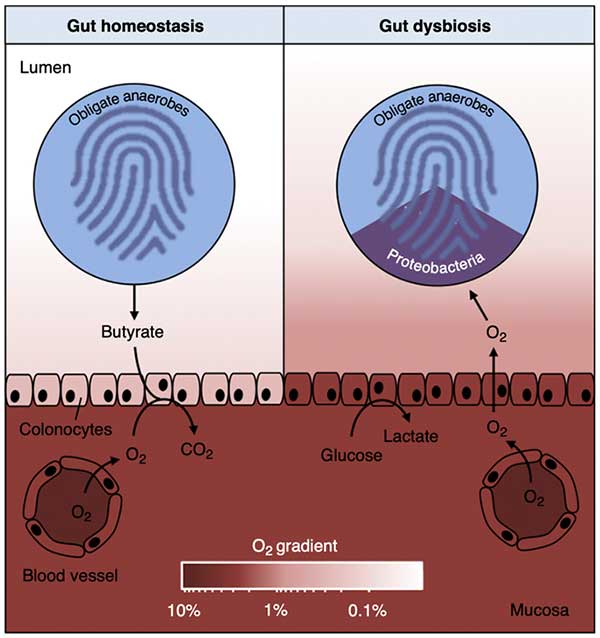
During gut homeostasis (left), b-oxidation of microbiota-derived butyrate causes epithelial hypoxia, which maintains anaerobiosis in the lumen of the large bowel. In turn, luminal anaerobiosis drives a dominance of obligate anaerobic bacteria within the gut microbiota. During gut dysbiosis (right), surface colonocytes obtain energy by anaerobic glycolysis, which leads to increased epithelial oxygenation. This epithelial dysfunction disrupts anaerobiosis in the lumen, thereby driving an expansion of facultative anaerobic Proteobacteria by aerobic respiration. The color scale shown at the bottom (O2 gradient) indicates oxygen availability. Image from: COMICR Volume 39, October 2017, Pages 1-6.
Recent research has revealed that lowering dietary carbohydrate intake can decrease the concentration of SCFAs and SCFA producing bacteria.12 Low-carb, high-protein diets have also been shown to foster a pathogenic and proinflammatory microbiota profile, increase ammonia, phenol, and hydrogen sulfide production, and drive mucosal inflammation and other intestinal issues.13
While low-carb diets can provide short-term relief, in the long-term cutting carbs is a band-aid approach to avoid dealing with a slow metabolism. It’s not fixing the underlying metabolic problem and low energy state that led to the gut problems to begin with.
Low-carb diets increase stress hormones and there is an abundance of research showing that low-carb diets result in reduced active thyroid hormone T3,14 increase thyroid blocking hormone rT3, and reduce metabolic rate and energy production — all of which will negatively impact digestive health in the long run.15
Avoid Restrictive Extremes
The common ‘starving’ approach to gut problems may provide temporary relief but the condition will return because you didn’t address the initial reason why the imbalance occurred — low metabolic rate.
Plus, you can NEVER win the war against bacteria by trying to starve it. Bacteria multiply by 2 every 12 hours. So, if you starve the bacteria, the stuff that grows back will be all replicas of the bacteria that is immune to starvation. This is evolution at its finest and nature will always win.
Rather than taking extreme measures or attempting to micromanage the gut microbiome, a more balanced, holistic approach is recommended:
- Focus on improving overall metabolic rate and systemic function, which involves including dietary carbs, that will address intestinal motility
- Remove gut-irritating foods for your unique gut
- Temporarily eliminate individual trigger foods
- Provide adequate energy and nutrients
- Allow the body’s natural healing mechanisms to work
So, what carbs work best for you? The goal here is to identify foods that can be more fully digested and thus minimize digestive discomfort. Not all carbs will work for everyone! If certain foods don’t agree with you right now (which can totally change as gut health and thyroid health improves), avoid them for the time being.
Try to select foods that you objectively do well with, but we don’t want to be super restrictive with carbs or overall calorie intake as this can negatively impact thyroid health.
Save This Article for Later – Get the PDF Now
The Good News: Gut Health Is Highly Adaptable
One of the most encouraging aspects of gut health is its ability to regenerate and adapt quickly! The gut lining is replaced every three days16 and the gut microbiome can change within a single day based on dietary choices.17
When increasing carbohydrate intake, it’s important to start slowly and focus on whole food sources. Pay attention to your individual response to avoid digestive discomfort and try to maintain consistent as you reintroduce. Best sources of gut-friendly carbohydrates:
- Rice
- Sourdough bread, or quality made bread using well-sourced grains
- Root vegetables like potatoes and sweet potatoes (if you can find Japanese sweet potatoes or purple sweet potatoes, they taste so much better than the orange variety!)
- Fresh, ripe fruits
- Masa harina, or traditionally made tortillas
Some people also do well with soaked and well-cooked legumes. Not all carb sources will work for everyone! Individual responses to different types of carbohydrates can vary significantly, as the state of our own microbiome will determine the effect different types of fibers have on us. So, it is important to focus on the carb sources that work well for you!
Signs of Healthy Gut Function
Indicators of good gut health (and what we are shooting for) include:
- Regular bowel movements (1 to 3 times daily)
- Minimal bloating or discomfort
- The ability to digest a wide variety of food
- Good energy levels
- Proper nutrient absorption
With a well-functioning metabolism, the above IS possible!
Conclusion
Carbohydrates play a vital role in maintaining gut health through multiple mechanisms. From protecting the gut barrier and supporting thyroid function to feeding beneficial bacteria and maintaining proper motility, carbohydrates are essential for optimal digestive function.
The key lies in choosing the right types of carbohydrates that work for you and understanding that gut health is part of a larger systemic picture involving energy production and metabolism. By taking a balanced, informed approach to carbohydrate consumption, we can support our gut health while avoiding the pitfalls of extreme dietary restrictions and food fear.
Remember that the goal isn’t to manipulate the microbiome directly but to provide the body with the tools and resources it needs to maintain optimal gut health naturally. When we support our body’s natural processes through proper nutrition, including adequate carbohydrate intake, we give the body the tools it needs to create the conditions for optimal gut health and overall well-being.
Transform Your Health — One Step at a Time
Ashley and her sister Sarah have put together a truly groundbreaking step-by-step course called “Rooted in Resilience.” They have compiled what clearly is the best application of Dr. Ray Peat’s work on Bioenergetic Medicine that I have ever seen.
It is so good that I am using the core of their program to teach the many Health Coaches that I am in the process of training for the new Mercola Health Clinics I am opening this fall. It took these women working nearly full-time on this project for a year to create it.
This has to be one of the absolute best values for health education I have ever seen. If you want to understand why you struggle with health problems and then have a clear program on how to reverse those challenges, then this is the course for you.
It is precisely the type of program I wish I would have had access to when I got out of medical school. I fumbled around for decades before I reached the conclusion they discuss in the course and share with you so you can restore your cellular energy production and recover your health.
| Select and eat the right foods to heal your metabolism and improve glucose utilization |
| Balance your hormones to help reduce anxiety, weight gain and sleep disturbances |
| Use reverse dieting to increase your calories without gaining weight and tanking your metabolism, all while improving your energy levels |
| Heal your gut for proper immune function, mood and weight management |
| Tweak your diet and lifestyle habits to improve your mindset and mental health |
| Crush your fitness goals with ease and get your life back on track |
| Master the most essential habits for health with bonus guides, including over 100 meal plans to take the stress out of meal time planning and shopping, and so much more! |
About the Author
Ashley Armstrong is the co-founder of Angel Acres Egg Co., which specializes in low-PUFA (polyunsaturated fat) eggs that are shipped to all 50 states (join waitlist here), and Nourish Cooperative, which ships low-PUFA pork, beef, cheese, A2 dairy and traditional sourdough to all 50 states. Waitlists will reopen shortly.
- 1 Histol Histopathol. 2017 Jun;32(6):543-550. doi: 10.14670/HH-11-839. Epub 2016 Nov 8
- 2 Nat Rev Gastroenterol Hepatol. 2013 Mar 12;10(6):352–361
- 3 Indian J Endocrinol Metab. 2014 May-Jun; 18(3): 307–309
- 4 Gastroenterol Res Pract. 2010 Mar 7;2009:529802
- 5 Isr J Med Sci. 1997 Mar;33(3):198-203
- 6 Neuropeptides. 1996 Jun;30(3):237-47. doi: 10.1016/s0143-4179(96)90070-0
- 7 Handbook of Clinical Neurology 86:343-55, DOI: 10.1016/S0072-9752(07)86017-9
- 8 Am J Clin Nutr. 2018 Mar 1;107(3):436-444. doi: 10.1093/ajcn/nqx082
- 9 Nutr Neurosci. 2023 Feb;26(2):108-126. doi: 10.1080/1028415X.2021.2020403. Epub 2022 Jan 4
- 10 Am J Epidemiol. 2014 Sep 15;180(6):565-73. doi: 10.1093/aje/kwu174. Epub 2014 Aug 20
- 11 Science. 2018 Nov 30; 362(6418): eaat9076
- 12 Appl Environ Microbiol. 2006 Dec 22;73(4):1073–1078
- 13 Aliment Pharmacol Ther. 2016 Jan;43(2):181-96. doi: 10.1111/apt.13456. Epub 2015 Nov 2
- 14 J Am Coll Nutr. 1985;4(4):451-9. doi: 10.1080/07315724.1985.10720087
- 15 Diabete Metab. 1982 Dec;8(4):299-305
- 16 Front. Cell Dev. Biol., 12 November 2020 Sec. Stem Cell Research Volume 8 – 2020
- 17 Sci Transl Med. 2009 Nov 11;1(6):6ra14. doi: 10.1126/scitranslmed.3000322
Carbohydrates: The Unexpected Ally in Your Fat Loss Journey
Reproduced from original article:
https://articles.mercola.com/sites/articles/archive/2024/09/10/carbohydrates-fat-loss.aspx
Analysis by Ashley Armstrong September 10, 2024

STORY AT-A-GLANCE
- Carbohydrates are not inherently fattening and can be beneficial for fat loss when included in a calorie-controlled diet. Including carbs in a fat loss diet can improve long-term adherence and satisfaction, making sustainable weight loss more achievable
- Insulin spikes from carbohydrates do not directly cause fat gain; obesity and inactivity are the primary contributors to insulin resistance
- Including carbs in your diet helps preserve muscle mass during fat loss by reducing muscle protein breakdown and supporting exercise performance
- Low-carb diets can negatively impact hormones, decreasing testosterone and increasing cortisol in both males and females
- Carbohydrates play a role in maintaining progesterone levels, which is important for hormonal balance in both men and women. Adequate carbohydrate intake also supports thyroid function and metabolic health by maintaining T3 hormone levels during calorie deficits
Let’s start with a myth: carbohydrates are inherently fattening and should be removed from your diet if you want to lose weight. This is not true! Carbohydrates can and should be included in a healthy fat loss phase. So in this article let’s talk about why including carbs in your diet is BENEFICIAL for fat loss.
But What About Insulin?
When it comes to fat loss, carbohydrates are demonized in many diet camps likely because of the fear mongering around insulin and blood sugar.
The logic seems so clear and appealing: High carbs lead to insulin which leads to fat storage. Low carbs keep insulin low, which should get you effortlessly lean while you enjoy endless amounts of fat, right? No! Do carbs increase insulin levels? Yes, they do. Does increased insulin after meals lead to fat gain? No. Did you know that dietary protein spikes insulin?1 So following the above logic, does dietary protein cause fat gain? No!
Insulin isn’t the devil people want you to believe. Like every other hormone in your body, insulin has a specific purpose and isn’t always a bad thing. (For example — insulin plays a crucial role in promoting muscle growth and maintenance since it facilitates glucose and amino acid uptake into muscle cells, preventing muscle protein breakdown).2
Research demonstrates that obesity and inactivity are the biggest contributors to insulin resistance3,4,5,6 not carbs. In fact, high fat diets can negatively impact insulin sensitivity.7,8 Dietary fat is not a bad thing — but moderate fat and the inclusion of carbs can be beneficial for a number of reasons.
Let’s look at what happened in one study comparing low carb (5% cal) vs. moderate carb (40% cal) where calories were controlled and protein was matched (this is a huge problem in the research: many low carb diet studies don’t match protein intake between the groups leading to more variables.)
Subjects who ate the moderate carb diet reported significantly better mood and lost about the same amount of weight as those on a ketogenic low-carb diet — demonstrating that carb consumption does not inhibit weight loss.
The group who ate more carbs showed a small (though not statistically significant) tendency to lose more body fat as compared to those on a low carb diet (5.5 kg vs 3.4 kg in 6 weeks).
Can a low-carb diet work to help people lose weight? Of course it can. Is it because it is low in carbs? No. As a weight loss strategy, cutting carbs (while reducing the total number of calories) can work well for some people! But cutting carbs can come with costs:
- Reduced thyroid and metabolic function
- Decreased glycogen levels
- Increased muscle loss
- Hormonal imbalances
- More frequent binge eating episodes
So, let’s explore why carbs might actually be good for fat loss:
1. Metabolic health: The carb and thyroid connection — Carbohydrates play a vital role in supporting metabolic health. The liver requires glucose (derived from carbohydrates) to convert T4 to T3, a crucial thyroid hormone. T3 is a thyroid hormone that plays a significant role in regulating metabolism.
When T3 levels are low, the body’s metabolic processes tend to slow down, which means that fewer calories are burned at rest, making fat loss more challenging.
Research has shown that maintaining carbohydrate intake during a calorie deficit helps sustain T3 levels, which is essential for overall metabolic health.9 “During the low carbohydrate diet rT3 increased and T3 decreased but they remained unchanged during the carbohydrate-rich diet.”10
The research is clear that including more carbohydrates tends to increase T3 levels in the body, while low-carb diets tend to lower T3 levels.11,12
 Image from: Chews Food Wisely
Low Energy Availability (LEA) is a condition where the body doesn’t have enough energy to support normal physiological functions after accounting for the energy expended in exercise and daily activities. This can lead to various health problems, including hormonal imbalances, reduced bone density, and impaired immune function.
Studies indicate that adequate carbohydrate intake can help prevent LEA, even during a calorie deficit.13 By providing your body with a steady source of easily accessible energy, you minimize the risk of entering this low energy state, supporting overall health and well-being during your fat loss journey.
In conclusion, including carbs in your diet during a fat loss phase might help sustain T3 levels, potentially supporting metabolic rate and preventing some of the negative effects associated with low-calorie diets on thyroid function.
2. The glycogen factor: Beyond water weight — One of the primary advantages of including carbohydrates in your fat loss diet is their role in maintaining muscle glycogen stores. (Glycogen is stored carbohydrates that serve as a quick-release energy reserve.) Your body can store approximately 400 to 500 grams of glycogen in muscles and 80 to 120 grams in the liver.14
Interestingly, each gram of glycogen is stored with about three grams of water, which means that 500 to 600 grams of glycogen can account for 3 to 4 pounds of your body weight.
 Image from: Heatrick
This glycogen-water relationship explains why people on low-carb diets often see rapid initial weight loss. As the body burns through stored glycogen (since you aren’t consuming carbs), the body releases the associated water, leading to a quick drop in scale weight.15 However, this is primarily water loss, not fat loss.
By maintaining carbohydrate intake, you ensure that your weight loss comes primarily from fat stores rather than this initial water weight.
If you stay in a calorie deficit on a keto diet for long enough, you will of course lose body fat as well. However, when you reintroduce carbs, you’ll likely regain some water weight back as your glycogen stores are replenished.
3. Reduce muscle protein breakdown — Researchers have found that low-carb diets can increase muscle protein breakdown, as measured by increased urinary nitrogen excretion.16
As we just discussed above, consuming carbs keeps your muscle glycogen levels full, which improves your gym performance and helps your recovery — increasing your chances of maintaining muscle mass during a calorie deficit.
When you lose weight, that includes some fat and muscle. But by including carbs, you reduce the amount of muscle you lose since you are reducing muscle protein breakdown! When you get enough carbs to meet your needs, you replenish muscle glycogen and create an anabolic (building-up) hormonal environment.
Conversely, when you don’t eat enough carbohydrate, muscle glycogen is depleted and a catabolic (breaking-down) hormonal environment is created,17 which means more protein breakdown and less protein synthesis. This means slower muscle growth — or even muscle loss.
Research shows that lowering carb intake can affect your muscle mass even if protein remains constant.18 Low carb diets likely increase muscle breakdown, because severely low carbs lowered insulin levels.
Another reason for the reduction in muscle protein breakdown is that carbs can help enhance your performance in the gym. The more you can push yourself in the gym with pushing close to muscular failure at heavier weights, the better mechanical tension and stimulus you can achieve, sending a message to the muscle: “please stick around!”
Carbs are also protein sparing, meaning they supply the body the glucose it needs for vital functions so that it doesn’t have to break down muscle tissue to produce those carbs. When you don’t consume carbs, your body will use some of your dietary protein to perform higher amounts of gluconeogenesis19 in order for your body to meet its baseline glucose needs.
Gluconeogenesis is primarily performed in the liver, so consuming carbs will support liver health since you are reducing one more thing the liver must do (amongst its list of 500 tasks) — more gluconeogenesis!
Carbohydrates play a crucial role in preserving muscle mass during a calorie deficit by maintaining glycogen stores. Plus, muscles that are full of glycogen look MUCH better aesthetically than muscles depleted of glycogen.
4. Negatively impacts hormones — Low carbohydrate diets have been shown to negatively impact hormones for both males and females, decreasing testosterone while increasing cortisol.20,21,22,23
When in a low carb state, your body activates stress hormones in order to make the carbs that your body requires for basic physiological functions.24
Most people nowadays are estrogen dominant due to xenoestrogens, phytoestrogens in certain foods, modern pollutants, birth control, and estrogen hormone replacement.25 For example — menopause and PCOS are not conditions of estrogen deficiency, instead it is excess estrogen.
Improving progesterone production helps balance hormones and reverse estrogen dominance. Well, low carb diets can negatively affect progesterone production. Dr. Katharina Dalton, a pioneer in hormonal balance and PMS, found that dietary changes could significantly influence hormonal levels and alleviate symptoms of PMS.
To properly restore the progesterone hormonal function and hormone balance, she had her patients eat carbs (primarily starches) at each meal.26 Dr. Dalton had two main reasons:
a. To avoid dips in blood sugar — “Progesterone receptors cannot transport or bind to, a molecule of progesterone if there has been a drop in blood sugar.”
b. To keep adrenaline as low as possible — “Progesterone receptors do not transport progesterone molecules into the nucleus of cells if adrenaline is present.”
We are bombarded with estrogenic substances in daily life, so progesterone is vital for truly everyone, including males! And carbs can help optimize progesterone production.
Female hormones are extremely sensitive to diet. For example, one study following 45 patients aged 12 to 19 on a ketogenic diet found menstrual dysfunction was the most common side effect (45% of female subjects) and 6 experienced amenorrhea.27
5. Improved diet adherence and satisfaction — Perhaps one of the most underappreciated benefits of including carbohydrates in a fat loss diet is improved adherence. Carbs contribute to greater food variety, making meals more enjoyable and satisfying. This increased satisfaction can make it easier to stick to your diet long-term, which is crucial for sustainable weight loss.
Finding a diet approach that you can remain consistent with that is not unnecessarily restrictive will help you avoid the never ending restrict-binge-restrict-binge cycle where you may lose 10 lbs, regain it, lose 10 lbs, regain it … that is not sustainable and is a sign what you are doing isn’t working!
This psychological factor is often overlooked but can be crucial in achieving and maintaining your fat loss goals. When you feel less restricted in your food choices, you’re more likely to adhere to your diet plan in the long run.
Conclusion: The Carbohydrate Balance
While creating a calorie deficit is necessary for fat loss, completely eliminating carbohydrates may not be the most effective or sustainable approach. The removal of carbs may help you initially lose weight (since you remove an entire food group, and thus a lot of calories). But, then what? How do you come out of that state? Can you maintain that day in and day out?
By including quality carbohydrates in your diet, you can support your fat loss goals while maintaining muscle mass, metabolic health, better hormones and diet satisfaction. While everyone’s metabolism will be slightly lowered when dieting (this is why you may stall after a while and have to make tweaks along the way), research shows that consuming carbs while eating in a caloric deficit leads to LESS of a metabolism reduction due to higher thyroid functioning.
It is important to point out, however, that even if carbs are included, CHRONICALLY eating lower calorie will eventually lead to a low-energy-availability state. Which is why it is important to have planned out fat loss phases, and not chronically under eat calories.
Remember, sustainable weight loss is about finding a balanced approach that works for you in the long term. So, before you jump on the no-carb bandwagon, consider the potential benefits of keeping carbs as part of your fat loss strategy. Your body — and your taste buds — might thank you for it.
Save This Article for Later – Get the PDF Now
Transform Your Health — One Step at a Time
Ashley and her sister Sarah have put together a truly groundbreaking step-by-step course called “Rooted in Resilience.” They have compiled what clearly is the best application of Dr. Ray Peat’s work on Bioenergetic Medicine that I have ever seen.
It is so good that I am using the core of their program to teach the many Health Coaches that I am in the process of training for the new Mercola Health Clinics I am opening this fall. It took these women working nearly full-time on this project for a year to create it.
This has to be one of the absolute best values for health education I have ever seen. If you want to understand why you struggle with health problems and then have a clear program on how to reverse those challenges, then this is the course for you.
It is precisely the type of program I wish I would have had access to when I got out of medical school. I fumbled around for decades before I reached the conclusion they discuss in the course and share with you so you can restore your cellular energy production and recover your health.
| Select and eat the right foods to heal your metabolism and improve glucose utilization |
| Balance your hormones to help reduce anxiety, weight gain and sleep disturbances |
| Use reverse dieting to increase your calories without gaining weight and tanking your metabolism, all while improving your energy levels |
| Heal your gut for proper immune function, mood and weight management |
| Tweak your diet and lifestyle habits to improve your mindset and mental health |
| Crush your fitness goals with ease and get your life back on track |
| Master the most essential habits for health with bonus guides, including over 100 meal plans to take the stress out of meal time planning and shopping, and so much more! |
About the Author
Ashley Armstrong is the cofounder of Angel Acres Egg Co., which specializes in low-PUFA (polyunsaturated fat) eggs that are shipped to all 50 states (join waitlist here), and Nourish Cooperative, which ships low-PUFA pork, beef, cheese, A2 dairy and traditional sourdough to all 50 states. Waitlists will reopen shortly.
- 1 Physiol Rep. 2023 Jan; 11(2): e15577
- 2 Am J Physiol Endocrinol Metab. Author manuscript; available in PMC 2010 Jan 12
- 3 Am J Med. 2006 May;119(5 Suppl 1):S10-6, doi: 10.1016/j.amjmed.2006.01.009
- 4 Free Radic Res. 2014 Jan;48(1):93-108, doi: 10.3109/10715762.2013.847528. Epub 2013 Oct 17
- 5 Am J Physiol Endocrinol Metab. 2021 Dec 1;321(6):E766-E781, doi: 10.1152/ajpendo.00254.2020. Epub 2021 Nov 1
- 6 Clin Nutr. 2010 Jun;29(3):386-90, doi: 10.1016/j.clnu.2009.09.006. Epub 2009 Oct 28
- 7 Front Public Health. 2023 Mar 16:11:1115333
- 8 Eur J Nutr. 2017 Feb;56(1):431-443. doi: 10.1007/s00394-015-1108-6. Epub 2015 Nov 28
- 9 J Clin Endocrinol Metab. 1976 Jan;42(1):197-200. doi: 10.1210/jcem-42-1-197
- 10 Am J Clin Nutr. 1982 Jan;35(1):24-35. doi: 10.1093/ajcn/35.1.24
- 11 Nutrients. 2018 Jan; 10(1): 5
- 12 PLoS One. 2022; 17(6): e0269440
- 13 Med Sci Sports Exerc. 2022 Mar 1;54(3):377-387. doi: 10.1249/MSS.0000000000002819
- 14 Nutr Rev. 2018 Apr; 76(4): 243–259
- 15 Nutrients. 2022 Feb; 14(3): 423
- 16 J Clin Endocrinol Metab. 2003 Aug;88(8):3801-5. doi: 10.1210/jc.2002-021087
- 17, 18 Journal of Applied Psychology, Volume 109, Issue 2, August 2010, Pages 431-438
- 19 The Journal of Clinical Endocrinology & Metabolism, Volume 85, Issue 5, 1 May 2000, Pages 1963–1967, doi: 10.1210/jcem.85.5.6573
- 20 Eur J Appl Physiol Occup Physiol. 1993;66(4):304-8. doi: 10.1007/BF00237773
- 21 Eur J Appl Physiol. 2010 Apr;108(6):1125-31. doi: 10.1007/s00421-009-1220-5. Epub 2009 Dec 20
- 22 Life Sciences, 40(18):1761-8 40(18):1761-8, doi: 10.1016/0024-3205(87)90086-5
- 23 Eur Food Res Technol 242, 2001–2009 (2016). doi: 10.1007/s00217-016-2772-3
- 24 Jay Feldman Wellness, April 30, 2024
- 25 Ray Peat, Aging, estrogen, and progesterone
- 26 Shakespeare & Co., Once a Month: Understanding and Treating PMS (Paperback)
- 27 Epilepsia. 2003 Jun;44(6):847-51. doi: 10.1046/j.1528-1157.2003.57002.x
Proteins, Fats and Carbs: Basics of Nutritional Biochemistry 101
Reproduced from original article:
https://articles.mercola.com/sites/articles/archive/2024/05/30/proteins-fats-carbs.aspx
Analysis by Dr. Joseph Mercola May 30, 2024

STORY AT-A-GLANCE
- Macronutrients are the primary components of your diet that give you energy; they consist of proteins, fats and carbohydrates, each of which serves unique functions in your body
- Proteins are essential for building and repairing tissues, including muscles and organs; they also play crucial roles in the functioning of enzymes, hormones and immune system components
- Fats are a dense source of energy and play a role in hormone production and the regulation of body temperature, while acting as a key component of cells and tissues
- Carbohydrates, which include simple sugars and complex carbohydrates, are one of the primary sources of energy for your body
- Optimal health is an ongoing journey and you must listen to your body to determine the best macronutrient ratio for you
Macronutrients are the primary components of your diet that give you energy. They consist of proteins, fats and carbohydrates, each of which serves unique functions in your body. While you need each of these macronutrients in relatively large quantities — compared to micronutrients like vitamins and minerals — to function at your best and avoid disease, the exact breakdown for optimal health continues to be debated.
While I’ve long recommended high-fat and low-carb consumption, I’ve recently learned that most people would benefit from far higher amounts of carbohydrates in their diet. Further, it’s likely that polymorphisms that affect your metabolic pathways alter your individual nutrient requirements, such that there’s no one-size-fits-all diet program that’s best for everyone.
There are certainly some nutritional tenets we can all adhere to, like getting your macronutrients from whole foods, not ultraprocessed ones. However, it’s counterproductive to vilify fats, carbohydrates or any macronutrient your body needs. A better approach is to seek to understand each component on its own merits, and why it’s essential for your overall health.
What Are Proteins?
Proteins are essential for building and repairing tissues, including muscles and organs. They also play crucial roles in the functioning of enzymes, hormones and immune system components. Proteins are made up of amino acids, some of which are essential because your body cannot produce them and must obtain them from food. Sources of protein include meat, fish, eggs, dairy products, legumes, nuts and seeds. As explained in the Osmosis video above:1
“Protein is an essential part of the human diet … Regardless of the source, the protein that we eat gets broken down and reformed into new proteins in our bodies. These proteins do everything from fighting infections to helping cells divide. You name it, they’re doing it. At its simplest, a protein is a chain of amino acids bound to one another by peptide bonds like a string of beads.
These strings get twisted and folded into a final protein shape. When we eat protein, it gets broken down into its individual amino acids. Most amino acids have a central carbon atom bonded to one amino or nitrogen-containing group and one carboxylic acid group.
That’s why it’s called an amino acid. The carbon also has one hydrogen atom and a sidechain, which is unique to each amino acid. The exception to this is prolene, which is a tiny little ring structure instead. Although there are hundreds of amino acids in nature, humans only use about 20 of them to make basically every type of protein.”
Those 20 proteins include:
| Alanine | Arginine | Asparagine | Aspartic acid |
| Cysteine | Glutamic acid | Glutamine | Glycine |
| Histidine | Isoleucine | Leucine | Lysine |
| Methionine | Phenylalanine | Prolene | Serine |
| Threonine | Tryptophan | Tyrosine | Valine |
Five of these — alanine, asparagine, aspartic acid, glutamic acid and serine — are considered non-essential amino acids because your body can make them, although you can also get them from foods. Another six of these proteins — arginine, cysteine, glutamine, glycine, proline and tyrosine — are described as conditionally essential.
This is because, while your body can make them if you’re healthy, during times of illness, stress or intense physical activity, your body’s ability to produce these amino acids may not be sufficient to meet your needs, making it necessary to consume them through the diet.
There are also nine essential amino acids, which are those that we can only get from food. These include histidine, isoleucine, leucine, lysine, methionine, phenylalanine, threonine, tryptophan and valine.
How Your Body Breaks Down Proteins
When you eat proteins, a process known as proteolysis occurs to break them down. Osmosis explains:2
“Dietary protein provides the essential amino acids that are needed to make our own proteins, hormones and other important molecules — a circle of life of sorts — but to do so we need to break the dietary protein down first through a process called proteolysis. When we first eat a protein-containing food, proteolysis begins when the food reaches the stomach.
First, hydrochloric acid denatures the protein, unfolding it and making the amino acid chain more accessible to enzymatic action. Then, pepsin, which is itself made by gastric chief cells, enters the picture.
Pepsin cleaves any available protein into smaller oligopeptide chains, which move into the duodenum where a second set of digestive enzymes made by the pancreas further chopped the oligopeptides into tripeptides, dipeptides and individual amino acids.
These can all be taken up to the intestinal cells where di- and tripeptides are then converted into amino acids. Some amino acids remain in these cells and are used to synthesize intestinal enzymes and new cells. But most enter the bloodstream and are transported to other parts of the body in general.”
Save This Article for Later – Get the PDF Now
What Are Fats?
Fats are a dense source of energy and are important for absorbing vitamins, supporting cell growth and protecting organs. They also play a role in hormone production and the regulation of body temperature, while acting as a key component of cells and tissues.
Fats can also be converted into prostaglandins, which help cells communicate. The Osmosis video above further breaks down the makeup of the saturated and unsaturated fats in your diet:3
“Fats have a three-carbon backbone called glycerol, as well as fatty acid chains. The fatty acid chain is basically a string of carbon and hydrogen atoms. When an ‘OH’ from the glycerol molecule binds to an ‘H’ from the fatty acid, an ‘H20’ — a water molecule — gets released, and the two molecules link up.
If this happens once, the result is a monoglyceride. If it happens twice, it’s a diglyceride and three times makes a triglyceride. Now, there are various types of fatty acid chains, and one way to categorize them is by their length, in other words, how many carbons they have.
Short-chain fatty acids have 2 to 5 carbons, medium chain fatty acids have 6 to 12 carbons and long chain fatty acids have 13 or more carbons. Fatty acid chains are also categorized by the bonds connecting the carbons in the chain. A single bond is just one bond between the carbon atoms, and when a fatty acid chain has only single bonds, it’s called a saturated fatty acid — because it has as many hydrogen atoms as possible — it’s saturated with them.
Triglycerides with saturated fatty acids are nice and straight so they pack together really well, and as a result they’re usually solid at room temperature. And the longer the saturated fatty acid chain, the more likely it will be solid at room temperature.
Carbons can also have double bonds between them, and when a fatty acid has one or more double bonds, it’s called an unsaturated fatty acid because it’s not saturated with hydrogen atoms — for every double bond there are two fewer hydrogen atoms.
Also, a double bond causes a kink in the molecule so the triglycerides don’t pack together as nicely as saturated fats. As a result, unsaturated fats are usually liquid at room temperature. Unsaturated fatty acids can be further classified according to the number of their double bonds. Monounsaturated fatty acids are fatty acids with only a single double bond. Polyunsaturated fatty acids have two or more double bonds.”
While I’ve long recommended a high-fat diet, I’m now convinced that having more healthy carbs than fat is a great choice to improve your metabolic health. To break down why very simply, when more than 30% to 35% of your calories are coming from fat, you are forcing your cells to burn fat and put glucose on the back burner, instead of being metabolized like it should be. I delve deeper into this topic in, “Understanding the Randle Cycle.”
Further, as detailed in several previous articles, the evidence strongly suggests excessive amounts of the omega-6 fat linoleic acid is driving most modern diseases, including heart disease and cancer. Consuming over 5 grams of LA a day is likely to cause problems. I keep my intake below 2 grams a day.
What Are Carbohydrates?
Carbohydrates, which include simple sugars and complex carbohydrates, are one of the primary sources of energy for your body. But in terms of your health, not all carbohydrates are created equal. Osmosis describes some of the key differences among the most common dietary carbs:4
“Sugar actually refers to a family of molecules called saccharides — monosaccharides where ‘mono’ means one, so one sugar molecule, disaccharides where ‘di’ means two, so two sugar molecules linked together, oligosaccharides where ‘oligo’ means a few, so it’s three to nine sugar molecules linked together, and polysaccharides where ‘poly’ means many, so it’s 10 or more sugar molecules linked together.
Glucose is the most important member of the sugar family and it’s a monosaccharide. It’s one of the main sources of calories for the body, and is able to cross the blood-brain barrier and nourish the brain. Another monosaccharide is fructose, which is commonly found in honey, fruits and root vegetables. Finally, there’s the monosaccharide galactose, known as milk sugar.
It’s known as milk sugar because it’s only found in nature when it links with glucose to form lactose, a disaccharide found in the milk of mammals, which includes cow and human breast milk. Sucrose, or table sugar, is another disaccharide and it’s formed when fructose links up with glucose.
Sucrose is found in various fruits and vegetables, with sugarcane and sugar beets having the highest quantities. Maltose is another disaccharide — and this one is two glucose molecules linked together, and it’s found in molasses, which can be used as a substrate to ferment beer.”
Complex carbohydrates, meanwhile, can be oligosaccharides or polysaccharides, which are the most abundant type of carbohydrates found in food. Among complex carbs, there are also starches and fibers:5
“Starches are polysaccharides with molecular bonds between sugar molecules that human intestinal enzymes can break down. Starches are an important source of calories, and can be found in foods like rice, potatoes, wheat and maize. Starches don’t taste sweet like simple sugars because they don’t activate taste buds in the same way.
And there also dietary fibers, which are carbohydrates that intestinal enzymes can’t break down, and so the body cannot digest them. Now there are many different types of dietary fibers, and they’re not all the same when it comes to their structure or impact on health.
Fibers have molecular bonds that are resistant to human intestinal enzymes, so they pass through the small intestine undigested, get broken down a bit by bacteria in the large intestine, and ultimately end up as bulk matter in the stool.
Fiber is critical because it can slow down the rate of absorption of simple sugars like glucose in the small intestine, which can help maintain healthy blood glucose levels. They also increase stool weight, which helps prevent constipation, and fibers like beta-glucan are also good for heart health.”
Refined Sugars vs. Healthy Carbs
Refined carbohydrates or sugars, which are also sometimes referred to as free sugars, include those that are added to ultraprocessed foods and drinks. High-fructose corn syrup is an example of a refined sugar. These sugars are linked to health problems such as dental decay and heart disease, as well as cancer.6
Intrinsic sugars, also known as naturally occurring sugars, are those found within the cellular structure of foods, including whole fruits and vegetables. These sugars are part of the food’s natural composition, not added during processing, and come with the beneficial nutrients and fiber found in whole foods, which can slow down sugar absorption and mitigate its impact on blood sugar levels.
One of the primary differences between these two types of sugars is that refined sugars, as well as many starches, are a common cause of endotoxin production in your gut, which destroys mitochondrial function and results in cancer metabolism.
The fructose present in whole foods does not typically result in the production of endotoxin. This is one of the primary differences between refined sugar and fructose from ripe fruit and helps explain why refined sugars fuel cancer. However, adding healthy carbs to your diet can be beneficial.
In the past, I followed a ketogenic diet that was below 50 grams of carbs a day up to about 100 grams a day. However, I’ve recently increased that to 500 grams of carbs per day, mostly in the form of rice and ripe fruit.
The key to remember is that optimal health is an ongoing journey and you must listen to your body to determine the best macronutrient ratio for you. You’ll also get a dramatically different outcome if your macronutrients come from highly processed fake foods — like processed foods high in LA — compared to those from healthy whole foods.
The easiest way to keep track of your nutrient intake is to use an online nutritional calculator such as Cronometer. To get the most accurate data, carefully weigh your food with a digital kitchen scale so you can enter the weight of your food to the nearest gram.