Vitamins
now browsing by category
Microscopic Menace — Scientists Discover Plastic Nanoparticles in Men’s Testicles
Reproduced from original article:
https://articles.mercola.com/sites/articles/archive/2024/07/15/plastic-nanoparticles-in-mens-testicles.aspx
Analysis by Dr. Joseph Mercola July 15, 2024

STORY AT-A-GLANCE
- Scientists discovered microplastics in men’s testicles, raising concerns about their potential impact on reproductive health
- Researchers were surprised to find microplastics in the testicles, given the tight blood-tissue barrier in the male reproductive system, known as the blood-testis barrier
- The study found microplastics in all the testes examined, with polyethylene (PE) being the most common type of plastic
- A 2023 study similarly found microplastics in the male reproductive system, including the testis and semen
- Plastics are loaded with chemicals that are xenoestrogens that can mimic the effects of estrogen in your body; much of their danger is related to their stimulation of estrogen receptors
The average person eats about 5 grams of plastic per week — about the amount found in one credit card.1 So it’s no wonder that tiny pieces of plastic are turning up throughout the human body, including in places you might not expect. Following research that found plastic particles in the human bloodstream,2 and another study that found them in the human heart,3 scientists have now discovered microplastics in men’s testicles.4
The study’s lead author, Dr. John Yu, a toxicologist in the College of Nursing at the University of New Mexico, wasn’t expecting microplastics to have infiltrated the testicles, given the tight blood-tissue barrier in the male reproductive system, known as the blood-testis barrier.
As noted in Pharmacological Reviews, “The blood-testis barrier (BTB) is one of the tightest blood-tissue barriers in the mammalian body.”5 The presence of microplastics in the testes suggests that microplastics can bypass or penetrate the BTB, raising concerns about their ability to infiltrate other protected and sensitive tissues in the body, as well as their potential impact on reproductive health.
Microplastics Found in Human and Dog Testicles
For the study, researchers from the University of New Mexico measured 12 types of microplastics in 47 canine and 23 human testes.6 Microplastics are small plastic particles that are less than 5 millimeters in size. They may be intentionally manufactured for use in products like cosmetics, personal care items (such as exfoliating beads in face scrubs) and industrial applications. They also include microfibers shed from synthetic clothing during washing.
Microplastics also include small plastic fragments that result from the breakdown of larger plastic items, such as bottles, bags and other plastic debris. This breakdown can occur due to environmental exposure, such as sunlight (photodegradation), ocean waves and weathering.
The study involved both human and dog testicles, as dogs share many physiological and anatomical similarities with humans, making them a valuable model for studying human diseases and conditions.
Further, because dogs share the same living environment as humans, they are exposed to similar pollutants, chemicals and other potential hazards. As such, they’re often considered sentinel animals,7 meaning they can serve as early warning indicators of potential health risks and environmental hazards that might also affect humans.
The study found microplastics in all the canine and human testes examined, with significant differences between individuals. On average, total microplastic levels were 122.63 µg (micrograms) per gram (g) in dogs and 328.44 µg/g in humans.8 Both humans and canines had similar proportions of the main types of microplastics, with polyethylene (PE) being the most common.
Polyvinyl chloride (PVC) was also detected and linked with lower sperm count in dog testicles. Higher levels of PVC were also associated with decreased weight of the testicles, as was polyethylene terephthalate (PET).9 A 2023 study similarly found microplastics in the male reproductive system, including the testis and semen.10
Are Microplastics Involved in Male Infertility?
It’s estimated that 11 million tons of plastic waste enter the world’s oceans annually — an amount that could nearly triple by 2040.11 What’s the end result of a plastic world? An impending fertility crisis is upon us. Men experienced a 50% to 60% decline in sperm counts from 1973 to 2011, according to a 2017 study published in Human Reproduction Update.12
An update to the study, which includes data from 53 countries and an additional seven years13 — 2011 to 2018 — found sperm concentration declined “appreciably” by 51.6% from 1973 to 2018. The percent decline per year doubled, increasing from 1.16% after 1972 to 2.64% after 2000.14
Total sperm count also declined at an alarming level — 62.3% from 1973 to 2018. A class of plastic chemicals called phthalates, which are so ubiquitous that the U.S. Centers for Disease Control and Prevention has stated “phthalate exposure is widespread in the U.S. population,”15 may be particularly to blame.
An estimated 8.4 million metric tons of plasticizers, including phthalates, are used worldwide each year,16 with phthalate production amounting to about 4.9 million metric tons annually.17 Microplastics often contain phthalates, which can leach out of the material18 causing endocrine-disrupting effects.

Save This Article for Later – Get the PDF Now
Exposure to Plastic Chemicals in Utero May Affect Male Fertility as an Adult
Women’s exposure to phthalates during pregnancy is linked to male babies’ anogenital distance (AGD) — the distance from the anus to the base of the penis — with higher exposure associated with shortened AGD.19 Later in life, shorter AGD is linked with a smaller penis20 and poorer semen quality, such that AGD at birth may be predictive of adult reproductive function.21
Phthalate syndrome refers to a number of disturbances to male reproductive development that have been observed after exposure to phthalates in utero.22 In studies on rats, it’s been found that when a rat that’s been gestating in a mother rat fed phthalates during the sensitive periods of reproduction, his genitals end up smaller and less developed, his testicles might not be fully descended, his penis may be smaller, and the whole size of the genital area is smaller.23,24
What’s more, phthalates represent only one class of endocrine-disrupting chemicals. There are many more, including bisphenol-A (BPA), flame retardants, pesticides and per- and polyfluoroalkyl chemicals (PFAS) chemicals.25 Since microplastics often contain harmful endocrine-disrupting chemicals, this is one way they may affect fertility.
It’s also likely that they affect fertility via other mechanisms as well, including inflammation, oxidative stress and even direct disruption of reproductive functions if they accumulate in the testes and other sensitive areas.
An evidence review conducted for California State Legislature in 2023 revealed, in fact, that “exposure to microplastics is suspected to adversely impact sperm quality and testicular health in humans based on … high quality of the body of evidence.”26
Plastic’s Estrogenic Effects
Plastics are xenoestrogens that can mimic the effects of estrogen in the body.27 Much of their danger is related to their stimulation of estrogen receptors. Phthalates, for instance, have estrogenic properties, and some endocrine-disrupting chemicals are also considered estrogenic carcinogens.
This is because the abnormal stimulation of estrogen receptors promotes cell proliferation and potentially contributes to the development and progression of estrogen-sensitive cancers, such as breast cancer28 and endometrial cancer.29
Due to their estrogenic effects, plastics exposure contributes to estrogen dominance, which may affect men’s reproductive health. Exposure to certain endocrine disruptors is associated with reduced semen quality and impaired fertility in men,30 for instance, while endocrine disruptors — particularly xenoestrogens — are also “etiologic factors in the global decrease of sperm counts and other problems of the male reproductive tract.”31
Progesterone Can Help Lower Your Estrogen Burden
Before you consider using progesterone it is important to understand that it is not a magic bullet and you get the most benefit by implementing a Bioenergetic diet approach that allows you to effectively burn glucose as your primary fuel with backing up electrons in your mitochondria that reduces your energy production. My new book coming out shortly about Cellular Health covers this process in great detail.
Once you have dialed in your diet, an effective strategy that can help counteract estrogen excess is to take transmucosal progesterone (not oral or transdermal), which is a natural estrogen antagonist. Progesterone is one of only four hormones I believe many adults can benefit from. (The other three are thyroid hormone T3, DHEA and pregnenolone.)
I do not recommend transdermal progesterone, as your skin expresses high levels of 5-alpha reductase enzyme, which causes a significant portion of the progesterone you’re taking to be irreversibly converted primarily into allopregnanolone and cannot be converted back into progesterone.
Ideal Way to Administer Progesterone
Please note that when progesterone is used transmucosally on your gums as I advise, the FDA believes that somehow converts it into a drug and prohibits any company from advising that on its label.
However, please understand that it is perfectly legal for any physician to recommend an off-label indication for a drug to their patient. In this case progesterone is a natural hormone and not a drug and is very safe even in high doses. This is unlike synthetic progesterone called progestins that are used by drug companies, but frequently, and incorrectly, referred.
Dr. Ray Peat has done the seminal work in progesterone and probably was the world’s greatest expert on progesterone. He wrote his Ph.D. on estrogen in 1982 and spent most of his professional career documenting the need to counteract the dangers of excess estrogen with low LA diets and transmucosal progesterone supplementation.
He determined that most solvents do not dissolve progesterone well and discovered that vitamin E is the best solvent to optimally provide progesterone in your tissue. Vitamin E also protects you against damage from LA. You just need to be very careful about which vitamin E you use as most supplemental vitamin E on the market is worse than worthless and will cause you harm not benefit.
It is imperative to avoid using any synthetic vitamin E (alpha tocopherol acetate — the acetate indicates that it’s synthetic). Natural vitamin E will be labeled “d alpha tocopherol.” This is the pure D isomer, which is what your body can use. There are also other vitamin E isomers, and you want the complete spectrum of tocopherols and tocotrienols, specifically the beta, gamma, and delta types, in the effective D isomer.
There are also other vitamin E isomers, and you want the complete spectrum of tocopherols and tocotrienols, specifically the beta, gamma, and delta types, in the effective D isomer. As an example of an ideal vitamin E you can look at the label on our vitamin E in our store. You can use any brand that has a similar label.
You can purchase pharmaceutical grade bioidentical progesterone as Progesterone Powder, Bioidentical Micronized Powder, 10 Grams for about $40 on many online stores like Amazon. That is nearly a year’s supply, depending on the dose you choose.
However, you will need to purchase some small stainless steel measuring spoons as you will need a 1/64 tsp which is 25 mg and a 1/32 tsp which is 50 mg. A normal dose is typically 25-50 mg and is taken 30 minutes before bed as it has an anti-cortisol function and will increase GABA levels for a good night’s sleep.
Unfortunately, this vendor frequently runs out of product, and if that’s the case, then you can use Simply Progesterone by Health Natura. It’s premixed with vitamin E and MCT oil.
If you are a menstruating woman, you should take the progesterone during the luteal phase or the last half of your cycle, which can be determined by starting 10 days after the first day of your period and stopping the progesterone when your period starts.
If you are a male or non-menstruating woman you can take the progesterone every day for four to six months and then cycle off for one week. The best time of day to take progesterone is 30 minutes before bed as it has an anti-cortisol function and will increase GABA levels for a good night’s sleep.
This is what I have personally doing for over a year with very good results. I am a physician so do not have any problems doing this. If you aren’t a physician you should consult one before using this therapy, as transmucosal progesterone therapy requires a doctor’s prescription.
Additional Strategies to Decrease Your Estrogen Load
Considering that estrogenic microplastics are ubiquitous in the environment, including in food and drinking water, taking steps to avoid them is important both for reproductive and overall health — and may help lower your estrogen burden.
You can help reduce your exposure by becoming conscious of the plastic you’re using daily — and cut back where you can. Some steps are easy, like swapping plastic bags, bottles, straws, utensils and food containers for more durable, reusable options. You’ll also want to choose fresh foods as much as possible. Avoid fast foods and ultraprocessed foods, and choose those with minimal natural packaging or glass packaging instead.
You should also filter your drinking water and be mindful of the materials you use in your home. Avoid flooring, shower curtains and furniture made with phthalates, and vacuum often to pick up household dust, which is often contaminated. Some additional commonsense strategies that can help you limit your exposure and lower your estrogen load include:
| Avoid synthetic estrogens — Minimize exposure to synthetic estrogens, such as those found in hormone replacement therapy and oral contraceptives. Consult with a qualified health care professional about alternative treatments and/or contraceptive methods with lower estrogen content. |
| Avoid linoleic acid (LA) — Omega-6 PUFA like LA functions very similarly to estrogen as they both increase your risk for cancer and decrease metabolic function by suppressing your thyroid. Best to read my comprehensive LA article for more details. |
| Choose natural products — Opt for natural and organic personal care products, including makeup, skin care, and hair care items, to reduce exposure to synthetic chemicals like parabens and phthalates, which have estrogenic properties. |
| Limit pesticide exposure — Choose organic produce whenever possible to reduce exposure to pesticides, many of which have estrogenic effects. Washing fruits and vegetables thoroughly can also help remove pesticide residues. |
| Rethink your household products — Many household cleaning products, laundry detergents and air fresheners contain chemicals with estrogenic properties. Swap them out for natural, nontoxic alternatives or make your own cleaning solutions using vinegar, baking soda and essential oils instead. |
| Avoid plastic containers — Minimize the use of plastic containers and food packaging, which can leach estrogenic compounds into food and beverages. Instead, opt for glass or stainless steel containers for food storage and water bottles. |
| Maintain a healthy weight — Aim for a healthy weight and body composition through a balanced diet and regular exercise. Excess body fat, particularly around the thighs, hips, and buttocks, can contribute to higher estrogen levels. |
| Support liver health — Support liver function, as your liver plays a crucial role in metabolizing and eliminating excess estrogen from your body. Eat a nutrient-rich diet, limit alcohol consumption and consider incorporating liver-supporting herbs and supplements, such as milk thistle or dandelion root. |
| Promote hormonal balance — Explore natural approaches to promote hormonal balance, such as consuming foods rich in cruciferous vegetables (such as broccoli, cauliflower and kale) and flaxseeds, which contain compounds that help support estrogen metabolism and detoxification. |
| Reduce stress — Manage stress through relaxation techniques like meditation, deep breathing exercises, yoga or spending time in nature. Chronic stress can disrupt hormone balance, including estrogen levels, so prioritizing stress reduction is essential. |
- 1 WWF Analysis, No Plastic in Nature: Assessing Plastic Ingestion From Nature To People June 2019
- 2 Environment International May 2022, Abstract
- 3 Environ. Sci. Technol. 2023, 57, 30, 10911–10918, Abstract
- 4, 6, 8 Toxicological Sciences May 15, 2024
- 5 Pharmacol Rev. 2012 Jan;64(1):16-64. doi: 10.1124/pr.110.002790. Epub 2011 Oct 28
- 7, 9 NPR May 22, 2024
- 10 Sci Total Environ. 2023 Jun 15:877:162713. doi: 10.1016/j.scitotenv.2023.162713. Epub 2023 Mar 21
- 11 Pew Trusts July 23, 2020
- 12 Human Reproduction Update, Volume 23, Issue 6, November-December 2017, Pages 646–659, doi: 10.1093/humupd/dmx022
- 13 EurekAlert! November 15, 2022
- 14 Human Reproduction Update November 15, 2022, Outcomes
- 15 U.S. CDC, Phthalates Factsheet (Archived)
- 16 CNN February 20, 2021
- 17 American Journal of Public Health February 18, 2021, page e1
- 18 Environ Sci Technol. 2021 Sep 7; 55(17): 11814–11823
- 19 Environ Health Perspect. 2005 Aug; 113(8): 1056–1061
- 20 Scientific American March 16, 2021
- 21 Environ Health Perspect. 2011 Jul 1; 119(7): 958–963
- 22 Environ Int. 2020 Jan;134:105287. doi: 10.1016/j.envint.2019.105287. Epub 2019 Nov 26
- 23 YouTube, After Skool, A Global Fertility Crisis, Shanna Swan October 12, 2021, 13:31
- 24 Environ Res. 2008 Oct; 108(2): 177–184
- 25 Scientific American March 13, 2024
- 26 California State Policy Evidence Consortium (CalSPEC). Microplastics Occurrence, Health Effects, and […] January 2023. Sacramento, CA., Page 33
- 27 Cancers 2022, 14(19): 4637
- 28 Environ Sci Pollut Res Int., 2018 Aug; 25(24):23624-23630
- 29 Environ Health Perspect., 2020 Dec;128(12):127005
- 30 Medicine, Biology, Environmental Science February 1, 2010
- 31 Rev Environ Health. 2002 Oct-Dec;17(4):253-62. doi: 10.1515/reveh.2002.17.4.253
Mammograms Are a Tragic Lie
Reproduced from original article:
https://articles.mercola.com/sites/articles/archive/2024/07/03/mammograms-tragic-lie.aspx
Analysis by Dr. Joseph Mercola July 03, 2024

STORY AT-A-GLANCE
- There are a significant number of drawbacks to consistent mammograms, and research demonstrates this test does not reduce your risk of death from the disease
- Mammograms, used to detect breast cancer, employ ionizing radiation that carries a risk of developing cancer; 3D mammography, also called breast tomosynthesis, uses more radiation to achieve sharper images
- Data show after 10 mammograms you have a 50% to 60% risk of receiving a false positive result, potentially necessitating further testing with more radiation or even treatment
- You may be able to prevent 75% to 90% of breast cancers through lifestyle changes, such as reducing exposure to hazardous toxins, seeking out organic products, severely reducing refined sugar and fructose, and limiting protein
There are a significant number of drawbacks to having consistent mammograms. Although your doctor may say that having a mammogram may reduce your risk of dying by 20%,1 you’d be surprised by how that percentage is calculated.
As explained by Dr. Andrew Lazris and environmental scientist Erik Rifkin, Ph.D., for every 1,000 women who do not get mammograms, five will die from breast cancer. For every 1,000 women who do get regular mammograms, four will die.
The difference between those two groups is 20%, or the one person whose life is saved by getting a mammogram. A 2017 study from the Netherlands demonstrates that no matter how this number was calculated, it is likely not accurate.2 What’s worse, the reverse side of the equation is that more women are actually harmed by the procedure or undergo unnecessary treatment as a result of false positives.
Mammograms Are Not Saving Lives
The study analyzed the reason fewer women are dying from breast cancer in the Netherlands after an aggressive screening program was instituted in 1989, including regular mammograms.3 Screening programs make the assumption that early detection is easier to treat and will result in better outcomes. Participants in the study were Dutch women who were screened every other year between 1989 and 2012. Nearly 8 million women were included in the data analysis.
The research was led by Dr. Philippe Autier from the University of Strathclyde Institute of Public Health. The intention was to determine if regular screening with a mammogram would affect the number of advanced cases of breast cancer detected and the number of deaths from the disease.4
In a previous study, in which the researchers used some of the same data, they found a decrease in the incidence of some advanced breast cancers that indicated the use of widespread mammography had been effective in reducing the number of deaths and improving early treatment.
However, when the researchers expanded the analysis of the data, they failed to find the same reduction. During the period of the featured study, there had been no significant decrease in the extent of diagnosis of stage 2 to stage 4 breast cancers.5
Initially, the reduction in the number of women dying from breast cancer was attributed to a combination of environmental, lifestyle and genetic factors. These factors may have resulted in a 5% reduction between 1995 and 2012. Although the number of stage 0 and stage 1 cancers diagnosed increased sharply, the number of later-stage cancers remained stable.6
Next, the researchers analyzed the data to determine what impacted the reduction in deaths from breast cancer if it wasn’t an aggressive screening program. The researchers found that 85% of the observed decrease in deaths was related to improvements in treatment and not as a result of mammograms identifying lesions.
How Mammograms Work
A mammogram is an X-ray image of breast tissue, taken in the hopes of detecting abnormal cellular growth that may indicate breast cancer. The X-ray doesn’t actually image a tumor growth, but rather looks for alterations in the tissue, which may be indicative of a tumor. It is also possible that some advanced tumors grow without expected tissue changes and thus go undetected.7
During a mammogram, your breast tissue is compressed against two plates to reduce the amount of tissue the X-ray must travel through, thereby reducing the amount of radiation needed and blurring from unintentional movement.8 The machine produces small bursts of ionizing radiation that may be read on film or digitally.
Compared to traditional mammograms, 3D mammography or breast tomosynthesis uses many low-dose X-rays as the machine moves over the breast,9 during which the breast tissue is compressed once and a computer makes a three-dimensional image. However, while this type of image may produce clearer results, you also receive greater amounts of radiation.
The issue with either a traditional mammogram or 3D mammography is that you are exposed to ionizing radiation. This exposure carries significant health risks, including actually causing cancer and increasing your risk of breast cancer. Researchers have determined that women who carry the BRCA1/2 mutation may have greater vulnerability to radiation-induced cancers.10
Data suggest you have a 50% to 60% chance of receiving a false positive result after 10 yearly mammograms.11 Unfortunately, these positive results may lead to further mammograms, biopsies and sometimes to treatments, including partial mastectomy.12
Save This Article for Later – Get the PDF Now
Mammograms Are Not Preventive Medicine
During the featured study, Autier found the mammograms overdiagnosed 59% of stage 1 cancers and 33% of stage 0 cancers.13 In other words, the lesions that were found by the mammograms didn’t necessarily require any treatment.
These findings support previous work published in the Journal of the American Medical Association, which concluded that finding additional small cancers without an absence in the overall rate of death suggests widespread overdiagnosis and overtreatment.14
Since the tumors had been identified, women were undergoing treatment they didn’t require. In fact, one study demonstrated $4 billion is spent each year on health care following false-positive mammograms.15
Autier commented,16 “I don’t think the accumulating data show that continuing mammography screening is a good solution, essentially because the price to pay by women in terms of overdiagnosis is enormous.” Prevention is clearly the best medicine when it comes to cancer, but screening does not qualify as prevention.
Optimal Vitamin D Levels Associated With Cancer Prevention
Research into optimal levels of vitamin D have repeatedly demonstrated levels within a range of 40 to 60 nanograms per milliliter (ng/ml) provide impressive cancer protection. I believe testing your vitamin D levels twice a year is one of the most important cancer prevention tests available. While there may be times when a mammogram may be warranted, there are also other nonionizing alternatives that may get the job done.
Ultrasound, for example, has been shown to be considerably superior to mammography, especially for women with dense breast tissue who are at a much higher risk of a false negative mammogram. Getting back to prevention, in one study,17 researchers found a strong association between vitamin D levels and breast cancer progression and metastasis. One of the authors of the study, Dr. Brian Feldman of Stanford University School of Medicine, commented:18
“A number of large studies have looked for an association between vitamin D levels and cancer outcomes, and the findings have been mixed. Our study identifies how low levels of vitamin D circulating in the blood may play a mechanistic role in promoting breast cancer growth and metastasis.”
Higher levels of vitamin D are also associated with an increased likelihood of survival from breast cancer.19 In animal models, researchers have demonstrated breast cancer tumors are more likely to grow and metastasize faster in mice who are deficient in vitamin D.20 In one study using human subjects, patients who had an average of 30 ng/ml of vitamin D had a 50% lower mortality rate compared to those who had an average level of 17 ng/ml of vitamin D.21
The ideal way to optimize your vitamin D level is through sensible sun exposure, as there are many benefits to sun exposure that are unrelated to vitamin D. For instance, near-infrared rays from the sun stimulate your body to structure water and increase mitochondrial repair and regeneration. This is one of the reasons I moved to Florida. I have not swallowed vitamin D in over eight years and still have levels over 60 ng/ml.
If you live in a northern climate and have low vitamin D, taking an oral vitamin D3 supplement is certainly recommended. However, remember this is a far inferior way to optimize your levels. It is also important to measure your vitamin D levels twice a year to make sure you’re within a healthy range. To learn more about the links between vitamin D status and cancer, please see “More Evidence Showing Vitamin D Combats Cancer.”
Steps You Can Take to Reduce Your Risk of Cancer
According to research published in Environmental Health Perspectives,22 you can reduce your risk of breast cancer by avoiding certain chemicals found in common, everyday products.
Researchers identified 216 chemicals that increase mammary gland tumors in rodents, which they then narrowed down to 102 chemicals and prioritized based on exposure. This resulted in the following 17 chemical groups, flagged as “high priority” due to their ability to consistently produce mammary tumors in test animals.
| Flame retardants — Flame retardant products, polyester resins, plastic polymers and rigid polyurethane foams |
| Acrylamide — Diet (especially fried foods cooked at high temperatures, such as French fries), tobacco smoke and polyacrylamide gels in consumer products such as diapers |
| Aromatic amines — Polyurethane, pesticides, Azo dyes and many other products |
| Benzene — Gasoline (riding in a car, pumping gasoline, and storing gasoline in a basement or attached garage), tobacco smoke, adhesive removers, paints, sealants, finishers, and engine fuel and oils |
| Halogenated organic solvents — Dry cleaning, hair spray propellant, soil fumigants, food processing, gasoline additives, and paint and spot removers |
| Ethylene (EtO) and propylene oxide (PO) — EtO is a gas used to sterilize medical equipment, food and spices, clothing and musical instruments; also found in tobacco smoke and auto exhaust. PO is a sterilant and fumigant; also found in automotive and paint products |
| 1,3-Butadiene — Cigarette smoke, automobile exhaust, gasoline fumes and emissions from industrial facilities |
| Heterocyclic amines — Meat cooked at high temperatures and tobacco smoke |
| Endogenous and pharmaceutical hormones and other endocrine-disrupting chemicals — Estrogens, progesterone and DES, along with other hormones |
| Nonhormonal pharmaceuticals that have hormonal activity — These include four chemotherapeutic agents, two veterinary drugs possibly present in food, the diuretic furosemide, the antifungal griseofulvin and several anti-infective agents |
| MX — One of hundreds of genotoxic by-products of drinking water disinfection |
| Perfluorooctanoic acid (PFOA) — Nonstick and stain-resistant coatings on rugs, furniture, clothes and cookware; fire-fighting applications, cosmetics, lubricants, paints and adhesives |
| Nitro-PAHs — Air pollution, primarily from diesel exhaust |
| PAHs — Tobacco smoke, air pollution and charred foods |
| Ochratoxin A (a naturally occurring mycotoxin) — Contaminated grain, nuts and pork products |
| Styrene — Food that has been in contact with polystyrene; consumer products and building materials, including polystyrene, carpets, adhesives, hobby and craft supplies, and home maintenance products |
Parabens are used as preservatives in antiperspirants, sunscreens and many cosmetics. Studies have demonstrated that all parabens have estrogenic activity in human breast cancer cells.23,24,25,26 Further, a study found one or more paraben esters in 99% of 160 tissue samples collected from 40 mastectomies.27 The consistent presence of parabens suggests products containing the esters may also increase your risk of breast cancer.
Although antiperspirants are a common source of parabens, the authors of one study note that the source could not be established, and seven of the 40 patients reportedly never used deodorant or antiperspirant in their lifetime. This suggests that regardless of the source, parabens bioaccumulate in breast tissue. And, as parabens are found in a wide variety of personal care products, cosmetics and drugs, exposure is not limited to one source.
The American Institute for Cancer Research estimates that by making three lifestyle changes, you may be able to prevent 33% of all breast cancers.28 Those steps include getting and staying fit, maintaining a healthy weight and avoiding alcohol.
Implementing prevention strategies is much more powerful than early detection as they improve your overall health and reduce your risk of exposure to chemical hazards, including chemotherapeutic drugs. Aside from eating organic foods, I also recommend seeking out organically produced items, such as clothing and bed linens (ideally GOTS certified), cosmetics and other personal care items, detergents and cleaning products.
Accumulated exposure to toxins and endocrine-disrupting chemicals from a variety of sources has a compound effect on your health, as many of these chemicals are poorly metabolized or eliminated from your body, if at all.
- 1 CBS News, October 30, 2012
- 2 The BMJ, 2017;359:J5224
- 3, 6, 13 Los Angeles Times, December 5, 2017
- 4, 5, 7, 12, 16 Time, December 6, 2017
- 8 National Institute of Biomedical Imaging and Bioengineering, Mammography
- 9 American Cancer Society, Mammogram Basics
- 10 The BMJ, 2012;345:e5660
- 11 Susan G. Komen, Accuracy of Mammograms
- 14 Journal of the American Medical Association, 2015;175(9):1483
- 15 CBS News, April 7, 2015
- 17 Endocrinology, 2016;157(4):1341
- 18 National Cancer Institute, April 14, 2016
- 19, 21 Medical News Today, March 7, 2014
- 20 Bone. 2010 Oct;47(4):795-803
- 22 Environmental Health Perspectives, 2014;122(9):881
- 23 WebMD, October 27, 2015 (Archived)
- 24 Medscape, January 26, 2012
- 25, 27 Journal of Applied Toxicology, January 12, 2012; doi: 10.1002/jat.1786
- 26 J Appl Toxicol. 2004 Jan-Feb;24(1):5-13
- 28 American Institute for Cancer Research, September 30, 2016 (Archived)
Common Signs of Vitamin B1 Deficiency
Reproduced from original article:
https://articles.mercola.com/sites/articles/archive/2024/05/29/signs-of-vitamin-b1-deficiency.aspx
Analysis by Dr. Joseph Mercola May 29, 2024

STORY AT-A-GLANCE
- Thiamine, also known as vitamin B1, is an essential vitamin that your body cannot produce and must be obtained from diet or supplements
- Thiamine plays a crucial role in energy production by metabolizing glucose and is vital for nerve health and cognitive function
- It also aids in heart function by producing the neurotransmitter acetylcholine and supports digestive health by assisting in hydrochloric acid production
- Research suggests thiamine can help prevent complications in diabetes and supports immune function to protect against respiratory illnesses. Thiamine supplementation has also shown benefits in improving symptoms like fatigue in autoimmune diseases such as IBD and Hashimoto’s
- Initial signs of thiamine deficiency include fatigue, muscle weakness, poor appetite, digestive issues, brain fog, mood swings, and eye-related problems. Advanced deficiency can lead to beriberi, manifesting as either neurological issues (dry beriberi), cardiovascular problems (wet beriberi), gastrointestinal symptoms, or severe brain dysfunction (cerebral beriberi)
Thiamine (vitamin B1) is used by nearly all your cells and is essential for several functions in the body. Thiamine is considered an “essential” vitamin because your body can’t produce it on its own; it must be obtained from outside sources; be it diet or supplementation.
Health Benefits of Thiamine
Thiamine’s key health benefits and mechanisms of action include:
| Energy production — Thiamine plays a central role in metabolizing glucose to produce energy for the body. It is essential for the proper functioning of the Krebs cycle, a critical energy-producing pathway that converts proteins, fats, and carbohydrates into energy. |
| Nerve function — Thiamine is sometimes referred to as an “antistress” vitamin for its positive influence on your central nervous system. It aids in the maintenance of healthy nerve cells and supports the proper functioning of your nervous system.
Thiamine deficiency has been implicated in amyotrophic lateral sclerosis (ALS), with ALS patients having about 60% lower thiamine levels in their brains and peripheral nervous systems, resulting in severely impaired glucose metabolism.1 There’s also limited evidence suggesting high doses of thiamine and biotin can help reverse the pathology seen in Huntington’s disease, again by restoring glucose metabolism.2 |
| Heart health — Thiamine contributes to the correct functioning of the heart. It is involved in the production of the neurotransmitter acetylcholine, which is used to relay messages between the nerves and muscles and is essential for normal heart function. |
|
Cognitive function — Adequate levels of thiamine are associated with improved cognitive function. It helps in maintaining a healthy brain, particularly in older adults, and can help prevent disorders related to cognitive decline, including Alzheimer’s.3,4 As explained by the Alzheimer’s Association,5 “Thiamine helps brain cells produce energy from sugar. When levels fall too low, brain cells cannot generate enough energy to function properly.” Indeed, impaired glucose metabolism is a known hallmark of Alzheimer’s and other dementias, and researchers have postulated that this reduction in glucose metabolism is caused by a “decline in thiamine-dependent processes.”6 |
| Digestive health — Thiamine assists in the production of hydrochloric acid, which is essential for proper digestion. Adequate thiamine levels ensure efficient digestion of food and absorption of nutrients. |
| Prevention of diabetes complications — Research suggests thiamine can help prevent complications in people with diabetes by protecting against oxidative stress and possibly improving glucose tolerance. |
| Immune function — Thiamine is also important for healthy immune function. In addition to nutrients such as zinc and vitamins C and D, it helps protect against infectious respiratory illnesses.
Thiamine deficiency syndrome (beriberi) has also been implicated in other types of severe infections and bears many similarities to sepsis. This is one of the reasons why thiamine is such an important part of Dr. Paul Marik’s sepsis treatment.7 Sepsis, in turn, is a major contributor in influenza deaths in general, and a primary cause for COVID-19 deaths specifically. |
Thiamine in Alcohol Addiction and Autoimmune Conditions
Thiamine is frequently recommended and given to people struggling with alcohol addiction, as alcohol consumption reduces absorption of the vitamin in your gastrointestinal tract. An estimated 80% of alcoholics are deficient in thiamine and therefore more prone to the side effects and conditions listed above.8
Thiamine is also very important for those with autoimmune diseases such as inflammatory bowel disease (IBD) and Hashimoto’s (a thyroid autoimmune disorder).9 In case studies,10,11 thiamine supplementation has been shown to improve fatigue in autoimmune patients in just a few days.
Interestingly, in one of these studies,12 which looked at patients with IBD, patients responded favorably to supplementation even though they all had “normal” baseline levels.
The authors speculate that thiamine deficiency symptoms in such cases may be related to enzymatic defects or dysfunction of the thiamine transport mechanism (opposed to being an absorption problem), which can be overcome by giving large quantities of thiamine.
Save This Article for Later – Get the PDF Now
Thiamine Deficiency May Be Underestimated
While thiamine deficiency is often the result of alcohol misuse, chronic infections, poor nutrition and/or malabsorption, research suggests vitamin B1 availability has dramatically declined throughout the food chain in recent years,13 and that naturally affects your ability to get sufficient thiamine from your diet.
Adult men and women need 1.2 and 1.1 mg respectively each day.14 If you have symptoms of thiamine deficiency, you may need higher doses.
Considering both plants and wildlife are becoming increasingly thiamine-deficient,15 it’s logical to suspect that this deficiency is becoming more common in the human population as well. Unfortunately, statistics on thiamine deficiency in the U.S. population are not readily available in a direct, comprehensive format, so it’s hard to assess how widespread it might be.
Considering how crucial thiamine is for health and optimal biological functioning — and the rapid increase in conditions associated with thiamine deficiency — it’s important to evaluate your intake on an individual level. One way to do that would be to use an online nutritional calculator such as Cronometer. Another way to assess your status is by looking for signs and symptoms of deficiency.
Signs and Symptoms of Thiamine Deficiency
Early symptoms of thiamine deficiency include:16,17
| Fatigue/getting easily exhausted, due to its role in glucose metabolism and energy production |
| Muscle weakness, as thiamine is required for proper contraction and relaxation of muscles |
| Poor appetite and/or digestive problems, due to its impact on your digestive function |
| Brain fog, confusion and/or memory problems, as thiamine is essential for healthy brain function and cognition |
| Mood swings and irritability |
| Eye-related issues such as sensitivity to light, eye fatigue and involuntary eye movements |
| Nutrient malabsorption, as thiamine is involved in the absorption of other nutrients |
As your deficiency grows more severe, it can progress into one of four types of beriberi:18
- Paralytic or nervous beriberi (aka “dry beriberi”) — Damage or dysfunction of one or more nerves in your nervous system, resulting in numbness, tingling and/or exaggerated reflexes
- Cardiac (“wet”) beriberi — Neurological and cardiovascular issues, including racing heart rate, enlarged heart, edema, breathing problems and heart failure
- Gastrointestinal beriberi — Nausea, vomiting, abdominal pain and lactic acidosis
- Cerebral beriberi — Wernicke’s encephalopathy, cerebellar dysfunction causing abnormal eye movements, ataxia (lack of muscle coordination) and cognitive impairments. If left untreated, it can progress to Korsakoff’s psychosis, a chronic brain disorder that presents as amnesia, confusion, short-term memory loss, confabulation (fabricated or misinterpreted memories) and in severe cases, seizures
Are You Getting Enough B Vitamins?
If you have any of the signs listed above or discovered that your daily intake is insufficient using Cronometer, the solution is to eat more foods high in thiamine, such as wheatgerm and acorn squash, and/or take a supplement.
Thiamine insufficiency or deficiency can develop in as little as two weeks, as its half-life in your body is only nine to 18 days.
Evidence suggests thiamine insufficiency or deficiency can develop in as little as two weeks, as its half-life in your body is only nine to 18 days.19 Ideally, select a high-quality food-based supplement that contains a broad spectrum of B vitamins to avoid creating an imbalance. The following guidelines can also help protect or improve your thiamine status:
- Eat fermented foods — The entire B group vitamin series is produced within your gut provided you have a healthy gut microbiome. Eating real food, ideally organic, along with fermented foods will provide your microbiome with important fiber and beneficial bacteria to help optimize your internal vitamin B production as well.
- Avoid excessive alcohol consumption, as alcohol inhibits thiamine absorption, and frequent use of diuretics, as they will cause thiamine-loss.
- Avoid sulfite-rich foods and beverages such as nonorganic processed meats, wine and lager, as sulfites have antithiamine effects.
- Correct any suspected magnesium insufficiency or deficiency, as magnesium is required as a cofactor in the conversion of thiamine.
Daily Intake Recommendations
While individual requirements can vary widely, the typical daily intake recommendations for B vitamins are as follows:
| Nutrient | Supplement Recommendations |
|---|---|
| Thiamine (B1) | Adult men and women need 1.2 and 1.1 mg respectively each day.20 If you have symptoms of thiamine deficiency, you may need higher doses.
Thiamine is water-soluble and nontoxic, even at very high doses, so you’re unlikely to do harm. Doses between 3 grams and 8 grams per day have been used in the treatment of Alzheimer’s without ill effect. |
| Riboflavin (B2) | Suggested daily intake is about 1.1 mg for women and 1.3 mg for men.21 |
| Niacin (B3) | The dietary reference intake established by the Food and Nutrition Board ranges from 14 to 18 mg per day for adults. Higher amounts are recommended depending on your condition.
For a list of recommended dosages, see the Mayo Clinic’s website.22 I recommend taking 50 mg of niacinamide, a form of B3 that plays a crucial role in energy metabolism, three times a day. Niacinamide is also a precursor to NAD+, which is essential in the conversion of food to energy, maintaining DNA integrity and ensuring proper cell function. |
| Vitamin B6 | Nutritional yeast (not to be confused with Brewer’s yeast or other active yeasts) is an excellent source of B vitamins, especially B6.23
One serving (2 tablespoons) contains nearly 10 mg of vitamin B6, and the daily recommended intake is only 1.3 mg.24 |
| Inositol/Biotin (B8) | B8 is not recognized as an essential nutrient and no recommended daily intake has been set. That said, it’s believed you need about 30 mcg per day.25
Vitamin B8 is sometimes listed as biotin on supplements. Brewer’s yeast is a natural supplemental source.26 |
| Folate (B9) | Folic acid is a synthetic type of B vitamin used in supplements; folate is the natural form found in foods. (Think: Folate comes from foliage, edible leafy plants.)
For folic acid to be of use, it must first be activated into its biologically active form (L-5-MTHF). This is the form able to cross the blood-brain barrier to give you the brain benefits noted. Nearly half the population has difficulty converting folic acid into the bioactive form due to a genetic reduction in enzyme activity. For this reason, if you take a B-vitamin supplement, make sure it contains natural folate rather than synthetic folic acid. Nutritional yeast is an excellent source.27 Adults need about 400 mcg of folate per day.28 |
| Vitamin B12 | Nutritional yeast seasoning is also high in B12 and is highly recommended for vegetarians and vegans. One serving (2 tablespoons) provides about 67 mcg of natural vitamin B12.29
Sublingual (under-the-tongue) fine mist spray or vitamin B12 injections are also effective, as they allow the large B12 molecule to be absorbed directly into your bloodstream. |
- 1 Haidut.me June 28, 2023 (Archived)
- 2 Haidut.me February 24, 2023 (Archived)
- 3 Haidut.me July 12, 2022 (Archived)
- 4 Haidut.me August 27, 2021 (Archived)
- 5 Alzheimer’s Association, Korsakoff Syndrome
- 6 Businesswire July 7, 2022
- 7 Chest June 2017; 151(6): 1229-1238
- 8, 16, 18 alcoholrehabhelp.org Thiamine
- 9 Thyroidpharmacist.com August 23, 2023
- 10, 12 Journal of Alternative and Complementary Medicine 2013 Aug;19(8):704-8
- 11 Journal of Alternative and Complementary Medicine 2013; 00(00): 1-4 (PDF) (Archived)
- 13, 15 The Science Times January 31, 2021
- 14, 20 NIH Thiamin, February 9, 2023
- 17 Theheartysoul.com April 2, 2024
- 19 Journal of Thoracic Disease 2016 Jun; 8(6): 1062–1066, Thiamine Elimination and Associated Thiamine Insufficiency Syndromes
- 21 NIH Riboflavin May 11, 2022
- 22 Mayo Clinic Niacin
- 23 Self Nutrition Data, Nutritional Yeast (Archived)
- 24 NIH Vitamin B6 June 16, 2023
- 25 NIH Biotin January 10, 2022
- 26 Mount Sinai Health 2021
- 27 Chalkboard, Nutritional Yeast
- 28 NIH Folate November 1, 2022
- 29 USDA Nutritional Yeast Seasoning July 17, 2019
‘Strong and Consistent Evidence’ Links Multivitamins to Memory and Cognitive Benefits
Reproduced from original article:
https://articles.mercola.com/sites/articles/archive/2024/05/13/multivitamins-benefits.aspx
Analysis by Dr. Joseph Mercola May 13, 2024

STORY AT-A-GLANCE
- Taking a daily multivitamin may improve memory and slow cognitive decline in older adults, according to a third major study on the topic
- The studies used data from the COcoa Supplement and Multivitamin Outcomes Study (COSMOS), with the latest showing those taking multivitamins perform better on cognitive and memory tests
- The COSMOS-Mind study found daily multivitamin supplementation translated to a 60% slowing of cognitive decline in those with a mean age of 73
- The COSMOS-Web study found taking a multivitamin improved performance by “the equivalent of 3.1 years of age-related memory change” compared to placebo
- The COSMOS-Clinic study, analyzed the effects of a daily multivitamin supplement on cognitive changes based on in-person visits, also found multivitamins had a positive impact on overall brain function over two years when compared to a placebo
Taking a daily multivitamin may improve memory and slow cognitive decline in older adults, according to a third major study on the topic. The studies used data from the COcoa Supplement and Multivitamin Outcomes Study (COSMOS), which evaluated whether cocoa extract supplementation with and without a standard multivitamin affected the risk of developing cardiovascular disease and cancer.
While the study, which involved 21,442 participants, found cocoa flavanol supplementation did not show a significant impact in reducing the total number of cardiovascular events, further evaluation revealed daily multivitamins potentially reduced lung cancer by 38% and “did appear to improve levels of several nutritional biomarkers.”1
Three additional studies using subsets of COSMOS data focused on cognitive benefits, with the latest showing those taking multivitamins perform better on cognitive and memory tests.2
COSMOS-Mind — Multivitamins Linked to Slower Cognitive Decline
The COSMOS-Mind study involved 2,262 participants with a mean age of 73 and looked at how taking cocoa extract or multivitamins and minerals (MVM) for three years affected brain function.3 Researchers called participants to test their thinking skills at the start of the study and then annually.
They measured overall brain function by looking at average scores from different tests, including memory and problem-solving activities. While the study found that cocoa extract didn’t make a difference in overall brain function, significant benefits were found from the daily multivitamin, with three years of such supplementation translating to a 60% slowing of cognitive decline, which is equivalent to about 1.8 years.4
Improvements in global cognition, episodic memory and executive function were noted, with the effects most pronounced in people with cardiovascular disease. According to the study, which was published in the journal Alzheimer’s & Dementia:5
“COSMOS-Mind provides the first evidence from a large-scale, long-term, pragmatic RCT [randomized controlled trial] to suggest that daily use of a safe, readily accessible, and relatively low-cost MVM supplement has the potential to improve or protect cognitive function for older women and men.
An additional trial is needed to confirm these findings in a more representative cohort and to explore potential mechanisms for cognitive benefit. This work may ultimately have important public health implications for standard of care to improve or protect cognitive function in older adults.”
COSMOS-Web — Multivitamins May Improve Memory in Those 60 and Over
The second study, COSMOS-Web, included men over the age of 60 and women over 65 who received either a multivitamin supplement or a placebo. The participants were evaluated at baseline and each year using neuropsychological tests over a period of three years.
Those taking the multivitamin supplement had better immediate recall at the first year point, which was maintained during follow-up. Effects were most pronounced in people with cardiovascular disease.
“When we start seeing that kind of consistency across well-designed studies, it certainly helps convince me — the ultimate skeptic — that we’re on to something real,” professor Adam Brickman of Columbia University, who worked on the first study, told Insider. “… I started taking multivitamins the day we ran the analyses and saw the results, and I take ’em every morning.”6
“There is evidence that people with cardiovascular disease may have lower micronutrient levels that multivitamins may correct, but we don’t really know right now why the effect is stronger in this group,” Brickman said.7
The researchers estimated that taking a multivitamin improved performance by “the equivalent of 3.1 years of age-related memory change” compared to placebo8 and could not only help maintain cognitive functioning but potentially enhance it later in life. The team concluded:9
“Vitamin supplementation is relatively inexpensive, accessible, and has a few adverse effects, and thus might be a potentially useful population health intervention … Daily multivitamin supplementation, compared with placebo, improves memory in older adults. Multivitamin supplementation holds promise as a safe and accessible approach to maintaining cognitive health in older age.”
Save This Article for Later – Get the PDF Now
COSMOS-Clinic — Multivitamins Improve Memory and Slow Cognitive Aging
The third study, COSMOS-Clinic, analyzed the effects of a daily multivitamin supplement on cognitive changes based on in-person visits involving 573 people.10 It, too, found multivitamins had a positive impact on overall brain function over two years when compared to a placebo. Specifically, they found a significant improvement in memory of past events, but not in the ability to plan or pay attention.11
The researchers, from Massachusetts General Hospital, Harvard Medical School and Brigham and Women’s Hospital in Boston, also conducted a meta-analysis involving all three COSMOS studies, without repeating participants and spanning two to three years of taking multivitamins.
The meta-analysis “showed strong evidence of benefits for both global cognition and episodic memory,” according to a press release. “The authors estimate that the daily multivitamin slowed global cognitive aging by the equivalent of two years compared to placebo.”12 Study author Chirag Vyas with Massachusetts General Hospital (MGH), said:13
“Cognitive decline is among the top health concerns for most older adults, and a daily supplement of multivitamins has the potential as an appealing and accessible approach to slow cognitive aging … The meta-analysis of three separate cognition studies provides strong and consistent evidence that taking a daily multivitamin, containing more than 20 essential micronutrients, helps prevent memory loss and slow down cognitive aging.
These findings will garner attention among many older adults who are, understandably, very interested in ways to preserve brain health, as they provide evidence for the role of a daily multivitamin in supporting better cognitive aging.”
Since the three trials used varied methods to assess cognition — including telephone, online and in-person assessments — and involved a large number of participants, they provide convincing evidence for the positive role of multivitamins in healthy brain aging. Study author Howard Sesso, with Brigham and Women’s Hospital, added:14
“With these three studies using different approaches for assessing cognition in COSMOS, each providing support for a daily multivitamin, it is now critical to understand the mechanisms by which a daily multivitamin may protect against memory loss and cognitive decline with a focus on nutritional status and other aging-related factors.
For example, the modifying role of baseline nutritional status on protecting against cognitive decline has been shown for the COSMOS cocoa extract intervention. A typical multivitamin such as that tested in COSMOS contains many essential vitamins and minerals that could explain its potential benefits.”
Multivitamins Improve Biomarkers of Nutrition in Men Aged 68 and Over
It’s estimated that one-third of U.S. adults — and one-quarter of children and adolescents — use multivitamin and mineral supplements,15 making them one of the most common supplements in the U.S. But despite their popularity, many wonder whether taking multivitamins really makes a difference in health.
A team of researchers from Oregon State University (OSU), who conducted a study involving 35 men aged 68 years or older, concluded, “Our evidence indicates that many older men could benefit from a daily multivitamin.”16
The men took either a multivitamin/multimineral (MV/MM) supplement or a placebo for at least six months. The researchers were mainly looking to see if the supplements would change levels of certain nutrients in their blood, a sign of better vitamin and mineral status. They also wanted to see if these supplements would affect how cells use oxygen, which is important for energy and health.
Those who took the MV/MM supplements saw improvements in their blood levels of certain vitamins, such as B6, vitamin D, vitamin E and beta-carotene, showing that the supplements could indeed boost the amount of these nutrients in the body.
However, the supplements didn’t make a significant difference in the levels of minerals like calcium and zinc. Interestingly, the supplements helped prevent a decrease in the rate at which certain immune cells used oxygen, which could be a good sign for overall health, particularly for metabolism and the immune system.
In contrast, the placebo group didn’t see these benefits and even saw a drop in some vitamin levels, suggesting they were moving toward a less optimal vitamin status. While vitamin and mineral deficiencies weren’t widespread in the healthy subjects that took part in the study, the researchers still found multivitamins to be worthwhile, explaining:17
“[T]he use of MV/MM supplements can improve or prevent declines in the status of several vitamins and may prevent declines in cellular bioenergetic status. Although MV/MM supplementation is a ‘one-size-fits-all’ strategy and does not target specific micronutrient needs, it is a cost-effective approach to improve micronutrient status in older men and may have an as yet unappreciated impact on maintaining metabolic function in cells.”
Can You Get Enough Vitamins and Minerals From Food Alone?
Ideally, people of all ages should strive to get their nutrition from whole, nutrient-dense foods — and it’s certainly possible to get the vitamins and minerals your body requires via your diet. However, nutrient deficiencies are common, even among people who believe they’re eating a balanced diet. In the U.S., 31% of the U.S. population was found to be at risk of at least one vitamin deficiency or anemia.18
Beyond cognitive function, your body depends on essential nutrients for growth, development and health maintenance, and deficiencies in certain vitamins can impact your immunity, vision, wound healing, bone health and much more.
This is why, if you think you may be missing out on important vitamins in your diet, the best way to boost your intake is via organic, whole foods. But if you’re not eating right, a high-quality multivitamin may help fill in any gaps and improve biomarkers of nutrition.19,20
“We’re not suggesting that people should get their vitamin and nutrient intake from supplements — the primary source of that should be from whole and healthy foods,” Brickman told Insider. “… I think that multivitamins, along with a lot of other things that we could potentially do as we age, might have a modest but meaningful effect on how we age, cognitively.”21
He added in a news release, “Supplementation of any kind shouldn’t take the place of more holistic ways of getting the same micronutrients.”22 When choosing a multivitamin, be sure to look for a manufacturer that has checks and balances in place to ensure the quality of the product.
And remember, since multivitamins contain both water- and fat-soluble vitamins, it’s generally recommended to take half your daily dose in the morning, with breakfast, and the other half with your main meal.
- 1 COcoa Supplement and Multivitamin Outcomes Study, Multivitamin Findings
- 2, 10 The American Journal of Clinical Nutrition March 2024, Volume 119, Issue 3, Pages 692-701
- 3 Alzheimer’s & Dementia September 14, 2022
- 4 Atrium Health, Wake Forest Baptist September 14, 2022
- 5 Alzheimer’s & Dementia September 14, 2022, Discussion
- 6, 21 Business Insider October 11, 2023
- 7, 22 Columbia University Irving Medical Center May 24, 2023
- 8 The American Journal of Clinical Nutrition July 2023, Volume 118, Issue 1, Pages 273-282, Results
- 9 The American Journal of Clinical Nutrition July 2023, Volume 118, Issue 1, Pages 273-282, Discussion, Conclusions
- 11, 12, 13, 14 Mass General Brigham January 18, 2024
- 15 NIH, Multivitamin/mineral Supplements, Fact Sheet for Health Professionals
- 16, 19 Oregon State University June 14, 2023
- 17 Nutrients 2023, 15(12), 2691; doi: 10.3390/nu15122691, Conclusions
- 18 Nutrients. 2017 Jul; 9(7): 655., Abstract
- 20 Nutrients 2023, 15(12), 2691; doi: 10.3390/nu15122691
Why Does Science Still Ignore Vitamin C?
Reproduced from original OMNS article (OrthoMolecular News Service):
http://orthomolecular.org/
Subscribe to the free Orthomolecular Newsletter: http://orthomolecular.org/subscribe.html
Go to the OMNS Archive: http://orthomolecular.org/resources/omns/index.shtml
Orthomolecular Medicine News Service, May 18, 2022
From colds to Covid, ascorbate has long been marginalized
by Pim Christiaans
OMNS (May 18, 2022) For more than 20 years, Dr. Harri Hemilä, biochemist, physician and epidemiologist, has been analyzing research conducted with vitamin C. In 2017, ORTHO magazine had an interview with him. [1] At that time, the interest in vitamin C was mainly about the common cold. Now it also concerns another virus infection, Covid-19. Has anything changed since then? The near-total lack of interest within medical science for vitamin C still exists. And apparently, medical professors don’t give a damn about the vitamin, as if it were a career killer.
Since 2002, Hemilä has considered it his professional duty to analyze studies conducted on vitamin C and to publish the analyses. What is the common thread after more than a hundred scientific publications, of which twelve were published in the years 2020 and 2021, and three in 2022? Well, one of these three reveals that common thread. In a review article of 27 pages in the open access magazine Life, [2] Hemilä unfolds his experiences and explains them in a long telephone conversation with ORTHO. The title of the article speaks volumes: “Bias against Vitamin C in Mainstream Medicine: Examples from Trials of Vitamin C for Infections.” Remarkable. It turns out that prejudices (“bias”) are a major common thread in the medical scientific world.
Thousand versus half a million
In the article, Hemilä shows, among other things, that the authors of the COVID-A to Z Study wrongly conclude that vitamin C is ineffective against Covid-19, because the data they rely on incorrectly show otherwise. [3] This will be discussed in more detail below.
Hemilä is pleased that Life has published his extensive article on the prejudice against vitamin C for everyone to read. [2] However, he is under no illusions about its impact: “According to the counter on Life’s website, more than a thousand people have read my article. The COVID-A to Z Study on JAMA’s website also has a counter. And it was at half a million the last time I looked.”
In the Life article, Hemilä refers to articles by scientists who note that since the beginning of the last century, doctors and medical scientists have been writing about and discussing nutritional supplements with disdain. According to these researchers, over-the-counter vitamin pills undermined the authority of doctors, because they allowed the patient to self-treat. Moreover, it was not possible to patent nutrients, so there was little to gain for the pharmaceutical industry. And in the second half of the twentieth century, the discovery of patentable antibiotics overshadowed the promising effects of vitamin C against infectious diseases.
It was not until the end of the 1960s that there was renewed interest in the vitamin when Linus Pauling got involved. This led to a series of relatively large studies that, according to Hemilä, supported the effectiveness of vitamin C. Nevertheless, scientific interest in the vitamin fell again in the late 1970s. Hemilä points to the so-called “Karlowski Study” as the main cause, along with two other articles from 1975.
Start of the problem
In 1975, five years after the publication of Linus Pauling’s book Vitamin C and the Common Cold, the scientific journal JAMA published the results of the Karlowski Study, a double-blind randomized placebo-controlled trial of vitamin C. [4] Although colds in the group of subjects who took 6 grams of vitamin C were 17% shorter, the authors attribute this outcome entirely to a placebo effect. Hemilä did not agree with this, and in 1996 subjected the data to a thorough re-analysis. [5] Astonished, he concluded that the data in fact do show a real, physiological effect of vitamin C and that the placebo explanation is incorrect. He caught the authors making all kinds of mistakes. For example, 42% of the recorded colds were apparently omitted from the subgroup analysis without further explanation – an unforgiveable sin within the statistics. The data indicate a dose-response effect: the tested dose of 6 grams per day is twice as effective as the tested dose of 3 grams per day. Hemilä calculates that if you draw the line, a study with 12 grams of vitamin C would have been the obvious choice. Such a study, however, never materialized, partly due to the discouraging placebo explanation of the Karlowski Study.
He compares the Karlowski-Study to a zombie: “Although liquidated long ago, it refuses to disappear into the grave and continues to leave a trail of destruction through scientific literature.” Hemilä’s skilful disassembly of the Karlowski Study has never been disproved, but nevertheless has had little impact. According to him, this study has remained by far the most influential study on vitamin C and the common cold. The vitamin C skeptics couldn’t have it any better. There is a good chance that if a skeptical scientist mentions evidence on vitamin C, he will refer to this study.
Recent studies ignore evidence
Even now, according to Hemilä, studies are published with negative conclusions in their summaries, while the data on which they are based imply a very different conclusion. A good example of this is the ‘CITRIS-ALI study’ that was published in JAMA in 2019. [6]
In that study, participants were 167 patients in the ICU with sepsis and acute respiratory distress syndrome (ARDS). They received intravenous vitamin C (50 mg/kg body weight every 6 hours) or a placebo for four days. The researchers conclude: “A 96-hour infusion of vitamin C showed no significant improvement in organ dysfunction scores, nor did it alter markers of inflammation and vascular damage, compared to placebo.” but did not mention a major result: a strong decrease in mortality. Hemilä checked this and explained that during the first four days (when the vitamin C was administered) the mortality in the vitamin C group decreased by 81%. “The main clinically relevant result of the CITRIS-ALI trial was mortality and the measurement of a dozen biomarkers should not distract from that,” said Hemilä.
A second study
As a second example, Hemilä provided the previously mentioned COVID-A to Z-Study, which was published in JAMA Network Open in 2021. [3] The aim of that study was to evaluate the effect of 8 grams per day of vitamin C in 520 ambulatory Covid-19 patients. However, the study was terminated prematurely due to the slow influx of patients. This slowness led, as the researchers had mentioned, to a state of “futility.” [3] Therefore, in this aborted study, the number of patients remained at 214.
But Hemilä explained that this premature stopping was unjustified, because the effects of vitamin C were actually greater than the researchers had anticipated. [2] The researchers had expected a 1.0 day reduction in the duration of Covid-19, but they found a reduction of 1.2 days. Hemilä calculated that the recovery percentage in the vitamin C group was 70% greater than in the control group. None of this was reflected in the abstract of the article. The researchers, in turn, concluded that vitamin C did not significantly reduce the duration of symptoms.
How can this difference between the facts found and the conclusions of the research be explained? Hemilä does not need to look far: one of the authors of the COVID-A to Z-Study declared in the “Conflict of Interest” statement that she has carried out paid consultancy work for Gilead Sciences.” [3] This pharmaceutical company is the producer of Remdesivir, the first virus-inhibiting drug that was approved by the FDA for the treatment of Covid-19. Hemilä writes in his Life article: “What motivation does such a researcher have to find out whether a very cheap nutrient is actually effective against Covid-19 when an expensive drug available is available from a company for which she is a consultant?”
Timing purely coincidental
In February 2020, a team led by Harri Hemilä published a meta-analysis in the Journal of Intensive Care on the effect of vitamin C on the duration of artificial respiration given to ICU patients. [7] The timing was purely coincidental, but could not be better: the SARS-CoV-2 virus had only just started to spread from Wuhan and would cause death and destruction in the rest of the world in the months that followed. Hospitals’ intensive care units everywhere were overloaded by Covid-19 victims, some of whom had to be on artificial ventilation for an unusually long time. The article’s analysis seemed to imply a benefit from treatment with vitamin C. Hemilä and colleagues had collected data from eight studies involving a total of 685 patients who had ended up in ICU for a variety of reasons. Their calculations indicated that vitamin C had shortened the duration of artificial respiration by an average of 14%. In the most critically ill patients who had been on the ventilator the longest, vitamin C had actually reduced the duration by 25%.
More about vitamin C and Covid-19
The big question now is whether lives would have been saved if the vitamin had been given as standard to all Covid-19 patients in the ICU from the start of the pandemic as a precaution? Very likely, but we’ll never know. In any case, Hemilä’s hopeful article received little attention. The field has not rushed to start the bigger and better research studies called for in the last paragraphs.
In a telephone interview, Hemilä reacted resignedly to this finding: “It is a very big step to add vitamin C to the treatment protocol for Covid patients in ICUs. Based on our publication, it is too early for that. The studies we had to rely on were small and therefore of poor quality. However, there is very strong evidence for a biological effect of vitamin C, which justifies better and larger studies. In the meantime, you could assuredly give it to patients — because vitamin C is cheap, and safe even in doses of tens of grams administered orally or intravenously. This is again confirmed by a 2010 review of vitamin C researchers, including the first and last authors of researchers from the most respected institute in the US, the National Institutes of Health (NIH). [8]
Two quotes from Harri Hemilä:
Hemilä is not an uncritical apologist for Linus Pauling’s views:
“Pauling had a point, but he was too optimistic about vitamin C,” he says. “Unlike Pauling, I don’t think that an ordinary, healthy person would benefit from taking more than 500 mg of vitamin C per day. For the elderly, he recommended something like 10 grams of vitamin C per day, and I see no justification for that. But if people are sick, the dose can be increased considerably. That should be better investigated.”
About twenty years ago, he considered setting up a clinical trial with vitamin C himself, but he quickly abandoned that plan:
“You need a lot of doctors for such a project and the doctors I approached were not interested. People who matter in science just don’t care. I then decided that it makes more sense to continue to focus on analyzing existing data”
Reviews and meta-analysis
In his most recent meta-analysis, Hemilä showed that vitamin C increases left ventricular ejection fraction in cardiac patients. [9] He is also the lead author of a number of authoritative meta-analyses on vitamin C for the Cochrane Database of Systematic Reviews: within the medical science field the conclusions of ‘Cochrane reviews’ are often taken as the most reliable evidence.
He became best known for his Cochrane review on vitamin C and the common cold. [10] The conclusion is that vitamin C can reduce the severity and duration of a cold, albeit to a modest degree: with a daily intake of at least 1 gram of vitamin C per day an infection with a respiratory virus lasts on average 8% shorter in adults and 18% shorter in children. In 2017 he told ORTHO that you can see these results as a “proof of concept” of the effectiveness of vitamin C against respiratory infections. [1] The small but significant effect proves that vitamin C has an influence on viral infections, and there are indications that the effect is greater at higher doses. Hemilä also published meta-analyses on the effects of vitamin C on pneumonia (“therapeutic supplementation with vitamin C is reasonable”) [11] and vitamin C on the length of stay in IC patients: [12] this appears to be on average 8% shorter under the influence of moderate doses of vitamin C.
Against viral and bacterial infections
Hemilä has gradually become very well established in reference to his knowledge about vitamin C, especially with regard to infectious diseases. We should take the opinion of such a person seriously during a disruptive pandemic caused by a virus. For example, the article “Vitamin C and COVID-19,” published in the journal Frontiers in Medicine in early 2021. [13] In that article, he reviewed the evidence from about a hundred animal studies that have shown that vitamin C can alleviate a wide range of viral and bacterial infections. In mice with sepsis and acute respiratory distress syndrome (ARDS), high-dose vitamin C administration decreased pro-inflammatory genes, improved epithelial barrier function and improved alveolar fluid clearance. According to Hemilä, vitamin C has a number of biological properties that are important in light of Covid-19 and a weakened immune system: the vitamin stimulates the proliferation and function of T lymphocytes and Natural Killer lymphocytes and increases the production of interferon, which are important functions of the immune system.
Low blood levels
An important indication of the usefulness of vitamin C in the treatment of Covid-19 is the fact that patients in critical condition who end up in intensive care often have greatly reduced blood levels of vitamin C. [13] And a vitamin C deficiency is often associated with pneumonia: “While 0.1 grams of vitamin C per day can maintain a normal plasma level in a healthy person, much higher doses (1-4 grams per day) are needed for critically ill patients to raise plasma vitamin C levels to the normal range. Therefore, high vitamin C doses may be needed to compensate for the increased metabolism to reach normal plasma levels.”
Sepsis and ARDS patients
Hemilä acknowledges in the article that there are currently no large double-blind random-controlled trials that provide direct evidence for an effect of vitamin C against Covid-19. [13] Weighing his words on a gold platter, however, he states that pending more and larger studies, high-dose vitamin C administration is already known to be helpful for Covid patients. After all, the vitamin is cheap and safe. He makes a suggestion based on his own review from 2017: “In patients suffering from a viral respiratory infection, 6 to 8 grams of oral vitamin C was significantly more effective than 3 to 4 grams per day. In recent studies of sepsis and ARDS patients, the dose of intravenous vitamin C was 7 to 14 grams over 3 to 4 days.” [14]
Currently Hemilä finds that his call to utilize vitamin C has been little heeded. The fact that doctors have not started to give vitamin C to Covid-19 victims en masse can be explained by the appalling lack of good and large-scale studies. But why have they not been implemented? When asked about the state of affairs regarding the science of vitamin C and Covid-19 during the interview, he answered: “I can’t say exactly because there is so much published that I can’t keep up with it. Most of it is of low quality.”
The Chinese Vitamin C Trial (2020)
As early as mid-2020, Hemilä was asked as a reviewer to comment on the protocol of a Chinese double-blind randomized placebo-controlled study. [15] The intention of the study was that 308 Covid-19 patients in the ICU would receive 24 grams daily of vitamin C or a placebo by infusion for a week. However, the execution of the experiment largely failed because of the draconian lockdown measures of the Chinese government, and too few patients ended up in the ICU. It eventually became a ‘pilot study’ with 56 patients: the duration of artificial respiration did not decrease in the vitamin C group. [16] According to Hemilä, however, the number of test subjects was too low to draw clear conclusions. After the interview, he sent in an e-mail: “You asked about the state of affairs about vitamin C and Covid. See what you find when you type [vitamin C] and [Covid-19] on pubmed.” The scientific search engine turns out to cough up sixteen reviews and four clinical studies. Hemilä, disappointed wrote: “That says enough. And most of it is junk.”
How it started
How can the half-baked treatment of vitamin C be explained? Harri Hemilä explains it based on his own experiences over the years. His fascination for the vitamin started in the 1970s when he saw Linus Pauling on television. The two-time Nobel laureate has just published his book Vitamin C and the Common cold. In it, he argued, based on the studies available at the time, that the common cold can be treated with high doses of C. A few weeks later, a Swedish professor appeared on Finnish television. “A very arrogant man,” Hemilä recalls. “He had a bottle of vitamin C tablets with him and said, “This is junk without any effect.” But he had no factual arguments or study results to support his negative statements.”
Hemilä was studying biochemistry at the time and he asked himself who is right: Pauling or the skeptical professor? “I started collecting all the articles about vitamin C and infections. I didn’t understand how it was possible that the important reviews judged the vitamin so negatively, while you could conclude from the results of studies that C is actually effective.”
(Pim Christiaans is journalist, magazine maker and author of health books in the Dutch language. He writes about scientific developments in the field of healthy aging at his website www.lifeunlimited.nl . Christiaans has no financial ties with or interests in companies that manufacture or sell nutritional supplements.)
Translated from Dutch and reprinted in English with permission of the author and Orthomoleculair Magazine, April 2022. Those seeking permission to reprint or translate may contact the magazine’s publisher Gert Schuitemaker (ortho@ortho.nl)
References
1. Christiaans P (2017) Vitamine C tegen verkoudheid. Orthomoleculair Magazine. 5:184-189. https://docplayer.nl/154405845-Vitamine-c-tegen-verkoudheid-opnieuw-op-een-rij-gezet-door-finse-wetenschapper.html
2. Hemilä H, Chalker E (2022) Bias against Vitamin C in Mainstream Medicine: Examples from Trials of Vitamin C for Infections. Life 12:62. https://pubmed.ncbi.nlm.nih.gov/35054455.
3. Thomas S, Patel D, Bittel B, et al. (2021) Effect of high-dose zinc and ascorbic acid supplementation vs usual care on symptom length and reduction among ambulatory patients with SARS-CoV-2 infection: The COVID A to Z randomized clinical trial. JAMA Netw Open. 4:e210369. https://pubmed.ncbi.nlm.nih.gov/33576820
4. Karlowski TR, Chalmers TC, Frenkel LD, et al. (1975) Ascorbic acid for the common cold: A prophylactic and therapeutic trial. JAMA 231:1038-1042. https://pubmed.ncbi.nlm.nih.gov/163386
5. Hemilä H (1996) Vitamin C, the placebo effect, and the common cold: A case study of how preconceptions influence the analysis of results. J Clin Epidemiol. 49:1079-1084. https://pubmed.ncbi.nlm.nih.gov/8826986
6. Fowler AA, Truwit JD, Hite RD et al. (2019) Effect of vitamin C infusion on organ failure and biomarkers of inflammation and vascular injury in patients with sepsis and severe acute respiratory failure: the CITRIS-ALI randomized clinical trial. JAMA 322:1261-1270. https://pubmed.ncbi.nlm.nih.gov/31573637
7. Hemilä H, Chalker E (2020) Vitamin C may reduce the duration of mechanical ventilation in critically ill patients: a meta-regression analysis. J Intensive Care 8:15. https://pubmed.ncbi.nlm.nih.gov/32047636
8. Padayatty SJ, Sun AY, Chen Q, et al. (2010) Vitamin C: Intravenous Use by Complementary and Alternative Medicine Practitioners and Adverse Effects. PLoS ONE 5(7):e11414. https://pubmed.ncbi.nlm.nih.gov/20628650
9. Hemilä H, Chalker E, de Man AME (2022) Vitamin C May Improve Left Ventricular Ejection Fraction: A Meta-Analysis. Front Cardiovasc Med. 9:789729. https://pubmed.ncbi.nlm.nih.gov/35282368
10. Hemilä H, Chalker E (2013) Vitamin C for preventing and treating the common cold. Cochrane Database Syst Rev. 2013(1):CD000980. https://pubmed.ncbi.nlm.nih.gov/23440782
11. Hemilä H, Louhiala P. Vitamin C for preventing and treating pneumonia. Cochrane Database Syst Rev 2013; 8:CD005532. https://pubmed.ncbi.nlm.nih.gov/23925826
12. Hemilä H, Chalker E (2019) Vitamin C Can Shorten the Length of Stay in the ICU: A Meta-Analysis. Nutrients 2019; 11:708. https://pubmed.ncbi.nlm.nih.gov/30934660
13. Hemilä H, de Man AME (2021) Vitamin C and COVID-19. Front Med. 7:559811. https://pubmed.ncbi.nlm.nih.gov/33537320
14. Hemilä H (2017) Vitamin C and infections. Nutrients 9:339. https://pubmed.ncbi.nlm.nih.gov/28353648
15. Liu F, Zhu Y, Zhang J, et al. (2020) Intravenous high-dose vitamin C for the treatment of severe COVID-19: study protocol for a multicentre randomised controlled trial. BMJ Open 10:e039519. https://pubmed.ncbi.nlm.nih.gov/32641343
16. Zhang J, Rao X, Li Y, et al. (2021) Pilot trial of high-dose vitamin C in critically ill COVID-19 patients. Ann. Intensive Care 11:5. https://pubmed.ncbi.nlm.nih.gov/33420963
Nutritional Medicine is Orthomolecular Medicine
Orthomolecular medicine uses safe, effective nutritional therapy to fight illness. For more information: http://www.orthomolecular.org
Find a Doctor
To locate an orthomolecular physician near you: http://orthomolecular.org/resources/omns/v06n09.shtml
The peer-reviewed Orthomolecular Medicine News Service is a non-profit and non-commercial informational resource.
Editorial Review Board:
Albert G. B. Amoa, MB.Ch.B, Ph.D. (Ghana)
Seth Ayettey, M.B., Ch.B., Ph.D. (Ghana)
Ilyès Baghli, M.D. (Algeria)
Ian Brighthope, MBBS, FACNEM (Australia)
Gilbert Henri Crussol, D.M.D. (Spain)
Carolyn Dean, M.D., N.D. (USA)
Ian Dettman, Ph.D. (Australia)
Susan R. Downs, M.D., M.P.H. (USA)
Ron Ehrlich, B.D.S. (Australia)
Hugo Galindo, M.D. (Colombia)
Martin P. Gallagher, M.D., D.C. (USA)
Michael J. Gonzalez, N.M.D., D.Sc., Ph.D. (Puerto Rico)
William B. Grant, Ph.D. (USA)
Claus Hancke, MD, FACAM (Denmark)
Tonya S. Heyman, M.D. (USA)
Patrick Holford, BSc (United Kingdom)
Suzanne Humphries, M.D. (USA)
Ron Hunninghake, M.D. (USA)
Bo H. Jonsson, M.D., Ph.D. (Sweden)
Dwight Kalita, Ph.D. (USA)
Felix I. D. Konotey-Ahulu, MD, FRCP, DTMH (Ghana)
Jeffrey J. Kotulski, D.O. (USA)
Peter H. Lauda, M.D. (Austria)
Alan Lien, Ph.D. (Taiwan)
Homer Lim, M.D. (Philippines)
Stuart Lindsey, Pharm.D. (USA)
Pedro Gonzalez Lombana, MD, MsC, PhD (Colombia)
Victor A. Marcial-Vega, M.D. (Puerto Rico)
Juan Manuel Martinez, M.D. (Colombia)
Mignonne Mary, M.D. (USA)
Jun Matsuyama, M.D., Ph.D. (Japan)
Joseph Mercola, D.O. (USA)
Jorge R. Miranda-Massari, Pharm.D. (Puerto Rico)
Karin Munsterhjelm-Ahumada, M.D. (Finland)
Tahar Naili, M.D. (Algeria)
W. Todd Penberthy, Ph.D. (USA)
Zhiyong Peng, M.D. (China)
Isabella Akyinbah Quakyi, Ph.D. (Ghana)
Selvam Rengasamy, MBBS, FRCOG (Malaysia)
Jeffrey A. Ruterbusch, D.O. (USA)
Gert E. Schuitemaker, Ph.D. (Netherlands)
T.E. Gabriel Stewart, M.B.B.CH. (Ireland)
Thomas L. Taxman, M.D. (USA)
Jagan Nathan Vamanan, M.D. (India)
Garry Vickar, M.D. (USA)
Ken Walker, M.D. (Canada)
Anne Zauderer, D.C. (USA)
Andrew W. Saul, Ph.D. (USA), Editor-In-Chief
Associate Editor: Robert G. Smith, Ph.D. (USA)
Editor, Japanese Edition: Atsuo Yanagisawa, M.D., Ph.D. (Japan)
Editor, Chinese Edition: Richard Cheng, M.D., Ph.D. (USA)
Editor, French Edition: Vladimir Arianoff, M.D. (Belgium)
Editor, Norwegian Edition: Dag Viljen Poleszynski, Ph.D. (Norway)
Editor, Arabic Edition: Moustafa Kamel, R.Ph, P.G.C.M (Egypt)
Editor, Korean Edition: Hyoungjoo Shin, M.D. (South Korea)
Editor, Spanish Edition: Sonia Rita Rial, PhD (Argentina)
Contributing Editor: Thomas E. Levy, M.D., J.D. (USA)
Contributing Editor: Damien Downing, M.B.B.S., M.R.S.B. (United Kingdom)
Assistant Editor: Helen Saul Case, M.S. (USA)
Technology Editor: Michael S. Stewart, B.Sc.C.S. (USA)
Associate Technology Editor: Robert C. Kennedy, M.S. (USA)
Legal Consultant: Jason M. Saul, JD (USA)
Comments and media contact: drsaul@doctoryourself.com OMNS welcomes but is unable to respond to individual reader emails. Reader comments become the property of OMNS and may or may not be used for publication.
Maple syrup may help reduce chronic inflammation and fight superbugs
Reproduced from original article:
https://www.naturalhealth365.com/maple-syrup-inflammation-2310.html
by: May 6, 2024
 (NaturalHealth365) The first global symposium focused on the health benefits of pure maple syrup was held in early April 2017. This symposium was part of the 253rd annual American Chemical Society (ACS) meeting in San Francisco, which is a big deal considering that the ACS is the largest scientific society in the world.
The special symposium was called “Chemistry and Biological Effects of Maple Food Products.” Scientists gathered to share research on maple syrup’s positive effects on inflammation, infection, and the gut microbiome. Since then, new research has shown that certain aspects of maple syrup may even offer cancer-fighting benefits. A study published in Oncology Reports discovered that maple syrup contains some substances other than the usual antioxidants, which may help fight colorectal cancer.
Maple syrup is used traditionally by Native populations for its healing properties
Chronic inflammation is at the root of many diseases and conditions, including arthritis, Alzheimer’s disease, and cancer. It is also a factor in liver disease, metabolic syndrome, and brain health and can upset the balance of the gut microbiome.
Native populations in Canada have used maple syrup for centuries to help fight infections. Scientists have been studying the unique properties of pure maple syrup closely for over a decade.
Researchers have found that some of its health benefits are linked to a complex carbohydrate called inulin. This natural fiber acts as a prebiotic, encouraging the growth of positive gut bacteria, which supports immune system functioning.
Key compounds boost the effects of antibiotics
The beneficial compounds in maple syrup are numerous. Two additional compounds were discovered recently that have antioxidant properties, bringing the known count of beneficial phytonutrients up to 65. A polyphenolic molecule called Quebecol and an analog called isoquebecol show significant positive effects against inflammation.
Research from McGill University has also found that maple syrup can dramatically boost the antimicrobial effect of antibiotics. When carbenicillin and ciprofloxacin were administered along with the syrup, up to 90 percent fewer antibiotics could be used with the same healing results. These results hold tremendous promise for fighting viruses and “superbugs.”
Pure maple syrup also contains key vitamins and minerals that make it a “functional food.” A maple sap drink formulation was found to bring a symbiotic (both probiotic and prebiotic) benefit to gut flora balance. This could offer an added benefit for persons taking antibiotics.
Maple syrup is loaded with health-enhancing polyphenols
As you know, gut health and balance are crucial to immune system health. A healthy immune system can then, in turn, help protect the body against chronic inflammation – which is at the root of many debilitating health conditions.
While some inflammation is part of normal immune system response, chronic inflammation can cause (or make worse) many health problems. Fortunately, foods rich in polyphenols, like pure maple syrup, help fight off and prevent chronic inflammation.
Examples of other polyphenol-rich foods include lots of fruits and vegetables or green tea.
Maple products are produced in abundance in places like Vermont (in the United States) and Canada, with around 7,500 businesses and 44 million taps in Quebec alone. As awareness of the anti-inflammatory and antimicrobial properties spreads, interest and demand worldwide will no doubt increase for this sweet (small) addition to the diet.
Sources for this article:
Vitamin B3 Boosts Muscle Mass, Improves Glucose Control
Reproduced from original article:
https://articles.mercola.com/sites/articles/archive/2024/05/06/vitamin-b3-muscle-mass-glucose-control.aspx
Analysis by Dr. Joseph Mercola May 06, 2024
STORY AT-A-GLANCE
- Getting enough vitamin B3 could help maintain muscle mass and strength as you age, while also helping control body fat and blood sugar levels
- A study found consuming more niacin was linked to stronger hand grip, increased muscle mass and higher bone mineral content
- People with higher niacin intake also had less body fat and a lower risk of losing muscle mass as they age
- Niacin also helped with blood sugar control, showing benefits in reducing insulin resistance and keeping fasting blood sugar and insulin levels in check, especially in people without diabetes
- For optimal health, I recommend taking 50 milligrams of niacinamide — one form of vitamin B3 — three times per day
Vitamin B3 comes in two primary forms: niacin, also known as nicotinic acid, and niacinamide (NAM), which is sometimes referred to as nicotinamide. Both forms of vitamin B3 are essential to human health and play important roles in cellular metabolism, converting the food you eat into energy.
These forms of vitamin B3 also serve as precursors for the coenzymes nicotinamide adenine dinucleotide (NAD+) and nicotinamide adenine dinucleotide phosphate (NADP), which are vital for energy production, DNA repair and cell signaling. Increasing your intake of vitamin B3 as you age may also be useful for supporting optimal health, with research showing it not only improves body composition but also glucose control.
Vitamin B3 Increases Muscle Mass, Decreases Fat and Improves Glucose Homeostasis
A study published in The Journal of Nutrition, Health and Aging suggests getting enough vitamin B3 in your diet could help maintain muscle mass and strength as you age, while also helping control body fat and blood sugar levels.1
The study involved people aged 40 and older, with researchers analyzing information from three data sets: one focusing on hand grip strength, with 3,772 participants, another on body composition like muscle and fat, with 3,279 participants, and a third on how the body handles glucose, or blood sugar, with 9,189 participants.
The scientists looked at niacin intake and other factors like physical activity and diet, then used various statistical methods to see how they related to muscle strength, muscle mass, fat levels, bone health, insulin resistance, blood sugar levels and the risk of losing muscle mass with age, or sarcopenia.
Consuming more niacin was linked to stronger hand grip, increased muscle mass and higher bone mineral content. People with higher niacin intake also had less body fat and a lower risk of losing muscle mass as they age. Further, niacin seemed to help with blood sugar control, showing benefits in reducing insulin resistance and keeping fasting blood sugar and insulin levels in check, especially in people without diabetes.
Vitamin B3 Increases NAD+ and NADP Levels, Leading to Significant Health Gains
One reason why vitamin B3 may be so useful as you age is due to its ability to increase NAD+ and NADP levels. As noted in the blog To Extract Knowledge From Matter, which is inspired by the work of the late Ray Peat:2
“The study is epidemiological and it did not distinguish between the various forms of vitamin B3 available through the diet or supplements. However, it was well-controlled and its findings match the known biochemical effects of vitamin B3, which the study authors cite themselves as the likely reasons for the observed results.
Namely, vitamin B3 increases NAD and NADP levels, which results in improved glucose metabolism as well as higher tissue anabolism (through NADP).”
NAD+ modulates energy production and many enzymes and in so doing controls hundreds of processes in your body including the survival of cells and energy metabolism. NAD+ is influenced on a daily basis by what you eat, exercise levels and more, and also declines with age, leading to changes in metabolism and an increased risk of disease.3
Boosting NAD+ levels may be akin to a fountain of youth, which is where vitamin B3 — as an NAD+ precursor — comes in. Supplementation with NAM has been found to improve insulin sensitivity in models of human diabetes, for instance, and it also decreases oxidative stress and prevents fatty liver.4
It also shows impressive promise for fighting obesity and associated diseases, including stroke, cardiovascular diseases, diabetes and certain cancers, which have reached epidemic levels worldwide.5
Writing in The Journal of Nutritional Biochemistry, researchers from Tsinghua University, Beijing, revealed that NAM reprograms adipose cellular metabolism and increases mitochondrial biogenesis to ameliorate obesity.6 In a study on obese mice, NAM supplementation led to significant reductions in fat mass and improved glucose tolerance, while increasing mitochondrial biogenesis in fat tissue.7
Save This Article for Later – Get the PDF Now
‘Striking’ Dose-Dependent Effects — But Only to a Point
The featured Journal of Nutrition, Health and Aging study found that niacin improves insulin resistance and glucose homeostasis at doses commonly consumed in the U.S. diet.8 However, it also revealed a strong dose-dependent effect. As reported by To Extract Knowledge From Matter:9
“Perhaps the most useful finding of the study was the striking dose-dependence of the effects it discovered — i.e., for every extra 1 mg/kg of weight of daily vitamin B3 consumed, a person lost 60 g of fat and gained 60 g of muscle. Oh, and if this was not already a spectacular result, the effects of vitamin B3 were the strongest in people with obesity (high BMI), hypertension, or advanced age — precisely the people who need benefits the most.”
The researchers pointed out that high doses of niacin may cause undesirable effects, including promoting insulin resistance. This is due to its dosage:10
“Some previous studies have suggested that niacin promotes insulin resistance, which is a significant side effect when niacin is used as a lipid-lowering drug. The reason for this inconsistent result lies in the dosage of niacin. When niacin is used as a lipid-lowering drug, its daily dose is 2-6 g, which far exceeds the daily dietary dose.”
To Extract Knowledge From Matter further explained:11
“Now, the study did have a cutoff in its vitamin B3 intake range. The maximum intake included in the study was about 238 mg daily. We don’t know if the benefits of vitamin B3 hold beyond those daily intake levels, but animal studies seem to suggest at least the metabolic benefits hold until at least a human-equivalent dose (HED) of 5mg/kg daily.
Since muscle and fat mass are largely a function of the metabolic rate, the study seems to suggest that an intake of vitamin B3 up to 5mg/kg daily may be even more beneficial.
The study does caution that when vitamin B3 is used as a lipid-lowering agent (i.e. in doses of 2g+ daily) negative effects and even reversal of the benefits may occur, so I’d suggest careful experimentation until the optimal daily dose is found, which will probably be different for each person.”
As I’ve explained in previous articles, however, too much niacinamide can backfire. A dose of just 50 milligrams (mg) three times per day will provide the fuel for nicotinamide phosphoribosyltransferase (NAMPT), the rate limiting enzyme for NAD+. Nichola Conlon, Ph.D., a molecular biologist, antiaging specialist and founder of a nutraceutical company that produces an NAD+ boosting supplement, explained in our past interview:12
“The reason the salvage pathway declines with age is because of this one key enzyme. NAMPT actually recycles niacinamide and converts it into NMN [nicotinamide mononucleotide], which then gets converted back into NAD. The rate limiting step, the bottleneck in that process, is NAMPT. And lo and behold, that is the key enzyme that declines as we get older.
Studies have demonstrated that you get a 50% decrease in this enzyme between the ages of 45 and 60. That’s a significant decline considering how important this is for new NAD production. The decline in the levels of this enzyme again correlate with the decline in NAD that we experience.
Many diseases and issues that are associated with NAD decline are found to be because of a reduction in this enzyme. So, it’s absolutely critical to try and improve the activation and expression of this enzyme in the body to enhance NAD. It worked brilliantly to give us high NAD levels when we were younger, so why not restore it back to that?”
Tips for Vitamin B3 Intake
For optimal health, I recommend taking 50 mg of niacinamide three times per day. This dosage has been shown to optimize energy metabolism and boost NAD+ levels, which are foundational for everything else to work. It can be taken four times a day if you space them out. Take a dose as soon as you get up, another before going to bed, and two more evenly spaced between those times.
The problem with taking too much vitamin B3, whether in the form of niacin or niacinamide, is that it might backfire and contribute to cardiovascular disease as documented by the Cleveland Clinic.13 Also, please note that although niacinamide and niacin are both forms of vitamin B3, niacin will not activate NAMPT like niacinamide, so it is best to use niacinamide. Additionally, niacinamide, unlike niacin, will not cause flushing, which is due to a large release of histamine.
It would also be helpful to make sure you’re getting all the other B vitamins, as they too are crucial for good health, including optimal mitochondrial function — especially regular niacin, riboflavin and folate. Decreased mitochondrial function is often due to a deficiency in B vitamins, and that’s easy to fix with a low-dose, high-quality B complex.
As for food sources, vitamin B3 is found in grass fed beef, mushrooms and avocados.14 Vitamin B6 is plentiful in grass fed beef, potatoes, bananas and avocados.15 You can find folate, or vitamin B9, in spinach, broccoli, avocado and asparagus.16 Vitamin B12-rich foods include grass fed beef liver, wild rainbow trout and wild sockeye salmon.
- 1, 8, 10 The Journal of Nutrition, Health and Aging September 2023, Volume 27, Issue 9, Pages 709-718
- 2, 9, 11 To Extract Knowledge From Matter February 23, 2024 (Archived)
- 3 Cell Metabolism, 28 Feb 2018, 27(3):529-547
- 4, 5 The Journal of Nutritional Biochemistry May 21, 2022, Introduction
- 6 The Journal of Nutritional Biochemistry May 21, 2022
- 7 The Journal of Nutritional Biochemistry May 21, 2022, Abstract
- 12 Substack March 28, 2022
- 13 Nature Medicine February 19, 2024; 30: 424-434
- 14 My Food Data, Top 10 Foods Highest in Vitamin B3 (Niacin) April 25, 2024
- 15 My Food Data, Top 10 Foods Highest in Vitamin B6 April 25, 2024
- 16 My Food Data, Top 10 Foods Highest in Vitamin B9 (Folate) April 25, 2024
Vitamin D Shows Promise in Targeting Aging’s Biological Mechanisms, Study Finds
Reproduced from original article:
https://articles.mercola.com/sites/articles/archive/2024/05/06/vitamin-d-aging.aspx
Analysis by Dr. Joseph Mercola May 06, 2024

STORY AT-A-GLANCE
- Vitamin D may help modulate many of the 12 hallmarks of aging, which is crucial in older adults who make less vitamin D, activate less vitamin D from food, supplements and sunshine, and need more vitamin D as an effective strategy to slow aging and protect health
- Each of the 12 hallmarks of aging may be discussed independently, but most act synergistically with one or more other hallmarks. Optimal levels of vitamin D may improve genomic instability, reduce epigenetic alterations associated with disease, improve mitochondrial function, decrease cellular senescence and improve gut dysbiosis
- Measurement of DNA methylation is a more accurate measure of biological health than telomere length and is positively influenced by vitamin D optimization
- Consistent sunshine exposure is the best option to raise insufficient vitamin D levels. In northern climates, this can be challenging so you might consider near-infrared light therapy or oral vitamin D3 supplementation
A 2024 paper1 published in Nutrients by Italian scientists summarized the current knowledge of how vitamin D might modulate some of the hallmarks of aging. Vitamin D, also called calciferol, is present in some foods. However, more is produced by your body after exposure to sunlight.
In the initial stage,2 the vitamin D you get from supplements, foods, or sun exposure must undergo two changes to be activated and used. The first happens in the liver where vitamin D is converted to 25-hydroxyvitamin D and the second happens in the kidney where it forms 1, 25-dihydroxyvitamin D, also called calcitriol.
Importance of Aging and Vitamin D Deficiency
Long before the COVID-19 pandemic, researchers were concerned about vitamin D deficiency. According to a 2011 paper,3 based on data from the National Health and Nutrition Examination Survey 2005 to 2006, found 41.6% of the general population had deficient serum concentrations, defined as of 20 nanograms per milliliter (ng/mL) or less. The highest rate of deficiency was seen in Blacks at 82.1% and Hispanics at 69.2%.
Using data that spanned 1998 to 2005, a 2021 paper reported that the prevalence of vitamin D deficiency may range from 40% to 100%, and correcting this deficiency would be “a cost-effective intervention.”4 Yet, despite evidence to the contrary, mainstream media, such as the New York Times,5 advises readers “to get absolutely no sun this summer.”
The American Academy of Dermatology Association also recommends sunscreen on any bit of skin not covered by clothing anytime you’re outside.6 In the following discussion of how vitamin D may mitigate some of the hallmarks of aging, it’s important to note that as you age, the production of the active form of vitamin D is typically reduced by 50% due to age-related decline in renal function.7
The results of the 5th International Conference “Controversies in Vitamin D” held in September 2021 was a consensus statement by physicians on vitamin D supplementation in older individuals. The scientists agreed “Of three possible strategies to establish vitamin D sufficiency — sunshine exposure, food fortification, and supplementation — the latter seems to be the most effective and practical in the aging population.”8
What Processes Contribute to Aging?
The aging process is marked by a decline in organ function and the development of age-related illness. Researchers in the current study noted that aging is a multifactorial process characterized by 12 hallmarks:9
| Genomic instability — Increased mutation frequency in the genome | Telomere attrition — Telomere shortening leads to cellular aging and dysfunction |
| Epigenetic alterations — Changes in gene expression without DNA modification | Loss of proteostasis — Disruption in the dynamic regulation of proteins |
| Disabled macroautophagy — Impaired process of recycling cellular components | Deregulated nutrient sensing — Disruption of cellular response to nutrients impairing metabolism |
| Mitochondrial dysfunction — Impaired energy production and increased oxidative stress | Cellular senescence — Cessation of cell division |
| Stem cell exhaustion — Depletion of stem cells, impairing tissue repair and regeneration | Altered intercellular communication — Disrupted signaling, leading to inflammation and tissue dysfunction |
| Chronic inflammation — Persistent, low-grade inflammation triggering tissue damage | Dysbiosis — Imbalanced microbial communities affecting health and disease |
The featured research noted that while these manifestations can be discussed independently, they do not act as a single cause but are highly interrelated. Either independently or synergistically they lead to molecular and cellular damage. By understanding the relationships, researchers hope to identify interventions that could mitigate the processes.
Vitamin D has a significant impact on musculoskeletal structure and function, and other studies have noted the role it plays in multiple other organs and systems, including endothelial cells, cardiomyocytes, neural stem cells, neurons, osteoblasts, monocytes, macrophages, and epithelial cells adipocytes. These actions have suggested that vitamin D may attenuate some pathological changes associated with the aging process.
Save This Article for Later – Get the PDF Now
How Optimal Vitamin D Levels May Target the Hallmarks of Aging
Past research has identified the impact vitamin D has on aging adults, finding that older individuals have a risk of suboptimal vitamin D levels resulting from decreased synthesis and intake.10 Lower levels are associated with signs of aging, such as depression, heart disease, cancer and cognitive decline.
Research in the International Journal of Molecular Sciences characterizes aging as “a physiological progression of biomolecular damage and the accumulation of defective cellular components, which trigger and amplify the process, toward whole-body function weakening.”11 The review identified the biomolecular pathways that are the foundation of immunosenescence and inflammaging as biotargets of vitamin D.
They caution that while research has progressed, limitations still exist in being able to translate this knowledge into clinical practice. The researchers in the featured study12 identified the changes that vitamin D supplementation makes on the main hallmarks of aging and detailed those descriptions from past studies.
For example, the potential for modulating genomic instability has been evaluated in Type 2 diabetes, finding that vitamin D supplementation leads to a decrease in nitric oxide and an increase in reduced glutathione, which decreases oxidative processes overall.
A positive correlation was identified between telomere length and serum levels of 25(OH)D, which equated to a five-year difference in telomeric aging.13 An analysis of older adults found a positive association at baseline but an inconsistent relationship at later measurements. Further studies found no causal effect. Supplementation did increase telomerase activity, supporting the theory that vitamin D beneficially affects telomere wellness.
Epigenetic alterations are associated with several diseases,14 the cumulative effects of which are highly correlated with chronological age. In one study of pregnant women, vitamin D supplementation was associated with bone mass in the infant and had implications for the development of the lung, metabolic and nervous systems.
Additionally, the researchers found evidence in past studies15 that vitamin D significantly impacts mitochondrial function, including reducing oxidative stress, mitigating damage in neurodegenerative and heart diseases, and improving muscle and lung function.
The research16 also identified the impact vitamin D supplementation might have on decreasing cellular senescence and senescence-associated secretory phenotype (SASP). SASP is a phenomenon where senescent cells do not die but begin to secrete inflammatory cytokines, proteases and other molecules into the surrounding environment.
This can influence the behavior of nearby cells and contribute to a variety of physiological and pathological processes. The data has shown that vitamin D supplementation shows promise in reducing these effects. Researchers also identified data that showed vitamin D counteracts dysbiosis in individuals with HIV-1 infection.17
Biological Aging and DNA Methylation
As researchers in the featured study noted, the hallmarks of aging have a strong connection to each other, contributing to and exacerbating the effects of others. One of those effects is mitochondrial dysfunction and a rise in reactive oxygen species (ROS) that induces epigenetic changes through DNA methylation.18
In my interview19 with Ryan Smith, founder of TruDiagnostic, a commercial testing system that tests your biological age, he discussed the idea of DNA methylation. Every cell in your body has the same DNA but expresses it in different ways. That expression is regulated, in part, epigenetically. With differentiation, cells change their epigenetic expression to regulate the genes that are turned off and turned on.
DNA methylation silences gene transcription. At the beginning of a DNA strand is a promoter site and methylation is measured at those sites. The level of methylation correlates to the degree of actual expression of DNA. In the past, telomere length had been used to measure biological aging. However, Smith and I agree that epigenetic clocks are far superior.
The first low-risk strategy Smith recommends that lowers your biological age is vitamin D optimization. Ideally, you want to maintain a blood level of 60 ng/mL to 80 ng/mL. In the interview, Smith cited an interventional trial20 in which overweight individuals reduced their biological age by 1.85 years on average by taking 4,000 international units (IUs) of oral vitamin D each day for 16 weeks.
There were 51 participants included in that short-term study. After adjustments of multi-covariates, serum concentrations of 25(OH)D were significantly associated with a reduction in Horvath ∆Age, also called delta age. The Horvath epigenetic clock is a biomarker that measures the methylation of specific DNA sites to estimate biological age.
Supplementation Is Acceptable in Northern Climates but Sunshine Is Better
As noted in the featured study:
“Considering how much VitD is related to several chronic inflammatory diseases and how negatively low-grade chronic inflammation impacts general health, adequate VitD storage should be a priority.”21
The ideal way to optimize your vitamin D level is by getting regular sun exposure on bare skin. There are also health benefits associated with sun exposure that go far beyond vitamin D production. I highly encourage you to read the article “Benefits of Sunshine on Your Bare Skin,” in which I detail many of those benefits.
For example, sunlight can positively affect your microbiome, mitochondria and melatonin production. Yet, depending on where you live, your ability to get good sun exposure may be limited to just three to four months each year.
When you can’t get outside, your next-best choice may be red and near-infrared light therapy, which can mimic some of the benefits of natural sunlight. In my interview with Ari Whitten, author of “The Ultimate Guide to Red Light Therapy,” we discuss how red light and near-infrared light are forms of nutrition for the body.
Photoreceptors on your mitochondria capture photons of red and near-infrared light to produce energy more efficiently. Light therapy might also help modulate gene expression, one of the hallmarks of aging.
As Ari explains, one of the biggest challenges with sun exposure is the infrequency of exposure, which tends to be more problematic than being outdoors regularly. Intermittent exposure increases your likelihood of burning and causing damage to the skin, while regular exposure ameliorates the risk and engages your innate adaptive systems explicitly designed to prevent DNA damage from UV light exposure.
Before jumping into building your red light or near-infrared light therapy box at home, I encourage you to watch the interview and read about “The Benefits of Red Light and Near-Infrared Light Therapy.” In the interview, we talk about the fallacy that more is better. That’s a hazardous assumption since you can overdo the effects of light therapy.
If you can’t get enough sun exposure and don’t have access to a red light or near-infrared light sauna, consider taking an oral vitamin D3 supplement. In “Magnesium and K2 Optimize Your Vitamin D Supplementation,” I discuss the supplements that can be taken together to boost your vitamin D absorption and activation within your body.
Long-term deficiency is known to contribute to health problems like rickets, heart disease and autoimmune diseases, but even insufficiency can contribute to depression, slow wound healing, muscle weakness, fatigue and impaired cognition. In the article hyperlinked above are clear guidelines on how to determine your vitamin D level and the approximate dosage that can get you into the optimal range of 60 ng/mL to 80 ng/mL.
- 1 Nutrients, 2024; 16 (6)
- 2 National Institutes of Health, Vitamin D para 1, 2
- 3 Nutrition Research, 2011 Jan;31(1):48-54, Abstract
- 4 Endocrine Practice, 2021; 27 (5), Introduction
- 5 The New York Times May 29, 2023
- 6 AAD, Sunscreen FAQs, When Should I Use Sunscreen?
- 7 Endocrinology and Metabolism Clinics of North America, 2013; 42(2), Abstract
- 8 Springer Link, 2022; 79, Conclusions
- 9 Nutrients, 2024; 16 (6), Introduction para 2
- 10 Journal of Aging and Gerontology, 2014; 2(2)
- 11 International Journal of Molecular Sciences, 2023;24(5)
- 12 Nutrients, 2024;16(6) Section 4.1
- 13 Nutrients, 2024;16(6) Section 4.2
- 14 Nutrients, 2024;16(6) Section 4.3
- 15 News Medical Life Sciences, March 26, 2024 section 3 para 9
- 16 Nutrients, 2024;16(6) Section 4.6
- 17, 21 Nutrients, 2024;16(6) Section 4.10
- 18 Nutrients, 2024;16(6), Section 3 para 2
- 19 Bitchute, January 26, 2022
- 20 The Journal of Gerontology Series A, 2019;74(1)
Vitamin D3 Versus D2
Reproduced from original article:
https://articles.mercola.com/sites/articles/archive/2024/05/04/vitamin-d3-versus-d2.aspx
Analysis by Dr. Joseph Mercola May 04, 2024
STORY AT-A-GLANCE
- Contrary to popular belief, vitamin D2, derived from plants, and D3, from animal products, do not have equal nutritional value, and deficiency is gaining ground, so study authors are asking governments to consider updating current guidelines
- Researchers found vitamin D3 to be twice as effective in raising levels in the body in comparison to D2
- More than 1 in 5 people in the U.K. have low levels of vitamin D; as an essential nutrient, it’s not a vitamin your body produces, so it must be attained from an outside source: via sunlight, food or supplementation
- Told by officials that D2 and D3 were basically the same, retail outlets led to believe one was just as viable as the other added vitamin D2 to their products, which did nothing to help people increase their levels
It’s something I’ve been encouraging for several years now — making sure you’re getting adequate levels of vitamin D, not only because it’s a crucial nutrient, but because so many people are deficient and don’t realize it.
But a study has emerged dispelling the idea many scientists and health care providers have had for many years, the upshot being that there is a vast difference between vitamin D2, which is plant-based (notably from mushrooms), and vitamin D3, which is derived from animal products.
The two do not, as some have believed, have a similar nutritional value. Health authorities are calling for official recommendations for vitamin D intake to be changed in accordance with this information, which is not actually new, as we’ve related this important distinction for some time. The “groundbreaking” study from the University of Surrey was conducted to determine, between vitamins D2 and D3, which was more effective in raising levels in the body.
The trial was funded by the Biotechnology and Biological Sciences Research Council (BBSRC) — “the largest U.K. public funder of nonmedical bioscience” — and the Diet and Health Research Industry Club (DRINC). Susan Lanham-New, principal investigator of the trial, called the results a “very exciting discovery which will revolutionize how the health and retail sector views vitamin D,” EurekAlert! reported.1
She added, “Vitamin D deficiency is a serious matter, but this will help people make a more informed choice about what they can eat or drink to raise their levels through their diet.” Serious is right: One study shows that more than 40% of the American population is deficient in vitamin D,2 and some experts say the problem is serious enough to call it a pandemic.3
Vitamin D2 and D3: Not Interchangeable
Vitamin D is produced by your body after exposure to the sun, and because winter is the period during which sunshine is least available, vitamin D levels are typically at their lowest during this time.
The 335 South Asian and white European women who participated in the study over two winters were divided into five groups and given either juice containing vitamin D2 or D3, a biscuit with the same or a placebo. At the conclusion of the study, researchers found vitamin D3 to be twice as effective in raising levels in the body in comparison to D2. EurekAlert! reported:4
“Vitamin D levels in women who received vitamin D3 via juice or a biscuit increased by 75 percent and 74 percent respectively compared to those who were given D2 through the same methods. Those given D2 saw an increase of 33 percent and 34 percent over the course of the 12-week intervention.
The research also found that nutrient levels of both vitamin D2 and D3 rose as a result of both food and acidic beverages such as juice, which were found to be equally as effective. Those who received the placebo experienced a 25 percent reduction in the vitamin over the same period.”
What’s interesting, as mentioned, is that the information from this study is not new news. A similar study published in 2011 is one of several instances where vitamin D3 has been shown to have a much greater significance for your health compared to D2. One study5 shows D3 to:
- Convert to its active form 500% faster
- Be 87% better at raising and maintaining vitamin D levels
- Produce two to three times greater storage of the vitamin than D2
Recommendations for Vitamin D Outdated and Unsafe
Here’s where it gets problematic: Several governments around the world, including the U.S. National Institutes of Health, assert there’s no difference between vitamins D2 and D3 and that interchanging the two makes no difference whatsoever in your body’s levels.
However, information from Public Health England reveals that more than 1 in 5 people in the U.K. have low levels of vitamin D, so the intake they recommend is 10 micrograms per day, all year long, for everyone beginning at age 4.
EurekAlert! notes that daily intake of vitamin D3 — but not vitamin D2 — will allow the population to avoid such health problems as rickets, osteoporosis and a higher risk of developing heart disease, all associated with individuals with insufficient levels of vitamin D in their bodies.
What the scientists found influences public health but also retail markets in that many have added vitamin D2 to their products because they were led to believe it was just as viable in the body to increase people’s “D” levels as taking D3. Lead study author and dietitian Laura Tripkovic explained:6
“The importance of vitamin D in our bodies is not to be underestimated, but living in the U.K. it is very difficult to get sufficient levels of it from its natural source, the sun, so we know it has to be supplemented through our diet. However, our findings show that vitamin D3 is twice as effective as D2 in raising vitamin D levels in the body, which turns current thinking about the two types of vitamin D on its head.”
Tripkovic explained that people who eat vitamin D3-rich foods or take supplements are two times more likely to raise their vitamin D profile than when consuming the equivalent in vitamin D2 foods such as mushrooms, D2-fortified bread or taking D2 supplements.
Save This Article for Later – Get the PDF Now
Downsides of Low Vitamin D Versus Benefits of Optimal Levels
Vitamin D is involved in the biology of all cells in your body, including your immune cells. A large number of studies have shown raising your vitamin D level can significantly reduce your risk of cancer and many other chronic diseases. So, what happens when someone isn’t getting the amount of vitamin D that they should? Daily Mail7 notes that lack of vitamin D:
- Can cause your bones to become thin, brittle or misshapen
- Is linked to an increased risk of multiple sclerosis
- Is linked to a growing prevalence for children to develop rickets, shown in many cases to cause malformed and/or broken bones
- Appears to play a role in insulin resistance, high blood pressure and immune function, related to heart disease and cancer
People who are obese, older than age 65 and/or housebound may have lower levels of vitamin D due to their diets, little sun exposure and other factors, and among dark-skinned individuals in the U.S, only 3% among thousands have enough vitamin D.8 Beyond cancer prevention, a Swiss study9 from 2013 lists several of the more dramatic benefits of getting the right amount of vitamin D:
- The development, function and maintenance of healthy bones and regulation of calcium homeostasis throughout life
- The basis for the prevention and management of osteoporosis, a disease producing brittle bones that are prone to fractures
- The regulation of neuromuscular function, reducing the risk of falls, a major cause of bone fractures
- Possibly a central component of musculoskeletal health through vitamin D’s beneficial effects on muscle function and bone stability
- May show favorable effects in many organs and play a significant role in the maintenance of general health
The Significance of Getting Adequate Sunlight
Another reason vitamin D levels are so important is that hepatic mitochondria and their associated microsomal enzymes metabolize vitamin D, whatever the source, Pharmacy Times noted, adding:10
“When patients consume too much vitamin D2 or vitamin D3, this process is completely unregulated and patients’ vitamin D levels will rise proportionally to their intake. On the other hand, cutaneous synthesis from sun exposure allows patients levels to reach a preset point, and after that, additional sun exposure will not increase vitamin D levels.”
This means the best way to make sure you’re getting enough vitamin D is to get regular sensible exposure to direct sunlight on your body each day. Depending on your locale, in the winter when the sun hides behind clouds and temperatures are often so chilly you’re forced to wear long sleeves and galoshes, this may be difficult if not impossible, however.
Alternatively, adding vitamin D3 supplements to your regimen can help you achieve optimal vitamin D levels. The foods you eat can also make a difference in helping to make or break your health (if not your bones). The best foods for increasing your vitamin D intake via your diet are animal-based and quite limited:
- Raw milk
- Eggs, particularly the yolk from organic, pastured eggs
- Wild-caught Alaskan salmon and other healthy fish such as mackerel and sardines, preferably from cold waters, and not farmed
Get Your Vitamin D Levels Tested
If you decide your vitamin D3 should be taken in supplement form, it’s your serum level, or how much D3 your blood contains, that determines how much you should take until your levels are optimized to between 60 and 80 nanograms per milliliter, or ng/ml.
Studies done by Grassroots Health11 recommend an upper limit of about 8,000 IUs (the International Unit by which fat-soluble vitamins are measured) daily of vitamin D3. Children need a minimum of 2,000 IUs per day;12 however, getting your blood tested is the only way to know for sure whether your vitamin D levels are within the optimal range and, consequently, how much oral vitamin D3 you may need. Also be sure the vitamin D you take is correctly balanced with vitamin K2.
An Atlanta-based Emory University School of Medicine study published in the Journal of the American College of Cardiology outlined vitamin D’s association with cardiovascular disease prevention.13
The upshot is that levels below 20 ng/ml are simply not enough to maintain bone health, let alone provide the other disease-prevention benefits that vitamin D has to offer. As mentioned, I recommend you achieve 60 to 80 ng/ml of vitamin D in your blood.
- 1, 4, 6 EurekAlert! July 5, 2017
- 2 Nutr Res. 2011 Jan;31(1):48-54
- 3 Science Direct Vol. 52, Issue 24, December 9, 2008, pp. 1949-1956
- 5 JCEM March 2011
- 7 Daily Mail July 4, 2017
- 8 JAMA Network March 23, 2009
- 9 Int J Vitam Nutr Res. 2013;83(2):92-100
- 10 Pharmacy Times July 6, 2017
- 11 Grassroots Health 2017
- 12 GrassrootsHealth, “From the D*action Panel of Vitamin D Scientists/Researchers”
- 13 J Am Coll Cardiol. 2017 Jul 4;70(1):89-100, Abstract
The Great Osteoporosis Scam
Reproduced from original article:
https://articles.mercola.com/sites/articles/archive/2024/05/03/osteoporosis-scam.aspx
Analysis by A Midwestern Doctor May 03, 2024

STORY AT-A-GLANCE
- One of aging’s most profound consequences is the gradual weakening of bones, which can lead to life-altering physical limitations and fractures. Currently, we wisely aim to prevent bone loss early on but unwisely rely on routine bone density scans, often leading to the indiscriminate sale of “bone-strengthening” drugs to a large patient base
- This approach is deeply flawed. Scan data frequently fails to reflect true bone strength, while increasing density often results in brittle bones prone to fracture. Moreover, the commonly prescribed bone density drugs carry significant risks
- In the face of a lucrative drug market (such as osteoporosis affecting 20% of women over 50), the medical industry dismisses alternative approaches that do not generate substantial profits
- This profit-driven mindset leaves us with little understanding of osteoporosis’s true causes or the most effective treatments. This article will delve into the forgotten knowledge of bone health
The years I have spent studying the medical industry have made me appreciate how often economic principles can allow one to understand its complex and contradictory behavior.
For example, I believe many of the inconsistencies in medical ethics (e.g., “mothers have an absolute right to abort their children” and “mothers cannot refuse to vaccinate their children because it endangers their child’s life”) can be explained by simply acknowledging that whatever makes money is deemed “ethical.”
Sales Funnels
The sales funnel concept is crucial to understanding the modern medical industry. This method involves initially targeting a broad audience and then gradually narrowing down to more expensive products or services for the captured customers. There are typically two overlapping sales funnels in medicine:
The first funnel involves prescribing innocuous drugs to many people and then selling increasingly expensive pharmaceuticals to treat complications. For example, this often occurs with medications given to girls, leading to harmful consequences.
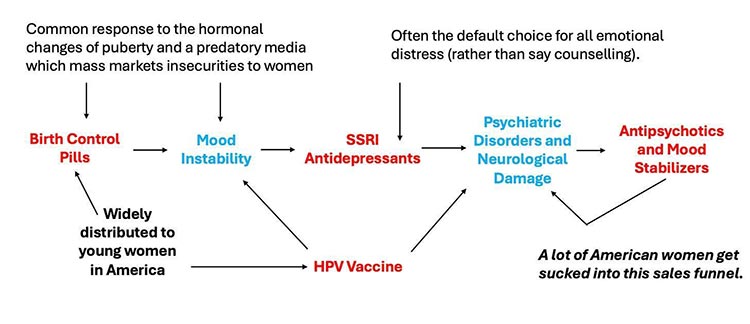
Note: Sources for the above graph can be found in this article about the dangers of SSRI antidepressants.1
The second funnel involves framing preventative medicine as screening individuals for potential health risks and then using these results to justify selling medical services like drug prescriptions. As these screenings become normalized, the industry expands the range of services offered, often leading to overdiagnosis and overtreatment. For instance, guidelines for “safe” blood pressure and cholesterol levels have been continuously lowered,2 hence putting more people on medications.
Note: The folly of this approach is highlighted by a trial that found removing on average 2.8 non-essential drugs from the elderly at one facility caused their 1-year death rate to go from 45% to 21%.3
DEXA Scams
One common way mass screenings are conducted is by giving many patients X-rays and then funneling those with abnormal imaging into being treated. For example, women over 50 get mammograms every two years to detect breast cancer early. However, studies show these screenings often lack overall benefit because fast-growing cancers are usually not caught early, while false positives are common and frequently lead to harmful treatments.
Note: Many medical specialists depend upon repeatedly performing the same billable service (e.g., vaccinating a child, performing a female pelvic exam, or reading a mammogram).
Another common universal screening practice for women is dual-energy X-ray absorptiometry (DEXA) scans, which measure bone density as an indicator of bone strength. The results are compared to the average bone density of a 30-year-old, producing a T-score. Medical students learn that a T-score of 0 to -1 is normal, -1 to -2.5 indicates osteopenia, and -2.5 or worse signifies osteoporosis, prompting urgent treatment.
However, considering natural age-related bone density loss, most individuals will have lower bone density than a 30-year-old. Thus, the current approach to managing osteoporosis acknowledges inevitable bone loss with age and focuses on prevention, as regaining bone density later in life is challenging.
How reliable are DEXA scans? Results vary significantly based on machine, operator, and measured bones, with studies showing a 5% – 6% difference4 in bone density. This variation can alter T-scores by 0.2 – 0.4, leading to misdiagnoses of osteoporosis.
Is repeated scanning necessary? A study of 4124 older women5 found no additional useful information gained from repeating DEXA scans over 8 years. Yet, guidelines recommend scans every 1-2 years, with Medicare covering one every 2 years, despite costs ranging from $150 to $300 per scan.
Do DEXA scans accurately predict fracture risk? While generally predictive, studies show discrepancies between scan results6 and observed bone strength under a microscope. Additionally, scans often underestimate strength loss in deliberately weakened bones.
Note: I recently learned from Dr. Mercola that a faster and more accurate method of diagnosing bone strength (which does not expose patients to ionizing radiation) is beginning to be used in Europe.7 REMS technology works by sending ultrasound waves8 into the bone and then analyzing the spectrum created to assess the health of the bones.
As this presentation shows, it accurately predicts bone density, and additionally, predicts bone strength. In short, this may be a dramatically superior approach to Dexa scans, but it faces stiff resistance in the United States because of how heavily invested many already are in performing Dexa scans. For those interested, more information can be found at EchoLight’s website.9

Note: This comment was affirmed in an NPR article.10
Save This Article for Later – Get the PDF Now
Bisphosphonates
Once osteoporosis is diagnosed, the initial treatment often involves starting a bisphosphonate, which may continue for 3-5 years depending on the administration method. A variety of factors influence the development of bone.
Two of the most important ones are the cells that build bone up (osteoblasts) and the cells that break bone down (osteoclasts). Bisphosphonates, (e.g., Fosamax or Actonel), concentrate in bones and inhibit osteoclasts,11 leading to increased bone density by shifting the balance towards bone building. However, this approach faces two major issues:
•Bisphosphonates are associated with numerous side effects,12 such as stomach irritation, severe muscle and bone pain, flu-like symptoms, osteonecrosis of the jaw,13 unusual hip fractures, atrial fibrillation, hypocalcemia, fatigue, and kidney problems. Remarkably, the American Dental Association even cautioned its members14 to avoid working on patients who are taking bisphosphonates.
•Bisphosphonates disrupt the body’s natural bone-building process, resulting in the preservation of “old bone” rather than promoting healthy bone formation.
Note: In addition to the bisphosphonates, there are other problematic osteoporosis drugs which also target the osteoclasts.
Bone Remodeling
One of the key adaptive processes in the body is its response to stresses and loads placed upon it. An often-overlooked marvel of the body is its continual reshaping of bones to bear loads optimally. While we seldom think about this process, its significance becomes apparent in certain scenarios. Consider space travel: astronauts, deprived of gravity’s weight signals, experience rapid bone loss,15 posing serious fracture risks upon returning to Earth.
In this bone-building ballet, osteoclasts play a crucial yet underappreciated role. They sculpt bones to withstand gravity’s demands, but when blocked by drugs like bisphosphonates, bones become denser yet more brittle and less flexible.
This underscores a common issue in medicine: focusing on treating numbers (e.g., lowering cholesterol) assuming it equates to health improvement. Studies often assess benefits through value changes (e.g., vaccine-induced antibodies), overlooking actual patient outcomes (e.g., in Pfizer’s COVID vaccine studies,16 antibody production didn’t correlate with decreased deaths).
In short, I would posit that while bisphosphonates may be effective at improving a DEXA score, they aren’t necessarily good at improving bone health.
What Causes Osteoporosis?
Bone metabolism is intricately linked to various key body processes, making it challenging to pinpoint the primary determinants of bone health. However, several factors stand out:
| Mobility — Sedentary lifestyles contribute to osteoporosis, highlighting the importance of weight-bearing activities in bone health.17 Walking is particularly beneficial and if done regularly throughout life dramatically improves bone health. |
| Hormones — In a previous article, I discussed the severe dangers of drugs like Lupron which work by disabling the body’s production of sex hormones. One of the most common side effects observed from them is a significant weakening of the bones. In turn, hormonal loss accompanying aging also weakens the bones. |
| Inflammation — Chronic inflammatory conditions increase the risk of osteoporosis by activating bone-dismantling processes.18 |
| Amino acids — Since one of the most essential components of bone health is the elasticity collagen imparts to them (as this allows bone to bend and yield to outside forces rather than shattering) collagen health is critically important for bone health.
In modern society, we are often deficient in those amino acids because of widespread stomach acid deficiency19 (which impairs our ability to metabolize protein into amino acids) and us predominantly consuming softer cuts of meat which lack the collagen building amino acids found in tougher parts of meat (e.g., gristle). Note: Colleagues such as Dr. Mercola have found consuming 30g – 40g of collagen each day sourced from beef knee joints is an optimal amino acid repletion protocol and in a short period of time significantly improves bone health (along with often improving a variety of related factors such as one’s height and one’s metabolic health). |
| Minerals — Dietary intake of minerals such as boron and manganese20 is crucial for bone strength, and deficiencies can impair bone health. Factors like stomach acid deficiency21 and soil depletion contribute to mineral deficiencies.
Note: The widespread deficiency of manganese in the population is in part due to it being chelated from the soil by glyphosate (Roundup).22 Manganese serves an essential role in building collagen, so when it is deficient, it frequently creates systemic ligamentous laxity,23 and in turn hypermobile patients such as those with EDS (who tend to be highly sensitive and susceptible to pharmaceutical injuries) notice a significant improvement in their ligamentous strength after a few months of appropriately dose manganese.24 |
| Water fluoridation — While fluoride increases bone density, it may compromise bone health and function. Some studies link fluoride to osteomalacia and increased fracture risk.25 |
| Pharmaceutical drugs — Medications like glucocorticoid steroids26 (e.g., prednisone) and opioids can weaken bones27 and increase fracture risk.
Note: Glucocorticoid induced bone loss is so severe it’s actually one of the few approved indications for bisphosphonate treatment.28 |
| Environmental toxins — Exposure to toxins like organophosphates, bisphenol A, nicotine, and heavy metals inhibits bone formation and contributes to osteoporosis.29 |
| Parathyroid adenomas — These tumors cause excessive secretion of parathyroid hormone, leading to calcium depletion from bones, bone loss, and a range of symptoms. Surprisingly, despite being a well-known condition, parathyroid adenomas are frequently missed. Identifying persistently elevated blood calcium levels can serve as a key indicator, prompting further investigation into a parathyroid adenomas. |
Note: Chinese Medicine has connected the age-related loss of the kidney’s vitality to bone loss for thousands of years. Many attribute this to the kidneys crucial role in regulating vitamin D and the blood levels of the minerals bone is composed of (e.g., calcium).
I suspect their regulation of the physiologic zeta potential (the decline of which is a key cause of aging) is also key. That is because zeta potential30 governs the tendency for blood to flow freely or clump together, and the hard exterior bone blood vessels must pass through makes them more susceptible to their blood supply becoming interrupted (e.g., from the bone moving out of place).
Conclusion
It’s fascinating to realize that bone is far more than just a structural component; it’s a living tissue with its own dynamic behavior. When I’ve had the opportunity to handle bone directly, such as during orthopedic surgeries, it’s evident how different it is from the lifeless bones we typically encounter. Unfortunately, this experience is rare, leading many to see bone as inert and unchanging.
The points I’ve discussed in this article are founded on the importance of recognizing bone’s vitality and understanding how our interactions with it shape our health and longevity. Ancient medical traditions, like Chinese medicine, appreciated this aspect of bone health. They saw it as integral to overall well-being, acknowledging its interconnectedness with the body’s systems.
By embracing this perspective, we can gain new insights into bone health and its significance for holistic healthcare. It’s my hope that this article sheds light on the dynamic nature of bones and encourages a deeper understanding of their role in our health journey.
Author’s note: This is an abridged version of a longer article on the subject which discusses the above points in more detail and many others such as our other preferred approaches for improving bone health. That article and its additional references can be read here.
A Note From Dr. Mercola About the Author
A Midwestern Doctor (AMD) is a board-certified physician in the Midwest and a longtime reader of Mercola.com. I appreciate his exceptional insight on a wide range of topics and I’m grateful to share them. I also respect his desire to remain anonymous as he is still on the front lines treating patients. To find more of AMD’s work, be sure to check out The Forgotten Side of Medicine on Substack.
- 1 Why Are Antidepressants So Harmful? November 27, 2023
- 2 What Can Statins Teach Us About The COVID-19 Vaccines? May 4, 2023
- 3 Israel Medical Association Journal 2007 June; 9(6):430-4
- 4 Medpage Today November 3, 2014
- 5 JAMA January 22, 2007
- 6 Indian Journal of Orthopedics Jan-Mar 2010; 44(1): 73–78
- 7, 9 ECHOLIGHT Medical, Accessed April 2024
- 8 Diagnostics (Basel). May 2023; 13(10): 1666
- 10 NPR, December 21, 2009
- 11 Mayo Clin Proc. September 2008; 83(9): 1032–1045
- 12 BMJ January 2008 19; 336(7636): 117
- 13 BMJ August 8, 2009
- 14 American Dental Association Accessed February 2008 (Archived)
- 15 International Journal of Molecular Sciences May 2021; 22(9): 4585
- 16 New England Journal of Medicine 2021;385:1761-73
- 17 Gynecological Endocrinology September 2009;25(9):616-20
- 18 Journal of Musculoskeletal and Neuronal Interactions 2020; 20(3): 372–381
- 19, 21 Stomach Acid Is Good For You, September 16, 2023
- 20, 23, 24 The Hidden Link Between Hypermobility and Vaccine Injury, January 14, 2024
- 22 Surgical Neurology International. 2015; 6: 45
- 25 Fluoride Action Network April 2012
- 26 RMD Open. 2015; 1(1): e000014
- 27 Addiction, July 2019
- 28 FDA, 2012
- 29 OuluREPO, 2016
- 30 What Makes All Vaccines So Dangerous? March 31, 2024