Vitamins
now browsing by category
Natural Therapies for Cystic Fibrosis
Reproduced from original article:
https://articles.mercola.com/sites/articles/archive/2024/05/02/natural-therapies-for-cystic-fibrosis.aspx
Analysis by Dr. Joseph Mercola May 02, 2024

STORY AT-A-GLANCE
- Cystic fibrosis (CF) is a severe genetic disorder marked by excessive, thick mucus in the lungs and other organs, leading to chronic inflammation and reduced lung function, necessitating daily breathing treatments
- Nutritional support, including vitamins A, C, E, zinc, omega-3 (DHA), garlic, ginseng and curcumin, is commonly recommended for CF patients
- Vitamin D deficiency is notably prevalent among CF patients, affecting their lung function and overall disease progression; maintaining a vitamin D level of at least 60 ng/mL is recommended for mitigating these effects
- N-acetylcysteine (NAC) has emerged as a significant antioxidant in CF management, helping to reduce inflammation, break down mucus, enhance antibiotic effectiveness, and support immune response
- Reducing dietary intake of linoleic acid (LA) is advised for CF patients due to its potential to exacerbate disease symptoms through mitochondrial dysfunction
Cystic fibrosis (CF) is a progressive and terminal genetic disease that causes an overproduction and buildup of thick, sticky mucus in the lungs and other organs that lead to chronic inflammation and, eventually, a deterioration of lung function.
The disease requires daily breathing treatment for up to five hours a day, and many CF patients end up spending a lot of time in the hospital due to respiratory distress and chronic infections. Pancreatic and gastrointestinal complications, including malabsorption of proteins and fats, and chronic liver disease are also common. The median survival age is about 35 years.1
A 2012 paper2 in the Journal of Pharmacy Practice reviewed several of the most commonly recommended nutritional supports for those with CF, including vitamins A, C and E, zinc, omega-3 docosahexaenoic (DHA), garlic, ginseng and curcumin.
According to this paper, 75% of CF patients routinely use complementary and alternative medicine (CAM) in addition to their regular treatment, so it’s important for health professionals to be familiar with these options.
More recently, a scientific review3 published in 2022 highlighted the role of N-acetylcysteine (NAC) in the clinical management of CF. Removing all linoleic acid (LA) from your diet and optimizing your vitamin D level are two additional foundational recommendations that I will go over here.
Vitamins A, C and E and Zinc
Many CF patients have poor absorption of fat-soluble vitamins such as A and E, due to malabsorption of fats. For this reason, supplementation with these vitamins is often recommended. As a rule, patients are advised to consume between 120% and 150% of the recommended daily allowance (RDA) of nutrients to prevent premature death from malnutrition.4
The Journal of Pharmacy Practice paper5 cites research from 2001, which found that CF patients who received 1 milligram of beta-carotene per kilo of bodyweight per day (up to 50 mg per day) for three months, followed by a daily dose of 10 mg for another three months, experienced “a statistically significant decrease in the number of days of treatment with systemic antibiotics.”
Zinc supplementation at a dose of 30 mg per day has also been shown to reduce the average days of antibiotic use, and a pediatric study using an antioxidant-rich multivitamin supplement containing vitamins A, C, E and zinc and other micronutrients found “modest improvement” in lung function.
How to Select a Good Vitamin Supplement
Vitamin A (retinol) should not be confused with beta-carotene, which is pre-vitamin A that gets converted into vitamin A in your liver. To use beta-carotene, you need to have a well-functioning digestive tract and sufficient bile produced by your gallbladder. Specific enzymes are also needed to break down the carotene for the conversion into retinol to occur.
Most people have poor gut health, and this is particularly true for CF patients, which makes beta-carotene a poor alternative as a primary source of vitamin A. Retinol — preformed vitamin A — is found in animal products such as grass fed meat and poultry, liver, fish and raw organic dairy products like butter. This is the form of vitamin A your body can use, so make sure the vitamin A you buy specifies “retinol” or “retinoic acid,” and not just “vitamin A” or “beta-carotene.”
When it comes to vitamin C, you want to make sure it’s liposomal, as it will allow you to take higher dosages without causing loose stools. It’s also absorbed better.
While healthy people can typically get enough vitamin C from food such as red pepper, broccoli, kiwi, strawberries, citrus fruits, camu camu, rose hips or acerola cherries, if you’re ill, you need far more than what can be obtained from food (possibly except for acerola cherry, which contains 80 mg of vitamin C per cherry).
Selecting a natural supplement is particularly important when it comes to vitamin E. Studies have demonstrated that synthetic vitamin E has the opposite effect of natural vitamin E, such as increasing the risk of certain cancers rather than lowering it,6,7,8 for example. So, it’s important to make sure you’re getting a natural version.
What you’re looking for is “d alpha tocopherol.” Avoid all synthetic forms such as succinate, acetate and the racemic DL isomer. You want the pure D isomer, which is what your body can use. There are also other vitamin E isomers, and you want the complete spectrum of tocotrienols, specifically the beta, gamma, and delta types of vitamin E, in the effective D isomer.

Save This Article for Later – Get the PDF Now
Vitamin D
Vitamin D also plays a crucial role in the health and management of CF, offering several benefits backed by scientific research. A systematic review and meta-analysis9 published in January 2024 revealed that CF patients typically have significantly lower levels of vitamin D compared to healthy controls, both in childhood/adolescence and adulthood.
The prevalence of vitamin D levels considered insufficient (20–30 ng/mL) in CF patients was found to be 36% among pediatrics and adolescents and 63% among adults. Twenty-seven percent of pediatric/adolescent CF patients and 35% of adults had vitamin D levels of below 20 ng/mL, which is a severe deficiency state.
Ideally, you’d want a vitamin D level of at least 60 ng/mL year-round. To reach that level, I recommend daily walks with minimal clothing for 30 minutes before and after solar noon, for a total of one hour. During summertime, that would be right around 1 pm.
While oral vitamin D3 supplementation is an option if you cannot get enough sun exposure, you’ll miss out on many of the other health benefits that sun exposure provides. You also need to make sure you’re taking vitamin K2 and magnesium when using oral supplementation.
How Vitamin D Deficiency Impacts CF
Another study10 focused on the relationship between vitamin D levels and lung function in CF patients, specifically through the lung clearance index (LCI), a measure of lung function. The study found a strong negative correlation between vitamin D levels and LCI, indicating that lower vitamin D levels are associated with worse lung function.
It also noted that vitamin D deficiency could be particularly detrimental in patients with comorbidities such as cystic fibrosis-related diabetes (CFRD) and cystic fibrosis liver disease (CFLD).
Additionally, a pilot study11 published in 2019 investigated the immunomodulatory effects of vitamin D on pro-inflammatory cytokines in the airways of CF patients infected by Pseudomonas aeruginosa.
They found that supplementation with vitamin D led to a decrease in the levels of interleukins IL-17A and IL-23 in the exhaled breath condensate (EBC), indicating a reduction in inflammation.
These cytokines are known to play roles in the body’s inflammatory response, suggesting that vitamin D supplementation can help modulate the immune response in CF patients, potentially mitigating lung damage caused by chronic infections.
These findings collectively underscore the importance of monitoring and managing vitamin D levels in CF patients, not only for bone health but also for its potential benefits in improving lung function, reducing inflammation, and enhancing the body’s response to infections.
N-acetylcysteine (NAC)
NAC is a precursor to your body’s production of glutathione (GSH), also has an important role in the management of CF.12 As noted in the journal Pharmaceuticals:13
“[NAC] has been known for a long time as a powerful antioxidant and as an antidote for paracetamol overdose. However, other activities related to this molecule have been discovered over the years, making it a promising drug for diseases such as cystic fibrosis (CF).
Its antioxidant activity plays a key role in CF airway inflammation and redox imbalance. Furthermore, this molecule appears to play an important role in the prevention and eradication of biofilms resulting from CF airway infections, in particular that of Pseudomonas aeruginosa …
To do this, NAC can act alone, but it can also be used as an adjuvant molecule to known drugs (antibiotics/anti-inflammatories) to increase their activity.”
Here’s a quick overview of how NAC can be beneficial for CF patients, drawing on its various mechanisms:14
| Fighting oxidative stress — There’s a battle between damaging oxidative substances (ROS) and the body’s antioxidants. NAC steps in as a reinforcement, helping to boost the body’s antioxidant levels, especially glutathione (GSH). This helps to mitigate the damage caused by oxidative stress, which can worsen CF conditions. |
| Reducing inflammation — CF lungs are often inflamed, partly due to overactive immune responses that attract too many neutrophils (a type of white blood cell) to the site. These neutrophils release substances that can damage lung tissue. NAC helps calm this overreaction, reducing inflammation by modulating the production of molecules like cytokines that drive the inflammatory process. |
| Breaking down mucus — The thick mucus in CF can trap bacteria, creating biofilms that are hard to treat. NAC can break the sulfur bonds in the mucus, making it less sticky and easier to clear from the lungs. This action helps disrupt the biofilm structure, allowing antibiotics to reach and kill bacteria more effectively. |
| Enhancing antibiotic effectiveness — The presence of biofilms and thick mucus in CF lungs can make bacteria resistant to antibiotics. NAC can make these bacteria more susceptible to antibiotics by breaking down the biofilms. It can also work synergistically with certain antibiotics, improving their ability to kill bacteria. |
| Acting against bacteria directly — Even though NAC is not an antibiotic, it has properties that can directly inhibit the growth of bacteria and their ability to form biofilms. This adds an extra layer of defense against lung infections. |
| Supporting healthy immune responses — By reducing the oxidative stress and helping to manage the inflammatory response, NAC can indirectly support the body’s immune system, making it more effective at fighting off infections without causing additional damage to lung tissues. |
| Improving cell function — On a cellular level, NAC might help correct some of the dysfunction caused by the CF mutation. It has been suggested that NAC can help with the maturation and function of CFTR proteins, which are faulty in CF, thereby helping to alleviate some of the symptoms. |
Omega-3
Omega-3 is also thought to be important for CF patients because deficiency has been linked to worsened pulmonary and GI symptoms, as well as CF progression. DHA, in particular, is important, as it has a beneficial impact on lung function. Previous research has concluded that doses up to 50 mg of DHA per kilo of bodyweight is safe for CF patients.15
When it comes to omega-3, I recommend trying to get most of it from omega-3-rich seafood, such as wild-caught Alaskan salmon, herring, sardines, mackerel and anchovies. If using a supplement, avoid synthetic fish oils and opt for krill oil instead.
Herbal Remedies
Herbal remedies recommended for CF include:16
- Garlic, which has antibacterial effects.
- Ginseng, which has antioxidant, antimicrobial and immune modulating effects. Aqueous extract of ginseng has been shown to be effective in inhibiting P aeruginosa, a bacteria often involved in chronic pulmonary infections, including antibiotic-resistant strains.
- Curcumin, which has antioxidant properties. Limited data also suggests it may increase CFTR-regulated channel activity in CF patients. CFTR is a protein that, when dysfunctional, results in the development of CF symptoms.
Eliminate Linoleic Acid From Your Diet
As important as supplementing certain nutrients might be, CF patients must also be vigilant about avoiding certain things. As explained in my in-depth review, “Linoleic Acid — The Most Destructive Ingredient in Your Diet,” linoleic acid (LA) — an omega-6 polyunsaturated fat (PUFA) — acts as a mitochondrial poison and the primary contributor to all chronic disease.
If you have CF, I strongly advise you to eliminate as much LA from your diet as humanly possible. While LA is found in most foods, by eliminating processed foods, condiments, seed oils for cooking, fast food and restaurant food, and conventionally raised pork, chicken and eggs, you can get your LA intake below 5% of daily calories, which is about what our ancestors used to get.
While there are no studies detailing direct harm caused by LA in CF, dysfunctional lipid metabolism, including LA metabolism, is a characteristic of CF. So, there appears to be a complex interaction with LA that could influence disease outcomes.
Excess LA is a primary driver of mitochondrial dysfunction, and well-functioning mitochondria are a prerequisite for health and disease prevention.
That said, considering excess LA is a primary driver of mitochondrial dysfunction, there’s every reason to believe that it will have a detrimental impact on CF. After all, health and disease prevention require you to have well-functioning mitochondria. It’s as foundational as you can get.
If you’re not sure how much you’re eating, enter your food intake into Cronometer — a free online nutrition tracker — and it will provide you with your total LA intake. Cronometer will tell you how much omega-6 you’re getting from your food down to the 10th of a gram, and you can assume 90% of that is LA. Anything over 10 grams of LA is likely to cause problems.
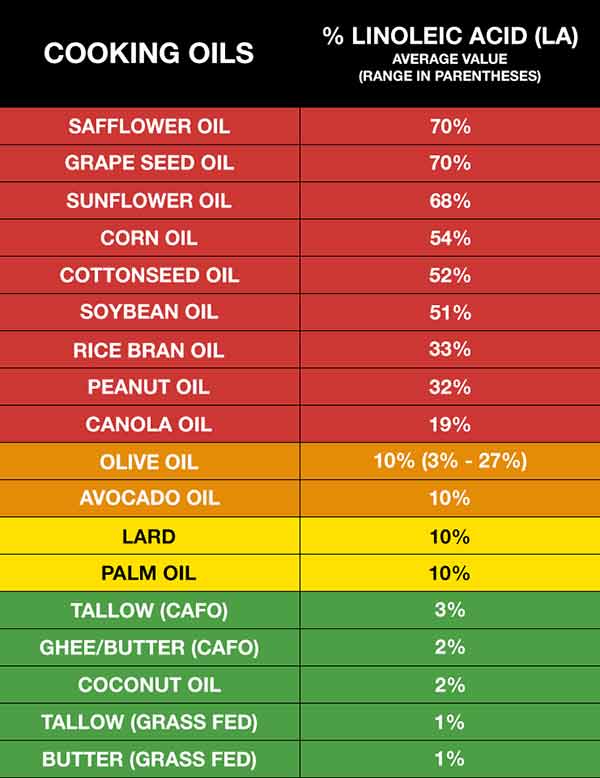
Healthy fat replacements include tallow, butter or ghee, all of which are excellent for cooking. The table below provides a fairly comprehensive list of the most commonly consumed oils and their approximate LA content.
In general, the lowest LA-containing fats — butter and beef tallow — would be the fats of choice. These excellent cooking fats would not only be the lowest in LA, but will also provide the fat-soluble vitamins, A, D, and K2. Coconut oil is also very low in LA but doesn’t provide the important fat-soluble vitamins that tallow and butter contain.
Vitamin E Prevents Oxidation of LA
If you’ve been eating a high-PUFA diet for a long time, consider taking vitamin E regularly until you get your LA down to healthy levels. As noted earlier, CF patients need extra vitamin E anyway, and this is yet another reason to make sure you’re getting enough.
High LA levels increase a potentially dangerous process in your body called lipolysis — the liberation of fatty acids from your fat cells into your bloodstream where they are mobilized. This then increases the oxidation of LA, which is precisely what you want to avoid. Ideally, you want to keep LA in your fat cells until they metabolize it with peroxisomes. Vitamin E can help neutralize this damaging effect of LA.
Due to the high LA burden, few people can get enough vitamin E from their diet to suppress the oxidative destruction caused by LA unless they’re supplementing with vitamin E.
The good news is that since the supplementation is short term, you’re not going to need it the rest of your life. If you can keep your LA intake to below 5 grams a day for three years, it’s likely you may not even need it at all, or at most, only a few times a month.
The Story of Claire Wineland
Claire Wineland, an inspirational speaker and YouTube sensation, was diagnosed with CF at birth. At age 13, she founded the Claire’s Place Foundation17 to help families with children who have CF. She died September 2, 2018, from a massive stroke following an otherwise successful lung transplant.
In 2016, Wineland appeared in an episode of “My Last Days,” a limited CW docuseries hosted by Justin Baldoni, featuring people living with terminal illness. September 2, 2019, YouTube Originals released the documentary “CLAIRE,” directed by Nicholas Reed (above).
While filled with chronic illness, Wineland’s life was a testament to how to live life well, with purpose and gratitude. It’s a potent reminder of how we need to live life to the fullest, even though we might die tomorrow. “I’ve always loved the idea of bringing life into places where people think life doesn’t really exist,” Wineland said.
Wineland’s mother said she was convinced her daughter came into the world with a mission to share the message of “what it’s like to be blessed with life.” I couldn’t agree more.
- 1, 2, 4, 5, 15, 16 Journal of Pharmacy Practice 2012; 26(1): 14-17
- 3, 12, 13, 14 Pharmaceuticals February 2022; 15(2): 217
- 6 Cancer Prevention Research May 2012, DOI: 10.1158/1940-6207.CAPR-12-0045
- 7 Science Daily April 23, 2012
- 8 Sci Transl Med 29 January 2014: Vol. 6, Issue 221, p. 221ra15
- 9 Journal of Health, Population and Nutrition January 17, 2024; 43, Article number 11
- 10 Children 2022; 9(3): 329
- 11 Italian Journal of Pediatrics 2019; 45, Article number 41
- 17 Claire’s Place Foundation, Inc
More Evidence Showing Vitamin D Combats Cancer
Reproduced from original article:
https://articles.mercola.com/sites/articles/archive/2024/05/01/vitamin-d-cancer-mortality.aspx
Analysis by Dr. Joseph Mercola May 01, 2024

STORY AT-A-GLANCE
- Evidence continues to accumulate showing that vitamin D is a strong ally to combat cancer
- Low vitamin D levels are linked to an increased risk of cancers, while vitamin D can attach to the vitamin D receptor (VDR) in your cells, setting off a series of signals that may affect how they grow, develop and survive
- Although increasing vitamin D levels may help to reduce cancer deaths, health officials rarely recommend optimizing levels for this purpose
- Vitamin D targets cancer in multiple ways, including anticancer, antimetastatic and anti-tumorigenic effects
- The best way to optimize your vitamin D level is via regular sun exposure, which enhances production of melatonin — a potent anticancer agent
I strongly recommend getting sensible sun exposure each day, and one of the reasons why is because it helps naturally optimize your vitamin D levels. Low vitamin D levels are linked to an increased risk of cancers,1 while vitamin D can attach to the vitamin D receptor (VDR) in your cells, setting off a series of signals that may affect how they grow, develop and survive.2
In this way, vitamin D acts like a brake on the process of cell growth in many tissues of the body, helping to control the speed at which cells multiply. This is particularly important when it comes to cancer because one of the key features of this disease is cells growing out of control. Moreover, vitamin D has been observed in animal studies to help delay some age-related changes by activating another important pathway via the vitamin D receptor.
This pathway involves a molecule called Nrf2, which plays a crucial role in protecting your body from oxidative stress and DNA damage — two factors that are commonly linked to the development of cancer.3 Overall, evidence continues to accumulate showing that vitamin D is a strong ally to combat cancer.4
Vitamin D Reduces Cancer Mortality
Worldwide, cancer is the No. 2 cause of death, behind only cardiovascular disease.5 Meanwhile, the global prevalence of vitamin D deficiency (defined as a level of less than 20 ng/mL) and insufficiency (defined as a level of 20 to less than 30 ng/mL) is 40% to 100%.6 Although increasing vitamin D levels may help to reduce cancer deaths, health officials rarely recommend optimizing levels for this purpose.
For example, research has shown that once you reach a minimum serum vitamin D level of 40 ng/mL, your risk for cancer diminishes by 67%, compared to having a level of 20 ng/mL or less.7
A 2023 systematic review and meta-analysis published in Ageing Research Reviews also found vitamin D3 supplementation reduced cancer mortality by 6%. This wasn’t considered statistically significant, but when only studies involving daily vitamin D intake were analyzed, cancer mortality dropped by a significant 12%.8 According to the researchers:9
“From a biological perspective, it is plausible that a sufficient vitamin D status has an impact on cancer prognosis: by binding to the vitamin D receptor (VDR), the active hormone 1,25-dihydroxyvitamin D (1,25(OH)2D) influences signaling pathways that regulate cell proliferation, differentiation, and cell survival, and thus acts as an anti-proliferative agent in many tissues and can slow the growth of malignant cells.”
Other research also supports vitamin D’s role in protecting against cancer death. In one study of 25,871 patients, vitamin D supplementation was found to reduce the risk for metastatic cancer and death by 17%. The risk was reduced by as much as 38% among those who also maintained a healthy weight.10,11
What’s particularly noteworthy is this study only gave participants 2,000 IU of vitamin D daily and didn’t measure their blood levels. Despite these research flaws, a significant benefit was still found. However, other research has found even more striking benefits, including a GrassrootsHealth analysis published in PLOS ONE.
It showed women with a vitamin D level at or above 60 ng/mL (150 nmol/L) had an 82% lower risk of breast cancer compared to those with levels below 20 ng/mL (50 nmol/L).12 Meanwhile, risks of lung cancer, colorectal cancer, breast cancer, bladder cancer and lymphoma are higher in people with low vitamin D levels, while having higher levels is associated with a better prognosis in cases of breast and colorectal cancers.13
The Ageing Research Reviews study further revealed that daily vitamin D supplementation was particularly beneficial for people aged 70 and over, as well as those who took vitamin D daily and were later diagnosed with cancer. Study author Ben Schöttker, Ph.D., with the German Cancer Research Center in Heidelberg, further explained:14
“This does imply that basically everyone aged 50 and older, including people who have never had cancer, might profit from vitamin D supplementation if they are vitamin D insufficient … Doctors cannot know who might develop cancer at a later time.”
Vitamin D Has Anticancer Effects Against Many Types of Cancer
A mini review on the impact of vitamin D on cancer, published in The Journal of Steroid Biochemistry and Molecular Biology, pointed out that while vitamin D is widely recognized for its essential role in regulating the balance of minerals in the body, a deficiency has been linked to the onset and progression of various cancers.15 Vitamin D targets cancer in multiple ways, including:16
- Anticancer effects, which means it targets different stages of cancer development and progression, including the initiation, growth and spread of cancer cells.
- Antimetastatic effects, which refers to the ability to stop cancer cells from spreading from the original tumor site to other parts of the body. Since metastasis is often responsible for the fatal outcomes of cancers, preventing the spread can significantly improve survival rates.
- Anti-tumorigenic, meaning vitamin D helps prevent tumor formation or the growth of tumors. This can involve mechanisms like inducing cell death in cancer cells, blocking cell cycle progression, or inhibiting pathways that fuel tumor growth.
The review highlighted vitamin D’s role against the following cancers:17
| Breast | Prostate | Bladder |
| Colon | Glioblastoma | Melanoma |
| Squamous cell carcinoma | Ovarian | Multiple myeloma |
| Osteosarcoma | Head and neck |
In terms of breast cancer, the leading cause of death for women globally, vitamin D deficiency is common among patients, and those who are deficient are more likely to have more aggressive and harder-to-treat subtypes of breast cancer, such as higher grade and estrogen receptor-negative tumors.
The study also highlighted the role of genetic differences in the VDR that could influence breast cancer risk. In particular, in certain populations like North Indian women from New Delhi, variations in the VDR gene were identified as potential risk factors.18
In prostate cancer — the most common cancer in men — low levels of vitamin D were linked to high levels of dihydrotestosterone (DHT) in the prostate which is associated with the progression of prostate cancer.19 In addition, vitamin D may influence the activity of sirtuin 1 (SIRT1), which is known as a longevity protein. Optimizing your vitamin D levels may help boost your body’s natural cancer defenses, in part, via mechanisms involving SIRT1.20
Additional research suggests there may be considerable variation in how different individuals’ genes respond to vitamin D supplementation, which might explain why not everyone benefits equally from extra vitamin D.
For best results, the scientists suggest vitamin D supplementation should be personalized and “advocate for options tailored to individual vitamin D needs, combined with a comprehensive intervention that favors prevention through a healthy environment and responsible health behaviors.”21
Save This Article for Later – Get the PDF Now
Why Sun Exposure Is the Best Source of Vitamin D
On a typical sunny day, your body may produce up to 25,000 international units (IU) of vitamin D,22 although many people aren’t in the sun enough to optimize their vitamin D levels. However, I strongly recommend getting your vitamin D from proper sun exposure, if possible, as it provides benefits beyond vitamin D optimization.
Higher levels of vitamin D may even serve as a marker for healthy sun exposure, which in turn may be responsible for many of the health benefits, which include reduced risk of cancer and increased longevity, attributed to vitamin D. Regular sun exposure, for instance, enhances production of melatonin — a potent anticancer agent.23
Near-infrared rays from the sun penetrate deep into your body and activate cytochrome c oxidase, which in turn stimulates the production of melatonin inside your mitochondria. Your mitochondria produce ATP, the energy currency of your body. A byproduct of this ATP production is reactive oxidative species (ROS), which are responsible for oxidative stress.
Excessive amounts of ROS will damage the mitochondria, contributing to suboptimal health, inflammation and chronic health conditions such as diabetes, obesity and thrombosis (blood clots). But melatonin essentially mops up ROS that damage your mitochondria. So, by getting plenty of sun exposure during the day, your mitochondria will be bathed in melatonin, thereby reducing oxidative stress.24,25
If you’re unable to get adequate sun exposure each day, vitamin D supplementation may be necessary. Keep in mind that 20 ng/mL, which is often used as the cutoff for vitamin D deficiency, has repeatedly been shown to be grossly insufficient for good health and disease prevention, which means the true prevalence of people without optimal levels of vitamin D is even greater.
The only way to determine how much sun exposure is enough and/or how much vitamin D3 you need to take is to measure your vitamin D level, ideally twice a year. Once you’ve confirmed your vitamin D levels via testing, adjust your sun exposure and/or vitamin D3 supplementation accordingly. Then, remember to retest in three to four months to make sure you’ve reached your target level.
The Optimal Vitamin D Level for Cancer Prevention
The optimal level for health and disease prevention, including cancer prevention, is between 60 ng/mL and 80 ng/mL (150-200 nmol/L), while the cutoff for sufficiency appears to be around 40 ng/mL. In Europe, the measurements you’re looking for are 150 to 200 nmol/L and 100 nmol/L respectively.
It’s important to remember that calcium, vitamin D3, magnesium and vitamin K2 must be properly balanced for optimal overall health. Your best and safest bet is to simply eat more calcium-, magnesium- and vitamin K2-rich foods, along with sensible sun exposure.
However, if you find supplementation is necessary after a serum vitamin D test, also supplement with magnesium and vitamin K2 (MK-7) to ensure proper balance. You’ll also want to ensure you’re following an overall healthy lifestyle to reduce your cancer risk as much as possible. As researchers explained in Nutrients:26
“Vitamin D supplementation is not the magic pill that miraculously solves the cancer burden or that can replace a healthy lifestyle. It is necessary to foster a good environment and invigorate a healthy lifestyle, including a high-quality diet and physical activity. Both have been proven to confer health benefits in many diseases, including cancer, and are the best preventive measures available.”
- 1, 15, 16, 17, 18, 19 The Journal of Steroid Biochemistry and Molecular Biology July 2023, Volume 231, 106308
- 2, 3 Ageing Research Reviews June 2023, Volume 87, 101923, Introduction
- 4 Substack, Dr. William Makis, April 18, 2024
- 5 J Thorac Dis. 2017 Mar; 9(3): 448–451
- 6 Endocr Pract. 2021 May; 27(5): 484–493., Introduction
- 7 PLOS ONE 2016; 11 (4): e0152441
- 8, 9, 13 Ageing Research Reviews June 2023, Volume 87, 101923
- 10 JAMA Network Open 2020;3(11):e2025850
- 11 The Sentinel November 22, 2020
- 12 PLOS ONE June 15, 2015 (PDF)
- 14 Medical News Today May 17, 2023
- 20 Int. J. Mol. Sci. 2023, 24(7), 6154; doi: 10.3390/ijms24076154
- 21, 26 Nutrients 2022, 14(21), 4512; doi: 10.3390/nu14214512
- 22 J Steroid Biochem Mol Biol. 2019 May;189:228-239. doi: 10.1016/j.jsbmb.2018.12.010. Epub 2019 Jan 4., Abstract
- 23 Youtube, The Joe Cohen Show, Episode 1, October 25, 2022, 4:00
- 24 Physiology February 5, 2020 DOI: 10.1152/physiol.00034.2019
- 25 YouTube, MedCram, Sunlight: Optimize Health and Immunity January 21, 2022
Rewriting the Script on Hashimoto’s: Vitamin D’s Transformative Potential
© GreenMedInfo LLC. This work is reproduced and distributed with the permission of GreenMedInfo LLC.
Want to learn more from GreenMedInfo? Sign up for the newsletter here:
www.greenmedinfo.com/greenmed/newsletter
Reproduced from original article:
https://greenmedinfo.com/content/rewriting-script-hashimotos-vitamin-ds-transformative-potential
Posted on: Wednesday, April 17th 2024 at 3:00 am
Written By: GreenMedInfo Research Group

Could a simple vitamin be the key to unlocking a natural solution for Hashimoto’s thyroiditis? A landmark study unveils the remarkable potential of vitamin D in modulating the immune system and restoring thyroid health
Hashimoto’s thyroiditis, a common autoimmune disorder affecting the thyroid gland, can be a challenging condition to manage. Conventional treatments often rely on hormone replacement therapy or invasive procedures, which may alleviate symptoms but fail to address the underlying autoimmune process. However, a growing body of research suggests that vitamin D and other natural substances may offer a promising alternative approach.
Vitamin D, known as the “sunshine vitamin,” has garnered significant attention for its potential role in managing Hashimoto’s thyroiditis. A recent study published in the Journal of Clinical Research in Pediatric Endocrinology found that vitamin D deficiency is associated with Hashimoto’s thyroiditis in children and adolescents.1 This finding underscores the importance of maintaining adequate vitamin D levels for optimal thyroid health.
Moreover, a review published in the Hellenic Journal of Nuclear Medicine proposed that vitamin D deficiency may be related to the pathogenesis of Hashimoto’s thyroiditis and that supplementation could contribute to its treatment.2 The immunomodulatory properties of vitamin D, such as its ability to regulate the balance between pro-inflammatory and anti-inflammatory cells, may play a critical role in addressing the autoimmune component of the disease.3
In addition to vitamin D, several other natural substances have shown promise in managing Hashimoto’s thyroiditis. According to the GreenMedInfo.com database, the top five substances with the highest cumulative knowledge for this condition are:4
1. Selenium: This essential trace mineral has been extensively studied for its potential benefits in Hashimoto’s thyroiditis. Multiple human studies have demonstrated that selenium supplementation can significantly reduce anti-thyroid peroxidase (TPO) antibodies, a key marker of the disease.5,6 Selenium’s antioxidant and anti-inflammatory properties may contribute to its therapeutic effects.
2. Vitamin D: As mentioned earlier, vitamin D deficiency has been linked to Hashimoto’s thyroiditis, and supplementation may offer a natural approach to managing the condition.1,2
3. Thiamine (Vitamin B1): A case report published in the Journal of Alternative and Complementary Medicine described three patients with Hashimoto’s thyroiditis who experienced improvements in their symptoms and thyroid function after receiving thiamine supplementation.7 While more research is needed, this report suggests that thiamine may play a role in managing the condition.
4. Green Tea: A study conducted on non-obese diabetic mice found that green tea polyphenols could ameliorate iodide-induced autoimmune thyroiditis.8 The antioxidant and anti-inflammatory properties of green tea polyphenols may be beneficial in managing Hashimoto’s thyroiditis.
5. Polyphenols: In addition to green tea polyphenols, other polyphenol-rich substances such as those found in fruits, vegetables, and herbs may offer benefits for Hashimoto’s thyroiditis. The aforementioned study on green tea polyphenols highlights the potential of these natural compounds in modulating the autoimmune response.8
While these natural substances show promise in managing Hashimoto’s thyroiditis, it is essential for individuals to work closely with their healthcare providers to develop personalized treatment plans. Integrating natural approaches with conventional therapies may provide a more comprehensive and effective strategy for addressing this complex condition.
In conclusion, the growing body of research on vitamin D and other natural substances offers hope for those seeking a more holistic approach to managing Hashimoto’s thyroiditis. By harnessing the power of these natural compounds, we may be able to address the underlying autoimmune process, improve thyroid function, and enhance overall well-being for those affected by this challenging condition.
For more research on Hashimoto’s disease, visit our database on the subject here.
For more information on the health benefits of vitamin D, visit our database on the subject here.

References
1. Tang J, Shan S, Li F, Yun P. Effects of vitamin D supplementation on autoantibodies and thyroid function in patients with Hashimoto’s thyroiditis: A systematic review and meta-analysis. Medicine (Baltimore). 2023 Dec 29;102(52):e36759. doi: 10.1097/MD.0000000000036759. PMID: 38206745; PMCID: PMC10754614.
4. Hashimoto’s thyroiditis – Natural Substances: GreenMedInfo.com
5. Selenium supplementation reduces antithyroid antibodies in patients with Hashimoto disease
6. Selenium supplementation reduces inflammatory activity in patients with autoimmune thyroiditis
7. Thiamine and Hashimoto’s thyroiditis: a report of three cases
8. Effects of green tea polyphenols on iodide-induced autoimmune thyroiditis in nonobese diabetic mice

The Shocking Truth About White Rice (And How to Make It Healthy Again)
© GreenMedInfo LLC. This work is reproduced and distributed with the permission of GreenMedInfo LLC.
Want to learn more from GreenMedInfo? Sign up for the newsletter here:
www.greenmedinfo.com/greenmed/newsletter
Reproduced from original article:
https://greenmedinfo.com/content/shocking-truth-about-white-rice-and-how-make-it-healthy-again
Posted on: Saturday, April 20th 2024 at 3:00 am
Written By: GreenMedInfo Research Group
This article is copyrighted by GreenMedInfo LLC, 2024

Discover the shocking truth about this pantry staple and the simple hacks that can transform it into a nutritional powerhouse. From resistant starch to coconut oil, we’ve got the science-backed tips you need to redeem your rice and reclaim your health.
White rice, a staple food for more than half the world’s population, has a complicated history. On one hand, it’s a readily available, inexpensive source of calories that has fueled nations for centuries. On the other hand, the very processing that makes white rice appealing to the palette and easy to bolt down without chewing, also strips away vital nutrients, leading to hidden dangers that have plagued populations, from ancient Japan to modern times. But fear not, intrepid rice lovers! We’ve uncovered two powerful hacks that can transform this dietary villain into a nutritional hero.
The Perils of Polishing: Beriberi and Beyond
To understand the dangers of white rice, we must travel back to 19th century Japan, where a mysterious illness called beriberi was crippling the nation. From the shogun to the sailor, this condition spared no one, causing symptoms ranging from paralysis and heart failure to death.1 The culprit? The very rice that was a symbol of wealth and power (in Asia today, eating brown rice is still considered ‘low brow’ relative to white rice, in many communities in Korea and Japan).
You see, white rice is produced by removing the bran and germ of the rice grain, leaving only the starchy endosperm. While this process extends shelf life and provides a quicker cooking time, it also removes critical nutrients, most notably thiamine (vitamin B1). Thiamine deficiency is the leading cause of beriberi.2
But beriberi is just the tip of the rice-berg. Refined carbohydrates like white rice have been linked to a host of modern health issues, including obesity, diabetes, and metabolic syndrome.3 It’s a far cry from the wholesome, nourishing staple we’ve been led to believe.
Hack #1: The Resistant Starch Revolution
Ready for some good news? What if we told you that a simple change in cooking method could transform white rice from a blood sugar spiker to a gut health superhero? Enter resistant starch.
Resistant starch is a type of starch that resists digestion in the small intestine and ferments in the large intestine, feeding the beneficial bacteria in the gut. This not only improves digestive health but also increases feelings of fullness, reduces inflammation, and improves insulin sensitivity.4
Here’s the hack: cook your rice with a teaspoon of coconut oil, then cool it for 12 hours before reheating. This simple process can increase the resistant starch content of rice by up to 10 times!5 The coconut oil interacts with the starch molecules, making them more resistant to digestion, while the cooling process further crystallizes the starch. The result is a healthier, more satisfying rice that won’t send your blood sugar on a roller coaster.
Hack #2: The Coconut Oil Upgrade
But the benefits of coconut oil don’t stop at resistant starch. This tropical superfood is packed with medium-chain triglycerides (MCTs), a type of healthy fat that is quickly absorbed and used for energy rather than stored as body fat.6
Adding just a tablespoon of coconut oil to your rice can not only boost the resistant starch content but also provide a steady stream of energy, support weight management, and even improve brain function.7 It’s a simple addition that can have a profound impact on the nutritional value of your meal.
The White Rice Redemption: Restoring What’s Lost
While these hacks can significantly improve the nutritional profile of white rice, it’s important to remember that the refining process still strips away many vital nutrients. To truly redeem your rice, consider adding back some of what’s been lost.
When enjoying white rice, be sure to include good sources of whole food B vitamins in your diet. A pinch of nutritional yeast, for example, can provide a boost of thiamine and other essential B vitamins.8 Pairing your rice with fiber-rich vegetables and legumes can also help slow digestion and improve gut health.
And don’t forget about those healthy oils that naturally occur in rice bran and germ! Drizzling your rice with heart-healthy olive oil or omega-3-rich fish oil can help restore some of the beneficial fats that are lost in the refining process.9
The Bottom Line
White rice doesn’t have to be a nutritional villain. By employing these simple hacks and being mindful of what’s been lost in the refining process, you can transform this staple into a nourishing, satisfying part of a balanced diet. So go ahead, enjoy your rice – but do so with a newfound appreciation for the power of preparation and the importance of whole food nutrition.
Happy hacking!
References
1. Bay, A. R. (2017). Beriberi in modern Japan: The making of a national disease. University of Rochester Press.
2. Lonsdale, D. (2018). Thiamine deficiency disease, dysautonomia, and high calorie malnutrition. Academic Press.
3. Sun, Q., Spiegelman, D., van Dam, R. M., Holmes, M. D., Malik, V. S., Willett, W. C., & Hu, F. B. (2010). White rice, brown rice, and risk of type 2 diabetes in US men and women. Archives of Internal Medicine, 170(11), 961-969. https://doi.org/10.1001/
4. Birt, D. F., Boylston, T., Hendrich, S., Jane, J. L., Hollis, J., Li, L., McClelland, J., Moore, S., Phillips, G. J., Rowling, M., Schalinske, K., Scott, M. P., & Whitley, E. M. (2013). Resistant starch: promise for improving human health. Advances in Nutrition, 4(6), 587-601. https://doi.org/10.3945/an.
5. Panlasigui, L. N., & Thompson, L. U. (2006). Blood glucose lowering effects of brown rice in normal and diabetic subjects. International Journal of Food Sciences and Nutrition, 57(3-4), 151-158. https://doi.org/10.1080/
6. Nagao, K., & Yanagita, T. (2010). Medium-chain fatty acids: functional lipids for the prevention and treatment of the metabolic syndrome. Pharmacological Research, 61(3), 208-212. https://doi.org/10.1016/j.
7. Fernando, W. M., Martins, I. J., Goozee, K. G., Brennan, C. S., Jayasena, V., & Martins, R. N. (2015). The role of dietary coconut for the prevention and treatment of Alzheimer’s disease: potential mechanisms of action. The British Journal of Nutrition, 114(1), 1-14. https://doi.org/10.1017/
8. Lonsdale, D. (2006). A review of the biochemistry, metabolism and clinical benefits of thiamin(e) and its derivatives. Evidence-Based Complementary and Alternative Medicine, 3(1), 49-59. https://doi.org/10.1093/ecam/
9. Friedman, M. (2016). Rice brans, rice bran oils, and rice hulls: composition, food and industrial uses, and bioactivities in humans, animals, and cells. Journal of Agricultural and Food Chemistry, 64(45), 8545-8557. https://doi.org/10.1021/acs.
Vitamin D: A New Hope for Type 1 Diabetes Treatment?
© GreenMedInfo LLC. This work is reproduced and distributed with the permission of GreenMedInfo LLC.
Want to learn more from GreenMedInfo? Sign up for the newsletter here:
www.greenmedinfo.com/greenmed/newsletter
Reproduced from original article:
https://greenmedinfo.com/content/vitamin-d-new-hope-type-1-diabetes-treatment
Posted on: Tuesday, April 23rd 2024 at 3:00 am
Written By: GreenMedInfo Research Group
This article is copyrighted by GreenMedInfo LLC, 2024

A groundbreaking study has uncovered a simple, cost-effective way to improve the lives of millions living with Type 1 diabetes – and it all starts with a humble vitamin supplement.
Vitamin D, often called the “sunshine vitamin,” is well-known for its role in maintaining healthy bones. However, a recent study published in JAMA Network Open has shed light on its potential to revolutionize the treatment of Type 1 diabetes, especially in young people.1
The randomized, double-blind, placebo-controlled clinical trial, led by Dr. Benjamin Udoka Nwosu from Northwell Health’s Cohen Children’s Medical Center, investigated the effects of high-dose vitamin D supplementation on insulin production and the honeymoon phase in youth aged 10-21 years with newly diagnosed Type 1 diabetes.1 The honeymoon phase is a critical period following diagnosis when the body still produces some insulin, and prolonging this phase can lead to better long-term outcomes.2
Thirty-six participants were randomly assigned to receive either ergocalciferol, a form of vitamin D, or a placebo for 12 months. The ergocalciferol group received 50,000 IU per week for the first two months, followed by the same dose biweekly for the remaining ten months.1 This dosage is significantly higher than the recommended daily allowance of 600-800 IU for this age group.3
The study measured the participants’ fasting proinsulin to C-peptide ratio (PI:C) and the percent change in the area under the curve (AUC) of C-peptide, both indicators of insulin production and beta-cell function.1 C-peptide is a byproduct of insulin production and its presence signifies that the body is still making insulin.2
The results were promising. Ergocalciferol supplementation significantly decreased fasting PI:C compared to placebo (mean [SE], -0.0009 [0.0008] vs 0.0011 [0.0003]; P = .01).1 Additionally, the mean decrease in the percent change from baseline AUC for C-peptide was slower in the ergocalciferol group compared to placebo (-28.4% vs -41.5%; P = .03).1 These findings suggest that vitamin D supplementation can improve insulin production and extend the honeymoon phase in newly diagnosed Type 1 diabetes.
The study builds upon Dr. Nwosu’s previous work, which demonstrated vitamin D’s safety and efficacy in improving glucose control and prolonging the remission phase in children with Type 1 diabetes.2 The current trial’s effect size for beta-cell protection (15%) is comparable to other investigational therapies like imatinib and verapamil.1
While vitamin D supplementation shows promise, it is not a standalone treatment for Type 1 diabetes. Dr. Charles Schleien from Northwell Health noted that repurposing safe and effective supplements like vitamin D presents an opportunity to develop additional therapies needed to comprehensively treat the disease.2
The implications of this research are significant. Type 1 diabetes affects millions worldwide, and current treatment options can be costly and burdensome.2 Vitamin D supplementation offers a more affordable and accessible approach to improve the lives of those living with the condition, especially in the crucial early stages of disease management.
As with any new treatment, further research is needed to confirm these findings and determine optimal dosing strategies. However, this study provides a glimmer of hope for the millions of young people and their families navigating the challenges of Type 1 diabetes. By harnessing the power of a simple vitamin, we may be one step closer to improving outcomes and quality of life for those affected by this chronic condition.
For more information on natural substances researched to have value in Type 1 diabetes, view our article on the topic here.

References
1. Nwosu BU, Parajuli S, Sharma RB, Lee AF. Effect of Ergocalciferol on β-Cell Function in New-Onset Type 1 Diabetes: A Secondary Analysis of a Randomized Clinical Trial. JAMA Network Open. 2024;7(3):e241155. doi:10.1001/jamanetworkopen.
2. Dahnke A. Vitamin D Could Help Treat Young People With Type 1 Diabetes, Improve Insulin Production. Published March 11, 2024. Updated March 20, 2024. https://www.verywell.com/how-
3. Institute of Medicine, Food and Nutrition Board. Dietary Reference Intakes for Calcium and Vitamin D. Washington, DC: National Academy Press, 2010.
Five ‘Simple yet Effective’ Tips to Boost Your Longevity
Reproduced from original article:
https://articles.mercola.com/sites/articles/archive/2024/04/10/tips-to-boost-your-longevity.aspx
Analysis by Dr. Joseph Mercola April 10, 2024

STORY AT-A-GLANCE
- Simple changes can significantly influence overall health and longevity. Nearly 70% of people across five generations said they would like to live 100 years, but not if they had terrible health, were a burden on their family, or if they had serious cognitive loss
- Training specialist David Wiener found five effective choices to help achieve that goal, beginning with keeping your brain active using games, concentration skills, keeping a gratitude journal, going for daily walks and reaching out to loved ones
- Fresh air and sunshine can help lift your mood and optimize your vitamin D levels, which decreases your risk of metabolic syndrome, Type 2 diabetes and heart disease. Sleep reduces your risk of heart disease and stroke
- Chronic stress can lead to medical conditions that shorten your lifespan. Exercise is generally acknowledged as leading to a healthier life, but exercising in the late morning hours can support greater benefits than exercising at other times of the day
- Each of these five simple strategies can make a significant difference in your overall health and longevity. Perhaps the most important factor, however, is reducing your linoleic acid (LA) intake, as LA is a potent metabolic poison when consumed in excess
Longevity and the Fountain of Youth have been a focus of human thought and experiment for centuries. Researchers are fascinated by the topic. A quick search on PubMed reveals over 62,000 results for research studies that include the term “longevity”1 and over 150 studies listed on ClinicalTrials.gov.2
The financial company Edward Jones3 published a 2022 study in which they asked five generations of Americans whether they wanted to live to age 100. Nearly 70% of them said “yes,” but included that they would not want the added longevity if they had terrible health, were a burden on their family or had serious cognitive loss. The researchers wrote, “The real answer to our question seems to be, ‘Yes, but it depends on staying healthy, engaged and purposeful.'”4
The Edward Jones report noted that the number of people who are 65 and older has nearly tripled in the last 50 years and it is projected to reach 86 million by 2050. They note that together with living longer and more people retiring, this stage in life appears to be far more important than in previous decades, and with far more social and marketplace implications.
A reporter from the online magazine Express5 spoke with David Wiener, training specialist at AI-based fitness and lifestyle coaching app Freeletics. He shared tweaks you could include in your lifestyle choices that would be simple, but effective in helping you to meet this goal — living a longer, healthier and more engaged life.
One thing he did not address, however, was diet. As detailed in “Linoleic Acid — The Most Destructive Ingredient in Your Diet,” linoleic acid, an omega-6 fat, acts as a metabolic poison when consumed in excess.
So, if you want to live a long, healthy life, this really ought to be your starting point. LA intake above 10% is highly likely to cause problems. Ideally, you want to keep it well below 5%. If your LA intake has been high, make sure you’re getting enough vitamin E, as it protects polyunsaturated fats like LA from lipid peroxidation. That said, let’s take a look at Wiener’s suggestions, all of which are good.
Keep Your Brain Active and Sharp
Wiener describes keeping your brain active as being one of the “best ways”6 of increasing life expectancy and maintaining your cognitive ability. “By challenging your brain with mental exercises, it is believed you could maintain individual brain cells and stimulate communication between them to help them work more effectively,” Wiener told Express. He went on,7
“While most people’s jobs keep them mentally active and alert, learning a new hobby or skill, volunteering or mentoring are additional ways to keep your mind sharp, more specifically learning a language has shown to be greatly beneficial too.”
Your brain is one of the most important organs in your body. Exercising your brain, in the same way that you would exercise your body, plays a significant role in longevity and independence. Taking care of your brain includes engaging in stimulating activities that not only make your brain work but also bring you joy.
Some of the activities that Dr. Laurie Archbald-Pannone, a geriatric medicine physician and associate professor of medicine at the University of Virginia, recommends include keeping a gratitude journal, going for a daily walk and reaching out to friends and family.
Denise Park, Ph.D., professor and director of research at the Center for Vital Longevity in the School of Behavioral Sciences at the University of Texas in Dallas, spoke with Forbes Magazine8 about a study in which she and her team engaged a group of older individuals to learn two new activities — digital photography and quilting.
The researchers found the adults improved their memories over three months. Park talked about finding the optimal amount of challenge to maintain a healthy mind, noting that too much is stressful but too little does not encourage gain. “Adding novel behaviors that you never performed before helps build new neural circuits that will be built to handle that challenge,” she said.9
Finding games that stimulate different functions can also support your social life. Engaging in stimulating brain activity with others helps to reduce isolation and the brain exercise helps give you a sense of control as well as helps support the creation of new brain connections.
Dr. Zaldy Tan is an expert in senior care and the director of the Cedars-Sinai Memory and Aging Program. Tan identified types of brain activities that help challenge and exercise your mind. Tan suggests games that challenge:10
- Verbal memory such as a crossword puzzle
- Concentration skills such as online brain games
- Visual-spatial working memory skills such as a jigsaw puzzle
- Tactile skills that use procedural memory such as knitting or model building
- Tactile, visual, motor and auditory skills such as dancing
Get Outside to Enjoy the Fresh Air and Sunshine
It’s no secret that being outside in the fresh air is healthy. Wiener recommends gardening and taking walks to help boost your time outside and optimize your vitamin D levels.11 One meta-analysis of 28 studies demonstrated a substantial decrease in heart disease, metabolic syndrome and Type 2 diabetes in middle age to elderly people with high levels of vitamin D.12
Optimal levels of vitamin D also support healthy function of your muscles and immune system, as well as bone health by helping your body to absorb calcium.13 However, depending on where you live and the time of the year, it’s not always possible to get outside for a little sunshine.
It is important to note that vitamin D supplements may help to raise your vitamin D serum measurements, but they don’t give you everything you need. As Wiener points out, sunshine also influences your sleep, which I discuss just below. “This is because sunlight also regulates another hormone in the body called melatonin that controls your sleep cycle,” Wiener said.
Save This Article for Later – Get the PDF Now
Red and Near-Infrared Light Therapy
If sunshine is not an option, then red and near-infrared light, which are subsets of natural sunlight, may help you get some of the same benefits. During an interview with Ari Whitten, author of “The Ultimate Guide to Red Light Therapy,” we reviewed the mechanics and benefits of red light and infrared light. Whitten has a degree in kinesiology, exercise science and movement science, and has studied natural health and nutrition for over 20 years.
Over the last few decades, there have been more than 5,000 studies published about red and near-infrared light therapy, also called photobiomodulation. Researchers have noted an impact on a wide range of conditions, including combating wrinkles and cellulite, improving hair regrowth and sports performance, increasing strength and benefits for individuals with Alzheimer’s and Parkinson’s disease.
Red and near-infrared light operates through several mechanisms of action in the body to produce positive effects. As Whitten and I discussed in the interview, it helps support mitochondrial health and stimulate mitochondrial biogenesis, modulates gene expression and helps structure water that surrounds your cells. Each of these mechanisms offers significant benefits to your overall health.
Sleep: Prioritize Quality and Quantity
Wiener notes that research has consistently demonstrated sleeping less than six hours each night presents a significant risk for heart attack and stroke. Taking care to get at least seven to eight hours of quality sleep each night can help support longevity.
Nearly every facet of your biology is affected when you don’t get enough sleep, which is demonstrated by the long list of health effects linked to sleep deprivation. You’ll find a list and studies in the article linked below. Some of the effects include reduced athletic performance, increased risk of neurological issues, increased risk of Type 2 diabetes, weakened immune function and an increased risk of high blood pressure, heart attacks and cardiovascular disease.
Unfortunately, many people still see a lack of sleep as a badge of honor. To them, it signifies a sign of drive, ambition and achievement. Worse, good sleep may be characterized as a sign of sloth. In 2018, Joe Rogan interviewed professor Matthew Walker, Ph.D., founder and director of the University of California Berkeley’s Center for Human Sleep Science.
As explained by Walker,14 your brain doesn’t shut down while you’re asleep. Instead, some parts become far more active than when you’re awake. During REM sleep, the visual, motor kinesthetic, emotional and memory centers increase activity, while the area that rules rationality and logical thinking, decreases. There are several common factors that Walker calls the “enemy of sleep.” These include:
- Alcohol and caffeine — These and other substances, such as sleeping pills, interfere with sleep quality and sleep time
- Artificial lighting — We have effectively electrified the night, and light at night damages your health by degrading your sleep
- Loneliness, anxiety and depression — The longing for connection and the effects of mental illness can often interfere with or cause people to forego sleep
- Long work hours — The international business environment, increased global competition and longer commuter times are just a few of the factors contributing to the increase in work hours and stress-related burnout
- Overcommitment — Schedules are filled from morning to night, and many people are unwilling to trade entertainment or socializing with family and friends for sleep
Wiener and Walker make several recommendations to achieve quality sleep each night. You’ll find those and more in “Sleep — Why You Need It and 50 Ways to Improve It.”
Use Stress Reducing Strategies to Lower Cortisol Secretion
As Wiener stated, stress can trigger the release of high cortisol levels.15 A fight or flight response can raise your blood pressure and give you the resources you need in the moment. But chronic activation of the system causes the consistent release of hormones that produce harmful physiological changes.16 This leads to the storage of abdominal fat, insomnia, low energy and changes in appetite.
Additionally, it can lead to high blood pressure, heart disease, metabolic syndrome, arthritis, Type 2 diabetes and obesity. Each of these chronic diseases can lead to premature death. The fight or flight response is modulated by the sympathetic and parasympathetic nervous systems, which are part of the autonomic nervous system. This system controls functions in the body that happen automatically, such as heart rate and blood pressure.
The sympathetic nervous system signals the fight or flight response to begin, and once the danger has passed the parasympathetic nervous system helps apply the brakes to the hormone release. In chronic stress, your sympathetic nervous system is revved up, which has a detrimental effect on your health. But, by using controlled breathing techniques, you can create physiological change that lowers your heart rate and blood pressure and improves immune function.
Breathing techniques can help modulate the autonomic nervous system, several of which you can read about in “Have You Tried Box Breathing?” Box breathing is a basic tactical breathing technique used by Navy SEALS to remain calm under duress.17
Other Ways to Normalize Cortisol
Two other factors that will have a significant impact on your cortisol level is low-carb diets and fasting. Both are sure-fire ways to increase cortisol and should be avoided if you’re trying to optimize your mitochondrial function.
If you don’t get enough glucose from your diet, your body must produce glucose by activating stress hormones like glucagon, adrenaline, and cortisol, which make glucose by sacrificing the protein stored in your muscle, bones and brain.
To avoid this, you’ll want to make sure you’re getting at least 150 grams of glucose a day, ideally from ripe fruit. My carb intake is currently between 400 to 450 grams a day, and I feel great.
If you have a healthy gut, you’ll be able to incorporate more fruit fiber without a problem. If your gut is impaired, however, the extra fiber can feed endotoxin-producing bacteria in your gut, which will suppress your mitochondrial function even further. In this case, start by introducing things like pulp-free orange juice.
You Get Greater Benefits When You Exercise in the Morning
Exercise is generally acknowledged as leading to a healthier life, but did you know that there are certain times of the day when you experience greater benefits? Wiener18 recommends exercising in the morning to take advantage of fat oxidation that naturally occurs during the morning hours before having your first meal.
A 2022 paper19 found an association between the time of day you exercise and the risk of coronary heart disease and stroke. The 86,657 men and women who participated were free of cardiovascular disease at the beginning of the study.
The researchers compared the peak time of activity across a 24-hour period and found those who were most active during the late morning had a significantly lower risk of stroke and coronary artery disease compared to people who had a pattern of midday activity.
You can use each of these five simple strategies to make a significant difference in your overall health and longevity. While they may seem simple and easy — almost too easy — they are highly effective and help you take control of your health.
- 1 PubMed, “Longevity”
- 2 Clinical Trials, “Longevity”
- 3, 4 Edward Jones, Longevity and the New Journey of Retirement page 4 & 5
- 5 Express, March 3, 2024
- 6, 7 Express, March 3, 2024, #1
- 8, 9, 10 Forbes Health, May 23, 2023
- 11 Express, March 3, 2024, #2
- 12 Maturitas 2010; 65(3)
- 13 NIAMS, Calcium and Vitamin D: Important for Bone Health, What Does Vitamin D Do for Our Bones? 60% down the page (DTP)
- 14 YouTube, Joe Rogan Experience #1109, Min 13:11
- 15, 18 Express, March 3, 2024, #4
- 16 Yale Medicine, Chronic Stress Subhead 3, 4
- 17 YouTube, Box Breathing and Meditation Technique w/ Mark Divine of SealFit – TechniqueWOD
- 19 European Journal of Preventive Cardiology, 2022; 30(3)
Have You Tried Curcumin for Indigestion?
Reproduced from original article:
https://articles.mercola.com/sites/articles/archive/2024/04/08/curcumin-indigestion.aspx
Analysis by Dr. Joseph Mercola April 08, 2024
STORY AT-A-GLANCE
- If you experience chronic heartburn, a new study indicates that taking curcumin, the biologically active polyphenolic compound found in turmeric, may offer the same protection and relief as the popularly used proton pump inhibitor (PPI) Prilosec (omeprazole)
- Despite knowing the serious side effects associated with PPIs, data show people are prescribed and are taking them at doses higher than recommended and for longer than is recommended by clinical guidelines
- PPIs may increase your risk of a gut infection, vitamin B12 deficiency, heart disease, heart attack, bone fractures and events of cutaneous and systemic lupus erythematosus. In just one week of use, PPIs are associated with significant impairment in attention, executive function, visual memory and working and planning functions
- Steps you can take to naturally reduce symptoms are to identify your trigger foods and eliminate them, don’t eat within four hours of going to bed, consider elevating the head of the bed if you experience nighttime symptoms and don’t wear clothing that is tight around the waist
Curcumin is the major biologically active polyphenolic compound of turmeric and the compound that gives the spice its yellow color. A 2023 study1 published in the BMJ Journal finds that curcumin has yet another health benefit — it helps improve outcomes in people with functional dyspepsia.
In the past decade, researchers have discovered several health benefits from including turmeric and curcumin in your diet. As I reported in 2021, curcumin was among the top five substances researchers had found that could help improve COVID outcomes. However, on their own, turmeric and curcumin have poor bioavailability when taken orally.
Researchers have attributed this to the body’s limited ability to absorb the compound and the body’s ability to rapidly metabolize and eliminate it.2 However, research has also demonstrated that when taken with different compounds, the bioavailability can improve and therefore may help enhance the multiple health benefits that are attributed to the compound.
For example, when taken with piperine, an alkaloid found in black pepper, the bioavailability of curcumin rises by 2,000%.3 Combining curcumin with bromelain, a protease from the pineapple stem, also “substantially increases the absorption of curcumin after oral administration.”4
Curcumin Is Potentially Effective for Functional Dysplasia
In the featured paper,5 151 people completed the study. The group was broken into four groups. They either received two 250 mg capsules of curcumin four times daily, one placebo capsule, 20 mg of Prilosec (omeprazole) and two placebo pills four times daily, or turmeric plus Prilosec.
Prilosec is a proton pump inhibitor (PPI) that is commonly used to treat functional dyspepsia. Functional dyspepsia6 is a type of chronic indigestion in which you experience symptoms of feeling full or bloated during and after meals, heartburn and excessive burping.
The researchers were interested in how curcumin could affect the gastrointestinal tract, so no additional compounds were included to increase bioavailability. The study was a randomized, double-blind controlled trial that engaged participants with functional dyspepsia from university hospitals in Thailand.
The main outcome measure used was the Severity of Dyspepsia Assessment (SODA) score that was measured on Days 28 and 56 to evaluate pain, non-pain and satisfaction with treatment. Secondary outcomes measured included adverse events and severe adverse events.
At the start of the study, patients in all the groups had similar clinical characteristics and scores on the SODA. When evaluating the results, the researchers found that on Days 28 and 56, the SODA scores indicated a significant reduction in symptoms for all but the placebo group.
The improvements were greater by Day 56. The researchers reported no serious adverse events occurred during the study, but acknowledged that individuals who were overweight experienced some liver function deterioration while taking curcumin.7
The researchers acknowledged several limiting factors, including the size of the study, the short intervention and the lack of long-term data. Despite these limitations, the researchers found that “The strength of the study lies in its relevance to daily clinical practice, providing additional drug options in addition to PPIs alone, without added side effects.” and “… the new findings from our study may justify considering curcumin in clinical practice.”8
What You Eat Matters to Your Heartburn
While it might seem counterintuitive, one of the most common causes of heartburn is insufficient amounts of stomach acid. Your body uses stomach acid to properly digest food, breaking it down to absorb nutrients. Without enough stomach acid, undigested food can lead to indigestion and heartburn. Undigested food can also cause bacterial overgrowth.
Yet, if you use PPIs,9 they reduce your stomach acid even further, and over time may cause the glands in the stomach that secrete acid to stop working altogether. A 2017 study10 suggested that a Mediterranean diet that focuses on fruits, healthy fats, lean meat and vegetables could be as effective as PPIs in treating acid reflux symptoms.
The study involved 184 participants and found that after six weeks those who had changed their diet had a slightly greater reduction in reflux symptoms than those who used PPI medication. The study measured symptoms of laryngopharyngeal reflux during which stomach acid affects the tissue at the back of your throat.
Each of your dietary choices can play a role in heartburn symptoms, including beverages. For occasional symptom relief, alkaline water, also tested in the study, may help neutralize the acid and offer relief. You can add 1 teaspoon of baking soda to 4 ounces of orange juice and stir.
Because the reaction causes foaming, make sure the glass is only half full to avoid overflow. Another option is to add a squeeze of lemon or lime juice, or one-half to 1 teaspoon of baking soda in a glass of filtered water.
However, I would underscore the importance of using alkaline water only as a temporary solution and only if reflux is caused by excess stomach acid. The bottom line is that daily consumption of water that’s either too acidic or too alkaline can upset the pH balance in your gastrointestinal tract and trigger heartburn.
Save This Article for Later – Get the PDF Now
PPIs Have Serious Side Effects
PPIs are associated with several significant side effects. For example, individuals who regularly use them can develop a vitamin B12 deficiency as they reduce your body’s ability to absorb vitamin B12 from food.11 Vitamin B12 is a water-soluble vitamin that’s required for red blood cell formation, DNA synthesis, and for the development of the central nervous system.12
A 2017 study13 indicates PPIs may increase your risk for a gut infection. The study engaged a total of 564,969 PPI users and controls (188,323 PPI users and 376,646 controls) and found that those who took certain heartburn drugs had an increased risk of developing C. difficile and campylobacter bacterial infections related to the suppression of stomach acid production.
Research has also found that even short-term use of PPIs can contribute to cognitive changes and long-term use is linked to dementia. One 2015 study14 suggested PPIs were associated with clinically and statistically significant impairment in attention, executive function, visual memory and working and planning functions after just one week of use.
Finally, long-term use has also been linked to chronic kidney disease, heart disease and heart attacks and increased risk of bone fractures and events of cutaneous and systemic lupus erythematosus.15
Despite this evidence, a 2018 Iceland nationwide drug utilization study16 demonstrated a continued increase in overall use in the previous 13 years, particularly in older adults.
The researchers noted that “Patients were increasingly treated for longer durations than recommended by clinical guidelines and mainly with higher doses.”17 A 2022 study from Spain found similar results in which the researchers observed an increase in PPI use especially in a population older than 65 years, “despite the risk of cognitive decline and falls.”18
A 2023 literature review19 identified observational studies on PPI use in individuals older than 18 across several databases from 23 countries. The data indicated that of the people using PPIs, 63%, were younger than 65 years, 56% were female and roughly two-thirds were on high doses of PPIs, 25% of which for more than a year and 28% for more than three years.
After reviewing the global data, the researchers concluded, “Given the widespread use of PPIs and increasing concern regarding long-term use, this review provides a catalyst to support more rational use, particularly with unnecessary prolonged continuation.”20
Steps to Help Naturally Reduce Symptoms
As I have written before, PPIs have serious effects on your health, so it is wise to first consider non-drug alternatives to reduce your symptoms. Since the foods you eat affect your reflux and heartburn symptoms, you can begin by identifying the foods that trigger your symptoms and eliminating them from your diet.
If you are on a PPI, it is vitally important that you seek to wean from them as soon as possible with your physician. The best H2 blocker to use would be Pepcid (famotidine) which you will gradually wean from as well.
Foods that commonly increase heartburn21 include fried and processed foods, such as fast food, pizza, and potato chips or similar fried snack foods. Other foods that commonly make the list are tomato-based sauces, citrus fruits and carbonated beverages.
After you have eliminated the foods that trigger your symptoms, there are several more steps you can take. Steer clear of clothes that are tight around your waist or middle22 since it can increase the symptoms of heartburn.
When you sit down, tight clothes squeeze your abdominal area, increasing the risk your stomach contents will push through the sphincter at the top of the stomach and you’ll experience reflux.
It’s important to remember that for many people, heartburn gets worse at night after you are lying down to go to sleep.23 It’s easier for food to back up the esophagus without the push of gravity as you’re standing.
Don’t eat in the three to four hours before going to sleep at night and if you’re still having trouble, try elevating the head of your bed approximately 6 inches. Don’t simply sleep on extra pillows as that adds an extra strain to your neck and shoulders.
The angle of the pillows can also increase pressure on the abdomen, depending on the position. Instead, consider blocks sold specifically for elevating the bed, which stabilizes it, so it doesn’t move at night.
Ginger has long been known to have a gastroprotective effect. Add two to three quarter-size slices of fresh ginger root to 2 cups of hot water and let it steep for several minutes. Drink it approximately 20 minutes before eating your meal. If heartburn seems to plague you at night, try a cup of chamomile tea about an hour before going to sleep.24
- 1, 5 BMJ, 2023; doi: 10.1136/bmjebm-2022-112231
- 2, 3 Foods, 2017;6(10)
- 4 Metabolism Open, 2020; 100066
- 6 Cleveland Clinic, Functional Dyspepsia
- 7 MedicalXpress, September 12th, 2023
- 8 BMJ, 2023; doi: 10.1136/bmjebm-2022-112231 75% DTP
- 9 Cleveland Clinic, Hypochlorhydria, What Causes bullet 3 30% DTP
- 10 Journal of the American Medical Association Otolaryngology – Head & Neck Surgery, 2017;143(10)
- 11, 12 National Institutes of Health, Vitamin B12
- 13 British Journal of Clinical Pharmacology, 2017; doi: 10.1111/bcp.13205
- 14 Alzheimer’s Research and Therapy, 2015; 7
- 15 US Pharmacist, 2017; 42 (7)
- 16, 17 Therapeutic Advances in Gastroenterology, 2018; 11
- 18 BMC Public Health, 2022; 22(818)
- 19, 20 European Journal of Pharmacology, 2023;79(9)
- 21 Johns Hopkins Medicine, GERD Diet: Foods That Help With Acid Reflux
- 22 Everyday Roots, 15 Natural Remedies for Heartburn and Severe Acid Reflux #10
- 23 Everyday Roots, 15 Natural Remedies for Heartburn and Severe Acid Reflux #4
- 24 Everyday Roots, 15 Natural Remedies for Heartburn and Severe Acid Reflux #15
Micronutrients and Exercise Ameliorate Aging
Reproduced from original article:
https://articles.mercola.com/sites/articles/archive/2024/04/05/micronutrients-exercise-ameliorate-aging.aspx
Analysis by Dr. Joseph Mercola April 05, 2024
Story at-a-glance
- Vitamin D, magnesium and properly dosed exercise are factors that can delay biological aging and enhance health span and longevity
- Acting as a steroid hormone, vitamin D significantly influences gene expression related to health and aging. Achieving optimal levels (around 60 ng/mL) through sun exposure and/or supplementation is crucial for optimal health
- Half of the U.S. population fails to meet magnesium intake recommendations, impairing crucial processes like DNA repair and increasing cancer and mortality risks. Supplemental forms like magnesium glycinate, malate, citrate, or L-threonate, alongside a diet rich in dark leafy greens, can mitigate this deficiency
- Vigorous exercise that reaches 75% to 80% of maximum heart rate improves VO2 max, cardiorespiratory fitness, mitochondrial biogenesis, and reduces cancer risks through mechanical blood flow forces. However, moderation is key
- A balanced regimen that includes up to 75 minutes of HIIT per week, coupled with unlimited moderate-intensity activities and 40 minutes of strength training will maximize your health benefits without backfiring
The video above features a lecture by Rhonda Patrick Ph.D., a cell biologist and cofounder of FoundMyFitness, at the American Academy of Anti-Aging Medicine Longevity Fest in 2023. In it, she reviews key nutrients and health habits that have been shown to delay biological aging and improve health span. As noted by Patrick:
“You don’t have to move mountains to make a big impact on aging. Starting with a few key areas of focus can make a big difference.”
The Importance of Vitamin D
Beyond its status as a vitamin, vitamin D also functions as a steroid hormone that interacts with DNA to regulate gene expression. This regulation impacts more than 5% of the protein-encoding human genome, which has a substantial impact on overall health and aging processes.
As noted by Patrick, vitamin D deficiency is commonplace, and that’s a foundational culprit that contributes to poor public health. Approximately 70% of the population has inadequate vitamin D levels, defined as less than 30 nanograms per milliliter (ng/mL).
Factors contributing to this widespread deficiency include limited sun exposure due to modern indoor lifestyles, the use of sunscreen, melanin in darker skin tones, geographical latitudes with low UVB radiation, and decreased efficiency in vitamin D production with age.
If you live in an area where sufficient year-round sun exposure is impossible, then supplementing with oral vitamin D3, in combination with K2 and magnesium, is highly advisable.
Ideally, you’ll want to measure your vitamin D level twice a year, in the middle of winter and summer, to establish your high and low points, and then supplement (or, if possible, get enough sun exposure) to maintain a level around 60 ng/mL, which is associated with the lowest all-causes mortality rates; 40 ng/mL is thought to be at the low end of sufficiency.
While Patrick recommends a daily intake of 4,000 IU’s, many will need upwards of 8,000 IUs a day. Generally, 1,000 IUs of vitamin D can increase blood levels by about 5 ng/mL, Patrick says. You can optimize the bioavailability of the vitamin D by taking it with vitamin K2 and magnesium though.
Vitamin K2 and Magnesium Lower Your Vitamin D Requirement
Research1 shows you need 146% more vitamin D to achieve a blood level of 40 ng/ml (100 nmol/L) if you do not take supplemental magnesium, compared to taking your vitamin D with at least 400 mg of magnesium per day. Your vitamin K2 intake can also affect your required vitamin D dosage.
Data2 from nearly 3,000 individuals revealed 244% more oral vitamin D was required to get 50% of the population to achieve a vitamin D level of 40 ng/ml (100 nmol/L) if they weren’t concurrently also taking magnesium and vitamin K2. So, a simple way to optimize your vitamin D absorption is to take it in conjunction with magnesium and K2.
As noted by Patrick, optimizing your vitamin D level has been shown to decrease epigenetic age, which suggests it has the potential to slow down the aging process. Adequate vitamin D levels are also linked to lower mortality and healthier aging, underscoring vitamin D’s role in maintaining physiological functions and preventing diseases associated with aging.
Save This Article for Later – Get the PDF Now
Magnesium Deficiency Impairs DNA Repair
Magnesium is another common deficiency that takes a major toll on health. Approximately half of the U.S. population does not meet the recommended levels of magnesium, primarily due to insufficient consumption of magnesium-rich foods, such as dark leafy greens.
Magnesium is a cofactor for over 300 enzymatic processes, including energy production (ATP), energy utilization and DNA repair. DNA damage occurs constantly in our cells due to various internal and external factors, such as metabolic processes, exposure to harmful chemicals, and UV radiation.
Your body has a sophisticated system to repair this damage, ensuring the integrity of the genetic material is maintained, which is crucial for preventing mutations that could lead to diseases like cancer.
When magnesium levels are inadequate, the efficiency of these DNA repair enzymes is compromised. This deficiency means that the body’s ability to repair DNA damage promptly and accurately is reduced, allowing the accumulation of DNA errors.
Over time, these unrepaired errors can lead to mutations, some of which may be oncogenic (cancer-causing), contributing to the initiation and progression of cancer and other diseases associated with aging.
Therefore, maintaining adequate magnesium levels is essential for your body’s DNA repair mechanisms to function optimally. This alone suggests that magnesium can have a significant impact on aging and disease prevention.
Patrick cites studies showing that adequate magnesium intake is associated with a reduced risk of cancer and lower all-cause mortality rates. For example, one study noted a 24% reduction in pancreatic cancer risk with every 100 milligrams of magnesium intake, while another observed a 40% lower all-cause mortality and a 50% decrease in cancer mortality among those with the highest magnesium levels.
How Much Magnesium Do You Need?
While obtaining magnesium from dietary sources like dark leafy greens is preferred, supplemental forms of magnesium are a viable alternative to ensure adequate intake. While Patrick recommends magnesium glycinate, magnesium malate and magnesium citrate, my preferred form is magnesium L-threonate, as it’s particularly good at crossing the blood-brain barrier.3
The daily magnesium requirements vary by age and gender, with adult men needing approximately 400 mg and women requiring about 300 to 350 mg. Active individuals and those who sweat significantly (e.g., through exercise or sauna use) may need 10% to 20% more than the Recommended Dietary Allowance (RDA) to compensate for magnesium loss through sweat.
How Increasing Your VO2 Max Affects Life Expectancy
Patrick also reviews the impact of exercise on life expectancy and health span. I fully understand that the bulk of the evidence points to a high VO2 max improving longevity. I did aggressive long distance running for over 40 years and ran a 2:50 marathon. But I am now unconvinced that this is true. I believe this information is inaccurate and do not recommend using it as a goal for your fitness.
So, my recommendations veer from Patrick’s a bit, as I believe Dr. James O’Keefe’s research, published in the March-April 2023 issue of Missouri Medicine,4 has nailed down the details for exercise volume and the type of exercise that provides the greatest longevity benefits.
I interviewed O’Keefe about his findings in November 2023. While Patrick highlights research showing the benefits of vigorous exercise (characterized by reaching 75% to 80% of one’s maximum heart rate), O’Keefe’s groundbreaking review shows that high-intensity exercise backfires if you do too much of it.
That said, before I go into my own exercise recommendations, here are some of the key points presented by Patrick:
- VO2 max, a direct measure of cardiorespiratory fitness, is tightly linked to longevity. Enhancements in VO2 max are associated with substantial increases in life expectancy, with a notable impact observed even with modest improvements in fitness levels.
- According to a 2018 JAMA study, there’s no upper limit to the mortality reduction benefits of high cardiorespiratory fitness, indicating a profound 80% reduction in all-cause mortality from the lowest to the elite fitness levels. Incremental improvements in VO2 max were found to correlate with a 45-day increase in life expectancy, underscoring the linear relationship between fitness improvements and longevity.
- High-intensity interval training (HIIT) has been shown to be particularly effective for improving VO2 max, especially among individuals who do not respond to moderate-intensity exercise.
- Patrick recommends the Norwegian 4 x 4 protocol, which involves four minutes of maximum intensity exercise followed by three minutes of rest, repeated four times, for enhancing VO2 max.
Too Much Vigorous Exercise Backfires Big Time
O’Keefe’s systematic review revealed that if you’re sedentary and begin to exercise, you get a dose-dependent decrease in mortality, diabetes, depression, high blood pressure, coronary disease, osteoporosis, sarcopenia, falls and more. So, most definitely, you can dramatically slow aging and improve life expectancy with exercise. However, at the very high end, the people who are doing the highest volume of vigorous exercise start losing those benefits. According to O’Keefe:
“They’re not as bad off as sedentary people, but virtually every study you can find, they will lose some of those benefits for longevity, and certainly for things like atrial fibrillation.
If you go from sedentary to exercise moderately, you have less atrial fibrillation. But if you’re doing full distance triathlons when you’re over age 40 or 45, you start seeing a 500% to 800% increase in atrial fibrillation.”
O’Keefe cited a large-scale study that followed about 1 million individuals for more than 10 years. While vigorous exercise up to 75 minutes per week reduced the risk of all-cause mortality and other diseases in a dose-dependent manner, benefits plateaued after that.
So, people who were doing four to seven hours of vigorous exercise per week didn’t get any additional benefit and, from a cardiovascular standpoint, lost a little.
You Cannot Overdo Moderate Exercise
In the case of moderate exercise, however — loosely defined as exercising to the point where you’re slightly winded but can still carry on a conversation — it’s very clear that more IS better and cannot be overdone. Examples include gardening, walking, recreational bike riding, yoga, nonintense swimming and pickleball.
Perhaps even more surprising, moderate exercise also improves all-cause survival better than vigorous exercise — about two times better. “If you look at the people who are doing the most vigorous exercise compared to the people doing the most moderate exercise, the moderate exercisers have twice as good a reduction in long-term mortality as the high volume vigorous exerciser,” O’Keefe noted. What this means in practical terms is that:
a) There’s no need to engage in high-intensity strenuous exercise beyond 75 minutes per week. Doing so can be highly counterproductive. If you’re an overachiever, stick to moderate exercise instead and your benefits will continue to accrue and your efforts won’t eventually backfire.
b) Once you get into your mid-40s and 50s, exercise should be fun and stress-reducing, not competitive. In his analysis, O’Keefe also stresses the importance of “social exercise” over solo exercise: playing a game of pickleball with friends, for example.
Several years ago, he conducted a study with colleagues in Copenhagen, Denmark, in which they looked at long-term granular data on physical activity and longevity.
Playing tennis conferred 9.5 years of extra life expectancy; playing badminton got seven years; running, swimming and cycling were associated with just 3.5 years of extra life expectancy. Health club activities such as weightlifting and running on a treadmill only conferred 1.5 years of additional life expectancy compared to sedentary life.
What Big Data Tell Us About the Benefits of Walking
Walking should not be underestimated either. The average American walks about 3,800 steps a day, which is just short of 2 miles. It’s about 2,000 steps per mile, and every 1,000 steps you get on average per day reduces your mortality by 10% to 15%. As O’Keefe told me:
“There’s been more and more studies on this all the time, using activity trackers. We’re getting big data, like the UK biobank, which is a half a million people, and there’s a sizable subgroup of them who have been wearing activity trackers and been followed for 10 years now.
Clearly, more is better. You get the big gains going from sedentary lifestyles — 2,000 to 3,000 steps a day — up to 7,000 or 8,000. [Here] you have this very steep reduction in mortality, improvement in survival. It continues to about 12,000 steps a day. Most of the studies show that it plateaus at 12,000.”
Overdoing Strength Training Is Worse Than Doing Nothing at All
O’Keefe’s meta-analysis also detailed the sweet spot for strength training, and the results truly shocked me. I radically changed my exercise program after reviewing these data.
Without question, strength training will improve muscle mass, muscle and bone strength. It can also boost your testosterone level if not overdone. It helps to improve mood and prevent falls. As you get into your 30s, you start to lose muscle mass and if you don’t train to maintain muscle mass, you’ll eventually end up with sarcopenia (low muscle mass) or osteoporosis (low bone density). O’Keefe commented:
“I’ve always been a fan of strength training … But again, the devil is in the details about the dosing. When you look at people who do strength training, it adds another 19% reduction in all-cause mortality on top of the 45% reduction that you get from one hour of moderate exercise per day.
When I strength train, I go to the gym and spend anywhere from 20 to 40 minutes, and … I try to use weights that I can do 10 reps with … After that, you’re feeling sort of like spent and … it takes a couple of days to recover. If you do that two, at the most three, times a week, that looks like the sweet spot for conferring longevity.”

The graph above, from the meta-analysis, shows the J-shaped dose-response for strength training activates and all-cause mortality. As you can see, the benefit maxes out right round 40 to 60 minutes a week. Beyond that, you’re losing benefit.
Once you get to 130 to 140 minutes of strength training per week, your longevity benefit becomes the same as if you weren’t doing anything, which is nothing short of shocking. If you train for three to four hours a week, you actually end up with WORSE long-term survival than people who don’t strength train!
Recall, when you’re doing intense vigorous exercise in excess, you’re still better off than people who are sedentary. But for some (yet undetermined) reason, excessive strength training leaves you worse off than being sedentary.
So, the take-home message here is that 20 minutes twice a week on non-consecutive days, or 40 minutes once a week is the sweet spot. You also don’t want your exercise regimen to center around strength training. It should be an add-on, as you get far greater benefits simply from walking, or any other moderate exercise.
So, to wrap this up, each of these components — vitamin D, magnesium and optimally dosed exercise — plays a unique and pivotal role in maintaining and improving various aspects of physiological health, which, when combined, can help slow down your aging process and help you live longer.
– Sources and References
The Vital Role of NAD+ and Niacin in Longevity and Well-being
Reproduced from original OMNS article (OrthoMolecular News Service):
http://orthomolecular.org/
Subscribe to the free Orthomolecular Newsletter: http://orthomolecular.org/subscribe.html
Go to the OMNS Archive: http://orthomolecular.org/resources/omns/index.shtml
Orthomolecular Medicine News Service, March 22, 2024
Richard Z. Cheng, Sarah Myhill and Atsuo Yanagisawa
OMNS (Mar 22, 2024)
Abstract
The paper delves into the critical role of NAD+ and its precursor, niacin, in health, aging, and disease management. It highlights the decline in NAD+ levels with aging, associated with age-related diseases, and the potential therapeutic benefits of restoring NAD+ through precursors like niacin. Boosting NAD+ levels have shown significant improvements in cardiovascular health by reducing blood pressure and arterial stiffness. Moreover, niacin supplementation exhibits anti-inflammatory effects and plays a crucial role in neurological health conditions like Alzheimer’s and Parkinson’s diseases. Studies also suggest that niacin may have a preventive effect on cancer and contribute to longevity by enhancing immune function and metabolic homeostasis. Overall, the research underscores the pivotal impact of NAD+ and niacin on well-being, longevity, and disease prevention, emphasizing the need for further exploration into targeted strategies for maintaining NAD+ availability through supplementation with its precursors including niacin.
NAD+ levels decline with aging
NAD+ decline is a key feature of aging and cancer, and its restoration through precursors may offer therapeutic benefits (Demarest 2019, Khaidizar 2021). NAD+ levels decline with aging, a phenomenon attributed to increased consumption by NAD+-consuming enzymes such as PARPs, SARM1, sirtuins, and CD38 (Schultz 2016, Strømland 2021). This decline has been observed in various species, including humans, and is associated with age-related diseases (Peluso 2021, Clement 2019). The decline in NAD+ levels is accompanied by an increase in the reduced form of NAD+ and NADP+ (Clement 2019). This age-related decline in NAD+ levels is linked to metabolic dysfunction and age-related diseases (Chini 2017). However, the evidence for this decline is limited and often restricted to a single tissue or cell type (Peluso 2021). Further research is needed to better understand the role of NAD+ in aging and to develop targeted strategies to maintain its availability (McReynolds 2020).
Boosting NAD+ levels improve cardiovascular health
A growing body of research suggests that boosting NAD+ levels can improve cardiovascular health. Chronic supplementation with NAD+ precursors, such as nicotinamide riboside, is well-tolerated and effectively elevates NAD+ levels in healthy middle-aged and older adults, potentially reducing blood pressure and arterial stiffness (Martens 2018, Rotllan 2021, Freeberg 2023). NAD+ precursors are safe and can increase NAD+ levels in multiple tissues (Freeberg 2023). Boosting NAD+ metabolism in cardiovascular diseases has the potential benefits (Matasic 2018). NAD+ repletion can induce health benefits in age-related cardiovascular and metabolic disease models (Kane 2018). The positive effects of NAD+ replenishment in preclinical models of cardiovascular diseases were noted (Abdellatif 2021), including the potential of nicotinamide mononucleotide as a nutraceutical against cardiac aging (Wei 2021). Mechanistic evidence, showing that boosting NAD+ levels can improve mitochondrial respiration and reduce proinflammatory activation in heart failure patients was shown (Zhou 2020).
NAD precursors and hallmarks of aging
NAD+ is a critical metabolite that declines with aging and is associated with age-related diseases (Lautrup 2023). Its depletion contributes to mitochondrial dysfunction, a hallmark of aging (McReynolds 2019). NAD+ precursors, such as niacin, nicotinamide riboside and nicotinamide mononucleotide, have shown potential in promoting healthy aging and improving neurodegeneration (Reiten 2021). These precursors have also been linked to lifespan extension and redox homeostasis (Lin 2015, Braidy 2019). Boosting NAD+ levels may counter aging-associated pathologies and age-related diseases (Aman 2018). The NAD+-mitophagy axis, which regulates mitochondrial homeostasis, is a promising therapeutic target for aging and neurodegenerative diseases (Aman 2018). NAD+ precursors have been shown to improve glucose and lipid metabolism, reduce weight gain, and protect the heart from ischemic injury (Bhasin 2023). Age-related changes in NAD+ metabolism in the brain have been linked to Alzheimer’s disease (Braidy 2010).
Comparison of NAD+ Precursors in Biological and Therapeutic Effects
NAD+ precursors, including niacin, niacinamide (NAM), and NMN, play crucial roles in cellular processes and have garnered attention for their therapeutic potential. Here is a comparison of these precursors based on their biological effects and FDA approval status:
- Niacin (NA):
- Niacin has been established as an approved drug for the treatment of certain conditions (Yaku 2023).
- It is known for its role in redox reactions and as a signaling molecule that controls key processes like energy metabolism and cell survival (Rajman 2018).
- Niacin has been shown to delay the onset of diabetes mellitus type 1 in experimental models and prevent inflammation and atherosclerosis in animals (Rotllan 2021).
- Niacinamide (NAM):
- Niacinamide has demonstrated neuroprotective effects and reduced infarct size in experimental models (Rajman 2018).
- Studies have shown that NAM administration did not cause adverse effects and prevented inflammation and atherosclerosis in animals (Rotllan 2021).
- Nicotinamide Mononucleotide (NMN):
- NMN has shown promising therapeutic effects, including reducing infarct size in experimental models (Rajman 2018).
- Recent evidence suggests that NMN treatment replicated the neuroprotective effects seen with NAM administration (Rajman 2018).
In summary, all three NAD+ precursors have shown beneficial effects in various studies. While niacin is an approved drug with established benefits, niacinamide and NMN have demonstrated neuroprotective effects and potential therapeutic applications. Further research is needed to fully understand the efficacy of these precursors in humans and optimize their therapeutic outcomes.
Comparison of niacin and NAM, NMN on lipid metabolism
Niacin and its derivatives, such as NAM and NMN, have shown effects on reducing LDL-cholesterol and increasing HDL-cholesterol levels. Niacin, in pharmacological doses, acts as a lipid-modulating drug that increases HDL levels, which are crucial for cholesterol scavenging and transport to the liver (Rajman 2018). It has been found to reduce non-HDL cholesterol levels and cardiovascular events (Rajman 2018). Niacin also plays a role in stabilizing ApoA-I and preventing the uptake of HDL in the liver, thereby increasing HDL availability for cholesterol scavenging (Rajman 2018).
On the other hand, NAM supplementation has shown significant effects on improving lipid metabolism, particularly in patients with cardiovascular disease and dyslipidemia (Zhong 2022). While NAM itself may not directly improve lipid metabolism, it is essential in the NAD+ pathway, which influences lipid levels. NMN, another precursor, has been linked to improving muscle performance and increasing NAM levels in the body (Pirinen 2020).
In summary, niacin has a direct impact on lipid metabolism by increasing HDL levels and reducing non-HDL cholesterol, while NAM and NMN play roles in the NAD+ pathway that indirectly affect lipid metabolism. Each of these compounds offers unique benefits in managing cholesterol levels.
Advantages of Niacin Over NAM and NMN
Niacin, a well-known NAD+ precursor, offers distinct advantages over nicotinamide (NAM) and nicotinamide mononucleotide (NMN) based on various studies and research findings:
- Metabolic Bypass Therapy:
- Niacin serves as a metabolic “by-pass” therapy, providing functional benefits through the suppression of mTOR signaling (Pirinen 2020).
- This unique characteristic of niacin highlights its potential in metabolic regulation and cellular processes.
- Approved Drug Status:
- Niacin has been established as an approved drug for specific therapeutic applications (Yaku 2023).
- Its approval status signifies its recognized efficacy and safety profile in clinical settings.
- Lipid Modulation and Health Benefits:
- Niacin has been shown to increase the use of lipids as energy substrates, improve cholesterol profiles, and promote SIRT1-target gene expression in adipose tissues (Romani 2019).
- These lipid-modulating effects of niacin contribute to its potential benefits for cardiovascular health and metabolic functions.
In summary, niacin’s unique metabolic effects, approved drug status, and lipid-modulating properties distinguish it from NAM and NMN. While all three precursors play essential roles in NAD+ metabolism, niacin stands out for its established therapeutic benefits and specific mechanisms of action that make it a valuable option in promoting cellular health and metabolic balance.
Niacin supplementation improves cardiovascular health.
Niacin supplementation has been shown to improve cardiovascular health through various mechanisms. It inhibits acute vascular inflammation and improves endothelial function, independent of changes in plasma lipid levels (Wu 2010). It also improves the distribution of lipoprotein particle sizes and reduces inflammatory markers in patients with coronary artery disease (Kuvin 2006). Furthermore, niacin has been associated with a reduction in cardiovascular events, including coronary artery revascularization, nonfatal myocardial infarction, and stroke (Duggal 2010). However, the efficacy of niacin in reducing cardiovascular disease events has been challenged by the results of the AIM-HIGH trial (Lavigne 2013. Despite these conflicting findings, niacin has consistently shown benefits in preventing or treating atherosclerotic cardiovascular disease in various clinical trials (Guyton 1998). However, the role of niacin in managing cardiovascular disease outcomes in current practice remains uncertain (D’Andrea 2019, Garg 2017).
Niacin and inflammation
Niacin supplementation has been shown to have anti-inflammatory effects in various studies. Niacin was found to reduce oxidative stress and inflammation in rats with chronic renal failure (Cho 2009), to inhibit acute vascular inflammation and improved endothelial function (Wu 2010, Wu 2012), to alter lipoprotein particle size and distribution, and to reduce inflammatory markers in patients with coronary artery disease (Kuvin 2006). Niacin increased anti-inflammatory markers and decreased pro-inflammatory markers in mice with high-fat diet-induced obesity and rats with ulcerative colitis, respectively (Wanders 2013, Salem 2017). These findings were further supported by the findings that show that niacin downregulated the nuclear transcription factor-κB signaling pathway and attenuated lung inflammation in guinea pigs and rats with sepsis (Si 2014, Kwon 2011).
Niacin improves renal insufficiency
Niacin supplementation has shown promising results in ameliorating oxidative stress, inflammation, proteinuria, and hypertension in rats with chronic renal failure (Cho 2009). It has also been found to improve renal lipid metabolism and slow the progression of chronic kidney disease (Cho 2009b). Furthermore, niacin has been suggested as a potential treatment for dyslipidemia and hyperphosphatemia associated with chronic renal failure (Ahmed 2010). In patients with chronic kidney disease, low-dose niacin supplementation has been found to improve dyslipidemia, lower serum phosphorus levels, and increase glomerular filtration rate (Kang 2013). McConnell and Penberthy (McConnell 2021) reported improvement or reversal of renal insufficiency in more than 2 dozen patients with various stages of renal insufficiency by taking niacin along with sodium bicarbonate.
Niacin’s effects on neurological health
Niacin plays a crucial role in neurological health, particularly in conditions like Alzheimer’s disease (AD), Parkinson’s disease (PD), emotional disorders, and schizophrenia.
- 1. Alzheimer’s Disease.
- Association with AD: Dietary niacin intake has been inversely associated with AD, suggesting a potential protective effect against cognitive decline (Gasperi 2019).
- Biological Mechanisms: Niacin influences key biological processes like energy metabolism, mitochondrial functions, and calcium homeostasis, which are vital for brain functions such as neurotransmission, learning, and memory (Gasperi 2019).
- Clinical Trials: Studies have shown that niacin supplementation may help limit Alzheimer’s progression by modulating microglial activity in the brain (Manjarrez 2022).
- Parkinson’s Disease
- Niacin’s Role: Increased niacin intake enhances striatal dopamine synthesis and restores optimal NAD+/NADH ratio in PD patients (Gasperi 2019).
- Clinical Trials: Research suggests that niacin enhancement can potentially maintain or improve quality of life in PD patients and slow disease progression (Chong 2021).
- Emotional Disorders and Schizophrenia
- Symptom Management: Niacin supplementation has been shown to combat symptoms like psychosis, disorientation, memory loss, and confusion in conditions resembling AD (Fricker 2018).
- Neuro-Inflammation: Niacin has been found to ameliorate neuro-inflammation in PD through specific receptors like GPR10 (Fricker 2018).
Niacin’s effects on cancer
Niacin has been studied for its potential role in cancer prevention and treatment. Niacin supplementation increased the latency of carcinogenesis in rats, suggesting a protective effect (Boyonoski 2002). Niacin intake was found to be associated with reduction of risks of squamous cell carcinoma risks (Park 2017) and leukemia (Bartleman 2008). Niacin seems to have a protective effect on skin cancer in mice, possibly through its role in DNA repair and immune system regulation (Gensler 1999). These findings are consistent with the hypothesis that niacin deficiency may enhance carcinogenesis (Kirkland 2003, Jacobson 1995). Jacobson further developed a biomarker for assessing niacin status, which could be used to evaluate its potential role in cancer prevention (Jacobson 1993).
Niacin’s effects on longevity
Niacin, a precursor to NAD+ and a key player in cellular metabolism, has been linked to longevity and improved health in several studies. Niacin has important roles in immune function, cellular metabolism and metabolic homeostasis, inflammation, oxidative stress and antioxidant defense, all of which are crucial for aging and age-related diseases (Li 2006, Cho 2009a, Mocchegiani 2008, Yaku 2018). Niacin supplementation can increase lifespan and reduce mortality, particularly in the context of cardiovascular health (Preuss 2011, Canner 1986). Niacin inhibits vascular inflammation and improves endothelial function, independent of changes in plasma lipids (Wu 2010). These findings collectively suggest that niacin supplementation may have a positive impact on longevity and health span, particularly in the context of cardiovascular health and cellular metabolism.
Niacin on energy metabolism, endurance and muscle health
Research on NAD+ boosters, particularly niacin, has shown promising results in improving energy metabolism, exercise endurance, and muscle health. Studies have demonstrated that niacin supplementation can increase NAD+ levels in both blood and muscle, leading to improvements in muscle strength, mitochondrial biogenesis, and body composition (Pirinen 2020, Remie 2020). However, the effects of niacin on insulin sensitivity, mitochondrial function, and other metabolic health parameters are still under investigation (Remie 2020). Niacin has also been found to have anti-inflammatory effects, which could be beneficial for muscle health (Elhassan 2019). Despite these positive findings, some studies have reported no significant effects of niacin supplementation on exercise performance (Stocks 2020, Kourtzidis 2016). Further research is needed to fully understand the potential of niacin as an NAD+ booster in improving energy metabolism, exercise endurance, and muscle health.
Contribution of Drs. Abram Hoffer, Andrew W Saul, and Other Orthomolecular Medicine Experts on Niacin
Dr. Abram Hoffer and Dr. Andrew W. Saul, along with other orthomolecular medicine experts, have made significant contributions to the understanding and utilization of niacin in healthcare. Dr. Hoffer, born in 1917, was a pioneer in the field, emphasizing the therapeutic benefits of niacin in treating various conditions like schizophrenia, arthritis, high blood cholesterol, learning disorders, and more (Passwater 2017). His extensive research and publications have revolutionized medical approaches towards natural healing and reduced reliance on pharmaceuticals.
Abram Hoffer, M.D., Ph.D., founder of the International Society for Orthomolecular Medicine (ISOM.Ca) (Carter 2019), was a pioneer in the field, emphasizing the therapeutic benefits of niacin in treating various conditions like schizophrenia, arthritis, high blood cholesterol, learning disorders, and more (Passwater 2017). His extensive research and publications have revolutionized medical approaches towards natural healing and reduced reliance on pharmaceuticals.
Niacin plays a crucial role in various metabolic pathways in the body. Hoffer’s work highlighted the benefits of niacin in preventing atherosclerosis, hyperlipidemia, and related coronary diseases (Smith 2023). He emphasized that niacin is essential for optimal health due to its role as a precursor to NAD, an enzymatic co-factor in metabolic processes (Smith 2023). Hoffer’s research suggested that high doses of niacin can be particularly beneficial for individuals with specific genetic backgrounds or health conditions, as it can help prevent and reverse diseases like schizophrenia, depression, cardiovascular issues, and even conditions like Alzheimer’s and cancer (Smith 2023).
Moreover, Hoffer’s studies indicated that niacin therapy could have positive effects on various health conditions such as arthritis, ADHD, mental illnesses, and even COVID-19 recovery (Smith 2023). He also explored the use of niacin to improve circulatory health and potentially address erectile dysfunction (Smith 2023). Hoffer’s approach involved individualizing niacin doses based on each person’s needs, with typical daily doses ranging up to 3,000 mg divided into three doses. He noted that niacin is generally safe and not toxic at tolerable doses but can cause flushing in some individuals (Hoffer 2015).
Hoffer’s work on megavitamin therapy and orthomolecular medicine, although controversial in mainstream medical circles, has contributed significantly to understanding the potential benefits of high-dose niacin therapy for various health conditions (Wikipedia). While his ideas have faced criticism and skepticism from some quarters of the medical community, his research laid the foundation for exploring the therapeutic potential of niacin and other nutrients in treating diseases like schizophrenia and cancer (Wikipedia).
Abram Hoffer’s research on niacin underscores its importance in maintaining overall health and its potential therapeutic benefits for a range of conditions. His work has shed light on the significant impact of niacin supplementation on disease prevention and treatment.
Dr. Saul, a prominent figure in orthomolecular medicine, has collaborated with Dr. Hoffer on several books, including “Niacin: The Real Story,” (Saul 2023) which delves into the healing properties of niacin and its role in cardiovascular health (Saul 2023, Passwater 2017). Their work highlights the effectiveness of niacin in lowering cholesterol levels and preventing heart disease, emphasizing lifestyle changes alongside niacin supplementation for optimal health outcomes (Passwater 2017).
The research conducted by these experts underscores the importance of niacin as a vital nutrient with diverse health benefits. Their advocacy for natural healing approaches and the therapeutic potential of niacin has significantly impacted medical practices and continues to offer valuable insights into holistic healthcare solutions (Saul 2017).
Summary and Conclusion
In the realm of integrative medicine, the significance of NAD boosters like niacin in chronic disease management and anti-aging protocols cannot be overstated. The research presented underscores the pivotal role of NAD+ and niacin in promoting health, combating age-related diseases, and enhancing longevity. Niacin’s ability to boost NAD+ levels, improve cardiovascular health, exhibit anti-inflammatory effects, impact neurological health positively, and potentially prevent cancer aligns seamlessly with the principles of integrative medicine. Incorporating NAD boosters like niacin into integrative medical management protocols offers a holistic approach to addressing chronic diseases by targeting underlying metabolic dysfunctions and age-related pathologies. The therapeutic potential of niacin in maintaining redox homeostasis, enhancing cellular metabolism, and modulating inflammation underscores its importance in anti-aging medicine. Therefore, integrating NAD boosters like niacin into integrative medical protocols can be a valuable strategy for optimizing health outcomes, managing chronic diseases, and promoting healthy aging.
Niacin stands out as a superior NAD booster compared to other alternatives due to its extensive history of research, FDA approval status, and well-documented health benefits. With a long-standing legacy in medical research, niacin has been extensively studied and endorsed by prominent figures in integrative and orthomolecular medicine like Abram Hoffer, MD. Niacin’s FDA approval status and established safety profile further solidify its position as a reliable and effective NAD booster. The wealth of evidence supporting niacin’s efficacy across various health domains positions it as a cornerstone in holistic approaches to health and longevity.
Niacin has been part of the integrative protocols for orthomolecular medicine practitioners such as one of the authors (RZC) for chronic disease management and anti-aging medicine on hundreds if not thousands of patients with excellent results. The usual dosages RZC recommends are between 500-2,000 mg/day. The dosage may be increased on certain conditions such as emotional or psychiatric disorders such as depression, anxiety, or schizophrenia. First, no significant side effects have been reported, except “niacin flush” which is expected and probably desired response. Improvements ranging from anxiety, depression even improvement in schizophrenia have been observed. Not being a trained psychiatrist, RZC was pleasantly surprised to be able to help psychiatric patients. RZC has also seen several cases of improvement of renal insufficiency. Niacin is also part of RZC’s standard integrative cancer protocol and RZC has many cancer patients happily maintained on the integrative cancer management protocol, with at least improved quality of life and probably prolonged survival. RZC has a high number of autoimmune disease patients under his care. Reversal or significant improvement of autoimmune diseases with niacin as part of the integrative protocol is common among RZC’s patients.
Atherosclerotic cardiovascular disease (ASCVD) is one of the most interested areas for RZC simply because it’s the world’s No. 1 killer. RZC has improved/reversed 6 cases ASCVD so far (Cheng 2023). RZC himself personally takes between 2,000 – 3,000 mg of niacin (the plain instant release form) with a meal, as part of his own nutrition supplement package. He has seen his lipid profile improving and insulin resistance markers (HOMA-IR, T/HDL, TyG) completely reversed to normal levels. Very importantly, his physical strength and endurance have improved significant which allows him (a 64-year man) to be able to compete with young men often 10-30 years younger on badminton courts for 2-3 hours each time and 3 times a week.
References:
1. Abdellatif M, Sedej S, Kroemer G. NAD+ Metabolism in Cardiac Health, Aging, and Disease. Circulation. 2021 Nov 30;144(22):1795-1817. doi: 10.1161/CIRCULATIONAHA.121.056589. Epub 2021 Nov 29. PMID: 34843394.
2. Ahmed MH. Niacin as potential treatment for dyslipidemia and hyperphosphatemia associated with chronic renal failure: the need for clinical trials. Ren Fail. 2010 Jun;32(5):642-6. doi: 10.3109/08860221003753323. PMID: 20486851.
3. Aman et al. Therapeutic potential of boosting NAD+ in aging and age-related diseases, Translational Medicine of Aging, Volume 2, 2018, Pages 30-37. https://doi.org/10.1016/j.tma.2018.08.003.
4. Bartleman AP, Jacobs R, Kirkland JB. Niacin supplementation decreases the incidence of alkylation-induced nonlymphocytic leukemia in Long-Evans rats. Nutr Cancer. 2008;60(2):251-8. doi: 10.1080/01635580701649628. PMID: 18444158.
5. Boyonoski AC, Spronck JC, Jacobs RM, Shah GM, Poirier GG, Kirkland JB. Pharmacological intakes of niacin increase bone marrow poly(ADP-ribose) and the latency of ethylnitrosourea-induced carcinogenesis in rats. J Nutr. 2002 Jan;132(1):115-20. doi: 10.1093/jn/132.1.115. PMID: 11773517.
6. Braidy N, Berg J, Clement J, Khorshidi F, Poljak A, Jayasena T, Grant R, Sachdev P. Role of Nicotinamide Adenine Dinucleotide and Related Precursors as Therapeutic Targets for Age-Related Degenerative Diseases: Rationale, Biochemistry, Pharmacokinetics, and Outcomes. Antioxid Redox Signal. 2019 Jan 10;30(2):251-294. doi: 10.1089/ars.2017.7269. Epub 2018 May 11. PMID: 29634344; PMCID: PMC6277084.
7. Carter S. Origins of Orthomolecular Medicine. Integr Med (Encinitas). 2019 Jun;18(3):76-77. PMID: 32549819; PMCID: PMC7217386.
8. Canner PL, Berge KG, Wenger NK, Stamler J, Friedman L, Prineas RJ, Friedewald W. Fifteen year mortality in Coronary Drug Project patients: long-term benefit with niacin. J Am Coll Cardiol. 1986 Dec;8(6):1245-55. doi: 10.1016/s0735-1097(86)80293-5. PMID: 3782631.
9. Cheng, R. (2023) Reversal of cardiovascular disease, sharing a few cases. https://www.drwlc.com/blog/2023/01/22/reversal-of-cardiovascular-diseases-sharing-a-few-cases/; https://youtu.be/0oeZeJRp0WY?si=XtYekUNYsrAg_QGk
10. Chini CCS, Tarragó MG, Chini EN. NAD and the aging process: Role in life, death and everything in between. Mol Cell Endocrinol. 2017 Nov 5;455:62-74. doi: 10.1016/j.mce.2016.11.003. Epub 2016 Nov 5. PMID: 27825999; PMCID: PMC5419884.
11. Cho KH, Kim HJ, Rodriguez-Iturbe B, Vaziri ND. Niacin ameliorates oxidative stress, inflammation, proteinuria, and hypertension in rats with chronic renal failure. Am J Physiol Renal Physiol. 2009 Jul;297(1):F106-13. doi: 10.1152/ajprenal.00126.2009. Epub 2009 May 6. PMID: 19420110.
12. Cho KH, Kim HJ, Kamanna VS, Vaziri ND. Niacin improves renal lipid metabolism and slows progression in chronic kidney disease. Biochim Biophys Acta. 2010 Jan;1800(1):6-15. doi: 10.1016/j.bbagen.2009.10.009. Epub 2009 Oct 28. PMID: 19878707.
13. Chong R, Wakade C, Seamon M, Giri B, Morgan J, Purohit S. Niacin Enhancement for Parkinson’s Disease: An Effectiveness Trial. Front Aging Neurosci. 2021 Jun 17;13:667032. doi: 10.3389/fnagi.2021.667032. PMID: 34220485; PMCID: PMC8245760.
14. Clement J, Wong M, Poljak A, Sachdev P, Braidy N. The Plasma NAD+ Metabolome Is Dysregulated in “Normal” Aging. Rejuvenation Res. 2019 Apr;22(2):121-130. doi: 10.1089/rej.2018.2077. Epub 2018 Oct 23. PMID: 30124109; PMCID: PMC6482912.
15. D’Andrea E, Hey SP, Ramirez CL, Kesselheim AS. Assessment of the Role of Niacin in Managing Cardiovascular Disease Outcomes: A Systematic Review and Meta-analysis. JAMA Netw Open. 2019 Apr 5;2(4):e192224. doi: 10.1001/jamanetworkopen.2019.2224. PMID: 30977858; PMCID: PMC6481429.
16. Demarest et al. NAD+ Metabolism in Aging and Cancer. Annual Review of Cancer Biology 2019 3:1, 105-130
17. Duggal JK, Singh M, Attri N, Singh PP, Ahmed N, Pahwa S, Molnar J, Singh S, Khosla S, Arora R. Effect of niacin therapy on cardiovascular outcomes in patients with coronary artery disease. J Cardiovasc Pharmacol Ther. 2010 Jun;15(2):158-66. doi: 10.1177/1074248410361337. Epub 2010 Mar 5. PMID: 20208032.
18. Elhassan YS, Kluckova K, Fletcher RS, Schmidt MS, Garten A, Doig CL, Cartwright DM, Oakey L, Burley CV, Jenkinson N, Wilson M, Lucas SJE, Akerman I, Seabright A, Lai YC, Tennant DA, Nightingale P, Wallis GA, Manolopoulos KN, Brenner C, Philp A, Lavery GG. Nicotinamide Riboside Augments the Aged Human Skeletal Muscle NAD+ Metabolome and Induces Transcriptomic and Anti-inflammatory Signatures. Cell Rep. 2019 Aug 13;28(7):1717-1728.e6. doi: 10.1016/j.celrep.2019.07.043. PMID: 31412242; PMCID: PMC6702140.
19. Gensler HL, Williams T, Huang AC, Jacobson EL. Oral niacin prevents photocarcinogenesis and photoimmunosuppression in mice. Nutr Cancer. 1999;34(1):36-41. doi: 10.1207/S15327914NC340105. PMID: 10453439.
20. Freeberg KA, Udovich CC, Martens CR, Seals DR, Craighead DH. Dietary Supplementation With NAD+-Boosting Compounds in Humans: Current Knowledge and Future Directions. J Gerontol A Biol Sci Med Sci. 2023 Dec 1;78(12):2435-2448. doi: 10.1093/gerona/glad106. PMID: 37068054; PMCID: PMC10692436.
21. Fricker RA, Green EL, Jenkins SI, Griffin SM. The Influence of Nicotinamide on Health and Disease in the Central Nervous System. Int J Tryptophan Res. 2018 May 21;11:1178646918776658. doi: 10.1177/1178646918776658. PMID: 29844677; PMCID: PMC5966847.
22. Garg A, Sharma A, Krishnamoorthy P, Garg J, Virmani D, Sharma T, Stefanini G, Kostis JB, Mukherjee D, Sikorskaya E. Role of Niacin in Current Clinical Practice: A Systematic Review. Am J Med. 2017 Feb;130(2):173-187. doi: 10.1016/j.amjmed.2016.07.038. Epub 2016 Oct 26. PMID: 27793642.
23. Gasperi V, Sibilano M, Savini I, Catani MV. Niacin in the Central Nervous System: An Update of Biological Aspects and Clinical Applications. Int J Mol Sci. 2019 Feb 23;20(4):974. doi: 10.3390/ijms20040974. PMID: 30813414; PMCID: PMC6412771.
24. Guyton JR. Effect of niacin on atherosclerotic cardiovascular disease. Am J Cardiol. 1998 Dec 17;82(12A):18U-23U; discussion 39U-41U. doi: 10.1016/s0002-9149(98)00767-x. PMID: 9915658.
25. Hoffer A. Niacin: The Real Story: Learn About the Wonderful Healing Properties of Niacin. 2015. Basic Health Publications, Inc.
26. Kane AE, Sinclair DA. Sirtuins and NAD+ in the Development and Treatment of Metabolic and Cardiovascular Diseases. Circ Res. 2018 Sep 14;123(7):868-885. doi: 10.1161/CIRCRESAHA.118.312498. PMID: 30355082; PMCID: PMC6206880.
27. Khaidizar FD, Bessho Y, Nakahata Y. Nicotinamide Phosphoribosyltransferase as a Key Molecule of the Aging/Senescence Process. Int J Mol Sci. 2021 Apr 2;22(7):3709. doi: 10.3390/ijms22073709. PMID: 33918226; PMCID: PMC8037941.
28. Kirkland JB. Niacin and carcinogenesis. Nutr Cancer. 2003;46(2):110-8. doi: 10.1207/S15327914NC4602_02. PMID: 14690785.
29. Kuvin JT, Dave DM, Sliney KA, Mooney P, Patel AR, Kimmelstiel CD, Karas RH. Effects of extended-release niacin on lipoprotein particle size, distribution, and inflammatory markers in patients with coronary artery disease. Am J Cardiol. 2006 Sep 15;98(6):743-5. doi: 10.1016/j.amjcard.2006.04.011. Epub 2006 Jul 26. PMID: 16950175.
30. Kwon WY, Suh GJ, Kim KS, Kwak YH. Niacin attenuates lung inflammation and improves survival during sepsis by downregulating the nuclear factor-κB pathway. Crit Care Med. 2011 Feb;39(2):328-34. doi: 10.1097/CCM.0b013e3181feeae4. PMID: 20975550.
31. Hoffer, Abram. https://www.tpauk.com/main/article/vitamin-b3-niacin-therapy-as-used-by-abram-hoffer-m-d/
32. Kang et al. Kidney Res Clin Pract. 2013 Mar;32(1):21-6. doi: 10.1016/j.krcp.2012.12.001. Epub 2012 Dec 31. PMID: 26889433; PMCID: PMC4716108.
33. Jacobson EL. Niacin deficiency and cancer in women. J Am Coll Nutr. 1993 Aug;12(4):412-6. doi: 10.1080/07315724.1993.10718330. PMID: 8409103.
34. Jacobson EL, Dame AJ, Pyrek JS, Jacobson MK. Evaluating the role of niacin in human carcinogenesis. Biochimie. 1995;77(5):394-8. doi: 10.1016/0300-9084(96)88152-1. PMID: 8527495.
35. Lavigne PM, Karas RH. The current state of niacin in cardiovascular disease prevention: a systematic review and meta-regression. J Am Coll Cardiol. 2013 Jan 29;61(4):440-446. doi: 10.1016/j.jacc.2012.10.030. Epub 2012 Dec 19. PMID: 23265337.
36. Lautrup S, Hou Y, Fang EF, Bohr VA. Roles of NAD+ in Health and Aging. Cold Spring Harb Perspect Med. 2024 Jan 2;14(1):a041193. doi: 10.1101/cshperspect.a041193. PMID: 37848251; PMCID: PMC10759992.
37. Li F, Chong ZZ, Maiese K. Cell Life versus cell longevity: the mysteries surrounding the NAD+ precursor nicotinamide. Curr Med Chem. 2006;13(8):883-95. doi: 10.2174/092986706776361058. PMID: 16611073; PMCID: PMC2248696.
38. Lin, J., Pan, Y. & Wang, J. NAD+ and its precursors in human longevity. Quant Biol 3, 193-198 (2015). https://doi.org/10.1007/s40484-015-0055-9
39. Manjarrez, Alejandra Apr 11, 2022. https://www.the-scientist.com/could-vitamin-supplementation-help-alzheimer-s-patients-69897
40. Martens CR, Denman BA, Mazzo MR, Armstrong ML, Reisdorph N, McQueen MB, Chonchol M, Seals DR. Chronic nicotinamide riboside supplementation is well-tolerated and elevates NAD+ in healthy middle-aged and older adults. Nat Commun. 2018 Mar 29;9(1):1286. doi: 10.1038/s41467-018-03421-7. PMID: 29599478; PMCID: PMC5876407.
41. Matasic DS, Brenner C, London B. Emerging potential benefits of modulating NAD+ metabolism in cardiovascular disease. Am J Physiol Heart Circ Physiol. 2018 Apr 1;314(4):H839-H852. doi: 10.1152/ajpheart.00409.2017. Epub 2017 Dec 22. PMID: 29351465; PMCID: PMC5966770.
42. McConnell, Stephen, Penberthy, W. Todd. Reversing Chronic Kidney Disease with Niacin and Sodium Bicarbonate. Orthomolecular Medical News Service 2021. http://orthomolecular.org/resources/omns/v17n22.shtml
43. McReynolds MR, Chellappa K, Baur JA. Age-related NAD+ decline. Exp Gerontol. 2020 Feb 22;134:110888. doi: 10.1016/j.exger.2020.110888. Epub ahead of print. PMID: 32097708; PMCID: PMC7442590.
44. Mocchegiani E, Malavolta M, Muti E, Costarelli L, Cipriano C, Piacenza F, Tesei S, Giacconi R, Lattanzio F. Zinc, metallothioneins and longevity: interrelationships with niacin and selenium. Curr Pharm Des. 2008;14(26):2719-32. doi: 10.2174/138161208786264188. PMID: 18991691.
45. Park SM, Li T, Wu S, Li WQ, Weinstock M, Qureshi AA, Cho E. Niacin intake and risk of skin cancer in US women and men. Int J Cancer. 2017 May 1;140(9):2023-2031. doi: 10.1002/ijc.30630. Epub 2017 Feb 14. PMID: 28152570; PMCID: PMC5937269.
46. Peluso A, Damgaard MV, Mori MAS, Treebak JT. Age-Dependent Decline of NAD+-Universal Truth or Confounded Consensus? Nutrients. 2021 Dec 27;14(1):101. doi: 10.3390/nu14010101. PMID: 35010977; PMCID: PMC8747183.
47. Kourtzidis IA, Stoupas AT, Gioris IS, Veskoukis AS, Margaritelis NV, Tsantarliotou M, Taitzoglou I, Vrabas IS, Paschalis V, Kyparos A, Nikolaidis MG. The NAD(+) precursor nicotinamide riboside decreases exercise performance in rats. J Int Soc Sports Nutr. 2016 Aug 2;13:32. doi: 10.1186/s12970-016-0143-x. PMID: 27489522; PMCID: PMC4971637.
48. Passwater R. 2017. https://www.wholefoodsmagazine.com/articles/8635-niacin-the-original-megavitamin-is-more-important-than-ever
49. Pirinen E, Auranen M, Khan NA, Brilhante V, Urho N, Pessia A, Hakkarainen A, Kuula J, Heinonen U, Schmidt MS, Haimilahti K, Piirilä P, Lundbom N, Taskinen MR, Brenner C, Velagapudi V, Pietiläinen KH, Suomalainen A. Niacin Cures Systemic NAD+ Deficiency and Improves Muscle Performance in Adult-Onset Mitochondrial Myopathy. Cell Metab. 2020 Jun 2;31(6):1078-1090.e5. doi: 10.1016/j.cmet.2020.04.008. Epub 2020 May 7. Erratum in: Cell Metab. 2020 Jul 7;32(1):144. PMID: 32386566.
50. Preuss HG, Echard B, Clouatre D, Bagchi D, Perricone NV. Niacin-bound chromium increases life span in Zucker Fatty Rats. J Inorg Biochem. 2011 Oct;105(10):1344-9. doi: 10.1016/j.jinorgbio.2011.01.005. Epub 2011 Feb 1. PMID: 21930012.
51. Rajman L, Chwalek K, Sinclair DA. Therapeutic Potential of NAD-Boosting Molecules: The In Vivo Evidence. Cell Metab. 2018 Mar 6;27(3):529-547. doi: 10.1016/j.cmet.2018.02.011. PMID: 29514064; PMCID: PMC6342515.
52. Reiten OK, Wilvang MA, Mitchell SJ, Hu Z, Fang EF. Preclinical and clinical evidence of NAD+ precursors in health, disease, and ageing. Mech Ageing Dev. 2021 Oct;199:111567. doi: 10.1016/j.mad.2021.111567. Epub 2021 Sep 10. PMID: 34517020.
53. Remie CME, Roumans KHM, Moonen MPB, Connell NJ, Havekes B, Mevenkamp J, Lindeboom L, de Wit VHW, van de Weijer T, Aarts SABM, Lutgens E, Schomakers BV, Elfrink HL, Zapata-Pérez R, Houtkooper RH, Auwerx J, Hoeks J, Schrauwen-Hinderling VB, Phielix E, Schrauwen P. Nicotinamide riboside supplementation alters body composition and skeletal muscle acetylcarnitine concentrations in healthy obese humans. Am J Clin Nutr. 2020 Aug 1;112(2):413-426. doi: 10.1093/ajcn/nqaa072. PMID: 32320006; PMCID: PMC7398770.
54. Romani M, Hofer DC, Katsyuba E, Auwerx J. Niacin: an old lipid drug in a new NAD+ dress. J Lipid Res. 2019 Apr;60(4):741-746. doi: 10.1194/jlr.S092007. Epub 2019 Feb 19. PMID: 30782960; PMCID: PMC6446705.
55. Rotllan N, Camacho M, Tondo M, Diarte-Añazco EMG, Canyelles M, Méndez-Lara KA, Benitez S, Alonso N, Mauricio D, Escolà-Gil JC, Blanco-Vaca F, Julve J. Therapeutic Potential of Emerging NAD+-Increasing Strategies for Cardiovascular Diseases. Antioxidants (Basel). 2021 Dec 3;10(12):1939. doi: 10.3390/antiox10121939. PMID: 34943043; PMCID: PMC8750485.
56. Salem HA, Wadie W. Effect of Niacin on Inflammation and Angiogenesis in a Murine Model of Ulcerative Colitis. Sci Rep. 2017 Aug 2;7(1):7139. doi: 10.1038/s41598-017-07280-y. PMID: 28769047; PMCID: PMC5541000.
57. Saul AW. (2017) Abram Hoffer Centenary. http://orthomolecular.org/resources/omns/v13n19.shtml
58. Saul AW, Hoffer A, Foster HD. (2023) Niacin, the Real Story (2nd Ed). Basic Health Publications, Inc.
59. Schultz MB, Sinclair DA. Why NAD(+) Declines during Aging: It’s Destroyed. Cell Metab. 2016 Jun 14;23(6):965-966. doi: 10.1016/j.cmet.2016.05.022. PMID: 27304496; PMCID: PMC5088772.
60. Si Y, Zhang Y, Zhao J, Guo S, Zhai L, Yao S, Sang H, Yang N, Song G, Gu J, Qin S. Niacin inhibits vascular inflammation via downregulating nuclear transcription factor-κB signaling pathway. Mediators Inflamm. 2014;2014:263786. doi: 10.1155/2014/263786. Epub 2014 May 27. PMID: 24991087; PMCID: PMC4058495.
61. Smith, R. 2023. Niacin: The Real Story (2nd Edition) by Abram Hoffer, Andrew W. Saul, and Harry D. Foster https://isom.ca/article/niacin-the-real-story-2nd-edition-review/
62. Stocks B, Ashcroft SP, Joanisse S, Dansereau LC, Koay YC, Elhassan YS, Lavery GG, Quek LE, O’Sullivan JF, Philp AM, Wallis GA, Philp A. Nicotinamide riboside supplementation does not alter whole-body or skeletal muscle metabolic responses to a single bout of endurance exercise. J Physiol. 2021 Mar;599(5):1513-1531. doi: 10.1113/JP280825. Epub 2021 Jan 29. PMID: 33492681.
63. Strømland Ø, Diab J, Ferrario E, Sverkeli LJ, Ziegler M. The balance between NAD+ biosynthesis and consumption in ageing. Mech Ageing Dev. 2021 Oct;199:111569. doi: 10.1016/j.mad.2021.111569. Epub 2021 Sep 9. PMID: 34509469.
64. Velagapudi V, Pietiläinen KH, Suomalainen A. Niacin Cures Systemic NAD+ Deficiency and Improves Muscle Performance in Adult-Onset Mitochondrial Myopathy. Cell Metab. 2020 Jun 2;31(6):1078-1090.e5. doi: 10.1016/j.cmet.2020.04.008. Epub 2020 May 7. Erratum in: Cell Metab. 2020 Jul 7;32(1):144. PMID: 32386566.
65. Wanders D, Graff EC, White BD, Judd RL. Niacin increases adiponectin and decreases adipose tissue inflammation in high fat diet-fed mice. PLoS One. 2013 Aug 13;8(8):e71285. doi: 10.1371/journal.pone.0071285. PMID: 23967184; PMCID: PMC3742781.
66. Wei Z, Chai H, Chen Y, Cheng Y, Liu X. Nicotinamide mononucleotide: An emerging nutraceutical against cardiac aging? Curr Opin Pharmacol. 2021 Oct;60:291-297. doi: 10.1016/j.coph.2021.08.006. Epub 2021 Sep 8. PMID: 34507029.
67. Wikipedia. https://en.wikipedia.org/wiki/Abram_Hoffer
68. Wu BJ, Yan L, Charlton F, Witting P, Barter PJ, Rye KA. Evidence that niacin inhibits acute vascular inflammation and improves endothelial dysfunction independent of changes in plasma lipids. Arterioscler Thromb Vasc Biol. 2010 May;30(5):968-75. doi: 10.1161/ATVBAHA.109.201129. Epub 2010 Feb 18. PMID: 20167660.
69. Wu BJ, Chen K, Barter PJ, Rye KA. Niacin inhibits vascular inflammation via the induction of heme oxygenase-1. Circulation. 2012 Jan 3;125(1):150-8. doi: 10.1161/CIRCULATIONAHA.111.053108. Epub 2011 Nov 17. PMID: 22095827.
70. Yaku K, Nakagawa T. NAD+ Precursors in Human Health and Disease: Current Status and Future Prospects. Antioxid Redox Signal. 2023 Dec;39(16-18):1133-1149. doi: 10.1089/ars.2023.0354. Epub 2023 Aug 4. PMID: 37335049.
71. Yaku K, Okabe K, Nakagawa T. NAD metabolism: Implications in aging and longevity. Ageing Res Rev. 2018 Nov;47:1-17. doi: 10.1016/j.arr.2018.05.006. Epub 2018 Jun 5. PMID: 29883761.
72. Zhong O, Wang J, Tan Y, Lei X, Tang Z. Effects of NAD+ precursor supplementation on glucose and lipid metabolism in humans: a meta-analysis. Nutr Metab (Lond). 2022 Mar 18;19(1):20. doi: 10.1186/s12986-022-00653-9. PMID: 35303905; PMCID: PMC8932245.
73. Zhou B, Wang DD, Qiu Y, Airhart S, Liu Y, Stempien-Otero A, O’Brien KD, Tian R. Boosting NAD level suppresses inflammatory activation of PBMCs in heart failure. J Clin Invest. 2020 Nov 2;130(11):6054-6063. doi: 10.1172/JCI138538. PMID: 32790648; PMCID: PMC7598081.
Nutritional Medicine is Orthomolecular Medicine
Orthomolecular medicine uses safe, effective nutritional therapy to fight illness. For more information: http://www.orthomolecular.org
Find a Doctor
To locate an orthomolecular physician near you: http://orthomolecular.org/resources/omns/v06n09.shtml
The peer-reviewed Orthomolecular Medicine News Service is a non-profit and non-commercial informational resource.
Editorial Review Board:
Albert G. B. Amoa, MB.Ch.B, Ph.D. (Ghana)
Seth Ayettey, M.B., Ch.B., Ph.D. (Ghana)
Ilyès Baghli, M.D. (Algeria)
Barry Breger, M.D. (Canada)
Ian Brighthope, MBBS, FACNEM (Australia)
Gilbert Henri Crussol, D.M.D. (Spain)
Carolyn Dean, M.D., N.D. (USA)
Ian Dettman, Ph.D. (Australia)
Susan R. Downs, M.D., M.P.H. (USA)
Ron Ehrlich, B.D.S. (Australia)
Hugo Galindo, M.D. (Colombia)
Gary S. Goldman, Ph.D. (USA)
William B. Grant, Ph.D. (USA)
Claus Hancke, MD, FACAM (Denmark)
Patrick Holford, BSc (United Kingdom)
Ron Hunninghake, M.D. (USA)
Bo H. Jonsson, M.D., Ph.D. (Sweden)
Dwight Kalita, Ph.D. (USA)
Felix I. D. Konotey-Ahulu, M.D., FRCP (Ghana)
Peter H. Lauda, M.D. (Austria)
Fabrice Leu, N.D., (Switzerland)
Alan Lien, Ph.D. (Taiwan)
Homer Lim, M.D. (Philippines)
Stuart Lindsey, Pharm.D. (USA)
Pedro Gonzalez Lombana, M.D., Ph.D. (Colombia)
Victor A. Marcial-Vega, M.D. (Puerto Rico)
Juan Manuel Martinez, M.D. (Colombia)
Mignonne Mary, M.D. (USA)
Joseph Mercola, D.O. (USA)
Jorge R. Miranda-Massari, Pharm.D. (Puerto Rico)
Karin Munsterhjelm-Ahumada, M.D. (Finland)
Sarah Myhill, MB, BS (United Kingdom)
Tahar Naili, M.D. (Algeria)
Zhiyong Peng, M.D. (China)
Isabella Akyinbah Quakyi, Ph.D. (Ghana)
Selvam Rengasamy, MBBS, FRCOG (Malaysia)
Jeffrey A. Ruterbusch, D.O. (USA)
Gert E. Schuitemaker, Ph.D. (Netherlands)
Thomas N. Seyfried, Ph.D. (USA)
Han Ping Shi, M.D., Ph.D. (China)
T.E. Gabriel Stewart, M.B.B.CH. (Ireland)
Jagan Nathan Vamanan, M.D. (India)
Andrew W. Saul, Ph.D. (USA), Founding Editor
Richard Cheng, M.D., Ph.D. (USA), Editor-In-Chief
Associate Editor: Robert G. Smith, Ph.D. (USA)
Editor, Japanese Edition: Atsuo Yanagisawa, M.D., Ph.D. (Japan)
Editor, Chinese Edition: Richard Cheng, M.D., Ph.D. (USA)
Editor, Norwegian Edition: Dag Viljen Poleszynski, Ph.D. (Norway)
Editor, Arabic Edition: Moustafa Kamel, R.Ph, P.G.C.M (Egypt)
Editor, Korean Edition: Hyoungjoo Shin, M.D. (South Korea)
Editor, Spanish Edition: Sonia Rita Rial, PhD (Argentina)
Editor, German Edition: Bernhard Welker, M.D. (Germany)
Associate Editor, German Edition: Gerhard Dachtler, M.Eng. (Germany)
Assistant Editor: Michael Passwater (USA)
Contributing Editor: Thomas E. Levy, M.D., J.D. (USA)
Contributing Editor: Damien Downing, M.B.B.S., M.R.S.B. (United Kingdom)
Contributing Editor: W. Todd Penberthy, Ph.D. (USA)
Contributing Editor: Ken Walker, M.D. (Canada)
Contributing Editor: Michael J. Gonzalez, N.M.D., Ph.D. (Puerto Rico)
Technology Editor: Michael S. Stewart, B.Sc.C.S. (USA)
Associate Technology Editor: Robert C. Kennedy, M.S. (USA)
Legal Consultant: Jason M. Saul, JD (USA)
This article may be reprinted free of charge provided 1) that there is clear attribution to the Orthomolecular Medicine News Service, and 2) that both the OMNS free subscription link http://orthomolecular.org/subscribe.html and also the OMNS archive link http://orthomolecular.org/resources/omns/index.shtml are included.
Riordan Clinic | Orthomolecular.org
3100 N Hillside Ave
Wichita, Kansas 67219
United States
Prunes or Plums — Which Has More Benefits?
Reproduced from original article:
https://articles.mercola.com/sites/articles/archive/2024/03/22/prunes-or-plums.aspx
Analysis by Dr. Joseph Mercola March 22, 2024
STORY AT-A-GLANCE
- Once known as prunes, dried plums are now the more palatable name for the fruit that, whether fresh or dried, contains numerous compounds that impart amazing health advantages
- Studies show that a single serving or about five dried plums may help prevent bone loss in older, osteopenic postmenopausal women
- Plums are loaded with flavonoid polyphenolic antioxidants, primarily lutein and cryptoxanthin, as well as neochlorogenic and chlorogenic acid, but the nutrients are highly concentrated in the dried fruits
- The vitamin C is destroyed when plums are dried, but they become significantly higher in other antioxidants and contain significantly higher concentrations of most of the other nutrients found in the fresh fruit
If you know anyone with osteoporosis, you may be familiar with some of the more overt signs, such as broken bones, weak grip strength or back pain. People with this condition may develop a “stooped” posture or even become shorter because their bones are literally being compressed.
There’s good news, though, as a study revealed dramatic and positive effects from dried plums. Scientists found that “dried plum not only protects against but more importantly reverses bone loss in two separate models of osteopenia,” another name for bone loss and the forerunner of osteoporosis.
Osteoporosis affects both males and females, although more women than men. One study describes it as a “debilitating disorder” exacerbated by age:
“As the demographic shift to a more aged population continues, a growing number of men and women will be afflicted with osteoporosis and a search for potential non-pharmacological alternative therapies for osteoporosis is of prime interest.
Aside from existing drug therapies, certain lifestyle and nutritional factors are known to reduce the risk of osteoporosis.
Our [three]-month clinical trial indicated that the consumption of dried plum daily by postmenopausal women significantly increased serum markers of bone formation, total alkaline phosphatase, bone-specific alkaline phosphatase and insulin-like growth factor-I by 12, 6, and 17%, respectively.”1
Ironically, several drugs taken for osteoporosis taken for five years or more have been shown to actually cause esophageal cancer, according to an Oxford study.2 However, in exploring non-pharmacological alternative therapies, researchers discovered dried plums may not only protect against, but reverse, the condition.
Researcher Bahram H. Arjmandi, Ph.D., from Florida State University, said that over his entire career, he’d examined many fruits, including figs, dates, strawberries and raisins, but none of them come close to having the effe
ct on bone density that dried plums or prunes have.
He added that in terms of bone health, this particular food is exceptional.3 Studies show that a single serving of dried plums may help prevent bone loss in older, osteopenic postmenopausal women as well as the previous recommendation of two servings, equating 100 grams or eight to 10 dried plums.4
Plum History and Description
Closely related to apricots, peaches and almonds, plums are an ancient fruit that experts believe may have originated in China, but were cultivated by Alexander the Great in Mediterranean regions by around 65 B.C.
Plums are about the size of limes, but that’s the only similarity. They’re dark purple (some have a golden tinge) with smooth, rather dull skins and sweet, delectable flesh inside, wrapped around a single, large pit, the main criteria for a drupe. Prunes are simply dried plums, the latter name thought to be more palatable.
All prunes are plums, but the reverse is not always the case. The high sugar content in plums allows them to be dried without fermentation. Further, like all dried fruit, dried plums are dehydrated by natural-drying, sun-drying and the use of dehydrators. Medical Daily clarifies:
“So if dried plums are just plums with the water taken out of them, why do they lower our colon cancer risk while fresh plums don’t? Not only does dried plum retain both soluble and insoluble fiber from its original form, but it also contains more sorbitol than fresh plums.”5
Far more than just a tasty snack, these juicy little fruits are loaded with flavonoid polyphenolic antioxidants, primarily lutein and cryptoxanthin, as well as neochlorogenic and chlorogenic acid, which can help prevent cell damage from oxidation of lipid molecules.
All cell membranes, including those in your brain, are mainly composed of fat-containing lipids, found to inhibit LDL cholesterol oxidation and making them a significant factor in helping prevent chronic disease.6
A Comparison of Nutritional Attributes Between Plums and Prunes
Plums contain 26% of the reference dietary intake (RDI) in vitamin C; 13% in vitamin K; and 11% in vitamin A, or retinol, as well as iron, potassium, thiamine, riboflavin and calcium, plus vitamin B6 and niacin to metabolize one of their most serious drawbacks: high natural sugar and carbohydrate content.
As for prunes, a 1-cup serving gives you 87% of the RDI of vitamin K. The Guardian notes that soluble fiber helps slow down the absorption of glucose, which stabilizes blood sugar levels.7
Because prunes are a concentrated source of the nutrients and phytonutrients found in plums, their antioxidant potential is six times that of the fresh fruit. Prunes are also significantly higher in antioxidants than many other dried or fresh fruits or vegetables. Comparing the two, Healthy Eating observes:
“Although most of the vitamin C in plums is destroyed during the drying process, prunes contain significantly higher concentrations of most of the other nutrients found in the fresh fruit.
One cup of pitted prunes provides 129 percent, 36 percent, 27 percent and 9 percent of the daily recommendations for vitamin K, potassium, vitamin A and iron, respectively. Vitamin K is vital to the function of several proteins involved in blood coagulation, and vitamin A promotes healthy vision.”8
These vitamins, minerals and phytonutrients have several benefits throughout your entire body, including your skin and improved vision due to the high iron, of which a deficiency can cause hair loss.
Save This Article for Later – Get the PDF Now
Fiber: Good for Gut Health and Colorectal Cancer Prevention
Bone health isn’t the only benefit of this oft-neglected fruit, though. Studies indicate dried plums can lower your risk of colon cancer.
One factor that helps give plums and prunes such high marks in this category is fiber, crucial for moving food along smoothly through your colon for elimination, but also the natural chemicals sorbitol and isatin, both helpful for relieving constipation. These three ingredients are why prunes have the (earned) reputation as a laxative. Media outlet Chatelaine notes that fiber:
“Helps to … [optimize] cholesterol by soaking up excess bile in the intestine and then excreting it. Bile is made from cholesterol in the liver in order to digest fat.
When the body excretes bile along with the fiber from prunes and plums, the liver must use cholesterol in the body to make more bile thereby lowering the amount in circulation in the body. Soluble fiber may also inhibit the amount of cholesterol manufactured by the liver in the first place.”9
Plums contain 2 grams of fiber in a 1-cup serving, which also helps produce beneficial gut microbiota. One of the big differences between fresh and dried plums is that the dried version contains 12 grams of fiber, which, compared to fresh plums, is about half of the RDI needed for an entire day (although I believe about 50 grams per 1,000 calories consumed is ideal).
According to Alimentary Pharmacology and Therapeutics, prunes are even more effective than psyllium as a laxative.10 Plus, the sorbitol pulls moisture into your digestive tract to help bring about a bowel movement.11 That’s where its effectiveness as a colorectal cancer preventive comes in.
More Benefits From Plums and Prunes
An online resource called Colon Cleansing and Constipation recommends stewed prunes to alleviate constipation, or infrequent bowel movements. Eating them regularly can help prevent subsequent stomach pain and hemorrhoids. All of these can become serious enough to necessitate surgery.
Aside from skin cancers, colorectal cancer is the third most common cancer in the U.S. It encompasses both rectal and colon cancer, which together have stricken around 140,000 people in the U.S., and more than 50,000 die from it every year, according to the American Society for Gastrointestinal Endoscopy.12
Medical Daily mentioned one study that found eating dried plums can help lower your risk for colon cancer by maintaining good gut bacteria in your colon, adding that “a diet high in [certain] red meats can increase colon cancer risk while a diet high in fruits … [and] vegetables … can reduce colon cancer risk.”13
A FASEB Journal study backed up the gut bacteria benefit, noting that their data supported their initial hypothesis:
“Diet is known to alter metabolism and composition of colon microbiota, which has major implications for disease prevention and treatment … The hypothesis tested by this experiment was that consumption of dried plums would promote retention of beneficial microbiota and patterns of microbial metabolism throughout the colon, and that by doing so would reduce colon cancer incidence.”14
Fructose in Plums and Prunes
It takes around 4 pounds of fresh plums to produce 1 pound of dried plums, and both are very versatile. You can chop them up to add to raw grass fed yogurt, blend them in smoothies and shakes and add them to salads and vegetable dishes. In fact, just about anything you use raisins for, prunes are a tasty, healthy alternative.
Eating plums and prunes may also help alleviate problems related to obesity, heart disease and diabetes. However, whether it’s fresh plums or dried prunes you crave, make sure you consume these in moderation, as they both contain high amounts of sugar. Nutritionist Anshul Jaibharat cautions:
“Prunes are high in natural sugar, so too many may not be good for people watching their weight. After all, excess of anything is stored as fat in your body. Prunes have such high nutritional values ensuring that you can eat just one piece and still gain measurable nutrients.”15
However, the sorbitol, which is a sugar alcohol, is not a source of ethanol, the substance found in alcoholic beverages. It’s a natural substance found in many fruits and vegetables, and is about 50% as sweet as sugar.16
Plums are often used to make the French form of Armagnac, a quickly distilled version of cognac with a raw, earthy body. They also end up soaked in brandy for several desserts, including brûlée. The sugar (and, for the former, alcohol) content in these, however, is considerable and outweighs the nutritional benefits that the fruit provides.
Additionally, prune juice is often loaded with high-fructose corn syrup and, even if it’s not, will still be a significant source of fructose without the fiber benefits, so be aware that consuming the whole fruit is preferable.
- 1 Ageing Res Rev. 2009 April;8(2):122-7
- 2 BMJ. 2010 September 1;341:c4444
- 3, 11, 15 NDTV May 11, 2016
- 4 Osteoporos Int 27, 2271–2279 (2016), Abstract
- 5, 13 Medical Daily September 29, 2015
- 6, 9 Chatelaine January 15, 2016
- 7 The Guardian February 16, 2013
- 8 Healthy Eating
- 10 Alimentary Pharmacology and Therapeutics April 13, 2011
- 12 Gastrointestinal Endoscopy Volume 63, Issue 4, April 2006, Pages 546-557, Introduction
- 14 FASEB Journal April 2015
- 16 Livestrong, October 3, 2017