Infrared
now browsing by category
Exploring Benefits of Different Wavelengths of Light in Photobiomodulation
Reproduced from original article:
https://articles.mercola.com/sites/articles/archive/2026/11/26/different-wavelengths-light-photobiomodulation.aspx
Analysis by Dr. Joseph Mercola November 26, 2026

Story at-a-glance
- Photobiomodulation therapy utilizes specific light wavelengths — including 660 nanometers (nm), 850 nm, and 1,050 nm — to stimulate biological processes, each offering unique tissue penetration and therapeutic benefits
- The optical window (600 to 1,100 nm) allows effective light penetration into tissues by minimizing absorption from hemoglobin, melanin, and water, optimizing PBM efficacy
- Red light at 660 nm may support skin health, wound healing, and cellular energy (ATP), and early research suggests it may ease neuropathic pain, with uses in dermatology and wound-healing applications
- Near-infrared light at 850 nm penetrates deeper and is being studied for muscle recovery, pain, and inflammation, with uses in sports medicine and rehabilitation
- Light at 1,050 nm reaches deep tissues and is used in eye imaging. Early studies of nearby wavelengths (1,060 to 1,080 nm) suggest it may support cognitive function
Photobiomodulation (PBM) therapy, also known as low-level laser therapy (LLLT), is a noninvasive therapeutic modality that utilizes light within specific wavelengths to stimulate beneficial biological processes in living tissues.1
This article explores the benefits and penetration depths of three distinct wavelengths: 660 nanometers (nm), 850 nm, and 1,050 nm. These wavelengths have unique properties and applications in diverse fields.
Understanding the Optical Window
More than half the wavelengths that come from the sun — 54% — are near-, mid-, and far-infrared. Each of these wavelengths has important health benefits. Solar rays can be divided into three categories:
1. Ultraviolet (UVA, UVB, and UVC), which account for 7% of the solar spectrum
2. Visible light (violet, indigo, blue, green, yellow, orange, red), ranging from 400 to 700 nm, which accounts for 39% of the spectrum
3. Invisible infrared (near-, mid-, and far-infrared) light, ranging from 700 to 10,000 nm, which accounts for 54% of the spectrum
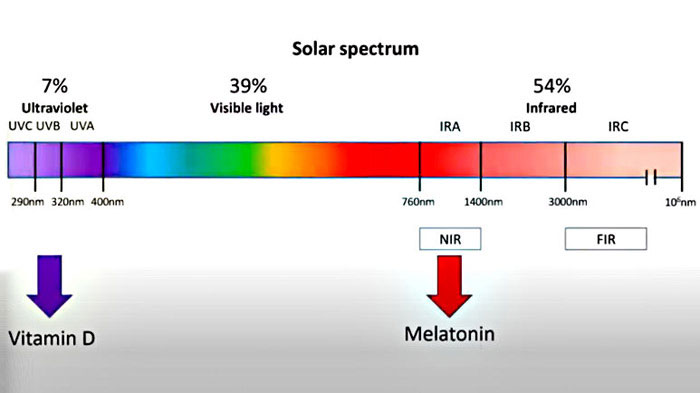
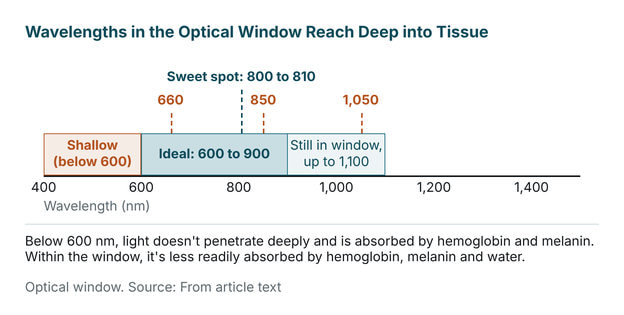
• There’s a term in biophysics called the optical window — This ranges from approximately 600 nm to 1,100 nm; 600 nm is red-orange. Around 700 nm, you get into near-infrared, which becomes invisible and tops out roughly at 1,500 nm.
• The ideal optical window is between about 600 and 900 nm — Within this optical window, the wavelengths are long enough to penetrate into the body and reach deep into the tissues, but they’re not readily absorbed by hemoglobin, melanin, and water.
• Below 600 nm, the rays don’t penetrate very deep — What does get into the body gets absorbed by hemoglobin and melanin. The optical window sweet spot is around 800 to 810 nm, which is classic near-infrared. However, research suggests there are benefits at other wavelengths as well.
What Are the Benefits of the 660 nm Wavelength?
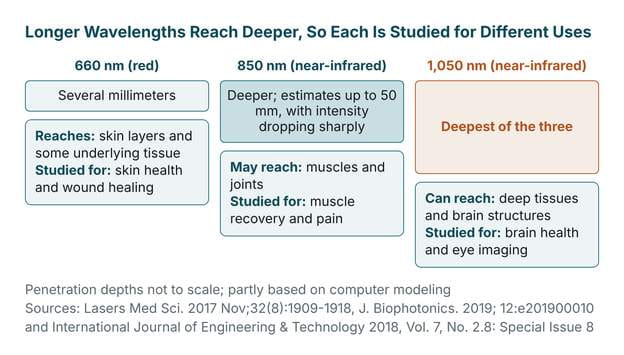
Red light at 660 nm penetrates several millimeters into tissue, effectively reaching the epidermis, dermis, and hypodermis layers of the skin, as well as some underlying tissues.2,3 This wavelength is largely absorbed in the skin, which makes it a focus of skin health research.4
• The depth of penetration of 660 nm light is influenced by several factors — These include irradiance (power density), tissue thickness, gender, and bone and muscle composition.5,6 While light penetration was unaffected by skin tone, it increased with irradiance and relative bone/muscle composition, and decreased with greater tissue thickness and in males. Tissue penetration depths were greater for females than for males.*7
• The 660 nm wavelength offers a range of benefits, particularly for skin health and wound healing — It has been studied for skin rejuvenation and reducing the appearance of wrinkles.*8 Additionally, in animal studies, it has sped wound healing and reduced inflammation in the wound.**9
Further, early research suggests 660 nm light may reduce neuropathic pain*10 and increase cellular energy by boosting production of adenosine triphosphate (ATP) in mitochondria.11 Combining 660 nm with 850 nm near-infrared (NIR) light could have additional benefits, delaying muscle fatigue and enhancing skeletal muscle performance.*12 This suggests there may be synergistic effects when using multiple wavelengths. Additional benefits of 660 nm light include:
• Increases cellular energy (ATP), which may help cells regenerate13
• Accelerates wound healing by increasing the formation of new blood vessels and enhancing collagen deposition in animal studies**14
• Stimulates fibroblast differentiation, which is important for wound healing, in lab studies**15
• Promotes proliferation in human adipose-derived stem cells, which is considered beneficial in regenerative medicine, in lab studies**16
What Are the Benefits of the 850 nm Wavelength?
Near-infrared light (NIR) at 850 nm penetrates deeper into tissues than 660 nm light,17 and estimates in the literature range up to 50 mm, although intensity drops sharply with depth.18 This may allow it to reach muscles and joints.19 Further, 850 nm light is thought to stimulate mitochondrial activity and enhance cellular energy production, promoting tissue repair and regeneration.20
• It has also been shown to enhance M1-related cytokine release — In a lab study of immune cells, fluid from the cells treated with 850 nm light increased fibroblast proliferation, and the same study found that the light played an anti-inflammatory role by decreasing TNF-α levels.**21 Separately, in a clinical trial, red light improved skin complexion and collagen density, and broadband light that included 850 nm worked about as well.*22
• The 850 nm wavelength offers a broader range of benefits compared to 660 nm — Its benefits extend beyond skin health to include muscle recovery and pain management. Its deeper penetration allows it to address issues related to muscles, joints, and deeper tissues, making it a focus of research for athletes and people with chronic pain.
• It is also being studied for hyperpigmentation — In lab studies, 850 nm light significantly reduced melanin production and tyrosinase expression, suggesting possible applications in treating hyperpigmentation and melanin-overproducing skin conditions.**23
What Are the Benefits of the 1,050 nm Wavelength?
Near-infrared light at 1,050 nm can reach deep into tissues and influence brain structures. This wavelength range is thought to influence cellular processes, including the activation of cytochrome c oxidase, a key enzyme in the mitochondrial respiratory chain, also known as the electron transport chain. In a study of 11 healthy adults, 1,064 nm light applied to the forehead increased cytochrome c oxidase activity in the brain.*24
• The 1,050 nm wavelength offers unique benefits — These benefits are related to its deep penetration capabilities, particularly in the context of brain health and ophthalmic applications. Early research using 1,060 to 1,080 nm light suggests it may support cognitive function, making it a promising area of research for conditions like dementia.*25 Additionally, its use in ophthalmic imaging suggests potential for improved diagnosis of eye conditions.26
• Hormesis is relevant to 1,050 nm light therapy — This is a concept where maximal responses are observed at intermediate doses.27 This suggests that optimal therapeutic effects are likely achieved with moderate doses.
Meanwhile, animal studies of other near-infrared wavelengths suggest PBM may support the brain’s waste-clearance (glymphatic) system.**28
Diverse Applications of 660 nm, 850 nm, and 1,050 nm Light
The 660 nm, 850 nm, and 1,050 nm wavelengths of light in photobiomodulation each exhibit unique properties and applications in various fields.
• 660 nm appears most effective for skin health and wound healing — This is linked to its effects on collagen deposition and cell regeneration in studies. This has implications for dermatology, cosmetic surgery, and wound care.
• 850 nm offers a broader range of benefits due to its deeper penetration into tissues — These include muscle recovery and pain management. This wavelength holds promise for sports medicine, pain management clinics, and rehabilitation settings.
• 1,050 nm shows promise in brain health and ophthalmic applications — It can reach deep into tissues and influence brain structures. This has implications for neurology, ophthalmology, and the study of neurodegenerative diseases.
This highlights the versatility of PBM therapy and its ability to address a wide range of health concerns. By continuing to investigate the therapeutic ability of PBM therapy, we can unlock its full range of benefits and improve patient outcomes across various medical specialties.
*These findings are from research conducted in clinical settings. Results may not apply to all individuals.
**These findings are from laboratory or animal research and may not directly apply to human health.
Dosing Suggestions
Spending time outdoors provides natural near-infrared exposure, but many people don’t get outside on a regular basis. Red and near-infrared therapy has also been studied for athletic performance and recovery,*29 and a PBM device can deliver more targeted wavelengths as an addition to — not a replacement for — regular sun exposure.
• For general health, you’re looking for the Goldilocks amount of red, near-, and infrared light — With too little, you don’t get a biological effect. With too much, you get into an inhibitory zone. So, what’s an ideal dose, in terms of an individual session? Most of the scientific literature uses anywhere from 5 joules to 50 joules. (A joule is a unit of energy equal to 1 watt delivered for 1 second.)
• As general guidance, get as much full-spectrum sunlight from the outdoors as you can — If you’ve been eating seed oils, avoid high-intensity sun until you’ve been off them for four to six months, then start going into the sun at solar noon. Afterward, use a dose of 25 joules, and take a day off every now and then. With a large panel, that would equate to 10 minutes on the front and 10 minutes on the back, for a total of 20 minutes.
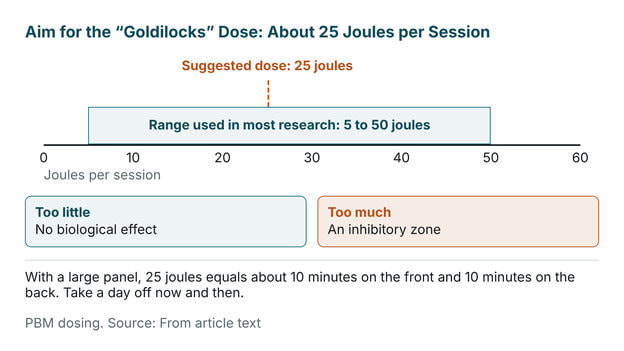 Figure 4. Most research uses 5 to 50 joules per session, and the suggested dose is about 25 joules, which is roughly 10 minutes per side with a large panel.
• There are no hard rules to go by when it comes to selecting a device — In general, red is not going to penetrate as deep and is typically used more for skin. Near-infrared will penetrate deeper, which makes it popular for muscle recovery and of interest for cognitive enhancement. A mixed device gives you the best of both worlds, but you’ll need to spend about 50% more time using it, compared to a pure near-infrared device.
The effectiveness of PBM varies depending on factors such as wavelength, power density, and treatment duration. When considering PBM for various health concerns, consult with a health care provider experienced in this therapy. They will help determine the most appropriate parameters for your specific condition and guide you on how to integrate PBM for the best results.
Frequently Asked Questions (FAQs) About Photobiomodulation
Q: What is photobiomodulation (PBM), and how does it work?
A: Photobiomodulation (PBM), also known as low-level laser therapy, uses specific wavelengths of red and near-infrared light (660 nm, 850 nm, and 1,050 nm) to stimulate biological processes, enhance cellular energy (ATP), and may support healing, pain relief, and tissue regeneration.
Q: What is the significance of the “optical window” in PBM therapy?
A: The optical window (600 to 1,100 nm) allows light to penetrate tissues effectively with less absorption by hemoglobin, melanin, or water. This window maximizes therapeutic benefits by targeting deeper tissues for healing and regeneration.
Q: What are the key benefits of the 660 nm wavelength?
A: The 660 nm red light may support skin health, wound healing, and cellular energy, and early research suggests it may ease neuropathic pain. It’s mainly used in dermatology, skin rejuvenation, and tissue repair.
Q: How does the 850 nm wavelength differ from 660 nm in its effects?
A: The 850 nm near-infrared light penetrates deeper and is being studied for muscle recovery, joint pain, and inflammation. It’s used in sports medicine and rehabilitation.
Q: What makes the 1,050 nm wavelength unique in PBM?
A: The 1,050 nm wavelength penetrates the deepest of the three, and early studies of nearby wavelengths suggest it may support cognitive function. It shows promise in neurology, ophthalmology, and research on neurodegenerative conditions.
This article is for informational purposes only and does not constitute medical advice. Consult a qualified healthcare provider before making changes to your health regimen.
- 1 Acupuncture & Electro-Therapeutics Research, February 2007, 32(1-2):81-6
- 2, 4, 17 Lasers Med Sci. 2017 Nov;32(8):1909-1918
- 3, 5 J. Biophotonics. 2019; 12:e201900010
- 6, 7 Photobiomodul Photomed Laser Surg. 2020 Jul 14;38(7):393–394
- 8 Dermatol Surg. 2017 Mar;43(3):371-380
- 9, 14 J Periodontol. 2015 May;86(5):674-81
- 10 Photochem Photobiol. 2025; 101: 913-924
- 11, 13, 20 Ann Biomed Eng. 2011 Nov 2;40(2):516–533
- 12, 29 Photomed Laser Surg. 2010 Oct;28(5):653-8
- 15 Lasers Surg Med. 2020 Sep;52(7):671-681. doi: 10.1002/lsm.23204
- 16, 18 Scientific Reports, August 10, 2017
- 19 International Journal of Engineering & Technology 2018, Vol. 7, No. 2.8: Special Issue 8 (Archived)
- 21 Int. J. Bioautomation 2023, 27(1), 5-14
- 22 Photomed Laser Surg. 2014 Feb 1;32(2):93–100
- 23 Acta Dermato-Venereologica 2012, Vol. 92, No. 6
- 24 J Cereb Blood Flow Metab. 2017 Dec;37(12):3789-3802
- 25 Aging Dis. 2021 Jul 1;12(4):954–963
- 26 Opt Express. 2010 Sep 13;18(19):20029–20048
- 27 Focus (Am Psychiatr Publ). 2022 Jan 25;20(1):36–44
- 28 Int J Mol Sci. 2022 Mar 10;23(6):2975
Europe Establishes Its First Clinical Guide for Photobiomodulation in Cancer Care
Reproduced from original article:
https://articles.mercola.com/sites/articles/archive/2026/09/08/photobiomodulation-europe-clinical-guide-cancer-care.aspx
Analysis by Dr. Joseph Mercola September 08, 2026
Story at-a-glance
- Photobiomodulation (PBM) is a light-based therapy that uses specific wavelengths to interact with body tissues, influencing cellular activity without heat and supporting recovery across both medical and general wellness settings
- In 2025, Europe released its first formal clinical guide for PBM in oncology, marking a shift toward standardized use of light-based supportive care across cancer treatment centers
- Clinical research shows PBM is most strongly supported for managing oral mucositis and radiation-related skin damage, two common cancer complications that can interfere with eating, speaking, and treatment continuity
- Beyond cancer care, PBM has been studied for wound healing, nerve pain, musculoskeletal recovery, skin health, and hair loss, with consensus reviews supporting its safety when properly applied
- Effective PBM depends on correct wavelength selection, dosing, and device quality, with red and near-infrared light delivering biologically active energy when used within established therapeutic ranges
Chemotherapy and radiation remain central to modern cancer treatment, yet they often place a heavy burden on the body, affecting everything from your ability to eat and speak to the health of your skin and nerves. For patients and clinicians alike, addressing these treatment-related complications continues to be a persistent challenge. In response, oncologists have begun exploring light-based approaches as a way to reduce these secondary burdens.
Light has shaped life on Earth since the first single-celled organisms used it to generate energy billions of years ago — and your cells still respond to specific wavelengths in ways that influence not just sleep-wake cycles but also healing. Photobiomodulation (PBM) is a treatment approach that harnesses this relationship between light and biology, with research backing its benefits in various medical fields.
Europe has taken a significant step in bringing this therapy into mainstream cancer care. In 2025, a released guide represents the first comprehensive European standard for using PBM in oncology, establishing standards for a therapy that many clinicians have yet to fully explore.1 This development reflects a broader shift in how supportive cancer care is being approached.
Europe Sets a Formal Framework for PBM in Oncology
In October 2025, the French-speaking Association for Supportive Care in Cancer (AFSOS) introduced the first European reference guide for the use of PBM in oncology. The announcement was made during the 16th National Congress of Oncology Supportive Care, held in Lille, France. This marks the first formal clinical standard for PBM in European oncology.2
• The guide sets clear clinical standards for PBM use — Led by Dr. Antoine Lemaire of Valenciennes General Hospital, the guide outlines when and how PBM should be integrated into supportive cancer care. It emphasizes that many clinicians remain unfamiliar with PBM despite its growing evidence base, and it positions the reference document as a tool to close this knowledge gap. The aim is to standardize usage, so patients receive consistent care across treatment centers.
• Well-established uses of PBM across supportive cancer care — Cancer treatments place significant stress on tissues that divide rapidly or rely on delicate structural integrity, such as the lining of the mouth, skin, nerves, and connective tissue. Among PBM’s applications in oncology, the strongest clinical support exists for treating mucositis and radiodermatitis, both of which are common and painful complications of cancer treatment.
Mucositis refers to the painful inflammation and ulceration of the mucous membranes lining the digestive tract, which can make eating and swallowing extremely difficult for patients undergoing chemotherapy or radiation. Radiodermatitis refers to skin damage caused by radiation exposure and can range from redness and dryness to blistering and open wounds. It is common in breast, head and neck, and pelvic cancers.3
• The guide also covers other applications where evidence is moderate but promising — These conditions span multiple types of tissue and treatment-related complications, including:4,5
◦Lymphoedema — Persistent swelling caused by impaired lymphatic drainage after surgery or radiation.
◦Xerostomia — Dry mouth resulting from salivary gland damage during head and neck radiation treatment.
◦Trismus — Restricted jaw movement linked to muscle or joint stiffness after radiation.
◦Osteoradionecrosis — Bone injury and breakdown caused by impaired blood flow after radiation.
◦Dysphagia — Difficulty swallowing due to tissue inflammation or neuromuscular impairment.
◦Dysphonia — Voice changes or hoarseness from irritation or injury to vocal structures.
◦Dysgeusia — Altered or reduced taste perception related to chemotherapy.
◦Chemotherapy-induced neuropathy and alopecia — Nerve pain, numbness, and hair loss triggered by cytotoxic drugs.
◦Palmoplantar erythroderma — Redness, swelling, and tenderness of the palms and soles linked to certain chemotherapies.
• PBM delivers low-intensity light to stimulate mitochondrial activity without heat — The guide describes PBM therapy as “a mechanism in which red, near infrared, or blue light is delivered to damaged target tissues.” The approach relies on controlled light exposure rather than thermal effects and is applied using devices selected according to tissue depth and treatment location.
However, while the guide includes blue light within its technical definition of PBM, I do not recommend artificial blue light exposure for therapeutic use, as it disrupts circadian signaling and has well-documented effects on sleep regulation, hormonal balance, and systemic health. For this reason, red and near-infrared wavelengths remain the focus of safer and more biologically aligned applications.
• Around 100 cancer centers in France are currently equipped with PBM devices — These clinics use either laser or light-emitting diode (LEDs) equipment. While lasers tend to deliver more focused penetration, LEDs provide broader diffusion, and both can be effective depending on the clinical need. The choice of tool, treatment duration, and dosing parameters all depend on the area being treated and the depth of tissue involvement.
Therapeutic dosing generally falls within the range of 10 to 12 joules per square centimeter, but each device has its own set of instructions to ensure the light reaches the target tissue at the correct strength. Sessions typically last about 20 minutes, often administered once or twice per week in protocols that span eight to 16 sessions. Adjustments are made based on symptom severity and location.
• The therapy is also expanding beyond oncology — Private clinicians increasingly use these devices in sports medicine and gynecologic care, while patient associations advocate for broader access. Some patients now request PBM directly, which raises the need for oncology clinicians to understand PBM and recognize appropriate indications within cancer care pathways.
• Despite growing adoption in clinical settings, PBM faces several barriers to wider use — The most pressing is the lack of dedicated reimbursement. At present, the cost of PBM is typically bundled into consultation fees, which limits its scalability.
The guide raises concerns about the rise of home-use PBM devices, noting that many sold online lack proper safety certification, deliver inadequate or poorly calibrated doses, or emit wavelengths that can pose health risks. While this caution is valid, it’s also important to recognize that not all consumer devices fall into this category.
When properly designed, dosed, and used with informed guidance, some at-home units can be a useful part of a broader therapeutic approach. The key is understanding how to choose equipment that’s both safe and effective. I’ll go into more detail later on how to evaluate devices and what to look for if you’re considering one for personal use.
By laying out clear protocols, validated use cases, and technical considerations, the new European guide brings much-needed structure to a therapy that has, until now, been applied unevenly across clinics. To understand why European oncologists are standardizing PBM protocols, it helps to grasp how light actually interacts with your cells.
Understanding the Science Behind Light
Not all light affects your body the same way. What matters is the wavelength — essentially, how long or short each wave of light is, measured in nanometers. Each part of the light spectrum interacts with your cells differently, and only a specific range carries the ability to penetrate deeply enough to influence healing, energy production, and inflammation without causing harm.
• Solar rays can be divided into three categories — Ultraviolet (UVA, UVB, and UVC) account for 7% of the solar spectrum. Visible light (violet, indigo, blue, green, yellow, orange, red), ranging from 400 to 700 nanometers, accounts for 39% of the spectrum. Invisible infrared (near-, mid-, and far-infrared) light, ranging from 700 to 10,000 nanometers, accounts for 54% of the spectrum.
• This range is called the optical window — The ideal optical window is about halfway through the near-infrared range, between 600 and 900 nanometers. Within this optical window, the wavelengths are long enough to penetrate the body and reach deep into the tissues, but they’re not readily absorbed by hemoglobin, melanin, and water. The optical window sweet spot is around 800 to 810 nanometers.
• Penetration depth varies by wavelength — Red light starts around 600 nanometers. In the range of about 630 to 660 nanometers, red light typically reaches a few millimeters into tissue, making it relevant for skin and superficial structures. Meanwhile, near-infrared light begins above 700 nanometers. At around 800 to 850 nanometers, it penetrates much deeper, reaching muscles, joints, and other underlying tissues.
Longer wavelengths, closer to 1,050 nanometers, can penetrate even further, with research exploring their interaction with deeper tissue and neural structures, although these applications remain an active area of investigation.
• The key target within your cells is an enzyme called cytochrome c oxidase — This is a protein embedded in your mitochondria that acts as the final gatekeeper in cellular energy production. When this enzyme absorbs red or near-infrared light, it accelerates the production of adenosine triphosphate (ATP), the molecule your body uses for cellular energy. This increase in ATP supports everything from tissue repair to immune signaling and metabolic resilience.
• PBM influences melatonin production, but not the kind produced by your brain at night — Instead, near-infrared light stimulates melatonin synthesis inside the mitochondria, which account for roughly 95% of the melatonin produced in your body. By comparison, the melatonin secreted by the pineal gland during nighttime represents only 5% of your body’s total melatonin output.
Within mitochondria, melatonin serves as a powerful antioxidant. It neutralizes free radicals generated during normal energy production and helps protect mitochondrial structures from oxidative damage. Because mitochondria are present in nearly every cell, this mechanism helps explain why red and near-infrared light can exert effects across such a wide range of tissues.
• Nitric oxide is another key player — When light triggers its release from cellular storage sites, it leads to improved circulation by widening blood vessels and reducing inflammation. The result is better blood flow to damaged tissues, improved oxygen delivery, and support for immune and repair processes in areas under stress.
This broad impact on core biological functions has made PBM an area of growing interest in fields beyond oncology. To get a deeper look at how different wavelengths work in the body and what makes them therapeutically active, read “Exploring Benefits of Different Wavelengths of Light in Photobiomodulation.”
Other Health Benefits of PBM Beyond Cancer Care
A clinical consensus published in the Journal of the American Academy of Dermatology reviewed the available evidence on PBM and found that it shows therapeutic benefit for the following conditions:6
• Wound healing — Chronic wounds can persist for weeks or months due to poor blood flow, infection risk, or high levels of inflammation. This includes diabetic foot ulcers, venous leg ulcers, pressure ulcers (bedsores), and burns. PBM supports healing in these cases by improving circulation, reducing inflammation, and promoting tissue repair, especially when used alongside standard wound care.
• Peripheral nerve conditions — Damage to the peripheral nervous system can cause burning, tingling, numbness, or shooting pain in the limbs. PBM has been shown to help reduce nerve-related pain and restore some sensory function, particularly in cases of diabetic neuropathy or chemotherapy-induced nerve injury.
Additional studies have looked at its potential to relieve post-herpetic neuralgia (shingles-related nerve pain), improve bladder control, and stabilize blood pressure reflexes, though more data is needed in those areas.
• Musculoskeletal performance and recovery — PBM may influence muscle performance and fatigue depending on dose and wavelength. While further high-quality research is needed, these findings suggest promising uses in sports medicine and physical rehabilitation.
• Cognitive function and neurodegeneration — Though consensus was not reached for all neurological conditions, PBM has been studied for its effects on cognitive performance, memory, and attention. Applications explored in early or experimental studies include brain injury, dementia, chronic migraines, Alzheimer’s disease, and Parkinson’s disease.
I also finished a hypothesis paper, which has yet to be published, in which I propose that near-infrared light absorbed by mitochondria triggers local melatonin synthesis, which may activate powerful antioxidant defenses within brain cells. This mitochondrial melatonin system appears distinct from pineal melatonin and operates without circadian rhythms.
According to the model, near-infrared exposure initiates a cascade involving glutathione amplification and SIRT3 activation that offers targeted protection against oxidative stress. I believe this light-triggered mechanism could help defend neurons from age-related degeneration, particularly when combined with adequate intake of glutathione precursors like glycine and N-acetylcysteine (NAC).
• Dermatological and aesthetic uses — PBM has found a place in clinical dermatology, particularly for improving scar appearance and skin rejuvenation. In patients with androgenic alopecia, PBM has also been shown to promote hair regrowth when used at appropriate wavelengths and dosages.
• Oral applications — PBM has been described as generally well tolerated when used for maxillofacial conditions. While the consensus review did not detail specific clinical outcomes, separate research published in The Journal of the American Dental Association reports that PBM may be used as an adjunctive therapy in dental settings to support wound healing, reduce inflammation, and help manage pain.7
As with any biologically active therapy, outcomes depend not just on what condition is being treated, but on how the therapy is delivered. Understanding how to choose the right device — and how to dose it correctly — is essential for translating the science of PBM into safe, practical results.
Practical Guidance for Choosing a PBM Device and Using It Effectively
Using PBM to effectively improve your general wellness depends on both how much light is delivered and how it is delivered. Dose, wavelength, and device quality work together to determine whether PBM produces a meaningful biological response. The aim is to apply enough energy to activate cellular processes without exceeding the range where the effect begins to diminish. Here are some tips to keep in mind:
• Aim for the therapeutic middle range rather than going too low or too high — Research commonly uses doses between 5 and 50 joules per session, with a joule representing the amount of energy delivered in watts per second. This reflects a well-established principle in PBM: insufficient energy produces weak or no biological response, while excessive energy can reduce or inhibit the intended effect.
• Use about 25 joules per session for general whole-body wellness — This level can be reached using a large PBM panel and corresponds to roughly 10 minutes of exposure to the front of the body and 10 minutes to the back. This session length provides enough energy to support cellular signaling and tissue recovery without overwhelming the system.
• Match the device to your health goal, required depth, and daily routine — Consider what you intend to treat, how deep the light needs to reach, and how easily the device fits into your daily routine. Adjustable settings that control wavelength and dosage improve flexibility and help tailor sessions to your needs.
Always choose a clinically validated device from a reputable manufacturer to ensure safety, reliability, and accurate energy delivery. A practitioner trained in PBM can help tailor your dosing schedule based on individual health goals and response patterns.
• Choose a mixed red and near-infrared unit when you want both surface and deep-tissue effects — This device allows you to address both surface-level and deeper tissue issues simultaneously. However, achieving these combined benefits requires spending about 50% more time using the device compared to using a device that emits only near-infrared light.
• Select low-EMF, low-flicker devices to reduce unnecessary stress exposure — Mito Red is one example of a PBM manufacturer that has addressed several common concerns found in many light therapy devices. One of the key features is its extremely low electromagnetic field (EMF) output, measuring under 1 milligauss at a 6-inch distance and dropping to background levels beyond that.
In contrast, some infrared panels emit 5 to 10 gauss or more when used at close range, which may be a consideration for those sensitive to EMFs. They also eliminated light flicker, a subtle but measurable pulsing that tends to occur in infrared light devices and can affect neurological comfort over time. Visit their website to explore the full product line, including portable units, full-body panels for home use, commercial-grade panels, and red-light room systems.
• Consider using sauna therapy — Far infrared saunas, in particular, provide a practical way to deliver therapeutic wavelengths while also supporting detoxification through sweat. Learn more in “Infrared Sauna After Training Speeds Recovery and Supports Athletic Performance.”
• PBM complements natural light exposure — Regular time in natural sunlight remains the best way to receive a full spectrum of beneficial light wavelengths. But for many people, daily exposure is inconsistent or limited by season, lifestyle, or environment. PBM can be a great health investment to fill the gaps when natural light isn’t available, but it’s meant to supplement — not replace — sunlight exposure.
Frequently Asked Questions (FAQs) About Photobiomodulation
Q: What are the benefits of PBM in patients undergoing cancer treatment?
A: PBM is used in cancer care to help manage treatment-related side effects. Clinical research shows it may reduce the severity and duration of oral mucositis, ease pain in the mouth and throat, improve tolerance to radiation-related skin reactions, and support recovery of tissues affected by chemotherapy or radiation.
By helping preserve your ability to eat, speak, and maintain skin and nerve comfort, PBM may also reduce treatment interruptions and improve overall quality of life while you are undergoing cancer therapy.
Q: Why do red and near-infrared light matter more than other wavelengths?
A: Red and near-infrared wavelengths fall within a range that allows light to penetrate tissue without being excessively absorbed by skin pigment, blood, or water. This makes them better suited for interacting with deeper tissues compared to shorter wavelengths.
Q: Should I use blue light as part of PBM therapy?
A: Blue light is included in some technical definitions of photobiomodulation, but artificial blue light exposure can disrupt circadian signaling and sleep regulation. For this reason, focusing on red and near-infrared light aligns better with overall biological health outside tightly controlled medical settings.
Q: Can I use a PBM device at home?
A: Some at-home devices are designed to deliver appropriate wavelengths and doses, but quality varies widely. Look for clinically validated equipment with clear specifications and avoid devices that lack safety certification or accurate output information. Guidance from a knowledgeable practitioner helps reduce misuse.
Q: Does PBM replace spending time outdoors?
A: PBM does not replace natural sunlight. Time outdoors provides a broader spectrum of light and supports circadian health in ways devices cannot fully replicate. PBM works best as a supplement when regular outdoor light exposure is limited by the environment or schedule.
Light Therapy Might Help Ease ‘Dry’ Form of Macular Degeneration
Reproduced from original article:
https://articles.mercola.com/sites/articles/archive/2024/12/25/light-therapy-macular-degeneration.aspx
Analysis by Dr. Joseph Mercola December 25, 2024
STORY AT-A-GLANCE
- Light therapy (photobiomodulation) shows promise as an effective noninvasive treatment for dry age-related macular degeneration, with 53% of patients gaining improved visual acuity over two years
- The therapy uses specific wavelengths of light to enhance retinal cell function, protecting vision without injections or medications, and reduced new cases of geographic atrophy by 73%
- Clinical trials demonstrated significant improvements, with treated patients averaging 5.4 letters gained in visual acuity compared to three letters in placebo groups, showing both safety and effectiveness
- Photobiomodulation works by targeting mitochondria with red to near-infrared light (600 to 1,100 nanometers), increasing ATP production and reducing oxidative stress in retinal cells
- While light therapy shows promise for AMD treatment, the best way to prevent this condition is avoiding seed oils, which contain linoleic acid
Light therapy, a painless, noninvasive treatment, could significantly lower your risk of vision loss from dry age-related macular degeneration (AMD), according to a study presented at AAO 2024, the annual meeting of the American Academy of Ophthalmology (AAO).1
Researchers revealed that photobiomodulation therapy, a type of light therapy, not only slows the progression of dry AMD but also improves visual acuity in patients. According to lead study author Dr. David S. Boyer, this therapy marks the first effective noninvasive treatment for dry AMD, offering hope to millions who have long struggled with limited options.2
Over two years, patients receiving this light therapy showed remarkable improvements: 53% gained more than five letters in visual acuity, and there was a 73% reduction in new geographic atrophy cases — signifying a significant decrease in the development of advanced damage to the retina — compared to those who didn’t receive the treatment.3 This therapy could soon become a standard, accessible option for preserving your vision without the need for injections or medications.
Understanding Macular Degeneration
AMD is a leading cause of vision loss, particularly affecting individuals over 50. The macula, a small part of your retina, is responsible for sharp, central vision — the clarity you need for reading, driving and recognizing faces. AMD exists in two primary forms: wet and dry.
Wet AMD is characterized by the growth of abnormal blood vessels beneath your retina, which leak fluid and cause rapid vision loss. This form is often managed with anti-vascular endothelial growth factor (anti-VEGF) medications.
In contrast, dry AMD progresses more slowly and involves the thinning and deterioration of your macula without the abnormal blood vessel growth seen in the wet form. Until now, treatment options for dry AMD have been limited to dietary supplements rich in antioxidants and lifestyle changes aimed at slowing the disease’s progression.
The Most Important Way to Prevent AMD
An ounce of prevention is worth a pound of cure, so before I go into the details of light therapy, I want to share the No. 1 way to prevent AMD — a disease process rooted in mitochondrial dysfunction and insulin resistance, triggered by the long-term consumption of seed oils rich in linoleic acid (LA).
Your eyes are highly susceptible to damage caused by polyunsaturated fats (PUFAs) such as LA.4 PUFAs are prone to oxidation, which means the fat breaks down into harmful metabolites, including oxidized LA metabolites (OXLAMs). These go on to cause mitochondrial dysfunction, which is a hallmark of most chronic disease.
Seed oils, including soybean, cottonseed, sunflower, rapeseed (canola), corn and safflower, are present in almost every processed food, including those from restaurants. To avoid it, you’ll need to eliminate most processed foods from your diet. Additionally, LA is hidden in seemingly “healthy” choices like chicken, pork and even olive oil, which is often blended with cheaper seed oils.
To protect your vision and overall health, it’s wise to keep your LA intake below 5 grams per day from all sources. If you can get it below 2 grams, that’s even better. To help you track your LA intake, make it a habit to enter all your foods into a nutrition tracker. That way, you can tally how much LA you’re consuming daily and adjust your meals accordingly.

Save This Article for Later – Get the PDF Now
The Promise of Photobiomodulation Therapy for AMD
Photobiomodulation (PBM) therapy uses specific wavelengths of light to enhance the function of cells in the retinal pigment epithelium (RPE), the layer of cells at the back of your eye that’s necessary for maintaining retinal health.
By improving cellular function, photobiomodulation keeps these cells healthy longer, slowing or even reversing the degenerative processes that lead to vision loss. Unlike conventional treatments, this therapy doesn’t require the discomfort and risks associated with injections or medications.
A study published in the journal Retina also revealed promising results of photobiomodulation therapy for dry AMD.5 This randomized, controlled trial enrolled 100 subjects across 10 U.S. centers. Participants were aged 50 and older, diagnosed with intermediate dry AMD and exhibited best-corrected visual acuity (BCVA) scores between 50 and 75 letters, corresponding to a Snellen equivalent of 20/32 (slightly below normal) to 20/100 (moderately impaired).
Participants were randomly assigned in a 2:1 ratio to receive either the multiwavelength PBM treatment or a placebo treatment. The PBM regimen involved nine treatment sessions over three to five weeks, repeated every four months for a total of six series over 24 months. The placebo treatment mimicked the PBM procedure but with significantly reduced light intensity.
Patients receiving PBM therapy experienced significant improvements. At the 13-month mark, those who received PBM experienced an average increase of 5.4 letters in BCVA, compared to a three-letter gain in the placebo group. This difference is statistically significant and clinically meaningful, especially considering the progressive nature of dry AMD.
Moreover, 55% of the PBM-treated eyes achieved a gain of five or more letters, and 26.4% saw an improvement of 10 or more letters. In contrast, only 40.8% and 15.1% of the placebo-treated eyes achieved these milestones, respectively.6
Stabilizing or even improving vision in early to intermediate stages of dry AMD significantly impacts daily activities and overall quality of life. Additionally, the PBM group showed fewer instances of visual decline, with fewer eyes losing five or more letters compared to the placebo group. These results underscore PBM’s ability to halt and even reverse some of the vision loss associated with dry AMD.
Safety and High Compliance Rates: A Promising Profile
The Retina study provided reassuring data regarding the safety profile of photobiomodulation. Throughout the 13-month period, only 22.3% of treated eyes experienced at least one ocular-specific adverse event, with the majority being mild to moderate in intensity.7 Importantly, no adverse event was reported by more than 5% of participants, and none led to discontinuation of the study.
Compliance rates were impressively high, with 88.2% of PBM-treated eyes fully adhering to the treatment protocol compared to 74.5% in the placebo group. This high level of compliance is indicative of the therapy’s tolerability and the minimal burden it places on patients, with each treatment session lasting less than five minutes per eye.
The favorable safety and compliance data suggest that PBM therapy is well-accepted by patients, making it a viable long-term option. The absence of significant phototoxicity or other severe side effects also positions PBM as a safe alternative to more invasive treatments currently available for AMD.
More Evidence Light Therapy Benefits Dry AMD
A separate study published in Ophthalmology and Therapy also provides compelling evidence on the safety and efficacy of photobiomodulation for treating dry age-related macular degeneration (dAMD).8 This randomized, controlled, double-blind trial involved 76 patients over the age of 50 with dAMD.
Participants were assigned to receive either the PBM treatment or a placebo procedure. The treatment regimen included two cycles of sessions spread over several weeks. At the four-month mark, patients treated with PBM showed a significant improvement in best-corrected visual acuity, with 20.3% achieving a gain of five or more letters compared to 8.9% in the placebo group.
Additionally, there was a notable reduction in drusen volume among the PBM-treated eyes, suggesting that PBM may help slow the accumulation of harmful deposits beneath the retina.
Drusen, yellow deposits under the retina, are a hallmark of AMD and contribute to disease progression. By reducing drusen volume, PBM therapy may help slow the advancement of AMD, delaying the onset of more severe stages like geographic atrophy (GA) or neovascular AMD (nAMD).
Importantly, the study reported minimal adverse events, with only mild ocular discomfort experienced by a fifth of the treated patients. The most common adverse events included mild symptoms like dryness and warmth at the application site, which were easily managed and did not lead to any discontinuations.
Exploring the Biochemical Foundations of Light Therapy
PBM therapy utilizes specific wavelengths of red to near-infrared light (600 to 1,100 nanometers) to target the mitochondria within your retinal cells.9 Mitochondria are the powerhouses of your cells, responsible for producing adenosine triphosphate (ATP), the primary energy source that fuels cellular functions.
When PBM light penetrates your retinal tissue, it’s absorbed by cytochrome c oxidase (CCO), an enzyme in the mitochondrial electron transport chain. This absorption enhances mitochondrial activity, leading to increased ATP production, which in turn boosts cellular metabolism and promotes the repair and regeneration of retinal cells.
Moreover, PBM therapy helps reduce oxidative stress by decreasing the levels of reactive oxygen species (ROS) and mitigating inflammation within the retinal environment.10 The benefits of light therapy also extend to other macular diseases, offering hope for broader vision preservation. One such condition is diabetic macular edema (DME), a complication of diabetes that causes swelling in the macula due to leaking blood vessels.11
Preliminary studies have explored PBM’s effectiveness in reducing retinal thickness and edema in DME patients. Additionally, PBM therapy is being investigated for pachychoroid disorders, a group of diseases characterized by an abnormal thickening of the choroid layer in the eye. Early studies suggest PBM could help reduce inflammation and enhance mitochondrial function in these conditions.12
Photobiomodulation, particularly low-level red-light therapy (LLRL), is also beneficial for myopia, commonly known as nearsightedness.13 A meta-analysis, published in Clinics and involving 685 patients with a mean age of 9.7 years, found that LLRL therapy was associated with better outcomes in two key measures of myopia progression: spherical equivalent refraction (SER) and axial length (AL) change.14
A comprehensive review of multiple studies also found that red light therapy, using wavelengths between 635 to 650 nm, effectively reduces axial elongation of the eye and slows the increase in myopic spherical equivalent refraction, suggesting the nearsightedness is progressing more slowly.15 What’s more, these benefits were observed in treatments ranging from just four weeks up to 24 months.
The Role of the Optical Window in Light Therapy
Understanding the concept of the optical window is fundamental to harnessing the full benefits of photobiomodulation therapy. The sun emits a broad spectrum of light, with over half (53%) falling within the red, near-infrared, mid-infrared and far-infrared wavelengths. These wavelengths are categorized into three main groups:
1. Ultraviolet (UVA, UVB, UVC) — Comprising 7% of the solar spectrum, these wavelengths are responsible for skin tanning.
2. Visible light — Spanning from violet to red (400 to 700 nanometers), visible light accounts for 39% of the spectrum and is essential for vision.
3. Infrared light — Making up the largest portion at 54%, infrared light ranges from 700 to 10,000 nanometers and is invisible to the naked eye.
The optical window, specifically between 600 to 1,100 nanometers, is where PBM therapy operates most effectively. This range, particularly around 800 to 810 nanometers, allows light to penetrate deeply into tissues without being significantly absorbed by hemoglobin, melanin or water.
Below 600 nanometers, light penetration is limited as it is readily absorbed by these pigments, reducing its therapeutic reach. By focusing on the optimal optical window, PBM therapy delivers targeted energy to your retinal cells, enhancing cellular function and promoting eye health without unnecessary absorption or scattering.
The Multifaceted Benefits of Near-Infrared Light
Near-infrared (NIR) light plays a pivotal role in the effectiveness of PBM therapy, offering several biochemical advantages that support retinal health. One of the primary benefits of NIR exposure is the significant increase in ATP production within your mitochondria. Enhanced ATP levels boost cellular metabolism, assisting in the repair and regeneration of retinal cells affected by dry age-related macular degeneration.
Additionally, NIR light stimulates the production of melatonin within your mitochondria. While 5% of melatonin is produced by your pineal gland, 95% is generated in your mitochondria and acts as a powerful antioxidant. This melatonin effectively reduces oxidative stress by neutralizing free radicals directly within your mitochondria, protecting them from damage and ensuring their optimal performance.
Furthermore, melatonin helps increase glutathione levels, a vital detoxification agent that eliminates toxins and reduces inflammation.
It also promotes the release of nitric oxide (NO), enhancing blood circulation and vasodilation. These combined effects make near-infrared light a cornerstone of PBM therapy, offering comprehensive support for maintaining and improving retinal health.
Tailoring Your PBM Therapy: Optimal Dosing Strategies
Achieving the best results with photobiomodulation therapy hinges on delivering the right dose of red and near-infrared light. The concept of dosing in PBM is akin to finding the “Goldilocks” zone — not too little to be ineffective, and not too much to cause inhibition. Scientific studies typically utilize doses ranging from 5 to 50 joules per session, where a joule measures the energy delivered in watts per second.
For general health benefits, a balanced approach is recommended. Aim for approximately 25 joules per session, which can be administered using a large PBM panel. This equates to about 10 minutes of exposure to the front of your body and another 10 minutes to the back, totaling 20 minutes per session. This dosage ensures sufficient energy penetration to stimulate cellular processes without overwhelming the tissues.
While natural sunlight provides some near-infrared exposure, many individuals do not spend enough time outdoors to reap these benefits consistently. PBM devices offer a more targeted and controlled way to deliver the necessary wavelengths for optimal health outcomes. For best results, consult with a health care provider experienced in PBM therapy to determine the most appropriate dosing regimen tailored to your unique needs and health goals.
Selecting the Right PBM Device for Maximum Benefits
Choosing the appropriate photobiomodulation device is essential to maximize the therapy’s effectiveness for your specific health needs. PBM devices vary primarily in the wavelengths they emit and their penetration depth. Red light is excellent for treating superficial skin conditions but doesn’t penetrate deeply into tissues.
On the other hand, near-infrared light penetrates much deeper, making it ideal for targeting muscle tissues, enhancing cognitive functions and supporting retinal health in conditions like dry age-related macular degeneration.
For comprehensive benefits, a mixed PBM device that emits both red and near-infrared light offers the best of both worlds. Such devices allow you to address both surface-level and deeper tissue issues simultaneously. However, achieving these combined benefits requires spending about 50% more time using the device compared to using a device that emits only near-infrared light.
When selecting a PBM device, consider factors such as the specific health condition you wish to treat, the required penetration depth and the convenience of incorporating the therapy into your daily routine. Devices with adjustable settings that allow you to customize wavelengths and dosages provide greater flexibility and efficacy.
Additionally, ensure that the device you choose is clinically validated and comes from a reputable manufacturer to guarantee safety and reliability. While avoiding seed oils to protect your vision and prevent AMD is highly recommended, the advancements in light therapy symbolize a significant leap forward in combating vision loss, offering renewed hope and tangible benefits for those affected by dry macular degeneration and other eye conditions.
- 1, 2, 3 American Academy of Ophthalmology October 18, 2024
- 4 Free Radic Biol Med. 2019 Dec;145:349-356. doi: 10.1016/j.freeradbiomed.2019.10.007. Epub 2019 Oct 9
- 5, 6, 7 Retina 44(3):p 487-497, March 2024
- 8 Ophthalmol Ther. 2024 Sep 13;13(11):2855–2868
- 9, 10, 11, 12 Ophthalmol Ther. 2023 Sep 28;12(6):2903–2915
- 13, 14 Clinics (Sao Paulo). 2024 May 9;79:100375
- 15 Transl Vis Sci Technol. 2024 Aug 21;13(8):31
The Keys to Trusting Your Gut
Reproduced from original article:
https://articles.mercola.com/sites/articles/archive/2024/07/21/keys-to-trusting-your-gut.aspx
Analysis by Dr. Joseph Mercola July 21, 2024
STORY AT-A-GLANCE
- Gary Vaynerchuk, a prominent entrepreneur and digital marketing expert, transformed his family’s liquor business from $3 million to $60 million in revenue through pioneering online marketing strategies
- Traditional Eastern European natural health practices have had a deep and lasting effect on his lifestyle and beliefs about the body’s innate healing abilities
- Your body is designed to be healthy. It’s not designed to get diseased. That only happens because you’re not providing the foundational elements required for self-healing. If you have a healthy metabolism, you will not have chronic pain anywhere, and energy to spare
- Metabolically healthy people also tend to be perpetually curious. You must have enough energy to be curious, and most people don’t have enough energy because they’re metabolically poisoned. Optimism is another feature commonly found among healthy people
- Vaynerchuk’s books, such as “Crush It!” and “Jab, Jab, Jab, Right Hook,” reflect his expertise in leveraging social media to build personal and business brands
In this video, I interview Gary Vaynerchuk about his family roots and how his upbringing contributed to his current success. Vaynerchuk, often known as Gary Vee, is a prominent entrepreneur, author, speaker, and internet personality.
He’s best known for his work in digital marketing and social media, leading his own company VaynerMedia, a digital agency focused on social media-first approaches. He first gained prominence by revolutionizing his family’s wine business through innovative online marketing, which included creating one of the first e-commerce platforms for alcohol and hosting a daily webcast called “Wine Library TV.”
His efforts dramatically increased the business’s annual revenue from $3 million to $60 million. Vaynerchuk has also authored several books, including “Crush It! Why NOW Is the Time to Cash in on Your Passion” and “Jab, Jab, Jab, Right Hook: How to Tell Your Story in a Noisy Social World,” which provide insights into leveraging social media to build personal brands and businesses.
He is also involved in venture capital, having invested in companies like Facebook, Twitter, Tumblr and Uber early on. Through his personal brand and his company, he’s become a leading influencer among marketing professionals and entrepreneurs.
Family, Faith and Health
Vaynerchuk was born in Babruysk, Belarus, which was part of the Soviet Union until its dissolution in 1991. His family emigrated to the United States when he was 3 years old. His father opened a liquor store and Gary, even as a young boy, would help out, because that’s how families in Belarus work. They work together.
Eastern Europeans also tend to have deep spiritual family values, which is relatively rare in the U.S. these days. I heard him on a few other podcasts and was intrigued by the fact that he was so tuned into the spiritual aspect of reality.
I’m not as interested in WHAT he does, as HOW he does it. Where does the passion come from? I’m also intrigued by how the love of one’s parents can contribute to a person’s success in life. Are the two connected? I believe so.
Natural Healing — Your Body Knows What to Do
Eastern Europeans also tend to be far savvier about natural health than many Americans. Vaynerchuk recounts the story of how his great grandmother would wake him and his sister up when she came to visit and make them go outside and walk on the grass in their bare feet. Today, this is known as “grounding” or “earthing.”
“I’m very affected by my upbringing,” he says. “It’s my framework. I was also taught to never go to the doctor, ever, for my whole life. And also, no foreign chemicals. If I take two Advil right now, I’m unconscious.
Whether it’s the foods, or the things you put into your body, or how you interact with nature. I also remember my family being weird — or so I thought as a kid in the 80s in America.
We’d go to Sandy Hook, the beach, and my family would immediately run in and grab sand from the bottom of the ocean and scrub their faces with it. The other thing, literally anytime I wasn’t feeling well, for the first 15 years of my life, my mom or my grandma would say ‘Drink some tea and go to sleep …’
If you asked 18-year-old me in 1993, ‘Talk about medicine,’ my initial answers would be ‘ginger, cinnamon, mint, red beets.’ When I used to have a chest cold, my mom would put vodka on a rack and heat it up and put it on my chest. Not Vicks VapoRub. Just real ancient, historical ways of doing stuff …
I just remembered something I haven’t thought about 30 years. I used to think of my body like a superhero. If the superhero character got their thumb cut off, the thumb would just grow back in. I literally grew up thinking that if I did nothing, that it would fix itself.
Three weeks ago, I jammed my thumb playing basketball very badly. My friends were like, ‘Let’s put some ice on it.’ It swelled up. I didn’t do it.
A week later, my trainer said, ‘You know, it’s interesting that you didn’t do the ice thing, because I’ve been reading a lot about how the body naturally does it. It swells up to protect you. It’s a natural cast.’ It was just interesting the way he was talking about it. And he said, ‘Some people are now debating that you’re actually better off not icing it.’”
Save This Article for Later – Get the PDF Now
Healthy Body, Healthy Mind
Indeed, your body is designed to stay healthy. It’s not designed to get diseased. That only happens because you’re not providing the foundational elements required for self-healing. If you have a healthy metabolism, you will not have chronic pain anywhere, and energy to spare.
Metabolically healthy people also tend to be perpetually curious. You must have enough energy to be curious, and most people don’t have enough energy because they’re metabolically poisoned. Like Vaynerchuk suggests, optimism is another feature commonly found among healthy people.
“I believe my optimistic point of view on everything has an incredible impact on my life,” Vaynerchuk says. “So, it goes both ways. I grew up in my dad’s liquor store, and so, I got into very bad habits and really hurt my back. My QL.
But I would say soft tissue and fascial work has given me a new lease on life. I’ve always felt healthy. But I definitely had aches and pains and mobility issues until I got serious about that seven, 10 years ago.”
Foundational Basics Pay Off
The challenge most of us have is that our work doesn’t in any way, shape, or form resemble the work of our ancestors, whose work forced them to move about all day long. We don’t do that. Most people are stuck behind a desk most of the day. There are serious consequences of this, including aches and pains.
I’m in the process of developing something called 22nd Century yoga, which is a form of mobility medicine where you engage in daily movements that will help you stay limber. Also, as noted by Vaynerchuk, when you violate your own inner wisdom, your body will communicate your mistake to you, frequently in the form of pain, discomfort or fatigue.
For example, most people realize that they feel better after spending time outdoors in a natural setting. Just being in the sun has tremendous healing benefits, not only because it prompts vitamin D production but also because the near-infrared rays in sunlight nourish your body in other ways.
Sunlight interacts with light receptor proteins called chromophores in your body. When light hits the chromophores, they activate a variety of biological processes, including mitochondrial chelating systems in the cells, nitric oxide release and ATP production, all of which, together, promote DNA repair and cellular regeneration. Most of the Eastern European patients that I treated instinctively knew that the sun is a source of nutrition and were outside regularly.
The same thing goes for getting dirty, which helps strengthen your immune system. “I still have a very good relationship with germs,” Vaynerchuk says. “It’s incredible to me how infrequent I struggle with any kind of cold.” Today, we know that as the hygiene hypothesis, which suggests that if you’re overly hygienic and too assiduous about cleaning with antiseptics, your immune system becomes weaker.
Finding Balance
In the interview, we also talk about the role of media and how it’s being used for propaganda, including health propaganda.
“One of the great things that happened to me was I was born in the Soviet Union, but I grew up in America. So, propaganda was something I thought about all the time. Like when Reagan was president, I could sense that he was doing a good PR job. At 10, I understood.
I was also very entrepreneurial, and very quickly, in my early 20s, I’m like ‘Everything is business.’ We now talk about Big Food, Big Pharma. It was very, very intuitive to me in my 20s. And so, I’ve lived my adult life taking everything with a grain of salt.
I feel like that’s becoming a more modern conversation as people are trying to figure out east-west, historical versus modern. And you know, I do think people overcorrect the other way.
I’ve got personal [friends] who so have demonized modern medicine that they are no longer with us, because they didn’t do some things that they should have that probably could have helped them. So, I think a lot about finding the middle.”
As mentioned, while not a health expert, Vaynerchuk’s perspective on health tends to be intuitively spot-on, thanks to his upbringing. Ultimately, you’d want to trust your body to figure it out. It is not that you abandon rationality and data — you certainly need to take that into consideration — but to blindly trust experts other than your body is a foolish choice in my opinion.
On Marketing Well
Next, our conversation transitions into areas that Vaynerchuk is most known for, namely marketing and entrepreneurship. He comments:
“I think what I’ve done well is communicate to people about incredible truths [that] in marketing … have been fruitful. I think people are getting a lot more alternative knowledge from the way the internet works and things of that nature. But I think I’m incredibly practical.
It’s funny, I think about business and marketing the way that you and I are discussing health right now. If you’re worried about your body, why on earth would you not listen to your body? I find something very interesting about the medical industry, which is they like to fight each other on who’s right.
And I see it in marketing. I tell a lot of marketing ideological professors or pontificators who also write books like I do — ‘Wait a minute, if you’re so good at marketing, why doesn’t your book sell?’ I grew up learning marketing by trying to help my father’s liquor store do more business, because that’s what you do for your family business.
And so, since I was 6 years old, I’ve been obsessed with attention. Let me explain what I mean. What I find amazing about what you and I are doing right now is we couldn’t do this 40 years ago. Humans that have passion or expertise for things couldn’t get into the world. We needed to have a gatekeeper say that we’ll interview you or will give you three minutes on this show.
But no one had platforms. And so, I’ve been focused on attention my whole life. And now, every platform allows for attention. That is a remarkable change in the world. So, for example, I believe that what I was doing at 6, which was paying attention to what the cars that were driving by my lemonade stand would most likely look at to see that my lemonade was 25 cents.
From that day on to today, I spend all of my time trying to understand where consumer attention is. What are they paying attention to? What do they look at? Which platforms? Is it direct mail? Is it Google? Is it YouTube? Is it TikTok? And so, my great passion is understanding where attention is and then communicating in practical, optimistic terms what we are talking about.”
Three Keys to Marketing Success
In the early 2000s, Vaynerchuk broke out with a wine show on YouTube called Wine Library TV. He cites three reasons for the success of that show.
“One, I was deeply knowledgeable and passionate about wine at that point, and I spoke about wine in a way that no one had ever spoken about it before. Wine was put on a very elitist pedestal. And as you probably know, through your life, people are intimidated by wine, right? …
So, I wanted to make it less intimidating. I spoke about it in very casual terms, and I would compare it to things that people knew. Instead of talking about a wine tasting like ‘an esoteric cassis from the south of France,’ I would say, ‘You know that grape Jolly Rancher you loved as a kid?’ I made it relatable.
And finally, I used a new medium. I was able to use YouTube when it first came out when nobody really knew how big it was going to be to reach a lot more people than, let’s say, The New York Times’ dining section.
I believe the framework that I started for wine is what I do now. I have a marketing company called VaynerMedia that works with the biggest companies in the world to do their marketing and social and traditional channels. But I feel passionate for the people that are listening that are entrepreneurial.
I just wrote a new book called ‘Day Trading Attention,’ which is really my thesis. I couldn’t explain to everyone here how great of an opportunity everybody has to reach an audience for the first time, really, in the history of distribution, [in a way that’s] immediate and creative.
For the first 15 years, it was email marketing. You would have to amass a lot of followers, and then you would post and a percentage of them would see it. We now live in a new era where it’s really profound.
Every individual piece of content on LinkedIn, on YouTube, on Instagram, has the potential to reach a very broad audience based on the quality of the piece of content, not on how many followers you have.
This is a level of meritocracy of information and entertainment that we have never seen in the history of the world. And I could not recommend more for people to get very serious about organic social media, meaning you just post — you don’t even have to run media ads on it — for you and your platform.”
The Hidden Connection Between Your Gut and Your Intuition
Vaynerchuk continues:
“I turned on Netflix the other night and saw a documentary about gut health trending in the top 10. I was happy to see that. I’m personally fascinated by intuition and the fact that — I believe — the gut is your primary brain, and your brain is second.”
He’s, again, spot-on. Your gut is the primary way that you obtain health, and I would say 97% to 98% of the public do not have good gut health. It correlates really strongly with metabolic flexibility, the ability to optimally generate cellular energy. They’re intimately related, and if you don’t have good gut health, you can’t connect to your gut, which is sort of a euphemistic way of saying you can’t connect to your energy or your intuition.
AI Will Revolutionize Information Sharing yet Again
Of course, we now stand at the precipice of yet another revolution, in terms of information gathering and sharing. In the last several years, we’ve seen the rise of tremendous censorship, especially pertaining to natural or alternative health, which is in direct competition with Big Pharma.
For a time, after being deplatformed everywhere, I feared the knowledge I and many others have and share would eventually be lost forever. Now, I realize that’s not the case.
Artificial intelligence such as ChatGPT is rapidly overtaking traditional search engines, and there’s a tremendous opportunity in that. Just about anyone can create their own AI chatbots trained on the material YOU want it to know, and at present, there doesn’t appear to be a way to put that genie back in the box.
More Information
To learn more, you can pick up any one of his books, listen to his podcast, or follow him on Facebook, Instagram, X, YouTube or TikTok.
In addition to “Crush It! Why NOW Is the Time to Cash In on Your Passion,” “Jab, Jab, Jab, Right Hook: How to Tell Your Story in a Noisy Social World” and “Day Trading Attention: How to Actually Build Brand and Sales in the New Social Media World,” he’s also coming out with a children’s book called “Meet Me in the Middle.” It’s a story about a patient pig and an eager eagle.
“Patience is [among] my top five favorite traits in a human being,” he says. “However … a lot of people, when they hear me talking about patience, think that I’m talking about non-action, or that I’m talking about laziness. And I keep telling people, there’s a reason that there are separate words. Laziness and patience are not the same …
I created V Friends, it’s my Sesame Street-meets-Pokémon, to help kids and parents finally find the middle, because everything can be great and balanced, and most things aren’t, really, where they’re at.”
Vitamin D Shows Promise in Targeting Aging’s Biological Mechanisms, Study Finds
Reproduced from original article:
https://articles.mercola.com/sites/articles/archive/2024/05/06/vitamin-d-aging.aspx
Analysis by Dr. Joseph Mercola May 06, 2024

STORY AT-A-GLANCE
- Vitamin D may help modulate many of the 12 hallmarks of aging, which is crucial in older adults who make less vitamin D, activate less vitamin D from food, supplements and sunshine, and need more vitamin D as an effective strategy to slow aging and protect health
- Each of the 12 hallmarks of aging may be discussed independently, but most act synergistically with one or more other hallmarks. Optimal levels of vitamin D may improve genomic instability, reduce epigenetic alterations associated with disease, improve mitochondrial function, decrease cellular senescence and improve gut dysbiosis
- Measurement of DNA methylation is a more accurate measure of biological health than telomere length and is positively influenced by vitamin D optimization
- Consistent sunshine exposure is the best option to raise insufficient vitamin D levels. In northern climates, this can be challenging so you might consider near-infrared light therapy or oral vitamin D3 supplementation
A 2024 paper1 published in Nutrients by Italian scientists summarized the current knowledge of how vitamin D might modulate some of the hallmarks of aging. Vitamin D, also called calciferol, is present in some foods. However, more is produced by your body after exposure to sunlight.
In the initial stage,2 the vitamin D you get from supplements, foods, or sun exposure must undergo two changes to be activated and used. The first happens in the liver where vitamin D is converted to 25-hydroxyvitamin D and the second happens in the kidney where it forms 1, 25-dihydroxyvitamin D, also called calcitriol.
Importance of Aging and Vitamin D Deficiency
Long before the COVID-19 pandemic, researchers were concerned about vitamin D deficiency. According to a 2011 paper,3 based on data from the National Health and Nutrition Examination Survey 2005 to 2006, found 41.6% of the general population had deficient serum concentrations, defined as of 20 nanograms per milliliter (ng/mL) or less. The highest rate of deficiency was seen in Blacks at 82.1% and Hispanics at 69.2%.
Using data that spanned 1998 to 2005, a 2021 paper reported that the prevalence of vitamin D deficiency may range from 40% to 100%, and correcting this deficiency would be “a cost-effective intervention.”4 Yet, despite evidence to the contrary, mainstream media, such as the New York Times,5 advises readers “to get absolutely no sun this summer.”
The American Academy of Dermatology Association also recommends sunscreen on any bit of skin not covered by clothing anytime you’re outside.6 In the following discussion of how vitamin D may mitigate some of the hallmarks of aging, it’s important to note that as you age, the production of the active form of vitamin D is typically reduced by 50% due to age-related decline in renal function.7
The results of the 5th International Conference “Controversies in Vitamin D” held in September 2021 was a consensus statement by physicians on vitamin D supplementation in older individuals. The scientists agreed “Of three possible strategies to establish vitamin D sufficiency — sunshine exposure, food fortification, and supplementation — the latter seems to be the most effective and practical in the aging population.”8
What Processes Contribute to Aging?
The aging process is marked by a decline in organ function and the development of age-related illness. Researchers in the current study noted that aging is a multifactorial process characterized by 12 hallmarks:9
| Genomic instability — Increased mutation frequency in the genome | Telomere attrition — Telomere shortening leads to cellular aging and dysfunction |
| Epigenetic alterations — Changes in gene expression without DNA modification | Loss of proteostasis — Disruption in the dynamic regulation of proteins |
| Disabled macroautophagy — Impaired process of recycling cellular components | Deregulated nutrient sensing — Disruption of cellular response to nutrients impairing metabolism |
| Mitochondrial dysfunction — Impaired energy production and increased oxidative stress | Cellular senescence — Cessation of cell division |
| Stem cell exhaustion — Depletion of stem cells, impairing tissue repair and regeneration | Altered intercellular communication — Disrupted signaling, leading to inflammation and tissue dysfunction |
| Chronic inflammation — Persistent, low-grade inflammation triggering tissue damage | Dysbiosis — Imbalanced microbial communities affecting health and disease |
The featured research noted that while these manifestations can be discussed independently, they do not act as a single cause but are highly interrelated. Either independently or synergistically they lead to molecular and cellular damage. By understanding the relationships, researchers hope to identify interventions that could mitigate the processes.
Vitamin D has a significant impact on musculoskeletal structure and function, and other studies have noted the role it plays in multiple other organs and systems, including endothelial cells, cardiomyocytes, neural stem cells, neurons, osteoblasts, monocytes, macrophages, and epithelial cells adipocytes. These actions have suggested that vitamin D may attenuate some pathological changes associated with the aging process.
Save This Article for Later – Get the PDF Now
How Optimal Vitamin D Levels May Target the Hallmarks of Aging
Past research has identified the impact vitamin D has on aging adults, finding that older individuals have a risk of suboptimal vitamin D levels resulting from decreased synthesis and intake.10 Lower levels are associated with signs of aging, such as depression, heart disease, cancer and cognitive decline.
Research in the International Journal of Molecular Sciences characterizes aging as “a physiological progression of biomolecular damage and the accumulation of defective cellular components, which trigger and amplify the process, toward whole-body function weakening.”11 The review identified the biomolecular pathways that are the foundation of immunosenescence and inflammaging as biotargets of vitamin D.
They caution that while research has progressed, limitations still exist in being able to translate this knowledge into clinical practice. The researchers in the featured study12 identified the changes that vitamin D supplementation makes on the main hallmarks of aging and detailed those descriptions from past studies.
For example, the potential for modulating genomic instability has been evaluated in Type 2 diabetes, finding that vitamin D supplementation leads to a decrease in nitric oxide and an increase in reduced glutathione, which decreases oxidative processes overall.
A positive correlation was identified between telomere length and serum levels of 25(OH)D, which equated to a five-year difference in telomeric aging.13 An analysis of older adults found a positive association at baseline but an inconsistent relationship at later measurements. Further studies found no causal effect. Supplementation did increase telomerase activity, supporting the theory that vitamin D beneficially affects telomere wellness.
Epigenetic alterations are associated with several diseases,14 the cumulative effects of which are highly correlated with chronological age. In one study of pregnant women, vitamin D supplementation was associated with bone mass in the infant and had implications for the development of the lung, metabolic and nervous systems.
Additionally, the researchers found evidence in past studies15 that vitamin D significantly impacts mitochondrial function, including reducing oxidative stress, mitigating damage in neurodegenerative and heart diseases, and improving muscle and lung function.
The research16 also identified the impact vitamin D supplementation might have on decreasing cellular senescence and senescence-associated secretory phenotype (SASP). SASP is a phenomenon where senescent cells do not die but begin to secrete inflammatory cytokines, proteases and other molecules into the surrounding environment.
This can influence the behavior of nearby cells and contribute to a variety of physiological and pathological processes. The data has shown that vitamin D supplementation shows promise in reducing these effects. Researchers also identified data that showed vitamin D counteracts dysbiosis in individuals with HIV-1 infection.17
Biological Aging and DNA Methylation
As researchers in the featured study noted, the hallmarks of aging have a strong connection to each other, contributing to and exacerbating the effects of others. One of those effects is mitochondrial dysfunction and a rise in reactive oxygen species (ROS) that induces epigenetic changes through DNA methylation.18
In my interview19 with Ryan Smith, founder of TruDiagnostic, a commercial testing system that tests your biological age, he discussed the idea of DNA methylation. Every cell in your body has the same DNA but expresses it in different ways. That expression is regulated, in part, epigenetically. With differentiation, cells change their epigenetic expression to regulate the genes that are turned off and turned on.
DNA methylation silences gene transcription. At the beginning of a DNA strand is a promoter site and methylation is measured at those sites. The level of methylation correlates to the degree of actual expression of DNA. In the past, telomere length had been used to measure biological aging. However, Smith and I agree that epigenetic clocks are far superior.
The first low-risk strategy Smith recommends that lowers your biological age is vitamin D optimization. Ideally, you want to maintain a blood level of 60 ng/mL to 80 ng/mL. In the interview, Smith cited an interventional trial20 in which overweight individuals reduced their biological age by 1.85 years on average by taking 4,000 international units (IUs) of oral vitamin D each day for 16 weeks.
There were 51 participants included in that short-term study. After adjustments of multi-covariates, serum concentrations of 25(OH)D were significantly associated with a reduction in Horvath ∆Age, also called delta age. The Horvath epigenetic clock is a biomarker that measures the methylation of specific DNA sites to estimate biological age.
Supplementation Is Acceptable in Northern Climates but Sunshine Is Better
As noted in the featured study:
“Considering how much VitD is related to several chronic inflammatory diseases and how negatively low-grade chronic inflammation impacts general health, adequate VitD storage should be a priority.”21
The ideal way to optimize your vitamin D level is by getting regular sun exposure on bare skin. There are also health benefits associated with sun exposure that go far beyond vitamin D production. I highly encourage you to read the article “Benefits of Sunshine on Your Bare Skin,” in which I detail many of those benefits.
For example, sunlight can positively affect your microbiome, mitochondria and melatonin production. Yet, depending on where you live, your ability to get good sun exposure may be limited to just three to four months each year.
When you can’t get outside, your next-best choice may be red and near-infrared light therapy, which can mimic some of the benefits of natural sunlight. In my interview with Ari Whitten, author of “The Ultimate Guide to Red Light Therapy,” we discuss how red light and near-infrared light are forms of nutrition for the body.
Photoreceptors on your mitochondria capture photons of red and near-infrared light to produce energy more efficiently. Light therapy might also help modulate gene expression, one of the hallmarks of aging.
As Ari explains, one of the biggest challenges with sun exposure is the infrequency of exposure, which tends to be more problematic than being outdoors regularly. Intermittent exposure increases your likelihood of burning and causing damage to the skin, while regular exposure ameliorates the risk and engages your innate adaptive systems explicitly designed to prevent DNA damage from UV light exposure.
Before jumping into building your red light or near-infrared light therapy box at home, I encourage you to watch the interview and read about “The Benefits of Red Light and Near-Infrared Light Therapy.” In the interview, we talk about the fallacy that more is better. That’s a hazardous assumption since you can overdo the effects of light therapy.
If you can’t get enough sun exposure and don’t have access to a red light or near-infrared light sauna, consider taking an oral vitamin D3 supplement. In “Magnesium and K2 Optimize Your Vitamin D Supplementation,” I discuss the supplements that can be taken together to boost your vitamin D absorption and activation within your body.
Long-term deficiency is known to contribute to health problems like rickets, heart disease and autoimmune diseases, but even insufficiency can contribute to depression, slow wound healing, muscle weakness, fatigue and impaired cognition. In the article hyperlinked above are clear guidelines on how to determine your vitamin D level and the approximate dosage that can get you into the optimal range of 60 ng/mL to 80 ng/mL.
- 1 Nutrients, 2024; 16 (6)
- 2 National Institutes of Health, Vitamin D para 1, 2
- 3 Nutrition Research, 2011 Jan;31(1):48-54, Abstract
- 4 Endocrine Practice, 2021; 27 (5), Introduction
- 5 The New York Times May 29, 2023
- 6 AAD, Sunscreen FAQs, When Should I Use Sunscreen?
- 7 Endocrinology and Metabolism Clinics of North America, 2013; 42(2), Abstract
- 8 Springer Link, 2022; 79, Conclusions
- 9 Nutrients, 2024; 16 (6), Introduction para 2
- 10 Journal of Aging and Gerontology, 2014; 2(2)
- 11 International Journal of Molecular Sciences, 2023;24(5)
- 12 Nutrients, 2024;16(6) Section 4.1
- 13 Nutrients, 2024;16(6) Section 4.2
- 14 Nutrients, 2024;16(6) Section 4.3
- 15 News Medical Life Sciences, March 26, 2024 section 3 para 9
- 16 Nutrients, 2024;16(6) Section 4.6
- 17, 21 Nutrients, 2024;16(6) Section 4.10
- 18 Nutrients, 2024;16(6), Section 3 para 2
- 19 Bitchute, January 26, 2022
- 20 The Journal of Gerontology Series A, 2019;74(1)
Five ‘Simple yet Effective’ Tips to Boost Your Longevity
Reproduced from original article:
https://articles.mercola.com/sites/articles/archive/2024/04/10/tips-to-boost-your-longevity.aspx
Analysis by Dr. Joseph Mercola April 10, 2024

STORY AT-A-GLANCE
- Simple changes can significantly influence overall health and longevity. Nearly 70% of people across five generations said they would like to live 100 years, but not if they had terrible health, were a burden on their family, or if they had serious cognitive loss
- Training specialist David Wiener found five effective choices to help achieve that goal, beginning with keeping your brain active using games, concentration skills, keeping a gratitude journal, going for daily walks and reaching out to loved ones
- Fresh air and sunshine can help lift your mood and optimize your vitamin D levels, which decreases your risk of metabolic syndrome, Type 2 diabetes and heart disease. Sleep reduces your risk of heart disease and stroke
- Chronic stress can lead to medical conditions that shorten your lifespan. Exercise is generally acknowledged as leading to a healthier life, but exercising in the late morning hours can support greater benefits than exercising at other times of the day
- Each of these five simple strategies can make a significant difference in your overall health and longevity. Perhaps the most important factor, however, is reducing your linoleic acid (LA) intake, as LA is a potent metabolic poison when consumed in excess
Longevity and the Fountain of Youth have been a focus of human thought and experiment for centuries. Researchers are fascinated by the topic. A quick search on PubMed reveals over 62,000 results for research studies that include the term “longevity”1 and over 150 studies listed on ClinicalTrials.gov.2
The financial company Edward Jones3 published a 2022 study in which they asked five generations of Americans whether they wanted to live to age 100. Nearly 70% of them said “yes,” but included that they would not want the added longevity if they had terrible health, were a burden on their family or had serious cognitive loss. The researchers wrote, “The real answer to our question seems to be, ‘Yes, but it depends on staying healthy, engaged and purposeful.'”4
The Edward Jones report noted that the number of people who are 65 and older has nearly tripled in the last 50 years and it is projected to reach 86 million by 2050. They note that together with living longer and more people retiring, this stage in life appears to be far more important than in previous decades, and with far more social and marketplace implications.
A reporter from the online magazine Express5 spoke with David Wiener, training specialist at AI-based fitness and lifestyle coaching app Freeletics. He shared tweaks you could include in your lifestyle choices that would be simple, but effective in helping you to meet this goal — living a longer, healthier and more engaged life.
One thing he did not address, however, was diet. As detailed in “Linoleic Acid — The Most Destructive Ingredient in Your Diet,” linoleic acid, an omega-6 fat, acts as a metabolic poison when consumed in excess.
So, if you want to live a long, healthy life, this really ought to be your starting point. LA intake above 10% is highly likely to cause problems. Ideally, you want to keep it well below 5%. If your LA intake has been high, make sure you’re getting enough vitamin E, as it protects polyunsaturated fats like LA from lipid peroxidation. That said, let’s take a look at Wiener’s suggestions, all of which are good.
Keep Your Brain Active and Sharp
Wiener describes keeping your brain active as being one of the “best ways”6 of increasing life expectancy and maintaining your cognitive ability. “By challenging your brain with mental exercises, it is believed you could maintain individual brain cells and stimulate communication between them to help them work more effectively,” Wiener told Express. He went on,7
“While most people’s jobs keep them mentally active and alert, learning a new hobby or skill, volunteering or mentoring are additional ways to keep your mind sharp, more specifically learning a language has shown to be greatly beneficial too.”
Your brain is one of the most important organs in your body. Exercising your brain, in the same way that you would exercise your body, plays a significant role in longevity and independence. Taking care of your brain includes engaging in stimulating activities that not only make your brain work but also bring you joy.
Some of the activities that Dr. Laurie Archbald-Pannone, a geriatric medicine physician and associate professor of medicine at the University of Virginia, recommends include keeping a gratitude journal, going for a daily walk and reaching out to friends and family.
Denise Park, Ph.D., professor and director of research at the Center for Vital Longevity in the School of Behavioral Sciences at the University of Texas in Dallas, spoke with Forbes Magazine8 about a study in which she and her team engaged a group of older individuals to learn two new activities — digital photography and quilting.
The researchers found the adults improved their memories over three months. Park talked about finding the optimal amount of challenge to maintain a healthy mind, noting that too much is stressful but too little does not encourage gain. “Adding novel behaviors that you never performed before helps build new neural circuits that will be built to handle that challenge,” she said.9
Finding games that stimulate different functions can also support your social life. Engaging in stimulating brain activity with others helps to reduce isolation and the brain exercise helps give you a sense of control as well as helps support the creation of new brain connections.
Dr. Zaldy Tan is an expert in senior care and the director of the Cedars-Sinai Memory and Aging Program. Tan identified types of brain activities that help challenge and exercise your mind. Tan suggests games that challenge:10
- Verbal memory such as a crossword puzzle
- Concentration skills such as online brain games
- Visual-spatial working memory skills such as a jigsaw puzzle
- Tactile skills that use procedural memory such as knitting or model building
- Tactile, visual, motor and auditory skills such as dancing
Get Outside to Enjoy the Fresh Air and Sunshine
It’s no secret that being outside in the fresh air is healthy. Wiener recommends gardening and taking walks to help boost your time outside and optimize your vitamin D levels.11 One meta-analysis of 28 studies demonstrated a substantial decrease in heart disease, metabolic syndrome and Type 2 diabetes in middle age to elderly people with high levels of vitamin D.12
Optimal levels of vitamin D also support healthy function of your muscles and immune system, as well as bone health by helping your body to absorb calcium.13 However, depending on where you live and the time of the year, it’s not always possible to get outside for a little sunshine.
It is important to note that vitamin D supplements may help to raise your vitamin D serum measurements, but they don’t give you everything you need. As Wiener points out, sunshine also influences your sleep, which I discuss just below. “This is because sunlight also regulates another hormone in the body called melatonin that controls your sleep cycle,” Wiener said.
Save This Article for Later – Get the PDF Now
Red and Near-Infrared Light Therapy
If sunshine is not an option, then red and near-infrared light, which are subsets of natural sunlight, may help you get some of the same benefits. During an interview with Ari Whitten, author of “The Ultimate Guide to Red Light Therapy,” we reviewed the mechanics and benefits of red light and infrared light. Whitten has a degree in kinesiology, exercise science and movement science, and has studied natural health and nutrition for over 20 years.
Over the last few decades, there have been more than 5,000 studies published about red and near-infrared light therapy, also called photobiomodulation. Researchers have noted an impact on a wide range of conditions, including combating wrinkles and cellulite, improving hair regrowth and sports performance, increasing strength and benefits for individuals with Alzheimer’s and Parkinson’s disease.
Red and near-infrared light operates through several mechanisms of action in the body to produce positive effects. As Whitten and I discussed in the interview, it helps support mitochondrial health and stimulate mitochondrial biogenesis, modulates gene expression and helps structure water that surrounds your cells. Each of these mechanisms offers significant benefits to your overall health.
Sleep: Prioritize Quality and Quantity
Wiener notes that research has consistently demonstrated sleeping less than six hours each night presents a significant risk for heart attack and stroke. Taking care to get at least seven to eight hours of quality sleep each night can help support longevity.
Nearly every facet of your biology is affected when you don’t get enough sleep, which is demonstrated by the long list of health effects linked to sleep deprivation. You’ll find a list and studies in the article linked below. Some of the effects include reduced athletic performance, increased risk of neurological issues, increased risk of Type 2 diabetes, weakened immune function and an increased risk of high blood pressure, heart attacks and cardiovascular disease.
Unfortunately, many people still see a lack of sleep as a badge of honor. To them, it signifies a sign of drive, ambition and achievement. Worse, good sleep may be characterized as a sign of sloth. In 2018, Joe Rogan interviewed professor Matthew Walker, Ph.D., founder and director of the University of California Berkeley’s Center for Human Sleep Science.
As explained by Walker,14 your brain doesn’t shut down while you’re asleep. Instead, some parts become far more active than when you’re awake. During REM sleep, the visual, motor kinesthetic, emotional and memory centers increase activity, while the area that rules rationality and logical thinking, decreases. There are several common factors that Walker calls the “enemy of sleep.” These include:
- Alcohol and caffeine — These and other substances, such as sleeping pills, interfere with sleep quality and sleep time
- Artificial lighting — We have effectively electrified the night, and light at night damages your health by degrading your sleep
- Loneliness, anxiety and depression — The longing for connection and the effects of mental illness can often interfere with or cause people to forego sleep
- Long work hours — The international business environment, increased global competition and longer commuter times are just a few of the factors contributing to the increase in work hours and stress-related burnout
- Overcommitment — Schedules are filled from morning to night, and many people are unwilling to trade entertainment or socializing with family and friends for sleep
Wiener and Walker make several recommendations to achieve quality sleep each night. You’ll find those and more in “Sleep — Why You Need It and 50 Ways to Improve It.”
Use Stress Reducing Strategies to Lower Cortisol Secretion
As Wiener stated, stress can trigger the release of high cortisol levels.15 A fight or flight response can raise your blood pressure and give you the resources you need in the moment. But chronic activation of the system causes the consistent release of hormones that produce harmful physiological changes.16 This leads to the storage of abdominal fat, insomnia, low energy and changes in appetite.
Additionally, it can lead to high blood pressure, heart disease, metabolic syndrome, arthritis, Type 2 diabetes and obesity. Each of these chronic diseases can lead to premature death. The fight or flight response is modulated by the sympathetic and parasympathetic nervous systems, which are part of the autonomic nervous system. This system controls functions in the body that happen automatically, such as heart rate and blood pressure.
The sympathetic nervous system signals the fight or flight response to begin, and once the danger has passed the parasympathetic nervous system helps apply the brakes to the hormone release. In chronic stress, your sympathetic nervous system is revved up, which has a detrimental effect on your health. But, by using controlled breathing techniques, you can create physiological change that lowers your heart rate and blood pressure and improves immune function.
Breathing techniques can help modulate the autonomic nervous system, several of which you can read about in “Have You Tried Box Breathing?” Box breathing is a basic tactical breathing technique used by Navy SEALS to remain calm under duress.17
Other Ways to Normalize Cortisol
Two other factors that will have a significant impact on your cortisol level is low-carb diets and fasting. Both are sure-fire ways to increase cortisol and should be avoided if you’re trying to optimize your mitochondrial function.
If you don’t get enough glucose from your diet, your body must produce glucose by activating stress hormones like glucagon, adrenaline, and cortisol, which make glucose by sacrificing the protein stored in your muscle, bones and brain.
To avoid this, you’ll want to make sure you’re getting at least 150 grams of glucose a day, ideally from ripe fruit. My carb intake is currently between 400 to 450 grams a day, and I feel great.
If you have a healthy gut, you’ll be able to incorporate more fruit fiber without a problem. If your gut is impaired, however, the extra fiber can feed endotoxin-producing bacteria in your gut, which will suppress your mitochondrial function even further. In this case, start by introducing things like pulp-free orange juice.
You Get Greater Benefits When You Exercise in the Morning
Exercise is generally acknowledged as leading to a healthier life, but did you know that there are certain times of the day when you experience greater benefits? Wiener18 recommends exercising in the morning to take advantage of fat oxidation that naturally occurs during the morning hours before having your first meal.
A 2022 paper19 found an association between the time of day you exercise and the risk of coronary heart disease and stroke. The 86,657 men and women who participated were free of cardiovascular disease at the beginning of the study.
The researchers compared the peak time of activity across a 24-hour period and found those who were most active during the late morning had a significantly lower risk of stroke and coronary artery disease compared to people who had a pattern of midday activity.
You can use each of these five simple strategies to make a significant difference in your overall health and longevity. While they may seem simple and easy — almost too easy — they are highly effective and help you take control of your health.
- 1 PubMed, “Longevity”
- 2 Clinical Trials, “Longevity”
- 3, 4 Edward Jones, Longevity and the New Journey of Retirement page 4 & 5
- 5 Express, March 3, 2024
- 6, 7 Express, March 3, 2024, #1
- 8, 9, 10 Forbes Health, May 23, 2023
- 11 Express, March 3, 2024, #2
- 12 Maturitas 2010; 65(3)
- 13 NIAMS, Calcium and Vitamin D: Important for Bone Health, What Does Vitamin D Do for Our Bones? 60% down the page (DTP)
- 14 YouTube, Joe Rogan Experience #1109, Min 13:11
- 15, 18 Express, March 3, 2024, #4
- 16 Yale Medicine, Chronic Stress Subhead 3, 4
- 17 YouTube, Box Breathing and Meditation Technique w/ Mark Divine of SealFit – TechniqueWOD
- 19 European Journal of Preventive Cardiology, 2022; 30(3)
Can Onion Juice Reverse Thinning Hair and Slow Graying?
Reproduced from original article:
https://articles.mercola.com/sites/articles/archive/2024/04/06/onion-juice-reverse-thinning-hair-slow-graying.aspx
Analysis by Dr. Joseph Mercola April 06, 2024

Story at-a-glance
- With powerful anti-inflammatory properties, onions have the potential to calm inflammatory conditions, including alopecia areata, which causes hair loss in about 2% of the world’s population
- Onion juice led to re-growth of terminal coarse hairs — the type that grows on your scalp and forms your eyelashes and eyebrows — after just two weeks in people with alopecia areata
- By four weeks, 73.9% of those applying onion juice had hair re-growth, which increased to 86.9% by week six
- Low-level laser therapy (LLLT), which uses near-infrared light, is another promising option to stimulate hair growth
- Near-infrared-based LLLT stimulates your mitochondria to release nitric oxide (NO) and boost adenosine triphosphate (ATP) production, which is the energy currency of the cell; together, your mitochondria, NO and ATP work in concert to promote healing effects, such as DNA repair and cellular regeneration
Onions are a veritable superfood, rich in antioxidants and organosulfur compounds that help ward off chronic disease. Still, splashing onion juice on your scalp probably hasn’t crossed your mind — but perhaps it should. With powerful anti-inflammatory properties, onions have the potential to calm inflammatory conditions, including alopecia areata, which causes hair loss in about 2% of the world’s population.1
While the causes of hair loss — and hair graying — are complex, there’s little harm in giving onion juice a try. Plus, research supports its use as a natural, topical treatment to support hair re-growth.2 That said, there are other more powerful options you can also consider, like the use of near-infrared light therapy, which stimulates cellular activity, promoting hair growth.3
Near-Infrared Light Therapy Stimulates Hair Growth
Over the past few decades, more than 5,000 studies have been published about red and near-infrared light therapy, also known as photobiomodulation (PBM), for a wide range of ailments, from combating wrinkles and cellulite to hair regrowth and much more. As about 40% of sunlight is in the near-infrared spectrum, it strongly supports the idea that this is an important frequency to be exposed to.
Low-level laser therapy (LLLT), which uses near-infrared light, is one promising option to stimulate hair growth. “The ‘optical window’ for biological tissue is approximately 650-1200 nm [nanometers]. The tissue penetration is maximum at these wavelengths, and thus red or near-infrared light (600–950 nm) is utilized in LLLT,” researchers wrote in the Journal of Cutaneous and Aesthetic Surgery.4
Essentially, what you’re doing with near-infrared-based LLLT is stimulating your mitochondria to release nitric oxide (NO) and boosting adenosine triphosphate (ATP) production, which is the energy currency of the cell. Increased ATP production may energize hair follicles, potentially reversing hair thinning and promoting more robust hair growth.
Together, your mitochondria, NO and ATP work in concert to promote healing effects, such as DNA repair and cellular regeneration. Near-infrared light therapy can also improve blood flow to your scalp, ensuring that hair follicles receive a steady supply of oxygen and nutrients. This enhanced circulation can support the health of hair follicles, making them more likely to produce hair.
Near-infrared light therapy might extend the anagen, or growth, phase of the hair growth cycle, leading to longer, denser hair. In fact, studies show LLLT stimulates hair growth in both men and women, with effectiveness similar to the hair loss medication minoxidil (Rogaine).5 Researchers explained:6
“It [LLLT] is assumed to stimulate anagen phase re-entry in telogen hair follicles (HFs), prolong the duration of anagen phase, and increase rates of proliferation in active anagen HFs. In addition, it also helps to promote reparative regeneration, which occurs during wound healing, and physiological regeneration, which occurs during the hair cycle, which relies heavily on cell proliferation.
These laser actions may normalize physiological regeneration of scalp HFs affected in various hair loss disorders such as male and female AGA, alopecia areata (AA), and chemotherapy-induced hair loss.”
You can learn more about the benefits of near-infrared light in my interview with Brian Richards, founder of SaunaSpace, above. While you can gain benefits via sauna use — specifically a near-infrared sauna using high-powered incandescent light bulbs — be aware that the typical infrared sauna sold in the U.S. is far-infrared. These low-energy wavelengths provide virtually no photobiomodulation health benefits.
Onion Juice Twice Daily Helps Hair Growth
Alopecia areata is an autoimmune skin disease. In those affected, the immune system attacks healthy hair follicles, leading to varying degrees of hair loss. Both genetics and environmental factors play a role, but in the early stage, alopecia areata is associated with inflammation in the upper dermis skin layer.7
Garlic has been used as a topical treatment for the condition,8 and since onions share many chemical similarities with garlic, researchers with Baghdad Teaching Hospital in Iraq investigated the effects of onion juice on the skin disease.
For the study, 23 people with alopecia areata applied onion juice twice daily for two months. A control group of 15 people applied tap water over the same period. Significant differences were found, with onion juice leading to re-growth of terminal coarse hairs — the type that grows on your scalp and forms your eyelashes and eyebrows — after just two weeks.
By four weeks, 73.9% of those applying onion juice had hair re-growth, which increased to 86.9% by week six. Significantly more men (93.7%) experienced hair re-growth than women (71.4%). For comparison, only 13% of those in the tap water group had hair re-growth.9
“The present study showed that the use of crude onion juice gave significantly higher results with regard to hair re-growth than did tap water (P<0.0001), and that it can be an effective topical therapy for patchy alopecia areata,” the researchers concluded.10
Onion juice’s effectiveness of 86.9% is better than that of commonly used topical and systemic therapies for alopecia areata, including BCG immunotherapy, which has an effectiveness rate of 69%, and topical immunotherapy, which is 58% effective.11
Save This Article for Later – Get the PDF Now
Why Does Onion Juice Stimulate Hair Growth?
It’s possible, the Baghdad Teaching Hospital team suggested, that onion’s benefits to hair growth are due to antigenic competition, which refers to the inhibition of the immune system’s response to one antigen when another antigen is administered. They explained:12
“Previous reports have stated that onion can induce allergic contact dermatitis in some individuals; however, more recent studies showed that onion extract can inhibit skin allergic reactions, suggesting that onion juice may induce an immunological reaction, possibly as a mild form of dermatitis that can stimulate hair re-growth through antigenic competition.
… If there were a relative lack of T-suppressor cells in the lymphocytic infiltrate of alopecia areata, the generation of non-specific T-suppressor cells might inhibit the ongoing autoimmune reaction. Another possible mechanism, is that onions belong to the genus Allium, which is rich in sulphur and phenolic compounds, both of which are known skin irritants. Onion may cause an irritant contact dermatitis.”
Quercetin, an antioxidant flavonoid in onions, may also be involved, helping to reduce inflammation.13 Quercetin also enhances the expression of the antioxidant enzyme catalase14 in your scalp, which helps break down hydrogen peroxide that contributes to cell damage and thinning hair.15
Can Quercetin Help Keep Gray Hair Away?
By breaking down hydrogen peroxide, catalase — and by extension, quercetin — may also be beneficial for slowing down hair graying. Hydrogen peroxide is a well-known tool for bleaching your hair, but many people aren’t aware that your hair cells make hydrogen peroxide, too.
As you age, the amount produced increases, which researchers believe ultimately bleaches out your hair pigment, turning your hair gray and then white.16
Quercetin is well known for maintaining oxidative balance in the body, both by inhibiting and alleviating oxidative stress.17 This is another way that it may help keep gray hair away. Oxidative stress is the state in which your body’s free radicals (from pollution, poor diet, stress) outnumber your antioxidant defenses (from healthy diet).
Graying hair may be an indicator of oxidative stress-induced damage.18 Research has also shown that people with premature graying had a higher level of pro-oxidants and lower levels of antioxidants than those with normal hair.19 As researchers noted in the FASEB Journal, compounds that slow oxidative stress may be useful for slowing down or stopping hair graying:20
“We conclude that oxidative stress is high in hair follicle melanocytes and leads to their selective premature aging and apoptosis. The graying hair follicle, therefore, offers a unique model system to study oxidative stress and aging and to test antiaging therapeutics in their ability to slow down or even stop this process.”
What Causes Hair Loss and Graying Hair?
A combination of genetics and your environment — diet, stress, pollution and more — affect the health of your hair and the rate at which it turns gray. Desmond Tobin, Ph.D., from the University of Bradford in England, has suggested that each hair follicle has something like a biological clock that either slows or stops the activity of melanocytes.21 He believes your genetics have a large influence on how quickly your hair loses pigment.
The color of your hair is determined by melanocyte stem cells that produce pigment. As you age, the number goes down. This means your hair doesn’t take on a gray pigment but loses pigment and becomes gray. After there is complete loss, your hair turns white.22
In 2005, Harvard Medical School researchers suggested failure of melanocyte stem cells23 to produce melanocytes could be behind gray hair.24 In 2020, another team of researchers revealed that stress could also turn hair gray.25
Scientists exposed mice to three different types of stressors, including psychological stress. During the testing of each one, they found that melanocytes were depleted, leading to white hair on the mice, regardless of the phase of hair growth.
They discovered the melanocyte stem cells had receptors that respond to noradrenaline. This is a neurotransmitter produced by the body during a high stress response, commonly called a “flight-or-fight response.”
Noradrenaline is produced by the adrenal glands, but even removing the adrenal glands did not prevent the mice from turning gray. It is also produced by the sympathetic nervous system, which the team showed supplies hair follicles. By blocking noradrenaline from the sympathetic nervous system, the researchers could prevent the graying of their hair.26,27
In an accompany editorial, researchers explain that the many anecdotal reports of stress-induced gray hair may, in fact, have a scientific explanation after all:28
“It has been said that Marie Antoinette’s hair went completely white on the night before her beheading. This story might be apocryphal, but rapid greying of the hair is now widely referred to as Marie Antoinette syndrome. It is often assumed to be caused by stress — a phenomenon perhaps best exemplified by photographs of heads of state before and after they held office.
… Signaling from the sympathetic nervous system of mice when subjected to stress leads to the depletion of a stem-cell population in their hair follicles. This discovery sheds light on why stress turns hair prematurely grey.”
What Else Works for Hair Loss and Gray Hair?
There are many other natural strategies to help stimulate hair growth — and prevent hair loss and premature graying in the first place. There is a significant association between tobacco use and graying of hair, for instance.29 Cigarette smoking is also linked to premature hair graying, with the onset of gray hair occurring before the age of 30.30
Vitamin B12 deficiency is also linked to premature gray hair, and there is at least one report of pigmentation returning to hair after the vitamin deficiency was resolved.31 As for hair loss, ginsenosides, the major bioactive compounds in ginseng, are known to promote hair growth.32
There are three cycles of hair growth.33 The anagen phase is the growth phase in which the matrix cells of the hair follicle are fully pigmented and undergoing vigorous growth activities. Catagen is the resting phase, when activity decreases.
In the third phase, telogen, the hair detaches from the follicle and falls out. During normal hair cycles, about 90% of hair follicles are in the anagen phase, 1% are in the catagen phase and 9% are in the telogen phase. In the International Journal of Molecular Sciences, it’s noted:34
“In the field of dermatology, ginseng and ginsenosides have been shown to regulate the expression and activity of major proteins involved in hair-cycling phases. The promotion of hair growth and prevention of hair loss by ginseng and its metabolites are associated with the induction of anagen and delaying of catagen phases.”
Pine bark extract is another natural compound heralded for its ability to improve hair density. A double blind, randomized, placebo‐controlled study revealed pine bark extract increased hair density by 30% among postmenopausal women after two months of treatment, and 23% after six months, with researcher suggesting it “might have the potential to reduce hair loss in postmenopausal women.”35
Another option is scalp massage. While this will feel relaxing to you, the stretching of skin on your scalp is a form of mechanical stress that may lead to increased hair thickness.36 Adding diluted rosemary oil to your scalp massage may improve results even more, with research showing it works as well as minoxidil to increase hair count in people with hair loss.37
If you want to give onion juice a try to increase hair growth, simply place a couple of onions in a blender, then strain off the juice. Apply it to your scalp, especially the roots, and let it sit for 30 minutes before rinsing and washing your hair.38
It’s a good idea to test this out first, however, by applying a small amount to an area of your skin. If redness or itching occurs, try diluting the onion juice with water or coconut oil to see if the irritation resolves.
Harness the Power of Near-Infrared Light for Hair Loss
As mentioned, near-infrared light therapy is a powerful tool if you’re struggling with hair loss. You can gain many of these benefits by using a zero-EMF near-infrared sauna as described in my interview with Richards. While SaunaSpace offers this type of sauna, it’s a significant investment.
If this is out of reach, you can build your own starter sauna that will provide benefits, but will not protect you from EMFs. The core of the sauna is four 250-watt Philips incandescent bulbs, which can be purchased for less than $40.
If you already have an infrared sauna, you can turn it into a near-infrared one by removing the bench and installing SaunaSpace bulb panels. I described how to do this in “The Stunning Health Benefits of Sauna Therapy.”
Richards recommends staying in the sauna for 20 to 30 minutes, or until you reach subjective fatigue, which is a sign you’ve maxed out the benefits you’re going to get. It’s not about reaching a point of suffering — just that point where you’re feeling mildly anxious and tired and want to get out.
As for frequency, research has consistently shown that the effects are dose-dependent, so the more often you do it, the greater the benefits — to a point. The sweet-spot seems to be right around four times a week, because you’ll also be losing minerals along with toxins. So, you need to rehydrate and replenish those minerals.
- 1 Nat Rev Dis Primers. 2017 Mar 16; 3: 17011., Abstract
- 2, 9 J Dermatol. 2002 Jun;29(6):343-6. doi: 10.1111/j.1346-8138.2002.tb00277.x
- 3 J Cutan Aesthet Surg. 2021 Oct-Dec; 14(4): 385–391
- 4, 6 J Cutan Aesthet Surg. 2021 Oct-Dec; 14(4): 385–391., Intro
- 5 J Cutan Aesthet Surg. 2021 Oct-Dec; 14(4): 385–391., Abstract
- 7 Australas J Dermatol. 2013 Aug;54(3):184-91. doi: 10.1111/ajd.12065. Epub 2013 Jun 28
- 8 J Clin Aesthet Dermatol. 2020 Aug; 13(8): 23–27
- 10 J Dermatol. 2002 Jun;29(6):343-6. doi: 10.1111/j.1346-8138.2002.tb00277.x, Abstract
- 11, 12 J Dermatol. 2002 Jun;29(6):343-6. doi: 10.1111/j.1346-8138.2002.tb00277.x, Discussion
- 13, 15, 38 Woman’s World July 23, 2023
- 14 Molecules. 2019 Mar; 24(6): 1123., Section 2.2
- 16 FASEB J. 2009 Jul;23(7):2065-75
- 17 Molecules. 2019 Mar; 24(6): 1123
- 18, 20 FASEB J. 2006 Jul;20(9):1567-9
- 19 Int J Trichology. 2015 Jul-Sep;7(3):91-4
- 21, 24 Library of Congress, Why does hair turn gray?
- 22, 25, 26, 28 Nature, January 22, 2020
- 23 Science. 2005 Feb 4;307(5710):720-4. doi: 10.1126/science.1099593. Epub 2004 Dec 23
- 27 Nature volume 577, pages 676–681 (2020)
- 29 Niger J Surg. 2014 Jul;20(2):83-6
- 30 Indian Dermatol Online J. 2013 Apr;4(2):90-2
- 31 Arch Dermatol. 1986 Aug;122(8):896-9
- 32 Int J Mol Sci. 2018 Sep; 19(9): 2703
- 33 Clinical, Cosmetic and Investigational Dermatology, 2017
- 34 Int J Mol Sci. 2018 Sep; 19(9): 2703., Conclusions
- 35 Health Sci Rep. 2023 Jan; 6(1): e1045
- 36 Eplasty. 2016; 16: e8
- 37 Skinmed. 2015 Jan-Feb;13(1):15-21
‘Long Vax’ Finally Enters Lexicon
Reproduced from original article:
https://articles.mercola.com/sites/articles/archive/2024/04/05/covid-vaccine-long-vax.aspx
Analysis by Dr. Joseph Mercola April 05, 2024
Story at-a-glance
- Dr. Pierre Kory and Dr. Paul Marik are trying to get the word out that long vax is not only real but has disabled many Americans who were at the peak of health prior to getting a COVID jab
- At Kory’s long COVID clinic, 70% of the patients actually have long vax and reported their symptoms began “minutes, hours, days or several weeks” after receiving a COVID-19 shot
- Long vax symptoms are nearly identical to those of long COVID — the difference being that the long vax patients tend to be sicker, with more frequent small fiber neuropathy and dysautonomia
- A study by Yale scientists detailed long vax, which they called chronic post-vaccination syndrome, in 241 people
- Top reported symptoms include exercise intolerance, excessive fatigue, numbness, brain fog and neuropathy
An estimated 6.4% of U.S. adults have experienced symptoms of long COVID, a term used to describe a complex disorder that persists for three or more months after contracting COVID-19.1 While long COVID has been extensively covered in the media, millions more suffer from long vax — a condition with nearly identical symptoms to long COVID, but often even more severe.
New York pulmonologist Dr. Pierre Kory and Dr. Paul Marik, a critical care doctor formerly with Sentara Norfolk General Hospital in East Virginia, are part of the Front Line COVID-19 Critical Care Working Group (FLCCC). They’re trying to get the word out that long vax is not only real but has disabled many Americans who were at the peak of health prior to getting a COVID jab.2
At Long COVID Clinic, 70% of Patients Have Long Vax
Kory opened a tele-health practice that specializes in treating COVID disease, including long COVID. Kory says:3
“Long COVID, although a new name, is not a new disease. It meets the diagnostic criteria for a decades-old condition called myalgic encephalitis/chronic fatigue syndrome (ME/CFS).
The three symptom ‘pillars’ which lead to the diagnosis are fatigue, post-exertional malaise (PEM), and ‘brain fog’ (i.e. cognitive deficits ranging from word finding difficulties, short term memory loss, inability to focus/comprehend, and more rarely confusion or disorientation).
Although this triad is present in nearly every patient I see (rarely brain fog is missing), the patients also present with a ‘side menu’ of problems which can include sensory neuropathies, dysautonomia/POTS, motor neuropathies, abdominal issues, musculoskeletal complaints, and cranial symptoms (i.e tinnitus, vertigo, headaches, vision, hearing loss, smell loss, taste loss).
Many of my patients are debilitated and meet criteria for disability, despite the majority reporting being in the peak of health and functioning prior to the pandemic.”
Yet, Kory and colleagues quickly noticed that most of their patients reported their symptoms began “minutes, hours, days or several weeks”4 after receiving a COVID-19 shot. While many had also had COVID-19, only a small number tied their symptoms to the viral infection.
While the team initially called the condition post-COVID vaccine injury syndrome, they changed the diagnosis to “long vax” because the symptoms were so close to long COVID — the difference being that the long vax patients tended to be sicker, with more frequent small fiber neuropathy and dysautonomia, Kory said.5
Research Details Neuropathic Symptoms Following COVID-19 Jabs
Scientific studies detailing long vax symptoms continue to emerge. In one study from early in the pandemic, more than two-thirds of those reporting long COVID symptoms had negative antibody tests, suggesting at least some of them didn’t even have COVID-19.6 Meanwhile, many COVID jab recipients report long COVID-like symptoms.
As reported by Science magazine in 2022, “In rare cases, coronavirus vaccines may cause long COVID-like symptoms,”7 which can include (but is not limited to) brain fog, memory problems, headaches, blurred vision, loss of smell, nerve pain, heart rate fluctuations, dramatic blood pressure swings and muscle weakness. The feeling of “internal electric shocks” are also reported.
Also in 2022, a preprint study from the U.S. National Institutes of Health reported new neuropathic symptoms that began in 23 adults within one month of receiving a COVID-19 shot.8 All of the patients felt severe tingling or numbness in their faces or limbs, and 61% also experienced dizziness when standing up, intolerance to heat and heart palpitations.
When 12 of the patients had their nerve function tested, seven had less sweating in their hands and feet than normal, while six had a condition where their heart beats too fast when they stand up.9
The researchers also took skin samples from the lower legs of 16 patients. Among them, 31% showed signs that the small nerves in the skin were not as dense as they should be, which can indicate nerve damage. Another 13% were on the border of being considered damaged, and 19% had swollen nerve fibers. When five of the samples were evaluated more closely, signs of an immune reaction in the blood vessels were detected.10
Further, while electrical tests on the nerves were normal for most participants, 52% showed clear signs of damage to the small nerves that can be felt but not easily seen. The study shows that after getting the COVID-19 shot, a range of symptoms related to nerve damage is possible, which might be caused by an immune system reaction.
Save This Article for Later – Get the PDF Now
Yale Scientists Detail Long Vax Symptoms
A study by Yale scientists, including Dr. Harlan Krumholz of Yale School of Medicine in New Haven, Connecticut, also shed light on long vax, which they described as chronic post-vaccination syndrome, or PVS.11 In a study of 241 people who reported PVS after an mRNA COVID-19 shot, the median time from the jab to the onset of symptoms was three days, with symptoms continuing for 595 days. The five most common symptoms included:12
- Exercise intolerance (71%)
- Excessive fatigue (69%)
- Numbness (63%)
- Brain fog (63%)
- Neuropathy (63%)
In the week before the survey was completed, patients reported a range of additional symptoms highlighting the mental toll the condition takes. The symptoms required a median of 20 interventions for treatment and included:13
| Feeling unease (93%) | Fearfulness (82%) |
| Overwhelmed by worries (81%) | Feelings of helplessness (80%) |
| Anxiety (76%) | Depression (76%) |
| Hopelessness (72%) | Worthlessness (49%) |
“In this study,” the researchers explained, “individuals who reported PVS after COVID-19 vaccination had low health status, high symptom burden, and high psychosocial stress despite trying many treatments. There is a need for continued investigation to understand and treat this condition.”14
Even a 2021 study reported a series of patients who experienced new autoimmune conditions — or flare-ups of existing autoimmune disease — following mRNA COVID-19 shots,15 highlighting the importance of careful research into the ongoing health risks.
Will Long Vax Be Censored?
It’s hopeful that scientific on long vax is reaching medical journals and getting some media coverage.16 But Kory and Marik are concerned it could reach a similar fate as other COVID shot coverage during the pandemic.
“The concern is that our findings, Krumholz’s study, and any reports of adverse events from COVID-19 vaccination, will be subject to the same institutional censorship we saw throughout the pandemic. Suppressing this information risks creating an even bigger disaster,” they told The Hill,17 referring to a potential epidemic of autoimmune diseases that could occur as a result.
“America’s health agencies need to snap into action to help study this problem so we can better understand and treat these conditions. Unfortunately, there doesn’t seem to be much hope of this happening,” Kory and Marik wrote. “The National Institutes of Health is fixated on studying the effect of Paxlovid, an antiviral COVID treatment, to treat long COVID and long vax, despite it having no proven effect on autoimmune disease.”18
Further, Kory explains that while major medical centers and hospitals across the U.S. have opened long COVID clinics, the treatments they offer are largely ineffective, and they often gas-lit long vax patients who tried to get help:19
“[F]or most of 2022 into 2023, those centers consistently gas-lit the Long Vax patients who presented to those clinics. Gaslighting of medical injuries is the well-described inability for physicians to recognize or accept when their own treatments (i.e the mRNA vaccines) cause harm …
The stories my patients would tell me of the care they received included what I would describe as abuse or insults from the treating physicians when the patients tried to convince them that the vaccines were the cause. These stories still make my blood boil and have estranged many of my patients from ‘the system.’ I believe the gaslighting responses have lessened somewhat but I don’t really know how much.
What angered me even further is that the health agencies only directed funding at long COVID and the medical literature and media only referred to sufferers as having long COVID. The contribution of the gene therapy vaccines are consistently ignored.”
Is Long Vax Behind the Explosion of Disability Claims?
Kory believes that long vax, and to a lesser extent long COVID, are behind the explosion of disability claims that have occurred since COVID-19 shots rolled out.20
Data compiled by former BlackRock analyst and fund manager Edward Dowd revealed a sobering glimpse into the true carnage that occurred at the hands of the COVID-19 shot campaign,21 and its results are striking. It revealed the following estimated human and economic costs:22
Human cost:
- 26.6 million injuries
- 1.36 million disabilities
- 300,000 excess deaths
Economic cost:
- Total: $147.8 billion
- Injuries: $89.9 billion
- Disabilities: $52.2 billion
- Excess deaths: $5.6 billion
What’s more, this data is from the employed population, aged 16 to 64 — a typically healthy crowd. To put this into perspective, John Leake writes on Courageous Discourse, “Note that this death count in one year is 5.2 times the number of men killed in ten years of combat in Vietnam.”23
Help for Long Vax Symptoms
As long vax and its symptoms become increasingly recognized, it will hopefully lead to increased access to effective treatments. If you’re experiencing symptoms, it’s important to find a holistic health care practitioner who’s familiar with long vax and how to treat it. You can also access FLCCC’s I-RECOVER24 guide,25 which offers step-by-step instructions on how to treat reactions from COVID-19 injections.26
I also summarized strategies to optimize mitochondrial health if you’re suffering from long COVID or long vax, with a focus on boosting mitochondrial health. To allow your body to heal you’ll want to minimize EMF exposure as much as possible. Your diet also matters, as the cristae of the inner membrane of the mitochondria contains a fat called cardiolipin, the function of which is dependent on the type of fat you get from your diet.
The type of dietary fat that promotes healthy cardiolipin is omega-3 fat, and the type that destroys it is omega-6, especially linoleic acid (LA), which is highly susceptible to oxidation. So, to optimize your mitochondrial function, you want to avoid LA as much as possible and increase your intake of omega-3s.
Primary sources of LA include seed oils used in cooking, processed foods and restaurant foods made with seed oils, condiments, seeds and nuts, most olive oils and avocado oils (due to the high prevalence of adulteration with cheaper seed oils). Animal foods raised on grains, such as conventional chicken and pork, are also high in LA.
Another major culprit that destroys mitochondrial function is excess iron — and almost everyone has too much iron. You can learn more about the health risks of excess iron in my interview with Christy Sutton, D.C. The most effective way to lower your iron is to donate blood two to four times a year.
Copper is also important for energy metabolism, detoxification and mitochondrial function, and copper deficiency is common. Other strategies include sun exposure and near-infrared light therapy, NAD+ optimizers and methylene blue, which can be a valuable rescue remedy. By improving your mitochondrial function and restoring the energy supply to your cells, you’ll significantly increase your odds of reversing the problems caused by the jab or the virus.
- 1 U.S. CDC, MMWR February 15, 2024 / 73(6);135–136
- 2, 3, 4, 5, 19, 20 Pierre Kory’s Medical Musings March 8, 2024
- 6 TNR December 8, 2022
- 7 Science January 20, 2022
- 8, 9, 10 medRxiv May 17, 2022
- 11, 12, 13, 14 medRxiv November 10, 2023
- 15 Int Immunopharmacol. 2021 Oct:99:107970. doi: 10.1016/j.intimp.2021.107970. Epub 2021 Jul 10
- 16, 17, 18 The Hill March 6, 2024
- 21 Phinance Technologies, The Vaccine Damage Project March 2023
- 22 Zero Hedge March 28, 2023
- 23 Substack, Courageous Discourse March 29, 2023
- 24, 25 FLCCC Alliance, I-RECOVER
- 26 FLCCC Alliance, I-RECOVER, Post-Vaccine Treatment Guide
Get Proper Sleep Nightly
Reproduced from original article:
https://articles.mercola.com/sites/articles/archive/2023/07/24/good-night-sleep.aspx
The original Mercola article may not remain on the original site, but I will endeavor to keep it on this site as long as I deem it to be appropriate.
Analysis by Dr. Joseph Mercola Fact Checked July 24, 2023

STORY AT-A-GLANCE
- Research suggests most adults need about eight hours of sleep per night to maintain good health. Lack of sleep can increase your risk for accidents, weight gain and chronic diseases, and impair your memory
- The “sleep onset latency test” developed by the late Nathaniel Kleitman, Ph.D., can help you determine if you’re sleep deprived
- While sleep problems can be caused or exacerbated by a number of different factors, three that are frequently overlooked are your sleep position, light pollution and exposure to electromagnetic fields (EMF)
- Research has shown that the more time you spend on electronic devices during the day, and especially at night, the longer it takes to fall asleep and the less sleep you get overall
- One of the easiest ways to avoid nighttime EMF is to pull the circuit breaker to your bedroom before going to bed. Another really simple remedy is to turn off your Wi-Fi at night
Editor’s Note: This article is a reprint. It was originally published January 18, 2018.
Lack of sleep has been scientifically linked to a wide array of health problems and is so common, it’s been identified as a public health epidemic by the U.S. Centers for Disease Control and Prevention. A review of hundreds of sleep studies concluded that, as a general rule, most adults need somewhere between seven and nine hours — or right around eight hours — of sleep per night to maintain good health.
Your body, indeed every organ and even individual cells, contains biological “clocks” that regulate everything from metabolism to psychological functioning. Even half your genes have been shown to be under circadian control, turning on and off in cyclical waves.
All of these body clocks are synchronized to your master circadian clock, situated in your brain, which in turn is synchronized to the rising and setting of the sun, provided you don’t confuse it with artificial lighting at night and/or insufficient sunlight during the day, that is. Over the long term, skimping on sleep — which is a surefire way to dysregulate your circadian body clock — can contribute to a whole host of chronic health problems.
Lack of Sleep Puts Your Health at Risk
Research has shown that insufficient sleep and/or poor-quality sleep can increase your risk for:
| Accidents at work and on the road — Getting less than six hours of sleep leaves you cognitively impaired. In 2013, drowsy drivers caused 72,000 car accidents in which 800 Americans were killed and 44,000 were injured.1 Even a single night of sleeping only four to six hours can impact your ability to think clearly the next day. |
|
Weight gain — Getting less than seven hours of sleep per night has been shown to raise your risk of weight gain by increasing levels of appetite-inducing hormones.2 |
| Diabetes — One 2015 study3 linked “excessive daytime sleepiness” with a 56% increased risk for Type 2 diabetes. |
| Depression — More than half of people diagnosed with depression also struggle with insomnia. While it was long thought that insomnia was a symptom of depression, it now seems that insomnia may precede depression in some cases.4 About 70% of those with sleep apnea, whose sleep is repeatedly disrupted throughout the night, also tend to suffer from symptoms of depression.5 |
| Impaired memory formation and increased risk of memory loss6 — Sleep is essential not just for cementing events into long-term memory but also for making sense of your life. During sleep, your brain pulls together and extracts meaning, while discarding unimportant details. In fact, sleep increases your ability to gain insights that would otherwise remain elusive by about 250%.
So, during sleep, part of your brain is busy stabilizing, enhancing and integrating new memories. It’s also extracting rules, and the “gist” of what’s happening in your life. Reduced productivity at work and poor grades in school are other associated side effects of insufficient sleep. Creativity is also diminished. |
| Impaired sexual function.7 |
| Chronic diseases — Sleep deprivation decreases your immune function,8 which can have a snowball effect, raising your risk for cardiovascular disease,9,10 Alzheimer’s11 and cancer, just to name a few. In the case of cancer, another critical mechanism involved is disrupted melatonin production. Melatonin is a hormone with antioxidant and anticancer activity.
It both inhibits the proliferation of cancer cells and triggers cancer cell apoptosis (self-destruction). Melatonin also interferes with the new blood supply tumors required for their rapid growth (angiogenesis). A number of studies have shown that night shift workers are at heightened risk of cancer for this reason. |
Are You Sleep Deprived?
Daytime sleepiness is typically a tipoff that you’re not getting enough sleep, but sometimes signs of sleep deprivation may be less obvious. The late Nathaniel Kleitman, Ph.D., professor emeritus in physiology at the University of Chicago and a well-recognized pioneer in sleep research,12 developed a “sleep onset latency test,” to determine if you’re sleep deprived. Here’s how it works:13
1. In the early afternoon, grab a spoon and head off to your darkened bedroom to take a nap. Place a metal tray on the floor beside your bed and hold the spoon over the tray as you attempt to fall asleep. Be sure to check the time as you lie down. (If you don’t have a spoon and metal tray handy, you can still take this test by setting an alarm for 15 minutes to see if you fall asleep before it goes off.)
2. When you fall asleep and the spoon crashes down onto the tray, waking you up, immediately check the time again and note how much time has passed.
◦ If you fell asleep within five minutes, it means you’re severely sleep deprived.
◦ If it took you 10 minutes to fall asleep, you could still use more sleep.
◦ If you managed to stay awake for 15 minutes or more before falling asleep, you’re probably well rested.
Download this Article Before it Disappears
Improve Sleep With a Neutral Sleeping Position
While sleep problems can be caused or exacerbated by a number of different factors, three of particular importance — primarily because they’re so frequently overlooked — are your sleep position, light pollution and exposure to electromagnetic fields (EMF).
In the video above, chiropractor and exercise physiologist Dr. Peter Martone discusses the benefits of adopting a neutral sleeping position. If you’re a side- or stomach sleeper and find yourself frequently tossing and turning at night and/or wake up with aches and pains, your sleeping position may be a primary culprit. As noted by Martone, for sound, healthy sleep, you need to sleep on your back, with your neck and spine in a neutral position.
The key to achieving this is to prop a pillow under your neck, not your head, as this allows you to maintain a proper spinal curve. For a demonstration on how to use your pillow to support your neck rather than simply elevating your head, please see the video.
If you’re unaccustomed to sleeping on your back, this change will take some getting used to. So, go slow, and give yourself ample time to adjust. In the beginning, you may only be able to remain on your back for a few minutes at a time. You may even experience more pain rather than less when you first start out.
This is my preferred sleep position ever since Peter taught it to me. I also tape my mouth shut with paper tape before I go to sleep to prevent myself from breathing through my mouth. Mouth breathing is something you’ll want to avoid, but it’s hard to do when you are unconscious.
In Martone’s experience, it takes an average of three to four months to convert from a side sleeper to a back sleeper, and even longer if you’re used to sleeping on your stomach.
Conquer Light Pollution to Improve Sleep
Light pollution is another major contributor to poor sleep quality. By disrupting your circadian clock and impairing melatonin secretion, light exposure at night will affect the length, depth and overall quality of your sleep. Electronic screens are major sleep thieves, robbing you of the ability to fall asleep quickly.
Research has shown that the more time you spend on electronic devices during the day, and especially at night, the longer it takes to fall asleep and the less sleep you get overall.14,15 Teenagers who used electronic devices such as MP3 players, video games, tablets, smartphones and/or computers for more than five hours a day were 3.5 times more likely to get fewer than five hours of sleep per night. They were also 49% more likely to need more than an hour to actually fall asleep.
Aside from electronic screens, LEDs and fluorescent lights are particularly troublesome as they emit blue light that is not balanced by red and near infrared frequencies.16 Importantly, LEDs may promote age-related macular degeneration, the leading cause of blindness.
Incandescent lights emit red and near infrared wavelengths and very little in the blue wavelengths, making them a far healthier type of lighting. Just beware of the light intensity, as too bright a light can cause problems even if it’s well-balanced. Once the sun has set, the lower the light in your home the better. Candlelight is ideal. Salt lamps are another option that will not have an adverse impact on your health and sleep quality.
If you choose to watch TV after sunset, then you must be particularly cautious as most new TVs are “smart,” meaning they communicate wirelessly by Wi-Fi and it is impossible to turn off. Fortunately, there is a simple solution. You can use a computer monitor for your screen, which does not have a Wi-Fi signal.
Even better would be to watch TV through a computer that is hooked up with a wired Ethernet and is in airplane mode. The advantage of doing this is that you can use a blue light screen blocker. Iris is the absolute best one and I have used it for many years.
If you use Iris at night, you won’t need blue blocking glasses. If you are unable to hook your monitor to a TV, then you will need to use the glasses. While blue light blockers work, glasses with red lenses actually work even better, as they not only block blue light but also yellow and green.
Avoid Nighttime EMF to Bolster Sleep Quality and Health
Another factor that can have a significant impact on your sleep quality and health is EMFs emitted from wiring and electronic devices. This is true regardless of the time of your exposure, but it’s particularly problematic at night:
- There’s evidence showing EMF exposure reduces melatonin production,17 making it particularly important to eliminate EMFs in your bedroom. As mentioned, melatonin not only regulates your sleep-waking cycle; it’s also a powerful antioxidant, and low levels have been repeatedly linked to an increased risk of cancer.18
- Sleep is the most important time for your brain, as its detoxification processes occur only during deep sleep. During deep sleep, your brain’s glymphatic system is activated, allowing it to detoxify and eliminate accumulated waste products, including amyloid-beta proteins, which are a hallmark of Alzheimer’s disease. EMF exposure has also been linked to neuronal changes that affect memory and your ability to learn.19
- EMFs harm your body’s mitochondria by producing excessive oxidative damage, so “marinating” in EMFs all night, every night, can cause or contribute to virtually any chronic ailment, including premature aging.
One of the easiest ways to avoid or radically limit your nighttime electric field exposure from the wiring in your room is to pull the circuit breaker to your bedroom before going to bed. You can have an electrician install a remote breaker for convenience, which is what I have done.
This will virtually eliminate electric fields in your bedroom, unless you have adjacent rooms with wiring in them, in which case you will need to measure the electric fields with a meter after you shut off the power to see if it goes into the lowest range.
If your building code requires electrical wiring to be in a conduit, you’re in luck, as this means all you need to do to eliminate this radiation is to unplug any electronic equipment or lighting.
Another really important step is to turn off your Wi-Fi at night. It would be best to hard wire your home so you have no Wi-Fi 24/7 in your home, but I realize many are unwilling or unable to take this step. Please, don’t justify that it doesn’t make a difference because your neighbor has their Wi-Fi on all the time.
It’s important to realize that the Wi-Fi in your home is nearly always more of a danger to you than what’s coming from outside your home. You can confirm this by measuring the microwave signals with a meter, and see what your exposure is.
Emergency Sleep Remedies
If you’re currently not sleeping enough, or getting poor-quality sleep, your chief aim would be to a) make sure you’re getting sufficient amounts of sleep each night by going to bed earlier, and b) addressing any and all factors that prevent you from falling asleep quickly and staying asleep throughout the night, including your sleep position, light pollution and EMF exposure discussed above.
For even more tips on how to improve your sleep quality you could try a gentle sleep aid while implementing more permanent lifestyle and/or environmental changes. Natural sleep remedies that may help you get a good night’s sleep include:
- Melatonin — Start with as little as 0.25 milligrams (mg) and work your way up in quarter-gram increments from there until you get the desired effect.
- Valerian root — Studies have found valerian root helps improve the speed at which you fall asleep, depth of sleep (achieving deep sleep 36% faster20). Start with a minimal dose and use the lowest dose needed to achieve the desired effect, as higher dosages can have an energizing effect in some people. Typical dosages used in studies range between 400 mg and 900 mg, taken anywhere from 30 minutes to two hours before bed.
- Chamomile — This herb is typically used in the form of infusions, teas, liquid extracts or essential oils made from the plant’s fresh or dried flower heads. It has sedative effects that may help with sleep, which is why chamomile tea is often sipped before bed.
- 5-hydroxytryptophan (5-HTP) — The chemical 5-HTP promotes production of serotonin, thereby giving mood a boost and enhancing sleep. In one study, an amino acid preparation containing both GABA (a calming neurotransmitter) and 5-HTP reduced time to fall asleep, increased the duration of sleep and improved sleep quality.21
Take Control of Your Health by Making Sleep a Priority
In a world where technology facilitates and even encourages around-the-clock activity and connectivity, it becomes an individual responsibility to protect your health by setting boundaries and creating your own rules for when and how you’re going to be “connected.” Sleep is one of the foundation pillars of optimal health; you sacrifice it at great risk to your mental, emotional and physical well-being. So, if you’re not getting enough quality sleep, start by addressing the basics:
• Make sure you go to bed early enough.
• Expose yourself to bright sunlight in the morning and/or around solar noon to “set” your master clock, and to avoid blue light exposure after sunset for the same reason.22 Blue-blocking glasses can be used to counteract artificial lighting and electronic screens.
• Sleep in complete darkness (use blackout shades or an eye mask). Research23 reveals even dim light exposure during sleep can affect your cognition the next day.
• Find your ideal temperature for sleeping. Studies suggest the optimal temperature for sleep is quite a bit cooler than many realize — between 60 and 68 degrees F. Temperatures above or below this tend to increase restlessness.
Something as simple as sleeping naked may do the trick if you don’t want to crank down the temperature on your air conditioning. One of the established benefits of sleeping in the buff is improved sleep quality, in part by preventing overheating.
One study showed a surface skin temperature difference of as little as 0.08 degrees F (or 0.4 degrees C) led to sounder sleep.24,25,26 Studies have also found sleeping in the nude has several other health benefits, including improved metabolism and blood circulation.
• Make your bedroom an EMF-free zone to optimize nighttime brain detoxification and protect your mitochondrial health.
- 1 NHTSA Research on Drowsy Driving
- 2 Cell Metabolism September 24, 2015 DOI
- 3 Science Daily September 18, 2015
- 4 New York Times November 18, 2013
- 5 Medical News Today September 23, 2015
- 6 Scientific American October 2015; 313(4)
- 7 WebMD September 30, 2015
- 8 Medical News Today September 30, 2015
- 9 Curr Cardiol Rev. 2010 Feb; 6(1): 54–61. doi: 10.2174/157340310790231635
- 10 NPR September 14, 2015
- 11 Neurobiology of Aging 18 February 2014 [Epub ahead of print]
- 12 Chicago Chronicle, September 23, 1999; 19(1)
- 13 Independent October 25, 2016
- 14 BMJ Open 2015;5:e006748
- 15 The Verge February 3, 2015
- 16 Harvard Health, Blue Light Has a Dark Side
- 17 Bioelectromagnetics 1998;19(2):123-7
- 18 Biomed Research International 2014, article ID 169459
- 19 National Library of Medicine, July 13, 2017
- 20 Pharmacopsychiatry 2000 Mar;33(2):47-53
- 21 American Journal of Therapeutics 2010 Mar-Apr;17(2):133-9
- 22 Reuters May 18, 2017
- 23 Neruoimage 2010 Apr 15; 50(3-3): 1313–1319
- 24 Lifehack.org, 10 Benefits to Sleeping Naked
- 25 Forbes September 13, 2016
- 26 Elite Daily March 2, 2015
Fitness Strategies That Are Creating World-Class Champions
Reproduced from original article:
https://articles.mercola.com/sites/articles/archive/2023/02/12/fitness-strategies-world-class-champions.aspx
The original Mercola article may not remain on the original site, but I will endeavor to keep it on this site as long as I deem it to be appropriate.
Analysis by Dr. Joseph Mercola Fact Checked February 12, 2023
STORY AT-A-GLANCE
- Sam Calavitta, aka Coach Cal, founder of The Treigning Lab, has put together much of the health science I’ve been teaching over the years into a unique training program that is getting extraordinary results
- The most central strategies are those that optimize ATP production (energy production) and mitochondrial function
- ATP (the energy currency of your cells) can be produced in three ways: aerobically in the mitochondria, anaerobically in the cytosol, or through phosphocreatine. Of these, the phosphocreatine pathway is the most effective in terms of boosting athletic performance, as it allows your body to use D-ribose, adenosine and phosphate to form ATP within your body at a higher level. Near-infrared light also boosts ATP production
- Mitochondrial function must also be optimized, or energy production cannot be elevated. Effective strategies include near-infrared sauna therapy and intermittent fasting
- Other strategies that help optimize fitness and athletic performance include sun exposure, boosting NAD+ with low-dose niacinamide, a cyclical ketogenic diet, intermittent fasting or time-restricted eating, addressing elevated iron levels, methylene blue and molecular hydrogen
In the video above, I interview Sam Calavitta, aka Coach Cal, founder of The Treigning Lab. We met through a biohacking conference in the fall of 2022. One of the organizers of the event introduced me to Miesha Tate, a professional and former Ultimate Fighting Championship (UFC Women’s Bantamweight champion) and mixed martial artist who in turn introduced me to Coach Cal.
He’s taken much of the health science I’ve been teaching over the years and put it together into a revolutionary training program that is producing extraordinary results. Here, we’ll review some of the strategies that can take your fitness to the next level.
Coach Cal’s Unique Approach Gets Results
Calavitta himself wrestled until he turned 40, at which point he switched to Ironman competitions, which is an entirely different paradigm in terms of energy expenditure.
“So, I had to figure out my energy systems,” Calavitta says. “I used a lot of the things that you have been preaching … in particular [strategies for] mitochondrial optimization.
I brought a lot of those practices into the sports, I brought them into Ironman, and I was able to hybridize Ironman training along with combat sports and wrestling, and came up with a very unique way of training athletes …
There’s a plethora of athletes who are seeking to get in to train with us … A huge portion of the UFC and Bellator athletes are my athletes … Almost the entire Olympic wrestling team, which this year [2022], won the first world title in wrestling in many years, beating out Russia [and] Iran.
Wrestling and combat sports are very weight-specific programs which tie right into many of your practices with intermittent fasting, with your meticulous directions on cyclic ketogenic diet, not overdoing it and things like that …
The Treigning Lab is known for some of the most magnificent body transformations ever seen. And … I appreciate your approach, [which is] ‘Treat the body the way God intended, and then sit back and watch the miracle take over.’ And it’s been really, really neat …
These athletes are the toughest athletes in the world, but they’re very cerebral and they appreciate being guided by expertise. And a lot of that expertise is directed by many of the things that you’ve taught me.
This is a young gal who fights in an organization overseas [see video for image]. We were able to bring her down from about 154 pounds to 125 pounds without ever bastardizing her hydration status or her caloric intake, all through many of the principles that were found in your book, ‘Fat for Fuel.’”
‘Proof of the Pudding’
Calavitta shows several other pictures of amazing body transformations in the video.
“That’s the influence that you’ve had on a huge plethora of different athletes,” he says. “You do a lot of health and wellness for the general population, but I don’t think you really understand the effect you’ve had on the world-class athletes … those who are truly listening to and appreciate the educational pieces that you put out daily, and your steadfast fight to let people facilitate the means to allow the human body to do what it can do.”
Frankly, I was unaware that so many elite athletes were using these principles that I’ve been teaching, and it was a real treat to see the kinds of results a person can get if they’re dedicated.
The good news is, you don’t have to be a professional athlete to get similar results — you just have to have a willingness to implement and follow through. If you’ve ever doubted or wondered what the strategies we discuss here can actually do for you, I think you’ll be inspired by Calavitta’s testimony, and the before-and-after pictures of his roster of athletes.
Download this Article Before it Disappears
Optimizing Energy Production
So, what are some of the most effective strategies in Calavitta’s toolbox? The most central strategies are those that optimize ATP production (energy production) in the mitochondria. This is a no-brainer, since you need optimal energy production in your cells order to perform at an optimal level physically.
“Basically, everything came down to ‘How can I optimize ATP production in these athletes, to allow their bodies to overtake that of an opponent?’” Calavitta says. “It came down to understanding that ATP could be produced in three main ways. One, aerobically in the mitochondria. Two, anaerobically in the cytosol. Or three, through phosphocreatine.”
Phosphocreatine is the phosphorylated form of creatine, which rapidly mobilizes reserves of high-energy phosphates in your skeletal muscle, heart and brain. Those phosphates, in turn, recycle adenosine triphosphate, which is the energy currency of your cells.
Of these three ATP producing pathways, the phosphocreatine pathway is the most effective in terms of boosting athletic performance, as it allows your body to use D-ribose, adenosine and phosphate to form ATP within your body at a higher level. That said, your mitochondrial function must also be optimized, or this energy boost cannot occur.
Near-Infrared Sauna Therapy for Mitochondrial Optimization
There are several ways to optimize mitochondrial function, but one of the most effective, as it provides more than one benefit, is near-infrared sauna therapy. First of all, it’s an effective detox strategy. Most people have toxins in their system — plasticizing chemicals, pesticides, flame retardants and heavy metals — and they need to be expelled.
Calavitta uses the Sauna Space near-infrared sauna bulbs with a wavelength of 700 to 960 nanometers. He also appreciates the science of electromagnetic field (EMF) damage, so he uses an EMF-free setup. He explains:
“I didn’t do that until I read your book ‘EMF*D.’ But when I understood what actually happens — the EMF damage, due to the voltage-gated calcium channels in the body, and the [subsequent] necrosis and breakdown of the cell, I thought ‘I can’t be using this with my athletes and having their cells break down.’
I want them in a state of autophagy, mitophagy and whatnot, to be able to clean out, replicate and rebuild. So, I took the far-infrared sauna, as you suggested, and outfitted it with seven of the Sauna Space bulbs, so I can get it up to 150 degrees.”
Autophagy is a really important built-in function your body has that most people fail to optimize. “Auto” means “self” and “phago” means “eat.” So, autophagy is the process by which your body removes damaged cellular parts so that they can then be replaced. Autophagy is activated through fasting, exercise and near-infrared sauna, and when you’re doing all three, you end up with a very efficient self-healing process.
Optimizing ATP Output With Photobiomodulation and Nutrition
Near-infrared sauna also has powerful photobiomodulation effects. As explained by Calavitta:
“Near-infrared light works in conjunction with chlorophyll to … convert ubiquinone to ubiquinol in the body, thereby allowing the ubiquinol to go through the bloodstream and be used in a very effective manner in the electron transport chain …
So, what I did is, I took the near-infrared light and I developed a protocol to use diindolylmethane — which is a metabolite of indole-3-carbinol, sulforaphane and chlorophyll [all of which are found in cruciferous vegetables] — and to administer the red [near-infrared] light in a very calculated fashion to put out a larger ATP production.
People say, ‘How do you know that?’ The thing is, I’m a mathematician, so I took your interview with Dr. Shallenberger, and I wrote the algorithm with a metabolic cart, to actually be able to calculate mitochondrial function and discreet ATP output within the human body. So, I’m not just telling you what we do with the red light, I’m telling you we can measure it, because what is measurable can be improved.”
Low-Dose Niacinamide Boosts NAD+
Calavitta also uses low-dose niacinamide (not niacin), 50 milligrams three times a day (or four times a day for bigger athletes), to boost nicotinamide adenine dinucleotide (NAD+), a crucial signaling molecule believed to play an important role in longevity.
It’s also important in the building and maintenance of muscle mass. When the NAD+ salvage pathways in muscle are impaired, mitochondrial dysfunction and decreased muscle mass ensue.
Many athletes get sold on intravenous NAD, which is extremely expensive, but oral supplementation with niacinamide has also been shown to significantly increase NAD, and at a fraction of the cost. Results doing this, he says, has been nothing short of spectacular.
“I implemented a very strict protocol, as per your suggestion, of one-sixty-fourth teaspoon, three times a day for the athletes,” Calavitta says.
“Their energy levels, which I have measured on the metabolic carts — in the way of resting metabolic rate, resting energy expenditure, metabolic efficiency crossover, as well as fat substrate and carbohydrate substrate use for fuels — have all been skyrocketing as a result of using this practice. My athletes call it the fountain of youth, and I myself use it.”
Sun Exposure for Vitamin D Optimization
Calavitta’s athletes also get an hour of sun exposure every day, which is the easiest and most effective way to optimize your vitamin D level, and then some. I think it’s one of the top two or three things everyone needs to do.
“I understand completely how this is going to be a game changer in my guys. I can’t have them going out there with low vitamin D. For my athletes, I want their vitamin D [level] between 80 ng/mL and 100 ng/mL.
I’ve actually seen athletes whose vitamin D levels were 21 ng/mL, and when we raised them up to the 80s and 90s, their performance absolutely went through the roof and were completely optimized. We try to steer clear of the supplementation with the D3-K2-magnesium cascade, if we can … So many people don’t understand that the D3 without the K2 is not going to end up, possibly, in the right tissues.”
Putting It All Together for Optimal Fuel Synthesis
Another practice Calavitta’s athletes have embraced is the cyclical ketogenic diet detailed in my book, “Fat for Fuel.”
“High-level athletes, with the amount of energy expenditure they have, there are certain things that have to be cycled in, otherwise we’re going to get a down-regulation in thyroid hormone, and I can follow that directly,” Calavitta says.
“By using the cyclical ketogenic diet and the intermittent fasting protocol, along with fasted training, the red-light therapy and the nutrients, we’re able to get some really fantastic pathways of fuel synthesis.
A lot of your fuels don’t just come from carbohydrates or glycolysis, but through … thiamine. Basically, what people don’t understand is that through many different pathways, even to be able to work within the mitochondria … you have to have thiamine in there …
So, all of these principles, the supplementation, [it’s about] reaching the mitochondria from an optimized performance of the facilities that are available to it …
One of the first things that I do with my athletes is reduce the linoleic acid (LA) [and] balance the ratios between omega-3s and omega-6s … We’re supposed to have, at best, a 3-to-1 [omega-3 to omega-6] profile. An outlier would be 6-to-1, and Americans are on average, anywhere from a 25-to-1 to 50-to-1 ratio. So, that’s a big one.”
He also checks iron levels to make sure they’re not elevated and he understands the important interplay and symbiotic relationship between iron and copper. As detailed in previous articles, more often than not, if you’re told you have low iron because your ferritin level is low, the real problem is copper deficiency, as copper deficiency prevents the proper recycling of iron.
Depending on their individual situation, an athlete may be placed on a blood donation schedule if iron is high, and if low on copper, copper-rich foods are added to their diet. Whole food vitamin C is an excellent choice if your copper needs a boost, such as acerola cherry and amla berry.
“So, being able to put all these pieces together, at the level that we have here … with all of the means that we’ve mentioned on this podcast, we’re able to see a complete picture of an individual, to enable their God-given potential to go to a level that is basically unsurpassable,” Calavitta says.
Other Tips and Tricks
Two additional strategies Calavitta has embraced are:
• Supplementing with methylene blue, which I think is one of the most exciting products available, with respect to mitochondrial function, especially for those who are tired all the time.
While it does not address the foundational cause of the problem, it’s a phenomenal crutch when you’re in a pinch or just need to get over a hump, as results are felt very rapidly, typically well within a couple of hours. As noted by Calavitta, its main benefit is its ability to bridge the gap when there’s a breakdown in the electron transport chain.
• Supplementing with molecular hydrogen tablets, to neutralize the free radical damage from ionized radiation during flights. It also helps athletes attenuate jet lag and water retention or edema. “People don’t understand how much oxidative damage actually happens when you’re flying,” he says. “I’m in a unique position because I measure everything and I’m able to see it. And I’m able to see the [decline in] performance that comes from it.”
More Information
To learn more about Coach Cal and all the performance and recovery tools he uses, check out TreigningLab.com and sign up for his newsletter. He also has a Treigning Lab phone app, available for both Apple and Android.
The Treigning Lab Recovery Center, located in Placentia, California, offers a variety of services, including hyperbaric oxygen therapy, full body cryotherapy, infrared light therapy, compression boots, hair and tissue mineral analysis and percutaneous hydrotomy.