Supplements
now browsing by category
Natural Therapies for Cystic Fibrosis
Reproduced from original article:
https://articles.mercola.com/sites/articles/archive/2024/05/02/natural-therapies-for-cystic-fibrosis.aspx
Analysis by Dr. Joseph Mercola May 02, 2024

STORY AT-A-GLANCE
- Cystic fibrosis (CF) is a severe genetic disorder marked by excessive, thick mucus in the lungs and other organs, leading to chronic inflammation and reduced lung function, necessitating daily breathing treatments
- Nutritional support, including vitamins A, C, E, zinc, omega-3 (DHA), garlic, ginseng and curcumin, is commonly recommended for CF patients
- Vitamin D deficiency is notably prevalent among CF patients, affecting their lung function and overall disease progression; maintaining a vitamin D level of at least 60 ng/mL is recommended for mitigating these effects
- N-acetylcysteine (NAC) has emerged as a significant antioxidant in CF management, helping to reduce inflammation, break down mucus, enhance antibiotic effectiveness, and support immune response
- Reducing dietary intake of linoleic acid (LA) is advised for CF patients due to its potential to exacerbate disease symptoms through mitochondrial dysfunction
Cystic fibrosis (CF) is a progressive and terminal genetic disease that causes an overproduction and buildup of thick, sticky mucus in the lungs and other organs that lead to chronic inflammation and, eventually, a deterioration of lung function.
The disease requires daily breathing treatment for up to five hours a day, and many CF patients end up spending a lot of time in the hospital due to respiratory distress and chronic infections. Pancreatic and gastrointestinal complications, including malabsorption of proteins and fats, and chronic liver disease are also common. The median survival age is about 35 years.1
A 2012 paper2 in the Journal of Pharmacy Practice reviewed several of the most commonly recommended nutritional supports for those with CF, including vitamins A, C and E, zinc, omega-3 docosahexaenoic (DHA), garlic, ginseng and curcumin.
According to this paper, 75% of CF patients routinely use complementary and alternative medicine (CAM) in addition to their regular treatment, so it’s important for health professionals to be familiar with these options.
More recently, a scientific review3 published in 2022 highlighted the role of N-acetylcysteine (NAC) in the clinical management of CF. Removing all linoleic acid (LA) from your diet and optimizing your vitamin D level are two additional foundational recommendations that I will go over here.
Vitamins A, C and E and Zinc
Many CF patients have poor absorption of fat-soluble vitamins such as A and E, due to malabsorption of fats. For this reason, supplementation with these vitamins is often recommended. As a rule, patients are advised to consume between 120% and 150% of the recommended daily allowance (RDA) of nutrients to prevent premature death from malnutrition.4
The Journal of Pharmacy Practice paper5 cites research from 2001, which found that CF patients who received 1 milligram of beta-carotene per kilo of bodyweight per day (up to 50 mg per day) for three months, followed by a daily dose of 10 mg for another three months, experienced “a statistically significant decrease in the number of days of treatment with systemic antibiotics.”
Zinc supplementation at a dose of 30 mg per day has also been shown to reduce the average days of antibiotic use, and a pediatric study using an antioxidant-rich multivitamin supplement containing vitamins A, C, E and zinc and other micronutrients found “modest improvement” in lung function.
How to Select a Good Vitamin Supplement
Vitamin A (retinol) should not be confused with beta-carotene, which is pre-vitamin A that gets converted into vitamin A in your liver. To use beta-carotene, you need to have a well-functioning digestive tract and sufficient bile produced by your gallbladder. Specific enzymes are also needed to break down the carotene for the conversion into retinol to occur.
Most people have poor gut health, and this is particularly true for CF patients, which makes beta-carotene a poor alternative as a primary source of vitamin A. Retinol — preformed vitamin A — is found in animal products such as grass fed meat and poultry, liver, fish and raw organic dairy products like butter. This is the form of vitamin A your body can use, so make sure the vitamin A you buy specifies “retinol” or “retinoic acid,” and not just “vitamin A” or “beta-carotene.”
When it comes to vitamin C, you want to make sure it’s liposomal, as it will allow you to take higher dosages without causing loose stools. It’s also absorbed better.
While healthy people can typically get enough vitamin C from food such as red pepper, broccoli, kiwi, strawberries, citrus fruits, camu camu, rose hips or acerola cherries, if you’re ill, you need far more than what can be obtained from food (possibly except for acerola cherry, which contains 80 mg of vitamin C per cherry).
Selecting a natural supplement is particularly important when it comes to vitamin E. Studies have demonstrated that synthetic vitamin E has the opposite effect of natural vitamin E, such as increasing the risk of certain cancers rather than lowering it,6,7,8 for example. So, it’s important to make sure you’re getting a natural version.
What you’re looking for is “d alpha tocopherol.” Avoid all synthetic forms such as succinate, acetate and the racemic DL isomer. You want the pure D isomer, which is what your body can use. There are also other vitamin E isomers, and you want the complete spectrum of tocotrienols, specifically the beta, gamma, and delta types of vitamin E, in the effective D isomer.

Save This Article for Later – Get the PDF Now
Vitamin D
Vitamin D also plays a crucial role in the health and management of CF, offering several benefits backed by scientific research. A systematic review and meta-analysis9 published in January 2024 revealed that CF patients typically have significantly lower levels of vitamin D compared to healthy controls, both in childhood/adolescence and adulthood.
The prevalence of vitamin D levels considered insufficient (20–30 ng/mL) in CF patients was found to be 36% among pediatrics and adolescents and 63% among adults. Twenty-seven percent of pediatric/adolescent CF patients and 35% of adults had vitamin D levels of below 20 ng/mL, which is a severe deficiency state.
Ideally, you’d want a vitamin D level of at least 60 ng/mL year-round. To reach that level, I recommend daily walks with minimal clothing for 30 minutes before and after solar noon, for a total of one hour. During summertime, that would be right around 1 pm.
While oral vitamin D3 supplementation is an option if you cannot get enough sun exposure, you’ll miss out on many of the other health benefits that sun exposure provides. You also need to make sure you’re taking vitamin K2 and magnesium when using oral supplementation.
How Vitamin D Deficiency Impacts CF
Another study10 focused on the relationship between vitamin D levels and lung function in CF patients, specifically through the lung clearance index (LCI), a measure of lung function. The study found a strong negative correlation between vitamin D levels and LCI, indicating that lower vitamin D levels are associated with worse lung function.
It also noted that vitamin D deficiency could be particularly detrimental in patients with comorbidities such as cystic fibrosis-related diabetes (CFRD) and cystic fibrosis liver disease (CFLD).
Additionally, a pilot study11 published in 2019 investigated the immunomodulatory effects of vitamin D on pro-inflammatory cytokines in the airways of CF patients infected by Pseudomonas aeruginosa.
They found that supplementation with vitamin D led to a decrease in the levels of interleukins IL-17A and IL-23 in the exhaled breath condensate (EBC), indicating a reduction in inflammation.
These cytokines are known to play roles in the body’s inflammatory response, suggesting that vitamin D supplementation can help modulate the immune response in CF patients, potentially mitigating lung damage caused by chronic infections.
These findings collectively underscore the importance of monitoring and managing vitamin D levels in CF patients, not only for bone health but also for its potential benefits in improving lung function, reducing inflammation, and enhancing the body’s response to infections.
N-acetylcysteine (NAC)
NAC is a precursor to your body’s production of glutathione (GSH), also has an important role in the management of CF.12 As noted in the journal Pharmaceuticals:13
“[NAC] has been known for a long time as a powerful antioxidant and as an antidote for paracetamol overdose. However, other activities related to this molecule have been discovered over the years, making it a promising drug for diseases such as cystic fibrosis (CF).
Its antioxidant activity plays a key role in CF airway inflammation and redox imbalance. Furthermore, this molecule appears to play an important role in the prevention and eradication of biofilms resulting from CF airway infections, in particular that of Pseudomonas aeruginosa …
To do this, NAC can act alone, but it can also be used as an adjuvant molecule to known drugs (antibiotics/anti-inflammatories) to increase their activity.”
Here’s a quick overview of how NAC can be beneficial for CF patients, drawing on its various mechanisms:14
| Fighting oxidative stress — There’s a battle between damaging oxidative substances (ROS) and the body’s antioxidants. NAC steps in as a reinforcement, helping to boost the body’s antioxidant levels, especially glutathione (GSH). This helps to mitigate the damage caused by oxidative stress, which can worsen CF conditions. |
| Reducing inflammation — CF lungs are often inflamed, partly due to overactive immune responses that attract too many neutrophils (a type of white blood cell) to the site. These neutrophils release substances that can damage lung tissue. NAC helps calm this overreaction, reducing inflammation by modulating the production of molecules like cytokines that drive the inflammatory process. |
| Breaking down mucus — The thick mucus in CF can trap bacteria, creating biofilms that are hard to treat. NAC can break the sulfur bonds in the mucus, making it less sticky and easier to clear from the lungs. This action helps disrupt the biofilm structure, allowing antibiotics to reach and kill bacteria more effectively. |
| Enhancing antibiotic effectiveness — The presence of biofilms and thick mucus in CF lungs can make bacteria resistant to antibiotics. NAC can make these bacteria more susceptible to antibiotics by breaking down the biofilms. It can also work synergistically with certain antibiotics, improving their ability to kill bacteria. |
| Acting against bacteria directly — Even though NAC is not an antibiotic, it has properties that can directly inhibit the growth of bacteria and their ability to form biofilms. This adds an extra layer of defense against lung infections. |
| Supporting healthy immune responses — By reducing the oxidative stress and helping to manage the inflammatory response, NAC can indirectly support the body’s immune system, making it more effective at fighting off infections without causing additional damage to lung tissues. |
| Improving cell function — On a cellular level, NAC might help correct some of the dysfunction caused by the CF mutation. It has been suggested that NAC can help with the maturation and function of CFTR proteins, which are faulty in CF, thereby helping to alleviate some of the symptoms. |
Omega-3
Omega-3 is also thought to be important for CF patients because deficiency has been linked to worsened pulmonary and GI symptoms, as well as CF progression. DHA, in particular, is important, as it has a beneficial impact on lung function. Previous research has concluded that doses up to 50 mg of DHA per kilo of bodyweight is safe for CF patients.15
When it comes to omega-3, I recommend trying to get most of it from omega-3-rich seafood, such as wild-caught Alaskan salmon, herring, sardines, mackerel and anchovies. If using a supplement, avoid synthetic fish oils and opt for krill oil instead.
Herbal Remedies
Herbal remedies recommended for CF include:16
- Garlic, which has antibacterial effects.
- Ginseng, which has antioxidant, antimicrobial and immune modulating effects. Aqueous extract of ginseng has been shown to be effective in inhibiting P aeruginosa, a bacteria often involved in chronic pulmonary infections, including antibiotic-resistant strains.
- Curcumin, which has antioxidant properties. Limited data also suggests it may increase CFTR-regulated channel activity in CF patients. CFTR is a protein that, when dysfunctional, results in the development of CF symptoms.
Eliminate Linoleic Acid From Your Diet
As important as supplementing certain nutrients might be, CF patients must also be vigilant about avoiding certain things. As explained in my in-depth review, “Linoleic Acid — The Most Destructive Ingredient in Your Diet,” linoleic acid (LA) — an omega-6 polyunsaturated fat (PUFA) — acts as a mitochondrial poison and the primary contributor to all chronic disease.
If you have CF, I strongly advise you to eliminate as much LA from your diet as humanly possible. While LA is found in most foods, by eliminating processed foods, condiments, seed oils for cooking, fast food and restaurant food, and conventionally raised pork, chicken and eggs, you can get your LA intake below 5% of daily calories, which is about what our ancestors used to get.
While there are no studies detailing direct harm caused by LA in CF, dysfunctional lipid metabolism, including LA metabolism, is a characteristic of CF. So, there appears to be a complex interaction with LA that could influence disease outcomes.
Excess LA is a primary driver of mitochondrial dysfunction, and well-functioning mitochondria are a prerequisite for health and disease prevention.
That said, considering excess LA is a primary driver of mitochondrial dysfunction, there’s every reason to believe that it will have a detrimental impact on CF. After all, health and disease prevention require you to have well-functioning mitochondria. It’s as foundational as you can get.
If you’re not sure how much you’re eating, enter your food intake into Cronometer — a free online nutrition tracker — and it will provide you with your total LA intake. Cronometer will tell you how much omega-6 you’re getting from your food down to the 10th of a gram, and you can assume 90% of that is LA. Anything over 10 grams of LA is likely to cause problems.
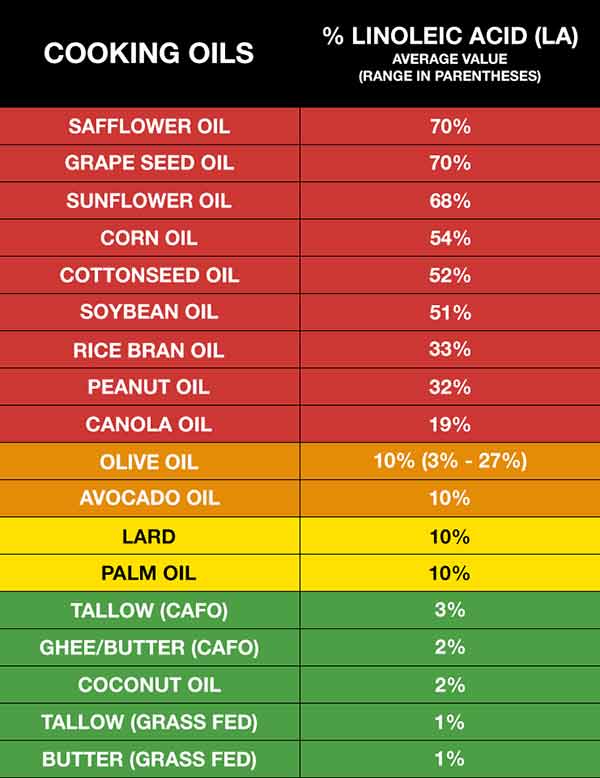
Healthy fat replacements include tallow, butter or ghee, all of which are excellent for cooking. The table below provides a fairly comprehensive list of the most commonly consumed oils and their approximate LA content.
In general, the lowest LA-containing fats — butter and beef tallow — would be the fats of choice. These excellent cooking fats would not only be the lowest in LA, but will also provide the fat-soluble vitamins, A, D, and K2. Coconut oil is also very low in LA but doesn’t provide the important fat-soluble vitamins that tallow and butter contain.
Vitamin E Prevents Oxidation of LA
If you’ve been eating a high-PUFA diet for a long time, consider taking vitamin E regularly until you get your LA down to healthy levels. As noted earlier, CF patients need extra vitamin E anyway, and this is yet another reason to make sure you’re getting enough.
High LA levels increase a potentially dangerous process in your body called lipolysis — the liberation of fatty acids from your fat cells into your bloodstream where they are mobilized. This then increases the oxidation of LA, which is precisely what you want to avoid. Ideally, you want to keep LA in your fat cells until they metabolize it with peroxisomes. Vitamin E can help neutralize this damaging effect of LA.
Due to the high LA burden, few people can get enough vitamin E from their diet to suppress the oxidative destruction caused by LA unless they’re supplementing with vitamin E.
The good news is that since the supplementation is short term, you’re not going to need it the rest of your life. If you can keep your LA intake to below 5 grams a day for three years, it’s likely you may not even need it at all, or at most, only a few times a month.
The Story of Claire Wineland
Claire Wineland, an inspirational speaker and YouTube sensation, was diagnosed with CF at birth. At age 13, she founded the Claire’s Place Foundation17 to help families with children who have CF. She died September 2, 2018, from a massive stroke following an otherwise successful lung transplant.
In 2016, Wineland appeared in an episode of “My Last Days,” a limited CW docuseries hosted by Justin Baldoni, featuring people living with terminal illness. September 2, 2019, YouTube Originals released the documentary “CLAIRE,” directed by Nicholas Reed (above).
While filled with chronic illness, Wineland’s life was a testament to how to live life well, with purpose and gratitude. It’s a potent reminder of how we need to live life to the fullest, even though we might die tomorrow. “I’ve always loved the idea of bringing life into places where people think life doesn’t really exist,” Wineland said.
Wineland’s mother said she was convinced her daughter came into the world with a mission to share the message of “what it’s like to be blessed with life.” I couldn’t agree more.
- 1, 2, 4, 5, 15, 16 Journal of Pharmacy Practice 2012; 26(1): 14-17
- 3, 12, 13, 14 Pharmaceuticals February 2022; 15(2): 217
- 6 Cancer Prevention Research May 2012, DOI: 10.1158/1940-6207.CAPR-12-0045
- 7 Science Daily April 23, 2012
- 8 Sci Transl Med 29 January 2014: Vol. 6, Issue 221, p. 221ra15
- 9 Journal of Health, Population and Nutrition January 17, 2024; 43, Article number 11
- 10 Children 2022; 9(3): 329
- 11 Italian Journal of Pediatrics 2019; 45, Article number 41
- 17 Claire’s Place Foundation, Inc
Can Soy, Lignans, and EGCG Help Breast Cancer Survivors? What a New Systematic Review Says
© GreenMedInfo LLC. This work is reproduced and distributed with the permission of GreenMedInfo LLC.
Want to learn more from GreenMedInfo? Sign up for the newsletter here:
www.greenmedinfo.com/greenmed/newsletter
Reproduced from original article:
https://greenmedinfo.com/content/can-soy-lignans-and-egcg-help-breast-cancer-survivors-what-new-systematic-revi
Posted on: Friday, April 26th 2024 at 3:00 am

A new systematic review and meta-analysis found that specific doses of soy isoflavones, flaxseed lignans, and green tea EGCG were associated with significantly reduced risk of breast cancer recurrence and mortality. The study provides guidance on the most effective dosages of these natural compounds for supporting breast cancer survival.
For breast cancer survivors, the fear of recurrence is never far from mind. But what if compounds from plants like soy, flaxseed, and green tea could help reduce that risk and improve long-term outcomes? A groundbreaking new study sheds light on the potential of these phytonutrients – and the specific doses that may make the most impact.
Breast cancer is the most common cancer in women worldwide, with over 2 million new cases diagnosed each year.1 While advancements in detection and treatment have improved survival rates, recurrence remains a pressing concern for the millions of breast cancer survivors.2 However, a new systematic review and meta-analysis published in JNCI Cancer Spectrum suggests that certain plant-based compounds, or phytonutrients, may help reduce the risk of recurrence and improve long-term outcomes.3
The study, conducted by researchers from institutions in Australia, the United States, Denmark, the United Kingdom, and Norway, analyzed data from 32 observational studies involving over 63,000 breast cancer survivors.3 It looked at the impact of soy isoflavones, flaxseed lignans, green tea epigallocatechin-3-gallate (EGCG), and cruciferous vegetables on breast cancer recurrence, breast cancer-specific mortality, and all-cause mortality.3
Soy isoflavones, at a dose of 60 mg per day, were associated with a significant 26% reduction in the risk of breast cancer recurrence, particularly among postmenopausal women and those with estrogen receptor-positive tumors.3 For mortality outcomes, the greatest risk reductions were seen at 20-40 mg of isoflavones per day.3 Soy protein and soy products were also linked to a 25% lower risk of breast cancer-specific mortality for estrogen receptor-positive disease.3
The mammalian lignans enterolactone and enterodiol, formed by the gut microbiota from plant lignans like those in flaxseed, demonstrated a 28% decreased risk of breast cancer-specific mortality and 31% lower all-cause mortality risk when measured either before diagnosis or in the early period after diagnosis.3 These associations were strongest for postmenopausal women and those with node-negative disease.3 Dietary lignan intake alone did not show a significant association with mortality outcomes.3
For green tea, prediagnostic intake was linked to a notable 44% reduction in recurrence risk for stage I and II breast cancer.3 The two studies examining green tea observed the greatest effects at 3-5 cups per day and 5 or more cups per day.3 The key active component EGCG is thought to be responsible for green tea’s anticancer properties.
In contrast, no significant associations were seen for cruciferous vegetable intake and breast cancer outcomes in this analysis.3 However, the highest intakes in the included studies were less than one 78g serving per day on average, far lower than the therapeutic doses used in research on isolated cruciferous-derived compounds.3
The researchers used the WCRF/AICR Grading of Recommendations, Assessment, Development, and Evaluation (GRADE) criteria for breast cancer survivors to assess the strength of the evidence.4 Soy isoflavones and enterolactone were rated as having “probable” evidence for recurrence and mortality risk reduction, respectively, while the evidence for green tea and recurrence was deemed “limited suggestive.”3
Several biological mechanisms may explain the beneficial effects of these phytonutrients. Soy isoflavones and mammalian lignans act as selective estrogen receptor modulators (SERMs), exhibiting tissue-specific estrogen agonist or antagonist activity.5 They preferentially bind to estrogen receptor beta, which is thought to counteract the proliferative effects of estrogen receptor alpha activation in breast tissue.5 Green tea EGCG has demonstrated antiproliferative effects, aromatase inhibition, and synergistic activity with conventional cancer therapies in human studies.6
The safety of soy for breast cancer patients has been a topic of debate due to concerns that its weak estrogenic activity could stimulate tumor growth. However, this meta-analysis found no evidence that soy interferes with the efficacy of tamoxifen treatment, with similar risk reductions seen in tamoxifen users and non-users.3 The doses of soy isoflavones associated with benefit in this study are consistent with current recommendations from major cancer organizations.7
While this systematic review sheds new light on the role of phytonutrients in breast cancer survivorship, it also highlights the need for more research. Few of the included studies measured postdiagnostic changes in intake of these compounds, so the impact of adding them to the diet after diagnosis remains unclear.3 Future studies should use consistent definitions of outcomes, stratify results by menopausal status and tumor hormone receptor expression, and assess intake at multiple timepoints after diagnosis.3
For breast cancer survivors and their healthcare providers, this study offers valuable insights into the potential of plant-based compounds to improve prognosis. While not a substitute for conventional treatment, soy, flaxseed, and green tea may be beneficial adjuncts to a healthy lifestyle after a breast cancer diagnosis. As always, patients should consult with their oncology team before adding any new supplements to their regimen. With further research, we may unlock more of nature’s potential for supporting survivors on their journey beyond breast cancer.
For more information on the potential health benefits of soy products visit our database on the subject here.
For research on natural approaches to breast cancer, visit our database on the subject here.

References
1. Sung H, Ferlay J, Siegel RL, et al. Global Cancer Statistics 2020: GLOBOCAN Estimates of Incidence and Mortality Worldwide for 36 Cancers in 185 Countries. CA: A Cancer Journal for Clinicians. 2021;71(3):209-249. doi:10.3322/caac.21660
2. Bergin ART, Loi S. Triple-negative breast cancer: recent treatment advances. F1000Res. 2019;8:F1000 Faculty Rev-1342. Published 2019 Aug 2. doi:10.12688/f1000research.
3. van Die MD, Bone K, Visvanathan K, et al. Phytonutrients and Outcomes Following Breast Cancer: A Systematic Review and Meta-Analysis of Observational Studies. JNCI Cancer Spectrum. 2023;8(1):pkad104. doi:10.1093/jncics/pkad104
4. World Cancer Research Fund/American Institute for Cancer Research. Continuous Update Project Expert Report 2018. Diet, nutrition, physical activity and breast cancer survivors. Available at dietandcancerreport.org. https://www.wcrf.org/diet-
5. Bhattacharya T, Dutta S, Akter R, et al. Role of Phytonutrients in Nutrigenetics and Nutrigenomics Perspective in Curing Breast Cancer. Biomolecules. 2021;11(8):1176. Published 2021 Aug 6. doi:10.3390/biom11081176
6. Yiannakopoulou EC. Interaction of Green Tea Catechins with Breast Cancer Endocrine Treatment: A Systematic Review. Pharmacology. 2014;94(5-6):245-248. doi:10.1159/000369170
7. American Institute for Cancer Research. Soy: Intake Does Not Increase Risk for Breast Cancer Survivors. https://www.aicr.org/cancer-

Migraine Triggers and Helpful Treatments
Reproduced from original article:
https://articles.mercola.com/sites/articles/archive/2024/04/22/migraine-triggers-treatments.aspx
Analysis by Dr. Joseph Mercola April 22, 2024
STORY AT-A-GLANCE
- Migraine is the third most prevalent illness in the world, yet researchers still struggle to understand exactly how and why migraines occur. Adding to the complexity, there are several different types of migraine
- Migraine is thought to be a disorder of your nervous system, most likely originating in your brain stem. Evidence also suggests migraines are strongly related to mitochondrial dysfunction
- One of the primary causes of mitochondrial dysfunction is excess linoleic acid (LA) consumption, so radically reducing your intake should be at the top of your list if you struggle with migraines
- Nutrient deficiencies also appear to play a role. Of particular importance for prevention and treatment of migraine are vitamin D, magnesium, Coenzyme Q10 (CoQ10) and riboflavin (vitamin B2)
Migraines affect an estimated 12% of the American population and is the second leading cause of disability worldwide.1 They can strike both young and old, but a majority of sufferers are women. According to research,2 “Its prevalence increases in puberty but continues to increase until 35 to 39 years of age, decreasing later in life, especially after menopause.”
Worldwide, as many as 1 billion people are affected,3 making migraine the third most prevalent illness in the world. Yet, despite its prevalence, researchers still struggle to understand exactly how and why migraines occur. Adding to the complexity, there are several different types of migraines, including:4,5
| Cluster | Chronic | Episodic |
| Basilar | Hemiplegic | Retinal |
| Abdominal | Optical | With aura |
| Without aura | Status migrainous | Transformed |
| Menstrual | Vestibular |
What Does a Migraine Feel Like?
Migraine attacks are typically recurring, of moderate to severe intensity, many times occurring only on one side of your head. Along with throbbing, piercing or “burning” pain, other common symptoms include nausea, visual disturbances, dizziness, numbness in your extremities or face, and extreme sensitivity to light, sound, smell and touch.6
An attack may last from a couple of hours to as long as three days, often requiring bed rest in complete darkness and silence. In a 2017 Greatist article, migraine sufferers were asked to describe their pain. Here are some of their answers:7
• “My head feels like it’s in a vise” — Triggers often include stress,8 weather changes, physical exertion, lack of sleep and/or eating the wrong foods. Artificial sweeteners9 such as aspartame are also known to commonly trigger migraine.Doctors suggest keeping a food diary to track the emergence of symptoms to pin down certain food triggers. You could do the same for weather and stress if you believe such factors may play a role.
• It’s “like when a light fixture starts to go out” — This patient is describing the effects of ocular migraine, the onset of which often starts with flickering or flashing light phenomena, or zigzagging lines in the peripheral vision, which can eventually take over the entire field of vision.
These visual disturbances are referred to as an “aura.” Other common auras include blind spots, blurry, wavy or kaleidoscope vision. Auras can also involve other senses.
For example, you may experience paresthesia (tingling or numbness), aphasia (trouble speaking), auditory hallucinations or smelling something that isn’t there. Approximately one-quarter of all migraines are accompanied by aura, which is thought to be caused by a chemical or electrical wave in the brain region that processes sensory signals.10
• “It’s like I’ve been staring at the sun” — Oftentimes, the entire head, from the neck up, can feel overworked, “battered and bruised,” or like your brain has been pounded with a hammer. Post-symptoms can also include a stiff neck for up to a day after the headache ends.
• “Like I’m on a ship during a storm” — Nausea and a feeling of being in motion is also common.
Estrogen Is a Major Player in Migraines
Generally speaking, migraine is thought to be a disorder of your central nervous system, most likely originating in your brain stem.11 While most brain regions do not register or transmit pain signals, the trigeminal nerve network does.
Pain is relayed through the trigeminal network to an area in your brain stem called the trigeminal nucleus. From there, it is conveyed to the sensory cortex in your brain that is involved in awareness of pain and other senses. Interestingly, estrogen appears to be a major factor in this chain of events.
The late Ray Peat, a pioneer in bioenergetic medicine, argued that estrogen is a major cause of migraines, and in 2018, research was published that offered fresh support for that view. Researchers found that estrogen sensitizes cells around the trigeminal nerve and connected blood vessels in the head, thereby augmenting pain signals.
Estrogen, of course, is at its highest during women’s’ reproductive years, which also helps explain not only the gender difference in prevalence but also the age range at which migraines are most common. As noted by bioenergetic researcher Georgi Dinkov, a student of Peat, in 2018:12
“After more than 80 years of claiming estrogen protected women from migraines and mood disorders (and prescribing HRT as prevention/treatment) modern medicine seems to be finally recognizing the causative role of estrogen in migraines. Peat has been saying this for years …
The fact that stress also causes and/or exacerbates migraines is another ‘obvious’ sign for the role of estrogen (and serotonin/cortisol) in migraines.
In addition to implicating estrogen as a facilitator and cause of migraines, [a] study13,14 [in Frontiers of Molecular Biosciences] … also states that progesterone and testosterone are protective.
I have personally noticed that all men who complained of migraines have quite obvious signs of hypogonadism and hyperestrogenism — low muscle mass, gyno, irritability, depression, etc.”
Save This Article for Later – Get the PDF Now
Migraines and Mitochondrial Dysfunction
An even more foundational cause of migraines is mitochondrial dysfunction. As such, any strategy that helps improve your mitochondrial function is likely to be helpful. The most important of these strategies is to limit your intake of linoleic acid (LA), as this omega-3 fat acts as a mitochondrial toxin when consumed in excess. I published a paper together with Christopher D’Adamo on the detrimental health effects of LA in July 2023, which you can read for free.15
Ideally, you’d want to keep your intake below 2% of your daily calories, but even 5% would be a significant improvement since most people consume far more than that. Seed oils, and hence most processed foods and restaurant foods, are the primary sources of LA and need to be radically limited. I’ll expound on this further below.
The main reason why excess LA causes so many health problems — from migraines to heart disease and cancer — is that it prevents your mitochondria from working properly. Mitochondria are subcellular organelles responsible for producing most of your cellular energy in the form of ATP, and without ATP, your cells cannot function and repair themselves normally.
PUFAs such as LA are easily damaged by oxygen in a process called oxidation,16 which triggers the creation damaging free radicals.17 These, in turn, give rise to advanced lipoxidation end-products (ALEs)18 and oxidized linoleic acid metabolites (OXLAMs).19,20
LA-Induced Metabolites Cause Major Damage
These ALEs and OXLAMs then go on to cause mitochondrial dysfunction, which is a hallmark of most all chronic disease, including migraines. In addition to oxidation, inflammation and mitochondrial dysfunction, processed seed oils can also:
| Damage the cells lining your blood vessels |
| Cause memory impairment and increase your risk of Alzheimer’s disease (canola oil, in particular, has been linked to Alzheimer’s) |
| Strip your liver of glutathione thereby lowering your antioxidant defenses |
| Inhibit delta-6 desaturase (delta-6), an enzyme involved in the conversion of short-chained omega-3s to longer chained omega-3s in your liver |
| Impair your immune function and increase mortality |
| Make your fat cells more insulin sensitive, thereby causing insulin resistance |
| Inhibit cardiolipin, an important fat in the inner membrane of your mitochondria |
How LA Impairs Your Mitochondria
The inhibition of cardiolipin in the inner membrane of your mitochondria explains much of the damage caused by LA. You have about 40 quadrillion to 100 quadrillion mitochondria throughout the cells of your body. The cristae of the inner membrane of the mitochondria contains a fat called cardiolipin,21 and its function is dependent on the type of fat you get from your diet.
Cardiolipin is important, because it influences the structure of the cristae inside your mitochondria, which is the area where energy production occurs. If cardiolipin is damaged, then the complexes will not be close enough together to form supercomplexes and thus the mitochondrial energy production will be impaired.
Cardiolipin also works like a cellular alarm system that triggers apoptosis (cell death) by signaling caspase-3 when something goes wrong with the cell. If the cardiolipin is damaged from oxidative stress due to having too much LA, it cannot signal caspase-3, and hence apoptosis does not occur.
As a result, dysfunctional cells are allowed to continue to grow, which can turn into a cancerous cell. The type of dietary fat that promotes healthy cardiolipin is omega-3 fat, and the type that destroys it is omega-6, especially LA.
The good news is that dietary changes can improve the composition of fats in your cardiolipin in a matter of weeks, or even days. So, even though it will take years to lower your total body burden of LA, you will likely notice improvements well before then.
What Foods to Avoid, and How
Primary sources of LA include seed oils used in cooking, processed foods and restaurant foods made with seed oils, condiments, seeds and nuts, most olive oils and avocado oils (due to the high prevalence of adulteration with cheaper seed oils), and animal foods raised on grains such as conventional chicken and pork.
Ideally, consider cutting LA down to below 5 grams per day. If you’re not sure how much you’re eating, enter your food intake into Cronometer — a free online nutrition tracker — and it will provide you with your total LA intake.
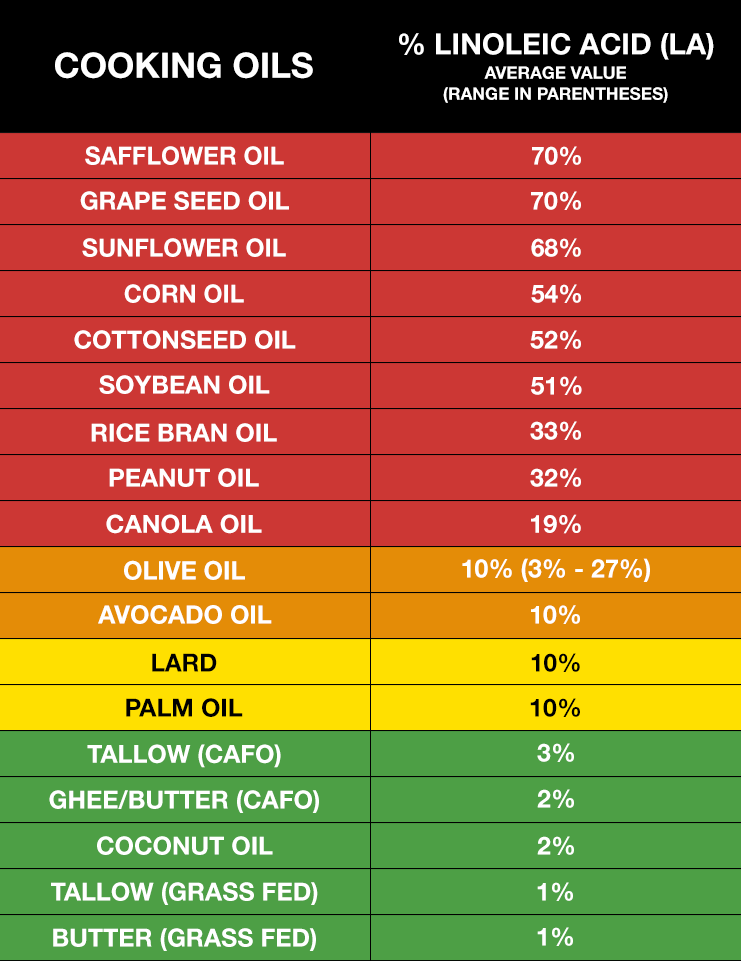
Cronometer will tell you how much omega-6 you’re getting from your food down to the 10th of a gram, and you can assume 90% of that is LA. Anything over 10 grams of LA is likely to cause problems. Healthy fat replacements include tallow, butter or ghee, all of which are excellent for cooking.
The table below provides a relatively comprehensive list of the most commonly consumed oils and their approximate LA content.22,23,24 In general, the lowest LA-containing fats — butter and beef tallow — would be the fats of choice.
These excellent cooking fats would not only be the lowest in LA but will also provide the fat-soluble vitamins, A, D, and K2. Coconut oil is also very low in LA but doesn’t provide the important fat-soluble vitamins that tallow and butter contain.
Some Migraines May Indicate a More Serious Blood Vessel Problem
One long-held theory was that a migraine is caused by vascular changes in your brain, from initial blood vessel constriction and a drop in blood flow, followed by dilation and stretching of blood vessels, which activates pain-signaling neurons.
Newer studies have negated this theory, however, as researchers determined migraines are not actually preceded by constriction and decrease in blood flow, but rather by a blood flow increase of nearly 300 percent. Despite that, circulation appears normal, or even slightly reduced, once the attack is in full swing. The question remains: Why?
One small observational study25 found that migraineurs tend to have a different blood vessel structure in their brains compared to those who do not get migraines. Using magnetic resonance angiography, the researchers examined the structure of blood vessels and the changes in cerebral blood flow, focusing on a system of arteries that deliver blood to the brain called “circle of Willis.”
They found that an incomplete circle of Willis was significantly more common in those who get migraines, with or without aura, compared to the control group (73% and 67% versus 51%, respectively). As a result, compared to those with a complete circle of Willis, those with an incomplete circle had greater asymmetry in hemispheric cerebral blood flow.
According to one of the authors of the study, Dr. John Detre, a professor of neurology and radiology:26
“Abnormalities in both the circle of Willis and blood flow were most prominent in the back of the brain, where the visual cortex is located. This may help explain why the most common migraine auras consist of visual symptoms such as seeing distortions, spots or wavy lines.”
Other research27 suggests some migraines — primarily migraines without aura — may be caused by a tear in your neck artery (arterial dissection), which raises your risk of stroke.
Compared to people who had migraine with aura, those without aura were 1.7 times more likely to have an arterial tear. Arterial dissection and stroke was also more likely in men and those under the age of 39. Overall, your probability of having this problem is very low, but it may be worth getting it checked out if you fall into a high-risk category.
Nutrient Deficiencies Linked to Migraine
Nutritional deficiencies can also contribute to or cause a number of different health problems, including migraines. In the video above, “America’s pharmacist” Suzy Cohen discusses drug-free solutions for migraine and headache relief, including nutritional supplements. Nutrients of particular importance here are vitamin D,28 magnesium, coenzyme Q10 (CoQ10) and riboflavin (vitamin B2), and deficiencies in one or more of these is quite common.
In a migraine study29 involving more than 7,400 children, teens and young adults, 16% to 51% of participants had below average levels of vitamins depending on the vitamin tested.30 Those suffering from chronic migraines were overall more likely to have CoQ10 and riboflavin deficiency compared to those with episodic migraines.
Unfortunately, many of the patients in this study were prescribed preventive therapy and too few were given supplements alone for the researchers to determine if supplementation was enough to actually prevent migraines.31 However, other research suggests they can.
For example, research using vitamin D supplementation demonstrated a reduction in C-reactive protein (CRP) and a statistically significant reduction in headache frequency.32 Another more study by Finnish researchers found that men with the lowest vitamin D levels were twice more likely to suffer frequent headaches than those with the highest levels.
Overall, the lower the men’s blood level of vitamin D, the more frequent their headaches. Those with a vitamin D blood level of 15.3 nanograms per milliliter (ng/mL) or lower typically had one or more headaches per week, while those with a level of 11.6 ng/mL or lower reported up to seven headaches per week. Ideally, your vitamin D level should be in the 60 to 80 ng/mL range, so both groups were severely deficient. As reported by Deming Headlight:33
“The researchers theorized that vitamin D has anti-inflammatory properties that prevent swelling in the sensory neurons and the microglial cells in the brain and is essential for proper brain function. In the study information, they also note that previous studies show vitamin D prevents musculoskeletal pain, a major cause of tension headaches.”
According to research presented at the 50th Annual Meeting of the American Headache Society34 in 2010, nearly 42% of patients with chronic migraine were deficient in vitamin D. The study also showed that the longer you suffered from chronic migraines, the more likely you are to be vitamin D deficient.
Magnesium Is Empirically Recommended for All Migraine Sufferers
Magnesium — which can affect both serotonin receptor function and the production and use of neurotransmitters — has also been shown to play an important role in the prevention and treatment of migraines, and migraine sufferers are more likely to suffer from magnesium deficiency than non-migraineurs.35
Researchers theorize that migraine sufferers may develop magnesium deficiency from a variety of reasons, including poor absorption, renal wasting, increased excretion due to stress or low nutritional intake. Since magnesium administration is both easy and safe, researchers have noted that empiric treatment with a magnesium supplement is justified for all migraine sufferers.36
As a prophylactic, be prepared to boost your magnesium intake for at least three months to experience results, ideally in combination with CoQ10.
In many cases, receiving a high dose of magnesium can also abort an attack in progress. The most effective way to administer magnesium for migraine would be to get an intravenous (IV) infusion. I used to regularly administer magnesium IVs for those with acute migraines and it seemed to work for most patients to abort the headache.
Barring that option, magnesium threonate may be your best option for an oral supplement. It has superior absorbability compared to other forms of magnesium, and since its ability to cross the blood-brain barrier makes it more likely to have a beneficial effect on your brain.
B Vitamins Are Also Important
Besides CoQ10, magnesium and vitamin D, other vitamin deficiencies linked to migraines include riboflavin (B2), B6, B12 and folic acid. One 2009 study37 evaluated the effect of 2 mg of folic acid, 25 mg vitamin B6 and 400 micrograms (mcg) of vitamin B12 in 52 patients diagnosed with migraine with aura.
Compared to the placebo group, those receiving these supplements experienced a 50% reduction in migraine disability over a six-month period. Previous studies38 have also reported that high doses of riboflavin can help prevent migraine attacks. For example, in one study patients who received 400 mg of riboflavin per day experienced a 50% reduction in migraine frequency after three months.
Are You Eating Plenty of These Foods?
Although supplements are convenient, it’s important you get as many nutrients from your diet as possible, as your body can metabolize and absorb vitamins and minerals from your diet more effectively and efficiently than from most supplements.
In addition to adding foods rich in magnesium, riboflavin and CoQ10 to your daily diet, look for organic, grass fed products to reduce your exposure to toxins and additional stressors. As for vitamin D, sensible sun exposure is your best bet. If you opt for a vitamin D3 supplement, be sure to increase your vitamin K2 and magnesium as well.
|
Foods Rich in Magnesium39 |
|
| Dark leafy greens | |
| Wild Alaskan salmon | |
| Yogurt made from organic and/or grass fed milk with no added sugars | |
|
Foods Rich in Riboflavin40 |
|
| Beet greens | Tempeh |
| Crimini Mushrooms | Organic low-PUFA eggs |
| Asparagus | Broccoli |
| Cauliflower | |
Migraines Are a Mitochondrial Problem
The fact that nutritional deficiencies worsen migraine and supplementation can ease it lends additional support to the theory that migraines are a mitochondrial disorder.41 Ubiquinol — the reduced form of CoQ10 — plays a vital role in ATP production, which is the basic fuel for your mitochondria.
Your body does produce ubiquinol naturally; in fact, it is the predominant form in most healthy cells, tissues and organs. However, with rampant pollution and poor diet, mitochondrial dysfunction has become increasingly common, warranting supplementation with either ubiquinol or CoQ10.
One study published in the journal Neurology42 found that CoQ10 was superior to a placebo in preventing migraines and reducing severity. Of the patients who received 100 mg of CoQ10 three times a day, 50% reported significantly reduced frequency of headaches compared to only 14% of those who took the placebo.
That said, while ubiquinol may be beneficial, for long-term migraine relief you really need to address your diet in a more comprehensive manner, as detailed above.
Migraine Prevention 101: Avoid Triggers
Last but not least, it’s also useful to keep a diary of your migraines to identify potentially triggers. That way, you can avoid them. While there are many (and what triggers a migraine for one might not trigger it in another), the following are some of the most common.
| Food and drink, especially wheat and gluten, dairy, cane sugar, yeast, corn, citrus, eggs, artificial preservatives or chemical additives, cured or processed meats, alcohol (especially red wine and beer), aspartame, caffeine and MSG.43,44 |
| Allergies, including food allergies45 and food sensitivities and chemical sensitivities. Research published in the journal Lancet in 197946 showed migraineurs with food antigen immunoreactivity experienced profound relief when put on an elimination diet.
Another randomized, double-blind, cross-over study published in 201047 found that a six-week-long diet restriction produced a statistically significant reduction in migraines in those diagnosed with migraine without aura. If you suspect you might have a food allergy, I suggest doing a diet elimination challenge to see if your symptoms improve. Keep in mind that depending on your typical migraine frequency, you may need to avoid the suspected food for a few weeks in order to evaluate whether it had an effect or not. To confirm the results, reintroduce the food or drink on an empty stomach. If the suspected food is the culprit, you will generally be able to feel the symptoms return within an hour, although migraines can sometimes have a longer lag time than, say, bloating or drowsiness. |
| Hormones — Some women experience migraines before or during their periods, during pregnancy or during menopause. Others may get migraines from hormonal medications like birth control pills or hormone replacement therapy. |
| External stimuli — Bright lights, fluorescent lights, loud noises and strong smells (even pleasant ones) can trigger and/or exacerbate a migraine.
Blue light in particular can be problematic. Many digital devices and LED light sources emit mostly blue light. Research has found that this light increases your migraine pain and activates your trigeminal nerve, associated with the pain of migraines.48 Meanwhile, green light may help ease migraine pain and photosensitivity.49 |
| Changes in sleeping cycle, either missing sleep and oversleeping. |
| Stress/post-stress — Any kind of emotional trauma can trigger a migraine, even after the stress has passed. |
| Dehydration and/or hunger — Skipping meals or fasting are also common triggers. |
| Physical exertion — Extremely intense exercise, or even sex, has been known to bring on migraines. |
| Weather changes, and/or changes in altitude. |
Acupuncture and Chiropractic May Be Helpful Adjuncts to Migraine Treatment
Acupuncture may also be a helpful adjunct therapy. Research has found that getting regular acupuncture treatments can help reduce the frequency and severity of migraine attacks in those suffering from migraine without aura.50,51,52
In all, 249 adult migraineurs who reported two to eight migraine attacks per month were included in the study. They were randomly assigned to receive either 20 real acupuncture treatments or 20 sham treatments over four months. Among those receiving the real treatment, migraine frequency declined by about three episodes per month, while the sham group had two attacks less per month. According to the authors:
“Acupuncture should be considered as one option for migraine prophylaxis in light of our findings.”
It’s interesting to note that even sham treatment had a significant response. Indeed, previous research has shown the placebo effect can be a potent tool in the prevention and treatment of migraines and other types of pain. As noted by neurologist Dr. Amy Gelfand, while the placebo response is troublesome for researchers, it can be a very beneficial effect for patients, especially when the treatment is otherwise safe, be it acupuncture or sugar pills.53
Chiropractic adjustments have also helped many patients, but not all chiropractors are skilled with the techniques to address migraine, so before you schedule an appointment it is important to confirm that your chiropractor has significant experience in helping people treat their migraines.
- 1, 2 Stat Pearls, Migraine Headache
- 3, 6 Migraine Research Foundation, Migraine Facts
- 4 Healthcentral.com, Migraines
- 5 Prevention April 28, 2015
- 7 Greatist March 13, 2017
- 8 Curr Pain Headache Rep. 2016 Jul;20(7):45
- 9 Chris Kresser May 30, 2014
- 10 WebMD, Migraines
- 11 Scientific American July 21, 2013
- 12 Ray Peat Forum August 29, 2018
- 13 Frontiers in Molecular Biosciences August 14, 2018
- 14 EurekAlert! August 14, 2018
- 15 Nutrients July 2023; 15(14): 3129
- 16 Oxid Med Cell Longev. 2014;2014: 360438. DOI: 10.1155/2014/360438
- 17 Pharmacognosy Review. 2010;4(8):118-126
- 18 Biochemical Journal. 1982;208(1):129-140
- 19 Nephrol Dialysis Transplant. 2001;16(8):1598-1606
- 20 Free Radical Biol Med. 1992;13:341-390
- 21 YouTube, Omega-6 Apocalypse 2, Chris Knobbe August 25, 2021
- 22 Renewable Energy. 2018; 126: 403-419
- 23 Int J Mol Sci. 2015;16(6):12871-12890
- 24 The Plan Journal. 2008;54:640-655
- 25 PLoS One July 26, 2016; 8(7): e71007
- 26 Huffington Post July 26, 2013
- 27 WebMD March 6, 2017
- 28 Biomed Research International, 2014; 2014: 827635
- 29 EurekAlert! June 10, 2016
- 30 MD Magazine June 17, 2016
- 31 WebMD June 10, 2016
- 32 Journal of Research in Medical Sciences 2015 May; 20(5): 477–482
- 33 Deming Headlight February 4, 2017 (Archived)
- 34 50th Annual Meeting of the American Headache Society (Archived)
- 35, 36 J Neural Transm (Vienna). 2012 May;119(5):575-9
- 37 Pharmacogenetics and Genomics 2009 Jun;19(6):422-8
- 38 European Journal of Neurology 2004 Jul;11(7):475-7
- 39 EverydayHealth.com, 9 Food Sources of Magnesium
- 40 Whfoods.com, Vitamin B2 Rich Foods (Archived)
- 41 Headache 2012 Oct;52 Suppl 2:81
- 42 Neurology 2005 Feb 22;64(4):713-5
- 43, 46 Lancet 1979 May 5;1(8123):966-9
- 44 Sun Sentinel June 18, 2013 (Archived)
- 45 PubMed.gov, “Food allergies and migraine” search results
- 47 Cephalalgia 2010 Jul;30(7):829-37
- 48 Nature Neuroscience 2010 Feb; 13(2): 239-245
- 49 Science Daily May 17, 2016
- 50 JAMA February 20, 2017 DOI: 10.1001/jamainternmed.2016.9378
- 51, 53 Reuters February 23, 2017
- 52 CNN February 21, 2017
Tips and Tricks to Resolve Common Sleep Problems
Reproduced from original article:
https://articles.mercola.com/sites/articles/archive/2024/04/20/tips-tricks-to-address-common-sleep-problems.aspx
Analysis by Dr. Joseph Mercola April 20, 2024

STORY AT-A-GLANCE
- Lack of sleep is a public health epidemic, and insufficient sleep has been linked to a wide variety of health problems, both physical and psychological
- Tips and tricks to address common sleep problems, such as back pain, insomnia, difficulty waking up, racing thoughts or leg cramps keeping you up at night, and more, are included
- Dietary choices and electromagnetic fields may also disrupt your sleep and may need to be addressed. In the short term, while more permanent solutions are being implemented, you can also use natural sleep aids such as melatonin, chamomile or valerian root
The importance of sleep is widely ignored and the cost rarely considered, even though it includes everything from reduced work productivity and increased risk of serious accidents to psychological deterioration and physiological dysfunction.
The proof is quite clear: You destroy your health if you regularly ignore your body’s need for sleep to repair and recharge. Even the Centers for Disease Control and Prevention has warned that lack of sleep is a public health epidemic, noting that insufficient sleep has been linked to a wide variety of health problems.
Skyrocketing rates of insomnia among service members in the U.S. military could even affect operational readiness, one study warns.1 Over the past decade, insomnia among military service members has quadrupled, and sleep apnea has risen fivefold.
As for how much sleep you need, research shows most adults need right around eight hours of sleep each night for optimal health and disease prevention. Children and teens need more. You will also typically need more sleep when you’re ill or recuperating from an illness.
How Poor Sleep Affects Your Health
Among the many health problems that poor sleep can trigger or contribute to are:
| Increased risk of car accidents | Increased sensitivity to pain, as painkillers are ineffectual in treating the hypersensitivity induced by sleep loss. In other words, painkillers may not work if you’re sleep deprived2 |
| Reduced ability to perform tasks | Reduced ability to learn or remember |
| Reduced productivity at work | Reduced creativity |
| Reduced athletic performance | Increased risk of Type 2 diabetes, obesity, cancer, high blood pressure, osteoporosis and cardiovascular disease |
| Increased risk of depression and anxiety. Insomnia, in particular, has been found to follow anxiety and precede depression3 | Increased risk of dementia and Alzheimer’s disease |
| Decreased immune function | Slowed reaction time |
| Reduced regulation of emotions and emotional perception | Poor grades in school |
| Increased susceptibility to stomach ulcers | Exacerbation of chronic diseases such as Alzheimer’s, Parkinson’s, multiple sclerosis (MS) and cancer |
| Increased expression of genes associated with inflammation, immune excitability, diabetes, cancer risk and stress4 | Premature aging by interfering with growth hormone production, normally released by your pituitary gland during deep sleep |
Common Problems That Can Rob You of Sleep
Science Alert published an article reviewing nine common sleep problems and some tools and techniques to address them, such as:5
• Shoulder and/or back pain — To improve sleep quality when you have a sore shoulder, avoid sleeping on the side that hurts and try hugging a pillow to your chest. Strategically placed pillows can also help with back pain. Try placing a pillow under your knees when sleeping on your back, or between your legs if sleeping on your side.
• Inability to fall asleep — Identify and avoid the most common culprits, such as drinking coffee or caffeinated beverages too late in the day or exercising and/or using electronics too close to bedtime. Turn off your computer, tablets and smartphones at least two hours before bed, and limit TV watching. Also, be sure to avoid blue light sources such as LED lighting and excessively bright lights at night, or wear $11.99 red glasses after the sun sets.
• Inability to stay asleep — Two common culprits are alcohol consumption and keeping the temperature in the room too warm. The ideal room temperature for sleeping is below 70 degrees F (21 degrees C).
• Difficulty waking — Get up at the same time every day, seven days a week, and keep a regular bedtime routine. When you establish a consistent, soothing bedtime routine, you’re more likely to fall asleep easily. Activities such as a warm bath, reading a good book or relaxation exercises can be helpful. Seek to get to bed before 10 p.m. to optimize your chronobiological cycles.
• Leg cramps — Applying heat, stretching and massaging the area can all be helpful. I keep a mobility therapy tool called a Tiger Tail by my bedside in case I get an occasional leg cramp during the night.
However, the featured article failed to note that leg cramps can often be a sign of either magnesium or potassium deficiency, so increasing your magnesium and/or potassium can address the problem at its root, should your cramps be due to one of these nutritional deficiencies.
Save This Article for Later – Get the PDF Now
To Sleep Well, Assess and Address These Two Variables
Sleep is an outcome of two types of variables:
• Sleepiness — Under normal conditions, your sleepiness should increase throughout the day, peaking just before you go to bed at night. This is ideal, as you want your sleep to be high at the beginning of the night. Making sure you’re exposed to bright sunlight and high-quality lighting during the day, followed by decreased light exposure once the sun sets, will help maximize your natural sleep cycle so that you’re appropriately sleepy by bedtime.
• “Noise” — Noise occurs in three zones: the mind level, body level and the environmental level. To get a good night’s sleep, you want your sleepiness level to be high and the noise level to be low. If the noise is conceptually greater than your level of sleepiness, you will not fall asleep.
Examples of body noise include pain, discomfort, indigestion or residual caffeine from drinking coffee too late in the day. Environmental noise includes traffic, a snoring partner, music, lights or being too hot.
The most common type of mind noise is called “cognitive popcorn,” those unstoppable thoughts running through your mind as soon as your head hits the pillow. This is also the most commonly reported cause of insomnia.
Racing Thoughts Keeping You Up at Night?
As noted in a CNN article on this topic:6
“Some nights, it’s like you can’t get your brain to shut up long enough for you to fall asleep. You’re mentally reviewing the day you just completed while also previewing the day ahead; sometimes, your mind may even reach way back into the archives and pull up something embarrassing you did back in high school.
So fun! … There’s no one solution that will work for everybody, of course, so instead, we’ve rounded up suggestions from eight sleep experts.”
Here’s a summary of some of the tips gleaned from sleep experts, with regard to quieting racing thoughts:
1. Use creative distractions — If worry has you in its grip, try thinking of something else that interests you but is of no importance. Sleep expert Neil Stanley, Ph.D., said, “I fly a lot, so I imagine I have my own private jet and how would I arrange the furniture on it. If you’re someone who likes going to music festivals, what would your lineup be?”
2. Get out of bed — Rather than tossing and turning, allowing frustration to grow, get out of bed. Try writing your thoughts down; just be sure to keep the lights dim. Telling yourself you’re going to try to stay awake instead may also have the paradoxical effect of making you sleepy. The reason for this is because once you’re OK with being awake, your frustration and arousal level drops, making it easier to fall asleep.
3. Make a plan to spend more time in the sun — Oftentimes, lack of sun exposure during the day (especially in the early morning) is to blame for persistent sleep problems. Bright sunlight first thing in the morning and/or around solar noon helps set your internal clock, allowing you to fall asleep “on schedule.”7
4. Sleep naked — While not addressed by CNN’s sleep experts, one of the benefits of sleeping in the buff is improved sleep quality, in part by preventing overheating. One study showed a surface skin temperature difference of as little as 0.08 degrees F (or 0.4 degrees C) led to sounder sleep.8,9,10
Diet Choices and Meal Timing Can Impact Your Sleep
While one to two cups of black organic coffee can be healthy, drinking too much, especially in the afternoon or evening, can overstimulate you and, in the long term, alter your body’s internal clock.11 Ditto for alcohol. While it may make you nod off quicker, research shows drinking alcohol makes you more likely to wake during the night, leaving you feeling less rested in the morning.
Spicy foods and unhealthy fatty or sugary foods can also lead to fragmented sleep,12 especially when eaten late in the evening. This is thought to be due to the brain chemical hypocretin, a neurotransmitter that helps keep you awake and also plays a role in appetite.
Eating too close to bedtime, or very late at night when you’d normally be sleeping, may also throw off your body’s internal clock. Avoiding food for at least three hours before bed will lower your blood sugar during sleep and help minimize mitochondrial damage.
A 2012 study13 offers powerful confirmation of this recommendation. It found the mere act of temporarily altering your typical eating habits — such as getting up in the middle of the night for a snack — causes a certain protein to desynchronize your internal food clock, which can throw you off-kilter and set a vicious cycle in motion.
Electromagnetic Fields: Environmental ‘Noise’ That Can Impair Sleep
Aside from getting the correct kind of light exposure during the day and avoiding excessive amounts of light and blue light at night, it’s also important to address the electromagnetic field (EMF) emitted from wiring and electronic devices. EMF from electronic devices not only impairs melatonin secretion, but it also harms your mitochondria by producing oxidative damage.
EMF exposure has also been linked to changes in brain neurons that affect memory and the ability to learn.14 Eliminating EMF exposure can be tricky, as most homes are flooded with electric currents. Still, you can reduce EMF to a smaller or greater degree, depending on how far you’re willing to go. Here are some suggestions to consider that may improve your sleep quality:
• Turn off your Wi-Fi at night. You can also pull your circuit breaker to your bedroom before bed as this will decrease electromagnetic interference in your room in addition to the microwave radiation.
You aren’t using your Wi-Fi at night so why keep it on? Why expose yourself to needless and dangerous microwave energy that impairs your mitochondrial function? Please, get a switch for your router and turn it off every night when you go to bed. Your body and health will thank you for it.
• Avoid running electrical cords underneath your bed.
• Move alarm clocks and other electrical devices away from your head, or ideally out of the room. If these devices must be used, keep them as far away from your bed as possible, preferably at least 3 feet. Portable phone bases and wireless routers should be kept as far away from your bedroom as possible.
• Avoid sleeping with your head against a wall that contains unshielded electric wiring and/or electric meters, circuit breaker panels, televisions or stereos on the other side. Move your bed 3 feet away from the wall, install an EMF protection canopy over your bed, or turn off the power breaker to your bedroom.
Emergency Remedies
In the short term, you could try a gentle sleep aid while implementing more permanent lifestyle and/or environmental changes. Natural sleep remedies that may help you get a good night’s sleep include:
- Melatonin — Start with as little as 0.25 milligrams (mg) and work your way up in quarter-gram increments from there until you get the desired effect.
- Valerian root — Studies have found valerian root helps improve15 the speed at which you fall asleep, depth of sleep (achieving deep sleep 36% faster16) and overall quality of sleep. Start with a minimal dose and use the lowest dose needed to achieve the desired effect, as higher dosages can have an energizing effect in some people. Typical dosages used in studies range between 400 mg and 900 mg, taken anywhere from 30 minutes to two hours before bed.
- Chamomile — This herb is typically used in the form of infusions, teas, liquid extracts or essential oils made from the plant’s fresh or dried flower heads. It has sedative effects that may help with sleep, which is why chamomile tea is often sipped before bed.
As you can see, sleep problems can have any number of root causes and contributing factors, but considering the alternative, taking the time to identify your triggers is well worth the effort. Sleeping well is a foundational aspect of good health, so every effort should be made to get as high-quality sleep as possible.
- 1 Reuters May 15, 2017
- 2 Medical News Today May 8, 2017
- 3 The Conversation May 11, 2017
- 4 BBC News October 9, 2013
- 5 Science Alert May 18, 2017
- 6 CNN May 15, 2017
- 7 Reuters May 18, 2017
- 8 Lifehack.org, 11 Benefits of Sleeping Naked
- 9 Forbes September 13, 2016
- 10 Elite Daily March 2, 2015
- 11 The Atlantic January/February 2017
- 12 Huffington Post September 10, 2012
- 13 Proceedings of the National Academy of Sciences November 7, 2012; 109(50): 20679-20684
- 14 Biomol Ther (Seoul). 2019 May; 27(3): 265–275
- 15 Am J Med. 2006 Dec; 119(12): 1005–1012
- 16 Pharmacopsychiatry 2000 Mar;33(2):47-53
Best Kept Secrets to Prevent, Halt, or Even Reverse Macular Degeneration
© GreenMedInfo LLC. This work is reproduced and distributed with the permission of GreenMedInfo LLC.
Want to learn more from GreenMedInfo? Sign up for the newsletter here:
www.greenmedinfo.com/greenmed/newsletter
Reproduced from original article:
https://greenmedinfo.com/blog/best-kept-secrets-prevent-halt-or-even-reverse-macular-degeneration1
Posted on: Wednesday, April 10th 2024
Written By: Katherine Carroll, NTP

Have you ever felt your money was wasted on supplements? That even though you consistently followed the protocol from your health-care practitioner you were not getting the results others obtained with the same program? You may have been right! We’ve helped hundreds of patients with age-related macular degeneration (ARMD) with these healing secrets designed to help “non-responders”; those for whom the average supplement and dietary protocol fails to work.
ARMD is the leading cause of blindness in elderly Western populations and it is marked by central vision loss where blind spots or scotomas intrude. Threading a needle and passing the driver’s licensing test eventually become impossible but ARMD is preventable – even reversible to some degree with the diligent, intelligently targeted efforts we have put into practice in our clinics to increase the chances of success.

The best doctor’s recommendations or nutritional consulting for ARMD are fruitless unless nutrients are able to be broken down or micellized, transported to the macula, and assimilated there. After years of observing how some patients prevent ARMD despite strong hereditary tendencies, how some halt or even reverse impending blindness, and how some patients actually get worse despite being on the same protocol, it became clear that powerful tactics were needed in addition to recommending dietary changes or supplements.
The strategies we employ are successful for many individuals and have applications far beyond the diagnosis of ARMD. They will influence conditions or diseases where proper fat breakdown is essential to impact issues such as dry eye, post-cholecystectomy (gallbladder surgery) status, liver disease, etc. The eye, GI tract, liver, and gallbladder are intricately entwined. Think about it, when your liver is sick, your eyes turn yellow or jaundiced. When your GI tract is out of balance, red, itching “allergy” eyes often result. Interesting signaling! The solution is more complicated than just popping a supplement or even making some dietary changes. Are you ready to learn the secrets? Whether you have macular degeneration or not, these concepts will serve you well.
Best Kept Secret #1: Work from the GI Tract Outward
Some doctors, when pressed if they had only one system to specialize in, would tell you, “The GI tract.” Why? Because the GI tract is central to good health and its ability to affect the entire body so powerful when operating at its peak. It is here that we begin to improve vision. The target nutrients used in past studies[1] to prevent, halt, or reverse ARMD are lutein, zeaxanthin, beta-carotene, antioxidants, and fish oil. The carotenoids (lutein, zeaxanthin, and beta-carotene) concentrate in the central part of the retina, and help us identify colors and see fine details, so they are vital in a healing strategy. They also provide protection against blue light, which damages the retina. Building macular optical pigment density (MOPD) is the goal in this approach, replenishing the macula; but first we have to break down these carotenoids and antioxidants and then shuttle them to the macula by following several simple tactics.
Dr. Stuart Richer, who demonstrated success in reversing macular degeneration with the LAST studies,[2] shares an encouraging increase in MOPD in the pictures below. From July 14, 2011, to October 6, 2011, the degree of MOPD increased by employing some of the following strategies. A picture is worth a thousand words and is the tool best used to motivate patients to committed action. These pictures give hope to those losing their eyesight; the macula is refilling nicely with lutein and zeaxanthin.


The graphs show MOPD, at baseline on the left and increasing in the right-hand picture reflected by the non-red portions of the image after nearly three months of supplementation use. This means the macula is refilling with lutein and zeaxanthin.
To ensure proper breakdown of supplements, use a good digestive supplement, preferably one that contains ox bile, taurine, lecithin, and adequate hydrochloric acid, or a combination of these. Thinning the bile is a major key to eye health as it will help more lutein get to the macula. Doing a liver/gallbladder flush[3] seasonally is an aggressive part of the plan, if one wishes to take a serious, logical approach. Remember, the liver and gallbladder influence the eye, so aim to create a healthy, fully functioning liver and gallbladder. We are not only our eyes. We are a complete system, so thinking from a systems biology approach[4] may create the desired healing response. To do this, head south to the GI tract first.

Interior Terrain Influences Absorption, So Start Clean
A well-functioning GI tract influences the eye tremendously. Support digestive ability by following the 4-R[5] or GI Restoration program. Absorption of the macula-replenishing carotenoids like beta-carotene will be hindered by the presence of Helicobacter pylori bacteria and/or an imbalance of intestinal bacteria. This interior terrain needs a healthy balance of good bacteria versus bad bacteria by using targeted supplements and the support of digestive enzymes along with the other approaches discussed in the 4-R protocol.
All of the targeted supplements and carotenoid-rich foods we suggest will not do you a bit of good unless they are first broken down or micellized.
As even Wikipedia notes, “Micelle formation is essential for the absorption of fat-soluble vitamins and complicated lipids within the human body. Bile salts formed in the liver and secreted by the gall bladder allow micelles of fatty acids to form. This allows the absorption of complicated lipids (e.g., lecithin) and lipid soluble vitamins (A, D, E and K) within the micelle by the small intestine.”[6]
These are the micellizing “magicians” that get the job done: (1) Ox Bile: Supply exogenous ox bile, particularly to post-cholecystectomy patients; (2) Lecithin: (Sunflower or soy) can be added to the diet to aid in fat breakdown; and (3) Taurine: A precursor to bile production, which also thins bile.
Fat-soluble lutein and zeaxanthin, essential to replenish the macula, require being emulsified or broken down to the micellized state in order to enter the bloodstream for transport by a very surprising particle “shuttle,” high-density lipoprotein (HDL).
Sufficient, Well-functioning Bile Is Vital
Bile acids are made from cholesterol in the liver and stored and concentrated in the gallbladder where they act as an emulsifying agent to break up fat into smaller globules, making it more soluble or hydrophilic. This process is called micelle formation. Fat and fat-soluble vitamins like A, D, E, K, beta-carotene, and the carotenoid family are carried to the intestinal mucosa, absorbed into the lymphatic system, and then into the bloodstream. So what is the best kept secret? First, break down the fat-soluble vitamins and then get them to the macula by raising HDL levels to 61 or above. Do you know what your HDL level is?
We discovered this secret by observing hundreds of macular-degeneration patients and had noted in their history that many had had their gallbladder removed or else they were obese or otherwise compromised and had trouble digesting fats, as evidenced by their dry skin, dry eyes, weight gain, gas and bloating, or floating or shiny stools after fatty meals had been consumed. The connection was obvious! No gallbladder, fat maldigestion, or liver or GI issues equaled problems. Half a million people a year are opting for cholecystectomy (gallbladder surgery), not realizing that they can simply cleanse the liver and gallbladder with a “flush,”[7] which is basically an “oil change” that removes old, stasis bile and relieves symptoms in most cases. It is not hard or expensive to do and anyone can do it. And it is certainly worth a try.
However, we are concerned – particularly in a patient with macular degeneration who has undergone cholecystectomy – that fat-soluble vitamins be effectively broken down and absorbed. It is hoped that practitioners caring for macular-degeneration patients incorporate these strategies into their standard of care so that non-responders will have more chance of improvement.
But proper breakdown isn’t the end of the story. Nutrient transport is another key player. Call the HDL “Shuttle.”
Best Kept Secret #2: Lutein and Zeaxanthin Need HDL Particles
Lutein and zeaxanthin, critical components to replenish the macula, are carried in the bloodstream to the macula on HDL particles. That’s amazing. Carotenoids responsible for central vision hitch a ride on a cholesterol particle and hone in on their destination: the macula. And you thought cholesterol was the enemy … wrong! Cholesterol in a healthy ratio and thin bile are key players in this healthy-eye strategy.
Bile is made of bile salts, cholesterol esters, and lecithin. Keep cholesterol at a healthy, total level and at an optimal HDL-to-low density lipoprotein (LDL) ratio because if cholesterol is too low, we will not have enough of the raw materials we need to make bile. Be sure you have what it takes to make cholesterol. Even magnesium plays a part. Blood-serum concentration of lutein and zeaxanthin by proper breakdown of nutrients into micellized globules is important, but equally important is the ability to transport them to their targeted destination. Unless HDL cholesterol is adequate – at least 61 milligrams per deciliter – time and money are potentially wasted on supplements.
Strategies to Raise HDL
Since keeping your HDL at 61 mg/dl or over is important, you might consider the following strategies:
- Exercise: Regular exercise that raises your heart rate for 20 to 30 minutes increases HDL.
- Lose Weight and stop eating transfats: Carotenoids concentrate in the fat first, so if overweight, lose weight! Meantime, while you’re working on it, take more lutein and zeaxanthin and employ the most successful diet recorded to lose weight and reduce disease: the Hale Project[8] documented the amazing success of the Mediterranean Diet (MeDi). Not only is it a smart way to eat, but it also reduced all causes of death and disease by fifty percent in study participants aged 70-90 with active disease processes established after ten years adherence, practicing moderate red wine consumption, light exercise, and not smoking. Macular degeneration or not, this diet is proven!
- Drink Red Wine or use Resveratrol: High-altitude or heat-stressed vine wines from Argentina, Chile, Australia, or damp, moldy vines found in areas like the Finger Lakes of New York are typically higher in resveratrol and will not only raise HDL but also influence health at 1-2 glasses per day. If you don’t drink wine or it is contraindicated for you, then use non-alcoholic resveratrol.
- Take Niacin and Fish Oil: both increase HDL.
- Quit Smoking: Besides reducing HDL smoking asphyxiates the eye.
- Get an Oil Change: Remove all transfats from your diet and replace them with healthy, healing oils to raise your HDL. Employ olive oil, coconut oil, ghee, hemp oil, and flax oil.
There is strength in combining a multi-pronged approach, so consider employing the total approach. Preventing, halting, and even reversing blindness is worth every sacrifice or new habit employed to ensure success and these secrets are a winning combination.
Summarizing the Total Approach
- Aim for an HDL of 61 mg/dl.
- Lose weight, if needed, and take a combination of supplements proven to halt or reverse macular degeneration. If overweight, take more than the recommended amount of carotenoids or use water-soluble zeaxanthin. In either case, employ the MeDi. It extends life and reduces disease.
- Take a supplement that supports proper fat breakdown along with a good eye vitamin.
- Do the 4R program[9] and/or a liver/gallbladder flush in the Spring and Fall to improve fat assimilation.
- Flush and nourish the liver/gallbladder.
- Eat a preferably organic diet, rich in the carotenoids, to replenish the macular pigment (MOPD -remember the pictures?). Egg yolk, kale, spinach, collard and turnip greens lightly steamed, romaine lettuce, broccoli, Brussels sprouts, red and yellow vegetables, and fruits are all great sources.
*A special thanks to Dr. Stuart Richer, Dr. Donald Carroll, NTP, and Bill Sardi, Medical Researcher, for reviewing this article.
This article is for informational purposes only. By providing the information herein, I am not diagnosing, treating, curing, mitigating or preventing any type of disease or medical condition. Before beginning any type of natural, integrative, or conventional treatment or regime, it is advisable to seek the advice of a licensed healthcare professional.
©2013 Katherine Ann Carroll. All Rights Reserved.
Resources
[1] https://www.ncbi.nlm.nih.gov/pubmed/15117055
[2] https://www.ncbi.nlm.nih.gov/pubmed/15117055
[3] https://curezone.com/schulze/herbal_5day_liver_cleanse.asp
[4] https://en.wikipedia.org/wiki/Systems_biology
[5] https://flt.metagenics.com/practitioners/programs/4r-gi-health-program
[6] https://en.wikipedia.org/wiki/Micelle
[7] https://curezone.com/schulze/herbal_5day_liver_cleanse.html
[8] https://www.ncbi.nlm.nih.gov/pubmed/15383513
[9] https://flt.metagenics.com/practitioners/programs/4r-gi-health-program
 Kat Carroll is Executive Director of the National Health Federation and Managing Editor of the National Health Federation’s magazine, Health Freedom News, and is on the Board of Directors of the National Health Federation Canada and the Advisory Board for GreenMedInfo. Kat received the NHF 2014 Health Freedom Hero award. She also writes for several publications, and is currently compiling a book on Codex Alimentarius based on first-hand experience attending International Codex meetings.
Why Choline Is NOT Associated With Prostate Cancer
Reproduced from original article:
https://articles.mercola.com/sites/articles/archive/2024/04/12/choline-prostate-cancer.aspx
Analysis by Dr. Joseph Mercola April 12, 2024

STORY AT-A-GLANCE
- Choline, essential for numerous physiological processes such as brain development, DNA synthesis and fat metabolism, was officially recognized as a vital nutrient in 1998, with deficiencies linked to severe health issues
- High choline intake is associated with significant health benefits, including reduced risks of heart disease, breast cancer and nonalcoholic fatty liver disease, underscoring its importance in your diet
- Studies suggesting a link between choline intake and an increased risk of prostate cancer fail to account for various dietary and environmental factors, leading to misleading conclusions about eggs
- Choline deficiency poses a greater health risk than high intake. An estimated 90% of Americans already do not meet the adequate daily intake values set by the Institute of Medicine
- Eggs from chickens fed a low-linoleic acid diet are a powerhouse of nutrition. They provide high-quality protein, essential fats, vitamins like D, E and K, and minerals such as selenium and zinc. Eggs also contain B vitamins essential for energy production
Some studies,1 including analyses from NHANES data, have stirred up fears about choline and its alleged link to an increased risk of prostate cancer. This fear causes people to avoid one of the most important nutrients to their health.
As your guide to deciphering the complexities of health and nutrition, I feel it’s imperative to address these concerns and explain why the fear surrounding choline intake, particularly from eggs, is not only misplaced but may also deter you from enjoying one of nature’s most nutrient-dense foods.
First, let’s understand what choline is. Choline, initially discovered in 1862,2 was officially recognized as an essential nutrient for human health by the Institute of Medicine in 1998.3 It plays a critical role in many physiological processes, including:4
| Healthy fetal development5 — Choline is required for proper neural tube closure,6 brain development and healthy vision.7 Research shows mothers who get sufficient choline impart lifelong memory enhancement to their child due to changes in the development of the hippocampus (memory center) of the child’s brain.8 Choline deficiency also raises your risk of premature birth, low birth weight and preeclampsia. |
| The synthesis of phospholipids, the most common of which is phosphatidylcholine, better known as lecithin, which constitutes between 40% and 50% of your cellular membranes and 70% to 95% of the phospholipids in lipoproteins and bile.9 |
| Nervous system health — Choline is necessary for making acetylcholine, a neurotransmitter involved in healthy muscle, heart and memory performance.10 |
| Cell messaging, by producing cell-messaging compounds.11 |
| Fat transport and metabolism — Choline is needed to carry cholesterol from your liver, and a choline deficiency could result in excess fat and cholesterol buildup.12 |
| DNA synthesis, aiding in the process along with other vitamins, such as folate and B12. |
| Methylation reactions.13 |
| Healthy mitochondrial function.14 |
Health Benefits of Choline
Studies have linked higher choline intake to a range of benefits, including a decreased risk for heart disease,15 a 24% decreased risk for breast cancer,16 and the prevention of nonalcoholic fatty liver disease (NAFLD).
In fact, choline appears to be a key controlling factor in preventing the development of fatty liver by enhancing secretion of very low-density lipoprotein (VLDL) particles, which are required to safely transport fat out of your liver.17 Research has also discovered evidence of epigenetic mechanisms of choline,18 which also helps explain how choline helps maintain healthy liver function.
Research19 published in 2020 also concluded that choline has anti-inflammatory activity and can be particularly useful in those with insulin resistance and/or metabolic syndrome. And, while a choline supplement was good in this regard, eggs were far better. Choline has also been shown to prevent neurodegenerative diseases such as Alzheimer’s by:20,21
- Reducing your homocysteine level, an amino acid that has been shown to cause neurodegeneration and is involved in the formation of amyloid plaques, two hallmarks of Alzheimer’s. Choline converts homocysteine into methionine, which has several beneficial effects.
- Inhibiting microglia activation — Microglia cells clear debris from your brain, and while this is a crucial function, in Alzheimer’s the microglia tend to become overactivated, causing inflammation in the brain that can result in the death of neurons. By reducing activation of microglia, choline can help protect Alzheimer’s patients from further brain damage.
Study Linking Choline to Prostate Cancer Has Many Weaknesses
The primary study22 that has many people second-guessing their egg consumption analyzed meat, milk and egg intake and their potential associations with prostate cancer. All of these are sources of choline, although eggs contain the highest amounts.
It suggested there might be a link between high dietary choline intake and an increased risk of advanced, lethal prostate cancer. According to the authors, “Men in the highest quintile of choline intake had a 70% increased risk of lethal prostate cancer.” However, this conclusion overlooks several crucial aspects.
For starters, the study was observational, meaning it can indicate associations but cannot prove causation. Considering the many dietary and environmental factors that can influence health outcomes, it’s extremely difficult to isolate the effect of a single nutrient.
What’s more, they only collected dietary information six times during 22 years of follow-up, which raises questions about accuracy. Many can’t even recall what they ate a few days ago, let alone the type of food and weekly quantity they consumed over the past year. Other shortcomings of this study include the following:
- It does not account for other components of the diet that could influence prostate cancer risk, such as phytonutrients, fiber, and other vitamins and minerals.
- No dose-response relationship across quintiles of choline intake was established. Understanding whether the risk of prostate cancer increases linearly with choline intake or if there’s a threshold effect would be crucial for dietary recommendations.
- The study also looked at postdiagnostic intake of choline and its relationship with lethal prostate cancer among men who were initially diagnosed with nonmetastatic disease and here, no statistically significant link could be found.
Save This Article for Later – Get the PDF Now
The Source of Choline Matters
The source of the choline also matters. Not all choline sources are created equal. Eggs, especially those from chickens fed low-linoleic acid (LA) diets, are incredibly nutrient-dense, offering not just choline but also vitamins, minerals and antioxidants in a natural package that your body can efficiently use.
Conversely, conventionally-raised eggs tend to be high in LA, and as I detailed in my extensive report on LA, this dietary component is a major driver of all chronic disease, including cancer, as it impairs your mitochondrial function and inhibits energy production.
An estimated 90% of the U.S. population is deficient in choline.23 At the same time, most people consume several times more LA than is safe based on historical intakes. So, what’s more likely to contribute to cancer? LA or choline?
There’s also the issue of generalizing. The study population, comprised of 47,896 male health professionals from the United States, may not represent the broader public due to its homogeneity in terms of profession, education, and potentially, socioeconomic status.
These factors can influence dietary habits, health awareness, access to healthcare, and the ability to engage in preventative health behaviors, which in turn could affect the study’s findings and their applicability to the general population.
For example, while health professionals are commonly expected to have greater knowledge about nutrition and disease prevention, this is rarely the case. Rather, they tend to follow standard dietary recommendations issued by government, which have repeatedly been proven to be disastrous for health.
Case in point, for decades, the recommendation has been to avoid saturated fat and cholesterol (both of which are high in eggs) and to opt for polyunsaturated (PUFA) seed oils instead, which, as it turns out, is a perfect recipe for cancer. So, was high choline consumption really the issue, or did they also have higher LA intake because of following misguided dietary recommendations?
Low-PUFA Eggs Are a Powerhouse of Nutrition
Focusing on a single nutrient also fails to consider the synergistic effects of foods. Whole foods like eggs contain a complex mix of nutrients that work together to support health.
Indeed, egg yolks from chickens fed low-LA diets are a powerhouse of nutrition. They provide high-quality protein, essential fats, vitamins E and K, and minerals such as selenium and zinc. Moreover, eggs are one of the few dietary sources of vitamin D, which is crucial for bone health and immune function.
A single hard-boiled egg can contain anywhere from 113 milligrams24 (mg) to 147 mg25 of choline, or about 25% of your daily requirement, making it one of the best choline sources in the American diet.26 Only grass fed beef liver beats it, with 430 mg of choline per 100-gram serving.27
Egg yolk also contains a large amount of B vitamins, all of which are necessary cofactors in the steps to produce energy in your body.
If you’re micronutrient deficient, your metabolism will be low because you don’t have the necessary cofactors to generate ATP, and in carbohydrate metabolism, choline is one of those necessary cofactors. When you add the high rate of choline deficiency in the general population into the mix, it’s highly unlikely that choline would be the cause behind lethal cancer.
How Much Choline Do You Need?
While a dietary reference intake value has not yet been established for choline, the Institute of Medicine set an “adequate daily intake” value of 425 mg per day for women, 550 mg for men and 250 mg for children28,29 to help prevent a deficiency and potential organ and muscle damage.
Curiously, those in the highest quintile of choline intake in this study30 were only getting a median of 509 mg per day, which doesn’t even meet the IOM’s ADI.
Keep in mind, however, that requirements can vary widely, depending on your overall diet, age, ethnicity31 and genetic makeup. As noted in one paper,32 “People with one of several very common genetic polymorphisms in the genes of choline metabolism are more likely to develop hepatic dysfunction when deprived of choline.”
Another study33 found that in some men, 550 mg of choline per day was insufficient as they still developed organ dysfunction. Postmenopausal women were also more prone to develop signs of organ dysfunction than premenopausal women when deprived of adequate amounts of choline for just under six weeks.
Eating a diet high in (otherwise healthy) saturated fats may also increase your choline requirement by as much as 30%.34 Pregnant and breastfeeding women, athletes and postmenopausal women also need higher amounts.
The fearmongering around eggs and choline is a perfect example of how isolating nutrients from their dietary context can lead to misleading conclusions.
The tolerable upper intake level for choline is 3.5 grams per day. Side effects of excessive choline include low blood pressure, sweating, diarrhea and a fishy body odor.35 Unfortunately, none of these signs and symptoms of choline excess were investigated in the featured study.
The Bigger Picture
It’s essential to look beyond headlines and understand the broader context of nutrition science. The fearmongering around eggs and choline is a perfect example of how isolating nutrients from their dietary context can lead to misleading conclusions.
A balanced diet focusing on whole, unprocessed foods is key to optimal health, and sadly, many simply don’t get enough essential nutrients because their diets are so loaded with processed food.
Food testing by Moms Across America (MAA) highlights the seriousness of the situation, as they found school lunches contain more toxins than nutrients.36 All school lunches tested contained heavy metals — some at levels up to 6,293 times higher than the maximum levels allowed in drinking water — and 95% had detectable levels of glyphosate.
Meanwhile, most of the meals were “abysmally low” in essential nutrients. Similarly, fast food meals provide nowhere near your daily nutrient requirements for vitamins and minerals.37
So, in conclusion, don’t let fearmongering dictate your dietary choices. Eggs, particularly from chickens on a healthy diet, remain one of the most nutrient-rich foods you can eat. As always, it’s about the quality and the source. Incorporating eggs into a balanced, nutrient-dense diet supports health far more than it harms.
Assuming you’re not getting choline from other sources, you need to eat at least two, probably three and more, egg yolks per day. I eat six yolks a day (but only one egg white) because I work out and walk at least five to six miles a day. The more active you are, the more choline you need to support a higher metabolic rate.
- 1, 22 American Journal of Clinical Nutrition 2012 Oct; 96(4): 855–863
- 2 Ann Nutr Metab. 2012;61(3):254-258
- 3 Nutr Rev. 2009 Nov; 67(11): 615–623
- 4 Natural Products Insider, The Choline Need (PDF)
- 5 Nutr Today. 2007; 42(4): 181–186
- 6 Am J Epidemiol. 2004 July 15;160(2):102-9
- 7 Am J Epidemiol. 2013 June 15;177(12):1338-47
- 8 J Am Coll Nutr 2004 Dec.;23(6Suppl):621S-626S
- 9, 10, 13, 14, 18, 32 Curr Opin Clin Nutr Metab Care. 2013 May; 16(3): 339–345
- 11 J Inherit Metab Dis. 2011 Feb.:34(1):3-15
- 12 J Biol Chem. 2002 Nov. 1;277(44):42358-65
- 15 ARYA Atheroscler. 2011 Summer;7(2):78-86
- 16 FASEB J. 2008 June;22(6):2045-2052
- 17 Veterinary Journal 2008 Apr;176(1):10-20
- 19 Nutrients 2020; 12(10): 3120
- 20 Molecular Psychiatry January 8, 2019
- 21 Science Daily January 8, 2019
- 23 Clean Eating Magazine November 23, 2021
- 24 Nutrition Data, Hardboiled egg (Archived)
- 25 USDA Nutrient Database Hardboiled egg
- 26 Nutr Rev. 2009 Nov; 67(11):615-623
- 27 USDA Database for Choline January 2008
- 28 Fatty Liver Diet Guide 2012-2015 (Archived)
- 29 NIH Choline Fact Sheet
- 30 American Journal of Clinical Nutrition 2012 Oct; 96(4): 855–863, Table 1
- 31 FASEB J. 2014 July;28(7):2970-8
- 33 American Journal of Clinical Nutrition 2007 May;85(5):1275-85
- 34 Chrismasterjohnphd.com November 23, 2010
- 35 Dietary Reference Intakes for Thiamin, Riboflavin, Niacin, Vitamin B6, Folate, Vitamin B12, Pantothenic Acid, Biotin, and Choline
- 36 Moms Across America September 28, 2022
- 37 Moms Across America October 18, 2023
Have You Tried Curcumin for Indigestion?
Reproduced from original article:
https://articles.mercola.com/sites/articles/archive/2024/04/08/curcumin-indigestion.aspx
Analysis by Dr. Joseph Mercola April 08, 2024
STORY AT-A-GLANCE
- If you experience chronic heartburn, a new study indicates that taking curcumin, the biologically active polyphenolic compound found in turmeric, may offer the same protection and relief as the popularly used proton pump inhibitor (PPI) Prilosec (omeprazole)
- Despite knowing the serious side effects associated with PPIs, data show people are prescribed and are taking them at doses higher than recommended and for longer than is recommended by clinical guidelines
- PPIs may increase your risk of a gut infection, vitamin B12 deficiency, heart disease, heart attack, bone fractures and events of cutaneous and systemic lupus erythematosus. In just one week of use, PPIs are associated with significant impairment in attention, executive function, visual memory and working and planning functions
- Steps you can take to naturally reduce symptoms are to identify your trigger foods and eliminate them, don’t eat within four hours of going to bed, consider elevating the head of the bed if you experience nighttime symptoms and don’t wear clothing that is tight around the waist
Curcumin is the major biologically active polyphenolic compound of turmeric and the compound that gives the spice its yellow color. A 2023 study1 published in the BMJ Journal finds that curcumin has yet another health benefit — it helps improve outcomes in people with functional dyspepsia.
In the past decade, researchers have discovered several health benefits from including turmeric and curcumin in your diet. As I reported in 2021, curcumin was among the top five substances researchers had found that could help improve COVID outcomes. However, on their own, turmeric and curcumin have poor bioavailability when taken orally.
Researchers have attributed this to the body’s limited ability to absorb the compound and the body’s ability to rapidly metabolize and eliminate it.2 However, research has also demonstrated that when taken with different compounds, the bioavailability can improve and therefore may help enhance the multiple health benefits that are attributed to the compound.
For example, when taken with piperine, an alkaloid found in black pepper, the bioavailability of curcumin rises by 2,000%.3 Combining curcumin with bromelain, a protease from the pineapple stem, also “substantially increases the absorption of curcumin after oral administration.”4
Curcumin Is Potentially Effective for Functional Dysplasia
In the featured paper,5 151 people completed the study. The group was broken into four groups. They either received two 250 mg capsules of curcumin four times daily, one placebo capsule, 20 mg of Prilosec (omeprazole) and two placebo pills four times daily, or turmeric plus Prilosec.
Prilosec is a proton pump inhibitor (PPI) that is commonly used to treat functional dyspepsia. Functional dyspepsia6 is a type of chronic indigestion in which you experience symptoms of feeling full or bloated during and after meals, heartburn and excessive burping.
The researchers were interested in how curcumin could affect the gastrointestinal tract, so no additional compounds were included to increase bioavailability. The study was a randomized, double-blind controlled trial that engaged participants with functional dyspepsia from university hospitals in Thailand.
The main outcome measure used was the Severity of Dyspepsia Assessment (SODA) score that was measured on Days 28 and 56 to evaluate pain, non-pain and satisfaction with treatment. Secondary outcomes measured included adverse events and severe adverse events.
At the start of the study, patients in all the groups had similar clinical characteristics and scores on the SODA. When evaluating the results, the researchers found that on Days 28 and 56, the SODA scores indicated a significant reduction in symptoms for all but the placebo group.
The improvements were greater by Day 56. The researchers reported no serious adverse events occurred during the study, but acknowledged that individuals who were overweight experienced some liver function deterioration while taking curcumin.7
The researchers acknowledged several limiting factors, including the size of the study, the short intervention and the lack of long-term data. Despite these limitations, the researchers found that “The strength of the study lies in its relevance to daily clinical practice, providing additional drug options in addition to PPIs alone, without added side effects.” and “… the new findings from our study may justify considering curcumin in clinical practice.”8
What You Eat Matters to Your Heartburn
While it might seem counterintuitive, one of the most common causes of heartburn is insufficient amounts of stomach acid. Your body uses stomach acid to properly digest food, breaking it down to absorb nutrients. Without enough stomach acid, undigested food can lead to indigestion and heartburn. Undigested food can also cause bacterial overgrowth.
Yet, if you use PPIs,9 they reduce your stomach acid even further, and over time may cause the glands in the stomach that secrete acid to stop working altogether. A 2017 study10 suggested that a Mediterranean diet that focuses on fruits, healthy fats, lean meat and vegetables could be as effective as PPIs in treating acid reflux symptoms.
The study involved 184 participants and found that after six weeks those who had changed their diet had a slightly greater reduction in reflux symptoms than those who used PPI medication. The study measured symptoms of laryngopharyngeal reflux during which stomach acid affects the tissue at the back of your throat.
Each of your dietary choices can play a role in heartburn symptoms, including beverages. For occasional symptom relief, alkaline water, also tested in the study, may help neutralize the acid and offer relief. You can add 1 teaspoon of baking soda to 4 ounces of orange juice and stir.
Because the reaction causes foaming, make sure the glass is only half full to avoid overflow. Another option is to add a squeeze of lemon or lime juice, or one-half to 1 teaspoon of baking soda in a glass of filtered water.
However, I would underscore the importance of using alkaline water only as a temporary solution and only if reflux is caused by excess stomach acid. The bottom line is that daily consumption of water that’s either too acidic or too alkaline can upset the pH balance in your gastrointestinal tract and trigger heartburn.
Save This Article for Later – Get the PDF Now
PPIs Have Serious Side Effects
PPIs are associated with several significant side effects. For example, individuals who regularly use them can develop a vitamin B12 deficiency as they reduce your body’s ability to absorb vitamin B12 from food.11 Vitamin B12 is a water-soluble vitamin that’s required for red blood cell formation, DNA synthesis, and for the development of the central nervous system.12
A 2017 study13 indicates PPIs may increase your risk for a gut infection. The study engaged a total of 564,969 PPI users and controls (188,323 PPI users and 376,646 controls) and found that those who took certain heartburn drugs had an increased risk of developing C. difficile and campylobacter bacterial infections related to the suppression of stomach acid production.
Research has also found that even short-term use of PPIs can contribute to cognitive changes and long-term use is linked to dementia. One 2015 study14 suggested PPIs were associated with clinically and statistically significant impairment in attention, executive function, visual memory and working and planning functions after just one week of use.
Finally, long-term use has also been linked to chronic kidney disease, heart disease and heart attacks and increased risk of bone fractures and events of cutaneous and systemic lupus erythematosus.15
Despite this evidence, a 2018 Iceland nationwide drug utilization study16 demonstrated a continued increase in overall use in the previous 13 years, particularly in older adults.
The researchers noted that “Patients were increasingly treated for longer durations than recommended by clinical guidelines and mainly with higher doses.”17 A 2022 study from Spain found similar results in which the researchers observed an increase in PPI use especially in a population older than 65 years, “despite the risk of cognitive decline and falls.”18
A 2023 literature review19 identified observational studies on PPI use in individuals older than 18 across several databases from 23 countries. The data indicated that of the people using PPIs, 63%, were younger than 65 years, 56% were female and roughly two-thirds were on high doses of PPIs, 25% of which for more than a year and 28% for more than three years.
After reviewing the global data, the researchers concluded, “Given the widespread use of PPIs and increasing concern regarding long-term use, this review provides a catalyst to support more rational use, particularly with unnecessary prolonged continuation.”20
Steps to Help Naturally Reduce Symptoms
As I have written before, PPIs have serious effects on your health, so it is wise to first consider non-drug alternatives to reduce your symptoms. Since the foods you eat affect your reflux and heartburn symptoms, you can begin by identifying the foods that trigger your symptoms and eliminating them from your diet.
If you are on a PPI, it is vitally important that you seek to wean from them as soon as possible with your physician. The best H2 blocker to use would be Pepcid (famotidine) which you will gradually wean from as well.
Foods that commonly increase heartburn21 include fried and processed foods, such as fast food, pizza, and potato chips or similar fried snack foods. Other foods that commonly make the list are tomato-based sauces, citrus fruits and carbonated beverages.
After you have eliminated the foods that trigger your symptoms, there are several more steps you can take. Steer clear of clothes that are tight around your waist or middle22 since it can increase the symptoms of heartburn.
When you sit down, tight clothes squeeze your abdominal area, increasing the risk your stomach contents will push through the sphincter at the top of the stomach and you’ll experience reflux.
It’s important to remember that for many people, heartburn gets worse at night after you are lying down to go to sleep.23 It’s easier for food to back up the esophagus without the push of gravity as you’re standing.
Don’t eat in the three to four hours before going to sleep at night and if you’re still having trouble, try elevating the head of your bed approximately 6 inches. Don’t simply sleep on extra pillows as that adds an extra strain to your neck and shoulders.
The angle of the pillows can also increase pressure on the abdomen, depending on the position. Instead, consider blocks sold specifically for elevating the bed, which stabilizes it, so it doesn’t move at night.
Ginger has long been known to have a gastroprotective effect. Add two to three quarter-size slices of fresh ginger root to 2 cups of hot water and let it steep for several minutes. Drink it approximately 20 minutes before eating your meal. If heartburn seems to plague you at night, try a cup of chamomile tea about an hour before going to sleep.24
- 1, 5 BMJ, 2023; doi: 10.1136/bmjebm-2022-112231
- 2, 3 Foods, 2017;6(10)
- 4 Metabolism Open, 2020; 100066
- 6 Cleveland Clinic, Functional Dyspepsia
- 7 MedicalXpress, September 12th, 2023
- 8 BMJ, 2023; doi: 10.1136/bmjebm-2022-112231 75% DTP
- 9 Cleveland Clinic, Hypochlorhydria, What Causes bullet 3 30% DTP
- 10 Journal of the American Medical Association Otolaryngology – Head & Neck Surgery, 2017;143(10)
- 11, 12 National Institutes of Health, Vitamin B12
- 13 British Journal of Clinical Pharmacology, 2017; doi: 10.1111/bcp.13205
- 14 Alzheimer’s Research and Therapy, 2015; 7
- 15 US Pharmacist, 2017; 42 (7)
- 16, 17 Therapeutic Advances in Gastroenterology, 2018; 11
- 18 BMC Public Health, 2022; 22(818)
- 19, 20 European Journal of Pharmacology, 2023;79(9)
- 21 Johns Hopkins Medicine, GERD Diet: Foods That Help With Acid Reflux
- 22 Everyday Roots, 15 Natural Remedies for Heartburn and Severe Acid Reflux #10
- 23 Everyday Roots, 15 Natural Remedies for Heartburn and Severe Acid Reflux #4
- 24 Everyday Roots, 15 Natural Remedies for Heartburn and Severe Acid Reflux #15
‘Long Vax’ Finally Enters Lexicon
Reproduced from original article:
https://articles.mercola.com/sites/articles/archive/2024/04/05/covid-vaccine-long-vax.aspx
Analysis by Dr. Joseph Mercola April 05, 2024

Story at-a-glance
- Dr. Pierre Kory and Dr. Paul Marik are trying to get the word out that long vax is not only real but has disabled many Americans who were at the peak of health prior to getting a COVID jab
- At Kory’s long COVID clinic, 70% of the patients actually have long vax and reported their symptoms began “minutes, hours, days or several weeks” after receiving a COVID-19 shot
- Long vax symptoms are nearly identical to those of long COVID — the difference being that the long vax patients tend to be sicker, with more frequent small fiber neuropathy and dysautonomia
- A study by Yale scientists detailed long vax, which they called chronic post-vaccination syndrome, in 241 people
- Top reported symptoms include exercise intolerance, excessive fatigue, numbness, brain fog and neuropathy
An estimated 6.4% of U.S. adults have experienced symptoms of long COVID, a term used to describe a complex disorder that persists for three or more months after contracting COVID-19.1 While long COVID has been extensively covered in the media, millions more suffer from long vax — a condition with nearly identical symptoms to long COVID, but often even more severe.
New York pulmonologist Dr. Pierre Kory and Dr. Paul Marik, a critical care doctor formerly with Sentara Norfolk General Hospital in East Virginia, are part of the Front Line COVID-19 Critical Care Working Group (FLCCC). They’re trying to get the word out that long vax is not only real but has disabled many Americans who were at the peak of health prior to getting a COVID jab.2
At Long COVID Clinic, 70% of Patients Have Long Vax
Kory opened a tele-health practice that specializes in treating COVID disease, including long COVID. Kory says:3
“Long COVID, although a new name, is not a new disease. It meets the diagnostic criteria for a decades-old condition called myalgic encephalitis/chronic fatigue syndrome (ME/CFS).
The three symptom ‘pillars’ which lead to the diagnosis are fatigue, post-exertional malaise (PEM), and ‘brain fog’ (i.e. cognitive deficits ranging from word finding difficulties, short term memory loss, inability to focus/comprehend, and more rarely confusion or disorientation).
Although this triad is present in nearly every patient I see (rarely brain fog is missing), the patients also present with a ‘side menu’ of problems which can include sensory neuropathies, dysautonomia/POTS, motor neuropathies, abdominal issues, musculoskeletal complaints, and cranial symptoms (i.e tinnitus, vertigo, headaches, vision, hearing loss, smell loss, taste loss).
Many of my patients are debilitated and meet criteria for disability, despite the majority reporting being in the peak of health and functioning prior to the pandemic.”
Yet, Kory and colleagues quickly noticed that most of their patients reported their symptoms began “minutes, hours, days or several weeks”4 after receiving a COVID-19 shot. While many had also had COVID-19, only a small number tied their symptoms to the viral infection.
While the team initially called the condition post-COVID vaccine injury syndrome, they changed the diagnosis to “long vax” because the symptoms were so close to long COVID — the difference being that the long vax patients tended to be sicker, with more frequent small fiber neuropathy and dysautonomia, Kory said.5
Research Details Neuropathic Symptoms Following COVID-19 Jabs
Scientific studies detailing long vax symptoms continue to emerge. In one study from early in the pandemic, more than two-thirds of those reporting long COVID symptoms had negative antibody tests, suggesting at least some of them didn’t even have COVID-19.6 Meanwhile, many COVID jab recipients report long COVID-like symptoms.
As reported by Science magazine in 2022, “In rare cases, coronavirus vaccines may cause long COVID-like symptoms,”7 which can include (but is not limited to) brain fog, memory problems, headaches, blurred vision, loss of smell, nerve pain, heart rate fluctuations, dramatic blood pressure swings and muscle weakness. The feeling of “internal electric shocks” are also reported.
Also in 2022, a preprint study from the U.S. National Institutes of Health reported new neuropathic symptoms that began in 23 adults within one month of receiving a COVID-19 shot.8 All of the patients felt severe tingling or numbness in their faces or limbs, and 61% also experienced dizziness when standing up, intolerance to heat and heart palpitations.
When 12 of the patients had their nerve function tested, seven had less sweating in their hands and feet than normal, while six had a condition where their heart beats too fast when they stand up.9
The researchers also took skin samples from the lower legs of 16 patients. Among them, 31% showed signs that the small nerves in the skin were not as dense as they should be, which can indicate nerve damage. Another 13% were on the border of being considered damaged, and 19% had swollen nerve fibers. When five of the samples were evaluated more closely, signs of an immune reaction in the blood vessels were detected.10
Further, while electrical tests on the nerves were normal for most participants, 52% showed clear signs of damage to the small nerves that can be felt but not easily seen. The study shows that after getting the COVID-19 shot, a range of symptoms related to nerve damage is possible, which might be caused by an immune system reaction.
Save This Article for Later – Get the PDF Now
Yale Scientists Detail Long Vax Symptoms
A study by Yale scientists, including Dr. Harlan Krumholz of Yale School of Medicine in New Haven, Connecticut, also shed light on long vax, which they described as chronic post-vaccination syndrome, or PVS.11 In a study of 241 people who reported PVS after an mRNA COVID-19 shot, the median time from the jab to the onset of symptoms was three days, with symptoms continuing for 595 days. The five most common symptoms included:12
- Exercise intolerance (71%)
- Excessive fatigue (69%)
- Numbness (63%)
- Brain fog (63%)
- Neuropathy (63%)
In the week before the survey was completed, patients reported a range of additional symptoms highlighting the mental toll the condition takes. The symptoms required a median of 20 interventions for treatment and included:13
| Feeling unease (93%) | Fearfulness (82%) |
| Overwhelmed by worries (81%) | Feelings of helplessness (80%) |
| Anxiety (76%) | Depression (76%) |
| Hopelessness (72%) | Worthlessness (49%) |
“In this study,” the researchers explained, “individuals who reported PVS after COVID-19 vaccination had low health status, high symptom burden, and high psychosocial stress despite trying many treatments. There is a need for continued investigation to understand and treat this condition.”14
Even a 2021 study reported a series of patients who experienced new autoimmune conditions — or flare-ups of existing autoimmune disease — following mRNA COVID-19 shots,15 highlighting the importance of careful research into the ongoing health risks.
Will Long Vax Be Censored?
It’s hopeful that scientific on long vax is reaching medical journals and getting some media coverage.16 But Kory and Marik are concerned it could reach a similar fate as other COVID shot coverage during the pandemic.
“The concern is that our findings, Krumholz’s study, and any reports of adverse events from COVID-19 vaccination, will be subject to the same institutional censorship we saw throughout the pandemic. Suppressing this information risks creating an even bigger disaster,” they told The Hill,17 referring to a potential epidemic of autoimmune diseases that could occur as a result.
“America’s health agencies need to snap into action to help study this problem so we can better understand and treat these conditions. Unfortunately, there doesn’t seem to be much hope of this happening,” Kory and Marik wrote. “The National Institutes of Health is fixated on studying the effect of Paxlovid, an antiviral COVID treatment, to treat long COVID and long vax, despite it having no proven effect on autoimmune disease.”18
Further, Kory explains that while major medical centers and hospitals across the U.S. have opened long COVID clinics, the treatments they offer are largely ineffective, and they often gas-lit long vax patients who tried to get help:19
“[F]or most of 2022 into 2023, those centers consistently gas-lit the Long Vax patients who presented to those clinics. Gaslighting of medical injuries is the well-described inability for physicians to recognize or accept when their own treatments (i.e the mRNA vaccines) cause harm …
The stories my patients would tell me of the care they received included what I would describe as abuse or insults from the treating physicians when the patients tried to convince them that the vaccines were the cause. These stories still make my blood boil and have estranged many of my patients from ‘the system.’ I believe the gaslighting responses have lessened somewhat but I don’t really know how much.
What angered me even further is that the health agencies only directed funding at long COVID and the medical literature and media only referred to sufferers as having long COVID. The contribution of the gene therapy vaccines are consistently ignored.”
Is Long Vax Behind the Explosion of Disability Claims?
Kory believes that long vax, and to a lesser extent long COVID, are behind the explosion of disability claims that have occurred since COVID-19 shots rolled out.20
Data compiled by former BlackRock analyst and fund manager Edward Dowd revealed a sobering glimpse into the true carnage that occurred at the hands of the COVID-19 shot campaign,21 and its results are striking. It revealed the following estimated human and economic costs:22
Human cost:
- 26.6 million injuries
- 1.36 million disabilities
- 300,000 excess deaths
Economic cost:
- Total: $147.8 billion
- Injuries: $89.9 billion
- Disabilities: $52.2 billion
- Excess deaths: $5.6 billion
What’s more, this data is from the employed population, aged 16 to 64 — a typically healthy crowd. To put this into perspective, John Leake writes on Courageous Discourse, “Note that this death count in one year is 5.2 times the number of men killed in ten years of combat in Vietnam.”23
Help for Long Vax Symptoms
As long vax and its symptoms become increasingly recognized, it will hopefully lead to increased access to effective treatments. If you’re experiencing symptoms, it’s important to find a holistic health care practitioner who’s familiar with long vax and how to treat it. You can also access FLCCC’s I-RECOVER24 guide,25 which offers step-by-step instructions on how to treat reactions from COVID-19 injections.26
I also summarized strategies to optimize mitochondrial health if you’re suffering from long COVID or long vax, with a focus on boosting mitochondrial health. To allow your body to heal you’ll want to minimize EMF exposure as much as possible. Your diet also matters, as the cristae of the inner membrane of the mitochondria contains a fat called cardiolipin, the function of which is dependent on the type of fat you get from your diet.
The type of dietary fat that promotes healthy cardiolipin is omega-3 fat, and the type that destroys it is omega-6, especially linoleic acid (LA), which is highly susceptible to oxidation. So, to optimize your mitochondrial function, you want to avoid LA as much as possible and increase your intake of omega-3s.
Primary sources of LA include seed oils used in cooking, processed foods and restaurant foods made with seed oils, condiments, seeds and nuts, most olive oils and avocado oils (due to the high prevalence of adulteration with cheaper seed oils). Animal foods raised on grains, such as conventional chicken and pork, are also high in LA.
Another major culprit that destroys mitochondrial function is excess iron — and almost everyone has too much iron. You can learn more about the health risks of excess iron in my interview with Christy Sutton, D.C. The most effective way to lower your iron is to donate blood two to four times a year.
Copper is also important for energy metabolism, detoxification and mitochondrial function, and copper deficiency is common. Other strategies include sun exposure and near-infrared light therapy, NAD+ optimizers and methylene blue, which can be a valuable rescue remedy. By improving your mitochondrial function and restoring the energy supply to your cells, you’ll significantly increase your odds of reversing the problems caused by the jab or the virus.
- 1 U.S. CDC, MMWR February 15, 2024 / 73(6);135–136
- 2, 3, 4, 5, 19, 20 Pierre Kory’s Medical Musings March 8, 2024
- 6 TNR December 8, 2022
- 7 Science January 20, 2022
- 8, 9, 10 medRxiv May 17, 2022
- 11, 12, 13, 14 medRxiv November 10, 2023
- 15 Int Immunopharmacol. 2021 Oct:99:107970. doi: 10.1016/j.intimp.2021.107970. Epub 2021 Jul 10
- 16, 17, 18 The Hill March 6, 2024
- 21 Phinance Technologies, The Vaccine Damage Project March 2023
- 22 Zero Hedge March 28, 2023
- 23 Substack, Courageous Discourse March 29, 2023
- 24, 25 FLCCC Alliance, I-RECOVER
- 26 FLCCC Alliance, I-RECOVER, Post-Vaccine Treatment Guide
The Subtle Early Signals of Dementia in Someone You Love
Reproduced from original article:
https://articles.mercola.com/sites/articles/archive/2024/03/26/early-dementia-sign.aspx
Analysis by Dr. Joseph Mercola March 26, 2024

STORY AT-A-GLANCE
- Before memory and thinking problems become obvious, people with dementia may display changes in mood and behavior
- In the early stages of the disease, irritability, anxiety or depression may occur
- Apathy is another common sign, although some people may display more blatant changes like suddenly becoming sexually promiscuous or developing the habit of snatching food off other people’s plates
- Alzheimer’s disease is the result of poor mitochondrial function; to optimize your mitochondrial function, you need to limit your intake linoleic acid (LA) to 5 grams a day or less
- To achieve this, you’ll need to eliminate all processed foods, fast foods and the majority of restaurant meals, which are frequently loaded with or prepared using seed oils high in LA
Worldwide, more than 55 million people are living with dementia, and each year nearly 10 million new cases occur.1 Dementia is not a disease in itself but rather a term used to describe a number of different brain illnesses that may affect your memory, thinking, behavior and ability to perform everyday activities. The most common type of dementia is Alzheimer’s disease, which accounts for up to 70% of cases.2
Many people associate dementia with memory loss — and this is a red flag — however, not all memory problems are due to Alzheimer’s (and some causes of dementia-like symptoms, including memory loss, can be reversed, such as those related to thyroid problems and vitamin deficiencies).3
If you’ve noticed yourself or a loved one becoming increasingly forgetful or experiencing changes in thinking abilities, you should see a health care provider right away. Oftentimes, however, the first symptoms are so subtle they may be easily missed — and they may manifest as changes in behavior and mood long before memory problems become apparent.
Fortunately, there are two crucial prevention strategies that remain largely underdiscussed yet are relatively simple to implement — reducing linoleic acid (LA) intake and limiting exposure to estrogen.
Pay Attention to Personality Changes — An Early Sign of Dementia
Before memory and thinking problems become obvious, people with dementia may display changes in mood and behavior, according to a team of neuropsychiatrists and Alzheimer’s experts, who say the latter symptoms may be among the earliest signs of dementia.
The team released a 34-question checklist they believe could help diagnosis a new condition called mild behavioral impairment (MBI).4 Similar to mild cognitive impairment (MCI), which is defined by a noticeable decline in cognitive abilities that does not yet interfere with most daily functions, MBI describes changes in behavior and mood that may occur prior to MCI and the cognitive changes associated with dementia.
The checklist is intended to identify patients at risk of dementia earlier, as according study author Dr. Zahinoor Ismail, a neuropsychiatrist at the University of Calgary, among people with MCI, those with mood and behavior changes will progress to full-blown dementia faster.5 Some have expressed concern that the checklist may lead to overdiagnosis or false diagnosis, putting some people through increased medical testing and worry unnecessarily.
In the case of MCI, for instance, not everyone diagnosed will go on to develop Alzheimer’s or other types of dementia. In fact, The New York Times reported, up to 20% of those with MCI later turn out to be cognitively normal.6
Still, others say keeping an eye out for unusual behavioral or personality changes can help people get help, at least symptom relief, faster. Sadly, there is currently no cure for Alzheimer’s disease and, as it progresses, the disease is devastating not only for those diagnosed but also their friends and family. Prevention remains the best option, and I detail steps that can help below.
Behavioral and Mood Changes to Watch Out For
Dementia manifests differently in everyone, which is why the most important changes to watch out for are those that are unusual for your loved one. A person may, for instance, stop doing something they’ve always loved to do, be it cooking a certain dish for your birthday or watching the evening news.
Apathy is another common sign, although some people may display more blatant changes like suddenly becoming sexually promiscuous or developing the habit of snatching food off other people’s plates.7 The Alzheimer’s Association noted:8
“Individuals living with Alzheimer’s or other dementia may experience mood and personality changes. They can become confused, suspicious, depressed, fearful or anxious. They may be easily upset at home, with friends or when out of their comfort zone.”
In the early stages of the disease, irritability, anxiety or depression may occur. In fact, a study published in the journal Neurology not only found that people who eventually developed dementia were twice as likely to develop depression earlier on in their lives, but they also tended to display mood changes in a consistent pattern.9 Time reported:10
“The symptoms appeared in consistent phases: first, irritability, depression and nighttime behavior changes; followed by anxiety, appetite changes, agitation and apathy. The final phase was elation, motor disturbances, hallucinations, delusions and disinhibition.”
In order for early mood and/or behavioral changes to be considered MBI, the change in behavior must persist for at least six months.
Save This Article for Later – Get the PDF Now
Signs of Mild Cognitive Impairment
In some people, MCI may follow the earliest changes in mood and behavior. MCI is a slight decline in cognitive abilities that increases your risk of developing more serious dementia, including Alzheimer’s disease, although it is by no means a guarantee. It’s estimated that up to 18% of people aged 60 and older are living with MCI.11
Simply misplacing your keys on occasion is not cause for alarm, however forgetting important information that you would have normally recalled, such as appointments, conversations or recent events, may be a sign. You may also have a harder time making sound decisions, figuring out the sequence of steps needed to complete a task or judging the time needed to do so.
If you’ve been diagnosed with MCI, be aware that some cases do not progress and may even improve. Regular exercise, proper diet — including reducing your intake of LA — and engaging in mentally and socially stimulating activities may help to boost your brainpower.
Dementia: When to Worry?
It can be difficult to gauge if a loved one is declining mentally. If you have suspicions but aren’t sure, try keeping a notebook to jot down instances that concern you. You may be able to identify a pattern of events that makes the picture clearer.
Agnes B. Juhasz, nurse, dementia care specialist and author of ‘The Dementia Whisperer: Scenes From the Frontline of Caring,’ suggested making note of anything out of ordinary for that particular person. She wrote in the [U.K.]’s Mirror news:12
“Naturally, there are a few typical signs and possible changes that are worth watching out for more closely. These include the level of forgetfulness; acute or permanent confusion about certain things; disorientation in time and place; significant changes in behavior and personality; decreased judgment; changes in speech or writing; and withdrawal from social interactions and activities.
But all these suggested signs ultimately lead us back to the essential, magical question we always have to ask before we can arrive at any further conclusions: ‘Is this abnormal for this individual, or is it part of who they have always been?’ When we notice that something is new and odd, that has never occurred in a person’s life before, as far as we have observed, that is the point when further help may be needed.”
Early Warning Signs of Alzheimer’s
While an absent-minded mistake, like putting a mug in the wrong cabinet, is not cause for alarm, feeling confused about day-to-day tasks is.
Losing interest in hobbies, repetitive behaviors (phrases, gestures or questions), mispronouncing words or stuttering can also be signs. And while occasional forgetfulness, like forgetting why you were walking into a room, is not typically reason to worry, more profound confusion, like the room itself feeling unfamiliar, may signal a problem.13
The Alzheimer’s Association also compiled differences between symptoms of dementia, including Alzheimer’s, and typical age-related changes:14
| Signs of Alzheimer’s/dementia | Typical age-related changes |
|---|---|
| Poor judgment and decision-making | Making a bad decision once in a while |
| Inability to manage a budget | Missing a monthly payment |
| Losing track of the date or the season | Forgetting which day it is and remembering it later |
| Difficulty having a conversation | Sometimes forgetting which word to use |
| Misplacing things and being unable to retrace steps to find them | Losing things from time to time |
Why Addressing Mitochondrial Dysfunction by Reducing LA Is Key
Work by the late Ray Peat, a biologist and “father” of bioenergetic medicine, suggests Alzheimer’s disease is the result of poor mitochondrial function, which results in reduced energy production.15,16
To optimize your mitochondrial function, you need to address your diet, as the foods you eat are the substrate from which cellular energy is produced. LA wreaks havoc with your cellular machinery, which is why it should be limited to 5 grams or less per day.
To achieve this, you’ll need to eliminate all processed foods, fast foods and the majority of restaurant meals, which are frequently loaded with or prepared using seed oils high in LA. Instead, prioritize whole and minimally processed foods.
In addition to limiting LA in your diet, carnosine, a dipeptide composed of two amino acids — beta-alanine and histidine — is a crucial aid for LA detoxification, as it binds to advanced lipoxidation endproducts (ALEs) that form from oxidized seed oils in your diet.
While your body will slowly eliminate stored LA over time, provided you reduce your intake, carnosine can help reduce the oxidative damage caused by LA while your body is cleaning itself out. I take liposomal carnosine every day before meals to help detoxify LA.
LA is highly susceptible to oxidation, and as the fat oxidizes it breaks down into harmful sub-components such as ALEs and oxidized LA metabolites (OXLAMs). These ALEs and OXLAMs are what cause most of the damage.
Carnosine binds to ALEs like a magnet and acts as a sacrificial sink. It’s basically a substitute target for these profoundly damaging molecules. In this way, carnosine allows your body to excrete the ALEs from your body before they damage your mitochondria, DNA or proteins.
As an added benefit, carnosine is protective against Alzheimer’s,17 due to its ability to scavenge 4-hydroxynonenal (4HNE), a biomarker of oxidative stress that may increase the harm caused by free radicals.
Elevated Serotonin Linked to Dementia
High serotonin levels are also linked to dementia.18 While often described as the “happy hormone,” serotonin, a chemical messenger in the brain, acts as an antimetabolite, hindering energy production in your mitochondria. A September 2023 study found that having low levels of serotonin transporter (SERT) is linked to problems with memory and thinking skills, which can eventually lead to dementia or Alzheimer’s disease.
SERT is like a “cleanup crew” in the brain, helping to remove excess serotonin. When there’s not enough SERT around to do its job, serotonin levels outside of brain cells can rise too high. This excess serotonin floating around can cause trouble and contribute to problems with memory and thinking.
Considering that high extracellular serotonin can contribute to dementia, you’d be wise to keep your serotonin level as low as possible. One way to do that is by increasing GABA, which is available as a supplement.
The Estrogen Connection
Alzheimer’s disease (AD) is more common in women than men,19 and prolonged estrogen exposure is also linked to Alzheimer’s severity in women.20 As bioenergetic researcher Georgi Dinkov explained, “The study can be summarized with the simple statement that estrogen is detrimental while progesterone and testosterone are protective against AD.”21
Avoiding estrogen replacement therapy and minimizing your exposure to the estrogenic compounds found in hundreds of consumer products is therefore an important step to protecting your brain health.
Taking natural progesterone is also important, but be aware that most formulations are not effective as they are oral or transdermal. Ideally, pure progesterone powder should be dissolved in a high-quality vitamin E with MCT oil and rubbed on your gums. Typical doses are 25 to 50 milligrams once or twice a day.
In my view, what mature women really need are progesterone and pregnenolone, not estrogen. In practical terms, you’ll want to make sure your levels of progesterone and pregnenolone are within healthy limits (the levels you’d have in your 20s), which is around 30 mg a day.
More Tips to Prevent Alzheimer’s Disease
In addition to optimizing your mitochondrial function, lowering your intake of LA and avoiding things that raise your serotonin and estrogen, other helpful Alzheimer’s prevention strategies include:
| Avoid gluten and casein (primarily wheat and pasteurized dairy, but not dairy fat, such as butter) — Research shows that your blood-brain barrier is negatively affected by gluten. Gluten also makes your gut more permeable, which allows proteins to get into your bloodstream, where they don’t belong. That then sensitizes your immune system and promotes inflammation and autoimmunity, both of which play a role in the development of Alzheimer’s. |
| Optimize your gut flora by regularly eating fermented foods or taking a high potency and high-quality probiotic supplement. |
| Make sure you’re getting enough animal-based omega-3 fats, such as krill oil. High intake of the omega-3 fats EPA and DHA help by preventing cell damage caused by Alzheimer’s disease, thereby slowing down its progression and lowering your risk of developing the disorder. |
| Optimize your vitamin D level with safe sun exposure — Strong links between low levels of vitamin D in Alzheimer’s patients and poor outcomes on cognitive tests have been revealed. In one 2023 study, vitamin D reduced dementia risk by 40%. |
| Keep your fasting insulin levels below 3. |
| Eat a nutritious diet, rich in folate — Vegetables, without question, are your best form of folate, and we should all eat plenty of fresh raw veggies every day. Avoid supplements like folic acid, which is the inferior synthetic version of folate. |
| Avoid and eliminate mercury and aluminum from your body — Dental amalgam fillings, which are 50% mercury by weight, are one of the major sources of heavy metal toxicity. Make sure you use a biological dentist to have your amalgams removed. Sources of aluminum include antiperspirants, nonstick cookware and vaccine adjuvants. |
| Make sure your iron isn’t elevated and donate blood if it is — Studies show that iron accumulations in the brain tend to concentrate in areas most affected by Alzheimer’s, namely the frontal cortex and hippocampus. Magnetic resonance imaging tests have also revealed elevated iron in brains affected by Alzheimer’s. |
| Exercise regularly — It’s been suggested that exercise can trigger a change in the way the amyloid precursor protein is metabolized,22 thus slowing down the onset and progression of Alzheimer’s. In one study, women with the highest cardiovascular fitness had an 88% lower risk of dementia than those with moderate fitness. |
| Eat blueberries and other antioxidant-rich foods — Wild blueberries, which have high anthocyanin and antioxidant content, are known to guard against neurological diseases. |
| Challenge your mind daily — Mental stimulation, especially learning something new, such as how to play an instrument or speak a new language, is associated with a decreased risk of Alzheimer’s. |
| Avoid anticholinergics and statin drugs — Drugs that block acetylcholine, a nervous system neurotransmitter, have been shown to increase your risk of dementia. These drugs include certain nighttime pain relievers, antihistamines, sleep aids, certain antidepressants, medications to control incontinence and certain narcotic pain relievers.
Statin drugs are particularly problematic because they suppress the synthesis of cholesterol, deplete your brain of CoQ10 and neurotransmitter precursors, and prevent adequate delivery of essential fatty acids and fat-soluble antioxidants to your brain by inhibiting the production of the indispensable carrier biomolecule known as low-density lipoprotein. |
– Sources and References
- 1, 2 World Health Organization, Dementia March 15, 2023
- 3 Alzheimer’s Association, What Is Dementia?
- 4 J Alzheimers Dis. 2017; 56(3): 929–938
- 5, 6, 7 The New York Times July 26, 2016
- 8, 14 Alzheimer’s Association, 10 Early Signs and Symptoms of Alzheimer’s and Dementia
- 9 Neurology February 10, 2015, 84(6) 617-622
- 10 Time January 14, 2015
- 11 Alzheimer’s Association, Mild Cognitive Impairment
- 12 Mirror November 9, 2016
- 13 Independent December 2015
- 15 Ray Peat Alzheimer’s Part 1
- 16 Ray Peat Alzheimer’s Part 2
- 17 Pharmaceuticals June 2023; 16(6): 778
- 18 Journal of Alzheimer’s Disease September 2023; 96(1): 215-227
- 19 ALZ.org AD Facts and Figures
- 20 Menopause October 2021; 28(10): 1099-1107
- 21 Haidut.me March 30, 2022 (Archived)
- 22 Journal of Neuroscience, April 27, 2005: 25(17); 4217-4221
The Vital Role of NAD+ and Niacin in Longevity and Well-being
Reproduced from original OMNS article (OrthoMolecular News Service):
http://orthomolecular.org/
Subscribe to the free Orthomolecular Newsletter: http://orthomolecular.org/subscribe.html
Go to the OMNS Archive: http://orthomolecular.org/resources/omns/index.shtml
Orthomolecular Medicine News Service, March 22, 2024
Richard Z. Cheng, Sarah Myhill and Atsuo Yanagisawa
OMNS (Mar 22, 2024)
Abstract
The paper delves into the critical role of NAD+ and its precursor, niacin, in health, aging, and disease management. It highlights the decline in NAD+ levels with aging, associated with age-related diseases, and the potential therapeutic benefits of restoring NAD+ through precursors like niacin. Boosting NAD+ levels have shown significant improvements in cardiovascular health by reducing blood pressure and arterial stiffness. Moreover, niacin supplementation exhibits anti-inflammatory effects and plays a crucial role in neurological health conditions like Alzheimer’s and Parkinson’s diseases. Studies also suggest that niacin may have a preventive effect on cancer and contribute to longevity by enhancing immune function and metabolic homeostasis. Overall, the research underscores the pivotal impact of NAD+ and niacin on well-being, longevity, and disease prevention, emphasizing the need for further exploration into targeted strategies for maintaining NAD+ availability through supplementation with its precursors including niacin.
NAD+ levels decline with aging
NAD+ decline is a key feature of aging and cancer, and its restoration through precursors may offer therapeutic benefits (Demarest 2019, Khaidizar 2021). NAD+ levels decline with aging, a phenomenon attributed to increased consumption by NAD+-consuming enzymes such as PARPs, SARM1, sirtuins, and CD38 (Schultz 2016, Strømland 2021). This decline has been observed in various species, including humans, and is associated with age-related diseases (Peluso 2021, Clement 2019). The decline in NAD+ levels is accompanied by an increase in the reduced form of NAD+ and NADP+ (Clement 2019). This age-related decline in NAD+ levels is linked to metabolic dysfunction and age-related diseases (Chini 2017). However, the evidence for this decline is limited and often restricted to a single tissue or cell type (Peluso 2021). Further research is needed to better understand the role of NAD+ in aging and to develop targeted strategies to maintain its availability (McReynolds 2020).
Boosting NAD+ levels improve cardiovascular health
A growing body of research suggests that boosting NAD+ levels can improve cardiovascular health. Chronic supplementation with NAD+ precursors, such as nicotinamide riboside, is well-tolerated and effectively elevates NAD+ levels in healthy middle-aged and older adults, potentially reducing blood pressure and arterial stiffness (Martens 2018, Rotllan 2021, Freeberg 2023). NAD+ precursors are safe and can increase NAD+ levels in multiple tissues (Freeberg 2023). Boosting NAD+ metabolism in cardiovascular diseases has the potential benefits (Matasic 2018). NAD+ repletion can induce health benefits in age-related cardiovascular and metabolic disease models (Kane 2018). The positive effects of NAD+ replenishment in preclinical models of cardiovascular diseases were noted (Abdellatif 2021), including the potential of nicotinamide mononucleotide as a nutraceutical against cardiac aging (Wei 2021). Mechanistic evidence, showing that boosting NAD+ levels can improve mitochondrial respiration and reduce proinflammatory activation in heart failure patients was shown (Zhou 2020).
NAD precursors and hallmarks of aging
NAD+ is a critical metabolite that declines with aging and is associated with age-related diseases (Lautrup 2023). Its depletion contributes to mitochondrial dysfunction, a hallmark of aging (McReynolds 2019). NAD+ precursors, such as niacin, nicotinamide riboside and nicotinamide mononucleotide, have shown potential in promoting healthy aging and improving neurodegeneration (Reiten 2021). These precursors have also been linked to lifespan extension and redox homeostasis (Lin 2015, Braidy 2019). Boosting NAD+ levels may counter aging-associated pathologies and age-related diseases (Aman 2018). The NAD+-mitophagy axis, which regulates mitochondrial homeostasis, is a promising therapeutic target for aging and neurodegenerative diseases (Aman 2018). NAD+ precursors have been shown to improve glucose and lipid metabolism, reduce weight gain, and protect the heart from ischemic injury (Bhasin 2023). Age-related changes in NAD+ metabolism in the brain have been linked to Alzheimer’s disease (Braidy 2010).
Comparison of NAD+ Precursors in Biological and Therapeutic Effects
NAD+ precursors, including niacin, niacinamide (NAM), and NMN, play crucial roles in cellular processes and have garnered attention for their therapeutic potential. Here is a comparison of these precursors based on their biological effects and FDA approval status:
- Niacin (NA):
- Niacin has been established as an approved drug for the treatment of certain conditions (Yaku 2023).
- It is known for its role in redox reactions and as a signaling molecule that controls key processes like energy metabolism and cell survival (Rajman 2018).
- Niacin has been shown to delay the onset of diabetes mellitus type 1 in experimental models and prevent inflammation and atherosclerosis in animals (Rotllan 2021).
- Niacinamide (NAM):
- Niacinamide has demonstrated neuroprotective effects and reduced infarct size in experimental models (Rajman 2018).
- Studies have shown that NAM administration did not cause adverse effects and prevented inflammation and atherosclerosis in animals (Rotllan 2021).
- Nicotinamide Mononucleotide (NMN):
- NMN has shown promising therapeutic effects, including reducing infarct size in experimental models (Rajman 2018).
- Recent evidence suggests that NMN treatment replicated the neuroprotective effects seen with NAM administration (Rajman 2018).
In summary, all three NAD+ precursors have shown beneficial effects in various studies. While niacin is an approved drug with established benefits, niacinamide and NMN have demonstrated neuroprotective effects and potential therapeutic applications. Further research is needed to fully understand the efficacy of these precursors in humans and optimize their therapeutic outcomes.
Comparison of niacin and NAM, NMN on lipid metabolism
Niacin and its derivatives, such as NAM and NMN, have shown effects on reducing LDL-cholesterol and increasing HDL-cholesterol levels. Niacin, in pharmacological doses, acts as a lipid-modulating drug that increases HDL levels, which are crucial for cholesterol scavenging and transport to the liver (Rajman 2018). It has been found to reduce non-HDL cholesterol levels and cardiovascular events (Rajman 2018). Niacin also plays a role in stabilizing ApoA-I and preventing the uptake of HDL in the liver, thereby increasing HDL availability for cholesterol scavenging (Rajman 2018).
On the other hand, NAM supplementation has shown significant effects on improving lipid metabolism, particularly in patients with cardiovascular disease and dyslipidemia (Zhong 2022). While NAM itself may not directly improve lipid metabolism, it is essential in the NAD+ pathway, which influences lipid levels. NMN, another precursor, has been linked to improving muscle performance and increasing NAM levels in the body (Pirinen 2020).
In summary, niacin has a direct impact on lipid metabolism by increasing HDL levels and reducing non-HDL cholesterol, while NAM and NMN play roles in the NAD+ pathway that indirectly affect lipid metabolism. Each of these compounds offers unique benefits in managing cholesterol levels.
Advantages of Niacin Over NAM and NMN
Niacin, a well-known NAD+ precursor, offers distinct advantages over nicotinamide (NAM) and nicotinamide mononucleotide (NMN) based on various studies and research findings:
- Metabolic Bypass Therapy:
- Niacin serves as a metabolic “by-pass” therapy, providing functional benefits through the suppression of mTOR signaling (Pirinen 2020).
- This unique characteristic of niacin highlights its potential in metabolic regulation and cellular processes.
- Approved Drug Status:
- Niacin has been established as an approved drug for specific therapeutic applications (Yaku 2023).
- Its approval status signifies its recognized efficacy and safety profile in clinical settings.
- Lipid Modulation and Health Benefits:
- Niacin has been shown to increase the use of lipids as energy substrates, improve cholesterol profiles, and promote SIRT1-target gene expression in adipose tissues (Romani 2019).
- These lipid-modulating effects of niacin contribute to its potential benefits for cardiovascular health and metabolic functions.
In summary, niacin’s unique metabolic effects, approved drug status, and lipid-modulating properties distinguish it from NAM and NMN. While all three precursors play essential roles in NAD+ metabolism, niacin stands out for its established therapeutic benefits and specific mechanisms of action that make it a valuable option in promoting cellular health and metabolic balance.
Niacin supplementation improves cardiovascular health.
Niacin supplementation has been shown to improve cardiovascular health through various mechanisms. It inhibits acute vascular inflammation and improves endothelial function, independent of changes in plasma lipid levels (Wu 2010). It also improves the distribution of lipoprotein particle sizes and reduces inflammatory markers in patients with coronary artery disease (Kuvin 2006). Furthermore, niacin has been associated with a reduction in cardiovascular events, including coronary artery revascularization, nonfatal myocardial infarction, and stroke (Duggal 2010). However, the efficacy of niacin in reducing cardiovascular disease events has been challenged by the results of the AIM-HIGH trial (Lavigne 2013. Despite these conflicting findings, niacin has consistently shown benefits in preventing or treating atherosclerotic cardiovascular disease in various clinical trials (Guyton 1998). However, the role of niacin in managing cardiovascular disease outcomes in current practice remains uncertain (D’Andrea 2019, Garg 2017).
Niacin and inflammation
Niacin supplementation has been shown to have anti-inflammatory effects in various studies. Niacin was found to reduce oxidative stress and inflammation in rats with chronic renal failure (Cho 2009), to inhibit acute vascular inflammation and improved endothelial function (Wu 2010, Wu 2012), to alter lipoprotein particle size and distribution, and to reduce inflammatory markers in patients with coronary artery disease (Kuvin 2006). Niacin increased anti-inflammatory markers and decreased pro-inflammatory markers in mice with high-fat diet-induced obesity and rats with ulcerative colitis, respectively (Wanders 2013, Salem 2017). These findings were further supported by the findings that show that niacin downregulated the nuclear transcription factor-κB signaling pathway and attenuated lung inflammation in guinea pigs and rats with sepsis (Si 2014, Kwon 2011).
Niacin improves renal insufficiency
Niacin supplementation has shown promising results in ameliorating oxidative stress, inflammation, proteinuria, and hypertension in rats with chronic renal failure (Cho 2009). It has also been found to improve renal lipid metabolism and slow the progression of chronic kidney disease (Cho 2009b). Furthermore, niacin has been suggested as a potential treatment for dyslipidemia and hyperphosphatemia associated with chronic renal failure (Ahmed 2010). In patients with chronic kidney disease, low-dose niacin supplementation has been found to improve dyslipidemia, lower serum phosphorus levels, and increase glomerular filtration rate (Kang 2013). McConnell and Penberthy (McConnell 2021) reported improvement or reversal of renal insufficiency in more than 2 dozen patients with various stages of renal insufficiency by taking niacin along with sodium bicarbonate.
Niacin’s effects on neurological health
Niacin plays a crucial role in neurological health, particularly in conditions like Alzheimer’s disease (AD), Parkinson’s disease (PD), emotional disorders, and schizophrenia.
- 1. Alzheimer’s Disease.
- Association with AD: Dietary niacin intake has been inversely associated with AD, suggesting a potential protective effect against cognitive decline (Gasperi 2019).
- Biological Mechanisms: Niacin influences key biological processes like energy metabolism, mitochondrial functions, and calcium homeostasis, which are vital for brain functions such as neurotransmission, learning, and memory (Gasperi 2019).
- Clinical Trials: Studies have shown that niacin supplementation may help limit Alzheimer’s progression by modulating microglial activity in the brain (Manjarrez 2022).
- Parkinson’s Disease
- Niacin’s Role: Increased niacin intake enhances striatal dopamine synthesis and restores optimal NAD+/NADH ratio in PD patients (Gasperi 2019).
- Clinical Trials: Research suggests that niacin enhancement can potentially maintain or improve quality of life in PD patients and slow disease progression (Chong 2021).
- Emotional Disorders and Schizophrenia
- Symptom Management: Niacin supplementation has been shown to combat symptoms like psychosis, disorientation, memory loss, and confusion in conditions resembling AD (Fricker 2018).
- Neuro-Inflammation: Niacin has been found to ameliorate neuro-inflammation in PD through specific receptors like GPR10 (Fricker 2018).
Niacin’s effects on cancer
Niacin has been studied for its potential role in cancer prevention and treatment. Niacin supplementation increased the latency of carcinogenesis in rats, suggesting a protective effect (Boyonoski 2002). Niacin intake was found to be associated with reduction of risks of squamous cell carcinoma risks (Park 2017) and leukemia (Bartleman 2008). Niacin seems to have a protective effect on skin cancer in mice, possibly through its role in DNA repair and immune system regulation (Gensler 1999). These findings are consistent with the hypothesis that niacin deficiency may enhance carcinogenesis (Kirkland 2003, Jacobson 1995). Jacobson further developed a biomarker for assessing niacin status, which could be used to evaluate its potential role in cancer prevention (Jacobson 1993).
Niacin’s effects on longevity
Niacin, a precursor to NAD+ and a key player in cellular metabolism, has been linked to longevity and improved health in several studies. Niacin has important roles in immune function, cellular metabolism and metabolic homeostasis, inflammation, oxidative stress and antioxidant defense, all of which are crucial for aging and age-related diseases (Li 2006, Cho 2009a, Mocchegiani 2008, Yaku 2018). Niacin supplementation can increase lifespan and reduce mortality, particularly in the context of cardiovascular health (Preuss 2011, Canner 1986). Niacin inhibits vascular inflammation and improves endothelial function, independent of changes in plasma lipids (Wu 2010). These findings collectively suggest that niacin supplementation may have a positive impact on longevity and health span, particularly in the context of cardiovascular health and cellular metabolism.
Niacin on energy metabolism, endurance and muscle health
Research on NAD+ boosters, particularly niacin, has shown promising results in improving energy metabolism, exercise endurance, and muscle health. Studies have demonstrated that niacin supplementation can increase NAD+ levels in both blood and muscle, leading to improvements in muscle strength, mitochondrial biogenesis, and body composition (Pirinen 2020, Remie 2020). However, the effects of niacin on insulin sensitivity, mitochondrial function, and other metabolic health parameters are still under investigation (Remie 2020). Niacin has also been found to have anti-inflammatory effects, which could be beneficial for muscle health (Elhassan 2019). Despite these positive findings, some studies have reported no significant effects of niacin supplementation on exercise performance (Stocks 2020, Kourtzidis 2016). Further research is needed to fully understand the potential of niacin as an NAD+ booster in improving energy metabolism, exercise endurance, and muscle health.
Contribution of Drs. Abram Hoffer, Andrew W Saul, and Other Orthomolecular Medicine Experts on Niacin
Dr. Abram Hoffer and Dr. Andrew W. Saul, along with other orthomolecular medicine experts, have made significant contributions to the understanding and utilization of niacin in healthcare. Dr. Hoffer, born in 1917, was a pioneer in the field, emphasizing the therapeutic benefits of niacin in treating various conditions like schizophrenia, arthritis, high blood cholesterol, learning disorders, and more (Passwater 2017). His extensive research and publications have revolutionized medical approaches towards natural healing and reduced reliance on pharmaceuticals.
Abram Hoffer, M.D., Ph.D., founder of the International Society for Orthomolecular Medicine (ISOM.Ca) (Carter 2019), was a pioneer in the field, emphasizing the therapeutic benefits of niacin in treating various conditions like schizophrenia, arthritis, high blood cholesterol, learning disorders, and more (Passwater 2017). His extensive research and publications have revolutionized medical approaches towards natural healing and reduced reliance on pharmaceuticals.
Niacin plays a crucial role in various metabolic pathways in the body. Hoffer’s work highlighted the benefits of niacin in preventing atherosclerosis, hyperlipidemia, and related coronary diseases (Smith 2023). He emphasized that niacin is essential for optimal health due to its role as a precursor to NAD, an enzymatic co-factor in metabolic processes (Smith 2023). Hoffer’s research suggested that high doses of niacin can be particularly beneficial for individuals with specific genetic backgrounds or health conditions, as it can help prevent and reverse diseases like schizophrenia, depression, cardiovascular issues, and even conditions like Alzheimer’s and cancer (Smith 2023).
Moreover, Hoffer’s studies indicated that niacin therapy could have positive effects on various health conditions such as arthritis, ADHD, mental illnesses, and even COVID-19 recovery (Smith 2023). He also explored the use of niacin to improve circulatory health and potentially address erectile dysfunction (Smith 2023). Hoffer’s approach involved individualizing niacin doses based on each person’s needs, with typical daily doses ranging up to 3,000 mg divided into three doses. He noted that niacin is generally safe and not toxic at tolerable doses but can cause flushing in some individuals (Hoffer 2015).
Hoffer’s work on megavitamin therapy and orthomolecular medicine, although controversial in mainstream medical circles, has contributed significantly to understanding the potential benefits of high-dose niacin therapy for various health conditions (Wikipedia). While his ideas have faced criticism and skepticism from some quarters of the medical community, his research laid the foundation for exploring the therapeutic potential of niacin and other nutrients in treating diseases like schizophrenia and cancer (Wikipedia).
Abram Hoffer’s research on niacin underscores its importance in maintaining overall health and its potential therapeutic benefits for a range of conditions. His work has shed light on the significant impact of niacin supplementation on disease prevention and treatment.
Dr. Saul, a prominent figure in orthomolecular medicine, has collaborated with Dr. Hoffer on several books, including “Niacin: The Real Story,” (Saul 2023) which delves into the healing properties of niacin and its role in cardiovascular health (Saul 2023, Passwater 2017). Their work highlights the effectiveness of niacin in lowering cholesterol levels and preventing heart disease, emphasizing lifestyle changes alongside niacin supplementation for optimal health outcomes (Passwater 2017).
The research conducted by these experts underscores the importance of niacin as a vital nutrient with diverse health benefits. Their advocacy for natural healing approaches and the therapeutic potential of niacin has significantly impacted medical practices and continues to offer valuable insights into holistic healthcare solutions (Saul 2017).
Summary and Conclusion
In the realm of integrative medicine, the significance of NAD boosters like niacin in chronic disease management and anti-aging protocols cannot be overstated. The research presented underscores the pivotal role of NAD+ and niacin in promoting health, combating age-related diseases, and enhancing longevity. Niacin’s ability to boost NAD+ levels, improve cardiovascular health, exhibit anti-inflammatory effects, impact neurological health positively, and potentially prevent cancer aligns seamlessly with the principles of integrative medicine. Incorporating NAD boosters like niacin into integrative medical management protocols offers a holistic approach to addressing chronic diseases by targeting underlying metabolic dysfunctions and age-related pathologies. The therapeutic potential of niacin in maintaining redox homeostasis, enhancing cellular metabolism, and modulating inflammation underscores its importance in anti-aging medicine. Therefore, integrating NAD boosters like niacin into integrative medical protocols can be a valuable strategy for optimizing health outcomes, managing chronic diseases, and promoting healthy aging.
Niacin stands out as a superior NAD booster compared to other alternatives due to its extensive history of research, FDA approval status, and well-documented health benefits. With a long-standing legacy in medical research, niacin has been extensively studied and endorsed by prominent figures in integrative and orthomolecular medicine like Abram Hoffer, MD. Niacin’s FDA approval status and established safety profile further solidify its position as a reliable and effective NAD booster. The wealth of evidence supporting niacin’s efficacy across various health domains positions it as a cornerstone in holistic approaches to health and longevity.
Niacin has been part of the integrative protocols for orthomolecular medicine practitioners such as one of the authors (RZC) for chronic disease management and anti-aging medicine on hundreds if not thousands of patients with excellent results. The usual dosages RZC recommends are between 500-2,000 mg/day. The dosage may be increased on certain conditions such as emotional or psychiatric disorders such as depression, anxiety, or schizophrenia. First, no significant side effects have been reported, except “niacin flush” which is expected and probably desired response. Improvements ranging from anxiety, depression even improvement in schizophrenia have been observed. Not being a trained psychiatrist, RZC was pleasantly surprised to be able to help psychiatric patients. RZC has also seen several cases of improvement of renal insufficiency. Niacin is also part of RZC’s standard integrative cancer protocol and RZC has many cancer patients happily maintained on the integrative cancer management protocol, with at least improved quality of life and probably prolonged survival. RZC has a high number of autoimmune disease patients under his care. Reversal or significant improvement of autoimmune diseases with niacin as part of the integrative protocol is common among RZC’s patients.
Atherosclerotic cardiovascular disease (ASCVD) is one of the most interested areas for RZC simply because it’s the world’s No. 1 killer. RZC has improved/reversed 6 cases ASCVD so far (Cheng 2023). RZC himself personally takes between 2,000 – 3,000 mg of niacin (the plain instant release form) with a meal, as part of his own nutrition supplement package. He has seen his lipid profile improving and insulin resistance markers (HOMA-IR, T/HDL, TyG) completely reversed to normal levels. Very importantly, his physical strength and endurance have improved significant which allows him (a 64-year man) to be able to compete with young men often 10-30 years younger on badminton courts for 2-3 hours each time and 3 times a week.
References:
1. Abdellatif M, Sedej S, Kroemer G. NAD+ Metabolism in Cardiac Health, Aging, and Disease. Circulation. 2021 Nov 30;144(22):1795-1817. doi: 10.1161/CIRCULATIONAHA.121.056589. Epub 2021 Nov 29. PMID: 34843394.
2. Ahmed MH. Niacin as potential treatment for dyslipidemia and hyperphosphatemia associated with chronic renal failure: the need for clinical trials. Ren Fail. 2010 Jun;32(5):642-6. doi: 10.3109/08860221003753323. PMID: 20486851.
3. Aman et al. Therapeutic potential of boosting NAD+ in aging and age-related diseases, Translational Medicine of Aging, Volume 2, 2018, Pages 30-37. https://doi.org/10.1016/j.tma.2018.08.003.
4. Bartleman AP, Jacobs R, Kirkland JB. Niacin supplementation decreases the incidence of alkylation-induced nonlymphocytic leukemia in Long-Evans rats. Nutr Cancer. 2008;60(2):251-8. doi: 10.1080/01635580701649628. PMID: 18444158.
5. Boyonoski AC, Spronck JC, Jacobs RM, Shah GM, Poirier GG, Kirkland JB. Pharmacological intakes of niacin increase bone marrow poly(ADP-ribose) and the latency of ethylnitrosourea-induced carcinogenesis in rats. J Nutr. 2002 Jan;132(1):115-20. doi: 10.1093/jn/132.1.115. PMID: 11773517.
6. Braidy N, Berg J, Clement J, Khorshidi F, Poljak A, Jayasena T, Grant R, Sachdev P. Role of Nicotinamide Adenine Dinucleotide and Related Precursors as Therapeutic Targets for Age-Related Degenerative Diseases: Rationale, Biochemistry, Pharmacokinetics, and Outcomes. Antioxid Redox Signal. 2019 Jan 10;30(2):251-294. doi: 10.1089/ars.2017.7269. Epub 2018 May 11. PMID: 29634344; PMCID: PMC6277084.
7. Carter S. Origins of Orthomolecular Medicine. Integr Med (Encinitas). 2019 Jun;18(3):76-77. PMID: 32549819; PMCID: PMC7217386.
8. Canner PL, Berge KG, Wenger NK, Stamler J, Friedman L, Prineas RJ, Friedewald W. Fifteen year mortality in Coronary Drug Project patients: long-term benefit with niacin. J Am Coll Cardiol. 1986 Dec;8(6):1245-55. doi: 10.1016/s0735-1097(86)80293-5. PMID: 3782631.
9. Cheng, R. (2023) Reversal of cardiovascular disease, sharing a few cases. https://www.drwlc.com/blog/2023/01/22/reversal-of-cardiovascular-diseases-sharing-a-few-cases/; https://youtu.be/0oeZeJRp0WY?si=XtYekUNYsrAg_QGk
10. Chini CCS, Tarragó MG, Chini EN. NAD and the aging process: Role in life, death and everything in between. Mol Cell Endocrinol. 2017 Nov 5;455:62-74. doi: 10.1016/j.mce.2016.11.003. Epub 2016 Nov 5. PMID: 27825999; PMCID: PMC5419884.
11. Cho KH, Kim HJ, Rodriguez-Iturbe B, Vaziri ND. Niacin ameliorates oxidative stress, inflammation, proteinuria, and hypertension in rats with chronic renal failure. Am J Physiol Renal Physiol. 2009 Jul;297(1):F106-13. doi: 10.1152/ajprenal.00126.2009. Epub 2009 May 6. PMID: 19420110.
12. Cho KH, Kim HJ, Kamanna VS, Vaziri ND. Niacin improves renal lipid metabolism and slows progression in chronic kidney disease. Biochim Biophys Acta. 2010 Jan;1800(1):6-15. doi: 10.1016/j.bbagen.2009.10.009. Epub 2009 Oct 28. PMID: 19878707.
13. Chong R, Wakade C, Seamon M, Giri B, Morgan J, Purohit S. Niacin Enhancement for Parkinson’s Disease: An Effectiveness Trial. Front Aging Neurosci. 2021 Jun 17;13:667032. doi: 10.3389/fnagi.2021.667032. PMID: 34220485; PMCID: PMC8245760.
14. Clement J, Wong M, Poljak A, Sachdev P, Braidy N. The Plasma NAD+ Metabolome Is Dysregulated in “Normal” Aging. Rejuvenation Res. 2019 Apr;22(2):121-130. doi: 10.1089/rej.2018.2077. Epub 2018 Oct 23. PMID: 30124109; PMCID: PMC6482912.
15. D’Andrea E, Hey SP, Ramirez CL, Kesselheim AS. Assessment of the Role of Niacin in Managing Cardiovascular Disease Outcomes: A Systematic Review and Meta-analysis. JAMA Netw Open. 2019 Apr 5;2(4):e192224. doi: 10.1001/jamanetworkopen.2019.2224. PMID: 30977858; PMCID: PMC6481429.
16. Demarest et al. NAD+ Metabolism in Aging and Cancer. Annual Review of Cancer Biology 2019 3:1, 105-130
17. Duggal JK, Singh M, Attri N, Singh PP, Ahmed N, Pahwa S, Molnar J, Singh S, Khosla S, Arora R. Effect of niacin therapy on cardiovascular outcomes in patients with coronary artery disease. J Cardiovasc Pharmacol Ther. 2010 Jun;15(2):158-66. doi: 10.1177/1074248410361337. Epub 2010 Mar 5. PMID: 20208032.
18. Elhassan YS, Kluckova K, Fletcher RS, Schmidt MS, Garten A, Doig CL, Cartwright DM, Oakey L, Burley CV, Jenkinson N, Wilson M, Lucas SJE, Akerman I, Seabright A, Lai YC, Tennant DA, Nightingale P, Wallis GA, Manolopoulos KN, Brenner C, Philp A, Lavery GG. Nicotinamide Riboside Augments the Aged Human Skeletal Muscle NAD+ Metabolome and Induces Transcriptomic and Anti-inflammatory Signatures. Cell Rep. 2019 Aug 13;28(7):1717-1728.e6. doi: 10.1016/j.celrep.2019.07.043. PMID: 31412242; PMCID: PMC6702140.
19. Gensler HL, Williams T, Huang AC, Jacobson EL. Oral niacin prevents photocarcinogenesis and photoimmunosuppression in mice. Nutr Cancer. 1999;34(1):36-41. doi: 10.1207/S15327914NC340105. PMID: 10453439.
20. Freeberg KA, Udovich CC, Martens CR, Seals DR, Craighead DH. Dietary Supplementation With NAD+-Boosting Compounds in Humans: Current Knowledge and Future Directions. J Gerontol A Biol Sci Med Sci. 2023 Dec 1;78(12):2435-2448. doi: 10.1093/gerona/glad106. PMID: 37068054; PMCID: PMC10692436.
21. Fricker RA, Green EL, Jenkins SI, Griffin SM. The Influence of Nicotinamide on Health and Disease in the Central Nervous System. Int J Tryptophan Res. 2018 May 21;11:1178646918776658. doi: 10.1177/1178646918776658. PMID: 29844677; PMCID: PMC5966847.
22. Garg A, Sharma A, Krishnamoorthy P, Garg J, Virmani D, Sharma T, Stefanini G, Kostis JB, Mukherjee D, Sikorskaya E. Role of Niacin in Current Clinical Practice: A Systematic Review. Am J Med. 2017 Feb;130(2):173-187. doi: 10.1016/j.amjmed.2016.07.038. Epub 2016 Oct 26. PMID: 27793642.
23. Gasperi V, Sibilano M, Savini I, Catani MV. Niacin in the Central Nervous System: An Update of Biological Aspects and Clinical Applications. Int J Mol Sci. 2019 Feb 23;20(4):974. doi: 10.3390/ijms20040974. PMID: 30813414; PMCID: PMC6412771.
24. Guyton JR. Effect of niacin on atherosclerotic cardiovascular disease. Am J Cardiol. 1998 Dec 17;82(12A):18U-23U; discussion 39U-41U. doi: 10.1016/s0002-9149(98)00767-x. PMID: 9915658.
25. Hoffer A. Niacin: The Real Story: Learn About the Wonderful Healing Properties of Niacin. 2015. Basic Health Publications, Inc.
26. Kane AE, Sinclair DA. Sirtuins and NAD+ in the Development and Treatment of Metabolic and Cardiovascular Diseases. Circ Res. 2018 Sep 14;123(7):868-885. doi: 10.1161/CIRCRESAHA.118.312498. PMID: 30355082; PMCID: PMC6206880.
27. Khaidizar FD, Bessho Y, Nakahata Y. Nicotinamide Phosphoribosyltransferase as a Key Molecule of the Aging/Senescence Process. Int J Mol Sci. 2021 Apr 2;22(7):3709. doi: 10.3390/ijms22073709. PMID: 33918226; PMCID: PMC8037941.
28. Kirkland JB. Niacin and carcinogenesis. Nutr Cancer. 2003;46(2):110-8. doi: 10.1207/S15327914NC4602_02. PMID: 14690785.
29. Kuvin JT, Dave DM, Sliney KA, Mooney P, Patel AR, Kimmelstiel CD, Karas RH. Effects of extended-release niacin on lipoprotein particle size, distribution, and inflammatory markers in patients with coronary artery disease. Am J Cardiol. 2006 Sep 15;98(6):743-5. doi: 10.1016/j.amjcard.2006.04.011. Epub 2006 Jul 26. PMID: 16950175.
30. Kwon WY, Suh GJ, Kim KS, Kwak YH. Niacin attenuates lung inflammation and improves survival during sepsis by downregulating the nuclear factor-κB pathway. Crit Care Med. 2011 Feb;39(2):328-34. doi: 10.1097/CCM.0b013e3181feeae4. PMID: 20975550.
31. Hoffer, Abram. https://www.tpauk.com/main/article/vitamin-b3-niacin-therapy-as-used-by-abram-hoffer-m-d/
32. Kang et al. Kidney Res Clin Pract. 2013 Mar;32(1):21-6. doi: 10.1016/j.krcp.2012.12.001. Epub 2012 Dec 31. PMID: 26889433; PMCID: PMC4716108.
33. Jacobson EL. Niacin deficiency and cancer in women. J Am Coll Nutr. 1993 Aug;12(4):412-6. doi: 10.1080/07315724.1993.10718330. PMID: 8409103.
34. Jacobson EL, Dame AJ, Pyrek JS, Jacobson MK. Evaluating the role of niacin in human carcinogenesis. Biochimie. 1995;77(5):394-8. doi: 10.1016/0300-9084(96)88152-1. PMID: 8527495.
35. Lavigne PM, Karas RH. The current state of niacin in cardiovascular disease prevention: a systematic review and meta-regression. J Am Coll Cardiol. 2013 Jan 29;61(4):440-446. doi: 10.1016/j.jacc.2012.10.030. Epub 2012 Dec 19. PMID: 23265337.
36. Lautrup S, Hou Y, Fang EF, Bohr VA. Roles of NAD+ in Health and Aging. Cold Spring Harb Perspect Med. 2024 Jan 2;14(1):a041193. doi: 10.1101/cshperspect.a041193. PMID: 37848251; PMCID: PMC10759992.
37. Li F, Chong ZZ, Maiese K. Cell Life versus cell longevity: the mysteries surrounding the NAD+ precursor nicotinamide. Curr Med Chem. 2006;13(8):883-95. doi: 10.2174/092986706776361058. PMID: 16611073; PMCID: PMC2248696.
38. Lin, J., Pan, Y. & Wang, J. NAD+ and its precursors in human longevity. Quant Biol 3, 193-198 (2015). https://doi.org/10.1007/s40484-015-0055-9
39. Manjarrez, Alejandra Apr 11, 2022. https://www.the-scientist.com/could-vitamin-supplementation-help-alzheimer-s-patients-69897
40. Martens CR, Denman BA, Mazzo MR, Armstrong ML, Reisdorph N, McQueen MB, Chonchol M, Seals DR. Chronic nicotinamide riboside supplementation is well-tolerated and elevates NAD+ in healthy middle-aged and older adults. Nat Commun. 2018 Mar 29;9(1):1286. doi: 10.1038/s41467-018-03421-7. PMID: 29599478; PMCID: PMC5876407.
41. Matasic DS, Brenner C, London B. Emerging potential benefits of modulating NAD+ metabolism in cardiovascular disease. Am J Physiol Heart Circ Physiol. 2018 Apr 1;314(4):H839-H852. doi: 10.1152/ajpheart.00409.2017. Epub 2017 Dec 22. PMID: 29351465; PMCID: PMC5966770.
42. McConnell, Stephen, Penberthy, W. Todd. Reversing Chronic Kidney Disease with Niacin and Sodium Bicarbonate. Orthomolecular Medical News Service 2021. http://orthomolecular.org/resources/omns/v17n22.shtml
43. McReynolds MR, Chellappa K, Baur JA. Age-related NAD+ decline. Exp Gerontol. 2020 Feb 22;134:110888. doi: 10.1016/j.exger.2020.110888. Epub ahead of print. PMID: 32097708; PMCID: PMC7442590.
44. Mocchegiani E, Malavolta M, Muti E, Costarelli L, Cipriano C, Piacenza F, Tesei S, Giacconi R, Lattanzio F. Zinc, metallothioneins and longevity: interrelationships with niacin and selenium. Curr Pharm Des. 2008;14(26):2719-32. doi: 10.2174/138161208786264188. PMID: 18991691.
45. Park SM, Li T, Wu S, Li WQ, Weinstock M, Qureshi AA, Cho E. Niacin intake and risk of skin cancer in US women and men. Int J Cancer. 2017 May 1;140(9):2023-2031. doi: 10.1002/ijc.30630. Epub 2017 Feb 14. PMID: 28152570; PMCID: PMC5937269.
46. Peluso A, Damgaard MV, Mori MAS, Treebak JT. Age-Dependent Decline of NAD+-Universal Truth or Confounded Consensus? Nutrients. 2021 Dec 27;14(1):101. doi: 10.3390/nu14010101. PMID: 35010977; PMCID: PMC8747183.
47. Kourtzidis IA, Stoupas AT, Gioris IS, Veskoukis AS, Margaritelis NV, Tsantarliotou M, Taitzoglou I, Vrabas IS, Paschalis V, Kyparos A, Nikolaidis MG. The NAD(+) precursor nicotinamide riboside decreases exercise performance in rats. J Int Soc Sports Nutr. 2016 Aug 2;13:32. doi: 10.1186/s12970-016-0143-x. PMID: 27489522; PMCID: PMC4971637.
48. Passwater R. 2017. https://www.wholefoodsmagazine.com/articles/8635-niacin-the-original-megavitamin-is-more-important-than-ever
49. Pirinen E, Auranen M, Khan NA, Brilhante V, Urho N, Pessia A, Hakkarainen A, Kuula J, Heinonen U, Schmidt MS, Haimilahti K, Piirilä P, Lundbom N, Taskinen MR, Brenner C, Velagapudi V, Pietiläinen KH, Suomalainen A. Niacin Cures Systemic NAD+ Deficiency and Improves Muscle Performance in Adult-Onset Mitochondrial Myopathy. Cell Metab. 2020 Jun 2;31(6):1078-1090.e5. doi: 10.1016/j.cmet.2020.04.008. Epub 2020 May 7. Erratum in: Cell Metab. 2020 Jul 7;32(1):144. PMID: 32386566.
50. Preuss HG, Echard B, Clouatre D, Bagchi D, Perricone NV. Niacin-bound chromium increases life span in Zucker Fatty Rats. J Inorg Biochem. 2011 Oct;105(10):1344-9. doi: 10.1016/j.jinorgbio.2011.01.005. Epub 2011 Feb 1. PMID: 21930012.
51. Rajman L, Chwalek K, Sinclair DA. Therapeutic Potential of NAD-Boosting Molecules: The In Vivo Evidence. Cell Metab. 2018 Mar 6;27(3):529-547. doi: 10.1016/j.cmet.2018.02.011. PMID: 29514064; PMCID: PMC6342515.
52. Reiten OK, Wilvang MA, Mitchell SJ, Hu Z, Fang EF. Preclinical and clinical evidence of NAD+ precursors in health, disease, and ageing. Mech Ageing Dev. 2021 Oct;199:111567. doi: 10.1016/j.mad.2021.111567. Epub 2021 Sep 10. PMID: 34517020.
53. Remie CME, Roumans KHM, Moonen MPB, Connell NJ, Havekes B, Mevenkamp J, Lindeboom L, de Wit VHW, van de Weijer T, Aarts SABM, Lutgens E, Schomakers BV, Elfrink HL, Zapata-Pérez R, Houtkooper RH, Auwerx J, Hoeks J, Schrauwen-Hinderling VB, Phielix E, Schrauwen P. Nicotinamide riboside supplementation alters body composition and skeletal muscle acetylcarnitine concentrations in healthy obese humans. Am J Clin Nutr. 2020 Aug 1;112(2):413-426. doi: 10.1093/ajcn/nqaa072. PMID: 32320006; PMCID: PMC7398770.
54. Romani M, Hofer DC, Katsyuba E, Auwerx J. Niacin: an old lipid drug in a new NAD+ dress. J Lipid Res. 2019 Apr;60(4):741-746. doi: 10.1194/jlr.S092007. Epub 2019 Feb 19. PMID: 30782960; PMCID: PMC6446705.
55. Rotllan N, Camacho M, Tondo M, Diarte-Añazco EMG, Canyelles M, Méndez-Lara KA, Benitez S, Alonso N, Mauricio D, Escolà-Gil JC, Blanco-Vaca F, Julve J. Therapeutic Potential of Emerging NAD+-Increasing Strategies for Cardiovascular Diseases. Antioxidants (Basel). 2021 Dec 3;10(12):1939. doi: 10.3390/antiox10121939. PMID: 34943043; PMCID: PMC8750485.
56. Salem HA, Wadie W. Effect of Niacin on Inflammation and Angiogenesis in a Murine Model of Ulcerative Colitis. Sci Rep. 2017 Aug 2;7(1):7139. doi: 10.1038/s41598-017-07280-y. PMID: 28769047; PMCID: PMC5541000.
57. Saul AW. (2017) Abram Hoffer Centenary. http://orthomolecular.org/resources/omns/v13n19.shtml
58. Saul AW, Hoffer A, Foster HD. (2023) Niacin, the Real Story (2nd Ed). Basic Health Publications, Inc.
59. Schultz MB, Sinclair DA. Why NAD(+) Declines during Aging: It’s Destroyed. Cell Metab. 2016 Jun 14;23(6):965-966. doi: 10.1016/j.cmet.2016.05.022. PMID: 27304496; PMCID: PMC5088772.
60. Si Y, Zhang Y, Zhao J, Guo S, Zhai L, Yao S, Sang H, Yang N, Song G, Gu J, Qin S. Niacin inhibits vascular inflammation via downregulating nuclear transcription factor-κB signaling pathway. Mediators Inflamm. 2014;2014:263786. doi: 10.1155/2014/263786. Epub 2014 May 27. PMID: 24991087; PMCID: PMC4058495.
61. Smith, R. 2023. Niacin: The Real Story (2nd Edition) by Abram Hoffer, Andrew W. Saul, and Harry D. Foster https://isom.ca/article/niacin-the-real-story-2nd-edition-review/
62. Stocks B, Ashcroft SP, Joanisse S, Dansereau LC, Koay YC, Elhassan YS, Lavery GG, Quek LE, O’Sullivan JF, Philp AM, Wallis GA, Philp A. Nicotinamide riboside supplementation does not alter whole-body or skeletal muscle metabolic responses to a single bout of endurance exercise. J Physiol. 2021 Mar;599(5):1513-1531. doi: 10.1113/JP280825. Epub 2021 Jan 29. PMID: 33492681.
63. Strømland Ø, Diab J, Ferrario E, Sverkeli LJ, Ziegler M. The balance between NAD+ biosynthesis and consumption in ageing. Mech Ageing Dev. 2021 Oct;199:111569. doi: 10.1016/j.mad.2021.111569. Epub 2021 Sep 9. PMID: 34509469.
64. Velagapudi V, Pietiläinen KH, Suomalainen A. Niacin Cures Systemic NAD+ Deficiency and Improves Muscle Performance in Adult-Onset Mitochondrial Myopathy. Cell Metab. 2020 Jun 2;31(6):1078-1090.e5. doi: 10.1016/j.cmet.2020.04.008. Epub 2020 May 7. Erratum in: Cell Metab. 2020 Jul 7;32(1):144. PMID: 32386566.
65. Wanders D, Graff EC, White BD, Judd RL. Niacin increases adiponectin and decreases adipose tissue inflammation in high fat diet-fed mice. PLoS One. 2013 Aug 13;8(8):e71285. doi: 10.1371/journal.pone.0071285. PMID: 23967184; PMCID: PMC3742781.
66. Wei Z, Chai H, Chen Y, Cheng Y, Liu X. Nicotinamide mononucleotide: An emerging nutraceutical against cardiac aging? Curr Opin Pharmacol. 2021 Oct;60:291-297. doi: 10.1016/j.coph.2021.08.006. Epub 2021 Sep 8. PMID: 34507029.
67. Wikipedia. https://en.wikipedia.org/wiki/Abram_Hoffer
68. Wu BJ, Yan L, Charlton F, Witting P, Barter PJ, Rye KA. Evidence that niacin inhibits acute vascular inflammation and improves endothelial dysfunction independent of changes in plasma lipids. Arterioscler Thromb Vasc Biol. 2010 May;30(5):968-75. doi: 10.1161/ATVBAHA.109.201129. Epub 2010 Feb 18. PMID: 20167660.
69. Wu BJ, Chen K, Barter PJ, Rye KA. Niacin inhibits vascular inflammation via the induction of heme oxygenase-1. Circulation. 2012 Jan 3;125(1):150-8. doi: 10.1161/CIRCULATIONAHA.111.053108. Epub 2011 Nov 17. PMID: 22095827.
70. Yaku K, Nakagawa T. NAD+ Precursors in Human Health and Disease: Current Status and Future Prospects. Antioxid Redox Signal. 2023 Dec;39(16-18):1133-1149. doi: 10.1089/ars.2023.0354. Epub 2023 Aug 4. PMID: 37335049.
71. Yaku K, Okabe K, Nakagawa T. NAD metabolism: Implications in aging and longevity. Ageing Res Rev. 2018 Nov;47:1-17. doi: 10.1016/j.arr.2018.05.006. Epub 2018 Jun 5. PMID: 29883761.
72. Zhong O, Wang J, Tan Y, Lei X, Tang Z. Effects of NAD+ precursor supplementation on glucose and lipid metabolism in humans: a meta-analysis. Nutr Metab (Lond). 2022 Mar 18;19(1):20. doi: 10.1186/s12986-022-00653-9. PMID: 35303905; PMCID: PMC8932245.
73. Zhou B, Wang DD, Qiu Y, Airhart S, Liu Y, Stempien-Otero A, O’Brien KD, Tian R. Boosting NAD level suppresses inflammatory activation of PBMCs in heart failure. J Clin Invest. 2020 Nov 2;130(11):6054-6063. doi: 10.1172/JCI138538. PMID: 32790648; PMCID: PMC7598081.
Nutritional Medicine is Orthomolecular Medicine
Orthomolecular medicine uses safe, effective nutritional therapy to fight illness. For more information: http://www.orthomolecular.org
Find a Doctor
To locate an orthomolecular physician near you: http://orthomolecular.org/resources/omns/v06n09.shtml
The peer-reviewed Orthomolecular Medicine News Service is a non-profit and non-commercial informational resource.
Editorial Review Board:
Albert G. B. Amoa, MB.Ch.B, Ph.D. (Ghana)
Seth Ayettey, M.B., Ch.B., Ph.D. (Ghana)
Ilyès Baghli, M.D. (Algeria)
Barry Breger, M.D. (Canada)
Ian Brighthope, MBBS, FACNEM (Australia)
Gilbert Henri Crussol, D.M.D. (Spain)
Carolyn Dean, M.D., N.D. (USA)
Ian Dettman, Ph.D. (Australia)
Susan R. Downs, M.D., M.P.H. (USA)
Ron Ehrlich, B.D.S. (Australia)
Hugo Galindo, M.D. (Colombia)
Gary S. Goldman, Ph.D. (USA)
William B. Grant, Ph.D. (USA)
Claus Hancke, MD, FACAM (Denmark)
Patrick Holford, BSc (United Kingdom)
Ron Hunninghake, M.D. (USA)
Bo H. Jonsson, M.D., Ph.D. (Sweden)
Dwight Kalita, Ph.D. (USA)
Felix I. D. Konotey-Ahulu, M.D., FRCP (Ghana)
Peter H. Lauda, M.D. (Austria)
Fabrice Leu, N.D., (Switzerland)
Alan Lien, Ph.D. (Taiwan)
Homer Lim, M.D. (Philippines)
Stuart Lindsey, Pharm.D. (USA)
Pedro Gonzalez Lombana, M.D., Ph.D. (Colombia)
Victor A. Marcial-Vega, M.D. (Puerto Rico)
Juan Manuel Martinez, M.D. (Colombia)
Mignonne Mary, M.D. (USA)
Joseph Mercola, D.O. (USA)
Jorge R. Miranda-Massari, Pharm.D. (Puerto Rico)
Karin Munsterhjelm-Ahumada, M.D. (Finland)
Sarah Myhill, MB, BS (United Kingdom)
Tahar Naili, M.D. (Algeria)
Zhiyong Peng, M.D. (China)
Isabella Akyinbah Quakyi, Ph.D. (Ghana)
Selvam Rengasamy, MBBS, FRCOG (Malaysia)
Jeffrey A. Ruterbusch, D.O. (USA)
Gert E. Schuitemaker, Ph.D. (Netherlands)
Thomas N. Seyfried, Ph.D. (USA)
Han Ping Shi, M.D., Ph.D. (China)
T.E. Gabriel Stewart, M.B.B.CH. (Ireland)
Jagan Nathan Vamanan, M.D. (India)
Andrew W. Saul, Ph.D. (USA), Founding Editor
Richard Cheng, M.D., Ph.D. (USA), Editor-In-Chief
Associate Editor: Robert G. Smith, Ph.D. (USA)
Editor, Japanese Edition: Atsuo Yanagisawa, M.D., Ph.D. (Japan)
Editor, Chinese Edition: Richard Cheng, M.D., Ph.D. (USA)
Editor, Norwegian Edition: Dag Viljen Poleszynski, Ph.D. (Norway)
Editor, Arabic Edition: Moustafa Kamel, R.Ph, P.G.C.M (Egypt)
Editor, Korean Edition: Hyoungjoo Shin, M.D. (South Korea)
Editor, Spanish Edition: Sonia Rita Rial, PhD (Argentina)
Editor, German Edition: Bernhard Welker, M.D. (Germany)
Associate Editor, German Edition: Gerhard Dachtler, M.Eng. (Germany)
Assistant Editor: Michael Passwater (USA)
Contributing Editor: Thomas E. Levy, M.D., J.D. (USA)
Contributing Editor: Damien Downing, M.B.B.S., M.R.S.B. (United Kingdom)
Contributing Editor: W. Todd Penberthy, Ph.D. (USA)
Contributing Editor: Ken Walker, M.D. (Canada)
Contributing Editor: Michael J. Gonzalez, N.M.D., Ph.D. (Puerto Rico)
Technology Editor: Michael S. Stewart, B.Sc.C.S. (USA)
Associate Technology Editor: Robert C. Kennedy, M.S. (USA)
Legal Consultant: Jason M. Saul, JD (USA)
This article may be reprinted free of charge provided 1) that there is clear attribution to the Orthomolecular Medicine News Service, and 2) that both the OMNS free subscription link http://orthomolecular.org/subscribe.html and also the OMNS archive link http://orthomolecular.org/resources/omns/index.shtml are included.
Riordan Clinic | Orthomolecular.org
3100 N Hillside Ave
Wichita, Kansas 67219
United States