Mitochondria
now browsing by category
Why You’re Bloated and How to Address It
Reproduced from original article:
https://articles.mercola.com/sites/articles/archive/2024/08/14/bloating.aspx
Analysis by Dr. Joseph Mercola August 14, 2024

STORY AT-A-GLANCE
- Nearly 18% of the world’s population experiences bloating at least once a week
- The microbiome, which consists of trillions of microorganisms living in your digestive tract, plays a crucial role in digestion; an imbalance in these microorganisms can contribute to various digestive issues, including bloating
- Most people have dysfunctional mitochondria, making it difficult to create cellular energy efficiently enough to ensure a healthy gastrointestinal tract
- Optimizing mitochondrial health and energy production is key to improving your gut health; excess intake of linoleic acid and estrogen dominance are the leading contributors to mitochondrial dysfunction
- Fiber and starches can worsen symptoms by feeding bad bacteria if your gut health is poor; start with organic fruit juices and slowly work in more fibrous carbs and starches, along with increasing your intake of fermented foods
Nearly 18% of the world’s population experiences bloating at least once a week,1 particularly women, who are twice as likely to feel bloated as men. In the U.S., nearly 1 in 7 Americans have experienced bloating in the past week.2
Characterized by a feeling of fullness, tightness or swelling in your abdomen, bloating often occurs due to the buildup of gas in your digestive tract and may occur alongside abdominal pain, discomfort and visible distention of your stomach. While feeling bloated is common, it’s not a normal state for your digestive tract and may signal that your gut health is off-kilter.
Bloating Is a Sign of an Unhealthy Gut
“If you’re bloated or you have lots of gas, you may have a disrupted composition and function of the gut microbiome,” microbiome researcher Gail Cresci told CNET.3 The microbiome, which consists of trillions of microorganisms living in your digestive tract, plays a crucial role in digestion, immune function and overall health. An imbalance in these microorganisms, known as dysbiosis, can contribute to various digestive issues, including bloating.
Your age, health status, diet and environment all influence the numbers and diversity of microorganisms in your gut.4 If an imbalance occurs, it could lead to bloating in a number of ways, such as triggering inflammation or reduced diversity. In people with irritable bowel syndrome (IBS), for instance, who often struggle with dysbiosis, bloating is common.
One study found that 60% of IBS patients rated bloating as the most bothersome symptom.5 Generally speaking, microbial diversity in your gut is beneficial, while decreased diversity in the gut microbiome has been linked to chronic conditions such as obesity and Type 2 diabetes. In comparison to the Yanomami people in the Amazon jungle, who have high bacterial diversity, people in the U.S. have already lost 50% of their microbial diversity.6
Further, gut microbial diversity decreases with age,7 but even younger people are being affected. The overuse of antibiotics, elective C-sections and processed foods have been described as primary factors “driving the destruction of our inner ecology.”8
Dramatic increases in chronic diseases, including Type 1 diabetes, asthma, obesity, gastroesophageal reflux disease and inflammatory bowel disease, are also linked to the loss of bacterial diversity in our guts — caused by the overuse of antibiotics.9
Consumption of whole foods, meanwhile, is linked to higher gut microbiota diversity,10 as is consuming herbs and spices, for instance.11 But processed foods, which are devoid of fiber needed to feed a healthy microbiome, contain chemicals such as the herbicide glyphosate that also disrupt microbes.
From electromagnetic fields (EMFs) and air pollution12 to antibacterial soap, your microbiome is under constant assault from the world around you. As noted in a review published in Gastroenterology & Hepatology:
“Approximately 500 different species of bacteria reside within the colon, and nearly all of these species are anaerobes. Colonic microflora varies from individual to individual and reflects multiple factors, including diet, antibiotic use, and method of feeding as an infant. The number of bacteria in the GI tract is thought to exceed 1014 [100 trillion], which is more than the total number of cells in the human body.
Because less than 10% of these bacteria can be cultured, our understanding of them is limited. Research over the past decade has shown that these bacteria play a vital role in gut immune function, mucosal barrier function, metabolism of drugs, and production of short-chain fatty acids and vitamins.
Even minor disturbances in gut microflora can lead to significant changes in gut function, including gas production [a common cause of bloating].”
Proper Energy Production Is Necessary for Gut Health
Most people have dysfunctional mitochondria, and if you don’t have enough mitochondria, you can’t create cellular energy efficiently enough to ensure a healthy gastrointestinal tract. Your gut contains primarily two types of gram-negative bacteria: beneficial and pathogenic.
The beneficial ones include obligate anaerobes, which cannot survive in the presence of oxygen and are essential for health. They do not produce harmful endotoxins and contribute positively by producing SCFAs like butyrate, propionate and glucagon-like peptide-1 (GLP-1).
Proper gut function requires energy to maintain an oxygen-free environment in the large intestine, where 99% of gut microbes reside. Insufficient energy leads to oxygen leakage, which harms obligate anaerobes while not impacting the facultative anaerobes, thereby disrupting the balance of the microbiome.

Pathogenic bacteria, or facultative anaerobes, can survive in oxygen and are harmful, as they possess endotoxins in their cell walls. In short, enhancing mitochondrial energy production is crucial for maintaining a healthy gut environment. When you do that, it helps suppress the growth of pathogenic bacteria and support beneficial microbial populations, which in turns reduces your risk of digestive issues, including bloating.


Save This Article for Later – Get the PDF Now
Optimized Mitochondrial Health Is Essential for a Healthy Gut
Optimizing your mitochondrial function is one of the most important strategies to optimize your cellular energy, so it’s at the core of almost everything that you do to improve your health. “Your energetic state impacts your internal environment, and your internal environment impacts how your body (and gut) functions,” explains Ashley Armstrong, cofounder of Angel Acres Egg Co. She continues:
“We will always have some amount of both obligate and facultative species, but balanced gut microbiomes are characterized by the dominance of obligate organisms, while an expansion of facultative organisms is a common marker of gut dysbiosis. Ideally, you want more obligate anaerobic bacteria, but these beneficial species cannot survive in high oxygen environments.
Facultative anaerobes, on the other hand, grow well in the presence of oxygen. So, maintaining a LOW oxygen environment and thus a HIGH CO2 environment in your gut helps keep your microbiome in check. And you cannot maintain a high CO2 level without a high metabolic rate and good energy production.
Fixing how your body produces energy at the systemic level will improve gut health. Understanding systemic energy production is also FREEING — as there is nothing wrong with you! You are just slightly out of balance. Every part of the digestive process requires cellular energy, so every part of digestive function can be impacted with low energy production.”
How to Fix Your Gut Health
If you’re suffering from frequent bloating, your digestive system isn’t functioning properly. Just like every system in your body, digestion is energy dependent. As such, you’ve got to tend to your mitochondrial health and energy production to improve your gut health.
Excess intake of linoleic acid (LA) — found in the seed oils used in most ultraprocessed foods — and estrogen dominance, I believe, are the leading contributors to mitochondrial dysfunction. Exposure to EMFs is another contributing factor. However, LA and estrogen negatively impact your body in similar ways. They both:
- Increase free radicals that cause oxidative stress and damage your mitochondria’s ability to produce energy
- Increase calcium inside the cell that causes an increase in nitric oxide and superoxide that increases peroxynitrite that also increases oxidative stress
- Cause an increase in intracellular water causing your body to retain water
- Slow down your metabolic rate and suppress your thyroid gland
In addition to lowering your LA intake by avoiding ultraprocessed foods, seed oils, chicken, pork, seeds and nuts, a healthy gut microbiome depends on the consumption of fermented foods. A study assigned 36 adults to consume a diet high in fermented foods or high-fiber foods for 10 weeks. Those consuming fermented foods had an increase in microbiome diversity as well as decreases in markers of inflammation.13
While fiber and starches are often recommended for gut health, they can worsen symptoms by feeding bad bacteria if your gut health is poor. Excess fiber consumption with SLOW motility feeds bacteria along the digestive tract, leading to conditions like small intestinal bacterial overgrowth (SIBO), which is often associated with bloating, along with excess endotoxin production.
So, it’s important to start with organic fruit juices and slowly work in more fibrous carbs and starches, along with increasing your intake of fermented foods. This will go a long way to help repair your gut by addressing mitochondrial function and energy production.
Solutions to Restore Mitochondrial Function
Additional solutions to improve or restore your mitochondrial function include:
- Make sure you’re eating healthy carbs such as ripe fruit, raw honey and maple syrup.
- Decrease lactate production and increase carbon dioxide, as they have opposing effects.4 You can learn more about this in “The Biology of Carbon Dioxide.”
- Reduce your stress, as chronic stress promotes cortisol release, which is a potent suppressor of mitochondrial function and biogenesis. Progesterone can be quite helpful here, as it’s a potent cortisol blocker. You can learn more about this in “What You Need to Know About Estrogen and Serotonin.”
- Take supplemental niacinamide, as your mitochondria cannot make energy without it. I recommend taking 50 milligrams of niacinamide three times a day.
Incorporating prebiotics, probiotics and postbiotics into your daily diet can also significantly enhance your gut health and overall well-being. Prebiotics, the non-digestible fibers, serve as nourishment for beneficial bacteria. Probiotics, the live microorganisms, directly contribute to a healthy gut microbiome. Postbiotics, the bioactive compounds produced during fermentation, offer additional health benefits.
The relationship between prebiotics, probiotics and postbiotics is symbiotic, meaning they work together to support and maintain optimal gut health. Prebiotics fuel the growth of probiotics, which in turn produce postbiotics that offer additional health benefits. “If you have a bad diet, and you want to keep eating a bad diet but want to improve your microbiome, a probiotic isn’t gonna help you,” Cresci pointed out. “You have to do the other part too.”14
If you’re feeling bloated and are looking for more immediate relief, try chewing on a small handful of fennel seeds, which are a natural remedy for bloating and digestive support.15 Compounds in fennel essential oil help regulate the motility of smooth muscles in the intestine and reduce gas at the same time. Additional spices to relieve bloating include ginger, cumin, black pepper and cinnamon.
- 1 Gastroenterology. 2023 Sep;165(3):647-655.e4. doi: 10.1053/j.gastro.2023.05.049. Epub 2023 Jun 13
- 2 Clinical Gastroenterology and Hepatology November 14, 2022
- 3, 14 CNET May 11, 2024
- 4 Visual Capitalist, What Lives in Your Gut Microbiome?
- 5 Romanian Journal of Internal Medicine December 2018
- 6, 9 Cleveland Clinic Journal of Medicine December 2018, 85 (12) 928-930
- 7 Aging (Albany NY). 2019 Jan 31; 11(2): 289–290
- 8 The Invisible Extinction, Synopsis
- 10 Int. J. Mol. Sci. 2019, 20(8), 1835
- 11 The Journal of Nutrition, Volume 152, Issue 11, November 2022, Pages 2461–2470, doi: 10.1093/jn/nxac201, Introduction (Archived)
- 12 Int J Environ Res Public Health. 2022 Dec; 19(23): 15494
- 13 Cell July 12, 2021
- 15 PeerJ. 2021; 9: e10308, Introduction
How Methylene Blue Can Help Promote Healthier Skin
Reproduced from original article:
https://articles.mercola.com/sites/articles/archive/2024/07/31/methylene-blue-skin-health.aspx
Analysis by Dr. Joseph Mercola July 31, 2024

STORY AT-A-GLANCE
- Methylene blue is a versatile medicine with multiple health benefits, including promoting skin health, boosting brain function and managing conditions like osteoarthritis. It works by enhancing mitochondrial function and acting as an antioxidant
- Research suggests methylene blue can help promote youthful skin by reducing reactive oxygen species, stimulating cell proliferation and upregulating antioxidant defenses. It may also aid in wound-healing through photodynamic therapy
- Beyond skin health, methylene blue shows promise in boosting brain health, managing osteoarthritis pain, providing general pain relief, reducing risk of vasoplegia after heart surgery and promoting overall mitochondrial health
- Methylene blue may help mitigate tissue damage after a heart attack by reducing reperfusion injury. For nonacute treatments, low doses of 0.5 to 1 mg per kilogram of body weight are recommended
- When using methylene blue, it’s crucial to select pharmaceutical-grade (USP) product, as other grades contain impurities. Proper dosing is typically 0.5 to 1 mg per kilogram of body weight, with an upper limit of 4 mg for acute treatment
Methylene blue may be one of the most important medicines people need to have in their homes. In fact, it’s on the World Health Organization’s “Model List of Essential Medicines.”1
First synthesized in 1876 by German chemist Heinrich Caro,2 methylene blue can help save lives. In fact, it’s found in every hospital in the world, and used in surgeries, treating methemoglobinemia and as a staining tool for experiments. But that’s not all — research suggests that it may help promote healthy skin and even overall wellness.
How Methylene Blue Works to Benefit Your Health
Before diving into how methylene blue can help promote skin health, it’s important to have a basic understanding of how it works. In my interview with Francisco Gonzalez-Lima, Ph.D., an expert on methylene blue, he mentions that this drug has several mechanisms of action, but the most notable one is its effect on the electron transfer chain, which can promote mitochondrial health. He explains:
“Our body uses electrons as part of the electron transport chain that happens inside mitochondria, and these electrons, moved along through the mitochondria, are generated from electron donors that we produce by the foods that we eat.
All the foods that we eat, the only way they contribute to energy is by producing electron donors. They donate these electrons to the electron transport inside the mitochondria. The ultimate electron acceptor in nature is oxygen. That’s why the process of removing electrons from a compound is referred to as oxidation.
In mitochondria, this process is called oxidative phosphorylation. The electron transport is coupled with the phosphorylation of adenosine to eventually produce the adenosine triphosphate molecule (ATP). Methylene blue is an electron cycler. It’s an auto-oxidizing compound.
So, methylene blue donates its electrons directly to the electron transport chain, it obtains electrons from surrounding compounds, and maintains oxygen consumption and energy production. By doing this, it helps oxygen to be fully reduced into water.
So, it becomes two things that are often not found together. It acts as an antioxidant, because oxygen is neutralized into water by donating electrons to the electron transport, and it produces energy, because when the electron transport pumps are moving along oxidative phosphorylation, you have an increase in ATP formation.”
Methylene Blue Can Help Promote Youthful Skin
In a study3 published in Scientific Reports, researchers sought to learn how methylene blue can help promote skin health. What prompted this line of thought was a prior study, wherein they discovered methylene blue “stimulated cell proliferation and delayed senescence in skin fibroblasts from patients with Hutchinson-Gilford progeria syndrome,” a rare genetic disorder that causes accelerated aging.
To test the hypothesis, the researchers applied methylene blue on 2D primary dermal fibroblasts, as well as reconstructed 3D human skin models. They also tested other well-known reactive oxygen species (ROS) scavengers — N-Acetyl-L-cysteine (NAC), MitoQ and MitoTEMPO — to serve as a baseline for the effectiveness of methylene blue.4
What they discovered about methylene blue’s potential was nothing short of striking. According to their findings, methylene blue was “the most effective in reducing mitochondrial ROS and promoting skin cell proliferation.”5
In addition, they found that methylene blue may help delay or reverse phenotypes from skin cells from elderly participants. Using a different test, they extracted two dermal fibroblast lines from participants over 80 years old and treated these with methylene blue for four weeks. They discovered that methylene blue helped suppress gene expression related to aging, as well as reduced mitochondrial superoxide (believed to be the original ROS6) levels similar to young cells.7
Aside from these findings, the researchers noted that methylene blue can help upregulate Nrf2 expression, an “essential regulator of antioxidant defense system,” which contributes to reduced overall ROS.
“In summary, MB at nanomolar concentration is potent to scavenge free radicals and stimulate cell proliferation in both young and old dermal fibroblasts.
MB treatment on 3D reconstructed skin models provides strong evidence of its potential for improving skin viability, increasing skin hydration and thickness, promoting skin elastin and collagen synthesis, and protecting the skin matrix through the inhibition of enzymatic degradation by MMP. Altogether, our study suggests that MB can be a promising agent for use in antiaging cosmetics,” they concluded.
Other published research support these findings. In one example, published in The FASEB Journal,8 methylene blue was found to help increase the lifespan of fibroblast samples and cell proliferation, all the while reducing aging markers.9
Save This Article for Later – Get the PDF Now
Methylene Blue May Also Help Facilitate Wound-Healing
Making you appear youthful is not the only application of methylene blue. In a 2020 study,10 researchers noted that it may be used as a photosensitizer to treat infected wounds via photodynamic therapy (PDT).
For the experiment, five patients of varying ages were selected, and all of them had infected wounds lasting between one and three months. Before PDT was administered, the wounds were cleaned, then methylene blue was applied to the affected area and covered with film before being exposed to light. After repeated sessions, researchers noted reduced wound secretions, suggesting that the process also helped eliminate antibiotic-resistant bacteria.11
For context, PDT is a two-stage treatment that uses light energy (typically a laser) to activate a photosensitizer, an inert drug that becomes toxic to cancerous tissue once exposed to light. But as noted by the Mayo Clinic, PDT can also be used to eliminate viruses, fungi and bacterial infections.12
Other Beneficial Applications of Methylene Blue
Methylene blue has also been shown to have several other health benefits, including:
| Boosting brain health — Research13 suggests that methylene blue’s ability to cross the blood-brain barrier makes it a promising aid for Alzheimer’s disease, Parkinson’s disease and brain injuries.
Methylene blue has been found to bypass the Complex I/III activity in the electron transfer chain and directly reducing the production of free radicals rather than scavenging them. Animal tests also suggest that it can partially restore the membrane in Complex III-inhibited mitochondria.14 |
| Managing osteoarthritis — In a 2021 study,15 researchers recommended methylene blue for treating osteoarthritis. Using animal test models, they discovered that it helped reduce pain and joint deterioration. The test group that received methylene blue also had a lower number of osteophytes (bone spurs), which form when bone is damaged by arthritis.16
In another study,17 osteoarthritic test animals injected with methylene blue experienced better weight distribution between each knee, as well as reduced swelling. Methylene blue also helped suppress biomarkers related to the progression of osteoarthritis, such as tumor necrosis factor alpha and interleukin 6. Pain was also reduced. |
| Relieving pain — In connection with the benefit mentioned above, research suggests that methylene blue may generally alleviate pain. According to a study18 published in Frontiers in Neuroscience, methylene blue inhibits suppresses nitric oxide (NO) production (since NO is a proinflammatory mediator) that can lead to pain relief. |
| Reducing risk of vasoplegia — A complication that can occur after heart surgery, vasoplegia is characterized by low blood pressure despite a normal heartbeat,19 and methylene blue seems to help in this regard.
In a 2010 review,20 researchers noted that intravenous administration of methylene blue before cardiac surgery can help lower the risk of vasoplegic syndrome in high-risk patients. If complications do occur, severity is lessened. Methylene blue was also shown to be used for post-cardiac operations, helping decrease mortality. It’s believed that methylene blue applies these benefits by inhibiting guanylate cyclase, a class of enzymes that control bacteria in humans,21 thus lowering vascular smooth muscle relaxation. |
| Promoting mitochondrial health — Methylene blue may help boost your body’s antioxidant capabilities, according to a study22 published in the International Journal of Molecular Sciences.
Researchers noted that upon administration, methylene blue helped boost hydrogen peroxide production and subsequent activation of the Nrf2/ARE signaling pathway. This resulted in the activation of antioxidant genes that helped decrease mitochondrial DNA damage in the context of cisplatin administration, a drug used for cancer treatment that can damage kidney function.23 |
| Preventing further environmental damage of sunscreens — I generally don’t recommend using sunscreen, as it will hamper vitamin D production. Instead, it’s far better to cover up your skin with clothing once you’ve reached your ideal sun exposure time.
However, if you absolutely want to use a sunscreen, such as if you’re going to be outdoors for long periods of time, your safest bet is to use a product containing zinc oxide and/or titanium dioxide that doesn’t contain nanosized particles. In addition to these ingredients, consider a sunscreen that has methylene blue, as it has been shown to be safe for coral reefs. Most sunscreens sold today contain oxybenzone, a chemical that can damage aquatic ecosystems.24 |
Methylene Blue May Help After a Heart Attack
While heart attack can cause sudden death, survivors face the serious threat of reperfusion injury, where cellular dysfunction and decay may worsen following the restoration of blood flow. Administering methylene blue can help mitigate this tissue damage, but it’s important to avoid overdose.
For nonacute, longer-term treatments, including managing dementia and post-stroke, as well as cognitive enhancement and overall health optimization, low doses of 0.5 milligrams (mg) to 1 mg per kilogram of body weight are recommended.
Additionally, keep 10 mg of sublingual melatonin on hand. Like methylene blue, it can minimize reperfusion injury when taken immediately after a heart attack or stroke. According to a report from The Conversation:25
“Laboratory studies of heart attack … have shown that melatonin does indeed protect the heart from damage after a heart attack. Similar studies have shown that when rats’ hearts are deprived of oxygen, as occurs in a heart attack, providing the heart with melatonin had a protective effect.”
The Correct Methylene Blue Matters
Based on what’s been published about methylene blue, it’s a compound well worth having in your medicine cabinet. But, don’t just go out and get any methylene blue you can find. Selecting the right product is important, and there are three types typically sold — industrial-grade, chemical-grade (laboratory-grade) and pharmaceutical-grade.
The only one you should use is the pharmaceutical-grade variety. Other types of methylene blue, such as the one found in pet stores, are meant for keeping aquariums clean. Industrial-grade methylene blue contains impurities, and only 10% to 25% is real methylene blue.
Chemical-grade methylene blue is used for staining experiments by laboratories. While it has higher purity, it’s still not suitable for health applications, as it can contain lead, cadmium and arsenic. When ingested, these impurities can accumulate in your body over time, causing toxicity.
Pharmaceutical-grade methylene blue is 99% pure, and is the one used for intravenous administration and oral ingestion. They are marked USP, or United States Pharmacopeia. However, you may need a prescription to purchase it. Once you have this type, I recommend buying a stainless-steel spoon that measures 8 to 10 mg for accurate measurements.
Generally, dosing is between 0.5 mg and 1 mg per kilogram of body weight, with an upper limit of 4 mg for acute treatment of things like cyanide poisoning, for which methylene blue is the only antidote. It has a half-life of 12 to 13 hours, so taking it once a day is sufficient.
According to Gonzalez-Lima, USP methylene blue has better purity than the European pharmaceutical-grade one. Moreover, taking it with ascorbic acid can improve absorption. You probably won’t find pharmaceutical-grade methylene blue at your local pharmacy, but many compounding pharmacies carry them. If you have trouble finding a reliable source, simply ask your physician to write you a prescription to a compounding pharmacy.
With regard to cosmetic use, a small number of companies have started manufacturing topical creams and lotions that contain methylene blue.
- 1 WHO Model List of Essential Medicines 2023, page 4
- 2 D J Med Sci 2020;6(3):136-145 (PDF)
- 3 Scientific Reports volume 7, Article number: 2475 (2017), Abstract
- 4, 5 Scientific Reports volume 7, Article number: 2475 (2017), Results
- 6 J Clin Biochem Nutr. 2015 Jan; 56(1): 1–7, Abstract
- 7 Scientific Reports volume 7, Article number: 2475 (2017), MB Reduces Aging Signs in Old Skin Cells
- 8 FASEB J. 2008 Mar;22(3):703-12, Abstract
- 9 Cells. 2021 Dec; 10(12): 3379, MB in Skin Aging
- 10, 11 Photodiagnosis and Photodynamic Therapy Volume 32, December 2020, 102051, Abstract
- 12 Mayo Clinic, Photodynamic Therapy
- 13 Cells. 2021 Dec; 10(12): 3379, MB in Brain Aging
- 14 Antioxidants (Basel). 2021 Feb; 10(2): 305, Abstract
- 15 Acta Pharmacologica Sinica volume 43, pages 417–428 (2022), Result
- 16 NHS, Osteophyte (Bone Spur)
- 17 Exp Ther Med. 2018 Apr; 15(4): 3856–3864, Abstract
- 18 Front Neurosci. 2021; 15: 663650, The MB-Induced Interruption of iNOS/NO-NF-κB Signaling
- 19 Critical Care volume 22, Article number: 174 (2018), Abstract
- 20 J Anaesthesiol Clin Pharmacol. 2010 Oct-Dec; 26(4): 517–520, Methylene Blue in Catecholamine Refractory Vasoplegia
- 21 Cellular Signalling Volume 23, Issue 12, December 2011, Pages 1921-1926, Conclusions and Perspectives
- 22, 23 Int J Mol Sci. 2023 Apr; 24(7): 6118, Abstract
- 24 Personal Care Insights, March 2, 2022
- 25 The Conversation, March 30, 2022
Longevity Expert Shares Clues About Drivers of Chronic Disease
Reproduced from original article:
https://articles.mercola.com/sites/articles/archive/2024/06/30/drivers-of-chronic-disease.aspx
Analysis by Dr. Joseph Mercola June 30, 2024
STORY AT-A-GLANCE
- Dr. Ahvie Herskowitz, a former UCSF professor, treats complex health issues by addressing root causes. He believes microbiome problems and leaky gut are fundamental to many diseases, including cancer and autoimmune disorders
- Chronic diseases often result from accumulated toxicities and nutritional deficiencies. Herskowitz estimates 80%-90% of Americans have metabolic syndrome, largely due to processed foods and environmental toxins
- “Nuisance symptoms” like toenail fungus or indigestion may indicate underlying health issues. Herskowitz found Alzheimer’s patients had 2.5 times more such symptoms compared to healthy individuals
- To measure biological age, Herskowitz uses tests for oxidative stress, chronic immune function, mitochondrial function, and senescent cells. He also emphasizes the importance of monitoring serum ferritin levels
- Herskowitz describes an innovative cancer test that analyzes tumor genomics to guide chemotherapy decisions. He believes this approach could revolutionize cancer treatment in the United States
I recently interviewed Dr. Ahvie Herskowitz, former clinical professor of medicine at the University of California, San Francisco, and founder of Anatara Medicine, a multidisciplinary integrative center in San Francisco.1 Herskowitz, an internist, has a deep foundational knowledge and science background that’s ideal for treating complicated health care cases.
We may be collaborating on a project in the future, but in the meantime at his center, they’re using advanced techniques to help people restore their health, including strategies for longevity and treatments for very ill patients, including those with autoimmunity, gut problems, cancer and more.
Microbiome Issues, Leaky Gut Causing Failure to Thrive
Herskowitz treats illness by looking at the foundational causes of disease. We discussed that a leading cause of death is, in my view, endotoxemia resulting in septic shock. This occurs when you secrete endotoxin from facultative anaerobes, otherwise called oxygen-tolerant bacteria, which shouldn’t be in your gut.
These pathogenic bacteria secrete a very virulent form of endotoxin, also known as lipopolysaccharides (LPS), which can cause inflammation if they translocate across the compromised gut barrier into the systemic circulation. Leaky gut, or a disturbed microbiome, is therefore one of the foundational causes of all disease.
Herskowitz explains, “I think that everyone that’s doing poorly and failing to thrive has a biome issue and a leaky gut issue, almost 100% … And in the standard allopathic intensive care units, it’s not considered a foundational issue.” When Herskowitz treats cancer patients, he says, they’re often in a state of failure to thrive.
“They’ve gotten so burdened by so many different layers of toxicity, that their system cannot keep up anymore enough,” he says. “And … that’s eventually due to mitochondrial failure throughout the body.”
Patients Overwhelmed by Toxicity and Nutritionally Depleted
Chronic diseases often result due to a buildup of toxicities and a lack nutrition and healing in the body to compensate for them. “All these toxicities affect every cell of the body simultaneously,” Herskowitz says.
“So, we all have relative strengths and weaknesses. And that comes up as to what organ is going to be the most involved. But we all have to almost decide whether we’re going to release these toxins on a day-to-day basis, otherwise our concept of longevity is going to be badly estimated.”
Herskowitz estimates that 80% to 90% of the U.S. population has metabolic syndrome, which increases the risk of heart disease, stroke and Type 2 diabetes. Obesity is another epidemic. Both are due to several factors, including toxicity that started more than 50 years ago as the food supply became increasingly processed. Herskowitz explains:
“This is where you get to the concept of an infinite number of toxicities, feeding a system that only has a finite way of cellular responses … it’s the seed oils [containing] linoleic acid, it’s the ultraprocessed foods and snacks. So, when you go to a general store today …
The overwhelming majority of the food that’s sold there is not to be for human consumption … and then the concept of our farming system has evolved toward efficiency … listen, industry is not our friend. It’s not our partner … their job is to sell more stuff, and to do so in an efficient way.
… I watched it over 45 years, I mean, ‘70s, ‘80s, 90s, this stuff is getting worse. Now the most difficult group to get an appointment with in the hospital is not the cardiology department, because it’s usually the largest department, but it’s endocrine and rheumatology, neurology.”
In other words, exposure to ultraprocessed foods and other toxicities is wreaking havoc in the body, leading to widespread chronic disease. “It causes havoc within the communications network, so that hormones go awry, inflammation goes awry and the detoxification system is overwhelmed,” Herskowitz explains.
“This leads to all the different disorders … it’s a straightforward thing … you have this nutrient depletion, which obviously … you’re more susceptible to everything. And then each of us is reaching our limit, so to speak.”
Save This Article for Later – Get the PDF Now
Why You Should Pay Attention to ‘Nuisance Symptoms’
Herskowitz often sees patients when they’re very ill — but they don’t start out this way. He often looks back into their medical records over 25 years to see their past medical history. People who end up with serious diseases like Alzheimer’s disease often have far more “nuisance symptoms” over the years. This includes symptoms such as toenail fungus, indigestion, occasional diarrhea, hyperactivity or even high blood pressure.
In Herskowitz’s experience, his Alzheimer’s patients had 2.5 times more nuisance symptoms compared to a control group that didn’t have Alzheimer’s. “It’s consistent with this toxicity type of concept,” he says. “When you’re toxic, you have all these little things going on, and you don’t pay attention to them, because they’re not severe.”
However, they’re clues that something is off balance in your body, which can likely be addressed in the early stages. Unfortunately, most physicians aren’t looking for these types of systemic problems.
Tests to Measure How Old You Really Are
One of the challenges facing longevity medicine is figuring out what to measure in order to get an idea of how old you really are — meaning your biological age, which is how well your body is functioning compared to your chronological age, the actual number of years you’ve been alive. Biological age can be younger or older than your chronological age depending on your lifestyle, environmental factors and genetics.
Herskowitz believes oxidative stress is one useful measure to show where you are in a given moment in time over time. At his center, they use a urine test called 8-hydroxy-2-deoxyguanosine (8-OHdG) as a biomarker for oxidative damage and they use the lipid peroxides as a marker. He also uses tests to measure chronic immune function, mitochondrial function and senescent cells.
Senescent cells are cells that have stopped dividing and entered a state of permanent growth arrest without undergoing cell death. These cells can no longer replicate, but they remain metabolically active.
Senescence is a natural part of the cellular lifecycle and serves as a mechanism to prevent the proliferation of damaged cells, which can lead to cancer. However, the accumulation of senescent cells over time can contribute to aging and various age-related diseases. According to Herskowitz:
“[We look for] concepts of the subtlety of how the immune system is being suppressed. And it’s not the current CBC [complete blood count]. It’s more on the chronic side. So how does it deal with biological toxins? And that’s more a journey into the complement immune cascade, which deals with chronic infection, chronic biological toxins and how to deal with it.
So, measures of complement cascades for autoimmunity as well. And then probably the biggest one, other than mitochondrial function and oxidative stress, to me is if we can measure the number of senescent cells we have in our body at any time. The higher it is, the worse you’re doing.”
Herskowitz also uses markers of metabolic pathways that measure glucose metabolism. “It’s not as simple as glucose,” he says. “It’s more inflammatory/metabolic/hormonal,” or the fact that patients are so nutrient deficient that their system isn’t generating sufficient energy. Further, on a day-to-day basis, Herskowitz uses serum ferritin level as an important marker of health.
I have also long stated that serum ferritin, which measures stored iron, is one of the most important tests that everyone should have done on a regular basis as part of a preventive, proactive health screen.
Innovative Test for Cancer Treatment
Meanwhile, Herskowitz described an innovative test for tumors that can improve treatment decisions. Many people with cancer capitulate to taking chemotherapy, either because of fear, their own choice or direction from loved ones or their oncologist.
Many alternative practitioners treating cancer patients say their biggest challenge is the fact that virtually no one comes to see them before they take chemotherapy, which often destroys their body’s healing abilities.
Herskowitz, who uses antioxidants, nutrition, photobiomodulation, intravenous therapies and other strategies for cancer, details a test he believes may change the way chemotherapy is given in the U.S.:
“There’s a new innovation you should be aware of. And that’s taking a slice of the tumor itself on the biopsy side, articulating the various genomic mutations, and looking for the same genomic mutations in the peripheral blood. Now, it’s not a new generation of circulating tumor cell counts, and this is all different generation. So, the goal here is, say, I’m on chemo.
I don’t want to be on it, unless it’s working. Whether it’s high dose chemo, or even low dose chemo, I want it to be working on my behalf. And unless these markers are going down, I’m going to switch. I can tell my oncologist to switch because the genomic data are universally accepted by any oncologist in any university setting.
And I think that’s going to change the way chemotherapy is given in the United States over time. These are approved tests for advanced cancers, and now they’re moving to get approvals for all cancers of any kind.”
Cellular Function Is Becoming Less Efficient
In his decades of clinical experience, Herskowitz says he’s seen our overall capacity for cellular function becoming less efficient. “Practicing now is just different,” he says. For instance, less than 2% of the population used to have autoimmunity, but now he believes it’s somewhere between 10% and 20% — and we may be reaching a tipping point.
“I don’t know where we’re going to be in 10 years … people are still functioning, which is remarkable … [but] I think that we’ve lost most of our reserves. Our reserve function is relatively gone So, maybe more than 50% of our reserve function has now gone over the last four decades,” he says, referring to not only biological resiliency but also metabolic and mitochondrial function. Fortunately, there’s still hope to turn health around.
“Mitochondrial biogenesis is possible, at some point, so I think we still have a lot of hope that right now we can reverse by going clean. And the cleaner you go, the better you’ll feel anyway,” Herskowitz explains. The fact is, your body has unbelievable resiliency provided you identify what’s causing your problems and address it, including by eliminating ultraprocessed foods from your diet and reducing your exposure to other toxicities.
You can find out more about Herskowitz’s strategies for longevity and chronic disease at his website Anataramedicine.com. As mentioned, we’re going to be working together in the future so Herskowitz can further direct his knowledge and insights into correcting the faults in the system. He adds:
“I can tell you one thing. I’ll end it like this. There’s a lot of secrets going on, there’s a lot of mystery. There’s a lot of things we don’t know very much about. And the worst thing a doctor can do is have an arrogant attitude. They understand everything. And I think that as long as we remain open and honest now, and remain lifelong learners, we will all be in better shape.”
‘Failure to Thrive’ Is an Outdated Medical Diagnosis
Reproduced from original article:
https://articles.mercola.com/sites/articles/archive/2024/07/01/failure-to-thrive.aspx
Analysis by Dr. Joseph Mercola July 01, 2024

STORY AT-A-GLANCE
- “Failure to thrive” is a diagnosis that arose in the earliest 20th century, and is still given to children and adults today. It ignores the underlying conditions that can contribute to poor health, mainly impaired cellular energy production
- Factors affecting cellular health include excessive linoleic acid intake, exposure to electromagnetic fields, endotoxin production in the gut and xenoestrogen ingestion from plastics
- Strategies to help optimize your health include minimizing linoleic acid consumption to below 5 grams per day from all sources, reducing reliance on plastic wrapping, avoiding processed foods and optimizing gut health
- Ultraprocessed fortified products that will “address nutritional deficiencies” and supposedly help with growth and development contain unhealthy ingredients like canola oil, soy and artificial sweeteners. They cannot substitute the nutrients you get from real whole foods
As technology advances, so has the ability of doctors to provide an accurate diagnosis to their patients. But as the saying goes, old habits die hard, and one medical diagnosis that still lives on is “failure to thrive,” (FTT) which is commonly given to both children and adults.1
FTT carries an accusatory tone, squarely putting the blame on the patient instead of finding out underlying conditions that needs to be addressed. Getting an FTT diagnosis can cause delays in receiving health care, leading to a downward spiral of poor health.
The Origin of an Outdated Medical Diagnosis
According to a May 2024 article from The New York Times,2 the earliest trace of the medical term “failure to thrive” was published in the 1933 edition of a medical textbook titled “The Diseases of Infancy and Childhood.”3 Essentially, it’s a catch-all term for infants and young children experiencing poor growth, “regardless of the underlying cause.”4
While pediatricians criticized and challenged the medical discourse surrounding FTT in children, this line of thinking eventually spread to geriatrics, the field of medicine focusing on the elderly.5 According to The New York Times:
“In 1976, three neurologists noted6 the similarity between this ‘well-defined pediatric syndrome’ and a pattern of muscle wasting and cognitive decline in some of their older patients that led to sudden death.
Before long, adult ‘failure to thrive’ had become an official diagnosis and a research priority for the Institute of Medicine. Like a virus jumping from species to species, it had made the jump across specialties. And in this field, too, problems soon appeared.”
But what does FTT mean? In its simplest terms, it means that a child didn’t grow as fast or as big as other children. However, the issue here is that FTT isn’t clearly defined, and “ideal growth” can have different metrics.7
Adult FTT is similar, but the circumstances are different. It presents itself as a combination of poor nutrition, weight loss and physical inactivity, as well as psychological factors, such as depression. But again, FTT, in the case of adults, cannot be pointed to a single disease.8
‘Failure to Thrive’ Is a Failure of the Medical System
A diagnosis of FTT may be the most unacceptable verdict you can get during a visit to the doctor. It shifts back the blame to your upbringing and other factors beyond your control, implying your parents didn’t properly care for you when you were young. If your child has been diagnosed with FTT, then you’re considered a bad parent.
As noted by The New York Times,9 doctors must become detectives to address your or your child’s health concerns, but FTT lazily ignores any possible solutions.
In one example, a geriatrician in St. Paul’s Hospital in Canada learned that an 82-year-old man diagnosed with Alzheimer’s had fallen and injured his head. Even if tests revealed internal bleeding, other doctors diagnosed him with FTT, which, is not accurate in any way at all.
This leads me to the crux of the matter — FTT does nothing to address the root cause of what patients are truly experiencing, further reinforcing my criticisms of the health care industry’s preference for allopathic, or symptom-based, approach to treatment.
If you or a loved one has been recently given a diagnosis of FTT, it would be wise to not take it at face value. I believe that at the heart of FTT is poor cellular health, or your body’s inability to produce energy properly, which I’ll discuss below.
Save This Article for Later – Get the PDF Now
Four Factors That Cause Poor Cellular Health
Before I discuss the factors contributing to poor cellular health, I will outline the common denominator found in all of them — calcium dysregulation. More than just a mineral for your bones and teeth, calcium also plays a role in countless cellular activities, such as cell division and neurotransmitter release. The mitochondria within your own cells also use calcium ions for their needs, such as producing energy.10
As it turns out, elevated intracellular calcium can result in increased superoxide and nitric oxide levels, which combine into peroxynitrite, a potent reactive oxygen species that can contribute to poor health. Research11 has shown that peroxynitrite can contribute to endothelial cell dysfunction and even lung injury that can lead to pulmonary edema. Among diabetics,12 peroxynitrite may interfere with insulin signaling.
That said, here are four key factors that can affect intracellular calcium, thus your body’s overall cellular health.
• Excess polyunsaturated fat (PUFA) intake — Linoleic acid (LA), an omega-6 PUFA found abundantly in seed and vegetable oils as well as ultraprocessed foods, may be the most harmful ingredient in the Western diet. When consumed in excess, it negatively impacts your metabolic rate and gut microbiome, which are the two of the most important factors that impact your health.
The main issue with PUFAs is they’re easily damaged through oxidation,13 beginning the downward spiral to poor metabolic health by releasing damaging free radicals.14 In turn, they break down further into ALEs (advanced lipoxidation end products). In the case of omega-6 fats, they turn into dangerous OXLAMs (oxidized linoleic acid metabolites).15,16 Moreover, LA has been found to increase intracellular calcium, resulting in the generation of peroxynitrite.17
In a study18 published in Neurology, a pro-inflammatory diet was associated with a higher risk for dementia, a disease rooted in mitochondrial dysfunction.19 If you have problems with your mitochondria, metabolic health is affected, as they play a central role in energy production.20
The researchers noted that PUFAs are one of the top contributors to inflammation. Trans fat, which is a highly processed form of vegetable oil,21 also rank high in the list of pro-inflammatory macronutrients.
• Estrogen load from microplastics — Did you know that you’re possibly eating a credit card’s worth of plastic every week? In an analysis22 published by the World Wildlife Fund (WWF), undertaken by the University of Newcastle in Australia, data suggest that people are consuming around 5 grams of plastic every week.
Water (from all sources, including ground water and tap water), is the largest source of microplastics. Another notable source is shellfish. Since they’re eaten whole, which includes their digestive systems, any microplastics they consumed while living in plastic-filled oceans transfer to you.
That said, how are plastics related to estrogen? It turns out they have estrogenic properties,23 and in the context of cellular health, estrogen increases intracellular calcium levels, as noted in published research.24,25,26
• Endotoxin production in the gut — In healthy intestines, the tight junctions in their walls act like gatekeepers, choosing which nutrients can enter your bloodstream to be sent to your organs that need sustenance. However, these tight junctions can open, causing substances that must remain in the gut to leak into the bloodstream.
When this happens, your body’s immune function acts up, resulting in health problems such as food sensitivities, allergies and autoimmune diseases. One such substance that more people need to be aware of is endotoxin.
Endotoxin is a portion of the outer membrane of gram-negative bacteria, and is what remains when a bacterium disintegrates.27 As you can imagine, if your gut permeability is compromised, more endotoxins can enter your bloodstream, triggering disease. Again, an increase in intracellular calcium plays a role in this interaction, as noted one study.28
Left unabated, these endotoxins can wreak havoc on your system, which can be life-threatening. In a study29 published in BJA Education, endotoxins can lead to septic shock, causing symptoms such as fever and hypotension. Another notable symptom is hyperventilation, which occurs due to endotoxins and other inflammatory sources stimulate the medullary respiratory center in your brain.30
Endotoxin overload is a downstream problem of excessive LA intake, which sets off the chain reaction that raises oxygen levels in your large intestine (where it shouldn’t be), thereby allowing endotoxin-producing, pathogenic bacteria to thrive and take over. Pathogenic bacteria can survive in oxygen-rich environments, whereas beneficial bacteria cannot.
• Electromagnetic field (EMF) exposure — People are bombarded with EMFs every day with hidden consequences to public health. Studies have linked them to health issues such as lower sperm quality31 and neuronal DNA damage.32 Now, research has found that it’s a potent factor in poor cellular health, too.
How do EMFs work against your health in this context? Again, we return to the concept of impaired release of calcium into the cell. In the case of EMFs, they activate voltage-gated calcium channel (VGCC) receptors within the cell, catalyzing the production of peroxynitrite by triggering an influx of calcium.33
Research34,35,36 published by Martin Pall, Ph.D., shows that VGCCs can already be activated by low-intensity sources EMFs, such as cell phones. If that’s the case, what more for stronger sources of EMFs, such as Wi-Fi and 5G towers?
Addressing the Root of Poor Cellular Health
Since your cellular health can be affected by many factors, it makes sense to apply a multifaceted approach to repair it. In this regard, adopting a combination of healthy lifestyle changes can help put you back on track. Here are my recommendations:
• Minimize LA intake — It would be wise to keep your LA intake below 5 grams from all sources. If you can get it below 2 grams, that’s even better. To help you track your LA intake, make it a habit to enter all your foods into Cronometer, a free online nutrition tracker. That way, you can tally how much LA you’re consuming per day.
Resist the temptation to eat all processed foods, especially from fast food establishments. Remove and avoid all sources of seed oils and nuts from your diet, as these are high in linoleic acid. I also advise restricting your intake of monounsaturated fatty acids (MUFAs) like olive oil, as they contain oleic acid, which is nearly as bad as linoleic acid.
I believe that minimizing your LA intake can help address a big part of your cellular health. Also, since LA is so pervasive in the food system, it’s hard to be deficient in it. To learn more about LA’s damaging effects, I recommend reading my article, “Linoleic Acid — The Most Destructive Ingredient in Your Diet.”
• Repair your gut health — Complex carbs have long been thought to be beneficial for the gut microbiome, whereas simple carbs (sugar) have been linked to aging. However, I don’t recommend you jump right into eating foods made of complex carbohydrates, as it can be problematic if your gut health is impaired.
Research shows that complex carbohydrates nourish your gut microbiome, especially the ones living in your large intestine. These include plant cell wall polysaccharides, such as cellulose, which are then fermented in the gut by your microbiota.37
However, the main issue with complex carbohydrates is if your gut health isn’t already optimized, they can also feed pathogenic bacteria. They thrive in your gut when you’re exposed to metabolic poisons like LA16 and xenoestrogens.17 As a result, mitochondrial energy production is impaired. The lack of energy allows oxygen into the large intestine, creating the ideal setting for pathogenic bacteria to grow.
As harmful bacteria continue feeding on the complex carbohydrates you just ate, they multiply further. Once enough of them die, they leave behind an endotoxin called lipopolysaccharide that further impairs cellular energy production. If you’re experiencing bowel issues, then it means your gut isn’t well-equipped to digest them.
To remedy this, slowly incorporate complex carbohydrates into your diet. I recommend fresh juice from ripe fruits. If your body can tolerate it, move onto healthy, whole ripe fruits. My top choices include:
| Oranges | Tangerines | Mango |
| Grapes | Melon | Watermelon |
| Pineapple (in moderation, as it contains serotonin) | ||
After you’ve accustomed yourself to whole fruits, you can add more complex carbohydrates, but slowly. Start with cooked starches, mainly potatoes and white rice. However, potatoes contain water-soluble oxalates, which can be problematic once they accumulate in your body. So, make sure to boil them to lower their oxalate content.
You can also increase the amount of resistant starch,18 which doesn’t spike your blood sugar, by cooking, refrigerating or reheating the food before eating.
• Reduce EMF exposure — Two of the most important actions you can do to quickly reduce EMF exposure is by turning off the Wi-Fi and opting for Ethernet cables. The other one is being diligent with your phone use, especially at night. It’s best to turn it off at night, since you don’t use it anyway, and purchase an analog alarm clock.
For additional information, I recommend you to read my article, “EMFs Destroy Sperm Count” which goes into greater detail about different strategies to minimize EMF exposure in your home.
• Reduce your plastic consumption — Just like EMFs, plastic — which contain estrogenic chemicals — is all around us and practically inescapable, considering most food and other consumer goods are packaged in it. Here are several ways you can reduce your exposure to plastic:
| Opt for products sold in glass containers rather than plastic whenever possible. | Store your food in glass containers rather than plastic ones. |
| Look for plastic-free alternatives to commonly used products at home, such as toothbrushes and toys. | Choose reusable products over single-use ones, such as glass bottles for your drinks, cloth grocery bags, handkerchiefs, cloth diapers and nondisposable razors. |
| Invest in a home filtration system for your drinking water. In addition, bring your own refillable water bottles when going out. | Bring your own silverware, as well as glass containers in the event you have to dine outside. |
‘Nutritionally Fortified’ Ultraprocessed Products Will Not Solve FTT
Pharmaceutical companies have latched onto the FTT bandwagon, releasing fortified products aimed at children and adults that will “address nutritional deficiencies” and supposedly “help” their bodies grow. While the intention seems noble, do not fall for their advertising, as these products contain highly processed sugar and other ingredients that do not contribute to better health. Some examples of these products include:
- BOOST by Nestlé
- PediaSure and Ensure by Abbott
- Pro-Stat by Nutricia
- Med Pass by Hormel Health Labs
- Breakfast Essentials by Carnation
Upon close inspection, you’ll find that these ultraprocessed products contain soy protein isolates and sources of LA, such as canola oil.38,39,40 Other unhealthy ingredients include artificial sweeteners, such as sucralose.41
In 2023, a woman from New York sued Abbott Laboratories, accusing the company of misleading its consumers that its PediaSure products were “clinically proven to boost children’s height.” According to Reuters:42
“Joanne Noriega said she bought PediaSure Grow & Gain vanilla and strawberry drinks for her 8-year-old grandson, who was ‘short for his age,’ believing they would help him get taller.
After a year of two PediaSure drinks per day, her grandson was still short for his age and had become ‘so overweight’ that she stopped buying the drinks.
Noriega dismissed PediaSure as ‘just a flavored sugar and milk-based drink that contains vitamins, which is not a cure for shortness.’ She said also that Abbott ‘knows from its own studies that its Clinically Proven Claim is false and misleading.’”
As such, it’s better to avoid them and focus on eating real, healthy foods that provide the optimal nutrition you and your child need. These synthetic, fortified products cannot replace the nutrients that fresh real foods provide.
- 1, 2, 9 The New York Times, May 13, 2024
- 3 Paediatrics and Child Health Volume 18, Issue 10, October 2008, Pages 464-46, Abstract
- 4 Paediatrics and Child Health Volume 18, Issue 10, October 2008, Pages 464-46, Introduction
- 5 Mount Sinai Health System, What Is Geriatrics?
- 6 The Journal of Nervous and Mental Disease 162(6):p 401-409, June 1976
- 7 Johns Hopkins Medicine, Failure to Thrive
- 8 Medscape, Failure to Thrive in Elderly Adults
- 10 Current Biology 2006; 16(18)
- 11, 12 Experimental Lung Research 2000; 26: 349-359
- 13 Oxid Med Cell Longev. 2014;2014: 360438. doi: 10.1155/2014/360438, Abstract
- 14 Pharmacognosy Review. 2010;4(8):118-126, Lipid Peroxidation
- 15 Nephrology Dialysis Transplantation, Volume 16, Issue 8, August 2001, Pages 1598–1606
- 16 Prostaglandins Leukot Essent Fatty Acids. 2012 Oct-Nov;87(4-5):135-41
- 17 Journal of Lipid Research Volume 45, Issue 5, May 2004, Pages 794-804, Abstract
- 18 Neurology. 2021 Dec 14; 97(24): e2381–e2391, Abstract
- 19 Curr Neuropharmacol. 2022 Mar 28; 20(4): 675–692, Abstract
- 20 Biochem Biophys Res Commun. 2017 Jan 15;482(3):426-431
- 21 Mayo Clinic, Trans Fat Is Double Trouble for Heart Health
- 22 World Wildlife Fund, Assessing Plastic Ingestion From Nature to People
- 23 Environ Health Perspect. 2011 Jul 1; 119(7): 989–996, Abstract
- 24 Endocrinology 2015; 131(3): 1305-1312
- 25 International Journal of Biological Sciences 2022; 18(3): 1065-1078
- 26 Proc Natl Acad Sci April 1999; 96: 4686-4691
- 27 Britannica, Endotoxin
- 28 Biochimica et Biophysica Acta (BBA) – Molecular Basis of Disease Volume 1454, Issue 1, 31 May 1999, Pages 1-10, Abstract
- 29 BJA Educ. 2022 Jun; 22(6): 224–230, Gram-Negative Septic Shock
- 30 Medscape, Septic Shock Clinical Presentation
- 31 Environ Int. 2014 Sep:70:106-12
- 32 NeuroToxicology Volume 94, January 2023, Pages 46-58, Abstract
- 33 Open Journal of Veterinary Medicine, 11, 57-86, Abstract
- 34 J Cell Mol Med. 2013 Aug;17(8):958-65
- 35 IJIREM Volume- 2 Issue- 5 Year- 2015, 71-76
- 36 Rev Environ Health. 2015;30(2):99-116
- 37 Nutrients. 2022 Sep; 14(18): 3809, Gut and Carbohydrates
- 38 Nestle, BOOST Original
- 39 Carnation, Breakfast Essentials
- 40 Hormel Health Labs, Med Pass Fortified Nutrition Shakes
- 41 Nutricia, Pro-Stat
- 42 Reuters, May 16, 2023
Optimizing Your Mitochondrial Function With Intermittent Hypoxia
Reproduced from original article:
https://articles.mercola.com/sites/articles/archive/2024/06/30/intermittent-hypoxia.aspx
Analysis by Dr. Joseph Mercola June 30, 2024
STORY AT-A-GLANCE
- Hypoxic training is successfully being used in the treatment of diseases such as asthma, high blood pressure, chronic inflammation and chronic infections, all of which are rooted in mitochondrial dysfunction
- The scientific application of intermittent hypoxic treatment started in Russia in the late 1970s. Early research showed it was radioprotective. When you reduce the partial pressure of oxygen in tissues that are being irradiated, there’s a significant protective effect on healthy tissues. Tumors are not protected, however, because they’re already hypoxic (hypoxic radioprotection)
- Intermittent hypoxia takes place during embryonic development. Scientists now hypothesize that this is a powerful mechanism that may control the quality of mitochondria
- One of the mechanisms that helps explain the benefits of hypoxia is that it raises your endogenous production of carbon dioxide (CO2) which, in turn, increases the efficiency of oxygen transport and metabolism
- One simple way to stimulate your mitochondrial function through intermittent hypoxia is to intermittently hold your breath. In clinical practice, oxygen-depleted air is intermittently administered using a hypoxic generator. The latest models include computerized biofeedback, and allow for all sorts of protocols to be administered
The interview above features Dr. Arkadi Prokopov, a Russian integrative medicine physician who specializes in hypoxic training and mitochondrial medicine. Optimizing your mitochondrial function is, of course, one of the most important strategies you can do to optimize your cellular energy, so it’s at the core of almost everything that you do to improve your health.
Prokopov graduated from Moscow Medical University in 1980. Most of his work has revolved around biomedical research, specifically research with professional divers. He did his postgraduate dissertation on the improvement of stress resistance in deep-sea divers.
After a decade of doing these kinds of studies, Russia started cutting research funding, so he returned to medical practice, where he began to apply his knowledge of diving physiology and controlled intermittent hypoxia (low oxygen) to the treatment of diseases such as asthma, high blood pressure, chronic inflammation and chronic infections.
“I was always interested, what is the best application of oxygen treatment to stimulate nonspecific, nonspecific [general] stress resistance?” he says. “And from many, many studies, it became clear, paradoxically, that the most efficient intervention is intermittent hypoxic treatment.”
Intermittent Hypoxia Treatment
The scientific application of intermittent hypoxic treatment started in Russia in the late 1970s. Early research showed it was radioprotective. As explained by Prokopov, when you reduce the partial pressure of oxygen in tissues that are being radiated, there’s a significant protective effect on healthy tissues. Tumors are not protected, however, because they’re already hypoxic, so they’re not affected by the small, physiological decrease of oxygen partial pressure.
Early pioneers also discovered that intermittent hypoxia takes place during embryonic development. So, in utero, there are significant variations of partial pressure of oxygen.
It was not clear what the physiological purpose of these oscillations was, but now, decades later, “we understand that this is a powerful mechanism to control the quality of mitochondria,” Prokopov says. Intermittent hypoxia is also very common in other instances.
“For instance, when we have some physical activity, when we stress our muscles, when they are contracted, the circulation is blocked and the muscle experiences [mild] hypoxia. Then, during relaxation, blood delivery [resumes] and muscles become again [saturated with] oxygen and nutrients.
This is the universal mechanism which is providing continuous repair and recovery of the mitochondria and other cellular structures. So why not to use this natural mechanism for other purposes, like enhancement of endurance in athletes? Now, this is this very well known as altitude training. Thousands of athletes use altitude training.”
As explained by Prokopov, one of the simplest ways to stimulate your mitochondrial function through hypoxia is simply to intermittently hold your breath.
Intermittent flow of oxygen-depleted air can also be administered via a face mask. These machines are known as hypoxic generators. The latest models also include computerized biofeedback, and allow for all sorts of protocols to be administered. I’ve been participating (involved?) in the development of such devices for the last two decades.
Basically, it cycles through the amount of oxygen you breathe, from the therapeutic low of 10% to 14%, to a high up to 21% to 34%.
Hypoxia and the Role of Carbon Dioxide
One of the mechanisms that helps explain the benefits of intermittent hypoxia training is that it raises your carbon dioxide (CO2) which, in turn, increases the efficiency of oxygen transport and metabolism. The hypoxia also relaxes your capillaries. In your brain, hypoxia increases blood perfusion up to 40%. This is a normal physiologic hypoxic response, and CO2 plays a significant role.
If you routinely overbreathe (breathe too deeply or too rapidly, or both), you end up with lower CO2 levels than are ideal. This kind of subclinical hyperventilation is frequently a learned response to stress, and needs to be unlearned — something we discuss in my interview with Peter Litchfield, which will be posted next week.
Interestingly, Prokopov claims that once people improve the quality of their mitochondria, they typically stop overbreathing automatically. He explains:
“Because where do we get carbon dioxide from? From the mitochondria. It’s an element metabolite, the byproduct of oxidative phosphorylation. And if the mitochondria are not active enough, they just don’t produce enough carbon dioxide.”
Normally, the urge to breathe is stimulated and regulated by a slight increase in CO2, which happens in any physical activity. But today, in stressful situations, we rarely switch on the “fight-or-flight” response that raves up metabolism and raises CO2 production. Instead, we have only a fast increase of CO2 removal by accelerated breathing, but without an increase of physical activity that would produce more CO2 and would compensate for its drop.
Add stress, when you hyperventilate even more, which further reduces your CO2 level. Before you know it, you’re in a vicious doom loop that can send you to the emergency room.
One way to increase the amount of CO2, thereby breaking this loop, is to breathe into a paper bag. That can reduce many symptoms of overbreathing and hyperventilating in just a couple of minutes. A hypoxia generator can also be used. The drawback of these kinds of tools is that they only offer temporary relief.
“It’s just a symptomatic treatment if used only sporadically,” Prokopov says. “As soon as you stop it, you overbreathe again and you have the same problems. But if regenerate your mitochondria, if you make them work more efficiently, more economically, it produces a much better level of endogenous carbon dioxide.
Normal partial pressure of carbon dioxide in blood plasma is from 35 to 45 torr, but most people are below 35. If mitochondria are functioning optimally, it automatically [resets the partial pressure of CO2] and we see reduction or complete elimination of all problems connected to overbreathing.”
Save This Article for Later – Get the PDF Now
The Most Efficient Way to Optimize Mitochondrial Function
One simple and most useful strategy to optimize your mitochondrial function is to eat the right carbs, in optimal amounts; simultaneously limiting fats. The reason for this is because glucose metabolism, when it occurs in the mitochondria, optimizes CO2.
As mentioned, virtually all the CO2 is produced in the electron transport chain of your mitochondria. Fat metabolism reduces mitochondrial efficiency by 25% to 50%.
Glucose metabolism also increases structured water (mitochondria-produced water), also known as deuterium-depleted water, and reduces reactive oxygen species (ROS) production in the mitochondria. Naturally, oxidative damage is a major contributor to ill health and premature death, so you want to minimize ROS production as much as possible. Prokopov comments:
“First of all, I must say that if you don’t load your mitochondria continuously, they automatically degrade. What do I mean by load? The mitochondria can feel only two interventions, two inputs — the amount of fuel, and the amount of oxygen.
If there is a continuous flow of fuel — nutrients — and a continuous, stable level of oxygen, the mitochondria undergo degradation, because during this ad libitum nutrition and ad libitum oxygen, oxidative damage in mitochondrial DNA results in a growing population of damaged mutated mitochondria, and mutated mitochondria have smaller DNA molecules.
Normal metabolism results in continuous mutation and it makes the mitochondrial DNA smaller, because mutations are repaired very insufficiently. In a stable situation, what molecules will reproduce faster?
The smaller molecule will make copies a little bit faster than the larger, therefore, if everything is stable, normal, the mutated disadvantaged mitochondrial DNA will dominate, and we see it with the normal aging process (as clonal expansion of mutated mtDNA).
We see it in some diseases also, especially in neurodegenerative diseases. And of course with chronic infection. So the task is to continuously eliminate, or help the natural process of elimination of mutated mitochondria. If we just help this natural process of mitochondrial regeneration, we prevent accelerated decline of mitochondrial quality.
And the best tool for this is intermittent hypoxic training, because … the aged mitochondria are much more sensitive to O2 oscillations. They don’t have enough protective mechanisms because mitochondrial DNA protects itself, but mutated mitochondria don’t have enough of these [protective] enzymes, so they are just killed by the oscillations [intermittent highs and lows of O2].”
Why Intermittent Fasting Doesn’t Always Work
So, to summarize, your mitochondria need fuel and oxygen, but both of these inputs are needed in a cyclical or intermittent fashion. Continuous fuel is a disaster and so is continuous oxygen. Both need to be augmented and throttled back at intervals. This would suggest that intermittent fasting is an ideal strategy. Or is it? Prokopov comments:
“What I see, and a lot of research and experience in the clinical field [shows], is that in the fasting state, when your ketone metabolism is much higher, the mitochondrial energy production is more optimal when we have healthy mitochondrial population.
But when the mitochondrial population is a mix of mutated and healthy mitochondria, [fasting] can cause problems. Many people cannot start fasting, they cannot start intermittent fasting or go on a ketogenic diet, because they have, let’s say, 50% mitochondria that are dysfunctional.
As soon as we repair the mitochondria with gradually introduced intermittent fasting, gradually introduced ketones, and in parallel, intermittent hypoxic training, we see immense improvement of energy metabolism, we see improvement of OXPHOS and ATP production, and most interestingly, much more economical [energy production].
So, mitochondria in an idling state consume much less oxygen. On the other hand, they’re much more efficient. So, we’re improving quality of the mitochondria … Most patients [with mitochondrial dysfunctions] show very low mitochondrial energy production.”
Once your mitochondria are sufficiently healthy to handle intermittent fasting, Prokopov suggests an 8/16 schedule, where you eat all your meals within an eight-hour window, and fast for the remaining 16 hours.
As your metabolic flexibility improves, which is also wholly dependent on the functionality of your mitochondria, your eating window can be narrowed to six hours or even less. Prokopov personally eats all his meals within a four- to five-hour window. Intermittent fasting also works synergistically with hypoxic training.
Reconciling Seemingly Opposing Concepts
Now, I used to intermittently fast and eat a ketogenic diet until I discovered the work of the late Ray Peat, which convinced me the high-fat/low-carb science had it all backward. When you don’t have enough glucose to fuel the mitochondria, when you deplete your glycogen level, then stress hormones — adrenaline and cortisol — are released to trigger endogenous production of glycogen.
Those stress hormones are pathologic, and if they’re continuously released at high levels to compensate for insufficient glucose, it will accelerate disease and premature death. There’s no question in my mind that these stress hormones are bad news. Cortisol, for example, drains the amino acids, the protein, from your tissues, thereby decreasing bone density and muscle mass, which is bad news.
But, if all of that is true, how do we reconcile that with the finding that intermittent fasting and ketone metabolism optimize mitochondrial energy production? Prokopov comments:
“This is a very important issue. First of all, gluconeogenesis is an extremely important evolutionary biological mechanism. If we take, let’s say, an herbivore, a cow or deer, and we measure their glucose level, it’s about 100. If we take a cat, or a lion, and if we measure their glucose level, it will also be about 100. Why? They don’t eat any carbohydrates.
[The answer is] they get glucose from gluconeogenesis. And glucogenesis consumes amino acids. A normal liver produces about 180 grams of glucose a day. But you should be healthy enough. You should be metabolically flexible. You should have good mitochondria, then it functions better.
Our erythrocytes, red blood cells, survive exclusively from glucose. That’s true. But, stress hormones, when they are continuously released, it’s a catastrophe.
Endurance athletes, if they’re overstressed, they get injuries and aerobic power will be reduced. But with properly organized training, they have recovery periods when they replenish all the exhausted hormones. So, it’s the combination [intermittent inducement] of stress and relaxation, stress and relaxation [that brings benefit]. Any continuous stress depletes hormones, exhausts steroid hormones and induces oxidative stress.”
So, to rephrase, a key part of the answer to this to-fast-or-not-to-fast dilemma is that your liver stores glycogen, and if you have sufficient glycogen stores, you can easily intermittently fast for 16 hours and not activate your stress response hormones like glucagon, cortisol and adrenaline.
If you go for a lot longer, certainly after two or three days, then your glycogen stores will be completely depleted and your stress hormones will be activated, because that’s the only route left to remain alive. The stress hormones will prevent your glucose level from dropping too low, as that could cause you to go into a coma and eventually die.
The problem is that 30% of adults in the U.S. have nonalcoholic fatty liver disease (NAFLD), which impairs your body’s ability to produce glucose through gluconeogenesis. You also can’t store as much. If your liver function is impaired, you will not be able to store as much glycogen in your liver. Then you have to be more careful about not letting your glucose level drop for too long, because then the stress response will kick in as there is less reserve glucose in your liver.
How CO2 Affects Your Microbiome
There’s no question intermittent hypoxia training works. I suspect one of the primary mechanisms, but certainly not the only one, is because it increases CO2. CO2 attaches to and forms an electric cloud over proteins, specifically lysine and histidine, which protects them from oxidative damage from LA metabolites like OXLAMs.
CO2 also modulates the functional expression of the proteins. This is important as nearly all hormones are proteins, and their function can be modulated by CO2 levels. So, you can activate and radically increase the efficiency of proteins and hormones in your body. Histones are proteins that surround nuclear DNA, and they modulate the expression of that DNA.
Akkermansia muciniphila, a specific type of anaerobic bacteria increases glucagon like peptide (GLP), which can be useful in the treatment of diabetes and obesity. Ideal levels of Akkermansia are about 10% of your microbiome. But most populations now have less than 1%, likely due to inadequate mitochondrial function and resultant oxygen leakage in the gut.
Akkermansia is a gram-negative bacterium, but it does not produce lipopolysaccharide (LPS) or endotoxin. In fact, if their population is increased, they will crowd out the endotoxin-producing gram-negative bacteria by competitive inhibition. Akkermansia also produces mucin, a thick, protective gel-like substance that lines the gastrointestinal tract.
Mucin forms a protective barrier on the gut lining, shielding the epithelial cells of the intestinal wall from mechanical damage, chemical irritation from stomach acids and digestive enzymes, and pathogenic organisms like bacteria and viruses.
Akkermansia probiotic supplement are available, but the good news is you can easily enhance the akkermansia levels in your gut through dietary interventions. Eating foods that support Akkermansia, such as polyphenol-rich fruit, and other beneficial bacteria, and avoiding processed foods and seed oils that contain linoleic acid will help to restructure your microbiome in a positive way. Other tips include:
- Eating more fiber — The short-chain fatty acids that form from fiber as it ferments in your intestines feed beneficial bacteria, including Akkermansia.
- Increasing FODMAPs in your diet — FODMAP refers to “fermentable oligo-, di- and mono-saccharides and polyols,” which include fructose (found in fresh fruit) and lactose (found in milk and other dairy products).
- Boosting intake of dietary polyphenols — Black tea, red wine grape extract, cranberry extract and Concord grape, specifically, have all been shown to significantly promote growth of Akkermansia.
- Avoiding alcohol and high-fat diets — Several studies have shown a correlation between high-fat diets (60% fat or higher) and significantly reduced Akkermansia colonization. Ditto for alcohol consumption.
- Supplementing with probiotics and prebiotics that promote Akkermansia growth in the gut — Specific examples include Lactobacillus rhamnosus, Bifidobacterium animalis, Lactococcus lactis (probiotics) and oral fructo-oligosaccharides (oligofructose or FOS, a common prebiotic).
As noted by Prokopov, CO2 also neutralizes peroxynitrite, one of the most damaging oxidants known. Peroxynitrite damages DNA, so CO2 helps support genome stability and slows down the aging process. This is something I was unaware of and am certain it is a major reason why increasing CO2 levels improves your biology.
More Information
To learn more about intermittent hypoxic training and Prokopov’s work, visit his website, www.oxyesta.com, follow him on Facebook, or subscribe to his YouTube channel. You can also find more information on cell-oxy.com’s science pages.
For those interested in using hypoxic training for Lyme disease, see his 2020 book, “Undoing Lyme Disease: How to Make Your Mitochondria Fight Lyme Borreliosis by Surfing Oxygen Waves.”
Astaxanthin Is a Longevity Promoter
Reproduced from original article:
https://articles.mercola.com/sites/articles/archive/2024/06/29/astaxanthin-longevity-promoter.aspx
Analysis by Dr. Joseph Mercola June 29, 2024

STORY AT-A-GLANCE
- An astaxanthin compound, CDX-085, has been found to significantly increase the expression of the FOXO3 gene, which can in turn increase longevity
- One in 3 individuals possesses a version of the FOXO3 gene linked to longevity, but by activating the FOXO3 gene common in all humans, scientists can make it behave like the “longevity” gene, and astaxanthin is the mystery component that activates it
- Found in shrimp, lobster and salmon, as well as in algae and krill, or from synthesis, astaxanthin is a naturally occurring chemical and one of the world’s most potent antioxidants, with powerful benefits throughout your entire body
- Astaxanthin has been found to reduce inflammation, heart and liver damage and stroke risk in animal studies, and in humans also lowers inflammation and triglycerides
Discovering the fountain of youth has been one of the world’s most sought-after but elusive endeavors. Published information suggests that enhanced metabolism may be a valuable key for improved health and longevity.
Scientists at the University of Hawaii John A. Burns School of Medicine and the life sciences company Cardax collaborated on a study aimed at evaluating a naturally occurring chemical with promise for antiaging therapy.
FOXO3 is a gene that’s been proven to improve longevity, and the astaxanthin compound CDX-085 was instrumental in this venture.
Dr. Bradley Willcox, director of research at the Department of Geriatric Medicine for the Kuakini Honolulu Heart Program, and Richard Allsopp, Ph.D., associate professor and researcher with the Institute of Biogenesis Research, were principal researchers on the study.
The ‘Longevity Gene’ and How It’s Activated
According to Willcox, everyone has the FOXO3 gene, which is associated with aging in humans, but 1 in 3 individuals possesses a version of the gene associated with longevity. However, by activating the FOXO3 gene common in all humans, scientists can make it behave like the “longevity” gene, and astaxanthin is the mystery component that activates it.
Researchers already knew from a large number of animal studies that astaxanthin lowers inflammation, heart and liver damage and risk of stroke. In humans, astaxanthin goes the extra mile by lowering inflammation and triglycerides. This study was the first of its kind, Allsopp said.
In the context of the study, mice were given regular food, food containing low amounts of the astaxanthin compound CDX-085, or food with a high dose of the same. As a result, the heart tissue of the mice in the latter group showed a significant spike in activation of the FOXO3 gene. In fact, it was a spike of nearly 90%. Biz Journals reported:
“The scientists plan more studies into other tissues where FOX[O]3 is expressed, including in the liver, muscle and brain. Also planned are human clinical trials of whether, for example, astaxanthin supplements could improve cognitive function in people with early dementia.”1
Astaxanthin, FOXO3 and Your Mitochondria
There are 700-odd naturally occurring carotenoids, which provide the bright colors in many foods, but also act as incredibly powerful antioxidants. Further, scientists believe astaxanthin is the most powerful antioxidant in nature. Astaxanthin is a naturally occurring compound, existing in nature without any artificial or chemical assistance.
As a supplement to help support your immune system, astaxanthin, which also protects against DNA damage and improves brain function, shows a dramatic effect on your mitochondria. Mitochondria have been described as the powerhouse of your cells, with the primary job of performing cell respiration. Soft Schools explains:
“This means it takes in nutrients from the cell, breaks it down and turns it into energy. This energy is then in turn used by the cell to carry out various functions.
Each cell contains a different number of mitochondria. The number present is dependent upon how much energy the cell requires. The more energy a cell needs the more mitochondria that will be present.
Cells have the ability to produce more mitochondria as needed. They also can combine mitochondria to make larger ones.”2
Mitochondria can produce as much as 95% of your body’s energy, so it makes sense that it’s present in your muscle tissue. However, while it’s busy producing energy, with subsequent free radical generation your cells can become damaged, leading to tired, achy muscles.
When astaxanthin is ingested, such as in supplement form, those symptoms diminish, and your stamina is improved. In comparison with other antioxidants, studies show astaxanthin to be 64 times more potent than vitamin C and 54 times more potent than beta-carotene, plus many other benefits.
One study shows that FOXO3 (from Forkhead box O) may also increase your mitochondrial reactive oxygen species (ROS) levels, but is also instrumental in apoptosis (programmed cell death) and cell cycle arrest. Further:
“In neuronal tumor cells, FOXO3 triggers ROS-accumulation as a consequence of transient mitochondrial outer membrane permeabilization, which is essential for FOXO3-induced apoptosis in these cells …
Cellular ROS levels are affected by the FOXO targets Bim, BclxL and Survivin. All three proteins localize to mitochondria and affect mitochondrial membrane potential, respiration and cellular ROS levels.”3
Bim, for example, “mediates mitochondria-regulated particulate matter-induced apoptosis in alveolar epithelial cells,”4 while surviving inhibits apoptosis.5
Save This Article for Later – Get the PDF Now
Astaxanthin and How to Include More of It in Your Diet
While many antioxidants can be obtained by eating plenty of fresh, organic fruits and vegetables, “real” astaxanthin is derived only by microalgae called Haematococcus pluvialis. When this type of algae’s water supply dries up, it has a sort of “survival mechanism” or “force field” to protect itself from intense sunlight, ultraviolet radiation and low nutrition.
That said, that means there are two natural astaxanthin sources — the microalgae that produce it and the sea creatures that consume the algae, such as salmon and krill. The best resources for these foods are wild-caught Alaskan salmon and krill oil supplements, which offer a large number of other nutritional benefits.
As a fish food supplement, synthetic astaxanthin is often used to give farmed salmon a pink or orange-red hue. However, because synthetic astaxanthin is made from petrochemicals (obtained from petroleum and natural gas), it’s best to avoid this version. In referencing food as medicine for longevity, The Huffington Post noted that:
“Certain micronutrients found in Okinawan sweet potatoes, turmeric and marine-based carotenoid-rich foods (e.g., seaweeds and kelp) are particularly potent …
One marine carotenoid in the Okinawan diet that holds particular promise is astaxanthin, a natural product which is available as a supplement, derived mainly from micro-algae. The compound has powerful, broad-ranging anti-oxidative and anti-inflammatory properties.
Research indicates astaxanthin may benefit those suffering from inflammation-related conditions including arthritis and rheumatoid disorders [and] metabolic disease, as well as cardiovascular, neurological and liver diseases.”6
Additionally, astaxanthin is completely safe.
“One of the most intriguing characteristics about astaxanthin is what [it] doesn’t do. It doesn’t have the nasty side effects that conventional anti-inflammatory therapies such as steroids and aspirin (and related compounds) exhibit. Its safety profile is strong …
Over 1,000 peer-reviewed publications are available on astaxanthin and more than several hundred have been published in just the last three years, reflecting a growing scientific interest.”7
Besides the fact that it may increase your muscle capacity and stamina, decrease the time it takes to recover from a workout8 and diminish muscle pain,9 astaxanthin has other multiple and highly impressive health benefits:
| Reduces inflammation10 | Protects your vision | Combats cancer |
| Boosts your immune system | Balances your blood sugar | Enhances your heart health |
| Decreases oxidative stress11 | Protects against sunburn |
The study involved CDX-085, which is a synthetically manufactured form of astaxanthin. Astaxanthin decreased triglycerides by 72%, as well as atherosclerosis (also known as hardening of the arteries) and blood clots.
Additionally, there’s “extra protection” against the risk of death as you get older for people with the FOXO3 “G” genotype, compared to those without the gene. According to EurekAlert:
“Researchers found that people with this FOXO3 gene have an impressive 10% reduced risk of dying overall and a 26% reduced risk of death from coronary heart disease over a 17-year period.
Data are based on a 17-year prospective cohort study of 3,584 older American men of Japanese ancestry from the Kuakini HHP cohort study and a 17-year prospective replication study of 1,595 white and 1,056 African-American elderly individuals from the Health ABC cohort.”12
How Your Mitochondria Affect Your Health — And Your Longevity
Eating for optimal health is one of the best ways to lengthen your life. One of the most important reasons lies within your mitochondria. Understanding how your mitochondria function is also a way to effectively balance your metabolism and fight cancer.
The primary source of energy for your body, mitochondria ensures that your organs function as they should. It stands to reason that the best way to do this is to make sure your body is getting plenty of nutrients and antioxidants, including astaxanthin, which help your body fight disease.
- 1 Biz Journals March 28, 2017
- 2 Softschools 2005-2017
- 3, 5 Front Physiol. 2013;4:147
- 4 FEBS Lett. 2007 September 4;581(22):4148-4152
- 6, 7 The Huffington Post September 4, 2014
- 8 Antioxidants in Sports Nutrition
- 9 Mol Nutr Food Res. 2011, 55, 150-165
- 10, 11 Nutrition & Metabolism March 2010;7(1):18
- 12 EurekAlert! March 28, 2017
How Your Gut Microbiome Affects Your Oxalate Tolerance
Reproduced from original article:
https://articles.mercola.com/sites/articles/archive/2024/06/23/oxalate-intolerance-gut-microbiome.aspx
Analysis by Dr. Joseph Mercola June 23, 2024
STORY AT-A-GLANCE
- Oxalates are naturally occurring substances found in many plants, including vegetables and fruit
- While they’re a normal part of human metabolism and your diet, can contribute to the formation of kidney stones and other problems in sensitive individuals
- The problem isn’t the oxalates themselves but a damaged gut, which interferes with your body’s ability to clear oxalates effectively
- In my interview with Ruth Ann Foster, ScD, BSN, RN, we explore the underlying causes of that gut dysfunction and how it relates to overall health
- A diet of ultraprocessed foods and antibiotics are two primary culprits underlying gut dysfunction and oxalate intolerance
Oxalates are naturally occurring substances found in many plants, including vegetables, fruits, nuts and seeds. Chemically, oxalate is the ionized form of oxalic acid, explains Ruth Ann Foster, ScD, BSN, RN.1 While they’re a normal part of human metabolism and your diet, they can bind to minerals like calcium, forming crystals known as calcium oxalate.
When consumed in large amounts or in susceptible individuals, oxalates can contribute to the formation of kidney stones. However, the problem isn’t the oxalates themselves but a damaged gut, which interferes with your body’s ability to clear oxalates effectively.
In my interview with Foster, who has a doctorate in holistic nutrition and studies the relationships between minerals, microbes and water, we explore the underlying causes of that gut dysfunction and how it relates to overall health.
People Have Eaten High-Oxalate Diets for Millenia
“I really got started on oxalates when I was doing my dissertation on magnesium and drinking water. And because magnesium is, you know, vital it inside the cell,” Foster explains. “It’s an antagonist with calcium, which is made mainly outside of the cell. And, you know, the majority of kidney stones are calcium oxalate, and that has coincided with a deficiency in magnesium. So, I was well aware of problems with oxalates.”2
However, she started to wonder why oxalates are such a problem. Initially, she thought plants may be the issue, assuming Eskimos and other native cultures didn’t eat a lot of high-oxalate foods and were therefore healthy, with low rates of kidney stones. But it turned out that high-oxalate foods are common in many traditional diets:3
“I found that there are a lot of ancestral tribes and communities that ate a lot of oxalates and a lot of people that are still living on them today. So, then I started looking more into kidney stone disease and realize yes, while it’s been around since antiquity, it really has taken off exponentially since the Industrial Revolution — since we started eating processed foods.
And, you know, processing our water to take the magnesium out of the drinking water … one of the first groups of people that I looked at … were the people in the lower Pecos … region of I think it’s Western Texas, and they ate a lot of oxalates. But they were able to clear them.
And then looking around at that, looking at animals in the kind of desert area, there’s a wood rat, a white-throated wood rat, that also consumes most of its diet in an oxalate cactus and things like that. But it also excretes them.
So, scientists are now using the woodrat to study our microbiome. And they’ve taken some of the transplanted fecal material from the woodrat into lab rats. And they’ve been able to maintain oxalate clearing tolerance for nine months later. So, there’s something going on in the gut microbiome.”
Foster also researched the Inuits, first assuming that their very low rates of kidney stone disease are due to a diet low in fruits and vegetables, and low in oxalates. Yet, once again, she revealed these native cultures have eaten high-oxalate foods all along, without the problems they cause to so many people today:4
“It turns out … the Inuits eat a lot of high-oxalate foods, and they eat them all year long. They don’t just eat them [during] their short little growing season. They ferment them, they dry them, and so on …
Plus, the other thing that they would do is they eat the rumen of some of the reindeer that they find, which is, again, it’s going to have some bacteria in it. And that helps them to be able to process through these things. So then looking at Africa, same kind of thing, high-oxalate foods. And in each one of these situations, all of these people have been able to clear the oxalates.”
Antibiotics, Ultraprocessed Foods Are Destroying Gut Health
Exposures to antibiotics and ultraprocessed foods represent a key difference in traditional cultures and those living in the modern world. These factors are destroying gut health among those living in the Western world, such that many people are unable to handle high-oxalate foods.
“Overall, accumulating evidence reveals that kidney stones are fundamentally linked to a damaged gut, which impairs the body’s ability to clear oxalates. We must, therefore, consider the real culprits like refined sweeteners, ultraprocessed foods and seed oils — hallmarks of the modern industrial diet,” Foster writes.5
One consequence is that an important bacterium, Oxalobacter formigenes, is now missing in many adults’ guts. “A lot of the primitive cultures still have Oxalobacter in their guts,” Foster says.6 This beneficial bacterium plays a crucial role in the metabolism and regulation of bodily oxalate levels. It digests oxalate crystals and basically signals the gut wall to excrete oxalate for its own nourishment.
In this way, Oxalobacter helps reduce the concentration of oxalate in your gut, which can consequently lower the risk of oxalate crystallization and the formation of kidney stones and other health problems. However, this is just one type of beneficial bacteria involved in oxalate degradation. According to Foster:7
“With rapid advances in technology, scientists have learned that multiple bacterial species can degrade oxalate, working through a large network. For example, monitoring the gut bacteria of over one thousand healthy participants, one study found that the majority (92%) of gut microbiomes contained several species of oxalate-degrading bacteria.
Because of the complexity of the oxalate-degrading network, researchers now understand the importance of assessing gut health in its entirety rather than focusing on a single bacterial type such as O. formigenes … Hence, a healthy gut is key to maintaining oxalate tolerance.”
Save This Article for Later – Get the PDF Now
Healthy Foods Often Get Blamed for Problems Caused by a Damaged Gut
Often, Foster says, when people try to switch from a highly processed diet to a healthy one, they introduce more high-oxalate foods, like spinach and beets. Then, digestive issues, such as bloating, gas and abdominal pain, may occur due to the irritation of the intestinal lining by oxalates.
“You want to correct it and so you start eating healthy, and then you get even sicker … then, instead of blaming the bad foods, you blame the healthy food,” Foster says. In short, as a result of an ultraprocessed diet, mitochondrial dysfunction and an inability to create sufficient cellular energy occurs.
So, many people have lost the ability to maintain a high enough concentration of beneficial bacteria in their gut that actually digest the healthy fibers in fruit, vegetables and grain. Then, when you do eat those types of foods, you get worse, as you’re not feeding the good bacteria anymore, because they’re not there, they can’t survive.
Instead, you have a buildup of pathogenic bacteria that produce toxic endotoxin, one of several factors that destroys mitochondrial function.
Two Major Types of Bacteria — Oxygen Tolerant and Oxygen Intolerant
A healthy gut with a properly maintained anaerobic environment supports the growth of beneficial oxygen intolerant, such as the keystone species Akkermansia. When the oxygen gradient is disturbed due to insufficient energy production (as seen in metabolically inflexible individuals), it allows pathogenic oxygen tolerant bacteria to proliferate.
These bacteria often produce more virulent endotoxins, also known as lipopolysaccharides (LPS), which can cause inflammation if they translocate across the compromised gut barrier into the systemic circulation. Oxalates indirectly contribute to this scenario by exacerbating mitochondrial dysfunction and reducing cellular energy production.
Colonocytes are the epithelial cells lining the surface of your colon, where they make up the majority — about 80% — of the epithelial cell population. Not only do they serve as the barrier, the actual lining of your gut, but they perform beta oxidation and are involved in the metabolism of short chain fatty acids.
In the process of metabolizing short chain fatty acids, colonocytes consume a significant amount of oxygen, reducing the oxygen levels in your colon. The short chain fatty acids that colonocytes need are produced from the fibers that you eat — typically from healthy foods like vegetables, apples and other fruits.
These fibers nourish both good and bad bacteria, however. if you have a preponderance of pathogenic bacteria, it makes it hard to eat healthy, because eating healthy foods makes you feel worse due to the radical increase in endotoxin, which can kill you.
In my view, the No. 1 cause of death, that exceeds heart disease and cancer, is endotoxemia. Healthy, unprocessed foods are historically all our ancient ancestors had — they didn’t have to deal with processed foods. So, they had a healthy gut and were able to consume high-oxalate foods without a problem.
Once your gut is healthy, consuming dietary oxalate helps you maintain tolerance by feeding sustaining oxalate-degrading bacteria, Foster notes. The key is to consume a healthy amount — neither too much nor too little:8
“Maintaining tolerance by daily consuming some dietary oxalate is important. Ironically, when dietary oxalate intake is lower than fifty milligrams per day, oxalate absorption increases significantly. At the same time, overconsuming high amounts of dietary oxalates, especially in the form of foods like spinach smoothies, can be hazardous.”
As mentioned, you have to have cellular energy to consume high-oxalate foods without issue. But if you don’t have it, then you enter a cascading downhill spiral that gets increasingly worse.
Modern Diets Are the Problem
Foster points out that it’s not dietary oxalates that are the issue, but rather modern diets focused on ultraprocessed foods:9
“Considering escalating diabetes rates and poor American dietary habits, it appears that gut dysbiosis and the overconsumption of industrially ultraprocessed foods are more responsible for oxalate toxicity than the overconsumption of so-called ‘superfoods’ like spinach or sweet potatoes.
Simply put, it is not oxalate-containing foods like spinach that are increasing the production and absorption of oxalate. To address the oxalate problem, we must consider the impact of processed and ultraprocessed industrial foods on gut and kidney health.”
This includes seeds oils, high in omega-6 polyunsaturated fatty acids (PUFAs) like linoleic acid. Foster explains:10
“Overconsumption of industrial seed oils, high in omega-6 polyunsaturated fatty acids (PUFAs), contributes to AGE [advanced glycation end product] production … The fatty acid ratio of omega-6 to omega-3 is a driving factor in kidney disease and many other chronic illnesses.
In the past 30 years, dietary omega-6 consumption has increased in the face of omega-3 deficiency. The ideal ratio of omega-6 to omega-3 is about two to one, but today’s ratio is over 20 to one. Researchers have noted that a ‘USDA egg’ has an omega-6 to omega-3 ratio of about 20:1.
Industrial seed oils and other sources of omega-6 weaken and soften the cell membranes, which enhance oxalate binding to the nephrons and begin crystal formation. Accumulating evidence shows a link between increased consumption of omega-6 fatty acids and kidney stone disease.
In contrast, higher intakes of omega-3 fatty acid (mostly from seafood) protect against the risk of kidney stone formation, CKD [chronic kidney disease] and other degenerative diseases, as evidenced by the diet of traditional Inuit populations, rich in omega-3 fatty acids.”
The addition of excessive amounts of omega-6 fat to the diet via ultraprocessed foods is what catalyzed the now epidemic levels of mitochondrial dysfunction. It caused depletion of colonocytes because of the gradual intrusion and increase in oxygen concentration in the colon that causes this cascade of death in your microbiome.
Glucose (Dextrose) May Offer a Short-Term Solution
In my view, the healthiest fuel for your mitochondria is glucose, not fat, as fat increases reductive stress and slows down the electron transport chain. Some cells, like the colonocytes, thrive on beta oxidation, so do our heart cells. Most cells require glucose, but if you’re following a keto or carnivore diet, you’re likely carb deficient.
There’s a lot of consequences from that, but many people get better on carnivore or keto because they stop eating ultraprocessed foods and feeding these patterns.
In the short-term, however, to get out of this destructive cycle, consider taking glucose, which is more commonly called dextrose. It’s pretty inexpensive — about $5 a pound. Glucose never reaches your colon; it’s all absorbed in your small intestine. Because of that, it avoids the complication of providing fuel to the facultative anaerobes, the pathogenic bacteria that can make endotoxin.
Consuming glucose is preferable to not consuming any carbs, which is highly problematic, in part because your cortisol level goes up. Ultimately, if your body is producing high amounts of cortisol to compensate for the lack of healthy carbs in your diet, this is not a state you want to be in for a prolonged period if you want to live a long and healthy life.
So, if you’re unable to tolerate healthy carbs, try pure glucose for a few weeks. This is especially useful for those who are seriously damaged, who don’t have the capacity to eat virtually any carbohydrates. You can go on a high-dextrose diet until your gut starts to heal. You save more cellular energy, which allows you to introduce more carbs back in to your diet, helping to restore your mitochondrial function.
Fraud in the Probiotics Market
Unfortunately, once you’re lacking cellular energy and your gut health is disrupted, most probiotic supplements on the market are useless, as they’re all fatally flawed. No one has yet figured out how to how to take that raw material and put it in a capsule and get it into your gut. It dies in the meantime. There’s a lot of fraud going on in this area, which I’m going to expose shortly.
Further, no one has yet grown Oxalobacter, but I’ve got a research team on it right now to define the protocol. These bugs are very difficult to grow and require many millions of dollars of investment to identify the specific protocol that causes them to thrive and then to harvest them. Once they’re harvested, you still have the technical challenge of putting them into a capsule in a way that doesn’t kill them.
I’m hoping we’ll have Oxalobacter within a year or two. It’s one of our priorities to get that out because it’s just like a seed to encourage good bacterial growth in your gut. But remember, if you put a seed in the Sahara Desert, and there’s no water, the seed can’t grow. It’s the same with Oxalobacter.
Even if you have the best Oxalobacter supplement in the world, if you put it in most everyone’s gut, nothing’s going to happen because the environment isn’t healthy enough to support it. You have to take care of the foundational causes of the issue first, including resolving mitochondrial dysfunction and an inability to create sufficient cellular energy.
Protecting Your Microbiome Is Key
The health of your microbiome begins even before birth, from conception. This crucial window of development sets the stage for your gut health — a topic Foster says she’d like to expand on in book form:11
“The book that I would like to write is … the first 1000 days. And it is from conception to about age 3, when that whole microbiome is developed … we get our gut colonized at birth … we [once] thought that the baby was born sterile. We now know that babies come out with, I think, 100 different species in the colon, ready to go. And it comes from the mother’s … microbiome.”
However, early antibiotic treatments, lack of breastfeeding and other factors often disrupt gut microbiome early on. At any age, however, promoting a healthy gut microbiome by avoiding ultraprocessed foods and consuming probiotic-rich foods like yogurt, kefir and fermented vegetables can support the growth of beneficial bacteria, including those that can degrade oxalates like Oxalobacter.
Drinking sufficient water is also crucial as it helps to flush out oxalates through your urine and prevents kidney stones from forming. Foster explains that not only is the quality of your drinking water important but the mineral content also matters:12
“Higher mineral content is associated with increased urinary citrate, while lower mineral content is not. Mineral water frequently contains bicarbonate, which is absent in tap water. Gerolsteiner, a naturally sparkling mineral water, is a great source of magnesium and high in bicarbonate. As mentioned, magnesium is a natural stone inhibitor, while bicarbonate increases the excretion of citrate, another important inhibitor.
Mineral water provides the most bioavailable forms of magnesium and calcium. Because they are hydrated (ionic), these minerals are rapidly absorbed. Likewise, raw milk is a valuable source of bioavailable magnesium and calcium. Other liquids to increase hydration can include bone broths, soups, tea (depending on oxalate content) and limited amounts of sour kombucha.”
What You Need to Know About Melatonin
Reproduced from original article:
https://articles.mercola.com/sites/articles/archive/2024/06/23/what-you-need-to-know-about-melatonin.aspx
Analysis by Dr. Joseph Mercola June 23, 2024
STORY AT-A-GLANCE
- Melatonin is one of the most important antioxidant molecules and certainly the most ancient, as it has been part of biological life for over 3 billion years. It’s present in prokaryotes, which are bacteria, and even in plants
- In the human body melatonin not only has independent direct antioxidant effects on its own, but it also stimulates the synthesis of glutathione and other important antioxidants like superoxide dismutase and catalase
- Mitochondrial melatonin production is one of the reasons why regular sun exposure is so crucial. The near-infrared spectrum, when hitting the skin, trigger the generation of melatonin in your mitochondria
- Considering melatonin’s function within the mitochondria, and the fact that mitochondrial dysfunction is a hallmark of most chronic disease, it makes sense that melatonin would be helpful against a number of different diseases, including the two most common — heart disease and cancer
- Melatonin and methylene blue belong in every emergency medical kit. In cases of an acute heart attack or stroke, melatonin can help limit the damage, while methylene blue augments cytochromes to allow the continued production of ATP even without the use of oxygen, which also helps minimize cell death and tissue damage
In this interview, Russel Reiter, Ph.D. — a world-class expert on melatonin — discusses some of the biological activities and health benefits of this important molecule. With some 1,600 papers to his credit, as well as three honorary doctor of medicine1 degrees, he’s published more studies on melatonin than anyone else alive.
Melatonin 101
Melatonin is one of the most important antioxidant molecules and certainly the most ancient, as it has been part of biological life for over 3 billion years. It’s present in prokaryotes, which are bacteria, and even in plants. In the human body — aside from having direct antioxidant effects — it also stimulates the synthesis of glutathione and other important antioxidants like superoxide dismutase and catalase. Reiter continues:
“Melatonin has been here forever … and its functions have evolved. It has learned to work successfully with other molecules during this three-billion-year evolution. One of the molecules with which it collaborates is glutathione … But the antioxidant activity of melatonin is extremely diverse.
It in fact is a very good radical scavenger. There are other radical scavengers — vitamin C, vitamin E and so forth — but melatonin is superior to those. But beyond that, it stimulates antioxidative enzymes, especially in mitochondria. Mitochondria are small organelles in the cell that generate the bulk of the free radicals.
So, it’s very important to have a good antioxidant at the level of the mitochondria and melatonin happens to be located and is, in fact, synthesized in the mitochondria. Melatonin scavenges radicals that are generated, but it also stimulates something called sirtuin-3, which activates or deacetylates super oxide dismutase (SOD), which is a very important antioxidative enzyme.
It also removes free radicals and prevents the degeneration of the mitochondria, and why this is so important is because mitochondria are really the center of the action within a cell. In other words, there’s strong evidence that aging, frailty of aging, senescence of cells as we age, relate to molecular damage at the level of the mitochondria, and melatonin seems to be very efficient at protecting mitochondria from that damage.”
Melatonin increases glutathione through a genomic effect on the enzyme that regulates the synthesis of gamma glutamylcysteine synthase, the rate limiting enzyme in glutathione synthesis. Melatonin activates that enzyme.
Glutathione tends to be found in high concentrations in cells, although some is also found, to a lesser degree, in the extracellular space and the mitochondria. Meanwhile, 95% of the melatonin in your body is concentrated within the mitochondria inside the cells.
Its antioxidant effects are quite diverse, but include preventing free radical generation by enhancing the efficiency of the electron transport chain so fewer electrons leach onto oxygen molecules to generate super oxide antiradical.
How Mitochondrial Melatonin Is Generated
Mitochondrial melatonin production is one of the reasons why regular sun exposure is so crucial. Most people understand that sun exposure on bare skin generates vitamin D, courtesy of UVB (ultraviolet B radiation). Few, however, understand that the near-infrared spectrum, when hitting your skin, triggers the generation of melatonin in your mitochondria. Reiter explains:
“Near-infrared radiation penetrates relatively easily the skin and subcutaneous tissues. Every one of those cells contains mitochondria and it appears that near-infrared radiation that is detected in fact induces melatonin production. That is important, because we now think that melatonin within mitochondria is inducible under a lot of stressful conditions.
That is not definitively proven, but it appears that under stress, all cells may upregulate their ability to produce melatonin because it’s so highly productive. And typically, under stress, free radicals are generated. That is emphasized by the [fact] that in plants … that happens.
In other words, if you expose plants to drought, heat, cold, to metal toxicity, the first thing they do is upregulate their melatonin, because all of those situations generate free radicals. And we suspect, although that has not yet been definitely proven, in animal cells as well, including human [cells].”
Identifying the specific wavelengths that trigger melatonin production can be tricky, but generally speaking, it’s likely to be the range between 800 to 1,000 nanometers (nm). This range of near-infrared is invisible, and has the ability to penetrate tissue. Visible wavelengths generally do not penetrate the skin, and therefore cannot stimulate your mitochondria.
Anytime your skin is exposed to natural sunlight, however, you can be sure you’re receiving the necessary wavelengths of near-infrared to generate melatonin in your mitochondria. Conversely, when indoors under artificial lighting, you can be certain you’re not getting any. This is because most window glass is low-e and filters out a good portion of the near-infrared, so even sitting near a window is not going to provide you with this benefit.
To compensate for time spent indoors, I use a 250-watt Photo Beam near-infrared bulb from SaunaSpace in my office. I keep it lit when I’m in my office and have my shirt off. Considering most people spend most of their days indoors, mitochondrial melatonin deficiency is likely rampant. And, since many also do not get enough sleep, they also have a deficiency in the melatonin synthesized in the pineal gland in response to darkness.
Save This Article for Later – Get the PDF Now
The Two Types of Melatonin
As hinted at above, there are two types of melatonin in your body: The melatonin produced in your pineal gland, which traverses into your blood, and subcellular melatonin produced inside your mitochondria.
Importantly, the melatonin that your mitochondria produces does not escape your mitochondria. It doesn’t go into your blood. So, you’re not going to directly increase your blood or serum level of melatonin by sun exposure. But, bright sun exposure around solar noon will indirectly help your pineal gland to produce melatonin during the night.
It is important to understand that your blood level of melatonin is indicative of the melatonin produced in your pineal gland, and/or oral supplementation. Conversely, the melatonin produced by your pineal gland cannot enter into the mitochondria, which is why it is so important to get regular sun exposure. Reiter explains:
“In other words, if you surgically remove the pineal gland from an animal or human, blood levels of melatonin are essentially zero. Not totally zero — I think what happens is that the mitochondria in other cells continue to produce melatonin and some of that leaks out into the blood and gives you a residual — but you have no circadian rhythm.
Melatonin production in the pineal gland is highly rhythmic, depending on the light-dark cycle. This is not true for melatonin in mitochondria. It’s not cyclic. It’s not impacted by the light dark environment. It may be affected by certain wavelengths of energy, but it’s not affected by the light dark environment.
So, blood levels are derived from the pineal gland, and this rhythm is very important for setting circadian rhythms. In other words, the function of that melatonin is quite different from the function of the mitochondrial produced melatonin. It sets the rhythm. Of course, there’s always some scavenging by that melatonin as well, but the real scavenging s involved with mitochondrial-produced melatonin.”
Oral Supplementation Neutralizes Free Radicals
Oral supplementation, however, can enter your cells and mitochondria. This is a detail I was wrong about before, and which Reiter clarifies in this interview:
“If you supplement with melatonin, it can also enter cells and get into the mitochondria as well. And that is also very important … As you age, mitochondrial melatonin diminishes. If you supplement with melatonin, it will get into your mitochondria and, in fact, do what melatonin does — neutralize free radicals and protect the mitochondria’s function.”
Melatonin Is Vital to Heart Attack and Stroke Recovery
Considering melatonin’s function within your mitochondria, and the fact that mitochondrial dysfunction is a hallmark of most chronic disease, it makes sense that melatonin would be helpful against a number of different diseases, including the two most common — heart disease and cancer.
As explained by Reiter, one of the situations that is most devastating for the heart and brain is temporary interruption of the blood supply as a result of a cardiac arrest or stroke. This deprives the tissues of oxygen, and without oxygen, they rapidly deteriorate.
When the blood vessel reopens, which is called reperfusion, and oxygen flows back into those oxygen-deprived cells, this tends to be the time of maximum damage, as loads of free radicals are generated once the blood starts flowing again.
“There’s a large host of studies, including some in humans, where if you give melatonin to induced heart attack in animals or an accidental heart attack in humans, you can preserve or reduce the amount of cardiac infarct, the amount of damage that occurs in the heart,” Reiter says.
“There’s a very famous cardiologist in the Canary Islands, professor Dominguez-Rodriguez, whom I worked with. And we, about three years ago, published a paper where we infused melatonin directly into the heart after the vessel was opened. That reduced cardiac damage by roughly 40%.
The other thing that happens in a heart attack is that cardiac cells do not regenerate. Once you lose a cardiac cell, they’re done … and are replaced by fibrous tissue. Of course, fibrous tissue is not contractile, so you get heart failure.
We just published a paper, again with this same cardiologist, showing that if people who are potentially suffering with heart failure because of a damaged heart, they survive better and longer if they are given melatonin on a regular basis. It’s a small study … but I think that would be a worthwhile field to exploit.”
Dosage Suggestions for Acute Heart Attack
In terms of dosage, it’s difficult to translate doses used in animal studies onto human subjects. In animals, doses between 5 to 10 milligrams per kilogram of bodyweight are used. In humans, however, the dose is calculated on the basis of surface area rather than on body size, and that significantly reduces the amount of melatonin that you have to give.
That said, Reiter stresses that melatonin has no known toxic threshold, so even though we don’t know what the ideal dose is, we do know it’s safe even at high doses. Additionally, the timing of the dose will be important. The first dose should be taken immediately, but subsequent melatonin dosing should follow circadian biology, so around 10 a.m., 4 p.m., and before bed.
“If I had a heart attack and I had melatonin on my person, I would take melatonin,” Reiter says. “The question is how much? … This is not a recommendation to any of your patients, but I would not be hesitant about taking 50 milligrams at the time, and some subsequently for the next 24 hours, even during the day. Because you don’t want to lose any more heart cells than is absolutely necessary …
I have suggested this a number of times. In other words, an emergency medical technician goes out, picks up a patient who has clearly a heart attack. I think on site, immediately, melatonin should be given intravenously rather than orally. It’d be difficult to give it orally. That would be my recommendation.”
Emergency Medical Kit for Acute Heart Attack or Stroke
In cases of an acute heart attack or stroke (which have virtually identical tissue damage mechanisms, just one affects the heart and the other your brain), I would also add methylene blue. Methylene blue is well-documented to be highly beneficial for reperfusion injuries,2 especially if you do it right at the beginning of the event, because it augments cytochromes to allow the continued production of ATP even without the use of oxygen.
Melatonin and methylene blue belong in every emergency medical kit. In cases of an acute heart attack or stroke, melatonin can help limit the damage, while methylene blue augments cytochromes to allow the continued production of ATP even without the use of oxygen, which also helps minimize cell death and tissue damage.
So, together, methylene blue and melatonin could act as a one-two punch if you’ve got a stroke or heart attack. They really should be part of every emergency kit.
As an interesting side note, melatonin can also be useful in people with Type 2 diabetes. Reiter notes he has diabetic colleagues who take 1 gram of melatonin daily to counteract the free radical damage caused by hyperglycemia. Keep in mind that melatonin does not treat the cause of the diabetes. It only helps to counteract the damage being caused.
Half Life and Bioavailability of Melatonin
The half life of melatonin in the blood is only about 40 minutes. Within cells, the half life varies according to the level of oxidative stress present. If oxidative stress is high, the melatonin is destroyed much faster, and oxidative stress is low, it remains within the cell much longer.
Reiter also notes that in addition to being a free radical scavenger, all of melatonin’s metabolic kin — its active metabolites, such as N-acetyl-5-methoxytryptamine — are also excellent scavengers. While quickly used up in the presence of high oxidative stress, melatonin is also rapidly taken up when used orally, hence the suggestion to take multiple doses spread out.
Ideally, you’d want to use sublingual or intravenous melatonin, because it’ll enter your bloodstream much faster. Another option is to make your own rectal suppositories. If you swallow it, it needs to pass through and be metabolized by your liver.
Melatonin Is Also a Potent Antiviral
In addition to its antioxidant potency, melatonin also has antiviral capacity. These two features combined is thought to be why it’s been so useful against COVID-19.
“I’m going to give you a very specific example,” Reiter says. “Here’s a local physician, Dr. Richard Neil, whom I have known for a number of years. When COVID-19 became common, he called me, we discussed it, he started giving 1 mg per kilogram of body weight (once a day) for about five days, at the time of diagnosis. He has now treated more than 2,000 patients, very successfully, with melatonin.
The importance of melatonin in reference to COVID is that it is not specifically for [the original Wuhan strain]. The variants, Delta, Omicron, they’re viruses we think will respond. We currently have a paper in press where we showed that in animals, Zika virus toxicity is also prevented by melatonin, and we’ve checked four different coronaviruses in pigs.
That paper also shows that melatonin prevents the damage — the consequence — of those viruses. I think [melatonin] is generally a quite good antiviral agent and should be considered as useful. When President Trump was hospitalized with COVID, one of the molecules he was given was melatonin. Obviously, the physicians treating him knew this literature.”
So, to summarize, if you have symptoms of COVID, you could consider taking oral or sublingual melatonin 30 to 45 minutes before bedtime, first thing in the morning, at 10 a.m. and again at 4 p.m. You clearly want to avoid it a few hours before and after solar noon, as taking supplementation during that time will likely impair pineal nighttime melatonin secretion.
Reiter points out that slow-release melatonin has not been widely studied, and he generally doesn’t recommend it for that reason.
Melatonin for Cancer
Melatonin can also be useful in the prevention and treatment of cancer. Reiter explains:
“Cancer cells are clever. They do everything they can to permit their continued survival. It seems counterintuitive, but what they do is they prevent pyruvate from entering the mitochondria, and that reduces ATP production. But as a consequence of doing that, they accelerate something called glycolysis and that’s very inefficient in producing ATP, but it does it very rapidly. So, then they have sufficient energy.
The importance of preventing pyruvate from entering the mitochondria, we now think is the fact that pyruvate is a precursor to something called acetyl coenzyme A. Acetyl coenzyme A is a cofactor for the enzyme that regulates melatonin production in the mitochondria.
So, by eliminating or preventing pyruvate from getting into the mitochondria, [the cancer cells] prevent or reduce melatonin production, because they don’t allow the necessary cofactor to be produced. In other words, we predicted about four years ago that, in fact, the mitochondria of cancer cells would produce less melatonin.
We have subsequently shown that in two studies, both uterine cancers. Clearly, melatonin levels and the activity of the enzymes in the mitochondria of these types of cancer cells are at least about half what they would normally be. The prevention of pyruvate into the mitochondria, that’s Warburg type metabolism.
The other thing is the pyruvate is metabolized into lactic acid. It escapes the cell and produces an acidic environment for the cancer cell, and cancer cells like that acidic environment. So, if you can reduce the Warburg type metabolism, you may be able to limit the growth of cancer cells and perhaps also the metastasis …
Some cancer cells may only be part-time cancerous because [during nighttime] when they have high melatonin, then they avoid Warburg type metabolism. The interesting thing about Warburg type metabolism [is that] … many pathological cells, inflammatory cells, cells that are affected by amyloid beta in the brain, exhibit this specific type metabolism …
And we know that inflammatory cells — M2 and M1 inflammatory cells — can be converted back and forth by melatonin. The inflammatory cells can be prevented by giving them melatonin [because of] its effect on Warburg type metabolism. So, Warburg type metabolism is common in many, many pathological cells.”
The Link Between Metabolic Flexibility, Melatonin and Cancer
One of the reasons for why cancer is so prevalent likely has to do with the fact that 93% of Americans are metabolically inflexible and cannot seamlessly transition between burning carbs and fats for fuel.3 Glucose (sugar) is one of the primary fuels that most people have. Glucose has six carbons and is metabolized into pyruvate, which is a three-carbon molecule. Pyruvate, in turn, is metabolized in the mitochondria to acetyl-CoA.
The reason the Warburg Effect works is b pecauseyruvate dehydrogenase kinase (PDK) inhibits the inflow of pyruvate into the mitochondria so it cannot be converted into acetyl-CoA, and acetyl-CoA is not only needed in the production of melatonin, but is also used to efficiently produce ATP in the mitochondria and is how glucose is used in the mitochondria.
Another source of acetyl-CoA is beta oxidation of fats, which breaks down the fat to the two carbon molecule acetyl-CoA, which enters the mitochondria an active transport molecule, courtesy of MCT (mono carboxylase transporter). My point here is that when you are metabolically inflexible, the Warburg Effect becomes massive. But if you’re cardiometabolically healthy and can burn fat, you can effectively bypass that defect.
Prior to my interview with Reiter, I certainly knew that limiting carbs and preventing the Warburg effect was important in cancer treatment, but I hadn’t realized that one of the metabolic byproducts of acetyl-CoA was needed to produce melatonin. So, being metabolically flexible not only impairs the Warburg effect, but also supplies melatonin to combat the excessive oxidative stress in cancer.
This is why I would strongly encourage each and every one of you to regularly engage in two activities the rest of your life. First, expose as much of your skin as you can to an hour of sunshine a day around solar noon.
Second, you have to eliminate all seed oils from your diet, as excess seed oils are the primary reason why most people are metabolically inflexible. While the average person’s consumption of these oils is around 25% to 30% of total daily calories, it should only be about 1% to 2% (mine is 1.5%).
Transforming Health — How to Navigate Reductive Stress and the Metabolic Impact of Dietary Fats
Reproduced from original article:
https://articles.mercola.com/sites/articles/archive/2024/05/26/monounsaturated-fats.aspx
Analysis by Dr. Joseph Mercola May 26, 2024
STORY AT-A-GLANCE
- Reductive stress, caused by an excess of electrons in the electron transport chain, decreases metabolism and leads to degenerative diseases
- Dietary fats, particularly the balance of saturated and unsaturated, have a direct influence on your metabolic rate and health
- Desaturase enzymes, which are affected by dietary fats, signal your body to adjust its metabolic rate for energy conservation
- High consumption of polyunsaturated fats (PUFAs) mimics signals for metabolic slowdown, thereby contributing to metabolic syndrome
- Strategies to improve your metabolic health include managing your dietary fat intake and understanding the role of specific nutrients like stearoylethanolamide (SEA) in counteracting the negative effects monounsaturated fats, particularly oleic acid. These fats are implicated in slowing down the metabolic rate and increasing reductive stress, which SEA helps to mitigate by influencing metabolic processes and reducing inflammation
In this interview, repeat guest Brad Marshall, a molecular biologist, explains how different dietary fats influence your metabolism and overall health. You may want to listen to this interview a couple of times. If you still find it hard to understand, copy and paste the corresponding sections of the transcript into ChatGPT and ask it to explain it to you in even simpler terms.
In our previous interview, Marshall explained reductive stress and how it causes damage that leads to virtually every degenerative disease and the most common causes of death. Molecular biology can be hard to understand which is why I created the best 2-D illustration of how your body creates cellular energy. It will be helpful for you to review this illustration during our discussion.

The other strategy that will help you learn this important information is to have a dialog with ChatGPT 4 or your favorite large language model and ask it to help explain any concepts you don’t understand. If the answer is something you still don’t understand ask Chat to simplify its answer. Continue asking questions so you understand everything.
In summary, reductive stress results from an excess of electrons that slow down your metabolism and energy production. It’s like your body’s systems are overwhelmed with energy they can’t properly use, which leads to decreased efficiency and damage over time.
Why is it so important to understand these concepts? Because they’re the central keys to your health. If you understand these foundational concepts, you can make choices that will move you out of disease and towards health — because your body wants to be healthy. It’s designed to be healthy and will achieve that automatically once you give it what it needs.
I’ve admired Brad’s work so much that I’ve hired him to be my research director and we’re developing a test to measure the redox potential of your body. At present, such tests are not commercially available, and those that do exist provide results that are questionable at best.
How Dietary Fats Affect Metabolism
As explained by Marshall, reductive stress and metabolic syndrome might be better understood through the lens of evolution and animal behaviors like torpor — a state of decreased metabolic activity.
Animals adapt by changing the types of fat in their bodies seasonally to prepare for periods of dormancy like hibernation. The thing that triggers this fat composition change is the composition of fats in the animal’s diet.
For instance, the consumption of insects with high saturated fat content indicates to mammals the need for a more active metabolism suitable for warmer climates. Conversely, diets high in monounsaturated fats signal the approach of winter, prompting animals to lower their metabolic rate in preparation for hibernation.
Key components of this process are desaturase enzymes, which are responsible for adjusting the types of fats within your cells. These enzymes — Delta-6-desaturase, Delta-5-desaturase, and Delta-9-desaturase — signal your body to slow down its metabolic rate in anticipation of periods when less energy will be required or available by converting saturated fats into unsaturated fats, including monounsaturated fats.
As animals approach colder months, they naturally increase the production of these desaturase enzymes. This increase leads to a higher concentration of monounsaturated fats in the body, which is more efficiently stored as fat. This accumulation is part of the body’s preparation to conserve energy and maintain survival during periods of scarcity.
Thus, you could say that desaturase enzymes act as a metabolic switch that turns on your body’s torpor mode. By modifying the fat composition within your body, they effectively lower your metabolic rate, thereby allowing your body to conserve energy.
And again, this switch is influenced by the type of fat you consume. Saturated fats are associated with a higher metabolic rate and less reductive stress, while monounsaturated and polyunsaturated fats (PUFAs) lower your metabolic rate and increase reductive stress.
In short, if you consume high amounts of PUFAs, you’re tricking your body into thinking you need to conserve energy for hard times, like a famine or long winter with scarce food supplies. This process of conservation, in turn, downregulates or shuts down various biological processes because your body doesn’t have enough energy for all of them.
Why LA Is So Destructive
While we typically don’t think of torpor applying to humans, most Americans are in this state. The increase in unsaturated fats in the human diet over the last century — particularly PUFAs — mimic the natural signal for animals to enter a torpid state, but since humans do not hibernate, this reduced metabolism is neither necessary nor healthy. The process is further exacerbated when these fats become oxidized, as this increases reductive stress.
“In the last 100 years, we’ve eaten more and more and more of these unsaturated fats,” Marshall says. “And, of course, the polyunsaturated fats contribute to this process as well because the Delta-6-desaturates is the limiting step in the oxidation of the polyunsaturated fats.
You’ve talked a lot about concerns with polyunsaturated fats, and what I see when I look at it is, linoleic acid (LA) … is okay if it stays as linoleic acid, but once it starts getting converted to oxidized fats, that’s when it becomes a real problem.”
Through a series of enzymatic steps, LA is transformed into arachidonic acid. Arachidonic acid, when oxidized, can form various types of hydroxyeicosatetraenoic acids (HETEs), which are signaling molecules involved in numerous physiological processes, including inflammation and the immune response.
Marshall believes that two HETEs in particular, 5-HETE and 12-HETE, control the shifting of metabolism towards torpor metabolism. These HETEs, in turn, appear to be controlled by highly destructive oxidative linoleic acid metabolites (OXLAMs) that are produced when LA is oxidized.
Save This Article for Later – Get the PDF Now
The Link Between High-PUFA Diets, Metabolic Syndrome and Related Issues
When you oxidize a lot of PUFAs you also activate a nuclear receptor called the aryl hydrocarbon receptor (AHR), which controls your circadian rhythm. Marshall comments:
“If you give a mouse a drug that strongly activates the aryl hydrocarbon receptor, it shuts down the circadian rhythm of the mouse. The aryl hydrocarbon receptor controls your circadian rhythm. And people who have metabolic syndrome have issues with sleep.
If you trigger the aryl hydrocarbon receptor, you also get a dysregulated gut microbiome. If you are oxidizing a lot of polyunsaturated fat, you activate the aryl hydrocarbon receptor and all of a sudden you have overgrowth of bad gut bugs and you’ll have a decrease in the good gut bugs.”
The reason why AHR activation catalyzes a transition from beneficial to pathogenic gut bacteria is because the AHR is highly involved in controlling the immune system. If you activate the AHR, you see an increase in myeloid derived suppressor cells — immune cells that suppress your immune response.
Are Starches Good or Bad? It Depends
At this point in the conversation, Marshall brings up a crucial point. Many in the Ray Peat community believe that starches, especially resistant starches, will promote the growth of pathogenic bacteria that produce endotoxin, also known as lipopolysaccharide or LPS. LPS can get into your bloodstream and cause all kinds of problems, so you don’t want a high LPS response.
However, after looking at this issue for the last 18 months, I’ve started to understand the flaws in Peat’s work. One of the primary functions of the gut is to maintain an anaerobic environment (an environment without oxygen). The problem is, you need energy to keep oxygen out of there, and if that energy is not available, oxygen is going to seep in.
Most beneficial bacteria are gram-negative, and they’re called obligate anaerobes. They do not have LPS in their cell wall and hence will not produce endotoxin when they die off. However, when you don’t create enough cellular energy you are unable to create a low oxygen environment in your large intestine.
This kills the beneficial bacteria as oxygen seeps in and they are unable to survive. When they leave, they create a hole that allows endotoxin-producing bacteria — facultative anaerobes — to take over through competitive inhibition. Facultative anaerobes can tolerate oxygen and survive.
The primary obligate anaerobic bacterium in your gut is a species called Akkermansia, which makes mucin, the protective layer in your gut. When your Akkermansia die off due to lack of cellular energy to maintain the proper oxygen gradient in the large intestine, then your mucin barrier starts to break down and you end up with leaky gut.
Now, the reason starch CAN be problematic is because, if you are metabolically inflexible (and most are), then you’re not making enough mitochondrial energy to maintain a healthy gut. So, the idea that starch is problematic is likely true for most people, because most people have a disrupted microbiome. Starch is indiscriminate and will feed any bacteria. So, since most people have a preponderance of pathogenic gut bacteria, starch causes problems.
The flip side of this is that if you have a healthy microbiome, starch can be quite beneficial. So, the primary goal is to get your cellular energy up and improve your microbiome first. Then you can eat starch.
I now eat about 1.5 pounds of white rice a day and have cut down on my fruit consumption. In total, I consume over 500 grams of carbs a day, but I now get less fructose (as starch doesn’t contain fructose like fruit does). Ultimately, I suspect starch may be the ideal fuel once your microbiome is optimized. But again, it’s all dependent on your gut health.
I also added over 50 grams of collagen from homemade bone broth per day and added raw milk cheese with animal rennet. This experiment has resulted in gaining 4 pounds but my percent body fat dropped from 8.5% to 6.5%. So, I gained over 4 pounds of muscle and no fat. That’s a good trade from my perspective.
Other Feedback Loops That Push Us Toward Metabolic Syndrome
While Marshall agrees with my theory of why starches can cause problems, he points out that there are other feedback loops at work as well:
“This is all part of one sort of big complicated positive feedback loop. I 100% agree with you about the gut barrier function. But I also think that there’s a whole bunch of aligned systems that are pushing us towards this outcome [metabolic syndrome].
When you look at the hibernating animals, when they go towards winter and you see all those desaturase enzymes are increased, their gut permeability increases. One of the tricks that the animal does as the hibernating season is approaching is they increase gut permeability, and they let more LPS in.
That may also let more oxygen through. I’m not sure. One of the patterns that you see in obesity and metabolic syndrome is that branched-chain amino acids in your bloodstream increase and glycine goes down. In mice, if you supplement with glycine, it increases gut barrier function.
So, you have this pattern going into winter where AHR is activated, desaturases are activated, gut barrier function is decreasing and LPS is coming in that causes release of CD38, [which] breaks down NAD+. And so, anytime LPS is coming through, it’s decreasing NAD+ availability.
The thing about that is, all three desaturases run off NADH and not NAD+. So, the gut inflammation leads to increased activity of these desaturases, which leads to increased monounsaturated fat production, which continues to push you further in that direction of reductive stress, which lowers glycine, which makes the gut leakier. To me, it looks like it’s all wrapped into the same process.
These processes all work together, and they all work in these feedback loops because if you are an animal in the right situation, you want to have a low metabolic rate, you want to have slow metabolism, and you want to be storing extra fuel.
It’s a very complicated process with a lot of different parts, and they’re all working together to achieve the outcome, which we call metabolic syndrome. Because in our situation, we don’t have to store extra fat for winter and we’re not going to hibernate.”
Tracing the Inflammatory Cascade to Its Root
Marshall also points out research showing mice that lack SCD1, and therefore cannot make monounsaturated fat, have very low inflammatory markers.
In autumn, hibernating animals increase SCD1, which increases production of monounsaturated fats, which in turn increases the inflammatory immune cells like TLR4 and NF kappa beta. At the same time, stearoylethanolamide (SEA) production is reduced. SEA is a bioactive lipid made from stearic acid that is noted for its effects on reducing appetite and inflammation.
However, if you decrease Delta-9 desaturase activity, you eliminate that whole inflammatory cascade. So, Marshall suspects that it’s the inflammatory cascade resulting in elevated C-reactive protein can be traced back to the activation of Delta-9 desaturase. Hence, the remedy needs to include the deactivation of Delta-9 desaturase.
SEA, which is available as a supplement, has the remarkable effect of drastically raising your metabolic rate if the negative feedback loops just described are in play. In animal studies, SEA has been shown to reduce inflammation, suppress production of TNF alpha, SCD1 and Delta-9 desaturase.
“So, it’s doing all of the things that you would predict would help your metabolic rate,” Marshall says. In the interview, he describes the effects his SEA supplement had on his morning body temperature readings, which is a simple way to gauge your metabolic rate, and how he was able to use that to fine-tune his dosage.
What Do Countries With Low Diabetes Rates Eat?
As noted by Marshall, West Africa has one of the world’s lowest diabetes rates, partially attributed to its diet, which is rich in starchy tubers like plantains, cassava, and African yams, as well as collagenous meats like beef skin. These foods are often used in stews, extracting collagen and gelatin.
This dietary pattern, emphasizing starchy tubers and collagen-rich meats, contrasts with diets higher in processed foods and may contribute to the region’s lower diabetes prevalence, which is below 3%.
My idea of a healthy meal would be white rice cooked in bone broth, topped off with a couple of egg yolks and a small amount of beef liver. This meal would be high in starch and collagen, and low in fructose and muscle meat, which has a very different amino acid composition than collagen. For a refresher on the difference between muscle meat and collagen, see “Why Collagen Is a Proven Necessity.” Marshall comments:
“One of the things about starch is, if you eat a bunch of starch, your NAD+ availability increases postprandially. After the meal, you have more NAD+ availability if you’re burning a lot of starch. And so, it all comes down to reductive stress.”
Why Olive Oil Isn’t as Healthy as It’s Made Out To Be
Marshall also recounts research showing the differences between saturated and unsaturated fats in terms of how they affect your metabolism.
“This experiment has been done in humans about four or five times. They feed people bread and butter or bread and olive oil, and measure how much oxygen they’re consuming and how much carbon dioxide they’re breathing out. That’s called respiratory exchange ratio.
If you look at those two numbers, you can determine how much carbohydrate and fat people are burning. And so, if people eat bread with butter, they’ll have a relatively high respiratory exchange ratio, and that means that they’re burning a lot of the carbohydrate in the meal. So, you eat bread and butter, you can burn that carbohydrate cleanly, which is the right way to do it.
If you eat bread and butter, you want to burn those carbs first. Then, as your blood glucose levels drop, then you’ll start to burn more of the fat from the meal. That’s the correct sequence. If you eat olive oil and bread, you burn less of the glucose right away.
I would argue that the olive oil makes you essentially acutely insulin resistant. Because the insulin, you eat that bread, the insulin is signaling, it’s trying to clear the other things out to allow that glucose to burn. But if you eat bread and olive oil, your respiratory exchange ratio will be lower, and that means you’re burning more fat.
And of course, if you read those articles, they say, ‘Oh, eureka. If you eat olive oil, you’ll burn more fat than if you eat butter.’ When I look at that, I say, ‘This is bad. This is not what you want.’”
Olive oil, if pure (and most aren’t) is mostly oleic acid, a monounsaturated fat, but PUFAs have the same effect. Both will inhibit glucose metabolism. What’s more, when you consume oleic acid, it creates oleoylethanolamide (OEA), which has the opposite effect of SEA.
OEA activates a nuclear receptor called PPAR-alpha, which directly turns off glucose metabolism. So, every time you eat monounsaturated fat, PPAR-alpha is activated and turns off your ability to break down glucose.
High Metabolism Is the Goal
Marshall continues:
“If you compare bread and butter to bread and olive oil, the bread and butter looks like that’s what you want … as you want to burn those carbs. Because if you burn those carbs, your NAD+ availability will go up. And I said this in the last show, but there’s this old saying that ‘fat burns in the flame of carbohydrate.’
You get that NAD+ availability up and you get that flywheel spinning, and now you can efficiently burn the fat in the meal and also your stored body fat, because the carbs are really driving that process.”
One way to accomplish that is by taking a SEA supplement, as that will increase your metabolic rate. Remember, the key goal is to increase your body’s ability to create cellular energy, which means improving your mitochondrial function and increasing your metabolic rate. If you can do that, it doesn’t matter what disease you have; most will begin to improve.
Again, to summarize, SEA helps counteract the effects of oleic acid by influencing your body’s metabolism and its response to fats. It does this, in part, by suppressing the enzyme delta-9 desaturase in the liver, which plays a role in converting saturated fats into monounsaturated fats like oleic acid.
By doing so, SEA helps reduce your body’s tendency to store fat, mimicking a condition where energy storage for winter is unnecessary. This, in turn, helps to improve your metabolic rate and reduce inflammation by affecting NF kappa beta, a protein complex involved in inflammatory responses.
Lab Test for Redox Status Is in the Works
As mentioned earlier, Marshall and I are developing a lab test to assess redox status by analyzing three pairs of compounds: lactate and pyruvate, acetoacetate and beta-hydroxybutyrate, and oxidized and reduced glutathione.
We believe this approach will offer more precise insight into cellular health than directly measuring NAD+. We want this test to be affordable and able to provide detailed information about your mitochondrial function to help you monitor your progress as you make various lifestyle changes.
In the interview we discuss, in detail, how and why evaluating these three redox pairs are crucial for understanding how your body processes fuel and manages oxidative stress. We also explain how the balance of these pairs in the mitochondria and cytoplasm can indicate overall metabolic health and the effectiveness of your body’s antioxidant defenses, such as glutathione.
In short, the test aims to provide insight into your mitochondrial function and how it can be overwhelmed by excessive or improper fuel intake, which has significant implications for your health.
Marshall also explains how antioxidants, like vitamin C, interact with free radicals, substances with unpaired electrons that can damage cells. When antioxidants donate an electron to free radicals, like superoxide or lipid peroxides, they neutralize them, preventing damage.
However, this process can be complex, as illustrated by glutathione, a crucial antioxidant that, when in its reduced form, helps eliminate harmful substances but can also indicate reductive stress in cancer cells. Thus, maintaining a balanced level of reduced glutathione is essential for health.
More Information
To learn more, please listen to the interview in its entirety. You may need to listen to it several times, even, to really understand it. Once you do, however, the answers to many of your health problems will become that much clearer. And, if you want to dive deeper into molecular biology, be sure to check out Marshall’s YouTube channel, Fire in a Bottle. Marshall also sells a SEA supplement that is available at his website.
The Best Nutrition Course Is NOW Available for You!
In closing, I have other good news. Shortly, I will be sending out invites to train individuals interested in becoming one of my health coaches. My health coaches will be some of the best trained coaches on the planet because they will understand how biology works and how to correct it to optimize health.
Many will apply but only a few will be accepted. Once they are accepted, they will be allowed to enroll in my nutritional biochemistry course at no charge. This course is based on the concepts of the late Dr. Ray Peat who popularized bioenergetic medicine. That’s a fancy word for optimizing diet choices to maximize cellular energy production.
Poorly functioning mitochondria is pervasive and probably exists in 98% of the population. Diligent application of the principles outlined by Peat will help your mitochondria recover so they can produce the amount of energy they were designed to. This is important because your body needs energy to activate its intrinsic healing capacity.
The foundation for the nutritional biochemistry course that will be taught to our health coaches is from a course that Ashley and Sarah Armstrong put together. In my view, it is the best health course I’ve ever seen.
I only wish I had had this course when I first started practicing medicine. It would have been a game changer. It’s hard to imagine how many additional hundreds of millions of people I could have helped with this knowledge. Not to worry though, as the knowledge is now available for you.
If you are seriously interested in understanding how your body works, and more importantly, what specific actions you can take to guide it to working the way it was designed to, then this is the course you need to take.
You can enroll for the course on their website. I take no commissions from recommending this course. All the funds go directly to the Armstrong sisters. They’re probably the most knowledgeable farmers on the planet when it comes to health. This is why they can produce some of the healthiest food possible. But you may realize that farmers don’t earn very much, so you can support their mission to provide the world with healthy food by purchasing their course.
I would encourage you to seriously consider taking advantage of the wealth of knowledge that has taken them many years to compile and make available to you in an easy to learn format.
Migraines Strongly Associated With High Estrogen and Low Thyroid
Reproduced from original article:
https://articles.mercola.com/sites/articles/archive/2024/05/20/migraines-high-estrogen-low-thyroid.aspx
Analysis by Dr. Joseph Mercola May 20, 2024

STORY AT-A-GLANCE
- Migraines impact 12% of Americans and are the second leading cause of disability worldwide, affecting 1 billion people globally and ranking as the third most prevalent illness
- Excess estrogen and inadequate progesterone, along with high linoleic acid (LA) intake, are key factors in migraines. Lowering LA and estrogen can eliminate most migraines
- Estrogen enhances pain signals by sensitizing cells around the trigeminal nerve and blood vessels in the head. Research has also found that progesterone — a natural estrogen blocker — is protective against migraines
- Balancing your estrogen-progesterone levels involves choosing natural products, limiting pesticide exposure, avoiding plastic, supporting liver health, maintaining a healthy weight, and considering trans mucosal progesterone for its estrogen-blocking effects
- High LA intake and estrogen dominance are also key culprits in hypothyroidism, as PUFAs inhibit T3, and those with a history of migraines are also at increased risk for hypothyroidism. Migraine sufferers who manage their hypothyroidism effectively often report improvements in migraine frequency and severity, which is another indication that thyroid hormone balance plays a role in migraine
Migraines affect an estimated 12% of the American population and is the second leading cause of disability worldwide.1 Worldwide, as many as 1 billion people are affected,2 making migraine the third most prevalent illness in the world.
They can strike both young and old, but most sufferers are women. According to research,3 migraine prevalence begins to rise around puberty and continues to rise until 39 years of age, after which it decreases again. Menopause frequently offers migraine relief for women, which hints at the role of estrogen.
Unfortunately, despite their prevalence, researchers still struggle to understand exactly how and why migraines occur.
Few understand that excess estrogen and inadequate progesterone is a key factor, or that high linoleic acid (LA) intake exacerbates the situation. If you lower LA and estrogen, most migraines vanish without further intervention. Thyroid function also plays an important role, which makes sense considering high LA intake is a primary causative factor of hypothyroidism as well.
Estrogen Is a Major Player in Migraines
Migraines are thought to be a disorder of your central nervous system, most likely originating in your brain stem.4 While most brain regions do not register or transmit pain signals, the trigeminal nerve network does.
Pain is relayed through the trigeminal network to an area in your brain stem called the trigeminal nucleus. From there, it is conveyed to the sensory cortex in your brain that is involved in awareness of pain and other senses. As it turns out, estrogen is a major factor in this chain of events.
The late Ray Peat, a pioneer in bioenergetic medicine, argued that estrogen is a major cause of migraines, and in 2018, research5,6,7 was published that offered fresh support for that view. Researchers found that estrogen sensitizes cells around the trigeminal nerve and connected blood vessels in the head, thereby augmenting pain signals.
Estrogen, of course, is at its highest during women’s reproductive years, which also helps explain not only the gender difference in prevalence but also the age range at which migraines are most common.
Additionally, the study in question not only implicated estrogen as a causative factor in migraines, but also stated that progesterone is protective. This makes sense if estrogen is causative, as progesterone is an estrogen blocker.
How to Improve Your Estrogen-Progesterone Balance
If you struggle with migraines, avoiding estrogen replacement therapy (including bioidentical estrogen), birth control pills and xenoestrogens from plastics will be paramount. As I’ve noted in previous articles, estrogen dominance is nearly as dangerous as excessive LA intake when it comes to destroying your mitochondrial function.
Nearly 1,000 everyday items contain estrogenic compounds, so avoiding xenoestrogens may be easier said than done. However, making a concerted effort can go a long way. Here are some common-sense strategies that can help you limit your exposure and lower your estrogen load:
| Avoid synthetic estrogens — Minimize exposure to synthetic estrogens, such as those found in hormone replacement therapy and oral contraceptives. Consult with a qualified health care professional about alternative treatments and/or contraceptive methods with lower estrogen content. |
| Choose natural products — Opt for natural and organic personal care products, including makeup, skin care, and hair care items, to reduce exposure to synthetic chemicals like parabens and phthalates, which have estrogenic properties. |
| Limit pesticide exposure — Choose organic produce whenever possible to reduce exposure to pesticides, many of which have estrogenic effects. Washing fruits and vegetables thoroughly can also help remove pesticide residues. |
| Rethink your household products — Many household cleaning products, laundry detergents and air fresheners contain chemicals with estrogenic properties. Swap them out for natural, nontoxic alternatives or make your own cleaning solutions using vinegar, baking soda and essential oils instead. |
| Avoid plastic containers and cutting boards — Minimize the use of plastic containers and food packaging, which can leach estrogenic compounds (xenoestrogens) into food and beverages. Instead, opt for glass or stainless-steel containers for food storage and water bottles. Also, never microwave plastics, as heat leaches the chemicals into your food. Use glass or ceramic containers for microwaving. |
| Filter your tap water and avoid water bottled in plastic — If you need to buy bottled water, opt for glass bottles. Also make sure the filter you use to purify your tap water can filter out microplastics, which have estrogenic properties.
If you have hard tap water, consider boiling it before using it for cooking or drinking, as hard water traps more microplastics. Recent research shows boiling hard tap water for five minutes removes up to 90% of the microplastics in the water.8 |
| Maintain a healthy weight — Aim for a healthy weight and body composition through a balanced diet and regular exercise. Excess body fat, particularly around the thighs, hips, and buttocks, can contribute to higher estrogen levels. |
| Support liver health — Support liver function, as the liver plays a crucial role in metabolizing and eliminating excess estrogen from the body. Eat a nutrient-rich diet, limit alcohol consumption, and consider incorporating liver-supporting herbs and supplements, such as milk thistle or dandelion root. |
| Promote hormonal balance — Explore natural approaches to promote hormonal balance, such as consuming foods rich in cruciferous vegetables (such as broccoli, cauliflower and kale) and flaxseeds, which contain compounds that help support estrogen metabolism and detoxification. |
| Reduce stress — Manage stress through relaxation techniques like meditation, deep breathing exercises, yoga or spending time in nature. Chronic stress can disrupt hormone balance, including estrogen levels, so prioritizing stress reduction is essential. |
Save This Article for Later – Get the PDF Now
Progesterone Counteracts Estrogen Dominance
Another effective strategy that can help counteract estrogen excess is to take trans mucosal progesterone (not oral or transdermal), which is a natural estrogen antagonist. Progesterone is one of only four hormones I believe many adults can benefit from. (The other three are thyroid hormone T3, DHEA and pregnenolone.)
As a general recommendation, I recommend taking 25 to 50 mg of bioidentical progesterone per a day, taken in the evening one hour before bed, as it can also promote sleep. For optimal bioavailability, progesterone needs to be mixed into natural vitamin E. The difference in bioavailability between taking progesterone orally without vitamin E and taking it with vitamin E is 45 minutes versus 48 hours.
Simply Progesterone by Health Natura is premixed with vitamin E and MCT oil. You can also make your own by dissolving pure USP progesterone powder into one capsule of a high-quality vitamin E, and then rub the mixture on your gums. Fifty milligrams of powdered progesterone is about 1/32 teaspoon.
Do not use synthetic vitamin E (alpha tocopherol acetate — the acetate indicates that it’s synthetic). Natural vitamin E will be labeled “d alpha tocopherol.” This is the pure D isomer, which is what your body can use. There are also other vitamin E isomers, and you want the complete spectrum of tocopherols and tocotrienols, specifically the beta, gamma, and delta types, in the effective D isomer.
I do not recommend transdermal progesterone, as your skin expresses high levels of 5-alpha reductase enzyme, which causes a significant portion of the progesterone you’re taking to be irreversibly converted primarily into allopregnanolone and cannot be converted back into progesterone.
Migraines Are a Clear Sign of Mitochondrial Dysfunction
An even more foundational cause of migraines is mitochondrial dysfunction. As such, any strategy that helps improve your mitochondrial function is likely to be helpful.
The most important of these strategies is to limit your intake of LA, an omega-6 polyunsaturated fat (PUFA), as it acts as a mitochondrial toxin when consumed in excess. I published a paper together with Christopher D’Adamo on the detrimental health effects of LA in July 2023, which you can read for free.9
In summary, the main reason why excess LA causes so many health problems — including migraines — is that it prevents your mitochondria from working properly. Mitochondria are subcellular organelles responsible for producing most of your cellular energy in the form of ATP, and without ATP, your cells cannot function and repair themselves normally.
PUFAs such as LA are easily damaged by oxygen in a process called oxidation,10 which triggers the creation damaging free radicals.11 These, in turn, give rise to advanced lipoxidation end-products (ALEs)12 and oxidized linoleic acid metabolites (OXLAMs).13,14 These ALEs and OXLAMs are what cause mitochondrial dysfunction, which is a hallmark of most all chronic disease, including migraines.
Migraines and Low Thyroid Function
As detailed in “Your Thyroid Is the Regulator of Your Entire Existence,” high LA intake and estrogen dominance are also key culprits in hypothyroidism (low thyroid function), as PUFAs interfere with your cell’s ability to use active thyroid hormone (T3).
To maintain or increase energy production, your cells must be able to access T3. Studies have demonstrated that PUFAs function as competitive inhibitors of T3 action,15 and LA is the most potent inhibitor of T3.16
Not surprisingly, research has indicated a potential link between migraines and hypothyroidism.17 For example, a 2013 study18 highlighted that 3% of migraine sufferers also had hypothyroidism, with a significant majority finding out about their thyroid condition after the onset of migraines.
More strikingly, a 2016 study19 reported a 41% increased risk of hypothyroidism in individuals with a history of migraines. Further research20 conducted in India in 2021 with 100 participants found that those suffering from migraines were more likely to have a thyroid disorder, especially hypothyroidism.
Migraine sufferers who manage their hypothyroidism effectively often report improvements in migraine frequency and severity, which is another indication that thyroid hormone balance plays a role in migraine.21
Radically Reduce Your LA Intake to Avoid Migraine Attacks
Ideally, you’d want to keep your LA intake below 2% of your daily calories, but even 5% would be a significant improvement since most people consume far more than that.
If you’re not sure how much you’re eating, enter your food intake into Cronometer — a free online nutrition tracker — and it will provide you with your total LA intake. Cronometer will tell you how much omega-6 you’re getting from your food down to the 10th of a gram, and you can assume 90% of that is LA. The primary sources of LA that need to be radically limited are:
| Seed oils for cooking. Healthy fat replacements include tallow, butter or ghee | Most processed foods, including condiments |
| Any restaurant food cooked in seed oil rather than butter | Most nuts and seeds |
| Most olive oil and avocado oil, due to the high prevalence of adulteration with cheaper seed oils | Conventionally raised chicken and pork, due to being fed LA-rich grains |
LA Content of Common Cooking Oils
The table below provides a relatively comprehensive list of the most commonly consumed oils and their approximate LA content.22,23,24
In general, the lowest LA-containing fats — butter and beef tallow — would be the fats of choice. These excellent cooking fats also provide the fat-soluble vitamins, A, D, and K2. Coconut oil is also very low in LA but doesn’t provide the important fat-soluble vitamins that tallow and butter contain.
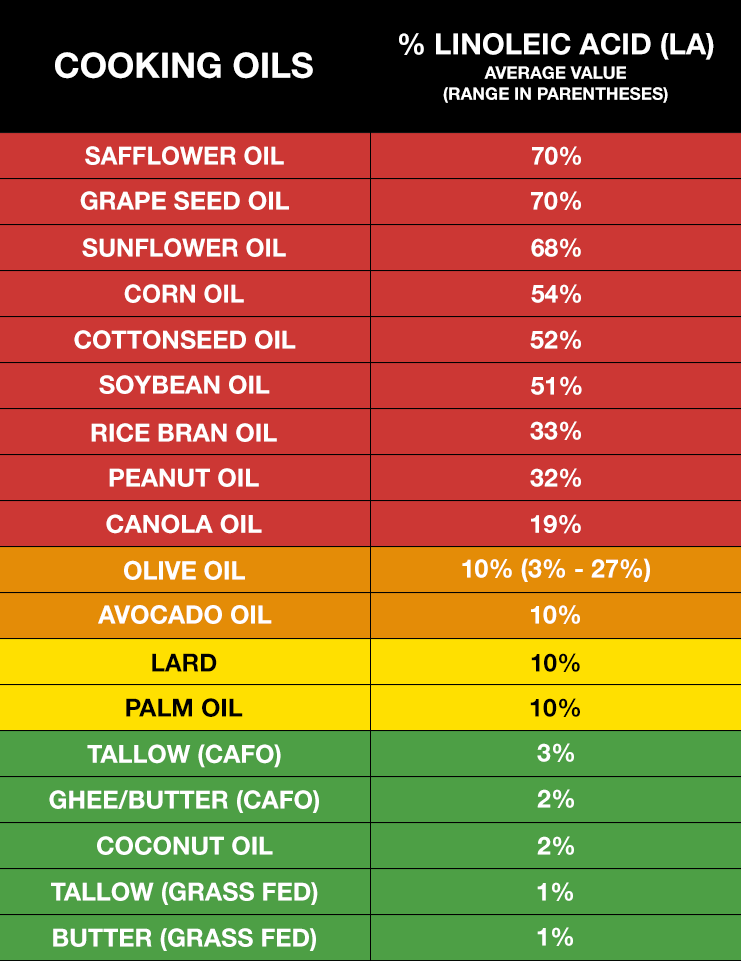
Aspirin for the Prevention and Treatment of Migraines
In addition to lowering your estrogen burden and LA intake, several nutritional supplements, medications and alternative remedies can be employed. Aspirin is one inexpensive and readily available option.
As reported in a 2019 paper in The American Journal of Medicine, properly dosed aspirin can safely and effectively abort a migraine attack when taken early enough, and may also be used preventatively in lower doses:25,26
“The totality of evidence, which includes data from randomized trials, suggests that high-dose aspirin, in doses from 900 to 1300 mg, taken at the onset of symptoms, is an effective and safe treatment option for acute migraine headaches.
In addition, the totality of evidence, including some, but not all, randomized trials, suggests the possibility that daily aspirin, in doses from 81 to 325 mg, may be an effective and safe treatment option for the prevention of recurrent migraine headaches.
The relatively favorable side effect profile of aspirin and extremely low costs compared with other prescription drug therapies may provide additional options for primary healthcare providers in the treatment of both acute and recurrent migraine headaches.”
Helpful Supplements
Other supplements that can help reduce migraine frequency and/or severity include:
| Magnesium — Which can affect both serotonin receptor function and the production and use of neurotransmitters — has also been shown to play an important role in the prevention and treatment of migraines, and migraine sufferers are more likely to suffer from magnesium deficiency than non-migraineurs.27
Since magnesium administration is both easy and safe, researchers have noted that empiric treatment with a magnesium supplement is justified for all migraine sufferers.28 As a prophylactic, be prepared to boost your magnesium intake for at least three months to experience results. In many cases, receiving a high dose of magnesium can also abort an attack in progress. The most effective way to administer magnesium for migraine would be to get an intravenous (IV) infusion. I used to regularly administer magnesium IVs for those with acute migraines and it seemed to work for most patients to abort the headache. Barring that option, magnesium threonate may be your best option for an oral supplement, as its superior ability to cross the blood-brain barrier makes it more likely to have a beneficial effect on your brain. |
| B vitamins — Other vitamin deficiencies linked to migraines include riboflavin (B2), B6, B12 and folic acid. One 2009 study29 evaluated the effect of 2 mg of folic acid, 25 mg vitamin B6 and 400 micrograms (mcg) of vitamin B12 in 52 patients diagnosed with migraine with aura. Compared to the placebo group, those receiving these supplements experienced a 50% reduction in migraine disability over a six-month period.
Previous studies30 have also reported that high doses of riboflavin can help prevent migraine attacks. In one study, patients who took 400 mg of riboflavin per day experienced a 50% reduction in migraine frequency after three months. |
| CoQ10 — Ubiquinol — the reduced form of CoQ10 — plays a vital role in ATP production, which is the basic fuel for your mitochondria. Your body does produce ubiquinol naturally; in fact, it is the predominant form in most healthy cells, tissues and organs. However, with rampant pollution and poor diet, mitochondrial dysfunction has become increasingly common, warranting supplementation with either ubiquinol or CoQ10.
One study published in the journal Neurology31 found that CoQ10 was superior to a placebo in preventing migraines and reducing severity. Of the patients who received 100 mg of CoQ10 three times a day, 50% reported significantly reduced frequency of headaches compared to only 14% of those who took the placebo. |
| GABA — Migraine is one of several common symptoms of GABA deficiency. |
Carbon dioxide — Migraines can also be addressed with CO2. In some cases, migraines can be triggered by overbreathing, causing a lack of CO2 that constricts the blood vessels in your brain. Exogenous CO2 delivery methods include:
|
- 1, 3 Stat Pearls, Migraine Headache
- 2 Migraine Research Foundation, Migraine Facts
- 4 Scientific American July 21, 2013
- 5 Ray Peat Forum August 29, 2018
- 6 Frontiers in Molecular Biosciences August 14, 2018
- 7 EurekAlert! August 14, 2018
- 8 ZeroHedge March 8, 2024
- 9 Nutrients July 2023; 15(14): 3129
- 10 Oxid Med Cell Longev. 2014;2014: 360438. DOI: 10.1155/2014/360438
- 11 Pharmacognosy Review. 2010;4(8):118-126
- 12 Biochemical Journal. 1982;208(1):129-140
- 13 Nephrol Dialysis Transplant. 2001;16(8):1598-1606
- 14 Free Radical Biol Med. 1992;13:341-390
- 15 Journal of Nutrition June 1990; 120(6):625-30
- 16 Metabolism July 1992; 41(7): 788-792
- 17 Healthier U September 25, 2023
- 18 Journal of Headache and Pain 2013; 14, Article number P138
- 19 Headache September 27, 2016
- 20 Mymensingh Med J 2021 Jan;30(1):43-47
- 21 Paloma Health February 17, 2022
- 22 Renewable Energy. 2018; 126: 403-419
- 23 Int J Mol Sci. 2015;16(6):12871-12890
- 24 The Plan Journal. 2008;54:640-655
- 25 The American Journal of Medicine November 8, 2019; 133(4): 412-416
- 26 Haidut.me December 4, 2019 (Archived)
- 27, 28 J Neural Transm (Vienna). 2012 May;119(5):575-9
- 29 Pharmacogenetics and Genomics 2009 Jun;19(6):422-8
- 30 European Journal of Neurology 2004 Jul;11(7):475-7
- 31 Neurology 2005 Feb 22;64(4):713-5