Minerals
now browsing by category
How Oxalates Can Wreck Your Health
Reproduced from original article:
https://articles.mercola.com/sites/articles/archive/2023/01/01/how-oxalates-can-wreck-your-health.aspx
The original Mercola article may not remain on the original site, but I will endeavor to keep it on this site as long as I deem it to be appropriate.
Analysis by Dr. Joseph Mercola Fact Checked January 01, 2023
STORY AT-A-GLANCE
- Oxalic acid is a naturally occurring toxic, corrosive acid. When the oxalic acid has minerals attached to it, it’s called oxalate, which acts as a mineral chelator
- Oxalate forms crystals that your body has a limited capacity to process. Calcium oxalate, for example, which is oxalic acid with calcium attached, form into painful kidney stones
- Unlike some other food-related toxins, oxalate cannot be removed by cooking, soaking or fermenting the food. You also cannot simply take a mineral supplement to address the depletion oxalates causes
- The top three “superfoods” that are very high in oxalate and may cause trouble are spinach, Swiss chard and beet greens. Another high-oxalate food is almonds, which you can easily “overdose” on if you’re eating bread made with almond flour or drinking almond milk, or if you’re on a keto or paleo diet, as they both tend to rely heavily on almonds. Dark chocolate is another food that scores high for oxalates
- Oxalate damages cellular membranes causing excess calcium to flood the cell, resulting in accelerated cell death and other metabolic problems that contribute to chronic disease and ill health
In this interview, Sally Norton, author of “Toxic Superfoods: How Oxalate Overload Is Making You Sick — and How to Get Better,” reviews how and why even foods we’ve been told are healthy can wreak havoc on your health. As the title of the book implies, the main culprit in question is oxalate or oxalic acid, found in many plants, beans, grains, seeds and nuts, fruits, berries and herbs.1
So, just what are oxalates, why are they so bad, and how are they hidden in these superfoods that so many people are consuming? In short, it’s a naturally-occurring toxic, corrosive acid. In that state, it’s called oxalic acid. When the oxalic acid has minerals attached to it, it’s called oxalate.
Chemically, it’s a salt, and like other salts, it forms crystals that your body innately has a limited capacity to process. Calcium oxalate, for example, which is oxalic acid with calcium attached, forms into painful kidney stones.
And, unlike some other food-related toxins, oxalate cannot be removed by cooking, soaking or fermenting the food. You also cannot simply take a mineral supplement to address the depletion oxalates causes.
How Oxalate Causes Damage in Your Body
Oxalic acid is a dicarboxylic acid, meaning it has two carbons and each carbon has an oxygen molecule attached to it. “This special carbolic acid has all kinds of damaging toxic powers when it’s near a membrane,” Norton says. She explains:
“Membranes really matter to biochemistry and to our basic physiology at the cellular level. Your membranes have to have the right structure and the right materials in them to function well. You’ve been focusing lately on vegetable oils [linoleic acid] and how toxic they are.
It’s messing up the structure of the membrane, because a membrane is this double layer of fatty acids. Well, it needs a certain structure to work.
Now, the membrane does all kinds of intellectual communication processes in the cell, helps the cell decide what to do next in any situation, and you need to have certain fatty acids only on the inside of the membrane. It’s two layers. So, there’s what we call the inner leaflet and the outer leaflet.
On the inner leaflet, there is a phospholipid called phosphatidylserine … What’s getting into your body and causing trouble is the free oxalic acid ion, this single little molecule that easily transverses your gut because it just floats in the water between the cells. We call that paracellular trans …
When oxalate’s around, it causes membrane damage to the point where that innate structure where the phosphatidylserine is now showing up on the outside of the membrane. That’s bad news. For many cells, that means the cell is now in line to be removed because it’s damaged. It’s a signal to the immune system, hey, take away the cell. It’s been harmed.
So, you lose your structured membrane. That creates all kinds of headaches for a cell. Often it cannot function properly. This is especially true of the cells that line the vascular system. So, the endothelial lining that is this giant organ of physiology, metabolism and maintenance of the body can be in trouble after, say, a spinach smoothie.”
Top ‘Superfood’ Oxalate Offenders
The top three vegetable “superfoods” that are very high in oxalate and may cause trouble are spinach, Swiss chard and beet greens. Another high-oxalate food is almonds, which you can easily “overdose” on if you’re eating bread made with almond flour or drinking almond milk, or if you’re on a keto or paleo diet, as they both tend to rely heavily on almonds. Dark chocolate is another food that scores high for oxalates.
“There’s a peak at about four hours after you eat it where the level of this oxalic acid in your blood is really quite high. So, now that your cells have damaged membranes and … your poor liver is flooded with oxalic acid after meals, and the liver has zero physiology to break it down, change it, make it less toxic.
The liver literally makes more oxalate, and the more inflammation in the body, the more oxalate the liver makes … The amount that converts to oxalic acid depends on your vitamin B status. If you have enough B6 and B1, then it lowers the amount that becomes oxalic acid …
You also have to have low inflammation. People with diabetes and obesity have higher levels of generalized inflammation, so they’re likely to produce more endogenous oxalate.”
Oxalate Impairs Calcium Signaling
Once a membrane is damaged, oxalic acid can enter the cell. Oxalic acid is a calcium chelator, and calcium is critical to cell function. Cells use calcium as messengers, so it’s crucial for the self-management of the cell. Even before oxalate enters, which might take two hours, in the first 15 minutes after you’ve got oxalate near a cell, an increased amount of calcium will move into the cell.
In short, the cell membrane damage causes the cell to take up more calcium. That’s bad enough, but when oxalate follows, it lowers the effective calcium concentration from a physiologic standpoint. Norton explains what happens next:
“Now you’ve got cells that have too much calcium in them and too little calcium that’s actually functional. So, the cell keeps bringing in even more calcium because the oxalate is lowering the functional intracellular calcium by chelating calcium ions in the cell.
But in the meantime, the mitochondria are picking up calcium because they’re trying to save the cell from the excess calcium. So, this mitochondrial rescue problem kills the mitochondria and ultimately kills the cell as well. So, you’ve got multiple steps where the oxalate effects are kind of expanding into cell collapse …
The oxalate penetrates the cell cytosol area and the mitochondria and sits on … the active site of four metabolic enzymes, including the last step in glycolysis. So, the last step in glycolysis is blocked.
It also affects your ability to produce glucose and can contribute to low blood sugar, probably insulin resistance, and lots of metabolic problems because you’ve created an energy crisis in the cell … and you’ve got enzyme interference. Now, if your mitochondria ain’t happy, you can’t produce enough of the materials to even replace the cell. So, cell reproduction can be hampered.
They’re dying, their lives are shortened, they’re dying quicker, and they don’t have enough energy to produce enough proteins and other materials they need to duplicate themselves. So, you get fibrosis instead.
Instead of getting healthy maintenance of tissues, the fibroblasts start producing more and more of this scar tissue material and you get fibrotic gunk holding you together.
If you don’t have enough cells to hold the tissue together, you need this temporary stage of producing scar tissue to keep you from falling apart and suddenly bleeding out or having problems. This is a great thing the body’s doing, but in the long run, you could turn into a fibrotic mess and not know why.”
Oxalate Toxicity Increases Risk of EMF Toxicity
The concentration of calcium outside the cell is 50,000 times higher than inside the cell. Research by experts like Martin Pall in electromagnetic field (EMF) damage shows that EMF allows an influx of excess calcium into the cell, which causes a cascade of increased nitric oxide, superoxide and other toxic molecules. Oxalates also cause harm through that same mechanism. As noted by Norton:
“This is the intersection of all these toxicities where the oxalate toxicity creates increased vulnerability to the EMF toxicity. We see this in my client base where they’re frail and sensitive to everything.
When we get lower oxalates in the body, they’re tougher again and these other stressors aren’t quite as bad anymore. As you say, take control of your health. This is one place where you have more control over how much oxalate is in your diet than you have over EMF exposure in many situations.”
Symptoms of Oxalate Toxicity
Symptoms you might experience if you’re exposed to excessive amounts of oxalate include the following. For more in-depth details about the mechanics behind each, listen to the interview or read through the transcript.
“The main symptom pattern is that no one can figure out what’s wrong with you and you seem OK according to tests,” Norton says. “That’s a classic oxalate situation.”
I personally have struggled with a challenging itchy rash for 15 years that defied any diagnosis by multiple dermatologists. I finally realized that it was due to oxalates and it has dramatically improved by lowering my oxalate consumption. I also used to struggle with dental plaque and that seems to have also improved with oxalate reduction and using a dental scaler.
| Calcium oxalate kidney stones (which comprise about 80% of all kidney stones) | Itchy rashes |
| Interstitial cystitis (frequent urination and bladder pain) | Poor or slow wound healing |
| Frail skin that bleeds easily (as your connective tissues are being damaged) | Joint pain |
| Osteoporosis (as the oxalates are extracting minerals from your bones) | Calcium deposits |
| Digestive problems | Neurological problems ranging from bad mood and klutziness to tremors |
| Poor sleep | Rheumatologically muscle pains like fibromyalgia |
| Vision problems such as near-sightedness, cataracts and poor night vision | Dental plaque or tartar |
The Hazards of Excessive Vitamin C
Vitamin C and ascorbic acid can also lead to problems if your body is already loaded with oxalates as it is metabolically reduced to oxalic acid during breakdown. Norton explains:
“The major source of internal oxalate is ascorbic acid or vitamin C … There are lots of case studies of train wrecks from supplements, and lots of case studies about problems with intravenous vitamin C. Let me tell you my personal story. I had vitamin C chelation … I didn’t know I had an oxalate problem …
By the third time, I became harder and harder to stab for the IV needle because now my veins were ropier and rollier and would run away from the needle. That’s fibrosis … I only had IV vitamin C maybe 10 times. But the doctor and the nurse took no notice of this side effect of the treatment — that I was becoming more fibrotic and harder to puncture …
It’s hubris to say, ‘Oh, well, it’s fine. All my patients are doing great on my vitamin C IVs when you’re not open to seeing the side effects. One of the studies demonstrated that just with oral supplementation, for not all that long, once they stopped the vitamin C, the level of oxalate in the urine went way up.
So, while the body’s being assaulted by too much vitamin C, it’s busy sequestering the oxalate that’s forming and holding onto it and protecting the kidneys from devastation, from excessive oxalate load. Once you stop producing or eating too much oxalate, this holding pattern can let go, and now you see much higher oxalate levels in the blood and the urine.”
For these reasons, if you take vitamin C on a regular basis, Norton recommends limiting it to 250 mg a day. This is enough to meet your nutritional requirements and is unlikely to cause oxalic acid-related trouble. The exception would be if you are septic, in which case large doses of IV ascorbic acid can save your life.
The Antidote to Oxalate
The good news is there’s an “antidote” to oxalate that can be helpful if you’re struggling with oxalate toxicity or just happened to eat a high-oxalate meal. That antidote is citrate. I take citrates every day: magnesium citrate, calcium citrate and potassium citrate, typically with meals. This way absorption of any oxalate in the meal will be impaired.
“You definitely need calcium and magnesium with high oxalate meals,” Norton says. “But the bigger issue is this long-term toxicity, because we all grow up on high-oxalate foods. Peanut butter is high, wheat bran is high, potatoes are high. Oat bran is variable. Rice bran is high, wheat bran’s high.
The citrates in the minerals are especially important for this long tail of getting over the chronic illness of having an oxalate overload in your body. So, if you’re past the age of 10 and grew up on standard foods, you’ve got some degree of deposits in your bone marrow, your joints and glands …
The biggest biohack is calcium [citrate] because calcium promotes the clearing [of oxalate]. Some people can’t even tolerate the calcium because their body is so eager to upchuck this mess from its tissues that calcium gives it too much permission. Some people are so deficient in minerals.
The long term high-oxalate diet really sucks you dry of electrolytes and minerals, and you’re really fragile without the minerals. That’s slowing down the excretion from the tissues. The expulsion from the tissues requires a certain amount of metabolic heft and some access to electrolytes so the tissues can do what they need to do.
[I’ve seen] people who were heavy keto for three years and then went full carnivore, which is a zero oxalate diet — so, they went from super toxic high-oxalate diet to zero oxalate — which is a precipitous dive.
Some get immediately sick with more rashes … suddenly they are sick as a dog with oxalate poisoning because it’s mobilizing. All of a sudden, they’ve got enough nutrients and whatever. Now, the body’s turning it on.”
Detoxing Oxalate Takes Time
The take-home message here is that you need to go slow. It’s a marathon, not a sprint. Typically, after two years to two-and-a-half years on a low-oxalate diet, you may suddenly get sicker, because your kidneys are finally cleaned up and able to excrete oxalate more efficiently.
You’re then able to tap into deeper deposits. As a result, you may experience things like gastritis, migraines, anxiety attacks, gout and other kinds of toxic reactions. It can also increase uric acid, as the uric acid is replacing the oxalic acid. In this instance, it’s a sign that you’re clearing oxalate. Other signs of oxalate clearing include tartar buildup on your teeth, gritty eyes, gritty stools, hemorrhoids and burning stools.
Sources of Citrate
While you could take citrate supplements, raw grass-fed milk is a great option, as it’s high in calcium. Other options include sardines and lemon juice. As noted by Norton:
“[Dairy] has been the traditional nutrition … to get calcium because the only other good source is sardines and salmon bones. There is some bioavailable calcium in some of these low oxalate vegetables, but you can’t eat so much cabbage. Canned sardines are good too.
Citrate is so good. It is your friend. Lemon juice is a great source of citric acid and I use lemon juice as a therapy. I recommend people get a half a cup of fresh lemon juice, a quarter cup in the morning, quarter cup at night, and down it as a shot, or you can make a homemade lemon fizz.
It’s like an Alka-Seltzer Gold where you add the potassium bicarbonate and/or sodium bicarbonate and you can alkalize, because what happens is the liver turns some of the citric acid into bicarbonate, and alkalization helps so much because oxalate’s creating an acidic metabolism …
When you don’t feel good because your system is busy doing this nasty housekeeping and taking away this toxic waste out of your body, you go in acid, and the easiest answer is to juice a lemon, take Alka-Seltzer Gold or to use these citrate supplements. Citrate helps to alkalize, which is really great because now the kidney cells have an extra citric acid they can release from their own physiology into the urine, and that’s a critical factor.
If you have low citrate in your urine, you’re at risk for kidney stones because the citrate prevents us from getting the stones and helps to break down stones. I believe citrate’s attracted to the calcium and the calcium oxalate molecule or crystal nanocrystal or microcrystal. It attaches to the calcium side of the crystal, and it has an electromagnetic pull on that calcium that weakens the bond between the oxalate and the calcium.
So, now you have a three-way love affair where the two molecules are fighting over that calcium and the citrate wins. What that does is it turns the crystal of calcium oxalate, which is firm like quartz or glass, and it turns it into more of a chalky substance that’s easier to break down.”
If you use a powder form of the citrates, take a quarter teaspoon twice a day with meals. Norton prefers taking calcium citrate or magnesium citrate at bedtime. Both help soothe the nervous system and improve sleep. When using calcium citrate, she recommends breaking taking one dose at bedtime and one in the morning, plus two doses spread out during the day. With magnesium, twice a day is sufficient.
More Information
Norton hopes to publish a video course on oxalates sometime in 2023, hopefully by March. She’s also planning add-on training for health providers to get them up to speed. In the meantime, you can pick up a copy of of “Toxic Superfoods: How Oxalate Overload Is Making You Sick — and How to Get Better.” I believe the issue of oxalates is a vitally important aspect of optimal health that many miss.
You can also find more information on SallyKNorton.com, including a free downloadable PDF of low-oxalate recipes. There, you can also sign up for a Zoom group.
“We keep them small so you can interact with people and meet people that are on the journey with you and do some teaching there,” she says. “Eventually, when the course is out, we’ll be able to do more of the chat and share and talk about individual situations as a way to get into the material.”
Quercetin and Vitamin C: Synergistic Therapy for COVID-19
Reproduced from original article:
https://articles.mercola.com/sites/articles/archive/2022/12/31/quercetin-and-vitamin-c-synergistic-effect.aspx
The original Mercola article may not remain on the original site, but I will endeavor to keep it on this site as long as I deem it to be appropriate.
Analysis by Dr. Joseph Mercola Fact Checked December 31, 2022
STORY AT-A-GLANCE
- Vitamin C and quercetin have synergistic effects that make them useful in the prevention and early at-home treatment of COVID-19. Both are part of the MATH+ protocol developed by the Front Line COVID-19 Critical Care Working Group (FLCCC)
- For COVID-19 prophylaxis, the FLCCC recommends vitamin C, quercetin, zinc, melatonin and vitamin D3
- The at-home treatment for mildly symptomatic patients is very similar to the prophylactic regimen, but adds several optional drugs, including aspirin, famotidine (an antacid) and ivermectin (a heartworm medication that has been shown to inhibit SARS-CoV-2 replication in vitro)
- The in-hospital MATH+ protocol calls for intravenous methylprednisolone, high-dose ascorbic acid (vitamin C), thiamine and heparin. Optional additions include melatonin, zinc, vitamin D3, atorvastatin, famotidine and magnesium
- There are two distinct phases or stages of COVID-19 — the viral replication stage and the immune dysfunction stage — and the treatment must be appropriate for the stage you’re in. Equally crucial is starting aggressive treatment as early as possible
Quercetin was initially found to provide broad-spectrum protection against SARS coronavirus in the aftermath of the SARS epidemic that broke out across 26 countries in 2003.1,2,3 Now, some doctors are advocating its use against SARS-CoV-2, in combination with vitamin C, noting that the two have synergistic effects.
Incidentally, ascorbic acid (vitamin C) and the bioflavonoid quercetin (originally labeled vitamin P) were both discovered by the same scientist — Nobel prize winner Albert Szent-Györgyi.4,5 Quercetin’s antiviral capacity has been attributed to five main mechanisms of action:
- Inhibiting the virus’ ability to infect cells by transporting zinc across cellular membranes
- Inhibiting replication of already infected cells
- Reducing infected cells’ resistance to treatment with antiviral medication
- Inhibiting platelet aggregation — and many COVID-19 patients suffer abnormal blood clotting
- Promoting SIRT2, thereby inhibiting the NLRP3 inflammasome assembly involved with COVID-19 infection
Similarly, vitamin C at extremely high doses also acts as an antiviral drug, effectively inactivating viruses. During the 2003 SARS pandemic, a Finnish researcher called6 for an investigation into the use of vitamin C after research showed it not only protected broiler chicks against avian coronavirus, but also cut the duration and severity of common cold in humans and significantly lowered susceptibility to pneumonia.
The MATH+ Protocol
While high-dose vitamin C is new for COVID-19 treatment, it’s been used as a treatment for sepsis since about 2017. The vitamin C-based sepsis treatment was developed by Dr. Paul Marik, former critical care doctor at Sentara Norfolk General Hospital in East Virginia, which has since adopted it as standard of care for sepsis.
In the interview above, Marik explains how the COVID-19 critical care protocol grew out of his sepsis treatment, as he and other doctors noticed there were many similarities between sepsis and severe COVID-19 infection, in particular the out-of-control inflammatory cascade.
To address the differences between the two conditions, a group of doctors, including Marik, founded the Front Line COVID-19 Critical Care Working Group7 (FLCCC), and began developing a modified protocol specifically for COVID-19.
Known as the MATH+ protocol,8,9 it involves the use of three key medicines, all of which need to be started within six hours of hospital admission:
- Intravenous methylprednisolone, to suppress the immune system and prevent organ damage from cytokine storms
- Intravenous ascorbic acid (vitamin C) to control inflammation and prevent the development of leaky blood vessels in the lungs
- Subcutaneous heparin (enoxaparin), to thin the blood and prevent blood clots
MATH+ Prophylactic and At-Home Treatment Protocol
The initial MATH+ protocol10 was released in April 2020. In early July and August, it was updated11,12 to include quercetin and a number of optional nutrients and drugs, not only for critical care but also for prophylaxis and mild disease being treated at home.
For prophylaxis, the FLCCC recommends:13
- Vitamin C — 500 mg
- Quercetin — 250 mg to 500 mg
- Zinc — 75-100 mg/day (acetate, gluconate or picolinate). Zinc lozenges are preferred. After one month, reduce the dose to 30 mg to 50 mg per day
- Melatonin (slow release) — Begin with 0.3 mg and increase as tolerated to 2 mg at night
- Vitamin D3 — 1,000 to 4,000 IUs per day
The at-home treatment for mildly symptomatic patients is very similar, but adds several optional drugs, including aspirin (ASA), famotidine (an antacid), ivermectin (a heartworm medication that has been shown to inhibit SARS-CoV-2 replication in vitro14). (For dosages, see the Critical Care Management Protocol15 summary, available on the Easter Virginia Medical School’s site.)
They also recommend monitoring your oxygen saturation with a pulse oximeter and to go to the hospital if you get below 94%. The medical evidence to support each drug and nutrient can be found under “Medical Evidence”16 on the FLCCC’s website.
MATH+ Critical Care In-Hospital Protocol
In July, the in-hospital protocol was revised17 again to include thiamine (which is also a key ingredient in Marik’s sepsis protocol). As of the last revision, the in-hospital MATH+ protocol18 calls for:
- IV methylprednisolone
- High-dose ascorbic acid (vitamin C)
- Thiamine
- Heparin
- Optional — melatonin, zinc, vitamin D3, atorvastatin, famotidine and magnesium
According to the FLCCC, “By initiating the protocol soon after a patient meets criteria for oxygen supplementation, the need for mechanical ventilators and ICU beds will decrease dramatically.” While heparin is an important part of the protocol due to the clotting complications in the microvasculature of the lung, it is likely that N-acetyl cysteine (NAC) is likely a far better choice as it is far safer and likely as effective.
The Two Phases of Disease Require Different Treatments
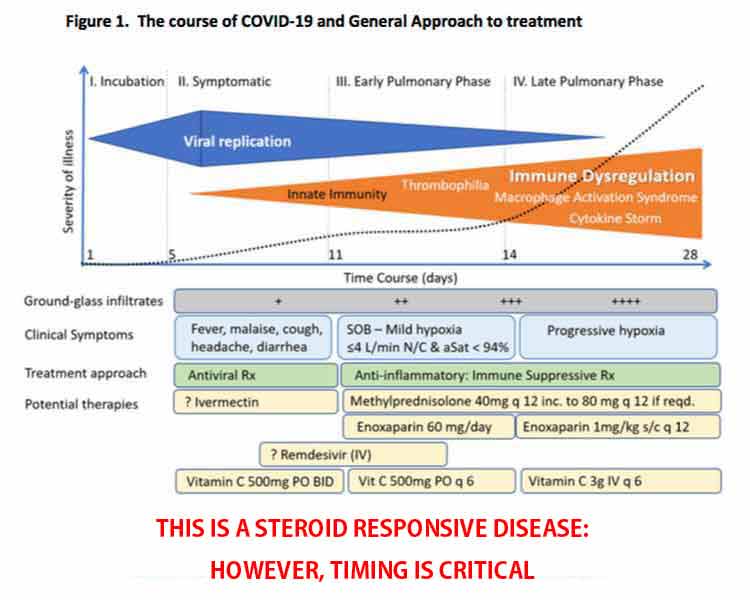
This is a key point: There are two distinct phases or stages of COVID-19 — the viral replication stage and the immune dysfunction stage — and the treatment must be appropriate for the stage you’re in. Equally crucial is starting aggressive treatment as early as possible. The graphic below details the two stages of disease, and the FLCCC’s suggested treatment focus for each.
Peak viral replication takes place at the earliest signs of symptoms, which include cold/flu-like symptoms, loss of taste and smell, myalgia (muscle pain) and general malaise.
From the time of symptom onset to the time that immune dysregulation starts to set in (accompanied by worsening symptoms) is about five or six days. During this time, you need to aggressively treat, whether you’re at home (see the at-home treatment for symptomatic patients) or in the hospital.
The key remedies in this phase are antivirals (which is what vitamin C, quercetin and zinc are). Anti-inflammatories should be avoided in this phase, Marik warns. Again, if treating at home, be sure to monitor your oxygen saturation with a pulse oximeter. If your oxygen drops to 94% or below when sitting or walking, it’s time to go to the hospital.
If your immune system is unable to successfully combat the virus, then five to six days after first symptoms, early pulmonary dysfunction can set in. At this point, anti-inflammatories — i.e., corticosteroids — and immune suppressive therapeutics are required.
Viral Load Declines as Inflammation Rises
Another important concept explained by Marik in the featured interview is that the inflammatory response rises as the viral load decreases. They do not rise together.
“So, it’s really not the virus that is causing cytopathic effects,” he says. By the time you enter the pulmonary phase of the disease, your viral load has actually significantly decreased, but for some reason the inflammatory response then starts to run amok.
Your oxygen saturation is “the key indicator of pulmonary involvement,” Marik says. Once your oxygen saturation starts to decline, you are entering the early pulmonary phase where inflammation is rapidly increasing.
This is why it’s so important to make sure you’re measuring your oxygen saturation. Do not try to treat at home if your oxygen is dropping. Go to the hospital. Again, early treatment is crucial. Hopefully, your doctor will be willing to implement the MATH+ protocol.
Corticosteroids Are a Crucial Component
In a short essay19 co-written by the entire FLCCC team, they express their conviction that the MATH+ protocol is one of the best, most effective, critical care protocols for COVID-19 to date.
“Months ago, early on in COVID19, the FLCCC created the MATH+ protocol based on our physicians’ insights into COVID19 as a steroid-responsive disease.
This treatment recommendation went against all the major national and international health care societies that had misinterpreted the medical literature, a body of published evidence which, upon careful and deep review, actually supported the use of corticosteroids in prior pandemics …
Thousands of patients who became critically ill with Covid19 and who were suffering from massive inflammation may have been saved if this safe and powerful anti-inflammatory medicine had been provided.”
The essay20 stresses the importance of corticosteroids in the treatment of COVID-19, and cites results from the RECOVERY trial,21,22,23 a large, randomized controlled COVID-19 study by the University of Oxford, that validates their recommendation to use corticosteroids as soon as the patient is hospitalized.
In that study, the corticosteroid dexamethasone improved survival by one-third in ventilated patients and one-fifth in those requiring oxygen. However, the FLCCC believes another type of corticosteroid, methylprednisolone, is a better, more effective, choice.
First, because it reaches higher concentrations in lung tissue, and secondly, because it most closely matches the inflammatory gene activation patterns induced by SARS-CoV-2. They also believe the dexamethasone dose used in the RECOVERY trial was too low, especially for severe cases.
“In the hospitals of two of our FLCCC physicians — each having treated over 100 hospitalized patients with MATH+ often early on in the hospitalization, the hospital mortality rate to date is 7% in one hospital (Dr. Paul Marik, Norfolk, Va.) and less than 1% in the other (Dr. Joseph Varon, Houston, Texas),” the essay states.24
Vitamin C and Quercetin Work Synergistically
June 19, 2020, Marik published the paper,25 “Quercetin and Vitamin C: An Experimental, Synergistic Therapy for the Prevention and Treatment of SARS-CoV-2 Related Disease (COVID-19)” in the journal Frontiers in Immunology, which notes:
“Ascorbic acid is a crucial vitamin necessary for the correct functioning of the immune system. It plays a role in stress response and has shown promising results when administered to the critically ill. Quercetin is a well-known flavonoid whose antiviral properties have been investigated in numerous studies.
There is evidence that vitamin C and quercetin co-administration exerts a synergistic antiviral action due to overlapping antiviral and immunomodulatory properties and the capacity of ascorbate to recycle quercetin, increasing its efficacy.
Safe, cheap interventions which have a sound biological rationale should be prioritized for experimental use in the current context of a global health pandemic.”
The paper presents evidence for the use of vitamin C and quercetin — based on their biological actions and pharmacokinetics profiles — both as prophylaxis in high-risk populations, and as an adjunct to drugs such as Remdesivir or convalescent plasma in the treatment of hospitalized COVID-19 patients.
Post-COVID Syndrome
In the interview, Marik also addresses the issue of “post-COVID syndrome,” which he says is very similar to that of post-sepsis syndrome. In some cases, COVID-19 patients have recovered from the infection, only to die due to pulmonary embolism (blood clots in the lungs) or other organ dysfunction.
Marik suspects this is because the inflammatory response is still overactive. Many sepsis patients will have very high cytokine levels even a year after their recovery. He believes steroids are one key to downregulating the inflammatory response, which would prevent this problem.
A good way to screen for this, Marik says, is to measure CRP, which appear to be a good marker for ongoing inflammation. If CRP is high after recovering from COVID-19, Marik suggests doing a short course of corticosteroids to downregulate the inflammatory response. Aspirin may also be helpful if D-dimer is high. These should be used under medical supervision.
I believe this information needs to be shared far and wide, if we are to prevent more people from dying unnecessarily. More and more, as doctors are starting to speak openly about their clinical findings, we see there are quite a few different ways to tackle this illness without novel antivirals or vaccines, using older, inexpensive and readily available medications and nutrients that are already known to be safe.
- 1 Journal of Virology Sep 2004, 78 (20) 11334-11339, Antiviral activity of an analog of luteolin
- 2 Bioorg Med Chem. 2006 Dec 15;14(24):8295-306
- 3 Maclean’s February 24, 2020
- 4 ACS.org Albert Szent-Gyorgyi’s discovery of vitamin C
- 5, 25 Frontiers in Immunology June 19, 2020 DOI: 10.3389/fimmu.2020.01451
- 6 Journal of Antimicrobial Chemotherapy December 2003; 52(6): 1049-1050
- 7 covid19criticalcare.com
- 8, 10 MATH+ Protocol (PDF)
- 9 COVID-19 Management Protocol (MATH+) (PDF)
- 11 COVID-19 Management Protocol (MATH+) Updated July 9, 2020 (PDF)
- 12, 13 EVMS Critical Care COVID-19 Management Protocol August 1, 2020
- 14 Antiviral Research June 2020; 178: 104787
- 15 EVMS Critical Care COVID-19 Management Protocol June 17, 2020
- 16 FLCCC.net Medical Evidence
- 17, 18 MATH+ Hospital Treatment Protocol for COVID-19 July 14, 2020 (PDF)
- 19, 20, 24 Center for Balanced Health
- 21 Recovery Trial
- 22 BMJ 2020;369:m1626
- 23 Science Translational Medicine June 5, 2020
3 Top Micronutrients for Cardiovascular Health
Reproduced from original article:
https://articles.mercola.com/sites/articles/archive/2022/12/28/top-micronutrients-for-heart-health.aspx
The original Mercola article may not remain on the original site, but I will endeavor to keep it on this site as long as I deem it to be appropriate.
Analysis by Dr. Joseph Mercola Fact Checked December 28, 2022
STORY AT-A-GLANCE
- Brown University researchers conducted a study to determine which micronutrients are best for your heart
- They unveiled an up-to-date evidence-based map that quantifies the impact of micronutrients on cardiovascular outcomes
- Out of 27 micronutrients, three — omega-3 fats, folate and coenzyme Q10 (CoQ10) — came out on top
- Omega-3 fats decreased mortality from cardiovascular disease, while also reducing heart attacks and coronary heart disease events
- Folic acid, the synthetic version of folate, or vitamin B9, reduced stroke risk, while CoQ10 decreased all-cause mortality events
- Most, but not all, of the micronutrients studied showed “moderate- to high-quality evidence” of reducing risk factors for cardiovascular disease
Heart disease is the No. 1 cause of death in the U.S., killing one person every 34 seconds.1 Your diet plays a prominent role in your heart health, but the role of individual micronutrients continues to be debated. Brown University researchers conducted a study to determine which micronutrients are best for your heart.2
They unveiled an up-to-date evidence-based map that quantifies the impact of micronutrients on cardiovascular outcomes. Out of 27 micronutrients, three — omega-3 fats, folate and coenzyme Q10 (CoQ10) — came out on top.
Micronutrients Benefit Cardiometabolic Health
Micronutrients are vitamins and minerals that your body needs to function optimally. Deficiencies in micronutrients can lead to a range of acute and chronic conditions. In terms of heart health, Brown University researchers conducted a systematic review and meta-analysis involving 884 trials. The study, published in the Journal of the American College of Cardiology, evaluated 27 types of micronutrients used by 883,627 participants.3
“For the first time, we developed a comprehensive, evidence-based integrative map to characterize and quantify micronutrient supplements’ potential effects on cardiometabolic outcomes,” study author Dr. Simin Liu, professor of epidemiology and medicine at Brown University, said in a news release. “Our study highlights the importance of micronutrient diversity and the balance of health benefits and risks.”4
Most, but not all, of the micronutrients showed “moderate- to high-quality evidence” of reducing risk factors for cardiovascular disease. Those that were beneficial included:5
| Folic acid (folate) | Vitamin D | Magnesium | Zinc |
| Alpha-lipoic acid | Coenzyme Q10 | Melatonin | Catechin |
| Curcumin | Flavanol | Genistein | Quercetin |
The study was unique in that it took a comprehensive look at micronutrient supplementation, including phytochemicals and antioxidants. Liu explained:6
“Research on micronutrient supplementation has mainly focused on the health effects of a single or a few vitamins and minerals. We decided to take a comprehensive and systematic approach to evaluate all the publicly available and accessible studies reporting all micronutrients, including phytochemicals and antioxidant supplements and their effects on cardiovascular risk factors as well as multiple cardiovascular diseases.”
3 Micronutrients to Support Heart Health
While beta carotene supplementation increased all-cause mortality, omega-3 fats, folate and CoQ10 were highly protective. Here are more details about how these important micronutrients affect your heart health.
- Omega-3s — The study found omega-3 fats decreased mortality from cardiovascular disease, while also reducing heart attacks and coronary heart disease events.7 This mirrors previous studies, which have also found beneficial effects of omega-3s on heart health. Omega-3 fats derived from krill oil, for instance, have been found to reduce triglyceride levels and help reduce cardiovascular risk.8
Further, people with Type 2 diabetes who used omega-3 supplements had a lower incidence of hospitalization with heart failure — a form of heart disease in which the heart experiences ventricular dysfunction — in another study.9
An omega-3 index test is one of the most important annual health screens that everyone needs, and it’s a more important predictor of your heart disease risk than your cholesterol levels. Even research supported by the National Institutes of Health suggests an omega-3 test is a good predictor of overall health and all-cause mortality.10,11
That study measured the omega-3 index in 2,500 participants and found those with the highest omega-3 index had lower risks of heart problems and lower total mortality. The omega-3 index measures of the amount of eicosapentaenoic acid (EPA) and docosahexaenoic acid (DHA) in the membranes of your red blood cells (RBC). Your index is expressed as a percent of your total RBC fatty acids.
The omega-3 index has been validated as a stable, long-term marker of your omega-3 status, and it reflects your tissue levels of EPA and DHA. An omega-3 index over 8% is associated with the lowest risk of death from heart disease, while an index below 4% places you at the highest risk of heart disease-related mortality.
The ideal sources for EPA and DHA include cold-water fatty fish, like wild-caught Alaskan salmon, sardines, herring and anchovies. If you do not eat these fish on a regular basis, consider taking a krill oil supplement.
In addition, be aware that your omega-6 to omega-3 ratio should be about 1-to-1 or possibly up to 4-to-1, but most Americans consume far too many omega-6 fats and not enough omega-3. For optimal heart health, in addition to increasing your omega-3, it’s important to cut down on industrially processed seeds oils, often referred to as “vegetable oils,” found in most processed foods.
2. Folate — The Journal of the American College of Cardiology study revealed that folic acid reduced stroke risk.12 Folic acid is the synthetic version of folate, or vitamin B9, and it’s the most important dietary determinant of homocysteine. Elevated levels of homocysteine (Hcy) are a risk factor for coronary artery disease and are found in most patients with vascular disease.13 According to a literature review published in Advances in Therapy:14
“Several mechanisms have been proposed for Hcy’s pathogenesis related to vascular disease. Hcy can cause endothelial injury, dysfunction of DNA, proliferation of smooth muscle cells, oxidative stress, decreased function of glutathione peroxidase, impaired nitric oxide synthase, and inflammation.”
Evidence suggests that daily folic acid supplementation lowers homocysteine levels. “In fact, it has been shown that folic acid supplementation of 0.5 to 5.0 mg can lower Hcy levels by 25% and, thus, may decrease the risk of cardiovascular disease … Given that folic acid is cheap and effective, this should be a viable option for patients with high-risk for cardiovascular adverse events,” the researchers explained.15
In an animal study, folic acid was also found to prevent age-related structure changes and dysfunction of the heart that may lead to heart failure.16 It reduced cellular senescence, a hallmark of aging. The best way to increase your levels of this important micronutrient is to eat foods rich in natural folate, such as asparagus, avocados, Brussels sprouts, broccoli and spinach.
3. CoQ10 — CoQ10 decreased all-cause mortality events, according to the Journal of the American College of Cardiology study.17 Ubiquinol — the reduced, electron-rich form of CoQ10 that your body produces naturally — plays an important role in the electron transport chain of your mitochondria, where it facilitates the conversion of energy substrates and oxygen into the biological energy (adenosine triphosphate, or ATP) needed by your cells for life, repair and regeneration.
It’s a fat-soluble antioxidant, meaning it works in the fat portions of your body, such as your cell membranes, where it mops up potentially harmful byproducts of metabolism known as reactive oxygen species (ROS). As such, ubiquinol and CoQ10 supplements help protect your mitochondrial membranes from oxidative damage.
Many conditions, including heart disease, appear to be rooted in mitochondrial dysfunction.18 CoQ10 is used by every cell in your body, but especially your heart cells. Cardiac muscle cells have about 5,000 mitochondria per cell.19 For further comparison, mitochondria make up about 35% of the volume of cardiac tissue and only 3% to 8% of the volume of skeletal muscle tissue.20
In other research, CoQ10 has been found to help improve atrial fibrillation (AFib).21 AFib is an abnormal, often rapid, heart rhythm that occurs when the atria, your heart’s upper chambers, beat out of sync with the ventricles, the heart’s lower chambers. It’s a common symptom in those with heart failure or heart disease. In addition, CoQ10 influences several other aspects of heart health, including:
- High blood pressure — CoQ10 acts directly on your endothelium, dilating your blood vessels and lowering blood pressure.22,23 CoQ10 also decreases aldosterone, a hormone that makes you retain salt and water.24,25 When aldosterone goes down, excess salt and water are excreted through your kidneys, often causing your blood pressure to go down.
- Systemic inflammation — Supplementing with 60 milligrams (mg) to 500 mg of CoQ10 for eight to 12 weeks can significantly reduce tumor necrosis factor alpha (TNF-α), IL-6 and C-reactive protein (CRP);26,27 three measures of widespread inflammation.
- Stroke — Systemic inflammation, oxidative stress and nerve cell damage play a role in the development of stroke. Research suggests supplementing with CoQ10 can reduce ischemic lesions and improve outcomes in patients who have been treated with a statin drug after having a stroke (statins reduce CoQ10 levels in your body).28
Your body can naturally make CoQ10, but genetic alterations in metabolism, poor diet, oxidative stress, chronic conditions and aging can all interfere with CoQ10 production and lead to CoQ10 deficiency. Statin drugs can also deplete CoQ10.
Ubiquinol production ramps up from early childhood until your mid- to late 20s. By the time you hit 30, it begins to decline.29 Young people are able to use CoQ10 supplements quite well, but older people do better with ubiquinol, as it’s more readily absorbed.
A Personalized Approach Is Best
There’s no one-size-fits-all approach when it comes to supporting your heart health. Indeed, the featured study researchers noted that “an optimal nutritional strategy to promote cardiometabolic health will likely involve personalized combinations of these nutrients.”30
However, healthy diet, exercise, stress reduction and heart-based connections — i.e., strong and positive relationships — are key to heart and overall health. As mentioned, I also believe an omega-3 index test is one of the most important annual health screenings you can receive.
GrassrootsHealth makes testing easy through its D*Action+Omega-3 consumer-sponsored research project.31 You can find the GrassrootsHealth omega-3 index test kit on the GrassrootsHealth website.32
- 1 U.S. CDC, Heart Disease Facts
- 2, 3, 5, 12, 17 Journal of the American College of Cardiology December 13, 2022, Volume 80, Issue 24, Pages 2269-2285
- 4, 6 Science Daily December 5, 2022
- 7 Journal of the American College of Cardiology December 13, 2022, Volume 80, Issue 24, Pages 2269-2285, Results
- 8 Journal of the American Medical Association, 2022; 5(1)
- 9 JACC: Heart Failure, 2022;10(4)
- 10 Journal of Clinical Lipidology, 2018;12(3):718
- 11 EurekAlert! March 15, 2018
- 13 Adv Ther. 2020; 37(10): 4149–4164., Intro
- 14, 15 Adv Ther. 2020; 37(10): 4149–4164
- 16 Life Sci. 2021 Jan 1;264:118718. doi: 10.1016/j.lfs.2020.118718. Epub 2020 Nov 5
- 18 Integr Med (Encinitas). 2014;13(4):35-43
- 19 PeerJ. 2018;6:e4790
- 20 Am J Physiol Heart Circ Physiol. 2014;307(3):H346-52
- 21 J Investig Med. 2015;63(5):735-9
- 22 Molecular Aspects of Medicine. 1994;15(1):s257-s263
- 23 Circ Res. 1989;65(1):1-21
- 24 Am J Physiol. 1965;208:1275-80
- 25 Molecular Aspects of Medicine. 1994;15(1):s265-s272
- 26 Pharmacol Res. 2017;119:128-136
- 27 Pharmacol Res. 2019;148:104290
- 28 Nutr Neurosci. 2019;22(4):264-272
- 29 Biofactors 1999, 371-378, page 372
- 30 Journal of the American College of Cardiology December 13, 2022, Volume 80, Issue 24, Pages 2269-2285, Discussion
- 31 GrassrootsHealth D*Action+Omega-3 Project
- 32 GrassrootsHealth Tests
Krill Oil Offers Protection for Several Hallmarks of Aging
Reproduced from original article:
https://articles.mercola.com/sites/articles/archive/2022/12/26/krill-oil-aging.aspx
The original Mercola article may not remain on the original site, but I will endeavor to keep it on this site as long as I deem it to be appropriate.
Analysis by Dr. Joseph Mercola Fact Checked December 26, 2022

STORY AT-A-GLANCE
- Omega-3 fats help lower inflammation, which is the hallmark of nearly all diseases; new data using krill oil show it works through several mechanisms to mitigate the physical and biological hallmarks of aging
- Marine-based omega-3 fats effectively reduce triglyceride levels, which are associated with heart disease. Levels of omega-3 are a good predictor of all-cause mortality and omega-3 helps ameliorate a variety of psychiatric illnesses and degenerative brain disorders
- If you notice that your skin is rough and dry, you likely need more omega-3 fatty acids, which help regulate oil production in the skin, reduce inflammation, balance hydration and minimize the effect of sun damage and aging
- Avoid the temptation to assume your omega-3 index is sufficient because you’re eating fish or taking a supplement. Instead, take a simple omega-3 index blood test at home and use the information to determine the dose needed to raise your level to your target
Chronic inflammation is a hallmark of virtually all diseases, including cancer, obesity and heart disease. Your diet plays a significant if not primary role in a chain of events that lead to chronic inflammation. Your body requires certain nutrients to help balance the inflammatory response and maintain optimal health.
Inflammation also plays a role in aging. A research paper1 published in November 2022 evaluated evidence that lipids from Antarctic krill could intervene in the basic aging mechanism and therefore enhance healthy longevity. Krill oil contains omega-3 fatty acids, which your body needs to balance your intake of omega-6 fats.
Antarctic krill is rich in long-chain omega-3 fatty acids, choline and astaxanthin. The human diet once had an omega-3 to omega-6 ratio of 1-to-1. Today that ratio is closer to 20-to-1 or even higher.2 Data show this imbalance parallels the increase in overweight and obesity and suggests it is a major contributor to systemic inflammation.
Both omega-3 and omega-6 fatty acids are essential for good health. However, unlike omega-6 fatty acids that are found in high amounts throughout the Western diet, most people do not eat enough omega-3 fats. It is important to note that an omega-3 supplement may help, but it can never overcome a diet high in vegetable oils and processed foods, which contain significant amounts of omega-6 fats.
To attain optimal health, you must reduce your intake of foods high in omega-6 while increasing your intake of omega-3 fats. While aging is a biological process, the featured study3 found that krill oil can promote healthy aging through several mechanisms that mitigate the physical and biological hallmarks of aging.
Krill Oil Rewires Genetic Expression to Attenuate Aging
The researchers analyzed how krill oil could affect aging by targeting the evaluation of several hallmarks affected by krill oil rather than just one. Although many researchers have studied marine-based omega-3 fats, the underlying molecular mechanisms have not been fully understood.
In this study4 the researchers used human cells and C. elegans, a 1-millimeter-long nematode that lives in the soil. Using a model of Parkinson’s disease in the nematode, they showed that krill oil protects dopaminergic neurons from degeneration, improves dopamine-dependent behavior and decreases alpha-synuclein aggregation, which is a process found in neurodegenerative diseases such as Parkinson’s disease and dementia.5
These neuroprotective qualities have the effect of slowing down the visible hallmarks of aging. Loss of viability and increasing fragility associated with aging also may affect the onset of many major diseases. Evidence from the study suggests that interfering with this process could prolong a healthy life.
However, the researchers also acknowledge that many cellular processes are involved in aging and while this study showed krill oil as an antiaging supplement could attenuate many of the hallmarks, it is not the only nutrient you need to maintain your health as you age. The way you get your omega-3 fatty acids is also important.
Krill oil is high in long chain omega-3 acids eicosapentaenoic acid (EPA) and docosahexaenoic acid (DHA). One difference between fish oil and marine-based krill oil is that fish oil is only bound to triglycerides and krill oil is mainly bound to more bioavailable phospholipids.
DHA and EPA are water-insoluble, which means they cannot be transported in their free form in the blood and must be packaged into a lipoprotein such as phospholipids. This is the primary reason why the bioavailability of krill oil is higher than fish oil.
Marine Omega-3 for Cardiovascular and Neurological Health
The featured study sought to evaluate the effect krill oil had on aging hallmarks, but studies have also found that supplementation can affect the skin, tumor growth, cytokine storm and the neurological and cardiovascular systems. Heart disease is the primary cause of death for men and women in the U.S.6
Research published in January 2022,7 analyzed data from two randomized clinical trials and found omega-3 fatty acids derived from krill oil could reduce triglyceride levels effectively and were safe and well tolerated by the participants. While triglyceride levels are a necessary fat, in excess they can increase your risk for heart disease.8
Another study9 supported by the National Institutes of Health10 suggested that the omega-3 index may be a good predictor of overall health and all-cause mortality.11 This index is a measure of the amount of EPA and DHA in the membranes of your red blood cells and is expressed as a percent of your total RBC fatty acids.12
The index has been validated as a stable, long-term marker and reflects your tissue levels of EPA and DHA. An index greater than 8% is associated with the lowest risk of death from heart disease while an index below 4% places you at the highest risk of heart disease-related mortality.
Two papers analyzed the use of omega-3 after an ischemic stroke in an animal model and found neurological benefits with the administration of omega-3 fatty acids that helped improve brain cell survival and brain remodeling,13 which benefited the restoration of white matter and microglial responses,14 all of which improved long-term functioning.
Evidence also shows that marine-based omega-3 fats help ameliorate a variety of psychiatric illnesses and degenerative brain disorders, including Alzheimer’s disease.15 Low levels of DHA are linked to age-related cognitive decline, which some studies16 suggest may potentially be reversible with sufficient administration of DHA.
EPA may be beneficial in the treatment of depression.17 A stumbling block has been getting enough into the brain. One 2019 paper18 discovered that by using a lysophospholipid form of EPA they could significantly raise the EPA level in the brain of mice and increase levels of DHA in the brain, which researchers suggested may help in the treatment of neuroinflammatory diseases such as Alzheimer’s disease.
Omega-3 Fats Promote Skin Health
If you notice that your skin is rough and dry, you likely need more omega-3 fatty acids, which helps to regulate oil production in the skin, reduce inflammation, balance hydration and minimize the effect of sun damage and aging. As I’ve discussed in the past, many American diets have an overabundance of omega-6 linoleic acid (LA) which, like omega-3, is integrated into your cell membranes.
However, unlike omega-3, LA impairs your cell function and increases your risk of sunburn. To protect your skin and your overall health, you will want to eliminate as much LA from the diet as possible, while increasing your omega-3 intake.
You can accomplish this by avoiding all seed oils. These are found in most processed foods, restaurant foods, condiments and pastries. Conventionally raised chicken and pork are also high in LA since the animals are fed grain which is incorporated into the meat. Instead, cook at home with butter, ghee, beef tallow or coconut oil.
You can raise your levels of omega-3 fats by eating wild-caught Alaskan salmon, verified wild-caught sockeye salmon, sardines, mackerel, anchovies and herring. Canned Alaskan salmon is a less expensive alternative than salmon steaks. As a general recommendation, try to get two servings of fatty fish each week. Be sure to avoid farm-raised salmon since it is highly contaminated and has 5.5 times the amount of LA as wild-caught salmon.19,20
Combination Therapy Could Reduce Tumor Growth by 67%
Research21 presented in April 2022 at the annual Experimental Biology meeting in Philadelphia demonstrated that omega-3 fatty acids could help to promote cancer-fighting activities of immunotherapy and anti-inflammatory therapy in an animal model. Immunotherapy is a biological treatment that prompts the immune system to attack cancer cells.22
The research sought to determine the impact of nutrition on tumor activity after treatment with immunotherapy and anti-inflammatory therapy.23 At the time of the study, immunotherapy was approved for use in the treatment of cancer, but anti-inflammatory therapy was still under clinical investigation.
The evidence showed that mice consuming a diet high in omega-3 fats and receiving both cancer treatments had a 67% reduction in tumor growth when compared to the group of mice eating a normal diet and receiving no treatment. By comparison, cancer cell growth increased in the mice who ate the high omega-6 diet and were given immunotherapy.
The researchers believe the results indicated there could be synergistic activity between omega-3 fatty acids and immunotherapy and anti-inflammatory therapy for cancer. Abigail Kelly from Harvard Medical School Beth Israel Deaconess Medical Center presented the research and commented on the results in a press release:24
“We demonstrated, for the first time, that the combination of immunotherapy and anti-inflammatory treatment (sEHi) was more effective when mice were fed diets enriched with omega-3 fatty acids. This is very promising because dietary supplementation is easy to implement for cancer patients and can be added for patients already on immunotherapy.”
Omega-3 Could Directly Influence Cytokine Storm
One of the lethal effects of the SARS-CoV-2 virus that causes COVID-19 is the ability to trigger a cytokine storm. One of the ways to suppress this event is with omega-3 fats DHA and EPA. An opinion paper published in June 2020,25 in the journal Frontiers in Physiology, expounded on the known effects these fats have on biological pathways that “may have direct influence in the outcome of COVID-19.”26
Although not mentioned in this paper, DHA has also been known to prevent thrombosis (a blood clot within a blood vessel) by decreasing platelet aggregation.27 Evidence also shows that hypercoagulation is another complication of severe COVID-19 infection that can have lethal consequences.28 Omega-3 is also known to:
- Lower your risk of lung dysfunction
- Protect against lung damage
- Protect against secondary bacterial infection
- Improve mitochondrial function
How to Test and Know Your Level
Avoid the temptation to assume your omega-3 index is sufficient because you’re eating fish or taking a supplement. Only cold-water fatty fish have high omega-3 levels, and many fish oil supplements are synthetic with questionable efficacy.
GrassrootsHealth, a nonprofit public health research organization, has several cost-effective testing options available as part of its consumer-sponsored nutrient research projects,29 the aims of which are to establish population-based nutrition recommendations based on science-backed data. There are four test options to measure omega-3:
- Omega-3 index test kit
- Vitamin D and Omega-3 test kit
- Vitamin D, Magnesium and Omega 3 test kit
- Vitamin D, Magnesium and Omega 3 PLUS Elements test kit — This kit includes measurements of essential minerals (magnesium, selenium, zinc and copper) as well as harmful heavy metals (cadmium, lead and mercury)
Your blood sample is mailed to GrassrootsHealth and you fill out a quick online health questionnaire. Your test results will be emailed to you roughly 10 to 20 days after your samples are received.
Based on your index result, use GrassrootsHealth’s omega-3 index calculator30 to determine the dosage you may require to raise your current level to your chosen target level.
- 1, 3 Aging, 2022;14(21)
- 2 Nutrients, 2016;8(3)
- 4 Neuroscience News, November 23, 2022
- 5 Communications Biology, 2019 2;2(374)
- 6 Centers for Disease Control and Prevention, Heart Disease Facts
- 7 Journal of the American Medical Association, 2022;5(1)
- 8 Live Science, March 24, 2016
- 9 Journal of Clinical Lipidology, 2018;12(3):718
- 10 EurekAlert! March 15, 2018
- 11 Nature Communications, 21;12(2329)
- 12 Omega Quant, July 9, 2018
- 13 Neurobiology of Disease, 2019;126
- 14 Translational Stroke Research, 2016;7(6)
- 15 Current Clinical Pharmacology, 2018;13(4)
- 16 Alzheimer’s and Dementia 2010 Nov;6(6)
- 17 British Journal of Psychiatry 2016;2009
- 18 Journal of Lipid Research, 2019;60(3)
- 19 Nutrition Data Wild Atlantic Salmon
- 20 Nutrition Data Farmed Atlantic Salmon
- 21, 23, 24 NewsWise, March 25, 2022
- 22 National Cancer Institute, Immunotherapy to Treat Cancer
- 25, 26 Frontiers in Physiology, June 19, 2020 DOI: 10.3389/fphys.2020.00752
- 27 American Journal of Physiology Cell Physiology, 2013;304(3)
- 28 Thrombosis Research, 2020;194
- 29 GrassrootsHealth Research Projects
- 30 Omega-3 index calculator
Vitamin D Could Help Extend Your Life
Reproduced from original article:
https://articles.mercola.com/sites/articles/archive/2022/12/19/vitamin-d-could-help-extend-your-life.aspx
The original Mercola article may not remain on the original site, but I will endeavor to keep it on this site as long as I deem it to be appropriate.
Analysis by Dr. Joseph Mercola Fact Checked December 19, 2022

STORY AT-A-GLANCE
- People genetically predisposed to vitamin D deficiency are 25% more likely to die from any cause compared to those with different genetics conducive to healthy vitamin D levels
- Researchers with the University of South Australia also revealed that vitamin D deficiency increases the risk of chronic diseases like heart disease, respiratory diseases and cancer
- The more severe the vitamin D deficiency, the greater the risk of mortality became
- For the study, low levels of vitamin D were defined as less than 10 ng/ml (25 nmol/L), which is a severe deficiency state; higher levels of 60 to 80 ng/ml are likely necessary for optimal health and longevity benefits
- Strive to get your vitamin D from healthy sun exposure; higher levels of vitamin D may serve as a marker for sun exposure, which in turn may be responsible for many of the beneficial health effects attributed to vitamin D
What are your vitamin D levels? If you’re not sure, getting tested — and then optimizing your levels — could help you live longer. While low vitamin D levels have long been associated with increased risk of death, data on severely deficient individuals are lacking.
Now, it’s been shown that people genetically predisposed to vitamin D deficiency were 25% more likely to die from any cause compared to those with different genetics conducive to healthy vitamin D levels.1
The data came from researchers with the Australian Center for Precision Health at the University of South Australia, who also revealed that vitamin D deficiency driven by genetics increases the risk of chronic diseases like heart disease, respiratory diseases and cancer.2
Too Little Vitamin D Increases Risk of Death, Cancer
To find out vitamin D deficiency’s role in mortality, researchers used data from 307,600 people included in the U.K. Biobank, a cohort from England, Scotland and Wales containing data about genetics and health. Study author Josh Sutherland explained in a news release:3
“Vitamin D deficiency has been connected with mortality, but as clinical trials have often failed to recruit people with low vitamin D levels — or have been prohibited from including vitamin deficient participants — it’s been challenging to establish causal relationships …
We used a new genetic method to explore and affirm the non-linear relationships that we’ve seen in observational settings, and through this we’ve been able give strong evidence for the connection between low vitamin D status and premature death.”
In addition to increasing risk of all-cause mortality by 25%, people genetically predisposed to vitamin D deficiency also had a:4
- 25% greater risk of dying from a heart-related illness
- 16% greater risk of dying from cancer
- 96% greater risk of dying from a lung-related illness
Further, the more severe the vitamin D deficiency, the greater the risk of mortality became.5 It should be noted that low levels of vitamin D were defined as less than 10 ng/ml (25 nmol/L), which is a severe deficiency state. I would consider 20 ng/ml as a bare minimum level for health.
“While severe vitamin D deficiency is rarer in Australia than elsewhere in the world, it can still affect those who have health vulnerabilities, the elderly, and those who do not acquire enough vitamin D from healthy sun exposure and dietary sources,” Sutherland said. “Our study provides strong evidence for the connection between low levels of vitamin D and mortality, and this is the first study of its kind to also include respiratory disease related mortality as an outcome.”6
Optimize Vitamin D to Lower Cancer, Disease Risk
Optimizing your vitamin D level is one strategy that can boost your health in myriad ways. A deficiency in vitamin D has been implicated in such problems as multiple sclerosis7 and Parkinson’s disease,8 for instance. The link between Parkinson’s and vitamin D is so strong that one study found people with high vitamin D levels had a 65% lower risk of Parkinson’s compared to those with low vitamin D levels.9
Vitamin D also significantly reduces oxidative stress in your vascular system, which can prevent the development of heart disease.10 And, based on data from 191,779 American patients, people with a vitamin D level of at least 55 ng/mL (138 nmol/L) had a significantly lower SARS-CoV-2 positivity rate compared to those with a level below 20 ng/mL (50 nmol/L).11 In addition, optimizing your vitamin D levels is one of the absolute best strategies to slash your cancer risk.
Previous research found that a vitamin D level of 47 ng/ml was associated with a 50% lower risk of breast cancer.12 Further, researchers at University of California, San Diego School of Medicine reported that raising your vitamin D level to at least 40 ng/ml can slash your risk of all invasive cancers by 67%.13
Another analysis — this one conducted by GrassrootsHealth and published June 2018 in PLOS ONE — showed women with a vitamin D level at or above 60 ng/ml (150 nmol/L) had an 82% lower risk of breast cancer compared to those with levels below 20 ng/ml (50 nmol/L).14
An earlier study, which looked at women in the U.K., found having a vitamin D level above 60 ng/mL resulted in an 83% lower breast cancer risk.15,16 As for how vitamin D fights cancer, GrassrootsHealth explained:17
“Vitamin D may play a number of roles in the prevention of breast cancer development and progression.
The biologically active form of vitamin D, 1,25(OH)2D3, binds to the vitamin D receptor (VDR) in normal breast epithelium and this complex regulates the cell cycle, promotes differentiation, increases cell-to-cell adhesion, protects cells from DNA damage, regulates cytokines, activates immune cells, and suppresses inflammation, all of which may act to reduce malignant transformations.
In breast cancer cells, this complex also activates apoptosis and other mechanisms to suppress tumor growth.”
Vitamin D Deficiency Leads to Dementia
In another study utilizing data from the U.K. Biobank, University of South Australia researchers revealed that vitamin D deficiency may lead to dementia.18 Those who were deficient had an increased risk of dementia and stroke, with the strongest association found for people with vitamin D levels below 10 ng/ml (25 nmol/L).19
Low vitamin D levels were also associated with lower brain volumes, and genetic analyses suggested there’s a causal relationship between vitamin D deficiency and dementia. Further, the researchers found that up to 17% of dementia cases in some populations may be prevented if people raised their vitamin D levels to 20 ng/ml (50 nmol/L).20 Study author Professor Elina Hyppönen explained:21
“Vitamin D is a hormone precursor that is increasingly recognized for widespread effects, including on brain health, but until now it has been very difficult to examine what would happen if we were able to prevent vitamin D deficiency.
… Dementia is a progressive and debilitating disease that can devastate individuals and families alike. If we’re able to change this reality through ensuring that none of us is severely vitamin D deficient, it would also have further benefits and we could change the health and wellbeing for thousands.”
In a separate six-year study that followed 1,658 people, vitamin D deficiency was also associated with a substantially increased risk of dementia, including Alzheimer’s disease.22 In fact, people who were severely deficient in vitamin D had a 125% increased risk of developing dementia, whereas those who were moderately deficient were at a 53% greater risk.
For Alzheimer’s disease specifically, being severely vitamin D deficient was linked to a 122% increased risk compared to a 69% increase for those who were moderately deficient.23 In addition:
- Higher intake of dietary vitamin D was associated with a lower risk of developing Alzheimer’s disease among older women24
- Among the elderly (including the “oldest-old”) in China, low vitamin D levels were associated with increased risk of cognitive decline and impairment25
- Low vitamin D levels among older women in the U.S. were associated with a higher risk of cognitive impairment and decline26
What Are Optimal Vitamin D Levels?
I’ve long recommended a vitamin D level of 60 to 80 ng/ml (150-200 nmol/L) for optimal health and disease prevention. A level upward of 100 ng/mL also appears safe and beneficial for certain conditions, especially cancer.
Remember that the only way to determine how much sun exposure is enough and/or how much vitamin D3 you need to take is to measure your vitamin D level, ideally twice a year. The D*Action Project by GrassrootsHealth is a cost-effective way to do this, while simultaneously progressing valuable research.
To participate, simply purchase a D*Action Measurement Kit and follow the registration instructions included. When supplementing, also remember to take synergistic effects with other nutrients into account. If you take high-dose vitamin D, you may also need to increase your intake of:
- Magnesium
- Vitamin K2
- Calcium
These four nutrients — vitamins D and K2, calcium and magnesium — all work in tandem and rely on sufficient amounts of each to work optimally. Once you’ve confirmed your vitamin D levels via testing, remember to retest in three to four months to make sure you’ve reached your target level.
If you have, then you know you’re taking the correct dosage and/or getting the right amount of sun exposure. If you’re still low (or have reached a level above 80 ng/ml), you’ll need to adjust your dosage accordingly and retest again in another three to four months.
Is Vitamin D a Marker for Sun Exposure?
I strongly recommend getting your vitamin D from proper sun exposure if at all possible. This is because not only will adequate sun exposure naturally raise your vitamin D levels to healthy levels, but it will provide numerous other benefits, many of which are only beginning to be understood.
It’s quite possible that having higher levels of vitamin D serves as a marker for healthy sun exposure, which in turn may be responsible for many of the beneficial health effects attributed to vitamin D — including increased longevity and lower cancer risk.
Many people are not aware that only 5% of your body’s melatonin — a potent anticancer agent — is produced in your pineal gland. The other 95% is produced inside your mitochondria — provided you get proper sun exposure. So vitamin D is more than likely a biomarker or surrogate for sun exposure, which is intricately involved in melatonin production.27
During the day, if you get enough sun exposure, near-infrared rays from the sun penetrate deep into your body and activate cytochrome c oxidase, which in turn stimulates the production of melatonin inside your mitochondria. Your mitochondria produce ATP, the energy currency of your body. A byproduct of this ATP production is the creation of reactive oxidative species (ROS), which are responsible for oxidative stress and free radicals.
Excessive amounts of ROS will damage the mitochondria, contributing to suboptimal health, inflammation and chronic health conditions such as diabetes, obesity and thrombosis (blood clots). But melatonin essentially mops up ROS that damage your mitochondria.
So by getting plenty of sun exposure during the day, your mitochondria will be bathed in melatonin, thereby reducing oxidative stress28,29 and offering a host of health benefits. In short, while vitamin D is important, for optimal health and longevity strive to get it from the sun, not by swallowing it.
- 1, 4 Drugs.com October 25, 2022
- 2 Annals of Internal Medicine October 25, 2022
- 3, 5, 6 University of South Australia October 26, 2022
- 7 Neurol Ther. 2018 Jun; 7(1): 59–85
- 8 Acta Neurol Scand. 2019 Aug 6
- 9 EPMA J. 2017 Dec; 8(4): 313–325. Interventional and genetic clinical studies
- 10 International Journal of Nanomedicine January 19, 2018; 2018(13): 455-466
- 11 PLOS ONE September 17, 2020 DOI: 10.1371/journal.pone.0239252
- 12 Anticancer Res. 2011 Sep;31(9):2939-48
- 13 PLOS ONE, 2016; 11 (4): e0152441
- 14 PLOS ONE June 15, 2015 (PDF)
- 15 European Journal of Cancer 2005 May;41(8):1164-9
- 16 GrassrootsHealth, Breast Cancer Reduction and Vitamin D
- 17 PLOS ONE June 15, 2015 (PDF), Page 9
- 18, 20, 21 University of South Australia June 14, 2022
- 19 The American Journal of Clinical Nutrition, Volume 116, Issue 2, August 2022, Pages 531–540, Results
- 22 Neurology August 6, 2014
- 23 Science Daily August 6, 2014
- 24 J Gerontol A Biol Sci Med Sci. 2012 Nov;67(11):1205-11
- 25 J Gerontol A Biol Sci Med Sci. 2016 Oct;71(10):1363–1368
- 26 J Gerontol A Biol Sci Med Sci. 2012 Oct;67(10):1092-8
- 27 Bitchute, The Joe Cohen Show, Episode 1, October 25, 2022, 4:00
- 28 Physiology February 5, 2020 DOI: 10.1152/physiol.00034.2019
- 29 YouTube, MedCram, Sunlight: Optimize Health and Immunity January 21, 2022
Sulfur Consumption Reduces Risk of Death
Reproduced from original article:
https://articles.mercola.com/sites/articles/archive/2022/12/18/sulfur-consumption-reduces-risk-of-death.aspx
The original Mercola article may not remain on the original site, but I will endeavor to keep it on this site as long as I deem it to be appropriate.
Analysis by Dr. Joseph Mercola Fact Checked December 18, 2022
STORY AT-A-GLANCE
- A large epidemiological study found people who took glucosamine supplements daily had a reduced overall mortality to the degree that is conferred by regular exercise
- One contributing factor may be the sulfate in the supplement. Stephanie Seneff, senior research scientist at the Massachusetts Institute of Technology, calls sulfur an “unappreciated deficiency” and proposes it may be central to heart disease, muscle wasting and altered glucose metabolism
- Bone broth and Epsom salt baths are simple and effective strategies to naturally boost your sulfur levels; each also has other health benefits
- Methylsulfonylmethane (MSM) is a sulfur donor widely used in the treatment of arthritic pain and known to reduce inflammation, balance reactive oxygen species and modulate your immune response
Sulfur is in the top three abundant minerals found in the human body1 and the topic of the interview with Stephanie Seneff, senior research scientist at the Massachusetts Institute of Technology, in the video above. An epidemiological study from West Virginia University found glucosamine sulfate supplements may lower overall mortality as much as regular exercise.2 The underlying mechanism may be related to sulfur.
If you’ve ever smelled sulfur gas when it comes up from well water, you won’t forget the smell of rotten eggs. In fact, the natural gas industry adds mercaptan, a component of sulfur, to natural gas — which has no odor — to make it smell like rotten eggs so you can detect a natural gas leak.3
While stinky in gas form, sulfur is an important mineral in the optimal function of your body. Interestingly, you’ll get most of your sulfur from specific amino acids, including methionine, cysteine, cystine, homocysteine, homocysteine and taurine.4 Of these, the two most important are methionine and cysteine. Methionine is an essential amino acid, which means your body can’t synthesize it so it must be supplied through your diet.
Your body can make cysteine from methionine but not from inorganic forms of sulfur. Some individuals are allergic to sulfa drugs and may have concerns about eating sulfur-containing foods. However, since sulfur is an essential element to life, no one is allergic to sulfur. When a sulfonamide molecule from sulfa drugs is metabolized it can bind to a protein that serves as an allergen.5
The sulfonamide molecule in sulfa drugs does have sulfur, but it is embedded in a compound with the unique property of being able to form proteins that cause an allergic reaction in some people. Glucosamine, the subject of the featured publication, is an amino acid that is often combined with sulfate and not known to trigger allergic reactions from the sulfate.6
However, most glucosamine supplements are derived from shellfish and there is some concern of an allergic reaction in people who have an allergy to shellfish.7 There are several forms of glucosamine supplements that are not interchangeable.
They include glucosamine sulfate, glucosamine hydrochloride and n-acetyl glucosamine. Glucosamine sulfate is what is used to help painful arthritis and was the focus of this study.
Study: Glucosamine/Chondroitin Lowers All-Cause Mortality
In an epidemiological study released from West Virginia University, researchers found that individuals using glucosamine supplements had reduced overall mortality to the degree conferred by regular exercise.8 The first author, Dana King, is chair of the department of family medicine at West Virginia University.9
He and his partner, a data analyst, evaluated information from 16,686 adults who had participated in the National Health and Nutrition Examination Survey. The results were from 1999 to 2010 and the data was merged with 2015 mortality figures.
The researchers controlled for a variety of confounding factors, such as age, activity level and smoking status, and found those taking a glucosamine/chondroitin supplement each day for at least a year or longer had a 39% reduced potential of all-cause mortality and a 65% reduction in mortality from cardiovascular-related events.10
King shared that his interest in glucosamine and chondroitin began when he learned many of the cyclists he rode with on weekends used the supplement. King points out that the data are from an epidemiological study and not a clinical trial so it can’t conclusively demonstrate that death is less likely, but goes on to comment:11
“Does this mean that if you get off work at five o’clock one day, you should just skip the gym, take a glucosamine pill and go home instead? That’s not what we suggest. Keep exercising, but the thought that taking a pill would also be beneficial is intriguing.
Once we took everything into account, the impact was pretty significant. In my view, it’s important that people know about this, so they can discuss the findings with their doctor and make an informed choice. Glucosamine is over the counter, so it is readily available.”
The results of this study support previous research published in the BMJ in which researchers engaged 466,039 participants without cardiovascular disease to determine if there was an association between glucosamine use and a reduction in the risk of cardiovascular disease.12
After adjusting for confounding factors, such as age, body mass index, dietary intake, sex and drug use, researchers found there was a “significantly lower risk” of 9% to 22% of all outcome measures.
The outcome measures included cardiovascular disease events, coronary heart disease and stroke in people who used glucosamine supplements daily. The researchers found that their findings supported past studies that had demonstrated an inverse relationship between glucosamine supplementation and cardiovascular disease risk and mortality.
Interestingly, they also found those taking glucosamine and who were current smokers experienced reductions in cardiovascular disease greater than in those who were past smokers or never smokers. They theorized this was because smokers have a higher level of inflammation and glucosamine is associated with a reduction in C-reactive protein, a marker for systemic inflammation.
Sulfur Deficiency May Contribute to Multiple Conditions
An opinion piece that ran in the same publication points out that the sulfate in glucosamine sulfate supplements, which make up “most glucosamine products available on the market,”13 may have been a contributing factor as it satisfies a potential sulfur deficiency.14
One study analyzing how much sulfur is available in the diet concluded “a significant portion of the population that included disproportionately the aged, may not be receiving sufficient sulfur.”15 Scientists are aware that nutrient deficiencies can produce significant health problems.
In one paper in the Journal of the American Heart Association the writers said: “Micronutrients are necessary cofactors for normal cardiac metabolism, and deficiencies have been implicated in the development and progression of HF [heart failure].”16
Seneff and her team proposed the hypothesis that atherosclerosis is the result of a cholesterol sulfate deficiency.17 They proposed that atherosclerosis can be explained by the body using plaque to replenish cholesterol and sulfate to the microvasculature. They argue that insufficient sulfate may increase the risk of high blood pressure and blood clot formation.
Seneff calls sulfur an “unappreciated deficiency” since it is found in several foods and most assume that your diet meets your minimum daily requirements.18 Excellent food sources include eggs, garlic, onions and green leafy vegetables. Nuts, grass fed meat and seafood also contain sulfur.
However, a depletion in the soil creates a deficiency in your fruits and vegetables and may contribute, in part, to sulfur deficiency. She theorizes that a sulfur deficiency is related to rising obesity rates and is connected to glucose metabolism and cardiovascular disease.
In her research, she found people who experience muscle wasting from diseases such as cancer, HIV, sepsis, irritable bowel disease and athletic overtraining may be the result of a deficiency in cysteine and glutathione, two amino acids with sulfur molecules.
MSM Is a Powerful Sulfur Supplement
Sulfur can be found in your muscles, skin and bones. It helps with fat digestion, is needed to make bile acid and required to form collagen.19 The element plays important roles in hundreds of physiological processes. For example, sulfur bonds are needed for proteins to maintain their shape and they determine the biological activity of the protein.
Hair and nails are made of a tough protein called keratin, which is high in sulfur, whereas connective tissue and cartilage have protein with flexible sulfur bonds.20 In addition to proteins, sulfur is also required for the proper structure and biological activity of enzymes.
Methylsulfonylmethane (MSM) is a sulfur donor and contains 34% elemental sulfur by weight.21 Many of the benefits of supplementing with msm are related to the compound’s ability to reduce inflammation, regulate the balance of reactive oxygen species and antioxidant enzymes,22 and modulate your immune response.23 It is widely used in the treatment of pain, especially pain associated with arthritis.
In one clinical trial, researchers found people with osteoarthritis of the knee who took three grams of MSM twice a day for 12 weeks experienced a significant reduction in pain and improvement in physical function, as compared to those who took the placebo.24
In another randomized double-blind placebo-controlled study,25 data showed participants with mild-to-moderate osteoarthritis experienced an analgesic and anti-inflammatory effect when given oral glucosamine and MSM, both individually and in combination.
In this study, the treatment groups received 500 milligrams (mg) of glucosamine and/or 500 mg of MSM three times a day for 12 weeks. According to the authors:
“Combination therapy showed better efficacy in reducing pain and swelling and in improving the functional ability of joints than the individual agents.
All the treatments were well tolerated. The onset of analgesic and anti-inflammatory activity was found to be more rapid with the combination than with glucosamine. It can be concluded that the combination of MSM with glucosamine provides better and more rapid improvement in patients with osteoarthritis.”
The Benefits of Bone Broth and Epsom Salts
In addition to food and MSM supplementation, you may also absorb sulfur from homemade bone broth or a relaxing soak in a warm Epsom salt bath. As I’ve written in the past, bone broth contains other valuable minerals that your body can easily absorb in use, including magnesium, phosphorus, calcium, silicon, sulfur chondroitin and glucosamine.26
Bone broth also helps attract and hold liquids in the digestive system and supports proper digestion. In one study, researchers found that chicken soup has medicinal qualities and significantly mitigated inflammation and infection.27,28 The amino acids in bone broth helps to fight inflammation and courtesy of chondroitin sulfate and glucosamine, it helps to reduce joint pain and inflammation.29
Bone broth is made from animal bones. It’s important to use homemade bone broth since the store-bought variety is produced by adding chemical-laden bouillon cubes, whereas traditional soups are made by cooking bones and meat for several hours. In its simplest form, it’s made by using bones, vinegar and spices, and simmering in a pot or slow cooker for as long as 24 to 72 hours.
Bone broth made over longer periods of time increases the release of gelatin, minerals and other nutrients from the bones, which are key to many of the benefits and restorative properties.
Epsom salt baths are a simple way of absorbing both magnesium and sulfate. Epsom salt is magnesium sulfate, which is easily absorbed through your skin. It is also a preferable way of absorbing magnesium and sulfate since it’s readily available to your body without having to be converted as it is when taken orally.
As a general recommendation, use 1 to 2 cups of Epsom salt in a tub of water. The warmer the water, the more the salt will dissolve and the more your body will be able to absorb it.
Some people may experience a negative reaction, such as irritability or hyperactivity. In this case, decrease the amount you use and incrementally raise it based on your tolerance. Alternatively, make a foot bath of one part Epsom salt to two parts water and soak your feet for about 30 minutes.
- 1 Nutrition and Metabolism, 2007;4:24
- 2 West Virginia University, December 1, 2020
- 3 Union Gas, Natural Gas Smell
- 4 Alternative Medicine Review 2002;7(1):22 line 5
- 5 Institute for Traditional Medicine, Differentiating Sulfur Compounds
- 6 Institute for Traditional Medicine, Differentiating Sulfur Compounds, Glucosamine Sulfate
- 7 Mayo Clinic, Glucosamine, Safety and Side Effects
- 8, 10 JABFM, 2020;33(6)
- 9, 11 Study Finds, December 3, 2020
- 12, 13 The BMJ, 2019; 365:l1628
- 14 The BMJ, 2019;365;l1928
- 15 Nutrition and Metabolism, 2007;4:24, Are we getting enough sulfur in our diet?
- 16 Journal of the American Heart Association, 2018;7(17)
- 17 Theoretical Biology and Medical Modeling, 2015;12(9)
- 18 Weston Price, July 2, 2011, Unappreciated Deficiency para 1, 2
- 19 Kaiser Permanente, Sulfur, Uses
- 20 Sulfur Institute, Sulfur and the Human Body
- 21 MSM Guide, How MSM Works
- 22 Nutrients 2017 Mar; 9(3): 290, 2.2
- 23 Nutrients 2017 Mar; 9(3): 290, 2.3 Immune Modulation
- 24 Osteoarthritis and Cartilage, 2006;14(3)
- 25 Clinical Drug Investigation 2004;24(6):353
- 26 Weston Price, January 1, 2000, Grandmother Knew Best
- 27 Chest. 2000;118(4):1150
- 28 Science Daily, October 19, 2000
- 29 Prevention, November 24, 2014
Protecting Against Viruses and other Threats to Wellness: The Roles of Cysteine and Selenocysteine
Reproduced from original OMNS article (OrthoMolecular News Service):
https://orthomolecular.activehosted.com/index.php
Subscribe to the free Orthomolecular Newsletter: http://orthomolecular.org/subscribe.html
Go to the OMNS Archive: http://orthomolecular.org/resources/omns/index.shtml
Orthomolecular Medicine News Service, Nov 18, 2022
by Michael Passwater
OMNS (Nov. 18, 2022) Influenza cases are on the rise in the United States with over 1300 hospitalizations and 9 deaths during the first week of October. Respiratory syncytial virus (RSV) is rising sharply, and another 898 people died with Covid-19 as a primary or contributing cause of death. The list of Covid-19 variants continues to grow: BA.5, BA.4.6, BF.7, BQ.1, BQ.1.1. In Uganda, the Sudan Ebola virus has afflicted at least 80 people and killed 44. The World Health Organization recently reminded us that in spite of the persistent threat of infectious diseases, heart disease and cancer remain the leading killers of humans worldwide.
Nutritional treatments
With so many threats from so many different directions, what can a person do? The advice of W. Todd Penberthy, PhD comes to mind, “Adequate amounts of essential nutrients and sufficient high quality sleep can enable the body to recover from virus-induced deficiencies of essential molecules and prevent death due to sepsis…. it is best to make sure adequate levels of all essential nutrients are present so multi-step biochemical pathways can function through to completion.” [1] In addition to vitamin C, niacin, and vitamin D, [2,3] the sulfur-containing amino acid cysteine and the selenium containing amino acid selenocysteine are necessary for immune function and wellness. [4] Garlic and onions are the richest sources of organosulfur compounds in the human diet. They also contain bioavailable selenium, while cruciferous vegetables such as broccoli are rich sources of bioavailable selenium.
History of garlic use
Throughout recorded history, garlic has been valued for its medicinal properties. Across the centuries and on many continents, garlic has been associated with courage, strength, protecting against evil spirits and rabid animals, and curing coughs and colds. The ancient Egyptian, Babylonian, Roman, and Chinese healers may have been on the right track to connect garlic with healing and wellness. And, reflecting the notable persistence of these cultural associations, Bram Stoker’s fictitious character, Dr. Von Helsing, recommended garlic to prevent the return of Count Dracula in the horrific novel in 1897. Modern clinical studies side with the ancients in support of garlic having real health benefits. Aged garlic extract (600 – 1500 mg) has been shown to reduce blood pressure as effectively as medication . [5] Further, three doses of garlic per day effectively reduced the symptoms of lead toxicity. [6] Additionally, anti-bacterial properties, and even anti-cancer properties, of garlic are well supported, likely because of its generous content of organosulfur compounds. [7,8,9]
Food sources of cysteine and selenocysteine
Garlic belongs to a group of vegetables known as alliums. Onions and Shallots also belong to this group. These vegetables are the richest sources of organosulfur compounds in the human diet, and also contain many other vitamins and trace minerals. Thirty-three different sulfur compounds have been identified in garlic, including allicin, diallyl disulfide, and s-allyl cysteine. A serving of garlic also contains about 1% of the daily requirement of selenium in the highly bioavailable form of methyl-selenocysteine (MSC or SeMSC), along with manganese, fiber, and vitamins C and B6. Similarly, onions contain many bioavailable sulfur compounds, along with vitamins C, B6, and B9, anthocyanins, quercetin, methyl-selenocysteine, and fructans (prebiotic fibers that feed helpful gut bacteria). Yellow onions contain 10 times more antioxidants than white onions. Methyl-selenocysteine along with manganese, and vitamins C and B9 are also prominent in broccoli and other cruciferous vegetables including Brussels Sprouts, cauliflower, and kale.
Supplemental sources of cysteine include alpha lipoic acid and N-acetyl-L-cysteine (NAC). Effective supplemental sources of selenocysteine include selenium yeast and Se-methyl-selenocysteine (SeMSC) Compared to selenocysteine , selenomethionine is abundant in nature, but is less helpful. Selenomethionine is randomly incorporated into proteins in place of methionine, which makes it unavailable for incorporation into selenium-containing enzymes where it is needed. This is not a trivial academic point. Clinical cancer studies using selenomethionine yielded negative results, while those using MSC produced positive results. Alliums and crucifers are unique in many ways, including their ability to produce SeMSC.
Traci Komorek, RD provides an introduction to incorporating alliums and crucifers into your diet in this 5 minute video: https://anticancerlifestyle.org/cruciferous-vegetables-and-alliums-everything-you-need-to-know.
Basic biochemistry of cysteine and selenocysteine
Sulfur is an important mineral in the body. Sulfur compounds are important to human health due to direct interactions with pathogens and tumor cells, and also as a vital source in the biosynthesis of the two sulfur-containing amino acids: methionine and cysteine. Thiamine (vitamin B1) and biotin (vitamin H) also contain sulfur. The most abundant sulfur containing molecule in humans is glutathione (GSH), which is synthesized from glutamate, cysteine, and glycine. Glutathione is the main antioxidant inside cells. It works with glutathione peroxidases (GPx) within cells to convert hydrogen peroxide into water, and to neutralize other oxides and toxins. Glutathione is oxidized into glutathione disulfide (GSSG) in the process (2GSH + H2O2 → GSSG + 2H2O). GSSG is recycled back to its reduced form GSH through a pathway that involves vitamin C and NADPH. In turn, GSH and GPx recycle oxidized vitamin C (DHAA) back to its reduced form (AA). [10] Glutathione has been called the master intracellular antioxidant because of its major role in many redox pathways, and it has been positively associated with human longevity. [11,12] However, it is important to remember the interdependencies and synergies of nutrients require adequate presence of compounds necessary for each step of each biochemical pathway for optimal health. Furthermore, biochemical individuality and the unique stresses faced at any given time may result in unique biochemical weak points from person to person and within the same person across time. In addition to the direct interdependence of GSH and vitamin C, GSH and vitamin D also depend on one another for optimal expression and function. When GSH levels fall, vitamin D levels fall; and vitamin D levels can be enhanced by increasing cysteine and GSH. [13]

Replacing the sulfur atom in cysteine with selenium is the difference between cysteine and selenocysteine. [14] GPx and other selenoproteins are one thousand times more efficient because of this single atom substitution.
Selenocysteine-containing proteins can also withstand greater levels of oxidation than their cysteine counterparts. Together, glutathione and selenoproteins make a strong intracellular defense network against excess oxidation.
This is important because cellular oxidation leads to tissue inflammation which leads to organ dysfunction and disease.
Similarly, injury including trauma or ischemia leads to tissue inflammation which leads to cellular oxidation. There are 25 known selenoproteins important to humans with at least seven different selenoproteins involved in protecting the cellular endoplasmic reticulum from excess oxidation.
Healthy cells, and a healthy blood circulation maintain a reductive state. Many diverse diseases including asthma, acute respiratory distress syndrome, beta thalassemia, cystic fibrosis, sickle cell disease, some cancers, ischemic heart disease, and serious viral infections including Covid-19 have been shown to shift the redox balance from a reductive state to an oxidative state. [15-18] After studying kidney, cardiovascular, and neurological function in over 150,000 patients with “long Covid”, Dr. Al-Aly concluded, “You can start thinking about getting COVID as almost an accelerant to aging. The viral infection accelerates the aging process in people.” [19-22] A solid nutritional foundation, including vitamins C and D, niacin, cysteine, and selenocysteine can help shift the body back towards a reductive state. Selenoproteins are also involved in immune function, protecting nucleic acids (DNA and RNA), and maintaining healthy coagulation – anticoagulation balance through interactions with von Willebrand factor and endothelial cells. [22-25]
Conclusion
The risk of infections and chronic disease is ubiquitous to all humans. Therefore, it is important to maintain adequate nutrition, including adequate cysteine and selenocysteine intake, increasing intake as necessary in proportion to the level of disease. Solid nutritional support, adequate quality sleep and exercise, and a positive grateful attitude help us move forward through a world filled with challenges.
To enhance cysteine and selenocysteine levels:
Foods: garlic, yellow onions, cruciferous vegetables including kale, collards, Brussels Sprouts, broccoli, cauliflower.
Supplements, suggested adult doses:
- Vitamin C: 500-1000 mg, 3 times daily (more to bowel tolerance if sick)
- Vitamin D3: 5000 IU/day (maintain plasma vitamin D level in the 40 – 80 ng/ml range)
- Vitamin K2: 100 mcg/d
- Magnesium: 400 mg/d (in malate, citrate, chelate, or chloride form)
- Niacin / niacinamide: 200 – 1000 mg/day (start with low divided doses and gradually increase)
- Zinc: 20 mg/day
- Alpha Lipoic Acid: 300 mg/d
- Copper: 2 mg/day (along with Zinc, in chelates orotate, or gluconate form)
- Selenium: 100-200 mcg/day, as selenium yeast, or Se-methyl-L-selenocysteine
References and Further Reading
1. Penberthy T (2022) NIACIN for COVID: How niacin, niacinamide, and NAD can help with Long COVID-19. Orthomolecular Medicine News Service. http://www.orthomolecular.org/resources/omns/v18n25.shtml
2. Passwater M (2022) Fueling the Immune System for the 21st Century. Orthomolecular Medicine News Service. http://www.orthomolecular.org/resources/omns/v18n23.shtml
3. Passwater M (2021) Vitamin C Levels in Critically Ill COVID Patients. Orthomolecular Medicine News Service. http://www.orthomolecular.org/resources/omns/v17n17.shtml
4. Passwater RA (2015) Longer Lifespans and Better Health with Glutathione: Taking the Confusion Out of the Master Antioxidant: An interview with John P. Richie, Jr, PhD. Whole Foods Magazine. https://wholefoodsmagazine.com/columns/vitamin-connection/longer-lifespans-and-better-health-glutathione-taking-confusion-out-maste
5. Ashraf R, Khan RA, Ashraf I, Qureshi AA (2013) Effects of Allium sativum (garlic) on systolic and diastolic blood pressure in patients with essential hypertension Pharm Sci 2013 Sep;26(5):859-63 https://pubmed.ncbi.nlm.nih.gov/24035939 https://applications.emro.who.int/imemrf/Pak_J_Pharm_Sci/Pak_J_Pharm_Sci_2013_26_5_859_863.pdf
6. Kianoush S, Balali-Mood M, Mousavi SR, et al (2012) Comparison of Therapeutic Effects of Garlic and D-Penicillamine in Patients with Chronic Occupational Lead Poisoning. Basic & Clinical Pharmacology & Toxicology, 110:476-481 https://pubmed.ncbi.nlm.nih.gov/22151785
7. Omar SH, Al-Wabel NA (2009) Organosulfur compounds and possible mechanism of garlic in cancer. Saudi Pharmaceutical J. 18:51-58 https://pubmed.ncbi.nlm.nih.gov/23960721
8. Passwater RA, Olson DM (1995) Method and composition to reduce cancer incidence. US Patent 6,090,414. https://pubchem.ncbi.nlm.nih.gov/patent/US-6090414-A
9. Bhatwalkar SB, Mondal R, Krishna SBN, et al. (2021) Antibacterial Properties of Organosulfur Compounds of Garlic (Allium sativum). Front. Microbiol. 12:613077. https://pubmed.ncbi.nlm.nih.gov/34394014
10. Winkler BS, Orselli SM, Rex TS (1994) The redox couple between glutathione and ascorbic acid: a chemical and physiological perspective. Free Radic Biol Med. 17:333-349. https://pubmed.ncbi.nlm.nih.gov/8001837
11. Andersen HR, Jeune B, Nybo H, et al. (1998) Low Activity Of Superoxide Dismutase and High Activity of Glutathione Reductase in Erythrocytes from Centenarians. Age Ageing 27:643-648. https://pubmed.ncbi.nlm.nih.gov/12675104
12. C.A. Lang, Mills BJ, Lang HL, et al. (2002) High Blood Glutathione Levels Accompany Excellent Physical and Mental Health in Women Ages 60 to 103 Years. J. Lab. Clin. Med. 140:380-381. https://pubmed.ncbi.nlm.nih.gov/12486409
13. Jain SK, Parsanathan R, Achari AE, et al (2018) Glutathione Stimulates Vitamin D Regulatory and Glucose-Metabolism Genes, Lowers Oxidative Stress and Inflammation, and Increases 25-Hydroxy-Vitamin D Levels in Blood: A Novel Approach to Treat 25-Hydroxyvitamin D Deficiency. Antioxid Redox Signal. 29:1792-1807. https://pubmed.ncbi.nlm.nih.gov/30160165
14. Schmidt RL, Simonović M (2012) Synthesis and decoding of selenocysteine and human health. Croat Med J. 53:535-550. https://pubmed.ncbi.nlm.nih.gov/23275319
15. Aykac K, Ozsurekci Y, Yayla BCC, et al. (2021) Oxidant and antioxidant balance in patients with COVID-19. Pediatr Pulmonol. 56:2803-2810. https://pubmed.ncbi.nlm.nih.gov/34265172
16. Nar R, Calıs AG. (2018) Assessment of dynamic thiol/disulfide homeostasis in patients with asthma. J Lab Med. 42:99-104. https://www.degruyter.com/document/doi/10.1515/labmed-2017-0144/html
17. Erenler AK, Yardan T. (2017) Clinical utility of thiol/disulfide homeostasis. Clin Lab. 63:867-870. https://pubmed.ncbi.nlm.nih.gov/28627824
18. Erel Ö, Neşelioğlu S, Tunçay ME, et al (2021) A sensitive indicator for the severity of COVID-19: thiol. Turk J Med Sci. 51:921-928. https://pubmed.ncbi.nlm.nih.gov/33306332
19. Loz Pena (2022) If you had COVID, several of your organs could be aging 3-4 years faster: Study. ABC7News, October 18, 2022. https://abc7news.com/covid-long-haul-study-aging-faster-after-organs-kidney/12340213
20. Bowe B, Xie Y, Xu E, Al-Aly Z (2021) Kidney Outcomes in Long COVID. J Am Soc Nephrol. 32:2851-2862. https://pubmed.ncbi.nlm.nih.gov/34470828
21. Xu E, Xie Y, Al-Aly Z (2022) Long-term neurologic outcomes of COVID-19. Nat Med. Online ahead of print. https://pubmed.ncbi.nlm.nih.gov/36138154
22. Xie Y, Xu E, Bowe B, Al-Aly Z (2022) Long-term cardiovascular outcomes of COVID-19. Nat Med. 28:583-590. https://pubmed.ncbi.nlm.nih.gov/35132265
23. Polonikov A (2020) Endogenous Deficiency of Glutathione as the Most Likely Cause of Serious Manifestations and Death in COVID-19 Patients. ACS Infect Dis. 6:1558-1562. https://pubmed.ncbi.nlm.nih.gov/32463221
24. Guillin OM, Vindry C, Ohlmann T, Chavatte L. (2019) Selenium, Selenoproteins, and Viral Infection. Nutrients, 11:2101. https://pubmed.ncbi.nlm.nih.gov/31487871
25. Huang Z, Rose AH, Hoffman PR. (2012) The Role of Selenium in Inflammation and Immunity: From Molecular Mechanisms to Therapeutic Opportunities. Antioxid Redox Signal. 16:705-743. https://pubmed.ncbi.nlm.nih.gov/21955027
Further Reading:
1. Passwater M (2021) Summary of Recent Research with Three Nutrients in the War Against Cancer. Orthomolecular Medicine News Service. http://www.orthomolecular.org/resources/omns/v17n26.shtml
2. Human Metabolome Database (2022) Metabocard for Se-Methylselenocysteine. https://hmdb.ca/metabolites/HMDB0004113
3. NIH Office of Dietary Supplements (2022) Selenium. Fact Sheet for Health Professionals. National Institutes of Health. https://ods.od.nih.gov/factsheets/Selenium-HealthProfessional
4. Micronutrient Information Center, Linus Pauling Institute (2022) Selenium. Oregon State University. https://lpi.oregonstate.edu/mic/minerals/selenium#infectious-diseases-treatment
Nutritional Medicine is Orthomolecular Medicine
Orthomolecular medicine uses safe, effective nutritional therapy to fight illness. For more information: http://www.orthomolecular.org
Find a Doctor
To locate an orthomolecular physician near you: http://orthomolecular.org/resources/omns/v06n09.shtml
The peer-reviewed Orthomolecular Medicine News Service is a non-profit and non-commercial informational resource.
Editorial Review Board:
Albert G. B. Amoa, MB.Ch.B, Ph.D. (Ghana)
Seth Ayettey, M.B., Ch.B., Ph.D. (Ghana)
Ilyès Baghli, M.D. (Algeria)
Ian Brighthope, MBBS, FACNEM (Australia)
Gilbert Henri Crussol, D.M.D. (Spain)
Carolyn Dean, M.D., N.D. (USA)
Ian Dettman, Ph.D. (Australia)
Susan R. Downs, M.D., M.P.H. (USA)
Ron Ehrlich, B.D.S. (Australia)
Hugo Galindo, M.D. (Colombia)
Martin P. Gallagher, M.D., D.C. (USA)
Michael J. Gonzalez, N.M.D., D.Sc., Ph.D. (Puerto Rico)
William B. Grant, Ph.D. (USA)
Claus Hancke, MD, FACAM (Denmark)
Tonya S. Heyman, M.D. (USA)
Patrick Holford, BSc (United Kingdom)
Suzanne Humphries, M.D. (USA)
Ron Hunninghake, M.D. (USA)
Bo H. Jonsson, M.D., Ph.D. (Sweden)
Dwight Kalita, Ph.D. (USA)
Felix I. D. Konotey-Ahulu, MD, FRCP, DTMH (Ghana)
Jeffrey J. Kotulski, D.O. (USA)
Peter H. Lauda, M.D. (Austria)
Alan Lien, Ph.D. (Taiwan)
Homer Lim, M.D. (Philippines)
Stuart Lindsey, Pharm.D. (USA)
Pedro Gonzalez Lombana, MD, MsC, PhD (Colombia)
Victor A. Marcial-Vega, M.D. (Puerto Rico)
Juan Manuel Martinez, M.D. (Colombia)
Mignonne Mary, M.D. (USA)
Jun Matsuyama, M.D., Ph.D. (Japan)
Joseph Mercola, D.O. (USA)
Jorge R. Miranda-Massari, Pharm.D. (Puerto Rico)
Karin Munsterhjelm-Ahumada, M.D. (Finland)
Tahar Naili, M.D. (Algeria)
Zhiyong Peng, M.D. (China)
Isabella Akyinbah Quakyi, Ph.D. (Ghana)
Selvam Rengasamy, MBBS, FRCOG (Malaysia)
Jeffrey A. Ruterbusch, D.O. (USA)
Gert E. Schuitemaker, Ph.D. (Netherlands)
Han Ping Shi, M.D., Ph.D. (China)
T.E. Gabriel Stewart, M.B.B.CH. (Ireland)
Thomas L. Taxman, M.D. (USA)
Jagan Nathan Vamanan, M.D. (India)
Garry Vickar, M.D. (USA)
Anne Zauderer, D.C. (USA)
Andrew W. Saul, Ph.D. (USA), Editor-In-Chief
Associate Editor: Robert G. Smith, Ph.D. (USA)
Editor, Japanese Edition: Atsuo Yanagisawa, M.D., Ph.D. (Japan)
Editor, Chinese Edition: Richard Cheng, M.D., Ph.D. (USA)
Editor, Norwegian Edition: Dag Viljen Poleszynski, Ph.D. (Norway)
Editor, Arabic Edition: Moustafa Kamel, R.Ph, P.G.C.M (Egypt)
Editor, Korean Edition: Hyoungjoo Shin, M.D. (South Korea)
Editor, Spanish Edition: Sonia Rita Rial, PhD (Argentina)
Contributing Editor: Thomas E. Levy, M.D., J.D. (USA)
Contributing Editor: Damien Downing, M.B.B.S., M.R.S.B. (United Kingdom)
Contributing Editor: W. Todd Penberthy, Ph.D. (USA)
Contributing Editor: Ken Walker, M.D. (Canada)
Assistant Editor: Helen Saul Case, M.S. (USA)
Technology Editor: Michael S. Stewart, B.Sc.C.S. (USA)
Associate Technology Editor: Robert C. Kennedy, M.S. (USA)
Legal Consultant: Jason M. Saul, JD (USA)
Comments and media contact: drsaul@doctoryourself.com OMNS welcomes but is unable to respond to individual reader emails. Reader comments become the property of OMNS and may or may not be used for publication.
This article may be reprinted free of charge provided 1) that there is clear attribution to the Orthomolecular Medicine News Service, and 2) that both the OMNS free subscription link http://orthomolecular.org/subscribe.html and also the OMNS archive link http://orthomolecular.org/resources/omns/index.shtml are included.
Riordan Clinic | Orthomolecular.org
3100 N Hillside Ave
Wichita, Kansas 67219
United States
Zinc Cuts COVID Death Risk by 40%
Reproduced from original article:
https://articles.mercola.com/sites/articles/archive/2022/11/28/zinc-cuts-covid-death-risk.aspx
The original Mercola article may not remain on the original site, but I will endeavor to keep it on this site as long as I deem it to be appropriate.
Analysis by Dr. Joseph Mercola Fact Checked November 28, 2022

STORY AT-A-GLANCE
- Patients who tested positive for COVID-19 — including 190 outpatients and 280 hospitalized patients — received either oral zinc or a placebo twice daily for 15 days
- Those taking zinc had a nearly 40% lower rate of death and admission to the intensive care unit (ICU)
- Those in the zinc group had, on average, a 3.5-day shorter hospital stay while their symptoms resolved 1.9 days sooner than those who received a placebo
- Research published in 2020 demonstrated that zinc is crucial to immune system function and deficiency can raise your risk of severe COVID-19 illness
- Zinc has antiviral properties and acts as an immunomodulator; it also inhibits RNA synthesis and viral replication, while deficiency is associated with reduced natural killer cell function
It’s estimated that 1 in 3 Americans is deficient in at least 10 minerals, zinc included.1 Not only does this put them at risk of chronic diseases such as heart disease and diabetes,2 but it may increase risk of death or a hospital stay from COVID-19 if you’re infected.3
Zinc has been acknowledged as an essential mineral for human health since the 1970s.4 It’s the second most abundant trace mineral found in the human body,5 but your body cannot store it very well, so you need to consume foods with zinc every day to meet your body’s needs. More than 300 enzymes in your body require zinc for normal function,6 and it’s well-recognized for its role in immunity and normal immune system development.7
During the pandemic, the late Dr. Vladimir Zelenko treated thousands of COVID-19 patients using a combination of hydroxychloroquine (HCQ), azithromycin and zinc sulfate,8 with great success.
However, the use of zinc for SARS-CoV-2 was a topic routinely flagged by COVID fact checkers as “misinformation,” so word didn’t really get out about its potential as an anti-COVID agent. Now, research once again shows zinc’s promise for keeping people healthy if they get COVID.
Zinc Twice a Day Treats COVID-19
A team of researchers with Fattouma Bourguiba University Hospital in Tunisia set out to determine zinc’s efficacy in treating adults with COVID-19. “Like in many other diseases, regulation of white blood cell production using immuno-nutrition is a novel concept that could be applied to COVID-19,” they noted. “Some molecules and nutrients such as zinc play central roles in keeping the function and integrity of the immune system.”9
They conducted a randomized, double-blind, placebo-controlled trial, during which patients who tested positive for COVID-19 — including 190 outpatients and 280 hospitalized patients10 — received either oral zinc or a placebo twice daily for 15 days. Those taking zinc had a nearly 40% lower rate of death and admission to the intensive care unit (ICU). They also had shorter hospital stays and cut the number of days needed for their symptoms to resolve.11
Specifically, mortality after 30 days was 6.5% in the zinc group compared to 9.2% in the placebo group. ICU admission rate was 5.2% in the zinc group and 11.3% in the placebo group. Further, those in the zinc group had, on average, a 3.5-day shorter hospital stay while their symptoms resolved 1.9 days sooner than those who received a placebo.12
The beneficial effects of zinc were seen even in subgroups of patients, including those under 65, people with comorbidities and those who needed oxygen therapy at the start of the study. No severe adverse effects were seen. In fact, more minor adverse events occurred in the placebo group (7.1%) than in those taking zinc (3.9%).13 The researchers concluded:14
“To our knowledge, this study is the first well powered, placebo-controlled clinical trial to report results of zinc for the treatment of patients with COVID-19.
When administered orally to patients hospitalized with COVID-19 without end-organ failure, zinc demonstrated its efficacy to prevent ICU admission and to reduce hospital length of stay; for outpatients, zinc reduced symptom duration. Zinc should be considered for the treatment of patients with COVID-19.”
Zinc Deficiency Linked to Worse COVID Outcomes
Research published in 2020 demonstrated that zinc is crucial to immune system function and deficiency can raise your risk of severe COVID-19 illness.15 “The study data clearly show that a significant number of COVID-19 patients were zinc deficient,” the researchers noted. “These zinc deficient patients developed more complications, and the deficiency was associated with a prolonged hospital stay and increased mortality.”16
There are a number of reasons why lack of zinc could worsen COVID-19 outcomes, not the least of which is zinc’s antiviral properties and action as an immunomodulator. Zinc inhibits RNA synthesis and viral replication, while deficiency is associated with reduced natural killer cell function.
Zinc supplements have long been used to treat the common cold, which is usually caused by coronaviruses, and are known to shorten the duration of symptoms and severity of respiratory infections.17 Writing in the Journal of Infectious Disease, researchers explained:18
“Interestingly, hydroxychloroquine, a drug used initially in the management of COVID-19, is an ionophore that transports zinc across the hydrophobic cell membrane.
Moreover, evidence specifically suggests that zinc supplements with antiviral drugs containing zinc ionophores precisely target and bind to SARS-CoV-2 preventing its replication within the infected host cells. Intracellularly, zinc binds with RNA-dependent RNA polymerase causing elongation inhibition and decreased template binding of the viral mRNA.”
Chances are you’ve heard of HCQ being used for COVID-19, but the real key in early treatment protocols that used HCQ is the zinc. The primary role of the HCQ is to boost zinc uptake in the cell.
In similar research, COVID-19 disease severity was associated with low levels of selenium and mortality was associated with zinc deficiency, particularly in patients with diabetes. However, the majority of those who died had a combination of selenium and zinc deficits.19
Micronutrients such as zinc, the researchers explained, “may be of high relevance for reducing SARS-CoV-2 infection risk, supporting the immune system in combating the virus, and avoiding long-term adverse health issues from COVID-19.” They added:20
“There are … a number of studies and reviews highlighting a potentially important role of Zn [zinc] supply, Zn status and Zn distribution in COVID-19, suggesting supplemental Zn as a promising therapeutic adjuvant.
Virus replication is enhanced in Zn deficiency, and supplemental Zn can inhibit virus spread and proliferation, as shown in preclinical studies and infected subjects. It is assumed that Zn deficiency predisposes to severe COVID-19, and accordingly high death rates of COVID-19 patients with Zn deficits have been observed in clinics.”
How Zinc Influences Immune Function
Zinc’s complex role in immune function continues to be unraveled. Zinc is required for the development of disease-fighting T cells and for the regeneration of your thymus, which produces T cells.
Further, a molecule inside your cells called GPR39 acts as a sensor that tracks changes in external zinc, and when the level rises, GPR39 triggers the release of a key renewal factor and thymic regeneration. In short, it appears that zinc helps the immune system to regrow immune cells.21
“What we think is going on is, as you give zinc supplementation, that gets accumulated within the developing T cells. It gets stored and stored and stored, then the damage comes along and the zinc is released,” Dr. Jarrod Dudakov, an immunologist at Fred Hutchinson Cancer Research Center, said in a news release.
“Now you have more zinc than you normally would, and it can instigate this regenerative pathway.”22 Zinc also influences immune function in a number of additional ways, including:23
| People who are deficient in zinc have an increased susceptibility to pathogens, as zinc helps prevent viruses from entering24 and replicating25 inside your cells. |
| Zinc mediates nonspecific immunity, including natural killer cells and neutrophils. |
| Zinc deficiency prevents the activation of T-lymphocytes, production of Th1 cytokine, and the ability of B lymphocytes to help. During deficiency, B lymphocyte development is also compromised. |
| Deficiency affects the function of macrophage cells, which can trigger cytokine production26 and dysregulated intracellular death. Thus, with a deficiency in zinc, you not only get more viral infections, but these trigger an increase in the hyper inflammatory response. |
| Zinc is central to DNA replication, RNA transcription and cell activation and division. |
| Zinc supports growth and function of ciliary hairs in your respiratory system. Research published in the American Journal of Rhinology and Allergy27 showed zinc stimulates ciliary beat frequency and may help improve mucociliary clearance, which is essential for clearing the lungs of mucous. Another group of scientists found that supplementing animals deficient in zinc affected the length of the cilia and number of epithelial cells in the bronchus.28 |
| Zinc improves your respiratory epithelial barrier.29,30 |
| Zinc influences interferon-gamma (IFN-γ), which plays a significant role in defending against intracellular pathogens.31 When there is a reduction in this cytokine, your immune function will be impaired. |
How to Improve Zinc’s Effectiveness
One caveat regarding zinc is that it’s not very bioavailable. To improve its uptake in your cells, zinc ionophores are useful. These work by shuttling zinc through the cellular membrane and into the cell, which is crucial for its role in stopping virus replication. In addition to HCQ, mentioned earlier, other zinc ionophores include chloroquine, quercetin and epigallocatechin gallate (EGCG).32
When HCQ was banned from use for COVID, many wisely turned to quercetin, which is available over the counter and also has beneficial properties, such as antiviral activities,33 of its own. A number of studies have shown quercetin, when used early, also lowers your risk of hospitalization and death from COVID,34 and improves clinical outcomes.
Signs of Deficiency and Food Sources of Zinc
Common signs35 your body may need more zinc include lack of appetite, mental lethargy, impaired sense of taste or smell, frequent colds, flu or infections, hair loss36 and poor neurological function.37 Individuals at higher risk for zinc deficiency include those with malnutrition, persistent diarrhea,38 the elderly, people with inflammatory or autoimmune diseases, chronic alcoholics, vegetarians and vegans.
Although it may be necessary to supplement during illness when your body needs more zinc, I recommend trying to get your zinc from foods. Fortunately, many foods are rich in zinc, including the following:39,40,41
| Alaskan King crab | Oysters | Almonds | Cashews |
| Kidney beans | Pastured chicken | Lamb | Chickpeas |
| Oatmeal | Grass fed beef | Cheddar or Swiss cheese | Yogurt |
| Mushrooms | Spinach | Pork chops | Pumpkin seeds |
- 1, 2 Amazon, The Mineral Fix
- 3 Clinical Infectious Diseases November 4, 2022 (PDF)
- 4 NPR, February 10, 2020
- 5 Nutrients 2013; 5(8): 3184–3211
- 6 The Journal of Nutrition, 2000;130(5), Abstract
- 7 NPR, February 10, 2020, para 12
- 8 matzav.com March 24, 2020
- 9 Clinical Infectious Diseases November 4, 2022, Intro (PDF)
- 10, 11, 13 University of Minnesota, CIDRAP November 4, 2022
- 12 Clinical Infectious Diseases November 4, 2022, Findings (PDF)
- 14 Clinical Infectious Diseases November 4, 2022, Discussion (PDF)
- 15 Journal of Infectious Disease, 2020:100
- 16 Journal of Infectious Disease, 2020:100, Conclusions
- 17, 18 Journal of Infectious Disease, 2020:100, Discussion
- 19, 20 Nutrients, 2021;13(10)
- 21, 22 Science Daily March 31, 2022
- 23 The American Journal of Clinical Nutrition, 1998;68(2)
- 24 Youtube, September 11, 2021
- 25 Youtube, September 11, 2021, Minute 9:00
- 26 Nutrients, 2017;9(12)
- 27 American Journal of Rhinology and Allergy, 2010;24(1)
- 28 The Indonesian Biomedical Journal, 2020;12(1)
- 29 International Journal of Molecular Medicine, 2020;46(1) Abstract
- 30 International Journal of Chronic Obstructive Pulmonary Disease, 2017;12
- 31 Journal of Trace Elements in Medicine and Biology, 2020;62(126598)
- 32 Journal of Agricultural Food Chemistry 2014; 62(32):8085
- 33 Journal of Infectious Diseases and Preventive Medicine May 24, 2014; 2: 111
- 34 International Journal of General Medicine June 8, 2021; 14: 2359-2366
- 35 National Institutes of Health, Zinc, zinc deficiency
- 36 Merck Manuals Zinc Deficiency June 2020
- 37 Neurology, 2020;94(15)
- 38 Today’s Geriatric Medicine, Zinc Deficiency in Older Adults, Understanding zinc para 1,2
- 39 National Institutes of Health, Zinc, Table 2
- 40 HealthDirect, Foods High in Zinc
- 41 My Food Data, July 28, 2021
The Dangers of Copper Deficiency and Iron Overload
Reproduced from original article:
https://articles.mercola.com/sites/articles/archive/2022/11/27/dangers-of-iron-overload-copper-deficiency.aspx
The original Mercola article may not remain on the original site, but I will endeavor to keep it on this site as long as I deem it to be appropriate.
Analysis by Dr. Joseph Mercola Fact Checked November 27, 2022
STORY AT-A-GLANCE
- Iron and copper are highly interdependent and need to be considered together. Low ferritin is rarely indicative of low iron. In most cases, it’s a sign that copper insufficiency is preventing proper iron recycling
- Copper deficiency will down-regulate several genes, including aldose reductase-1 (which plays a crucial role in glucose and fructose metabolism), glutathione peroxidase (a master antioxidant enzyme), mitochondrial aconitase (involved in iron metabolism in the mitochondria) and transferrin (which mediates the transport of iron)
- Iron deficiency virtually doesn’t exist outside of acute blood loss that is unrelated to menstruation. Unless you have a history of acute blood loss, you are likely dealing with iron recycling dysfunction due to copper deficiency
- The best way to lower excessive iron is to donate blood. Most adult men and postmenopausal women have high iron and could benefit from regular blood donation, as high iron is extremely toxic and destroys health
- To raise your copper level, you could use a copper bisglycinate supplement, or foods like grass fed beef liver, bee pollen and whole food vitamin C
Here, I interview repeat guest Morley Robbins, MBA, CHC,1 founder of the Magnesium Advocacy Group and author of “Cu-RE Your Fatigue: The Root Cause and How to Fix It on Your Own.”
While we’ve discussed the topic of iron and copper before, the percentage of doctors and natural medical clinicians who understand his work is probably about 1% or less, so it’s well worth revisiting. Besides, it’s near-impossible to learn this information in a single interview without repeated review of these vital principles.
Iron is often viewed as a universal panacea that most need more of, but nothing could be further from the truth. The reality is that almost everyone, with the exception of menstruating women, or those with large blood losses, have too much iron.
Conversely, copper is often considered toxic, yet most people are deficient and actually need more in order for their iron metabolism to function properly. Without copper, your iron will not recycle properly, resulting in what appears to be a low iron level upon testing.
The real problem, however, is not low iron but low copper. Adding iron will only worsen the situation as excess iron is extremely damaging to your cardiovascular system. Iron rusts, and that’s basically what happens in your blood vessels as well.
Effects of Copper Deficiency
Robbins cites animal research2 from 2009 that looked at what happens to genes (which are responsible for encoding proteins) when rats are denied copper. As it turns out, six genes (and subsequent proteins) are down-regulated or turned off, while one gene in particular, transferrin, is upregulated, as follows:
- Beta-enolase (ENO3)
- Carbonic anhydrase, which increases carbon dioxide access, assisting rapid inter-conversion of carbon dioxide and water into carbonic acid, protons and bicarbonate ions. Carbonic anhydrase is billed as a zinc enzyme but it’s actually a copper enzyme
- Aldose reductase-1, which plays a crucial role in glucose and fructose metabolism
- Glutathione peroxidase (GPX), one of your master antioxidant enzymes, which is copper dependent
- Muscle creatine kinase, which your muscles need to function as it plays an important role in energy production
- Mitochondrial aconitase, which is involved in iron metabolism in the mitochondria
- Transferrin, which binds to and mediates the transport of iron through blood plasma, is upregulated, among others, in a state of copper deficiency
If you’re copper deficient, none of these genes will function properly, and beyond these, there are at least 300 other genes that are also copper-dependent. Your mitochondria also need copper for optimal function, and mitochondrial dysfunction is a driver of virtually all chronic disease and ill health.
The Importance of Copper for Mitochondrial Function
Copper and its master protein, ceruloplasmin, are instrumental for mitochondrial function. Ceruloplasmin is what drives the copper into the mitochondria, and each mitochondrion needs about 50,000 atoms of copper to do its work.
There are five cytochrome complexes embedded in your inner mitochondrial membranes. Their purpose is to shuttle electrons created from the food you eat that is ultimately converted to acetyl-CoA to produce ATP. If these complexes are deficient in key minerals you will not be able to generate enough cellular energy.
The enzymes of the mitochondrial respiratory chain are called mitochondrial respiratory complexes. Complexes 1, 3, 4 and 5 are copper-dependent. Complexes 1, 3 and 4 create what is called “the respirasome,” and they work together as a unit to stimulate NADH dehydrogenase activity. (NADH dehydrogenase is an enzyme that converts NAD from its reduced form, NADH, into its oxidized form NAD+, which is important for mitochondrial function and healthy muscle mass.)
Complexes 1, 3, 4 (acting as the respirasome) are hooked up to cardiolipin, a unique fat found only in the mitochondrial membrane that supports copper and enables the dynamics of the electron transport to take place. Retinol (vitamin A) is also crucial for moving electrons from complex 3 to complex 4.
The Type of Fat You Eat Matters
Now, the composition of fatty acids, such as cardiolipin, is completely dependent on what you are eating. If you’re like most Americans and 20% to 30% of the fat you eat is omega-6 linoleic acid, a high percentage of the fatty acids in the cardiolipin is going to consist of linoleic acid. If you eat a lot of saturated fat, or mono-unsaturated fat, then it’s going to be made up of that.
Why is that important? Because unsaturated fats like linoleic acid are predisposed to oxidation. And when you have oxidation in cardiolipin, you are destroying the structure of your mitochondria and decimating the ability of the mitochondria to function well. They can’t transfer electrons as efficiently when cardiolipin is oxidized.
The only place cardiolipin is found in your body is in the cristae of your inner mitochondrial membrane of your mitochondria. This is where most of your cytochrome complexes are embedded. If cardiolipin is damaged then the complexes will not be close together to form supercomplexes and thus they will not be able to generate as much mitochondrial energy. It’s also important to know what the match causing the oxidation is, and that’s iron.
“When people are told they have low iron in the blood, the practitioner doesn’t know that iron is high in the tissue, and then they give them more iron, and what’s the iron going to do? It’s going to find its way to the cell, and then it’s going to find its way to the mitochondria, and then, there’s this collapse in energy production,” Robbins explains.
Understanding Iron Testing
The confusion that pervades the iron issue is how to actually measure it. Seventy percent of the iron in your body is stored in the hemoglobin in your red blood cells, 10% is found in intercellular protein, and only one-tenth of 1% of the iron is serum iron, attached to transferrin.
The key detail here is that your red blood cells are not in your blood but actually float in the watery serum portion of the blood that gets measured when you do a blood test. So, when you’re measuring serum ferritin, you are not actually getting a true measure of your iron stores. Low ferritin is typically interpreted as low iron, but that is a major clinical mistake.
You need to look at all of the containers of iron — hemoglobin, serum iron and ferritin. You also need to look at non-iron markers such as zinc, copper and ceruloplasmin, as well as vitamin A and vitamin D because they influence the bioavailability of copper. This holistic evaluation is the focus of Robbins’ “Root Cause” protocol.
What’s the Problem if You Have Low Ferritin?
According to Robbins, when someone is told they have low iron because their ferritin is low, 99.9% of the time the real problem is iron recycling dysfunction related to copper deficiency. This contradicts almost every medical “expert” in the world, so it’s a major claim, but understanding it can have a significant impact on your health.
Basically, “iron deficiency” virtually doesn’t exist outside of acute blood loss that is unrelated to menstruation. Unless you have a history of acute blood loss, say due to an injury, you are likely dealing with iron recycling dysfunction due to copper deficiency.
“We have the myth of iron deficiency. We have the myth that iron regulates itself. It does not. It is entirely copper dependent. When you get into the real deep research, you’re going to find that copper is the General, iron is the foot soldier. Now try to picture the Battle of the Bulge without Patton. Very different story there.
The third is this idea that, ‘Well I feel so much better when I take iron.’ Dr. Robert E. Hodges in 1978 did a masterful job of explaining the deception of iron supplementation. It offers a six-week hit. Hemoglobin does go up, people are going to feel a little bit better. But it’s only going to last for six weeks.
He was able to document it meticulously in the three-year study that he did with humans. He was able to show exactly why they respond. The key is that any heavy metal, and iron is a heavy metal … is going to force increased red blood cells. There is this dynamic of heavy metals driving more red blood cells, [likely] to deliver more oxygen to deal with the toxicity.
But the increase of iron and the feeling better is short-lived and deceptive. When did all of the blood marker dynamics change in Dr. Hodge’s study? When he introduced retinol, which makes copper bioavailable.”
High Ferritin Is Often a Sign of Liver Dysfunction
On the flip-side we have high ferritin. This is routinely interpreted as having normal (or high) iron stores, but that’s not accurate either. Importantly, when you have high ferritin, it’s oftentimes a sign of liver dysfunction. The ferritin is spilling out of the liver into the bloodstream because the recycling center of the hepatocyte is not working.
The liver’s recycling center is called the lysosome. This is where ferritin is turned over to make iron available for use. When that lysosome isn’t working right, iron will accumulate in the liver, causing ferritin to be secreted into the cell. The key to proper iron recycling in the liver is, again, copper. The loading of iron in ferritin that takes place inside the cell, and the recycling of ferritin inside the cell, is entirely copper-dependent. Robbins explains:
“Copper goes into the ferritin as a result of ferroxidase enzyme function, which is copper driven. And then, copper is needed to recycle that ferritin protein, break it down and let the iron out. It’s a copper-dependent process.
People don’t realize the role that copper chaperones are playing to move that iron where it’s needed in the body. And the principle chaperone for iron in the blood, the serum iron, is transferrin.”
As mentioned earlier, the gene that encodes transferrin is upregulated when copper is deficient. So, transferrin rises counterintuitively, due to copper insufficiency, iron gets sequestered into the RES macrophages, and thus iron is not recycled and distributed properly. Robbins continues:
“There was a different [study in which] they were using rodents, denying [them] copper. They were looking at 13 different genes. The only gene that fired up in the face of copper deficiency was the ferritin light chain (FTL) gene. It’s very different than ferritin heavy chain (FTH), which is copper-dependent, because it, again, relies on the ferroxidase enzyme.
And where is ferritin light chain found? It’s found in the liver, and iron builds up in the liver in a copper-deficient body. We’ve known that since 1928 … (Hart et al., 1928)
I think what’s important, the big macro for everyone in this conversation, is to see the profound interaction that copper and iron have in our metabolism, and that there is no iron metabolism, there’s only copper-iron metabolism, and you can’t make conclusions on iron status, by measuring just serum ferritin status.”
How Much Iron Do You Need?
As mentioned, unless you’re losing a lot of blood, your iron will (most likely) be high. The reason for this is because your body has no way of eliminating iron, other than blood loss.
High iron, due to its corrosive nature, can cause tremendous damage inside your body. You only need 25 milligrams of iron in your body for red blood cell maintenance, and 24 of those 25 mg come from the recycling system (provided you have enough copper to make it work as it should).
So, you need very little iron from your diet — only 1 mg per day. The problem is that the optimal amount of iron needed is about 5,000 mg. Older people can have closer to 25,000 or 30,000 mg, thanks to excessive intake over the course of their lives.
“What’s happening is there’s total silence about iron recycling,” Robbins says. “Because we live in this copper deficient environment, the recycling system is not as efficient. The serum iron is going to show low under those conditions. The doctor is going to react with, ‘You need more iron,’ when in fact what you need is more copper. The recycling system is dependent upon one iron egress doorway.
It’s called ferroportin (iron doorway) and ferroportin entirely depends on a copper enzyme. It’s called hephaestin. It’s a copper protein that expresses the exact same enzyme as ceruloplasmin, called ferroxidase.
What hephaestin does is make sure that the iron gets out of the recycling macrophages as soon as possible — 2.5 times faster than if copper’s not present — and ensures it’s loaded onto transferrin to take that iron to the bone marrow [where red blood cells are created 2.5 million times per second].
That recycling system that’s occurring all day and all night is never factored into the clinician’s interpretation of blood work. They’re just seeing low numbers and they’re not thinking recycling, they’re only thinking replacement.
I think that would be a really important takeaway for people — to question your doctor’s assertion that more iron is needed, ‘Could it be that my iron recycling system isn’t working right, as opposed to my need for new iron?’”
Optimize Your Health by Donating Blood and Boosting Copper
The good news is that lowering your iron, which has many health benefits and can improve your life span, is easy to do. All you need to do is donate blood two to four times a year. As explained by Robbins:
“Blood loss is the only way to bring iron levels down in the human body. We’ve been trained to think we’re anemic and we’ve been trained to think we need to replace the iron, when in fact the missing piece of the puzzle is bioavailable copper — which is copper in the presence of retinol — so that the enzymes get properly loaded and can properly function.”
If losing 10% of your blood in one sitting is problematic for you, then you can remove blood in smaller amounts once a month on the schedule I have listed below. If you have congestive heart failure or severe COPD, you should discuss this with your doctor, but otherwise this is a fairly appropriate recommendation for most.
| Men | 150 ml |
| Postmenopausal Women | 100 ml |
| Premenopausal Women | 50 ml |
Lowering iron is one side of the equation. The other is increasing copper and retinol. For copper augmentation, Robbins recommends taking up to 3 to 4 mg of copper bisglycinate per day, or eating copper-rich foods, such as bee pollen, grass fed beef liver and acerola cherry. (Acerola cherry is very high in vitamin C, which contains copper-rich tyrosinase enzyme.)
Retinol is found in beef liver and beef organs, so if you eat that, you may not need any kind of supplement. Absent that, cod liver oil is a recognized source of real retinol.
More Information
In the interview, we also review a recent case study of a woman with persistent low ferritin, despite doing everything Robbins recommended, and what it took to resolve this case. So, for more details, be sure to listen to the whole interview.
We discuss the negative influence the stress hormone cortisol has on bioavailable copper (which can result in stubbornly low ferritin levels), and how addressing emotional knots using the Emotional Freedom Technique (EFT) can be instrumental in healing cases where stress and emotional turmoil play a part.
Robbins also reviews how dysfunctional iron metabolism and copper insufficiency affects conditions such as schizophrenia, obesity, ulcerative colitis and Crohn’s disease.
To learn more, be sure to visit Robbins’ website, RCP123.org, where you’ll find hundreds of YouTube videos and articles. There you can also access Robbins’ Root Cause Protocol, as well as his online RCP Institute training program, which is a 16-week course. Of course, you can also learn more from his book, “Cu-RE Your Fatigue: The Root Cause and How to Fix It on Your Own.”
How Potassium Can Help Your High Blood Pressure
Reproduced from original article:
https://articles.mercola.com/sites/articles/archive/2022/09/18/how-potassium-can-help-prevent-hypertension.aspx
The original Mercola article may not remain on the original site, but I will endeavor to keep it on this site as long as I deem it to be appropriate, and will not be bullied into removing it.
Analysis by Dr. Joseph Mercola Fact Checked September 18, 2022
STORY AT-A-GLANCE
- Nearly half — 47% — of all Americans have high blood pressure costing about $131 billion each year in direct medical costs
- Many who have hypertension do not have it under control, which affects your microvascular system, triggering damage to your eyes, kidneys, heart and sexual performance
- By ensuring you have enough potassium in your daily diet you may prevent hypertension or reduce your dependence on medication to control it
According to the Centers for Disease Control and Prevention (CDC), nearly one-half — 47% — of Americans have high blood pressure (hypertension).1 Hypertension carries a high cost to your health. It is a major risk factor for cardiovascular disease and stroke,2 which are in the first and fifth position for leading causes of death in the U.S.3
The financial burden is over $131 billion each year in direct medical costs and lost work days, but does not include a number of other health conditions worsened by hypertension, including kidney disease and cognitive decline.
Only 1 in 4 of those with hypertension have their blood pressure under control.4 Unfortunately, while blood pressure monitoring has become commonplace at dentists’ and eye doctors’ offices, the CDC estimates 1 in 3 people are not aware they have hypertension.5
There are several ways to reduce your blood pressure without drugs, which I discuss below. Among them is balancing your potassium level, as this electrolyte has a significant effect on muscle contraction and arterial wall relaxation, but most Americans barely get half of the recommended daily allowance.6
What Is High Blood Pressure?
When your physician takes your blood pressure, he uses a sphygmomanometer to measure the amount of pressure your heart exerts to push blood through your arterial system. The top number represents the highest pressure and the bottom number is the lowest pressure needed. These numbers are related to the elasticity and diameter of your arterial walls.
When the pressure required to circulate your blood is high, it places an abnormal amount of stress on your heart muscle and smaller arteries, and reduces the amount of oxygen delivered to the smallest blood vessels in your body. Both of these consequences account for many of the secondary effects of hypertension.
Your blood pressure reading can vary throughout the day, so one high reading is not a concern. It is only when your blood pressure is consistently or chronically higher than normal that significant health conditions may occur.
The validity of your blood pressure reading will be affected by the size of the blood pressure cuff, the position of the cuff on your arm and whether you’re nervous. Measuring your blood pressure in both arms at the same office visit may also give your vital information about your circulatory health.
A number of studies have revealed that a significant difference between your right and left arm pressure may indicate circulatory problems that raise your risk for stroke, peripheral artery disease or other cardiovascular problems.
While small differences between your arms is normal, researchers found when there is a difference of 5 points in the systolic reading (top number) it doubled the risk of dying from heart disease in the following eight years.7 The difference suggests the presence of plaque in the artery supplying the arm with the higher pressure.8
In a meta-analysis evaluating mortality rates of over 17,000 participants with inter-arm systolic blood pressure differences, researchers found participants with less than 10 points difference compared to those with greater than 10 point difference between arms suffered a 58% increased risk of death from cardiovascular disease.9 However, when the difference increased to 15 points, the risk increased to 88%.
Potassium Level Impacts High Blood Pressure
Potassium is a naturally occurring mineral that your body uses as an electrolyte, or substance in solution that will conduct electricity, and is vital for normal functioning.
Diarrhea, vomiting, excessive sweating (such as when using a sauna) and some drugs may deplete or disrupt your potassium balance. But, the most common reason your potassium levels are not within normal limits is due to poor dietary choices.
The average reported intake of potassium from food is about half of the 4,700 milligrams (mg) recommended.10 Research demonstrates that these low levels of potassium may have a significant impact on blood pressure, especially as it relates to the amount of salt normally found in a Western diet.
Dr. Paul Whelton, professor of epidemiology at Tulane School of Public Health and Tropical Medicine, did an analysis in 1997 of over 29 trials that demonstrated low levels of potassium resulted in higher systolic blood pressure readings.11 Studies performed since then have found similar results.12,13 According to Whelton’s research:14
“The results support the premise that low potassium intake may play an important part in the genesis of high BP. Increased potassium intake should be considered as a recommendation for prevention and treatment of hypertension, especially in those who are unable to reduce their intake of sodium.”
Potassium works in your body to relax the walls of your arteries, keep your muscles from cramping, and lowers your blood pressure.15 The reduction in blood pressure with added potassium has also been associated in studies with a reduced risk of stroke.16
The Many Benefits of Potassium
Research has found that women without hypertension who consumed the most potassium (nearly 3,200 mg/day) had a 21% reduced risk of stroke. Further, women who consumed the most potassium were 12% less likely to die during the study period than those who consumed the least.17 According to the study’s lead researcher:18
“Potassium may play a role in improving blood vessel function in our brains. This could allow better oxygenation of our brain tissue, and prevent tissue death that occurs from lack of oxygen to the brain …
The effect of potassium consumption on reduced stroke risk could also be due to a better diet overall, though we did not investigate this in our study.”
Potassium should be the third most abundant mineral in the human body. Adequate amounts of potassium are also associated with quicker recovery from exercise and improved muscle strength.19,20 As an electrolyte, potassium helps to regulate the fluid balance in your cells and throughout your body.21
Fluid balance is essential to maintaining life, preventing dehydration at the cellular level and maintaining brain function.22 Potassium is important in the transmission of nerve impulses in your brain, spinal cord and peripheral nervous system.23
Nerve impulses transmitting information from one nerve to the next happens as the result of electrical activity. This activity is what an electrocardiogram measures as it tracks heart activity.
Low levels of potassium have been linked with high levels of insulin and glucose, associated with metabolic syndrome and Type 2 diabetes.24 These results have been found in several studies,25 leading researchers to recommend dietary choices that boost potassium levels and reduce the risk of type 2 diabetes.
Effects of High Blood Pressure on Your Body
Unfortunately, 20% of people who suffer with high blood pressure are unaware of the condition, significantly increasing their potential risk of health problems. With uncontrolled or poorly controlled hypertension, you increase the risk of significant health effects that reduce your quality of life and have a negative effect on the length of your life.
Hypertension increases your risk of stroke as it can cause blood vessels in your brain to rupture or clog more easily. In both instances, oxygen supply to a portion of the brain ceases and a stroke results.26 The increased workload on the heart muscle may result in heart failure, and damage to the arteries supplying the heart muscle with oxygen may result in a heart attack.
Hypertension may damage the smaller arteries, reducing the amount of oxygen delivered and severely impacting the ability of organs to function, such as your kidneys and eyes. This may result in kidney failure and vision loss. The damage to smaller blood vessels is called microvascular disease and may lead to angina, or chest pain when the heart muscle doesn’t get enough oxygen, and sexual dysfunction.
Atherosclerosis is another form of damage to the arterial system from hypertension that may result in peripheral vascular disease. The narrowing of the arteries may occur in the legs, arms, stomach and head, triggering pain and fatigue.
Sodium/Potassium Ratio Is Key
The key to relaxing your arterial walls and reducing your blood pressure is the sodium to potassium ratio. In the United States and many other developed countries, salt has been vilified as a primary cause of high blood pressure and heart disease. According to research presented at last year’s American Heart Association meeting,27 excessive salt consumption contributed to 2.3 million heart-related deaths worldwide in 2010.
However, it’s important to realize that most Americans and other Westerners get the majority of their sodium from commercially available table salt and processed foods — not from natural unprocessed salt. So, not only is the ratio between potassium and sodium important, so is the type of sodium consumed.
If you eat a lot of processed foods and not many vegetables, there’s a good chance your sodium-to-potassium ratio is unbalanced. If you’re not sure, try using cronometer.com/mercola, which allows you to enter the foods you eat and then calculates the ratio automatically. It’s generally recommended that you consume five times more potassium than sodium, but most Americans get the opposite ratio, eating two times more sodium than potassium.
This ratio is more important than your overall salt intake. A better strategy to promote public health would be to forgo the strict sodium reduction element and focus recommendations instead on a high-quality diet rich in potassium, as this nutrient helps offset the hypertensive effects of sodium. Imbalance in this ratio can not only lead to hypertension (high blood pressure) but also contribute to a number of other diseases, including:
| Kidney stones | Memory decline | Cataracts |
| Osteoporosis | Erectile dysfunction | Stomach ulcers |
| Rheumatoid arthritis | Stomach cancer |
Why a Balanced Diet Is Your Best Option
Getting nutrients from your food instead of supplements is preferable as your food contains more than a single nutrient and in different forms. For instance, potassium found in fruits and vegetables is potassium citrate or potassium malate, while supplements are often potassium chloride. The citrate and malate forms help produce alkali, which may promote bone health28 and preserve lean muscle mass as you age.29
Bone loss may lead to brittle bones or even osteoporosis. While potassium in fruits and vegetables may help build bone health, potassium chloride may not. As researcher Dr. Bess Dawson-Hughes from Tufts University explains:30
“If you don’t have adequate alkali to balance the acid load from the grains and protein in a typical American diet, you lose calcium in the urine and you have bone loss … When the body has more acid than it is easily able to excrete, bone cells get a signal that the body needs to neutralize the acid with alkali … And bone is a big alkali reservoir, so the body breaks down some bone to add alkali to the system.”
Research by Dawson-Hughes found that people who were in the neutral range for net acid excretion, meaning they had a fairly healthy balance for bone and muscle health, were eating just over eight servings of fruits and vegetables a day along with 5.5 servings of grains.
When they rounded this out, it came to about half as many grains as fruits and vegetables. For many Americans a simple recommendation to increase your alkali (and potassium) while reducing acid is to eat more vegetables and fewer grains.31
Other Drug-Free Methods to Control Blood Pressure
Here are several suggestions to help keep your blood pressure under control and reduce your risk of organ damage.
| Address insulin and leptin resistance to impact magnesium and nitric oxide — High blood pressure is associated with insulin resistance, which results from eating a diet too high in sugar. As your insulin level rises, so does your blood pressure. Insulin stores magnesium, but if your insulin receptors are blunted and your cells grow resistant to insulin, you can’t store magnesium so it passes out of your body through urination.
Magnesium stored in your cells relaxes muscles. If your magnesium level is too low, your blood vessels will constrict rather than relax, and this constriction raises your blood pressure. Fructose also elevates uric acid, which drives up your blood pressure by inhibiting the nitric oxide in your blood vessels. (Uric acid is a byproduct of fructose metabolism. In fact, fructose typically generates uric acid within minutes of ingestion.) Nitric oxide helps your vessels maintain their elasticity, so nitric oxide suppression leads to increases in blood pressure. If you’re healthy, and want to stay that way, the general rule is to keep your total fructose intake to 25 grams per day or less. If you’re insulin resistant and/or have high blood pressure, keep your total fructose to 15 grams or less per day until your condition has resolved. |
| Eat real food — A processed food diet, loaded with net carbohydrates (non-fiber carbs like sugar, fructose and grains) and trans fat (margarines and vegetable oils) is a recipe for hypertension. Instead, make whole, ideally organic foods the focus of your diet.
Also remember to swap non-fiber carbs for healthy fats such as avocados, butter made from raw, grass-fed organic milk, organic pastured egg yolks, coconuts and coconut oil, raw nuts such as pecans and macadamia, grass-fed meats and pasture raised poultry. To learn more about healthy eating, please see my optimal nutrition plan. |
| Mind your sodium to potassium ratio — According to Lawrence Appel, lead researcher on the DASH diet and director of the Welch Center for Prevention, Epidemiology and Clinical Research at Johns Hopkins, your diet as a whole is the key to controlling hypertension — not salt reduction alone.
He believes a major part of the equation is this balance of minerals, i.e., most people need less sodium and more potassium, calcium and magnesium. According to Appel,32 “Higher levels of potassium blunt the effects of sodium. If you can’t reduce or won’t reduce sodium, adding potassium may help. But doing both is better.” Indeed, maintaining a proper potassium to sodium ratio in your diet is very important, and hypertension is but one of many side effects of an imbalance. A processed food diet virtually guarantees you’ll have a lopsided ratio of too much sodium to potassium. Making the switch from processed foods to whole foods will automatically improve your ratios. Include foods high in potassium such as sweet potatoes, tomatoes, spinach, beets, black beans, wild caught salmon, edamame, butternut squash, Swiss chard, apricots, cantaloupe, mushrooms and tuna.33 |
| Load up on veggies — Juicing is a simple way to increase the amount of vegetables in your diet, and many NO3-rich veggies (which raise your nitric oxide level) are suitable for juicing, such as beets, kale, celery, spinach, carrots and more. Allicin-rich garlic, leeks, shallots and chives also help improve your blood pressure, and are easy to add to salads and various dishes. |
| Optimize your vitamin D level |
| Boost your animal-based omega-3 intake — The best way to boost your omega-3 is to eat plenty of oily fish that are low in mercury and other pollutants. Good options include wild caught Alaskan salmon, sardines and anchovies. Alternatively, take a high-quality krill oil or fish oil supplement. Krill oil has advantages over fish oil, which is why I prefer it. |
| Consider intermittent fasting — Intermittent fasting is one of the most effective ways I’ve found to normalize your insulin/leptin sensitivity. It’s not a diet in conventional terms, but rather a way of scheduling eating in such a way as to promote efficient energy use.
Essentially, intermittent fasting means eating your calories during a specific window of the day, and choosing not to eat food during the rest. When you eat, your body reacts by elevating insulin and leptin. |
| Exercise regularly — A comprehensive fitness program can go a long way toward regaining your insulin sensitivity and normalizing your blood pressure. To reap the greatest rewards, I recommend including high intensity interval exercises in your routine.
I also recommend training yourself to breathe through your nose when exercising, as mouth breathing during exercise can raise your heart rate and blood pressure, sometimes resulting in fatigue and dizziness. |
| Avoid smoking and other forms of pollution — Smoking is known to contribute to high blood pressure, as are other forms of air pollution, even noise pollution. To address these, avoid smoking, consider using ear plugs during sleep if you live in a noisy neighborhood (provided you cannot move), and take steps to improve your indoor air quality. |
| Walk barefoot — Going barefoot will help you ground to the earth. Experiments show that walking barefoot outside (also referred to as Earthing or grounding) improves blood viscosity and blood flow, which help regulate blood pressure. So, do yourself a favor and ditch your shoes now and then.
Grounding also calms your sympathetic nervous system, which supports your heart rate variability. This in turn promotes homeostasis, or balance, in your autonomic nervous system. In essence, anytime you improve heart rate variability, you’re improving your entire body and all of its functions. |
| Address your stress — The connection between stress and hypertension is well documented, yet still does not receive the emphasis it deserves. In fact, it has been shown that people with heart disease can lower their risk of subsequent cardiac events by over 70% simply by learning to manage their stress.
Suppressed negative emotions such as fear, anger and sadness can severely limit your ability to cope with the unavoidable every day stresses of life. It’s not the stressful events themselves that are harmful, but your lack of ability to cope. The good news is, strategies exist that quickly and effectively transform your suppressed, negative emotions, and relieve stress. My preferred method is the Emotional Freedom Techniques (EFT), an easy to learn, easy to use technique for releasing negative emotions. EFT combines visualization with calm, relaxed breathing, while employing gentle tapping to “reprogram” deeply seated emotional patterns. |
- 1, 4 CDC. Facts About Hypertension. July 12, 2022
- 2 CDC. Heart Disease and Stroke. September 8, 2022
- 3 Centers for Disease Control and Prevention, Leading Causes of Death
- 5 CDC. 5 Surprising Facts About High Blood Pressure. November 9, 2020
- 6 Harvard Medical School, Potassium Lowers Blood Pressure
- 7 Daily Mail, May 23, 2016
- 8 Harvard Health Publications, March 5, 2014
- 9 Clinical and Experimental Hypertension, 2016;28(3): 317
- 10 U.S. Department of Agriculture Food Research Group, Potassium Intake of the U.S. Population
- 11 Journal of the American Medical Association 1997;277(20):1624
- 12 Journal of Human Hypertension 2003; 17(7):471
- 13 BMJ 2013; 346:f1378
- 14 NIH. Database of Abstracts of Reviews. 1997
- 15 Harvard Health Publications, January 23, 2017
- 16, 17 Stroke 2014; 45(10):2874
- 18 MedicineNet September 4, 2014
- 19 Journal of Internal Medicine 2002;252(1):56
- 20 Sports Medicine 1991; 11(6):382
- 21 Berkeley University, Fluid and Electrolyte Balance
- 22 Nursing Standard, 2008; 22(47):50
- 23 Eastern Kentucky University, Neurons and the ervous System
- 24 Johns Hopkins Medicine, March 2, 2011
- 25 Expert Reviews in Endocrinology and Metabolism, 2011;6(5):665
- 26 CDC. About Stroke. May 4, 2022
- 27 Bloomberg, March 21, 2013
- 28 New York Times, November 24, 2009
- 29 American Journal of Clinical Nutrition 2008; 87(3):662
- 30, 31 The Free Library. 2 Little? 2 Nutrients to Get More Of
- 32 USA Today. Diet and Blood Pressure: It’s Not About the Salt. May 18, 2014
- 33 Prevention, April 12, 2016