Brain
now browsing by category
The gut and the brain are not separate, they work together for optimal health.
Does Your Finger Length Reveal Psychopathic Tendencies?
Reproduced from original article:
https://articles.mercola.com/sites/articles/archive/2024/02/08/finger-length-reveal-psychopathic-tendencies.aspx
The original Mercola article may not remain on the original site, but I will endeavor to keep it on this site as long as I deem it to be appropriate.
Analysis by Dr. Joseph Mercola February 08, 2024
STORY AT-A-GLANCE
- The index finger-to-ring finger-ratio (2D:4D-ratio) is linked to exposure to hormones, specifically testosterone and estrogen, in the womb
- A lower 2D-to-4D ratio — meaning the ring finger is longer than the index finger — signals an increased likelihood of certain psychiatric disorders
- In one study, people with psychiatric conditions had significantly lower 2D-to-4D ratios compared to those without
- Those with both amphetamine use disorder and antisocial personality disorder had the lowest 2D-to-4D ratios
- Having a lower 2D-to-4D ratio was also linked with higher ‘Dark Triad’ (DT) traits, which involve narcissism, Machiavellianism and psychopathy
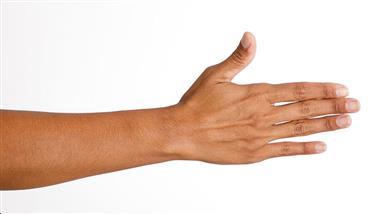
Take a look at the length of your index finger and your ring finger. Is your ring finger longer? If so, it could be a sign of psychopathic tendencies and antisocial personality traits.1 This is because the index finger-to-ring finger ratio (2D-to-4D ratio) is linked to exposure to hormones, specifically testosterone and estrogen, in the womb.
These exposures may have a lasting effect on human health and behavior, it turns out. A lower 2D-to-4D ratio — meaning the ring finger is longer than the index finger — is associated with higher testosterone exposure and lower estrogen exposure in the womb during the first trimester. It also signals an increased likelihood of certain psychiatric disorders, according to research published in the Journal of Psychiatric Research.2
Digit Ratios May Predict Eating Disorders, Personalities, Obesity and More
Digit ratios, particularly the 2D-to-4D ratio, is widely considered a proxy for prenatal sex hormone exposure. As such, there are noted differences between men and women, with males, who are exposed to more testosterone, typically having lower ratios than females.
Further, in men a lower 2D-to-4D ratio is linked with physical aggression and enhanced sports performance,3 while lower digit ratios are also associated with being left-handed, an increased risk for anxiety and, in females, assertiveness. But the tendency for digit ratio to predict behavior and health status goes even further, as digit ratios, whether low or high, are associated with:4
| Numerical competencies | Spatial skills | Handedness |
| Cognitive abilities | Academic performance | Sperm counts |
| Personalities | Obesity | Migraine |
| Eating disorders | Depression | Myopia |
| Autism |
“The topic is interesting, because the relation of the lengths of index finger (2D) and ring finger (4D) is one of the most robust biological markers formed during the prenatal stage with a remarkable impact later on an adult’s behavior,” Serge Brand of the University of Basel and Kermanshah University of Medical Sciences told PsyPost, adding:5
“More specifically, a lower 2D:4D-ratio, that is to say, that the index finger is shorter compared to the ring finger, is strongly associated with an increased exposure to testosterone and with a decreased exposure to estrogen during the prenatal stage.
Now, several original studies, meta-analyses and systematic reviews showed that a lower 2D:4D-ratio as a proxy of prenatal sex steroid exposure enables an adult organism to outperform in behavior in case of necessity.
What was unclear so far was, if such sex steroid exposure during the prenatal stage might be mirrored in an adult’s behavior such as amphetamine use disorder and antisocial personality disorder.”
Brand and colleagues conducted a study to find out, assessing whether 2D:4D ratios differed among people with amphetamine use disorder (AUD) and antisocial personality disorder (ASPD), which involves manipulative, impulsive and often criminal behavior.
People With Psychiatric Conditions Have Lower 2D-to-4D Ratios
To calculate digit ratio, the length of the index finger (2D) is divided by the length of the ring finger (4D). A ring finger that’s longer than the index finger, which leads to a lower digit ratio, suggests higher exposure to testosterone in the womb.
The study involved 44 people with AUD, ASPD or both AUD and ASPD, along with 36 healthy controls. Those with the psychiatric conditions had significantly lower 2D-to-4D ratios compared to those without. Further, those with both AUD and ASPD had the lowest 2D-to-4D ratios. Having a lower 2D-to-4D ratio was also linked with higher ‘Dark Triad’ (DT) traits, which involve narcissism, Machiavellianism and psychopathy. According to the study:6
“The lower the 2D:4D-ratio, the higher the DT scores among the clinical sample. In our opinion, this finding is of greater importance, in that DT traits were associated with various types of negative psychosocial and psychological outcomes, including IU [intolerance of uncertainty], callous affect and interpersonal manipulation.
Given this, it appears that DT traits could be biologically rooted in higher testosterone and lower estrogen concentrations during the fetal phase of the first trimester.”
Even the researchers were surprised to see such a strong association between greater psychopathology symptoms and a longer ring finger compared to the index finger. Brand told PsyPost:7
“We were surprised to observe such a linear association between higher symptoms of psychopathology and lower 2D:4D-ratios. That is to say: The more an adult participant had signs of psychopathology, the more it appeared that this adult has been exposed to higher testosterone concentrations and lower estrogen concentrations during the prenatal period of life.”
He also pointed out, however, that finger length alone doesn’t dictate the state of your mental health and, in some cases, a lower 2D-to-4D ratio could be beneficial, such as in competitive sports:8
“It is important to understand that the finger lengths-ratio as a proxy of a specific exposure to prenatal sex steroids should not be understood as a person’s irrevocable fate! Rather, a lower 2D-to-4D ratio and thus a higher exposure to testosterone during the prenatal period of physiological development might enable an adult person to show a specific pattern of behavior.
To make the case in point, compared to 117 age- and sex-matched sedentary females, 104 Swedish female Olympic athletes had statistically significantly lower 2D-to-4D ratios9 or, simply put: The Swedish female Olympic athletes were exposed to higher testosterone and lower estrogen concentrations during their prenatal stage of development.”

Download this Article Before it Disappears
Psychiatric Patients Tend to Have Longer Ring Fingers Than Index Fingers
A systematic review of case-control studies similarly found that psychiatric patients had lower 2D-to-4D ratios than people without psychiatric disorders.10 In the case of autism spectrum disorder, attention deficit hyperactivity disorder (ADHD) and addictions, 2D:4D ratio was significantly lower than in those without the conditions. The researchers noted:11
“Our finding is important because, on one hand, it may propose 2D:4D as a potential biomarker for psychiatric disorders in general; on the other hand, it highlights the role of prenatal exposure to hormones, specifically testosterone, in the etiopathogenesis of psychiatric disorders.”
Beyond mental health, 2D:4D ratio has also been linked with “a wide number of traits and conditions, ranging in almost every field of medicine,” the study explained, including conditions dependent on sex hormones as well as physical characteristics and behaviors. Examples include:12
| Breast cancer | Prostate cancer | Osteoarthritis |
| Facial shape | Age of menarche | Penis size |
| Stuttering | Visuo-spatial ability | Schizotypal personality |
| Sporting ability | Successful financial risk-taking | Sexual orientation |
Men With Long Ring Fingers May Experience Mild COVID-19
Digit ratio may also be a strong indicator of men’s vulnerability to COVID-19, due to its relation to testosterone exposure in utero. Higher testosterone levels are deemed protective due to their effects on the angiotensin-converting enzyme 2 (ACE2). Researchers at the U.K.’s Swansea University measured the ring fingers of 103,482 men and 83,366 women from 41 countries in relation to their index fingers.13
In countries with a smaller digit ratio (0.976 millimeters (mm)), such as Malaysia, Russia and Mexico, COVID-19 fatality rates were lower than in countries with a higher digit ratio (0.99 mm and greater, which indicates a shorter ring finger), such as the U.K., Spain and Bulgaria.14 Overall, men in countries with longer ring fingers had a COVID-19 death rate of 2.7 per 100,000, compared to 4.9 per 100,000 in countries with a shorter overall ring finger length.15
“Our findings support a link between high 2-to-4D (low prenatal testosterone) and high severity of COVID-19 in men,” the researchers explained, adding, “Thus, high prenatal testosterone (low 2D-to-4D) in men may be protective of the serious effects of COVID-19 … A strong positive association between male 2D-to-4D and mortality may provide a biomarker for male COVID-19 susceptibility …”16
One theory for why men with shorter ring fingers have a higher risk of severe outcomes from COVID-19 has to do with ACE2, an enzyme that’s beneficial in that it promotes tissue regeneration. The problem is that coronavirus binds to ACE2 and uses it to enter cells,17 where it then multiplies. But when levels rise high enough, ACE2 may actually be protective.
Professor John Manning, lead researcher of the study, noted, “The theory is that someone with high prenatal testosterone — and a long ring finger — has greater levels of ACE2. These concentrations are large enough to oppose the virus … Our findings may be men with long ring fingers will experience mild symptoms and could return to work.”18 Writing in Early Human Development,19 the researchers further explained the paradox:
“SARS-CoV2 enters cells via the receptor molecule ACE2. Paradoxically, the up-regulation of ACE2 relates to protective effects from COVID-19 infection, possibly because it opposes the loss of ACE2 from cell surfaces. We speculate that in men the up-regulation of ACE2 relates to high testosterone and low 2D:4D.”
How to Support Positive Mental Health
While you can’t choose or change your 2D-to-4D ratio — and it remains constant throughout life20 — it’s not the only measure of your mental health. Further, there’s plenty you can do to support optimal psychological well-being. Getting optimal exposure to sunlight daily and regular physical activity, particularly three to five days a week for 45 minutes,21 can improve mental health.
You can also use the Emotional Freedom Techniques (EFT) or the Neuro-Emotional Technique’s First Aid Stress Tool, or NET FAST,22 to help relieve stress. Here is a summary of the FAST procedure:
- While thinking about an issue that is bothering you, place your right wrist, palm up, into your left hand. Place three fingers of your left hand onto the area of your right wrist where you can feel your pulse.
- Place your open right hand on your forehead. Gently breathe in and out several times while concentrating on feeling the issue that bothers you.
- Switch hands and repeat steps 1 and 2.
Getting a sound night’s sleep is also important, as too little sleep may increase anxiety by up to 30%,23 while deep sleep was shown to have anxiety-relieving effects. If you’re struggling with anxiety, making sleep a priority may calm your brain and your mind, helping to resolve anxiety symptoms.
Further, the more sleep deprived you are, the less social you become, and others pick up on this largely subconscious cue to be left alone, essentially turning people into “social lepers” and fueling an epidemic of loneliness.24 A short temper and unwanted behaviors such as rudeness can also be the result of a poor night’s rest.25
Eating healthy is another key. Researchers from Macquarie University, Australia, studied 76 students between the ages of 17 and 35 who followed a poor diet and had moderate to high levels of depression symptoms.26,27
One group of participants was asked to improve their diet by cutting back on refined carbohydrates, sugar, processed meats and soft drinks, while eating more vegetables, fruits, dairy products, healthy fats and anti-inflammatory spices such as turmeric and cinnamon.28 After only three weeks of healthier eating, those in the healthy diet group had significant improvements in mood and their depression scores went into the normal range.
In addition to 2D-to-4D ratio, researchers are also exploring whether other prenatal factors influence personality and behavior later in life.29 No matter the cause, if you’re experiencing a serious mental health problem, always seek the guidance of an integrative health practitioner who can help you get started on your healing journey. If you’re in the midst of a mental health crisis, get emergency medical care.
- 1 NDTV January 16, 2024
- 2, 6 Journal of Psychiatric Research February 2024, Volume 170, Pages 81-89
- 3 Biol Psychol. 2005 Mar;68(3):215-22. doi: 10.1016/j.biopsycho.2004.05.001
- 4 J Clin Diagn Res. 2016 Dec; 10(12): CM01–CM03
- 5, 7, 8, 29 PsyPost January 12, 2024
- 9 Front. Endocrinol., 12 May 2020
- 10, 11, 12, 20 Clin Psychopharmacol Neurosci. 2021 Feb 28; 19(1): 26–45
- 13, 16, 19 Early Human Development July 2020, Volume 146, 105074
- 14, 15 The New York Post May 26, 2020
- 17 Cell. 2020 Apr 16;181(2):271-280.e8. doi: 10.1016/j.cell.2020.02.052. Epub 2020 Mar 5
- 18 Daily Mail May 26, 2020
- 21 The Lancet Psychiatry September 1, 2018, Volume 5, Issue 9, P739-746
- 22 Firstaidstresstool.com
- 23 Berkeley News November 4, 2019
- 24 The Guardian August 16, 2018
- 25 Rotterdam School of Management Discovery March 28, 2017
- 26 Science Daily October 9, 2019
- 27 PLoS ONE 14(10): e0222768. doi: 10.1371/journal.pone.0222768
- 28 CNN October 9, 2019
Can This Molecule Boost Fertility and Longevity in Aging Humans?
Reproduced from original article:
https://articles.mercola.com/sites/articles/archive/2024/02/06/spermidine-fertility-longevity.aspx
The original Mercola article may not remain on the original site, but I will endeavor to keep it on this site as long as I deem it to be appropriate.
Analysis by Dr. Joseph Mercola February 06, 2024

STORY AT-A-GLANCE
- Spermidine, a polyamine compound originally isolated from semen, encourages autophagy, a cellular ‘self-eating’ process known to positively affect aging and longevity
- Spermidine, an antiaging molecule, has the potential to reverse declining fertility in older mice, with potential ramifications for humans as well
- Older mice not only had less spermidine in their ovaries compared to young and middle-aged mice, but they also had more degraded oocytes and follicles
- When the older mice received spermidine, their oocytes developed faster and with fewer defects compared to untreated mice of the same age
- Spermidine is found in common foods, including aged cheese and fermented soy products, as well as mushrooms, pears and potatoes
Fertility declines in women as they age, in part due to decreases in the quality of developing eggs, or oocytes. Little is known, however, about how this process occurs — and whether it could be prevented or slowed. A study on mice suggests it’s possible to improve oocyte quality with spermidine supplementation.1
It found that spermidine, an antiaging molecule, has the potential to reverse declining fertility in older mice, with potential ramifications for humans as well.2 Spermidine, a polyamine compound originally isolated from semen, encourages autophagy, a cellular ‘self-eating’ process known to positively affect aging and longevity.3
Why Spermidine Is Considered a Fountain of Youth
While spermidine was first found in semen, it has various metabolic functions in many types of cells and is naturally found in all living organisms.4 It’s also found in common foods, including aged cheese and fermented soy products, as well as mushrooms, pears and potatoes. A review published in the journal Autophagy details some of spermidine’s benefits:5
“This chemical affects numerous biological processes, including cell growth and proliferation, tissue regeneration, DNA and RNA stabilization, enzymatic modulation, and regulation of translation, among others. Furthermore, spermidine exhibits anti-inflammatory and antioxidant properties, enhances mitochondrial metabolic function and respiration, promotes chaperone activity and improves proteostasis.”
Spermidine also appears to act as a fountain of youth, offering longevity benefits in a number of species. In addition to extending lifespan, studies show spermidine offers cardio- and neuroprotection, stimulates anticancer immune response and may decrease immunosenescence6 — the gradual deterioration of your immune system — which is a leading cause of death in the elderly.7
Many of spermidine’s antiaging effects are believed to be linked to its stimulation of cytoprotective macroautophagy. According to the Autophagy review, “Age-associated conditions including cancer, neurodegeneration and cardiovascular diseases are directly connected to the intracellular accumulation of toxic debris, and its removal by autophagy constitutes a well-documented avenue for protection against age and disease.”8
In fact, spermidine’s potency is equivalent to that of rapamycin,9 a prescription immunosuppressant drug with autophagy-stimulating properties that’s used in cancer treatment.
Spermidine Boosts Fertility in Older Mice
Research published in Nature Aging suggests spermidine may have a role to play in helping fertility issues. In humans, spermidine levels decline with aging, and researchers have suggested the molecule may act as an “antiaging vitamin.”10 This may include turning back the reproductive clock.
Researchers with Nanjing Agricultural University in China found that older mice not only had less spermidine in their ovaries compared to young and middle-aged mice, but they also had more degraded oocytes and follicles. When the older mice received spermidine, however, their oocytes developed faster and with fewer defects compared to untreated mice of the same age.11
The number of follicles also increased. In humans, the number of follicles, which hold and release oocytes, is often used to measure the quantity and quality of oocytes. “Even when the researchers delivered spermidine in drinking water instead of with an injection, it still reversed signs of oocyte ageing,” according to a news release in Nature.12
And the benefits didn’t end there. The formation of blastocysts, the early stage of an embryo, also improved after spermidine exposure. Older mice given the compound also produced about double the number of young per litter compared to older mice not given spermidine.13 It’s possible that it works to boost fertility by improving mitochondrial function and helping clear away damaged cell components.
“Genes linked to cell energy production and processes that clean up cellular debris had different expression patterns in young mice, older mice and older mice that had received spermidine,” the Nature release noted. “In spermidine-enriched mice, oocytes recovered their ability to clear out broken components. The compound also seemed to enhance the function of healthy mitochondria in ageing mice.”14
What’s more, when the team applied spermidine to aged pig oocytes in a lab that were under stress, similar beneficial effects occurred, suggesting its fertility-boosting effects may apply to multiple species15 — possibly even humans. Next, the team plans to test spermidine on human oocytes in a lab.
Download this Article Before it Disappears
Spermidine May Lower Mortality, Support Brain Health
Beyond offering a potential option to stave off declining fertility, spermidine is also linked to increased survival in humans. Consuming spermidine-rich food lowers mortality associated with cardiovascular diseases and cancer.16 Further, a study published in The American Journal of Clinical Nutrition found a diet rich in spermidine, at levels commonly found in the Western diet, lowers the risk of all-cause mortality:17
“Spermidine showed the strongest inverse relation with mortality among 146 nutrients studied. The reduction in mortality risk related to a diet rich in spermidine (top compared with bottom third of spermidine intake) was comparable to that associated with a 5.7-y younger age. All of the findings apply to spermidine from dietary sources and to amounts characteristically found in the Western diet …”
Cognitive benefits are also possible. In fruit flies, spermidine slows age-induced memory impairment,18 while also delaying brain aging and improving cognitive dysfunction in mice with age-related cognitive decline. Spermidine helped to decrease malondialdehyde levels, an indication of an overproduction of reactive oxygen species, while improving superoxide dismutase, which defends against oxidative stress.19
In humans, higher dietary intake of spermidine is also linked with a reduced risk of cognitive impairment.20
A research team with Manipal College of Pharmaceutical Sciences in India further suggested spermidine could be a useful therapeutic strategy for neurological disorders due to its autophagy-inducing properties. They noted that a healthy brain is dependent on its concentration of polyamines:21
“Polyamines interact with the opioid system, glutamatergic signaling and neuroinflammation in the neuronal and glial compartments. Among the polyamines, spermidine is found highest in the human brain. Age-linked fluctuations in the spermidine levels may possibly contribute to the impairments in neural network and neurogenesis.”
Protection for Your Heart and Liver, Obesity Benefits
Spermidine also offers cardioprotective properties, even when simply added to drinking water. One study on mice found feeding spermidine:22
- Enhanced cardiac autophagy, mitophagy and mitochondrial respiration
- Improved the mechano-elastic properties of cardiomyocytes, which coincided with increased titin phosphorylation and suppressed subclinical inflammation
- Preserved diastolic function
- Reduced systemic blood pressure
- Reduced cardiac hypertrophy
In humans, a diet high in spermidine is associated with reduced blood pressure and lower incidence of cardiovascular disease.23 It also reverses arterial aging, which is characterized by stiffening of large arteries and the development of arterial endothelial dysfunction, which increases the risk of cardiovascular disease (CVD).
This benefit may be due to its interactions with nitric oxide (NO) and other factors, according to researchers with the University of Colorado, Boulder:24
“Our results indicate that spermidine exerts a potent anti-aging influence on arteries by increasing NO bioavailability, reducing oxidative stress, modifying structural factors and enhancing autophagy. Spermidine may be a promising nutraceutical treatment for arterial aging and prevention of age-associated CVD.”
Research published in the journal Cancer Research also demonstrated how spermidine can be used to prevent liver fibrosis and hepatocellular carcinoma (HCC), a common type of liver cancer, in lab mice.25 Researchers noted the mice lived longer after receiving a 3 millimolar (mM) spermidine supplement in their drinking water.
The spermidine-treated mice were also less likely than their untreated counterparts to develop liver fibrosis and cancerous liver tumors, even if they were predisposed to those conditions. Whereas the mice groups treated lifelong with spermidine achieved a 25% greater life extension, those treated at older ages saw a 10% increase in longevity.
The team explained, “Consuming spermidine over the lifetime of humans provides a novel paradigm to prevent, change, or reverse the pathogenic course of liver fibrosis and HCC in a safe and cost-effective way for patients with chronic liver diseases or with high risk for developing HCC, and patients already developing HCC.”26 They further suggested that spermidine’s wide-reach health benefits may significantly impact human health for the better:
“As spermidine is a natural component … plentiful in a variety of food and agricultural products such as wheat germ, grapefruit, and Natto (a Japanese product of fermented soy), and can be chemically synthesized and developed as a drink or a dietary supplement to serve with normal diets, it will be a promising safe and cost-effective intervention that will be readily adopted for long-term intervention by the general human population to extend lifespans.”
Indeed, spermidine also alters the composition and function of gut microbiota, and intake is linked with a lower risk of obesity. The compound leads to significant weight loss and improved insulin resistance in obese mice, which may be related to alleviation of metabolic endotoxemia, which causes low-grade inflammation, and its ability to enhance intestinal barrier function.27
Spermidine-Rich Foods to Add to Your Diet
If you’re interested in harnessing spermidine’s health potential, it may be as simple as increasing spermidine-rich foods in your diet. According to The American Journal of Clinical Nutrition study:28
“Spermidine is the polyamine most readily absorbed from the human gut. A broad and diverse palette of foods contain high amounts of spermidine, such as fresh green pepper, wheat germ, cauliflower, broccoli, mushrooms, and a variety of cheeses, whereas even higher amounts are found in soybean products such as natto, shitake mushrooms, amaranth grain, and durian.”
Polyamines like spermidine are also present in aged (fermented) cheese, including blue cheese, Brie, cheddar, Swiss, Gouda, Gruyere, Manchego and Parmesan. Intake of spermidine-rich foods is important at any age but may be particularly useful as you get older, when spermidine levels tend to decline.
- 1 Nature Aging October 16, 2023
- 2, 11, 12, 13, 14, 15 Nature October 16, 2023
- 3, 4, 5, 6, 8, 9, 10, 16 Autophagy. 2019; 15(1): 165–168
- 7 EBioMedicine. 2019 Nov;49:381-388
- 17 The American Journal of Clinical Nutrition August 2018, Volume 108, Issue 2, Pages 371-380, Discussion
- 18 Aging (Albany NY). 2020 Apr 15; 12(7): 6401–6414
- 19 Aging (Albany NY). 2020 Apr 15; 12(7): 6401–6414., Discussion
- 20 Cell Rep. 2021 Apr 13;35(2):108985. doi: 10.1016/j.celrep.2021.108985
- 21 Neuropeptides. 2020 Oct:83:102083. doi: 10.1016/j.npep.2020.102083. Epub 2020 Aug 24
- 22, 23 Nature Medicine November 14, 2016; 22: 1428–1438
- 24 Mech Ageing Dev. 2013 Jul-Aug;134(7-8):314-20. doi: 10.1016/j.mad.2013.04.004. Epub 2013 Apr 20
- 25, 26 Cancer Res (2017) 77 (11): 2938–2951
- 27 Gut Microbes. 2020; 12(1): 1832857
- 28 The American Journal of Clinical Nutrition August 2018, Volume 108, Issue 2, Pages 371-380, Intro
Liposomal Carnosine Is Essential for Detoxing Linoleic Acid
Reproduced from original article:
https://articles.mercola.com/sites/articles/archive/2024/02/05/liposomal-carnosine.aspx
The original Mercola article may not remain on the original site, but I will endeavor to keep it on this site as long as I deem it to be appropriate.
Analysis by Dr. Joseph Mercola February 05, 2024
STORY AT-A-GLANCE
- Carnosine is a dipeptide found in meat. The highest concentrations of carnosine are found in your muscles, brain, central nervous system and gastrointestinal tract
- If you’re a vegetarian or vegan, you will have lower levels of carnosine in your muscles. This is one reason why many strict vegans who do not properly compensate for this tend to have trouble building muscle
- Carnosine binds to advanced lipoxidation endproducts (ALEs) that form from oxidized seed oils in your diet, making it a crucial aid in the detoxification of linoleic acid (LA)
- Thanks to its ability to scavenge 4-hydroxynonenal (4HNE), carnosine is also protective against obesity, diabetes, cardiovascular disease and Alzheimer’s disease, just to name a few
- The best way to optimize your carnosine level is to eat organic grass fed beef. When it comes to carnosine supplements, your best bet is liposomal versions as they have the highest bioavailability
Carnosine is a dipeptide found in meat. It’s not found in any plant foods. Dipeptide means it’s made up of two amino acids, in this case beta-alanine and histidine. The highest concentrations of carnosine are found in your muscles, brain, central nervous system1 and gastrointestinal tract,2 which gives you an indication of its potential importance.
Unfortunately, it’s also one of the top 10 most common nutrient deficiencies, especially among vegans. If you’re a vegetarian or vegan, you will have lower levels of carnosine in your muscles. This is one reason why many strict vegans who do not properly compensate for this tend to have trouble building muscle.
Carnosine also binds to advanced lipoxidation endproducts (ALEs) that form from oxidized seed oils in your diet, making it a crucial aid in the detoxification of linoleic acid (LA).
Carnosine’s Physiological Roles
Carnosine has several physiological roles and benefits. For example, it:3
| Provides athletic benefits — Approximately 99% of carnosine is found in muscle tissue where it facilitates lactic acid detoxification, improves muscle contraction and muscle relaxation and enhances endurance |
| Alleviates diabetic nephropathy by protecting podocyte and mesangial cells4 |
| Modulates energy metabolism in macrophages and microglia by restoring and/or enhancing the basal conditions |
| Has antioxidant properties and scavenges reactive oxygen species (ROS) and aldehydes created by peroxidation of fatty acid cell membranes during oxidative stress5 |
|
Regulates the activity of stem cells |
| Modulates glucose metabolism |
| Enhances the degradation and/or scavenging of nitric oxide (NO) |
| Promotes wound healing |
| Opposes glycation6 |
| Slows down the aging process by prolonging the life of cells and preserving cellular homeostasis7 |
| Regulates osmotic pressure |
| Modulates glutamate production and transport |
| Modulates brain metabolism |
| Chelates heavy metals8 |
| Acts as a pH buffer9 |
| Acts as a neurotransmitter |
| Protects olfactory receptor neurons in the elderly |
Beef, Liposomal Carnosine and Precursors Are the Best Sources
Interestingly, a June 2023 paper10 in the medical journal Pharmaceuticals reviewed the science behind carnosine with the aim of developing new delivery systems for carnosine-based drugs. As noted in this paper:
“Because of its well-demonstrated multimodal pharmacodynamic profile, which includes anti-aggregant, antioxidant, and anti-inflammatory activities, as well as its ability to modulate the energy metabolism status in immune cells, this dipeptide has been investigated in numerous experimental models of diseases, including Alzheimer’s disease, and at a clinical level.
The main limit for the therapeutic use of carnosine is related to its rapid hydrolysis … [This is the] reason why the development of new strategies, including the chemical modification of carnosine or its vehiculation into innovative drug delivery systems (DDS), aiming at increasing its bioavailability and/or at facilitating the site-specific transport to different tissues, is of utmost importance.”
Delivery systems currently in use or in development include intraperitoneal injections, intranasal sprays and oral administration of various nanoformulations. But while the drug industry is keen on figuring out how to profit from carnosine by making it into a drug, you certainly don’t need a drug to get these benefits.
Simply eating organic grass fed beef is one of the most efficient ways to raise your carnosine level.11 This is one of many reasons why cultured beef is not a viable substitute for real beef. Not only does fake beef lack carnosine but also B vitamins, retinol, long-chain omega-3 fatty acids, taurine, creatine and bioavailable forms of iron and zinc.12
Most carnosine supplements aren’t very effective either because the carnosine is rapidly broken down into its constituent amino acids by certain enzymes. Your body then reformulates those amino acids back to carnosine in your muscles.
An exception to this is liposomal carnosine, which appears to work quite well. Another alternative is to supplement with beta-alanine, which is the rate limiting amino acid in the formation of carnosine. According to a 2021 paper,13 daily intake of beta-alanine can raise the carnosine content of skeletal muscle by as much as 80%.
Download this Article Before it Disappears
Carnosine Protects Against LA-Induced Oxidative Stress
One benefit not expounded upon in the Pharmaceuticals paper is carnosine’s ability to reduce LA-induced oxidative stress. While your body will slowly eliminate stored LA over time, provided you reduce your intake, carnosine can help reduce the oxidative damage caused by LA while your body is cleaning itself out. I take liposomal carnosine every day before meals to help detoxify LA.
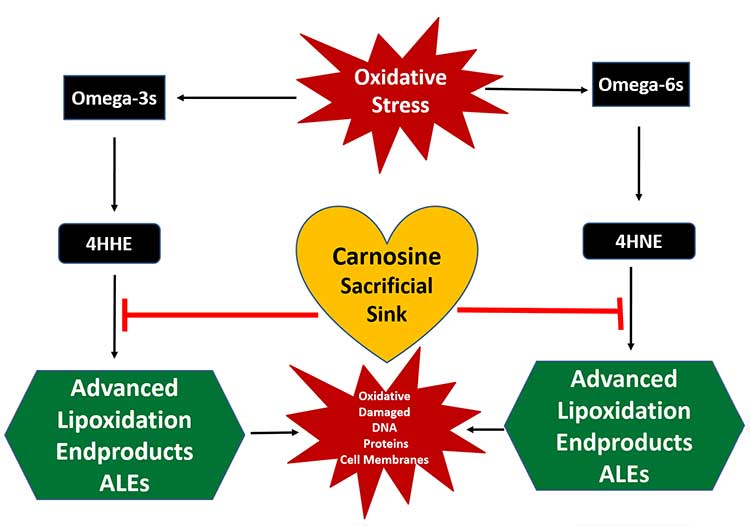
The omega-6 fat LA is highly susceptible to oxidation, and as the fat oxidizes it breaks down into harmful sub-components such as ALEs and oxidized LA metabolites (OXLAMs). These ALEs and OXLAMs are what cause most of the damage.
Carnosine binds to ALEs like a magnet and acts as a sacrificial sink. It’s basically a substitute target for these profoundly damaging molecules. In this way, carnosine allows your body to excrete the ALEs from your body before they damage your mitochondria, DNA or proteins. (Another molecule that protects against LA-induced damage is carbon dioxide). The illustration below shows how carnosine works in this regard.
Carnosine May Be Protective Against a Wide Range of Diseases
A more detailed explanation of how carnosine protects against reactive oxygen species (ROS) and how that helps protect against oxidative stress-related pathologies is given in a 2021 paper in the journal Antioxidants:14
“A study that examined the effect of carnosine on oxidative stress in human kidney tubular epithelial (HK-2) cells indicated that carnosine decreased NADPH oxidase (NOX) 4 expression and increased total superoxide dismutase (T-SOD) activity, thus reducing the production of intracellular ROS, relieving the oxidative stress of cells, and ultimately inhibiting the mitochondrial pathway of apoptosis.
Ability of carnosine to protect against pathologies characterized by oxidative stress has been shown in a number of conditions … Carnosine changes the reactivity of superoxide anion by forming a charge-transfer complex with the superoxide radical and also by reducing the efficiency of hydroxyl radicals, creating a compound less reactive than the hydroxyl radical.
One of the mechanisms to protect organisms from oxidative stress is the chelation of transition metals, preventing them from participating in deleterious processes involving ROS … Interestingly, when comparing metals involved in free radical generation, carnosine was found to have a greater antioxidant activity coupled with copper than iron …
At physiological concentrations, carnosine directly reacts with superoxide anion similar to ascorbic acid. In physiological conditions, carnosine was found to reduce oxidative damage and to improve antioxidant activity of different antioxidative enzymes …
Experiments on aged rats showed that therapy with 250 mg/kg/carnosine per day significantly decreased oxidative stress and increased activity of antioxidative enzymes … In similar model of aged rats, carnosine increased liver vitamin E, which further demonstrates its importance in defending the organism from free radicals.
Rising data indicate that carnosine acts as a scavenger of reactive and cytotoxic carbonyl species including 4-hydroxynonenal (HNE). HNE is an aldehyde generated endogenously by lipid peroxidation of unsaturated fatty acids that act as ‘toxic second messengers,’ extending the harmful potential of free radicals.
HNE is considered an important biomarker of oxidative stress and accumulating data indicate that it may modulate signaling pathways of cell proliferation, apoptosis, and inflammation.”
How Carnosine Protects Against Alzheimer’s
As noted in the Pharmaceuticals paper,15 one of the pathologies that carnosine is protective against is Alzheimer’s disease. In my November 2021 interview with Tucker Goodrich, he explained the role of HNE, specifically, in Alzheimer’s, and why it’s so important to get rid of it.
“In heart failure, Alzheimer’s, and AMD [age-related macular degeneration], one of the things they see is an inability of the cell to produce enough energy. The mitochondria are getting damaged. HNE does that damage. It damages 24% of the proteins in the cell, primarily around energy production.
One of the ways your cells produce energy is they basically ferment glucose into pyruvate outside of the mitochondria. This is a perfectly normal part of metabolism and they produce something called pyruvate. A molecule called pyruvate dehydrogenase takes pyruvate into the mitochondria and converts it to acetyl-CoA so the mitochondria can burn it very efficiently for fuel.
Well, one of the things HNE does is it breaks pyruvate dehydrogenase, and they see this in Alzheimer’s where their cells are no longer able to produce enough energy. This is why your cells are dying in Alzheimer’s.
The beta amyloid plaques in Alzheimer’s disease are induced by HNE. There’s a great model that came out of Harvard a couple of years ago showing that.
Even the critical, the most important part of the mitochondria, complex 5, — ADP synthase — which is what takes all the energy coming from your mitochondria and turns it into ATP, which is what fuels the rest of your body — is damaged by HNE. This is a huge issue. There’s no more fundamental problem in aging and health than protein damage.”
Carnosine is the most effective scavenger of HNE, so optimizing your level can go a long way toward protecting against the HNE-induced damage that promotes Alzheimer’s.
Carnosine — A Promising Therapeutic for Obesity-Related Conditions
Elevated HNE has also been found in obese and diabetic patients,16 so there’s reason to suspect carnosine can be important in the treatment of these conditions as well. Another disease where elevated HNE plays a role is atherosclerosis. As noted in the 2021 Antioxidants paper:17
“… emerging studies have indicated that these reactive aldehydes are more than simply markers of oxidative stress.
Rather, it is suggested that these reactive species may play a significant pathogenic role in obesity-associated disorders such as insulin resistance and a carnosine analog alleviates the production or enhances the removal of reactive carbonyl species, providing promising new therapeutic compounds for cardiovascular and metabolic diseases related to obesity.”
Take Control of Your Health by Lowering Your LA Intake
As detailed in several previous articles, the evidence strongly suggests excessive LA is driving most if not all modern diseases, including heart disease and cancer. Fortunately, the solution is simple. Just lower your LA intake.
The easiest way to do this is to use an online nutritional calculator such as Cronometer to calculate your daily intake. Cronometer will tell you how much omega-6 you’re getting from your food down to the 10th of a gram, and you can assume 90% of that is LA. Anything over 10 grams is likely to cause problems. I keep my intake below 5 grams a day.
Since there’s no downside to limiting your LA, you’ll want to keep it as low as possible, which you do by avoiding high-LA foods. Keep in mind you’ll never be able to get to zero, and you wouldn’t want to do that either. You do need some LA, but since it’s found in most foods, and since you need only small amounts, there’s really no way to end up with a deficiency.
- 1, 3, 10, 15 Pharmaceuticals June 2023; 16(6): 778
- 2, 4, 5, 6, 7, 8, 9, 13, 14, 16, 17 Antioxidants July 2021; 10(7): 1037
- 11 Science Direct, Carnosine; Nutritional Supplements and Metabolic Syndrome
- 12 Animal Frontiers April 15, 2023
Human Brain Parasites: Don’t Look Away
Reproduced from original article:
https://articles.mercola.com/sites/articles/archive/2024/01/18/human-brain-parasites.aspx
The original Mercola article may not remain on the original site, but I will endeavor to keep it on this site as long as I deem it to be appropriate.
Analysis by Tessa Lena January 18, 2024
STORY AT-A-GLANCE
- Brain and CNS parasitic infections are more common than we think
- Close to 3 billion people worldwide are thought to be infected by Toxoplasma gondii alone
- In Australia, unsuspecting doctors have extracted a live parasite known to infect carpet pythons out of a patient’s brain
- There is a number of parasites that can infect the brain and the CNS, some are not easy to diagnose
- There is most certainly no “one size fits all” cure, and it is very likely that the epidemic of dementia and neurological issues is in part a result of undiagnosed infections in the CNS and the brain (bacterial, fungal, parasitic, etc.)
- Certain plants are known for their antimicrobial, antiparasitic and antifungal properties, and some of them can cross the BBB (blood-brain barrier)
This story is about parasites that can live in the human brain. The point of this story is not fear but an exploration of what may be impacting us as we look the other way.
To a regular westerner, the brain is a clean, protected place. Most people would find it sacrilegious that to parasites, human brain is fair game — and that to them, it’s just another “terrain.” In the West, many are trustful of the official sanitary norms. We don’t have a culture of regularly using antifungal and antiparasitic spices and herbs. And if you are in New York, as I am — you would see that there is also a lack of basic, common sense hygiene (sad-looking masks aside).
In the past few years, it has been discovered that even the healthy human brain may not be sterile.1 It has also been found that the gut microbiome significantly influences brain function,2 and some researchers have looked into the brain microbiome per se.3
When it comes to brain-residing parasites, they are far more prevalent than most people think — and that’s based just on what has been diagnosed. At least three billion people in the world are infected with the protozoan parasite Toxoplasma gondii alone,4 including 40-60 million people infected in the United States — and the actual number could be higher due to the limitations of the commonly used blood tests.
Personally, I believe that bacterial, fungal and parasitic infections of the CNS are a major contributor to dementia, autism, psychiatric disorders, and many other contemporary maladies for which the “learned men” have invented extremely fancy syndrome names — and that they treat with very lucrative pharmaceutical drugs that do not fix the root cause.
For example, just recently, a study was published that looked at about 600 seniors and drew a statistically significant correlation between the biomarkers of frailty and Toxoplasma gondii seropositivity. I wrote about it in detail here. That particular parasite is linked to a plethora of diseases, from neurological issues, to heart problems, psychiatric disorders, etc.
A Rare Case of a Carpet Python Parasite Extracted From the Human Brain
Not so long ago, Australian doctors extracted a live helminth, not known to be infectious to humans, from a woman’s brain. The results were published in the journal in the journal Emerging Infectious Diseases in 2023.5
“A parasitic roundworm typically found in snakes was pulled ‘alive and wriggling’ from a woman’s brain in a stomach-churning medical first, Australian doctors said … The woman, who had been treated for but not fully recovered from pneumonia, was admitted to a hospital in January 2021 after three weeks of abdominal pain and diarrhea, which progressed to a dry cough and night sweats …
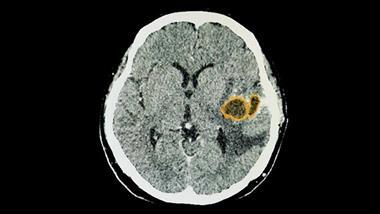
She was re-admitted to a hospital three weeks later when her condition did not improve, and underwent various treatments until brain scans revealed a lesion and an open biopsy was performed in June 2022.”
“Baffled doctors performed an MRI scan on the 64-year-old Australian woman after she began suffering memory lapses, noticing an ‘atypical lesion’ at the front of her brain. It was an eight-centimetre roundworm, called Ophidascaris robertsi, which researchers said was a common parasite in kangaroos and carpet pythons – but not humans. ‘This is the first-ever human case of Ophidascaris to be described in the world.'”
Now let’s look at some of the more common parasites that are known to infect the brain and the CNS.
Angiostrongyliasis
Recently, in the southern United States, there has been a surge of angiostrongyliasis, a parasitic infection caused by Angiostrongylus cantonensis. Angiostrongylus is a parasitic nematode that can cause severe gastrointestinal or central nervous system disease. This parasite, that is also known as the rat lungworm, may cause eosinophilic meningitis. It is prevalent in Southeast Asia and tropical Pacific islands.
Infections have also been identified in Africa, in the Caribbean, and in the United States.6 Recently, it was has been reported in Texas, Louisiana, Alabama and Florida, as well as Atlanta.7
Infection can happen through ingesting contaminated food like fresh produce or escargot. The larva of this parasite can migrate to the brain. The parasite can’t reproduce inside humans but it can cause nausea, vomiting, neck stiffness, headaches, sometimes arm and leg tingling, and in rare cases, coma and even death. It is also possible for people to experience no symptoms during the first several weeks of infection but then develop neurological symptoms later.
According to our beloved CDC, the diagnosis of this parasite can be difficult,8 which sadly tends to be the case for many of the brain-infecting parasites.
Download this Article Before it Disappears
Neurocysticercosis
Cysticercosis is a “potentially fatal parasitic infection caused by the larval form of Taenia solium [pig tapeworm]. Patients with symptomatic disease usually have signs and symptoms of neurocysticercosis, which commonly manifest as seizures or increased intracranial pressure.”9 This parasite is considered to be a significant factor contributing to epilepsy worldwide.
Human infection with this parasite may happen in two forms. One is “primary hosting,” and it happens as a result of eating under-cooked pork that contains the cysts that develop into adult worms in the intestines. The adult worm has a flat, ribbon-like body and measures 6′ to 10′ long or more. This form is often asymptomatic and is easily treated with anthelmintic medications.
The other form, “secondary hosting,” called cysticercosis, is due to eating food or drinking water, contaminated with feces from a person infected by the adult worms, which leads to ingesting the tapeworm eggs, as opposed to cysts. The eggs then develop into cysts, primarily in the muscles. Some people may develop obvious symptoms as well as develop parasite cysts in the brain.10
“Human primary hosting is best diagnosed by microscopy of eggs in stool. In secondary hosting, it may be possibly diagnosed using imaging techniques such as computed tomography and nuclear magnetic resonance. Blood samples can also be tested using antibody reaction of enzyme-linked immunosorbent assay … Common symptoms of neurocysticercosis include seizures, headaches, blindness, meningitis and dementia.”11,12
Toxoplasmosis
Toxoplasmosis is a disease caused by Toxoplasma gondii, a protozoan parasite that is famous for making infected rats attracted to cats. I wrote about this parasite — including the latest research that turns some of the conventional concepts upside down, here.
- “At least one third of all people on Earth are infected with the parasite Toxoplasma gondii, averaging from 11-20% in the United States to 50% and higher in some Western European countries
- The parasite has been implicated in ocular issues, schizophrenia, epilepsy, Alzheimer’s disease and various other neurological disorders, as well as in heart disease, pneumonia, recurrent headaches, even cancer; it is also known for causing psychological changes in its hosts
- While the official word is that most toxoplasma infections are harmless and asymptomatic, the impact of the parasite could be much more devastating than the current mainstream medical convention presumes; it may also be cross-reacting with the spike protein and possibly contributing to the mystery of ‘long COVID’
- According to recent research and clinical evidence, toxoplasma tissue cysts, previously considered harmless in immunocompetent patients, are capable of causing major health issues without converting to the cell-blasting form
- Commonly used antibody tests can only detect antibodies for the ‘tachyzoite’ (cell-blasting) form of the parasite but not the ‘bradyzoite’ (tissue cyst) form
- Dr Uwe Auf der Straße in Germany has done an important clinical investigation of the parasite, and his findings could shed light on ‘mystery’ symptoms in many patients”
In 2014, when the world’s population was just over seven billion, two billion were thought to be infected with the parasite based on conventional serology alone.13 Today, it is believe to be at least three billion people and possibly a lot more.
Trypanosomiasis
Trypanosomiasis, or sleeping sickness, is caused by another kind of protozoan parasites, most often Trypanosoma brucei or Trypanosoma cruzi. American trypanosomiasis (Chagas disease) is transmitted by the assassin bug. African trypanosomiasis is spread by the tsetse fly.14
The parasite may live inside the host for years and eventually spread from the blood to the brain, leading to meningoencephalitis and swelling. The person can experience headache, difficulty thinking, personality changes, and movement disorders such as tremor or lack of coordination.15
Without treatment, the disease is considered to be fatal. The disease is diagnosed based on antibodies or by evaluating a sample such as cerebrospinal fluid under a microscope.16,17
Cerebral Malaria
Cerebral malaria is “the most severe neurological complication of infection with Plasmodium falciparum … Surviving patients have an increased risk of neurological and cognitive deficits, behavioral difficulties and epilepsy,” making cerebral malaria a leading cause of childhood neuro-disability in sub-Saharan Africa.18
Cerebral malaria is most common in areas where malaria is endemic, such as in Africa. Cerebral malaria can cause changes in consciousness and seizures. Without treatment, the disease may progress to coma or death. With treatment, mortality is reported to be between 15% to 20%.19,20
Schistosomiasis
Schistosomiasis, also known as bilharzia or snail fever, is a disease caused by parasitic flatworms called schistosomes or blood flukes, who spend part of their lifecycle in freshwater snails. Most human infections are caused by Schistosoma mansoni, S. haematobium, or S. japonicum.21
People who come in contact with larvae-contaminated water may become infected if the larval worms penetrate the skin, travel to blood vessels, and develop into adults. The worms adhere to the wall of the blood vessel, where they can live for up to 30 years.22 The release of eggs from female worms triggers various symptoms, such as abdominal pain, diarrhea, and blood in the urine. Chronic infections frequently result in serious damage to the liver, intestines, and bladder.23
The worms can spread to the spinal cord, resulting in myelopathy, which causes symptoms such as pain, urinary retention, weakness of the regions below the level of infection, or even paralysis.24 The parasite can affect the brain, resulting in elevated intracranial pressure or epilepsy.25
Echinococcosis
Echinococcus is a tapeworm that can cause cysts in living human tissue including the brain and spinal cord. The parasites which are responsible include Echinococcus granulosus and Echinococcus multilocularis.26 Cystic echinococcosis, also known as hydatid disease, is caused by infection with the larval stage of Echinococcus granulosus, a 2-7 millimeter long tapeworm found in dogs (definitive host) and sheep, cattle, goats, and pigs (intermediate hosts).27
Cystic echinococcosis is mostly found in South and Central America, Africa, the Middle East, China, Italy, Spain, Greece, Russia, and the western United States (Arizona, New Mexico, and California). The worm’s incubation period is usually long and can be up to 50 years.28
Most infections in humans are considered asymptomatic. However, “asymptomatic” in this case may mean that the cysts may be growing very slowly over the years (in the liver, in the lungs, in the brain, etc.) and be neglected until the symptoms become hard to ignore.
The symptoms that develop depend on the location and size of the cysts. In the brain, the cysts can lead to seizures and elevated intracranial pressure.29 In the spinal cord, they can cause spinal cord compression and paralysis. Infections of the central nervous system are considered more rare than the infection of infection of other organs, such as the lungs or liver.30
One becomes infected when he ingests food or water that contains the parasite eggs or by close contact with an infected animal. Cysts are detected with ultrasound, computed tomography, or other imaging techniques. Antiechinococcus antibodies can be detected with serodiagnostic tests – indirect fluorescent antibody, complement fixation, ELISA, Western blot, and other methods.31
Paragonimiasis
Paragonimiasis is a parasitic disease caused by several species of lung flukes belonging to genus Paragonimus.32 One can get infected by eating crustaceans like crabs or crayfishes that host the infective forms of this parasite called metacercariae, or by eating raw or undercooked meat of mammals harboring the metacercariae.33 Paragonimiasis is easily mistaken for other diseases with which it shares clinical symptoms, such as tuberculosis and lung cancer.34
Most commonly it is found in East Asian countries It is rare in the United States, though several cases have been reported in the Midwest.35
The adult form of the parasite both releases inflammatory substances and moves through human tissues. In rare cases, it may infect the brain either through the bloodstream or through the foramina at the base of the skull.36,37
Trichinellosis
Trichinosis, also known as trichinellosis, is a parasitic disease caused by roundworms of the Trichinella type. Several species of Trichinella can cause disease, with T. spiralis being the most common. The initial symptoms are diarrhea, abdominal pain, and vomiting. Some infections are considered to be asymptomatic.
As larrea migrate to muscle, which occurs about a week after being infected, it may result in swelling of the face, inflammation of the whites of the eyes, fever, muscle pains, and a rash. Serious infections may lead to inflammation of heart muscle, central nervous system issues, and inflammation of the lungs.38
Trichinosis is typically acquired by eating undercooked meat containing Trichinella cysts. In North America this is typically bear meat but pork and boar meat can also be infected.39 Upon ingestion, the larvae get released from their cysts in the stomach, invade the wall of the small intestine, where they develop into adult worms.
After one week, the females release new larvae that migrate to voluntarily controlled muscles, where they form cysts. The diagnosis is usually based on symptoms and confirmed by finding specific antibodies in the blood, or larvae on tissue biopsy.40 The parasite can cause meningitis and encephalitis. A CT scan may show cystic lesions in the brain.41
Diagnostics of Brain Parasites: A Challenge
Here’s the kicker. While parasitic infections seem to be a lot more common than we assume, including symptomatic infections of the brain that impact the elderly and the immunocompromised, we do not have a solid way to easily and comprehensively diagnose many CNS parasites.
There are antibody tests that sometimes work. There are imaging techniques. There are invasive methods like spinal tap — but usually it boils down to persistence and luck. How open-minded is the doctor? How far is he or she willing to go to investigate? How accurate are the tests for a given parasite? All those things are a matter of persistence and luck.
Conclusion and Hope
There is a philosophical underpinning to the story. In the olden days, people lived slowly, in relative harmony with nature. Our ancestors spent a lot of time outside, had robust microbiomes, and knew about medicinal herbs. Nature wasn’t poisoned. Human bodies weren’t poisoned. We had all the richness of our God-given natural immunity available to us.
In the world of today, we are blessed with a lot of comforts and a lot of sweet toys — and it’s a beautiful thing. But we are also paying the price.
All the massive poisoning, all the stealing of natural freedoms led us to where we are. Our collective health is a mess. Our bodies are poisoned. Our aspiring masters, Blackrock investors and the like, have a very tight grip on what we eat and how we treat disease.
As a result, we are faced with a spiritual journey, in which we are almost on our own. We are faced with an opportunity to learn from scratch, to think, to explore.
For example, in the context of brain infections, there is a nose-to-brain pathway. There are substances that are known, in general terms, to counter parasites. For example, certain plants, like thyme, pine, or rosemary, are reported to have an antiparasitic and antimicrobial effect.42,43 Those can come in the form of essential oils and be inhaled, with care.
Cinnamon is also known for its broad antimicrobial and antifungal properties.44,45 Incidentally, it is being researched as a treatment against Alzheimer’s disease46 and MS.47
It may be good to look into those things before big pharma takes over and makes us take intranasal vaccines! There is also curcumin that is known to have anti-inflammatory properties and to cross the brain-blood barrier.
I believe that there is no “one size fits all” cure, and that it is very good to talk to a doctor who is knowledgeable and has an open mind, and it is certainly beneficial and potentially life-saving to do all available tests and go from there. But it is also very good to start on a spiritual journey and get back to our roots. It can’t hurt.
About the Author
To find more of Tessa Lena’s work, be sure to check out her bio, Tessa Fights Robots.
- 1 Science, November 9, 2018, doi: 10.1126/science.aaw0147
- 2 UCLA Health, Digestive Diseases Research, Brain-Gut Microbiome
- 3 University of Colorado Boulder, Is there a brain microbiome?
- 4 PLoS One. 2014; 9(3): e90203. March 4, 2014, doi: 10.1371/journal.pone.0090203
- 5 Centers for Disease Control and Prevention, Emerging Infectious Diseases, August 11, 2023, DOI: 10.3201/eid2909.230351
- 6 Centers for Disease Control and Prevention, Parasites – Angiostrongyliasis
- 7 Newsweek, Parasitic Brain Worm Spreading Across Southeastern U.S., Scientists Warn
- 8 Centers for Disease Control and Prevention, Parasites – Angiostrongyliasis, Diagnosis
- 9 Am J Trop Med Hyg. 2014 May 7; 90(5): 805–809. doi: 10.4269/ajtmh.13-0724
- 10 Wikipedia, Taenia solium
- 11 Wikipedia, Neurocysticercosis
- 12 PLoS Negl Trop Dis. 2013 Mar; 7(3): e2102. doi: 10.1371/journal.pntd.0002102
- 13 UChicagoMedicine, July 22, 2014, What does it mean when 2 billion people share their brain with a parasite?
- 14 World Health Organization, Human African trypanosomiasis (sleeping sickness)
- 15 Merck Manual, Treatment of African Trypanosomiasis
- 16 Wikipedia, Trypanosomiasis
- 17 Clin Microbiol Rev. 2005 Jan; 18(1): 133–146. doi: 10.1128/CMR.18.1.133-146.2005
- 18 Pediatr Res. 2010 Oct; 68(4): 267–274. doi: 10.1203/PDR.0b013e3181eee738
- 19, 25, 26, 36, 41 Verywell Health, Parasitic Infections of the Central Nervous System
- 20 Breman JG, Mills A, Snow RW, et al. Conquering malaria
- 21, 23 National Institute of Allergy and Infectious Diseases, Schistosomiasis (Bilharzia)
- 22, 24 Biological Agents, Schistosoma Haematobium
- 27, 30 Centers for Disease Control and Prevention, Parasites – Echinococcosis
- 28, 31 Wikipedia, Echinococcus
- 29 Merck Manual, Treatment of Echinococcosis
- 32 Handbook of Clinical Neurology, Volume 114, 2013, Pages 283-296, Chapter 23 – Paragonimiasis, doi: 10.1016/B978-0-444-53490-3.00023-6
- 33, 34 Parasitology. 2022 Sep; 149(10): 1286–1295, doi: 10.1017/S0031182022000300
- 35 Centers for Disease Control and Prevention, Parasites, Paragonimiasis
- 37 Expert Review of Neurotherapeutics, Parasitic diseases of the central nervous system: lessons for clinicians and policy makers, doi: 10.1586/14737
- 38, 40 Centers for Disease Control and Prevention, Trichinellosis
- 39 Manon’s Tropical Diseases
- 42 Braz J Vet Med. 2022; 44: e004722., September 11, 2022, doi: 10.29374/2527-2179.bjvm004722
- 43 J Food Sci. 2012 Jul;77(7):C824-9. doi: 10.1111/j.1750-3841.2012.02767.x
- 44 Iran J Parasitol. 2014 Oct-Dec; 9(4): 530–540
- 45 Parasitology, Volume 142, Issue 14, December 2015, pp. 1744 – 1750, DOI: 10.1017/S0031182015001031
- 46 Scientific Reports, November 19, 2022, doi: 10.1038/s41598-022-24378-0
- 47 J Mult Scler (Foster City). 2015; 2(3): 1000149. doi: 10.4172/2376-0389.1000149
What Causes Healthy People to Faint?
Reproduced from original article:
https://articles.mercola.com/sites/articles/archive/2024/01/02/what-causes-healthy-people-to-faint.aspx
The original Mercola article may not remain on the original site, but I will endeavor to keep it on this site as long as I deem it to be appropriate.
Analysis by Dr. Joseph Mercola January 02, 2024

STORY AT-A-GLANCE
- The vagus nerve’s connection to your heart may be involved in triggering people to faint
- Your heart sends signals to your brain via the vagus nerve, and a disruption in these signals may be responsible for fainting
- Autonomic dysfunction is common in patients with long COVID, including symptoms like dizziness and fainting, and it’s possible COVID-19 may influence signals passing through the vagus nerve
- A disruption in blood flow of even a few seconds is all it takes to cause fainting or loss of consciousness
- If you start to feel dizzy, lightheaded and clammy, and your vision gets blurry or filled with spots, sit or lie down immediately; this will reduce your chances of getting hurt by falling, and the horizontal position helps get blood flowing to your head
About 40% of people faint at some point during their lifetime.1 While the experience can be jarring — both for the victim and those around them — and can be indicative of a serious underlying condition, most often the cause is benign.
Vasovagal syncope, or fainting, is the most common type, accounting for one-third of cases.2 During a vasovagal syncope episode, your heart rate and blood pressure drop suddenly, reducing circulation to your brain and causing you to lose consciousness.
The vagus nerve, the primary information highway between your gut and your brain, which connects the two organs, is involved, but according to research published in Nature,3 it’s the nerve’s connection to your heart that may trigger people to faint.
Heart-Brain Pathway May Trigger Fainting
While it was long believed that your vagus nerve was simply a way for your brain to communicate with your organs, it’s now known that information is sent both ways; for instance, from your gut to your brain. Your heart, however, also sends signals to your brain via the vagus nerve, and a disruption in these signals may be responsible for fainting.4
The fact that your vagus nerve is involved in fainting isn’t new knowledge. This has been known since the 19th century, according to study author Vineet Augustine, a neurobiologist at the University of California San Diego. Speaking with NPR, Augustine explained:5
“What was not clear was which part of the vagus nerve [was involved]. The vagus nerve is big. It’s a major highway between the body and the brain …What we were trying to argue — well, the heart also sends signals back to the brain, which can influence its function and behavior.”
The scientists found nerve cells that link the heart’s blood-pumping ventricles with the area postrema in the brain, a region that controls breathing and heart rate.6,7 When the pathway was stimulated with a laser in mice, it led to fainting-like symptoms. “When the pulse hits them, the heart rate immediately dips. They wobble around a little bit, and then around seven seconds, they fall over,” Augustine said.8
It’s possible the finding could lead to new treatment options to help prevent fainting due to autonomic disorders, including the rise in fainting cases that occurred since the COVID-19 pandemic. Autonomic dysfunction is common in patients with long COVID, including symptoms like dizziness and fainting, and it’s possible COVID-19 may influence signals passing through the vagus nerve.9
The vagus nerve influences many crucial bodily functions, as it’s a primary part of the parasympathetic nervous system. It’s involved in controlling your mood, immune response, digestion and heart rate, and transmits information about different inner organs to the brain via afferent fibers.
In addition to affecting fainting, vagus nerve stimulation is being looked into as a potential treatment for depression, posttraumatic stress disorder, inflammatory bowel disease and more.10 Interestingly, since the vagal tone is influenced by breathing, yoga, which involves breath work, may offer benefits via the vagus nerve. It’s been found, for instance, that yoga therapy can reduce fainting frequency and pre-fainting symptoms among people with recurrent fainting.11
Common Fainting Triggers
Cerebral blood flow is necessary to provide your brain with a steady supply of glucose to function properly. A disruption in blood flow of even a few seconds is all it takes to cause fainting or loss of consciousness. As noted in the National Library of Medicine’s Stat Pearls:12
“Cerebral blood flow is maintained by a complex mechanism involving cardiac output, systemic vascular resistance, mean arterial pressure, and intravascular volume. Any defect in one or more of these systems leads to decreased cerebral blood flow.”
Fainting, which is sometimes described as blacking out, accounts for 1% to 3.5% of emergency department visits and 6% of hospital visits in the U.S.13 Many factors increase the risk, including prolonged standing, crowded places, hot temperatures, severe pain, extreme fatigue, anxiety and stress.14 Some people may also faint if they see blood.
Bed rest, underlying conditions that affect the nervous system and certain medications, particularly those that influence blood pressure or fluid levels, can also trigger fainting.15 Standing up too quickly, meanwhile, can cause a drop in blood pressure known as orthostatic hypotension, which can lead to lightheadedness and fainting.16
Dehydration is another common cause of fainting. If you don’t drink enough water, your blood becomes thicker and circulates less, which may lead to muscle cramps, as well as trigger your kidneys to hold on to water, so your urine output decreases. Further, according to Toby Mündel, senior lecturer in sport and exercise science, Massey University, New Zealand:17
“The thicker and more concentrated your blood becomes, the harder it is for your cardiovascular system to compensate by increasing heart rate to maintain blood pressure. When your dehydrated body is ‘pushed’ — such as when exercising or faced with heat stress — the risk of exhaustion or collapse increases. This can cause you to faint, for instance, when you stand up too quickly.”
Download this Article Before it Disappears
Signs You’re About to Faint
Often, symptoms occur prior to the fainting episode. These include:18,19
| Blurred vision | Nausea |
| Dizziness | Weakness |
| Sweating | Pale appearance |
| Headache | Disorientation |
| Confusion | Slurred speech |
Less commonly, irregular heart rhythms may cause a person to faint. This may be a sign of a potentially serious condition. Aortic stenosis, enlarged heart and both fast or slow heart rates can trigger fainting.
Atrial fibrillation, an abnormal, often rapid, heart rhythm that occurs when the atria, your heart’s upper chambers, beat out of sync with the ventricles, may also lead to fainting.20 In cardiac fainting, heart palpitations may occur prior to the episode.21 If you pass out with no warning, it’s possible heart rhythm problems are to blame.22
Fainting Is Common After Vaccines
Medical procedures can trigger fainting, and this includes vaccinations. In fact, the U.S. Centers for Disease Control and Prevention says it has received reports of people fainting after nearly all vaccines, including the flu shot. NPR reported the case of a 39-year-old man who fainted five minutes after a flu shot, requiring a trip to the emergency room and resulting in a bill for $4,692.23
However, fainting after vaccines is particularly common in adolescents and most often occurs after the human papillomavirus (HPV) vaccine, meningococcal conjugate vaccine and the tetanus, diphtheria and acellular pertussis (Tdap) vaccine.24 The CDC noted:25
“Because the ingredients of these three vaccines are different, yet fainting is seen with all of them, scientists think that fainting is due to the vaccination process and not to the vaccines themselves. However, there is not yet a definite answer about whether an ingredient of the vaccines is responsible for the fainting or if adolescents are simply more likely than children or adults to experience fainting.”
According to the CDC, the Vaccine Adverse Event Reporting System (VAERS) receives many reports each year of people fainting after vaccinations, “and many more are likely to go unreported.” It’s estimated that 62% of fainting reports after vaccines occur among adolescents aged 11 to 18 years.26
Another study of 9- to 18-year-olds who received a vaccine or venipuncture found that 2.99 per 10,000 vaccination events resulted in fainting, as did 16.33 per 10,000 venipunctures.27 Fainting became more likely when more than one vaccine was given, rising from 1.51 per 10,000 vaccination events following a single vaccine to 9.94 per 10,000 following three or more vaccines. In about 15% of vaccine and venipuncture events, fainting resulted in injury.
Fainting-related falls can be serious, with head injury the most significant risk. One study of fainting-related reports to VAERS found that 7% of the fainting episodes were serious, and 12% involved head injuries.28 The CDC described one case as follows:29
“A girl aged 13 years fainted within 10 minutes of receiving HPV and MCV4 vaccinations. She fell backward and hit her head on the carpeted floor of the clinic. The girl was admitted to the pediatric intensive-care unit because of skull fractures and subarachnoid hemorrhage.”
In another case reported in the Archives of Pediatrics and Adolescent Medicine, a 15-year-old boy with no known medical problems fainted several minutes after receiving the third dose of hepatitis B vaccine.30 He fell backward onto a concrete floor covered by a thin carpet, striking the back of his head.
He regained consciousness but had convulsions, went into cardiopulmonary arrest and died. An autopsy revealed he suffered from traumatic brain injury, including frontal lobe contusions, along with brain swelling and bleeding, even though he had no skull fracture.
Due to these risks, the CDC recommends patients sit or lie down while receiving a vaccine, and be observed for 15 minutes afterward, as 70% of fainting episodes typically occur within that timeframe.31 However, this means 30% may occur outside of this window. And with many shots given at pharmacies and other non-doctors’ office settings, these observation periods are often neglected.
What to Do if You Feel Like You’re Going to Faint
If you start to feel dizzy, lightheaded and clammy, and your vision gets blurry or filled with spots, sit or lie down immediately. Not only does this reduce your chances of getting hurt by falling, but the horizontal position helps get blood flowing to your head.32
Using applied tension can also help reduce symptoms and lower the risk of fainting. In a study of adult blood donors — a population that often experiences fainting symptoms and fainting — applied tension helped reduce symptoms and lowered the risk of a vasovagal reaction consistent with fainting.33 This can be as simple as:34
- Making a fist
- Crossing your legs
- Squeezing your thighs together
- Tightening the muscles in your arms
The National Institute of Neurological Disorders and Stroke recommends lying down for 10 to 15 minutes in a cool, quiet spot. If this isn’t an option, sit with your head between your knees, and sip cold water. Typically, recovery occurs within a few minutes to a few hours,35 but you should seek medical care to rule out potentially serious complications and underlying causes.
- 1, 3 Nature volume 623, pages 387–396 (2023)
- 2 Front Physiol. 2014; 5: 471., Etiology
- 4, 5, 6, 8, 9 NPR December 6, 2023
- 7 NPR December 7, 2023
- 10 Front Psychiatry. 2018; 9: 44
- 11 Complement Ther Clin Pract. 2022 Aug:48:101579. doi: 10.1016/j.ctcp.2022.101579. Epub 2022 Apr 4
- 12, 13, 14, 18 NIH, StatPearls June 12, 2023
- 15, 19, 21 Medical News Today, Fainting symptoms without fainting
- 16, 34, 35 National Institute of Neurological Disorders and Stroke, Syncope
- 17 The Conversation January 31, 2016
- 20 Johns Hopkins Medicine, What Is Afib?
- 22, 32 Today July 21, 2023
- 23 NPR January 28, 2019
- 24, 25, 26, 28 U.S. CDC, Fainting (Syncope) after Vaccination
- 27 J Adolesc Health. 2023 Dec 9:S1054-139X(23)00586-4. doi: 10.1016/j.jadohealth.2023.11.005
- 29, 31 CDC, MMWR Weekly 57(17);457-460
- 30 Arch Pediatr Adolesc Med. 2005;159(11):1083. doi: 10.1001/archpedi.159.11.1083
- 33 Annals of Behavioral Medicine, Volume 37, Issue 3, June 2009, Pages 306–314, doi: 10.1007/s12160-009-9114-7
Studies Reveal Vaccine Harm
Reproduced from original article:
https://articles.mercola.com/sites/articles/archive/2024/01/01/vaccinated-vs-unvaccinated-populations.aspx
The original Mercola article may not remain on the original site, but I will endeavor to keep it on this site as long as I deem it to be appropriate.
Analysis by Dr. Joseph Mercola January 01, 2024
STORY AT-A-GLANCE
- Two studies in the past few years offer evidence that vaccinated children have more health problems than unvaccinated children
- Among unvaccinated premature infants, no link to neurodevelopmental disorders (NDD) was found. However, a significant link between vaccinations and NDD was detected, regardless of whether the child was premature or full-term
- The combination of preterm birth with vaccination was associated with a 660% increased odds of NDD, suggesting a synergistic effect
When it comes to vaccine safety, a complaint that I’ve frequently expressed is the lack of credible studies comparing vaccinated and unvaccinated populations.
At best, we’ve had vaccination surveys1 based on self-reported data,2 and while that evidence strongly suggested unvaccinated children experience better health and fewer health problems, they were dismissed by most public health officials as unimportant. There are also published studies showing annual influenza vaccination takes its toll on your health,3,4,5,6 and may do more harm than good in the long term.
Now, two pilot studies led by Anthony Mawson,7 an interdisciplinary epidemiologist and social scientist with a doctorate in public health, have helped shed some light on the topic. NOTE: The studies were retracted under pressure from outside critics and influencers but, as noted by Alliance for Natural Health, they are still worthy of attention because they are:8
“… the results of analysis of self-reported survey data. By definition, therefore, they are a long way removed from randomised controlled trials (RCTs) which could never deliver the kind of overview of health outcome trends an epidemiologist such as Mawson might wish to investigate.
They are what they say on the tin: broad brush strokes of information, a starting point for investigation that is commonplace in science, that helps inform more targeted research in the future. In terms of methodologies, the authors of the studies are not trying to deceive their readers.”
That said, the gold standard in scientific research is replication and, while the conclusions of these studies need to be replicated using other data sources, they are still another piece of evidence showing there are negative health outcomes for vaccinated children, and that unvaccinated children are actually healthier. It’s a good start, and it’s important to know these studies exist.
Vaccination Schedule May Place Preemies at Increased Risk of Neurodevelopmental Disorders
The first paper,9 published in the peer-reviewed open-access Journal of Translational Science (April 24, 2017), is a cross-sectional study of 6- to 12-year-olds exploring the association between preterm birth, vaccination and neurodevelopmental disorders, using data from both vaccinated and unvaccinated populations.
Preemies receive the same vaccines and number of doses recommended by the federal childhood vaccination schedule as full-term babies, and on the same time schedule.
Data show anywhere from 8% to 27% of extremely preterm infants develop autism spectrum disorder (ASD). Premature birth is a known risk factor for neurodevelopmental problems of varying severity, yet prior to this study, the impact of the vaccination schedule on this risk had never been assessed. Not surprisingly, the results suggest the federally recommended childhood vaccination schedule may be inappropriate for premature infants. The abstract reads, in part:
“The possible role of vaccination in neurodevelopmental disorders (NDD) among premature infants is unknown, in part because pre-licensure clinical trials of pediatric vaccines have excluded ex-preterm infants.
This paper explores the association between preterm birth, vaccination and NDD, based on a secondary analysis of data from an anonymous survey of mothers, comparing the birth history and health outcomes of vaccinated and unvaccinated homeschool children 6 to 12 years of age.
A convenience sample of 666 children was obtained, of which 261 (39%) were unvaccinated, 7.5% had an NDD … and 7.7% were born preterm. No association was found between preterm birth and NDD in the absence of vaccination …
However, vaccination coupled with preterm birth was associated with increasing odds of NDD, ranging from 5.4 [percent] compared to vaccinated but non-preterm children, to 14.5 [percent] compared to children who were neither preterm nor vaccinated.
The results of this pilot study suggest clues to the epidemiology and causation of NDD but question the safety of current vaccination practices for preterm infants. Further research is needed to validate and investigate these associations in order to optimize the impact of vaccines on children’s health.”
Vaccination Linked to Higher Risk of NDD Among Full-Term Babies Too
The fact that no link was found between premature birth and NDDs among the unvaccinated raises the disturbing possibility that the vaccination schedule for premature babies could be responsible for the neurological disorders some premature babies exhibit, which have been previously assumed to be simply a result of premature birth.
This provocative possibility is further strengthened by the finding that vaccination was, in fact, linked with a higher risk of NDD among full-term children. As noted in the paper, aside from preemies being excluded from pre-licensure vaccine trials, another reason this issue has never been formally investigated is “the assumed overall safety of vaccinations.” The results reveal why assuming safety uses seriously flawed logic.
Another powerful example of why safety should never be assumed are West African studies that revealed a high titer measles vaccine interacted with the diphtheria-tetanus-pertussis (DTP) vaccine and resulted in a 33% increase in infant mortality.10 Those shocking findings led to the withdrawal of that measles vaccine. But what would have happened had those studies never been done? Clearly, we need more like them.
The fact is, all vaccines need to be carefully evaluated not only individually for long-term safety, but also for synergistic toxicity when the vaccine is given in combination with other vaccines and given repeatedly over a period of time.
In 2013, a physician committee at the Institute of Medicine (IOM), National Academy of Sciences, pointed out that the current federally recommended childhood vaccine schedule for infants and children from birth to age 6 had not been adequately studied for safety.11
The physicians and IOM staff only were able to identify fewer than 40 studies published in the previous 10 years that addressed the birth- to 6-year-old child vaccine schedule.
The IOM committee concluded there was not enough scientific evidence to determine whether or not the numbers of doses and timing of federally recommended vaccines children receive in the first six years of life are associated with health problems in premature infants or the development of chronic brain and immune system disorders that affect a child’s intellectual development, learning, attention, communication and behavior, such as ADD/ADHD, learning disabilities and autism.
This is why Mawson’s pilot studies have great value and why many more studies comparing the health of vaccinated and unvaccinated children must be conducted. As noted by the IOM’s12 2013 “Childhood Immunization Schedule and Safety” report, studies are needed to examine the:
- Long-term cumulative effects of vaccines
- Timing of vaccination in relation to the age and health of the child
- Effects of the total load or number of vaccines given at one time
- Effect of vaccine ingredients in relation to health outcomes
- Biological mechanisms of vaccine-associated injury
It’s also important for people to understand that the Vaccine Safety Datalink (VSD) database, which the U.S. Centers for Disease Control and Prevention uses to publish studies concluding that vaccine risks are negligible or nonexistent, is a database that can be difficult to navigate,13 as it can only be accessed at the National Center for Health Statistics Research Data Center (NCHS RDC),14 and then only after meeting certain criteria to view it, including the preparation of a detailed project proposal outlining what the data will be used for.15
The patient medical records data in the VSD are obtained from 13 electronic health participation sites that provide clinical, methodological and data expertise.16 In other words, VSD medical records data are not readily available to researchers, making the CDC’s conclusions difficult, if not impossible, to replicate and verify.
This simply isn’t right because it prevents independent confirmation of the CDC’s conclusions that vaccine risks are minimal and the government’s early childhood vaccine schedule is safe, thereby contributing to the poor evidence base for or against vaccine safety.
Download this Article Before it Disappears
Summary of Findings
The authors of a study on premature birth, vaccination and neurodevelopmental disorders summarize their findings as follows:
- Preterm birth without vaccination was not associated with NDD
- Term birth with vaccination was associated with a 2.7-fold (270%) increase in the odds of NDD
- Preterm birth with vaccination was associated with a 5.4-fold increase in the odds of NDD compared to the odds of NDD given term birth and vaccination
- Preterm birth with vaccination was associated with a 12.3-fold increased odds of NDD compared to preterm birth without vaccination (not technically significant because no child in the sample with an NDD was both preterm and unvaccinated)
- Preterm birth with vaccination was associated with a 14.5-fold increased odds of NDD compared to being neither preterm nor vaccinated
In adjusted regression analyses, the association between vaccination and NDD remained even after taking other contributing factors into account. In the final adjusted model, the combination of preterm birth with vaccination was associated with a 660% increased odds of NDD, “suggesting a synergistic effect.”
How do the authors explain these findings? A “tentative hypothesis” for why preemies are at increased risk for NDD was associated with receipt of one or more vaccines. The authors concluded:
“Receipt of one or more vaccines could precipitate NDD in some preterm infants by exacerbating a preexisting inflammatory state associated with prematurity, leading to hepatic encephalopathy and hypoxic-ischemic brain damage. Impaired liver function is a predisposing factor for preterm birth and the latter is associated with increased risks of hypoxic-ischemic brain injury …
Consistent with this hypothesis, liver dysfunction is reported as an adverse effect of vaccination and as a feature of children with autism. Furthermore, hyperbilirubinemia is associated with hypoxic-ischemic brain damage and is a feature of the preterm infant as well as children with later-onset cognitive disorders and ASD.”
Pilot Study Compares Health of Vaccinated and Unvaccinated Children
The second paper,17 published on the same issue of the journal, was a pilot study “designed as a cross-sectional survey of homeschooling mothers on their vaccinated and unvaccinated biological children ages 6 to 12,” in which a wider range of health outcomes was evaluated. The results showed vaccinated children were:
“[S]ignificantly more likely to have been diagnosed with pneumonia, otitis media, allergies and NDD (that is, ASD, ADHD and/or a learning disability). The vaccinated were also more likely to use allergy medication, to have had myringotomies with tube placement, visited a doctor for a health problem in the previous year, and been hospitalized at some time in the past.”
More specifically, the results showed vaccinated children (whether partially or fully vaccinated) were significantly more likely than the unvaccinated to have been diagnosed with:
- Otitis media (19.8% versus 5.8%)
- Pneumonia (6.4% versus 1.2%)
- Allergic rhinitis (10.4% versus 0.4%) as well as other allergies (22.2% versus 6.9%)
- Eczema/atopic dermatitis (9.5% versus 3.6%)
- Any chronic illness (44% versus 25%)
IOM’s Vaccine Safety Review Is Still of Massive Importance
This is a perfect time to mention the IOM’s vaccine safety review, “Adverse Effects of Vaccines: Evidence and Causality,”18 published in August 2011. Along with other reports the IOM has published on vaccine safety issues beginning in 1991, it is one of the most important scientific reviews of evidence in the medical literature that vaccines can cause injury and death.
The National Academy of Sciences (NAS) through the IOM (renamed Health and Medicine Division) historically has analyzed health policies and issued reports at the request of the U.S. government. Considered worldwide to be a prestigious scientific body, the NAS is funded not just by federal agencies, but also by pharmaceutical companies and independent philanthropic organizations and individuals.
Although vaccine safety advocates have criticized the IOM’s reports as being too conservative and minimizing the full extent of vaccine risks, no other recognized scientific authority has so clearly acknowledged that vaccines do cause harm, especially for susceptible individuals, and that there are large vaccine science knowledge gaps about safety that need to be addressed.
The first IOM reports on vaccine safety came out in 1991 (pertussis and rubella vaccines)19 and 1994 (DPT, polio, tetanus, diphtheria, measles, mumps, HIB and hepatitis B vaccines).20,21
However, the IOM’s 2011 review of medical literature at that time was significant because it was quite comprehensive. Over a period of three years, a physician committee reviewed over 1,000 vaccine studies related to safety issues. Interestingly, and importantly, they excluded studies funded by the pharmaceutical industry. The IOM review focused on eight vaccines:
| Hepatitis A-hepatitis B | Measles, mumps and rubella vaccine |
| Meningococcal vaccine | Pneumococcal vaccine |
| Diphtheria, tetanus and acellular pertussis, also known as DTaP or Tdap | Varicella zoster (chickenpox) |
| HPV vaccine | Influenza vaccine |
IOM Unable to Make Causation Conclusions for Most Vaccine-Related Adverse Health Outcomes
Perhaps the most important thing the IOM did in this review was that they looked at two categories of science:
- Epidemiological research (large studies comparing the health outcomes of different groups of people)
- Bench science (basic science research into the biological mechanisms at work in the body at the cellular and molecular level)
This is important because many of the studies the CDC relies on as evidence that vaccines don’t cause any problems are epidemiological studies and, if poor methodology is used, the conclusions of epidemiological studies can be fatally flawed. In the 2011 review, the IOM committee reviewed both kinds of science.
The most shocking conclusion of this report is that, for more than 100 adverse health outcomes reported after the eight vaccines were given, the IOM committee was unable to determine whether or not the vaccines caused a commonly reported brain or immune system disorder.
In short: The scientific evidence was insufficient to make a conclusion in most cases. So the committee was unable to confirm or deny causation for most reported poor health outcomes following receipt of certain vaccines, such as multiple sclerosis, lupus and autism.
IOM Did Not Exonerate Vaccines as Being Safe for Everyone
Why was the IOM unable to determine whether there was a direct causative link between vaccines and the many serious health outcomes evaluated in these studies? Barbara Loe Fisher, cofounder of the National Vaccine Information Center, www.NVIC.org, which is, unquestionably, the best resource for accessing referenced information on U.S. vaccine policy and law and the safety and effectiveness of vaccines, suggested four possible explanations:
- The studies were not available in the published literature
- There were too few studies showing the same link
- The available studies were methodologically unsound
- The available studies were conflicting (i.e., there was evidence both for and against)
In the video above, I interview Fisher about this important IOM report. At the time, Fisher stated:
“What I call this category is the ‘We Don’t Know’ category. When you think about it, these vaccines are mandated for children, and yet in most instances the scientific evidence [of safety] is so poor, they don’t know!
When the report came out, there were a lot of organizations like the American Academy of Pediatrics that came forth and said, ‘They didn’t find causation … so vaccines are safe.’ That’s NOT what that report said at all. I think people need to understand the significance of it … [T]he category of ‘We Don’t Know’ is a very important category.”
IOM Proposed Individual Susceptibility May Be a Cofactor
Importantly, the IOM report also discussed individual susceptibility: the fact that some people are more vulnerable to suffering vaccine reactions and injury for biological, genetic and environmental reasons.
According to the report, both epidemiologic and biological mechanism research suggests that many individuals who experience an adverse reaction to vaccines have a preexisting susceptibility. However, the report also states that in most cases physicians DO NOT KNOW what those individual susceptibilities are and cannot predict ahead of time who will be harmed by vaccination.
That said, the physician committee conducting the 2011 IOM medical literature review listed some individual susceptibilities they believe may be important, including:
- Genetic variation
- Age
- Coinciding illness
- Environmental factors
It’s a 600-page report, so it’s not light reading by any means. Still, every physician who administers vaccines really should read it. It’s part of their responsibility to be informed about what’s in the published medical literature. This report makes it clear that when a patient’s health deteriorates after vaccination, you cannot simply brush it off as a coincidence.
Doctors have a responsibility to take each instance of a health problem that follows vaccination seriously, especially emergency room visits, hospitalizations, injuries and deaths, and file a report with the federal Vaccine Adverse Event Reporting System (VAERS).
When an individual experiences a deterioration in health after vaccination, doctors also need to understand the danger of giving more vaccinations until or unless the vaccine can be conclusively exonerated as a causative or contributing factor to that health deterioration. And guess what? For over 100 adverse events, science says they do not know whether the vaccine might be a causative factor.
What this tells us is that physicians — or anyone — recommending and administering vaccines to people, particularly to vulnerable infants and children, need to apply the precautionary principle of “first do no harm.” This is critically important when the foundation of science supporting the safety of any given vaccine, alone or in combination, for any given individual is so weak.
- 1 Vaccineinjury.info
- 2 Enriquez. Journal of Allergy and Clinical Immunology 2005; 115(4): 737-734
- 3 Vaccine December 1998;16(20):1929-32
- 4 STAT News November 11, 2015
- 5 CIDRAP April 6, 2010
- 6 Science Daily May 20, 2009
- 7 Anthony R. Mawson Resume
- 8 Alliance for Natural Health. U.S. Research Finds Injury Link to Vaccinated Children. May 27, 2017
- 9 Journal of Translational Science April 24, 2017, DOI: 10.15761/JTS.1000187
- 10 BMJ 344: e3769
- 11, 12 Institute of Medicine (2013) The childhood immunization schedule and safety: Stakeholder concerns, scientific evidence and future studies
- 13 Vaccine. 2022 Jan 31; 40(5): 752–756
- 14 CDC How to Access Data From the Vaccine Safety Datalink. August 31, 2020
- 15 CDC. Guidelines for VSD Data Sharing August 31, 2020
- 16 CDC. Vaccine Safety Datalink August 2, 2023
- 17 Journal of Translational Science April 24, 2017, DOI: 10.15761/JTS.1000186
- 18 The National Academies of Sciences, Engineering, Medicine, Adverse Effects of Vaccines: Evidence and Causality, August 25, 2011
- 19 Institute of Medicine (1991). Adverse Effects of Pertussis and Rubella Vaccines
- 20 Institute of Medicine (1994). DPT Vaccine and Chronic Nervous System Dysfunction: A New Analysis
- 21 Institute of Medicine (1994). Adverse Events Associated with Childhood Vaccines: Evidence Bearing on Causality
Decades of Evidence That SSRI Antidepressants Can Cause Mass Shootings
Reproduced from original article:
https://articles.mercola.com/sites/articles/archive/2023/12/30/ssri-antidepressants-mass-shootings.aspx
The original Mercola article may not remain on the original site, but I will endeavor to keep it on this site as long as I deem it to be appropriate.
Analysis by A Midwestern Doctor December 30, 2023
STORY AT-A-GLANCE
- SSRI antidepressants have a variety of horrendous side effects. These include sometimes causing the individual to become agitated, feeling they can’t be in their skin, turning psychotic, and occasionally becoming violently psychotic
- During these psychoses, individuals can have out of body experiences where they commit lethal violence either to themselves or others
- As lawsuits later showed, this violent behavior (and the frequent suicides that followed it) were observed throughout the SSRI clinical trials, but were covered up by the SSRI manufacturers and then the drug regulators (e.g., the FDA)
- Once the SSRIs entered the market, there has been a wave of SSRI suicides and unspeakable acts of violence
- Sadly, the idea that SSRIs could cause any of this has always been viewed as a “conspiracy theory” or “mistaking correlation with causation” because very few are aware of the extensive evidence linking SSRIs to violent and psychotic behavior — despite it now being on the warning label of those drugs
Most holistic doctors consider Selective Serotonin Reuptake Inhibitors (SSRI) anti-depressants to be one of most harmful mass-prescribed drugs on the market (it typically makes their top 5). However unlike the other drugs, which are just unsafe and ineffective, SSRIs also have a fairly unique problem — they can kill people who are not even taking the drugs.
Note: Other common contenders for that list are Statins, NSAIDs (e.g., ibuprofen), and acid reflux medications (proton pump inhibitors like prilosec). The harms and irrationality of those drugs are discussed here, here and here.
Since SSRIs first entered the market, many have noticed the unusual correlation between their consumption and completely out of character violently psychotic behavior, such as extremely disturbing homicides or suicides being committed by the individual.
As the years have gone by, more and more evidence has accumulated (e.g., through lawsuits against the drug companies) that SSRIs cause psychotic violence, and in parallel, as the usage of these drugs has spiked, more and more grisly killings have occurred.
As you might imagine, there are many taboo areas in medicine (e.g., suggesting that vaccines can cause neurological damage to children). However, out of all of them, I’ve found by far the most hostility is directed towards anyone who insinuates mass shootings may be linked to SSRIs (e.g., I got in quite a bit of professional trouble for doing this in the past).
One of the first articles I wrote on Substack (on 5-27-22) was about this topic. It went viral and since then I’ve noticed there has gradually been more and more people who have been willing to speak out on it.
I attribute this to the current political climate (the Trump presidency and the vaccine mandates has made conservatives much more willing to question both big media and big Pharma) being one where this message wanted to be heard and other conservative commentators seeing a large audience for it existed.
Two months later (on 7-25-22), Tucker Carlson aired what I believe to be the first segment I’ve seen in the mainstream media discussing this taboo topic:
Note: I edited out the political commentary from this segment. The full version of it can be viewed here.
Since that time, other prominent conservatives have spoken out on this issue (e.g., Rep. Marjorie Taylor Greene). Conversely, the horror of the “far-right hysteria against SSRIs” has become a talking point of the left (e.g., see this Huffington Post piece and this Slate piece) — something I suspect is due to the high rates of psychiatric medication usage in the modern left and big Pharma buying out the Democratic party during Obama’s presidency.
Fortunately, those attacks did not work, and the violent risks of SSRI’s have gradually become more acceptable to talk about (e.g., RFK Jr. has mentioned them during his presidential campaign and not backed down when challenged on the point).
In turn, each time a mass shooting happens, the same script is repeated (we need to ban all guns and have more mental health care [i.e. psyche meds] for everyone). Fortunately, this script is losing its appeal and SSRIs are more and more frequently being mentioned each time a mass shooting happens.
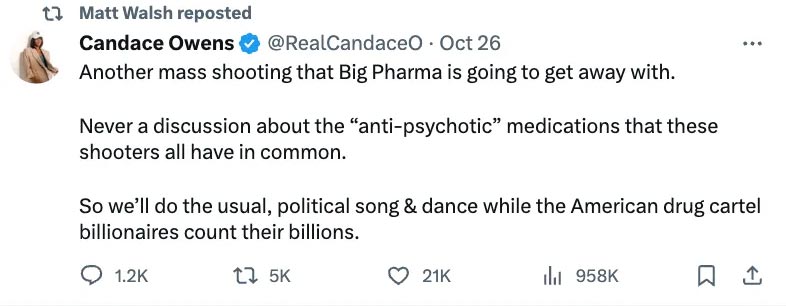
Recently Matt Walsh also did a segment on this topic, which like Tucker’s segment was seen by millions of people.
Note: The full version of this episode can be viewed here.
Having watched this dynamic play out for decades, it’s hard for me to put into words how monumental of a change this newfound awareness of the dangers of SSRIs is.
The only comparable example I can think of are many people now being open to considering the dangers of childhood vaccination — something which has taken a century to bring into the public awareness (e.g., my friends who gave everything they had to speak out in the 1980s and 1990s on vaccine safety were almost completely alone and cannot believe just how much the public’s receptivity to this message has changed in the last few years).
Correlation or Causation?
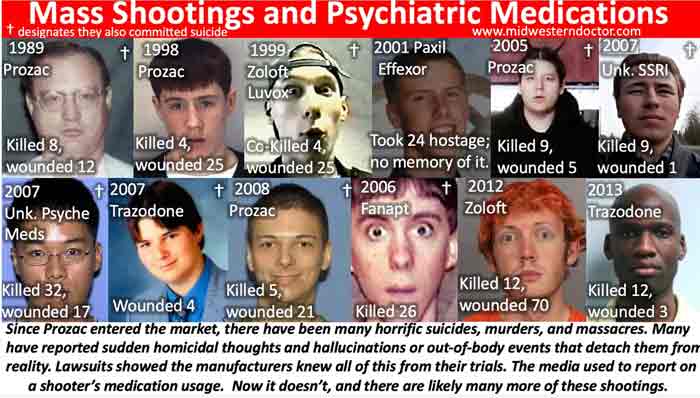
One of the most common arguments used to dismiss the link between SSRIs and psychotic violence is that people who are mentally ill are more likely to be on psyche meds, so the “correlation” between psyche meds and psychotic violence is simply a product of pre-existing mental illness and would have happened independently of the psyche med.
However, while claiming “correlation is not causation” makes it possible to refute this link while sounding intelligent in the process, there are a few major problems with this argument.
First, there is a lot of evidence tying SSRI usage to these events, including clinical trial data that was hidden from the public. Since that evidence was not covered in Tucker or Walsh’s presentation, it will be the focus of this article.
Second, there is a black-box warning on the SSRIs for them increasing the risk of suicide, something which can only be possible if some degree of causation does in fact exist.
Third, these psychotic events are completely out of character for the individuals who commit them, and in many cases they report a very similar (and disconcerting) narrative of what they experienced prior to and during the shooting.
Note: Big Pharma, working hand in hand with the FDA fought tooth and nail for decades to prevent a warning from ever being added to the SSRIs. I believe this is in part due to how much money is made off of these drugs (presently their sales make approximately 40 billion dollars a year).
The SSRI Era
Selective serotonin reuptake inhibitors (SSRIs) have a similar primary mechanism of action to cocaine. SSRIs block the reuptake of Serotonin, SNRIs, also commonly prescribed block the reuptake of Serotonin and Norepinephrine (henceforth “SSRI refers to both SSRI and SNRI), and Cocaine blocks the reuptake of Serotonin, Norepinephrine, and Dopamine.
SSRIs (and SNRIs) were originally used as anti-depressants, then gradually had their use marketed into other areas and along the way have amassed a massive body count.
Once the first SSRI entered the market in 1988, Prozac quickly distinguished itself as a particularly dangerous medication and after nine years, the FDA had received 39,000 adverse event reports for Prozac, a number far greater than for any other drug.
This included hundreds of suicides, atrocious violent crimes, hostility and aggression, psychosis, confusion, distorted thinking, convulsions, amnesia, brain-zaps, a feeling that your brain longer works right, and sexual dysfunction (long-term or permanent sexual dysfunction is one of the most commonly reported side effects from anti-depressants, which is ironic given that the medication is supposed to make you less, not more depressed).
Note: I and many colleagues also believe the widespread adoption of psychotropic drugs has significantly distorted the cognition of the demographics of the country that frequently utilize them (which to some extent stratifies by political orientation), which in turn has created a wide range of detrimental shifts in our society.
SSRI homicides are common, and a website exists that has compiled thousands upon thousands of documented occurrences. As far as I know (there are most likely a few exceptions), in all cases where a mass school shooting has happened, and it was possible to know the medical history of the shooter, the shooter was taking a psychiatric medication that was known for causing these behavioral changes.
After each mass shooting, memes illustrating this topic typically circulate online (often citing many of the same individuals in the picture in the previous section).
However, as mentioned above, the idea that “SSRIs cause mass shootings” is treated with widespread ridicule and animosity in a manner not that different from how anyone who claimed the “COVID vaccines were NOT safe and effective” was treated in 2020.
For instance, the argument to debunk both was always “correlation is not causation” (e.g., the young healthy lady who had a fatal heart attack immediately after a vaccine might have had that happen anyways), and when data to support this contention is presented, it is always ignored by the other side.
Since there are many serious issues with psychiatric medications, to avoid being too long, this article will exclusively focus on their tendency to cause horrific violent crimes, something which was known long before they entered the market by both the drug companies and the FDA.
Note: A significant portion of this article came from the book Deadly Psychiatry and Organized Denial by Peter C. Gøtzsche (which builds upon the critical work Peter Breggin did to expose this issue). For those of you interested in learning more about this topic, I would strongly advise reading that book, as I can only scratch the surface of the issues with these medications within this brief article.
Lastly, for anyone who reads this article is presently taking an SSRI or SNRI, it is critically important to NOT suddenly stop taking them. These addictive drugs produce very strong (and longlasting) withdrawal symptoms that many of my readers have shared. More importantly, there are many cases of catastrophic events (e.g., a suicide or mass murder) that followed the abrupt discontinuation of an SSRI.
If this is something you choose to do, you need to gradually taper down the dosage (sometimes to the point you use sandpaper to slowly shrink a pill) with a professional who has experience in this area.
However, since doctors who help can you safely withdraw from an SSRI are difficult to find, we put together a guide on the (incredibly unfair) withdrawal process which can be viewed in the second half of this article.
Note: Many of the stories I will share in this article are similar to those I have received from numerous readers (e.g., see the comments on the first article, second article, third article, and fourth article along with numerous comments on Twitter) — which I believe highlights how common SSRI injuries are. Many of these stories are very difficult to read through, but I nonetheless believe need to be heard.
Download this Article Before it Disappears
Akathisia
One of my relatives grew up in a big city during a particularly bad crime wave. One of his most notable memories from the time was looking up and seeing a man who was screaming “the ants are trying to get me” frantically tying bedsheets together (so he could flee down the fire escape) as armed men were rushing to his location yelling “get that ***** ******.”
My relative ran out of the area to avoid getting shot, but from the brief look he had at the fleeing man, was almost certain that man was high on cocaine, and experiencing coke (or crack) bugs, one form of Akathisia and a well-documented effect of those drugs.
Akathisia, an extreme form of restlessness is defined as a psycho-motor disorder where it is extremely difficult to stay still. What this definition omits to mention is that akathisia is incredibly unpleasant to the degree that many individuals who experience it frequently commit suicide or homicide (or both). One of the earliest reports from patients with drug-induced akathisia was:
“They reported increased feelings of strangeness, verbalized by statements such as ‘I don’t feel myself’ or ‘I’m afraid of some of the unusual impulses I have.’”
Akathisia is much more common than most people realize. To share a personal anecdote — I occasionally discuss this topic with medical students and a few have confided they previously experienced akathisia after using a psychiatric medication and it was so excruciating that one told me they seriously contemplated suicide at the time.
Akathisia (and psychosis) are known side effects of cocaine, methamphetamine, SSRIs, antipsychotics, and ADHD stimulant medications.
However, while the common triggers have been identified, the actual mechanism for akathisia is still poorly understood and theorized to result from alterations in the center of the brain involved in movement. These behavioral changes are so unusual and disturbing there are often simply described as the individual appearing to be possessed.
Note: Numerous patients I’ve talked to (with or without akathisia) who had bad reactions to SSRIs have shared that they felt as though some type of dark force was trying to take over their body.
From my own exploration of this topic, I have noticed that some individuals with cocaine intoxication (I have not yet examined a patient on the other drugs experiencing akathisia) have a characteristic (often porous) perturbation in their bio-electric field, which while very complex to describe, does resemble “frantic ants running all over the body,” and in theory could explain part of the akathisia experience.
As this idea is contained within a medical model most healthcare practitioners do not ascribe to, it has been difficult for me to evaluate the validity of this hypothesis. I have met a few other colleagues who made the identical observation, so this is a periodic topic of discussion amongst us as we believe there is significant value in developing a model that can explain this puzzling condition.
To further illustrate how perplexing the behaviors observed are on SSRIs consider this correspondence from a clinical investigator to Pfizer:

More importantly, consider Pfizer’s response:

A week ago, I heard the most compelling illustrations of this phenomenon I’ve come across after a 20-year-old with every characteristic of a mass shooter, snuck into an amusement park in Northern Colorado during the night.
“The suspect had been heavily armed with a semi-automatic rifle and semi-automatic handgun and multiple, loaded magazines for both weapons,” it added. “He was wearing body armor and what appeared to be a ballistic helmet. Additionally, multiple improvised explosive devices (IEDs) were discovered with the suspect and in a vehicle associated with the suspect.
The sheriff’s office said that while an investigation into the incident was ongoing, “given the amount of weaponry, ammunition, and explosive devices found, the suspect could have implemented an attack of devastating proportions upon our community.”
However, rather than conduct the shooting, he committed before the park opened and left a remarkable message:
“In the bathroom where Barajas Medina was discovered, written on the wall were the messages “I am not a killer” and “I just want to get into the caves,” a police spokesperson confirmed to Newsweek.”
Note: Like many other mass shooters, these actions were completely out of character for Barajas. His brother (who he lived with) “was at a loss for what was going on in his brother’s mind,” “didn’t know of any connections his brother had to the park” and stated “I didn’t think he was a dangerous person.”
This narrative suggests that the psychosis Barajas was under partially wore off during the night, at which he recognized something evil was compelling him to do the shooting and he chose to end his life to prevent it. This is similar to a few other stories I’ve heard of SSRI violence.
For instance, Cory Baadsgaard developed increasing (and sometimes demonic) hallucinations after starting an SSRI, went to school with a loaded rifle and then partially realized what he was doing after he’d taken everyone hostage, surrendered, partially regained consciousness in the principle’s office, but had no memories of what had happened until he woke up in a cell at Juvenile Hall (where he spent 14 months).
Note: The next (three minute) video featured provides an even more powerful illustration of this phenomenon.
Akathisia Homicides
This section will list some of the evidence substantiating the link between psychiatric medications and horrific homicides. When you review this type of information, it is very easy to intellectually disassociate from what’s contained within it. For that reason, I would like to request you first watch this two-minute video of one father who has to live with knowing he killed his child he still loves from the bottom of his heart.
He was ultimately not criminally convicted, however, most individuals in these circumstances typically are.
Note: I need to emphasize that this individual’s story is not unique, he just has been unusually dedicated in bringing public awareness to what happened. It also illustrates how evil these drugs are, as like the individuals mentioned above, they become forced to do something that violates every core principle they stand for.
Much like the vaccine industry, the psychiatric industry will always try to absolve their dangerous medications of responsibility and will aggressively gaslight their victims. Despite these criticisms, there are three facts can be consistently found throughout the literature on akathisia homicides which Gøtzsche argues irrefutably implicate psychiatric medications as the cause of violent homicides:
• “These violent events occur in people of all ages, who by all objective and subjective measures were completely normal before the act and where no precipitating factors besides the psychiatric medication could be identified.
• The events were preceded by clear symptoms of akathisia.
• The violent offenders returned to their normal personality when they came off the antidepressant.”
Numerous cases where this has happened are summarized within this article from the Palm Beach Post. In most of those cases, a common trend of these spontaneous acts of violence emerges: the act of violence was immediately preceded by a significant change in the psychiatric medications used by the individual.
In one case, shortly before committing one of these murders, one of the perpetrators also journaled that, while taking Prozac, that he felt as if he was observing himself “from above.”
Individuals with a mutation in the gene that metabolizes psychiatric drugs are much more vulnerable to developing excessive levels of these drugs and triggering severe symptoms such as akathisia and psychosis.
There is a good case to be made that individuals with this gene are responsible for many of the horrific acts of iatrogenic (medically induced) violence that occur, however to my knowledge, this is never considered when psychiatric medications are prescribed.
Gøtzsche summarized a peer-reviewed forensic investigation of 10 cases where this happened (all but one of these involved an SSRI or an SNRI):
“Male, 18 years, Prozac, sister was comatose after a car crash, violent akathisia for 14 days, killed his father four days after he ran out of pills.
Male, 35 years, Paxil, distressed by “on and off” relationship with mother of his child, stabbed former partner 30+ times to death after 11 weeks of akathisia.
Male, 46 years, Paxil, anxiety about not making enough money to support the family, killed his son in a manic-shift akathisia and delirium after 42 days.
Male, 16 years, Zoloft and Prozac, depressed, struggled at school, and the girlfriend left him, attempted suicide on both drugs, killed therapist in hospital after 11 weeks.
Male, 50 years, Effexor, distress over divorce, shot a stranger four days after stopping drug.
Female, 35 years, nortriptyline, distress due to husband’s drinking, killed teenage daughter in toxic delirium after three days.
Male, 24 years, Lexapro, anxiety and illicit substance use, several suicide attempts and assaults, nearly killed partner, 12 years in jail for attempted murder.
Female, 26 years, several SSRIs, difficulties with in-laws, two attempts to kill her two children.
Female, 52 years, Paxil and Celexa, harassment at work, suicide attempt and tried to kill her two children.
Female, 25 years, Celexa and Effexor, marital distress, several suicide attempts on both drugs, jumped in front of a train with her child while on citalopram.”
There are many other sad cases of akathisia homicides. One detailed by Gøtzsche is representative of how the pharmaceutically injured patients can be gaslighted by psychiatry.
When reviewing the story, keep in mind that the FDA insert explicitly lists the following as side effects of Effexor (an SNRI): intentional injury, malaise, suicide attempt, depersonalization, abnormal thinking, akathisia, apathy, ataxia, CNS stimulation, emotional lability, hostility, manic reaction, psychosis, suicidal ideation, abnormal behavior, adjustment disorder (which became a psychiatric diagnosis for her, although it was a side effect), akinesia, increased energy, homicidal ideation, and impulse control difficulties.
“A 26-year-old woman tried to kill her two children on two occasions. She was prescribed Paxil for stress but experienced an episode of rage and attempted suicide by inhalation of carbon monoxide, and then stopped taking the drug. Despite this, she was prescribed Paxil again and reassured about its safety two years later.
This time she experienced intense restlessness, surges of rage and anger, panic attacks, impulsive spending sprees, and constant suicidal ideation. She reasoned that her low self-esteem, insomnia, and suicidal behavior were due to difficulties with her in-laws. She overdosed and was admitted to the hospital where her Paxil was increased. She tried to kill herself again and was diagnosed with an “adjustment disorder.”
She was switched to Effexor, which was increased over three months until the dose was eight times higher than the initial dose. Each dose increase occasioned a week spent in bed with exhaustion, as she was unable to get up (akinesia). Her mental state deteriorated and violent outbursts and suicidal ideation became frequent and severe.
Unable to stay in one place, she drove several hundred miles with her children and tried to kill them and herself by car exhaust. A few days later she tried to kill her children and herself again.”
Evidence for SSRI Suicides
Violent psychotic reactions from SSRIs can manifest as both suicides and homicides. There is extensive documentation to support the occurrence of SSRI suicides, and while the psychiatric profession still uses an endless litany of excuses to deny this happens, many antidepressants now have a black box warning from the FDA for the occurrence of suicide.
The side effects were definitively known to result from SSRIs as far back as their early clinical trials (which were of course hidden from everyone) and a mountain of evidence proving this regularly occurs has accumulated since these drugs entered the market (which led to the FDA having to find numerous unscrupulous ways to conceal that danger such as silencing employees who saw it, ignoring rampant clinical trial fraud by the manufacturers, publishing a fraudulent meta-analysis to erase it, and stonewalling Congress during hearings on the drugs).
There are a large number of studies showing the link between SSRIs and suicide (especially those kept secret by the pharmaceutical industry). These will not be discussed as they are not the main focus of this article, but to provide some context on the issue, I will briefly discuss a microscopic and macroscopic study examining this picture. First to quote this peer-reviewed study’s abstract:
“Six depressed patients free of recent serious suicidal ideation developed intense, violent suicidal preoccupation after 2-7 weeks of fluoxetine treatment. This state persisted for as little as 3 days to as long as 3 months after discontinuation of fluoxetine. None of these patients had ever experienced a similar state during treatment with any other psychotropic drug.”
Second, the CDC has a system for reporting violent deaths that have occurred, and one subset of those deaths are suicides (which may be associated with a homicide or a concurrent suicide). 3616 of these deaths were evaluated for the presence of an antidepressant, and 35.3% tested positive for one at the time of their death.
A large number of individual mood-altering substances were tested for, and the only one that had a higher positive test rate than the antidepressants was alcohol (38.2%), although only 26.9% of those tested had enough alcohol present to be considered legally drunk. In the general population, between 11-13.2% of adults use antidepressants, which suggests there is a note-worthy correlation here.
Evidence for Akathisia Homicides
Most of the placebo-controlled data which is available showing the instances of homicidal behavior after taking an SSRI is available because of court orders from lawsuits where someone sued an SSRI manufacturer for their actions while on the SSRI. Consider for example this report from one clinical trial:

[Pt. began to verbalize feelings of killing other people and then himself. Pt. looked much more anxious and depressed than baseline; even though this is not reflected in Hamliton (the scale used to quantify anxiety in research)]
When you consider these figures, it is important to remember that while a 0.1% death rate for a drug is tragic (but typically deemed acceptable within medicine), it is incomparable in consequence to a 0.1% homicide rate for a drug.
As millions of children are given SSRIs, even numbers that small mean homicides will regularly occur. I can’t even guess how low a risk would constitute an acceptable threshold, but for the sake of conveying other points in this section, I will assume it to be 0.1%. In reality, any elevated risk in this regard should be viewed as unacceptable without any exceptions. I am emphasizing this point because I have never seen it considered by proponents of psychotropic drugs.
An excellent paper reviews private pharmaceutical research made public through litigation. The paper discusses internal company documents that compared 9219 research subjects (many of whom had pre-existing psychiatric diagnoses) that received Paxil, to 6455 research subjects (also with pre-existing psychiatric conditions) that received a placebo, 0.65% of the patients in clinical trials became hostile on Paxil compared with 0.31% on placebo.
The highest risk for hostility on Paxil was for those who also had Obsessive Compulsive Disorder. (0.34% is more than the 0.1% threshold)
The authors of this paper hypothesized that the violent actions following the usage of SSRIs may be explained by their tendency to trigger akathisia, emotional blunting, and manic or psychotic reactions. I will quote a few select passages from that paper:
“In healthy volunteer studies, hostile events occurred in three of 271 (1.1%) volunteers taking Paxil, compared with zero in 138 taking placebo.” (1.1% is more than 0.1%).
In data from sertraline pediatric trials submitted by Pfizer, aggression was the most common cause for discontinuation [removal from the trial] from the two Zoloft placebo-controlled trials in depressed children.
In these trials, eight of 189 patients randomized to Zoloft were discontinued for aggression, agitation, or hyperkinesis (another term for akathisia frequently used to conceal it), compared with discontinuations for these reasons in the 184 patients on placebo …
When discontinuations for any manifestation of treatment induced activation (suicidal ideation or attempts, aggression, agitation, hyperkinesis, or aggravated depression) were considered, there were 15 discontinuations on Zoloft compared with two on placebo, which meant this was 7.3 times more likely to happen when on sertraline.” (8.9% is more that 0.1%., 7.3 times more likely likewise is also unacceptable).
In pediatric trials of Effexor, two percent of children dropped out because of hostility, more than double the rate of dropout on placebo.
After a program on Paxil in 2002, the producers of the BBC television programme Panorama received 1,374 e-mails from viewers, mostly patients. Researchers then analyzed the full set of these responses. Many respondents linked emotional storms and thoughts and acts of violence or self-harm to Paxil, both to starting drug treatment and to dosage change.
These were not simple anecdotal reports, in that the analysis clearly pointed to a linkage with dosage. Second, they were self-reports of violence from patients with no apparent background of violent behavior. Third, the analysis was consistent with an analysis of reports of thoughts and acts of violence or self-harm on paroxetine that doctors had sent to the MHRA (England’s FDA) about other patients between 1991 and 2002.
In both patient and medical reports, severe mood changes were commonly associated with changes of drug dosage during the first week of treatment, with later dosage increase, or with dosage decrease or drug withdrawal. The accounts reported in both the medical and the patient series had much in common, including time frame and a linkage to dosage.”
Gøtzsche likewise has located less biased sources of data on the violent risks of SSRIs:
“As the published trial literature related to suicidality and aggression on antidepressants is unreliable, we looked at 64,381 pages of clinical study reports (70 trials) we got from the European Medicines Agency. We showed for the first time that SSRIs in comparison with placebo increase aggression in children and adolescents, odds ratio 2.79 (95% CI 1.62 to 4.81) (2).
This is an important finding considering the many school shootings where the killers were on SSRIs.
In a systematic review of placebo-controlled trials in adult healthy volunteers, we showed that antidepressants double the occurrence of events that the FDA has defined as possible precursors to suicide and violence, odds ratio 1.85 (95% CI 1.11 to 3.08)(3). The number needed to treat to harm one healthy adult person was only 16 (95% CI 8 to 100).
Based on the clinical study reports, we showed that adverse effects that increase the risk of suicide and violence were 4-5 times more common with duloxetine than with placebo in trials in middle-aged women with stress urinary incontinence. There were also more women on duloxetine who experienced a core or potential psychotic event, relative risk RR 2.25 (95% CI 1.06 to 4.81).
The number needed to harm was only seven. It would have been quite impossible to demonstrate how dangerous duloxetine is, if we had only had access to published research. In accordance with our findings, the FDA has previously announced that women who were treated with duloxetine for incontinence in the open-label extension phase of the clinical studies had 2.6 times more suicide attempts than other women of the same age.”
Gøtzsche has also reviewed some of the key legal cases regarding SSRIs:
“Akathisia homicides have been defended as instances of involuntary intoxication both with and without genetic evidence, and some people have succeeded in receiving damages from the manufacturers for failure to warn … the filings in a case on Paxil against SmithKline Beecham [now named GSK] included an unpublished company study of incidents of serious aggression in 80 patients, of which 25 resulted in homicide.
In one case, a man aged 74 strangled his wife, and another was 66 when he became delusional on Prozac and killed his wife who was found with 200 stab wounds.
In 2001, for the first time, a jury found a pharmaceutical firm liable for deaths caused by an antidepressant. Donald Schell, aged 60, had been taking Paxil for just 48 hours when he shot and killed his wife, his daughter, his granddaughter and himself.
Central to the case were SmithKline Beecham internal documents showing the company was aware that a small number of people could become agitated or violent from Paxil. Despite this knowledge, paroxetine packaging deliberately did not include a warning about suicide, violence or aggression.
The internal documents, stamped “confidential,” list the results of tests involving more than 2,000 healthy volunteers taking either Paxil or placebo. Some volunteers experienced anxiety, nightmares, hallucinations and other side effects – definitely caused by the drug – within two days of taking it.
Two volunteers attempted suicide after 11 and 18 days, respectively … Ten years after the verdict, GSK still denies that Paxil can cause people to commit homicide and suicide and that there are withdrawal problems.”
Note: After publishing the original article, I received this comment from a reader and their permission to share it:
Typically, American courts are more likely to rule in favor of the pharmaceutical company, and Donald Shell (mentioned above) was a lucky exception. For example consider the three following cases:
“Christopher Pittman became manic and shot his two grandparents to death two days after his dose of Zoloft had been doubled. Despite being only 12 years old when he did this, he was sentenced to 30 years of prison.
David Crespi was on Prozac and three other drugs, which he had taken for a couple of weeks, when he killed his two twin daughters with a knife. He pleaded guilty to avoid the death penalty and got a life sentence with no chance of parole, although he became his old self after coming off the drugs.
Kurt Danysh was 18 years old when he was inappropriately prescribed Prozac by a general practitioner. He became restless and violent and shot his father, the person he loved the most, 17 days later in a totally out-of-character mood. Kurt had no history of violence prior to Prozac, but in 1996, he was convicted of murdering his father and sentenced to 22.5 to 60 years in prison.
During this case, Eli Lilly lied in court, and claimed that Prozac would not cause aggressive behaviour resulting in his conviction. Later in 2004 when it was exposed Lilly had concealed data from 1988 showing Prozac caused violence, the FDA recognized that SSRIs can cause violent behaviour, particularly in children and adolescents.
Despite these events and dozens of cases of homicide linked to Prozac that had subsequently been reported to the FDA, the judge has dismissed all appeals, and it took 24 years of legal work and petitioning for Kurt to finally be released from prison.”
Next, I would briefly like to share the work of an activist who was intimately involved in those court cases.

Note: Pfizer’s manual that was used to criminally convict victims of its SSRI (so the market could be shielded from public scrutiny) can be viewed here. Having reviewed it, I can state with certainty Pfizer included statements known to Pfizer to be false at the time this was written.
If you have time after you finish reading this article, I would highly recommend reading Pfizer’s prosecutor manual so you can see just what vintage early 1990s gaslighting looked like (it is quite a bit more sophisticated now). Additionally, the judgement from Witczak’s lawsuit against Pfizer can be viewed here, while many more appalling stories from whistleblowers within Pfizer can be viewed here and here.
Gøtzsche also notes the Canadian court system is more open to acknowledging pharmaceutical induced homicide. For example:
“In 2011 a Canadian judge ruled that Prozac induced a 16-year old boy to commit murder; he knifed a friend to death. In another case David Carmichael, who killed his 11-year old son while on antidepressants, was ruled “not criminally responsible on account of a mental disorder,” and today, Carmichael writes and speaks on the dangers of antidepressants.”
Mass Shooting and Psychiatric Medications
In the 1990s, school shootings transitioned from being very rare to a frequent facet of American life. As this timeline overlaps with the entrance of SSRIs to the US market (and the populace suddenly being flooded with psyche drugs), many articles have evaluated the link between mass shootings and psychiatric medications. I will quote a one of the more comprehensive summaries (written in 2013) which attempted to analyze all known mass shootings:
- Eric Harris age 17 (first on Zoloft then Luvox) and Dylan Klebold aged 18 (Columbine school shooting in Littleton, Colorado), killed 12 students and one teacher and wounded 23 others, before killing themselves. Klebold’s medical records have never been made available to the public.
- Jeff Weise, age 16, had been prescribed 60 mg/day of Prozac (three times the average starting dose for adults!) when he shot his grandfather, his grandfather’s girlfriend and many fellow students at Red Lake, Minnesota. He then shot himself. Ten dead, 12 wounded.
- Cory Baadsgaard, age 16, Wahluke (Washington state) High School, was on Paxil (which caused him to have hallucinations) when he took a rifle to his high school and held 23 classmates hostage. He has no memory of the event.
- Christopher Pittman, age 12, murdered both his grandparents while taking Zoloft.
- Kip Kinkel, age 15, (on Prozac and Ritalin) shot his parents while they slept then went to school and opened fire, killing two classmates and injuring 22 shortly after beginning Prozac treatment.
- Luke Woodham, age 16 (Prozac) killed his mother and then killed two students, wounding six others.
- A boy in Pocatello, ID (Zoloft) in 1998 had a Zoloft-induced seizure that caused an armed standoff at his school.
- Michael Carneal (Ritalin), age 14, opened fire on students at a high school prayer meeting in West Paducah, Kentucky. Three teenagers were killed, five others were wounded.
- Andrew Golden, age 11, (Ritalin) and Mitchell Johnson, aged 14, (Ritalin) shot 15 people, killing four students, one teacher, and wounding ten others.
- TJ Solomon, age 15, (Ritalin) high school student in Conyers, Georgia opened fire on and wounded six of his classmates.
- James Wilson, age 19, (various psychiatric drugs) from Breenwood, South Carolina, took a .22 caliber revolver into an elementary school killing two young girls and wounding seven other children and two teachers.
- Elizabeth Bush, age 13, (Paxil) was responsible for a school shooting in Pennsylvania
- Jason Hoffman (Effexor and Celexa) – school shooting in El Cajon, California
- Neal Furrow (Prozac) in LA Jewish school shooting reported having been court-ordered to be on Prozac along with several other medications.
- Hammad Memon, age 15, shot and killed a fellow middle school student. He had been diagnosed with ADHD and depression and was taking Zoloft and “other drugs for his conditions.”
- Matti Saari, a 22-year-old culinary student, shot and killed nine students and a teacher, and wounded another student, before killing himself. Saari was taking an SSRI and a benzodiazapine.
- Steven Kazmierczak, age 27, shot and killed five people and wounded 21 others before killing himself in a Northern Illinois University auditorium. According to his girlfriend, he had recently been taking Prozac, Xanax, and Ambien. Toxicology results showed that he still had trace amounts of Xanax in his system.
- Finnish gunman Pekka-Eric Auvinen, age 18, had been taking antidepressants before he killed eight people and wounded a dozen more at Jokela High School – then he committed suicide.
- Asa Coon from Cleveland, age 14, shot and wounded four before taking his own life. Court records show Coon was on Trazodone.
- Jon Romano, age 16, on medication for depression, fired a shotgun at a teacher in his New York high school.
The article also discussed a few recent school shootings where the information to determine if a psychiatric medication was used was not available (since is mentioned before, the industry has gotten much better at concealing this):
- What drugs was Jared Lee Loughner on, age 21 … killed six people and injuring 14 others in Tuscon, Az? [I was unable to locate any information on this case]
- What drugs was James Eagan Holmes on, age 24 … killed 12 people and injuring 59 others in Aurora Colorado? [Holmes was on Zoloft, which likely triggered violent behaviors in him in the weeks preceding the mass shooting, all of which his psychiatrist ignored.]
- What drugs was Adam Peter Lanza on, age 20, Killed 26 and wounded 2 in Newtown Ct.? [Lanza was later confirmed to have been prescribed Celexa in the past and was on a questionable antipsychotic, fanapt, known for inducing violent behavior at the time of the shooting].
Since the time that article was published, there have been many more large school shootings. In the five which immediately followed:
• Christopher Harper-Mercer (2015) who killed 10 was likely on psychiatric medication but there is no definitive proof.
• Nikolas Cruz (2017) who killed 17 was likely on psychiatric medication but there is no definitive proof.
• Dimitrios Pagourtzis (2018) who killed 10 was probably not on a psychiatric medication. His attorney said he was not (which may have been a deceitful legal maneuver, but most likely was the truth), while the president of the NRA said he was (and I was not able to determine his basis for this assertion).
• For Salvador Ramos (2022) who recently killed 22, there have been many posts stating he was on antidepressants, but while there is some circumstantial evidence suggesting this, there is presently no reliable information to confirm or deny it. For a more detailed summary of my thoughts on this matter, please see this comment.
• With the recent school shooter Audrey Hale, most of the focus has been on the shooter presumably taking testosterone, as this can trigger aggression.
While like many things, this potentially explains what happened, in the reports I found where testosterone led to homicidal behavior, it required a pre-existing psychiatric illness (which would typically be treated with a violence inducing psychiatric medication) to also be present.
Since a clear link has already been established to psychiatric medications causing this behavior (and based on the shooter’s background it is likely some were prescribed), I would suggest that until more information becomes known, the standard psychiatric medication violence it is a more probable explanation for the recent tragic events.
Note: Since Audrey Hale’s shooting, additional mass shootings have also occurred (e.g., those mentioned by Walsh like the recent one in Maine) where it was known the individual had psychiatric issues, despite repeated warnings those issues were not addressed, and based their history was almost certainly on psyche meds (but the public has not been permitted to know if they were).
Conclusion
While the tendency to provoke violence toward others is a major issue with SSRIs and other related medications, it is rarely considered a side effect of these drugs. One reason for this is that the other severe adverse effects from these medications are much more common (for example, SSRIs are one of most common causes of bipolar disorder) and as a result, these awful effects occupy a disproportionate focus when discussing their toxicity.
I however focused on this issue, because like the sudden deaths caused by the COVID-19 vaccines, it is so unmistakable and concerning it cuts through any the ambiguity over what the drug or vaccine is doing.
Sadly, In addition to SSRIs extremely damaging, it is very questionable if for most people (excluding those with a metabolic type that responds to SSRIs) these drugs have any benefit beyond statistical artifacts created by biased corporate research. This is incredibly tragic since:
• It results in many people taking a pill that ruins their life but simultanously had nothing of benefit to offer them in the first place.
Note: Did you know what Prozac was first discovered, Eli Lilly originally planned to sell it as a obsesity pill but pivoted to it treating depression because Lilly recognized that since “depression” is so subjective, it would be easy to create “proof” Prozac worked even if nothing happened?
• It results in effective treatments for depression (of which there are many) becoming largely forgotten since there is no money in adopting those approaches.
Note: We attempted to summarize those treatments in the second half of this article.
• The SSRIs being muscled through the approval process had a corrosive influence on the drug regulators and left us with a profound degree of corruption the public has repeatedly had to suffer through.
Note: Many of the regulators who signed off on the SSRIs either had already worked for the SSRI industry or soon after pushing the SSRIs through, left their regulatory agency (e.g., the FDA) and were hired by the drug industry.
This is not to different to how many of the officials (e.g., two sequential FDA commissioners) who muscled the COVID-19 vaccines through the approval process then left the agency and were rewarded with lucrative executive positions with the mRNA vaccine manufacturers.
In short, I believe what happened with the SSRIs provides a pivotal lesson for the modern vaccine safety movement. In both cases, we’ve seen incredibly dangerous (but profitable) pharmaceuticals be pushed upon the entire world but rather than our regulators do their jobs and protect the public, they’ve sided with the industry they are supposed to regulate (which in part is due to how much of the FDA’s funding comes from Big Pharma).
However, while the COVID-19 vaccines are almost complete immune from lawsuits, the SSRIs were not, and as a result, extensive litigation spearheaded by families of those directly harmed by SSRI violence were able to get the secret files which showed how abhorrent the industry’s conduct actually was.
One of the most remarkable things about the SSRI saga, is that as bad as the SSRI story is, the government was actually much less corrupt then and many were willing to try to do something about what was happening — something which has been almost non-existent throughout COVID-19. In turn, Kim made a particularly poignant comment on our sad state of affairs:
As we conclude, I recognize that this is an immensely challenging subject and I appreciate you for being able to maintain a level head while reading it. Thank you for the time and focus you have given to this topic and for sharing it with others who can benefit from it.
Lastly, I know this is already been stated, but do not attempt to stop taking an SSRI without the assistance of a physician who understands how to taper them. Very bad things can happen if you do not follow that advice.
In the next part of this series, I discuss the less severe but far more frequent harms of the SSRIs (some of which affect over half of the users).
This will be followed by examining how the drugs this dangerous could have gotten onto the market and the egregious corruption within the FDA that kept anything from being done about it as the injuries and deaths piled up.
Finally, this series will cover how the pharmaceutical industry created the “depression” industry and convinced the entire world to spend billions on their unsafe and frequently ineffective treatments for it while simultaneously dismissing the actual causes of depression and its (non- monetizable) treatments.
Lastly, if you have a way to get the data in this series to courageous journalists who are raising awareness on this issue, that would be greatly appreciated. I believe once this data becomes public knowledge, it will be much harder to maintain the current status disastrous quo with the SSRIs.
A Note From Dr. Mercola About the Author
A Midwestern Doctor (AMD) is a board-certified physician in the Midwest and a longtime reader of Mercola.com. I appreciate his exceptional insight on a wide range of topics and I’m grateful to share them. I also respect his desire to remain anonymous as he is still on the front lines treating patients. To find more of AMD’s work, be sure to check out The Forgotten Side of Medicine on Substack.
Can Valerian Root Help You Sleep Better?
Reproduced from original article:
https://articles.mercola.com/sites/articles/archive/2023/12/22/valerian-root-for-sleep.aspx
The original Mercola article may not remain on the original site, but I will endeavor to keep it on this site as long as I deem it to be appropriate.
Analysis by Dr. Joseph Mercola December 22, 2023

STORY AT-A-GLANCE
- Valerian root has a sedative effect and has a long history of use to promote relaxation and sleep. Studies show it helps improve the speed at which you fall asleep, depth of sleep and sleep quality
- Melatonin is another helpful sleep aid, with lower doses being more effective than larger ones
- For chronic insomnia, you need to address foundational causes. Get bright sun exposure during the day, avoid excessive amounts of light and blue light at night, and avoid electromagnetic fields
Insomnia is defined as a medical condition involving difficulty falling asleep or staying asleep through the night. While aggravating in and of itself, insomnia can also lead to or exacerbate many other health problems, ranging from fatigue and an increased risk of accidents to a heightened risk of diabetes and cancer.
According to the latest estimates, insomnia may affect upward of 70 million American adults, with men reporting a higher incidence than women.1
According to the U.S. Centers for Disease Control and Prevention (CDC), more than one-third of American adults fail to get at least seven hours of sleep on a regular basis,2 which is associated with an increased risk of chronic ill health and mental distress. As noted by Dr. Wayne Giles, director of CDC’s Division of Population Health:3
“As a nation we are not getting enough sleep. Lifestyle changes such as going to bed at the same time each night; rising at the same time each morning; and turning off or removing televisions, computers, mobile devices from the bedroom, can help people get the healthy sleep they need.”
Another really crucial lifestyle aspect that can have a profound impact on your ability to sleep is sunlight and artificial light exposure during the day and night. Getting appropriate light exposure at the appropriate time of day — which I’ll discuss further below — is perhaps one of the most important factors that needs to be addressed if you’re having trouble sleeping.
One of the worst things you can do is reach for a sleeping pill. That said, certain natural supplements may be helpful as a temporary fix while you address the root causes. Here, I’ll review a couple of supplements known for their beneficial influence on sleep.
Valerian Root — Nature’s Valium
Frequently referred to as “nature’s Valium,” valerian root (Valeriana officinalis) has a sedative effect and has been used in traditional medicine to promote relaxation and sleep for at least 2,000 years. Some of the sedating compounds in valerian root include:
• Valerenic acid — As noted by Authority Nutrition,4 stress can lower your levels of gamma-aminobutyric acid (GABA), which in turn has been linked to anxiety and impaired, poor quality sleep. The valerenic acid in valerian root has been shown to inhibit breakdown of GABA, resulting in greater calm and relaxation. Valium and Xanax work in similar ways.
• Isovaleric acid, which helps prevent involuntary muscle contractions. Its action is similar to valproic acid, used to treat epilepsy
• Hesperidin, an antioxidant with sedative properties
• Linarin, an antioxidant with sedative properties
Valerian has also been shown to help maintain serotonin levels in the brain, which has a mood stabilizing effect. In fact, a number of studies have noted valerian root (sometimes in combination with other herbs, such as lemon balm), can be useful for anxiety brought on by acute or chronic stress.
Studies have also demonstrated its usefulness for hyperactivity, generalized anxiety disorder and obsessive-compulsive disorder. However, too high a dose can have the converse effect, increasing anxiety. In one study, anxiety was increased when the highest dose, 1,800 milligrams (mg), was administered.5
Valerian May Improve Sleep
Valerian is one of the most commonly used herbal remedies for insomnia. Studies have found it helps improve6 the speed at which you fall asleep, depth of sleep (achieving deep sleep 36% faster7), and overall quality of sleep. Bear in mind, however, that herbs can affect different people in different ways, and 1 in 10 people actually tend to feel energized by valerian root, which may impede sleep. If you notice this tendency, clearly valerian is not a good sleep aid for you.
Higher dosages can also have this reverse effect, so always start with a minimal dose, and use the lowest dose needed to achieve the desired effect. Typical dosages used in studies range between 400 mg and 900 mg, taken anywhere from 30 minutes to two hours before bed.
A 2011 study,8 which focused on post-menopausal women, found 30% of participants experienced improved sleep quality after taking 530 mg of valerian twice a day for four weeks. An earlier study,9 published in 2001, also found that people who are regularly kept awake at night, plagued by thoughts of work deadlines, relationship problems or other stressful life events might find relief from either valerian or kava.
In that study, adults who had suffered from stress-induced insomnia for over 15 years first received 120 mg daily of kava for six weeks. Then, after two weeks off treatment, they received 600 mg of valerian daily for another 6 weeks.
Overall, participants reported that both herbs significantly relieved their symptoms of stress and insomnia, and while the majority, 58%, reported no side effects from either treatment, 16% reported vivid dreams after taking valerian and 12% experienced dizziness with kava.
In a 1989 study,10 44% of participants reported “perfect” sleep and 89% reported improved sleep after taking a 400 mg of a valerian preparation called Valerina Natt.
Download this Article Before it Disappears
Side Effects and Contraindications
Importantly, studies have not found any serious adverse effects from valerian, although some users report headache, stomach ache, irregular heartbeat or dizziness.11,12 Unlike sleeping pills, when used as directed, valerian will not adversely affect your reaction time, alertness or concentration the following day.
That said, avoid valerian if you’re on any kind of sedatives (either drugs or natural herbs or supplements with sedative effects), narcotics, antidepressants or anti-seizure medication. Also, do not take it with alcohol, and do not drive or use machinery within several hours of taking valerian. Valerian may also be contraindicated if you are pregnant or have liver problems, and should not be given to children under the age of 3.
Melatonin May Be an Even Better Option
I personally believe melatonin is one of the best options available, as far as supplemental sleep aids are concerned. Melatonin is a hormone produced by your pineal gland, which is affected by light and dark.
At night, when it gets dark, your pineal gland begins producing melatonin, which makes you feel sleepy. (Melatonin also acts as an antioxidant and regulator of mitochondrial functions,13 which is why chronic sleep problems can raise your risk of disease,14 including cancer15).
When functioning normally, your melatonin levels will remain elevated for about 12 hours (usually between 9 p.m. and 9 a.m.). Then, as the sun rises, your pineal gland typically stops producing melatonin and the levels in your blood decrease, signaling it’s time to wake up.
The pineal gland’s sensitivity to light explains why LED lights and electronics should be filtered or avoided at least an hour or two before bed, and why something as simple as turning on a light in the middle of the night to go to the bathroom can interfere with your sleep for the rest of the night.
Interestingly enough, studies have shown lower doses of melatonin are more effective, so do not make the mistake of thinking that more is better. You can start with as little as 0.25 mg of melatonin and work your way up in quarter-milligram increments from there until you get the desired effect.
As with valerian, too high a dose can have the reverse effect, making it more difficult to fall and stay asleep. Still, even melatonin is only a short-term solution. The best option if you regularly have trouble sleeping is to try to find out the root cause of your insomnia. More often than not, the trouble can be traced back to insufficient sunlight exposure during the day and inappropriate and/or excessive artificial lighting at night.
To Sleep Well, Mind Your 24-Hour Light Exposure
If you have trouble sleeping at night, be sure to:
• Get bright sunlight exposure during the day, as this helps “set” your internal body clock or circadian rhythm. Your body requires exposure to bright daylight, especially in the early morning, to produce healthy amounts of melatonin each night.
Artificial indoor lighting is several magnitudes lower than daylight, so there’s really no substitute for spending at least 15 to 30 minutes outdoors at some point between 9 a.m. and noon, ideally without sunglasses or regular glasses on.
• Avoid or filter blue light sources in the evening, such as LED lighting, fluorescent lighting and electronic screens, as blue light suppresses melatonin production, thereby impeding your ability to fall asleep and reducing sleep quality.16 You can mitigate the negative impact of artificial lights and electronic screens by wearing blue-blocking glasses.
I now put on my red-colored glasses as soon as the sun sets, as they also filter out yellow and green, which can also disturb melatonin production. I use $12.99 red laser eye protection safety glasses from Amazon.17 I only wear them after sunset. If I need to shield myself from blue light before sunset I use amber-colored glasses.
Historically, the only light source our ancient ancestors had at night was fire, which has virtually no blue or green light. Even moonlight and starlight is a form of solar (i.e., a form of fire) radiation, and while there is some blue there, it is greatly diminished and nowhere near that of a fluorescent or LED light bulb, or your computer or TV screen.
Exposure to these blue light frequencies after sunset virtually assures that you will lower your melatonin and melanopsin levels. It also increases your risk of blindness from macular degeneration.
• Sleep in total darkness — My rule of thumb is, if you can see your hand in front of your face, then there is too much light for optimal sleep. If you find blackout shades too costly, you could just wear a well-fitting sleep mask to prevent stray light from filtering through your eyelids. It is not as good, though, as your skin has some sensitivity to light, so strive for complete darkness whenever possible.
Electromagnetic Fields Can Also Impair Sleep
Aside from getting the correct kind of light exposure during the day and avoiding excessive amounts of light and blue light at night, it’s also important to address the electromagnetic field (EMF) emitted from wiring and electronic devices.
While blue light at night reduces your melatonin secretion and therefore antioxidant protection for your mitochondrial function, EMF from electronic devices not only impairs melatonin secretion, it also harms your mitochondria by producing oxidative damage. Thus, your computer, cellphone and other electronic devices may impair sleep and damage your health in more ways than one.
Cancer is one major concern of EMF exposure,18,19,20 as mitochondrial damage lays the foundation for future cancer development. DNA damage triggered by EMF also leads to changes in cellular function and premature cell death. In 2011, the World Health Organization actually classified cellphone radiation as a 2B carcinogen, or “possibly carcinogenic to humans.”21
EMF also has a detrimental effect on the health of your brain, altering function and potentially fueling dementia. Even though measured EMF from cellphones is considered low, studies have demonstrated it can alter your brain function and activity.22 EMF from cellphones and Wi-Fi is also linked to changes in brain neurons that affect memory and the ability to learn.23
EMF-Proofing Your Bedroom
Eliminating EMF exposure can be tricky business, as most homes are quite literally swimming in electric currents. Still, there are ways to reduce EMF to a smaller or greater degree, depending on how far you’re willing to go. Here are some suggestions, ranging from modest to more extreme:
• Avoid running electrical cords underneath your bed.
• One of the most important is to turn off your Wi-Fi at night. Since you don’t need internet access while sleeping, this is a simple remedy that most people can implement.
• Move alarm clocks and other electrical devices away from your head, or ideally out of the room. If these devices must be used, keep them as far away from your bed as possible, preferably at least three feet. Cellphone chargers should be kept at least 4 feet away from your bed, while portable phone bases and wireless routers should be kept as far away from your bedroom as possible.
• Avoid sleeping with your head against a wall that contains unshielded electric wiring and/or electric meters, circuit breaker panels, televisions or stereos on the other side. Unfortunately, few communities in the U.S. require wall wiring to be placed in metal-clad conduit. This is primarily done for fire prevention, but it also eliminates most electric fields.
Therefore, more than likely, you are exposed to electric fields that radiate from the wires in the wall at the head of your bed, even if you don’t have any electronics on the other side of the wall. The solutions in both instances are to move your bed 3 feet away from the wall, install an EMF protection canopy over your bed, or turn off the power breaker to your bedroom.
• Pull your circuit breaker before bed to kill all power in your house.
To Sleep Well, Don’t Rely on Temporary Fixes
It’s important to understand that while herbs are far less problematic than sleeping pills (which fail to live up to their promises while carrying significant health risks), ultimately even these natural supplements are just temporary fixes that don’t address the root cause. If you’re struggling with insomnia on a regular basis, you are far better off seeking to correct the problem at its foundation, as discussed above.
- 1 Trend Statistics, Insomnia, August 18, 2016
- 2, 3 CDC.gov February 18, 2016
- 4 Science Direct. Effects of Chronic Mild Stress on GABAergic System. August 26, 2022
- 5 Phytotherapy Research 2006 Feb;20(2):96-102
- 6 Express July 8, 2020
- 7 Am J Med. 2006 Dec; 119(12): 1005–1012
- 8 Menopause 2011 Sep;18(9):951-5
- 9 Phytotherapy Research 2001 Sep;15(6):549-51
- 10 Pharmacology, Biochemistry and Behavior 1989 Apr;32(4):1065-6
- 11 J Complement Integr Med. 2011
- 12 National Center for Complementary and Integrative Health. Valerian
- 13, 14 International Journal of Alzheimer’s Disease, 2011; 2011:326320
- 15 Nature Reviews Cancer 2009; 9(12): 886
- 16 Live Science, February 26, 2016
- 17 Amazon.com, HDE Laser Eye Protection Safety Glasses for Red and UV Lasers
- 18 US National Toxicology Program May 19, 2016
- 19 Bulletin of the World Health Organization, 1999; 77(11):906
- 20 British Journal of Cancer 2010; 103(7):1128
- 21 World Health Organization, Reviewed October 2014
- 22 Environmental Working Group, August 27, 2013
- 23 Biomol Ther (Seoul). 2019 May; 27(3): 265–275
The Importance of Enzymes for Health, Longevity and Chronic Disease Prevention
Reproduced from original article:
https://articles.mercola.com/sites/articles/archive/2023/12/19/importance-of-enzymes.aspx
The original Mercola article may not remain on the original site, but I will endeavor to keep it on this site as long as I deem it to be appropriate.
Analysis by Dr. Joseph Mercola December 19, 2023
STORY AT-A-GLANCE
- Enzymes are catalysts that accelerate biochemical reactions in your body. Digestive enzymes are important for proper digestion and nutrient absorption, but the benefits of enzymes do not end there
- Researchers have discovered enzymes for all sorts of uses, from boosting athletic endurance by optimizing digestion and nutrient uptake to treating cancer
- To optimize enzyme function, eat plenty of fresh, raw and/or fermented foods. Sprouts are a particularly excellent source. Fasting has also been shown to conserve enzymes
As the name implies, digestive enzymes are important for optimal digestion and nutrient absorption. But their functions and benefits do not end there. Enzymes are actually necessary for most cellular functions and biological processes.
Enzymes — proteins composed of amino acids — are secreted by your body to catalyze functions that normally would not occur at body temperature, making them vital to good health and longevity.1,2
Science has identified more than 3,000 different enzymes, yet we’ve likely only scratched the surface. There are at least 75,000 enzymes in our bodies.3 Each organ has its own set of enzymes, and each enzyme has a different function. In essence, they act like specialized keys cut to fit specific locks. In this analogy, the locks are biochemical reactions.
Enzymes Do More Than Aid Digestion
Over the years, researchers have discovered enzymes for all sorts of uses, from boosting athletic endurance by optimizing digestion and nutrient uptake4 to treating cancer. According to some researchers, enzyme preservation is an important aspect of longevity, as younger people have far higher levels than older ones.
For example, young adults have about 30 times more amylase in their saliva than 69-year-olds, and 27-year-olds have twice the amount of lipase as 77-year-olds. Chronically ill people also tend to have much lower levels of enzymes.5
In one recent animal study,6 the nicotinamide mononucleotide (NMN) — an enzyme involved in energy metabolism, found in broccoli, cucumbers and cabbage — helped regenerate aging cells, making them behave as younger cells and preventing certain age-related genetic changes.
As a result, the NMN-treated mice gained less weight than untreated ones (likely a result of increased energy conversion) and experienced improved eyesight. Fortunately, optimizing your enzymes is as easy as eating plenty of fresh, raw and/or fermented foods. Sprouts are a particularly excellent source of live enzymes.
Fasting has also been shown to conserve enzymes. If you do not eat, you will not produce digestive enzymes, allowing metabolic enzyme production and activity to proliferate instead.
Types of Enzymes and Their Functions
Enzymes can be broadly divided into the following categories:7
• Digestive enzymes, involved in digestion; the breaking down of foods into nutrients and elimination of waste products. Digestive enzymes are extra-cellular, meaning they’re found outside your cells.
There are eight primary digestive enzymes, each designed to help break down different types of food:
| Protease — Digesting protein | Maltase — Converting complex sugars from grains into glucose |
| Amylase — Digesting carbohydrates | Lactase — Digesting milk sugar (lactose) in dairy products |
| Lipase — Digesting fats (If you have IBS, cystic fibrosis , celiac disease, no gallbladder or gallbladder dysfunction and/or obesity, you may benefit from higher levels of lipase.
Also beware that fluorinated water may decrease lipase and protease production)8 |
Phytase — Helps with overall digestion, especially in producing the B vitamins |
| Cellulase — Breaking down fiber | Sucrase — Digesting most sugars |
• Metabolic enzymes, involved in energy production and detoxification. Metabolic enzymes are intra-cellular, meaning inside your cells, where they help the cell carry out a variety of functions related to its reproduction and replenishment.
• Food-based enzymes, contained in raw, uncooked/unprocessed foods and/or supplements. Dietary enzyme supplements are derived either from plants or animals.
For example, enzymes can be extracted from certain fungi and bacteria, raw foods, such as the bromelain in pineapple and papain from papaya. Pancreatic enzyme supplements, such as pepsin and trypsin, are obtained from the stomach, small intestine and pancreas of animals.
People who may benefit from eating more raw foods and/or taking a food enzyme supplement include those who:
• Eat cooked, microwaved or processed foods. The more raw foods you eat, the lower the burden on your body to produce the enzymes it needs, not only for digestion, but for practically everything.
Whatever enzymes are not used up in digestion are then available to help with other important physiological processes.
• Are over the age of 30. Studies show your body’s production of enzymes decreases by about 13% every decade. So by age 40, your enzyme production could be 25% lower than it was when you were a child.
By the time you’re 70, you could be producing only one-third of the enzymes you need for good health. Making matters worse, your stomach produces less hydrochloric acid as you age, and hydrochloric acid is crucial in activating your stomach’s digestive enzymes.
When digestion of foods requires such a heavy demand, enzyme supplies run short and your enzyme-producing capacity can become exhausted.
• Struggle with toxicity.
• Are acutely or chronically ill, including those with digestive problems, endocrine gland imbalances, high blood sugar, diabetes, obesity, high cholesterol, stress-related problems, arthritis and other inflammatory conditions.
Supplements containing amylase, lipase and proteases (enzymes that help break down starches, fats and proteins respectively) have been shown to benefit those with food sensitivities.9 For optimal digestion, you need all three. Other less well-known digestive enzymes include ribonuclease and deoxycyribonuclease-I, which digest nucleic acids and DNA/nuclease respectively.
Download this Article Before it Disappears
Enzymes and Coenzymes Play Important Roles in Health
Enzymes are catalysts that cause biochemical reactions to happen. In other words, they assist and accelerate reactions, sometimes to a mind-boggling several million reactions per second. In this way, enzymes significantly lower the amount of energy needed for a reaction to occur. And, without them, some reactions would not even be able to take place at all. Here’s a sampling of activities in your body that require enzymes in order to occur:
| Energy production | Carrying away toxic wastes |
| Absorption of oxygen | Dissolving blood clots |
| Fighting infections and healing wounds | Breaking down carbohydrates, proteins and fats, and regulating cholesterol and triglyceride levels |
| Reducing inflammation | Hormone regulation |
| RNA/DNA functioning | Nerve impulse regulation |
| Getting nutrients into your cells | Slowing the aging process |
As important as they are, enzymes do not work alone. They rely on other elements to accomplish their tasks, such as certain vitamins and minerals. These elements are called coenzymes.10 One of the most well-known coenzymes is coenzyme Q10 (CoQ10), found in the mitochondria (power centers) of your cells where it is involved in making ATP, a principal energy source. Another example is magnesium, which participates in over 300 enzyme reactions.
However, while your body produces its own enzymes, this ability begins to decline as early as your late 20s. The situation is worsened if you eat primarily processed foods, as viable enzymes are only found in fresh foods. This is yet another reason why diet has such a tremendous impact on disease risk, as enzyme imbalance or deficiency can significantly raise your risk of cancer and autoimmune diseases.
Annesse Brockley’s and Kristin Urdiales’ book, “Autoimmune,” explores the link between digestive enzyme deficiency and autoimmune disease. While still controversial, the link between digestive enzymes and immune dysfunction is quite compelling, and helps us understand why and how diet can be such a powerful intervention.
Cancer-Fighting Benefits of Pancreatic Enzymes
A large portion of your digestion occurs in your duodenum, the early part of your small intestine. Your pancreas secretes digestive juices in response to food in your stomach. These digestive juices contain the eight groups of enzymes responsible for breaking down carbs, protein, fats and other nutrients.
When your pancreas is not working well, a deficiency in pancreatic enzymes can lead to malabsorption of nutrients and overgrowth of bacteria in your small intestine, a condition that presents itself as gas and bloating, fatigue and constipation. It may also play a role in irritable bowel syndrome (IBS).11 Pancreatic insufficiency may be treated by taking a pancreatic enzyme supplement.
Interestingly, pancreatic enzymes may also be very useful in the treatment of cancer. When used for this purpose, pancreatic enzymes are taken between meals rather than with them. When taken at a time when they’re not needed for digestion, the enzymes have been shown to go to work systemically, affecting your body organs via your blood.
One of the mechanisms by which enzymes fight cancer is by stripping away the fibrin coating that cancer cells protect themselves with. Fibrin is a fibrous protein that cancer cells wrap themselves with in order to protect themselves against attack by your immune system. Due to its fibrous nature, this coating is 15 times thicker than the outer layer of a normal, healthy cell.
By stripping off this layer, enzymes help your immune system detect the antigens contained within the cancer cell, thereby allowing your immune system to kill the cell and dispose of it naturally. Moreover, certain enzymes trigger macrophage to release tumor necrosis factor (TNF), which plays an important role in downregulating an overactive immune system, thereby helping those with autoimmune conditions.
Enzymes Used in Leukemia Treatment
L-asparaginase, an enzyme isolated from the bacteria Escherichia coli and Erwinia chrysanthemi, has a long history of use in the treatment of acute lymphoblastic leukemia, the most common form of childhood leukemia in the U.S.
It’s also widely used in veterinary medicine to treat certain types of cancers in cats and dogs, specifically cancers involving the immune system.12 L-asparaginase works by “starving” the cancer cell of asparaginase, an enzyme needed in the production of proteins.
Healthy cells need only a small amount of asparaginase, and can produce what it needs internally. Cancer cells not only need hefty amounts; they also cannot produce this enzyme internally and must obtain it from outside sources.
L-asparaginase works by eliminating asparaginase and, by depriving the cancer cell of it, the cell dies since it cannot produce what it needs to thrive. Researchers have now found an L-asparaginase-like enzyme found in baker’s yeast may be a less toxic alternative to the bacteria-derived enzyme. As reported by Medical News Today:13
“First study author Iris Munhoz Costa … explains that unlike bacteria, yeast is eukaryotic. This means that it contains a membrane-covered nucleus consisting of genetic material, as is the case with human cells. As such, it is hypothesized that yeast-derived enzymes are less likely than bacterial enzymes to trigger severe immune responses.”
The Kelley Treatment — Cancer Treatment Using Enzymes
In 2011, I interviewed Dr. Nick Gonzalez, a prominent cancer doctor who specialized in alternative treatment methods. Gonzalez died in 2015 from what appears to have been a heart attack. Prior to his untimely death, he’d had remarkable success treating cancer patients with a three-pronged nutritional approach based on the groundbreaking work of Dr. William Kelley, a dentist who cofounded nutritional typing.
Many of these patients were diagnosed with highly lethal forms of cancer that conventional medicine cannot effectively address, including pancreatic cancer, brain cancer and leukemia. Gonzalez’s program consisted of three basic components:
- Individualized diet based on nutritional (metabolic) typing
- Individualized supplement program, which includes vitamins, minerals, trace elements and pancreatic enzymes
- Detoxification, which included coffee enemas and colon cleanses
In regard to the enzymes, he stressed the importance of taking the correct ratio of active and inactive enzymes. Interestingly, the inactive precursors are particularly active against cancer. They also have a far longer shelf life, and are more stable than the active ones.
According to Gonzalez, pancreatic enzymes not only are useful as treatment for active cancer but are also one of the best preventive measures. Before his death, Gonzalez published two highly rated books, “The Trophoblast and the Origins of Cancer,” and “One Man Alone: An Investigation of Nutrition, Cancer, and William Donald Kelley.”
The Many Benefits of Seaprose-S
Seaprose-S (also known as protease-s) is one proteolytic, meaning systemic, enzyme with powerful health benefits.14 It’s particularly effective for breaking up of mucus15 and reducing inflammation.16 Some studies also suggest it may have antibiotic properties. Its anti-inflammatory and mucus-dissolving activities have been shown to benefit conditions such as:
| Arthritis | Edema |
| Pleurisy (inflammation of your lung lining) | Peritonitis (inflammation of your abdominal lining) |
| Thrombophlebitis (pain and inflammation in your veins following a blood clot) |
Pulmonary tuberculosis |
| Bronchitis | Pulmonary emphysema |
| COPD | Bronchiolitis |
| Bronchial asthma | Wound complications following vaginal birth or C-section17 |
| Venous inflammatory disease18 |
This enzyme is one you would take in-between meals, not with your meals, as it’s not aimed at improving digestion but rather doing its work systemically. By passing unused into your digestive tract, seaprose-S can enter your bloodstream, thereby reaching all the tissues in your body.
How to Boost Your Enzyme Levels Naturally
There are four ways to naturally increase your enzyme levels:
- Increase your intake of raw, living foods
- Fast
- Chew your food thoroughly
- Avoid chewing gum
The very best way to get enzymes into your body is by consuming at least 75% of your foods raw. For many of you, you’ll have to work toward this goal gradually. While all raw foods contain enzymes, the most powerful enzyme-rich foods are those that are sprouted (seeds and legumes). Sprouting increases the enzyme content in these foods tremendously. Besides sprouts, other enzyme-rich foods include:
| Papaya, pineapple, mango, kiwifruit and grapes | Raw honey (the enzymes actually come from the bee’s saliva) |
| Extra virgin olive oil | Raw meat and dairy |
| Avocado | Bee pollen |
| Coconut oil | Fish sauce19,20,21 and other fermented fish products22 |
By eating these types of foods, you supply your body with the amino acids and the enzyme co-factors needed to boost your own natural enzyme production. Another way to lower your body’s demand for enzymes is to reduce your caloric intake. Did you know the average person spends 80% of his available energy simply digesting food?
By reducing overall consumption, as well as introducing more living foods, you reduce your need for digestive enzymes, which allows your body to put more of its energy into producing metabolic enzymes, which brings us to chewing: Quite apart from the esthetic pleasure of an unhurried meal, there are important physiological reasons to chew your food well.
Chewing stimulates saliva production, and the more time you spend chewing, the longer your saliva enzymes have to work in your mouth, lessening the workload of your stomach and small intestine. This is also the reason for the recommendation to avoid chewing gum. Chewing gum fools your body into believing it is digesting something, so it pumps out digestive enzymes unnecessarily.
Digestive Enzyme Supplementation
If you suffer from occasional bloating, minor abdominal discomfort and/or occasional constipation and suspect your enzyme production is low, you might want to consider a digestive enzyme supplement in addition to eating more of your foods raw.
Keep in mind that digestive enzymes should be taken WITH a meal, whereas systemic enzymes, taken for other health reasons, are taken between meals (see following section). There are hundreds of digestive enzymes on the market. Ideally, look for an enzyme formula with the following characteristics:
- It should contain a mixture of different types of enzymes, to help digest all of the different components of your diet (including lipase, protease and amylase)
- The ingredients should be high-quality, all-natural and free of allergens and additives
- The supplement should be labeled as to the enzymatic strength of each ingredient, not just its weight
- It should be made by a reputable company with rigorous quality control and testing for potency
Use of Systemic Enzymes May Improve Your Health
Besides digestive enzyme supplementation, oral enzymes can be used systemically. This requires taking enzymes on an empty stomach between meals so they can be absorbed through your gut into your bloodstream, where your cells can use them metabolically to clear away debris and accumulated metabolic buildups.
However, getting enzymes from your digestive tract into your bloodstream isn’t as easy as it would seem. Enzymes are very susceptible to denaturing and must be helped to survive the highly acidic environment in your stomach. For this reason, they’re often given an “enteric coating” to help them survive the journey through your digestive tract.
Systemic oral enzymes have been used to treat problems ranging from sports injuries to arthritis to heart disease and cancer, particularly in European countries. But most of the research has been published in non-English language journals.
This systemic use of enzymes is still in its infancy in the U.S. Keep in mind that in order for enzymes to be used systemically, they must be ingested on an empty stomach. Otherwise, your body will use them for digesting your food, instead of being absorbed into the blood and doing their work there.
- 1, 9 Johns Hopkins Medicine. Digestive Enzymes and Digestive Enzymes Supplements
- 2 Healthy Diet Healthy You, Digestive Enzymes
- 3 Institute for Integrative Nutrition. Enzymes: The Key to a Long and Healthy Life. August 16, 2017
- 4 Memorial Sloan Kettering Cancer Center. Proteolytic Enzymes: Purported Benefits, Side Effects 7 More
- 5 Medical News Today. Blocking One Enzymes Could Help Treat Many Chronic Disorders. July 27, 2018
- 6 Time October 27, 2016
- 7 Health. Should You Take Digestive Enzymes? October 31, 2023
- 8 Fluoride 2005;38(3):215–219
- 10 Chemistry Explained, Coenzymes
- 11 bodyecology.com, Digestive Enzymes
- 12 J Pharmacol Pharmacother. v.7(2); Apr-Jun 2016
- 13 Medical News Today January 18, 2017
- 14 Drugs Exp Clin Res. 1999;25(6):263-70
- 15 Pharmacological Research 1990 Sep-Oct;22(5):611-7
- 16 Drugs Under Experimental and Clinical Research 1999;25(6):263-70
- 17 Minerva Ginecologica 1990 Jul-Aug;42(7-8):313-5
- 18 Minerva Cardioangiologica 1996 Oct;44(10):515-24
- 19 Journal of Aquatic Food Product Technology 2004: 13(2)
- 20 Int J Mol Med. 2003 Oct;12(4):621-5
- 21 Mol Med Rep. 2010 Jul-Aug;3(4):663-8
- 22 Weston A Price January 15, 2016
Florida Surgeon General raises alarm about DNA fragments in mRNA COVID jabs
Reproduced from original article:
https://www.naturalhealth365.com/florida-surgeon-general-raises-alarm-about-dna-fragments-in-mrna-covid-jabs.html
by: December 15, 2023
 (NaturalHealth365) Not too long ago, individuals expressing concerns about the safety of COVID shots faced criticism and exclusion. Mainstream media consistently echoed corporate-controlled narratives, often portraying jab skeptics as conspiracy theorists. But, now, the truth is coming out.
Recent reports have shed light on post-jab adverse effects, including paralysis, heart issues, immune system complications, and fatalities. The latest unsettling revelation in this narrative unveils the presence of DNA fragments in injections manufactured by pharmaceutical giants.
Florida’s Surgeon General sounds COVID jab alarm yet again
If there’s an impression that Florida is cautious about COVID-19 shots, it’s because it is. Notably, Governor Ron DeSantis and Surgeon General Joseph Ladapo have been vocal about potential risks associated with the jabs.
Ladapo recently disclosed that certain shots from pharmaceutical giants contain fragments of DNA. Specifically, he pointed out that these DNA fragments were identified in mRNA shots, the technology employed by Moderna and Pfizer. Ladapo directed attention to Dr. Robert M. Califf, Commissioner of the United States Food and Drug Administration, aiming to prompt acknowledgment that COVID shots contain host cell DNA.
Ladapo wrote a letter to Califf and CDC Director Mandy Cohen last week. Notably, he emphasized that he had raised concerns about shot ingredients with Califf in May but had yet to receive a response.
Ladapo’s courageous stand in shaping America’s medical narrative
Historians of the future will characterize Ladapo as an example of America’s best profiles in courage. Ladapo penned a lengthy warning to CDC Director Rochelle Walensky this past spring, highlighting the risks of the COVID jabs.
Ladapo’s writing highlights how the CDC negligently ignored the alarms sounded by himself and other experienced medical professionals, rushing mRNA jabs to an unsuspecting public. The Surgeon General touched on the federal government’s inexcusable use of public tax dollars to force an experimental shot into the arms of United States citizens.
The letter went on to detail how nucleic acid within mRNA shots also transmits DNA to human cells. Back in 2007, the FDA admitted that there is the potential for DNA to integrate after injection into the human body, compromising oncogenes and ultimately causing chromosomes to falter. Oncogenes are a scientific term used to refer to the genes that have the potential to cause cancer to develop in previously healthy cells.
Ladapo also touched on how the FDA’s evolving Guidance for Industry information details how DNA jab biodistribution has the potential to compromise a plethora of body sites, including the following:
- Heart
- Liver
- Brain
- Spleen
- Liver
- Reproductive organs
- Bone marrow
The Surgeon General ended the letter by posing several questions to the FDA. He inquired whether FDA standards for residual DNA consider the unique delivery system of mRNA using lipid nanoparticles and questioned whether the FDA obtained information from pharmaceutical companies to thoroughly investigate potential risks.
Swedish study adds weight to shot concerns
Ladapo isn’t standing alone in raising alarms about DNA fragments in COVID shots. In 2022, the Gateway Pundit highlighted a study by Swedish researchers, revealing the potential of Pfizer’s mRNA jab to modify human DNA. The study underscored how Pfizer’s shot could reverse-transcribe DNA into the human genome within just six hours post-jab exposure.
This revelation brings forth concerns about genotoxic side effects, indicating the potential for genetic mutations that might lead to cancer development. Readers with friends, family, or colleagues who encountered side effects from the shots are encouraged to contribute their stories in the comments below. Let’s open up the conversation on this evolving concern.
Sources for this article include: