Women
now browsing by category
What Is Adenomyosis? This Little-Known Condition Affects Up to 1 in 5 Women
Reproduced from original article:
https://articles.mercola.com/sites/articles/archive/2024/06/26/what-is-adenomyosis.aspx
Analysis by Dr. Joseph Mercola June 26, 2024

STORY AT-A-GLANCE
- Adenomyosis is a benign estrogen-dependent uterine disorder that may cause abnormal uterine bleeding, pelvic pain and infertility
- It’s estimated that about 20% of women, primarily those of reproductive age, may suffer from the condition, yet there’s surprisingly little awareness surrounding it
- Estrogen is believed to promote the growth of adenomyosis; many people are exposed to excessive estrogen in the form of birth control, estrogen replacement therapy and even exposure to plastics
- Estrogen is also carcinogenic and antimetabolic, radically reducing the ability of your mitochondria to create cellular energy
- One of the most important strategies for adenomyosis — aside from avoiding estrogen and xenoestrogens — is to take natural progesterone, which is anti-estrogenic
Adenomyosis is a benign estrogen-dependent uterine disorder,1 which involves symptoms such as abnormal uterine bleeding, pelvic pain and infertility.2 In cases of adenomyosis, endometrial tissue, which normally lines the uterus, is found in the myometrium, or the muscular wall of the uterus.
In other words, the uterine lining grows into the uterus’ muscular wall,3 causing symptoms ranging from mild to severe. For some women, adenomyosis causes no symptoms at all while others experience debilitating pain.
It’s estimated that about 20% of women, primarily those of reproductive age, may suffer from the condition,4 yet there’s surprisingly little awareness surrounding it among health care professionals and the public alike.5
What Are the Signs and Symptoms of Adenomyosis?
Adenomyosis can be categorized into two main types: focal and diffuse. In focal adenomyosis, the endometrial tissue is localized to a specific area or areas within the uterine muscle. These localized regions are sometimes referred to as adenomyomas, which are similar to fibroids but contain endometrial tissue.
Diffuse adenomyosis involves a more widespread infiltration of endometrial tissue throughout the uterine muscle. This type is characterized by a uniformly thickened uterine wall. In either type, the lining of the uterus grows into the uterine wall, leading to thickening and enlargement of the uterus, which in some cases may double or triple in size.6
“The displaced tissue continues to act normally — thickening, breaking down and bleeding — during each menstrual cycle,” Mayo Clinic notes.7 Common symptoms of adenomyosis include heavy menstrual bleeding, severe menstrual cramps, pelvic pain and bloating.
Some women with adenomyosis may also experience pain during intercourse. Infertility is also possible and women with adenomyosis who become pregnant are more likely to have complications such as miscarriage, pre-term delivery, preeclampsia and post-delivery bleeding.8
The condition can sometimes be asymptomatic, however, making diagnosis challenging. While most women who develop adenomyosis are between the ages of 40 and 50, it can develop in younger women as well. The condition is becoming more common in women in their 30s,9 and even teenagers can be affected. Other factors that increase the risk of adenomyosis include:
- Carrying two or more pregnancies to term10
- Prior uterine surgeries, including uterine fibroid removal, cesarean section or dilatation and curettage (D&C)
- Endometriosis
Top Causes of Adenomyosis
A combination of hormones, genetics and inflammation or injury to the area likely influence adenomyosis development. Science Alert reported:11
“It is thought that the region between the endometrium and myometrium becomes damaged, either by the natural processes of the menstrual cycle, pregnancies, and childbirth, or medical procedures. In some women, damage to the endometrial tissue layer does not heal as it should, and the endometrium-like cells enter and grow abnormally into the myometrium.”
It’s possible that uterine incisions during surgery may allow for the direct invasion of endometrial cells into the uterine wall, for instance. It’s also been suggested that the misplaced endometrial tissue may be deposited in the uterine wall in the fetus during development.12
Inflammation of the uterine lining after childbirth is another potential factor that could degrade the boundary of cells lining the uterus. Another theory suggests bone marrow stem cells in uterine muscle could trigger the condition.13
Estrogen, a hormone involved in the menstrual cycle, is also believed to promote the growth of adenomyosis. Therefore, conditions that result in higher levels of estrogen may be linked to an increased risk. “Regardless of how adenomyosis develops, its growth depends on the body’s circulating estrogen,” Mayo Clinic explains.14

Save This Article for Later – Get the PDF Now
Estrogen Promotes Adenomyosis
“Estrogens have been proven to be the crucial hormones driving the growth of adenomyosis,” as noted in the Journal of Clinical Medicine.15 Yet, estrogen’s exact role in worsening adenomyosis is still not fully understood.
In one study, researchers found that a molecule called miR-145 is much higher in adenomyosis tissue compared to healthy tissue.16 High levels of miR-145 turn on genes that cause inflammation and cell adhesion.
One important gene affected by miR-145 is CITED2, which plays a key role in stopping cell movement. The study showed that estrogen, through a specific receptor, increases miR-145 levels, helping adenomyosis to progress. Yale Medicine also explains:17
“Evidence suggests that prolonged exposure to estrogen may be a contributing factor [to uterine adenomyosis]. Women may be exposed to more estrogen if their menstrual cycles are shorter than average or if they have been pregnant two or more times.”
However, many people are exposed to excessive estrogen in the form of birth control, estrogen replacement therapy and even exposure to plastics.
The Hazards of High Estrogen
While estrogen is routinely referred to as “the female hormone,” this is misleading, as it’s not exclusive to women. Moreover, there’s not just one estrogen but several. One of the properties of estrogens is their ability to increase cells’ ability to hold water, which is why women with estrogen dominance are prone to edema (water retention). Cellular swelling is both a characteristic of the cellular stress response and a signal for cellular proliferation.
During the follicular phase of the menstrual cycle, estrogen stimulates the uterine lining and follicles to swell and multiply in preparation for the fertilization of an egg. Similarly, during and after pregnancy, breast tissue swells and grows larger to facilitate milk production. But cellular swelling and proliferation is also a hallmark of cancer. Indeed, the word oncology comes from the Greek word “oncos,” which means swelling.
In his 1997 book, “From PMS to Menopause: Female Hormones in Context,”18 biologist Ray Peat19 stated that estrogen had been shown to replicate the shock phase of the stress reaction in animals. According to Peat, the physiological purpose of estrogens is to stimulate cell division by triggering water uptake by the cell. Peat also suspected that estrogen was a metabolic inhibitor that slows down energy production in the cell.
Further, as bioenergetic researcher Georgi Dinkov explained in my interview with him, estrogen is carcinogenic and antimetabolic, radically reducing the ability of your mitochondria to create cellular energy in a form of ATP by depending on aerobic glycolysis (the Warburg effect), which radically impairs oxidative phosphorylation. This further contributes to its carcinogenic effect.
According to Dinkov, the biochemical role of estrogen is to aid in wound healing. In cases of tissue trauma, estrogen reverts the differentiated cells in that specific tissue back to a stem cell-like condition, to repair the damaged tissue. In young, healthy women, progesterone will turn off estrogen’s activity. However, progesterone declines with age, but estrogen synthesis typically does not. Hence, if your estrogen is high and progesterone low, your cancer risk will rise.
Estrogen also promotes the differentiation and proliferation of fat cells (adipocytes) in the subcutaneous fat layer, which is particularly prevalent in the thighs, hips and buttocks and therefore leads to increased fat storage in these areas.
Some people and clinicians believe that bioidentical estrogen solves the problem but it does nothing of the sort. Bioidentical estrogen still has all the same negative characteristics. It increases the risk of all cancers, lowers your metabolic rate and increases your risk of obesity, diabetes and osteoporosis — along with adenomyosis.
Tips to Lower Your Estrogen Exposure and Load
Conventional adenomyosis treatment typically involves pain medications and hormonal treatments, such as birth control pills, and even surgery, including hysterectomy. But one of the most important strategies — aside from avoiding estrogen and xenoestrogens — is to take natural progesterone. Not only is progesterone anti-estrogenic but it’s a potent cortisol blocker and will improve mitochondria production of cellular energy by blocking estrogen and cortisol.
Before you consider using progesterone it is important to understand that it is not a magic bullet and you get the most benefit by implementing a Bioenergetic diet approach that allows you to effectively burn glucose as your primary fuel with backing up electrons in your mitochondria that reduces your energy production. My new book coming out shortly about Cellular Health covers this process in great detail.
Once you have dialed in your diet, an effective strategy that can help counteract estrogen excess is to take transmucosal progesterone (not oral or transdermal), which is a natural estrogen antagonist. Progesterone is one of only four hormones I believe many adults can benefit from. (The other three are thyroid hormone T3, DHEA and pregnenolone.)
I do not recommend transdermal progesterone, as your skin expresses high levels of 5-alpha reductase enzyme, which causes a significant portion of the progesterone you’re taking to be irreversibly converted primarily into allopregnanolone and cannot be converted back into progesterone.
As a general recommendation, I recommend taking 25 to 50 mg of bioidentical progesterone per day, taken in the evening one hour before bed, as it can also promote sleep. For optimal bioavailability, progesterone needs to be mixed into natural vitamin E. The difference in bioavailability between taking progesterone orally without vitamin E and taking it with vitamin E is 45 minutes versus 48 hours.
You can make your own by dissolving pure USP progesterone powder into one capsule of a high-quality vitamin E, and then rub the mixture on your gums. Fifty milligrams of powdered progesterone is about 1/32 teaspoon.
Do not use synthetic vitamin E (alpha tocopherol acetate — the acetate indicates that it’s synthetic). Natural vitamin E will be labeled “d alpha tocopherol.” This is the pure D isomer, which is what your body can use.
There are also other vitamin E isomers, and you want the complete spectrum of tocopherols and tocotrienols, specifically the beta, gamma, and delta types, in the effective D isomer. As an example of an ideal vitamin E you can look at the label on our vitamin E in our store. You can use any brand that has a similar label.
If you are a menstruating woman, you should take the progesterone during the luteal phase or the last half of your cycle which can be determined by starting 10 days after the first day of your period and stopping the progesterone when your period starts.
If you are a male or non-menstruating woman you can take the progesterone every day for 4-6 months and then cycle off for one week. The best time of day to take progesterone is 30 minutes before bed as it has an anti-cortisol function and will increase GABA levels for a good night’s sleep.
Please note that when progesterone is used transmucosally on your gums as I advise, the FDA believes that somehow converts it into a drug and prohibits any company from advising that on its label. However, please understand that it is perfectly legal for any physician to prescribe an off-label indication for a drug.
In this case progesterone is a natural hormone and not a drug and is very safe even at high doses. This is unlike synthetic progesterone, called progestins, that are used by drug companies, but frequently, and incorrectly, referred to as progesterone, which are dangerous and should never be used by anyone.
Considering the health risks associated with estrogen excess, here are some additional commonsense strategies that can help you limit your exposure and lower your estrogen load:
| Avoid synthetic estrogens — Minimize exposure to synthetic estrogens, such as those found in hormone replacement therapy and oral contraceptives. Consult with a qualified health care professional about alternative treatments and/or contraceptive methods with lower estrogen content. |
| Avoid linoleic acid (LA) — Omega-6 PUFA like LA functions very similarly to estrogen as they both increase your risk for cancer and decrease metabolic function by suppressing your thyroid. Best to read my comprehensive LA article for more details. |
| Choose natural products — Opt for natural and organic personal care products, including makeup, skin care, and hair care items, to reduce exposure to synthetic chemicals like parabens and phthalates, which have estrogenic properties. |
| Limit pesticide exposure — Choose organic produce whenever possible to reduce exposure to pesticides, many of which have estrogenic effects. Washing fruits and vegetables thoroughly can also help remove pesticide residues. |
| Rethink your household products — Many household cleaning products, laundry detergents and air fresheners contain chemicals with estrogenic properties. Swap them out for natural, nontoxic alternatives or make your own cleaning solutions using vinegar, baking soda and essential oils instead. |
| Avoid plastic containers — Minimize the use of plastic containers and food packaging, which can leach estrogenic compounds into food and beverages. Instead, opt for glass or stainless steel containers for food storage and water bottles. |
| Maintain a healthy weight — Aim for a healthy weight and body composition through a balanced diet and regular exercise. Excess body fat, particularly around the thighs, hips, and buttocks, can contribute to higher estrogen levels. |
| Support liver health — Support liver function, as your liver plays a crucial role in metabolizing and eliminating excess estrogen from your body. Eat a nutrient-rich diet, limit alcohol consumption and consider incorporating liver-supporting herbs and supplements, such as milk thistle or dandelion root. |
| Reduce stress — Manage stress through relaxation techniques like meditation, deep breathing exercises, yoga or spending time in nature. Chronic stress can disrupt hormone balance, including estrogen levels, so prioritizing stress reduction is essential. |
- 1 Molecular Medicine Reports March 8, 2021
- 2 J Clin Med. 2023 Jul; 12(14): 4828
- 3, 10, 17 Yale Medicine, Uterine Adenomyosis
- 4 Best Practice & Research Clinical Obstetrics & Gynaecology August 2006, Volume 20, Issue 4, Pages 465-477
- 5, 8, 11 Science Alert May 13, 2024
- 6, 9 Cleveland Clinic, Adenomyosis
- 7, 12, 13, 14 Mayo Clinic, Adenomyosis
- 15 J Clin Med. 2022 Aug; 11(15): 4407
- 16 Reproductive BioMedicine Online May 12, 2024, 104108
- 18 From PMS to Menopause: Female Hormones in Context (PDF)
- 19 Ray Peat Articles
Could Endometriosis Be Caused by Bacteria?
Reproduced from original article:
https://articles.mercola.com/sites/articles/archive/2024/02/23/endometriosis-fusobacterium.aspx
The original Mercola article may not remain on the original site, but I will endeavor to keep it on this site as long as I deem it to be appropriate.
Analysis by Dr. Joseph Mercola February 23, 2024
STORY AT-A-GLANCE
- A 2023 study found Fusobacterium could be linked to the development of endometriosis, which is a proliferation of uterine endometrial tissue in areas of the abdomen outside the uterus
- The condition causes pain, heavy and irregular periods, fatigue and gastrointestinal symptoms during a menstrual period, such as diarrhea, constipation and pain with urination or bowel movements
- Certain species of Fusobacterium are commonly found in the human gut and oral flora, but infections with other invasive species have been linked to a wide range of clinical presentations from non-severe pharyngitis to life-threatening abscesses and sepsis
- Endometriosis places women at an increased risk of other health problems, including infertility, cancer, cutaneous melanoma, Non-Hodgkin’s lymphoma, autoimmune diseases, cardiovascular disease, asthma, obesity, migraine headaches and irritable bowel syndrome
- Women can take several steps to reduce the risk of developing endometriosis or help reduce the symptoms, including avoiding endocrine-disrupting chemicals as the condition is hormone dependent, avoiding sugar to reduce inflammation and pain, and considering several nutraceuticals that may help reduce symptoms
There is a good and a bad side to bacteria. One 2023 study1 published in Science Translational Medicine revealed data suggesting one genus of an anaerobic, gram-negative bacteria,2 Fusobacterium, plays an influential role in the development of endometriosis. This genus of bacteria has species that live symbiotically with humans and others that develop invasive infections.
The inappropriate use of antibiotics and bacterial infections has culminated in the “greatest public health challenge of our time”3 — antimicrobial resistance. One important focus of attaining and maintaining optimal health is supporting a balanced gut microbiome. When bacteria develop the ability to avoid the drugs designed to kill them, resistant infections can proliferate and become difficult or impossible to treat.
Your gut microbiome is a major contributor to a wide range of physical, mental and emotional health conditions. Research links gut microbial dysbiosis to obesity, Type 2 diabetes, cardiovascular disease,4 athletic performance,5 cognitive impairment,6 depression and anxiety.7 It should then come as no surprise that bacteria may play a role, regardless of how significant, in many of the prevalent chronic health conditions that plague society.
The film, “The Invisible Extinction,”8 highlights the work of microbiologists Dr. Martin Blaser and Gloria Dominguez-Bello — a husband-wife team — who warn that the human microbiome is endangered, putting human health at risk.
As data indicating the significance of a healthy microbiome to overall health continues to mount, researchers are also identifying ways in which harmful bacteria play a role in noninfectious disease development. And, one particular bacterial infection associated with endometriosis, Fusobacterium, may suggest a potential treatment pathway for this painful disorder.9
Could This Bacteria Trigger Endometriosis?
The 2023 study10 found that Fusobacterium, a bacterial type that’s commonly found in the human gut and oral flora, may be linked to endometriosis. The study included 155 women in Japan11 and found 64% of women presenting with endometriosis had Fusobacterium within ovarian endometriotic lesions. However, less than 10% of women without endometriosis had the Fusobacterium in their endometrium.12
The researchers used an animal model and inoculated Fusobacterium into mice which then increased myofibroblasts and the weight and number of endometriotic lesions. The mice were treated with antibiotics and researchers found this could, in large part, not only prevent endometriosis from developing, but help reduce the endometriotic lesions that were already established.
The researchers believe the data support a potential mechanism for the development of endometriosis and suggest it could be an approach to treating the disease.13
In addition to evaluating for the presence of Fusobacterium within human endometrial tissue and testing an animal model, the researchers also used cell culture experiments to find that the bacteria initiated a substance called TGF-beta, which appeared to activate normally dormant cells.
Although certain species of Fusobacterium live symbiotically within the oral and gut microflora, this species of Fusobacterium is invasive and has been linked to other infections and diseases.14 Although the infections with Fusobacterium are uncommon,15 they tend to infect younger and older individuals and cause a wide range of clinical symptoms from non-severe pharyngitis to life-threatening abscesses and sepsis.
What Is Endometriosis?
The word “endometriosis” is derived from the name of the tissue that lines the uterus, which is the endometrium. This lining is what the body releases with each menstrual cycle. Each month, the body grows a new endometrium in preparation for a potential pregnancy. Endometriosis occurs when this tissue grows in areas of the abdomen outside of the uterus.
According to Johns Hopkins Medicine, the condition affects up to 10% of women.16 The endometrial tissue most often grows on or around the reproductive organs, such as the ovaries, fallopian tubes, space between the uterus and the rectum, or the lining of the pelvic cavity. Less frequently, it can also grow around the bladder, intestines, rectum and stomach.
The condition increases pain associated with menstrual cramps and can cause pain during or after sex. Women may also experience heavy or irregular periods, fatigue and gastrointestinal symptoms during a menstrual period such as diarrhea, constipation and pain with urination or bowel movements.
Although the condition has no known cause, data does show certain factors increase the risk, including starting menstruation before age 11, a family history of endometriosis and periods that last more than 7 days. Although in many cases, a diagnosis of endometriosis begins with severe symptoms, some women can have endometriotic lesions outside the uterus but have no symptoms.17
While data from the featured study is encouraging, as it helps to at least point to a potential trigger, it’s important to note that endometriosis is likely multifactorial and may have cultural or environmental differences. A 2021 study18 published in Reproductive Sciences evaluated a group of 371 fertile women with endometriosis, 175 from China and 196 from Italy. Symptoms and quality of life were compared, which revealed significant differences between the two groups.
Italian women presented with symptoms at a younger age, more frequently with severe pain, were more often diagnosed with deep infiltrating endometriosis and had more systemic comorbidities at the time of diagnosis than women from China. Scores on tests also showed the Italian group of women had worse health-related quality of life.
In the group of Chinese women, there was less pain, diagnosis at an older age, ovarian and superficial endometriosis and better quality of life scores. The researchers suggested that the differences may be related to ethnicity, healthcare system or social and cultural background.19
Download this Article Before it Disappears
Endometriosis and Comorbidities
Endometriosis is debilitating. According to Science Alert,20 women in the U.K. often wait an average of 7.5 years before seeing their physician for a diagnosis and Yale Medicine21 estimates that women in the U.S. may experience symptoms for 10 years before getting a proper diagnosis.
Unfortunately, this places these women at risk of more health problems, including infertility. In some cases, endometriosis causes complete infertility, but in other cases, fertility may not be affected. Research22 also suggests that women with endometriosis have a higher risk of pregnancy-related complications, including preterm delivery, miscarriage, preeclampsia, bowel perforation and uterine rupture.
When left untreated, endometriosis not only leads to infertility, but other organ damage. A 2015 systematic review23 of the literature identified studies that looked at the association between endometriosis and specific diseases.
They found increasing evidence that women with endometriosis have a higher risk of several chronic diseases, suggesting that the condition is not harmless with respect to long-term health. According to this review, women with endometriosis had a “higher risk of ovarian and breast cancers, cutaneous melanoma, asthma, and some autoimmune, cardiovascular and atopic diseases, and at decreased risk of cervical cancer.”24
In a separate article,25 one of the scientists postulated potential explanations for the associations, including that studies may have had a methodological bias. Other explanations included the potential that endometriosis induces physiological changes that increase the risk of chronic disease, that women with endometriosis share specific risk factors for chronic disease, or that the treatment for endometriosis could increase the risk of some chronic diseases.
Analysis of data from Taiwan26 identified similar associations between endometriosis and chronic diseases. In this population, the researchers also found an association with irritable bowel syndrome, migraine headaches, pelvic inflammatory disease, obesity, chronic liver disease, cardiovascular disease, diabetes, rheumatoid arthritis and chronic renal disease.
A 2023 study27 published in the journal Nature Genetics may help explain the comorbidity with other inflammatory and pain-related conditions. In a genome-wide association meta-analysis of European and East Asian participants, the researchers:
“… observed significant genetic correlations between endometriosis and 11 pain conditions, including migraine, back and multisite chronic pain (MCP), as well as inflammatory conditions, including asthma and osteoarthritis.”
The severity of the symptoms can affect mental health28 and may compromise social relationships, which in turn influences support systems. Depression and anxiety can also amplify the perception of pain. In one study,29 researchers estimated that at least one-third of women with endometriosis suffer from depression and anxiety.
Reducing Symptoms of Endometriosis
Insulin sensitivity may also play a role in endometriosis. A 2019 review30 looked at the likelihood of the coexistence of Type 1 diabetes and endometriosis, including the prospect that therapeutic strategies could help reduce complications. While Type 1 diabetes is an autoimmune disease, endometriosis is not.
However, according to the paper, they share similar pathophysiological pathways, including an association with chronic inflammation and an overactive immune response. A 2002 study31 also showed women with endometriosis more frequently had mechanical dysfunction in the gastrointestinal system and reactive hypoglycemia with normal insulin levels.
According to the researchers, the nerve dysfunction found in women with endometriosis was identical to that found in individuals with insulin resistance and resulted in debilitating gastrointestinal symptoms. In addition to strategies that improve insulin sensitivity and reduce resistance, women with endometriosis may consider addressing other factors that contribute to symptoms of endometriosis, such as:
• Avoiding endocrine disruptors — Endometriosis is hormone dependent, and data has linked exposure to environmental endocrine disrupting chemicals (EDCs) with the development of endometriosis. A 2023 study32 looked at epidemiological and experimental data of four EDCs and found:
“The available information strongly indicates that environmental exposure to EDCs such as PCBs, dioxins, BPA, and phthalates individually or collectively contribute to the pathophysiology of endometriosis.”
One commonly used EDC is oxybenzone, found in many sunscreen formulations. The Environmental Working Group (EWG) calls oxybenzone “the most worrisome sunscreen active ingredient,”33 as the chemical is readily absorbed through the skin, is associated with skin reactions and has demonstrated hormone-disrupting properties.
A 2012 study34 associated benzophenone, the class of drugs to which oxybenzone belongs,35 as an EDC that has a high likelihood of increasing the risk of endometriosis. EDC chemicals are found in many everyday products, including pesticides, plastics and food storage materials, and antibacterial soaps.36
• Avoiding sugar — Dysregulated blood sugar has a significant influence on endometriosis as it promotes an inflammatory response in the body,37 which may contribute to a flare-up of the disease and raise pain levels. As blood sugar rises, cortisol can also rise which lowers progesterone levels and sets the stage for higher levels of estrogen.38
• Considering physical activity — Physical activity and exercise is an important factor in attaining and maintaining optimal health. Yet, for women with endometriosis, they may want to consider physical activity a prescription to help lower inflammation and painful symptoms. While the literature examining endometriosis is not conclusive, data does reveal that physical activity helps lower the inflammatory response.39
One review of the literature40 was unable to find enough quality studies to produce a quantitative meta-analysis, but did identify a couple studies showing activity improved pain intensity and decreased stress levels. The researchers suggested future high-quality randomized controlled trials were necessary to determine if physical activity improved symptoms and quality of life.
A 2023 study41 in the International Journal Gynecology and Obstetrics, reviewed the benefits of physical therapy in women with endometriosis, doing a meta-analysis on six studies that evaluated pain intensity and quality of life measures. The data show these non-pharmacological therapies “are a therapeutic option for women with endometriosis for improving pain intensity and physical function.”
• Considering supplements — Women with endometriosis may also consider nutraceuticals that have demonstrated a beneficial effect against the pain and symptoms of endometriosis. N-acetylcysteine (NAC), chasteberry and melatonin may all offer some relief.
In a 2013 Italian study,42 women who took 600 mg of NAC three times a day for three consecutive days per week, for three months, saw such significant improvement that half of the treatment group were able to cancel their surgeries. Eight of the 47 women in the intervention group had complete remission. The researchers concluded that:43
“Our results are better than those reported after hormonal treatments … NAC actually represents a simple effective treatment for endometriosis, without side effects, and a suitable approach for women desiring a pregnancy.”
Chasteberry is known as “the woman’s herb,” and has a long history of use in female fertility and hormonal health. A leaf decoction has demonstrated a reduction in symptoms of endometriosis within clinical practice and reduction in endometrial cyst size.44 Chasteberry may also help reduce inflammation and balance reproductive hormones.45
Chasteberry may help increase progesterone production, which affects the luteal phase of the menstrual cycle, the time from ovulation until bleeding starts. These issues are often linked to menstrual irregularities, including endometriosis.
Melatonin has also shown some promise for pain control. In one study,46 10 mg per day of melatonin helped decrease pain by 39.8% and dysmenorrhea by 38.01%.
- 1, 10, 12, 13 Science Translational Medicine, 2023;15(700)
- 2 Journal of Critical Care Medicine, 2017;3(4)
- 3 Centers for Disease Control and Prevention, November 15, 2022
- 4 Indian Heart Journal, 2021;73(3)
- 5 Current Gastroenterology Reports, 2020;22(11)
- 6 Frontiers in Pharmacology, 2022; 13
- 7 Clinics and Practice, 2017;7(4)
- 8 The Invisible Extinction
- 9, 11 Nature, June 14, 2023
- 14 Science Alert, June 15, 2023 Para 7, 9
- 15 The Journal of Critical Care Medicine, 2017; 3(4)
- 16 Johns Hopkins Medicine, Endometriosis
- 17 Cleveland Clinic, Endometriosis, How is endometriosis diagnosed?
- 18, 19 Reproductive Sciences, 2021; 28(8)
- 20 Science Alert, April 17, 2023
- 21 Yale Medicine, Endometriosis
- 22 Endometriosis.net, June 20, 2018 subhead 1, para 1
- 23, 24 Human Reproduction Update, 2015;21(4)
- 25 Endometriosis, Endometriosis and Co-morbidities
- 26 Journal of the Chinese Medical Association, 2016; 79 (11)
- 27 Nature Genetics, 2023;55
- 28 International Journal of Women’s Health, 2017; 9
- 29 Frontiers in Neuroendocrinology, 2022;65
- 30 Journal of endocrinology, 2019; 243(3)
- 31 Fertility and Sterility, 2002; 77 (Supplement 1)
- 32 Reproductive Toxicology, 2023;115
- 33 Environmental Working Group, The trouble with ingredients in sunscreens
- 34 Environmental Science & Technology, 2012;46(8)
- 35 Biomonitoring California, Benzophenone-3
- 36 Endocrine Society, January 24, 2022
- 37 Cleveland Clinic, January 28, 2022
- 38 Endometriosis.net, March 9, 2021
- 39 Nature Reviews Immunology, 2011;11
- 40 BMC Women’s Health, 2021; 21(355)
- 41 International Journal Gynecology and Obstetrics, 2023; 162(1)
- 42, 43 Evidence-Based Complementary and Alternative Medicine, 2013 (240702)
- 44 Current Drug Delivery, 2019; 16(5) 40% DTP 7.7
- 45 Cleveland Clinic, November 22, 2022
- 46 Pain, 2013;154(6)
Hidden toll: Latest research links hysterectomy to severe consequences
Reproduced from original article:
https://www.naturalhealth365.com/hidden-toll-latest-research-links-hysterectomy-to-severe-consequences.html
by: December 20, 2023
 (NaturalHealth365) For many years, a hysterectomy has been a frequently recommended surgical procedure to address various gynecological issues. Ideally, this surgery should only be considered when all other treatment options have been exhausted due to its irreversible nature and potential long-term implications. However, in many cases, this surgical procedure has been performed more often than necessary.
Recently, new insights have emerged regarding the consequences of hysterectomy. A study unveiled at the American Heart Association’s Scientific Sessions in November 2023 has shed light on a concerning association. The research indicates a significant connection between undergoing a hysterectomy and the development of metabolic syndrome. Metabolic syndrome is a cluster of conditions that, when occurring together, increase the risk of heart disease, stroke, and type 2 diabetes.
Hysterectomy and cardiovascular risk: A staggering 52% increase with uterus removal
The study analyzed the medical data of 1,355 women with a median age of 59 who were participating in the Multi-Ethnic Study of Atherosclerosis (MESA). All of the participants for this portion of the study self-reported having some type of hysterectomy, meaning the removal of either the uterus, ovaries, or both.
The researchers conducted several follow-ups with the women over the ten-year study and compared their risks of developing metabolic syndrome to women who had not undergone the surgery. They found that women who had only had surgery to remove their uterus increased their risk by 52%. Those who had both their uterus and ovaries removed faced an increased risk of 38%.
Common factors of women who developed metabolic syndrome included:
- They were older
- Overweight
- Less physically active
- Had given birth to at least three children
- Menopausal
- Had not been on hormone therapy
At this point, doctors are not certain why ovary-sparing hysterectomies seem to contribute to an increased cardiovascular risk.
How common is hysterectomy?
Among reproductive-age women, hysterectomy is the most common surgery, second only to Caesarean section. It is estimated that one in every three women will have the surgery by the time they reach their 60th birthday. While there is still a very high number of hysterectomies performed every year, around 500,000 annually, it is lower than the 600,000 performed in 1980.
In most cases, this elective surgery is not the only, or best option. Often women are misinformed or not informed at all about other available treatments or even their choices regarding the extent of the surgery.
What if your doctor recommends that you get a hysterectomy?
If your doctor recommends a hysterectomy, get a second opinion before making a decision. It is best if you can discuss your options with a doctor who specializes in your condition. There may be less invasive or less drastic treatment options available. Medical technology is advancing at a rapid pace, and new treatments are being developed all the time.
It is also important to know exactly which surgery you will undergo and what will be removed. The term “hysterectomy” is often misused by many women, which can lead to a misunderstanding of what is exactly being removed. There are several types of surgeries that address the removal of the female reproductive organs:
- Complete hysterectomy: Removal of the entire uterus
- Partial hysterectomy: Removal of the fundus (top part of the uterus), but the cervix is left in place
- Total hysterectomy with bilateral salpingo-oophorectomy: Removal of the whole uterus, cervix, both ovaries and fallopian tubes.
Before consenting to a hysterectomy, you should discuss any potential cardiovascular risks with your doctor. If there are any concerns or if there is a history of cardiovascular disease in your family, you may want to consult with a holistic cardiologist first.
Strategies to reduce your cardiovascular risks after hysterectomy
Having a hysterectomy does not automatically mean that you will develop metabolic syndrome, but it does mean that your risks may be greater. The best ways to reduce your cardiovascular risks after hysterectomy are to stay on top of your cardiovascular health and do what you can to minimize your other risk factors. This includes:
- Get regular cardiovascular screenings
- Maintain a healthy body weight
- Eat organic whole foods such as, fresh fruits and vegetables plus healthy fats and protein
- Reduce your consumption of animal protein – treat meats such as 100% grass fed beef and pasture raised chicken as a side dish instead of the main part of your meal
- Eat a balanced diet that is mostly plant-based including some sprouts, nuts and seeds
- If you smoke, quit
- Review your current medications with your doctor and/or pharmacist to see if any already present an increased risk to your cardiovascular health
- Minimize your alcohol consumption
- Get regular exercise at least three or four days a week
- Stay properly hydrated with a clean water source
- Reduce your stress load with ways to relax and have fun
- Make self-care a priority
Whether you are considering a hysterectomy or have already had a hysterectomy, you need to consider your cardiovascular health and make the necessary adjustments. For those who have already had the surgery, take the necessary steps to improve your health and minimize your risks. For those who are thinking about getting the surgery, evaluate the risks and benefits of the procedure.
Sources for this article include:
Turkey Tail mushrooms boost immunity in women with breast cancer, study confirms
Reproduced from original article:
https://www.naturalhealth365.com/turkey-tail-mushrooms-boost-immunity-in-women-with-breast-cancer-study-confirms.html
by: Dr. Veronique Desaulniers June 21, 2023
 (NaturalHealth365) It’s official – Turkey Tail mushrooms can boost your immune system and offer anti-cancer benefits. In a recent study, researchers looked at how a specific compound called protein-bound polysaccharides (PBP) from the Turkey Tail mushroom – also known as Trametes versicolor, Coriolus versicolor, and Polyporus versicolor – affect the communication between triple-negative breast cancer cells and immune cells called macrophages.
They wanted to see if PBP could have any influence on cancer growth. What they found was astonishing.
Turkey Tail mushrooms correct immune deficiencies
The findings of the new study suggest PBP can alter the communication between breast cancer cells and macrophages. It inhibits cancer cell growth and movement, reduces the release of factors that promote blood vessel growth, and increases the production of inflammatory substances with anti-tumor properties.
An earlier, seven-year clinical study funded by the National Institutes of Health (NIH) and jointly conducted by the University of Minnesota and Bastyr University also showed that turkey tail mushroom, in freeze-dried form, dramatically boosts immune function for women with Stage I-III breast cancer – possibly shrinking tumors.
The NIH study revealed that administering a daily amount of Turkey Tail mycelium led to increased benefits for the immune system without any negative side effects. This discovery is considered a significant breakthrough for mycologists (scientists studying fungi) and health researchers, comparable to the invention of penicillin derived from the fungus Penicillium. The findings are particularly relevant for breast cancer patients.
According to Paul Stamets, a renowned mycologist and Director of Research for the study, cancer is known for evading detection by the immune system. One theory suggests that ingesting Turkey Tail mycelium can enhance the immune system’s NK (natural killer) cells, which are better able to recognize and bind to receptor sites on tumor tissue, facilitating their invasion. If this theory holds true, using Turkey Tail mushrooms as an adjunct or preventative therapy may significantly aid patients in combating tumor-forming cancers.
The study was supported by Stamets’ company, Fungi Perfecti, LLC, which provided the Turkey Tail products. Stamets has long been an advocate for the powerful health benefits of mushrooms and developed a specific interest in Turkey Tail when his mother was diagnosed with advanced breast cancer in 2009. Encouragingly, as of February 2010, his mother was nearly cancer-free, prompting Stamets to share his pride in the positive outcome seven months later.
Turkey Tail supercharges the immune system
The recent NIH study has brought significant attention to the potential health benefits of Turkey Tail mushrooms. Although these mushrooms have been used for centuries in China and Japan, their effectiveness is now being recognized more widely. In China, they are referred to as Yun Zhi, while in Japan, they are known as Kawaratake.
Turkey Tail mushrooms offer a range of benefits that can positively impact our well-being. Some of these benefits include:
Improvement of upper respiratory tract infections: Turkey Tail mushrooms have shown promising results in boosting the immune system and combating upper respiratory infections. Their immune-enhancing properties can help fight off common ailments such as colds, coughs, and sore throats.
Supporting lung health: Research suggests that Turkey Tail mushrooms may have a positive effect on pulmonary diseases, such as asthma and bronchitis. They are believed to reduce inflammation in the respiratory system, potentially improving breathing and overall lung health.
Maintaining a healthy urinary tract: Turkey Tail mushrooms possess natural antibacterial properties that can aid in eliminating urinary tract infections. Their consumption may help prevent the growth of harmful bacteria in the urinary system, reducing the risk of infections.
Soothe digestive tract: The soothing properties of Turkey Tail mushrooms make them beneficial for addressing digestive tract irritations. They may help alleviate bloating, indigestion, and discomfort.
A remedy for general lack of energy and malaise: Turkey Tail has been traditionally used as an energizing tonic, believed to combat fatigue and promote vitality. They are thought to provide a natural boost of energy and help combat feelings of overall malaise.
Although Turkey Tail mushrooms have some exciting health benefits, they shouldn’t be seen as a replacement for professional medical advice. It’s always smart to consult with an integrative healthcare professional before making any significant changes to your lifestyle or treatment plan.
So, if you’re thinking about incorporating Turkey Tail mushrooms into your routine, make sure to do it alongside a balanced and healthy lifestyle and with proper medical guidance. That way, you can maximize your overall well-being and vitality while keeping your health in check.
Sources for this article include:
How Are the COVID Shots Affecting Mothers-To-Be?
Reproduced from original article:
https://articles.mercola.com/sites/articles/archive/2023/04/25/how-covid-shots-affecting-mothers-to-be.aspx
The original Mercola article may not remain on the original site, but I will endeavor to keep it on this site as long as I deem it to be appropriate.
Analysis by Dr. Joseph Mercola Fact Checked April 25, 2023
STORY AT-A-GLANCE
- Compared to the flu vaccine, COVID-19 shots are associated with a significant increase in adverse events among women of reproductive age
- Data revealed a 27-fold higher risk of miscarriage and a more than twofold increased risk of adverse fetal outcomes across six different categories following COVID-19 shots
- COVID-19 shot contents are biodistributed into the bloodstream within hours and cross “all physiologic barriers including the maternal-placental-fetal barrier and the blood brain barriers in both the mother and the fetus”
- Birth rates in multiple European countries fell significantly in the end of 2021, months after COVID-19 shots became widely utilized
- Researchers have called for the immediate suspension of COVID-19 vaccination for all persons of childbearing and reproductive age
While a typical vaccine must undergo 10 to 12 years of trials before it’s released, during the pandemic, COVID-19 shots were made available to the public just 10 months after development, courtesy of an Emergency Use Authorization.1 Even pregnant women were subjected to the shots, and in many cases were mandated to receive them.
“The pushing of these experimental COVID-19 vaccines globally is the greatest violation of medical ethics in the history of medicine, maybe humanity,” Dr. James Thorp, a maternal fetal medicine expert, told Tucker Carlson.2 Thorp and colleagues published a preprint study that found striking risks to pregnant women who received the shots, along with their unborn babies.3
The outcomes were so dire that the researchers concluded pregnant women should not receive COVID-19 shots until further research is completed. “A worldwide moratorium on the use of COVID-19 vaccines in pregnancy is advised until randomized prospective trials document safety in pregnancy and long-term follow-up in offspring,” they explained.4
COVID Shots Linked to 27-Fold Higher Risk of Miscarriage
Thorp and colleagues used data from the U.S. Centers for Disease Control and Prevention’s Vaccine Adverse Events Reporting System (VAERS) to assess adverse events experienced by women of reproductive age following receipt of a COVID-19 shot, compared to receipt of a flu shot. Compared to the flu vaccine, COVID-19 shots were associated with a significant increase in adverse events (AE), including:5
| Menstrual abnormality | Miscarriage |
| Fetal chromosomal abnormalities | Fetal malformation |
| Fetal cystic hygroma | Fetal cardiac disorders |
| Fetal arrhythmia | Fetal cardiac arrest |
| Fetal vascular malperfusion | Fetal growth abnormalities |
| Fetal abnormal surveillance | Fetal placental thrombosis |
| Low amniotic fluid | Fetal death/stillbirth |
“When normalized by time-available, doses-given, or persons-received, all COVID-19 vaccine AE far exceed the safety signal on all recognized thresholds … Pregnancy and menstrual abnormalities are significantly more frequent following COVID-19 vaccinations than that of Influenza vaccinations,” the researchers noted.6
Specifically, the data revealed a 27-fold higher risk of miscarriage and a more than twofold increased risk of adverse fetal outcomes across six different categories, according to board-certified internist and cardiologist Dr. Peter McCullough.7
Were Nurses Issued Gag Order Against Speaking Out?
Problems began to appear shortly after COVID-19 shots were rolled out, such that a leaked email from a large California hospital was sent out in warning to 200 nurses. The email, from September 2022, contained the subject line, “Demise Handling,” referring to an increase in stillbirths and fetal deaths. A TCW report by journalist Sally Beck shared the email’s content, which read:8
“It seems as though the increase of demise patients [babies] that we are seeing is going to continue. There were 22 demises [stillbirths and fetal deaths] in August [2022], which ties [equals] the record number of demises in July 2021, and so far in September [2022] there have been 7 and it’s only the 8th day of the month.”
Beck reports that one nurse, Michelle Gershman, who works in the neonatal ward had her bonus withheld because she spoke out about the rise in fetal deaths. “We used to have one fetal demise per month. That rose to one or two per week,” Gershman said. Beck reported:
“Her experience, and the experience of doctors working with pregnant women, is contrary to official ‘safe and effective’ observation and advice, but no one was free to speak out because of a gagging order imposed in September 20219 by the American Board of Obstetrics and Gynecology (ACOG).
… At the beginning of the rollout, in December 2020, pregnant women who were healthcare workers or deemed to be at risk from Covid began receiving the shots. By May 2021, the vaccine was being recommended to all pregnant American women.
This is despite the fact that none of the vaccine manufacturers had completed reproductive toxicology reports in animals, and none had started clinical trials in pregnant women. Two months later, hospitals noticed a huge increase in miscarriage, stillbirth, preterm births, pregnancy complications and menstrual abnormalities.”
Download this Article Before it Disappears
COVID-19 Shots Should Be Category X
The mRNA from COVID-19 shots circulates in the body for 28 days or more, and the spike protein may trigger clotting, bleeding and tissue damage, according to McCullough.
Because of this and other concerns, he states that, conservatively, COVID-19 shots should be given the Category X designation during pregnancy,10 which means, “The risk of use of the drug in pregnant women clearly outweighs any possible benefit. The drug is contraindicated in women who are or may become pregnant.”11
Unfortunately, health officials in the U.S. continue to affirm its safety, even for vulnerable populations such as this, as they have from the very beginning. “Shockingly, in the very first week of mass vaccination in December of 2020,” McCullough wrote, “news reels depicted well-intentioned pregnant mothers getting injected with synthetic lipid nanoparticles laced with long-lasting mRNA coding for the Wuhan Institute of Virology Spike protein.”12
Thorp’s study also reported that Pfizer’s data showed COVID-19 shot contents are biodistributed into the bloodstream within hours and cross “all physiologic barriers including the maternal-placental-fetal barrier and the blood brain barriers in both the mother and the fetus.”13
A separate study is, in fact, looking at using ionizable lipid nanoparticles (LPNs) like those used as mRNA delivery platforms in COVID-19 shots, as tools to deliver drugs to the placenta, because they’re so effective at reaching it.
“LNPs enhance mRNA stability, circulation time, cellular uptake and preferential delivery to specific tissues compared to mRNA with no carrier platform,” the researchers wrote.14 But the study contains some concerning data, which was shared on Twitter:15,16

User Jikkyleaks tweeted, “This could be one of the biggest scandals in medicine … Can you see that there are fewer fetuses in all the treatment groups compared to saline? It’s not dramatic, because the authors published that figure instead of the number of fetal losses.”17
Health officials made the recommendation that COVID-19 shots are safe and effective for pregnant women based on a 42-day study from Pfizer involving 44 rats.18 What’s more, the Pfizer-BioNTech rat study revealed the shot more than doubled the incidence of preimplantation loss and also led to a low incidence of mouth/jaw malformations, gastroschisis (a birth defect of the abdominal wall) and abnormalities in the right-sided aortic arch and cervical vertebrae in the fetuses.19

“In that study the fetal loss rate DOUBLED (4.2% to 9.8%) but had little impact on the overall number of fetuses,” Jikkyleaks tweeted, sharing the chart above. “This is how this information is hidden. That single slide should have been enough to prompt much more investigation, because it showed fewer fetuses in EVERY GROUP.”20,21
Shocking Decline in Birth Rates Post-COVID Shots
Birth rates in multiple European countries fell significantly in the end of 2021, months after COVID-19 shots became widely utilized. The data,22 compiled by a team of European researchers, found declines in birth rates in all the countries they studied, including:23
| Germany | Austria | Switzerland |
| France | Belgium | Netherlands |
| Denmark | Estonia | Finland |
| Latvia | Lithuania | Sweden |
| Portugal | Spain | Czech Republic |
| Hungary | Poland | Romania |
| Slovenia | Iceland | Northern Ireland |
| Montenegro | Serbia |
The team explained:24
“In advance it should be noted that every single examined European country shows a monthly decline in birth rates of up to more than 10% compared to the last three years. It can be shown that this very alarming signal cannot be explained by infections with Covid-19.
However, one can establish a clear temporal correlation to Covid vaccinations incidence in the age group of men and women between 18 and 49 years. Therefore, in-depth statistical and medical analyses have to be demanded.”
The declines in birth rates ranged from a low of 1.3% in France to a high of 19% in Romania. Seven countries had a decline in birth rate of more than 10%, while 15 countries had declines of greater than 4%. Switzerland’s drop was said to have exceeded the drop that occurred from World War I, World War II, the Great Depression and the release of oral contraceptives.25
No connection was found between the declines in birth rates and COVID-19 infections or hospitalizations, with the team noting:26
“Adverse reactions related to the female reproductive organs and study findings related to male fertility point to a causal interpretation of the association of birth declines and the Covid-19 vaccinations.”
COVID Shots Affect Menstrual Cycles
It remains unknown how COVID-19 shots affect reproductive health in men and women. For instance, as The Vaccine Reaction reported, “To date, the manufacturer’s insert for FDA-approved COVID shots explicitly states that it has not been tested for the potential to impair male fertility.” However, data on U.S. infertility after the rollout of COVID shots aren’t available.27
Meanwhile, women around the globe have reported changes in their menstrual cycles following COVID-19 shots, and health officials largely brushed off the reports or labeled them anecdotal.
But a study published in Obstetrics & Gynecology — and funded by the National Institute of Child Health and Human Development (NICHD) and the National Institutes of Health (NIH) Office of Research on Women’s Health — confirms an association between menstrual cycle length and COVID-19 shots.28
Clinical trials for COVID-19 shots did not collect data about menstrual cycles following injection, and VAERS does not actively collect menstrual cycle information either, making it difficult to initially determine whether the shots were having an effect. Anecdotal reports on social media, however, are numerous and, according to the study, “suggest menstrual disturbances are much more common …”29
The Obstetrics & Gynecology study involved 3,959 individuals between the ages of 18 and 45 years. Those who had not received a COVID-19 shot noted no significant changes in cycle 4 during the study compared to their first three cycles.
Those who received COVID-19 shots, however, had longer menstrual cycles, typically by less than one day, when they received the shots. The longer cycles were noted for both doses of the injection, with a 0.71-day increase after the first dose and 0.91-day increase after the second dose.30
Cycle Changes of Eight Days or More Noted
The overall declines were described as not clinically significant. However, some women, particularly those who received two shots in the same menstrual cycle, experienced significant changes, including a two-day increase in cycle length and, in some cases, changes in cycle length of eight days or more. Considering a regular menstrual cycle is “an overt sign of health and fertility,”31 any changes could have major ramifications.
Further, the team noted, “Questions remain about other possible changes in menstrual cycles, such as menstrual symptoms, unscheduled bleeding, and changes in the quality and quantity of menstrual bleeding.”32
Taken together, the links to miscarriage, reproductive changes and declining birth rates raise major red flags about the safety of COVID-19 shots for people of reproductive age. As such, the European research team echoed Thorp in calling for a moratorium on COVID-19 shots for pregnant women, and took it a step further, suggesting a suspension for everyone of reproductive age:33
“Given the considerable individual and social relevance of the link between vaccination campaigns and declining birth rates, the immediate suspension of Covid-19 vaccination for all persons of childbearing and reproductive age should be called for.”
- 1, 3, 13 Preprints 2022, 2022090430. doi: 10.20944/preprints202209.0430.v1 (PDF download)
- 2 Rumble February 27, 2023, 1:00
- 4, 5, 6 Preprints 2022, 2022090430. doi: 10.20944/preprints202209.0430.v1
- 7, 10, 12 Substack, Courageous Discourse March 2, 2023
- 8 TCW March 20, 2023
- 9 The Gazette of Medical Sciences March 1, 2022
- 11 America Out Loud November 28, 2022
- 14 bioRxiv December 22, 2022
- 15, 17, 20 Twitter, Jikkyleaks, March 18, 2023
- 16 bioRxiv December 22, 2022, Figure 5
- 18 WND May 4, 2022
- 19 Science, Public Health Policy, and the Law Volume 4:130-143 November 2021
- 21 Substack, Arkmedic’s blog February 28, 2023
- 22, 24 Decline of Live Births in Europe August 25, 2022
- 23, 25, 27 The Vaccine Reaction March 15, 2023
- 26, 33 Decline of Live Births in Europe August 25, 2022, Page 88
- 28, 29 Obstetrics & Gynecology: January 5, 2022 – Volume – Issue – 10.1097
- 30 Obstetrics & Gynecology: January 5, 2022 – Volume – Issue – 10.1097, Results
- 31, 32 Obstetrics & Gynecology: January 5, 2022 – Volume – Issue – 10.1097, Conclusion
HPV Vaccine Mandate to Attend College
Reproduced from original article:
https://articles.mercola.com/sites/articles/archive/2023/04/21/hpv-vaccine-mandate-to-attend-college.aspx
The original Mercola article may not remain on the original site, but I will endeavor to keep it on this site as long as I deem it to be appropriate.
Analysis by Dr. Joseph Mercola Fact Checked April 21, 2023
STORY AT-A-GLANCE
- If passed, California bill AB 659 would require public college students under 26 to receive the human papilloma virus (HPV) vaccine in order to attend college
- The bill originally proposed mandating the shot for middle schoolers, as a requirement to enter eighth grade; this was amended to a requirement for schools to notify parents that their children “are expected” to get the HPV vaccine before entering eighth grade
- Most people who are sexually active contract HPV during their lifetime; in more than 90% of cases, the HPV infection resolves on its own within two years
- As of March 31, 2023, there were more than 73,302 adverse reactions from HPV vaccines listed in the U.S. Vaccine Adverse Events Reporting System (VAERS), including 623 related deaths, 7,400 hospitalizations and 3,530 disabling conditions. Due to the low VAERS reporting rates, this may represent only 1% of the cases
- In most cases, only long-term, untreated HPV infections will trigger cervical cancer, and these are typically easily caught and treated with regular Pap smears
A proposed California bill, AB 659, would require public college students under 26 to receive the human papilloma virus (HPV) vaccine in order to attend college.1 The bill originally proposed mandating the shot for middle schoolers, as a requirement to enter eighth grade.
This was amended and it now proposes a requirement for schools to notify parents that their children “are expected” to get the HPV vaccine before entering 8th grade at any public or private school in the state.2 While HPV is the most common sexually transmitted infection in the U.S.,3 there is much fearmongering about its role in cancer — and the HPV vaccine causes more harm than good in many who take it.
Mandating an HPV vaccine to attend college threatens health freedom, and the idea that it’s necessary to protect public health is far more propaganda than science.
The Truth About HPV — It’s Usually Not Harmful
There are more than 200 types of HPV, and most of them are harmless. Most people who are sexually active contract HPV during their lifetime. In more than 90% of cases, the HPV infection resolves on its own within two years.4 What’s more, HPV antibodies are left behind that may prevent against reinfection.
About 40 HPV types may cause anogenital infections, while 15 are considered high-risk types associated with cervical cancer. “In the general female U.S. population, the prevalence of HPV 16 and 18 infections, considered the most frequent and most aggressive, is only 2.3%,” researchers explained in the Journal of Vaccines & Vaccination.5
In the cases when HPV doesn’t clear up on its own, infection can become chronic. Over the course of years, precancerous cervical lesions may develop. It’s estimated that only 5% of high-risk HPV infections persist beyond three years and progress into cancer precursors. From there, if left untreated, 20% may turn into invasive cancer after five years, while 40% may turn into invasive cancer after 30 years.6
However, this is why it’s recommended that women get regular Pap tests, also known as Pap smears, which collect cervical cells and check them for signs of changes caused by HPV. If the test comes back abnormal, treatment is available to remove the abnormal cervical cells.
According to the National Cancer Institute, “Very few people who are screened for cervical cancer at routine intervals develop cervical cancer. Screening can find cervical changes early, which can lower a person’s chance of dying from cervical cancer.”7
Nonetheless, the U.S. Centers for Disease Control and Prevention recommends Gardasil 9, which is the only HPV vaccine approved by the U.S. Food and Drug Administration in the U.S.,8 “for routine vaccination at age 11 or 12 years,” although the shots may be started as young as 9.
Further, the CDC’s Advisory Committee on Immunization Practices (ACIP) recommends the HPV vaccine for everyone through age 26 if they didn’t get the shot when they were younger.9 But in the review of Gardasil published in the Journal of Vaccines & Vaccination, researchers wrote:10
“Gardasil can only offer women participating in [pap] screening programs a 10 percent reduction in abnormal Pap tests with a resultant 20 percent decrease in colposcopies and a 42 percent decrease in treatments.”
HPV Vaccine Risks Are Well-Documented
As of March 31, 2023, there were more than 73,302 adverse reactions from HPV vaccines listed in the U.S. Vaccine Adverse Events Reporting System (VAERS).11 This includes 623 related deaths, 7,400 hospitalizations and 3,530 disabling conditions. More than half the serious adverse events (56%) occurred in youth aged 6 to 17 years. Due to the low VAERS reporting rates, this may represent only 1% of the cases.
In the U.S., there is a federally operated vaccine injury compensation program (VICP) that Congress created under the National Childhood Vaccine Injury Act. The U.S. Court of Federal Claims in Washington, D.C., handles contested vaccine injury and death cases in what has become known as “vaccine court.”
As of April 1, 2023, there have been 766 claims filed with the VICP relating to injuries and deaths after HPV vaccination. The claims involve 20 deaths and 746 serious injuries, but fewer than one-third of the claims have been compensated, according to the National Vaccine Information Center (NVIC).12
Reported side effects of Gardasil vaccination include immune-based inflammatory neurodegenerative disorders, suggesting something is causing the immune system to overreact in a detrimental way, sometimes fatally.13,14 As noted by NVIC:15
“For example, an HPV vaccine injury claim was filed and awarded by the VICP for Christina Tarsell. Christina was a 21-year-old college student majoring in studio arts at Bard College when she received a series of three Gardasil shots.
A talented athlete, artist and honor roll student, she died suddenly and without explanation shortly after the third shot in June 2008. Ten years later, in 2018, the government conceded the case and awarded compensation to her mother for Christina’s vaccine-related death.”16
Download this Article Before it Disappears
HPV Vaccine May Lead to Autoimmune Syndrome
The dangers of high immunogenicity were addressed in my 2015 interview with Lucija Tomljenovic, Ph.D., a research scientist at the University of British Columbia. In it, she explains that by triggering an exaggerated inflammatory immune response, vaccine adjuvants end up affecting brain function.
In collaboration with a team led by professor Yehuda Shoenfeld, a world expert in autoimmune diseases who heads the Zabludowicz Autoimmunity Research Centre at the Sheba Hospital in Israel, Tomljenovic has demonstrated how the HPV vaccine can cause brain autoimmune disorders. It was these findings that prompted the Japanese government to remove the HPV vaccine from its list of recommended vaccines.17
Shoenfeld used the term autoimmune syndrome induced by adjuvants (ASIA) to describe autoimmune conditions that may be triggered by exposure to a vaccine or other stimuli. A team of researchers from Italy explained in the EPMA Journal:18
“This syndrome is characterized by the appearance of myalgia, myositis, muscle weakness, arthralgia, arthritis, chronic fatigue, sleep disturbances, cognitive impairment, and memory loss …
The adjuvants added into vaccines can induce a non-specific activation of the immune system with a subsequent expansion of autoreactive (in our case, myelin specific) lymphocytes that may be further accelerated by defective regulatory cells/circuits, in genetically susceptible individuals.
… In the 2016, we retrospectively described a case series including 18 girls (aged 12–24 years) for the evaluation of “neuropathy with autonomic dysfunction” immediately after HPV vaccine …
All girls complained of long-lasting and invalidating somatoform symptoms of the recently described ASIA syndrome (including asthenia, headache, cognitive dysfunctions, myalgia, sinus tachycardia, and skin rashes) that have developed 1–5 days, 5–15 days, and 15–20 days after the last dose vaccination.
The HPV vaccine formula contains aluminum … but also high polysorbate 80 (50 mcg) concentration that might also induce a greater meningeal permeability leading to a facilitated entrance of many substances to the CNS [central nervous system]. Based upon these observations, it might be speculated that HPV vaccine could induce some abnormal activation of immune competent cells in the CNS, such as the glia.”
Have Cervical Cancer Rates Decreased — or Increased?
The HPV vaccine is misleadingly referred to as a tool to prevent cancer. Even California’s proposed bill AB659 is known as the Cancer Prevention Act.19 But does the vaccine actually reduce cancer cases?
A CDC study suggested that incidence rates of cervical squamous cell carcinoma (SCC) and adenocarcinoma (AC) declined since the introduction of the HPV vaccine, but this was among women aged 15 to 20 years, who don’t typically receive cervical cancer screening or get cervical cancer.20 There are an average of 14 cervical cancer cases in 15- to 19-year-olds annually in the U.S., to put this into perspective.21
This simply doesn’t show the whole picture, including whether or not HPV shots are preventing cancer as claimed. Instead, a “troubling spike” in advanced cervical cancer cases has been noted.22 As reported in the December 2022 issue of the International Journal of Gynecological Cancer:23
“Over the last 18 years [2001 through 2018], 29,715 women were diagnosed with distant stage cervical carcinoma … When examining the trends over time, there has been an annual increase in distant stage cervical cancer at a rate of 1.3% per year. The largest increase is seen in cervical adenocarcinoma with an average annual percent change of 2.9%.”
There’s even evidence suggesting HPV vaccination makes women more susceptible than their nonvaccinated peers to HPV genotypes not covered by the vaccine.24 Due to a phenomenon known as “clinical unmasking,” it appears that women who received the HPV vaccine may be more vulnerable to infection by other cancer-causing HPV strains.
This “could attenuate long-term reductions in high-grade disease following successful implementation of HPV vaccination programs in screened populations,” according to the study, published in The Lancet Oncology.25
Trial data from Merck even shows that Gardasil may actually increase your risk of cervical cancer by 44.6% if you have been exposed to certain HPV strains, such as 16 or 18, prior to vaccination.26 According to a Vaccines and Related Biological Products Advisory Committee background document regarding Gardasil concerns:27
“One was the potential for Gardasil™ to enhance disease among a subgroup of subjects who had evidence of persistent infection with vaccine-relevant HPV types at baseline.
The other concern was the observations of CIN 2/3 [abnormal precancerous cervical cells] or worse cases due to HPV types not contained in the vaccine. These cases of disease due to other HPV types have the potential to counter the efficacy results of Gardasil™ for the HPV types contained in the vaccine.”
What’s the Best Way to Avoid Cervical Cancer?
Mandates for the HPV vaccine have no place in public health. There are multiple ways to reduce your risk of HPV infection, as well as cervical cancer, without risking adverse health effects from the vaccine. To avoid contracting HPV, practice safe sex, including using condoms during sexual activity. This can reduce the risk of HPV infection by 70%,28 which is far more effective than the HPV vaccine.
Further, women should get regular Pap smears once sexually active, and get treatment if you test positive for HPV infection or abnormal cervical cells. Remember, it’s the long-term, untreated infections that usually trigger cancer, and these are typically easily caught and treated with regular Pap smears.
- 1 Desert Sun April 9, 2023
- 2, 19 California Legislative Information, AB-659 Cancer Prevention Act
- 3, 8, 11, 12 NVIC, Disease & Vaccine Information, HPV Disease and Vaccine Information, HPV Quick Facts, HPV
- 4 NVIC, HPV & HPV Vaccine Quick Facts
- 5, 6 J Vaccines Vaccin. 2010 Nov 23; 1(107): 1000107., Intro
- 7 National Cancer Institute, Cervical Cancer Screening
- 9 U.S. CDC, HPV Vaccination Recommendations
- 10 J Vaccines Vaccin. 2010 Nov 23; 1(107): 1000107
- 13 NVIC.org, HPV Vaccine and Disease Quick Facts
- 14 Collective Evolution January 8, 2018
- 15 NVIC, Can HPV vaccine cause injury and death?
- 16 Court Listener, Tarsell v. Secretary of Health and Human Services March 26, 2018
- 17 Tokyo Times 2014
- 18 EPMA J. 2017 Sep; 8(3): 295–311., HPV vaccine and ASIA syndrome
- 20 Cancer Epidemiol Biomarkers Prev. 2021 Jan; 30(1): 30–37
- 21 Obstet Gynecol. 2012 Nov; 120(5): 1117–1123
- 22 Medscape September 7, 2022
- 23 International Journal of Gynecological Cancer December 1, 2022; 32(9)
- 24 Medscape June 21, 2022
- 25 The Lancet Oncology June 13, 2022
- 26, 27 FDA.gov Gardasil HPV Quadrivalent Vaccine May 18, 2006 VRBPAC Meeting (PDF, page 13, “Concerns Regarding Primary Endpoint Analyses Among Subgroups”)
- 28 N Engl J Med 2006; 354:2645-2654, Discussion
Will These ‘Foods’ Be Banned for Toxic Chemicals?
Reproduced from original article:
https://articles.mercola.com/sites/articles/archive/2023/04/05/bill-to-ban-five-toxic-chemicals.aspx
The original Mercola article may not remain on the original site, but I will endeavor to keep it on this site as long as I deem it to be appropriate.
Analysis by Dr. Joseph Mercola Fact Checked April 05, 2023

STORY AT-A-GLANCE
- California lawmakers are hoping to ban five toxic chemicals used in the manufacture of many processed foods, including titanium dioxide, potassium bromate, brominated vegetable oil, red dye No. 3 and propylparaben
- Combined, these chemicals are estrogen disrupters, lower sperm count, are known to cause cancer in animals and humans, disrupt the gut microbiome, damage the central nervous system, cause loss of memory and muscle coordination, and are linked to hyperactivity in children
- If enacted, the bill would prohibit the manufacture, sale and distribution of products containing these chemicals, such as Skittles, Sour Patch Kids, jellybeans, Pez candy, Campbell’s Soup and Trident sugar-free gum to name a few
- Foods that most people overlook are condiments that are far from benign and can have a cumulative biological effect. Making mayonnaise, sour cream, salad dressing and ketchup at home takes just a few minutes, helps reduce excess sugar in your diet and eliminates artificial preservatives, dyes and flavor enhancers
California lawmakers are hoping to ban the addition of five toxic food additives in foodstuffs sold in California that the FDA approves for use but are associated with cancer and organ and DNA damage.1 According to the FDA,2 “Today, food and color additives are more strictly studied, regulated and monitored than at any other time in history.”
In other words, the FDA allows food additives for U.S. consumption that other countries ban even though additives are more strictly studied and regulated “than at any other time in history.” Two groups of food ingredients are exempt from regulation. The first are substances that were approved before 1958 and the second are those that are generally recognized as safe (GRAS) based on use before 1958 or published data. The FDA also states that their regulations:3
“… [R]equire evidence that each substance is safe at its intended level of use before it may be added to foods. Furthermore, all additives are subject to ongoing safety review as scientific understanding and methods of testing continue to improve. Consumers should feel safe about the foods they eat.”
And yet, despite these statements, the evidence does exist that the five food additives California lawmakers would like to ban, and which are currently approved by the FDA for use in food products, are dangerous for consumers and may place your health at risk.
California Takes the Lead on Eliminating Five Food Toxins
In February 2023,4 California assemblymember Jesse Gabriel, D-Woodland Hills, proposed Bill AB418 that would prohibit food containing red dye No. 3, potassium bromate, propylparaben, brominated vegetable oil and titanium dioxide from the sale, manufacture and distribution in the state. In a press release from the assemblymember’s office, Susan Little, governmental affairs senior advocate for the Environmental Working Group (EWG) asked:5
“Why are these toxic chemicals in our food? We know they are harmful and that children are likely eating more of these chemicals than adults. It makes no sense that the same products food manufacturers sell in California are sold in the EU but without these toxic chemicals. We thank Assemblymember Gabriel’s efforts to remove these toxic additives from California’s food supply.”
Some of the foodstuffs containing these toxic chemicals include Skittles, Sour Patch Kids, jellybeans, Pez candy, Campbell’s Soup and Trident sugar-free gum. Other consumables on the chopping block include Old El Paso sauce, Hot Tamales candy, Sun Drop soda and some breads.6
If the bill passes and becomes law, it will also prevent companies from manufacturing products with these chemicals inside the state, even if they’re not sold in California. Although the bill is aimed at protecting California, Gabriel hopes that it could have a national impact.
He explained to a reporter from the Daily Mail7 that he hopes companies will change their recipes as they’re unlikely to pull their products and abandon the large California market. However, Mars Inc. already makes a different version of Skittles sold in the EU, yet continues to sell the more toxic form in the U.S.
If the bill is enacted, California would be the first state to ban the use of dangerous chemicals in processed foods. In a press release, Gabriel, who is chair of the Assembly Committee on Privacy and Consumer Protection, commented on his state webpage:8
“Californians shouldn’t have to worry that the food they buy in their neighborhood grocery store might be full of dangerous additives or toxic chemicals. This bill will correct for a concerning lack of federal oversight and help protect our kids, public health, and the safety of our food supply.”
Europe Bans Toxins and the US Embraces Them
In an era in which the FDA claims food additives are more regulated than at any other time in history, Mars Inc. announced in 20169 that they were committed to removing “harmful and potentially poisonous nanoparticles of titanium dioxide from its food products, including many popular candies.” Yet, over six years later, the company has made no move to remove these harmful chemicals and the FDA has made no move to protect the public.
The Skittles website continues to list titanium dioxide as one of the ingredients in the candy. In 2022, California filed a lawsuit against Mars Inc. claiming it deceived its customers and put health at risk by continuing to use titanium dioxide. According to a report in Insider,10 the company sold an estimated $185 million in Skittles in 2017, which ranked it as the top non-chocolate chewy candy.
The FDA continues to list titanium dioxide as safe under Title 21,11 yet as the agency must surely know, published studies have raised safety questions. Although food companies began phasing out titanium dioxide in products shipped to the EU, it continues to be added to food sold in the U.S., Britain and Canada.
When The New York Times requested a comment from the FDA on why the EU banned titanium dioxide, but the U.S. had not, the official comment was that available studies “do not demonstrate safety concerns connected to the use of titanium dioxide as a color additive.”12
One researcher on a 2014 study on titanium dioxide told The Times there was cause for concern since many of the candies with the highest levels of the toxin are consumed by children at a higher relative dose. Scott Faber, senior vice president at the EWG added that steering clear of the toxin is difficult since companies are not required to publish it on their ingredient list and it could be included simply as “color added.” Faber went on to say:13
“Titanium dioxide is really the poster child for many chemicals that were reviewed, in some cases, more than 50 years ago for safety by the F.D.A. and haven’t been reviewed since. So, titanium dioxide is part of a bigger story about regulatory failure.”
Tatiana Santos, chemicals manager with the European Environmental Bureau, spoke with a reporter from The Guardian, characterizing the FDA’s lack of consumer protection in a statement,14 “The U.S. often waits until the harm is done, and the EU tries to prevent it to a certain extent. It often seems the U.S. favors the market over protection.”
Download this Article Before it Disappears
Dangers of the Five Listed Food Additives
Each of the five food additives listed in California’s proposed Bill AB418 may trigger health concerns, so it’s a good idea to watch for these on food labels. When you cook and bake using whole products, you can avoid toxic chemical additives the FDA insists are not dangerous to your health, but which data show cause damage.
• Titanium dioxide — Nanoparticles of titanium dioxide are used in many foods as an artificial cake additive, anti-caking agent and whitener. It can be found in chewing gum, salad dressings, baked goods and coffee creamer. When the dust is inhaled, titanium dioxide is classified by the International Agency for Research on Cancer as possibly carcinogenic to humans — yet, it’s an ingredient in the breast cancer drug tamoxifen.15
A 2017 paper16 demonstrated titanium dioxide nanoparticles could be found in tissue after only one week of exposure in an animal model at levels relevant to human consumption. The researchers concluded that the data indicated a risk for susceptibility to autoimmune diseases and colorectal cancer when exposed to dietary sources.
A 2021 EFSA Panel on Food Additives and Flavorings17 found that based on the evidence and many uncertainties as well as a concern for genotoxicity, titanium dioxide “can no longer be considered safe when used as a food additive.” Scientists theorized in a 2022 paper18 that after exposure to titanium dioxide stopped, the toxic effects would continue to be detected.
Using colon cells, they found that exposure caused alterations that were not reversed even after 48 hours. A 2021 review of the literature19 looked at how titanium dioxide affected the gut microbiota. They evaluated 18 animal studies and acknowledged that while extrapolation from animals to humans is challenging, the review did highlight titanium dioxide plays a key role in gut nanotoxicity.
• Brominated vegetable oil (BVO) — While the EU has banned BVO, the FDA allows manufacturers to use it as an emulsifier in citrus-flavored soda to keep the flavor from floating to the top.20 BVO contains bromine, which the Daily Mail21 notes can damage the central nervous system with long-term exposure and has been linked to memory loss, chronic headaches and poor balance.
Mountain Dew removed BVO in 2020, but Sun Drop and other budget and store-brand versions of Mountain Dew still use it. India, Japan and the EU have banned its use as an additive as there are concerns that the bromine could accumulate in fatty tissue.
The EWG22 warns that drinking large amounts of BVO-containing soda increases your risk of irritation to the skin and mucous membranes, fatigue, loss of muscle coordination and memory, and headaches. The risks have been known since the early 1980s and even earlier studies showed animals eating diets contaminated with brominate developed changes to their heart and liver. Yet, since 1958, the FDA has classified it as GRAS.
• Potassium bromate — According to the Advisory Board,23 potassium bromate is another additive that is banned in Europe because it may cause cancer but still allowed to be added to flour and baked goods in the U.S. A request to ban potassium bromate was denied by the FDA, even though the International Agency for Research on Cancer (IARC) classifies it as a possible human carcinogen.
According to the EWG,24 the EU believes it may cause cancer, the California Office of Environmental Health Hazard Assessment believes it’s known to cause cancer and the IARC believes it is possibly carcinogenic to humans. In 2015,25 the EWG’s online tool found 86 baked goods and other food products where manufacturers use potassium bromate as an ingredient. In 2023, that number has risen to 180.26
• Red dye No. 3 — As the Daily Mail notes,27 this food dye is used in many sweet candies. Yet, since the early 1980s, researchers have demonstrated that it is linked to cancer and laboratory animals and behavioral issues in children.
January 30, 1990, The New York Times28 reported that the FDA had banned red dye No. 3 in cosmetics, yet it continues to allow the toxic chemical to be ingested in food and drugs.29 Consumer advocacy groups continue to petition the FDA to remove red dye No. 3 based on its link to cancer in animal studies and hyperactivity in children.30
• Propylparaben — Propylparaben belongs to a group of chemicals widely used as artificial preservatives called parabens. The Daily Mail31 notes that propylparaben is often used in baking products, yet the additive has been associated with infertility in animal studies, reduced sperm count in males and as an estrogen disruptor in females.
Propylparaben is covered under the GRAS classification by the FDA. In 2019, the EWG32 reported that human studies from Harvard linked reduced fertility with higher levels of propylparaben in the urine. A 2021 paper33 reviewed the use of propylparaben, known for wide use in personal care products, drugs and food.
The researchers reviewed the available evidence from animal and human studies, during which they addressed the circular logic proponents use to suggest that because the chemical has been used for several decades it must be safe. After evaluating the data, they concluded “… that inadequate evidence has been provided for the safe use of PP [propylparaben] in food, cosmetics and consumer products.”34
Don’t Forget the Condiments
One food category that most Americans often overlook when they’re evaluating dietary choices is condiments. Since they are eaten in small quantities, you may brush them off as harmless. But, far from being benign, they can have a cumulative biological effect35 demonstrated at low doses rather than high doses, especially for hormone-disrupting chemicals. Examples of unhealthy commercially prepared condiments include:
• Mayonnaise — Most commercially prepared mayonnaise primarily uses GMO soybean oil, which is one of the most harmful oils you can eat. Whether it is partially hydrogenated, organic or even made from newer varieties, it causes chaos at the cellular level.
However, mayonnaise is easy to make in a blender with organic eggs and healthy oils. It doesn’t last as long, but it tastes much better and can be made with just a few basic ingredients. You’ll find a good recipe at The Hungry Mouse website.36
• Sour cream — Commercially prepared sour cream doesn’t offer much in the way of real food. Not only that, but the nonorganic organic dairy products used often contain genetically engineered bovine growth hormone (rBGH) also known as recombinant bovine somatotropin (rBST). It increases milk supply in cows and is linked to breast cancer in women.37
Despite decades of evidence, the FDA still maintains it’s safe. Culturing your own sour cream at home has the added benefit of including natural probiotics that are killed off during commercial processing. For more information on making your own cultured sour cream visit Cultures for Health.38
• Salad dressings — The ever-popular ranch and bleu cheese salad dressings are often filled with soybean oil, monosodium glutamate and food dyes. You can make your own at home with homemade yogurt as a base and add your own fresh herbs from the garden. Once you’ve mastered making homemade mayonnaise and sour cream, your choice of dressings, sauces and dips is only limited by your imagination.
• Ketchup — Commercially prepared ketchup is like an intravenous infusion of high fructose corn syrup. In addition, the large bolus of sugar may come from genetically engineered corn syrup. The ingredients in homemade ketchup are simply tomatoes, vinegar, sugar, spices and seasonings. You can cut the sugar by substituting healthful sweeteners, such as honey.
You do not have to give up condiments. Instead of grabbing a commercially prepared bottle, take a few minutes to make your own using real food packed with nutrition. You’ll reduce excess sugar in your diet, and eliminate preservatives, dyes and flavor enhancers.
- 1, 6 Daily Mail, March 16, 2023
- 2 FDA, February 6, 2018 subhead 5
- 3 FDA, February 6, 2018
- 4 Yahoo! News, March 19, 2023
- 5, 8 Assemblymember Jesse Gabriel, February 22, 2023
- 7 Daily Mail, March 16, 2023 Para 6,7 & 20 under image of food on cali’s chopping block
- 9 Center for Food Safety, October 27, 2016
- 10 Insider, July 15, 2022
- 11 FDA, January 17, 2023
- 12, 13 The New York Times, July 26, 2022
- 14 The Guardian, June 23, 2022
- 15 RxPharma Choice
- 16 Scientific reports, 2017; 7(40373)
- 17 EFSA Journal, 2021; 19(5)
- 18 Toxicology, 2022; 478(153280)
- 19 International Journal of Environmental Research and Public Health, 2021; 18(4)
- 20 FDA, May 17, 2022
- 21 Daily Mail, March 16, 2023 Search “Brominated vegetable oil”
- 22 Environmental Working Group, January 13, 2021
- 23 Advisory Board, September 19, 2022 #1
- 24 Environmental Working Group, Potassium Bromate
- 25 EWG, October 14, 2015
- 26 EWG, Food Scores – Potassium Bromate
- 27 Daily Mail, March 16, 2023 Search “Red 3”
- 28 The New York Times, January 30, 1990
- 29 FDA, November 8, 2021
- 30 Food Safety News, January 17, 2023
- 31 Daily Mail, March 16, 2023 Search
- 32 EWG, April 9, 2019
- 33, 34 Current Environmental Health Reports, 2021;8(1)
- 35 E360 March 19, 2012
- 36 The Hungry Mouse, May 27, 2013
- 37 Breast Cancer Prevention Partners, Bovine Growth Hormone (rBGH) or Recombinant Bovine Somatotropin (rBST)
- 38 Cultures for Health, June 23, 2022
Science Explains What Happens During Menopause
Reproduced from original article:
https://articles.mercola.com/sites/articles/archive/2023/03/11/what-happens-during-menopause.aspx
The original Mercola article may not remain on the original site, but I will endeavor to keep it on this site as long as I deem it to be appropriate.
Analysis by Dr. Joseph Mercola Fact Checked March 11, 2023
STORY AT-A-GLANCE
- Menopause is a natural life stage that occurs when the ovaries have reduced function; it’s associated with lower levels of estrogen and other hormones, and marks the period when fertility ends
- Perimenopause, or the menopausal transition, is the process leading up to menopause; perimenopause may begin around the ages of 45 to 55 and lasts an average of seven years
- Sometime during the mid-40s, shifting hormone levels typically begin, as egg cells, which are surrounded by granulosa cells that produce hormones, are reduced in numbers
- During this time, eggs are released less frequently, leading to irregular menstrual cycles
- Perimenopause, which means “around menopause,” occurs as ovulation becomes less predictable, leading to changes in menstrual cycles, including longer or shorter intervals between periods, changes in flow and skipping some periods
- Menopause marks the moment when ovulation and menstruation stop, coinciding with a drop in estrogen levels
Most women experience menopause between the ages of 45 and 55. Described as the final menstrual period, which is typically declared “final” after periods have stopped for 12 consecutive months, menopause is a natural life stage that occurs when the ovaries have reduced function. It’s associated with lower levels of estrogen and other hormones, and marks the period when fertility ends.1
Some women experience few or no symptoms prior to and during menopause, while others experience physical and mental disturbances for months or years. As noted by the North American Menopause Society (NAMS), “Each woman’s menopause experience is different.”2
What Happens During Menopause?
Technically, menopause is the moment when ovulation and menstruation stop, coinciding with a drop in estrogen levels.3 However, the process leading up to that moment begins years earlier, during a stage known as perimenopause or the menopausal transition. This stage, which may begin around the ages of 45 to 55, lasts an average of seven years, but this varies significantly, sometimes spanning a decade or more.
If a woman enters perimenopause at age 40 or younger, it’s considered early or premature perimenopause. This occurs in about 1% of women, for reasons unknown.4
Each woman’s journey is different, as during perimenopause, production of the hormones estrogen and progesterone, which are produced by the ovaries, varies.5 As estrogen levels decrease, it can lead to a variety of symptoms. According to the National Institute on Aging:6
“The menopausal transition affects each woman uniquely and in various ways. The body begins to use energy differently, fat cells change, and women may gain weight more easily. You may experience changes in your bone or heart health, your body shape and composition, or your physical function.”
Sometime during the mid-40s, shifting hormone levels typically begin, as egg cells, which are surrounded by granulosa cells that produce hormones, are reduced in numbers. During this time, eggs are released less frequently, leading to irregular menstrual cycles.
Perimenopause, which means “around menopause,” occurs as ovulation becomes less predictable, leading to changes in menstrual cycles, including longer or shorter intervals between periods, changes in flow and skipping some periods. As noted by the Mayo Clinic:7
“If you have a persistent change of seven days or more in the length of your menstrual cycle, you may be in early perimenopause. If you have a space of 60 days or more between periods, you’re likely in late perimenopause.”
While fertility decreases during perimenopause, it’s still possible to conceive and become pregnant during this time. The average age of menopause for U.S. women is 52, but it can occur as early as the 40s or as late as the 60s.8 Induced menopause, which occurs when menopause occurs due to removal of the ovaries, use of certain medications, chemotherapy or radiation for cancer treatment, may occur at different ages.9
A blood test to check levels of follicle-stimulating hormone (FSH) is sometimes used to check for menopause, as levels rise as ovulation decreases; however, it’s not considered an accurate indicator because FSH levels can go up and down.10
Hot Flashes — The Hallmark of Menopause
During the menopausal transition, women may experience a range of symptoms. Among the most common are vasomotor symptoms, more often known as hot flashes and night sweats (hot flashes that occur at night), which affect 50% to 75% of women during the menopausal transition.11 What exactly are hot flashes — the characteristic sign of menopause? NAMS explains:12
“Although their exact cause still isn’t fully understood, hot flashes are thought to be the result of changes in the hypothalamus, the part of the brain that regulates the body’s temperature. If the hypothalamus senses that a woman is too warm, it starts a chain of events to cool her down. Blood vessels near the surface of the skin begin to dilate (enlarge), increasing blood flow to the surface in an attempt to dissipate body heat.
This produces a red, flushed look to the face and neck in light-skinned women. It may also make a woman perspire to cool the body down. Women may sense their hearts beating faster. A cold chill often follows a hot flash. A few women experience only the chill …
Some hot flashes are easily tolerated, some can be annoying or embarrassing, and others can be debilitating … Most women experience hot flashes for 6 months to 2 years, although some reports suggest that they last considerably longer — as long as 10 years, depending on when they began. For a small proportion of women, they may never go away.”
If hot flashes are interfering with your quality of life, a number of natural remedies are available to help. Among them:13
• Black cohosh — This herb often leads to a significant reduction in hot flashes, along with an improvement in mood, at a dose of 40 milligrams per day. “Black cohosh is an effective and safe treatment option for the relieving of vasomotor symptoms,” according to research published in Gynecological Endocrinology.14 NAMS explains:15
“Recent research suggests that black cohosh does not act like estrogen, as once thought. This reduces concerns about its effect on hormone-sensitive tissue (eg, uterus, breast). Black cohosh has had a good safety record over a number of years. There have been reports linking black cohosh to liver problems, and this connection continues to be studied.”
• Red clover — A systematic review and meta-analysis revealed red clover helped reduce the daily frequency of hot flashes.16
• Evening primrose oil — Taking evening primrose oil twice daily decreased the frequency and severity of night sweats in postmenopausal women.17 It’s also been found to decrease the intensity of hot flashes among menopausal women.18
Download this Article Before it Disappears
Other Signs and Symptoms of Perimenopause
Sleep problems are another common symptom that occurs during menopausal transition. Not only can changing hormone levels influence sleep but night sweats can also keep you up at night. Among women with severe hot flashes at night, sleep becomes so disrupted that close to 44% meet the criteria for chronic insomnia. As noted by the Sleep Foundation, menopause affects sleep in multiple ways:19
“Estrogen plays a role in the metabolism of serotonin and other neurotransmitters that affect our sleep-wake cycle. Estrogen also helps keep our body temperature low at night, and therefore more conducive to restful sleep. Estrogen also has an antidepressant effect. With less estrogen, women may experience higher body temperatures, lower quality sleep, and poorer mood.”
Mood changes are also common, with some research describing the menopausal transition as a “period of biologic vulnerability with noticeable physiologic, psychological, and somatic symptoms,” including a higher vulnerability to depression.20
Women with a history of depression are up to five times more likely to be diagnosed with major depressive disorder during menopause.21 And although it shouldn’t be considered “normal” to be depressed during this time, women in perimenopause have nearly double the rate of depression as women who haven’t yet entered this stage.22
A range of vaginal and sexual changes are also common. In 2014, the term “genitourinary syndrome of menopause” (GSM) was introduced to describe “a chronic, progressive, vulvovaginal, sexual, and lower urinary tract condition characterized by a broad spectrum of signs and symptoms.”23 It affects both premenopausal and postmenopausal women and is thought to be related to the lack of estrogen during this time.
In addition to vaginal dryness, pain and reduced lubrication during intercourse, women may experience recurrent urinary tract infections and stress incontinence. An estimated 15% of premenopausal women, and up to 70% of postmenopausal women, experience GSM-like symptoms.24 Additional symptoms experienced during perimenopause include:25
| Breast tenderness | Fatigue | Dry skin |
| Hair loss/texture changes | Headaches and/or migraines | Heart palpitations |
| Joint pain | Weight gain | Low libido |
| Urinary leaks and urgency | Brain fog | Forgetfulness |
| Impaired short-term memory | Inability to focus | Inattentiveness |
| Poor word retrieval | Anxiety | Difficulty concentrating |
| Feeling not like yourself | Impatience | Irritability |
| Low motivation or energy | Mood swings | Tearfulness |
Natural Strategies for Menopause
Leading a healthy lifestyle — including prioritizing healthy diet, sleep and stress relief — is important during perimenopause. Maintaining a healthy weight may also help relieve symptoms, including hot flashes,26 while staying physically active promotes physical and mental health during menopause.27
Eating a diet high in refined carbohydrates, such as sweetened beverages and other ultraprocessed foods, is linked to depression in postmenopausal women28 and may have a similar affect during perimenopause. Nutritional interventions, such as omega-3 fats, also show promise for managing mood and anxiety symptoms in women during the menopausal transition.29
While some women consider hormone replacement therapy, others rely on mind and body practices. More than 60% of women have found complementary and alternative medicine (CAM) to be effective for menopausal symptoms.30 For instance, ashwagandha root extract may help to relieve mild to moderate symptoms of menopause in perimenopausal women.31
Hypnosis and cognitive behavioral therapy have also been found to help relieve vasomotor, sexual dysfunction and sleep problems related to menopause.32 Relaxation techniques33 and mindfulness-based stress reduction are additional options to support mental and emotional health during the menopausal transition.34
Because perimenopause and menopause are complex and unique to the individual, working with a holistic health care practitioner can help you develop a comprehensive health care plan to address your symptoms and goals.
- 1 The North American Menopause Society, Menopause FAQs, What is menopause?
- 2 The North American Menopause Society, Menopause FAQs, What changes will I face as menopause approaches?
- 3, 8, 10, 22 Archive.today, National Geographic February 8, 2023
- 4 The North American Menopause Society, Perimenopause & Premature Menopause FAQs, What is early or premature menopause?
- 5, 6 National Institute on Aging, What Is Menopause?
- 7 Mayo Clinic, Perimenopause
- 9 The North American Menopause Society, Menopause FAQs, What is induced menopause?
- 11 JAMA. 2023 Feb 7;329(5):405-420. doi: 10.1001/jama.2022.24140
- 12 The North American Menopause Society, Menopause FAQS: Hot Flashes
- 13, 15 The North American Menopause Society, Natural Remedies for Hot Flashes
- 14 Gynecol Endocrinol. 2022 May;38(5):379-384. doi: 10.1080/09513590.2022.2056591. Epub 2022 Apr 11
- 16 Nutrients. 2021 Apr;13(4):1258
- 17 J Menopausal Med. 2021 Apr;27(1):8-14. doi: 10.6118/jmm.20033
- 18 Arch Gynecol Obstet. 2013 Nov;288(5):1075-9
- 19 Sleep Foundation, Menopause and Sleep December 15, 2022
- 20, 21 Prim Care Companion J Clin Psychiatry. 2010;12(1): PCC.08r00747
- 23 Cureus. 2020 Apr;12(4):e7586
- 24 Cureus. 2020 Apr;12(4):e7586., Introduction and background
- 25 Let’s Talk Menopause, All Symptoms
- 26 Climacteric. 2023 Feb 13;1-6
- 27 Int. J. Environ. Res. Public Health 2020, 17(18), 6935
- 28 Am J Clin Nutr. 2015 Aug;102(2):454-63
- 29 Menopause. 2023 Jan 1;30(1):95-107
- 30, 32, 34 J Evid Based Integr Med. 2019;24:2515690X19829380
- 31 J Obstet Gynaecol Res. 2021 Dec;47(12):4414-4425. doi: 10.1111/jog.15030. Epub 2021 Sep 22
- 33 Eur Rev Med Pharmacol Sci. 2022 Nov;26(22):8342-8350
Asafoetida: Why This Stinky Herb Is so Beneficial
Reproduced from original article:
https://articles.mercola.com/sites/articles/archive/2023/01/30/asafoetida-benefits.aspx
The original Mercola article may not remain on the original site, but I will endeavor to keep it on this site as long as I deem it to be appropriate.
Analysis by Dr. Joseph Mercola Fact Checked January 30, 2023
STORY AT-A-GLANCE
- The Indian cooking spice asafoetida is a gum obtained from a type of giant fennel. It has an offensive smell akin to that of rotting garlic and sweaty feet, but an appetizing savory, umami taste
- With its onion-garlic flavor, you can use it as a substitute for either of those ingredients. Many recommend using it in bean-based dishes, as it helps prevent gassiness
- Asafoetida has antibacterial, antiparasitic and antiviral properties. In 2009, researchers discovered certain compounds in the herb were more effective at killing the H1N1 influenza virus than the commercial antiviral drug amantadine
- Asafoetida also has antispasmodic, carminative, expectorant, laxative and sedative properties, just to name a few. Historical uses include the treatment of nervous conditions, bronchitis, asthma, whooping cough and more
- This smelly herb can also be useful for the prevention and treatment of various gut ailments, and for feminine health issues such as sterility, premature labor, painful and excessive menstruation and leucorrhoea
The Indian cooking spice asafoetida1,2 — a name that translates into “rotten resin”3 — also known as hing, hingu4 or heeng,5 is a gum obtained from a type of giant fennel. It has an offensive smell akin to that of rotting garlic and sweaty feet, but an appetizing savory, umami taste. In France, the herb is known as devil’s dung.
According to GoodFood.com,6 Jain and Brahmin Indians have long used it in lieu of garlic and onions. It’s also popular among those in whom onions cause digestive trouble.
While it is sometimes possible to locate asafoetida in its raw gum form, it’s most commonly sold as a ground powder mixed with flour, starch or turmeric. This is likely a good thing, as eating it raw can cause severe diarrhea and/or vomiting.7 It has a very strong odor and should be used in very small amounts. As noted by GoodFood.com:8
“Once a container of asafoetida has been opened it’s best to close it as soon as possible. Then, keep it hermetically sealed in an airtight plastic container, or double wrapped — at least. If the aroma escapes you will awake to find a house reeking of yesterday’s garlic …
Generally, the yellow, diluted asafoetida powder is used in about the proportion of a pinch or two to 250g of the main ingredient … longer cooking mellows it …
Asafoetida works best when first fried for five to ten seconds in hot oil until its pungency is dramatically obvious — make sure you have the extractor on or the window open. Then quickly add other ingredients to stop it burning.”
Health Benefits of Asafoetida
With its onion-garlic flavor, you can use it as a substitute for either of those ingredients. Many recommend using it in bean-based dishes, as it helps prevent gassiness.9
Its ability to cut gas is attributed to antibacterial compounds that impede the activity of gut bacteria responsible for flatulence.10 It also has a number of other health benefits,11 including antibacterial, antiparasitic and antiviral properties.
In 2009, researchers discovered certain compounds in the herb were more effective at killing the H1N1 influenza virus than the commercial antiviral drug amantadine.12,13
Another study14 found the ferulic acid in asafoetida has the ability to control fascioliasis,15 a zoonotic liver disease (meaning it can spread between animals and people) caused by eating watercress or other water plants contaminated with Fasciola hepatica and/or Fasciola gigantica.
According to a paper16 in the Pharmacognosy Review, asafoetida also has antispasmodic, carminative, expectorant, laxative and sedative properties, just to name a few. Historical uses include the treatment of hysteria, nervous conditions, bronchitis, asthma, whooping cough, infantile pneumonia and flatulent colic.17
According to the Pharmacognosy Review paper, it’s particularly beneficial for asthma, thanks to volatile oils that are eliminated through the lungs. It’s also been shown to work as a natural blood thinner and helps lower blood pressure. In traditional medicine in India, the herb is taken to help break up and eliminate kidney stones and gallstones.18
Historically, it has also been used as an antidote to opium. According to the Pharmacognosy Review, “Given in the same quantity as opium ingested by the patient, it will counteract the effect of the drug.”19
Asafoetida Has Anticancer and Life Extending Properties
Asafoetida also contains a number of chemicals shown to have anti-inflammatory, anticancer and antimutagenic activities.20 As reported in the Pharmacognosy Review:21
“Dried resin, administered orally to Sprague–Dawley rats at doses of 1.25 and 2.5% w/w of the diet, produced a significant reduction in the multiplicity and size of palpable N-methyl-N-nitrosourea-induced mammary tumors, and a delay in mean latency period of tumor appearance.
Oral administration to mice increased the percentage of life span by 52.9%. Intraperitoneal administration did not produce any significant reduction in tumor growth.
The extract also inhibited a two-stage chemical carcinogenesis induced by 7,12-dimethylbenzathracene and croton oil on mice skin with significant reduction in papilloma formation.”
Similarly, a study22 published in the Journal of Ayurveda and Integrative Medicine in 2017 confirmed the asafoetida resin had antitumor effects against breast cancer. According to the authors:23
“Our results showed that treatment with asafoetida was effective in decreasing the tumor weight and tumor volume in treated mice. Body weight significantly increased in female BALB/c mice against control.
Apart from the antitumor effect, asafoetida decreased lung, liver and kidney metastasis and also increased areas of necrosis in the tumor tissue respectively.”
Other studies24 have also found the isolated ferulsinaic acid in asafoetida has life extending capability, increasing the mean life span of Caenorhabditis elegans by as much as 18.03%, and their maximum life span between 8.33% and 41.6%.
Improved heat stress tolerance and reductions in lipid peroxidation are thought to be responsible for this effect. According to the authors, “Ferulsinaic acid had therapeutic efficacy as an antioxidant with the possibility of its use as an antioxidant drug.”
Download this Article Before it Disappears
Asafoetida’s Usefulness in Treatment of Women’s Ailments
Asafoetida may also be useful in the treatment of a variety of female health ailments, such as sterility, premature labor, painful and excessive menstruation and leucorrhoea.
The Pharmacognosy Review25 suggests taking 12 centigrams of asafoetida gum fried in ghee with 120 grams of fresh goat’s milk and 1 tablespoon of honey, three times a day for four weeks, to increase secretion of progesterone, which can be helpful in these situations.
In male rats, asafoetida at doses between 25 and 200 mg/kg has been shown to significantly increase the number and viability of sperm, thus improving fertility.26
Care must be used if you’re pregnant or planning to become pregnant,27 however, as asafoetida also has the ability to prevent pregnancy and induce miscarriage. Antifertility effects have been noted in rats at a dosage of 400 mg/kg, preventing pregnancy in 80% of cases.28,29
Breastfeeding women should also avoid asofoetida as it can be transferred via breast milk to their baby, in whom certain chemicals in the herb may contribute to certain blood disorders.30 To treat colic, asafoetida is typically applied to the infant’s navel in the form of a paste, opposed to being ingested.31
Brain and Cardiovascular Benefits
As mentioned, the herb has been shown to lower blood pressure, and appears to be quite effective at this, the Pharmacognosy Review notes.32 One of the mechanisms responsible for this hypotensive effect is vasodilation. Tinctures and water extracts of dried gum resin has been shown to have a significant smooth muscle relaxant and anticoagulant effects.33
Moreover, certain compounds appear to have the ability to inhibit acetylcholinesterase,34,35 which means it may be useful against Alzheimer’s disease.36 In animal trials, asafoetida at doses of 200 to 400 milligrams per kilo has also been shown to improve memory formation.
Asafoetida Helps Promote Gut Health
Another area in which this smelliest of herbs can be useful is for the prevention and treatment of various gut ailments. One study37 looking at asafoetida’s effects on functional dyspepsia (FD), a chronic disorder of the upper digestive tract,38 found it to be both safe and effective. As reported in this study:39
“In the double-blinded, placebo-controlled study, 43 subjects diagnosed to have moderate to severe discomforts of nonulcer FD were randomized to receive hard-shell capsules (250 mg × 2/day) of either placebo or a food-grade formulation of asafoetida (Asafin) for 30 days.
When evaluated by a set of validated indexing tools … almost 81% in the Asafin group showed significant improvement in the overall score and quality of life as compared to the placebo. At the end of the study, 66% of subjects in the Asafin group remained symptoms-free.
Although the symptoms score improved significantly in both the groups … the relative percentage of subjects in the Asafin group with more than 80% reduction in various symptoms were: bloating (58%), appetite (69%), postprandial fullness (74%) motion sickness (75%), and digestion (77%) as compared to less than 10% nonspecific improvement in the placebo group.
All the subjects remained safe with no adverse events or variations in haematological and biochemical parameters.”
Cooking With Asafoetida
If the idea of smelling up your kitchen isn’t a deterrent, consider spicing up your meals with this medicinal herb.
In “Asafoetida Stinks, But It Helps the Cook,”40 published in The Seattle Times, Monica Bhide details how to use it in cooking, and provides you with a recipe for savory cheesecake topped with red pepper and green tomatillo chutney to get you started.
Additional cooking tips can be found on NDTV’s Food Channel,41 and a recipe for lemon-asafoetida water is given on netmeds.com.42
- 1 Examine.com, Asafoetida Research
- 2, 7 Wise Geek, Asafoetida
- 3, 10, 13 Chemistry World, Asafoetida
- 4, 19 Pharmacognosy Review 2012 Jul-Dec; 6(12): 141–146, Introduction
- 5, 41 Food.ndtv.com, How to Use Heeng in Cooking
- 6, 8, 9 Goodfood.com, Asafoetida
- 11 Pharmacognosy Review 2012 Jul-Dec; 6(12): 141–146
- 12 J Nat Prod. 2009 Sep;72(9):1568-72
- 14 J Parasitol Res. 2011; 2011: 240807
- 15 Merck Manuals, Fascioliasis
- 16 Pharmacognosy Review 2012 Jul-Dec; 6(12): 141–146, Abstract and Table 1
- 17 Pharmacognosy Review 2012 Jul-Dec; 6(12): 141–146, Abstract
- 18 Pharmacognosy Review 2012 Jul-Dec; 6(12): 141–146, Ferula Asafoetida as traditional medicine in India
- 20 Pharmacognosy Review 2012 Jul-Dec; 6(12): 141–146, Table 1
- 21 Pharmacognosy Review 2012 Jul-Dec; 6(12): 141–146, Ferula asafoetida and cancer
- 22 Journal of Ayurveda and Integrative Medicine July-September 2017; 8(3): 152-158
- 23 Journal of Ayurveda and Integrative Medicine July-September 2017; 8(3): 152-158, Results
- 24 J Pharm Pharmacol. 2011 Mar;63(3):423-8
- 25 Pharmacognosy Review 2012 Jul-Dec; 6(12): 141–146, Ferula asafoetida as women’s ailments
- 26 J Ayurveda Integr Med. 2015 Jul-Sep; 6(3): 175–180
- 27, 30 Parenting.firstcry.com, Is Consuming Asafoetida Safe During Pregnancy?
- 28 Pharmaceutical Biology 1999; 37(4) : 273-276
- 29 Examine.com, Asafoetida Research, 9.1 Women’s health
- 31 Parentune August 2022
- 32 Pharmacognosy Review 2012 Jul-Dec; 6(12): 141–146, Ferula asafoetida and its effect on blood pressure
- 33 Pharmacognosy Review 2012 Jul-Dec; 6(12): 141–146, Ferula asafoetida on blood vessels and blood
- 34 Phytother Res. 2009 Feb;23(2):172-7
- 35 Examine.com, Asafoetida Research, 4.1 Cholinergic neurotransmission
- 36 Front Mol Neurosci. 2011; 4: 22
- 37 Evid Based Complement Alternat Med. 2018; 2018: 4813601
- 38 Bad Gut, Functional Dyspepsia
- 39 Evid Based Complement Alternat Med. 2018; 2018: 4813601, Abstract
- 40 Seattle Times Updated July 9, 2011
- 42 Netmeds.com Hing: Medicinal Uses
How to Fast for Metabolic Fitness and Hormone Balance
Reproduced from original article:
https://articles.mercola.com/sites/articles/archive/2023/01/29/how-to-fast-metabolic-fitness-hormone-balance.aspx
The original Mercola article may not remain on the original site, but I will endeavor to keep it on this site as long as I deem it to be appropriate.
Analysis by Dr. Joseph Mercola Fact Checked January 29, 2023
STORY AT-A-GLANCE
- The vast majority of people eat across 12 hours or more, which is a recipe for metabolic disaster. Health statistics bear this out, showing that 93.2% of Americans are metabolically unfit
- Time-restricted eating (TRE) is one of the most foundational strategies to stay healthy, and when done appropriately can also help balance your sex hormones
- Your body has two primary energy systems. One of them is activated when you eat. When your blood sugar goes up, your body uses that glucose for energy. When you don’t eat for a period of time, your blood sugar goes down, which switches when your body is metabolically flexible to a different energy system that uses ketones derived from fat instead of glucose
- These energy systems are intimately tied to your circadian rhythm. Food is the most important regulator for the clocks inside your cells. If you don’t get your feeding times right, your circadian rhythms, which are responsible for turning cellular protein production on and off, will become seriously impaired.
- Three key rules of TRE are: Your eating window should be shorter than 12 hours; avoid eating first thing in the morning — wait at least two or three hours; avoid eating right before bed. Have your last meal at least three hours or more before bedtime. With those rules in mind, your eating window could be anywhere from two to 10 hours, tailored to your unique circumstances
In this interview, Dr. Mindy Pelz, author of “Fast Like a Girl,” reviews how time-restricted eating (TRE) can improve your health and balance your sex hormones. In general, I believe TRE is one of the most foundational strategies to stay healthy, but the devil’s in the details, and Pelz will tease out some of those here.
Metabolic Health Is at an All-Time Low
The vast majority of people eat across 12 hours or more, which is a recipe for metabolic disaster. Health statistics bear this out, showing that 93.2% of Americans are metabolically unfit.1
In July 2022, the Journal of the American College of Cardiology2 posted an update on the metabolic fitness or flexibility of the American population. In 2016, 12.2% of Americans were considered metabolically fit.3 Two years later, in 2018, only 6.8% of U.S. adults had optimal cardiometabolic health.4 That was four years ago so, today, that ratio is probably even lower.
Metabolic fitness includes things like blood glucose and blood sugar, blood pressure and weight, and metabolic flexibility refers to your body’s ability to seamlessly transition between burning fat and carbohydrates as your primary fuel.
The take-home message is that now 19 out of 20 Americans would benefit from improving their metabolic health, and TRE is one of the easiest yet most powerful interventions for reducing insulin resistance, restoring metabolic flexibility and losing excess body fat.
Pelz has spent the last eight years of her clinical career using TRE, fine-tuning it in the trenches and gaining an understanding of the hormonal components that need to be taken into consideration, especially in women.
Your Two Energy Systems
As explained by Pelz, your body has two primary energy systems. One of them is activated when you eat. When your blood sugar goes up, your body uses that glucose for energy. When you don’t eat for a period of time, your blood sugar goes down, and if you are metabolically flexible your body switches over to a different energy system that uses ketones derived from fat, instead of glucose.
“Some people call it the fat burner energy system. But we’re really meant to metabolically switch over to this system,” Pelz says. “What I think has happened is that people are trying to just manipulate the food. We have so many discussions about what type of food [to eat] and the calorie counting idea.
But what we’re starting to see is that the more powerful conversation is WHEN to eat and how to switch over to this fat burning system. And what we know based on research, and what I’m seeing now in millions of people, is that the longer we stay in this fat burning ketogenic system, the more healing happens.
We know that at 13 to 15 hours [of fasting], we start to make ketones. We see growth hormone rise. We see inflammation come down. At 17, 18 hours in this fasted state, we start to see autophagy kick in. At 24 hours, we know that stem cells can start to come about in the intestinal area.
At 48 hours, we’re seeing antioxidant production go up. And Valter Longo taught us that [with] 72 hours [of fasting], you can reboot your whole immune system. So, it’s like this neurochemical magic that can happen in the body, but you can only access it when you go without food.”
Download this Article Before it Disappears
The Circadian Connection
Another interesting component is that these energy systems are intimately tied to your circadian rhythm. Many know that the circadian rhythm is regulated by a master clock in the suprachiasmatic nucleus of your brain. But what most people don’t realize is that most all cells in your body also have an internal clock that is unrelated to this master clock.
While light and darkness regulate the master clock, food is the most important regulator or trigger for this other clock inside your cells. So, if you don’t get your feeding times right, your circadian rhythms, which are responsible for turning cellular protein production on and off, will get seriously impaired. Pelz explains:
“The easiest way to understand this is go back to how we lived in the primal days. Everything that we did back in those primal days was around the rising of the sun, the falling of the sun and the search for food.
Now we’re so affected by artificial light, and we have access to food all day long, that we are out of touch with our natural rhythm, the circadian rhythm being one of them. So, when we start to fast, we actually mimic what our primal ancestors did, which is go a little longer without food.
Usually that was in the morning. They had to get up and go search for food. They came home in the afternoon and they feasted. So, this feast-famine cycling, when done within a day period, tends to tap into this circadian rhythm and can start to bring back some normalcy to these natural rhythms that modern life has pulled us away from.”
How Long Is Your Ideal Eating Window?
The basic premise of TRE is that you eat all your meals within a specified window of time each day, and fast for the remainder. Where people differ is the length of that window. Here are three key rules to keep in mind:
- Your eating window should definitely be shorter than 12 hours
- Avoid eating first thing in the morning. Wait at least two or three hours
- Avoid eating right before bed. Have your last meal at least three hours or more before bedtime
With those “absolutes” in mind, your eating window could be anywhere from two to 10 hours. Eventually, you’ll need to find the ideal window for yourself, but to start, here are some other basic considerations.
“The first thing is to remember that you are trying to mimic what we did primally. So, feast-famine cycling. Sometimes they feasted and sometimes they went two or three days without food, and that’s how they’re able to switch in and out. The best way to approach fasting, in my opinion, and what I’m seeing with my community, is finding your natural rhythm.
We rarely want absolutes. I started to teach autophagy on my YouTube channel and people fell in love with the concept. But what we found is that a lot of people got very rigid with their fasting window. They’d get great results, but then they’d get stuck and start to get bad results because it became too rigid and they weren’t mimicking this feast-famine cycling.
So, what I started teaching was how to vary it. I like a general 5-1-1 concept, where five days a week, you’re intermittent fasting maybe 15 hours. One day a week you stretch it a little bit, and one day a week, you don’t fast.
What we’re seeing with that is unreal — the amounts of medication people are getting off of, the weight people are losing, and the super charging of their brain, all by just getting back into this feast-famine rhythm [that is] unique to them. So, there’s really not one answer of what’s the perfect fasting window.
A lot of people love the 16:8 [fasting for 16 hours and eating within eight]. That seems to be a very popular fasting window, and I think that works really great. But again, we’ve got to keep variation at the forefront of this conversation.”
How to Customize Your Fasting Window
So, how do you go about finding your unique and ideal feasting-fasting schedule? Pelz suggests starting by getting your fat burning system working again. If you’ve been an all-day grazer, start by compressing the window of time within which you eat.
Note the time you normally eat your first meal or snack, and when you eat your last. Count the hours, and then cut that down by one or two hours. Pelz recommends pushing back breakfast by one hour to start.
“You want to get a little uncomfortable,” she says. “Because you’ve applied a hormetic stress that your body can adapt to now. Once you get comfortable there, you push it back another hour, and another hour, until you get to 15 hours.
You want to feel ketones. And ketones feel like they supercharge your brain, you have better energy and your hunger goes away. That’s how you really know you’ve switched over, and for most people, that will happen around 15, 16 hours of not eating.”
Do that for one month, or until you’re completely comfortable with it, and then move into a more varied schedule, such as the 5-1-1 schedule mentioned earlier. The key at that point is variation. Feasting one day, and fasting for longer and shorter times on others.
Time Window Once You Are Metabolically Healthy
After I did this interview with Dr. Mindy, I began studying Ray Peat’s work and realized an important point. If you are one of the 19 out of 20 people who are metabolically inflexible, insulin resistant, and unable to easily switch between burning sugar and fat as your primary fuel, then the program that Dr. Mindy describes may be beneficial for you.
However, once you regain your metabolic flexibility, which can take anywhere from a few weeks to a few months, you will need to increase your eating window. This is because your body needs glucose and if you deprive it for too long, it will produce cortisol to stimulate your liver to make it. This increased cortisol can contribute to chronic inflammation and cellular damage.
Therefore, once you are no longer insulin resistant, it is best to vary your eating window between 8 and 12 hours and avoid going lower or higher than that window. It is also best to avoid eating before sunrise or after sunset and at least three hours before bedtime.
Another Starter Tip
Interestingly, research has shown that when you compress your eating window to around 16 hours or more, you become relatively metabolically immune to the damage that otherwise unhealthy foods would cause, such as processed food and refined carbohydrates.
This is not permission to eat junk food forever, but it does allow you to have a less than perfect diet all the time and still lose weight. This also means that when you’re first starting out, don’t change WHAT you’re eating. Only change WHEN you’re eating. So, if you eat a lot of processed foods, continue as normal, and just compress the eating window.
Once you’re used to that, THEN you can start making nutritional changes, start cutting out some of the unhealthiest foods and add in more wholesome choices you may not be used to. This will give you the greatest chance of success.
Dip Into Longer Fasts
In her book, “Fast Like a Girl,” Pelz describes six different fasts, ranging from 13 to 72 hours, all of which have been tested on millions of people. She suggests thinking of fasts as “switches,” where the longer you stay in a fasted state, the more healing is allowed to take place in your body.
“The idea of an eight- to 10-hour eating window is really easy. But I want to encourage people to dip into some of the longer fasts because that’s where we’re seeing incredible results. For example, a lot of people who are struggling to lose weight will do an eight- to 10-hour eating window, and they’re like, ‘I don’t have any ketones. I’m still hungry. I’m not losing weight.’
And so we’ve got to push it a little bit more so that we can get the body to find the glucose that it stored years ago (as triglycerides in your adipose tissue). The one for weight loss I love is 36 hours, where for 30 days, people do 36 hours of fasting followed by 12 hours of eating.
They saw a tremendous amount of reductions specifically in belly fat, which is an area where people really want to see a lot of weight loss. So, we know that when we go to those longer fast, we can push weight loss a little more.
There’s an incredible study showing that at 48 hours we start to see the whole dopamine system reboot, and we actually get new dopamine receptors. And we see that in our community, where people with mood disorders, not clinically intense ones but just general depression, malaise and anxiety, when they go into a 48-hour fast, they start to notice that they’re happier in the weeks afterward.
So, we’re saying, find what works for you most of the time, and then experiment and dabble in some of these longer fast. Sprinkle them in so that you get the healing benefit that occurs in these longer periods [of fasting].”
Goal Considerations
Aside from improved mood, those benefits also include autophagy and increased stem cell production. All of that said, though, longer fasts are not ideal for everyone. While in the past I’ve done up to 10-day water fasts, I no longer go beyond 20 hours or so, due to my age and my already optimized metabolic flexibility.
At this point in my life I’m far more concerned about maintaining muscle mass and preventing sarcopenia. I am more than convinced that the daily 18-hour fasts I do provide me with more than enough autophagy.
If I cut calories by 500 or 1,000, I can lose a pound or two, maybe even 5 pounds if I do it over a weekend of travel. So, again, there are no hard and fast rules. You really need to determine what works best for you, and keep your eye on your goal. What is it that you’re trying to achieve? Weight loss? Disease reversal? Antiaging benefits? Muscle mass maintenance?
Each may benefit from a different fasting schedule. “As long as fasting is working for you and you’re not getting stuck [on a plateau], then you don’t need to take that one-day [fast],” Pelz says. For the record, muscle loss is not a given, even with longer fasting intervals, so if you’re younger and fit, you can still do them. The key then lies in making sure you’re feeding your muscles correctly when you do eat. As explained by Pelz:
“When you’re fasting, you’re going without food. But then once you open up that eating window, eat! This is a time to nourish yourself.
And what we see in our community is, if you go from that fasting window and eat more protein, you start to stimulate not only mTOR in a positive way, but you also can trigger amino acid receptors in the muscles that will help the muscles grow stronger. So, the trick is once you eat, you got to eat and you got to eat the right macronutrients to keep that muscle really strong.”
The Importance of Protein
For muscle maintenance, you want at least 30 grams of protein, twice a day, to activate mTOR and provide enough raw materials to sustain your muscle mass, if not increase it. The reason muscle mass is so important is because within your muscle you have receptors that drive sugar into the muscle, so they act as a glucose sink. That’s how increasing your muscle mass helps counteract high blood sugar and lower your risk of diabetes.
“My recommendation is, always break your fast with protein, and come in with at least 30 grams,” Pelz says. “So now we’re switched back into sugar burner, but we got mTOR to build that muscle.
The hardest thing is that you might have to eat, even if you’re not hungry, because the ketones have killed that hunger hormone. So, you may have to really be mindful and intentional about your food.
This is where I get in a lot of debates sometimes, especially in the women’s health world, about calorie restriction versus fasting. Women, especially women over 40, do not want to be in calorie restriction. When you eat, you want to eat, and you want to eat protein.
Think of it like this: There’s a time when the eating window is closed, and then once you open it, then it’s like, ‘OK, now I’m going to eat.’ And the research [suggests eating] 30 grams [of protein] a few times a day.
Sometimes we can get away with 20, but the clinical research on protein cycling [shows] 30 grams every two to three hours is the best way to stimulate those amino acid receptors in the muscle that will build muscle …
The other really cool tool is working out in a fasted state, stress your muscle, break that muscle down, and then follow up with protein. We’re seeing a lot of lean body muscle masses happening approaching it that way.”
Guidance for Timing Your Eating Window
As mentioned earlier, you want to eat your last meal at least three to four hours before bed. One reason for this is because digestion continues for five to six hours after our last bite or drink of any food (calories). So, if you eat your last meal three hours before bed, you’ll remain in digestive mode for another three while sleeping.
Assuming you sleep for eight hours, that gives you five hours in repair and regeneration mode while sleeping, plus however many hours you fast into the morning. Getting this timing right is important, as it affects your insulin level and related hormones, such as melatonin. When you’re digesting food, melatonin will be inhibited, and hence the quality of your sleep will go down and your insulin resistance will go up.
“If we could solve insulin resistance, we’d solve a lot of problems. So, you have to remember that when melatonin goes up, you’re going to become more insulin resistant. When does melatonin go up? It starts to go up as the sun goes down. So, in the winter time, you’re going to need to eat a lot earlier. You’re going to need to stop eating around 2 p.m. or 3 p.m.
If you want an eight-hour eating window, you want to make sure you’re measuring that window to melatonin’s demands. When you first get up in the morning, melatonin’s high, you’re again going to be more insulin resistant. So, we’ve got these bookends of light that we need to look at for our eating window and act accordingly.
Personally, in the summertime, I’m a fan of [eating between] 11 and 5, maybe even 4. In the wintertime, you’re going to probably have to move that eating window up a little bit so that you end up stopping well before sunset so that your body can be more insulin sensitive with that meal.”
Fasting and Female Hormones
Men and women differ in terms of the sex hormones that predominate and drive key health processes. For men, testosterone is a primary one, and research shows intermittent fasting has a beneficial impact on testosterone in men. A 15-hour fast can raise testosterone by as much as 1,300%.
In women, testosterone, estrogen and progesterone are a key triad. While women don’t have as high a testosterone level as men, it’s still a very important hormone. After the age of 40, estrogen starts to fluctuate, often resulting in weight gain and insulin resistance. Timing your fasting to your menstrual cycle can help smooth out these estrogen dips.
Glucose is required to make progesterone, so the week before a woman’s cycle, her body will raise glucose and become more insulin resistant.
A woman who follows a one-meal-a-day lifestyle will often see adverse changes related to her sex hormones, such as hair loss, cycle changes and early menopause, because her progesterone is tanking. The good news is you can normalize your hormones by changing the length of your eating window during the different phases of your menstrual cycle.
“So, it’s these three hormones that we have to learn to cycle,” Pelz says. “In ‘Fast Like a Girl,’ I show how to cycle it for a menstruating woman and for perimenopausal women. But even postmenopausal women have to think about this as those hormones decline.
I have been shocked by how many women don’t have a regular cycle. This is a problem, because our cycle is how we detox … In the book, we have a 30-day fasting reset that women can do if they don’t have a cycle to time it to.
You want to go through a 30-day period where you’re playing with the principles of how estrogen, testosterone and progesterone would play. So, you’re having some [intervals] where you’re going into a little longer fast, then you step out of fasting and you move into some liver-promoting foods and more gut healthy foods that’ll help you break down those hormones.
Then you go into longer fasts trying to simulate coming out of ovulation. And then you have a period where you’re not fasting and you’re leaning into more root vegetables, potatoes and squashes, to raise progesterone.
There’s a lot of nuance in that statement I just made. But for women without a cycle, who age-appropriately should be having a cycle, we’ve got to start to kind of mimic what that cycle would look like. And what we’re seeing is, eventually, with that rhythm, their cycle comes back.”
A Woman’s Fasting Cycle
One of the prime reasons for the interview was to understand how time-restricted eating is modified based on a woman’s menstrual cycle. In her book, Pelz maps out what she calls the fasting cycle, which is a tool women need when they first start fasting.
“It looks like this. Day 1 through Day 10 of a woman’s cycle, estrogen is building. You can go into those longer fast. So, if you’re already fasting and want to throw a three-day water fast, throw it in during that first 10 days.
When you get into ovulation and all these hormones are surging — we’ve got estrogen at its highest, testosterone at its highest and a little bit of progesterone — we need to bring the fast down to 13, 15 hours. And you definitely don’t want to push it. If that’s a stretch, you can even do 12. This is not a time to push your fast. It’s a time to lean into more vegetables and bitter foods to really help support the liver and the gut to break down those hormones.
Then around Day 16, we come out of ovulation and the hormones have dropped, so we can go back into a little longer fast. If you like a 24-hour fast, you can do that at this point. But as we start to get into about Day 19, progesterone’s building, and this is where we don’t want to fast, and we don’t want to be in keto.
That’s another big piece. We’ve got to raise glucose so that progesterone has what it needs to be able to kick in. A lot of these 25-year-olds, 32-year-olds that have abnormal cycles, if they start to create that rhythm, they’ll start to bring their cycle back.”
The graphics below from Pelz’s book can be helpful in understanding the female fasting cycle.
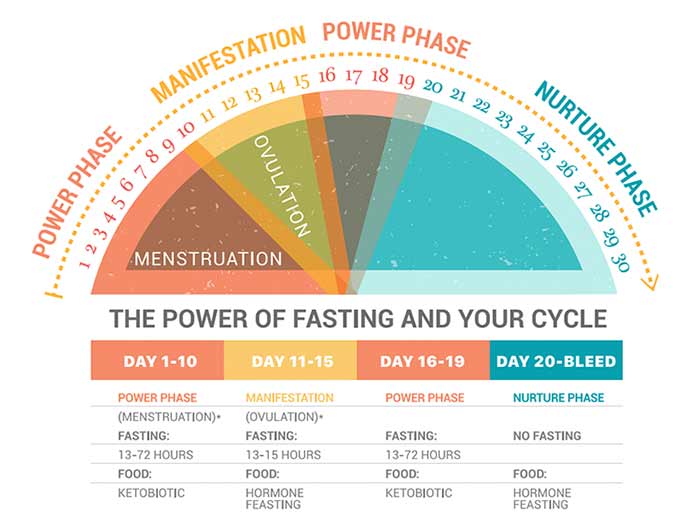
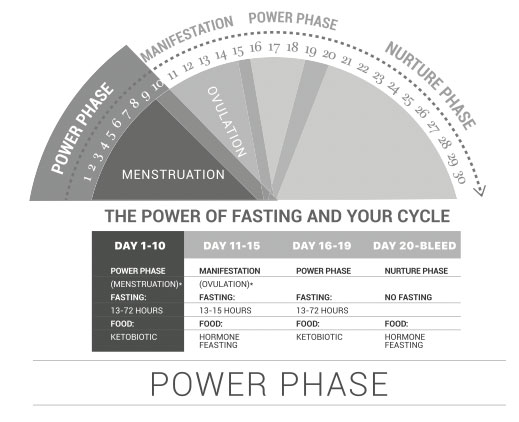
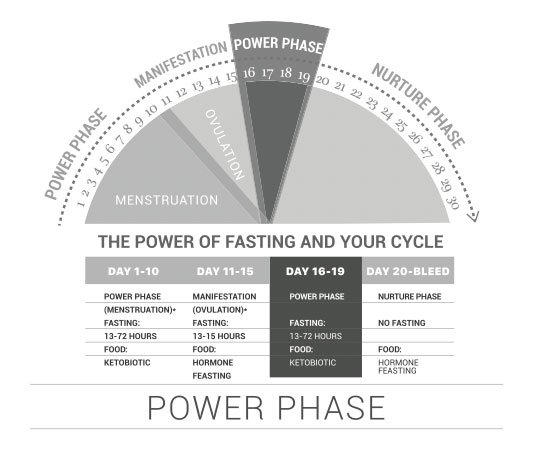
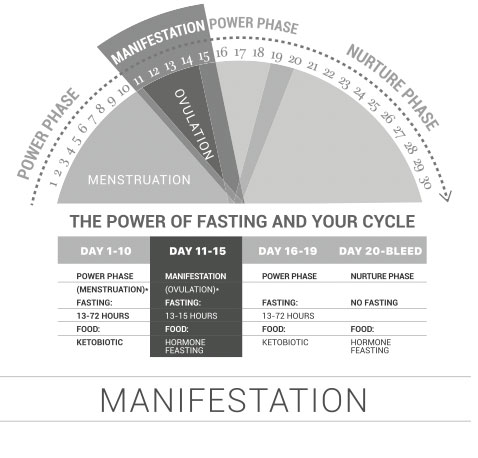
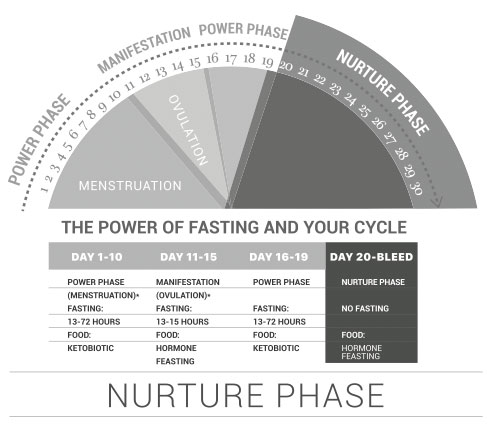
Fasting Cycle for Perimenopausal and Menopausal Women
If you no longer menstruate because of your age, this next section is for you:
“Around 40, you really need to start to get to know the characteristics of progesterone and estrogen, primarily because as your ovaries are going into retirement, you’re going to see some pretty dramatic shifts in those two hormones …
If you’re spotting, that’s progesterone tapping you on the shoulder saying, ‘Hey, I need a little more glucose.’ So, you would step out of a keto fasting day, and the next day you may shorten your fast, elongate your eating window and use more of nature’s carbs to give progesterone more glucose. So, spotting is a big one.
Anxiety is another big one. Trouble sleeping is another big one, where we need to have women step out of keto and fasting and step into more of this higher glucose [level, i.e., eat more, and expand your eating window]. Progesterone loves root vegetables, all the squashes, grass-fed beef, even tropical fruits. Bananas, mangoes, papayas, citrus fruits, those really help support progesterone production.
A perimenopausal woman will know that estrogen’s really low when she starts getting hot flashes, when her hair starts getting frizzy and dry. When her skin is really dry, she’s starting to get more wrinkles, her mucosal membranes become really dry and cognition is difficult.
If that’s happening, then you actually want to lean into a little bit of the longer fast, because estrogen does really well with a longer fasting window, and you want to lean into more of a ketogenic diet. I think she still needs some carbs, but she really needs to lean into longer fast to get estrogen and more protein. And that will dramatically help.”
If you’re in menopause, Pelz recommends doing the 30-day reset detailed in her book, but timed to the moon cycle. You may notice that the four cycles in the charts above have the same names as the moon cycles. So, you’d start your reset based on the moon cycle that is present at the time that you begin. For example, the day of the full moon is ovulation at Day 11, so you’d start at Day 11 and follow the schedule for the next 29.5 days from there.
More Information
To learn more, be sure to pick up a copy of “Fast Like a Girl.” She’s also releasing an app that will guide you on what you should be doing each day, which can be a very helpful tool.